THE SOURCE
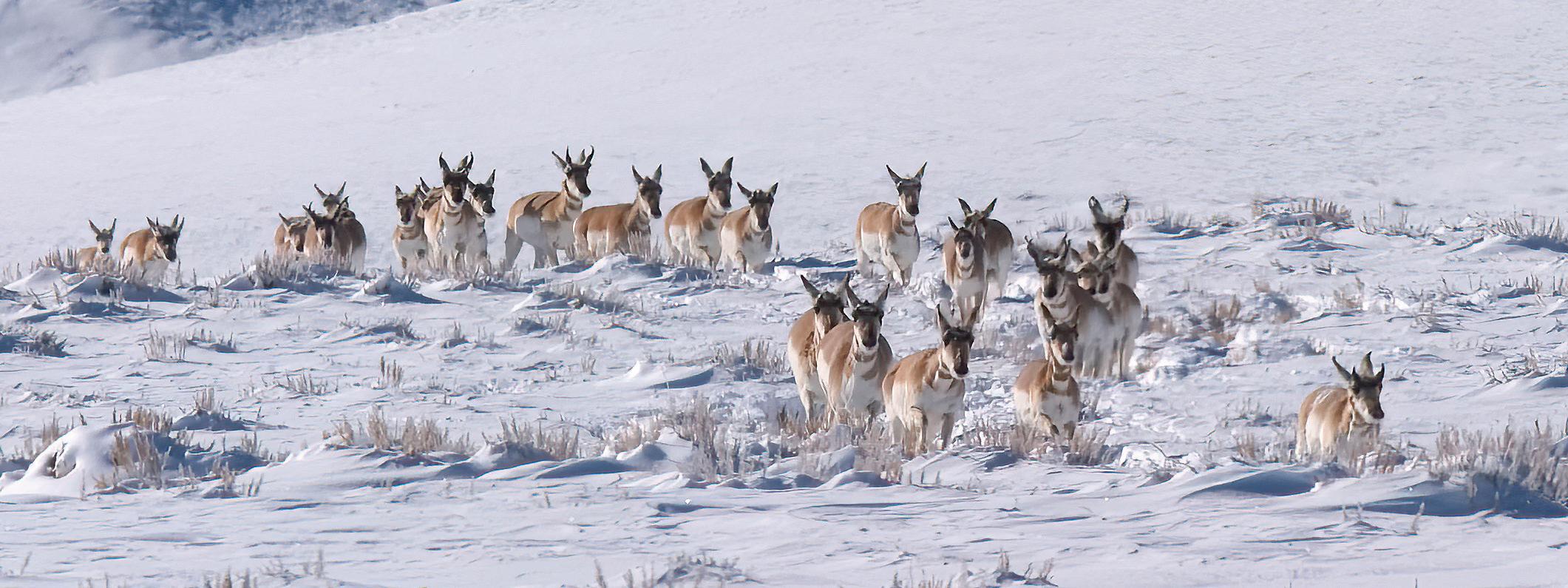
Pronghorn have one of the longest migration routes of any ungulate. Here, a small herd traverses private land in Wyoming
INNOVATIVE PARTNERSHIPS HELP WILDLIFE
Greater Yellowstone holds some of the nation’s most abundant and diverse free-roaming wildlife. Elk, mule deer, pronghorn, moose, and more move across the landscape, crossing into and out of Yellowstone and Grand Teton national parks as well as parts of Wyoming, Idaho, and Montana. These remarkable wildlife make Greater Yellowstone special and help sustain biodiversity in one of the last intact ecosystems left on the planet.
Despite their abundance, these animals face serious threats like subdivision development, roads, and fences. GYC and our partners have worked hard over the past decade to highlight the importance of sustaining wildlife migration corridors on public and private lands, protecting habitat and open space, and improving tolerance from landowners when animals make their way through private lands. Today, we are helping develop new and innovative partnerships to create a better future for wildlife throughout Greater Yellowstone.
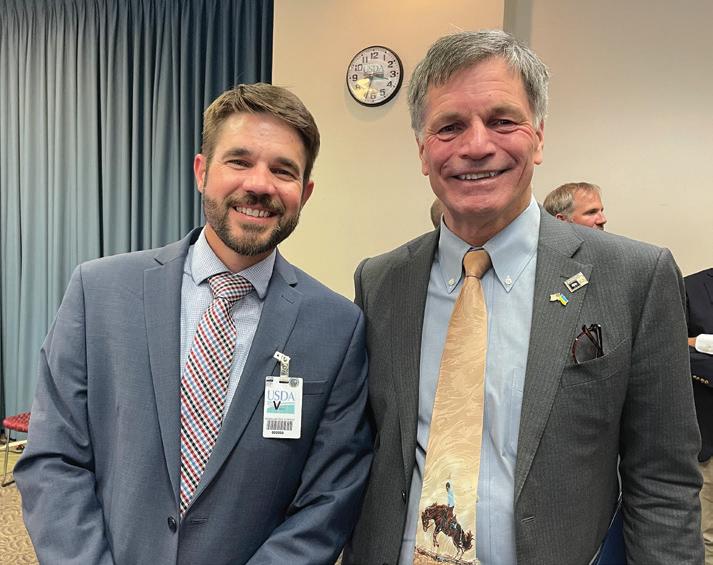
Just a few months ago, Executive Director Scott Christensen witnessed Wyoming Governor Mark Gordon and Secretary of Agriculture Tom Vilsack formalize a new partnership to invest significant funding toward conserving habitat in Wyoming’s most important big game migration corridors. This collaboration has the potential to protect tens of thousands of acres across the state through new conservation easements and a novel habitat leasing program. It also includes increased resources for wildlifefriendly fencing and habitat restoration.
In addition, GYC’s innovative partnership with the Wyoming Game and Fish Department and others through the Absaroka Fence Initiative in Wyoming works in cooperation with willing landowners and agencies to retrofit or remove fences that hinder wildlife movement on private lands. And, in Montana, GYC recently partnered with other nonprofits to create a brucellosis compensation fund which helps build landowner tolerance
for wildlife movement and migrations. It also helps avoid future subdivisions by keeping family ranches viable if wildlife were to spread diseases such as brucellosis to cattle.
These partnerships are just the beginning. We know fostering and nurturing relationships at all levels, and bringing new ideas and innovation to the table, is the best path forward for Greater Yellowstone’s migrating wildlife. Your support helps make this happen. Thank you.
FORTY YEARS OF GRIZZLY BEAR CONSERVATION


Forty years ago, a handful of impassioned conservationists convened in a small room at the Teton Outdoor Science School in Jackson, Wyoming, each with a unique vision they hoped to forge into a singular mission. Of particular concern was Yellowstone grizzly bears, which were on the brink of extinction and needed a champion to help ensure their long-term survival. The Greater Yellowstone Coalition was soon born, and for the next four decades we, along with our partners, have worked to ensure grizzlies have what they need to survive and thrive in Greater Yellowstone and beyond.
Grizzly bears are perhaps the most iconic symbol of a wild Yellowstone and inspire millions of people from around the world each year. As wide-ranging wildlife that hunt, scavenge, and forage, grizzly bears play a vital role in maintaining the health of the Greater Yellowstone Ecosystem (GYE). We know that if a keystone species like the grizzly bear is in trouble, so is the rest of the natural environment where it roams.
Grizzly bears in the lower-48 were listed under the Endangered Species Act (ESA) in 1975 when they were threatened with extinction due to loss of habitat, conflicts with people, and a lack of coordination between management agencies. Within the GYE, grizzlies were basically limited
to Yellowstone National Park, and within the park, open dumps and foodconditioning fueled persistent conflicts. Around the time of grizzly listing under the ESA, there were roughly 140 grizzlies left in all of the GYE. Today, thanks to all of us working together – including you, our supporters – numbers have increased to about 1,000 animals, and their range has expanded to areas that haven’t seen a grizzly in nearly a century. Their rebound is a remarkable conservation success story, but our work is far from done.
Conflicts with people continue, and loss of secure habitat, poor management policies, and a lack of connectivity between GYE grizzlies and other populations are still areas of concern. For the past decade, we have worked with thousands of people who care about this region to make significant strides in this work. From our partnership with the U.S. Forest Service to keep bears alive and people safe by bearproofing campgrounds in five national forests, to working in communities on attractant storage and trash regulations, to working with ranchers to reduce conflicts and allow movement through private lands, we are proud of the progress we have made, and our work continues.
In late December, Montana Fish, Wildlife & Parks released a draft grizzly
bear management plan and attendant draft environmental impact statement. As home to the two largest grizzly populations in the Lower 48 and the lands between, grizzly management in Montana has a large impact on the future of the species in our region. GYC will be submitting substantive comments on the plan, and we encourage you to do so, too. Our blog has all the details. The deadline is February 4.
As grizzly bears continue to expand into historic habitat across the region, it is time to chart a new course for an integrated, regional approach to grizzly management and conservation. We are poised to continue to lead in this effort knowing that our work will help keep bears wild, people safe, and livelihoods in place across Greater Yellowstone.
Read more about Montana FWP’s grizzly bear management plan on our website: greateryellowstone.org/blog
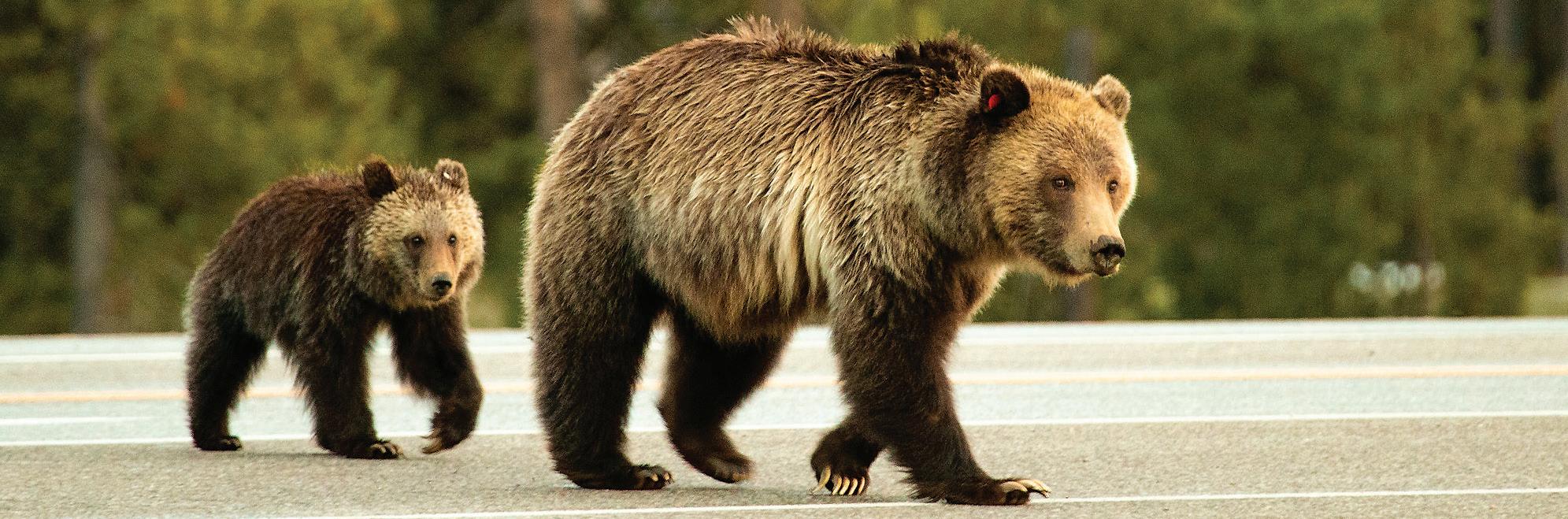
 The return of Yellowstone grizzly bears from the brink of extinction is widely considered one of our nation’s most successful conservation stories. Here, a grizzly sow and her cub meander through Grand Teton National Park.
(Photo: NPS/Adams)
Our grizzly bear conservation program is led by Brooke Shifrin (left), with substantial support from Matt Cuzzocreo (middle), Blakeley Adkins (right), and others on the GYC team.
The return of Yellowstone grizzly bears from the brink of extinction is widely considered one of our nation’s most successful conservation stories. Here, a grizzly sow and her cub meander through Grand Teton National Park.
(Photo: NPS/Adams)
Our grizzly bear conservation program is led by Brooke Shifrin (left), with substantial support from Matt Cuzzocreo (middle), Blakeley Adkins (right), and others on the GYC team.