Global Gastronomy
International cuisines, no passport needed

FROM SAP TO SYRUP
WHITE COUNTY TREE FARMER
HITS THE SWEET SPOT
J.L. HUFFORD
BEST KEPT SECRET IN LAFAYETTE?
HEALTHCARE BOOM
NEW FACILITIES PLANT ROOTS IN WEST LAFAYETTE

International cuisines, no passport needed
FROM SAP TO SYRUP
WHITE COUNTY TREE FARMER
HITS THE SWEET SPOT
J.L. HUFFORD
BEST KEPT SECRET IN LAFAYETTE?
HEALTHCARE BOOM
NEW FACILITIES PLANT ROOTS IN WEST LAFAYETTE

Editor
- Carol Bangert
Art Director/Graphic Designer
- Kara Bishop
Vice President, Marketing & Communications
- Chelsie Freeman
Content Marketing Specialist
- Shelby White
MISSION
Greater Lafayette Magazine captures the spirit and vitality of the people who call Greater Lafayette home and what it means to live, work and thrive here. It tells the region’s success stories, from business expansions, entrepreneurship, leadership and philanthropy to quality of life, arts and cultural events. Our hope is that readers of Greater Lafayette Magazine will become active participants in the world around them and join in our mission to make Greater Lafayette the place where progress, creativity and community come together.
AUDIENCE
Greater Lafayette Magazine serves as the leading quality-of-life and business trade publication for the area. Leveraging our award-winning team of writers and designers, Greater Lafayette Magazine attracts a diverse group of readers who are engaged in the community as consumers, visitors, business leaders, volunteers, residents and future residents of Tippecanoe County. This publication is for anyone that appreciates a good story that not only reveals something new about our community but offers insight and pride for the place we call home.
ADVERTISING
To advertise or receive information about advertising in Greater Lafayette Magazine, contact Amy Sundell at (765) 742-4044 or amy.sundell@greaterlafayettecommerce.com
PRINTER
The National Group
CIRCULATION
Greater Lafayette Magazine is published four times a year (January/April/July/October), with a print distribution of 4,000, and up to 10,000 online subscribers/views. Distribution channels will include online, mobile, various newsstands, and pass-along venues including restaurants, businesses, organizations, community centers, hotel lobbies and healthcare facilities.
Greater Lafayette Magazine is a publication of Greater Lafayette Commerce
337 Columbia St., Lafayette, IN 47901
I woke up a few days after Thanksgiving to six inches of snow on the ground. While I was sleeping, autumn apparently made a sudden exit and winter took over. Rude.
Coneflower heads and tall phlox swayed forlornly in the cold northwest wind, reminding me that I had yet to finish cleaning up the gardens; lonely birdhouses swung on branches still laden with fall foliage and now covered in snow. Cardinals in empty feeders glared through the kitchen window at me.

“I’m not ready for this,” I told myself. Here it was November, and I was already longing for spring!
Winter has always challenged me, primarily because I lack the motivation that I have in warmer months to try new things. Last spring and summer, for example, I spent my Saturday’s exploring the Lafayette Farmers Market, writing stories about in-season produce, talking to farmers and experimenting with new fruits and veg. I gained an appreciation for okra, enjoyed lion’s mane mushrooms and fell madly in love with ground cherries. Sadly, that inspiration ended with the market in October.
I have to admit, in winter, it’s easier to concede defeat than to lug out my winter boots, heavy coat and gloves and do something. The sense of adventure disappears when the first snowflakes fly.
Then I read “Global Gastronomy,” the cover story in this issue of Greater Lafayette Magazine, and my interest was more than piqued (Page 34). There is an entire farmers market of foods, flavors and cultures that I’ve never experienced on both sides of the Wabash River. Where have I been?
It hit me that although I’ve lived here most of my life there’s still so much I don’t know about Greater Lafayette. In terms of economic development, small business ventures and cultural opportunities, this is a community on the move, and it’s overflowing with new things to see and taste and experience. Regardless of the season, I need to get out there and do something.
In this Winter issue of GLM, you’ll meet people and businesses that, I hope, will get you inspired as well, from a White County tree farm owner who produces maple syrup (Page 14); a pair of innovative mixologists (Page 64); small-business owners who’ve made an impression on clients and the community (Page 82); and a thriving gourmet cookware and appliance enterprise tucked away in Lafayette (Page 28).
As I write this, the snow is flying and the temperature is hovering in the single digits (and heading south), but I’m determined to embrace winter and use this season to sample all that Greater Lafayette has to offer. (For the record, I’ll probably start with ADDA Indian Cuisine. Malai kofte is calling!)
Stay warm, friends!
• (765)742-4044
• info@greaterlafayettecommerce.com
• greaterlafayettecommerce.com
VOLUME 7, ISSUE 1

Greater Lafayette Magazine SUBSCRIBE TO GLM
Get to know the Greater Lafayette community by subscribing to Greater Lafayette Magazine. It’s easy! Go to greaterlafayettecommerce.com and click on the About Us tab. Then click on Greater Lafayette Magazine to view past issues and subscribe.

At Tipmont, we don’t just bring high-speed fiber internet to your home or business. We live here too. That means no gimmicks, no hidden fees, and no calling halfway across the country for support.
Whether you’re running a small business, working from home or streaming your favorite show, you deserve internet that works — and a team that works for you.
Powered by your neighbors.
Built for your future.

If there is one phrase that has stayed with me during my first months at Greater Lafayette Commerce, it is this: the power of neighbors in commerce.
I was born in Nappanee, Indiana. My dad farmed corn, soybeans and hogs. Growing up, I thought of him as “just a farmer.” It wasn’t until much later that I realized he was also a small business owner—managing risk, investing in equipment, adapting to change and providing for his family through hard work and perseverance. That perspective has shaped how I see business ever since.
I came to Purdue as a freshman with a simple goal: learn to type for a living so I wouldn’t have to work
as hard as my dad. I studied software development, started a company with one of my professors and spent years building and operating businesses that helped commercialize university research, support startups and serve small and midsized companies across manufacturing, education and agriculture. Along the way, I learned business not from textbooks, but from clients, colleagues and neighbors—many of whom reminded me of my dad.
In a very real sense, Greater Lafayette taught me how business actually works.
That’s why this role is special to me. Serving as president and CEO of Greater Lafayette Commerce is the first full-time position I’ve ever
Church, where I teach and serve on the leadership team. My mom lives in Lafayette now.
This is home.
On any given week, you might see us downtown grabbing dinner at places like Nom Nom Tacos, Red Seven, Revolution BBQ or East End Grill—often followed by a treat at McCord’s or Every’s Ice Cream. I joke that I don’t have many hobbies. The truth is, I genuinely enjoy work and business—not as an end in itself, but because of what it makes possible for people and communities.
That belief sits at the heart of Greater Lafayette Commerce. GLC is a B2B professional services organization, made up primarily of more than 1,000 member businesses. Most of my own companies also have been B2B service businesses, so talking with business owners, learning how their companies operate and helping them navigate growth challenges feels very natural
held for an organization I don’t own.
It is a demanding job—but also a deeply meaningful one. I see it as an opportunity to give back to a business community that invested in me when I was just getting started. My wife, Jessica, and I met in 8th grade, started dating our senior year of high school and were married between our junior and senior years at Purdue. This year, we celebrated our 25th wedding anniversary. Our son, Gunnar, is a junior at Harrison High School and can often be found playing in band or performing at Civic Theatre. Our daughter, Clella, is an 8th grader at Klondike Middle School and spends countless hours dancing at Studio B. Our family attends Kossuth Street Baptist
to me. The difference now is scale — and the toolset.
A chamber of commerce and an economic development organization exist to help businesses work better together — and to help them work better with the rest of the community: local government, schools, nonprofits and regional partners. Our role is not to own that ecosystem, but to strengthen it. To connect. To convene. To listen. And when appropriate, to lead.
As I’ve spent time across the region, I’ve sensed both optimism and urgency. Employers are navigating workforce constraints, infrastructure needs, housing challenges and rapid industry change. At the same time, there is a strong willingness to collaborate — to solve problems together rather than in isolation.
That collaborative spirit is one of Greater Lafayette’s greatest strengths.
Looking ahead, our focus is becoming clearer: supporting small
and growing businesses, aligning talent with opportunity and positioning our region to succeed in emerging industries while building on what already works. Through it all, the guiding question remains the same:
How do we become a community of choice?
Not just for companies deciding where to invest—but for families deciding where to live, graduates deciding where to stay and entrepreneurs deciding where to build something meaningful.
I’m grateful for the warm welcome I’ve received and for the trust people have placed in me. I’m equally grateful for the foundation built by those who came before and for the engaged members who make Greater Lafayette Commerce what it is. Thank you for being part of this community—and for being a good neighbor in commerce. ★
That’s why this role is special to me. Serving as president and CEO of Greater Lafayette Commerce is the first full-time position I’ve ever held for an organization I don’t own. It is a demanding job—but also a deeply meaningful one. I see it as an opportunity to give back to a business community that invested in me when I was just getting started.
BY ANGELA K. ROBERTS PHOTO BY CHRISTINE PETKOV
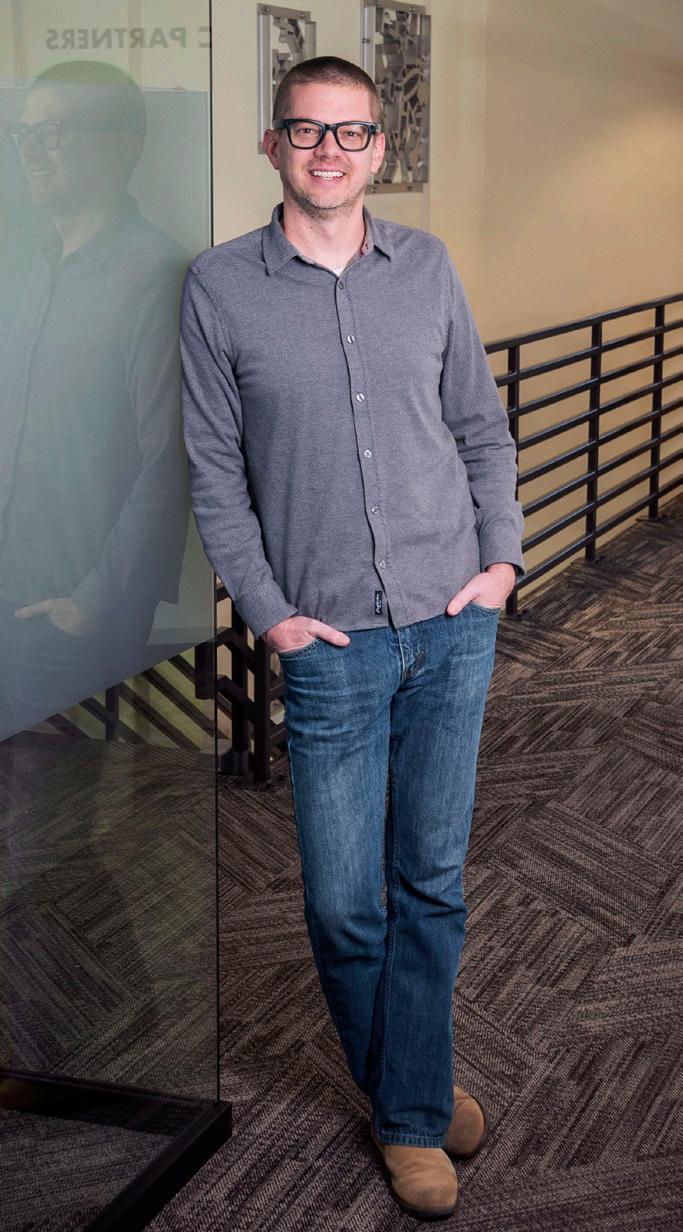
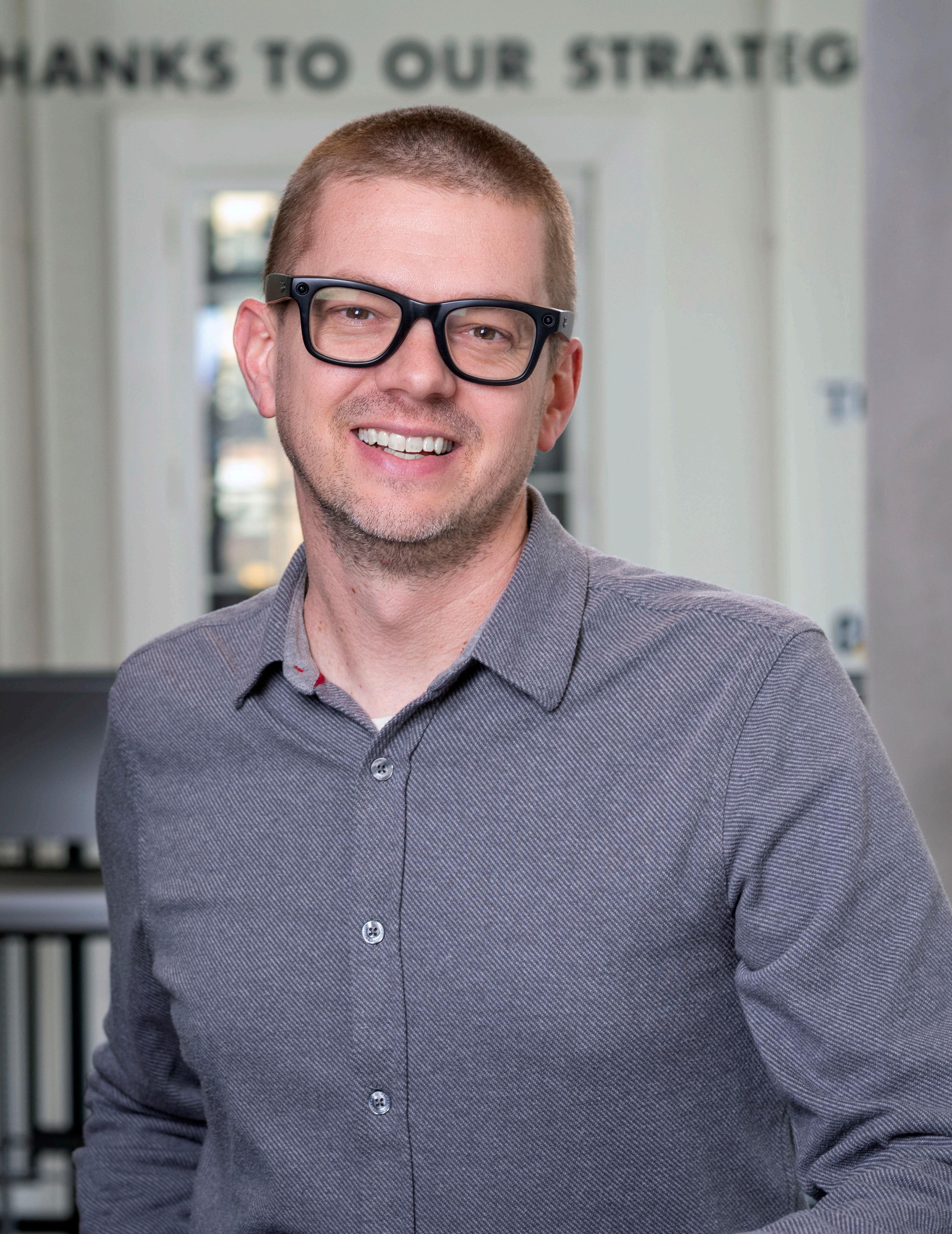
One story above the main level at 337 Columbia St., where professionals collaborate in a startup-style, open-office environment, is a meeting room reserved for private discussions. On a chilly day last fall, the space provided a quiet backdrop for Mikel Berger to reflect on his first few months as president and CEO of Greater Lafayette Commerce.
From his vantage point, the Italianate structure’s high windows framed a corner view of the Tippecanoe County courthouse. Berger, sporting a button-down shirt, sweater and sleeveless vest bearing the GLC logo, looked comfortable in his new position spearheading an organization covering up to nine counties.
“That’s one of the things I’ve come to appreciate about the role,” Berger says, commenting on GLC’s scope. When he asked the board of directors about the boundaries of Greater Lafayette, he learned that they are fluid, defined less by lines on a map and more by opportunity.
Greater Lafayette Commerce primarily serves Lafayette, West Lafayette and Tippecanoe County. The region’s labor shed, however, extends across nine Indiana counties, covering the I-65 corridor between Indianapolis and Chicago. Some grants that GLC oversees, such as Indiana’s READI 2.0 economic development funding announced in 2024, apply to all or most of those counties.
“I like that there is a geography to it, but on certain issues, we get to expand on that,” Berger says. It’s all about working better together, he adds.
A Purdue University graduate with technical degrees, Berger has called Greater Lafayette home since 1997, starting his first company in 2004. He knows Greater Lafayette Commerce well, having been a business member for years.
Now, from the inside, he’s gained a new appreciation for the organization’s scope, which includes economic and talent development, support for small businesses and corporations, professional development for area workers and engagement with various communities, including the area’s growing Latino population.
Some colleagues have asked Berger if the role is an honorary appointment. He confidently asserts, “It’s definitely a full-time job,” adding, “It’s the first time I’ve had a full-time W2 from an organization I don’t have a business [stake] in.”
Berger succeeds Scott Walker, who came to Greater Lafayette Commerce from Michigan after working in the automotive industry and economic development. “Scott was great and what the community needed in that season,” Berger says.
In contrast, Berger has deep roots in Greater Lafayette, plus broad experience as an entrepreneur, tech executive and co-founder of the investment partnership Little Engine Ventures. He sees his background as the right fit for GLC’s current and future needs.
“The chamber has the responsibility to make the members work better together but also help the business community as a whole work together with healthcare, nonprofits, et cetera,” he notes.
Legacy and the local ecosystem
Raised in Nappanee in northern Indiana’s Amish country, Berger grew up on a farm, where his father harvested corn, soybeans and hogs. His own business career has intersected with agricultural technology and agricultural business, including work on greener, more sustainable advanced chemistry applications.
“The good things that are happening here beget more things,” he says, including strengthening the local ag economy.
For example, Primient, a leading producer of food and industrial ingredients made from plant-based, renewable sources, is expanding its Lafayette operations to support Sustainea, which is building a plant next door. Primient will supply the new plant with dextrose derived from locally grown corn. In turn, Sustainea will convert the dextrose into Bio-MEG (monoethylene glycol), which will be used primarily in the production of polyester textiles and beverage bottles.
Such planned expansions predate Berger’s tenure as head of GLC. In support of these endeavors, Berger plans to do a lot of listening his first year. “I want to learn at a deeper level,” he says.
The power of neighbors in commerce
Interconnectedness is key to understanding Berger’s philosophy of what he calls “the power of neighbors in commerce.” He refers to Lafayette-West Lafayette, which has a combined population of just over 190,000, as a “big small town.”
“We intersect each other, the neighbors in commerce, our businesses impact each other. We’re peers and we’re learning from each other. Our kids go to school together, and they compete against each other,” he says. “We go to church together. I think that’s what neighbors should be.”
That cooperative attitude is consistent with Greater Lafayette Commerce’s mission, underscoring such initiatives as talent attraction and retention. GLC team members work hand in hand with institutions such as Ivy Tech Community College of Indiana to train and upskill local workers for advanced manufacturing jobs. It also partners with local employers to help hire high-growth, mid-career executives from outside the area.
To successfully recruit such folks, the community must appeal to the entire family, Berger says. While some spouses and partners may be looking for local jobs, many are remote workers or entrepreneurs.
Organizations such as MatchBOX Coworking Studio, which Berger co-founded, support small businesses and entrepreneurial ventures. GLC, along with Visit Lafayette-West Lafayette, helps connect families to the many amenities the area offers, he says.
Looking ahead, Berger is hesitant to make any firm 10-year predictions. His commitment, he says, is to lead with integrity when inevitable challenges arrive.
When it comes to defining what progress might look like in 2036, Berger is less reticent. Once companies such as SK hynix open new plants in Greater Lafayette, he says, they will attract suppliers, creating opportunities that benefit existing businesses in fields such as advanced chemistry and manufacturing. That growth could also spawn related development through a multiplier effect, such as new retail stores, restaurants and housing stock, to accommodate a growing population.
The ultimate measure of success, Berger concludes, is for Greater Lafayette to become “the community of choice” for the semiconductor and other industries. He plans to support that goal through his entrepreneurial, service-oriented leadership style.
“I take it very seriously,” he says of his new role. “It’s hopefully a way to give back to the community that’s given so much to me.” ★
We’ve got you covered with three unique community center campuses. Visit us online to check out what we have to offer or stop by to see us. We’ll be happy to show you around!


“I remember when I was in my 30s hearing a lot of older people say ‘I used to be’ this or that. I didn’t want to be the ‘used to be ad guy’ or ‘used to be marketing guy.’ I wanted to be the guy who grows trees.”
W
hen Rich Hines was young he loved to doodle in spare moments — and it was always trees.
“I thought trees were wonderful things,” he recalls.
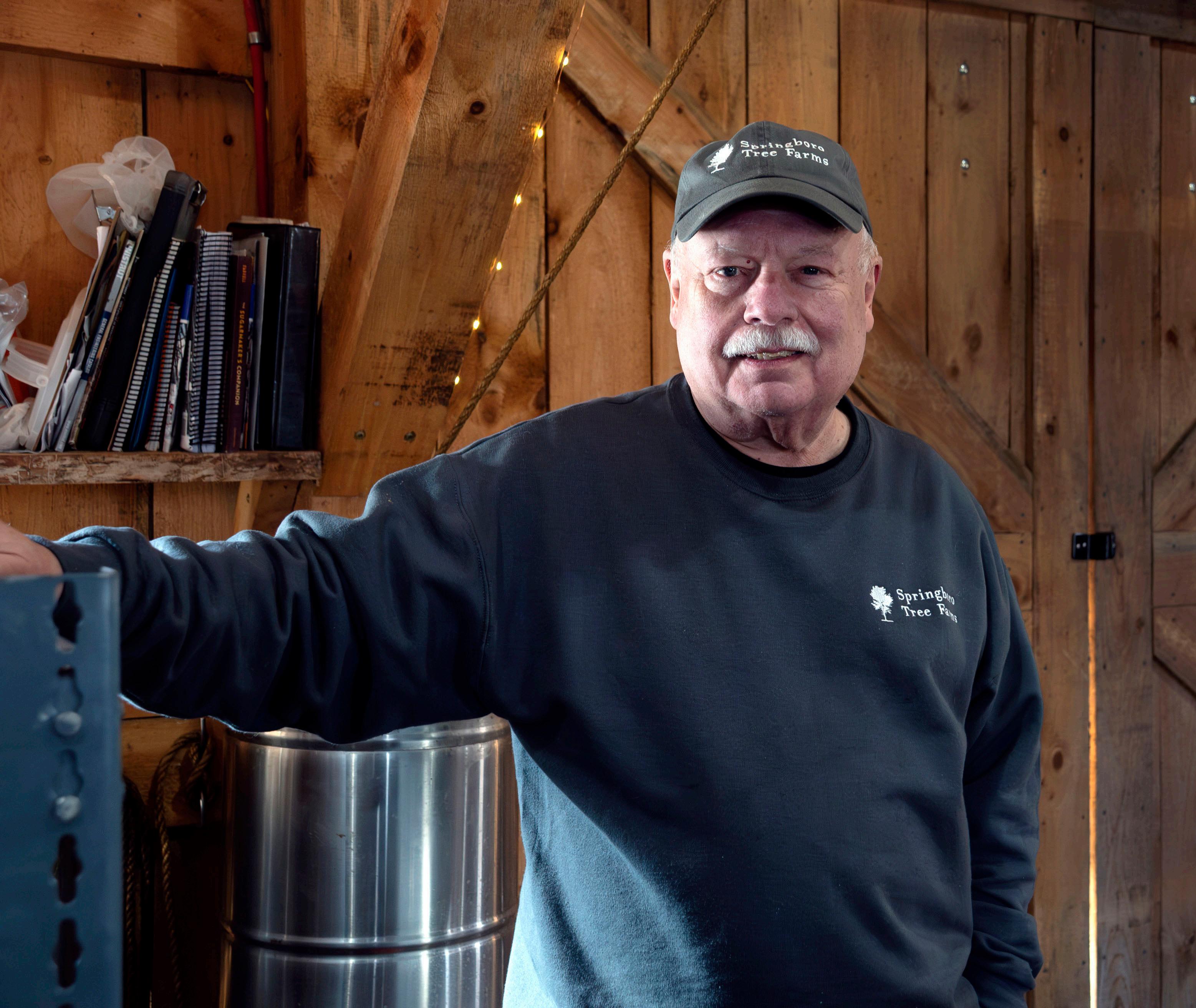
So six decades later it’s not really surprising to find this former North End Lafayette kid and retired vice president of the Indiana Design Consortium living on 37 forested acres nestled along the banks of the Tippecanoe River in White County. But what might come as a surprise is his retirement hobby, which involves making syrup from the sugar maples dotting the hills and valleys of his Springboro Tree Farms. But if you’re imagining a small operation with a handful of collection buckets allowing him to make a dozen bot-
tles of maple syrup for his family’s pancakes, erase that image.
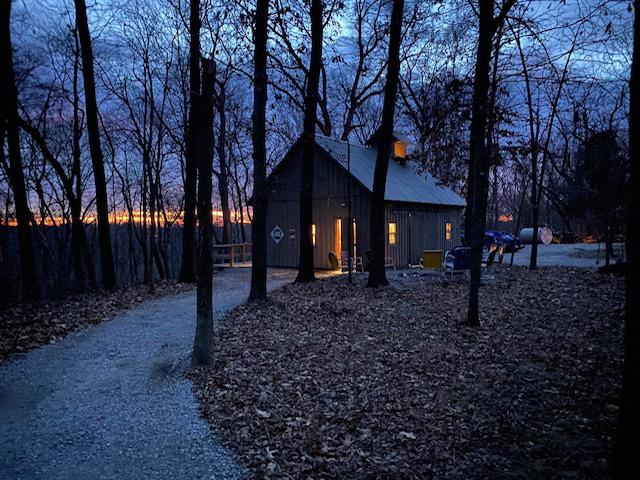
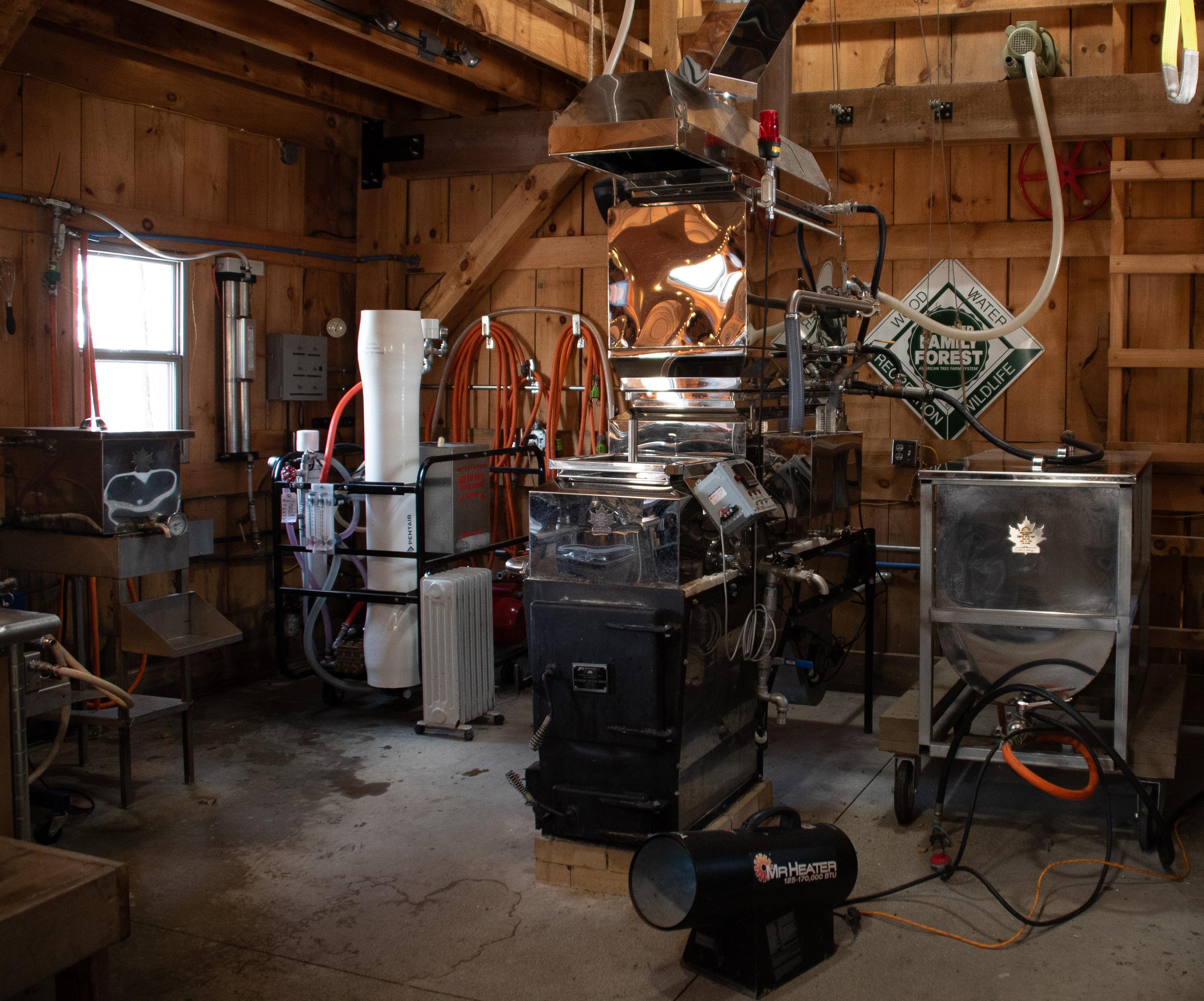
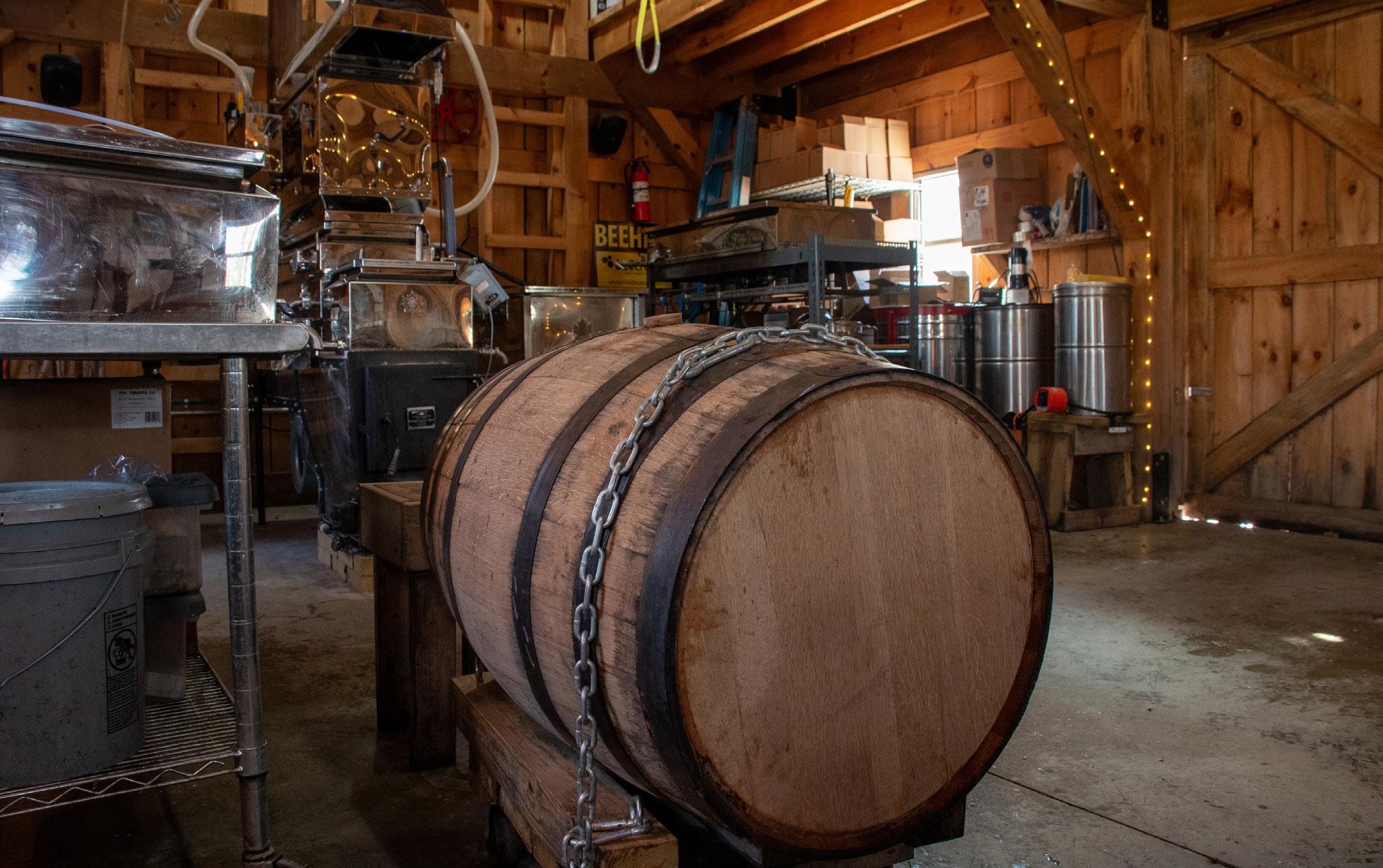
His picturesque 20-by-30-foot sugar shack houses the most modern, gleaming stainless steel equipment available for making maple syrup on a professional level, and he turns out 1,000 bottles during a typical winter.
When Hines moved to the Tippecanoe River property some 30 years ago, syrup wasn’t really on his mind. He wanted to be a good steward to some “classic Indiana woodlands” by making them even more beautiful and enhancing the habitat for wildlife. He trucked out junk that littered the river bank and started a never-ending crusade to eliminate invasive species such as multiflora
rose and brush honeysuckle that strangled native plants.
One of the first things he did was enroll his farm in a program with the Indiana Department of Natural Resources and act on advice from forestry and water management experts. Along with tackling the invasives, Hines dredged a spring-fed pond on the property and stocked it with largemouth bass, perch, catfish and more. He established a bee colony topping out at 35 hives and two million bees, and he planted a small apple orchard, dozens of black walnut trees, and pines for use as Christmas trees.
His love for the land, a passion he shares with his brother Jim, was something they both came by

naturally. Time spent on their grandfather’s farm influenced the boys. Hines did tree planting with the Boy Scouts, another influence. And with their father, the brothers spent summers hunting squirrels, playing with an old rowboat and generally enjoying being out in nature at a family cottage on the Wabash River.
Prophetically, the boys and their father undertook an annual fishing float trip down the Tippecanoe River from the Oakdale Dam to the Wabash River. The trip floated them through the property Hines now owns.
“So many stories we tell are about our time in the woods,” Jim Hines says. “It left an impression that never left us.
“I’m really proud of Rich and what he’s done there, taking on this woodland and putting money and effort to get rid of invasives. Who thinks about that? Richard thinks about that. Damn! That’s pretty cool!”
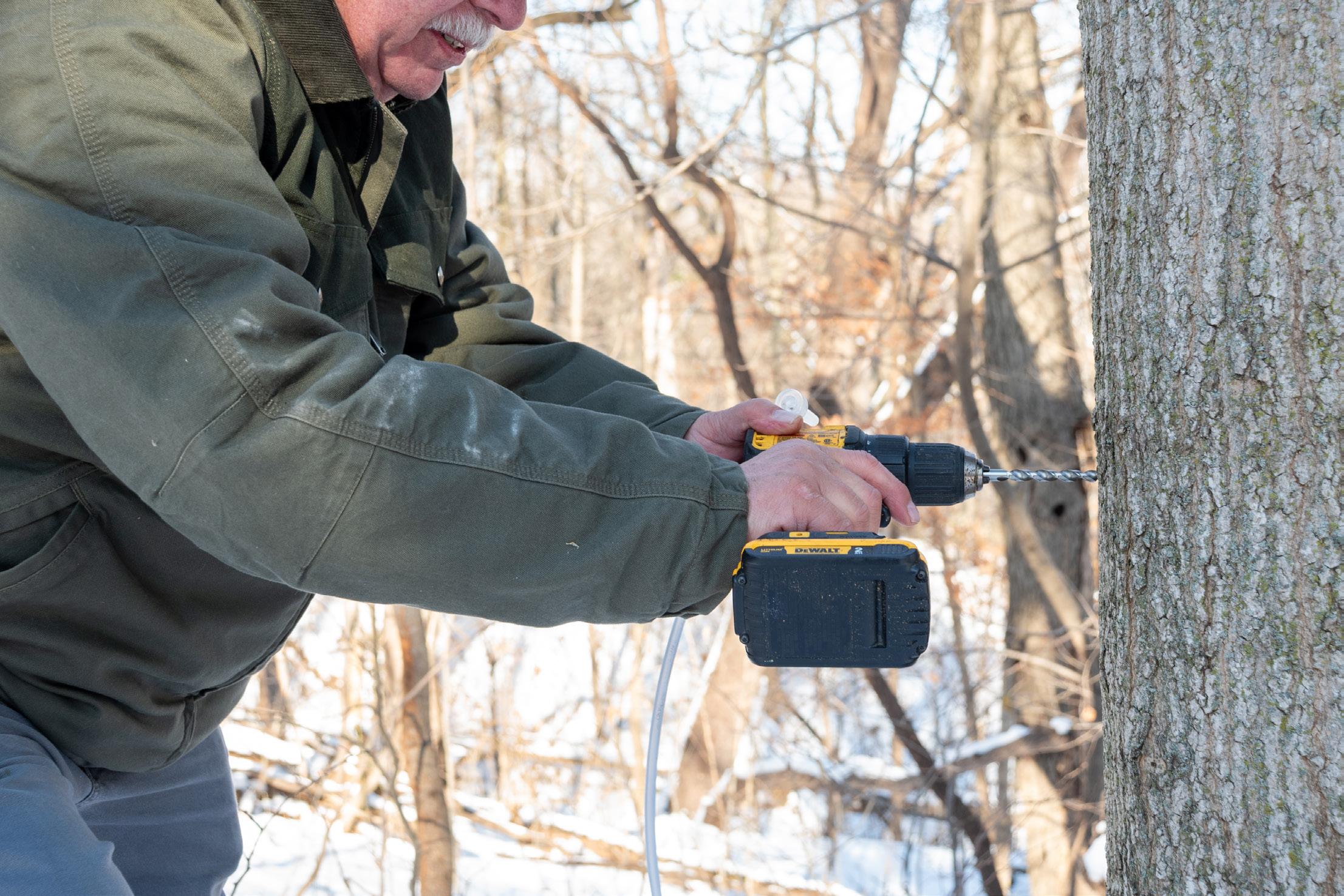
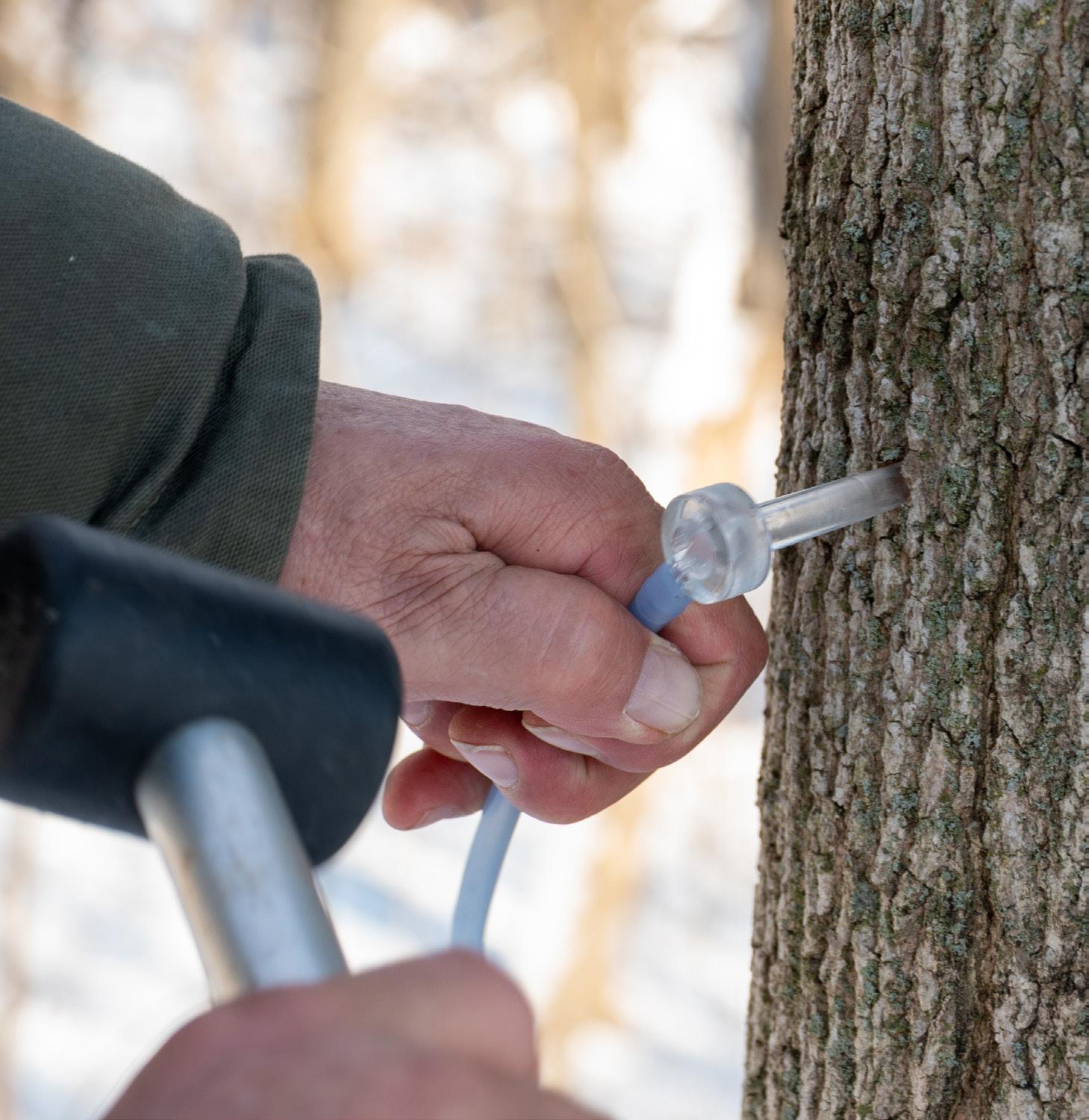
Making maple syrup was an idea born out of a chance comment by a state forester about the huge number of maples on his property. It led Hines to buy a kit at Rural King that had all the supplies needed to tap three trees and collect sap that he cooked all day in a tall, turkey roasting pot.
He was hooked.
“It was 10 trees the next year, then 30 trees. Now we do 500,” he says. Instead of buckets hanging
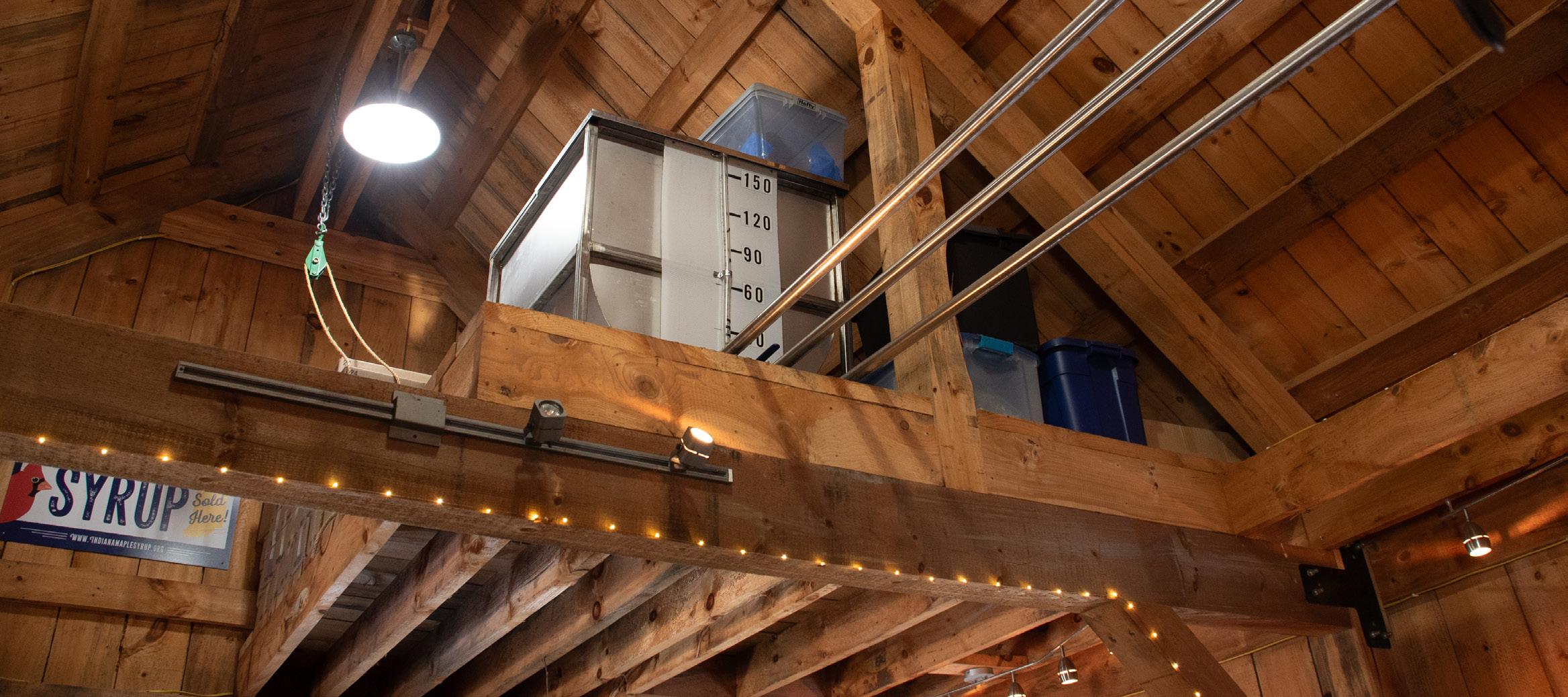
from spiles pounded into the trees in nostalgic tradition, the spiles dump their watery sap into plastic tubing that gravity feeds into a large collection tank. When the season is in full swing, the 350 gallon tank will fill at least once a day.
Instead of boiling the sap in a pot on the stove, there’s now a sophisticated reverse osmosis process, a wood-fired evaporator, a filtering operation and, finally, bottling. It takes about 50 gallons of sap to make just one gallon of syrup.
“If you cook the sap really, really slow it’s dark and robust. We make a dark amber product,” Hines says.
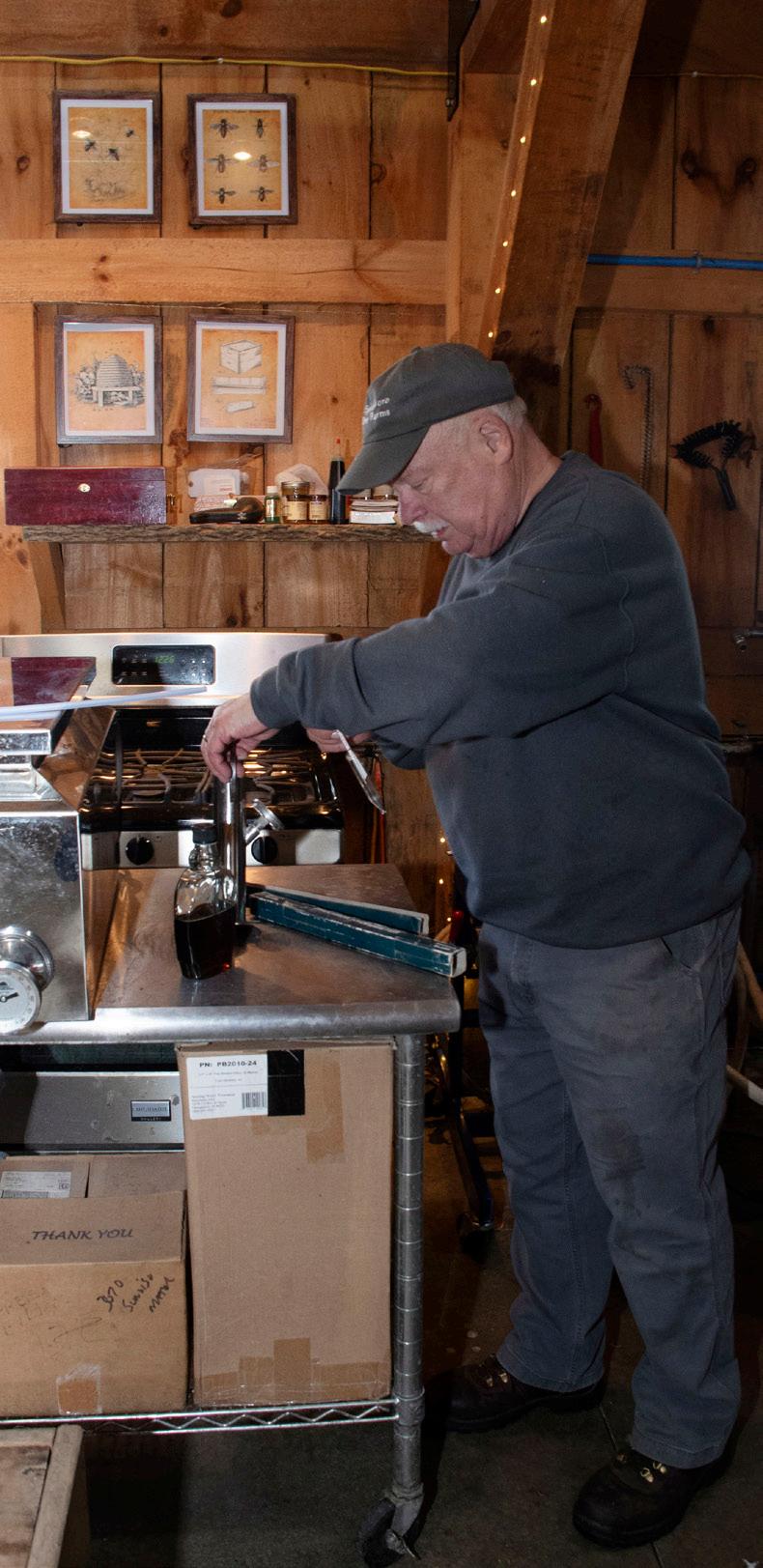
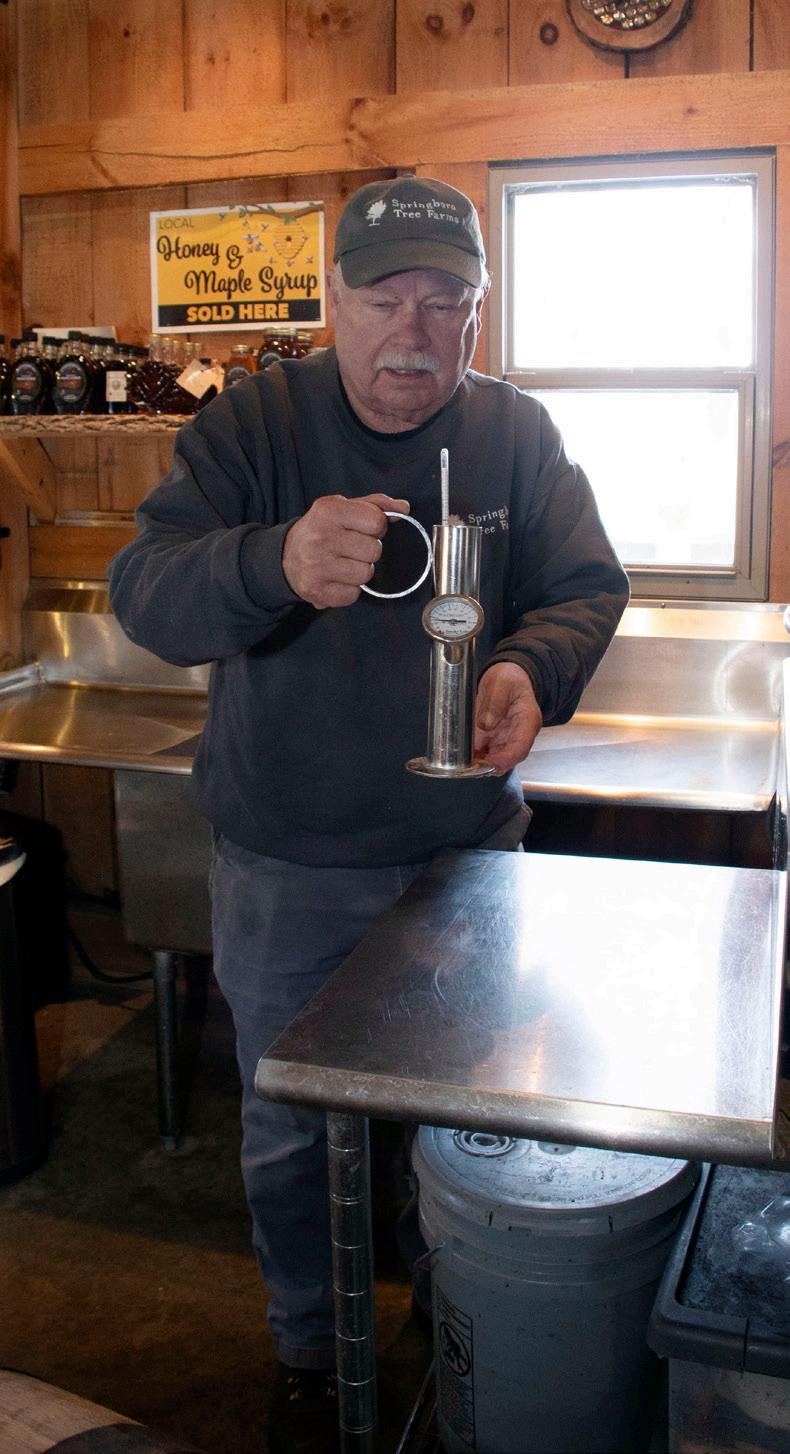
He religiously uses a hydrometer to make sure the sugar content matches the high end of the Ver-
mont standard for maple syrup. Not all the syrup goes into bottles. Some goes into a bourbon barrel and ages for five months for a richer taste. While the syrup resides in the white oak barrel, temperature changes draw out the oak and bourbon flavors along with hints of vanilla.
All this happens in six super busy weeks in February and March where brother Jim, son Sam and other friends pitch in to make it all happen. Sap runs most freely when temperatures are freezing at night but up into the 40s in the daytime, and it can be a bit of a guessing game deciding exactly when to tap.
In a side operation Hines also taps a hundred walnut trees to
make a syrup with a sweet nutty flavor. But he admits, “It’s four times as much effort so not as profitable.”
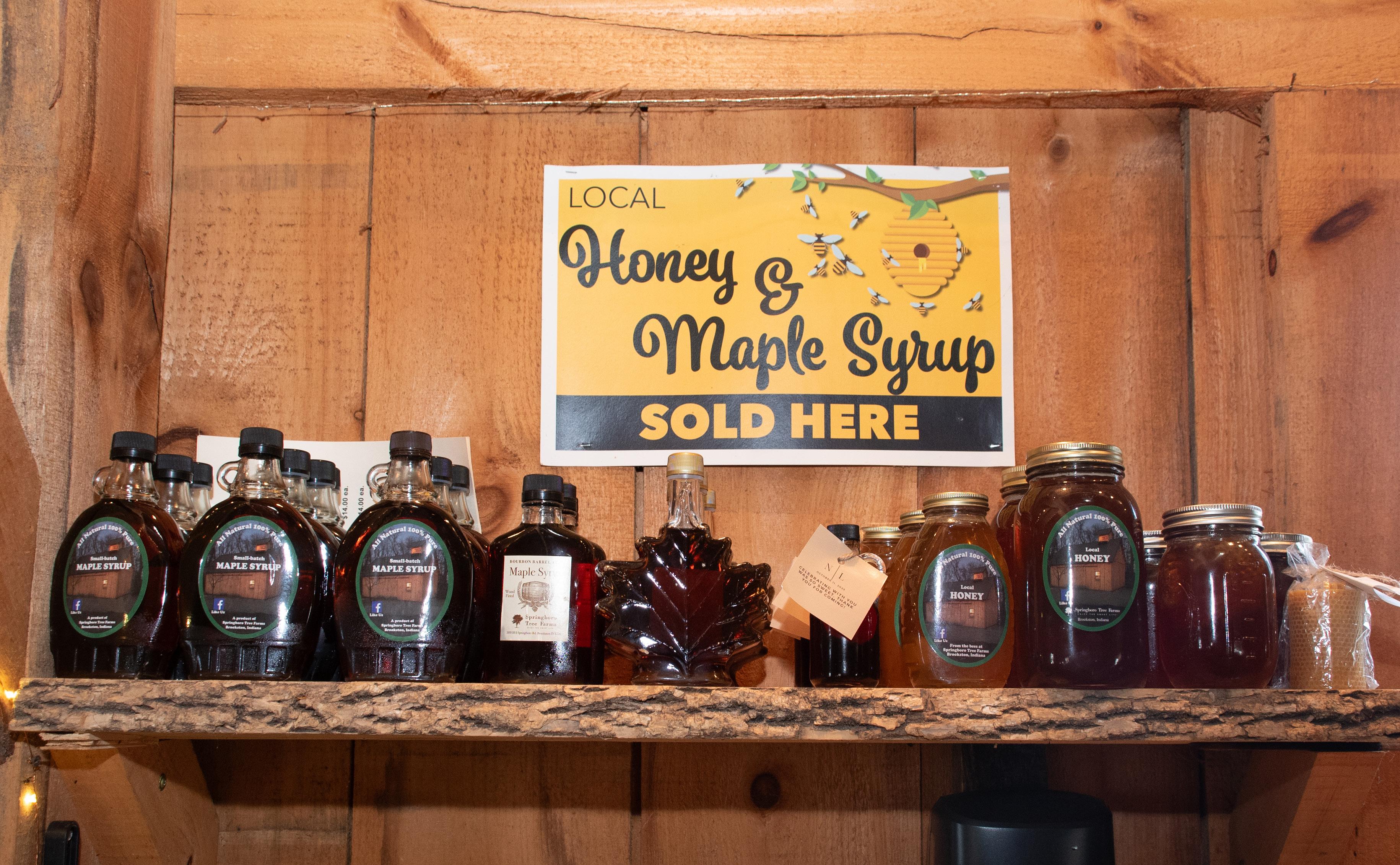
Overall, “mastering the process of syrup making is satisfying and a lot of fun,” says Hines. Although he gives most of his bottled syrup to charitable causes so they can raise money, what he does sell provides the cash to continually upgrade his operation.
“I never had any interest in making money,” he says. “I like supporting things that make our community better.” Our Grace Lutheran Church in Lafayette, where Hines attends, St. Peter’s Episcopal Church in Lebanon, Camp Tecumseh, White County Soil and Conservation District and Toast to Mental Health (his wife, Jean, is a mental health therapist) top the long list of charities that benefit from donations of bottled syrup and honey.
“It’s a blessing,” Kim Reneau says over and over as she talks about the syrup’s impact on a particular project she heads at Our Grace Lutheran Church. Members of the church contribute to Operation Christmas Child, a project of the disaster relief agency Samaritan’s Purse, by filling festive shoeboxes with school supplies, hygiene items and small toys. Boxes collected from across the nation are shipped to needy children in countries around the globe. But each box needs to be accompanied by $10 to help with distribution costs, among other expenses.
The sale of honey and maple syrup from Hines’ Springboro Tree Farms
raises enough money each year to cover distribution costs, making it possible for the project to expand.
Reneau says they’ve gone from putting together 68 boxes to 250 this year.
When parishioners see the small sales table set up in September each year, “we have long lines waiting to buy his syrup and honey. It’s just a huge blessing for our church and a blessing for the children.”
Women of the church’s altar guild bake whole wheat bread for communion and “use Rich’s honey in baking the bread, which makes it really, really good,” Reneau says.
“My grandkids love his syrup and our former pastor said a little dab of the bourbon barrel syrup in his coffee made it really special.”
Comments like Kim Reneau’s are all the payment Hines desires.
“I remember when I was in my 30s hearing a lot of older people say ‘I used to be’ this or that. I didn’t want to be the ‘used to be ad guy’ or ‘used to be marketing guy.’ I wanted to be the guy who grows trees.”
In growing the trees and making maple syrup he found a new definition of happiness along with immense satisfaction.
“Finding something meaningful to do is a key to having a happier retirement,” he says.
And “I’m still learning.” ★
If you want to read up on the maple syrup process, Rich Hines recommends “The Sugar Maker’s Companion” by Michael Farrell, which inspired his efforts.
Starting in April you’ll see bottles of Springboro Tree Farms maple syrup on sale in these locations:
• Springboro General Store in Springboro
• Delphi Hardware and Paint in Delphi
• Great Harvest Bread Company in Lafayette
• Two Guys Catering and Bakery in Brookston
• Sundog Cafe in Fowler
• Crasian Brewing Company in Brookston buys bourbon barrel syrup to produce Springboro Maple Brown Ale.
‘Local’ offers entrepreneurs the opportunity to test their business chops
BY BRAD OPPENHEIM PHOTOS PROVIDED AND STOCK PHOTOGRAPHY
Downtown Lafayette boasts a vibrant and diverse retail scene, and now, an innovative pop-up opportunity is offering local entrepreneurs the chance to grow and elevate their small businesses during what can best be described as a trial basis.
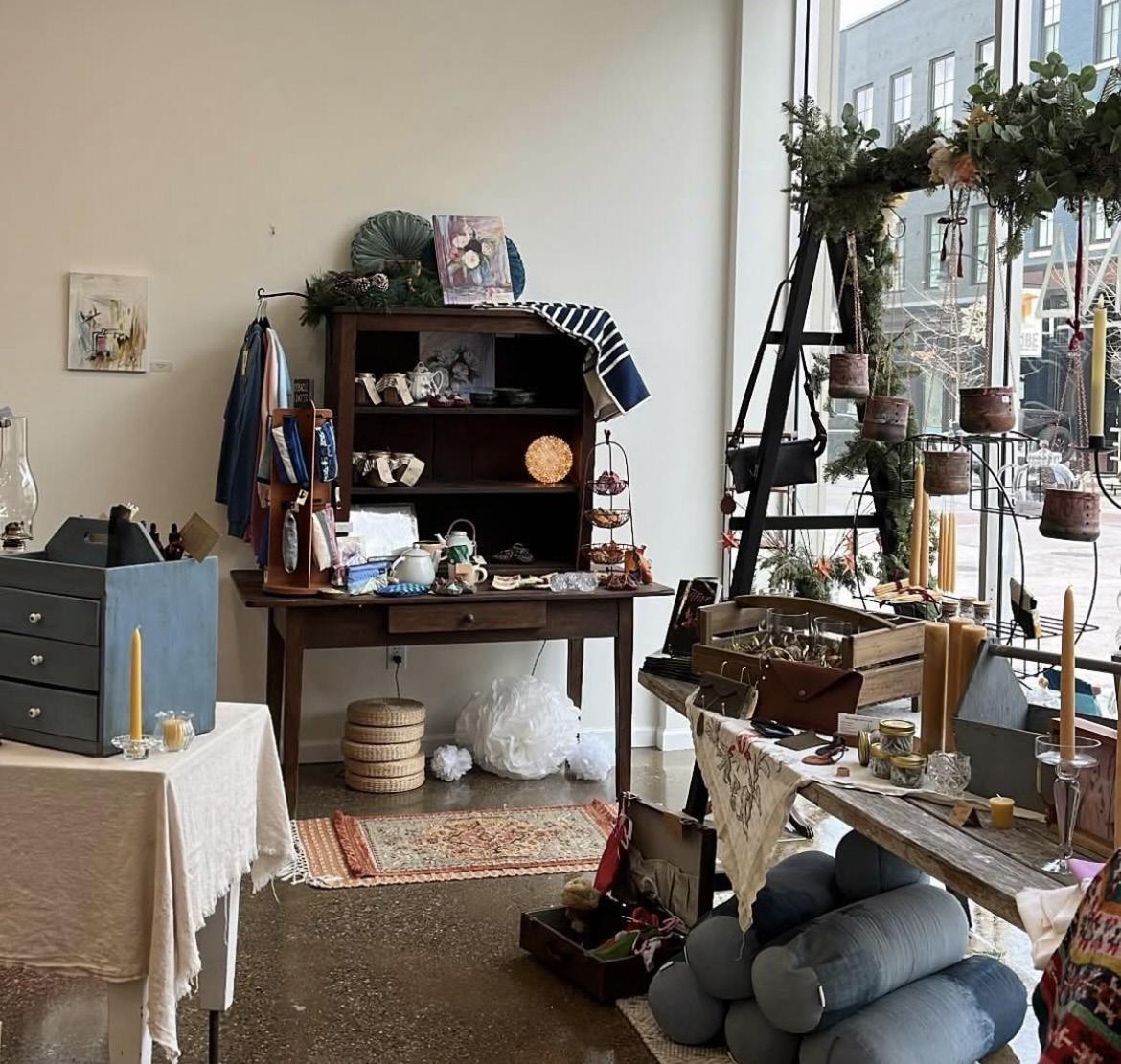
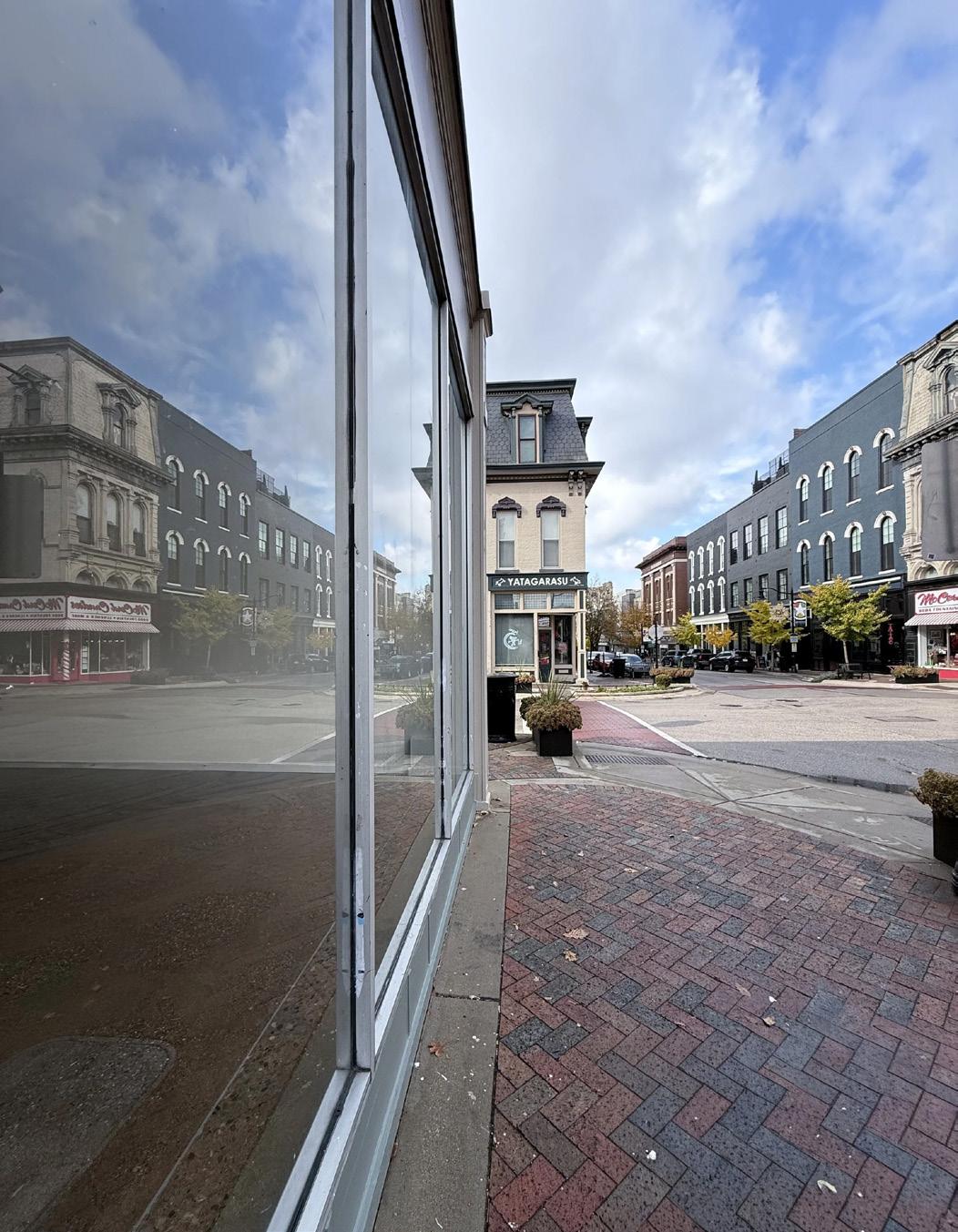
Located on the southeast corner of Sixth and Main streets, Local, which is touted as a “downtown Lafayette pop-up experiment,” is offering two 500- to 600-square-foot white-box storefronts available to budding retailers, makers and creators where they can apply to rent the storefront on 30-day terms.
This effort allows business owners to run a physical storefront with less risk than committing to a long-term lease right away.
Dennis Carson, economic development director for the City of Lafayette, says the opportunity to purchase the building was presented to the city when the business that formerly occupied the space closed.
The vision for the space includes expanding amenities for the public and artists using the Long Center for the Performing Arts, which is right around the corner, allowing the addition of a larger public lobby and gathering spaces. Currently, Carson says the project is still a few years out, with no specific timeline.
“So, in the interim, this is a great use of the space and economic development initiative to encourage more Main Street businesses to grow downtown,” he says.
This isn’t the first time this concept has been introduced in Lafayette. Carson notes that the city already has been offering a comparable option at a storefront on Columbia Street between Sixth and Seventh streets, where two spaces have been made available to retailers on short-term leases of up to one year. Those spots have housed a spice and tea shop, a fashion designer, a collectibles shop and others.
“This program expands on that and adds other services and support that will help entrepreneurs for success,ˮ he says. “I’m excited to add more retail choices downtown and continue downtown’s positive momentum as a retail and tourist destination.”

“Home goods, packaged food, clothing collectives, experiential studios, art and craft pop-ups … there are so many options.”

With the City of Lafayette, the project is a collaboration between several entities, including the Downtown Lafayette Business Owners Association (DLBOA), MatchBOX Coworking Studio, Lafayette Urban Enterprise Association, The Heartland Concept, First Merchants Bank and the Indiana Economic Development Corporation.
Amanda Findlay is the executive director of MatchBOX, which serves as a coworking studio, makerspace and innovation hub designed for entrepreneurs, freelancers, creatives and small-business founders in Greater Lafayette.
“At MatchBOX, we’re constantly meeting creative innovators, so we know the demand for opportunities like Local exist,” she says.
“We looked at many models around the country in preparation for the launch of Local and were really impressed with some of the initiatives that others have successfully launched and operated.”


For those interested in renting a space, the first step is submitting an online application. From there, a small committee reviews those applications and helps make decisions about retail readiness and product market fit. Findlay says the plan is to rotate vendors on a monthly basis through June 2026.
As for choosing which retailers occupy the space, she says customer-facing businesses make sense, specifically in the north space with large windows facing Main Street.
“Home goods, packaged food, clothing collectives, experiential studios, art and craft pop-ups … there are so many options,” she says. “We’re looking at existing businesses with market track records (farmers market and pop-up vendors), online vendors looking to expand into physical spaces, and brand new concepts and collaborations testing the market for the first time.”
Entrepreneurs who are selected will be assigned a timeframe to operate the space, and once their timeframe comes, they will have a month to run their operations and gauge how their business models perform.
“It’s like a month-long market booth, or a very quick pop-up presence,” Findlay says. “But we think the short-term commitment will be a really insightful test for the retailers and help them decide if brick-and-mortar business ownership is the right path for them, long before they sign a 3- to 5-year lease or purchase commercial space.”
As for rates, the 30-day residency comes at a cost of $500, which includes the lease, basic utilities, access to shared furniture, business coaching and marketing support. Not included in the lease is general liability insurance, which vendors will be required to carry before moving in.
For multiple businesses looking to co-exist in the space during the same timeframe, partnerships are encouraged, but applicants must provide details on space-sharing arrangements and co-branding plans when filling out the application.
Entrepreneurs also will be provided with MatchBOX and DLBOA memberships through the duration of their lease, allowing them the opportunity to tap into acceleration programs, MatchBOX office hours, downtown business owner meetings and collaborations and more.
“Greater Lafayette has a thriving small business ecosystem, with numerous vendor-based events providing market-testing opportunities for entrepreneurs.”
“Greater Lafayette has a thriving small business ecosystem, with numerous vendor-based events providing market-testing opportunities for entrepreneurs,” Findlay says.
She notes that popular events such as Summer on the Square, Merry Main Street, Monster Mash on the Wabash, Star City Nights and the MatchBOX Holiday Maker Market have proven significant vendor participation and consumer demand. Additionally, the Lafayette, West Lafayette and Purdue University farmers markets offer regular retail opportunities for small business owners.
“However, these events, while valuable, are often limited to single-day or weekly engagements and do not provide sustained exposure for vendors to refine their business models or cultivate a loyal customer base,” she says. “We’re calling this an experiment for a reason, and we’re looking forward to giving entrepreneurs the chance to test their concepts on our beautiful Main Street.”

The program will be assessed, determining the best course of action on how to best serve up-and-coming retailers here in Greater Lafayette.
“We’re looking at a few things to measure the success of this project,” Findlay says.
This includes revenue generated by the entrepreneurs in the spaces, number of businesses who either directly or indirectly operate from the spaces and number of community organizations that engage with the space.
“We’ve learned from MatchBOX that the proper metric for business ideas is never that 100% will become viable businesses,” she says. “Sometimes, innovators put their idea through the ringer and realize the product-market fit is off or they don’t actually enjoy running a brick and mortar or that isn’t how their customers like to interact with this.”
Findlay notes that the 30-day residency is particularly fast for this project, and while uncertain if this rapid turnover pace will continue, testing it to keep the corner of Sixth and Main fresh and exciting is important for the beginning phases of Local. ★
BY KAT BRAZ PHOTOS BY CHRISTINE PETKOV
J.L. Hufford transformed its popular coffee counter into a thriving gourmet goods enterprise with global reach.
When Joe Hufford started J.L. Hufford Coffee and Tea Co. in 1991, Lafayette didn’t have a single espresso machine in sight.
“I remember visiting every coffee shop between Chicago and Indianapolis,” Hufford says. “There wasn’t a place around here to get an espresso or cappuccino. Maybe something on campus, but that was about it.”
So, in his mid-20s, he took a leap. With no deep love for coffee but a lifelong itch to run his own business, Hufford opened a small coffee shop inside the Tippecanoe Mall. “I wish I had some romantic story about sipping espresso on the Seine and thinking I should bring this back to Lafayette,” he says. “But it was purely a business decision. Coffee’s the second-most-drunk beverage in the world. That sounded like good math to me.”
Hufford signed a six-month lease — just long enough to see if the idea could work. It did. This year marks the business’s 35th anniversary.
When J.L. Hufford first opened, most customers didn’t even know what an espresso was. “People would come in and say, ‘I want one of them expressos,’” Hufford recalls. “We’d pour out this ounce-and-a-half shot and charge $3, and they’d look at us like we were crazy.”
Education became part of the sale. “We’d explain what an espresso was or turn it into a cappuccino so it looked like something worth three bucks,” he says. “It was a lot of trial and error.”
In those early years, J.L. Hufford was more gift shop than coffee counter, with shelves of mugs, teapots and coffee makers. Over time, the small counter in the back that sold drinks began generating the bulk of the revenue. “Eighty percent of our space
was devoted to stuff that made 20% of our sales,” he said. “That little coffee counter was doing 80% of the business.”
When the store moved to a new location in the mall, Hufford redesigned it around what customers actually wanted: convenience. “We realized people weren’t looking for a place to sit and linger,” he says. “It was more of a grab-and-go crowd — get a drink, head back to shopping.”
The top-selling drink today isn’t even brewed coffee. “Our No. 1 seller is what we call a Glacier,” Hufford says. “It’s a coffee smoothie — our version of a Frappuccino. Funny thing is, we didn’t even have a blender when we opened.”
While the coffee business thrived, Hufford noticed another shift happening — this time online. Long before e-commerce was mainstream, he saw potential in selling coffee beans to Purdue alumni and former customers who had moved away. But that first online experiment flopped. “We tried selling coffee online, thinking people would want to reorder once they left town,” he says. “That failed miserably. Too much competition.”
What didn’t fail was a niche he stumbled into by accident: high-end home espresso machines. “At the time, these were $1,000 to $2,500 coffee makers,” Hufford says. “They’re fully
automatic — push a button, and it grinds, brews and froths your cappuccino for you.”
He started with Jura, a Swiss brand, and quickly added others. Demand exploded. Within a few years, J.L. Hufford became one of the top three online retailers for premium home coffee makers in the United States.
We’re a bit of a best-kept secret. We don’t sell retail anymore, so people don’t realize what’s happening just down the road.
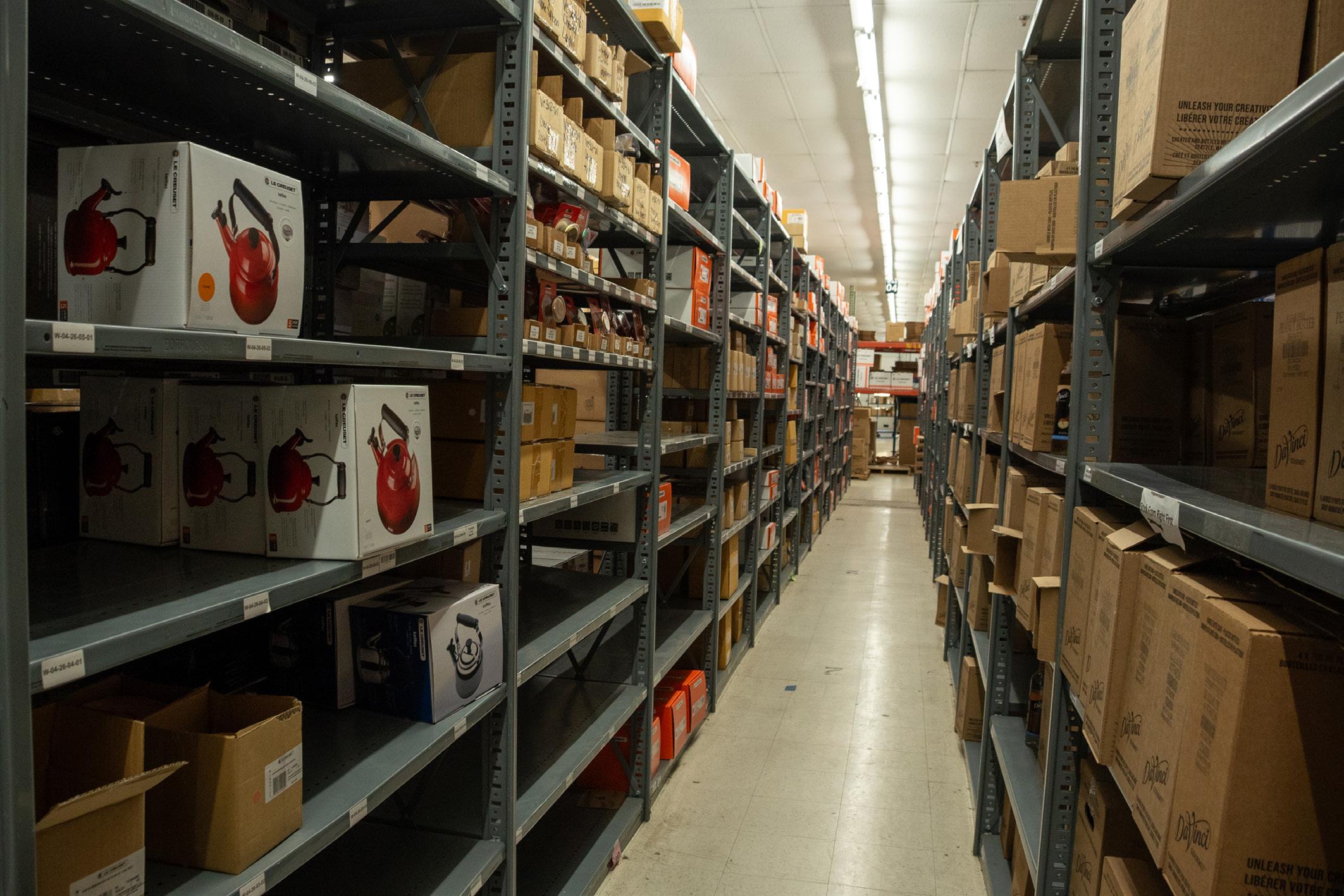
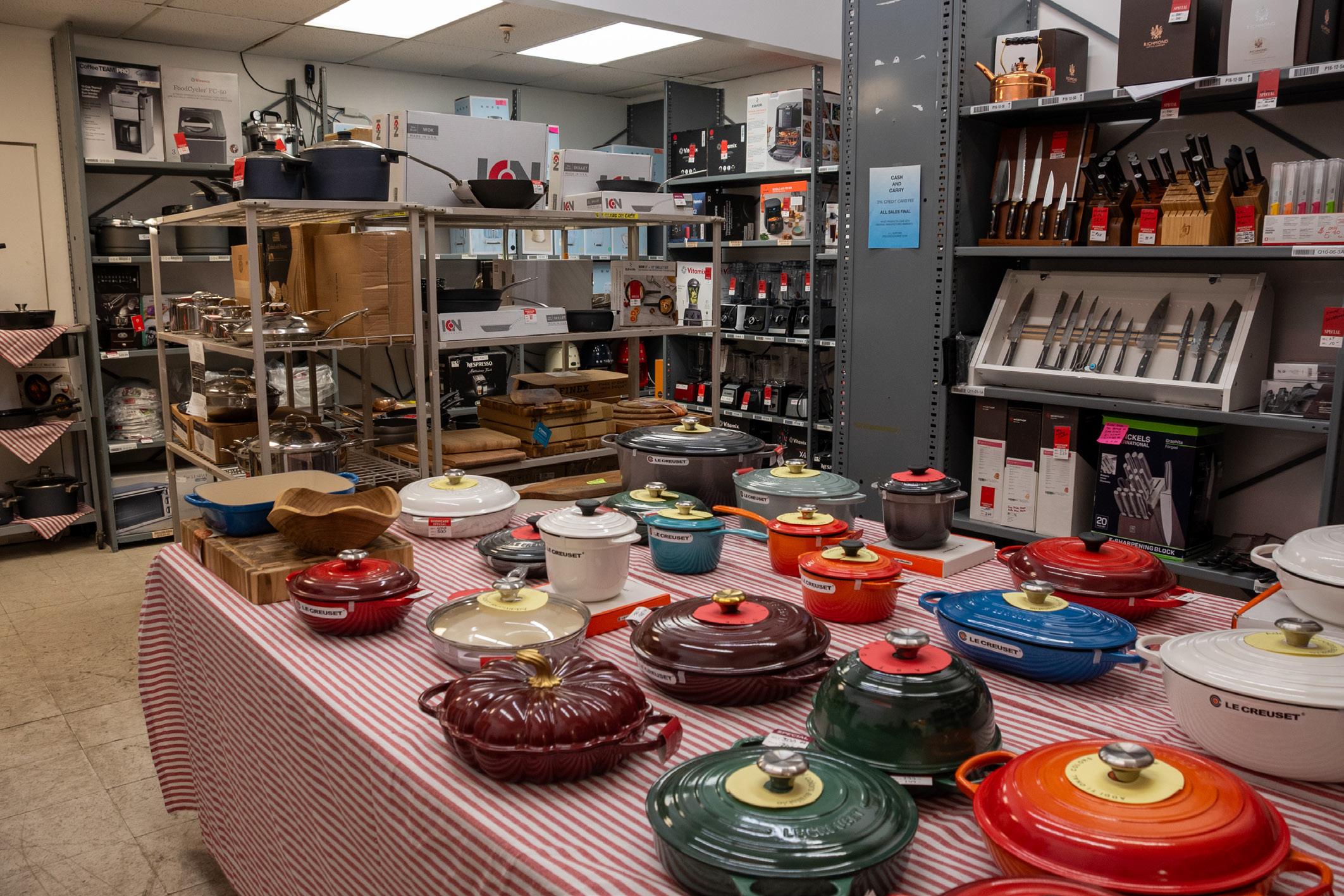
That success opened new doors. “We realized if someone’s willing to spend $2,500 on a coffee maker, they might also buy a $300 chef’s knife or a $500 Dutch oven,” Hufford says. “So we brought in Wüsthof knives, Le Creuset cookware, Vitamix blenders — all the big gourmet brands.”
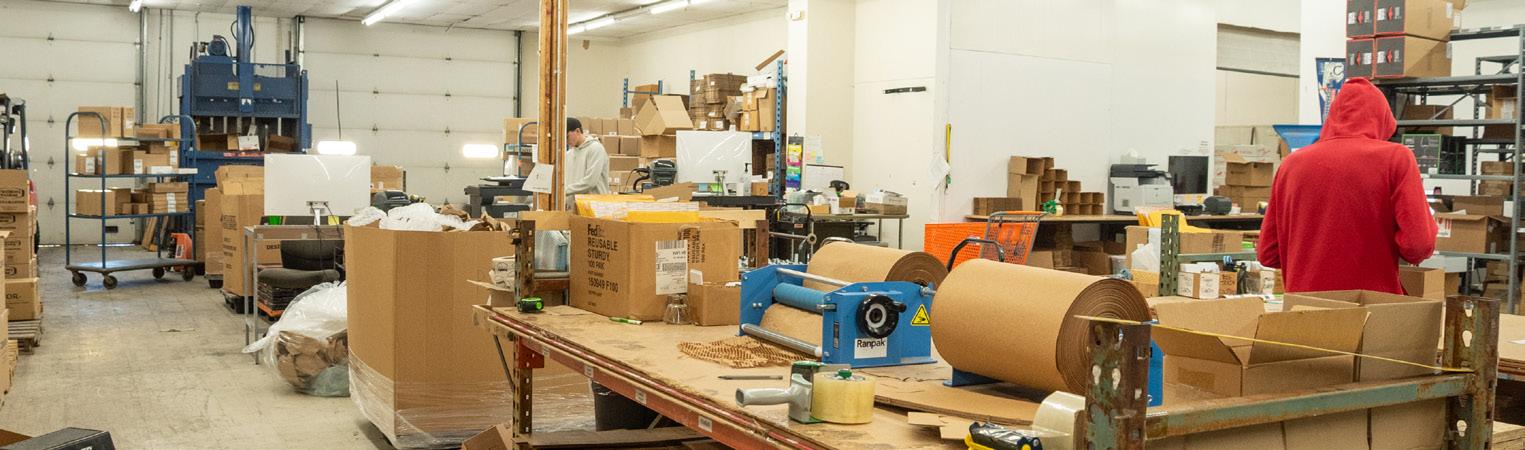
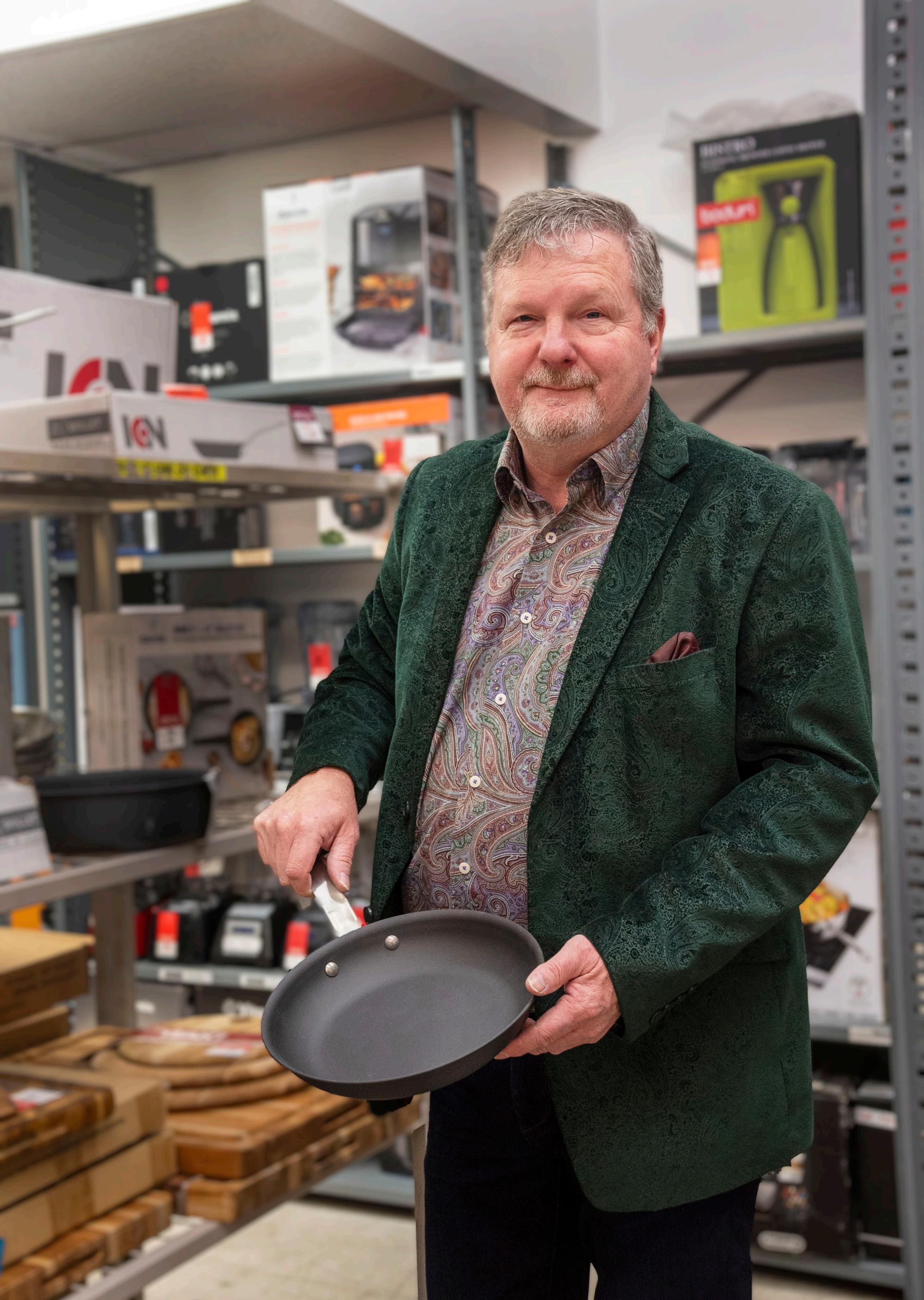
Today, J.L. Hufford has grown far beyond its mall roots. The company operates out of a 45,000-square-foot warehouse across from the mall — once an RV dealership, now stacked floor to ceiling with kitchenware. “We have several million dollars’ worth of inventory,” Hufford says. “We ship about 100,000 packages a year through Amazon alone.”
Most customers have no idea one of North America’s largest gourmet kitchenware distributors operates quietly in Lafayette. “We’re a bit of a best-kept secret,” Hufford says. “We don’t sell retail anymore, so people don’t realize what’s happening just down the road.”

Change is constant
J.L. Hufford’s next chapter is already underway — the company has begun manufacturing cookware in its own facility. The company also has expanded into logistics, helping other businesses get their products into the U.S. market.
I always say I’m a pirate, not a pioneer. My best ideas are ones I steal from other successful people, from other industries. You don’t have to reinvent the wheel, just look for ways to make it roll better.
“We do the shipping, warehousing, even warranty repairs for other companies,” he says. “If you’re not adapting, you’re falling behind.”
It’s a philosophy that’s guided Hufford since his first espresso shot.
“I always say I’m a pirate, not a pioneer,” he says. “My best ideas are ones I steal from other successful people, from other industries. You don’t have to reinvent the wheel, just look for ways to make it roll better.”
For a business that began with a six-month lease and a small coffee counter at the back of the store, J.L. Hufford’s reach today is remarkable. From Lafayette, the company ships gourmet cookware and coffee equipment around the globe.
Still, Hufford insists his success rests not on products but on people. “I’ve got really good employees,” he says. “I take good care of them, and they take good care of me. Most of them treat the business like it’s their own. That’s what makes it work.”
And while J.L. Hufford’s product line has evolved from mugs to gourmet kitchen tools and cookware, the spirit behind it hasn’t changed. It’s still the story of an entrepreneur who saw opportunity where others didn’t — and kept adapting to meet it.
“The only thing constant is change,” Hufford says. “If I didn’t believe that, we’d still just be selling cups of coffee.” ★
Ready to solve problems.
Ready to connect your business to what matters most.
Ready to support your growth with secure, reliable, locally backed fiber and managed services.
Whether it’s designing your network, troubleshooting the unexpected or helping you scale smarter, we’re here when it counts and we’re never far away.
Wintek Business Solutions. Built for business. Backed by neighbors.

Sample international cuisines, no passport needed

BY JANE McLAUGHLIN ANDERSON
et’s plan a culinary trip this year! We’ll visit Italy, Puerto Rico, Mexico, Japan, Greece and India to sample the best cuisine each country has to offer. Thanks to my friend, AI, here’s a logical travel itinerary to avoid backtracking: North America (Mexico, Puerto Rico); Europe (Italy, Greece); and Asia (India, Japan). We’ll need to allow a minimum of six weeks to three months to travel and spend a little time at each destination. OR, we could simply taste our way through these international cuisines by visiting Greater Lafayette’s wide selection of global restaurants on both sides of the Wabash River.
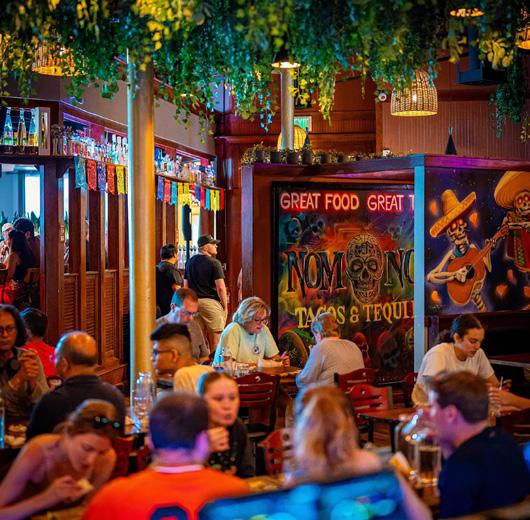
Just for fun, we’ll imagine our culinary tour starts in Mexico. With over 19,000 Latinos living and working in Greater Lafayette, roughly 10 percent of the population, Mexican cuisine has become a favorite, delicious staple of the community. There are 30 to 40 Mexican restaurants to fit every taste and budget. However, one of our favorites goes above and beyond, offering upscale Mexican cuisine amid authentic Dia de los Muertos (Day of the Dead) decor.
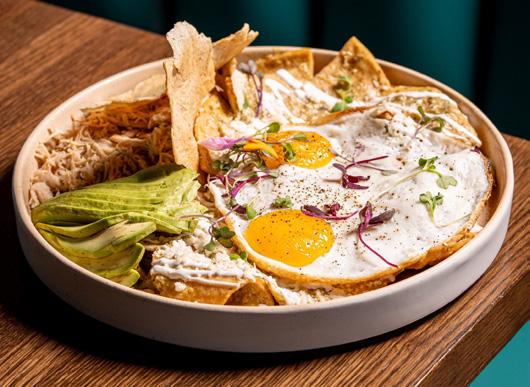

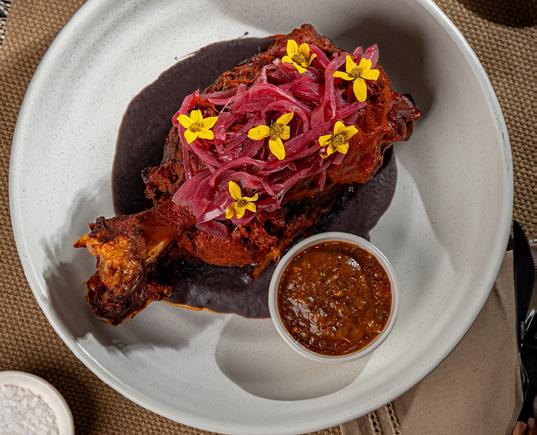

NOM NOM TACOS & TEQUILA creates bold and memorable taste sensations such as handcrafted ceviche filled with fresh shrimp, mango, pineapple, red onion and celery wrapped in thin cucumber slices and garnished with micro-greens and edible flowers, all served with a spicy sauce and a side of plantain chips. It’s art on a plate.
Every dish is a little masterpiece of inviting, surprising flavors. With tacos in their name, Nom Nom delivers on taste and variety. Choose from pulpo (char-grilled octopus), tempura shrimp, fish Ensenada style, roasted chicken, vegetarian, pork carnitas (confit pork) or rajas poblanas. With ingredients like pickled red onion, cabbage, chipotle crema and chihuahua cheese, the tacos are a burst of flavor in every mouthful.
Signature dishes are delicious and filling. The Sizzling Molcajete includes grilled steak, chicken, shrimp and onions with a cream cheese-stuffed poblano pepper wrapped in bacon. Caution, that little pepper packs the heat―keep cold milk handy! Desserts, like churros and pan de muerto, are beautifully plated and an exceptional sweet ending to the meal. Don’t forget to try a Mexican cocktail, too. Nom Nom offers more than 100 tequilas and 50 mezcals. The agave-based spirits are Mexico’s gift to the world. Experience the taste of Mexico by dining at Nom Nom at one of its locations in Lafayette. The meal, atmosphere and service will not disappoint.
Downtown: 102 N. Third St., Lafayette
Southside: 3209 Builder Dr., Lafayette

A short flight due east of Mexico will take us to the sun-drenched island of Puerto Rico in the Caribbean. Luckily for us, we don’t need to pack a bag to sample Puerto Rican food at one of Lafayette’s newest international restaurants.
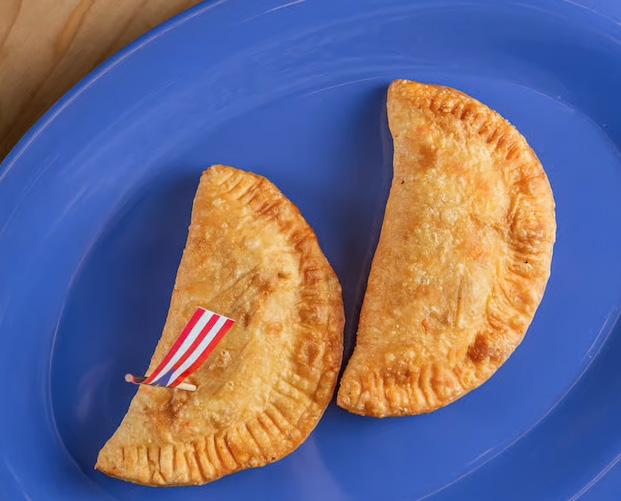
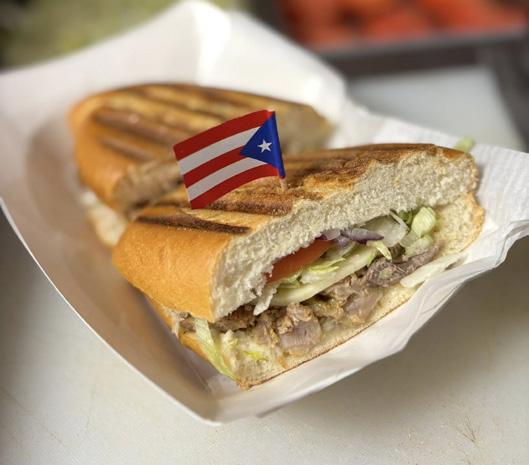
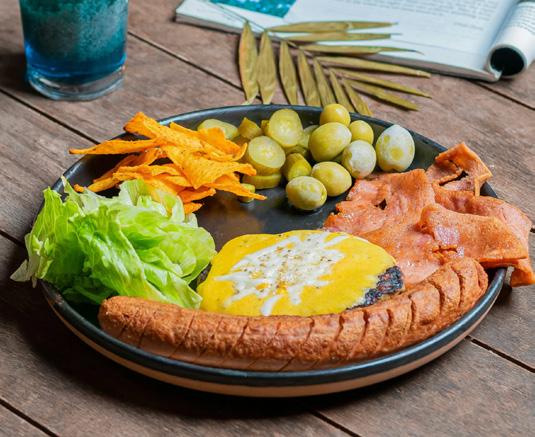
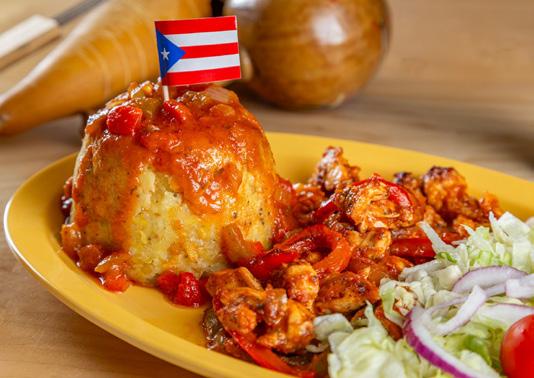

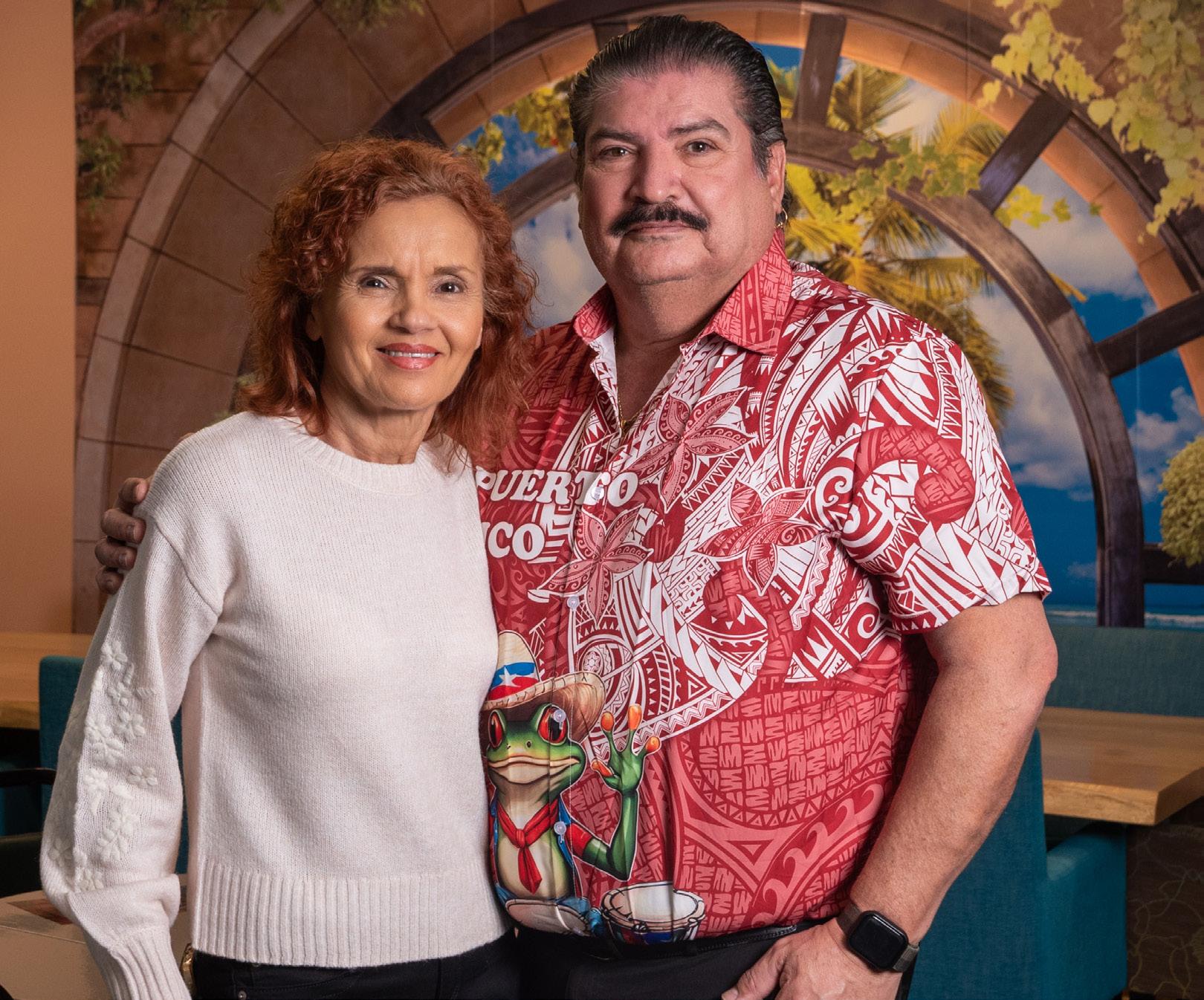
WEPA! CAFÉ celebrates unique Creole cuisine that’s uniquely influenced by Spanish, African and indigenous Taíno cultures that once lived on the small island before it became a U.S. territory in 1898. Wepa is a Spanish expression used to express excitement, joy, congratulations or pride. It is exciting to introduce traditional Puerto Rican dishes to Greater Lafayette. As they approach the restaurant, guests are greeted by the gentle nighttime chirping sounds of native coqui frogs.
Key ingredients found on the island-inspired menu include plantains, yuca, rice and beans, tropical fruits, fresh fish, pork, chicken and steak. Wepa Café golden fries and mashes green plantains with garlic in its traditional mofongos, served with a choice of meat or shrimp. Green plantains are high in potassium, magnesium, fiber, vitamin C and vitamin B6, whereas sweet plantains have a higher sugar content, like bananas. Both plantains and yuca can be boiled, fried or roasted like potatoes.
Barbecued meats are popular at the restaurant and are a part of the island’s earliest history. The word “barbecue” comes from the ancient Taíno word “barabakoa,” meaning a raised framework for slow-roasting or smoking food over a fire. The indigenous Taíno culture predates Christopher Columbus. Cooking low and slow creates a delicious stick-to-your-ribs kind of meal.
Popular items on Wepa’s menu are Taíno sandwiches, served on crispy tostones (plantains), made with roasted pork, chicken or steak. They’re flavorful, but not hot spicy. Try the ever-popular Cuban Taíno with savory roasted pork, honey ham and provolone cheese, topped with all the fixings and signature Taíno sauce (ketchup, mayo, garlic). Fresh bread can be subbed for plantains, if desired.
Don’t forget to try traditional drinks such as passion fruit juice, coco rico (coconut-flavored beverage), cola champagne (sweet, sparkling, creamy soda), or café con leche (coffee with steamed milk). The desserts (flan, rice pudding and coconut pudding) are the perfect ending to the island tour before we fly to Europe.

The flight to Rome, including layovers, takes 12 to16 hours from the Caribbean. The trip is well worth it to visit one of the culinary capitals of the world. Fortunately, Italian cuisine has spread across the globe and is widely accessible. Greater Lafayette alone boasts more than 25 restaurants serving various versions of pizza. However, our featured pick specializes in a complete menu of authentic Italian specialties.


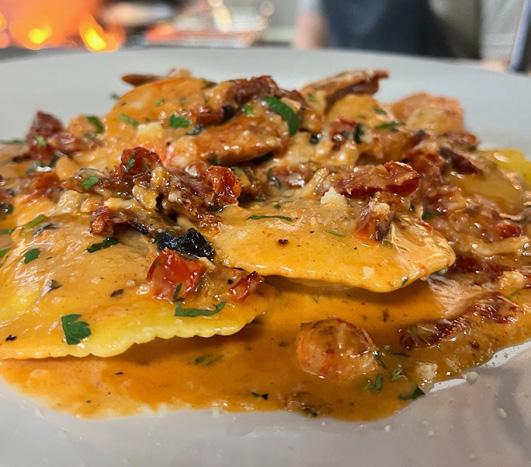

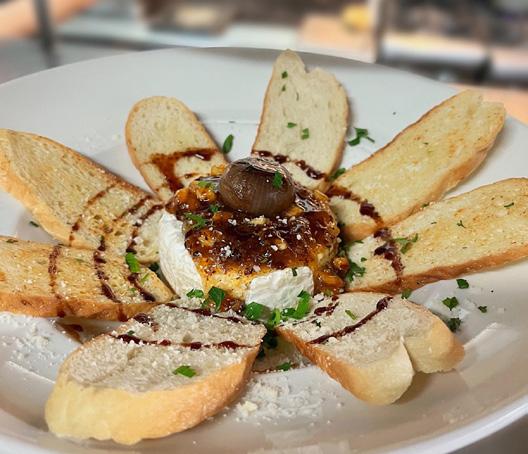
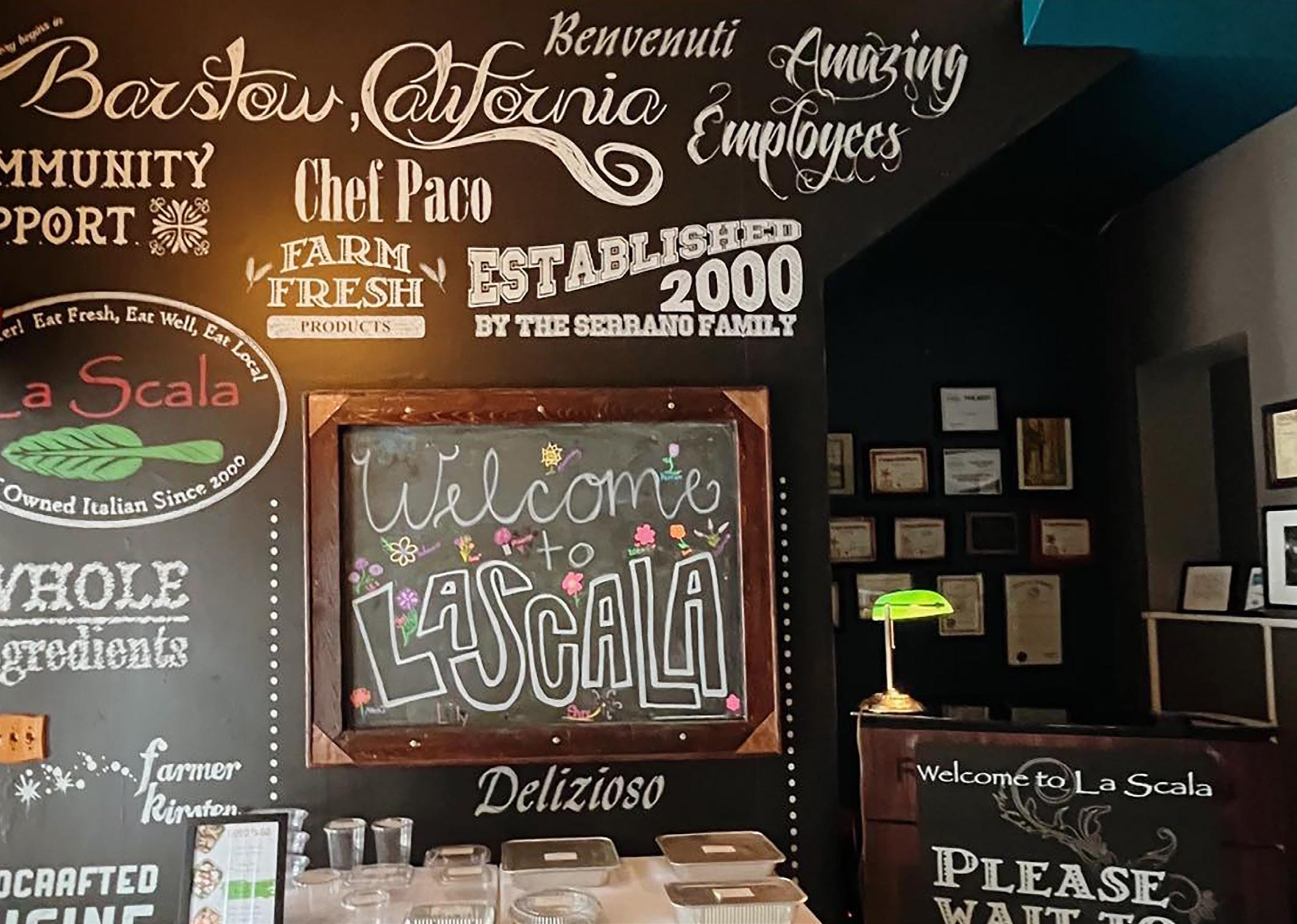
LA SCALA is a chef-owned family ristorante located in the gargoyle-adorned historic Ross Building on Main Street across from the Tippecanoe County Courthouse. It has been Lafayette’s premier Italian eatery for 25 years, winning the Journal and Courier’s vote for Best Italian Restaurant. The cozy interior features a deep shotgun layout, with tables lined up on both sides of the restaurant and open dining in the bar area. A spacious outdoor café is open during the warmer months. The humble beginnings in 2000 for Chef Francisco “Paco” and Kirsten Serrano, and their daughter, Lillian, have evolved and grown into a delicious and self-sufficient farm-to-table family enterprise.
What’s special about La Scala? The extensive menu of mouthwatering authentic Italian dishes such as Calamari Friti (octopus with lemon and marinara) for starters; Sacchetti Napolitana (cheesefilled “beggar’s purse” pasta with tomato cream sauce) and Steak Pepperonata (a flat iron steak with Italian peppers, basil, tomato and linguine) for main dishes; and Bomba Exotica (gelato or sorbetto dipped in a chocolate shell and drizzled with chocolate sauce and whipped cream) or tiramisu for dessert please any palate. Gluten-free pastas are offered alongside traditional Italian favorites. La Scala’s full bar includes house-made limoncello and seasonal sips. If you’ve ever traveled to Italy, you know that each dish is made and served with pride and pleasure. Using fresh quality ingredients, the Italians have mastered the art of eating well and have one of the world’s healthiest cuisines. That mission to provide the same freshness to Greater Lafayette helped inspire another unique feature of La Scala. You’ll enjoy fresh, chemical-free, locally grown ingredients from the family’s Small Wonder Farm. The Serranos grow and supply fresh and seasonal produce for La Scala dishes and their innovative chef-prepared subscription meal service, Good to Go. The meal program delivers ready-made meals within Tippecanoe County for busy individuals or families looking for easy, nutritious, restaurant-quality meals at home — perfect as a gift for the cooking impaired. Downtown’s longest-running fine dining restaurant is open Thursday through Saturday evenings, starting at 5 p.m. Reservations are encouraged.
312 Main St., Lafayette

Photos by Christine Petkov
The trip from Italy to Greece is the shortest leg of our trip. The two-hour flight takes us to another ancient culture along the Mediterranean Sea, famous for its distinctive, delicious cuisine. Fresh vegetables, olive oil, cheeses and herbs give the food its unique flavor profile. A quicker way to experience the culture is to drive across town to one of the area’s best Greek restaurants in West Lafayette.
George and Kathy Pitoukkas
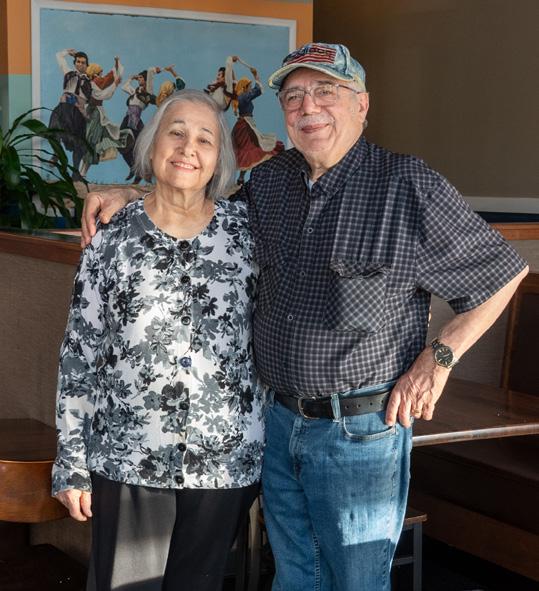
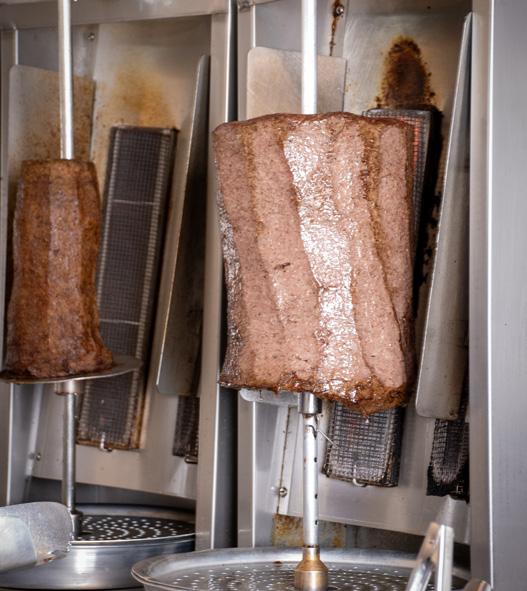


PARTHENON GREEK AMERICAN GRILL is a new restaurant concept for the 45-year-old Pitoukkas family-owned West Lafayette landmark. What’s new is offering traditional Greek favorites in a more contemporary, Greek-inspired atmosphere with quicker service to accommodate their customers’ busy lifestyles. It may be faster to get in and out, but there is no compromising on the four-generation family recipes or ingredients.
Opa! is a common expression used in Greece and surrounding areas to denote enthusiasm, joy, surprise or after making a mistake. In Greek culture, it can accompany the act of plate smashing at weddings or parties. At Parthenon, it’s exclaimed when a pan of hot saganaki (kefalograviera cheese) is set on fire before it’s brought to the table. By the way, it’s delicious and is served on fresh pita bread. Another signature dish is spanakopita, a homemade blend of seasoned spinach and feta hand-wrapped in flaky phyllo dough and baked. We would be remiss not to highlight the famous Gyro sandwich. Made from scratch in the kitchen from ground beef, lamb and Parthenon’s own blend of herbs and spices, the flavors will not disappoint. It’s wrapped in warm pita bread and adorned with onion and tomato slices and a dollop of homemade tsatsiki (cucumber yogurt) sauce. Complete your meal with Greek fries or rice pilaf and a fresh Athenian salad made with kalamata olives and feta cheese cubes.
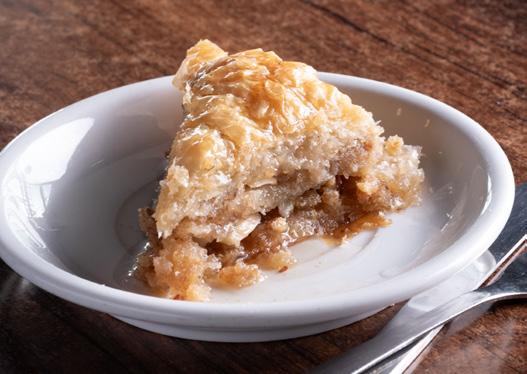
For dessert, dive into a classic baklava, sure to satisfy any sweet tooth with layers of honeyed nuts between layers of phyllo dough. Another option is a Greek wedding cookie, a rich buttery cookie with almonds drenched in powdered sugar. Parthenon caters special events and has a drive-thru, too. The Greeks still celebrate life in many Old World traditions, with lively music, dancing and sharing delicious meals with family and friends. If you’ve not tried Parthenon yet, feta late than never. Opa!
2060 Sagamore Parkway W., Suite M, West Lafayette

Now for the long-haul trip to Asia, taking 10 to15 hours, starting from Athens to New Delhi, India. There are 3,610 foreign-born residents from India living in Greater Lafayette, including students, who contribute to the community.




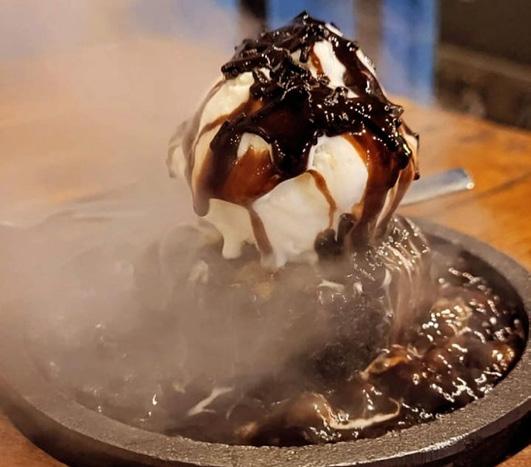
ADDA INDIAN CUISINE is located at Wabash Landing. Its flagship store is in Chicago, with West Lafayette as its second family-owned location with a mission to bring the flavors of India to the world. The chefs pride themselves on recreating traditional Indian foods while putting a twist on others to create a new taste sensation, raising a toast to the old and the new. The spices in Indian food are what make the dishes flavorful and memorable, including ginger, turmeric, curry, cumin, cloves, coriander, cardamom, cinnamon, mustard, fennel, chilies, garam masala, black pepper and more. On a spicy heat scale of 10, Indian food ranks between 5 and 10, says Chef Sid Savale. You’ll taste the heat of India.
In India, ADDA means “An everyday place or spot where friends gather.” Upon entering, you’ll be greeted with the soothing, burbling sounds of a fountain and the aroma of warm spices. The restaurant seats couples and larger groups who are gathering for an Indian food experience. There are many wonderful vegetarian dishes, including lentil soup and veg specialties like malai kofte (cheese and veggies in a white, creamy sauce). It pairs well with long-grain basmati rice. The menu features a wide selection of chicken, lamb and seafood dishes. A popular favorite is chicken tikka masala. Tikka means “bits” or “pieces” of the meat, vegetable or cheese used in a dish. Andhra lamb curry is a favorite slow-roasted lamb dish, rich in coriander, curry leaves and a complex blend of spices. Many of the dishes are cooked tandoori style―in clay pots after being marinated. Don’t forget the naan, the warm, leavened bread perfect for sopping up gravy or sauces.
Desserts are sweet puddings, pastries or ice cream to calm the taste buds after a spicy repast. Carrot halwa is a rich pudding made with grated carrots, cooked with milk, water, sugar, spices and ghee (clarified butter)―a popular sweet during winter and festive seasons. Experience Indian authenticity in every bite at ADDA.
332 E. State St., West Lafayette

A direct flight from the Indira Gandhi International Airport to Tokyo, Japan, takes only 8 hours. Greater Lafayette is home to 15,940 Asian residents, roughly 8.29% of the total population. Many come to Purdue University to pursue higher education and bring their ancient and evolving cuisine to the community.





SAKANAYA IZAKAYA’S dining experience transcends the ordinary. Cross the threshold, and you are transported to Japan with cool vibes and clean bamboo lines. The Name Tree greets you at the door, festooned with wooden ornaments hanging from red ribbons. Guests are encouraged to add their names or sentiments to an ornament and string it to the tree. The upscale interior features honeycombed, intimate seating for one or two couples, or tables for bigger parties. There is art in décor and art in every dish. Fresh. Colorful. Beautifully plated. Tasty. Healthy. Japanese fusion. It’s a delightful place to gather, share food, and celebrate little occasions. Like Happy Hour on Sunday-Thursday from 2-5 p.m. for special pricing on sushi rolls and festive cocktails.
Located close to our Greek friends in Market West, Sakanaya is one of the hottest new restaurants in the area. Several ingenious varieties of sushi, maki rolls, sashimi and yakitori are on the menu. One of Chef’s favorites is the Sakanaya Wagyu Roll, made of spicy shrimp, avocado, torched A5 wagyu, tobiko, masabo, green onion oil and beef tartare sauce. A great starter is the Dinosaur Egg, a large egg-shaped container filled with avocado, spicy tuna, cream cheese and shrimp. Entrees come with a house salad or miso soup and range from hearty sushi rice bowl selections from the sushi bar or culinary favorites like teriyaki chicken or curry katsu (panko-battered chicken with Japanese-style braised curry) from the kitchen. Everything’s almost too pretty to eat, but you’ll be sorry if you don’t.
But wait, there’s more. Sakanaya features delicious lunch specials from 11 a.m.-3 p.m. Theoretically, you could come for lunch and stay through Happy Hour. Japanese whiskey and beer, sake, shochu and handcrafted cocktails complete the dining experience. Every month, a unique seasonal cocktail is featured. Enjoy the taste and culinary artistry of authentic Japanese cuisine right here in Greater Lafayette.
2060 Sagamore Parkway W., Suite T, West Lafayette
The culinary quest has ended. Time to head back home. It takes 12 hours for a nonstop flight from Tokyo to Chicago, followed by a short United Express flight to the Purdue University Amelia Earhart Airport. Luckily for us, these global gastronomic destinations are right here for the tasting. ★
The Greater Lafayette Commerce Ask the Experts program is perfect for you. Greater Lafayette Commerce is teaming with experienced professionals who have the skills you’re looking for to help you overcome challenges and provide you with perspective and direction.
Ask the Experts provides small business owners with the information they need while also facilitating the development of lasting professional relationships.
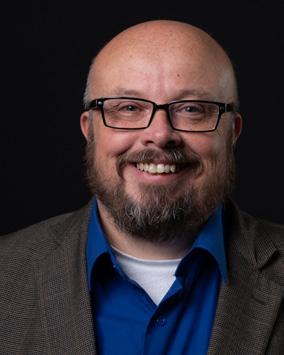
is the program chair for the Garatoni School of Entrepreneurship and Innovation at Ivy Tech Community College, where he guides students as they prepare to launch their businesses. With two decades of entrepreneurial experience, he has helped many local entrepreneurs with the continuing success of their companies. His work is deeply rooted in community development and supporting small businesses. Through teaching, consulting and mentorship, he focuses on building durable businesses that serve both their owners and the communities around them.
Starting something new?
Here's some essential homework for every business owner.
My son, who lives in Alabama, called me last week very excited about a business idea he had. He carefully described each aspect of the concept, and as he talked, I noticed something common among new entrepreneurs. He was ready to move forward without doing some basic checks to see whether the idea was viable. I told him he had a solid concept, but there was homework to do before launching. I explained three things every business owner must do before starting a business: solve a real-life problem, know your customers and pivot where you can.
Many business owners are passionate about their products or services but fail to clearly understand how their business makes someone’s life better. I see this often with my students. They love their product, so they assume everyone else will too. That is rarely the case. People value businesses that make their lives easier.
I asked my son a simple question: “What problem does your business solve?” After thinking for a moment, he said, “Time. My service gives people back their time.” He wants to start a mobile detailing business. It would have been easy to say the problem he solves is cleaning cars, but that is not the real value. He is saving customers the time and effort it takes to do it themselves.
Once he understood this, he could begin identifying who his customers actually are: people who are busy and able to pay for convenience. By defining the real problem his business solves, he can now start determining who will value and pay for that solution.
Knowing your customer
His first assumption is that his customers value a clean vehicle. If they do not, the business fails before it begins. That is the starting point. I suggested he reach out to his local Small Business Development Center to see what market research
might be available. I require my students to sign up with the Indiana Small Business Development Center (ISBDC) within the first two weeks of the entrepreneurship program at Ivy Tech. It is an invaluable resource for anyone starting a business.
Like all business owners, my son must invest the time needed to understand his customers. His next assumption is that his customers are too busy to clean their cars themselves. That could include business owners, professionals or parents with active schedules. From there, he can begin building a customer profile. His final assumption is that these customers are willing to pay a premium for convenience.
With these assumptions and supporting market research, he can create a customer persona. But the process does not end there. The most important step is asking real people. I have my students conduct customer empathy interviews to learn whether their ideas are viable and what customers actually want in a solution. This is not a sales opportunity. It is a chance to listen and learn through meaningful conversation.
Pivot to meet their needs
I told my son that once he learns from customers’ experiences with competitors and understands what they want from a service like his, he needs to pivot. Adjust the business where possible to better meet customer needs. If customers prefer pickup and drop off, offer it. If they want services performed during specific hours, accommodate them when feasible. You will not meet every expectation, but successful business owners work hard to meet the ones that matter most to their customers.
For help with your startup there are resources you can access: Greater Lafayette Commerce, MatchBOX Coworking Studio, ISBDC and me, at Ivy Tech Community College.



BY BRAD OPPENHEIM PHOTOS PROVIDED
» West Lafayette has plans for a new center » Ivy Tech program meets a need
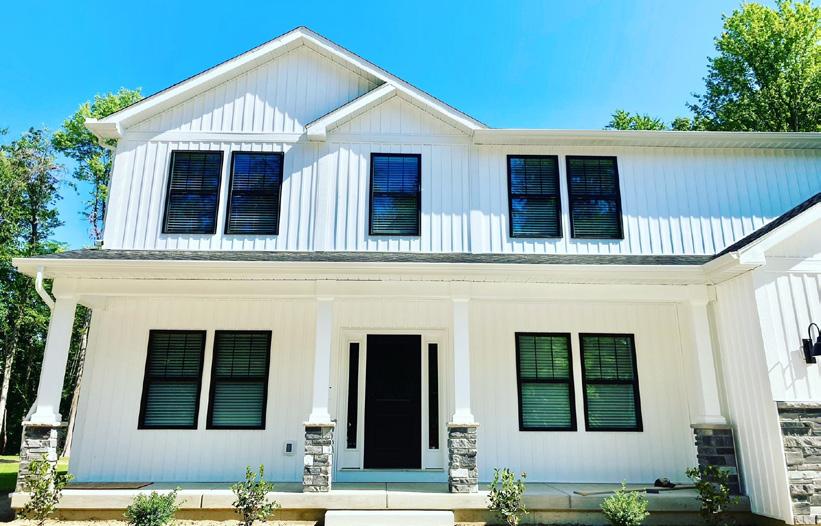
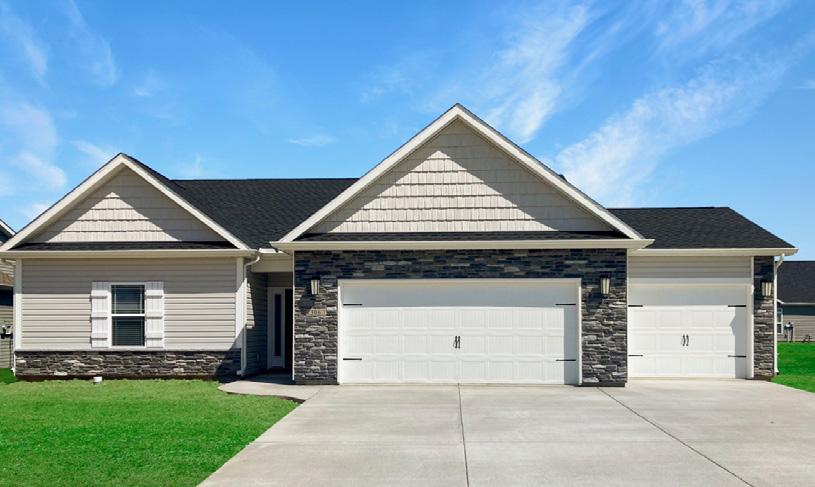
An unmet need for early childhood education (ECE) in the Greater Lafayette region has led to a surge in demand for early childhood educators, and now, efforts are underway to close the gaps.
In West Lafayette, the issue prompted the city’s Redevelopment Commission to initiate the West Lafayette Early Childhood Education Gap Analysis, highlighting the need for improved access to high-quality childcare services in the region.
The study, released in 2024, identifies significant gaps in ECE availability, especially for infants, and emphasizes the importance of collaboration among community stakeholders to address these challenges.
The report found that ECE providers described a challenging business environment, reporting the largest barrier to expansion is the lack of ECE workers who are willing to work at the current wage levels. Community leaders also reported that the current demand for childcare outpaces the supply of available seats.
A site analysis identified two potential sites for a new childcare center in West Lafayette, including the former Happy Hollow Elementary School and a site on Kalberer Road.
The Happy Hollow site has access to public transportation, and the Kalberer Road site is closer to areas with higher concentrations of ECE-eligible children and families facing childcare access challenges.
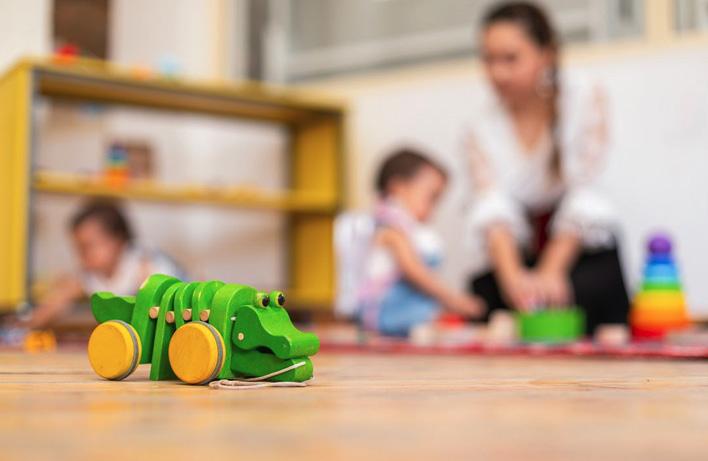
The city also outlined initial plans to develop an Early Childhood Education Center as part of its broader strategy to expand access to quality childcare.
On a county level, data from the Brighter Futures Indiana data center (December 2024) indicate that about 8,715 children under age six in Tippecanoe County may require care, while only 6,893 licensed childcare seats are available.
Christy Wegner, director for Early Learning Workforce Coalition at Ivy Tech Community College, says while this was accurate before December 2024, recent changes have impacted availability.
“The Office of Early Childhood and Out-of-School Learning (OECOSL) instituted a waitlist for Child Care Development Fund (CCDF) vouchers in December 2024, which now includes 32,000 children from low-income house-
holds,” she says. “Additionally, reimbursement rates for providers were reduced, resulting in a $140,295 loss for Tippecanoe County providers. These cuts have led to enrollment declines and program closures, which means many of the 8,715 seats listed are not currently available.”
Demand also has shifted dramatically in the past year due to CCDF cutbacks.
“Previously, parents waited up to a year for a seat; now, many providers operate at two-thirds capacity or have closed,” she says. “Families are making difficult choices—such as leaving children home alone or sacrificing rent payments to cover childcare costs. OECOSL has announced no new vouchers for 2026 and no guarantees for 2027, worsening the situation.”
The Early Learning Workforce Coalition, funded by the City of

Lafayette, IU Health Arnett, Purdue University and the Community Foundation of Greater Lafayette, is collaborating with business and community leaders to develop solutions.
Wegner says the coalition’s second CEO Roundtable will take place in January to continue these discussions.
Additionally, several local partners, including Greater Lafayette Career Academy (GLCA), Right Steps, Ivy Tech and the Community Foundation of Greater Lafayette, received a Lilly Endowment Gift VIII grant to create a career ladder for early childhood professionals.
Ivy Tech programs address needs At Ivy Tech’s Lafayette campus, the Early Childhood Education program is designed to both inspire and prepare future professionals with a desire to pursue a career in this
field, focusing on childhood development and growth and adult-child relationships.
Housed within the Ivy Tech School of Arts, Sciences & Education, the program is dedicated to preparing and strengthening adults to work with children from birth through age eight, supporting their physical, cognitive, social-emotional and language development.
Heather Bernt-Santy is an assistant professor for Early Childhood Education and program chair for the ECE Program at Ivy Tech’s Lafayette campus.
“Many of our students already work in childcare settings, Head Start programs, part-day preschools, and kindergarten, first or second grade classrooms, while others are working on early childhood credentials as high school students,” Bernt-Santy says.
She’s no stranger to the field of
early childhood education herself with more than three decades of experience working in childcare centers as a teacher and director, operating her own family childcare home, teaching speech/language preschool and serving as a youth development director in a school age program. With that background, she’s able to connect what students are hearing and learning in classrooms to real, daily work in the field.
“Qualifications for work in early care and education programs range from requiring a high school diploma all the way to needing a bachelor’s degree, so many people enter the work not knowing if it will truly be a good fit for them,” she says.
“These factors lead to a high turnover rate, which is disruptive not just for those employees but also for the children they are working with.”
A variety of technical certificates such as Early Childhood Education, Infant/Toddler, Home Visitor, and Business Administration certificates are offered, along with an Associate of Applied Science degree in Early Childhood Education, and an Associate of Science degree in Early Childhood Education for students looking to transfer to a four year college.
“We urge anyone working with young children to pursue an Early Childhood Education credential or degree, regardless of regulatory requirements, to ensure they’re truly prepared for the work,” Bernt-Santy
While some of those factors can only be influenced by the person experiencing them, the program helps prepare students to face challenges head on with knowledge, field experiences and practicum placements and student support services such as food access, technology assistance, transportation resources and mental health supports.
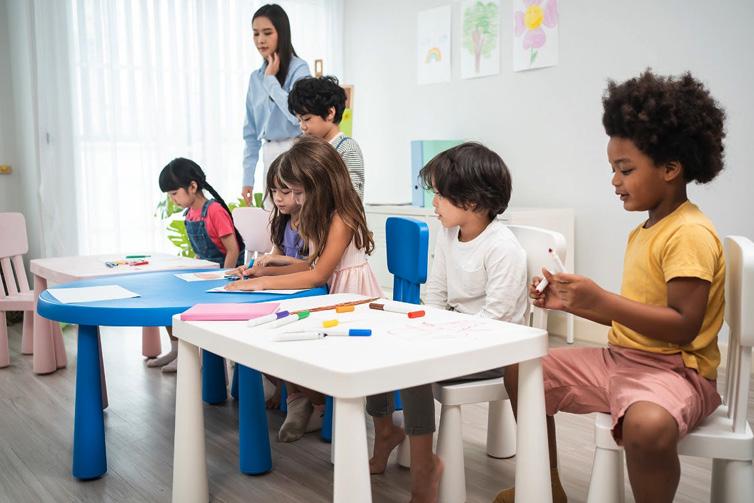
says. “These pathways are specifically developed to meet educational qualifications for a variety of early care and education settings, including state licensing regulations, Paths to Quality quality rating system qualifications and national accreditation criteria.”
As for active childcare providers looking to return to the classroom, traditional scheduling and course modalities may not be a practical option. To accommodate busy lifestyles and tricky schedules, most ECED courses are offered in the evening or on Saturday mornings, and many are available fully online.
“We also have three different modalities for students to take courses that are not fully online, such as Virtual Instruction (instructors and
students are all on Zoom for each class session) and Learn Anywhere (the instructor is in a classroom on Ivy Tech’s campus, and students can choose to come to campus or to join the class by Zoom),” Bernt-Santy says.
For those in need of financial support as they navigate their path to credentialing or a degree, the TEACH scholarship covers 80 to 90 percent of all costs for the student as well as offering bonuses for completing milestones.
“I actually received this scholarship to fund my associates degree in Early Childhood from Ivy Tech several years ago,” says Bernt-Santy. “Ivy Tech has amazing advisors for our Early Childhood Education students to help them navigate course selection and degree requirements. As the program chair in Lafayette,
also is working to establish relationships with childcare centers and family childcare homes in its nine-county region. These sites will host Model Classrooms with trained Mentor Teachers to support students completing field-based course assignments or practicum experiences. The grant is set to end in 2026, but the goal is to find ways to sustain the work.
Additionally, Ivy Tech is partnering with Right Steps Child Development Centers and the Greater Lafayette Career Academy on another Lilly funded program. Students at GLCA are enrolled in dual credit Early Childhood Education classes in pursuit of Child Development Associate credentials or Technical Certificates and are working as apprentices with mentorship at
Right Steps childcare centers.
“We are really looking forward to our Model Classroom project, as this will allow us to better ensure that the placements students are assigned to align with the way we are teaching our Early Childhood courses, and that they are placed with a supervising classroom teacher at those sites who has been trained to coach and mentor those students skillfully,” says Bernt-Santy.
Looking ahead, Ivy Tech may begin offering microcredential or badge pathways in the next couple of years as part of a stateside initiative. Plans are also in the works to offer additional Technical Certificates focused on Developmental Specialists and Early Childhood Literacy. ★
Learn more If you’re interested in learning more about the program, visit ivytech.edu/programs
For more data about early childhood education in Tippecanoe County, visit the Brighter Futures Indiana Data Center: brighterfuturesindiana.org/ data-center
I also meet with students as they work through their process.”
The ECE curriculum is largely guided by the principles of Developmentally Appropriate Practice and other key recommendations from the National Association for the Education of Young Children (NAEYC). Bernt-Santy says the curriculum incorporates three core considerations of developmentally appropriate practice:
» What do we know about typical child development, age by age?
» What do we know about the needs and development of the individual children we are working with at any given time?
» What do we know about the family, social and cultural context of each of the children we work with?
Thanks to a grant from the Lilly Endowment, the Lafayette campus



Whether you’ve been here forever, the new kid in town, scoping out a move, or just exploring, our Visit Team has the lowdown. Give us a call, zip us an email, or stop by the visitors center. For even more local intel, check out homeofpurdue.com and follow our social channels.



Friendly Market fuels the community—State Bank drives the expansion.
We needed to close on a nine-store acquisition during the toughest time of year—right between Thanksgiving and the New Year. It was a fast-moving, sensitive deal, and timing was everything.
State Bank understood that. Their team didn’t just say yes, they got it done. Meetings were booked. Answers came fast. We had what we needed when we needed it.
That kind of commitment is hard to find.

SUCCESS STARTS WITH FOLLOW-THROUGH, AND WE HELP BUSINESS OWNERS DELIVER.
If you want a great convenience store, visit Friendly Market.
If you want a better bank, call State Bank.
ROB BLACKMAN & BOBBY RIDDELL:

BY KEN THOMPSON PHOTOS PROVIDED
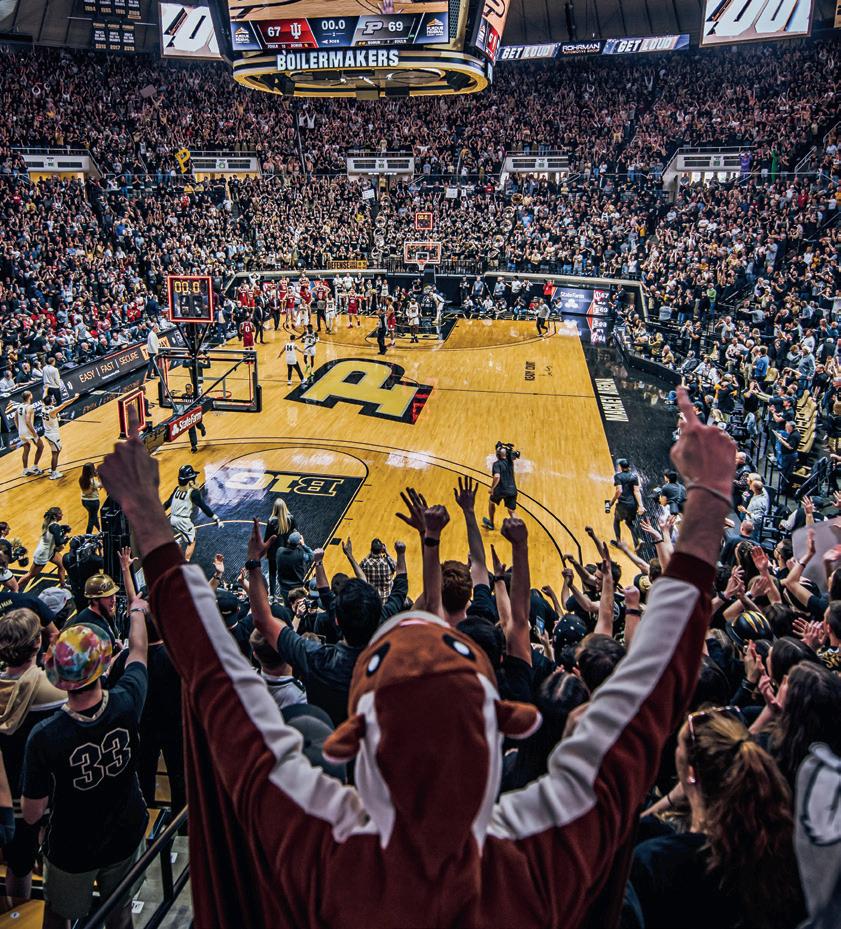
“And wouldn’t you know it. On Resurrection Sunday, the Purdue Boilermakers have turned the doubters into believers. Believe this! For the first time since 1980, Purdue is headed back to the Final Four.”
Rob Blackman calls it his favorite broadcasting moment, that April 1, 2024, afternoon when the Purdue men’s basketball team ended the school’s 44-year absence from the NCAA Tournament’s Final Four.
Amid his sixth full-time season as the play-by-play voice of the Boilermakers on the Purdue Global Radio Network, Blackman has been asked frequently if he prepared those remarks in the final moments of Purdue’s 72-66 victory against Tennessee in Detroit.
“I did not prepare that word for word,” Blackman says. “I did however jot down a few notes in my hotel room the night before just in case Purdue did win. I wanted to tie it into the fact it was Easter Sunday. In my mind I had rehearsed a few different scenarios that I could somehow tie into Easter Sunday, and luckily for me it came out damn near perfect.”
Blackman and his broadcasting partner, Bobby Riddell, had different emotional reactions to the victory. Turning doubters into believers felt satisfying to Blackman, a member of the broadcasting team since 2004.
“The team had just fallen flat on its face the year before in the NCAA Tournament,” Blackman says, referring to the loss to No. 16 seed Farleigh Dickenson in the first round. “You had all these expectations and all these doubters out there ready to say ‘Ha ha, we told you so. You can’t win in the tournament.’ So many people were ready to say that.”
Riddell had played for Purdue Coach Matt Painter from 2005 to 2009 as a walk-on guard from Harrison High School.
“As someone who bleeds Gold and Black, it was such a surreal moment to witness Purdue go to the Final Four and be on the broadcast for it,” Riddell says. “Rob Blackman just totally knocked it out of the park with his closing of Purdue going to the Final Four. I made a rookie mistake even though I wasn’t a rookie. I was so nervous and wanted Purdue to win I could never get myself to say ‘if Purdue wins …’ I thought, ‘Is there something cool I should say on the broadcast?’ Rob had that awesome close and he came to me. I was like, ‘Oh, I should talk now and say something great.’ Off the top of my head, I rattled off something excited. It was a dream come true moment.”
taking over for a legend
Blackman and Riddell are in their sixth season together. Blackman took over play-by-play duties from Larry Clisby when the long-time announcer’s health declined. Clisby passed away Feb. 27, 2021, following a nearly three-year battle with Stage 4 lung and metastatic brain cancer.
Growing up in Monticello, Indiana, Blackman idolized Clisby. “To me, he was an icon in broadcasting,” Blackman says. “I was born in 1970. Back then, as you know, it was antenna television. You had very few options, but Channel 18 was an option. I can remember ‘Cliz’ doing the sports anchoring on Channel 18. Then you add on top of that he’s the voice of the Boilermakers, so anything related to Purdue or Lafayette sports he had some kind of connection. He’s a childhood hero of mine, and the next thing you know I’m working alongside the guy, thinking to myself, ‘How did this happen?’
“His passion was so contagious. Some would argue over the top at times, and that’s a fair criticism. But look, there was never any doubt about where the Cliz stood on his thoughts about Purdue basketball. I think that’s endeared him so much to the fans.”
Clisby called 1,189 Purdue basketball games that spanned much of the careers of Naismith Basketball Hall of Fame coach Gene Keady and Painter. Keady taught Clisby a lesson that he passed along to Blackman.
“You can’t fool the fans,” Blackman says. “Look, if we’re playing poorly or badly – we being Purdue – then you need to let the fans know. Just as when we’re playing well, playing at a high level, you need to let the fans know. You can’t fool Purdue basketball fans. They’re too smart. Granted, these last handful of years there haven’t been too many bad nights for Purdue.”
Since Blackman and Riddell teamed up for the 2020-21 season, Purdue has won nearly 77 percent of its games (134-41) with two Big Ten regular season championships, a Big Ten Tournament title and a national runner-up finish in 2024.
That run of success included another memorable moment for Blackman. On Dec. 6, 2021, Purdue earned its first No. 1 ranking in The Associated Press poll.
“I will remember that day for the rest of my life,” Blackman says. “We had a Matt Painter coaches radio show that night, and we were doing it in the Union at Walk-Ons. He comes in about five minutes before the show begins and gets a standing ovation. What a great show that was that night.”
paying it forward
Just as Clisby mentored Blackman, Blackman has paid it forward to Riddell. After graduating from Purdue, Riddell was working for Heman Lawson Hawks in West Lafayette. The firm handled tax returns for Painter and other members of his staff.
“Because of my connection with Purdue basketball, my boss at the time who had been overseeing those accounts allowed me to take the lead,” says Riddell, who had no radio or media experience prior to joining the Purdue Global Radio Network. “That probably helped keep me fresh on their minds compared to any other former player.”
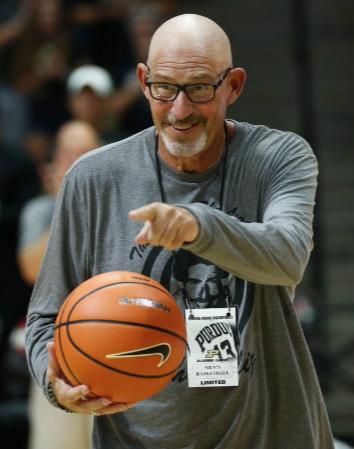
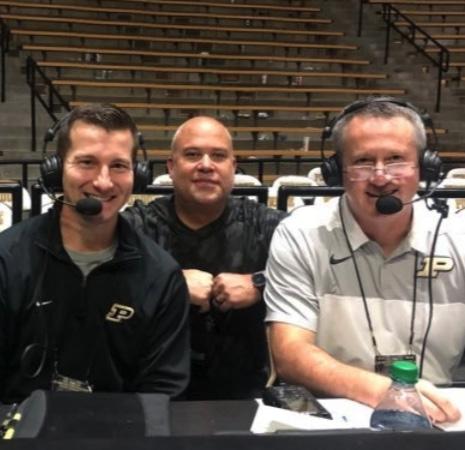
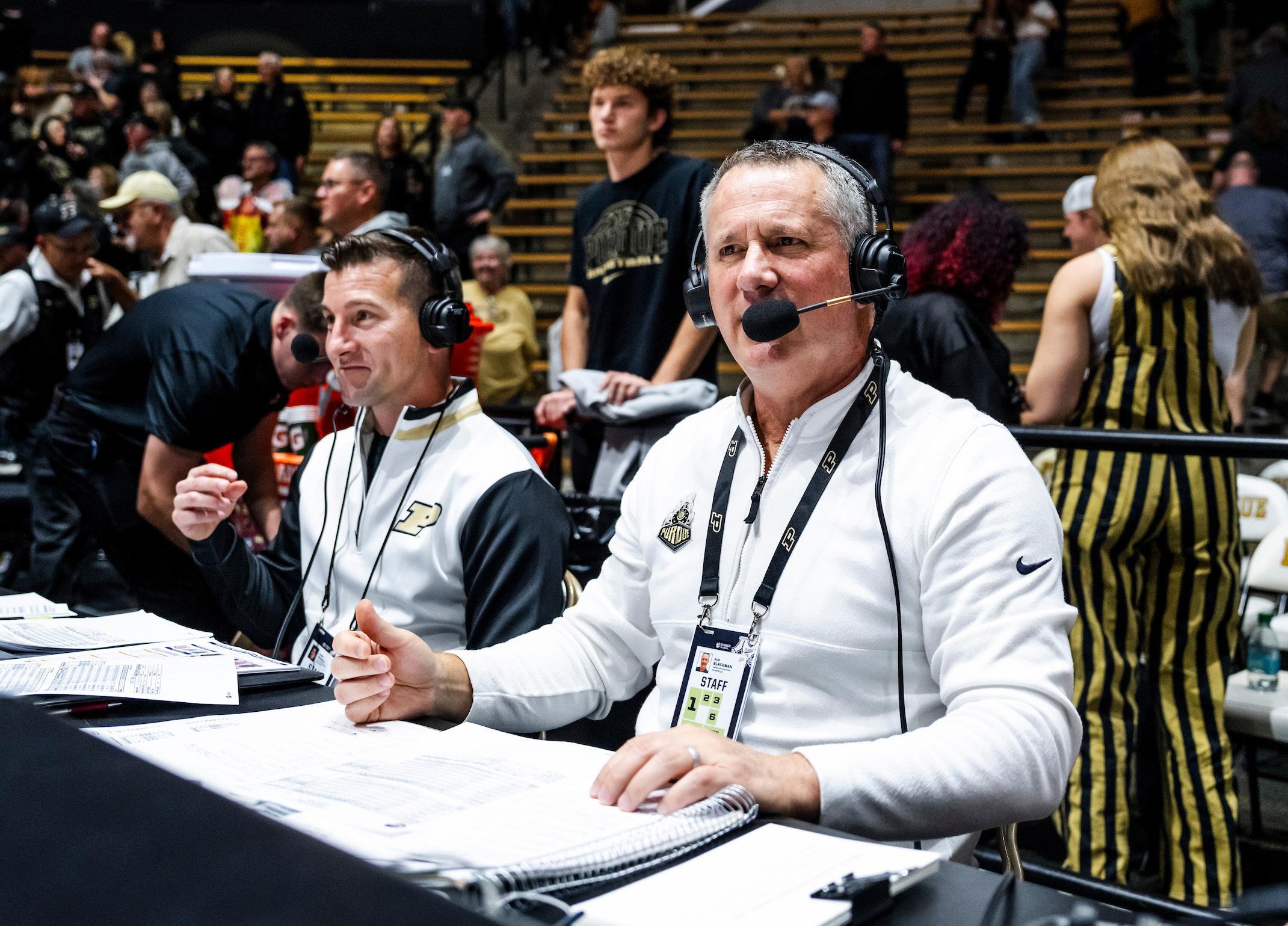
In January, Rob Blackman was named the Indiana Sportscaster of the Year by the National Sports Media Association (NSMA).


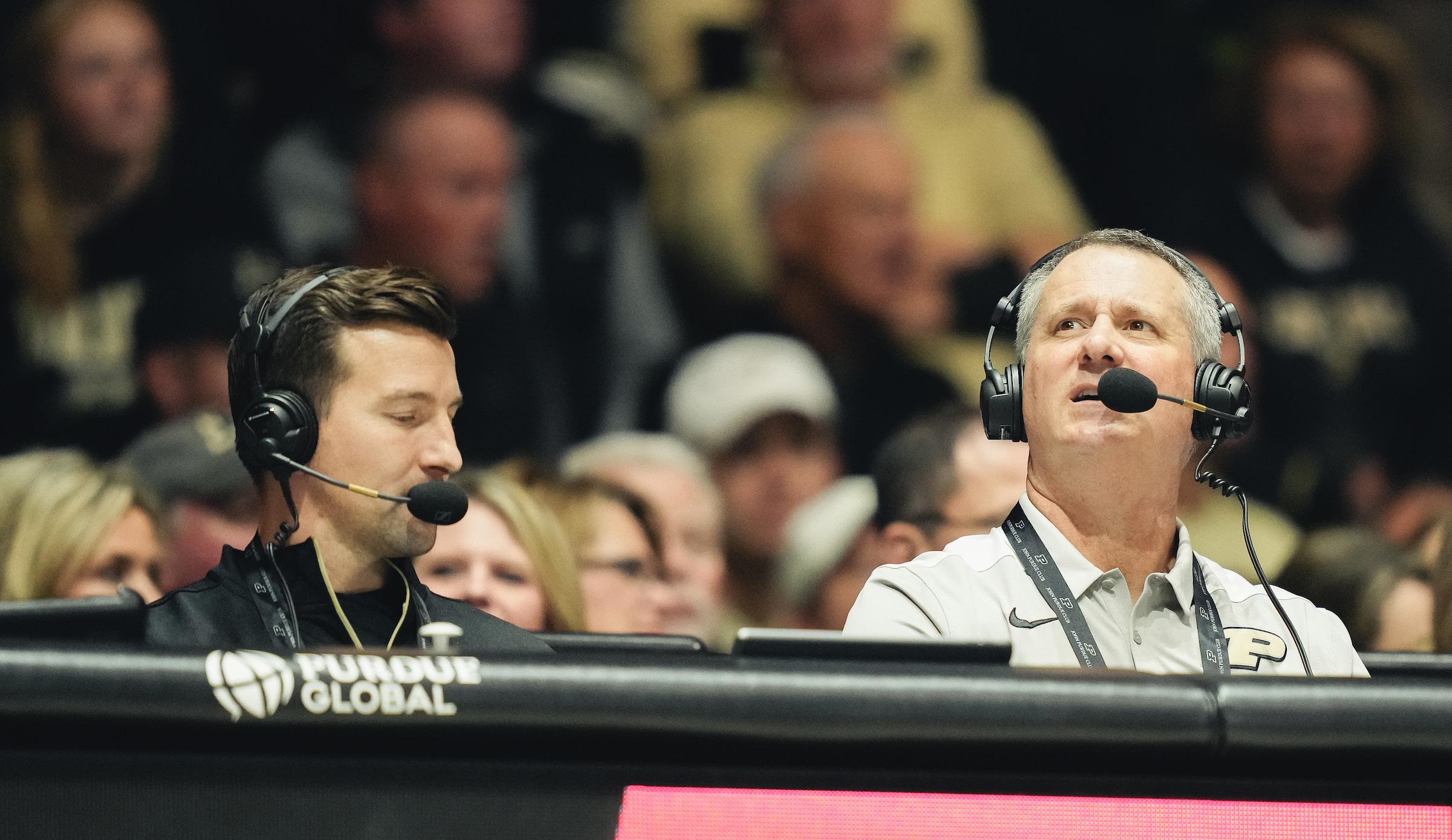
When Blackman ascended to the play-by-play role, it was “right place, right time” for Riddell.
“Coach Painter, Elliot Bloom (director of basketball operations) and some of those guys thought highly enough of me to give me an opportunity,” he says. “It couldn’t have worked out any better for me starting out in this industry to have a guy like Rob who literally had my job alongside Larry Clisby all those years. It was great to have someone like Rob who I could ask for feedback and constructive criticism.”
Blackman also had good timing in getting his foot in the door with Purdue. After graduating from North White High School in 1989, Blackman played four years of football at the University of Evansville. There, he got the bug to be a sportscaster.
“Evansville had a campus radio station at the time – they no longer do – so they allowed the students to also broadcast some of the college’s different sporting events,” Blackman says.
After graduation, Blackman began his career calling high school and junior college games in Mount Carmel, Illinois. A move to Nashville, Tennessee, followed to announce football and basketball games for Tennessee State and Lipscomb. Blackman and his wife returned to Indiana in 2001.
“I was calling Arena League football games on the radio, which isn’t that glamorous, but I needed something,” he recalls. “I did a lot of high school stuff and started cold calling every college and university in the state of Indiana hoping to catch a break.”
The person who picked up the phone at Purdue was a college classmate of Blackman’s. While no fulltime position was available, Blackman accepted the role of fill-in announcer.
“Luckily a full-time position opened up and somehow, some way a guy who grew up watching Larry Clisby on TV, figuring he was the coolest guy ever, was now working alongside him,” Blackman says.
learning the dance
Riddell says being a radio color analyst isn’t as easy as it sounds to the casual listener.
“It’s kind of a dance between the two broadcasters to make sure you’re not talking over each other,” Riddell says. “You have limited windows to get your point across. Rob would do a good job of giving me
those windows. The more reps we’ve had together, the more comfortable we’ve gotten with each other. I feel our personalities jibe together and we can joke with each other.”
The breaking-in period for Riddell was complicated by the COVID-19 pandemic. Blackman and Riddell called home games from an upper concourse position in Mackey Arena. Neither traveled with the Boilermakers, and they were forced to call games while watching television monitors inside a small room in Mackey.
“That was quite a challenge because you do not have the ambience of the crowd to feed off of, whether good or bad,” Blackman says. “The other part that we found was when the games are on the road, you are always at the mercy of the home team in how well they were going to film the game. Some schools you had five or six different camera angles, and you really felt you could call the game pretty accurately. Other schools might have two camera angles and maybe neither of the two showed you the score and time on the clock.”
There was one other challenge calling a game remotely.
“We would follow the games live on the laptop on the scoreboard tracker,” Blackman says. “Often the video was behind the score so you might see the score change (on the laptop) and someone’s at the free throw line getting ready to shoot. So you know they’re about to make the free throw.”
great players, great coach
Noting the outstanding players to come through Purdue during his tenure on the radio network – Zach Edey, Braden Smith and Jaden Ivey came quickly to his mind – Riddell admits he’s been spoiled.
“It’s probably my great vibes I have around the team,” Riddell says. “They feed off my presence apparently.
“All kidding aside, Coach Painter is in his coaching prime I’d say. I’ve been really lucky to get my radio career started with such a great team. It gives us a lot of fun things to talk about.”
Blackman hopes for more excitement with this year’s team, which began the 2025-26 season ranked atop the Associated Press preseason poll for the first time. Perhaps a moment might eclipse that Easter Sunday in 2024.
“Hopefully, that will move into second place one of these days,” Blackman says. ★
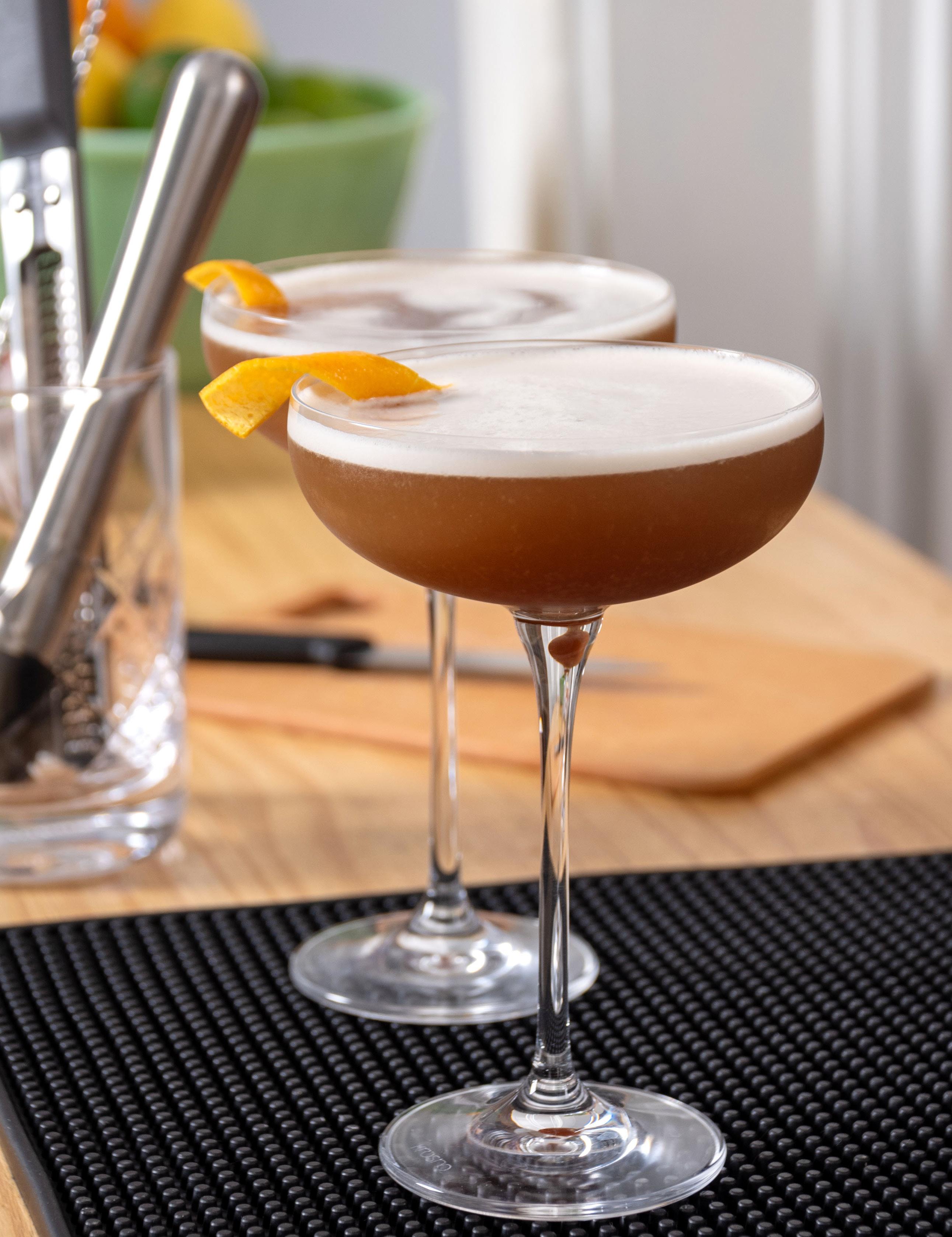
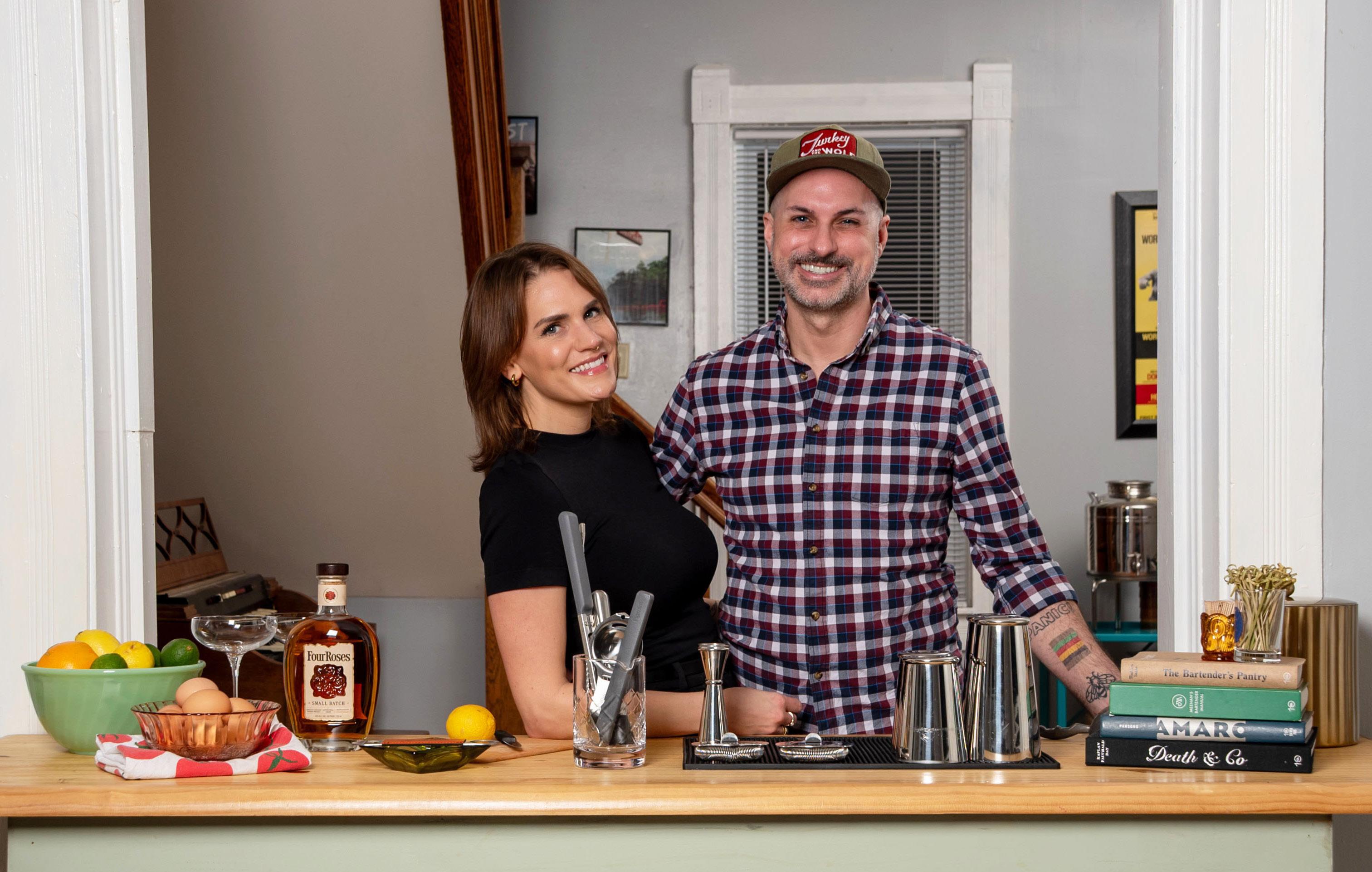
With Handholder, entrepreneurial couple brings craft, care and community to every pour.
When Michael McCarty talks about bartending, it’s not really about the drink. It’s about the story that unfolds across the bar — the quiet exchange of trust, the laughter that bubbles up halfway through a cocktail, the way strangers become a little less so.
“I’ve always loved that connection,” McCarty says. “You’re not just making drinks — you’re part of someone’s night, their celebration, their memory.”
That sense of connection became the cornerstone of Handholder, the mobile bar service McCarty co-founded in 2024 with his partner, Amanda Findlay. Together, the couple has turned a simple idea — thoughtfully crafted drinks served
with genuine hospitality — into a business that brings warmth, personality and polish to events across Greater Lafayette.
Handholder began with a spark of possibility. McCarty has spent more than a decade devising drink recipes and developing bar programs for restaurants throughout Greater Lafayette. Known for his artistry with cocktails and his easy rapport with guests, he’d long imagined what it might look like to take that craft beyond brick and mortar.
“Over the years, people have asked me if I’ve ever considered starting my own business,” he says. “Conversations with
Amanda made what initially felt like an overwhelming dream become an actual possibility. Together, I knew we could build something that feels personal and special.”
Findlay, the executive director of MatchBOX Coworking Studio, was already immersed in Greater Lafayette’s entrepreneurial scene — coaching founders, marketing new ventures and building creative collaborations across the community.
“When you work with entrepreneurs every day, it’s easy to get caught up in their excitement,” Findlay says. “This is my first time co-founding a business, but in my decade at MatchBOX, I’ve learned a lot about what makes a small business thrive. With Handholder, Michael brings this incredible craft and hospitality experience and I bring the marketing and business strategy. It’s the perfect balance.”
Their first business experiment together came not as a grand opening but as a community fundraiser. In 2022, McCarty was invited to take part in Mental Health America’s inaugural Mocktail Monday event as a restaurant bartender. Findlay joined as a community representative. They served up a pineapple-shrub mocktail with flaming sage as a finishing touch — a creation that drew longer-than-expected lines and was named the event’s most creative mocktail. That experience working together led
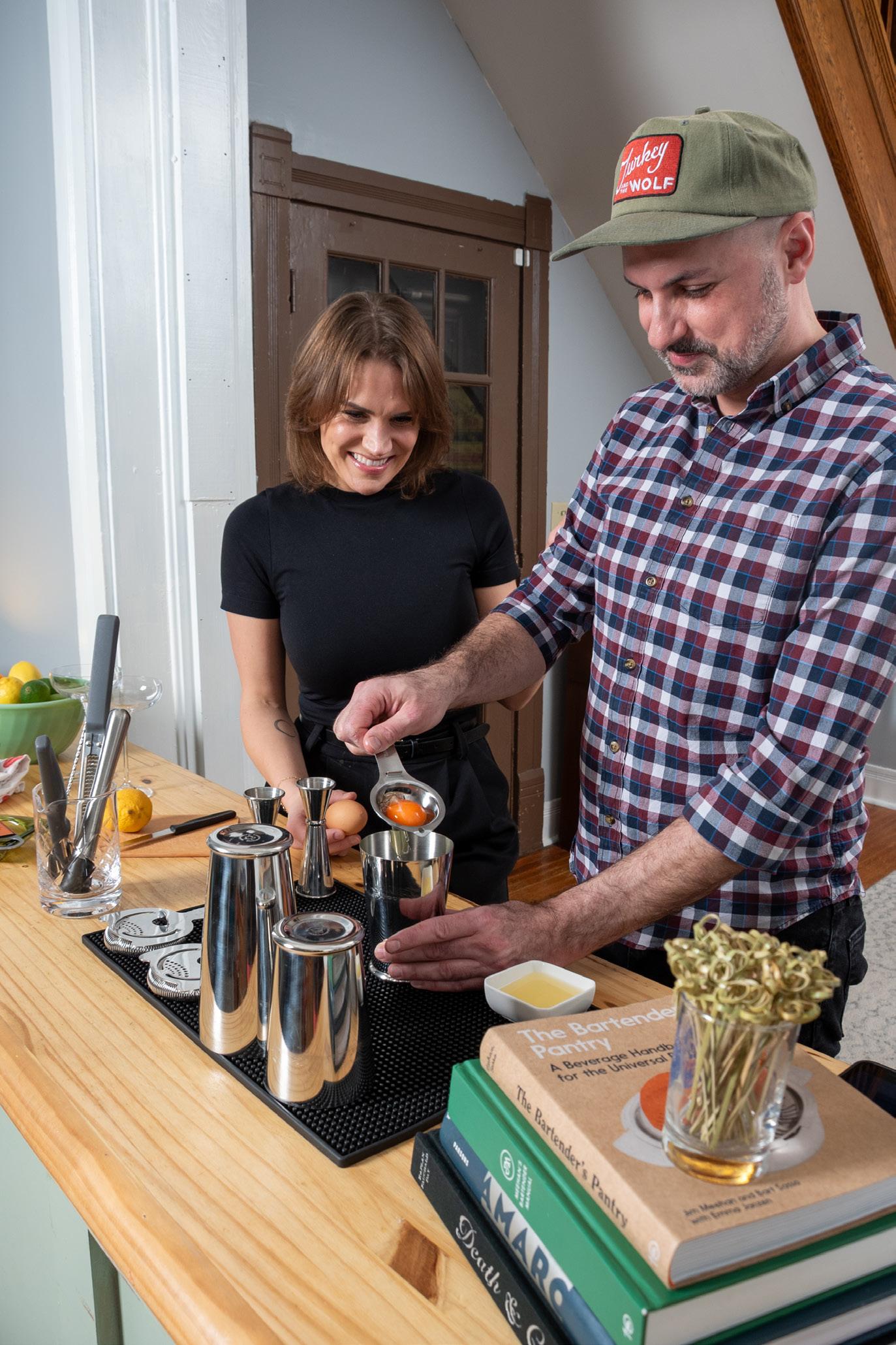
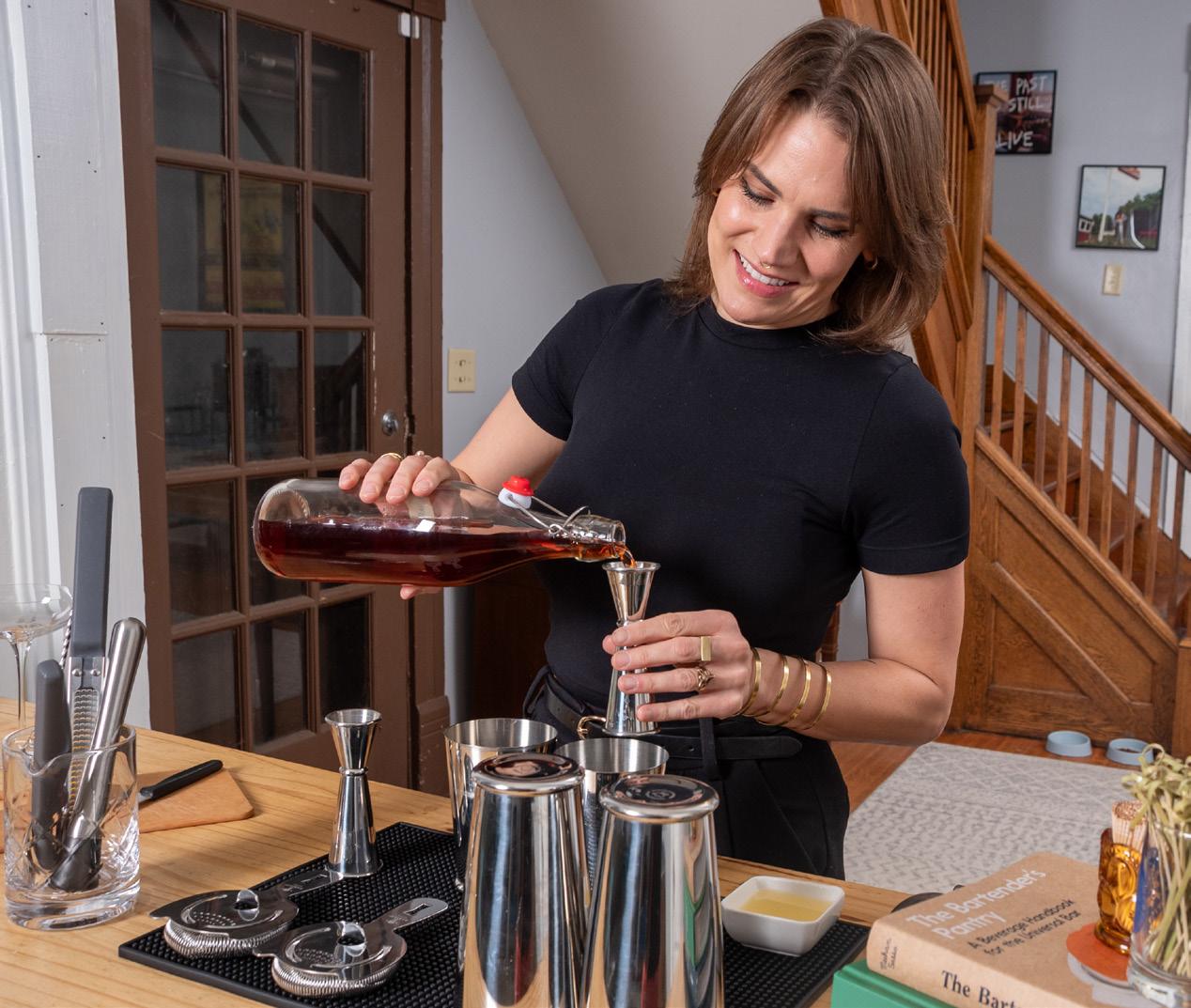
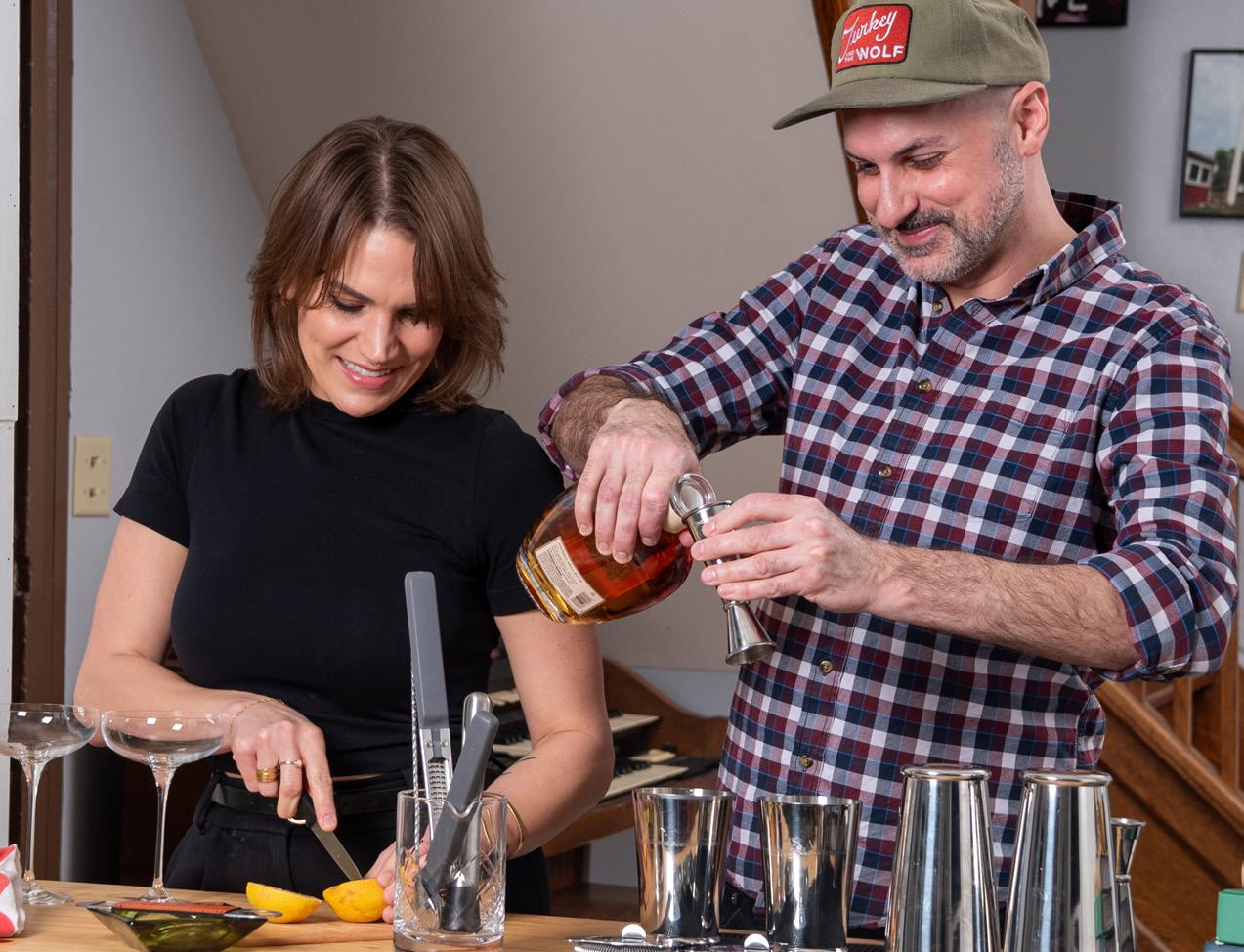
to serious conversations about opening a liquid catering business.
The pair were poring over lyrics by one of their favorite musical artists, Isaac Opatz, looking for inspiration for drink names when McCarty suggested “Handholder” might be a good moniker for a mocktail they were creating. Findlay replied it’d be a great name for a bar.
“We have a playlist that includes every song we’ve ever sent each other in the entirety of our relationship,” Findlay says. “It’s 67 hours and 46 minutes long, and ‘Handholder’ is one of the first songs Michael ever sent me.”
Not only does the name have significance for their relationship, it’s also a nod to the connection between bartender and guest — the simple, human act of reaching across a counter or a crowd to share something made with care.
“It’s about presence,” McCarty says. “Being there in that moment, paying attention to someone, making them feel seen. That’s what bartending is at its best.”
From intimate backyard weddings to downtown corporate mixers, Handholder has become a sought-after presence across the region. The pair’s reputation for professionalism and creative flair sets them apart, but it’s their warmth
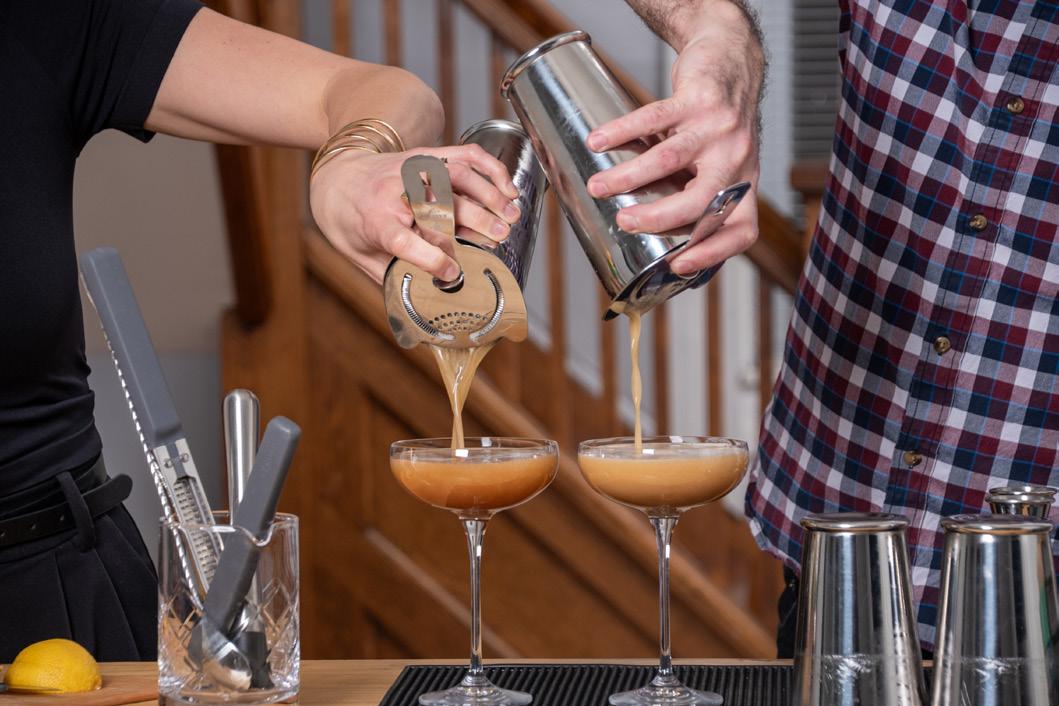
“When you hand someone a drink, you’re giving them your time and attention. It’s this little gesture that says, ‘I made this especially for you.’ That feeling of recognition, that’s what people remember.”
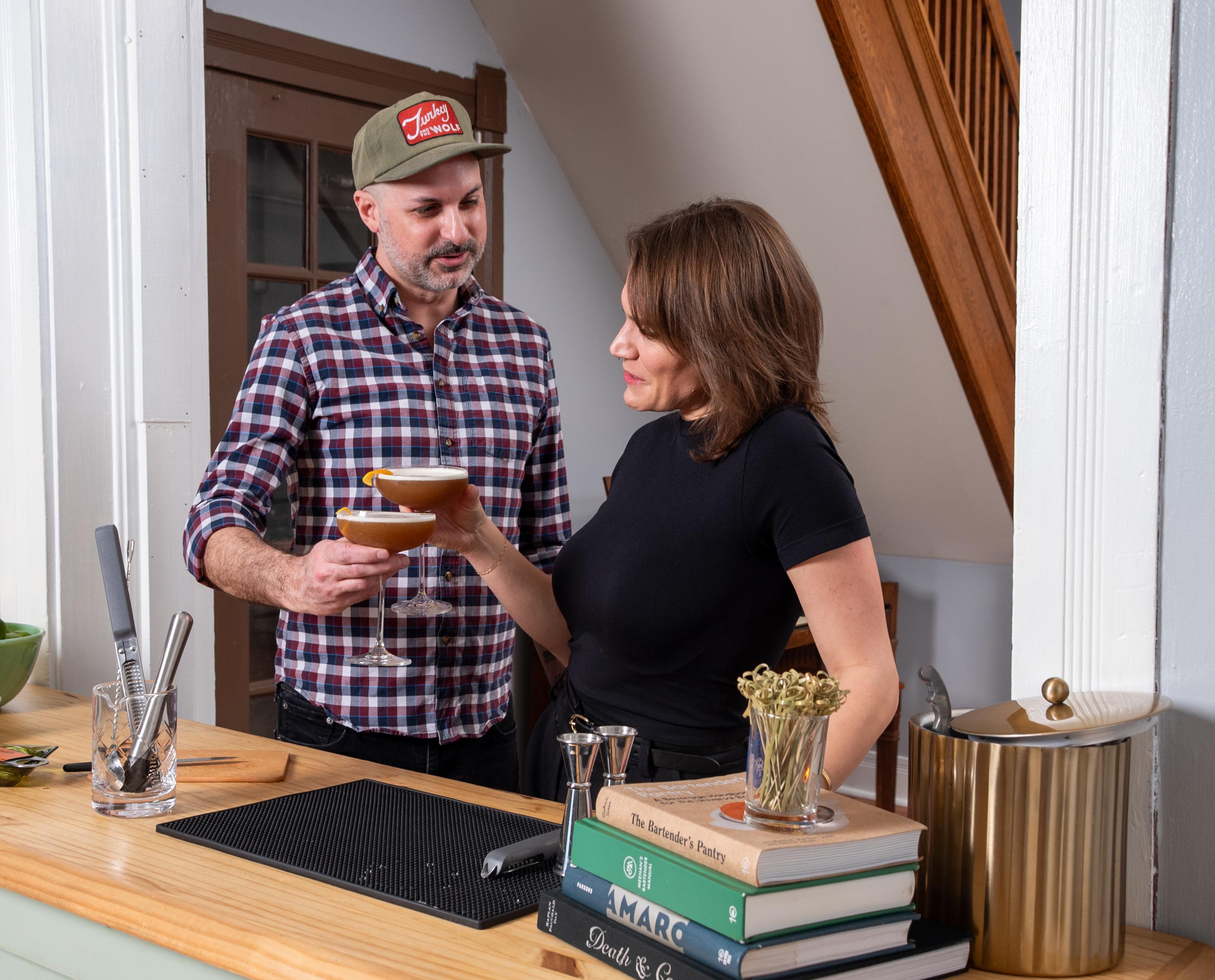
and personalization that keeps clients coming back.
“Every event is customized based on conversations with our client,” McCarty says. “We want to design a sensory experience that considers each client’s inspirations and influences to help them achieve their vision of the event.”
That approach shapes everything Handholder does, from the menus they design to the way they set up their custom-built bar. Every event is tailored — a signature cocktail that reflects the couple getting married, a locally sourced ingredient that ties into a company’s story or an inventive mocktail that makes every guest feel included.
For the Art Museum of Greater Lafayette’s Surrealist Costume Ball in 2024, McCarty and Findlay donated their supplies and services to contribute Handholder’s memorable signature touches for the event. Using the dreamlike and illogical imagery representative of surrealism as their inspiration point, the pair conceived the menu for Eggs Three Ways.
A Cynar sour, the only liquid item on the menu, featured a foamy egg white as part of a classic Italian amaro cocktail. A Negroni was presented as a Campari and sweet vermouth faux caviar — tediously made using an eyedropper — served with a juniper berry and orange zest crostini. Finally, a lemon drop that looked suspiciously like a deviled egg. A limoncello Jell-O shot molded to look like the boiled
egg white was topped with a lemon whipped créme filling and garnished with lemongrass.
Cocktails you can eat? That’s the kind of surreal challenge McCarty and Findlay enjoy concocting together. And attendees are still talking about the thought and creativity Handholder injected into the evening.
“We love when clients trust us to have fun with it,” McCarty says. “That’s when the magic happens.”
As the business grows, both founders are deliberate about keeping its soul intact.
“We’re not trying to scale so fast that we lose what makes it special,” Findlay says. “We’d rather focus on building something sustainable — something that stays rooted in the kind of experience we love to create.”
For McCarty, it always comes back to the small, human moments — the reason he started bartending in the first place.
“When you hand someone a drink, you’re giving them your time and attention,” he says. “It’s this little gesture that says, ‘I made this especially for you.’ That feeling of recognition, that’s what people remember.”
And that’s what Handholder is built on: the idea that a drink, done right, is never just a drink — it’s a shared moment, an act of connection, a story that lingers long after the glass is empty. ★
Hit the Road
McCarty and Findlay enjoy visiting other cocktail bars to gather inspiration for their own recipes. Here are a few of their favorite destinations to grab a drink:
• The Commodore, Indianapolis
• The Fox Bar & Cocktail Club, Nashville
• The Gin Joint, Charleston
• Lost & Found OTR, Cincinnati
• Pretty Decent, Louisville
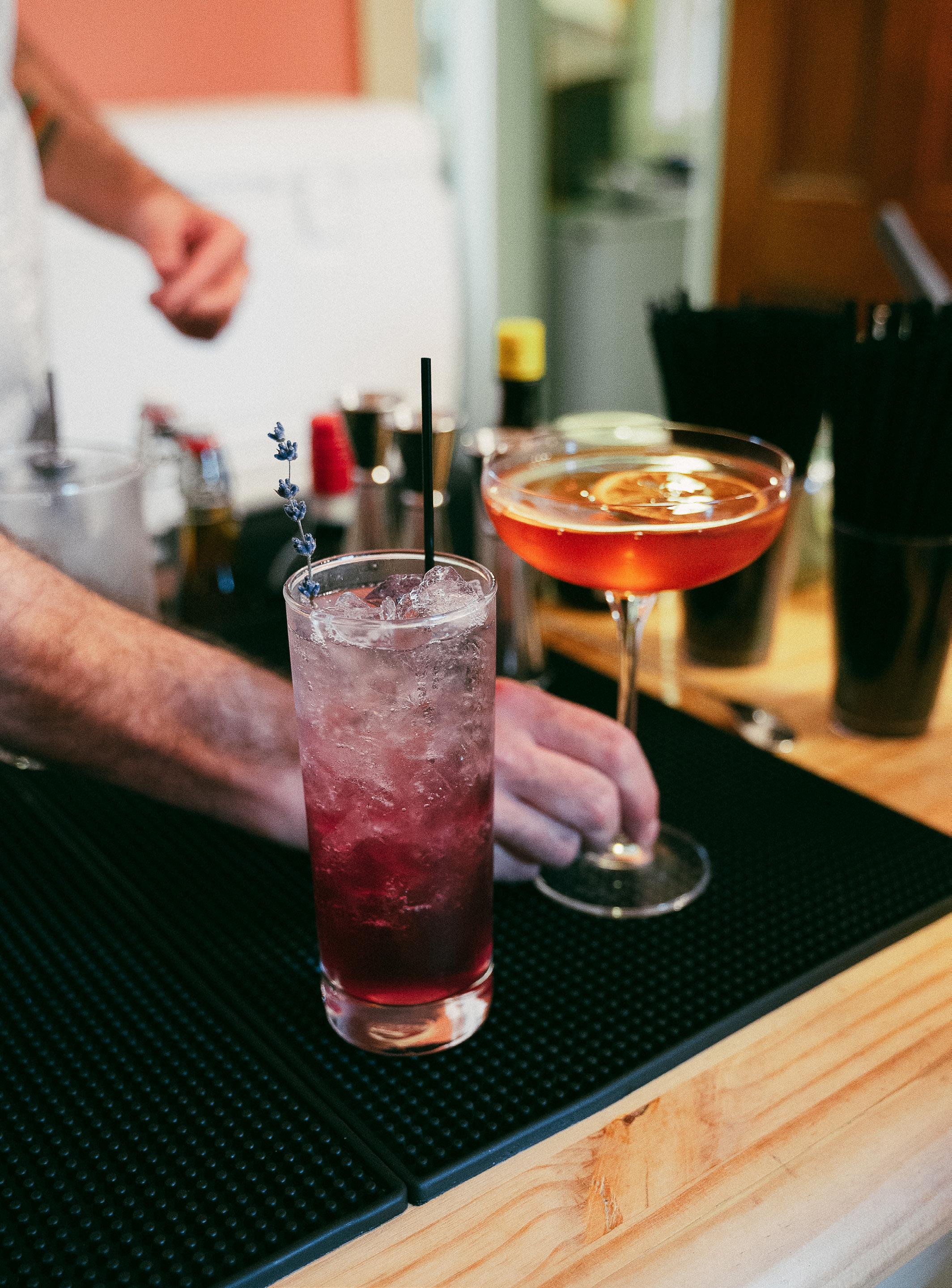
Try Your Hand
Looking to step up your cocktail game at home? McCarty and Findlay shared the recipe for a drink dubbed A Bushel & A Peck. The name was inspired by their grandmothers and the sweet saying from the classic song, “I love you, a bushel and a peck. A bushel and a peck and a hug around the neck.”
It contains a shrub, a mixture of fruit, sugar and vinegar that’s used to add complex flavors to both alcoholic and nonalcoholic drinks, and a homemade cinnamon syrup. Crafting bespoke ingredients is one way Handholder develops its signature flavor profiles. “This drinks like a peach whiskey sour, and I think it’s so delightful,” Findlay says.
• 2 oz. High West Bourbon
• ½ oz. pickled peach shrub*
• ½ oz. lemon juice
• ½ oz. cinnamon syrup**
• 1 egg white
1. Add all ingredients to an empty cocktail shaker.
2. Shake vigorously.
3. Add ice to the shaker and shake again until chilled.
4. Strain into a coupe glass.
5. Garnish with a sprig of rosemary. Cheers!
• 2 cups water
• 4 cinnamon sticks
• ½ cups white sugar
1. Bring water and cinnamon to a boil. Simmer for 10 minutes.
2. Strain out the cinnamon. Add sugar. Stir until dissolved.
3. Refrigerate in an airtight container.
Yields approximately 3 cups.
*Pickled Peach Shrub
• 2 cups Turbinado sugar
• 2 cups water
• 4 cups fresh or frozen peaches
• 1 cinnamon stick
• 3 cloves
• ¼ tsp. black peppercorns
• ¼ tsp. allspice
• ¼ tsp. vanilla extract
• 2 cups apple cider vinegar
1. Combine water and sugar. Bring to a boil while stirring continuously. Reduce heat to a simmer.
2. Add peaches and spices. Return to a boil and simmer for 20 minutes.
3. Add vinegar and refrigerate overnight.
4. After approximately 24 hours, strain out the solids while pressing the peaches with the back of a spoon to extract any remaining liquid.
5. Refrigerate in an airtight container.
Yields approximately 5 cups.
BY ANGELA K. ROBERTS
Just a stone’s throw from the new Cason Family Park in West Lafayette – a civic space dedicated to recreation and community health – a state-of-the-art structure is heralding a new era for local residents seeking medical care close to home.
For years, West Lafayette has been known, perhaps unfairly, as a healthcare outpost, a “hospital desert” where residents face a minimum 20-minute drive just to reach an emergency room across the Wabash River in Lafayette.
That time is drawing to a close. Spurred by economic growth, including the future SK hynix semiconductor plant, a race is on among major health systems to lay down roots in West Lafayette.
But while some competitors have announced plans for full inpatient hospitals, Franciscan Health is taking a distinctly different approach.
A long-time fixture in Lafayette, Franciscan historically has had a modest footprint in West Lafayette. Now the health system is expanding with two specialized facilities near the intersection of Cumberland Road and U.S. Highway 231: a comprehensive orthopedic center opening this winter and a 24/7 freestanding emergency department expected to open in spring 2027.
Franciscan’s strategy is to provide high-demand services on the west side while keeping a careful eye on costs.
Franciscan OrthoIndy Surgery Center opened in January 2026.
The 44,000-square-foot structure – with an approximate price tag of $26 million – is the result of a collaboration with OrthoIndy, one of Indiana’s largest and best-known orthopedic practices.
The facility will provide comprehensive orthopedic care, from X-rays and casts to surgeries and outpatient therapy. Services will include an orthopedic clinic, surgery center, physical therapy,
imaging services and orthopedic urgent care. Specialties will include total joint replacement, hand and upper extremity procedures, sports medicine, shoulder surgeries, arthroscopy, general orthopedics and foot and lower extremity procedures.
“This new facility will be a true one-stop location, fulfilling virtually every orthopedic care need, including orthopedic-only urgent care,” said John Ryan, CEO of OrthoIndy, at the groundbreaking in 2024.

Hot on the heels of the orthopedic center is a project that will address West Lafayette’s most critical gap: 24/7 emergency access. Franciscan’s freestanding emergency department is set to open in May 2027. The total budget for the project is approximately $42 million. “Our Board of Trustees added some room for growth to our initial project,” says Terry Wilson, CEO of Franciscan Health Western Indiana. “The additional square footage will be shelled and available for the growth of our services in West Lafayette.”
The full-service ED, located next door to the orthopedic surgery center, will be staffed with around 40 fulltime professionals, including board-certified emergency physicians, nurse practitioners, physician assistants, experienced emergency department nurses and patient care assistants. It will be fully equipped with eight general exam rooms, CT scans, X-rays and lab services. One service in the planned ED highlights its proximity to Purdue University: a S.A.N.E. (Sexual Assault Nurse Examiner) exam room for victims of sexual assault. “We felt that was an important addition in a community with so many college-age women,” Wilson says.
Strategic choices in a burgeoning market
In recent years, three other health systems have announced their intentions to build in West Lafayette. Ascension St. Vincent is planning a neighborhood medical care facility, including advanced urgent care, imaging, laboratory services and primary care, in Dis-
covery Park District at the corner of Airport Road and U.S. 231.
IU Health has announced a $214 million investment in Greater Lafayette, including an inpatient hospital on the west side, with construction starting in 2026 and a planned opening for 2028. The full-service hospital at the intersection of County Road 500 North and Yeager Road will offer a 24/7 emergency department, inpatient care, operating rooms, advanced imaging, laboratory services and a helipad for emergency transportation.
Parkview Health aims to build an approximately $200 million, full-service medical office and 40-bed inpatient hospital with an emergency department, surgical and procedural services, specialty care, laboratory services, imaging and comprehensive outpatient services, along with shell space for future expansion.
Construction is expected to start in 2026 with a targeted opening in 2028. The facility will be located near the intersection of N 100 W and Kalberer Road on land being acquired from Purdue Research Foundation.
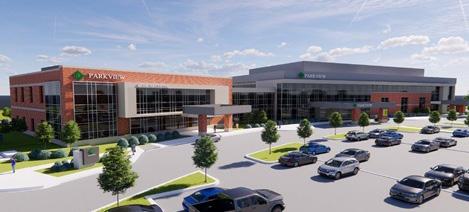
Franciscan’s decision to build a freestanding ED rather than a full inpatient hospital in West Lafayette is a defining choice in this burgeoning healthcare market. The strategy is rooted in Franciscan’s philosophy of fiscal responsibility, Wilson says.
“There is a great deal of focus on the cost of healthcare, so our initial plans have been aimed at using our community’s precious healthcare dollars wisely,” he explains.
Cost, capacity and strategy
“One of the most capital-intensive and expensive assets in healthcare is an inpatient bed,” Wilson notes. “We have chosen not to duplicate these resources less than 10 miles away.”
Instead, Franciscan will leverage existing infrastructure on the east side of Lafayette, where it already has the capacity for complex and overnight care. “We plan to start with the Emergency Department and add other
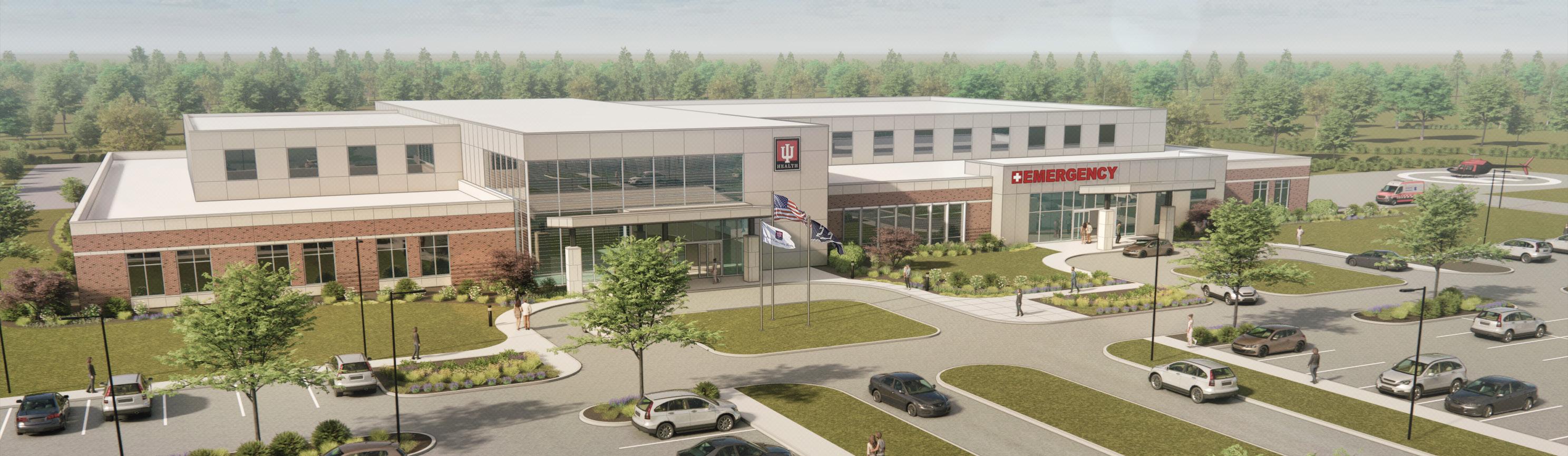
services over time, while using our full-service Lafayette East Campus for more advanced and inpatient care.”
The new ED will operate as a critical access point. Patients requiring immediate, high-level stabilization will receive care on the west side. For orthopedic care, Franciscan’s orthopedic specialists – who joined OrthoIndy a couple years ago – will help guide which patients need to be transferred to Lafayette East Hospital.
“Transport to the hospital will be quick, safe and convenient,” Wilson says, thanks to a partnership among Franciscan Health, IU Health and Tippecanoe County Commissioners, which jointly operate Tippecanoe Emergency Ambulance Service
While competition is set to intensify over the next few years, Franciscan has secured an early lead in accessibility. For the tens of thousands of residents, students and workers on the rapidly growing west side, the two new facilities will deliver essential emergency and orthopedic care, replacing a lengthy cross-town drive with a convenient trip down the street. These strategic additions should help to fundamentally reshape the healthcare landscape in West Lafayette for generations to come. ★

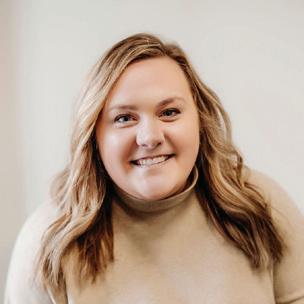

Hearing loss is more prevalent than you might think and can affect communication. Our providers are specially trained to understand, support, and treat hearing loss with cutting-edge technology to keep you and your loved ones hearing clearly.

Greater Lafayette Kennel Club an invaluable resource for dog owners
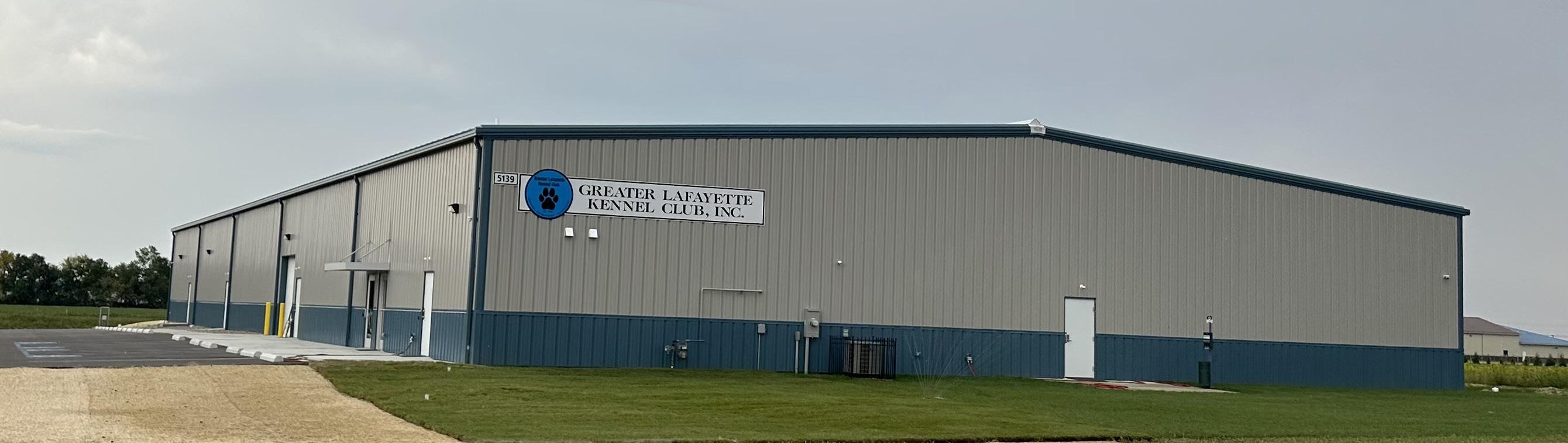
reater Lafayette loves its dogs. So, the question begs: Why don’t more people know about the Greater Lafayette Kennel Club?
It’s not like the club is a new venture. The Greater Lafayette Kennel Club is celebrating its 80th anniversary inside a new home at 5139 E 400 S in Lafayette.
“We don’t really know,” says Deb Biesemeier, president of the Greater Lafayette Kennel Club. “It’s not like we keep it a secret. One of our big missions is to provide dog training and education to the community. Every time someone comes to us, they always say ‘Oh my gosh. I had no idea you existed.’
“We don’t do a lot of advertising. It’s just pretty much word of mouth. A great many of our students in our entry-level classes are not members of the club. They just seem to come and take a class and fade back into the community.”
The Greater Lafayette Kennel Club was founded by a group of men who enjoyed hunting sports and conformation, which the American Kennel Club (AKC) describes as how closely a dog conforms to the standard of its particular breed.
“Conformation is not just a beauty contest,” Biesemeier says. “Any reputable pure bred dog breeder will take part in conformation because that’s the stamp of approval by a judge that your dog conforms to that breed standard.”
Those standards include appearance, temperament and instinct.
As the years passed, the club’s emphasis shifted to classes and dog sports.
“It’s really mindboggling all the things you can do
with your dog and all the things people have thought of to do with your dog,” Biesemeier says. “It’s wonderful to have a dog as a pet. It’s a whole different level to have a dog as a teammate. It develops a relationship with a dog that’s hard to duplicate if you’re not in dog sports.”
Every dog is unique
While some dog owners struggle to teach their pets the simplest tricks, Biesemeier takes a different approach. She currently has three standard poodles, two of which she trained for agility sports. The youngest poodle, a 5-year-old, currently is active in agility.
“When I train my dogs, it’s not just a one-way street where I’m saying this is what I want you to do,” she says. “I just need to figure out a way for you to do it. I’m also taking feedback from my dog. Dogs are like children in that they learn in different ways. I recently taught my dog several tricks that she could demonstrate to some Girl Scouts. I’ve been training dogs for a long time, so I had a pretty good idea how I was going to train it. It was a pretty elaborate trick, so I put a blanket on the floor. She laid on the floor, took a corner of the blanket in her mouth and rolled over and rolled herself up in the blanket. So I started calling her my burrito dog.
“It took many, many steps to get there. Those steps were not necessarily what I envisioned they would be when I started. As I trained her I got signals from her that I don’t understand what you want me to do. It would force me to step back and say OK, how can I break this down into something easier or find a different way to teach her?”
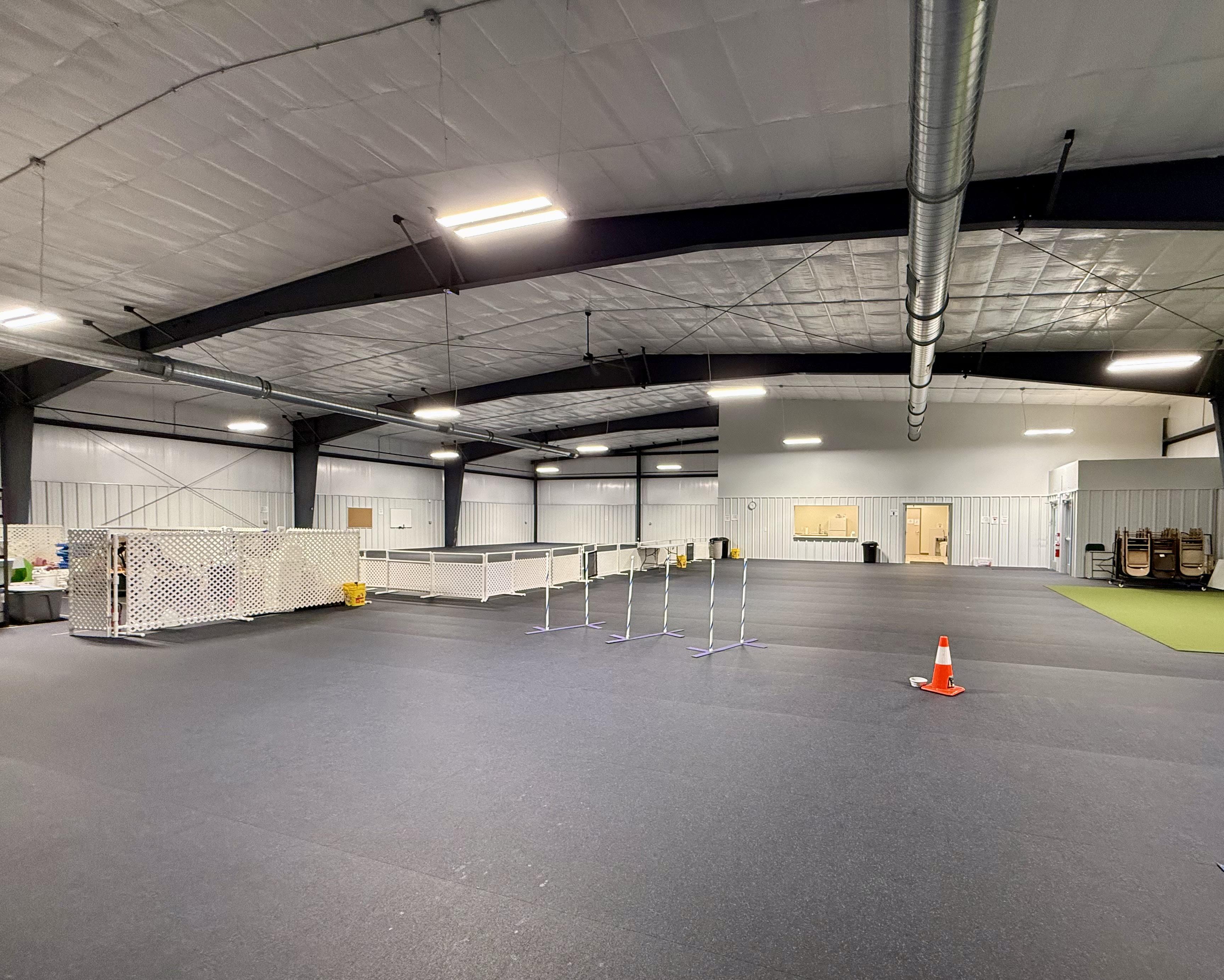
“It’s wonderful to have a dog as a pet. It’s a whole different level to have a dog as a teammate. It develops a relationship with a dog that’s hard to duplicate if you’re not in dog sports.”

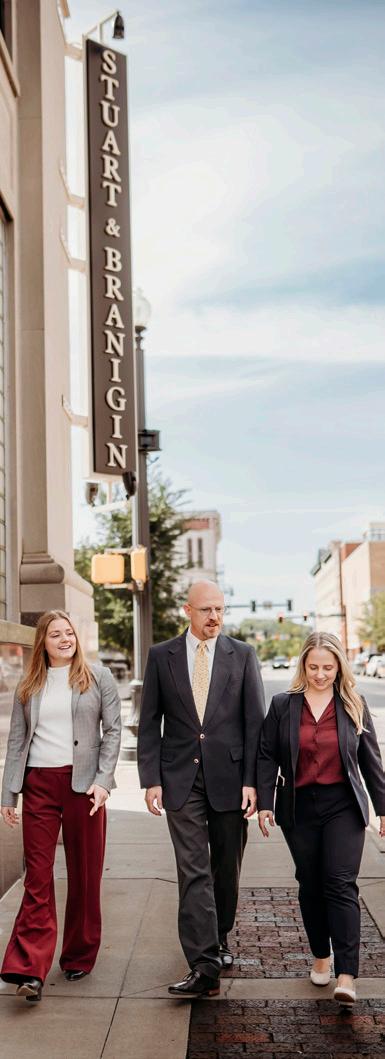


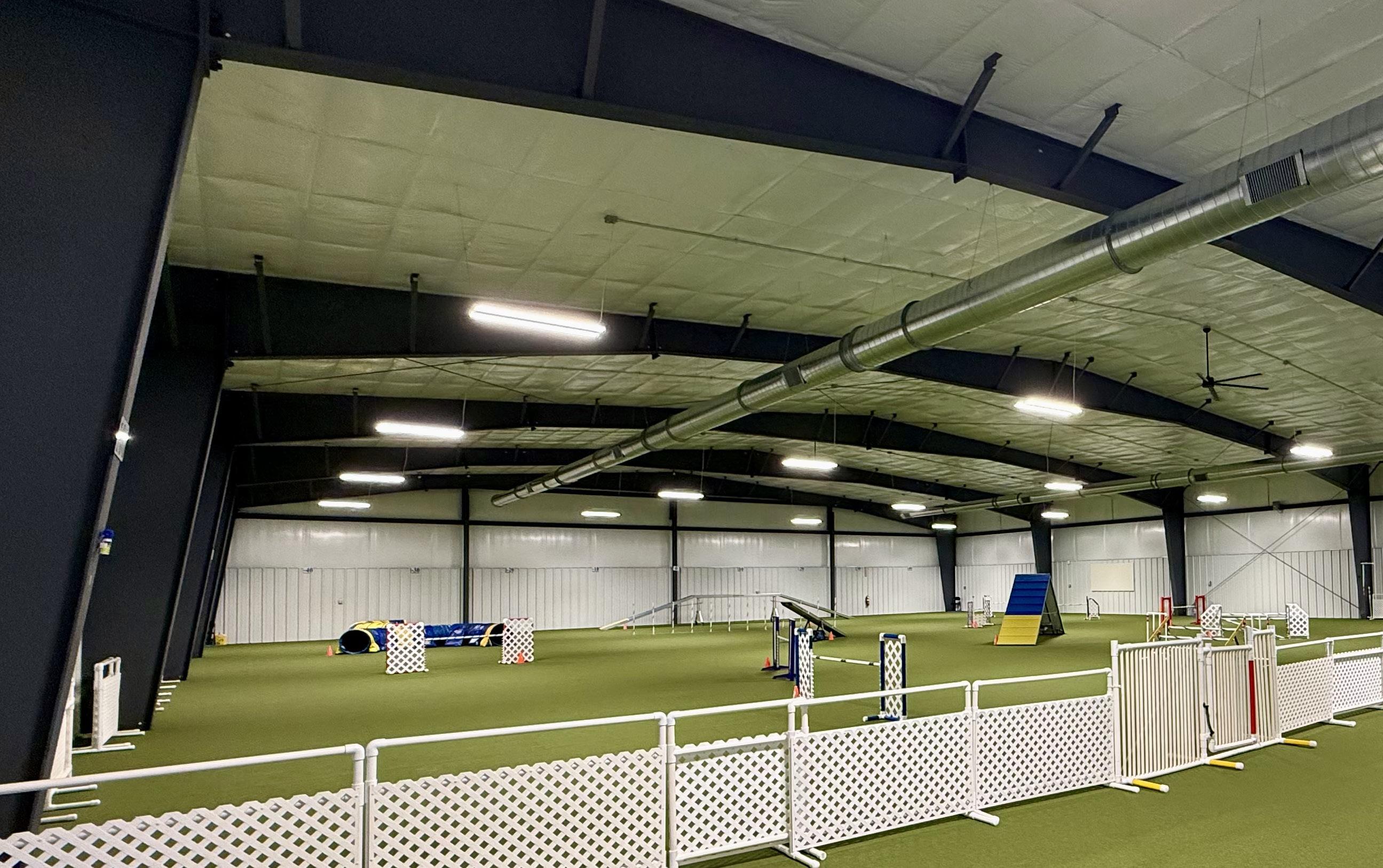
A wish come true
The Greater Lafayette Kennel Club is not totally unknown in the community. It occupied a building in Shadeland for nearly 20 years.
“It was an old building. It was perfect for us, just a big old warehouse/garage-type building,” Biesemeier says.
One day, the landlord – a.k.a. the town of Shadeland — decided the building needed to be razed to make room for a community center.
The club moved to Delphi for three years, but that building was half the size of the club’s Shadeland home. Biesemeier and her fellow club members wished for a donor or donors to come along and fund a larger building in Lafayette.
“We had been saying for years we needed a fairy godmother to build us a building because we are a non-profit. We don’t have gobs and gobs of money.”
Their wish came true, thanks to a woman in Indianapolis who loves dogs and loves dog sports. The building’s final cost? Nearly $3 million.
“It’s still to me the most amazing thing to think about,” Biesemeier says.
The club received a certificate of occupancy in mid-September 2025 and slowly began building its classes back up. But for now, events will pay the bills.
One of them is a Fast CAT, which features dogs running one at a time, chasing a lure, to measure speed and agility. The club sponsors four three-day events a year in agility sports. Seminars and workshops also bring in needed funds.
The Greater Lafayette Kennel Club offers classes in fundamentals, conformation, competition obedience and therapy dog skills as well as dog sports (agility, rally and scent work). Classes are for eight weeks and cost $120 for members or $160 for non-members. Some classes have prerequisites to enroll.
“We have a lot of entry-level classes,” Biesemeier says. “Puppy training classes. Basic manners classes. What we call our ‘click obedience’ classes. It’s a form of training we like to use.
“Our training methods at the club are 100 percent positive reinforcement training. There’s no punishment, there’s no yanking on the leash when they do something wrong. It’s all letting the dog figure out what it is you want them to do.
“If you have a dog, I can’t stress enough you should take at least one dog training class. Hopefully if you come to the club and you get introduced to what dog

training has to offer that you would become interested in something and take another class.”
Biesemeier teaches the puppy training class and assists in the basic dog manners training class.
A community-centered club
“We are 100 percent volunteers,” she says. “We have some great instructors, but there are not enough hours in the day available for classes, nor do we have enough instructors. Our classes are open to anyone. There are benefits to being a member of the club. One of them is you get discounts on classes. You get the first option to take a class.”
Biesemeier wants the community to know that club members have a passion to teach people how to be good and responsible dog owners.
“People can’t do that if they don’t know how,” Biesemeier says. “We’re not a club that just exists to serve our own needs. It’s really a big mission that we serve the community.
“We are community centered. We want people to know we’re out there. We want them to come to us and let us help them train their dogs.” ★
“We are community centered. We want people to know we’re out there. We want them to come to us and let us help them train their dogs.”

Learn more about the Greater Lafayette Kennel Club at glkc.org
Locally owned businesses are the backbone of Greater Lafayette, and those small business owners invest time, finances, energy and passion into their companies. Here we take a look back at the small business of the month winners recognized by Greater Lafayette Commerce in 2025, along with the Small Business of the Year winner. Old National Bank is a longtime sponsor of the Small Business of the Month & Year program. The winners were recognized each month at a ceremony at Ripple & Co.
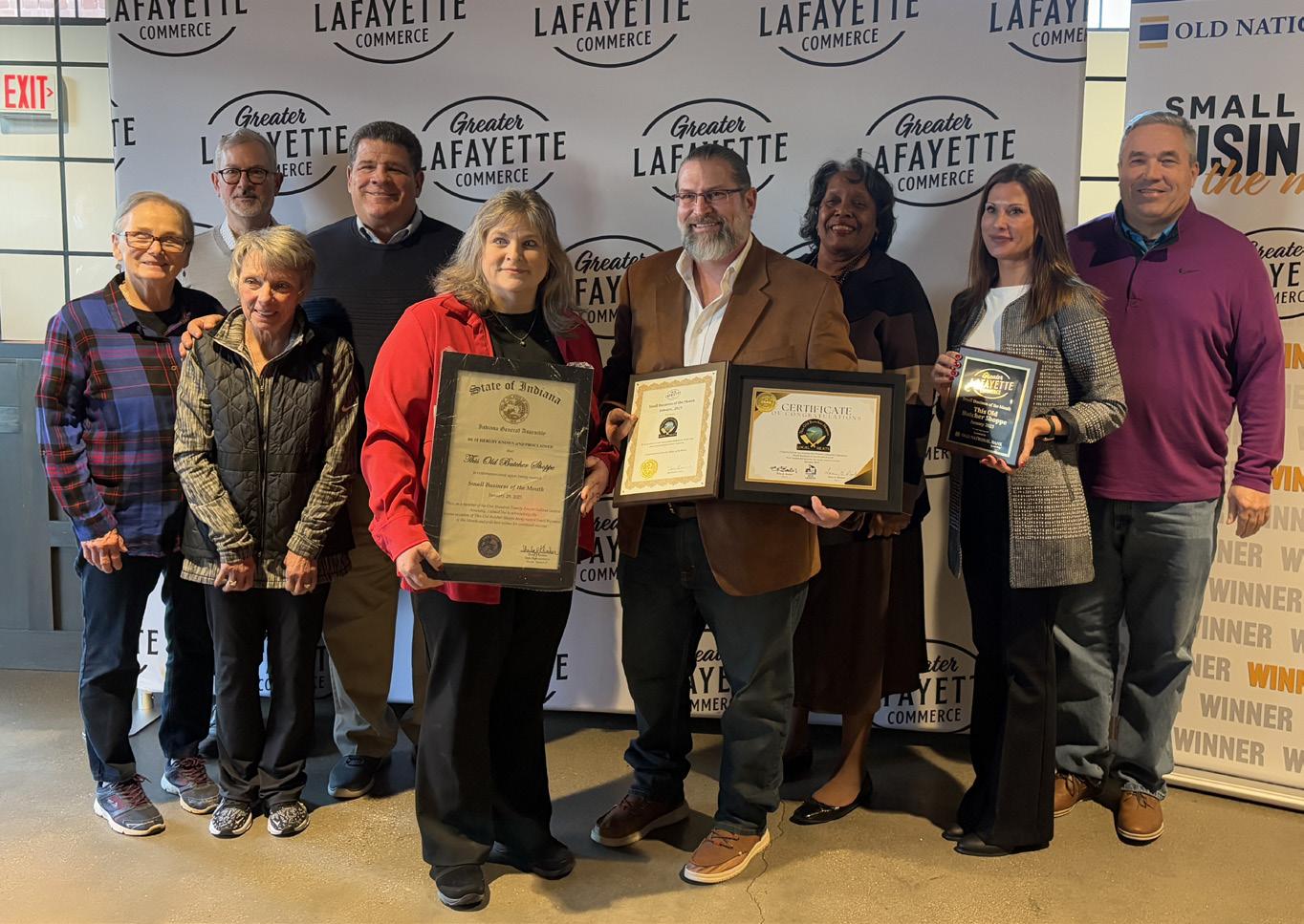
This locally owned full-service butcher shop serving the Greater Lafayette area was launched in September 2021 by owner Jessica Roosa, a Purdue University graduate, as an offshoot of the family’s agriculture business (This Old Farm) and with a mission to bring sustainable, locally sourced meats to the community. What sets This Old Butcher Shoppe apart is its emphasis on transparency, regenerative agriculture and traceability. It offers pasture-raised pork, non-GMO-fed poultry, grass-fed lamb and beef, and dry-aged beef cuts — all sourced from known local farms and processed under USDA inspection. Beyond its product selection, the shop is praised for knowledgeable staff and superior customer experience: reviewers highlight the butchers’ willingness to explain cuts, give cooking advice and consistently deliver high quality.
This Old Butcher Shoppe
3623 Braddock Dr., Suite B Lafayette (765) 767-4886
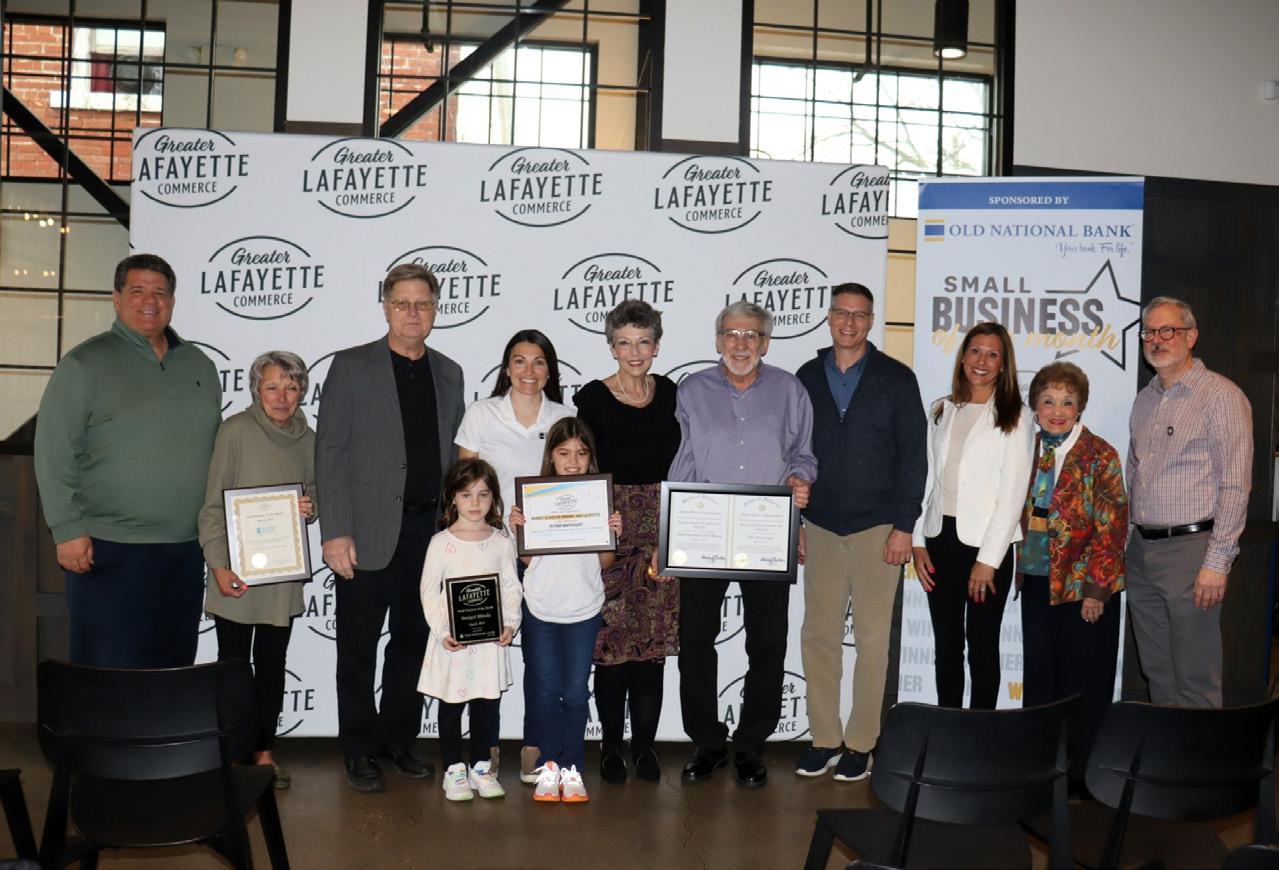
Serving the Kokomo and Lafayette areas, Budget Blinds has been operated by owner John Fansler since 2005. The business emphasizes a full-service model: it provides free in-home (or virtual) consultations, brings the “showroom to your home,” takes precise measurements, manages the ordering of custom window coverings (blinds, shades, shutters, drapes) and performs professional installation. This business is known for focus on design consultation and customized solutions. Products offered include a wide variety of blinds (wood, faux wood, vertical); shades (roller, cellular, Roman, woven); shutters (plantation and vinyl); draperies, outdoor shading solutions and motorized/automated coverings.
Budget Blinds of Kokomo and Lafayette John Fansler jrfansler@budgetblinds.com (765) 234-1681
MARCH - FLORA CANDLE COMPANY
Flora Candle Company is a locally owned artisan candle shop whose mission is rooted in sustainability, inclusivity and community. The business was founded by Nolan Willhite and Troy Weber in tribute to Nolan’s late great-aunt Florann, and they chose to keep the name “Flora” as a way to honor her memory.
The two use 100% soy wax sourced from the Midwest, favor natural and low-emission materials and maintain an eco-friendly business model—emphasizing local sourcing to reduce transportation impact and using toxin-free ingredients. Inside the store, you’ll find a lively selection of hand-poured candles, room and linen sprays, wax melts and other fragrance products. Its catalog features hundreds of unique scents, such as names inspired by regional themes, pop culture and seasonal moods.
Flora Candle Company 609 Main St. Lafayette (765) 767-4819
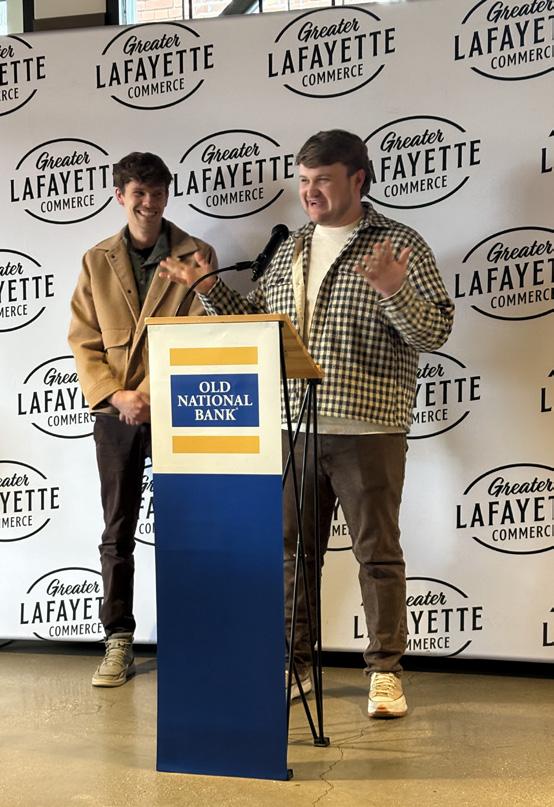
Gibson Painting Group is a family-owned painting and construction contractor serving the Greater Lafayette area. With a long legacy of five generations of experience, Gibson is committed to craftsmanship, attention to detail and delivering projects on time and on budget.
Its services cover both commercial and residential painting: everything from new construction and large facility repainting to home interior and exterior work, refinishing kitchens and bathrooms and preparing homes for sale.
Gibson Painting Group
105 N. 36th St., Suite C
Lafayette (765) 838-1233
Established in the early 2000s originally as Sgt. Preston’s Catering before rebranding to The Outpost in 2007— the company grew from a downtown catering operation into a full-service venue offering onsite and off-site catering for weddings, corporate events, reunions and more. The Outpost’s catering service is highlighted by a diverse menu and flexible service styles, which include plated dinners to buffet setups, outdoor cookout themes and full bar service with licensed bartenders. THe Outpost is owned by Doug and Karen Cooper.
The Outpost Catering
2501 Old U.S. 231 Lafayette (765) 471-1706
The Spinning Axe is an indoor axe-throwing venue offering an energetic and unique entertainment experience. It opened in January 2021 after owners Barbara and Jason Whitenight were inspired by a visit to an axe-throwing facility in Kentucky.
This physically entertaining business caters to a broad audience—from families and birthday parties to corporate team-building and private events. Inside, guests will find multiple throwing lanes, a full-service bar, a patio with games, and concession-style food offerings, creating a lively atmosphere that blends sport, socializing and casual fun.
The Spinning Axe 351 South St. Lafayette (765) 637-7775
Coors Remodeling 3480 Kossuth St., #5 Lafayette (765) 449-2600
Coors Remodeling is a family-owned, full-service residential remodeling company that has been serving the Greater Lafayette region since 1993. Founders Bart and Michelle Coors leveraged their backgrounds—Bart in construction and Michelle in interior/design education—to evolve the business from an exterior-focused remodeling company into a full-scope firm covering kitchens, bathrooms, basements, decks and whole-home renovations.
Coors Remodeling offers a wide spectrum of services across both interior and exterior domains. On the interior side, it handles kitchen remodels (custom cabinetry, quartz/granite counters); bathroom updates (luxury surrounds, accessible design); basement finishing and living-space reconfiguration. For exteriors, the company designs and builds custom decks and outdoor living areas, as well as siding, windows and doors from premium brands.
Generation NA is a pioneering functional bottle shop and taproom specializing in non-alcoholic (NA) beverages. Founded in 2022 by owner Rob Theodorow, the business launched with the aim of providing an inclusive social space where people could enjoy beer, wine and spirits without alcohol. With an exclusive variety of unique non-alcoholic beverages, there also is a lively atmosphere with pinball machines and relaxed events such as open mic nights. The venue positions itself as a social space not just for those abstaining from alcohol, but for anyone seeking a different kind of drink experience — for health, wellness or simply curiosity.
Generation NA
504 Main St. Lafayette (765) 233-2366

Garcia Insurance Agency is an independent insurance firm that offers a variety of coverage options tailored to individuals, families and small businesses. According to its website, it carries policies for auto, home, renters, business, bonds, special events and more. Affordable and responsive service is a key selling point, especially for clients who may appreciate a more personalized experience than large national carriers. Owned by Diana Garcia, the independent agency represents multiple carriers rather than a single insurance company, which allows the agency to compare options and find competitive rates and coverage combinations for its clients.
Garcia Insurance Agency
2927 Union St. Lafayette (765) 449-4544
Camflo Heating & Cooling, LLC is a familyrun HVAC firm that has been serving the area since 2009. Its name reflects its origins in the towns of Camden and Flora, and the leadership of the Hess family emphasizes a people-first philosophy: being easy to do business with, valuing your time and delivering on its word. The business places strong focus on honest service, expert workmanship (with many NATE-certified technicians), and longterm relationships rather than high-pressure sales.
Camflo offers a full range of HVAC services for both residential and commercial clients across the Greater Lafayette area. Its offerings include heating system repair, installation and maintenance (furnaces, boilers, heat pumps, ductless systems) and cooling services, including central air, ductless systems and full replacements.
Camflo Heating & Cooling
110 S. Center St. Flora (574) 381-9919
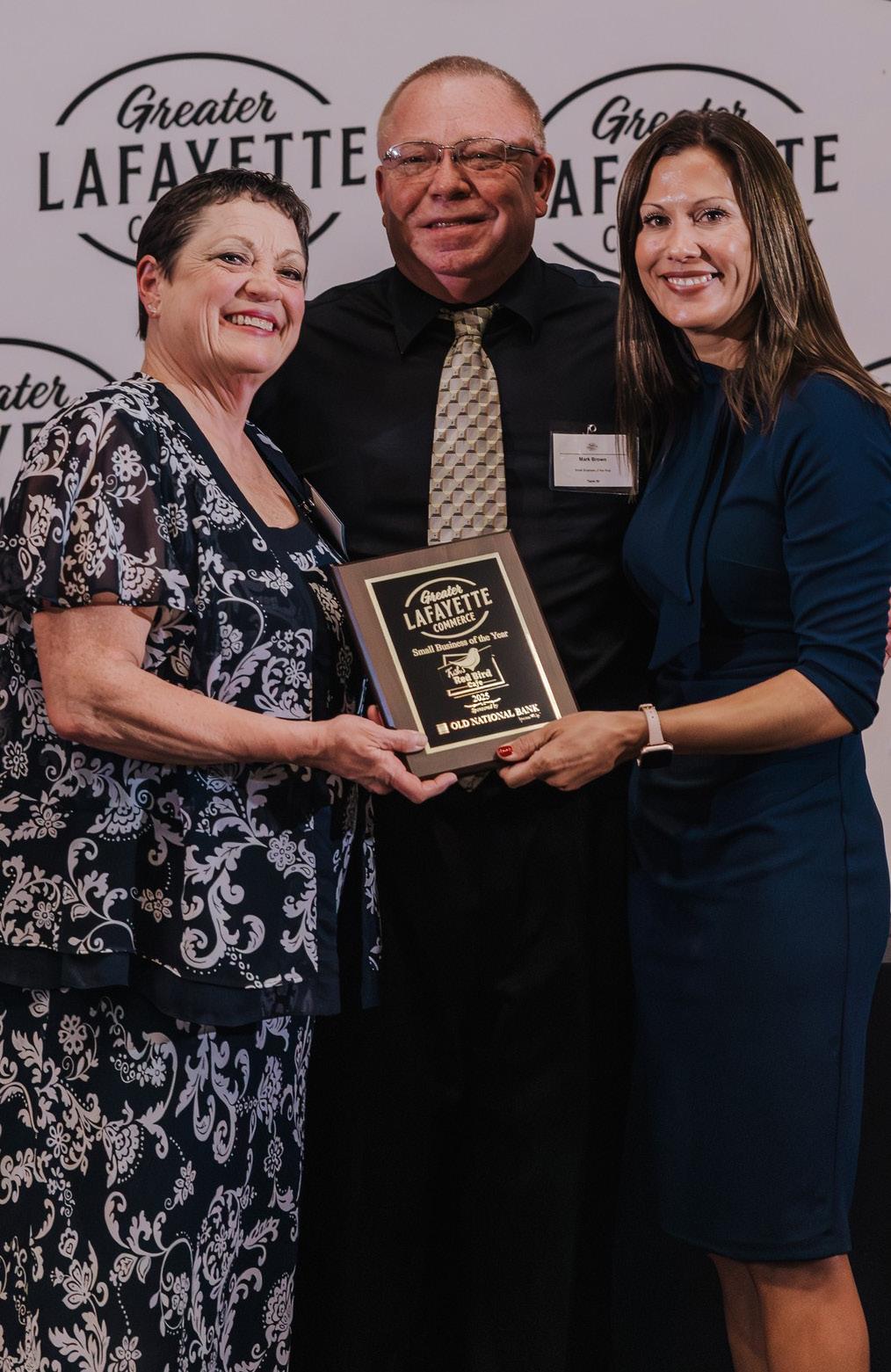
This year’s Small Business of the Year winner is Trish’s Red Bird Café, which was a Small Busines of the Month Winner in 2023.
Trish’s Red Bird Café opened in April 2018 in the historic community of Dayton just off I-65 — making it a convenient stop for locals and travelers alike. Named after the “Red Bird” horse-drawn sleigh that once transported people from Lafayette to Dayton in the 1800s, the café embraces a strong sense of local history and nostalgia.
“Being Small Business of the Year for 2025 is beyond anything we could have dreamed of receiving,” says owner Trish Brown. “We do the things that we do just because it is the right thing to do. Being able to give back to those that need help is just a dream come true. As I mentioned in my speech [after accepting the award], my husband and I just wanted to make a small profit to support ourselves, and anything above that was a blessing that we would be more than happy to share.”
Trish’s Red Bird Café offers a full-day menu: breakfast, lunch and dinner. Its breakfast menu includes pancakes, omelets, biscuits with
sausage or pepper gravy, eggs any style, and its “Bird in the Nest” — eggs in toast — among others. For lunch and dinner, the café serves a broad array of comfort-style American fare: burgers, sandwiches, wraps, chicken tenders, catfish and cod meals, pulled-pork BBQ sandwiches and more hearty options such as country fried steak or prime rib sandwiches.
Brown adds, “The fact that we are becoming a favorite restaurant makes us very proud. We love sharing our family recipes with a modern-day twist. That is what we are based on and love to share. We hope to be able to continue to share our dreams for many years to come with our amazing staff that are so dedicated to our dream.” ★

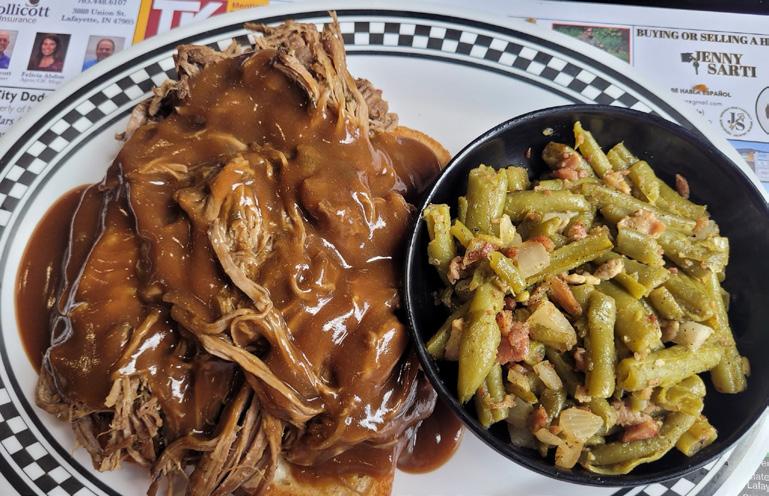

At Timberbrook is located in West Lafayette just minutes from Harrison High School, and a short car drive to Coyote Crossing Golf Course. Enjoy a great value in and incredible location!





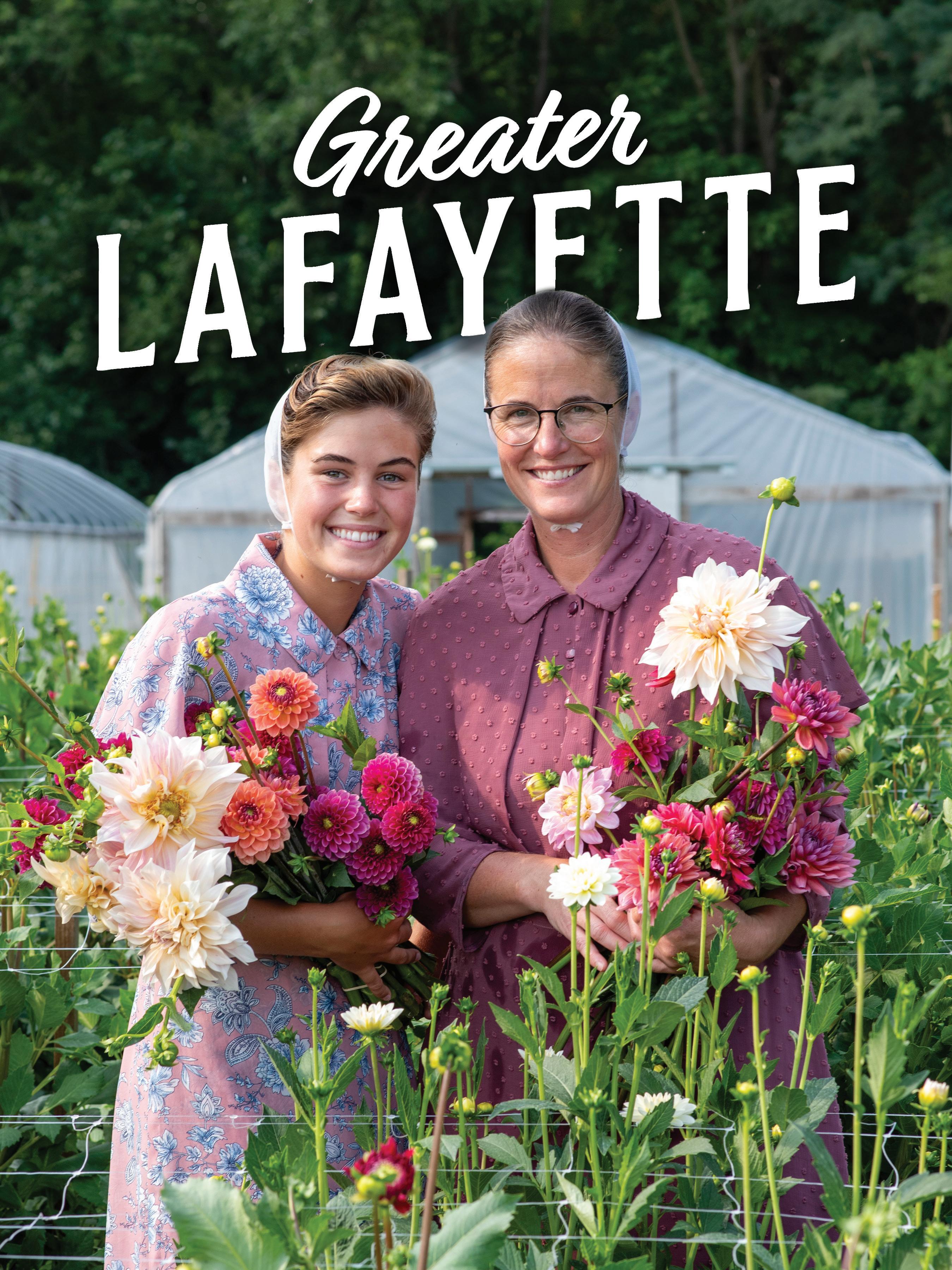










At First Merchants Bank, you’re not a number. You’re a neighbor, and that means we’re rooting for Team You. Our bankers attentively listen to your goals so that we can work to help you prosper. Whether that means getting you the keys to your first home, paying down debt, or saving for the future, you can depend on us to treat you as an individual, and to provide advice and strategies crafted especially for you to realize your dreams.
For more information, call 1.800.205.3464 or go to firstmerchants.com.
At F.C. Tucker/Shook REALTORS®, Shook Commercial Real Estate and Shook Property Management, our real estate professionals lead, listen, and take part in the larger story of real estate that unfolds in the houses, neighborhoods and businesses that make up our Greater Lafayette community. Real estate is always changing, yet its foundation stays the same. For us, it’s personal. It’s our past, present and future. It’s family and footing. It’s meaningful business.
We innovate to solve real problems. Remove friction and add certainty. We promise a steady hand in the messiness of buying and selling. Stay true to our roots and our non-negotiables. And stay involved in the communities that make us.
At F.C. Tucker/Shook REALTORS®, Shook Commercial Real Estate and Shook Property Management, we’re proud to be Lafayette’s trusted real estate resource for every milestone.