REPLANTING A VALLEY FOREST
FOR GRAYSON-COLLIN EC MEMBERS
PAINTING OUR SPRINGS WITH WILDFLOWERS
COLLIN EC NEWS SEE PAGE 16
KICK ASHE, CLEAR THE LAND
APRIL 2026
Whirly Birds
The special place in West Texas where hummers flock






REPLANTING A VALLEY FOREST
PAINTING OUR SPRINGS WITH WILDFLOWERS
COLLIN EC NEWS SEE PAGE 16
KICK ASHE, CLEAR THE LAND
APRIL 2026
The special place in West Texas where hummers flock
By Sheryl Smith-Rodgers
By Eileen Mattei
ELECTRIC COOPERATIVES TAKE time every April to recognize the heroes of the power lines on National Lineworker Appreciation Day—April 13 this year.
For one Central Texas lineworker, appreciation came last summer. Gregg Belcher lay in a Dallas hospital after an electrical injury in June 2025. The foreman at Hamilton County Electric Cooperative had suffered horrific burns on his back and chest and lost his left arm.
Co-workers and friends in Hico and Hamilton and at neighboring co-ops rallied to help with expenses, collecting $93,000 at a benefit event in August and through other donations.
“We were just blown away by the love that people have shown us,” said Lori Belcher, his wife.
Visit our website to read about Gregg Belcher’s recovery.

$500 RECIPE CONTEST
Pancakes and Waffles
FOCUS ON TEXAS PHOTOS
Underwater Life
RECOMMENDED READING
This month’s Pancakes and Waffles contest reminds us of Breakfast in Texas, our May 2015 feature story. Find it on our website.
“ To plant a garden is to believe in tomorrow.”
—AUDREY HEPBURN
If I could use only one electronic device, it would be …
Tell us how you would finish that sentence. Email your short responses to letters@TexasCoopPower.com or comment on our Facebook post. Include your co-op and town. Here are some of the responses to our February prompt: The perfect Valentine’s gift is ...
The love shown by Cicero to Olla [What Love Looks Like, February 2026].
MARILYN WERKHEISER BLUEBONNET EC BASTROP
Giving from the heart and expecting nothing in return.
JIM DUNGAN VIA FACEBOOK
To be thought of as special by someone.
KAT CROSS HOUSTON COUNTY EC CROCKETT
Spending time with the ones you love.
ANITA BURT BIG COUNTRY EC SNYDER
Having popcorn and Diet Dr Pepper with my husband of 68 years.
SANDRA LEA BARTLETT EC MILANO
Visit our website to see more responses.

Noble Deeds
Big thanks to Martha Deeringer and Tiffany Hofeldt for the informative and interesting article on wildlife rehabbers: such noble and generous volunteers [Giving a Hoot, February 2026].
Lee Turner
MidSouth EC Montgomery
Setting the Record Straight
President Franklin D. Roosevelt did not sign an executive order integrating the armed forces [Currents, February 2026]. While he signed Executive Order 8802 in 1941 to prohibit racial discrimination in the defense industry, he upheld segregation within the military.
The desegregation of the armed forces was achieved later, by President Harry S. Truman via Executive Order 9981 on July 26, 1948.
Don F. Davison
Central Texas EC Fredericksburg

FEBRUARY 2026
“Loved the pics of animals at the rehab center, especially the cross-eyed opossum [Giving a Hoot]. And the artwork by Pete Lloyd was beautiful [What Love Looks Like].”
KEOGH PEDERNALES EC CANYON LAKE
Floored by Willie
In 1974 I was a young lieutenant in San Antonio. A friend suggested that we go out to John T. Floore’s Country Store because a guy named Willie Nelson was playing [Honky-Tonk Heaven, February 2026].
For three hours Willie and his band never left the stage. When the band would take a short break, they would just pass a bottle of whiskey around. I’ve been a Willie fan for over 50 years.
Joe Kreimborg CoServ Highland Village
Road Trip
My old high school boyfriend lived in an old Army house on Fort McIntosh back in the 1960s, and I also took a couple of classes at Laredo Junior College one summer [From Posts to Pillars, February 2026].
An interesting trip would be to visit each of those old Rio Grande forts.
Sheri Sweet
Bluebonnet EC and Central Texas EC Lexington and Fredericksburg
Editor, Texas Co-op Power 1122 Colorado St., 24th Floor Austin, TX 78701
Please include
Texas Co-op Power
TEXAS ELECTRIC COOPERATIVES
BOARD OF DIRECTORS
Chair Bryan Wood, San Augustine
Vice Chair Cameron Smallwood, Burleson
Secretary-Treasurer Jim Coleman, Edna
Board Members Matt Bentke, Bastrop Kerry Kelton, Navasota • Mark McClain, Roby • Zac Perkins, Hooker, Oklahoma
PRESIDENT/CEO Mike Williams, Austin
COMMUNICATIONS & MEMBER
SERVICES COMMITTEE
Mike Ables, Bellville • Kathi Calvert, Crockett
Tachi Hinojosa, Fredericksburg
Gary Miller, Bryan • Bryan Story, Blossom Grace Subealdea, Dalhart
Buff Whitten, Eldorado
MAGAZINE STAFF
Vice President, Communications & Member Services Martin Bevins
Editor Chris Burrows
Associate Editor Tom Widlowski
Production Manager Karen Nejtek
Creative Manager Andy Doughty
Advertising Manager Elaine Sproull
Communications Specialist Samantha Bryant
Digital Media Specialist Caytlyn Calhoun
Senior Designer Stacy Coale
Assistant Production Manager Alex Dal Santo
Print Production Specialist Grace Fultz
Food Editor Vianney Rodriguez
Communications Specialist Erin Sinclair
Communications Specialist Claire Stevens
Communications Specialist Kelly Tran
Proofreader Jessica Ridge
TEXAS CO-OP POWER Volume 82, Number 10 (USPS 540-560). Texas Co-op Power is published monthly by Texas Electric Cooperatives. Periodical postage paid at Austin, TX, and at additional offices. TEC is the statewide association representing 77 electric cooperatives. Texas Co-op Power’s website is TexasCoopPower.com. Call (512) 4540311 or email editor@TexasCoopPower.com.
SUBSCRIPTIONS Subscription price is $5.53 per year for individual members of subscribing cooperatives and is paid from equity accruing to the member. If you are not a member of a subscribing cooperative, you can purchase an annual subscription at the nonmember rate of $7.50. Co-op members: Please notify your co-op of address changes or other subscription requests.
POSTMASTER Send address changes to Texas Co-op Power (USPS 540-560), 1122 Colorado St., 24th Floor, Austin, TX 78701. Please enclose label from this copy of Texas Co-op Power showing old address and key numbers.
ADVERTISING Contact Elaine Sproull at (512) 486-6251 or esproull@texas-ec.org for information about purchasing display ad space in Texas Co-op Power and/or in our 26 sister publications in other states. Advertisements in Texas Co-op Power are paid solicitations. The publisher neither endorses nor guarantees in any manner any product or company included in this publication.
COPYRIGHT All content © 2026 Texas Electric Cooperatives Inc. All rights reserved. Reproduction of this issue or any portion of it is expressly prohibited without written permission. Willie Wiredhand © 2026 National Rural Electric Cooperative Association.
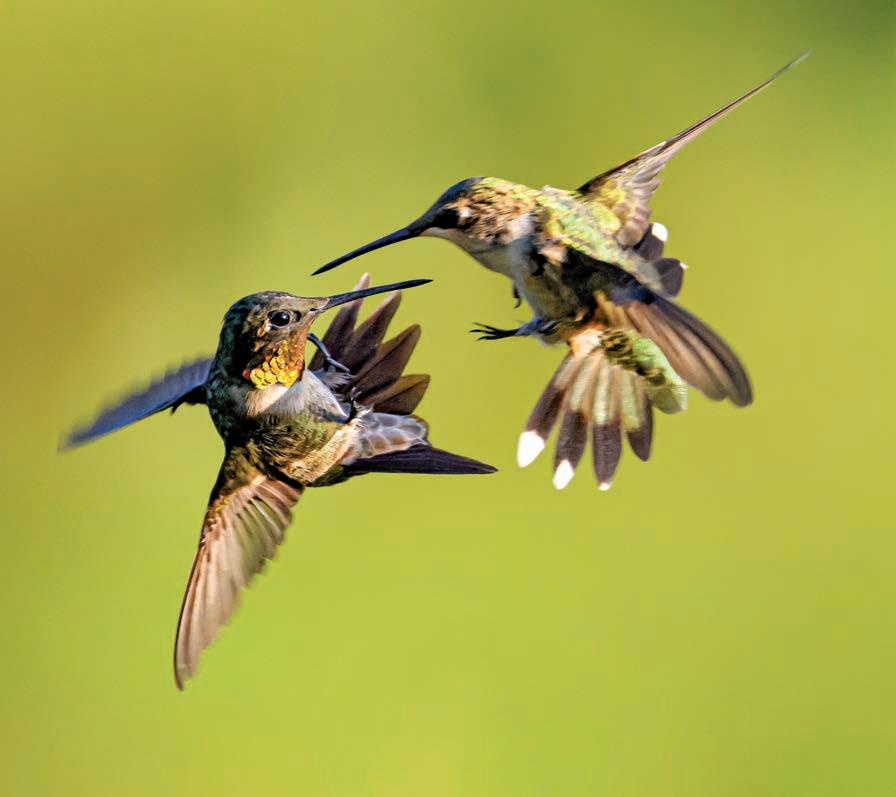

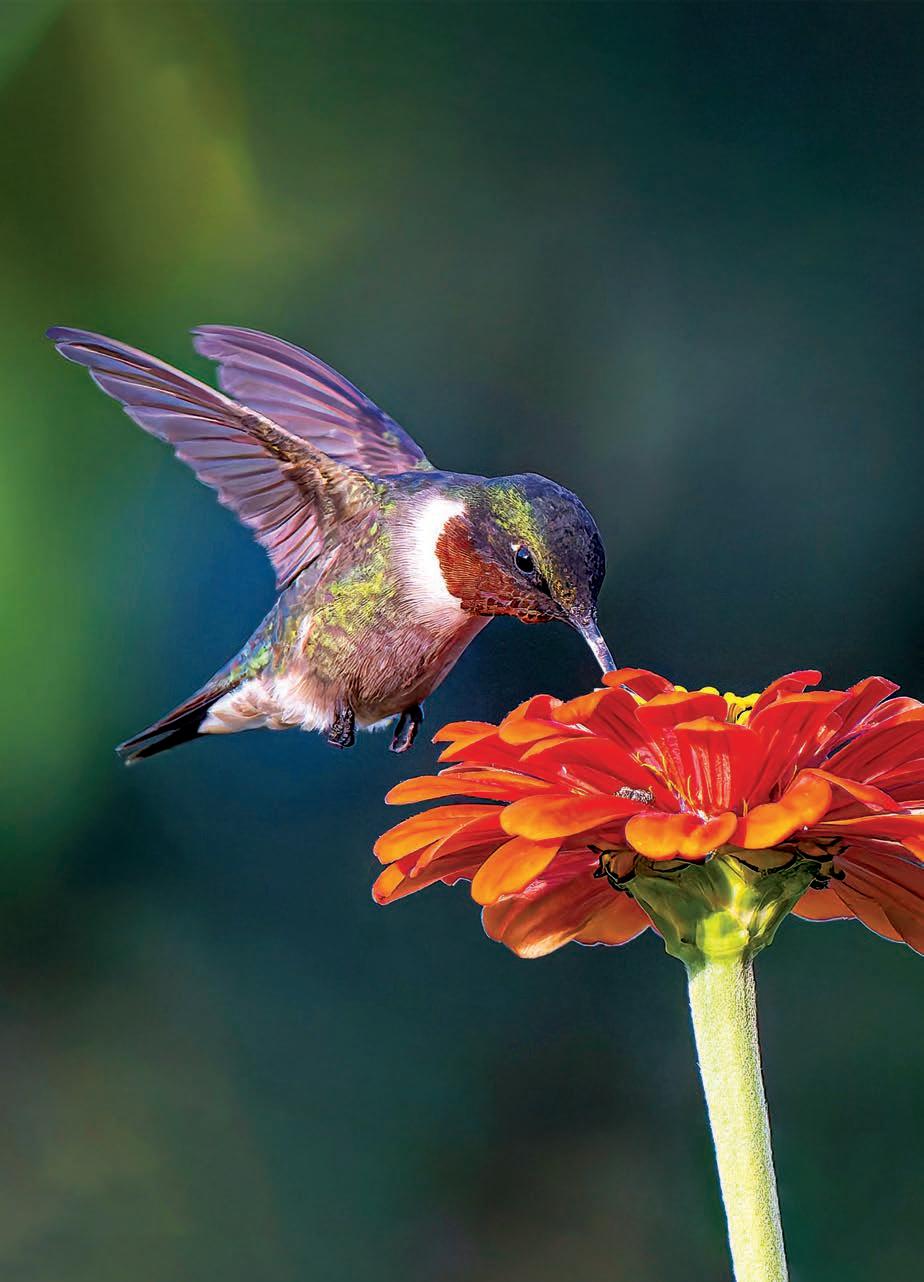
ABOVE An interaction between ruby-throated hummingbirds.
LEFT A male Allen’s hummingbird at rest.
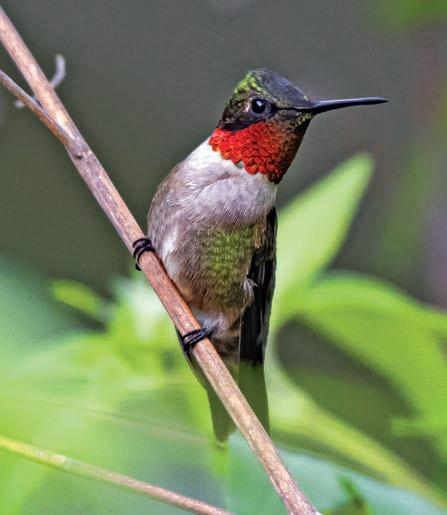
OPPOSITE, FROM TOP A male ruby-throated hummingbird. Since the 1990s, Dan and Cathy Brown have been guardians of a thriving hummingbird habitat near Christoval in West Texas.
Nineteen species of hummingbird call Texas home, and these West Texans can help you see many of them
BY SHERYL SMITH-RODGERS
Thousands of black-chinned hummingbirds nest during the summer among the live oak and pecan trees on Dan Brown’s family ranch near Christoval in West Texas. And for nearly six decades, Brown has helped feed the tiny birds. Well into his 90s, his hearing has dulled but not his eyesight nor his energy.
One afternoon last June, Dan and his wife, Cathy, take a break from chores and relax in folding chairs in their observation room, an air-conditioned spot for watching the birds zip around sugar water feeders hung beneath roof eaves.
Beyond the room’s huge plate-glass windows, a wild bird community is on full display. A painted bunting ruffles his wet feathers on a tiered water feature surrounded by flowering native plants. Black-crested titmice and northern cardinals snatch sunflower seeds and white millet from ballshaped feeders. From an iron skillet nailed to a live oak, a golden-fronted woodpecker swoops in for a mouthful of suet, then flies off to feed his nestlings.
“This has become more than a hobby,” muses Dan, focusing his blue eyes on the various birds. “Here it’s developed into an enterprise. I couldn’t do it without Cathy.”
The couple call their business the Hummer House, a wooded wildlife habitat just east of the South Concho River that includes three rentable guest cottages. Since 1996, visitors from across the country and around the world have come to witness the aerial antics.
Altogether, the Browns put out 25 gigantic feeders that each hold 48 or 80 ounces of sugar water. Since one 48ounce feeder lasts only 24 hours, keeping them filled is a daily job.
Production of the hummingbird fuel starts in a storage room, where Dan measures and pours sugar into 1-gallon plastic jugs, then sets them on shelves. As needed, the jugs are carried via golf cart to the observation room. At a sink, Cathy fills the jugs with water and shakes them well. Then she scours empty feeders with a long-handled brush and refills them with fresh sugar water.
In the 1990s, Dan bought sugar in annual amounts that ranged from 390 to 685 pounds. “Now we average about 1,500 pounds of pure cane sugar each year,” Cathy says.


“We’re a very large nesting site for black-chinned hummingbirds. Within a quarter-mile radius, we estimate that there are probably about 3,000 hummingbirds.”
But they’re not just here for the sugar water. “Hummingbirds are insectivores,” Cathy explains. “We have thousands of native pecan trees that have aphids. Aphids are like T-bone steaks to hummingbirds. They’re very high in protein and very sweet. You could take down every one of these feeders, and we’d still have hummingbirds.”
The next time a hummingbird streaks past, imagine you’ve been buzzed by a miniature fighter jet. That’s how fast nature’s smallest bird can fly relative to its size. In flight, a hummingbird beats its wings in a figure eight up to 40 times or more per second. This rapid motion enables it to spin, hover, and fly backward and upside down at speeds of 30 mph or more.
To fuel such a high metabolism, a hummingbird, which can weigh 2–20 grams, slurps up nectar that’s at least double its weight every day. One fill-up lasts 20 minutes, then it’s off to find more flowers and insects or return to a feeder—dining territory that a hummer will fiercely defend, even remembering which blooms it has already drained (and pollinated). At night, a hummer may go into torpor to stave off starvation. During this deep sleep, its heart slows from 1,200 beats a minute down to 50.
Nineteen hummingbird species have been recorded across Texas. In summer breeding months, the two most common species are black-chinned hummers in West Texas and ruby-throated hummingbirds in East Texas. Depending on the species, hummingbirds can breed as far away as Alaska and Canada and migrate as far south as Central America.

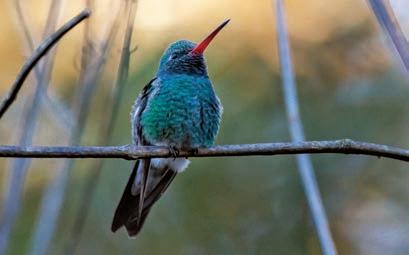
CLOCKWISE FROM LEFT A male Anna’s hummingbird, with its iridescent pink-red throat; male rufous hummingbird; and male broad-billed hummingbird, with its black-tipped, long red bill.
OPPOSITE, FROM TOP A female ruby-throated hummingbird feeds at a red salvia plant. The Browns found this hummingbird nest, built from plant fibers, lichen and spider silk, on their property.
Since 2010, federally licensed bird bander Charles Floyd and other permitted volunteers have banded more than 10,000 hummingbirds at the Hummer House. Based on his research, about 95% of all the black-chinned hummers there are returning females from prior years.
“It wouldn’t make a difference if the Browns hung a thousand feeders,” says Floyd, a retired school principal who lives nearby. “What matters most is that the Browns are preserving the trees, the understory and the natural habitat.”
Floyd and his banding partner—master bander and retired biologist Kelly Bryan of Rockport—collect banding data for West Texas Avian Research, a nonprofit they founded in 2011 to support bird banding research and bird conservation in West Texas.
“Banding has led me to understand the life cycle and migratory habits of hummingbirds,” Floyd says. “Their established pattern of habits and movements has continued for centuries. Certain factors, such as the widespread introduction of feeders, have made some changes in that behavior. But overall patterns have remained the same.”
So far, Floyd has banded 162 bird species at the Hummer
House, including half of Texas’ hummingbird species. Many are banded Saturday mornings April through July at the ranch. That’s when the Browns welcome visitors free of charge to watch Floyd and his wife, Nancy, band hummers and other species. Children and overnight guests are often allowed to release birds after they’ve been banded.
At the Hummer House, male black-chinned hummingbirds arrive first in mid-March and stake out their breeding territories. By April, females show up and begin gathering unbleached cotton the Browns put out for nest building. “They keep pulling it through mid-July,” Cathy says. “That’s a good indication that they breed twice.”
Males woo mates by performing dramatic aerial dives and buzzing their tails. They also flash their iridescent gorget, the colorful throat patch that sets males apart.
Female hummers—drably feathered for camouflage—build nests and tend the young with no help from mates. Their tiny nests are made of plant materials and held together with spiderwebs. Mothers usually lay two white eggs smaller than jelly beans and feed their hatchlings regurgitated insects and nectar.
By late June and into July, males start leaving. “They’ve proven through banding that they may go out west or to the Hill Country,” Cathy says. “They take their time migrating back to southern Mexico for the winter. During that time, we may see male hummingbirds from farther north.”
From the second week in May through the end of June, “we have a constant population of hummers,” Cathy continues. “But after that, a lot of males have started to migrate. Then ruby-throated males come through. The last to leave are black-chinned females and their young ones. Our population is ever evolving.”
In late August, more ruby-throated hummingbirds than black-chinneds show up. “We’re on the western edge of ruby-throated migration, so we see a lot of those,” Cathy says. “During fall migration, you’ll see the biggest variety here, like Allen’s and rufous, but not in great numbers.”
The Browns get up from their chairs in the observation room and head off to refill sugar water feeders. “It’s like having a dairy farm,” Cathy says. “You make the circles in the morning and fill what’s empty. Then in the evening, you do it all again.”
Dan smiles. “If you love to work,” he says, “this is the place to fall in love with.” D

Hummer-friendly gardens provide a variety of nectar sources to meet the birds’ high energy needs. They’re drawn to red tubular flowers, such as salvias and honeysuckles. The trumpet shape accommodates their long bills and forked tongues. Once they discover nectar sources, hummers will also feed on other shapes, sizes and colors of flowers. Try these Texas natives:
• Autumn sage (salvia)
• Coral honeysuckle
• Flame acanthus
Watch the video on our website and get to know Dan and Cathy Brown and the hummingbirds they love.
• Trumpet creeper
• Turk’s cap

BY EILEEN MATTEI • PHOTOS BY LARRY DITTO
David Alvarado remembers digging holes alongside other volunteers near the Rio Grande when he was in high school, almost 20 years ago. Nowadays he has lots of little helpers.
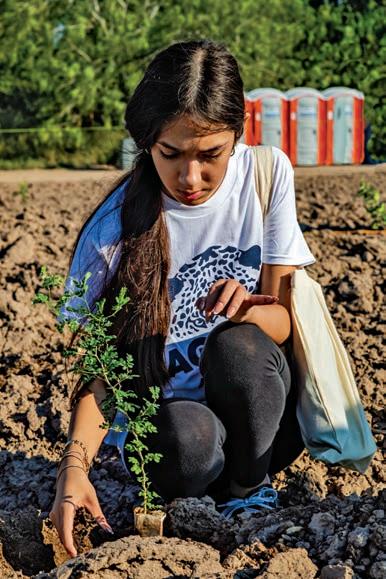
“I wanted to share this with my family,” says the San Juan resident, plunging his shovel into the earth again—this time with the help of his 14-year-old son, Jeremiah. His daughter, Adalee, 3, uses a trowel and her hands to pat soil around freshly planted seedlings that his wife, Berenize, places in the ground and backfills.
The Alvarados are among some 1,800 volunteers on this October morning who traveled to this 9-acre patch of federal land south of the rusty-red slats of the border wall and less than a mile north of the Rio Grande. They’re here with a lofty goal: plant 10,000 native seedlings.
The 2025 gathering marked the 31st year volunteers have come out to revegetate a piece of the Lower Rio Grande Valley on U.S. Fish and Wildlife Service land. The Tamaulipan thorn forest once covered 1 million acres along the Rio Grande, but just 10% of it remains intact today.
By reintroducing native seedlings like Texas ebony, wild olive, fiddlewood and snake-eyes to former farm fields, the Rio Reforestation project aims to restore the thorn forest. The plants attract bugs, which bring birds, rabbits, snakes, bobcats, tortoises and javelinas. Extending the wildlife corridor allows plant and animal populations to thrive and avoid genetic isolation.
“Rio Reforestation is the biggest community planting event in the U.S. Nothing else comes close,” says Jon Dale, a senior director for American Forests. The nonprofit collects seeds and grows native plants for the USFWS at Marinoff Nursery in Alamo.
“In the last 30 years, we have restored 18,500 acres of USFWS-owned farmland by planting over 10 million native thornscrub seedlings,” says Imer de la Garza, a USFWS project leader.
Over those years, they discovered best practices that increase seedlings’ chance of survival, now around 90%. One factor is high-density planting: 10,000 plants on 9 acres works out to more than 1,000 per acre.
The native seedlings are drought- and heattolerant as well as freeze-, flood- and fireresistant. Reforestation goes beyond canopy trees like mesquite and Texas persimmon to include understory plants such as allthorn, cenizo and coyotillo, plus ground covers like heliotrope and frogfruit.
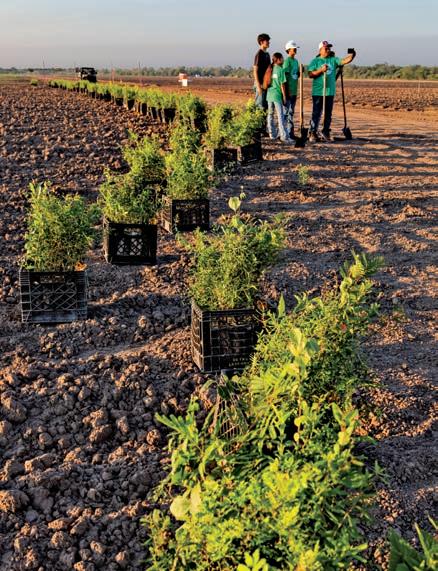
LEFT After a selfie, volunteers will get the waiting plants into the ground.
OPPOSITE Three-year-old Adalee Alvarado does her part as a Rio Reforestation volunteer. She says she had a great time “playing with dirt.”


It takes a year of preparation to put crates jammed with an assortment of 35 native species into the field with an army of volunteers. Seeds are collected from the wild and Marinoff’s orchard year-round, with ripe seeds intercepted before the wind or animals carry them off.
Many seeds require finicky processing techniques for successful germination. For example, wolfberry fruit must be squeezed to disgorge the seeds. Texas persimmon fruits are rolled on hardware cloth to release their large seeds. Hard ebony seeds are abraded with sandpaper.
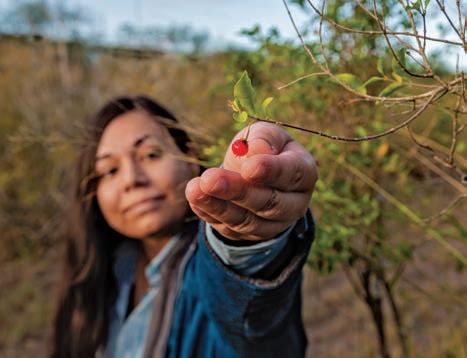
“In the last 30 years, we have restored 18,500 acres of USFWS-owned farmland by planting over 10 million native thornscrub seedlings.”
Marinoff staff fills biodegradable plant bands with a mixture of vermiculite, local soil, fertilizer and a seed in the spring. Through the summer the plants sit on growout benches under shade cloth. Rio Reforestation’s fall planting gives seedlings months to establish strong root systems before the next summer’s heat.
The nursery contracts with private growers to help it supply this project and the other 185,000 native seedlings USFWS needs to revegetate about 200 acres annually.
Last year the 9 acres of the Milagro tract produced a crop of organic cabbage for Rio Fresh, a third-generation produce grower and packer. Before the Reforestation volunteers arrive, a tractor has plowed the soil into eastwest rows. A dense thicket of 100-year-old mesquites, ebony trees and understory bushes borders the tract to the west and north.
OPPOSITE, FROM TOP The planting crews use 6-foot ropes to ensure adequate spacing between seedlings. A manzanita fruit is collected at Marinoff Nursery in Alamo, where seeds are prepared for planting.
RIGHT A volunteer plants a Texas ebony seedling.
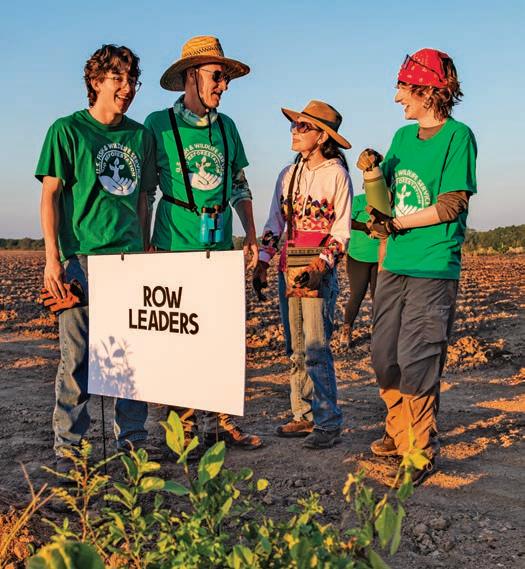
Volunteers sign in near a banner that reads, “Let’s Restore the Thornforest Together.” It outlines the work ahead: Get your shovel. Go to one of the 200 rows where a leader awaits. Pick up a blue crate. Use a 6-foot rope to measure the distance between seedling holes. Dig a hole as deep as the top of the plant band. Put it in and backfill.
Small groups of family or friends work eastward down each row. Some organize a division of labor: the leads measuring the spacing and wielding shovels or post-hole diggers. Then come the planters with a crate of seedlings. In other rows, two or three dig, then plant and then measure to the next site. Dragonflies flit past while a turkey vulture tilts overhead.
Wearing hats and leather gloves, Mitchell, Michelle, Lindsey and Joaquin Sternberg of Mission show they know about getting down and dirty. “It’s different every year—the people, the location, the weather,” says Mitchell, who has been participating since the 1990s.
School buses of elementary, middle and high school students arrive. Idea Los Encinos of McAllen sends three buses of students. Another school sends nearly 200 students.
Berta Palacios of Pharr oversees 20 Hidalgo County 4-H kids participating as a community service project. She spies high-spirited fifth graders larking and asks them, “Is that safe, the way you’re holding that shovel?”
Low humidity and a constant breeze temper the 85-degree air, which is filled with happy chatter. “It’s really fun, something to do on the weekend with friends. We all like doing it,” says Jennavie Juarez, one of 15 from the Weslaco High School National Honor Society here for their third year.
Girl Scout Troop 269 from La Feria has returned as well. “The girls enjoy it,” says Krystal Cruz, a scout leader and parent of a volunteer. “This is something we hope to continue every year.”
Maria Ortega and her three young children tackle a row themselves. “This is the very first time we have planted anything,” she says. Near them Victor Ostolaza Jr. is digging holes with his father while his wife, Cynthia, and daughter Kiara follow with the seedlings. He explains that Kiara’s school involvement brought them out. “We participated before because of her.”
Row leader Chad Wilmoth, a retired Rio Hondo science teacher and member of Magic Valley Electric Cooperative, grew some of the seedlings Marinoff distributes. Row leaders know not to fuss if seedlings are not planted at the exact spacing or depth. Volunteers familiar with the event under-
stand that engaging and energizing the community is an important part of the work.
A young boy jumps on a shovel his mom holds steady, upright. A teen girl empties her water bottle onto a newly planted Western soapberry. After completing their rows, 23 kids in the Green Club of Idea Mission lean on their shovels, listening to Tejano music from a small speaker.
“It’s controlled chaos,” Dale says as the event winds down. “Survival could be 100% this time since the tract is surrounded by agriculture and its moisture. Tight proximity results in a more diverse habitat.”
Dropped gloves and empty crates litter the field as volunteers head home after picking up a boxed lunch. If they want, workers can take home a pot of chile pequin, crucita or Mexican hat. After all, they now know how to plant them.
Soon after Rio Reforestation, contractors insert a 3-foottall durable tree tube around each plant. Besides thwarting plant nibblers, morning moisture collects on the tubes and trickles down to the seedlings. That’s the only moisture the young plants get besides rain.
Over time, wild seedlings will pop up under the taller trees, taking advantage of the shade and moisture. Insects, birds and other creatures will spread out into restored habitat. D























Remember when getting around was effortless? When you could shop, visit friends, or just take a stroll without worry? The EZY Light brings that freedom back.
The EZY Light is one of the lightest mobility scooters available at just 43 pounds (without the removeable battery)—yet it delivers impressive performance. Travel up to 7.5 miles on a single charge at speeds up to 4.3 mph. That's enough to handle your entire day, whether you're running errands, taking a trip, or enjoying time outdoors with family.
Effortlessly
Built for versatile terrain use with punctureresistant tires.
Flight-approved and travel-ready, it’s the perfect companion for air travel and cruises.
No complicated assembly. The EZY Light folds and unfolds in just two simple steps—no tools required. Raise the steering column, raise the seat, and you're ready to go. It's that simple.
Safety comes first with the EZY Light's four-wheel design that provides maximum stability. Anti-tip rear wheels add extra protection, while the innovative Electronic Stability Control automatically reduces speed during turns to help prevent tipping.
The comfort features are impressive too: adjustable armrests, an adjustable steering column, and large wheels that smooth out bumps—even on grass and gravel. Plus, integrated front and rear lights keep you visible, and the horn alerts others when needed.
Don't let mobility concerns keep you from the activities you love. The EZY Light comes with a one-year warranty, nationwide sales and service centers for support, and flexible financing options.







Loading the EZY LIGHT scooter into your car is incredibly simple and convenient. Just wheel the scooter up to your trunk, lift the front end and place it in first, then follow with the back end, and slide it in. This method allows you to lift only half of the scooter at a time, making the whole process much easier and practically effortless for anyone.

STORY BY SAVANNA CHANDLER
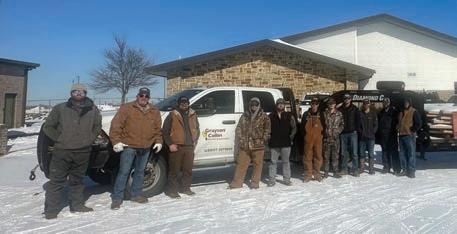
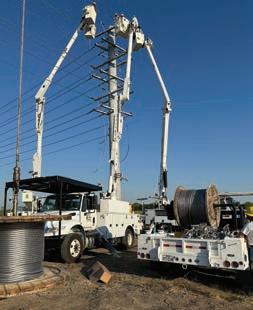
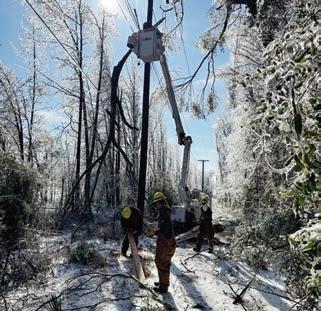
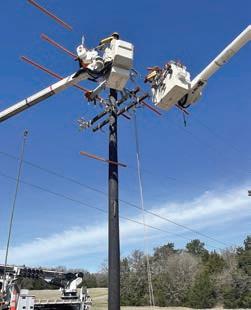
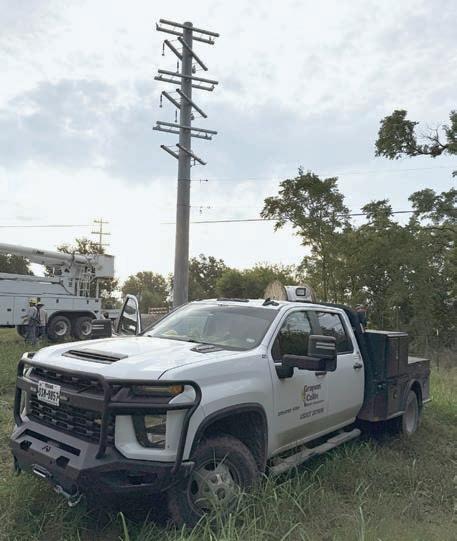
AT GRAYSON - COLLIN Electric Cooperative, we are incredibly proud of our lineworkers—not just today, but every single day.
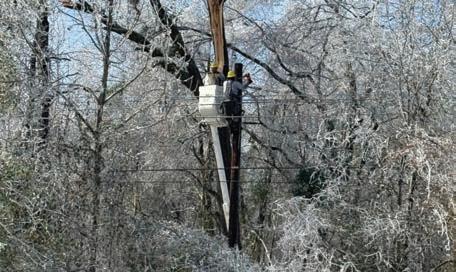
Rain or shine, in sleet, snow, wind and ice, these men step into the elements to serve you, our members. When storms roll in and most are told to stay home and take cover, our crews lace up their boots and head out. They willingly answer a call that many would never take—one that requires courage, grit and an unwavering commitment to others.
Their work is more than a job. It’s a calling rooted in service.
In 2014, the National Rural Electric Cooperative Association officially designated the second Monday of April, April 13 this year, as National Lineworker Appreciation Day—a meaningful reminder of the sacrifices these men make year-round. In moments of crisis, through long nights and dangerous conditions, they work tirelessly to restore power to the communities they call home.
These men are more than their profession. They are your Little League coaches, your school board members, your Bible study teachers, your community leaders and your neighbors. They miss family dinners, ballgames and holidays to help and serve us.
Today and every day, we honor their bravery, their sacrifice and their servant hearts. We are deeply grateful for their dedication to keeping our communities safe, connected and powered at Grayson-Collin EC. D



CONTACT US
14568 FM 121, Van Alstyne, TX 75495
P.O. Box 548, Van Alstyne, TX 75495
Office Hours Monday–Friday, 8 a.m.–5 p.m. Local (903) 482-7100 Toll-Free 1-800-967-5235
Web gcec.net
Directors
Steve Robinson, President, Celina
Paul Kirkland, Vice President, Lucas
Jim Copeland, Secretary-Treasurer, Pottsboro
David Ellis, Tom Bean
Dennis Ferguson, Van Alstyne
ABOUT GRAYSON-COLLIN EC
GCEC owns and maintains more than 5,300 miles of line to provide electric service to approximately 72,300 members in Collin and Grayson counties.
PAYMENT LOCATIONS
GCEC Office
14568 FM 121, Van Alstyne Night deposit available
Independent Bank—Anna Highway 5, Anna
Cendera Bank Highway 82 East, Bells
Independent Bank—Celina 290 Preston Road, Celina
Independent Bank—Howe 100 S. Denny St., Howe
First National Bank 109 S. Britton St., Tom Bean
VISIT US ONLINE gcec.net Check us out at TexasCoopPower.com/gcec
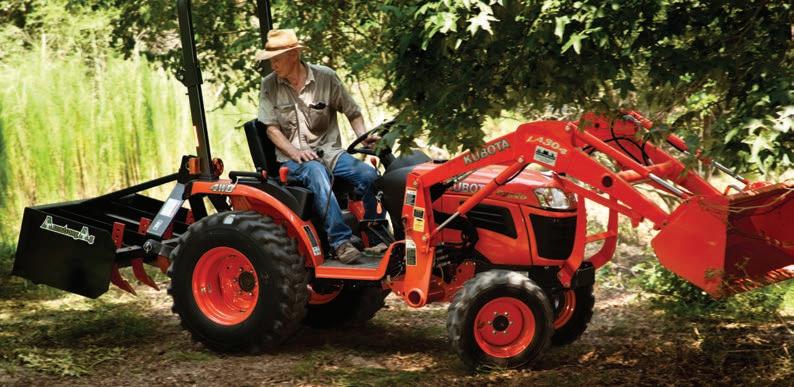
Distracted farm workers are a major danger
AS FARMERS PREPARE to enter the fields for planting, GraysonCollin Electric Cooperative urges everyone working in agriculture to be alert to the dangers of working near overhead power lines, poles and other electrical equipment.
Before you think an accident could never happen to you, consider electrical accident survivor Cody Conrady’s experience. He shares what happened to him in an effort to help increase power line awareness.
It was Conrady’s next-to-last day as an assistant manager for a fertilizer company. They were understaffed that day, and Conrady jumped in a truck to get ahead of a sprayer. Once the sprayer was in position, he hopped out to fill the tank with fertilizer. What happened next changed everything.
What he and his co-worker inside the cab were unaware of was that the sprayer boom had either made contact with or gotten too close to a power line. More than 7,000 volts of electricity traveled through the boom and electrified the equipment and ground where Conrady was standing. The unyielding stray voltage traveled through Conrady’s body as part of its path to the ground.
In the minutes and hours that followed, he was brought back to life, rushed to a local hospital and then transferred via helicopter to a Level 1 trauma center. That was the start of a very long and arduous road to recovery that included many surgeries, rehabilitation and prosthetic fittings.
When working near power lines, “pay attention a little more,” Conrady advises. “Keep an eye on your surroundings. Just take an extra second to look at things, to see how your situation is going to unfold.”
To stay safe around overhead power lines, always follow safe work practices to help prevent serious and even deadly acci-
dents. Start by making sure everyone knows to maintain a minimum 10-foot clearance from power lines. This 10-foot rule applies not only to the area underneath the power line but to the full 360 degrees around it.
In addition, follow the safety guidelines below.
If your machinery or vehicle comes into contact with a power line, do not get out of the cab because you could be electrocuted. Instead, stay where you are and call 911.
If it’s not safe to stay in the cab due to fire or smoke, make a solid, clean jump with both feet landing at the same time. Shuffle away with feet together as far as you can.
If you come across an accident near a downed power line, alert individuals (from at least 50 feet away) to stay in the cab or vehicle as long as there is no imminent danger. Call 911 and Grayson-Collin EC and do not approach the scene.
Have a daily meeting with staff to go over possible hazards. Map out and review routes where equipment will be moved and ensure it will clear power lines.
Teach anyone working with or for you (including family members and seasonal employees) about power line awareness and proper clearance distance.
When working around power lines, always use a spotter who has a broader vantage point than the person in the cab.
Lower extensions to the lowest setting when moving loads. Even though planting season is a busy time filled with stress and tight deadlines, take time for safety, including electrical safety. It could save your life or the lives of others. D
BY ALAN HITCHCOX
DRIVE ANYWHERE IN Collin County and you’ll never be far from something that can be related back to Collin McKinney. Most obvious is the name Collin County, and the city of McKinney. But others are less obvious.
For example, Throckmorton Creek and Throckmorton Road were named for members of the Throckmorton family, who were close friends and political allies of McKinney. In fact, James W. Throckmorton, a former Texas governor, state senator and U.S. representative, considered McKinney his mentor. Another close friend and religious ally was Joseph B. Wilmeth. Together, these men established a church and lodge that still exist today in Van Alstyne.
The list could go on, but why is Collin McKinney remembered so reverently? The Texas State Historical Association’s Handbook of Texas helps us answer this question.
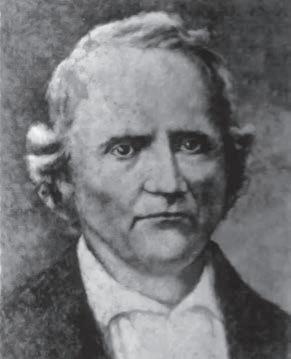
Collin McKinney—land surveyor, farmer, politician and lay preacher—was born April 17, 1766, in Hunterdon County, New Jersey, the second of 10 children of Daniel and Massie McKinney. Early in the 1770s his entire family migrated to Virginia. Collin helped to provide for the family while his father was fighting in the American Revolutionary War. Consequently, he had no opportunity for formal schooling. After the war, his family moved to an outpost in what later became Lincoln County, Kentucky.
In 1792, McKinney married Annie Amy Moore, who bore four children. After Amy died unexpectedly, he married Elizabeth Leek Coleman in 1805, and they raised six more children. From 1818 to 1821 McKinney managed the vast Tennessee estates of Senator George W. Campbell, who was serving as minister to Russia. Afterward, McKinney returned to Kentucky, where he settled in Elkton in Todd County. Then he migrated with his family and many relatives to Hempstead County, Arkansas Territory. When this area became Lafayette County, Arkansas, in 1827, he was elected justice of the peace.
tracts with Milam and located their new surveys.
Until the beginning of the movement for Texas independence, settlers (including the McKinneys) suffered under the authority of two opposing governments. They paid taxes, served on juries and held county offices in Miller County, Arkansas. Around that time the settlers petitioned the Mexican government at Nacogdoches for redress of grievances. As a result McKinney became one of five delegates from the Red River area to the Convention of 1836 at Washington-on-the-Brazos, which would become the national capital of the Republic of Texas.
McKinney was one of five appointed to the committee to draft the Texas Declaration of Independence. As the oldest member of the convention, 70, he was given the pen after the signing. He was also a member of the committee that produced the Constitution of the Republic of Texas and later was elected a delegate from Red River County to the first, second and fourth congresses of the republic. In 1840 he joined other family members who earlier had moved to a part of Fannin County that eventually became Grayson and Collin counties. Collin County and the city of McKinney, the county seat, were named in his honor.
Man of the Cloth
In 1826 McKinney became a friend of Benjamin R. Milam, an agent who introduced settlers into Arthur G. Wavell’s Red River colony in northeast Texas, a possession of Mexico that was also claimed by the United States as Miller County, Arkansas. Impressed by the generous land grants offered to settlers in the Wavell colony and fully aware that it was in disputed territory, McKinney and most of his relatives had by 1831 signed con-
McKinney was associated with several frontier churches. First, he was a deacon in a Separate Baptist church near Crab Orchard, Kentucky, where his father moved in 1780. In 1817 McKinney united with Barton W. Stone’s Christian movement, and although there is no mention of a church where he first lived in Texas, he frequently encouraged religious meetings, and worship services were often conducted in his home. The church at Hickman’s Prairie was organized in 1842, with McKinney and his son William C. as elders. Collin was also a member of a church at Mantua (a former ghost town said to be second in population only to the county seat), a congregation established by an immigrant preacher, J. B. Wilmeth, in 1846. Members of the Church of Christ consider McKinney a Christian patriarch. At various periods in his lifetime, he was a subject of six different governments: England, Virginia, the United States of America, the Republic of Mexico, the Republic of Texas and the Confederate States of America. He died September 9, 1861, at his home in Collin County and is buried in Van Alstyne.
To learn more about the life and legacy of Collin McKinney, join the Anna Area Historical Preservation Society from 9 a.m. to 2 p.m. April 18 at Sherley Heritage Park in Anna. D
Written or printed notice stating the place, day, and hour of the meeting and, in case of a special meeting, the purpose or purposes for which the meeting is called, shall be delivered not less than ten (10) days nor more than thirty (30) days before the date of the meeting, either personally or by mail, by or at the direction of the Secretary, or by the persons calling the meeting, to each member. If mailed, such notice shall be deemed to be delivered when deposited in the United States mail, addressed to the member at his address as it appears on the records of the Cooperative, with postage thereon prepaid.
The failure of any member to receive notice of an annual or special meeting of the members shall not invalidate any action which may be taken by the members at any such meeting.
Notice of members’ meetings shall include a brief notice of any member resolution. To be valid, a member resolution must be signed by at least 15 members and presented to the Secretary of the Cooperative not less than 60 days in advance of the member meeting at which its consideration is requested. Member resolutions may not infringe upon the power of the board of directors to manage the business and affairs of the Cooperative as provided in the Electric Cooperative Corporation Act, Section 161.071. Accordingly, in order to be valid, a member resolution should resolve that the board of directors consider or consider and favorably or unfavorably act on a particular proposition. Member resolutions that are not timely submitted shall not be included in the notice of the meeting and shall not be considered at the meeting of members.
The territory served by the Cooperative shall be divided into five (5) director districts. The districts and the numbers of directors who shall represent each district are described as follows:
District 1: One Director
Northeastern portion of Grayson County, including Dennison, Bells and Whitewright.
District 2: One Director
Western portion of Grayson County, including Whitesboro, Gordonville, Howe and the Big Arm of Lake Texoma.
District 3: One Director
Central and southwestern portion of Grayson County, including Sherman, Tioga and Van Alstyne.
District 4: One Director
Northwestern portion of Collin County including Celina, Weston, Anna and Blue Ridge.
District 5: One Director
Central and southern portions of Collin County, including McKinney, Allen, Lucas and Parker.
The board of directors may alter the boundaries of director districts from time to time. The Cooperative shall maintain and make available to members for their inspection a map more particularly describing the director districts.
To become or remain a director, a person must meet the following qualifications:
1. Be an individual member of the cooperative for at least 12 months, maintaining a primary residence in the district the director represents, and purchasing electric energy from the cooperative at that residence;
2. Not be employed by or have a material financial interest in a competing enterprise or business that sells electric energy or a supplier, contractor, consultant or any other entity with which the cooperative does a substantial amount of business;
3. Not be employed by the cooperative and not have been employed by the cooperative for a period of two years before becoming a director;
4. Not have been convicted of any criminal offense involving dishonesty or breach of trust;
5. Not have a final judgment entered against the director in a civil action on the grounds of fraud, deceit or misrepresentation;
6. Not have a payment due the cooperative that is more than 90 days delinquent;
7. Not be the incumbent of or candidate for an elective public office in connection with which a salary is paid, other than members of the School Board or County Commissioner’s Court; and
8. When membership is held jointly by the husband and wife, either one, but not both, may be elected a director; provided, however, that neither one shall be eligible to become or remain a director or hold a position in the cooperative unless both shall meet the qualifications hereinbefore set forth.
9. Any person who serves as a director on or after March 1, 2012, other than a director whose service as director commenced prior to that date, shall complete a course of study and submit to the Cooperative a Credentialed Cooperative Director Certificate from the National Rural Electric Cooperative Association (“NRECA”) within 33 months of the date he or she commenced to serve as a director.
Nothing in this Section shall, or shall be construed to, affect the validity of any action taken at any meeting of the Board of Directors.
It shall be the duty of the Board of Directors to appoint, not less than thirty (30) days nor more than ninety (90) days before the date of a meeting of the members at which directors are to be elected, a nominating committee consisting of not less than five (5) nor more than eleven (11) members who shall be so elected so as to give equitable representation on the committee to the geographical areas served or to be served by the Cooperative. No officer or member of the Board of Directors shall be appointed a member of such committee.
The committee shall nominate one or more (as the judgment
of the committee may direct) members as nominees for directors for each director to be elected at the annual meeting, and after such selection or nomination, shall post a list of said nominees in the principal office of the Cooperative at least thirty (30) days before the meeting of members at which directors are to be elected.
Any fifteen (15) or more members may nominate a qualified person to serve as director by written petition bearing their signatures delivered to the secretary not less than twenty-five (25) days prior to the meeting of members at which directors are to be elected. The secretary shall post a copy of the petition at the same place where the committee nominations are posted, not less than twenty (20) days prior to said meeting. The Secretary shall mail with the notice of the meeting, or separately, but at least ten (10) days prior to the meeting, a statement of the number of directors to be elected and showing all nominations made.
The members may, at any meeting of members at which a director or directors shall be removed, may also nominate a successor or successors from the floor of the meeting.
Notwithstanding anything in this section, failure to comply with any of the provisions of this section shall not affect the validity of any election of directors. D

1 cup uncooked farro
2 cups water, lightly salted
2 tablespoons olive oil
Juice and finely grated zest of 1 lemon
Salt, to taste
Freshly ground black pepper, to taste
Crushed red pepper flakes, to taste
¼ cup crumbled feta cheese
1 can black-eyed peas (16 ounces), drained and rinsed
½ cup chopped parsley or mint
Thinly sliced radishes (optional)
1. Combine the farro with water in a pot and bring to a boil. Reduce heat
to low, cover and simmer up to 40 minutes, until grains are tender with a slightly chewy texture. Drain any excess water.
2. In a large bowl, toss warm farro with oil and lemon juice and zest. Season with salt, pepper and red pepper flakes.
3. Add feta, black-eyed peas, parsley or mint, and radishes, and toss to combine. Salad will keep refrigerated up to 3 days.
SE RVES 4–6

Avoid placing lamps or TVs near your thermostat. Heat released by these devices can cause your air conditioning to run more than necessary.
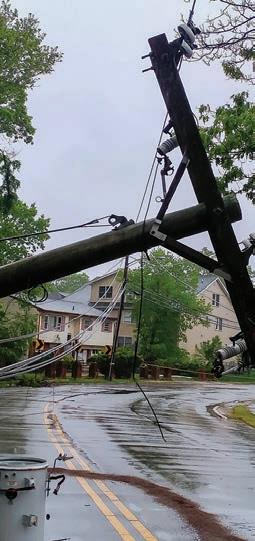
DID YOU KNOW?
Even if a power line is down on the ground, it may still be live and dangerous. If you encounter a downed power line, stay back.
Grayson-Collin Electric Cooperative does not endorse these individuals or services. Member Market ads are a form of member service.
Building materials—Large barn full of building materials of all types, new. Also cedar fencing 8 ft. x 4 in., new. Call (972) 369-2068.
Antique rifles—Winchester 1886 octagon barrel, caliber .40–82, very good bore and action, very good wood, 100% original, $2,650. Also 1886 .33 WCF, $1,850, full magazine. Call (214) 533-1415.
Golf carts—2018–20 electric and gas Yamaha and Club Car Tempos. Can be refurbished and personalized to your needs or wants with accessories. Call or text TGCG at (469) 424-4042.
Various—Tiger Cub Equipment, lawn mowers, Toro and Cub Cadet sales and service, in Whitesboro. Call (903) 564-7901.
Various—Hoverboard for sale, in very good shape and has new batteries, $550. Left and right taillights that fit a 2019 Dodge Ram truck, in very good shape, $50. Call (903) 487-9784 or (903) 337-8250.
Boat—18 ft., lake ready, completely rebuilt with more than $5,000 spent on the rebuild. Call (972) 369-2068 with offers.
Tupperware—New microwavable bowl, $8; new bowl, $8; small container, $5; rectangular container, $10; spaghetti dispenser, $5; pitcher, $8; sandwich container, $3; large freezer container, $10. Call (903) 482-4252.
House—3-bedroom, 2-bathroom ranchstyle home on 7 acres with 4-stall pole barn, detached garage and other structures. Located on the corner of FM 1897 and Dugan Chapel Road at 6294 Dugan Chapel Road, Bells, $674,900. Must see to appreciate. Call Kenny at (903) 821-3566.
Various home items—Full-size antique brass bed, $125. Montgomery Ward gas wall furnaces, 30K–50K Btu/hour, $69–$99. Space heaters, $39. Dearborn, $99. Interlocking rubber floor mat squares: 40 multicolor 2’x2’, $75/160 sq. ft.; five thicker blue 2’x2’, $15/20 sq. ft. Call (972) 837-2243.
Travel trailer—2019 Rockwood, 35 ft., 3 slides, 2 bedrooms, 1 ½ baths, sleeps 8, electric awnings and stabilizer jacks. Rear camera accessories. One owner, excellent condition. Call (317) 294-4559.
Sander—10” Jet benchtop drum sander, $100. Call (281) 827-9652.
SUVs—3 Ford Excursions, 4x4, 2000–01, 7.3 diesel. Text (972) 979-0282.
Boat—2008 JC Tritoon, 24 ft., 300 horsepower, good condition, $23,500. No trailer. Text (972) 979-0282.
House—4 bedroom, 3 bath, master bedroom on first floor, 2,700 sq. ft. in Prosper. In builder/new condition. Call Dave at (860) 655-3670.
Baseball cards—50 cards, no duplicates. All 50 are players in the Hall of Fame. Approximately 35–40 years old. Sharp corners, mint condition, $20. Call (515) 778-5384.
Lodge—5,000-sq.-ft. facility. Available for family reunions, retreats, weddings, etc. Overlooks private lake. RV spots available. Sleeps 24. Full kitchen. Email innkeeper@ crescentmoonlodge.com or call (214) 538-0513.
Executive RV storage—In Celina, full service. Fully enclosed, 50-amp series, heated, gated and 24-hour access as well as a water and dump station. Call (972) 382-3936.
Hall—2,000-sq.-ft. facility available for reunions, weddings, receptions, luncheons, meetings, etc. Available every day of the week except Fridays. Also RV spots for lease by day or week. Inquire by phone at (903) 482-9360 or come by American Legion Post 376 at 293 Jay Road in Van Alstyne.
Chapel—Getting married or renewing vows? Historic chapel, beautifully restored, overlooks private lake, seats 100-plus. For an appointment, call (214) 521-2937 and leave message or (214) 522-8000.
Sadler Community Center—Five-hour rental, fee includes space for up to 100 people with tables, chairs and full kitchen. Call or text (903) 819-7918.
Trailers—Enclosed cargo/car hauler, utility/dump, open car haulers, horse trailers. Winches & hitches offered for no additional cost. Visit towrar.com, call 1-877-701-1477 or email rightawayrentalsllc@gmail.com.
Trailers—Enclosed cargo (CellTech), utility and car hauler trailers (TopHat). Financing and rent-to-own available. Call
Open Road Trailers at (972) 565-1972 or visit buycelltechtrailers.com.
RV spots—Close to Tom Bean. All utilities included. Call (903) 546-2168.
Knives and watches—Old pocketknives and pocket watches. Call (972) 658-6082.
Gas pumps—From 1920s–50s. I also sell them restored. Call (214) 808-4621.
Home caregiver—In search of a paid in home caregiver assistant for my sister. Please contact me at stognersandra77@ gmail.com.
Professional cleaning—Kiki’s House Cleaning delivers top-notch cleaning services for homes and offices in North Texas. Our dedicated team ensures every nook and cranny is spotless, providing you with a fresh and inviting environment. We take pride in our attention to detail and commitment to customer satisfaction, transforming your spaces into pristine areas that you can enjoy. Here’s what sets us apart: personalized service, trustworthy team, topnotch results and eco-friendly products. Call (469) 905-0969.
Farmers Insurance—Auto, home, life, umbrella, recreational vehicles, commercial. For a policy review or no-obligation quote, call Cindy at (469) 625-1239 or email Janice at jcross-white@farmersagent.com.
Weston Land Co.—If you’re looking to buy or sell real estate in the Grayson or Collin counties areas, give us a call at (972) 3828980 or (903) 482-4026.
LaFollett Tree Service—Trees trimmed and removed in the Van Alstyne area. Also British white cattle available. Call (214) 7331055.
Retired cabinetmaker—45 years’ experience designing and building kitchens, baths, offices, barn doors, entertainment centers. No job too small or too big. Call Tim at (619) 944-2873.
Striper fishing guide—Have been a professional fishing guide since 1979 and furnish everything. Call Ed Fowler at (903) 267-2311.
Eva’s All-Seasons Glass—Serving Grayson and Collin counties. Owner/operator with over 30 years of experience in the glass industry. Residential and commercial services. Visit evasallseasonsglass.com or call (214) 223-9691.
Guitar amplifiers repaired—Vacuum tube and solid-state amplifiers, musical instru-
ment amplifiers repaired and restored. All makes and models. I specialize in vintage amplifiers. Visit crossfireelectronics.com or call (903) 436-1683.
Patterson Real Estate—If you’re looking to buy or sell property in the Grayson and Cooke counties area, please give me a call at (903) 814-3439.
Tractor work—Small to large acreages. Mowing, post holes, bucket work, rolled hay moving, level driveways, fence repair, tree removal, fence row clearing and trash removal, fertilizing and seeding. Call (972) 832-0120.
Garage door and opener services— Residential and commercial, since 1982. Having door problems? Call Glenn at (903) 819-6064.
Chimney and fireplace services—Hale’s Chimney Cleaning and Repair. Chimney and fireplace services for all of North Texas since 1993. Repairs, inspections, cleaning and chimney caps. Dryer vent cleaning also. Call (972) 562-6851 or visit
haleschimney.com.
Décor hanging—Pictures, mirrors and art hanging by experienced husband and wife team. Trusted, affordable and hung right. Text (214) 735-6187.
Scott’s CNC & Laser—We do custom wood signs, engraving and plastic 3D printing. Call (903) 741-8320.
Handyman—Scott’s Home Remodeling and Handyman. Bathroom remodel, deck, painting, flooring, cabinet maker. Small or big. Contact Scott Randolph at (903) 7057009 or scottshomeremodeling.com.
Violin and piano instruction—Dr. Rand Certain, owner of Certain Music Studios, offers violin, piano and music theory instruction. Contact (469) 671-6078 or certainmusicstudio@gmail.com or visit certainmusic.net.
Guitar lessons—Available for any age. I will come to you, or come to the studio on Liberty Road off U.S. Highway 377 in Gordonville. Text (469) 418-6600.
Category (check one): ○ For Sale ○ For Rent or Lease ○ Free ○ Services ○ Wanted
Type or print your ad below and mail to: Savanna Chandler, Grayson-Collin EC, P.O. Box 548, Van Alstyne, TX 75495
NAME
PHONE ( )
AD
Advertising Policy
Advertising in GCEC’s Member Market is a free service offered to our co-op members. As we have more than 40,000 members, we often have more ads submitted than we have space to print. Please limit ads to 25 words or fewer and submit only one ad per month. Ads will be placed on a first-come, first-served basis. Ads must be submitted before the 28th of each month to run in the next possible Texas Co-op Power (i.e., April 28 for the June issue). We reserve the right to refuse any ads. Ads must be resubmitted each month to run more than one month. Do not submit ads on the back of your payment stub. These stubs are processed automatically because we receive hundreds of payments daily. Ads for commercial businesses will be printed only if space allows after all other ads are placed.
Landscape/Irrigation install—Over 25 years of experience. Consultation, landscape design, plant material broker. Residents of Anna Town Square receive 10% discount. Email Ken at krhellwig@gmail.com or text (214) 912-8399.
Howe Metal Works—Custom CNC and welding. Fences, gates, awnings, etc. Call Zach at (903) 815-3353.
Custom appliance installation—20 years’ experience installing appliances and custom millwork. Can do what most others can’t. Call Randall at (214) 799-2573.
Edge Financial Group—Offering free financial needs assessment and/or an opportunity for part-time or full-time remote work. Text (214) 533-3676.
Storage—RV/boat storage and personal units. Conveniently located on Cassidy Road in Sherman, between Tom Bean and Howe. Secure and easy access. Book online at 902-storage.com.
Bathtub, shower and countertop refinishing—Like new in just one day. Call (214) 215-2796 or visit bathtubrefinishingdallas. com.
Tractor work—Demolition, land clearing, house pads and material hauling. Serving the area since 1998. Call for a free quote at (214) 876-1353.

MARK YOUR CALENDAR
Easter Sunday, April 5
National Lineworker Appreciation Day
Monday, April 13
Earth Day
Wednesday, April 22
National Teach
Children To Save Day Thursday, April 23
Celebrate Trails Day Saturday, April 25

















His countless big ideas brought dazzling color to hills and highways
BY W.F. STRONG • ILLUSTRATION BY JASON RAISH
WE WERE SITTING in John R. Thomas’ big pickup overlooking about 60 acres of bluebonnets in bloom when he said something I’ll always remember. “If we could get a good rain in the next day or two,” he said, “it would be a milliondollar rain.”
I asked Thomas just how a rain could be worth $1 million. He said, “It’ll push those bluebonnets up another few inches and double their seed yield.”
Thomas owns Wildseed Farms, southeast of Fredericksburg in the Hill Country He doesn’t grow those enormous plots of petals just for their photographic beauty. He grows them for the seeds—bluebonnet, Indian blanket, Texas paintbrush and dozens of other native varieties.
The seeds are harvested with processes he pioneered and machines he invented. They’re bagged and sold in his big country store along U.S. Highway 290 then shipped to customers around the world.
Thomas grew up on a ranch near Eagle Lake, west of Houston, where he learned early that the land could break your back and your heart in the same season. He studied business at Sam Houston State University before coming home to start a grass-seeding company that restored eroded land along highways.
People began asking him for wildflower seed—especially bluebonnets— but there was no dependable source. That was all the spark he needed.
In 1981, Thomas began experimenting.
Listen as W.F. Strong narrates this story on our website.
He bought land, studied soil types and planted test plots. He tinkered endlessly, building equipment that didn’t exist and modifying machinery that did. He risked much and slept little. When something failed, he tried again.
He eventually had a gorgeous field of bluebonnets every spring, and he noticed people stopped in droves to photograph them. His entrepreneurial side said, “These folks need a place to get out of the sun and have a Coke and enjoy the view.” He created such a place for them.
Over the next decade, Wildseed Farms blossomed—literally and figuratively. In 1993, he moved his operation to Fredericksburg, building what would become the largest working wildflower farm in the U.S.
Visitors who come in March or April see fields so bright they seem backlit by divine intervention. People stroll among the blooms, sip a little Hill Country wine and buy packets of seeds to take a piece of Texas home with them.
Thomas designed the J-Thom 42 Wildseeder, a contraption that can sow a dozen species or more at once without damaging delicate seeds. He built a vacuum harvester that collects seeds by suction instead of by force, which preserves their fragile husks. Those inventions made large-scale wildflower farming possible.
Today, more than 20 states use Thomas’ seeds to color their highways each spring. And Wildseed, which now fills hundreds of Hill Country acres, also grows grapes and sells its own wine.
But for all his business acumen, Thomas remains a farmer at heart. His face still turns upward when he hears thunder. As we sat in his pickup that spring afternoon, he squinted toward the horizon and said, “There’s a cloud building out west. Maybe it’ll come this way.” D
BY VIANNEY RODRIGUEZ, FOOD EDITOR
After a long day of editing recipes, there’s nothing I crave more than an oven-baked meal. This recipe, which I can pull together in a snap, hits the spot every single time with its spice and citrus notes. Be sure to store the leftover chipotles in the fridge.

1 pound salmon fillet
1 chipotle pepper in adobo sauce, with 4 teaspoons adobo sauce reserved
1 cup orange juice
1/2 teaspoon salt
Steamed rice, for serving
1. Preheat oven to 400 degrees. Place salmon on a baking sheet.
2. Finely dice chipotle. In a small bowl, combine chipotle, reserved adobo sauce, orange juice and salt. Spoon sauce over salmon.
3. Bake salmon until it flakes easily with a fork, about 15–20 minutes.
4. Serve over rice.
SERVES 4
Follow Vianney Rodriguez as she cooks in Cocina Gris at sweetlifebake.com, where she features a recipe for Creamy Chipotle Lime Shrimp.

GINGER CLARDY BANDERA EC
I was skeptical when I first tested this recipe, but little did I know this classic salad is the perfect virtually no-cook dinner. The salad is creamy with crunchy pieces of onion and chunks of cheese. Next time I will definitely double the recipe to enjoy with my family.
1 can English peas (15 ounces), drained 2 tablespoons chopped onion
1/4 cup diced cheddar cheese
1/2 boiled egg, diced 3/4 cup mayonnaise
1. In a bowl, mix together peas, onion, cheddar, egg and mayonnaise.
2. Cover and refrigerate. Serve chilled.
SERVES 2

LORI KIRKPATRICK GRAYSON-COLLIN EC

This recipe was given to Kirkpatrick 30 years ago by a dear friend and has remained a family favorite. I see why Birds has stood the test of time in her household. Buttery crescents filled with chicken and swimming in a cream sauce hit all the comfort food notes. Kirkpatrick likes to serve the birds over steamed rice.
1 can refrigerated crescent rolls (8 ounces)
2 cups cooked chicken, diced
1 can cream of chicken soup (10.5 ounces)
1 can chicken broth (10.5 ounces)
1 cup shredded cheddar cheese
1. Preheat oven to 350 degrees. Lightly grease a 9-by-13-inch pan.
2. Unroll the crescent rolls and separate into 8 triangles. Place ¼ cup chicken on the wide end of each triangle, roll up dough and place in pan.
3. In a bowl, whisk together soup and broth. Pour over the prepared crescents. Top each crescent with 2 tablespoons cheddar.
4. Cover with foil and bake 20 minutes. Uncover and bake an additional 20 minutes.
SERVES 4
PANCAKES AND WAFFLES DUE APR 10 Never mind which is better doused in syrup—we’ll take either! The winning recipe will stack up $500. We’ll share our favorites in the September issue. CAMPFIRE FAVORITES DUE MAY 10
Parmesan Ranch Chicken
CINDY HANDY
GRAYSON-COLLIN EC
Nothing beats oven-baked chicken, especially when it’s coated in ranch dressing. I loved the ease of this recipe— no frying and coating the chicken in a plastic bag makes for less cleanup. Handy says this recipe works best with shelf-stable Parmesan that comes in a shaker. Serve with a salad or mashed potatoes for an easy weeknight meal.
1/3 cup flour
2 tablespoons grated Parmesan cheese
1/3 cup Italian-style breadcrumbs
1/2 cup ranch dressing
5 chicken drumsticks
1. Preheat oven to 400 degrees.
2. Line a rimmed baking sheet with foil and coat with cooking spray.
3. In a large, resealable plastic bag combine flour, Parmesan and bread -


crumbs. In a large bowl, add ranch dressing.
4. Dip a drumstick into ranch dressing and coat well. Seal drumstick in plastic bag.
5. Shake bag to coat drumstick, and place on prepared baking sheet. Repeat with remaining drumsticks.
A well-stocked freezer keeps me sane through a hectic week. Knowing I have food on hand makes meal planning easier. Here’s what you’ll find in my freezer.
PROTEIN: Chicken thighs and breasts, ground beef and turkey, shrimp, salmon
VEGGIES: Corn, peas, asparagus, broccoli, cauliflower
FRUIT: Berries, mangoes, peaches
READY TO BAKE: Pie crusts, pizza dough, bread, rolls
CONVENIENCE: Fries, Tater Tots, steamed rice, burger patties, waffles, meatballs
—Vianney Rodriguez
6. Bake 20 minutes, turn drumsticks over and bake an additional 20 minutes.
SERVES 2









































“I never expected it to be so beautiful that it takes your breath away.”
— Kaya C., on Stauer Opals
In a quaint village, nestled between rolling hills, lived a young woman with a deep appreciation for gemstones. Her grandmother gifted her a delicate cross pendant adorned with opals. The opals shimmered with a mesmerizing play of colors, reflecting hues of blues, greens, and fiery oranges. Her grandmother shared the legend of the opals, believed to bring hope, purity, and luck to those who wore them.
Using this story as inspiration, Stauer brings you the Opal Spirit Cross Pendant. With over 2 total carats of Kyocera lab-created opals set in .925 sterling silver encased in yellow gold, this pendant is a radiant celebration of beauty and craftsmanship. Each opal captivates with a kaleidoscopic dance of fiery oranges blending into oceanic blues, streaked with flashes of vibrant green that seem to come alive with every movement. The shimmering opals are skillfully arranged to create an enchanting, otherworldly glow, embodying the spirit of hope and harmony.
This breathtaking combination of color and craftsmanship is available as a limited availability of only
930 pieces, making it a rare and treasured addition to your jewelry collection. Plus, when you order today, you’ll receive the gold-finished sterling silver chain—a $69 value—absolutely free!
Don’t miss your chance to own this exclusive tribute to timeless elegance and meaningful symbolism.
Necklace Specifications:
• 2 1/2 ctw. Kyocera lab opals and DiamondAura® accents
• Yellow gold-finished .925 sterling silver setting
• 18" gold-clad .925 sterling silver chain
Opal Spirit Cross Pendant plus FREE Chain $499 $59* + S & P Save $440 *Special price only for customers using the offer code.
Insider Offer Code: OCR348-01
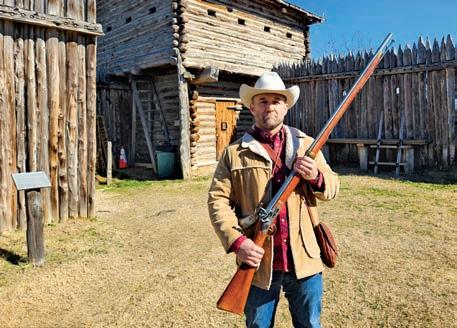
Step into the hard life of frontier Texas at Old Fort Parker
BY CHET GARNER
JUST OUTSIDE THE SMALL TOWN of Groesbeck, east of Waco, tucked between cow pastures and the Navasota River, stands an old wooden fort that feels less like a destination and more like the stories of Jamestown and Plymouth Rock.
The spiked, wooden palisades of Old Fort Parker rise from the prairie grass like a movie set, but this isn’t Hollywood—it’s the site of a pivotal and tragic moment. You can almost hear the creak of the gate and the echo of gunfire that changed the course of a family and history.
In 1833, the fort was strategically built beside a natural spring with fertile soil in every direction. The settlers, led by brothers James and Silas Parker, had come to claim a piece of the frontier and begin a new life. However, in May 1836 their dream became a nightmare when a coalition of Native American warriors attacked the fort, killing several settlers and abducting 9-year-old Cynthia Ann Parker, her younger brother and three others.
The fort was abandoned, but over the next 24 years Cynthia assimilated into the Comanche tribe and married Chief Peta Nocona, becoming the mother of famed Chief Quanah Parker—the last great Comanche war leader.
Today, the replica fort, built in the 1930s and renovated in 1967, stands as a stark reminder of life nearly 200 years ago. It feels like a living time capsule, especially on special weekends when it’s full of reenactors showing visitors how to do everything from blacksmithing to shucking corn.
You can wander through the cabins, peek through the rifle lookouts and imagine the fort bustling with frontier life. There’s even a small museum detailing the Parker family saga, complete with artifacts and old maps. Here, among the oak trees and whispering prairie wind, history feels close enough to touch. D
ABOVE Chet pulls guard duty, at least for this photo, at Old Fort Parker outside Groesbeck.
Watch the video on our website as Chet visits the replica of Fort Parker. And find all of his Texplorations on The Daytripper on PBS.
Call ahead or check an event’s website for scheduling details, and check our website for many more upcoming events.
10
11
Fort Worth [9–12] Late Nite Catechism, (817) 212-4280, www.basshall.com
Richardson The Boho Market, info@thebohomarket.com, thebohomarket.com
Canton [10–11] Tractor Show & Swap Meet, (214) 837-8861, lonestarihc25.org/canton
Comfort Why Old Places Matter Tour, (830) 995-2641, comfortheritagefoundation.com
Jacksonville Flamin’ J BBQ Fest, jvillecpaaa@gmail.com, facebook.com/jvillecpaaa
Levelland Centennial Celebration, (806) 894-0113, bit.ly/levellandcentennial
Schulenburg Sausagefest, (979) 743-4514, schulenburg sausagefest.com
Spicewood Asleep at the Wheel, (512) 264-2820, spicewoodarts.org
12
Fredericksburg Friends of Gillespie County Country Schools BBQ Meal and Raffle, (830) 685-3321, historicschools.org
17
18
Granbury [17–19] North Texas Gourd Festival, texasgourdsociety@hotmail.com, texasgourdsociety.org
Burton Cotton Gin Festival, (979) 289-3378, cottonginmuseum.org

Art, Herb & Wine Festival Bertram, April 25–26 (512) 882-2992
bertramchamber.com
At this festival northwest of Austin, attendees can enjoy artisan and herbal vendors, free seminars and demonstrations, Texas wine, food trucks, craft beer, an artist showcase, a 5K run, and live music throughout the weekend. Children can participate in the art zone.


We pick events for the magazine directly from TexasCoopPower.com. Submit your July event by May 1, and it just might be featured in this calendar.





In the heart of the Texas Hill Country visit 17 historic one-room schools built between 1847 and 1936 by following the120 mile Gillespie County Country Schools Driving Trail through the scenic Fredericksburg,Texas countryside. Restor ing and Preserv ing Our History




APRIL EVENTS CONTINUED
24


25
Kerrville [24–June 6] Roundup Exhibition and Sale, (830) 896-2553, museumofwesternart.com
Avinger Wildflower Trails, (903) 562-2222, avingertxchamber.org
Huntsville Gen. Sam Houston Day, (936) 294-1832, samhoustonmemorial museum.com
Lakehills Medina Lake Volunteer Fire Department BBQ, (830) 751-2525, face book.com/medinalakevfd
Temple [25–26] Texas State Button Society Spring Show and Sale, (325) 247-4955, texas statebuttonsociety.com
Have your “Go Kit” packed and ready. Create defensible space around your home. Identify two evacuation routes incase one becomes compromised.
Communicate with local officials and learn how they will send emergency notifications.

1
2
Gun Barrel City [1–2] Gun Barrel Quilters Guild Quilt Show, (817) 896-7891, gunbarrelquiltersguild.org
Sargent [1–2] Volunteer Fire & Rescue BBQ Cookoff, (281) 794-4933, facebook.com/sargent volunteerfiredept
Vernon Doan’s May Picnic, (214) 244-1883, doansmaypicnic.com
Willow City Volunteer Fire & Rescue Department Benefit, (830) 685-3376, willowcityfd.com


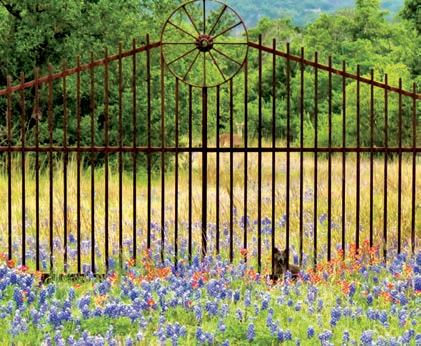
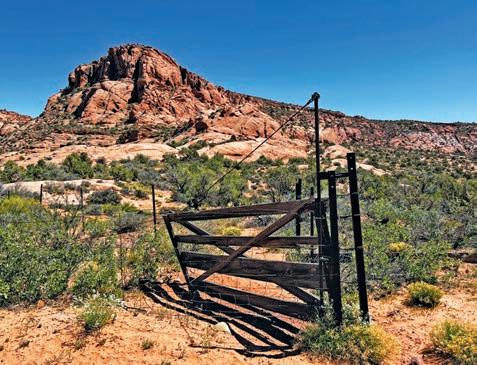
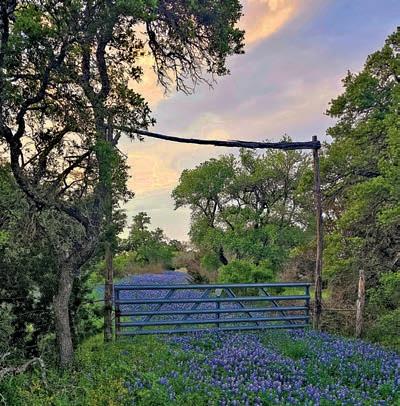
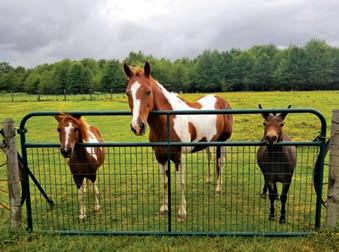
It’s been said that the creaking gate hangs the longest, and these readers made themselves heard. Whether they’re keeping someone in or out, Texas gates are as unique as the folks behind them. So take a detour with us this month and, as the dust settles, let’s see what awaits us at the gates.
CURATED BY GRACE FULTZ
See Focus on Texas on our website for many more Gates photos from readers.
1 JODY SEDGWICK PEDERNALES EC
“Springtime at a Hill Country gate. Flowers, deer and a kitty.”
2 DEANNE LAUMER PEDERNALES EC
“Bluebonnets on a back road.”
3 LISA WOODS UNITED COOPERATIVE SERVICES
“Next to the Steel Bender off-road trail in Moab, Utah.”
4 GAYLEE WATSON FARMERS EC
“Two paints and a mule waiting at the gate for treats.”

The perfect spring workout awaits in the Hill Country
BY BOB MCCULLOUGH ILLUSTRATION BY DAVE URBAN
A RANGE OF CELEBRITIES market workout routines that promise to burn calories and slow the aging process—for a price.
I’m certainly no celebrity, but as a ranch resident of the Hill Country with its ubiquitous, evergreen Ashe juniper (or mountain cedar), I myself have developed a workout that delivers heart-pumpin’, muscle-buildin’, weight-sheddin’ results at no charge.
Cedar is an easy enemy. The prolific pollen producer native to the Edwards Plateau punishes seasonal allergy sufferers with “cedar fever.” It’s also incredibly thirsty, soaking up scarce rainfall to the detriment of other vegetation.
Cutting it back is like peeling an onion. You keep removing the trees’ relatively soft wooden outgrowths—or layers, if you will—until you achieve the desired
clearance for trails, pathways and roads. Hand-to-branch combat fosters fitness as well as fulfillment. To take advantage of the Ashe-Kickin’ Workout, I have some field-tested recommendations.
Check, please! Cedar-slaying can be strenuous, so check with your doctor and get the OK before beginning any exercise regimen.
Rags to britches: Attire yourself in the oldest, toughest, raggediest clothing in your closet because this workout surely will damage whatever you’re wearing.
Covering all the spaces: Speaking of attire, opt for long sleeves and heavy pants or jeans to minimize cuts and scratches. And wear sunscreen and a wide-brimmed hat to prevent sunburns. Thick leather gloves complete the ensemble.
Make no mis-snake: Cedar survives in rugged territory where snakes also thrive, so boots should be worn for extra protection.
Bug off: Likewise, bugs and other creepy crawlers could cross your path. Spraying repellent on pants, gloves or tops of boots helps.
The cutting edges: The workout requires relatively inexpensive tools— 21-inch bow saws for cuts up to 5 inches and 31-inch lopping shears for overhead branches. Chain saws are strictly prohibited in the interest of maximizing fitness!
Bind the wounds: Now and then, an oak tree will get in the way, and oak trimming should be followed immediately with pruning paint to prevent the spread of deadly oak wilt.
Muscles in knead: After a vigorous session with cedar, the ultimate reward is an appointment with a massage therapist or a sympathetic spouse who can soothe away any soreness.
Through sawing, stretching, stooping and bending, the Ashe-Kickin’ Workout offers an inexpensive way to stay fit throughout the calendar year. So if you’re looking for me, chances are, I’m just cuttin’ up in the great outdoors. D

Welcome to a great vacation at an affordable price. Caravan’s fully guided tours feature complete sightseeing, fascinating itineraries, and professional Tour Directors. Your Costa Rica tour is fully guided and includes all meals, all hotels, and all activities. See exotic birds, view volcanoes, soak in hot springs, hike in a jungle rainforest, enjoy a wildlife river cruise, and stay three nights at one of the most beautiful beaches in Costa Rica.
Discover why smart shoppers and experienced travelers have chosen Caravan Tours since 1952. Caravan includes all activities listed in the tour itinerary. Caravan does not sell any optional activities which can cost hundreds of extra dollars. Caravan gives you great vacations at prices much lower than you can nd anywhere.
“Brilliant, Affordable Pricing” Arthur Frommer, Travel Editor

Over 400,000 Texans chose Ownwell last year
In 2025, Ownwell filed property tax protests for more than 400,000 Texans. File before the May 15 deadline and keep more of your hard-earned money. See what you could save at Ownwell.com/start3