FARM FARM





mall Farm, Big Harvest B14





Oversupply and trade issues drive down dry bean prices for Ontario growers
The 2026 Ontario Bean Growers annual general meeting was held in Stratford last month, where dry bean growers from across the region came together to discuss growing concerns around exports, particularly trade, transportation and domestic demand.
Alvin Klassen of Dry Bean World outlined current challenges as Canada continues to navigate overproduction of black beans and ongoing tariff changes that are limiting trade and creating uncertainty for growers.
“In the last five years, we’ve experienced several severe ups and downs in commercial markets related to supply and demand, with the influence of producer and dealer pricing,” said Klassen.
Despite steady global demand for dry beans, many growers are finding it harder to turn a profit.
Prices across North America have dropped sharply in recent years — in some cases by nearly half — while input costs such as fuel and fertilizer have remained high.
“Throughout North America, we are now sitting where bean prices are half of what they were three years ago, and the cost of production hasn’t gone down at all,” said Klassen. “In fact, seed pricing hasn’t gone down, and it’s making it very difficult to sustain production.”
The issue, Klassen said, comes down to supply and demand. A strong harvest has left a surplus of beans in storage — known in the industry as “carryover” — giving buyers less incentive to pay higher prices.
At the same time, export challenges and limited processing options in Canada are making it harder for farmers to move their crops efficiently, adding further pressure to an already strained market.

Jeff English of Pulse Canada said the organization is working to increase domestic consumption through its “Love Canadian Beans” campaign, which aims to raise awareness that many beans sold in stores are grown in Canada and encourage more people to include them in their diets.
“It’s not about telling people how to eat, but showing them how beans can be incorporated into everyday foods we already know and love,” said English. “It’s about giving some familiarity to supporting what we see as a great, sustainably grown Canadian crop.”
English added that advancements in bean processing technology could also help grow the domestic market.
“Now that we have companies extracting proteins and starches from pulse crops, we should have an opportunity to put more protein into different foods — not necessarily calling them beans, but using them as a high-protein ingredient,” he said.
Bill Rosenberg, parliamentary assistant to the minister of agriculture, food and agribusiness, also addressed growers, highlighting the significant role Ontario’s bean producers play in the province’s agri-food sector.
“Our agri-food sector now generates around $52 billion in annual GDP,” he said. “This is why Ontario is known around the world for safe, nutritious and delicious food.
“Eighty to 90 per cent of the beans grown here in Ontario are exported around the world, and that is something to be proud of,” he added.
Overall, the message to growers was clear: while global demand is growing, the industry must navigate trade instability, supply chain risks and the need to build stronger domestic markets to remain competitive.


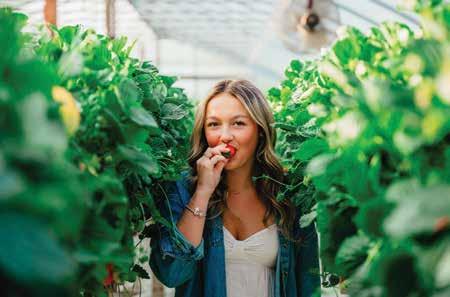

Love Canadian Beans promotional imagery showcases the versatility and health benefits of beans, part of an ongoing effort to encourage Canadians to incorporate more homegrown pulses into everyday meals.
AMANDA NELSON Gazette Reporter
(LOVE CANADIAN BEANS FACEBOOK IMAGES)
UTRCA programs help farmers invest in soil health, water quality and long-term sustainability
GALEN SIMMONS Regional Editor
Farmers across Perth, Oxford and surrounding counties are finding new ways to strengthen their land and protect the environment with support from a range of funding programs offered by the Upper Thames River Conservation Authority (UTRCA).
Through initiatives like the Phosphorus Reduction Program, Oxford Clean Water Program, Resilient Agricultural Landscape Program and UTRCA’s Tree Planting Program, farmers and rural landowners can access financial and technical support for projects that improve soil health, reduce runoff and enhance the long-term sustainability of their operations.
“The Upper Thames River Conservation Authority offers a range of funding programs designed to support farmers and landowners who are working to protect soil, water and the long-term health of the landscape,” said UTRCA stewardship outreach specialist Shannon Zylstra.
Those programs help offset costs for a wide variety of on-farm practices, including cover crops, reduced tillage, nutrient management, erosion control structures, windbreaks, wetland creation and tree planting. In some cases, multiple
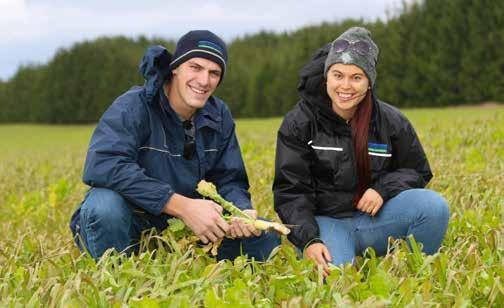
programs can be combined to further reduce the financial burden on farmers.
“Agricultural lands play a vital role in the health of our watershed, and farmers are key partners in protecting the land and water we depend on,” Zylstra said. “These programs recognize that farmers are already strong stewards of the land and provide additional support to help them
continue that work.”
Beyond funding, UTRCA staff also provide technical assistance, helping landowners plan projects, navigate applications and connect with other available resources.
“This includes financial assistance through cost sharing, as well as technical support,” Zylstra said. “In many cases,

Our specialized team delivers reliable, high-quality electrical installation services across agricultural, residential and commercial projects, each handled with the skill and precision it demands.
At Jantzi Electric, we’re committed to supporting our community while building lasting partnerships that help local businesses grow.
staff can help with project planning, design recommendations and connecting landowners with other available programs and resources.”
Across the region, a number of farm families are already seeing the benefits of these programs in action.
In Middlesex County, Bill and Carrie Irwin planted a double-row windbreak along the edge of their property using support from UTRCA’s tree planting program. The project included 720 trees and serves as a natural buffer to help reduce soil erosion and protect crops from wind.
In Oxford County, Steve and Cobi Sauder have taken a comprehensive approach to soil conservation over several decades. In addition to adopting no-till and cover cropping practices, they have installed erosion-control structures such as berms, terraces and grassed waterways, along with extensive tree planting to support long-term soil and water management.
“We’re trying to be stewards of the land in terms of water quality as well as improving soil health,” said Steve Sauder in a video posted to the UTRCA website about the project. “We put in this berm with the Upper Thames River Conservation Authority’s Clean Water Program to try and alleviate this problem. What I can say
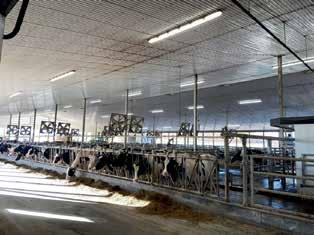

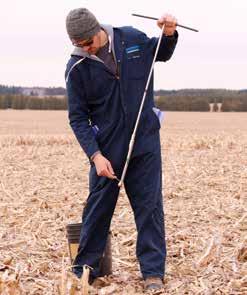
Upper Thames River Conservation Authority (UTRCA) stewardship and land-use planner Michael Funk and manager of integrated watershed management Tatianna Lozier measure water quality as part of a cover-crop project funded with support from the UTRCA.
(PHOTOS COURTESY OF UPPER THAMES RIVER CONSERVATION AUTHORITY)
after seven years is it’s been successful.
“
… When we initially put this berm in, I was concerned about designing it properly, and I was pleased that the Upper Thames River Conservation Authority provided engineering services free of charge that allowed us to get a good design that we were confident in.”
Meanwhile, in Zorra Township, Katherine and Jim Grieve transformed a low-lying, unproductive area of their farm into a thriving wetland. The project now provides habitat for wildlife while also improving water quality on the property.
“This area of the field has been
unproductive for years,” said UTRCA manager of integrated watershed management Tatianna Lozier in a video shot after construction of the wetland in 2017. “It’s wet following rainfall events, and there’s also standing water following significant events. … It looks great. In addition to the trees and shrubs we planted, we added 700 aquatic plugs that will spread and fill in the perimeter of the wetland. There is also vegetation that has come back and … it’s utilized now by several bird species and different insects.
“ … You’re creating both terrestrial and aquatic habitat. There’s also a water-quality function. The water (in the wetland) is from surface runoff, tile drainage and the rainfall itself. As the water is held in the wetland, the sediment will settle to the bottom and any nutrients associated with that sediment. With the vegetation, you have a nutrient-cycling benefit, and the water in the pond will be able to slowly infiltrate as well as be lost to evaporation. … When there is a lot of water, we do have a standpipe so that water can be slowly released.”
At Hoenhorst Farms in Innerkip, dairy farmer Cox Wensink implemented a slag filter system to treat silage runoff, helping remove excess nutrients before water leaves the farm. A recent upgrade to the system has further improved its perfor mance and longevity.
Zylstra said projects like these demon strate how environmental stewardship can also support farm productivity.
“Many of the practices support ed through these programs help keep
nutrients and soil on the field where they are needed, rather than being lost through runoff into local waterways,” she said.
For farmers, the programs also re
application process is straightforward and accessible, recognizing the time pressures farmers face throughout the year.
Farmers and landowners interested in



With support from the UTRCA, Oxford County farmers Steve and Cobi Sauder have been utilizing cover crops and reduced tillage, planted more than 6,500 trees, and have installed several erosion-control structures on their property.
A UTRCA technician conducts cover-crop trails and takes soil samples in a local farm field.
Tapping into tradition on the Wettlaufer Farm
his neighbour and cousin Leonard Wettlaufer during syrup season.
For Carman and Debbie Wettlaufer, life has always been rooted in the Tavistock area. Both lifelong residents, they have a story closely tied to the land, family traditions, and a deep appreciation for rural life.
Carman grew up on the family farm located on Line 29, northwest of Tavistock, while Debbie was raised in the village itself. Today, the couple continues to live and work on the same farm that has been part of Carman’s family for generations.
The property was first settled in 1844 by Jost and Anna Schaefer, Carman’s great-great-grandparents, on his mother’s side. The Schaefer's cleared most of the trees from the property, leaving 15 acres of bush, which has provided firewood and maple syrup for the family over the years.
A small wooden house was originally built behind the location where the barn now stands. In 1857, a two-storey fieldstone home was constructed on the property, the house that the Wettlaufer family calls home.
In 1944, the property was recognized as a Century Farm. The following year, Carman’s parents, Lorne and Marie Wettlaufer, purchased the farm from Marie’s father, ensuring that the land remained in the family.
Carman purchased the farm in 1981. The following year, he and Debbie were married at Trinity Lutheran Church in Sebastopol and began building their life together on the farm where they raised their three daughters, Sarah, Allissa and Shelby.
Previous generations of the Wettlaufer family had produced maple syrup mainly for their own use. Carman's grandparents had a printed label for their bottles that even included a licence number, suggesting that they produced enough maple syrup to sell commercially. Carman’s parents made syrup occasionally over the years, and Carman developed an interest in the process, often helping
Shortly after they were married, Carman and Debbie decided to try their hand at making maple syrup. Carman gathered the tin sap buckets and spiles that had been stored in the drive shed and began tapping trees.
In the early years, all the sap was collected by hand, a labour-intensive job that meant walking through the bush to empty every bucket. Carman often took their daughters along during syrup season. “I remember taking the girls to the bush and rushing to empty the buckets before a thunderstorm so the buckets wouldn’t get rain in them,” he said.
While building their maple syrup operation, both Carman and Debbie also worked off the farm. Carman first worked in construction, then at Bright Cheese House, and later at Tavistock Cheese, now Saputo, where he trained as a cheesemaker before retiring about 10 years ago to farm full-time.
Debbie began working at PeopleCare in Tavistock while she was in public school. When their children were young, she worked part-time as reception and office manager, later working fulltime, advancing through several positions. She currently serves as the executive director and recently celebrated an impressive milestone of 50 years working at PeopleCare.
In 1988, Carman built a new sugar shack and began producing maple syrup commercially, tapping around 750 trees on the property. That same year, he installed a pipeline system that allowed sap to flow directly to a gathering container at the sugar shack, saving time and labour and making it possible to expand production. Currently they have 1100 taps on 900 trees.
Maple syrup production depends heavily on the weather. Ideal conditions occur when nighttime temperatures drop to about –2 or –3 degrees Celsius and daytime temperatures rise to 2 or 3 degrees above zero, creating the pressure changes







DIANE DANEN Gazette Correspondent
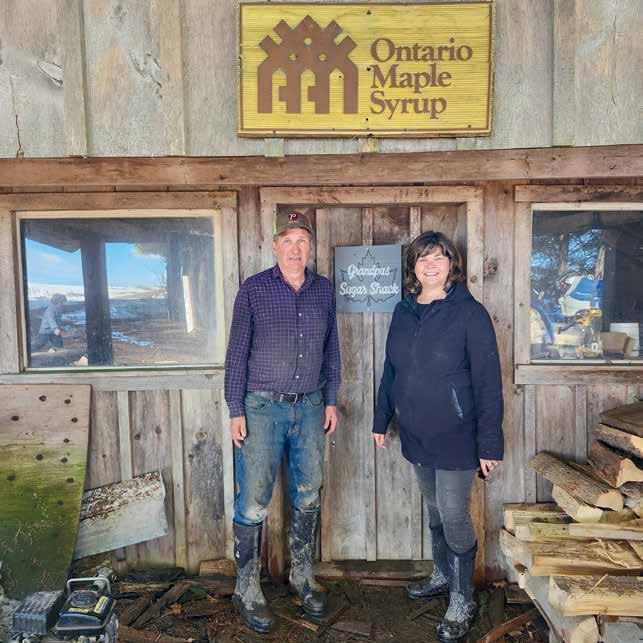
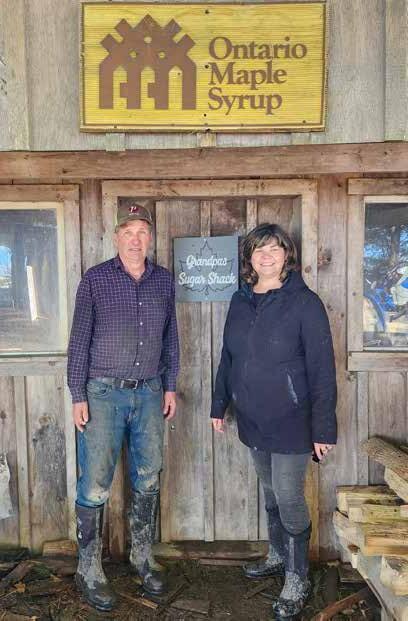
Carman and Debbie Wettlaufer stand outside their sugar shack on the family farm near Tavistock, where generations of tradition and hard work continue to flow as sweetly as the maple syrup they produce each spring.
(DIANE DANEN PHOTO)
Continued on page B7
in the trees that cause sap to flow. Typically, one tap can yield about one litre of syrup over the season, although results vary widely depending on the weather. A maple tree must be at least 12 inches in diameter before it can be tapped, while larger trees can support two taps.
At the end of each season, the spiles are removed so the holes can heal naturally, and new holes are drilled a few inches away the following year. The pipeline system remains on the trees year-round, but at the end of the season, the tubing is flushed and sterilized. While the system saves a great deal of labour when collecting sap, it also requires regular maintenance, as lines can be damaged by falling branches or animals.
In recent years, Carman added a reverse osmosis system. The system removes a portion of the water from the sap before boiling, making the process more efficient. Before installing the equipment, Carman could produce about 60 litres of syrup per day. With the new system, he can now produce around 100 litres in the same amount of time.
Despite the technological improvements, Carman still boils the sap using a traditional woodfired evaporator. The reverse osmosis system reduces the amount of boiling required, which means less firewood is needed, but Carman still spends considerable time cutting and preparing wood for the season.
Turning sap into syrup requires

patience. Maple sap contains only about three per cent sugar and must be boiled until it reaches a temperature of about 104 degrees Celsius. At that point the syrup reaches roughly 66 per cent sugar content, the perfect balance that produces the rich flavour maple syrup is known for.
Once the syrup reaches the proper temperature and sugar content, it is double-filtered, reheated in the finishing pan and poured into jugs and sealed.
All maple syrup produced today is graded as Canada Grade A, with different colour classifications that reflect flavour intensity. Early in the season, sap contains a higher sugar content, meaning it may take only about 30 litres of sap to produce one litre of syrup. Later in the season, it can take closer to 80 litres. Minerals in the sap contribute to the unique flavour of the syrup. Lighter syrup tends to have a delicate taste, while darker syrup has a stronger flavour, often preferred for baking.
During syrup season, the sugar shack is often a busy gathering place. Friends, neighbours and family members often walk back to the sugar shack to visit while Carman tends the evaporator.
As a special treat, Debbie will make maple candy back at the sugar shack by boiling the sap and pouring it into moulds. Her maple syrup tarts are a favourite treat year-round.
Carman supplies maple syrup to family members and maintains
GOOD NEWS, WE’RE EXPANDING OUR SERVICES!
In response to growing demand for reliable service, we’re proud to offer complete property services and management.
Our new services include:
Weekly lawn mowing and maintenance
Yard cleanup and debris removal
Removal of sheds, fencing, playgrounds and unwanted structures
Flower bed and rock garden removal
Estate property cleanups for upcoming sales
Exterior home and deck power washing
Basement and garage cleanouts
Assistance with bylaw property cleanup orders
Skid steer services (regrading, backfilling, brush mowing, post hole augering and soil removal)
Locally grown tree sales (Grown by KandT Farms)
We will continue to provide our full range of professional tree services, including removals, pruning, stump grinding, and lawn repair.
Proudly serving our community with quality, care and local expertise.
CALL TOM to chat about how we can help 519-580-6255 or treefellar@netflash.net
a loyal list of regular customers in the Tavistock area. He also sells bulk syrup to Jakeman’s Maple Syrup.
While maple syrup production remains an important part of life on the farm, Carman also works the land, rotating corn, beans and wheat.
A large garden is planted each spring. Strawberries, raspberries and blueberries are grown, along with a small orchard that continues to provide fruit for the family to enjoy.
Carman has spent his lifetime planting trees on the property. Today, he continues the tradition by ordering about 200 trees each year and planting them with his grandchildren. Some of the trees will eventually be used as Christmas trees, making the experience even more meaningful for the younger generation.
Through decades of hard work and dedication, Carman and Debbie have transformed the property into a beautiful home for their family. It has been the setting for countless neighbourhood get-togethers and family gatherings, including the weddings of their two oldest daughters.
Today, they enjoy spending time with their grandchildren on the farm, taking walks through the bush, picking berries from the garden and spending time together in the sugar shack during maple syrup season.
For the Wettlaufer family, their farm is a place where history, tradition and family continue to grow together.
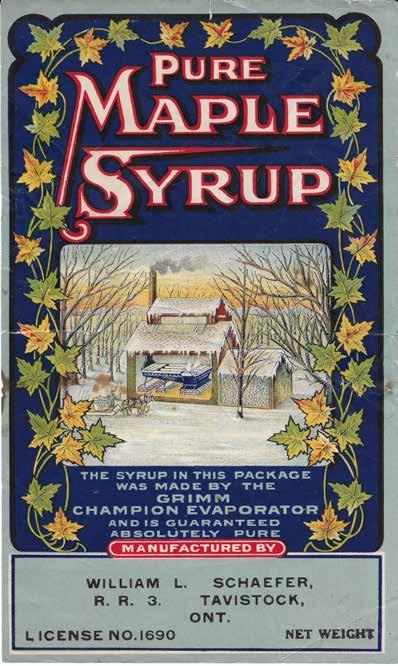
Vintage maple syrup labels used by William Schaefer reflect the Wettlaufer family’s early roots in commercial syrup production, a tradition that continues on the farm today.
(CONTRIBUTED
Where’s the Canadian beef? Cost of getting into the business or expanding creating major roadblock
LEE GRIFFI Gazette Reporter
Finding the best cuts of Ontario beef in grocery stores has become a recent challenge, although Australian and now New Zealand cows seem to have taken over a good chunk of the market, and at a lower price.
“Unlike the rest of Canada, Ontario is a net importer of beef to meet the demand of our domestic consumers,” explained Beef Farmers of Ontario President Jason Leblond, who has been on the organization’s board for eight years.
“Since before I started, we have been trying to increase the herd size to meet the demand for our feedlot sector.”
The biggest reason the beef industry can’t increase its capacity is the cost of production, which Leblond said makes it difficult for new players to get involved.
“The cost of land, input costs, and strong competition from imported beef and even from other protein sources. We are always working hard to meet consumer demand to the best of our ability,” added Leblond.
“For the cow/calf producers, it might be capital investment, it could be new entrants trying to get their feet under them to get additional cows. The cost of
replacement cattle is near the highest they have ever been.”
Leblond said the cost of purchasing a cow is nearly $2,000 higher this year than it was about three years ago. He added that everything needed to produce cows costs more.
“The price of diesel fuel, tractors and other equipment has increased substantially,” he said. “But we are starting to see numbers where we are maybe more so in the black than what we are so used to seeing in the red all the time.”
Leblond has 35 cattle on his farm and admitted he can’t quit his day job. He added that there may be an increase in farmers holding onto female cows for breeding purposes of about two per cent, which will help the industry down the road.
“There are some good signs and some hope, and we hope those signs keep going in the right direction for the next two or three years.”
The Beef Farmers of Ontario are actively lobbying the provincial government to create improved loan guarantee programs to help producers purchase breeders.
“The government is the guarantor for loans given by the private sector to producers to purchase the breeding stock, which gets more cattle into the food
chain. The breeding process can take up to three years to reach the processing stage for those fantastic Ontario steaks,” explained Leblond.
Many local, small-town butchers are not suffering from a shortage of beef, including the best cuts such as tenderloin, striploin, or ribeye, mainly because they have a steady supply from nearby local beef producers. Leblond said part of his association’s job is to tell consumers where they can purchase Ontario beef. That includes www.ontbeef.ca
“It’s like a product locator. So, your butcher shop could have a profile on the site, and when someone is looking for beef in Oxford or any other county, they would type that in, and stores would pop up.”
Imported beef from Australia, New Zealand, and even Mexico is cheaper than its Ontario counterparts. Leblond attributes that to something simple — lower production costs.
“Australia has a few different ways of growing its beef,” said Lebold. “The product they bring here is grass-fed and lean, factory beef trim for ground beef and hamburger. Another version is shortfed, essentially an animal that is fed for 90 to 120 days. That gets it to AA quality beef.”
Leblond added that Australia is heavily invested in the Wagyu beef industry,
At South Easthope Mutual, our policyholders are our members. That’s what keeps us strong! Your needs and your goals are our priority. So when you succeed, we succeed.
That’s why a er more than 150 years, South Easthope Mutual is still here for you — today and tomorrow


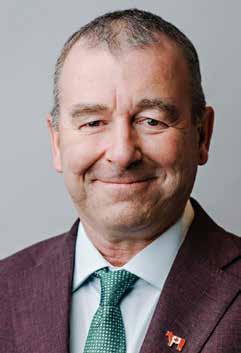
Jason Leblond, president of the Beef Farmers of Ontario, says rising production costs and strong global competition continue to challenge the province’s ability to meet growing demand for locally raised beef.
but the majority of exports go to Japan or Korea, where the breed was originally developed. Leblond added that most Canadian beef is graded AAA, and 40 per cent of the income from calves born on his farm ends up in feedlots across Ontario. The rest is exported, mainly due to the demand for what’s left.
“Forty per cent of the value of that animal goes into the export market. The taste here is for striploin and T-bone steaks, roasts and ribs. There are so many other parts of that animal that end up in export markets to use everything and retain as much value from the product.”
The federal government announced in January it was resuming beef exports to China after a years-long ban that had shut down a major overseas market, helping meet demand for cuts that are less popular domestically.
“For us in Ontario, an expanded market is a good thing, and more options for our processors are a good thing. We always treat these announcements with some degree of wait and see because it takes time for people to make purchases and for the product to get there.”
Leblond said he doesn’t want to lay any blame for the high cost of beef on anything in particular, but did say more than 50 per cent of Canadian beef heads south to the United States.
“The U.S. is also a net importer of beef. We are in a global market, and a lot of factors are at play. I would love to get beef cheaper, but I also want to make sure everyone in our supply chain is making money.”


Teresa Van Raay begins third term with Ontario Federation of Agriculture
DAN ROLPH Gazette Reporter
Teresa Van Raay is looking ahead to three more years of advocacy on behalf of the province’s farmers.
Van Raay, a Dashwood native, was re-elected as an Ontario Federation of Agriculture (OFA) director-at-large in November 2025, beginning her third three-year term with the organization.
Before she was first elected to serve in the OFA, Van Raay was a director with Ontario Pork for 14 years—an experience she described as eye-opening as she got to hear about the issues that farmers in the industry were facing.
“I realized how many more issues there are,” she said. “When you look at taking on the diversity of concerns in all Ontario, it’s daunting.”
Van Raay said some of the most prominent issues facing farmers in Ontario include trade and land use, which she noted is vital to the future of growing food in Canada.
“Once land is asphalted or cemented over, you’re not going to grow too much,” she said. “Getting the word out about how important it is for Canadians to grow our own food, that’s one of my biggest goals.
“The decisions made today affect our futures, and our next generation of farmers,” she added.
When asked why she decided to seek a third term with the federation, Van Raay was clear that there’s still work to do when it comes to advocating on behalf of Ontario’s farmers.
“We’re not done yet,” she said. “It’s a big portfolio, but the people in our industry who are elected to do this, all the ones who I’ve met, are in the positions for the right reasons. They want to make it better for their industry and for the next generations, all because we understand the importance of growing food.”
Van Raay said she’s taking many
lessons from her time as director-at-large so far as she looks ahead to at least three more years of representing farmers. She said networking remains one of the most vital parts of the work.
“One of the things that I love to do is put the right people together,” she said. “That can make a difference.”
Stepping outside the “agricultural bubble” is also important when speaking about issues facing farmers throughout Ontario, according to Van Raay, particularly with those not in the industry who live busy lives and may not be aware of those issues until they start seeing empty grocery store shelves.
“We are such a small population that we’re not getting the news out there,” she said. “If there comes a time that there’s a shortage, then people are going to stand up and be aware. But it might be too late if we haven’t realized the importance of food security in Canada.”
Van Raay said the upcoming municipal elections scheduled for later this year are an important issue that has her attention. With OFA regularly organizing all-candidates meetings for elections, she said it’s important to present the correct questions to those who could be making decisions in council chambers in the future, ensuring they understand their communities, particularly when it comes to land use.
“We don’t want to be collateral damage because no one’s thought about how a decision might affect the farmer,” she said.
Ontario’s recent announcement about the amalgamation of conservation authorities also has Van Raay’s attention. Under the government’s plan, the province’s 36 authorities will be consolidated into nine, removing representation from lower-tier municipalities.
“That’s a big deal,” she said. “One of the things we were really pushing with OFA is to have agricultural representatives.
“From what we did see, that’s not


there. That’s very important to our communities.”
A topic that has been getting more attention, particularly after the COVID-19 pandemic, has been mental health in the agricultural community—an issue that Van Raay said is close to her heart.
“It’s just become okay in the last seven or eight years to talk about it at the farm level,” she said. “When a farmer’s having a bad day, you just can’t take a week off. The pigs still have to be fed, or the crops still have to get planted.”
Speaking to farmers who may be struggling with mental health, Van Raay said Ontario’s Farmer Wellness Initiative and the Guardian Network are programs worth highlighting. The Farmer Wellness Initiative provides mental health counselling to Ontario’s farmers, farm families and employees at no cost.
The Guardian Network is a program driven by volunteers who are trained to
identify those struggling with their mental health in the agricultural community, and Van Raay said she’d personally completed the training to become a guardian in the network.
“It’s a really good program,” Van Raay said. “The more we talk about it, the more it’s okay to talk about it.”
With such a wide range of issues needing attention, Van Raay said OFA’s supporting staff have made the expansive


Teresa Van Raay was re-elected as an Ontario Federation of Agriculture director-at-large in November 2025, starting another three-year term of advocating for Ontario’s farmers.
(CONTRIBUTED PHOTO)
Ontario soybean farmers face price pressure as China shifts buying and Brazil ramps up production
AMANDA NELSON Gazette Reporter
Ontario soybean farmers are watching global trade negotiations closely as uncertainty around exports — particularly to China — adds to price pressure in a market already facing strong global crop supplies.
Brazil is expected to have a record soybean harvest in 2026, a development that analysts say will weigh on prices worldwide.
“There’s forecast to be record production in Brazil, and when there’s strong production, that has downward pressure on price,” said Brian Innes, executive director of Soy Canada. “That’s the first thing to watch for prices in 2026. The second is what happens globally with geopolitics and tariffs.”

Innes said changes in trade relations between major economies — especially the United States and China — can have a direct impact on the prices Canadian farmers receive.
“Due to the Trump administration, tariffs on soybeans have changed,” he said.
“One thing to watch for 2026 is how the situation between the U.S. and China evolves, and how the situation between Canada and China evolves. That can have an impact on price if tariffs change.”
More than 70 per cent of Ontario’s soybean crop is exported, with prices shaped by global demand, particularly from China. While China historically sourced much of its soybeans from the United States, it is increasingly turning to Brazil due to generally lower prices.
The Canadian and U.S. soybean markets are also closely linked through cross-border trade and processing, which could impact prices for Canadian farmers.
“Products flow back and forth across the border,” said Innes. “For example, Ontario soybeans are shipped to Michigan, processed into soybean meal, and then shipped back into Ontario. Soybean meal and soybean oil trade back and forth across the border, and that’s why prices are very linked.”
Soybeans are priced on global benchmarks — particularly U.S. futures markets — meaning Canadian prices move in



step with broader world trends.
“The price that Ontario farmers see is based on what conditions Canada faces when exporting to the world, including China,” said Innes. “In the past, the difference between Michigan and Ontario was largely tied to exchange rates, but now, with global trade disruptions, Canada and the U.S. face different tariffs and different market conditions.”
Despite growing competition from lower-cost producers, Innes said Ontario remains well positioned as a high-quality
soybean supplier.
Ontario is a global leader in identity-preserved and food-grade soybeans, a niche market that allows farmers to compete on quality rather than volume alone.
“We’re living in a time of unprecedented global uncertainty, and if market conditions change for Canadian soybean exports, that will have an impact on price,” said Innes. “But Canadian soybeans have been flowing under strong export conditions for some time, and that has meant strong demand for Ontario soybeans.”


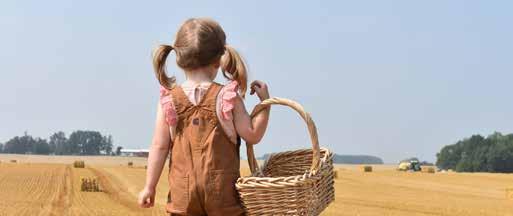
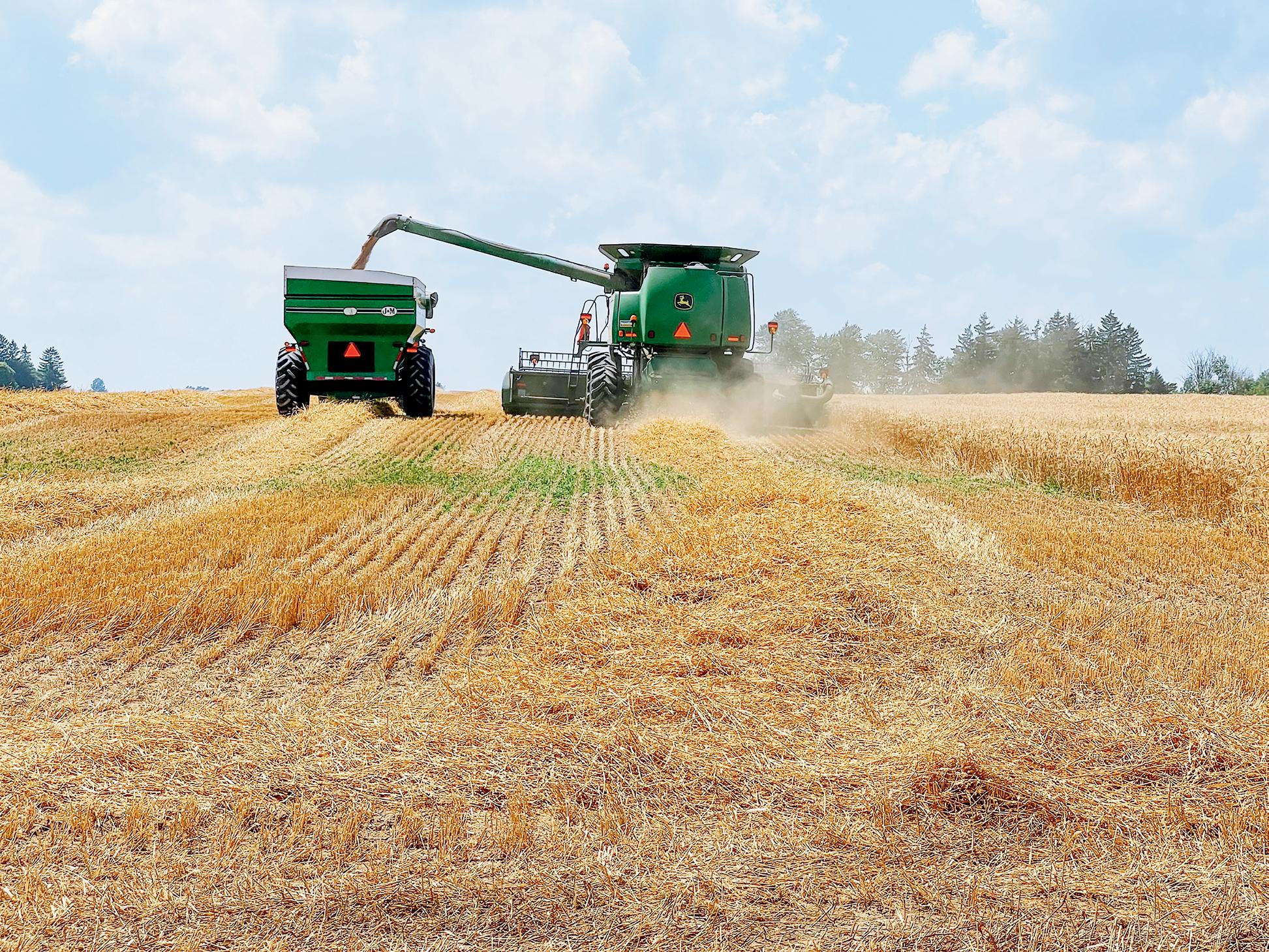
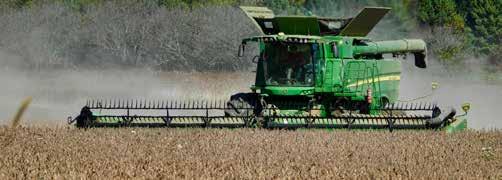
A combine harvests soybeans in an Ontario field, as farmers keep a close eye on global markets and trade uncertainties that continue to influence crop prices.
(GAVIN FREGONA PEXEL PHOTO)
Deep Roots, New Roles: Stephanie Susz on Agriculture in Wilmot Today
SCOTT DUNSTALL Gazette Correspondent
In a region where farmland often tells the story before people do, Stephanie Susz’s story runs deep. Generations deep. With family roots in Waterloo Region stretching back over seven generations, Susz comes from a lineage that helped shape the land itself. From the Snyder family farms near what is now the Westvale subdivision to dairy operations and grain trading, her family history mirrors the evolution of agriculture in this region.
But what makes her perspective compelling is not just where she comes from. It is how she has chosen to stay connected to it.
On paper, she didn’t remain on the farm. She built a career in agricultural finance through several awards and promotions with TD Bank and now serves as vice-president of agricultural and commercial banking at Kindred Credit Union. In practice, it is less a departure and more a continuation in a different form.
“I always felt like I had a foot in both worlds,” she says.
She found it interesting that the family home was in New Hamburg while the farming operations were on the outskirts. Growing up, she worked on the farm, milked cows, drove tractors and showed cattle through 4-H, while also living in town. That dual perspective shaped how she sees agriculture today.
To Stephanie Susz, agriculture is not simply an industry. It is a community. It is built on relationships, trust and a shared understanding of something fundamental. “We are working with the land
and animals to make food to feed people,” she says. “There’s something so foundational about that.”
That grounding is what ultimately pulled her into agricultural banking. A 4-H scholarship led to a summer internship with TD in agricultural lending. What began as an opportunity quickly reframed her understanding of what a career in agriculture could be.
“I didn’t even know that was a career,” she admits.
Farming itself has become harder to enter. The barriers are higher, the capital requirements steeper and the margin for error thinner. Since she grew up, the number of ways to be involved in agriculture has expanded.
Finance, technology, logistics and advisory roles now play a critical part in supporting farmers. It is why Susz encourages young people, including her own children, to look at agriculture not just as a production, but as a broader ecosystem.
That evolution has been accelerated by technology. From robotic milking systems to GPS-guided equipment and data-driven decision-making, modern farms are increasingly run as businesses as much as they are lived as a way of life.
But technology, she says, is a tool, not a replacement.
“It doesn’t replace intuition. It enhances it.”
Her commitment to agriculture extends beyond her professional role. As a leader with the Wilmot Agricultural Society and the New Hamburg Fall Fair, she sees firsthand how much these traditions depend on community involvement.

Volunteers remain the backbone of the fair. While participation has grown in recent years, the need is constant. Not just for hands, but for people who see value in preserving what the fair represents.
“These things don’t happen on their own,” she says. “If you enjoy coming to the fair each year, perhaps think about how you can contribute to ensure its continued success?”
A quieter challenge sits alongside that. Despite being an agricultural fair, there is often limited direct agricultural representation during the event itself. Fewer animals. Fewer demonstrations. Fewer opportunities for people to connect with the source of their food.
It is something she hopes to change, though she understands the realities. Farmers are busy. Liability is a concern. Time is limited. Still, without that connection, something important risks being lost.
Then there is the issue she does not speak about lightly.
Land.
Ontario has been losing approximately 319 acres of farmland per day. At that pace, the long-term implications are difficult to ignore.
“We are already a net importer of food,” she notes, a reality that feels at odds with the quality of farmland in this region.
Closer to home, the proposed land assembly in Wilmot brings that concern into focus. Even setting aside her personal connection, her question remains simple.
Why here?
It is not opposition to development. Growth is part of any healthy community. But when some of the most productive


farmland in the province is on the table, the decision carries weight.
For Susz, this is about more than acres. It is about identity.
She describes driving home and cresting the hill near New Hamburg, where farmland comes into view. That moment signals something deeper than geography. It signals belonging. And it feels like home. To imagine that landscape replaced is not just a visual change. It is a shift in how this community understands itself.
Because agriculture, as Susz sees it, has never been just about the past.
It is about whether communities like ours still recognize its value enough to protect what comes next.
Stephanie Susz, vice-president of agricultural and commercial banking at Kindred Credit Union, draws on deep family roots in Waterloo Region to help support and advocate for the future of agriculture in the community.
(CONTRIBUTED PHOTO)
Farmer mental health matters: Reaching out is not weakness, it’s maintenance
GALEN SIMMONS Regional Editor
Behind the peaceful facade of endless country roads and open fields, many farmers are carrying a
The stress of running a farm business, the isolation of rural life, family and succession pressures, unpredictable weather and volatile markets can all take a serious toll on mental health. And while the stigma around mental health in agriculture may be slowly easing, it has by no means disappeared.
Rev. Matthew Isert Bender, executive director of the Interfaith Counselling Centre in New Hamburg, said one of the first things people need to understand is farmers are not immune to the same mental-health challenges faced by everyone else.
“They’re humans living life like everyone else,” he said. “There’s a bit of the idyllic sense, the rural countryside, that everything is tranquil and peaceful and beautiful. … But they deal with all the issues of stress, anxiety, addictions, relationship struggles. Those things are there.”
In fact, he said some research suggests farmers may be facing those struggles at even higher rates than the general population. He pointed to figures showing 45 per cent of farmers reported high levels of perceived stress, 57 per cent met the classification criteria for anxiety and 35 per cent for depression.
Part of that, he said, comes from the sheer weight of the job.
“Farmers are leading a big business,” he said. “There’s big dollars with quite a few variables you don’t control.”

Those variables can include weather, commodity prices, equipment breakdowns, labour shortages and family dynamics – all while often working from home in relative isolation.
That isolation has changed over time, too. Isert Bender said older, more labour-intensive styles of farming often created natural opportunities for social connection and conversation. Neighbours worked together more often, and those everyday interactions created space to talk about life’s struggles.
“You ended up talking a bit about your relationship, a bit about parenting, a little bit about your own mental health,” he said. “Those are organic places for natural processing of normal life struggles. I don’t think they’re as available now as they once were.”
Today, with larger farms, more automation and fewer day-to-day interactions with neighbours, those social supports often have to be created intentionally.
That is one reason the Interfaith Counselling Centre tries to make itself visible and accessible in the rural community. Founded to provide counselling in a rural setting, ICC offers generalist counselling for people across Wilmot, Wellesley and surrounding rural areas, including farm families. The centre also works to ensure its counsellors understand the realities of rural and agricultural life so they can meet farmers where they are.
“If it’s planting season and a farmer’s really stressed, and the counsellor’s like, ‘Well, you’ve just got to really take your break and shut down’ … they’re not coming back,” Isert Bender said. “You don’t

get it.”
Instead, he said support has to be practical and grounded in the life farmers actually live.
“Can you take at least 20 minutes? Shut the tractor off, eat for 15 minutes and maybe put your head back on your tractor seat for five minutes. Just close your eyes and breathe slowly for five minutes to let your nervous system reset just a wee bit.”
Most importantly, he wants farmers to know struggling does not mean they are weak.
“It’s not a sign of your weakness. It’s a sign of your humanness,” he said. “You’re impacted by things. … And you also don’t have to carry it alone.”
That support can begin with a trusted friend, breakfast with another farmer or a call to a counselling agency or helpline. He says talking about the stress does not make it worse. More often, it is the first step in loosening its grip.
“If you acknowledge it, accept it, name that this is a reality, it often is the first step to starting to reduce the power of it.”
And while he spoke with a bit of that gentle bluntness – the kind of language many farmers may respond to – he was also clear about the stakes.
“If you don’t care for this, it’s going to really mess you up and your relationships,” he said. “The amount of farmers struggling with addiction, the amount of farmers who end up suiciding … this, all of a sudden, is far from a laughable, joking matter.”
For farmers who need help, there are supports available.
Farmer mental-health resources
• Interfaith Counselling Centre: Rural

counselling support based in New Hamburg for Wilmot, Wellesley and surrounding communities. Call 519662-3092; email admin@interfaithcounselling.ca; or visit www.interfaithcounselling.ca.
• Agriculture Wellness Ontario: A free suite of mental-health programs for Ontario’s agriculture community, managed by the Canadian Mental Health Association, Ontario Division. AWO includes the Farmer Wellness Initiative – free individual counselling; the Guardian Network – volunteer suicide-prevention network; and In the Know – mental-health literacy workshop tailored to agriculture. Visit www.agriculturewellnessontario.ca.
• Do More Agriculture Foundation: National non-profit focused on mental health in agriculture. Visit www. domore.ag.
• Farm Credit Canada: Rooted in Strength campaign with resources on stigma, self-care, supporting family members and real farmer stories. 4-h-canada.ca/healthyliving/ mentalhealth
• Ontario Federation of Agriculture: Mental-health resources page including distress supports and ConnexOntario’s 24/7 helpline. Call 1-866-531-2600; or visit ofa.on.ca/ resources/mental-health-resources/.
• 4-H Canada: Mental-health and healthy living resources for youth, families and volunteer leaders. Visit4-h-canada.ca/healthyliving/ mentalhealth.
Green Hart Farms grows local food and a different path for small-scale farming
GALEN SIMMONS Regional Editor
On a quiet, dead-end gravel road just outside New Hamburg, Linda and Kendra Danner are proving a small piece of land can produce a surprisingly large amount of food.
Together, the mother-daughter team run Green Hart Farms, a two-acre vegetable, flower and seedling operation focused on growing fresh produce for local families while keeping the business sustainable –environmentally and financially.
“We have just two acres that we use for the vegetables,” Kendra Danner said. “We have indoor growing space like hoop houses, and we have outdoor growing space, and we do flowers, seedlings and vegetables.”
Green Hart Farms grew out of a need to diversify the family farm. Kendra Danner grew up on the property, which had long operated as a sheep farm under her mother, Linda Danner. But when Kendra Danner turned 18, she began to see vegetables as a way to create another source of income from the land.
“We needed to start something else to bring in some more income, so that’s kind of where the vegetables came out of,” she said.
Before launching the business, Kendra Danner volunteered on a couple of farms to learn how to build that kind of operation. Green Hart started small at a small farmers’ market before growing into a

larger direct-to-consumer business. Over time, Linda Danner became more involved, and the two are now partners in the venture.
While the farm once sold heavily
through farmers’ markets, the business shifted after the COVID19 pandemic toward a community-supported -agriculture-style subscription model, which Green Hart calls its veggie box program. Last year, the farm supplied produce to more than 200 families through weekly or biweekly boxes.
“Our primary business is through our veggie box program,” Kendra Danner said.
Customers sign up at the start of the season, giving the farm more predictable income early in the year when seeds, supplies and soil inputs must be purchased. Then, starting in May, they receive a box of vegetables each week or every other week based on what is being harvested.
“It’s a really good way to get fresh food,” Kendra Danner said.
Most of the farm’s sales now happen online, largely because of its tucked-away location.
“Our location isn’t very good,” she said. “It’s a really small gravel road, so nobody really comes down.”
That privacy can be nice, she added, but not when it comes to putting up a roadside sign to attract customers.
“If you put a road sign on our road, the only people that see it are the milkman and the neighbour.”


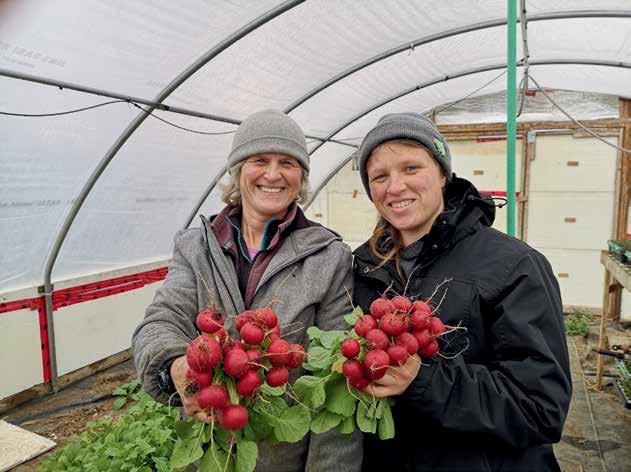
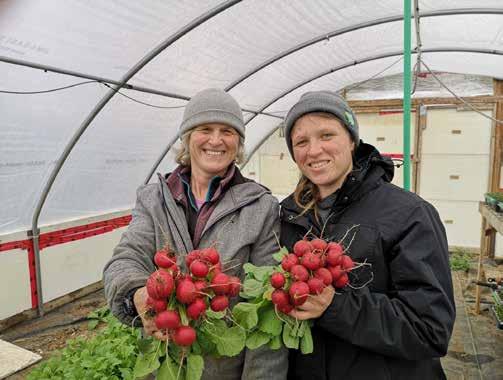
Linda and Kendra Danner show off some recently harvested radishes at Green Hart Farms near New Hamburg.
(PHOTOS COURTESY OF GREEN HART FARMS)
Still, what the farm may lack in drive-by traffic, it makes up for in efficient use of space. Green Hart uses both outdoor fields and hoop houses to maximize production, especially early in the season. Lettuce, green onions and radishes might go into a hoop house first, then tomatoes are planted right into the same space as those earlier crops are finishing.
“You can grow a lot of food in a small space,” Kendra Danner said.
That kind of intensive growing requires careful attention to soil health. The Danners use compost, dried hen manure, worm castings and compost tea to keep the soil productive without synthetic pesticides or fungicides. They also work to build and support a natural environment that encourages natural predators to manage pests, planting perennials and pollinator habitat to support beneficial insects like ladybugs that eat aphids, a pest gardeners and farmers know all too well.
“If you can support the predators, it kind of helps with your pest control,” Kendra Danner said.
That balance is part of the farm’s broader approach to sustainability, though Kendra Danner said sustainability in agriculture has to mean more than just environmental stewardship.
“One of the biggest problems with agriculture is actually financial sustainability,” she said. “In order to take a lot of those initiatives, you need money.”
That reality is one reason Green Hart’s model works. On a farm with 100 acres
available, the Danners use only two to grow vegetables, focusing on intensive production, direct marketing and low overhead instead of investing in costly, large-scale equipment or buildings.
For young people trying to get into farming, Kendra Danner says this kind of model offers a path forward.
“You can actually get started on a smaller amount of land, and you can actually eventually be able to make something,” she said.
“You just don’t need the huge investment up front that you might for cash crop or something.”
For Green Hart Farms, that means growing more than vegetables. It means growing a business rooted in local food, family partnership and a sustainable vision of what the next generation of farming can look like.
To learn more about Green Hart Farms, visit greenhartfarms.ca.

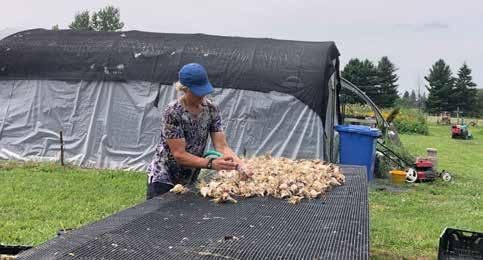
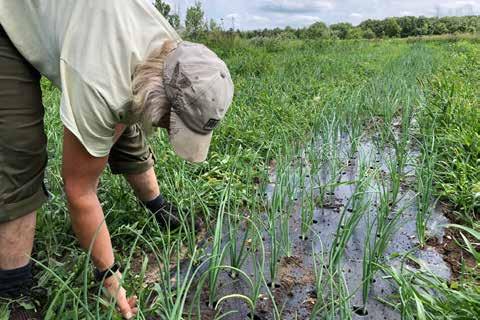



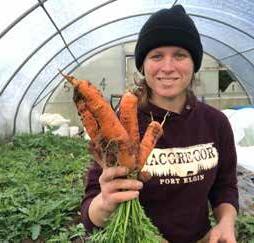
Kendra Danner harvests a bunch of carrots grown in the hoop house.
Linda Danner washes freshly picked garlic on the farm.
Linda Danner weeds the onion patch at Green Hart Farms.
Nuhn Industries expanding again with new Sebringville facility
GARY WEST Gazette Correspondent
One of Perth County’s most progressive manufacturing companies is continuing to grow.
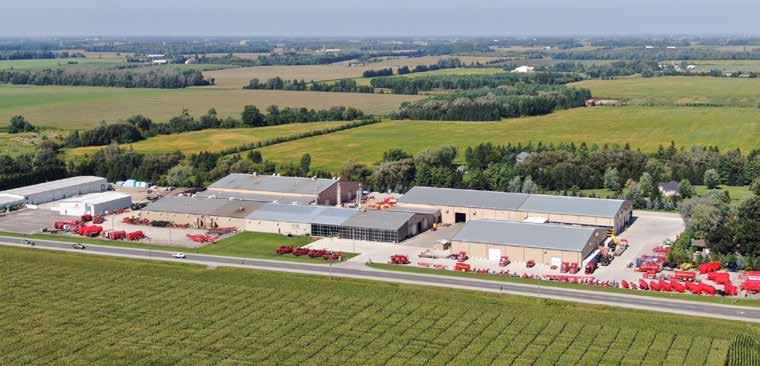
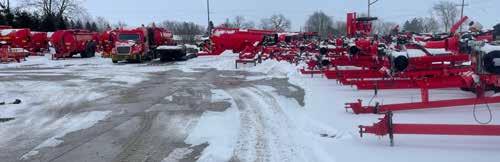
Nuhn Industries, located on the western edge of Sebringville, is in the process of building a new 148,000-square-foot warehouse and assembly plant across the road from its main facility, creating additional space to expand its growing line of manure-handling equipment.
The expansion reflects the company’s continued success both locally and internationally, with its signature red-and-gold equipment recognized across Ontario, Canada, North America and beyond.
The company traces its roots back to 1902, when Simon Nuhn opened a small blacksmith shop in Wartburg, just north of the current Highway 8 location. Nuhn Industries later relocated to Sebringville in 1984, where it has continued to grow into a global manufacturer.
Today, the company produces between 200 and 300 manure tanks each year, along with hundreds of manure pumps, lagoon crawlers and alley manure vacuums.
Speaking last week, Nuhn Industries vice president Ian Nuhn said innovation continues to drive the company’s growth.
Nuhn was the first manufacturer to design and produce manure crawlers used to mix and agitate large manure lagoons, with more than 800 units now in operation worldwide.
The company’s newest product – a self-propelled manure vacuum designed for large, free-stall barns – has also gained strong traction in the market. According to Nuhn, the company is currently manufacturing and selling approximately one unit per week to customers around the world.
Nuhn Industries exports the majority
of its products with about 60 per cent of equipment destined for the United States, 30 per cent remaining in Canada and the remaining 10 per cent shipped internationally. Its customer base is largely made up of



Nuhn Industries in Sebringville continues to expand as one of Ontario’s fastest-growing agricultural equipment manufacturers.
(IAN NUHN PHOTO)
dairy operations, accounting for about 60 per cent of sales, followed by hog farms at 40 per cent and beef operations at roughly 10 per cent.
In addition to manufacturing, the company maintains strong connections with the agricultural community through farm and dairy shows, including the upcoming Canadian Dairy Expo in Stratford on April 1 and 2.
As the company continues to expand, it
also remains an important employer in the region, with plans to grow its workforce to approximately 250 employees while contributing to Perth County’s economy.
The business remains family-operated, with Ian Nuhn working alongside his father, Dennis Nuhn – a member of the Perth County Agricultural Wall of Fame –as well as his mother Marilyn Nuhn, who oversees human resources, and his wife, Linda Nuhn, and their two daughters.
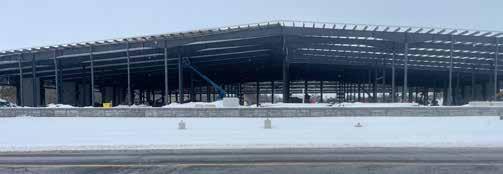





Construction is underway on a new 148,000-square-foot assembly and warehouse facility at Nuhn Industries. The new building will feature 18 12-metric-tonne bridge cranes and floor scales to support loading for the company’s fleet of transport trucks.
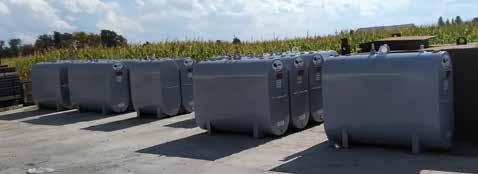
A portion of Nuhn Industries’ inventory of manure-handling equipment, which is distributed to customers locally and around the world.
(GARY WEST PHOTO)
Buckthorn: A prickly problem
In the late 19th century, Ontario farmers thought fondly of common buckthorn (Rhamnus cathartica), a small, shrubby tree brought here from its native range in Europe and Asia.
It grows quickly, forming dense thickets that make excellent windbreaks and hedgerows. As an added benefit, it was considered medicine for various conditions including constipation and rheumatism. As farming spread throughout Ontario, so did buckthorn, framing fields throughout the province.
In the 21st century, buckthorn is known as one of the most widespread and troublesome plants on the landscape. Able to thrive in sun or shade and a wide range of soils, it’s now found in woodlots, hydro corridors and along roadsides and riverbanks across all of southern Ontario. Whether you're driving a sideroad or wandering your local trails, there's likely a buckthorn in sight both ahead and behind you.
The problems with buckthorn are plentiful. Classified as a noxious weed under Ontario’s Weed Control Act, our farmers are probably aware of the agricultural issues. Over winter, buckthorns host the soybean aphid (Aphis glycines matsumura), an invasive insect that feeds on the crop, reducing yields. It also hosts the fungi that causes oat crown rust (Puccinia coronata corda. f. sp. avenae) and barley crown rust (Puccinia coronata var. hordei), which cause serious damage to
Invasive Species Centre recently estimated could be as high as $3.6 billion each year in Ontario.


Buckthorn's impact on our natural world is more severe. As is the case with many plants introduced from abroad, buckthorn is of little ecological value to local insects and wildlife. Deer, for example, avoid browsing buckthorn in favour of just about anything else. This puts additional pressures on other food sources, reducing opportunities for those species to spread while more buckthorn fills the void. On the flip side, many of our most common birds, like American robins (Turdus migratorius) and cedar waxwings (Bombycilla cedrorum), will feed on buckthorn berries. Unfortunately, these provide them little nutrition and have a notable laxative effect. The birds fly away full but poorly nourished and quickly pass the seeds elsewhere, furthering the spread of buckthorn.
Once buckthorn has taken root, it's likely to form dense thickets with alarming speed. The shade produced can severely limit nearby plants’ access to sunlight. For all but their most shade-loving neighbours, this is likely a kiss of death.
Buckthorn's impact on soil is just as vicious. Its
leaves are high in nitrogen, and when they decompose, they deliver that nitrogen to the soil. This may sound like a good thing, but it's important to understand that our native plants, species that could have been found here long before settlement, generally prefer much lower levels of nitrogen than those brought here from elsewhere. Buckthorn's impact on the soil makes it less suitable for natives and more friendly to exotic species. Where the spread of buckthorn leads, other species of questionable ecological value follow.
Public lands, benefit from large-scale solutions and the experience of practiced professionals. Private lands are a different beast. Most of us may not even recognize buckthorn to see it, let alone understand how best to battle this scourge.
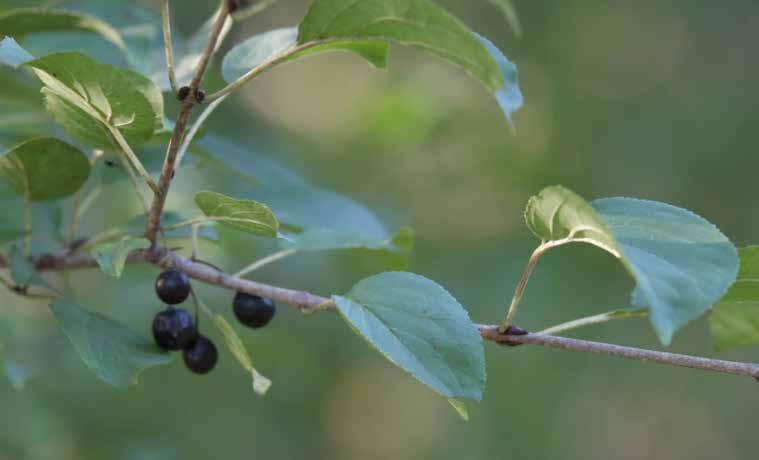
Buckthorn is a tall understory shrub with multiple stems that can eventually reach the heights of a small tree, some six to eight metres. Its grey-brown bark is often cracked or flaky and dotted with small spots called lenticels. Leaves are egg-shaped with jagged edges and veins that curve towards the tip. You'd think its characteristic thorns would be the telltale sign, but there's a more distinctive trait: look just beneath the bark for a layer of orange tissue called the cambium. Any of the popular plant-identification apps should prove reliable in confirming identification.
Strategies for removal depend on size. The Ontario Invasive Plant Council offers a comprehensive Best Management Practices document on their website, ontarioinvasiveplants.ca, which is full of excellent advice.
Seedlings and small plants are easy to pull by hand. Be sure to get as much of
the root as possible and tamp down the disturbed soil after. Saplings will likely require use of a weed-pulling tool as the roots hold soil firmly. Removed materials are best stashed in a sealed bin or contractor bag for a year before disposal. When that's not possible, hang the plant upside-down from a nearby branch with its roots exposed to sunlight.
Significant challenges come when you're dealing with mature buckthorn. The most common approach is to cut it down close to soil level. Girdling can work but is not nearly as effective. With either approach, be prepared to manage resprouts for up to three years. Stumps can be tarped over to minimize resprouting.
Making the best use of your time is key to long-term success. Removing a dozen trees is a great start, but preventing three dozen from spreading their seeds may be an even greater victory. Prioritize the removal of females before they start fruiting in July. Lob off all branches in reach while waiting for girdling to do its job.
The next two years are critical. Buckthorn can produce a huge number of seeds, which stay viable for many years after they fall. Expect those to sprout. The best defense is to introduce competition by planting natives. An outstanding choice is black elderberry (Sambucus nigra) which has leaf-out and leaf-fall timing similar to buckthorn. Another suitable choice might be northern spicebush (Lindera benzoin) which is fast-growing and plentiful around these parts. Look for local native plant sales and nurseries to source these and other suitable choices. If planting isn't an option, consider mulching or tarping the exposed soil to help suppress that next generation of buckthorn.
Common buckthorn is known as one of the most troublesome plants in the landscape, causing as much as $3.6 billion in damage to Ontario’s agricultural industry.
JASON RAMSAY-BROWN Grant Haven Media columnist
(JASON RAMSAY-BROWN PHOTO)
Local agriculture is not just an industry, it’s the backbone of our communities
FROM THE EDITOR'S DESK
By Galen Simmons
There are few better places to live and work than rural southwestern Ontario when it comes to access to local food.
In our communities, fresh meat, eggs, milk, produce and grains are not abstract products shipped in from far away. They are grown, raised and harvested by our neighbours. They are the result of generations of knowledge, hard work and stewardship on the farms that surround us.

That kind of proximity to our food system is something many people elsewhere in the world and in our country no longer have, and it is worth recognizing and protecting.
Local agriculture feeds our families, but it also does much more than that.
Farmers help drive the local economy by supporting local businesses – equipment dealers, feed mills, veterinarians, seed
suppliers, processors, truckers, retailers and countless other small businesses. They sponsor local sports teams, donate to community fundraisers, volunteer with service clubs, support fairs and 4-H, and consistently show up whenever their communities need them.
In many ways, the strength of our rural communities is inseparable from the strength of the farm families who live and work among us.
That’s why supporting local agriculture cannot be limited to a slogan or a feel-good message during planting and harvest season. It has to mean something real.
It has to mean understanding the pressures farmers face every day, from fluctuating commodity prices, high input costs and uncertain economic conditions to labour shortages, shifting gov-

We speak fluent farmer… B BECAUSE WE FARM TOO!
DRILLED WELLS • PUMP SYSTEMS

ernment policy, severe weather, climate change, pests, disease and the simple reality that much of what determines a farm’s success is outside a farmer’s control.
It has to mean recognizing farming is not just a lifestyle, but a business built on slim margins, long hours and enormous risk.
And it should also mean giving farmers the support they need not only economically, but personally. As we highlight in the farm edition included as a separate section in this edition of the newspaper, the stress farmers carry is real, and so is the need to stand behind them when times are tough.
If we value fresh local food, vibrant rural communities and a strong local economy, then we must value the people who make all of that possible.
So, while you’re reading about farmers and the issues they face
both close to home and further afield, let’s remember and be grateful we live where local food is abundant and close at hand. Local farms keep money circulating in the local economy and the farmers who work day and night to keep those farms running support community life far beyond the farm gate.
Agriculture is central to the identity of our local communities and farmers face real pressures that deserve public understanding and support. Supporting farmers means buying local when possible, advocating for fair policy and recognizing their broader contribution to community life.
After you’re done reading this week’s paper, go ahead and thank a farmer, buy something they grew, raised or produced, and pay just a little more attention to all the things, large and small, farmers do for our communities.


Breaking barriers: Women in Canadian agriculture
FARM CREDIT CANADA
Submitted to the Gazette
Women play a critical role in Canadian agriculture, but also face significant barriers to participation.
A lack of resources and recognition leads to underrepresentation of farm operators and of farm operators in leadership roles within agricultural businesses and organizations. The growing skills gap across the agricultural sector makes it imperative to advance gender equity and increase women’s participation in all aspects of farming.
Farm Credit Canada (FCC) estimates that achieving revenue equity—with female farm operators earning on average revenues in line with male farm operators—would add an additional $5 billion to agriculture's GDP contribution. Achieving gender parity in the number of farm operators would magnify these economic benefits.
Recognizing the existing contributions of women could attract more women to the industry, which itself is a function of elevating the status of women’s contributions equal to those of men. FCC estimates that almost 88,000 additional female farm operators will need to be counted to achieve gender parity by 2026. 75 per cent are already farming but unrecognized as operators, and 25 per cent of these will need to be new entrants.
In the 30-year period spanning 1991 to 2021, the percentage of female farm operators in Canada increased from 25.7 per cent to 30.4 per cent. This upward trend is expected to continue, with the proportion of female farm operators expected to reach 31.1 per cent in 2026.
While encouraging, it’s important to
note that this trend is largely explained by men leaving the industry, not by more women joining. Farm consolidations and an aging farm population have reduced the total number of farm operators across Canada over time, with the number of men falling faster than the number of women.
While the proportion of women farmers has been steadily rising, the actual number of women in farming has not grown much. In fact, between 2016 and 2021, the number of female farm operators grew for the first time since 1991, but only by 2.5 per cent – translating to less than 2,000 additional farm operators. Women are also still less likely than men to be the sole decision-maker on the farm.
Female farm operators face very different economic circumstances than male farm operators. Female operators tend to have smaller operations and lower farm incomes. The median farm operating revenue bracket is the same for both men and women at $50,000 to $99,999. But approximately 58.6 per cent of female farm operators work on farms that reported less than $100,000 in revenues, compared to 51.1 per cent of male farm operators, based on the most recent census data from 2021. Conversely, only 17.9 per cent of female farm operators were employed on farms with revenues of $500,000 or more, compared to 21.9 per cent of their male counterparts. Women have gained some ground in recent years in high-value markets for products such as beef, poultry, and eggs. Men continue to dominate the grains and oilseeds market.
In the fall of 2024, FCC interviewed women working in Canada’s agriculture sector to learn about their experiences. Overall, these producers felt that things
are slowly changing for the better. Yet women still face barriers to full participation in farming.
The public still expects farmers to be male. In many farm families, the man is stereotypically labelled the farmer, while the woman is labelled a farm wife. Girls growing up in farm families may not feel encouraged to participate in the more operational aspects of farming.
This early socialization can shape how women perceive their roles on the farm and their confidence in engaging in all aspects of farming as adults. Women also tend to be expected to take on more household and child-rearing responsibilities and often provide economic stability for their families through off-farm employment, making it more difficult to engage in production work.
Women reported that they often feel like they must prove that they are as knowledgeable, skilled and capable as their male counterparts, and often feel judged to be less competent because of their gender. And that non-production roles dominated by women, like accountant or finance manager, are often deemed not as important as operational roles that tend to be male-dominated.
Men are more likely to inherit the farm over women, as tradition dictates that these resources be passed from fathers to sons. Women are often excluded from succession planning and, in large part, are still expected to marry into farm families if they want to participate in farming.
Numerous aspects of farming were not designed with women in mind. For example, most farm equipment is tailored to the male physique, and these design limitations can make it more difficult for




women to engage in the physical aspects of farming.
Many women shared that their views on their own potential were shaped by what they saw represented as they grew up, which typically was men as decision-makers on the farm and women in supportive roles. A lack of representation of female leadership in agriculture can make it difficult for younger women to feel confident that they can take on leadership roles.
Women in farming are more isolated than their male counterparts and have less access to networking, mentorship and support. As agriculture continues to be a male-dominated industry, most executive and board positions within agriculture continue to be held by men. Women generally have less access to a network of like-minded peers sharing similar struggles, whom they can lean on for support and advice, and often find themselves the only woman in the room.
This can be both challenging and intimidating. Women also face barriers to attending in-person networking events, as they are often juggling childcare and offfarm work.
The labour needs of Canada’s agriculture sector are changing.
In this era of digital agriculture and data-driven decision-making, there is a growing need for highly skilled farm labour. Reflecting this need, there has been an overall upward trend in educational attainment among the agricultural labour force in recent years, with fewer workers having no formal qualifications and more with college and university degrees. This trend is even more pronounced for women, who are more likely to be highly














educated than their male counterparts. In 2021, nearly one-quarter of female farm operators possessed at least a bachelor's degree, compared to only 14.5 per cent of male farm operators.
The proportion of female farm operators without any formal education was only 9.3 per cent, notably lower than the 18.2 per cent observed among male farm operators.
The current gap in educational attainment between female and male farm operators is greatest for operators aged 30 to 39. Within this age cohort, 36 per cent of women have a university education, compared to only 17 per cent of men.
A high level of educational attainment makes it easier for women to take advantage of new tools and technologies of farming as they emerge. Many of these innovations are making it easier to overcome some of the physical and social barriers that women in agriculture have faced in the past.
A growing number of female farm operators are adopting new production technologies—things like automatic guidance steering and GIS. These tools can make it easier for women to achieve work-life balance. Women who are highly educated are also well positioned to be thought

leaders and champions of the agriculture industry, playing a leadership role beyond the farm level.
Women working in agriculture also continue to demonstrate a strong entrepreneurial spirit, leveraging their skills and expertise to enhance the value of what they produce. Women have been driving the emerging trend of direct-to-consumer sales of farm goods, with farms run exclusively or jointly by female operators being much more likely to adopt this marketing strategy. There are also a growing number of women working on farms producing organic goods and using sustainable energy sources and technologies. Women are also carving out space for themselves in growing niche markets, like sheep and goat production.
There is a lot of work that needs to be done to achieve gender equity in Canadian agriculture. Currently, the industry falls behind wholesale and retail, finance, education, health care and several other industries in terms of women’s participation. Women in agriculture today are highly educated and driven, with strong business acumen. They are well equipped to foster innovation and accelerate new methods, tools, and technologies on the farm. At a time when productivity growth in Canadian agriculture is stagnating,
leveraging their skills and entrepreneurial spirit will reap significant economic benefits.
Here are some potential strategies to consider:
• Increase the visibility of women in agriculture. Recognizing the important work that women are already doing on farms and in boardrooms across Canada is critical.
• Enhance mentorship and networking opportunities. This will help to reduce isolation and build community for women navigating the agriculture and food space. Programs like AgriMentor, that pair new and established women farmers with experienced mentors, and events like Advancing Women Conferences, can foster useful connections for women, helping to address time and cost barriers women often face when engaging in networking. Virtual initiatives can also help to make networking more accessible. The National Women in Agriculture and Agri-Food Network project is one example of a growing network that connects women in farming through both in-person and virtual initiatives.
• Ensure that women have equal opportunity to take on leadership
roles. This requires not only reducing gender bias in promotion and hiring, but also ensuring women are supported in stepping into leadership roles when the opportunity arises, through access to things like flexible work arrangements and childcare accommodations.
• Improve access to resources. Women have historically been excluded from succession planning and equal access to land and capital. Programs that support women in accessing the resources they need to start their farm businesses are essential moving forward. FCC’s Women Entrepreneur Program is one example of this. A broader cultural shift toward including women in succession planning is also needed to break this inter-generational cycle of exclusion. We are slowly seeing progress in this area, with more women being involved in farm transition planning.
Embracing the strengths and potential of women in agriculture can unlock billions of dollars in economic benefits for the agriculture sector. Achieving gender equity can drive innovation, improve productivity, and foster sustainability, leading to a more resilient and prosperous agricultural industry.
Corporation
CHARTERED PROFESSIONAL ACCOUNTANTS
125 Ontario St. Stratford
Phone (519) 271-7581 Fax (519) 271-2737
E-Mail: office@famme.ca
25 Water Street North, P.O. Box 1228
St. Marys, Ontario
Phone (519) 284-1030
Fax (519) 284-4393
E-Mail: st.marys@famme.ca
210 Oxford Street, E. London, Ontario
Phone (519) 432-1663
Fax (519) 432-7662
E-Mail: london@famme.ca

Tavistock company participates in Mexican trade mission
LEE GRIFFI Gazette Reporter
SoilOptix recently joined one of the largest Team Canada trade missions ever organized, an extensive delegation that travelled to Mexico to deepen trade and economic co-operation.
Kitchener-Conestoga MP Tim Louis, who is also the parliamentary secretary to the minister of Canada–U.S. relations, Dominic LeBlanc, helped lead the mission and participated in discussions aimed at strengthening supply chains, expanding export opportunities and building reliable international partnerships.
The mission brought together more than 250 Canadian companies and organizations. Nearly 400 business leaders participated in more than 1,900 business-to-business meetings, resulting in over 20 contracts and memoranda of understanding.
SoilOptix, recognized for its precision agriculture technology, showcased Tavistock’s strength in agricultural innovation during meetings focused on trade expansion and long-term economic co-operation.
Paul Raymer is the company’s president and CEO, and after his trip to Mexico was over, he headed to Brazil for another opportunity.
“We’ve been very fortunate to have been invited,” he said. “Global Affairs extends an invite to what they call candidate companies. I don’t know how we got on this list, but we did. But it didn’t mean we

were in. We had to apply and tell our story, and ever since, we have been getting
these invites. We have been getting in since 2024.”
There has also been a lot of focus in South Asia, and SoilOptix has attended other trade events in the Philippines, Vietnam, Indonesia, Cambodia, Thailand and Australia. Raymer said the Canadian government is providing opportunities for Canadian companies to grow.
“One thing I will say is they do a standup job,” Raymer continued. “We should have a great deal of pride in what the Trade Commission Service does to be able to support companies like ours, to help with getting boots on the ground with in-person engagement with prospective companies.”
Raymer said he appreciated the level of effort the federal government put into setting up conversations with prospective clients, even though his product is an expensive one.
“The big thing is, with all these countries aside from Australia, is the economic factor, and that’s always been a bit of a wait. What was really surprising to me in Mexico was the level of appetite. It was unbelievable.”
Raymer explained that the government set up meetings for him on other trade missions, but sometimes the potential customers were no-shows.
“A dozen meetings were scheduled for us in Mexico, and every one of them
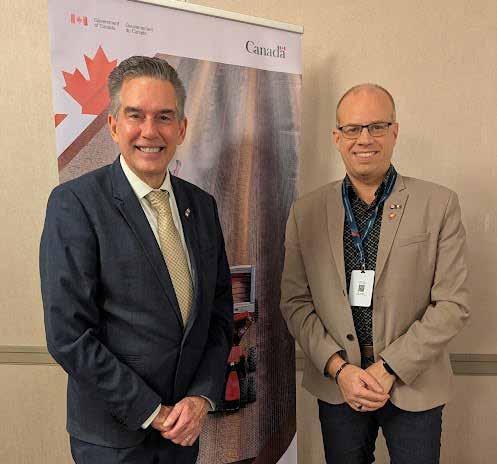
Kitchener-Conestoga MP Tim Louis, left, poses with SoilOptix president and CEO Paul Raymer on a recent trade mission to Mexico.
(CONTRIBUTED PHOTO)
showed up,” he said. “Every one of them had a high level of interest and were all well-qualified companies to have conversations with.”
SoilOptix sells soil-mapping technology and software that uses gamma radiation-based sensor data.
Raymer said he and other participating companies sit down with government officials once a trade mission is over to provide input during question-and-answer sessions.
“The feedback is very important to them, and within six months, they are sending out a survey looking for traction. It is important to them to show they aren’t just waving money around. They are trying to measure the success of each trip.”
In addition to being an MP, Louis is the parliamentary secretary to the minister for intergovernmental affairs for CanadaU.S. trade. Raymer said Louis took a
great interest in his product and was very supportive.
“He sat down with me and wanted to learn more, and his staffer told him he had 10 minutes,” said Raymer. “He asked what he had after our meeting and was told his break. We ended up talking for 10 minutes. He wanted to learn more about us, and although he doesn’t have a background in agriculture, he’s been getting more involved in showcasing the sector.”
The MP also participated in one of Raymer’s meetings with a potential buyer.
“Participating in national trade discussions allows me to advocate directly for local businesses and ensure they have access to new and growing markets,” Louis said. “This mission highlights our region’s strength in agricultural innovation, with local companies continuing to extend their reach well beyond Canada’s borders.”




We salute the hard work and dedication of farmers in our diverse community. We thank you for ensuring we have local, healthy food on the table












Mayor Joe Nowak, Councillors Shelley Wagner, Lori Sebben, Derek Brick and Claude Hergott
WELLESLEY CA
Concerns about fertilizer availability amid turmoil in the Middle East
FARM CREDIT CANADA
Submitted to the Gazette
It has been nearly a month since the U.S. and Israel launched their first missiles into Iran, and that conflict has current and potential economic implications.
These remain highly uncertain and potentially very widespread – oil and liquefied natural gas refineries are shuttered with the Strait of Hormuz paralyzed, bond yields have risen in sync with inflation concerns, and exchange rates are in a state of flux. There is no shortage of economic topics to explore.
Nitrogen is a vitally important nutrient; one of three macronutrients used in primary crop production. There are many different types of nitrogen fertilizer products, each of which requires different production facilities and, importantly, access to an energy source, typically natural gas. Urea, ammonium nitrate and anhydrous ammonia are the three most common nitrogen fertilizers produced globally.
Disruptions in major producing regions can upend global trade flows and prices. That was seen in 2022 with Russia’s war against Ukraine; the halt of cheap Russian natural gas to European production facilities, as well as sanctions on Russian exports, choked off supply and caused prices to skyrocket. Collectively, the Middle
Eastern countries have an even larger say in global availability of nitrogen fertilizers than Russia. On a nutrient basis, the region has historically accounted for 12 per cent of global production and nearly 25 per cent of global trade.
It’s unlikely other suppliers will be in a position to fill this vacuum. In the European Union, a significant share of global ammonia production – a key input for urea – was lost in 2022 and a pipeline running through Ukraine has remained offline since the invasion.
Prior to the Iran strikes, the EU was still only operating at a reduced 75 percent production capacity. The recent surge in natural gas prices could pressure European producers to further reduce that capacity. China continues to restrict fertilizer exports to meet domestic needs, with urea shipments largely paused until August this year. Before the strikes, it looked highly unlikely Beijing would reverse course on these policies before August. Now, it seems even less likely.
Markets have reacted to the potential threat to supply. After slowly creeping up all winter, U.S. urea futures shot up $130 per tonne, nearly 30 per cent, in the first two days after the start of the bombing.
on imports to meet their needs. And, depending on the crop and region, there are different times of the season when more fertilizer is required. Obviously, spring planting is a prime consumption period. But in the east, the spring is also a time when winter wheat is typically topdressed. Corn typically requires more in the early summer as well. And post-harvest, producers may opt to spread fertilizer before the winter freeze-up, in preparation for the next growing season. As utilization changes month-to-month, so too does Canada’s import volumes. The timing of imports is dictated by seasonal demand, strategic planning and preparing for the upcoming growing season and weather. Fertilizer movement typically peaks in April and May to support justin-time delivery for seeding and summer topdressing.
A survey conducted by RealAgristudies in 2022 found that, by late March, 45 per cent of producers had their spring fertilizer needs already stored on farm. However, there was a significant regional split.
Given the aforementioned shipping bottlenecks, some fertilizer may not reach North America in time for spring planting. A shipment that would normally be loading in the Middle East today might not arrive to the farmer until May. This may force farmers to adjust application timing or reduce use.
Canadian prices mirror the trends in the U.S. futures market. Complicating matters for farmers, Canada still has a tariff on Russian fertilizer imports. These tariffs are adding approximately $100 per metric tonne for Canadian producers compared to their U.S. counterparts.
Not all crops require the same amount of fertilizer. Pulses, for example, are nitrogen-fixing, meaning they do not require it. But others are more fertilizer intensive. In terms of cost for all fertilizer, not just nitrogen, and prior to this recent price movement, we estimated fertilizer would account for 20 to 25 per cent of the total cost of growing a crop in 2026.
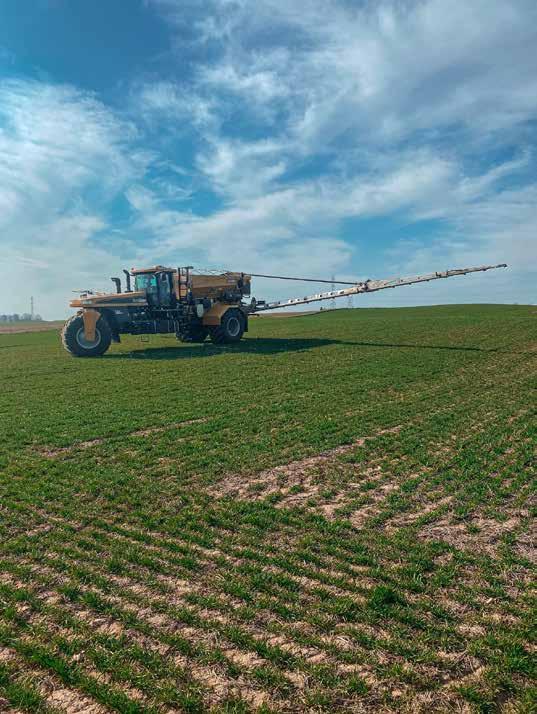
While Canada is a net exporter of nitrogen, some parts of the country still depend
More than 50 per cent of producers in the Prairies had their fertilizer on farm, but only 17 per cent of Quebec producers and 10 per cent of Ontario producers could say the same. In the Maritimes, the number was zero per cent. On the east coast, the situation will be extremely challenging as price is frequently determined when producers pick up product on the way to the field. Pre-buying at a set price is rare. Producers in eastern Canada simply do not have the same on-farm storage capabilities, making them more vulnerable to market conditions in the spring.
Now, despite the lack of on-farm storage, some inventory may be sitting with wholesalers and retailers. Statistics Canada’s latest fertilizer inventory data for December provides insight into these inventory levels and here again we note a regional divergence. While urea inventories in the west are the highest levels they’ve been in a decade, in the east, they are at their lowest levels since 2017.

However, one reason stocks looked elevated is that many farmers chose not to pre-buy or apply fertilizer last fall. That meant less product was sold, leaving more fertilizer sitting in retail and wholesale storage heading into winter. It also sets up the possibility of stronger-than-normal demand at planting, at a time when global supply is already tight.
Any disruption to imports or shipping during this narrow window would create supply challenges and higher prices to support just-in-time delivery for seeding and summer top-dressing.
Unlike 2022, when rising input costs were offset by strong commodity prices, 2026 is shaping up very differently. Farm Credit Canada is estimating a 40 per-cent increase in the cost of nitrogen would cut average Saskatchewan margins in half, from $50 per acre to $25 per acre for an average wheat and canola rotation. It would also lower average margins in Ontario from $365 per acre to $345 per acre for an average corn and soybean rotation. These margin estimates are provincial averages and exclude the cost of land which is much higher in Ontario than in Saskatchewan.
The margin estimates only account for the shock to the nitrogen price. They do not consider potential margin compression because of other fertilizer price increases, potential yield reduction resulting from less fertilizer being used or higher fuel prices. A prolonged conflict could disrupt regional fertilizer production, especially if natural gas supply – critical for nitrogen fertilizer production – continues to be limited out of the Strait of Hormuz. Unless the war is resolved quickly, expect global fertilizer supplies to tighten further and put additional pressure on global food production and prices.
Communication during turbulent times such as these is crucial. Farmers may want to contact their crop input retailers to confirm they’ll have the tonnes they need this spring and work together on any backup plans which might include adjustments to crop mix, fertilizer rates and target yields. Early discussions with credit providers may be necessary as well should the need arise as seeding approaches.
Erbcrest Holsteins recognized for long-lived, highproducing dairy cattle
GARY WEST Gazette Correspondent
Dan Erb of Brunner is continuing a strong family tradition of breeding high-production Holstein cows known for both longevity and strong type.
The Erb family’s Erbcrest Holsteins herd was recognized last year with a Master Breeder Shield in Perth County, an honour that reflects years of careful breeding focused on productive cows that remain healthy and profitable over the long term.
Erb is following in the footsteps of his father, Delmer, whose work helped establish the family’s reputation for developing cows that combine strong conformation with high milk production.
During a recent visit to the Erbcrest herd, located east of Topping and south of Milverton, the quality of the long-established, homebred Holstein herd was evident. The multi-generational dairy operation continues to build on decades of breeding decisions aimed at producing cows that perform consistently and remain productive throughout long lifespans.
Longtime Holstein master breeder Murray McGonigle of Hill Pond Holsteins near Amulree also praised the herd following a recent visit, noting it is among the top herds produced in North Easthope Township in recent years.
Recognition for the herd’s breeding program continued this year through the Perth County Holstein Breeders’ Association’s Breeders Cup in-barn competition.
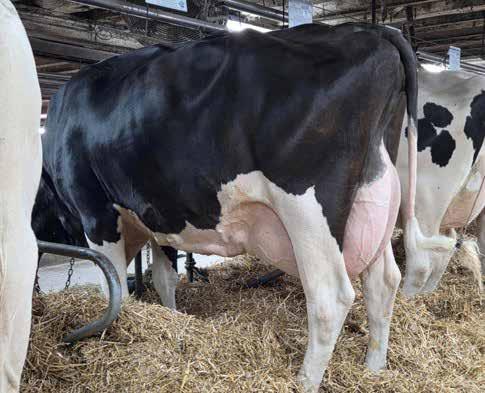

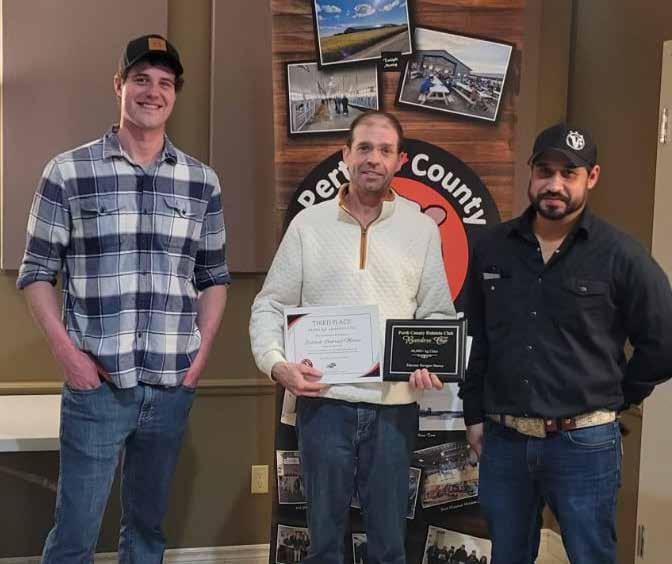











One of the herd’s mature cows, Erbcrest Kerrigan Marica, received the 60,000plus kilogram lifetime production award,
highlighting the kind of long-term performance the Erb family aims to achieve through its breeding program.
Erbcrest Kerrigan Marica, one of the Erb family’s older cows, was the winner of the 60,000plus kilogram lifetime production award at this year’s Perth County Holstein Breeders’ Association Breeders Cup in-barn competition.
Dan Erb receives recognition for the herd’s lifetime production award winner, Erbcrest Kerrigan Marica. From left are past president Sjoerd Kemmere, Dan Erb and Perth County Holstein Club president Luis Velazquez.
(CONTRIBUTED PHOTOS)
Perth County Holstein breeders host spring open-house tour
GARY WEST Gazette Correspondent
Holstein breeders from across Perth County welcomed visitors to their farms Saturday as part of the annual Perth County Holstein Club open house car tour, offering fellow producers and visitors an opportunity to view dairy operations near Brunner, Poole, Topping, Atwood and Listowel.
Held each spring, the tour allows dairy producers, families and industry supporters from across the region to see how other farms manage their registered Holstein herds and facilities. Visitors were invited to travel between participating farms from 10 a.m. to 3 p.m., gaining insight into herd management practices, housing systems, feeding programs and new barn technology.
Among the herds featured on this year’s tour were Waycrest Farms of Wayne and Amy Kuepfer and Legacy Holsteins of Steve and Karen Dolson, and Jeff and Sally McMullen, both near Atwood.
Two Listowel-area farms were also included: Royal Acres, operated by Jim, Heather, Natalie and Ben Robinson, and Maplevue Farms, operated by Dave and Doug Johnston and their families.
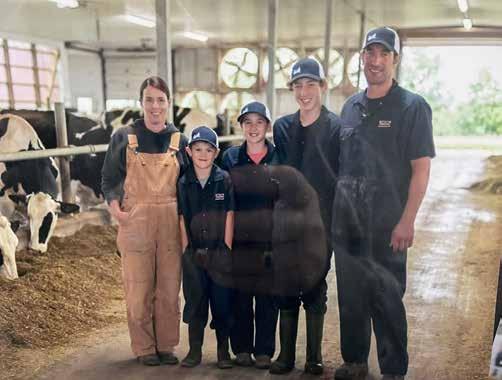
In total, eight farms participated in the tour, many of them multigenerational family operations that have built strong reputations for producing high-quality milk from registered Holstein cattle.
Producers highlighted the advantages of Canada’s supply-management system, noting production quotas and border controls help support stable farm incomes while maintaining high-quality Grade A milk production for domestic consumers.
Several farms on the tour showcased modern dairy facilities featuring robotic milking systems, sand-bedded free stalls, total mixed ration feeding programs and cow-comfort features such as automatic brushes.
The Cnossen family farm on Highway
119 east of Brunner has operated at its current location since 2009. Andrea and Symen Cnossen, along with their children Ryan, Ella and Ben, milk 95 Holsteins in a double-10 rapid-exit parlour. Their herd averages more than 13,000 kilograms of milk, with the family actively involved in 4-H and local sports.
At Hyden Holsteins Ltd., south of Poole on Perth Road 121, the Gerald Zehr family operates a herd of 130 milking Holsteins, including 14 cows classified excellent. The farm’s new dairy barn, built in
The Cnossen family farm east of Brunner milks 95 Holsteins and reports an average production of more than 13,000 kilograms of milk. From left are Andrea, Ryan, Ella, Ben and Symen Cnossen.
Ella Cnossen is pictured with her show-winning cow, Avalynn.
(GARY WEST PHOTOS) Continued
2023, features two Lely A5 robotic milking units and an average production of more than 12,000 kilograms of milk per cow.
Janholm Farms, operated by Larry and Beatrice Jantzi and family east of Brunner, milks 45 registered Holsteins using robotic milking technology. The multigenerational farm reports an average production of 12,700 kilograms of milk and features sand-bedded free stalls and feed supplied from three adjoining tower silos.
Also on the tour was Erbcrest Holsteins,
operated by Dan and Ruthann Erb and family east of Topping between Milverton and Wellesley. Recognized by Holstein Canada as a two-time Master Breeder herd, the family milks 52 cows in a tiestall barn and reports a herd average of more than 15,000 kilograms of milk, with multiple excellent and very good classifications.
Throughout the tour, visitors were able to see examples of cow-comfort practices such as automatic brushes, spacious dry-cow pens and well-bedded calving areas designed to promote herd health and productivity.
The annual tour continues to provide an opportunity for producers to exchange ideas, showcase improvements to their operations and celebrate the strong tradition of family dairy farming in Perth County.

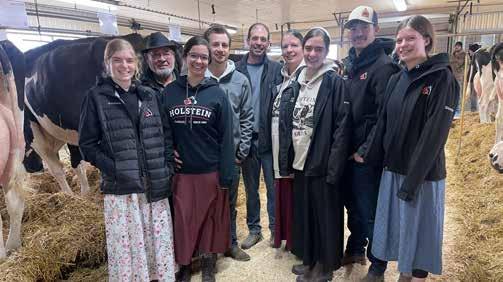
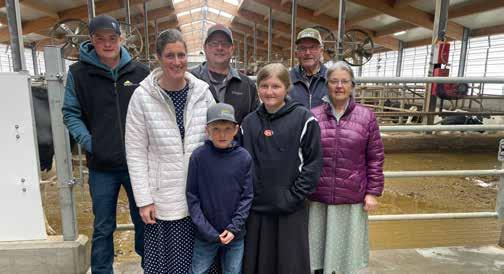
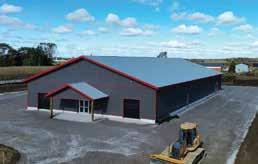
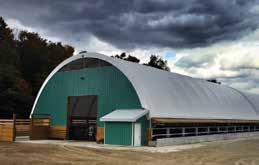

Many barns on the tour featured automatic cow brushes to promote cleanliness and comfort.
The Jantzi family of Janholm Farms east of Brunner milks 45 registered Holsteins using robotic technology.
The Erb family of Erbcrest Holsteins east of Topping operates a two-time Master Breeder herd recognized by Holstein Canada.
The Zehr family of Hyden Holsteins Ltd., south of Poole, milks 130 Holsteins using robotic milking technology in a barn built in 2023.
The Wilmot-Tavistock Gazette - 2026 Farm Edition