




































STK#183180
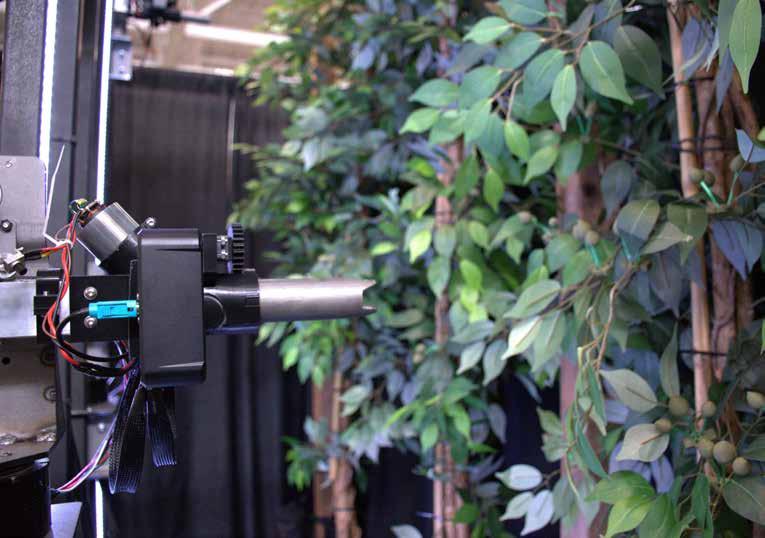
Humans will likely always be needed, but Finite Robotics developing a tool that can take over a large chunk of orchard thinning
By Luke Edwards
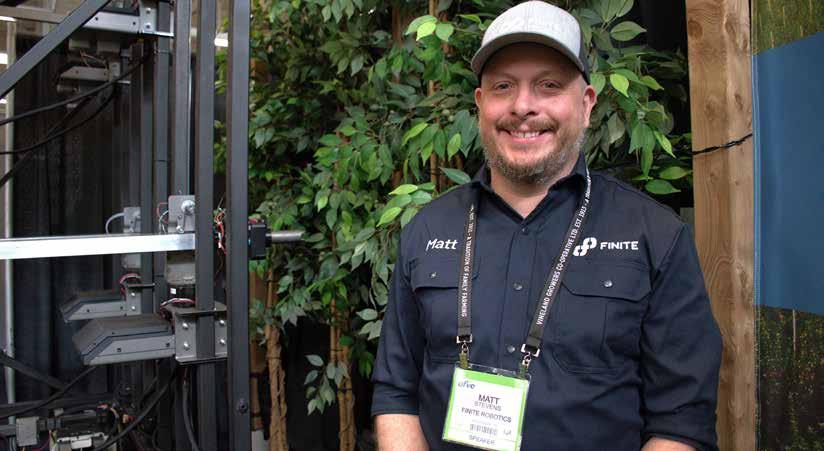
For anyone worried about the robot takeover, fear not. Matt Stevens has a perfectly simple solution should the machines try to rise up against humanity.
Bamboo.
Stevens, president and head grower at Finite Robotics, presented at last month’s Ontario Fruit and Vegetable Convention, showing off robotic orchard thinning technology his team has developed. While playing a video of the machine in action, the robot came up against a bamboo stake in the orchard. The stake baffled the robot, leading Stevens to joke to the audience that should the robots ever rise up, just get your hands on some bamboo.
But while the robot takeover talk is all presumably with tongue firmly placed in cheek, it gets to a significant point Stevens makes about the robotic thinning technology.
“There are things robots are incredibly good at, and there are
things humans are incredibly good at, and they’re not the same thing,” he said.
To further the point, Stevens had the audience perform a bend
Publisher
Editor
would forget where it was pointing,” Stevens said.
Stewart Grant • stew@granthaven.com
Luke Edwards • luke@granthaven.com
Business Development
Graphic Design

Heather Dunbar • heather@granthaven.com
Erin Parsons • niagarafarmsnewspaper@gmail.com
Billing Administrator
Jen Gaetan • jen@granthaven.com
Contributor
Ann Marie Chechalk
36 Water St. St. Marys, ON, PO Box 2310 N4X 1A2 niagarafarmsnewspaper@gmail.com | 519-868-1290 | granthaven.com
Restoring small-town journalism, one community at a time!
a time!

and twist motion with their arms. Unsurprisingly, every human managed the task with ease. Had he been in a room with robots, however, he said they would have overwhelmingly failed.
Gerbe Botden is the vice president of the Blue Mountain Fruit Company in Thornbury, where Finite Robotics did some testing. Better thinning processes, completed earlier, will mean a better, more consistent end product, he said. Earlier thinning can also improve the chances of return blooms, improving yields for future years.
While humans might be able to contort their arms in ways robots can’t, human eyes fail in detecting millimetre differences in fruit size.
The solution, therefore, is fairly straightforward.
“Get them (the robots) to do 50, 60, 70 per cent of the work, and then get them out,” said Stevens.
“We want this to be a tool, not something that makes it more complex for the grower,” added Botden.
Finite Robotics took their prototype robot through what Stevens called a skills bootcamp. The skills included movement, vision, decision making, reach, removal and disposal.
The first step, simply getting the robot moving efficiently through the orchard was a challenge.
“It did this drunken sailor walk where it would stop, and then it
Initially, the company purchased the movement technology from an outside vendor. After the failures in Botden’s orchards, they scrapped those plans and developed their own solution.
Thanks to plenty of hard work earlier, however, the vision portion of the bootcamp was quite successful. The robot was able to see, and measure the fruits. There were some issues with lighting, but Stevens said they’ve been able to overcome those challenges.
With solid vision systems, decision making becomes interesting.
“This is where there’s a difference. When you’re using a robot, they can do sizing very accurately. You can start to do some logic that you can’t do as a human, because I can’t see the differentiation between minor changes in size,” Stevens said.
For removal, they developed an apparatus that utilizes vacuum pressure to suck the fruitlet in and a device that rotates and cuts it off then pushes it back into the bin for disposal.
Stevens said the plan is to start offering the technology in a service model for the first few years, and eventually give growers an opportunity to purchase devices outright.
For more information, visit finiterobotics.com.
By Luke Edwards
A Washington State University researcher sees opportunity in a new approach to a key step in agriculture that has remained virtually unchanged for thousands of years.
By creating a pollen spray that can be applied to trees that require pollination, Matt Whiting says struggling bee and pollinator populations can be supported in the short term, and possibly replaced in the long term. Precision pollination could address range, transfer and viability challenges of traditional pollination systems.
“This (traditional) pollenizer-pollinator model is fraught with variability on both sides of the equation,” he said during a session at last month’s Ontario Fruit and Vegetable Convention.
Precision pollination requires three steps: collecting the pollen, suspending the pollen
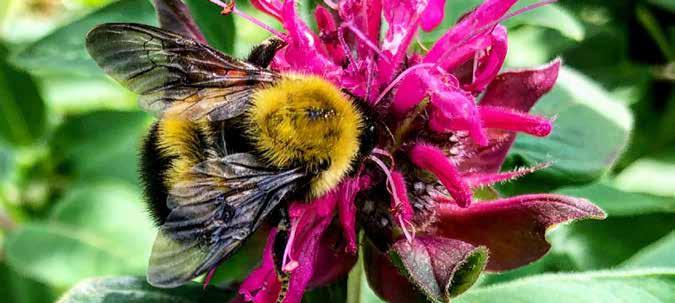
and then dispersing the pollen. The first step is relatively easy, but it’s steps two and three that have required some expertise.














Fortunately, Whiting has developed a liquid pollen suspension that can be applied by an electrostatic sprayer. Since so little pollen is required over a relatively large patch of land, putting it in the liquid suspension allows growers to disperse the pollen at an appropriate rate.
Using electrostatic spray aids the process by replicating the way nature uses electric charges to attract pollen to the stigma to increase fertilization.
While he calls the technology “crop agnostic” and potentially useful for any crop that requires pollination, he acknowledged it’s not required all the time.
“There are some situations where natural pollination was enough,” he said.
However, in tests, he said there have been yield increases of 23 and 27 per cent in cherries, and 48 per cent in apples.
And to prove artificial pollination sprays are effective, Whiting turned to a test that resembled a daytime talk show. What essentially amounted to a paternity test found that 25 per cent of the fruit in a sample came from the artificial spray.
Ongoing work to refine the process includes robotic pollinators that can identify flowers and target them for the spray, reducing waste and hopefully improving successful pollination rates.
Declining pollinator populations, namely bee colony collapses, have been cause for concern for growers who rely on pollination. Currently, Whiting is using his process to supplement the natural pollinators, but in the future he foresees a world where natural pollination isn’t required.
“The long term goal is replacement pollination,” he said.


By Luke Edwards
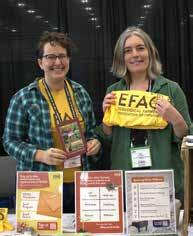
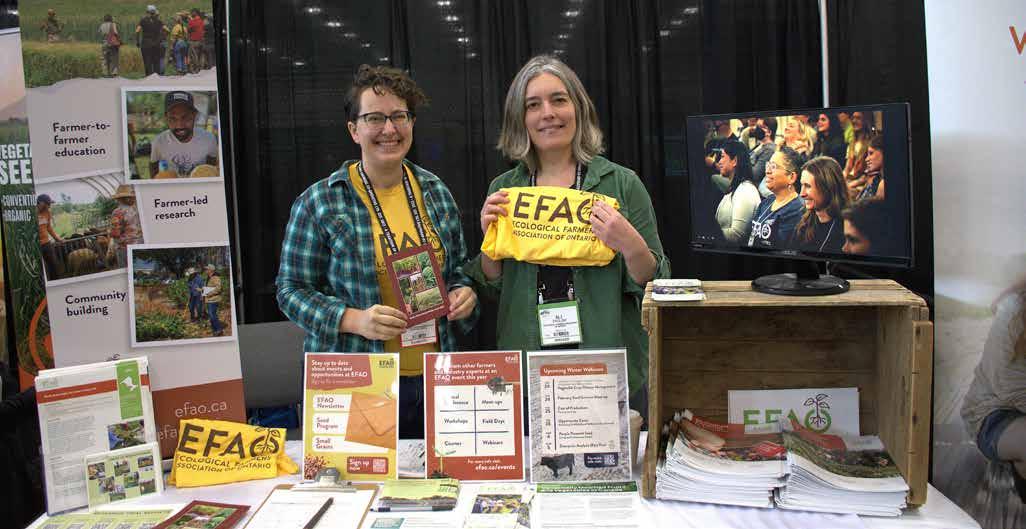
An organization that started with a small handful of Ontario farmers who wanted to share ideas on how to grow food responsibly has grown over the years to include 1,000 members, offering a wide variety of research and education.
But throughout it all, the Ecological Farmers Association of Ontario has kept one thing top of mind: the farmer.
“It’s still very much farmer led,” said Ali English, EFAO executive director.
“Education is at the heart of what we do.”
EFAO began in 1979 with a group of farmers who wanted to learn from each other. In those days, the nascent ecological agriculture movement still had a lot of growing to do. Back then English said ideas like cover crops weren’t nearly as mainstream as they are today. Those who started EFAO were the early adopters to organic farming practices, and other approaches that have gained traction in the ensuing years.
Nowadays, EFAO tries to stay true to its grassroots founding, but has grown and evolved to offer more expertise, education and research for farmers. Webinars are offered, mostly in the winter when farmers have a little more time, and a December conference usually welcomes about 400 attendees.
Farmer-led research programs utilize a small but mighty EFAO team, covering topics like soil health, seed selection, disease and pest control, cover crops and pasture regeneration.
They also just wrapped up the final intake for a successful small grains program, which encouraged farmers to try including small grains like oats, rye and barley into their crop rotations.
Using a reverse bidding process, farmers would receive payments for using small
grains, and give them a chance to see the potential benefits of incorporating such crops. Research has suggested these small grain crops can increase yields for later corn or soybean crops, reduce pesticide use, build soil health and improve water quality.
Significant growth for EFAO membership in recent years has been driven by a few factors, English suggested. The first was an organizational push, moving from an all-volunteer organization to hiring dedicated staff. However, she also said there’s more interest among the farming community.
“There’s no doubt there’s been increased interest from all avenues,” she said.
One area the organization has focused on are the demographics not traditionally associat-
ed with farming in Ontario, such as Indigenous farmers or people of colour.
They also have a mix of experience level, with many new and aspiring farmers alongside those who’ve been doing it for a while.
“It’s a diverse group of folks,” English said.
The organization is in the midst of finalizing a new five-year strategic plan, which includes a focus on three priorities: financial viability, new farmers, and strengthening a sense of belonging for farmers, especially among Indigenous and people of colour.
For more information on the organization, visit efao.ca. They maintain a newsletter and have information on their various research projects and education sessions.







By Luke Edwards
When Sun Tzu wrote about the importance of knowing one’s enemy, he probably didn’t have stone fruit on his mind.
But it’s just as important for growers and the pests that disrupt their crops as it is for generals who wage war on the battlefield. And though thrips may be a familiar foe for many, we may not know quite as much about the insect as we previously thought.
At last month’s Ontario Fruit and Vegetable Convention Rose Buitenhuis, director of the biological crop protection program at Vineland Research and Innovation Centre, and Justin

Renkema, a research scientist in entomology with Agriculture and Agri-Food Canada, shared some research on how thrips impact nectarines and some options to control and limit their populations.
“We don’t have a solution yet, but we are thinking a lot about what solutions there could be,” said Buitenhuis.
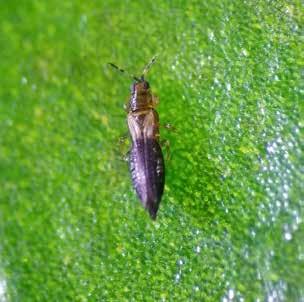
While she said thrips are “pest number one” in greenhouses, they can also be found in orchards. Their feeding and egg laying can injure buds and flowers, and lead to fruit surface russeting.
Some of the challenges growers face include the fact that when they enter buds they’re more or less protected, and due to the Ontario Bee Act sprays can’t be applied during bloom.
Additionally, a single thrip can lay seven eggs a day and live for a month.
“One thrip can multiply to 200 thrips in a really short time,” Buitenhuis said. And even a single larva can cause significant damage.
When most people think of thrips they tend to think of the western flower thrip. However, Buitenhuis said research shows Ontario has a much more diverse population.
“We have a whole bunch of thrips species in Ontario,” she said.
Integrated pest management follows a fairly simple process, starting with forecasting, then prevention, and finally curative control.
Renkema shared a few options to help control the populations. Trap plants can act as a sink for thrips, he said. The use of reflective mulch in New Zealand has also shown promise. Spraying entomopathogenic nematodes on trees may also be effective, but it’s failed in other crops.
There are also some native predators, but Renkema said they don’t tend to come out as early as growers would prefer. Similarly, there are three sprays available, though they can also harm the beneficial bugs.
was
By Luke Edwards
In a province as big as Ontario, there are always going to be a lot of worthy recipients for any industry award.
But when two people independently nominate the same person for the same award, you know you’ve got someone special. And that’s how John Hussack described Brett Evans, who won this year’s Certified Crop Advisor award of excellence for Ontario.
“What makes Brett eligible for the CCA award of excellence is his amazing knowledge of agriculture and how he can relate it to his farmer customers,” Hussack said.
Hussack, a former winner of the prestigious award that recognizes top agronomists in the province, said he’s known Evans since he started his career working out of Dunnville. With a humble attitude, wide breadth of knowledge and an otherworldly ability to keep his farmer clients happy even when they’re facing the tight timelines and high pressures of the growing season, Hussack said Evans was the epitome of what the award was created to recognize.
And it turns out, Kim Glenney had some fairly similar thoughts.
“Bret is the first person in the Certified Crop Advisors organization who was nominated by two different people in the same year,” Hussack said.
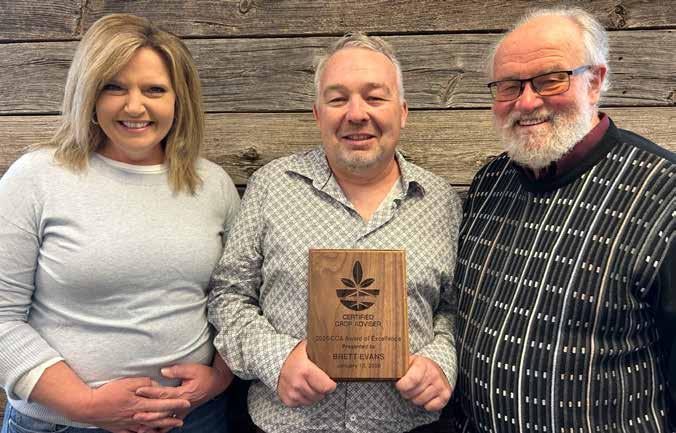
Recently at the Certified Crop Advisers
Brett
And even though he and Glenney know each other quite well, Hussack said they had no idea they were each nominating Evans.
After starting his career in Dunnville, Evans has bounced around a bit, but recently returned to the Niagara region, where Hussack said he’s well known among farmers.


and
“And if you talk to any of them, they speak extremely highly of Brett as far as his knowledge, his work ethic is incredible,” Hussack said.
“He’s just a humble person, he would never brag or boast about anything. He’s quite incredible.”
Evans received the award at a CCA conference and banquet held earlier this winter.

Alexis Szarek shares lessons learned from her B.C. tulip farm
By Luke Edwards
She was creating tradition, but at the time, Alexis Szarek felt like all she was doing was creating headaches and a failed business.
Back in spring 2016 Szarek thought she was ready to open her B.C. tulip farm to the public. She had poured her blood, sweat and tears into turning her farm into a stunning oasis of colour. But soon after her festival arrived, Szarek found herself in tears, wondering where it all went wrong.
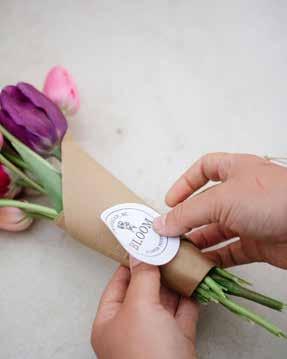
Szarek is a third-generation flower farmer and the founder of Bloom Flowers Festival, which has become a successful annual agritourism event that now takes place at her farm in the north Okanagan Valley. Visitors can tour the fields of tulips in the spring and walk among sunflowers later in the summer.
But in that first year, she wasn’t prepared. Some of it was timing, an operator of a similar flower festival decided to take the year off. And some of it were things she’d never been told and never thought to consider.
“The moment you let the public on the farm the game changes,” she told attendees at last month’s Ontario Fruit and Vegetable Convention.
Fortunately, despite the early struggleswhich included a portion of the Trans Canada Highway near her farm that was backed up three hours because she and her municipality hadn’t fully prepared for the traffic and parking that would be required - Szarek quickly learned and adapted. In time she’d put a system in place that reduced the issues to a number far more manageable. Nothing’s perfect, but with a good system in place, she said agritourism operators can cut off problems before they occur.
It starts with a fairly simple lesson.
“Assume zero farm literacy,” she said.
That may sound a little mean, but in Szarek’s experience, it’s the approach needed. With more of the public being further and further removed from agricultural life it’s natural they’d have less understanding of how a farm works.


Despite assuming zero farm literacy, Szarek said the people coming to a farm do bring a genuine interest and curiosity.
“People are hungry for an experience that they feel is real,” she said.
Szarek learned people tend not to read signs, but instead follow behaviour. So she began designing her layout very intentionally, guiding people to the places they should go, and away from the places that were off limits.
And while they may not read signs, they are hungry from information. So Szarek developed a communication system, fine tuning it so people who bought tickets were given the appropriate information at the appropriate time through emails.
Szarek didn’t realize it at the time, but the work to build relationships with city hall officials in the months leading up to her debut event acted as an insurance policy when things did go wrong. Because municipal staff knew her, and knew she was genuine in her goal to create a good event, they used the first year as a learning experience instead of as an excuse to shut her down, she said.
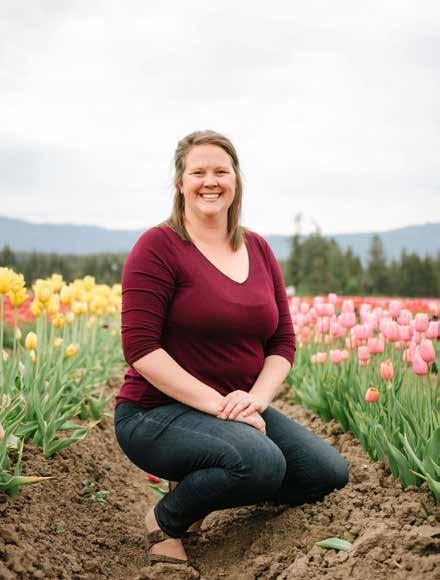
Since that time, Szarek has continued to evolve her agritourism operation, moving from Abbotsford to the north Okanagan four years ago.
Looking back on her own experience helps provide a blueprint for others. It starts with a strong foundation.
“The first year isn’t about being impressive. It’s about being functional,” she said.
With that one core service perfected, Szarek encourages operators to try one or two new



things each year. Enough to keep people coming back, but not so much to be overwhelming.
“Expand when it’s calm enough to grow,” she said.
Pricing can do a lot to direct customers, too. She uses dynamic pricing to encourage visits when it’s less busy to keep the overall flow manageable. She also offers special pricing for locals on certain nights. It’s part of building excitement and trust with the local community, which she said is also vital.

With all that in place, Szarek said fun events can turn into traditions. She has customers who come back faithfully each year, often bringing a friend or relative who had never visited before, and turning what initially looked like a failure into a popular annual event.
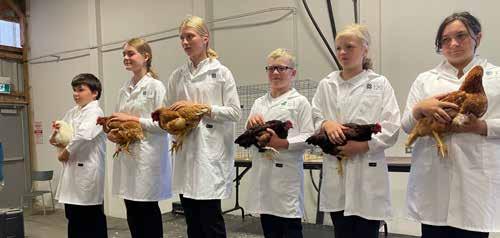
The 4-H members on January’s front cover have lots to smile about. They have been 4-H members for many years, having fun, learning new things, and being creative.
Living on a farm and having a mom that was in life skills clubs as a girl and a dad who belonged to Junior Farmers meant it was a natural transition for the two McGee daughters to become 4-H members.
“I joined 4-H when I was 10 years old. When I first joined I wanted to learn more about goats and then discovered many more fun clubs. I have completed 36 clubs from a range of livestock and homecraft clubs,” Morgan McGee said.
“My favourite club is the goat club, closely followed by the scrapbook/craft club. 4-H has influenced my post-secondary studies at the University of Guelph, where I am currently in my second year studying animal science. In the future I would like to pursue a career either in animal genetics or nutrition and continue to improve my registered herd of Nubian goats.”
Emily McGee joined 4-H mainly “because my sister, Morgan, had joined the year before me and I noticed how much fun she was having. I was nine years old and have been part of the program for the past nine years and recently just completed 30 4-H projects.”
“My favourite club is scrapbooking/woodworking because we get to use our creativity, but I also really enjoy all the other 4-H clubs I am in. There really are no bad 4-H clubs.”
“I would definitely say 4-H inspired my future studies since it inspired my love of agriculture and surrounded me with other people who feel this same way. This coming fall I will be studying agricultural science at the University of Guelph and hoping to later major in crop sciences,” Emily said.
“My future goals are to stay involved in 4-H even after I age out through volunteering.
Are you ready to join 4-H?
Members must be nine years of age by Jan. 1, 2026 and can continue until 21 years old.
Membership fee is $120, with $110 paid to 4-H Ontario to run the program. The rest is paid to Niagara for manuals, photocopying, postage, banquets and awards, annual meetings, judging days, insurance, camp sponsorship, club sponsorship, club start up etc. Members may join any/all clubs for the one fee,
To learn more call or email one of the 4-H volunteers listed below:
Cooking club - this club will be starting in the spring, email lynngibson21@gmail.com.
Lincoln dairy club - learn about caring for and showing a calf, contact Brad Eggink, brad.eggink@ stgen.com; or Amanda Comfort, comfort.amanda@gmail.com.
Niagara goat club - learn about caring for and showing a goat. Members should have a doe kid born in 2026 without horns. Email Ann Marie, chechalk@outlook. com.
Niagara rabbit club - contact leader Lori Mann at loriam0911@ gmail.com.
Niagara explore club- this club will start in the summer. Contact leader Andrew Chechalk, achechalk@outlook.com.
Niagara plowing club - this club runs in late summer. Email Evan Scott, evanth.scott@hotmail.com or Calvin Dunlop, got2lovegoats@ gmail.com.
Wainfleet dairy calf club - learn about caring for and showing a calf. Email Brenda Roszell at feederlanefarms@hotmail.com.
Niagara poultry club - first meeting is March 18. Contact Jessie at Jessierooker@hotmail.com.
Registration to join 4-H is done through 4-H Ontario’s website. The 2026 online registration form will be available on the 4-H Ontario website and can be accessed by clicking the “Join Us” button at the top of the website. https://4-hontario.ca/youth/become-a-member
To find out what it takes to become a screened leader and offer your talents to 4-H members in Niagara call Ann Marie at 905973-3459 or email at chechalk@ outlook.com

Second jewel of the Canadian Triple Crown comes to Fort Erie on Labour Day weekend
By Niagara Farms Staff
The marquee event of the Fort Erie Race Track will return this September, a week later in the race schedule than previously.
Last month, track officials announced the race date for the 91st running of the Prince of Wales Stakes, the second leg of the Canadian Triple Crown. This year’s race will run on Labour Day, Monday, Sept. 7.
“Fort Erie Race Track continues to be the proud home of this iconic Canadian racing tradition,” said the track’s general manager Drew Cady in a press release.
“The Prince of Wales Stakes not only highlights the exceptional talent in Canadian thoroughbred racing but also delivers one of the most exciting days on the North American horse racing calendar.”
This year’s race is moved back a week to take place on the long weekend.
“By moving the race back to a holiday long weekend, we expect this year’s Prince of Wales Stakes to be the biggest and best in several years. We look forward to welcoming fans, owners, trainers, and horsemen for what promises to be another unforgettable edition,” Cady said.
The race will feature some of Canada’s top three-year-old thoroughbreds hitting the dirt track for a challenging race of 1 3/16 miles with a $400,000 purse on the line. It’s the richest
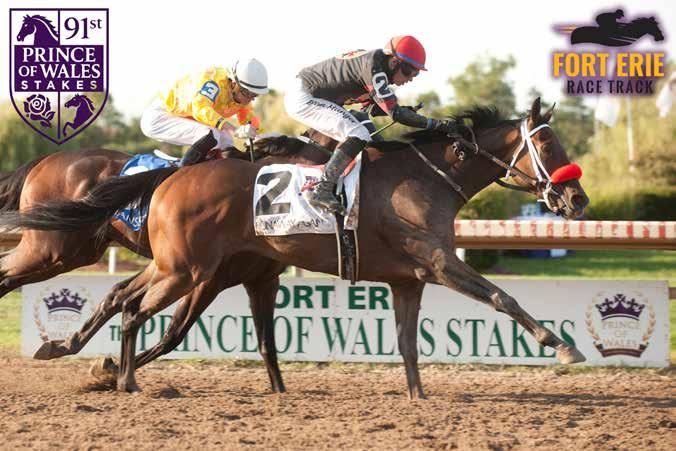
prize offered for any dirt track horse race in the country.
Visitors to the track on Sept. 7 can expect not just the Prince of Wales Stakes, but a full day of racing, along with family-friendly activities, top cuisine in the Prince of Wales Dining Room, and more than a few fascinators.
Racing at the track is expected to run May through October, with several special events held throughout the racing season. For more information, visit www.forterieracing.com or follow Fort Erie Race Track on social media.



By Luke Edwards
The arrival of the spotted lanternfly in Ontario remains a question of when, not if, though efforts by industry and government officials aims to make the when as far into the future as possible.
An invasive species that has spread throughout several states south of the border, the spotted lanternfly can cause significant damage to vineyards, with the Canadian Food Inspection Agency’s Carla Cassone saying yield losses of up to 90 per cent have been reported.
“This pest is annoying,” the CFIA operational manager for the plant specialist unit in Ontario told a group during a session at last month’s Ontario Fruit and Vegetable Convention.
While populations can be found near the Canada-U.S. border, including in counties in New York State, they have yet to establish here. Though the key word there is yet.
“It’s truly not a matter of if it comes, it’s a matter of when,” Cassone said, adding the pest has
continued to spread despite treatment efforts in the U.S.
Officials have developed protocols and regulations to delay its arrival as much as possible and keep it contained when it does arrive.
A CFIA directive issued last fall described efforts being taken.
“The Canadian Food Inspection Agency (CFIA) has implemented phytosanitary measures on nursery stock and logs of deciduous species with bark to mitigate the risk of its entry and spread in Canada,” the directive said. “The CFIA continues to focus on outreach strategies to raise awareness of pest identification and mitigation strategies with importers, the transportation sector and the general public.”
“The pathways of introduction are numerous,” said Julie Holmes, a plant health survey biologist.
Once the pest is detected, officials will create a regulated zone, determine its distribution and work to figure out if eradication is possible.
Diana Mooij, a program specialist in the invasive alien species section at the CFIA, said “the public will be essential in finding this pest early.”
There were 26 survey sites in Ontario last year, with no detection.


Holmes said they plan on having another 26 survey sites this year.
Cassone tried to reduce concerns from farmers who are worried about what happens if they find their farms in a regulated zone.
“I’d say shutting a farm down is a strong word,” she said, adding they’ll still be able to operate but will have rules to follow.
Spotted lanternfly is native to Asia, and can be found in China, India, Taiwan and Vietnam. It was first detected in Pennsylvania in 2014, and populations close to the
Canadian border have been found in Buffalo and Pontiac, Michigan since the fall of 2022.
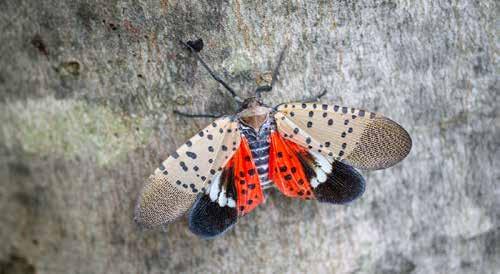
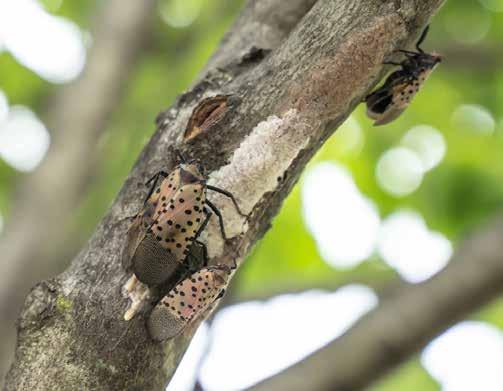
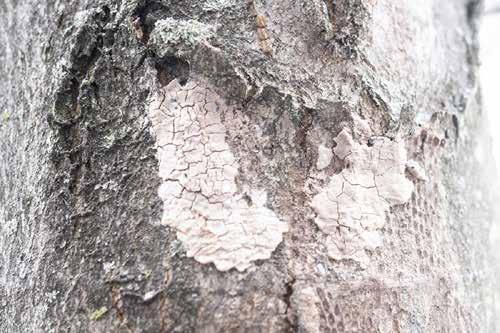
“Spotted lanternfly is a large, visually distinctive planthopper which can feed on a wide variety of hosts, such as tree-of-heaven, grapevines, maple, walnut, and other hardwood tree species,” last fall’s directive said. “Given its wide host range, it is predicted to be a major pest for Canada’s grape and wine industry with the potential to negatively impact the nursery, fruit tree and forestry sectors.”
tally we are building value for the farmers of Canada. That means we (farmers) are part of conversations we haven’t been part of for a long time. Farmers realize they are part of the solution to a lot of things, like climate change mitigation, biodiversity, species-at-risk and flood control.”
By Luke Edwards
A four-year effort to bring the ALUS program to Haldimand may seem like a long time, but for Anna Haupt, it was much longer than a quadrennial.
Bryan Gilvesy, now CEO of ALUS Canada, started his involvement with the program when he signed up as a participant to the
and then became a member of the Norfolk Partnership Advisory Committee. Bryan and wife Cathy raise Texas longhorns on the YU Ranch, south of Tillsonburg.
Haupt, a dairy farmer with 50 milking Holsteins and 360 acres of land in Canfield, was one of a few farmers who have shown some interest in joining the partnership advisory committee (PAC), a key step in implementing the program in Haldimand.
“The idea of the program always appealed to me,” she said, recalling first learning about it when she was a teenager through a cattlemen’s association.
ALUS is a program that works with farmers and ranchers in participating communities to develop nature-based solutions to build climate resilience and biodiversity on their land. The goal is to use marginal farmland that isn’t terribly productive for agricultural purposes to do so, with the landowner receiving technical and financial support through ALUS.
For Haupt, it’s the shared responsibility aspect that attracted her to the program. A lot of the responsibility of enhancing biodiversity or building climate resilience can tend to fall on the landowner’s shoulders, but with ALUS that load is lightened.
The Haldimand Stewardship Council began work on bringing ALUS to the county back in 2022. Several steps are required before the program becomes active in a community, including the creation of a legal entity to manage the program and a PAC to guide which projects
One of the offshoots of Norfolk’s initial efforts occurred after Prince Edward Island environment George Webster attended the pilot launch in 2008. The island was having an environmental issue at the time and ALUS quickly became the solution and a well-funded provincial program.
Today, nationally ALUS is approaching 1,000 farmers participating through 27 different community based programs in six provinces. Together they have enrolled 27,183 acres in the program.
Officially, ALUS Canada’s mantra now is: “ALUS Canada makes it possible to offset your environmental footprint through agricultural stewardship. ALUS invests in farmers and landowners who are producing acres of clean air, clean water, wildlife habitat and other ecosystem services in communities across Canada.”
are supported and how much payout a farmer receives.
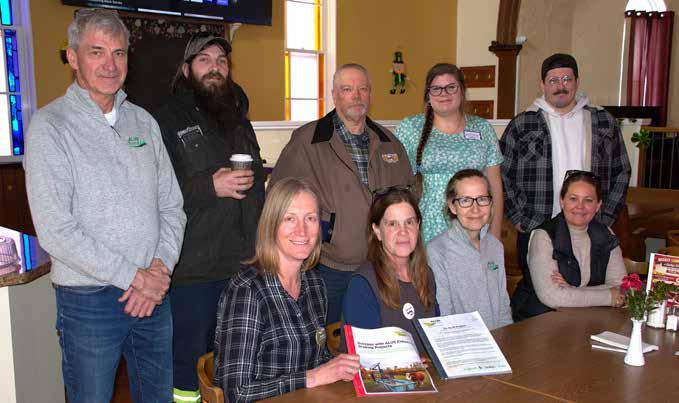
With a meeting held last month at Shelley’s Diner in Kohler, council member Cathy Blott said they’re well on their way to start accepting project applications, likely later this year.
“We’re really pleased with that,” she said.
Farmer buy-in is a key aspect of the program, something that came up a few times at the meeting. Fortunately, Haldimand has a neighbour in Norfolk with a very strong and long running ALUS program. In fact, it’s the oldest continuously running ALUS program in Canada, dating back to 2007 and with more than 190 farm families involved.
Credit was given to some of the programs largest advocates by Gilvesy. Local MPP Toby Barrett has been a large ALUS proponent since the early days, and introduced a Private Member’s Bill promoting the concept. Wishart is now a MLA in Manitoba, and promoting it there. Bob Sopuck, who was Delta Waterfowl’s western vice-president of policy was an early advocate and became elected as an MP and was the program’s champion on Parliament Hill. Dave Reid co-wrote the ALUS concept documents with Dr. Bob Bailey, Delta’s eastern vice-president of policy.
Over the years, Gilvesy has talked to thousands of people about ALUS at hundreds of speaking engagements across Canada. Recognition for the program has included a Premier’s Ag Innovation Award
For the first three years ALUS Norfolk will act as the legal entity for Haldimand, though Haldimand will maintain its own PAC. That will allow Norfolk to provide the expertise and experience they’ve gained since their inception 20 years ago, but Haldimand farmers will maintain control over local decisions.
Ron Niville is the chair of ALUS Norfolk and grows soybeans and corn on his 100 acres of land. He’s implemented several ALUS projects on his property such as a buffer strip on a drain and planting areas around a pond with tallgrass prairie. The projects have helped reduce inva-
Gilvesy is proud ALUS is a farmer-led program and farmers fell they are the program owners.
“People feel they are partners in ALUS,” he said. “It’s the value of developing a grassroots program that recognizes the value of community.”



sive species like fleabane, kept nutrients on his fields and out of the drainage and brought plenty of beneficial wildlife back to his property.
“We’ve created a nice little biosphere on my property,” he said.
Niville’s experience with ALUS goes back to 2009.
“When they first approached me, I was a little hesitant,” he admitted.
But as he realized the benefits - not just the financial payments farmers receive but also a boost to yields on the lands he kept as agricultural and overall improvement of biodiversity on his property - he pursued more and more projects. Niville encourages farmers in Haldimand to give it a try, as well.
“Jump in with both feet,” he said.
ALUS’ senior hub manager for the Great Lakes region Alyssa Cousineau said there are also benefits for those who raise livestock by extending how long pasture land is grazeable. Adding cool weather grasses with warmer weather grasses means farmers can move their
By Niagara Farms Staff
Young people eyeing a future in agriculture can get a little financial support to make those dreams a reality, thanks to two scholarships being offered.
Applications are open for the Niagara Federation of Agriculture and Jeff Yungblut Memorial Agriculture scholarships. Recipients can receive prizes of $1,000 this year.
The scholarships are for people furthering their education in a course related to agriculture. It must be a postsecondary program, but can be either a diploma or degree level. Applicants for each scholarship must also be a member of the NFA.
Practical backgrounds in agriculture are also required, including employment, living on a farm, or participating in 4-H or Junior Farmers. A future interest in agriculture should also be evident.
Applicants can only apply for one of the two awards, and students can only receive the awards once.
Those interested in applying are asked to send a letter to the NFA that contains information about yourself, as well as an academic resume to niagarafedag@gmail. com. The deadline to apply is April 3.
Winners will be honoured at the Niagara Agriculture Lifetime Achievement awards night on Saturday, April 11 at Twenty Valley Golf and Country Club.
The Jeff Yungblut Memorial scholarship was created by Jeff’s parents Nancy and Jim as a way to keep their son’s memory alive. Jeff died in 2013 at the age of 41 from an undiagnosed heart condition. An avid hockey fan, volunteer firefighter and coach, he also grew up on a dairy and grape farm, and farming has been an important part of the family.
They run an annual hockey tournament that raises funds to be dispersed to worthy causes, including the scholarship. They’ve also supported minor sports causes, the Niagara Children’s Centre and cancer research organizations.
animals to a new pasture when that grass is in season.
The local PAC will determine payment structures, but Cousineau said it typically ranges from $100 to $250 per acre for lands that are completely turned over to nature projects. In some situations, such as where tallgrass prairie is planted, the farmer may choose to hay that land or use it for pasture. In that case, they’d receive a smaller payment, perhaps in the $30 to $75 per acre range.
The goal, said Cousineau, is to focus on those smaller parcels of land that’s not productive for agriculture. The rest should stay farmland.
“We want to keep the farmers farming,” she said.
To give local farmers a sense of what projects would look like, several funders helped implement a trial project on Elaine Gosnell’s 30-acre farm. They planted seven acres of tallgrass prairie. By the end of the second year after planting, Gosnell said they already noticed a difference, with the beautiful tallgrass prairie being home to all kinds of birds.
“By year three it was looking fantastic,” she said. “We really enjoy it, we really love it. It’s beautiful.”
A lot of the birds nest in the fields, but when farmers take their crops off, the nesting area disappears. The trial project gives those birds another option.
“It’s like this refuge for grassland birds looking for habitat,” she said.
Cousineau described a similar project and the quick effect it had on biodiversity.
“The tallgrass prairie is just buzzing with biodiversity,” she said.
ALUS Haldimand is still accepting members for the PAC, and Cousineau encouraged anyone interested to come out to a meeting to see if it’s a fit. They have enough members to get started, but don’t have a limit on how many members they can have. However, farmers must make up at least 50 per cent of the committee.
For more information visit alus.ca/alus_community/alus-norfolk.


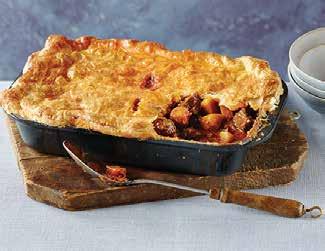
Beef Pot Pie
Ingredients
• 2 lb (1 kg) Ontario beef stewing cubes
• 1/2 cup (125 mL) all-purpose flour
• 1 tsp (5 mL) each salt and pepper
• 3 tbsp (45 mL) vegetable oil
• 2 Ontario onions, diced
• 3 Ontario carrots, diced
• 2 cloves Ontario garlic, minced
• 2 cups (500 mL) sodium-reduced beef broth
• 1-1/2 cups (300 mL) dark lager
• 1 can (5.5 oz/156 mL) tomato paste
• 2 tbsp (25 mL) Worcestershire sauce
• 1 tsp (5 mL) dried thyme leaves
• 1/4 tsp (1 mL) hot sauce
• 1 bay leaf
• 2 Ontario potatoes, peeled and diced
• 1 cup (250 mL) Ontario mushrooms, quartered
• 1 sheet (225 g) frozen butter puff pastry, thawed
• 1 Ontario egg yolk
Instructions
Combine beef, flour, salt and pepper, toss to coat beef well; set aside.
In large skillet, heat 1 tbsp (15 mL) of the oil over medium heat. Add onions and cook for 5 minutes, stirring often. Remove to Dutch oven. Increase heat to medium-high; add remaining oil. Brown beef in batches and add to onions; reserve flour. Add carrots and garlic to skillet; cook for 3 minutes over medium heat. Stir in reserved flour; cook for 1 minute. Add broth; bring to boil, stirring well. Stir in lager, tomato paste, Worcestershire, thyme, hot sauce and bay leaf; bring to boil, stirring occasionally. Pour over beef mixture; bring to boil. Cover and
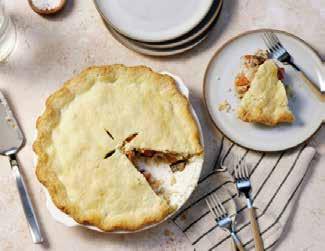
Savoury Vegetable Pie
Ingredients
• Pastry for double-crust 9-inch (23 cm) pie
Filling:
• 1 large Ontario parsnip, diced
• 1 large Ontario carrot, diced
• 1/2 cup (125 mL) chicken broth
• 2 tbsp (25 mL) butter
• 1 Ontario onion, chopped
• 1/2 lb (250 g) Ontario mushrooms, sliced
• 4 tsp (20 mL) all-purpose flour
• 1/2 cup (125 mL) 10% Ontario half-andhalf cream
• 1 tbsp (15 mL) brandy or apple cider vinegar
• 1/2 tsp (2 mL) salt
• 1/4 tsp (1 mL) each ground nutmeg and freshly ground pepper
Instructions
Roll out half of pastry and line 9-inch (23 cm) ceramic or glass pie plate.
Filling: In saucepan, boil parsnip and carrot in chicken broth for about 10 minutes or until tender; do not drain.
Meanwhile, in nonstick skillet, melt butter on medium-high heat. Add onion and mushrooms; cook, stirring, 5 minutes until most of the liquid has evaporated. Reduce heat to low. Stir in flour, then cream, brandy, salt, nutmeg and pepper; cook, stirring, for about 5 minutes, until thickened. Stir in parsnip mixture. Cool slightly. Spread filling into pastry-lined pie plate. Roll out remaining pastry and place over filling. Trim top edge of crust, leaving 1/2-inch (1 cm) overhang. Tuck overhang under bottom edge of the crust. Press together and flute edge. Cut several slashes as steam vents in top crust. Bake in lower third of 425ºF (220ºC) oven 25 to 30 minutes until filling is bubbling and pastry is browned. Cut into wedges to serve.
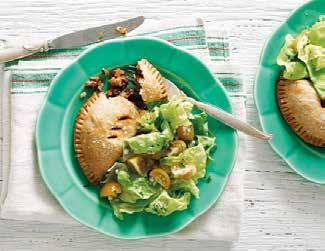
crumbled
• 1 cup (250 mL) sodium-reduced beef broth
• 2 tbsp (25 mL) tomato paste
• 2 tsp (10 mL) Worcestershire sauce
• 1 tsp (5 mL) Dijon mustard
• 1/2 tsp (2 mL) each salt and pepper
• 1 Ontario egg
• 1 pkg (400 g) ready-to-use refrigerated pie crusts
• Coarse salt (optional)
Instructions
Heat large nonstick skillet over medium-high heat. Add beef, onion, potato, carrot, parsnip and rosemary; cook stirring, breaking up beef with spoon, until beef is browned, about 8 minutes.
In medium bowl, whisk together broth, tomato paste, Worcestershire sauce, mustard, salt and pepper; stir into skillet and bring to boil. Reduce heat to medium-low, cover and simmer until vegetables are tender and mixture thickens, about 15 minutes. Mash mixture roughly with fork. Transfer to bowl; refrigerate to cool completely.
In small bowl, whisk egg with 2 tsp (10 mL) of water; set aside. On lightly floured surface, using 5-1/2-inch (14 cm) bowl, cut out 4 circles from each crust, rerolling scraps. Roll each circle into a 6-inch (15 cm) circle. Equally divide beef mixture onto one half of each circle, leaving a 1/2-inch (1 cm) edge. Brush edge with egg wash; fold dough over filling to enclose. Seal with fork. Cut slits on top; brush with egg wash. Sprinkle with coarse salt, if using. Place on large parchment paperlined baking sheet. Bake in 400°F (200°C) oven until golden brown, 15 to 20 minutes. Cool on wire rack for 5 minutes before serving.
TIP:
Freeze unbaked pies on baking sheet until firm. Transfer to freezer container; freeze up to 2 months. Bake from frozen, increasing baking time to 30 minutes or until golden.

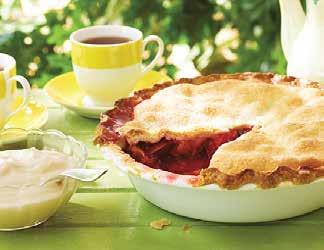
Strawberry and Rhubarb Pie
Ingredients
• 3 cups (750 mL) halved or thickly sliced Ontario strawberries
• 2 cups (500 mL) sliced 1-inch (2.5 cm) pieces Ontario rhubarb
• 3/4 cup (175 mL) granulated sugar
• 1/4 cup (50 mL) cornstarch
• 1 Ontario egg, lightly beaten
• Pastry for 9-inch (23 cm) double-crust pie
Instructions
In large bowl, combine strawberries and rhubarb. In small bowl, combine sugar and cornstarch; sprinkle over fruit, tossing gently to blend. Add beaten egg to fruit and mix lightly.
Spoon mixture into bottom crust. Fit pastry over filling. Crimp edges, cut steam vent in centre. Place on baking sheet and bake in 450°F (230°C) oven for 15 minutes. Reduce temperature to 350°F (180°C) and bake 35 to 40 minutes or until pastry is golden and filling is bubbly.
Tip: Serve warm with ice cream if desired.
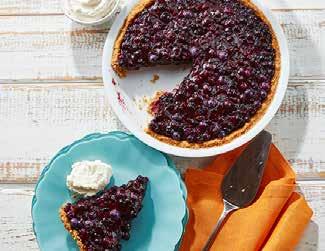
Blueberry Pie with Ginger Crust
Ingredients
Crust:
• 1-1/2 cups (375 mL) gingersnap cookie crumbs
• 2 tbsp (25 mL) granulated sugar
• 1/4 cup (50 mL) butter or margarine, melted
Filling:
• 2-1/2 tbsp (32 mL) cornstarch
• 2 tbsp (25 mL) cold water
• 1/2 cup (125 mL) granulated sugar
• 4 cups (1 L) Ontario blueberries
• 1 tbsp (15 mL) fresh lemon juice
Maple Whipped Cream:
• 1/2 cup (125 mL) 35% Ontario whipping cream
• 2 tbsp (25 mL) Ontario maple syrup
Instructions
Crust: In small bowl, combine cookie crumbs with sugar; stir in butter until moistened. Press evenly onto bottom and up sides of 9-inch (23 cm) pie plate. Bake in 375°F (190°C) oven for 8 minutes. Let cool on rack.
Filling: In medium saucepan, mix cornstarch with water. Add sugar and 1-1/2 cups (375 mL) of the blueberries; bring to boil over medium-high heat, stirring constantly. Boil, stirring, for 1 to 2 minutes, until very thick and clear. Remove from heat; stir in remaining blueberries and lemon juice. Pour into pie crust. Refrigerate for at least 2 hours, until set or for up to 1 day. Serve with Maple Whipped Cream.
Maple Whipped Cream: In chilled bowl, whip cream with maple syrup until stiff. Cover and store in refrigerator, until serving, for up to 4 hours.
Ingredients
• 6 cups (1.5 L) quartered pitted Ontario blue plums (about 20)
• 1/4 cup (50 mL) cornstarch
• 1/2 tsp (2 mL) ground cinnamon
• 1/2 cup (125 mL) Ontario maple syrup
• Pastry for single-crust 9 inch (23 cm) pie shell
• Milk and granulated sugar (optional)
Maple Crème Fraiche:
• 1 cup (250 mL) crème fraîche
• 1/4 cup (50 mL) Ontario maple syrup
Instructions
In large bowl, toss plums with cornstarch and cinnamon. Place plum mixture in 9-inch (23 cm) buttered deep-dish pie plate. Pour maple syrup over fruit.
On lightly floured surface, roll out pastry into circle 1-inch (2.5 cm) wider than top of pie plate. Place over plums; tuck overhang under and crimp edges. Cut slits in top of pastry for steam to escape. Brush with milk and sprinkle with sugar, if desired.
Bake on baking sheet in 400°F (200°C) oven 40 to 45 minutes or until filling is bubbling and crust is golden brown; cool.
Maple Crème Fraîche:
In small bowl, combine crème fraîche and maple syrup.
Kelle Neufeld takes over from longtime general manager Glenna Cairnie
By Grant Haven Media Staff
One of the province’s largest agricultural events will have a new person at the head of the organization later this spring.
The Ontario Fruit and Vegetable Convention announced Kelle Neufeld will be installed as general manager as of May 1. Neufeld takes over from Glenna Cairnie, who’s retiring.
“Kelle brings a blend of agricultural experience and proven strengths in event planning, program delivery, and organizational leadership. Her skill set makes her an excellent fit for OFVC, and we are confident she will play a key role in supporting the conference’s continued success and growth,” said OFVC board president Kelly Ciceran.
An OFVC press release announcing the new hire said Neufeld comes with more than 12 years experience in the agricultural sector. Within that experience she’s worked with commodity boards and built relationships with growers, government and industry partners.
“Having worked alongside growers for many years, I understand how important it is to create opportunities for learning, connection, and collaboration. As general manager, I’m excited to help build on OFVC’s strong foundation of delivering a high-quality event that reflects the strength and innovation of our industry” said Neufeld.
This year’s convention was once again held in February at the Niagara Falls Convention Centre. The event features a full two days, with a bustling trade show and education sessions throughout, along with a few specialty and networking events.
For more information visit ofvc.ca.

By Luke Edwards
An icon in the Ontario grape and wine industry will be honoured by the Ontario Agricultural Hall of Fame later this year.
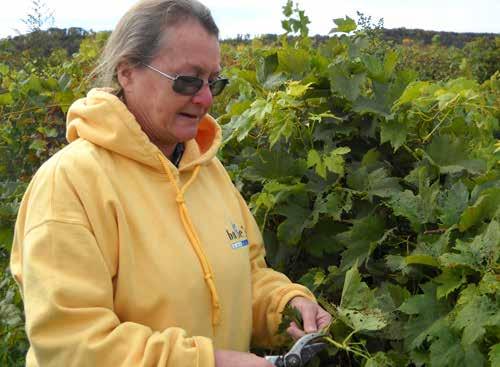
Helen Fisher, who was known by many as the “Grape Doctor,” is one of five 2026 inductees to the hall of fame. British born, Fisher grew up in St. Catharines and would be in the thick of it as Ontario transitioned to vinifera vines. Her induction to the hall of fame comes alongside Canadian Senator Rob Black, Scott Graham, Percy Hodgetts, and Brian O’Connor.
“Helen was passionate about the grape and wine industry and this passion was exemplified in her applied research projects,” said Wendy McFadden-Smith, who nominated Fisher alongside Arthur and Marlene Moyer, and Ronald Moyer Ltd.
“Her extensive list of protegees, several of whom hold lofty positions in academia and the grape and wine industry, is her true legacy. She was a true character and my friend and my colleague and I miss her dearly.”
Fisher was a researcher at the Horticultural Research Institute of Ontario and later associate professor at the University of Guelph.
“Her achievements in applied research provided growers with practical, science-based solutions for critical challenges,” said a release announcing this year’s winners. Those achievements include the use of wind machines to mitigate cold injury, the development of trellising systems to enhance yields, and expertise in rootstock selection.
As an educator she helped develop many future winemakers and vineyard managers, supporting many of today’s grape and wine leaders.
She was also the first woman appointed to Ontario’s provincial agricultural field advisory service.
During her career, Fisher released two grape varieties, a semi-seedless table grape called Vanessa and a white wine grape called Vivant.
Fisher died last spring, just after her 77th birthday. An obituary written by McFadden-Smith described her as being more interested in conducting field research and helping growers than she was in publishing papers.
“She was happier in the bottom of a soil pit, explaining the different horizons, or striding through a vineyard looking at vines, than she ever was doing paperwork,” McFadden-Smith wrote.
However, her work received widespread acclaim. She received the Niagara Peninsula Fruit and Vegetable Growers Association Award of Merit in 2009, the American Society of Enology and Viticulture Eastern Section’s Lifetime Achievement Award in 2013 and the VQA Lifetime Achievement Award in 2019. Jennifer
Wilhelm included a chapter on Fisher in her book Sharing a Glass: Inspirational Memoirs & Memories of the Women Who Shaped Ontario’s Grape & Wine Industry.
McFadden-Smith described her as “a feminist without the bra-burning” and that as a female pioneer in a male-dominated field she “was an inspiration to many young women pursuing careers in agriculture.”
As a teacher, she was tough but fair and invested in her students, McFadden-Smith said.
“Helen’s joy of knowledge was contagious and inspired her many students. Who else could make ‘dirt’ interesting?” she said.
Fisher isn’t the only inductee with Niagara ties. Hodgetts was known as the “father of Ontario’s modern fruit industry” and helped establish the Horticultural Experimental Station in Vineland.
He advanced cooperative marketing, standardized box packing, cold-storage infrastructure and the “Big O” brand.
Hodgetts launched demonstration trains, packing schools and field programs to extend knowledge directly to growers.
He died in 1966.
Here are the other three inductees for 2026: Rob Black - A senator since 2018, Black is known for his advocacy of Canadian agriculture. He’s chair of the Senate Standing Committee on Agriculture and Forestry, and helped establish Food Day in Canada and led a major soil study called “Critical Ground: Why Soil is Essential to Canada’s Economic, Environmental, Human, and Social Health.”

Black’s also been involved with 4-H, Rural Ontario Institute and the Advanced Agricultural Leadership Program.
Scott Graham - Well known in the egg sector, Graham is a former chair of the Egg Farmers of Ontario. He played a significant role in the Quota Transfer System and helped with the creation of the Consumer Choice Program, a forerunner to the Egg Quality Assurance program.
He’s also a supporter of innovations like the Hyper-eye project.
Graham has helped address global food insecurity issues by building sustainable poultry operations in Africa and helping to create the Food Bank Egg Donation program.
He’s been a staunch support of the supply management system.
Brian O’Connor - The founding general manager of EastGen is known for his work in advancing cattle genetics. He also played a key leadership role during the BSE crisis, establishing Gencor Foods meat plant and spearheading the revival of Thornloe Cheese, actions that safeguarded vital processing capacity and local jobs.
He’s been an advocate for the next generation, founding the Canadian Intercollegiate Judging Competition during his own university days. It’s a competition now over 40 years old. O’Connor also enhanced EastGen youth events. The 2026 induction ceremony will take place on Sunday, June 14 at the Grand Way Event Centre in Elora. Tickets are on sale, and can be purchased by going to oahf.on.ca.

By Ann Marie Chechalk
Welcome to presidency!
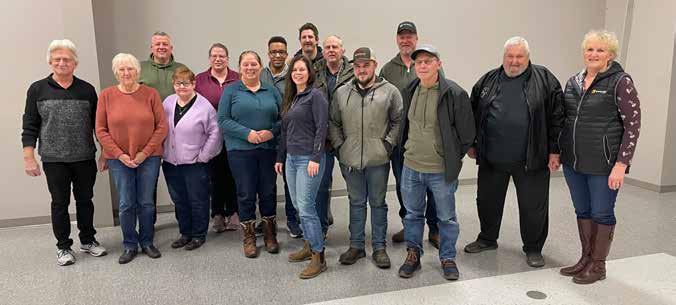
At the annual general meeting held in January, Renate McGillivray was elected as the new president of the West Niagara Agricultural Society.
While new to the presidency job, McGillivray has been volunteering and fundraising for the ag society for many years at the West Niagara Fairgrounds.
“To the best of my recollection,” said Renate, “my initial engagement with WNAS occurred in September 2017. There was a phone call, asking if I would run the horse show at the fair. This resulted in fundraising to expand the outdoor riding ring and improving the footing and constructing a new warm up ring and buying mats for the new livestock building. A saddle club, The West Niagara Saddle Club was established and the Finest Niagara Horse Showcase came into existence.”
Beyond the saddle club, McGillivray was appointed a director and later second vice president on the executive, where she spent four years.
“I believe it is necessary for all directors of the fair board to assume a turn in leadership re-
sponsibilities. It is unrealistic to expect a single individual to fill this role for an extended period of time.”
“My main goal is to make sure our society is sustainable for the future. I’m excited to invite our members and directors to all work together to make this goal a reality. We always need more volunteers to help us out, and I am hopeful with
the support of all the volunteers, past and new, we can make the work load easier to manage. We are working on implementing systems to make things run even smoother.”
“My goal,” says McGillivray “is let’s work together and be part of the solution and make a positive difference in our community.”
By Ann Marie Chechalk
Several volunteers, for the first time, from the Wainfleet Fall Fair recently attended the Ontario Association of Agricultural Societies held from Feb. 19 to 21, in Richmond Hill.
Sharon McMillan, a resident of Wainfleet and quite new volunteer to the fair explains, “OAAS is the provincial body that oversees the more than 212 ag societies in Ontario. At the convention we were able to listen to excellent speakers, both keynote and individual, learn of new approaches to old issues, new programs the OAAS is starting and various government funded programs.”
“Attending the conference gave us opportunities to learn, network with other ag societies, see what everyone is facing and their solutions, have a refreshing break to meet and chat with likeminded folks passionate about agriculture,” said McMillan. “There are some ag societies that have no fairgrounds and do not put on an actual fair, in WainFleet we also do not own the land where we have our fair so we have many of the same concerns and issues.”
McMillan said she was very excited about the You Make the Difference program that was recently rolled out.
“Many of the ideas about recruiting and retaining volunteers, especially the young. I was able to speak to many young folks and get some really great ideas on how to recruit for a junior board,” she said.


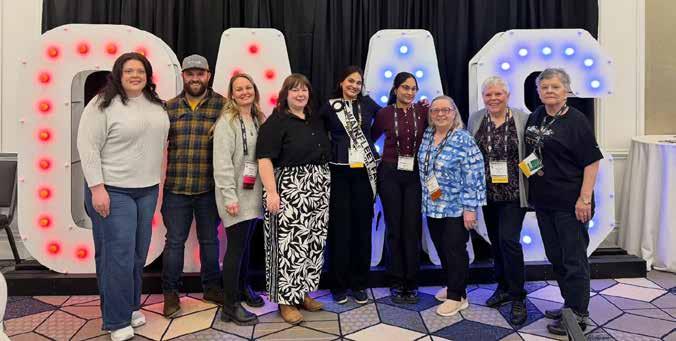
Members of the Wainfleet Fair Board attend the Ontario Agricultural Association Society AGM and conference. ~ Submitted photo
“We are gaining some new volunteers as new folks move into the township and want to be involved in their ‘hometown.’ They have great memories of the Wainfleet fair and want the same memories for their children.”
“To encourage all to come out to the fair and get involved we are thinking outside the box, returning some old favourites, and trying new, kid’s tractor pulls, car show. This is our first year WAS has had an ambassador. Jessica Kumar is a lovely, capable and very smart young woman.
We are extremely fortunate to have her as our 2025-2026 ambassador. We hope you get to meet her as she attends the many events in the area.”
Anyone wishing to volunteer with the Wainfleet fair can contact Jennifer Sutton at jen. sutton@live.com.
Anyone needing information regarding grants, awards, fair service providers, judges or a list of dates and fairs all over Ontario can be found on the OAAS website.


March is a month of transition, with the time changing early in the month and the equinox later on. Weather wise, it can be one of the wackier months, alternating between rain, snow, and warm summer sunshine…all in the span of a day or two. As growers get ready for the season ahead, there are a few ag activities for people to enjoy, learn something interesting, or get up to speed on various sectors. Here’s a rundown of a few events coming up in the area.

MARCH 11, 18 & 25
MARCH 24
26
There are three remaining presentations in Brock University’s CCOVI Lecture Series. Those in the grape and wine industry, as well members of the general public are invited to take in any of the presentations. They take place Wednesdays beginning at 1 p.m. in the Mackenzie Chown Complex, room H313 at Brock. Remaining presenters include: March 11 - Liette Vasseur discussing vineyards as biodiverse ecosystems for sustainability; March 18 - George Van der Merwe discussing Saccharomyces yeast and fermentation; March 25 - Antonia Mantonakis discussing how words shape wine, the secret psychology behind vowels and taste. For more information visit brocku.ca/ccovi.
A major annual event put on by the Grain Farmers of Ontario is moving to Niagara in 2026. The March Classic features a host of celebrity guest speakers in a full day of presentations at the Niagara Falls Convention Centre. Confirmed presenters include Arlene Dickinson, Catherine Murray, Eric Termuende and George Stroumboulopoulos. Colin Mochrie and Deb McGrath will also be on hand to keep the crowd entertained. Registration is open. More details can be found online at gfo.ca/march-classic

The Ontario Tender Fruit Growers will be holding their annual general meeting on Thursday, March 26 at the Hilton Garden Inn on York Road in Niagara-on-the-Lake The day will run from 9:30 a.m. to around 1:30 p.m., and includes district 1, 2 and 5 grower committee elections. Guest speakers for the day include John Cline, professor of pomology and tree fruit physiology at the University of Guelph. He’ll discuss research on ACC thinner for peach and plum trees. Rachael Leblanc and Michael Pautler, from Vineland Research and Innovation Centre, will also present on the results of their 2025 new variety trials and scouting activities. Pre-registration is required. Email sarah@ontariotenderfruit.ca to register.
Spring may seem like a long way off, but it’s never too early to start planning for the gardening season and Seedy Saturday events can help greenthumbs do just that. Locally, there’s one more Seedy Saturday planned for later this spring: April 11Caledonia, from 9:30 a.m. to 2:30 p.m. at the Caledonia Fairgrounds.