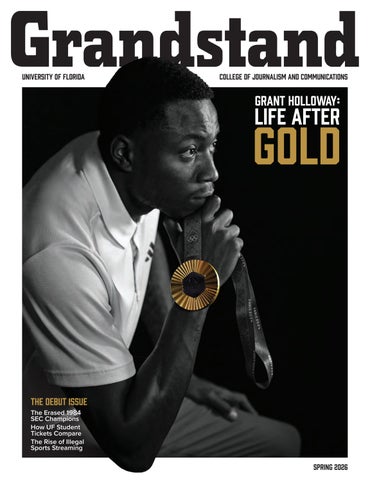
How UF Student Tickets Compare The Rise of Illegal Sports Streaming
Illustration: Daniela Ortiz | Grandstand Magazine
THE SHADOW OF GOLD
After reaching the pinnacle of his sport, Grant Holloway struggled with an unexpected hurdle.
By Shelby Hickman
HERE’S THE TICKET
How do UF student football tickets compare to other schools?
By Kevin Perez
FOR MIA ARE YOU PAYING FOR THAT?
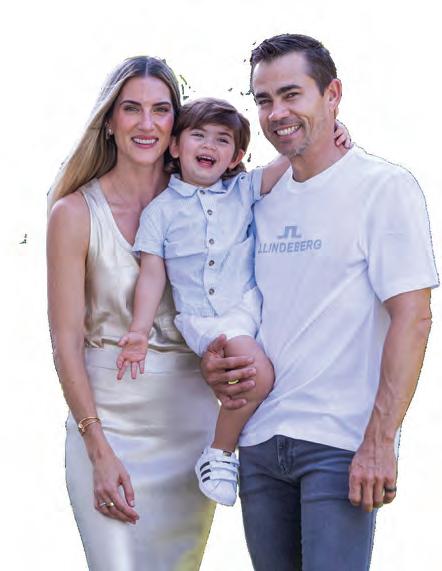
After the tragic loss of his daughter, Camilo Villegas is turning grief into hope.
By Liana Handler
As the cost to watch live sports from home continues to rise, illegal streaming has never been bigger.
By Sam Zimmermann
POSITIVE VIBES ONLY VACATED: THE ERASED SEC CHAMPIONS It may be hypercompetitive, but no sport is more supportive than gymnastics.
By Noah White
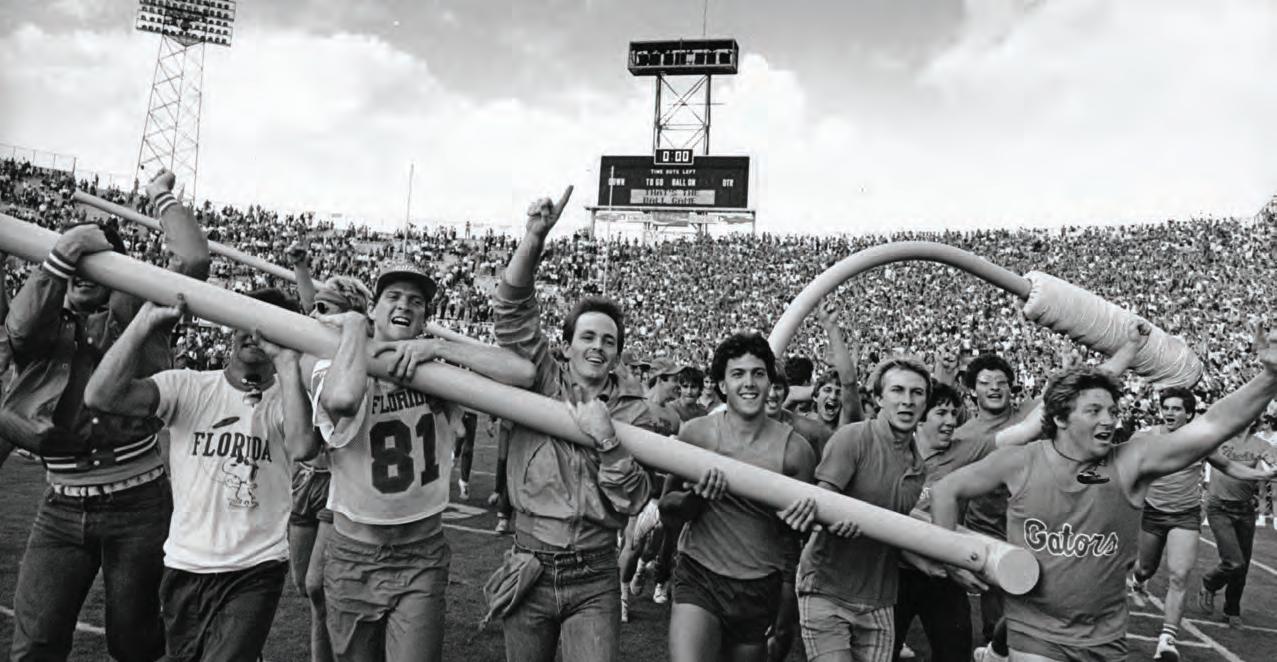
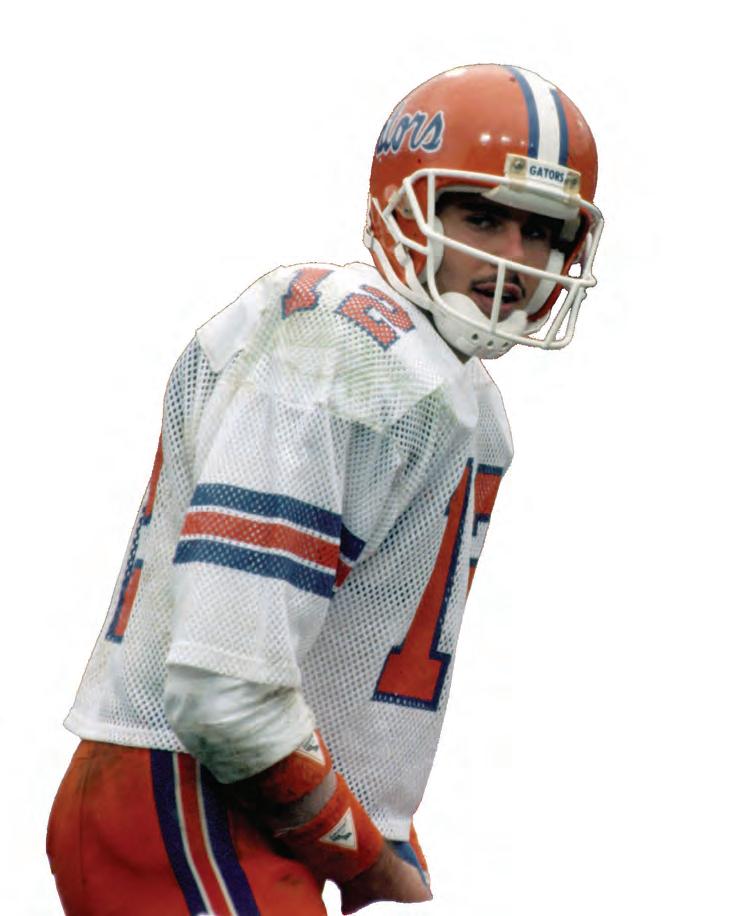
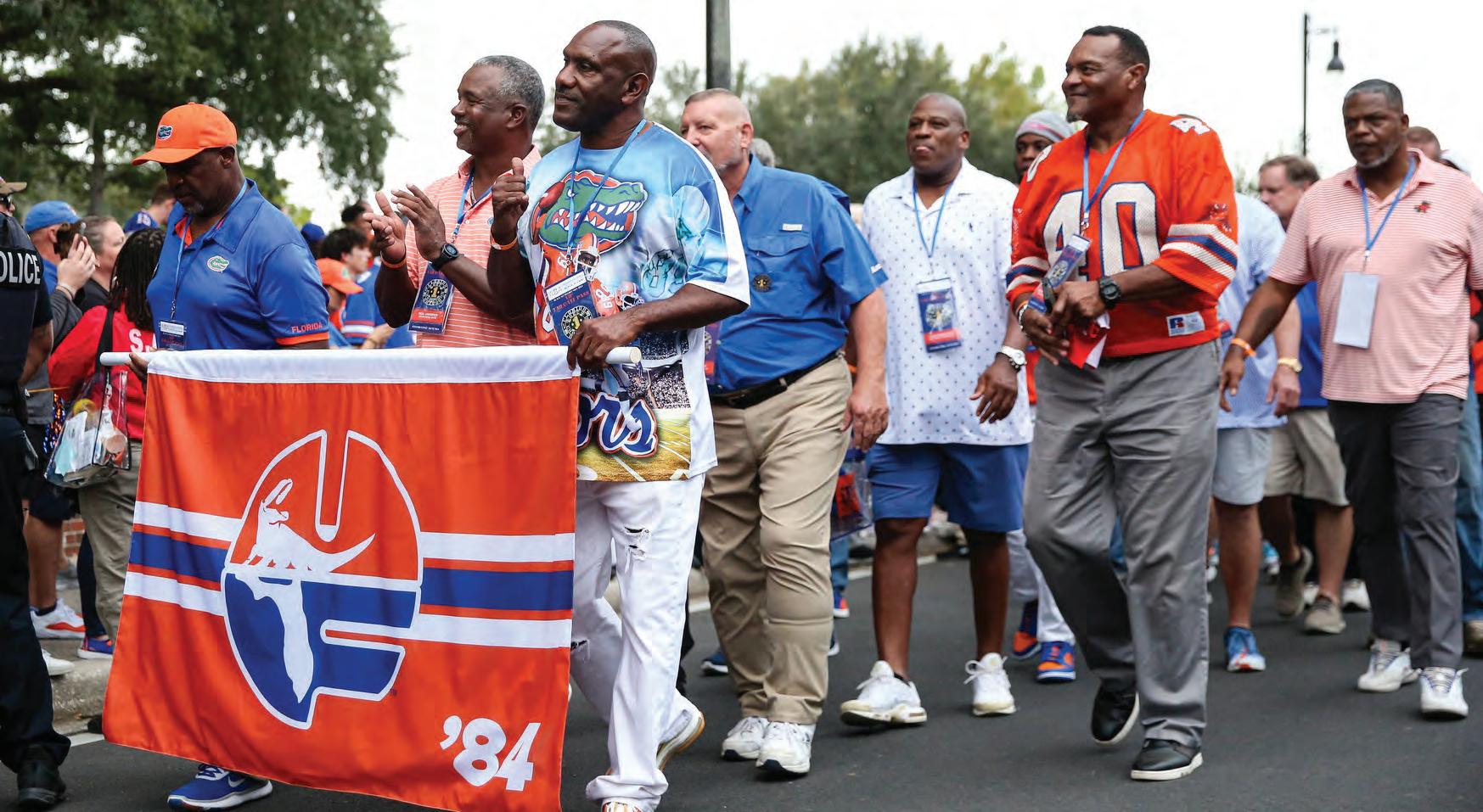
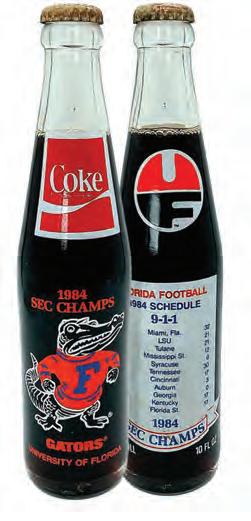
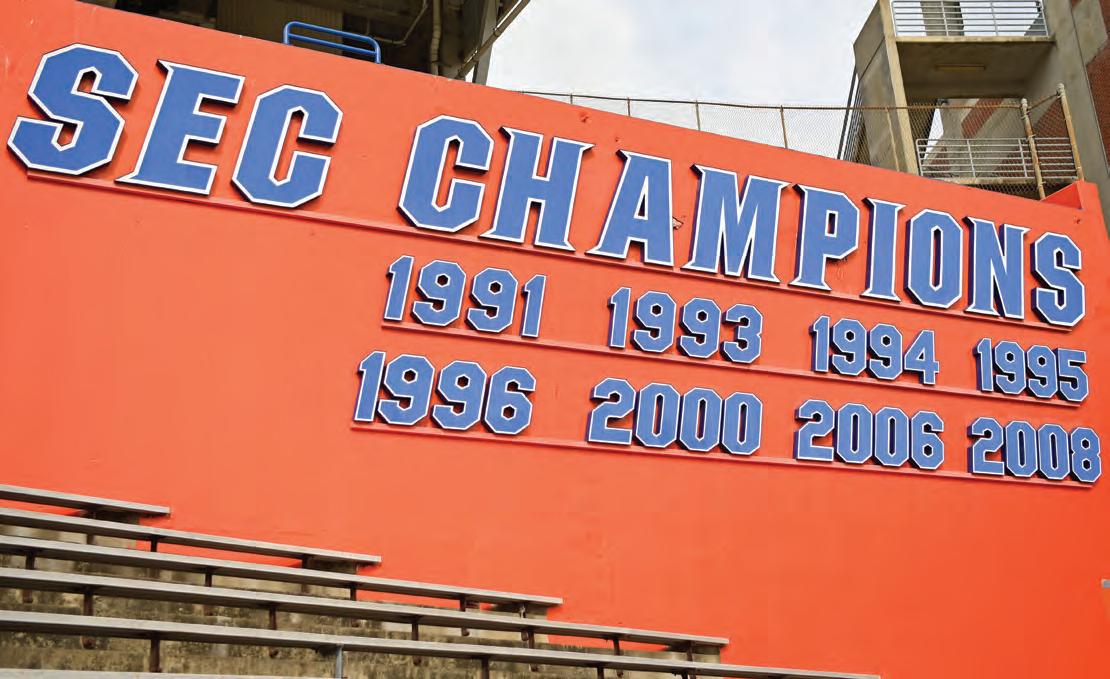
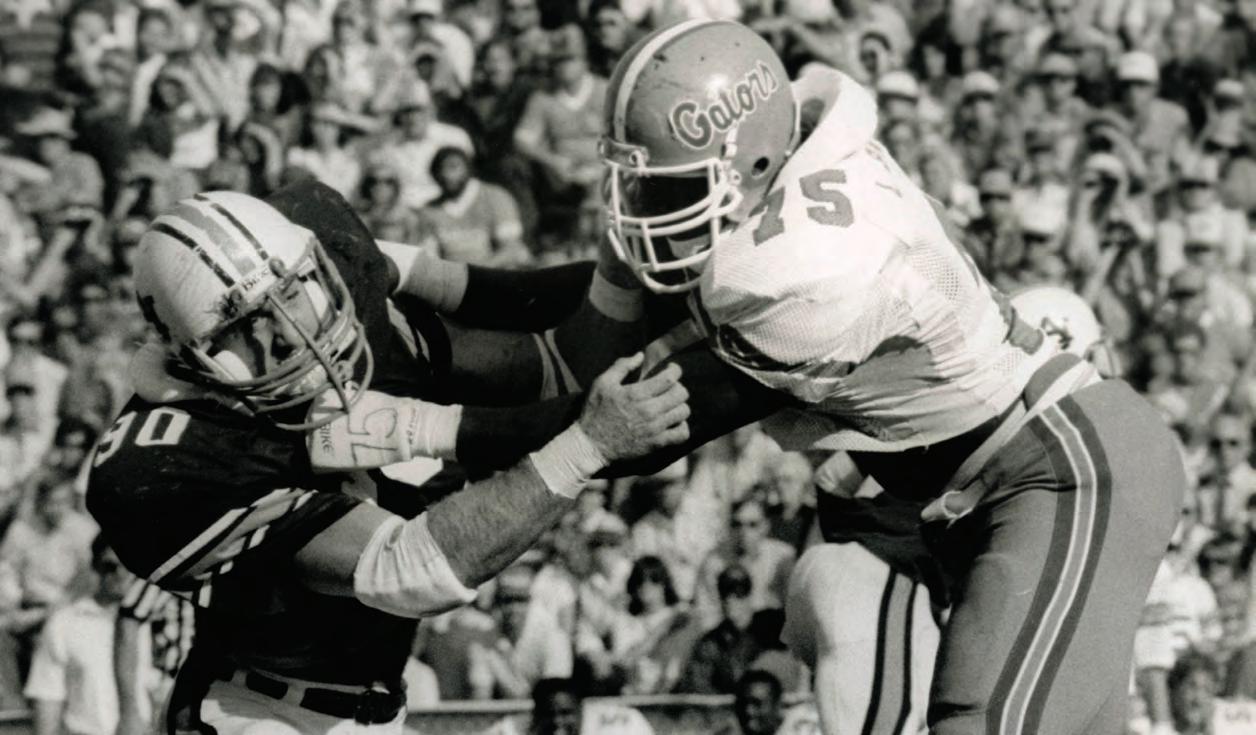
Four decades later, the sting of a title that was taken away still lingers for the 1984 Gators football team.
By
Lily Perkins
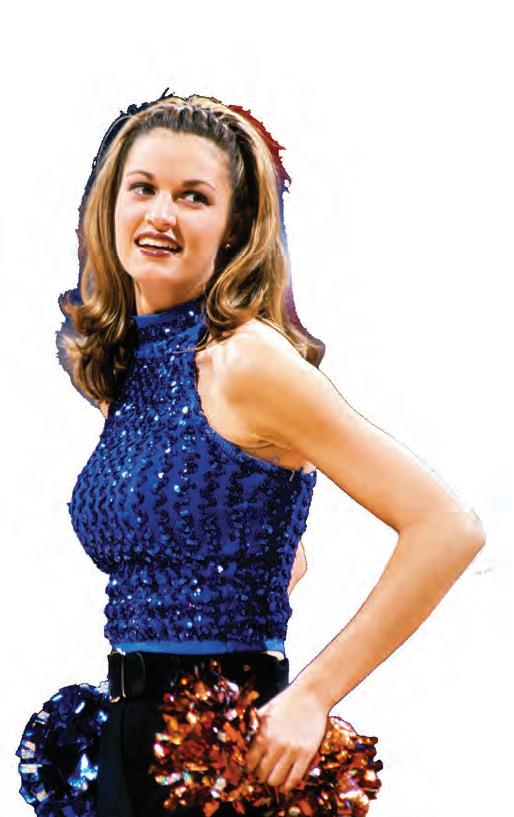
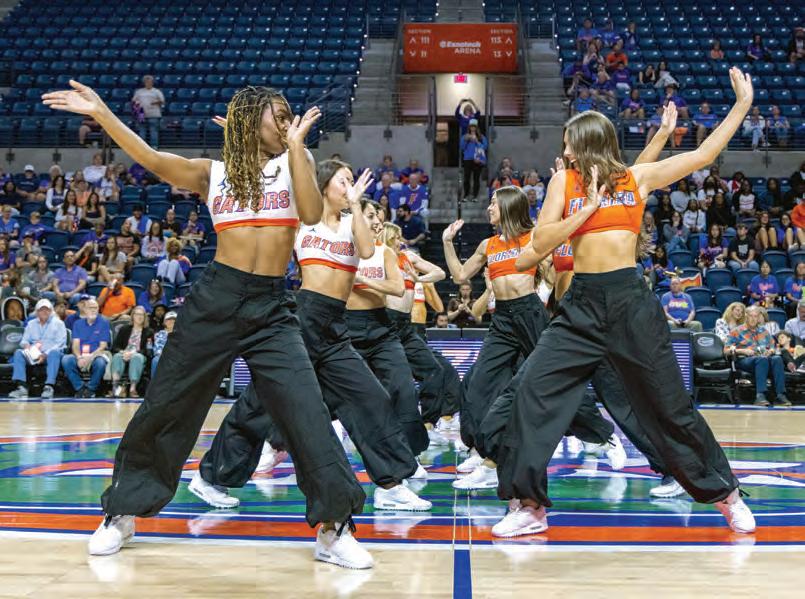
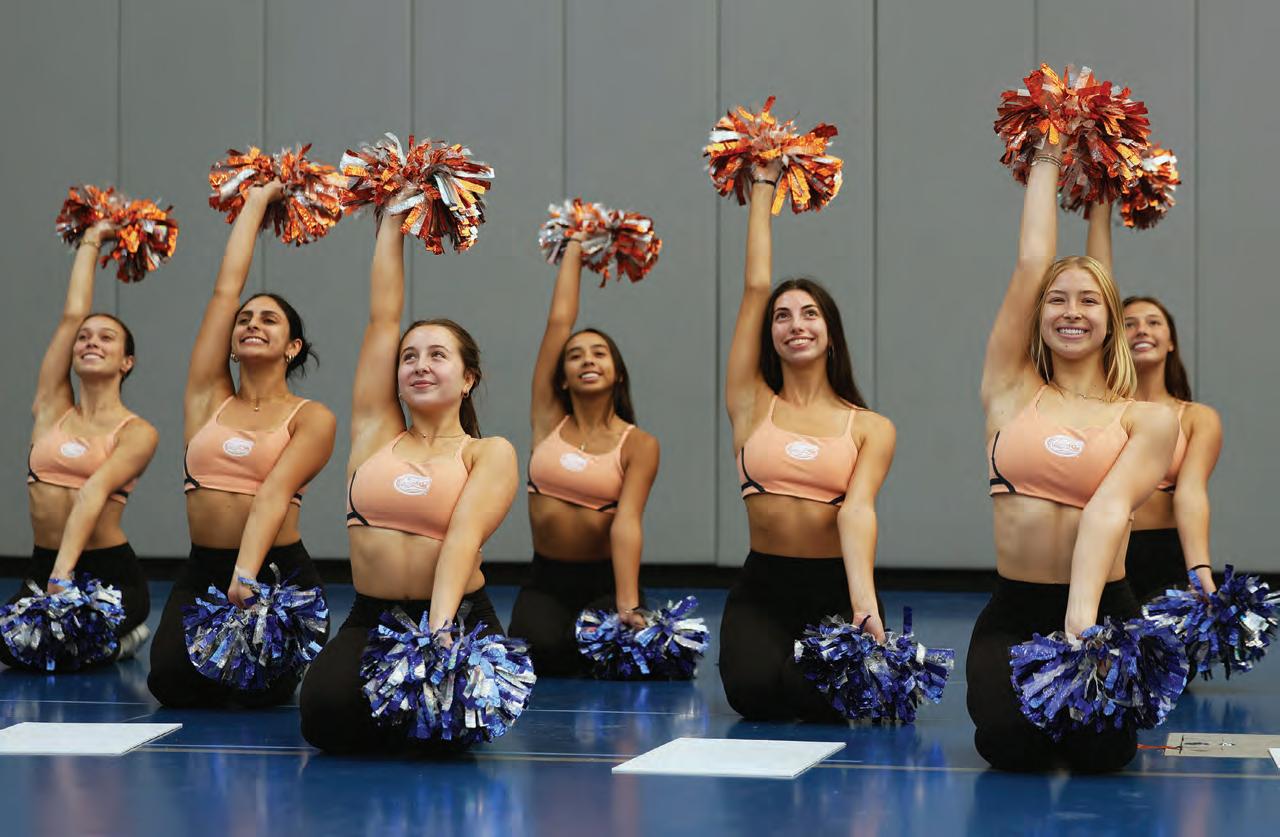
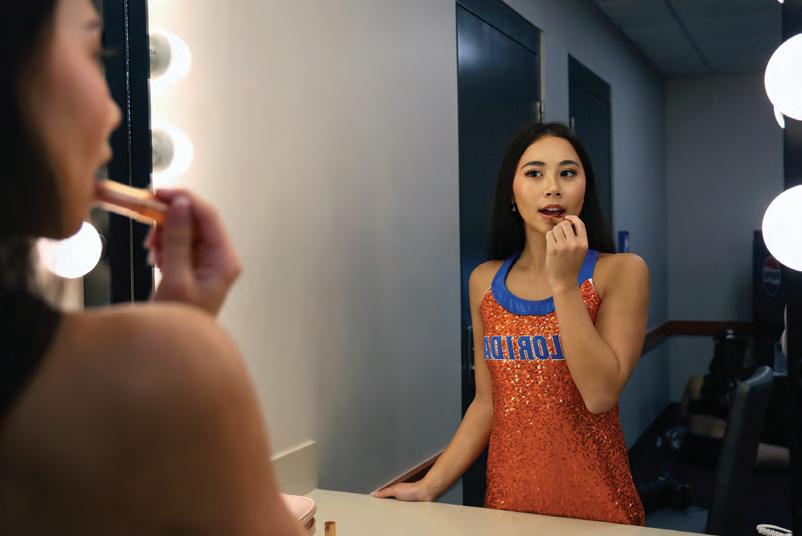
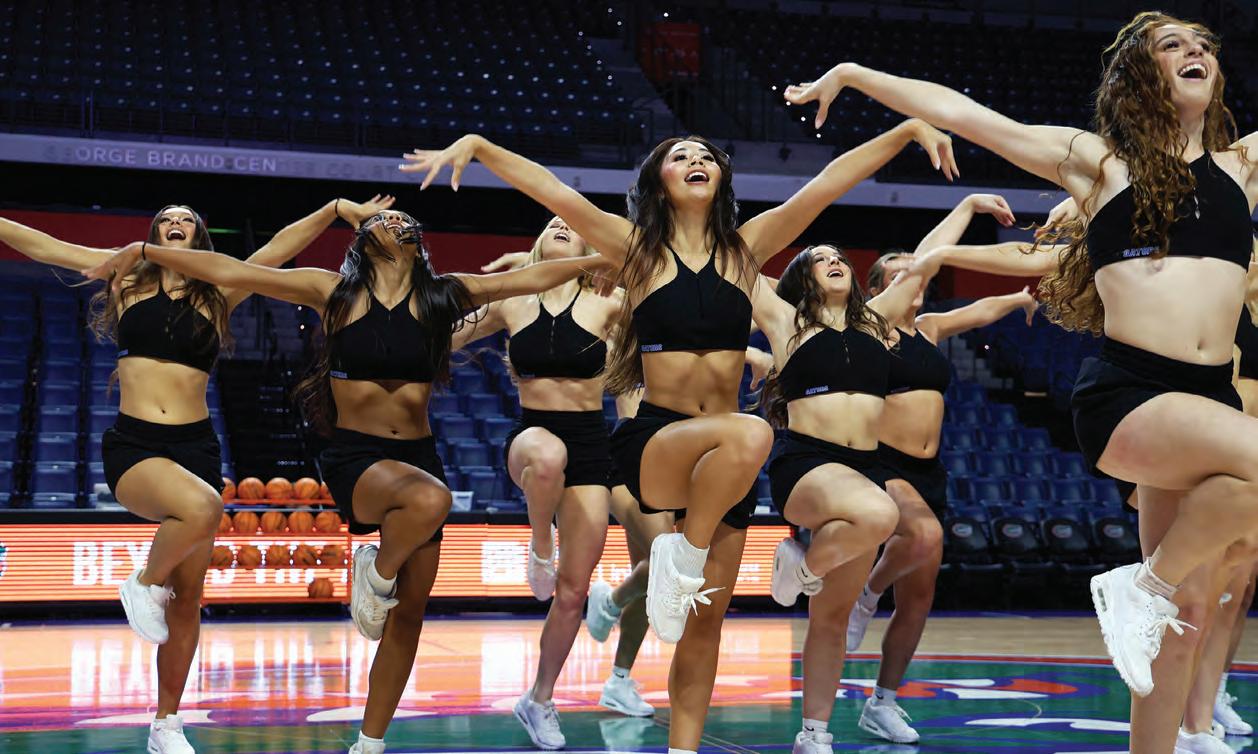
THE LIFE OF A DAZZLER GOING GLOBAL
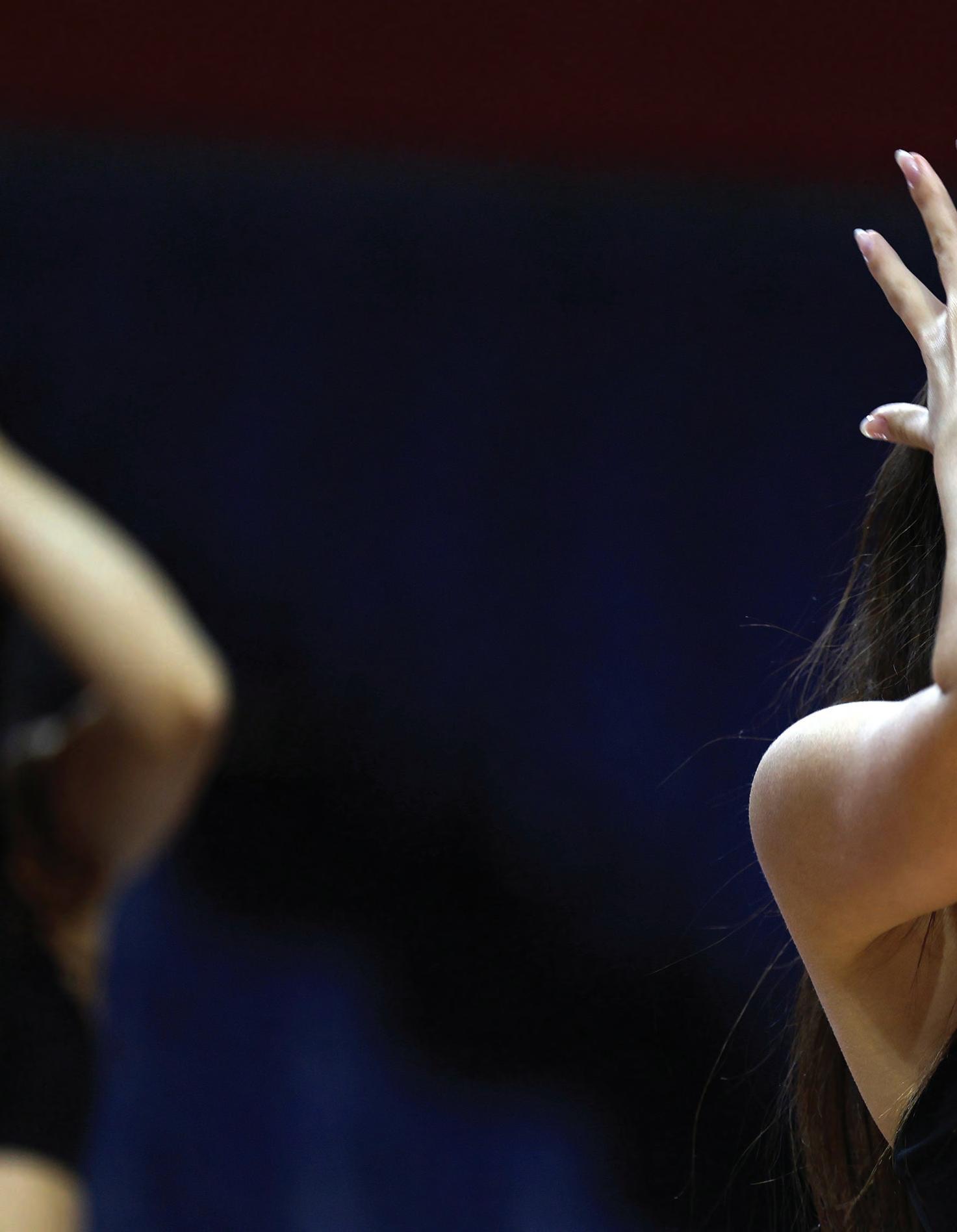
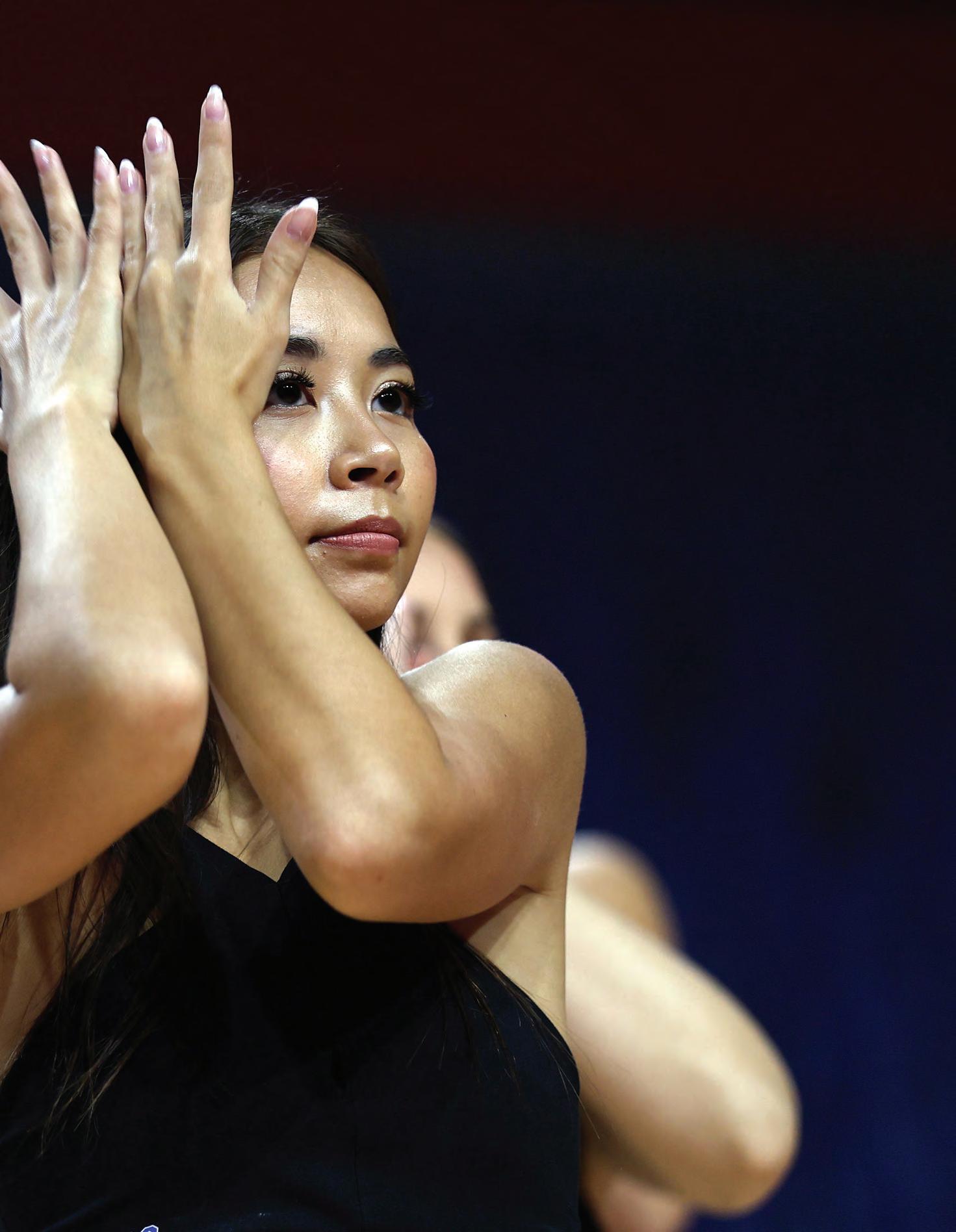
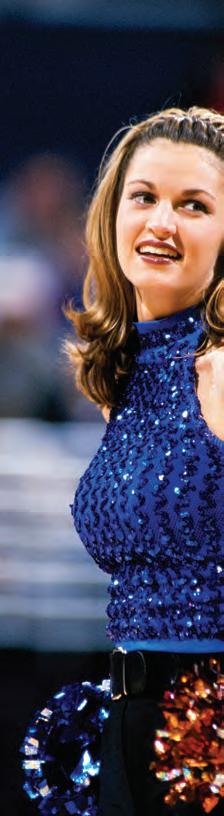
They’re never without a smile and always in lockstep. And they have to be ready for anything.
By Brooke Bastedo
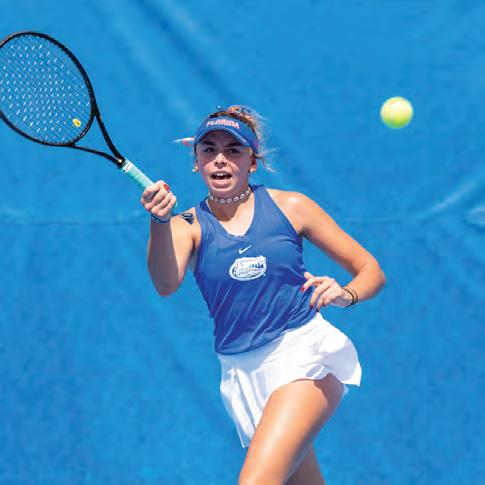
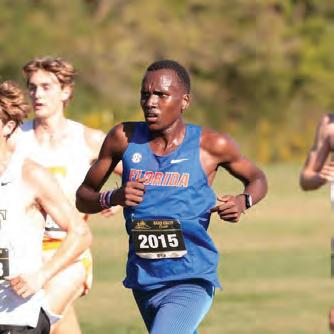
In almost every sport, Florida has to scout all corners of the world to find talent and stay competitive.
By Curan Ahern
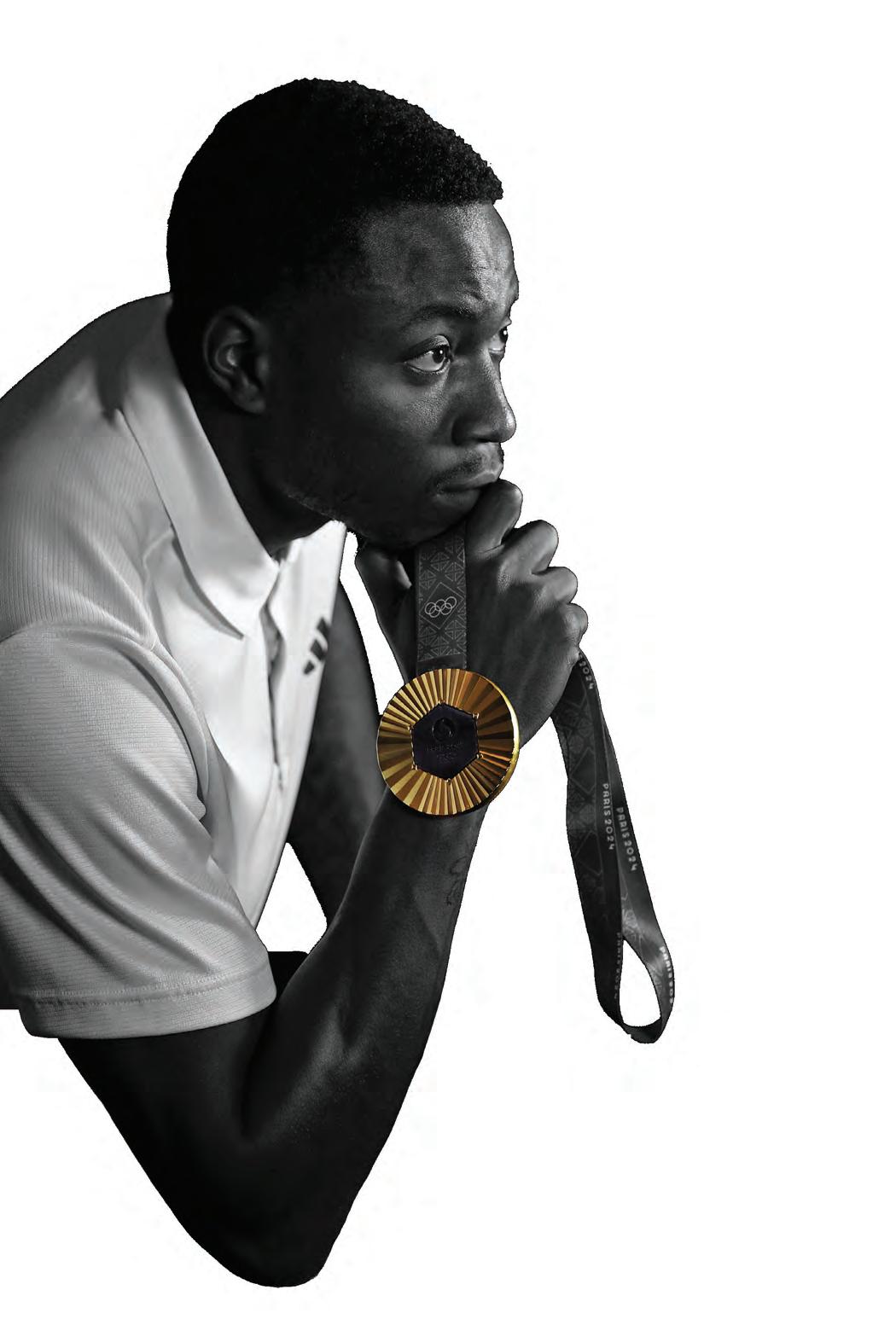
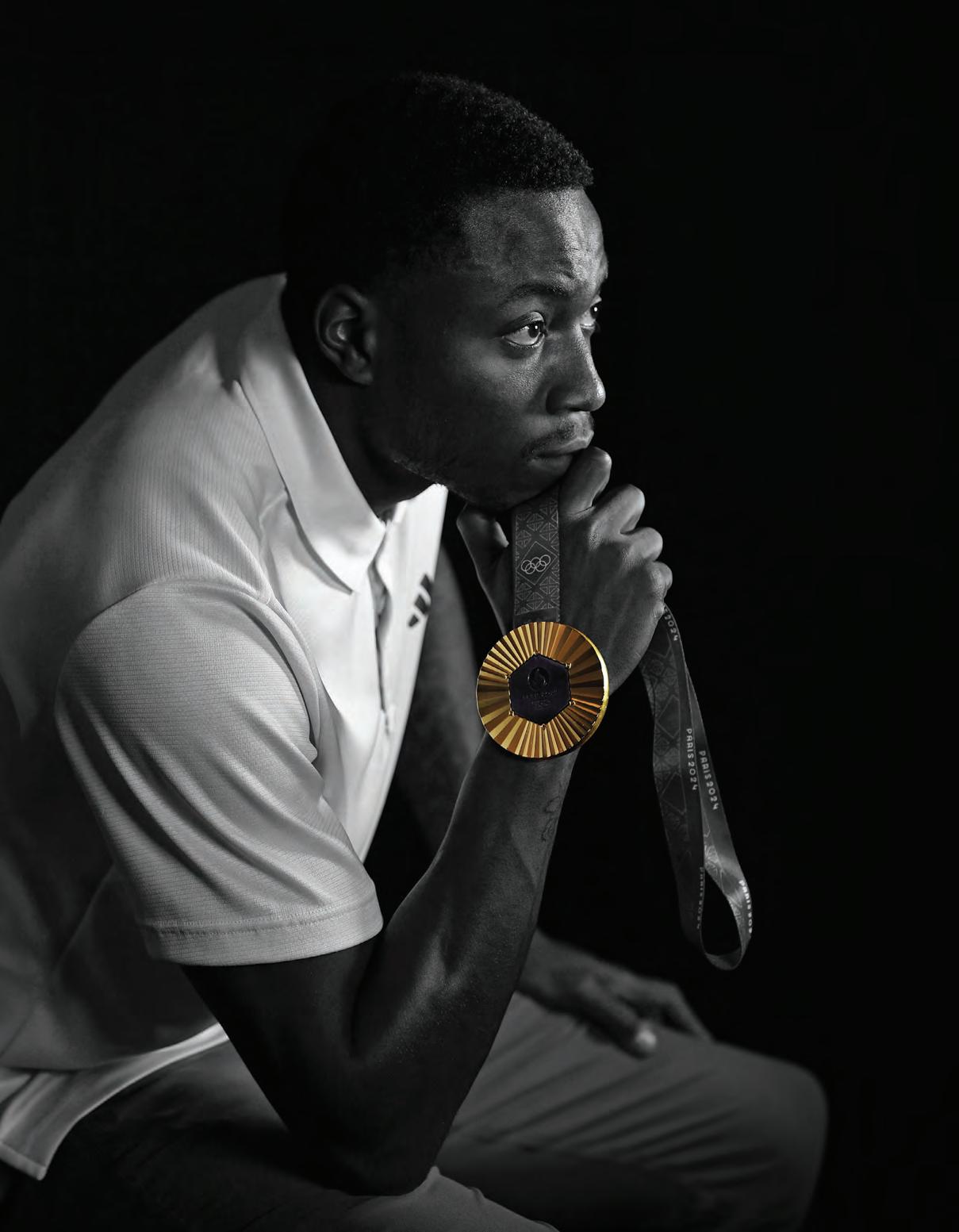
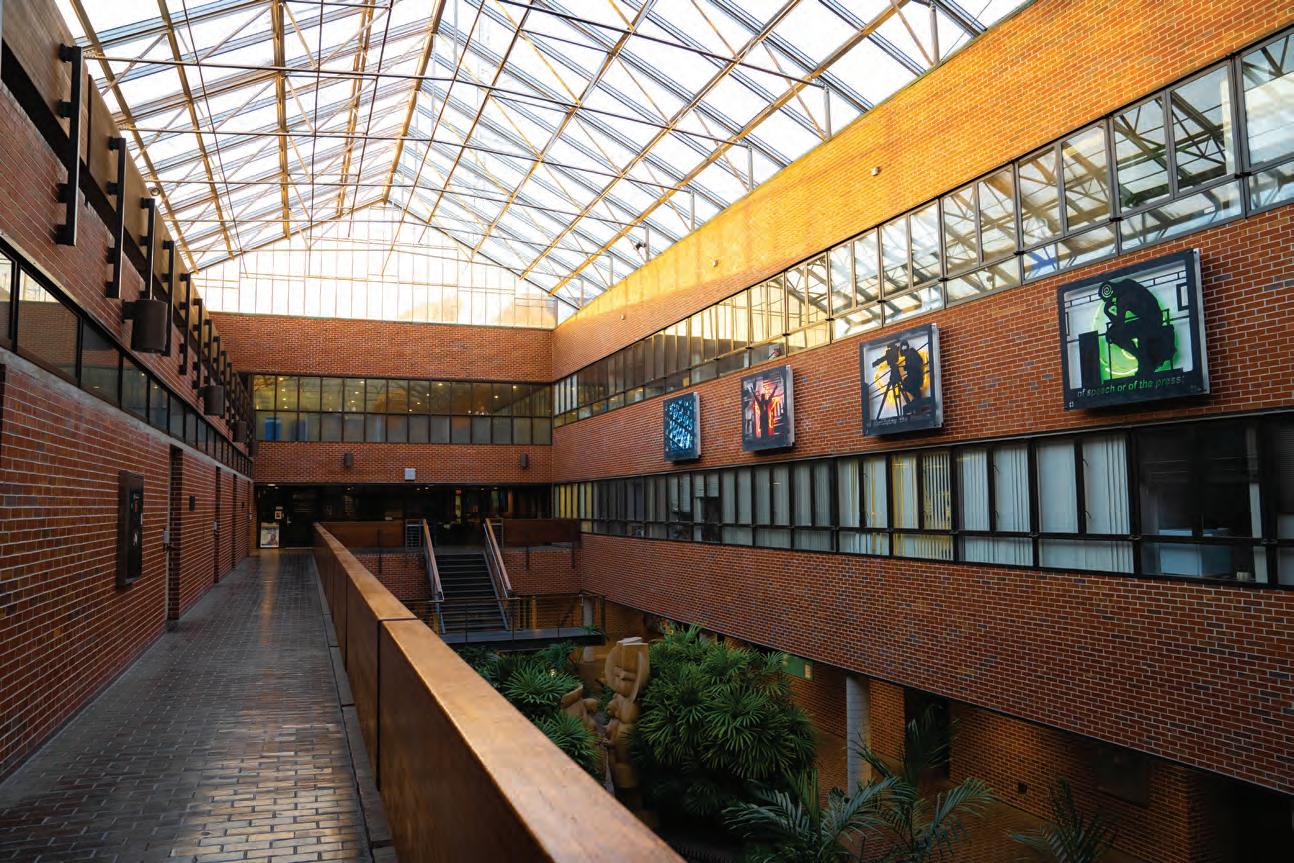
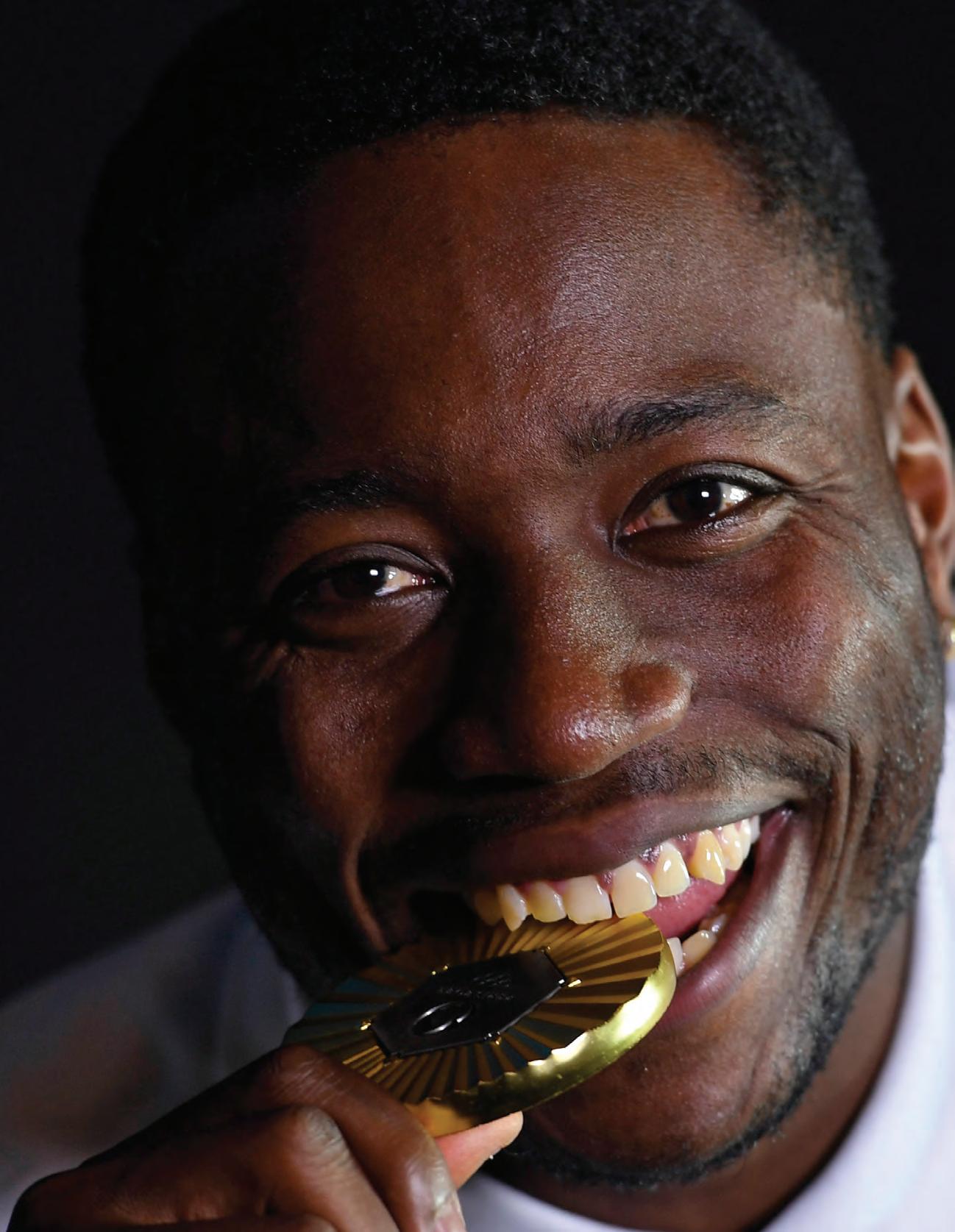
Grant Holloway, photographed in Weimer Hall, Feb. 17, 2026
Photo: Matthew Lewis
All My Rowdy Friends
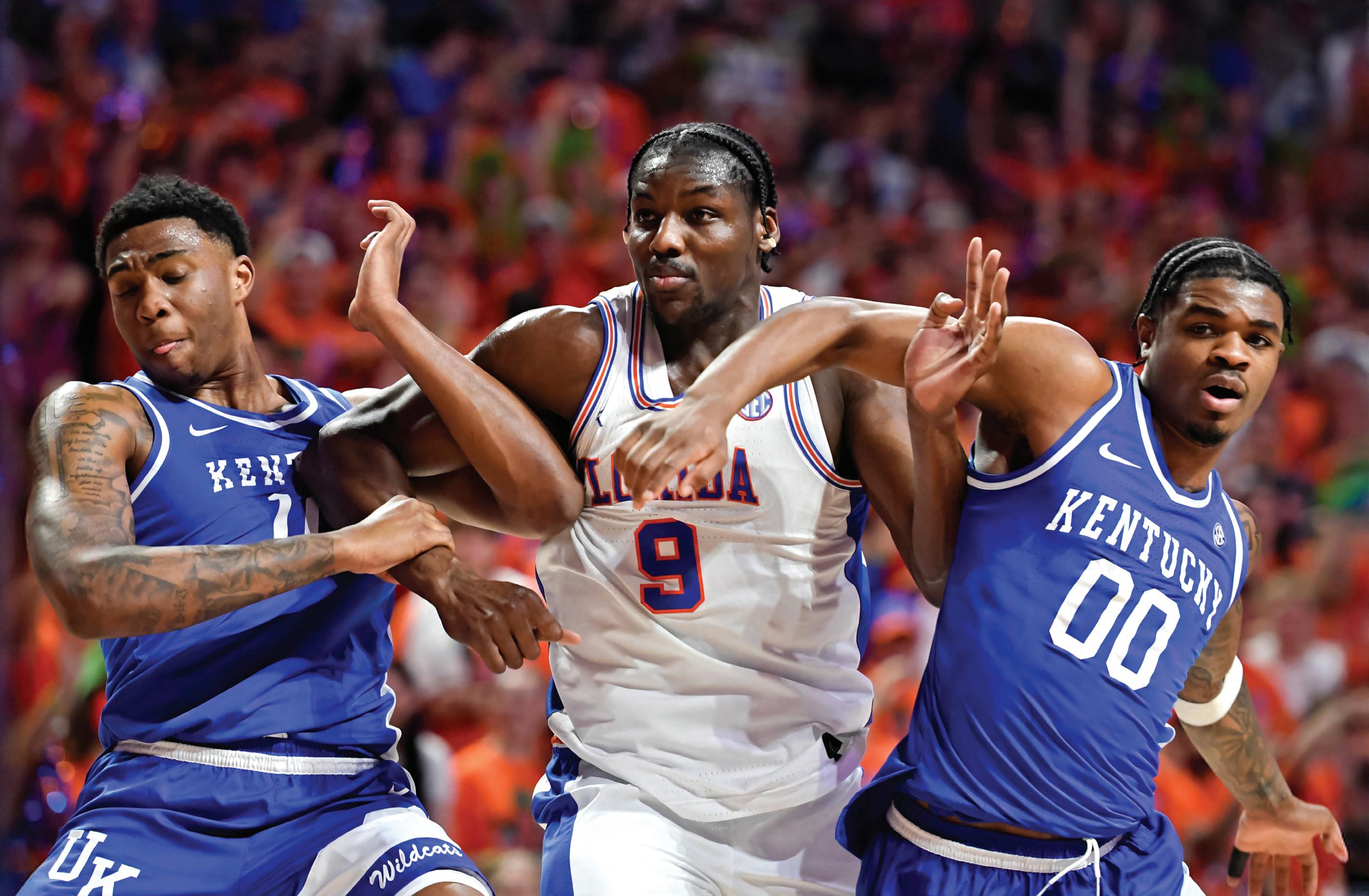
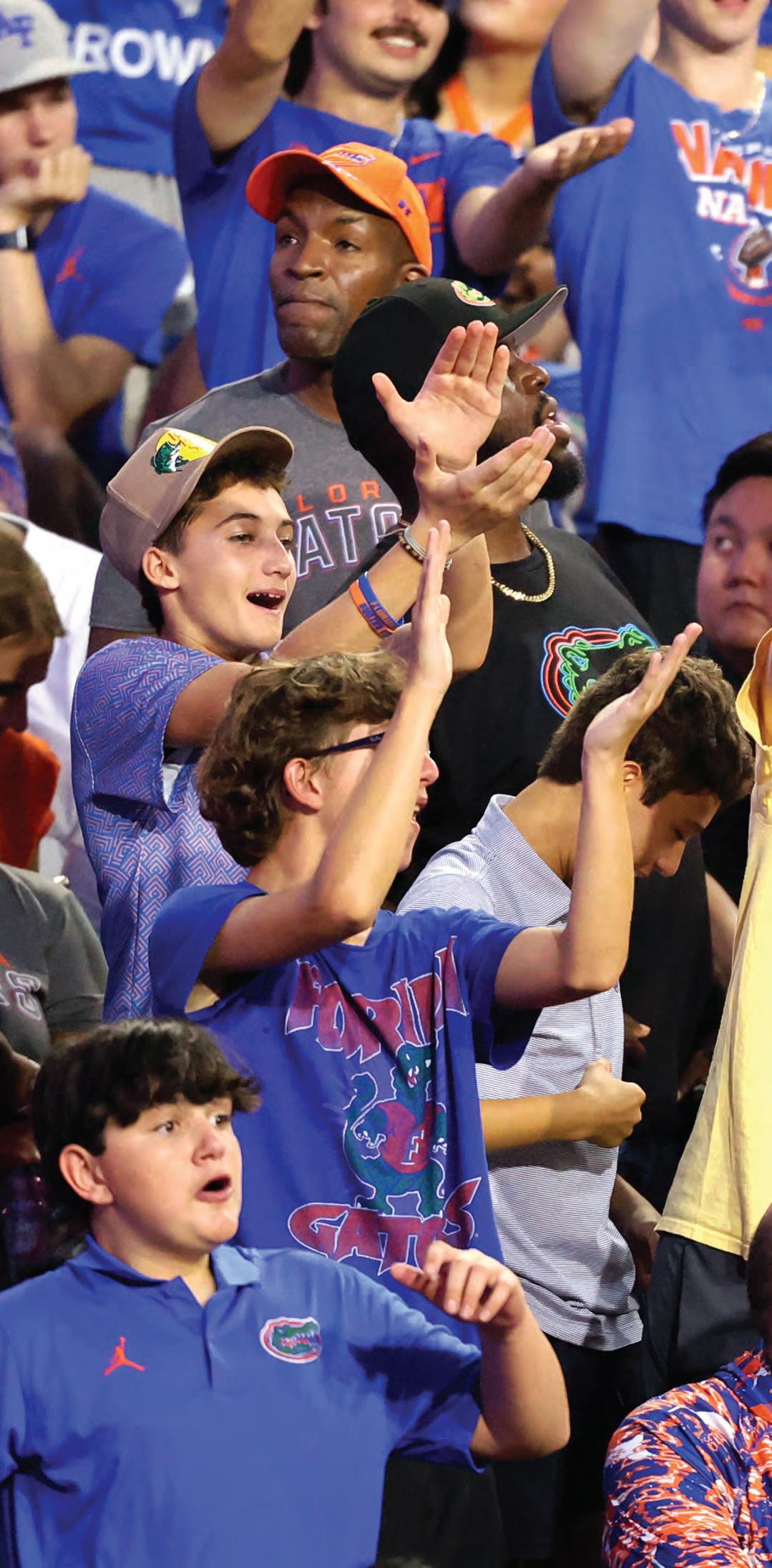
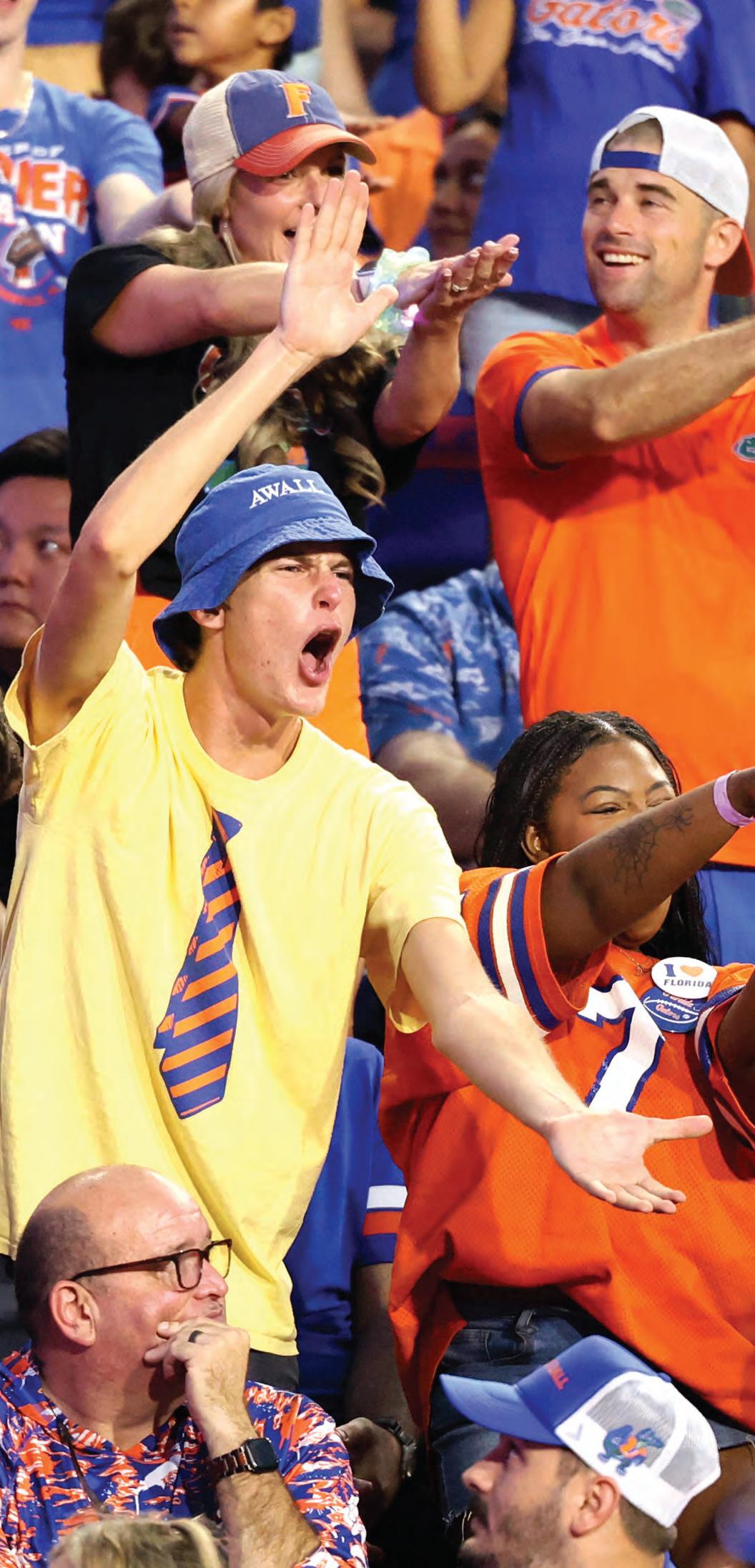
UF may not be considered a traditional basketball ‘blue blood’ — but it sure is acting like one, both on and off the court. The passion around Gators hoops has hit a crescendo. Like the team, the Gators’ loud and proud student section has taken it to another level.
By Noah White
Florida Legend, Tennessee Roots
He became an icon at UF, but the legend of Steve Spurrier began in a small east Tennessee town. Six decades later, Johnson City still means as much to Spurrier as he means to his hometown.
Going 144.62 MPH at Daytona
NASCAR drivers make it look easy, whipping around turns at more than 180 mph within inches of one another. So how would a student journalist without a car fare on one of the world’s most famous tracks?
Gainesville native Corey Williams is a fixture on youth football sidelines. His camera — and his passion — have brought eyes and offers to numerous athletes.
By Kevin Perez
By Jessica Garcete
By Curen Ahern
EDItor-In-chief
Liana Handler
Managing Editor
Noah White
Photo editor
Matthew Lewis
Design Manager
Daniela Ortiz
Staff writers
Curan Ahern
Brooke Bastedo
Adrian Carmona
Jackson Colding
Ainsley Davis
Ava DiCecca
Jessica Garcete
Shelby Hickman
India Houghton
Tori Kitchens
Ella Mizeski
Riley Orovitz
Hailee Papa
Angelina Pavlakis
Kevin Perez
Lily Perkins
Bob Sager
Caroline Walsh
Sam Zimmermann
Print design
Olivia Balwant
Leah Cohen
Ella Naima
Kate Cameron
Lauren Klement
Raleigh Lutz
Dylan Speicher
‘25-26 staffGrandstand
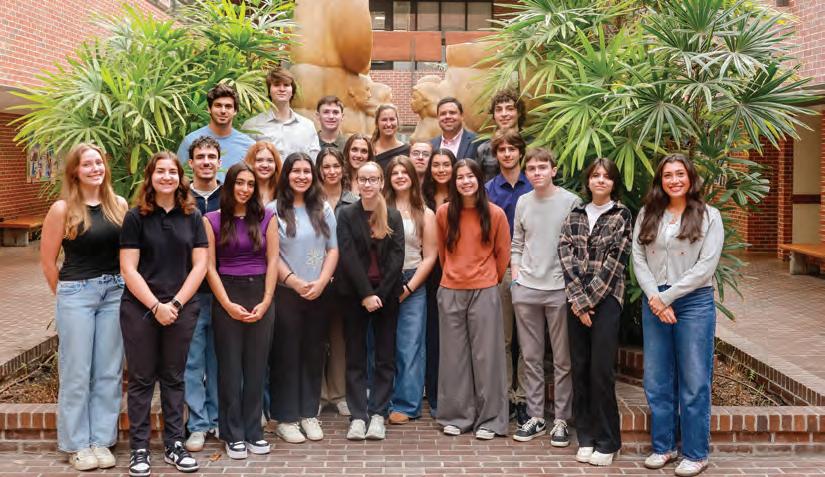
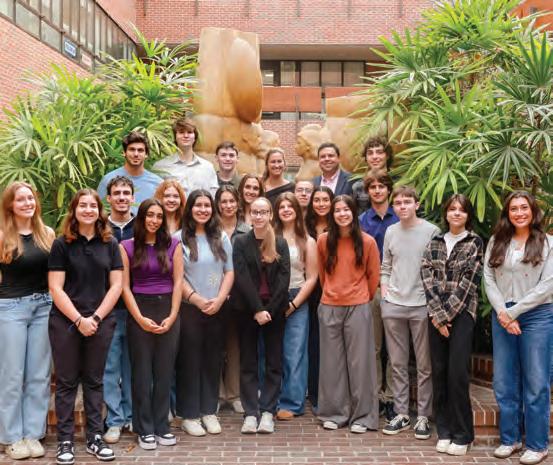
Grandstand Spring 2026 staff. Not pictured: Brooke Bastedo. | Jenna Ayoub/UF College of Journalism and Communications
additional photography
Bayden Armstrong
Riley Beiswenger
Kimberly Blum
Libby Clifton
Sydney Johnson
Noah Lantor
Alyvia Logan
Kaley Mantz
Hannah Miller
Kade Sowers
Grandstand Logo Design
Sam Sonnenberg
faculty
Ryan Hunt
Grandstand Faculty Advisor / Founder
Daron Dean
Photojournalism Lecturer
Jarred Elrod
Mint Studios / Print Design
David Kofahl
Digital Product Design
Editors
Liana Handler Editor-in-Chief
Noah White Managing Editor
From The A
s our team gathered around Olympic champion Grant Holloway to prepare for our debut cover story, we saw Grandstand at its finest for the first time — exactly what we had envisioned from the start.
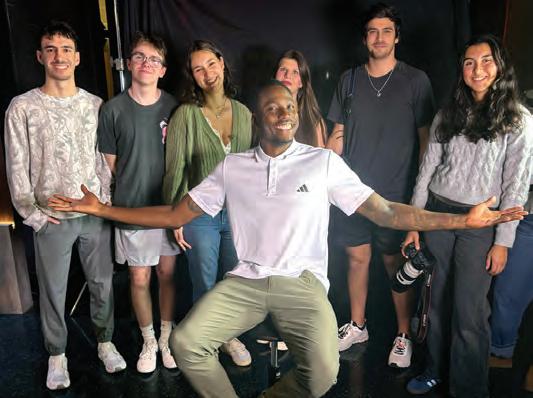
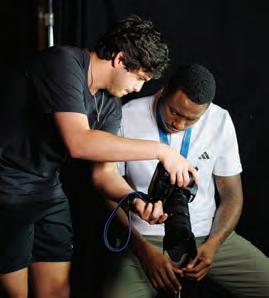
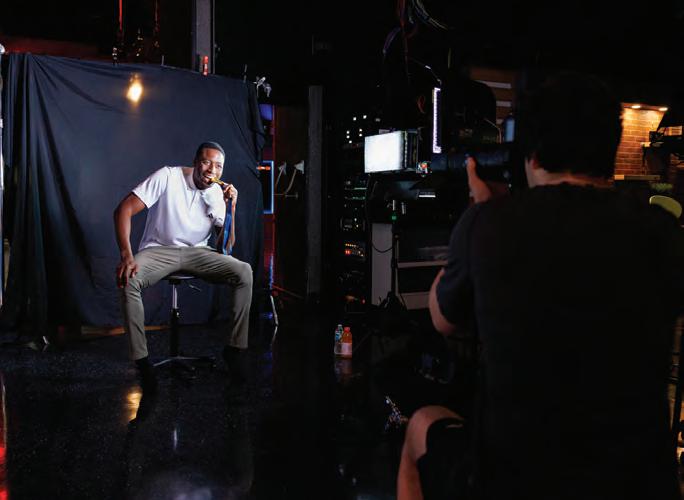
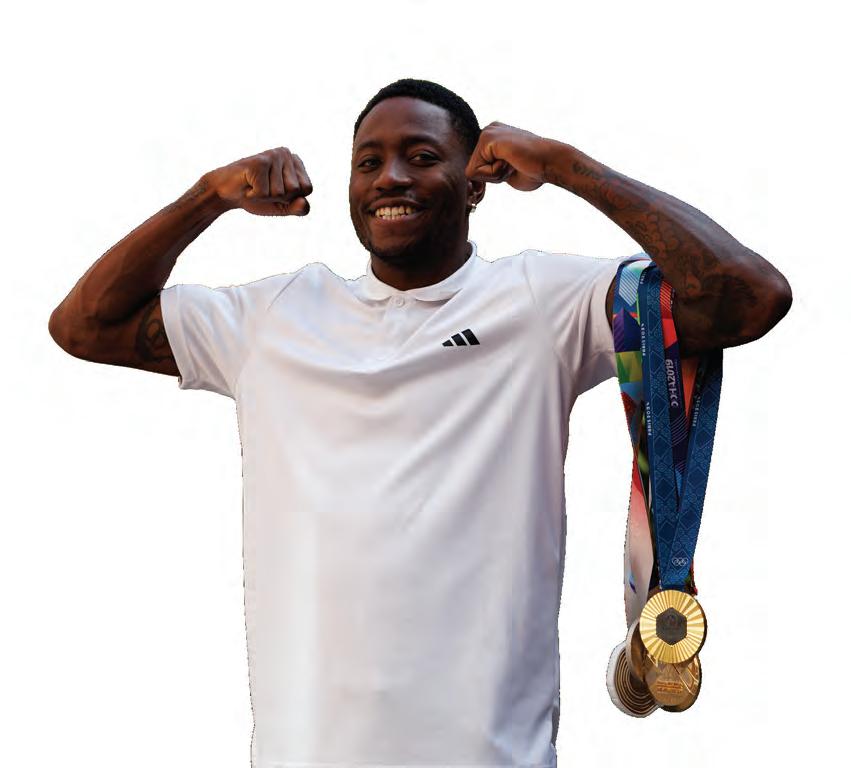
Our photo editor, Matthew Lewis, adjusted Holloway’s position so the light caught his eyes and glinted off the 2024 gold medal he brought home from Paris, while Caroline Walsh captured behind-the-scenes photos. Kevin Perez recorded the moment for our Grandstand social media accounts (follow us @grandstand_mag on Instagram and X). Holloway laughed with Shelby Hickman, the cover story’s author, as she asked how it felt to finally achieve his lifetime goal. We stood in the back, taking in the production, realizing we never expected to come this far this quickly.
This first print edition of Grandstand Magazine — the University of Florida College of Journalism and Communications’ new student-run sports publication — marks the beginning of a new chapter for Sports@CJC, though its foundation has been years in the making. Most of us remember sitting in our childhood beds, scanning the latest issue of Sports Illustrated or thumbing through the pages of The New York Times. One day, we promised ourselves, this would be us.
This version of Grandstand took months to create as we spent class periods — and plenty of time outside them — debating story ideas, our mission and even small details like fonts and logo design. These stories represent nearly two semesters of incredible work; each staff writer researched, reported and composed their words in ways they’d never been pushed to before.
While one of our primary focuses will be UF-related content — including our analysis of equity in student season ticket prices and the vacated 1984 SEC football championship — we’re not limited to campus. Our stories aim to reach far beyond the walls of Weimer Hall and the Spanish-moss-covered trees of Gainesville. Our reporters are thinking globally — well, at least in the recruiting sense.
So whether you’re looking for joy or a story that might break your heart, Grandstand aims to reflect every corner of sports. On behalf of the staff, we’re incredibly proud to have helped bring this magazine to life.
To everyone who helped start this journey, thank you.
In Balance
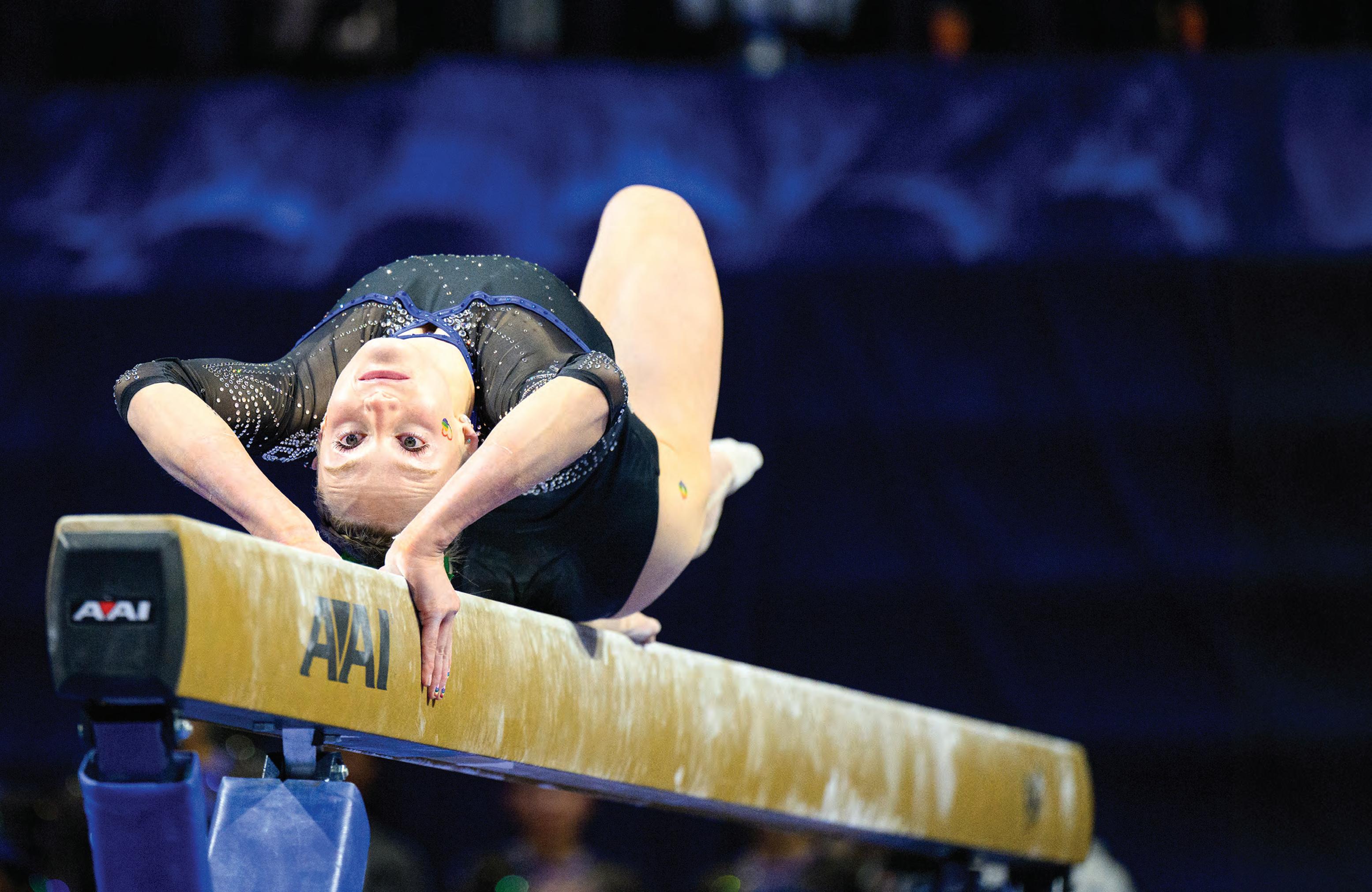
The Florida gymnastics team has been one of the nation’s best on beam; it set a school record of 49.800 on the apparatus in February. Senior Riley McCusker is shown here performing in a Jan. 30 meet against Arkansas.
Photo:
Noah Lantor/Grandstand Magazine
First Frames
Board Certified
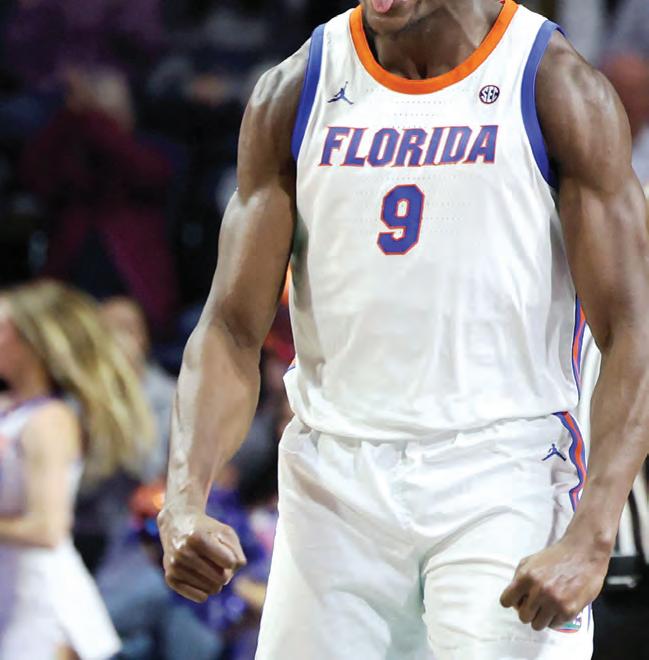
It often took two defenders to try to slow down Gators junior center – and doubledouble machine – Rueben Chinyelu, who had one of the most dominant rebounding seasons in school history in 2025-26.
Photo: Matthew Lewis/Grandstand Magazine
First Frames
Was it a catch?
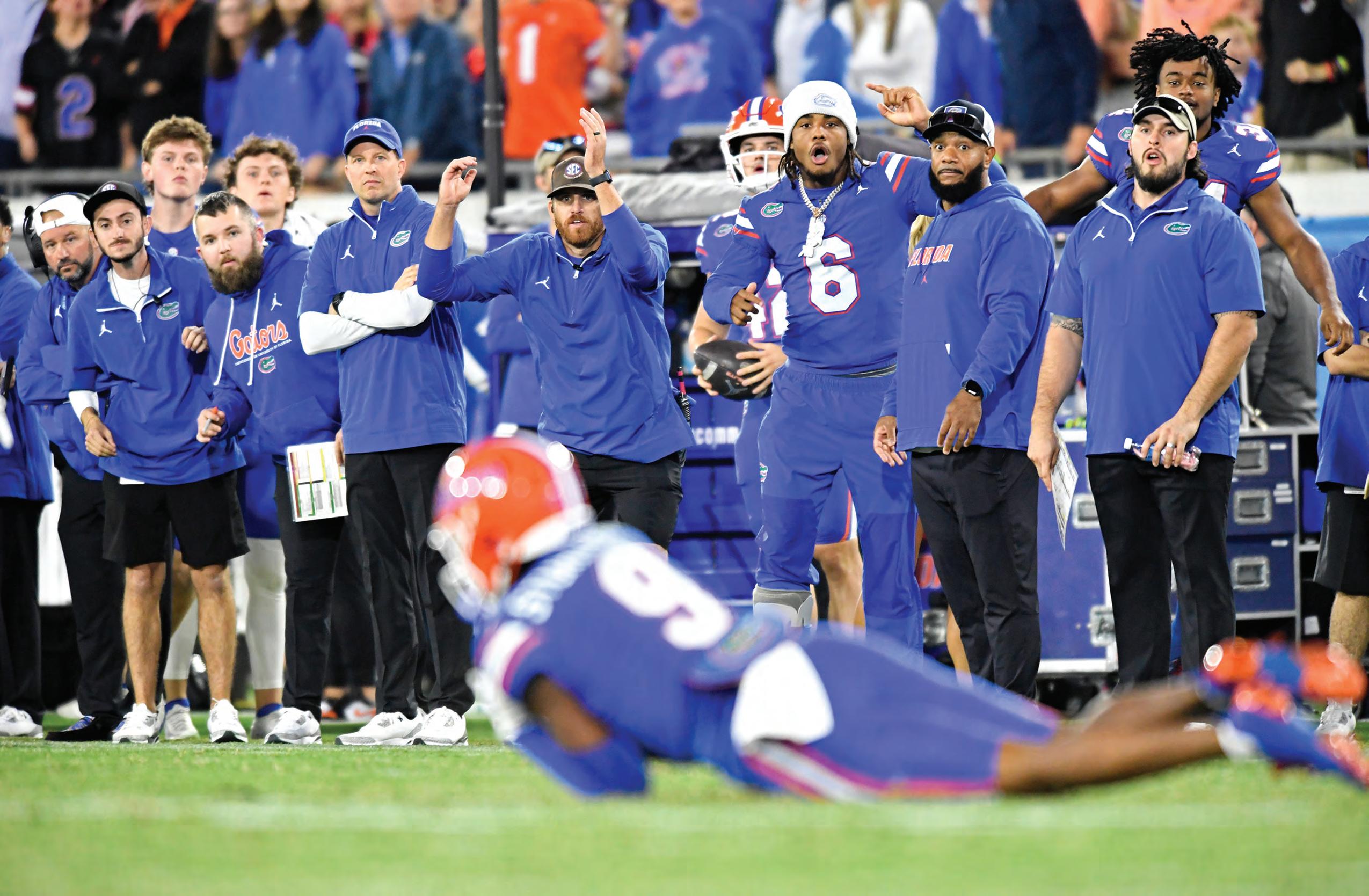
The UF bench looked on in astonishment as Gators receiver J. Michael Sturdivant tried to make a circus catch on a deep ball thrown by DJ Lagway late in the fourth quarter against Georgia on Nov. 1. The pass was incomplete.
Photo: Matthew Lewis/Grandstand Magazine
Dr. Cade’s Other Inventions
Everyone knows Gatorade, but its inventor tried other things that didn’t quite have the same impact.
By Noah White
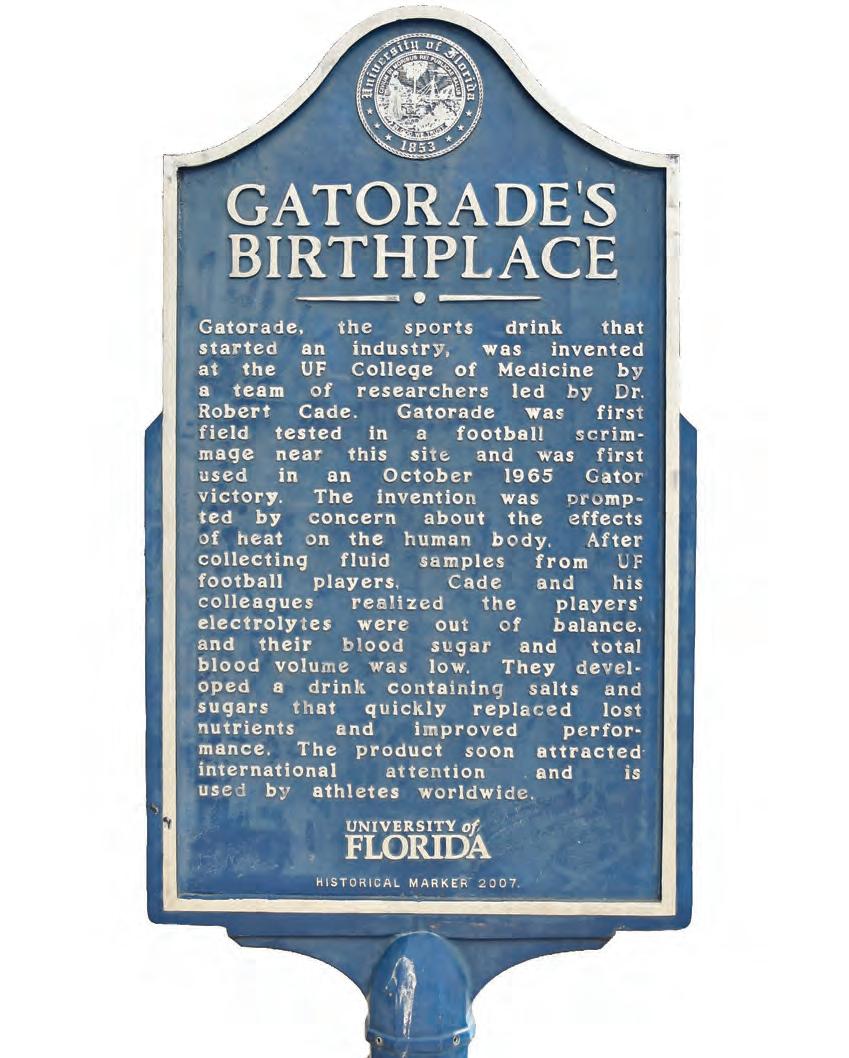
At the height of Steve Spurrier’s playing days in 1965, the Florida football team faced a serious hydration problem. Players were cramping, losing more than 10 pounds a game. Urinals lay dry. So the Gators turned to science. A team of UF professors, led by Dr. Robert Cade, created a drink to help replenish lost electrolytes.
“The original recipe was not that tasty,” Spurrier once said. “One of the players actually asked Dr. Cade, ‘Why don’t you put a little Kool‑Aid in it?’”
And with that, Gatorade was born. Sixty years later, the brand brings in more than $7 billion annually and has produced more than 65 flavors. But Gatorade wasn’t Cade’s only creation. Here are three of his other inventions — some ahead of their time, others perhaps not fully thought through.
Hop ‘n’ Gator
Only four years after Cade’s breakthrough came a sharp deviation from Gatorade’s original athletic mission: alcohol. Cade marketed Hop ’n’ Gator as the perfect blend of energy drink and booze — a functional, fun, electrolyte‑infused alcopop. With time, most came to believe it was purely beer and lemon‑lime Gatorade mixed, though it was marketed as having 25% more alcohol than regular beer. After surviving a slew of boycotts and lawsuits, it was discontinued in 1975.
Gator Go
Gatorade was designed to help athletes during exercise, but Cade wanted a companion product that stored protein before exertion. Gator Go — a milk‑based, protein‑infused experiment — aimed to help athletes maintain weight and energy, especially
after injuries like broken noses or jaws, according to a 1960s story in The New York Times. It came in vanilla and chocolate flavors and sold for as little as 20 cents on UF’s campus, but its 10‑day shelf life made it a tough sell. Several companies, including the U.S. military, bought the formula before abandoning production in the 1980s.
Hydraulic Concussion Helmet
One of Cade’s later ideas attempted to tackle a problem that still plagues football at every level: head injuries. His solution was a hydraulic helmet with a plastic outer shell and eight tiny oil‑filled bags lining the inside to absorb impact. The helmets were tested during Florida practices, and Cade even let someone strike him over the head with a bat used to kill lab rabbits — just to prove the design worked. Still, it never met the standards for in‑game use.
Some of Cade’s other ideas stretched even further: an organic foam meant to protect crops from frost … which was made with human blood. Others included X‑raying pecans, canning mullet and designing hemispherical cans — because, as he liked to say, there’s always more in a can.
Like many great inventors, Cade needed only one breakthrough to define his legacy, and Gatorade was more than enough. The effort he poured into that project alone — including jogging seven miles with a catheter in his arm to collect blood samples — speaks for itself.
Swamp Concerts
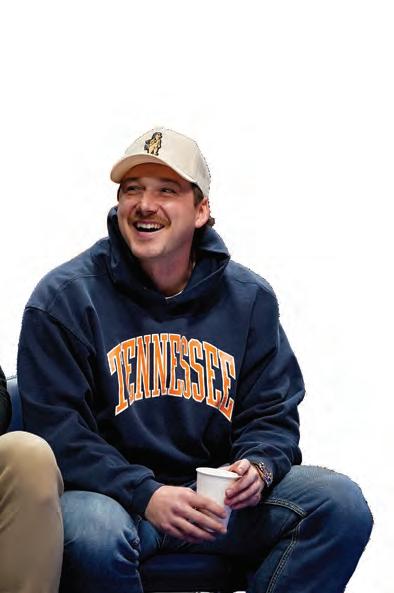
Ben Hill Griffin Stadium isn’t only home to Gators football — it’s an occasional concert stage, one that has welcomed popular artists such as Garth Brooks,
By Tori Kitchens
Freshman
By Grandstand Staff
(pictured left) will bring his reputation
The Swamp, marking 2019. Wallen, coincidentally famously a massive Tennessee Volunteers
Brooks’ show drew more than 75,000 people — students, Gainesville locals and fans who traveled in for the chance to see him rock the stage in what was The Swamp ’s first standalone show in 25 years. Before that, the Rolling Stones performed in 1994 — the first concert held after the stadium’s expansion four years earlier.
For decades, Gator Growl also filled Ben Hill Griffin Stadium, bringing comedians and musical acts like Lynyrd Skynyrd, Sugar Ray, Sister Hazel and the Goo Goo Dolls. Since 2013, though, the Homecoming tradition has moved across the street to the Stephen C. O’Connell Center.
As Gainesville prepares for Wallen’s arrival, there’s a sense and hope that his show could open the door for more nights like this — a chance for The Swamp to become a concert destination once again.
UF in Pop Culture
Drake has a habit of planting cultural Easter eggs in his songs — and this time, the Florida Gators made the cut.
On “What Did I Miss?,” released July 5, 2025, Drake (pictured right) checks back in after his 2024 feud with Kendrick Lamar. The track is reflective, defiant and full of flexes — including a blink‑and‑you’ll‑miss‑it shoutout to UF. “Her a** is all natty like Florida Gator,” he raps, flipping “natty” into a double meaning: part natural beauty, part national champion, turning Florida’s title run into lyrical shorthand.
The reference landed just three months after Florida men’s basketball clinched its
15
Here’s the 2026 Grandstand staff’s bucket list — things every UF student should do before they graduate.
By Jessica Garcete
third national championship with a 65‑63 win over Houston on April 7, 2025. It was the program’s first title since its iconic back‑to‑ back runs in 2006 and 2007, adding fresh weight to a legacy already etched into college basketball history.
Now, UF students have claimed the lyric as their own. Drake’s voice echoes through the Stephen C. O’Connell Center as the track blares during pregame warmups, fueling the energy of the 2025–26 season.
Watch a basketball or football game at night at The Swamp restaurant.
Spend the day at Lake Wauburg.
Watch a Gators baseball game from the berm of Condron Ballpark. Hold up one of the 10.00 signs at a gymnastics meet.
Go to Dog Trivia.
Go to a tailgate before a football game.
Run all 90 rows of stairs — or study — in an empty Ben Hill Griffin Stadium.
Kayak or tube in the Springs.
Participate in intramural sports! They get so competitive, especially in the playoffs.
Visit Mill Creek Farm, a retirement ranch for horses.
Sing “I Won’t Back Down” in The Swamp at a night game with your camera light on.
Go to the bat houses.
Camp out to sit in the front row with the Rowdies at a men’s basketball game. 14
Attend one sporting event across every Gator team. 15 13 12 10 6 5 4 3 2 1
Sit in the bus outside and eat at Satchel’s Pizza.
Florida: Hockey State
By Caroline Walsh
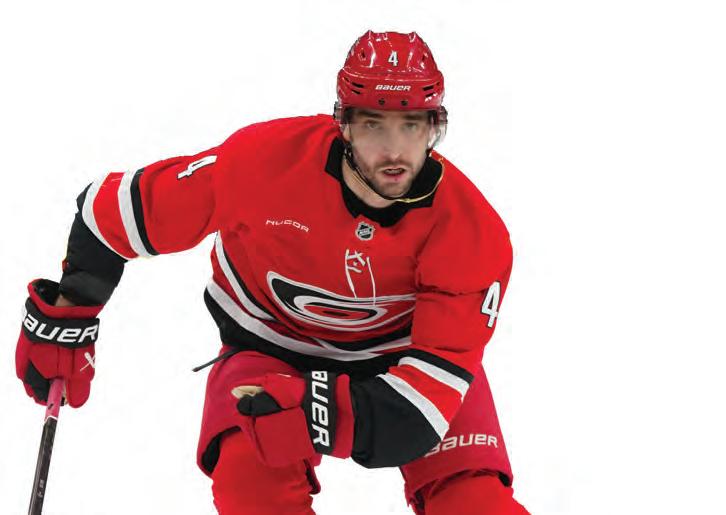
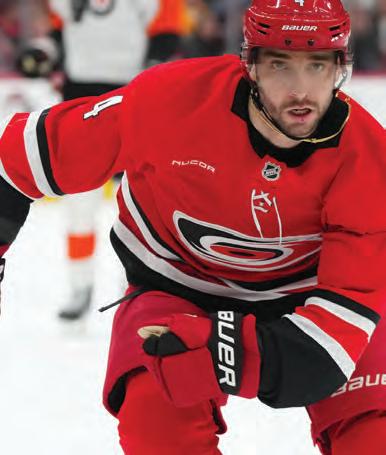
Twenty‑one Florida‑born players have made it to the NHL in league history. Here’s a look at the most notable active standouts from the Sunshine State.
Hockey in the Sun Belt has never been hotter. This season, 11 Florida‑born players have appeared in at least one NHL game. Some include:
Shayne Gostisbehere
Shayne Gostisbehere made history in 2014 with the Philadelphia Flyers, becoming the first player born and raised in South Florida to appear in an NHL game. He grew up in Pembroke Pines and played for the
moving to Connecticut at 16. The defenseman, who turns 33 in April, spent his first seven seasons with the Flyers and is now with the Carolina Hurricanes. He has played in more than 700 career NHL games over his 12‑year NHL career.
Jakob Chychrun
Boca Raton native Jakob Chychrun became the highest‑drafted player born and raised in South Florida when the Arizona Coyotes selected him 16th overall in 2016. The 28‑year‑old, whose father Jeff played eight NHL seasons, now plays for the Washington Capitals alongside former Florida Jr. Panthers teammate Brandon Duhaime. Chychrun is now one of the league’s top goal‑scoring
Quinn and Jack Hughes
Quinn and Jack Hughes spent most of their childhood in Toronto, Canada, but both were born in Orlando while their father Jim coached the ECHL’s Orlando Solar Bears. (The youngest Hughes brother, Luke, was born in New Hampshire.) Quinn, a defenseman, captained the Vancouver
Canucks for two seasons before being traded to the Minnesota Wild in 2025. Jack, a center, was drafted No. 1 overall by the New Jersey Devils in 2019 and is now in his seventh season with the team. He also delivered the golden‑goal overtime winner against the Canadians at the 2026 Winter Olympics, securing Team USA’s first gold since the 1980 “Miracle on Ice.”
Gavin Brindley, Seamus Casey and Jacob Fowler
This trio grew up playing youth hockey together — and all were on the U.S. World Juniors team that won gold in 2024.
Gavin Brindley, 21, and Seamus Casey, 22, grew up in Estero and lived down the street from each other. Brindley, a forward, now plays for the Colorado Avalanche after being traded by the Columbus Blue Jackets last June. Casey, a defenseman, made his NHL debut for the Devils on Oct. 4, 2024, against Buffalo. Fowler, 21, was drafted by the Montreal Canadiens in 2023 and became the first Florida‑born goalie — he’s from Melbourne — to play in the league when he started in net Dec. 11 against Pittsburgh.
the Most Memorable U.S. Soccer Jerseys
Soccer jerseys are no longer just uniforms — they’ve become fashion statements and cultural artifacts.
This summer, the FIFA World Cup returns to the United States for the first time since the 1999 Women’s World Cup — and for the first time in 32 years, the men’s tournament will be played on U.S. soil, co‑hosted with Canada and Mexico.
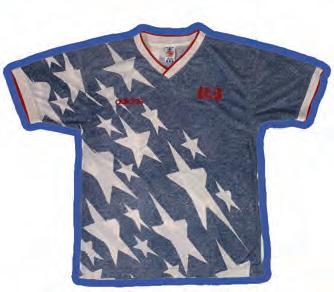
USMNT Away - ‘94 World Cup
Covered in a denim print and patterned with oversized white stars stretching across the chest, Adidas created a jersey that was loud, bold and unapologetically American — perfect for the United States’ first time hosting a World Cup.
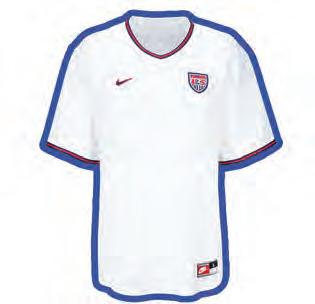
Yes, it’s a plain white jersey — but it’s remembered less for its design and more for the moment Brandi Chastain ripped it off after scoring the winning penalty against China in the 1999 Women’s World Cup Final.
Jersey designs are often hit or miss, but the moments attached to them are what make them unforgettable.
“To this day, it has come to define my generation, my team and ultimately myself,” said Alexi Lalas, who played center back for the USMNT in 1994. “It enhanced what the whole ’90s vibe was back then.”
“We were in our kits for a long time after that day,” said former UF star Danielle Fotopoulos, a member of the USWNT’s 1999 World Cup–winning roster. “We were making commercials, we were on floats in Disney.”
Photo credits:
Gostisbehere: James Guillory/Imagn Images; Nutmeg: Steven Bisig/Imagn Images; McNeillie:
Ella Thompson/WRUF
By Hailee Papa
Sports Dictionary
The origin of famous sports terms and slang
By Adrian Carmona
nutmeg (v.)
/ˈnʌt.meɡ/
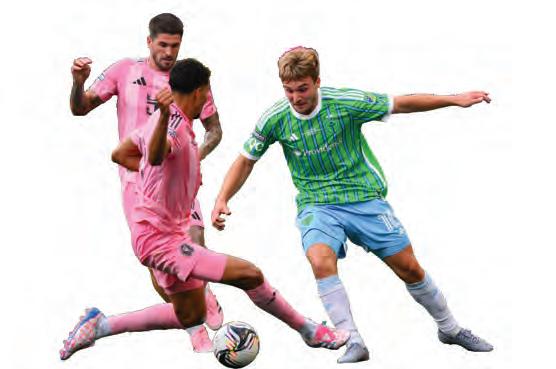
The term “nutmeg” refers to a simple skill in soccer where a player kicks the ball between the legs of a defender. While naming a classic move after a spice may seem odd, there is an explanation of the word’s origin.
First, we have to go back to the 1800s to the nutmeg exports between the United States and England, where American exporters replaced nutmegs with wooden replicas to be shipped to the United Kingdom.
Thus, the verb “nutmegged” was born from a Victorian slang term meaning to be tricked or deceived in a way that makes the victim look foolish.
Over time, the word became used more commonly in soccer. Now, when a player dribbles the ball between a defender’s legs, the attacker becomes the deceiver, and the defender becomes the fool.
What’s in a number?
How some UF players select their jersey digits
By Ainsley Davis
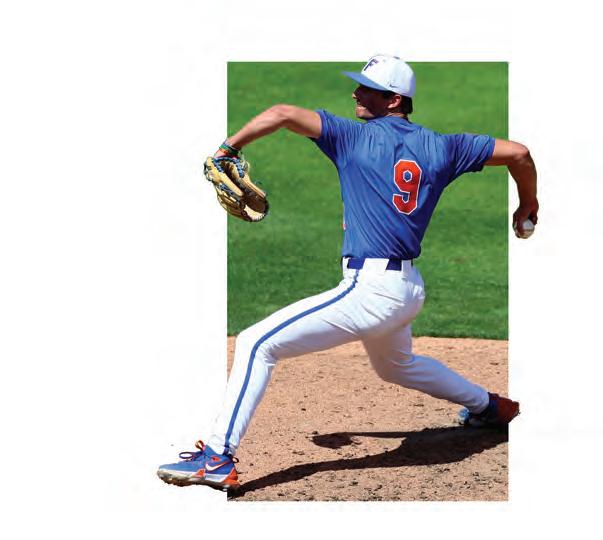
For Gators junior reliever Luke McNeillie, the No. 9 jersey wasn’t his first choice.
When he first arrived at Florida, the Milton, Georgia, native wanted to wear No. 34. David Ortiz was his inspiration as a Red Sox fan long before he put on a UF jersey. But he wasn’t the only one eyeing it. His fellow freshman pitcher teammate Alex Philpott wanted it, too.
Now, McNeillie is comfortable in it. He isn’t one for superstition. In high school, he wore short socks every game — a habit he couldn’t keep at Florida and didn’t mind leaving behind.
Losing the socks didn’t change much, and neither did a new number. But maybe one day in the pros, No. 34 will find its way onto the back
“I wanted to be 34, but me and [Philpott] both wore 34 when we were growing up,” McNeillie said. “So we did rock‑paper‑scissors, and then I lost, obviously.”
Philpott, who has since transferred to South Carolina, laughed when asked about the story. He confirmed he won the best‑of‑three duel.
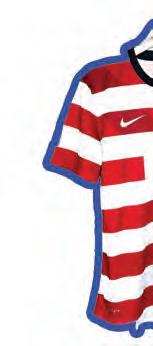
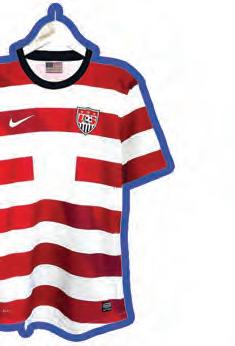
USMNT Home: ‘13-14 (Multiple)
Although this kit wasn’t featured in a World Cup, its distinct pattern — and its resemblance to the “Where’s Waldo” character — eventually came to define the USMNT era of Landon Donovan and Clint Dempsey. The USMNT wore this jersey at the 2013 CONCACAF Gold Cup.
While the official 2026 World Cup jerseys haven’t been unveiled as of press time, there’s buzz that the new kits will have this same throwback wavy red and white horizontal design.
So McNeillie (pictured) turned to his backup: No. 9, a nod to another Boston legend, Ted Williams.
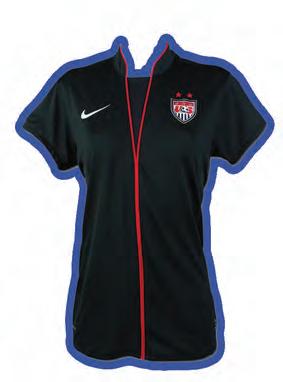
USWNT Away: ‘11 WWC
Another kit remembered more for a moment than its design.
Down a player and trailing 2‑1 to Brazil in the 122nd minute of the quarterfinals, the U.S. was moments from elimination.
Then Abby Wambach headed in a nearly 45‑yard cross from Megan Rapinoe to force a penalty shootout, which the U.S. won to advance to a semifinal showdown with France.
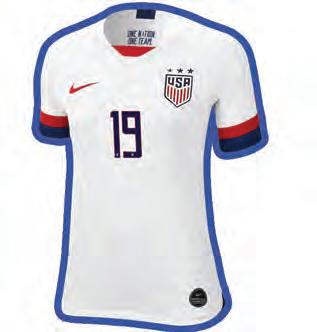
Like the 1999 jersey, the 2019 kit was simple — but it didn’t stop the USWNT from making more history.
Powered by the likes of Rapinoe, Alex Morgan and Rose Lavelle, the U.S. won its second straight World Cup while simultaneously battling the U.S. Soccer Federation in a landmark equal‑pay lawsuit.
USWNT Home: ‘19 WWC
introducing...
By Ava DiCecca, Angelina Pavlakis, India Houghton and Bob Sager
Get to know four under-the-radar people who are a big part of Gators athletics.
owen field
Gymnastics | Assistant Head Coach/General Manager Sheboygan, Wisconsin
The first person Gators gymnasts hug or high-five when they stick a landing, yet seldom the first person thought of when imagining the team, associate head coach and general manager of Florida gymnastics, Owen Field, has an overlooked role. In his 11th season at Florida, he has a history of success and of growing players like Leanne Wong who he was beside both in her time as a Gator and her stint in the 2024 Olympics.
In four of the last seven years, Field’s helped Florida rank No. 1 at one point during the regular season. Under his coaching, the Gators have clinched four NCAA titles on the uneven bars, which leads the country. Behind Field, Florida has been a force at the event, and this season has been no exception.
Maya Soskin
Lacrosse | Goalkeeper | Freshman Cold Spring Harbor, New York
Goalkeeper Maya Soskin arrives in Gainesville with a reputation already built long before her first collegiate save. The Cold Spring Harbor, New York native joins a UF lacrosse program fresh off a Final Four run. Known for her strong technical foundation and presence in goal, Soskin earned recognition as one of the top prospects at her position, making her arrival one to watch as the Gators continue to reload their roster with elite talent.
For freshmen goalkeepers, the transition to the college game is as much about adjusting to speed and decision-making as it is about confidence. Off the field, she brings personality to the locker room. As her collegiate career begins, Soskin represents the next wave poised to shape Florida’s future.
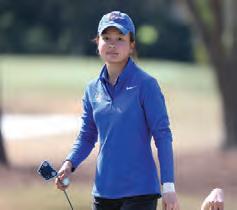
Freshman libero Lily Hayes came to Gainesville with expectations for her debut collegiate season. She exceeded them from the start. Coming off a silver medal performance at the 2025 FIVB Girls U19 World Championship in Osijek, Croatia, Hayes carried that momentum straight into her first year of college volleyball and immediately became a dominant force on the court.
The Tampa native was named Southeastern Region Freshman of the Year, led the Gators with a team-high 391 digs and became the first freshman to start at libero for Florida since 2006. She commands the court with a relentless energy and vocal presence that pushes her teammates and fills the O’Connell Center. Hayes is back for round two, and she’s just getting started.
drew hingson
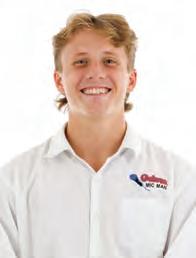
Cheerleading | ‘Mic Man’ | Junior Lake City, Florida
Drew Hingson was your typical UF student: studying sports management, joining a fraternity and loving Gator sports. It wasn’t until one of his close friends, also known as Albert the Alligator when he’s in the suit, changed Hingson’s life forever by enticing him to come to cheer tryouts.
At the 2024 tryout, Hingson admitted he mimicked the routine – consisting of common UF chants – of the girl in front of him, Abigail Eckhardt. It worked. Soon “The Mic Man” started leading the Swamp crowd in the school’s iconic chants.
And he’s not alone anymore, Eckhardt joined Hingson as the “Mic Ma’am” midway through the 2024 season. Whether he’s telling you to scream “ORANGE” or “BLUE,” Hingson’s spirit drives one of the best fan atmospheres in the country.
how the sunflowers are made
By Riley Orovitz
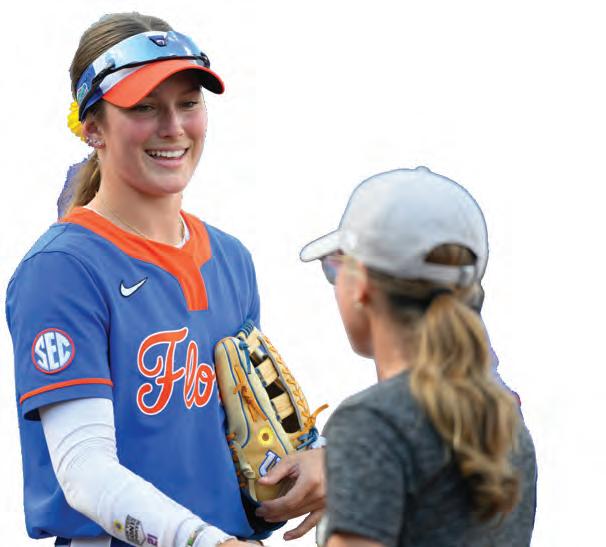
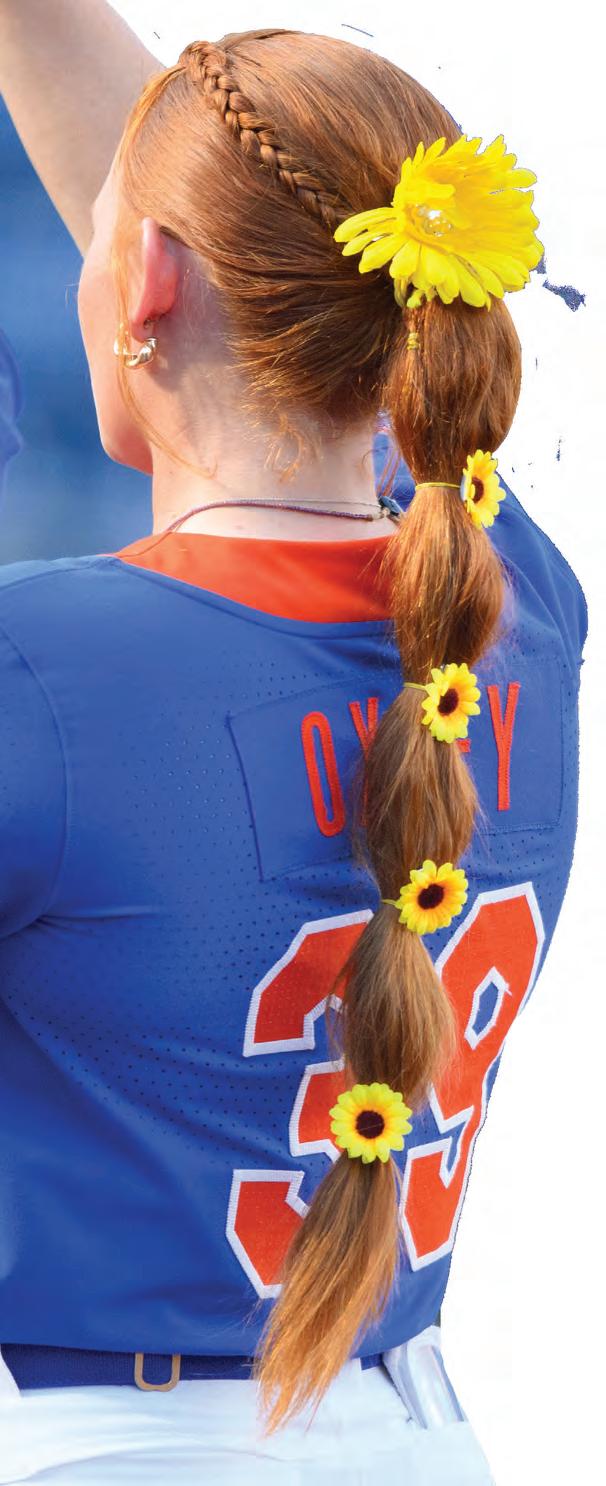
Florida softball outfielder Taylor Shumaker makes 70 sunflowers for the Gators to wear each Saturday to pay tribute to a former honorary member of the team who died from cancer.
Bright yellow sunflowers have been a part of the UF softball program for more than a decade, and the tradition runs far deeper than just a simple accessory.
The team sports the flower each Saturday during the season to remember and pay tribute to Heather Braswell, an honorary team member who died from brain cancer in 2014 at age 17. Yellow represents the National Pediatric Cancer Foundation’s mission to fund research and end childhood cancer. The Gators first wore yellow ribbons in their hair while Heather was in treatment, then switched to sunflowers after her passing. The yellow marker stands as a reminder, partly as Heather’s favorite flower, but also because of the lasting effect she left on the program.
This season, Gators right fielder Taylor Shumaker (pictured below) holds an even greater responsibility. The sophomore has embraced the role of preparing the sunflowers for every player, coach, manager and current honorary team member, Hartley Georges.
Shumaker said she made about 70 sunflowers — two for each player, plus extras for the staff. Georges, who was diagnosed with a rare brain tumor (medulloblastoma) at age 8 in 2018, receives one as well.
The Gators’ season officially opened Feb. 6, but
Shumaker’s work began long before first pitch. The 20-year-old said she started sorting materials — imitation flowers, felt, clips, hair ties and large rhinestones — about four weeks before the regular season
“The process is pretty simple, it’s just time-consuming,”
Shumaker said. “You pull the fake center out of the flower, glue all the layers together so they stay, then glue the felt and rhinestone on the clip or hair tie.”
Junior pitcher and first baseman Ava Brown handled the job last season before passing it on to Shumaker.
“I think the meaning behind the tradition reigns strong,”
Shumaker said. “But I was super honored to be the one who got to help carry on the tradition.”
Gators History Lesson
By Grandstand Staff By Jackson Colding
These are the staff’s hottest takes, but you decide which will flame out and which will keep burning strong a year from now.
ONE two three four five six seven eight nine ten 7 1 2 8 3 9 4 10 5 6
There should be no ties in sports. At the core of sports is winning and losing.
Tennis refs should get fined just like players. They actively try to ruin the sport.
Athletes should only be able to transfer ONCE. Nobody’s going to buy jerseys without a guarantee that the player will come back next year.
Trevor Lawrence is a top 10 QB in the NFL.
Sports gambling is ruining the integrity of the game.
College tennis matches should allow fans to enjoy alcoholic beverages during play.
Athletes and coaches shouldn’t be allowed to unretire. Once and for all.”
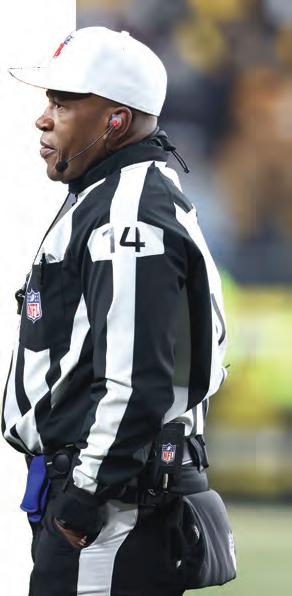
NFL refs (pictured) should have to partake in postgame media conferences.
Bandwagoning is a perfectly acceptable way to get into sports you don’t know.
March Madness is the hardest playoff to win in sports.
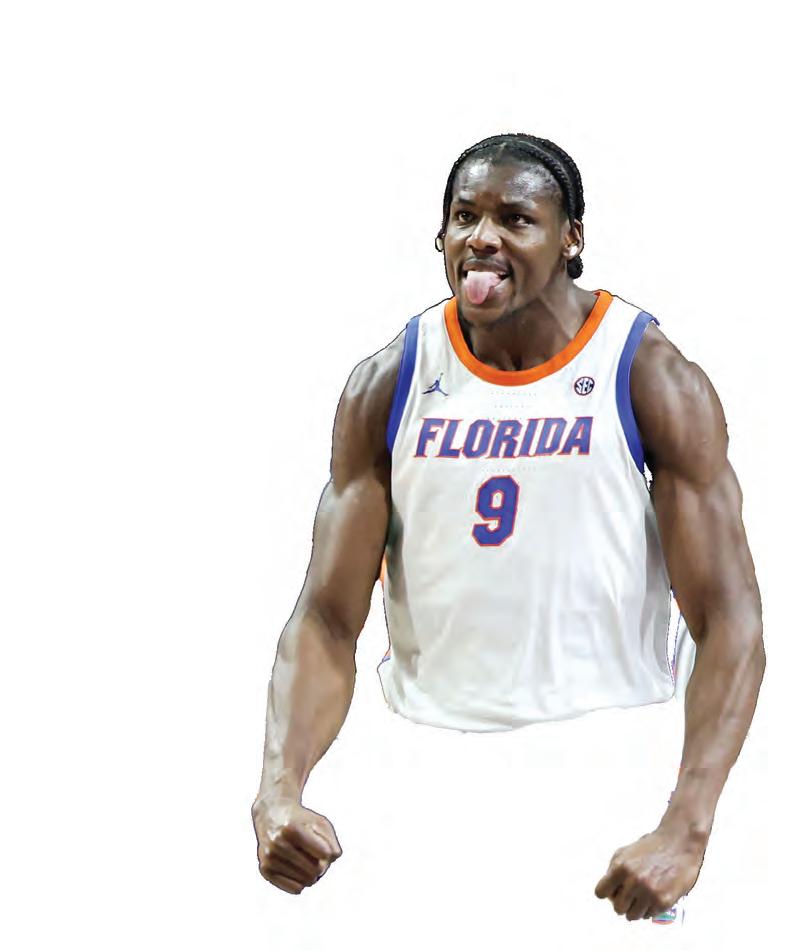
A closer look at the most dominant rebounder in UF men’s basketball history.
Before the dominance of junior center Rueben Chinyelu, Florida has had many notable big men controlling the paint. The Gators had prominent rebounders such as Dwayne Schintzius, Andrew DeClercq, Ronnie Williams, Joakim Noah and
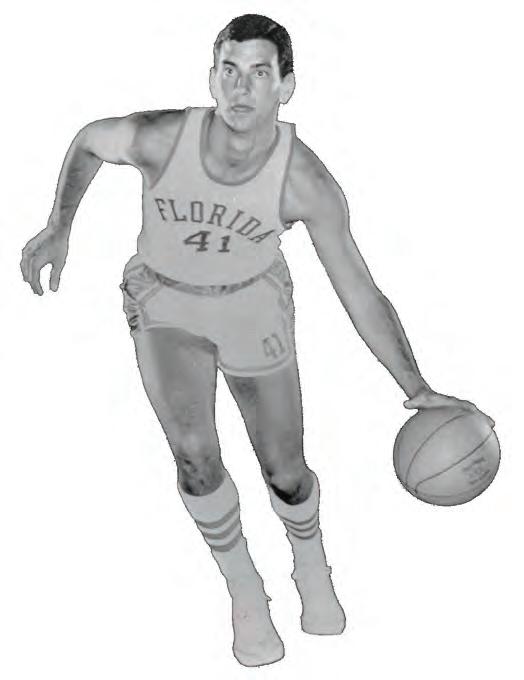
None, however, was as dominant at UF as Neal Walk (pictured).
Walk, who played at UF from 1966-69, remains the only Gators basketball player to have his jersey number –41 – retired. He also is the highest NBA draft pick in UF basketball history, as the Phoenix Suns picked him second overall in 1969, behind only UCLA’s Lew Alcindor (later known as Kareem
Nearly 60 years later, you’ll find Walk’s name still atop the UF record books.
Despite playing only three seasons, the 6-foot-10 center from Miami Beach still tops UF’s all-time list in career rebounds (1,181), rebounds per game (15.3) and points per game (20.8) – averaging a double-double over his collegiate career. His best season at UF came as a junior in 1967-68, when he averaged 26.5 points and 19.8 boards. He still shares the program record for most rebounds in a single game (31 against Alabama in 1968) with Jim Zinn.
After being drafted by the Suns, Walk spent five seasons in Phoenix, where he averaged 14.7 points and almost nine rebounds per game. His best NBA season was in 197273: 20.2 points per game and 12.4 boards per game. He played half a season in New Orleans, formerly the Jazz, and was traded to the New York Knicks for his final three seasons in the league.
The dominance of Walk, who died in 2015 at the age of 67, paved the way for future UF centers to continue to control the glass.
Shawn Smith
Charles
Grant Holloway thought he was finding himself with each medal. He’s changed.
| Matthew Lewis/Grandstand
Magazine
The Shadow Of Gold
UF track great Grant Holloway reached the pinnacle of his sport. But after becoming an Olympic champion in Paris in 2024, Holloway struggled with an unexpected hurdle: the mental comedown that followed.
By Shelby Hickman
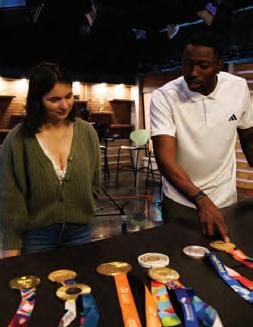
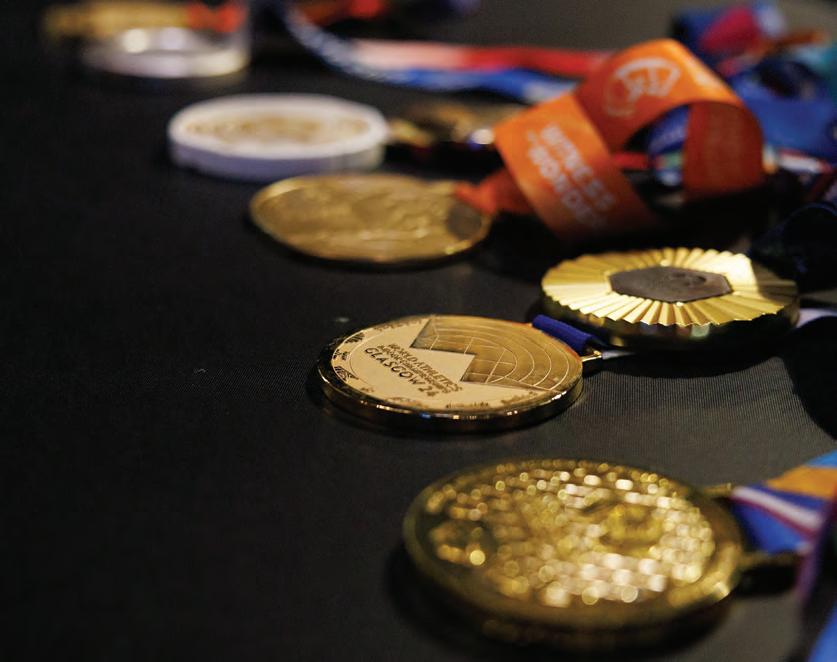
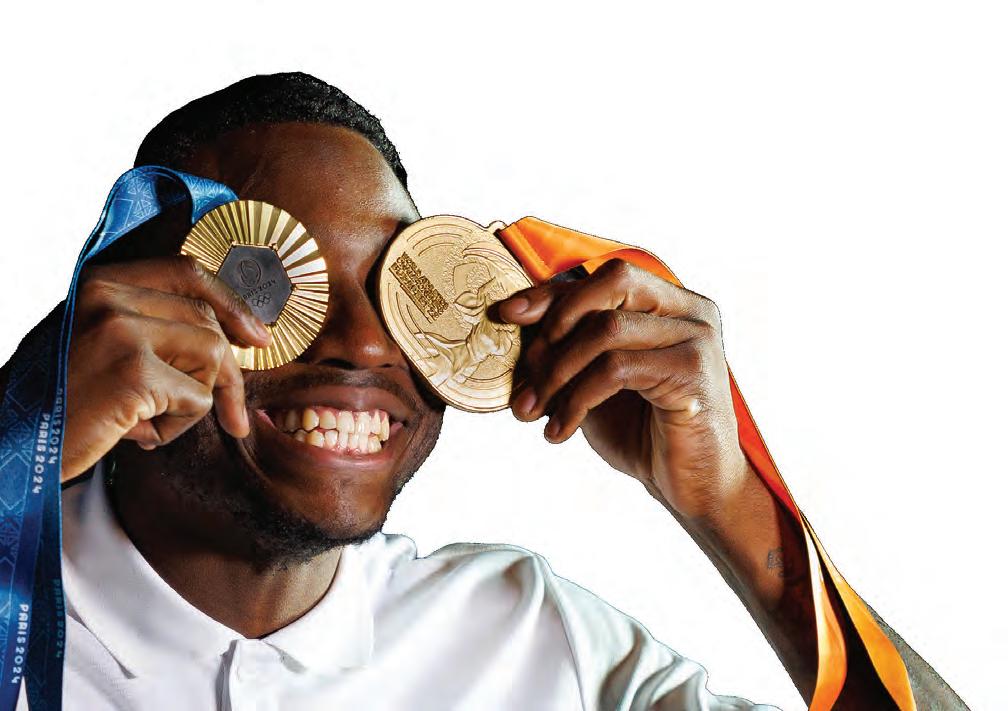
Grant Holloway was fashionably early, arriving nearly 30 minutes before the photo shoot. He climbed out of his car, grabbed a backpack full of clothes in one hand and a bundle of medals in the other. Seven gold and one silver clanked together, singing like a victorious windchime on a breezy day. Then one of the golds slipped from his hand and clattered to the asphalt below. He just laughed.
The multiple-time world champion and 110-meter hurdles Olympic gold medalist watched one of his prized possessions fall to the ground. And he laughed.
“I’m bigger than those medals,” he said. “At one point, they were my babies, and I want to cherish them and put them in frames and boxes. And I think I will do that once my career is over. But as you get older, your dreams and aspirations change, and it’s not just about track and field.”
But for 16 years, it was about track and field.
Leading up to the 2024 Paris Olympics, Holloway already was the most dominant 110-meter hurdler in the world. His laundry list of accomplishments, ranging from NCAA
titles during his time at Florida to world records, was missing just one thing: a gold medal inscribed with five interlocking rings. The one race he had yet to win.
In Tokyo, some three years earlier, he was the heavy favorite. That gold should’ve been his, but he was upset by Jamaica’s Hansel Parchment in the final. Instead, he returned home with the one medal that doesn’t match the rest.
Holloway spent 16 years building up to this race, one he would finish in 12.99 seconds. Not many things occur in under 13 seconds. A few blinks, maybe a couple of Formula 1 pit stops. That’s probably about how long it’ll take you to read this paragraph. Yet 12.99 seconds is all it took for Holloway’s life to change as he knew it.
He reached the pinnacle of his sport. He checked off the last box. Running is the easy part, he would later realize. It’s everything else — the mental fatigue, physical toll, the emotional turmoil of becoming an elite athlete — that is not. Despite having the Olympic gold medal in his hand, Holloway’s biggest hurdle still loomed: figuring out what comes next.
When he stepped up to the starting line for the 110-meter hurdles final at the Stade de France, Holloway knew he was going to win.
“I was having such good practices. I was doing such great things,” he said. “I had confidence not only in my athletic ability, but my mind was just in a spot where I could not be denied.”
Holloway recalls speaking with his grandmother before he left, her words echoing in his mind from halfway across the world: “I knew you were an Olympic champion,” she had said. “You just have to show the world.”
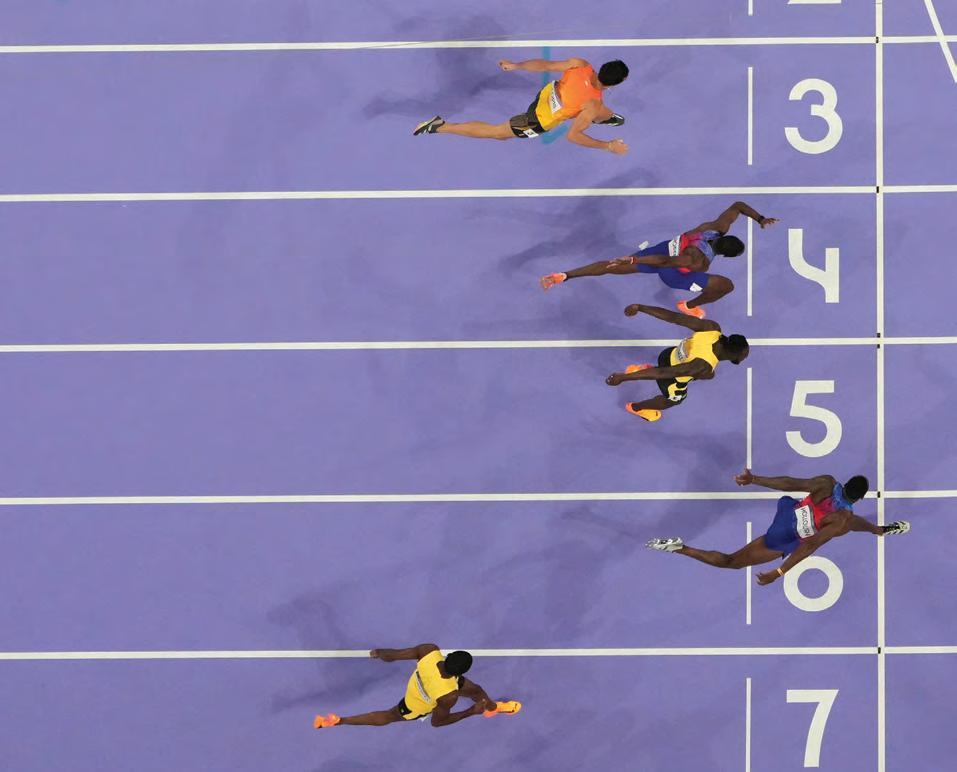
When the race began, long-time rival and friend Daniel Roberts beat him to the first hurdle, but it was all Holloway from there. He defeated Roberts, who took silver, by one-tenth of a second. This may not sound like much — but, in track, it’s a lifetime.
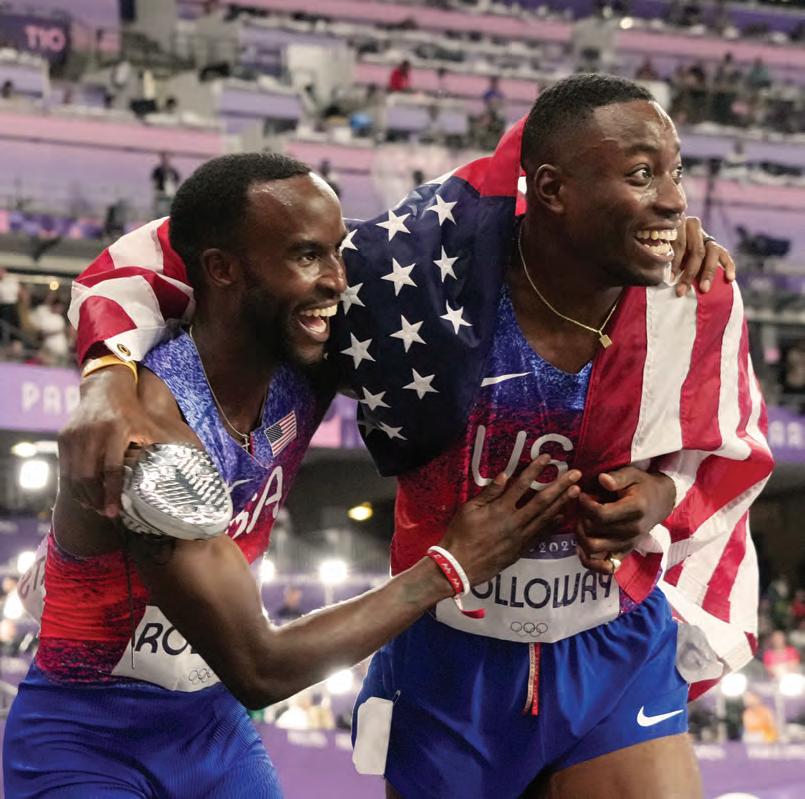
After crossing the finish line, Holloway threw his hands up and looked at the scoreboard. He shared a hug with the bronze medalist, Jamaica’s Rasheed Broadbell, and faced the raucous crowd to unleash a cry of victory. He was now Olympic gold medalist Grant Holloway. This moment had been a long time coming.
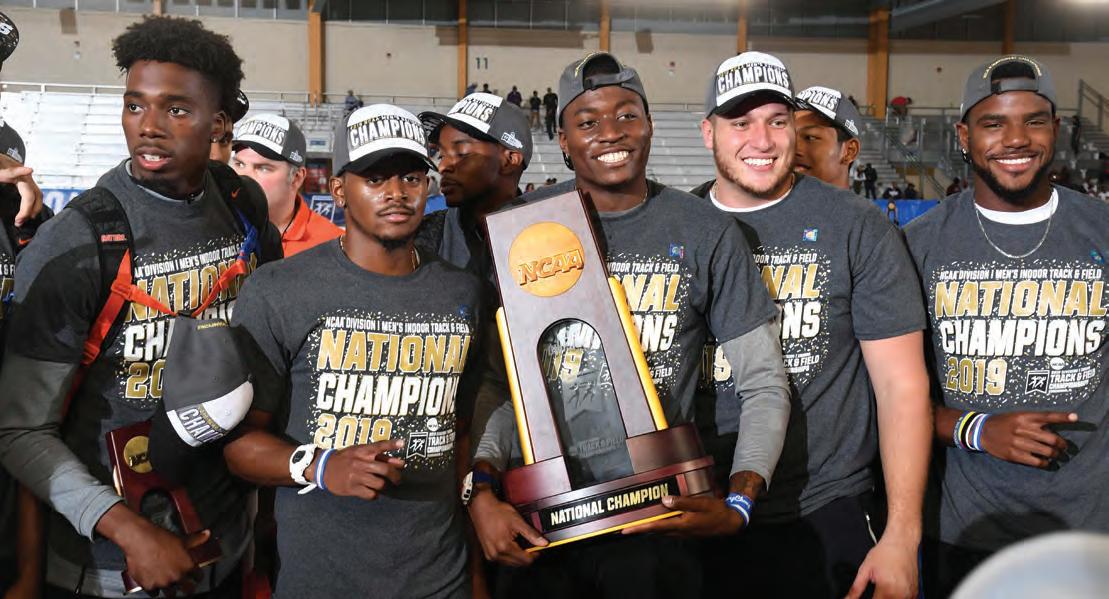
Holloway (center) helped lead UF to three team national titles during his college career, an outdoor crown in 2017 and back-to-back indoor trophies in ’18 and ’19. | Kirby Lee/ Imagn Images
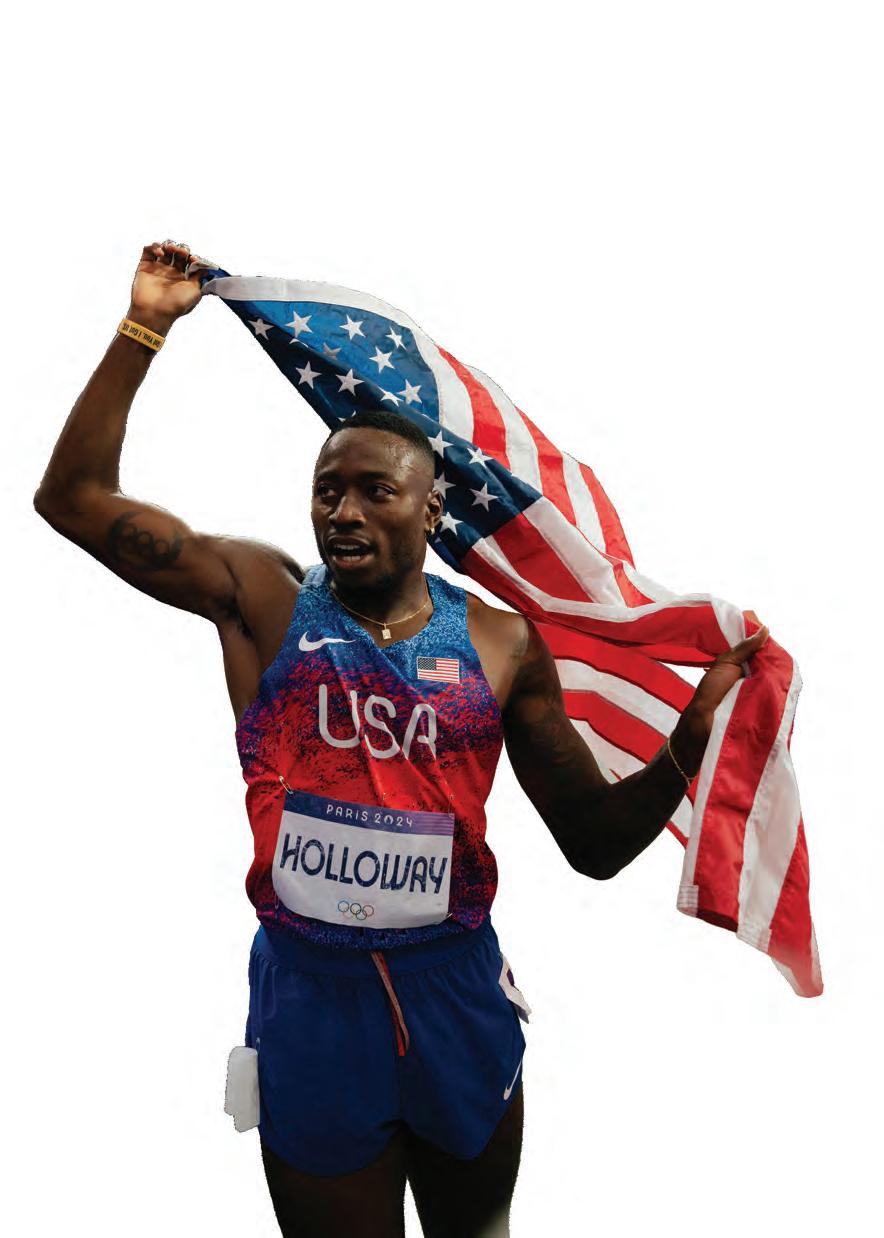
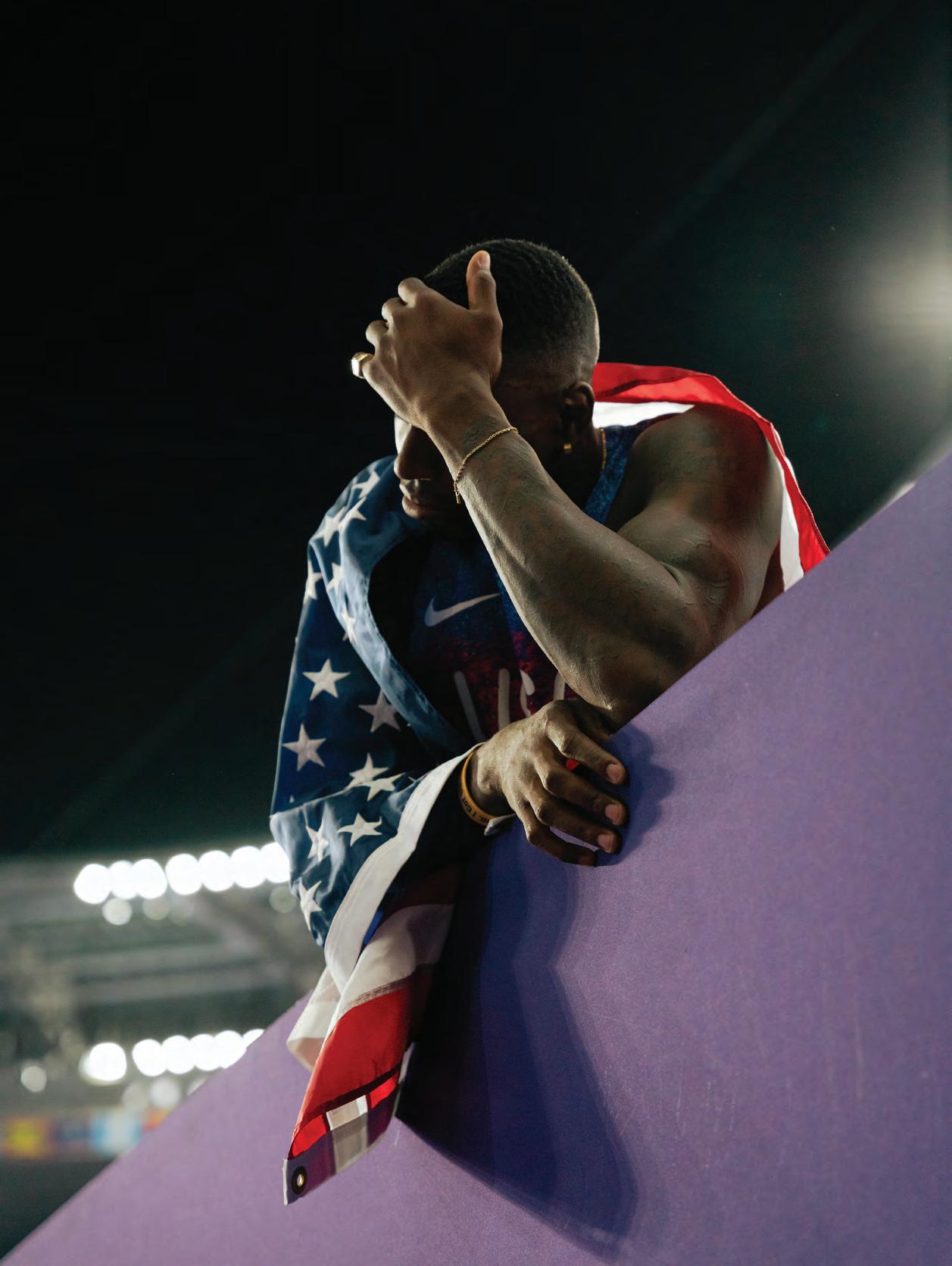
Holloway paused at the top of the staircase following his post-race victory lap, head in his hands and sweat still glistening on his forehead. An American flag was draped around his shoulders. Now, here, he could finally let out the sigh of relief that lived in his chest for years.
After the high of capturing the gold in the 110m hurdles – a feat accomplished by just 27 men before him – wore off, something felt different.
Hundreds, perhaps thousands, of laps around the track pushed him to his mental and physical limits and led to this. The payoff was so immense that he couldn’t fathom the other side.
“I was willing to die for that Olympic gold, and now that I got the Olympic gold, it’s like, ‘Alright, what’s my next goal?’” he said. “And I don’t have one.”
For the first eight months after his victory, it was this interview and that interview. Appearances here and there. Then back to training. No rest. No
reset. Just back to business as usual. Eventually this caught up to Holloway; his mind was not where it once was.
The cracks began to show at the 2025 Tokyo World Championships, his first appearance on this stage since the Paris Olympics 13 months prior.
“I never really came to terms on what I did [in Paris],” He said. “I think that’s the reason why I struggled so badly this season.”
He loaded into the starting blocks having won three championships in a row, but this time he didn’t — far from it. The 2019, 2022 and 2023 champion placed sixth in his semifinal heat and didn’t even advance to the final. For the first time in six years, a new champion of the 110-meter hurdles was crowned.
His struggle — an inability to come down from achieving his life’s goal — isn’t abnormal.
The condition, known as post-Olympic depression, is not recognized by the Diagnostic and Statistical Manual of Mental Disorders (DSM-5), the guide used by mental health professionals to diagnose and treat mental illness.
Left: Despite his Olympic success, Holloway says he still isn’t frequently recognized in Gainesville. | Matthew Lewis/Grandstand Magazine
Right: Holloway has earned eight medals at the Olympics and World Championships since leaving college. | Caroline Walsh/ Grandstand Magazine
Though Dr. Nicole Karcinski, Director of Mental Health and Wellness for University of Florida Athletics, says it’s characterized by those in the sports world as the “sharp drop” an athlete experiences after achieving a monumental goal.
The signs of it are consistent with those of adjustment disorder. These include, but are not limited to, feelings of numbness and emptiness as well as irritability and anxiety.
And those feelings are completely normal. Numerous athletes –most notably, Chloe Kim and Michael Phelps – have similarly discussed their struggles with post-Olympic depression.
“Even in winning gold medals, there can still be grief,” Karcinski said.
Holloway’s process of working through his emotions is pretty straightforward. He leans on those closest to him. His friends, loved ones, former teammates and coaches – especially UF track and field head coach Mike Holloway – have all played their part.
“I viewed my role as a bit of a sounding board and just keeping it light,” said Jesse Millson, Grant’s former roommate and teammate at UF.
But when things got heavy, Grant could turn to Roberts, who was going through the same thing.
“When your body and mind goes to such a high place — like it does with the Olympics, like it has to in order to be successful — there’s going to be some type of crash,” Roberts said. “It’s been a little tougher just trying to get through this.”
Although it may not have started that way, over the past decade, their friendship has grown beyond the track.
They’re able to recognize that when the spikes are on, they’re enemies. But when they’re off, Grant and Daniel are now longtime friends.
When they first met in 2015 at the New Balance Nationals Outdoor meet in Greensboro, North Carolina, Roberts thought of Grant as a friendly kid with a smile that stretched from ear to ear.
Little did he know that they would become each other’s biggest motivators.
Holloway first started getting national attention during his sophomore year at Grassfield High School, just south of Norfolk, Virginia, when he won his first state championships in the indoor 55-meter hurdles and the outdoor 110-meter hurdles.
In 2014, he fell short in the 55-meter race at indoors
nationals. He was a mere 16 years old. Now 28, he hasn’t lost the event since.
Collegiate offers flooded in, and he chose to put his trust in the hands of UF’s Mike Holloway. After all, the Gators head coach already had a proven record, having led the program to three indoor and two outdoor national titles since 2003.
“I sat in Grant’s living room and I promised his parents I was going to help him become the best hurdler in the world,” Mike said. “That was his goal, that was his dream.”
Grant, who is known for his bubbly personality, made an immediate impact at UF, both on and off the track.
In 2017, he was named SEC Indoor and Outdoor Freshman Runner of the Year and brought home two individual NCAA and one SEC title. He also helped Mike bring his fourth outdoor team national championship title to Gainesville.
Left: Holloway (lane 6), rightfully, was filled with emotion after winning gold in Paris. | Courtesy of Anderson Bobo
Right: As has been the case with many of Holloway and Roberts’ races, Paris came down to the final moments. | James Lang/Imagn Images
One person who helped Grant stay focused was Roberts, who began his career at Kentucky that same year.
“Without Daniel, who knows what happens,” Millson said. “But it really allowed Grant to have this tangible person that [lets him know if he] misses here and there, he’s not gonna win.”
The two were neck and neck at every meet, always pushing one another. It helped that they both had the same goal: make the United States a hurdling powerhouse again.
After three years at Florida, filled with countless hours of playing Mario Party with his friends and collecting firstplace finishes on the track, Holloway was ready to take the next step. He’d conquered the NCAA, it was time to take on the world.
In June 2019, he chose to forego his senior year and sign with adidas. Three months later, Grant took home his first World Championship gold in the 110-meter hurdles in Doha. That year, the world got to know him as The Flamingo — long-legged, energetic
Roberts (left) and Holloway have been finishing in the top two since they were college freshmen. | Kirby Lee/Imagn Images
and confident. While the transition from college to professional athlete can be difficult, Grant made it look easy.
“I definitely saw a flip within him of taking ownership of his day and his life and his path, his career path,” Millson said. “He wanted to be great.”
off the track. Although his UF days are long over, Grant still resides in Gainesville just a few doors down from Mike.
“Immediately we thought that we could be related, and we’re still not sure if we are or not, but it doesn’t matter,” Mike said. “Grant is part of my family.”
The words of wisdom Mike has given him over the years have traveled with Grant as he’s competed all over the world. Across continents and oceans, all the way to Paris.
This time it felt different. The energy inside of the Paris stadium was palpable. The cheers of fans could be heard from the warmup track outside.
It looked nothing like the last one. The atmosphere at the Tokyo Games in 2021, delayed by a year due to the COVID-19 pandemic, wasn’t what he saw on TV as a child. Those stands were a ghost town. And he lived for the roar of the crowd. It fueled him.
The announcer called his name as Holloway walked out of the tunnel and waved to a crowd of more than 70,000. He was straight-faced, all business. The trademark million-dollar smile that adorned his face as he stepped onto the track in Tokyo was nowhere to be found. He wouldn’t finish in second. Not again.
“now that I got the Olympic gold, it’s like, ‘Alright, what’s my next goal?... And I don’t have one.”
- Grant Holloway
While his childhood dream was always to climb to the top of the Olympic podium, Grant attributes much of his success to Mike. The coach shaped his mindset, the person he is on and
All around were supporters wearing his signature orange and white adidas tank top, holding up cardboard signs bearing his face. His support system — his parents, his nowfiancée and her parents, his coaches, his friends, even his acupuncturist — anxiously waited in the stands, anticipating the pop of the starting gun.
When he stepped up to the starting blocks, it felt as if time slowed down. A measured 51 steps lay between him and the finish line.
Left: Holloway cherishes this post-race image from Paris — the moment his life changed forever. | Courtesy of Anderson Bobo
Right: Nowadays, Holloway’s bubbly personality is showing itself in different ways. He likes it that way. | Caroline Walsh/ Grandstand Magazine
When the gun sounded, everything around him disappeared.
For those few seconds, he felt like he was a character in a video game with a superpower that slowed time. Like Neo from The Matrix, he said. Then he crossed the finish line and everything sped back up.
The goal was completed; it was time to soak it all in.
Holloway caught his breath and jogged over to ring a large silver bell forged in Normandy, engraved with the Paris 2024 logo. At the conclusion of the games, it was hung in one of the newly reconstructed Notre Dame Cathedral’s bell towers. A piece of rewritten history on display for all.
Clang.
“But guess who now gets to ring the bell?” NBC track and field announcer Lewis Johnson cried emphatically on the broadcast.
Clang.
Team USA supporters went wild, clawing at Holloway over the wall for hugs and high fives. A joyous, bewildered expression painted on his face. He can’t believe it, he’s finally done it. Finally.
Yet those in the stands knew it all along. And that’s one of the things that Holloway loves best about competing, the love and support that helped him get to the highest level.
“[It’s the] small, subtle things where you can see that people are truly trying to support you,” he said. “And that’s one of the things that I truly endure, that I love and endure about this because I’m going around, taking pictures, signing autographs, and all these people were there for me.”
Everyone could feel this moment.
“It was very surreal. We talked about moments like those in 2019 when we both were turning pro,” Roberts said. “We went No. 1 and 2 at outdoor SECs and then No. 1 and 2 at Nationals and breaking the collegiate record, both of us. And doing the same thing indoors. We said we want to do the same thing on the world stage.”
And they finally did.
Holloway wants to have fun again. During the Olympic year, the joy was taken out of competing because he was so focused on his goal.
None of this means Holloway is hanging up the spikes. The 2028 Games in Los Angeles are still on his mind. The Olympics are just not the only thing on his mind anymore.
“Regardless of who I am as an athlete, I think people will remember how nice I am as a person,” he said. “Even if it’s just holding the door for somebody, doing this or doing that, it’s just one of the things where people remember you for who you are as a person, not as an athlete.”
And that’s who Holloway has always been. The glue of his friend group, the goofy kid with the wide smile, the Flamingo.
“He makes you feel like you’re his best friend,” Millson said. “His circle is so important to him and he also takes care of everybody in it.”
He’s putting more emphasis on taking care of himself, too, both mentally and physically, as he rehabs a recent hamstring injury. Although minor, it sidelined him from this year’s World Indoor Championships. His body needed the rest, he said.
For now, Holloway sits in a studio in the basement of Weimer Hall, donning a simple white polo and showing off his pearly whites for the camera. Between shots, he’s handed a photo of a moment he remembers all too well. The image, taken by photographer friend Anderson Bobo, remains one of his lasting memories from that night –
“Ah, relief,” he says.
He can’t stop looking at it. A red, white and blue flag draped over his shoulders. The lights cascading down from above. The moment he could finally breathe again.
He’s been Grant Holloway, NCAA champion. He’s been Grant Holloway, world champion. He is Grant Holloway, Olympic champion.
Now, he finally has the chance to just
Here’s the Ticket
Student season tickets for Gators football have jumped $75 in three years. But how does UF stack up against other top programs on price and accessibility?
By Kevin Perez
SEC Student Season Ticket Prices Per Game
The most expensive per-game student tickets? How select Power 4 college football programs rank.
For 2025, Missouri students had to buy ‘Zou Pass’ then enter a weekly lottery for football due to stadium renovations. At South Carolina, student tickets are free, but students have to submit a weekly request to claim. Tennessee uses a lottery system; once students claim their tickets, they then have to pay a $25 fee. As a private university, Vanderbilt does not charge students for season football tickets.
Florida students might be feeling a pinch in their pockets, but where do the Gators rank in the country for the most expensive student football ticket?
Since 2022, the first season after the COVID-19 pandemic with no stadium capacity restrictions, Florida student season ticket prices have risen by $110 to $250 in 2025, and seemingly will jump again for 2026.
The year-by-year jump is, definitively, stark.
“All revenue the UAA generates, including the revenue from tickets is either reinvested into the student athlete or fan experience,” a UAA spokesperson said in a statement. “Rising expenses in the athletic department including but not limited to travel costs, support in the areas of nutrition, education, mental health
and sports medicine while also maintaining our facilities dictates that we seek additional sources of revenue to balance the budget.”
Across the country, ticket prices have been rising. The expansion of NIL, increasing demand and stadium renovations are among factors at play. The National Championship game between the Miami Hurricanes and Indiana Hoosiers was the most expensive college football game on record, according to ESPN, at an average of $4,320 (VividSeats.)
While students haven’t witnessed much success from the Gators on the field in recent years — Florida has gone 23-27 over the last four years — the upped price they’re paying might still be worth it.
Looking across the rest of the Sunshine State, Florida State’s student ticket is also $250. While the Seminoles did
host one more home game (seven) than Florida in 2025, their pass doesn’t guarantee admission to the student section, while the Gators’ does. UCF, USF and the University of Miami all offer free admission to football games*. UM students, however, pay an athletic fee of $170 for all sports.
*Vanderbilt and South Carolina are the only two SEC schools to do the same.
Compared to other SEC schools, Florida slides in on the higher end, but it’s not nearly the most expensive ticket in the conference. Here’s how it ranks:
The Aggies’ “sports pass” is the most expensive in the conference, but also the country. It provides students the ability to attend other athletic events as well — an amenity already free for students in The Swamp.
Tied with Florida, Alabama’s student season ticket places restrictions on who can order full season packages based on seniority and other factors, and offers partial packages based on loyalty points. As for Texas, students with a season pass still have to go through an online process to claim seats in the student section. So, despite a higher cost than most of the conference, the Gators’ student ticket is among the most accessible. Florida is one of few schools that’s ticket is first-come, first-served online, and there’s no ordering restriction. The others: Florida State, LSU and Michigan.
But every school sells its tickets differently. Georgia offers full and partial plans priced at $80, $40 and $50 while processing student ticket applications and utilizing a priority lottery system. Ole Miss allocates tickets to each class based on the percentage of the student body in each class, and Tennessee operates on a tier-based lottery system where students attend other athletic events to gain points, which gives them better odds of scoring football tickets.
Up against other conferences’ top schools, Florida isn’t an outlier. In the Big Ten, Ohio State sells its student ticket at $364, Penn State at $246, Oregon at $175 and Michigan at $174.
With sights set on 2026, it’s unclear what the season pass will cost for Gator students, but if recent history suggests anything, it will increase. The planned renovations to Ben Hill Griffin Stadium could also play a role in pricing in future years, though those plans won’t be complete until most current UF students have graduated. For now, Gator students can only wait to see what they’ll be charged next.
“The Student Section at Ben Hill Griffin Stadium is the heartbeat of our homefield advantage,” a UAA spokesperson said, with another addition. “[And] we continue to see a high level of demand for season tickets.”
SEC Student Season Ticket Prices
Across the conference, student season ticket models vary widely in cost and accessibility. The average season ticket cost is approximately $189.
SchoolsTicket CostGamesSpecifications
Select returning students get full package, tier-based; new students get partial packages
Must claim ticket for each game, then first-come, first-served; rate includes men’s basketball and baseball
Ordering schedule based on credit hours; only partial packages for first-year students
First-come, first-served online and reserved seat
Multiple packages and a priority lottery system
Must claim ticket each game; general admission
General admission; reserved seats for $175 pass
General admission
Lottery for each game then claim
Freshmen, new students only get partial packages
Includes mandatory additional $50 donation; Tickets assigned based on size of class
Request process each week for a ticket
Tier-based lottery system, then pay $25 per ticket
Claim a ticket each week; general admission
Ticket pull for each game
Must claim a ticket each week
For Mia
PGA Tour veteran Camilo Villegas remembers his daughter’s smile, the way she followed him around, her joy. Now the family is doing everything they can to honor her memory – and supporting parents who are going through similar ordeals.
By Liana Handler
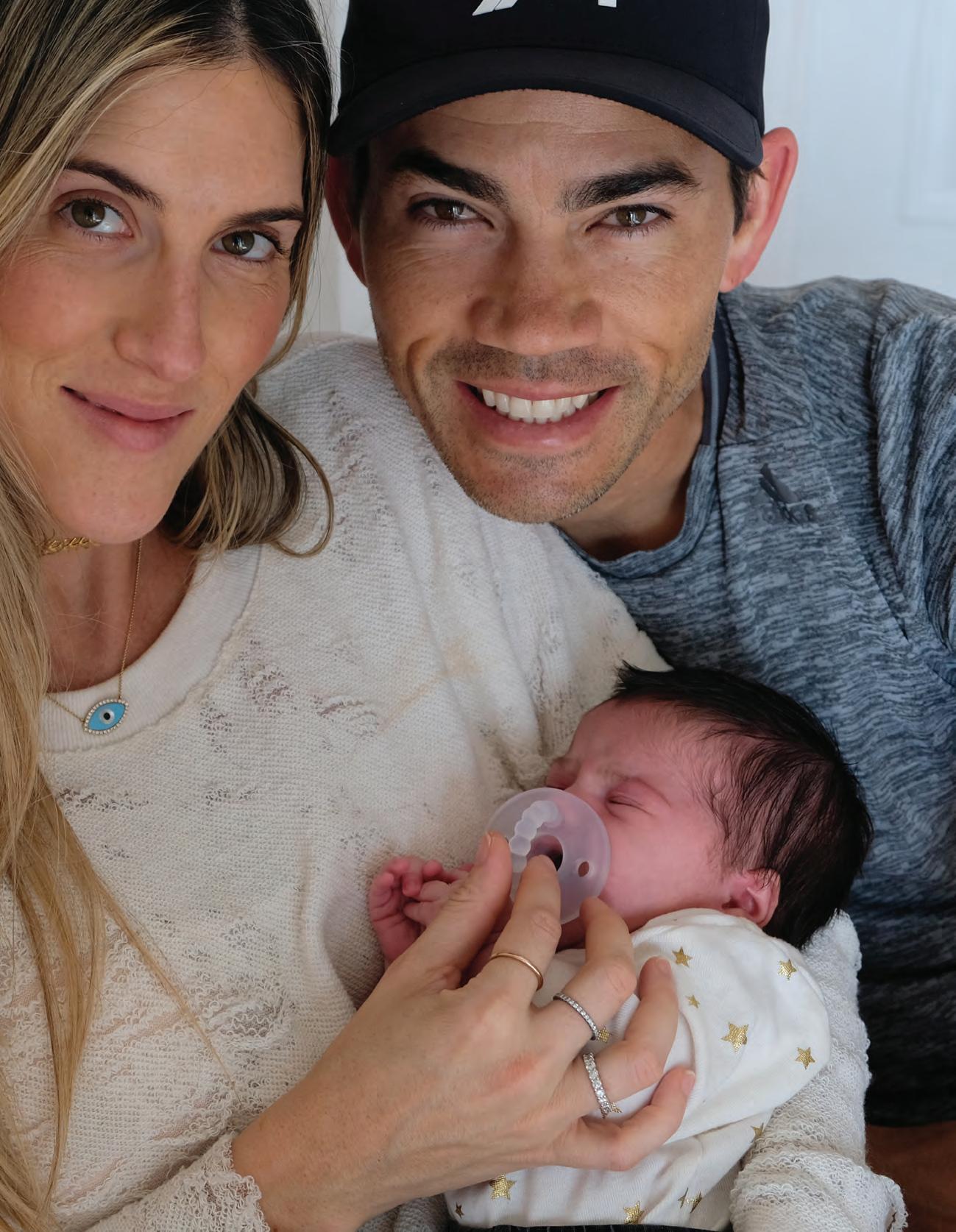
Former UF golfer Camilo Villegas (right) and his wife, Maria Ochoa, married in 2014. Their daughter, Mia, was born four years later on Sept. 26, 2018. | Courtesy of Villegas Family
Three–year–old Mateo Villegas wandered around his home repeating a date. Everywhere he went, he mumbled, September 26, September 26, September 26. His father, Camilo – a former UF golfer and PGA Tour veteran stopped when he heard his son walk into his wife’s office.
Camilo’s daughter, Mia, who died of pediatric cancer in 2020 at 22 months old, was born on September 26. Mateo didn’t know his older sister beyond the stories Camilo and his wife, Maria Ochoa, told him.
Yet, somehow, Mateo knew that in three days, it would be Mia’s birthday.
“Those things show that there are connections and that there is power –that we are still here,” Camilo said in disbelief.
The Villegases lost their daughter, Mia, nearly six years ago, but still keep her legacy alive in both their household and in charity work in the United States and Colombia. Their foundation, aptly named “Mia’s Miracles,” provides hospitals with pediatric equipment and renovations to support other families who are undergoing similar situations.
So far, the foundation has raised more than $2 million, but the Villegases are far from finished, guided by what they see as Mia’s mission: to spread joy even in the most hopeless of situations.
Born in Medellín, Colombia, Villegas played in the National Junior Championships at 8. By 16, he tallied a national record, winning the Amateur’s Grand Slam — the National Junior Championship in both stroke and match play as well as the National Amateur Championship and the Colombian Open.
The ceiling of Colombian golf drew closer from occasional whispers to recruiting conversations. All roads in Latin American sports lead back to the United States, where money and collegiate backing draw a map to professional leagues. His 1,600–mile journey was inevitable since he took the first swing on the green.
So, Villegas toed the delicate tightrope of most immigrants: never forgetting his home country while forging a path forward in a different one.
He committed to Florida in 2000, but Gainesville isn’t Medellín — far from it. Clouds shroud the mountain peaks in Villegas’ home city, the second–largest in Colombia, and the elevation climbs to more than 9,000 feet. Traffic jams the streets of barrios, steep and narrow neighborhoods carved into the winding hillside. Open a window, and the cacophony of car horns, the faint smell of vendors selling food and the neighbor gossip in Spanish permeates.
breeze as cars pass on the multi–laned pavement. While the University provides some communal spaces, the streets reflect the specific American brand of individualism. Rows of one–story houses line cul–de–sacs, and each person worries about their own problems, their own
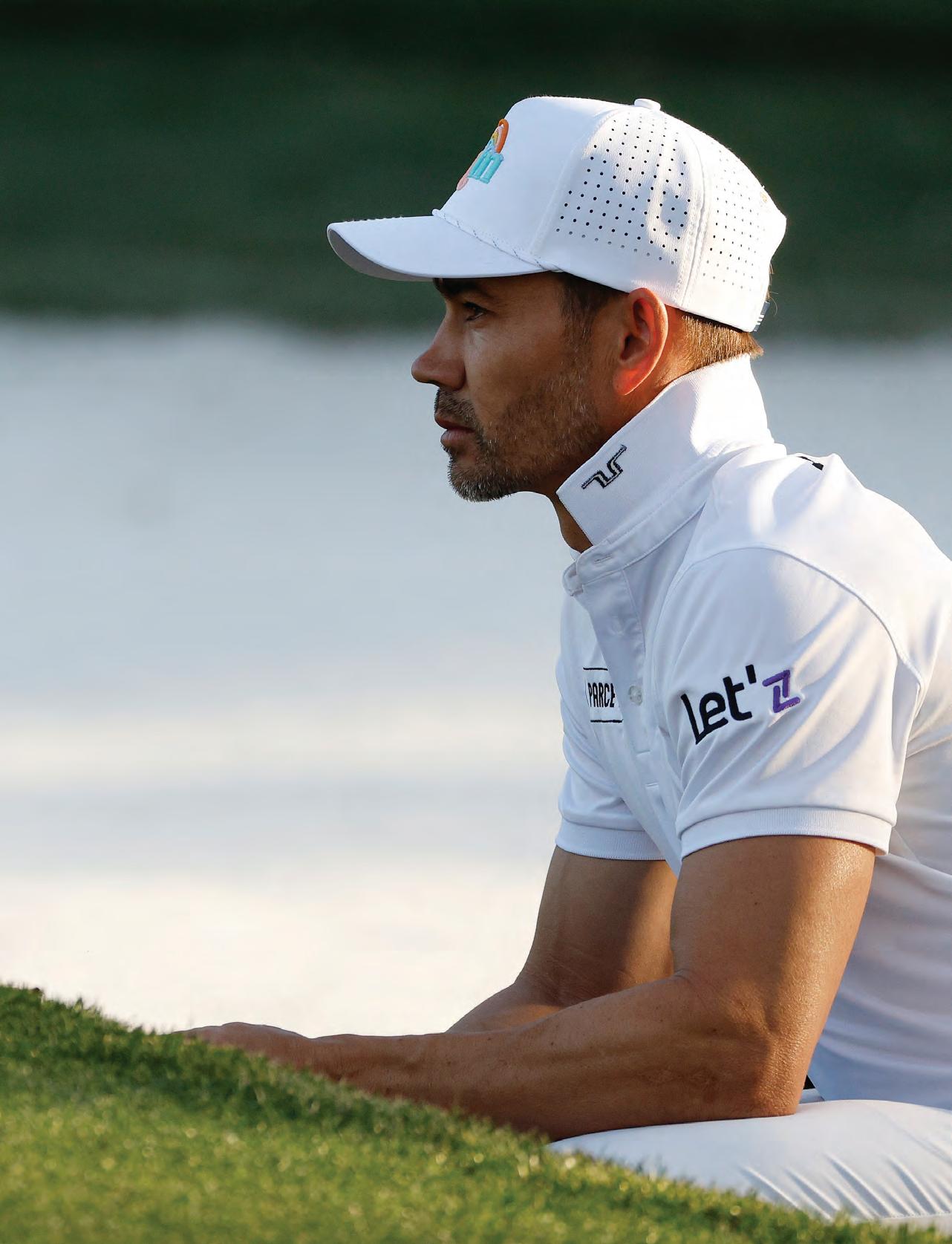
Villegas has five career victories on the PGA Tour, the most recent in 2023. | Aryanna Frank/ Imagn Images
Despite the cultural differences, his coaches remembered greeting Camilo and his wide grin when he joined the Florida men’s golf team in 2001.
“I remember the sinister little giggle that he would have whenever he was doing something to somebody,” former UF men’s golf coach Buddy Alexander said. “It was just always funny and fun.”
“The people from Medellín are really hard workers,” Maria said. “Medellín is a city where you see things happening.”
While an oasis in farmland and rural towns, Gainesville was much quieter than Medellín. Spanish moss dangles from trees, slightly swinging in the
Villegas spoke English — having attended a bilingual school before college — but he struggled at times to learn the nuances of the language, Alexander said.
Only one universal language was spoken in the golf team under Alexander’s direction, though: winning. That year, Florida outlasted 30 teams to win the NCAA championship. Camilo earned the SEC Freshman of the Year award and All–American honors.
Despite his occasional struggles, Camilo epitomized the American dream that few immigrants can achieve in one generation. He later won the 2004 SEC Player of the Year award as a senior, graduating with a degree in business administration.
The Villegases had Mia when Camilo was 36, more than a decade into his golf career. She quickly became their priority. | Greg Lovett/Imagn Images
“It was life–changing,” Camilo said. “I’m always thankful for the University of Florida, not only for the memories and education it gave me, but just for making me better to take that next step in life.”
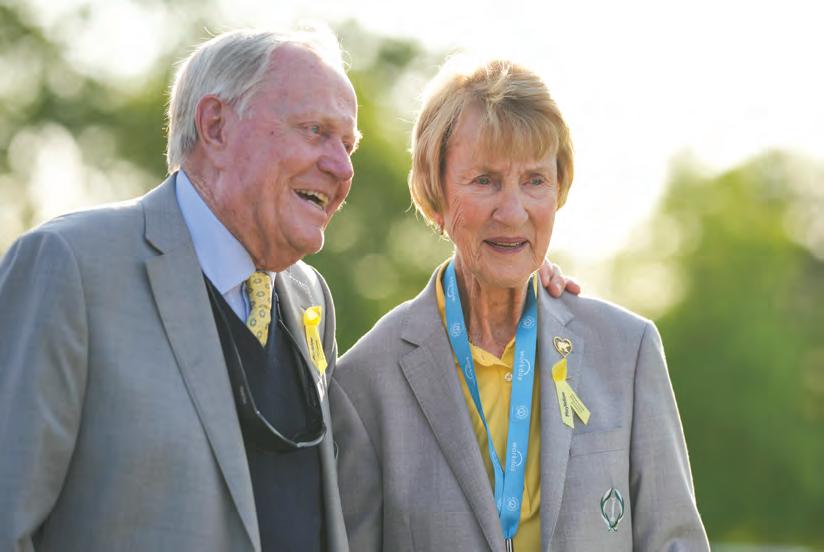
Golf legend Jack Nicklaus and his wife, Barbara, grew close with the Villegases as they helped with Mia’s fight against cancer. | Aaron Doster/Imagn Images
Camilo turned professional after leaving UF and earned his PGA Tour card before the 2006 season, making his first Masters appearance a year later. From there, he became a consistent member of the tour, reaching a career–high No. 18 in the Official World Golf Ranking in 2008.
For a while, life was easy. He wore J. Lindeberg clothing and had a top 10 finish in the PGA Championship (T–4) and U.S. Open (T–9) – both in 2008. He finished in the top 15 in the Masters and The Open Championship a year later. He reunited with Maria, a law school student in Colombia whom he had known since he was 12, and the two married in 2014. Having a family felt like the next step.
a second opinion. It didn’t make sense. She called a doctor in Colombia in early March, who offhandedly suggested that they take her to a neurologist – just to make sure.
Mia was born Sept. 26, 2018. From the moment she opened her eyes, she brought joy to the Villegas household with a smile that mirrored Camilo’s. She followed her dad everywhere, grabbing his clubs and squatting beside him while he worked out. She rarely cried.
One day, though, 18–month–old Mia couldn’t stop.
Camilo, who was competing in The Honda Classic in nearby Palm Beach at the time, and Maria assumed it was a teething issue or one of the many flu–type illnesses young children get from mommy–and–me play sessions.
But Mia’s condition only worsened. She couldn’t sleep through the night. She couldn’t play with Camilo. She cried, holding her head in her little hands, touching her forehead or her cheek.
It’s probably just a teething issue, their pediatrician told them. Maria wanted
Jack and Barbara Nicklaus, close friends of the Villegas family, arranged for a neurology team at the Nicklaus Children’s Hospital in Miami to see Mia. Camilo, Maria and Mia arrived in the late afternoon, and Mia underwent her first MRI the next day.
“They’re real people, and they’re nice to everybody,” Barbara said. “They don’t expect anything, and they’re a giving couple.”
Mia’s health felt personal to the Nicklauses. Their only daughter, Nan, was 11 months old when she struggled to breathe after swallowing a blue crayon in 1966. When the object broke into pieces, parts traveled into her lungs and became a breeding ground for bacteria, leading to pneumonia. While Nan made a full recovery, the Nicklauses lost their 17–month–old grandson Jake in a hot tub accident in 2005.
Both families shared the feeling of the long nights, staring up at the ceiling, counting tiles while hoping — praying — that their daughter recovered.
There’s a way doctors walk into a room when they tell someone they have cancer. A solemn stare, a low tone of voice, simple sentences. It’s hedged bets placed in conversations about teamwork and resiliency: we will try our best, we will do all we can, we have a lot of options we can talk about.
The doctors told Camilo and Maria that their daughter had a mass in her brain with metastases in her cerebellum and spine. In other words, the cancer had spread from her head to her spine and into her bones. Mia’s surgery on Tuesday removed the main mass, but for 10 days, the family stayed in the hospital waiting to treat the other areas.
They were allowed to go home for three days as the stitching healed, away from the beeping of her heart rate on the monitors and the clinical, bleach smell of the hospital room. The three returned to the hospital for another MRI, and were greeted with the same solemn looks, the same low tone of voice.
The golf–ball–sized tumor was growing back after just two weeks of being removed. The cancer was aggressive. They couldn’t go home. Then came the five brain surgeries and a
monthlong stay in the ICU. Mia was moved to the oncology floor, where patients had 24–hour care, and the rooms were quieter.
“It was kind of like torture,” Maria said. “It was really, really hard.”
Maria was insistent on color, filling the white walls with rainbows and photos of her family. She brought a diffuser, so the three wouldn’t have to smell the disinfectants. She hung a sign that read, “Welcome to the land of make believe.”
“I wanted the energy to be happy. I wanted it to be uplifting...”
–Maria ochoa
she changed her wardrobe to all white in the hopes of creating a clean and uplifting environment.
“I wanted the energy to be happy,” Maria said. “I wanted it to be uplifting from the things – from what you wear, the things you say, how you decorate, everything.”
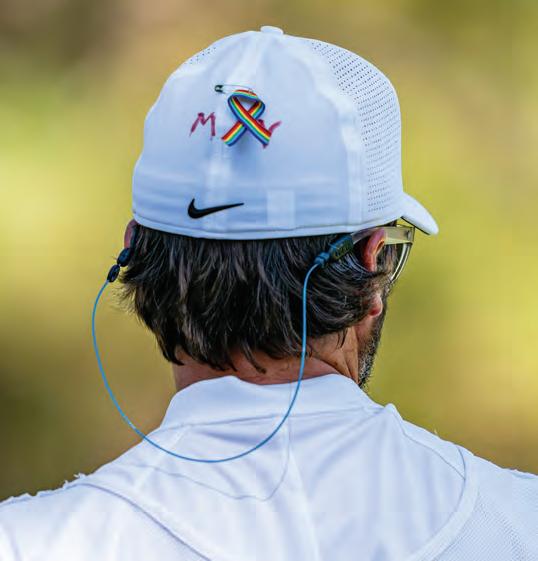
Four months passed. After a round of mild treatment and two stronger ones, an MRI taken July 20 showed little progress. Camilo traveled five hours up the Florida’s east coast to play in the Korn Ferry Challenge in Ponte Vedra Beach. As fellow PGA Tour members learned what was happening to Mia, golfers started to don rainbow ribbons in support. Wives of PGA Tour players sent flowers and cards.
Room 6017 became a mainstay for the family. Maria spent almost every night with her daughter while Camilo traveled back and forth from the hospital and a house in Miami, the family rented two minutes from the Children’s Hospital.
Their one rule was simple: no grief, no sadness in the room.
One day during Mia’s stay, Camilo arrived in black shorts. Maria sent him home to change. On the day of Mia’s initial diagnosis, Maria had been wearing black. Since that day,
Six days later, Mia died surrounded by the colors she loved the most: all of them. In the days, weeks and months after Mia’s death, the family struggled
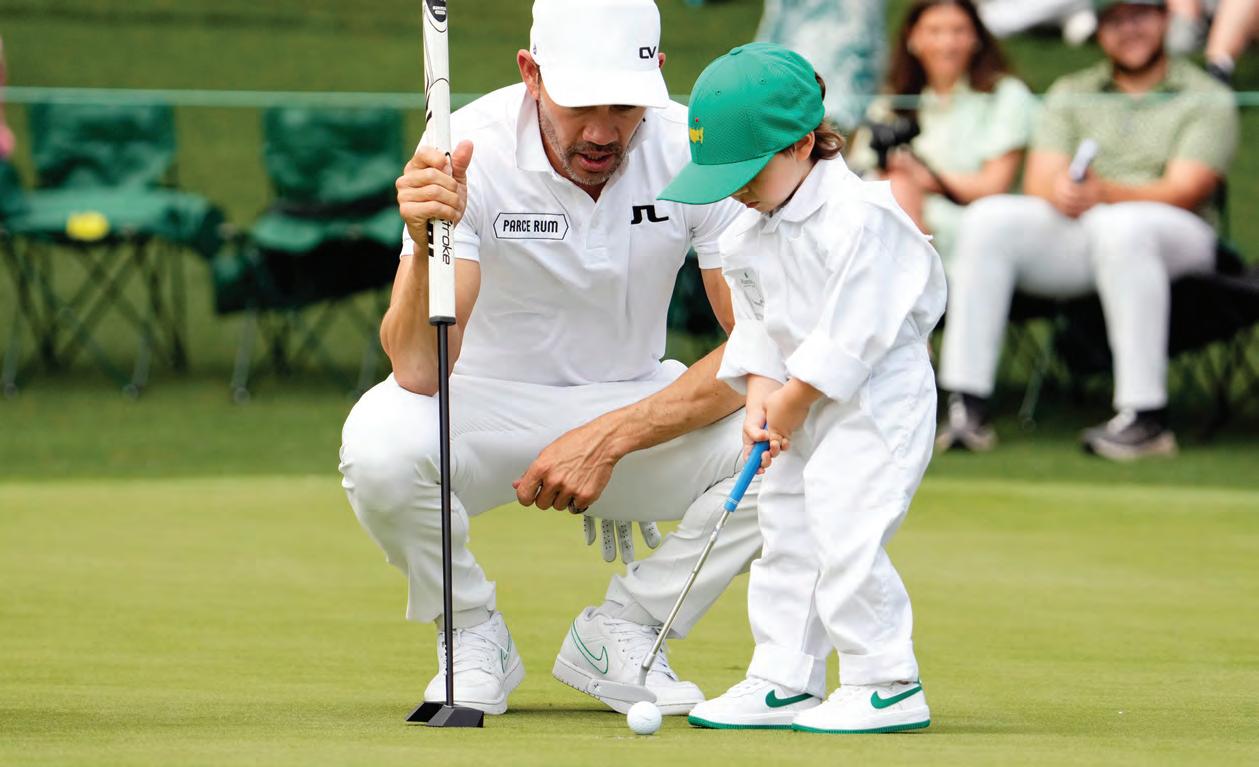
Camilo Villegas returned to the Masters for the first time in nearly a decade in 2024. His helped his son, Mateo, putt during the Par 3 Contest at Augusta National. | Rob Schumacher/Imagn Images
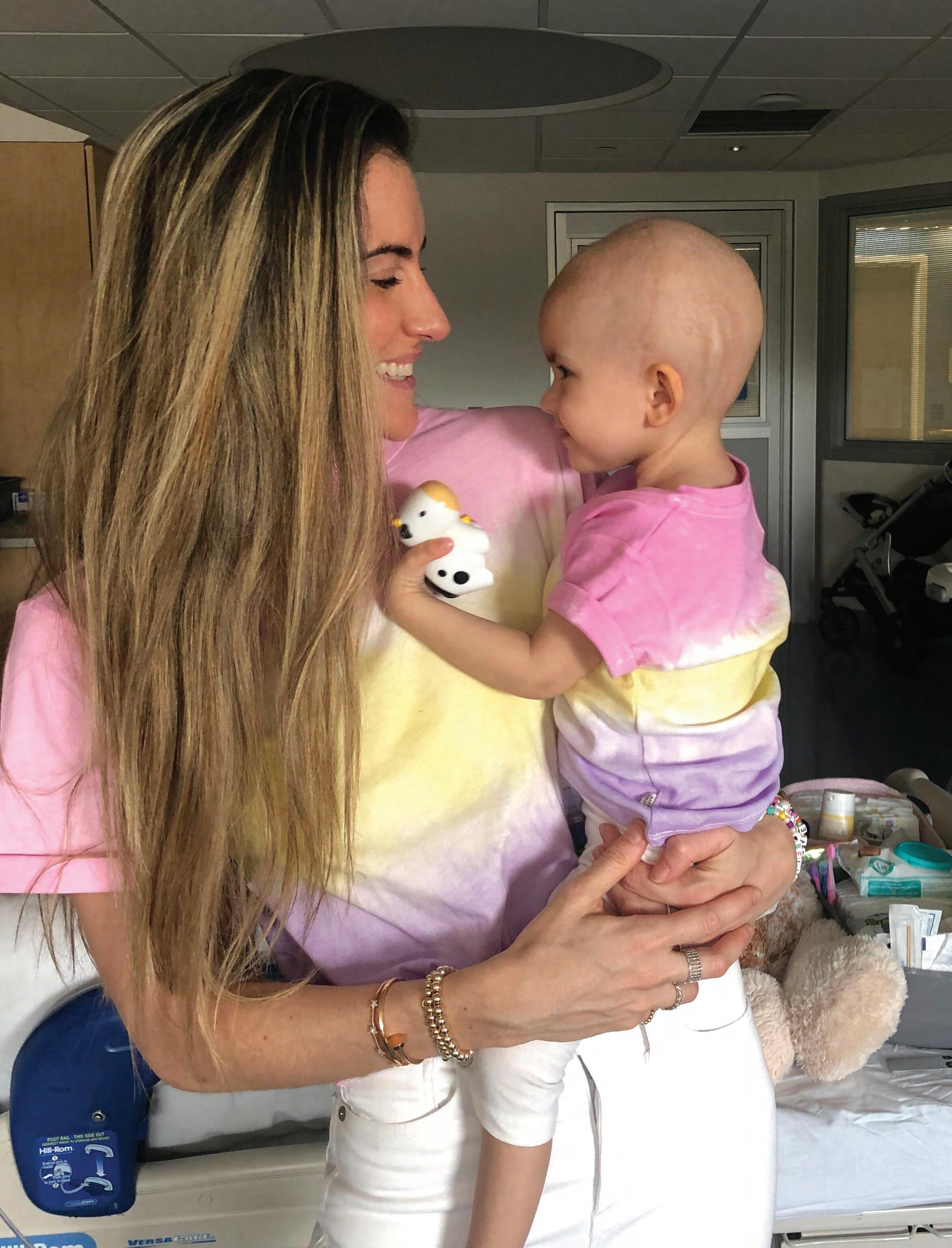
Even as Mia battled her illness, Maria wanted the energy in the hospital to be happy — where bright colors and Mia’s smile always lit up the room. | Courtesy of Villegas Family
play on the Korn Ferry
in 2026 after narrowly missing earning a full PGA Tour card at the final stage of Q–School in December. | Jeff Swinger/ Imagn Images
Left: Villegas will
Tour
Right: The Villegas family welcomed their son, Mateo, three years after Mia’s passing. | Greg Lovett/Imagn Images
to process their grief. Their daughter was gone. Their friends tried to help, but what do you say to someone whose child is gone? “I’m sorry” didn’t feel appropriate. No words – in either Spanish or English – fit.
“I mean, what do you …” Alexander trailed off. “It’s not an easy thing to talk about and try to be as positive as encouraging as you can, and stay in touch and let him know that you’re there for him.”
Little by little, Camilo and Maria pieced together their life. The couple started restructuring Camilo’s small but existing foundation during Mia’s battle with pediatric cancer, quickly renaming it “Mia’s Miracles” to continue her legacy. The two selected the rainbow as a logo in pastels that mirrored the ones in Room 6017.
“A rainbow happens after a storm, and it’s when the sun comes out and when the light comes out,” Maria said.
To give back to the nurses at the Nicklaus Children’s Hospital, the foundation created “Mia’s Serenity” spaces — rooms for medical staff to recover emotionally, which were then expanded to every floor in the hospital. In Colombia, the foundation donated 10 specialized, high–tech incubators to Hospital San Vicente in Medellín to help save newborns, and it helped remodel the outpatient chemotherapy unit to add furniture for parents and “entertainment” for children.
“Our country has so many needs, especially for vulnerable communities, and we want to give back,” Maria said. “It’s a beautiful country, but it has a lot of disadvantages, especially in the healthcare system for underprivileged children and families.”
Camilo and Maria found healing in the charity work, but the months after Mia’s death wore on. The stories of the families whom they helped reopened wounds and reminded them of the hours in the oncology unit. At one point, Camilo suggested to Maria that they could refocus the charity in a different direction, something less connected to the acute grief both had experienced.
“No, these people need us, and we’re going to stick through it,” Camilo remembered Maria saying.
“And I’m glad we did.”
Camilo eventually returned to the Tour and found peace.
In November 2023, he won the Bermuda Championship, shooting a final–round 65 to best Alex Noren by two strokes for his first Tour victory since 2014. As Camilo stood on the green, he looked at the sky — at Mia, thanking her for inspiring him to keep pushing.
In his house in Jupiter, the family’s life remains busy. The two welcomed a son, Mateo, in 2021, and Camilo still rushes out the door to the green to practice. The hole Mia left still lingers, but the sharp pain lessened with the smiles of each child they have helped.
PGA Tour golfers and caddies showed their support for the Villegas family amid Mia’s cancer battle, donning rainbows on their hats. | Andrew Wevers/Imagn Images
Villegas was appointed as a captain’s assistant to Canadian golfer Mike Weir for the 2024 Presidents Cup in Montreal. Weir, himself, is involved in charity work focused on youth mental health, raising at one point in 2007, $6.7 million for Children’s Miracle Network hospitals.
The Villegases described an outpouring of support from countless Tour golfers — from Keegan Bradley to Luke Donald — and from others across the PGA community who stepped in during the family’s time of grief. From the moment Mia was diagnosed through the charitable work that followed, the golf world set competition aside and rallied around them.
The couple also remembers her with cositas, the little traces of their daughter that the two keep close to
their hearts: the white shirts that pack Maria’s closet, the photos of Camilo holding Mia in her arms,
her joy. Problems that once felt insurmountable no longer feel unconquerable when compared to losing a child. And, September 26.
“She’s always in my mind, and I feel like she lives now that she’s our little angel,” Maria said, pausing for a moment to take a breath, her voice warbling. “I feel like she sees life through my eyes, and I like to live life as if she was here with me.”
Photo: Sam Zimmermann | Photo Illustration: Kate Cameron
to rise at a staggering rate. It’s unsustainable for many viewers, especially on college campuses. In turn, illegal streaming has never been bigger.
By Sam Zimmermann
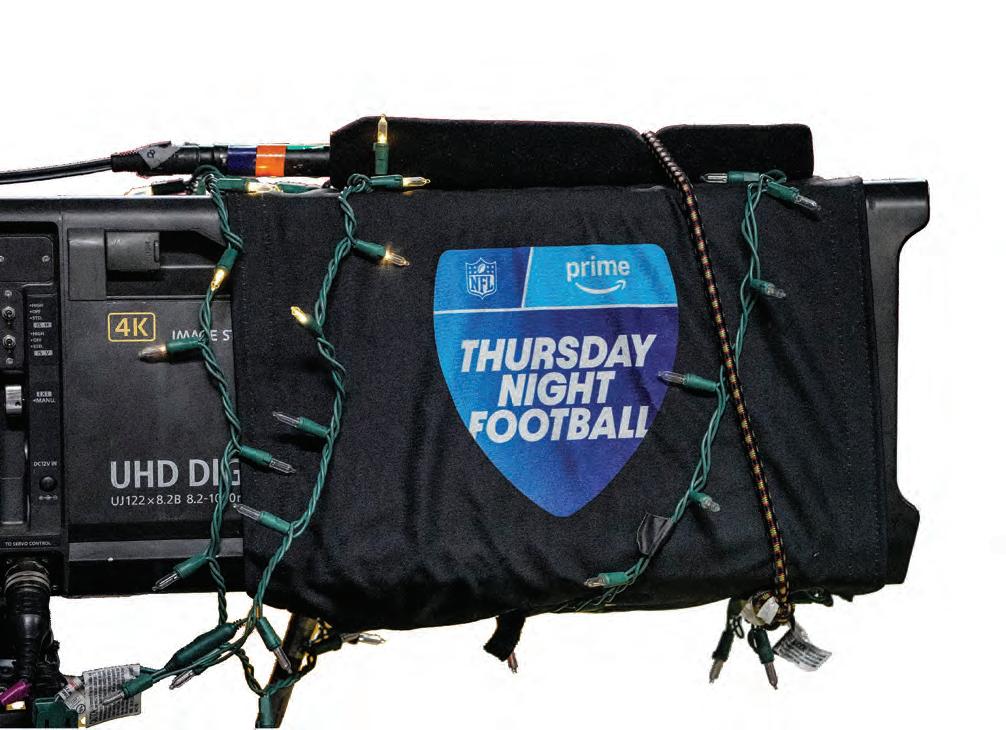
Ringing cheers echo down the fourth-floor hallway of your college dorm room. The ceiling tiles tremble. Cautiously following the commotion brings you to the communal lounge. You peek through the window, eyeing three fellas in flip-flops lying on a plush sofa. They pump their beer-can-clenching fists, eyes dead-set on the glowing TV in front of them. Wide smiles reflect the Thursday Night Football game onto their teeth.
The red StreamEast logo blinks in the screen’s corner.
“It’s just a bunch of broke college students using pirated streams,” said Walter, a University of Florida junior.
Rising costs of streaming services are clashing with student budgets, pushing a generation of sports fans into regular piracy. While the practice is technically illegal, it is far too accessible to feel like a crime.
Everyone in this room is breaking federal copyright law. While they will almost certainly never see the inside of a courtroom for it, operators face up to five years in prison and up to $250,000 in fines under the Protecting Lawful Streaming Act.
“The Act fundamentally changed how large-scale illegal streaming is treated under the law,” copyright lawyer Steven C. Vondran said. Willfully operating an illegal streaming service for financial gain is now a felony. This shift gives prosecutors stronger tools to pursue piracy, while keeping the focus on distributors rather than viewers.
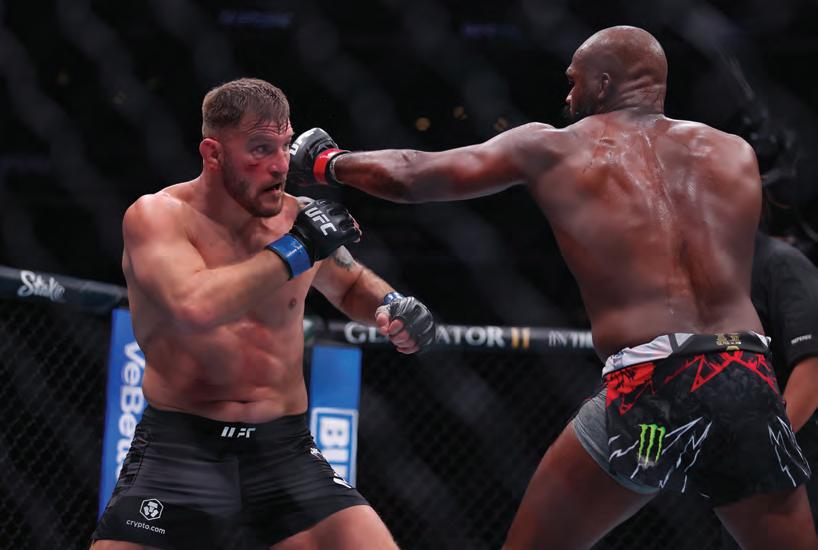
The UFC moved away from its traditional pay-per-view model, signing an exclusive seven-year, $7.7 billion media rights deal with Paramount+ that began on Jan. 1. | Brad Penner/ Imagn Images
On Aug. 24, Egyptian law enforcement found evidence that the people behind StreamEast laundered more than $6 million in advertising revenue. They raided a home 20 miles outside of Cairo, seizing laptops, smartphones and cash. Two men were arrested.
“Many assume they are safe because they did not charge viewers directly, not realizing that ad revenue, donations, sponsorships or affiliate links still count,” Vondran said.
The website offered free, unauthorized streams of almost every major sporting event. It had more than 80 associated domains and received 1.6 billion visits in the previous year. The Alliance for Creativity and Entertainment called it the largest illicit sports streaming operation in the world.
“These aren’t hobbyists uploading links from their bedrooms,” said Larissa
are serious transnational operations that mirror legitimate tech startups. They’re autonomous, decentralized and financially engineered.”
As leagues sign multibillion-dollar media deals and streaming platforms stake their value in live sports bundles, young fans are gravitating toward non-official online broadcasts that are only a few clicks away.
Leventhal, a London-based senior writer and broadcaster for The Athletic. “They’re thinking, ‘I’ve got two minutes until kickoff, where can I watch it?’”
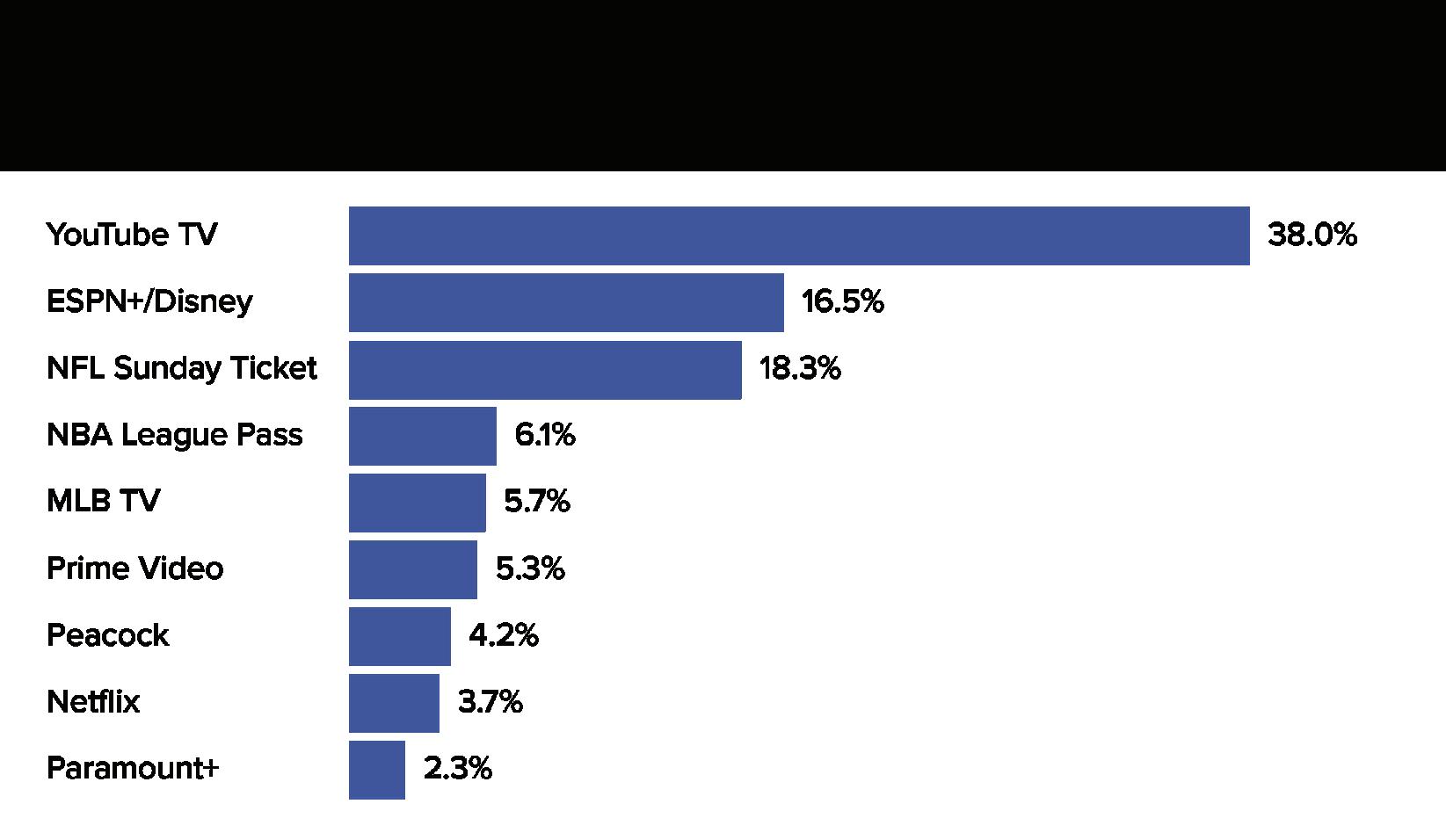
For many students, the cost of monthly subscriptions is just too exorbitant. If a fan wanted to watch every NFL, NBA and MLB game this season, it would cost $2,621. Subscriptions to YouTube TV, Netflix, Peacock, Paramount +, Prime Video and Disney/ ESPN+ run a total of $1,830. It costs another $791 for NBA League Pass, NFL Sunday Ticket and MLB TV.
“It’s confusing,” said Nicholas, a sophomore at the University of Florida. “You can pay $70 a month, and then only get certain streams. I guarantee if some company made it $50 a month to get every college football game, every NFL game, they’d have an insane amount of subscribers.”
After the NBA signed an 11-year, $76 billion deal to bring games to Prime Video, Peacock and ESPN, NBA League Pass subscriptions increased by $10. Since the NFL
On college campuses, illegal streams are an open secret.
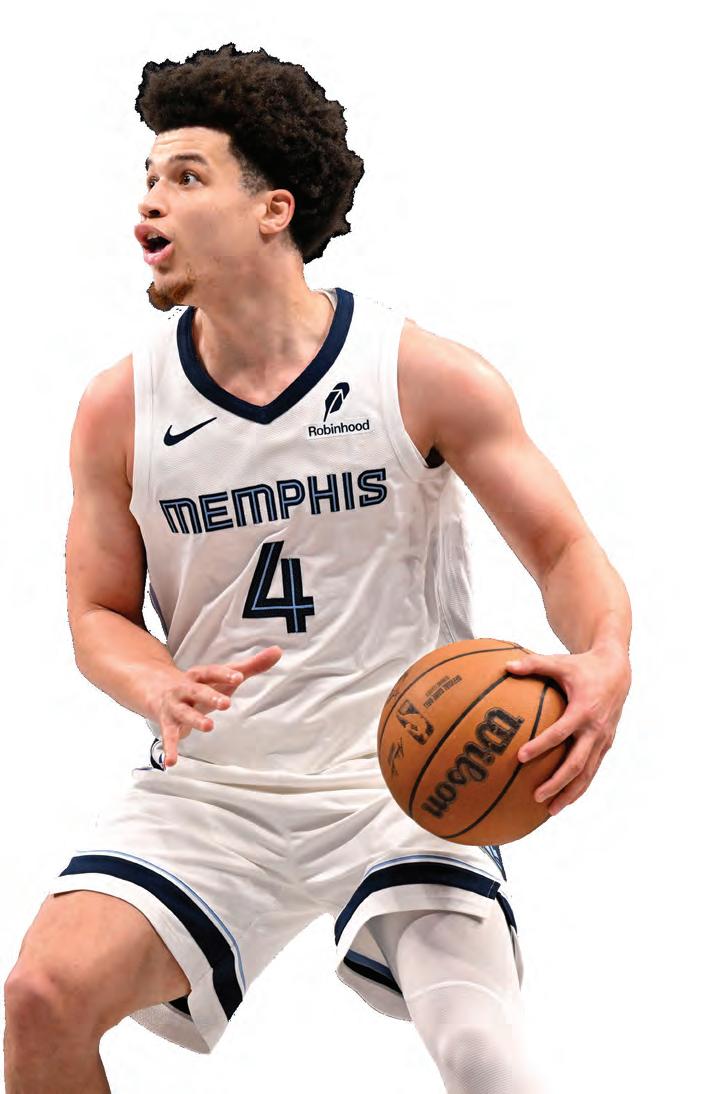
To see all of former Gators star Walter Clayton Jr.’s Memphis Grizzlies games on NBA League Pass, you’d need to pay $109.99 for the full season. But eligible students receive a 40% discount. | Jerome Miron/Imagn Images
signed an 11-year $110 billion TV deal with Prime Video, CBS, NBC, ESPN and YouTube TV in 2021, NFL Sunday Ticket increased from $293 to $480.
ESPN’s MLB.tv package offers “outof-market” games for $149.99 annually. However, it still locks local fans out via team territories, forcing “in-market” viewers to buy separate subscriptions to watch their local team.
“Everyone’s just fighting for more money, more revenue, more growth,” Leventhal said. “They’re getting further and further away from the consumer and from the fan.”
According to the U.S. Bureau of Labor Statistics, the median salary for individuals between 20 and 24 was $41,382 in 2025. Legally following their favorite NFL, NBA and MLB teams would require these collegeaged Americans to spend 6% of their yearly paycheck on sports streams. For context, Americans typically spend 13% of their yearly income on food, per the Census.
“Stuff’s expensive,” said Evan, a freshman.
The Athletic surveyed more than 5,000 sports fans on how they watch European football. It found that used illegal streams and 70% weren’t
the cost adds up
Here's what fans would need to spend — more than $2,600 annually — if they subscribed to every sports streaming service.
worried about cybercrime risks or funding organized crime.
“The youth today don’t perceive piracy as a criminal activity,” Knapp said. “Free isn’t free; everything comes at a cost. You may not feel it today, getting the instant gratification, but when your phone is bricked or you’re losing personal information, there will be a consequence.”
“A much more common risk is exposure to malware, scams and data theft since many illegal streaming sites are designed to harvest personal information,” Vondran said.
In May 2024, retired Air Force veteran Franklin Valverde Jr. became the first person sentenced under the Protecting Lawful Streaming Act. He spent one year and one day in federal prison for selling access codes that unlocked Dish Network and Sling TV’s full libraries. He also faced more than $270,000 in financial penalties. When contacted, Valverde said his story was “heading to Netflix.”
Valverde’s case signals the new norm in a streaming society: prison time.
“Copyright laws were written before modern streaming technology existed,” Vondran said. “The imbalance often comes not from the law itself, but from the leverage it gives rights holders.”
As distributors are arrested and sites are taken down, students find a new URL to watch the game. On college campuses, illegal streams are an open secret Students feel untouchable while the distributors face prison sentences.
Back in the dorms, the cheers keep rolling. StreamEast may be dead, but iStreamEast.app drew 18.28 million visitors last November. For the students on the couch, there’s always a free signal as they stay one click ahead of the law.
“Every season there’s more subscriptions that you need to get,” said Hunter, a senior. “There’s always going to be a website out there people will use to watch sports.”
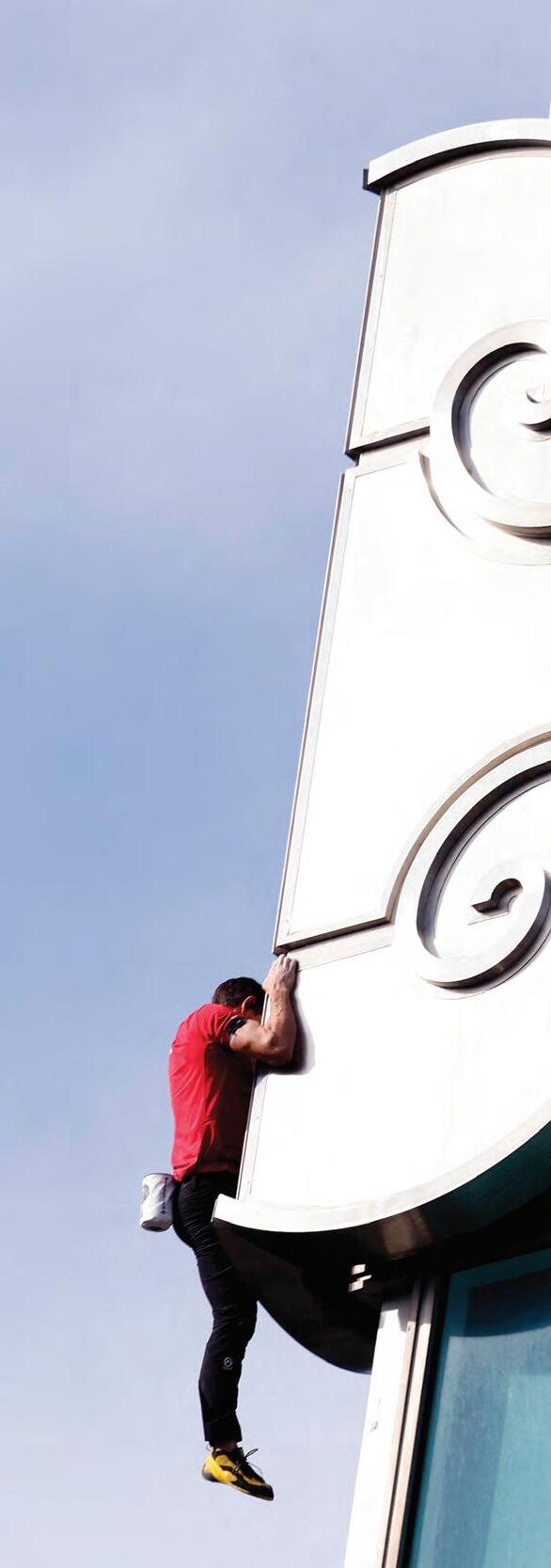
“Skyscraper Live,” Netflix’s stream of Alex Honnold’s free solo climb of one of the world’s tallest buildings on Jan. 24 in Taiwan, reached 6.2 million views in its first two days on the service. | Ann Wang/Reuters via Imagn Images
In need of design work?
Work with innovative developing designers at MINT Design Studio.
Website
Website
Mint is a faculty-supervised, student-run graphic design studio at the University of Florida. We learn by doing. Whether you're a small business, a startup, or a fellow Gator with a wild concept, we're here to make your ideas come to life.
Want to work with us?
Scan the QR code to learn more
Positive Vibes Only
By Noah White
Gymnastics is hypercompetitive. The slightest slip, misstep or degree variation in your landing can be the difference between success and failure. Thus, team and peer support is crucial – and no sport does that better than this.
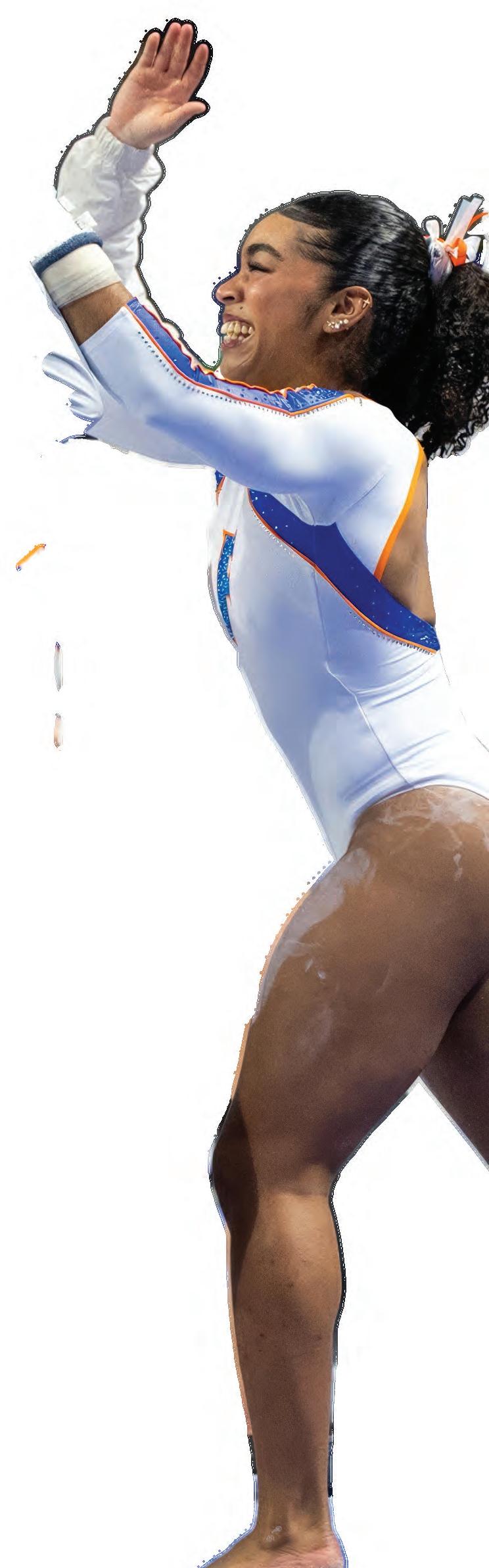
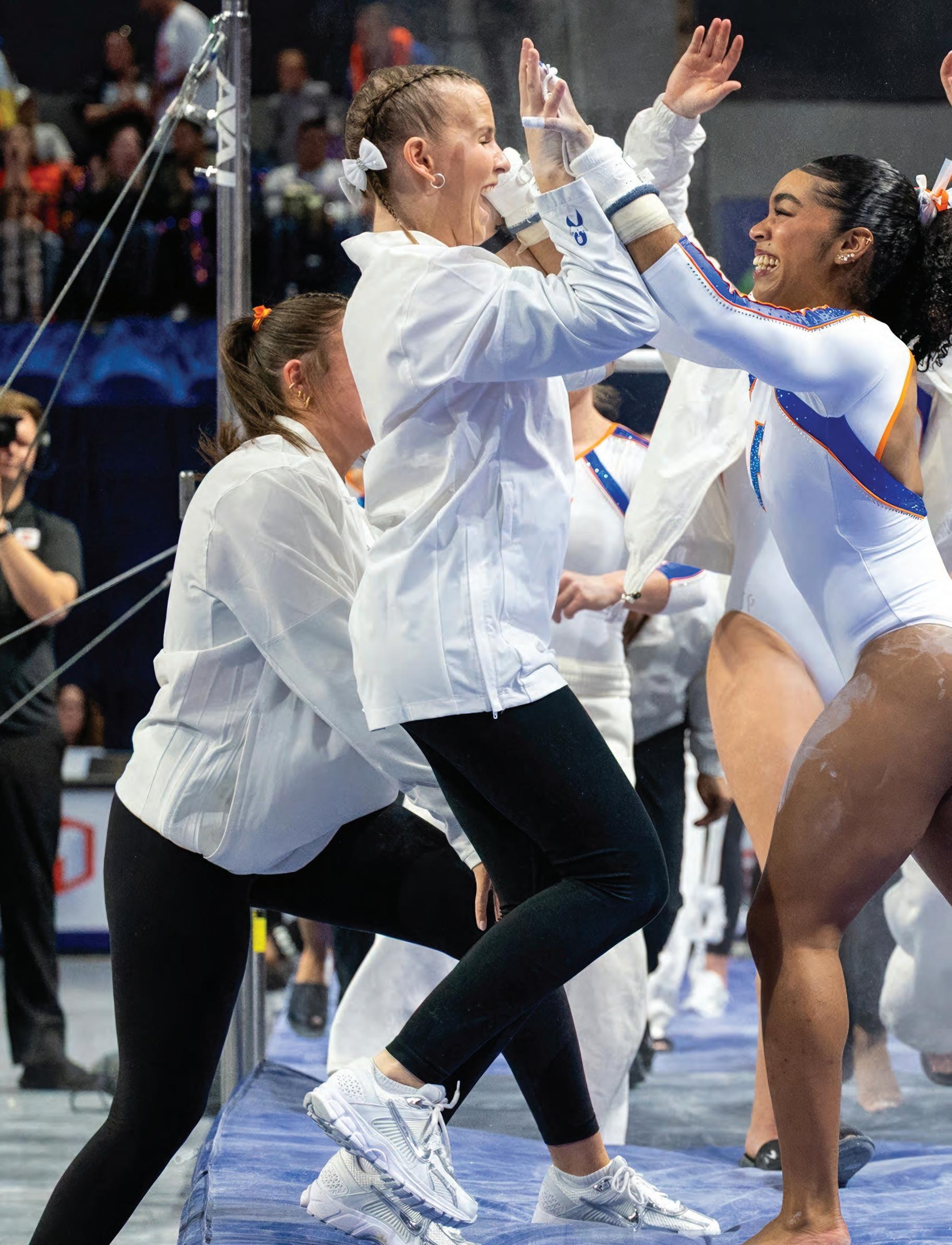
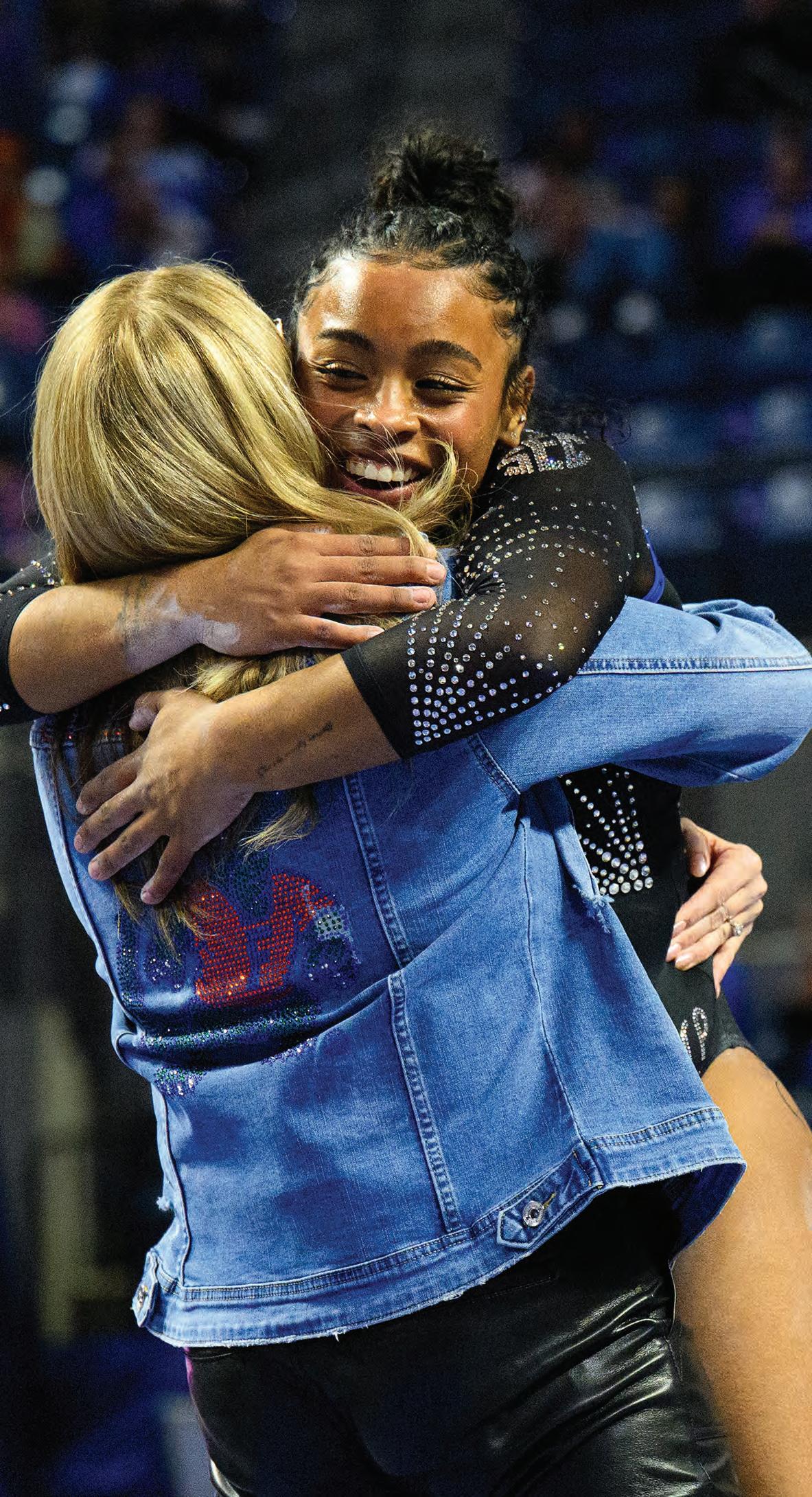
eMjae Frazier (right) celebrates with Peyton Harbert, a cancer survivor who now serves as Florida gymnastics’ manager.
| Bayden Armstrong/Grandstand Magazine
We were doing so well, but you were scared to be held. Took the easiest way out. I see the tears of a man too proud to reach for a hand. Well, let my love keep you safe now. So please don’t…
The gymnasts belt the Olivia Dean and Sam Fender tune, scattered across the training room, while performing the many forms of alchemy that make them far more limber than you or I. These rituals can thread the difference between a spinal fracture and an Olympic nod. In simpler terms: success and failure. Joy and …
Please don’t reinnnn meeee innnnn.
A few notes missed, not that Lee Turner hasn’t heard this rendition before. Her office sits at the corner of the entrance to Florida gymnastics’ training facility, a sun-filled cellar behind the northern section of the O’Connell Center. Glass windows line the western and southern
walls of the room, letting Florida’s director of gymnastics operations — a glorified “paper pusher,” the 83-year-old selfdepricatingly says — peer out at the most nimble Gators with a better view than any. Through 31 years in the corner office, she’s watched parents and then their children tumble. She’s also developed an opinion she’ll staunchly defend to any curious visitor.
“They all care about one another for who they are,“ she says. “I don’t think there’s a sport better for the soul than gymnastics.”
“they
She’s right. Gym meets foment a milieu of positivity. Fans cheer for the spectacle of athletic prowess as much as the color of any leotard. The athletes, distinctly, celebrate with one another after every single performance before a score even plasters the screens. Everyone wants the best for each other. How peculiar?
How … wonderful?
“It’s such a beautiful sport,” Turner continues. “A lot of people are fascinated by that.”
all care about one another for who
they are.”
- Lee turner
She doesn’t really get why, but that also might be because the principle for this dynamic is hard to pin. The practice — cosplaying as Joy from “Inside Out” — isn’t limited to only Florida’s program. Many gymnastics meets, especially at the collegiate level, look the same — fans rowdy for an opponent’s success, athletes jumping up and down and embracing one another whether their teammates stick a landing or stumble. That isn’t limited to the public eye, though. If anything, practice is an even more exaggerated form of the same.
No sport requires more precision or creativity than gymnastics, UF assistant coach Jeremy Miranda contends. Athletes need maintain a focused, clear mental space to avoid dangerous mental blocks like the “Twisties,” in which one can lose spatial understanding with their feet above their head. They also curate their own performances.
Superficially, to accomplish either, having one’s teammates closely surrounding them is an easy way to maintain comfortability while amid a routine, especially if it’s fresh. That’s one of the reasons why others gather around and swarm the performer when they’re done with their event. But UF’s staff believes
At times, Lee Turner can be a mascot for the Gators’ positivity. | Courtney Culbreath/UAA Communications
its athletes need to be truly mentally free to perform at their highest — and safest — level. That comes from something deeper.
“It starts with vulnerability,” UF head coach Jenny Rowland says. “We try our very best as a staff, as a support staff, as every person here to show emotion, care and understanding that these young women aren’t just gymnasts, that they’re human beings and that we’re here to help them in any way possible.”
Just above the breakout concert rests a makeshift billboard at the entrance to Florida’s practice gym. “Our Promise,” it reads. At the beginning of the season, the Gators’ athletes outline the core principles they aim to uphold that year. They always lay somewhere in the neighborhood of trust, support and care for each other. This year’s primary message: “A win for one is a win for all.”
The visual cue surely doesn’t hurt.
“In gymnastics, it’s truly individual. You control your performance,” senior Riley McCusker says. “But your performance is just one of many, and if everyone else doesn’t perform their role, none of it matters.
“No one’s ever going to perform their best if they don’t truly feel supported, loved, trusted.”
To achieve that freedom, Florida wants its gymnasts to feel empowered to be themselves, true to their own personas. They’re far from defined by athletics, even if they spend four hours, four days a week practicing — not to mention travel and the meets themselves. In the pockets it can find, the Gators coaching staff holds bi-weekly check-ins with every athlete. Their list of questions follows a strict order: How is your life? How is school? How is gymnastics?
Any good interview comes with some background. Florida, similar to the vast majority of gymnastics programs, has a built-out structure of mental health workers, trainers and administrative assistants. “Napier’s Army,” just for the beams and bars and mats, if you will. That’s where the focus on optimistic reinforcement draws from, as Florida’s staff analyzes its roster each year and determines what environment best fits the people it has.
It’s always determined that positivity is the answer.
“We truly believe that supporting them, making them feel like this is a family, is the easiest way … to get their best,” Turner says.
Florida’s coaches aren’t afraid to embrace their athletes, no matter their performance. | Noah Lantor/ Grandstand Magazine
“They need to feel comfortable as just themselves.”
The thought, simply, can apply to any sport: athletes perform their best when they don’t exist in a zero-sum environment. The results matter because everyone still competing at the Division I level, no matter how much zen they can muster, still cares about their performance. But the stress, the yelling, the self-deprecation — that all can go. If you want, skim the dozen most referenced scholarly studies on Google about athlete motivation practices. Not a single one directly supports that denigrating a competitor helps them grow.
Not to say that gymnastics hasn’t had its struggles. The sport cultivates a youth training schedule like no other, where athletes’ lives are consumed by intensity. Most collegiate gymnasts commit solely to gymnastics as young as 5 and move across the country for training. McCusker fell in that pool, leaving Connecticut for New Jersey for Arizona, all to practice six days a week for a decade. The environment in those youth training clubs bubbles with fear and stress. Coaches attack athletes for every misstep. In the sport’s worst moments, abuse scandals, like that of Larry Nassar, brand its national image. McCusker’s primary coach at MG Elite Gymnastics in New Jersey, Maggie Haney, was suspended eight years by USA Gymnastics in 2020 for verbal and emotional abuse.
“That past is partially why we try so hard to care,” Miranda says, scanning the practice facility as the athletes warm up. Across the way, a wall covered with mirrors has a few taped signs: FOCUS on what’s important. CAPTURE the good times. DEVELOP from the negatives.
“We want them to feel safe. Many of them come from toxic environments, and sports should be a place for joy, not pain.”
And the Gators, undoubtedly, are joyfully positive in a way no other sport achieves. “We compete better because of it,” McCusker says. The practice and weekly habits, the ice cream socials and nights out watching other Gators, the singing and dancing and cheering: it all shows itself in the meets. That’s what you see. Or, maybe, feel.
Florida’s all-everything star Selena HarrisMiranda fell from the uneven bars against Missouri in early February, earning a 9.10. It was her worst score at Florida
by a stunning half a point, and played a significant role in the Gators’ upset loss in Columbia. And everyone on her team knew it. Yet before she had even finished her performance, her entire team had already urgently taken a sprinter’s stance, eager to embrace her from every possible direction. After she escaped the cascade, Miranda briefly brought her in, assuring this, in fact, will dissolve into the background of her illustrious career.
“We’re a huggy group,” Turner says. On Florida’s senior day, it even gave LSU’s soon-to-be graduates flowers and celebrated each opposing athlete separately. Because of course. “If any help is ever needed along the way, that is willingly and happily secured for anyone. … It’s a very enjoyable atmosphere.”
Which billows into the onlooking fans, who celebrate the good and, with greater force, cheer over the sad.
Still, the sport’s counterparts are nothing of the same. On Jan. 30, Kyle Ziegler, a UF student, watched Florida gymnastics throttle — though, they’d opt for outscore — Arkansas. He cheered when the Razorbacks earned their lone event victory on vault. Two days later, he packed into the student section as the Florida men’s basketball team faced Alabama. He was among the first to scream “G-League dropout” at Alabama’s Charles Bediako during warmups, half an hour before the game had even begun.
“I love going to both teams’ things because it’s just so different,” he says. “I let my demons out one day, and then I try to be my best self the next.”
Senior Selena Harris-Miranda is an 18-time All-American who transferred from UCLA as a junior. | Bayden Armstrong/Grandstand Magazine
Maybe we all should give that balance a try.
Collaboration, creativity, bliss — these are the types of concepts that adorn elementary school classroom walls. Yet so many players and coaches — so many of us — lose sight with such regularity.
Both the gymnasts and the coaches think we’re worse off for it. Because where else do you show up 15 minutes before practice — those moments where these athletes are theoretically doing everything they can to ensure they don’t suffer a catastrophic injury — and a light karaoke battle has commenced … after a loss. But for whatever it’s worth, the band of impressionists beat Georgia two days later, and they’re yet again among the nation’s top contenders. That isn’t abnormal. While the Gators haven’t won an NCAA championship since 2015, they made four consecutive Four on the Floor appearances (the gymnastics Final Four equivalent) until a semifinal loss last year.
They’re doing just fine.
“There are things we can all take from one another, sport to sport,” Miranda says. “I
think supporting athletes, encouraging athletes … the positivity, it goes a long way.”
Miranda’s surely a little more hip to the athletes’ discography decisions than Turner, but that’s partially why the administrator has stuck around for so long. This atmosphere, littered with athletes the same age as her grandchildren, gives her life. “This is the best of us,” she says.
So she watches as they mingle and chat and joke with one another before heading toward their three practice vaults for four, otherwise daunting, hours of training. She’s seen this for 31 years, of course. But she still briefly gazes each time. That staunch opinion of hers? It’s a response to a frequent inquiry from the less-acquainted passerby.
Is there something we all can take from this?
“I certainly believe so,” Turner says, with a light sigh. “I certainly, certainly do.”
Sophomore Skye Blakely and the Gators are hoping to take home the program’s first national championship since 2015. | Hannah Miller/ Grandstand Magazine
The always cheerful Rowland (right), shown here with Kayla DiCello, is in her 11th season as UF’s head coach. | Hannah Miller/Grandstand Magazine
The Gators earned their SEC title on the field in 1984 — a moment now preserved only in faded team photos, championship rings and memories.
| Courtesy of Billy Hinson; UAA Archive.
In 1984, Florida celebrated what it thought was the first Southeastern Conference football championship in school history. Four decades later, the sting of the title that was taken away still lingers.
By Lily Perkins
To ‘84!” Shot glasses clinked at the cheer, a cacophony of laughter and overlapping conversations. If you took away the alcohol and added a few shoulder pads, the sound could have passed for a locker room.
In one corner, Ricky Nattiel and Keith Williams sat at a table, reminiscing about their days living together in Yon Hall, the athletic dorms once stitched into Ben Hill Griffin Stadium. Nearby, Eddie Twyford and Crawford Ker laughed through a memory of a night at CJ’s, a long-gone Gainesville bar where the old beer and floorboard stuck to your shoes. At another table, the conversation turned to the dominance of the 1984 season, including the “Great Wall of Florida” and the 27-0 shutout against Georgia.
A darker cloud, however, lingered. A scandal that had taken the team’s Southeastern Conference championship title away from them in the record books. How could they avoid it? But the outstanding opinion on that season has stayed consistent for more than four decades.
“You can’t take the wins away,” said Jeff Dawson, a walk-on kicker on the ‘84 Gators team. “Don’t punish the kids because of what the adults do.”
On Nov. 17, 1984, the Florida Gators football team returned home to
Gainesville after a 25-17 win against Kentucky, a victory that cemented the Gators’ place atop the SEC for the first time in school history. Crazed fans on University Avenue welcomed the team home that night. Mass-produced “Florida Gators 1984 SEC Champions” merchandise — Coke bottles, ball caps and metal pins — sold. The shiny gold trophy was awarded to the school shortly after the win.
More than 40 years later, the roster leaning out as the years had gone on, this former team walked on a familiar field, greeting a crowd that they remembered, but one that scarcely could picture them. This time, the players returned without the security of their SEC championship title or a shiny, gold trophy that's said to have been lost somewhere between the day the title was taken away in May 1985 and the day the ‘84 Gators returned to the Swamp in October 2024.
What they did keep were their rings, their pride and years of memories. Things that sometimes felt like the only confirmation that they had won a conference title all those years before, despite its erasure from SEC and UF history.
But the team has yet to forget.
The 1984 season began under a cloud. Florida opened the year with Charley Pell at the helm, but rumors of violations circled. By the third game of the Gators’ season, UF president Marshall Criser forced Pell to resign as a result of mounting investigations, and he was replaced by offensive coordinator Galen Hall. On paper, the transition had the potential to unravel the team. Instead, it unlocked their full potential.
Hall’s approach was different. Where Pell was rigid, Hall was relaxed, relying on the team's talent, rather than on strict intensity.
“Pell was very tough,” defensive tackle Keith Williams said. “You were quivering around him half the time. When Galen took over, all we had to do was keep doing what we were doing. At that point, I don’t think we needed much. Just open up the gates and let them out.”
What followed was one of the most dominant seasons in program history. After opening with a 32-20 loss to Miami and a 21-21 tie against LSU, Florida didn’t lose again. It won eight straight games, knocking off No. 11 Auburn and No. 12 Florida State, while
“
Florida fans stormed the field after the team beat Georgia in 1984, a feat this current iteration of the Gators hasn’t done since 2020. | Bob Self/ Imagn Images
shutting out Georgia, 27-0. The Gators finished 9-1-1, powered by a formidable offensive line known as the “Great Wall of Florida” and a freshman quarterback, Kerwin Bell, who took over after senior Dale Dorminey suffered a knee injury just days before the season started. Bell went on to win the 1984 SEC Player of the Year.
“We just ran the ball,” said Ker, the starting left tackle on the 1984 team. “I never thought we could be beat. We were men among boys, and it was that way on both sides of the ball.”
Yet, even as the wins rolled in, the outside noise continued. Probation loomed, and local headlines questioned the team's legitimacy. "We thought we had a good team, but now everything was against us, and I think that feeling, that was us against the world,” Bell said. “I think that brought us together."
By season’s end, Florida was ranked No. 1 by The New York Times and The Sporting News. A number of players were preparing to head to the NFL. But when the team looks back now, it isn’t as much about the high rankings, the winning record, or the NCAA scandal that lingers.
“I think what’s special is the camaraderie,” Ker said. “You miss the guys more than anything. Because you never meet guys like that in the real world.”
By the spring of 1985, the question surrounding Florida football was no longer whether the Gators could win the SEC championship. It was whether they would be allowed to keep their crown.
During the 1984 season, the NCAA charged Florida with more than 100 recruiting violations and ultimately found it guilty of 59. The violations were extensive, including cash payments to players, ticket scalping, illegal recruiting by providing illegal transportation and housing to players, and spying on opposing teams' practices.
In April 1985, the SEC executive committee ruled in favor of Florida, negating any further punishment, saying their two-year ban on bowl game appearances and reduced scholarship totals were enough. But just a month later, in an unprecedented move, the league’s presidents overruled this decision in a 6-4 vote to strip Florida of its title.
Criser, UF’s president, was furious and initially refused to relinquish the championship, requesting a legal review of every available option. At one
point, the university even threatened to withdraw from the SEC entirely.
“It is our unanimous opinion that those institutions, having delegated that final authority to the executive committee, had no power or jurisdiction to deal in any manner with the question of the SEC football championship after April 3, 1985,” Criser said in a statement following the decision.
Despite Florida’s efforts, the title was ultimately vacated.
Gators players argue that this is what
Timeline of Turbulence
The problems within the Florida football program started well before the 1984 Gators hit the field.
Dec. 1978
Florida hires Charley Pell as head coach; Pell’s first UF season ends 0-10-1 in 1979.
Dec. 6, 1982
NCAA notifies UF of preliminary inquiry, begins probe into alleged recruiting violations and other infractions.
Aug. 26, 1984
Pell takes ‘full responsibility’ for program’s ‘mistakes,’ says he will resign at season’s end.
Sept. 16, 1984
Criser fires Pell; Hall takes over 1-1-1 Gators.
Nov. 1984 Florida appeals NCAA punishment.
Nov. 20, 1984
The SEC denies Florida a berth in the 1985 Sugar Bowl, despite the Gators having won the conference title.
Apr. 3, 1985
In a 5-1 vote, SEC executive committee declares Florida the conference champion despite sanctions.
Oct. 1982
After violations during his tenure at Clemson are found, Pell asks UF to investigate his program.
Feb. 1983
St. Petersburg Times publishes report of misconduct at Florida after lengthy investigation.
Sept. 11, 1984
NCAA gives UF official letter of inquiry, citing 107 violations.
Oct. 23, 1984
NCAA cited for 59 rules infractions, receives three-year probation. UF banned from bowl games and TV for two years, hit with scholarship reduction.
Nov. 17, 1984
Hall given a four-year contract to be coach; Florida wins its first SEC title ever over Kentucky.
Jan. 13, 1985
NCAA denies Florida’s appeal.
May 30, 1985
SEC school presidents strip title from Florida in a 6-4 vote.
separated them from other programs: not the violations, but the way it was enforced.
“There’s nothing embarrassing about it,” said Nattiel, the Gators’ All-SEC wide receiver. “Everybody was recruiting illegally back then.
It didn’t matter who they caught — that’s just the way college football always has been.”
At the time, it was a recurring problem in the SEC. A majority of the league’s programs – not just Florida – had been hit with sanctions over the course of a turbulent decade. In addition to UF, four other SEC schools went on probation between 1975-85: Mississippi State, Kentucky, Auburn and Georgia. Three more went on probation in 1986: Tennessee, LSU and Ole Miss.
Tennessee, Vanderbilt, Georgia, Kentucky, Ole Miss and LSU – which
“I think we were the sacrificial lamb”
- GALEN HALL
finished second in the SEC in 1984 –were the six schools that voted to take the Gators’ title away.
“I think we were the sacrificial lamb,” said Hall, who turned 85 in August. “I think they [the SEC] were trying to set an example, and they went overboard.”
Last year’s House v. NCAA ruling adds salt to the wound. Under NCAA guidelines, schools can directly pay players, and athletes now have wider scope to market their Name, Image and Likeness (NIL). Rules that, when broken, once counted as harsh violations of NCAA rules, including athletes giving free shirts or a ride to the stadium, no longer exist.
The change has fueled lingering bitterness among former players, many of whom believe Florida was punished more harshly than its peers.
“In our day, you couldn’t get a pizza without an infraction,” Ker said. “Now look at it. It’s kind of hypocritical.”
Despite this shift, the 1984 season holds the distinction as the only football season in conference history without a listed winner. (Kentucky’s 1987-88 men’s basketball regular-season
Gators quarterback Kerwin Bell was named SEC Player of the Year as a walk-on freshman in 1984. | Malcolm Emmons/Imagn Images
and tournament titles were similarly vacated.) For the players, the lack of recognition feels less like a punishment than erasure.
Four decades later, those emotions remain stronger than ever.
“Everybody knows who won that thing,” kicker Bobby Raymond said. “And with what’s going on today, the things we’re punished for seem insignificant. The school shouldn’t be embarrassed to promote it.”
By the start of the 1985 season, Florida football was officially on probation. The SEC title was gone, scholarships were stripped, recruiting was near impossible and money was tight.
Although much of the team graduated, Florida still had a strong roster and Hall remained with the program. Still, motivation was hard to come by.
“It was like kissing your sister,” Dawson said of maintaining the team’s ambition.
“Yeah, it wasn’t good.”
For 40 years, the 1984 Florida Gators football team was scattered, remaining loosely connected through phone calls and their shared memories. In October 2024, they finally came back to Gainesville, together.
The reunion was set on the weekend of Florida’s home football game against Kentucky, the opponent the Gators beat on the night they learned they’d won the SEC title. Over the weekend, former players, coaches, trainers and staff gathered for tailgates and weekend reunion events before being brought onto the field at Ben Hill Griffin Stadium in front of thousands of fans decked out in orange and blue.
For many, it was the first time they’d been back to the school after losing the title in 1985.
“A lot of these guys are really, really bitter,” Nattiel said. “Some of these guys haven’t been back since. They don’t even set foot on campus anymore.”
The urgency arose in February 2024, when former Gators linebacker and two-time All-American Alonzo Johnson passed away. Hinson attended his funeral, alongside several other
The 2024 reunion was the first time numerous players on the team returned to Gainesville since graduating. | Jordan Perez/UAA Communications
members of the team, and left with a plan to coordinate a reunion. Offensive guard Jeff Zimmerman, another twotime All-American, also passed away one month later on March 1.
“I said to myself, we’re going to do something,” Hinson recalled. “I just started calling guys I hadn’t talked to in years and said, ‘We’ve got to get together.’”
By the time the weekend arrived, nearly 90 people from the 1984 season had traveled back to Gainesville. The size alone was meaningful. For those who walked back onto the field, the emotions came quickly.
“These were grown men in their 60s, and they were weeping,” Hinson said. “It’s just what you go through at 18, 19, 20 years old, and then to have it taken away. To come back and have 90,000 people applaud you. … It was special.”
Defensive lineman Rhondy Weston described the moment as surreal.
“You see guys you haven’t seen in a long time,” Weston said. “When we walked onto the field, the memories came back. I could’ve suited up and played again.”
Still, the recognition came with caveats. During the on-field presentation, the team was referred to as the “best in the SEC”, rather than SEC champions — a distinction that didn’t go unnoticed by many members of the team. Regardless, the moment was meaningful.
The reunion didn’t yet restore a championship or edit the record books. However, it brought back something that had been missing –acknowledgment and a chance to stand together again.
In recent years, several awards and achievements taken away due to NCAA violations in the pre-NIL era have found their way back, one way or another.
Reggie Bush’s 2005 Heisman Trophy was formally reinstated after years of controversy, a decision the Heisman Trust credited to “enormous changes in the college football landscape.” At Louisville, the university has begun pushing to restore its 2013 men’s basketball national championship title,
arguing the punishment didn’t fit the crime — a line of reasoning that sounds all too familiar.
Meanwhile, the University of Michigan’s football program faced a highly publicized cheating scandal involving scouting and signal stealing, yet no titles were vacated. Scouting, notably, was one of the violations that cost the ‘84 Gators their trophy.
Some schools have taken matters into their own hands. Auburn recently publicly recognized seven additional national titles, most prominently their undefeated 2004 team. Its actions reflect a thought that members of the ‘84 team had voiced: sure, the NCAA won’t recognize the championship, but Florida still can.
and pointed to the 2024 reunion, when members of the team were brought onto the field during the homecoming game against Kentucky.
“It was special to welcome the 1984 team back to campus last year for the Kentucky game,” the spokesperson said. “It was great to see those players reconnect with one another and be celebrated.”
When asked about the controversy,
Even so, their presence on campus is subtle.
The stadium’s “SEC Champions” wall begins with the 1991 season.
While names like Tim Tebow, Emmitt Smith, Steve Spurrier and Danny Wuerffel are prominently featured around campus, the 1984 team is notably absent. The program used to honor the three UF teams – 1984, '85 and '90 – that won SEC titles that were either stripped or ineligible on the south end zone facade but it was removed in 2007.
This past year, Florida basketball legend Vernon Maxwell
Top: The vintage 1984 SEC championship Coke bottles remain a popular collector’s item for all old-school Gators fans. | Courtesy Billy Hinson
Bottom: Florida’s official SEC championship titles are prominently listed on a wall in The Swamp. | Matthew Lewis/Grandstand Magazine
In a statement following Maxwell getting his school records restored, Florida athletic director Scott Stricklin said simply: "It’s time.”
The question remains: When will it be time for the 1984 football team?
In response, a UAA spokesperson said, “We currently honor championship teams with signage in The Swamp that are recognized by the Southeastern Conference.”
After requesting comment from the SEC on the issue, Director of Communications Chuck Dunlap said reinstatement “has not been contemplated,” noting the conference maintains the same position on the vacated Kentucky’s men’s basketball title.
History, however, is not always defined by its record books.
Reunions often hold a trace of stiffness before familiarity returns. But at the latest gathering of the 1984 team, that hesitation never surfaced. Conversation came easily, laughter rose quickly, and the brotherhood
forged during that season remained unmistakable. Regardless of whatever history had since been debated or diminished, certainty lived comfortably across the table, sitting in their teammates who never once questioned their accomplishments.
Over drinks and stories, over memories worn smooth with retelling, one fact wove its way around the room that night: a title had been won on that field.
Long after the investigations and rulings, the legacy of the season has survived in a sort of fragmented story–in faded photographs of fans carrying goalpost off the field, in Gainesville Sun clippings proudly proclaiming Florida’s new SEC title, in the memories of those who ran to the center of campus the night of their win, and perhaps most importantly, in the defiant cheer of a team that returned to Gainesville again, 40 years after their initial victory:
“To ‘84!”
Top: The 1984 Gators featured a number of stars, few more prominent than offensive tackle Lomas Brown – the anchor of the ‘Great Wall of Florida.’ | Malcolm Emmons/ Imagn Images
Bottom: Offensive coordinator Galen Hall took over as Florida’s head coach after the first three games in 1984. The Gators went 8-0 under him. | Imagn Images
THE LIFE OF A DAZZLER
The Dazzlers — Florida’s UAA-sponsored dance team — have been a staple of football and basketball games for decades. They’re never without a smile and always in lockstep. And they have to be ready for anything.
By Brooke Bastedo
Junior Bailey Goodnight is in her third year with The Dazzlers, a 21-woman dance team that performs at Florida sporting events. |
Andrews, now a Fox Sports sideline reporter, was a member of the Dazzlers as a UF student from 1997-2000. | USA TODAY Sports/ Imagn Images
Everything happens in perfect synchronization. The Dazzlers run onto the basketball court during a media timeout, and the attention of nearly 10,000 fans turns to them. Some fans throughout the arena may even ask: “How does their hair stay so perfect?”
Why? Even through a full game performance, not one strand of hair is out of place.
For more than 30 years, the Dazzlers have performed as campus ambassadors at the University of Florida. They don’t compete nationally, and their performances are centered around dance rather than gymnastics capabilities or stunts. They’re, distinctly, not UF’s cheerleaders. Faces you’ll recognize? FOX Sports sideline reporter Erin Andrews famously once was a member. New England Patriots cheerleader Aryn Kathryn Hillary, who you saw performing at Super Bowl LX, was, as well.
For generations of Dazzlers, their role has been clear: perfect hair, sharp movements and an unwavering sense of optimism for the Gators. If the basketball team is down by 20 with two minutes left, the Dazzlers are still cheering. If the football team
“It’s a fourhour-long performance, and they’re never ‘off’”
— Dazzlers head coach Madeline Soave
For third-year Dazzler Bailey Goodnight, her goal is for her hair to be the last thing she has to worry about during a performance. The secret is the Water L<ss Heat Shield Spray that she uses before her curling iron and the Treseme Extra Hold Hair Spray she applies after each section is curled. A strong hairspray ensures that she can focus on the action of the game and manage her facial expressions.
Especially during a fast-paced basketball game, it is crucial for her to maintain intense focus.
No matter the score, the Dazzlers are expected to always dance with a smile on their faces. | Photo: Kimberly Blum/Grandstand Magazine
trails by two scores at the half, you would never know it from the smile on their faces.
That is who they are.
They’re an integral part of the UF athletics ecosphere. But how do they strike this mental balance, dividing their mind and performance? Similar to their hair, it’s all preparation. Lots and lots of preparation.
The dancers are there hours before a fan steps foot in the arena. In a dressing room full of companionship, support and clouds of hairspray, 11 of the 21 Dazzlers get set for a basketball gameday performance.
Some bring dinner — a Subway sandwich or Caesar salad. Others, like Goodnight’s close friend freshman Jenna Sasson, have an assortment of candies, from sour spaghetti and Skittles to Life Saver gummies. Each candy is organized in its own packaging, set on the makeup counter next to rows of curling irons and makeup bags. With four hours to prepare before game time, the snacks and meals begin routine.
“The candy reminds me of [childhood] dance competitions,” Sasson said before holding up the bag to share with the women sitting on either side of her. Each performer also drinks electrolytes or
About half of the Dazzlers performers dance in the basketball games, but all are expected to attend football games. | Alyvia Logan/Grandstand Magazine
energy drinks, ranging from fruit punch Gatorade to peach Alanis. With only a few large Hollywood vanity mirrors, they share space or spread out on the floor to finish their gametime looks.
So while the women on the team begin preparing half a day before events, their training began weeks, months and even years earlier. For many, dance classes started at 3 years old. Disciplines like ballet, lyrical and tap are most common for young girls. Among these dancers, their interest in the sport emerged early on, with most saying they turned to competitive dance during elementary school. The women either continued to pursue competitive dance, joined their high school dance teams or did both. That produced an intensive schedule as young as 5, but it’s nothing compared to what they do now. The Dazzlers typically train five days a week, with additional workouts sprinkled in to increase strength and endurance.
Goodnight is a pre-dental student in addition to being a Dazzler, so her Google Calendar manages her busy
schedule, especially for activities related to the team. After ordering a strawberry açaí refresher from Starbucks before settling in for a twohour study session at the library, she opened her calendar to her schedule. “Everything in blue is for the Dazzlers,” she said. Every day of the month featured a blue tab relating to a Dazzlers’ practice, performance or appearance. On Tuesdays and Thursdays, the team works out with a trainer to build its strength off of the dance floor. These days also include game-scenario training.
Dazzlers coach Madeline Soave keeps a minute-by-minute log of every play in a football or basketball game. For hours, the team practices each possible situation in real time.
While it doesn’t frequently cross your mind, think about what you see when watching from the stands. If a foul during a basketball game leads to Florida free throws, the Dazzlers have practiced rising to their knees, preparing for a Gator chomp. There are so many other similar, trained moments.
“Something big we’ve been talking about is building performance endurance,” Soave said. “It’s a fourhour-long performance, and they’re never ‘off.’”
The term “always on” is frequently used by both the members of the team and Soave. She said they are expected to be performing not only with their bodies but also with their faces for the entirety of each appearance. In practice, she emphasizes the need for mental toughness. You have to hold a smile through any game situation.
For the physical performance, Monday, Wednesday and Friday are reserved for developing skills and practicing routines, assuming no games or appearances are scheduled. Soave allows women on the team to take the lead during these practices. To begin the session, a senior like Cecilia Coleman leads stretching and warmups, which usually take around 20 minutes.
On Wednesdays, junior Madeline
The passion required of any student-athlete mirrors the commitment of the Dazzlers.
Leachman leads a section in a technique such as a perfect aerial, a hands-free cartwheel. The team expects every Dazzler to master this skill on both the left and right sides of her body because the dancers perform the move after free throws at, you guessed it, every basketball game. Leachman also teaches 20 to 30 minutes of ballet each week. Soave said she wants the women to perfect their craft by training skills they learned at a young age.
“The schedule really isn’t that bad,” Goodnight said. “I’m not required to be at every single one of these events.” The team consists of 21 dancers with one senior captain and one junior captain. All 21 women are required to attend every football game. However, for men’s and women’s basketball games or community appearances, Soave creates a roster of around 11 girls who attend.
To keep things consistent, junior captain Anna Katherine Risalvato leads every women’s basketball game, while senior captain Dani Schenone holds the role during the men’s games. Captains are selected by Soave once she sees clear leadership demonstrated throughout an individual Dazzler’s early years on the team. She said it was an instant connection with Risalvato and Schenone because of their ability to keep high spirits through any situation.
Perfecting hair and makeup routines helps the Dazzlers maintain flawless appearances on the field or court. | Alyvia Logan/Grandstand Magazine
During practices, the captains teach skills and routines that are performed throughout a game, like the aerials during free throws or the jumps after each basket is scored by the Gators. On the court, they call out each action before it is performed.
While not every woman performs at each game or community event, practices are mandatory. Even a few minutes of tardiness results in sitting out for the duration of practice. The Dazzlers can’t use their phones or complete homework assignments during that time. This is a firm line for Soave because the opening minutes of practice include warmups and stretching. Without preparation, dancers face a greater risk of injury.
As a STEM major, Goodnight said she feels the pressure to maintain a structured schedule. With difficult classes, exams and daily Dazzler activities, the workload can become overwhelming.
She finds support from her sorority, Delta Zeta. The two halves of her life appear through the two black backpacks she carries every day.
While carrying her Delta Zeta backpack with the small pink Breast Cancer Awareness ribbon, she embodies a student, a future dentist and someone contributing to her community through philanthropy events for the Starkey Foundation. When she dons the backpack with FLORIDA embroidered across the pocket and orange-and-blue bows hanging from the straps, she becomes the performer.
The passion required of any studentathlete mirrors the commitment of the Dazzlers, despite not being formally recognized as a sport by the UAA. Soave, a former graduate assistant at Grand Canyon University, has experience on the national level and sees untapped potential at UF.
The Gators could evolve by joining the competitive circuit, she contended, as in-state counterparts Miami and Florida State have already done so. She said she knows the UF squad has qualities that would translate well to the national stage, and she hopes to be the coach who can push the team to the next level.
“I think there’s a very specific style to this program that other teams don’t do,” she said. “There’s small things like they do sliding claps and obviously their chomps.”
The Dazzlers also represent UF at appearances like the Night to Shine special needs prom, the women attend the event to greet attendees, take photos and spread love for Gator Nation.
They uphold their position by being kind to the people they interact with, staying off of their phones and maintaining professionalism. In today’s social media culture, Dazzlers are trained to expect a camera at all times. Exhibit A: During the UF football game against Texas this season, junior Brigitte Bontoux heard a fan call from near the entrance to the locker room.
“She sees a fan telling her, ‘Hey, do ‘Horns down! Do ‘Horns down!’” Soave said. “And she just smiled and you see her do a chomp.
“That ended up on TikTok.”
A small interaction like this could have been damaging for Bontoux and the Dazzlers. As university representatives, the Dazzlers face
against an opposing team.
“We’re trying to educate people about who we are and just how valuable we are to the University,” Soave said. “A video like that, if she would’ve just taken the suggestion, that would have gone to administration.”
That’s why she constantly reminds the women to be “ready for anything.” While the team can practice for any number of game-time scenarios, sports always have intangibles. The Dazzlers must prepare for situations such as a crowd becoming too rowdy before a game or players on the bench getting into a scrap. While Soave holds high expectations, she said nothing matters more than her team’s safety.
A police officer travels with the group, along with Soave and her volunteer assistant coach, Alexandra Gambin. Together, they monitor the crowds and ensure that the women remain safe.
“She’s an alumna of our program,” said Soave, whose coached at UF since 2022. “A highly esteemed alumna.”
Gambin is a full-time nurse in Gainesville who danced for the team for five years at UF. She volunteers her time to the team as an assistant coach to help Soave with organization, game situation awareness and training.
She understands the pressure the women feel every time they put on the sheer tights and sparkling uniform. For five years, she sat in the dressing rooms, applying layers of makeup and curling her hair, ensuring hair spray held down every flyaway.
Like Gambin, the Dazzlers share career aspirations. Some plan to pursue a career in professional dance. Others, like Goodnight, will continue their education and earn postgraduate degrees in medicine, law, engineering or business.
So maybe the secret to their hair is not really a secret, but it is a representation of the Dazzlers’ mentality. The heat protectant and hair spray they use is calculated and a routine perfected from years of practiced movements and knowledge gained through trial and error.
Like their hair and makeup, each performance receives this attention to detail, repetition and unfiltered determination.
Dazzlers practice multiple times each week before performing in front of the crowd at games, including doing soundchecks. | Alyvia Logan/Grandstand Magazine
Global Going
Nearly 90 athletes from more than 30 nations are represented on rosters across UF’s 21 varsity sports | Illustration: Ella Naima/ MINT/ Grandstand Magazine
Now more than ever, international recruiting has become a prevalent force in roster construction. In almost every sport, Florida has had to scout all corners of the world to find talent and stay competitive.
By Curan Ahern
YA member of the Southern Methodist men’s tennis team shouted at then-UF freshman Jeremy Jin. “You’re choking!” another chimed in. Jin had just arrived in Gainesville as a freshman and was in the middle of his third collegiate match with the Gators. En route to his 6-4, 6-2 win, Jin secured a double break, looked to the SMU bench and cried, “Who doesn’t want it?”
This was the first time Jin — a native of Sydney, Australia — experienced the intensity of American college tennis. He decided to attend UF to experience the intense training, shared team culture and guaranteed competitive matches provided by today’s collegiate tennis landscape — a decision being increasingly made by internationally born athletes.
From American-created team sports like basketball to internationally popular individual ones like tennis, collegiate sports programs are increasingly attracting top talents from across the world. The underlying
question in today’s sports landscape is not where you grew up playing, but how your circumstances built you into a competitor capable of thriving on a big stage.
In recent years, American universities have increasingly looked beyond the United States’ borders to identify and develop athletes. International recruiting has become a prevalent force in roster construction because global talents specialize more and are further developed in niche areas than their American counterparts. As a result, many colleges view international-born athletes as immediate contributors who have the potential to elevate their programs.
The recruitment of international athletes has become a staple at UF. Nearly 90 athletes from more than 30 different countries are represented on rosters across the school’s 21 varsity sports, with nearly 90 international-born athletes enrolled in 2025-26 alone. Some sports – such as tennis, basketball and track & field – have doubled or tripled their
international personnel on both the men’s and women’s teams since 2015.
“I think the biggest thing, especially with the international athletes — sometimes they’re a little more advanced than the American athletes,” said Florida men’s and women’s track and field/cross country head coach Mike Holloway, winner of 14 national championships during his career in Gainesville. “You can dig your heels in the sand or put your head in the sand and say, ‘I’m not gonna recruit international athletes,’ and you’re gonna be at a disadvantage against everyone else.”
Name, Image and Likeness (NIL) compensation also reshaped schools’ recruiting abilities and priorities. With universities looking to take advantage of the competitive edge the global talent pool can provide for a team, more and more schools are playing follow-the-leader and using other teams as case studies of how to go about international recruiting.
In a collegiate athletics climate focused on results (i.e., wins), the discovery of
UF men’s basketball star Rueben Chinyelu hails from Enugu Agidi, Nigeria. Hestarted his hoops journey at the NBA Academy Africa, an elite training center in Senegal. | Riley Beiswenger/ Grandstand Magazine
Tanapatt Nirundorn, who is from Bangkok, Thailand, is one of seven internationally born players on the UF men’s tennis roster.
| Hannah Miller/Grandstand Magazine
“Now, the global race for talent has become impossible to ignore...”
foreign talents with more training and higher ceilings has made recruiting much more important.
“All it takes is one school to go out and find a great Kenyan, or a great Jamaican, or whatever, and then all of a sudden, everybody wants to go looking in that same area,” Holloway said.
Recruitment in the 21st century trends towards the globalization of talent pipelines. Data sets, professional programs and scouting technologies are essential foundations of athletes evaluation, regardless of geography.
However, global scouting isn’t much easier now than it has been in the recent past. Film, social media and international tournaments have been used as recruiting tactics for years. The difference is that fans are paying more attention to it and the recruiting patterns across schools, sports and geographical location.
Now, the global race for talent has become impossible to ignore, and
international recruiting has shifted from a quiet, backburner process to a prominent storyline across sports media.
“It used to be just a few schools that had Africans or Kenyans. And then now, all of a sudden, everybody has them,” Holloway said. “But at the end of the day, this is not new. … International athletes have been a big thing for the last 15-20 years, but just all of a sudden people are paying more attention to it.”
Though UF women’s tennis head coach
Per Nilsson doesn’t believe sheer talent has increased significantly, he said college tennis has become much more appealing as a springboard to professional aspirations for international athletes. Nilsson added that there was a high concentration of international tennis players when he played in college.
NIL and more consistent media coverage have only amplified the appeal of collegiate tennis and made global recruiting more noticeable.
For international athletes, the “Gator Standard” is a major draw: high-level facilities, elite coaching, competitive NIL opportunities and tons of exposure. But like all colleges, balancing recruiting abroad with a search for local talent is a constant tightrope UF is tasked with walking. Expected to build a roster of the best available talent, coaches' decisions become increasingly complex as they scout talent locally, nationally and globally. Along with an athlete’s stats, metrics and intangibles, programs must weigh how each athlete meshes with a team’s system and culture.
“You have to be careful because not all the international athletes fit what we do here at Florida,” Holloway said. “It does me no good to bring somebody in here — no matter how talented they are — if they’re not going to fit our program.”
UF men’s basketball coach Todd Golden defined Florida’s approach to international recruiting as identifying valuable pipelines and creating a sustainable influence in those areas.
Recognizing these recruiting hotspots, leveraging connections with coaches and athletes and targeting athletes who fit UF’s system are keys to building a talented yet cohesive roster, he believes.
So far, Golden has found success by heavily recruiting areas of Europe.
“If we were able to get our backyard taken care of and the East Coast little bit, that Europe should be a fruitful place for us to go recruit, and knock on wood, it has been,” UF basketball coach Todd Golden said, though his recruiting footprint spans nearly every continent. “Rueben coming from Africa and Alex coming from Australia. We will continue to go and try to find talent that fits our program globally.”
“There’s
more talent and you have to recruit to keep up with the talent
Golden also drew on his experience at St. Mary’s, where consistent international pipelines helped sustain long-term success.
He emphasized that the key to the Gaels’ success wasn’t luck, but strategy and consistency in the recruiting process. By building relationships with coaches and academies abroad, St. Mary’s created a reliable stream of skilled players prepared for the rigors of college basketball in the United States.
“At my alma mater, St. Mary's, I think they were very clearly the first kind of program to get into Australia consistently and do a good job creating that pipeline,” Golden said. “Tommy Lloyd was a big part
of that, before he got the Arizona job, recruiting Europe really, really well. And I mean, they've been on it forever.
“It's a big part of why [the Wildcats have] been able to sustain all the success they've had over the years.”
Golden, now in fourth year at UF, takes a similar long-term view, focused on cultivating relationships with international academies and coaches across Europe, Africa and Australia, while keeping an eye on emerging regions that could produce overlooked talent. Shaped by his time as a player at St. Mary’s, along with coaching stops at Columbia, Auburn and San Francisco, Florida’s title-winning coach has developed a recruiting philosophy centered around sustainability, system-
fit and identifying high-impact players to elevate the program to new heights and keep the Gators a step ahead of their competition.
As for tennis at UF, the women’s team was an American-focused program that’s only shifted its sights toward international talent in the past five to eight years, Nilsson said. He was adamant that he looks for the best talent that fits Florida’s program, explaining that he starts with the top American talents before branching out into global recruiting. He said there are typically 10 to 15 sought-after Americans in a recruiting cycle, and with the top 10 universities targeting the same small pool, competing schools have been forced to expand their recruiting efforts.
| Matt Pendleton/Imagn
level.”
— Mike Holloway
“As a coach, you first look and see ‘OK, who do I have the best chance of getting and where do I need to spend my recruiting resources?’” Nilsson said. “Now that I’m at Florida, I feel like ‘OK, well, we should have a better shot now at getting the top American talent.’”
In his tenure at Pepperdine, Nilsson faced juggernauts like Florida, Georgia, UCLA and Stanford. The level of competition forced the school to delve into the international talent pool to keep up with top programs, which scored the best recruits.
At Florida, Nilsson doesn’t pay attention to how other schools recruit. Instead, he’s focused on proving that Florida is truly an “Everything School.” He first looks into how many American players
can be recruited, then assesses where international talent can complement the roster and provide competitive advantages. This has helped Florida stay nationally focused, leveraging international talent to maintain a competitive edge on the court.
The stark influx of international players across many collegiate sports, especially in the SEC, has caused the overall level of play to skyrocket and forced teams to elevate their strategies to stay ahead of the curve.
“The level [of talent in the conference] has gone up drastically,” Nilsson said. “It’s always fun to compete against the best level there is, and so it’s good for our players to see that because they’re always trying to improve … Being able to play against these players is a great experience.”
With new regions emerging as talent hubs and ever-evolving rules regarding recruitment, all signs point to this trend of cross-border talent acquisition continuing and intensifying. Nilsson was adamant that as more global athletes enter collegiate athletics, there will continue to be a large pipeline of international players competing at the collegiate level, across all sports, for years to come.
Global Gators
Still, as Holloway explained, you can get international talent, but that doesn’t necessarily correlate with success.
“Recruiting is the first piece to a championship situation,” he said. “A lot of people get international recruits, but not everybody has been successful.”
With the international recruiting landscape proving itself as a fruitful portal for both track and field and cross country, more schools will want a piece. With a slew of universities targeting the international talent pool rather than a few juggernauts dominating the market and poaching the top athletes, the playing field should remain balanced, and success will depend on how effectively programs develop their international athletes.
“There’s more talent, and you have to recruit to keep up with the talent level,” Holloway said. “We’re all playing by the same rules. It’s not like one school has all the internationals and nobody else can get them.”
As coaches like Holloway, Golden and Nilsson are tasked with building cohesive, championship-level rosters in a landscape where talent comes from every corner of the world, navigating recruitment and instilling a competitive drive into players has become more important than ever. With top programs fighting to keep their legacy alive and others fighting to make their mark, the diffusion of international talent across America is raising the bar for universities that aim to compete for championships.
International representation on numerous UF teams has risen significantly over the last decade.
2015-162025-26
Track + Field
Cross Country Basketball
Canadian-born Nyadieng ‘Nidi’ Yiech, who is from Calgary, Alberta, ranked fourth on the UF women’s basketball team in scoring as a freshman.
Images
Last Shot
Jump Man
Florida star tailback Jadan Baugh recorded the school’s first 1,000-yard rushing season – which included 107 in the Gators’ upset win over Texas on Oct. 4 – since Kelvin Taylor in 2015.
Photo: | Matthew Lewis/Grandstand Magazine
Specialthanks
There are few things more satisfying than building something. Seeing it go from idea to reality. As we bring you the debut issue of Grandstand Magazine, none of this would be possible without the support of numerous people across the University of Florida campus.
First, the Grandstand editorial team would like to give our sincerest thanks to both the UF College of Journalism and Communications and the College of the Arts.
Three faculty members were notably critical in assisting with the creation of Grandstand:
Daron Dean, a Visiting Lecturer in Photojournalism at the CJC. His students supported all of Grandstand’s photography needs – including our cover photo shoot.
Jarred Elrod, MFA, a Visiting Assistant Professor of Graphic Design. Jarred’s students in his Design and Professional Practice Studio class helped design, illustrate and build the print issue from front to back in collaboration with the Grandstand edit team.
David Kofahl, a Visiting Lecturer at the CJC in Interactive Design. David was influential in helping envision, design, build and continually improve the Grandstand website – grandstandmag.com – with the support of his students in his Advanced Design class.
Additional gratitude to Associate Dean for Undergraduate Affairs Ted Spiker, who was a driving force in kick-starting our development of Grandstand; CJC Dean Hub Brown and Department of Journalism Chair Harrison Hove
Finally, thanks to our first Grandstand cover subject, Gators track great and Olympic champion Grant Holloway. He was incredibly gracious with his time, and he went above and beyond to work with our students throughout this project. We’re all pleased with how it turned out.
Funding for Grandstand comes from the Harold A. (Hal) Herman Endowment Fund and the Department of Journalism Magazine Fund.
Professor Ryan Hunt Faculty Advisor, Grandstand Magazine