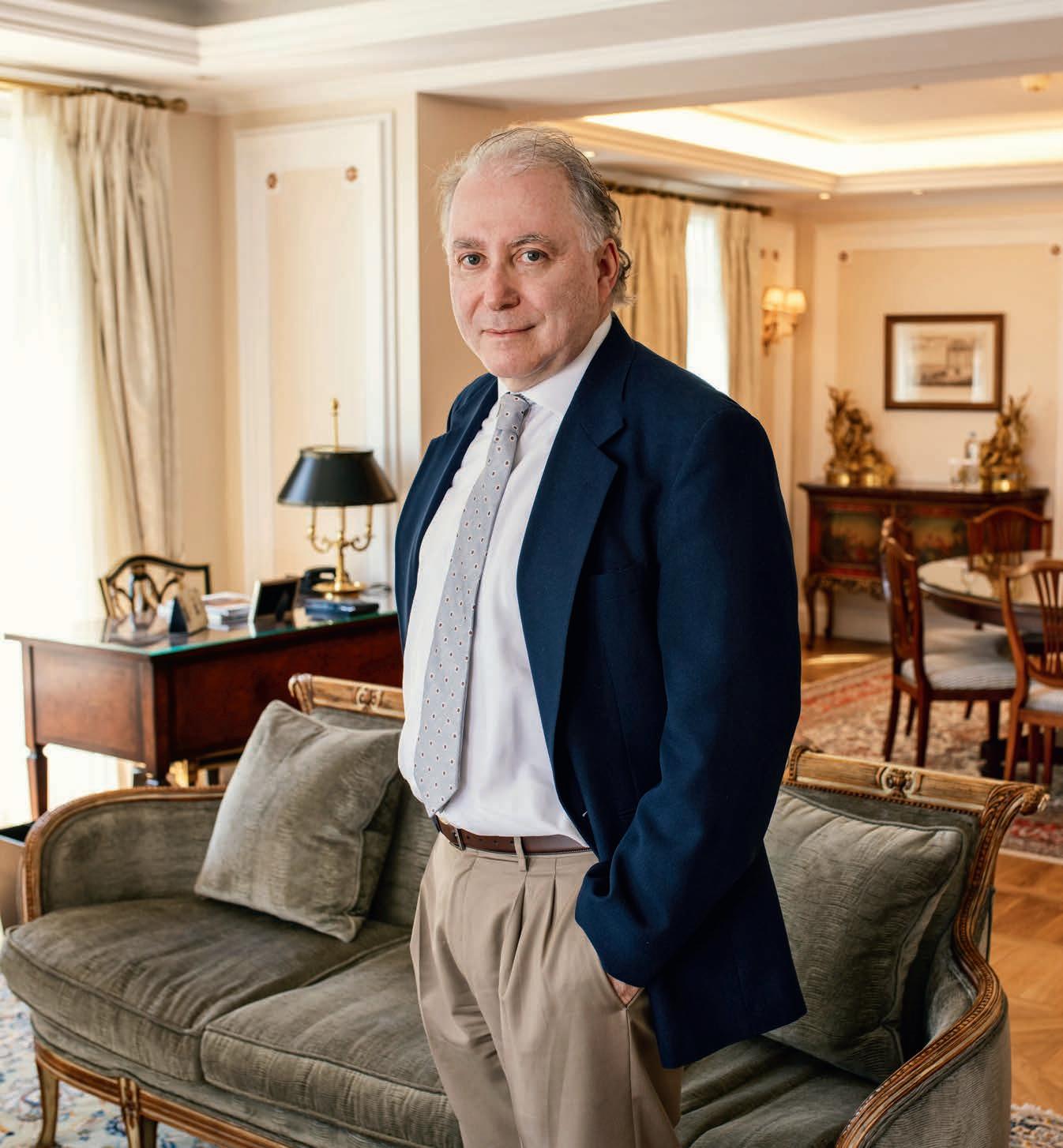
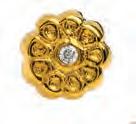
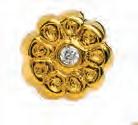
Chloe Laskaridis President of the Board of Lampsa Hellenic Hotels S.A.
Dear Guests,
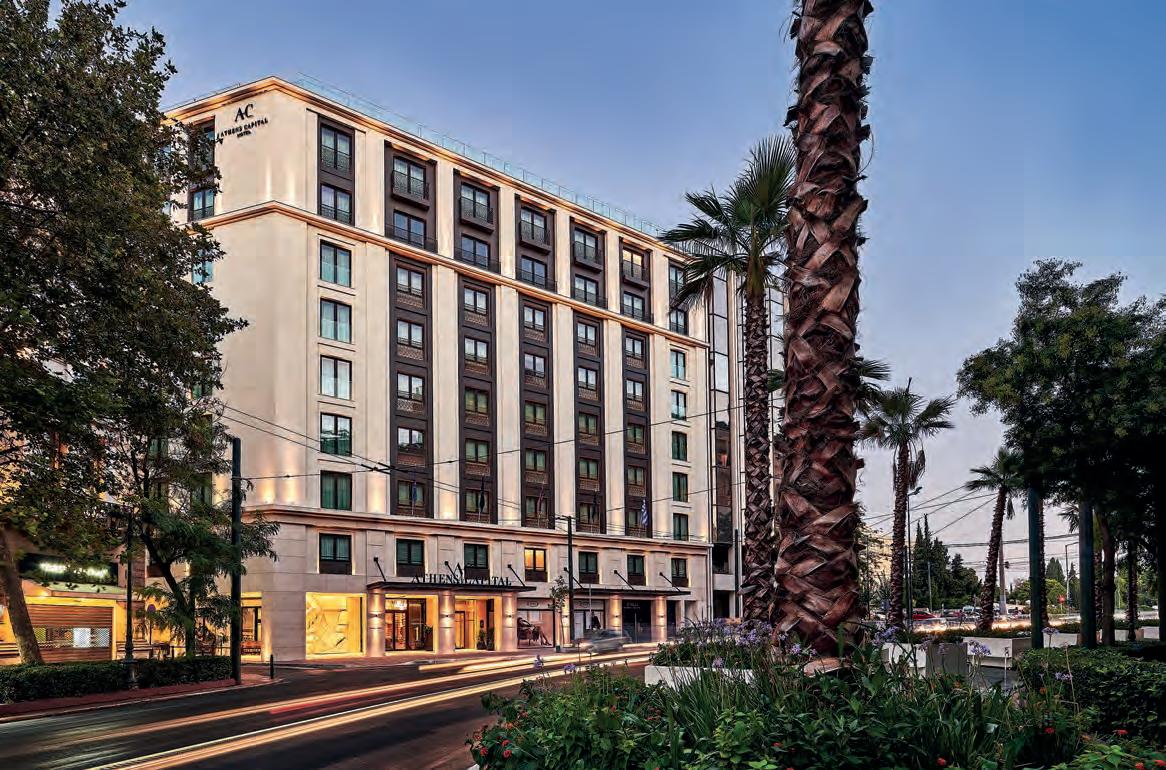
I AM DELIGHTED to welcome you to Athens and wish you a truly memorable stay with us. This season, once again, we’ve worked to raise our standards even higher, with the aim of exceeding the expectations that naturally come with a stay at Athens’ most historic and distinguished hotel.
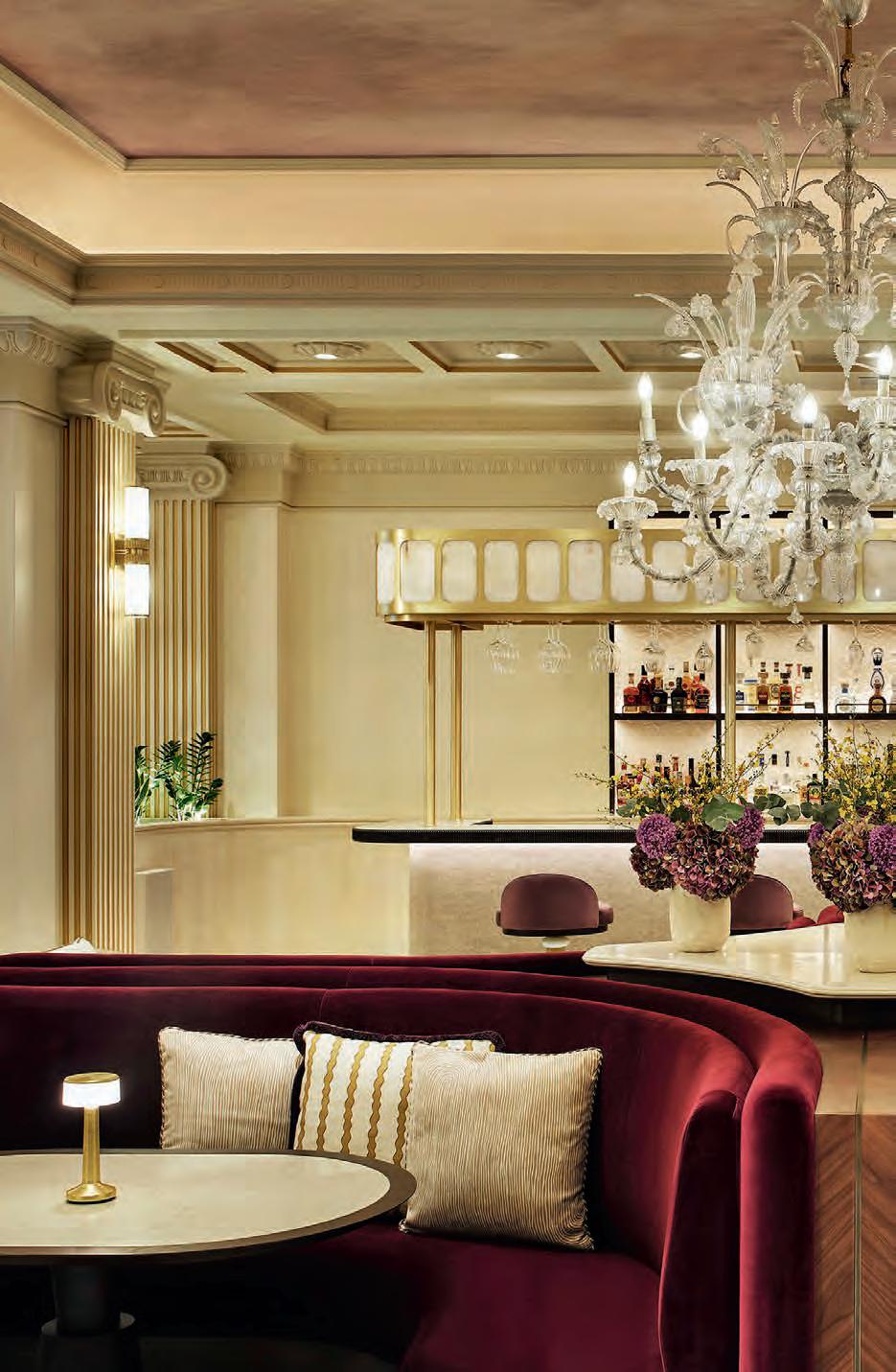
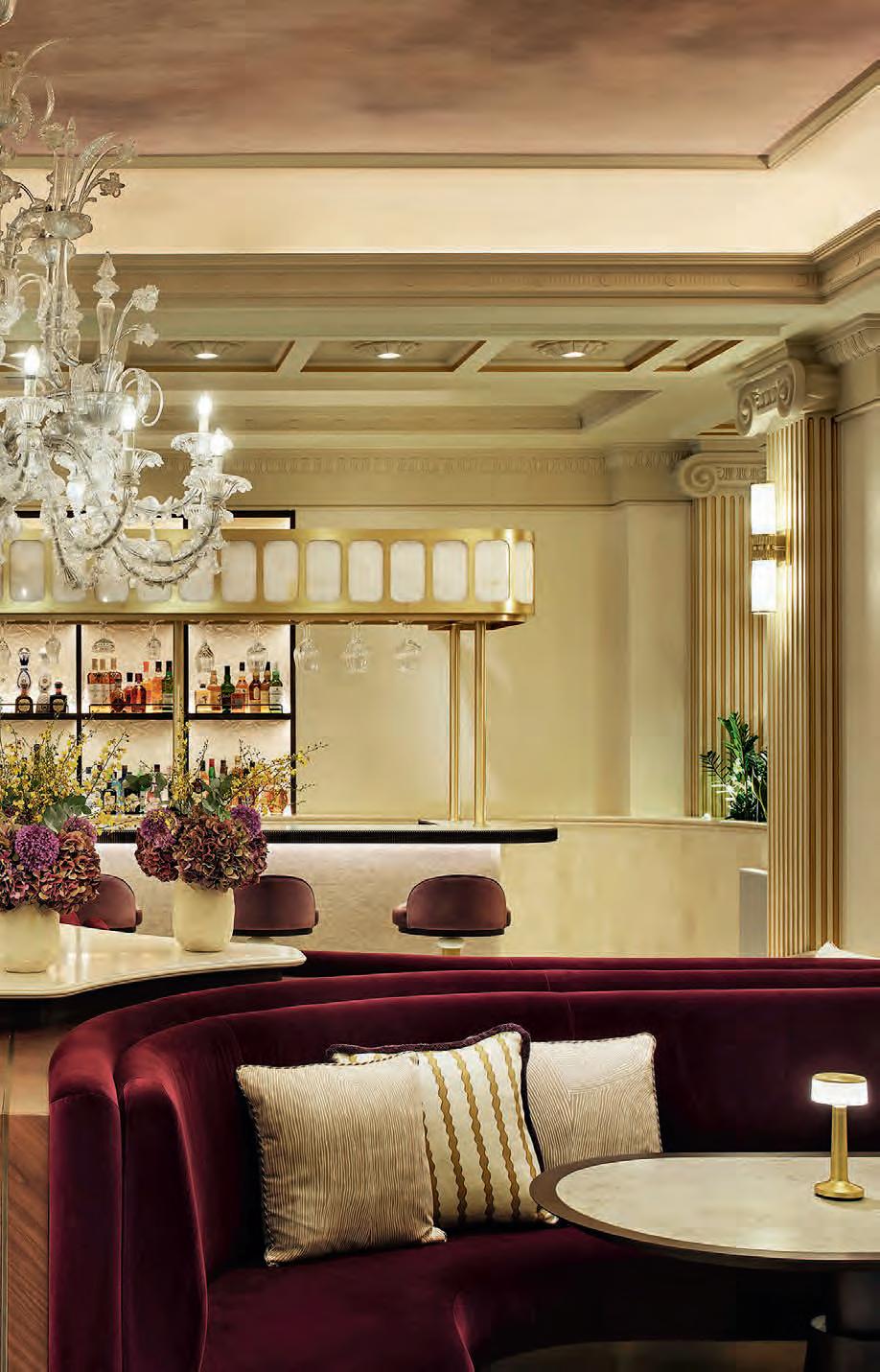
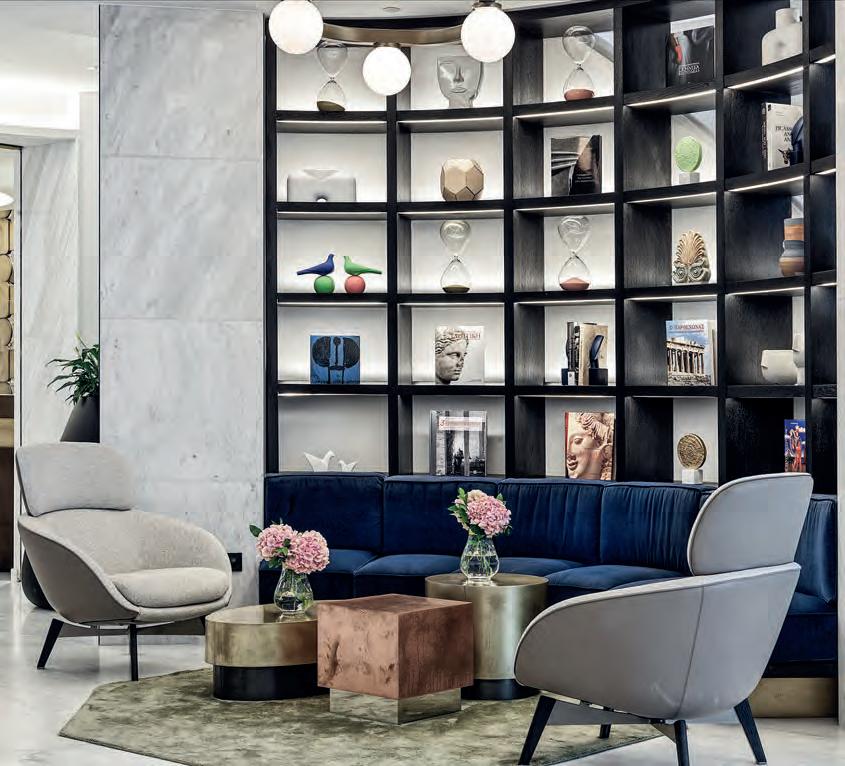
Before sharing our latest news with you, I’d first like to invite you to discover the newly opened George, the Lobby Bar at King George. More than just an elegant all-day meeting point, it offers a truly distinctive sense of refinement to your day through carefully curated menus, served from early morning until late at night, as well as a remarkable collection of contemporary art that will enrich your visit, much as the art does at the Hotel Grande Bretagne.
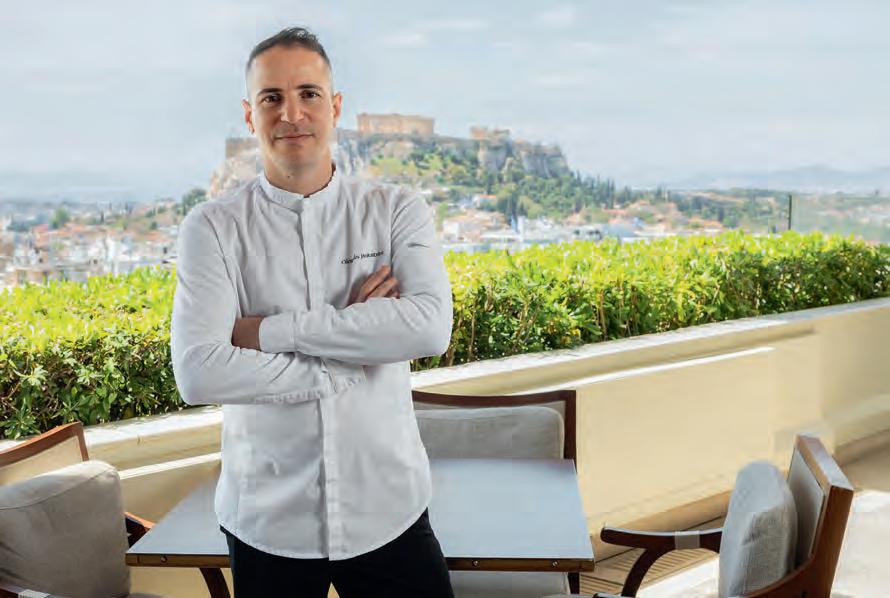
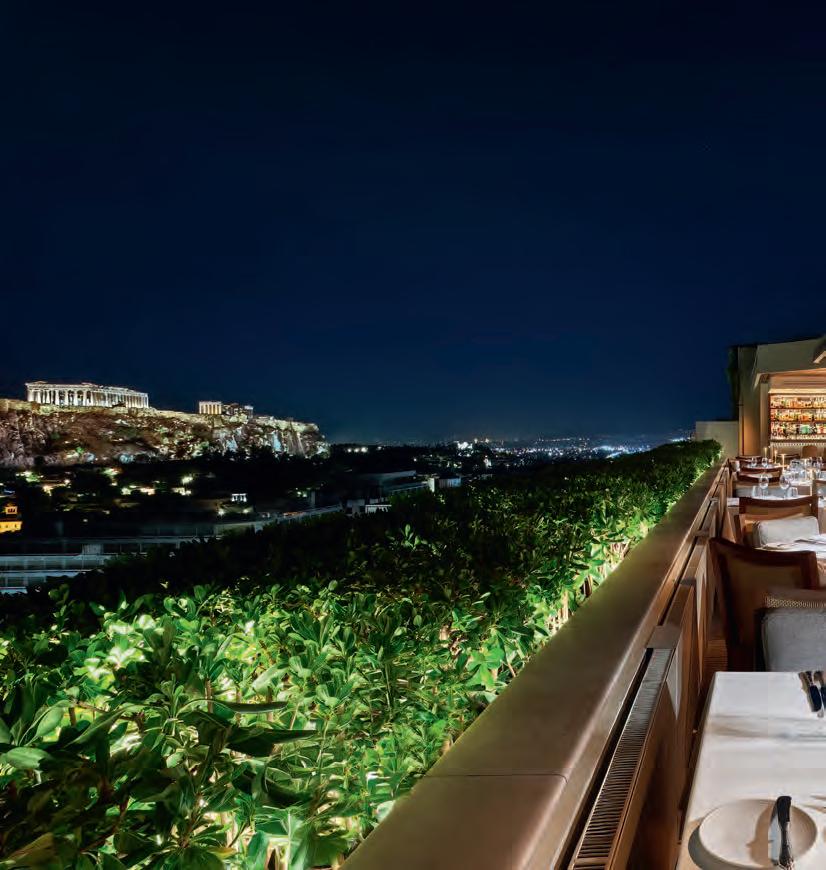
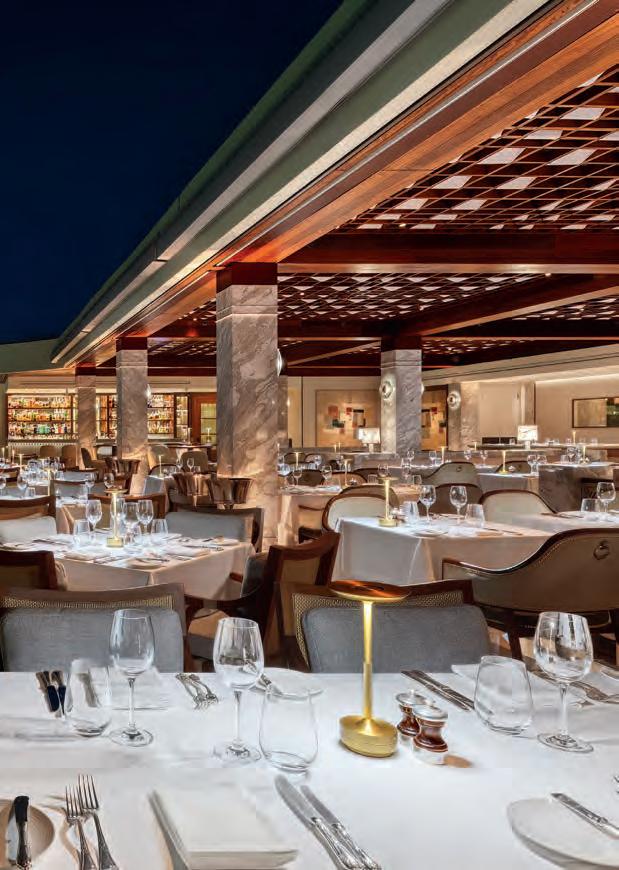
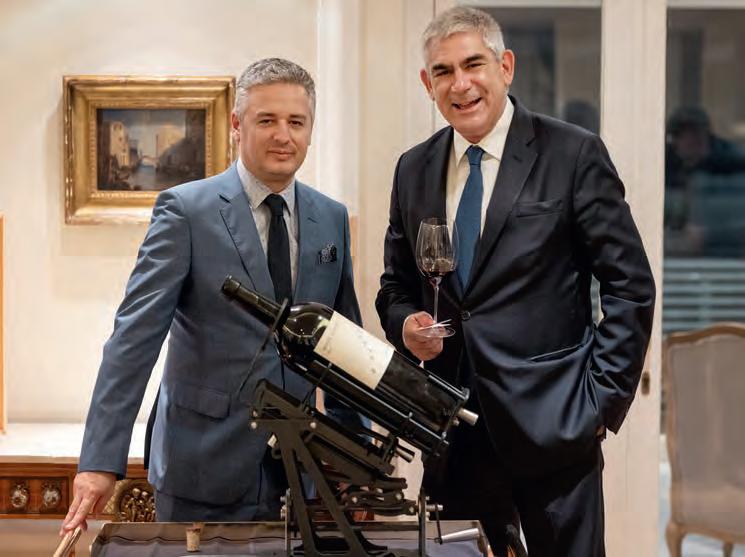
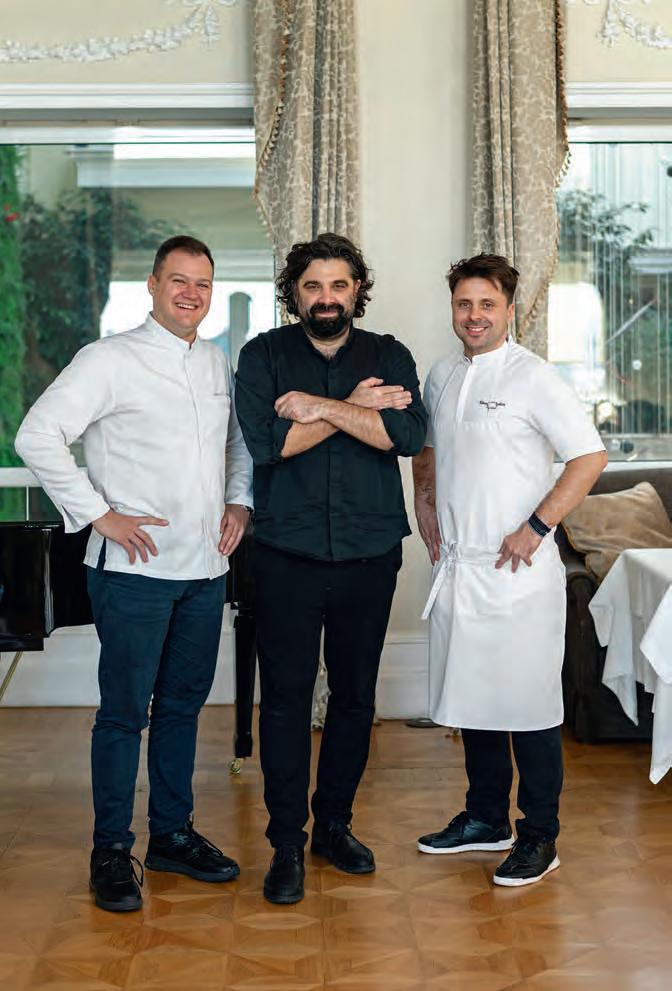
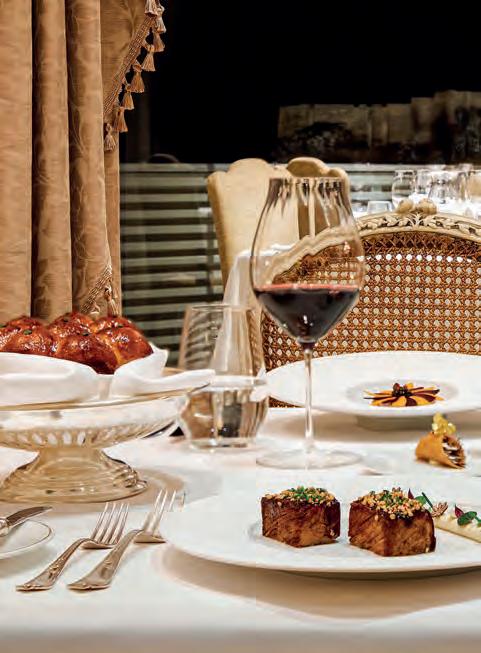
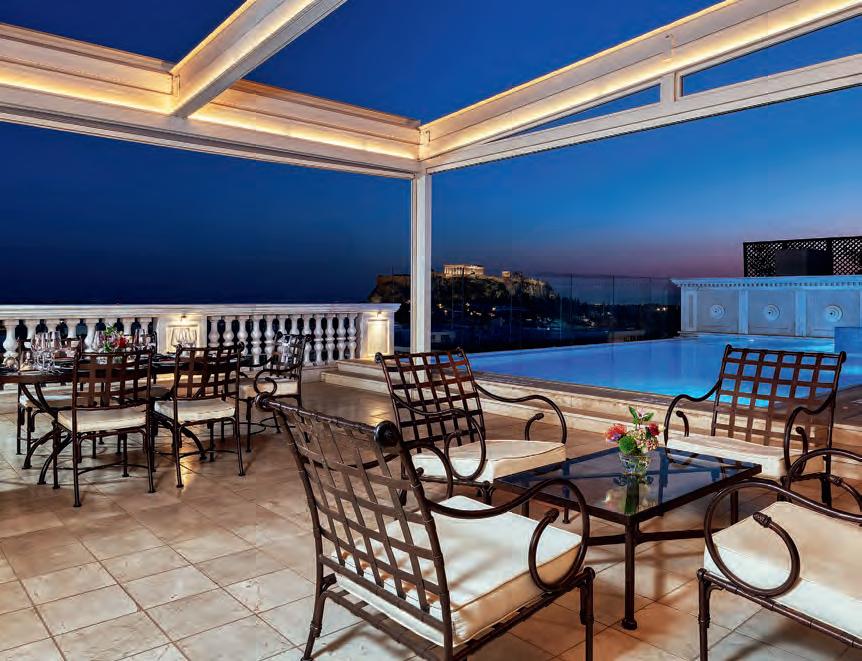
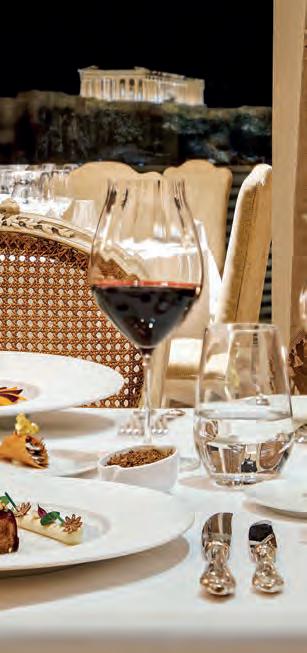
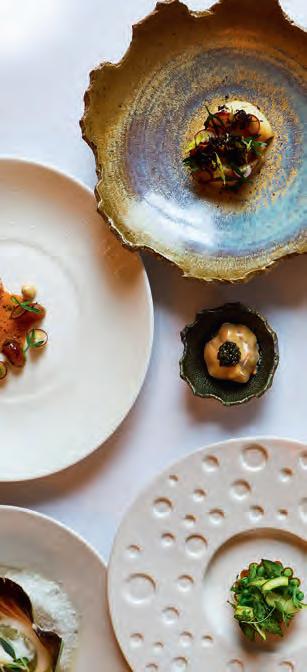
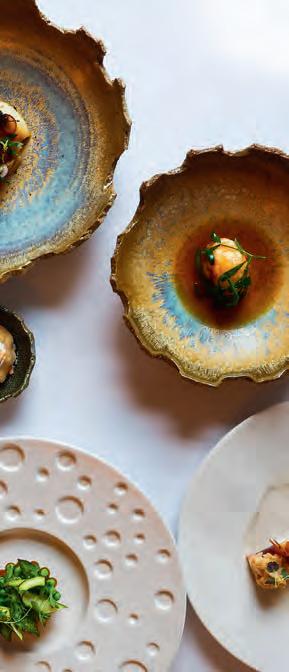
A special mention should be reserved for our renewed culinary experiences. The iconic GB Roof Garden Restaurant welcomes its new Chef de Cuisine, Giannis Rokanas, who presents a refined menu where Mediterranean comfort cuisine finds creative expression against the backdrop of the Acropolis. The Michelin-starred Tudor Hall at King George, a restaurant for life’s memorable occasions, welcomes you with a new seasonal menu. The Winter Garden, with its cherished afternoon tea ritual, confirms its place as a destination for all seasons. In our secret garden within the atrium of Alexander’s Lounge, sustainability goes hand in hand with flavor. Inspired by the land and its traditions, Executive Chef Asterios Koustoudis has created a surprise menu dedicated to the tomato, featuring delicious varieties cultivated exclusively for the hotel using traditional methods. Our Wine Director, Evangelos Psofidis, welcomes you to the newly launched Assyrtiko Cellar, home to 200 labels, each a distinct expression of this exceptional grape variety, now a standard-bearer for Greek wine around the world.
This summer, as always, you’ll have the opportunity to enjoy wonderful movie nights through our beloved Pool Your Cinema program, to explore the luxurious GB Corner Gifts & Flavors, and, of course, to consult with our concierges as you plan your excursions in and beyond the city.
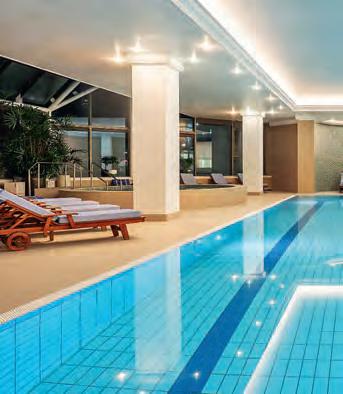
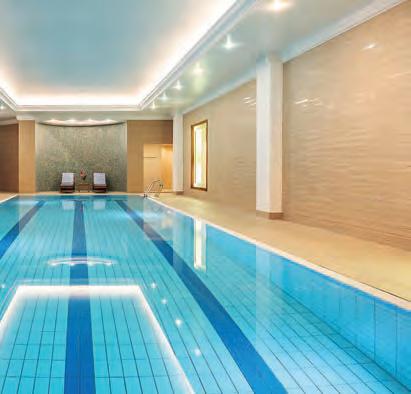
In closing, I’d like to share news of an important project: the complete renovation of our award-winning GB Spa. It will soon welcome you back, significantly expanded, as a state-of-the-art holistic destination for wellness, beauty, health and fitness. We are confident that the new facilities will impress you.
I hope you enjoy our hotels and our city, and I look forward to welcoming you back soon.
26. GUESTS’ BRIEF
The season’s exciting new offerings.
40. MY SPECIAL PLACE
Locals in the know share their favorite city spots.
46. ATHENIAN STROLLS
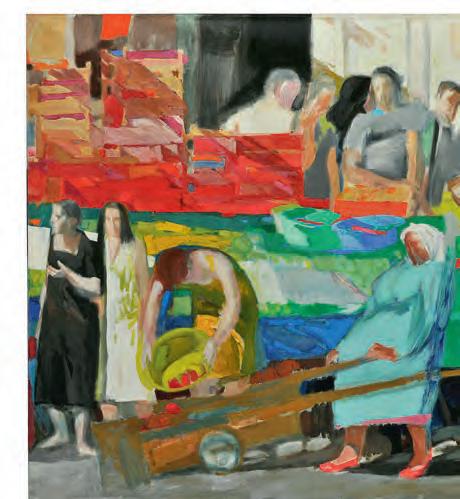
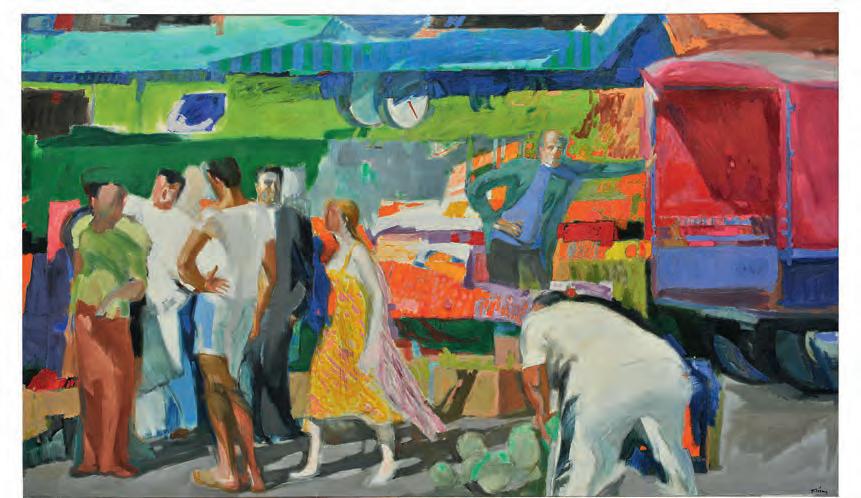
From the monumental Street Market by P. Tetsis to the colorful market stalls on Xenokratous Street.
48. INTERVIEW
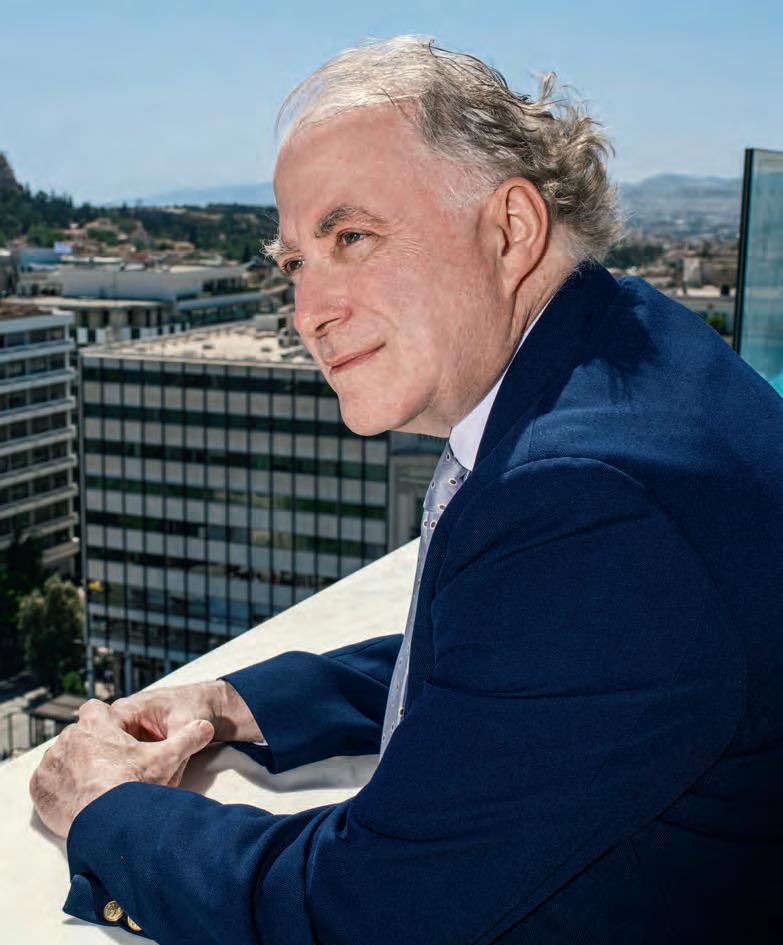
Τhe distinguished archaeologist Seán Hemingway speaks about his deep connection with Greece and about his grandfather, Ernest Hemingway.
58. WHAT’S ON
The most interesting experiences, cultural and otherwise, in Athens this season.
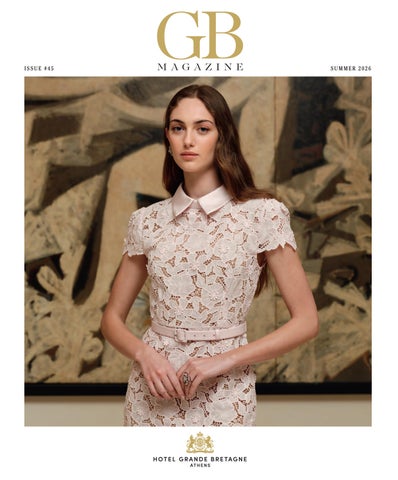
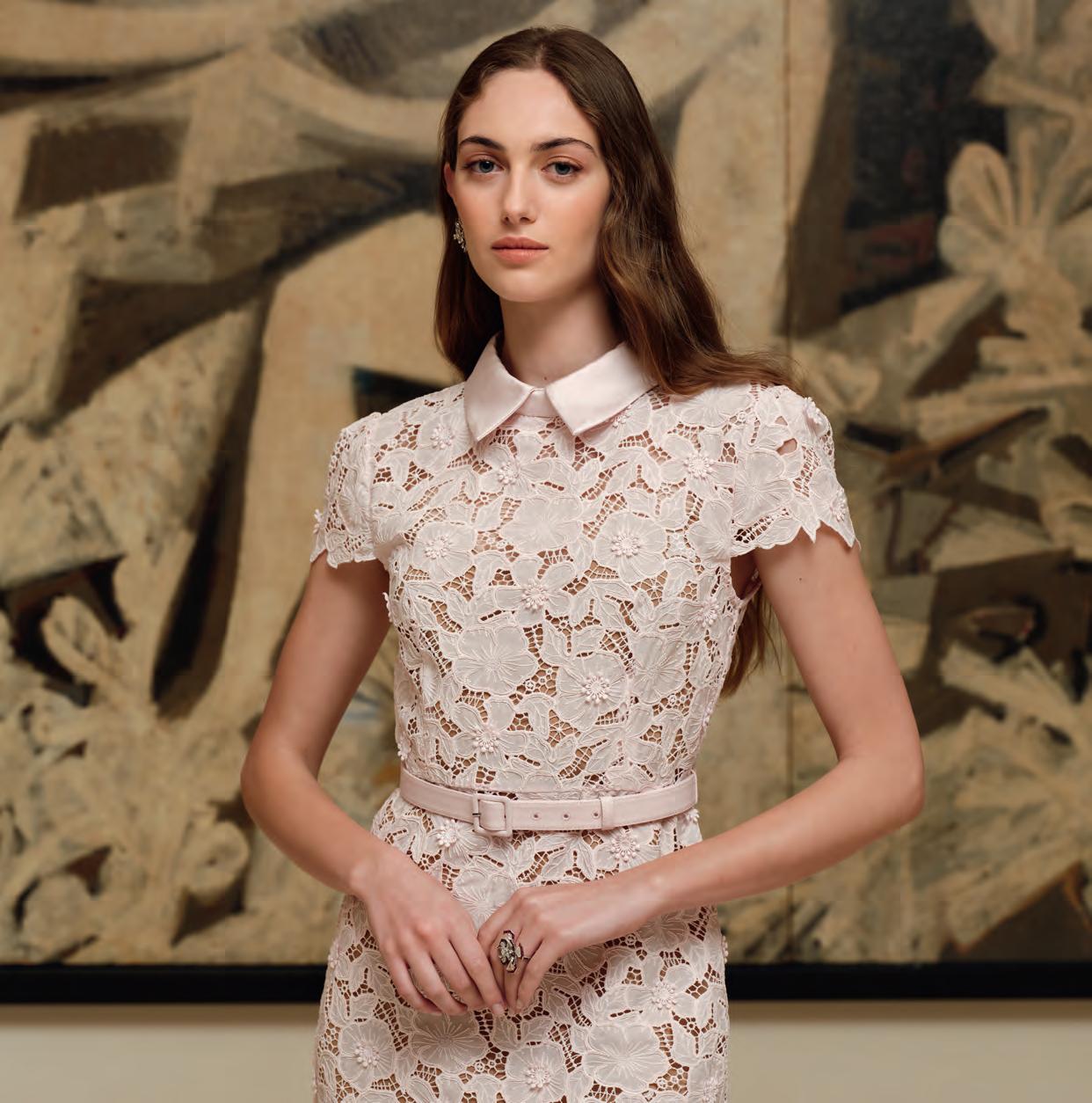
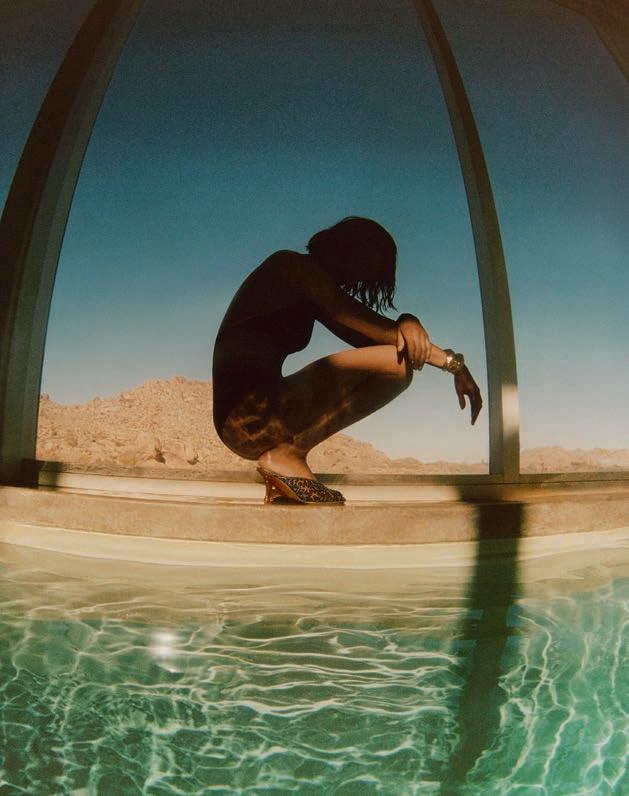
ON THE COVER
Photographed by Yiorgos Kaplanidis (Thisisnotanotheragency)
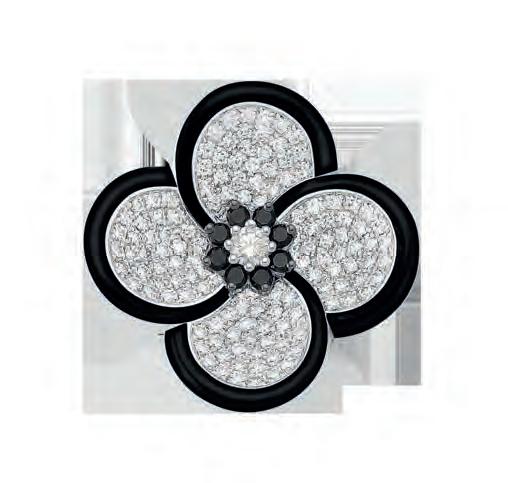
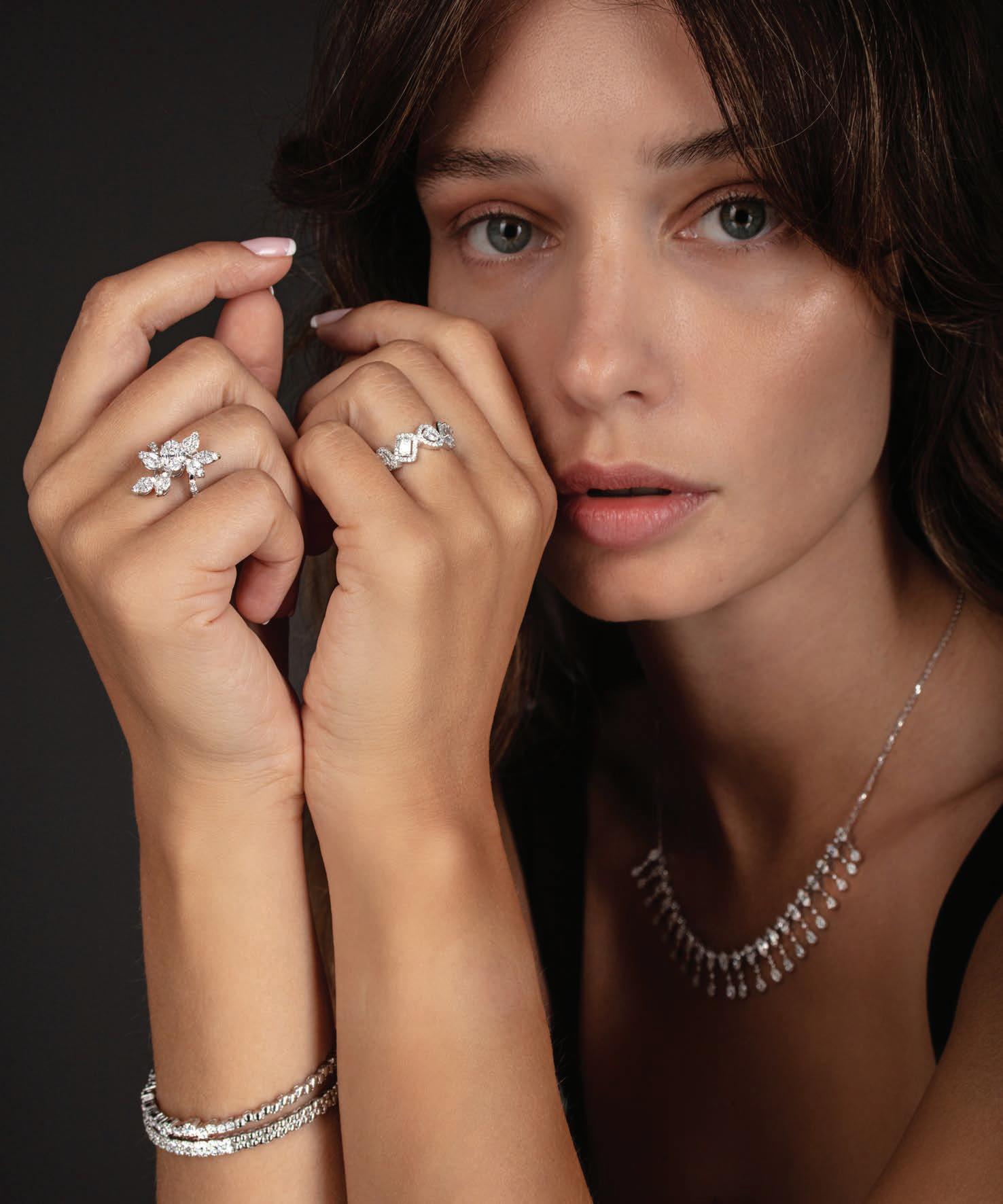
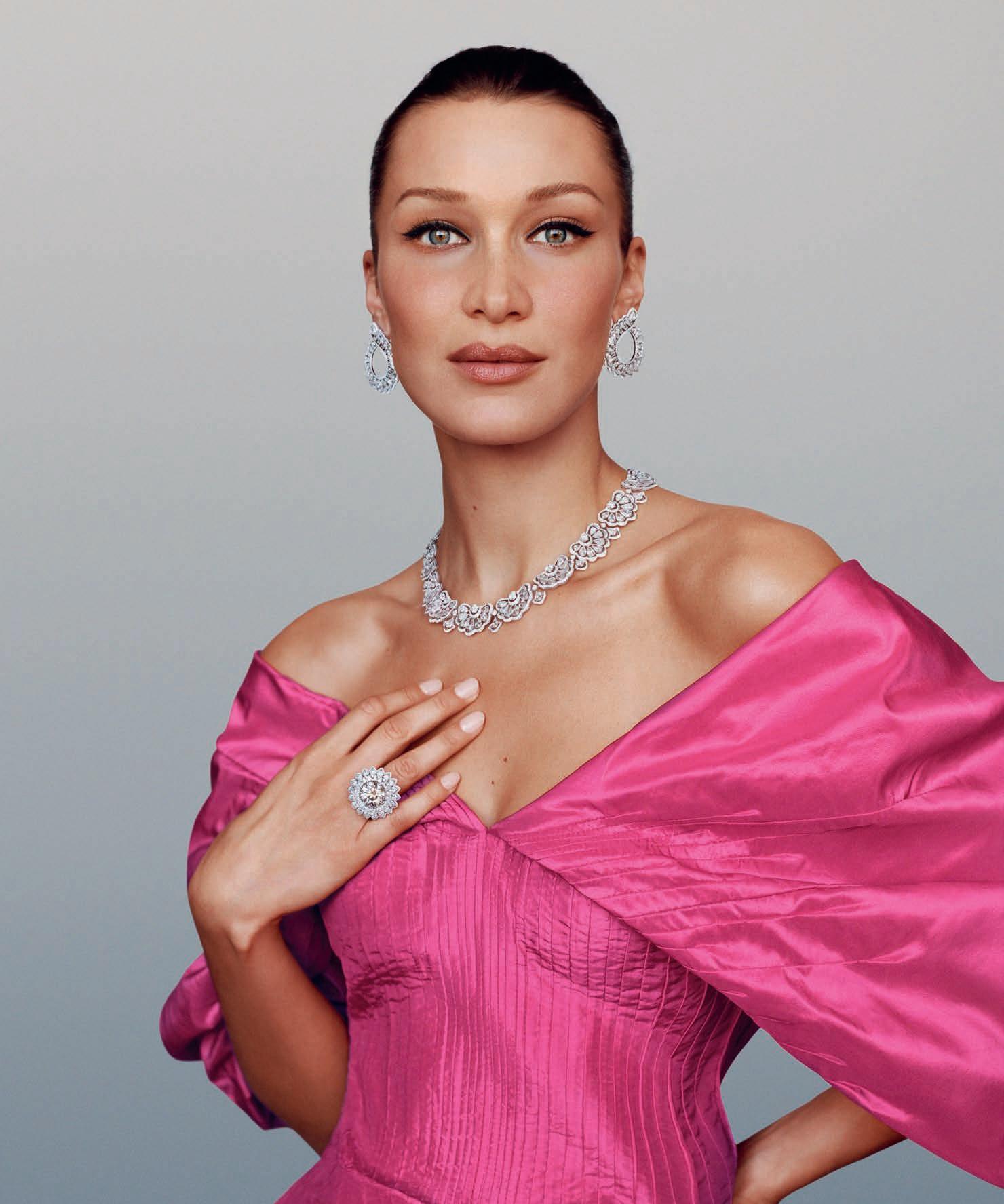
Earrings and ring in white gold with diamonds (VENETIA VILDIRIDIS).
THE AESTHETICS OF CONTINUITY
74. ΙΝΤΕRVIEW
The remarkable journey of conductor Dionysis Grammenos, founder of the Greek Youth Symphony Orchestra, across the world’s stages.
82. THE AESTHETICS OF CONTINUITY
At the Hotel Grande Bretagne and the King George, art is an organic and everpresent part of the guest experience.
Στα
GB ROOF GARDEN
92. BRUSHSTROKES OF A CENTURY
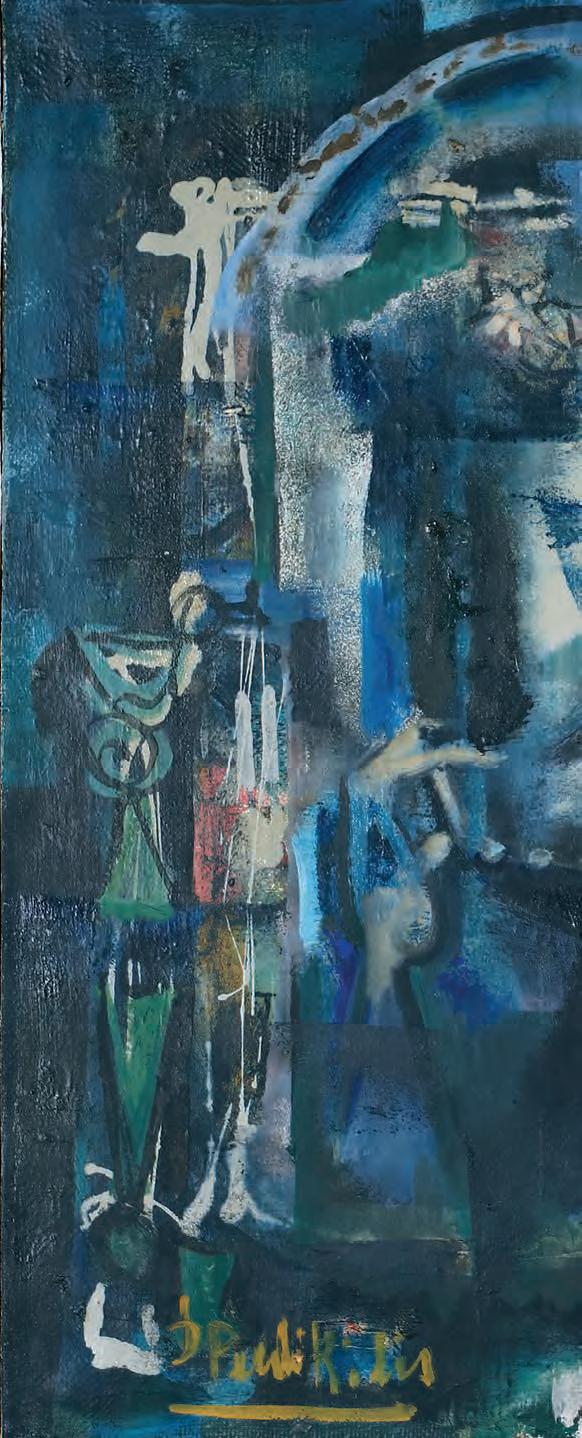
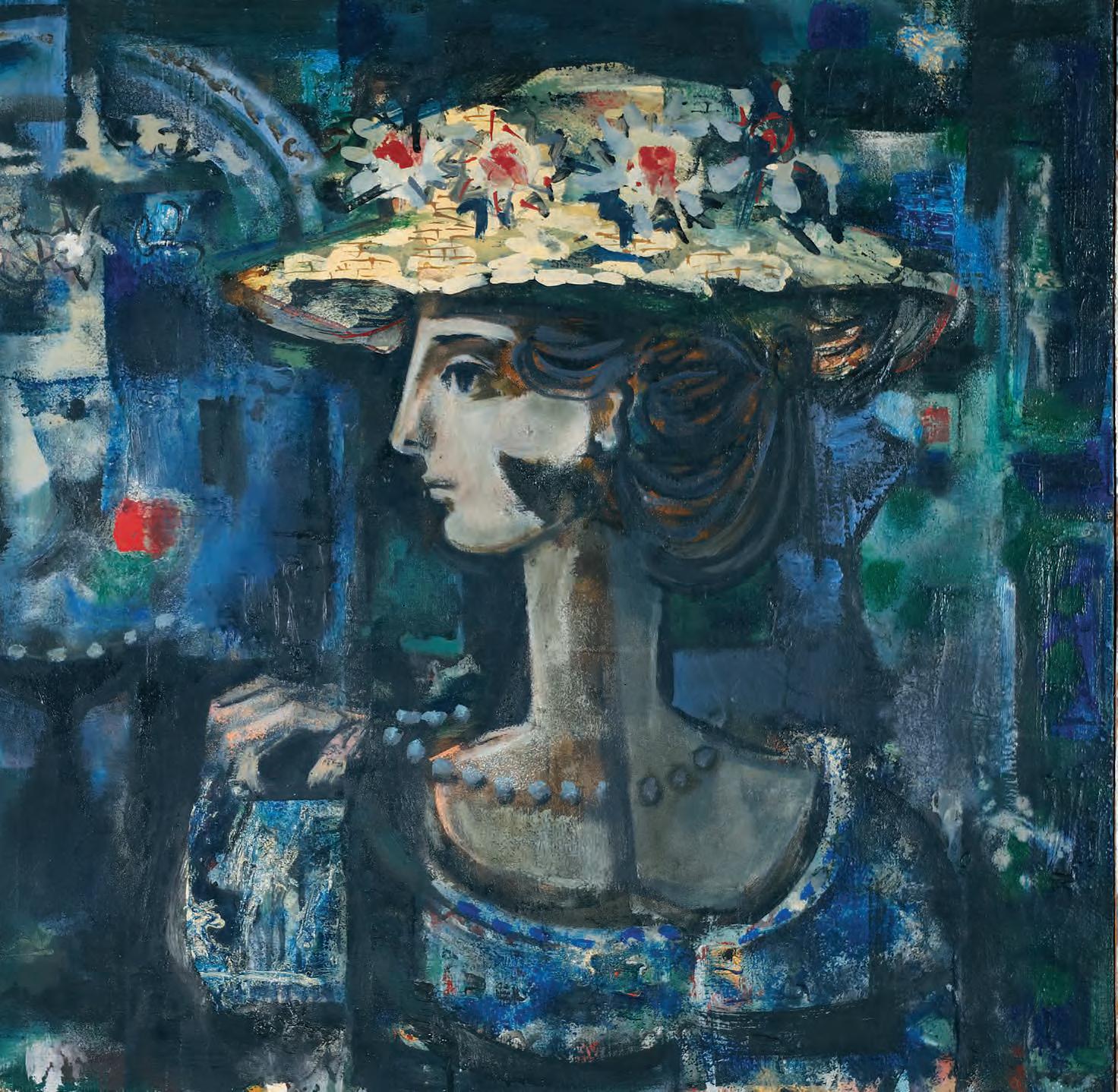
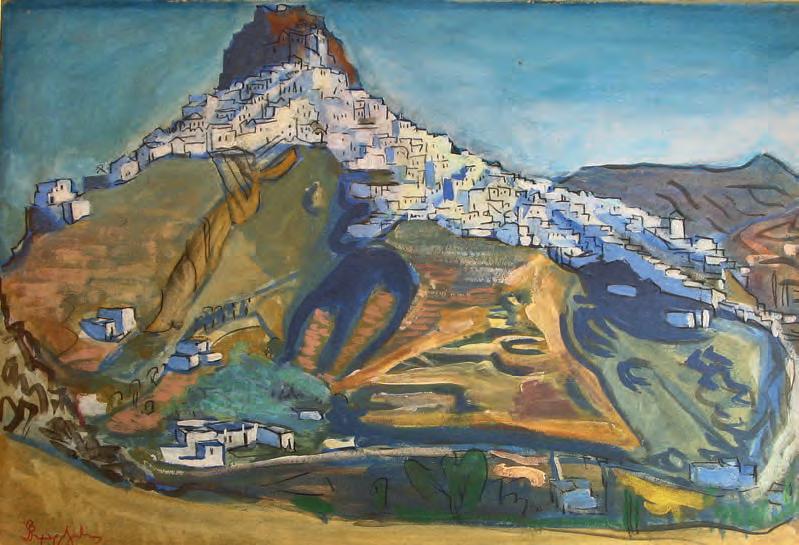
The Aikaterini Laskaridis Foundation brings into focus the singular journeys of painters Valias Semertzidis and Dimitris Perdikidis in 20th-century Greek art.
98. CHARTING
THE SARONIC GULF
The stretch of sea from Poros to Sounio is being systematically mapped in an ambitious initiative funded exclusively by the Athanasios C. Laskaridis Charitable Foundation.
K.
104. FASHION
Ιn the heart of style.
120. A TASTE OF LUXURY
Precious gifts for those who deserve only the best.
132. GB ROOF GARDEN
Following a sweeping redesign, GB Roof Garden welcomes its new Chef de Cuisine Yiannis Rokanas.
138. TUDOR HALL
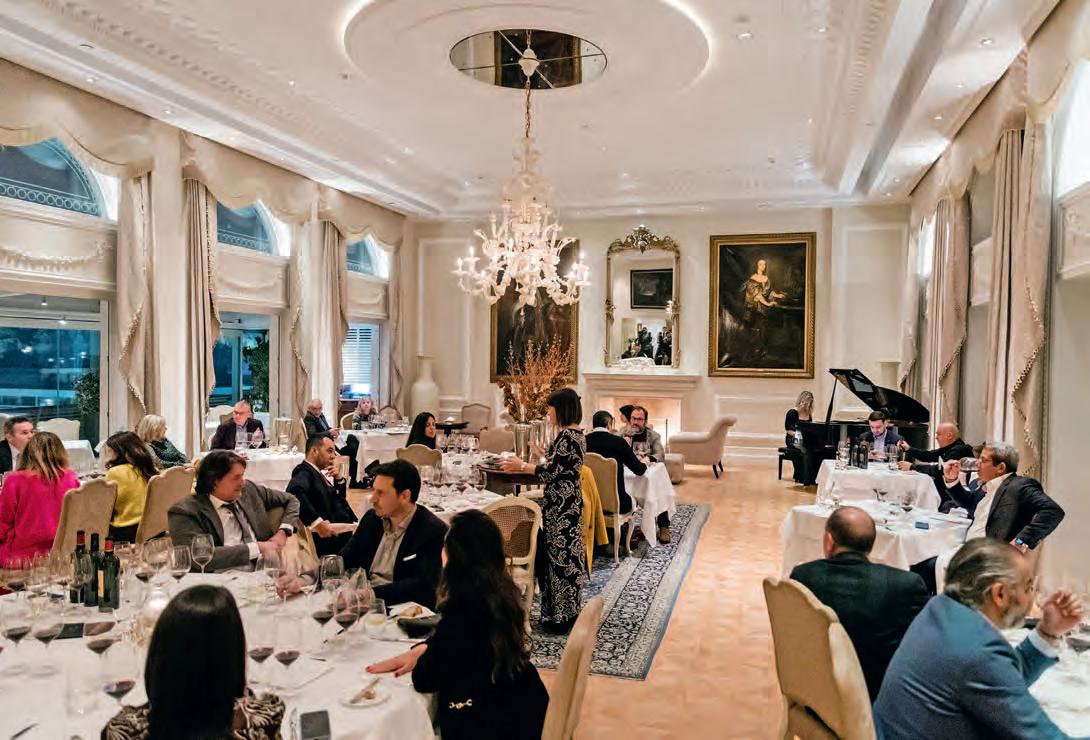
Some of the city’s most memorable dining experiences take place on the seventh floor of the King George.
144. A CELLAR FOR ASSYRTIKO
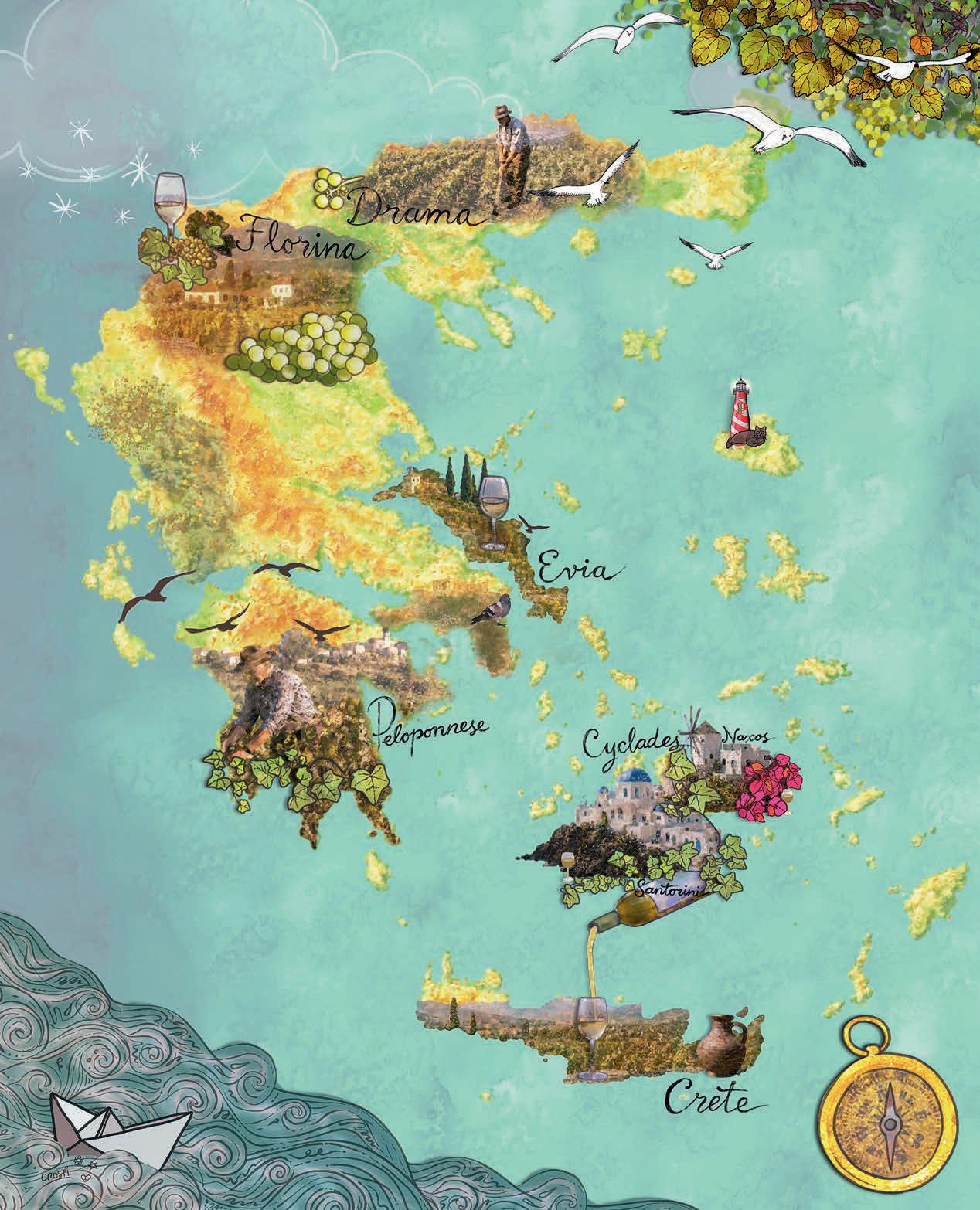
Greece’s most iconic grape variety finds a home at the Hotel Grande Bretagne, revealing its many different expressions from vineyards across the country.
150.
TRAVELING
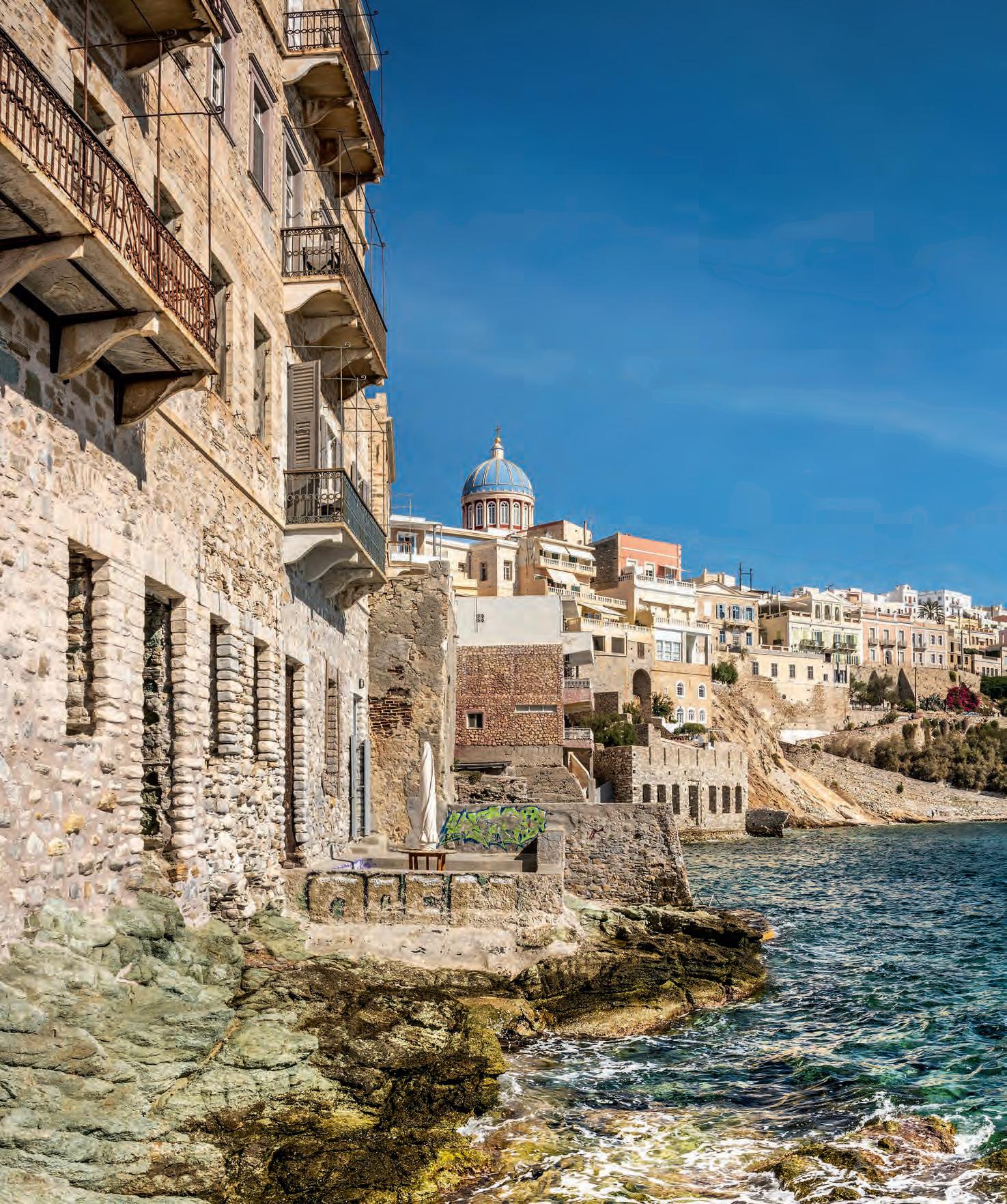
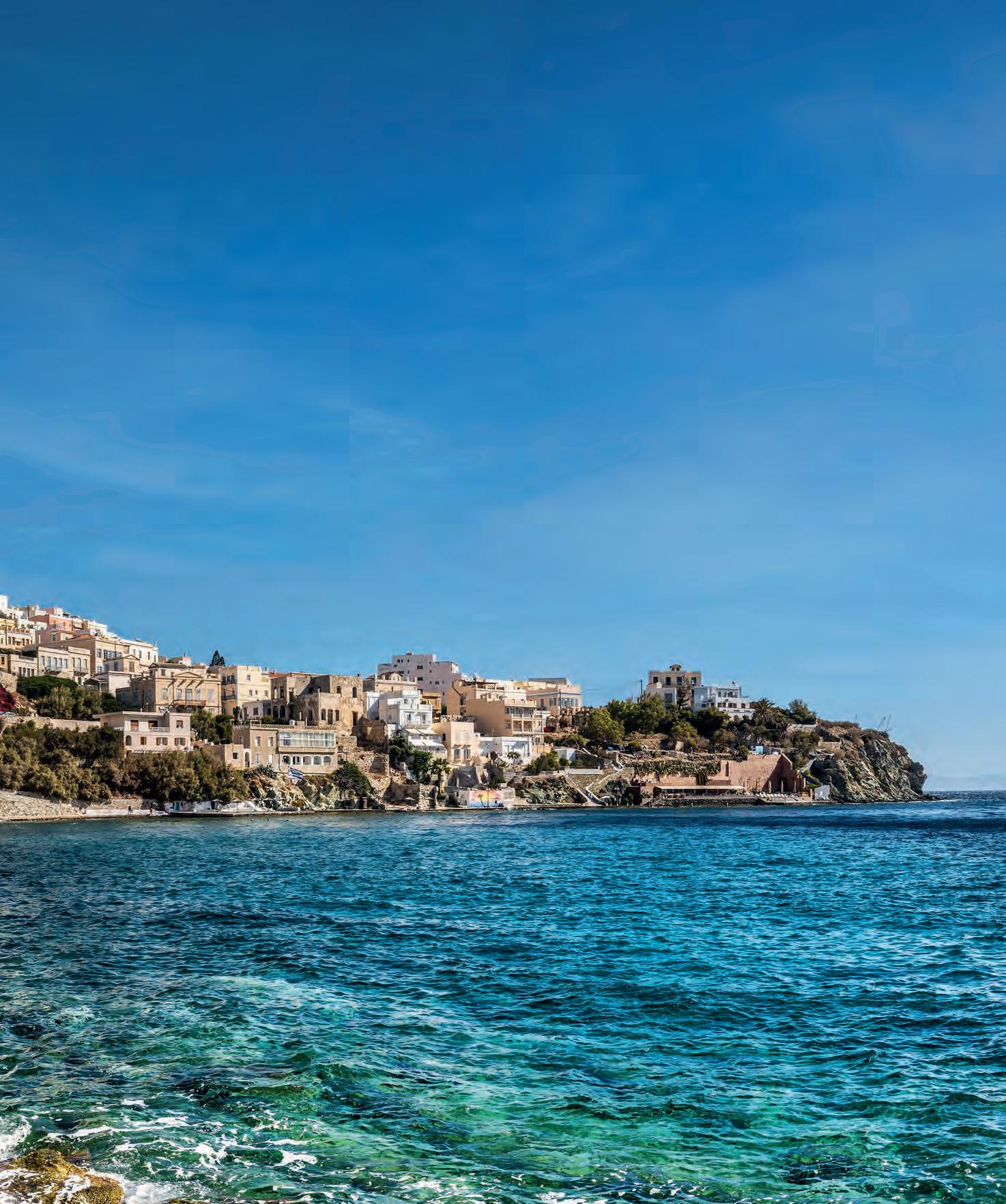
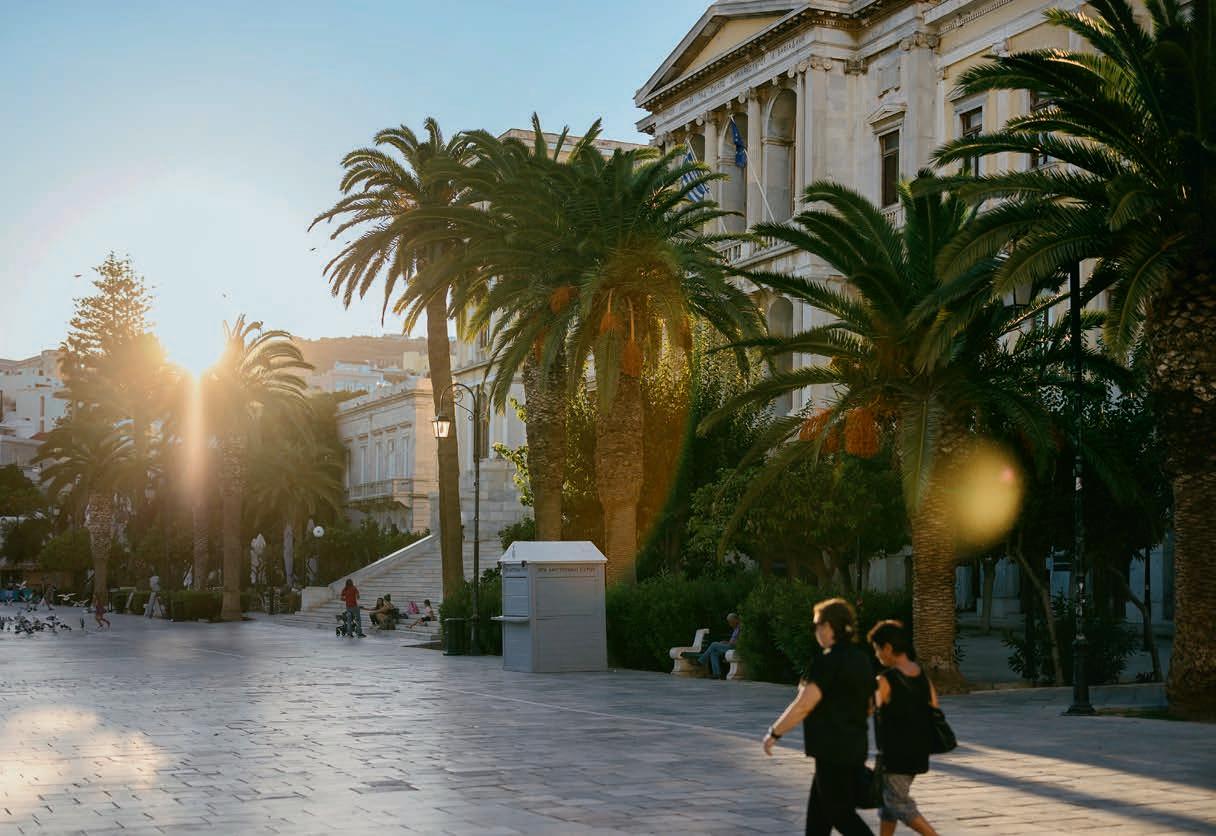
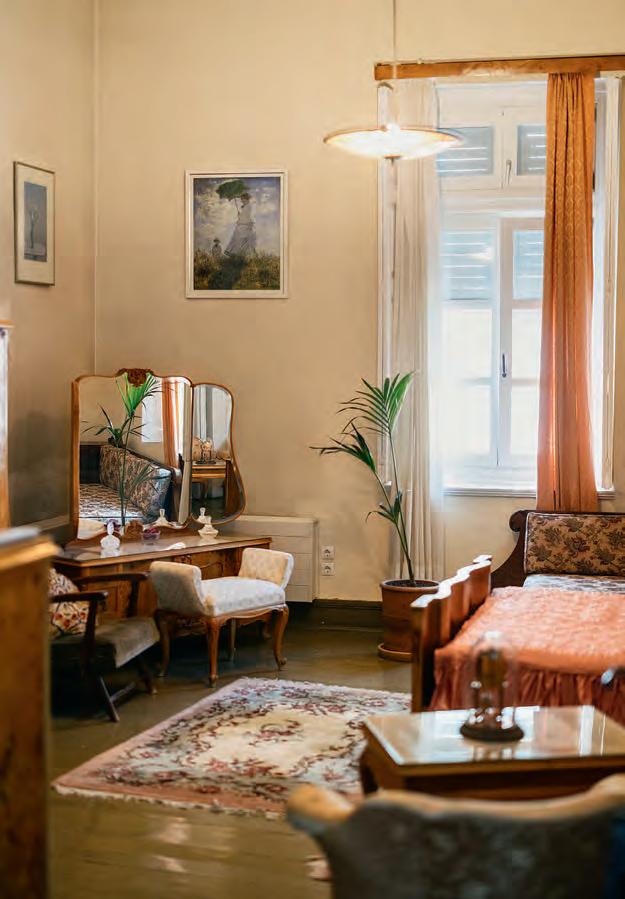
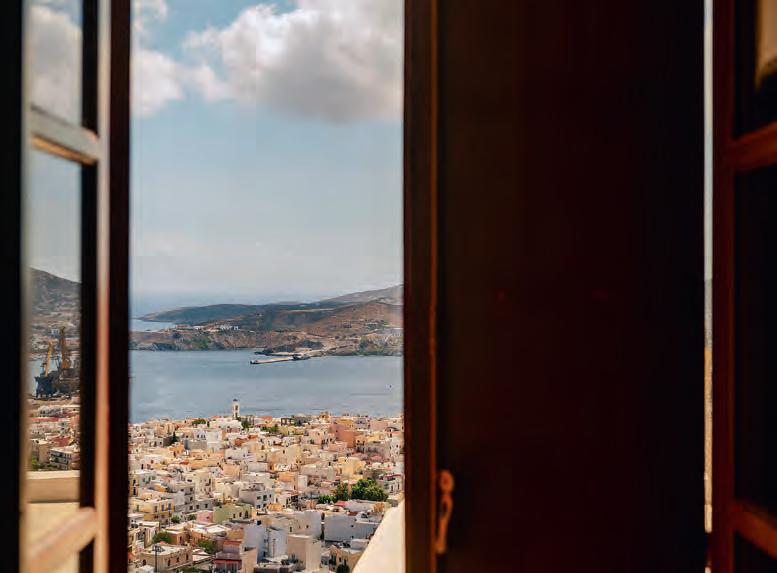
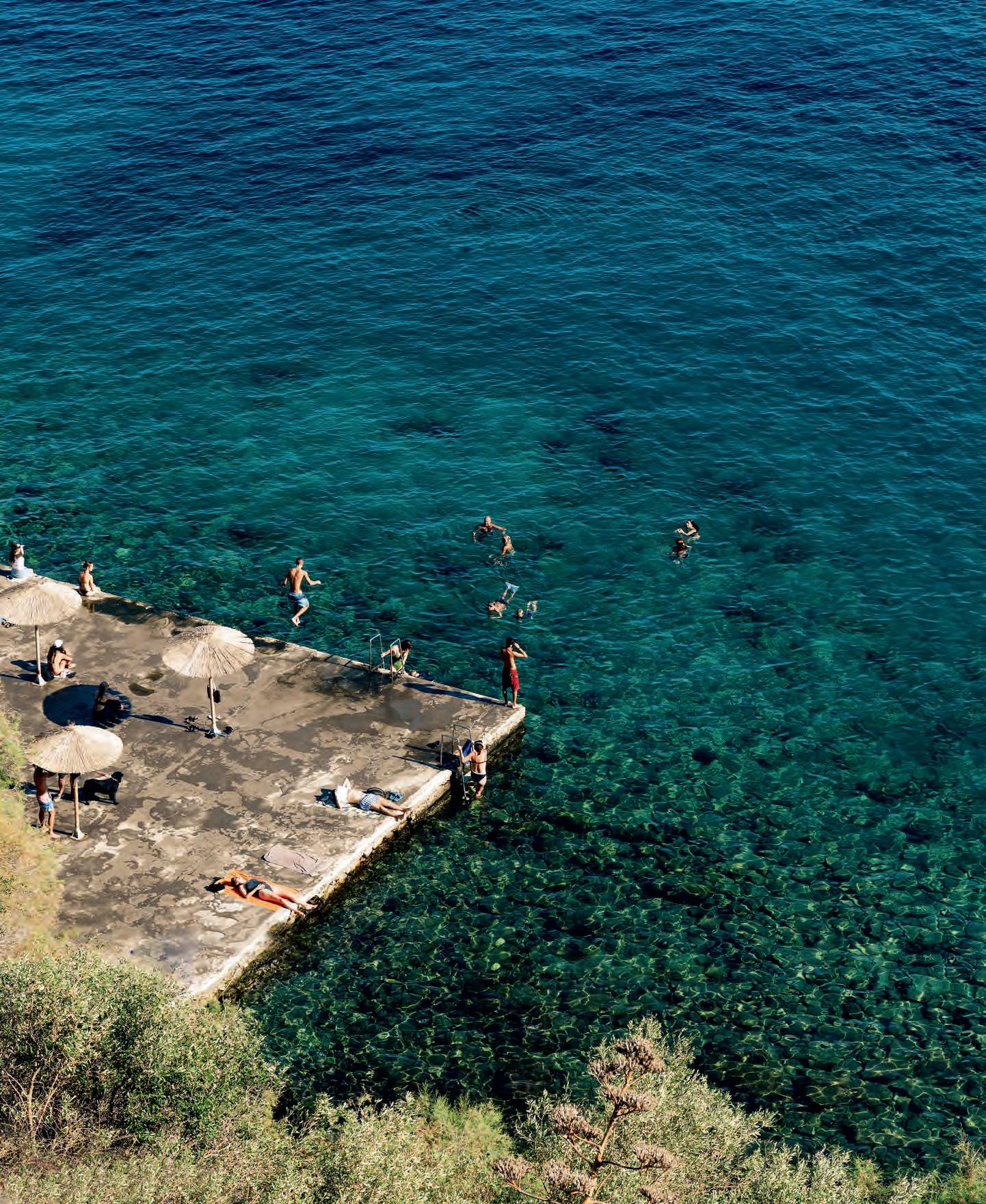
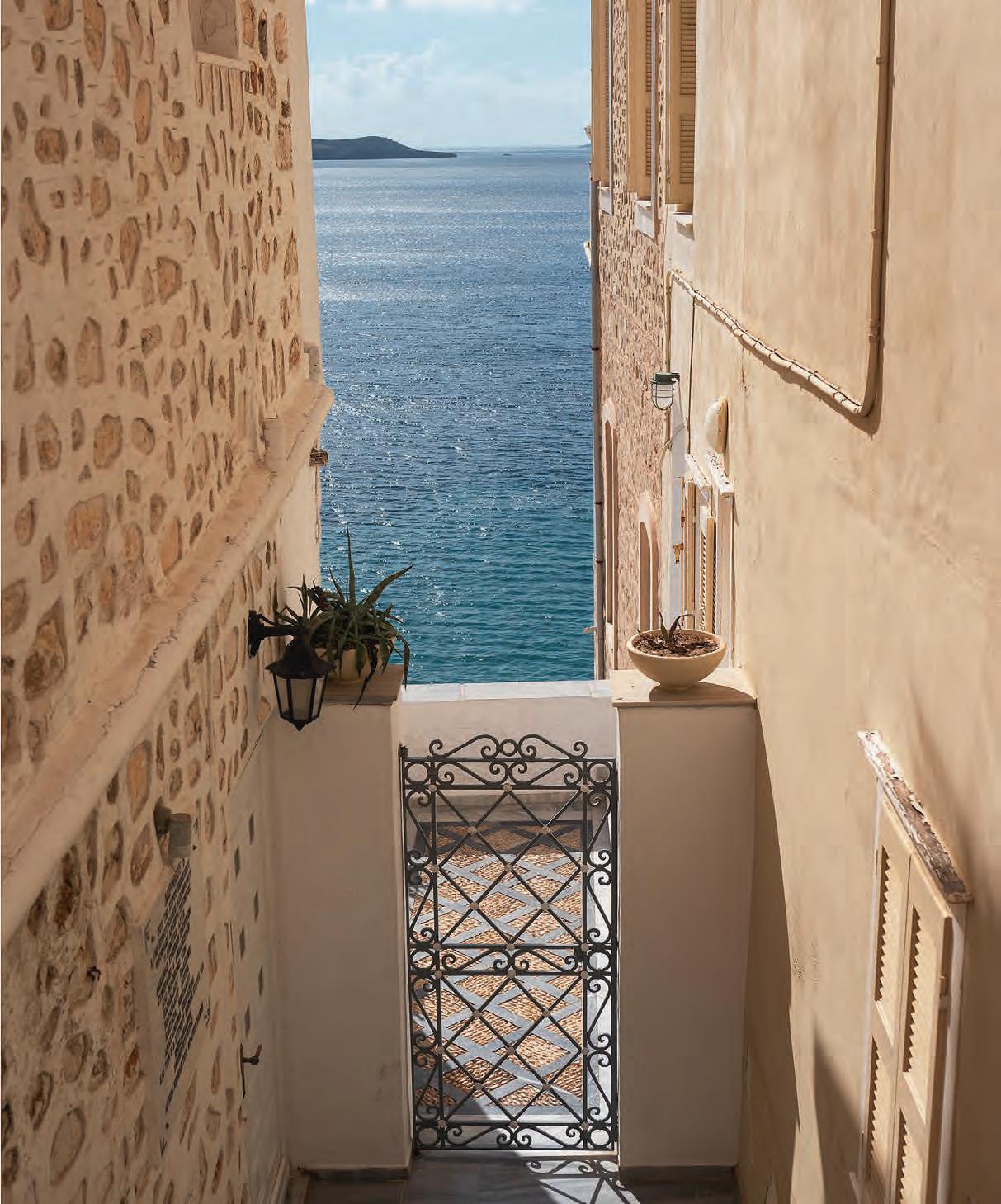
This is the perfect moment to visit Ermoupoli, the capital of the Cyclades.
160. THE GB TIMELINE
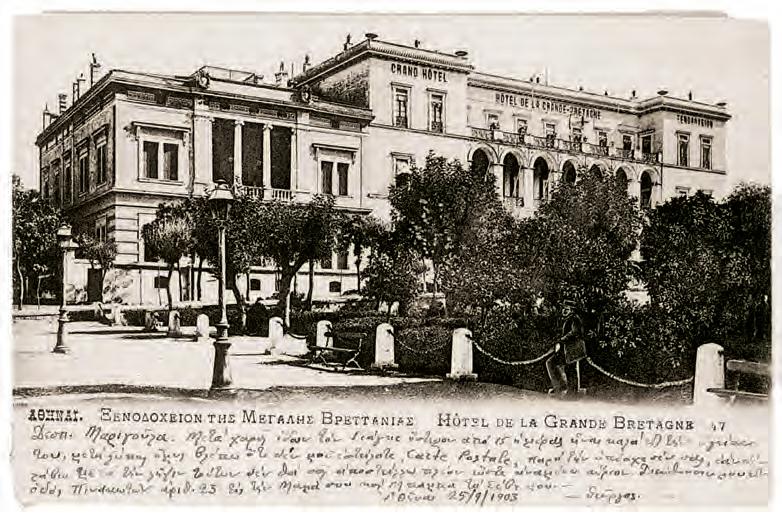
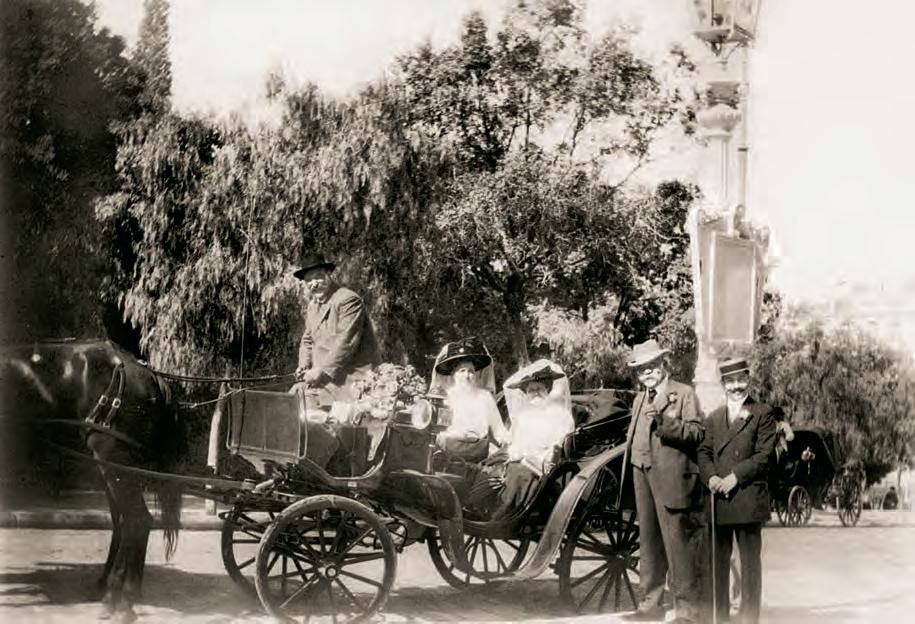
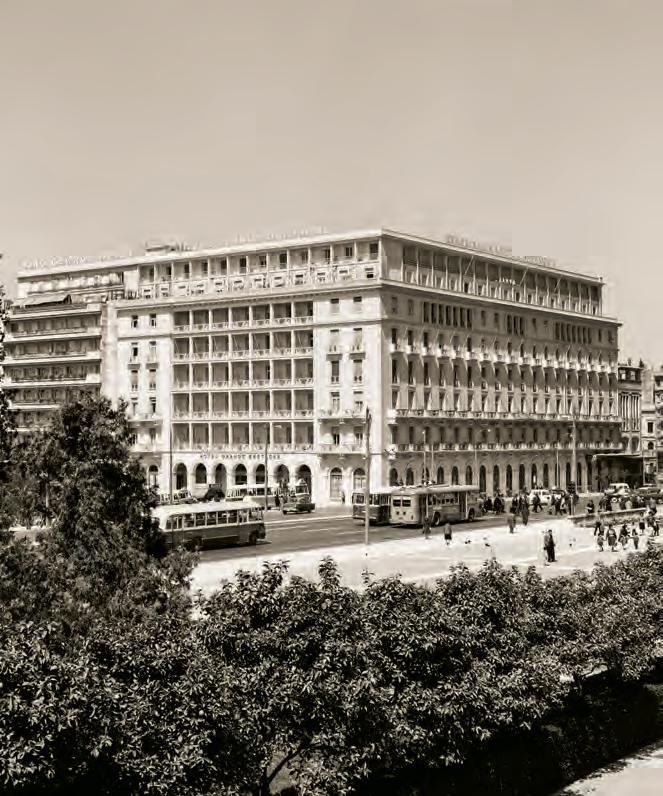
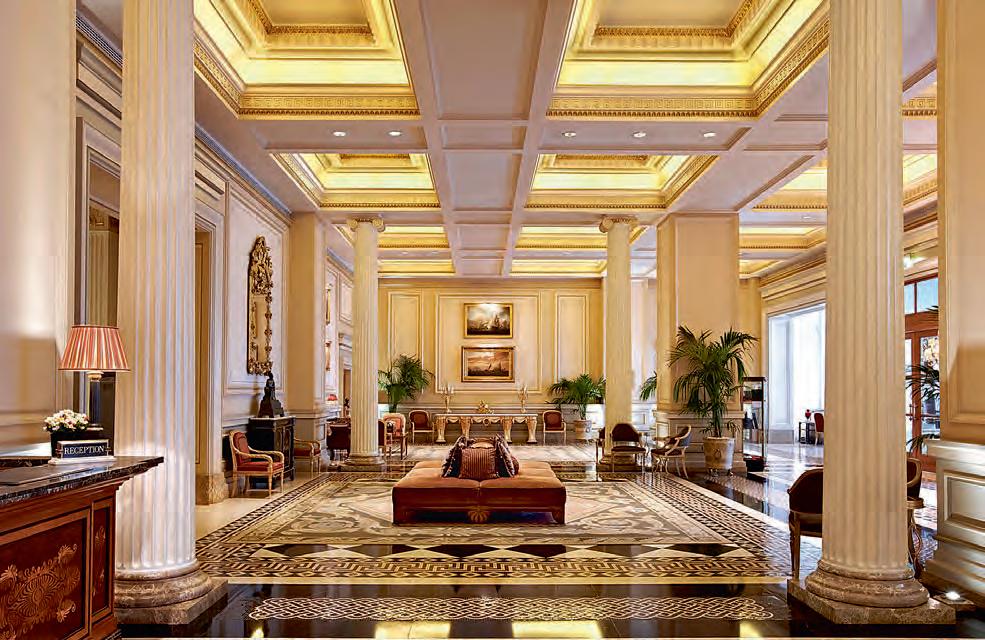
Milestones in the 150-year history of the Hotel Grande Bretagne.
SINGLE MEMBER S.A. Ethnarhou Makariou & 2 Falireos, 185 47, Athens. Tel. (+30) 210.480.8000, Fax (+30) 210.480.8202
GB Magazine is published twice a year by Nees Kathimerines Ekdoseis Single Member S.A. exclusively for the Hotel Grande Bretagne. Lampsa Hellenic Hotels S.A. does not necessarily share the opinions expressed in GB Magazine. It is illegal to reproduce any part of this publication without the written permission of the publisher. This magazine is distributed
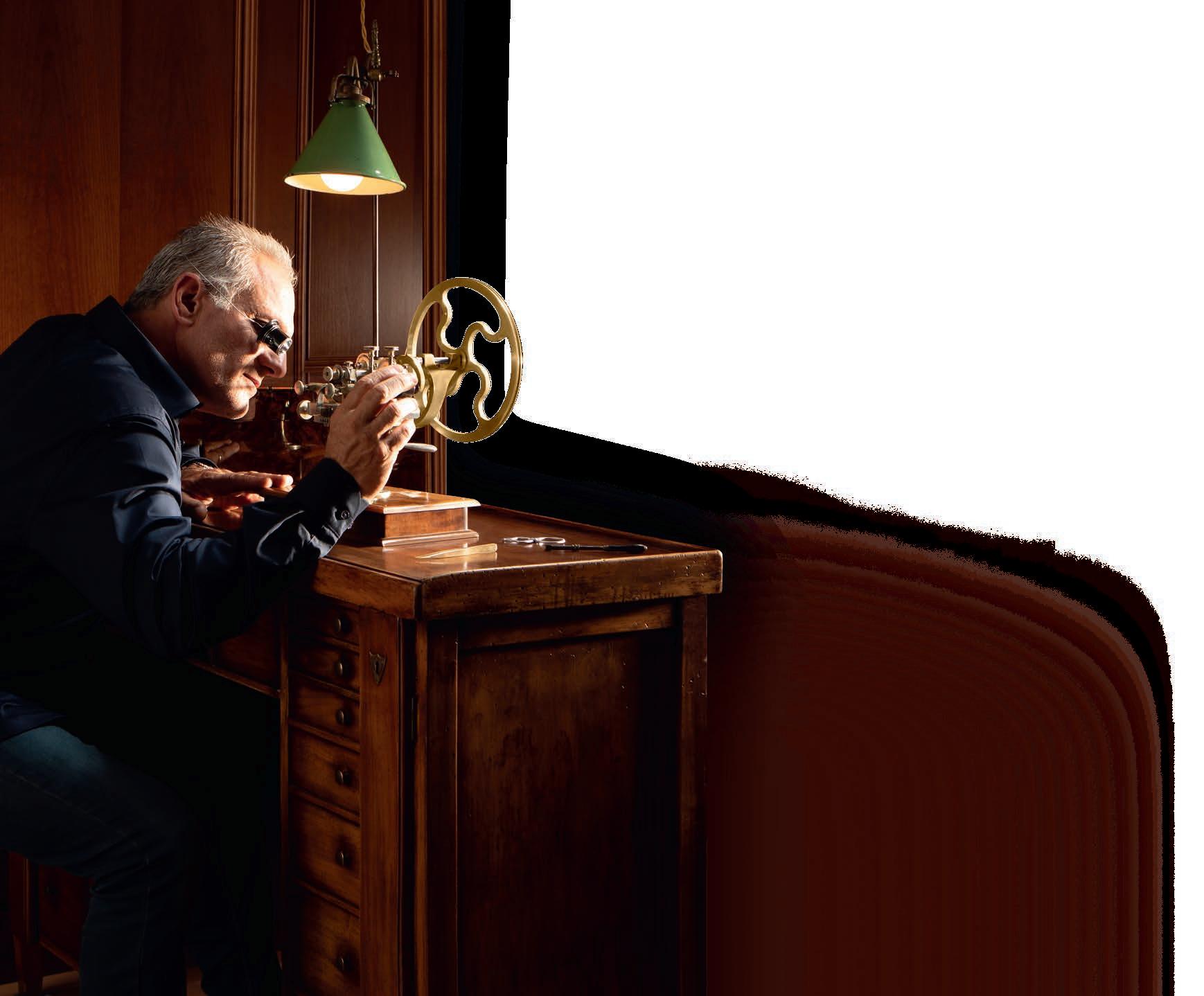
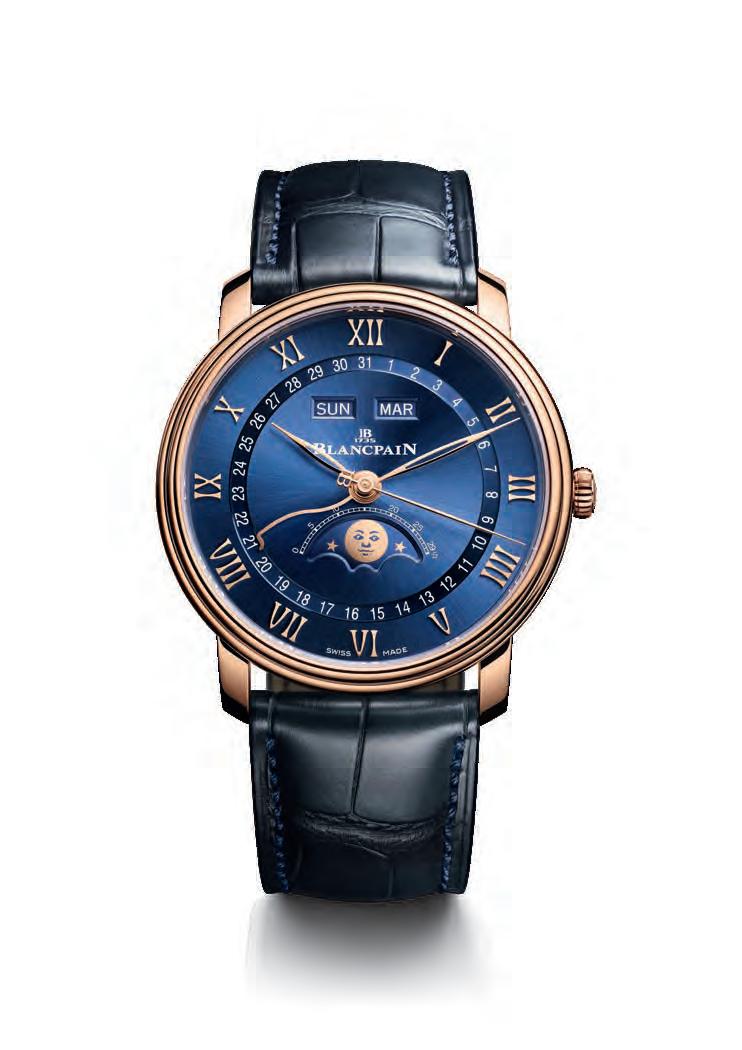
Featuring an endless array of watchmaking’s most fascinating complications, the Villeret bears authentic testimony to the talent of our watchmakers. Essentials imbued with timeless elegance. A Villeret is for eternity.
Atelier Tourbillon, Blancpain – Le Brassus
Guests’ Brief
Our latest news and fresh arrivals
THE CITY’S SECRET GARDEN
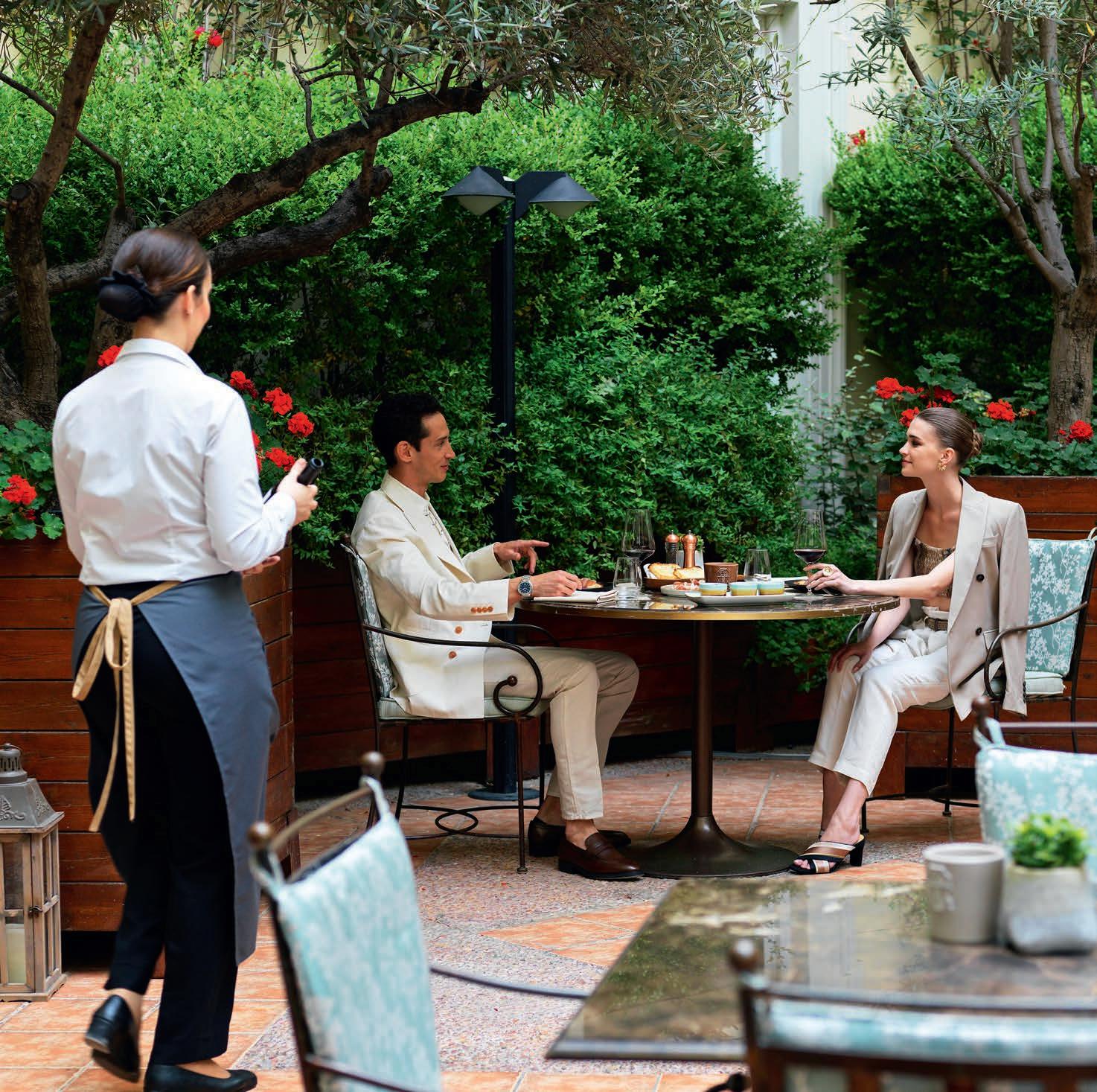
From the very first year that the Atrium of Alexander’s Cigar Lounge was transformed into a lush oasis of calm in the bustling heart of Athens, it became a favorite destination for those who seek genuine quality over passing hype. Open from 11:00 in the morning, this discreet corner of the city continues to develop its own culinary identity, with the Il Giardino Segreto menu offering exceptional cheeses and charcuterie to enjoy with your wine, alongside its signature dishes of Italian comfort cuisine made with outstanding Greek products from the islands: bruschetta with crisp focaccia, salsa verde, anchovies, and confit peppers; risotto with Niotissa graviera from Ios, Tinos artichoke, and bottarga; pizza with mortadella, buffalo stracciatella, and basil pesto with Aegina pistachios; and much more. For this summer, Executive Chef Asterios Koustoudis has created a special additional menu dedicated to tomatoes – more specifically, to three intensely flavorful varieties grown exclusively for the hotel. They take center stage in a tomato carpaccio, in pasta dishes, in a cool summer salad, and even in an unexpected ice cream.
The Atrium of Alexander’s Lounge Tel. (+30) 210.333.0748, Open daily 11:00-02:00 The menu Il Giardino Segreto is served daily 17:30-23:30
CINEMA UNDER THE STARS
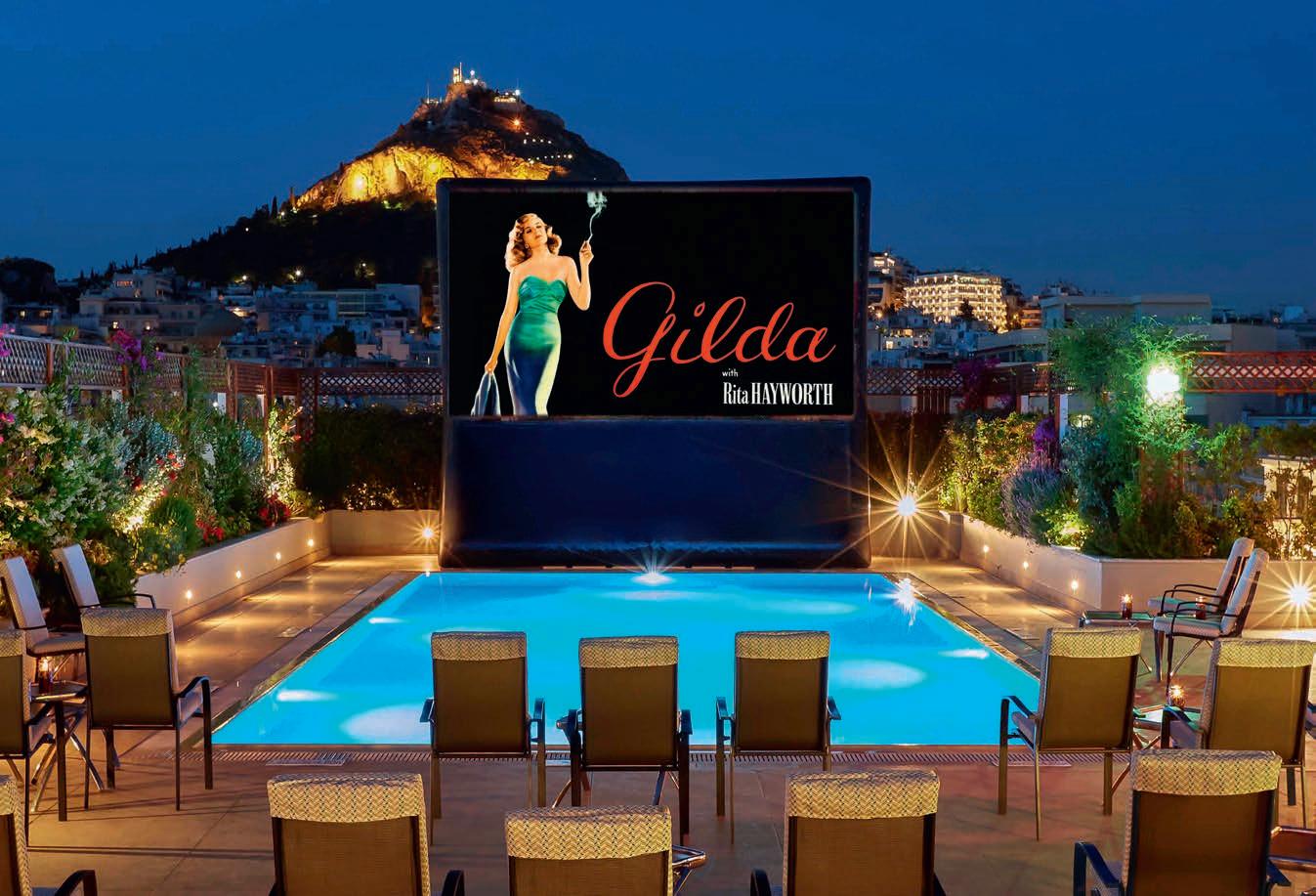
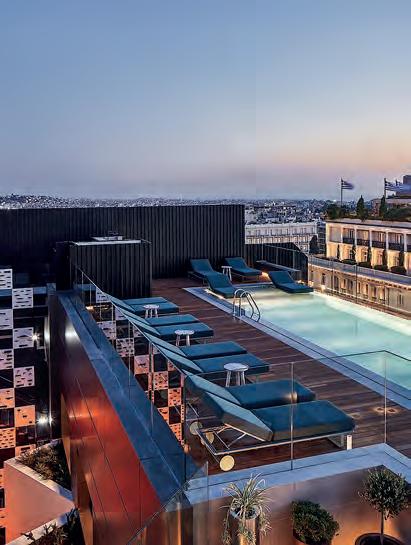
For the past few years, Grande Bretagne has quite literally raised the beloved Athenian tradition of openair summer cinema to new heights, creating a sophisticated evening experience that combines cocktails, refined finger-food creations and a carefully curated film program. The lineup runs from Hollywood classics such as Gilda to new releases embraced by audiences and critics alike, including One Battle After Another, Bugonia, and F1: The Movie. All of this takes place around the hotel’s outdoor pool, beneath the night sky, with the illuminated Lycabettus Hill rising in the distance.
Battle After Another, Bugonia, F1: The Movie
info
Poοl Your Cinema
Thu-Sat from 21:15
Movies start at 21:30
Reserve your seat at grandebretagnestore.com
ΑΤΉENS’ MOST ELEGANT RITUAL
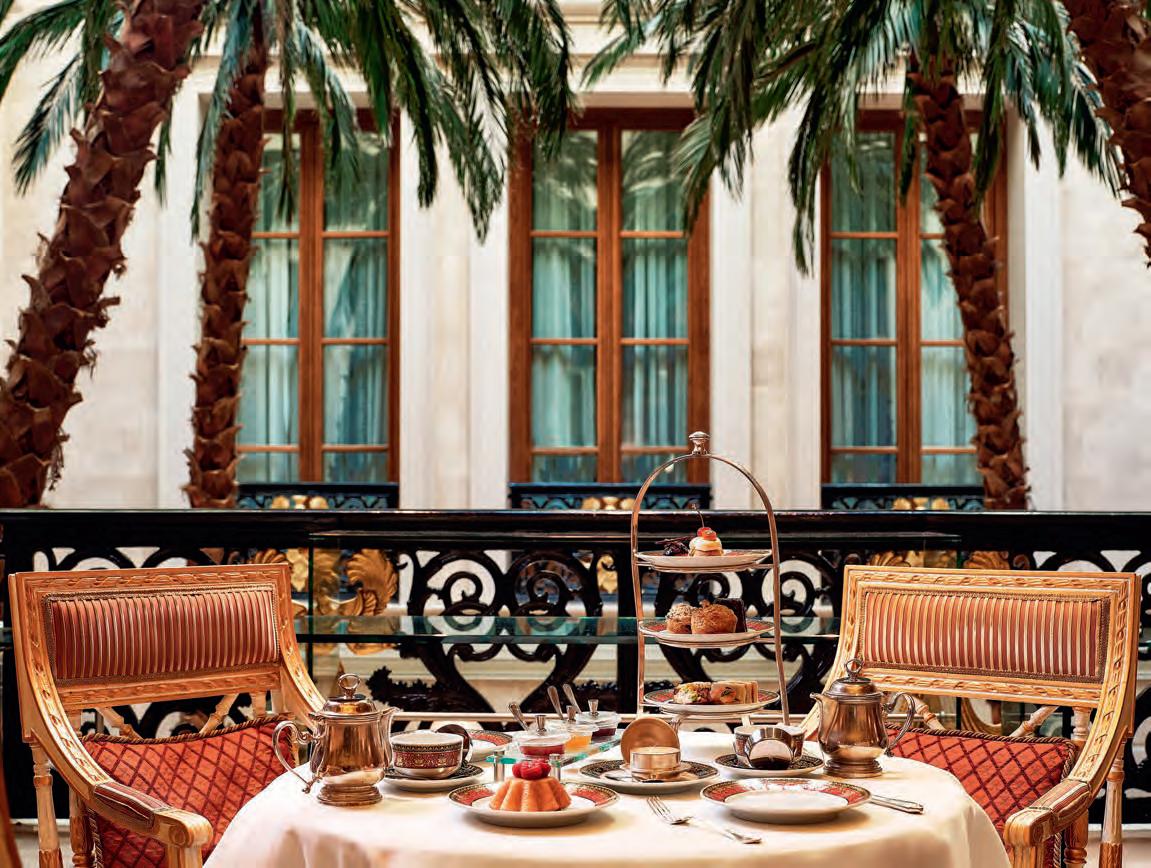
Some places seem to stand above the seasons. The Winter Garden City Lounge of Hotel Grande Bretagne is one of them: atmospheric, luminous, timeless and the ideal spot for a break from the intensity of summer in the city. Here, the British tradition of afternoon tea becomes an elegant Athenian ritual, a cool pause for calm and pleasure. Executive Chef Asterios Koustoudis presents a refined Afternoon Tea menu that honors the classic form of this meal while endowing it with a lighter, contemporary sensibility. Delicate tea sandwiches, freshly baked scones with lime crumble and cranberries, seasonal jams, and four carefully crafted dessert creations come together in an experience shaped expressly for the day’s more languid hours.
info
The Winter Garden City Lounge
Open daily 08:00-00:00
EIGHT IS THE MAGIC NUMBER
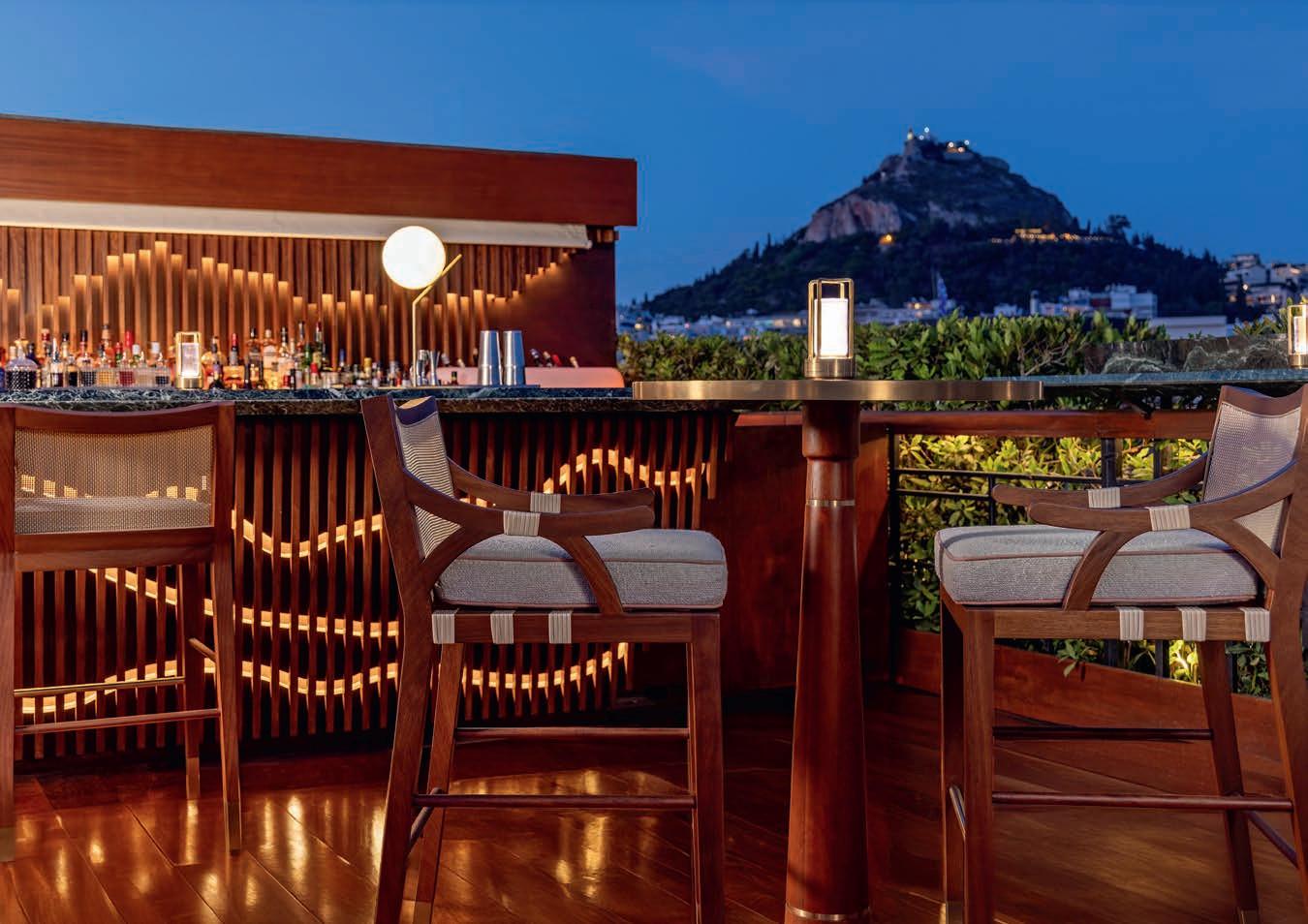
Each summer, Bar 8 at Hotel Grande Bretagne becomes a favorite rendezvous destination for Athenians and visitors from around the world. This season, the most luxurious, cosmopolitan and refined rooftop bar in central Athens returns with all the elements that have made it a fixture of the city’s social life: irresistible views, DJ sets shaped by pop-jazz sounds ον Τhursdays, Fridays and Saturdays, premium spirits, signature cocktails and unforgettable sunset moments in the heart of Athens. info
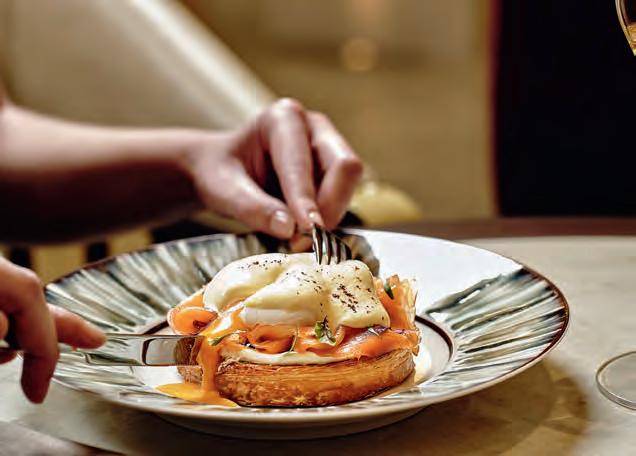
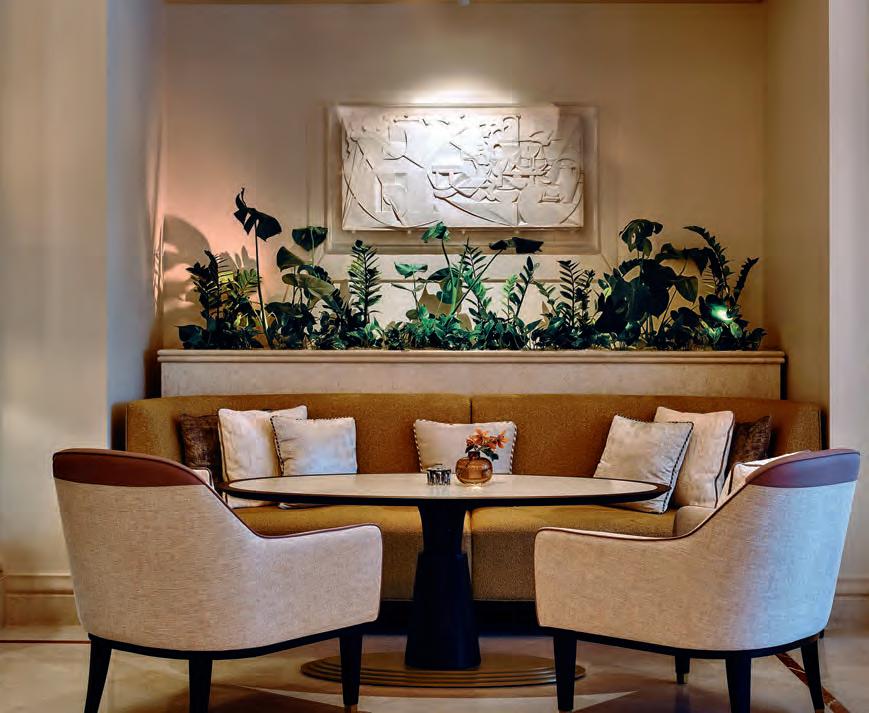
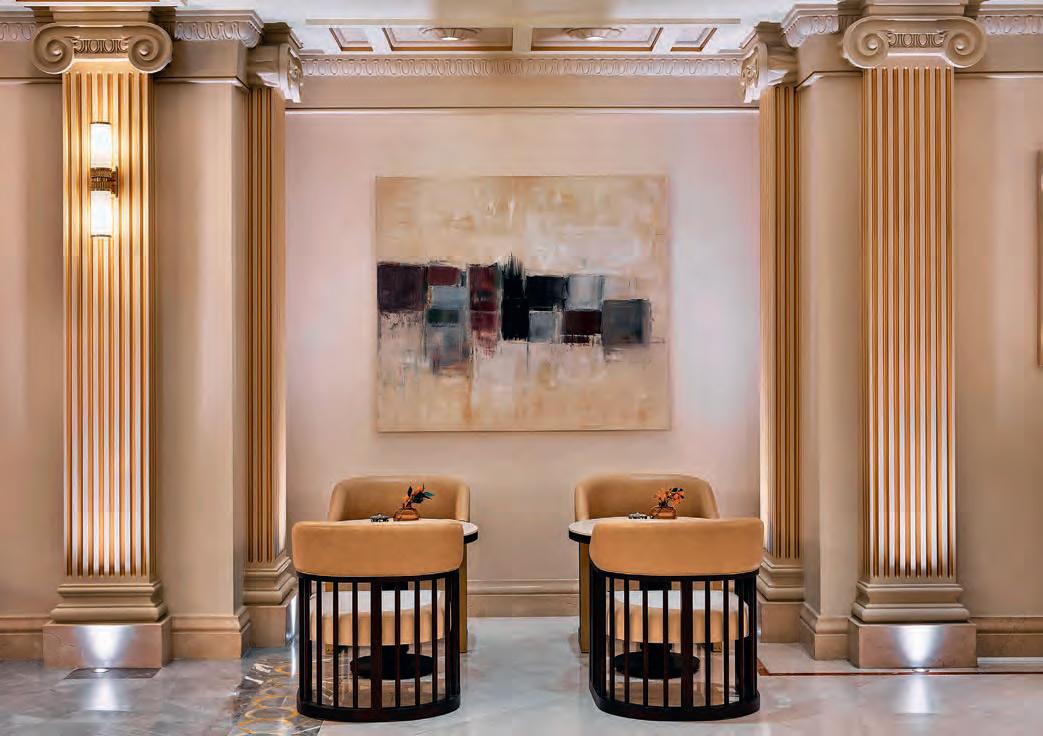
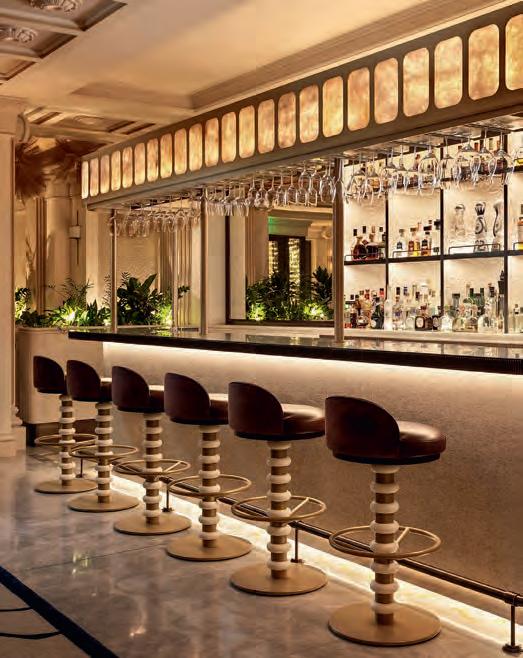
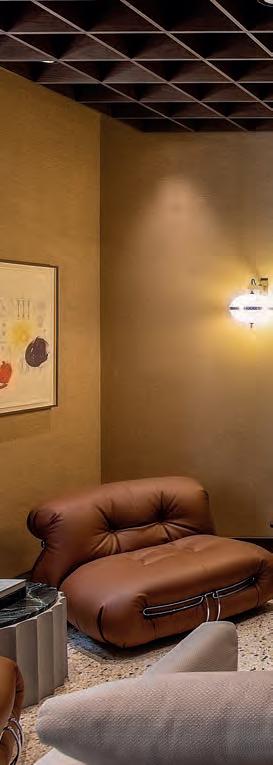
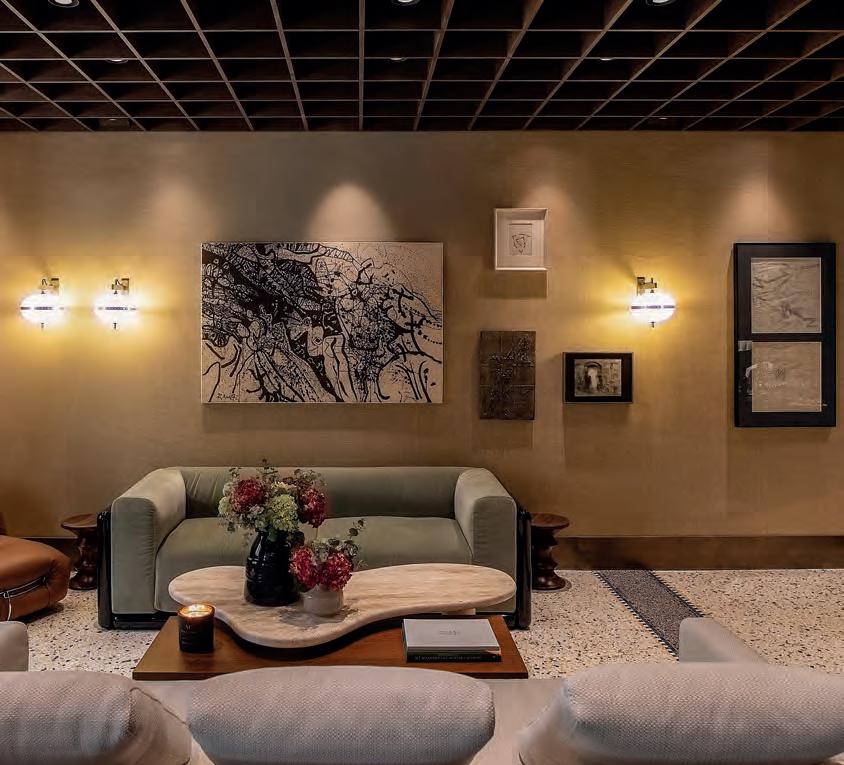
The brand-new George, The Lobby Bar at the King George Hotel is already establishing itself as an elegant meeting point in the heart of Athens, fully in tune with the city’s rhythm. From a morning espresso and an authentic Greek breakfast with sourdough bread, fine sheepand-goat’s milk butter, and honey from Kerkini, to brunch with a buckwheat crêpe served with eggs Florentine and PDO feta, a Croque Madame with kasseri and truffle, or freshly baked viennoiseries, the day begins here with quality and care. At lunchtime, the menu offers light yet satisfying choices, including beef carpaccio with truffle graviera and Tinos artichoke; red mullet niçoise; conchiglie pasta with pecorino cream, pistachio and bottarga; and risotto cacio e pepe. As the hours pass, George shifts into an urban bar with playful, refined bites: carob donuts with caviar and sour cream; beef tartare éclairs; handmade bao; sushi rice with crab; and lobster mac and cheese. From the bar come signature cocktails inspired by the senses and guided by a zero-waste philosophy, from the MED Garden, with gin, olive oil, cherry tomato and coriander, to Synesthesia, with rum, passion fruit, jalapeños and watermelon. With interiors by the internationally acclaimed Goddard Littlefair, striking works of contemporary Greek art and a sense of openness that brings the life of the city into the lobby, George is an all-day destination for coffee, food, drinks and encounters worth lingering over.
info
George, the Lobby Bar
Τel. (+30) 210.333.0264
Open daily 08:00-00:00
GEORGE,
George, The
King George Hotel
A BOUTIQUE FOR ALL THE SENSES
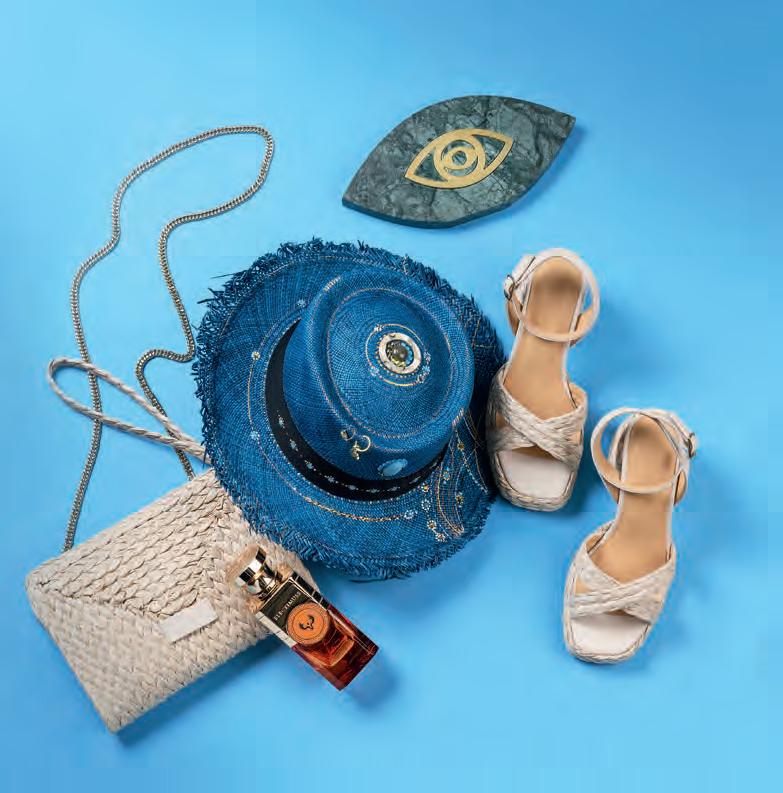
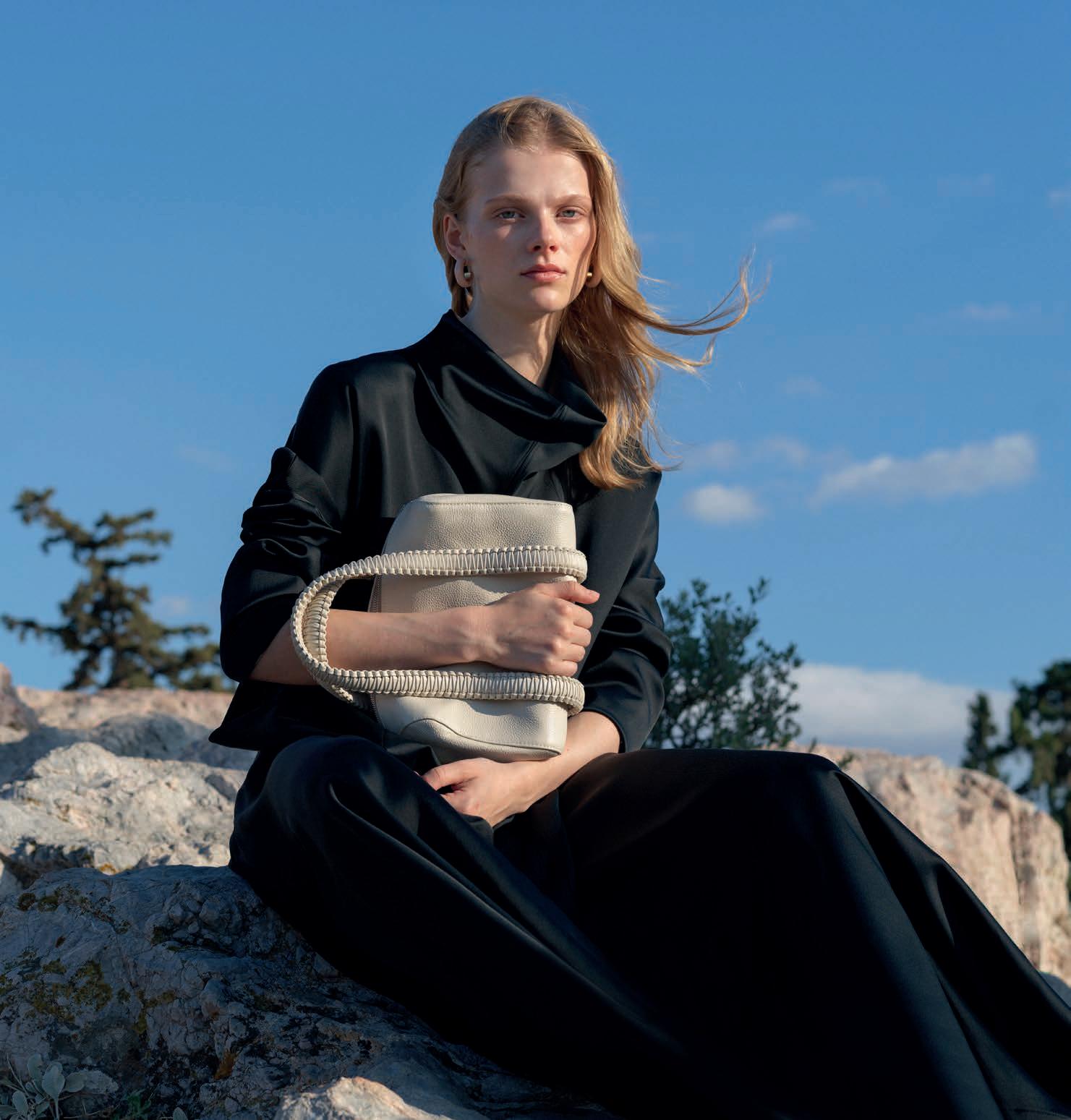
GB Corner Gifts & Flavors isn’t just a typical luxury hotel boutique for last-minute purchases; it’s an eclectic concept store with a highly refined aesthetic, offering a complete shopping experience. Discover new collections from leading Mediterranean brands – Brunello Cucinelli, Zeus+Dione, Sun of a Beach, Castañer, and Anthologist – alongside exceptional sweets and gourmet products, as well as Hotel Grande Bretagne’s own exclusive line of amenities, home fragrances, curated objects for the home, and elegant accessories.
info
GB Corner Gifts & Flavors Tel. (+30) 210.333.0750
Open Mon-Sat 11:00-20:00 Shop online: grandebretagnestore.com
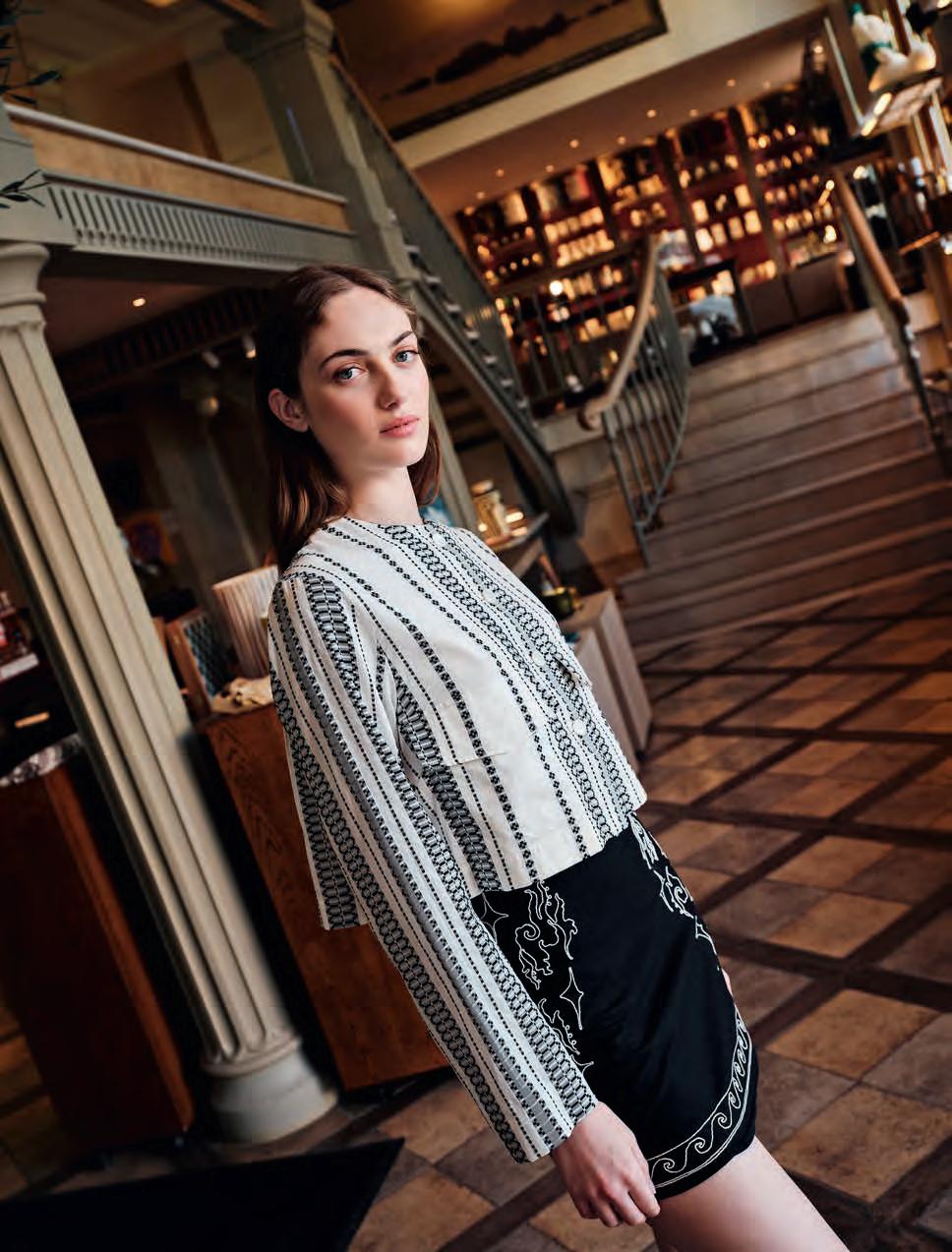
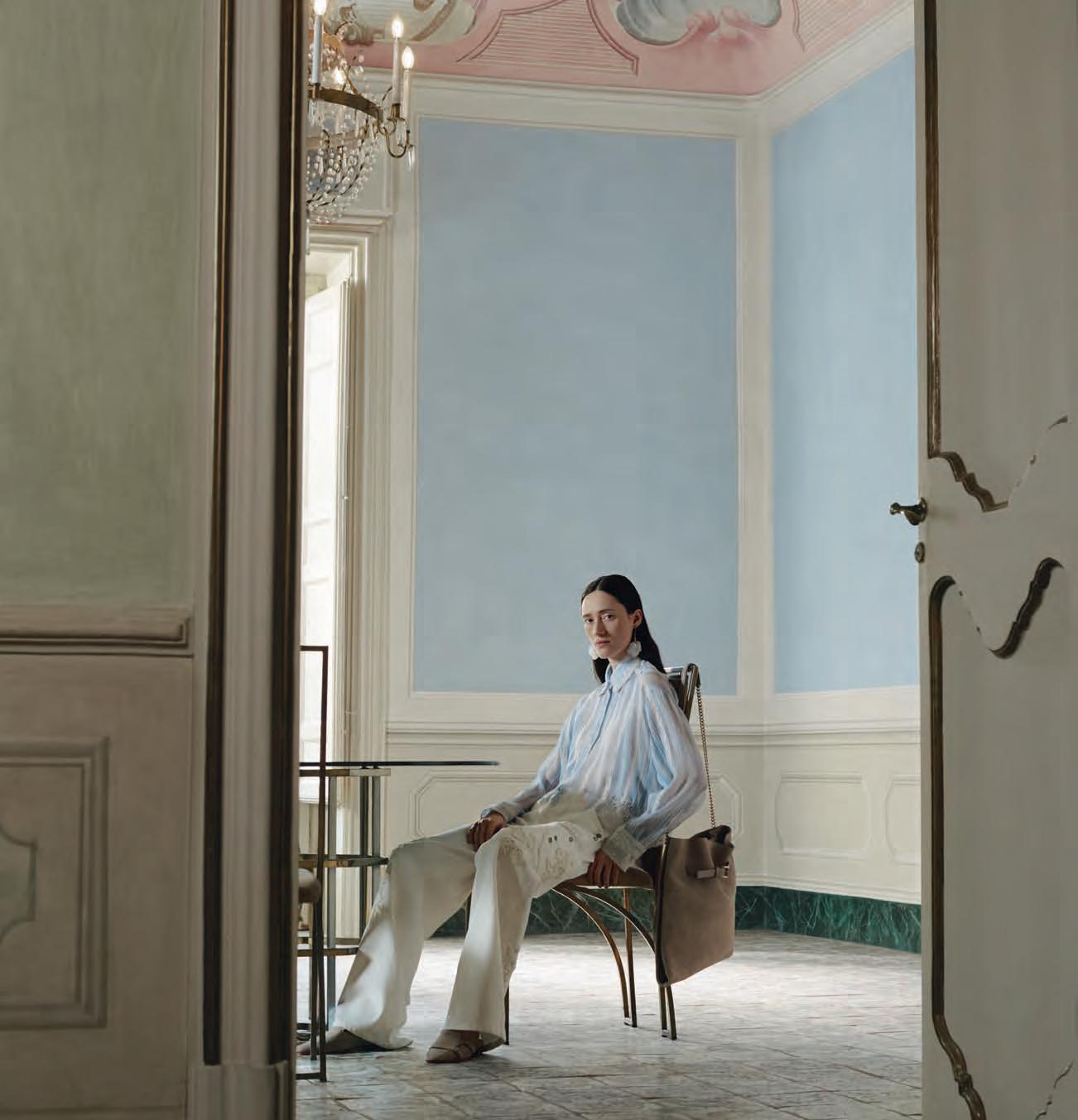
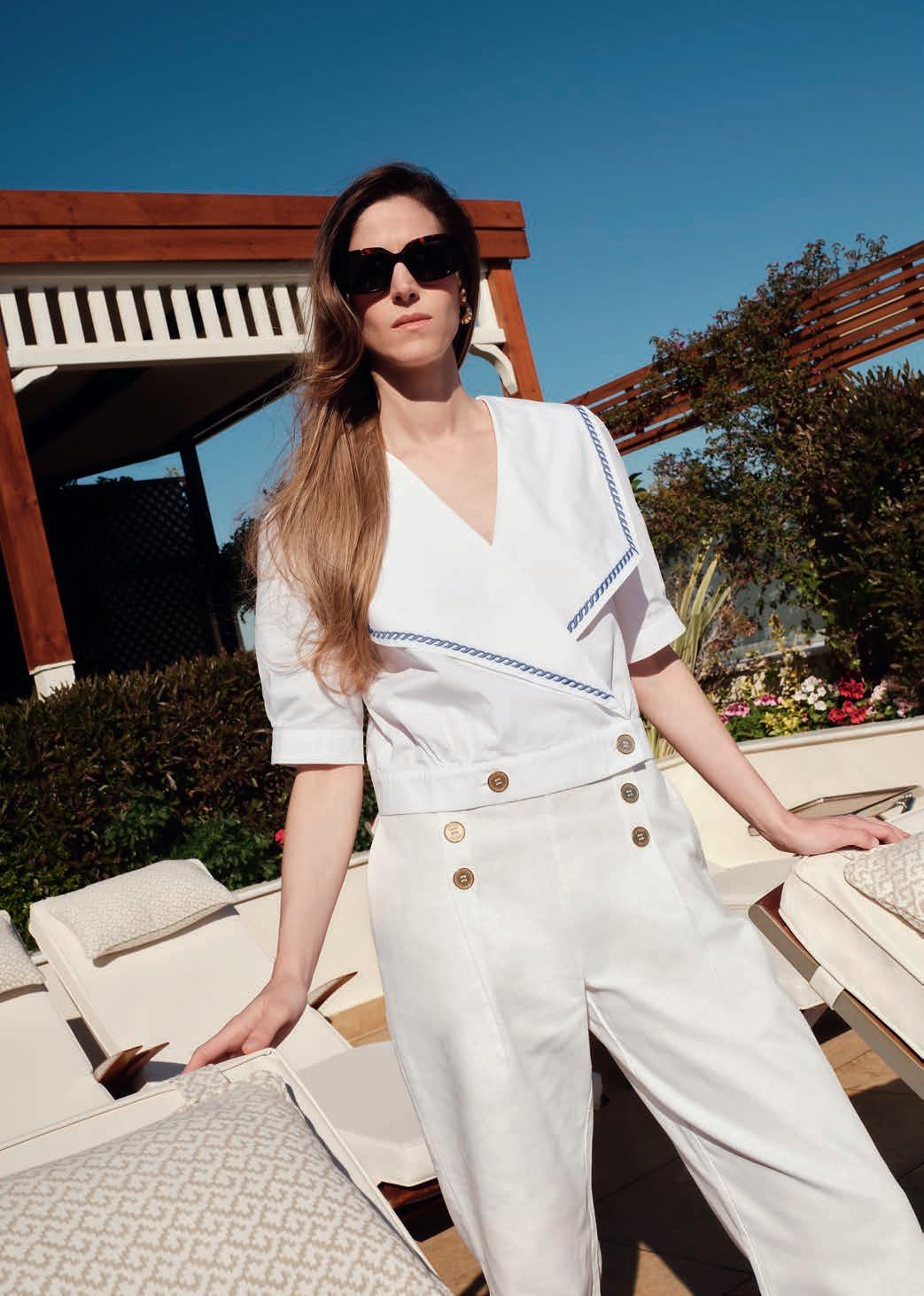
SILK SHIRT AND EMBROIDERED SKIRT, ZEUS+DIONE.
1. KING GEORGE HOTEL Pillow, teddy doorman, navy blue cap, cotton towel blanket
2. CASTANER purse, ZINA G Panama hat handmade, ZERTEO decorative marble evil eye, CASTANER sandals, and ELECTIMUS Eau de Parfum.
3. ANTONAKAKIMOU HANDMADE pouch, GB cotton towel blanket, THE ANTHOLOGIST Chimera, and a backgammon-chess board set.
SEA AND BE SEEN
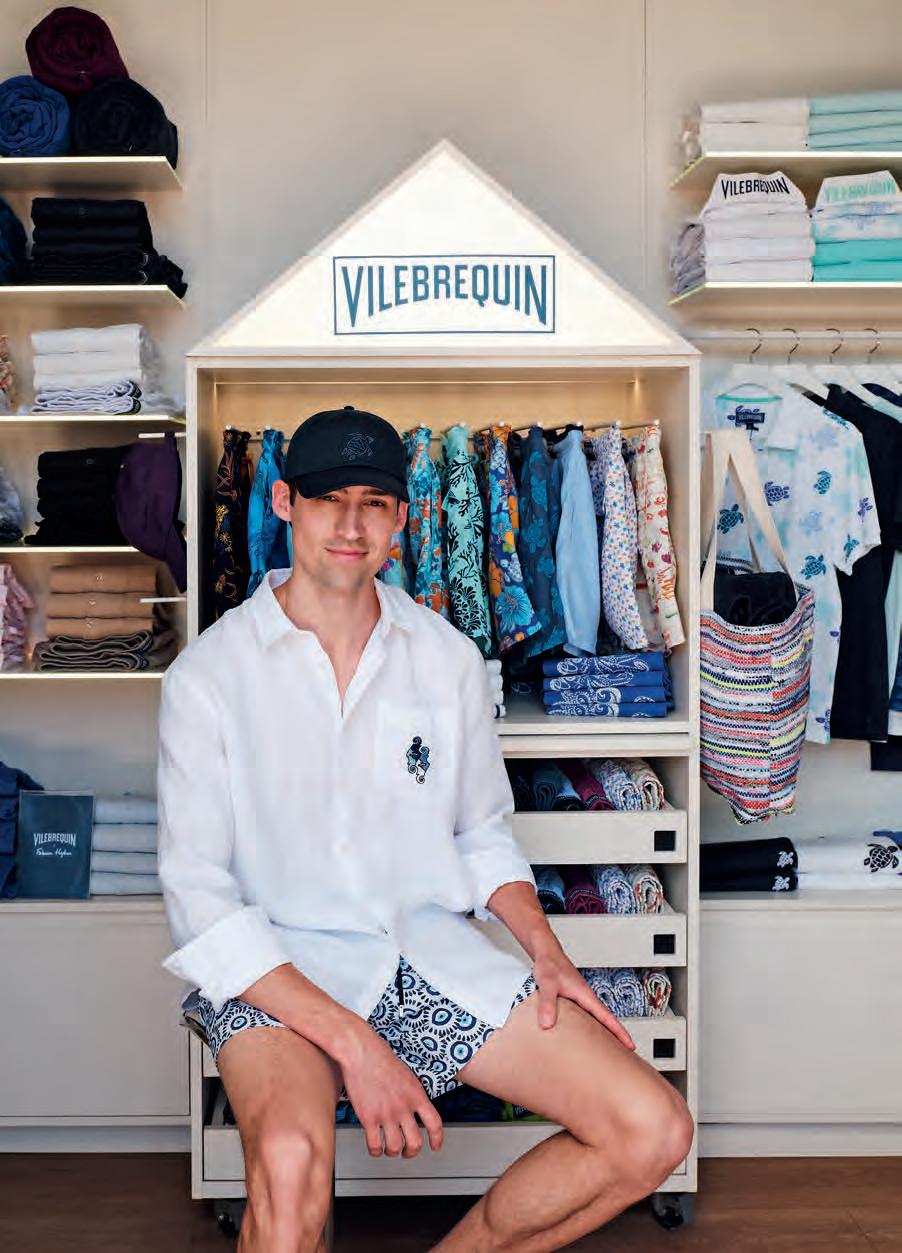
You don’t need to be in Saint-Tropez, where the Vilebrequin story began in 1971, to appreciate the brand’s imaginative designs, impeccable fit, exceptional materials and ongoing commitment to production innovations that help reduce its environmental footprint. Visit the boutique next to the entrance of King George, explore pieces from the latest collections and bring the ultimate summer style to your next swim – whether at the hotel pool, on an outing to the beaches of Athens, or on the islands.
info
Vilebrequin
King George Ηotel
3 Vasileos Georgiou I,
Tel. (+30) 210.333.0231
Open Μon-Sat 11:00-20:00
LINEN SHIRT, SWIMWEAR AND CAP, VILEBREQUIN (VILEBREQUIN) STORE).
My Special Place
Edited by XENIA GEORGIADOU • Paintings by DIAMANTIS AIDINIS
→ A location I love
The courtyard of the National Archaeological Museum. The garden and the quality of light create a distinctive atmosphere that quietly complements the experience of the collections.
My most recent discovery
For the past year and a half, I have been living in Ano Patisia and have been struck by the neighborhood’s historic residences, such as the home of painter Fotis Kontoglou or that of architect and artist Dimitris Pikionis, next to the square bearing his name. Another point of reference is the Constantinopolitan patisserie Kimon, established in 1943, which I visit often because of my own roots in Constantinople.
For a quiet moment
A place I have been visiting since childhood for its sense of calm is Antonis Tritsis Metropolitan Park, close to the neighborhood where I grew up in Ilion. Owing to its scale – some 300 acres – it is easy to find seclusion among the trees.
Euripides Papadopetrakis
A GRADUATE OF THE printmaking department at the Athens School of Fine Arts, with studies in artistic bookbinding, he has presented his work in both solo and group exhibitions. His original prints have featured in a recent collection by Zeus+Dione, and he also collaborates with Greek choreographer Dimitris Papaioannou on visual projects.
Visual artist
My Special Place
A location I love
Dexameni Square in Kolonaki is a place I pass through daily on my way to the gallery. Quiet yet enduringly timeless, it lies at the heart of Athens, its history stretching back to the 2nd century AD, when construction began on Hadrian’s Aqueduct, which once carried water all the way here to Hadrian’s Reservoir. The square’s historic café was once a meeting place for Greek literary figures such as Kostas Varnalis, Angelos Sikelianos and Alexandros Papadiamantis. Today, its focal point is the statue of Nobel laureate Odysseas Elytis. Within its compact footprint, Dexameni brings together multiple layers of the city: ancient remains, the enduring culture of the Greek kafeneio, children at play, visitors passing through and, of course, the open-air cinema, one of Athens’ defining institutions.
My most recent discovery
It’s not new, but I recently rediscovered the eclectic bookstore Hyper Hypo (10 Voreou), on the occasion of Roe Ethridge’s presentation of his photobook Rude in the Good Way, alongside his exhibition with the same title at Gagosian. Within a compact space and with a clear emphasis on contemporary visual culture, it offers a carefully curated selection of art and design publications, indie magazines, interesting items and posters.
Senior Director, Gagosian
SHE HAS LED GAGOSIAN Athens (22 Anapiron Polemou, Kolonaki) since 2019 and, for the past two years, has served as one of the gallery’s senior directors worldwide. Through September 12, Gagosian Athens is presenting an exhibition of works by Urs Fischer.
ΒΡΙΣΚΕΤΑΙ
Gagosian
Christina Papadopoulou
→
My Special Place
A location I love
The State School of Dance at 55 Omirou Street in Kolonaki is where I trained in dance. Large glass windows flood the interiors with natural light, and students gather in the courtyard to rest between classes. Built in 1934, the three-storey building is one of the few examples of Bauhaus architecture in Athens. It was conceived by pioneering dance teacher and choreographer Koula Pratsika and later donated to the Greek state in 1973.
My most recent discovery
I’m drawn to museum cafés, and to places where different art forms naturally intersect. Recently, I’ve been spending time at the bookstore KEIKO in Pangrati, a lively space dedicated to literature and the arts, where the book becomes a starting point for creation. Through workshops and open events, it encourages new forms of collective participation. The name itself is a quiet nod to its spirit: in Japanese, keiko means “fortunate child.”
For a quiet moment
I usually head to the sea, ideally to Cape Sounion. The feeling of water against my feet, the fleeting marks left in the sand: all of it helps me reset. Watching the shifting shades of blue in the sunlight, I draw energy from the landscape and I understand why the Temple of Poseidon stands exactly where it does. Nothing feels accidental.
Tzeni
Argyriou
Choreographer
ATHENS SINCE 2025, Tzeni Argyriou has served as the artistic director of the Kalamata International Dance Festival. Now in its 32nd edition, the festival has long acted as a vital bridge between Greece and leading figures and currents in contemporary dance. This year, it will run from 17 to 26 July.
ATHENS | 20, Voukourestiou str. | Tel +30 21036 36900
From the monumental canvas of Panayiotis Tetsis, on exhibit in the National Gallery to the colorful Friday market stalls on Xenokratous Street, the charm of a farmers’ market never fades.
THE FIRST THING that greets visitors at the entrance to the National Gallery is Panayiotis Tetsis’s monumental Street Market, a work as striking for its scale as for its artistic significance. The open-air farmers’ market that inspired it still takes place every Friday along Xenokratous Street in Kolonaki, just steps from where the artist kept his studio.
Today’s “laiki,” as these neighborhood farmers’ markets are known, was formally established in 1938, yet its roots reach much further back to the agora of ancient Greece, the Byzantine-era market and the Ottoman bazaars. In Greece, commerce – like art – has long taken place in the open air. These markets are important economically, as they allow producers to sell directly to consumers, and socially, as they remain vibrant social spaces where boundaries between classes and generations fall away.
On Xenokratous Street, the scene acquires an added frisson. Set within Kolonaki, one of Athens’ most exclusive quarters, this is no ordinary open-air market. Farmers and artisans share the pavement with elegantly dressed local residents, discreet domestic staff and the occasional pampered pet. Stalls are packed with fruit and vegetables, cheeses, fish, honey, nuts and a wide array of seasonal produce. For the discerning traveler, the Xenokratous Laiki is a destination in itself, an experience best reached via a leisurely twenty-minute stroll from the Hotel Grande Bretagne, with a sharp ascent at the end. (The National Gallery is a short downhill walk from here.)
To wander through a Greek laiki is to engage all the senses. These markets offer an intimate glimpse into the local culinary soul, while also inviting the quiet pleasure of people-watching. Beneath a canopy of sun-warmed orange awnings and azure tarpaulins, colors pulse with intensity; aromas mingle in the air; vendors call out to the customers; samples are offered to the hesitant; and hands reach out from all directions to select the best of the pile, produce plucked at the height of freshness. It is precisely this immersive vitality that Tetsis translates onto canvas with remarkable acuity. Over the course of four years, from 1979 to 1982, he composed this sweeping, frieze-like work, distilling the market’s energy into a singular visual experience. The painting’s power, like the market itself, lies above all in color. Fruit-laden stalls burst in bold, luminous reds, greens, yellows and deep blues. Human figures dissolve into fluid, gestural strokes, conveying motion and intensity rather than detail. The famed Greek light, at once diffused and yet radiant, does more than illuminate; it structures the composition itself, binding the scene in a luminous, atmospheric unity. •
Street Market, 1979-1982
Oil on canvas, 249 x 1215 cm
, 1979-1982
A Lifelong Philhellene se Á n hemingway
Shortly before returning to Athens and the Hotel Grande Bretagne, the distinguished archaeologist and Head Curator of the Department of Greek and Roman Art at The Metropolitan Museum of Art in New York speaks about his deep connection with Greece, and about his grandfather, Ernest Hemingway.
By JOHN LEONARD
SOME VISITORS LEAVE A MARK. Dr. Seán Hemingway, Curator in Charge of the Department of Greek and Roman Art at the Metropolitan Museum of Art in New York – where he oversees one of the world’s most extraordinary collections of ancient sculpture, bronzes, and artifacts, while leading groundbreaking research and landmark exhibitions on classical antiquity – is undeniably one of them, and not simply because of the name he carries.
The grandson of Ernest Hemingway, he brings to Athens something rarer than celebrity: decades of fieldwork and scholarship across Greece, a curator’s eye for beauty, and an unforced, lifelong love for the ancient world. His visit this spring – leading a group of collectors and devoted friends of the Met – feels entirely in keeping with the Grande Bretagne’s long tradition of welcoming the world’s most distinguished philhellenes through its doors. Some connections, it seems, run as deep as history itself.
Greece has been a source of inspiration for artists, writers, and travelers for centuries. What is it that fascinates you each time you return?
I love the landscape, the wine-dark sea, the light and the people. It is a mythical land, deeply rooted in nature, with incredible artistic traditions. My particular area of expertise is ancient sculpture and every time I return to experience and reflect on ancient Greek sculpture, whether from prehistory or the Hellenistic era, I am energized by the creativity and skill of the ancients.
What first drew you to study ancient Greece?
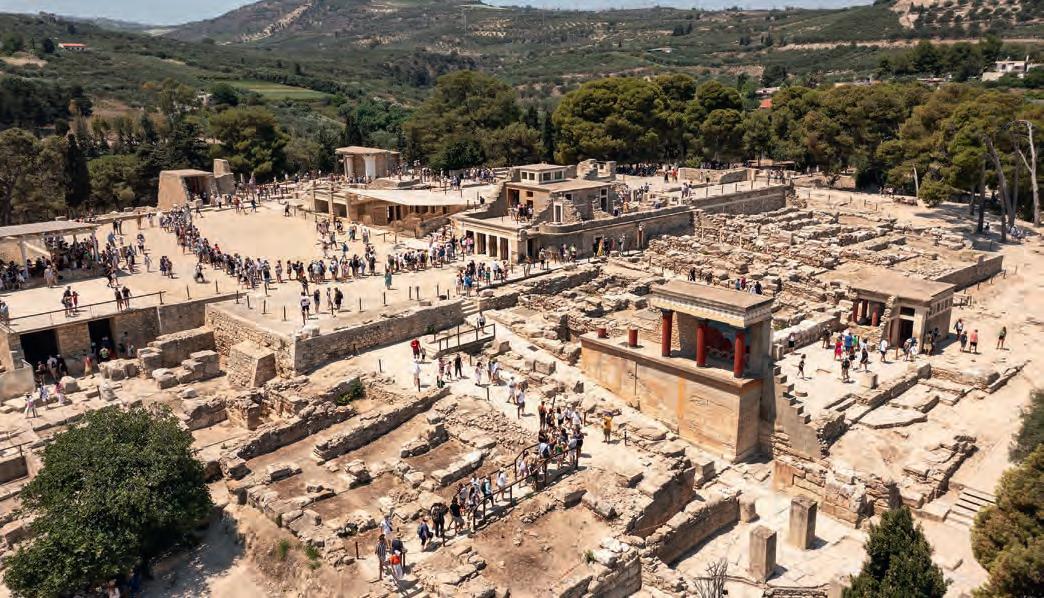
My interest began early on. I was first fascinated with ancient Greek history and mythology, and then with Ancient Greek, the language. Later, I studied classical archaeology and learned to excavate at the Athenian Agora and Minoan Palaikastro in eastern Crete.
Αre you still tempted by excavation? Is there a chance we might see you participating again in an archaeological project in Greece?
I’m actually working as the metals specialist for an excavation right now at Anavlochos [12th-7th cents. BC] in northeastern Crete, which is run by the French Archaeological School in collaboration with the Hellenic Ministry of Culture. It’s a fascinating site with remains of an Early Greek settlement, sanctuary and cemeteries. I also continue to study archaeological material from Palaikastro in eastern Crete, where I’ve worked for many years with the British School of Archaeology at Athens.
What are your favorite archaeological sites or museums here?
Among many wonderful sites in Greece are Mycenae, with the enduring power of its Lion Gate; the majestic
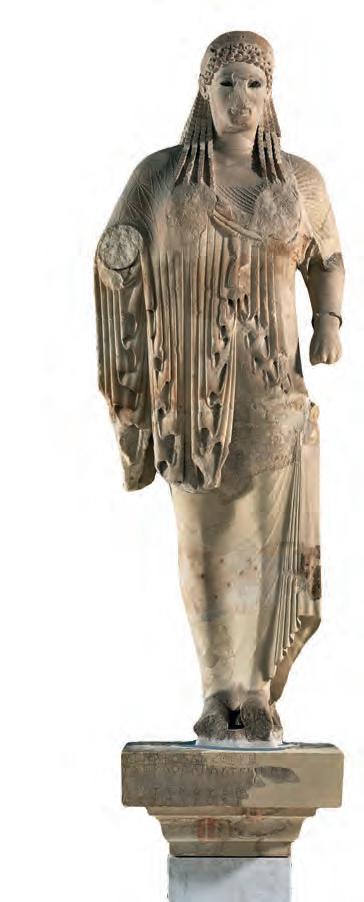
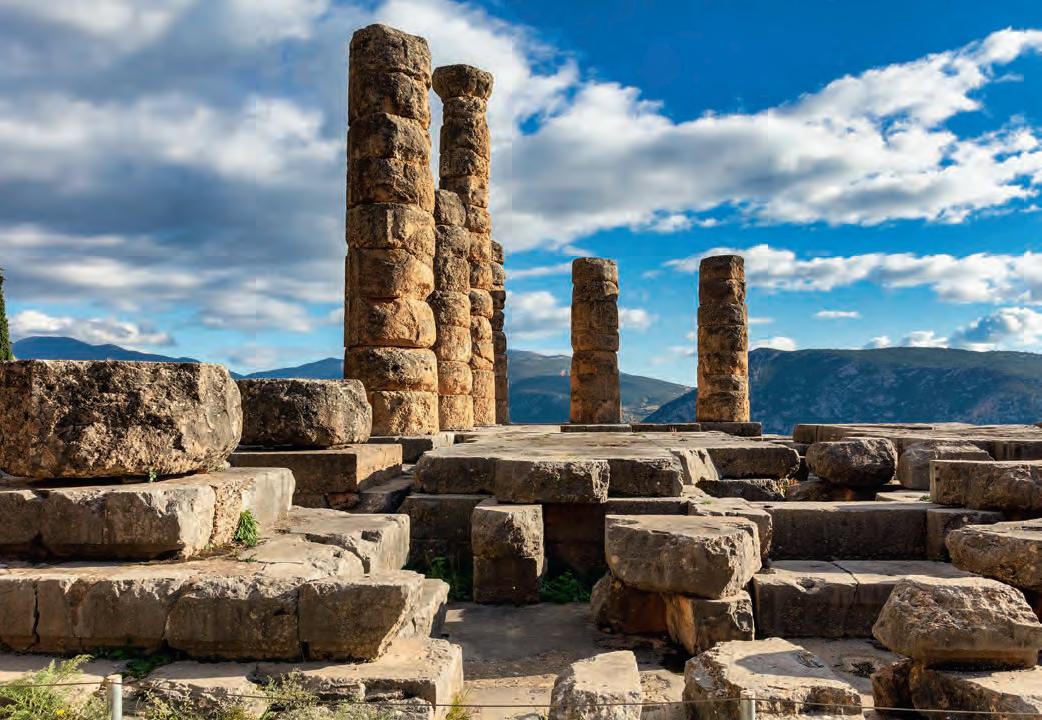
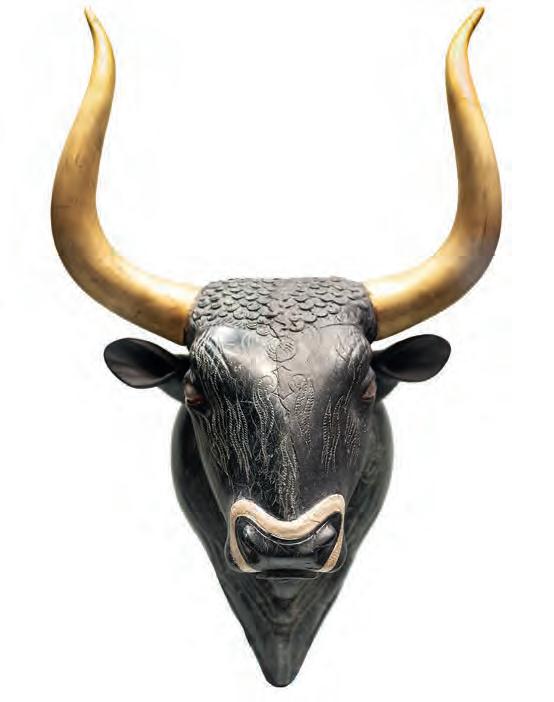
From the left and clockwise: The Kore of Antenor, 525-500 BC (Acropolis Museum); the Temple of Apollo at Delphi; a bull’s-head rhyton, 1550-1500 BC (Heraklion Archaeological Museum); and a panoramic view of the Palace of Knossos. Aπό
“I love the landscape, the wine-dark sea, the light and the people. It is a mythical land, deeply rooted in nature, with incredible artistic traditions. ”
serenity of the sanctuary of Apollo at Delphi on Mt Parnassus, which was for the ancient Greeks the center of the universe; and Akrotiri on Santorini, a true Pompeii of the Aegean Bronze Age. There are thousands of amazing archaeological sites that are less well known, such as the Geometric period settlement of Zagora on the island of Andros in the Cyclades. As for museums, I never tire of visiting the Heraklion Archaeological Museum with its incredible collections from all over Crete, and I think the new Acropolis Museum is a world-class display.
Does living among ancient objects change the way you perceive time?
To walk through the Agora of ancient Athens, where Socrates once walked, or stand on the Acropolis, where Alexander the Great once stood, and behold the Parthenon and the Erechtheion in all their ruinous glory is profoundly moving. Likewise, to see an ancient Greek sculpture made in the sixth century BC, such as Antenor’s Kore displayed in the Acropolis Museum with its exquisite carving and dramatic traces of paint, is breathtaking. To understand that these things were made thousands of years ago by people like ourselves broadens our perspective on human achievement and our shared humanity.
In a country like Greece, where antiquity is omnipresent, do you believe archaeology still has something new to tell us?
I believe there are still many new discoveries to be made through archaeology. There’s much that we can learn from antiquity – not least the connections that we have with the past, and the accomplishments of a civilization that valued art, philosophy and a strong sense of self awareness. Archaeology isn’t something fixed in the past, but something continually revisited and recontextualized through new scholarship, conservation work and presentations.
What role do museums play in this?
Museums play a crucial role in the study of classical antiquity and in the stewardship of global cultural heritage. As a universal museum devoted to the preservation and study of the art of the world, The Metropolitan is a leader in the field embracing questions of the ownership of antiquities among many other things such as curation, exhibition,
storage and conservation, as well as art historical and scientific research. We have the largest dedicated provenance research team of any museum in the world and proactively examine the histories of the works in our collection.
The Met works closely with countries to resolve cultural heritage claims navigating complex ethical and legal issues. An innovative example is the recent agreement between the Ministry of Culture of the Hellenic Republic, the New York collector Leonard N. Stern and the Metropolitan Museum of Art, which led to the repatriation of 161 artifacts from the Cyclades, the single largest repatriation of antiquities to Greece, and their long-term loan to The Met for 25 years. This agreement, ratified by Greek Parliament in 2022, led to the formation of a fifty-year partnership between the Hellenic Republic and The Met, which includes programming to support the appreciation, study and further understanding of Early Cycladic art and culture.
During this visit to Greece, you’re leading the “Philodoroi: Friends of Greek and Roman Art, Members from the Metropolitan Museum of Art.” Can you tell us more about this group?
The Philodoroi is a long-standing Met Friends Group
Friends of Greek and Roman Art, Members from the Metropolitan Museum of Art»
designed to bring collectors, devotees and those passionate and curious about ancient art into closer contact with our Department’s collections and curators. The members, fascinating people from diverse backgrounds, love to travel and, under my leadership, we began Philodoroi Travels trips each year to different destinations. We create itineraries that allow members to see exhibitions and works of art, as well as archaeological sites and historic monuments, with leading specialists from The Met and around the world. Each trip is an unforgettable experience. This exclusive group is essential to the development and well-being of the Greek and Roman Department; through their support, we’re able to fund a wide range of projects.
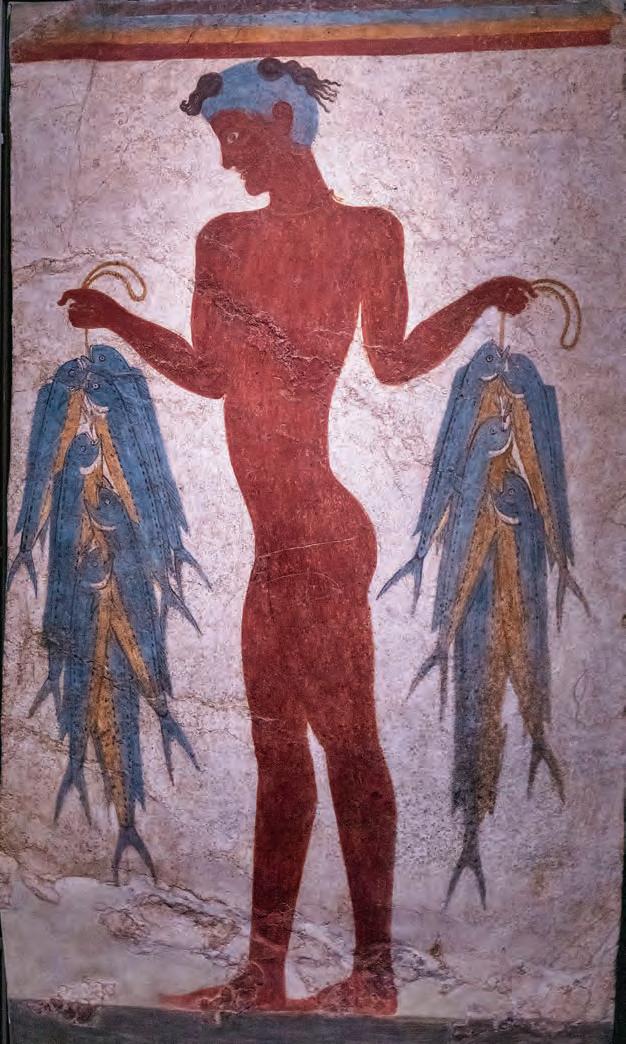
The famous fresco of the Fisherman from Akrotiri in Santorini (Museum of Prehistoric Thera).
What does it mean to carry the name Hemingway? Has it felt like a responsibility, or something you consciously had to step aside from in order to forge your own path?
It’s a great honor for me to be the grandson of Ernest Hemingway. My father was his youngest son, Gregory. In some ways, it was a heavy responsibility for my father’s generation to grow up in the shadow of such an outstanding and famous figure. My father went into medicine, although he wrote a New York Times bestselling memoir about his father entitled Papa. I had a strong desire to immerse myself in the ancient world since childhood, and my career path never really wavered, even though it is difficult to make a living as a classical archaeologist. As I grew older, I became more interested in my family heritage, and worked with my uncle Patrick Hemingway to steward my grandfather’s estate and literary legacy. I edited nine volumes of Ernest Hemingway’s writing, including Hemingway on War and the very successful Hemingway Library Editions.
If Ernest Hemingway were to visit Greece today with you, where would you take him first?
Ernest Hemingway loved Greek mythology. He read Homer’s Iliad and Odyssey and had his own copy of Sir James George Fraser’s The Golden Bough: A Study in Magic and Religion Hemingway visited Greece only rarely, though. If I could take him on a trip to Greece, I’d start in Athens and drive down through the Peloponnese to the Mani, and then go by ferry to the islands of Milos and Crete. •
Hemingway Library Editions.
Bough:
Across Wine-Dark Seas: A Major New Exhibition at the Met
The Metropolitan Museum of Art continues to foreground ancient Greek cultural heritage, in collaboration with Greek institutions.
Opening on December 14, 2026, the exhibition “Across Wine-Dark Seas: Art and Identity Beyond Ancient Greece” will bring together approximately 185 artifacts dating from the 8th to the early 5th century BC. The presentation includes significant loans from five national and regional Greek archaeological museums, contributions from eleven countries, and key works from the Met’s own collection.
Curated by Seán Hemingway in collaboration with Alexis Belis and Delphine Tonglet, the exhibition examines the spread of Greek culture across the Mediterranean during a formative period of early globalization, and highlights the dynamic exchanges between Greek and non-Greek societies.
Across Wine-Dark Seas:
What’s On
SOCRATES’ RIDDLES
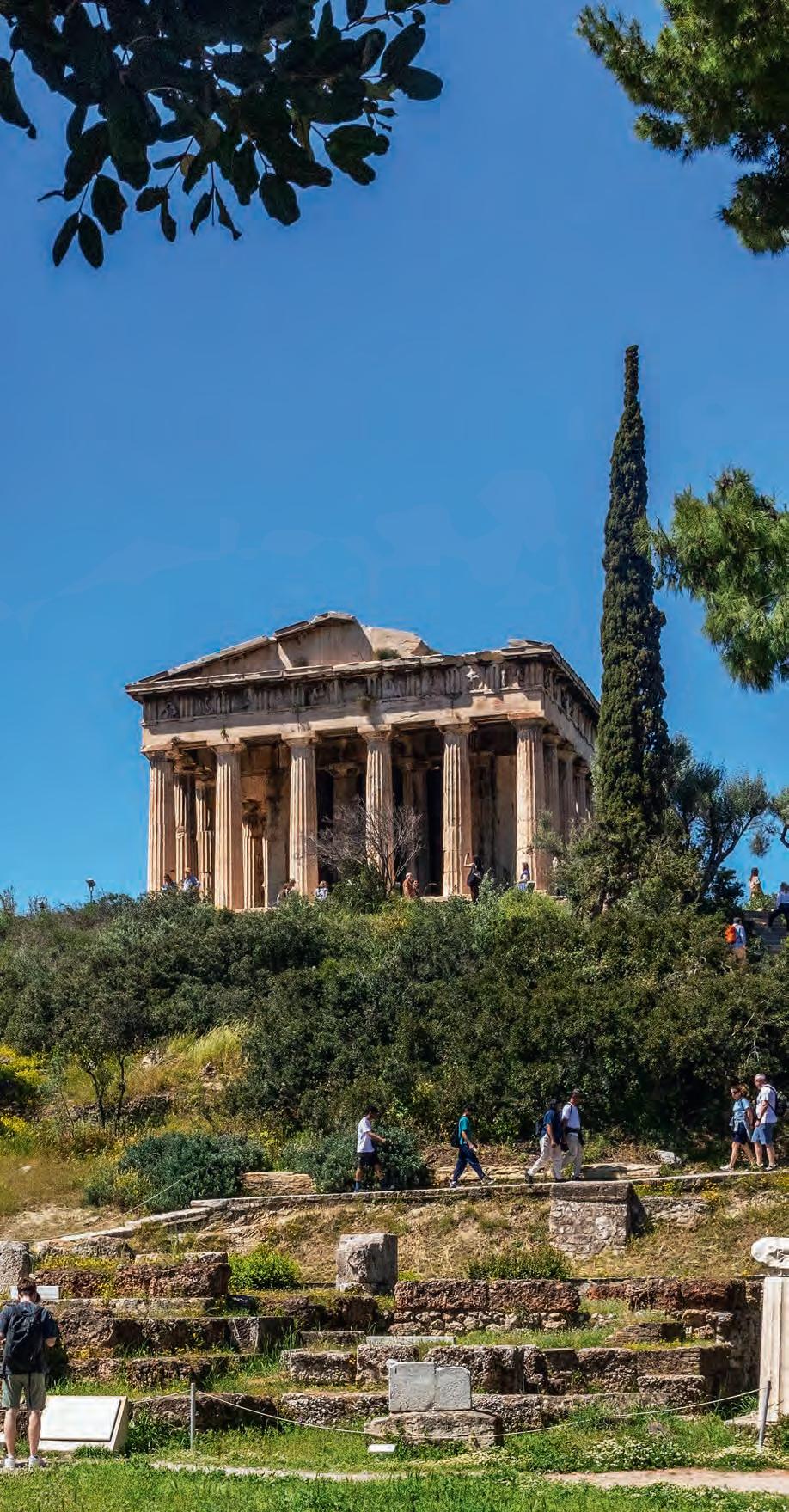
The Ancient Agora was at the heart of Athenian public life in classical and Hellenistic times. It was here that Socrates would engage his fellow citizens in conversation, asking questions, challenging certainties and steering thought in new directions. Today, at the Stoa of Zeus, one episode from the life of the great Greek philosopher comes alive through a private guided experience by the expert team behind Discover Greek Culture. Participants retrace the moment when Socrates, serving as a member of the Council of 500, refused to violate the law by supporting the condemnation of the nine generals. Designed for couples, families and groups of friends, and available in English, French and German, the experience combines storytelling with interactive riddles that guide visitors from one point to the next. Along the way, philosophical questions emerge naturally, transforming a walk through the Agora into a memorable journey through the ideas that shaped Western thought.
NENA DIMITRIOU
BOUGAINVILLEA EVERYWHERE
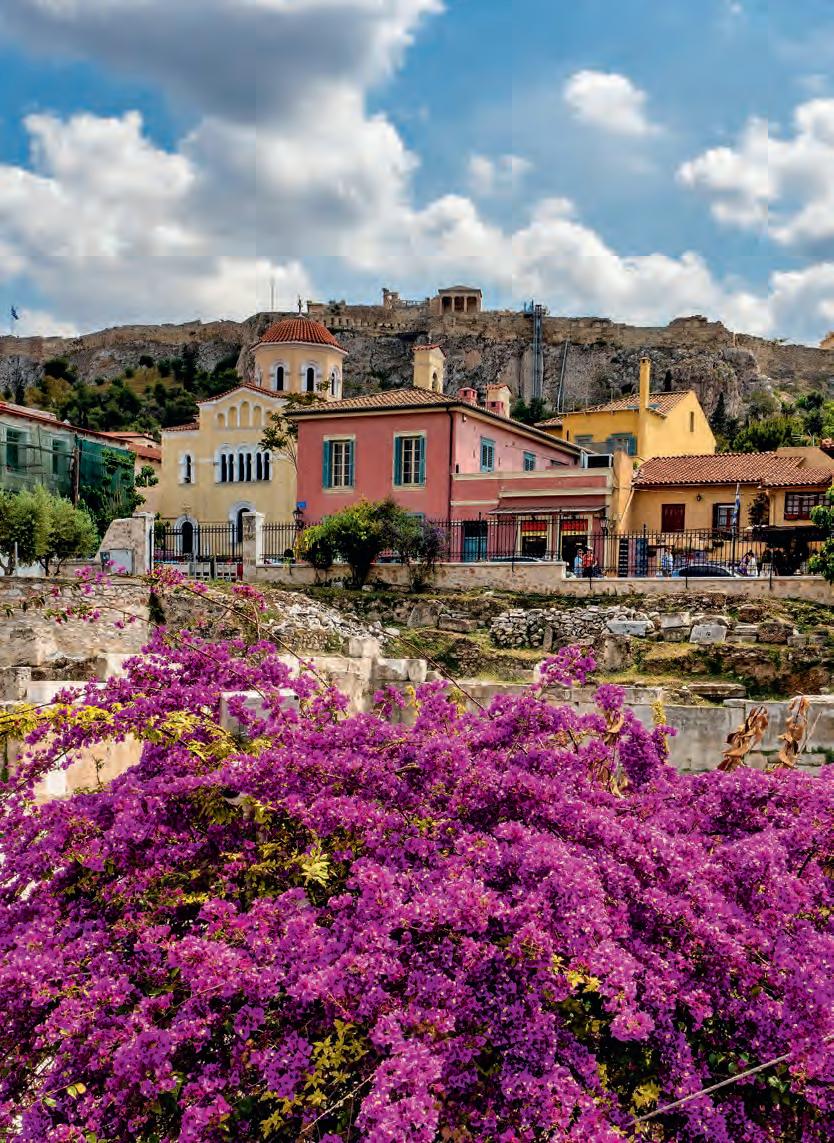
Most likely introduced to sunny Greece from Latin America in the late 19th century, bougainvillea has become an inseparable part of Greek summer. Blooming from spring onward in the Mediterranean warmth, its vivid fuchsia blossoms splash color across whitewashed islands and Athens alike. In the capital, bougainvillea appears in unexpected places: spilling from balcony pots, climbing hidden walls and brightening quiet corners of the city. It is, however, in the courtyards, garden walls and picturesque alleyways of Plaka that the plant reveals its full beauty. Wander around the Tower of the Winds and the Roman Agora and take in the beauty of an exotic plant that has become part of the Greek landscape.
PANAGIOTIS KOUSTAS
A LANDMARK OF URBAN ELEGANCE
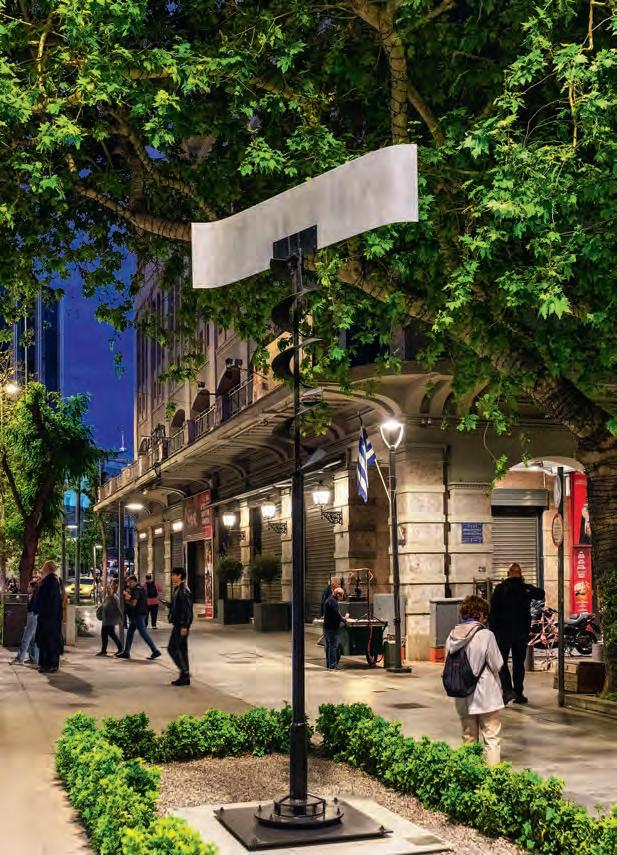
Just moments from the Hotel Grande Bretagne, Voukourestiou Street takes its name from the Treaty of Bucharest, which marked the end of the Second Balkan War in 1913. Once a streambed, Voukourestiou is today synonymous with Athenian elegance. Beginning at Stadiou Street and leading toward the sophisticated neighborhood of Kolonaki, it offers far more than luxury shopping. Neoclassical façades, discreet cafés and an enduring sense of old-world refinement evoke the atmosphere of bourgeois Athens at its most graceful.
PANAGIOTIS KOUSTAS
A DIFFERENT KIND OF WALK
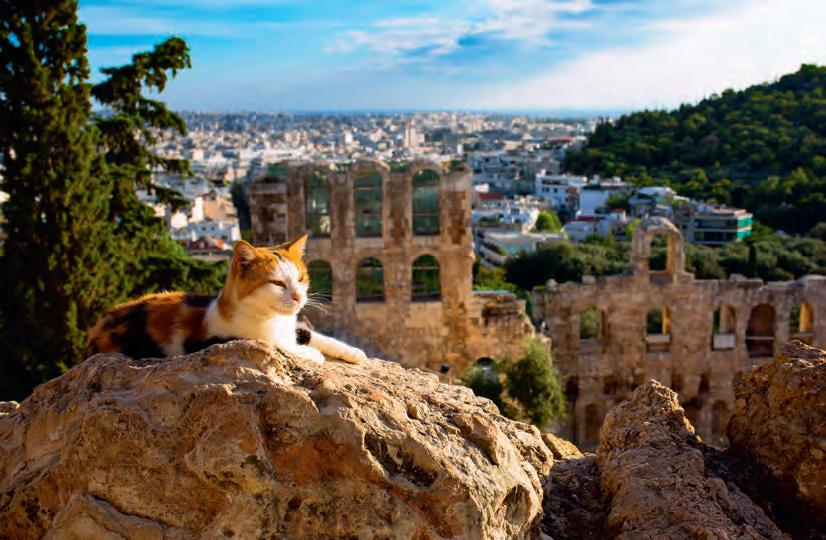
Aristotle considered them sensual, Aesop praised their cunning nature and Plutarch saw them as symbols of cleanliness. In Athens, cats are more than beloved strays; they’re part of the city’s character itself. Independent yet affectionate, elusive yet ever-present, they can be spotted curled up beside ancient ruins, lounging in small squares or wandering through historic neighborhoods. For many visitors, they become unexpected companions while exploring the city. This uniquely Athenian presence inspired Clio Muse Tours’ self-guided audio experience: a 30-minute walk covering 670 meters and five stops, from Anafiotika to Monastiraki. Along the route, stories, myths and local legends reveal the hidden world of the city’s most famous feline residents.
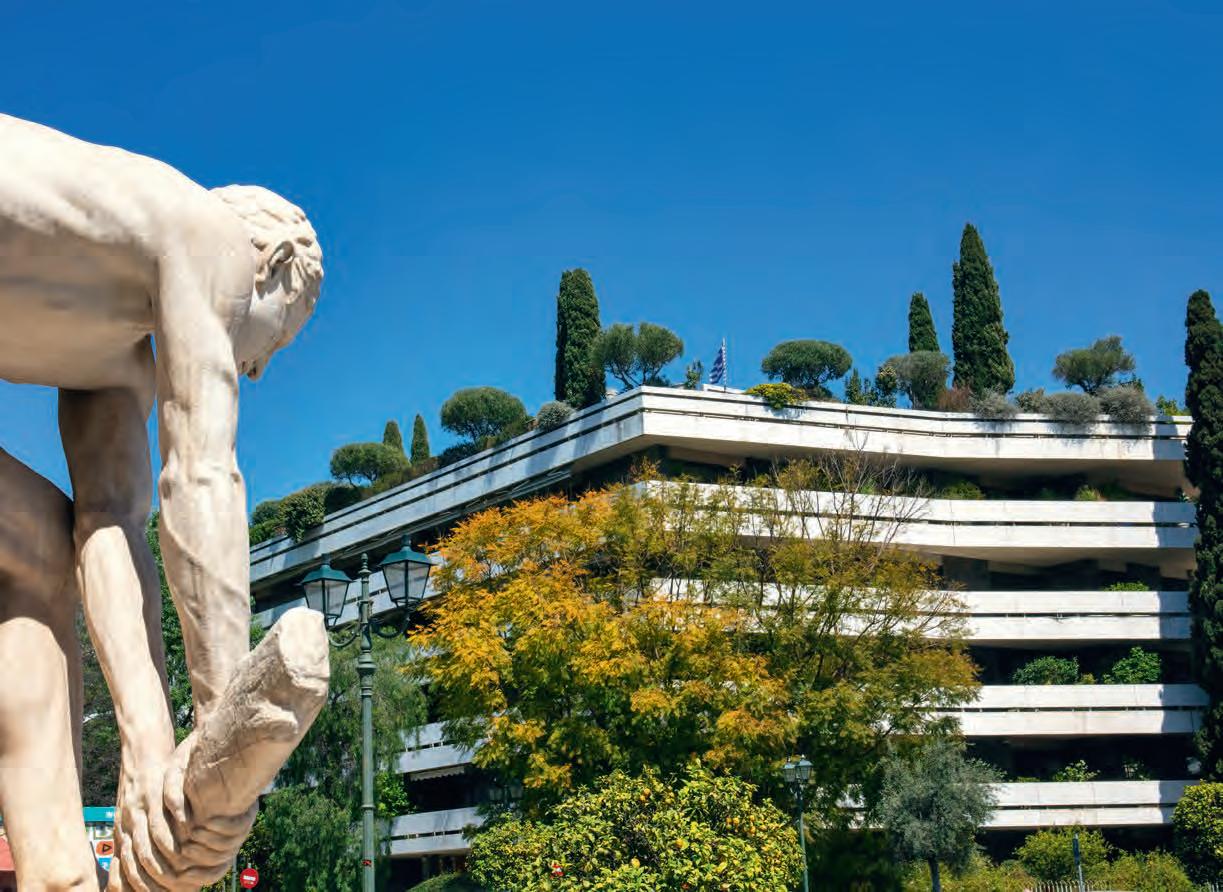
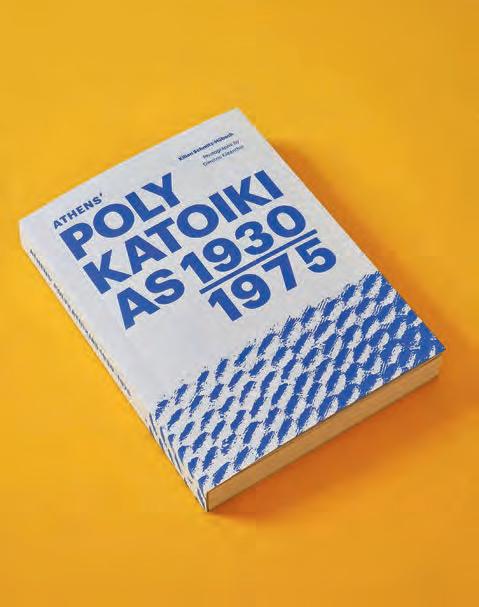
Athens would not be the same without its apartment buildings, or polykatoikias; they have come to define the city’s identity. The second edition of Athens’ Polykatoikias 1930-1975 (Verlag Kettler) offers visitors an ideal starting point for exploring the city through this defining architectural feature. A walk around Syntagma and Kolonaki quickly reveals the diversity and evolution of the Athenian polykatoikia. Among the most noteworthy examples are the distinctive building at 27 Irodou Attikou Street, reflecting the architectural tendencies of the 1970s; the elegant 1930s apartment building at 7 Patriarchou Ioakim Street in Kolonaki; and, higher up the hill, the modernist-inspired building at 26 Loukianou Street.
KONSTANTINOS SARANTIS
* Athens’ Polykatoikias 1930-1975 by Kilian
Schmitz-Hubsch
Publisher: Verlag Kettler
THE VISIONARY WORLD OF THE RUSSIAN AVANT-GARDE
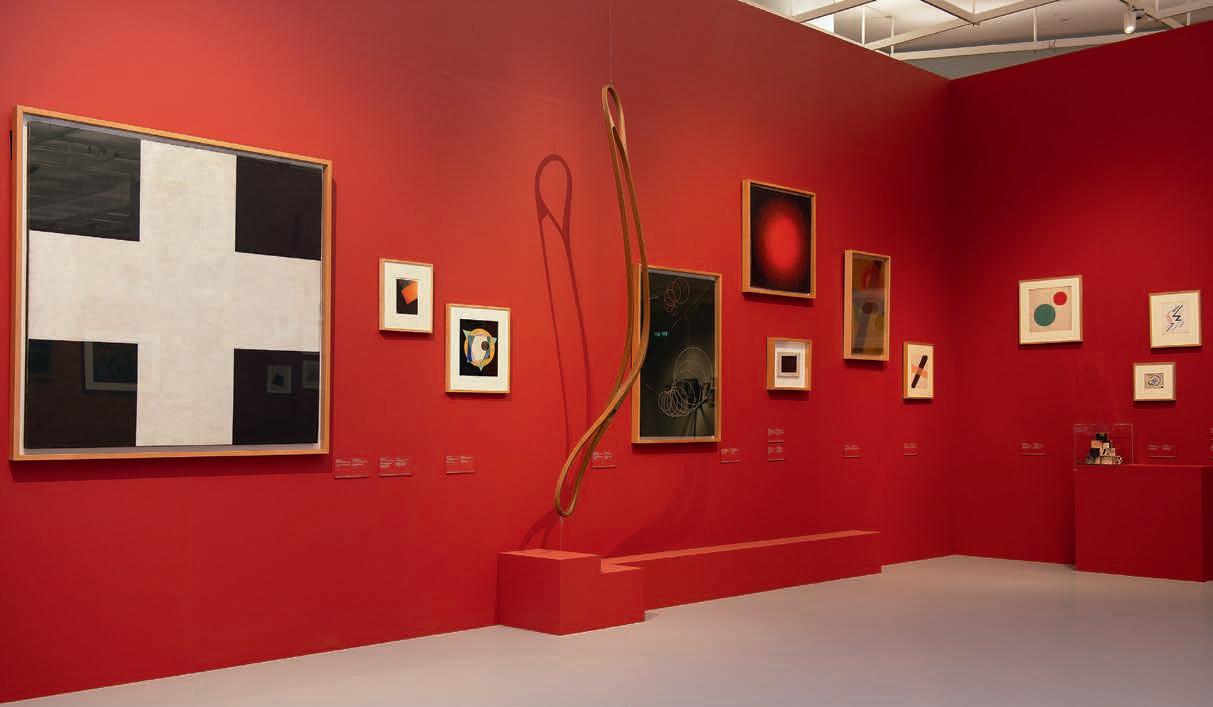
The term “Russian Avant-Garde,” first used ironically in 1910 by Russian critic Alexander Benois, came to be associated with a radical break from traditional art and the search for new forms of expression. From the 1960s onward, however, Western art historians adopted the term to describe movements such as Cubo-Futurism, Suprematism, Materialism and Constructivism, which redefined the relationship between art, society and the conceptualization of the future. A decisive figure in the postwar rediscovery of this extraordinary phenomenon was George Costakis, who, after encountering a work by Olga Rozanova in 1946, devoted himself to rescuing Russian experimental art. In 1977, he donated 834 works to the Tretyakov Gallery; in 2000, a significant part of his collection, together with his invaluable archive, came to form the MOMus – Museum of Modern Art – Costakis Collection. The exhibition “The Avant-Garde World: City, Nature, Universe, Human” revisits the Costakis Collection through four thematic sections, exploring concepts surrounding humanity, technology, nature and utopia that helped shape the Russian Avant-Garde’s vision of a new world. ΧΕΝΙΑ GEORGIADOU
* Through 27/09/26, National Gallery – Alexandros Soutsos Museum, 50 Vasileos Konstantinou, nationalgallery.gr
THE ALLURE OF GREEK ART
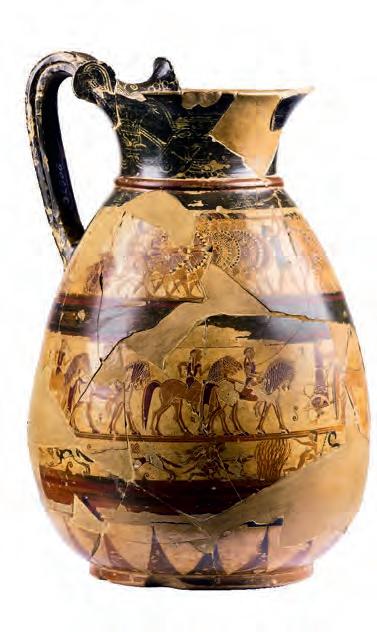
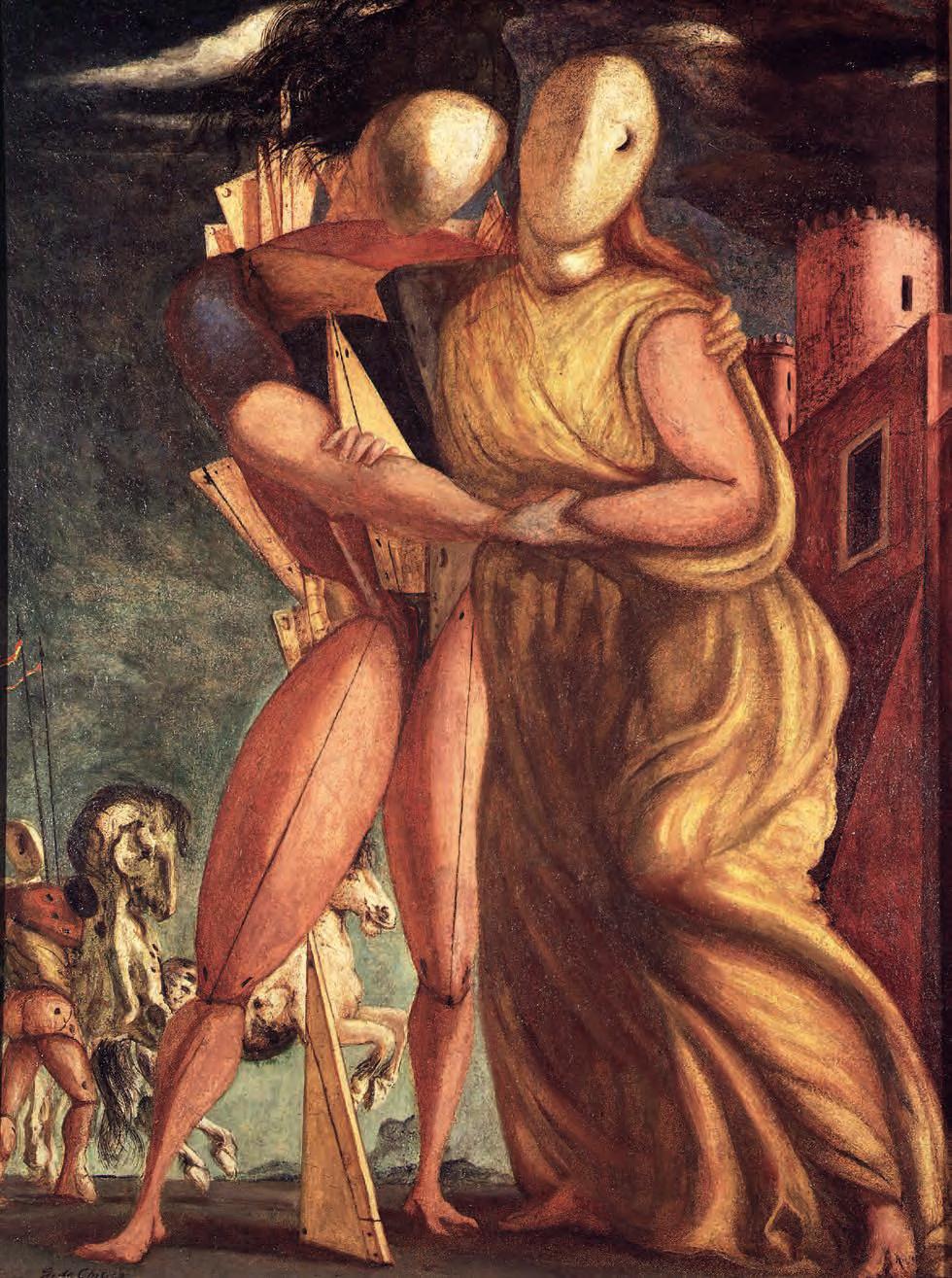
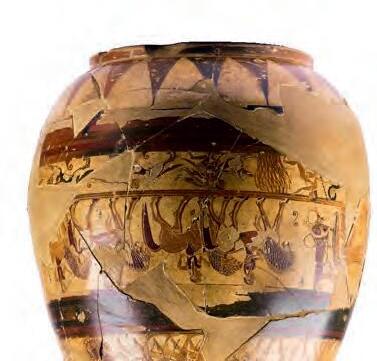
The influence of ancient Greek art on the Romans was profound, giving rise to a cultural dialogue that shaped Rome and, by extension, Western culture. The exhibition “Inspiration – Inspiration – Ispirazioni” brings together 40 exceptional works – ceramics, bronzes and marbles – rarely shown outside their own collections. Presented in seven sections, the exhibition traces the earliest encounters between Greeks and Etruscans, follows the artistic flowering of Magna Graecia, considers the sea as a vessel of memory, and highlights the Roman fascination with the Greek way of life. It also extends to more recent artistic responses to the legacy of GrecoRoman civilization, with works by Canova, Savinio and De Chirico. Χ.G.
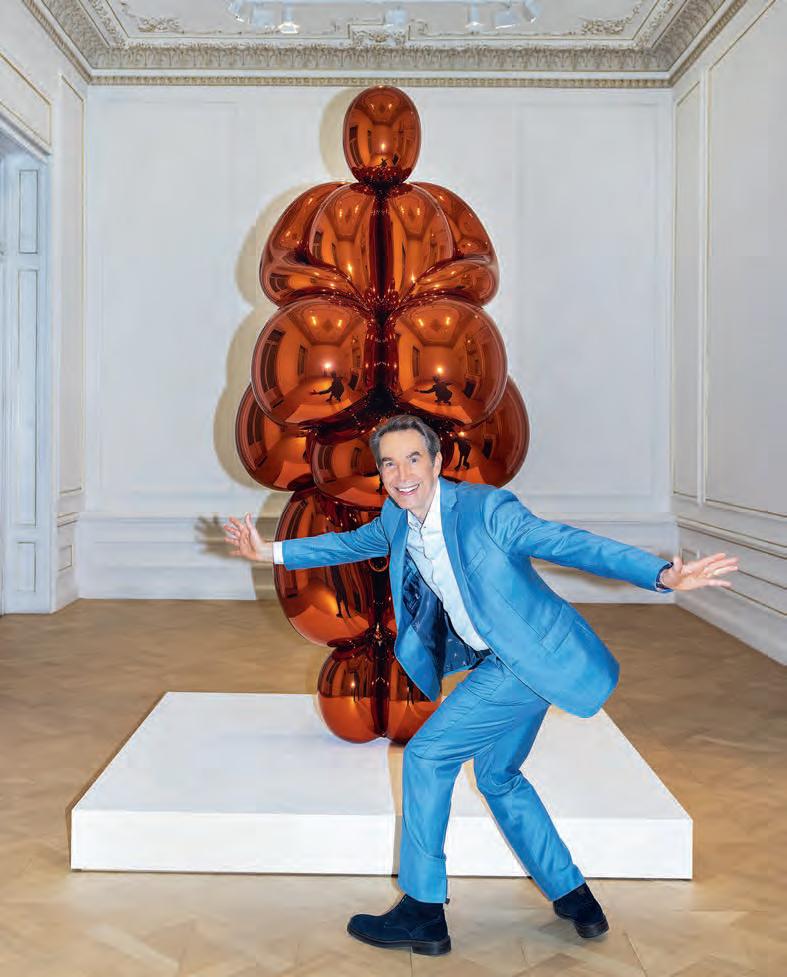
The exhibition “Jeff Koons: Venus of Lespugue” at the Museum of Cycladic Art brings contemporary and Paleolithic art into dialogue and explores what is timeless in the depiction of the fertile female. At its center is the American artist’s monumental Balloon Venus Lespugue (Orange), a sculpture in polished, mirror-like stainless steel, presented alongside ten Paleolithic “Venus” figurines. The exhibition examines ideas of fertility, femininity and the enduring power of the female form across time. “If you want to make something truly new, you have to connect to something very old,” Koons notes. “These figurines are simple objects, yet they manage to transcend all our lives, functioning as carriers of condensed information.” Χ.G.
* Through 31/08/26, Museum of Cycladic Ar t – Stathatos Mansion, Vasilissis Sofias & 1 Irodotou, cycladic.gr
PHOTO: PARIS TAVITIAN
MUSEUM OF CYCLADIC ART
DRAWING WITH LIGHT
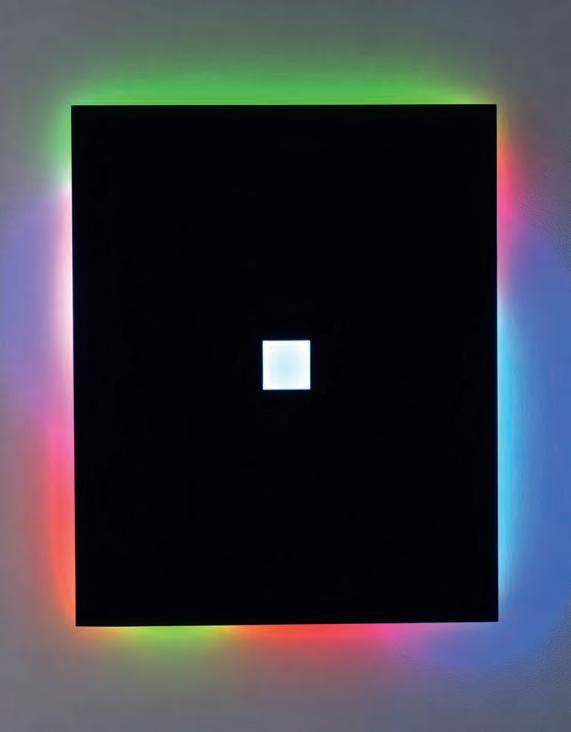
The exhibition “Stephen Antonakos: Postscripts of Time and Space” marks the centenary of the Greek-American artist’s birth and highlights his profound engagement with light, space and time. “We approach Antonakos not only as an artist of exemplary formal discipline, but as a thinker of perception and of the experience of time and space,” says curator Sara Reisman. Through works spanning six decades – neon installations, geometric compositions and architectural models – the exhibition reveals the poetic force of abstraction and the experiential dimension of his practice. Presented together with works by artists such as Lucio Fontana, Christo, and Kazimir Malevich, Antonakos’ art shows both his aesthetic affinities and his enduring influence on contemporary art.
* Through 19/07/26, B & M Theocharakis Foundation for the Fine Arts and Music, 9 Vasilissis Sofias & 1 Merlin, thf.gr
Chloé Boutique
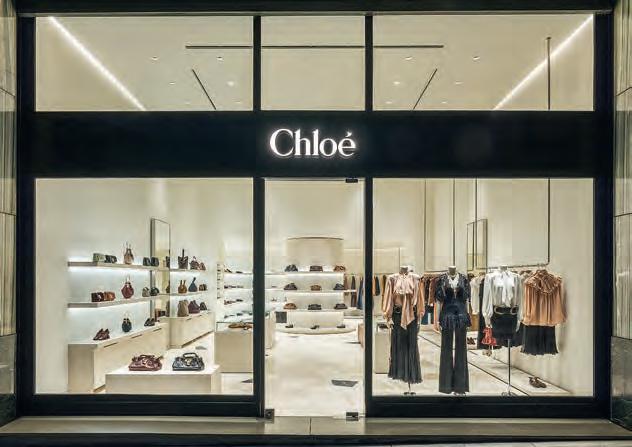
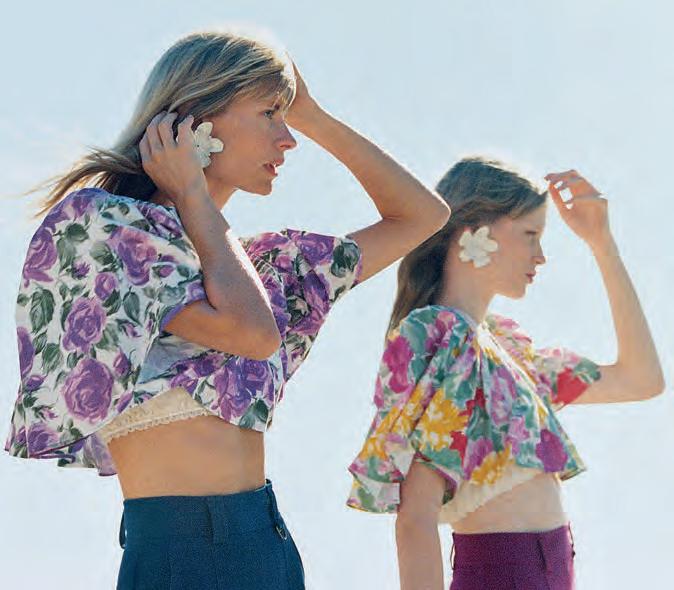
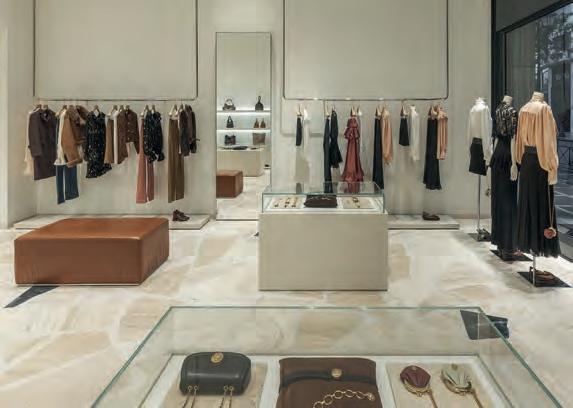
WITH HER DEBUT AT CHLOÉ, Creative Director Chemena Kamali made her intentions clear: to redefine bohemian style for the present moment – more mature and refined, stripped of bold patterns and heavy ’70s influences. This cleaner new aesthetic finds a natural home in Athens’ first Chloé boutique, launched in collaboration with the Fais Group within the historic City Link building on Stadiou Street. The shopping experience takes place within a space designed to reflect the quiet elegance of the French maison. Beige marble floors, curved shelving and white textured walls bathed in warm light further enhance the elegant atmosphere for showcasing the house’s ready-to-wear creations and luxurious leather goods and accessories. You’ll come across viral jelly mules, sneaker ballerinas, lace-up shoes, floral dresses with ruffles, and pastel denim pieces straight off the catwalk, all carrying a more subtle ’70s spirit.
CHLOÉ BOUTIQUE
4 Stadiou, City Link, Tel. (+30) 211.108.8166
CHLOÉ BOUTIQUE
Σταδίου 4, City Link
211-1088166
ATHENS FESTIVAL
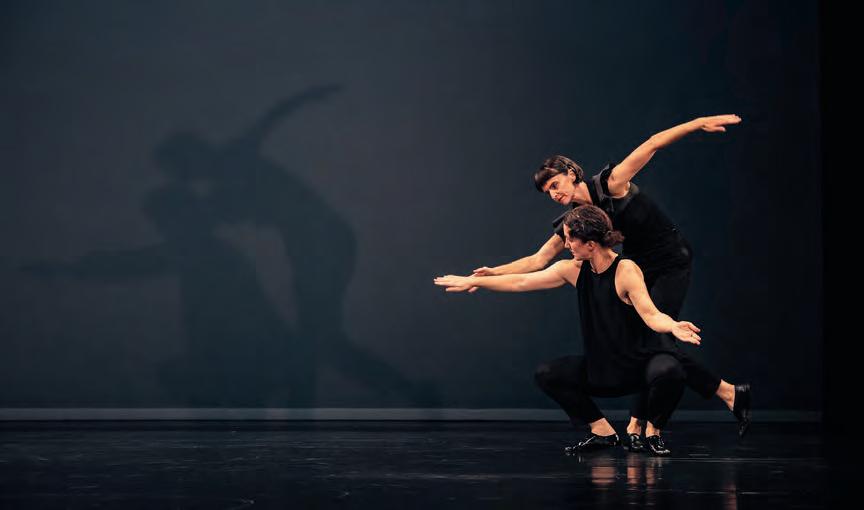
It was in 2005 that Yorgos Loukos, then artistic director of the Lyon Opera Ballet, took on the same role at the Athens Festival. Without diminishing the importance of the Odeon of Herodes Atticus, which had long been the festival’s centerpiece venue, Loukos transformed a complex of former industrial buildings in Tavros – six kilometers from Syntagma Square – into a hotspot for more “avant-garde” performances, particularly theater and dance pieces. This year’s program at Pireos 260, as the venue came to be known, continues to attract Athens’ own culture-loving crowd as well as visitors to the city. Among the highlights is the appearance of pioneering American choreographer Deborah Hay (1718/07). If you still have a chance to catch a performance at the Odeon of Herodes Atticus before it closes in July for three years of restoration work, we recommend Lykke Li’s concert on 22/06. PANAGIOTIS KOUSTAS
* aefestival.gr
Li (22/6).
A PICTURE-PERFECT LA TRAVIATA
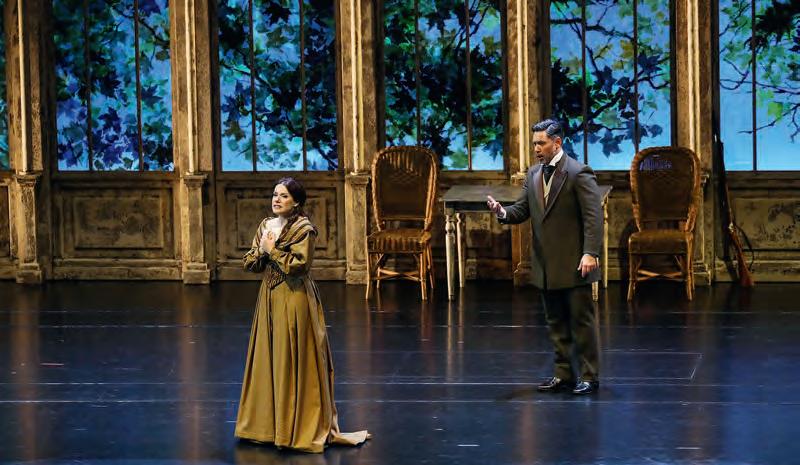
Giuseppe Verdi’s La Traviata, which the composer himself described as a “fiasco” immediately after its 1853 premiere in Venice, is today among the most beloved operas in the international repertoire. The Greek National Opera presents it in Nikos S. Petropoulos’ acclaimed production, as part of a tribute to the distinguished Greek opera director, costume designer and set designer. Petropoulos approaches the work with deep respect for Verdi’s era and spirit, creating an atmospheric “postcard” of 19th-century Paris. “There are operas we do not tamper with,” he has noted, emphasizing that La Traviata is inseparable from the manners, aesthetics and dramaturgy of its time.
* Performances: 18, 19, 21, 23, 24, 26, 28 and 30/07/26, Greek National Opera – Stavros Niarchos Foundation Cultural Center, 364 Syngrou, nationalopera.gr
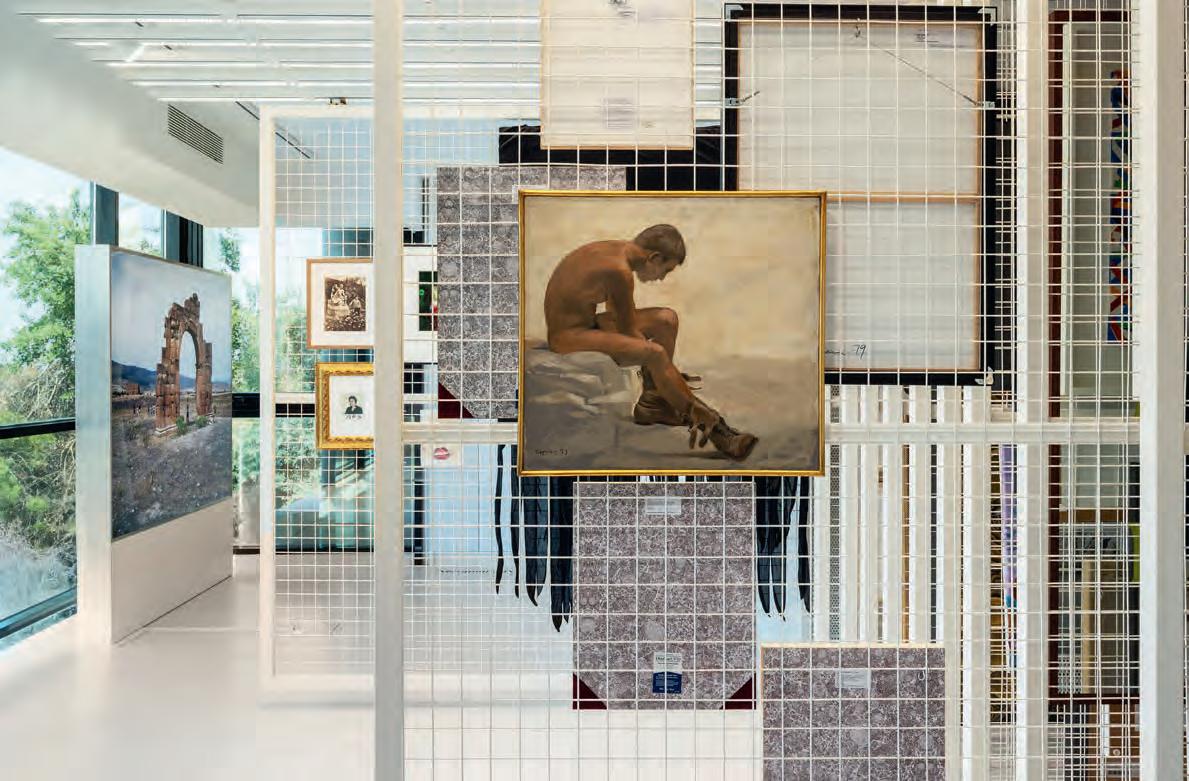
How is collective memory constructed? Which voices are left at the margins? The second exhibition of the Irene Panagopoulos Collection, curated by Akis Kokkinos, challenges dominant systems of recording and classifying knowledge, exploring whether art can remap history and reshape the way we perceive the world. Through works of art, archival material and historical maps, “Everything I Know Is a Borrowed Map” transforms the exhibition space into a living ecosystem of exchange. Its six sections, described by the curator as “marginalia” (like the supplementary notes written along the edges of a map), examine questions of borders, gender, censorship, political power and resistance. The exhibition brings together major Greek and international artists, including Jannis Kounellis, Yannis Tsarouchis, Andy Warhol, Sheila Hicks and Mona Hatoum. Χ.G.
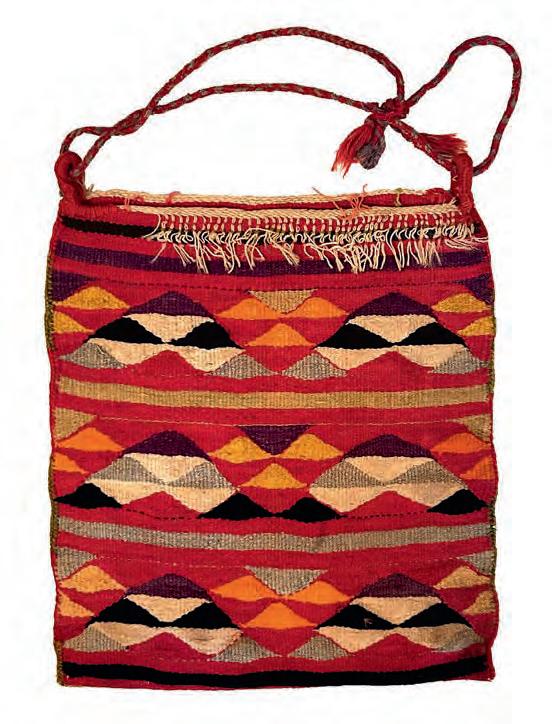
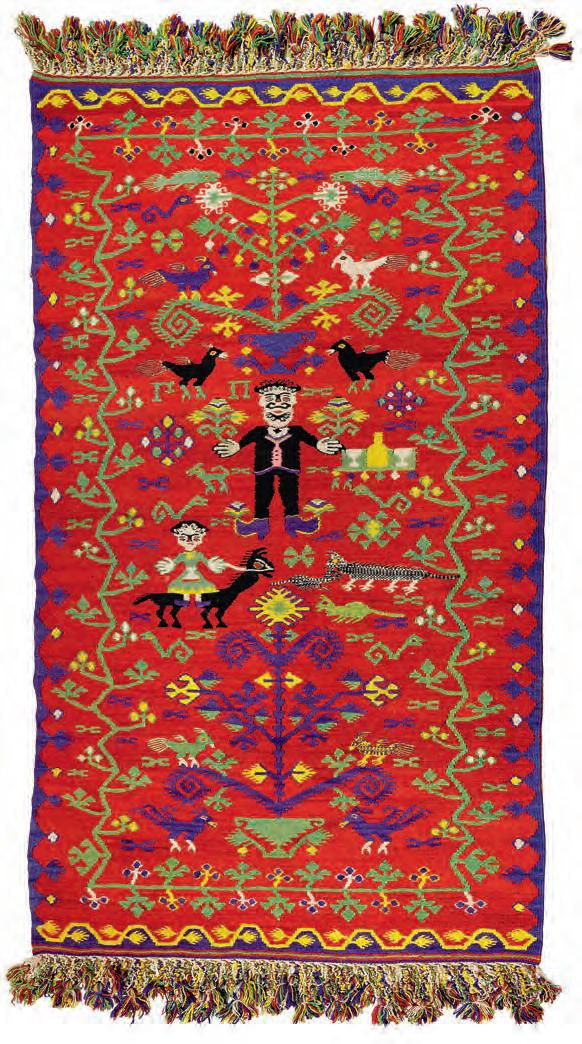
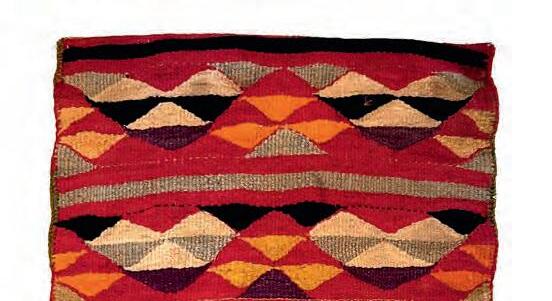
Archaeological finds in Geraki, a village built on the slopes of Mt Parnon, show that women have been weaving on upright looms there since antiquity. This precious tradition, inscribed in Greece’s National Inventory of Intangible Cultural Heritage in 2019, keeps alive an art passed down from generation to generation. The exhibition “Weaving Dreams: Kilims from Geraki, Laconia” presents kilims, shoulder bags and woven textiles dating from the 17th to the early 20th century, with images from nature, symbolic motifs and depictions of men and women. Geraki weaving inspired major figures of the artistic movement known as the Generation of the ’30s, including Yannis Tsarouchis and Fotis Kontoglou, further proof of its deep aesthetic and cultural value. Χ.G.
* Through 26/07/26, Benaki Museum / Ghika Gallery, 3 Kriezotou, benaki.org
COLLECTION OF KONSTANTINOS O. PACHIS, ATHENS.
PHOTO: LEONIDAS KOURGIANTAKIS.
COLLECTION OF
PHOTO: SHARON GERSTEL.
Jimmy Choo
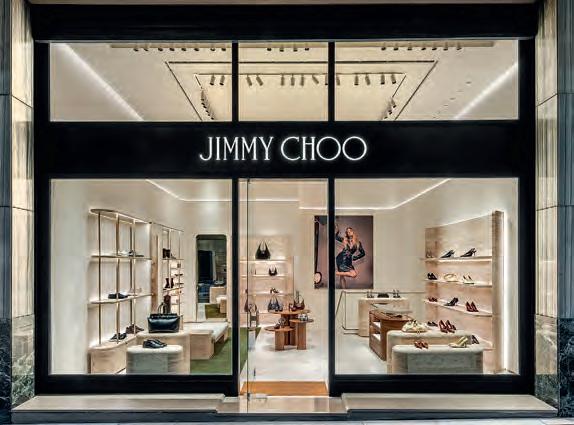
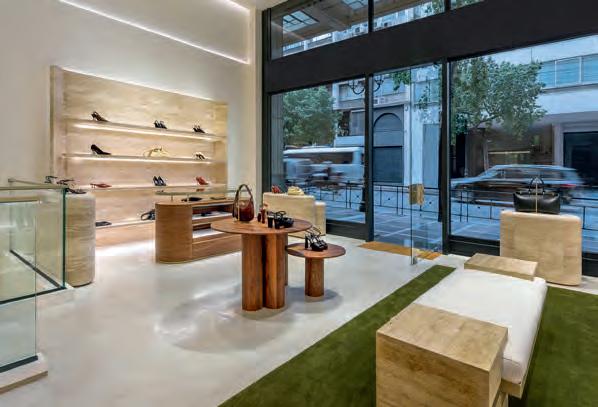
FOR JIMMY CHOO, shoes are more than simple footwear; they are a form of magic creating a special relationship with women that has remained unchanged for the past 30 years. The brand’s first boutique in Athens invites visitors into its luxurious, star-dusted universe via a refined space at 4 Stadiou Street, housed within the iconic City Link complex. The boutique combines contrasting textures and tones – marble shelving, walnut wood tables, green carpets, oversized mirrors, brass details and porcelain flooring – creating a sophisticated backdrop that highlights the exceptional craftsmanship and glamour of Jimmy Choo’s creations. The boutique presents a fully updated selection of the house’s creations, from contemporary wardrobe staples such as loafers and refined everyday styles to the season’s returning mules, subtly evoking the enduring influence of Carrie Bradshaw. Men’s loafers and sneakers also feature prominently, alongside the designs most closely associated with the Maison: the sculptural high-heeled sandals that have become synonymous with Jimmy Choo’s unmistakable sense of glamour.
JIMMY CHOO
4 Stadiou, City Link, Tel. (+30) 211.108.8167
JIMMY CHOO
4, City Link
211-1088167
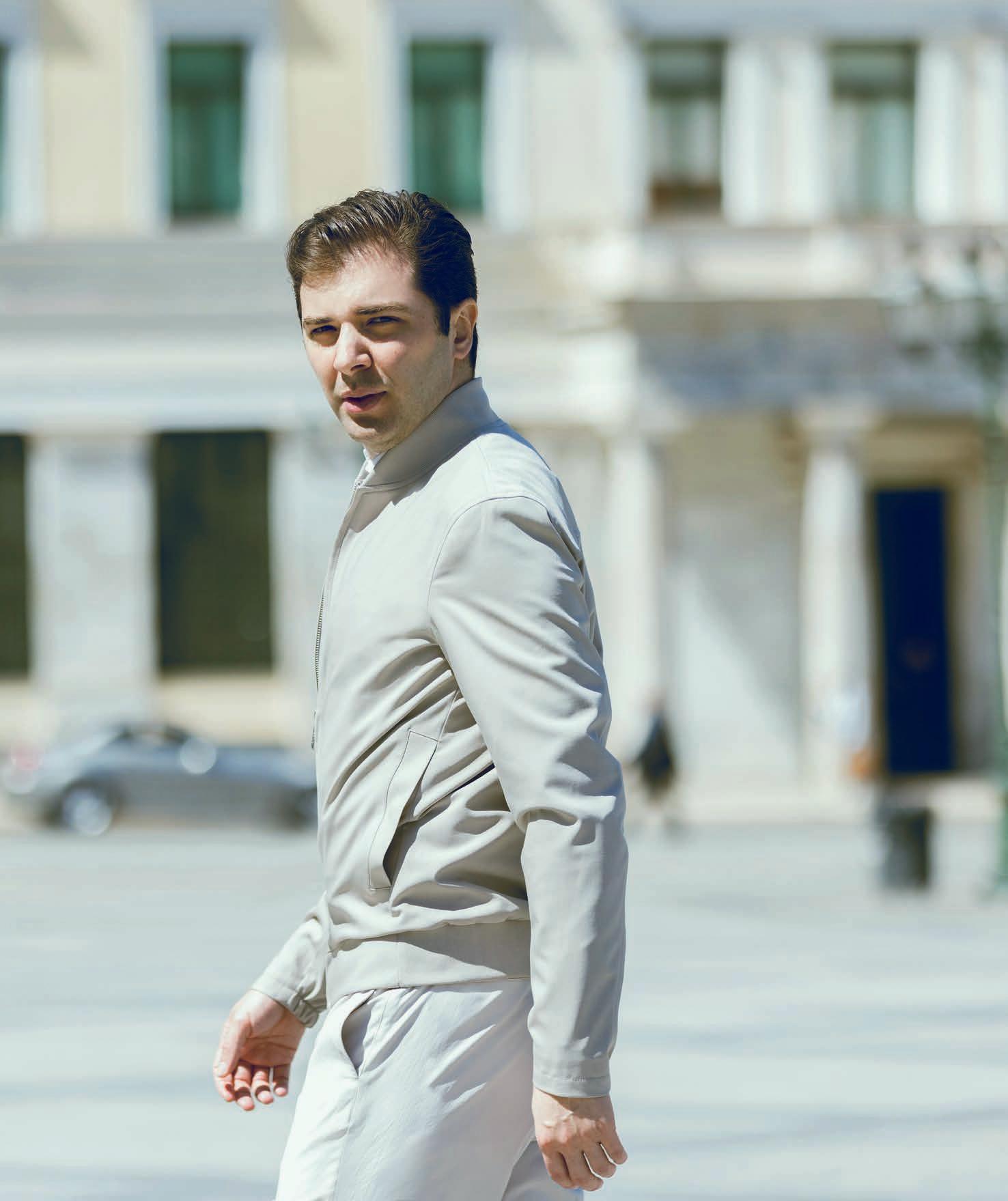
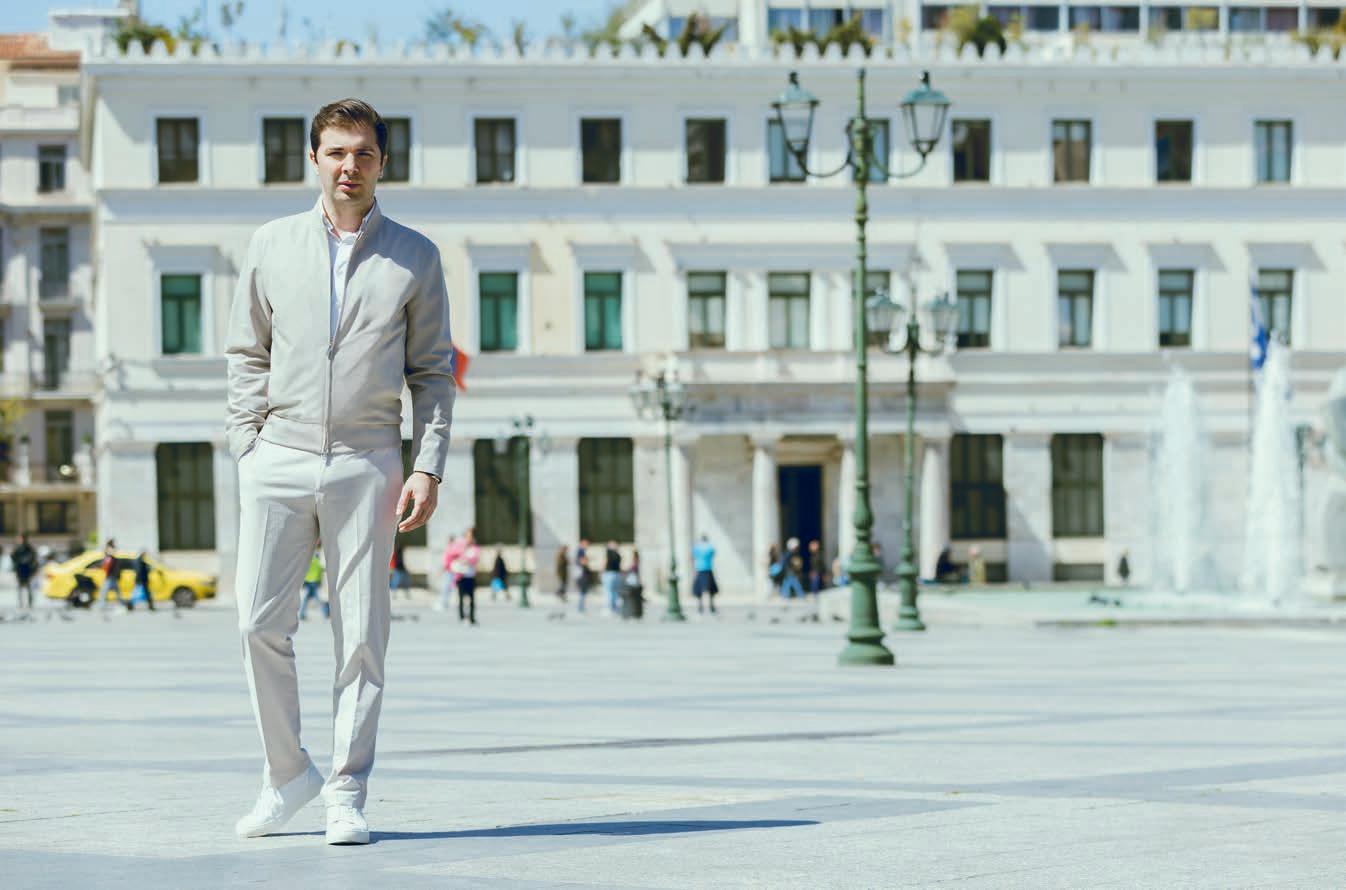
dionysis grammenos
At thirty-six years of age, this clarinetist, conductor and founder of the Greek Youth Symphony Orchestra has already carved out a remarkable path in the world of classical music.
On the World’s Stages
By PANAGIOTIS KOUSTAS Portraits DIMITRIS VLAIKOS
“EROS RAMAZZOTTI, MINA, Adriano Celentano. That’s the music I listen to on a road trip,” Dionysis Grammenos says as we enjoy the spring sunshine in Plaka. The conversation drifts, quite naturally, toward his impressive international career as a conductor. He has led ensembles such as the Houston Symphony Orchestra, the Cameristi della Scala in Milan, and the English Touring Opera, yet he remains open to good music in any form.
How, then, did he come to devote himself to an instrument – and a musical tradition – that so few young people choose?
FROM CORFU TO VIENNA
The clarinet is the main instrument of the philharmonic marching bands for which Corfu is famous, and it was on that island that Dionysis Grammenos was born and raised. At just seven years old, he started playing in a local band. What struck him when he first laid eyes on a clarinet was the sheer number of keys – typically seventeen or eighteen. “How is it possible,” he recalls wondering, “for ten fingers to cover them all?”
One Friday evening, years later, during his penultimate year of high school, he happened to watch the awards ceremony of the EBU European Young Musicians Competition on television. He stared, intrigued, as young soloists in tailcoats performed with the Vienna Symphony Orchestra. His parents explained more about the event and his curiosity deepened. The next edition of the competition was two years away. He applied, advanced through the qualifying rounds, and was ultimately selected to represent Greece.
An outsider by any measure, Dionysis Grammenos won the Gold Medal on May 9, 2008, in Vienna – the first wind soloist ever to win the competition.
THE ROAD TO THE TOP
From that moment on, his life changed dramatically. Invitations began to arrive from orchestras and record labels alike, asking him to appear as a soloist in concerts, recordings and festivals. Before long, he
“The notes are the same for everyone. The question is what we do with them – what relationship we form with them, and how we express the imprint they leave on our mind and soul.”
was traveling incessantly, headed everywhere from America to Japan. The demands of the international concert circuit ultimately led him to set aside his studies in Physics at the University of Athens.
Chasing his dream, he relocated to Weimar, where he spent four years at the Liszt University, immersing himself in advanced performance studies and the formidable technical demands of his instrument. A defining chapter followed in the 2013-2014 season, when he was selected as a Rising Star by the European Concert Hall Organisation and toured some of Europe’s most prestigious concert halls. He then undertook a two-year postgraduate program in orchestral conducting. Gradually, conducting invitations became more frequent, until they came to define his career. Today, he appears primarily on the podium, while still leaving room for the occasional chamber or solo performance that truly sparks his interpretive imagination.
His podium debut came at twenty-one. “I appeared as a young conductor with the Vienna Chamber Orchestra, and I remember vividly how exposed I felt when I stepped up – naked, almost, without my clarinet. I won’t pretend I wasn't nervous, and perhaps I
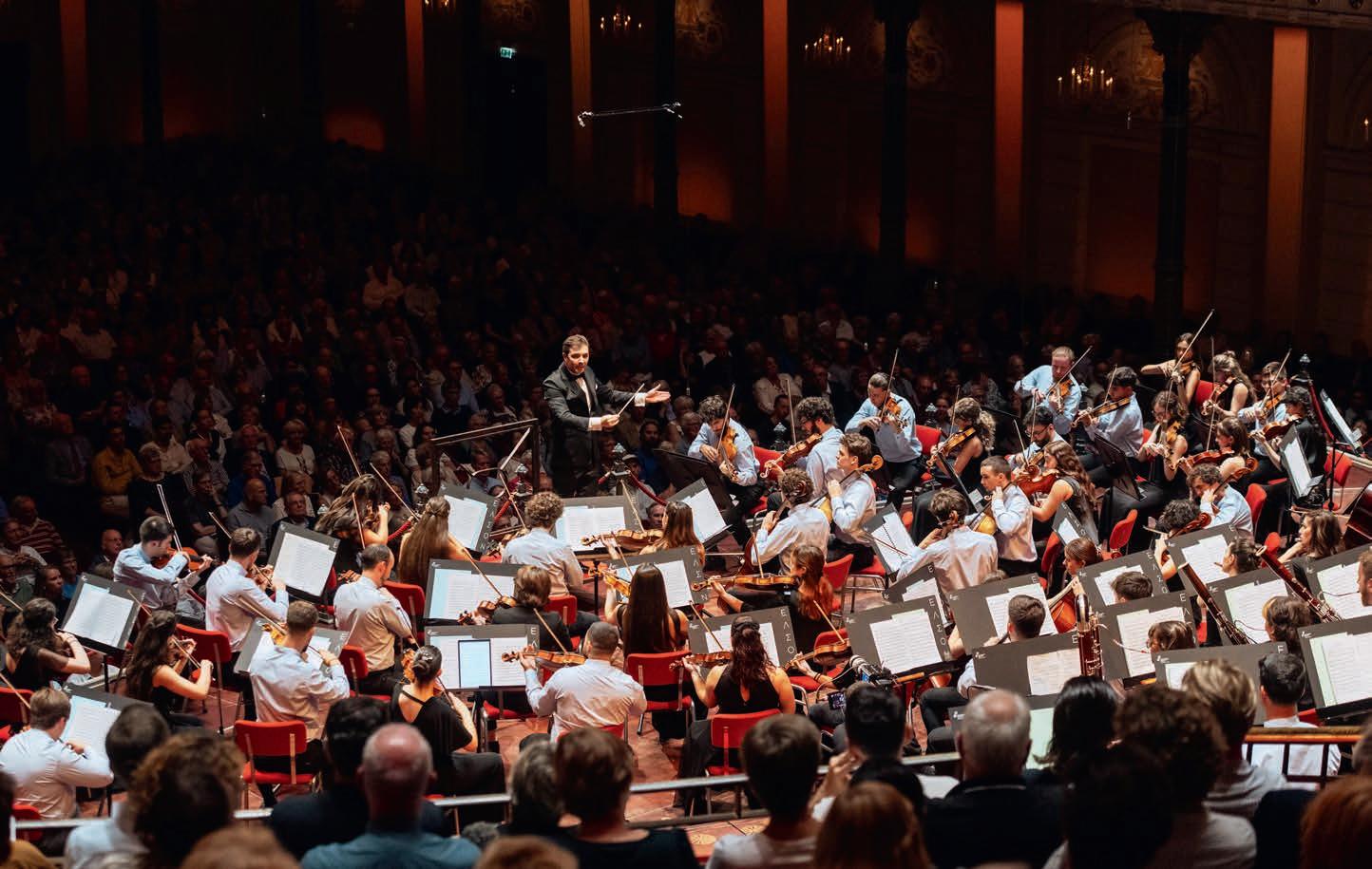
Conducting the Greek Youth Symhony Orchestra from the podium of the renowned Concertgebouw in Amsterdam in 2025.
wasn’t quite ready to conduct an orchestra yet. But I felt, with absolute certainty, that this was what I was meant to do with my life. That I was built for it.” Time has proven that feeling to be well founded. There followed, among others, engagements with the Greek National Orchestra, the Houston Symphony and the Orchestre Symphonique de Québec. This spring, on the 14th and 15th of March – shortly before we met – Grammenos conducted the London Philharmonic Orchestra in two concerts. “Those were two very special moments, and the invitation came directly from the orchestra, on the strength of a concert at Megaron – The Athens Concert Hall in February 2024, when I was called, quite literally at the last minute, to replace their conductor, who had suddenly fallen ill. That evening in Athens was so charged, so alive, that I can replay it in my mind like a film, from beginning to end.” This coming summer,
on the 4th of August, the celebrated Concertgebouw in Amsterdam awaits, a prospect he’s eyeing with unmistakable enthusiasm.
THE MUSICIANS OF THE GYSO
“There’s something very beautiful about seeing young musicians come together to play Beethoven or Tchaikovsky, in much the same way others gather for a game of basketball,” he says, as our conversation turns to GYSO, the Greek Youth Symphony Orchestra he founded nine years ago. Now the Orchestra in Residence at Megaron – The Athens Concert Hall and a member of the European Federation of National Youth Orchestras, it brings together musicians aged eighteen to twenty-six. “Each year, during auditions, I’m deeply moved to see candidates returning for the third or fourth time – finally ready to be accepted.”
To date, more than 350 musicians have passed through GYSO, with over half going on to study abroad. “They are at one of the most beautiful periods of their lives, a phase of discovery, of opening up to new things. For my part, I feel a genuine obligation to inspire them, to awaken something in them,” Grammenos says.
The conductor recalls a particularly memorable performance at Carnegie Hall. “I remember that trip to New York with extraordinary clarity. We were 120 people, and for most of the musicians it was their first time in America. It had been a shared dream, and the journey truly united us. You could feel that connection in the performance itself.”
A STUDY IN NOTES
“I do a great deal of studying on airplanes,” Grammenos says. “I wear earplugs and put my headphones over them, on noise-canceling mode. Sensory overload bothers me.” He prefers to study late at night – often into the small hours – when silence allows for complete concentration. “Other times, I’ll wake up early and sit over the scores for hours.” He may then spend the rest of the day turning them over in his mind, quietly processing them.
“For a conductor, the concert is only the tip of the iceberg,” Grammenos says. What remains invisible is the study – the vast mass of ice beneath the surface. And thorough preparation goes well beyond the notes themselves, encompassing the composer's biography, the social and historical forces that shaped him: “I find that fascinating to research and discover.” He adds: "The notes are the same for everyone. The question is what we do with them – what relationship we form with them, and how we express the imprint they leave on our mind and soul.”
At the Hotel Grande Bretagne and the King George, art is an organic and everpresent part of the guest experience, creating a lively dialogue between past and present.
The Aesthetics of Continuity
By XENIA GEORGIADOU
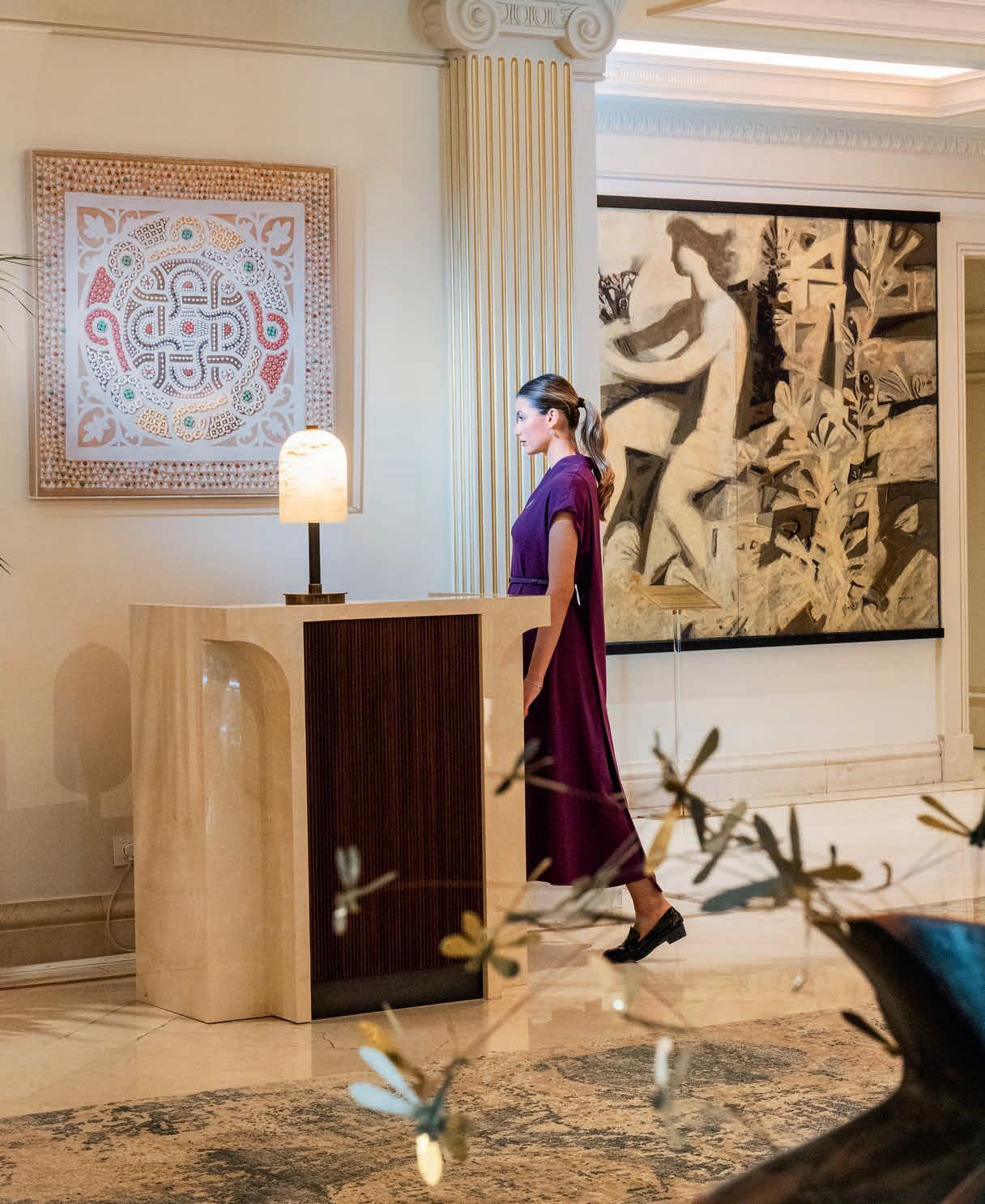
Α creative dialogue Composition by Yannis Moralis enters into a dialogue with Omphalio by Peggy Kliafa at the King George.
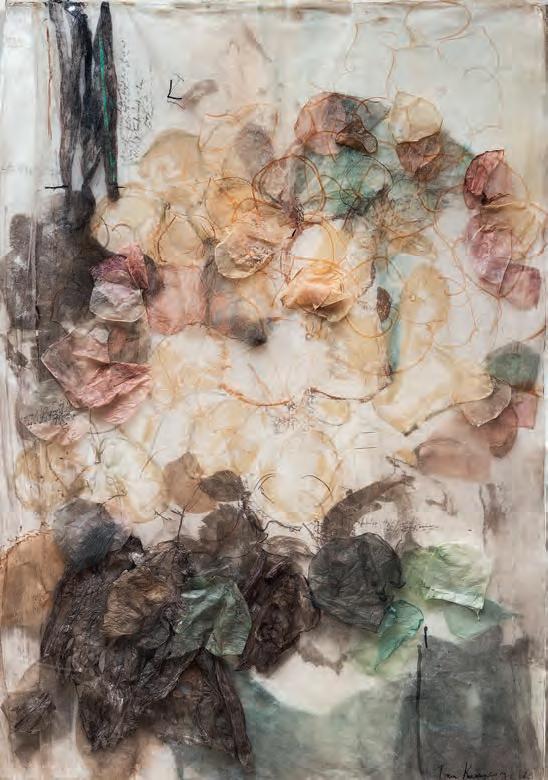
Left page: Tina Karageorgi, Hydrangeas, mixed media.
Omphalio
King George.
Hydrangeas,
AN 18TH-CENTURY TAPESTRY
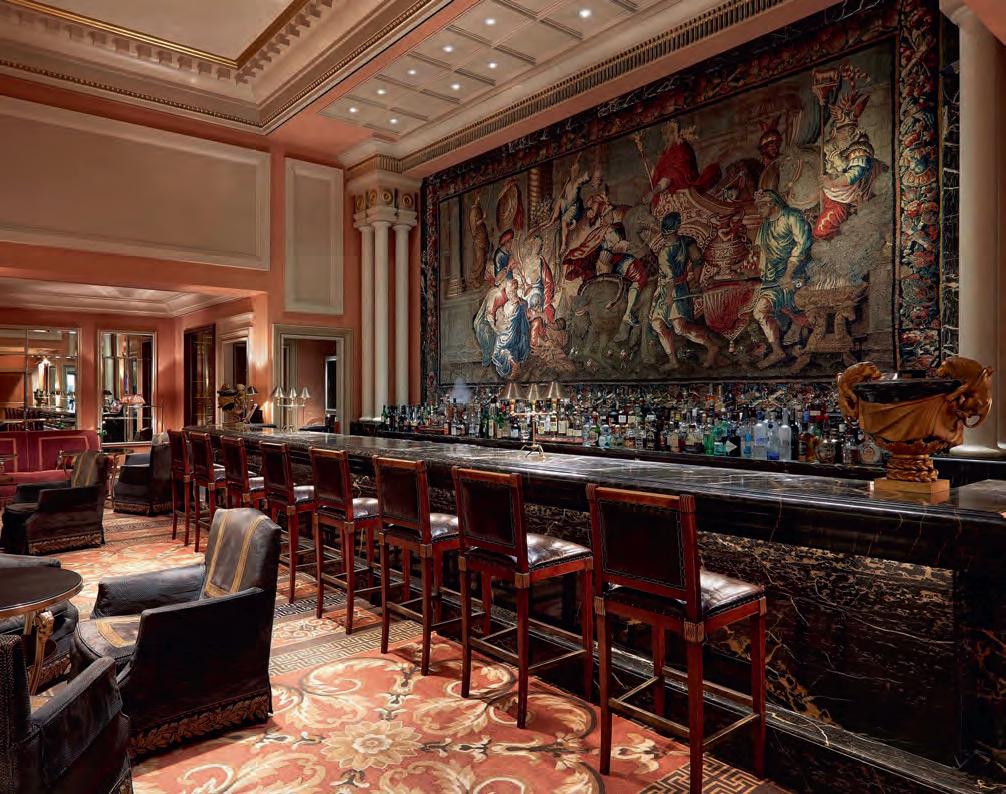
inspired by the campaigns of Alexander the Great above Alexander’s Bar and a striking interpretation of the abduction of Persephone in the lobby of Hotel Grande Bretagne are among the first works to catch the visitor’s eye. These two historic but anonymous pieces form an integral part of the hotel’s identity and history, much like the seascapes and the marble busts of their founders and former owners.
“Over the years, very important works have passed through the suites, including The Walk of the Caryatid by Konstantinos Parthenis and The New Arrival by Nikolaos Gyzis, on loan from the private collection of Athanasios C. Laskaridis, with the aim of familiarizing international guests with emblematic works of modern Greek art,” explains art historian and consultant Maria Migadi. Yet, as she points out, the focus should not be placed on individual works alone, but on the way they converse with the spaces around them.
ART THAT ELEVATES THE EXPERIENCE
What sets the Hotel Grande Bretagne apart is this effortless, almost organic integration of art in which the works do not function as mere decoration but become part of the experience of staying there. Art and a heightened sense of aesthetics has characterized the hotel from its birth. Long before works of art in hotels became commonplace in hotels, creative expression was present here in all its forms, sparking a dialogue between hospitality and Athenian elegance. “When you observe every detail in the Presidential and Royal Suites – the parquetry, the furniture, the objects, the works of art – you sense the aesthetic spirit of 19th- and 20th-century Athens. Some works are by unknown artists, while others are pivotal to the artistic explorations of modern Greek art, such as Apostolos Geralis’s relationship with Greek tradition. Most importantly, however, these rooms allow you to dive into time. They show you that spaces, too, can evolve and continue into the present without renouncing anything of their history,” Migadi notes.
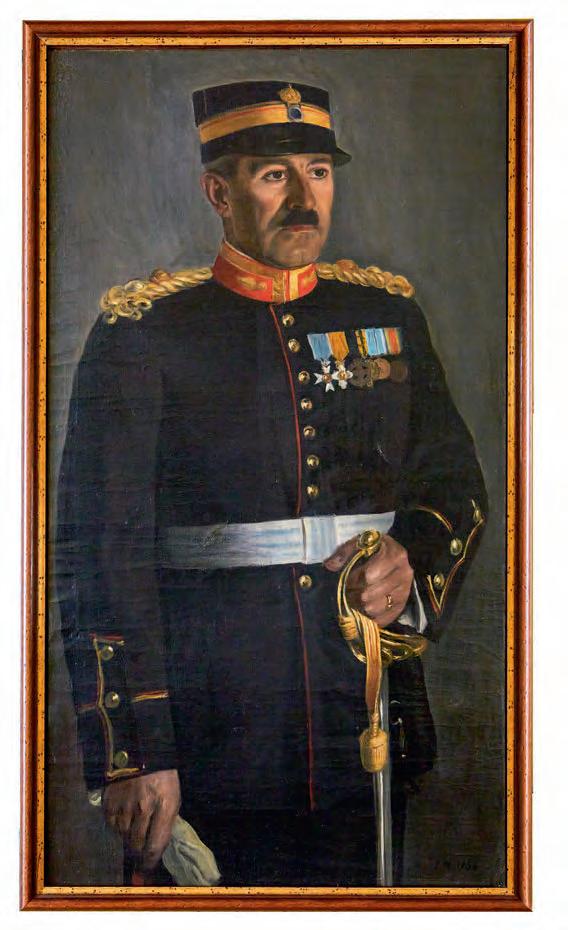
I stand before Portrait of a Greek Officer by Yannis Moralis in the Royal Suite. It’s one of the Greek painter’s classical figurative works, although, in the Greek consciousness, Moralis is more closely associated with reduction, with a painterly language in which
Visual Narrative
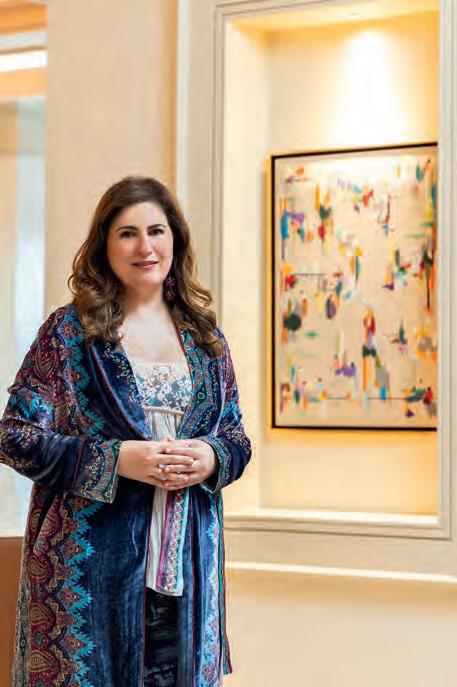
Αrt historian and consultant Maria Migadi in front of Hope by Iliodora Margellou.
DIMITRIS VLAIKOS
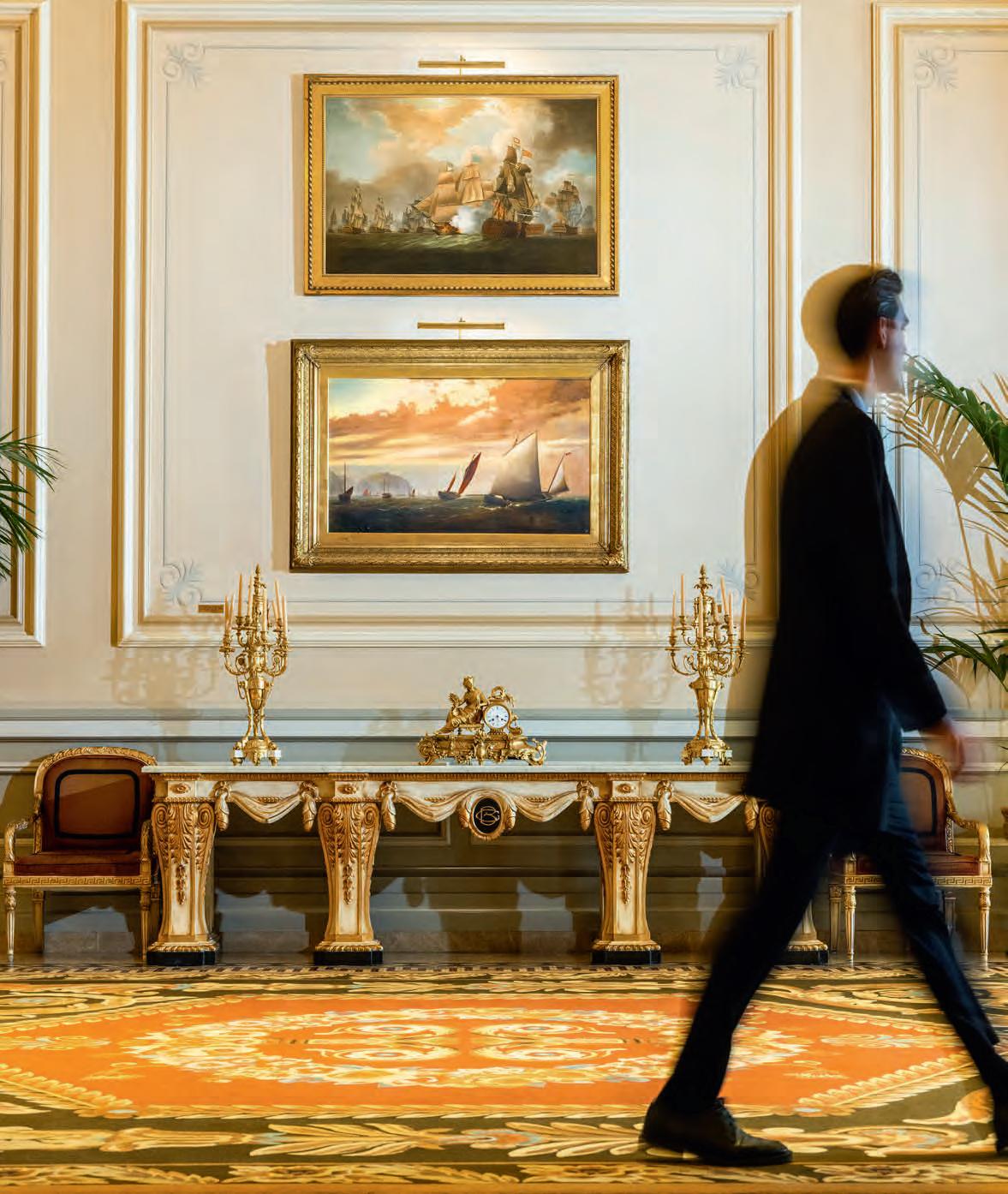
The lobby of the Hotel Grande Bretagne is adorned with artworks depicting seascapes.
the figure is simplified and transformed into geometric forms. Moralis mastered this language, in which the classical and the modern are brought together, creating a body of work in which artistic movements and origins cannot always be easily distinguished.
This becomes clear in the imposing Composition (1961), displayed in the reception area of the neighboring King George Hotel. The work, which arrived here on temporary loan from Regency Casino Mont Parnes to safeguard it from the risk of forest fires, seems to condense, within a length of just 20 meters, the decades-long evolution of this Greek artist: from
The focus should not be placed on individual works of art alone, but on the way they converse with the spaces around them.
Alexander’s Bar The impressive 18th-century tapestry contributes to the venue’s evocative atmosphere.
Alexander’s Bar
Multidimensional artworks are integrated into the guest experience at the King George.
Above: Nikos Hadjikyriakos-Ghika, Untitled. Below: Sofia Petropoulou, Lille.
King George.
Lille
figuration to geometric abstraction, but always with the human figure at its center.
BRIDGING PAST AND PRESENT
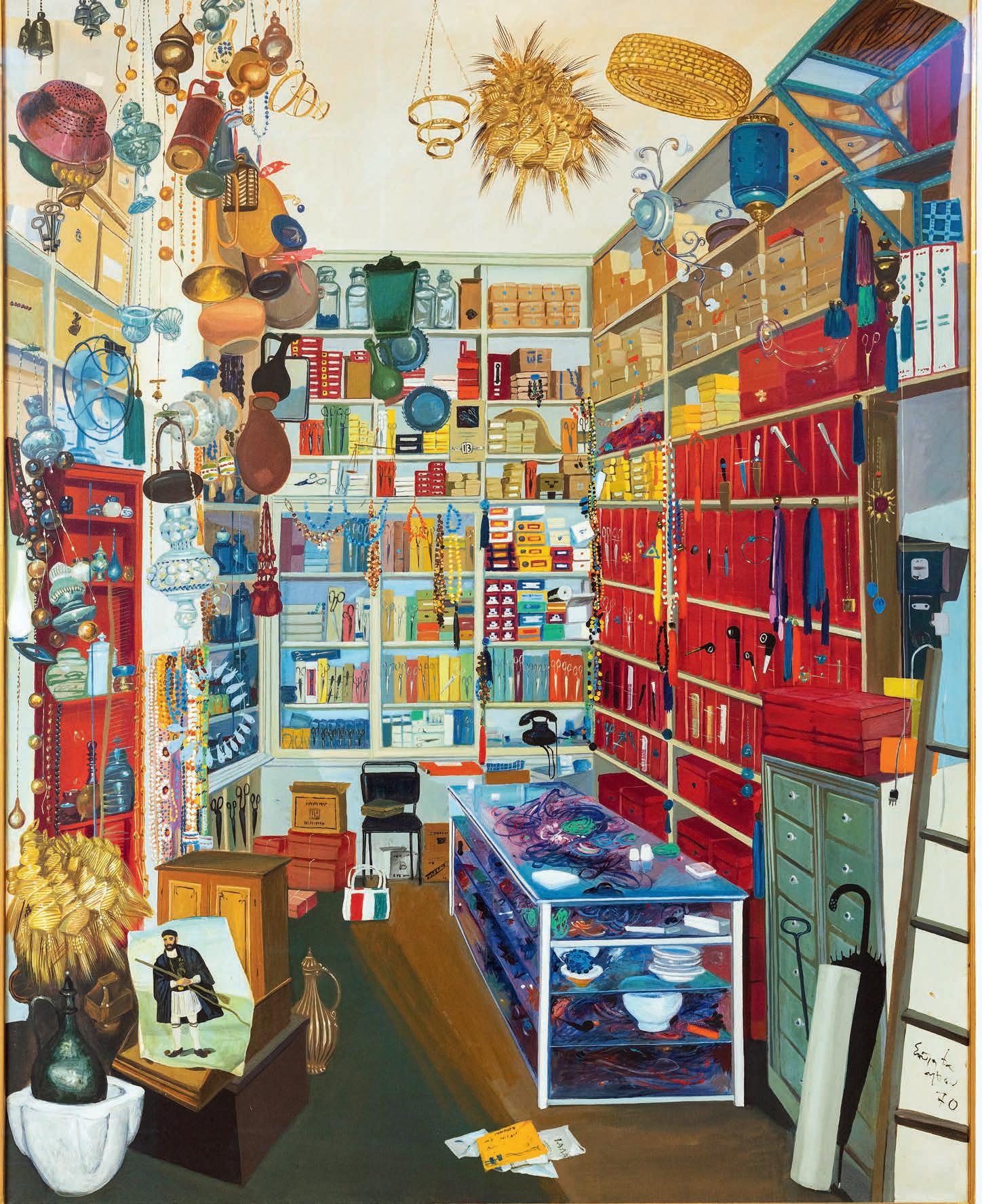
As the observer moves from one hotel to the other, this sense of continuity extends beyond Moralis’ work to modern Greek art more broadly. At the entrance of the King George Hotel, Spyros Vassiliou’s wonderful painting Little Shop on Athinas Street acts as a reminder of the Athens that once was, when even central streets still retained the character of a neighborhood. It captures the spontaneous, direct way in which small merchants once advertised their goods.
“It’s a scene fading with time, yet in the lobby of a contemporary hotel it’s preserved, creating a romantic contrast with the surrounding space,” notes Migadi, who curated the lobby collection under the guidance of the hotel ownership. An equally important plaster wall piece by Nikos Hadjikyriakos-Ghika enters into
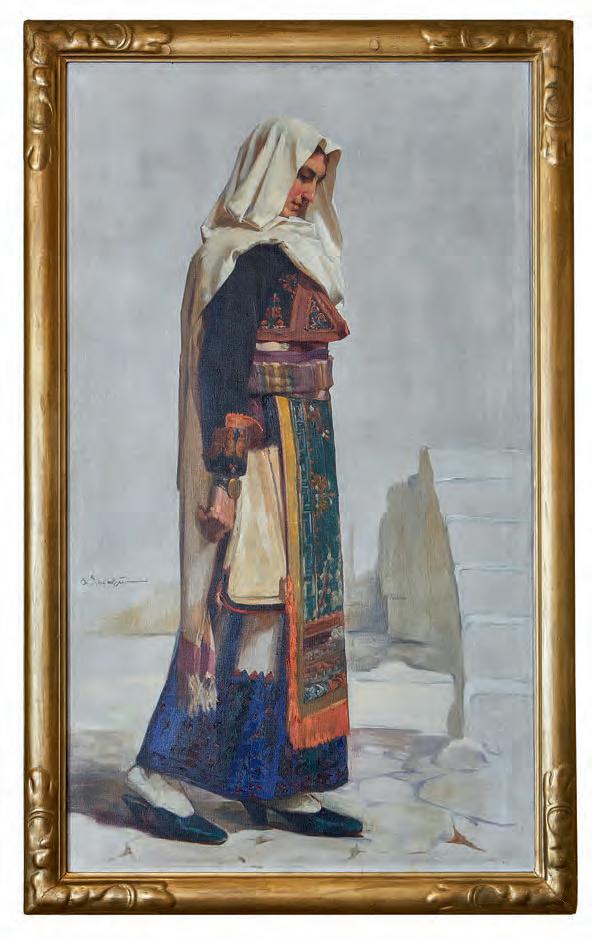
From the left: Yiannis Moralis, Portrait of a Greek Officer, oil on canvas.
Αpostolos Geralis, Woman in Traditional Costume, oil on canvas.
conversation with works by contemporary artists, such as Tina Karageorgi’s stoneware vases.
Peggy Kliafa’s work reproducing the motif of a Byzantine mosaic floor also opens a dialogue with the past. In its contemporary transcription, the glass tesserae have been replaced by painkillers and antibiotic pills in different colors and shapes. “Kliafa’s work is proof of how a younger generation of artists reads and draws inspiration from different periods of Greek art, bringing them into the present,” Migadi says.
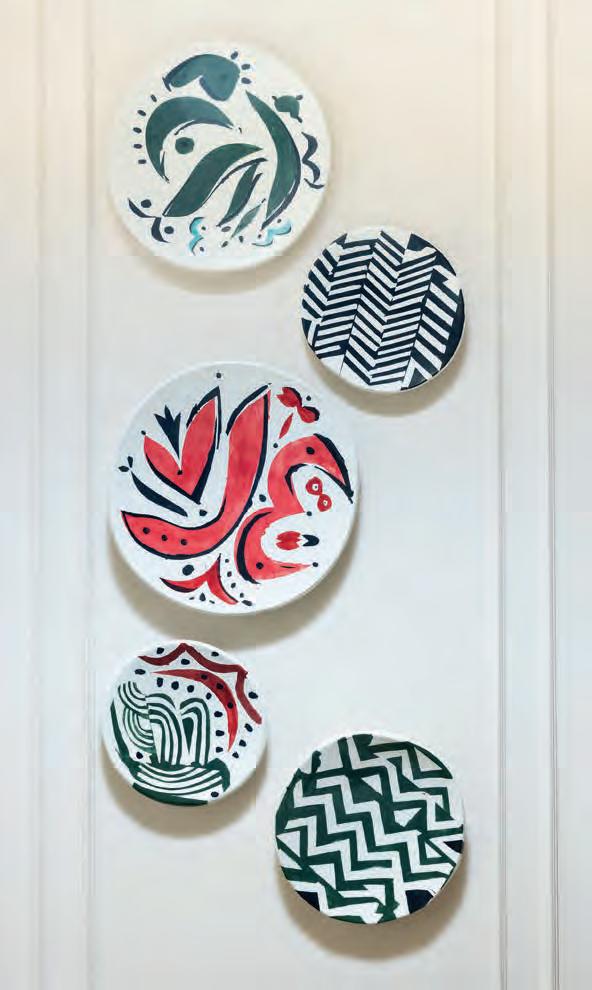
The architects behind the renovation of the lobby of the King George Hotel, the consultant notes, set a clear direction for the selection of works: a contemporary visual language expressed through traditional materials. The work Hope by Iliodora Margellos, a colorful embroidery with linear elements that recall code, follows this logic precisely, as do the ceramic plates of Philippos Theodorides. The same can be said of the ceramics of Elina Vasilaki and the
Ceramic plates by Philippos Theodorides, produced in collaboration with the art consultancy firm Art Projects, founded by Maria Migadi, Anastasia Orfanidou and Victoria Fasianou.
abstract oils of Sofia Petropoulou, whose works can also be found at the GB Roof Garden at Hotel Grande Bretagne. The works of these artists, along with that of Tina Karageorgi, create a link between the past and present of Greek art.
Materiality also comes into play in the 21-meter sculptural glass installation by Lasvit in the atrium of the King George Hotel. Made of Bohemian glass and suggestive of a chandelier, the work can be admired both from Tudor Hall and from many of the rooms, subtly transforming the architectural experience of the space.
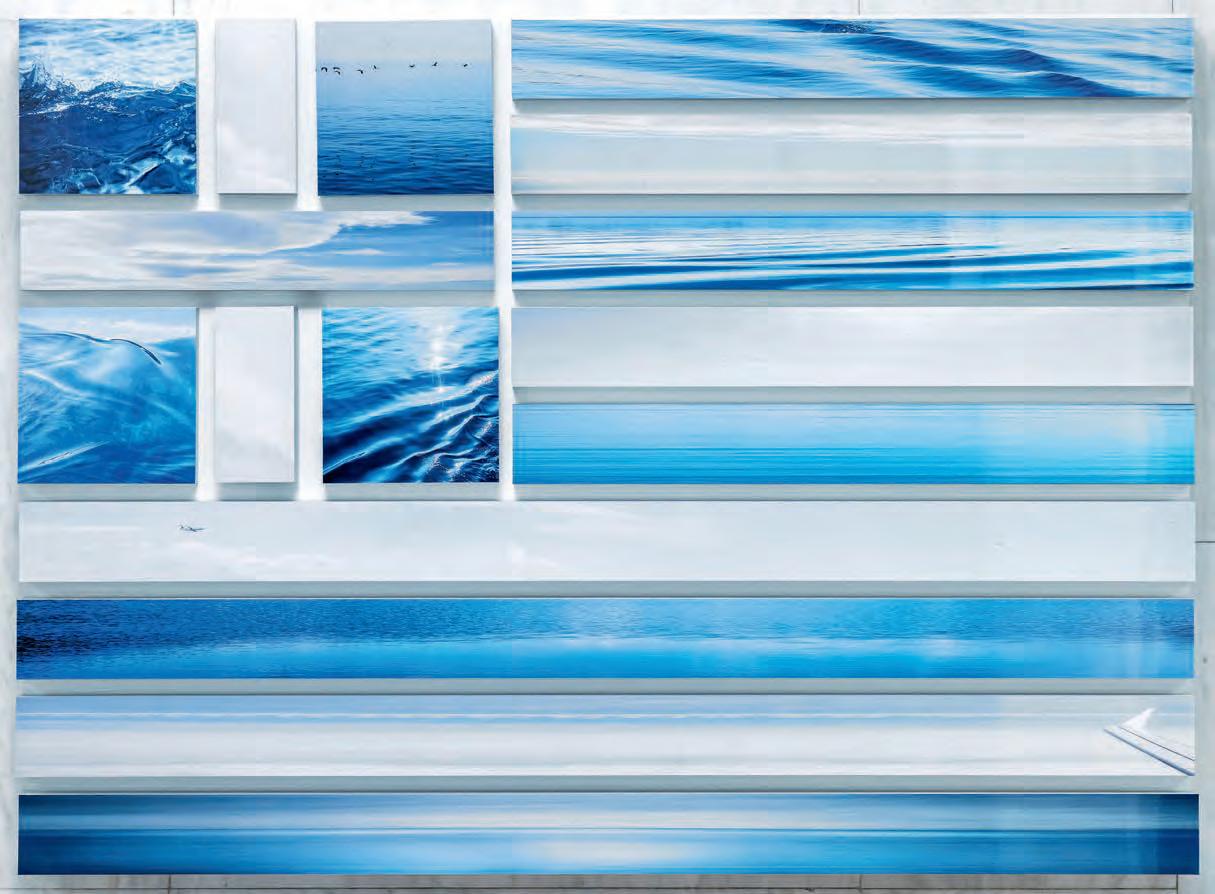
Another work that elicits enthusiasm from guests, is Zetta Antsakli’s Hellas, a Greek flag made of strips of aluminum. It’s the piece that welcomes you into the space, or bids you farewell as you step out to explore Athens. Look more closely, and you’ll see that the blue bands are, in fact, prints of Greek seascapes. •
An ode to Greekness
Zetta Antsakli, Hellas.
Right page: Spyros Vassiliou, Little Shop on Athinas Street.
Hellas.
Brushstrokes of a Century
Two artists, one city, and the evolution of modern Greek art. Through two landmark donations, the Aikaterini Laskaridis Foundation brings into focus the singular journeys of painters Valias Semertzidis and Dimitris Perdikidis – two defining voices of 20th-century Greek artistic expression. ΠΙΝΕΛΙΕΣ
By VENIA PASTAKA*
1958, Dimitris Perdikidis, oil on canvas.
Knowledge
OVER THE COURSE of its history, the Aikaterini Laskaridis Foundation has demonstrated a deep commitment to culture and education through a wide range of initiatives and public programs. Within this framework, the Foundation has acquired – through donation – two exceptionally significant bodies of work by the painters Valias Semertzidis (1911-1983) and Dimitris Perdikidis (1922-1989). Such acquisitions are rare, and this one offers visitors to the Foundation’s building at the intersection of Praxitelous and Bouboulinas streets in Piraeus the chance to see a substantial number of works from both artists, allowing for a comprehensive and cohesive understanding of each artist’s trajectory.
A shared point of origin – and the reason the Aikaterini Laskaridis Foundation was gifted custody of these works – is the port of Piraeus. Valias Semertzidis arrived here as a refugee with his family in 1922, settling first in Drapetsona and then in Palia Kokkinia. He studied at the Athens School of Fine Arts, in the studio of the leading Greek artist of the time, Konstantinos Parthenis. Semertzidis captured, with rare immediacy, the famine during the German occupation of Greece and the struggle against the occupying forces. Deeply politicized, he took to the mountains in 1944 to document
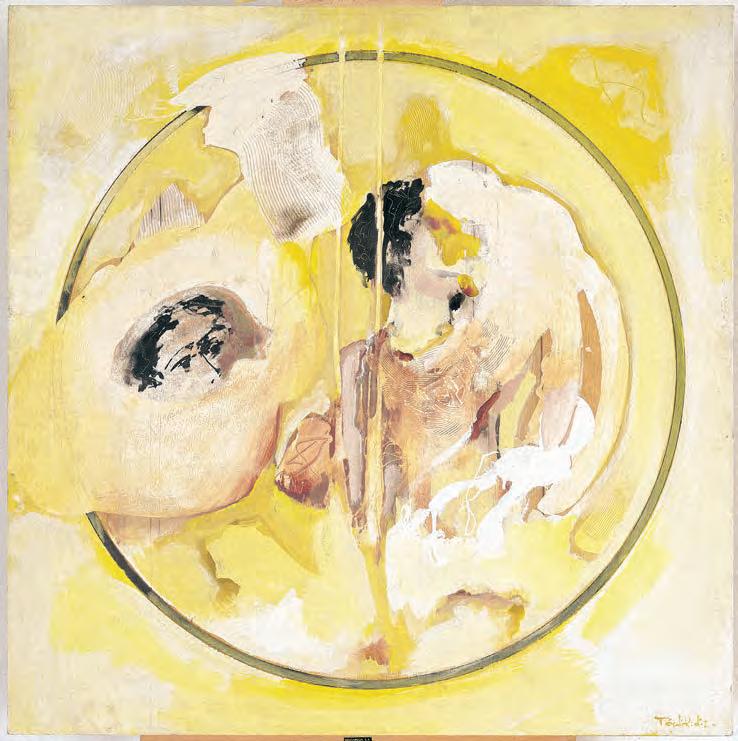
Figures in a Circle 1965, Dimitris Perdikidis, mixed media on wood, 106x106 cm. Private collection.
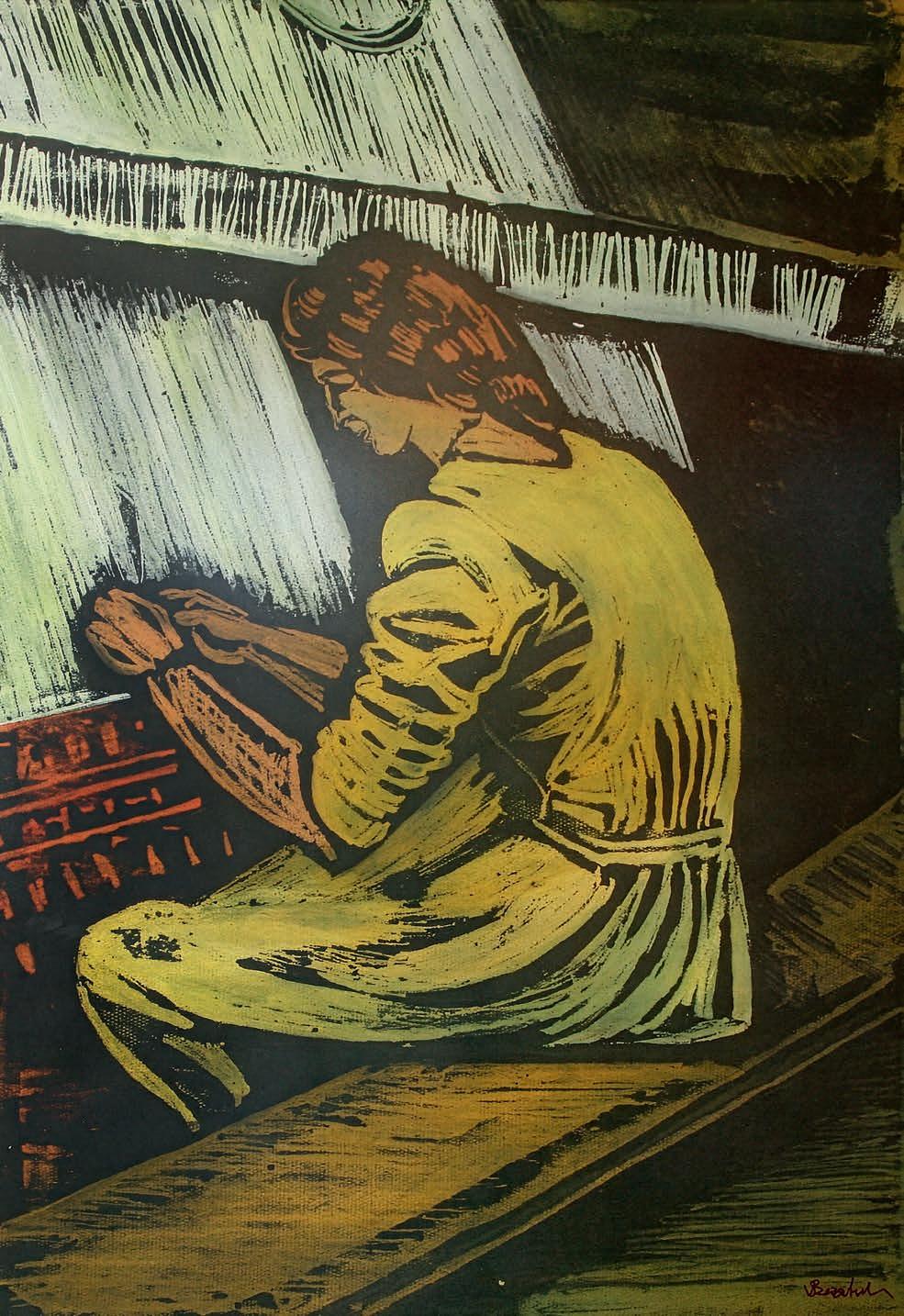
Weaver, 1968, Valias Semertzidis.
, 1968, Bάλιας
Knowledge
the struggles of the partisans there, creating a body of work that stands as a vital witness to an entire era.
A widely exhibited artist and the recipient of numerous distinctions, Semertzidis went on to become known for his landscapes and depictions of working people as well. Visitors to the Foundation can trace the full breadth of his artistic journey in the exhibition on the second floor: from the compelling student works produced in Parthenis’ studio and early portraits shaped by European influences, to the stark drawings of the occupation and the Civil War; and from portraits of humble farmers and weavers to the luminous landscapes of Skyros and Rhodes. The Semertzidis exhibition encapsulates a pivotal moment in the evolution of modern Greek art, one which took place in the second half of the 20th century.
The exhibition dedicated to Dimitris Perdikidis can be found on the first floor of the Foundation building. Born in Faliro, a stone’s throw from Piraeus, in 1922, Perdikidis stands among the defining figures of abstraction in Greece. He studied at the Athens School of Fine Arts between 1943 and 1950, under Umberto Argyros – a distinguished representative of the Munich School – and Andreas Georgiadis.
In 1953, Perdikidis relocated to Madrid on a scholarship from the Spanish Ministry of Foreign Affairs, continuing his studies at the Real Academia de Bellas Artes de San Fernando. In Spain, he became closely associated with avant-garde circles and soon abandoned the conservatism of his Athenian training, turning towards non-figurative painting, an approach that, in his work, carried an undercurrent of quiet resistance to the dictatorship in power there.
He went on to achieve significant recognition, participating in major international exhibitions such as the Venice Biennale in 1964 and 1966. The Foundation’s exhibition follows the transition from his early academic work to the explorations of geometric abstraction and non-representational painting. Among the highlights are Torso and Requiem for a Quiet Face, works presented at the Venice Biennale (1964 and 1965 respectively), as well as his remarkable 1976 series based on the epic-length poem Romiosini by the Greek poet Yannis Ritsos.
Together, these two major donations underscore the role of the Aikaterini Laskaridis Foundation as a space for living memory and artistic dialogue. The works of Valias Semertzidis and Dimitris Perdikidis, invite the onlooker not only to follow the evolution of two distinct artistic voices, but to engage with the historical and social conditions that shaped modern Greek art in the 20th century. •
The exhibitions are accompanied by dedicated catalogues.
Charting the
For the first time, the stretch of sea from Poros to Sounio is being systematically mapped in an ambitious initiative funded exclusively by the Athanasios C. Laskaridis Charitable Foundation.
By IOANNA FOTIADI
Saronic Gulf
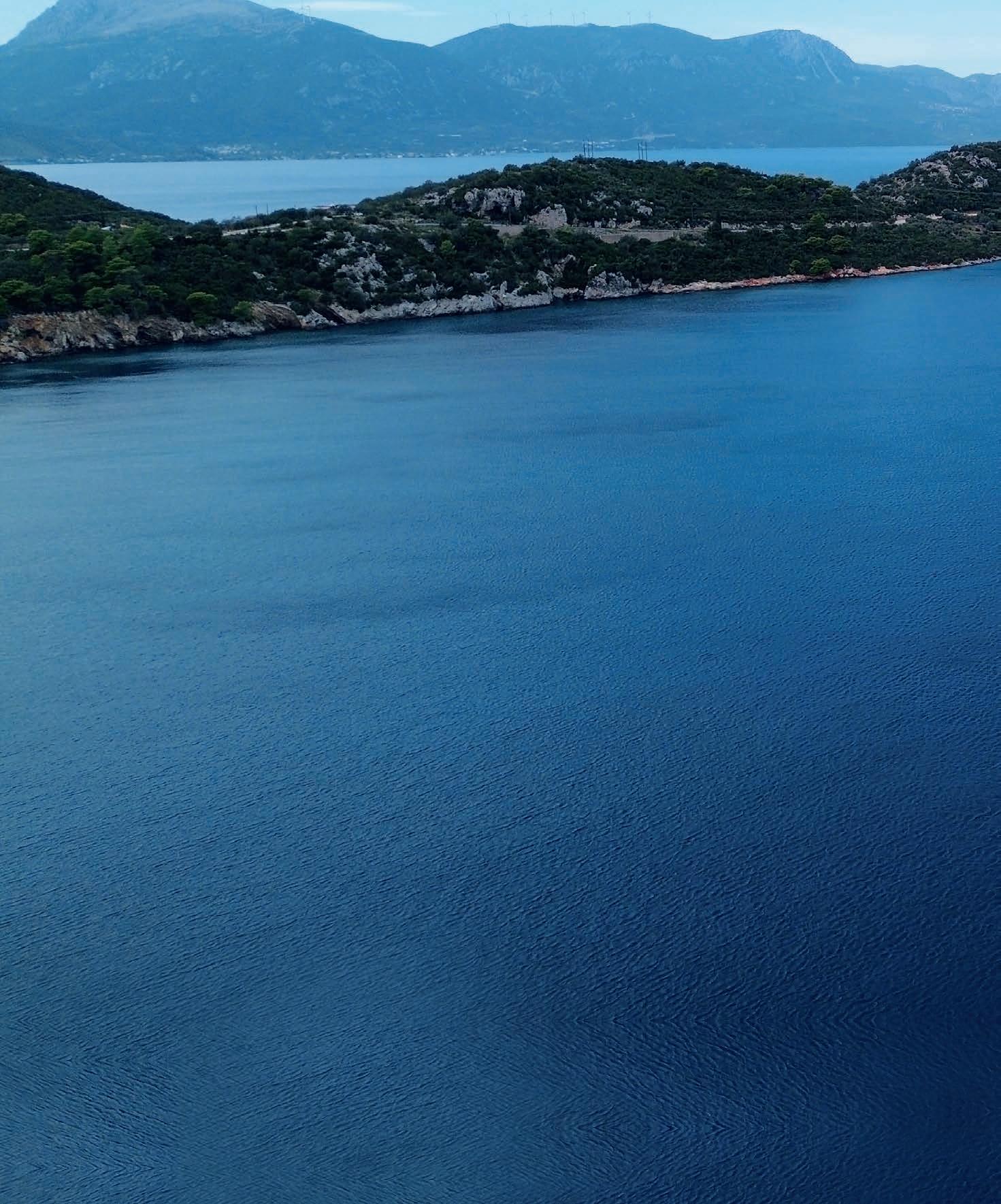
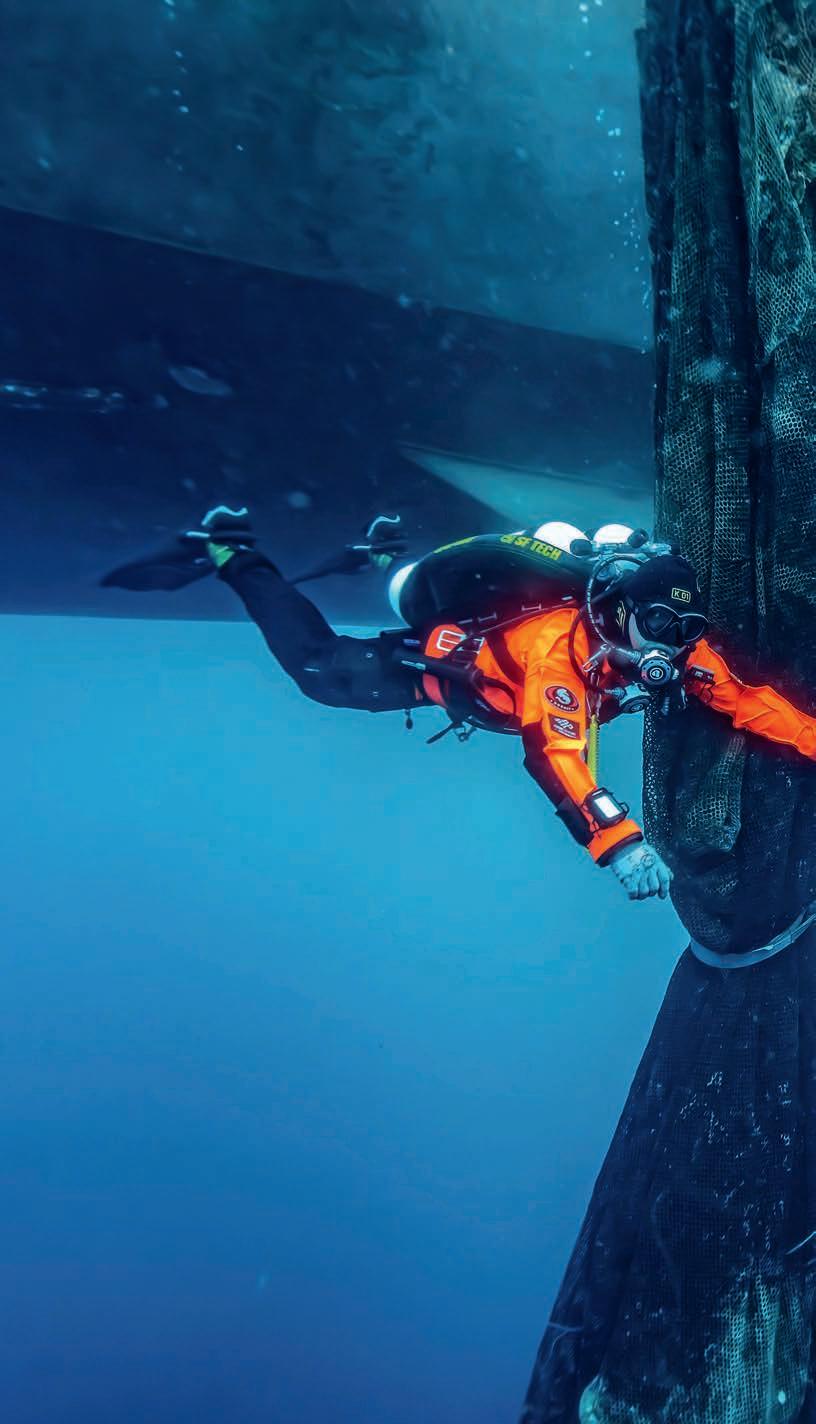
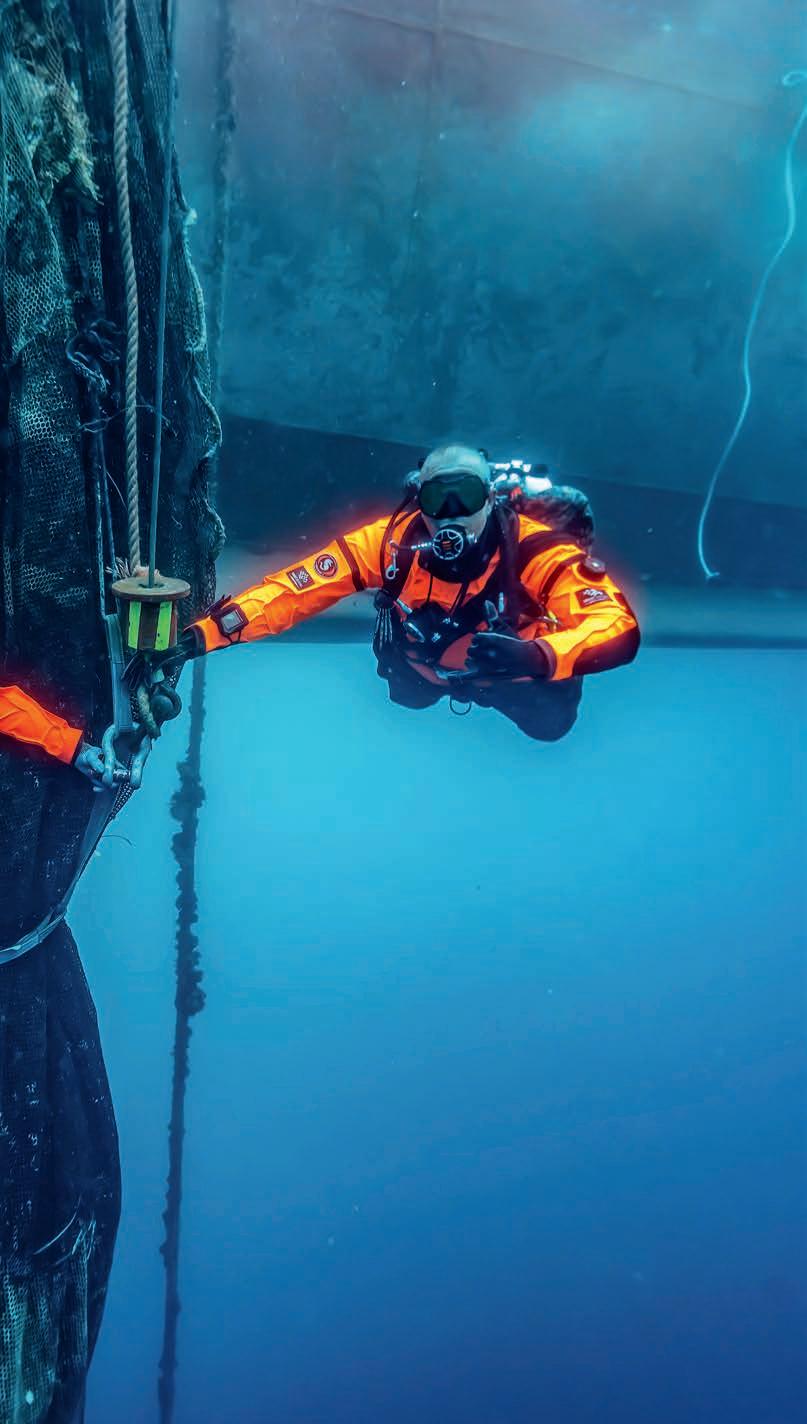
A MARINE REGION with continuous human presence since the Bronze Age, the Saronic Gulf remains surprisingly underexplored in terms of its geomorphology, underwater cultural heritage and the ecosystems it sustains. The A.C. Laskaridis Charitable Foundation has, during the 9th Our Ocean Conference for the protection of the maritime environment, undertaken to effectively “adopt” the gulf, commissioning more than ten scientific institutions to carry out its comprehensive mapping, from Poros to Cape Sounion, while also implementing targeted actions to tackle pollution and support the restoration of the marine environment. It’s the first time that a project of such significance is being carried out in Greece. The ongoing Saronicos Project, launched at the close of 2024, is expected to run for up to five years, with a total budget of €1.5 million.
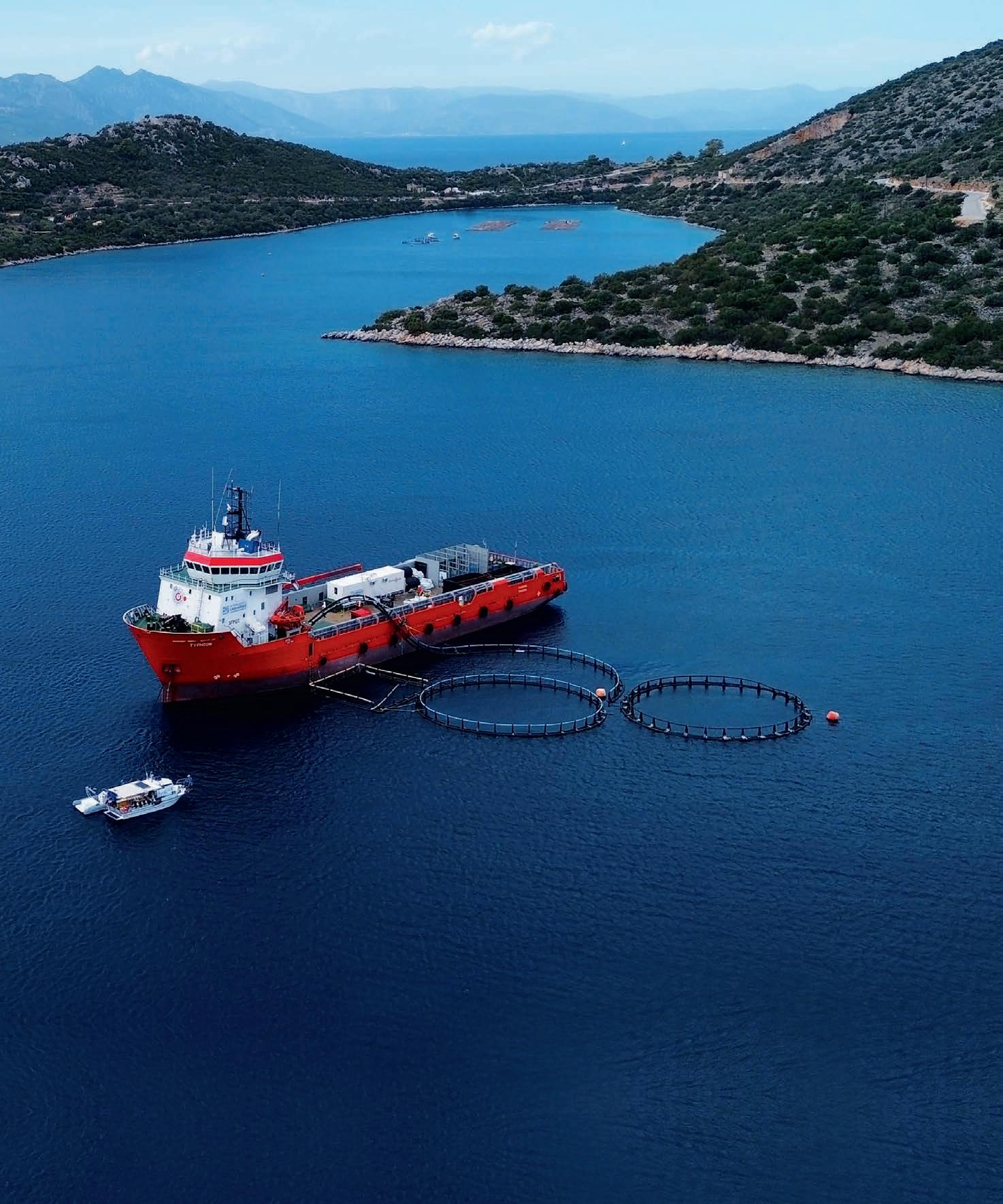
The first research initiative was carried out by SciDrones, a spinoff of the University of the Aegean, which used drones and AI to map coastal waste across the Saronic shoreline. This was followed by the removal of an abandoned aquaculture facility in Methana, a coordinated operation made possible through the Foundation’s collaboration with the environmental organization Healthy Seas, which has been addressing the problem of so-called “ghost farms” since 2021. Ιnactive fish farms effectively form floating landfills, placing sustained pressure on the marine environment. In total, 40 tons of waste were removed – equivalent in volume to 12 large containers – including 18 plastic fish cages, six fishing nets, four metal structures, nine buoys, and two sunken boats. Following sorting, part of the material was recycled or redirected for reuse. “Marine pollution is a complex, multi-layered problem that extends far beyond what is visible on the surface. Abandoned aquaculture installations are a characteristic example of this hidden threat,” notes Peggy Xirotagarou, Executive Director of the A.C. Laskaridis Charitable Foundation. A central role in this large-scale operation was played by the Typhoon, the Foundation’s state-of-the-art 72-meter Norwegian-built vessel, which has been carrying out cleanups across hard-to-reach shorelines in Greece since 2019.
MAPPING, DOCUMENTATION, RESTORATION
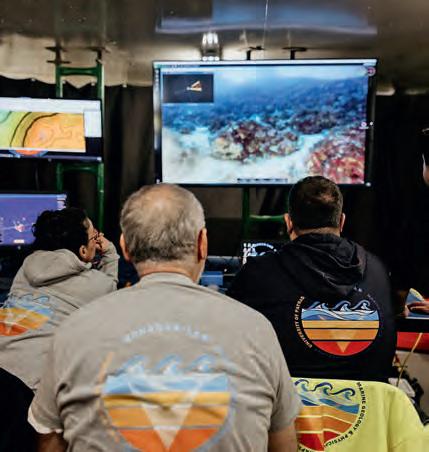
Methana was the focus of the next stage of the Saronicos Project as well. A coordinated research mission set out for there, with the Oceanus-Lab team from the University of Patras on board the Typhoon, which sailed alongside the research vessel Aigaio from the Hellenic Centre for Marine Research.
The Oceanus-Lab team focused on the Pausanias underwater volcanic field, as well as selected volcanic
Undersea efforts Gathering debris from a disused fish farm off the shores of Methana.
Environment
cones at depths ranging from 65 to 180 meters, collecting ultra-high-resolution video footage to enable precise classification of marine organisms. Their research remains ongoing. At the same time, the Hellenic Centre for Marine Research examined the deep basins of the Saronic Gulf – areas where human impact has accumulated over time – mapping nearly 400 square kilometers of seabed and recording close to 580 kilometers of seismic profiles.
More scientific projects and collaborations aimed at understanding and restoring the Saronic Gulf lay ahead. The A.C. Laskaridis Charitable Foundation has already set in motion a broad range of initiatives, from comprehensive seabed and coastal ecosystem mapping to restoration efforts and educational programs. Among them is the documentation of underwater cultural heritage, in collaboration with the Institute of Marine Archaeological Research.
Key areas of focus include Ambelakia Bay in Salamis, where the submerged section of a classical city and harbor has been identified, as well as a Mycenaean shipwreck off the islet of Modi east of Poros. The findings are expected to offer valuable new insight into both the region’s history and its underwater landscape. •
Joining Forces
The Typhoon team is carrying out parallel cleanup operations along hard-to-reach coastlines, while scientists study the seabed.
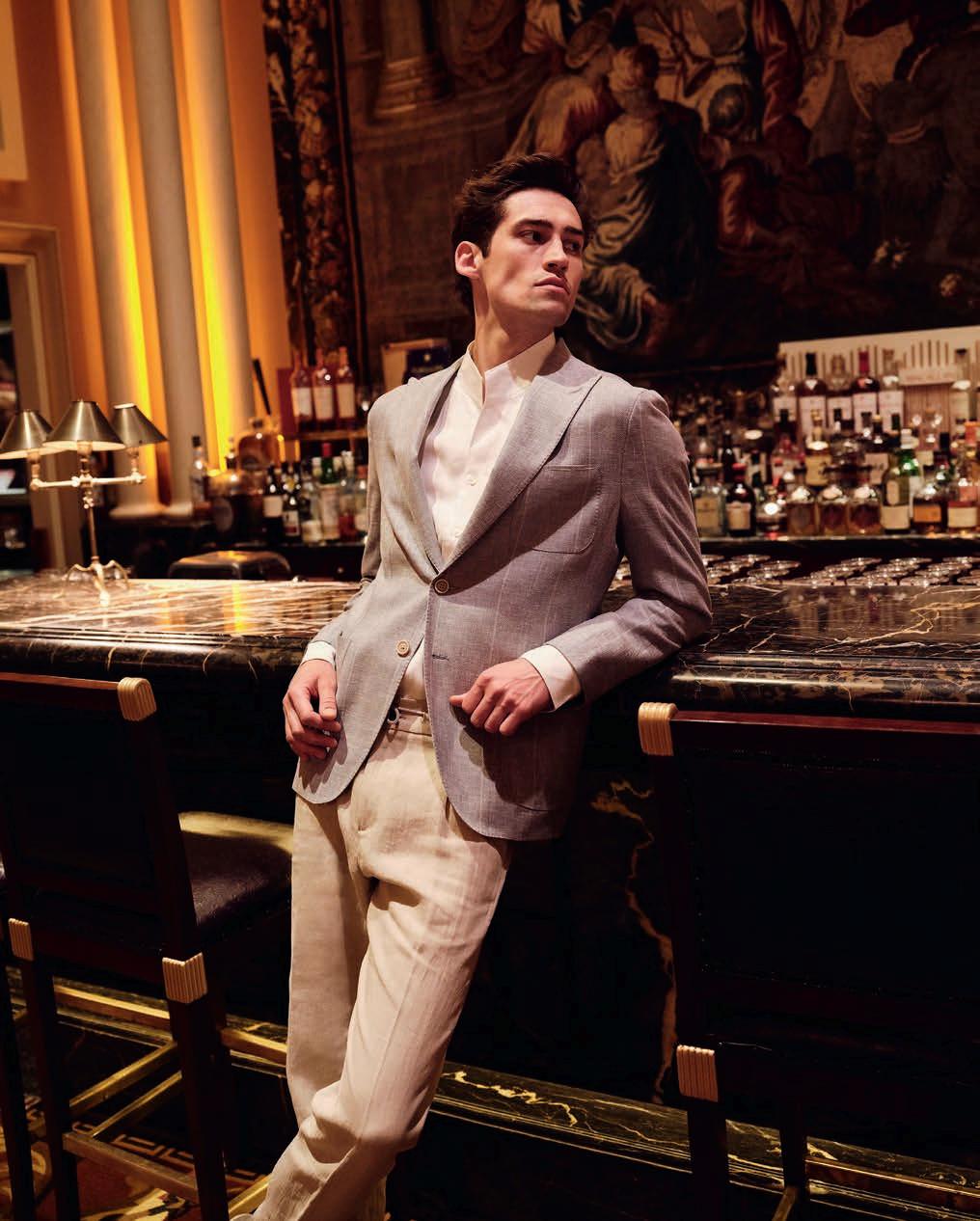
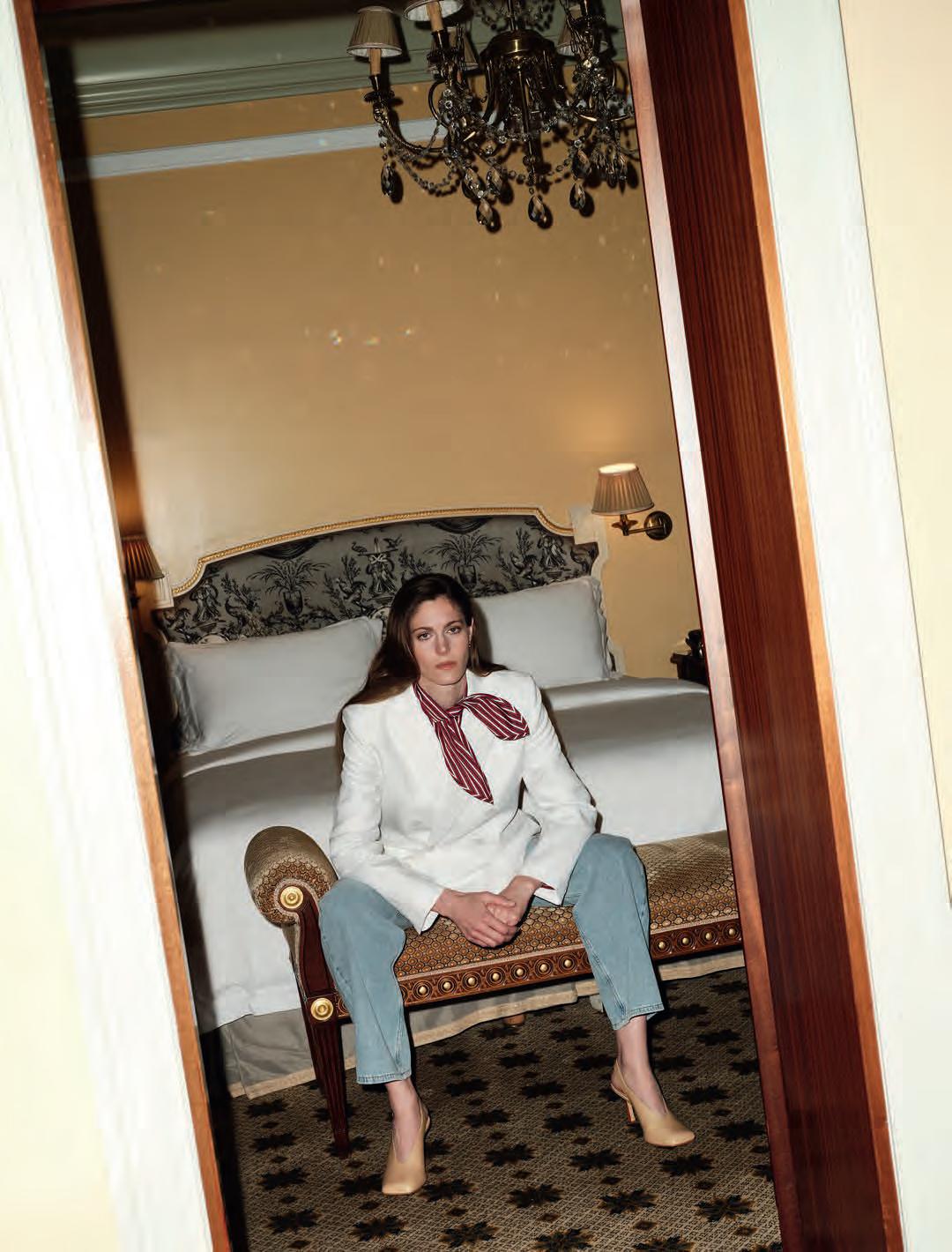
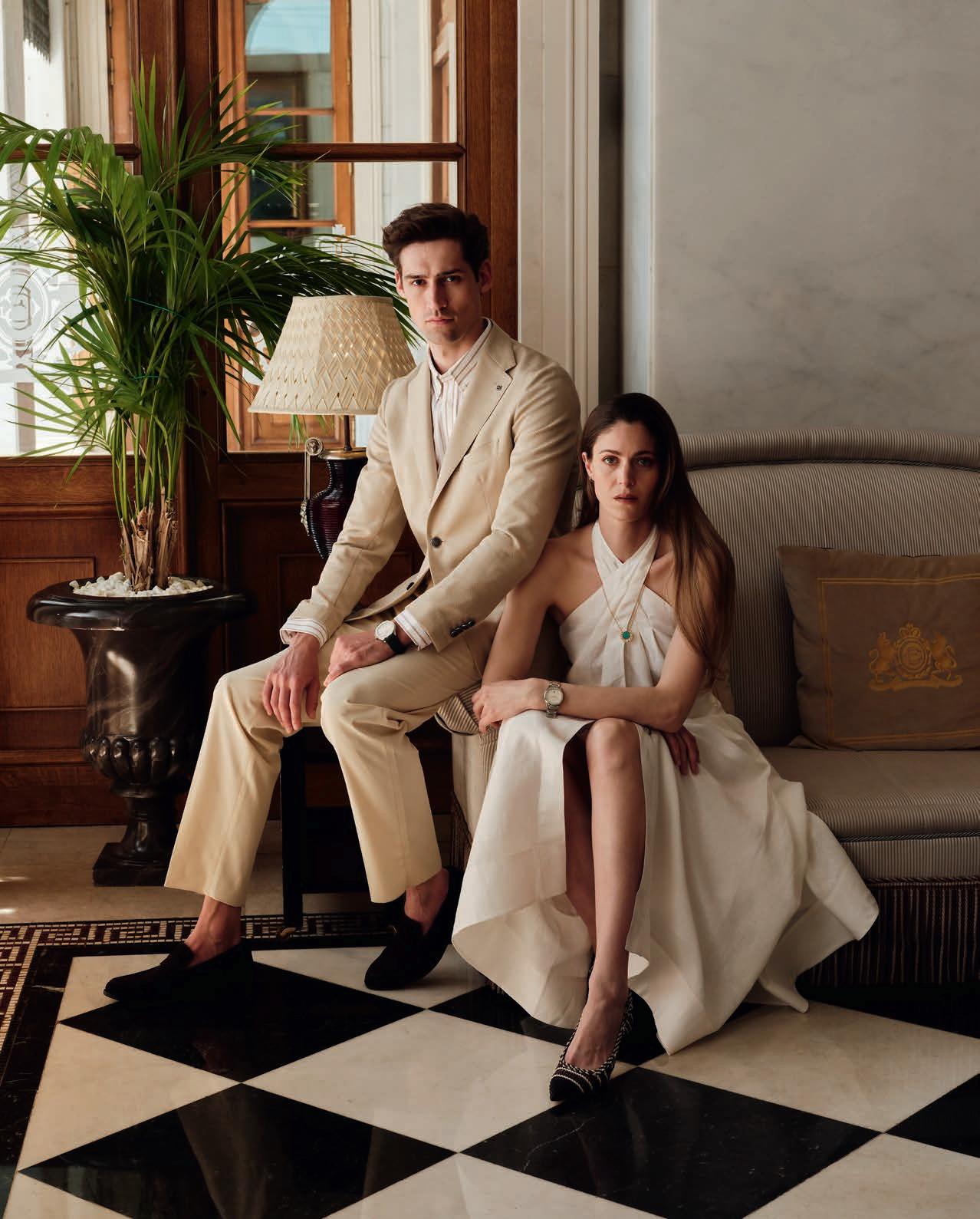
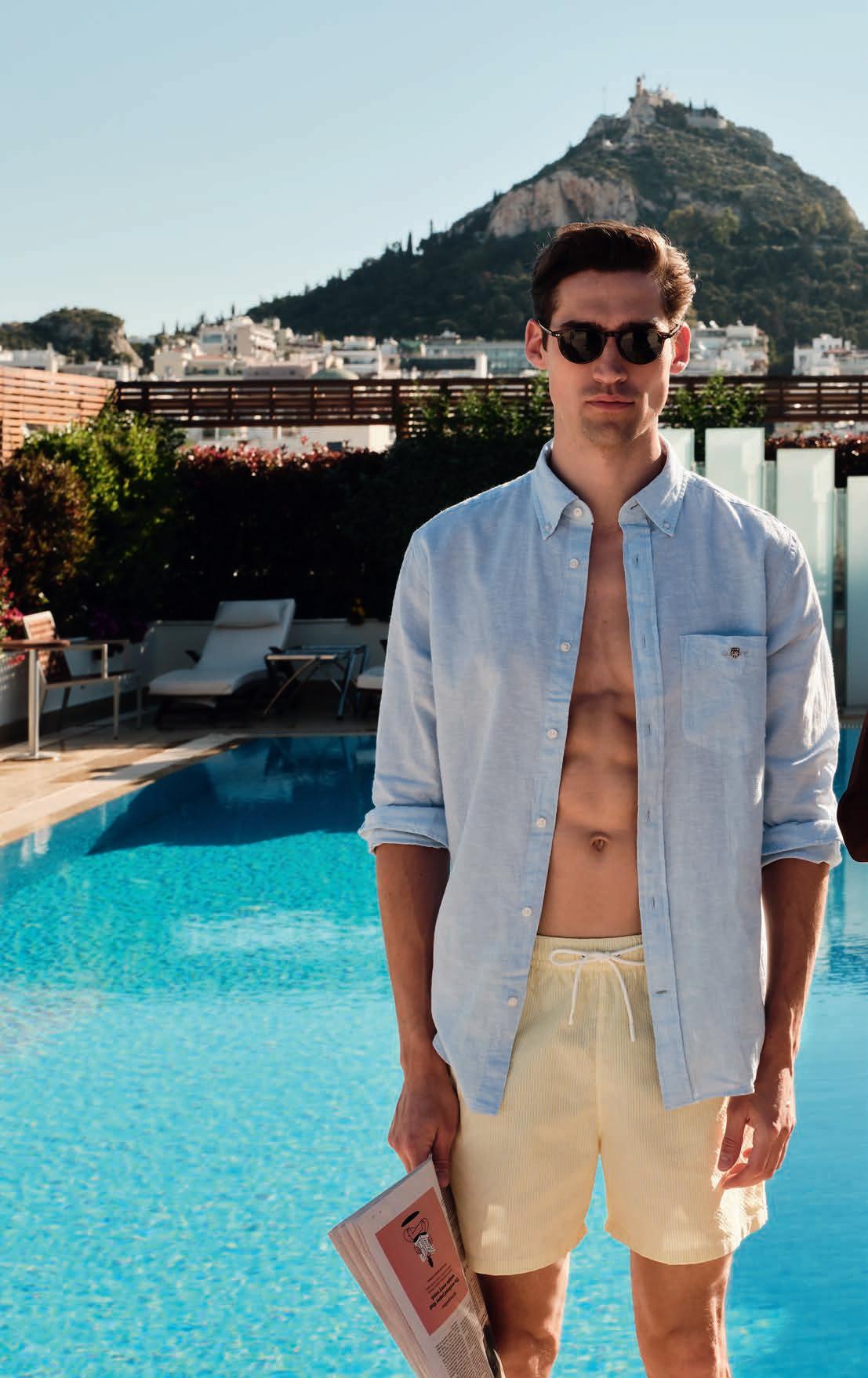
In the Heart of Style
Photographed by YIORGOS KAPLANIDIS ( Thisisnotanotheragency)
Linen suit and T-shirt, Boss (ATTICA). Leather shoes, Jacquemus (KALOGIROU).
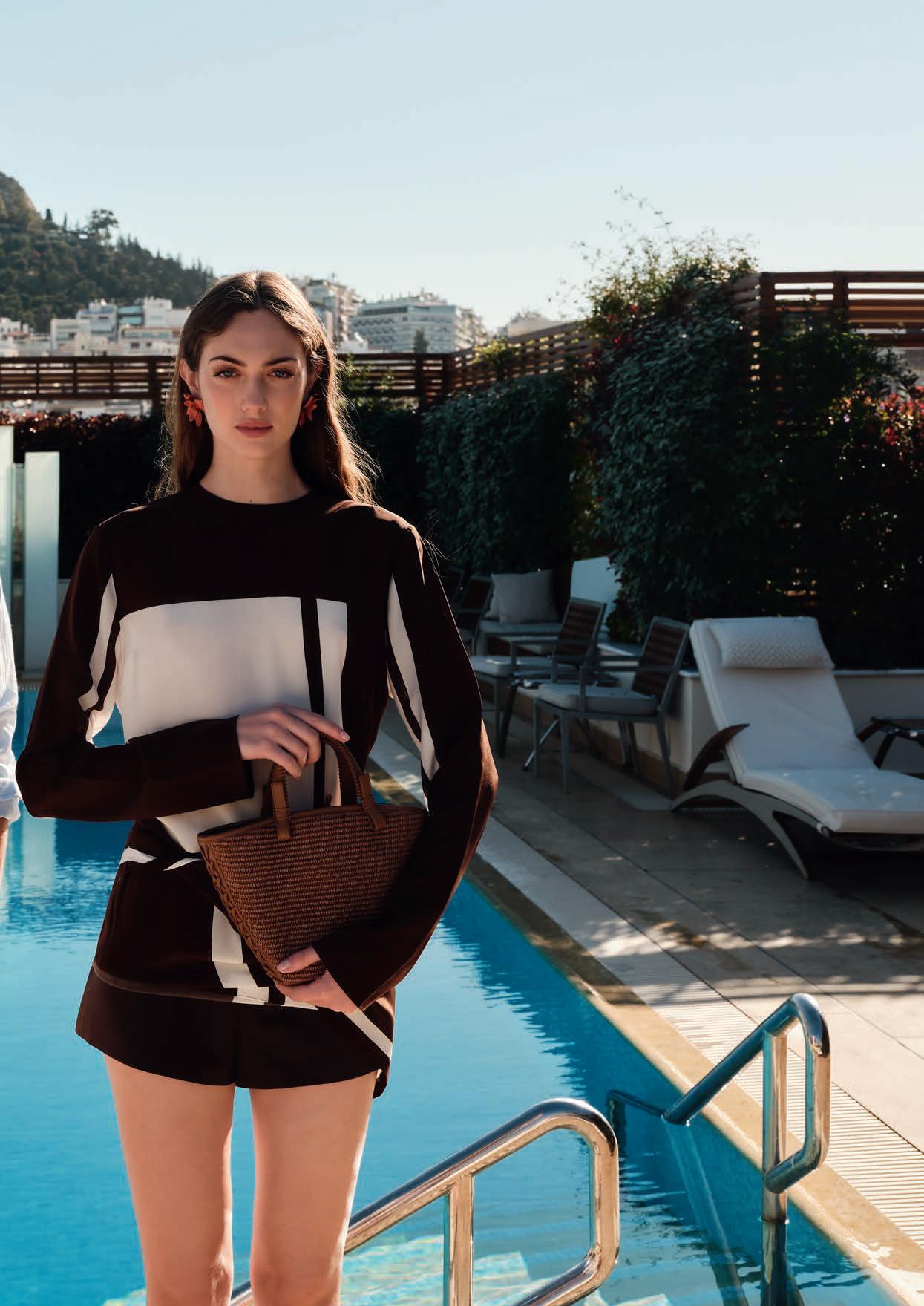
Melina: Silk shirt, Acne Studios; poplin skirt and leather bag, JW Anderson (ATTICA). Leather slingback pumps, Sergio Rossi (KALOGIROU).
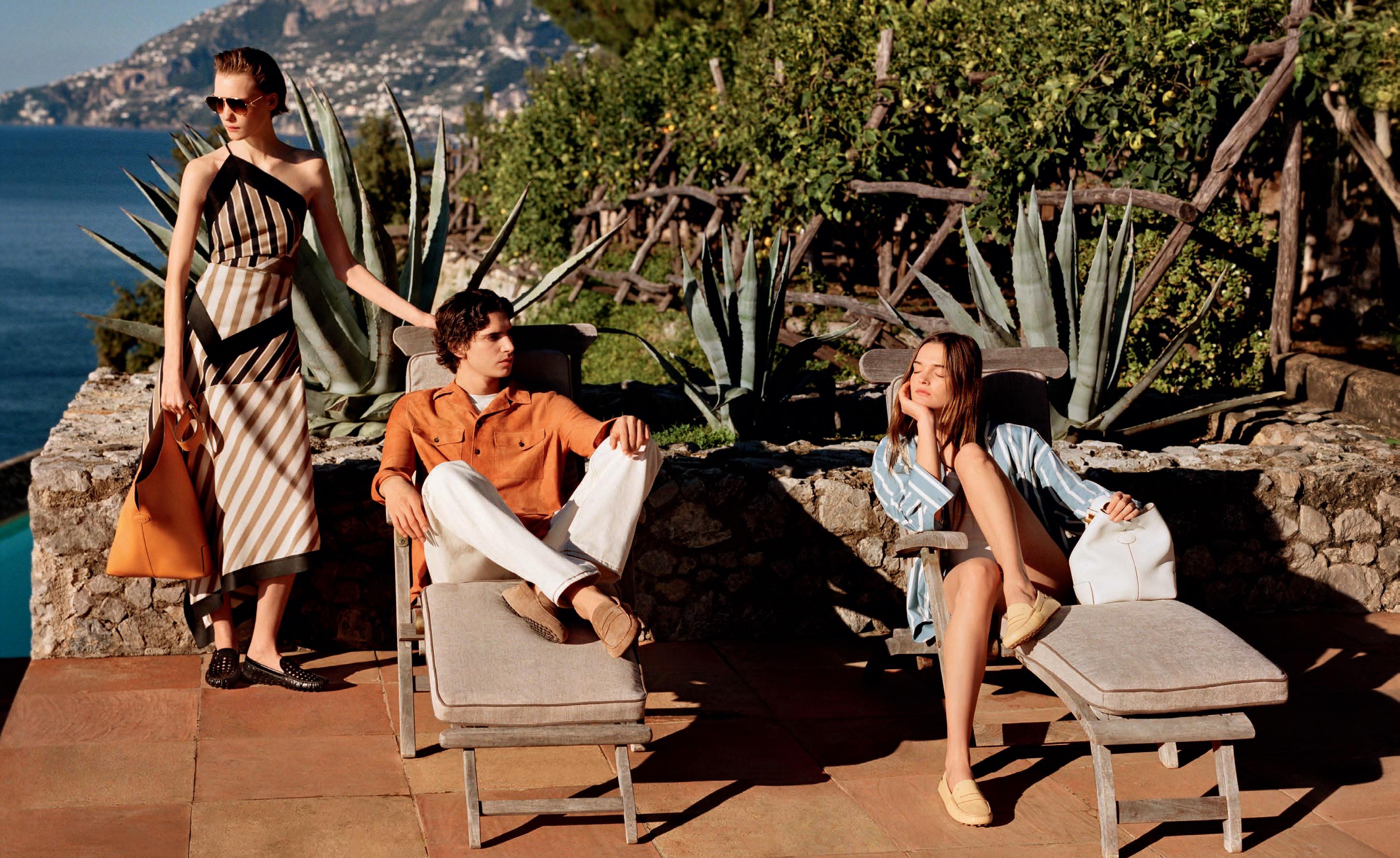
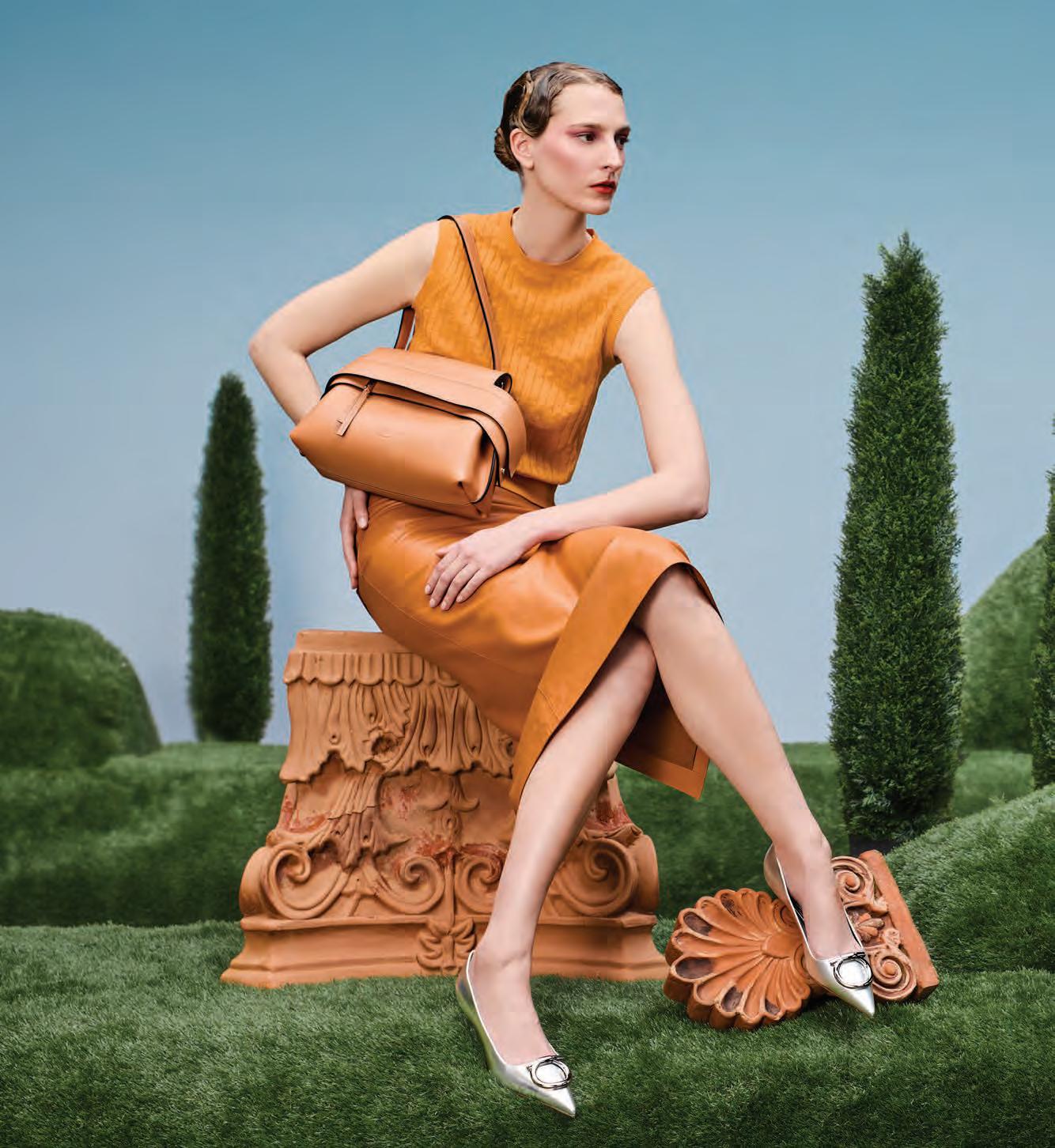
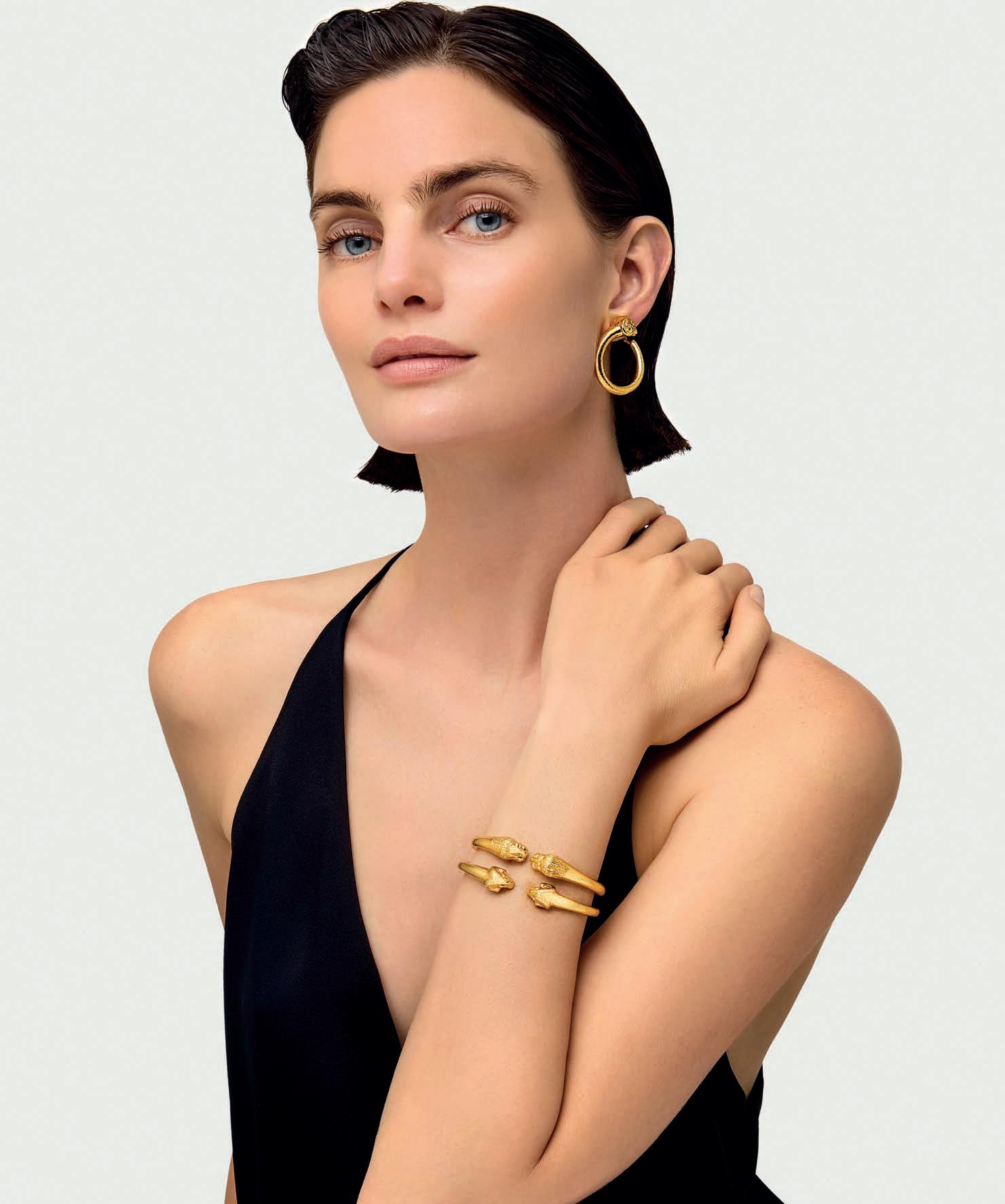
Οn the right page, Athina: Silk sweater, wool canvas skirt, leather slingback pumps and bag, Tod’s (TOD’S BOUTIQUE). Lion Head “Heritage” earrings, Hercules Knot necklace and “The Golden Lion” anniversary necklace in 18K gold with mother of pearl. (ZOLOTAS).
On the left page, Athina: Silk top and skirt, Zeus+Dione (GB CORNER GIFTS & FLAVORS).
Handwoven 18K gold earrings with pearls and Love Knot necklace (GEORGE’S JEWELLERY).
Joep: Bomber jacket, Tom Ford; linen shirt, Sease; cotton trousers, Tom Ford; leather belt, Officine Creative; suede sneakers, Zegna (INCROCIO).
Linen blazer and cotton shirt, Lauren Ralph Lauren, and jeans, Trussardi (HONDOS CENTER). Leather mules, Carrano (KALOGIROU).
On the right page, Joep: Cotton blazer, shirt and trousers, Vakko (VAKKO BOUTIQUE). Polo Signature Date watch, Piaget (KASSIS). Suede shoes (KALOGIROU). Athina: Linen dress, Vakko (VAKKO BOUTIQUE). Sunlight pendant in 18K rose gold with amazonite and diamonds, Polo Date watch in steel with diamond-set dial, Piaget (KASSIS). Leather slingback pumps, Nine West (HARALAS).
Athina:
Joep: Linen shirt, Gant, and swimwear, Tommy Hilfiger (HONDOS CENTER).
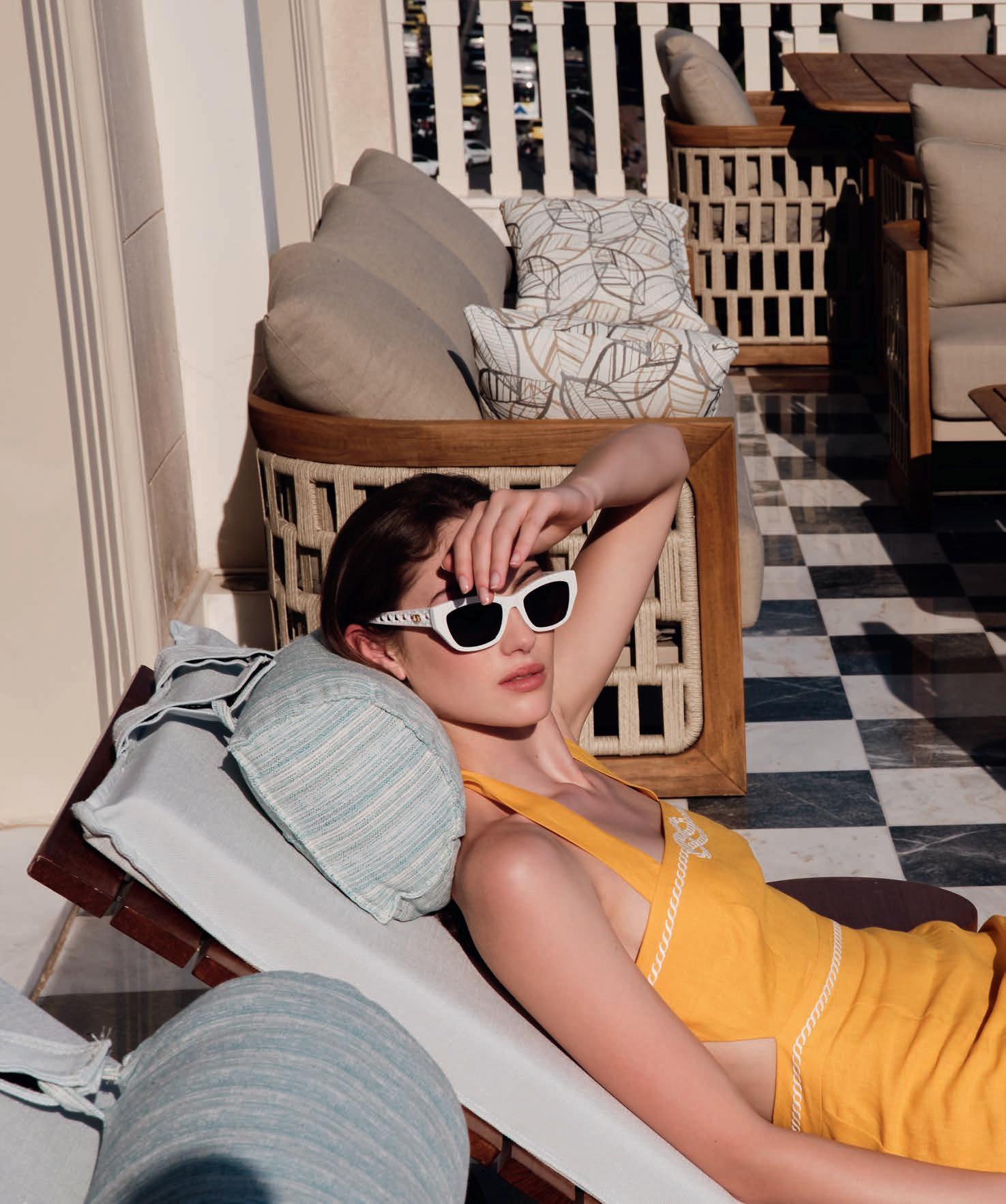
Sunglasses, Oliver Peoples (PANAIDIS EYEWEAR BOUTIQUE).
Melina: Silk top and cotton shorts, Sir (ATTICA).
Dahlia Bouquet earrings in titanium and 14K gold with peridot gemstones, Anastasia Kessaris (KESSARIS). Leather and raffia bag, Callista (CALLISTA BOUTIQUE).
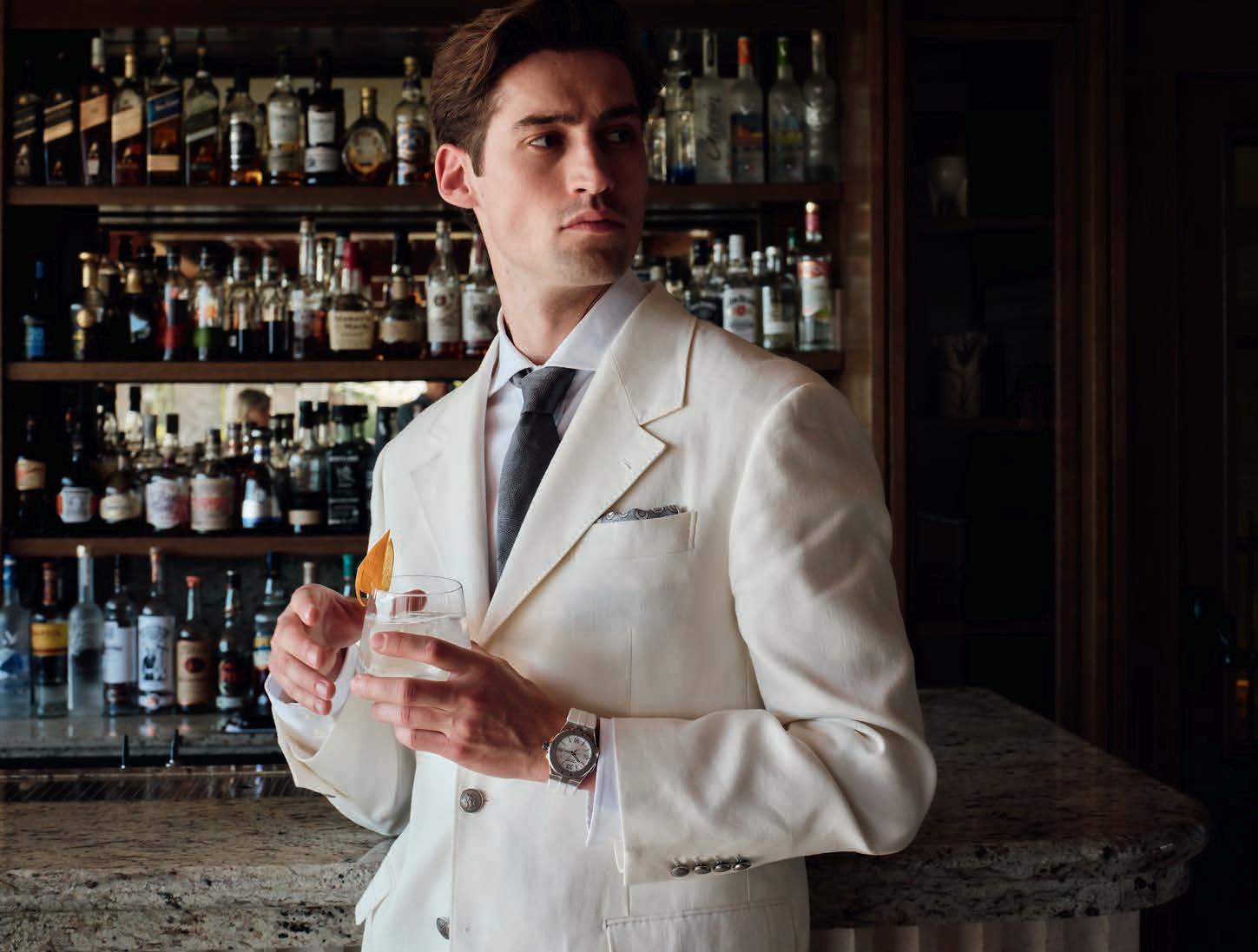
Joep: Linen blazer, cotton shirt, linen trousers, silk tie and pochette, Brunello Cucinelli (BRUNELLO CUCINELLI BOUTIQUE). Alpine Eagle watch in Lucent steel, Chopard (CHOPARD BOUTIQUE).
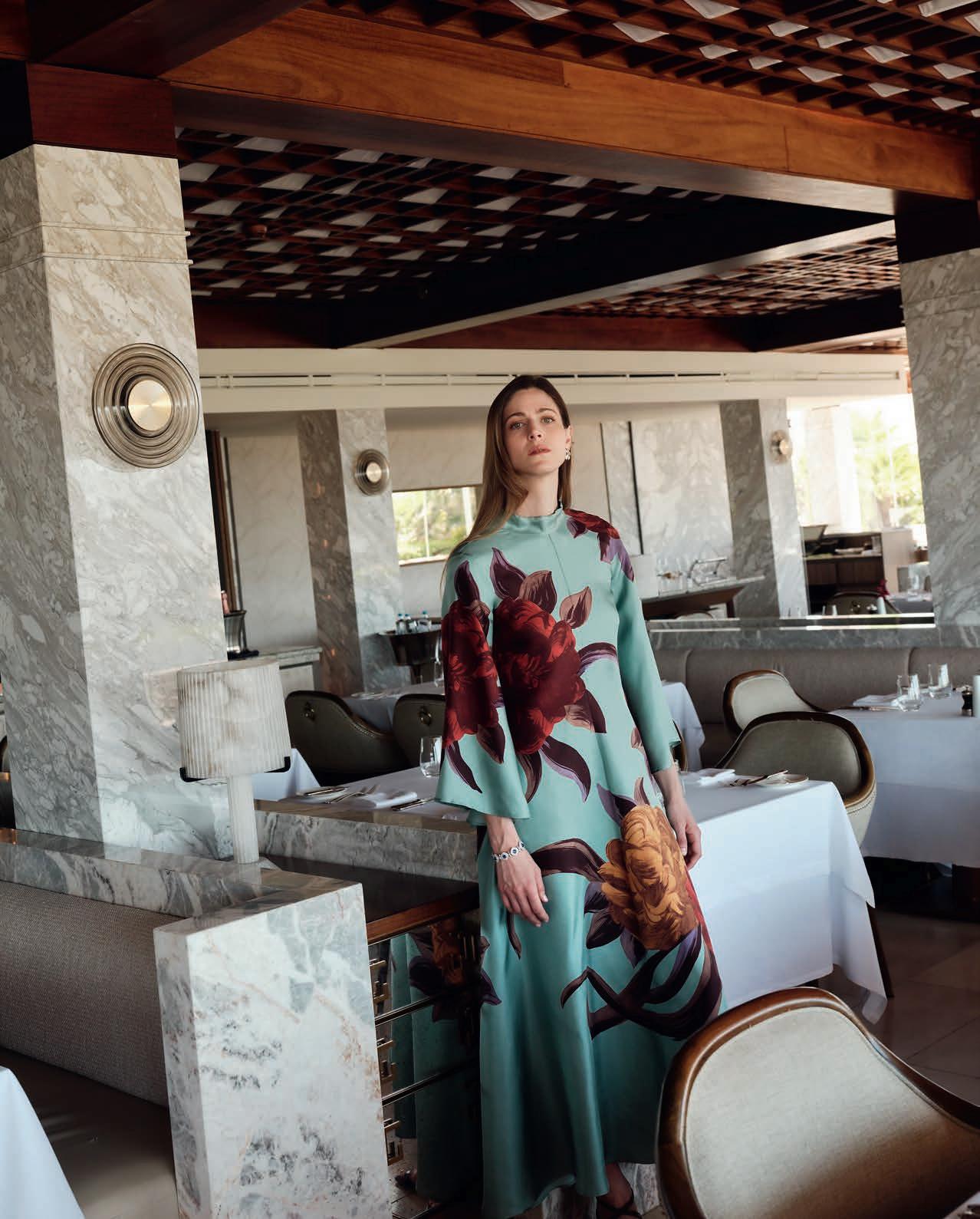
On the right page, Athina: Silk dress, La DoubleJ (ATTICA). Earrings in 18K yellow gold with diamonds, sapphires and mother of pearl; bracelet in 18K white gold with diamonds, tanzanites and mother of pearl (VENETIA VILDIRIDIS).
Athina: Poplin tailored shirt and white denim pants, Ancient Kallos (AESTHET). Linear Rhombus hoop earrings in 18K yellow gold, Kessaris. Sunglasses, Celine (PANAIDIS EYEWEAR BOUTIQUE).
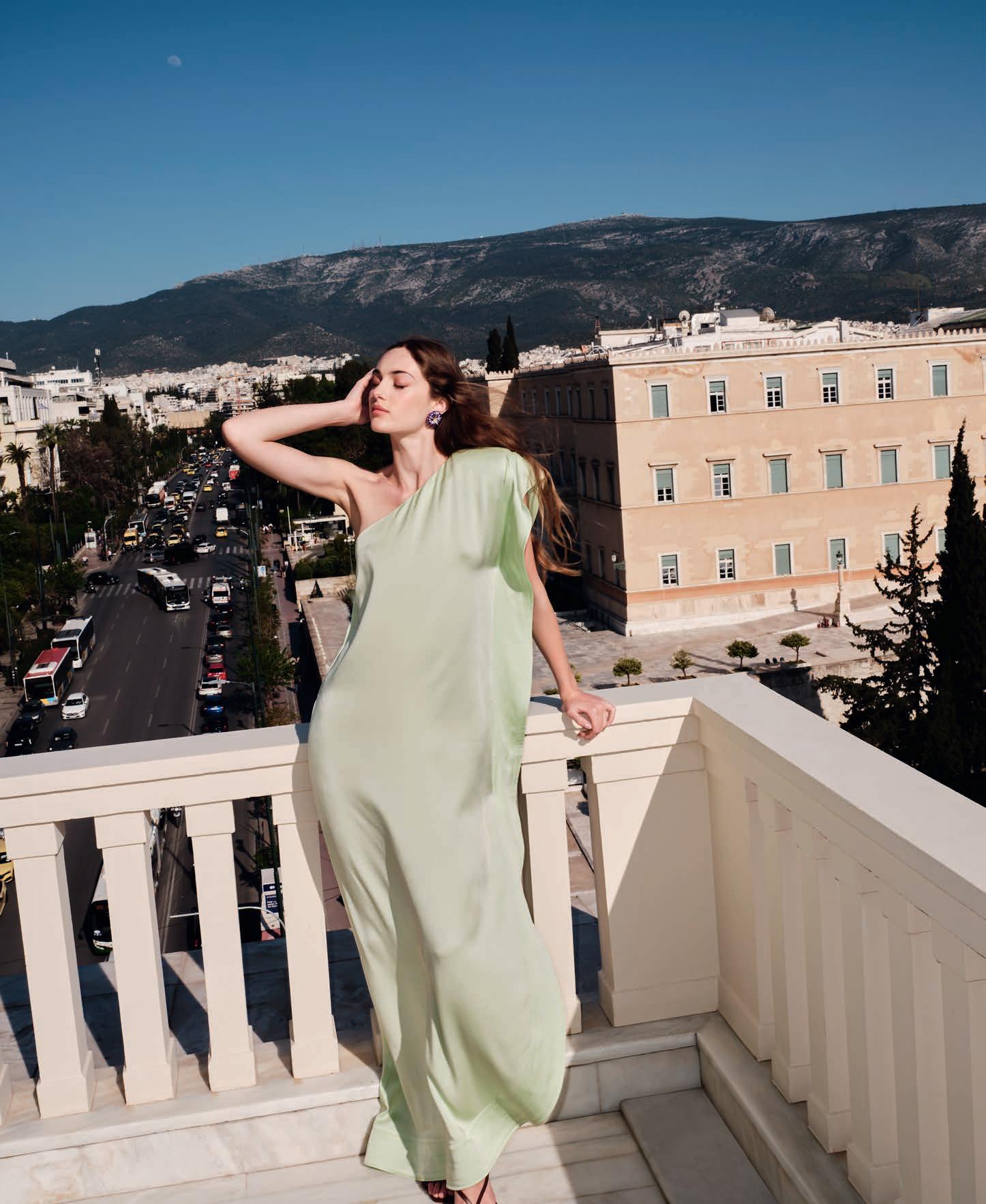
On the left page, Melina: One-shoulder maxi dress, Stella McCartney (ATTICA). Starlit Ocean earrings in titanium and 18K gold with sapphires (KESSARIS).
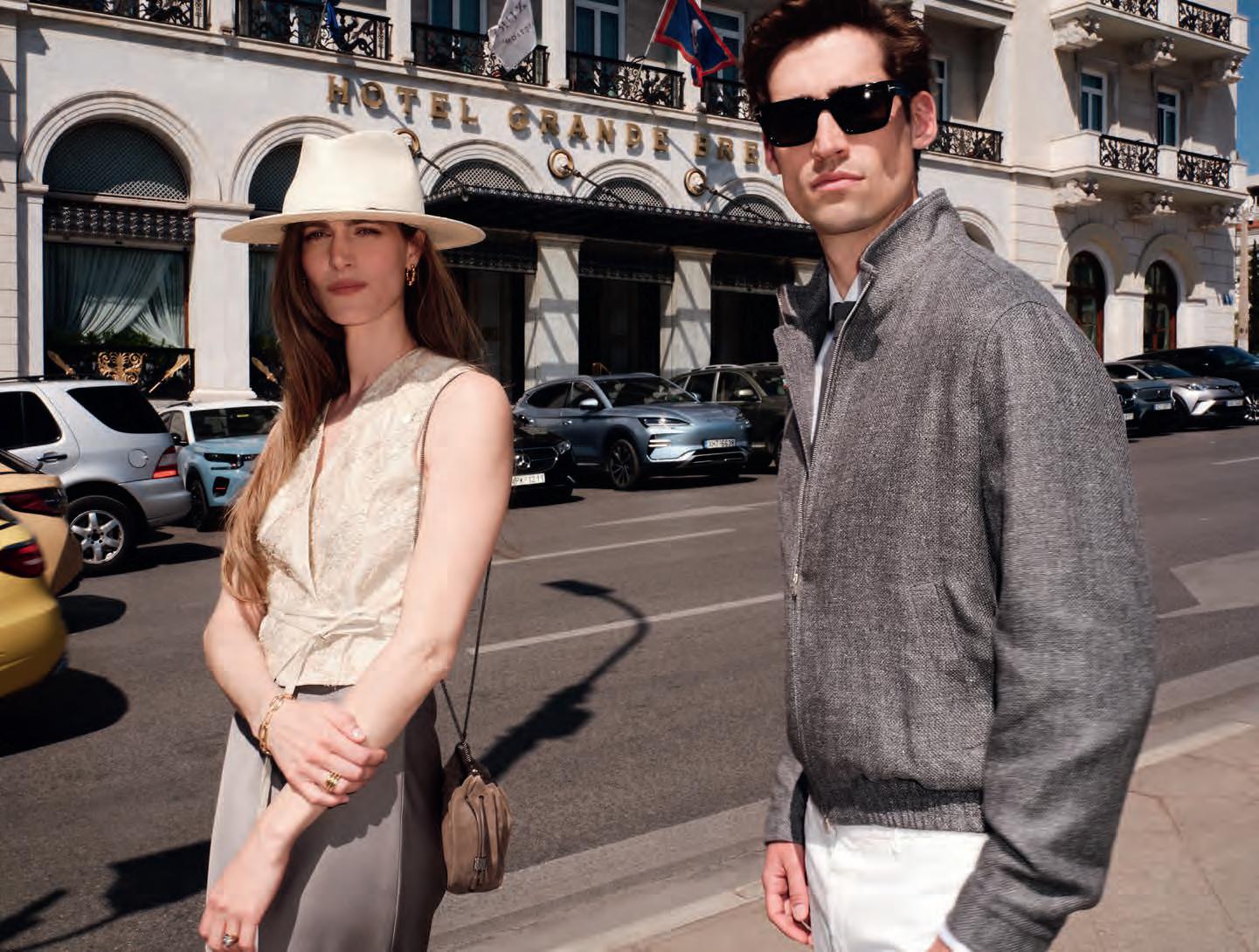
Athina: Vest with seabed embroidery, satin skirt, straw hat and suede leather bag, Brunello Cucinelli (BRUNELLO CUCINELLI BOUTIQUE). Formed Orbit earrings, Alterné Link bracelet and Trilogie ring in yellow gold, Kessaris; Diamond Sun ring, Anastasia Kessaris (KESSARIS). Joep: Bomber jacket, linen shirt, cotton trousers and silk tie, Brunello Cucinelli (BRUNELLO CUCINELLI BOUTIQUE). Sunglasses, Tom Ford (PANAIDIS EYEWEAR BOUTIQUE).
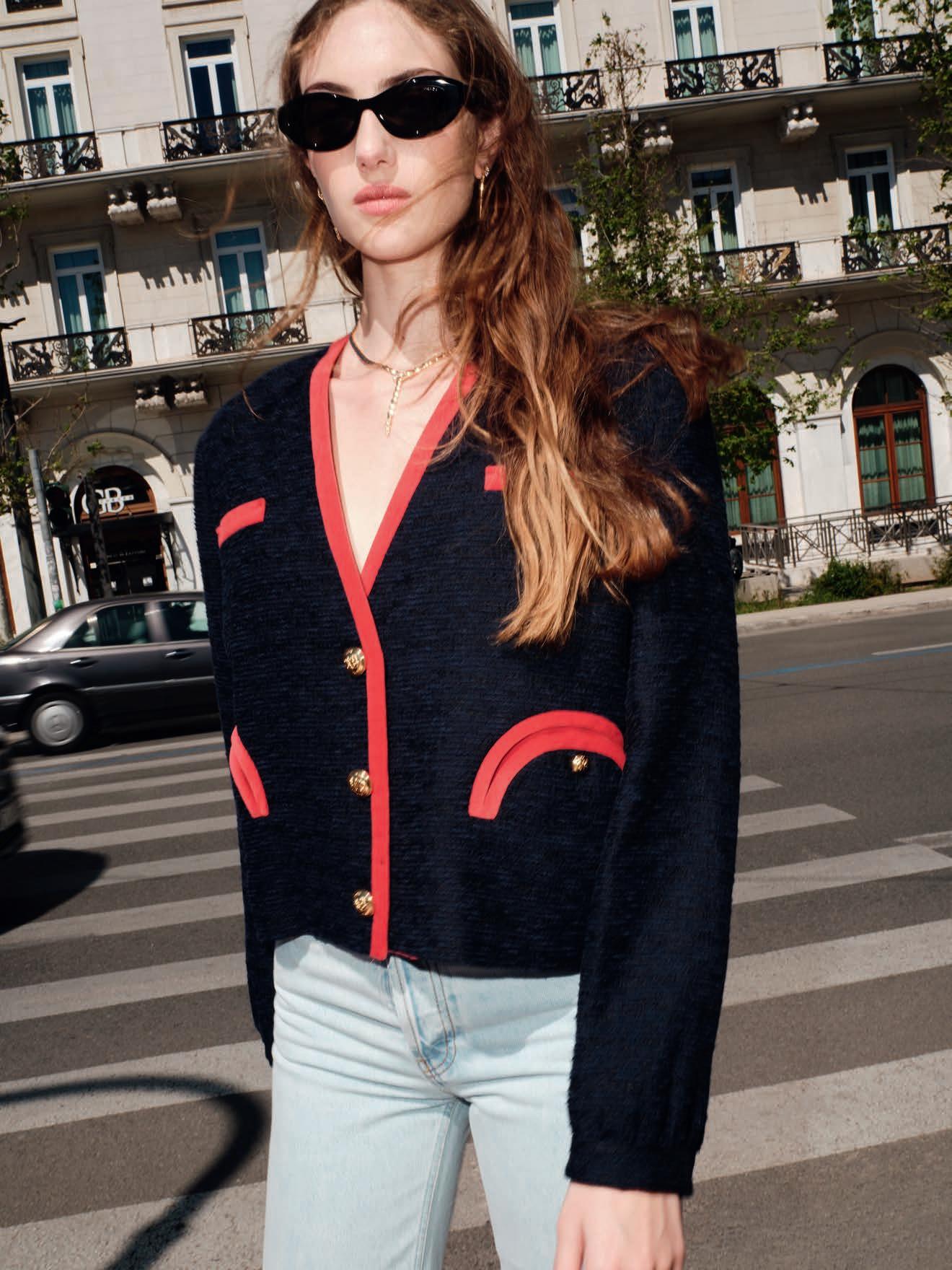
On the right page, Melina: Tweed jacket and jeans, Blazé Milano (ATTICA). Serpenti Viper earrings and necklace in 18K yellow gold with pavé diamonds, and Serpenti Cuoricino mini top-handle bag, Bulgari (BVLGARI BOUTIQUE).
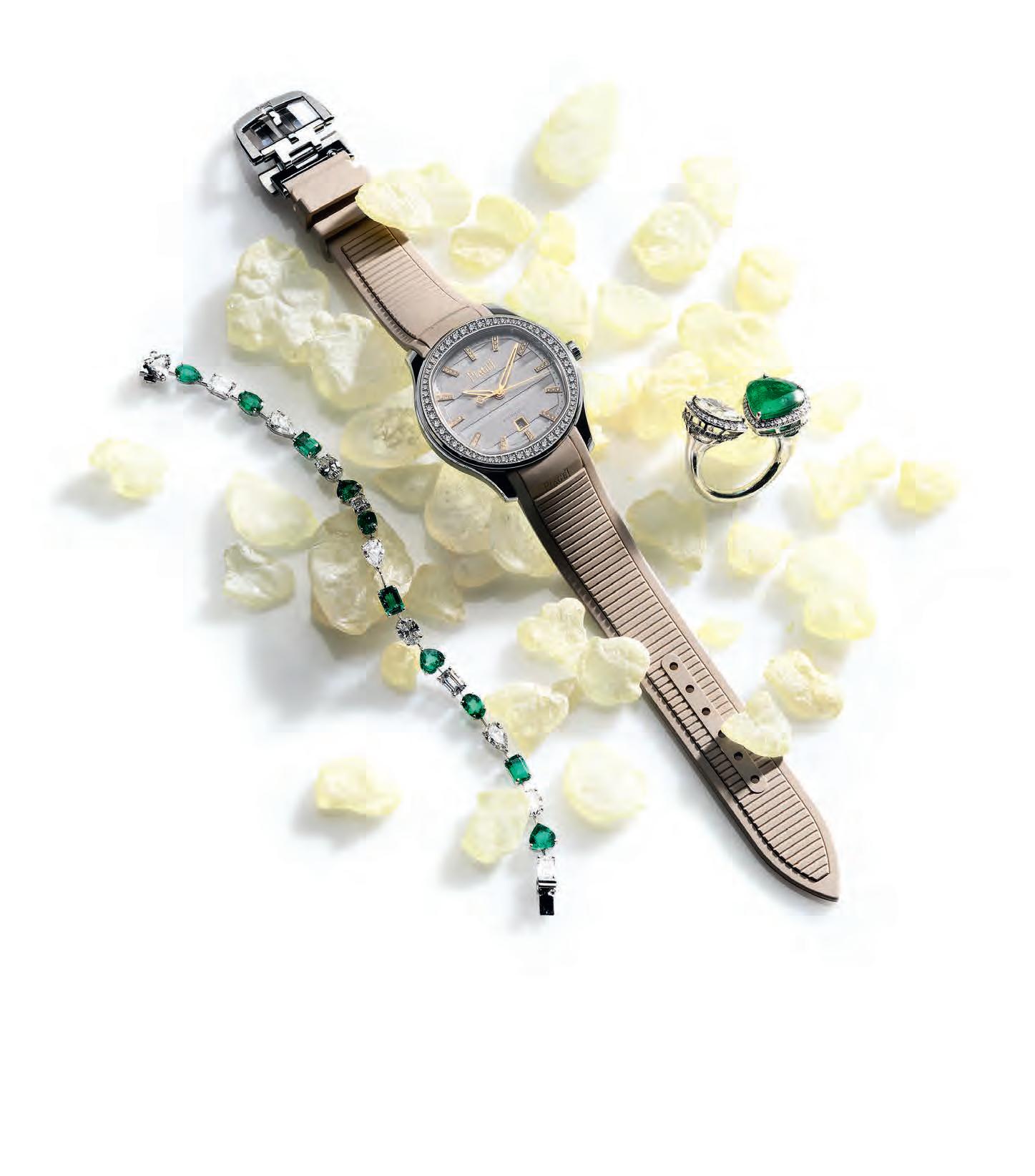
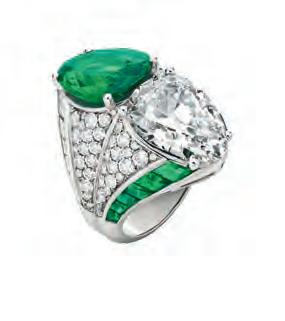
PIAGET Polo Date 150th Anniversary automatic watch, featuring a 36 mm stainless steel case and diamond-set bezel (KASSIS). Ring and bracelet in 18K white gold with diamonds and emeralds (VENETIA VILDIRIDIS).
Photography: STUDIO ANASTASSATOS
Styling: MANTHOS DELLATOLAS
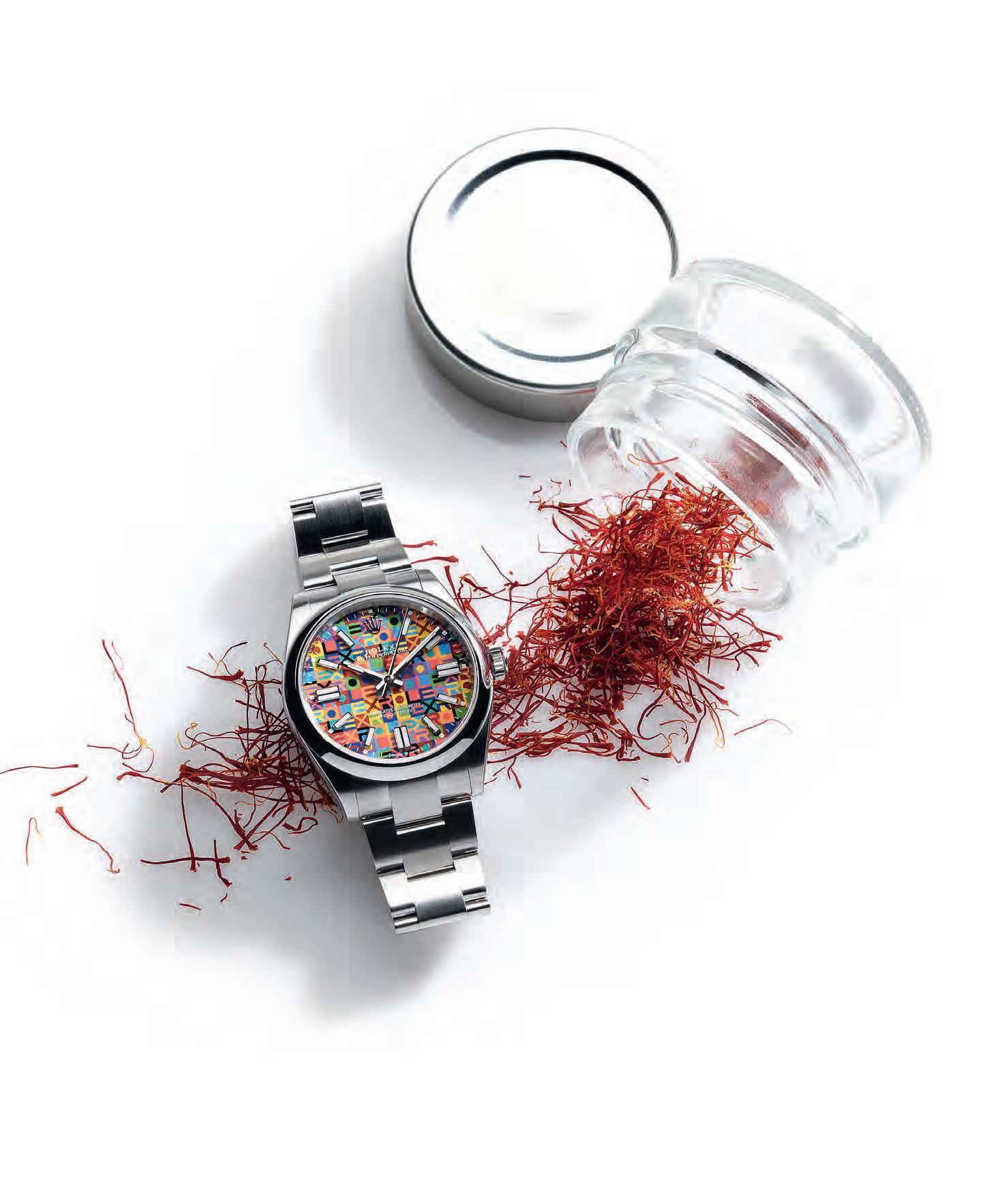
Krokos Kozanis Saffron
ROLEX Oyster Perpetual automatic watch, featuring a 41 mm Oystersteel case and bracelet, with a colorful Jubilee-motif dial (ROLEX BOUTIQUE).
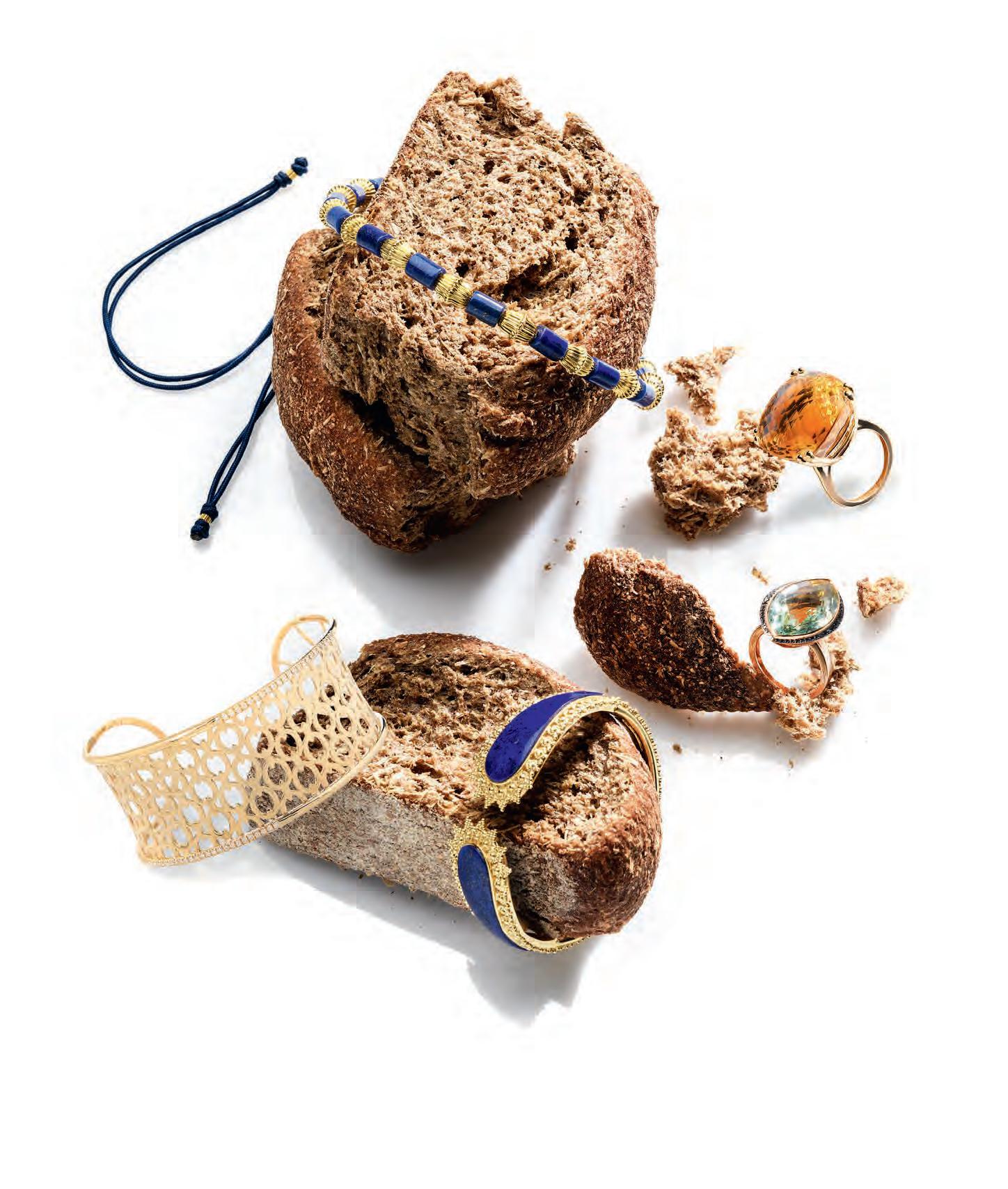
Cretan Barley Rusks
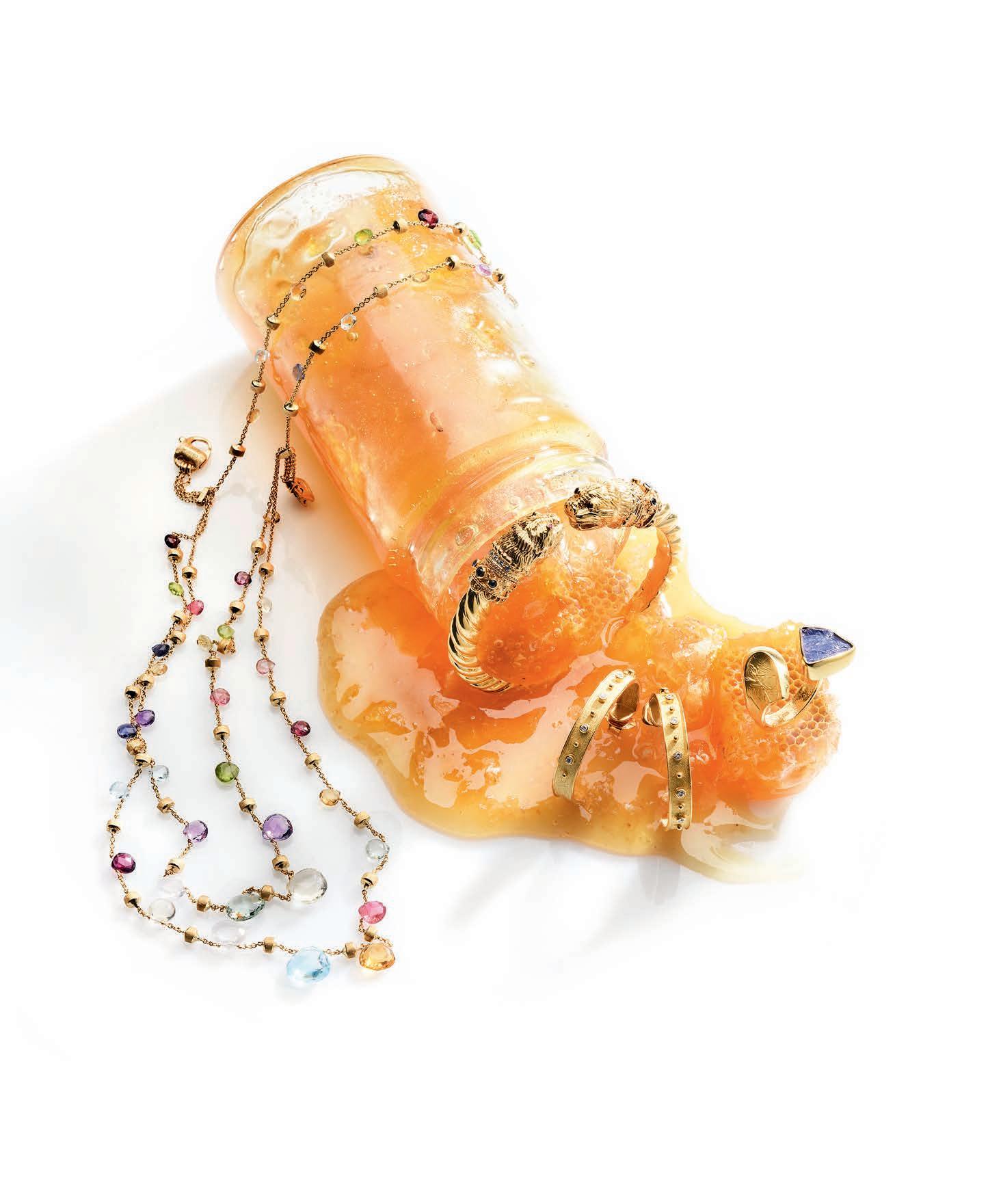
LALAOUNIS necklace and bracelet in 18K gold with diamonds and lapis lazuli. Top right, ring in 18K gold with citrine, and bottom right, ring in 18K gold with prasiolite and black diamonds (GIOUZENIS). Bottom left, bracelet from the Calypso Collection, crafted in 18K gold and diamonds (DIONI).
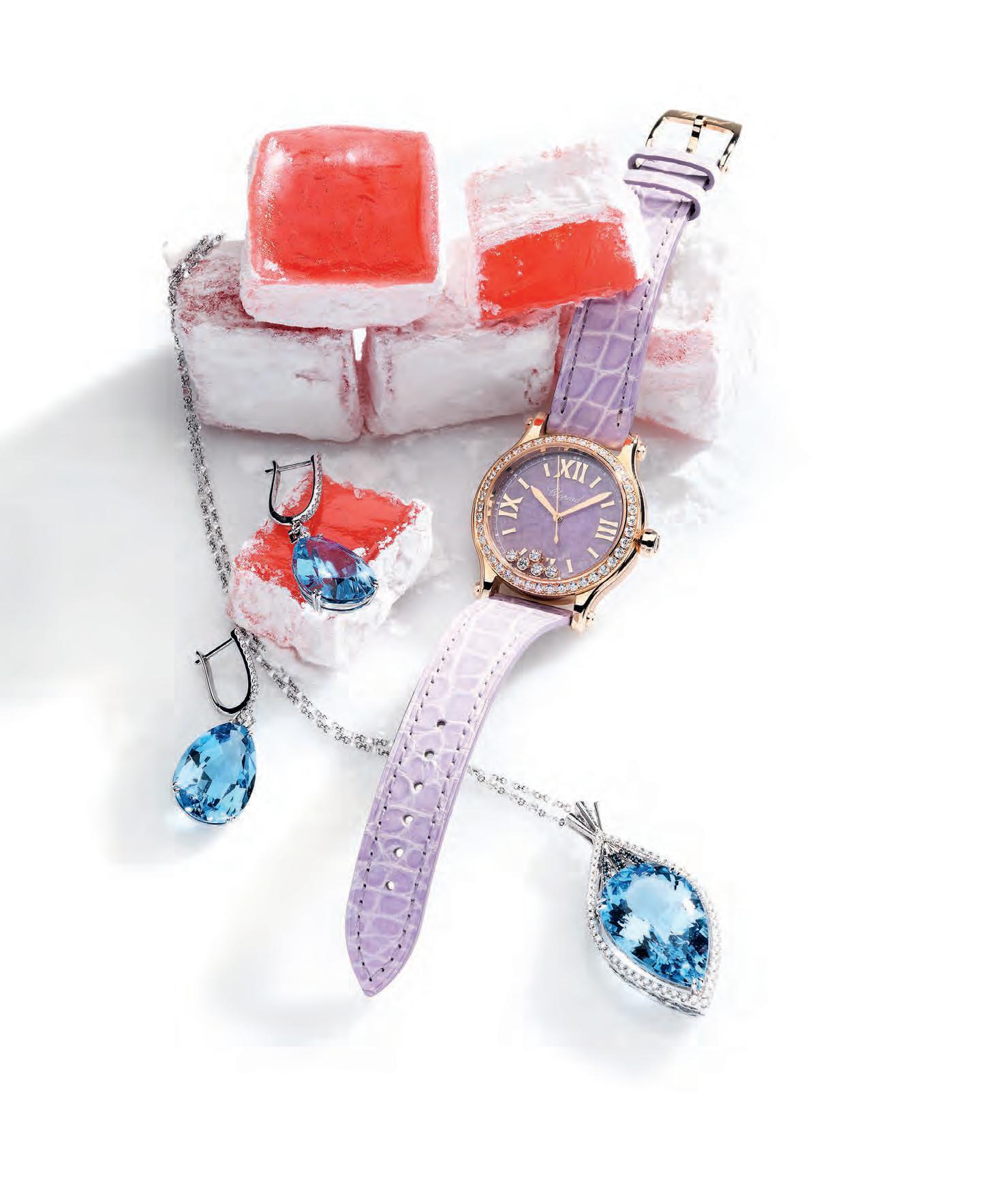
Syros Loukoumi
CHOPARD Happy Sport automatic watch, featuring a 33 mm 18K gold case and diamond-set bezel (CHOPARD BOUTIQUE). Necklace and earrings in 18K white gold with diamonds and topaz (PONIROS).
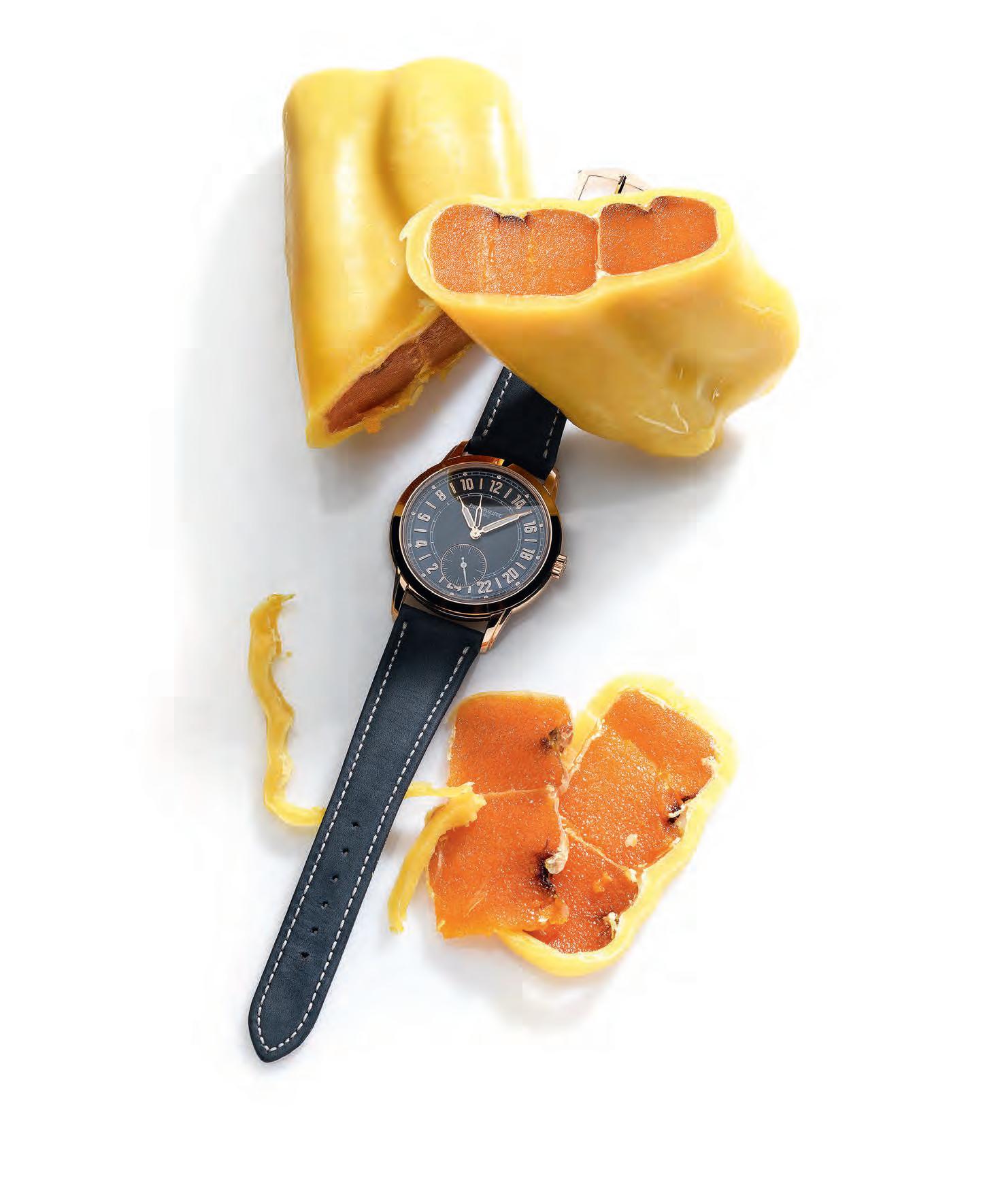
Messolonghi
Bottarga
PATEK PHILIPPE Calatrava Travel Time automatic watch, featuring a 42 mm 18K gold case (STELLA VILDIRIDIS).
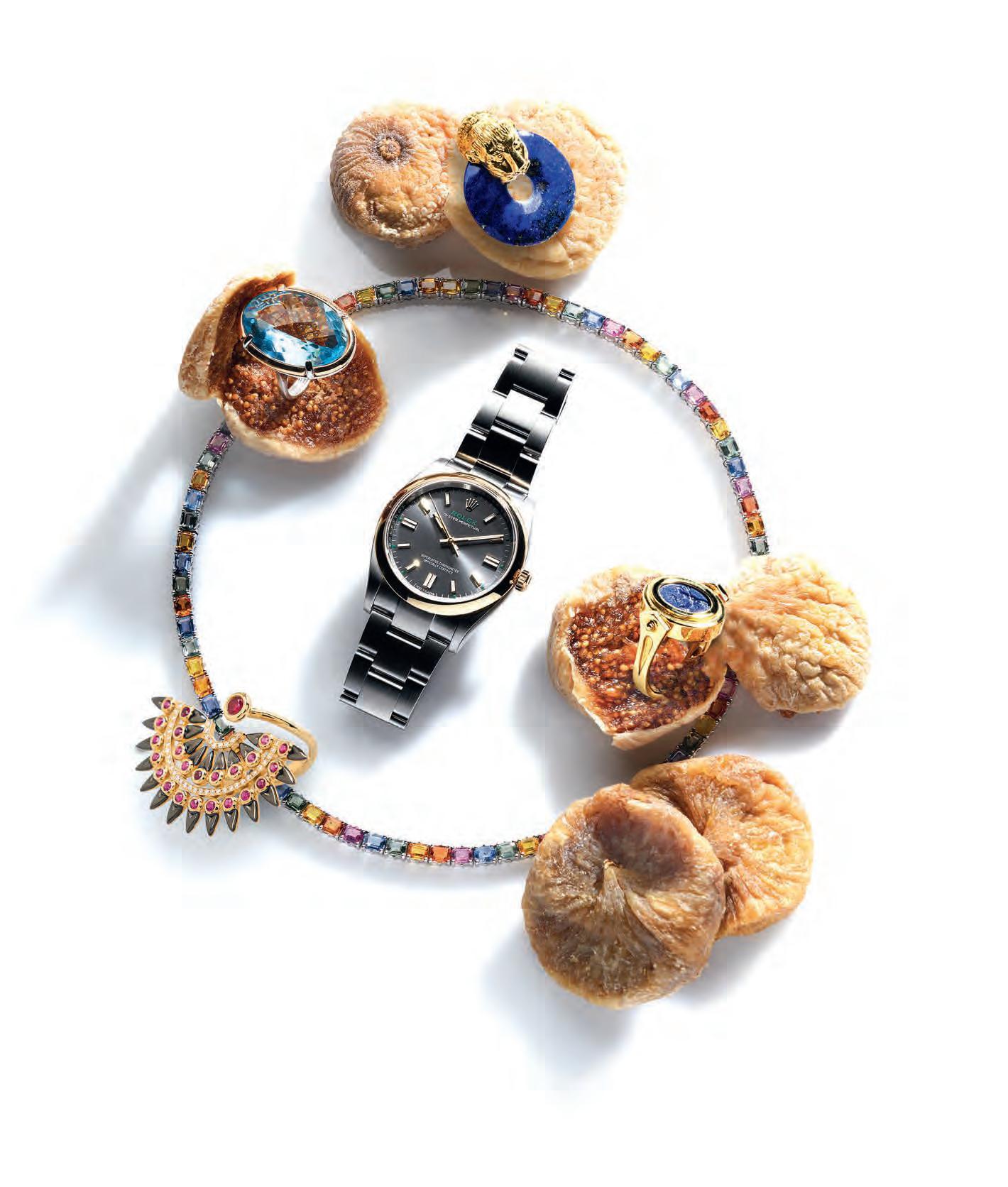
Kymi Dried Figs
ROLEX Oyster Perpetual watch with automatic movement, 36 mm case in steel and 18K gold, featuring a slate dial and Oyster bracelet (ROLEX BOUTIQUE). Top left, ring in 18K rose gold and white gold with topaz and necklace in 18K white gold with multicolored sapphires (GIOUZENIS). Top left, earrings from the Heritage Collection in 18K gold with lapis lazuli (ZOLOTAS). Bottom right, ring from the Sphinx & Athena Collection, crafted in 18K gold with lapis lazuli. (ZOLOTAS). Bottom left, ring from the Faidra Collection, crafted in 18K gold with rubies, diamonds, and black rhodium (DIONI).
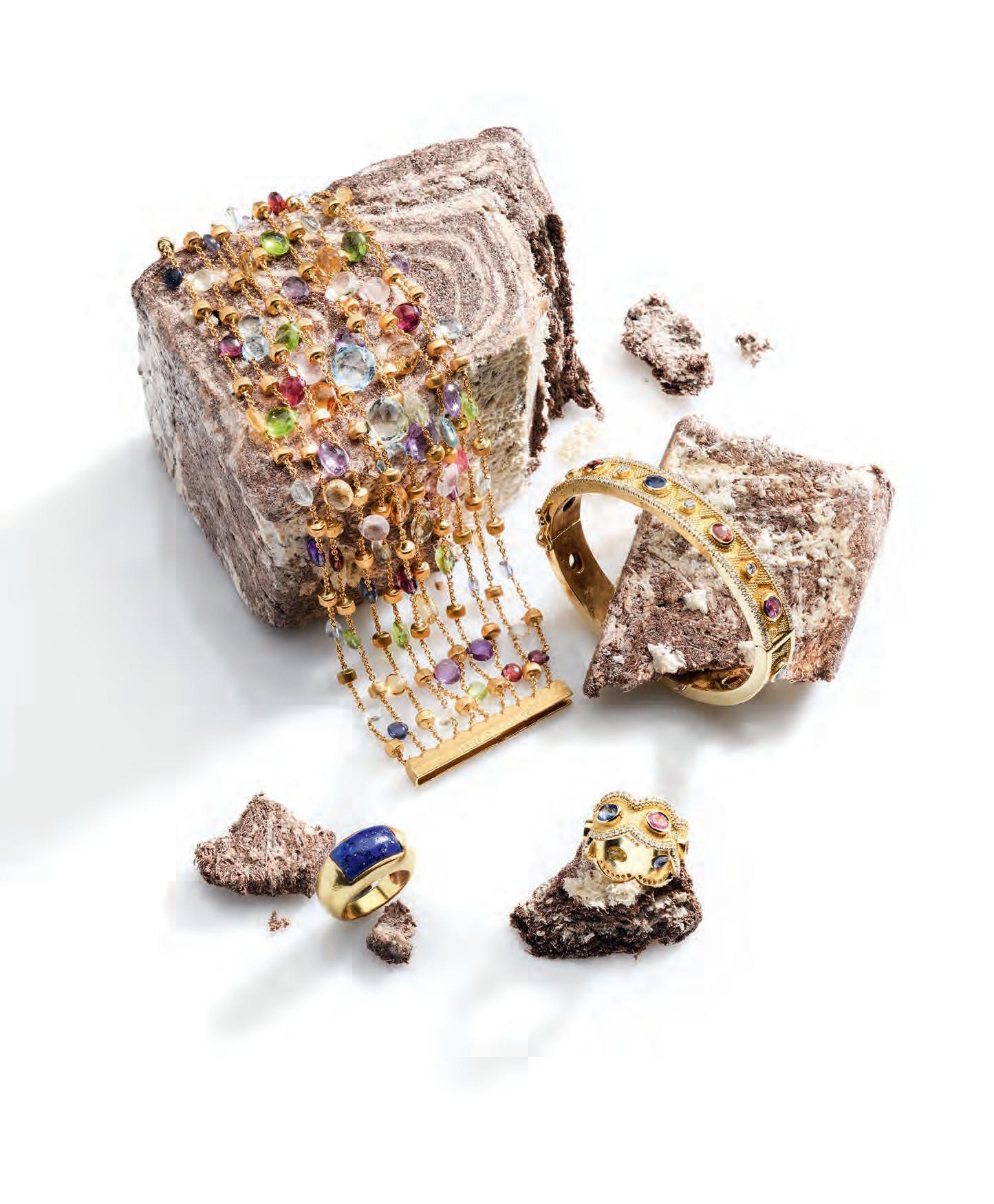
Macedonian Halva
Top left, MARCO BICEGO bracelet in 18K gold with precious stones. Right: bracelet and ring in 18K gold with precious stones (GEORGES). Bottom left, LALAOUNIS ring in 18K gold with lapis lazuli.
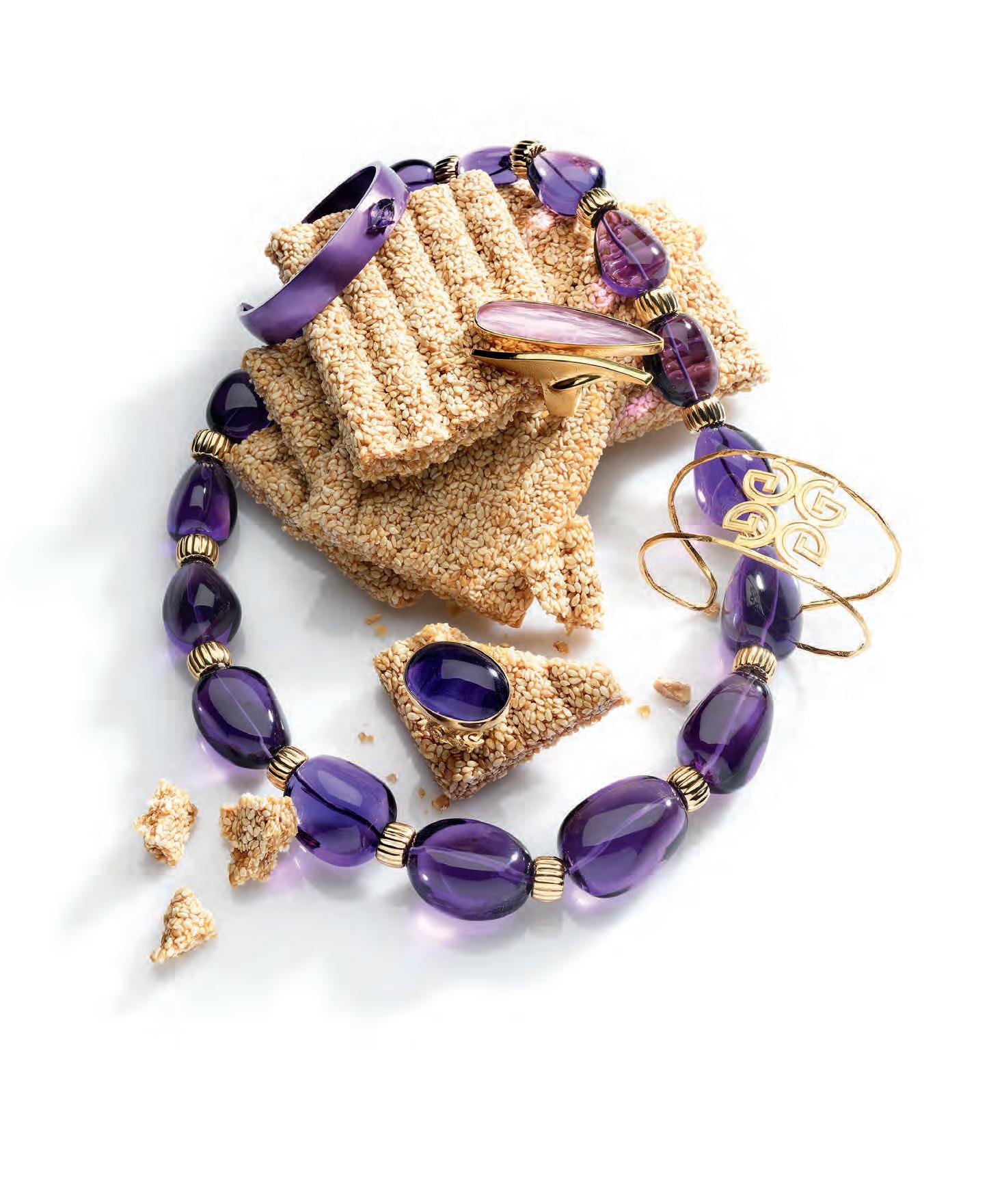
Sifnos Pasteli
Top left, silver bracelet with precious stones and necklace in 18K gold with amethysts (KESSARIS). Right, rings and bracelet in silver plated with 18K gold, with precious stones, designed by Elena Drosou Maris (THEA).
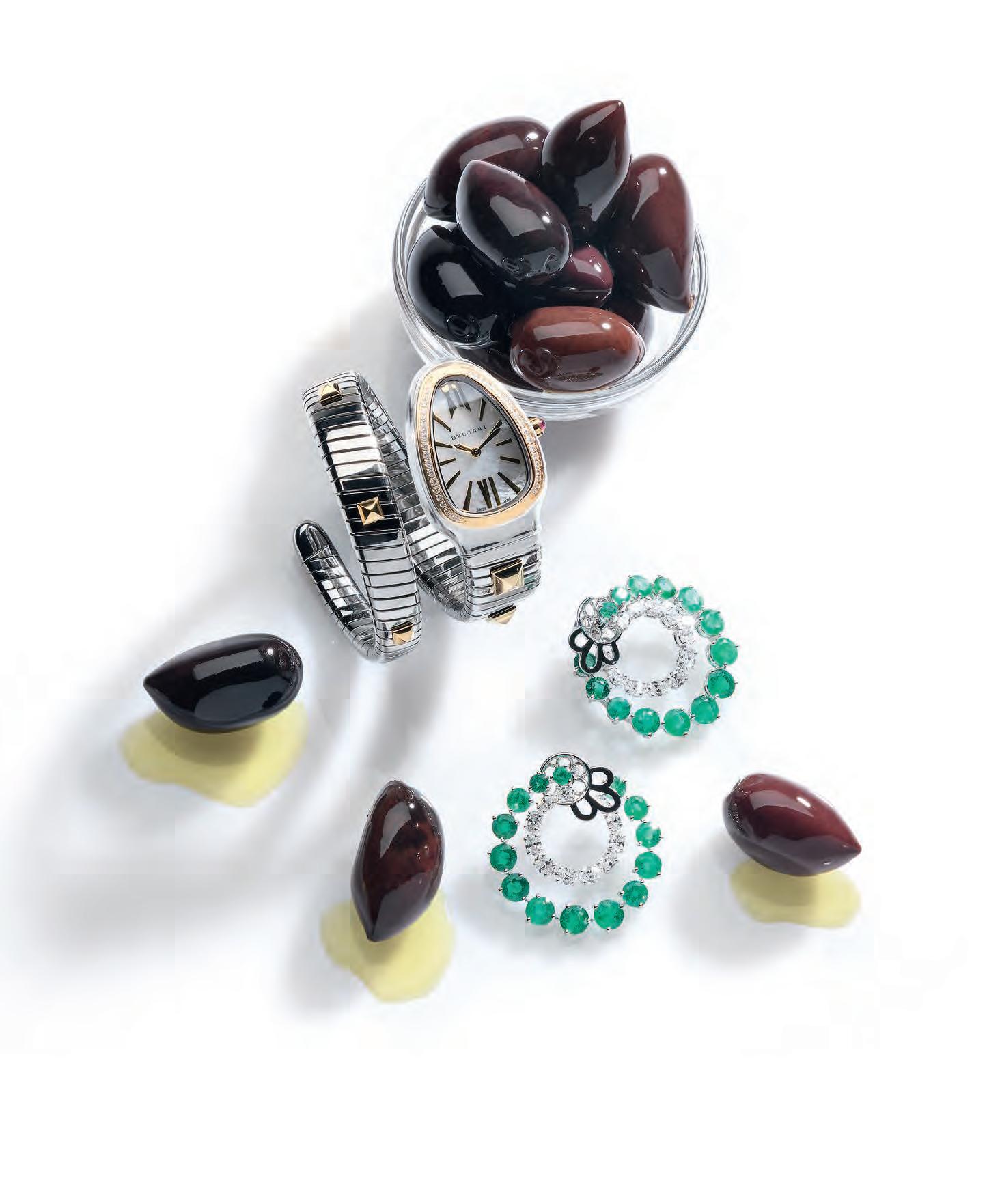
Kalamon Olives in Extra-Virgin Olive Oil
BVLGARI Serpenti Tubogas watch in stainless steel and 18K gold, with diamonds on the bezel (BVLGARI BOUTIQUE). Earrings in 18K white gold with diamonds and emeralds (VENETIA VILDIRIDIS).
Tinos Thyme Honey with Honeycomb
MARCO BICEGO necklace in 18K gold with precious stones. ZOLOTAS bracelet in 18K gold with rubies, sapphires and diamonds. GEORGES earrings in 18K gold with diamonds. Ring in silver plated with 18K gold and a precious stone, designed by Elena Drosou Maris (THEA).
Bulgari
Athens exclusive boutique
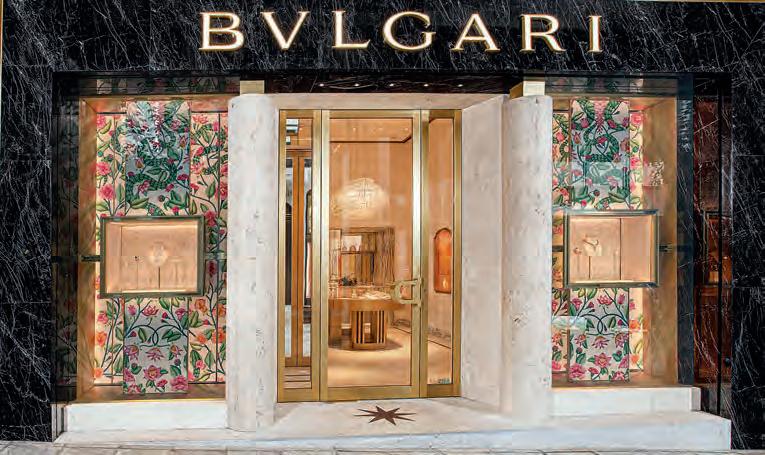
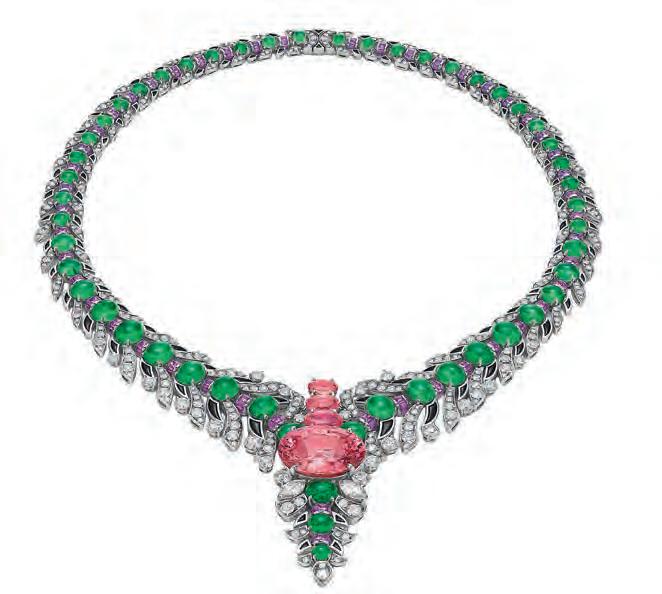
THE INEXHAUSTIBLE CREATIVITY, traditional know-how and unparalleled elegance of the House of Bulgari are linked to Rome, but its roots are Greek. The founder of the Maison, Sotirios Voulgaris, a son of silversmiths, was born in a small mountain village in Epirus. Ιn 1879, he decided to seek his fortune in Italy and, in 1884, opened his first jewelry store in Rome. In 1905, he inaugurated the historic store at 10 Via dei Condotti, where the iconic flagship Bulgari boutique still stands today. In the heart of Athens, a modern temple of luxury by the Kessaris family of jewelers showcases the watches and jewelry collections of the Roman Maison. Located on Voukourestiou Street, the Bulgari flagship store extends over 120 square meters and is divided into two levels. In keeping with the architectural identity developed by Peter Marino exclusively for Bulgari, spectacular marble is combined with refined walnut wood floors and elegant brass details. The famous signature Serpenti necklaces – rooted in Bulgari’s Greek heritage – are on display, along with the brand’s other iconic jewelry and watches, all in luxurious display cases lined in saffron-colored silk. For 140 years, the Greek soul of the Maison has influenced Bulgari’s creativity, and its modern collections continue to celebrate the Mediterranean roots of the House.
Incontro Segreto Ring from the Eclettica High Jewelry Collection
Secret Garden Necklace from the Eclettica High Jewelry Collection
Athens exclusive boutique
BVLGARI Boutique Athens
bulgari.com
The Mycenaean Collection Inspired by the Mycenaean world Zolotas
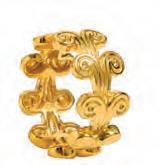
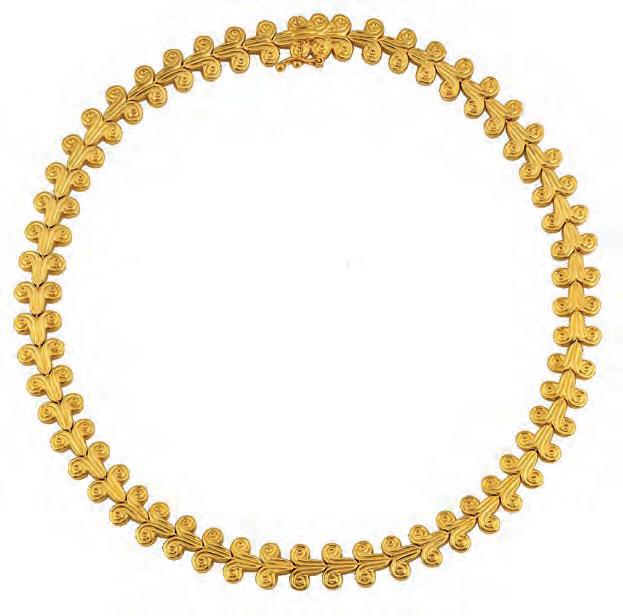
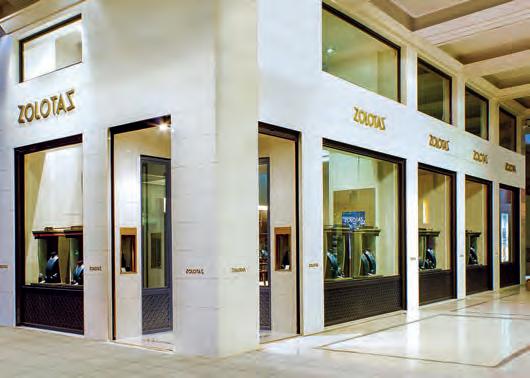
SINCE 1895, ZOLOTAS has stood as a symbol of Greek high jewelry, preserving the secrets and techniques of the House’s goldsmithing across generations. Inspired by Greece’s cultural legacy and devoted to exceptional handcrafted craftsmanship, the House has always created pieces in which history and modern design exist in perfect harmony. The Mycenaean Collection draws inspiration from the rich symbolism and ornamental beauty of the ancient Mycenaean civilization. Echoing the allure of archaeological treasures and using motifs from the House’s own archives, organic forms such as rosettes, lilies and ivy leaves are reimagined in necklaces, earrings, bracelets and rings distinguished by sculptural refinement and quiet sophistication. Central to the collection is the repoussé technique, in which 18K gold is shaped from the reverse side to create softly raised surfaces and subtle volume. Light glides gently across each piece, accentuating its contours and intricate details, while the recurring motifs create a quiet sense of rhythm and balance. In the necklaces, each element is meticulously joined by hand using traditional techniques, allowing the pieces to follow the movement of the body with remarkable fluidity. With the Mycenaean Collection, ZOLOTAS reimagines timeless elegance through the lens of Mycenaean heritage, creating pieces designed for the woman of today.
Following a sweeping redesign, GB Roof Garden welcomes its new Chef de Cuisine Yiannis Rokanas and speaks more fluently than ever the language of contemporary Athenian fine dining.
By NENA DIMITRIOU
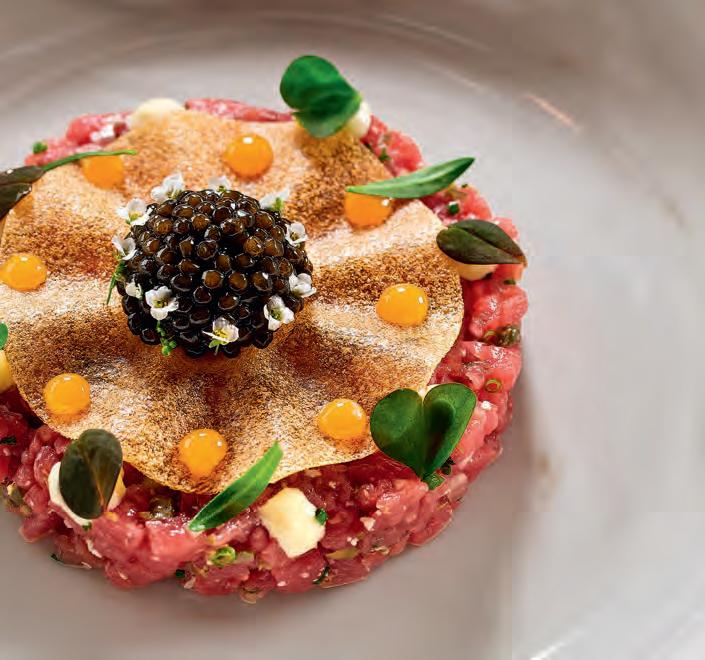
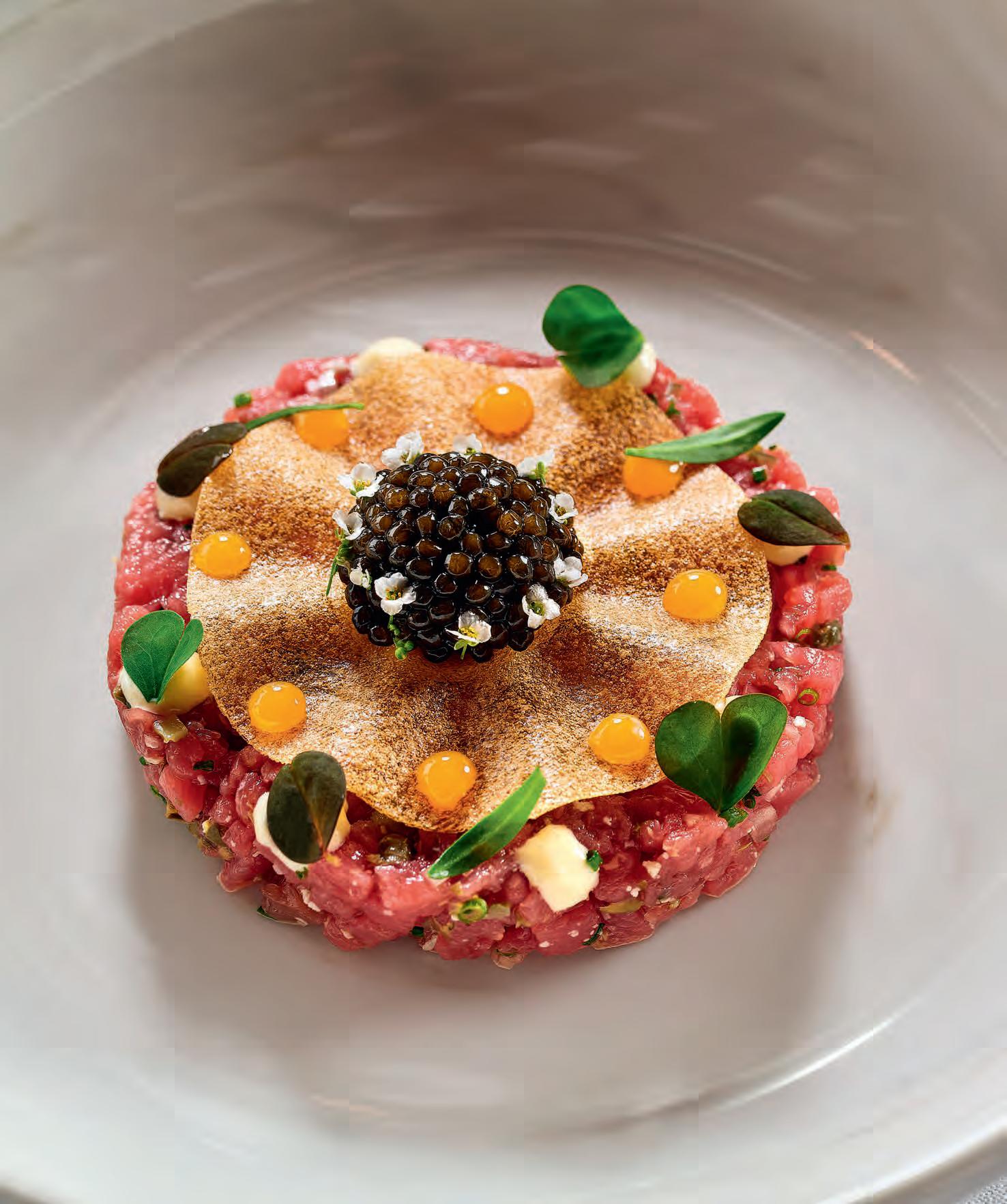
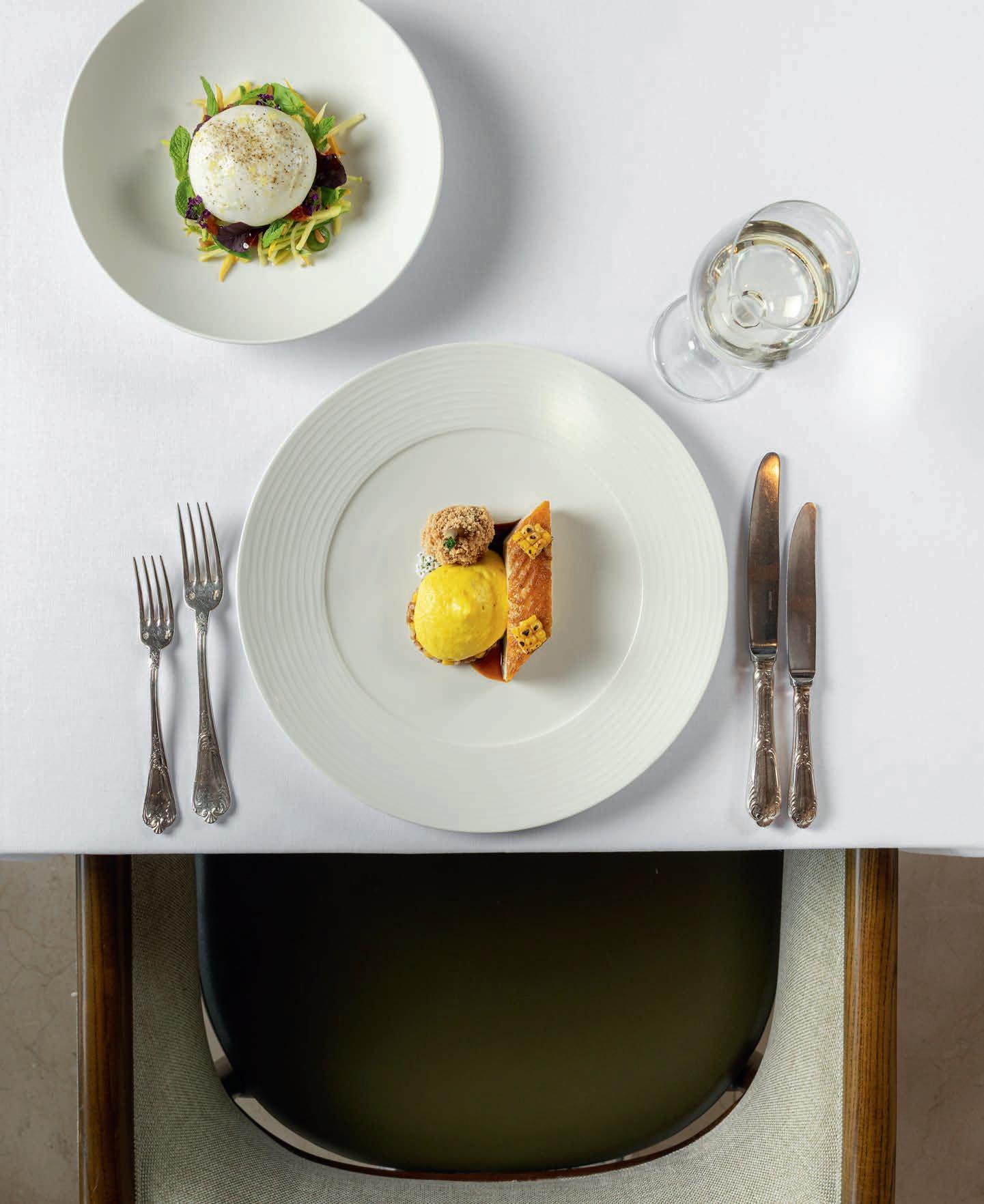
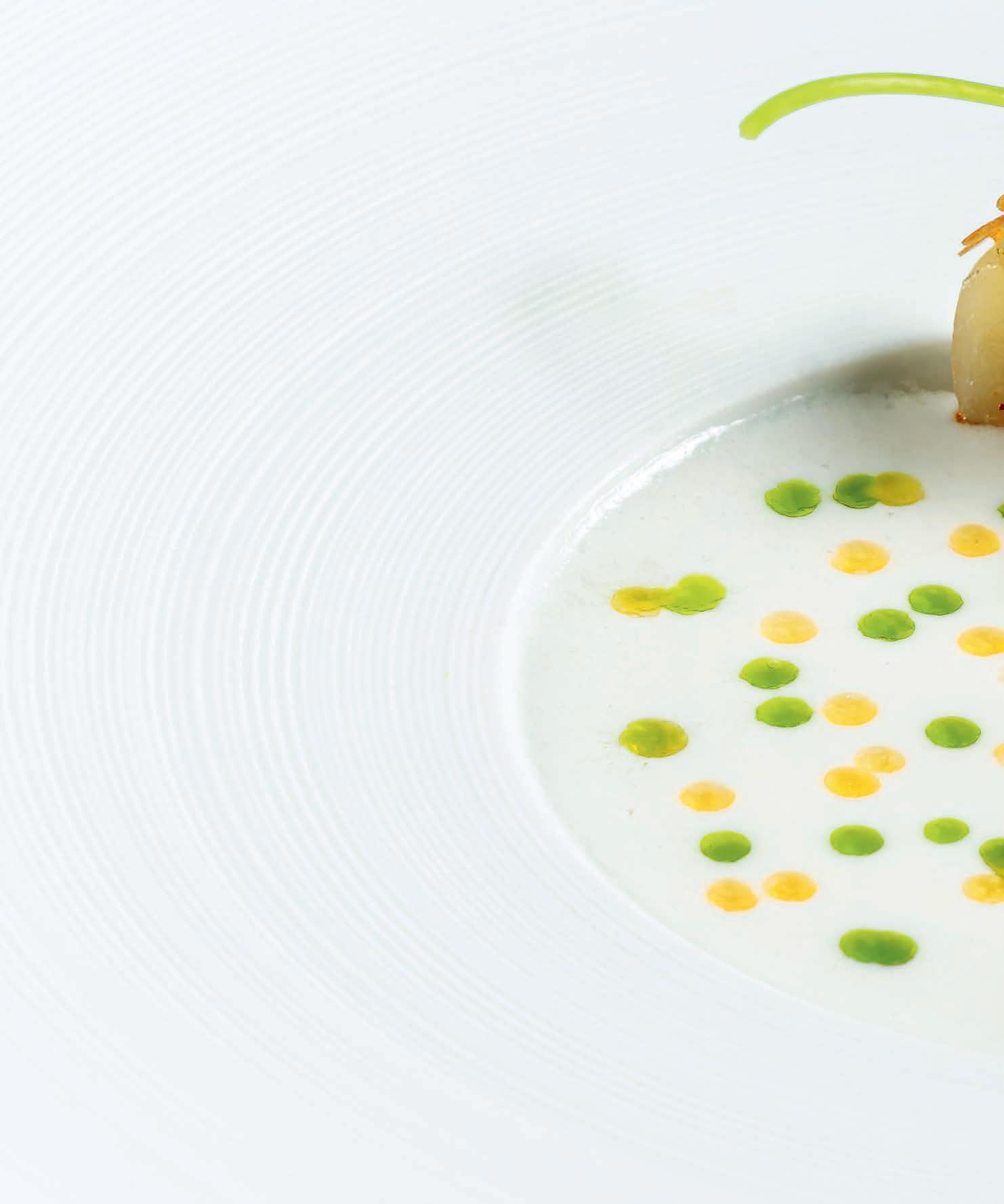
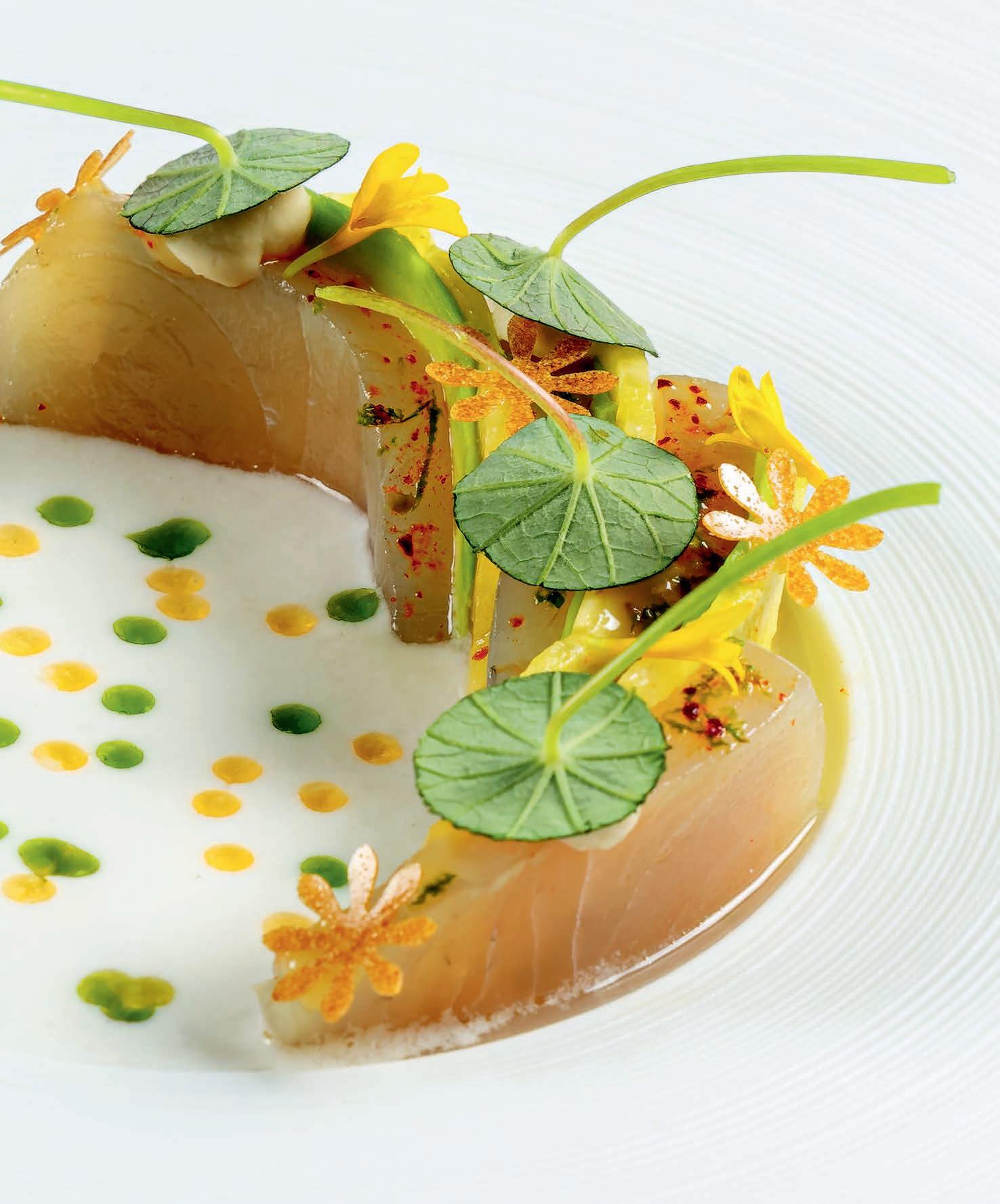
Chef Giannis Rokanas at GB Roof Garden. On the left page: Their take on beef tartare, served with caviar.
Roof Garden.
Gastronomy
THERE ARE RESTAURANTS where the view inevitably takes center stage. GB Roof Garden has always been one of them. The challenge for any such kitchen, then, is to momentarily pull your attention away from the windows and back to the plate.
It was on a brisk Tuesday evening in mid-March that we first experienced the creations of Yiannis Rokanas, the restaurant’s new Chef de Cuisine. Despite the evening chill, a few determined guests had already claimed tables on the terrace, with Athens presenting itself before them. His debut menu, seasonal and unmistakably contemporary, did more than make a strong first impression. It suggested a chef interested not simply in cooking well or pleasing everyone, but in creating dishes with identity and staying power, meals built around ideas that you continue thinking about long after dinner ends.
Rokanas arrives at the GB Roof Garden not as an unfamiliar name needing introduction, but as a chef with nearly two decades of experience behind him. Formally trained, he began his career at the legendary Pentelikon alongside the Grande Bretagne’s current Executive Chef, Asterios Koustoudis, before moving onto major luxury hotels and restaurants with distinct yet different culinary approaches. He clearly understands both the precision necessary for large-scale hospitality and the demands of contemporary fine dining.
Now, following the extensive redesign of the GB Roof Garden, his arrival feels aligned with a broader shift: a restaurant, long associated with some of the city’s most spectacular views, speaking more fluently than ever the language of modern Athenian fine dining.
BOLDNESS, GENEROSITY AND A TASTE FOR COMFORT
How else to describe the Acquerello risotto with langoustine, furikake, espresso foam and curry? Italy, Japan, coffee, spice and the sea all converge in a dish that, on paper, could easily sound like an exercise in chef-driven excess. Yet the different influences never compete. Instead, they build layers of flavor: the langoustine bringing sweetness and maritime depth, the furikake adding an umami-rich foundation, the espresso a dry, almost smoky bitterness, and the curry a lingering aromatic warmth. It was the evening’s boldest dish and, for me, its clear highlight.
Among the mains, the grouper fricassée with mussels, beurre blanc, dill and smoked herring roe was designed for diners who want fish presented as something more ambitious than a simple fillet with garnish. In this version, the fricassée became a way of balancing acidity, richness and greener, fresher notes. The beurre blanc introduced a subtle French accent, the
Two dishes from the new menu: burrata salad with marinated zucchini and oxymeli vinaigrette, and chicken with buckwheat, corn and corn foam.
dill brought a familiarity reminiscent of home cooking, and the smoked herring roe added a burst of intensity.
Then there was the duck; delicately smoked with herbs and perfectly cooked, it arrived with a red fruit sauce and a confit raviolo that felt like a second movement within the same symphony. It was with this selection more than any other that you could sense the kitchen’s focus on working their sauces and on the kind of detail that makes a dish linger in the memory.
At the same time, the menu reveals a distinctly indulgent side to Rokanas’ cuisine, one that seems to follow him from kitchen to kitchen. There’s a clear desire to cook food with depth, recognizable flavor and a sense of generosity. As he puts it, his style has always leaned toward comfort food, not in the sense of simplicity, but in terms of fullness and satisfaction: food meant to please, without sacrificing technique.
If there’s one area where Rokanas’ cooking truly stands out, it’s probably his sauces. He speaks about them with obvious passion and, in many dishes, there may be two or even three working together at once. For him, sauce is not decoration or garnish, but the foundation of cooking itself. He talks eloquently about a deeply reduced meat jus, a velvety corn sauce or a sauce made with fresh fig leaves layered over fish stock scented with tomato water. “A chef is judged by his sauces,” he says – a statement that feels rooted in an older, stricter culinary tradition. Yet here, that philosophy finds its place within a menu that feels unmistakably Mediterranean, fresh and entirely contemporary.
TRUST IN THE INGREDIENTS
Rokanas speaks about his new role with genuine enthusiasm, and about Greek produce with the conviction of someone who understands that creativity begins with ingredients. “Whatever Greece has to offer in each season, we have it here in the restaurant,” he says.
The intensely flavorful tomatoes and produce grown by producer Nikos Tsompanoglou, for example, are the starting point for multiple creations across the menu: tomato water for risotto, tomato kimchi paired with fish, and even tomato jam.
Athens itself plays an important role. “As it’s the capital of the country, it’s easy to access exceptional products from all over Greece,” Rokanas says. “But it’s not only down to that. Here, Asterios Koustoudis has done extensive research and built real relationships with our suppliers. Everything arrives fresh, every single day. It’s a cook’s dream.”
He speaks about the privilege of working with ingredients at their absolute peak and being able to handle them immediately, before excessive intervention dulls their character. Through his collaboration with
Koustoudis, he says that he has learned to approach seasonal produce more instinctively, bringing it onto the menu with restraint rather than overcomplication.
A BRIGHT NEW DAY
At GB Roof Garden, Rokanas is, of course, not working alone. He joins a culinary team led by Executive Chef Asterios Koustoudis, within a restaurant where luxury is expected to be present but never heavy-handed, Greek identity recognizable but never predictable, and technique consistently refined.
Among the standout additions to the new summer menu is a strikingly fresh salad of burrata with zucchini marinated in oxymeli vinaigrette, with tomato jam and a zucchini cream scented with basil and mint. Equally memorable is the crisp tempura chicken wing – a “lollipop,” in kitchen terminology – paired with roast breast meat, buckwheat with corn, and a light corn foam.
The new chapter of the GB Roof Garden feels brighter, sharper and more seasonally attuned. There’s greater confidence in Greek ingredients, more precision in the sauces and a clearer sense of identity running throughout the menu. And while the incomparable Athenian skyline still commands attention, it does so only until the plates arrive at the table. •
Athens’ most striking urban backdrop The city at night, as seen from above.
info
GB Roof
Garden Restaurant & Bar Reservations
Tel. (+30) 210.333.0766
Breakfast: 06:30-11:00
(In-house guests only),
Lunch: 13:00-17:00
Dinner: 17:00-02:00
(Last order at 00:15)
For Life’s Bigger Occasions
On the seventh floor of the King George, the historic hotel that stands beside the Hotel Grande Bretagne and shares its philosophy of refined hospitality, some of the city’s most memorable dining experiences take place.
By NENA DIMITRIOU
Cured bonito with avocado, pineapple and a coconut milk dressing.
Gastronomy
THE FIRST THING you notice upon entering Tudor Hall is that this is a restaurant designed for dinners that matter. The dining room displays the neoclassical elements characteristic of the King George, with polished wood floors, heavy drapes, oversized portraits on the walls, and a sense of formality expressed through details. Chandeliers, vibrant floral arrangements, generously upholstered chairs, and a working fireplace create a theatrical atmosphere – the kind of grand hotel dining room made for official occasions and long, celebratory evenings. More often than not, dinner here is accompanied by live piano music, still a rarity in Athens and one that lends the experience an old-world elegance.
To the left, large windows pull your attention outward, framing the city, the Acropolis, and Syntagma Square below. Toward the atrium, meanwhile, the suspended Lasvit glass sculpture – a floating composition of olive leaves and color – introduces a distinctly contemporary presence to the space.
What is served in this wonderful space is the cuisine of Chef Nikos Livadias, whose combination of technical precision and deep, instinctive flavors earned the restaurant its first Michelin star in 2023. His cooking, restrained and elegant, engages thoughtfully with Greek identity as it draws on the strength of seasonality, and many of his dishes resemble carefully composed works of art. It should be noted, however, that at Tudor Hall, gastronomy is not expressed solely through the à la carte menu. It also comes alive through the special evenings that the restaurant chooses to host.
LANDMARK COLLABORATIONS
The unique character of Tudor Hall is perhaps most evident in the events it hosts. From private dinners to high-level gastronomic encounters, the restaurant operates like a stage, capable of any transformation.
In early February, as part of the inaugural Athens Gastronomy Forum, Tudor Hall welcomed Konstantin Filippou for a one-night-only dinner that brought the vision of the chef from the internationally acclaimed, two-Michelin-starred Viennese restaurant Konstantin Filippou into its dining room. The dishes certainly left an impression on the diners, but it was the venue that moved the chef to remark: “Everyone welcomed me warmly. The collaboration was exception, and the level of professionalism here is remarkably high.”
The menu featured Mediterranean-inspired creations, including scallop with pear, artichoke, and tarragon anglaise. When asked whether Greek cuisine possesses what it takes to stand confidently within the world of fine dining, Filippou’s answer was unequivocal: “The extraordinary ingredients we find in Athens –even forgotten ones like trahanas – give this cuisine
From top, clockwise:
Αn evening with live piano and fine wines from Château Angélus; chefs Asterios Koustoudis (left) and Nikos Leivadias (right) flanking guest chef Konstantin Filippou; Kir-Yianni winemaker Stellios Boutaris (right) with wine director Evangelos Psofidis (left).
Château Angélus.
something rare. Greek cuisine doesn’t need anything else to become fashionable; it already has its products.”
Over the years, the restaurant has also hosted a series of amazing wine dinners, with menus curated by Executive Chef Asterios Koustoudis in collaboration with Nikos Livadias and Wine Director Evangelos Psofidis. Behind every pairing lies a long process of tastings, conversations, revisions and returns to both plate and glass until the perfect balance is found.
During one especially memorable evening celebrating the Blue Fox label from Kir-Yianni, winemaker Stellios Boutaris – a member of one of Greece’s most historic wine families – shared a childhood memory from a family gathering, recalling the moment he realized that wine would become his life’s path. As Boutaris told his tale, Evangelos Psofidis poured multiple vintages of the winemaker’s label, and when a jeroboam bottle of Blue Fox was served with a wine cradle, glasses across the room were raised instinctively.
At Tudor Hall, landmark wines regularly appear in dinners honoring names such as Artadi, The Mascot, and Château Angélus. Rare bottlings – often presented in the presence of the producers themselves – give guests access to some of the world’s most sought-after names. More recently, the 35th anniversary of the Magiko Vouno (“Magic Mountain”) label from Domaine Nico Lazaridi became the occasion for an evening where wine met art, with an exhibition of the artworks created over the years for the label’s iconic bottles.
ALL IN PLACE
Whatever the occasion, certain things remain constant at Tudor Hall: the precision and discretion of the service, a genuine sense of care, and a cuisine that adapts without ever losing its identity. Whether the setting is a fine-dining affair, a formal private gathering or a collaboration with a guest chef, every detail is exactly where it should be.
From Chef Nikos Livadias’ new menu for summer, one standout is the bonito, cured with citrus peels and paired with avocado and pineapple, a combination that balances richness with bright acidity. A coconut milk dressing lends the dish a subtle exotic note. Equally refined is the shrimp tartare with peach – a dish that feels at once cooling and gently fiery. Richness, spice, softness and freshness coexist in careful balance, each element allowing the others to breathe.
Tudor Hall is, undeniably, a restaurant with remarkable views and serious culinary credentials. But it is also something rarer: a dining room with genuine gastronomic intent, a magnificent Athenian grande salle capable of making any occasion feel undeniably significant. •
Shrimp tartare with peach, a great dish that feels at once cooling and gently fiery.
info
3 Vasileos Georgiou I, Syntagma
Reservations: Tel. (+30) 210.333.0265
Breakfast: 06:30-11:00
(In-house guests only)
Dinner: 18:00-02:00 (Kitchen closes at 23:15)
Tudor Bar Lounge 17:00-02:00
For every course, wine pairings are curated by wine director Evangelos Psofidis, whose expertise lies in creating the perfect match between food and wine. The extensive wine list features exceptional Greek and international labels.
Greece’s most renowned grape is being reimagined through a splendid collection at the Hotel Grande Bretagne that honors both its volcanic origins and its many contemporary expressions across the country.
By NENA DIMITRIOU
Illustrations:
CHRISTINA TSEVIS
A Cellar for Assyrtiko
IN THE WORLD OF WINE, certain grape varieties travel well, crossing borders, adapting to new terroirs and delivering consistently strong results. Only a few, however, evolve into true ambassadors beyond their place of origin. For Greek wine, Assyrtiko is one of them.
Over the past decades, it has come to define the modern Greek vineyard. Closely associated with Santorini, it has also played a key role in introducing Greek producers to international markets. For many winemakers seeking a place on the global stage, including an Assyrtiko label in their portfolio has become almost essential.
Some producers have chosen to explore its potential in mainland vineyards, testing its limits and revealing new stylistic expressions. Others have turned more decisively to Santorini, investing in the volcanic terroir that first defined the grape’s identity.
All of this has helped Assyrtiko expand its reach beyond Greece as well, finding its way into New World vineyards as far away as Australia’s Clare Valley, where Jim Barry Wines has cultivated it with striking results, further cementing its global potential.
For Evangelos Psofidis, Wine Director at the Hotel Grande Bretagne, the plan to create a select collection of this variety began with a practical question: how to secure exceptional Assyrtiko at a time when production is tightening under the pressure of climate change, and the value of Santorini wines continues to rise. It quickly evolved into something more ambitious: a dedicated “cellar” where each producer would have a place, telling their own story of Assyrtiko across Greece.
THE MANY FACES OF ASSYRTIKO
“The decision to dedicate a space to a Greek variety not in its natural zone but here in the heart of the metropolis of Athens was a deliberate one. We wanted to create a new focal point for Assyrtiko,” says Evangelos Psofidis.
His initial idea was to build a cellar focused solely on Santorini. But it quickly became clear that even the most comprehensive selection would only tell part of the story. “It would be limiting to stop there. Assyrtiko is evolving dynamically across Greece, from Amyntaio to Crete. For me, the aim was to give visitors a sense of the variety in its full range, while also offering access to outstanding wines at different price points, not just the iconic, and often more expensive, labels of Santorini.”
The response from producers has been very encouraging. Many entrusted him with older vintages and
rare bottlings, reinforcing the sense that what is taking shape here is not simply a wine list, but a true collection.
More than 120 labels – from Santorini as well as Tinos, Naxos, Paros, Crete, Central and Northern Greece, and the Peloponnese – have come together to form a singular Assyrtiko portfolio, offering a rare opportunity for comparisons and greater understanding.
From fresh, high-acidity expressions to aged vintages; from mountain vineyards to coastal terroirs; from stainless-steel vinifications to more complex styles shaped by oak ageing and lees contact – even including
dessert wines – Assyrtiko is revealed here in full. The collection carries the authority of an archive: strong vintages, large-format bottles and carefully selected vineyard sites coexist, shaping a wider reading of the variety, one that captures not only its present but its evolution over time.
A SINGULAR EXPERIENCE
For the first time, different terroirs, winemaking approaches and philosophies are converging in one place: right in the center of Athens. At the Hotel Grande Bretagne, long a welcoming home for visitors from around the world, this wine experience offers something found nowhere else.
Without leaving the comfort of the hotel – and with refined culinary options and impeccable service to complement the wine – guests can travel across the Greek vineyard through one grape, discovering both how the same variety changes from place to place and how it retains certain characteristics.
The cellar is more wine platform than wine bar, hosting special dinners, themed evenings, small-scale festivals and winemaker presentations. It’s a space that encourages a dialogue between those cultivating the variety and those discovering it. When guests encounter a wine they connect with, they can trace it back to its source, learn about the producer, follow their story, and even seek them out beyond Greece. The wine list includes integrated QR codes to make this information instantly accessible, allowing exploration to extend well beyond the moment.
Visitors to the cellar will leave richer for their Assyrtiko experience. They’ll come to recognize wines such as Sigalas’ Kavalieros, places such the region of Sitia and its distinctive terroir highlighted by Yiannis Economou, and tastes such as that of a 1974 Argyros Vinsanto. They’ll appreciate how structured, concentrated and yet vividly alive a variety can remain over time. More than anything, they’ll find out that Assyrtiko isn’t merely a grape; it’s an entire world. •
“The decision to dedicate a space to a Greek variety not in its natural zone but here in the heart of the metropolis of Athens was a deliberate one. We wanted to create a new focal point for Assyrtiko.”
Ermoupoli Reimagined
This is the perfect moment to visit the capital of the Cyclades, as it celebrates 200 years since its founding.
By LINA KAPETANIOU
THE CAPITAL OF THE CYCLADES, Ermoupoli –the “Grande Dame” of Syros and its largest settlement – owes its unofficial title to its rich history, cosmopolitan air and architectural heritage. With more than 1,200 neoclassical buildings, this is not the Cyclades of low whitewashed houses and blue shutters; Ermoupoli tells a different story.
Its urban fabric took shape almost immediately after its founding in 1826, when it emerged as a major commercial and civic center. The city’s first residents were refugees: survivors of Ottoman persecutions in Asia Minor and of the massacres on Chios and Psara in 1822 and 1824, during the Greek War of Independence.
Wealthy merchants, well-traveled seafarers and prominent diplomats, among others, found refuge here, laying the foundations for a city that would soon boast the most important port of the newly formed Greek state and rank as its second-largest urban area in the 19th century.
This year, it celebrates 200 years since its founding, a great excuse to visit and experience its special charm.
AN ARCHITECTURAL STROLL
Vaporia, with its 19th-century mansions – many built on a wide rock promontory rising out of the sea – is Ermoupoli’s most elegant quarter. Once home to merchants, shipowners and industrialists, these residences have since been repurposed. Some have been meticulously restored as boutique hotels, while others now house public institutions.
Apollonos Street is one of the main thoroughfares where these stately homes can be found. Among them is the Prasakakis Mansion, named after its first owner, the Chios-born merchant and politician Nikolaos Prasakakis. Built in 1834, it now houses the Cyclades Chamber of Commerce and is open to visitors.
Nearby is the Apollo Theatre, an elegant landmark built between 1862 and 1864 from designs by the Italian architect Pietro Sampo. On Miaouli Square stands one of the city’s most imposing buildings: the City Hall, designed by the German architect Ernst Ziller and constructed between 1875 and 1891.
For further insight into Ermoupoli’s mansions, visit the website of the NGO Hermes, which specializes in the digital documentation of cultural heritage: thinkhermes.com.
Detail from an elaborate ceiling painting in the Prasakakis Mansion.
From top and clockwise: Miaouli Square and the City Hall; looking out onto Ermoupoli; a room in the Kois Mansion.
LIFE IN THE 19TH CENTURY
Ermoupoli at its peak – from the 1830s through the early decades of the 20th century – comes vividly into focus at the city’s Historical Museum. Housed in a listed 1840 building painstakingly restored over more than three decades, the museum traces the rhythms of everyday life during a period of remarkable prosperity.
Visitors step inside a 19th-century Syros mansion, gaining a clear sense of how the city’s urban elite lived through exhibit items such as clothing, documents, furniture and other carefully selected objects.
A similar experience awaits at the Kois Mansion, where technology adds a contemporary layer to the past. Equipped with a tablet, visitors move through rooms (adorned with meticulously restored ceiling frescoes) on an interactive journey enhanced by music, videos, photographs and other contextual material.
hermoupolismuseum.gr, kois.gr
A TRIBUTE TO AN INDUSTRIAL PAST
In addition to its leading role in trade, Ermoupoli developed a strong industrial identity, one which is brought to life at the Industrial Museum of Ermoupoli through an impressive collection that ranges from printing presses to ship models and rare examples of shipbuilding craftsmanship. Among the most notable exhibit items is the Enfield 8000, an electric car produced in Ermoupoli for a brief period in the 1970s. Equally compelling is the Textile Museum, housed in the restored Zisimatos factory, the only textile mill of its kind to have survived with its equipment intact. Through an immersive experiential visit, guests are transported back in time; they hear sewing machines in motion, explore the everyday lives of workers and trace the story of a textile industry that flourished in Ermoupoli for more than a century.
industrialmuseum.gr, hermoupolisheritage.com
AN ISLAND OF FESTIVALS
Syros is, above all, an island of festivals, with events taking place throughout the year. From classical music and jazz to rebetiko and animation, you’re almost certain to find something of interest whenever you visit.
In July, the Ermoupoli Guitar Festival draws musicians and audiences from across Europe. August brings the International Cyclades Classical Music Festival, followed, towards the end of the month, by the Rebetiko Festival, a tribute to Greece’s most evocative urban folk music tradition.
In September, AnimaSyros, one of Europe’s leading animation festivals, transforms Ermoupoli into a
Asteria Beach in the Vaporia district, while not really a beach, is the in-town swimming option in Ermoupoli.
vibrant stage for screenings, exhibitions and international collaborations.
THE FAMOUS LOUKOUMI
As old as Ermoupoli itself, Syros’s signature loukoumi carries two centuries of history in every bite. It was brought to the island by refugees from Chios, who introduced both the recipe and the confectionery craftsmanship that still defines it today. Delicately scented and instantly recognizable in texture, Syros’s loukoumi has been on Greece’s Intangible Cultural Heritage list since 2019. Its production remains largely unchanged, sustained by a handful of family-run workshops that still follow traditional methods.
Water, starch and sugar are slowly cooked in copper cauldrons over high heat, the mixture stirred continuously until it thickens and sets. Once dried, it is cut into cubes and generously dusted with powdered sugar.
You will find loukoumi throughout Ermoupoli – try it plain or with almonds, or in classic flavors such as rose, bergamot, or Chios mastiha.
BEYOND ERMOUPOLI
A walk through the narrow lanes of Ano Syros is a highlight, its medieval character and sweeping views
Above, left to right:
The Ermoupoli Textile Museum organizes hands-on tours.
Ano Meria, the least touristy part of Syros. On the left page: In Ermoupoli, the Aegean peeks out between mansions.
over Ermoupoli making it one of the island’s most atmospheric corners.
In Poseidonia, Chroussa and Episkopeio, where the island’s merchants and industrialists once built their summer residences, the elegance of another era still lingers in grand villas set among gardens and tall palms.
For swimming, head to Finikas, Vari or Ampela, where clear, sheltered waters offer an easy counterpoint to the town’s urban rhythm. Further north, Ano Meria feels altogether different – wilder, more elemental, with scattered settlements and rewarding walking routes for those drawn to the island’s quieter side.
ERMOUPOLI CELEBRATES
Marking 200 years since its founding, Ermoupoli is celebrating with a year-long program that reflects the many layers of its identity: neoclassical architecture, industry, shipping, the arts and trade. Exhibitions, concerts and talks trace two centuries of history, while also looking towards the future.
At the heart of the program is the grand anniversary event on 24 June at the Church of the Transfiguration of the Saviour. It was here, on the same date in 1826, that the city’s first inhabitants gave Ermoupoli its name: a tribute to Hermes, the god of commerce.
Syros’ signature loukoumi has been a local treat for two hundred years.
ANGELOS GIOTOPOULOS
Hospitality
Glimpses into the world of the Hotel Grande Bretagne.
The Timeline... So Far
1874 1878 1888 1894
The Hotel Grande Bretagne, owned by Savvas Kentros from Epirus, moves from the corner of Stadiou and Mouson (today’s Karageorgi Servias) streets and opens its doors at its current location, in what was then the Demetriou Mansion, designed by architect Theophil Hansen.
Efstathios Lampsas, who first apprenticed as an assistant cook at King George I’s court and then, funded by the palace, trained in France to become a head chef, becomes Kentros’ partner. The hotel is radically renovated to meet the era’s highest standards. A key contributor to the improvement of the hotel is Lampsas’ French wife, Palmyra Palfrois, who focuses her efforts on staff training.
The hotel becomes the first nonprivate residence in Athens to be electrified.
A luxurious restaurant opens within its premises.
The Grande Bretagne innovates by introducing “dîners dansants,” meaning dinners with live orchestra music.
The hotel hosts a meeting of the International Olympic Committee prior to the first modern Olympic Games, which are held that year in Athens.
Theodoros Petrakopoulos, son-in-law of Efstathios Lampsas and a dynamic journalist with stints as a correspondent for notable newspapers such as “Acropolis” and “Estia,” as well as a period as the director of the latter, steps in as hotel manager.
Αναλαμβάνει διευθυντής ο γαμπρός του Ευστ.
1910 1919 1923 1930 1938
The Hellenic Hotels Company S.A. (later renamed Lampsa Hellenic Hotels S.A.) is established.
Ιδρύεται
Efstathios Lampsas passes away.
A new wing with 110 rooms opens on Panepistimiou Street. It is equipped with elevators, ventilation systems and central heating.
1927
1921
The hotel enhances its amenities by acquiring a mechanical refrigerator, complete with an ice maker.
The hotel expands onto Voukourestiou Street. Rooms are upgraded to include telephones and private bathrooms.
Another 42 rooms are added to the building complex. Both the rooms and the new shared spaces are equipped with the most advanced ventilation and air conditioning technology available.
Mr and Mrs Lampsas and Mr and Mrs Petrakopoulos on a family outing.
1940
The hotel’s guests are evacuated and the building becomes the headquarters for the government, the king, the General Staff and the Allied Forces during the Greco-Italian War.
The hotel becomes the headquarters of the government of Georgios Papandreou and the British forces. On December 25th, a plan by the National Liberation Front to blow up the hotel is called off at the last minute, based on information that British Prime Minister Winston Churchill is staying there during his visit to Athens.
The hotel, requisitioned by occupying German forces, becomes Wehrmacht Headquarters.
The original building by architect Theophil Hansen is demolished to accommodate a major expansion.
In a room on the fifth floor, Konstantinos Karamanlis forms the Government of National Unity following the fall of the Junta.
The hotel hosts intergovernmental summit meetings during the first Greek EEC Presidency.
The hotel in the late 1960s.
Τhe opulent lobby of the hotel today.
Το lobby του
Members of the Doxiadis, Lampsas and Petrakopoulos families, all descendants of Efstathios Lampsas, sell their majority shares in Lampsa Hellenic Hotels S.A. to the CIGA Group.
Oι
1995 2000 1991 1999 2003 2020 2023 2024
CIGA.
The hotel group CIGA is acquired by the American multinational hotel company ITT Sheraton.
CIGA
Sheraton.
Sheraton is acquired by Starwood Hotels and Resorts.
Eξαγορά της Sheraton από τη Starwood Hotels and Resorts.
Lampsa Hellenic Hotels
S.A. and the Hotel Grande Bretagne come under the control of Regency Entertainment S.A., with Athanasios and Panagiotis Laskaridis overseeing management responsibilities.
The Hotel Grande Bretagne is inducted into the Luxury Collection by Starwood Hotels and Resorts. Ahead of Greece’s EU presidency and the 2004 Olympic Games, the hotel is extensively renovated at a cost exceeding €90 million.
Το Ξενοδοχείο Μεγάλη Βρεταννία γίνεται μέλος του Luxury Collection της Starwood Hotels and Resorts. Ενόψει της ελληνικής
The hotel enjoys the most financially successful year in its entire history.
Regency
Entertainment S.A.,
90 εκατ. ευρώ. A majority shareholding and, with it, total management control of Lampsa Hellenic Hotels S.A. pass into the hands of the family of Athanasios C. Laskaridis.
The Hotel Grande Bretagne celebrates 150 years of continuous operation.
King George
A LUXURY COLLECTION HOTEL, ATHENS
THE HOME OF DISCREET LUXURY
The five-star boutique King George Hotel, operating under The Luxury Collection Hotels & Resorts brand, has been prominently located in the heart of Athens, next to the Hotel Grande Bretagne, for more than 90 years. Its elegant 102 rooms and suites, furnished with authentic French antiques and featuring marble bathtubs, provide guests with a hospitality experience reminiscent of another era, while the luxurious amenities will impress even the most discerning guest. The Junior Suites offer views of the atrium and the bespoke Lasvit glass installation from their large windows; the Executive Grand Suites boast impressive views of the Acropolis from their private balconies; and the 350m2 Penthouse Suite has its own private pool with views of the Acropolis and the city of Athens. Along with its charming neoclassical decor and stunning Acropolis views, the Michelin-starred Tudor Hall Restaurant offers contemporary cuisine with artfully plated dishes courtesy of Chef de Cuisine Nikos Leivadias, as well as an exquisite dessert menu. The King George Hotel also offers a gym and the Boutique Vilebrequin. What's more, guests and local residents can now come together at the new George, The Lobby Bar, an all-day destination for artisanal breakfast and brunch items, refined lunches, elegant cocktails and sophisticated bar food. It's a place to relax, surrounded by an excellent collection of work from some of Greece's leading artists.
info
King George, a Luxury Collection Hotel, Athens 3 Vasileos Georgiou I, Syntagma Square, 10564, Athens, Greece Tel. (+30) 210.322.2210 kinggeorgeathens.com
King George
Athens Capital Hotel
CONNECTING THE OLD AND THE NEW
A strong identity, authentic lines reflecting the past and the present, cosmopolitan elegance, unique artwork and bespoke services are what define the Athens Capital Hotel – MGallery Collection, which has found its home right next to the city’s iconic Syntagma Square, in the heart of Athens. The hotel offers a unique hospitality experience, gifting its guests a journey of discovery that will charm and thrill them throughout an unforgettable city stay. With so many accommodation options to choose from – 158 contemporary design rooms that reflect the light and elegance of the timeless city of Athens, as well as 19 charming suites inspired by famous Greeks who served art in all its forms (music, literature, the stage, the visual arts and more) – each guest is sure to feel at home in their ideal haven. The stay, however, wouldn’t be complete without a visit to the hotel’s dining and drinks venues: the MFlavours Restaurant; the Mappemonde, a rooftop restaurant, bar and lounge with amazing views and a pool; and the Galerie Café, where inspired gastronomy and creative mixology come alive in a cozy environment featuring unique art pieces that draw guests into a playfully interactive game of aesthetics. For discerning travelers who are seeking an experience unlike any other, the Athens Capital Hotel is the new ideal destination in the heart of the city!
info
Athens Capital Hotel – MGallery Collection 4 Eleftheriou Venizelou and 2 Kriezotou, Syntagma Square, Athens, 10671, Greece Tel. (+30) 214.444.2000 athenscapitalhotel-mgallery.com
Athens Capital Suites
AN UNFORGETTABLE STAY IN THE HEART OF ATHENS
Just a few steps from Syntagma Square and the National Garden, Athens Capital Suites – MGallery Collection offers an exclusive haven of luxury with 19 elegant rooms and suites, blending timeless neoclassical charm with modern sophistication. Guests enjoy full access to the exceptional facilities of the Athens Capital Hotel – MGallery Collection, including acclaimed restaurants, stylish bars and a breathtaking rooftop infinity pool with panoramic views. The crown jewel, the two-level Presidential Suite, boasts two bedrooms, two en-suite bathrooms and a private rooftop terrace offering complete seclusion. Enhance your stay further with our exclusive Butler Service, available upon request, where dedicated butlers provide discreet, personalized attention, anticipating your every need and ensuring a seamless blend of privacy, comfort and intuitive hospitality.
Experience the modern and sophisticated spirit of Hyatt Regency Belgrade, one of the finest five-star hotels in the city. It features 302 modern rooms and suites and constitutes the perfect option for both leisure and business travelers, as it occupies a premier address in the heart of the main business, culture and entertainment district of New Belgrade, close to the city center. As an extra bonus, the hotel is within walking distance of Belgrade Arena and just across the bridge from both Belgrade Waterfront, the most exclusive business and residential district in the city, and Galerija, the city’s largest shopping mall.
During your stay, you’ll have the opportunity to explore the irresistibly charming Serbian capital, known for its unique energy, friendly people, delicious traditional cuisine and many tourist attractions. Back at the hotel, you can simply seek out the comfort of your room, or indulge in a relaxing treatment at the Club Olympus Fitness & Spa. For those looking for a break from their everyday
routines, the Tea House is the perfect retreat, with its enchanting ambiance, extensive coffee and tea selections, and irresistible treats crafted from the finest ingredients. Should you desire a higher level of service and privacy, you can opt for the accommodations offered at the exclusive Regency Club, located on the 7th and 8th floors, where you can conduct your business in the fully equipped meeting room or relax in the Regency Club Lounge.
For all lovers of quality cuisine, the Metropolitan restaurant offers a range of international delicacies and local specialties. The exceptional choice of cocktails and beers at The Bar, combined with its elegant atmosphere, will help make your stay an unforgettable experience. If you require an event space, the hotel provides a selection of 10 different meeting and conference spaces, with sizes ranging from 39m2 to 559m2. To take advantage of group rates, meeting packages or special offers for leisure travelers, contact the Sales Department at belgr.rfp@hyatt.com
Hyatt Regency Belgrade
5 Milentija Popovica, Belgrade, 11070, Serbia
Tel. (+381) 11.301.1234
hyattregencybelgrade.com
Μercure Belgrade Excelsior
CELEBRATING A LEGACY OF EXCELLENCE
The Mercure Belgrade Excelsior is proud to claim more than a century of rich history and excellence in hospitality. Since opening its doors in 1924, the hotel has been a prominent fixture in the heart of Serbia’s vibrant capital, offering traditional charm paired with modern comfort. Located directly opposite the Parliament Building and surrounded by lush parks, Mercure Belgrade Excelsior provides an ideal base for exploring both historical and contemporary Belgrade. The hotel features 73 well-appointed rooms, renovated in 2025, along with a restaurant and a conference room, catering to both leisure and business travelers. Throughout the years, the hotel has hosted many notable guests, including Nobel Prize-winning novelist Ivo Andri , philosopher Jean-Paul Sartre and entertainer Josephine Baker. The property is pet-friendly, non-smoking (with smoking allowed on the summer terrace on the 2nd floor) and dedicated to green practices – the hotel achieved Green Key certification in 2024. Now in its 101st year, the hotel remains committed to offering a unique and memorable experience for all its guests, and to continuing its legacy of warm hospitality and outstanding service.
Lucknam Park Hotel
WHERE COUNTRY CHARM MEETS TIMELESS SPLENDOR
Currently operating as a renowned country house hotel, Lucknam Park Hotel & Spa has become part of Accor’s Emblems Collection – a prestigious global portfolio that celebrates the world’s most exceptional independent hotels. This exciting new chapter combines intimate luxury, distinctive character and exceptional service while continuing to uphold the timeless British hospitality for which we are known. Recently awarded the Michelin Guide’s Three Key distinction for another year, Lucknam Park continues to set the benchmark for excellence in luxury hospitality. Nestled in the peaceful Cotswolds countryside, just six miles from the World Heritage site of Bath, the estate offers unspoilt country-house living at its best. As you pull up through an avenue of trees and set eyes on the magnificent Palladian mansion, you know that you have arrived somewhere truly special. This elegant hotel boasts 42 individually styled rooms and suites, along with 9 charming cottages set within the estate. Enjoy relaxed meals in the
Walled Garden Restaurant and fine dining featuring local produce in the Michelin-starred Restaurant Hywel Jones, which underwent a luxury refurbishment of the dining space before re-opening in March 2026. And while the dining room may have changed, the standards have not; Executive Chef Hywel Jones has retained his prestigious Michelin Star for the 21st consecutive year! Explore the 500 acres of parkland on horseback or unwind with a range of spa and well-being treatments. For families, The Hideaway, offering a variety of games and activities for children of all ages, is the perfect place to create wonderful memories. Lucknam Park is truly one of England’s finest hotels, providing five-star luxury at every turn.
Lucknam Park Hotel & Spa
Colerne, Chippenham, Wiltshire, England, SN14 8AZ
Tel. (+44) 0 1225.742.777
lucknampark.co.uk
The Formidable Mrs Nicholls
By APOSTOLOS DOXIADIS FORMER GENERAL MANAGER of the HOTEL GRANDE BRETAGNE
REVISITING SIMIOMATA, the diary of Richard Capell, the Daily Telegraph correspondent in Athens during the turbulent months from November of 1944 to January of 1945 at the dawn of the Greek Civil War – I was struck by a detail I had previously missed.
At the time, the Hotel Grande Bretagne served as the headquarters of the British Army and the Greek government. It also housed the families of the prime minister and his ministers; General Scobie and his staff; foreign envoys; and the international press corps. Alongside them were prominent Greek families who had taken refuge within its walls.
On page 157, a footnote stands out: “Decorated with M.B.E. was Daisy Nicholls of the W.V.S., who worked to keep the servantless Grand Bretagne in order.”
The hotel had yet to resume normal operations. And yet Mrs Nicholls was able to keep it going without the personnel such a place would normally require. Without water, electricity, supplies or heating, and only a handful of remaining staff, this formidable Englishwoman organized the residents themselves – mostly women, with perhaps a few men – into a quiet system of necessity. Rooms were cleaned, kitchens improvised, the sick tended to. Mothers, uncertain of the fate of their husbands and children, were offered what reassurance could be found. Basic rations were distributed with the support of the British Army.
At night, hundreds slept in the corridors. A photograph published in LIFE magazine at the time captures the moment with disarming clarity: the celebrated actress Kyveli, wife of Prime Minister Georgios Papandreou, making her own bed. Mrs Nicholls achieved something close to a miracle. She had character, courage, persistence, organizational instinct and, unmistakably, a sense of humor. But who was she? How was such an immense responsibility placed in her hands? What is certain is this: she possessed the rare ability to hold together the “Grande Bretagne” at a moment when everything around it was falling apart. •
with M.B.E. was Daisy Nicholls of the W.V.S., who worked to keep the servantless Grand Bretagne in order».