March 2026
March 2026
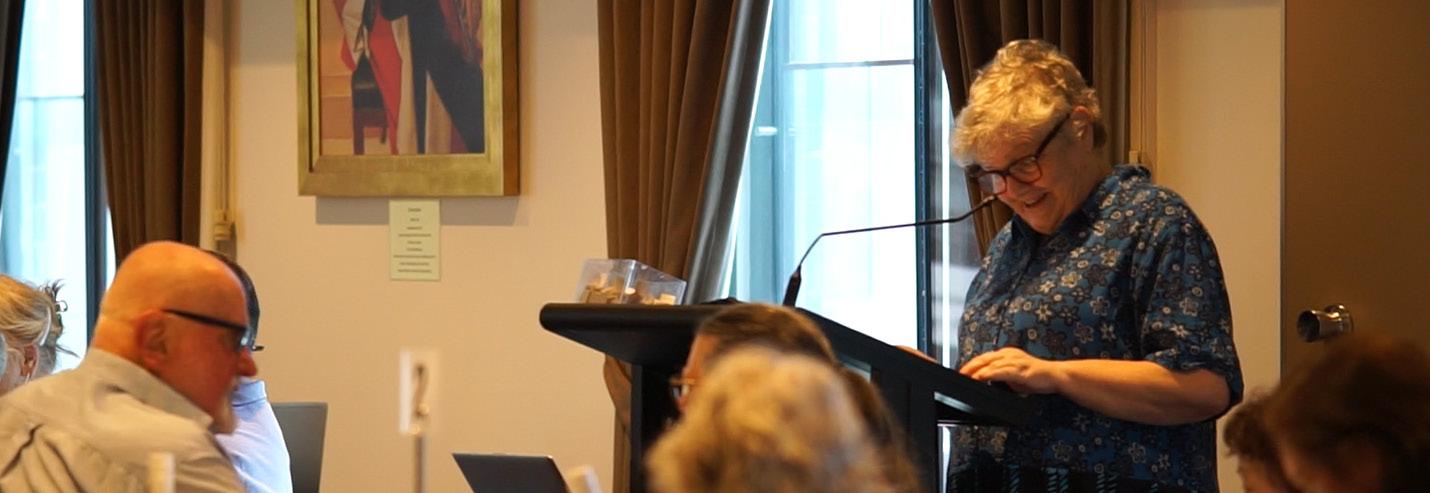
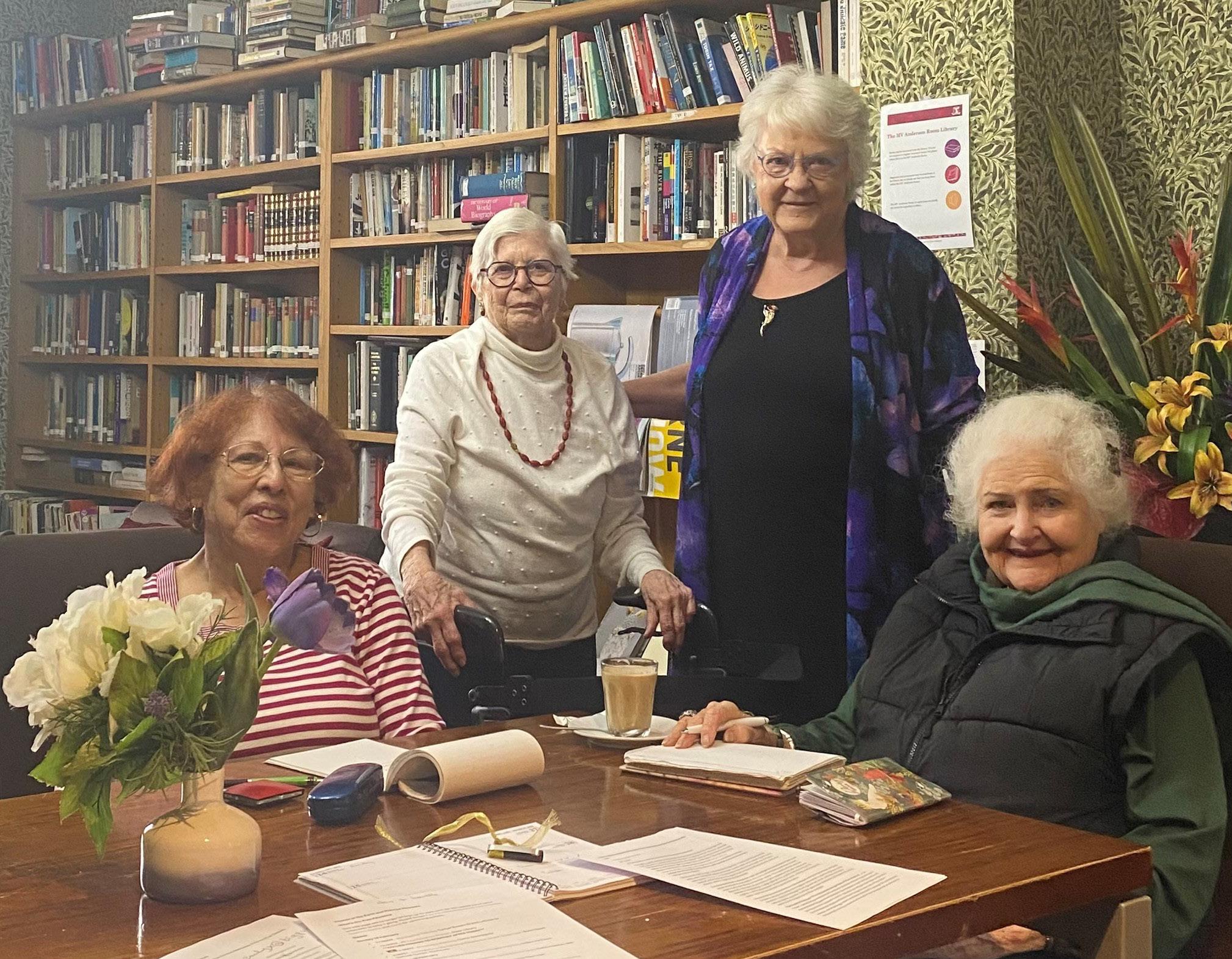
Thank you, Fiona Malcolm, for telling us all about the Melbourne Athenaeum Library. It was a very enjoyable presentation from an experienced librarian. Fiona can’t remember a time when she didn’t want to be a librarian. From the moment she saw Batman on TV (the Adam West version) and discovered Batgirl was a librarian, her future was sealed! Fiona’s first library job was at the Baillieu Library, at the loans desk and later in the orders and accounts departments. She then moved into a range of roles in public libraries before starting her dream job at the Melbourne Athenaeum Library in 2020.
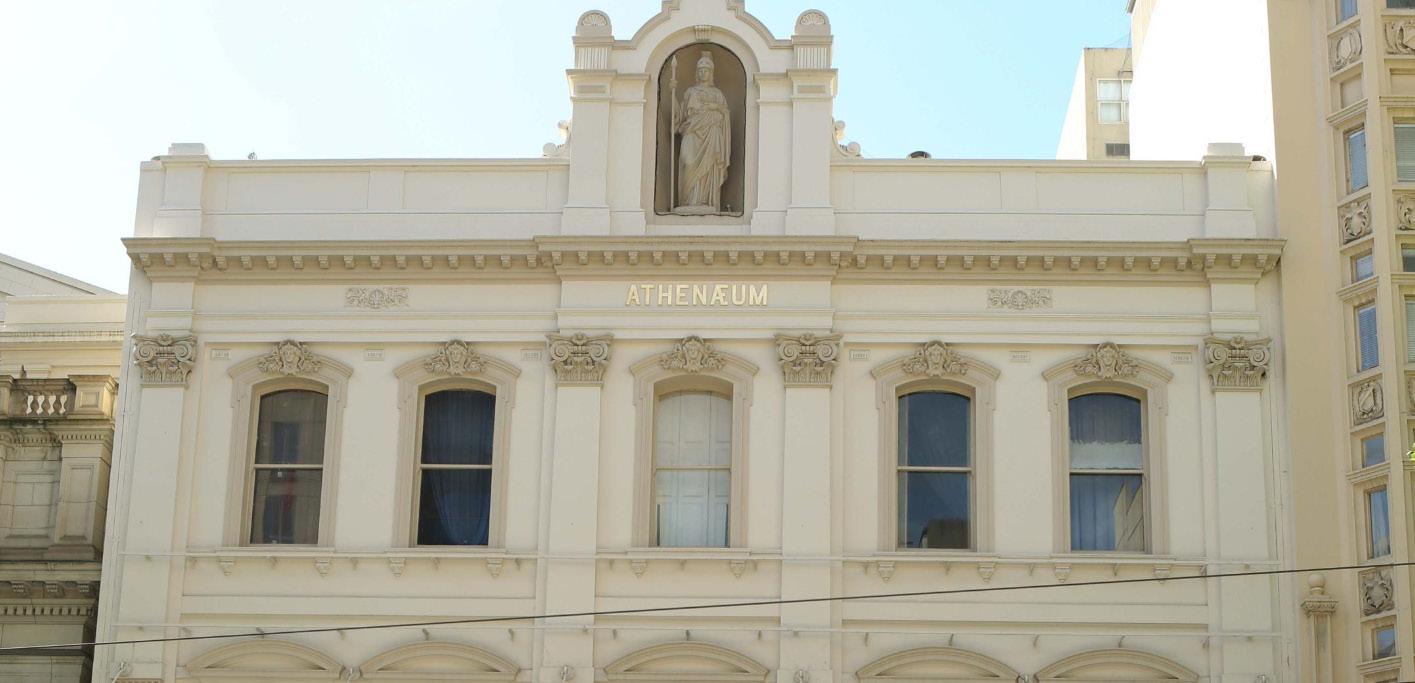
Fiona presented a history of the Melbourne Athenaeum, originally founded as the Melbourne Mechanics’ Institute. In the early years of Melbourne, the institute played a central civic role: it housed the
city’s first official library and art gallery and even accommodated town council meetings before the construction of Melbourne Town Hall.
In the words of its founders, The Mechanics’ Institute was established to “provide the promotion of science in this rising colony, particularly among the young as well as the cooperative classes”. A library accessible to members was central to this mission. The institute received strong support from leading figures in colonial government and society, including its first patron, Superintendent Charles Joseph La Trobe, and its first president, Police Magistrate William Lonsdale. Other early supporters included banker and landowner David Macarthur.
By 1840 the institute had 129 members, each paying an annual subscription of one pound,
with discounted memberships available for the sons and apprentices of members under sixteen. At that time Melbourne had only a handful of permanent buildings, many of them churches or breweries. The library began with donated books from members and was initially housed in rented premises at Bourke and Queen Streets. By 1841 the collection had grown to more than 100 volumes described as “works of great utility.” The earliest books were loaned from the private collection of founding vice-president Henry Isburn, who later bequeathed his library to the institute.
In 1842 the organisation moved to land it had previously purchased on Collins Street. Construction delays occurred when builders failed to pay their workers, leading labourers to remain on site until the dispute was resolved. Fiona discovered that around this time, on other construction sites, builders were sued by their employees “because the wine provided was substandard and the sugar was too sweet”. Despite such challenges, the institute expanded its services during the 1840s, opening a reading room that provided access to newspapers from across Australia and overseas, including London publications.
Membership fluctuated during the gold rush, when many members left for the goldfields. Even so, the institute continued to grow and had around 440 members by the 1850s. Later in the nineteenth
century the building underwent several renovations, including the addition of a dedicated ladies’ reading room supplied with magazines and newspapers. During the 1870s the organisation adopted the name “The Athenaeum,” reflecting its broader intellectual and cultural ambitions and drawing inspiration from the ancient Athenian centre of learning associated with the goddess Athena.
Among the most entertaining items preserved in the Athenaeum’s archives is a suggestion book from 1871 to 1893. It records members’ requests for books and opinions on how the library should operate. One particularly enthusiastic contributor, John White, proposed restricting seating by the fireplace to no more than fifteen minutes per member and other improvements to member behaviour. Another member later suggested, somewhat humorously, that White be examined at Yarra Bend Asylum.
By the early twentieth century the Athenaeum had gained a strong reputation. In a survey of major libraries of Australia and Tasmania, writer Clifford Holgate noted that the institution served a large community of educated readers across Melbourne and its suburbs. The Athenaeum also hosted public lectures, including appearances by Mark Twain during his world tour in December 1895.
The First World War brought significant changes. Head librarian William Renfrey enlisted, and the cost of books imported from
Britain rose sharply. Nevertheless, demand for library services increased as many people could no longer afford to purchase books themselves. During this period the Athenaeum appointed its first female staff member, Alice Cooper, as library assistant in 1918, after 102 job applications from the public. Her appointment attracted considerable public attention and was widely reported in newspapers. She remained at the Athenaeum for eleven years, and by the 1950s most staff members were women.
Women had long been underrepresented among members, and early records often listed them under their husbands’ names. The first identifiable female member was Mary Anderson, recorded in the register as “Mrs Colonel Anderson.” It wasn’t until Mary’s obituary that her first name was known. By the 1980s women formed a significant part of the membership, and
today they outnumber men.
Architecturally, much of the building retains its original character, including the historic front desk and one of Melbourne’s remaining vintage lifts. Although the rise of public libraries in Victoria reduced membership at times and the institution faced financial pressures, the Athenaeum adapted by modernising its catalogue and services. Membership began increasing again in the early 2000s.
The Athenaeum recently celebrated its 185th anniversary, marked by a visit from the Governor of Victoria, continuing a long tradition of vice-regal patronage dating back to La Trobe. Having occupied the same block since the 1840s, the institution continues to evolve while maintaining its historic role in Melbourne’s cultural and intellectual life.
Recently, the Council of the Graduate Union of the University of Melbourne Inc met for a strategic retreat to reflect on our purpose and priorities.
A central outcome was a strong affirmation of our identity. We are first and foremost, a vibrant member association of graduates of all ages; from universities across Australia and around the world, united by a commitment to lifelong learning and to engaging with the big issues that shape our society.
This clarity of purpose is guiding our priorities.
We are working to ensure the Graduate Union has a meaningful physical presence within the Graduate Union’s new building program. A dedicated space is strongly supported to sustaining connection, hosting
events, and maintaining our visibility within the University community.
Council is also exploring opportunities to expand our reciprocal club network, enhancing the value of membership through broader access to like-minded communities locally and internationally.
Our commitment to philanthropy and lifelong learning remains central. We will continue to support initiatives that advance educational opportunity and foster intellectual engagement among members.
Finally, we have narrowed potential strategic partners to three organisations and are now undertaking further exploration to ensure strong alignment with our mission and values.
We look forward to updating members as this progresses.
This International Women’s Day, we honour the extraordinary women who have shaped our organisation. For more than a century, the history of the Graduate Union has also been the history of women whose leadership, intellect and resilience have helped define who we are.
Since our formation over one hundred years ago, women have been present at every pivotal moment. From the early pioneers at that first meeting on May 4th, 1911 — Dr Helen Sexton, Mrs Cherry and Dr Georgina Sweet — to Stella Langford, whose generous benefaction enabled the purchase of the terraces, women have laid the foundations on which we stand. Today, that legacy continues with our first female President, The Hon. Diana Bryant, Chair Natalie Gray and our Council members, whose leadership is guiding the Union confidently into the future.
Beyond those in formal leadership, every woman who has been a member, staff member or supporter of the Graduate Union has played an essential role. Each contribution — big or small — has strengthened our community.
Across changing eras, women of the Graduate Union have navigated growth, challenge and global transformation, ensuring the Union remained intellectually vibrant and deeply connected. They continue to lead our most vital initiatives, create spaces for the exchange of knowledge, and foster the inclusive environment we value today.
Their influence is woven into the fabric of our past and is a driving force in our future. As we look ahead, we do so knowing that our strength as an organisation is inseparable from the talent, vision and dedication of the women among us.
To the women who built our foundations and to those who continue to lead us forward: thank you.




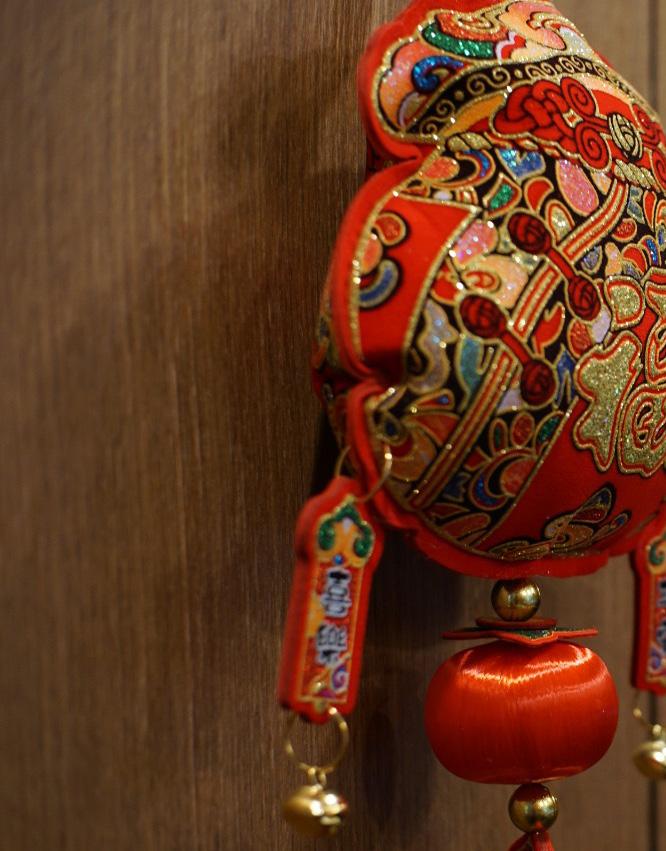
The Graduate Union’s inaugural international tour to China is approaching, scheduled for September and October 2026. Expertly organised and guided by our member, Cindy Huang, this is an opportunity not to be missed.
This immersive 15-day journey across eight cities offers a unique oportunity to explore China’s millenarian heritage and its stateof-the-art modern cities. The adventure begins in Shanghai, where members will explore the serene Yuyuan Garden, the historic Jade Buddha Temple, and the iconic skyline views of The Bund. From there, the route follows the historic Grand Canal through the ancient water towns of Suzhou and the tranquil West Lake of Hangzhou.
The second week of the journey transitions to the imperial heart of Beijing, featuring visits to Tiananmen Square, the Forbidden City, and the majestic Great Wall. The exploration continues in Xi’an, home to the legendary Terracotta Warriors and the vibrant Datang Everbright City, followed by an unforgettable visit to the Giant Panda Base in Chengdu.
The tour concludes in Chongqing, featuring the Three Gorges Museum and a stunning night cruise along the Yangtze River.
Beyond the visits to these cultural landmarks, the itinerary includes exclusive visits to prestigious Chinese universities in Shanghai, Suzhou, Hangzhou, Beijing, and Xi’an, providing a deep dive into the country’s academic landscape.
The cost of this comprehensive tour is $6,300 per person (excluding return international airfares between Melbourne and Shanghai). Members who would like to invite a non-Member partner, please know that you’re more than welcome to do so.
Expressions of interested are accepted until the 31st of March.
We are thrilled to offer you this wonderful opportunity and hope that it will be the first of a series of initiatives that broadens our offer to members.
For a full itinerary or to submit an expression of interest, please contact membership@graduatehouse.com.au.


By Claudia Sagona MOM, FAHA, PhD
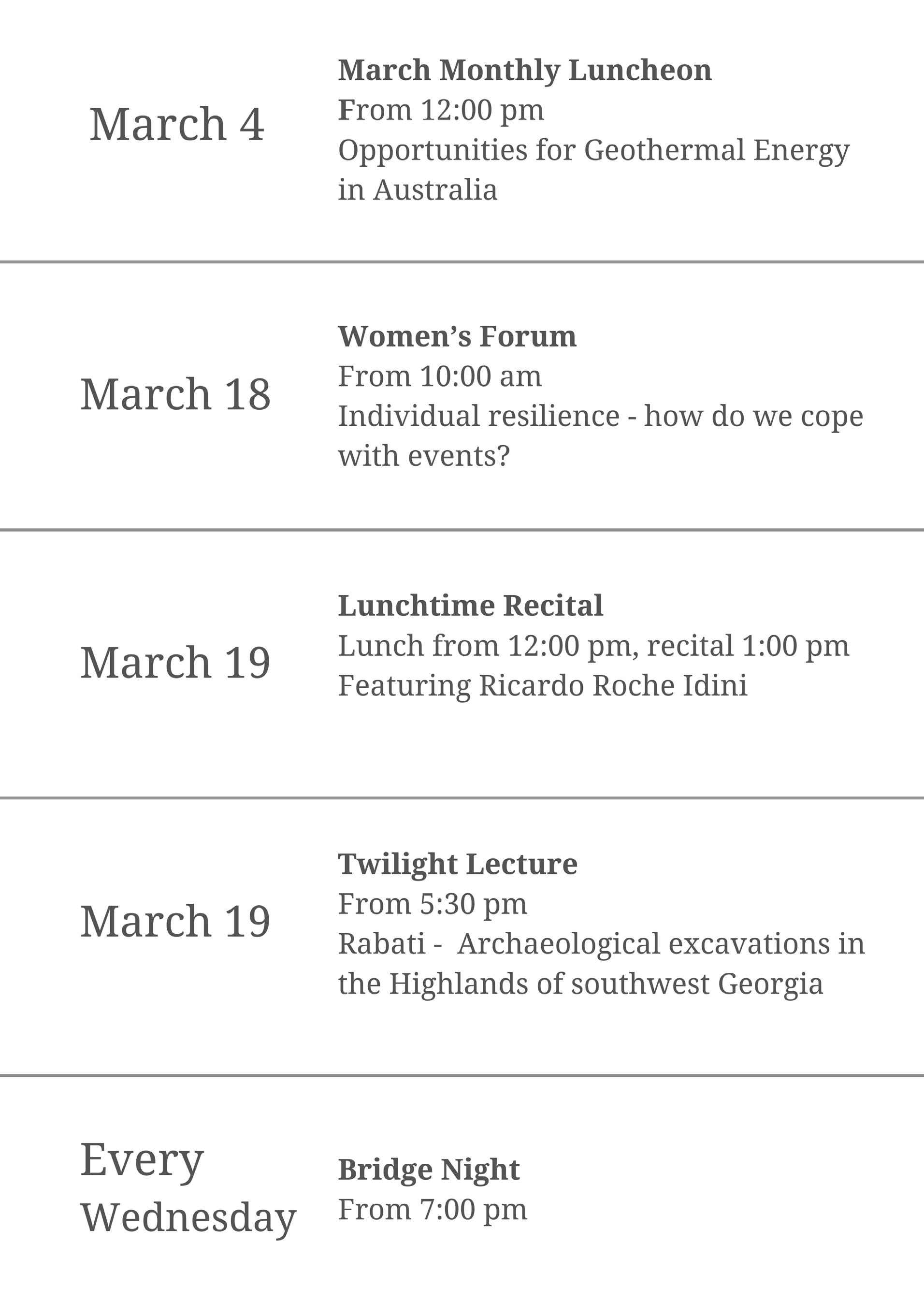
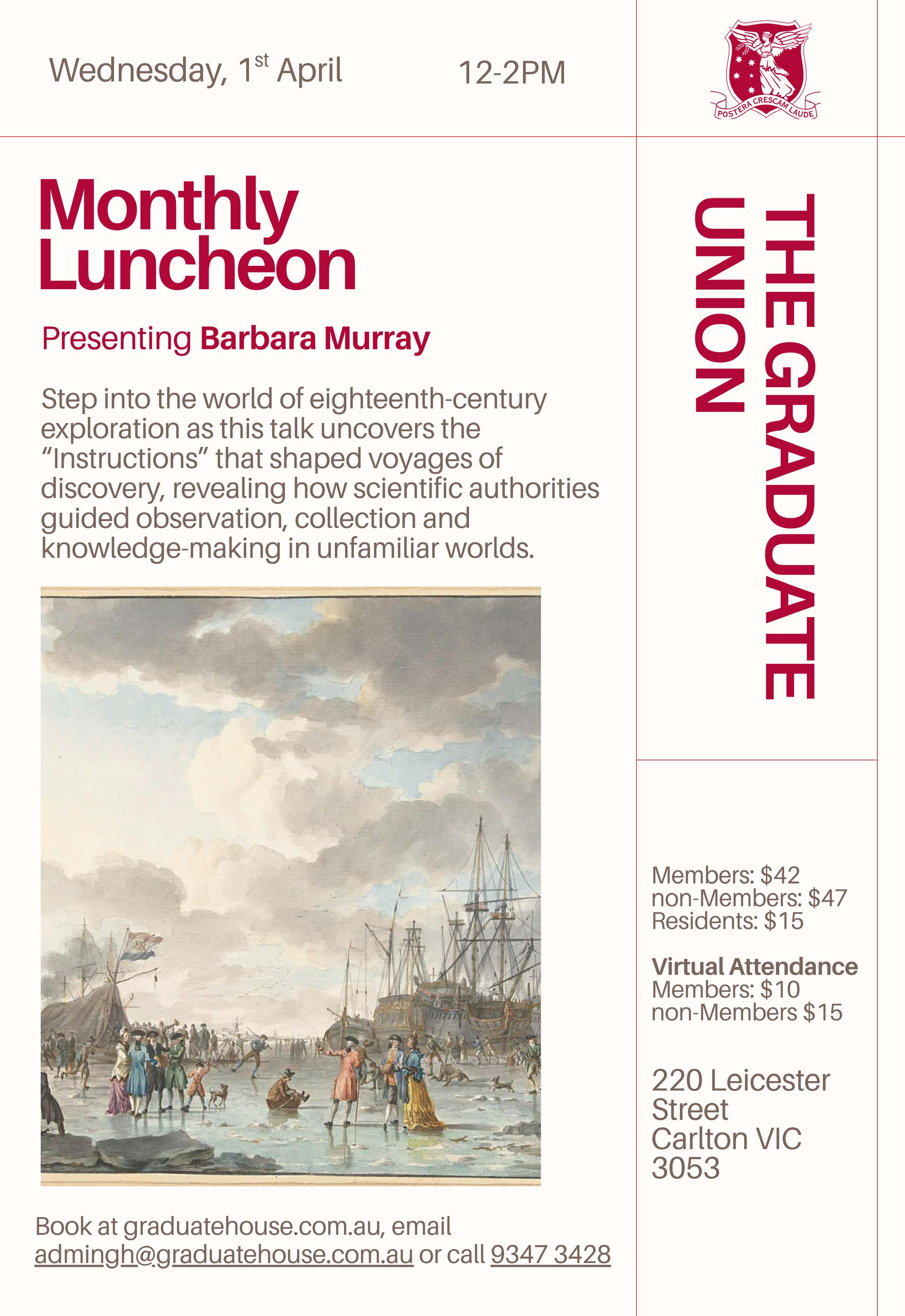
THURSDAY 19 M ARCH | 5:30 PM - 7 :00 PM | TH
TWILIGHT LECTURES ARE FREE AND INCLUDE COMPLIMENTAR Y DRINKS BEFORE THE LECTURE
BOOKINGS VIA OUR WEBSITE OR CALL 9347 3428
Nominations are hereby called for the election of five (5) Council members to hold office for three years from the date of the Annual General Meeting to be held on Thursday, 28th May 2026. Any other vacancy occurring prior to the close of nomination s will be included within this election. The terms of current Council members are set out in the tables below The elected members who are retiring in May 2026 and eligible for re-election are indicated by the asterisk*.
An Election Kit, available by application to the Returning Officer , contains the following essential information for any member who seeks election to Council:
1. the Nomination Form;
2. The Graduate Union Nomination and Election to Council Regulation;
3. forms for completion by the nominee to inform Members of their qualifications, experience and skills for governance;
4. declarations to be signed; and
5. other relevant information.
Members should note the following key dates in 2026:
- Opening of Call for Nominations 2nd February
- Close of Nominations 5th March
- (if ballot is required) Election Material is to be submitted 12th March
- Close of Voting 21st May
The Election Kit is available from The Graduate Union offices or website, or by application to the Returning Officer at the postal or email addresses below:
PO Box 2157, Fitzroy, VIC 3065 sluntz@abovequota.com.au
The closing date and time for Nominations is 5th March 2026, 4.00PM.
The completed Nomination Form and other forms provided in the Election Kit should be lodged by post to the Return ing Officer’s address above or by email (signed, scanned and as an attachment) to sluntz@abovequota.com.au or placed in the ballot box at the offices of The Graduate Union.
The completed Nomination Form is to be received by the Returning Officer by the stated closing date and time.
Stephen Luntz
Returning Officer Date: 21/01/2026
Elected Council members as at 31st January 2026
Until May 2026
Ms Molina Asthana*
Dr Martin Comte
Ms Natalie Gray
Until May 2027
Ms Jane Tisdall
Mr Michael Lynch
of The University of Melbourne Inc.
220 Leicester Street, Carlton, Victoria 3053, Australia
Telephone: +61 (0)3 9347 3428
Australian Business Number: 55 610 664 963
Incorporated Association Registration Number: A0023234B