June 2026
Dear
If you have any suggestions or would like anything of interest to be featured in the newsletter, please send an email to publications@graduatehouse.com.au so the team can consider your topic or answer any queries you may have.


June 2026
Dear
If you have any suggestions or would like anything of interest to be featured in the newsletter, please send an email to publications@graduatehouse.com.au so the team can consider your topic or answer any queries you may have.
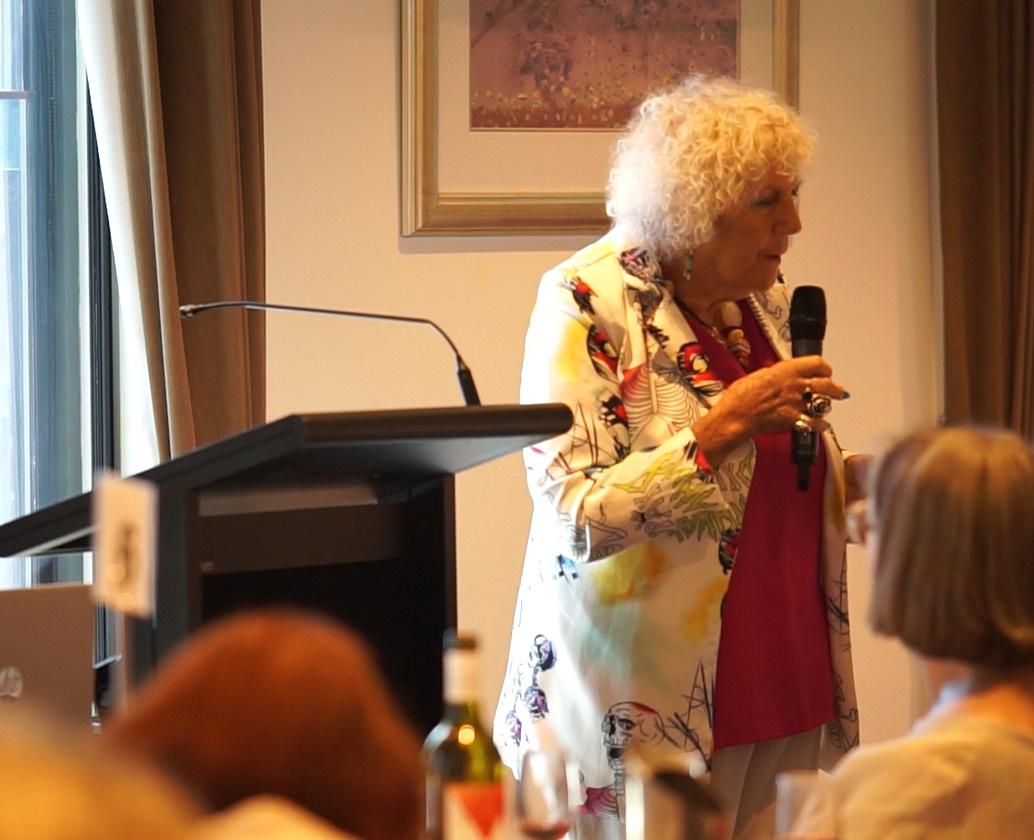
On Wednesday 6th May, Robin Bowles, one of Australia’s best-known true crime writers, delivered a colourful account of her remarkable journey from nurse and PR consultant to bestselling investigative author, on Wednesday 6th May. Robin combined anecdotes from her own life with reflections on some of Australia’s most notorious criminal cases, revealing not only the mechanics of investigation but also the persistence, intuition, and audacity that shaped her career.
Robin began by reflecting on her early years, explaining that before entering the world of crime writing she had worked as a nurse, later establishing a successful public relations consultancy while raising four children.
The turning point in her life came unexpectedly through a newspaper article describing the death of Jenny Tanner, a woman found shot through both hands and once in the head, whose death had been ruled a suicide. Bowles described reading the story repeatedly over breakfast, unable to reconcile the official conclusion. “Why would you shoot yourself through each hand and then shoot yourself in the head?
And how would you do that?” she asked.
Already an avid reader of true crime, influenced particularly by Truman Capote’s “In Cold Blood” and the American crime writer Ann Rule, Bowles became consumed by the inconsistencies in the case.
The investigation quickly became an obsession. Bowles explained how she obtained old coronial documents, tracked down witnesses, and immersed herself in police procedure manuals from the 1980s. She recounted discovering, while reading the autopsy report, evidence of a previously overlooked fourth bullet wound hidden beneath matted hair. Driving through regional Queensland at the time, she turned to her husband in disbelief: “There were four bullets… and she’s buried as a suicide. I can’t believe it.”
Throughout the presentation, Bowles repeatedly returned to the idea that investigative work depends as much upon persistence and instinct as upon formal expertise. Although she had no legal training, she developed a detailed understanding of court processes partly through proofreading her husband’s university law assignments.
One of the presentation’s most compelling features was Bowles’ talent for blending humour with deeply unsettling material. She described the practical realities of investigative writing with extraordinary colour: searching for interview subjects in rural towns, learning to ask questions in op shops because “the ladies there know everybody,” and writing notes covertly in prisons by hiding pencils in her pockets.
Her discussion of the Peter Falconio case became one of the afternoon’s highlights. Robin recounted meeting convicted murderer Bradley John Murdoch in prison and being immediately struck by how little he resembled witness descriptions. He far surpassed six feet tall and had no front teeth, adding that she thought any witness would surely have noticed.
Robin then described travelling into the Northern Territory to physically recreate
Joanne Lees’ account of fleeing through bushland after Falconio’s alleged murder. Dressed in second-hand clothes and with her hands bound behind her back to mimic Lees’ restraints, Bowles crashed through mulga scrub in darkness while a gunman and dog attempted to locate her. The scene she described bordered on cinematic: cobwebs wrapping around her face, insects biting her neck, spinifex tearing at her legs, and a massive bull looming behind a fence in the darkness. “I had ants in my ear,” she recalled. “It was a horrible experience actually.”
The exercise convinced Robin that key aspects of Lees’ account were implausible, and suggested that she couldn’t have been telling the truth about what happened.
Robin also reflected at length on the Greg Lynn case, outlining both Lynn’s explanation of the deaths of Russell Hill and Carol Clay and the legal complications surrounding the trial and appeal process. Her interest lay not simply in guilt or innocence but in the operation of the justice system itself. She criticised aspects of police procedure and prosecutorial strategy openly, noting that such criticism had made her unpopular with authorities. “The police don’t like me,” she admitted cheerfully. “Because I talk about things that they’ve done wrong. And I put it in books as well.” Despite dealing constantly with violence and deception, Robin revealed a surprising degree of empathy toward many of the people she encountered, including criminals. Speaking about Murdoch, she admitted she came to like him.
Robin’s stories moved between humour and tragedy, exposing not only flaws within the legal system but also the intensely human dramas hidden beneath sensational headlines. The audience response reflected both admiration and astonishment.
Professor Howie’s impressive career began in 1976. While serving on the staff of the Minister for Labour, Commerce, and Industry in Papua New Guinea, he saw himself forced to step in and deliver a speech to a major international conference when his minister failed to appear. His performance caught the attention of an International Labor Organization (ILO) representative, who promptly offered him a one-year pilot assignment working with rural, illiterate village populations in Bangladesh, despite having never visited the country, speaking no Bengali, and holding no formal training in rural development. He accepted the post. His assignment began with a briefing at the ILO’s Regional Office for Asia and the Pacific in Bangkok. After that, he arrived in Dhaka, Bangladesh, at the time under a military dictatorship and a strict nighttime curfew following the assassination of founding father Sheikh Mujibur Rahman. Professor Howie was immediately thrown into a catastrophic cholera outbreak. Armed only with a project vehicle and structural resourcefulness, he spent his early days picking up dying citizens from roadsides and rushing them to local hospitals. The scene at these medical centers was overwhelming, with patients packed onto beds, beneath frames, and across stairwells. Howie witnessed doctors performing brutal, survivalist triage, pinching the skin of dehydrated patients to see if any fluid elasticity remained. If the skin failed to
bounce back, they were left to die while resources were diverted to those with a chance of survival.
Once the immediate humanitarian crisis improved, Howie spent three years pioneering localized social development. Recognizing that rural farmers spent their daylight hours in the rice paddies and women were consumed by domestic labor, Howie and his team adapted by operating exclusively at dusk and during the night. They traveled deep into rural sectors, engaging illiterate communities through traditional mediums like openair dramas, puppetry, and folk songs. The core objective was sustainable localisation: establishing functional communication channels between village representatives and local government service providers without creating a permanent dependency on foreign aid.
Following his foundational years in Bangladesh and a multi-year posting within a government ministry in Sri Lanka, where he designed health and family planning networks for plantation and fishing communities, Professor Howie transitioned to Kenya as a Chief Technical Advisor. This period marked a profound shift, both personally and structurally. Now accompanied by a wife and infant son, he had to coordinate multi-project portfolios while managing complex and sometimes tense dynamics with local bureaucratic counterparts who occasionally misdirected project resources to supplement their own government salaries.
In 1990, Professor Howie joined the United Nations Population Fund (UNFPA), elevating his operations to the ministerial and ambassadorial level as Country Director for Ghana. Operating under the military regime of Flight Lieutenant Jerry Rawlings, Howie faced immediate challenges, including an institutional tradition left by his predecessor, who had systematically
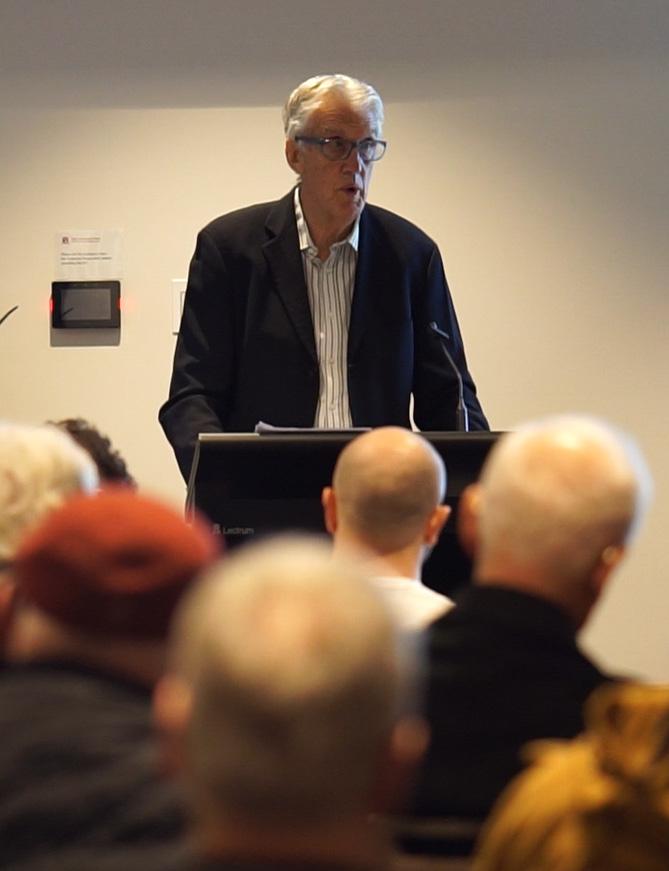
channeled program development funds into purchasing expensive Scotch whiskey as bribes for government ministers.
In a defining ethical decision, Professor Howie broke the cycle of corruption, and refused to distribute the bribes.
The pinnacle of his field career took place in Vietnam and China, where he was tasked with the highly sensitive mandate of negotiating and monitoring state-mandated population controls. In China, he traveled extensively to dissect the complex enforcement of the one-child policy. He detailed the severe demographic distortions that were consequences of the policy, including a missing generation of 80 to 100 million girls due to sexselective abortions or hidden, unregistered births, and the emergence of an ageing workforce alongside millions of single, disenfranchised men.
Tasked with convincing the Chinese to alter its approach, Professor Howie utilized historical negotiation strategies adapted from nineteenth-century British officer “Chinese Gordon,” maintaining an unyielding, repetitive policy stance. While the policy remained intact during his tenure due to strict state bureaucracy, the UN successfully made vital modifications, including the criminalization of ultrasound sex determination, the diversification of contraceptive choices, and the abolition of rigid year spacing restrictions between births. Howie also extended his oversight to North Korea, navigating a totalizing autocracy to deliver vital human assistance during its devastating domestic famines.
Professor Howie’s final, monumental legacy centered on structural reform within the UN itself. In Vietnam, he observed a heavily fragmented international presence, where 11 separate UN agencies operated in isolated silos actively competing for identical donor pools, duplicating logistical structures, and overwhelming local ministries with fragmented agendas. To combat this, Professor Howie and a core
group of reformist directors spearheaded the “One UN” initiative. Through years of intensive operational team-building missions and corporate consultations, they successfully established a singular, unified framework:
• One Unified Plan: Merging the strategic operational targets of all active agencies into a single country directive.
• One Pooled Budget: Consolidating distinct, competitive financial accounts into a single, transparent fund.
• One Cohesive Team: Housing all operations inside a single physical UN building under a singular leadership authority.
Though later moderated by institutional pushback into the global framework known as “Delivering as One,” this structural revolution significantly amplified the UN’s moral and advisory authority. The reform process was later accelerated by geopolitical shifts, most notably when the Trump administration unilaterally slashed funding, forcing the entire UN to permanently prioritize deep, systemic costefficiencies.
Reflecting on a journey that ultimately led him to UN Headquarters in New York as the global Director of Human Resources., Professor Howie stated that despite the bureaucracy, regular exposure to human suffering, and geopolitical obstacles, his UN career was immensely rewarding. For the students in attendance, his message was clear: while national diplomats serve sovereign interests and corporate actors pursue profit margins, a career within the UN development offers the rare, enduring privilege of exercising authority to uplift the world’s most marginalized populations.
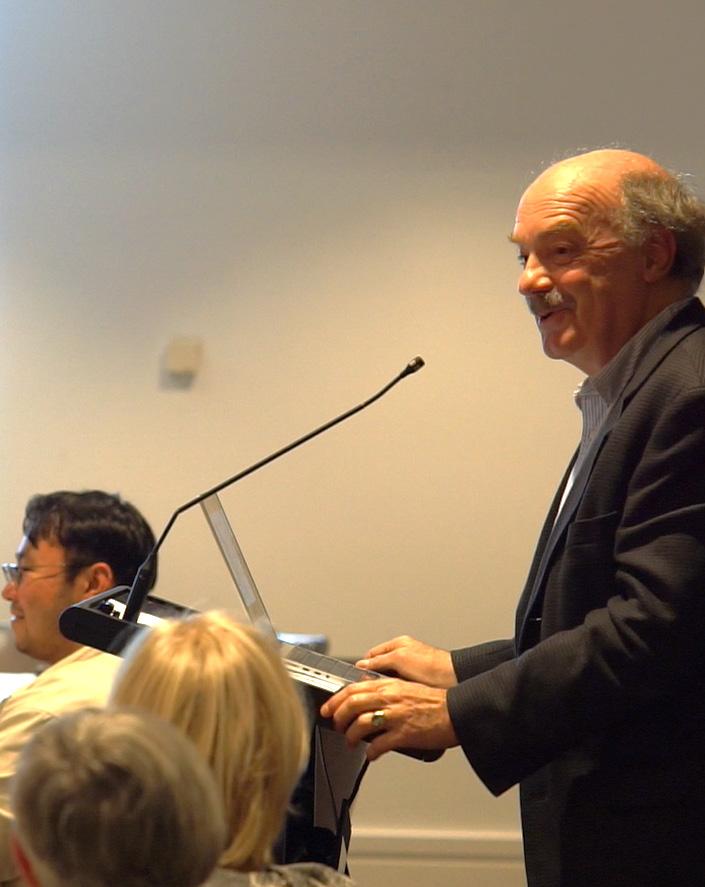
On Thursday 28th of May, the Graduate Union had the honour to receive Professor Eduard Hovy, Executive Director of Melbourne Connect, as this year’s AGM Dinner speaker.
Professor Hovy started his talk with a historical journey. Over the last 500 years, humanity has experienced a series of collective paradigm shifts that dismantled our perception of being the absolute center of reality. First, Copernicus proved that the Earth was not the center of the universe, shrinking our cosmic importance. Two and a half centuries later, Charles Darwin introduced evolution, demonstrating that humans are part of a biological chain rather than a pinnacle of divine creation. Not long after, Sigmund Freud revealed the subconscious, breaking the illusion that we are perfect, fully rational thinking machines.
Today, we find ourselves living through a fourth paradigm shift. The birth of AI presents humanity with a machine that can speak, write poetry, translate languages, and solve complex legal and medical problems. This raises an important question: Are we no longer the only species capable of thought? Professor Hovy noted that while this shift feels like another hit to human perception, it requires us to deeply understand the boundaries between actual comprehension and programming.
To define what we mean by “intelligence,” Professor Hovy presented the example of the sphex wasp behaviour. When preparing her nest, the female wasp paralyzes an insect, drags it to the lip of her burrow, steps inside to inspect the nest, and then returns to pull the food underground. To an observer, this might look like forward thinking
intelligence. However, if an observer moves the insect just one centimeter away while the wasp is inside, she will emerge, find the insect, drag it back to the edge, and re-enter the burrow to inspect it again. If the insect is moved repeatedly, the wasp repeats this cycle indefinitely. She is not thinking, she is a naturally programmed biological bot trapped in a loop.
For decades, computer science sought a machine that could move past rigid programming and reliably pass the Turing Test conceived by Alan Turing during the Second World War. The test consists of having a human interrogator maintain a conversation with a hidden entity. If the human cannot distinguish whether it is a human or a machine, the machine must be treated as intelligent for all practical purposes. Until November 2022, no machine had reliably passed this milestone. Today, large models like ChatGPT, Claude, and Gemini pass it with flying colors, forcing us to look past behavior and examine the tricks hidden inside the code.
Professor Hovy explained that a Large Language Model (LLM) is fundamentally built on an old concept from the 1970s: the language model. This is a massive spreadsheet that counts word combinations from millions of pages of text to predict the most likely next word. When you type on a modern smartphone, the device uses an optimized chip running these exact probabilities to guess your next phrase. Large Language Models scale this concept to an extraordinary degree. They can access hundreds of billions of sentences, mapping words into mathematical values.
Professor Hovy emphasized that this process involves massive infrastructure.
Building ChatGPT took five years of hyper-fast computing and cost roughly $150 million USD. Despite the investment, the model follows the same “simple” model that strings together phrases based on statistical coherence. Now, because there is no mechanism tying the end of a long statement back to its true beginning, the model can easily drift from reality, resulting in what the industry labels “hallucination.” It models how we speak without understanding what we mean. This absence of genuine understanding extends across all modalities. Professor Hovy illustrated this with practical image editing experiments.
When an AI is asked to “cover graffiti on a train with a sticker,” it successfully places the image of a sticker but lacks any physical sense of scale and perspective, creating an image that does not match human understanding of the querie. Similarly, when commanded to remove a person from a photo, it might erase most of a person, ocasionally leaving an arm or a leg behind. This happens because it operates on statistical patches and “ghosts” of images rather than a coherent understanding of physical structures.
However, where the data operates within highly logical rules, the technology reaches incredible efficacy. Professor Hovy highlighted Claude, a popular agent developed by Anthropic. AI has completely mastered programming and, as Professor Hovy noted today, Claude is a more efficient, rapid programmer than almost any human on Earth.
What does this mean for the future of professional roles? To students wondering why they are learning data cleaning and
software development if an LLM can automate it instantly, Professor Hovy offered a reassuring but transformative outlook: “The jobs will not go, but the jobs will change.” Just as the world outgrew the bubble of manual computer programming from fifty years ago, the role is shifting toward prompt engineering, systems orchestration, and structural verification.
The future architecture of work requires a deliberate restructuring where humans remain at the front and center, acting as the critical verificators. Professor Hovy cited a breast cancer diagnostic study from St. Vincent’s Hospital: while the AI diagnostic engine performed at an impressive 96% accuracy rate, the best medical outcomes were still achieved by two human radiologists collaborating alongside the machine, filtering out potential AI hallucinations and delivering empathetic care that a machine simply cannot simulate.
Within the next decade, Professor Hovy predicts that a seamless transition will occur. The apps of today will evolve into personal, integrated LLMs living in the cloud, operating via our personal devices. These personal assistants will hold our schedules, draft our correspondence, and organize our travel. So, he urged the audience to abandon the sensationalized fear perpetuated by corporate interests or tech media. At its core, an AI remains a memory box with a chat loop. By utilizing our own brains to check its outputs and integrating it harmoniously into our workflows, humanity will not be replaced. Instead, we will have the chance to unlock an easier, richer, and significantly more productive way of living.
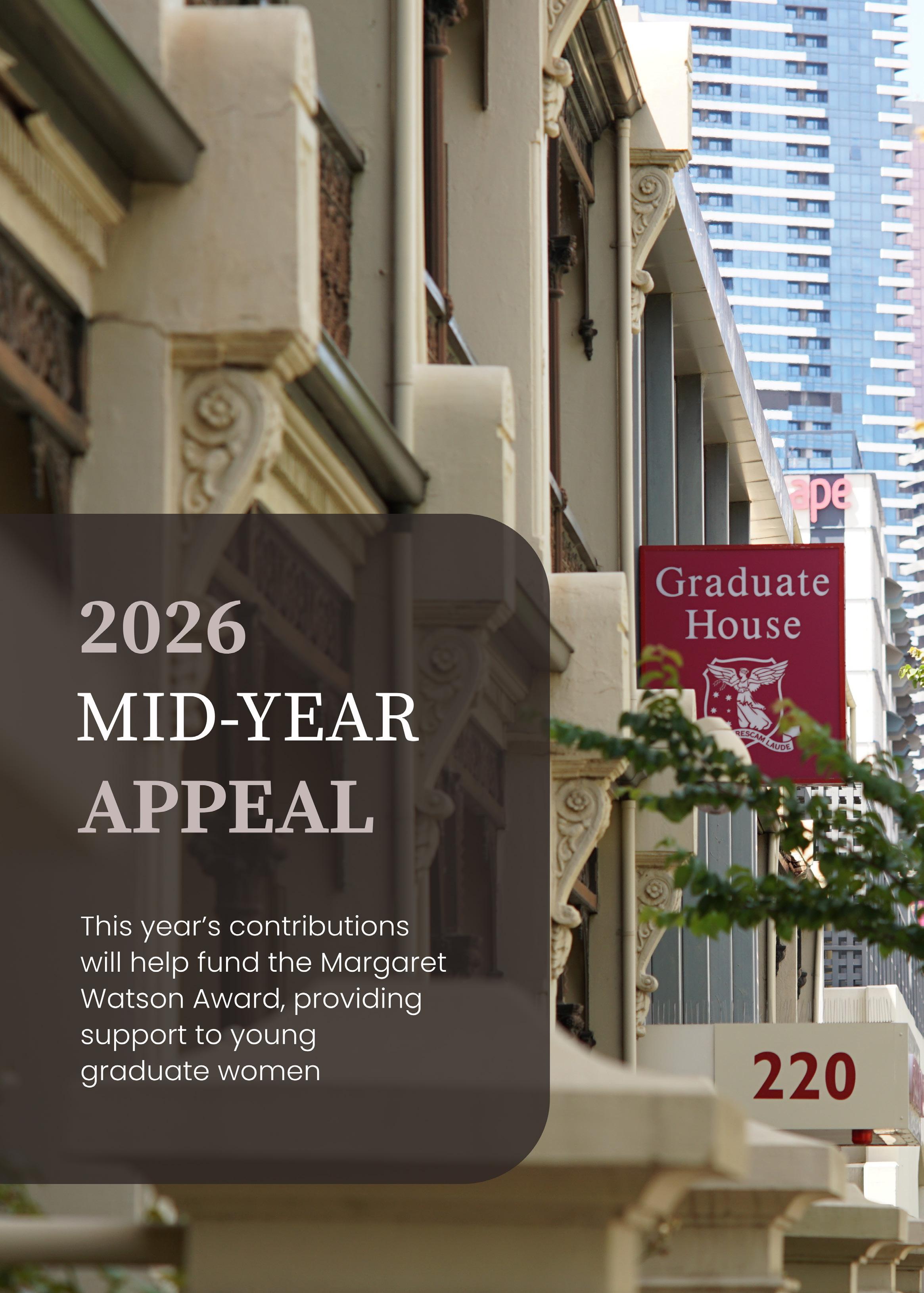
For generations, the Graduate Union has stood for the belief that education can be life shaping, and that those who have benefited from it have a responsibility to support those who follow.
This year’s mid year Appeal will focus on supporting young graduate women at a critical point in their early careers, when confidence, opportunity and connection can profoundly influence future pathways. The Graduate Union has a long and proud history of supporting women’s education, through initiatives such as the Margaret Watson Award and earlier scholarships for women residents of Graduate House. These awards have enabled talented scholars to pursue advanced study, research and leadership, often at decisive moments in their lives.
One recent example is Prerana Chatterjee, a resident of Graduate House who has completed her PhD in the School of Architecture and Design at The University of Melbourne. With the support of the Award, Prerana will now undertake post doctoral research in India, extending both her scholarship and the global impact of our community.
In 2026, we seek to build on this legacy by partnering with Graduate Women Australia to recognise and support young graduate women through Graduate Union Scholarships. This collaboration reflects a long association between our organisations and a shared commitment to education, equity and mutual support.
In addition to a financial award, recipients will be offered complimentary membership of the Graduate Union for one year and invited to share their work, aspirations and experiences with the Graduate Union community. In this way, the Appeal not only supports individual women, but also strengthens the intergenerational collegiality that sits at the heart of the Graduate Union.
We invite you to support this Appeal and help ensure that promising young women continue to benefit from the encouragement, generosity and intellectual community that have long defined the Graduate Union. Your contribution will help transform opportunity into achievement, and potential into lasting impact.
“The Margaret Watson Centenary Travelling Fellowship has provided me a great opportunity to expand on the findings of my PhD that focused on local perceptions of cultural heritage in Kolkata (previously Calcutta) in India.
This fellowship offers a valuable opportunity to revisit Pathuriaghata and expand upon interviews with long-standing residents whose indigenous perspectives on Kolkata’s origins contrast with colonial narratives. Work previously constrained by PhD deadlines can now be developed into a full publication. This fellowship is a priceless stepping stone for an early career researcher like myself who seeks a career pathway into academics.”
Title: Firstname : Surname:
Phone number: Mobile:
Email:
Address: (number, street name or Post Office box, suburb, state, postcode and country)
Card Number
Expiry Date / CSV
Cardholder Name Signature
Account Name: The Graduate Union of The University of Melbourne Inc. Bank: National Australia Bank BSB: 083 170
Account Number: 515 612 137
Swift Code: NATAAU3303M
Description: 2023AnnualAppeal
$AUD: I would like to give regularly through my selected payment option
Please contact us for alternative giving frequencies Commencing: / /

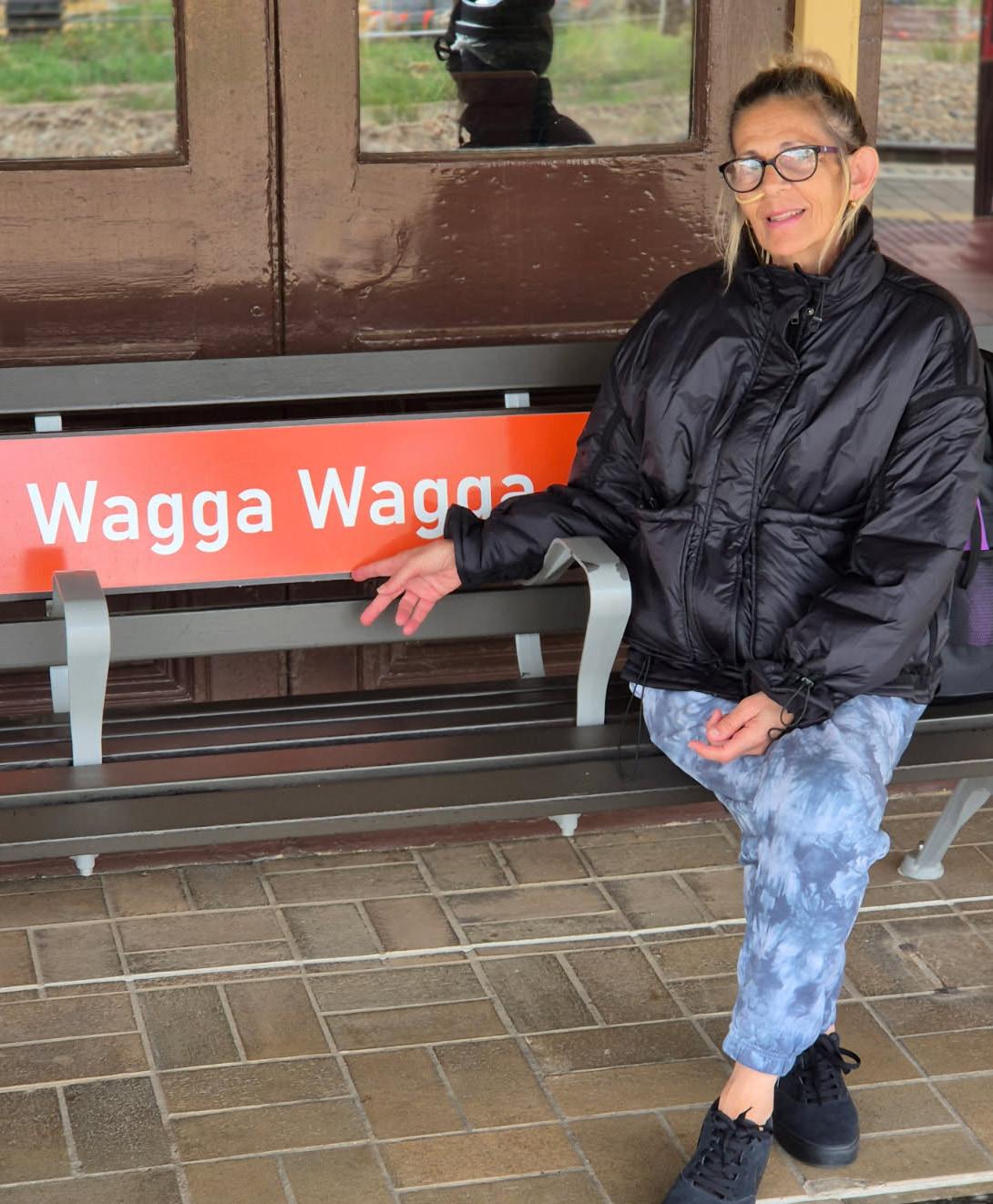
For two decades, Vicky Morgan has been part of the Graduate House community. First arriving in 2006 while studying her first master’s degree, she found something that would keep drawing her back over the years: a place that felt like home.
Now, twenty years later, Vicky is leaving Graduate House to continue her PhD journey, taking with her countless memories, lifelong friendships, and a story of scholarship, service, and resilience.
Since arriving at Graduate House, Vicky has completed a Master of Arts Degree with Thesis in Peace and Conflict Studies and a Master of Social Work (Professional Qualifying) Degree that accompanies academic study in International Law and Education. Vicky is now pursuing a PhD focused on the future of volunteering in emergency services
Yet despite earning multiple qualifications, as well as a Bachelor of Arts prior to arriving at Graduate House, she still considers herself a lifelong learner.
“Sometimes I think, is this the path I really want to follow? You don’t know until you walk down the path. I’ve got five degrees and I still don’t know. I think I’m going to be a student for the rest of my life.”
For Vicky, that commitment to learning reflects the reality of a rapidly changing world, where people are more inclined than ever to pursue multiple career paths.
Her current research examines how volunteer organisations can attract and retain younger volunteers in an ageing society, not just in emergency services, but across the volunteer sector.
Although Vicky’s academic path initially focused on international law, ethics, human rights, and peace and conflict studies, her eventual move into social work was influenced by experiences that stretched back to childhood.
As a child, there was a pot of stew that would stay on her stove at home for days.
“I remember taking my plate over to my mother and saying, ‘more’. And she turned around and said, ‘there’s no more’. And I think from that moment, I knew I had to do something about this. I’m going to make sure people don’t go hungry.”
Her later studies in law and ethics further strengthened those values. While researching the legal and ethical obligations of the Australian Defence Force toward detainees and prisoners of war, she became deeply engaged with questions of human rights and humanitarian responsibility.
At the same time, Vicky was volunteering with the Australian Red Cross Emergency Services, a commitment she has maintained for more than thirty years. She was activated during major events including the aftermath of the September 11 terrorist attacks and the Bali bombings.
“I learned a lot about humanity,” she says. “I learned that we always have to remember how valuable human life is.”
For Vicky, some of the most valuable learning at Graduate House came from being surrounded by people from diverse backgrounds and fields of study, keen to share their research, ideas, and goals.
She credits many Graduate House initiatives with fostering that culture of intellectual exchange.
“About eighteen months ago there was a six-week program for researchers and PhD students with some amazing guest speakers. Opportunities like that allow you to learn from people with years of experience and see your own work from a different perspective.”
Another favourite memory was the monthly Friday evening meet-and-greet sessions. An event organised at Graduate House a few years ago.
“Residents could give a short talk on anything—from their research to their culture or hobbies. Almost everyone attended, not because of the open bar before dinner, but because people genuinely wanted to connect and learn from one another. If they got there half an hour before the Friday dinner, then they could share in something that was really student orientated.”
Vicky once shared her work as a children’s author, showcasing an award-winning book that had been published in both print and Braille, allowing children with vision impairments to read alongside sighted children.
“Many residents had never seen Braille before. The response was incredible.”
Throughout her years at Graduate House, Vicky formed friendships with residents from India, Spain, Italy, France, Germany, the Netherlands, Japan, China, Korea, Turkiye and many other countries.
One of her most cherished memories came after completing her social work degree. Unable to travel interstate to attend her official graduation ceremony, she was surprised when fellow residents organised
an impromptu graduation celebration in the park across the road.
“They presented my degree, gave speeches and celebrated with me. It was beautiful.”
“I was blown away by the kindness. It wasn’t formal, but it meant more than people will ever know.”
The gesture reflected the community spirit she believes defines Graduate House.
As a way of giving back, Vicky later designed and 3D-printed a complete set of chess pieces to complete a communal chessboard used by the chess-loving residents who recognised her accomplishments.
Having studied and lived in residential colleges across Australia, including Sydney, Canberra and Brisbane, and visited universities around the world, Vicky believes Graduate House offers something distinct.
“Everywhere I go, I compare it to Graduate House. There’s a family feeling here that I’ve never found anywhere else.”
She also values the accessibility of Graduate House leadership and staff, emphasising how approachable our General Manager Daniel Clark is, and how recognised she feels on a personal level.
As Graduate House looks toward its future, Vicky hopes the sense of community that has defined her experience will remain at its heart.
As she prepares to leave, the emotions are mixed.
“For me, it’s like leaving family.”
Yet Vicky knows that the friendships, experiences and lessons she has gained will remain with her long after she moves on.
As Vicky begins the next chapter of her PhD journey, she leaves behind a lasting contribution to the community she has called home for so many years. Her story is a reminder that education is about more than degrees—it is about people, relationships, and the shared pursuit of making a difference in the world.
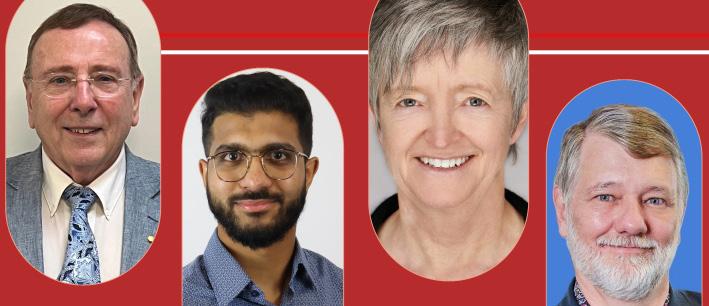
The 2026 Graduate Union Council Elections concluded successfully on May 21st, marking a notable achievement in the implementation of a hybrid voting modality that combined both online and in person paper balloting.
Stephen Luntz, the Returning Officer from Above Quota Elections, formally announced the results following the close of the election period. A total of 227 formal votes were recorded and the results were as follows:
• Virginia Ross: 117 online, 29 paper
Total: 146
• Russell Maisner: 78 online, 20 paper
Total: 98
• Hisham Hussain: 128 online, 36 paper
Total: 164
• Richard Dent: 88 online, 38 paper
Total: 126
• Martin Comte: 132 online, 45 paper
Total: 177
With this results, we congratulate Emeritus Professor Martin Comte OAM and Virginia Ross on their re-election, and give a warm welcome to Hisham Hussain and Richard Dent as new Council members.
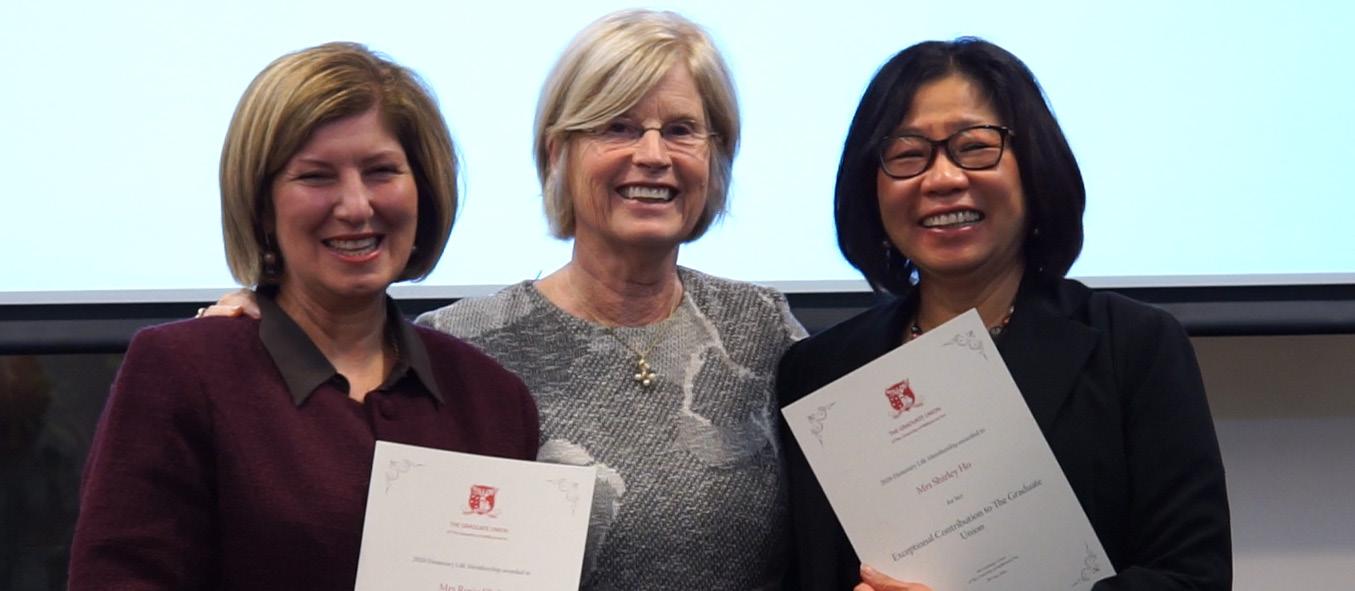
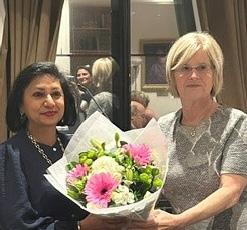
At the last Annual General Meeting on the past 28th of May, Rosie Ellul and Shirley Ho received a recognition from the Graduate Union for their invaluable collaboration to the organisation during their years of service. The Council also bid farewell to Chair Natalie Gray and Cr Molina Asthana, who decided to end their terms in Council.
Rosie Ellul retired after 32 years working at Graduate House. She started as part of the Functions Team, and through hard work and dedication she became the Hospitality Manager, where she led the team with expertise and precision while leaving an indelible impression of competency and care on our guests, residents and staff.
Shirley Ho was in charge of the Graduate Union communications and publications as well as being a central guide for members for 16 years, and thanks to her creativity and detailed work, our members were able to keep in touch with the organisation’s
news and events. Both Rosie and Shirley received a Life Membership in recognition to their contribution to the Graduate Union.
Natalie Gray was Chair of Council for a period of 3 years. During this time she made important changes such as the negotiations of the Gladstone Project, heralding the Graduate Union into its future role.
Molina Asthana was a Member of Council for a period of 9 years. For 4 years she was Chair of Governance, and made an immense contribution to the Graduate Union in many respects.
Our deepest appreciation goes out to all of these wonderful women for their work and also for the true care they put into the Graduate Union and its members.
of The University of Melbourne Inc.
220 Leicester Street, Carlton, Victoria 3053, Australia
Telephone: +61 (0)3 9347 3428
Australian Business Number: 55 610 664 963
Incorporated Association Registration Number: A0023234B