Dr Graeme Beardsmore on the potential of geothermal energy
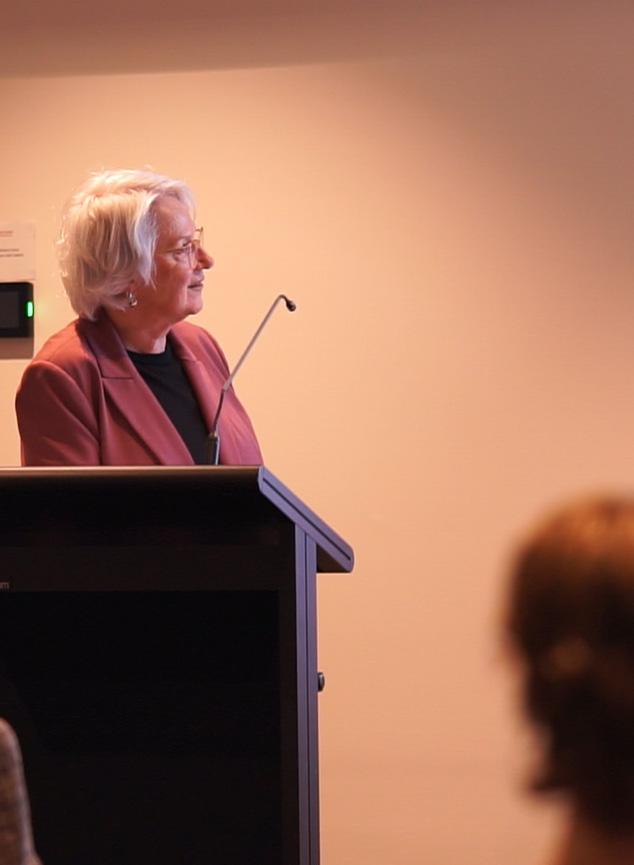
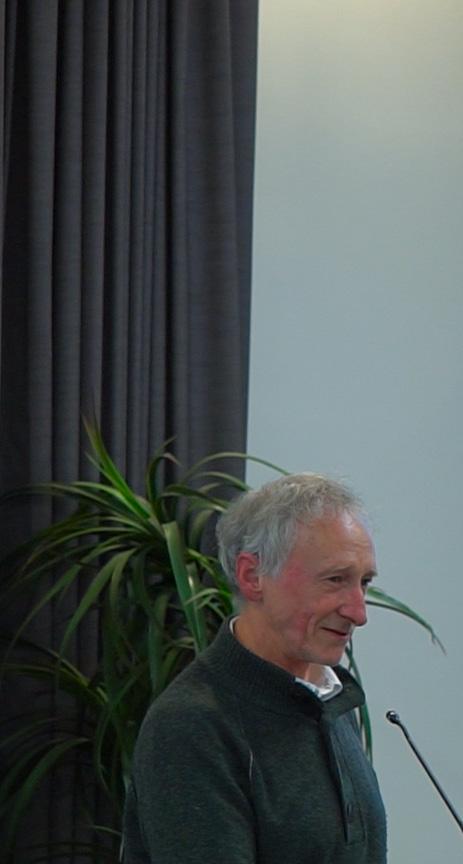
At the March Monthly Luncheon, attendees were treated to an engaging and wide-ranging presentation by Dr. Graham Beardsmore, a leading expert in geothermal energy from the University of Melbourne. Drawing on over two decades of experience, Dr. Beardsmore offered both a technical overview and a reflective narrative on the evolution of geothermal energy in Australia, situating it within global developments and future energy challenges.
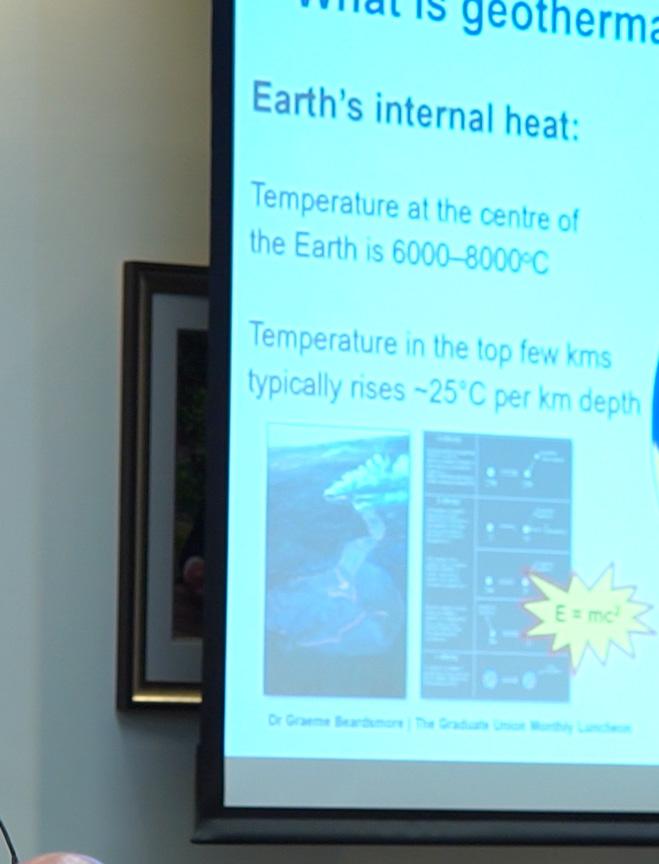
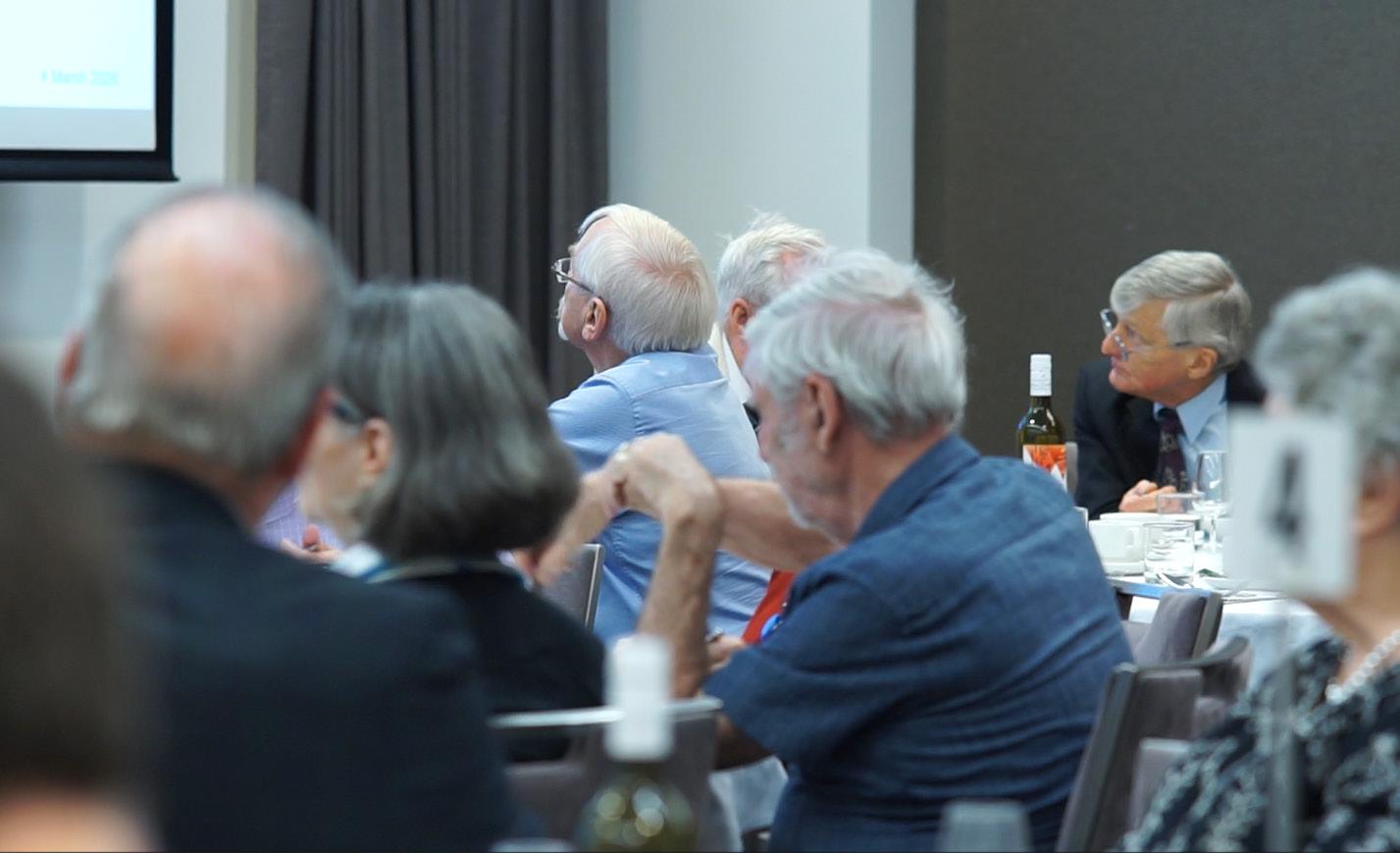
Dr. Beardsmore began by explaining the fundamentals of geothermal energy: the extraction and use of the Earth’s natural heat. This heat originates from both residual energy from the planet’s formation and ongoing radioactive decay deep within the Earth. With temperatures reaching thousands of degrees at the core and gradually decreasing toward the surface, geothermal systems target areas where heat is more accessible. These can range from high-temperature resources used to generate electricity, to lower-temperature systems suitable for heating buildings, pools, and industrial processes.
He emphasized the versatility of geothermal energy, noting that it encompasses everything from iconic geysers and largescale power plants to domestic heating systems using ground-source heat pumps. Importantly, geothermal energy offers several advantages: it is a local, lowemission, continuous (24/7) energy source with a relatively small environmental footprint. However, its viability depends not only on geological conditions but also on economic and policy factors.
A significant portion of the talk was on the rise and decline of Australia’s geothermal industry in the early 2000s. Around 2010,
more than 50 companies were actively exploring geothermal resources, supported by substantial investment and government interest. Projects such as Geodynamics in the Cooper Basin demonstrated technical success, including operating a onemegawatt pilot plant. Other companies like Petratherm and Panax Geothermal pursued similar ventures with varying geological and logistical advantages. Despite these promising developments, the industry faltered. Dr. Beardsmore explained that the primary barriers were not technical but economic and political. The global financial crisis severely restricted access to capital, while policy shifts—particularly the removal of carbon pricing and reduced support for renewable energy—undermined investor confidence. As a result, many projects were abandoned, and the sector entered a prolonged period of stagnation.
In contrast, international progress has been significant. In the United States, major government investment in research and development—particularly in enhanced geothermal systems (EGS)—has led to rapid technological advances. Companies like Fervo Energy are now commercializing these innovations, with large-scale projects supplying renewable power to major clients such as data centres. Similarly, Europe and the United Kingdom have continued to develop geothermal technologies, with recent milestones including the UK’s first geothermal power generation.
Dr. Beardsmore also highlighted emerging and practical applications within Australia.
In Perth, shallow geothermal systems are widely used to heat public facilities, demonstrating clear economic benefits.
In Gippsland, Victoria, a vast geothermal resource has been known for decades but remains underutilized due to regulatory and investment barriers. Recent projects, such as geothermal heating for a regional aquatic centre, show strong cost savings and potential for broader industrial use, including greenhouse agriculture.
He concluded by noting that while Australia has the geological resources and technical expertise to support a thriving geothermal sector, progress is currently constrained by policy uncertainty, market dynamics, and infrastructure challenges. Nonetheless, with renewed interest and international momentum, geothermal energy may yet play a significant role in Australia’s transition to a low-carbon future.
Dr Beardsmore offered a compelling insight into both the promise and the complexities of geothermal energy. Dr. Beardsmore’s presentation emphasised the importance of aligning science, economics, and policy to unlock this largely untapped renewable resource.
DrClaudiaSagonaonthe Rabati archaeological excavation and its historical relevance
From the highlands of southwest Georgia emerges a story that stretches across millennia — one that has placed University of Melbourne researchers at the forefront of archaeological discovery. At the heart of it is the Rabati site, where the GeorgianAustralian Investigations in Archaeology (GAIA) project, co-directed by Dr Claudia Sagona, is reshaping what we know about ancient societies of the Caucasus.
What began as a collaborative effort with the Georgian National Museum in 2008 has grown into one of the strongest cultural and scientific partnerships between Australia and Georgia. Today, GAIA is not just a research project—it is a benchmark in international archaeology.
Each year, a team of specialists travels from Tbilisi to the remote village of Zveli, where Rabati sits at 1,480 metres above sea level, overlooking the sweeping valley of the Kura River.
Rabati is unique because it captures the Early Kurgan cultures not in burial alone, but in a lived settlement context. Most knowledge of these cultures comes from tombs; here, archaeologists can reconstruct daily life—how people cooked, crafted, traded, and organised themselves socially.
The team’s goal has been to build the first fully stratified and radiocarbon-dated timeline of human activity at the site, tracing both cultural and environmental change across the Early to Middle Bronze Age.
In 2024, the project took a technological leap by introducing LiDAR (Light Detection and Ranging), a remote sensing
method that uses laser pulses from drones to map the ground with remarkable precision. Previously used in places like the Amazon and Egyptian deserts, its application at Rabati proved transformative.
LiDAR revealed features invisible to the naked eye: a previously unconfirmed burial mound, subtle architectural outlines, and hidden entryways into the settlement. What looked like an ordinary landscape suddenly became a map of human activity.
By 2025, the GAIA team had processed an astonishing 126,908 artefacts—many of them fragments of pottery. While they may seem mundane, these fragments have become the key to understanding continuity, identity, and power.
One of the most striking discoveries is evidence of long-term population continuity. Through radiocarbon dating and stylistic analysis, researchers identified recurring pottery designs across a span of nearly 3,000 years. This suggests that, rather than being replaced, communities at Rabati adapted and evolved while maintaining core traditions.
A particularly fascinating example is a tray design found in both Chalcolithic and Middle Bronze Age layers. At first glance, it’s an unremarkable household object. But its persistence across millennia tells a powerful story: knowledge was being transmitted across generations with remarkable consistency. In a field often focused on dramatic artefacts like weapons or gold, this humble tray has redefined what counts as evidence of cultural endurance.
The 2025 study also deepened understanding of social complexity at Rabati. Excavations of burial mounds which are found across Georgia uncovered finely crafted jewellery—objects that signal status, wealth, and hierarchy. These were not isolated farmers; they were members of a community capable of organising labour, displaying prestige, and maintaining social distinctions.
Interestingly, material analysis suggests that some of these adornments may have been made from non-local resources, hinting at early trade networks stretching beyond the immediate region. This positions Rabati not as a remote outpost, but as part of a broader interconnected world.
The findings suggest that cultural change can occur without population turnover. Styles evolve, technologies improve, and social systems grow more complex—all while communities remain rooted in place.
The impact of these discoveries extends well beyond Georgia. After presenting the findings on the recurring tray design, Dr Sagona was contacted by a colleague in Azerbaijan eager to re-examine similar artefacts. What began as a local observation is now influencing how archaeologists across the Caucasus interpret their own sites.
The GAIA project is, ultimately, more than an excavation. It is a living example of how international collaboration, cuttingedge technology, and careful analysis can transform fragments of the past into meaningful narratives.
2026 Council Elections to implement digital voting for the first time at the Graduate Union
The 2026 Council Elections are fast approaching. Candidates and voting dates will be announced very soon, but until then, we wish to remind all our members that this election will be conducted in a hybrid format.
This means members will be able to vote the usual way, either via post or in person at Graduate House, but also via web platform from the comfort of their homes.
This new system brings the Graduate Union voting methods into the digital era, and ensures easier access to voting for all our members, whether they are in Melbourne, regional areas or even overseas. In this way, we offer the opportunity for everyone involved in our community to register their choice in these upcoming elections.
To make sure this process is carried out smoothly, please make sure we have your current details, especially email address. In order to do so, you can send an email to admingh@graduatehouse.com.au and advise them of your preferred email address.
At Graduate Union, we will also be doing our part in updating member’s details. We have sent a form to our members that receive our Newsletter via post so they can send us their updated email address (the same form will be available at Graduate House). Our reception team will also be calling members to update their details.
More updates on the election process will be given soon, so make sure to stay informed by sending us your current contact details.