
LYNNE GRACE portfolio
EDUCATION
2023 - present

GRACE LYNNE
744 Columbus Ave, Boston, MA 02120
475-206-1308 | Gelynne48@gmail.com
2022
Northeastern School of Architecture
Prospective B.S. in Architecture
Minor in Law and Public Policy Dean’s List: December 2023 - present Dean’s Scholarship Recipient
Hi! I’m Grace! I have a passion for creating spaces that are both functional and meaningful to all types of people. I believe architecture should be more than a reaction to the world around us—it should be a tool to provoke, change, and inspire new ways of thinking. My focus is on designing intimate spaces that foster connection and challenge people’s perspectives, encouraging them to engage with their environment in new ways. For me, architecture is about blending purpose, design, and human experience to create environments that leave a lasting impact.
SKILLS
University of Michigan Taubman
School of Architecture
Pre-College Program
Adobe Photoshop | Adobe Illustrator | InDesign Rhinoceros 8 | AutoCad D-5 | V-Ray
RELEVANT COURSEWORK
Fund. Arch. Design | Fund. Arch Representation | Buildings & Cities | Site, Space, & Program | Archtectonic Systems | Urban Housing | Modern Architecture | Architecture & Politics| Advanced Architectural Communications | Architecture, Infrastructure, and The City | Environmental Systems
LANGUAGES English
French Seal of Biliteracy
REFERENCES Isadora Dannin, Lecturer of Arch. & Fine Arts Isadora.dannin@gmail.com
TABLE OF CONTENTS
06-13 Common Grounds 14-19 Garden Gateways 20-25 The Reading Room 26-29 The Watchtower 30-33 Form & Function 34-41 Overhead / Underfoot 42-45 Ramsdell Public Library
01. Common Grounds
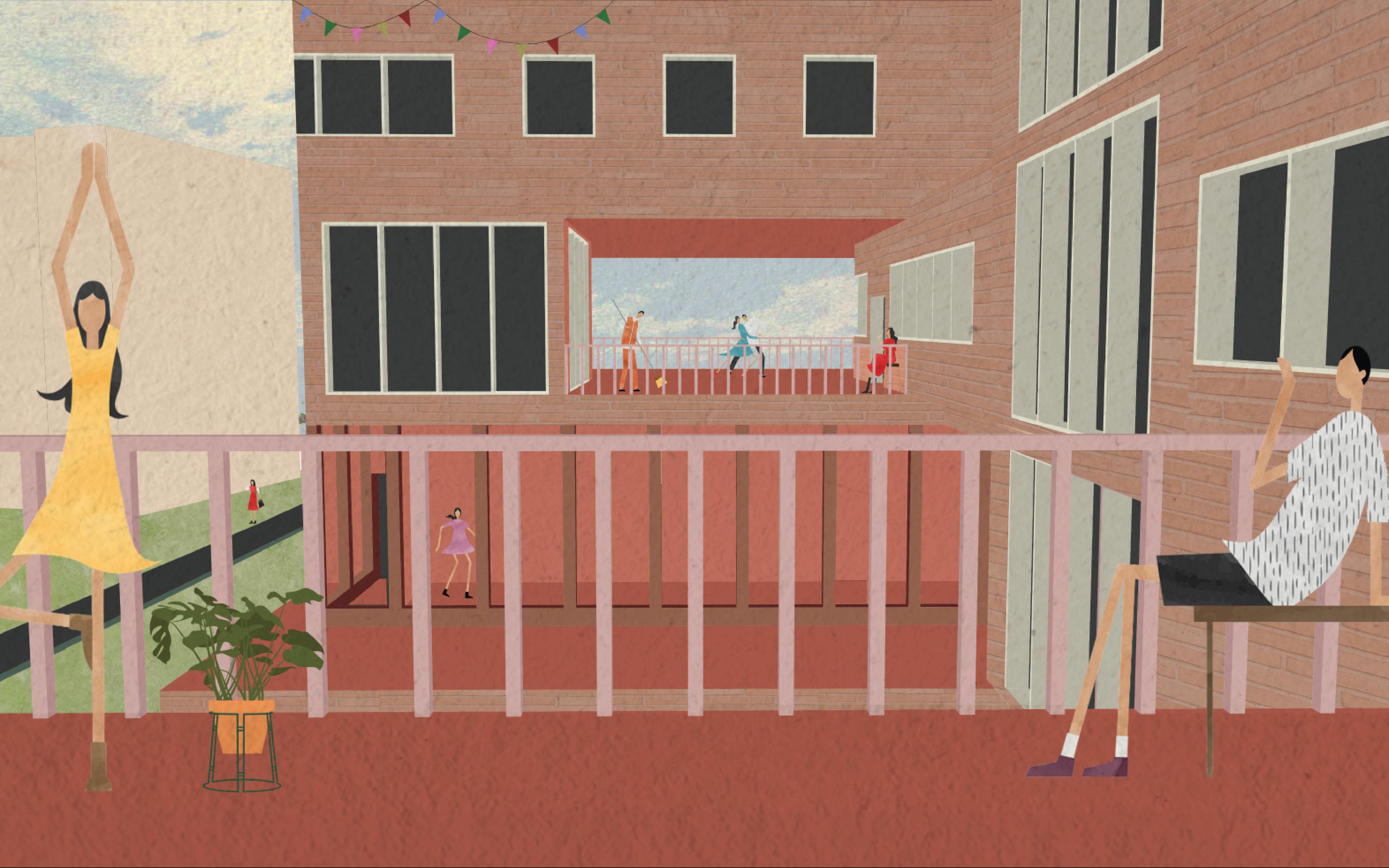
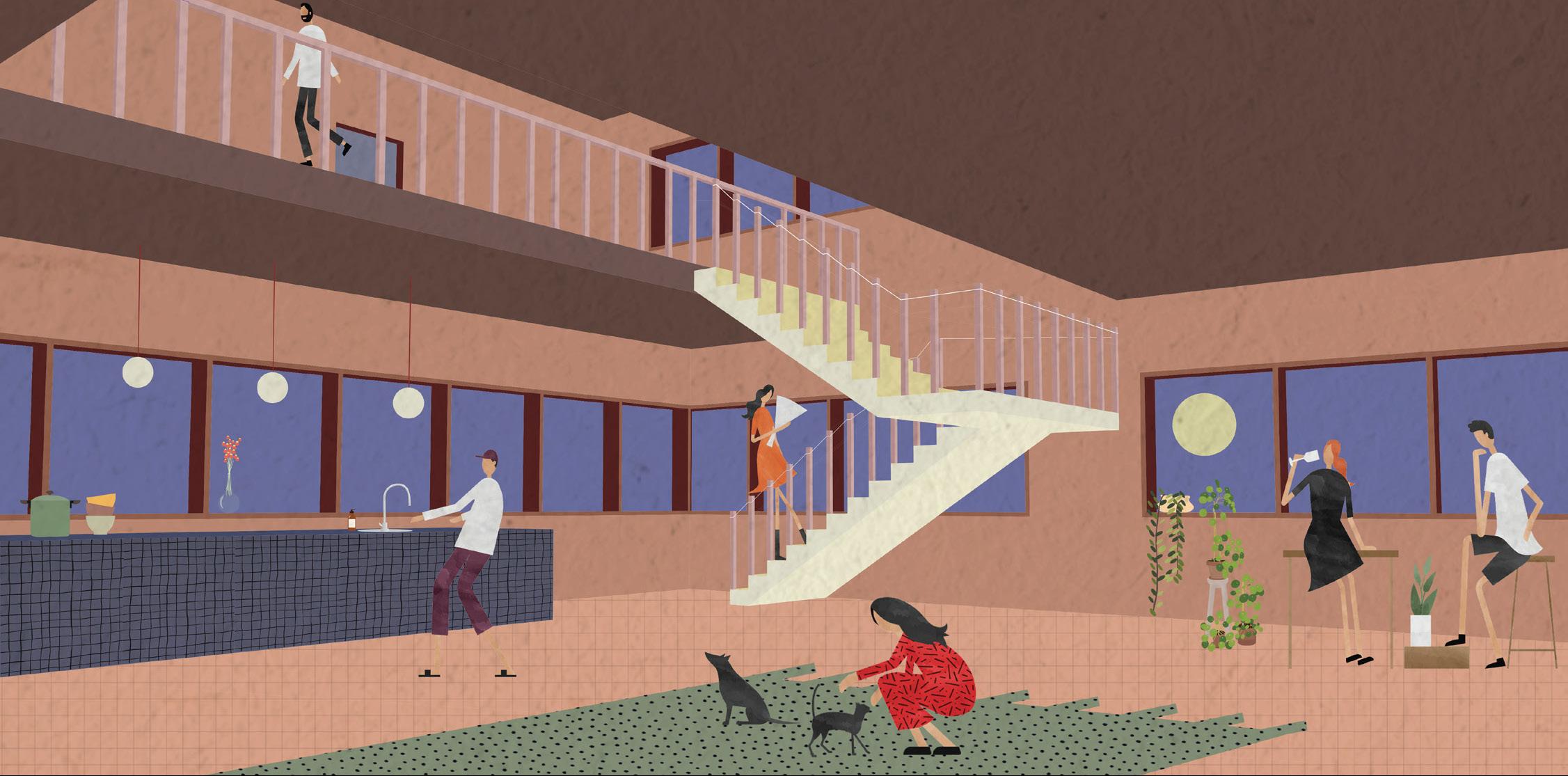
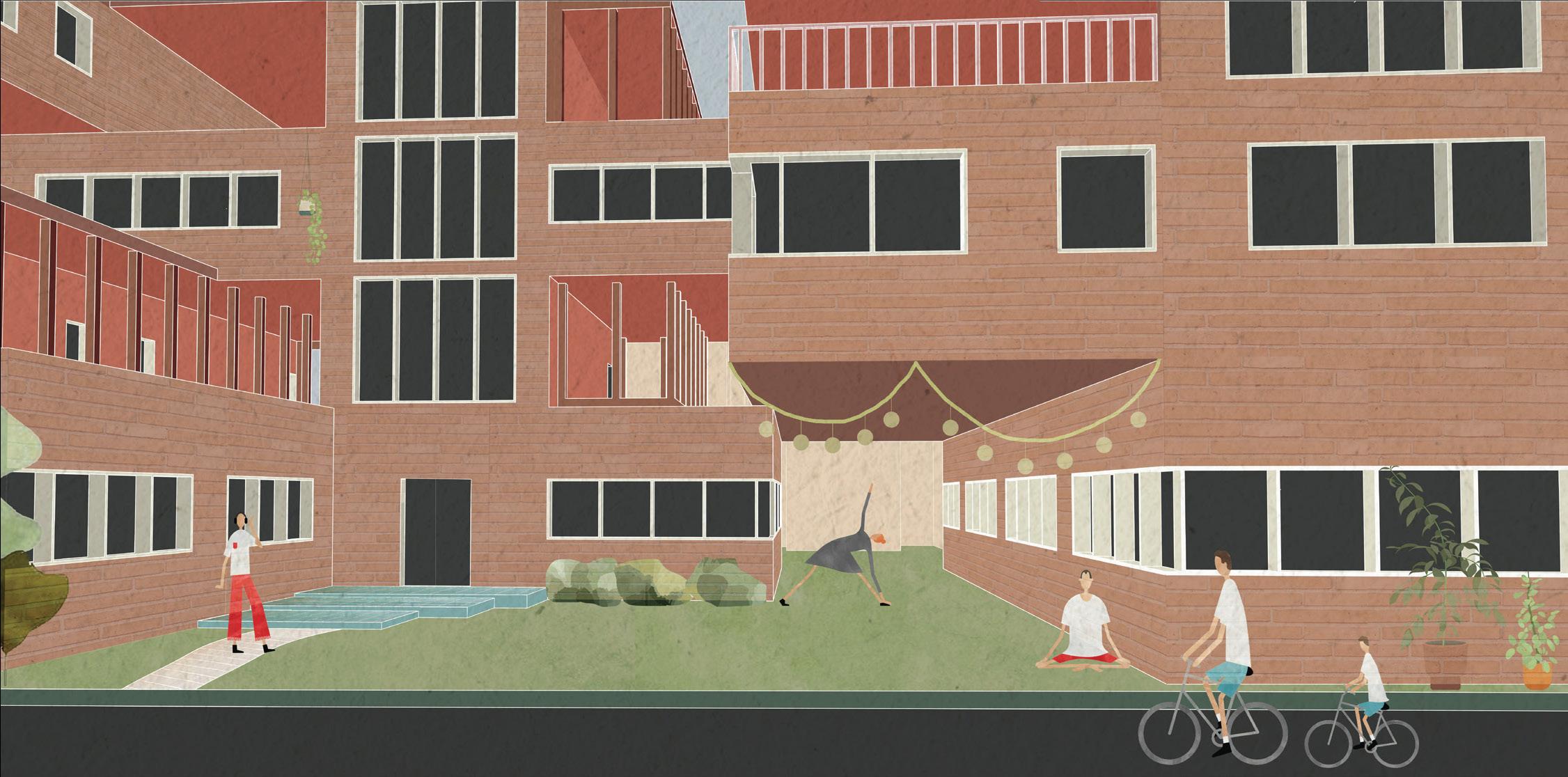
Common Grounds reimagines urban housing by blending shared and private spaces through thoughtful, flexible design. Gradients of openness, voids, and double-height spaces create visual and spatial connections while maintaining privacy. Shared sunrooms serve as inviting transitional zones, while a communal kitchen fosters connection through shared meals. The “no-door” concept enhances adaptability, encouraging fluid movement between private and collective areas. Celebrating urban diversity, Common Grounds transforms architecture into a catalyst for connection, creativity, and community integration.











02. Garden Gateways
Garden Gateways is a community pavilion fostering interaction, movement, and urban gardening. Behind the Egleston Branch of the BPL, it features wooden doorways, perforated pegboard walls, and integrated planters, inviting circulation while offering adaptable storage. Its modular design allows for flexible use—gardening, tool organization, art displays, or simple connection. With dedicated spaces for community art, Garden Gateways becomes both a functional hub and a dynamic canvas celebrating nature and creativity.
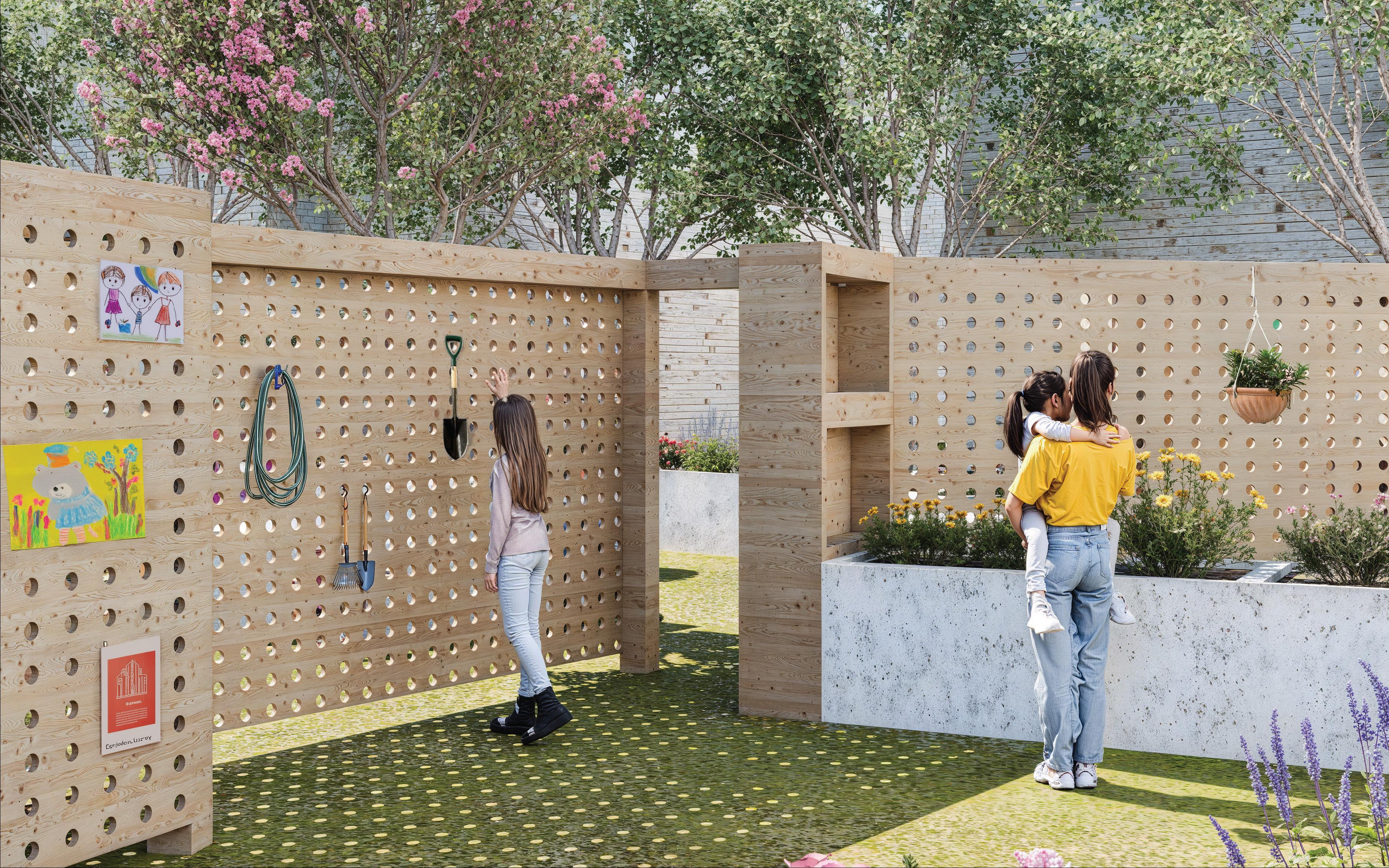

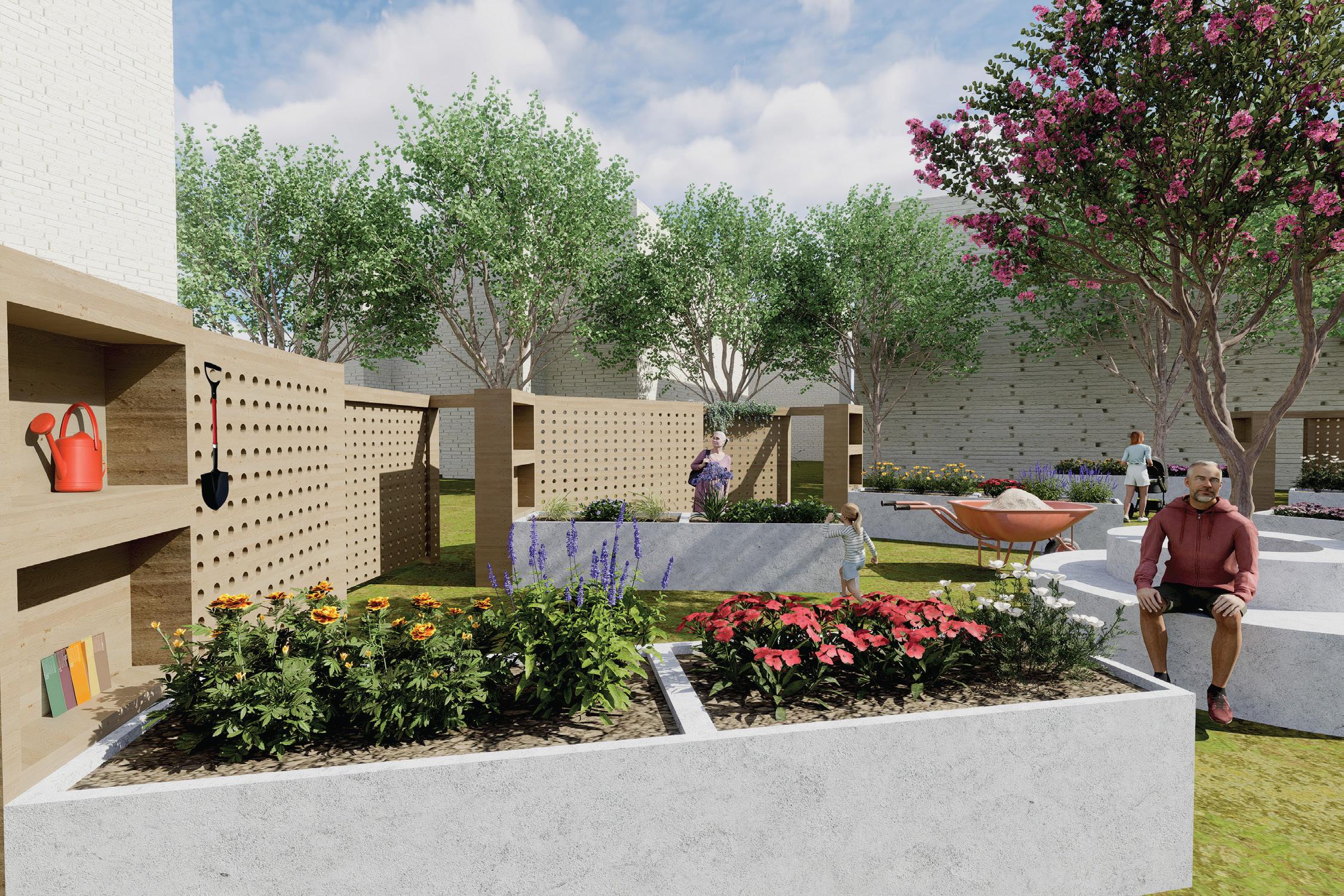

Perforated panel for organizing gardening tools and equipment.
Welcoming threshold guiding users into the gardening space.
Storage compartments for essential gardening supplies.
Modular growing spaces designed for various plant species.
Comprehensive spatial assembly showcasing the functional integration of storage, planting, and structures designed for various plant species.
03. The Reading Room
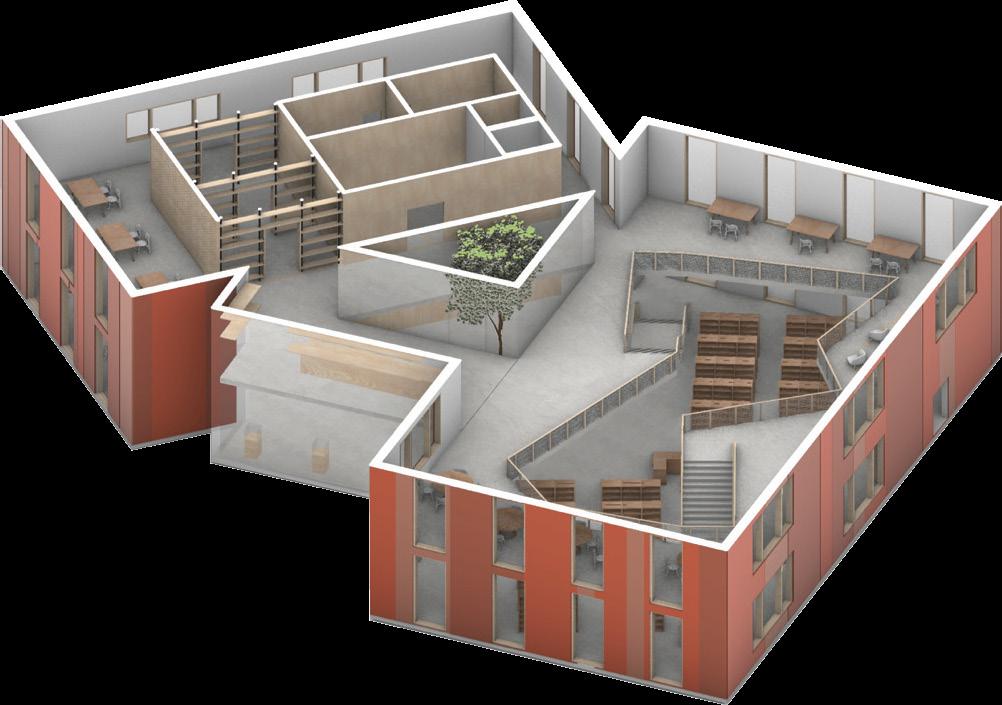
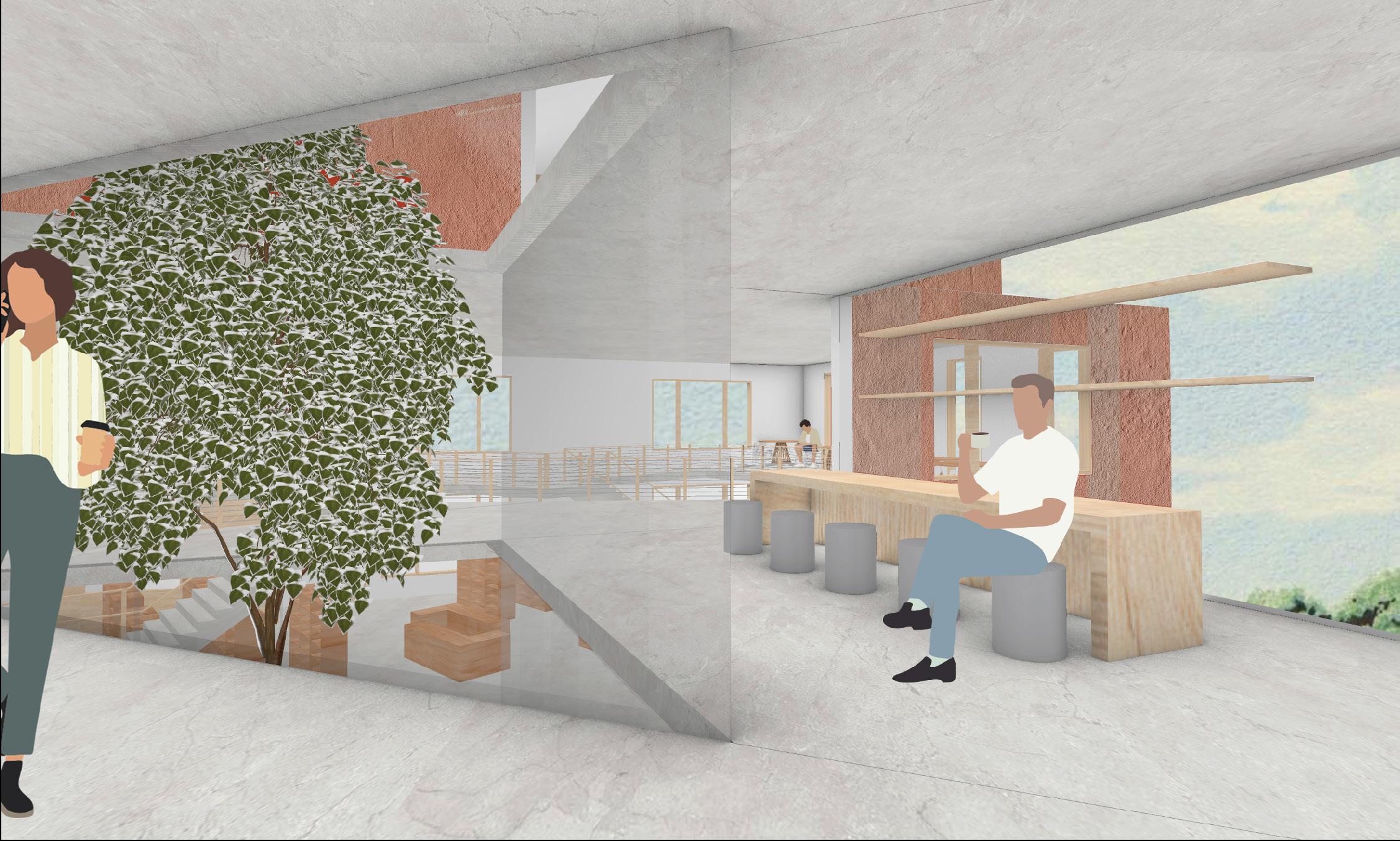
The Reading Room, on the former Egleston Branch Library site, reimagines the library as a civic and cultural hub. The design is divided into two hemispheres: an enclosed zone for offices, restrooms, and AV rooms, and a double-height space for the main book collection and reading areas. A luminous glass corridor intersects these zones, serving as both an exhibition space and a transparent threshold that connects literature with visual art. This central element fosters community engagement, blending structured utility with openness to create a contemporary library that celebrates knowledge and artistic expression.
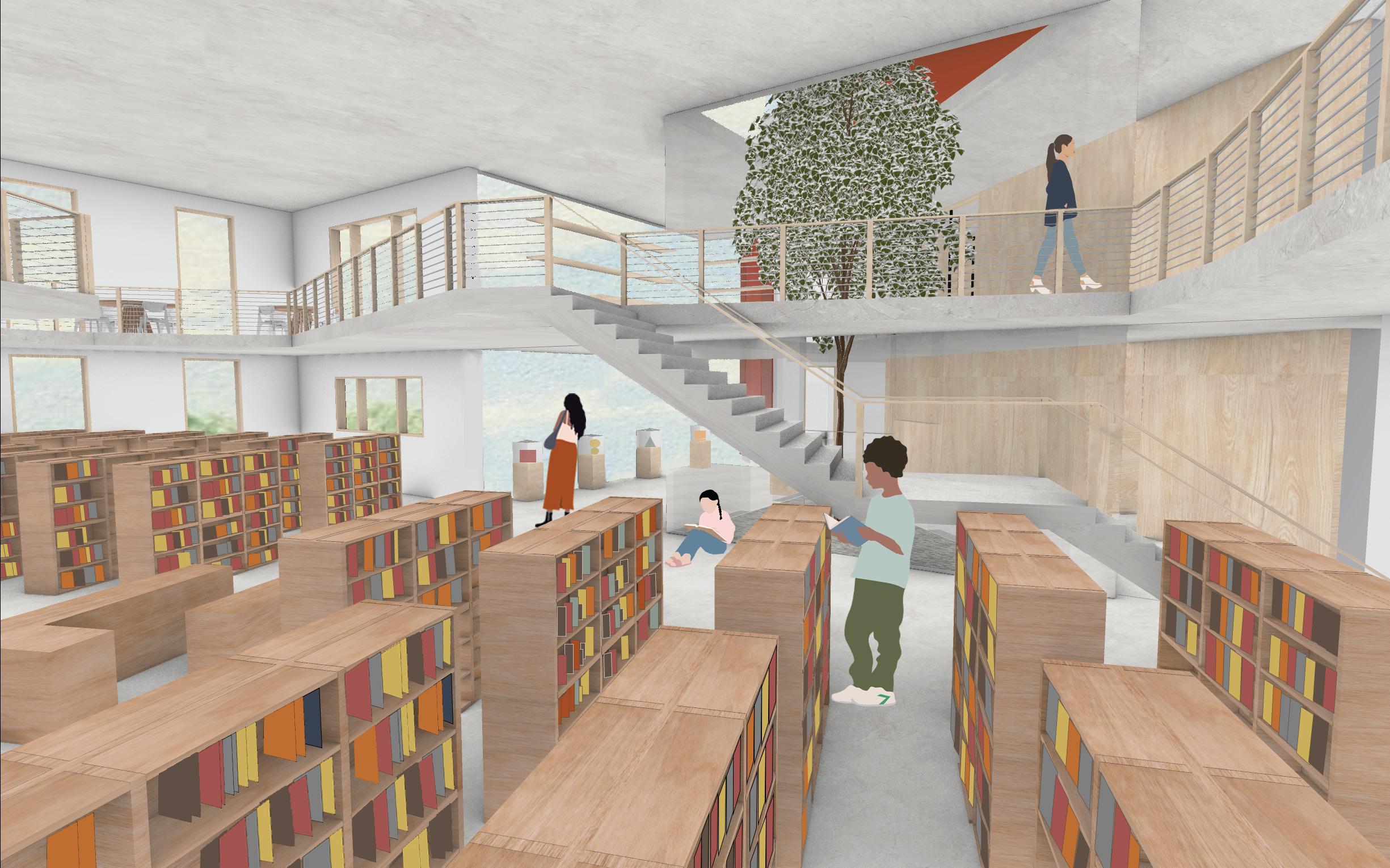
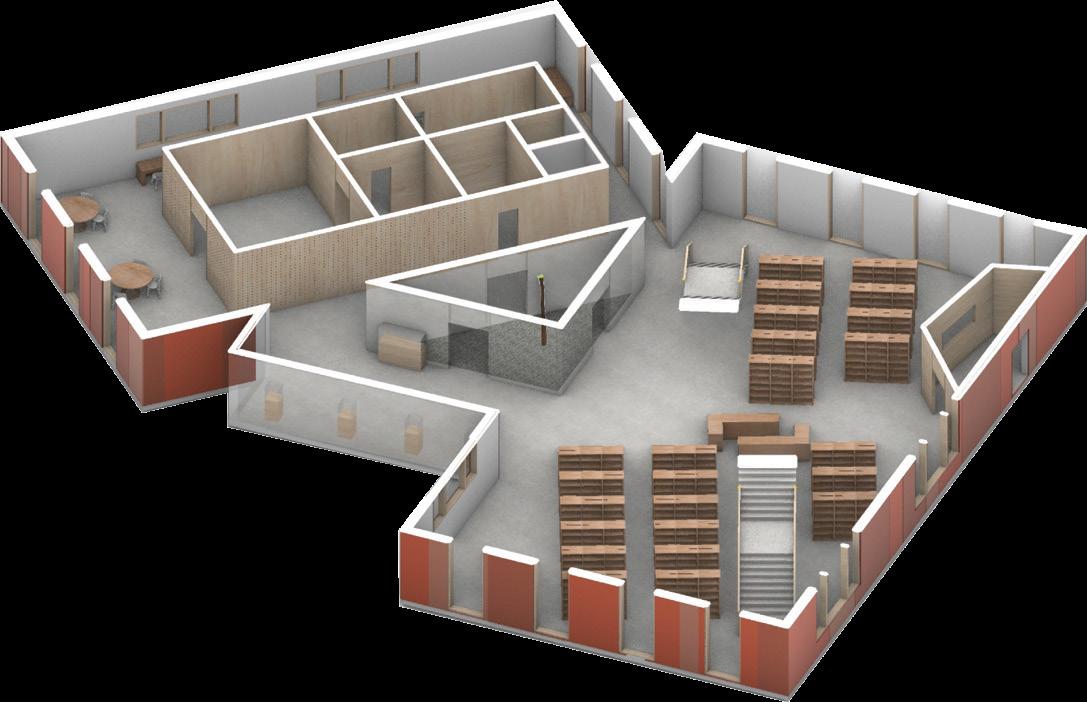
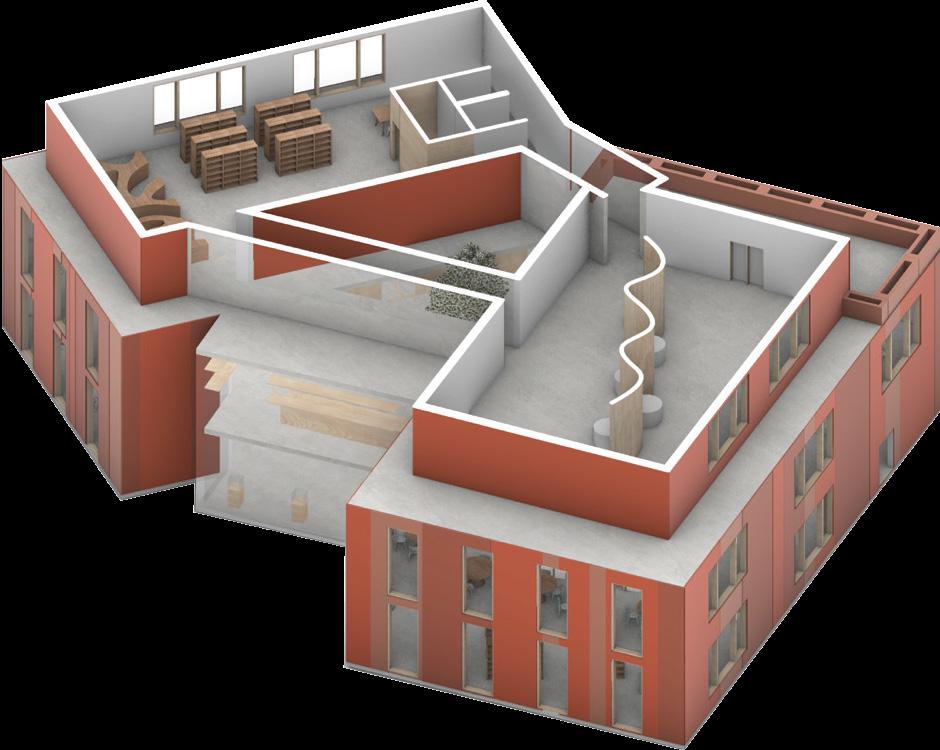
First Floor: Main double- height reading collection and primary office space intersected with artist exhibition
Second Floor: Main reading room seperated by unique floor cut-outs offering varying degrees of public and private. Cafe space leads into more closed-off audio visual collection

Third Floor: Free-flowing artist residence/ makespace connected with long glass corridors into children’s library collection
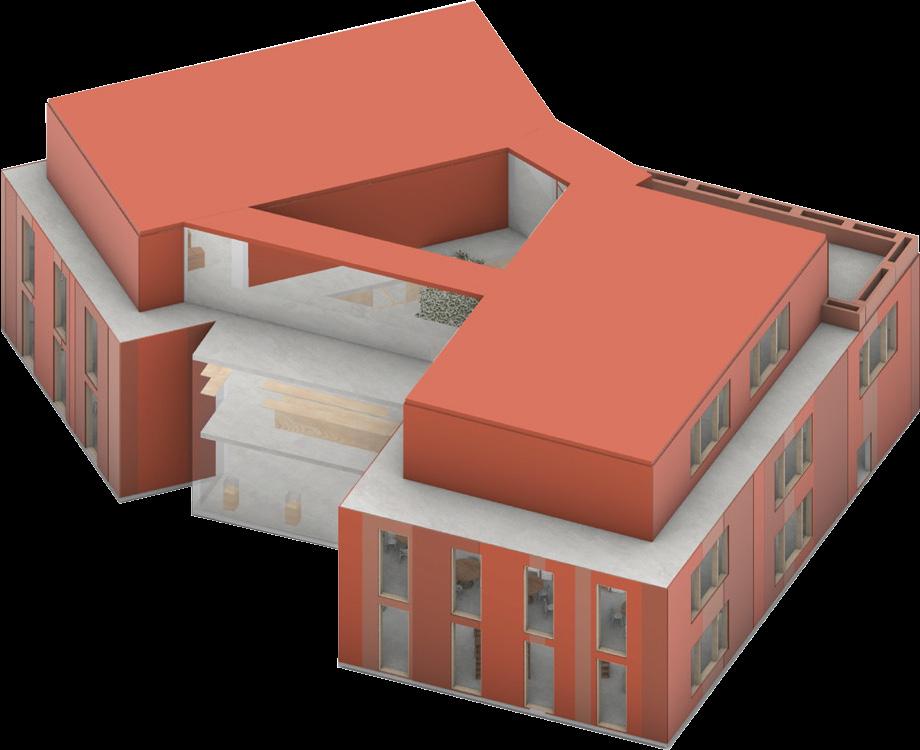
Roof: Direct entry onto garden roof spaces due to the offset third floor


04. The Watchtower
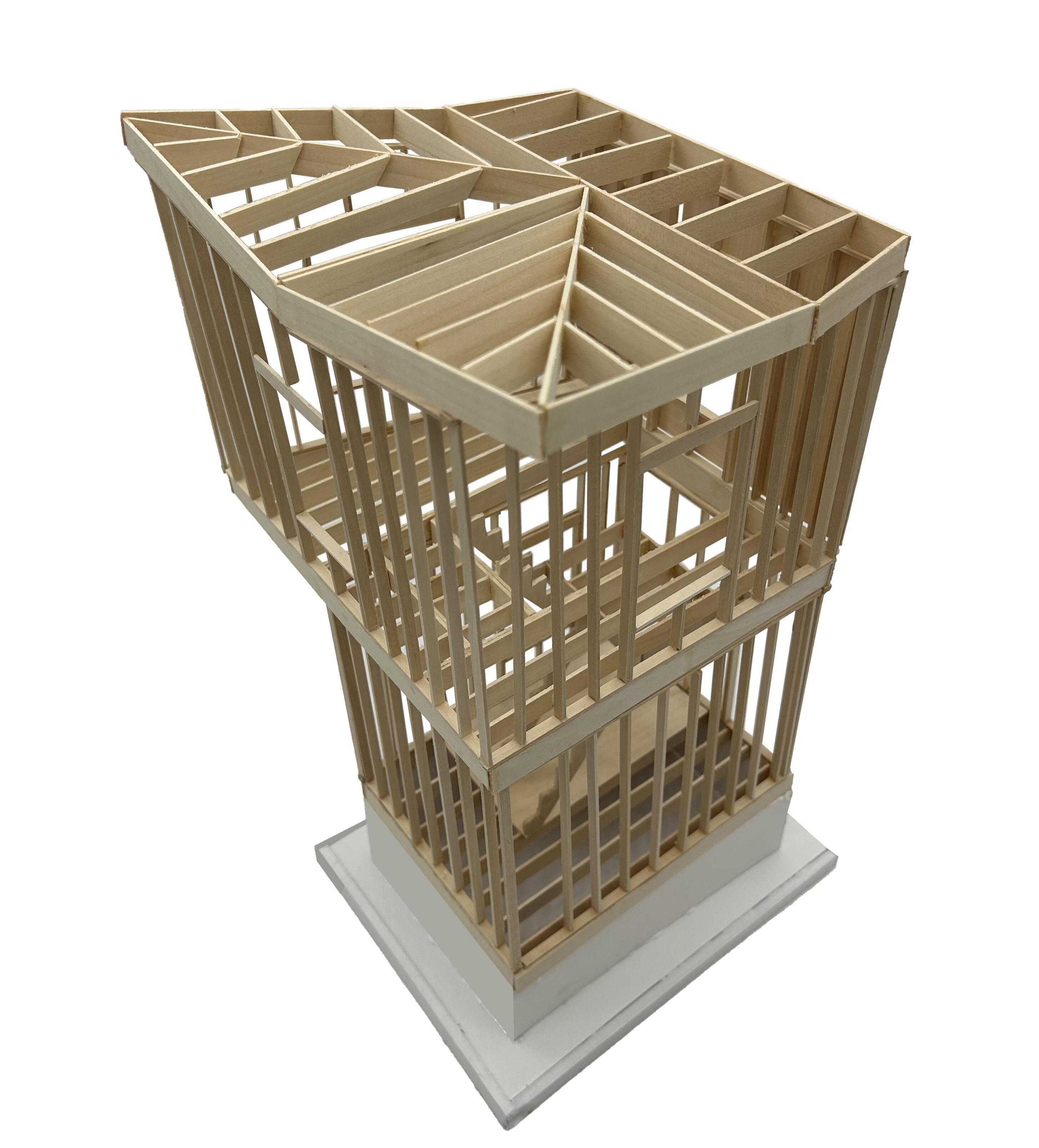
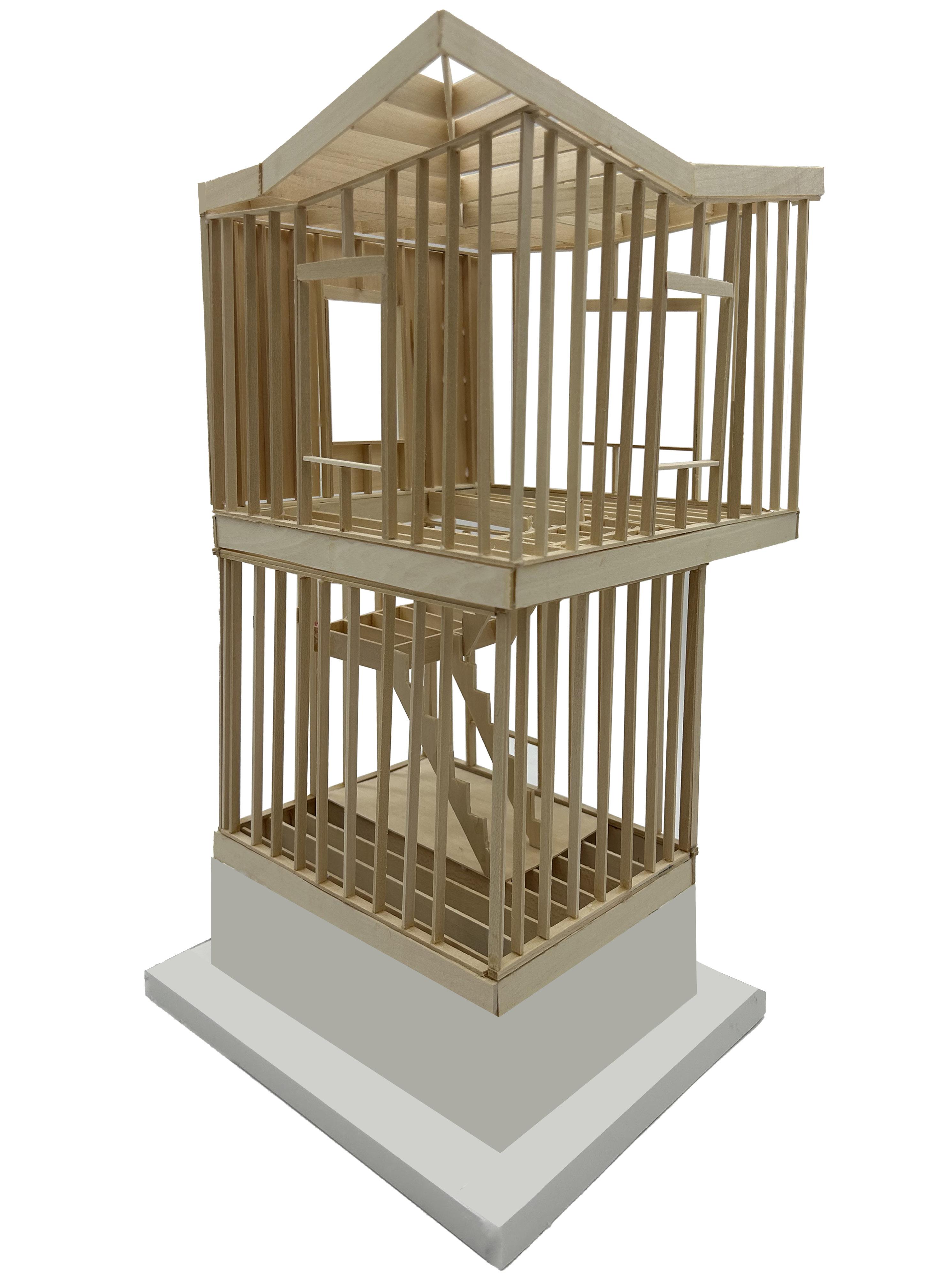
The Watchtower is an exploration of wood construction as both a structural and expressive element. Designed as a vertical retreat, the project emphasizes the material’s natural warmth, sustainability, and adaptability. Elevated to engage with its surroundings, the Watchtower offers framed views of the landscape, reinforcing the connection between architecture and nature through the tactile and visual richness of wood.










05. FORM & FUNCTION
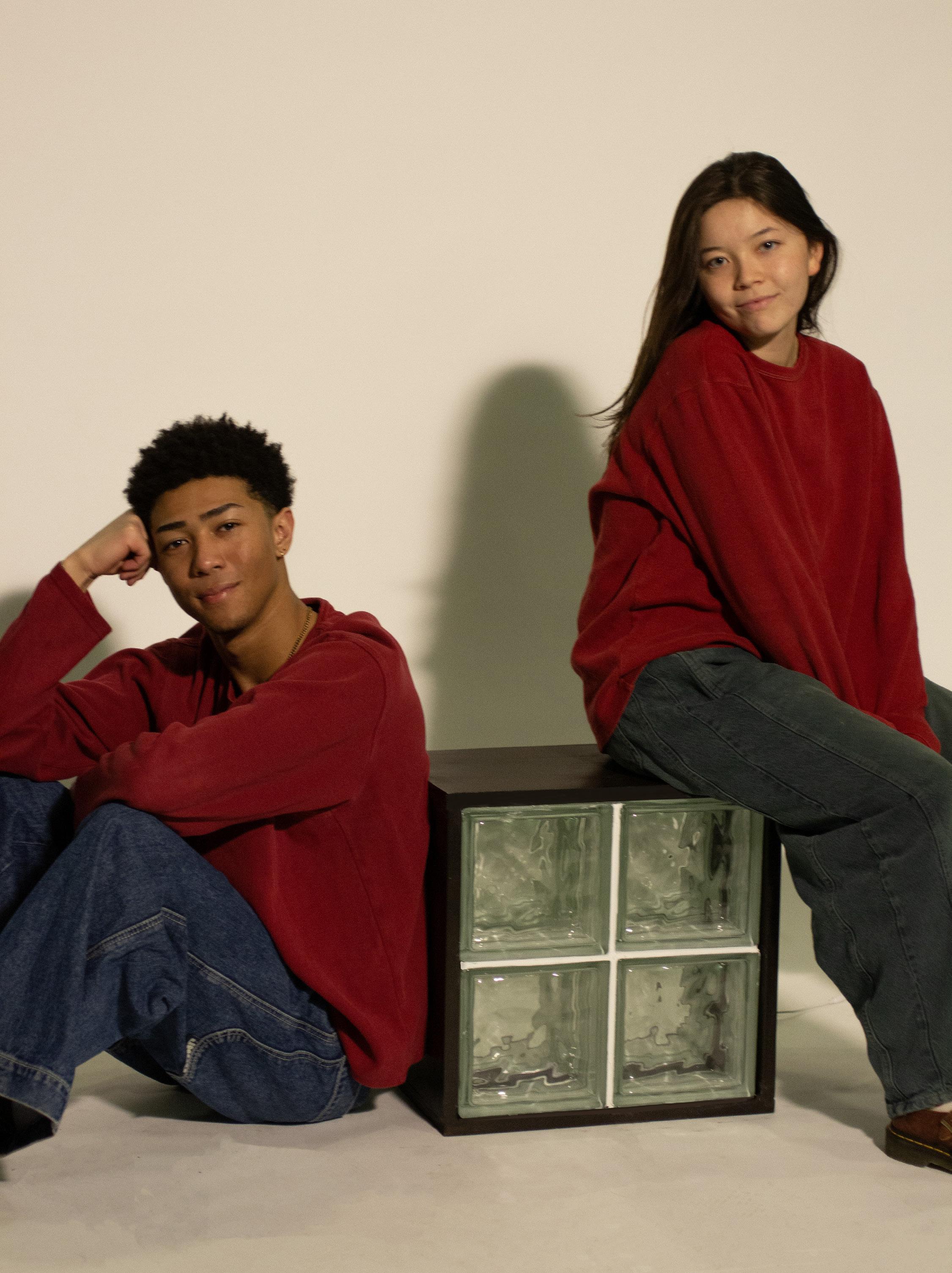
In collaboration with Micah Hamilton
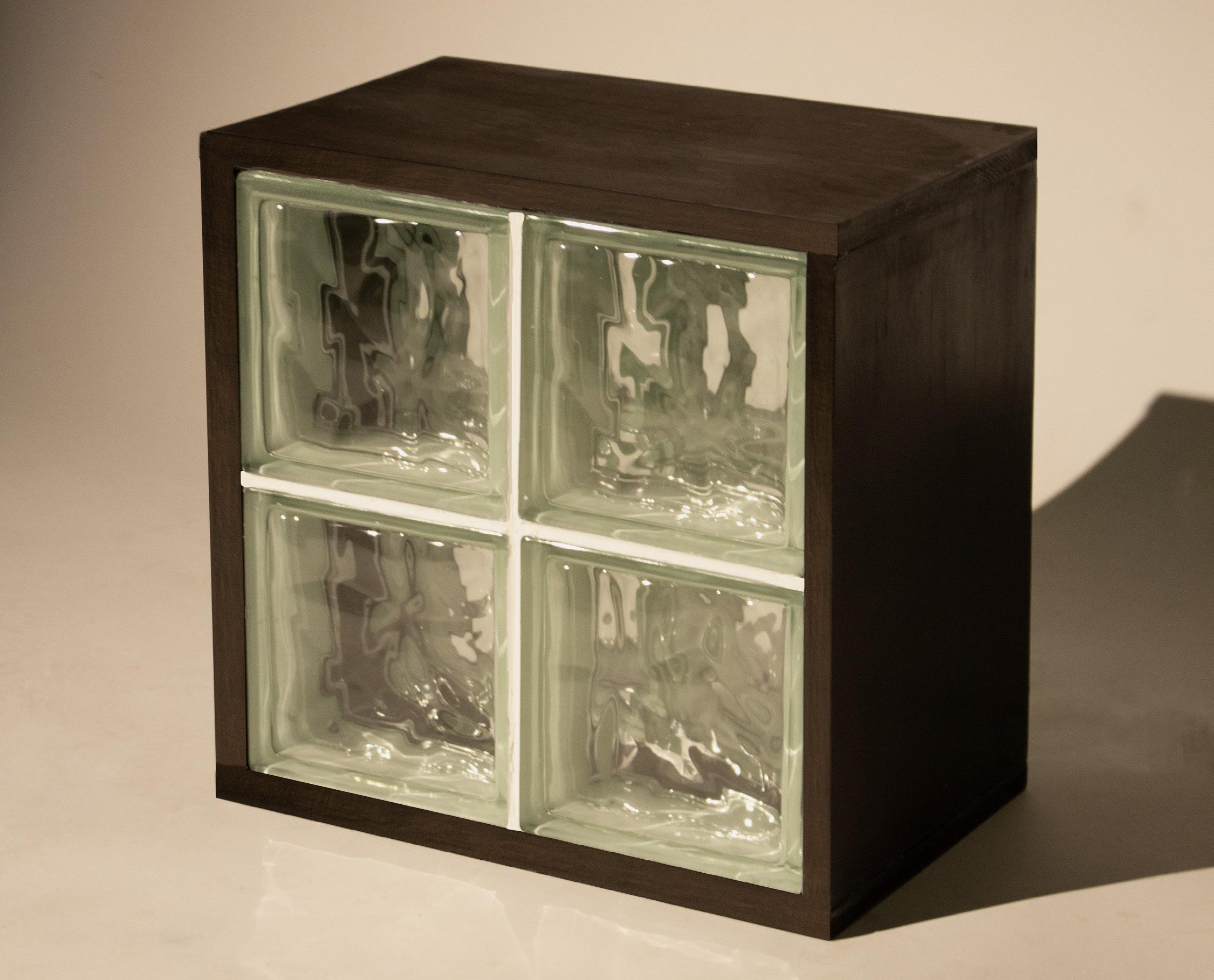
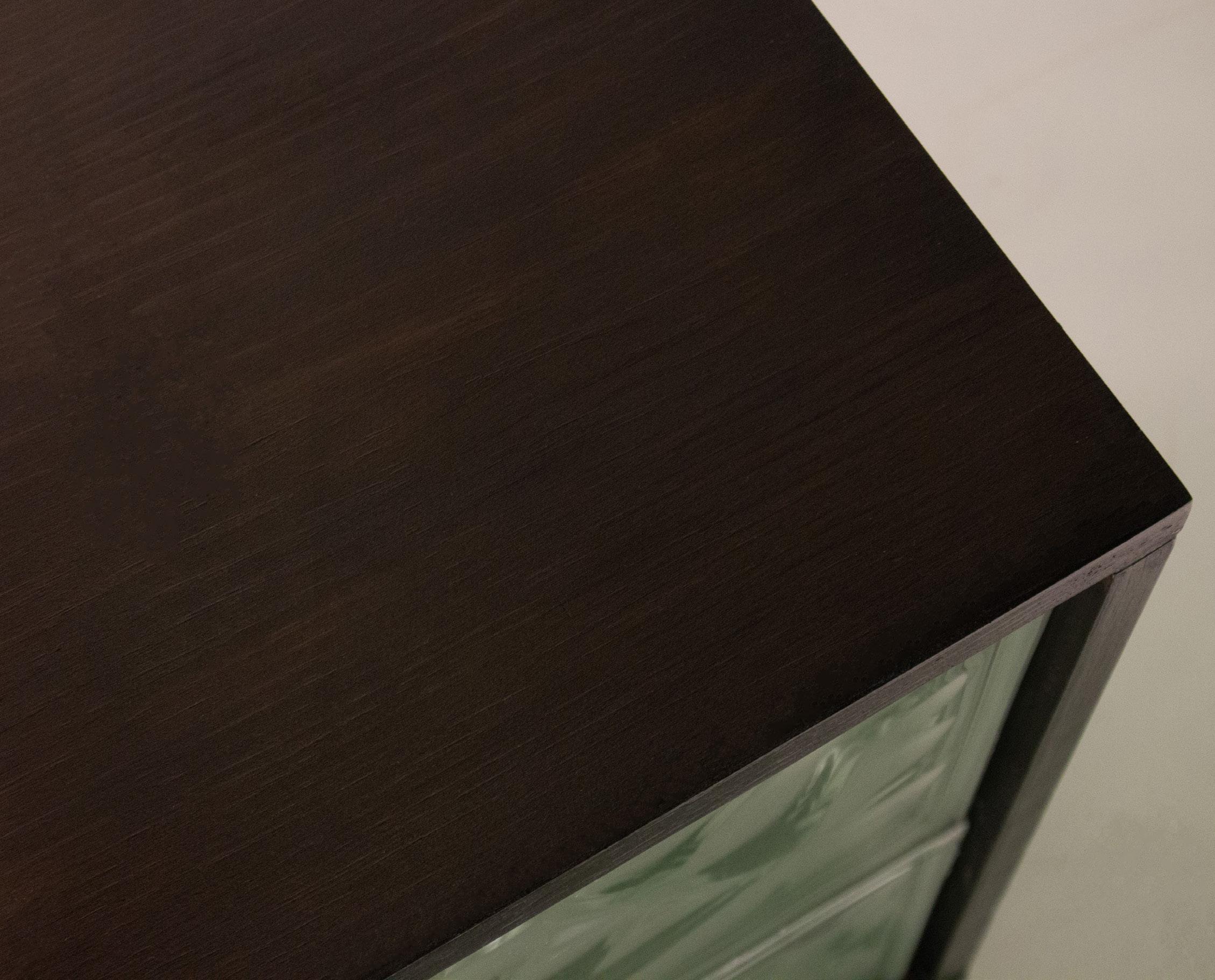
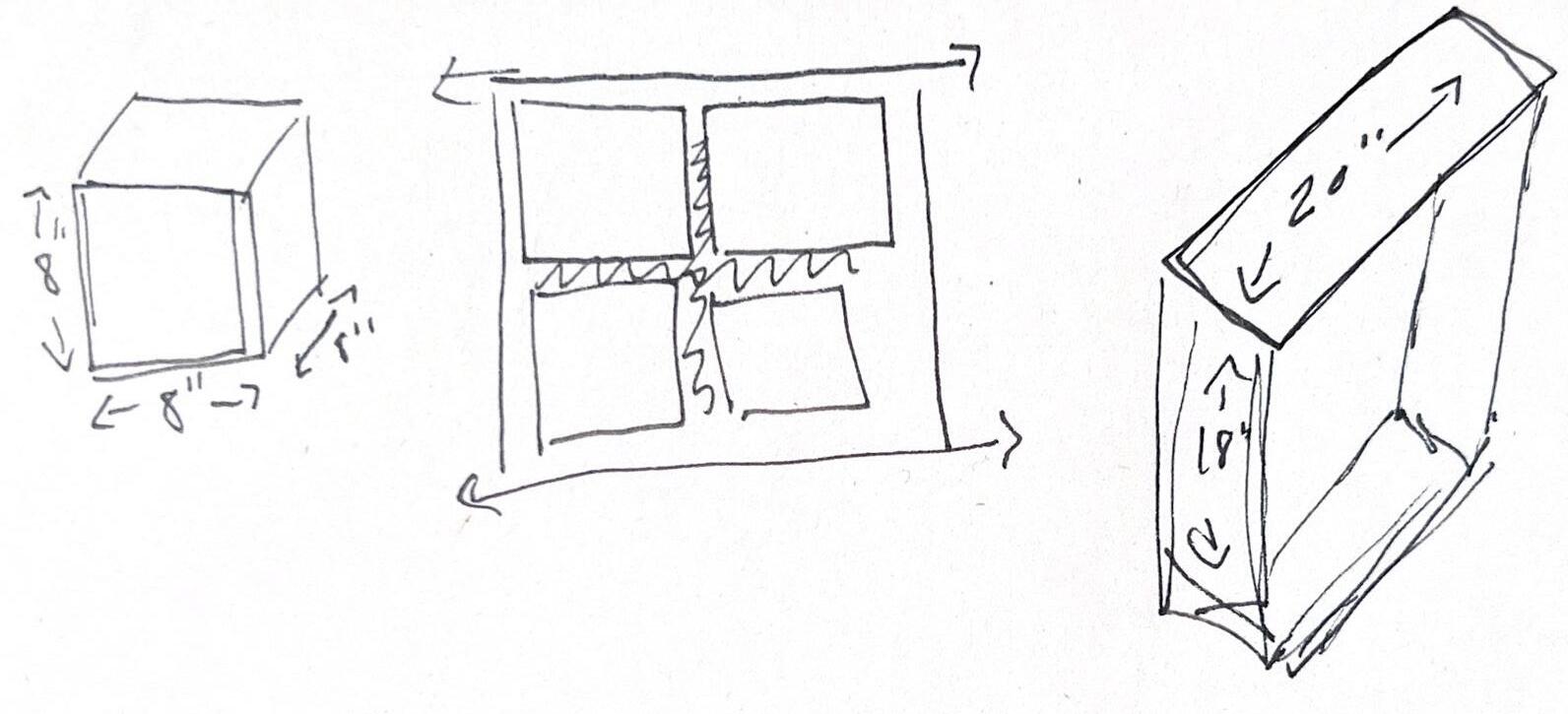
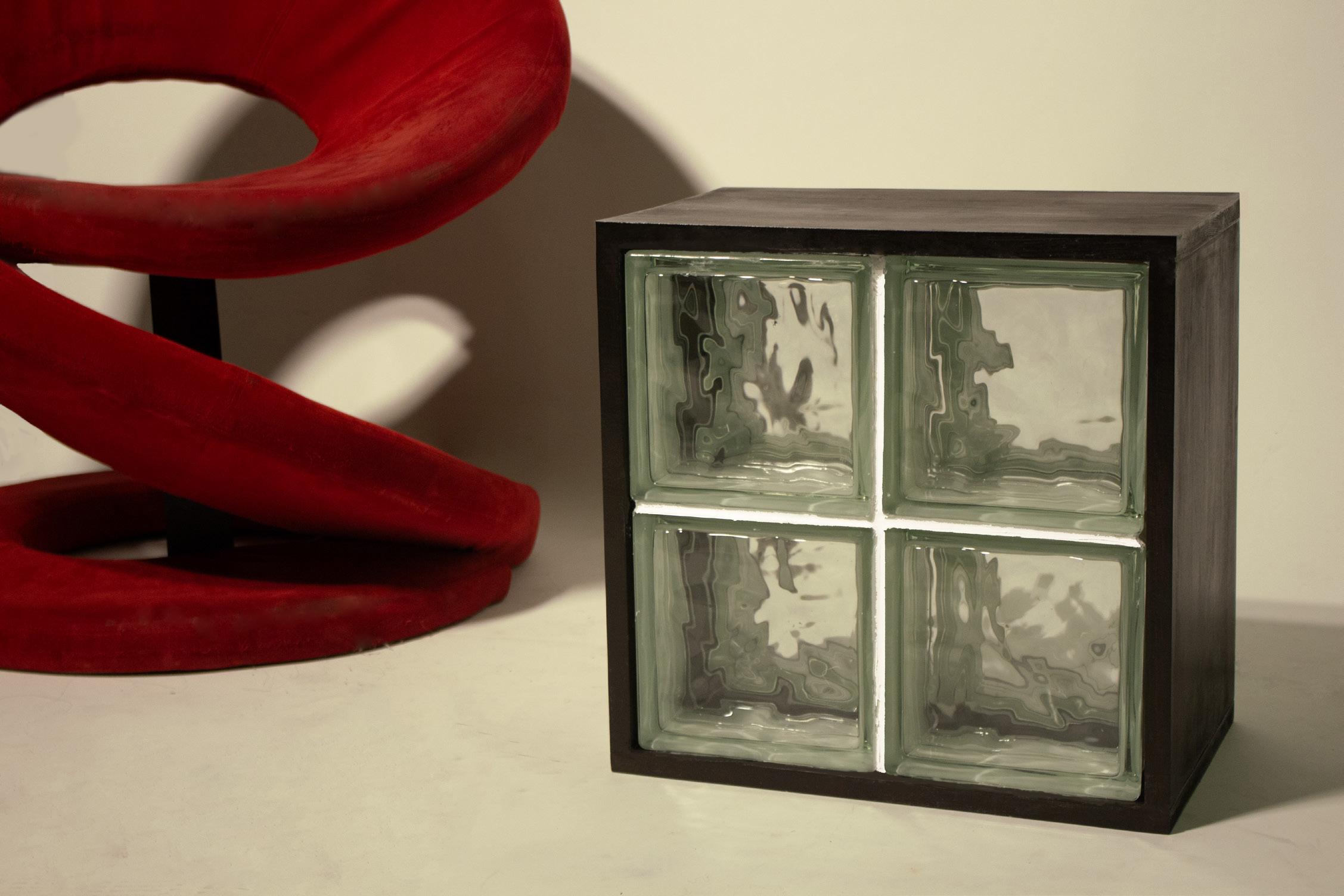
Form and Function is a glass-black table that distills design to its essentials—clean lines, pure forms, and effortless functionality. Built by hand, it was crafted using carefully arranged glass blocks and precisely cut and sanded wood, emphasizing the tactile nature of the design process. By refining details to their core, it transforms everyday utility into a quiet statement of elegance and purpose, celebrating both materiality and the art of making.
OVERHEAD / UNDERFOOT
Grace Lynne Architecture, Infrastructure, and the City Mathew Moffitt
06. Overhead / Underfoot
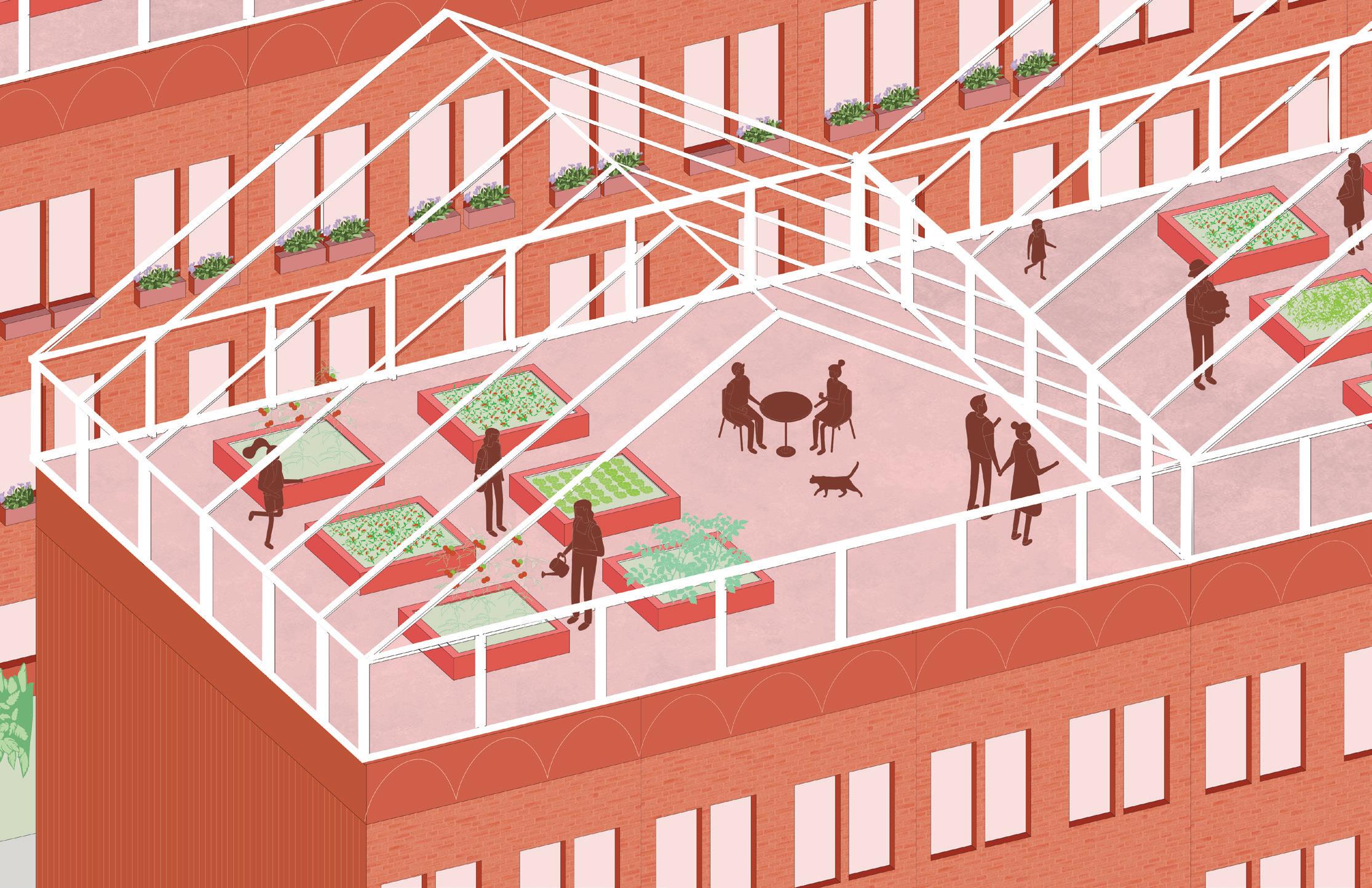
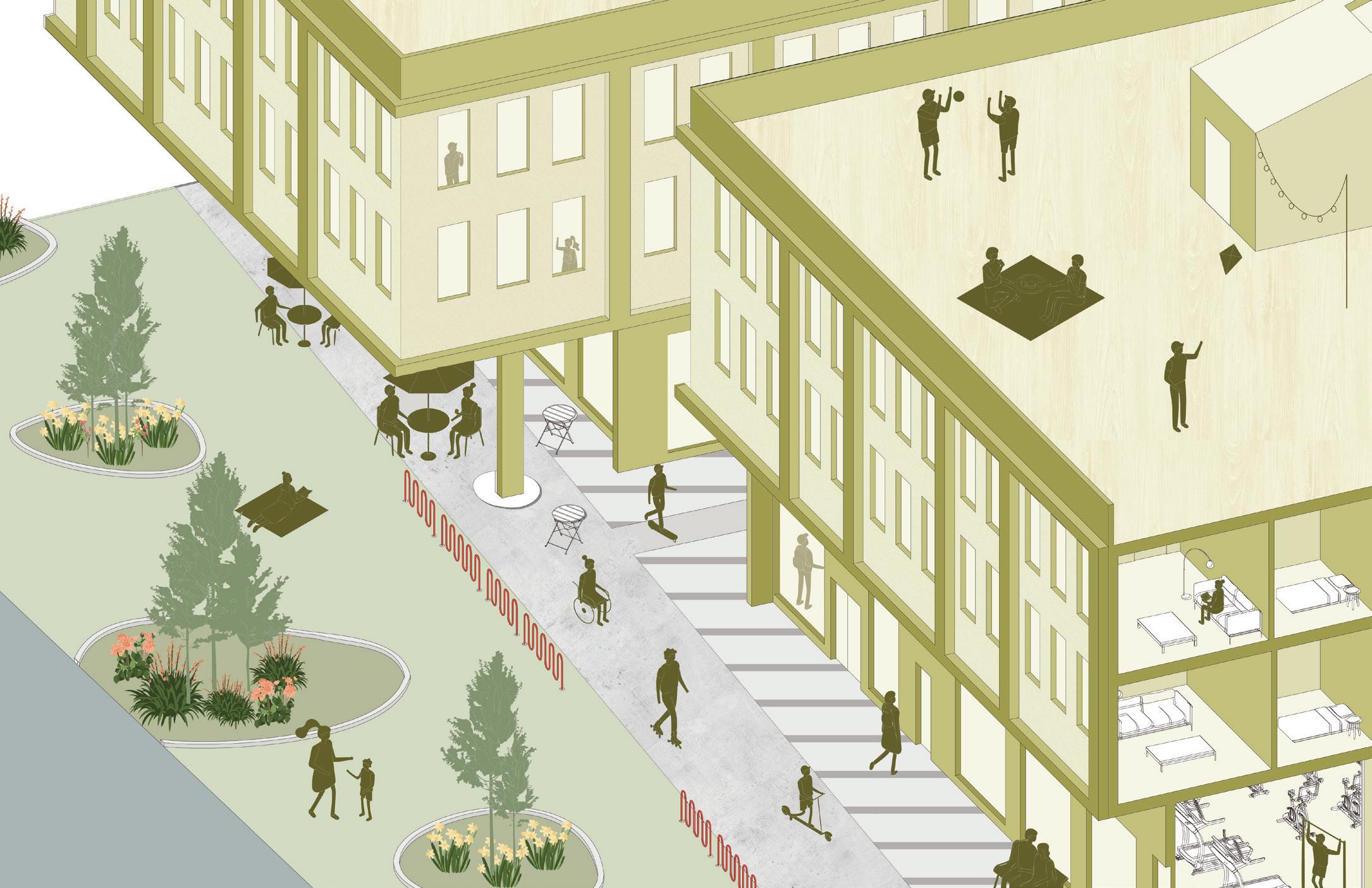
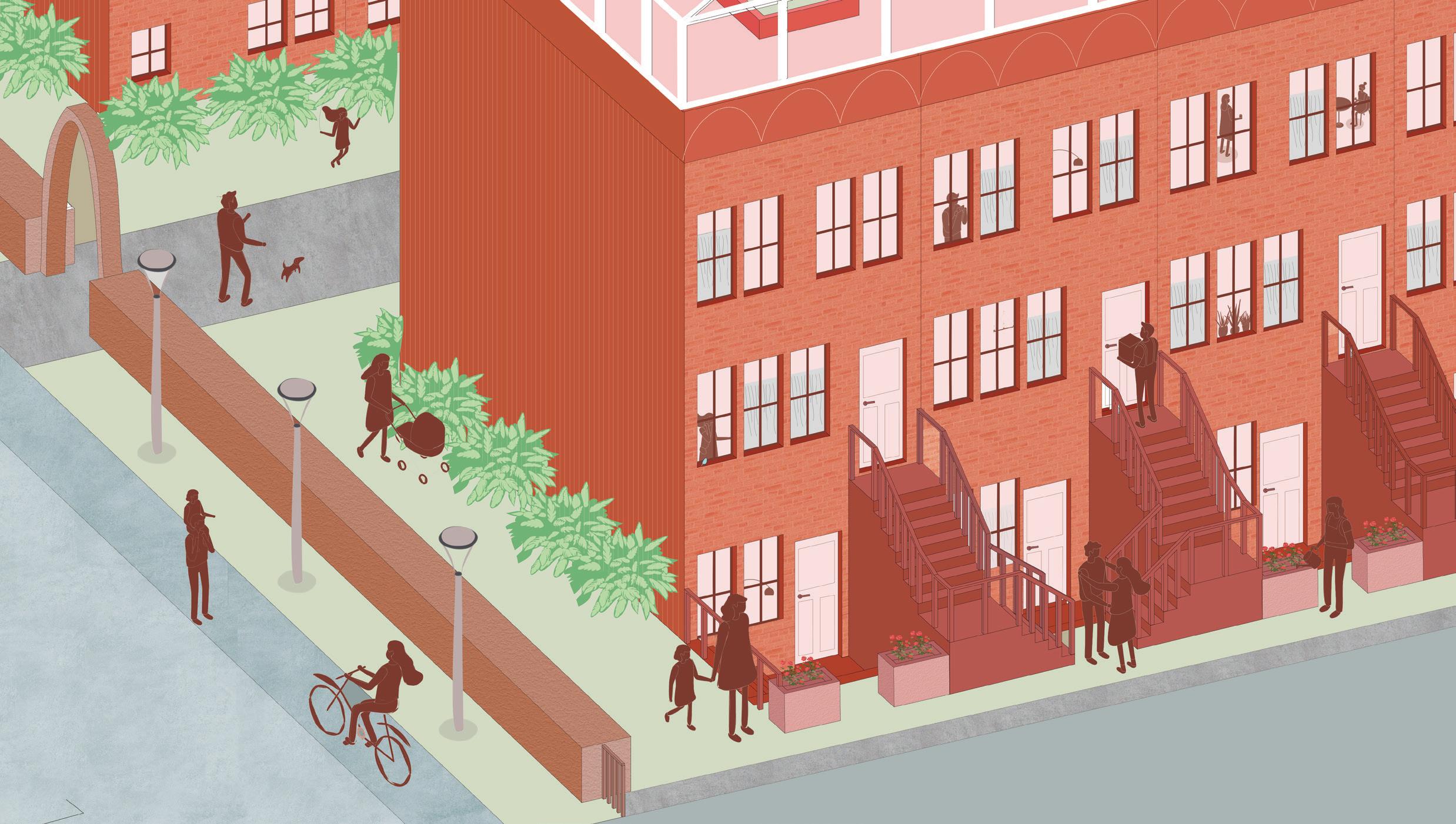
Root to Roof explores the relationship between ground plane and roof plane as an expression of permanence across an urban transect. Housing typologies are organized along a gradient—from deeply rooted rowhouses to more flexible, elevated dwellings—where degrees of permanence are articulated through depth into the ground, threshold conditions, and variations in roof form. Social structure and spatial hierarchy emerge through this vertical framework, linking stable domestic spaces to collective roof landscapes. The proposal reframes the roof not as a cap, but as shared civic infrastructure that connects community, ecology, and time.
MID-RISE WALK-UP/
Gable Form as Interior Identity
Gabled Void as Symbolic Echo & Roof Entry
Gable Form as Ownership & Long Term Care
07. Ramsdell Public Library
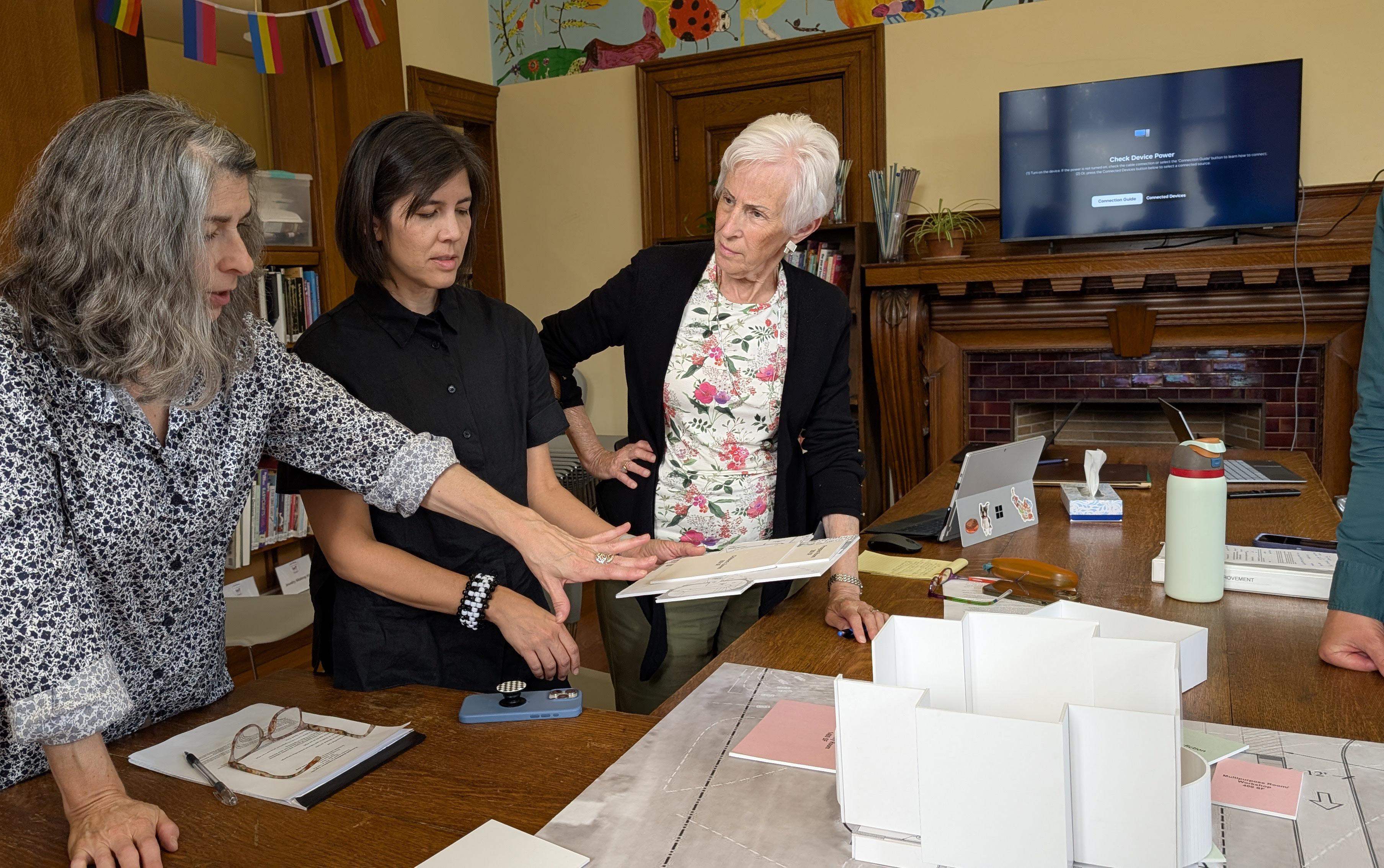
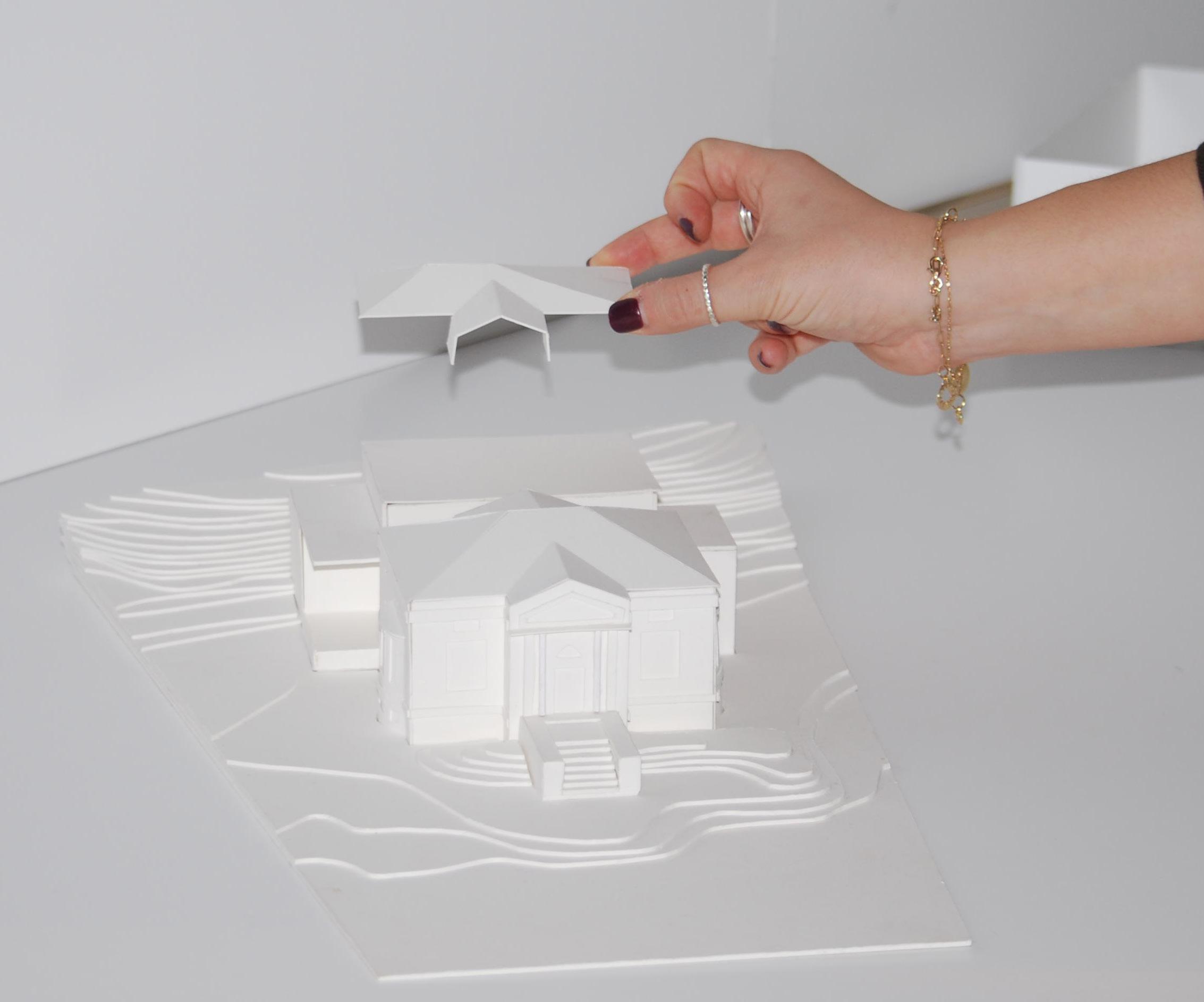
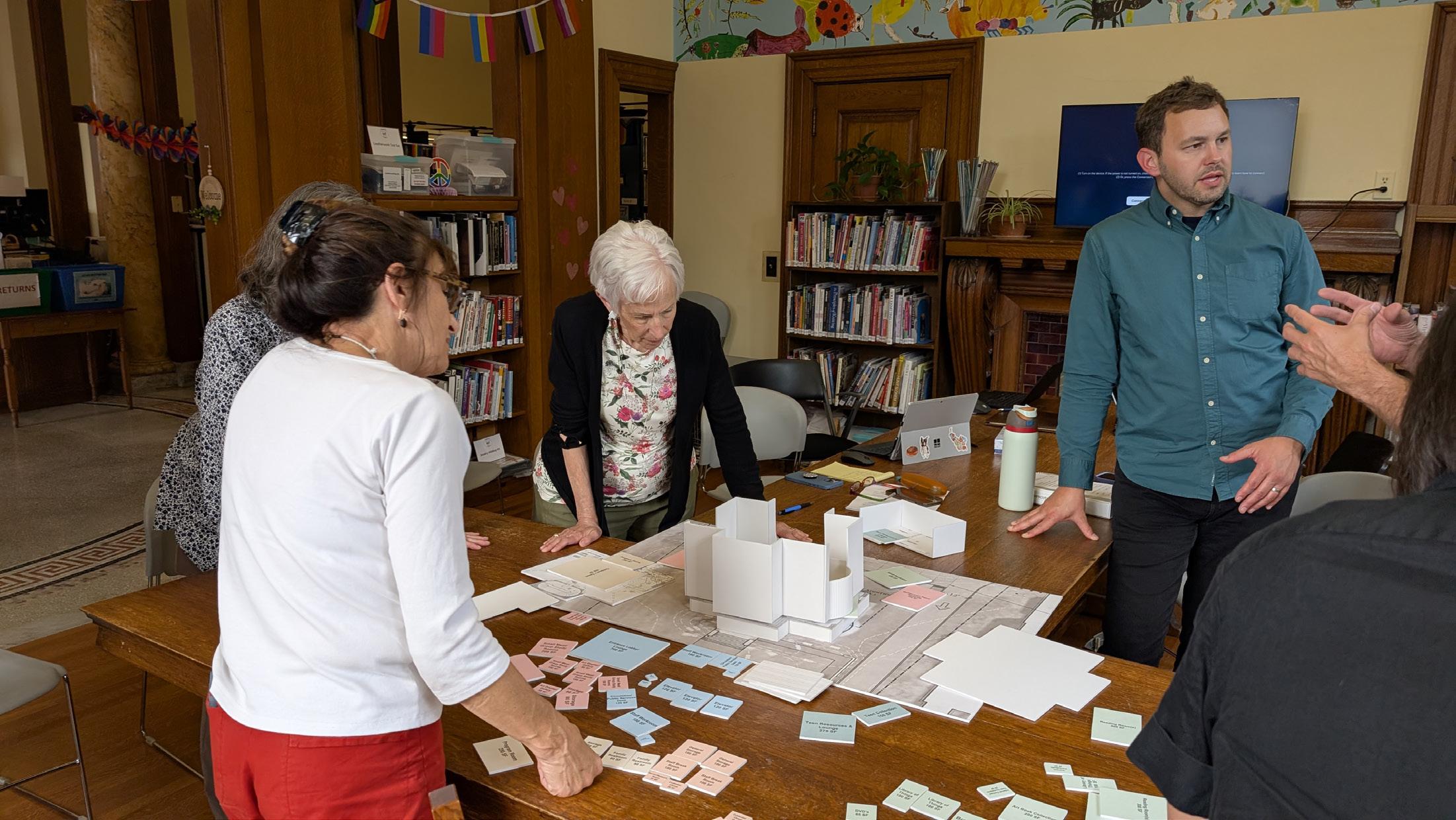
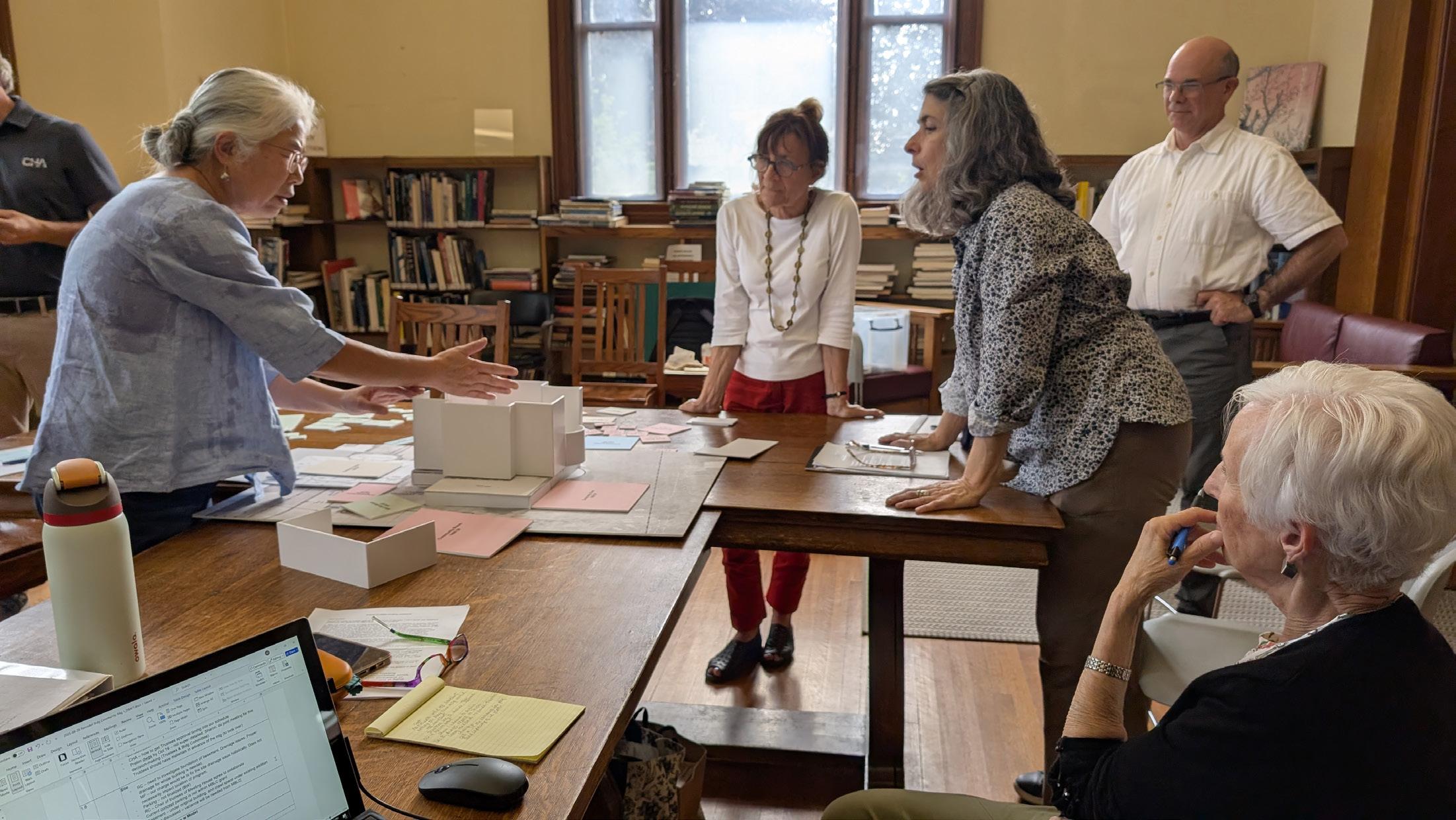
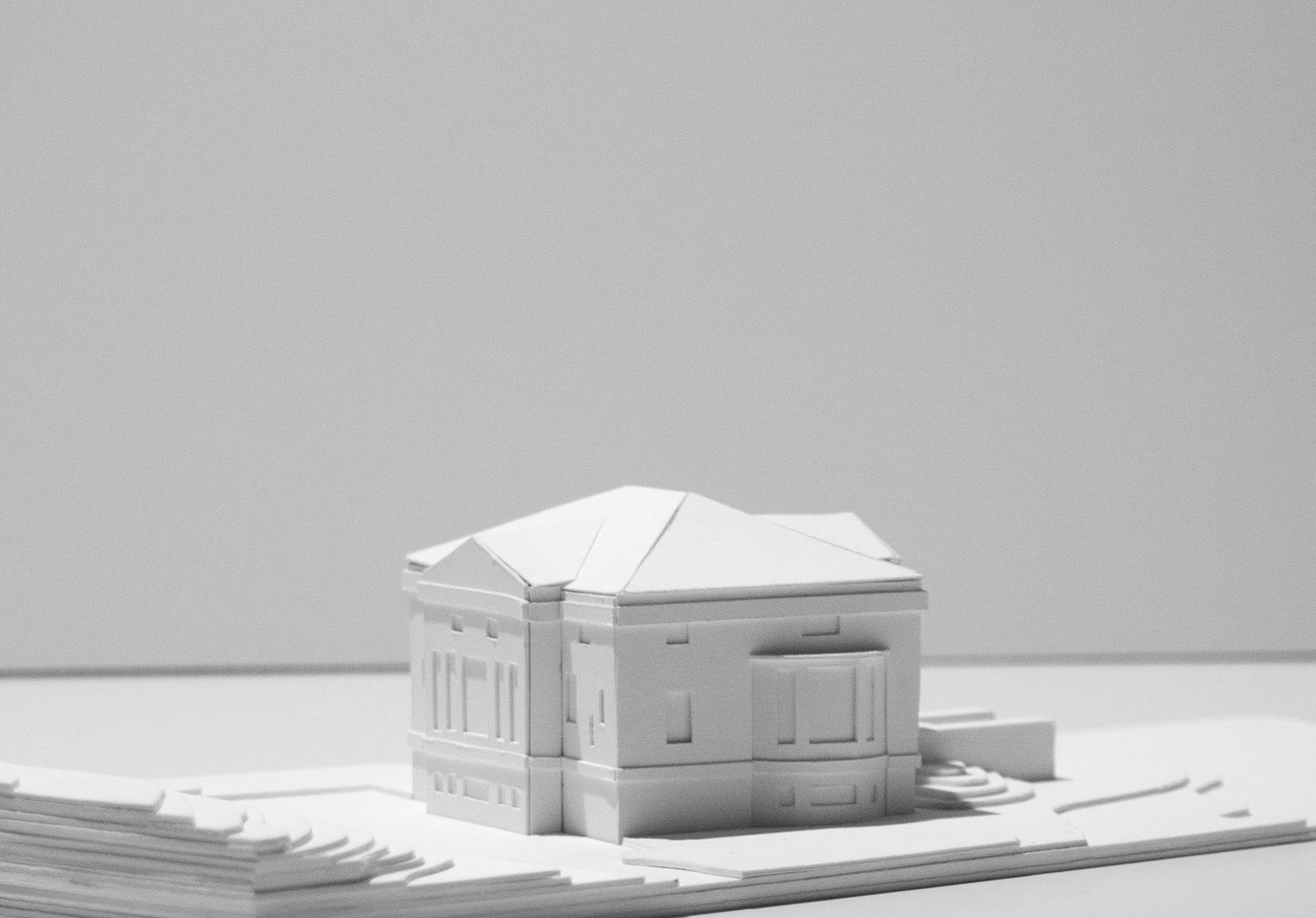
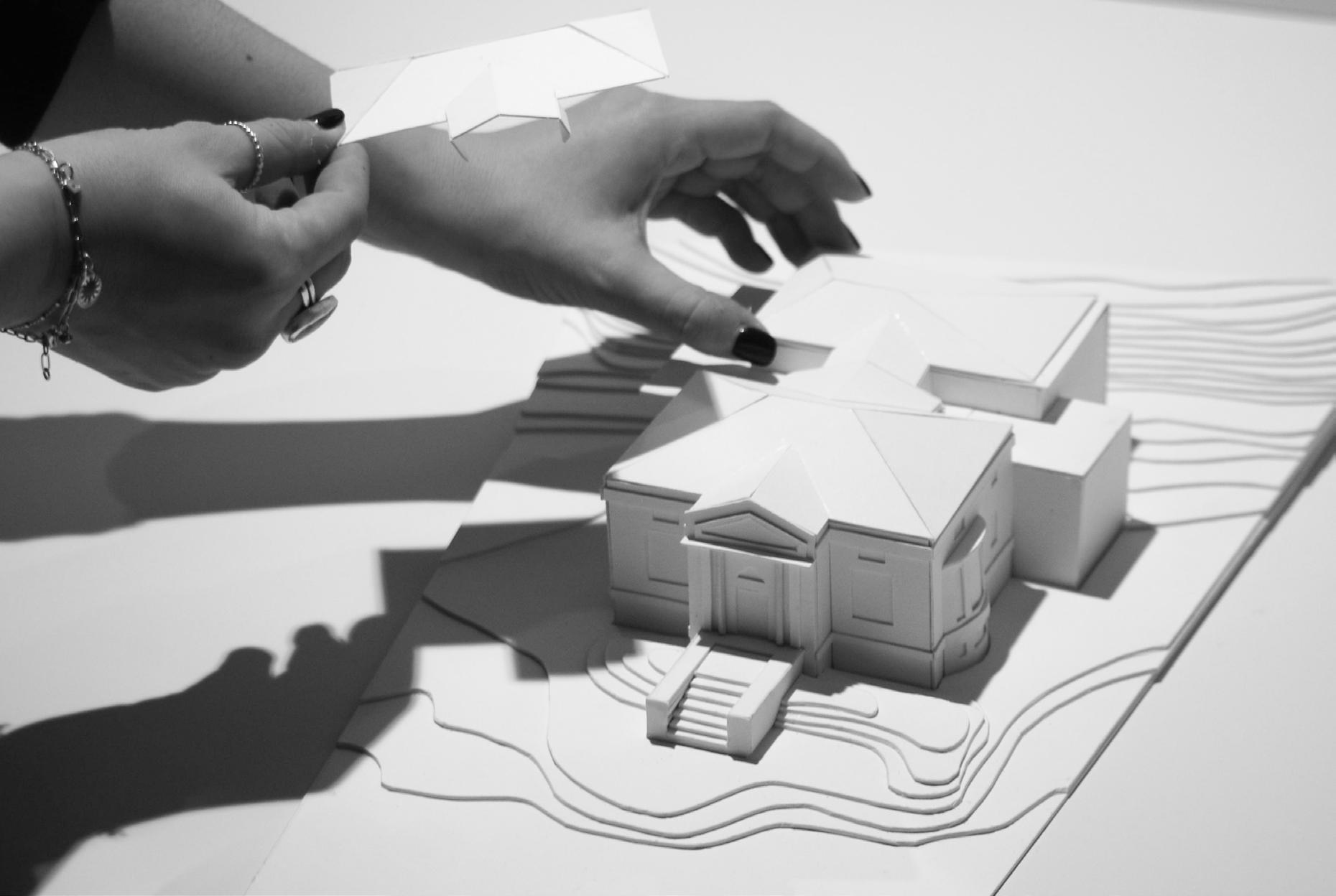
The Ramsdell Public Library renovation and addition reimagines the historic building as a more accessible and community-centered civic space. My role focused on translating programmatic goals into physical form through a series of study and presentation models. I developed a programming model to facilitate discussions with the Board of Trustees and support community engagement efforts, followed by multiple iterations of a presentation model used to evaluate massing, scale, and the proposed addition. These models became critical tools in communicating design intent and securing approval for the project’s next phase.