Jessie Buckley
ACADEMY AWARD WINNER
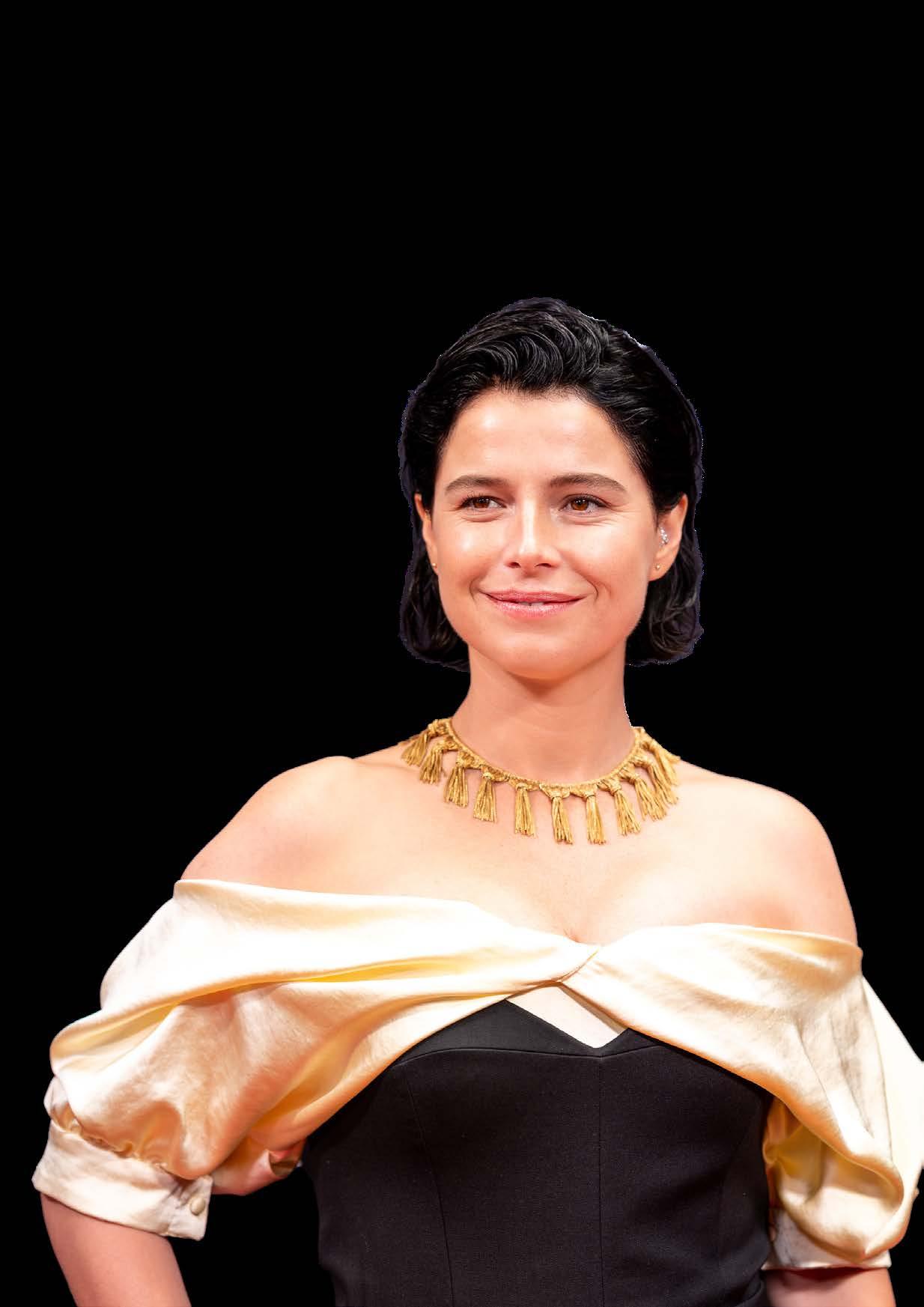
Jessie Buckley, Credit: Jay Dixit
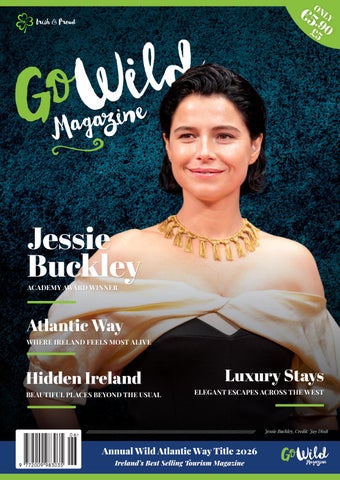
ACADEMY AWARD WINNER
For over a decade, Go Wild has celebrated the landscapes, stories and experiences that make Ireland so special. At its heart, the magazine is about inspiring people to get out, explore, and enjoy more of this incredible island.

Where waterfalls seem to fall from the sky, mountains rise into the clouds, and powerful waves crash against rugged headlands and endless beaches, this is, without question, one of the most extraordinary places in the world to call home.
It is a description of the Wild Atlantic Way that has always stayed with me, and one that perfectly captures the spirit of what we set out to celebrate.
Our Go Wild Tourism Wild Atlantic Way title was where it all began in 2014. It was the original publication, and it remains very much at the heart of the Go Wild brand.
What started as a single title has grown into a portfolio of ten magazines, each shining a light on different regions, alongside our focus on food, whiskey, gin, and of course, the magic of Christmas.
At the core of it all is a simple belief: there really is something for everyone, whether you are planning the perfect staycation or a short escape somewhere else on this incredible island.
As we move forward, we do so with real pride. Entering our twelfth year of publishing Go Wild Magazines, it was a genuine honour to be recognised earlier this year with a ranking of number 41 in the Top 70 Travel Magazines Worldwide.
Here’s to the next chapter, and to many more years of tourism adventures with Go Wild.
Publisher, Go Wild Magazine titles Email:
on our
Go Wild East Coast: May 17
Go Wild Dublin: June 17
Go Wild Staycation Ireland: July 17
Go Wild Northern Ireland: August 17
Go Wild Irish Spirits & Food Experience: September 17
Go Wild Christmas: October 17

P4: Chatting with Alice Mansergh, CEO of Tourism Ireland
P8: Discover Studio Donegal
P10: Voices of Ireland with Nancy Schoeck
P12: Go Wild Mayo Guide
P14: Jessie Buckley and Killarney
P16: Enda Grace, Dondara Productions
P24: Travel Killarney and the Ring of Kerry Car-Free
P26: Go Wild Kerry Guide
P28: Go Wild Cork Guide
P30: Go Wild Galway Guide
P32: Hell & Back Outdoor Adventure
P34: Go Wild Clare Guide
P36: Explore Donegal Hikes
P38: Dark Sky Coast
P40: Go Wild Donegal Guide
P42: Go Wild Sligo Guide
P44: Fantastic Food Experiences in Galway
P46: The Best Road Trips in Co. Kerry
P50: Wild Atlantic Way Beaches
P52: Discover Dursey Island
P54: Go Car-Free on the Wild Atlantic Way
P56: 5 Great Greenways to Discover
P60: Go Wild Limerick Guide
P62: Wild Atlantic Way Entertainment
P66: Discover the Wild Atlantic Way
P68: 9 Bucket List Experiences on the Wild Atlantic Way
P74: Things to Do on the Aran Islands
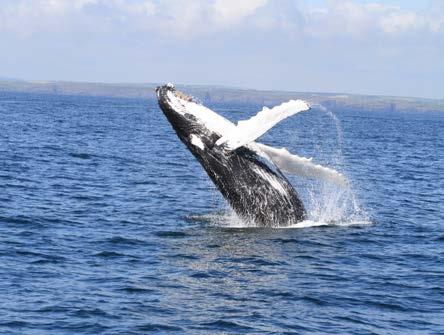
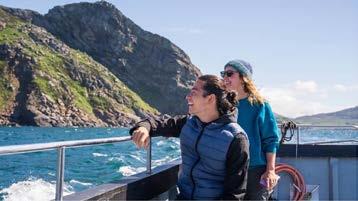
Atlantic Whale and Wildlife Tours on the Wild Atlantic Way
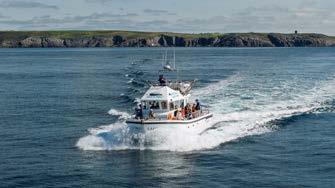
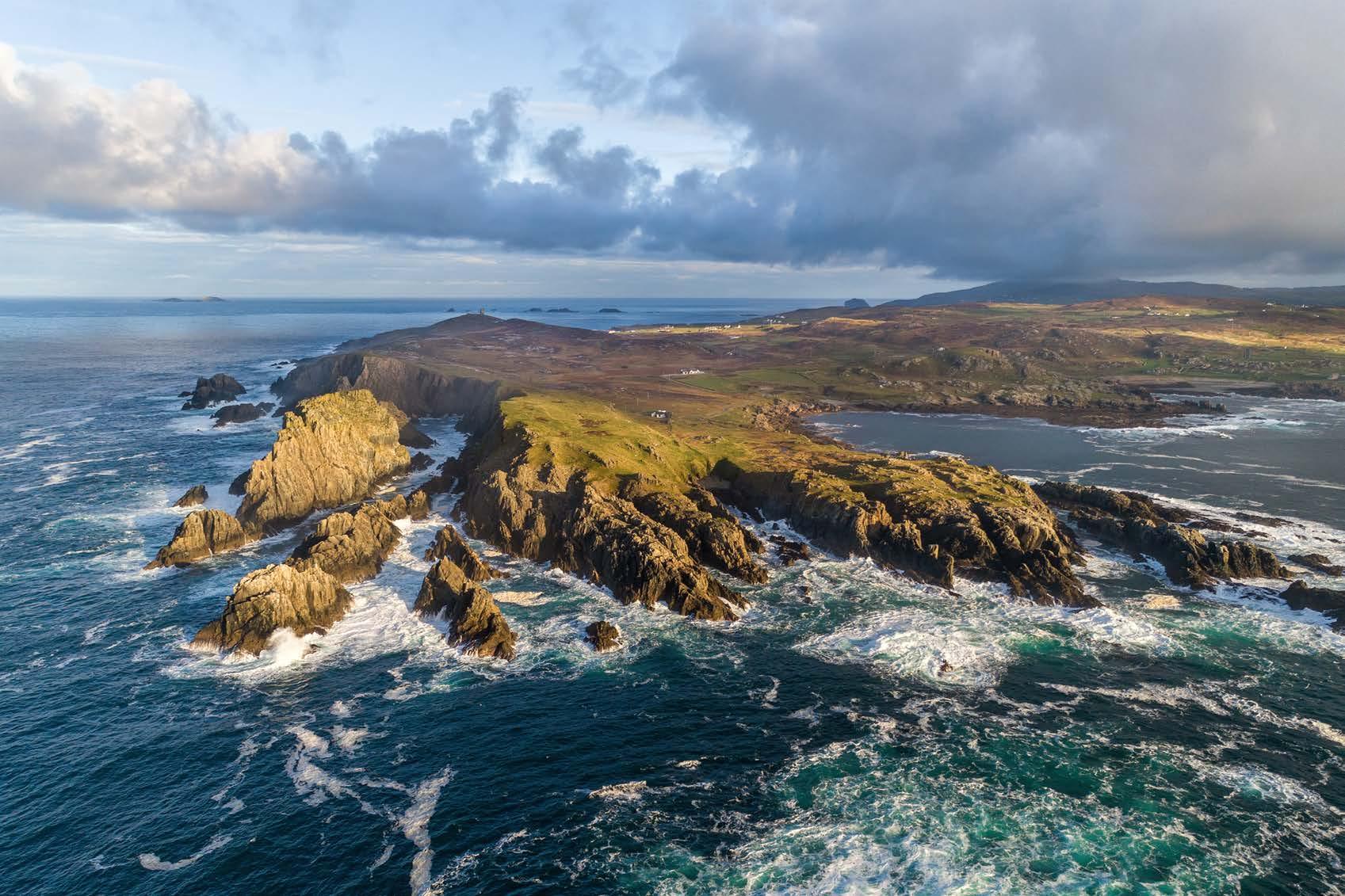
n the far southwestern edge of Ireland, where the coastline breaks into a series of rugged headlands and bays and the Atlantic stretches in from the horizon, the sea still feels vast and untamed. This is West Cork, a place defined as much by what lies offshore as by the villages, headlands and cliffs that line its coast. Along this stretch of the Wild Atlantic Way, a growing number of visitors are discovering that some of Ireland’s most memorable encounters don’t happen on land at all—but out on open water. At the centre of this experience is Atlantic Whale and Wildlife Tours, a West Cork company that has become synonymous with responsible, close-tonature marine encounters. Known for its knowledgeable guides, carefully run trips, and deep respect for the ocean, the company was recently named West Cork Wild Atlantic Way Tourism Business of the Year 2025 by Fáilte Ireland.
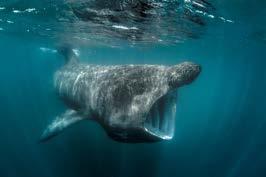
For many travellers, it comes as a surprise that the waters off Ireland’s southwest coast rank among the most biologically rich in Europe. Here, deep Atlantic currents meet nutrient-rich waters rising from the ocean floor, creating fertile feeding grounds that support an extraordinary range of marine life.
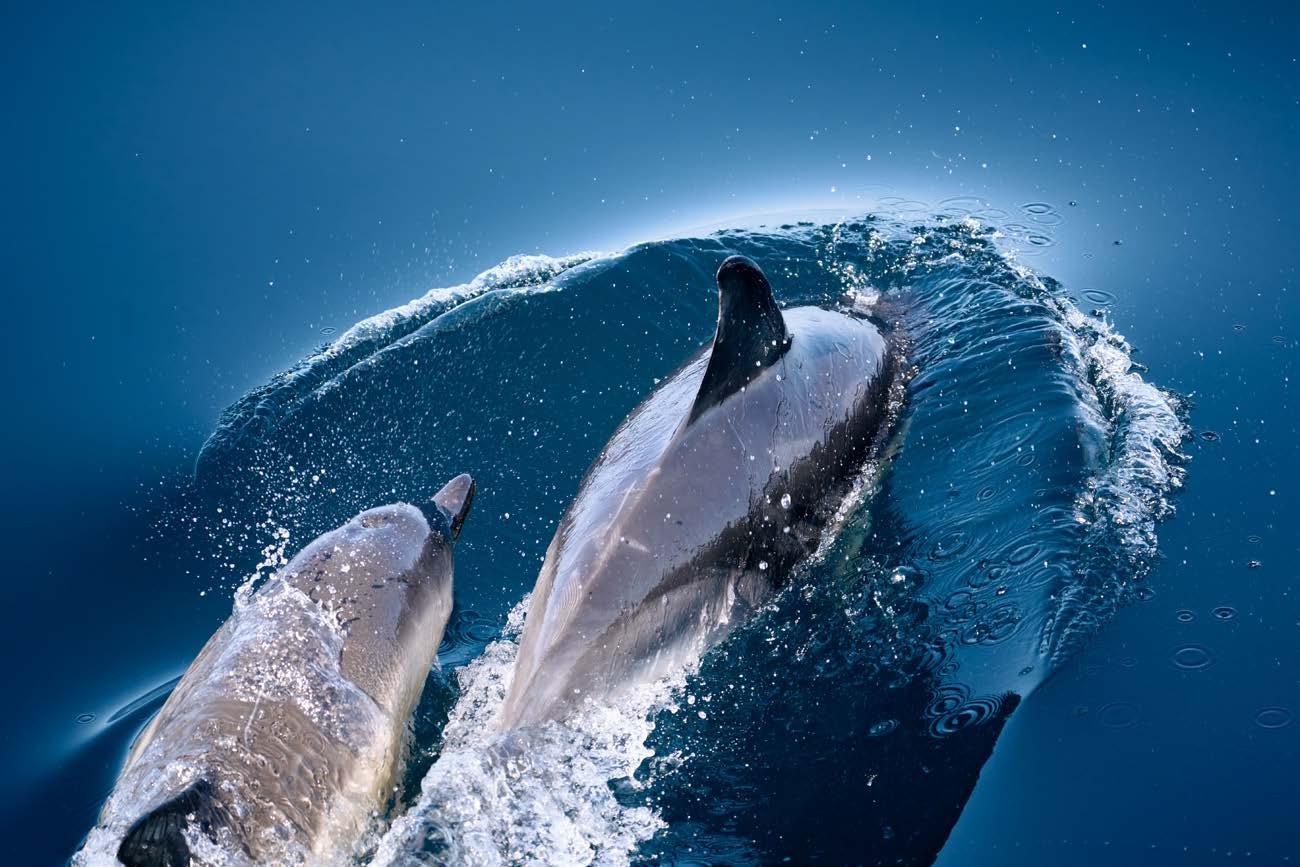
More than twenty species of whales, dolphins and porpoises have been recorded in Irish waters. Humpback whales are among the most eagerly anticipated sightings, famed for their acrobatic breaches and epic transatlantic journeys. Fin whales, the second-largest animals to have ever lived on Earth, also pass through these waters, their size and movement leaving a lasting impression.
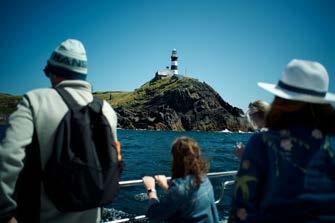
A whale and wildlife tour is far more than a scenic boat trip. Once the harbour slips away behind you, the sense of scale changes quickly. The coastline recedes, the water deepens, and the Atlantic opens out in every direction. Then comes the moment every passenger hopes for—a plume of mist on the horizon, a whale surfacing briefly before slipping back beneath the waves.
Wildlife with Respect at Its Core Atlantic Whale and Wildlife Tours operates under strict wildlife-watching guidelines, ensuring animals are never chased or disturbed. Boats maintain respectful distances and reduce speed when wildlife is nearby. The company also contributes sightings data to marine
research, helping support conservation and understanding of these remarkable species.
For those willing to venture offshore, Atlantic Whale and Wildlife Tours offer a rare opportunity to experience the Atlantic on its own terms—to witness its power, connect with the ocean, and encounter some of the most magnificent creatures on Earth. We offer daily trips from both Courtmacsherry and Kinsale harbours.

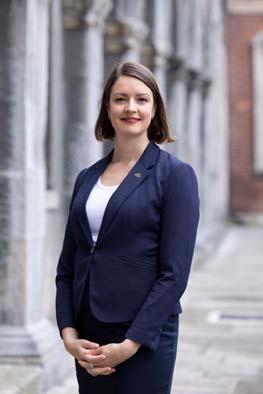
Alice Mansergh, Chief Executive of Tourism Ireland, spends her days making sure the island of Ireland is on the must-visit list for overseas holidaymakers, and enjoys every minute.
We are ambitious for the next five years when it comes to delivering overseas tourism revenue to the island of Ireland. At the end of 2025, Minister for Enterprise, Tourism and Employment Peter Burke launched ‘A New Era for Irish Tourism’, setting out a clear vision for the future of Ireland’s tourism industry. At Tourism Ireland, we’re supporting the Minister’s strategy, working towards delivering +6% average revenue growth year on year to 2031. For 2026, there’s a sense of cautious optimism. Last year, we had a slow start due to the Dublin Airport cap, which reduced seat capacity from key markets until the end of March. Then the US tariffs were announced and consumer confidence was somewhat unsettled. However, the second half of 2025 saw a +7% increase in the number of overseas visitors compared to the second half of 2024. That’s the momentum we want to carry through into this year and growth will be supported by increased connectivity. The Dublin Airport cap is on hold and there’s a +12% increase island-wide in the number of air seats to Ireland this spring versus last spring, which includes strong increases from the US, Great Britain, Germany, France and other key markets.
There will undoubtedly be unexpected challenges over the coming years. However, between 2010 and 2024, there were crises along the way – the financial crash, the ash cloud, Covid, among others; and if you compare 2010 with 2024, we saw a bounce-back from those crises, and overseas visitor spend doubled in that period. So, we plan to stay resilient and clear-sighted about any challenges, and focused on delivering growth from a range of markets. Great Britain provides the largest volume of visitors, whereas the US is our highest revenue market. We have extensive marketing campaigns underway in all markets – including a focus in the US around new gateways like Raleigh-Durham and Pittsburgh, which will have direct flights to Dublin for the first time this year. Healthy growth is growth from a range of source markets and, in terms of market diversification, we have an opportunity to invest more in Mainland Europe. There are 450 million people on our doorstep in Mainland Europe who take regular short breaks and we’d like to show them all the great reasons to come here. We’re also investing more in Canada, which has been a growth market over the past few years, and nascent markets like India and China.
We’ll be seeking to elevate perceptions of what you get when you come to the island of Ireland. Last year, 58% of overseas consumers said they were researching cost more carefully for their holidays and that comes at a time when there are also cost pressures for the industry. If we can’t wave a magic wand and make a holiday here less expensive, what we can do is make sure that people know the value of what they’ll get here, in terms of the magical experiences they’re going to remember for a lifetime. We launched our ‘Ireland Goes Beyond’ campaign in December which focuses on leaning into the things we know visitors really value – our scenery, heritage and attractions, but also the warmth of the people and how Ireland really lets you in. Our visitors feel like they’re having authentic interactions, be it the traditional music session happening next to them in the local pub, or the advice they get from folks on the street or wherever they’re staying. We’ve consistently heard from people that they come for the scenery, attractions and history but leave with stories based on human interactions, so we’ve tried to capture that in our new campaign.
Screen tourism is another focus, with film and TV shows influencing 23% of visitors in their destination choice. We’re showcasing places you can visit in Northern Ireland that feature in A Knight of the Seven Kingdoms, the new launch from the Game of Thrones franchise; and How to Get to Heaven from Belfast, the latest series from Derry Girls writer Lisa McGee. We also co-produce TV shows and travel documentaries. This year, Martin and Roman Kemp will be exploring father-son travel and mythology; Ronan Keating will travel along the Wild Atlantic Way; and Dermot O’Leary will be back with his culinary-focused travel show, Dermot’s Taste of Ireland, travelling around the Causeway Coast and into Donegal and Sligo. Dermot’s first series was watched by 3 million people on ITV in Great Britain, so it’s a great way to immerse people in longform content that can inspire them to travel here.
We’re also promoting culinary tourism, highlighting Ireland’s fantastic food scene. About 70% of overseas consumers say food plays a role in how they choose a holiday. The majority of overseas consumers believe we have good to excellent food, but it varies: 90% of people in the US think we have good to excellent food, but it’s closer to 60% in Mediterranean countries. In terms of the range of food on offer here, almost everybody thinks we have home-cooked fare but surprisingly, only 60% are aware that we have quality seafood and they’re less aware of our fine dining or that we have international cuisines. So, there’s an opportunity to update people’s perceptions of what our island offers.
Then there are our social and digital activations, which increasingly take account of AI influencing how people choose their holidays. Around 11% of our overseas target audiences are using AI to research holidays, but 30% have tried it at some point, so it’s growing all the time. In the past, people spent hours visiting hundreds of webpages just to choose a holiday. Now, people are using Gemini or ChatGPT, putting in their preferences and asking, ‘Where would I go for a hiking holiday?’ or ‘What are the best off-the-beaten track places to visit in Ireland?’ Most will then do the final stage of detailed research and book themselves. AI is fantastic for giving you those shortcuts, but you do need to always fact check, check sources and do a bit of end research yourself to make sure it hasn’t given you misleading information.
I continue to be inspired by small tourism businesses. It’s important to have iconic attractions people know about, giving them reasons to travel here. For example, Titanic Belfast, the Cliffs of Moher, the Giant’s Causeway or the Guinness Storehouse, which recently celebrated 25 years and has attracted mind-boggling numbers of visitors from around the world. I take a lot of inspiration from up-andcoming small businesses in rural areas. I was in New York recently and CIE Tours told me that one of their highest-rated visitor attractions last year was Long Meadow cider farm in Armagh. Another example is Atlantic Sheepdogs in Sligo, which is a family farm near Benbulben doing sheepdog demonstrations. These experiences highlight how tourism can bring new ways of living to rural areas and
help people showcase their culture, history and ways of life.
I’ll be visiting the Wild Atlantic Way again this summer. I have two boys, aged 12 and 8, and they love holidaying around the island of Ireland over the school holidays and long weekends. Last year, we went to the Wild Alpaca Way in Donegal, which was fabulous – you’re looking out over the Donegal coastline while walking around the farm with its adorable alpacas. My boys still talk about it to this day! I also have plans to travel around Northern Ireland. Even though I’ve travelled extensively around the island of Ireland, I find there are always new things to discover and places I’d love to return to experience in a new way, to explore hidden walking trails or beaches where I’ve yet to see a sunset.
More than two-and-a-half years in this role, what I love most about my job is the people – working with our own Tourism Ireland teams at home and overseas and, of course, with our valued industry partners right across the island who are the most hospitable people, full of entrepreneurialism and passion for what they do, and incredibly kind and welcoming. So, it’s the people and then the products, the landscapes and the stories we have to tell. It makes me incredibly proud. When you really love what you’re selling, it doesn’t feel like work to tell that story.
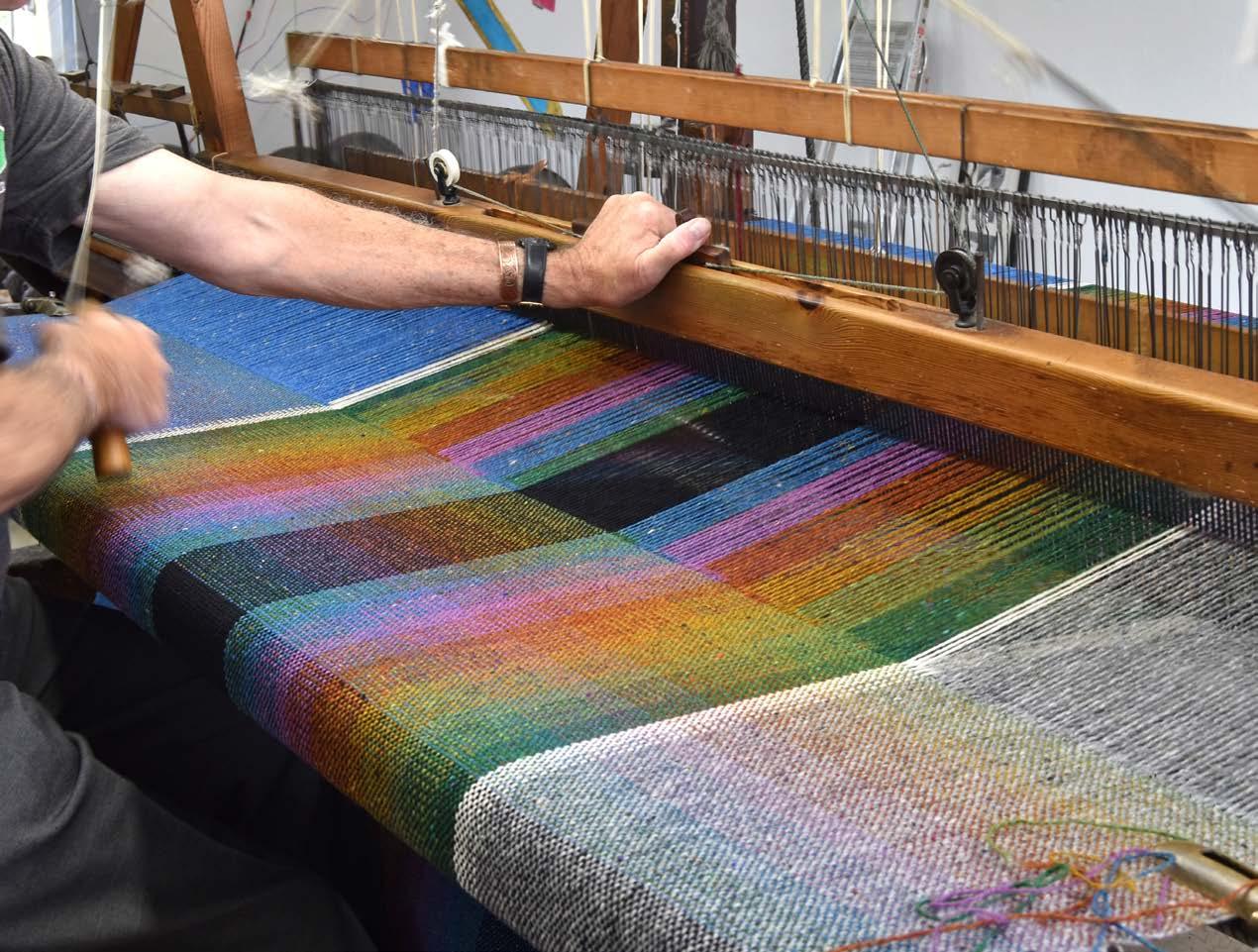
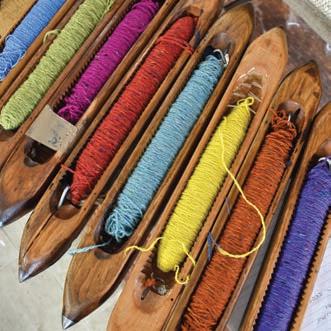
“Handweaving is part of the intangible cultural heritage of the area, to lose an indigenous craft is to lose part of our history, our culture, our link to the past”.
Studio Donegal is a small, family-owned hand-weaving and garment-making mill, located in the village of Kilcar in County Donegal. Established in 1979 to preserve the traditional craft of handweaving indigenous to the area. Tristan and Anne Donaghy are the current owners, having inherited the mill from Tristan’s parents, Kevin and Wendy.
Tristan and Anne met when Anne joined Studio Donegal in 2014. By then, Tristan had acquired an encyclopedic knowledge of wool, weaving and textiles, wisdom gained by working in the mill with his parents from an early age. His father, Kevin, was a professional textile technician with decades of experience in the trade who passed his knowledge on to Tristan. Valuable experience from working hands-on in the mill with the many skilled craftspeople has added to his expertise.
A graphic designer by profession, Anne had always harboured a passion for textiles, having grown up immersed in the cottage industry, hobbies and pastimes revolved around making – crochet, knitting, lace making and sewing. The tactile element of a physical item was something Anne had always felt was missing in her work as a graphic designer, so when the opportunity arose for a return to textiles, she jumped at the chance!
Tristan and Anne are both creative individuals, designing many of the tweeds and throws they produce. The throws produced in Studio Donegal are part practical item, part art piece! Many of them have stories attached, the ‘Relativity’ throw for example. Designed by Tristan, it is his interpretation of what a black hole in space
could look like in a woven piece. Anne has recently designed a throw based on a music event which takes place in Kilcar every year, called ‘Echoes of the Glen”, an event commemorating two musicians who, many years ago, lived on opposite sides of the glen and who used to ‘echo’ each other playing across the valley.
Sustainability had always been an important part of Studio Donegal. The yarn, mostly spun by their neighbours in Kilcar, Donegal Yarns, is 100% wool. They produce a permanent collection of timeless garments, hats and accessories. Waste is kept to a minimum, Anne designs and makes sustainable gift items from the offcuts of tweed from the garment making, key rings, hot water bottle covers, tea cosies and hip flasks amongst other items.
They describe their mill as an ‘open mill’ – visitors are welcome to take a self-guided tour of the works to see the products being created, “We encourage visitors to take a walk around the weaving room and the sewing room, to talk to our team. It’s a way for customers to see the process and see the authenticity of our product, they can see that we are genuinely hand making it all here”
Studio Donegal currently employs twelve people, a mix of full and part time. “We operate a family friendly business, we will accommodate any employee as best we can to fit their job around their family needs.” Kevin McGillicuddy is currently the master weaver, he follows in the footsteps of his uncle who previously worked in the mill. Kevin learned his trade in-house and his since trained several other weavers.
Tristan, Anne and all the Studio Donegal team are passionate about what they do. “We in Studio Donegal feel that the craft of hand weaving is part of the intangible cultural heritage of the South West Donegal area. We feel that it is imperative to preserve this craft, that it is our responsibility to pass it on to future generations. It is our ambition to keep the rhythm of the hand loom alive for many years to come. It is the foundation stone of Studio Donegal, the reason for its establishment almost 50 years ago.”
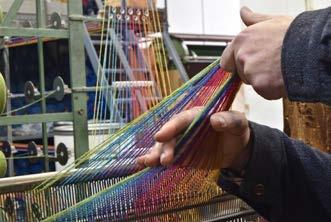
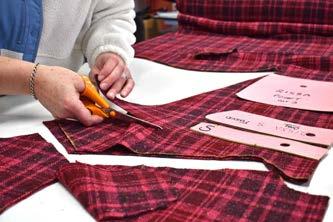
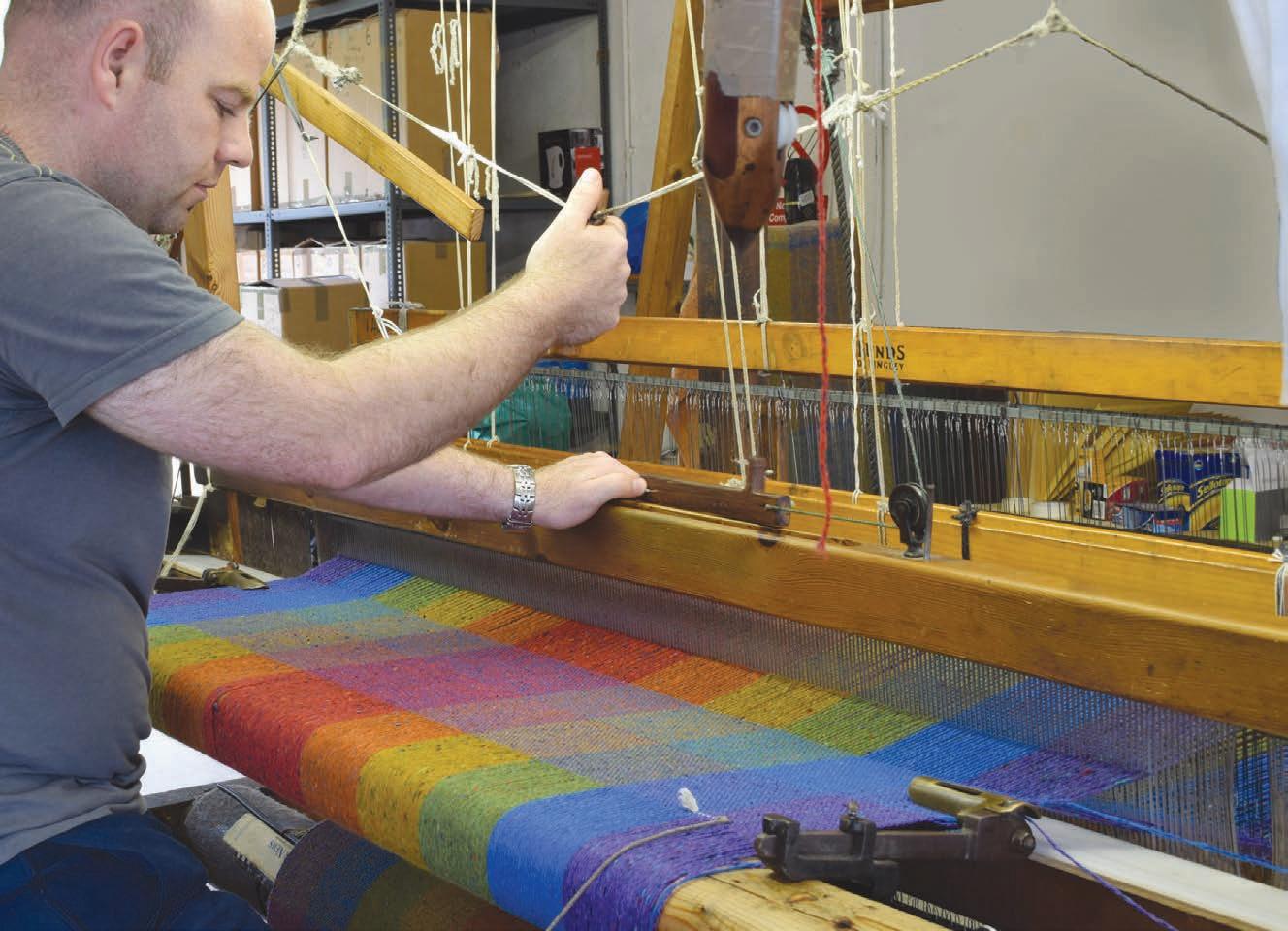

Studio Donegal is a family owned woollen mill, producing a permanent and timeless collection of garments and accessories, and a colourful and creative range of tweeds, throws and cushions.
100% Hand woven, 100% Made in Ireland

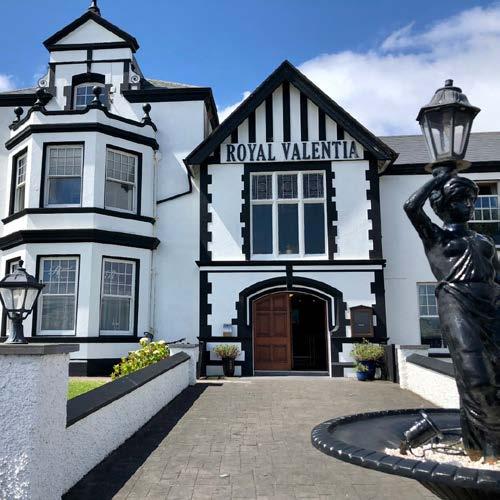
Nestled off Ireland’s rugged southwest coast in Co. Kerry, Valentia Island is a windswept haven of cliffs, ocean views and rich history, making it a jewel on the Wild Atlantic Way. On February 20th, 2026, the historic Royal Valentia Hotel welcomed new American owners, with CEO Bobby C. Christian and Chief Hospitality Director Nancy Schoeck of Unique Boutique Hospitality taking over. Committed to preserving its almost 200-year heritage, the duo aim to maintain its charm while guiding the hotel into the future. I spoke with Nancy about what brought them to this remarkable part of Ireland.
What inspired you to take on The Royal Valentia Hotel? We were drawn to The Royal Valentia Hotel because it felt like more than just a property—it’s part of the fabric of the island. There’s a deep sense of history, character, and community here that’s hard to replicate. Our vision is to honour that legacy while thoughtfully and gently elevating the experience— creating something that feels both timeless and fresh. We want it to be a place people return to year after year, not just for the setting, but for how it makes them feel, with our aim being to create a true sense of fáilte abhaile
Was there a moment you knew this was “the one”? Yes. Standing at the water’s edge, looking across the harbour, understanding this island sits at the
edge of Europe—and historically, the beginning of connection to the world. It felt bigger than a hotel. It felt like stewardship. We chose Ireland because the culture aligns with what we believe hospitality should be—human, warm and deeply rooted in place.
What makes a truly memorable hotel stay? People don’t remember perfection. They remember how they felt. We’re not trying to be the most luxurious. We’re aiming to be the most meaningful.
What small detail separates good from great? Anticipation. When a guest feels understood without needing to ask.
Local partnerships? Absolutely. The best experiences here already exist—we just need to connect guests to them properly. We have already been fortunate enough to establish more than 25 partnerships on Valentia Island and the surrounding areas and have partnered with many of them for our first curated events since finalising the purchase in February 2026.
The Bicentennial in 2033? It should feel like a global gathering. A celebration not just of the hotel—but of the people, the stories, and the incredible history that have passed through here since 1833.
What do the Irish do better than almost anyone? Conversation. There’s an art to it here.
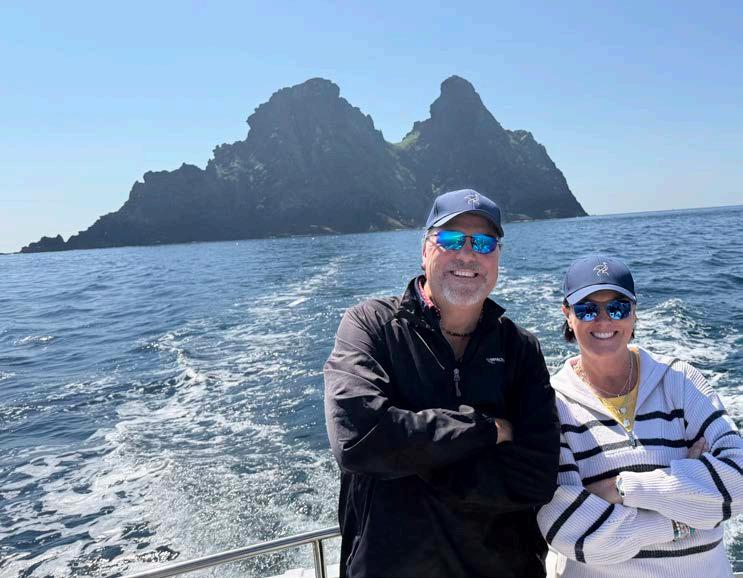
Favourite places in Kerry; so far? So many—the Skelligs, Glanleam Beach, Inch Beach, the Kerry Cliffs, Carrauntoohil and arriving on Valentia Island by ferry. It’s easy to understand why Kerry is called The Kingdom.
Perfect day off? Early walk, strong coffee (or tea), time on or by the water, ending with a long dinner and conversation.
Dog-friendly? Well, we are very ‘pawsitive’ about dogs—and we like to think we’re a pretty friendly bunch too. For now, our rooms can only accommodate service animals, but we’re working on it. When we expand to 50 rooms, we’ll be adding dedicated dog-friendly spaces so four-legged family members can enjoy a tail-wagging stay. Because dogs aren’t just pets—they’re family.
When guests leave, what should they feel? That they’ve discovered something real—and that they’ll return, finding both familiarity and something new with every visit.
What does “Going Wild” mean to you? Disconnecting from the noise and reconnecting with what truly matters—the space to breathe and reflect, something we’re all missing in today’s world.
Ireland in three words? Authentic. Timeless. Alive.
Info: www.royalvalentia.ie
• Croagh Patrick
• Achill Island
• Keem Bay
• Downpatrick Head
• Céide Fields
• Westport Greenway
• Clare Island
• Erris Head Loop
• Mulranny Causeway
• Westport
• Castlebar
• Newport
• Louisburgh
• Belmullet
• Ballina
• Mulranny
• Achill Sound
• Cong
• An Port Mór (Westport)
• The Tavern (Murrisk)
• Arno’s Bistro
• The Helm
• Nevin’s Newfield Inn
• The Idle Wall
• Sage (Westport)
• La Bella Vita
• Sol Rio
• Matt Molloy’s
• The Porter House (Westport)
• The Clock Tavern
• Cobblers (Ballina)
• The Tavern Bar (Murrisk)
• McHale’s (Castlebar)
• Hewetsons Bros
• Cronins Shebeen
• Guirys Foxford
• Ice House Hotel (Ballina)
• Mount Falcon
• Belleek Castle
• The Wyatt (Westport)
• Mulranny Park Hotel
• Belleek Castle
• Delphi Lodge
• Knockranny House Hotel
• The Moy Hotel
• Keem Bay
• Mulranny Beach
• Silver Strand (Louisburgh)
• Bertra Beach
• Elly Bay
• Ross Beach
• Keel Beach
• Bertra Beach
• Old Head Beach
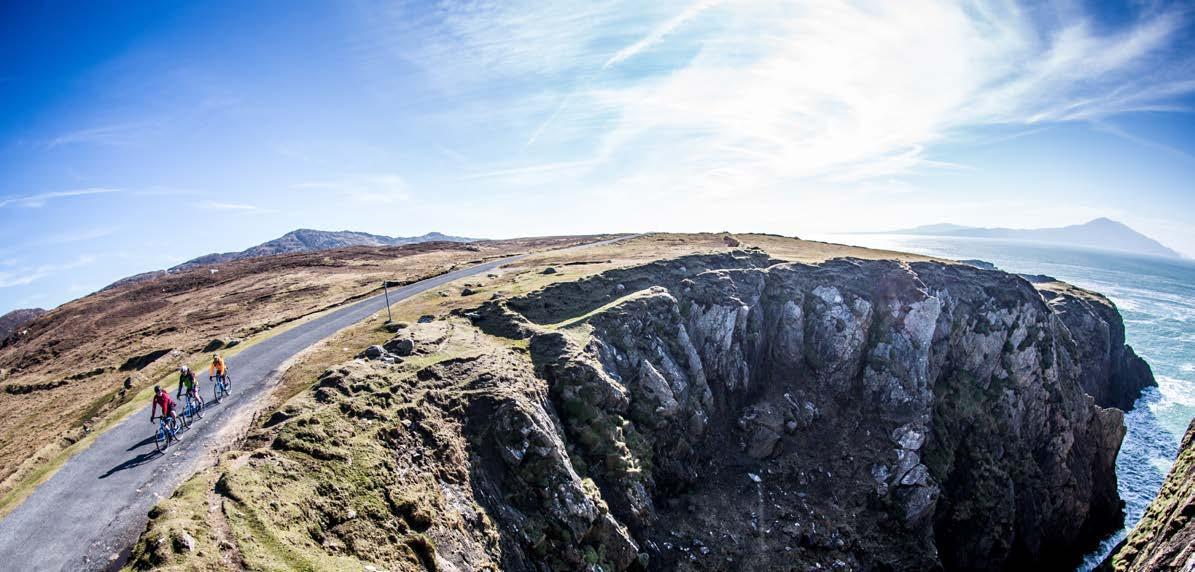
One of Ireland’s rugged west coast counties, County Mayo is a place where dramatic Atlantic Cliffs meet quiet boglands, sacred mountains rise above islanddotted bays, and traditional music drifts from warmly lit pubs. Mayo is the heartbeat of The Wild Atlantic Way with the longest coastline, the largest island and the highest sea cliffs in Ireland. It also boasts a rich tapestry of landscape, from lonely islands to magnificent mountain valleys. Mayo offers visitors a rich blend of scenery, heritage, outdoor adventure, and living culture.
Island was once the stronghold of the famed pirate queen Grace O’Malley, who is said to be buried at Clare Island Abbey. Further into the Atlantic lies Inishturk, also known for its rugged cliffs and clear waters. All islands offer superb hiking trails, with sweeping panoramic views.
Mayo has many vibrant towns, Castlebar, Newport, Westport and Ballina are often the first stops for travellers. All are ideal bases for exploring their wider regions, with lively arts and festival scenes, they all offer parkland walks and beautiful surrounding views.
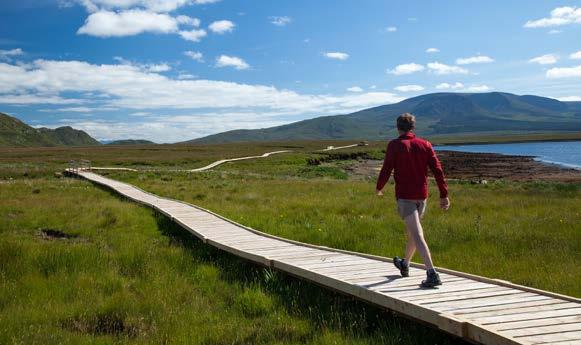
Outdoor enthusiasts flock to the Great Western Greenway, a 42-kilometre walking and cycling trail stretching from Westport to Achill Island with sweeping coastal and mountain views throughout.
Dominating the skyline is Croagh Patrick, Ireland’s holy mountain. Pilgrims climb it each July on “Reek Sunday”, but it’s a rewarding ascent year-round, offering spectacular Atlantic views.
While Mayo’s Islands may feel remote and windswept, their views are postcardperfect. Achill’s Keem Bay’s turquoise waters and sands, the Cliffs of Croaghaun tower dramatically over the sea. The deserted village beneath Slievemore Mountain offers a poignant glimpse into famine-era history. Scattered across Clew Bay are Clare Island and Inishturk. Clare
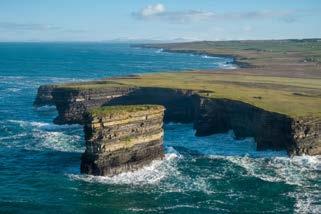
In North Mayo, Downpatrick Head stuns visitors with its towering sea stack, Dún Briste. Nearby, the Céide Fields reveal Stone Age farming landscapes preserved beneath bogland, while Ballycroy National Park protects vast tracts of wilderness ideal for hiking and wildlife spotting.
Religious heritage also plays a role in Mayo’s identity. The village of Knock is home to Ireland’s major International Marian Shrine, attracting up to 500,000 pilgrims from around the world each year. Mayo’s cultural calendar brings communities alive year-round. Traditional Irish music sessions are common in towns like Westport, Ballina, and Louisburgh, especially during peak season.
Mayo has over 100 tracks and trails throughout the County and has so much more to offer walking enthusiasts than any other county in the country! There are all kinds of walking trails, including Mountain, Coastal and Island, Rural and Urban Greenways, and National Loop Trails. Here you will find an abundance of information, including directions, detailed
maps, descriptions and photographs.
One of the newer experiences in Mayo is the Velorail located in Kiltimagh. The unique Velorail experience offers a one-of-a-kind journey along disused railway lines, where you can pedal your way through stunning landscapes and explore hidden gems at your own pace. Founded with a passion for sustainable tourism, Velorail is committed to providing eco-friendly, fun-filled adventures for all ages. The Velorail routes are designed to be accessible and enjoyable, ensuring that everyone can share in the excitement of this extraordinary way to travel.
County Mayo invites you to breathe deeply, embrace Atlantic winds, and experience Ireland at its most elemental. From sacred summits to island beaches, ancient archaeology to vibrant festivals, Mayo blends natural drama with heartfelt hospitality. For those seeking both adventure and authenticity, this western county offers an unforgettable journey.
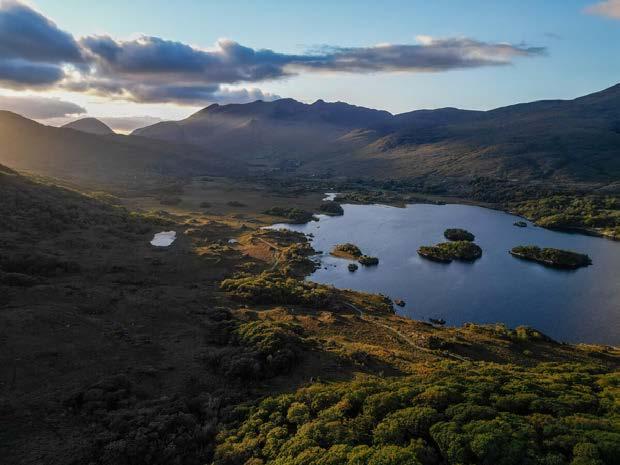
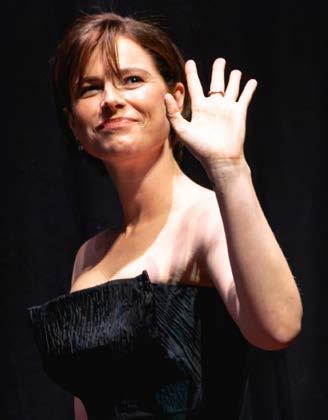
In Killarney, the mountains don’t just rise, they perform. Featuring shimmering lakes and stunning woodland, the dramatic scenery of this County Kerry town provided the perfect backdrop for the early years of Oscar winning actress Jessie Buckley. Located in Ireland’s southwest on the Wild Atlantic Way, Killarney is a vibrant crossroads where outdoor paradise meets good old-fashioned fun.
Buckley has consistently celebrated the influence of Ireland’s landscapes and storytelling traditions on her work. Speaking on the Hamnet press tour, she reflected: “I grew up in nature; in Killarney… What I love about nature in Ireland is that it is so wild. Things just grow because they want to grow. It’s moody and emotional.”
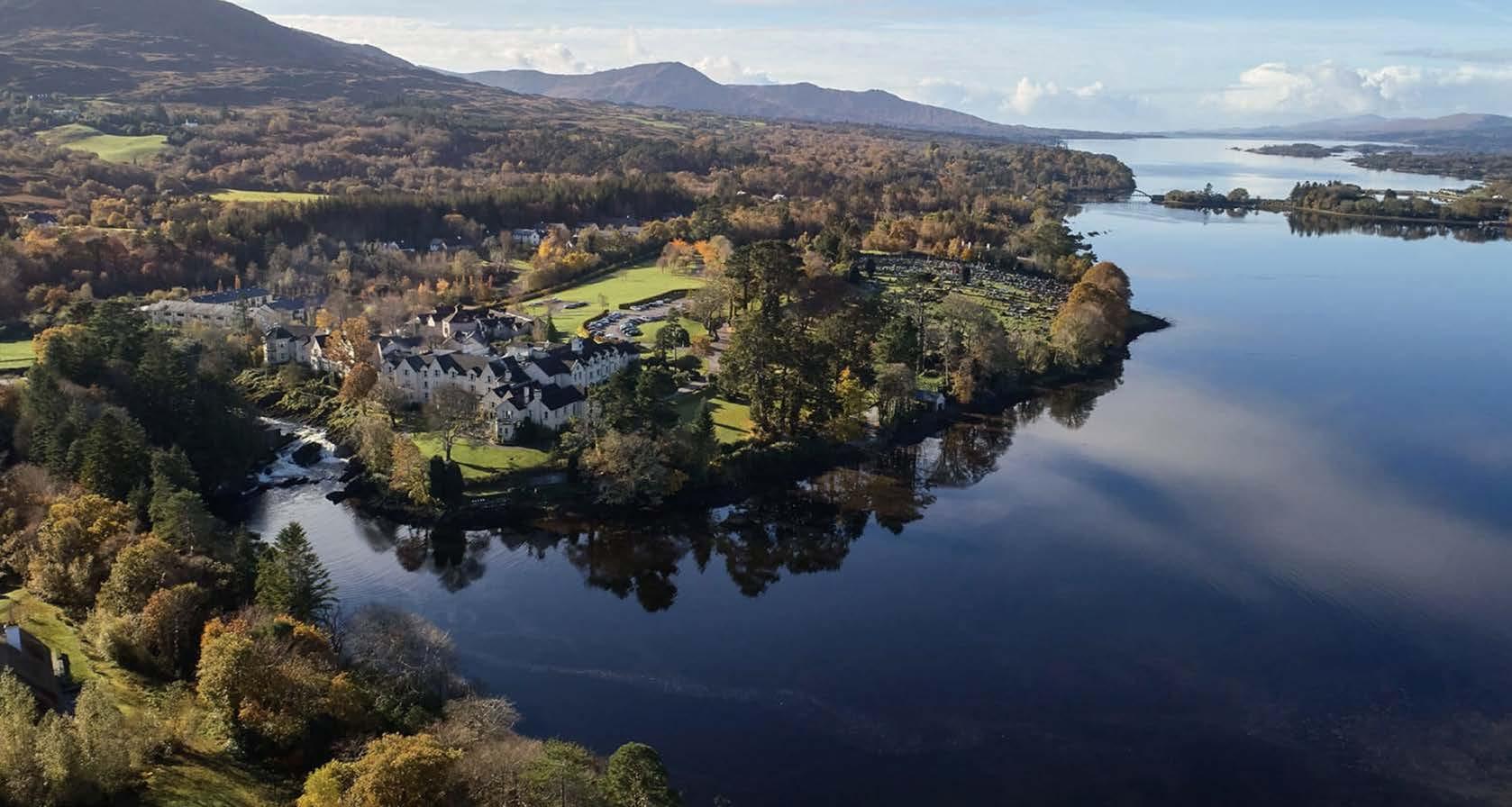
Jessie Buckley’s family has a strong connection to the warm welcome of Killarney, with the historic 4-star Arbutus Hotel run by the Buckley family since 1926.
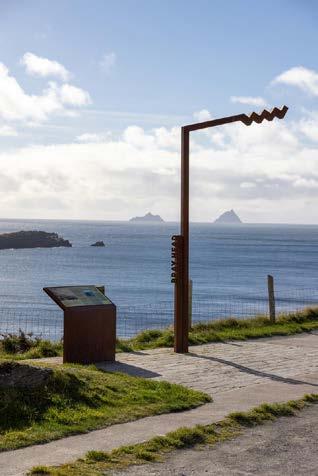
Featuring traditional Celtic Deco style, it is the kind of place where you might just stumble into an impromptu sing song. The storytelling tradition is clearly a family trait, and Tim Buckley is the resident poet and bar manager of Parknasilla Resort in Sneem where his is known for leading historical walks in the area.
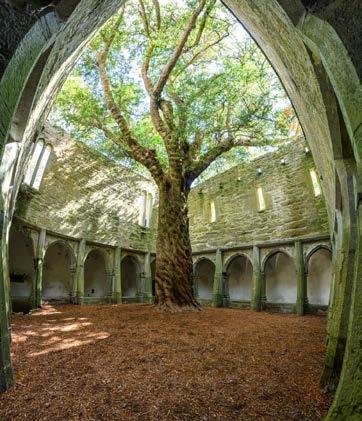
Beyond the town centre, the natural world takes over. A bold landscape that shapes its artists. Just a stones throw away is the stunning Killarney National Park, with its rippling lakes and ancient woodlands, unravels like a sweeping film set. Wander through the historic Muckross House and Gardens, cycle beneath the arching trees of the Demesne, or take a boat across Lough Leane, and you’ll find it easy to believe that creativity grows wild here.
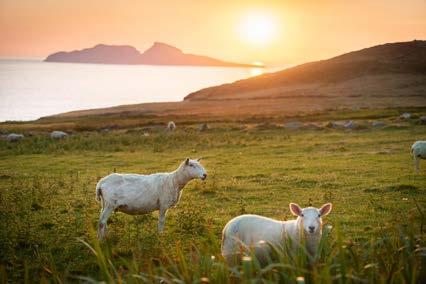
Travellers come to Killarney for the scenery, the tradition, the lore. But, stay a little longer, and you’ll discover its true magic: a deep sense of community, a fierce pride in its ownand a generosity of spirit that lingers long after you’ve left. Buckley’s Oscar win follows an exceptional awards season, scooping a slew of awards for her role as Agnes in Hamnet, including a Golden Globe, Critics’ Choice Award, Actors Award and a BAFTA. Her rise has also become part of Killarney’s own cultural landscape, a thread woven into its mountains, its music, its people. And, whether you’re exploring the lake studded parklands or chatting with locals over a creamy pint, you’ll feel it: This is a town that doesn’t just witness greatness, it nurtures it.
Visit the island that goes beyond. Ireland.com







































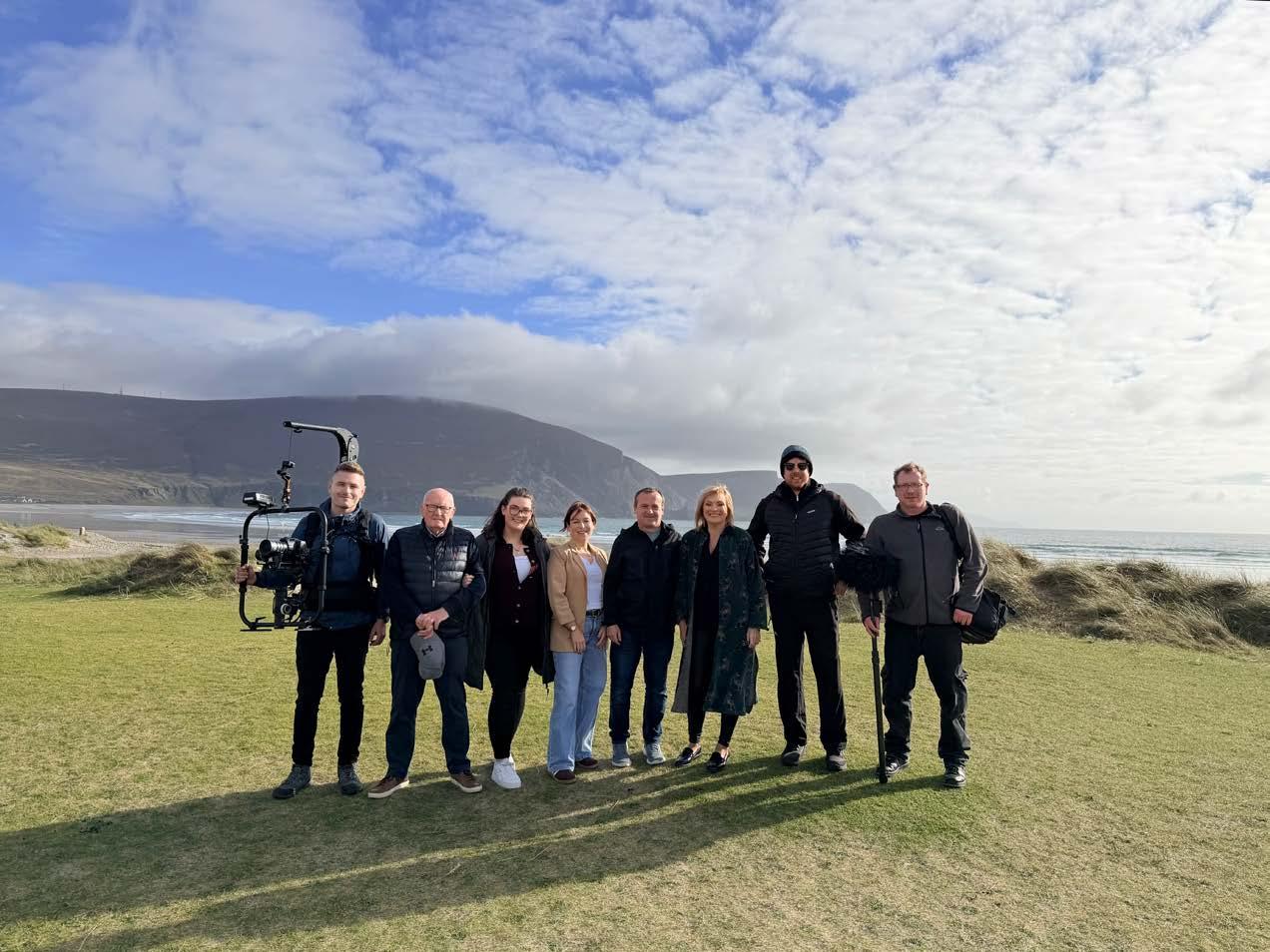
Enda Grace, founder of Dundara Productions, tells Meg Walker about his love of travel, work behind the camera and why his off-duty life is just as thrilling.
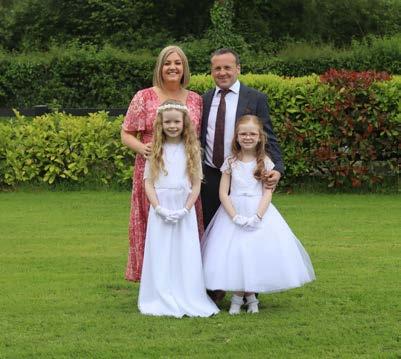
Dundara Studio is tucked away in the quiet village of Allenwood, Co. Kildare. The business began in 2014, when we became involved with a television station called Irish TV, which was aimed towards the diaspora. Two years later, it went into liquidation, and we began 2017 with a new focus. We took all the contacts we built up and started the new year with a fresh approach. My wife, Fiona and I had twin girls, aged 18 months at that time. We worked on some really nice projects in those early years before Covid hit in 2020. We’d been renting an office and studio space but moved out and headed home during lockdown. Because we were in media, there was a certain amount of work we could still do but it was limited.
I was sitting at home one day and looked out the window at the beautiful space surrounding our home in rural Kildare and thought, let’s look at building a studio here. So in 2021, that’s what we did. We’re located in the heart of the Bog of Allen. I grew up in this area. My dad worked in the local ESB power station. It’s a very distinctive area – as a landscape, because of the boglands, it’s absolutely flat. And we have a very strong community with its own sense of identity – the people here are never afraid of hard work. We’re an independent production company so our core team consists of three people but we work with a variety of freelancers – up to 20 or 30, depending on the needs of each project. One key person I’ve worked with since the beginning is Theo O’Grady, who used to work in RTÉ. He’s an integral part of our team.
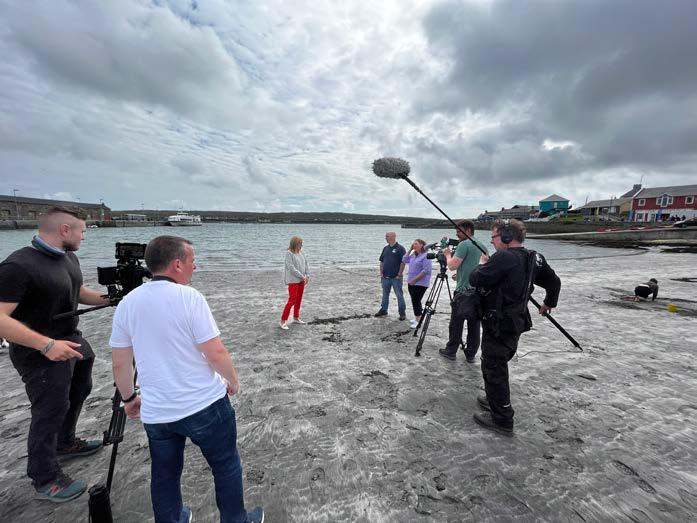
Among the projects I’m most proud of is our television series Moving West, which sees presenter Mary Kennedy meet people who’ve relocated to the West of Ireland. We’ve recently wrapped the fourth series which should air sometime in 2026, and won the Best Collaboration Award at
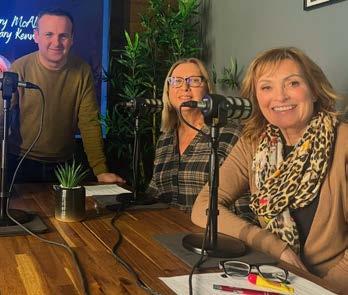
the 2026 Spider Awards for our work with the Western Development Commission and TG4. We also filmed the red carpet premiere of season 8 of Game of Thrones in Belfast for an American entertainment television show called Extra. We recorded on a Thursday evening and it had to be ready to air across the US on Friday morning. We worked all night but it was worth it. We also do a wonderful podcast presented by Mary Kennedy and former President of Ireland Mary McAleese called Changing Times – The Allenwood Conversations. It’s a fantastic project, not only for Mary and Mary, but also the people who come in to sit with them and tell their stories. We’re currently working on season three of that, with a great lineup of guests. We also produce features for RTÉ’s Nationwide programme. And we have another exciting project coming up in the autumn that I cannot divulge just yet, so watch this space.
I love the West of Ireland. It holds a huge part of my heart because I was brought there every year on holiday for as long as I can remember. We went to Galway as a family and the memories I
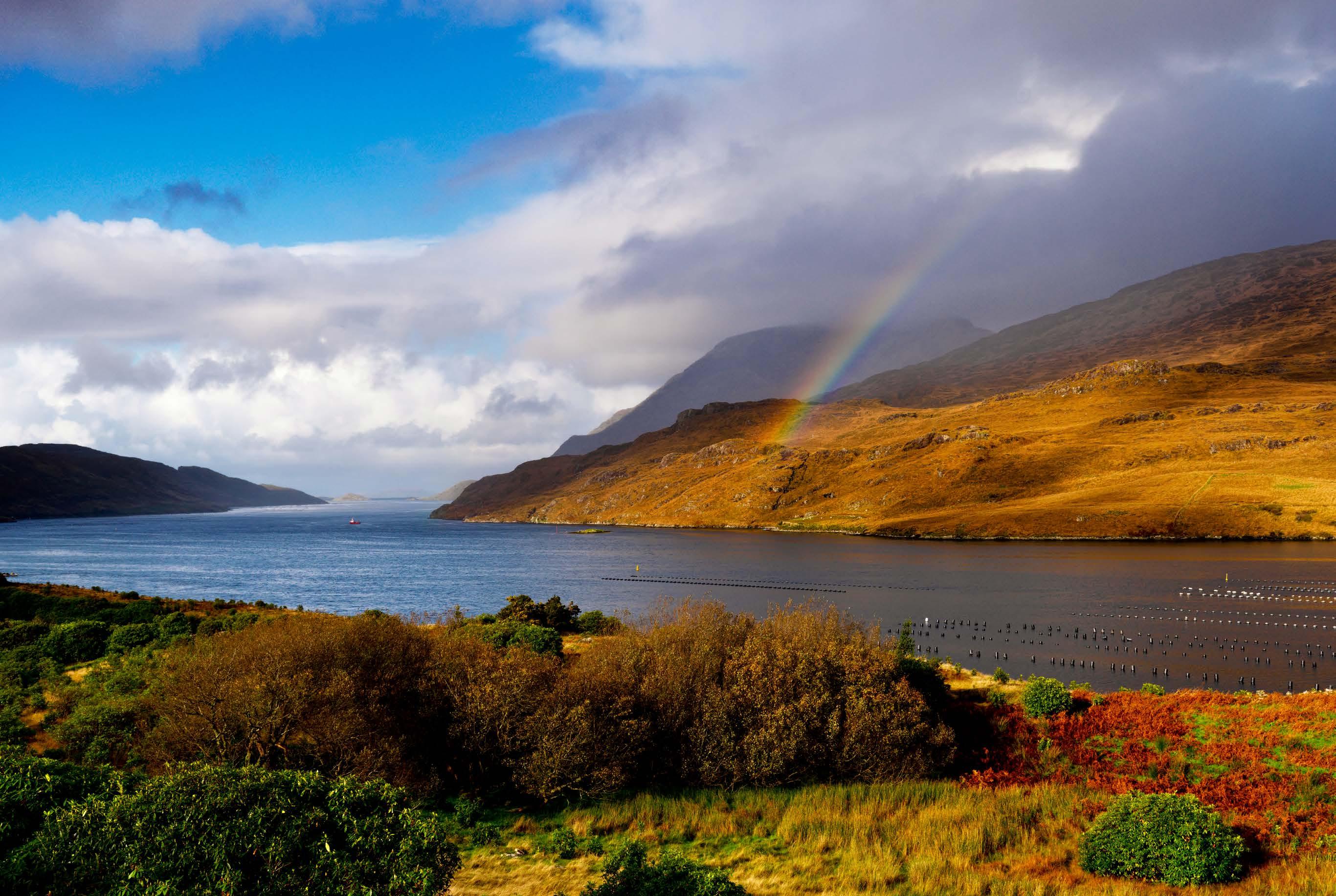
have of those trips are unforgettable. My mum passed away in 2020, and my dad is almost 90 now. Every so often, I’d go down to Galway for work and he’d come with me. I love everything about Galway and Connemara – the more remote, the better. I never get tired of that landscape. I could spend five days on my own out there with nobody around me and let the whole environment just wrap around me. My wife is from the Fanad peninsula in Donegal, close to Fanad Head Lighthouse. We’d go there regularly. This year, for Moving West, we went to Slieve League. I’d never been before and it was extraordinary looking out over those cliffs across the Atlantic. We also visited Belmullet and Achill in Co. Mayo and everywhere we pointed the camera, there was beauty. That remote area around Belmullet, heading down to Blacksod and around the Erris peninsula, the coastline just stretches on. We’ve been fortunate to explore the whole Wild Atlantic Way since the beginning of the series, from Donegal down to Shannon. There are parts of Kerry I’d like to explore further, especially around Slea Head in Dingle, and I’d love to see more of West Cork. We’ll head back to Donegal this summer to visit family and I’d like to explore Inishowen and maybe go as far as Malin Head.
I first came into this business through acting. It’s something I wanted to do as a kid – that or be a cameraman or pilot. I studied acting in Dublin and did that for a number of years. That gave me an appreciation for storytelling and watching what’s going on behind the camera. I was always dabbling with a camera –I convinced my parents to buy me one when I was 12. Later, while acting, I worked in a bookie’s to earn extra money to buy equipment and eventually moved into the business I’m in now.
screen. There’s a huge amount of logistics, planning and figuring things out as you go, dealing with the weather, locations, budgets, scheduling and technology all at the same time.
I’m a workaholic – I think a lot of people in this business are. It was a hobby that became my work, so I don’t do a huge amount outside of that. However, my girls will soon turn 11 and they are my world. My wife is an SNA at the local school, and she and I were married 10 years before the twins came along as a result of IVF so we’re very fortunate. The girls love Irish dancing, so we go to a lot of sessions and competitions together as a family and I enjoy that. I lose myself in what they’re doing. I also love to travel, and listen to a lot of podcasts.
I’m adopted and discovered my birth mother and family a few years ago. I now have three brothers and a sister who
all live in the UK, so I go over to them as much as I can, or they’ll visit me. We have a lovely relationship. Having grown up an only child, it’s wonderful to suddenly have these people in my life. Hearing my birth mother’s story was heart-wrenching – the way she and other unmarried mothers in 1975 were treated. She sadly passed away six months after I met her but I’m so glad to have gotten to know her. She and my adoptive mum actually share the same anniversary, the 28th of January, just two years apart. Life is full of coincidences and strange crossroads.
dundaraproductions.ie

What I love most about what I do is the fact that you start a project with nothing. It’s a blanket page and there’s a sense of discovery. That’s certainly the case with Moving West because we meet so many people who’ve moved to the West of Ireland, hear their stories and then try to find a way to share those stories. No two days are ever the same in this business. What might surprise people most about my work is how much of it is problemsolving, and the work that goes on before anything ever gets close to being on


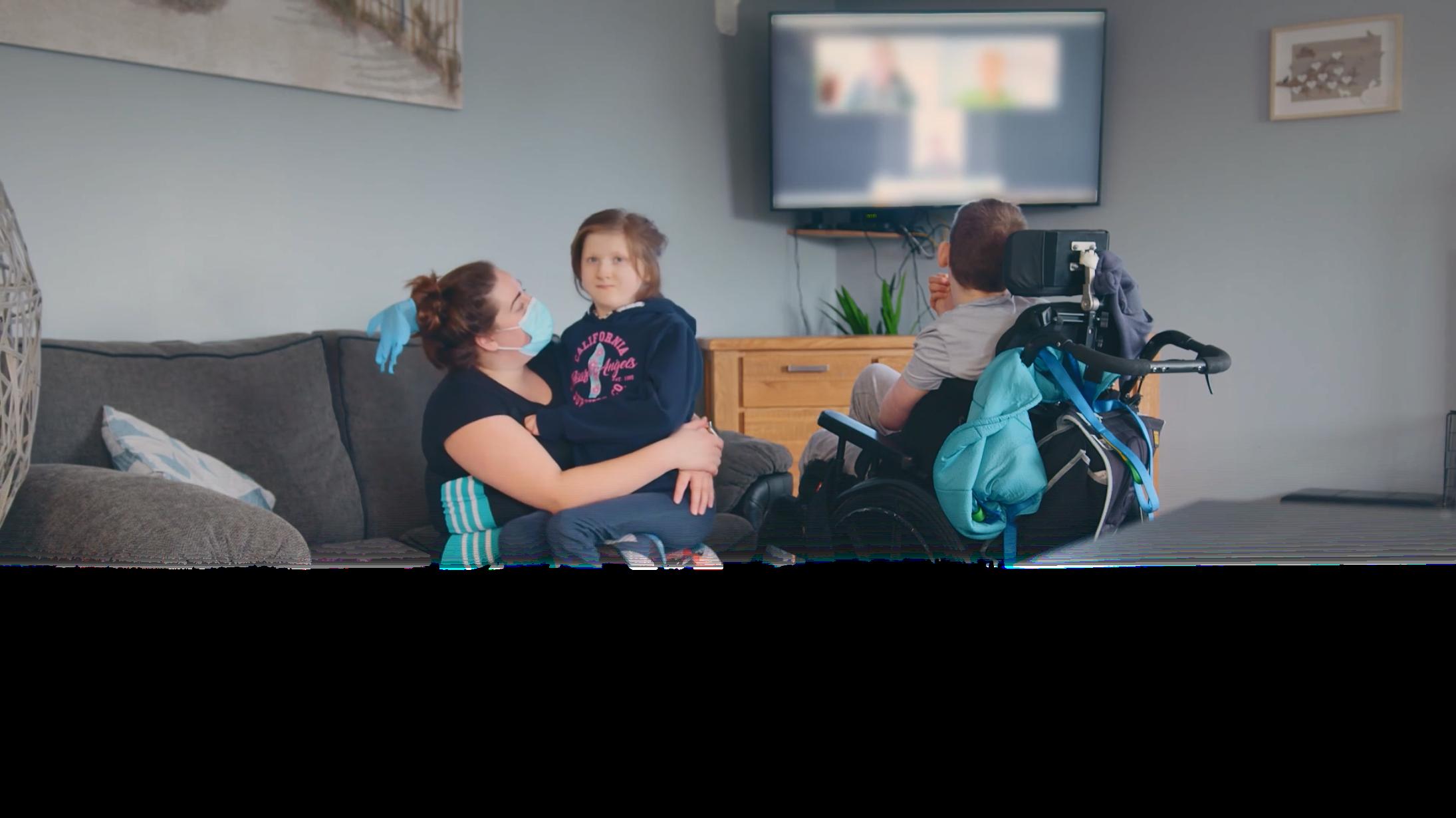
Did you know that there are currently 4000 families on the island of Ireland caring for a seriously sick child?
Cliona’s provide financial assistance to families caring for a seriously sick child to help with non-medical costs such as transportation, parking, accommodation, funeral costs etc.
The foundation was set up by Brendan and Terry Ring, following the death of their daughter Cliona, from an inoperable brain t u m o u r i n 2 0 0 6 , a g e d j u s t 1 5 . T h e y w i t n e s s e d firsthand the financial burden faced by families with seriously sick children. Since its launch, Cliona’s Foundation has supported over 1700 families across 31 counties, and they expect at least 200 families will apply for financial assistance in 2026 equating to €500,000 in family grants.

Childhood illness can place an immense emotional and financial burden on families
€15,300 p.a is the average additional cost that families dealing with these challenges incur
20% families required a loan from a financial institution to fund the additional expenses
52% families had to borrow from friends or family
78% Parents are forced to stop or reduce their paid work to care for their seriously sick child


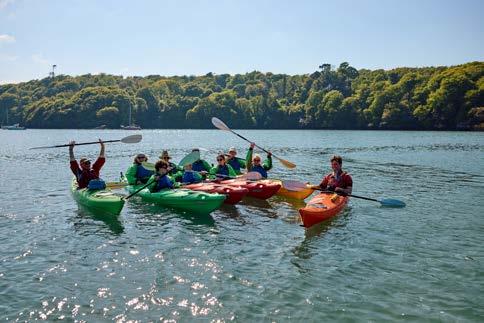
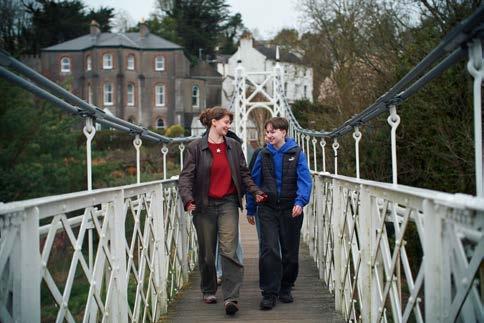
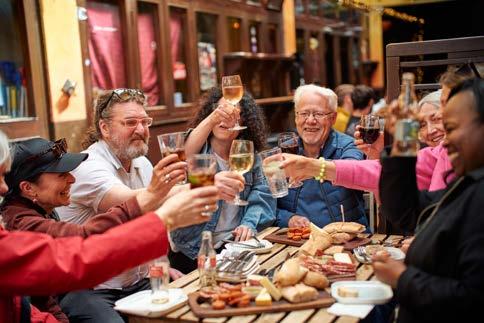
Rugged Atlantic coastlines, rolling green landscapes, exhilarating adventures, vibrant city streets, and food worth travelling for - Cork is shaped by big landscapes, big flavours, and even bigger characters.
‘Experience Cork’, a new tourism campaign by Visit Cork supported by Fáilte Ireland, invites visitors to discover the county through immersive experiences and tours that celebrate the warmth, wit and welcoming nature of Cork people, alongside the county’s renowned food scene, culture, adventure activities and spectacular natural beauty. Newly curated itineraries bring together activity operators, food experiences, cultural attractions and places to stay across the county, making it easy to plan a two- or three-day short break, or a longer escape. Visitors can indulge in a selection of premium experiences, from island hopping and kayaking to scenic cycling routes, gourmet food trails, heritage explorations and exhilarating wakeboarding.
Because experiencing Cork isn’t just about the postcard moments, it’s about diving right in. It’s getting out on the water and into the landscape, tasting the flavours and energy of the land and sea, and meeting the locals, natural storytellers, who are passionate about sharing their knowledge, stories, and love of where they live.
Whether guiding visitors through historic streets, introducing the traders of the famous 18th-century English Market, navigating island waters known since childhood, or leading adventures through forests and coastal trails, it is the warmth and authenticity of Cork’s people that bring each experience to life - leaving visitors with that unmistakable feeling that draws them back to Cork again and again.
Cork is also home to one of Ireland’s most celebrated food scenes, shaped by rich
farmland, abundant coastal waters and generations of passionate producers. For centuries, the region has been synonymous with exceptional ingredients, with Cork Harbour serving as the main gateway for Irish food exports in the 18th and 19th centuries.
Today, around 60% of Ireland’s artisan food producers are based in Cork, creating a vibrant food culture that champions local, seasonal and sustainable food. The county also boasts the highest concentration of Michelin-starred restaurants in Ireland, alongside independent cafes, historic and lively pubs, and a growing number of local breweries and distilleries.
Visitors can experience this rich food culture first-hand through guided food trails, brewery and distillery tours, and handson culinary experiences led by passionate local guides, producers and chefs who bring Cork’s food story to life. From exploring the English Market to visiting culinary towns like Kinsale, enjoying tastings in restaurants across the county, or discovering the craft behind local produce through demonstrations and masterclasses, these experiences connect visitors with the people behind the produce and offer an authentic insight into Cork’s farm-to-fork and sea-toplate traditions.
Beyond the table, Cork offers some of Ireland’s most spectacular landscapes and adventures to explore, from rugged Atlantic coastlines and pristine beaches to lush forests and hidden valleys, making the county a natural playground for adventure and relaxation alike. Visitors can explore sheltered bays by kayak, cycle greenways or scenic coastal roads, hike quiet woodland trails or journey to island communities steeped in maritime history. For visitors, it offers a distinct change of pace, shaped by the Atlantic coastline and a rich food culture rooted in the south.
Along the way, they’ll discover vibrant towns and villages alive with arts, crafts and traditional music, offering a rich blend of activity, culture and craic that is distinctively Cork.
Speaking at the launch of the campaign, Séamus Heaney, Head of Visit Cork, said: “Visitors today are looking for meaningful experiences, not just places to stay. The Experience Cork campaign showcases the exceptional depth, authenticity and warmth of the region, and the people who make it so special. Cork is a land of contrasts, bound by spirit and united by welcome.”
Josephine O’Driscoll of Fáilte Ireland added, “What makes Cork so special is the sheer breadth of experiences it offers every visitor. Home to Ireland’s highest concentration of Michelin recognised restaurants, and an incredible mix of cafés, food trucks and gastro pubs, our chefs champion local produce and support a vibrant calendar of festivals and markets that celebrate Cork’s rich culinary heritage and strong sense of community. Beyond the table, the county offers some of the most spectacular scenery in Ireland with endless opportunities for adventure or relaxation. From kayaking sheltered bays to discovering hidden villages, hiking scenic trails to enjoying local arts and traditional music. Cork blends its scenery, people and food in a way that is uniquely its own.”
Ultimately, what sets Cork apart is not just its dramatic landscapes, incredible food or rich heritage, but its people. Warm, generous and proud of where they’re from, they make every experience unique.
Visitors can explore curated itineraries, videos, photography and inspiration for planning their own experience at purecork.ie/ExperienceCork, helping them build memorable short breaks centred on the people, food and adventures that define the county. #ExperienceCork
www.corkcoco.ie


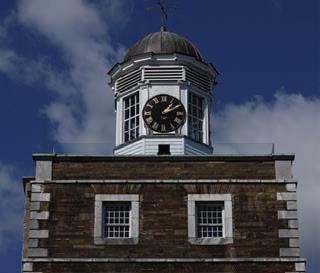














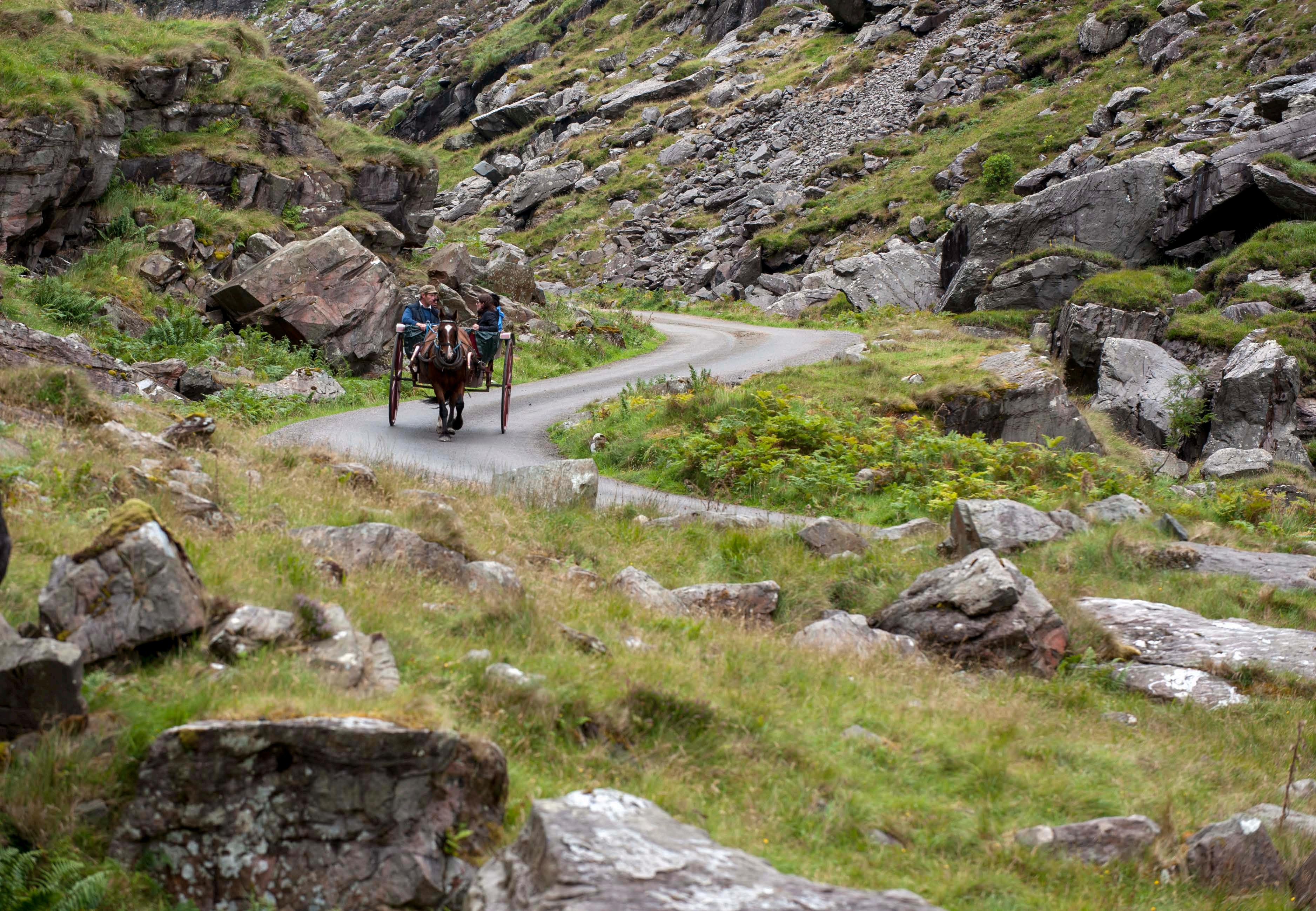
Here’s how to spend a day exploring the Ring of Kerry without a car.
Kate Demolder is a Dublin-based freelance journalist. Her work features in multiple publications and she was the 2022 recipient of the Arts Journalism & Criticism Journalist of the Year Award at the Irish Journalism Awards.
Spend even half an hour on the Ring of Kerry and you’ll quickly understand why this is one of Ireland’s most celebrated drives. Wild, beautiful and packed with jaw-dropping scenery, the 179km route around the Iveragh Peninsula also has plenty of historical sites and picturesque villages dotted between rocky coastlines and pretty beaches. A great way to explore it is by a guided coach tour, where the guide comes with deep insider knowledge, local understanding and a day’s worth of entertaining anecdotes – while you relax in the comfort of a cushioned seat. Plus, there’s a lot to be said for leaving it up to someone who knows the roads — as well as where the roaming sheep are likely to cross at a moment’s notice.
All tours of the Ring (you won’t hear it referred to any other way, the ‘of Kerry’ considered superfluous) dedicate between four and six hours to the circuit, so they all start before noon. You won’t need a packed lunch but should have a bit of
cash in your pocket (no more than €20 is needed) as some of the stops along the way don’t take cards.
One of the best-known operators is Wild Kerry Day Tours (10.30am-5pm), a family-run affair with a popular Ring tour starting from its depot on Ross Road, a 10-minute walk south of Killarney town centre along Muckross Road. Alternatively, you can arrange for a hotel pick up – but you’ll need to specify it when you make the booking.
You’re about to set off on a whole-day tour, so a good coffee might be in order to kickstart your day. A couple of minutes’ walk from the Wild Kerry Day Tours depot is Rí-Rá, which serves terrific coffee (and a tasty iced latte for those warmer summer days) which you can have with one of their excellent chocolate and hazelnut pastries.
Your first stop, about thirty minutes into the drive, is the Kerry Bog Village, an open-air museum dedicated to showcasing
how people of the region lived and worked during the late 19th century. Among the period thatched cottages and Famine-era farm equipment you’ll also come across roaming goats and friendly wolfhounds –a nice way to kick off the tour.
As one of the only museums of its kind in Europe, this is a history buff’s dream –and if that isn’t enough of an enticement then the entry fee entitles you to a discount on an excellent Irish coffee at the on-site Red Fox Inn
After your first Kerry Irish coffee, you’ll follow the River Laune towards Kells and the award-winning Kells Sheepdogs at Caitin’s Pub. Fresh from the awards circuit, trainer, farmer and local legend Tom O’Sullivan will use nothing but a crook, a whistle and a set of eight commands to guide his dutiful Border Collies to move his flock around a mountainous field filled with deep clear pools and mossy woods with bluebells.
The whole show is mightily impressive and you’d need a heart of stone not to fall in love with the dogs.
Back on the bus and it’s next stop Cahersiveen, right on Valentia Harbour in the shadows of Bentee Mountain. The village is steeped in history: it’s best known as the birthplace of the Liberator, Daniel O’Connell, but it’s also where the first shots of the Fenian uprising of 1867 were fired – stories that the guide will bring to life in colourful detail.
About half an hour beyond Cahirsiveen, the scenery really ramps up. The road from Waterville to Caherdaniel is one of the most beautiful stretches in the country, and you’ll stop at Coomakista Pass for a photo op before climbing over the ridge of Beenarourke. (Waterville was home for a time to Charlie Chaplin, and now hosts two world-class golf courses in Waterville Golf Links and the newer Hogs Head). On a clear day there are some breathtaking views, from the islands of Scarriff and Deenish to Dursey and, beyond Kenmare Bay, the hills of the Beara Peninsula.
There’s another stop by Ballinskelligs Bay, which according to the 11th century Book of Invasions (Lebor Gabála Érenn) is where Ireland’s first inhabitants came ashore, led by the mythical Cessair, daughter of Noah (yes, the same Noah of the Biblical Flood).
All that mythology and scenery is enough to build up an appetite, and that is well taken care of at the Scarriff Inn, about 9km beyond Waterville. The bus stops for an hour – enough time for you to enjoy hearty offerings of hot Irish stew, fresh fish and chips, seafood chowder and myriad vegetarian options, all with views of Kenmare and Bantry Bay that have earned the inn the tagline of ‘best view in Ireland.’ And if all that scenery doesn’t inspire, the chat in the bar is always excellent, with locals swapping stories of recent GAA matches and gossip they heard along the way.
You’ll need to tear yourself away, though, as the bus needs to move on to complete the rest of the loop. You’ll pass by the entrance to Daniel O’Connell’s ancestral home, Derrynane House, on the edge of Caherdaniel, before the road moves inland until you get to the village of Sneem. Its Irish name, An tSnaidhm, means ‘the knot,’ a reference to the river that twists its way through the heart of
the village into nearby Kenmare Bay. The Ring of Kerry is all about stunning vistas, but two of them are still ahead. At Moll’s Gap you’re at the summit of the pass that will bring you back toward Killarney – and the views of the mountains and lakes are majestic. The spot gets its name from Moll Kissane, the landlady of a síbín said to have supplied poitín to those building the Killarneyto-Kenmare road during the 1820s. That síbín is long gone, but instead you’ll find a branch of Avoca Handweavers here, making it the craft shop with the most idyllic location in Ireland.
From here, the road gets narrower as it twists its way through the mountains. Five kilometres further on and you’ll reach one of the highlights of the Ring at Ladies View. This panoramic point has views over the Upper Lake and the Purple Mountain and is named after Queen Victoria’s ladies-in-waiting, who enjoyed it during Victoria’s 1861 visit. On a clear day, locals claim you can see as far as America.
Killarney is only 17km from here; if you visit in early summer, the likelihood is you’ll be dropped off in the middle of town instead of where you were collected (school traffic dictates who is allowed to drive certain roads at certain times).
After a day on the Ring of Kerry, an evening sampling Killarney’s culinary treats is just the ticket. Just across from
the excellent Killarney House and Gardens (well worth a visit if you have an hour or so), Argentine food market Tango Street Food serves up excellent vegan empanadas, local honey and nduja sausage pizza and the best asado for miles. Alternatively, for a menu jam-packed with locally sourced seafood dishes, Kitty O’Se’s Seafood and Grill Restaurant on College Street won’t disappoint –think prawn Thai red curry and lobster drenched in garlic butter. But don’t worry if seafood and meat are not to your taste, they also have a strong vegetarian and vegan menu.
Finally, Michelin-starred the Peregrine, in the Killarney Park Hotel, is worth booking ahead for. The owners, the Treacy family, completely renovated the dining space from top to bottom, giving the new digs a Parisienne feel. That feel peppers the menu, too, with langoustine, lamb with hazelnut peas and mint and Irish coffee flambées that feel straight off the Champs-Élysées.
• Ring of Kerry
• Carrauntoohil Hike
• Killarney
National Park
• Torc Waterfall
• Gap of Dunloe
• Valentia Island
• Slea Head Drive
• Skellig Michael
• Lakes of Killarney
• Louis Mulcahy Pottery
• Bricin Restaurant & Boxty House
• The Porterhouse
• The Fish Box
• Out Of The Blue
• 35 Kenmare St.
• Treyvaud’s
• The Lime Tree
• Cronin’s
• Murphy Brownes
• Dingle
• Kenmare
• Killarney
• Cahersiveen
• Sneem
• Killorglin
• Portmagee
• Waterville
• Glenbeigh
• Parknasilla Resort & Spa
• Sheen Falls Lodge
• Europe Hotel & Spa
• The Killarney Park
• Ard Na Sidhe House
• Park Hotel Kenmare
• The Lake Hotel
• Muckross Park Hotel
• Ballygarry Estate
• J.M. Reidy’s Foxy John’s Dick Mack’s
• PF McCarthy’s
• The South Pole Inn
• The Laurels
• Tig Bhric
• Courtney’s Bar
• D. O’Shea’s Bar
• Murphy’s Brandon
• The Shire Bar
• Páidí Ó Sé’s Pub
• Coumeenoole Beach
• Ballybunion Beach
• Ballyheigue Beach
• Banna Strand
• Castlegregory Beach
• Ventry Beach
• Derrynane Beach
• Rossbeigh Strand
• Inch Beach










• Spike Island
• Blarney Castle & the Blarney Stone
• Kinsale Harbour
• Charles Fort
• Mizen Head
• Gougane Barra
• Beara Peninsula
• Dursey Island Cable Car
• Fota Wildlife Park
• Greenes Restaurant
• The Bulman (Kinsale)
• Bastion (Kinsale)
• Market Lane (Cork City)
• Elbow Lane & Smoke House
• Goldie
• Cornstore Cork
• Dede at Customs House (Baltimore)
• Pilgrim’s (Rosscarbery)
• Cork City
• Kinsale
• Cobh
• Clonakilty
• Skibbereen
• Bantry
• Baltimore
• Glengarriff
• Youghal
• The Shelbourne (Cork City)
• Sin É
• The Hi-B Bar
• The Oval
• The Spaniard (Kinsale)
• Coughlan’s
• Dick Mack’s (Kinsale sister vibe)
• West Cork Distillers (tour)
• Jameson Distillery Midleton
• Castlemartyr Resort
• Fota Island Resort
• The Kingsley Hotel
• Eccles Hotel
• The River Lee Hotel
• Inchydoney Lodge & Spa
• The Cork International)
• Ballymaloe House
• Hayfield Manor
• Inchydoney Beach
• Barleycove
• Garretstown
• Owenahincha
• Red Strand
• Tragumna
• Silver Strand (Ballycotton)
• Garryvoe Beach

• Kylemore Abbey
• Ashford Castle
• Connemara National Park
• Sky Road (Clifden)
• Aran Islands
• Salthill Prom
• Killary Fjord
• Dunguaire Castle
• Galway Cathedral
• Galway City
• Clifden
• Westport (border trip)
• Roundstone
• Oughterard
• Kinvara
• Spiddal
• Leenane
• Barna
• Aniar
• Ard Bia
• Kai
• O’Grady’s (Barna)
• Moran’s Oyster Cottage
• Mitchell’s (Clifden)
• Veldon’s (Letterfrack)
• Brasserie on the corner
• Dela Restaurant
• Tigh Neachtain
• The Crane Bar
• The Quays
• O’Connell’s
• Monroe’s
• Lowry’s (Clifden)
• The Front Door
• Keogh’s (Kinvara)
• O Connors
Famous Pub
• Ashford Castle
• Ballynahinch Castle
• Renvyle House
• Delphi Lodge
• The Twelve (Barna)
• Abbeyglen Castle (Clifden)
• Glenlo Abbey
• The G Hotel
• The Hawthorn
• Dog’s Bay
• Grattan Beach
• Gurteen Bay
• Silver Strand (Galway)
• Salthill
• Lettergesh Beach
• Glassilaun Beach
• Ballyloughane Beach
• Ladies Beach
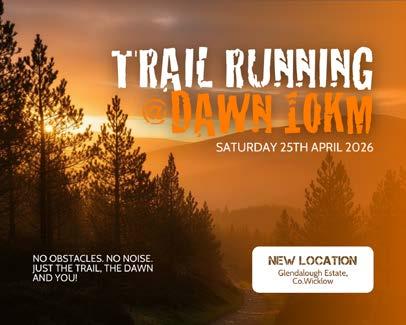
Ireland’s best known adventure challenge brand HELL & BACK, which has been delivering large-scale outdoor obstacle events across Ireland for over a decade, is stepping in an exciting new direction this spring with the launch of an entirely new concept, Trail Running @ Dawn.
This fresh addition to the HELL & BACK calendar offers participants a completely different experience to the company’s well-known obstacle course races. There will be no cargo nets, no mud pits and no timing chips. Instead, the focus is on pure, uninterrupted trail running in one of Ireland’s most iconic outdoor locations.
Taking place on Saturday 25th April at 5.30 am, the inaugural event will be held on the Glendalough Estate, Co. Wicklow and will invite runners to take on a 10km sunrise route through forest paths, mountain trails and natural terrain.
Designed and built by the expert HELL & BACK team, the event is specifically for those who want an honest trail-running experience without artificial challenges.
“This is something really different for us and we’re incredibly excited about it.” said Michael McElligott, Commercial Director with HELL & BACK “For years HELL & BACK has been known for obstacles and big challenge events but we also know there is a
huge community of people who simply love to run in nature. Trail Running @Dawn is about celebrating that. It’s running in its purest form, in an incredible location, at a truly special time of day.”
Glendalough in a Whole New Light
Set against the backdrop of Scarr Mountain and the Wicklow Mountain National Park, participants will begin in the quiet of early morning as the sky shifts from darkness to gold, with mist rising from the valleys and ancient trees lining the trails. Ideal for club runners, regular trail runners or anyone who enjoys the outdoors, the 10km course will be 100% trail and track featuring forest paths, natural ground and varied terrain. The event offers an authentic experience
Wicklow’s
Continuing its long tradition of showcasing the very best of Wicklow’s landscape and outdoor adventure offerings, HELL & BACK is proud to bring this new experience to the heart of the county.
“Wicklow is one of the most beautiful counties in Ireland and Glendalough Estate is one of its most stunning locations. We are absolutely thrilled to be bringing this new concept there” says McElligott. “To run those trails at dawn before the rest of the world wakes up is going to be a really memorable experience. We think it will appeal to a whole new audience as well as many of our existing participants.”
Trail Running @ Dawn takes place on
Looking ahead to the summer, HELL & BACK returns to its much-loved immersive obstacle course format at its homebase in the stunning grounds of Killruddery Estate, Bray. Nestled between the mountains and the sea, the historic estate has become synonymous with HELL & BACK events over the years.
6th June: HELL & BACK Adult 13km, Family 8km and Teen 8km
7th June: HELL & BACK Junior Splash Attack, 4km adventure created especially for children aged 8 to 12. Expect water zones, fun obstacles and a lively festival atmosphere.
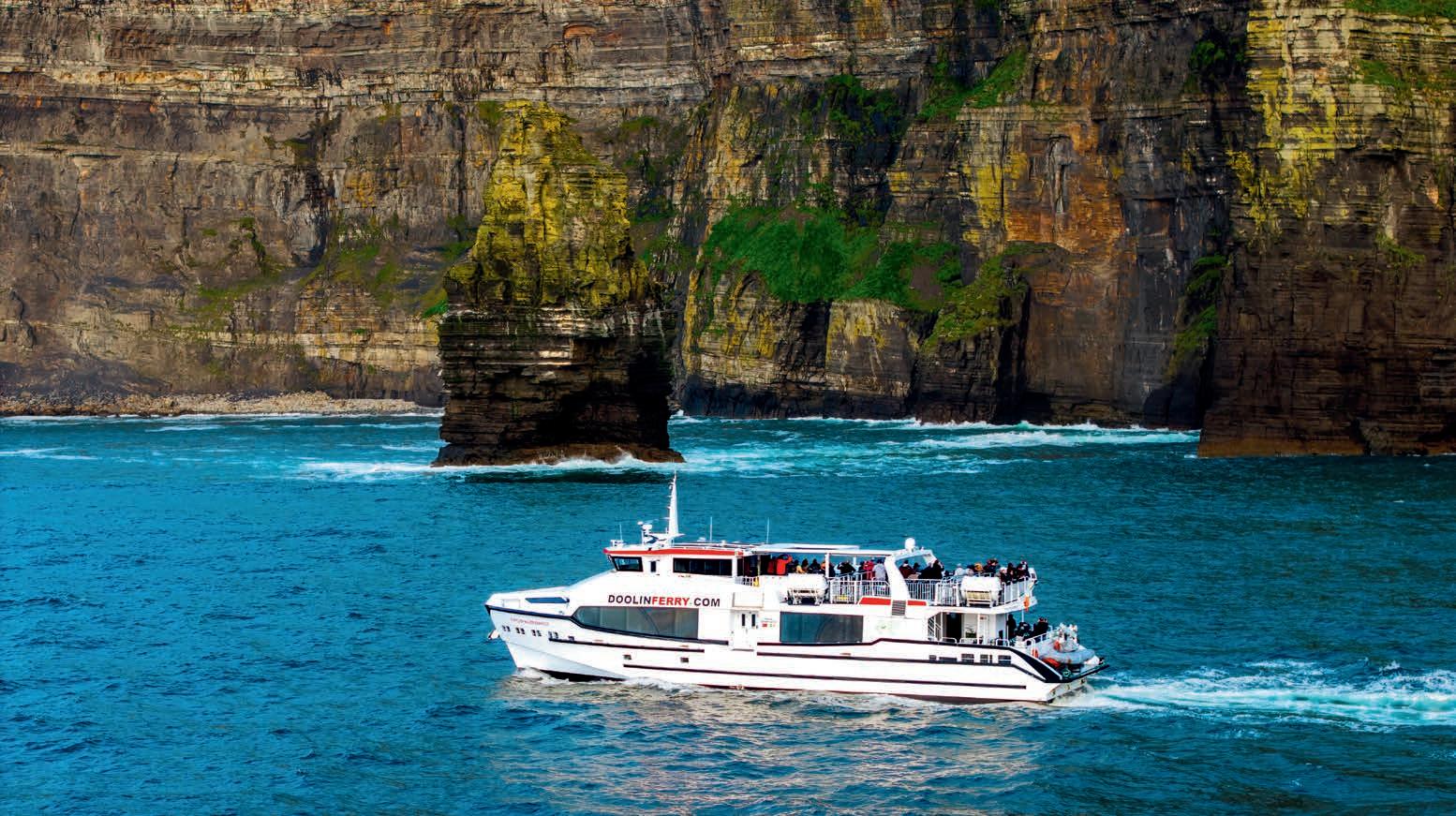





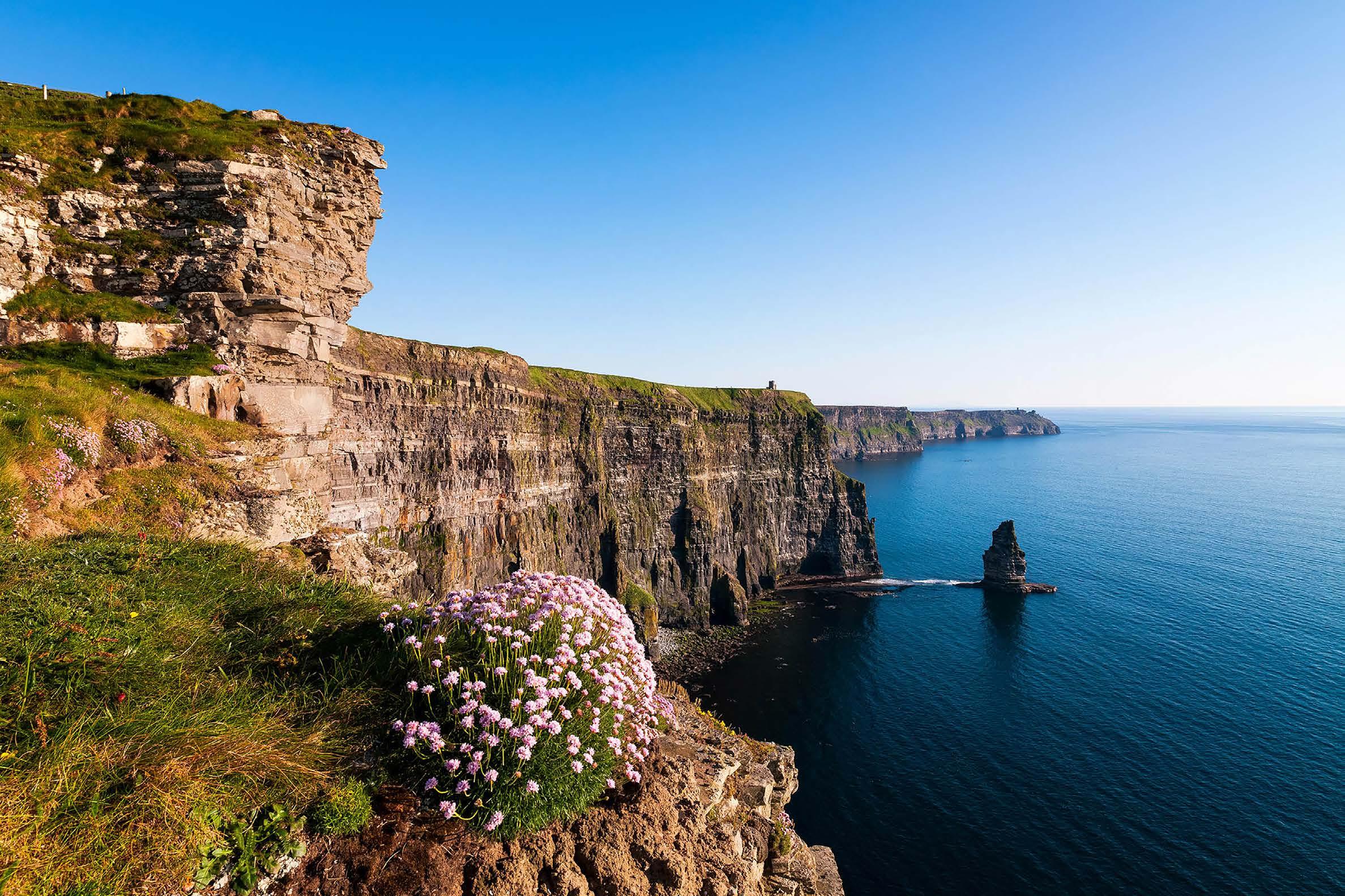
• Aillwee Cave
• Cliffs of Moher
• The Burren
• Doolin Cave
• Ennis
• Doolin
• Lahinch
• Kilkee
• Poulnabrone Dolmen
• Loop Head Lighthouse
• Fanore Beach Walk
• Lahinch Surfing
• Father Ted’s House (Glanquin)
• Aran Islands (from Doolin)
• Bunratty Castle & Folk Park
• Kilkee Cliff Walk
• Homestead Cottage
• Gregans Castle Dining Room
• The Roadside Tavern (Lisdoonvarna)
• Gus O’Connor’s (Doolin)
• Vaughan’s (Liscannor)
• Randaddy’s (Lahinch)
• Monk’s (Ballyvaughan)
• Lisdoonvarna
• Kilrush
• Spanish Point
• Ballyvaughan
• Shannon
• Miltown Malbay
• Killaloe
• Ennistymon
• Dromoland Castle
• The Falls Hotel
• Gregans Castle Hotel
• Armada Hotel
• Hotel Doolin
• Vaughan Lodge (Lahinch)
• Old Ground Hotel (Ennis)
• The Doolin Inn
• The Lakeside Hotel & Leisure Centre
• Hotel Woodstock
• Durty Nellys Bunratty
• McGann’s (Doolin)
• Frawley’s (Lahinch)
• Pot Duggans
• Knox’s (Kilrush)
• The Marine Bar (Spanish Point)
• Gus O’Connor’s
• Lahinch Beach
• Fanore Beach
• Spanish Point
• Kilkee Beach
• White Strand (Miltown Malbay)
• Doughmore Beach (Doonbeg)
Cave Tours, Birds of Prey & Cheesemaking –Ballyvaughan, Co. Clare
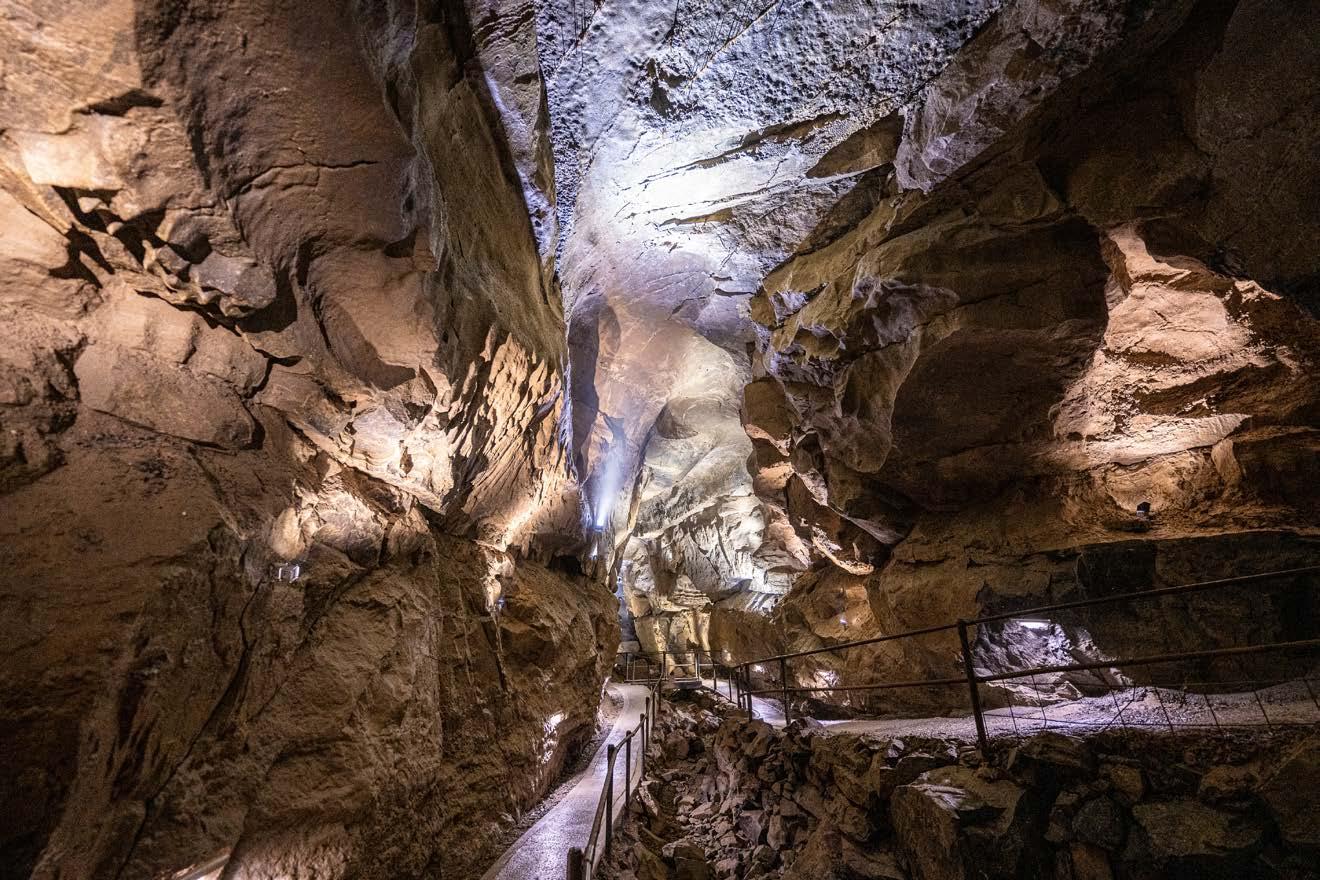
Discover a full day of wonder at Aillwee Burren Experience. Go underground on a thrilling 45-minute guided cave tour, where you’ll explore lit chambers filled with ancient fossils, curious formations, and captivating stories beneath the Burren.
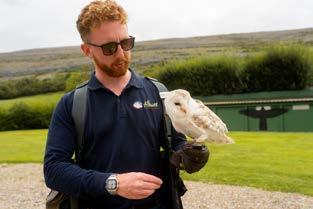
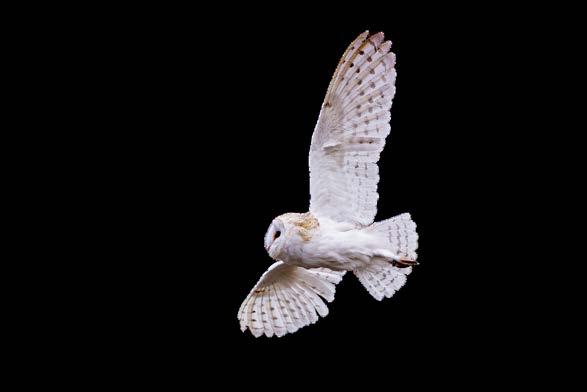
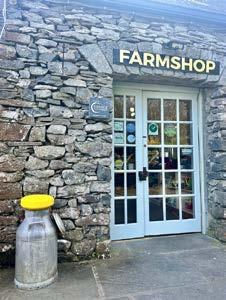
Above ground, get up close to our majestic Birds of Prey with daily flying displays, or book a private Hawk Walk for an unforgettable falconry experience. Step into our Farmshop, where you’ll watch our award-winning Burren Gold Cheese being made the traditional way.
Taste a range of cheeses, browse local artisan foods, and don’t miss our creamy, homemade fudge—sampling is encouraged! Enjoy a relaxing hazel woodland walk, discovering fascinating flora, fauna, and geology on a self-guided biodiversity trail. Set on a terraced hillside with sweeping views across Galway Bay, Aillwee is a
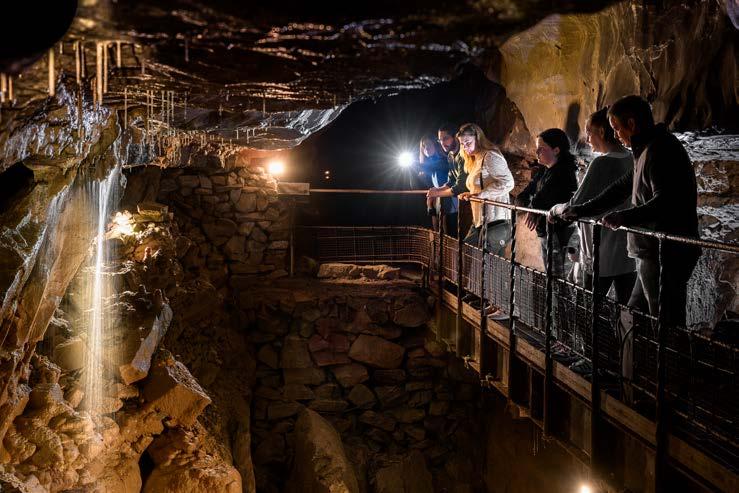
perfect stop for adventurers, foodies, and explorers alike. Just minutes from Lisdoonvarna, Doolin, and the Cliffs of Moher —Aillwee makes discovering the Burren easier than ever.
Throughout 2026, Aillwee Cave proudly
celebrates 50 years of Fáilte. Visitors are invited to join Aillwee Burren Experience in marking this momentous milestone — celebrating half a century of discovery, hospitality, and unforgettable experiences in the heart of the Burren.

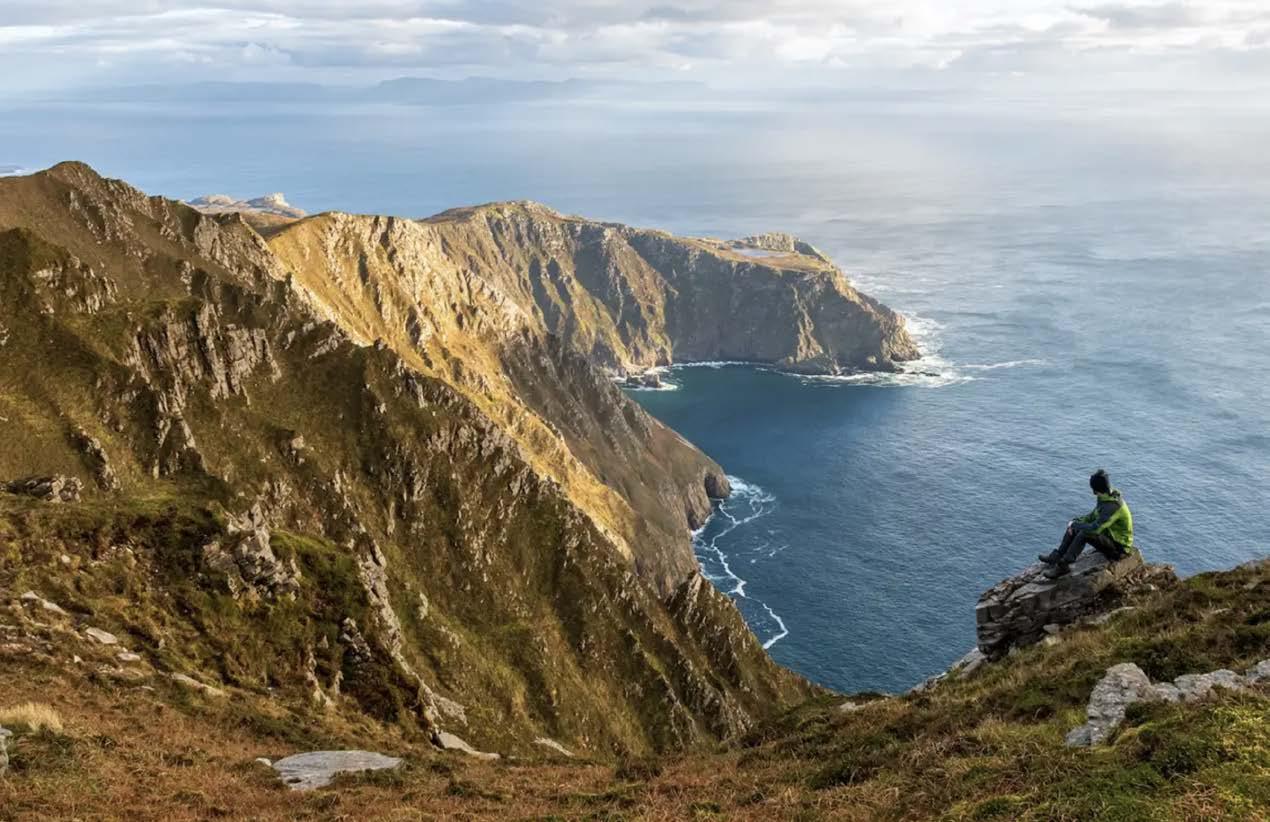
If you want to plan your own walking holiday in Donegal, here are some of the best places to hike, sleep and eat in the county. Join us on our walking and hiking adventure in Donegal.
Sliabh Liag (Slieve League)
Sliabh Liag Pilgrim Path 3.2km, linear, strenuous
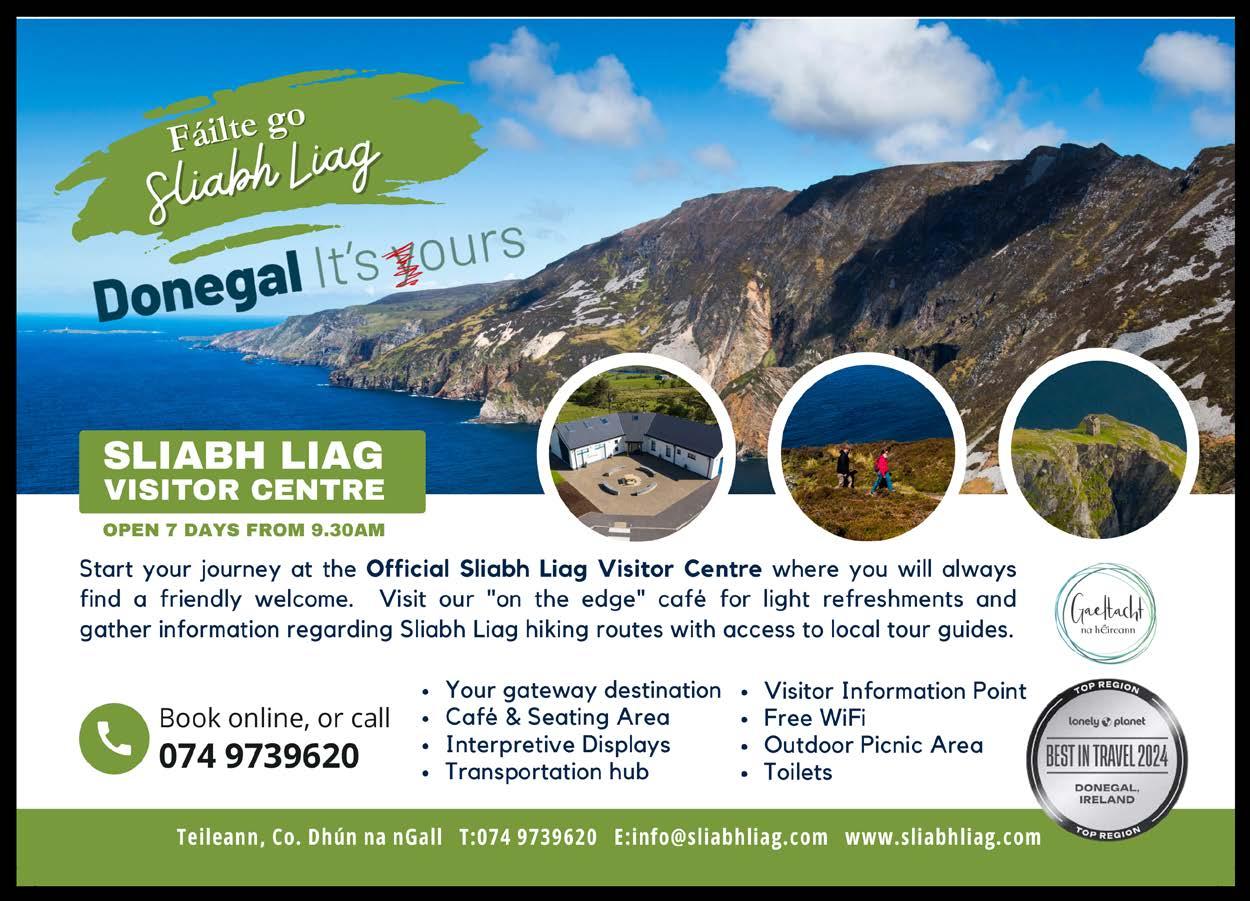
See Ireland’s famous sea cliffs from a different angle on the Sliabh Liag Pilgrim Path. This route takes you up and along a U-shaped valley between Leargadachtan Mountain and the sea cliffs themselves, on a trail that’s fairly steep but well worth the effort. You’ll walk on a combination of green road, track and rough paths, and get cracking views out over the cliffs along the way, as well as a bird’s eye view of the waterfalls that cascade down the edge of the rock into the Atlantic.
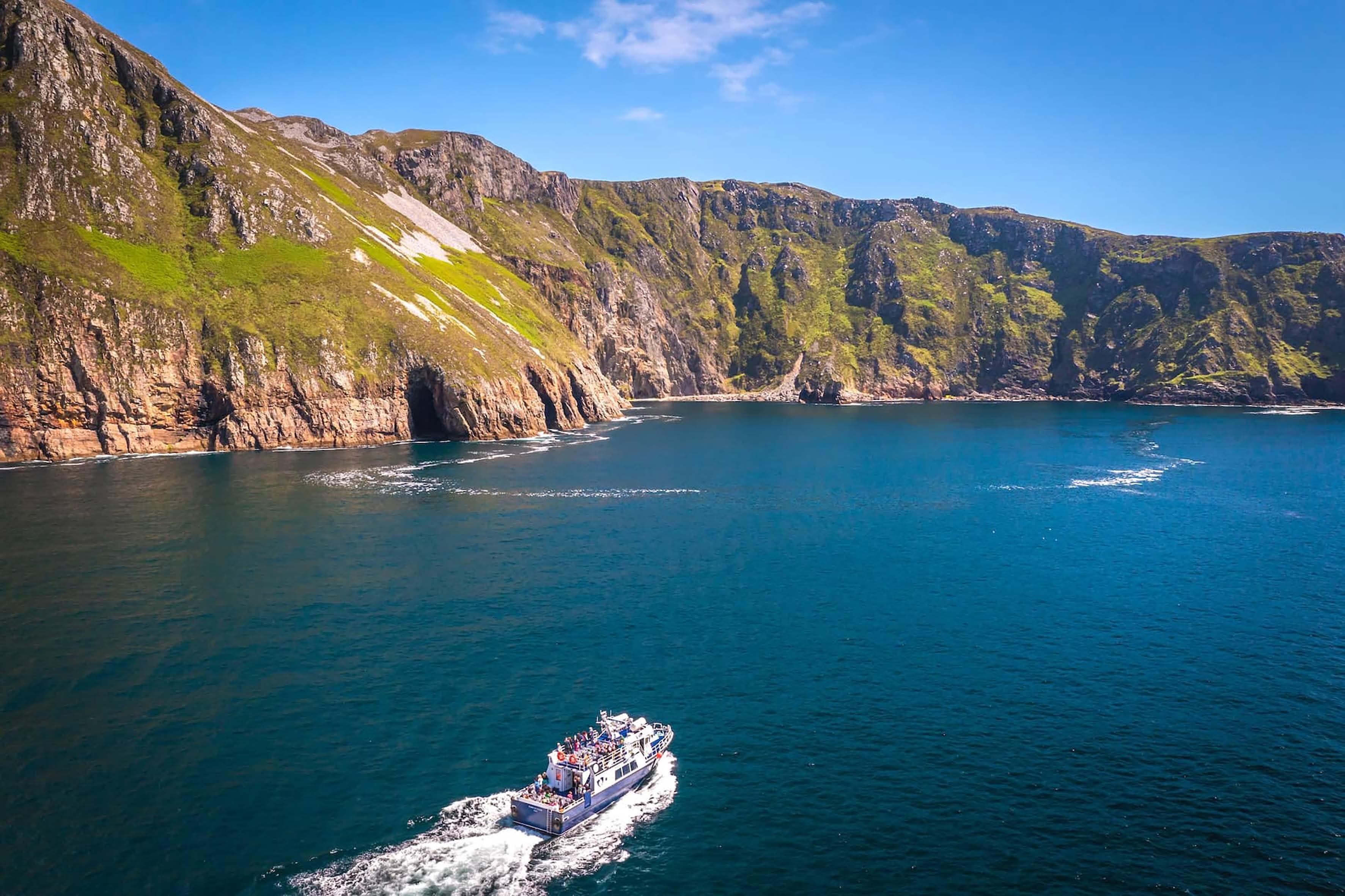
Fancy something a little shorter? Pop into the Sliabh Liag Visitor Centre, then park at the Ranger Station, where you can walk the 2km path up to the viewing platforms. Or see the cliffs from a different perspective entirely on a trip with Sliabh Liag Boat Tours, where you’ll look up at them from the water.
Gleann Cholm Cille (Glencolmcille) – Tower Loop
7.6km, loop, moderate
Gleann Cholm Cille (Glencolmcille) is just up the road from Sliabh Liag and there are a few walking trails around the area, from shorter loops like Drum Loop to the epic, 65km Slí Cholmcille route. If you’re looking for another hike in the Sliabh Liag region then the Glencolmcille Tower Loop is a great shout, taking in the green, craggy coastline and the wild Atlantic waves. The looped trail takes you up the coastal mountains for views over the water, with one linear section that takes you out to the old signal tower, right on top of the cliffs, before you rejoin the circuit. It’s well worth the (brief) detour.
When you’ve finished your hike, you don’t need to venture far for refreshments – the Brew In Thru van is down by the River Glen, less than a 5-minute drive from the Sliabh Liag Visitor Centre. You can get barista coffee and treats like homemade scones or energy balls, then sit out on the tables overlooking the water. If you’re in the mood for something heartier, the nearby Rusty Mackerel is a great spot for seafood, like mussels cooked in Guinness or giant portions of fish and chips. They also have accommodation out the back of the pub, with a residents’ garden that has views of the nearby mountains. And for a spot of culture,
head to Glencolmcille Folk Village, with traditional clachán cottages and a tearoom for homemade apple tart and a welldeserved cuppa.
3.5km, loop, moderate
For a relatively short loop, the Rougey Cliff Walk packs in a good variety of scenery, from Bundoran’s Victorian seafront to the sand dunes overlooking the Donegal coastline. Follow the trail from the Promenade and you’ll soon be up on the headland, where you can watch the surfers at Tullan Strand or the cliff jumpers leaping into the water at Rougey Rock. Be sure to stop at the Wishing Chair, a natural stone seat set in the rock, which overlooks the cliff arch known as the Fairy Bridges – catch it at the right time and you might see the waves crashing up through the blow holes.
This walk takes you back along Main Street, where there are plenty of places to grab a bite. McGarrigles Restaurant does great comfort food like chowder or a Sunday roast and you can get fresh local oysters or Scraggy Bay battered cod in Maddens Bridge Bar. For something lighter, Buoys and Gulls do great coffee and a buttery cheese toastie, and Foam is a favourite among surfers looking for a flat white and jackfruit burrito.
The cliff walk also passes right by the golf course at the Great Northern Hotel, which has great views out over the water and rooms overlooking the sea. In the Allingham Arms Hotel on Main Street, you can eat in the more formal Oceans Restaurant or get casual food in the bar and there’s often live country music too.
(Burtonport)
Lúb Chroicheach Mhór (Burtonport Loops)
4.6km, loop, easy
Following the route of the old train line from Ailt an Chorráin (Burtonport) to Letterkenny, the Lúb Chroicheach Mhór (Burtonport Loops) walk passes through thick woodland and under old stone tunnels, as well as some other historic remnants of the old railway. You’ll also go past Loch Waskal, where you’ll get lovely views of the water and the nearby islands. And if that
gives you the urge to explore the coast, you can take a ferry out to Árainn Mhór (Arranmore) from the harbour in Burtonport, where the trail begins.
Where to eat and stay in Burtonport
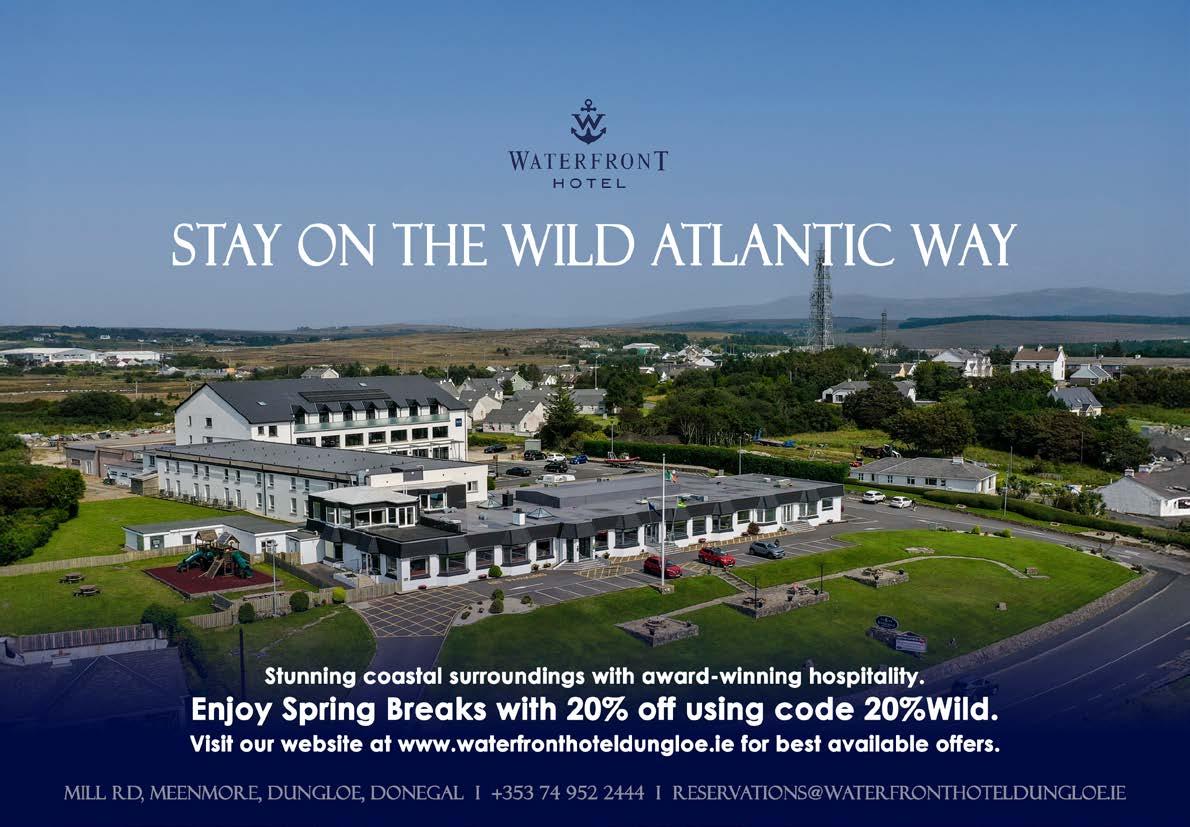
Finish up your walk at the Lobster Pot, just a few minutes from the start of the trail. Unsurprisingly, it’s a great spot for local lobster, as well as the local catch of the day, like brill or plaice. The Wheelhouse Café is a 15-minute walk inland, where you can sit overlooking Lough Leigh with soup and a sandwich. An Clochán Liath (Dungloe) is a 10-minute drive down the coast and you can stay in the Waterfront Hotel to make a break, out of it.
Dunfanaghy
Ards Forest Park Binngorm Trail
3.9km, loop, strenuous
There are several trails within the 480-hectare Ards Forest Park, from short, easy walks through the sand dunes to more strenuous routes that take you around the entire forest. A good middle ground option is the Binngorm Trail, a loop that takes you through the woodland, past fairy forts and finally out towards the sea. It can be a little strenuous at times but you’ll get some cracking views of Sheephaven Bay along the way.
Where to eat and stay in Dunfanaghy
If you’re in dire need of a latte and a slice of cake after your hike, Ards Coffee Tree is right in the forest park, serving up coffee, sweet treats and ice cream. Otherwise, the seaside town of Dunfanaghy is a 7-minute drive away and has loads of places to eat. The café at Muck ‘n’ Muffins is above the pottery shop, where you can get slices of homemade quiche and paninis, with some gluten free bakes as well. Just up the road, The Rusty Oven is a pizzeria in the courtyard of Patsy Dan’s Bar, with sourdough pizzas topped with things like caramelised pear and walnut or truffle oil and mascarpone.
Arnold’s Hotel has been on the go for four generations and is right in the middle of the village, with a cocktail bar and a restaurant that does fun themed nights select Fridays throughout the year. Meanwhile, Breac House is a slick, Scandi-style guesthouse on the outskirts of town, with views over the water from the full-length windows or private terraces.
Croithlí (Crolly)
Siúlóid Loch na Caillí 10.1km, loop, moderate
There are two looped walks around Croithlí (Crolly), which share the same route for the most part – the Siúlóid Loch na Caillí extends a little beyond the Clocháin Bhig Loop Walk (6.3km), which is a good option if you have less time. Both walks kick off in the village itself, before heading out onto the bog road towards Loch na Cailligh, where you get unspoilt views of the surrounding countryside. If you find yourself with time to spare towards the end, you can walk 20 minutes along the river at Lala Harden’s Walk, before looping back to rejoin the trail.
In the nearby village of Meenaleck, Leo’s Tavern is known for its nightly live music, but also its musical heritage – it’s the family home of Enya and Moya Brennan. You can get classic pub grub like scampi and burgers with chunky chips and they also have glamping pods next door if you want to spend the night.
Inishowen
Inishowen Head Loop 8.3km, loop, moderate
For those quintessentially wild, rugged Donegal landscapes, you can’t beat Inishowen. And the Inishowen Head Loop leads you through some of the most scenic stretches of the peninsula, along laneways and bog roads to the top of the cliffs, where you can see
all the way out to Scotland on a clear day. The trail starts by the picturesque Stroove Lighthouse (you can take a dip at the beach there, too) and takes you past an old WWII watchtower, before you get to the higher points with those killer ocean views.
Drive down the coast for about 10-minutes and you’ll reach Kealys Seafood Bar, where you can tuck into locally caught, buttery crab claws right by the water. Redcastle is a further 10 minutes down the road, with places like The Boathouse for plates of Asian-style crispy squid, monkfish and mussel coconut curry and catch of the day. Stay at the Redcastle Oceanfront, Golf and Spa Hotel, with a location so close to the water you could almost skim stones from the balcony.
Bluestack Way 64.1km, linear, moderate
Sometimes, you want a long, challenging trek that feels like a proper adventure. And while the terrain of the Bluestack Way isn’t technically difficult, it is long – 64.1km one way, in fact. Of course, you don’t have to walk the whole thing – you can just loop back on yourself to explore smaller sections. But if you’re up to the challenge, take in some spectacular scenery on the way from Donegal town up to Ardara. The trail takes you along the foothills of the bulbous Bluestack Mountains, past the shores of Lough Eske just outside Donegal town, which is a great spot for a shorter walk if that’s more your speed. Otherwise, continue up along the edge of the Owenroe River and out towards Glenties before reaching Ardara – the full route takes about three days to complete.
Whether you’re tackling the whole thing or just shorter sections, there are plenty of places to eat and stay in Donegal town, Glenties and Ardara. Lough Eske Castle is a swish resort just outside of Donegal town, with a spa and dog-friendly rooms, if you’re bringing your pooch. The Highlands Hotel has comfortable rooms in the heart of Glenties, and a restaurant that serves the kind of fare you want after hiking all day, like fried potato skins, surf and turf and seafood platters. In Ardara, the Nesbitt Arms Boutique Hotel is right in the Diamond in Ardara, where the Bluestack Way finishes, so you can step off the trail and straight into a hot shower.
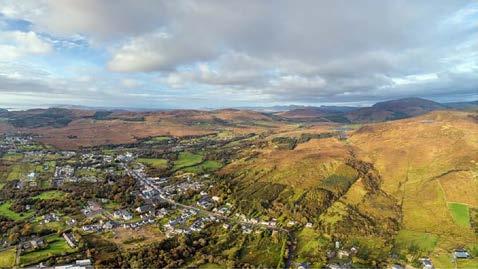
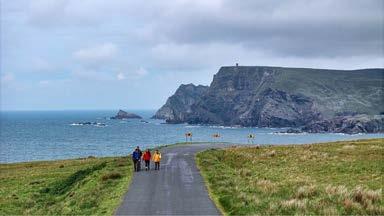
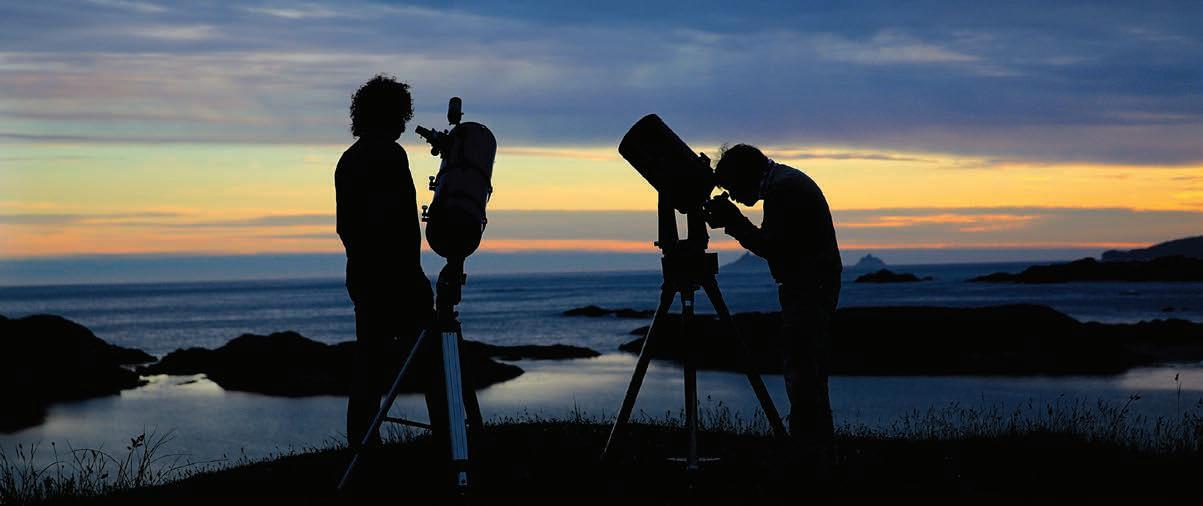
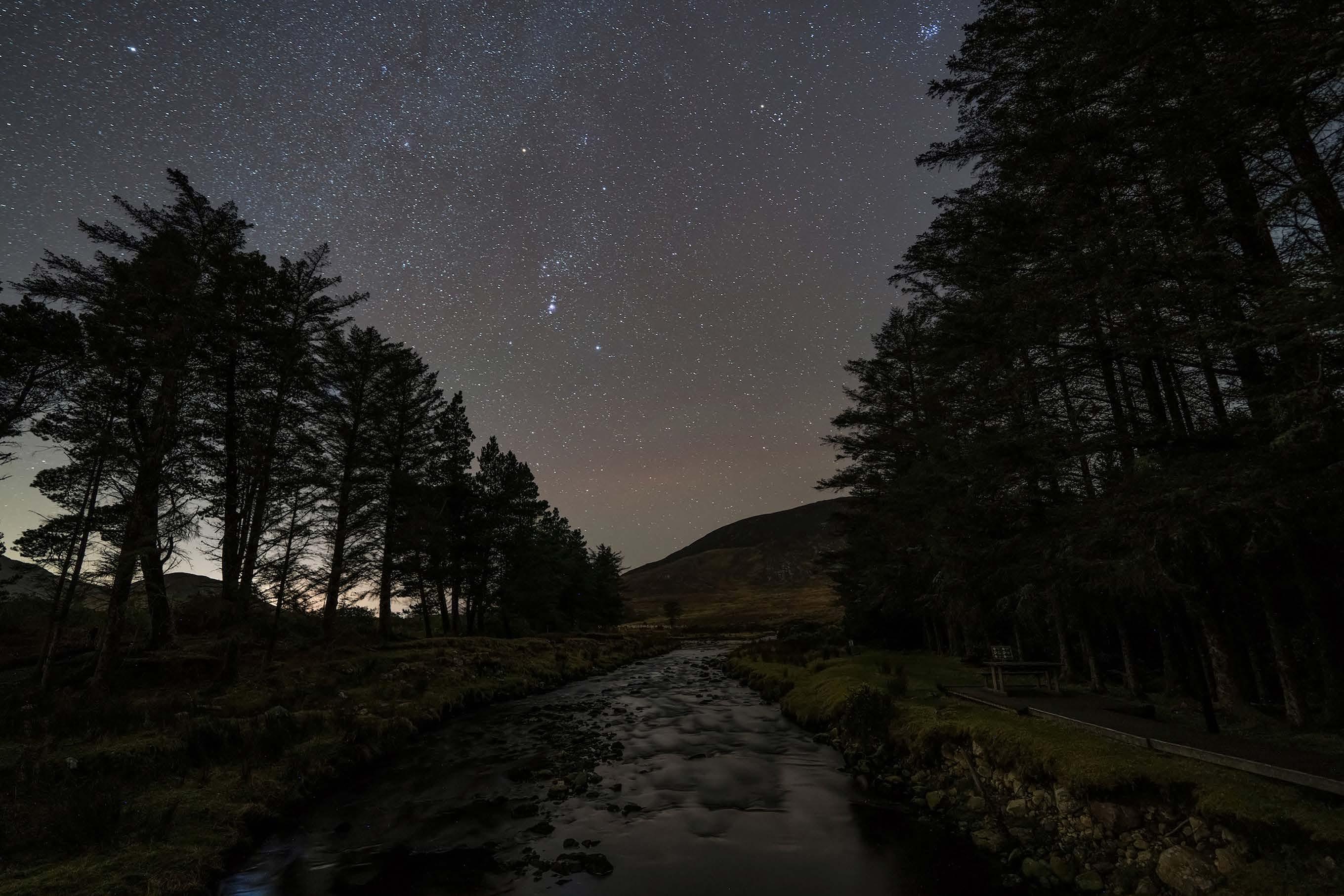
The Wild Atlantic Way contains some of the darkest skies in Western Europe. Low population density, Atlantic weather systems and minimal light pollution make the west coast strongest outside the summer months. Winter delivers longer nights, clearer air after cold fronts and sharper visibility for photography. The key is choosing coastal bases with verified darkness, open access and safe night positioning.
Mayo Dark Sky Park, County Mayo
Mayo Dark Sky Park is Ireland’s flagship stargazing region and one of the few Gold Tier dark-sky areas in the northern hemisphere. The park covers inland Nephin Beg but performs best when paired with the nearby coast. Ballycroy and Bellacorrick offer low-light bases, while nearby beaches give open horizons for astrophotography. Winter skies regularly reveal the Milky Way, Orion and deep-sky objects on moonless nights.
Kerry International Dark Sky Reserve, County Kerry
The Iveragh Peninsula is the strongest dark-sky location on the southern Wild Atlantic Way. The reserve stretches from Ballinskelligs to Valentia Island, combining Atlantic horizons with minimal artificial light. Skellig Ring viewpoints, Bray Head and St. Finan’s Bay are proven winter locations. Accommodation ranges from rural lodges to coastal hotels that actively cater for stargazers.
Connemara Coast, County Galway
Connemara’s darkness comes from scale rather than designation. Beaches near Roundstone, Dogs Bay and Gurteen provide wide western and southern horizons, ideal for Milky Way and planetary photography. Inland light is negligible once you leave Galway’s commuter belt. Winter storms often clear the atmosphere, creating short but intense stargazing windows.
Inishowen Peninsula, County Donegal
Inishowen offers raw Atlantic darkness with easy coastal access. Beaches near Dunree, Leenan and Malin Head are exposed, elevated, and free from nearby urban glow. Winter skies here are dramatic, with fast-moving cloud creating opportunities for time-lapse and long-exposure work. Safety planning is essential due to wind and cliff edges.
Mizen Peninsula, County Cork
Mizen Head is one of the darkest southern coastal points in Ireland. The lighthouse area is managed, safe and open year-round, making it suitable for night visits outside storm conditions. Nearby coves and headlands offer strong foregrounds for photography. Winter nights are long but wind exposure requires preparation.
Achill Island, County Mayo
Achill combines dark skies with accessible beaches. Keem Bay and Keel Strand are suitable for night work with clear western horizons. Winter brings minimal traffic and neartotal darkness after dusk. The island’s road network allows controlled access without long walks in the dark.
• Plan around the lunar cycle. New moon weeks are essential.
• Favour winter cold fronts. Clear air follows Atlantic storms.
• Use coastal horizons for wider sky capture.
• Avoid headlands in high wind or swell conditions.
• Choose accommodation that allows late-night access and blackout.
The dark-sky coast is not a summer product. It is a winterstrength asset of the Wild Atlantic Way, delivering clarity, scale, and silence that daylight travel cannot match.
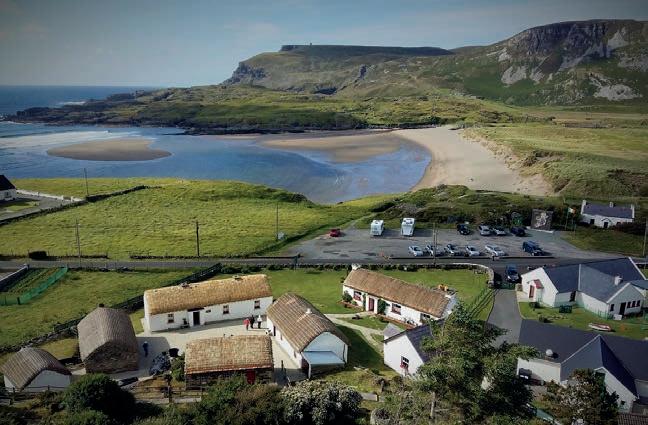
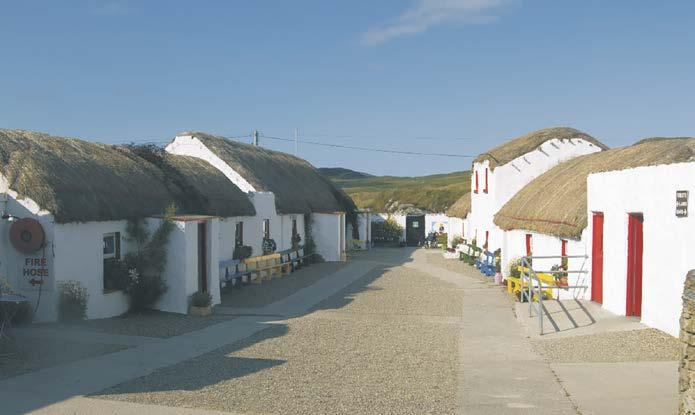
Tucked into one of the most unspoilt corners of southwest Donegal, Glencolmcille Folk Village offers visitors a rare and authentic step back in time. Set against the dramatic backdrop of the Wild Atlantic Way, this unique open-air museum captures the spirit, resilience and traditions of rural Irish life as it once was.
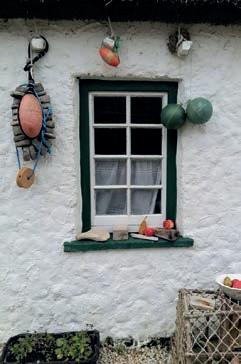
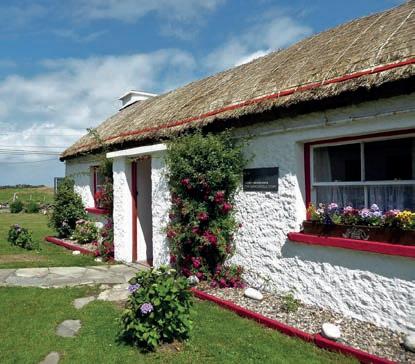
The village itself is a carefully curated collection of traditional thatched cottages, each telling its own story—from famine times through to more recent decades. Walking through the site, you don’t just observe history—you feel it. There’s a quiet honesty to Glencolmcille, where heritage is preserved not as a display, but as a living narrative of community, culture and survival. That same raw beauty and authenticity have not gone unnoticed beyond tourism. The wider Glencolmcille area recently took centre stage in the filming of In the Land of Saints and Sinners, starring Liam Neeson. The rugged coastline, winding roads and untouched
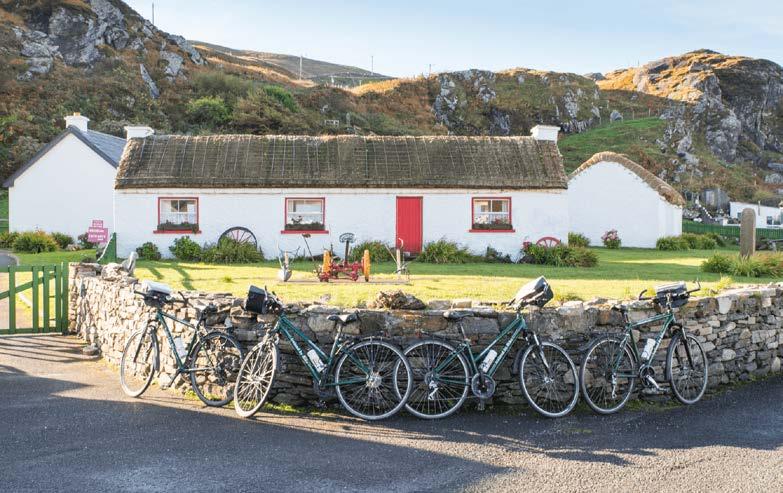
landscapes of the region provided the perfect cinematic backdrop, with filming taking place across Glencolmcille and surrounding areas in Donegal. Something is fitting about that. Places like Glencolmcille don’t need to be dressed up—they are the story.

As we open our doors for the 59th year we are delighted to welcome you to the Glencolmcille Folk Village. Glencolmcille Folk Village is located in one of Donegal’s most idyllic valleys, situated along the dramatic coastline of Glen Bay with its spectacular views of Glen Beach and Glen Head.
visit the Folk Village, you will experience a genuine Irish welcome with Ireland from 1750 onwards. Tour booklets are available in several languages.
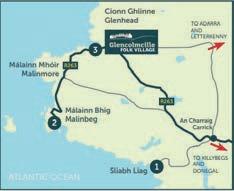
to Sliabh Liag cli s we are only 20 minutes along the coast. Tá Chlachán Ghleann Cholm Cille.
ar scéal saoil an Athair Mhic Daidhir.

EirCode F94 DN22
Gleann Cholm Cille, Contae Dhún na nGall Call (074) 973 0017 folkvillage@eircom.net www.glenfolkvillage.com
For visitors, the Folk Village is more than an attraction; it’s an experience rooted in identity and place. It reminds us that while the world moves quickly, there are still corners of Ireland where heritage, landscape and storytelling remain beautifully intertwined.
• Slieve League Cliffs
• Folk Village
Glencolmcille
• Glenveagh
National Park
• Fanad Head
Lighthouse
• Studio Donegal
• Tory Island
• Mount Errigal
• Doagh Famine Village
• Donegal Castle
• Olde Castle Seafood Bar
• The Rusty Mackerel
• Chandpur (Letterkenny)
• Quay West
• Nancy’s (Ardara)
• Fisk (Downings)
• Blas
• The Lemon Tree Restaurant
• The Restaurant at Harveys Point
• Donegal Town
• Letterkenny
• Dunfanaghy
• Ardara
• Bundoran
• Ballyliffin
• Killybegs
• Moville
• Falcarragh
• Lough Eske Castle
• Harvey’s Point
• The Waterfront Dungloe
• Sandhouse Hotel
• The Shandon Hotel
• The Abbey Hotel
• Redcastle Hotel
• Mill Park Hotel
• The Reel Inn
• McCafferty’s
• The Rusty Mackerel
• Dicey Reilly’s
• The Harbour Bar (Downings)
• The Forge (Buncrana)
• The Olde Glen Bar
• Olde Castle seafood bar
• The Singing Pub Downings
• Murder Hole Beach
• Portsalon Beach
• Maghera Beach
• Bundoran Beach
• Marble Hill
• Ballymastocker Bay
• Rossnowlagh beach
• Tullan Strand
• Five Finger Strand








• Benbulben
• Strandhill Surfing
• Knocknarea (Queen Maeve Trail)
• Gleniff Horseshoe
• Mullaghmore Head
• Lissadell House
• The Devil’s Chimney
• Glencar Waterfall
• Sligo Abbey
• Sligo Town
• Strandhill
• Mullaghmore
• Rosses Point
• Enniscrone
• Grange
• Tubbercurry
• Easkey
• Ballymote
• Castle Dargan
• The Glasshouse
• Radisson Blu Sligo
• Strandhill Lodge
• The Sligo Southern
• Pier Head Hotel (Mullaghmore)
• Markree Castle
• Riverside Hotel
• Eala Bhán
• Hooked
• Coach Lane
• The Driftwood
• Shells Café (Strandhill)
• Lang’s (Grange)
• Montmarte
• The Glasshouse Hotel
• The Venue Bar & Restaurant
• Shoot the Crows
• Thomas Connolly
• Swagman Bar
• Hargadon Bros
• McGarrigle’s
• The Strand Bar
• Mc Lynns Bar
• Fureys Pub
• Gracie’s Bar
• Strandhill
• Rosses Point
• Mullaghmore
• Enniscrone Beach
• Streedagh Beach
• Dunmoran Strand
• The Nuns Beach
• Lissadell Beach
• Yellow Strand
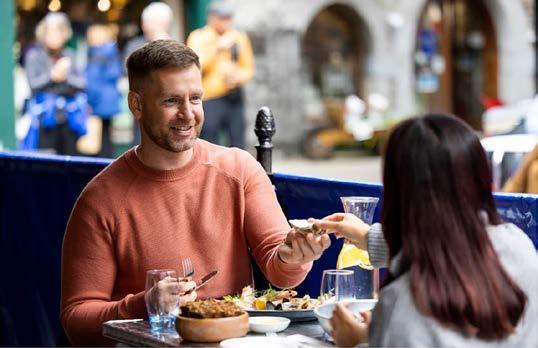
If you're in the mood for an incredible food experience, Galway City has an abundance of possibilities to please every visitor. From fresh fish along the harbour to afternoon tea in a Georgian townhouse, exploring such a vibrant place makes for hungry work. Discover the best food and drink experiences in Galway City.
Savour a seafood feast
Thanks to its location perched on the North Atlantic waters of the Wild Atlantic Way, the seafood in Galway is world class. At The Dockside Deli @ Galway Bay Seafoods, over 70-years of expertise shine at a family business that’s been here, right in the heart of Galway's docks, for generations. Alongside cooking classes and a shop that's very popular with the locals, the deli’s choices include Galway Bay oak smoked salmon and smoked mackerel pâté.
Check out the award-winning Oscars Seafood Bistro on Dominick Street nearby in Galway's West End. Serving up some of the best seafood on the west coast, their mouth-watering menu includes crispy fried oysters, scallops and monkfish mussel fricassee.
Looking for a more traditional vibe? Located on bustling Quay Street in the Latin Quarter, McDonagh's Seafood House serves up a well-shucked Clarenbridge oyster and fish fried to order with a generous portion of chips.
For a more hands-on option, book a lobster safari with Galway Bay Boat Tours. With their ‘Catch, Cook and Eat’ programme, experience the thrill of the trawl and see how fishing tradi
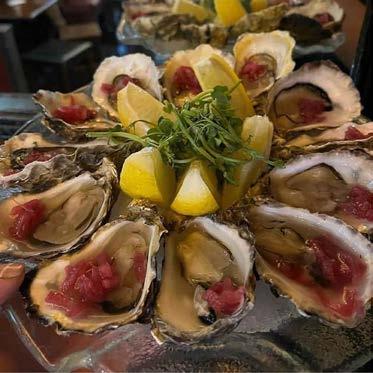
A cosy pub, a fire and a song can be just the ingredients for an ideal afternoon. But what about the food? Brasserie On The Corner Restaurant and Wine Bar is known for their stellar service and get their surf and turf just right with prime steaks alongside grilled garlic and herb prawns.
The Kings Head may be over 800-years-old but they take a modern stance with a commitment to sustainable and organic produce. Their prime Irish, Hereford, King Charles 1 Burger, is a cut above, with Hegarty’s cheese, Andarl Farm suckling pig and homemade red onion relish on an artisan brioche bun. Along Salthill Promenade, the Galway Bay Hotel Conference and Leisure Centre can feed you from brunch to dinner. Visit the hotel's Atlantic Bar and choose from a classic all-day bar menu, a favourite with locals.
Set out on a delicious excursion with Galway Food Tours for over two hours of walking, chatting, nibbling, drinking and laughing. A choice of itineraries seeks out local delicacies from a ‘Galway Whiskey Tour’ for lovers of uisce beatha to a ‘Sweet Tooth’ ramble that takes in the city’s finest bakeries and pastry shops.
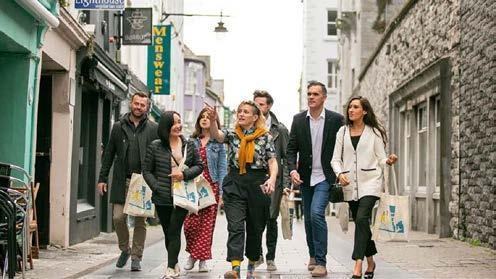
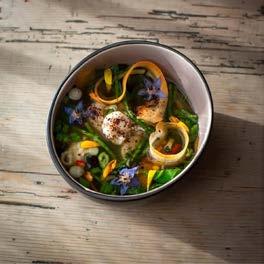
Heading out of the city centre towards the spectacular wilderness of Connemara, Glenlo Abbey Hotel & Estate sits on the edge of Lough Corrib. The estate has distinctive restaurants in The River Room, with glorious views from its 18th century windows, and Palmers Bar & Kitchen for more casual dining. But the real showstopper is the Pullman Restaurant, set in two carriages salvaged from the Orient Express. Flanked by two gold lions and treated to silver service, this journey back in time is an eating experience to write home about.
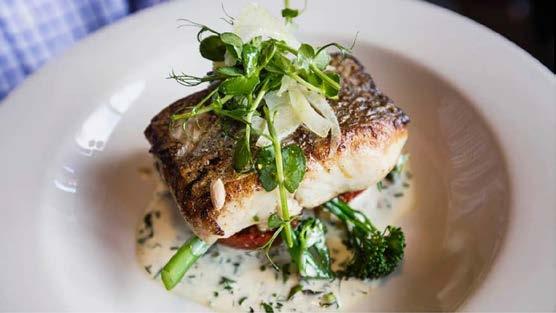
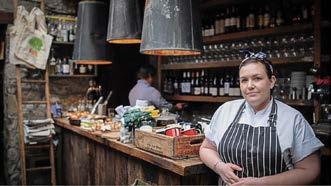
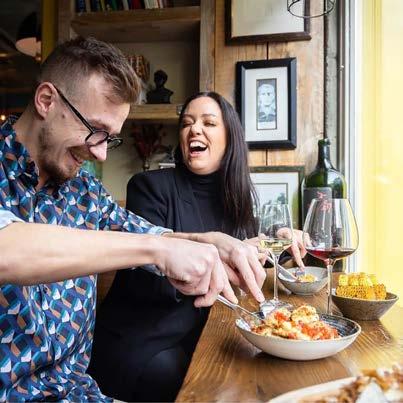
To enjoy the pleasures of people watching over lunch, head for The Hardiman and their Gaslight Bar & Brasserie’s bright Victorian bay windows, overlooking Eyre Square. When the sun shines, get yourself to The Galmont Hotel & Spa and lounge on a wraparound waterfront terrace with views of Lough Atalia.
To observe arty types over hearty food, head to 56 Central, an eclectic restaurant that hosts cultural events and yoga sessions. Old and new collide here. Sip a flat white as you peer out of ancient windows onto Lynch’s Castle or relax over a breakfast bruschetta in the zen rooftop Buddha Garden.
Another favourite of the cultural crowd is Ard Bia at Nimmos, situated right in the shadows of the Galway City Museum and the Spanish Arch. This stylish spot blends global cuisine with Irish flavour in dishes like Connemara crab tostada and kimchi fried potatoes.
Galway's Michelin-starred Aniar Restaurant is appropriately influenced by the west of Ireland's salty spray of flavours and local produce. Chef JP McMahon has honed centuries of culinary traditions. He pickles, cures, smokes and ferments a tasting menu of 18 dishes. McMahon is also the brains behind tapas bar Cava Bodega, where duck fritters with seaweed jam make for a mind-blowing take on the small plate.
Local favourite Kai has also been catching the attention of the fine dining set. Their aim is to make you feel at home, with stone-flagged floors, rustic touches and bushels of fruit lying around. The menu changes seasonally and head chef Jess Murphy creates playful takes on classic dishes like Roscommon lamb chops with green tahini.
The famous Galway Farmers Market is a brilliant place to spend a couple of hours. Every Saturday and Sunday by St. Nicholas' Church you can taste the best produce Galway has to offer. The coastal setting means fresh fodder for the likes of the Oyster Man, who often shucks as crowds gather around. The market is home to local artisans and vintage stalls, where you are sure to pick up something unique.
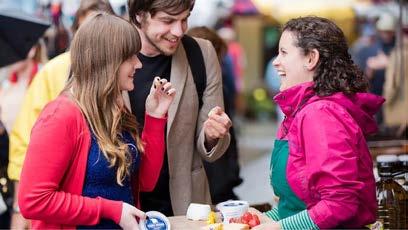
Umbrella Le Chéile is a social enterprise hosting an indoor market every third Sunday that focuses on uplifting local makers. Swoon over intricate jewellery designs, handmade beauty products and contemporary art.
Local legends Tigh Neachtain have been offering warm hospitality to natives and tourists since 1894. Known for hosting live music throughout the week, you can also drop in for platters of seafood, local cheeses and charcuterie featuring favourites like Flaggy Shore dainty oysters, Cashel Blue and Gubbeen salami. Graze away happily while tunes get your foot tapping.
Trieste Café & Wine Bar is a laid-back option on the cobblestones of Buttermilk Walk. Sit outside with a glass of wine and a board full of treats like Serrano ham, chorizo, manchego and gorgonzola. Desserts and Italian roasted coffee provide a sweet finish in this slice of the Mediterranean in Galway.
Sheridan’s Wine & Cheese Bar has been mixing a slice of continental Europe with homegrown fare since 1995. For fans of the homegrown, try local Cais na Tire’s matured, earthy hard cheeses or give the award-winning Drunken Saint’s camembert a whirl. The wine bar incorporates rustic charm with modern touches, making it the ideal place to sip an imported Old World tipple with one of Sheridan's classic cheese and charcuterie boards.
Is there anything as decadent as afternoon tea with tiered stands full of featherlight pastries, pots of rich jam and petite sandwiches? To get a real taste of this genteel tradition, head to Corrib House Tea Rooms where cakes are baked daily. In their Georgian finery, the rooms overlook the beautiful Salmon Weir.
Enjoy Tae Tráthnóna in the library at the Connacht Hotel with homemade scones, delicate cakes and savoury finger sandwiches, or settle in at the Ardilaun Hotel’s lounge for a traditional tea with a contemporary French twist. Elsewhere, Nox Hotel adds a splash of Prosecco to proceedings, set against the background of their stylish bar with its warm wood accents and azure blue tiling.
Try an ultimate pampering session at the G Hotel & Spa, where tea and soothing treatments meet. World renowned milliner Philip Treacy has designed a bohemian boudoir that puts a fashionable finish on this luxurious interlude.
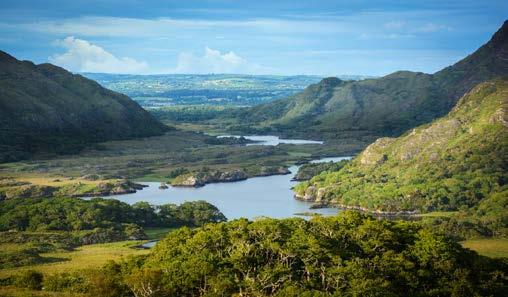
Here are our best road trips in County Kerry that will leave you speechless.
The Ring of Kerry is undoubtedly one of the most famous road trips in Ireland, and for good reason. This 179-kilometer loop around the Iveragh Peninsula takes you past some of Ireland’s most breathtaking views—from rugged coastlines to serene lakes and ancient ruins. As you drive along the route, you’ll encounter lively towns like Killarney, Kenmare, and Cahersiveen—each with its unique charm.
One of the highlights of the drive is Ladies View, where you’ll enjoy a panoramic vista over the Lakes of Killarney and the surrounding mountains. For history enthusiasts, a stop at Ross Castle and Muckross House & Gardens in Killarney National Park is a must.
Go Wild Pro Tip: Start your trip early in the day to avoid the crowds and soak in the peaceful beauty of Ireland’s countryside.
For those looking to venture a bit off the beaten path, the Slea Head Drive on the Dingle Peninsula is a must. This 46-kilometer loop offers dramatic coastal views and fascinating historical sites. As you drive along this route, you’ll encounter ancient bee-hive huts, the famous Blasket Islands, and the scenic Dunquin Pier, one of the most photographed spots in Ireland.
Go Wild Pro Tip: Catch a sunset at Dunmore Head— the westernmost point of Ireland - for an unforgettable moment.
If you’re looking for something even more remote and dramatic, the Skellig Ring is a must. This 18-kilometre route loops off the main Ring of Kerry Drive and takes you to some of the most breathtaking, less-explored areas of Kerry. The highlight of this drive is undoubtedly the view of Skellig Michael, a UNESCO World Heritage site, famous for its ancient monastic settlement and more recently as a filming location for Star Wars.
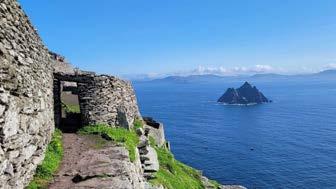
Go Wild Pro Tip: If you have time, take a boat trip from Portmagee to Skellig Michael for an up-close look at the island.
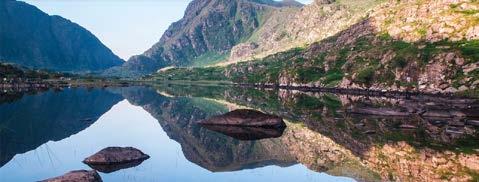
The Gap of Dunloe is a narrow mountain pass nestled between the MacGillycuddy’s Reeks and Purple Mountain, offering one of the most picturesque road trips in County Kerry. Start your journey in Kate Kearney’s Cottage, where you can either walk or take a jaunting car (horse-drawn carriage) through the pass. This winding route will take you past crystal-clear lakes, rocky landscapes, and steep mountain slopes.
This is a great trip for adventurers who love nature and want to experience the quieter side of Kerry. The pass is best visited in the morning to capture the soft light of the rising sun.
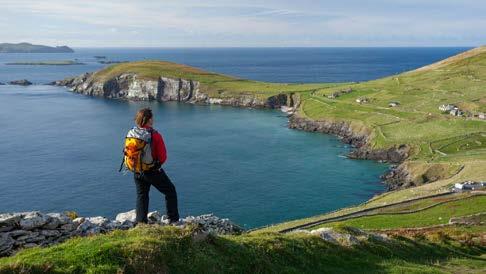
Go Wild Pro Tip: End your day with a boat ride across the Lakes of Killarney, where you can fully appreciate the region’s tranquillity.

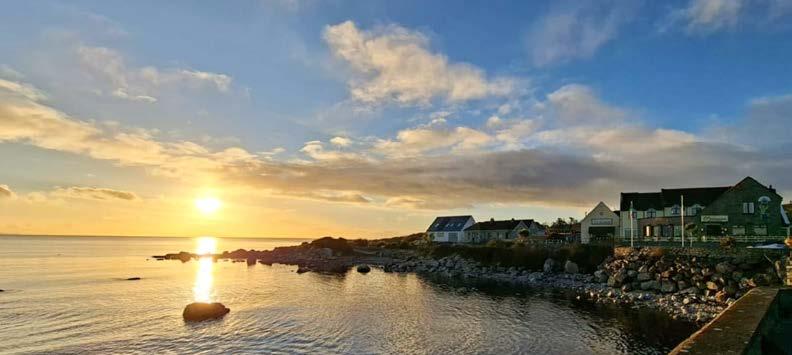


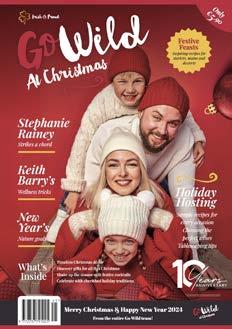

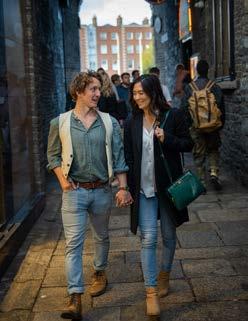


Wild Nephin National Park is where the landscape and heritage embrace the Gold Tier Mayo Dark Sky Park. Explore the many remote trails within the main body of the national park at Letterkeen, or hike to one of our historic cottages and spend the night beneath one of the best places in Europe to view the night sky.
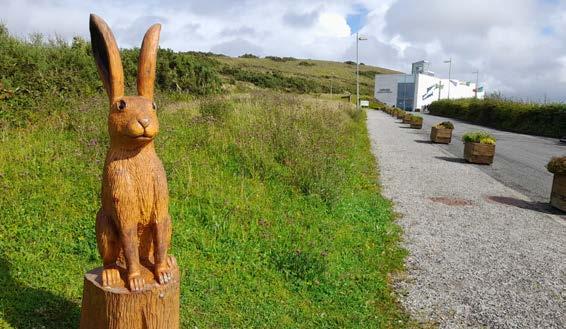
Visit our website to find out more: www.nationalparks.ie/wild-nephin
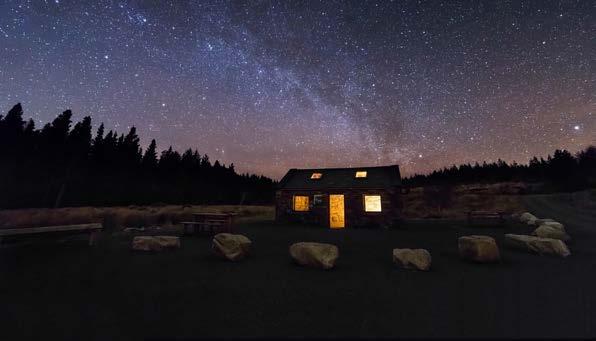
The Mayo Dark Sky Park was crowned the IDA International Dark Sky Place of the Year 2024. You can learn all about our amazing national park and the dark skies at the Ballycroy Visitor Centre while you enjoy a break at our award winning Ginger & Wild Café.
Ballycroy Visitor Centre Open 7 days a week from 10am-5.30pm all year round, Onsite Ginger & Wild Café open from
Tel: 098 49 888 Email: ballycroyvisitorcentre@npws.gov.ie
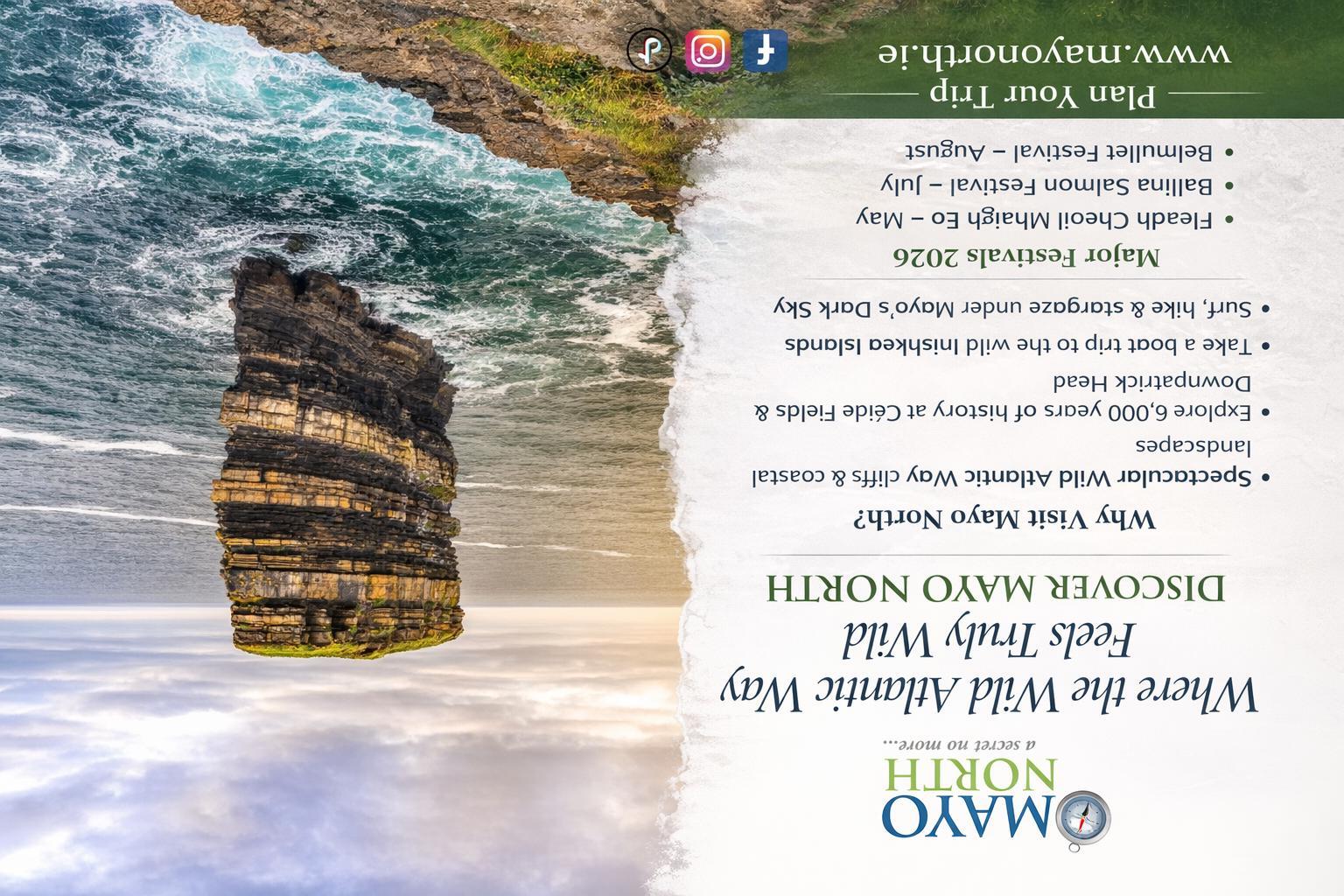

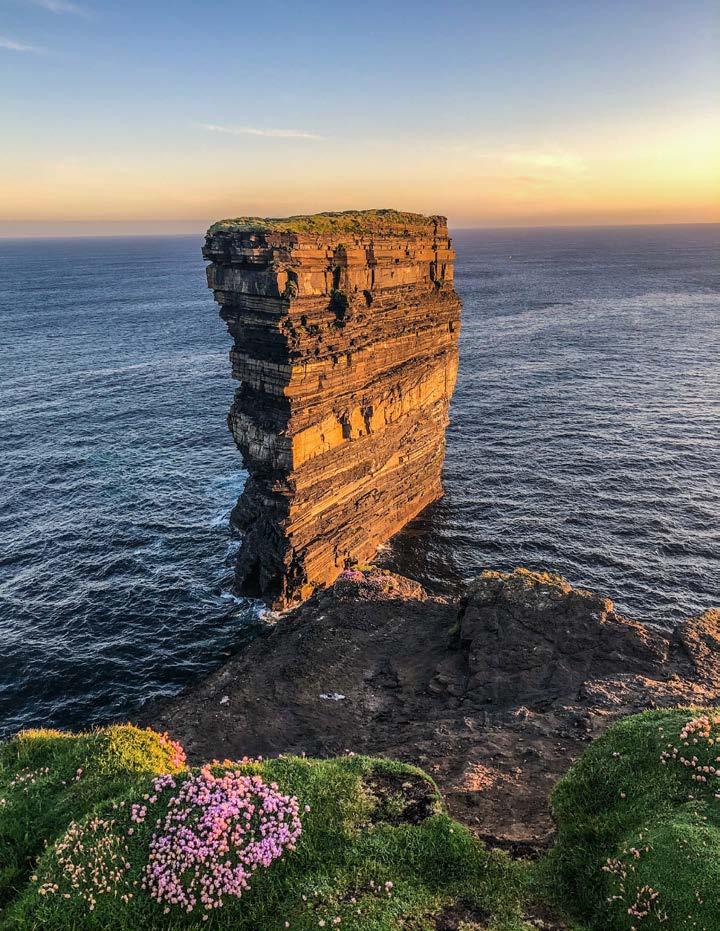
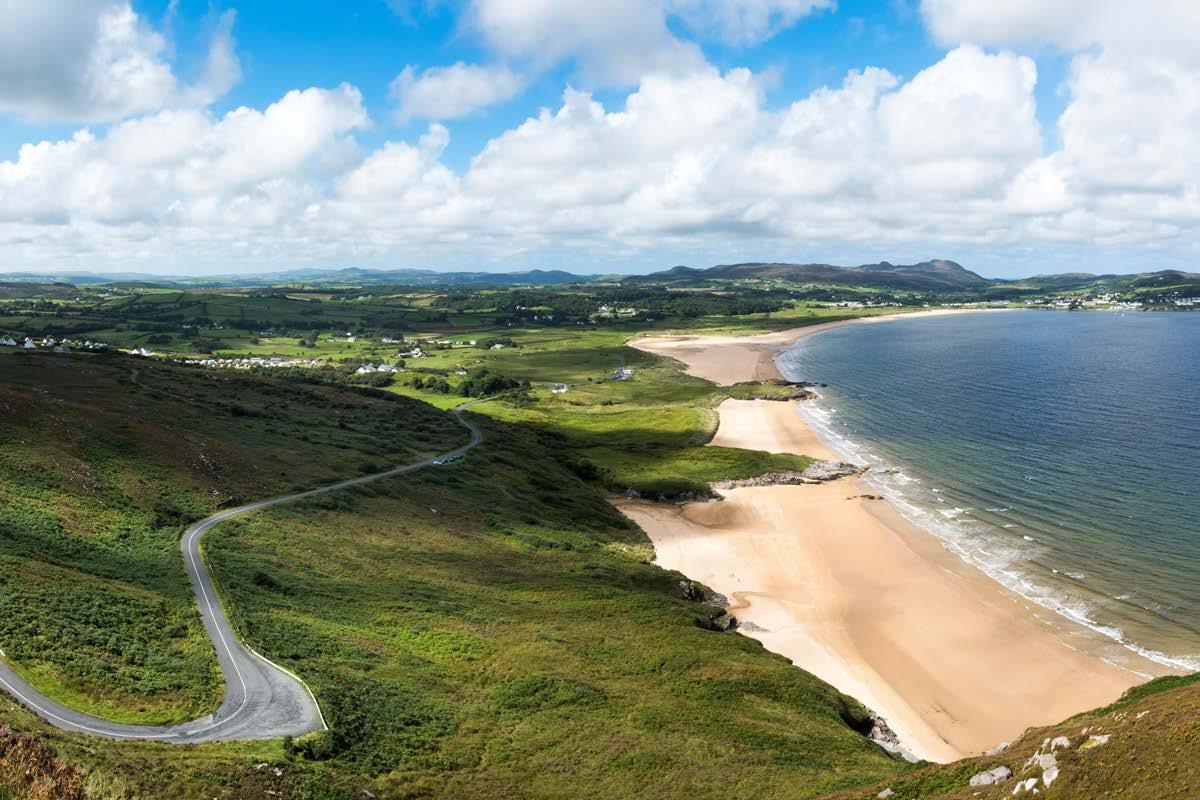
Silver Strand Beach, Sherkin Island, Cork: Silver Strand Beach is an absolute must-see on Sherkin Island, accessible by ferry from Baltimore. The sandy beach is one of Sherkin Island’s most beautiful spots, with magnificent views of Cape Clear Island and the Atlantic Sea.
Keem Bay, County Mayo: This secluded beach is often ranked as one of the most beautiful in the world. It’s a crescent-shaped stretch of golden sand, surrounded by towering cliffs and dramatic rock formations. Towering cliffs and dramatic rock formations surround the beach, creating a sense of secluded beauty.
Curracloe Beach, Wexford: Curracloe Beach is situated in Wexford. It’s no surprise that the sandy beach scored so highly, with it being featured in the 1998 film Saving Private Ryan as well as being known for being one of the cleanest and longest beaches in Ireland, backed by grassy dunes.
Portsalon Beach: Portsalon Beach, County Donegal: This stunning beach is located on the Inishowen Peninsula, with panoramic views of the surrounding mountains and coastline. Stunning beach with panoramic views of the surrounding mountains and coastline, soft white sand, and clear turquoise water.
Fanore Beach, located in the little village of Fanore, also has much to offer, with it being on the southern shore of Galway Bay
Sligo’s Enniscrone Beach is a hidden gem described as a ‘walker’s paradise’ on the shores of Killala Bay.
Burrow Beach, or the Hole in the Wall in Dublin offers spectacular views of Ireland’s eye and is a twenty-fiveminute drive from the city centre
Inchydoney Beach, County Cork: This long, sandy beach is located on the west coast of Cork, with views of the Atlantic Ocean and the Seven Heads Peninsula. The beach is popular with families, thanks to its calm waters and lifeguard supervision. Inchydoney Beach is also a great spot for surfing and windsurfing.
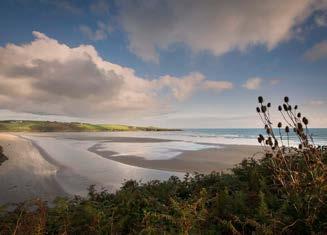
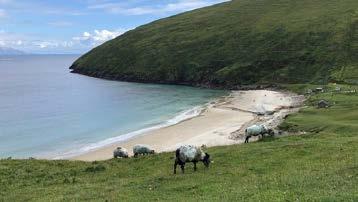
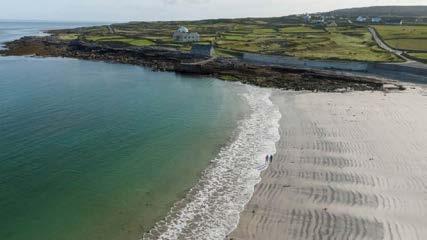
East End Beach, Galway’s East End Beach is one to tick off the bucket list as long you’re happy to clamber over some rocks to find the blissful, secluded cove on the Island of Inishbofin.
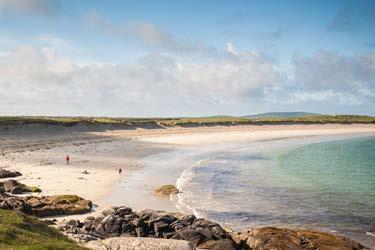
Dog’s Bay, County Galway: Escape the crowds and find your own slice of paradise at Dog’s Bay. This secluded beach is located on the Connemara coast, surrounded by rolling hills and lush green scenery. The beach has a mix of sand and pebbles and the water is crystal-clear.
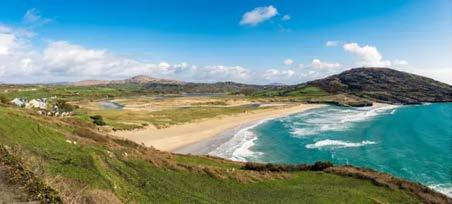
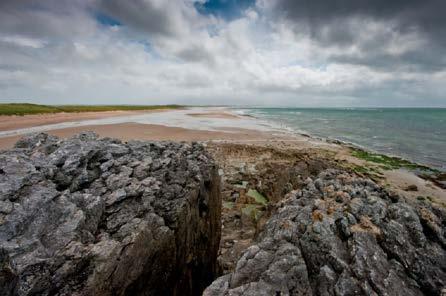
Ballymastocker Bay, Donegal:
The pure white sands at Ballymastocker Bay is also on this list of the best hidden beaches in Ireland.
Barleycove Beach, Cork: Barleycove Beach is based close to the villages of Crookhaven and Goleen on the Mizen Peninsula and is about two hours from Cork City.
Banna Strand, Kerry: Banna Strand always proves to be popular with its beautiful views and crystal clear waters. Stretch out on the soft sand of Banna Strand and gaze at the Slieve Mish Mountains and the Maharees Islands in the distance. The waves are perfect for surfing, and the beach is a great spot to watch the birds. After a day at the beach, enjoy a traditional Irish meal at one of the many nearby pubs.
Streedagh Beach, Sligo: The site of three shipwrecks, Streedagh Beach is a 3km sandy strand linking Streedagh Point to Connor’s Island, which makes for gorgeous views of the Sligo coastline.
Killiney Beach, Dublin: Killiney Beach in Dublin can be viewed from Killiney Hill, with a 4.5 Google rating, and over 13,000 Instagram hashtags.
Dunmoran Strand, Sligo: Dunmoran Strand is a beautiful secluded beach, providing an easy 4km stretch for a stroll and sits just under 30 minutes from Sligo town.
Howth Secret Beach is one of Dublin’s worst-kept secrets, sitting 45 minutes from the city centre, and providing somewhere more private for reflection and swimming
Tramore Beach in Waterford: The panorama of Tramore Bay, with the protecting arm of Brownstown Head beyond, is truly magnificent. The town itself is built on a hill that slopes down to the strand. The long, rolling waves in Tramore make it popular with water sports enthusiasts.
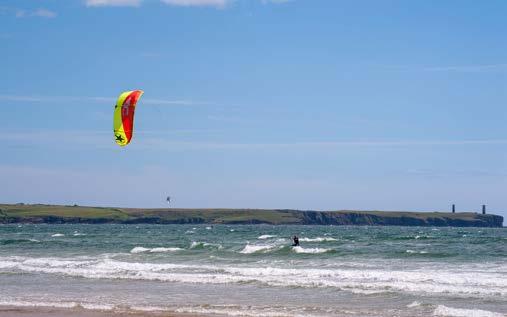
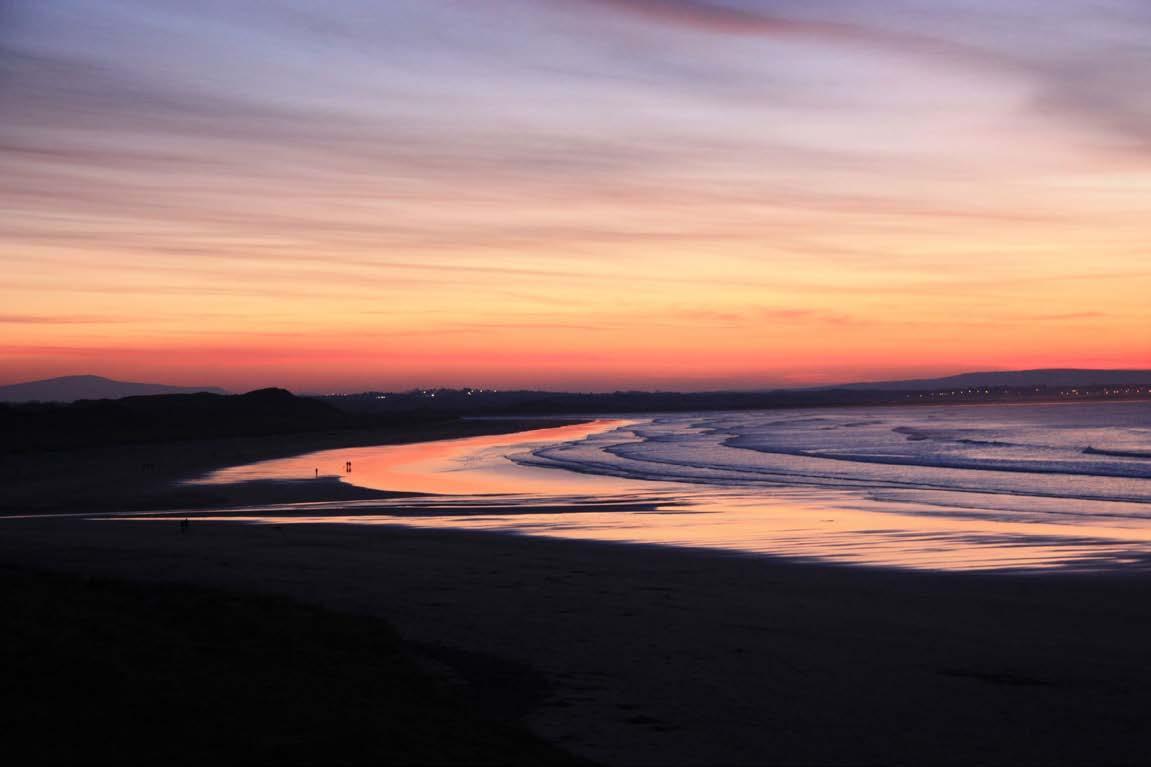
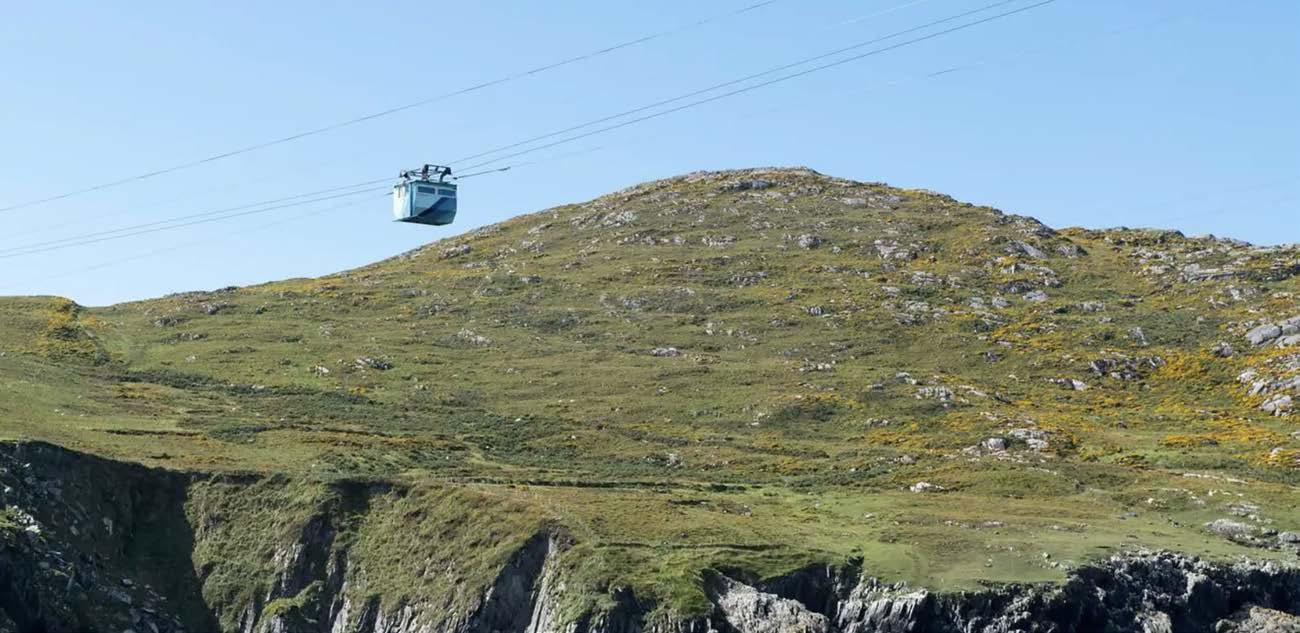
Dursey Island is located at the tip of the Beara Peninsula in Co. Cork. Access to the island is by the only cable car in Ireland, which takes six people.
The island has very few inhabitants and no shops, pubs or restaurants – thus offering a unique experience of undisturbed tranquillity. Dursey is famous for its magnificent selection of bird species and is a birdwatcher’s heaven. The island has a stark and appealing beauty, with rugged indented coastline, lofty cliffs, open bog and a patchwork of fields divided by dry stone walls and ditches. The landscape is almost treeless since few parts of the island are not exposed to strong winds and salt spray.
The landscape is dotted with antiquities ranging from standing stones and early monastery to an impressive signal station from the Napoleonic era. [The cablecar operates only during certain periods of the day – please check the timetable and allow at least 5 hours for your trip.]
A-B. Starting from the cable car, follow the purple arrow along the roadway which travels the southern side of the island. You are also on the long-distance Beara Way marked with yellow arrows
and the familiar trekking man logo. After 1km you reach Ballynacallagh the first of three villages on the island. Continue along the roadway.
B-C. Follow the roadway for a further 1km to reach the village of Kilmichael, where it is said that monks from Skellig Rock founded the ancient church - now a ruin. Stay on the roadway.
C-D. Continue along the roadway for a further 3kms – and enjoy the spectacular views of the Beara Peninsula on your left. To your right runs a range of steep hills along which you will return – the Signal Station is at the highest of 252m. Within 100m of the end of the roadway, you turn right at a stone wall onto the hillside section.
[Note: You may wish to consider the option of continuing from here to Dursey Head, the westernmost point of the island.
The out-and-back journey will add 1hr1hr30mins to your trip.]
D-E. Follow purple and yellow arrows along the well-worn track uphill –a 15min walk will take you to the impressive Signal Tower (ruins). From here you have fine views of the northern side of the island and of the west Cork coastline. Two distinctive islands to the West are named the Bull and Cow! Continue straight from the towercareful to follow the direction of the waymarker.
E-F. The loop now begins to descend, crossing a stile and joining a ‘green’ road for approximately 500m. As you round a right bend, the loop takes a sharp left turn uphill again onto a grassy track.
E-F. The loop ascends briefly and then descends steeply to reach an old roadway where you turn left and after 200m cross a stile.
F-B-A. The loop follows a series of old green paths to exit via a gateway onto the roadway you traveled out on in the village of Ballynacallagh. Turn left here and enjoy the remaining 1km back to the trailhead.























Revolutionize your online store with Brainstorm Design! We create stunning, high-converting e-commerce websites that captivate customers and boost sales.
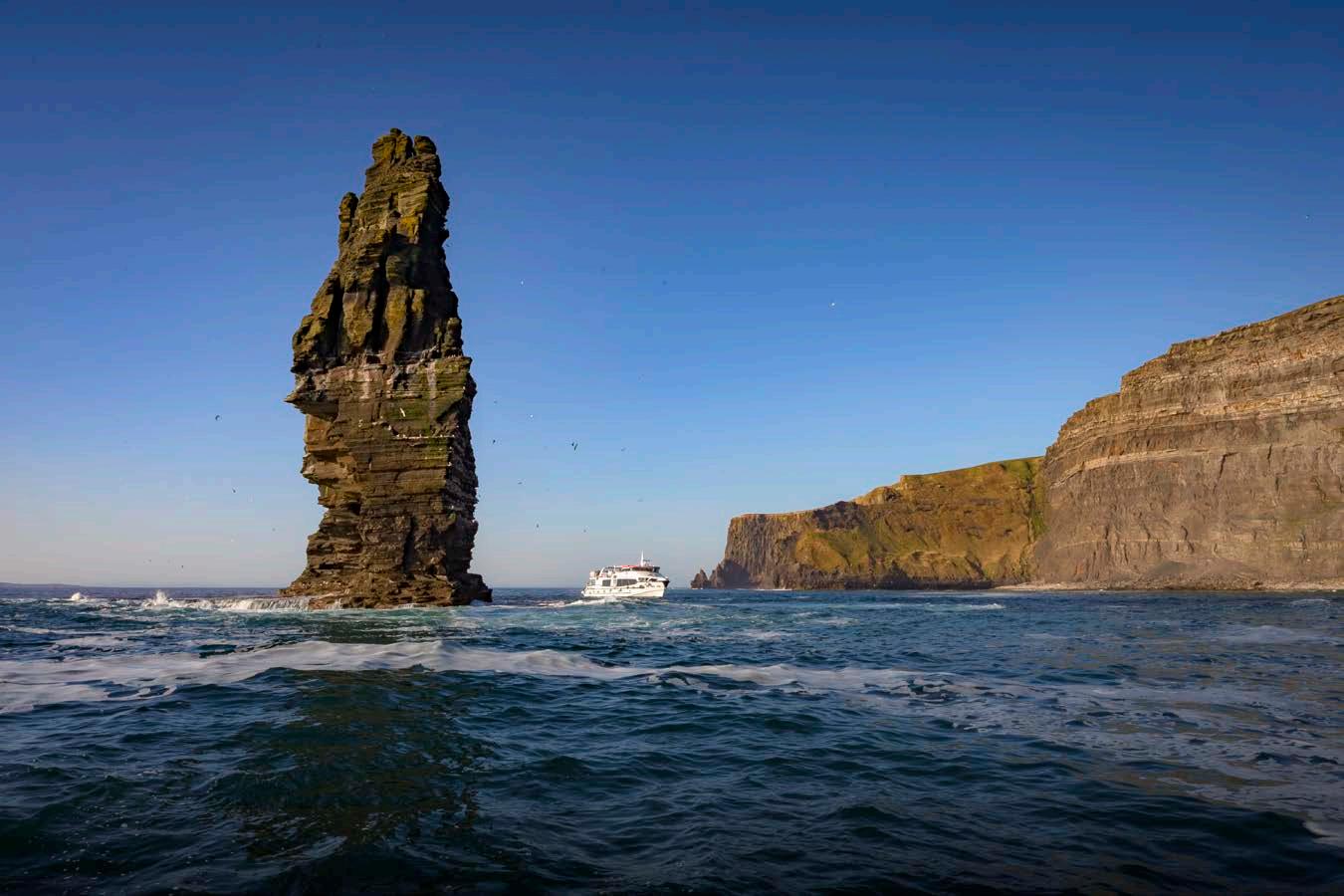
With stops at charming coastal villages, the Burren and the Cliffs of Moher, is making some of Ireland’s most iconic destinations accessible to those travelling car-free.
Ireland’s Wild Atlantic Way is now more accessible than ever, with the addition that travellers can leave the car behind.
A major public transport development on Ireland’s west coast is opening up one of the country’s most iconic scenic routes to visitors who prefer not to drive.
A new bus route from Galway to Doolin Pier and the iconic Cliffs of Moher- Route 351 - now enables car-free access to some of the most popular destinations on the Wild Atlantic Way.
The new Route 351, paired with Doolin Ferry’s sailings to the Aran Islands and the Cliffs of Moher and national rail services at Oranmore, offers a seamless and scenic alternative to driving along the Wild Atlantic Way.
The new service, operated by TFI Local Link Limerick Clare, offers up to
five daily trips, with four running the full scenic route from Galway City to the Cliffs of Moher. Passengers can sit back, relax, and enjoy one of the most breathtaking stretches of Ireland’s Atlantic coastline, with stops in charming coastal villages like Kinvara and Ballyvaughan and a journey through the otherworldly Burren landscape.
The service is part of a growing shift towards sustainable travel and regional connectivity, particularly welcome in popular destinations like Clare, where car access has often been the default. Travellers can now combine this route with Bus Éireann’s enhanced Route 350 and onward connections to Doolin Ferry’s sailings to the Aran Islands or Cliffs of Moher cruise - all without turning the key in an ignition.
“This is a meaningful step toward sustainable tourism,” says Liam O’Brien, owner of Doolin Ferry. “Visitors can now relax and enjoy a seamless car-free journey from Galway City to Doolin Pier, and from there sail to the Aran Islands or experience the Cliffs of Moher from the sea. The new route supports rural tourism, reduces congestion at key
sites, and makes the journey part of the experience.”
The new Route 351 runs daily, yearround, and connects directly with national rail services in Oranmore and ferry sailings in Doolin. Fares range from €2.50 to €9, with TFI Leap Card and Free Travel Pass accepted. Real-time updates are available via the TFI Live app.
The new route is already proving popular with tourists and day-trippers alike, offering a scenic alternative to self-driving along the Wild Atlantic Way - and helping to ease congestion in one of Ireland’s most visited natural areas.
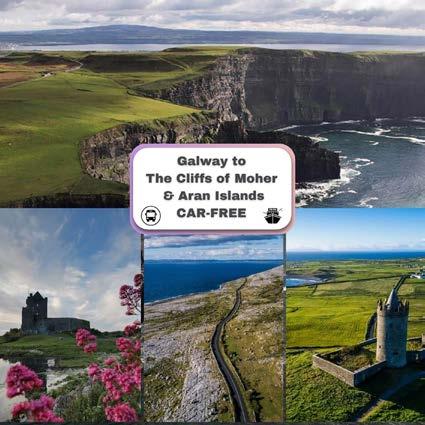
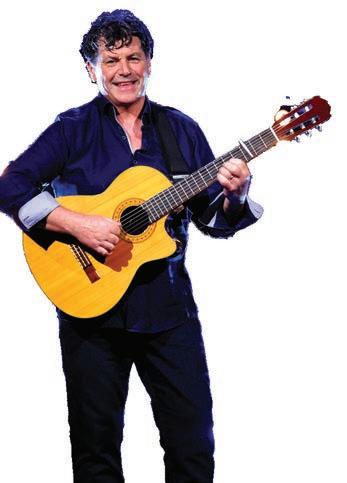
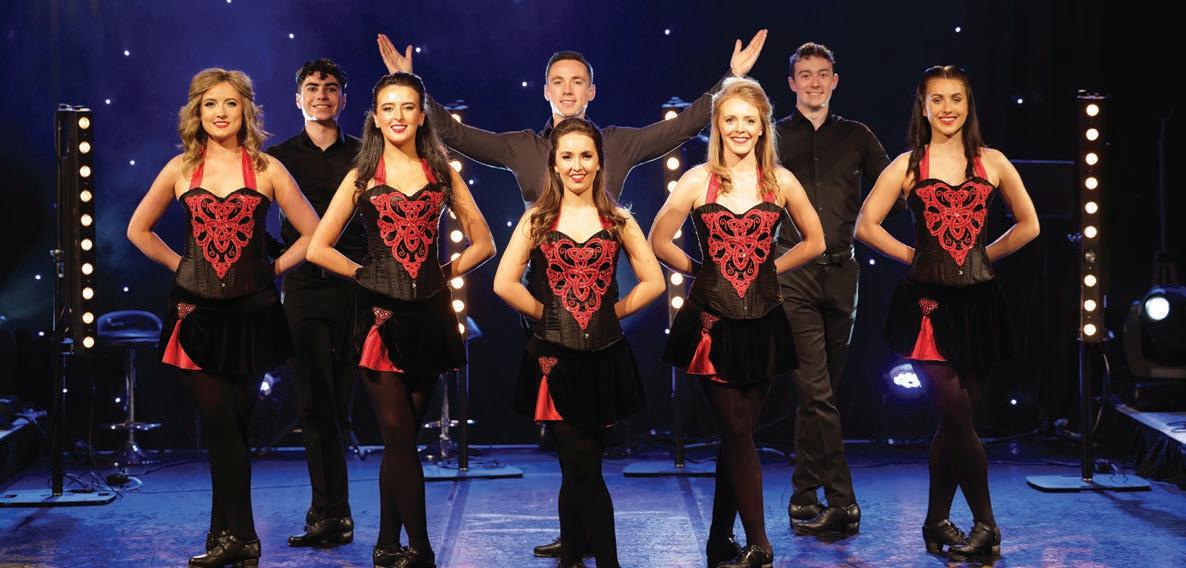
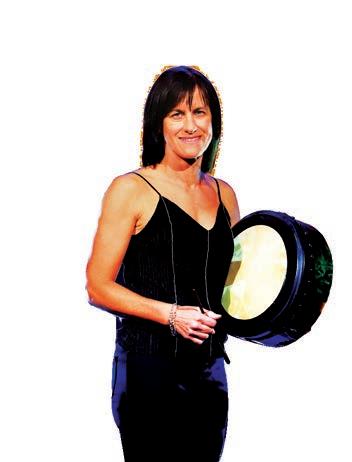


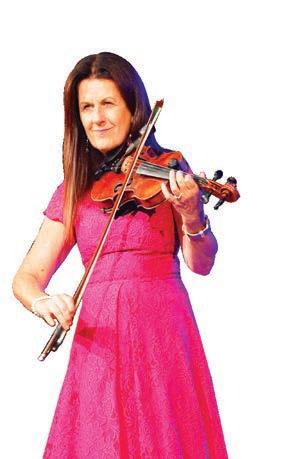
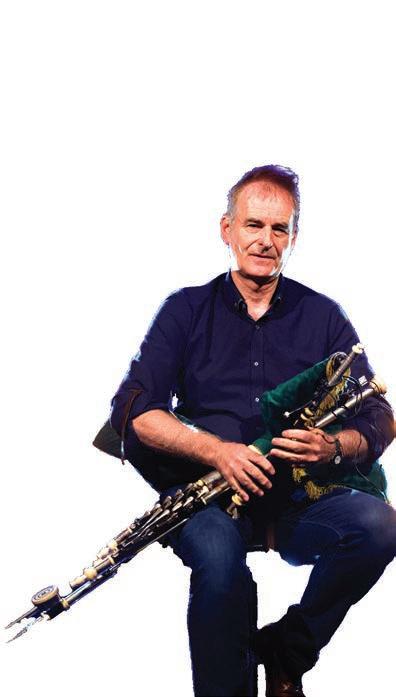
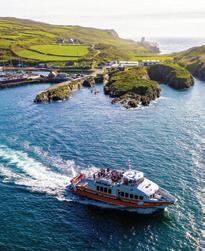
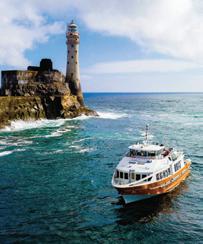

Book your customised Cape Clear Ferries tour of Ireland’s most southerly point, the tallest and widest rock lighthouse in Ireland and the UK now:
• Circumnavigate the Fastnet Rock Lighthouse
• Listen to the full history of the rock
• Visit the picturesque Cape Clear Island
• See Carbery’s Hundred Isles
• Enjoy Ireland’s Premier Whale & Dolphin Watching Waters
• 90-passenger ferry
• New 200-passenger fast ferry
• Panoramic 360 views from upper deck & through large saloon windows
• Snack bar
• Bring your bikes or kayaks for just €4











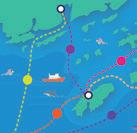

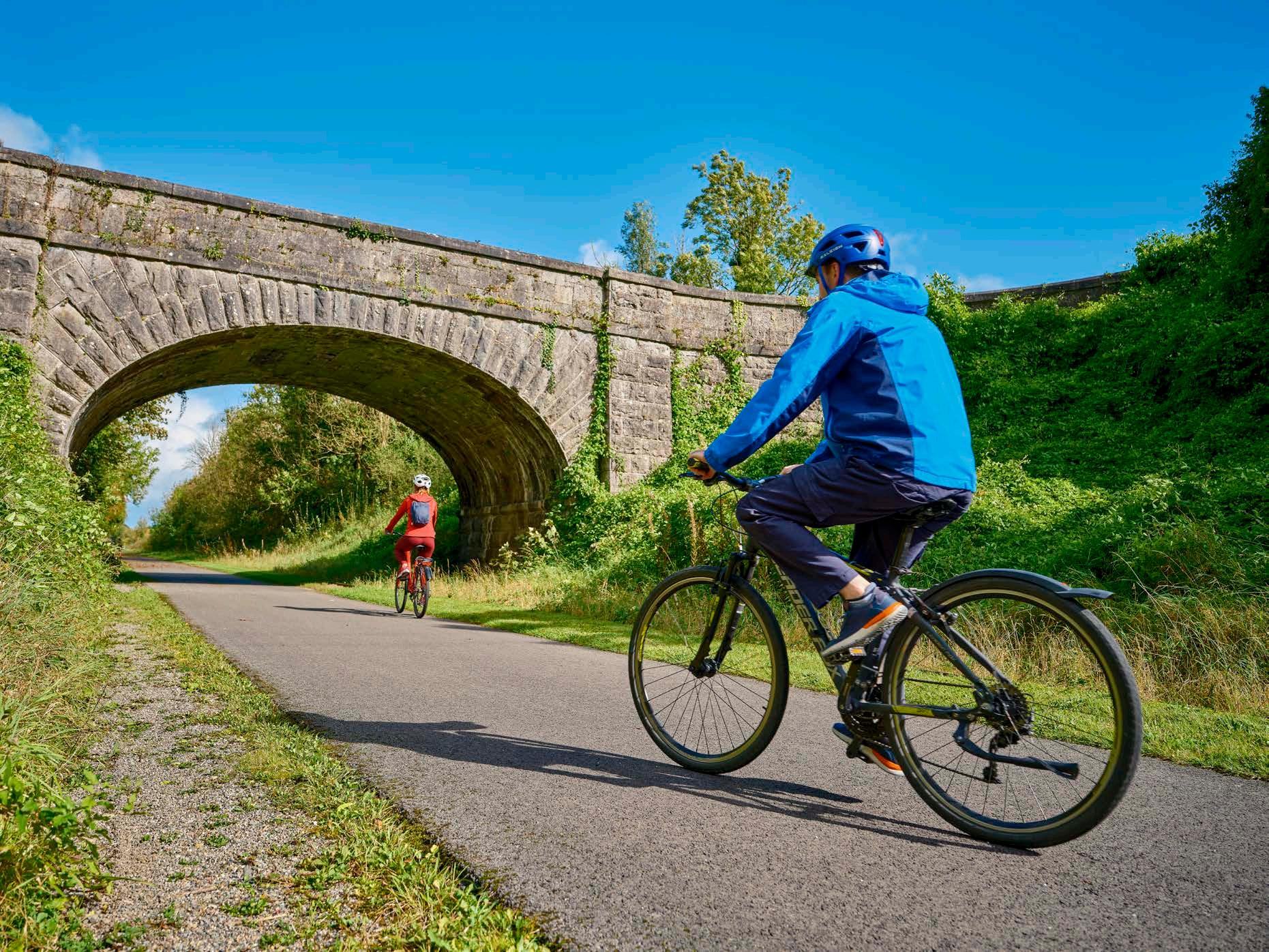
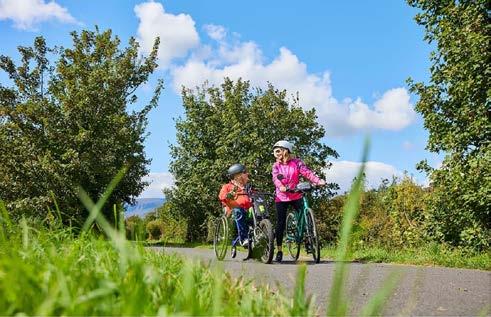
Whether it’s a cycling holiday with friends, a short pedal with little ones or a leisurely stroll in the sunshine, Ireland’s vast network of greenways has a trail to suit every mood. Enjoy coastal views, stunning mountain scenery and peaceful canals on five of the country’s incredible greenways.
Plan your greenway getaway and don’t worry if you didn’t bring your bike, you can hire one at the start of the trip.
Take off on the 40km stretch of the Limerick Greenway and cycle through Limerick’s serene countryside. Following the old Limerick to Kerry railway line, the route connects Rathkeale and Newcastle West to Abbeyfeale. You’ll pass through old relics from the railway’s past, including the 115m Barnagh Train Tunnel and the cast-iron Ferguson’s Viaduct, both built in the 19th century. Although the Greenway is relatively easy in terms of difficulty, it doesn’t mean that you can’t take a welcome break along the way. Stop off in Ardagh, the original burial site of
the ornate Ardagh Chalice, before cycling on to Newcastle West for a tour of Desmond Castle, a 15th-century fortress which was once home to the Earls of Desmond. If you’d rather keep a workout going, lace up your hiking boots and trek in the nearby Sliabh Luachra region.
Finish up your cycle in Abbeyfeale and reward yourself with a juicy burger at the Leens Hotel in the heart of the town.
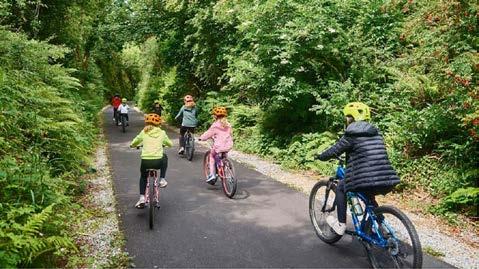
The Great Western Greenway kicks off from the postcardworthy town of Westport in County Mayo, travels 49km along the edge of the otherworldly Clew Bay and across to Acaill (Achill Island) before finishing in lovely Cashel.
Much like the Limerick Greenway, the route follows an old railway line which has been transformed into a smooth, even track suitable for cyclists and walkers of any ability. Follow the trail along the old railway, with Croagh Patrick standing tall in the background, and finish off your day with a dip in the turquoise waters of Keem Bay. If you feel up to it, ride the greenway back to Westport afterwards or let your bike hire company pick you up from your endpoint.
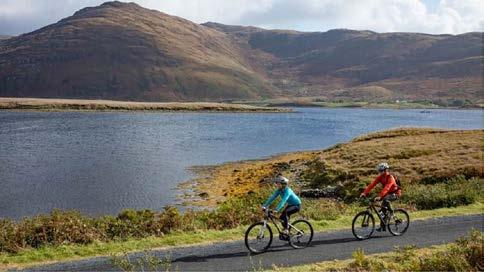
If the idea of tackling the whole route is daunting, there are easy ways to break it up without missing out on the key landmarks you want to see. Depending on where you’d like to explore, the track can be split up into four cycles, each one varying in length and all with their own stunning scenery.
See the best of the Sunny South East on a cycle along the Waterford Greenway. Set off from the historic Viking city and cruise along the relatively flat greenway towards Dungarvan, 47.8km away.
Not too far away from the starting point, Mount Congreve Gardens in Kilmeadan makes for a beautiful spot to enjoy a bit of fuel before heading out on the rest of your journey, whether its’s a cup of coffee or a homemade dessert at the café on-site. You can also pack your own lunch and eat at one of the many picnic spots along the track.
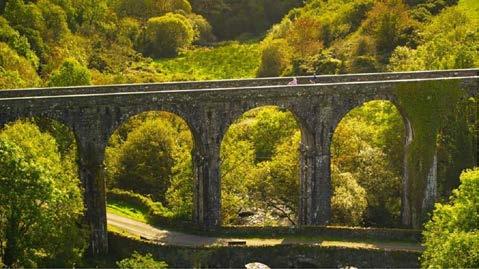
Follow the way-markings along the Suir Valley Railway, which curves around the base of the Comeragh Mountains, as they guide you over impressive stone viaducts through Ballyvoyle Tunnel and all the way to Dungarvan Bay. Once there, enjoy a relaxing coastal weekend stay in this gorgeous harbour town, complete with beautiful views and welcoming gastropubs.
Officially Ireland’s longest greenway, the Royal Canal Greenway starts in Kildare and runs for an astounding 121.5km, traversing through Meath and Westmeath before finishing up in either Longford town or Cloondara in County Longford. The full route is relatively flat and takes roughly six days to complete – an impressive accomplishment for any cyclist or hiker.
But for those who are on the lookout for a day out rather than an extended trip, you can access the Greenway at five major trailheads: Maynooth, Enfield, Mullingar, Cloondara or Longford town. Leisurely pedal your way along the old canal towpath exploring the built and natural heritage, as barges sail past and fishermen cast their lines.
There are plenty of welcoming cafés and pubs dotted along the path, as well as several picnic benches. Spend the night in one of the waterside villages before taking on the next stint in your journey. If you want to keep exploring, leave Mullingar along the Old Rail Trail Greenway and continue on to the River Shannon in Athlone.
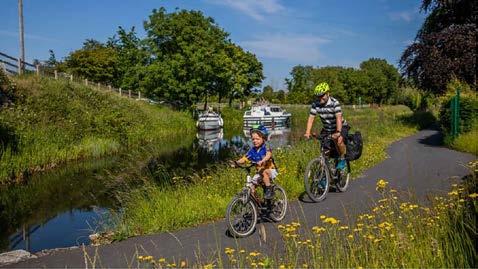
For a journey that’s short in length but not on scenery, the Carlingford Lough Greenway is a great shout. This 7.7km route opened in 2014 and connects Carlingford with Omeath. Set off from Carlingford Marina, along the lough and enjoy the stunning scenery of the Cooley and Mourne Mountains, as well as beautiful Warrenpoint in the distance. The Greenway takes only 90 minutes to complete, and parking is available at either end of the route, ideal for anyone looking for a quick adventure outdoors.
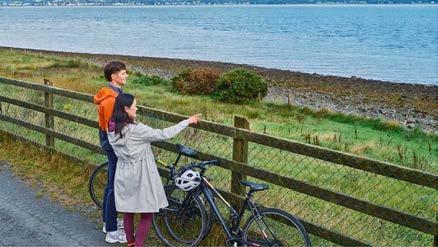
While in the area, enjoy a dish of famous Carlingford Oysters in one of the restaurants or pubs on the narrow streets of this Norman town and see why so many people love spending a weekend away in Carlingford.
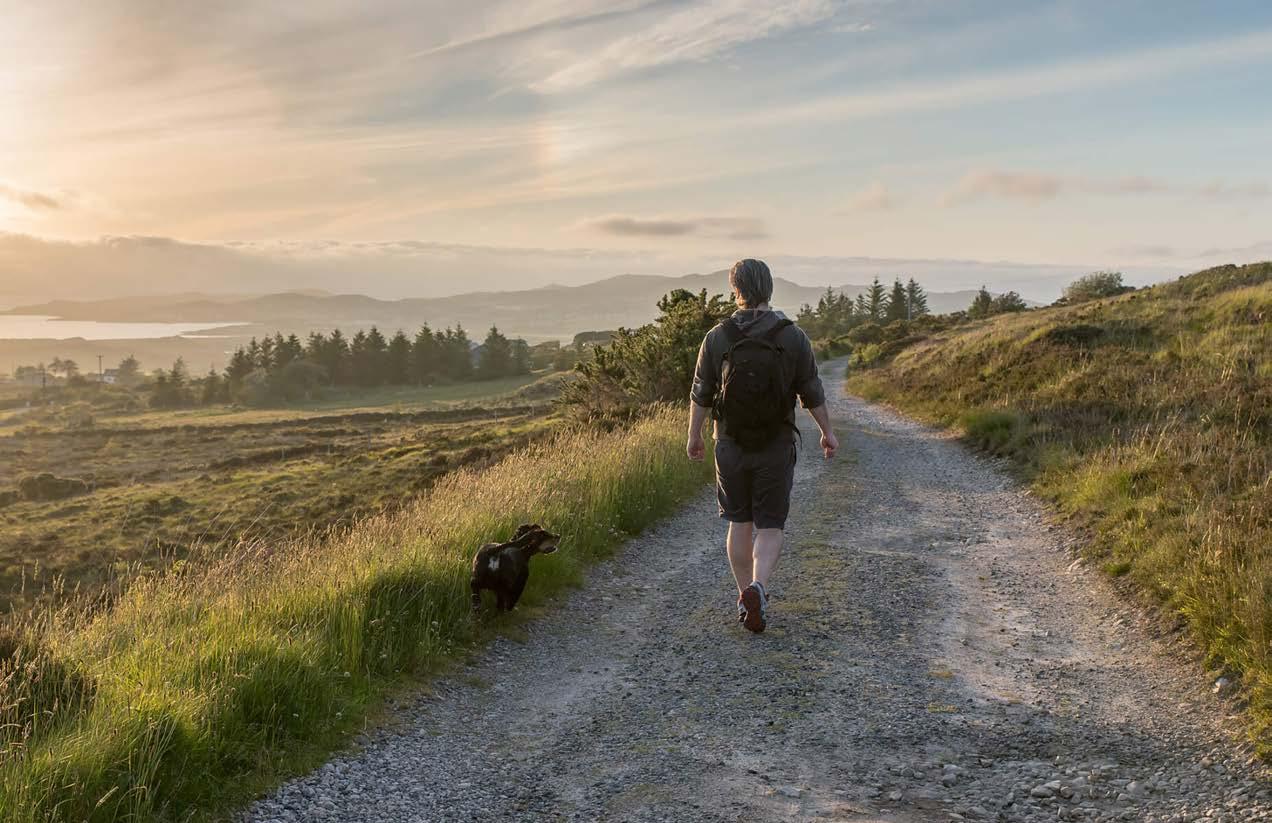
Gaeilge, the language native to the island of Ireland, is undergoing an exhilarating revival. From vibrant theatres and trendy pubs to a variety of bilingual visitor experiences, Gaeilge is at the heart of a cultural resurgence that’s inviting locals and visitors alike to connect with Ireland’s unique heritage.
The beautiful, lyrical sound of the Irish language isn’t just pleasing to the ear, it’s also rich in history; according to many scholars, it’s the oldest written vernacular language in western Europe, dating back over 2,500 years.
Under British rule, Gaeilge became a minority language in Ireland, yet it was never allowed to die out and over the centuries, Ireland’s mother tongue was kept alive by people all over the island, with certain areas remaining predominantly Irish speaking.
In 1922, in a bid to ensure all citizens could speak their native language, many schools across the country began teaching all subjects ‘as Gaeilge’ (in Irish). But for many students, learning a language they wouldn’t use in everyday life was seen as a chore and they approached the ancient tongue of their ancestors with something akin to boredom.
However, the Irish language is not just surviving, it is thriving and enjoying a vibrant cultural moment. Once confined to the classroom, Gaeilge is enjoying a creative renaissance. A new generation proudly weaves their mother tongue into music, arts, fashion, and everyday life. Artists like Hozier and The Mary Wallopers blend Irish Gaelic lyrics with
folk, electro, and pop, proving Irish is as fresh and dynamic as any modern language. Festivals such as Other Voices and TradFest showcase Irish-language acts to eager audiences.
In fashion, brands like Pellador FC, De Búrca, and BEIR BUA boldly bring Gaeilge into streetwear and knitwear. Pellador’s retro Celtic jumpers fuse Irish sporting heritage with modern design, De Búrca features Gaeilge slogans and Irish proverbs in bold styles, and BEIR BUA’s recent collaboration with Beamish, a retro sports jersey in Cork red and Antrim gold, sold out instantly, capturing Ireland’s cultural revival.
Gaelic typography is also on the rise, featured in branding for An Post, Beamish, Jameson, and more, turning heritage motifs into striking symbols of Irish pride.
This is not cultural nostalgia. For visitors, Gaeilge today is a living, expressive identity found in music, fashion, festivals, podcasts, and local meet-ups. Learning a cúpla focal (a few words) connects you to a creative, confident Irish community.
Across the island, Gaelscoils, Irishlanguage schools, have waiting lists, with nearly 70,000 students learning through Irish. Every summer, teenagers attend Irish-language camps where they enjoy sport, music, dance, and live with a ‘Bean an Tí’ (woman of the house), speaking only Irish.
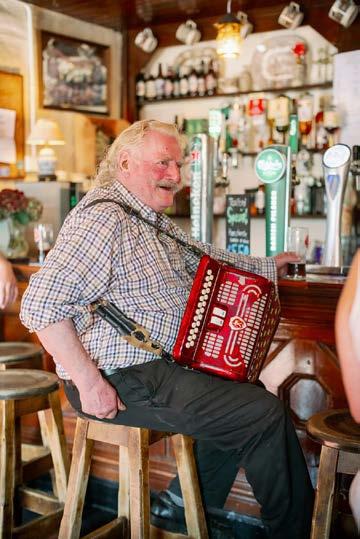
for the hundreds of Gaelscoils (schools where the curriculum is taught through Gaelic), and almost 70,000 students are currently learning all of their subjects through Irish.
In addition, every summer countless teenagers attend Irish-language summer camps. The much-loved tradition, which has become a rite of passage, sees the youngsters enjoy several weeks of sport, traditional music, dance and more, while living with a ‘Bean an Tí’ (woman of the house) and her family and speaking only Irish for the duration of their stay.
But it’s not just young people who are actively enjoying the revival of our native tongue. Adults both from Ireland and abroad are now signing up for activities and events or even one-off occasions where they can learn a ‘cúpla focal’ (a few words) of our unique language, while having fun and making new friends.
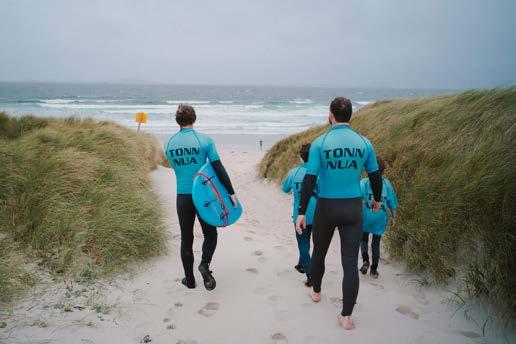
Máiréad Folan from Galway is one such person. She joined An Taibhdhearc – the National Irish Language Theatre in Galway city in a bid to learn more about the language through the medium of drama, a subject she is deeply interested in.
“What excites me most today is the way Irish-language theatre is reaching
new audiences and finding renewed relevance,” she said. “Younger generations are connecting with the language and it’s a powerful thing to watch stories rooted in our culture come to life in ways which feel urgent, fresh and deeply human.
“I believe that for visitors to Ireland, Irish-language theatre offers something you won’t find anywhere else. It’s an immersion into a different way of seeing, hearing and feeling a story. It invites you into a connection with language and place that’s uniquely Irish and deeply moving.”
As an Irish native, Máiréad already had an understanding of the language, but An Taibhdhearc welcomes everyone into the fold regardless of whether they’re a fluent Irish speaker or have no knowledge of it at all. Various shows ‘as Gaeilge’ run throughout the year, with English-language audio access for people who want to follow what’s going on, and a café for anyone wishing to pop in and immerse themselves in an Irish-speaking environment.
Irish-language experiences
In 2026, Ireland celebrates 100-years since the formal recognition of the Gaeltacht regions - vibrant Irish-speaking communities dedicated to preserving and promoting the Irish language and culture. For anyone eager to experience the Ireland of old, a visit to these Gaeltacht areas is essential. They include the Aran Islands off the west coast, parts of Donegal, Galway, Kerry, and Mayo, as well as smaller regions in Cork, Waterford, Meath, and west Belfast.
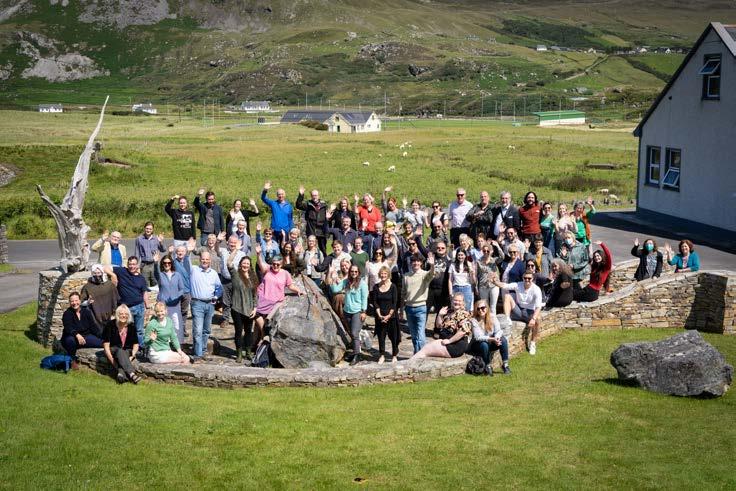
Gaeilge & Fáilte is a project to promote tourism in these Irish-speaking regions. From the Croithlí Whiskey Distillery Experience in Donegal and Criostal na Rinne glassware studio tours in Waterford to the Tonn Nua Surf School in Mayo, these activities are captivating ways to experience the Irish language on a visit.
Anyone wishing to develop a better understanding of Gaeilge can enjoy an immersive holiday with Oideas Gael in Donegal, which offers language courses and cultural breaks in the stunning environs of one of Ireland’s most breathtaking counties. People can also choose to explore different areas of the country with Find my Ireland – these trips are perfect for beginners looking to improve their Irish in a welcoming space.
But visitors may just want to enjoy a night out or even an afternoon activity. Fortunately, there are many options available. PEIG holds conversation, walking and sports groups across Ireland, Club Áras na nGael is an Irish languagespeaking pub in Galway, while Hynes Bar in the hip Stoneybatter neighbourhood of Dublin offers a discount on drinks ordered through Irish, so it’s a great incentive to practice. In the west, Connemara Pub Tours stops by Irish-speaking bars for trad music sessions and storytelling, with conversational Gaeilge flowing alongside pints of Guinness.
Some people will prefer the formal environment of a classroom, and Gael Linn offers courses in Irish language and culture for adults, designed for learners with no prior knowledge. In Belfast, Cultúrlann has something for everyone, from classes and music gigs to poetry readings and visual arts.
focal’
Having no experience of the language but an interest in learning is something that Liz Walsh can relate to. With family roots in Ireland, the Boston woman always
wanted to learn a few words, so on her last visit to the west coast, she decided to see what she could soak up.
“I love the whole idea of Gaelic – firstly because it’s such a beautiful and old language, but also because my ancestors would have spoken it,” she said. “I have been to Ireland on several occasions and once we unintentionally ended up in an Irish-speaking part of Kerry, which I found fascinating. So, last year, my husband and I went to the island of Inis Mór so we could stay where people spoke the language regularly. We also enrolled in a class and learned some of the basics: ‘please’, ‘thank you’, ‘hello’, ‘goodbye’ and other pleasantries.
“We are planning to go back to Ireland next year and for sure, I’ll be doing another class somewhere. So many people don’t know that the Irish language is still in existence - but it is very much alive, and understanding a few words is very doable and so rewarding – it made me feel very proud of myself and I’m looking forward to learning more.”
To speak even a few words of Irish is to brush against the soul of the island - to echo the sounds of its ancient landscape, its myths, and its people. For those seeking a deeper connection to Ireland, Gaeilge is more than a language; it’s a thread that ties them to a living tradition, still resonating through its mountains, coastlines, and centuries.”
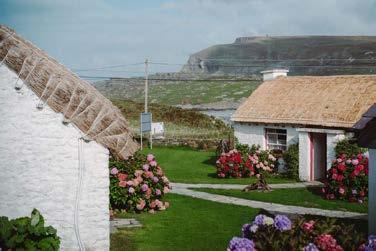
• King John’s Castle
• St. Mary’s Cathedral
• Adare Village
• Lough Gur
• Ballyhoura Mountains
• Thomond Park
• The Treaty Stone
• The Hunt Museum
• Shannon Estuary Drive
• Limerick City
• Adare
• Newcastle West
• Abbeyfeale
• Kilmallock
• Foynes
• Castleconnell
• Askeaton
• Bruff
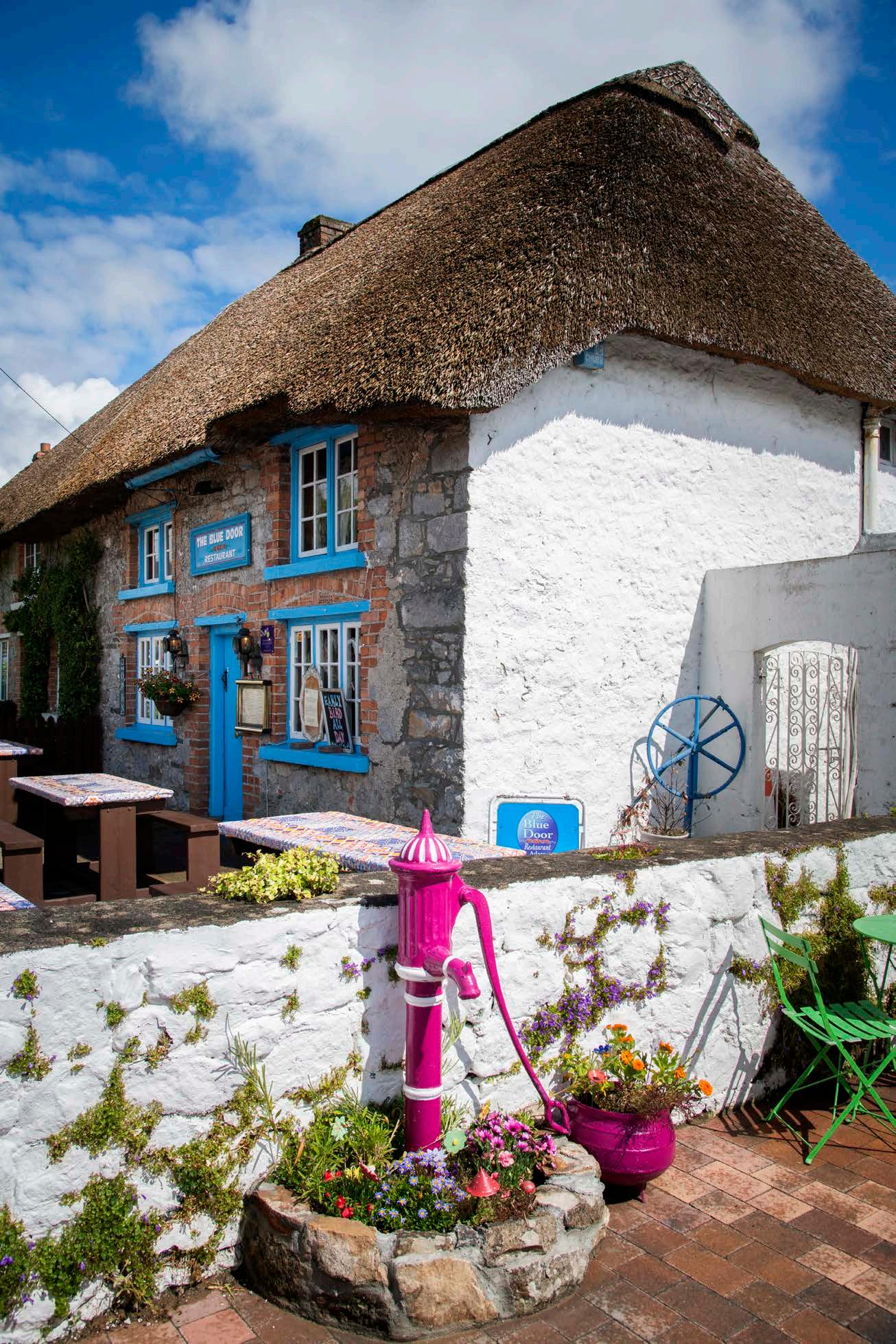
• The Savoy
• No.1 Pery Square
• Dunraven Arms (Adare)
• The George Hotel
• The Absolute Hotel
• Woodlands House Hotel
• Rathkeale House Hotel
• Adare Manor
• Limerick Strand Hotel
• The Texas Steakout
• 1826 Adare
• Hamptons Grill
• The Curragower bar
• The Cornstore
• Bella Italia
• Freddy’s Bistro
• The Buttery
• Jasmine Palace
• Dolan’s
• The Locke Bar
• Nancy Blake’s
• Mother Macs
• Tom Collins
• The Commercial
• JJ Bowles
• 1314 Thirteen Fourteen
• 101 O’Connell Street
(Mostly West Limerick Coast)
• Kilkee (nearby Clare but commonly paired)
• Ballybunion (border Kerry/ Limerick trip combo)
• Glin Pier
• Ballycuggeran (Lough Derg)
• White Strand (Clare border day trip)
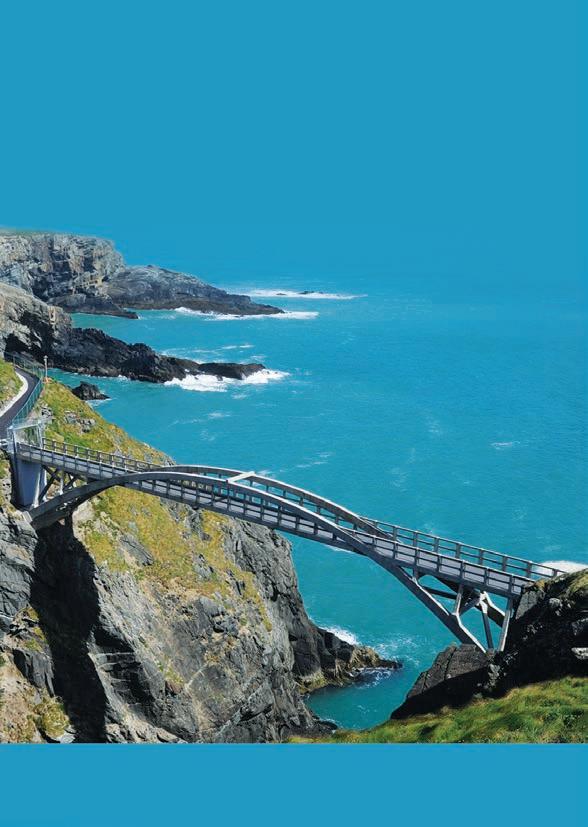




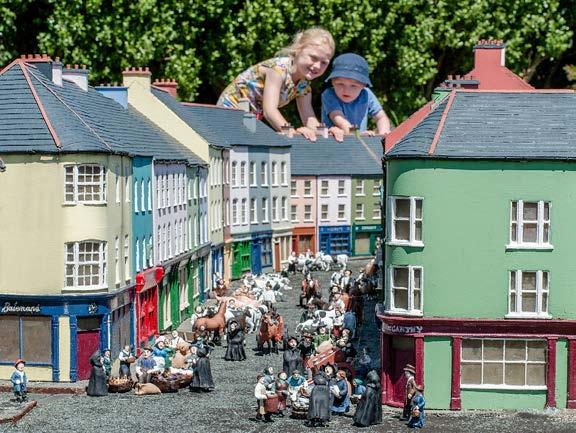
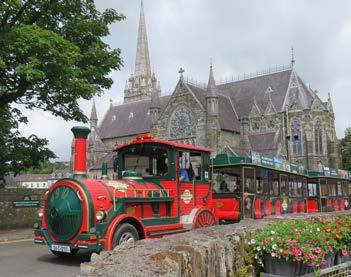


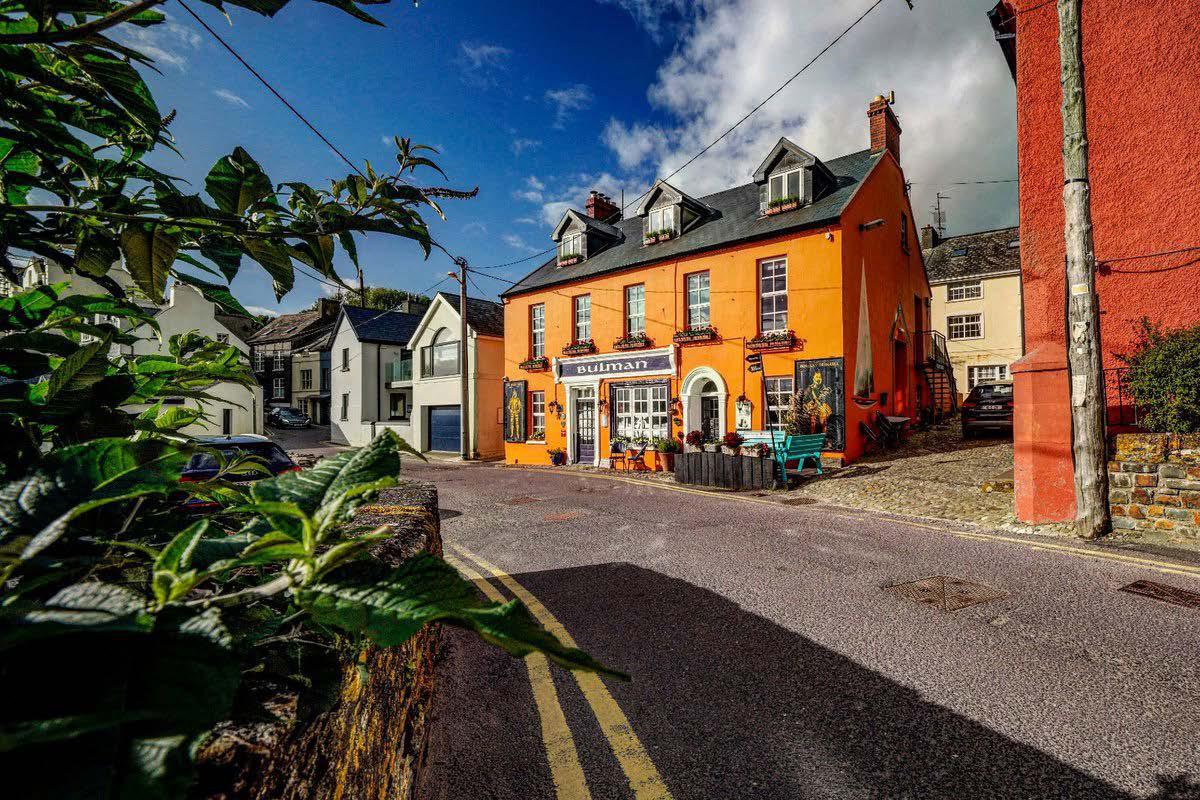
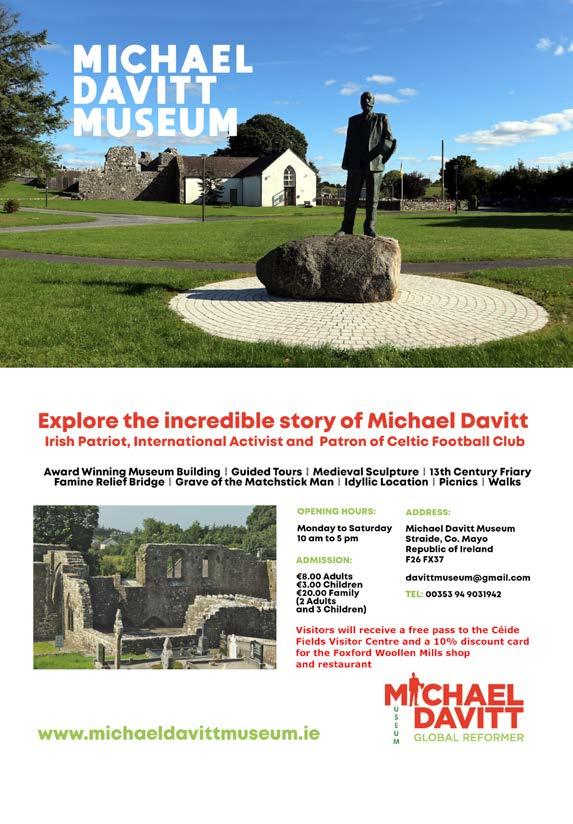
1. An Grianán Theatre
A vibrant arts venue in Letterkenny hosting a range of performances from drama to music.
Address: Port Road, Letterkenny, Co. Donegal, F92 RV1F
Phone: +353 74 912 0777
Email: info@angrianan.com
2. Leo’s Tavern
Famed as the birthplace of Clannad and Enya, this tavern offers live traditional music sessions.
Address: Meenaleck, Crolly, Co. Donegal, F92 DW40
Phone: +353 74 954 8143
Email: info@leostavern.com
3. Balor Arts Centre
A cultural hub in Ballybofey showcasing theatre productions, concerts, and workshops.
Address: Main Street, Ballybofey, Co. Donegal, F93 HC04
Phone: +353 74 913 1840
Email: info@balorartscentre.com
1. The Dock Arts Centre
A multi-disciplinary arts venue in Carrick-on-Shannon offering exhibitions, theatre, and music events.
Address: St. George’s Terrace, Carrickon-Shannon, Co. Leitrim, N41 T2X2
Phone: +353 71 965 0828
Email: info@thedock.ie
2. Glens Centre
An intimate venue in Manorhamilton
hosting a variety of performances, including traditional and contemporary arts.
Address: New Line, Manorhamilton, Co. Leitrim, F91 VP23
Phone: +353 71 985 5833
Email: info@theglenscentre.com

3. Carrig Brewing Company
A local brewery offering tours and tastings, providing insight into craft beer production.
Address: Drumshanbo, Co. Leitrim, N41 D2H6
Phone: +353 71 964 0866
Email: info@carrigbrewing.com
1. Hawk’s Well Theatre
A premier venue in Sligo town presenting a diverse program of music, theatre, and dance.
Address: Temple Street, Sligo, F91 CF95
Phone: +353 71 916 1518
Email: info@hawkswell.com
2. The Model
Home to the Niland Collection, this arts center offers contemporary art exhibitions and cultural events.
Address: The Mall, Sligo, F91 TP20
Phone: +353 71 914 1405
Email: info@themodel.ie
3. Strandhill People’s Market
A bustling market featuring local crafts, food, and live music every Sunday.
Address: Sligo Airport Hangar, Strandhill, Co. Sligo
Phone: +353 86 164 1744
Email: strandhillpeoplesmarke t@gmail.com
1. Matt Molloy’s Pub
Owned by The Chieftains’ flautist, this Westport pub is renowned for its traditional music sessions.
Address: Bridge Street, Westport, Co. Mayo
Phone: +353 98 26655
Email: info@mattmolloy.com
2. TF Royal Theatre and Event Centre
A large venue in Castlebar hosting concerts, comedy shows, and theatrical performances.
Address: Old Westport Road, Castlebar, Co. Mayo, F23 R288
Phone: +353 94 902 3111
Email: info@theroyal.ie
3. Ballina Arts Centre
A cultural venue offering a range of arts events, including exhibitions, workshops, and performances.
Address: Barrett Street, Ballina, Co. Mayo, F26 NW83
Phone: +353 96 73593
Email: info@ballinaartscentre.com
1. Galway Arts Centre
A vibrant hub promoting visual arts, literature, and performance, hosting exhibitions, workshops, and events year-round.
Address: 47 Dominick Street, Galway, H91 X0AP
Phone: +353 91 565 886
Email: info@galwayartscentre.ie
2. Nun’s Island Theatre
An intimate 82-seat venue offering a range of performances, including theatre productions, film screenings, and music events.
Address: Nun’s Island Street, Galway
Phone: +353 91 565 886
Email: info@galwayartscentre.ie
3. Ballinasloe Town Hall Theatre
A historic theatre hosting musicals, dramas, and community events, serving as a cultural cornerstone in Ballinasloe.
Address: Society Street, Ballinasloe, Co. Galway
Phone: +353 90 964 5831
Email: info@ballinasloetownhall.com
Exploring Ireland’s Wild Atlantic Way offers a plethora of entertainment venues that cater to diverse interests. Below is a curated list of three notable venues in each county along the route, complete with contact details:
COUNTY CLARE:
1. glór Theatre
A premier arts and entertainment venue in Ennis, showcasing music, theatre, dance, and visual arts.concerts, comedy shows, and theatrical performances.
Address: Causeway Link, Ennis, Co. Clare, V95 VHP0
Phone: +353 65 684 3103
Email: info@glor.ie
2. Doolin Music House
An intimate setting offering traditional Irish music sessions and storytelling experiences.
Address: Teergonean, Doolin, Co. Clare
Phone: +353 87 175 0979
Email: info@doolinmusichouse.com
3. Vandeleur Walled Garden
A restored botanical garden in Kilrush, hosting events, workshops, and offering a serene visitor experience.
Address: Killimer Road, Kilrush, Co. Clare Phone: +353 65 905 1760
Email: info@vandeleurwalledgarden.ie
COUNTY LIMERICK:
1. Dolan’s
A renowned music venue and pub offering live performances across multiple genres, with three separate stages.
Address: Dock Road, Limerick Phone: +353 61 314 483
Email: info@dolans.ie
2. Lime Tree Theatre
A modern 510-seat theatre located at Mary Immaculate College, hosting a variety of performances from drama to comedy.
Address: Mary Immaculate College, Courtbrack Avenue, Limerick
Phone: +353 61 953 400
Email: info@limetreetheatre.ie
3. Belltable Arts Centre
A multidisciplinary arts venue offering theatre productions, film screenings, and visual arts exhibitions.
Address: 69 O’Connell Street, Limerick
Phone: +353 61 953 400
Email: info@limetreetheatre.ie
COUNTY KERRY:
1. Siamsa Tíre Theatre and Arts Centre
Nestled in Tralee, Siamsa Tíre is a bespoke venue boasting a fully accessible 350-seat theatre, a spacious rehearsal studio, a dedicated music room, and inspiring gallery spaces.
Address: Town Park, Tralee, Co. Kerry
Phone: +353 66 712 3055
Email: info@siamsatire.com
2. INEC Killarney
One of Ireland’s premier venues, hosting concerts, comedy shows, and theatrical performances with a capacity of up to 4,000.
Address: Muckross Road, Killarney, Co. Kerry
Phone:+353 64 667 1555
Email: info@inec.ie
3. St. John’s Theatre & Arts Centre
A cultural hub in Listowel offering a diverse program of theatre, music, and visual arts in a converted church setting.
Address: The Square, Listowel, Co. Kerry
Phone: +353 68 22566
Email: info@stjohnstheatre.ie
COUNTY CORK:
1. Green Glens Arena
A versatile venue hosting a range of events, from equestrian competitions to concerts and exhibitions. With a seating capacity of 8,000, it has welcomed international artists and significant cultural events.
Address: Millstreet, Co. Cork
Phone:+353 29 70039
Email: info@greenglens.ie
2. The Maritime Hotel
Nestled along the rugged coastline of the Wild Atlantic Way in Bantry, The Maritime Hotel offers luxury accommodations and hosts various entertainment events. Guests can enjoy live music sessions, culinary experiences, and easy access to local attractions.
Address: The Quay, Bantry, Co. Cork, P75 XW35
Phone:+353 27 54700
Email: info@themaritime.ie
3. Dursey Island Cable Car
For a unique experience, visitors can take Ireland’s only cable car to Dursey Island. While the island itself is serene, the journey offers breathtaking views of the Atlantic and is an adventure in itself. Note that the island has no shops or restaurants, so plan accordingly.
Address: Dursey Sound, Beara Peninsula, Co. Cork
Phone: +353 27 75099
Email: info@durseyisland.ie
These venues offer a blend of cultural, musical, and unique travel experiences, ensuring that visitors to County Cork along the Wild Atlantic Way have memorable and diverse entertainment options.
If you’re seeking the perfect blend of adventure, culture and stunning scenery, a long weekend in Dingle, County Kerry, is for you. Nestled on the dramatic Wild Atlantic Way, Dingle is a charming, coastal town, bursting with history, natural beauty and warm Irish hospitality. Whether you’re wandering through its colourful streets or exploring the surrounding landscapes, this corner of Ireland offers endless ways to enjoy your stay.
On your final day, it’s time to get active! If you’re visiting in the warmer months, take to the waters for some kayaking around Dingle Bay. Alternatively, lace up your hiking boots and trek along the Dingle Way, a long-distance trail that provides magnificent views of the Atlantic Ocean and the mountains surrounding the peninsula.
For the ultimate relaxation after your outdoor pursuits, treat yourself to an afternoon of luxury at Sheen Falls Lodge. Although a short drive from Dingle, this five-star hotel and spa in nearby Kenmare offers the perfect place to unwind in style. Whether you’re indulging in a rejuvenating spa treatment, dining on gourmet local cuisine, or simply enjoying the tranquillity of the surrounding estate, Sheen Falls guarantees a blissful retreat to round off your trip.
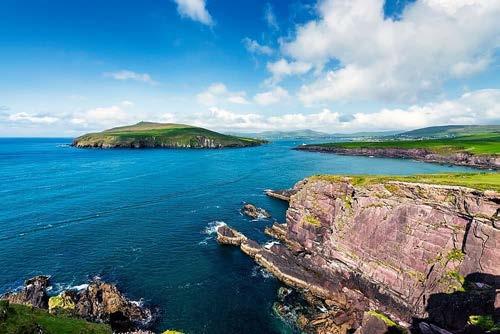
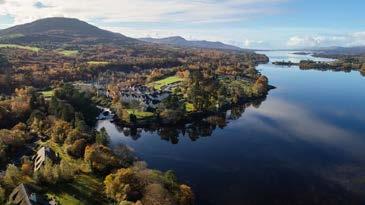
Dingle is home to some of Ireland’s most spectacular scenery, so make sure to pack your camera for an exploration of the Slea Head Drive, a scenic route that loops around the tip of the Dingle Peninsula. With panoramic views of rugged cliffs, distant islands and ancient beehive huts, Slea Head Drive is the perfect way to see the breathtaking beauty of Ireland’s west coast.
For lunch, why not sample the fresh seafood for which Dingle is renowned! Try out one of the town’s seafood shacks or restaurants along the harbour. The day wouldn’t be complete without experiencing a taste of local craftsmanship at Skellig Six 18 Distiller. Located a short drive from Dingle, this boutique distillery offers guided tours and tastings of its premium whiskey and gin, crafted using locally sourced ingredients and pure Kerry water.
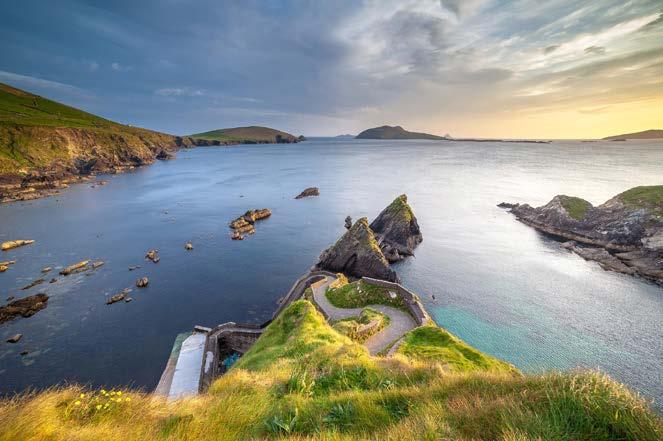
Start your adventure by diving into Dingle’s rich artistic heritage at Louis Mulcahy Pottery Located just outside Dingle, this iconic pottery studio is the perfect place to see traditional Irish craftsmanship in action. Whether you’re browsing the beautiful ceramics in the showroom or taking part in one of their hands-on workshops, you’ll gain a deep appreciation for this time-honoured art form. Take home a handcrafted piece to remind you of your time in this special part of Ireland.
Afterwards, head back to Dingle town for a stroll along its vibrant harbour, where fishing boats bob gently in the water and seafood restaurants line the streets. In the evening, visit the legendary Dick Mack’s Pub. With over a century of history, this beloved pub doubles as a leather shop and boasts a cosy atmosphere with walls filled with trinkets and photos from days gone by.
Grab a pint, enjoy the live traditional music, and soak up the friendly vibe that makes Dingle pubs famous worldwide.

Visiting Ireland? Go Wild Magazine is now available on PressReader!
English not your first language?
Use PressReader's translation feature to read Go Wild articles in 21 di erent languages!

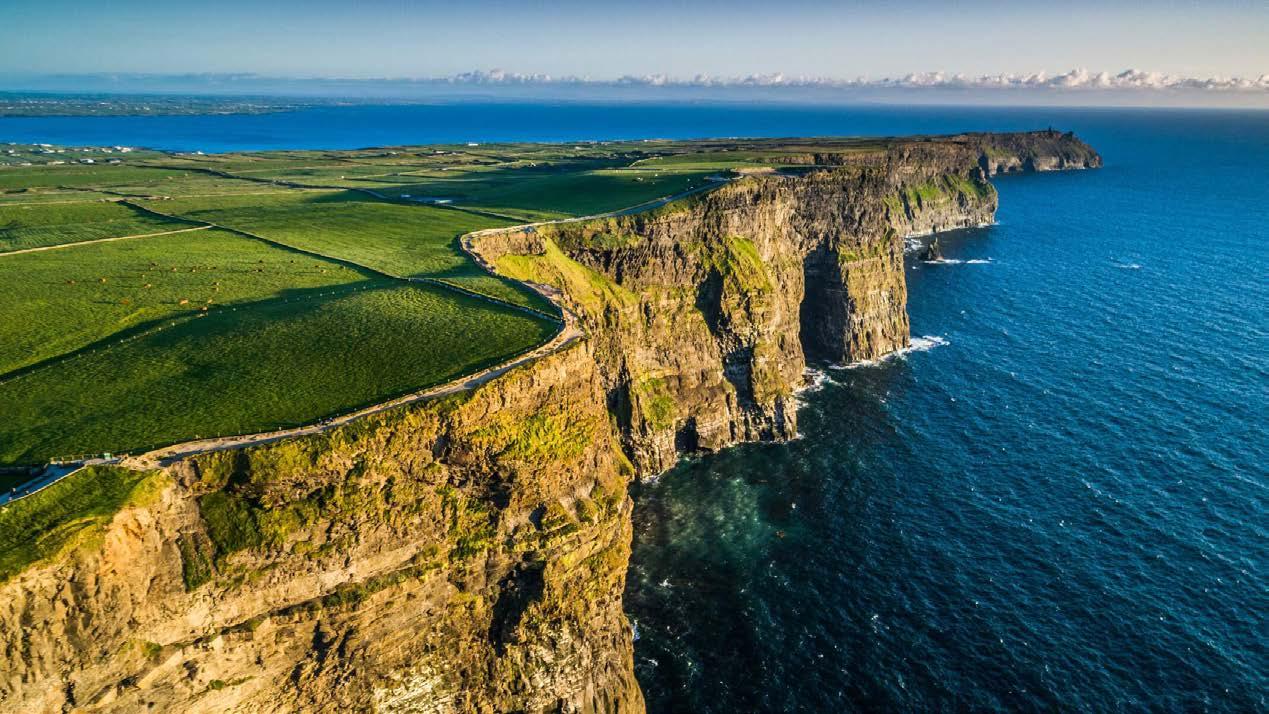
By Keith Nicol
I have been lucky enough to explore many beautiful destinations around the world but few have captivated me quite like the Wild Atlantic Way in Ireland. This stunning 2,500 km route stretches along Ireland’s rugged west coast, taking in some of the most spectacular landscapes and seascapes you are ever likely to see. With so much to see and do along the way, here are just a few of the top attractions that I would recommend for anyone planning a trip to Ireland’s Wild Atlantic Way.
No visit to the Wild Atlantic Way would be complete without a stop at the iconic Cliffs of Moher. These towering cliffs rise to a height of 214 metres and offer breathtaking views over the Atlantic Ocean.
One of the most popular driving routes in Ireland, the Ring of Kerry is a 179 km circular route that takes in some of the most picturesque towns and villages in the country. Along the way, visitors can enjoy stunning views of the Atlantic coastline, visit ancient monastic sites and experience the traditional Irish way of life.
Located in the heart of County Kerry, Killarney National Park is a must-visit destination for nature lovers. With its rugged mountain ranges, pristine lakes and ancient woodlands, the park offers visitors a chance to escape the hustle and bustle of modern life and reconnect with nature.
4. Dingle Peninsula
Another popular driving route, the Dingle Peninsula offers visitors a chance to explore some of the most remote and rugged landscapes in Ireland. Along the way, visitors can enjoy stunning views of the Atlantic coastline, visit ancient archaeological sites and experience the traditional Irish way of life.
5. Connemara National Park
Located in the heart of County Galway, Connemara National Park is a haven for nature lovers. With its rugged mountains, pristine lakes and wild bogs, the park offers visitors a chance to explore some of the most spectacular landscapes in Ireland. There are several walking trails and viewing points in the park, allowing visitors to experience the beauty of Connemara at their own pace.
Located off the coast of County Kerry, the Skellig Islands are a UNESCO World Heritage Site and one of the most unique destinations on the Wild Atlantic Way. Visitors can take a boat tour to the islands to explore the ancient monastic settlements and observe the rich wildlife, including seals, dolphins and seabirds.
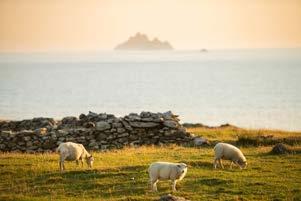
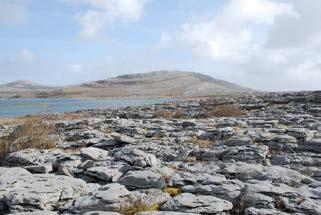
Located in County Clare, the Burren is a unique and otherworldly landscape that is unlike anything else you will find on the Wild Atlantic Way. The area is characterized by its limestone pavements, which are home to a diverse array of flora and fauna Visitors can explore the area on foot, taking in the unique landscape and learning about the fascinating geology and natural history of the region.
Located off the coast of County Mayo, Achill Island is a rugged and unspoiled destination that offers visitors a chance to escape the crowds and reconnect with nature. The island is home to some of the most spectacular beaches in Ireland, as well as several walking trails and cycling routes that take visitors through some of the most scenic landscapes on the island.
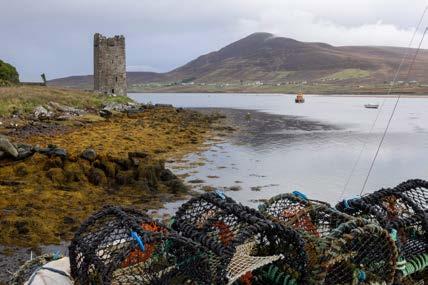
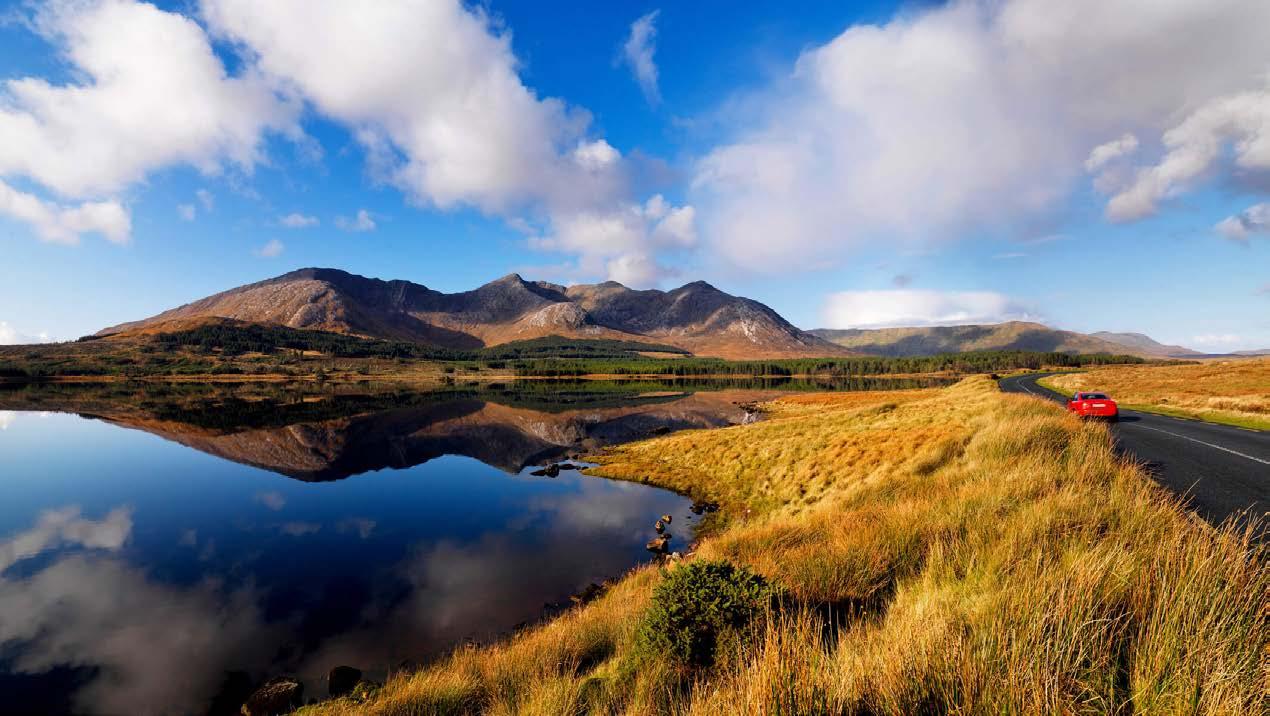
Located in the far north of Ireland, Donegal is a wild and remote destination that is perfect for anyone looking to escape the crowds and experience the rugged beauty of the Wild Atlantic Way. Visitors can explore the stunning coastline, hike in the rugged mountains or experience the unique culture and traditions of this ancient part of Ireland.
No visit to the Wild Atlantic Way would be complete without a stop in Galway City. Known as the cultural heart of Ireland, Galway is a vibrant and bustling city that is steeped in history and tradition. Visitors can explore the city’s winding medieval streets, enjoy live music and entertainment in its many pubs and restaurants, or take a stroll along the banks of the River Corrib.
Located in the southwest of Ireland, the Beara Peninsula is a hidden gem that is often overlooked by visitors to the Wild Atlantic Way. The area is characterized by its rugged mountain ranges, picturesque fishing villages and stunning coastal scenery. Visitors can explore the area on foot or by car, taking in the unique landscapes and traditional Irish way of life.
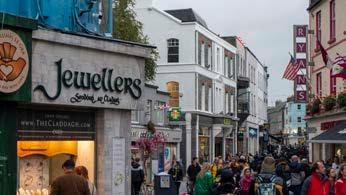
Located in County Donegal, the Cliffs of Slieve League are among the highest sea cliffs in Europe, rising to a height of 601 meters. Visitors can take a guided tour of the cliffs or explore the area on foot, taking in the stunning views over the Atlantic Ocean and the rugged coastline of County Donegal.
Located off the coast of County Galway, the Aran Islands are a group of three islands that offer visitors a chance to experience traditional Irish culture and hospitality. Visitors can explore the islands on foot or by bicycle, taking in the stunning views over the Atlantic Ocean and visiting the ancient monastic sites and traditional Irish villages that dot the landscape.
Located in County Mayo, the Great Western Greenway is a 42 km off-road cycling and walking trail that takes visitors through some of the most scenic landscapes in Ireland. The trail follows the route of an old railway line and takes visitors through ancient woodlands, past pristine lakes and along the rugged coastline of County Mayo.
Don’t miss out on experiencing the Signature Discover Points along the Wild Atlantic Way.. These are 15 key destinations that have been identified as must-see attractions for anyone exploring the Wild Atlantic Way. These include the Cliffs of Moher, the Skellig Islands, the Burren and the Dingle Peninsula, among others.
In addition to these top attractions, there are countless other hidden gems and off-the-beaten-path destinations that are waiting to be discovered along the Wild Atlantic Way. From remote beaches and hidden coves to quaint fishing villages and traditional Irish pubs, the route offers something for everyone.
Whether you are a nature lover, a history buff, or simply looking for a chance to escape the stresses of modern life, the Wild Atlantic Way is an unforgettable destination that is sure to leave you with memories that will last a lifetime. So pack your bags, hit the road and get ready to experience the wild and rugged beauty of Ireland’s west coast.
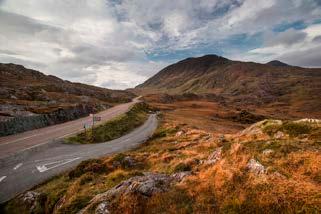
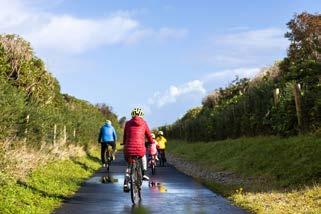
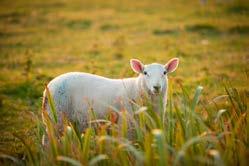
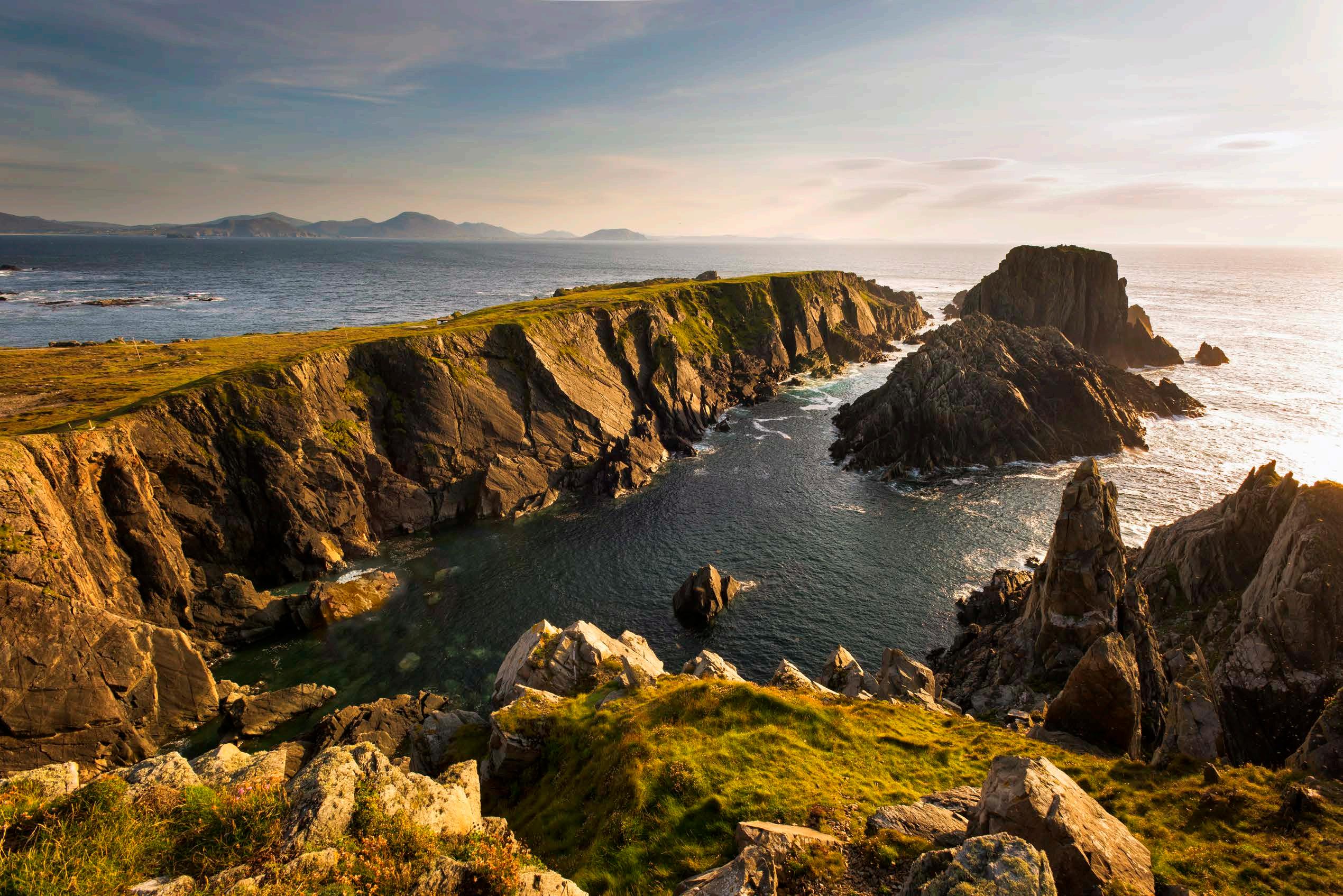
Wild lighthouses, majestic cliffs and some of the best oysters in the world, here are nine unmissable Wild Atlantic Way experiences
Snaking down the entire length of the western coast of Ireland, the Wild Atlantic Way is like a highlight reel of all that’s great about Irish scenery, with dazzling white sand beaches, dramatic cliffs soaring over the ocean and sparkling clear waters as far as the eye can see. But while the Wild Atlantic Way makes for a perfect road trip, there are plenty of adventures to have along the way, whatever time of year you visit. Here are some incredible experiences to add to your bucket list.
1. Go stargazing in Mayo
There’s nothing quite like the night skies in Mayo. When the weather is clear, you’re met with a blanket of twinkling stars and galaxies in the sky overhead, with no light pollution to impede the view. The best place for stargazing is at Mayo Dark Sky Park, set among the wilds of the Nephin Mountains in Ballycroy. In the winter months, they run a weekly guided dark sky walk, so you can take a stroll with an expert guide, who can point out the constellations and planets above.
2. Surfing fun in Strandhill, County Sligo
Feel like chasing some waves? Ireland has become one of the most popular big-wave destinations in the world with massive swells drawing experienced surfers every autumn. Beginners, though, should head for Strandhill in County Sligo, where the long sandy beach offers gentler waves that ideal for novices. Learning to surf here is great fun and the Sligo Surf Experience offers lessons that are fully guided by trained instructors. Afterwards, warm yourself up with hot tea and a classic Irish stew at Shell’s Café
The Wild Atlantic Way is a treasure trove for seaweed, whether you are soaking in a seaweed bath in Sligo or sipping a kelp gin in West Cork. But edible seaweed is prolific all along the shoreline, and it’s delicious to boot. Take a seaweed discovery walk with Atlantic Irish Seaweed and you’ll stroll along some beautiful beaches such as Derrynane on the Kerry coast, learning how to identify the native Irish seaweed and enjoying some nibbles along the way.
The Wild Atlantic Way is studded with lighthouses perched on the edge of dramatic peninsulas along the route, but one that you won’t want to miss is Fastnet Rock. This tiny jagged island was known as “Ireland’s Teardrop” as it was the last sight emigrants would glimpse of Ireland on their journey across the Atlantic. The lighthouse here is the wildest and tallest rock lighthouse in Ireland and can be visited on a day trip with Fastnet Tour from Baltimore or Schull in County Cork. You can’t land on the island, but the trip is an adventure in itself and whales and dolphins are frequently spotted en route.
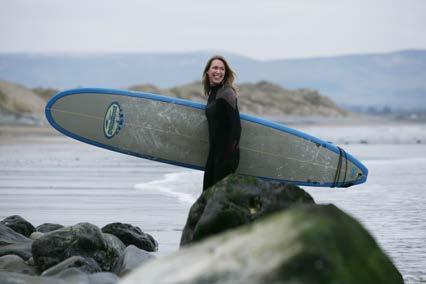
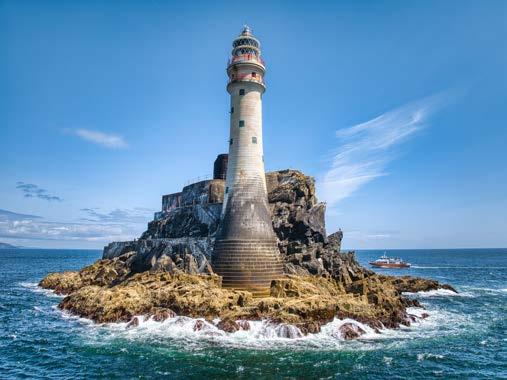
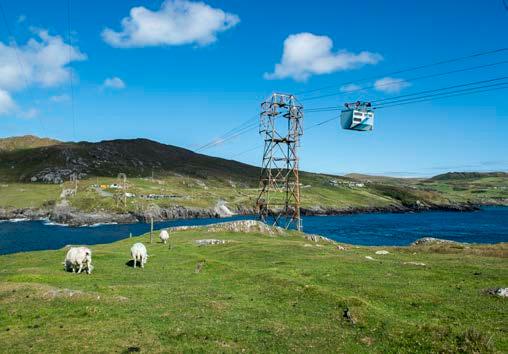
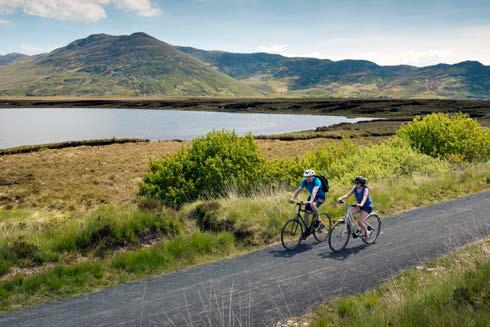
5. Fly between the sea stacks in Donegal
All along the western shore there are incredible sea stacks, from the towering pile of Downpatrick Head in County Mayo up to the jagged peaks of Malin Head in County Donegal. And it’s there, in the northernmost county on the Wild Atlantic Way, where you can experience the sea stacks up close on a ziplining adventure with Unique Ascent. On a Tyrolean traverse, you’ll glide between the rocky outcrops for an unbeatable adrenaline rush, with epic views to boot. But if that’s not your speed, you can still enjoy these geological marvels from the shore, on a picturesque stroll along the cliffs.
6. Learn how to shuck oysters at the Flaggy Shore Oysters taste their best when eaten with the scent of the sea in the air, the salt of the ocean pairing with the salinity of these delectable little treats. But why not go one step further, and learn how to shuck them yourself? At Flaggy Shore Oysters in County Clare, you can learn all about how oysters are grown before mastering the art of shucking them, just steps from the crystal-clear water. Then comes the best part – enjoying the freshest oysters you’ll ever eat with a specially selected glass of organic wine.
7. See Slieve League from the water
Sure, the soaring cliffs of Donegal’s Slieve League are impressive when you see them from above. But the views
are breath-taking from below, where you can really get a sense of their sheer scale on a boat trip that takes you right underneath these towering sea cliffs. Head out with Sliabh Liag Boat Trips and you’ll sail along the base of the cliffs, hearing about the myths and legends associated with the area and possibly spotting some dolphins, too. If you’re feeling brave, you can even take a dip in the dazzling blue waters – just wear a wetsuit in the cooler months.
8. Cycle the Great Western Greenway
There are hundreds of stunning islands off the west coast of Ireland, but Achill in County Mayo is one of the few that you can reach by car. And it’s even better when you approach it on two wheels, by cycling the Great Western Greenway all the way from Westport to Achill, skirting along the edge of Clew Bay. The route is 30 miles in total but you don’t have to bike the whole thing – the final nine mile stretch from Mulranny to Achill is a joy, with mesmerising views of the mountains and the sea keeping you company as you cycle.
Take a cable car to Dursey
Travel on Ireland’s only cable car and you’ll be met with County Cork’s spectacular views, whether you’re gazing down at the swirling waters of Dursey Sound or looking out over the lush green hills of the island itself. Once you’re on Dursey Island, you can walk over the wild slopes, passing the resident sheep as you go, before finding the most scenic spot for a picnic. Keep an eye on the water, though – this area is a hotspot for dolphins and whales, and there are plenty of seabirds flitting around too.
www.ireland.com
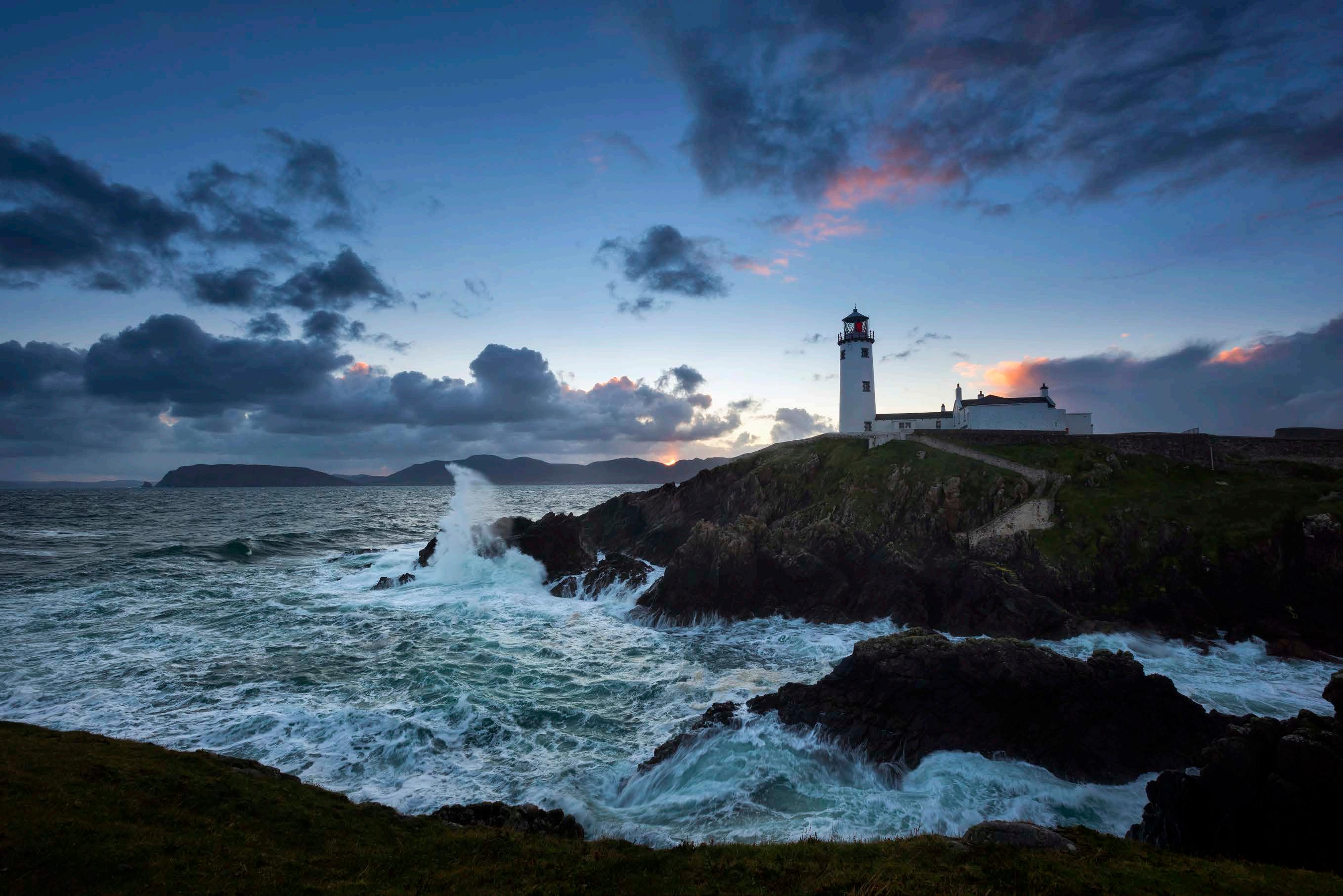
The Wild Atlantic Way Covers 2,500 Km, goes through six regions, nine counties, three provinces and consists of more than 180 discovery points. That is an awful lot of sites to visit and things to see while you travel along the worlds longest defined coastal drive. There are however, 15 signature discovery points along the way that have been chosen as they showcase all aspects of the way and because of their undoubted beauty and ruggedness.
Visitors to Mullaghmore Head in county Donegal can take in panoramic views of Sliabh Liag or watch the waves crash under Classiebawn Castle. This area is known to have some of Europe’s best waves and surfers are common on the sandy beach.
Malin Head lies on the Inishowen Peninsula in County Donegal, at the most northerly tip of Ireland. It is the start or the end (depending on direction) of the Wild Atlantic Way. Visitors can investigate some of the largest sand dunes in Europe at the famous Five Finger Strand from Knockamany Bens and at low tide, you may be able to spot the wreck of the Twilight, which sank in 1889 on its voyage to Derry. You can also ask the locals about the time when Chewbacca and the millenniwn falcon parked in the area.
Fanad Head lies on the north coast of County Donegal between Lough Swilly and Mulroy Bay. Its claims to fame include one of the world’s most beautiful lighthouses and the famous Flight of the Earls, which took place here in 1607. Fanad Head lighthouse sits on the western shore of the Peninsula and was voted the world’s 2nd most beautiful lighthouse 2013. From the lighthouse carpark you can stroll along the headland in awe of the high waves and the Wild Atlantic Way’s most rugged stretch of coastline. With the backdrop of the lighthouse it’s an ideal photo opportunity for the holiday album.
Sliabh Liag is situated on the south west coast of County Donegal, the cliffs in this area are the highest and finest marine cliffs in Europe. To fully enjoy the spectacle of Sliabh Liag it is best to leave your car at the car park and walk the few miles to the cliffs so as not to miss the exciting scenery of the area. There are terrific views of the Atlantic Ocean, the Sligo Mountains and Donegal Bay as you walk towards the terrifyingly high top of Sliabh Liag, where the cliff face of Bunglas rises over 600m above the raging ocean. Although less famous than the Cliffs of Moher in County Clare, Slieve League’s cliffs reach almost three times higher.
Downpatrick Head is located 3 miles north of Ballycastle vil1age in County Mayo, standing 126ft above the sea with fantastic views of the Atlantic, the Staggs of Broadhaven and high cliffs along the shore. Living 50 metres off the north Mayo coast at Downpatrick Head sits the 45-metre-high flat-topped sea stack Dúr. Briste (the Broken Fort). This is a relatively new sea stack as it was only separated off mainland Ireland in 1393 when monster seas svered it from Count Mayo in an overnight storm.
Keem Bay is a rural and sheltered beach surrounded by cliffs on Ireland’s largest island - Achill Island in county Mayo. It can be found at the head of a valley between the cliffs of Benmore to the west and Croaghaun Mountain on the east on Achill Island. This is one of the most westerly points in Europe - Keem Bay is more than worth the journey over a breathtaking clifftop road. It features a perfect horseshoe bay, with a beautiful sandy beach flanked by dramatic cliffs and at the head of a spectacular valley.
Killary Harbour forms a natural border between counties Galway and Mayo and provides Ireland with one of its three fjords. The 16-kilometre fjord formed about 20,000 years ago when a massive natural fault line that reaches all the way from Scotland caused the westward movement of mile-deep ice. The view of Killary from the shore is certainly a spectacular one, but taking to the water here gives you a whole new perspective.
Derrigimlagh Bog is a spectacular blanket bog near Clifden in county Galway. It is a mosaic of tiny lakes and peat rich in flora and fauna. The Derrigimlagh/Marconi walking loop provides visitors with a five-kilometre trail through an area of outstanding natural beauty within the Derrigimlagh bog complex. Visitors can discover the stories of this famous site and its past history. The walk is made all the more interesting by a number of engaging and attractive features along the route, which are designed to engage visitors and encourage them to interact with the history of the location.
One of the jewels in The ‘Wild Atlantic way crown, the cliffs of Moher in County Clare are one of lrelands most visited tourist sites. The cliffs have been moulded over 320 million years and rise at their highest 702ft out of the Atlantic Ocean. Visitors can peer over these perilous cliffs and enjoy one of the best views that the world has to offer.
Loop Head is a slender finger of land pointing out to sea from the most westerly point of County Clare. Cinched between the ocean on one side and the Shannon Estuary on the other, this tiny peninsula would be an island but for a meagre mile of land connecting it to the rest of Co. Clare. Loop Head epitomises what the Wild Atlantic Way is about: panoramic cliff views, abundant local seafood, your choice of aquatic activities, and plenty of quiet beauty spots where you can pause and wonder at this unforgettable part of the world.
The Blasket Islands are a group of islands off the coast of Kerry. The islands, in particular, the Great Blasket, are renowned for their wild ruggedness and beauty. The Great Blasket was inhabited by islanders until 1953, but a decline in their population and turf, their only source of fuel became scarce and caused their departure. The people of the island left behind an impressive legacy of critically acclaimed literature, some of the islanders dictated or wrote their stories down, and from these came great works. The views of the islands from the mainland are hauntingly beautiful due to the barren nature of the islands.
“The Wild Atlantic Way covers 2,500km, goes through six regions, nine counties, three provinces and consists of more than 180 discovery points.”
In a galaxy far far away, or 11 kms of the coast of county Kerry lies Skellig Michael. This picturesque crag has recently been the homeplace of Luke Skywalker on the big screen, Rising majestically from the sea, Skellig Michael towers 714ft. (218 metres) above sea level. On the summit of this awe-inspiring rock you will find a remarkably well preserved sixth century monastic settlement and on the diffsides you can view the beautiful puffins during the summer months.
Dursey Island is one of the few inhabited islands that lie off the southwest coast of Ireland. It is situated at the western tip of the Beara Peninsula in the west of County Cork. The island is separated from the mainland by a narrow stretch of water called the Dursey Sound which has a very strong tidal race, with a reef of rocks in the centre of the channel which is submerged at high tides. This peaceful island, with only a handful of semi-permanent residents, is connected to the mainland by Ireland’s only cable car.
Located at Ireland’s most southernly point in County Cork is Mizen Head. Mizen Head stretches out dramatically into the swirling Atlantic Ocean, amidst sea cliffs and crashing waves. But in testament to man’s determination, the Mizen Head Signal Station has stood strong against the forces of nature for over 100 years. To get to the sipnal station you must trek down the famous 99 steps and some of lreland s most dramatic coastal paths. Then you must embrace the elements as you cross the arched bridge that links the station to the mainland.
The Old Head of Kinsale in County Cork is one of Ireland’s most spectacular coastal areas. This large promontory juts out into The Atlantic Ocean, rising hundreds of feet above the water with towering sea cliffs. On this stretch of coastal bliss, it feels like you’ve left the world behind. It’s just you and the ocean.
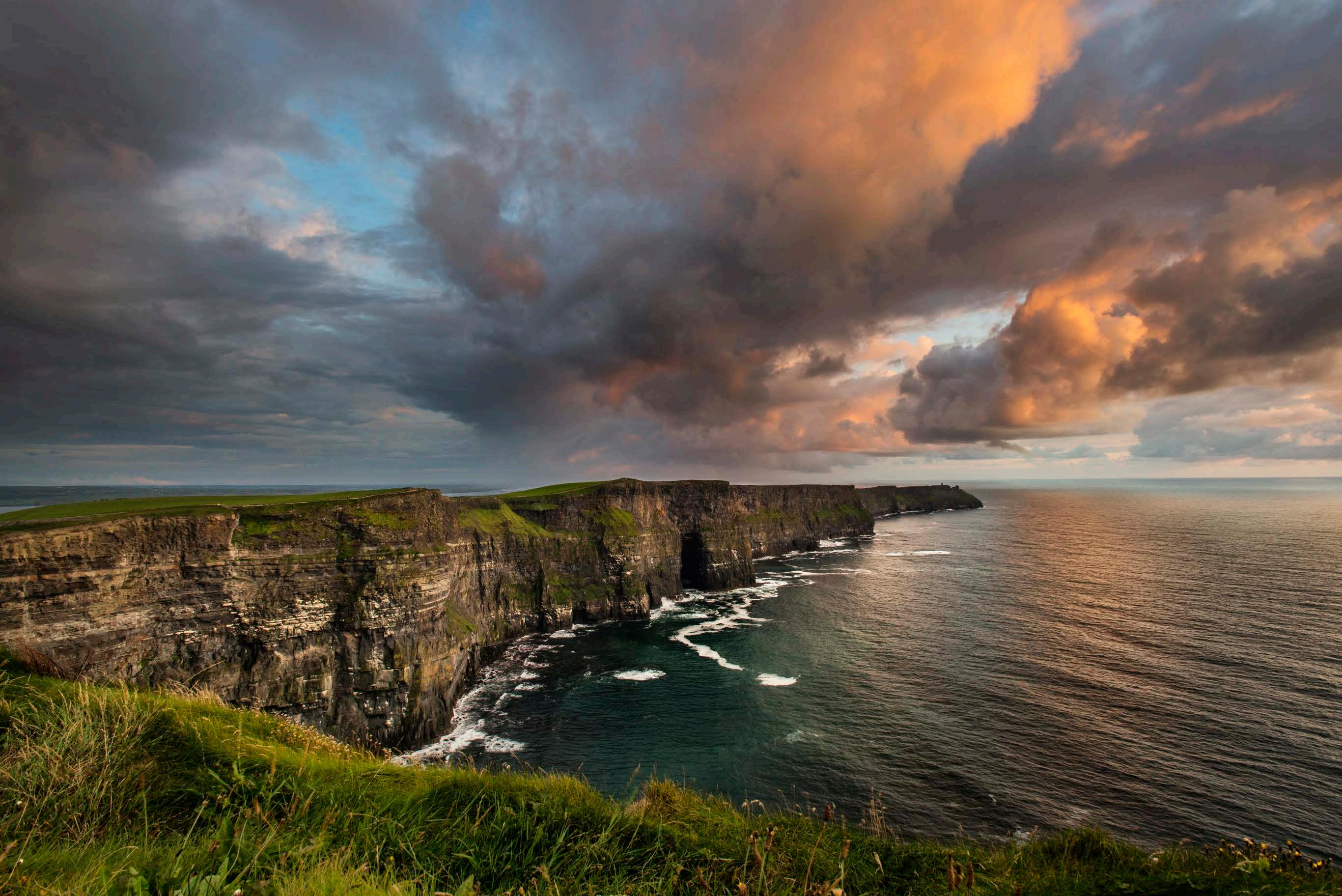
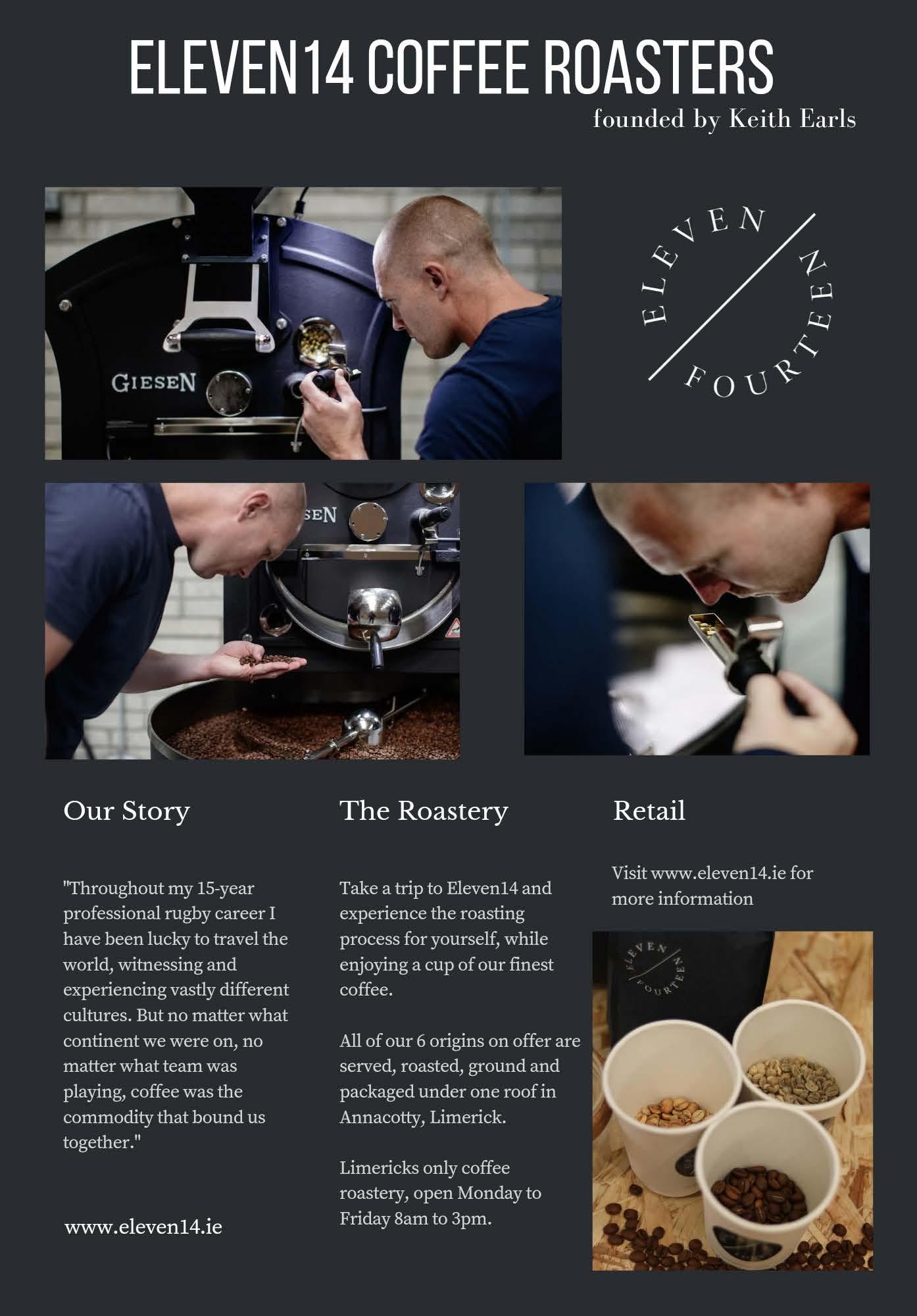
Cycle around the Aran Islands
Cycling is a fantastic way to explore the Aran Islands and bike hire is available on Inishmore, Inisheer and Inishmaan.
Hit the beach
On the northern coast of Inishmore, Kilmurvey Beach is one of Galway’s most stunning beaches. Walk barefoot along the strand to feel the powdery white sand between your toes and bask in the
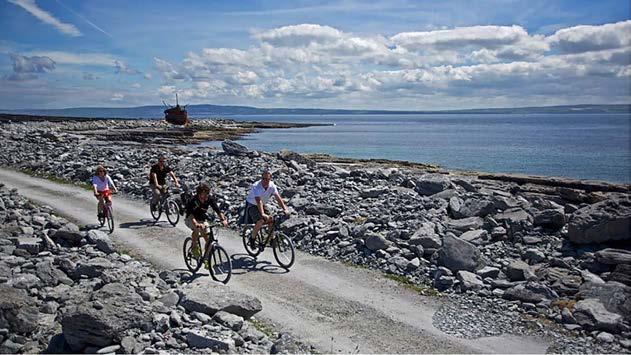
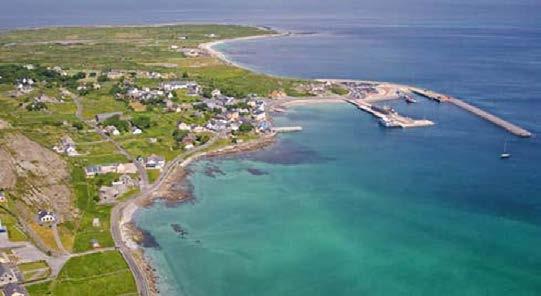
magic of this special place. It’s a popular place for birdwatchers with abundant birdlife, see if you can spot the cormorants. The Blue Flag beach has a lifeguard on duty during high season, so it’s a safe and scenic spot to take a dip.
Walk scenic trails
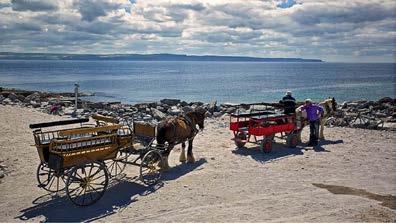
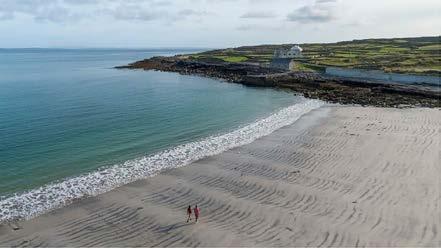
The Aran Islands is a must-visit for avid walkers. Discover scenic hikes and leisurely walks with incredible views of land and ocean. On Inishmore, Lúb Dún Eochla is a 10km looped walk that kicks off at Kilronan Pier. Follow the green arrows for a challenging, walk across rich green hills and stony roads. Over on Inisheer, Lúb Ceathrú an Locha begins and ends at the pier. Look out for An Loch Mór, the Big Lake and the Plassey shipwreck along the way.
Go scuba diving
Check out the Dive Academy on Inishmore and book in for a lesson with an experienced
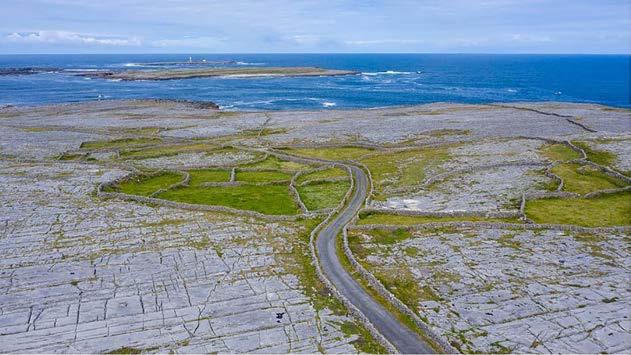
diver. With its vibrant underwater life, the Aran Islands have a reputation for being one of the best places to dive in Europe. Spot vibrant sea anemones, colourful coral and spiny dogfish as you explore life on the seabed. Depending on when you visit, you might even spot friendly dolphins and seals.
Take a pony and trap tour
Book a traditional pony and trap tour around Inishmore. You can call ahead so that you’re ready to go once you arrive on the island. Along the historic route you’ll see monastic sites, the island’s famous stone walls and magnificent Dún Aonghasa.
Kick back on a guided tour
Take the road less travelled in a rugged Land Rover Defender jeep through the wild landscapes of Inishmore with Aran Off Road Experience. This off-road machine reaches parts of the island that no other vehicle can, treating you to magnificent views of the Atlantic Ocean along the way. See the Aran Islands from the comfort of a minibus with Adventure Tours Inis Mor. The guided tour brings you to some of the major sights including the seal colony and the Seven Churches. Enjoy unique food on your visit to the Aran Islands. Take a tour of the Aran Goat Cheese Farm or go seaweed foraging with Bláth na Mara
with incremental actions
80+
Small businesses in over 80 countries use OnePageCRM for rapid growth. countries
Take action: Turn your contact database into a dynamic list of daily actions and reminders.
Email faster: Send, track, and store emails in one place with free templates and attachments.
Simple and fast—it’s built for go-getters and doers.
Sell more: Use an interactive drag-and-drop pipeline to visualise your progress.
OnePageCRM, based in Galway, is the global CRM software for SMBs. Try it for free for 21 days (no credit card required).

A warm welcome awaits everyone at this Multi Award Winning destination attraction. Aillwee is simply unmissable when visiting The Burren and County Clare! Explore Aillwee and unlock many secrets of The Burren through unique underground and overground experiences. Be educated, engaged and entertained on your day out at Aillwee Burren Experience!
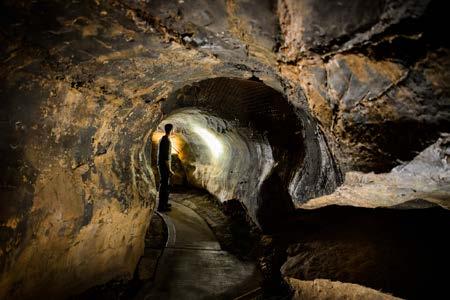
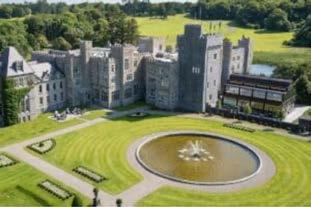
The Lodge at Ashford invites guests to slow down and savour estate life—lake views, woodland walks, and immersive activities across the Ashford grounds. Blending relaxed luxury with heartfelt Irish hospitality, it offers space to unwind, reconnect, and enjoy the rhythms of nature on one of Ireland’s most enchanting historic estates.
Atlantic Whale & Wildlife Tours & Courtmacsherry Angling is a family-run business based in the picturesque village of Courtmacsherry, West Cork, on the Wild Atlantic Way. Located only 50 km from Cork International Airport, Courtmacsherry is nestled between the Old Head of Kinsale and the Seven Heads Peninsula. Business owners, local couple Mark & Patricia, have been in the marine business for nearly 40 years, organising angling, maritime excursions, whale watching boat tours, and both are experienced seafarers. Along with their team of experienced, qualified skippers and crew, they ensure that your experience on the sea is safe and enjoyable.
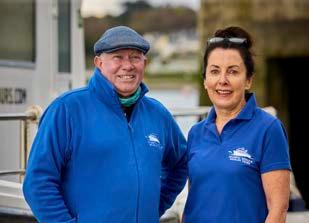
Connect, learn and be inspired at Wild Nephin National Park; with a little something for everyone! Enjoy the free exhibition at Ballycroy, walk the coastal trail at Claggan Mountain and get out in the wilds of Letterkeen, with the setting sun revealing the wondrous Mayo Dark Sky Park (see
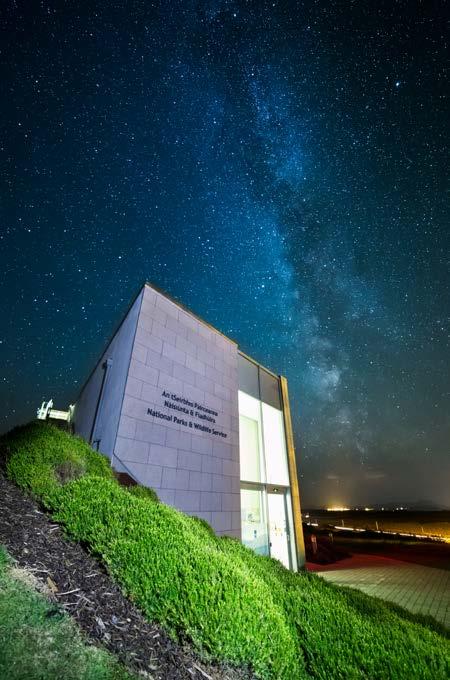
Cork County Council leads countywide tourism development of attractions and visitor experiences, including Youghal Clock Gate Tower, Camden Fort Meagher, Mallow Castle, Dursey Island Cable Car, Michael Collins House, Skibbereen Heritage Centre, the Midleton to Youghal Greenway and Cobh Heritage Centre, supporting heritage, culture and tourism growth throughout Cork.
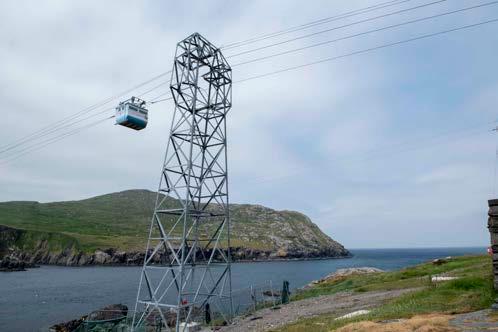
Doagh Famine Village is one of Ireland’s most unique and popular tourist attractions, visited by thousands of people from all over the world every year. Our guided tours will take you on a journey through life in Ireland in our local community, showing you how families learned to survive and adapt as society evolved from the Great Famine in the 1840s to the present day.
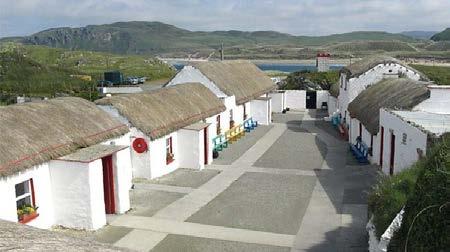
“Donegal Airport, your gateway to the Northwest. The easiest way to reach the heart of the Northwest! Our twice-daily Aer Lingus service from Dublin provides a seamless connection for those arriving from across the global Aer Lingus and Qatar Airways networks. Whether you are coming home or starting your Wild Atlantic Way adventure, your journey begins here. Visitors can also enjoy a direct, non-stop service from Scotland with Loganair’s year-round flights from Glasgow.”
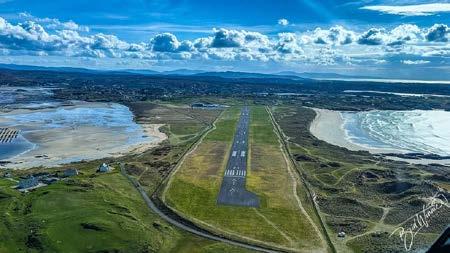
Glencolmcille Folk Village is a thatched cottage coastal village in South West Donegal. Established in 1967, it tells the story of Glencolmcille through the ages. Original artefacts are on display in the cottages, which were constructed from stone taken from period cottages throughout the parish.
The tours are currently self-guided and are available in more than eight languages. There are three audio-visual programs that tell the story of Father McDyer, the local fishing tradition and cinefilm from the 1950’s.
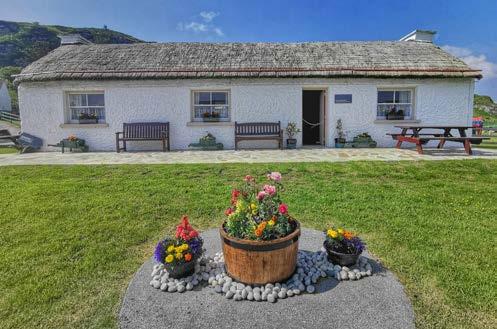
The Kingdom of Kerry Greenways provide scenic and accessible routes for discovering some of Kerry’s hidden gems on foot or by bike. The 13.6km Tralee to Fenit Greenway offers spectacular coastal views, while the 53km Listowel to Limerick route winds through beautiful countryside and lush valleys. A third route, the 32km South Kerry Greenway, has opened in two phases and delivers breathtaking views along the Wild Atlantic Way. www.discoverkerry.com/greenways/
When exploring the Wild Atlantic Way, make time for a sailing with Doolin Ferry. It’s the quickest route to the Aran Islands and offers an unforgettable perspective of the Cliffs of Moher from below. Before or after your journey, soak up the atmosphere in Doolin, renowned for its traditional music, cosy pubs, and warm Irish welcome.
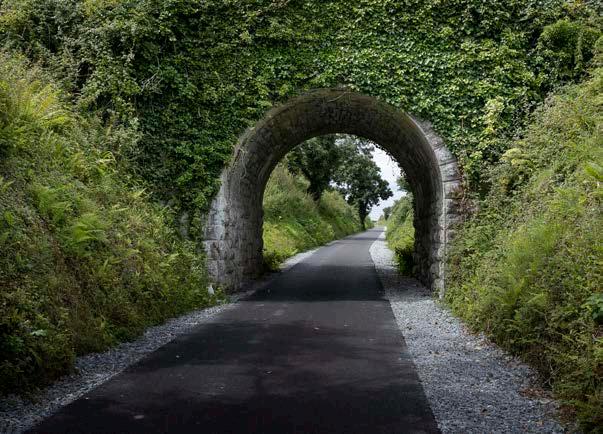
Discover the wild beauty of Mayo, where rugged Atlantic coastlines meet rolling green hills and timeless traditions. Explore charming towns and villages, hike Croagh Patrick, cycle the Great Western Greenway, wander along pristine beaches and experience warm Irish hospitality. Mayo offers an unforgettable escape for every traveller seeking adventure, relaxation and authentic culture in Ireland’s stunning west!
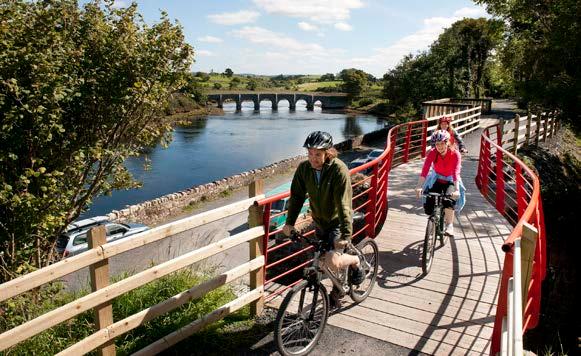
Immerse yourself in North Mayo’s rich heritage and culture. Visit FOXFORD’s iconic woollen mills, explore the Michael Davitt Museum in Straide, and discover treasures like the Jackie Clarke Collection in Ballina. From the Céide Fields and Downpatrick Head to Blacksod Lighthouse and SOLAS visitor centre, history and breathtaking landscapes await at every turn. www.mayonorth.ie for more info.
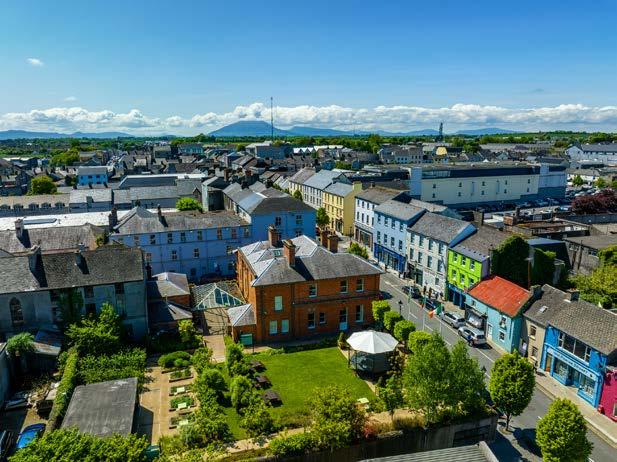
Nestled in the heart of Connemara, Kylemore Abbey is a haven of beauty, history, nature & serenity. Visit the restored period rooms and multimedia experience of the Victorian castle, the 6-acre Victorian Walled Garden, and the romantic neo-Gothic Church.For more information and to book your visit, please see www.kylemoreabbey.com.
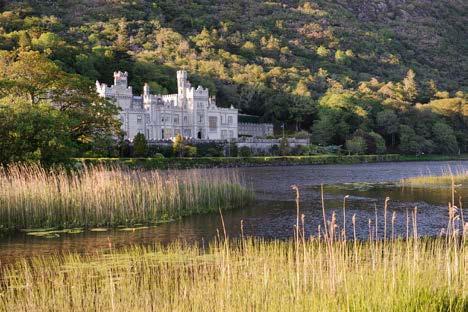
Michael Collins House, Clonakilty, is a museum dedicated to Michael Collins and the history of the fight for Irish independence; offering an insight into the life of ‘The Big Fella’ and much more. History is brought to life through guided tours, interactive displays, audiovisuals, original artefacts and insightful information boards. An affordable, educational and entertaining experience that is suitable for all the family. For more information contact 023-8858676, email info@michaelcollinshouse.ie or visit www.michaelcollinshouse.ie
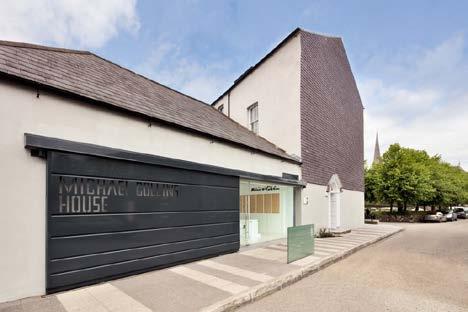
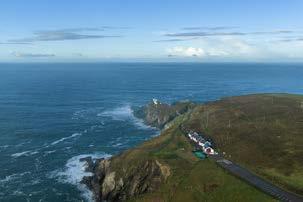
Perched on the edge of the north east Atlantic, Mizen Head is one of the most spectacular headlands on Ireland’s Atlantic seaboard. Standing on Mizen, surrounded by the pounding waves, it’s impossible not to feel humbled by the raw power of nature.
Step back in time and see life as it was in the 1940’s at Ireland’s only Model Village. Explore the historic West Cork Railway Line in miniature. Enjoy a trip through the award winning town of Clonakilty aboard the Road Train. Facilities include remote control boats, mini diggers and play areas.
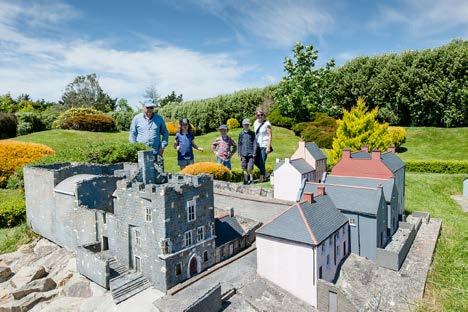
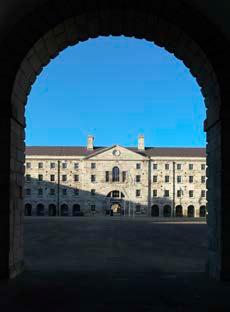
The National Museum of Ireland is a place of sanctuary and surprise, where you can experience real moments of connection with our rich culture and history. Discover authentic objects, artefacts, and stories from our National Collections. Spread across three inspiring locations in Mayo and Dublin, our exhibitions come to life thanks to our passionate team of curators, educators, and guides, who love sharing the stories behind every piece. Join the conversation with guided tours, lectures, creative workshops and so much more. Admission is free. Please see www.museum.ie for updated information.
Pádraicíns Seafood Bar serves excellent fresh food every day. Relax at the water’s edge overlooking Furbo Beach & Galway Bay. We are now taking bookings for Family gatherings, communions, confirmations & birthday parties so please email padraicins@gmail.com for more information on our menus. Gift vouchers can be bought online at padraicins.voucherconnect.com
Shannonferry Group Ltd. operates the Killimer-Tarbert Car Ferry linking the main tourist routes of Irelands Shannon Region on the “Wild Atlantic Way” from Killimer, Co. Clare to Tarbert, Co. Kerry. With scheduled sailings every day, this pleasant twentyminute journey across the Shannon Estuary will save 137 km from ferry terminal to ferry terminal providing a staging point for the many attractions of Clare, Kerry and adjoining counties. On disembarkation, enjoy the majestic scenery on either side of the Shannon Estuary from Killarney & The Dingle Peninsula to the
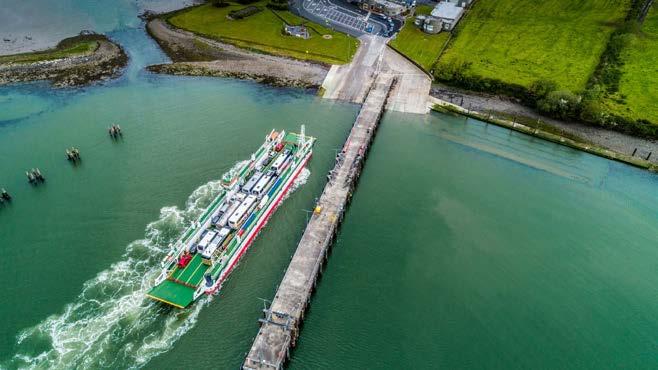
Burren & the famous Cliffs of Moher.
Sheen Falls Lodge in County Kerry embodies why it’s crowned #1 Resort in Europe by Condé Nast Traveler - a Relais & Châteaux sanctuary with Two MICHELIN Keys for exceptional hospitality. From cascading river views to refined cuisine and wild Atlantic adventures, it’s a must-visit for those seeking timeless luxury and
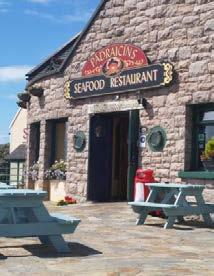
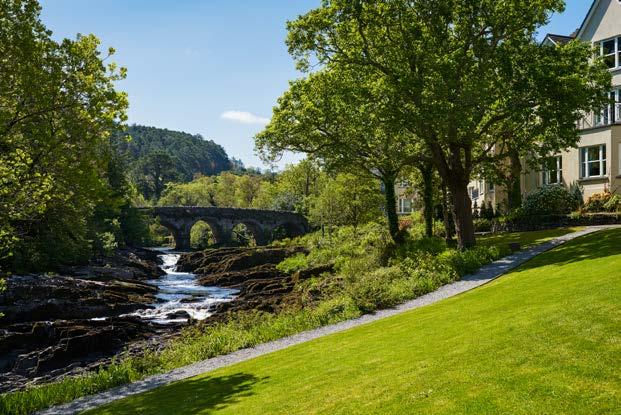
The Sliabh Liag Experience offers visitors a gateway to Ireland’s highest sea cliffs, showcasing breathtaking views of the Atlantic Ocean. Located in Donegal’s Gaeltacht, it features a visitor centre, guided tours, and cultural insights into the area’s rich irish language and heritage. With pristine boglands, scenic walking trails, and unparalleled coastal beauty, it’s a must-visit destination for nature lovers and adventurers alike.
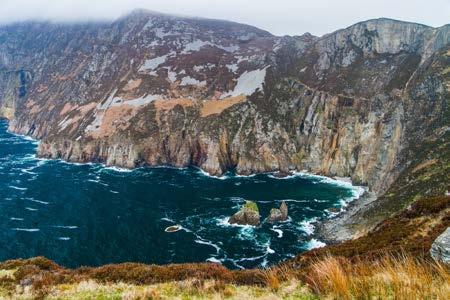
In the heart of Ireland’s Ancient East, the House of Waterford offers an unmissable encounter with Irish craftsmanship. Discover the magic of crystal making on a guided factory tour, where master craftsmen shape, cut and engrave each piece by hand. Afterwards, unwind in the café or bar, and explore the retail store — home to the world’s largest display of Waterford crystal. A true celebration of heritage, skill and hospitality.
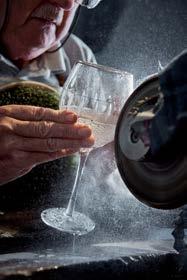
Sitting on the edge of the magnificent Kerry coastline, with views to die for, the Smugglers Inn is the perfect choice for a seaside escape. With beautifully appointed guestrooms, sea view relaxation patio (with sauna and hot tub), cosy bar, gourmet restaurant and unique, beach front dome dining experience, the Smugglers Inn is truly a destination not to be missed. Contact us: www.smugglersinn.ie info@thesmugglersinn.ie 066/9474330
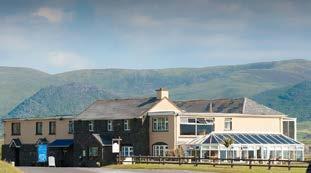
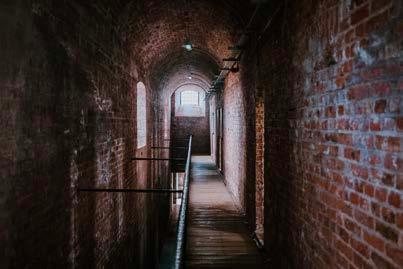
Located in the heart of Cork Harbour, Spike Island holds a significant place in Irish history, having served as a military fortress and notorious prison. Prepare to be transported back in time as you navigate through centuries of Irish history. Join a guided tour with one of our expert storytellers, explore interactive museums, exhibitions and embark on scenic walking trails.
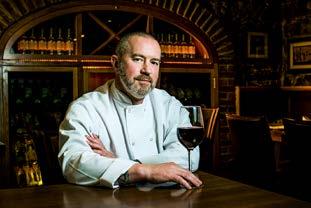
Meet Stuart, the head chef behind our legendary barbecue ribs. For nearly four decades, he has perfected the original recipe through skill, patience, and passion. Loved by generations of diners across
Limerick, Stuart’s BBQ ribs are more than a dish - they’re a local institution built on tradition.
Perched along Donegal’s breathtaking coastline, the Waterfront Hotel Dungloe offers elegant accommodation, award-winning hospitality and spectacular views over Dungloe Bay. Perfect for a Spring escape on the Wild Atlantic Way, it’s an ideal base for scenic drives, coastal walks and golden beaches, with exceptional dining and genuine Donegal warmth throughout your stay.
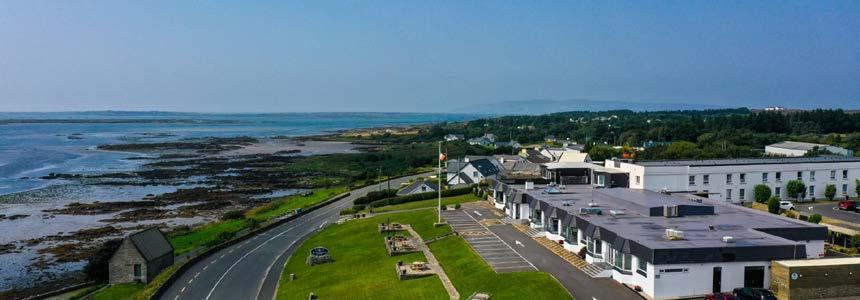
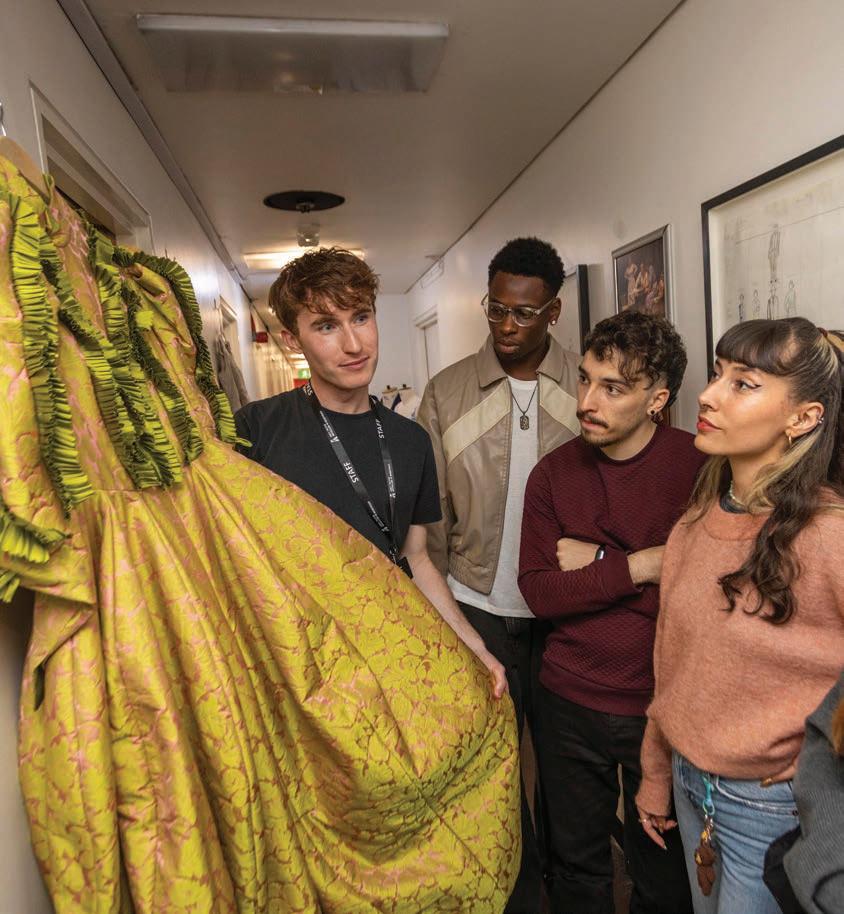
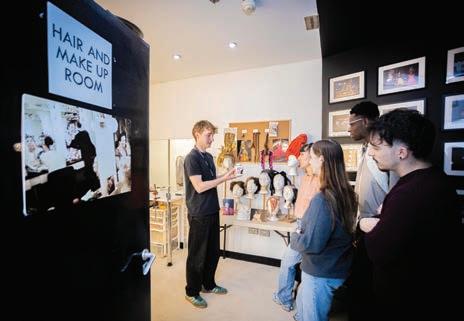
Step behind the curtain with a tour of the Abbey Theatre

Book Now
National Theatre Tour Tickets from €16, running 5 days a week
Not everything lasts 37 years served at the Texas Steakout for almost four decades, a reminder that when you get it right the first time, perfection only comes with time..