

![]()


As spring begins to unfold across the island, there is no better time to rediscover the magic on our own doorstep.
In this March edition of Go Wild Staycation Ireland, we celebrate the people, places and experiences that make Ireland such an extraordinary destination year-round. From coastal escapes and countryside retreats to vibrant city breaks and hidden gems waiting to be explored, this issue is designed to inspire your next adventure.
By choosing to stay local, we continue to support the communities and businesses that shape our tourism story. Here’s to a season of fresh air, discoveries and unforgettable Irish escapes.
As always, our success over the past 11 years is simply the result of our loyal advertisers who have continually supported the Go Wild brand since 2014, our dedicated team of tourism writers, editors, proofreaders and designers, who constantly deliver top-notch content, as we have grown to a respected brand name in tourism publishing.

This issue, we are delighted to feature Vivienne Sayers O’Callaghan — an Irish-born New Yorker, whose journey beautifully bridges two worlds.
With deep roots in Ireland and a dynamic life shaped in New York, Vivienne brings a unique perspective on identity, heritage and the enduring connection between home and abroad. Her story reflects the resilience, ambition and warmth that define the Irish spirit globally. A truly inspiring voice with Ireland at her heart.
We are certain that there is something for every person looking for a perfect Staycation or simply for a weekend break across the beautiful Emerald Isle.
Publisher, Go Wild Magazine titles
Email: bobby@gowildmagazine.com Tel: 087 446 7007


Go Wild Irish Spirits: September 17
Go Wild Christmas: October 17
For advertising:
Power,
bobby@gowildmagazine.com, 087 4467007
For accounts: Cleo Power, Account Manager cleo@gowildmagazine.com Web: www.gowildmagazine.com


Creative
Web: www.brainstorm.ie
Email: dave@brainstorm.ie

P4: Unesco World Heritage Status
P6: Eight amazing places to discover in Dublin
P8: An interview with Vivienne Sayers O’Callaghan
P12: Learn about the Irish Whiskey Trail
P14: Galway’s Western Wonders
P16: Ten incredible walking holidays
P18: Discover Waterford in the Sunny south east
P20: Have a Family break in Wicklow
P22: Four Letters of Love
P24: Michelle Walsh Jackson- The Novel Traveller
P26: Ireland’s most inspiring views
P28: Enjoy a short break in Cork
P30: Reviving romance in Lisdoonvarna
P32: Experience the Irish Language revival
P34: Win a Spa Break at the Kingsley Hotel
P36: Getting engaged in Ireland, the best romantic settings
P38: A new Dawn for Hell and Back 2026
P40: Five of the best Wild Atlantic Way Road trips
P42: Ireland’s Best Art Festivals
P44: A relaxing weekend in Westport
P46: Donegal- 10 Best things to see and do
P48: The Pirate Queen Grace O’ Malley
P50: Ten of Ireland’s Best Cycling routes
P52: Pet First Staycations
P53: Things to see and do in Dublin
P54: It could be you- Discover Cuan Mhuire Restoring Hope
P56: Nine things to see and do in Sligo
P60: The Beauty of Ireland’s Blue Flag beaches
P62: Nine wild corners of Mayo
P64: Kildare- explore Ireland’s Hidden Gem
P66: Discover Five walks in the beautiful Killarney National Park
P68: A dozen Dog Friendly walks for you to enjoy
P70: Ireland’s Awesome Unesco sites
P74: Nine Bucket list experiences on the Wild Atlantic Way
Join the fun!


Not everything lasts 37 years. These ribs did. Slow-cooked, hand-finished, and served at the Texas Steakout for almost four decades, a reminder that when you get it right the first time, perfection only comes with time..
Striking emblem of the Irish countryside is fifth cultural heritage practice added to prestigious list, joining uilleann piping, hurling, harping and falconry.
An ancient method of construction that can be found dotted across the Irish landscape has been added to the prestigious UNESCO list of protected cultural heritage practices
Dry stone walls are an almost everpresent sight around rural Ireland, with some stunning examples dating back thousands of years having stood the test of time for centuries. In fact, the longstanding farming tradition dates to the Neolithic Period some 5,000 years ago.
The walls’ apparent simplicity belies their ingenuity; dry stone walls are handmade without any mortar or concrete and so their construction requires


great skill and attention to detail - with each stone carefully measured, cut, and prepared to ensure stability.
The longest continuous length of dry stone wall in Ireland, known as the Mourne Wall, is located in County Down and snakes an astonishing path 35km long across the rugged countryside. It passes over 15 summits of the tallest mountains in the region, known as the Mourne Mountain range, including the majestic Slieve Donard - the highest peak in the north of Ireland at 850 metres. The impressive wall is constructed entirely from local granite and took eight years to complete, with construction beginning in 1904.
Now, visitors can now experience the unique and enduring tradition of dry stone wall building firsthand at Mourne Stone Walling. Surrounded by the Mourne Mountains, passionate hosts Jenny and Mark Hanna bring guests on a magical woodland walk across the scenic County Down landscape, before master craftsman Mark brings the story of this ancient
custom to life. Mark has restored over 400 metres of original dry stone walls using granite from the Mourne Mountains, first sourced more than 300 years ago.
Working alongside him, visitors immerse themselves in the timeless tradition - measuring and gauging stones while learning the local language – and constructing a part of a stone-wall to preserve the historied craft for future generations. The experience allows visitors to witness this ancient craft in action while connecting with the land and history of Ireland - gaining a deeper appreciation for the craftsmanship and timeless beauty of these iconic structures, which continue to shape Ireland’s stunning landscapes today.

The day concludes with a charming picnic of tea and cake enjoyed in the great outdoors while guests can sit back and admire their work. Guests can wrap up the day with a cozy overnight stay in one of the nearby Green Holiday Cottages, which provide a charming hideaway to relax and soak in the peaceful riverside views.


Step behind the curtain with a tour of the Abbey Theatre

Book Now
National Theatre Tour Tickets from €16, running 5 days a week

You may think you know Dublin but how much of it have you really uncovered? It’s time to make the most of the unique blend of culture to be had in the capital. Walk in the footsteps of literary giants, visit secret rooftop gardens and experience the city in new ways. Get out and explore, starting with these eight amazing places to visit in Dublin.

1 EPIC The Irish Emigration Museum
Make your way to the striking CHQ Building overlooking the Liffey to immerse yourself in the experiences of Irish emigrants. At EPIC, The Irish Emigration Museum, you’ll discover the past as it’s brought to life through imaginative visual displays and interactive experiences. Explore Ireland’s struggle for independence, and witness the letters of thousands of Irish emigrants lost to the Great Famine.
A short walk around the neighbouring Dublin Docklands will reveal other iconic landmarks, including The Jeanie Johnston Famine Ship, Custom House, Samuel Beckett Bridge and Convention Centre.
2 Museum of Literature Ireland (MoLI) Delve into Dublin’s literary history and get better acquainted with giants like W.B. Yeats, James Joyce and Oscar Wilde. A trip to the Museum of Literature Ireland (MoLI) on St. Stephen’s Green is a great way to learn the tales behind the writers and their work. Roam the interactive displays, download an audio guide to explore at your own pace or book a 50-minute guided tour.

3 Windmill Lane Recording Studios
Head to Windmill Lane Recording Studios in Ringsend for a slice of local musical history. A familiar name in the world of music, the Rolling Stones recorded ‘Voodoo Lounge’ here, Lady Gaga laid down tracks for ‘Born This Way’, and Kylie Minogue worked on ‘Fever’.

4 Marsh’s Library
Lose yourself in Ireland’s oldest library, where regulars included famous writers like Bram Stoker and Jonathan Swift. As you gaze upon the 25,000 rare books at Marsh’s Library, you can easily imagine days gone by, with many still in the spot where they were first placed in the 1700s. Come midnight, the ghost of Archbishop Narcissus Marsh is said to rummage through the bookcases.

5 Jameson Distillery Bow Street
Crowned the World’s Leading Distillery three years in a row, Jameson Distillery Bow Street has been a staple of Dublin culture since opening in 1780. Just off Smithfield Square, the operation covered five acres by 1886

and grew into a ‘city within a city’. These days you can enjoy a tour of the historic building, learn how their world renowned whiskey is made and even blend some yourself at the Black Barrel Blending Class.
6 Croke Park Stadium Tour, Skyline Tour & GAA Museum
Go behind the scenes at Croke Park, the home of Irish sport. On the Stadium Tour you’ll venture pitchside to Hill 16 for amazing views and beyond. Snap a selfie on the team bench and soak up the heritage of this iconic arena.

7 Glasnevin Cemetery Museum & National Botanic Gardens
Glasnevin Cemetery Museum is Ireland’s oldest cemetery. Some of Ireland’s most important figures are buried here, including revolutionary leader Michael Collins and former Irish president Éamon de Valera. A choice of walking tours are on hand to guide you through its story stretching back nearly 200 years.
8 James Joyce Centre
Dedicated to the literary icon, the James Joyce Centre should be on the ‘to do’ list for any fan of the written word. Get involved with the interactive display of his most well-known work ‘Ulysses’ as it brings the novel to life.


Use code: GOWILD20 for 20% off.
Valid until 30 April 2026.


Cork-born, New York-based entrepreneur Vivienne Sayers O’Callaghan has built her audience and social media career from a modest mission: to share her grá for Irish culture. She tells Meg Walker about life in the Big Apple, the Kerry destinations she makes a beeline for, and her favourite phrases as Gaeilge.
Cork-born social media content creator, entrepreneur and cultural advocate, Vivienne Sayers O’Callaghan has been living in New York City for nearly three years. Her journey to the US began in 2022 while Vivienne was studying for her bachelor degree in music, vocal performance and conducting at Munster Technological University (MTU) in Cork. It was there that an encouraging vocal coach and lecturer, upon hearing her sing for the first time, advised her that she needed to be in America. And so, Vivienne set out to spend her senior year at Endicott College in Massachusetts.
Following her graduation, she considered her options, and New York felt like the natural next step. “When it comes to classical music, there are two places you’d want to be: Vienna or New York,” says the 24-year-old. “New York had already been in my mind since I was five years old. There was just something about the ambition and bright lights of the place. I always wanted big things for myself and my career.”
It was during her year living in Massachusetts – where there’s a large
population of Irish-Americans – that Vivienne discovered her niche. “It was amazing being an Irish-born person in that environment. Everyone was fascinated, asking me about home, but a lot of questions were put to me about potatoes, the Famine, or the Troubles… I was born in 2001, so that wasn’t my own perspective. I realised I had this unique opportunity to portray a more authentic narrative of modern, contemporary Irish culture. And a big part of that is our native language.”
Vivienne’s passion for Gaeilge intensified when she attended Coláiste Íde, an Irish language boarding school in Dingle, Co. Kerry, during her teens.
Fast-forward to Vivienne’s move to New York and she was struck by the vibrant Irish community there. She started making TikTok and Instagram videos of her life in America as an Irish person. “Before I knew it, they went from 10,000 views to 50,000 views to half a million, with one of them getting 12-million views, so I knew I was on to something.”
Social media was something Vivienne developed a knack for during the Covid-19
pandemic, when at the age of 19, she created a small online houseplant business called Prickly Plants to keep busy during lockdown while diversifying her skills and earning a few bob. “I never really had a job before then and knew I needed to learn some entrepreneurial skills and develop a business acumen to go hand in hand with my music career. I realised that while I was being taught how to perform, I wasn’t being taught how to sell myself as a product or performer. I decided to supplement my education by starting a business. I had €5,000 saved and started an Instagram page. The tagline was ‘plants with personality’. Later, post-Covid, I opened a store above an old warehouse in Little Island, Co. Cork. I’d study Monday to Friday and work in the store Saturday and Sunday, all while keeping the ecommerce business going.”
Vivienne’s natural talent for creating engaging social media videos has stood to her throughout her adult life and in July 2024, she set up her next venture: Signature Socials, a creative agency and consultancy that specialises in social media management, short form video content and strategy for leaders and brands seeking to build their digital presence and online audience. The industries featured across her client list run the gamut from construction to recruitment to real estate, right through to her original passion: music.
“What I noticed was there were a lot of people with big personalities who were very successful in the real world, and they have every opportunity to maximise their
exposure in the online world as well. If they can speak to a roomful of people, they can speak on social media,” Vivienne explains. “I’ve worked with all kinds of phenomenal people. I’ve been fortunate to make content for Carnegie Hall, working on a digital campaign for a St. Patrick’s Day concert led by fiddler Martin Hayes One of the posters for this event was in Irish. I’m so glad to be a part of that. I’ve also worked with Metropolitan Opera House musicians and I’m working with Irish hospitality groups as well.”
Vivienne still finds time to practice her music, too. “I sing in a chamber choir, and it’s what I look forward to every single week. It grounds me. The way music positively impacts my brain… I can’t explain it, but I just know that I need that. I also make time to attend the Gaia Music Collective events – they get 200–300 people of all abilities into a room, you have music in front of you and, you just sing with strangers for three-and-a-half hours. They record the piece of music at the end. It’s the most beautiful thing. It’s so powerful. Music is the universal language.”
When she’s not working or singing, Vivienne spends what little free time she has with her Belfast-born partner, attending classical music concerts, operas and the odd traditional Irish music session or seeking out a taste of home.
“I do love to go for a scone in the morning. There are only a select few places around New York City that do good, proper Irish scones, and one of them is Mary O’s in the Bowery, run by Mayo native Mary O’Halloran, but she blew up on social media, so it’s almost impossible to get in the door. If I want a proper pint of Guinness or an Irish roast, I’ll go to Tara


You’ll find locals and tourists there, but it’s so far out in the Dingle Peninsula that you don’t get a lot of traffic. And then I love to go to Dunquin Pier and walk around the beaches and look out at the Blasket Islands. My ancestors would be the Sayers from all around that area.” This includes the legendary seanchaí, or traditional storyteller, Peig Sayers
Mór. What they’re doing is aligned with my own mission: showing contemporary Ireland. They have modern things on the menu, like spice bags, and sell Irish groceries too. Most importantly, it is there that I will find genuine Irish hospitality.”
When she does get back to Ireland (usually twice a year), Vivienne heads home to Carrignavar, which is 20-minutes north of Cork City.
“I miss the relaxed way of life back in Ireland but there’s always work to be done when I visit home – horses to be fed and cattle to be mucked, so I’ll stay there for a short while,” she laughs. “The first thing on my mind when landing in Ireland is driving down to Slea Head on the Dingle Peninsula. My grandparents live near there, in the Gaeltacht, and I’ll call in for a visit and some Irish stew. I stay in a little cottage whenever I’m in that area, which is next door to the Hold a Baby Lamb pitstop that all the tourists love to visit on the Slea Head drive. It’s cheap and cheerful and surrounded by cliffs and the Atlantic Ocean. It’s magical. Down the road is Kruger’s, the most westerly bar in Europe, which is a great place for a pint.
Vivienne encourages anyone visiting Ireland to embrace the Irish language in whatever way they can. “Phrases like dia dhuit (hello), slán (goodbye) or conas atá tú? (how are you?), even just fáilte (welcome) – it’s on signs everywhere throughout the country. Or sláinte, which means ‘health’ and is what we say instead of cheers. Or pionta means pint. My favourite phrase, though, is tóg go bog é, which means ‘take it easy’ because I think it reflects the most important thing about Irish culture and what we value: taking it easy, not pushing too hard, and just living life as it is delivered to you. That’s actually why I came to the US, because I wanted to not tóg go bog é for a while, but I love that trait about us – that we’re just not too bothered by anything. It’s great to live that way.”
For those heading to her new home of New York, Vivienne has an endless list of places she recommends, but one insider tip is to go to the five-star Mandarin Oriental Hotel for what she considers the perfect view. “I’ll tell people to go there for a $25 cup of tea just to sit and look out over Central Park. It’s glorious.”
It’s fair to say, life in New York, combined with enough connection to her Irish roots, seems to suit this vibrant young woman’s energy.
viviennesayers.com


Ireland is globally synonymous with hospitality, consistently ranking as a main destination for international travellers. Recent data shows over 6 million visitors graced our shores, with the Irish Tourism Industry Confederation (ITIC) estimating the sector’s contribution at nearly €9 billion, supporting 225,000 jobs. However, with visitor numbers dipping by 6% due to rising costs and capacity constraints, the industry is looking for new ways to innovate.
The answer, it seems, is waiting in the glass. While general tourism faces headwinds, Irish drinks tourism is booming. The Guinness Storehouse remains a Dublin icon with well over a million visitors every year, but the Irish Whiskey Association’s 2025 data reveals a striking trend: over one million people visited a distillery experience last year, bucking national trends with a significant year-on-year

How did we get here? Years ago, the Irish whiskey industry united to create a trail that could rival the world’s best. Just as visitors flock to the Kentucky Bourbon Trail, the vineyards of Bordeaux, or the Tequila regions of Mexico, the Irish Whiskey Way was designed to offer a deep dive into the heritage, culture, and craftsmanship of our island.
Officially relaunched last November at the historic Kilbeggan Distillery by Minister Peter Burke, the Irish Whiskey Way is a digital and physical roadmap for discovery.
It categorizes the island’s best experiences into five iconic tourism regions:
• Dublin
• Northern Ireland
• The Wild Atlantic Way
• Ireland’s Hidden Heartlands
• Ireland’s Ancient East

This March, the Irish Whiskey Way is issuing a special invitation to the “staycationer.” While we often export our best liquid gold, the story of Irish whiskey belongs to us.
Our claim to “inventing” whiskey isn’t just folklore, it’s documented history. In 1324, the Red Book of Ossory (currently on display at St. Canice’s Cathedral in Kilkenny) recorded the first-ever method for making uisce beatha, the water of life. When you sip a modern Irish whiskey, you are participating in a tradition that is 700 years old.
The “Way” isn’t just a list of bars; it’s a portal into different eras of Irish life.
• In Dublin’s Liberties: Walk the streets where most of the world’s whiskey was distilled 120 years ago, now home to the revivalist spirits of Teeling, Roe & Co, and Pearse Lyons.
• In County Antrim: Visit Bushmills, the world’s oldest licensed distillery, where the copper stills have seen centuries of change.
• In County Cork: Discover the grit and determination of Midleton, where the fortunes of the entire industry were once forged.
• In County Clare: Step back into the 1920s at Bunratty Folk Park to see the art of whiskey bonding with J.J. Corry Whiskey Bonders.
And this is to name but a few.
While the USA remains our largest international market, Ireland is now our second-largest source of distillery visitors. As the quality of whiskey reaches new heights, Irish consumers are increasingly choosing to learn and spend more on authentic, home-grown experiences. Whether you are a seasoned whiskey enthusiast or have never tasted a dram in your life, these 27 distilleries offer more than a drink, they offer a connection to our identity.
As we celebrate all things Irish this March, don’t just toast to tradition, walk through it. With 27 world-class distilleries waiting to be explored, the only question is: where will your “Way” begin?
The Way Awaits You.
For more information: www.irishwhiskeyway.ie

Galway, the heart of Ireland’s rugged west, offers an irresistible blend of scenic beauty, vibrant culture, and historical landmarks. From the wilds of Connemara to the lively streets of Galway City, this region captivates travellers with its charm and variety. Here are the top things to see and do on your Galway adventure.
1. Ashford Castle: A Stay Fit for Royalty
For a truly unforgettable experience, begin your journey at Ashford Castle, one of Ireland’s most luxurious hotels. This 800-year-old castle, set against the stunning backdrop of Lough Corrib, offers more than just a place to rest.
Tucked away in the breathtaking landscapes of Connemara, Kylemore Abbey is a must-see for anyone visiting Galway. This historic abbey, once a grand castle, is known for its beautiful

park is home to Diamond Hill, a popular hiking trail offering panoramic views of the Atlantic coastline and the Twelve Bens mountain range. Whether you’re an avid hiker or just looking for a scenic walk, Connemara’s rugged beauty will leave you in awe.
4. The Aran Islands: Ireland’s Untouched Heritage
A short ferry ride from Galway Bay brings you to the Aran Islands, a place where time seems to stand still. The largest island, Inishmore, is famous for its ancient fort, Dún Aonghasa, perched on the edge of towering cliffs. The islands are a stronghold of Irish language and culture, where visitors can experience traditional Gaelic life and enjoy breathtaking coastal views.
5. Galway City: Where Culture Comes Alive
No trip to Galway would be complete without exploring its vibrant city centre. Galway City is renowned for its lively arts scene, colourful streets and friendly locals. Stroll through the bustling Latin Quarter, where street performers, artists, and musicians fill the air with creativity. Historic sites like the Spanish Arch and St. Nicholas’ Collegiate Church offer glimpses into the city’s rich past. At night, the city transforms with pubs and live music venues that ensure a fun evening out.


6. Clifden: The Capital of Connemara
Often referred to as the “Capital of Connemara,” Clifden is a charming town brimming with arts, culture and gourmet dining. Don’t miss the opportunity to drive along the Sky Road, which offers some of the most spectacular coastal views in Ireland.
7. Roundstone: A Coastal Gem
The quaint fishing village of Roundstone is known for its picturesque setting, offering views of the Twelve Bens and the Atlantic Ocean. The village’s artistic community thrives with local crafts and galleries. Gurteen Bay, a nearby beach, is an ideal spot to relax and enjoy the serene coastal beauty.
8. Dunguaire Castle: Step Back in Time
Located on the shores of Galway Bay, Dunguaire Castle is one of the most photographed castles in Ireland. This 16th-century tower house transports visitors to medieval Ireland. Attend a traditional banquet at the castle and enjoy storytelling, music and feasting as it was done centuries ago.

9. The Twelve Bens: For the Adventurous Spirit
Outdoor enthusiasts will love the challenge of hiking the Twelve Bens, a rugged mountain range in Connemara. The peaks offer some of the most dramatic views in the country, with vistas stretching across valleys, lakes, and the Atlantic Ocean. Whether you’re a seasoned hiker or just starting, the Twelve Bens will take your breath away.
10. Coral Beach, Carraroe: A Hidden Gem
For a beach experience unlike any other, head to Coral Beach in Carraroe. Unlike most sandy shores, Coral Beach is made up of coral-like fragments that give it a unique texture and bright white appearance. With its crystal-clear waters and peaceful setting, it’s a perfect spot for swimming or a quiet picnic by the sea.


Plan you next short break


favourites and undiscovered places – there has never been a better time to experience a beautiful walking holiday in Ireland. Enjoy stunning walking trails in Cork, plot a route through lovely Cavan and discover fantastic walks in Donegal. Here are ten of the best walking breaks around the country.
Killeshandra Loop, Co. Cavan
With Cavan’s bounty of beautiful lakes, it’s no surprise that there’s plenty of gorgeous lakeside walks in this part of Ireland’s Hidden Heartlands. Stay in the heart of Cavan town at the Farnham Arms Hotel before setting off on the Killeshandra Loop, a two-hour, 6km looped walk on a flat trail. Follow up your hike with a seasonal meal at The Oak Room Restaurant in town – and leave some room for the toffee apple panna cotta. Continue your break in Cavan by kayaking around Clough Oughter Castle on Lough Oughter.

Sheep’s Head - Lighthouse Loop, Co Cork
Sheep’s Head is a stunning part of the West Cork coastline. Base yourself along the Wild Atlantic Way in Bantry with a few nights’ stay in the Westlodge Hotel, a 26-acre haven overlooking Bantry Bay. Make good use of their jacuzzi before you walk the Lighthouse Loop, a 4km looped walk that makes up part of the 172km long Sheep’s Head Way. The highlight of this trail is the Sheep’s Head Lighthouse, so, climb the steps to the top for unbeatable ocean views. Enjoy a post-hike debrief over deliciously cheesy pizza at The Brick Oven. Strap on your boots and set off on an adventure on one of Ireland’s walking trails.

Howth Cliff Path Loop, Co. Dublin
The iconic Howth Cliff Path Loop in Dublin is an absolute must for any seasoned walker. The 8km looped trail starts at Howth Railway Station and takes in incredible views of Ireland’s Eye, Lambay Island (with its colony of wallabies) and Dublin Bay
After your two-hour walk, discover the flavours of Howth’s fresh seafood at The Bloody Stream or King Sitric Seafood Bar, both a short walk from the beautiful harbour. Better yet, stay overnight at the King Sitric Seafood Bar & Accommodation and explore the pretty fishing village and nearby coastal towns.
Ballinacourty Loop, Co. Tipperary
Tipperary in Ireland’s Ancient East is dotted with many great walks and the Ballinacourty Loop in the Glen of Aherlow is definitely one of them. This 8.3km looped walk has a few uphill sections and climbs 240m during the three hours it takes to complete and traverses part of the Slievenamuck Mountain. The trail begins at Christ the King statue in Aherlow, which also makes for a great photo opportunity.


Enjoy fantastic views of the Galtee Mountains, Tipperary town, Golden Vale and Devil’s Bit. Spend the weekend in Tipperary town and stay at Corderry Farm, a 300-year-old self-catering cottage nestled in the nearby countryside and catch brown trout in the River Aherlow or play a round of golf at one of the nearby courses. The town also has a number of cosy lunch spots like the French Quarter Café, with sweet treats like açai bowls and milkshakes.
Glencolmcille Tower Loop, Co. Donegal Journey to Donegal and stay in Ardara, Teelin or Glenn Cholm Cille (Glencolmcille) where you can take on the 8km Glencolmcille Tower Loop with its epic views of the Wild Atlantic Way. Start at St. Columba’s Church and make your way through a landscape dotted with Megalithic tombs and rich in Neolithic heritage. Along the coast you’ll see roaring Atlantic waves crash into the base of soaring cliffs, rugged rocks jutting out into the ocean and birds flying overhead. While you’re in the area, make time to explore the sublime Sliabh Liag (Slieve League) cliffs and Silver Strand Beach. Cap off your visit to lovely Donegal with a juicy burger and loaded chilli fries from Nancy’s in nearby Ardara, a family-run restaurant which has been in the McHugh family for over seven generations. Then put up your feet and stay the night at one of the historic rooms at Woodhill House.
Slieve Foye Loop, Co. Louth
Book a stay in historic Carlingford and follow the signs in the village to the trailhead of the 9km Slieve Foye Loop. Enjoy panoramic views from the top of Carlingford Lough, the Mourne Mountains and the Cooley Mountains. The walk takes about two and a half hours, and there are plenty of traditional pubs and restaurants in Carlingford for a great lunch or dinner afterwards. Opt for award-winning flavours at The Bay Tree Restaurant, or enjoy a romantic dinner at the intimate Kingfisher Bistro. If you fancy spending more time in the area, McKevitts Village Hotel is conveniently set in the centre of town so you won’t miss a thing.

More great walks to try
Letterkeen Loop, Co. Mayo
Head to Mayo and discover the Letterkeen Loop, a challenging 10km walk that brings you through the stunning Nephin Beg Range. It takes about three and a half hours to complete and there’s some glorious views along the way.
Nothing beats good pub grub after a day out on the trails. Once you’ve conquered the loop, head into Newport and settle in for a meal at The Gráinne Uaile. Enjoy their deep-fried scampi alongside a pint of your choosing, and if you’re lucky you may even catch a bit of live music. From there, it’s only a four-minute walk to Hotel Newport, with rooms that have fantastic views of the mountains you’ve just conquered.

Rinmaher Walking Trail, Co. Galway
Take on the Rinmaher Walking Trail, a 12.5km trek through Portumna Forest Park. The single track takes in views of Lough Derg and here you’ll see fallow deer and colourful flowers, making it easily one of the best walks in Galway.
Start or end your hike with a pitstop at CaToCa Fine Food at Portumna Castle Tea Rooms for a sweet treat and a cup of coffee, or save your appetite for dinner at the Modena Restaurant, with dishes like roast orange duckling atop creamy champ potatoes. Continue to soak up the fresh air with a night’s stay in Pod Umna, a cosy, environmentally-focused glamping site just a two-minute drive from the centre of Portumna.
Glinsk Castle Loop, Co. Offaly
You’ll need about two and a half hours to complete the Glinsk Castle Loop, a 6.5km woodland walk in Kinnitty, Offaly. Prepare for some long uphill sections but the reward is some amazing scenery when you reach the top.
After a day’s adventuring, rest up by the open fire in Giltraps with fellow hikers and refuel with one of their stone-baked pizzas. For a stay that feels just like home, Ardmore Country House is the ideal spot, whether you decide to stay in the house itself or one of the cute self-catering cottages.
Mangan’s Loop, Co. Wicklow
Journey to Tinahealy for one of the best Wicklow walks in Mangan’s Loop, a 4km looped walk that climbs Garryhoe Hill and takes about one and half hours to complete. Mangan’s Loop may be short but that doesn’t mean you can’t turn your visit into an overnight getaway. Start your evening with panfried tiger prawns cooked in lemon and chilli butter from The Old Ship in Arklow, followed by a drink with the friendly locals in The Old House. Complete your adventure in Wicklow with a stay at the Arklow Bay Hotel and take advantage of the wellness and spa facilities onsite.

Discover County Waterford, a captivating destination on Ireland’s southeastern coast, where history, nature and culture intertwine to create a truly memorable experience.
From the ancient streets of Waterford City to the rugged landscapes of the Comeragh Mountains, each corner of this diverse county offers something unique to explore. Immerse yourself in the rich heritage of Ireland’s oldest city, meander along the scenic Waterford Greenway or marvel at the geological wonders of the Copper Coast.
Whether you’re seeking adventure in the great outdoors or craving a taste of traditional Irish hospitality, County Waterford has something for everyone.
Join us on a journey through this enchanting region, where every discovery is a delight waiting to be uncovered.
1. Waterford City: Explore the historic streets, visit attractions like Reginald’s Tower, Bishop’s Palace and the Medieval Museum.
2. Waterford Greenway: Enjoy a scenic bike ride or walk along this 46km off-road trail, passing through picturesque countryside and charming villages.
3. Lismore Castle: Visit this stunning castle, which is set amidst beautiful gardens and overlooks the River Blackwater.
4. Dunmore East: Relax on the sandy beaches, go sailing or fishing and explore the charming fishing village.

5. Comeragh Mountains: Hike or drive through this scenic mountain range, offering breathtaking views and plenty of outdoor activities.
6. The Copper Coast Geopark: Discover the geological wonders of this UNESCO Global Geopark, featuring stunning cliffs, coves and coastal landscapes.
7. Waterford Crystal Visitor Centre: Take a guided tour of the world-famous Waterford Crystal factory and see skilled craftsmen at work.
8. Tramore Beach: Enjoy a day at one of Ireland’s most popular beaches, known for its golden sands and excellent surfing conditions.
9. Mount Congreve Gardens: Wander through these magnificent gardens, renowned for their collection of rare plants and stunning floral displays.
10. Reginald’s Tower: Explore this historic tower, which dates back to Viking times and now houses a museum showcasing Waterford’s heritage.
11. The Waterford and Suir Valley Railway: Take a scenic train ride through the picturesque countryside along the banks of the River Suir.
12. Dungarvan Castle: Visit this wellpreserved medieval castle overlooking Dungarvan Bay, now home to a museum showcasing local history.


13. Mahon Falls: Hike to this picturesque waterfall nestled in the Comeragh Mountains, offering stunning views of the surrounding landscape.
14. Clonea Strand: Relax on this Blue Flag beach, known for its soft sand and clear waters, perfect for swimming and water sports.


There are lots of beautiful beaches all along the scenic coast of Wicklow but there’s something special about Bray and its Victorian promenade. Start your visit to Wicklow in the lively town centre which runs parallel to the Blue Flag beach and boardwalk. You can always grab an ice cream and spend the afternoon playing games on the beach or paddling in the sea but there’s lots more to do in Bray if you want to stay a little longer. Get the whole family’s adrenaline pumping at Bray Adventure with all sorts of outdoor and ocean pursuits like snorkelling, raft building, kayaking and stand-up paddleboarding.
Afterwards, families with older children can follow the rocky path to Bray Head and beyond into Greystones before hopping on the DART back to Bray. (This route may be temporarily closed due to landslides, so be sure to check for updates on the Bray to Greysones cliff walk before your visit.)

Just outside Bray it is well-worth a visit to Killruddery House where children under the age of four are allowed in for free. With its historic house and beautifully manicured gardens, as well as a pretty tearoom, you could easily spend a morning or afternoon in this 800-acre estate.
Just over the border with Dublin, the glassy water and dense woodland of the
How
have

Blessington Lakes feels like a world away from the buzz of Ireland’s capital. Pack a picnic and enjoy some quality downtime by the lake or check out kayaking, zip-lining, archery and more at The Avon

The historic monastic site Glendalough in the heart of Wicklow somehow manages to feel like a world of its own, despite being one of the country’s top visitor destinations. Learn all about St. Kevin’s Christian settlement at the visitor centre, and the pleasant 3km walk around the Upper Lake never feels taxing thanks to excellent pathways and the picturesque landscapes.
Lara Fun Park
Just 10-minutes from Glendalough, the assault courses, boating lakes, tree houses and woodland playgrounds of Clara Lara Fun Park have formed fun memories for Irish children for decades. It’s home to Ireland’s biggest water slide but if you prefer a more relaxing experience there are riverside picnic areas, barbecues and miles of hill walking with spectacular views of the countryside.
Drive along the coast half-way between Wicklow town and Arklow and you’ll find Brittas Bay, one of the best beaches in Wicklow. With over 5km of white sand dunes this Blue Flag beach is a perfect spot for a warm sunny day so don’t forget your bucket and spade. Kids can learn to surf or stand-up paddle boarding at Brittas Bay Surf School

Tour Wicklow on a fatbike with a trip along the Avonmore River with Fatbikes Adventures Cycling Tours. The 12km Avonmore Way Forest Trail is a good option for anyone new to off-road cycling and families with older children
A working hill farm that includes two mazes, Greenan Maze is a great place to bring a family of all ages. The full-sized Celtic hedge maze is a puzzle well-worth solving, while the solstice maze is a more contemplative and relaxing experience. There are three museums on-site, showcasing what farm life has been like for more than 200 years. The nature walk passes farmyard favourites including bronze turkeys, hens, geese, pigs, sheep, horses, highland cows and one very cheeky donkey.


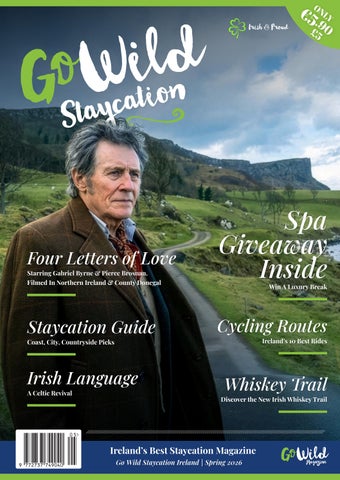
Originally published in 1997 and translated into more than 30 languages, Niall Williams’ beloved novel Four Letters of Love can now be seen on the big screen in an adaptation directed by Polly Steele, starring Pierce Brosnan, Helena Bonham Carter, Gabriel Byrne, Ann Skelly and Fionn O’Shea.
Filmed across Northern Ireland and in County Donegal, on the Northwest coast of Ireland, part of the Wild Atlantic Way, the story tells of Nicholas and Isabel who are made for each other, but fate does not always choose the easiest path to true love. As destiny pulls them together, so do family, passion and faith drive them apart.
“It’s about two families on two different sides of Ireland,” says Helena Bonham Carter. “You’ve got the Dublin family, William, a painter who can’t paint, played by Pierce, and his son Nicholas. And on the West of Ireland, you have a writer who can’t write, Master Gore, played by Gabriel Byrne, and their daughter Isabelle Gore. So, you’ve got these two young heroes —Isabelle and Nicholas—and the big question mark is how these two people end up together, how do they meet, and how their lives come to coincide. I play this mother, I’m the matriarch, a strong woman, I keep the world going—the family world going.”

Discussing the decision to film in Ireland, director Polly Steele was in awe of the landscapes available, “Ireland was the perfect backdrop. The landscape is more than just a setting - it's a character in the story. The west coast, with its raw beauty and elemental nature, was instrumental in capturing the film's essence.”
“The Irish landscape is like another character in the film,” continues Gabriel Byrne. “It’s poetic and moody, sometimes overwhelmingly beautiful. A part of Ireland that had never really been seen on screen before.”
“When I first read the script, I was really taken in by the rhythm of it,” notes Ann Skelly, who plays Isabel Gore. “The rhythm of Irishness was very present and I thought the language and the way Niall writes, is so beautiful and I could imagine that transferring really well in the film.”
Helena Bonham Carter agreed: “It was hugely fun for just me as a person to be able to visit all these places and be in the places,” she adds. “You know, it is, the landscape of the places that so inform the story – Murlough Bay! Well, it was like being on the edge of the world. It was extraordinary and stunning.”
“There’s a certain sense of aloneness in a beautiful landscape,” said Pierce Brosnan about filming in Ireland. “It holds a special place in my heart—Ireland—and the mystery of Ireland, the beauty of Ireland, my own kinship with Ireland—being Irish, from the banks of the River Boyne, Navan, County Meath”. Alongside that deep connection to the land he knew, the setting of Donegal was a happy, fresh discovery. “Never having been to Donegal,” he continues, “and hearing about Donegal and the Wild Atlantic Way and the forgotten county and all these emblems of what this great county is, and nation is, was powerful.”
Brosnan was also able to blend his own work / life balance in a beautiful way. “I get to travel with my wife, Keeley, and to bring my mother back home to Ireland,” he says, adding “you have this great novelist who has penned the script, you don’t get that very often. It was a very strong, seductive package of life and definitely left a piece of my heart here in Donegal.”
The locations imprinted on Gabriel Byrne, who feels he won’t be alone in falling for the natural settings depicted on screen.
“People will want to know where those locations are,” he says. “A lot of them are hidden; undiscovered; bleak; baron, at times; but also, intensely beautiful and inaccessible”. And just as he hopes audiences will want to discover these places.
“I think my favourite locations that we shot in were either Murlough Bay or Glenveagh National Park,” adds Fionn O’Shea, who plays Nicholas Coughlin. “That drive into Glenveagh National Park where the water was completely still and just being surrounded by the most beautiful mountains— I just felt very grateful to be there and it’s definitely something I won’t forget.” O’Shea says it was a true privilege to be surrounded by such majesty in nature: “Talking about its beauty does not do those places justice,” he says. “You really have to go and see them— being in Downings, being in the little bars and everything there was really lovely, and the whole community welcomed us with open arms which we felt really grateful for.”
“At Ardán, we work to champion stories rooted in the regions of Ireland that resonate on the international stage. Four Letters of Love is an example of the kind of ambitious filmmaking the WRAP Fund was set up to support. Adapted by Clare-based author Niall Williams from his own novel, produced by Mayo native Martina Niland and filmed across breathtaking Donegal utilising local talent and crew, this project not only showcases the artistic and narrative richness of the West and Northwest of Ireland, but also shines a spotlight on the wealth of talent and the highly-skilled craft of our creative communities. We are proud to have played our part in bringing this film to the big screen, and we look forward to audiences all over the world falling in love with the lore of our west coast in this film, and hopefully putting these locations on their holiday bucket list for years to come.” - Alan Duggan, CEO of Ardán
The cast all agreed about how special the on-set atmosphere was and the magic of being in Ireland: “It’s obviously the people that’s so special,” says Helena Bonham Carter. “And I hadn’t spent long enough in my life in Ireland. The Irish are extraordinary and so uniformly friendly—it’s like an island of extroverts. There’s no introvert, I don’t think, or at least I didn’t meet one. So friendly and so funny. I loved their company.”
“For me, going to Donegal—to those undiscovered areas—was a journey of awareness for me,” said Gabriel Byrne, adding it wasn’t just the rural that proved enticing. “It was also wonderful to work in Belfast,” he continues. “I worked in Belfast years ago but only for a brief period of time. To see the changes in the city, to see that it’s becoming more and more vibrant, more cosmopolitan—more European, in a way”. “And that’s why it’s really good that films come here, work here,” continues Byrne. “The crews are fantastic, the people on either side of the camera are as good as anywhere in the world. But it’s also opening up this landscape as well. It’s now becoming recognised as a place where you can make a film that some years ago might have been made in London or Los Angeles, so being in Belfast was a fantastic experience. Just meeting the people in the street, it is an incredibly friendly city.”
As Ann Skelly says, “There’s no better place in the world than Ireland in good weather.”
FOUR LETTERS OF LOVE is a Genesius Pictures, AX1 Films and Port Pictures production in association with London Town Films. It is produced by BAFTA Award nominee Debbie Gray (Good Luck to You, Leo Grande, Mrs. Lowry & Son) and Douglas Cummins (Let Me Go, The Girl) and Irish producer Martina Niland (Once, Sing Street). The film is financed by Northern Ireland Screen, Fís Éireann/Screen Ireland, WRAP (the Western Region Audiovisual Producer’s Fund), London Town Films and J Gleek Properties.
Fill Your Heart with Ireland.com


Although I’m a travel writer and spend many weeks at a time travelling around the world – there’s nowhere quite like home. I’m blessed to live in one of the sweetest spots in Ireland, the peninsula village of Howth. Located nine miles from the city centre, it sits on the edge of Dublin surrounded by the Irish Sea. It enjoys breathtaking views as far away as the Mourne Mountains to the north and the sweeping coastline of Dublin Bay to the south. I’ve lived here all my life and enjoyed the waters, from sailing around Ireland’s Eye to walking Burrow Beach. As a visitor, you can take a day trip with one of the ferry companies from the end of the west pier to Ireland’s Eye and enjoy the nature on this deserted island. I’ve walked every cliff and woodland path on the hill and even hit a few golf balls at Deer Park Estate, it’s easily the public golf course with the best views in Ireland.
Last summer I embraced the waters at my local beach, Balscadden Bay, somewhere I hadn’t swam since I was a child. It’s true that the more you do something the easier it gets. After a couple of days the swim became part of my daily routine and the water started to feel almost balmy. I swam all the way through the autumn and took my last dip in November. I’m ready to hit the water earlier this year with the addition of two new saunas for the public to rent on both sides of the hill, showing the appetite to enjoy nature’s bounty while keeping well too. Another wonderful way to enjoy nature is on a foraging tour. I recently joined Nicole Dunne on one of her speciality walks picking mushrooms with www.howthforaging.ie . Being a local she has a wealth of knowledge on where and when to forage around the hill. Her tours are great fun too.
When I travel to far flung places much fuss is made of the wildlife on offer and here in my hometown we have regular visits from the local seal population. They are quite friendly and have been known to play with pet dogs.
The seagulls get a hard time from locals and on the bright summer mornings, their cries can be heard as early as five o’clock. I have to admit that my ice-cream cones have been victim to their swooping and attack on more than one occasion, when I walked the east pier. But as a local, I’m reminded that this is their home too and they were here long before the crowds of day trippers that come out and visit on the DART. When fishing was a major industry and the west pier thronged with fishing vessels, their harvest was


and a favourite coffee spot for morning meetups. We have a host of great bars with good pub grub but if you do come out to Howth on the train then you will pass through the Bloody Stream –my local and a must stop for a lovely bowl of chowder or fish and chips.
We’re a friendly bunch out here in Howth, so if you are in Dublin, do pop out to visit and you can learn more by going to www.visitdublin.com/guides/ things-to-do-in-howth
Happy Travels , Michelle
For more from Michelle see her websites www.thenoveltraveller.com and www.novelireland.com


What do a holy mountain, a UNESCO World Heritage Site, the High King of Irish monuments, a glacial valley, the Stairway to Heaven, and the world’s most famous sea cliffs have in common? They’re all on the island of Ireland, and we’ve rounded them up into one handy bucket list guide for you. The Emerald Isle’s natural beauty has never been in doubt, and these six locations will have you wondering if it’s THE most beautiful place on Earth. Hint: it is! From west coast wonders to hidden gems in Northern Ireland, these are the views you won’t want to miss.
Croagh Patrick
Standing atop Croagh Patrick is mindblowing. Not only is the view of Clew Bay below – featuring more than 100 islets formed during the last Ice Age – one of the most unique landscapes in Ireland, but you’re also on the spot where St. Patrick fasted for 40-days and nights in the 5thcentury. It’s the reason Croagh Patrick has its name! It’s also why you’ll find a small chapel. built in 1905. to honour Ireland’s patron saint at the peak.
This sacred location is a popular pilgrimage route throughout the year and has been dubbed “Ireland’s Holy Mountain”. The climb takes three-to-four hours up and down and it’s a steep ascent, but a recently completed stone pathway that runs from the mountain’s base to the summit makes it easier. Westport is the place to stay nearby – the lively town has some of the best restaurants and trad music pubs on the Wild Atlantic Way.
No trip to Northern Ireland is complete without a visit to the Giant’s Causeway, a UNESCO World Heritage Site, formed 60-million years ago, during intense volcanic activity. The unusually shaped basalt columns are an iconic sight, but to see them from a different point of view, embark on the Giant’s Causeway Clifftop

Experience, an 8km hike, high above the waves that offers stunning views of the Causeway Coast. The fully-guided threeand-a-half-hour trek starts at the ruins of Dunseverick Castle and runs along the cliff edge before finishing at the legendary Causeway stones. On the way, your knowledgeable guide will regale you with the stories and history of this rugged region. The walking trails on the route are relatively easy to traverse and it’s a great way to stand out above the crowds (literally) at one of the most popular tourist attractions on the island of Ireland.
Seeing the Rock of Cashel standing tall on a rocky limestone outcrop as you approach from the surrounding County Tipperary countryside, is a wow moment you’ll never forget. Even in a land studded with castles, passage tombs and prehistoric forts, this cluster of medieval buildings is known as the “High King” of Irish monuments.
From a round tower and a Romanesque

church to an abbey and a tower house, there’s much to explore at this historic site, where the legendary Irish warrior Brian Boru was crowned High King in 978. The views from the Rock are just as dazzling; after-all,
this area of Tipperary is called the Golden Vale for a reason. So, enjoy your view on approach, cherish your time at the site and remember to take one last look before it disappears beyond the horizon when you leave. Ireland’s Ancient East was named for landmarks of this quality.
St. Kevin must have appreciated a wonderful view when he saw one because he established his 6th-century monastic settlement in the gorgeous glacial valley of Glendalough. Fast-forward to today and millennia-old remnants of what was once one of Europe’s most famous religious hubs, can still be perused at the site, including a striking round tower, weather-beaten gravestones and several church ruins. The name Glendalough translates as “valley of the two lakes” in Irish, and the serene Upper and Lower lakes here are a joy to gaze upon in reflection.
The surrounding valley is home to numerous walking and hiking trails. To see the best of Glendalough, we’d suggest hiking the Spinc and Glenealo Valley Walk, a 10km-loop that climbs up past Poulanass Waterfall to the top of the valley for panoramic views of the Wicklow Mountains.


Explore cosmopolitan Cork City with its 17th-century alleys and revitalised stretches of waterfront. Check out the Cork Opera House and indulge in local food, drinks and retail therapy in the pubs, shops, cafés and restaurants on the charming narrow streets. Here’s the best way to spend a getaway to Cork City.
The best way to get an overview of Cork is from the top of one of the open-top tour buses. These frequent bus tours give you the lay of the land from the start of your trip, so you can plan your stay and decide on which of the many attractions to visit.

Cork City Gaol and Radio Museum Experience
This is a great choice for a first stop. See what 19th and early 20th century life was like in Cork, both inside and outside of historic prison walls when you visit the Cork City Gaol & Radio Museum Experience.
Lewis Glucksman Gallery
Follow up your trip to the Gaol with a coffee at the Lewis Glucksman Gallery in University College Cork (UCC). This gallery places education at the heart of its activities with screenings, workshops and tours exploring art in greater depth. See how conveniently compact and friendly Cork is with a peaceful stroll through the UCC campus that brings you to the nearby Fitzgerald Park. After your wander in the area, head to the Huguenot Quarter.
Crawford Gallery
Visit The Crawford Gallery, Munster’s regional art museum and much muchloved cultural institution. Dedicated to the visual arts, both historic and contemporary, it has 2,000 works, ranging from 18th-century Irish and European paintings and sculptures, through to contemporary video installations. Admission to the Gallery and exhibitions is free (Please Note: the Crawford Art Gallery is closed for renovation until 2027).
For the food lovers, a visit to this fascinating market with origins that trace back to the times of King James I in 1610. A mix of traditional Cork fare and exciting new foods from afar, feature in this wonderful market with long-standing family-run stalls contributing to its unique atmosphere. Long recognised by locals as a place to meet, eat and shop, the English Market offers tourists and locals a tantalising range of Irish food. Some of the more traditional food include drisín (blood sausage), tripe, spiced beef, buttered eggs and battleboard (dried salted ling).

Indulge in a theatrical night
Take in a show or performance in one of Cork’s local arts venues. The Triskel Arts Centre hosts astonishing exhibitions and is a regular event space in the old Christchurch building.
For a more luxurious night out, The Cork Opera House is a national cultural institution with a world-class programme of events across the performing arts such as concerts, comedy, drama, musicals, contemporary and classical dance. Or, head along to The Everyman, a much-adored intimate Victorian theatre with a vibrant programme and stunning décor.
Just across the River Lee, the Shandon area of the city is a maze of winding streets just waiting to be explored.

After dark, the range of attractions in Cork never dims — a night at the Opera House or a relaxed dinner followed by a traditional music session are just some of the options to finish your perfect day.
Cork Butter Museum
Head to the nearby Cork Butter Museum, where you can learn the story of one of Ireland’s most important food exports and the world’s largest butter market.
Cork City Walking Tour
After lunch, take a walking tour to hear about Cork’s intriguing merchant and maritime past. Go explore the 7th-century Saint Fin Barre’s Cathedral, just a fiveminute walk from the Grand Parade. Find out more of the area’s history at Elizabeth Fort and St. Peter’s Church, both within easy walking distance of the cathedral.


In an age of digital dating, one Irish town is dedicated to finding love the old-fashioned way, with a matchmaking festival that’s been bringing people together for more than 165 years.
Each September, as the silage is cut and the summer crowds drift home, something unique happens near the Burren region of County Clare. In the small spa town of Lisdoonvarna, rural life gives way to music, dancing, and, with a little luck, love. This is the Lisdoonvarna Matchmaking Festival: a month-long celebration of connection, tradition, and the kind of “craic” (fun) that only Ireland can deliver.
Now more than 165 years old, the festival began as a pragmatic post-harvest gathering – a time for farmers and others to meet potential partners. Today, it draws tens of thousands of people from across Ireland and around the world, with live country music from noon until late, packed pubs, dance floors and plenty of chance encounters. And, at its heart is a matchmaker with a battered ledger and a steady hand.
The lucky book of love
Willie Daly, Ireland’s last traditional matchmaker, can be found in the snug of the Matchmaker Bar at the Imperial Hotel on Main Street, Lisdoonvarna village. It’s here, in this gently raucous corner of Clare, that generations of romantic hopefuls have found a quiet guide.
“I inherited the matchmaking tradition from my father, who had inherited it from his father,” Willie says. “I have also passed the skill and tradition on to my own children, and, in the last four years, my grandchildren.”
The core of his craft lies in a relic as storied as the festival itself: the “Lucky Love Book”, a timeworn ledger brimming with the personal dreams of those seeking connection.

“It has been in my matchmaking family for close to 160 years. There is a lot of love, hope and dreams in the book, with people long past,” he says. “Yet their hope for finding love, all combined, makes it a very special book, that I might go as far as to say has a magic love power about it.”
But change is also part of the magic.
“The festival has changed from my early involvement over 55 years ago, to how it is today,” Willie says. “Essentially, the dancing and music of the festival are still very alive, with couples who originally met at the festival over 50 years ago still attending for the dancing and the craic.
For those ready to take a chance, there’s no need to book ahead – just call in to Willie’s snug and fill out a profile card.
Willie’s philosophy is simple – but timetested.
“I am a great believer in love at first sight, with the magic of love waiting to be ignited,” he says. “For a good match, however, it is important to follow the big three: that you fancy each other, you actually like each other as people and you know you could love them too.”
And while modern dating apps have algorithms, Lisdoonvarna has atmosphere.
“At the festival, it is a great opportunity for people to get dressed up and feel a real buzz as you walk through the town. The potential is tangible, felt by young and old. If you’re a single lady, the chances are that most of the men you encounter on that visit to the festival are also likely to be single. That is half the battle sorted.”
“The conversation flows seamlessly, and the guesswork is taken out of it. You might even get multiple marriage offers throughout the night. It really is like no other place I have ever been to.”
“The festival resonates with people today because it is a timeless and honoured Irish tradition,” Willie says, “whereby people gather together and trust that the matchmaker in all their experience will do right by them and make them a match.”
“The festival is all the good parts of what it is to be Irish: open, friendly, happy and great craic.”
What advice would Willie offer to a firsttime visitor?
“Attending the festival for the first time is a real window of opportunity because if you see someone you like, take a risk, tell them they look nice or have a smashing smile. Go for it! There is a very high chance that they will reciprocate, and if not, you have the option of many, many more!”
More info at:
www.matchmakerireland.com


Gaeilge, the language native to the island of Ireland, is undergoing an exhilarating revival. From vibrant theatres and trendy pubs to a variety of bilingual visitor experiences, Gaeilge is at the heart of a cultural resurgence that’s inviting locals and visitors alike to connect with Ireland’s unique heritage.
The beautiful, lyrical sound of the Irish language isn’t just pleasing to the ear, it’s also rich in history; according to many scholars, it’s the oldest written vernacular language in western Europe, dating back over 2,500 years. Under British rule, Gaeilge became a minority language in Ireland, yet it was never allowed to die out and over the centuries, Ireland’s mother tongue was kept alive by people all over the island, with certain areas remaining predominantly Irish speaking.
In 1922, in a bid to ensure all citizens could speak their native language, many schools across the country began teaching all subjects ‘as Gaeilge’ (in Irish). But for many students, learning a language they wouldn’t use in everyday life was seen as a chore and they approached the ancient tongue of their ancestors with something akin to boredom.
However, the Irish language is not just surviving, it is thriving and enjoying a vibrant cultural moment. Once confined to the classroom, Gaeilge is enjoying a creative renaissance. A new generation proudly weaves their mother tongue into music, arts, fashion, and everyday life. Artists like Hozier and The Mary Wallopers blend Irish Gaelic lyrics with
folk, electro, and pop, proving Irish is as fresh and dynamic as any modern language. Festivals such as Other Voices and TradFest showcase Irish-language acts to eager audiences.
In fashion, brands like Pellador FC, De Búrca, and BEIR BUA boldly bring Gaeilge into streetwear and knitwear. Pellador’s retro Celtic jumpers fuse Irish sporting heritage with modern design, De Búrca features Gaeilge slogans and Irish proverbs in bold styles, and BEIR BUA’s recent collaboration with Beamish, a retro sports jersey in Cork red and Antrim gold, sold out instantly, capturing Ireland’s cultural revival.
Gaelic typography is also on the rise, featured in branding for An Post, Beamish, Jameson, and more, turning heritage motifs into striking symbols of Irish pride.
This is not cultural nostalgia. For visitors, Gaeilge today is a living, expressive identity found in music, fashion, festivals, podcasts, and local meet-ups. Learning a cúpla focal (a few words) connects you to a creative, confident Irish community.
Across the island, Gaelscoils, Irishlanguage schools, have waiting lists, with nearly 70,000 students learning through Irish. Every summer, teenagers attend Irish-language camps where they enjoy sport, music, dance, and live with a ‘Bean an Tí’ (woman of the house), speaking only Irish.


for the hundreds of Gaelscoils (schools where the curriculum is taught through Gaelic), and almost 70,000 students are currently learning all of their subjects through Irish.
In addition, every summer countless teenagers attend Irish-language summer camps. The much-loved tradition, which has become a rite of passage, sees the youngsters enjoy several weeks of sport, traditional music, dance and more, while living with a ‘Bean an Tí’ (woman of the house) and her family and speaking only Irish for the duration of their stay.
But it’s not just young people who are actively enjoying the revival of our native tongue. Adults both from Ireland and abroad are now signing up for activities and events or even one-off occasions where they can learn a ‘cúpla focal’ (a few words) of our unique language, while having fun and making new friends.


Máiréad Folan from Galway is one such person. She joined An Taibhdhearc – the National Irish Language Theatre in Galway city in a bid to learn more about the language through the medium of drama, a subject she is deeply interested in.
“What excites me most today is the way Irish-language theatre is reaching

new audiences and finding renewed relevance,” she said. “Younger generations are connecting with the language and it’s a powerful thing to watch stories rooted in our culture come to life in ways which feel urgent, fresh and deeply human.
“I believe that for visitors to Ireland, Irish-language theatre offers something you won’t find anywhere else. It’s an immersion into a different way of seeing, hearing and feeling a story. It invites you into a connection with language and place that’s uniquely Irish and deeply moving.”
As an Irish native, Máiréad already had an understanding of the language, but An Taibhdhearc welcomes everyone into the fold regardless of whether they’re a fluent Irish speaker or have no knowledge of it at all. Various shows ‘as Gaeilge’ run throughout the year, with English-language audio access for people who want to follow what’s going on, and a café for anyone wishing to pop in and immerse themselves in an Irish-speaking environment.
Irish-language experiences
In 2026, Ireland celebrates 100-years since the formal recognition of the Gaeltacht regions - vibrant Irish-speaking communities dedicated to preserving and promoting the Irish language and culture. For anyone eager to experience the Ireland of old, a visit to these Gaeltacht areas is essential. They include the Aran Islands off the west coast, parts of Donegal, Galway, Kerry, and Mayo, as well as smaller regions in Cork, Waterford, Meath, and west Belfast.

Gaeilge & Fáilte is a project to promote tourism in these Irish-speaking regions. From the Croithlí Whiskey Distillery Experience in Donegal and Criostal na Rinne glassware studio tours in Waterford to the Tonn Nua Surf School in Mayo, these activities are captivating ways to experience the Irish language on a visit.
Anyone wishing to develop a better understanding of Gaeilge can enjoy an immersive holiday with Oideas Gael in Donegal, which offers language courses and cultural breaks in the stunning environs of one of Ireland’s most breathtaking counties. People can also choose to explore different areas of the country with Find my Ireland – these trips are perfect for beginners looking to improve their Irish in a welcoming space.
But visitors may just want to enjoy a night out or even an afternoon activity. Fortunately, there are many options available. PEIG holds conversation, walking and sports groups across Ireland, Club Áras na nGael is an Irish languagespeaking pub in Galway, while Hynes Bar in the hip Stoneybatter neighbourhood of Dublin offers a discount on drinks ordered through Irish, so it’s a great incentive to practice. In the west, Connemara Pub Tours stops by Irish-speaking bars for trad music sessions and storytelling, with conversational Gaeilge flowing alongside pints of Guinness.
Some people will prefer the formal environment of a classroom, and Gael Linn offers courses in Irish language and culture for adults, designed for learners with no prior knowledge. In Belfast, Cultúrlann has something for everyone, from classes and music gigs to poetry readings and visual arts.
Having no experience of the language but an interest in learning is something that Liz Walsh can relate to. With family roots in Ireland, the Boston woman always
wanted to learn a few words, so on her last visit to the west coast, she decided to see what she could soak up.
“I love the whole idea of Gaelic – firstly because it’s such a beautiful and old language, but also because my ancestors would have spoken it,” she said. “I have been to Ireland on several occasions and once we unintentionally ended up in an Irish-speaking part of Kerry, which I found fascinating. So, last year, my husband and I went to the island of Inis Mór so we could stay where people spoke the language regularly. We also enrolled in a class and learned some of the basics: ‘please’, ‘thank you’, ‘hello’, ‘goodbye’ and other pleasantries.
“We are planning to go back to Ireland next year and for sure, I’ll be doing another class somewhere. So many people don’t know that the Irish language is still in existence - but it is very much alive, and understanding a few words is very doable and so rewarding – it made me feel very proud of myself and I’m looking forward to learning more.”
To speak even a few words of Irish is to brush against the soul of the island - to echo the sounds of its ancient landscape, its myths, and its people. For those seeking a deeper connection to Ireland, Gaeilge is more than a language; it’s a thread that ties them to a living tradition, still resonating through its mountains, coastlines, and centuries.”


Ireland’s picture-perfect landscapes are made for unforgettable celebrations of love.
Imagine how memorable your engagement or elopement would be set against the dramatic backdrop of wave-whipped cliffs or the gentle beauty of a forested valley or if it took place in the sublime surroundings of a medieval castle or by the atmospheric ruins of an ancient monastery.
Such breath-taking scenery, together with ancient Celtic mysticism and the warmth and welcome of the people are some of the things that make the island of Ireland the perfect setting for declarations of love. And in Ireland, love is love. This year also marks ten-years since marriage equality became law and the country is a proud champion of LGBTQ+ marriages with an international reputation as an LGBTQ+friendly destination.
So, for planned ‘I do’s’ or spontaneous proposals, traditional wedding ceremonies or New Age rituals, there is no better place to create fabulous and unique memories than Ireland. With hundreds of approved marriage venues and many more gorgeous locations that are ideal for symbolic ceremonies or popping the question, the only problem is choosing where to go. Here are a few examples of romantic hotspots on the island.

A small church sits on an island in a tranquil lake that mirrors the beauty of the surrounding valley. This is St. Finbarr’s Oratory in Gougane Barra Forest Park, a magical place that exudes peace and is deeply connected to Ireland’s Christian heritage. It’s a popular site for small weddings with the surrounding landscape displaying a changing tapestry of colours with every season.

This small neoclassical temple perched on the cliff edge above a golden stretch of sand is one of the most photographed places on the island. Its beautiful architecture, inspired by the Temple of Vesta in Italy, together with the stunning views over the Causeway Coast make it the perfect place for an elopement or proposal.
Dromoland offers the ultimate fairytale castle experience with lavish interiors, historic grandeur, and romantic gardens and woodlands. Here you can go as intimate or extravagant as you please for your special day, whether it’s a quiet elopement ceremony in the walled garden or a statement wedding in the magnificent Brian Ború Hall.

For those seeking a place with a deeply spiritual ambiance as well as spectacular natural beauty, Glendalough is a match made in heaven. Sixth-century monastic ruins sit in a stunning glacial valley creating a hushed and timeless sacred space, perfect for exchanging vows or committing to marry your loved one.
As dramatic backgrounds go, the ruins of Dunluce Castle clinging to a cliff overlooking the Atlantic, are hard to beat. The rugged beauty of the site and the whispers of history trapped in the castle’s stones make it a unique and special location. A proposal or intimate elopement ceremony at sunset adds a further mystical dimension.
www.ireland.com


Ireland’s best known adventure challenge brand HELL & BACK, which has been delivering large-scale outdoor obstacle events across Ireland for over a decade, is stepping in an exciting new direction this spring with the launch of an entirely new concept, Trail Running @ Dawn.
This fresh addition to the HELL & BACK calendar offers participants a completely different experience to the company’s well-known obstacle course races. There will be no cargo nets, no mud pits and no timing chips. Instead, the focus is on pure, uninterrupted trail running in one of Ireland’s most iconic outdoor locations.
Taking place on Saturday 25th April at 5.30 am, the inaugural event will be held on the Glendalough Estate, Co. Wicklow and will invite runners to take on a 10km sunrise route through forest paths, mountain trails and natural terrain.
Designed and built by the expert HELL & BACK team, the event is specifically for those who want an honest trail-running experience without artificial challenges.
“This is something really different for us and we’re incredibly excited about it.” said Michael McElligott, Commercial Director with HELL & BACK “For years HELL & BACK has been known for obstacles and big challenge events but we also know there is a
huge community of people who simply love to run in nature. Trail Running @Dawn is about celebrating that. It’s running in its purest form, in an incredible location, at a truly special time of day.”
Glendalough in a Whole New Light
Set against the backdrop of Scarr Mountain and the Wicklow Mountain National Park, participants will begin in the quiet of early morning as the sky shifts from darkness to gold, with mist rising from the valleys and ancient trees lining the trails. Ideal for club runners, regular trail runners or anyone who enjoys the outdoors, the 10km course will be 100% trail and track featuring forest paths, natural ground and varied terrain. The event offers an authentic experience
Continuing its long tradition of showcasing the very best of Wicklow’s landscape and outdoor adventure offerings, HELL & BACK is proud to bring this new experience to the heart of the county.
“Wicklow is one of the most beautiful counties in Ireland and Glendalough Estate is one of its most stunning locations. We are absolutely thrilled to be bringing this new concept there” says McElligott. “To run those trails at dawn before the rest of the world wakes up is going to be a really memorable experience. We think it will appeal to a whole new audience as well as many of our existing participants.”
Trail Running @ Dawn takes place on

Looking ahead to the summer, HELL & BACK returns to its much-loved immersive obstacle course format at its homebase in the stunning grounds of Killruddery Estate, Bray. Nestled between the mountains and the sea, the historic estate has become synonymous with HELL & BACK events over the years.
6th June: HELL & BACK Adult 13km, Family 8km and Teen 8km
7th June: HELL & BACK Junior Splash Attack, 4km adventure created especially for children aged 8 to 12. Expect water zones, fun obstacles and a lively festival atmosphere.

The GPO (General Post Office) is one of Ireland’s most famous buildings and the award-winning GPO Museum is a must-see on any visit to Dublin! Witness Ireland’s history from revolution to modern times dramatically unfold before your eyes!
This year the museum celebrates its tenth anniversary, and it is a popular choice for both local and international visitors of all ages who wish to learn about the key events of modern Irish history.
The building was the headquarters of the 1916 Easter Rising which set in motion a chain of events which would ultimately lead to the creation of the Irish Republic.
Key moments that shaped Ireland’s history are brought to life through electronic touch screens, film, video, audio visual booths, sound, and authentic artefacts.
From March 23rd to August 31st the museum will feature the acclaimed

‘Peace Heroines’ exhibition which was launched by Herstory Education Trust in partnership with the National Museums NI and the Department of Foreign Affairs. This exhibition celebrates the pivotal role of women in the peace process of Northern Ireland. Afterwards relax in our café overlooking the courtyard or browse
quality gift items. Both the café and gift shop are open to the public.
Do not miss our ‘Kids Go Free’ offer for July and August! For further information visit www.gpomuseum.ie. Book online for best rates.


Ireland is fortunate to have some of the most magnificent landscapes on the planet. Take to the open road and drive the Wild Atlantic Way, a true bucket list trip packed with stretches of vast coastline, golden strands and majestic landscapes, check out the amazing views on the Wild Atlantic Way.
Check out these five amazing weekend road trips on the Wild Atlantic Way.
Take the road less travelled from the tawny-coloured sands of Rossnowlagh to charismatic Kilcar and explore the delights of beautiful Donegal on a three day trip. Visit the bustling fishing town of Killybegs, it’s the perfect place to try a spot of angling.
Weave your way through the picturesque Glengesh Pass and on to Fintra Bay, see if you can spot the distinctive peak of Sligo’s Benbulben in the distance. Soak up the stunning scenery and appreciate the tranquil atmosphere.
Far-flung West Cork is an explorer’s paradise. Drive along the epic coastline and bask in the beautiful views. Start your trip at the Old Head of Kinsale, stretch your legs on the looped walk and afterwards head for a bite to eat in Kinsale,

Breathe in the salty sea air as you travel the rugged coastline between Galway and Mayo. Take a boat trip to the Aran Islands, discover its ancient ruins and unspoiled scenery. Next up, it’s the stunning Sky Road of Connemara; admire its towering mountain ranges and outstanding natural beauty. Stop off in picturesque Clifden for a coffee in one of the charming cafés before heading on to Westport, the towns and villages in this part of the country seem plucked from the pages of storybooks.


Enchanting castles, beautiful beaches and dramatic cliffs, Kerry is a magical must-see on the Wild Atlantic Way. Bring the camera or use your mobile phone, as you follow the mountain roads from Killorglin to Caherdaniel, capturing gorgeous gardens and impressive islands, the makings of a gorgeous Instagram feed. Pay a visit to Kells Bay Garden on the way to Cahersiveen and drive the Skellig Ring for sensational views of the Skellig Islands.
Check out two of Ireland’s most photogenic counties with a road trip along the Sligo and Mayo coastline. Discover ancient secrets at the megalithic tombs in Carrowmore, Sligo and later, head to Downpatrick Head in Mayo and explore the stunning sea stacks, blowholes and Atlantic caves. Book a wild food foraging tour, take a surf lesson and catch one of Strandhill’s famous sunsets. From pretty Enniscrone to the buzzing heritage town of Ballina, plan this epic trip now.


Ireland has a year-long calendar of top-notch arts festivals and some of the biggest and best are lined up for the summer months. Here’s a peek at what’s on offer at three of the island’s most dynamic and distinctive arts festivals.
Galway International Arts Festival 13-26 July
Ireland’s leading festival of extraordinary experiences.
The Galway International Arts Festival is one of the main highlights of the year and involves events throughout Galway City. The 49th Galway International Arts Festival will take place for 2 weeks from 13 to 26 July 2026 and will feature a wealth of theatre, music, comedy, visual art, dance, and literary events from artists from Africa, America, Asia, Australia, Europe, and of course Ireland and Galway.
Artists performing this year include Block Rockin’ Beats with Dec Pierce, The Flaming Lips make a triumphant return to the Heineken® Big Top, Emeli Sandé and James Morrison share the Big Top in a powerful double-bill, Sophie EllisBextor brings her distinctive pop glamour to the Heineken Big Top on 22 July 2026, joined by special guest Kate Nash plus The Saw Doctors return with their signature Irish rockfolk spirit, delivering riotous singalongs to classics like N17
Earagail Arts Festival, County Donegal 11–25 July
A unique bilingual festival in the rugged northwest of Ireland, Earagail Arts Festival/féile ealaíne celebrates local and international talent and the rich cultural heritage of County Donegal.
The festival’s wide-reaching programme includes music, circus, visual art, theatre, dance, street art, spoken word and conversations and there will also be masterclasses and wellness workshops. Always with a strong focus on community, this year the festival will particularly celebrate environmental art, indigenous voices, and immersive experiences in nature.
Events take place right across the county in castles, churches, community halls and circus tents, on beaches and in the streets.
Signature events include outdoor performances set against Donegal’s stunning natural backdrops such as Gola Island, guided cultural walks through beautiful Glenveagh National Park and collaborative projects with local Gaeltacht (Irish speaking) communities.
Kilkenny Arts Festival 6-16 August
The medieval city of Kilkenny hosts one of Ireland’s longest-running and most prestigious multi-arts festivals having been a hub of artistic adventures for over 50 years. The festival programme spans theatre, literature, dance, visual art, design and multiple genres of music. The festival venues include some of the city’s most iconic locations such as St .Canice’s Cathedral, Rothe House and Kilkenny Castle and there are also events in Kilkenny’s ancient streets.


your

Aloft Dublin City offers curated summer city break packages, including early-bird rates, breakfast options, and pet-friendly stays Families can enjoy Camp Aloft, unwind with sunset cocktails at the award-winning WXYZ Bar With stylish rooms, a central location and a vibrant atmosphere, it’s the perfect base for exploring Dublin in summer!
Aloft Dublin City offers curated summer city break packages, including early-bird rates, breakfast options, and pet-friendly stays Families can enjoy Camp Aloft, while guests can unwind with sunset cocktails at the award-winning WXYZ Bar With stylish rooms, a central location and a vibrant atmosphere, it’s the perfect base for exploring Dublin in summer!

scan here
Nestled along the rugged west coast of Ireland, Westport, Co. Mayo, is a vibrant town that offers the perfect blend of adventure, cultural exploration and relaxation.
Kick off your trip with a visit to Westport House (westporthouse.ie), a grand estate that combines history with family fun. Dating back over 300-years, this magnificent Georgian mansion offers guided tours, where you can explore its period rooms, beautifully manicured gardens and learn about the fascinating history of the Browne family. The estate also features a Pirate Adventure Park for those travelling with kids, making it a family-friendly stop.
Next, enjoy a leisurely lunch at Cronin’s Shebeen, a charming pub set along the shores of Clew Bay. Known for its cosy atmosphere, hearty food and stunning views, Cronin’s is the perfect spot to sample local seafood and unwind. Try their famous seafood chowder or the day’s fresh fish for an authentic taste of Mayo.


On day two, immerse yourself in the natural beauty that surrounds Westport by taking on The Great Western Greenway (greenway.ie), one of Ireland’s most scenic cycling and walking routes. Stretching 42 kilometres from Westport to Achill Island, this converted railway line offers a smooth and safe path for cyclists and walkers, showcasing some of the most stunning coastal views in the region.
If you’re not up for the entire trail, you can easily rent a bike in town and cycle a shorter segment. Be sure to stop in Mulranny, where you can catch your breath and admire the breathtaking views of Clew Bay, or take a break at the luxurious Mulranny Park Hotel (mulrannyparkhotel.ie) for a delicious meal or even a spa treatment.
In the afternoon, set your sights on one of Ireland’s most iconic peaks—Croagh Patrick. Rising 764 meters above sea level, this sacred mountain has been a pilgrimage site for centuries, with stunning panoramic views from the top. While the climb is moderately challenging, it’s a rewarding experience, especially if you’re lucky enough to have clear skies at the summit.
Don’t forget to visit the Tavern in Murrisk (tavernmurrisk.com) afterwards for a well-deserved pint and some of the best pub grub in the area. Located at the foot of Croagh Patrick, it’s the ideal spot to rest your legs and indulge in hearty Irish cuisine.

After a couple of days filled with exploration and adventure, spend your final day savouring the relaxed atmosphere that Westport is known for. Take a stroll through Westport town, with its colourful streets, charming shops and lively cafés. If you’re visiting on a Saturday, don’t miss the Westport Market, where local artisans, farmers, and food producers showcase their best goods.
As the evening draws in, head back to town and grab a table at one of the many cosy pubs to toast your unforgettable long weekend in Westport.
With its mix of cultural heritage, outdoor activities, and fantastic food and drink options, Westport is an ideal destination for a long weekend. From exploring the historic Westport House and cycling
The Greenway to hiking the majestic Croagh Patrick and enjoying traditional Irish hospitality at Cronin’s Shebeen and The Tavern in Murrisk, Westport promises a memorable Irish getaway that will leave you longing for more.
THE BEST OF LIVE TRADITIONAL MUSIC : SEVEN NIGHTS A WEEK
Probably Westport’s most famous pub. The proprietor, Matt Molloy, is a flautist with one of Ireland’s most famous traditional music bands, The Chieftains Regular trad sessions take place in the ‘back bar’, with appreciative patrons hopping along beside a crackling fire –often with Matt himself supplying the airs.


Visit some of the highest sea cliffs in Europe at Slieve League. From rugged mountains to wave-hewn sea cliffs, Donegal is one of Ireland’s most memorable counties. Donegal has 1,134km of sandy beaches, cliffs and craggy inlets to explore
Blow away the cobwebs with a visit to one of the highest sea cliffs in Europe at Sliabh Liag (Slieve League). This holy mountain was a Christian pilgrimage site for over 1,000 years and it’s easy to see why it was regarded as a sacred place.

Travel to 17th-century Ireland and beyond at Glencolmcille Folk Village. Overlooking Glenbay Beach, the museum is made of six, small, thatched cottages, or a cláchan, each offering a glimpse into their own part of Irish history. See where kids learnt their lessons in the old schoolhouse or spend an afternoon in the reconstructed fisherman’s cottage.
One of Ireland’s most distinctive megalithic sites, the stone ringfort of Grianán of Aileach dates back to 1700BC and it’s said to have been built by the Tuatha de Danann. The hilltop structure has been very well-preserved and you can climb up on its walls to take in glorious, panoramic views of the surrounding countryside.
Close to the Gaeltacht area of Gaoth Dobhair (Gweedore), the tallest peak in County Donegal is one of the county’s most recognisable landmarks. Climbing the magnificent Errigal is a rite of passage for Donegal natives and visitors can join their ranks with a couple of hours of effort.

One of the most beautiful lighthouses in the world, a visit to Fanad Lighthouse is a perfect way to finish off a trip to Fanad Head where the views are unbeatable. Perched on a rocky outcrop at the mouth of Lough Swilly, the lighthouse has helped seafarers to negotiate the local waters since 1817.
Steeped in ancient myths and legends, Toraigh (Tory Island) is a stunning place with a rich heritage, deep culture and a real sense of community. The island’s remote location has helped the locals to preserve old Gaelic customs, such as the appointment of an island king. From its renowned trad musicians to the beautiful scenery, a trip to Tory is a chance to experience a unique way of life.
With over 481 hectares of woodland and beaches, the lush green reserve at Ards Forest Park is a perfect place for a romantic walk or a fun day out with the family. This biodiverse park offers a rare combination of landscapes and habitats teeming with all sorts of local wildlife.

In the shadow of Errigal deep in the Derryveagh Mountains, the 16,000 hectares of Glenveagh National Park are a haven for wildlife and visitors should keep an eye out for its large herd of red deer. The huge park takes in mountains, lakes, valleys and woods and you can explore it on foot or by bike.
Where else but Donegal would you find such a ravishing coastline as the one at Narin-Portnoo? This beautiful beach is manned by a lifeguard from June to August so it’s a great place to take the family on a warm summer’s day. This supersized, white sand beach seems to go on forever and it’s just as spectacular in the winter.
Combining the peace of its outdoor attractions with buzzing nightlife, the Gaeltacht island of Árainn Mhór (Arranmore) near Burtonport Harbour is the largest inhabited island in Donegal. A trip to Arranmore is a chance to immerse yourself in local culture and relax at a different pace in nature.


As we open our doors for the 59th year we are delighted to welcome you to the Glencolmcille Folk Village Glencolmcille Folk Village is located in one of Donegal’s most idyllic valleys, situated along the dramatic coastline of Glen Bay with its spectacular views of Glen Beach and Glen Head
visit the Folk Village, you will experience a genuine Irish welcome with Ireland from 1750 onwards. Tour booklets are available in several languages.
to Sliabh Liag cli s we are only 20 minutes along the coast. Tá Chlachán Ghleann Cholm Cille.
ar scéal saoil an Athair Mhic Daidhir.


Cholm Cille, Contae Dhún na nGall


The Tralee-Fenit Greenway offers a 13 6km journey along the Wild Atlantic Way, starting in Tralee and finishing in the coastal village

The Listowel to Limerick Greenway unfolds 16 kilometres of scenic countryside and historic tunnels Starting in literary Listowel and stretching through lush woodlands to Abbeyfeale where it connects to the Limerick Greenway Visit www discoverkerry com/greenways


Born
She was fearless, ferocious and she led a life unlike most other women in 16th Century Ireland. The story of Grace O’Malley might sound like the plot of a Hollywood blockbuster but this fierce woman was a real-life trailblazer, who continues to enthral.
Grace, or Gráinne Ní Mháille to use her Irish name, was born in 1530 to a noble seafaring clan. The O’Malleys ruled over Clew Bay in Mayo and were feared pirates. The story has it that the young Grace asked her father if she could accompany him to a trading exhibition to Spain; he refused and told her that her long hair would get caught in the ship’s ropes. When he returned from sea the next time, he found his daughter had shorn her hair, which lead to her Irish nickname of Gráinne Mhaol (anglicised as Granuaile) or ‘bald Grace’.
When her father died, she took over the O’Malley dynasty. Marrying Dónal anChogaidh (Donal of the War) O’Flaherty brought her immense wealth, including a 1,000 head of cattle and horses. When her husband was killed in battle in the 1560s, she commanded the loyalty of his men.
For decades, Grace plundered the seas around Ireland, even allegedly while pregnant. Grace would go on take lovers, marry again, divorce and bear four children in all. She conducted pirate raids; vigorously defended her lands, and her revenges, when she was wronged, were ruthless.
There are many tales that attest to her spirit and her bravery. It’s reported she once tried to visit Howth Castle in Dublin and was told that the family were at dinner and the gates remained closed. As a reprisal, she kidnapped Lord Howth’s grandson, who was only released once the family had promised that the gate would remain open to visitors and that an extra place would always be set at the table for a guest, a promise that Lord Howth’s descendants keep to this day. Famously, Grace sailed to England to visit Queen Elizabeth 1, to plead for the release of her captured son and half-brother, after they were arrested for conspiracy against and, murder of the English.
The English queen and the Pirate came face to face in 1593, with the event documented in Elizabethan state papers. Elizabeth, no doubt amazed at this mould-breaking pirate queen, granted clemency, released the prisoners and promised to let Grace to keep her lands and carry on, unimpeded.
Grace lived to approximately 1603 and died at the age of 72, most likely at Rockfleet Castle, near Newport in Co. Mayo, with the family’s traditional burial place being the Cistercian Abbey on Clare Island, off the coast of Mayo.
Although English state papers record Grace and her life, she was curiously absent from Irish annals. In more recent times, interest in her life has grown. Author Anne Chambers, who wrote Grace O’Malley: The Biography of Ireland’s Pirate Queen 15301603, first published in 1979, is credited as the catalyst for Grace’s restoration to history. She has been the subject of a song-suite, a musical and has even bestowed her name to a whiskey. Today, visitors to Mayo can enjoy the Granuaile Loop walk on Achill, where the Pirate Queen had a castle, a four storey tower house, in nearby Kildavent. Clare Island where she grew up, and is possibly buried, is a short ferry trip from the mainland, and Rockfleet Castle, where she spent her final years, also still stands.


No matter what corner of the country you find yourself in, Ireland has some of the best cycling routes across the globe. From Dublin to West Cork or from Waterford to Mayo, Ireland is a dream for cycling enthusiasts. Pump up your tyres, don your helmet and get ready see Ireland's wonderful towns, countryside and coastline, on two wheels. From looped, paved routes to gorgeous coastal trails, here are ten of the best cycling routes in Ireland.
A world-class, traffic-free route, the Great Western Greenway runs for 49km and weaves through some of Ireland’s most beautiful scenery from Westport on the mainland all the way to Acaill (Achill Island) and Cashel. Cycle the entire stretch and experience exceptional views of Croagh Patrick, deserted villages, national parks and some of the most stunning coastline in the west.
A spectacular 48km paved cycling and walking trail along an old railway line, the Waterford Greenway stretches from the quays of Waterford city – Ireland’s oldest city – to the vibrant seaside market town of Dungarvan. Soak up the county's history as you pedal along old railway tracks, over impressive viaducts and through restored tunnels – plus, you may even spot signs of old Viking and Norman
settlements. If you fancy a break from the saddle, stop at Mount Congreve Gardens and Country Estate and visit what many consider to be one of the great gardens of the world.
The Limerick Greenway is an easy 39.7km cycle route that cuts through incredible countryside, starting off in Rathkeale, then on to Newcastle West before finishing in Abbeyfeale. Following a disused railway line, this gentle cycle brings you along the banks of the River Deel, past restored railway stations and through boglands and heritage towns, offering stunning views of the Limerick countryside the entire way.
Although the 13.6km route only makes up a segment of the greater Kingdom of Kerry Greenways, the Tralee to Fenit cycle in Kerry is home to some of the most stunning scenery to found along the Wild Atlantic Way. Start off in colourful Tralee and enjoy a leisurely cycle through some of the county's pretty villages like Spa, Cotters Bend and Kilfenora, following the Tralee Estuary as you go. Before you reach the endpoint in Fenit Harbour, stop and take in the views along your route, from Mount Brandon and Tralee Bay to the incredible Dingle Peninsula.


If you’re a novice cyclist or travelling with young children, the Carlingford Greenway in Louth is perfect. This route stretches from Omeath to Carlingford on the old Dundalk, Newry and Greenore railway line. There are lots of different places to join the Carlingford Greenway and they all have great views across the water to the Mourne Mountains, while Slieve Foy towers over it on the Louth side. The Greenway is dotted with colourful flowers, mature trees, fields of grazing sheep as well as old level crossings and bridges. Keep an ear out for the local birds as they serenade you on your journey.
Cycle along the iconic Royal Canal Greenway from Maynooth in County Kildare, traversing through counties Meath and Westmeath before finishing up in either Longford town or Cloondara in County Longford. Leisurely pedal your way along the canal towpath, exploring the built and natural heritage as barges sail past and fishermen cast their lines. Stop off for a hearty meal or overnight stay in Maynooth, Mullingar or any of the other great towns and villages along the 121.4km route.
A stunning route that touches on parts of Clare, Tipperary and Galway, the Lough Derg Way is best experienced on the 6. 8.9km loop that takes you along the eastern shore of the lake and through the villages of Dromineer and Terryglass. There's also a 30km loop if you’re looking for a shorter cycle. This route has spectacular views of the lake before descending into Castlelough, through a working farm and along a slight off-road section to Garrykennedy.


The Old Rail Trail Greenway is the perfect trail for families looking for an active getaway. The mostly flat trail is entirely car-free, making it a leisurely cycle for bike riders of all ages. Set off from Athlone and head for Mullingar on a cycle through areas rich in biodiversity and heritage. Moate, Castletown or Ballinea are great stop-off points for refreshments along the trail. Bikes of all types can be rented in Athlone, Moate and Castletown.
The 30km linear route of the Boyne Valley to Lakelands Greenway kicks off from the lovely Blackwater Park in Navan, County Meath and traces the old tracks of the former Midland Great Western Railway all the way to Cavan's postcard-worthy Dún na Rí Forest Park. As you pedal, keep an eye out for signs of the trail's past life such as stone-built station houses, ornate gates and the historic tracks themselves.
Ireland’s longest walking trail the Beara-Breifne Way stretches from the evocative terrain of the Beara Peninsula in West Cork, all the way towards the counties Leitrim and Cavan through some of the most picturesque and remote areas in the whole of Ireland. Meanwhile, the Beara Way Cycling Route is one for serious cycling enthusiasts, with 165.4km to explore. As you follow along the coastline of the Beara Peninsula, you'll travel from Glengarriff to Dursey Island, then on to Kenmare. With no start or finish, you can join the circular route at any point.


Beaches, cafés, hotels, and trails that are genuinely dog-welcoming
Dog-friendly travel in Ireland has moved beyond tolerance. The strongest pet-first staycations now design the experience around dogs rather than simply allowing them. This distinction matters. A genuinely dog-welcoming trip reduces friction, removes guesswork and allows owners to relax instead of constantly managing restrictions. The best locations share three traits: year-round access, walkable outdoor space and accommodation that treats dogs as guests rather than exceptions.
Beaches that work in real conditions
Ireland’s coastline offers extensive dog access, particularly outside peak summer months. Local authority by-laws vary but many Atlantic beaches remain open year-round or re-open from late September to early May.
Lahinch Strand, Fanore Beach, Inch Beach, Rossnowlagh, and Keel Strand on Achill are proven options. They offer scale, clear sightlines, and space away from road traffic. Early mornings and evenings work best, reducing crowd density and sensory overload for dogs.
Sheltered beaches matter for older dogs or nervous swimmers. Locations inside bays or fjords, such as parts of Clew Bay or Killary Harbour, provide calmer water and predictable conditions. Always check seasonal signage on arrival. Enforcement is local and conditions change.
Trails and walks that suit dogs
Dog-first walking routes prioritise width, visibility and exit points. Greenways outperform mountain trails for this reason.
The Great Western Greenway in Mayo is one of the strongest dog-walking assets in the country. Long, flat sections allow controlled movement, while access points make it easy to turn back without committing to distance. Waterford Greenway offers similar benefits but with higher summer traffic.
Woodland and coastal loops near towns work best. Barna Woods, Westport Demesne, Phoenix Park, and Killarney National Park low-level paths allow exercise without exposure to livestock or narrow cliff paths. Avoid open mountain routes during lambing season. Even well-controlled dogs can cause stress to livestock and owners so always best to consider keeping your dog on a leash.
Cafés and pubs that mean it
Dog-friendly cafés are common. Dog-welcoming cafés are different. They provide outdoor seating with shelter, water bowls without asking and staff who are comfortable rather than merely permissive.
West coast towns lead here. Dingle, Westport, Clifden, Sligo, and Kinsale all support café culture where dogs are normalised, particularly outside peak dining hours. Pub gardens with cover

matter more than indoor access, especially in changeable weather. Timing is essential. Late morning and mid-afternoon avoid service pressure and increase tolerance. Some cafes even welcome tour pampered pooch inside.
Hotels and accommodation that remove stress
Pet-first accommodation is about layout and policy, not just permission. The strongest options offer:
• Ground-floor rooms or direct outdoor access.
• Clear house rules rather than vague approval.
• Reasonable cleaning charges without penalties.
• Proximity to walking routes.
Small hotels, guesthouses, and self-catering properties outperform large city hotels. Counties Mayo, Kerry, Clare and Donegal have strong stock of dog-welcoming guesthouses that operate year-round. Self-catering remains the lowest-friction option. It allows routine, feeding control and downtime, which matters for dogs as much as owners. Always book direct. Thirdparty platforms often omit pet policies or misrepresent limits. Always good to ask the owners before booking.
Practical dog travel discipline
Pet-first travel works when expectations are realistic.

• Build days around walks, not attractions.
• Avoid stacking long car journeys with intense exercise.
• Carry towels year-round. Atlantic weather guarantees use.
• Respect leash rules, especially near livestock.
• Leave dogs alone only where explicitly permitted.
Ireland is dog-friendly because dogs fit naturally into daily life. That goodwill erodes when boundaries are ignored.
Why Ireland works for pet-first breaks
Ireland’s strengths align with dog travel. Walkable towns, open landscapes, low-density beaches, and informal hospitality culture reduce stress. Outside peak summer, the country becomes one of the most dog-compatible destinations in Europe.
The best pet-first staycations are not about ticking boxes. They are about shared rhythm. When dogs are exercised, settled and welcome, the trip improves for everyone.


Dublin, Ireland’s vibrant capital, offers a captivating mix of history, culture and modern charm. Be it that you’re strolling down its bustling streets, discovering its literary history or enjoying its world-class dining, Dublin is a city that knows how to leave a lasting impression. With iconic landmarks, cosy pubs and an exciting food scene, there’s plenty to explore for all types of tourists.

No visit to Dublin is complete without seeing some of its most famous attractions. Start your journey at Trinity College Dublin, home to the world-renowned Book of Kells.
Dating back to the 9th century, this beautifully illuminated manuscript is one of the most important historical artefacts in Ireland. Don’t forget to take in the stunning architecture of the Long Room at the Old Library, which houses thousands of rare books and manuscripts.
Next, head over to Dublin Castle, a cornerstone of Irish history since the 13th century. Explore its State Apartments, medieval undercroft and beautiful gardens.

Nearby, St. Patrick’s Cathedral , Ireland’s largest cathedral, is another must-visit. Its towering Gothic structure and peaceful gardens make it a perfect spot for reflection.

Savour the sights, sounds, tastes and aromas of Guinness. Join us beyond the gates at the home of the black stuff. Learn how to pour a pint of Guinness
and see your face come to life on the head of a creamy pint.
GPO Museum
The GPO Museum is a permanent visitor attraction located within the historic GPO (General Post Office) building on O’Connell Street, Dublin. The experience is one of the newest Dublin Museums and it is one of the top attractions to explore.
Enjoy Dublin’s Culinary Delights
Dublin is becoming a foodie haven, with incredible restaurants offering delicious bites for every palate. If you’re in the mood for some authentic Italian cuisine, you can’t miss Rosa Madre Italian. Known for its fresh seafood and authentic Italian dishes, it’s one of Dublin’s top dining spots.
Looking for a more casual bite? Try Dublin Pizza Company, where the wood-fired pizzas are made with the freshest local ingredients. Their artisan pizzas, baked to perfection, are a true taste of Italy right in the heart of Dublin.
For a sweet treat, Dolce & Sicily is a fantastic spot to indulge in some traditional Sicilian pastries and desserts. Whether you’re craving a decadent cannoli or a rich espresso, this charming café brings a taste of Sicily to Dublin’s busy streets.
If you’re exploring Temple Bar, the cultural heart of Dublin, stop by Brogan’s Pub for a traditional pint of Guinness. It’s one of the oldest family-run pubs in the city and offers an authentic Irish pub experience with live music and a lively atmosphere.
For a delightful evening meal, Toscan Restaurant on Dame Street offers fine Italian cuisine with a relaxed ambience. Enjoy their extensive menu featuring everything from pasta to perfectly cooked steaks.
Dublin is famous for its literary heritage, and a walk around the city will take you through the footsteps of some of the world’s most celebrated writers, like James Joyce, Oscar Wilde and W.B. Yeats. Take a stroll through Merrion Square to see the Oscar Wilde Memorial Sculpture and the charming Georgian townhouses that line the park.
If you’re a fan of literature, you can’t miss The James Joyce Centre, which offers fascinating insights into the life and works of this famous Dubliner. For those interested in the city’s history, the EPIC The Irish Emigration Museum is an interactive experience that explores Ireland’s global impact and the stories of those who left its shores.
Fancy a break from the urban bustle? Dublin offers plenty of green spaces to relax and unwind. Phoenix Park , one of the largest enclosed parks in Europe, is home to Dublin Zoo and offers miles of scenic walking and cycling trails. It’s also a great place to spot some wild deer.
For a more coastal experience, head out to Howth , a charming seaside village just a short train ride from Dublin city centre. Enjoy the fresh sea breeze as you walk along the cliffs or treat yourself to some freshly caught seafood at one of the many waterfront restaurants.
No matter when you visit Dublin, there’s always something going on. If you’re here in March, you can’t miss the city’s legendary St. Patrick’s Festival , where the streets come alive with parades, music and plenty of Irish cheer. In the summer, the Dublin Horse Show at the Royal Dublin Society (RDS) is a prestigious event that attracts visitors from all over the world.
For music lovers, TradFest Temple Bar is a winter festival that celebrates traditional Irish music in some of the city’s most historic venues. It’s a great stop for anyone looking to experience the authentic sounds of Ireland.

By Nicola Ke lly


For more than 23 years, I have worked at Cuan Mhuire, where I have seen the quiet destruction that addiction brings into families, homes and lives. I have also witnessed something equally powerful: people rebuilding themselves, relationships healing, and futures reopening.
Founded more than half a century ago by Sister Consillo Fitzgerald in Athy, Co. Kildare, Cuan Mhuire has quietly transformed lives across Ireland. From its six welcoming houses, the organisation offers compassion, structure and hope, achieving remarkable recovery outcomes while restoring dignity, purpose and belonging to individuals and families ready to begin again.
Cuan Mhuire supports people affected by alcohol, drug and gambling addiction, many of whom arrive burdened by shame and self-doubt. In a safe and caring community, gentle structure and shared understanding help residents rediscover their worth. Recovery takes time, honesty and courage—but learning you are worthy of a better life is where true healing begins. We all know someone whose life has gone


off course through choices made during difficult times. Cuan Mhuire exists for those moments. We are here for people who feel their lives have slipped beyond repair, regardless of past mistakes.
Those who come to Cuan Mhuire come from every walk of life. Addiction does not discriminate. It does not care about background, education, profession, or postcode. It affects people who are loved, successful, strong and outwardly coping, until they are not. While demand for our service is high, and waiting lists are a reality, for someone in active addiction, waiting is the hardest word to hear. When a bed becomes available, the relief is immediate and unmistakable. It is often the first moment of calm they experience in a long time.
Arrival at Cuan Mhuire can bring with it, fear and anxiety, not just for residents but for their families too. What lies ahead feels uncertain. What we offer first is simple but vital: a safe place. We provide them with comfortable surroundings, their own bed,

proper meals three times a day and most importantly, a community of people who understand exactly what each other is facing.
What defines Cuan Mhuire is clear:
• Non-judgemental support focused on recovery, not blame
• Residential treatment offering stability away from daily triggers
• A holistic approach addressing addiction, mental health, self-esteem and life skills
• A faith-inspired environment that is offered, never imposed
• A donation-based model, making treatment accessible to those with limited means
Some of those who come to us believe it is already too late, and many have long histories of addiction and fractured relationships. What they share is a willingness to try again. Addiction is often misunderstood because it is quiet at first. The most dangerous myth is believing it only happens to other people. The truth is simpler and more unsettling. It could


If you wish to support the work of Cuan Mhuire, please scan the QR code on this page to donate directly. Thank you for your continued support.

Visiting Ireland? Go Wild Magazine is now available on PressReader!
English not your first language?

Use PressReader's translation feature to read Go Wild articles in 21 di erent languages!


County Sligo is a place full of memorable experiences wrapped up in an unforgettable landscape. With captivating historical sites, the amazing Sligo town, roaring waves and tranquil islands, there’s a lot you can pack into a short break.
Home to some of the best big-wave surfing on the planet, Mullaghmore Head is a world-renowned destination for surf lovers. Grab a seat and watch daredevils ride giant waves, some as big as 30ft or take a stroll along the cliffs and beaches with the striking Classiebawn Castle and Benbulben in the distance.

Stand on the edge of the world and watch as the Sligo coastline fades away into the Atlantic Ocean at Streedagh Beach. With historical features in every direction, you’ll see where the Spanish Armada ran aground and can search for fossils in the rocks dotted along the 3km long sandy stretchit’s easily one of the best beaches in Sligo.
On the shores of Sligo Bay visit the recently restored Lissadell House & Gardens, which has played an integral part in Ireland’s recent history. The childhood home of Countess Markievicz, one of the leaders of the 1916 Rising,

Sligo may be best known for its landscape but it’s also a place to enjoy great food. The Sligo Food Trail has stops dotted throughout the county and includes fresh farmers markets, cute cafés and award-winning restaurants. Think fresh seafood, stunning scenery and an incredible atmosphere and you’ll understand what the Sligo Food Trail is all about.
At low tide, you can drive or walk across the 5km long causeway from Rosses Point and escape from it all on Coney Island. Keep an eye out for the rabbits that give the island its name. With sweeping sandy beaches, lush green fields and gentle hills, Coney Island is a proper hidden treasure.
Step back into Neolithic times on your trip to Sligo with a visit to the Carrowkeel Megalithic Site. This collection of tombs is one of the largest and most important ancient sites in Ireland, with stone structures standing here for over 5,000 years. Visitors are welcome to explore but please don’t climb on or damage the tombs.
The iconic flat-topped Benbulben mountain has dominated the landscape in the west of Sligo for over 300-million years. Visible throughout the west of the county, you can really get a feel for its sheer size and otherworldly shape by exploring the trails and laneways at its base.
For those that want to explore beyond the shores of Sligo, head to Enniscrone Pier and hop onboard Enniscrone Boat Tours’ RIB vessel, the Grace Anne. Book into a short tour or full-day safari and your skipper will bring you around Killala Bay and share details of the area’s history and folklore
It may only be a 20km drive from Sligo town, but Sligo Folk Park will make you feel like you’ve been transported to a completely different world. Set on the grounds of the restored Millview House, which was originally built in the 1850s, Sligo Folk Park offers an immersive experience into old rural Ireland. Wander through reconstructed village streets, cottages and a schoolhouse and explore the 12 exhibits on display.
Tucked into rugged landscape, Ireland’s new wave of outdoor saunas offer more than just a warm-up - they tap into a centuries-old tradition. Inspired by ancient stone sweathouses once used for healing and reflection, these modern retreats blend wellness with a deep sense of place, connecting visitors to the island’s elemental past..
Ireland’s seventeenth-century landscape was dotted with unique beehive-shaped, drystone structures with low narrow entrances that played an important part in the health and wellbeing of communities. Long before wellness retreats and cold plunges were trending, these stone sweathouses were the go-to spot for a good purge - of aches, fevers and maybe even bad vibes. Tucked beside rivers and streams, these rustic steam rooms offered a full-body-reset: sweat it out, then plunge into icy water for the ultimate refresh. Locals believed it wasn’t just the body being cleansed but the mind and spirit too, like ancient detox with a touch of soul.
In the late nineteenth and early twentieth centuries, sweathouses fell out of favour as modern medical practices were introduced. From the thousands that existed in the seventeenth century, around 300-sweathouses still stand on the island of Ireland today, mossy relics of Ireland’s past. Creevaghbaun, in County Galway is an excellent example, featuring a carved effigy of a woman, thought to be of St. Bridget, dating to 1710.
Another well-preserved one is Ballydonegan Sweathouse, County Derry-Londonderry situated right beside a stream in the beautiful Sperrin Mountains. Although these stone sweathouses are no longer in use, outdoor sauna culture in Ireland is having a renaissance - think sea swims followed by sizzling wooden huts, misty views and locals swapping small talk. It’s part wellness, part wild ritual, and entirely in tune with the island’s raw, rainsoaked magic.
A prime example is Sweathouse, which operates in counties Galway and Wexford; a mobile sauna that sits by the sea providing a stimulating hot/cold experience. Here you can book a space and join in the communal experience or opt for private hire. Also in County Galway, award-winning Driftwood Sauna sits right on the beach on the Wild Atlantic Way, the sauna’s large windows providing panoramic views. Here, trained Sauna Masters lead guided ritual group sessions – fully immersive experiences designed to promote deep relaxation.
Meanwhile, on the spectacular Causeway
Coast, Sauna and Sea is committed to sustainability and the promotion of saunas as places for relaxation, socialisation, and therapy. And, in the Dublin Mountains, Tigh‘N Alluis is an oasis of Irish warmth and welcome where tradition meets innovation. Its sauna and ice bath experiences are designed to rejuvenate the body, calm the mind, and uplift the soul. Other sauna outlets promise an altogether, more lively experience, such as Helios Sauna, with locations in Bray, County Wicklow and in Dundrum, County Dublin. Unlike the hushed, meditative vibe of a traditional sauna, Helios Sauna turns up the heat and the energy. Set against a backdrop of crashing waves and wild coastal views, sessions here often include music, group rituals, guided breathwork and even storytellingcreating a communal, almost festival-like atmosphere. It’s not just about sweating solo in silence; it’s a social, sensory experience that celebrates connection, nature and the joy of letting go.
www.ireland.com


Ireland’s 89 Blue Flag beaches range from windswept golden strands on the Wild Atlantic Way to sheltered coves and rocky gems
With over 7,500km of coastline, it’s not surprising that the island of Ireland boasts so many spectacular beaches. Whether you’re after a brisk walk on a golden strand, a thrilling surf or horseback ride by crashing waves or a peaceful sunset stroll on untouched sands, Ireland has the perfect beach for you.
Here are a few of the island’s most beautiful blue flag beaches.
Awards are nothing new for Keem Strand, a gorgeous, secluded bay on Achill Island off the rugged County Mayo coast. It regularly appears in lists of top beaches in Europe and even the world and it’s plain to see why. A crescent of powdery white sand hugged by sloping green hillsides that rise to a cliff top road, Keem Strand is as pretty as a picture. Speaking of which, it provided a spectacular backdrop for key scenes in the multiaward-winning film, The Banshees of Inisherin.
Keem Strand is the ultimate beach escape, especially during the off-peak season when, on a stroll along its length, you are unlikely to meet anyone other than some curious seagulls. In summer it’s a magnet for swimmers and kayakers and those simply eager to experience this scenic showstopper.
Eleven kilometres of soft golden sands lapped by gentle waves make Curracloe Beach the perfect place for those seeking a quiet stroll by the sea or a dip in safe waters. Backed by extensive high sand dunes, it feels like a little piece of paradise cut off from the outside world. A nature trail runs through the dunes highlighting the local flora and fauna and alongside the beach is the Raven Nature Reserve – 600 acres of woods that are home to red squirrels.
Curracloe Beach is another beach with movie star credentials having been the shoot location for the opening scenes of the awardwinning film Saving Private Ryan as well the gorgeous beach scenes in Brooklyn
Just 15km from Waterford City, Councillors’ Strand, Dunmore East beach is a charming little tide-carved cove where the sand is washed by crystal clear waters. The picture-perfect setting is rounded off by whitewashed cottages that overlook the beach. It’s a favourite with locals who come to sunbathe, swim or do a little snorkelling around the cove. The clear waters also make it a great diving spot and its sheltered location attracts kayakers and stand-up paddle boarders.
For a bird’s-eye view of the beach follow the Dunmore East Cliff Walk and drink in the views of colourful fishing boats in the harbour and in the distance iconic Hook Lighthouse
County Kerry on the Wild Atlantic Way is home to 15 Blue Flag beaches and one of the most beautiful and best known is Inch Strand. Located on the Dingle Peninsula with the magnificent Kerry Mountains as a backdrop, it would be hard to find a more idyllic place to walk or swim. The beach is also popular as a surfing spot and beginners can take to the board with instruction from the local surf school.
Inch Strand stretches for 5km and is classified as a Special Area of Conservation meaning that it’s a protected habitat containing wild fauna and flora which makes it a favourite with birdwatchers. Its stunning natural beauty caught the attention of filmmakers many decades ago and it appears in at least three blockbuster movies – Ryan’s Daughter (1970), Excalibur (1981), and Far and Away (1992).

Even on a city break to Dublin you don’t have to forego a trip to a beautiful Irish beach. Hop on board the train in the city centre and head for Killiney Beach and you will be transported to an oasis of tranquillity with fabulous views over Killiney Bay to Dalkey Island and Bray Head. The long stony beach is a great place for a walk (in the right footwear) and swimmers come to enjoy its calm waters.


Treat Your Senses!
In a place that drinks in the wild Atlantic sea air. With a chef whose food celebrates and elevates all that is fresh and hyper local.
With a spa experience that fuses the restorative powers of the sea with holistic healing for body and soul. With a rich history, connected to literary and political great names.
And a sense of classic, welcoming charm that wraps you in its warm embrace from the moment you arrive. All at the gateway to the beautiful Beara Peninsula, on West Cork’s Wild Atlantic Way.
Treat yourself to a stay at Eccles Hotel and Spa in Glengarriff.
even if a dish reads simply on the menu, it will be a work of art on the plate ”


With rugged coastline, a stunning landscape and a fascinating past, Mayo is brimming with sights and sounds to remind you that life is good. Escape the everyday without leaving the country, on a trip to the Heather County. Here are nine things you absolutely can’t miss while visiting Mayo.

1. Westport House & Gardens
Built on the ruins of the Pirate Queen Grace O’Malley’s castle, Westport House and Gardens is brimming with antiques, artwork and examples of fine architecture. Step into the 18th century with a tour of the house’s historical exhibitions, before exploring the grand grounds, where you can wander through forest trails and secret walled gardens.
While you’re out west, take a trip to at least one of Mayo’s untouched islands, via ferry from Roonagh Pier, just half an hour from Westport. Enjoy a picnic and a dip off Inishturk or travel across the blue waters of Clew Bay to Clare Island, and head for the pristine beaches first.

3. Great Western Greenway
Back on dry land, rent a bike in Westport and cycle along the Great Western Greenway - a 49km stretch of traffic-free

cycle track that follows the old Westport to Achill Island Railway.
Drink in the spectacular views of the Nephin Beg mountains and across Clew Bay to Croagh Patrick as you travel from Westport to Newport, through Mulranny to Acaill (Achill Island), before finishing up in Cashel. The route can be done in reverse if you’re starting out in Cashel, and you’re free to choose a smaller segment as pre-booked transfers will drop you off and pick you up at various stages along the way.
If you’re not cycling to Acaill, simply drive over the bridge – no boat needed to get to Ireland’s largest island. Starting at Achill Sound, the 40km Atlantic Drive is the ideal way to explore the island, as it guides you through small villages, around cork-screw bends, past epic seascapes – each one more impressive than the last.

Stretching for 3.5km to the cliffs of Minaun, Acaill’s Keel Beach is blissfully secluded, surrounded by dramatic mountainous backdrops. Conditions are ideal for surfers and swimmers who find it hard to resist the clear waters on a sunny day. Look to the south and spot The Bill, a legendary arrangement of three rock stacks.


You simply can’t leave Acaill without taking in Keem Bay, one of the most special parts of the island. When the iconic view of the beach appears on the cliff-side drive up, you get a sense of the magic of this sheltered spot. You can swim, snorkel or hop in a kayak around the bay or simply admire from the shore – you might even spot a basking shark out at sea.
Step into the wilderness at Wild Nephin National Park, home to one of Western Europe’s last intact active blanket bogs, Owenduff Bog. With trails to suit every walking level, keep an eye out for the local Greenland White-Fronted geese, golden plover and otters.
A fisherman’s fancy, the Barony of Erris has extensive seacoasts with over 40 varieties of fish known to inhabit its seas, lakes and rivers. Whether you’re sea fishing or shore angling, landscapes don’t get more rugged than this.

Journey back 5,000 years at Céide Fields, the most extensive Stone Age site on the planet, featuring ancient stone walls and tombs that survived beneath the bog.


If you’re planning your next getaway, look no further than Kildare, a county brimming with charm, history and stunning landscapes. Conveniently located near Dublin, this picturesque region is perfect for a staycation, offering a delightful mix of culture, nature and fantastic hospitality.
Embrace History and Heritage
Kildare is steeped in history, with an array of captivating heritage sites to explore. Start your adventure at Newbridge House in Donabate, a beautifully preserved Georgian mansion

Fun for All Ages at Lullymore Heritage Park A fantastic day out for families,


Did you know that there are currently 4000 families on the island of Ireland caring for a seriously sick child?
Cliona’s provide financial assistance to families caring for a seriously sick child to help with non-medical costs such as transportation, parking, accommodation, funeral costs etc.
The foundation was set up by Brendan and Terry Ring, following the death of their daughter Cliona, from an inoperable brain
t u m o u r i n 2 0 0 6 , a g e d j u s t 1 5 . T h e y w i t n e s s e d firsthand the financial burden faced by families with seriously sick children. Since its launch, Cliona’s Foundation has supported over 1700 families across 31 counties, and they expect at least 200 families will apply for financial assistance in 2026 equating to €500,000 in family grants.

Childhood illness can place an immense emotional and financial burden on families
€15,300 p.a is the average additional cost that families dealing with these challenges incur
20% families required a loan from a financial institution to fund the additional expenses
52% families had to borrow from friends or family
78% Parents are forced to stop or reduce their paid work to care for their seriously sick child


In the heart of Kerry, you’ll find endless hiking trails in Killarney National Park. The park is a UNESCO biosphere reserve that is home to the magnificent MacGillycuddy’s Reeks, hectares of lush woodland and legendary lakes as far as the eye can see. Whatever route you choose, base yourself in the lively town of Killarney for some culture, fun and great food on either side of your hiking adventure. Here are five great hikes to explore in Killarney National Park.
Just a five-minute drive or ten-minute walk from the centre of Killarney, the Knockreer Circular Walk is a great way to explore Killarney National Park. Circling around some of the most accessible parts of the park, the 5km trail follows a smooth paved path suitable for walking and cycling. There are a few reasonably challenging inclines, but the climbs are worth it for the incredible views of Lough Leane and the MacGillycuddy Reeks.
Keep an eye out for red deer while hiking in Killarney on your two-hour tour and stop at Deenagh Lodge for some wellearned refreshments afterwards. Set in a quaint thatched cottage, the café sits at the entrance to the park and is the natural start and finishing point for this walk.
Just 6km from Killarney town centre, Muckross House’s Lake Loop offers a challenging but family-friendly walk. Follow the Old Boathouse Trail past heady views of mountains and meadows and along the scenic limestone cliffs of Dundag Point for panoramas of the Middle Lake, one of the three main Lakes of Killarney.
After a steady climb through the trees, a series of stone steps leads you back down through the woods to the best viewing point of the powerful 18m-high Torc Waterfall.
Continuing downwards, you’ll rejoin the Lake Loop and return to the car park at Muckross House.
Sitting on the eastern shores of Lough Leane, the 15th-century fortress of Ross Castle provides incredible views of the MacGillycuddy Reeks. Park at the castle and pick up your map of the 17-stop Ross Island Mining Trail, which leads you around Ireland’s earliest known metal mines – the oldest in western Europe. History buffs love this loop, which takes roughly 1.5 hours to complete. Historical mine ruins and encampments, as well as several specimens of rare trees and plants, are marked all along the 2km trail.
4. The Old Kenmare Road: Torc to Incheens
Seasoned walkers enjoy the Torc to Incheens two-hour route, easily one of the best Killarney walks, which forms part of the much longer Kerry Way and meanders through the uplands of Killarney National Park. Starting out at the Upper Torc car park, you’ll follow the Old Kenmare Road
the occasional rocky patch, so make sure you bring your hiking boots. After a sharp descent, you’ll meet the public road where you turn right to return to Derrycunnihy Church.
5. The Mass Path: Derrycunnihy Church to Lord Brandon’s Cottage
Off to a dramatic start, this 1.5-hour hike begins at the car park at Derrycunnihy Church and descends down old wooden steps into lush forest. Meander beneath ancient oak trees, cross streams and wander by abandoned ruins. Quality walking gear is recommended for this terrain, which is rough underfoot and prone to flooding in the winter months.


across the wooden bridge over the Owengarrif River, before turning left down the leafy wooded trail. The route navigates along a rustic boardwalk, river stepping stones and

with incremental actions
80+
Small businesses in over 80 countries use OnePageCRM for rapid growth. countries


Take action: Turn your contact database into a dynamic list of daily actions and reminders.
Email faster: Send, track, and store emails in one place with free templates and attachments.
Simple and fast—it’s built for go-getters and doers.
Sell more: Use an interactive drag-and-drop pipeline to visualise your progress.
OnePageCRM, based in Galway, is the global CRM software for SMBs. Try it for free for 21 days (no credit card required).

If you have a dog, you’ll likely know all the best walking spots around your area. But what if you want to head away for a few days? With an increasing number of dog-friendly hotels and plenty of walks that welcome pups, it’s easier than ever to have a holiday in Ireland with your pet in tow. Although most dog-friendly walks require that your pet be on a lead, some include stretches where well-behaved dogs can explore off the lead – just be sure to only let your dog off in designated areas and always make sure they’re responsive to your call.

1. Ardmore Cliff Walk, Co. Waterford
3.9km, easy, 1 hour
If you want a walk that includes historic sites, an easy-tofollow trail and cracking views out over the sea, the Ardmore Cliff Walk is just the ticket. Starting (and finishing) at the Cliff House Hotel, this well-trodden trail weaves along the top of the cliffs, with a gentle elevation that gives you great views over the waters of Ardmore Bay, the craggy cliffs and the rocky outcrops far below. You’ll pass by the site of St. Declan’s Well, which dates back to the 5th century, two lookout posts and the hulking ruins of the Samson shipwreck, all on a trail surrounded by thickets of heather and fern. Plus, the raised edges along the path make excellent lookout posts for your dog, if they like to keep watch. Stay at the dog-friendly Cliff House Hotel and you’ll have the trail right on your doorstep – and dogs can join you for meals on the terrace.
2. Portumna Forest Park – Bonaveen, Co. Galway
10.3km, moderate, 2 hours
There are four walking trails in Portumna Forest Park, from quick woodland loops to longer, more strenuous hikes. The Bonaveen Looped Trail falls somewhere in between, for a walk that combines sections along the shore of Lough Derg with plenty of forestry and a good variety of native trees. When you get out along the edge of the lake, you’ll find some of the best views in the park, and there are plenty of places where you can get a coffee in Portumna, either before or after your walk. Stay in The Stables Birr, a dog-friendly townhouse about a 25-minute drive away.
3. Carton House Red Loop, Co Kildare
3km, easy, 1 hour
Dogs are welcome at the luxurious Carton House, where they’ll find treats, a bowl and a mat in your room – you can even book a dog minding service if you want to go for dinner in their Michelin-starred Morrison Room. There are three walking trails that weave around the grounds, and the Red Walk is a great option if you want to see the estate highlights. You’ll walk by the boathouse and along the river, past a limestone bridge and beneath the historic folly
Tryxonnel Tower, and nature spotters will find some rare trees in amongst the native varieties.
If you fancy a longer stretch, the 7km-long Yellow Walk starts in the same spot as the Red one but wends its way around the southern edge of the estate, skirting the Montgomerie Course through gorgeous woodland.
4. Ballycotton Cliff Walk, Co. Cork
9.25km, strenuous, 3 hours
Nothing beats a good stroll by the sea, and the Ballycotton Cliff Walk is one of the best in Cork – you’ll get uninterrupted views across the Atlantic and back to the iconic black lighthouse on Ballycotton Island. Starting in the village, the trail passes through meadows and along the top of the cliffs, following the coastline all the way to the sandy Ballyandreen beach, where you’ll turn and walk back to the starting point. And, while the ever-present sea views are tough to beat, the wildflowers along the edge of the path are just as pretty, with thickets of bright yellow gorse and pink sea thrift along the way. Be sure to bring a pair of binoculars, as you’ll often see dolphins playing in the waves, and note that there are a few stiles along the route, so your dog will have to do a bit of leg work.
Stay in Castlemartyr Resort, a 15-minute drive away, where there are dog-friendly rooms and lodges, as well as a Pet Concierge service, a welcome gift and loads of great walks around the estate.
5. Slish Wood Forest Walk, Co. Sligo
4km, strenuous, 1 hour
There are a few steep bits to contend with, but the views you get at the top of each climb make it well worth the effort. The Slish Wood Forest Walk loops through the thick woodland, past giant oak trees (some of which are 250 years old) and along the edge of Lough Gill, with views out over the water and the mountains on the other side. In the spring, there are loads of bluebells and wild garlic, too.
Sligo Southern Hotel is roughly a 10-minute drive away, and their dog-friendly rooms include a dog bed, a bowl and a special treat upon check-in. And if you go out to Strandhill, Shells Café has an outdoor terrace that’s dog-friendly, too.
6. Westport Greenway, Co. Mayo
2.6km, easy, 30 minutes
Though the Great Western Greenway doesn’t allow dogs, this smaller stretch leading into Westport town does. Following the old railway line from the town out to the quay, the Westport Greenway is an easy, off-road route that leads you through woodland until you reach the water, where you can pick up a coffee in one of the harbour cafés and sit on a bench before you walk back. If you fancy taking a different route back into town, walk through the grounds of Westport Estate using their Quay entrance, and stroll through the

woodland back into Westport.
The Wyatt Hotel is right in the heart of the town and has some dog-friendly rooms with easy access to the outside.


7. Muckross Lake Loop and Torc Waterfall, Co. Kerry 15km, moderate, 4 hours
There are several walking trails in Killarney National Park but to really see it in all its glory, the Muckross Lake Loop is the perfect route. It’s a long one but ticks off plenty of pretty scenery along the way, starting in Muckross House before cutting around the lakeshore, over the peninsula into Reenadinna Wood, before passing the 200-year-old Dinis Cottage. You’ll also tick off three of the park’s best known landmarks – the Meeting of the Waters, where Killarney’s three famous lakes converge; the curved stone of the Old Weir Bridge; and Muckross Abbey, where a 400-year-old yew tree (Ireland’s oldest) stands in the middle of the 15th-century friary. The full route also incorporates the 4.5km Torc Waterfall Loop, for a great view of the 360-foot cascades – you can skip this if you’d prefer to knock a couple of hours off the walk.
Stay in Muckross Park Hotel & Spa, where there are pet-friendly apartments, a welcome ‘doggie bag’ and access to dog walkers and sitters. Dogs are also welcome in The Danny Mann Pub, if you fancy a bite to eat.
8. Royal Canal Maynooth, Co. Kildare 12km, easy, 2.5 hours
Sometimes, you just need an easy flat surface where your dog can get a good walk without bringing back half the forest on their paws. The Royal Canal Greenway has 130km of towpath to explore, but the Maynooth section makes for a great walk, the pathway running right along the edge of the water, past the docked canal boats and locks and under pretty stone bridges. There’s a 6km linear stretch between Maynooth and Kilcock, so you can either walk the whole way there and back for a longer walk, or simply stroll as far as you like before turning around.
The dog-friendly hotel Cliff at Lyons is less than 20-minutes away and there are plenty more country walks on their estate and nearby. Plus, dogs are welcome to join you if you dine in their al fresco Mill Garden & Terrace
9. Boyne Valley to Lakelands Greenway, Co. Meath to Co. Cavan 30km
Unless you’re a long-distance runner with a greyhound in tow, you probably won’t be walking the full 30km of the Boyne Valley to Lakelands Greenway. But no matter – the joy of any greenway is that you can join at whatever point
you please and walk for however long you like. This full route runs from Navan in Co. Meath to Kingscourt in Co. Cavan, and if you start in Navan, you can make use of the Park Beo Greenway Hub – their outdoor café is great for coffee, açai bowls and homemade protein balls. It’s also right by the start point of the Greenway, so you can head straight onto the quiet path, with rolling green fields on either side of the trail.
If you do choose to start in Navan, stay in the nearby Bellinter House, where you and your dog can stay in the Stable Rooms and eat together in the bar or study.
10. Liskennet Forest Trail, Co. Limerick
3.2km, easy, 1 hour
There are three easy trails here, each going through the woodland – the middle ground option is the Long Loop. As well as taking in all the different tree varieties, there are archaeological monuments throughout the forest, which you can spot along the way. Take a brief detour to see Sunday Well, in the middle of a ringfort, or take the shorter Sunday Well Loop (2.1km) on its own.
Stay in the nearby Mustard Seed, a previous winner of Georgina Campbell’s 'Pet Friendly Hotel of the Year' award. And if you’re in Limerick city, the Milk Market welcomes dogs of all sizes, with water bowls dotted around and excellent bakery, sandwich and bagel stands for the humans.
11. Cloonfad Scenic Walks, Co. Roscommon
5km, easy, 1 hour
Do you want for you and your four-legged companion to walk in the footsteps of St. Patrick? Well, you can do so in Cloonfad, where a pre-Christian pathway once ran along the top of Slieve Dart. There are seven walking trails for you to explore, and the Cloonfad River Walk is a great loop that starts and ends at the Derrylahan Resource Centre, with an ancient sweathouse next door.
Gleeson's Townhouse is in Roscommon town, about a 40-minute drive away and your dog can stay with you and dine by your side in the reception lounge.
12. Kilbrittain Trails – Rathclaren Walk, Co. Cork
8.9km, moderate, 2 hours
There are no shortage of great walks in West Cork, but the trails in Kilbrittain village are great all-rounders. The Rathclaren Walk weaves through woodland and along the edge of the estuary, and you get great views of the ocean too.
For more of the same, check into Dunmore House Hotel, where all of the dog-friendly rooms have a superior ocean view, so you (and your pup) can look out over Clonakilty Bay from your balcony. It’s less than a 30-minute drive away from Kilbrittain too.
Ireland’s UNESCO sites are destinations of world-class natural and cultural heritage that should top your to-do list.

Despite being small, Ireland looms large when it comes to the number of UNESCO designated sites and cities it harbours. From ancient geological phenomena to vibrant cities steeped in culture, these sites are don’t-miss destinations.
Northern Ireland’s Giant’s Causeway is an other-worldly landscape of hexagonal stone columns that formed as a result of violent volcanic activity over 60-million-years ago. Needless to say, the unique stone formations gave rise to many colourful myths, one of which – the story of the giant Fionn mac Cumhaill – gave the site its name. Discover the facts and the fiction in the state-of-the-art visitors’ centre.
In County Meath, the Brú na Bóinne Complex is an archaeological ensemble of monuments that has Europe’s largest and most important concentration of prehistoric megalithic art. Most famous is Newgrange, a portal tomb that is older than the pyramids and famed for its alignment with the winter solstice when a shaft of sunlight illuminates the inner chamber.
On the Wild Atlantic Way, the remote sixth-century monastic sanctuary of Skellig Michael is the island’s third UNESCO World Heritage Site. The stone beehive homes built by the monks still survive on this jagged, wave-lashed island off the coast of County Kerry. Its unique character has inspired many. George Bernard Shaw called it “a part of our dream world” and it was chosen as a shoot location for Star Wars: The Force Awakens.
Three of the island’s cities have UNESCO status: Belfast is a UNESCO City of Music; Dublin is a UNESCO City of Literature; and Galway is a UNESCO City of Film.
Belfast has a rich musical history that spans diverse genres from traditional to punk. The city stages a number of music festivals in the summer including the mighty Belsonic, which attracts the biggest names in the music industry. A raft of music walking tours includes the Belfast Traditional Music Trail and Belfast Music Walking Tour, which delves into the stories of some of the city’s most famous musicians such as Van Morrison, Gary Lightbody


and punk legends Stiff Little Fingers. Vibrant music venues such as the Limelight, Oh Yeah Music Centre and the Empire mean that there is always a Belfast beat to be enjoyed.
In Dublin, literature takes centre stage. Home to three of Ireland’s four Nobel Prize winners for literature, the city has also inspired such literary giants as Jonathan Swift, Oscar Wilde and James Joyce. The Museum of Literature Ireland (MOLI) is a treasure trove of Ireland’s literary heritage past and present, from the earliest storytellers to contemporary writers. An alternative way to discover Irish literature is on the highly entertaining Dublin Literary Pub Crawl. Dublin also hosts a number of literary festivals including the annual Bloomsday Festival when fans of James Joyce and his iconic novel Ulysses flock to the city.
Bohemian Galway stages an annual Film Fleadh that was named by MovieMaker magazine as one of the 25 coolest film festivals in the world. Attracting filmmakers from all over the planet, it presents
new and classic cinema alongside masterclasses and seminars. The city and its hinterland have also provided the dramatic backdrop for a number of big screen movies including Into the West, Marley and Me, Tristan and Isolde, The Guard and most recently The Banshees of Inisherin, which was partly filmed on Inishmore, one of the beautiful Aran Islands.
Dramatic landscapes and unique geology have given the island two UNESCO Global Geoparks.
Cuilcagh Lakelands Geopark straddles the border between counties Fermanagh and Cavan and encompasses rugged uplands, lakes, forests and dramatic underground caves. Highlights of the area include the boardwalk that climbs to a viewing platform on the mountain plateau and the tour of the subterranean Marble Arch Caves where amazing rock formations can be seen.
The island’s newest geopark is Mourne Gullion

Strangford, which is unique amongst UNESCO Global Geoparks as it tells ‘A Tale of Two Oceans’, across 400-million-years of geological history. Stretching from the tranquil waters of Strangford Lough across the granite-topped Mourne Mountains to the rugged Ring of Gullion and beyond, it is a varied and beautiful landscape beloved of hikers.
www.ireland.com


Wild lighthouses, majestic cliffs and some of the best oysters in the world, here are nine unmissable Wild Atlantic Way experiences
Snaking down the entire length of the western coast of Ireland, the Wild Atlantic Way is like a highlight reel of all that’s great about Irish scenery, with dazzling white sand beaches, dramatic cliffs soaring over the ocean and sparkling clear waters as far as the eye can see. But while the Wild Atlantic Way makes for a perfect road trip, there are plenty of adventures to have along the way, whatever time of year you visit. Here are some incredible experiences to add to your bucket list.
1. Go stargazing in Mayo
There’s nothing quite like the night skies in Mayo. When the weather is clear, you’re met with a blanket of twinkling stars and galaxies in the sky overhead, with no light pollution to impede the view. The best place for stargazing is at Mayo Dark Sky Park, set among the wilds of the Nephin Mountains in Ballycroy. In the winter months, they run a weekly guided dark sky walk, so you can take a stroll with an expert guide, who can point out the constellations and planets above.
2. Surfing fun in Strandhill, County Sligo
Feel like chasing some waves? Ireland has become one of the most popular big-wave destinations in the world with massive swells drawing experienced surfers every autumn. Beginners, though, should head for Strandhill in County Sligo, where the long sandy beach offers gentler waves that ideal for novices. Learning to surf here is great fun and the Sligo Surf Experience offers lessons that are fully guided by trained instructors. Afterwards, warm yourself up with hot tea and a classic Irish stew at Shell’s Café
The Wild Atlantic Way is a treasure trove for seaweed, whether you are soaking in a seaweed bath in Sligo or sipping a kelp gin in West Cork. But edible seaweed is prolific all along the shoreline, and it’s delicious to boot. Take a seaweed discovery walk with Atlantic Irish Seaweed and you’ll stroll along some beautiful beaches such as Derrynane on the Kerry coast, learning how to identify the native Irish seaweed and enjoying some nibbles along the way.
The Wild Atlantic Way is studded with lighthouses perched on the edge of dramatic peninsulas along the route, but one that you won’t want to miss is Fastnet Rock. This tiny jagged island was known as “Ireland’s Teardrop” as it was the last sight emigrants would glimpse of Ireland on their journey across the Atlantic. The lighthouse here is the wildest and tallest rock lighthouse in Ireland and can be visited on a day trip with Fastnet Tour from Baltimore or Schull in County Cork. You can’t land on the island, but the trip is an adventure in itself and whales and dolphins are frequently spotted en route.


5. Fly between the sea stacks in Donegal
All along the western shore there are incredible sea stacks, from the towering pile of Downpatrick Head in County Mayo up to the jagged peaks of Malin Head in County Donegal. And it’s there, in the northernmost county on the Wild Atlantic Way, where you can experience the sea stacks up close on a ziplining adventure with Unique Ascent. On a Tyrolean traverse, you’ll glide between the rocky outcrops for an unbeatable adrenaline rush, with epic views to boot. But if that’s not your speed, you can still enjoy these geological marvels from the shore, on a picturesque stroll along the cliffs.
6. Learn how to shuck oysters at the Flaggy Shore Oysters taste their best when eaten with the scent of the sea in the air, the salt of the ocean pairing with the salinity of these delectable little treats. But why not go one step further, and learn how to shuck them yourself? At Flaggy Shore Oysters in County Clare, you can learn all about how oysters are grown before mastering the art of shucking them, just steps from the crystal-clear water. Then comes the best part – enjoying the freshest oysters you’ll ever eat with a specially selected glass of organic wine.
7. See Slieve League from the water
Sure, the soaring cliffs of Donegal’s Slieve League are impressive when you see them from above. But the views
are breath-taking from below, where you can really get a sense of their sheer scale on a boat trip that takes you right underneath these towering sea cliffs. Head out with Sliabh Liag Boat Trips and you’ll sail along the base of the cliffs, hearing about the myths and legends associated with the area and possibly spotting some dolphins, too. If you’re feeling brave, you can even take a dip in the dazzling blue waters – just wear a wetsuit in the cooler months.
8. Cycle the Great Western Greenway
There are hundreds of stunning islands off the west coast of Ireland, but Achill in County Mayo is one of the few that you can reach by car. And it’s even better when you approach it on two wheels, by cycling the Great Western Greenway all the way from Westport to Achill, skirting along the edge of Clew Bay. The route is 30 miles in total but you don’t have to bike the whole thing – the final nine mile stretch from Mulranny to Achill is a joy, with mesmerising views of the mountains and the sea keeping you company as you cycle.
Travel on Ireland’s only cable car and you’ll be met with County Cork’s spectacular views, whether you’re gazing down at the swirling waters of Dursey Sound or looking out over the lush green hills of the island itself. Once you’re on Dursey Island, you can walk over the wild slopes, passing the resident sheep as you go, before finding the most scenic spot for a picnic. Keep an eye on the water, though – this area is a hotspot for dolphins and whales, and there are plenty of seabirds flitting around too.
www.ireland.com
100 years after its very first performance, Sean O’Casey’s The Plough and the Stars returns to the Abbey Theatre in 2026, in an exciting new production directed by Tom Creed. Set in the middle of the Easter Rising, The Plough and the Stars is the story of ordinary lives ripped apart by events around them.
See this masterpiece come to life at the Abbey Theatre from 27th of February 2026. Tickets from abbeytheatre.ie

Summer at Aloft Dublin City offers a vibrant city break with stylish rooms, a central location, and social spaces. Enjoy earlybird deals, breakfast packages, pet-friendly stays, and cultural attractions nearby. From festivals to cocktails and indoor games, the hotel blends comfort, creativity, and convenience for an unforgettable Dublin getaway experience overall.

Listed by Vogue as one of the best 100 stores outside London, Avoca is shopping at its most exciting. Discover hundreds of new brands, bold design, and one-of-a-kind finds. Proudly individual, unexpected, and inspiring - find what you love, love what you find

Cork County Council leads countywide tourism development of attractions and visitor experiences, including Youghal Clock Gate Tower, Camden Fort Meagher, Mallow Castle, Dursey Island Cable Car, Michael Collins House, Skibbereen Heritage Centre, the Midleton to Youghal Greenway and Cobh Heritage Centre, supporting heritage, culture and tourism growth throughout Cork.

Dublin Express makes every staycation easier, connecting Dublin Airport, Dublin city, South Dublin and Belfast, with stops including Heuston Station. Your holiday begins the moment you step on board. Enjoy superfast Wi-Fi, spacious seating and a relaxed journey. Sit back, relax and travel stress-free. For more information, visit DublinExpress.ie.

You won’t find leprechauns or pots of gold at EPIC, but you’ll discover what it means to be Irish expands far beyond the borders of Ireland through the stories of Irish emigrants who became scientists, politicians, poets, artists and even outlaws all over the world. If you’re one of the 70 million people worldwide that claim Irish heritage and ancestry, this museum will feel like the start of a homecoming, connecting you and your story to so many others. Epicchq.com

Once the home of the Smith-Barry family who lived here until 1975 Fota House, Arboretum & Gardens continues to delight visitors today. The Irish Heritage Trust is proud to carry on the Smith Barry family traditions, caring for the house, gardens, and arboretum for the enjoyment of all in perpetuity.

Glencolmcille Folk Village is a thatched cottage coastal village in South West Donegal. Established in 1967, it tells the story of Glencolmcille through the ages. Original artefacts are on display in the cottages, which were constructed from stone taken from period cottages throughout the parish.
The tours are currently self-guided and are available in more than eight languages. There are three audio-visual programs that tell the story of Father McDyer, the local fishing tradition and cinefilm from the 1950’s.

In the heart of Ireland’s Ancient East, the House of Waterford offers an unmissable encounter with Irish craftsmanship. Discover the magic of crystal making on a guided factory tour, where master craftsmen shape, cut and engrave each piece by hand. Afterwards, unwind in the café or bar, and explore the retail store — home to the world’s largest display of Waterford crystal. A true celebration of heritage, skill and hospitality.

Greyhound racing in Ireland offers an unforgettable night out, combining modern stadia located across Ireland, thrilling racing and a vibrant social atmosphere. With restaurants, great-value admission packages and events to suit every occasion!
Racing takes place 52 weeks of the year, delivering excitement and entertainment all year round.
www.gogreyhoundracing.ie

Nestled on the banks of the River Moy, the Ice House Hotel is a stylish riverside retreat.
This spring and summer, enjoy stays from €200 per night, unwind in elegant river-view rooms, dine at 54°9 Restaurant, and soak in outdoor hot tubs at Chill Spa, surrounded by Mayo’s wild beauty.

The GPO Museum is a must-see award-winning experience located within the historic GPO (General Post Office) in the heart of Dublin city. Explore the fascinating story of the 1916 Easter Rising and modern Irish History in an interactive and immersive setting. For further information visit www.gpomuseum.ie

Midlands Park Hotel is where family magic happens. Spacious rooms, indulgent spa escapes, and vibrant seasonal breaks make it the Midlands’ go to getaway. From Mother’s Day treats to Easter adventures and sunny summer exploring, every stay is crafted for comfort, connection, and unforgettable moments. Discover more at

Discover the tales of heroes and villains at Ireland’s infamous prison island.
Located in the heart of Cork Harbour, Spike Island holds a significant place in Irish history, having served as a military fortress and notorious prison. Prepare to be transported back in time as you navigate through centuries of Irish history. Join a guided tour with one of our expert storytellers, explore interactive museums, exhibitions and embark on scenic walking trails.

Nestled in the heart of Connemara, Kylemore Abbey is a haven of beauty, history, nature & serenity.
Visit the restored period rooms and multimedia experience of the Victorian castle, the 6-acre Victorian Walled Garden, and the romantic neo-Gothic Church.
For more information and to book your visit, please see www. kylemoreabbey.com

The National Museum of Ireland is a place of sanctuary and surprise, where you can experience real moments of connection with our rich culture and history. Discover authentic objects, artefacts, and stories from our National Collections. Spread across three inspiring locations in Mayo and Dublin, our exhibitions come to life thanks to our passionate team of curators, educators, and guides, who love sharing the stories behind every piece. Join the conversation with guided tours, lectures, creative workshops and so much more. Admission is free. Please see

Shannonferry Group Ltd. operates the Killimer-Tarbert Car Ferry linking the main tourist routes of Irelands Shannon Region on the “Wild Atlantic Way” from Killimer, Co. Clare to Tarbert, Co. Kerry. With scheduled sailings every day, this pleasant twentyminute journey across the Shannon Estuary will save 137 km from ferry terminal to ferry terminal providing a staging point for the many attractions of Clare, Kerry and adjoining counties. On disembarkation, enjoy the majestic scenery on either side of the Shannon Estuary from Killarney & The Dingle Peninsula to the Burren & the famous Cliffs of Moher.


Meet Stuart, the head chef behind our legendary barbecue ribs. For nearly four decades, he has perfected the original recipe through skill, patience, and passion. Loved by generations of diners across Limerick, Stuart’s BBQ ribs are more than a dish - they’re a local institution built on tradition.
Nestled on the banks of Blessington Lakes in County Wicklow, Tulfarris Hotel & Golf Resort is a luxurious four-star escape just 45 minutes from Dublin. With stunning mountain views, championship golf, elegant dining, spa treatments and refined accommodation, this historic estate offers tranquillity, comfort and unforgettable stays for all guests.

Sheen Falls Lodge in County Kerry embodies why it’s crowned #1 Resort in Europe by Condé Nast Traveler - a Relais & Châteaux sanctuary with Two MICHELIN Keys for exceptional hospitality.
From cascading river views to refined cuisine and wild Atlantic adventures, it’s a must-visit for those seeking timeless luxury and authentic Irish charm.

The Sliabh Liag Experience offers visitors a gateway to Ireland’s highest sea cliffs, showcasing breathtaking views of the Atlantic Ocean.
Located in Donegal’s Gaeltacht, it features a visitor centre, guided tours, and cultural insights into the area’s rich irish language and heritage. With pristine boglands, scenic walking trails, and unparalleled coastal beauty, it’s a must-visit destination for nature lovers and adventurers alike.
The self-guided Titanic Experience is the most authentic way to discover the story of Titanic at her birthplace in Belfast. Featuring a stunning artefact collection, visitors can see more, hear more and feel more as new light is shed on Titanic’s story as The Ship of Dreams comes to life for an unforgettable experience! Book online and save.

Step back in time and see life as it was in the 1940’s at Ireland’s only Model Village. Explore the historic West Cork Railway Line in miniature. Enjoy a trip through the award-winning town of Clonakilty aboard the Road Train. Facilities include remote control boats, mini diggers and play areas.


Ireland’s fun-loving, independent-minded city is known to locals, only half-jokingly, as ‘the real capital’. Built on a series of islands, this ancient merchant city is steeped in maritime history and a rich artistic culture. With a thriving foodie and craft beer scene, the country’s friendliest pubs and an artisan coffee bar on every corner, Cork is the best place in the world to relax, unwind and soak up the atmosphere.

Ireland's award winning
chocolate collagen + protein
superfood blend


With 13 locations across Ireland there is so much to explore, why not spend the day visiting our unique and interesting locations. Take a tour of Ireland’s oldest weaving mill or explore our scenic Mount Usher Gardens both nestled in the heart of Co. Wicklow, there are so many ways to experience the wonderful world of Avoca.


STORES, FOOD MARKETS AND SO MUCH MORE

Each Avoca offers a unique experience, with inspiring lifestyle stores, award-winning cafés, restaurants, food markets, and beautiful gardens. From bustling city centre stores to scenic garden locations and spacious shopping destinations. With fashion, lifestyle, home, and food all in one place, there’s always something new and exciting to explore at Avoca.


