
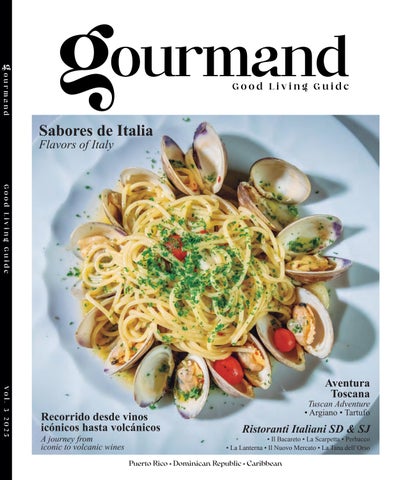
Sabores de Italia Flavors of Italy



































Queridos lectores,
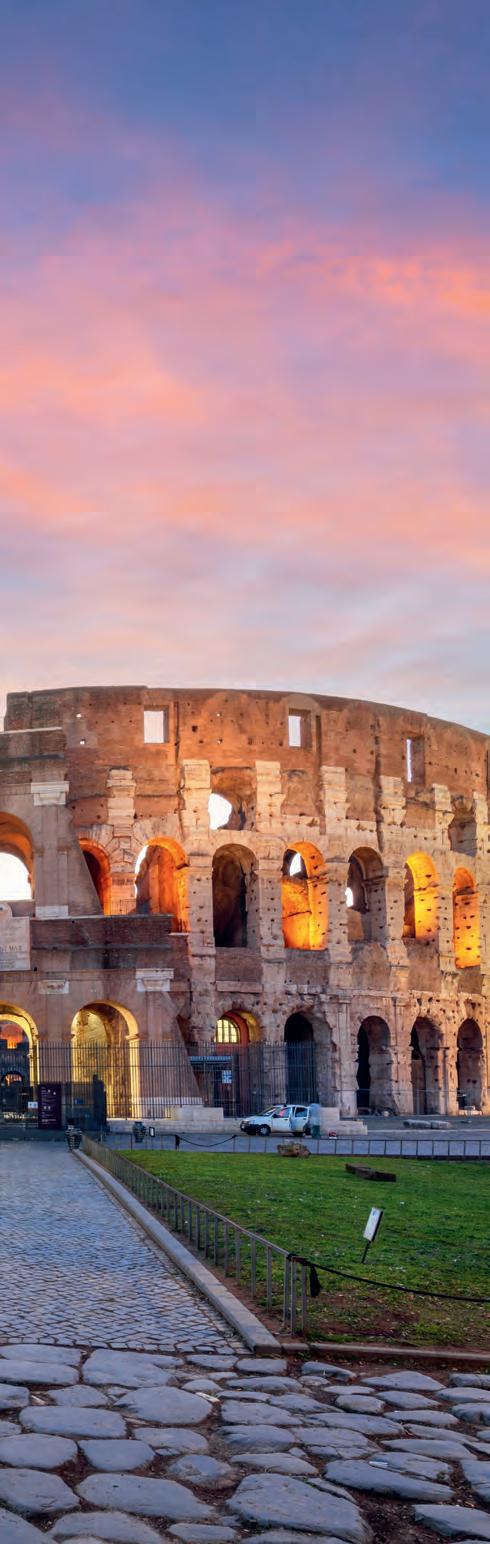
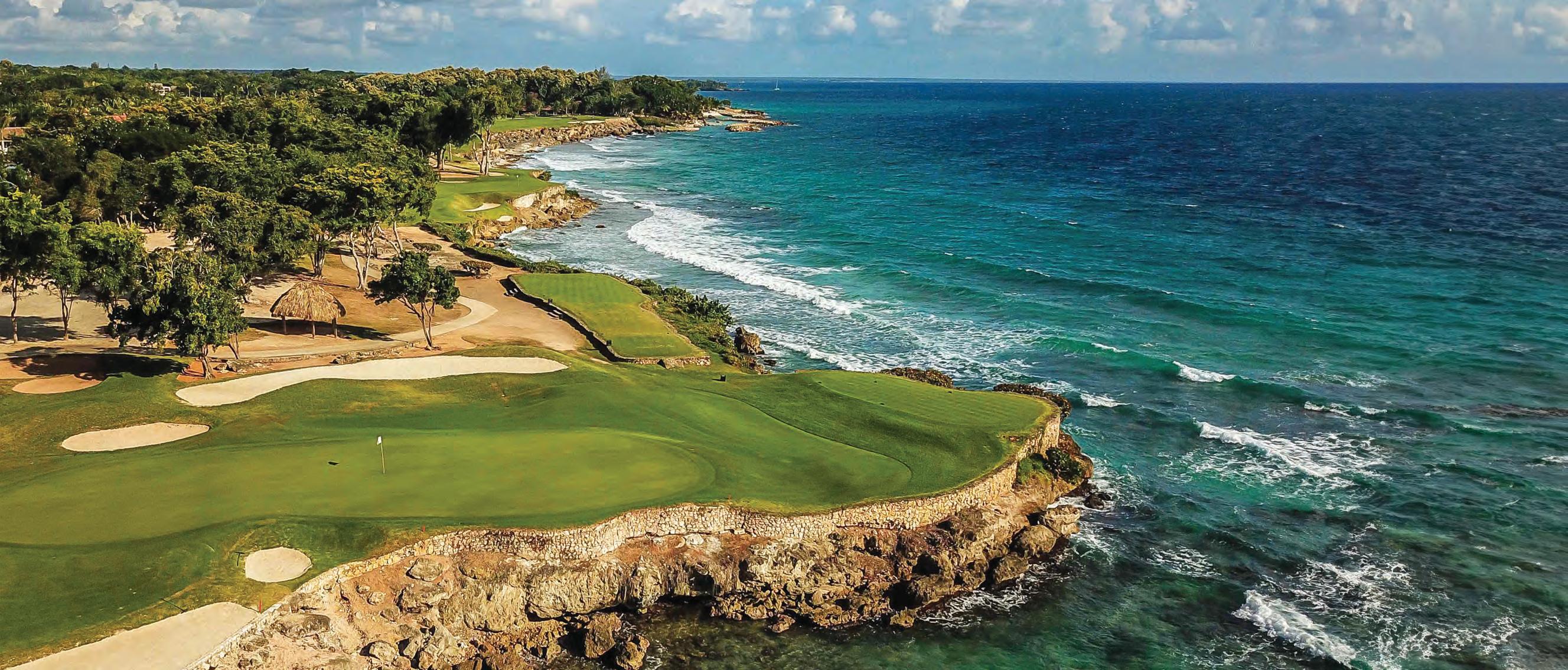
En esta tercera edición de Gourmand, emprendemos un viaje sensorial que nos lleva más allá del azul turquesa del Caribe, hacia las colinas, los mercados y las costas de Italia. Un país donde la gastronomía no solo se disfruta: se celebra.
“Sabores de Italia” es una invitación a descubrir la esencia de una cultura que ha hecho del comer y del beber un arte de vida. En estas páginas exploramos sus tradiciones, sus productos emblemáticos y la pasión que late en cada plato de pasta, en cada copa de vino, en cada coctel compartido.
Desde la Toscana hasta la costa Amalfitana, nuestros colaboradores recorrieron pueblos, trattorias y viñedos, capturando la magia de la cocina italiana con la mirada del viajero caribeño: curiosa, abierta y profundamente hedonista. También resaltamos cómo la coctelería tradicional italiana —con sus clásicos como el Negroni o el Aperol Spritz— ha conquistado barras en todo el mundo, inspirando nuevas interpretaciones tropicales que hoy brillan en el Caribe.
Como siempre, Gourmand celebra los encuentros. Italia y el Caribe se dan la mano en esta edición para recordarnos que la buena mesa es un idioma universal, capaz de unir culturas, despertar emociones y crear memorias que perduran.
Brindemos, entonces, por los sabores que nos conectan y por la alegría de compartirlos.
Con cariño y pasión,
Dear readers,
In this third edition of Gourmand, we embark on a sensory journey that takes us beyond the turquoise waters of the Caribbean, to the hills, markets, and coasts of Italy — a country where gastronomy is not only enjoyed but celebrated.
“Flavors of Italy” is an invitation to discover the essence of a culture that has turned eating and drinking into an art of living. Within these pages, we explore its traditions, its iconic products, and the passion that beats in every dish of pasta, every glass of wine, every shared cocktail.
From Tuscany to the Amalfi Coast, our contributors have wandered through villages, trattorias, and vineyards, capturing the magic of Italian cuisine through the eyes of the Caribbean traveler — curious, open, and delightfully hedonistic. We also highlight how traditional Italian mixology — with classics like the Negroni or Aperol Spritz — has conquered bars around the world, inspiring new tropical interpretations that now shine brightly across the Caribbean.
As always, Gourmand celebrates encounters. Italy and the Caribbean come together in this edition to remind us that the joy of good food is a universal language — one that unites cultures, stirs emotions, and creates lasting memories.
So let us raise a glass to the flavors that connect us, and to the pleasure of sharing them.
With affection and passion,
Sé parte del Club Premium Popular

Conoce más

Restaurantes Italianos
Italian Restaurants
RD PR
• Perbacco
• La Scarpetta
• Il Bacareto
• La Lanterna
• Il Nuovo Mercato
• La Tana dell’Orso
Wine regions of Italy and their most iconic wines
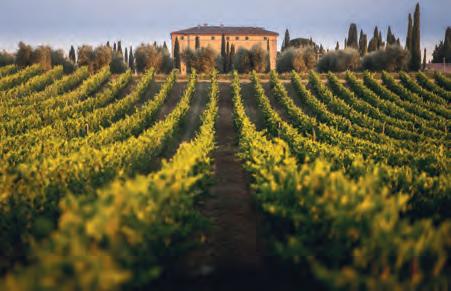
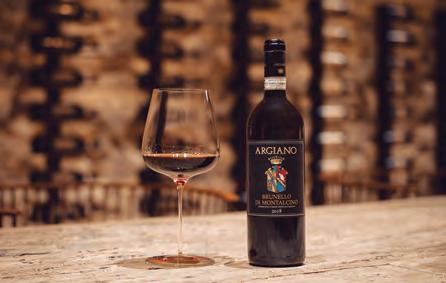
Inolvidable visita a esta extraordinaria bodega en Montalcino
An unforgettable visit to this extraordinary winery in Montalcino

Trufas:
• La joya culinaria de Italia
• Cacería trufera en la Toscana
Truffles:
• Italy’s culinary gem
• Truffle hunting in Tuscany
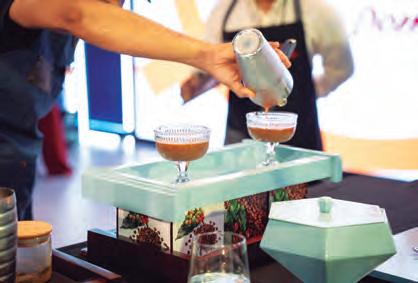
Innovación y celebración del café en Punta Cana
Innovation and Coffee Celebration in Punta Cana
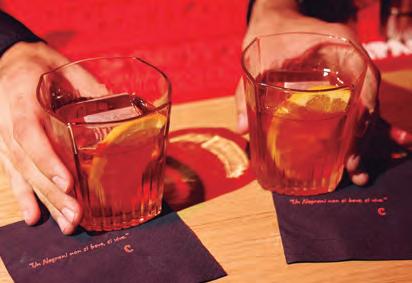
Brindis con el eterno clásico italiano que no pasa de moda
A Toast to the Eternal Italian Classic That Never Goes Out of Style
Good Living Guide
Puerto Rico • Dominican Republic • Caribbean
DIRECTORA • DIRECTOR
Roselyn O’neil
EDITORA • EDITOR
Yvonne Brown Ieromazzo
PERIODISTA • STAFF WRITER
Orlando Jerez
DISEÑO • DESIGN
Albert Polanco
AUTORES INVITADOS • GUEST WRITERS
Thomas Sartori
Spot 21 • Hospitality Lab
Erica Reyes
Escuela de Café y Baristas de P.R.
Gilberto Gómez
Sommelier y Educador de Vinos y Licores
Carlos Mejía Mixólogo de Model M.I.X.
FOTOGRAFÍA • PHOTO
Javier Celado, Julio César Peña, Rafael N. Ruiz Mederos / Discover Puerto Rico, Il Bacareto, La Scarpetta, Perbacco, La Lanterna, Il Nuovo Mercato, La Tana dell’Orso, Bodega Argiano, Goyurt, Grieggo, Aperol, Campari, Model Mix, Limoncello DICAPRI, Café Santo Domingo
EDITORIAL info@gourmandintl.net
VENTAS • SALES sales@gourmandintl.net
REP. DOMINICANA
José Eduardo García 849-450-2579
PUERTO RICO
Lourdes Rivera 787-402-0433
GOURMAND ES UNA PUBLICACIÓN DE
C/ 2, Villa Marina Sur, No. 8, Sto. Dgo. D.N, República Dominicana Tel.: 829-688-0256
@Gourmandintl • https://issuu.com/https://issuu.com/gourmandguideintl
Gourmand
Prohíbe la reproducción total o parcial de su portada, artículos y secciones fijas de la misma. No se hace responsable de las opiniones vertidas por los colaboradores o encuestas realizadas en sus artículos.
Los seis restaurantes reseñados en esta edición de Gourmand cumplen a cabalidad con el criterio principal: capturar los auténticos sabores de Italia.
Para reflejar la diversidad de experiencias culinarias, incluímos desde osterias y enotecas con cucina hasta un concepto tipo mercato. No importa cuál sea el formato, todos muestran un gran respeto en la manera de cocinar cada plato, usan ingredientes de calidad y autenticidad, y brindan un nivel de servicio y ambiente excepcional.
Los de República Dominicana tienen en común el haber sido incluidos en la prestigiosa lista Macarfi Santo Domingo 2025: Perbacco, La Scarpetta e Il Bacareto, que este año ganó el premio Gambero Rosso.
Otros recomendados que también están en la lista: Santino Cucina e Vino, Tratoria Angiolino, Bottega Fratelli, Osteria Nonna Nadia, San Marzano, Caruso, Il Capuccino y Zola en el hotel Kimpton Las Mercedes.
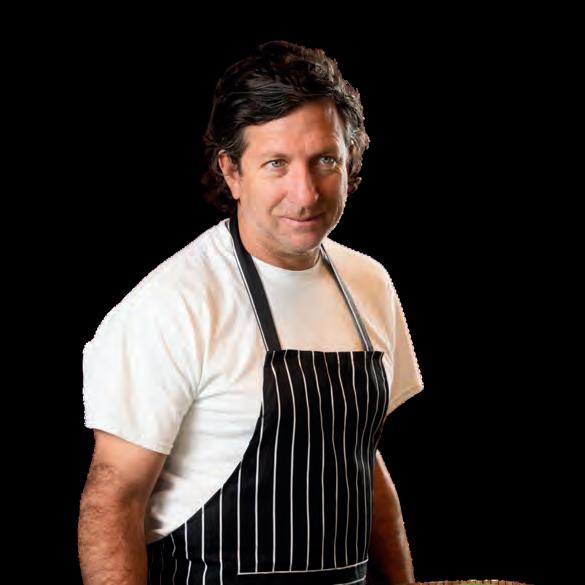
Y de Puerto Rico incluimos La Lanterna del Chef Franco Seccarelli, un ristorante tradizionale de alta cucina en El Viejo San Juan, así como dos espacios más informales, La Tana Dell’Orso en Guaynabo e Il Nuovo Mercato en The Mall of San Juan.
Buon appetito!!!
The six restaurants reviewed in this edition of Gourmand fully meet the main criterion: to capture the authentic flavors of Italy.
To reflect the diversity of culinary experiences, we included everything from osteria and enoteca with cucina to a novel mercato-like concept. No matter what the format, they all show great respect in the way each dish is cooked, use quality and authentic ingredients, and provide an exceptional level of service and atmosphere.
Those from the Dominican Republic have in common the fact that they have been included in the prestigious ranking Macarfi Santo Domingo 2025: Perbacco, La Scarpetta and Il Bacareto, which this year won the Gambero Rosso award.
Other recommended ones that are also on this list: Santino Cucina e Vino, Tratoria Angiolino, Bottega Fratelli, Osteria Nonna Nadia, San Marzano, Caruso, Il Capuccino and Zola at the Kimpton Las Mercedes hotel.
And from Puerto Rico we featured La Lanterna by Chef Franco Seccarelli, a traditional haute cuisine ristorante in Old San Juan, as well as two more informal spaces, La Tana Dell’Orso in Guaynabo and Il Nuovo Mercato in The Mall of San Juan.
Buon appetito!!!

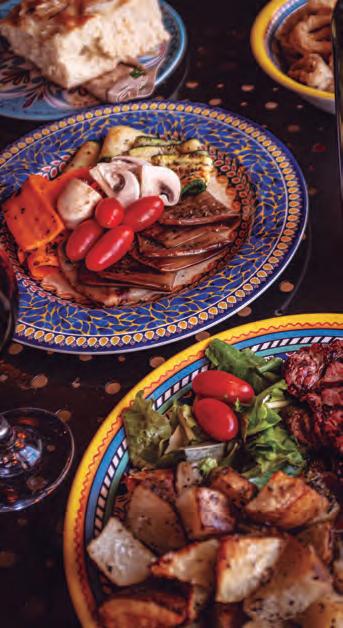
Por/By: Yvonne Brown Ieromazzo
Hace apenas tres años que abrió sus puertas en Santo Domingo y, desde entonces, esta maravillosa enoteca con cucina ha cautivado al público local con exquisitos platos de la gastronomía italiana, una impresionante carta de más de 400 vinos italianos y excelente ambiente.
Es muy apropiado que este templo culinario italiano se llame Perbacco, ya que esa frase hace alusión al dios del vino en la mitología romana, Baco, a la vez que se usa como expresión de sorpresa, asombro e incredulidad, similar a cuando decimos “por dios” o “oh my goodness”. Y así mismo salimos de allí: felizmente sorprendidos de la increíble experiencia gastronómica que acabamos de vivir.
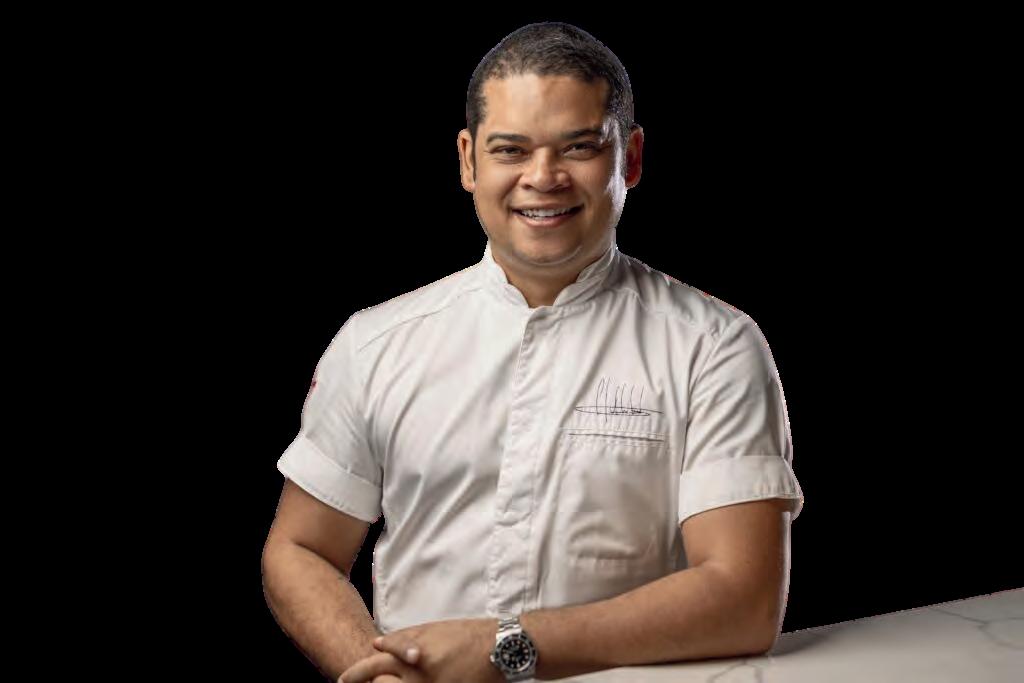
El menú de Perbacco se distingue por sus recetas tradicionales con el toque mágico del chef Marco Cracco, nativo de San Daniele, en la región de Friuli Venezia Giulia al noreste de Italia, de donde también procede el famoso y sabroso Prosciutto di San Daniele de elaboración artesanal y Denominación de Origen Protegido (DOP).
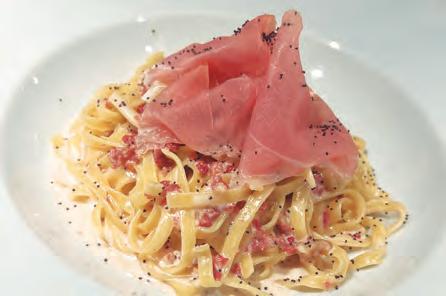
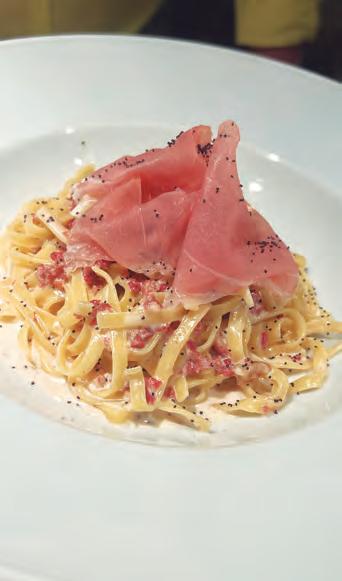
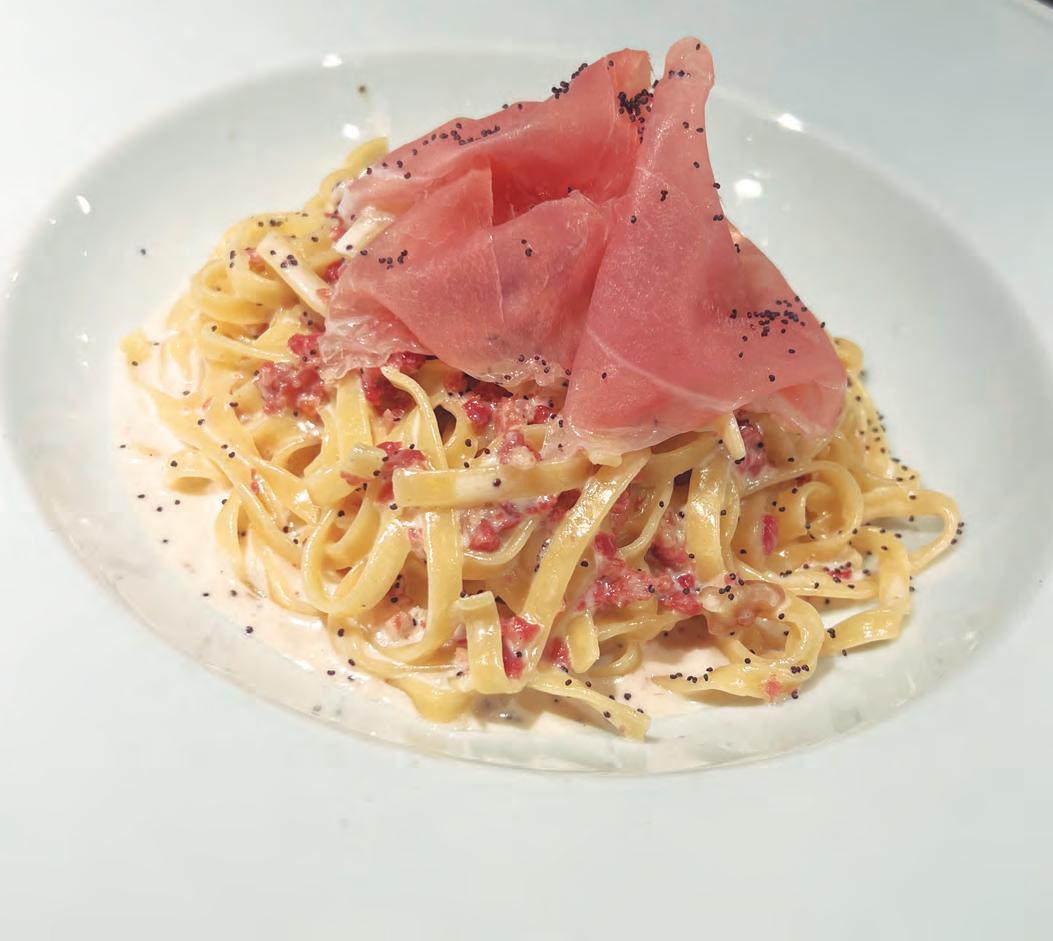
No nos debe sorprender que entre sus platos estrella brille el cremoso Tagliolino San Daniele con prosciutto, con el punto perfecto de picor y sabor, así como las alcachofas con prosciutto crocante.
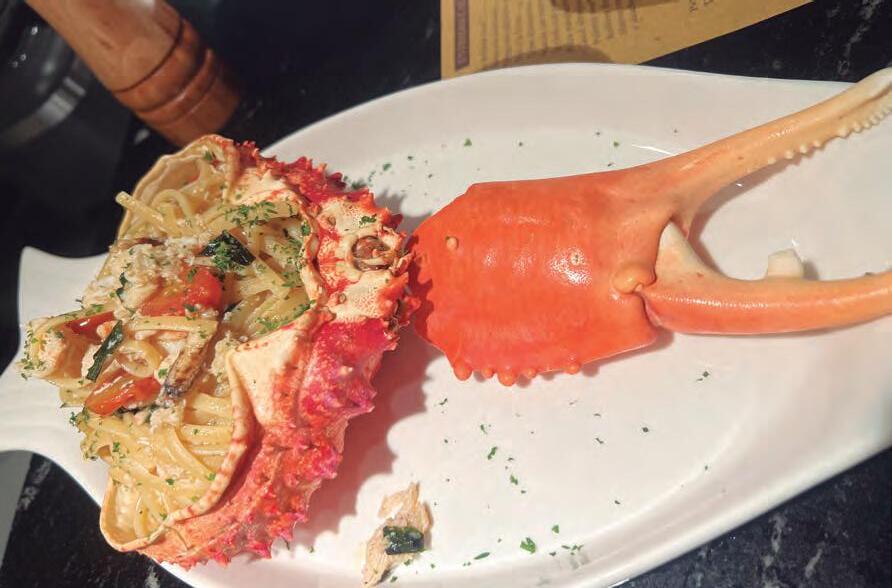
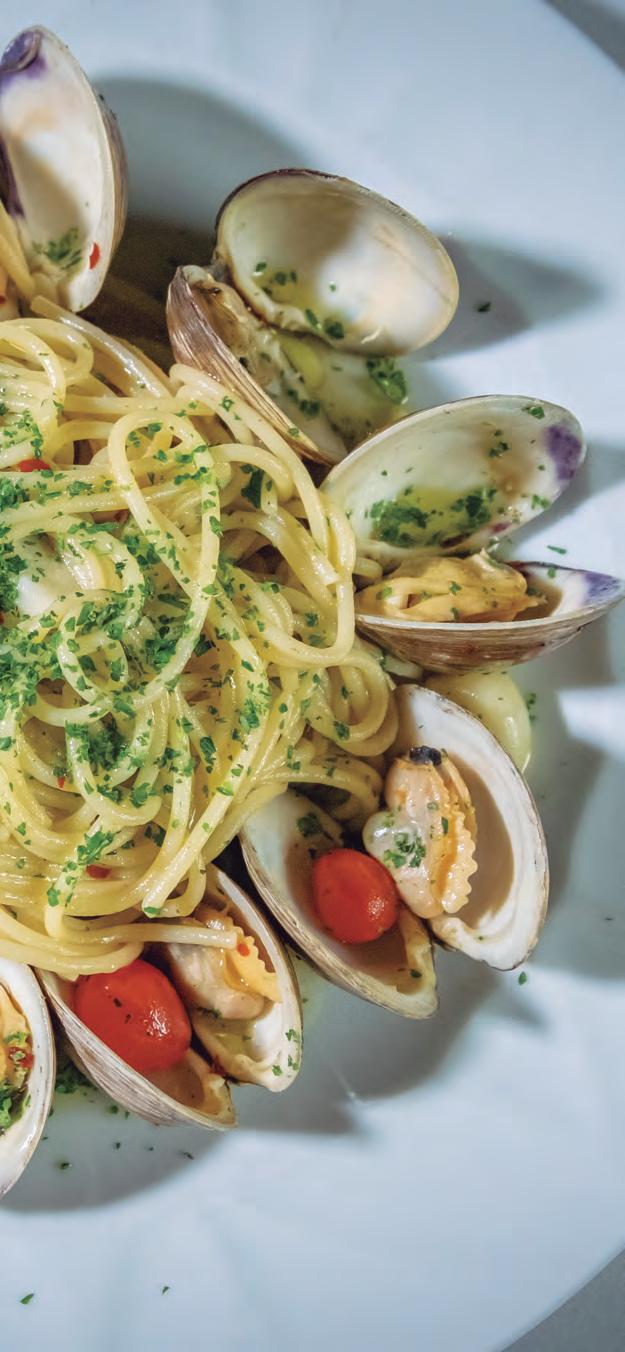
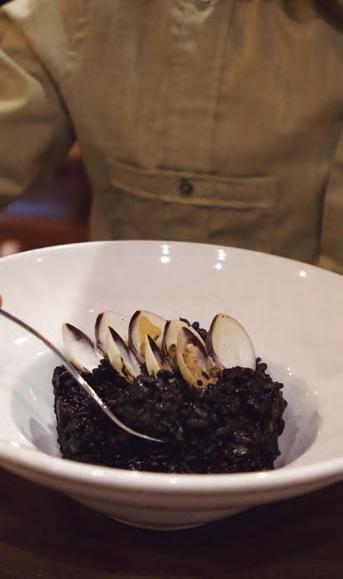
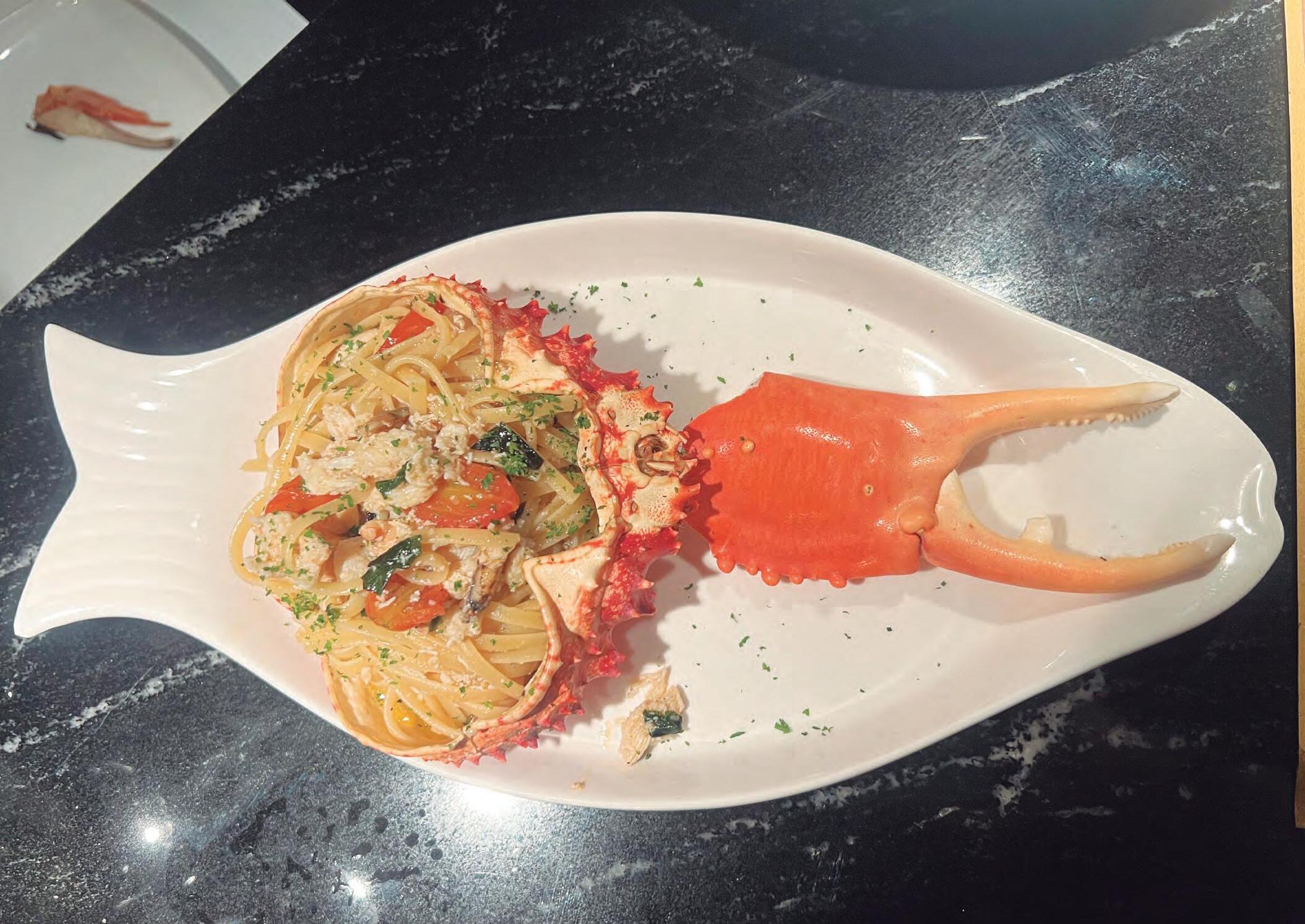
Aquí todas las pastas son exquisitas, y hay opciones de integral y sin gluten. Dos de las más recomendadas son las que salen con mariscos: Tagliolini al Nero di Seppia y Linguini al Centollo con tomates confitados, que es un festín a la vista y el paladar.
Los risottos están espectaculares, especialmente este trio: Camarones con azafrán, Prosecco con salchica y Piselli con pancetta croccante.
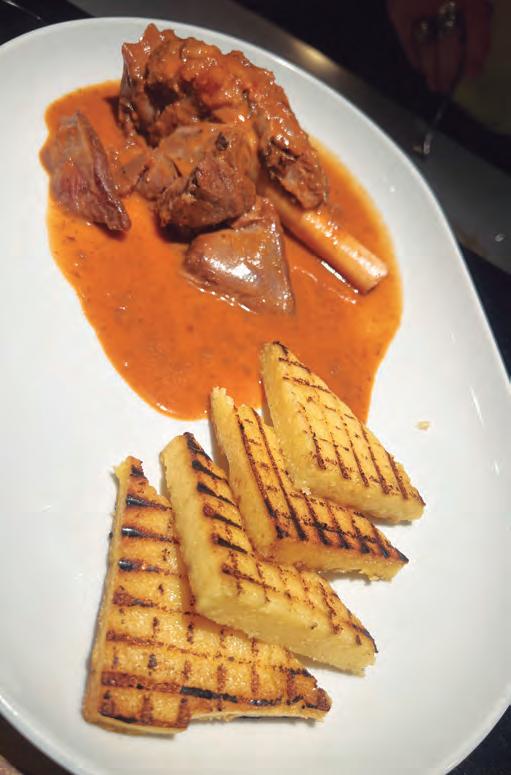
Si lo tuyo es la carne, no te puedes perder el Stinco de cordero con polenta a la plancha o la Bistecca Fiorentina
Para los más aventureros, hay dos entradas a base de huevos con un contraste de texturas muy interesante: Huevo Crocante frito con un leve empanizado y Huevo Mórbido con crema de papa y alcachofas.
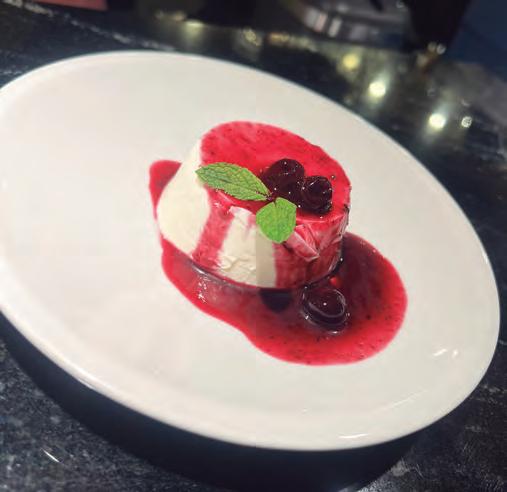
Como dulce final, hay que dejarse tentar por la Panna Cotta con frutas del bosque, el Semifreddo al Croccantino o un Affogato de Avellana y Nutella.
En cada una de sus creaciones, el chef Marco eleva la tradicional comida italiana a otro nivel. Y no es para menos, pues no solo estudió en la reconocida academia de hostelería IAL Scuola Alberghiera di Aviano, sino que trabajó en los restaurantes de dos prestigiosos hoteles en Venecia: Gritti Palace y Hotel Danieli.
Chef Marco, quien también es propietario de LA SALUMERIA, se unió a otros dos empresarios italianos como socios en Perbacco: Manuel Pasquale de MAX SALON y Alberto Albertini de VINOSOFÍA.
Licores y vinos italianos
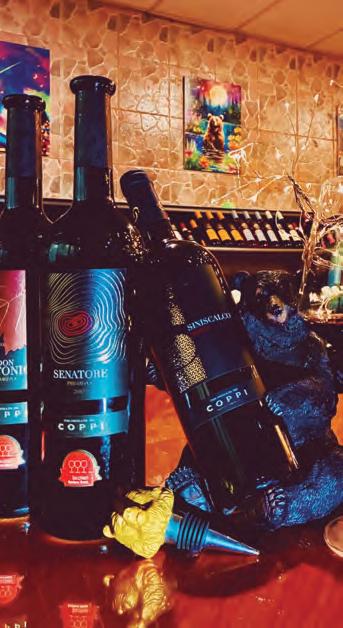
Perbacco cuenta con una extensa y diversa carta de vinos italianos. Su inventario de sobre 400 etiquetas va más allá de las marcas populares para incluir una amplia selección de las principales regiones vitivinícolas de Italia, así como uvas raras muy únicas y mezclas singulares.
Entre estos, tuve la oportunidad de degustar dos exquisitos vinos blancos aromatizados y puedo entender cómo han ganado tanta popularidad en años reciente: Costamolino Duemilaventiquattro, un vibrante Vermentino di Sardegna D.O.C. de la bodega Argiolas, y el Arneis Blangé, un chispeante Langhe D.O.C. de la bodega Ceretto.
Además de brindar recomendaciones para maridajes con los platos a degustar, en Perbacco ofrecen catas personalizadas para 8 o 16 personas y catas verticales de hasta 12 años, lo cual es realmente extraordinario.
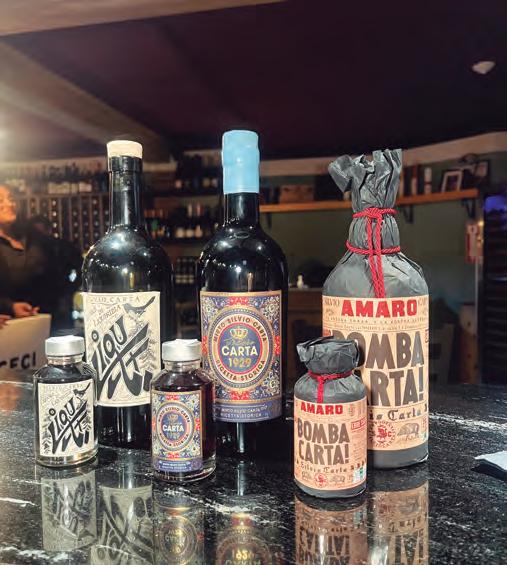
Siguiendo la tradición licorera italiana, Perbacco trae la reconocida marca Silvio Carta que desde 1952 produce licores y destilados de alta calidad en la región de Cerdeña. Entre estos, les recomiendo aventurarse a probar el potente Liquore di Liquirizia (licorice), el Amaro Bomba Carta o el exquisito Mirto 1929, una bebida color violeta elaborada con la fruta de ese mismo nombre.
Estos licores y otras bebidas de Silvio Carta están disponibles tanto en tamaño regular como en un conveniente empaque de botellas más pequeñas, ideal para degustar o hacer un regalo diferente.
It has only been three years since it opened its doors in Santo Domingo and, since then, this wonderful enoteca with cucina has captivated the local public with exquisite dishes of Italian gastronomy, an impressive list of more than 400 Italian wines and an excellent atmosphere.
It is very fitting that this Italian culinary temple is called Perbacco, as that phrase alludes to the god of wine in Roman mythology, Bacchus, while also is used as an expression of surprise, amazement and disbelief, similar to when we say “for god’s sake” or “oh my goodness”. And that’s how we left: happily surprised by the incredible gastronomic experience we have just lived.
Perbacco’s menu is known for its traditional recipes with the magical touch of chef Marco Cracco, a native of San Daniele, in the Friuli Venezia Giulia region of northeastern Italy, where the famous and tasty Prosciutto di San Daniele also comes from, a true delicacy of artisanal production and Protected Designation of Origin (PDO).
We should not be surprised that among its star dishes the creamy Tagliolino San Daniele with prosciutto shines, in honor of its hometown, with the perfect point of spiciness and flavor, as well as the artichokes with crispy prosciutto.
Here all the pastas are exquisite, and have whole grain and gluten-free options. Two of the most recommended are those with seafood: Tagliolini al Nero di Seppia and the unique Linguine al Centollo (Spider crab) with candied tomatoes, which is a feast for the eyes and the palate.
And the risottos are spectacular, especially this trio: Shrimp with saffron, Prosecco with sausage and Piselli with pancetta croccante.
If meat is your thing, you can’t miss the Lamb Stinco with grilled polenta or the Bistecca Fiorentina.
For the more adventurous, there are two egg-based starters with a very interesting contrast of textures: Fried Crispy Egg with a slight breading and Morbid Egg with potato cream and artichokes.
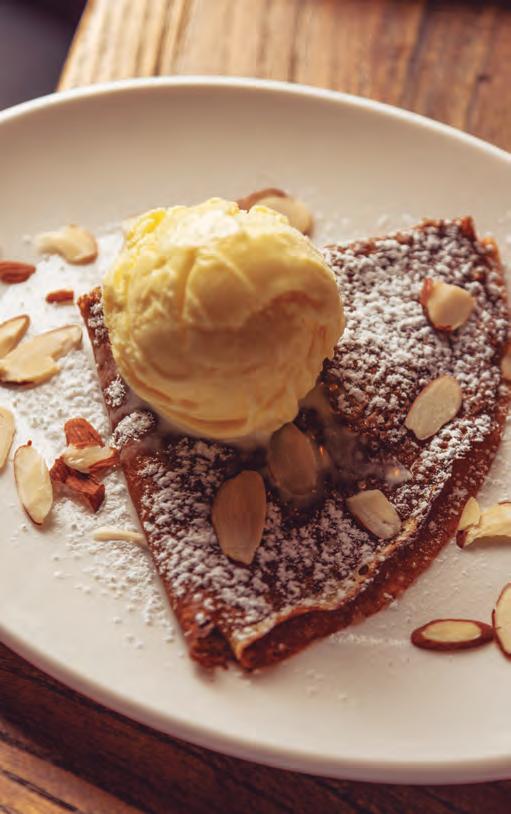
As a sweet finish, you should let yourself be tempted by the Panna Cotta with berries, the Semifreddo al Croccantino or a Hazelnut and Nutella Affogato.
In each of his creations, Chef Marco elevates traditional Italian food to another level. And no wonder, because not only did he study at the renowned IAL Scuola Alberghiera di Aviano hospitality academy, but he also worked in the restaurants of two prestigious hotels in Venice: Gritti Palace and Hotel Danieli.
Chef Marco, who is also owner of LA SALUMERIA, joined two other Italian businessmen as partners in Perbacco: Manuel Pasquale of MAX SALON and Alberto Albertini of VINOSOFÍA.
Perbacco has an extensive and diverse Italian wine list. Its inventory of over 400 labels goes beyond popular brands to include a wide selection of Italy’s top wine regions, as well as very unique rare grapes and singular blends.
Among these, I had the opportunity to taste two exquisite aromatized white wines and I can understand how they have gained so much popularity in recent years: Costamolino Duemilaventiquattro, a vibrant Vermentino di Sardegna D.O.C. from the Argiolas winery, and Arneis Blangé, a sparkling Langhe D.O.C. from the Ceretto winery.
In addition to providing recommendations for pairings with the dishes to be tasted, Perbacco offers personalized tastings for 8 or 16 people and vertical tastings up to 12 years, which is truly extraordinary.
Following the Italian liquor tradition, Perbacco brings the renowned Silvio Carta brand that since 1952 has been producing high-quality liqueurs and spirits in the Sardinia region. Among these, I recommend you venture to try the powerful Liquore di Liquirizia (licorice), the Amaro Bomba Carta or the exquisite Mirto 1929, a violet drink made with the fruit of the same name.
These liqueurs are available both in regular size and in convenient package of three small bottles, ideal for tasting or making a truly different gift.
Plaza Paseo de las Cayenas
Calle Francisco Prats Ramírez #153 Piantini, Santo Domingo, RD 829-247-0573 @perbaccord
Italian Rustic Restaurant
Por/By: Yvonne Brown Ieromazzo
Lo que comenzó en 2010 como una pequeña trattoria casera atendida por sus dueños —los esposos Emilio y Rosy— se ha convertido en el punto de encuentro obligado en Santo Domingo de los que aprecian la auténtica cocina italiana con un toque más refinado en un ambiente relajado.
Hoy, al cumplir 15 años, La Scarpetta es como una gran familia que celebra alrededor de la mesa, disfrutando de buen vino y buena conversación, mientras saborea ricos platos tradicionales de Italia cocinados con amor.
Impulsado por la visión de sus dos socios —Eduardo Curti, que compró el negocio en 2013, y Diego Boni Ureña, quien se unió en 2020— el restaurante sigue en continua evolución, siempre manteniendo la calidad de sus ingredientes y su pasión por la atención personal.
“Al unirme al equipo quise añadir elementos gourmet a los platos para lograr sabores delicados y un mayor equilibrio”, cuenta Diego, nativo de Milano de madre dominicana, quien trabajó en restaurantes de varios países de Europa —España, Portugal, Austria e Inglaterra— antes de establecerse en RD.
Un plato que refleja la mezcla de tradición e innovación es la Pasta Casera di Nonna Piera que, según Diego, “está inspirada en la que hacía mi abuela”. Combina una suculenta bolognesa de cordero sobre caserecce —una pasta fresca que por su forma enrollada recoge la salsa en cada curva— y para completar, fondue de queso parmesano.
Una entrada muy popular es el Budino di Parmigiano, en el que el queso es horneado hasta alcanzar textura de flan y es servido con hongos funghi porcini salteados y un toque de trufa. Acompañado de un crujiente pan fresco, es ideal para comenzar.
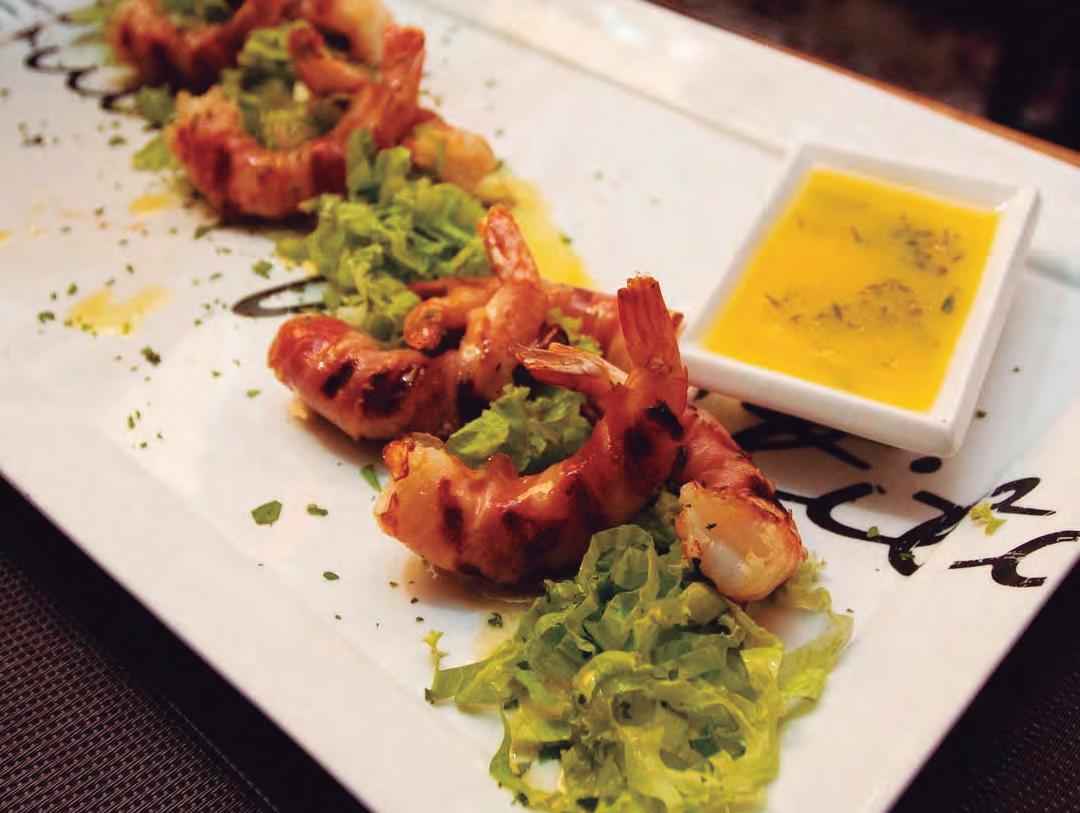
Los Gamberi in Camiccia son icónicos en La Scarpetta. Estos camarones envueltos en pancetta se asan a la parrilla con una salsita de limón, tomillo y mantequilla casera.
Y al pasar del mar a la tierra, el Filete a la Pimienta Verde es uno de los clásicos. Y según Diego, “hay gente que solo viene a comerse ese filete a la pimienta. Me enorgullece recordar lo que le gusta o no a mis clientes, reconocer sus caras, llamarlos por sus nombres. Aquí se sienten como en casa, bien atendidos, y por eso vuelven”.
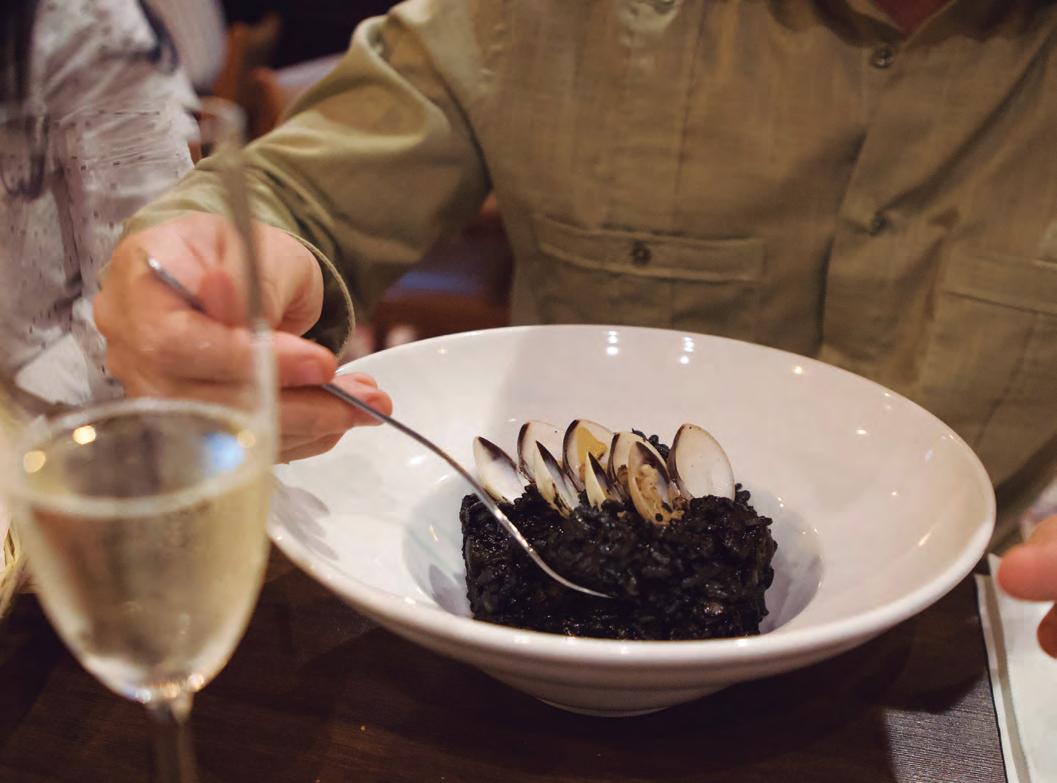
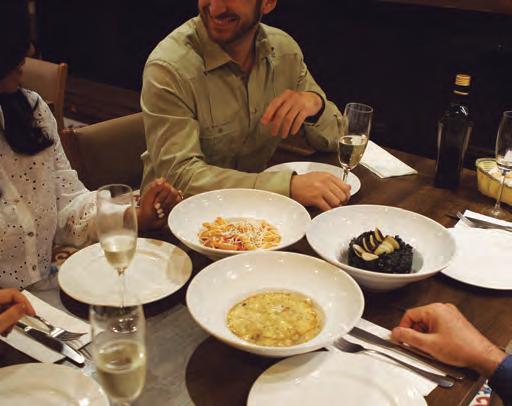
La cocina de La Scarpetta es dirigida por el Chef Rafael Toribio, a quien le encantan los risottos. Por eso se esmera en preparar el Risotto Punta de Filetto con pimiento dulce y una reducción de vino tinto, así como Risotto Nero con Vongole (almejas), el gustoso Risotto de Hongos Frescos con espárragos y queso provolone ahumado, y el insuperable Risotto con Ossobuco servido completo, en vez de desmenuzado.
Para maridar…
Bajo la premisa de que “una comida sin vino no es comida”, La Scarpetta cuenta con una excelente carta de vinos con diversidad de uvas y regiones del mundo, en especial, las italianas.
“Italia tiene más de 400 tipos de uvas autóctonas. Y cada día, la gente está más dispuesta a probar nuevas uvas y nuevas bodegas, por lo que ha aumentado mucho el consumo de vinos italianos en el país”.
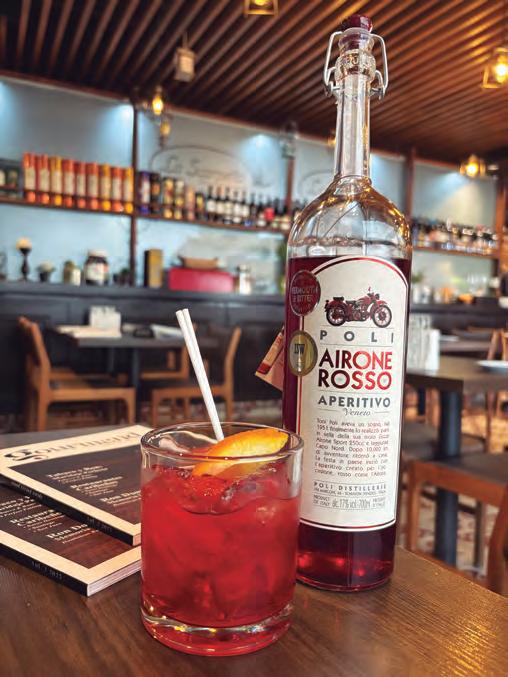
Como cada vez hay más conciencia sobre la experiencia de tomar vermú previo a la comida, ofrecen dos exquisitas marcas: Antica Formula y Vermú Poli.
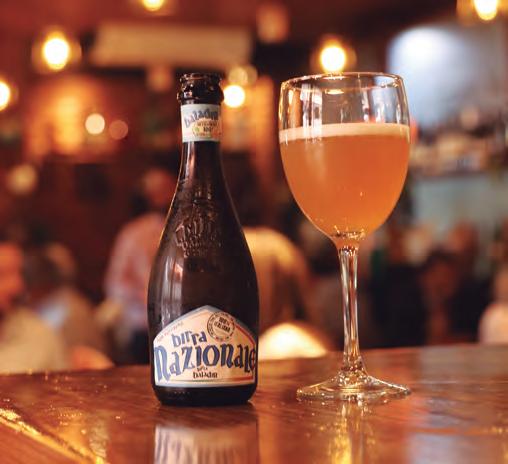
También tienen una selección de cervezas artesanales italianas: La Nazionale de Baladin, elaborada 100% con lúpulo italiano; León, con 9% de alcohol, es ideal para tomar sola o al final de la cena; y Castello, la pilsener rubia que se parece más a las cervezas locales.
Ahora…fare la scarpetta!!!
En este ambiente relajado, donde se viene a pasar un buen rato y comer rico, es normal que te sientas tan a gusto que comienzas a mojar el pan en la salsa que queda hasta limpiar el plato, como lo harías en tu casa. Al así hacerlo, honras esa popular tradición italiana conocida como “fare la scarpetta”. Y ese es el mayor halago que puedes hacerle los que te atienden de corazón en La Scarpetta.
What began in 2010 as a small homemade trattoria run by its owners – husband and wife Emilio and Rosy – has become the must go eatery in Santo Domingo for those who appreciate authentic Italian cuisine with a more refined touch in a relaxed atmosphere.
Today, as it turns 15, La Scarpetta is like a big family celebrating around the table, enjoying good wine and good conversation, while savoring rich traditional Italian dishes cooked with love.
Driven by the vision of its two partners —Eduardo Curti, who bought the business in 2013, and Diego Boni Ureña, who joined him in 2020— the restaurant continues to evolve, always maintaining the quality of its ingredients and its passion for personal attention.
“After joining the team, I wanted to add gourmet touches to the dishes to achieve delicate flavors and greater balance,” says Diego, a Milano native of Dominican mother, who worked in restaurants in several countries in Europe—Spain, Portugal, Austria, and England—before settling in the DR.


A dish that reflects a blend between tradition and innovation is the Homemade Pasta di Nonna Piera which, according to Diego, “is inspired by the one my grandmother made.” It combines a succulent lamb bolognese on caserecce —a fresh pasta that, due to its rolled shape, collects the sauce in each curve— and to complete, Parmesan cheese fondue.
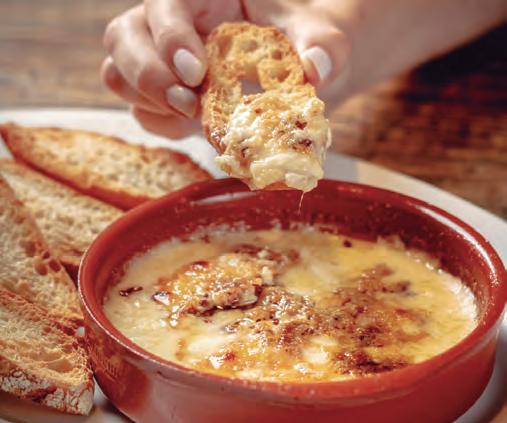
A very popular appetizer is the Budino di Parmigiano, in which the cheese is baked until it reaches the texture of a flan and is served with sautéed funghi porcini and a touch of truffle. Accompanied by crispy fresh bread, it’s ideal to start a meal.
The Gamberi in Camiccia are iconic at La Scarpetta. These pancetta-wrapped shrimps are grilled with a lemon, thyme, and homemade butter sauce.
And when moving from the sea to the land, the Green Pepper Steak is one of the classics. According to Diego, “there are people who only come to eat that peppered steak. I take pride in remembering what my clients like or don’t like, recognize their faces, call them by their names. Here they feel at home, well cared for, and that’s why they come back.”
La Scarpetta’s kitchen is run by Chef Rafael Toribio, who loves risottos. That’s why he takes great pride and care to prepare the Filetto Point Risotto with sweet pepper and a red wine reduction, as well as Risotto Nero with Vongole (clams), the tasty Fresh Mushroom Risotto with asparagus and smoked provolone cheese, and the unbeatable Risotto with Ossobuco served whole, instead of shreded.
For a pefect pairing...
Under the premise that “a meal without wine is not food,” La Scarpetta has an excellent wine list with a diversity of grapes and regions of the world, especially Italian.
“Italy has more than 400 types of native grapes. And every day, people are more willing to try new grapes and new wineries, so the consumption of Italian wines in the country has increased a lot.”
As there is more and more awareness about the experience of drinking vermouth before a meal, they offer two exquisite brands: Antica Formula and Vermouth Poli.
They also have a selection of Italian craft beers: La Nazionale de Baladin, brewed with 100% Italian hops; León, with 9% alcohol, is ideal to drink alone or at the end of dinner; and Castello, the blonde pilsener that is more like local beers.
fare la scarpetta!!
In this relaxed atmosphere, where you come to have a good time and eat hearty food, it is normal that you feel so comfortable that you start dipping the bread in the sauce that remains until the plate is cleaned, as you would at home. In doing so, you honor this popular Italian tradition known as “fare la scarpetta.” And that is the greatest compliment you can give to all those who take care of you from the heart at La Scarpetta.
Plaza Castilla Ave. Abraham Lincoln Piantini, Santo Domingo, RD (809) 567-4841
@lascarpettard
Por/By: Yvonne Brown Ieromazzo
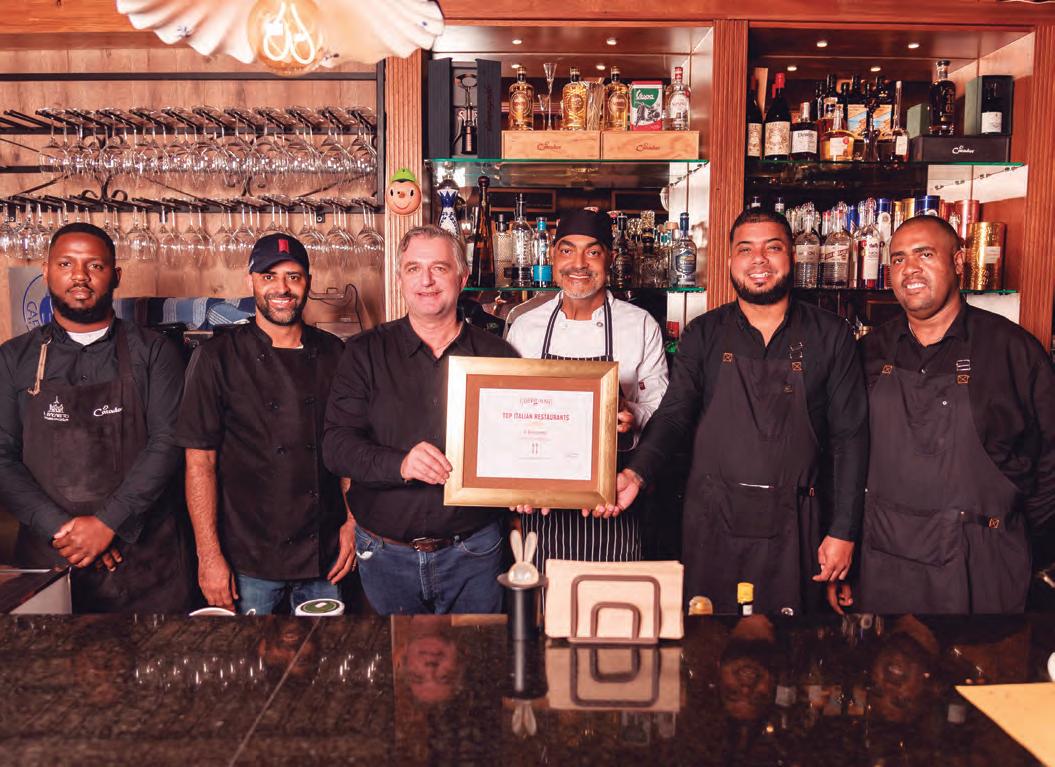
Qué mejor manera de celebrar una década de excelencia culinaria que recibir un premio internacional que confirma lo que todos en Santo Domingo ya sabemos: Il Bacareto es uno de los “Top Italian Restaurants 2025” de Gambero Rosso.
Esta prestigiosa guía gastronómica selecciona cada año los mejores restaurantes de Italia y varios países del mundo, otorgando sus famosos “tenedores” y premios especiales como chef del año, mejor pan y pasta, así como mejor sommelier y lista de vino, además de su publicación Vini d’Italia.
El propietario y chef de Il Bacareto es Michele Lucchetta, nacido en la provincia de Treviso, cuna del prosecco y el tiramisú. Junto con el chef José Díaz Pérez —dominicano con raíces italianas por su bisabuelo de Roma— este dúo nos deleita con sus creaciones culinarias y nos sorprenden con los “platos del día” que escriben a mano en su famosa pizarra.
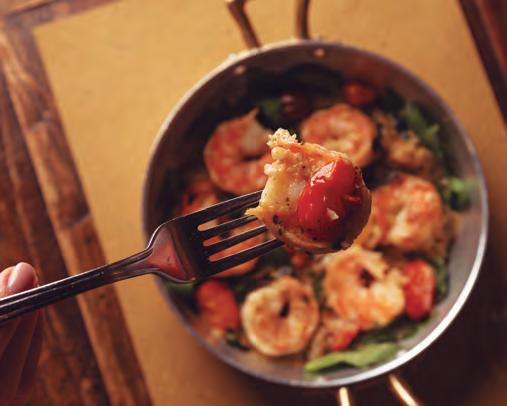
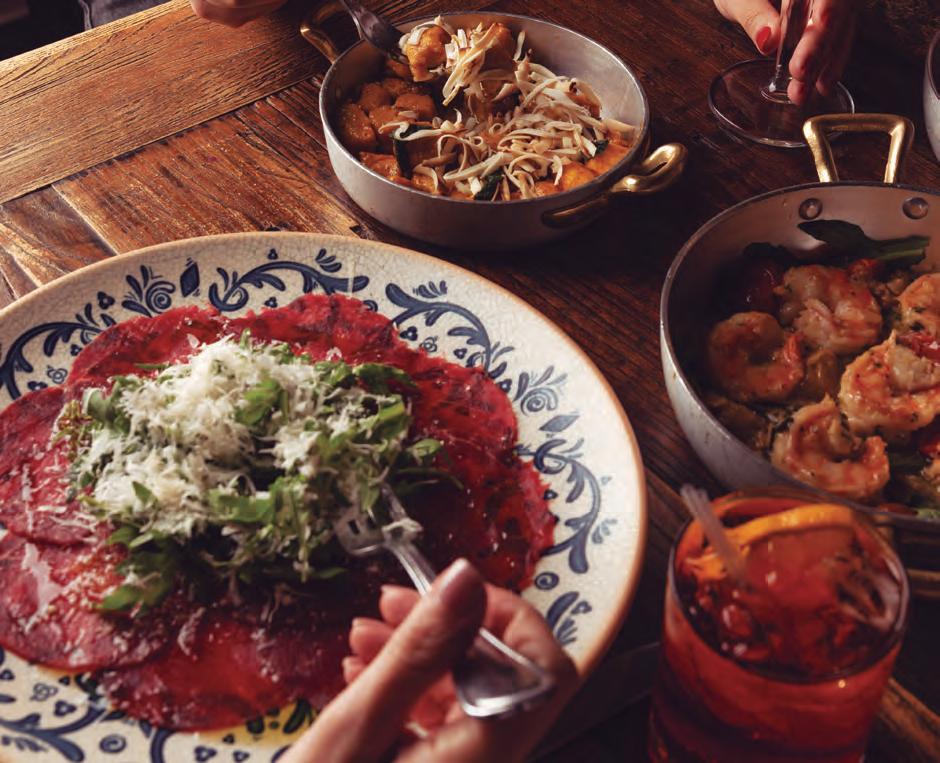
Toda visita comienza con unos sabrosos encurtidos cortesía de la casa, acompañados con una cesta de pan. Entonces viene lo difícil: escoger lo que voy a comer entre tantos platos ricos. De entrada, nunca puede faltar el Carcofi Pancetta, tan tierno como crujiente, o un refrescante Salpicón de Pulpo y Camarones
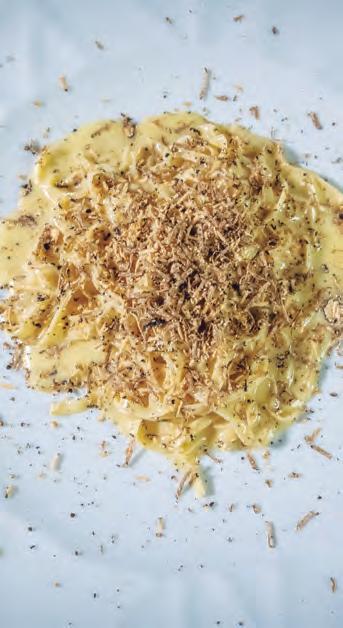
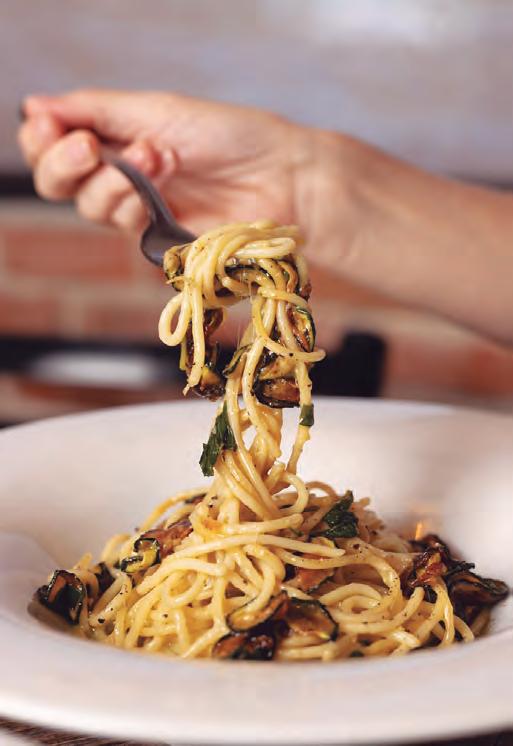
Como plato principal, casi siempre me decanto por alguna pasta, pues sé que será especial. Entre mis favoritas, Ravioli de Bacalao, Spaghetti Frutti di Mare, Bigoli Cacio Pepe y Fettuccine al Tartufo, cuando está en temporada.
“Aquí hacemos nuestra propia pasta fresca —bigoli, macaroncini, papardelle con yema de huevo y todas las rellenas, como ravioli— y cada día, preparamos la salsa pomodoro y la ragú, que se toma 6 horas de cocción”, explica Michele.
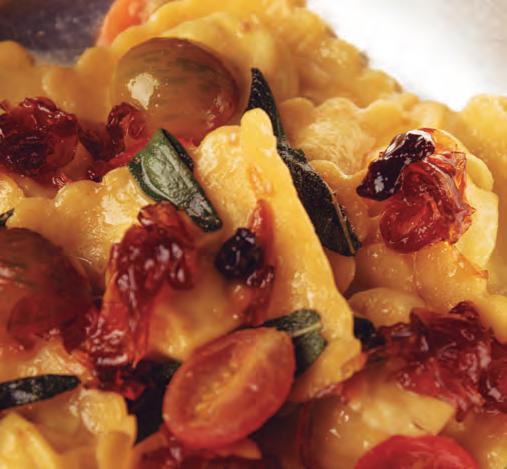
Otro plato que siempre gusta son los Gnocchi, en especial los de auyama cubiertos con una mantequilla dorada en salvia y ricotta ahumada rallada.
En cuanto a opciones del mar, tienen sabrosos mariscos — Almejas al Vino, Pulpo Croccante y Caramores Arrabbiata— así como pescados —lubina, branzino y salmón— y la pesca del día. “A veces los clientes me traen un dorado fresco que ellos mismos pescaron y hasta conejos que han cazado, para que se los prepare como yo quiera”, dice el Chef José.
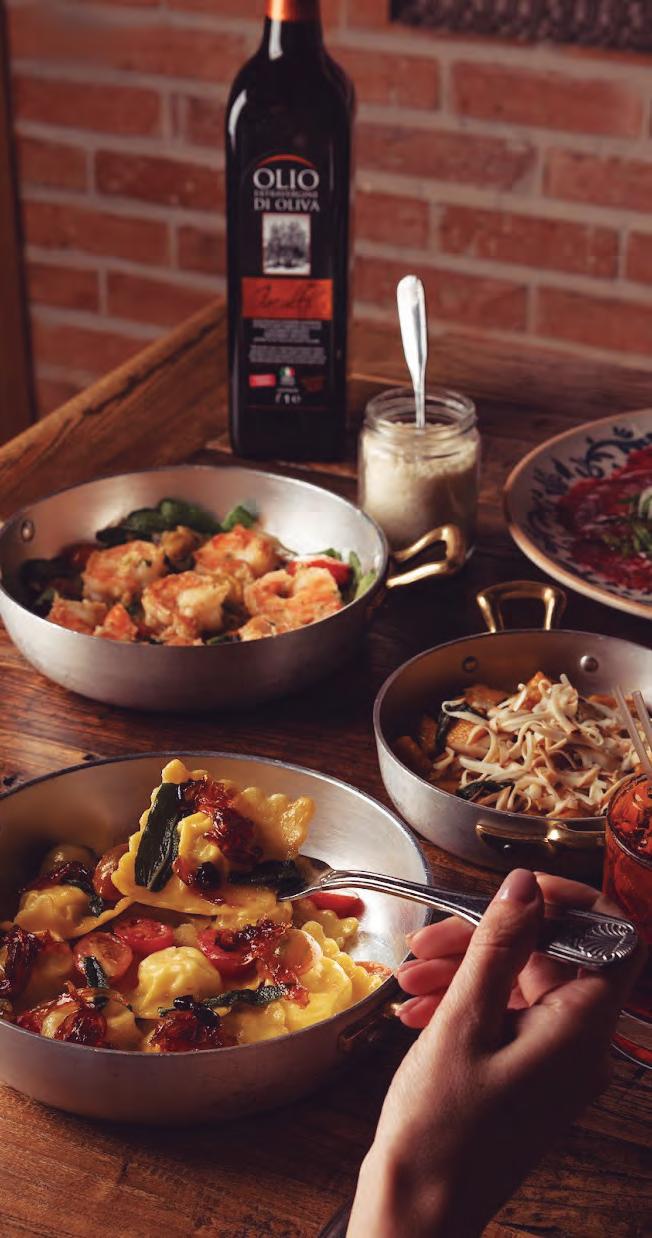
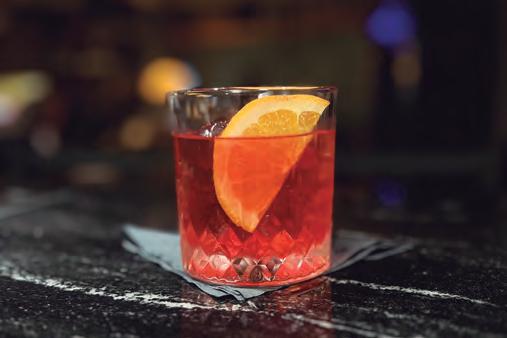
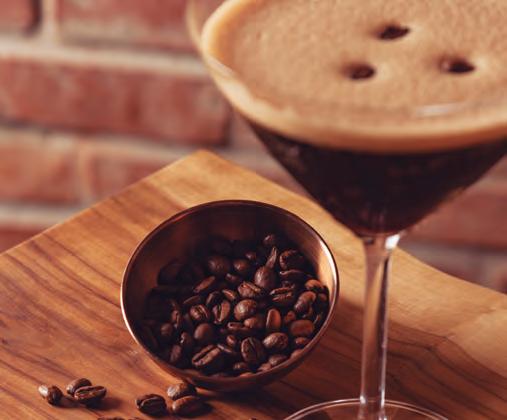
Convencidos de que en una verdadera experiencia italiana no puede faltar una copa de vino, Il Bacareto cuenta con una curada selección de bodegas italianas e internacionales. También preparan exquisitos cocteles italianos: desde el popular Martini Espresso y los refrescantes Limoncello Spritz y Aperol Spritz, hasta el clásico Negroni.
El término “bacareto” se refiere a una taverna veneciana donde se disfruta de unos pequeños vasos de vino (“ombra”) y picadera (“cicchetti”). Aunque Il Bacareto comenzó como una osteria de 6 mesas, después de tres ampliaciones es hoy una gran Osteria con Cucina. Incluso tiene para la venta una selección de productos importados de Italia, como aceites de oliva extra virgen, pastas, aceitunas, amarena y variedad de salsas. Pero, más importante aún, Il Bacareto es el referente gastronómico italiano en RD.
What better way to celebrate a decade of culinary excellence than to receive an international award confirming what everyone in Santo Domingo already knows: Il Bacareto is one of Gambero Rosso’s “Top Italian Restaurants 2025”.
This prestigious gastronomic guide selects every year the best restaurants in Italy and several countries around the world, awarding its famous “forks” and special awards such as chef of the year, best bread and pasta, as well as best sommelier and wine list, in addition to its publication Vini d’Italia.
The owner and chef of Il Bacareto is Michele Lucchetta, born in the province of Treviso, the birthplace of prosecco and tiramisu. Together with chef José Díaz Pérez —a Dominican with Italian roots from his great-grandfather in Rome— this duo delights us with their culinary creations and surprises us with their “dishes of the day” that they write by hand on their famous blackboard menu. Every visit begins with tasty pickled veggies courtesy of the house, accompanied by a basket of bread. Then comes the difficult part: choosing what to eat among so many delicious dishes.
For starters, you can never miss the Carcofi Pancetta, as tender as it is crunchy, or a refreshing Octopus and Shrimp Salpicón.
As a main course, I almost always opt for some pasta, because I know it will be special. Among my favorites, Cod Ravioli, Spaghetti Frutti di Mare, Bigoli Cacio Pepe and Fettuccine al Tartuffo, when in season.
“Here we make our own fresh pasta —bigoli, macaroncini, papardelle with egg yolk, and all stuffed pastas like ravioli—and every day, we prepare the pomodoro sauce and ragù, which takes 6 hours to cook,” Michele explains.
Another popular dish is the Gnocchi, especially the pumpkin ones covered with sage butter and grated smoked ricotta.
As for seafood options, they have tasty seafood —Clams in Wine, Octopus Croccante and Caramores Arrabbiata— as well as fish —sea bass, branzino and salmon— and the catch of the day. “Sometimes customers bring me fresh dorado that they caught themselves and even rabbits that they have hunted, so that I can prepare them as I want,” says Chef José.
Convinced that a glass of wine cannot be missing in a true Italian experience, Il Bacareto has a curated selection from Italian and international wineries. They also make exquisite Italian cocktails: from the popular Martini Espresso and the refreshing Limoncello Spritz and Aperol Spritz, to the classic Negroni.
The term “bacareto” refers to a Venetian tavern where you can enjoy a few small glasses of wine (“ombra”) and picadera (“cicchetti”). While Il Bacareto began as an osteria with only 6 tables, after three expansions, it is now a great Osteria con Cucina. It even has for sale a selection of products imported from Italy, such as extra virgin olive oils, pasta, olives, amarena and a variety of sauces. But, more importantly, Il Bacareto is the Italian gastronomic benchmark in the DR.
Plaza Juan Dauhajre
Avenida Bolívar #219, esq. Lincoln Santo Domingo, RD 809-544-4953
@ilbacareto


¡Este verano es DE los Boricuas!
Quédate donde la diversión nunca se desaparece. Sol, playa y sonrisas te esperan en nuestro PLACE.
Oferta incluye:
20% de descuento en tarifa Desayuno bufé americano complementario
Estacionamiento gratis
Una (1) Pizza familiar con un padrino de refresco
15% de descuento en la entrada a Cueva Ventana
RESERVA AHORA (787) 854.1000
Oferta exclusiva para Residentes de Puerto Rico. Identificación valida al momento del registro. No se puede combinar con otras ofertas, promociones o descuentos. No válido para grupos. Pueden aplicar fechas bloqueadas y otras restricciones pueden aplicar.
Por/By: Yvonne Brown Ieromazzo
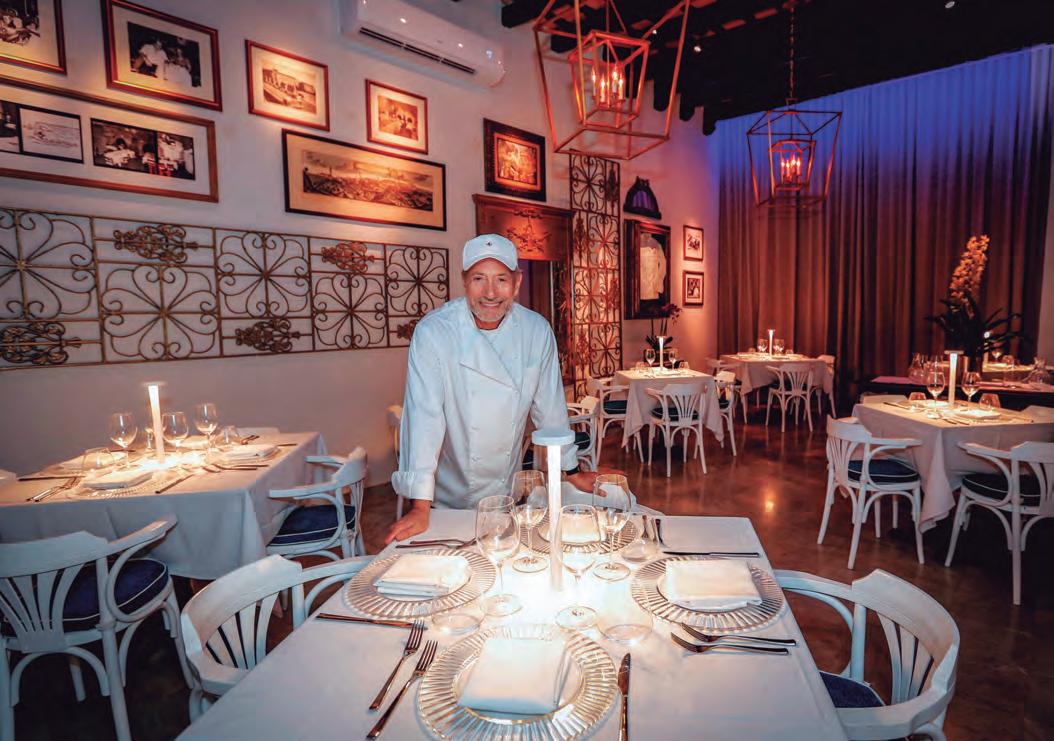
Ubicado en el corazón del Viejo San Juan, La Lanterna marca el regreso triunfal del chef Franco Seccarelli al lugar exacto donde en 1989 abrió su primer restaurante, Il Perugino.
Impregnado de tradición y nostalgia, este bastión de la alta cocina italiana es la cúspide de su exitosa carrera culinaria en Puerto Rico. Este evento se hizo más simbólico aún, pues chef Seccarelli bautizó este nuevo local con el mismo nombre que el restaurante que su madre y su padre tuvieron durante 40 años en su natal Perugia, Italia.
Precisamente allí se encontraba Franco, en su casa en Assisi, cuando conversamos por teléfono, justo luego de almorzar. Pero ni siquiera allá deja de cocinar: “Me encanta cocinar cuando estoy aquí. Hoy hice trippa de ternera (mondongo). Uso muchos ingredientes silvestres locales, como espárragos finitos y las setas porcini, y cuando están en época, me los guardan congelados en porciones para cuando regrese”.
Alla luce delle lanterne
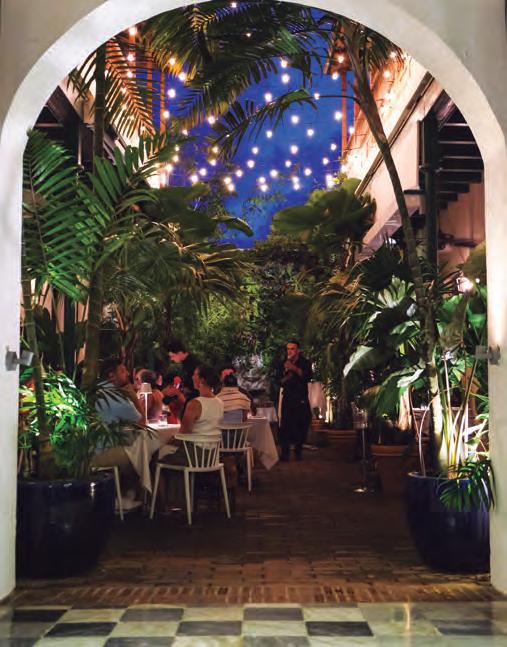
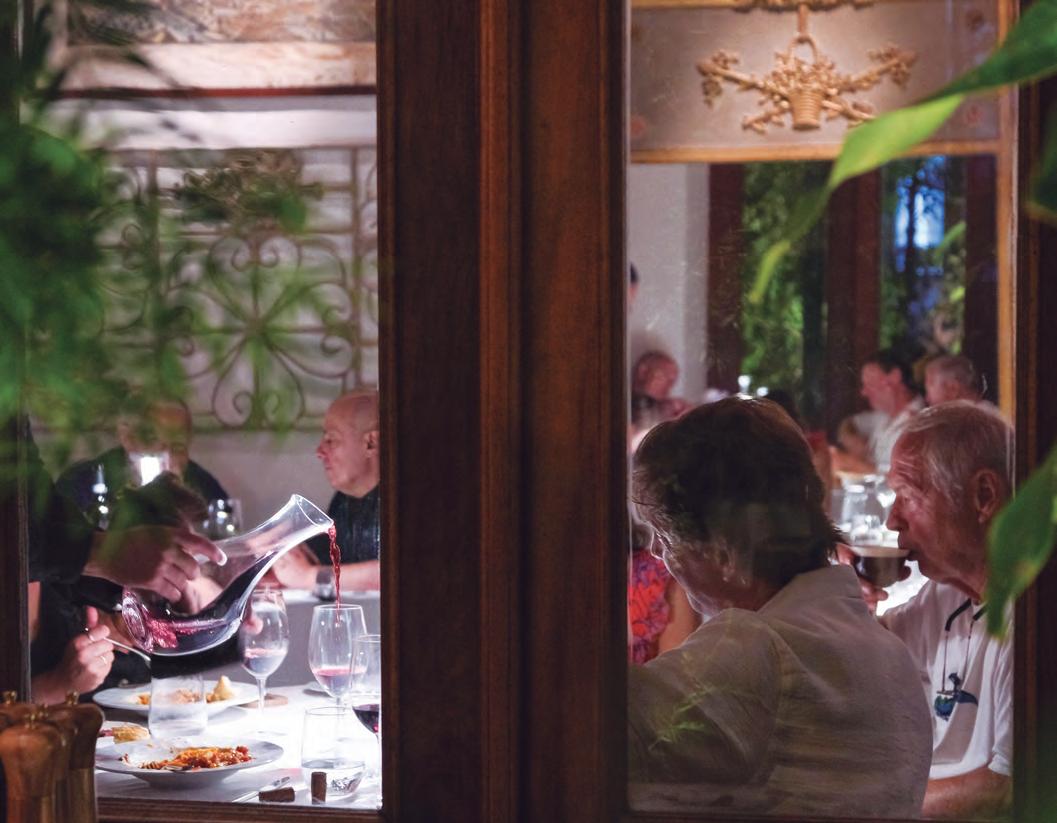
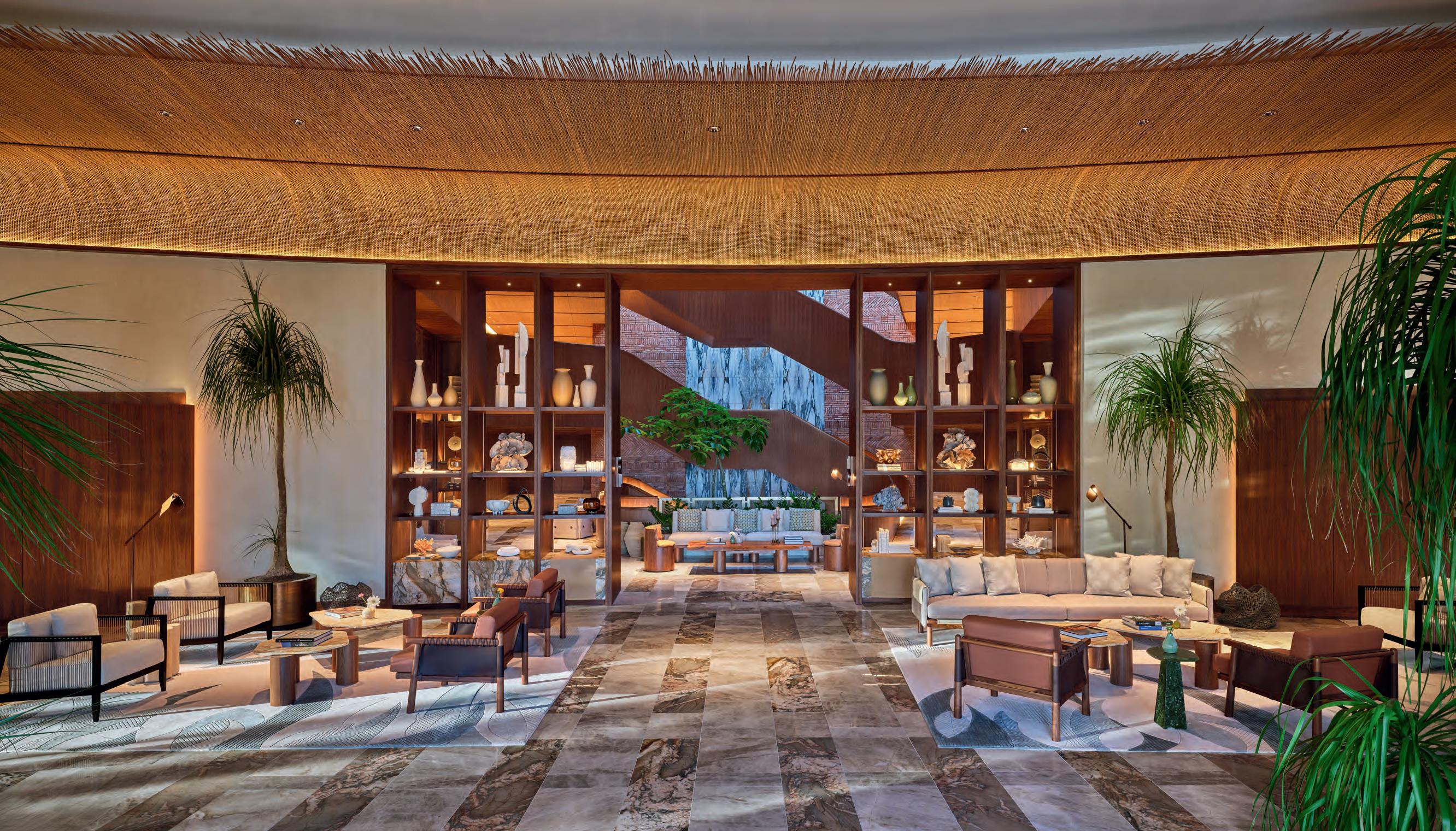
La Lanterna es una carta de amor viva. La culminación de un ciclo de toda la vida y el comienzo de un nuevo y delicioso capítulo. Dentro de su exquisita arquitectura colonial española del Viejo San Juan, los comensales pueden optar por sentarse en el comedor interior o en medio del refrescante follaje tropical del patio interior al aire libre. O, si prefieren, pueden disfrutar de la exquisita carta de vinos, 95% italianos, y una selección de cócteles de la casa en el mismo bar donde, en su viaje de 1992 a Puerto Rico, el chef Franco sirvió al propio Luciano Pavarotti.
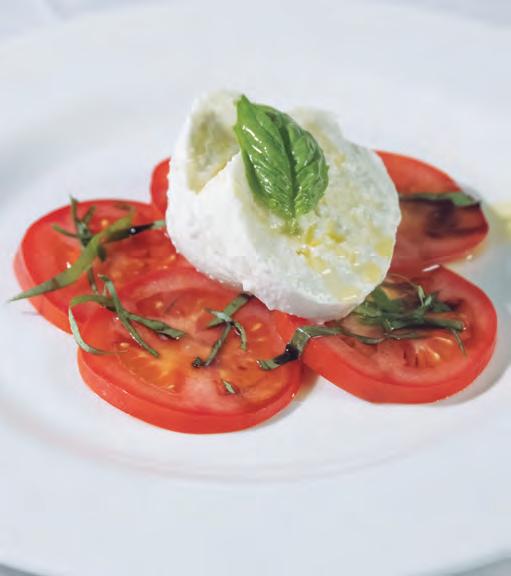
El menú de La Lanterna incluye exquisitas opciones de antipasti, como Cavolo nero alla parmigiana con apio negro o el Zucchine ripiene alla casalinga relleno de ternera y queso parmesano.
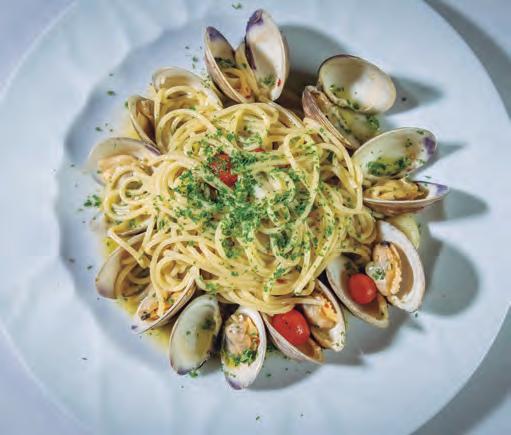
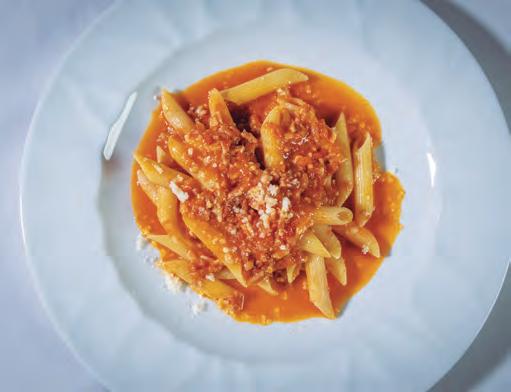
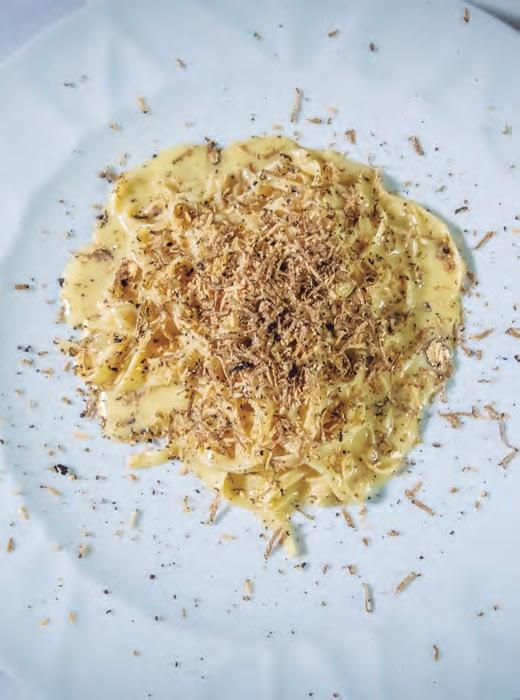
Todas las pastas son hechas en casa y entre las más emblemáticas se encuentran Penne all’Amatriciana, Spaghettino con almejas, Tagliolini al ragu bolognese, Fusilli con salsa di peperoni dolci e ricotta salata, Pappardelle con porcini, Fettuccine negro con tinta de calamares y ravioli del día, que puede ser de cordero, ternera, ricotta con espinaca, o foie y espinaca, o sencillamente, pasta con trufas frescas, que ahora están en temporada.
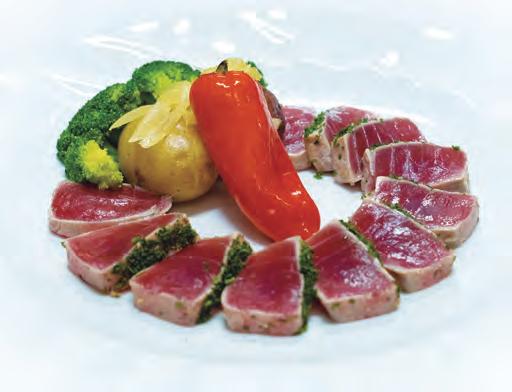
Como secondi piatti, hay dos o tres opciones de pescado fresco del día y carnes de primera como Costolette di agnello alla griglia (ternera), Tagliata de Prime Ribeye y Filetto di manzo al vino rosso con romero y ginepro (juniper berries).
Visión culinaria a través de su evolución
“Soy más de tratar de perfeccionar las recetas clásicas y no tanto de crear platos nuevos. Y uno de los clásicos más aclamados que me gusta preparar es la bottarga, que se guaya sobre la pasta y tiene un sabor entre caviar y anchoa”, añade el chef.
Para chef Franco, “la receta de la juventud está en tener un restaurante, pues te mantiene siempre activo”. Y así lo ha hecho en sus casi cuatro décadas de restaurantero.
Su primer restaurante, Il Perugino, tuvo tres ubicaciones en el Viejo San Juan. El primero fue en la Calle Cristo 202, donde volvió ahora. Luego de 5 años, se mudó un poco más arriba en la misma calle, y por último estuvo en un local frente a Popular Center. Después de un tiempo, abrió el Nuevo Perugino en Hato Rey y en el 2015, inauguró un nuevo concepto frente a Bellas Artes de Santurce: Seccarelli.
Su hijo mayor, Mateo, ahora está a cargo de ese restaurant y le sigue los pasos en la cocina. Y el menor, Alberto, quien trabaja en cine y publicidad, ahora también quiere aprender a cocinar a nivel profesional.
Y no importa en cual de sus restaurantes haya estado, en todos y cada uno siempre mantiene viva su filosofía en las cocinas: “Un plato realmente bueno es aquel que revela cada uno de sus ingredientes. Si uno de los ingredientes no se puede identificar, para qué lo usaste, en primer lugar?”
“Un piatto davvero buono è quello che ti svela sinceramente ognuno dei suoi ingredienti. Se un ingrediente non può essere riconosciuto, che l’hai messo a fa’?”
Located in the heart of Old San Juan, La Lanterna marks the triumphant return of chef Franco Seccarelli to the exact spot where in 1989 he opened his first restaurant, Il Perugino.
Steeped in tradition and nostalgia, this bastion of Italian haute cuisine is the pinnacle of his successful culinary career in Puerto Rico. This event became even more symbolic, as chef Seccarelli baptized this new place with the same name as the restaurant that his mother and father had for 40 years in their native Perugia, Italy.
Franco was precisely there, at his home in Assisi, when we spoke on the phone, just after he had lunch. But even there he doesn’t stop cooking: “I love cooking when I’m here. Today I made beef trippa (mondongo). I use a lot of local wild ingredients, such as thin asparagus and porcini mushrooms, and when they are in season, they keep them frozen for me in portions so I can use them when I come back.”
The Lantern is a living love letter. The culmination of a lifelong cycle and the beginning of a delicious new chapter. Within its exquisite Old San Juan Spanish colonial architecture, diners can choose to sit in the indoor dining room or amid the refreshing tropical foliage of the interior patio. Or, if you prefer, you can enjoy the exquisite wine list, 95% Italian, and a selection of house cocktails in the same bar where, on his 1992 trip to Puerto Rico, Chef Franco served Luciano Pavarotti himself.
La Lanterna’s menu includes exquisite antipasti options, such as Cavolo nero alla parmigiana with black celery or Zucchine ripiene alla casalinga stuffed with beef and Parmesan cheese.
All the pastas are homemade and among the most emblematic are Penne all’Amatriciana, Spaghettino with Clams, Tagliolini al ragu bolognese, Fusilli with salsa di peperoni dolci e ricotta salata, Pappardelle with porcini, Black fettuccine with squid ink and ravioli of the day, which can be lamb, beef, ricotta with spinach, or foie gras and spinach, or simply, pasta with fresh truffles, which are now in season.
As secondi piatti, there are two or three options of fresh fish of the day and prime meats such as Costolette di agnello alla griglia (beef), Tagliata de Prime Ribeye and Filetto di manzo al vino rosso with rosemary and ginepro (juniper berries).
Culinary vision through its evolution “I’m more focused on trying to perfect classic recipes and not so much on creating new dishes. And one of the most acclaimed classics that I like to prepare is the bottarga, which is shredded over the pasta and its flavor is between caviar and anchovy,” adds the chef.
For chef Franco, “the recipe for youth is to have a restaurant, because it keeps you active at all times.” And that’s exactly what he has done in his almost four decades as a restaurateur.
His first restaurant, Il Perugino, had three locations in Old San Juan. The first was at 202 Cristo Street, where he has now returned. After five years, he moved a little further up the same street, and finally he was in a place across from Popular Center. After a while, he opened the New Perugino in Hato Rey and in 2015, he inaugurated a new concept in front of Bellas Artes de Santurce: Seccarelli.
His eldest son, Mateo, is now in charge of that restaurant and follows in his footsteps in the kitchen. And the youngest, Alberto, who works in film and advertising, now also wants to learn to cook professionally.
And no matter which of his restaurants he has been to, in each and every one he always keeps his philosophy alive in the kitchens: “A really good dish is one that reveals each of its ingredients. If one of the ingredients can’t be identified, why did you use it in the first place?”
“Un piatto davvero buono è quello che ti svela sinceramente ognuno dei suoi ingredienti. Se un ingrediente non può essere riconosciuto, che l’hai messo a fa’?”
Una experiencia italiana en The Mall of San Juan
Por/By: Yvonne Brown Ieromazzo
Desde su inauguración en diciembre 2015, Il Nuovo Mercato se ha consolidado como uno de los espacios gastronómicos más encantadores de The Mall of San Juan, ofreciendo una experiencia inspirada en los mercados de Italia.
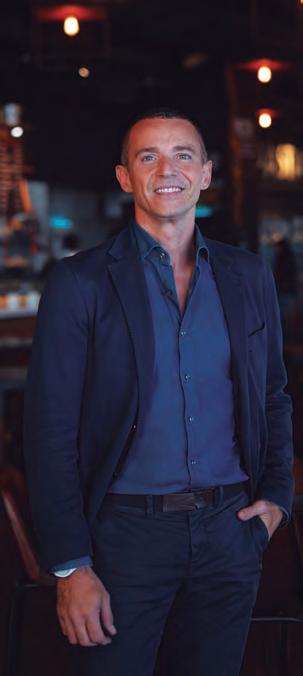
“Este concepto surge en Florencia, donde la empresa matriz creó algo muy similar a mayor escala, Il Mercato Centrale, que ocupa todo el segundo piso del histórico Mercado de San Lorenzo. El operador del Mall of San Juan lo vio como una alternativa innovadora más atractiva que el tradicional food court, por lo que forjaron una alianza para traerlo a Puerto Rico,” explicó el presidente y CEO Roberto Betturi.
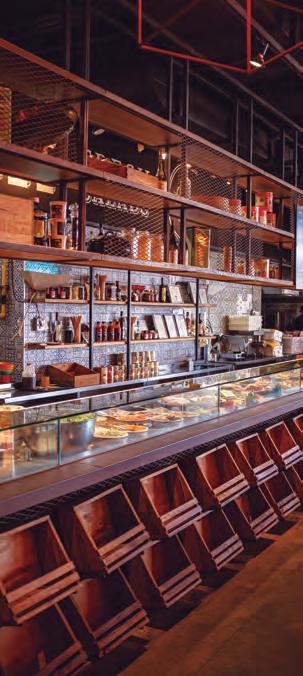
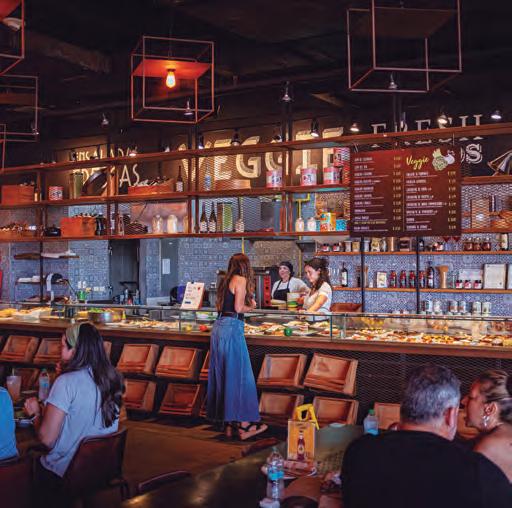
Il Nuovo Mercato ofrece al visitante lo mejor de una “bottega” italiana con la vitalidad de un mercado contemporáneo. Su variado menú celebra la frescura de los ingredientes, la autenticidad de los sabores y la pasión por la buena mesa.
El espacio cuenta con cinco bodegas gastronómicas, y cada una refleja la diversidad de la cocina italiana:
• Bodega de carnes, que incluye jugosos cortes, pollo y preparaciones a la parrilla.
• Bodega de mariscos con opciones frescas y sabrosas inspiradas en la costa mediterránea.
• Bodega de pizzas elaboradas con masas artesanales e ingredientes premium que se hornean al momento.
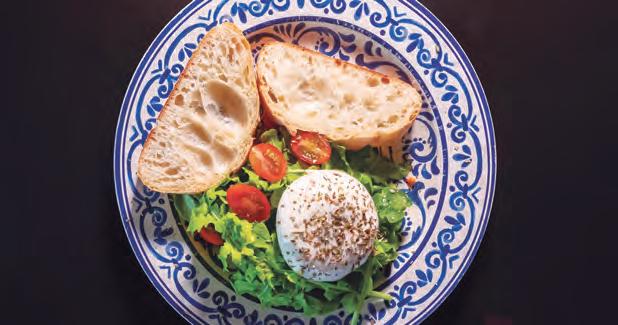
• Bodega vegetariana o “veggie” con coloridas y suculentas ensaladas preparadas con productos locales y de temporada.
El ambiente —amplio, luminoso y lleno de vida— invita a disfrutar de cada momento, especialmente en su terraza con una de las vistas más privilegiadas a la Laguna San José, perfecta para acompañar con una copa de vino o un clásico spritz italiano al atardecer.

Starbene Caffè
Justo al lado se encuentra el Starbene Caffé, que se ha convertido en el rincón favorito para los amantes del buen café y los dulces momentos. Este espacio tiene tres bodegas: reposteria con café, gelato y panadería artesanal. Con su cuidada selección de espressos, capuccinos, postres y opciones ligeras, ofrece una atmósfera íntima y elegante, ideal para desayunos, encuentros entre amigos o una pausa relajada durante el día.
Ambos lugares combinan la tradición culinaria italiana con un ambiente moderno, vibrante y acogedor, que invita a disfrutar sin prisa. Incluso la música que se escucha en el fondo es de su propia estación radial, Radio Mercato, para asegurar que sea la misma que se toca actualmente en Italia.
El toque local
Tanto Il Nuovo Mercato como Starbenne tienen una filosofía de utilizar ingredientes frescos. Muchos de sus productos los elaboran ellos mismos “from scratch” y a veces, usan productos locales, adaptados.
“Aquí la calidad no se compromete. Por eso, en algunos casos, como las pastas, contratamos una compañía externa que elabora las pastas con nuestras recetas para asegurar la calidad para tanta cantidad. Y para el café, usamos un cafetal de Puerto Rico pero con un tueste italiano especialmente para nosotros”, añadió.
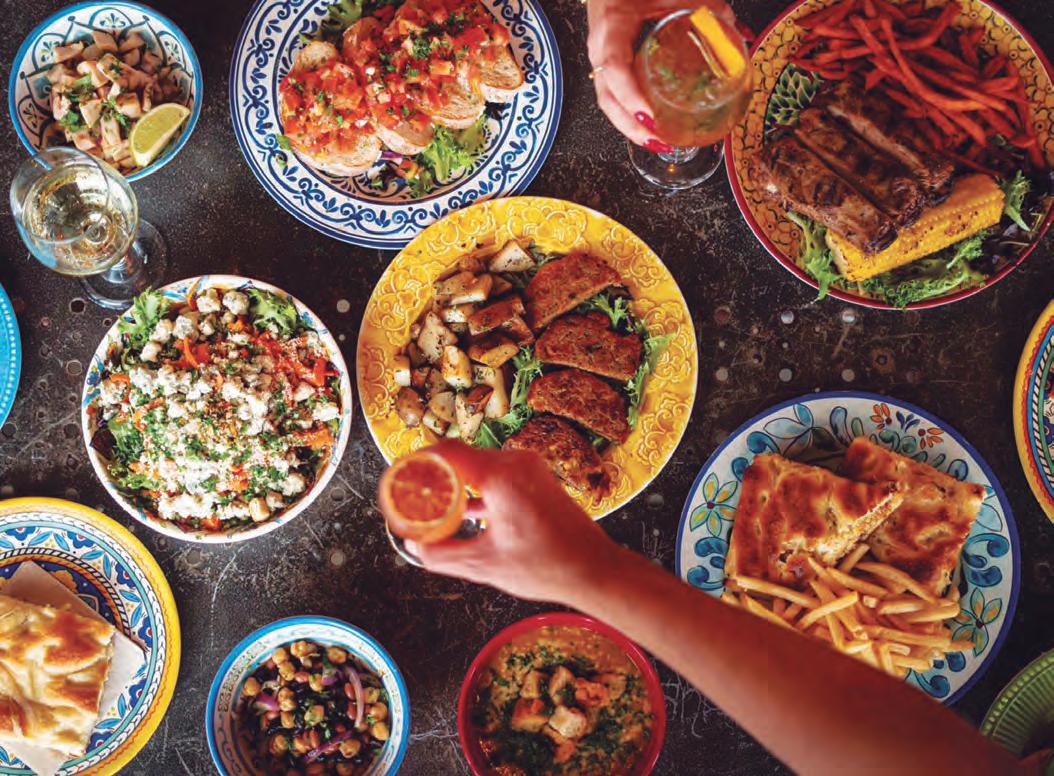
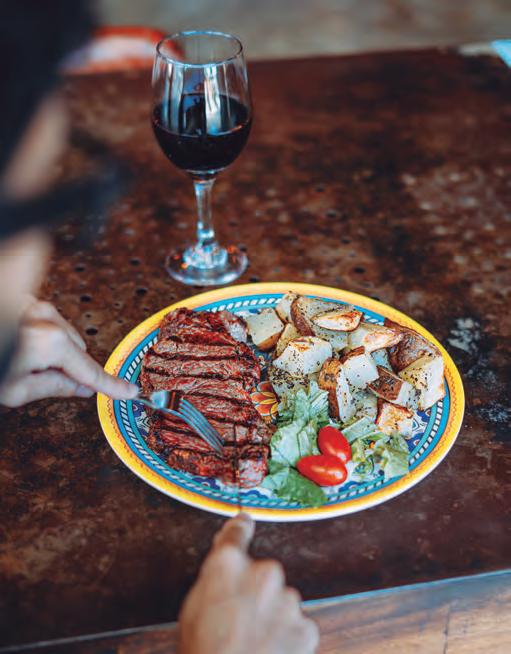
Y hasta se han aventurado a hacer platos que combinan lo boricua y lo italiano. Así lograron fusiones atrevidas y divertidas en las cinco bodegas: Carne—tripleta con focaccia, pastrami, pavo rostizado, jamón, mayonesa de albahaca y queso gouda; Vegetales–sopa de calabaza; Pasta—criolla con matequilla, chorizo parrillero y plátano Amarillo; Pescado—ceviche con tostones; Pizza—con chorizo parillero y crema de calabaza.
Rooftop al aire libre
El Rooftop Bar de Il Nuovo Mercato complementa la experiencia con un ambiente vibrante al aire libre, disponible de miércoles a domingo, donde la mixología, la música y la gastronomía se fusionan en noches llenas de estilo. Es el punto de encuentro ideal para un afterwork o una velada bajo las estrellas.
También tienen disponible la terraza para eventos privados 200-300 personas, y allí hacen eventos especiales y family days.
“Queremos que cada visitante viva una experiencia completa, que sienta un pedacito de Italia en cada detalle —desde el sabor del espresso hasta el ambiente del rooftop”, comenta Roberto.

Since opening in December 2015, Il Nuovo Mercato has established itself as one of the most enchanting dining spaces in The Mall of San Juan, offering an experience inspired by the markets of Italy.
“This concept arises in Florence, where the parent company created something very similar on a larger scale, Il Mercato Centrale, which occupies the entire second floor of the historic San Lorenzo Market. The operator of the Mall of San Juan saw it as an innovative alternative more attractive to the traditional food court, so they forged an alliance to bring it to Puerto Rico,” explained President and CEO Roberto Betturi.
Il Nuovo Mercato offers the visitor the best of an Italian “bottega” with the vitality of a contemporary market. Its varied menu celebrates the freshness of the ingredients, the authenticity of the flavors and the passion for good food.
The space has five gastronomic cellars, and each one reflects the diversity of Italian cuisine:
• Meats including juicy cuts, chicken and grilled preparations.
• Seafood with fresh tasty options inspired by the Mediterranean coast.
• Pizzas made with artisanal doughs and premium ingredients that are baked to order.
• Vegetarian or “veggie” with colorful and succulent salads prepared with local and seasonal products.
The atmosphere – spacious, bright and full of life – invites you to enjoy every moment, especially on its terrace with one of the most privileged views of the San José Lagoon, perfect to accompany with a glass of wine or a classic Italian spritz at sunset.
Starbene Caffè
Right next to Il Nuovo Mercato is the Starbene Caffé, which has become the favorite corner for lovers of good coffee and sweet moments. This space has three bottegas: bakery with coffee, gelato and artisanal breads.
With its careful selection of espressos, cappuccinos, desserts and light options, it offers an intimate and elegant atmosphere, ideal for breakfasts, meetings with friends or a relaxed break during the day.
Both places combine Italian culinary tradition with a modern, vibrant and welcoming atmosphere, which invites you to enjoy without haste. Even the music that is heard in the background is from his own radio station, Radio Mercato, to ensure that it is the same as that currently played in Italy.
The local touch
Il Nuovo Mercato and Starbenne have a philosophy of using fresh ingredients. Many of their products are made themselves “from scratch” and sometimes use local, adapted products.
“Here quality is not compromised. That is why, in some cases, such as pasta, we hire an external company that makes the pasta with our recipes to ensure quality for such a large quantity. And for the coffee, we use a coffee plantation from Puerto Rico but with an Italian roast especially for us,” he added.
And they have even ventured to make dishes that combine Puerto Rican and Italian flavors. This is how they achieved daring and fun fusions in the five wineries: Meat—triplet with focaccia, pastrami, roasted turkey, ham, basil mayonnaise and gouda cheese; Vegetables–pumpkin soup; Pasta—Creole with matequilla, grilled chorizo and yellow plantain; Fish—ceviche with tostones; Pizza— with grilled chorizo and pumpkin cream.
A rooftop…to top it off!
Il Nuovo Mercato’s Rooftop Bar complements the experience with a vibrant outdoor atmosphere, available from Wednesday to Sunday, where mixology, music and gastronomy merge in stylish evenings. It is the ideal meeting point for an afterwork or an evening under the stars.
They also have the terrace available for private events for 200-300 people, and there they hold special events and family days.
“We want every visitor to have a complete experience, feeling a little piece of Italy in every detail – from the taste of the espresso to the atmosphere of the rooftop,” says Roberto.
The Mall of San Juan, 3er. Nivel Carolina, Puerto Rico
• Il Nuovo Mercato: lunes a jueves—11am a 9pm viernes y sábado—11am a 10pm
• Starbene Caffè: lunes a jueves—8:30am a 9pm viernes y sábado—8:30am a 10pm domingos—9:30am a 9pm
• Rooftop Bar: miércoles a domingo—5pm a 10 pm @mercatosju y @starbenecaffe

Por/By: Yvonne Brown Ieromazzo
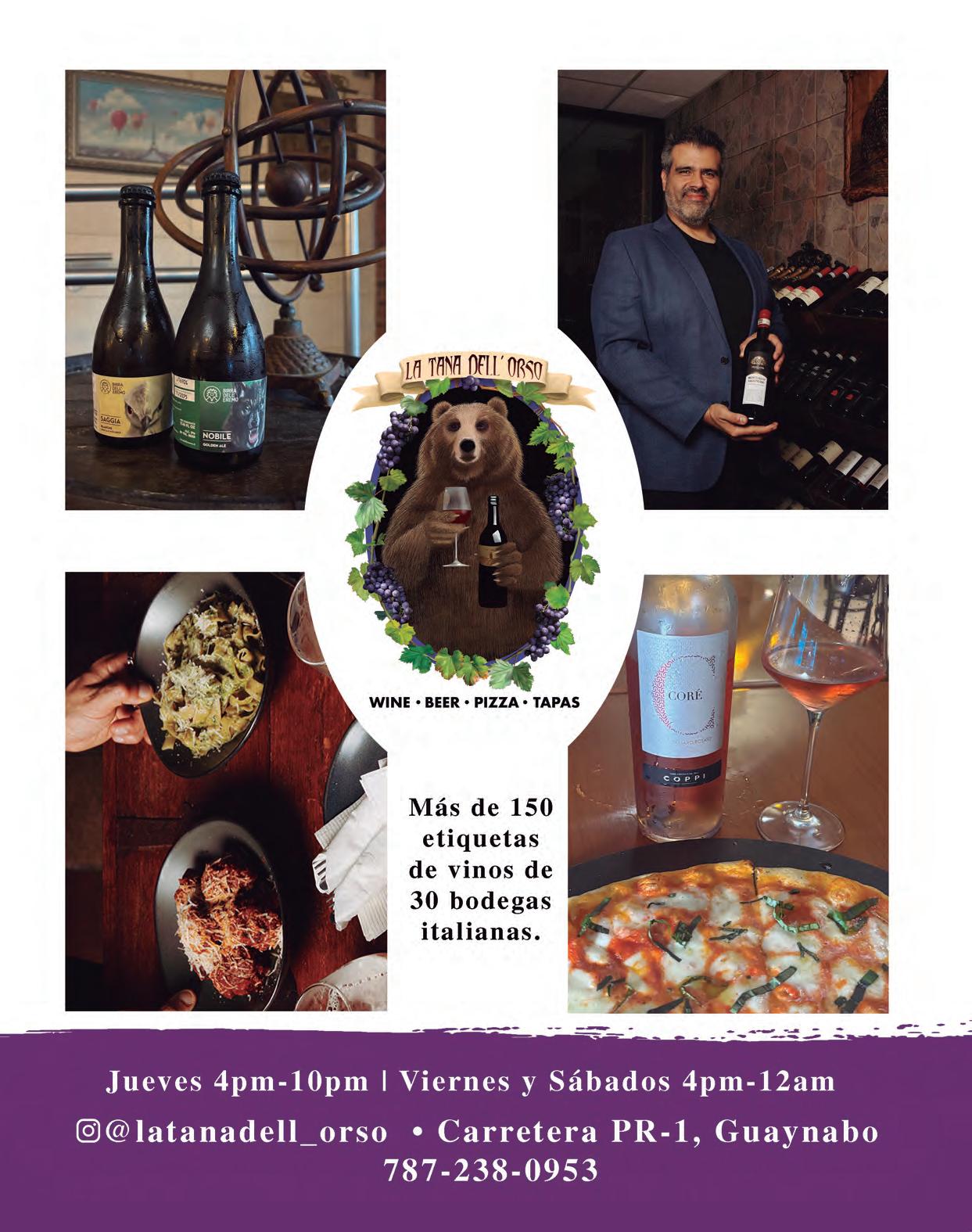
Traducido del italiano como “La Guarida del Oso”, este curioso nombre alude al ambiente íntimo y acogedor de La Tana dell’Orso, pues se siente como una “cuevita” de donde no te quieres ir. Se refiere, además, al amor por la naturaleza y los animales de su dueño, Teo Molinelli.
Con su experiencia previa de Pizzeria Farinole, empresa familiar que operaba en ese mismo local en Guaynabo —y apoyado por su primo, el Chef Sebastián Vega Nogales— Teo creó este espacio donde puedes relajarte y pasarla bien mientras disfrutas de ricas pizzas, pastas y tapas acompañadas de vinos premium, cocteles y cervezas artesanales.
El menú de pizzas incluye desde la clásica Pizza Margarita hasta interesantes combinaciones, como la sabrosa Cisalpina, que lleva prosciutto, queso gorgonzola y setas crimini.
Para el tapeo, te recomiendo la focaccia recién horneada con un aromático aceite de oliva extra virgen, una bandeja surtida de quesos y embutidos o las albóndigas de “La Tana”, como como cariñosamente la llaman sus clientes.
Y no dejes de probar las pastas frescas, especialmente los raviolis rellenos de ricotta cremosa con una salsa bolognesa con hierbas aromáticas y vino tinto. Y hay muchos otros platos livianos de la cocina italiana tradicional, tipo trattoria, todos elaborados con ingredientes de primer orden y con alternativas veganas sobresalientes.
Los vinos de Molinelli Imports
Estos platillos son perfectos para maridar con la gran selección de vinos que encuentras en La Tana, todos exclusivos de Molinelli Imports, el negocio de importación de vinos de Teo.
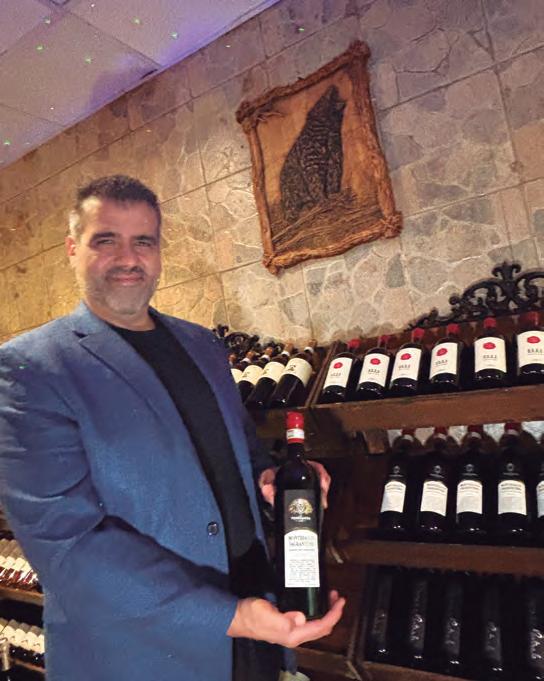
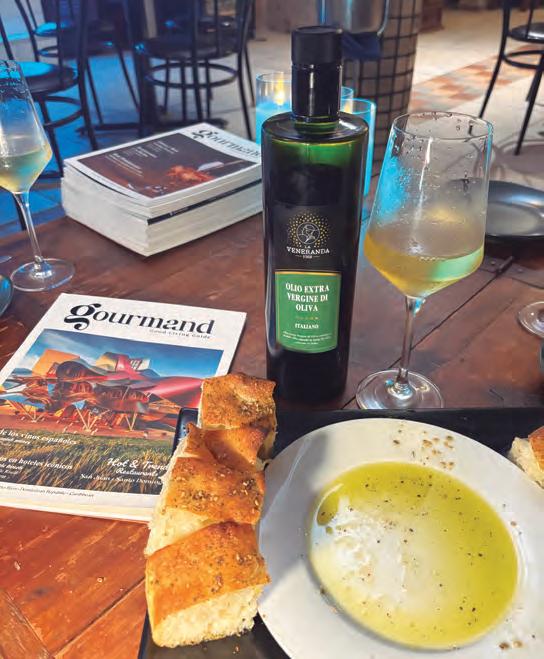
“Somos el único importador en la Isla con un portafolio en el que los vinos de Italia son protagonistas. Traemos más de 150 etiquetas de unas 30 bodegas, mayormente de Italia, que es el país con mayor producción vinícola del mundo, además de traer denominaciones y uvas italianas que nunca habían llegado a Puerto Rico, por lo que ahora puedes probar un Sagrantino (considerada la uva más tánica del mundo), un Enantio (una de las uvas más antiguas), un Timorasso o. un Prie Blanc en La Tana, sin tener que ir a Italia”.
También cuentan con excelentes versiones de las denominaciones italianas más reconocidas —Barolo, Chianti, Amarone della Valpolicella— así como de uvas internacionales —Pinot Noir, Merlot, Cabernet Sauvignon y Chardonnay— y todo a precios módicos con descuentos adicionales en las botellas para llevar.
“Cada día, seguimos ampliando la oferta de otros países, notablemente Argentina y Francia, así como de Córcega, de donde es originaria mi familia”.
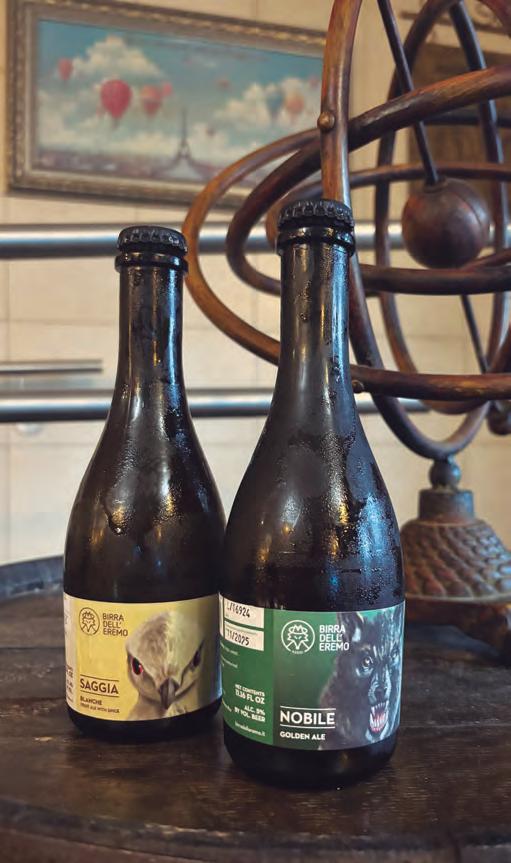
La Tana cuenta con un área de barra con piano, excelente para terminar la noche con tu copita de vino o una cerveza artesanal italiana (también traída por Molinelli Imports). Anímate a probar la Birra dell’Eremo de Assisi, ya sea la Nobile golden ale o la Saggia Blanche fruit ale with spice. O si prefieres tomar un cóctel de la casa o el postre con café espresso o un digestivo.
Mas allá del buen comer y beber, La Tana busca ofrecer un juego de experiencias sensoriales desde que se entra al salón hasta el momento de partir. Esto combina arte, armonía, buena música, maridajes perfectos y un servicio de primera, garantizado por un staff muy atento y conocedor de vinos.
Para el 2026, La Tana ofrecerá regularmente cursos de apreciación del vino italiano y degustaciones, a menudo presentadas por bodegueros invitados. Y próximamente va a incorporar una tienda en línea para quienes deseen tener acceso a todo el portfolio de vinos, cervezas y licores.
Apartado del bullicio del casco urbano, La Tana cuenta con su propio estacionamiento y con servicio de vigilancia, en el siguiente horario: jueves de 4pm a 10pm y viernes y sábado de 4pm hasta la medianoche. El espacio a menudo es utilizado para cumpleaños, eventos corporativos y degustaciones privadas por acuerdo previo.
La Tana dell’Orso nació en 2024 como un proyecto conjunto entre Molinelli Imports y Panaderia La Française, considerada la panadería más antigua de la isla bajo la misma familia y que, desde su fundación en el 1912, ha definido el espíritu de la familia Molinelli en Puerto Rico que ahora se vive en La Tana.
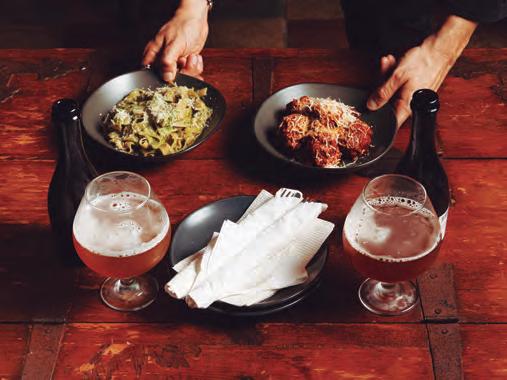
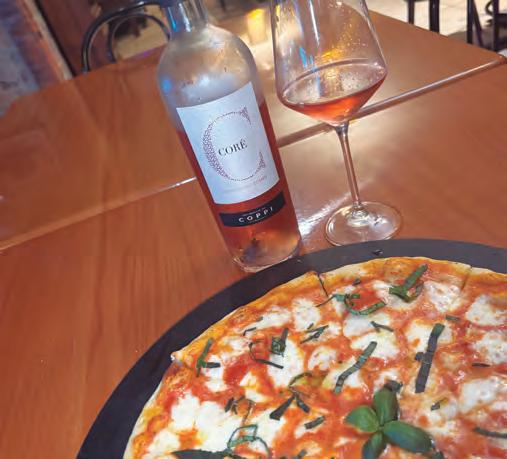
Translated from Italian as “The Bear’s Den,” this curious name alludes to the intimate and cozy atmosphere of La Tana dell’Orso, as it feels like a “little cave” from where you don’t want to leave. It also refers to the love for nature and animals of its owner, Teo Molinelli.
With his previous experience at Pizzeria Farinole, a family business that operated in that same location in Guaynabo —and supported by his cousin, Chef Sebastián Vega Nogales— Teo created this space where you can relax and have a good time while enjoying delicious pizzas, pastas and tapas accompanied by premium wines, cocktails and craft beers.
The pizza menu includes from the classic Pizza Margherita to interesting combinations, such as the tasty Cisalpina, with prosciutto, gorgonzola cheese and crimini mushrooms.
For tapas, I recommend the freshly baked focaccia with an aromatic extra virgin olive oil, a tray assorted with cheeses and sausages or the meatballs,which are now famous in “La Tana”, as clients affectionately call it.
And be sure to try the fresh pastas, especially the ravioli stuffed with creamy ricotta with a bolognese sauce with aromatic herbs and red wine. And there are also many other light dishes of traditional Italian cuisine, trattoria-type, all made with top-notch ingredients and outstanding vegan alternatives.
The wines of Molinelli Imports
These dishes are perfect paired with the large selection of wines you find at La Tana, all exclusive from Molinelli Imports, Teo’s wine import business.
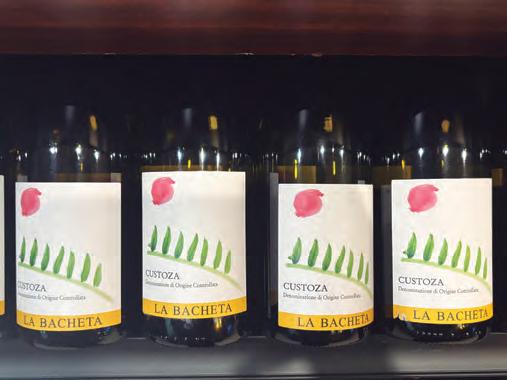
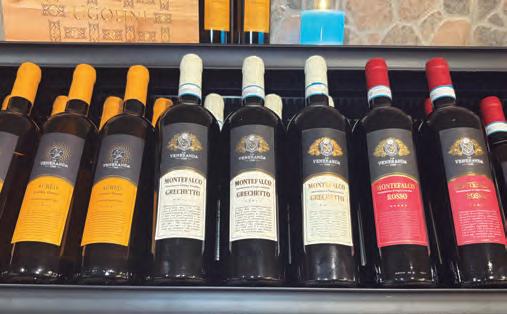
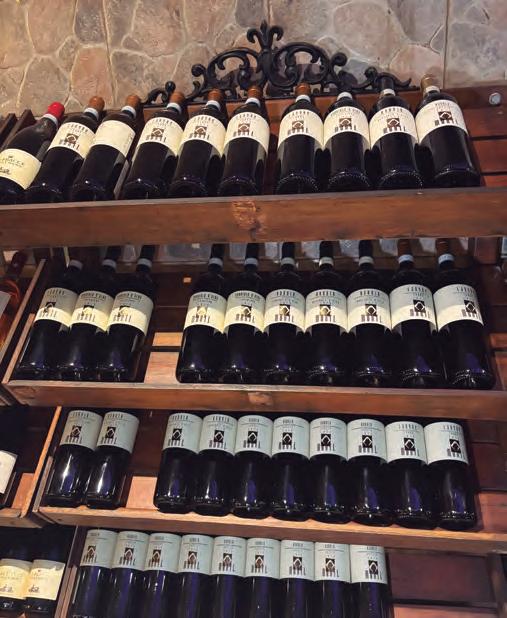
“We are the only importer on the island with a portfolio in which Italian wines are the protagonists. We bring more than 150 labels from about 30 wineries, mostly from Italy, which is the country with the largest wine production in the world, in addition to bringing Italian denominations and grapes that had never arrived in Puerto Rico, so now you can try a Sagrantino (considered the most tannic grape in the world), an Enantio (one of the oldest grapes), a Timorasso or a Prie Blanc in La Tana, without having to go to Italy.”
They also have excellent versions of the most known Italian denomination —Barolo, Chianti, Amarone della Valpolicella— as well as international grapes, —Pinot Noir, Merlot, Cabernet Sauvignon and Chardonnay— all at affordable prices with additional discounts on takeaway bottles. “Every day, we continue to expand the offer of other countries, notably Argentina and France, as well as Corsica, where my family is from.”
La Tana has a bar area with an excellent piano to end the night with a glass of nice wine or an Italian craft beer (also brought by Molinelli Imports). Dare to try the Birra dell’Eremo de Assisi, either the Nobile golden ale or the Saggia Blanche fruit ale with spice. Or if you prefer, have a house cocktail or dessert with espresso or a digestif.
Beyond good eating and drinking, La Tana seeks to offer a game of sensory experiences from the moment you enter until the time of departure. This combines art, harmony, good music, perfect pairings and a first-class service, guaranteed by an attentive staff very knowledgeable in wines.
By 2026, La Tana will offer, on a regular basis, Italian wine appreciation courses and tastings, which will often be conducted by guest winemakers. And soon will incorporate an online store for those who wish to access its entire portfolio of wines, beers and spirits.
Away from the hustle and bustle of the urban area, La Tana has its own parking lot and security service, at the following times: Thursday from 4pm to 10pm and Friday and Saturday from 4pm to midnight. The space is often used for birthdays, corporate events and private tastings by prior arrangement.
La Tana dell’Orso was born in 2024 as a joint project between Molinelli Imports and Panaderia La Française, considered the oldest bakery on the island under the same family and which, since its founding in 1912, has defined the Molinelli family spirit in Puerto Rico that is now alive in La Tana.
PR-1, Km 20.2, al lado de La Française Bakery Guaynabo, PR 787 238-0953
@latanadell_orso



Por/By: Thomas
Sartori
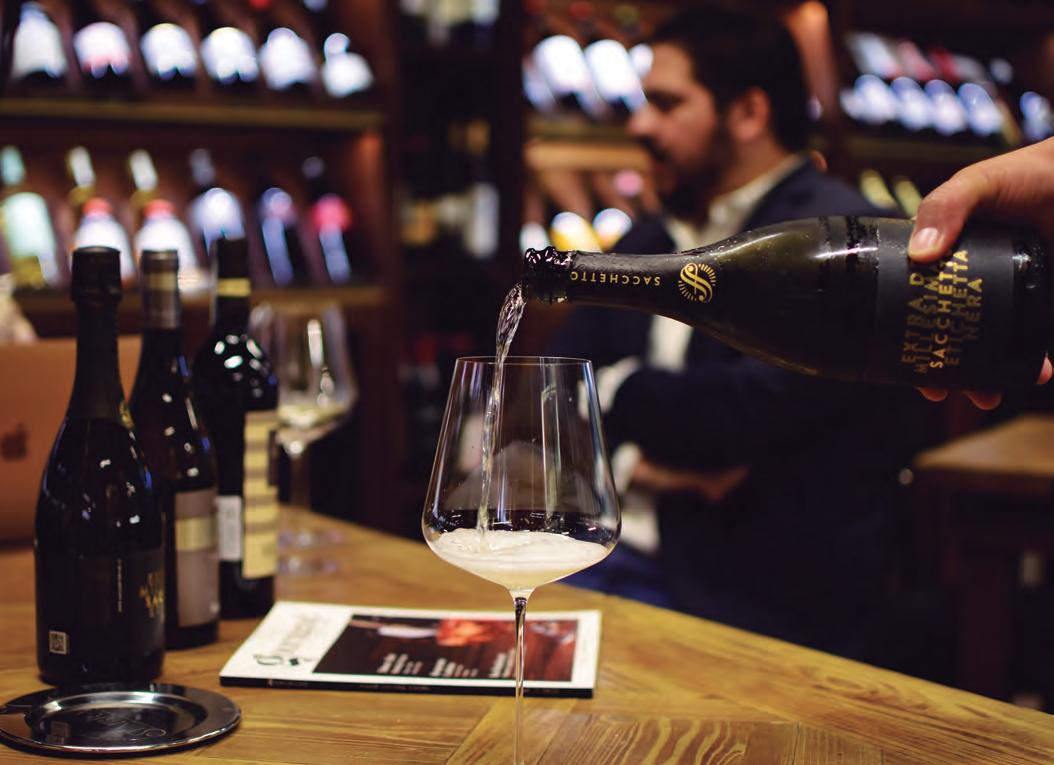
Italia no se entiende solo en la línea que va del Norte al Sur, del Piemonte a Sicilia. También vibra en el contraste entre Este y Oeste, en la montaña y el mar, en lo alpino y lo mediterráneo.
El vino italiano es un espejo de esas tensiones y armonías. Lleva consigo la precisión heredada de las influencias germánicas, la sutileza francesa que se filtró en estilos y técnicas, y la calidez especiada que llegó desde las costas norteafricanas. Es el resultado de un mestizaje cultural que no resta identidad, sino que la multiplica.
Italia es, sobre todo, sinónimo de biodiversidad. Y esa riqueza nace de su geografía única: un país donde en menos de 30 kilómetros se encuentran montañas y mar, donde el corazón del viejo mundo late con climas y paisajes contrastantes, y donde más de 500 variedades autóctonas de uvas siguen vivas y en producción.
En un escenario internacional donde la gente busca probar cosas nuevas, explorar y divertirse, Italia ofrece un abanico que va desde vinos sofisticados y solemnes hasta propuestas dinámicas y festivas: vinos naranjas, biodinámicos, espumosos, ancestrales o clásicos.
En cada copa, Italia no es solo un país: es un viaje de voces, memorias y paisajes entrelazados. ¡Anímate a descubrirlo!
Piemonte: la nobleza del Nebbiolo
En las colinas de Langhe y Monferrato, el Nebbiolo alcanza su máxima expresión. Barolo y Barbaresco son vinos que no se apresuran: necesitan tiempo, paciencia y respeto. Cada copa encierra la complejidad de trufas blancas, bosques húmedos y castillos medievales. Piemonte es solemnidad, es aristocracia líquida.

Toscana: el alma del Sangiovese
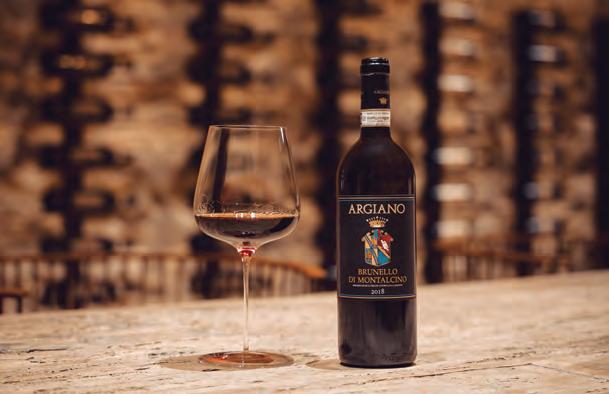
Aquí el vino se confunde con la vida. El Chianti Classico ofrece frescura y dinamismo, mientras Brunello di Montalcino aporta estructura y grandeza. Toscana es arte renacentista en versión líquida: equilibrada, intensa y eterna.
Veneto: la versatilidad que conquista
De un lado, el Amarone della Valpolicella, poderoso y seductor, nacido de uvas pasificadas. Del otro, el Prosecco, embajador mundial de la alegría italiana. Veneto es prueba de que la diversidad no resta, sino multiplica.
Sicilia: el volcán en la copa
Los vinos del Etna, marcados por la mineralidad de la lava, son hoy objeto de culto. El Nero d’Avola sigue siendo el estandarte mediterráneo de la isla: cálido, envolvente, directo. Sicilia es fuerza, es fuego, es renacimiento.
Friuli-Venezia Giulia: blancos con carácter
Aquí los blancos son protagonistas: Friulano, Sauvignon Blanc, Pinot Grigio. Los productores han sabido unir tradición con innovación, dando vida también a grandes vinos naranjas. Friuli es frontera vinícola: un puente entre culturas.
Alto Adige: elegancia alpina
Entre montañas escarpadas y climas extremos, Alto Adige da vida a vinos blancos de gran pureza y frescura: Gewürztraminer, Pinot Bianco, Sauvignon. También sus Pinot Noir y Lagrein sorprenden con profundidad. Es la región donde la precisión germánica se encuentra con el alma italiana.
Emilia-Romagna: la fiesta del Lambrusco
En la tierra de Parma, Módena y Bologna, la vida es sabor y celebración. Y ningún vino lo representa mejor que el Lambrusco: espumoso, frutal, vibrante, capaz de acompañar desde un prosciutto hasta una pizza. También nos recuerda que el vino no siempre necesita solemnidad; a veces basta con pura alegría.
Ningún otro país del mundo brinda con tanta naturalidad esta riqueza absoluta. Italia no solo hace vino: regala al planeta un universo infinito de posibilidades en una copa.
Thomas Sartori
Wine & Spirits Consultant•Spot 21
Director•Hospitality LAB @spot.21 @hospitalitylab.rd
Italy cannot be understood merely along the line that runs from North to South—from Piedmont to Sicily. It also vibrates in the contrast between East and West, in the dialogue between mountains and sea, between the Alpine and the Mediterranean.
Italian wine is a reflection of those tensions and harmonies. It carries the precision inherited from Germanic influences, the finesse instilled by French styles and techniques, and the spiced warmth that arrived from the North African coasts. It is the product of a cultural blend that doesn’t dilute its identity, but rather magnifies it.
Italy is, above all, a synonym for biodiversity. That richness springs from its unique geography: a country where mountains and sea are found within 30 kilometers, where the heart of the Old World beats with contrasting climates and landscapes, and where more than 500 native grape varieties remain alive and in production.
In an international context where people seek novelty, exploration, and joy, Italy offers a spectrum that ranges from sophisticated, solemn wines to dynamic, festive creations—orange wines, biodynamic, sparkling, volcanic, ancestral, or classic.
In every glass, Italy is more than a country—it is a journey of voices, memories, and intertwined landscapes. Dare to discover it!
Piedmont: The Nobility of Nebbiolo
In the hills of Langhe and Monferrato, Nebbiolo reaches its highest expression. Barolo and Barbaresco are wines that refuse to be rushed— they demand time, patience, and respect. Each glass captures the complexity of white truffles, misty forests, and medieval castles. Piedmont is solemnity—it is liquid aristocracy.
Tuscany: The Soul of Sangiovese
Here, wine and life are inseparable. Chianti Classico offers freshness and vitality, while Brunello di Montalcino brings structure and grandeur. Tuscany is Renaissance art in liquid form—balanced, intense, and eternal.
Veneto: Versatility that Conquers
On one side, Amarone della Valpolicella—powerful and seductive, born from sun-dried grapes. On the other, Prosecco—the global ambassador of Italian joy. Veneto proves that diversity doesn’t divide—it multiplies.
Sicily: The Volcano in a Glass
The wines of Etna, marked by the lava’s minerality, have become objects of cult admiration. Nero d’Avola remains the island’s Mediterranean standard-bearer—warm, enveloping, and direct. Sicily is strength, fire, and rebirth.
Friuli-Venezia Giulia: Whites with Character
Here, white wines take center stage: Friulano, Sauvignon Blanc, Pinot Grigio. Producers have seamlessly united tradition and innovation, also creating remarkable orange wines. Friuli is a winemaking frontier—a bridge between cultures.
Alto Adige: Alpine Elegance
Amid rugged mountains and extreme climates, Alto Adige produces white wines of remarkable purity and freshness: Gewürztraminer, Pinot Bianco, Sauvignon Blanc. Its Pinot Noirs and Lagrein also impress with depth. This is where Germanic precision meets Italian soul.
Emilia-Romagna: The Celebration of Lambrusco
In the land of Parma, Modena, and Bologna, life is flavor and celebration. And no wine captures that spirit better than Lambrusco—sparkling, fruity, and vibrant, perfect alongside anything from prosciutto to pizza. It reminds us that wine doesn’t always need solemnity—sometimes, pure joy is enough.
No other country in the world toasts with such effortless abundance. Italy doesn’t just make wine—it gifts the world an infinite universe of possibilities in a single glass.

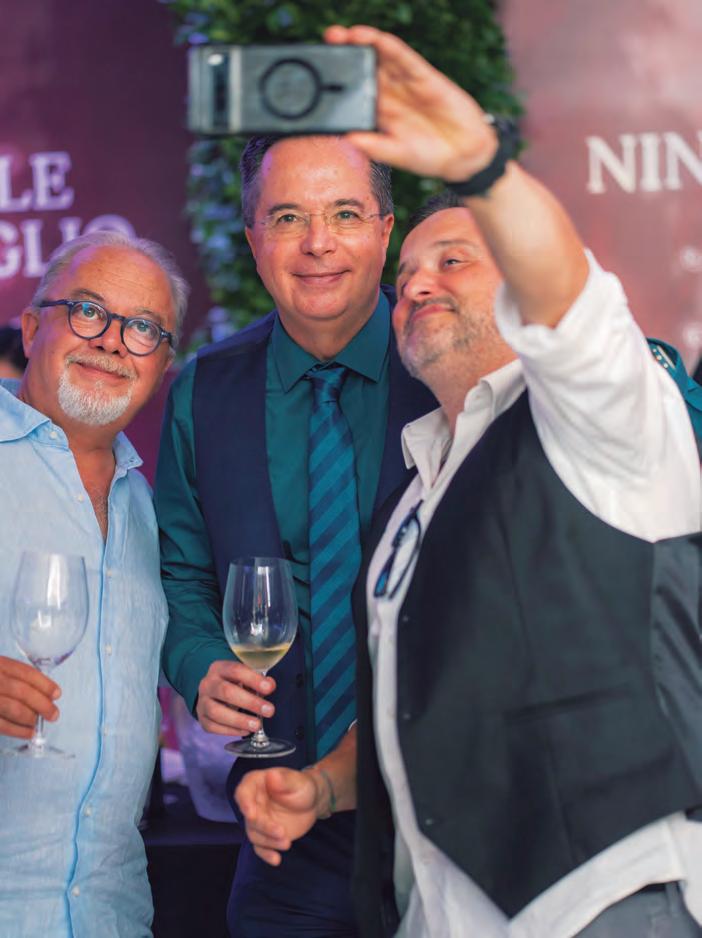
VIP GUESTS
Luca Carmellino — Ballasanti, Nino Costa, Ca’ d’Gal
Alberto Albertini — Vinosofía, Perbacco Enoteca con Cucina
Alessandro Costa — Bodega Nino Costa
El vino tiene la capacidad de viajar sin moverse; de llevarnos a otro lugar con solo abrir una botella. Pero hay ocasiones en que, en lugar de viajar nosotros hacia Italia, es Italia la que viene a nosotros.
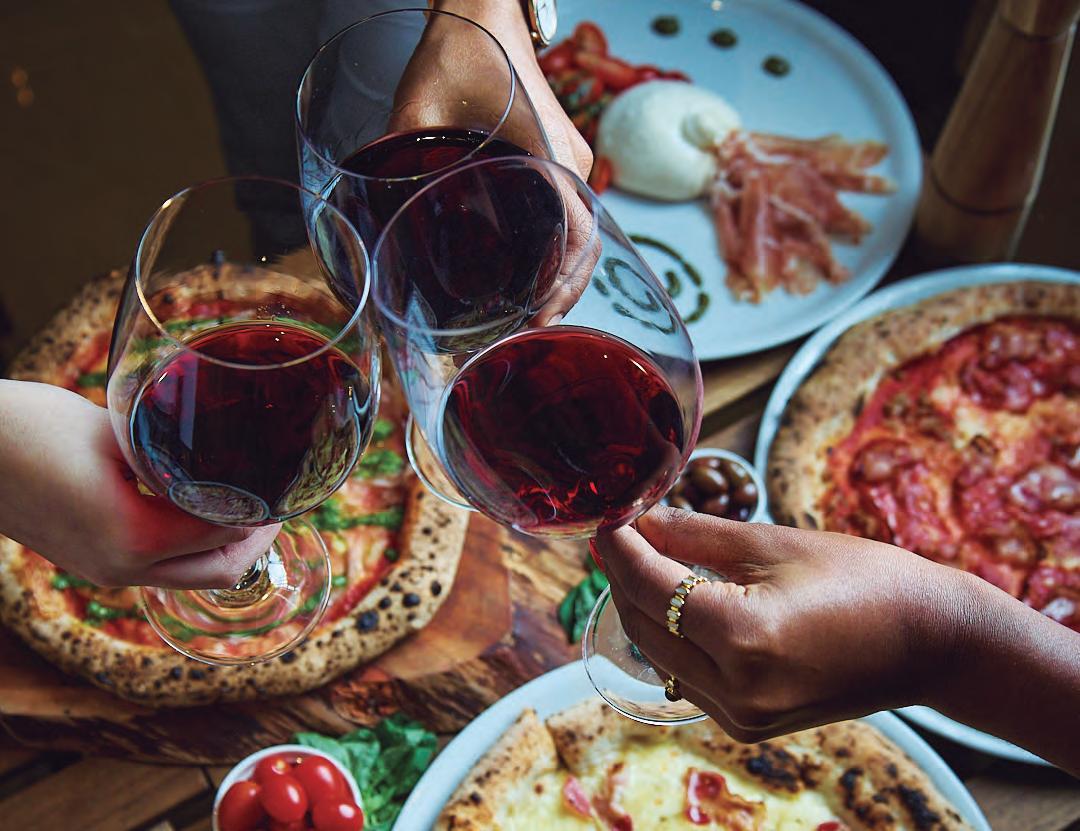
Eso, precisamente, fue lo que ocurrió en Santo Domingo durante la segunda edición del Italian Wine Tasting, celebrada recientemente en el Skylab Events Venue donde se dieron cita 24 bodegas italianas.
Presentado por Spot 21 Consultants, del reconocido consultor de vinos Thomas Sartori, este evento ya se consolida como el punto de encuentro entre la tradición vinícola italiana y el entusiasmo de un público que sabe apreciar lo auténtico.
No se trató simplemente de una degustación. Más bien, fue un recorrido por regiones, estilos y personalidades. Italia mostró una vez más su diversidad absoluta: vinos blancos tensos y minerales, tintos profundos y de guarda, espumosos vibrantes y propuestas contemporáneas que sorprenden por su frescura y dinamismo.
Más que un evento, una experiencia
La edición 2025 dejó claro que los vinos italianos no se definen únicamente por sus denominaciones famosas, sino por su capacidad de emocionar en contextos distintos. Y esa es quizás la lección más importante: el vino italiano no necesita traducción. Se entiende en la mesa, en la conversación, en la emoción que despierta.
Estos fueron los vinos que brillaron en la edición 2025 del Italian Wine Tasting y conquistaron al exigente público.
These were the wines that shone brightly during the 2025 edition and won over the discerning public.
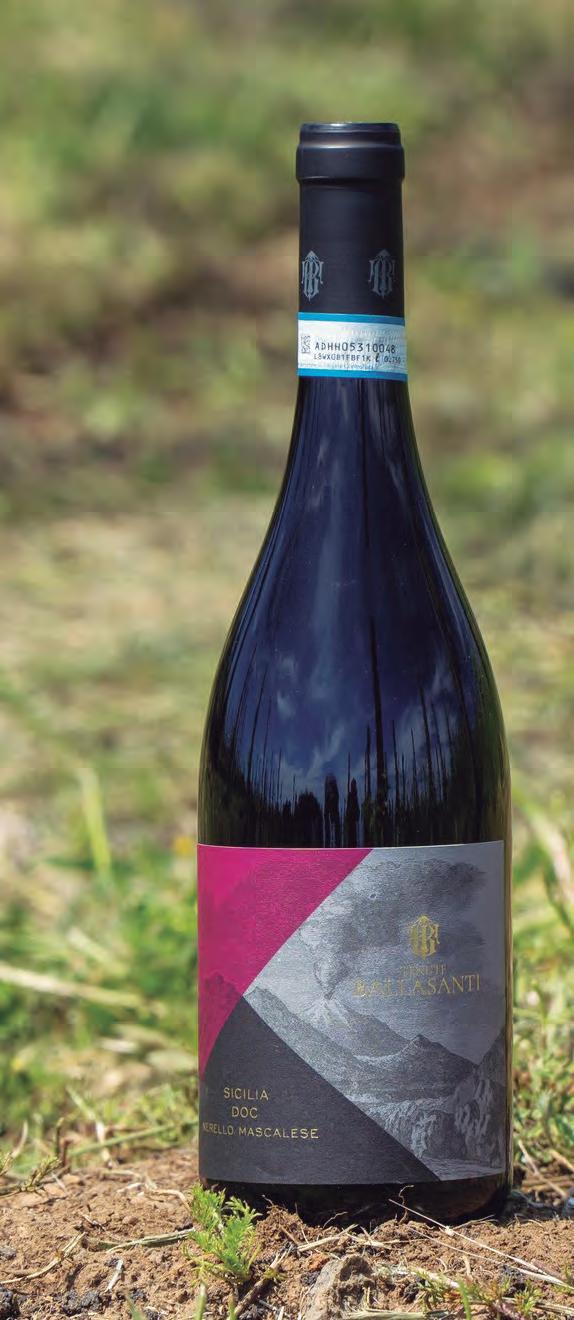
La fuerza volcánica del Etna se hizo sentir con la bodega Ballasanti, que presentó vinos marcados por la mineralidad y la autenticidad de su terroir.
The volcanic force of Mount Etna was felt through Ballasanti, presenting wines marked by the mineral richness and authenticity of their terroir
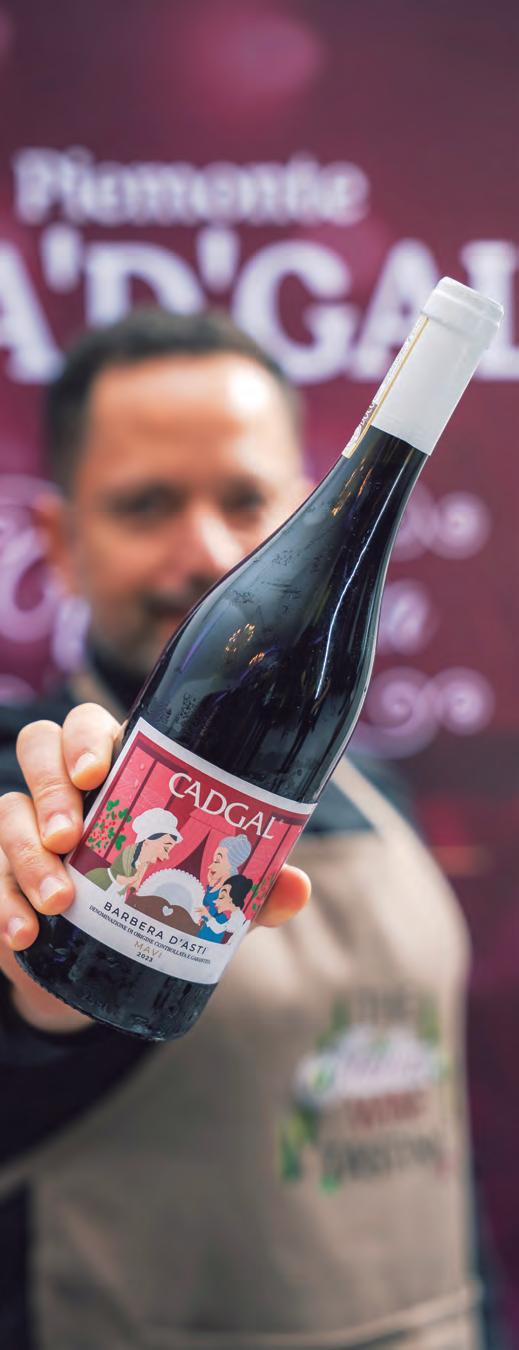
La frescura, el carácter divertido y la dinámica expresión de la bodega Nino Costa encantaron al público, mientras que la magia aromática del Moscato de Ca’ d’Gal mostró la cara más delicada y sublime de la región.
The freshness, playful character, and dynamic expression of Nino Costa delighted attendees, while the aromatic magic of Ca’ d’Gal’s Moscato revealed the region’s most delicate and sublime side.

Franz Haas volvió a conquistar con sus Pinot Noir de elegancia precisa y sus blancos aromáticos de gran pureza, confirmando su lugar entre los favoritos del evento.
Franz Haas once again captivated with precisely elegant Pinot Noirs and pure, aromatic whites, confirming its place among the event’s favorites.
Wine has the magical ability to travel without moving; to take us somewhere else with just the opening of a bottle. But there are moments when, instead of us traveling to Italy, it’s Italy that comes to us.
That is precisely what happened in Santo Domingo during the second edition of the Italian Wine Tasting, recently held at the Skylab Events Venue, where 24 Italian wineries gathered under one roof.
Presented by Spot 21 Consultants, led by renowned wine expert Thomas Sartori, this event has already established itself as the meeting point between Italy’s deep winemaking tradition and the enthusiasm of an audience that truly values authenticity.
It wasn’t merely a tasting. It was more like a journey through regions, styles, and personalities. Once again, Italy showcased its boundless diversity: tense, mineral-driven whites; deep, age-worthy reds; vibrant sparkling wines; and contemporary expressions that surprised with their freshness and dynamism.
More than an Event, an Experience
The 2025 edition made one thing clear: Italian wines are not defined solely by their famous appellations, but by their power to move and inspire in any context. And perhaps that’s the greatest lesson of all— Italian wine needs no translation. It’s understood at the table, in conversation, and in the emotions it evokes.
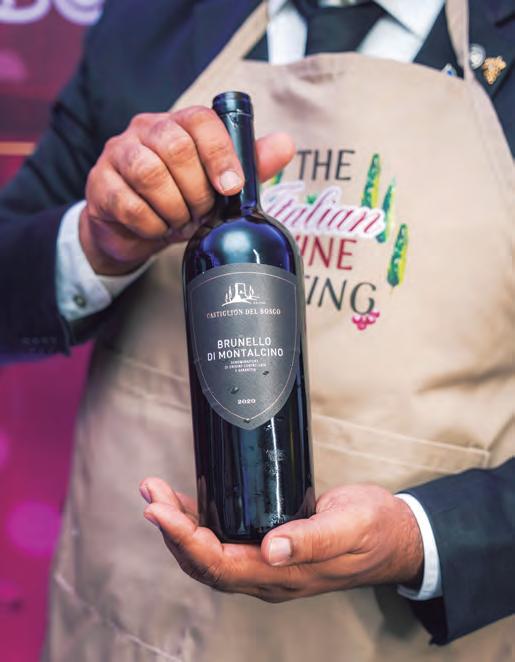
Castiglion del Bosco brilló con un super Brunello di Montalcino, demostrando por qué esta denominación sigue siendo sinónimo de excelencia.
Castiglion del Bosco dazzled with a superb Brunello di Montalcino, proving once more why this appellation remains synonymous with excellence.
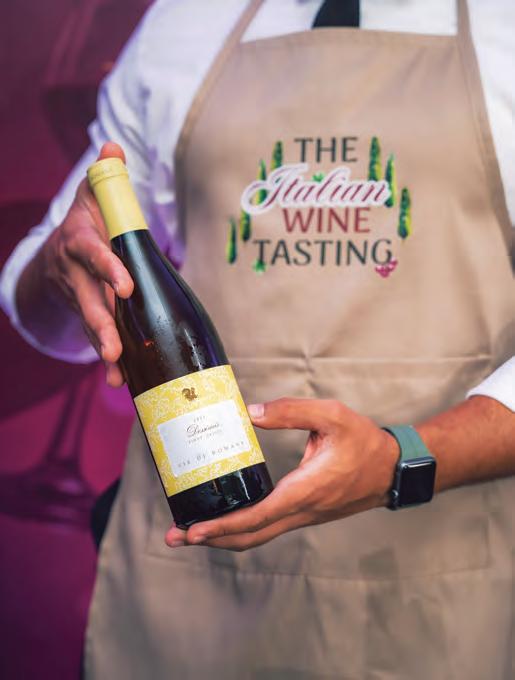


Vie di Romans ofreció blancos extraordinarios y elegantes, perfectos ejemplos de la finura y versatilidad de esta región del noreste italiano.
Vie di Romans offered extraordinary, elegant whites—perfect examples of the finesse and versatility that define this northeastern Italian region.






Por/By: Thomas Sartori
El vino no es solo un producto de la tierra. Es también un recurso: una herramienta de placer, de conexión, de celebración. Y como tal, su valor depende del uso que le damos. No es lo mismo descorchar una botella para buscar elegancia, que abrirla para disfrutar de la facilidad de la conversación, o para encontrar el compañero perfecto de un plato.
Casi sin proponérselo, cada país ha desarrollado una vocación distinta que hoy nos ayuda a elegir con mayor claridad qué queremos de una copa.
Cuando hablamos de elegancia, es imposible no mirar a Francia. Champagne, Borgoña, Côtes du Rhône y Burdeos son sinónimos de sofisticación. Son vinos que visten de gala cualquier ocasión. No buscan impresionar con potencia, sino con sutileza. Son la quintaesencia del estilo.
Si lo que buscamos es equilibrio y palatabilidad, España es la respuesta. Rioja y Ribera del Duero han sabido crear vinos que nunca defraudan. Se dejan beber con naturalidad y representan la hospitalidad, al acompañar tanto una charla entre amigos como una comida sin pretensiones.
Pero, si de maridar se trata, Italia no tiene rival. Sus vinos, con frescura natural, con una acidez vibrante y con taninos marcados, incluso en variedades blancas, poseen la estructura necesaria para dialogar con los platos.
Los vinos italianos no se conforman con acompañar, sino que elevan la experiencia gastronómica. Su carácter único, su energía y sus matices fenólicos los convierten en los mejores aliados para crear armonías sorprendentes y profundas entre cocina y copa.
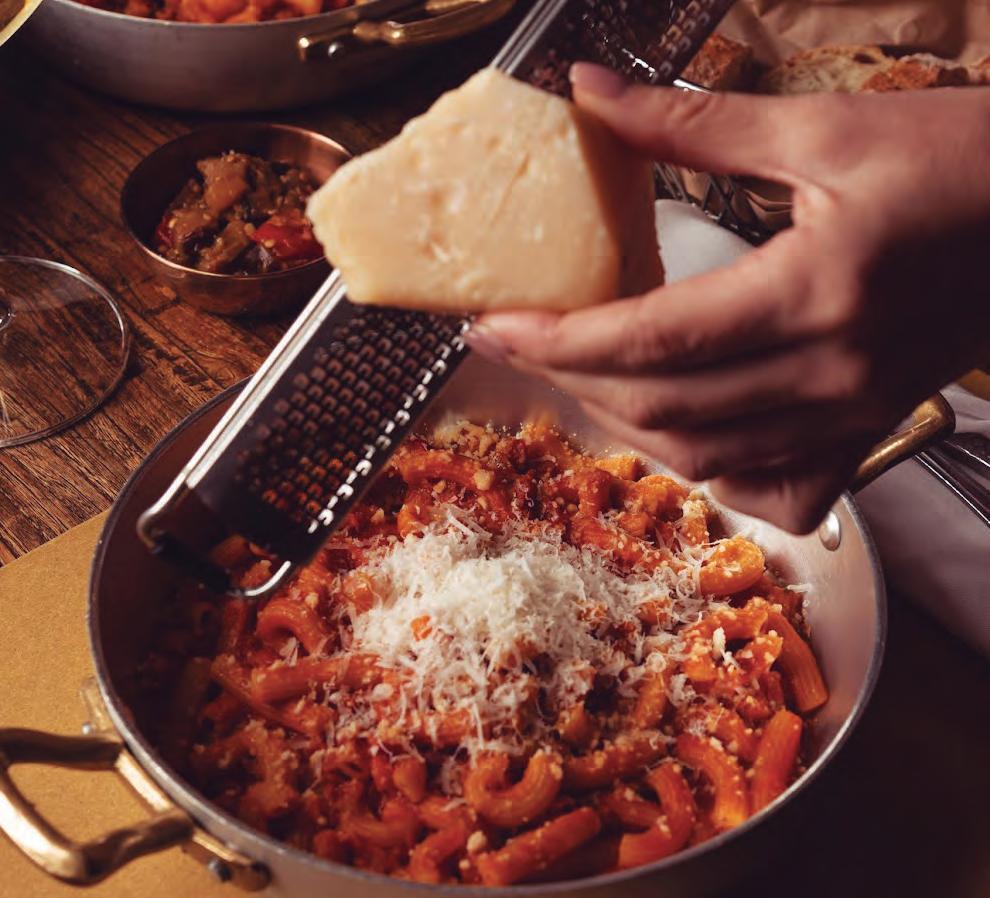
Maridajes clásicos en la mesa italiana
La grandeza del vino italiano se entiende mejor en la mesa, con ejemplos que son casi rituales culturales.
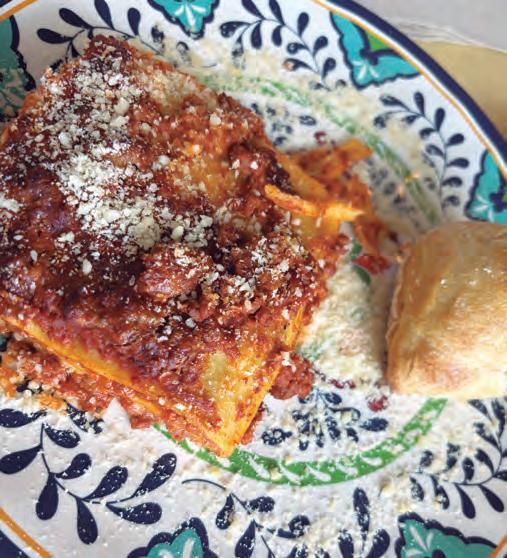
• Lasaña — La riqueza de sus capas encuentra equilibrio en un Chianti, cuya frescura y acidez limpian el paladar y realzan cada bocado.
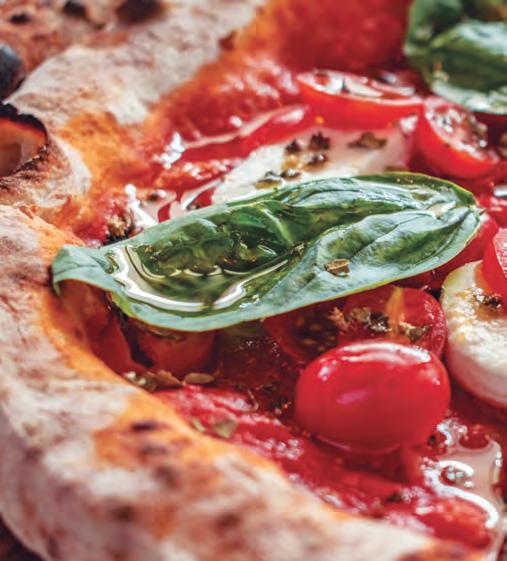
• Pizza Margherita — La combinación de masa, tomate y queso se ilumina con un vino blanco de Campania, como una Falanghina o un Greco di Tufo, que aportan tensión y estructura.
• Embutidos de Emilia-Romagna — El Lambrusco —en especial un Grasparossa espumoso, rico y concentrado— es el maridaje por excelencia: chispeante, alegre y perfecto para cortar la grasa.
• Trufa blanca de Alba — Aquí la tradición y la sensorialidad coinciden. Nada dialoga mejor con su intensidad que un Barolo o un Barbaresco, joyas del Nebbiolo que elevan la experiencia a un nivel sublime.
Más allá de la teoría Al final, el verdadero maridaje no es solo técnica ni reglas: es el conjunto de emociones que se crean en un momento específico, con una compañía determinada, en un lugar único, frente a un plato y una copa irrepetibles.
Porque no es lo mismo beber un Chianti en una colina toscana, al atardecer, con el sol ba ñ ando los vi ñ edos y los cipreses, que abrir esa misma botella en tu casa, lejos de ese paisaje tan singular.
El vino cambia porque cambia la emoción. Y en esa alquimia entre territorio, tiempo y sentimiento es donde nace la magia del maridaje.
Wine is not just a product of the land. It is also a resource — a tool for pleasure, connection, and celebration. Its value depends on how we use it. Uncorking a bottle to seek elegance is not the same as opening one to enjoy easy conversation or to find the perfect companion for a dish.
Almost unintentionally, each country has developed its own vocation that today helps us define more clearly what we seek in a glass.
When we speak of elegance, it is impossible not to look toward France. Champagne, Burgundy, Côtes du Rhône, and Bordeaux are synonymous with sophistication. These are wines that dress any occasion in formal gala attire. They do not aim to impress through power but through subtlety. They are the very essence of style.
If what we seek is balance and drinkability, Spain has the answer. Rioja and Ribera del Duero have mastered the art of creating wines that never disappoint. They are effortlessly enjoyable and embody hospitality — equally suited to a casual chat among friends or an unpretentious meal.
But when it comes to pairing, Italy has no rival. Its wines, with natural freshness, vibrant acidity, and firm tannins — even in white varieties — possess the structure required to engage in true dialogue with food.
Italian wines do not settle for merely accompanying a meal; they elevate the gastronomic experience. Their unique character, energy, and phenolic nuance make them the best allies for crafting surprising and profound harmonies between cuisine and glass.
The greatness of Italian wine is best understood at the table, through examples that are almost cultural rituals: Lasagna — Its rich layers find balance in a Chianti, whose freshness and acidity cleanse the palate and enhance every bite.
Pizza Margherita — The simple harmony of dough, tomato, and cheese shines with a white wine from Campania, such as Falanghina or Greco di Tufo, which add tension and structure.
Cured Meats from Emilia-Romagna — Lambrusco — especially a rich, concentrated sparkling Grasparossa — is the quintessential pairing: lively, joyful, and perfect for cutting through the fat.
White Truffle from Alba — Here, tradition and sensorial pleasure converge. Nothing converses better with its intensity than a Barolo or Barbaresco, jewels of Nebbiolo that raise the experience to a sublime level.
In the end, true pairing is neither technique nor rules — it is the blend of emotions born in a specific moment, with particular company, in a unique place, before an unrepeatable dish and glass.
Because drinking a Chianti on a Tuscan hillside at sunset, with the sun bathing the vineyards and cypresses, is not the same as opening that same bottle at home, far from that singular landscape.
Wine changes because emotion changes. And within that alchemy of place, time, and feeling lies the true magic of pairing.
Thomas Sartori
Wine & Spirits Consultant•Spot 21 Director•Hospitality LAB @spot.21 @hospitalitylab.rd
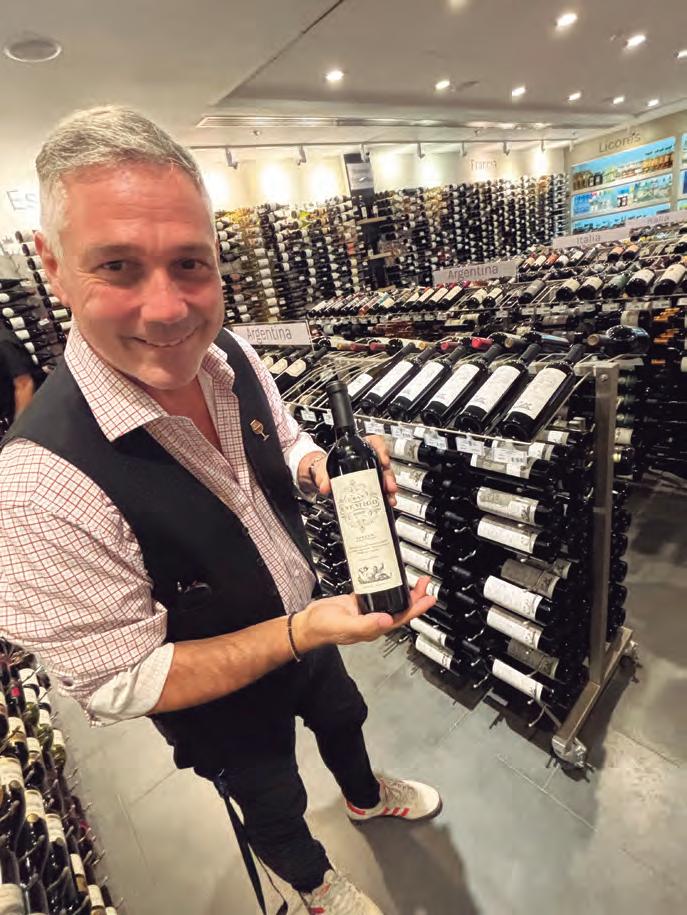
Sandro Guilimondi
Una de las tendencias más marcadas en el mundo vitivinícola italiano, es la gran popularidad que han alcanzado los “vinos volcánicos”, los cuales siguen seduciendo al mercado internacional. Su perfil único atrae a clientes que buscan algo novedoso y fuera de lo común, y como su producción suele ser limitada, esto los hace aún más deseables.
Sobre este tema de gran interés para los amantes del vino, conversamos con Sandro Guilimondi, reconocido sommelier en Puerto Rico —mercado donde hay más de 18,000 etiquetas de vinos— quien dirige el departamento de vinos de Méndez & Co., y esto fue lo que nos dijo…
Los vinos volcánicos italianos derivan su riqueza de un suelo mineral de rara complejidad. La intensa actividad geológica ha enriquecido el suelo con elementos fértiles. El basalto, la lava solidificada y la ceniza aportan a las uvas una tensión y frescura notables. Esta composición particular influye mucho en el sabor del vino.
Los suelos volcánicos absorben bien el calor durante el día y lo liberan lentamente por la noche. Esta dinámica térmica protege a las uvas de los cambios bruscos de temperatura. También contribuye a una maduración lenta y uniforme.
En general, la tendencia de los productores de estos vinos volcánicos es usar menos madera al principio y respetar más el terroir de cada lugar, que es lo que los hace únicos. Esto permite resaltar el sabor particular y original de cada uva y las características de su terreno. El énfasis ya no está en la potencia del vino, sino que se busca más balance, elegancia y cierto nivel de acidez.
En Italia hay varias áreas con suelos volcánicos con volcanes activos donde se producen excelentes variedades de vinos que tienen mayor mineralidad y acidez y son más vibrantes: Etna en Sicilia, Vesuvio en Napoli, y Monte Rosa en el Piemonte.
Guilimondi también nos presenta una recomendación de vino de cada una de estas tres regiones volcánicas y todos están disponibles La Bodega.
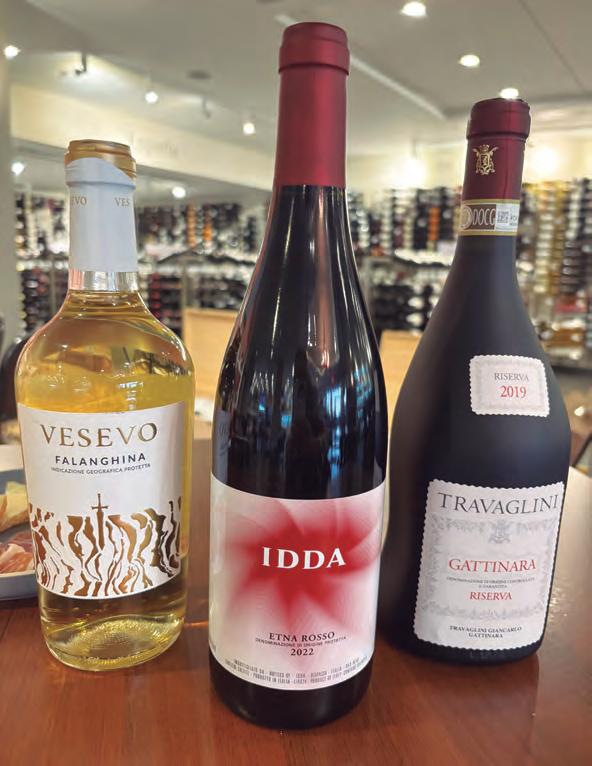
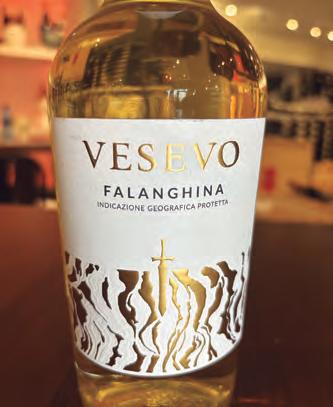
Este blanco de la bodega VESEVO es 100% uva Falanghina IGP (Indicazione Geografica Protetta) que crece a 600 mts. de altura a los pies del Vesuvio y con vistas al Mar Tirreno. La uva Falanghina se expresa aquí con brillantez. Desarrolla intensos aromas florales, a veces con un toque de yodo. El vino tiene una estructura fina, sin pesadez. La proximidad del mar aporta un toque salino muy buscado. Con cuerpo mediano y delicados aromas cítricos y de fruta blanca, marida muy bien con comida de marisco,
como el spaghetti alle vongole tradicional de la región, o una refrescante ensalada caprese.
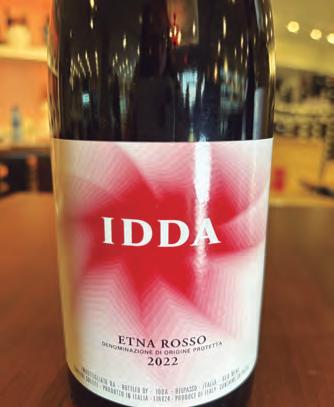
ETNA ROSSO
Este refinado vino tinto de la bodega IDDA es una mezcla de uvas Nerello Mascalese y Nerello Cappuccino, que se cultivan en las laderas del norte y el sur del monte Etna, en la bella isla de Sicilia, entre 600 y 1,000 mts de altura. Con 24 meses en barricas de madera, este Etna Rosso (Denominazione de Origine Protetta) del 2022, tiene gran frescura y mineralidad con aromas de fruta rojas, hierbas y especias. Marida muy bien con cordero, porque suaviza su sabor, así como con otras carnes. También viene una versión de este vino en blanco, el IDDA BIANCO.
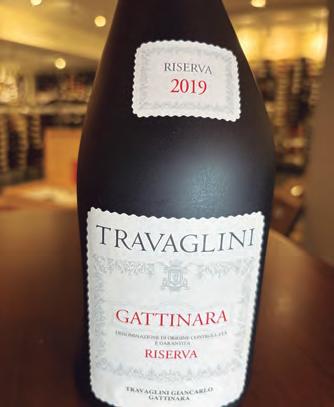
GATTINARA
Este Reserva 2019 de la bodega TRAVAGLINI es 100% Nebbiolo. En vez de ser bien tánico, es más mineral, y tiene mucha estructura con cierta frescura, por lo que resulta en una versión más intensa de la variedad.
Con una denominación de origen DOCG Gattinara, de la zona del Piemonte a los pies del Monte Rosa, que lo protege del frío, lleva 36-48 meses de madera. Va muy bien con una pasta con trufa o pasta con ragú.
One of the most marked trends in the Italian wine world is the great popularity of “volcanic wines”, which continue to seduce the international market. Their unique profile attracts customers who are looking for something new and out of the ordinary, and since their production is usually limited, this makes them even more desirable.
On this topic of great interest for wine lovers, we had a delightful conversation with Sandro Guilimondi, renowned sommelier in Puerto Rico – a market where there are more than 18,000 wine labels – who is director of the wine department of Méndez & Co., and this is what he told us…
Italian volcanic wines derive their richness from a mineral soil of rare complexity. The intense geological activity has enriched the soil with fertile elements. Basalt, solidified lava and ash give the grapes a remarkable tension and freshness. This particular composition greatly influences the wine taste.
Volcanic soils absorb heat well during the day and release it slowly at night. This thermal dynamic protects the grapes from sudden changes in temperature. It also contributes to a slow and even ripening.
In general, the trend of these volcanic wine producers is to use less wood at the beginning and respect more the terroir of each place, which is what makes them unique. This allows the particular and original flavor to be highlighted of each grape and the characteristics of its terrain. The emphasis is no longer on the power of the wine, but to achieve for more balance, elegance, and certain level of acidity.
In Italy there are several volcanic soils with active volcanoes where excellent varieties of wines with greater minerality, acidity and vibrancy are produced: Etna in Sicily, Vesuvius in Napoli, and Monte Rosa in Piedmont.
Guilimondi presents us with a wine recommendation for each of these three volcanic regions and all of them are available at La Bodega...
This white from the VESEVO winery is 100% Falanghina grapes PGI (Indicazione Geografica Protetta) that grow at an altitude of 600 meters at the foot of Mount Vesuvius and overlooking the Tyrrhenian Sea. The Falanghina grape expresses itself here brilliantly. It develops intense floral aromas, sometimes with a hint of iodine. The wine has a fine structure, without heaviness. The proximity of the sea provides a highly sought-after saline touch. With a medium body and delicate citrus and white fruit aromas, it pairs very well with seafood food, such as the traditional spaghetti alle vongole of the region, or a refreshing caprese salad.
This refined red wine from the IDDA winery is a blend of Nerello Mascalese and Nerello Cappuccino grapes, which are grown on the northern and southern slopes of Mount Etna, on the beautiful island of Sicily, between 600 and 1,000 meters above sea level. With 24 months in wooden barrels, this Etna Rosso (Denominazione de Origine Protetta) from 2022, has great freshness and minerality with aromas of red fruit, herbs and spices. It pairs very well with lamb, because it softens its flavor, as well as with other meats. A version of this white wine also comes, the IDDA BIANCO.
This 2019 Reserva from the TRAVAGLINI winery is 100% Nebbiolo. Instead of being highly tannic, it is more mineral, and has a lot of structure with a certain freshness, resulting in a more intense version of the variety. With a DOCG Gattinara designation of origin, from the Piedmont area at the foot of Monte Rosa, which protects it from the cold, it has been kept in wood barrels for 36-48 months. It goes very well with a truffle pasta or ragu pasta.
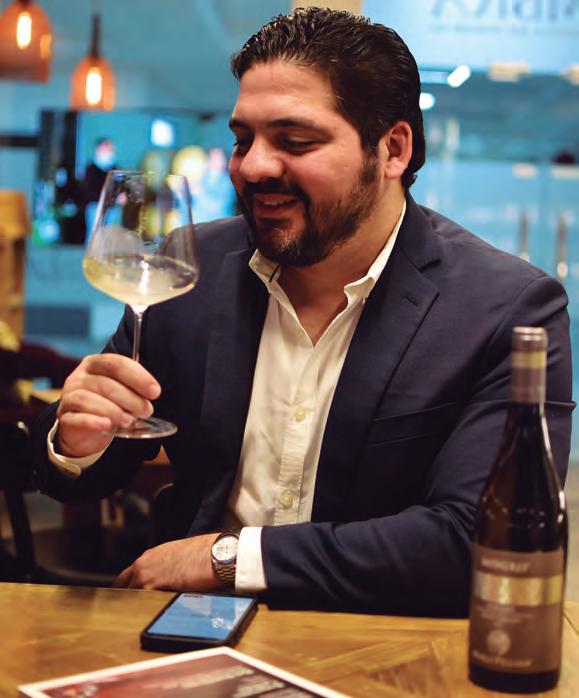
Por/By: Gilberto Gómez
Como Italia tiene tanta diversidad vitivinícola y decenas de denominaciones de origen, siempre recomiendo hacer catas especializadas por uvas o regiones, ya que esa es la única manera de ir conociendo el sabor de los vinos italiano, sorbo a sorbo.
Para esta edición de GOURMAND, realicé una cata exclusiva con tres vinos icónicos del norte de Italia: Prosecco de Friuli-Venezia Giulia, Pinot Grigio de Collio y Nebbiolo del Piemonte.
Me encanta esta región, principalmente por la frescura, elegancia y complejidad de sus vinos. En general, son muy gastronómicos y refrescantes, a la vez que presentan mayor acidez por el clima que es más frío que en el resto de Italia.
PROSECCO
Extra Dry Millesimato, Etichetta Nera
Bodega SACCHETTO Espumoso italiano de la región de Friuli-Venezia Giulia, elaborado con la variedad “glera” por la bodega Sachetto. Esta empresa familiar, que muestra su apellido en la botella, produce un prosecco fresco y fácil de tomar con uvas de su propiedad. Tiene un puntico de dulzor, pero la acidez hace que no se sienta. se logran un gran balance, refrescante y versátil.
MONGRIS PINOT GRIGIO
Collio 2022
Bodega MARCO FELLUGA
Con una DOC Collio Goriziano, este vino blanco tiene mucho más cuerpo que los Pinot Grigio (pinot gris) tradicionales. Su aroma resalta flores blancas, peras y frutas de hueso. Es algo frutoso con final persistente y elegante. La icónica bodega Marco Felluga, fundada en 1956, es conocida por su pinot grigio. Al presente, son elaborados por enóloga Ilaria Felluga, 6ta. generación de la familia Felluga y designada por Forbes en su lista de “excelencias italianas” menores de 40 años.
NEBBIOLO LANGHE DOC
Ebbio
Bodega FONTANAFREDDA
Elaborado 100% con uvas Nebbiolo, en la región Langhe del Piemonte, este vino joven, con 8 meses de crianza en barrica de roble francés, tiene un color rojo ruby de baja intensidad, pero de mucho brillo. Cuando madura, dependiendo la zona, si es Barolo o Barbaresco, la Nebbiolo se expresa más potente, compleja y tánica. Genera aromas a frutos rojos silvestres, pétalos de rosas secos, cerezas, violetas y hierbas silvestres.
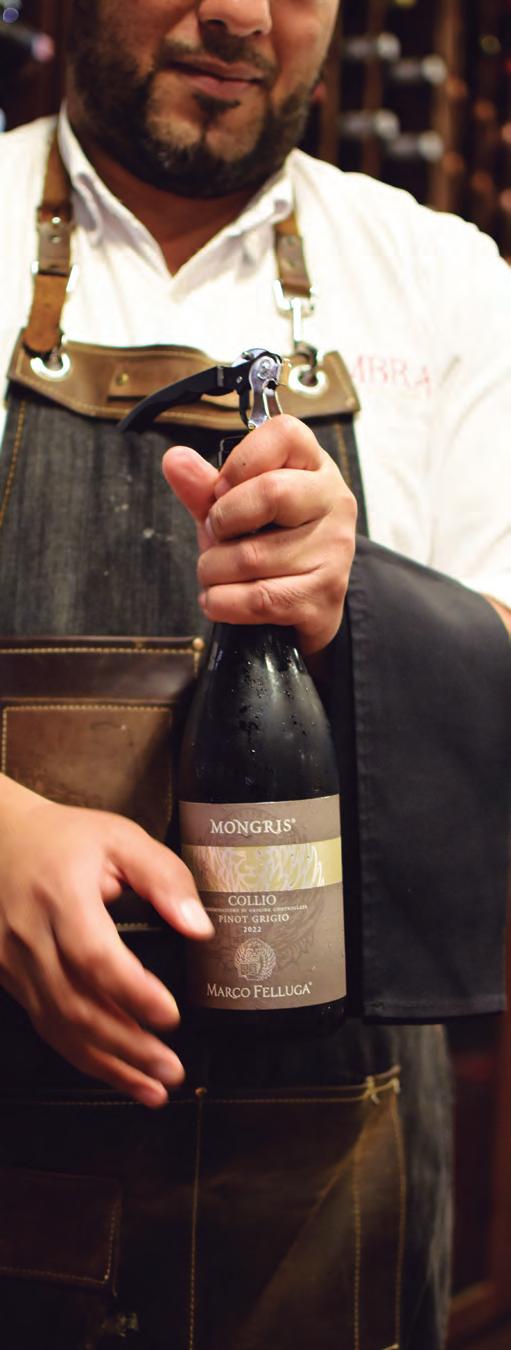
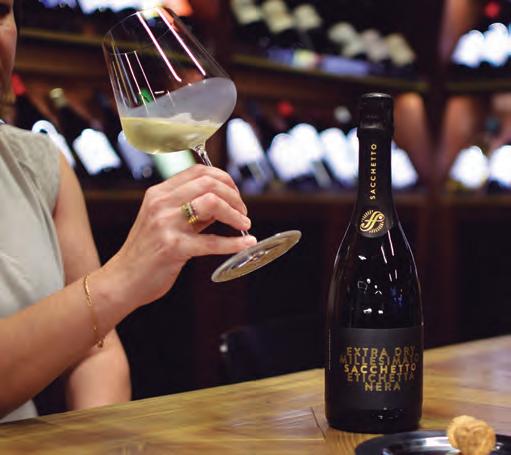
Seleccionada Bodega Europea del Año 2017 por Wine Enthusiast, Fontanafredda tiene una larga historia. Fundada en 1858, es una de las bodegas italianas más icónicas, reconocida por su Barolo “La Bella Rossina”. Ese era el apodo de la amante del rey de Italia, Vittorio Emanuelle II, quien le regaló la propiedad.
Sembra Agencia de Vinos Realizamos la cata en Sembra Agencia de Vinos, ubicado en el primer nivel del Diamond Mall, Arroyo Hondo, in Santo Domingo.
Eduardo García y Douglas Carvajal fundaron en 2014 este “wine and tapas bar”, un espacio muy chic donde cuentan con una selección de “vinos con alma”, que transmitan el terroir y reflejan el saber hacer y la honestidad en el proceso de elaboración.
No son vinos comunes y la mayoría son verdaderas “joyitas enológicas”, de regiones muy especiales o bodegas pequeñas, no de producción masiva. La lista incluye marcas como Remelluri (uno de los riojas más reconocidos a nivel mundial), Torremilanos (pioneras en DO Ribera del Duero), y Arautava, los vinos de la familia de Eduardo en Tenerife, que fue la primera bodega de Sembra y la única de Islas Canarias en RD.
Yo también soy parte del equipo de SEMBRA, donde laboro como gerente de ventas en hoteles y restaurantes, a la vez que me encargo de los eventos especiales y la dirección de catas tanto en el local como fuera. Además, proveo adiestramiento a personal de restaurantes y hoteles en el área de vinos y destilados.
SEMBRA distribuye otros destilados de marcas premium: Matusalem (ron), Zarate (orujo de hierbas y aguardiente de Eulogio Pomares), Dos Déus (vermouth del Priorat), Atamán (vermouth de manzanilla de la bodega Barbadillo de San Lúcar de Barrameda), Solear (manzanilla de Barbadillo), Maestro Sierra (fino sherry/jerez).
Because Italy has so much wine diversity and dozens of designations of origin, I always recommend doing specialized tastings by grapes or regions, as that is the only way to get to know the taste of Italian wines, sip by sip.
For this edition of GOURMAND, I did an excluvise tasting with three iconic wines from northern Italy: Prosecco from Friuli-Venezia Giulia, Pinot Grigio from Collio and Nebbiolo from Piedmont.
I love this region, mainly for the freshness, elegance and complexity of its wines. In general, they are very gastronomic and refreshing, while presenting greater acidity due to the climate that is colder than in the rest of Italy.
PROSECCO
Extra Dry Millesimato, Etichetta Nera
SACCHETTO Winery
Italian sparkling wine from the Friuli-Venezia Giulia region, made with the “glera” variety by the Sachetto winery. This family-owned business, which displays its surname on the bottle, produces a fresh, easy-to-drink prosecco with grapes from its own. It has a hint of sweetness, but the acidity makes it not feel. A great balance, refreshing and versatile, are achieved.
MONGRIS PINOT GRIGIO
Collio 2022
MARCO FELLUGA Winery
With a Collio Goriziano DOC, this white wine is much fuller than traditional Pinot Grigio (pinot gris). Its aroma highlights the scent of white flowers, pears and stone fruits. It is somewhat fruity with a persistent and elegant finish. The iconic Marco Felluga winery, founded in 1956, is known for its pinot grigio. At present, they are made by winemaker Ilaria Felluga, a Felluga family 6th generation and designated by Forbes in its list of “Italian excellences” under 40 years of age.
NEBBIOLO LANGHE DOC
Ebbio
FONTANAFREDDA Winery
Made 100% with Nebbiolo grapes, in the Langhe region of Piedmont, this young wine, aged for 8 months in French oak barrels, has a ruby red colour of low intensity, but very bright. When it matures, depending on the area, whether it is Barolo or Barbaresco, the Nebbiolo expresses itself in a way that is more powerful, complex and tannic. It generates aromas of wild red fruits, dried rose petals, cherries, violets and wild herbs.
Selected European Winery of the Year 2017 by Wine Enthusiast, Fontanafredda has a long history. Founded in 1858, it is one of the most iconic Italian wineries, renowned for its Barolo “La Bella Rossina”. That was the nickname of the mistress of the king of Italy, Vittorio Emanuelle II, who gave him the property.
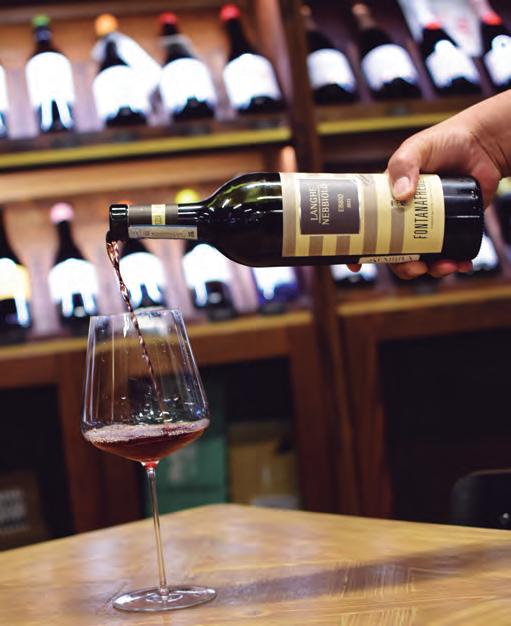
in Santo Domingo.
Eduardo García and Douglas Carvajal founded this “wine and tapas bar” in 2014, a very chic space where they have a selection of “wines with soul”, which transmit the terroir and reflect the know-how honesty in the production process.
These are not ordinary wines and most are true “oenological jewels”, from very special regions or small wineries, not mass-produced. The list includes brands such as Remelluri (one of the most recognized Riojas worldwide), Torremilanos (pioneers in DO Ribera del Duero), and Arautava —from Eduardo’s family in Tenerife— Sembra’s first winery and the only one from the Canary Islands in the DR.
I am also part of the SEMBRA team, where I work as a sales manager in hotels and restaurants, while I am in charge of special events and the direction of tastings both on site and outside. In addition, I provide training on wines and spirits to restaurant and hotel personnel.
SEMBRA distributes other premium brand distillates: Matusalem (rum), Zarate (herbal pomace and brandy from Eulogio Pomares), Dos Déus (vermouth from Priorat), Atam the Barbadillo winery in San Lúcar de Barrameda), from Barbadillo), Maestro Sierra (fine sherry/sherry).
Gilberto Gómez Wine, Spirits and Rum Educator Certifications: Sommeliers CMS-A, @aftertasteRD
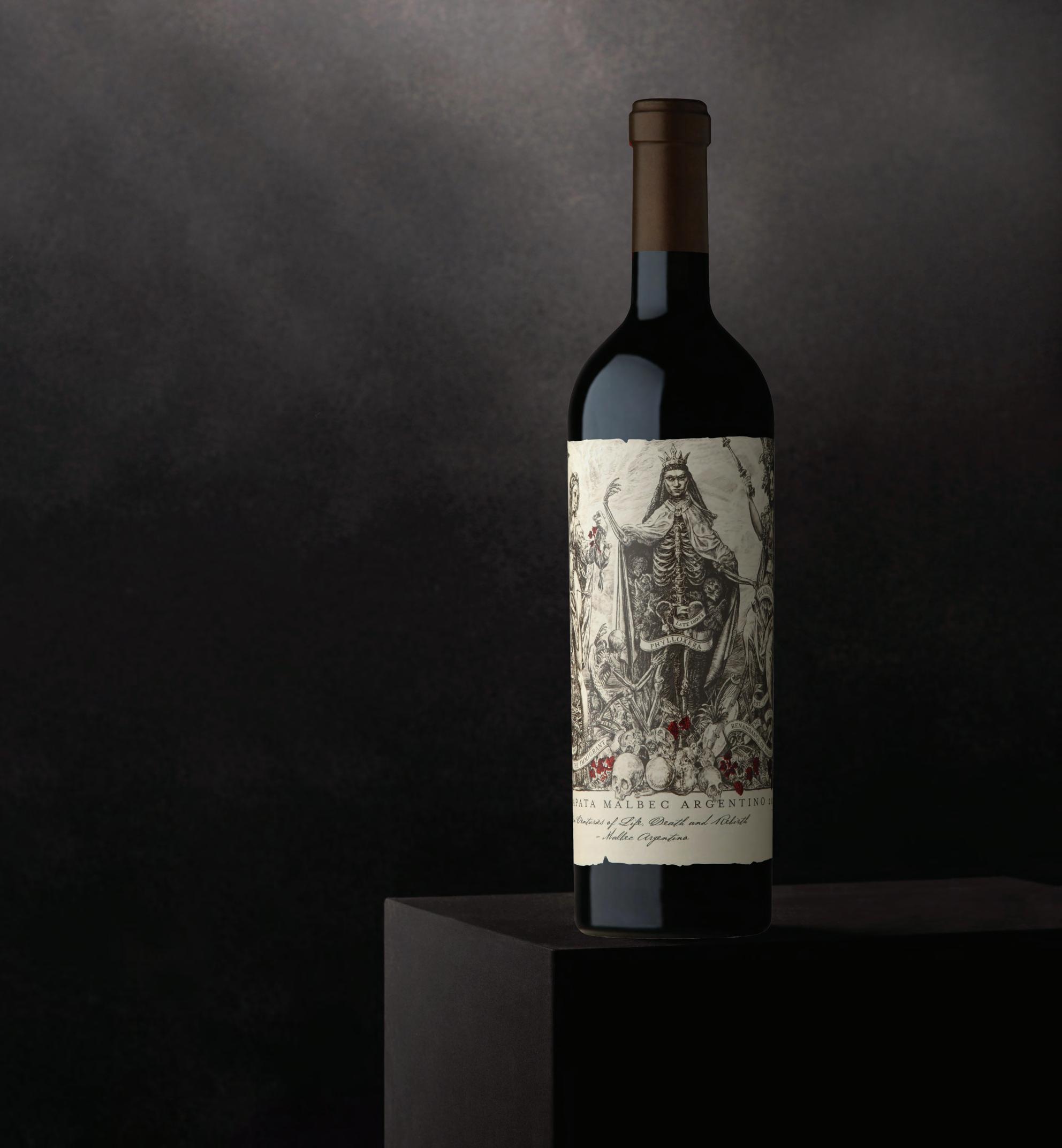
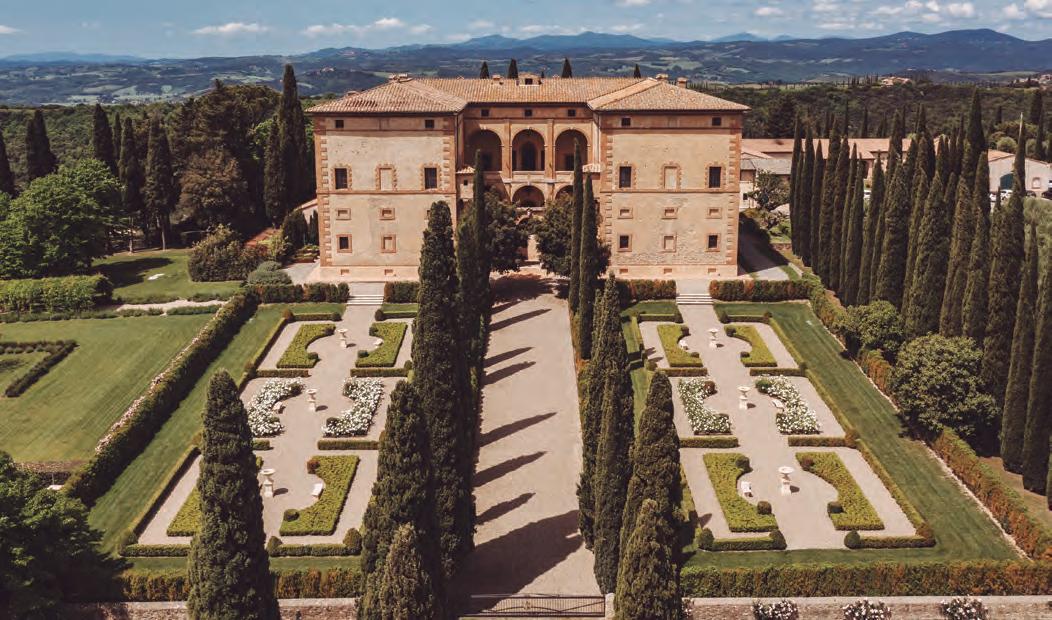
Inolvidable visita a esta extraordinaria bodega en Montalcino
Por/By: Yvonne Brown Ieromazzo
Cuando pienso en la Toscana, la imagen que primero me viene a la mente es la de Argiano, la prestigiosa bodega que por más de cuatro siglos ha producido vinos extraordinarios en Montalcino.
Recorrer ese mágico lugar es como adentrarte en una postal que logra impresionarte con su villa del siglo XVI, sus hermosos jardines y magníficas vistas con las interminables hileras de cipreses, tan emblemáticos de la región.
Y, al hacer el recorrido con la cata, puedes sentir los aromas de la historia al visitar su impresionante bodega y degustar sus exquisitos vinos. Uno de estos es el Brunello di Montalcino 2018 de Argiano, seleccionado por Wine Spectator como el Mejor Vino del Mundo 2023.
Brunello Di Montalcino DOCG Argiano está ubicada en el corazón de esta región vitivinícola de la provincia de Siena, famosa por su Brunello di Montalcino. Elaborado con la uva sangiovese, el Brunello fue el primer vino en obtener el sello de Denominazione di Origine Con-
trollata e Garantita (DOCG), que requiere un añejamiento de 5 años, y al menos 6 para el Riserva.
De hecho, Argiano se convierte en una de las bodegas fundadoras del Consorzio del Brunello en 1967, dándole un impulso definitivo a este vino de uno tradicional a un ícono mundial.
En esta fértil región, que estuvo habitada desde la época de los Etruscos, también se produce el Rosso di Montalcino (DOC) y algunas variedades de Super Toscanos, como es el Solengo de Argiano. Y en menor escala el Moscadello, un vino blanco dulce que predominaba en la zona hasta que llegaron los Brunello.
Donde todo comenzó
El nombre Argiano está inspirado en Ara Jani, templo dedicado a Janus (Giano), el dios romano de los nuevos comienzos y las transformaciones. Una pequeña capilla fue construida en el mismo lugar donde estaba el antiguo templo, en las laderas de las montañas donde se estableció la bodega Argiano, y que aún se mantiene en pie como testigo de su incesante evolución.
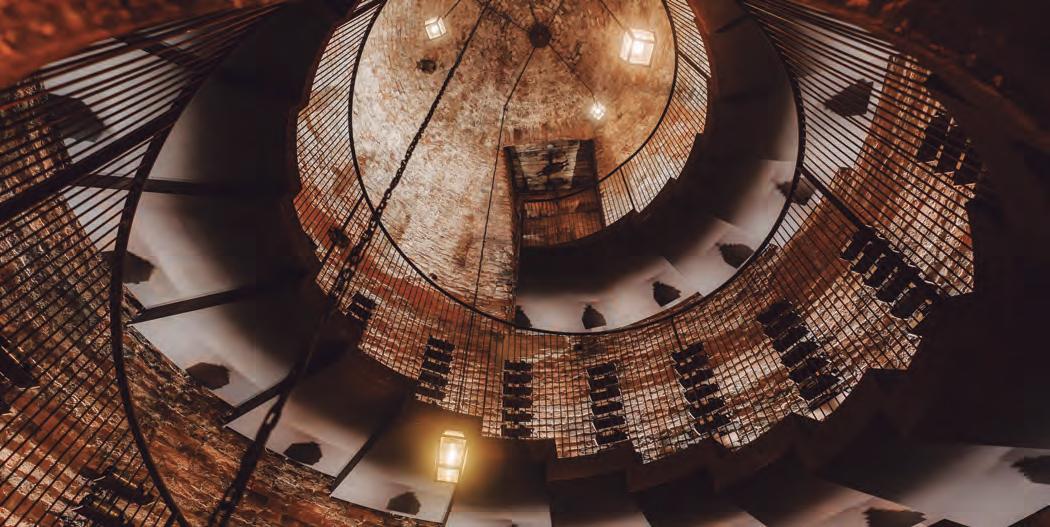
El nuevo renacimiento de Argiano En 1580, en plena apogeo del Renacimiento, la familia Pecci comisionó al arquitecto Peruzzi la construcción de Villa Bellaria. Tras ser completado en 1596, se convirtió en uno de los más bellos “palazzos” de la Toscana y epicentro de las actividades culturales y vinícolas de la región.
Tras casi 500 años de historia, inicia el nuevo renacimiento de Argiano en 2013, luego de que pasara a manos del inversionista brasileño, André Santos Esteves y un grupo de socios, que de inmediato pusieron en acción un ambicioso plan de transformación de los viñedos y la bodega.
Para liderar este magno esfuerzo nombraron a Bernardino Sani como winemaker y CEO de Argiano. Este contó con la ayuda experta de grandes colaboradores. El arquitecto Filippo Gastone Scheggi estuvo a cargo de la remodelación de Villa Bellaria y la espectacular bodega, que ahora puede ser visitada. Y para la renovación de la producción de vino, encomendaron a Pedro Parra y al agrónomo Francesco Monari una exhaustiva investigación de suelos la cual reveló las diversas estratificaciones del terroir de Argiano. Esto los llevó a volver a un estilo más clásico de elaborar los vinos, con énfasis especial en Sangiovese.
Los resultados no se hicieron esperar. Justo una década después de iniciar la renovación, su Brunello di Montalcino 2018 ganó el reconocimiento internacional de Wine Spectator como el primero de la lista Top 100 Wines del 2023. Desde entonces, Argiano se ha posicionado como uno de los grandes referentes del vino italiano y Sani como su portavoz mundial.
Desde entonces, Sani se mantiene enfocado en Vigna del Suolo, un vino icónico elaborado con las viñas más antiguas que ejemplifica vinificación centrada en “terroir” y una genuina expresión del potencial de Argiano.
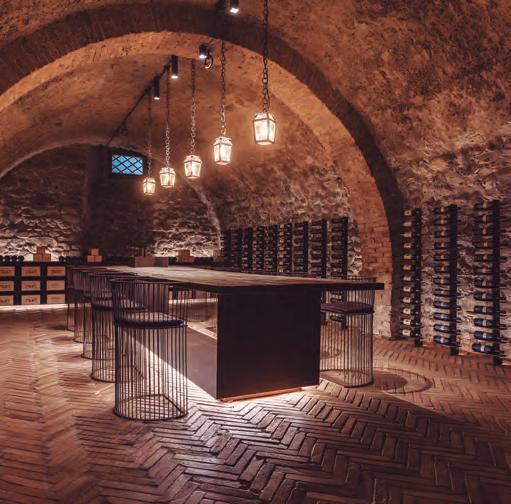
A la par con su crecimiento, Argiano está cada vez más comprometida con la sustentabilidad en todas las fases del proceso de producción. Entre 2016 y 2021, se convirtió en la primera bodega libre de plástico en Montalcino y obtuvo las certificaciones de orgánico y Carbono Neutral. Y el pasado año fue certificada como empresa Equalitas.
Al igual que Janus, la divinidad de dos caras que le sirvió de inspiración, Argiano mira al pasado para reafirmar sus valores, tradiciones y la identidad de Montalcino, a la vez que apunta hacia un futuro de continua reinvención y expansión, impulsada por su pasión por el buen vino.
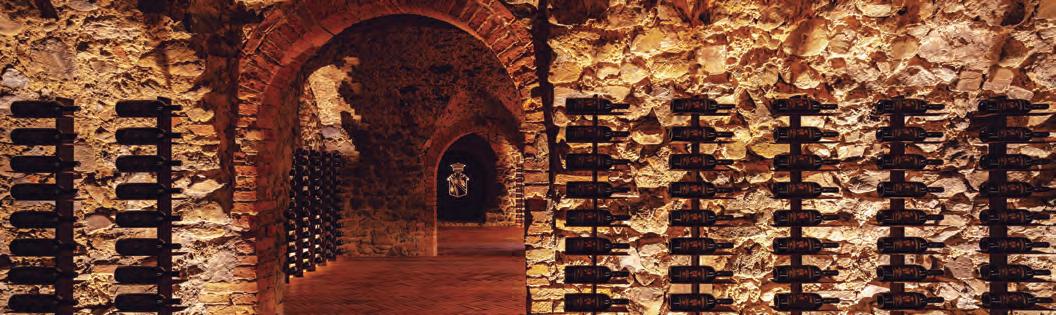
When I think of Tuscany, the image that first comes to mind is that of Argiano, the prestigious winery that for more than four centuries has produced extraordinary wines in Montalcino.
Touring this magical place is like entering a postcard that manages to impress you with its sixteenth-century villa, its beautiful gardens and magnificent views with the endless rows of cypresses, so emblematic of the region.
And, when you take the tour with the tasting, you can feel the aromas of history by visiting its impressive winery and sampling some of its exquisite wines. One of these is the Argiano Brunello di Montalcino 2018, selected by Wine Spectator as the Best Wine in the World 2023.
Brunello Di Montalcino DOCG
Argiano is located in the heart of this wine-growing region of the province of Siena, famous for its Brunello di Montalcino. Made from the Sangiovese grape, Brunello was the first wine to obtain the Denominazione di Origine Controllata e Garantita (DOCG) seal, which requires an aging of 5 years, and at least 6 for Riserva.
In fact, Argiano became one of the founding wineries of the Consorzio del Brunello in 1967, giving a definitive boost to this wine from a traditional one to a world icon.
In this fertile region, which was inhabited since the time of the Etruscans, Rosso di Montalcino (DOC) and some varieties of Super Tuscans are also produced, such as the Solengo di Argiano. And on a smaller scale, Moscadello, a sweet white wine that predominated in the area until the Brunello family arrived.
Where it all began
The name Argiano is inspired by Ara Jani, a temple dedicated to Janus (Giano), the Roman god of new beginnings and transformations. A small chapel was built in the same place where the ancient temple stood, on the slopes of the mountains where the Argiano winery was established, and which still stands as a witness to its incessant evolution.
The new rebirth of Argiano In 1580, at the height of the Renaissance, the Pecci family commissioned the architect Peruzzi to build Villa Bellaria. After being completed in 1596, it became one of the most beautiful “palazzos” in Tuscany and the epicenter of cultural and wine activities in the region.
After almost 500 years of history, the new rebirth of Argiano began in 2013, when it passed into the hands of the Brazilian investor, André Santos Esteves and a group of partners, who immediately put into action an ambitious plan to transform the vineyards and the winery.
To lead this great effort, Bernardino Sani was appointed as winemaker and CEO of Argiano. He had the expert help of great collaborators. Architect Filippo Gastone Scheggi was in charge of the remodeling of Villa Bellaria and the spectacular winery, which can now be visited. And for the renovation of wine production, Pedro Parra and agronomist Francesco Monari were commissioned to carry out an exhaustive soil research which revealed the various stratifications of the Argiano terroir. This led them to return to a more classic style of winemaking, with special emphasis on Sangiovese.
The results did not take long to come. Just a decade after starting the renovation, his Brunello di Montalcino 2018 won international recognition from Wine Spectator as the 2023 World’s Best in its Top 100 Wine list. Since then, Argiano has positioned itself as one of the great references of Italian wine and Sani as its world spokesperson.
Since then, Sani has remained focused on Vigna del Suolo, an iconic wine made from the oldest vines that exemplifies winemaking focused on “terroir” and a genuine expression of Argiano’s potential.
Along with its growth, Argiano is increasingly committed to sustainability in all phases of the production process. Between 2016 and 2021, it became the first plastic-free winery in Montalcino and obtained organic and Carbon Neutral certifications. And last year it was certified as an Equalitas company.
Like Janus, the two-faced divinity that inspired it, Argiano looks to the past to reaffirm his values, traditions and Montalcino’s identity, while pointing to a future of continuous reinvention and expansion, driven by its passion for good wine.
Argiano tiene una extensión total de 125 hectáreas, de las cuales 60 son viñedos. La joya de la corona son las 42 hectáreas dedicadas a Sangiovese, y en las restantes 18 se cultivan variedades francesas, como Cabernet, Merlot y Petit Verdot.
Con esas uvas, Argiano elabora sus maravillosos vinos, que reflejan un profundo respeto por su tierra y su herencia. Desde los elegantes Brunello hasta la riqueza armoniosa de los Supertoscanos, cada copa captura la esencia de Montalcino.
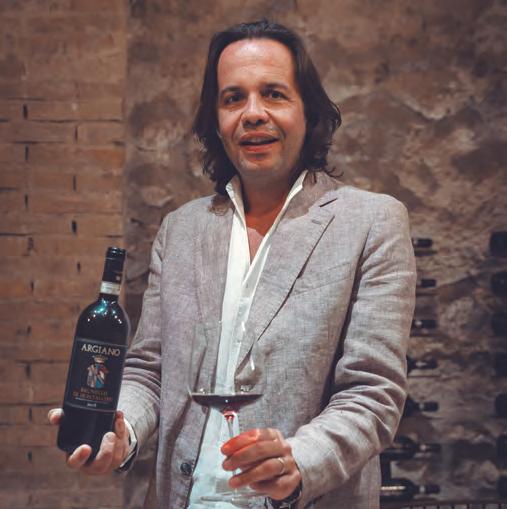
BRUNELLO DI MONTALCINO DOCG
Es el alma de Argiano: finesse e identidad. Es 100% Sangiovese. Cellar hasta 30 años. It’s the soul of Argiano: finesse and identity. It’s 100% Sangiovese. Cellar for up to 30 years.
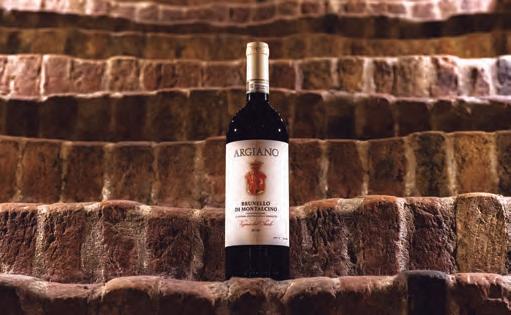
BRUNELLO DI MONTALCINO DOCG – VIGNA DEL SUOLO
Viene de una parcela premium del viñedo más histórico. Representa la elegancia y esencia del terroir the Argiano. It comes from a premium parcel of its most historic vineyard. It represents the elegance and essence of the Argiano terroir.
Argiano has a total area of 125 hectares, of which 60 are vineyards. The jewel in the crown are the 42 hectares dedicated to Sangiovese, and the remaining 18 are cultivated French varieties, such as Cabernet, Merlot and Petit Verdot.
With these grapes, Argiano makes its wonderful wines, which reflect a deep respect for its land and its heritage. From the elegant Brunello to the harmonious richness of Super Tuscans, each glass captures the essence of Montalcino.
IGT TOSCANA
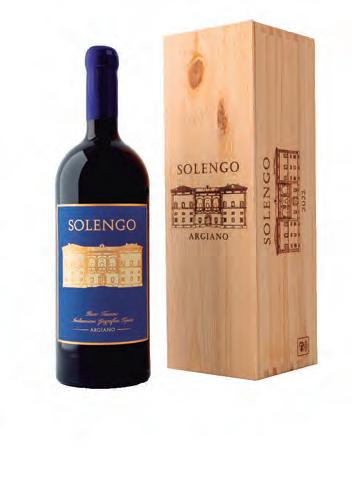
Conocido como “El Supertoscano de Montalcino”, Solengo representa el espíritu innovador de Argiano y el legado de Giacomo Tachis. Este famoso enólogo colaboró en 1995 con la entonces propietaria de Argiano, Noemi Marone Cinzano, para elaborar la primera añada. Variedades: Cabernet Sauvignon, Cabernet Franc, Petit Verdot, Sangiovese. Known as “The Supertuscan of Montalcino,” Solengo represents Argiano’s innovative spirit and the legacy of Giacomo Tachis. In 1995, this famous enologist collaborated with then Argiano owner, Noemi Marone Cinzano, to make the first vintage. Varieties: Cabernet Sauvignon, Cabernet Franc, Petit Verdot, Sangiovese.
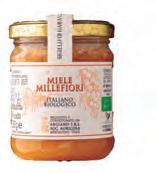
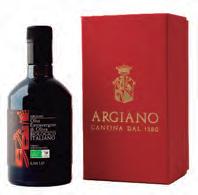
Argiano también elabora licor de Grappa, Miele Millefiori y aceite de oliva extra virgen. Argiano also produces Grappa liqueur, Miele Millefiori and Extra Virgin Olive Oil.
Información y reservación para visitas y catas Information and reservations for visit and wine tastings www.argiano.net
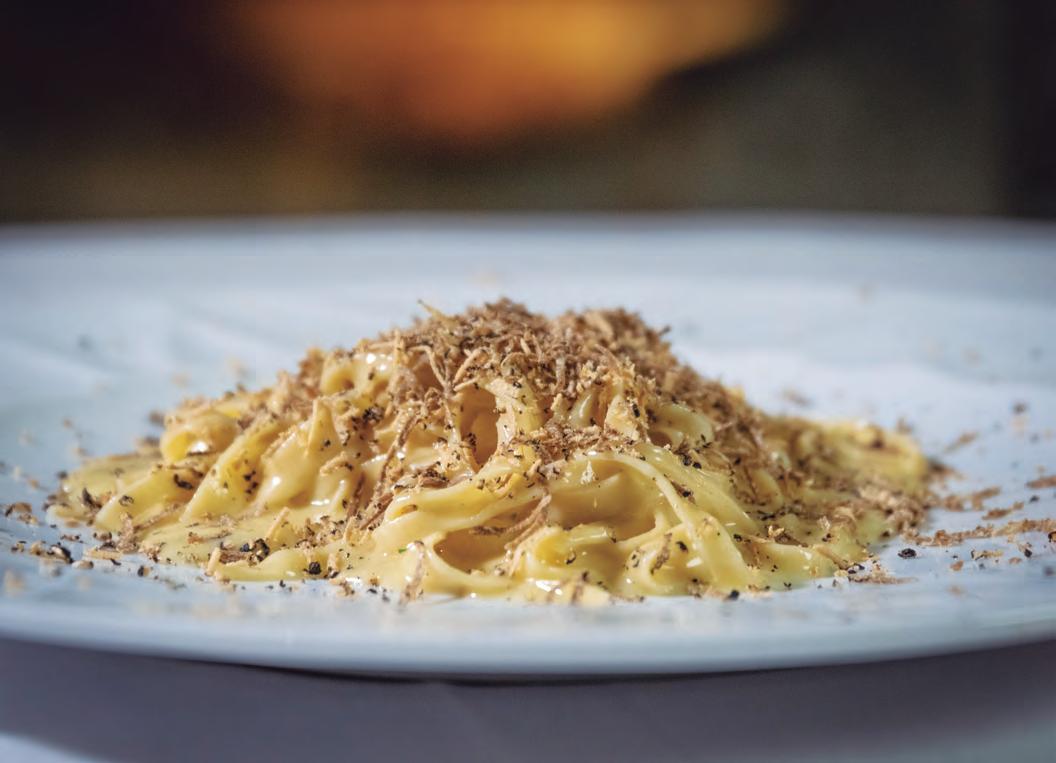
Consideradas un ingrediente de lujo en la gastronomía moderna, las trufas son altamente valoradas por su intenso aroma e inigualable sabor. Estos hongos comestibles se utilizan en aceites, salsas, mieles e infinidad de platos gourmet, aportando un carácter y complejidad únicos.
Existen más de 40 tipos de trufas y la mayoría son del género “Tuber”. Éstas son las dos más populares entre los chefs profesionales y los amantes de la alta cocina en todo el mundo:
• Trufa Blanca (Tuber magnatum) — Es la variedad de trufa más exclusiva y apreciada. La ciudad de Alba es la capital internacional de la trufa blanca. Ubicada en el Piamonte, al noroeste de Italia, allí se celebra cada octubre un mercado donde el famoso Tartufo Bianco di Alba puede alcanzar precios entre 2,000 y 6,000 euros por kilo. Como no tolera bien la cocción, se sirve cruda, cortada a láminas finas con un cortador especial, sobre comidas calientes y ligeras, como pasta fresca o carpaccio, en las que es la gran protagonista.
• Trufa Negra (Tuber melanosporum) — Es globosa, firme y compacta con un olor perfumado muy característico y delicioso sabor. Se reproduce en la primavera, apareciendo como pequeñas pelotillas, que a partir del verano se van hinchando hasta alcanzar la madurez en invierno, cuando llegan a tener el tamaño de una pelota de golf. Su hábitat natural son los bosques de Italia y del sur de Francia y España.
Cazería trufera en la Toscana
Como fanática de las trufas, tengo que confesar que si había algo que me hacía tanta ilusión como comerlas, era el salir a “cazarlas”. Por eso, cuando se presentó la oportunidad de hacerlo durante mi más reciente viaje a Italia, no dudé en lanzarme a esta maravillosa aventura gastroturística.
Primero tomé un tren desde Pisa hasta la estación de San Miniato, donde me esperaba mi guía Leonardo Bandini, quien ostenta una de las profesiones más antiguas y secretas de la Toscana: la del cazador de trufas.
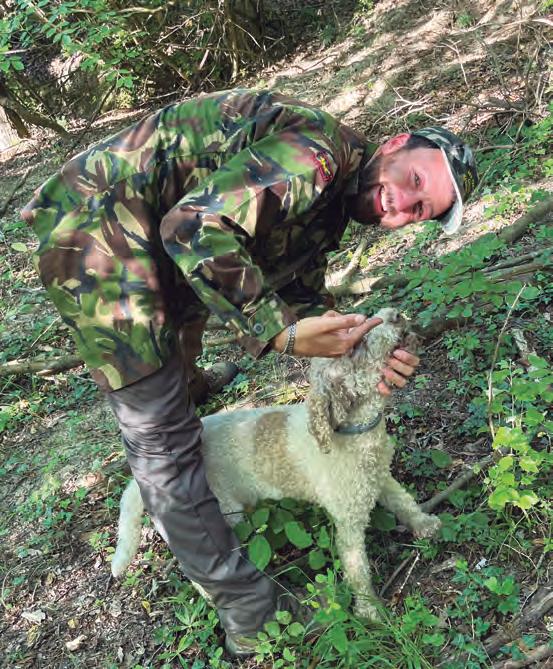
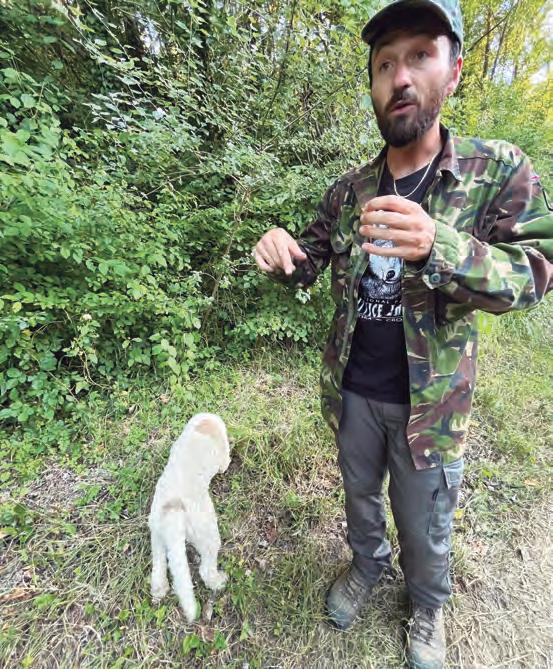
Nos dirigimos a la finca de su familia, donde paramos a buscar a su perro Kai. Este no es solo su fiel compañero, sino también su socio de trabajo, pues Leo & Kai colaboran —como Sherlock y Watson— buscando pistas en el bosque que los lleven a detectar y desenterrar el preciado “oro negro”.
A diferencia de otros hongos, las trufas se reproducen de manera natural por debajo de la tierra, y se encuentran mayormente pegadas de las raíces de los árboles. Solo ciertas especies de trufas pueden cultivarse en las denomidadas “truferas”.
Caminamos por una pequeña colina y nos adentrarnos en un área boscosa muy húmeda. Durante el trayecto, recorrimos los caminos por donde crecen naturalmente las trufas, mientras Leo compartía los secretos de la trufa negra que se da en esta zona, así como detalles interesantes sobre las plantas que viven en simbiosis con ella, y de las cuales extrae sus sabores.
Entre las tantas cosas que aprendí, me pareció muy curioso algo que Leo me dijo: “los truferos suelen ir de noche a buscar trufas para no ser vistos y llegar antes que los demás, pues están tratando de encontrar un tesoro muy valioso escondido en la tierra y parte de la rica tradición gastronómica toscana.”
Además me sorprendió saber que en el aledaño Valle de Corazzano, una noche de 1954, se encontró la trufa más grande del mundo que pesaba 2520 gramos. ¡Una trivia culinaria digna de recordar!
Y me explicó sobre el adiestramiento intensivo al que sometió a Kai desde que era un cachorro hasta convertirlo en un can experto en la caza trufera, así como todos los estudios que él ha realizado para poder ser trufero.
Gracias al conocimiento especializado y la entrega de este duo dinámico, viví la experiencia única de encontrar dos ricas trufas en su habitat natural.
Al concluir la exitosa búsqueda, regresamos a la casa, donde pude degustar los productos que Leo elabora bajo su marca Tuscany Flavour-San Miniato Tartufi. En especial disfruté mucho la miel trufada sobre un gustoso queso parmesano y el aceite de oliva con tartufo con un crocante pan toscano.
Como todo buen anfitrión, al finalizar la excursión, Leo me regresó en su auto a la estación de tren para continuar mi travesía hacia Florencia, donde me esperaba otra maravillosa aventura toscana.
Grazie mille, Leo & Kai, por regalarme esta inolvidable experiencia, tan divertida como educativa, la cual recomiendo a todos los gourmands en su próximo viaje a Italia.
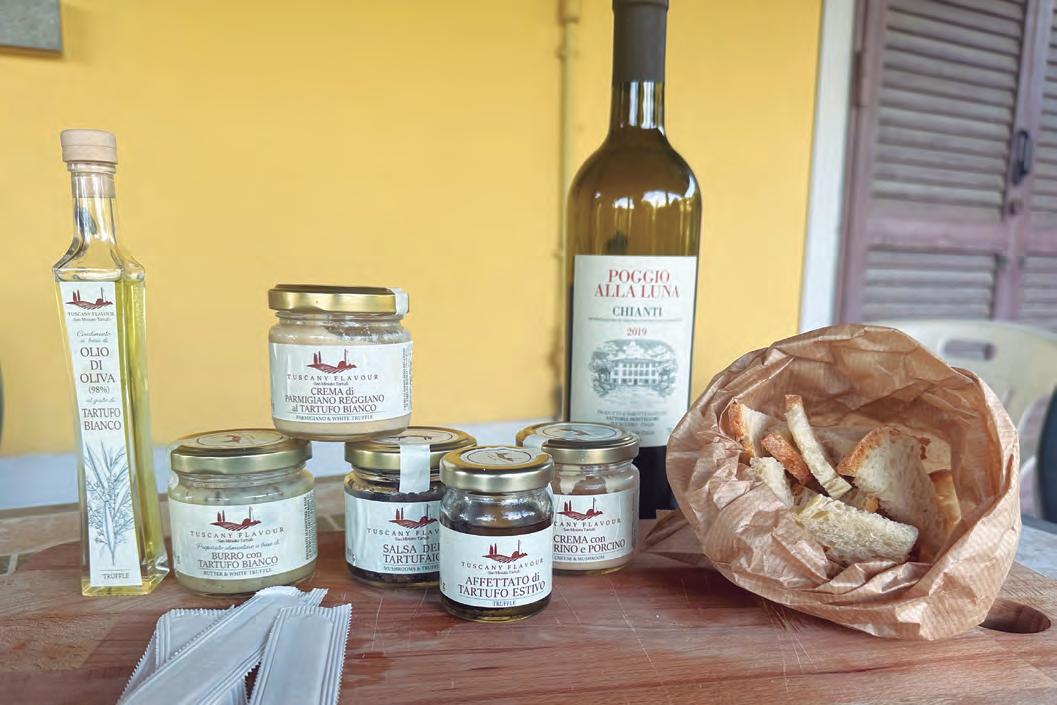
Considered a luxury ingredient in modern gastronomy, truffles are highly valued for their intense aroma and unparalleled flavor. These edible mushrooms are used in oils, sauces, honeys and countless gourmet dishes, providing a unique character and complexity.
There are more than 40 types of truffles and most of them are of the genre “Tuber”. Here are the two most popular types among professional chefs and haute cuisine lovers around the world:
• White Truffle (Tuber magnatum) — This is the most exclusive and appreciated variety of truffle. The city of Alba is the international capital of the white truffle. Located in Piedmont, in northwestern Italy, a market is held there every October where the famous Tartufo Bianco di Alba can fetch prices between 2,000 and 6,000 euros per kilo. As it does not tolerate cooking well, it is served raw, cut into thin slices with a special cutter, over hot and light foods, such as fresh pasta or carpaccio, in which it is the main protagonist.
• Black Truffle (Tuber melanosporum) — It is globous, firm and compact with a very characteristic perfumed smell and delicious flavor. It reproduces in the spring, appearing as small pellets, which from summer onwards swell until they reach maturity in winter, when they reach the size of a golf ball. Its natural habitats are forests in Italy and southern France and Spain.


As a fan of truffles, I have to confess that if there was something that I was as excited about as eating them, it was going out to “hunt” them. That’s why, when the opportunity to do so presented itself during my most recent trip to Italy, I didn’t hesitate to launch myself into this wonderful gastrotourism adventure.
First I took a train from Pisa to San Miniato station, where my guide was waiting for me, Leonardo Bandini, who holds one of the oldest and most secret professions in Tuscany: that of a truffle hunter.
We head to his family’s farm, where we stop to pick up his dog Kai. This is not only his faithful companion, but also his working partner, as Leo and Kai collaborate – like Sherlock and Watson – looking for clues in the forest that will lead them to detect and unearth the precious “black gold.”
Unlike other fungi, truffles reproduce naturally underground, and are mostly attached to the roots of trees. Only certain species of truffles can be grown on the so-called “truffle farms.”
We went up a small hill and entered a very humid wooded area. During the journey, we walked along the paths where truffles naturally grow, while Leo shared the secrets of the black truffles found in this area, as well as interesting details about the plants that live in symbiosis with it, and from which it extracts its flavors.
Among the many things I learned, I found very interesting something that Leo told me: “truffle hunters usually go out at night to look for truffles so as not to be seen and arrive before the others, because they are trying to find a very valuable treasure hidden in the earth and part of the rich Tuscan gastronomic tradition.”
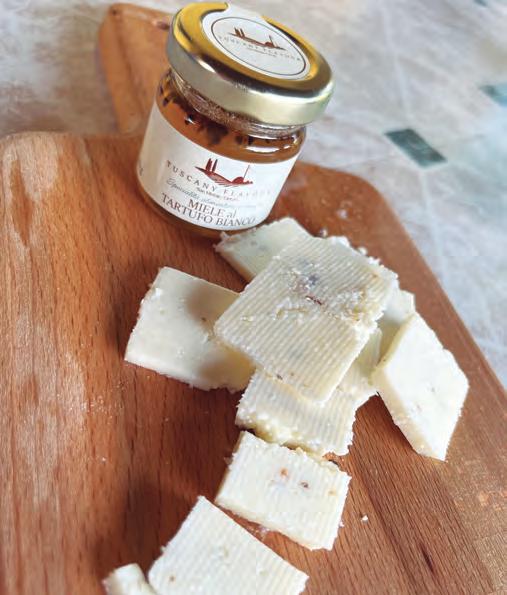
I was also surprised to learn that in the nearby Corazzano Valley, one night in 1954, the largest truffle in the world was found, weighing 2520 grams. A culinary trivia worth remembering!
And he told me about the intensive training he subjected Kai to from the time he was a puppy until he became an expert truffle hunting dog, as well as all the studies he has carried to become a truffle hunter.
Thanks to the specialized knowledge and dedication of this dynamic duo, I had the unique experience of finding two delicious truffles in their natural habitat.
At the conclusion of the successful search, we returned to the house, where I was able to taste the products that Leo makes under his brand Tuscany Flavour-San Miniato Tartufi. I especially enjoyed the truffled honey on a tasty Parmesan cheese and the olive oil with tartuffe with a crispy Tuscan bread.
Like any good host, at the end of the excursion, Leo returned me in his car to the train station to continue my journey to Florence, where another wonderful Tuscan adventure awaited me.
Grazie mille, Leo & Kai, for giving me this unforgettable experience, as fun as it is educational, which I recommend to all gourmands on their next trip to Italy.
Tuscany Flavour San Miniato Tartufi Leo Bandini
leotruffletuscany@gmail.com @tuscany_truffle_flavour +39 3339363587
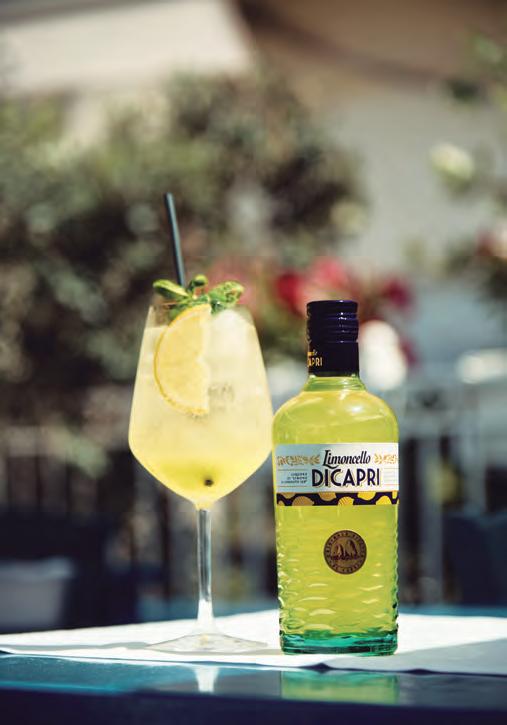
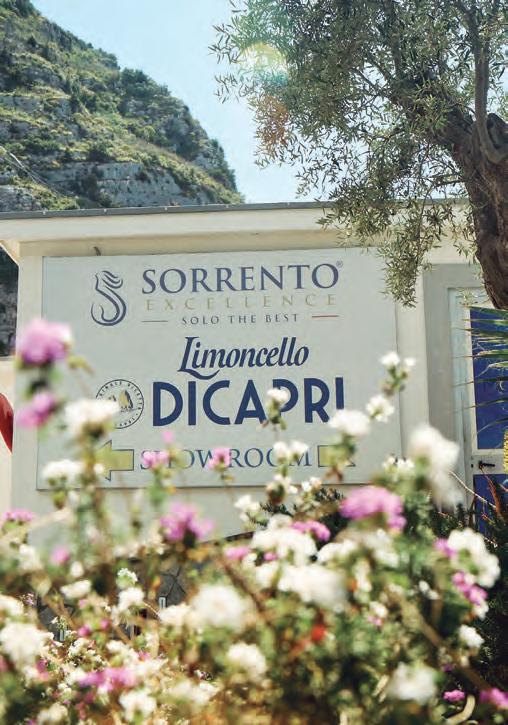
Costa Amalfitana
Por/By: Orlando Jerez
El Limoncello es un licor originario del sur de Italia, muy típico en la Costa Amalfitana. Y allí precisamente, en la Península de Sorrento, se encuentra la fábrica de Limoncello DICAPRI, una destilería donde la tradición y la pasión por el limón se mezclan para crear uno de los licores más emblemáticos de la cultura italiana.
Visitar este lugar es una parada obligatoria, pues durante el recorrido, tienes la oportunidad de sumergirte en el proceso artesanal que da vida al famoso Limoncello.
Esta bebida, que ha conquistado paladares alrededor de todo el mundo, se consume principalmente como bebida digestiva después de la comida. Y ya se ha hecho muy popular el Limoncello Spritz, un cóctel de verano muy liviano y refrescante que combina este licor con prosecco, soda y hielo.
Desde el momento en que llegas a la fábrica, el aire está impregnado con el fresco aroma de los limones. La historia de la marca, que ha sido transmitida de generación en generación, se reflejaba en cada rincón del lugar.
El proceso de destilación, una mezcla de técnica y tradición, es lo que convierte al Limoncello en un licor único. A lo largo de la visita, el guía nos mostró cómo las cáscaras de limón son infusionadas en alcohol, creando una mezcla de sabores intensos y frescos.
Fue fascinante ver cómo la destilación artesanal sigue siendo una parte vital de la producción, algo que distingue a esta fábrica de las producciones más industriales.
Además de aprender sobre el proceso, tienes la oportunidad de degustar varios tipos de licores. Cada uno tenía un toque especial que refleja la dedicación de los artesanos en cada botella. No solo el sabor, sino también la textura y el aroma del licor eran impresionantes.
Mi experiencia en la Fábrica de Limoncello DICAPRI no solo me permitió conocer un producto, sino también descubrir el alma de una tradición que sigue viva en cada botella.
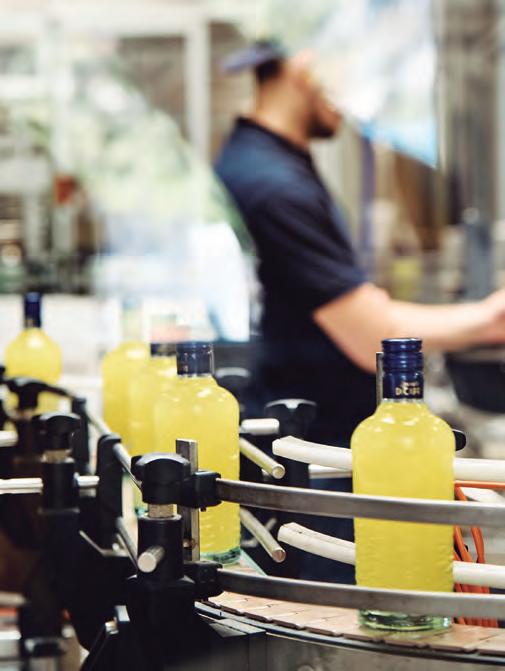
Limoncello is a liqueur originating from southern Italy, very typical of the Amalfi Coast. And precisely there, on the Sorrento Peninsula, is the Limoncello DICAPRI factory, a distillery where tradition and passion for lemon are mixed to create one of the most emblematic liqueurs of the Italian culture.
Visiting this place is a mandatory stop, because during the tour, you have the opportunity to immerse yourself in the artisanal process that gives life to the famous Limoncello.
This drink, which has conquered palates around the world, is mainly consumed as a digestive drink after a meal. And the Limoncello Spritz has already become very popular, as it’s a light and refreshing summer cocktail that mixes this liqueur with prosecco, soda and ice.
From the moment you arrive at the factory, the air is permeated with the fresh scent of lemons. The history of the brand, which has been passed down from generation to generation, was reflected in every corner of the place.
The distillation process, a mixture of technique and tradition, is what makes Limoncello a unique liqueur. Throughout the visit, the guide showed us how lemon peels are infused in alcohol, creating a mixture of intense and fresh flavors.
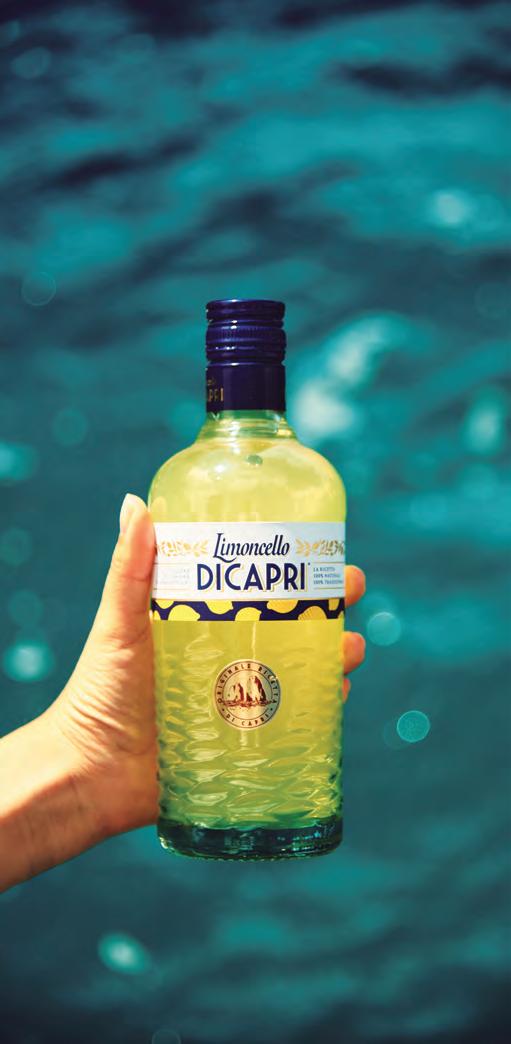
It was fascinating to see how artisanal distillation is still a vital part of production, something that distinguishes this factory from more industrial productions.
In addition to learning about the process, you have the opportunity to taste various types of liqueurs. Each one had a special touch that reflects the dedication of the artisans in each bottle. Not only the taste, but also the texture and aroma of the liquor were impressive.
My experience at the Limoncello DICAPRI Factory not only allowed me to get to know a product, but also to discover the soul of a tradition that is still alive in each bottle.
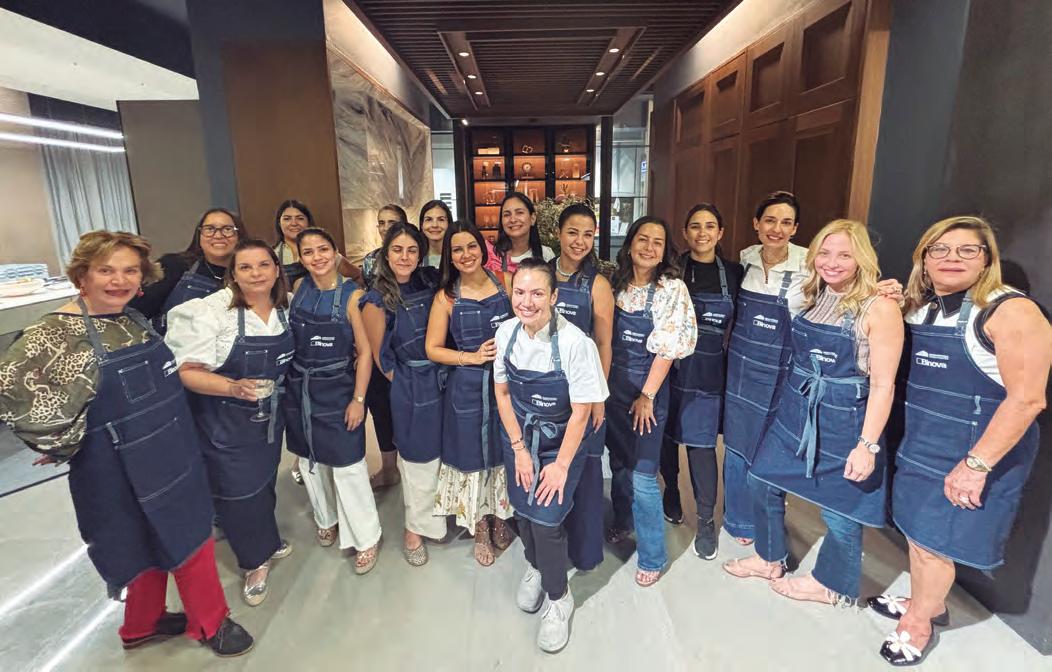
Por/By: Yvonne Brown Ieromazzo
La reconocida chef dominicana Arleen Rivera, presentó una clase de “cucina” utilizando algunos de los ingredientes estrella de la gastronomía italiana.
La también propietaria de Ambrosia Boutique Caterers e Il Mercato de Ambrosia, ofreció la clase en las fabulosas instalaciones culinarias de Marmotech Design Center mientras las asistentes disfrutaban de un refrescante Prosecco Santa Margheritta cortesía de El Catador.
Chef Arleen recalcó la importancia de utilizar los mejores y más frescos ingredientes, para lo cual recomendó tiendas especializadas en productos italianos como @italianmarketrd y @puntoitaliard.
Este exquisito menú servirá a las participantes para impresionar como anfitrionas en su hogar. Y si desean asistir a las próximas clases, que inician a partir de enero, pueden seguir a Chef Arleen en sus redes: @ambrosiard y @ilmercatord.
The renown Dominican chef Arleen Rivera, presented a cooking class using some of the star ingredients of Italian la gastronomy.
The chef, who also owns Ambrosia Boutique Caterers and Il Mercato de Ambrosia, offered the class in the fabulous kitchen facilities of Marmotech Design Center, while the participantes where sipping a refreshing Santa Margheritta Prosecco courtesy of El Catador.
Chef Arleen highlighted the importance of always using the best and freshest ingredients, so she reccomended stores specialized in products, such as @italianmarketrd and @ puntoitaliard.
This exquisite menu will help participants to impress as hosts when serving guests at their homes. If you wish to participate in upcoming classes, starting in January, you can follow Chef Arleen o Instagram: @ambrosiard and @ilmercatord.
pasta fresca rellena de feta, tomates al horno y azafrán con miel trufada
fresh pasta filled with feta, baked tomates and saffron with truffle honey
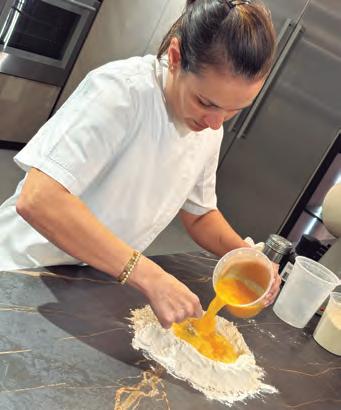
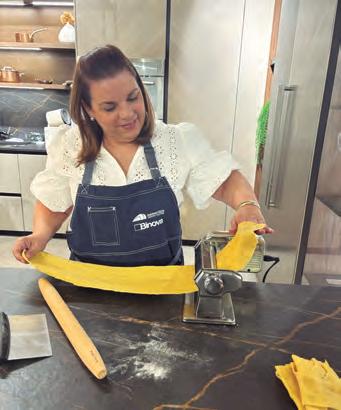
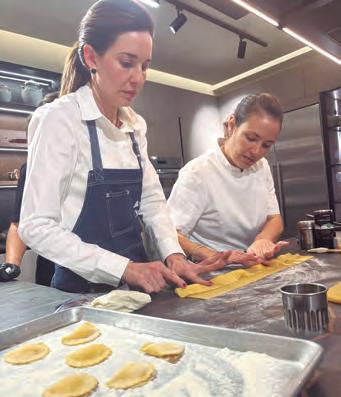
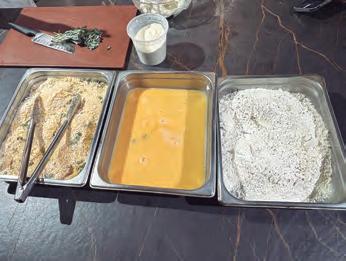
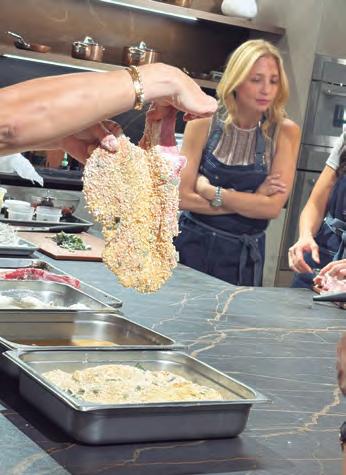

chuleta de ternera de @butchershoprd con ensalada de rúcula y tomaticos veal cutlet from @butchershoprd with arugula salad and tomatoes
pan al grill con ricotta, mortadella de pistachio e higos en almíbar de romero
grilled bread with ricotta, mortadella with pistachio and figs with rosemary
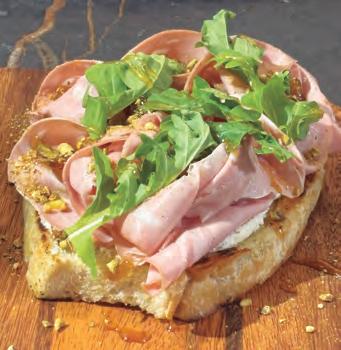
TIRAMISÚ
el clásico postre italiano con café, galletas madelaine y crema the classic Italian dessert made with coffee, madelaine cookies and cream
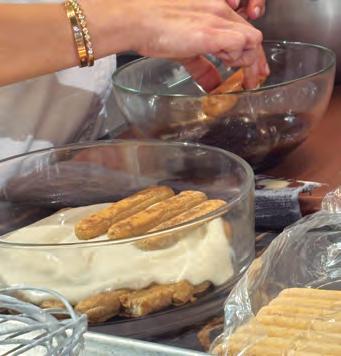
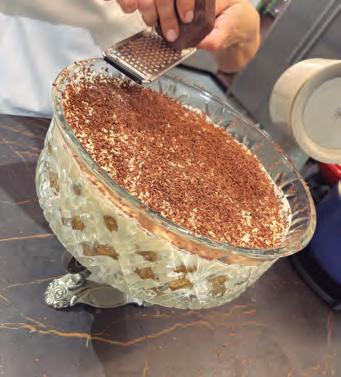
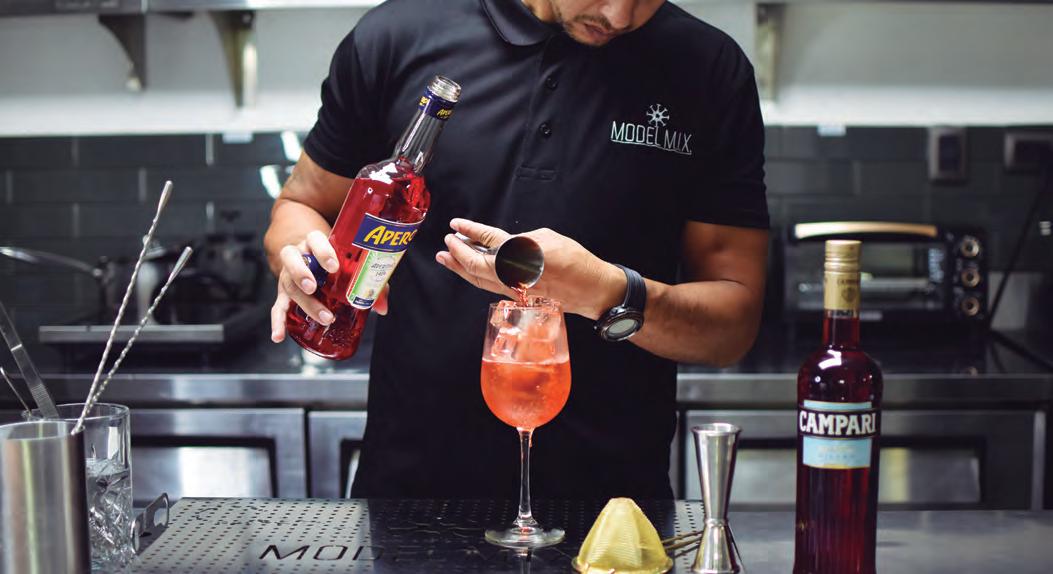
En Italia hay una larga tradición de elaborar y beber licores, por lo que existe gran variedad de estilos y sabores, desde los más dulces hasta los bien amargos. Estos se pueden disfrutar solos como aperitivos para estimular el apetito antes de la comida o como digestivos al terminar de comer.
En los últimos años, se han popularizado los cocteles elaborados a base de estos licores. Y hay dos en particular, con los que se crean tragos que se han convertido en una forma de brindar la vida: Aperol y Campari.
Aquí te compartimos algunas unas recetas, para que te animes a probarlos en casa y disfrutarlos en tu próxima celebración.
Aperol Spritz
Cuando hay calor, nada mejor que un Aperol “spritz”. Este coctel es especialmente refrescante, al añadir un liviano toque amargo al burbujeante espumoso.
INGREDIENTES: • 2oz. prosecco • 2oz. Aperol • 1oz. soda
1. Coloca hielo en una copa
2. Añade Aperol, prosecco y soda
3. Remueve la mezcla suavemente
4. Decora con una rodaja de naranja
Negroni Clásico
Creado en 1919 en Florencia por el conde Camillo Negroni, este icónico cóctel mezcla en partes iguales Campari, ginebra y vermouth rojo. Aunque existen muchas versiones modernas, una regla permanece: ¡no hay Negroni sin Campari!
INGREDIENTES: 1oz. Campari • 1oz. ginebra
• 1oz. vermouth rojo
1. Coloca hielo en mixing glass
2. Mezcla (stir) las tres bebidas
3. Cuela sobre hielo en vaso bajo
4. Decora con twist de naranja
Negroni Sbagliato
Esta versión es un excelente aperitivo que combina lo mejor de los dos mundos, pues sustituye la ginebra del Negroni Clásico con el prosecco del Spritz.
INGREDIENTES: 1oz. Campari • 2oz. prosecco
• 1oz. vermouth rojo
1. Coloca hielo en copa o vaso corto
2. Mezcla las tres bebidas
3. Remueve la mezcla suavemente
4. Decora con un twist de naranja.
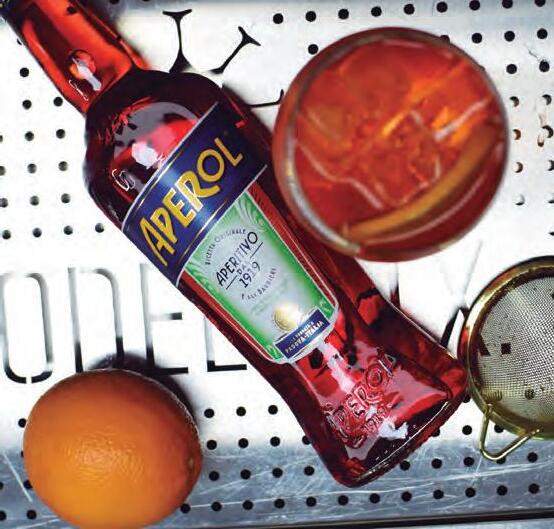
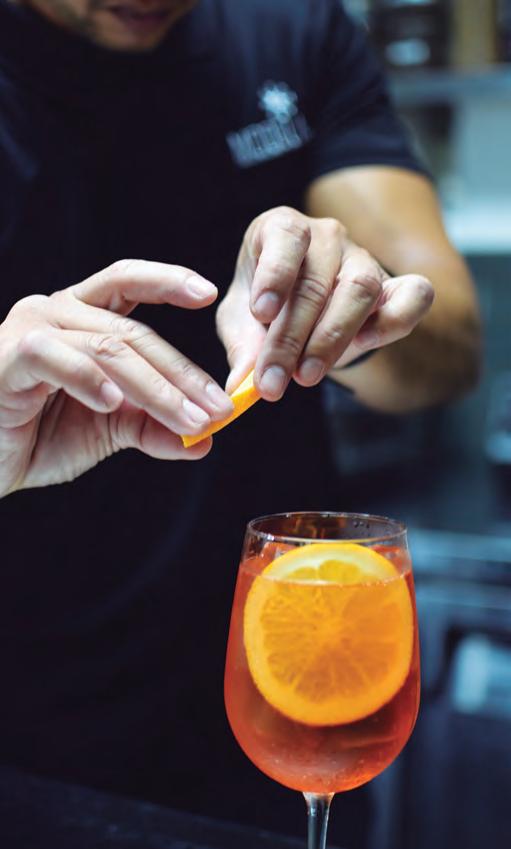
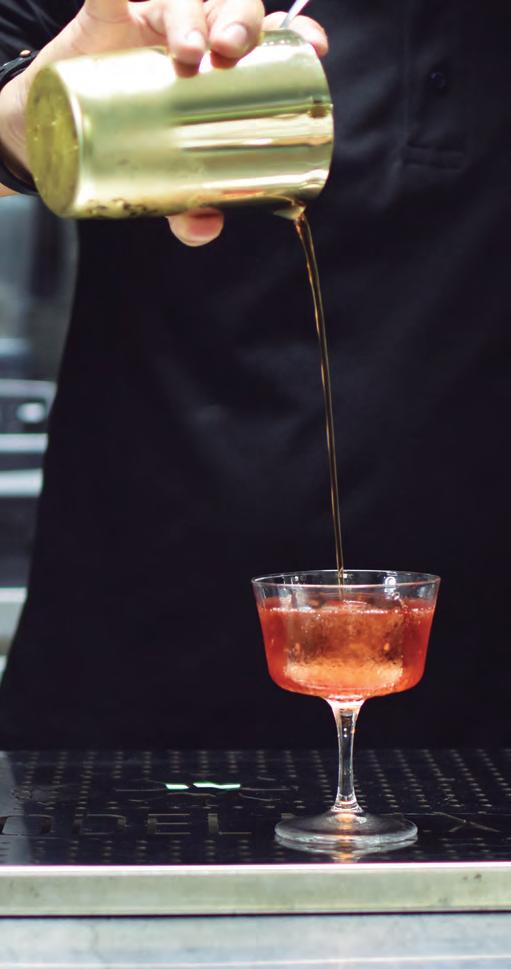

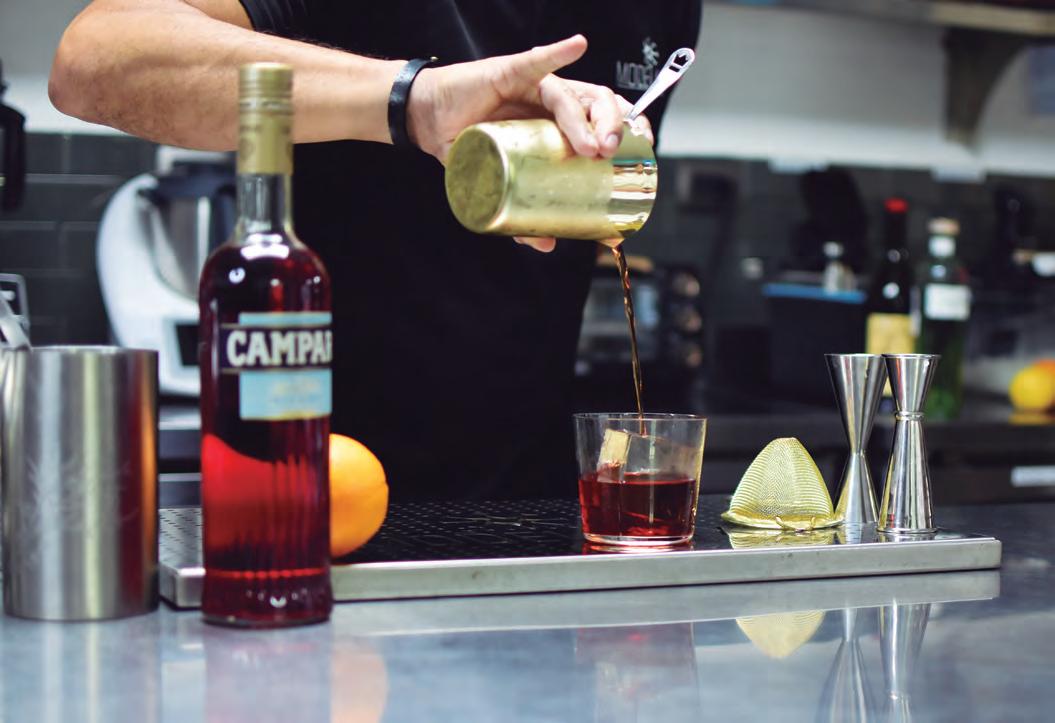
In Italy there is a long tradition of making and drinking liqueurs, and there’s a variety of styles and flavors, from the sweetest to the bitter. These can be enjoyed on their own to stimulate the appetite before a meal or as digestives at the end of eating.
In recent years, cocktails made from these liqueurs have become very popular. And there are two in particular, with which drinks are created that have become a way of toasting life: Aperol and Campari.
Here we share some recipes, so that you are encouraged to try them at home and enjoy them at your next celebration.
Aperol Spritz
When it’s hot, there’s nothing better than an Aperol spritz. This cocktail is especially refreshing, as it adds a slight hint of bitterness to the bubbly sparkling wine.
INGREDIENTS: • 2oz. Prosecco • 2oz. Aperol • 1oz. soda
1. Place ice in a glass
2. Add Aperol, prosecco and soda
3. Stir the mixture gently
4. Garnish with an orange slice
Classic Negroni
Created in 1919 in Florence by Count Camillo Negroni, this iconic cocktail mixes equal parts Campari, gin and red vermouth. Although there are many modern versions, one rule remains: there is no Negroni without Campari!
INGREDIENTS: 1oz. Campari • 1oz. gin • 1oz. Red Vermouth
1. Place ice in mixing glass
2. Mix (stir) the three drinks
3. Strain over ice in a rocks glass
4. Garnish with orange twist
Negroni Sbagliato
This version is an excellent aperitif that combines the best of both worlds, as it replaces the gin of the Classic Negroni with the prosecco of the Spritz.
INGREDIENTS: 1oz. Campari • 2oz. Prosecco • 1oz. red vermouth
1. Place ice in a glass or short glass
2. Mix all three drinks
3. Stir the mixture gently
4. Garnish with an orange twist.

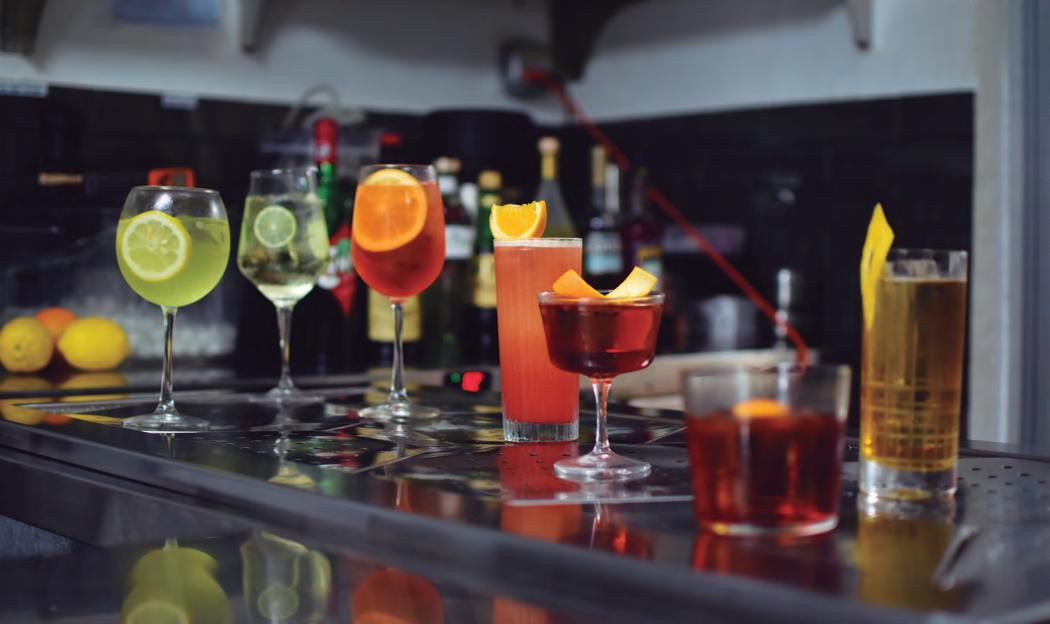
Un modelo a seguir en la industria de coctelería
Model MIX nació en 2014 gracias a la visión y dedicación de su CEO, Carlos Mejía, quien comenzó su trayectoria profesional como modelo y asistente de embajadores de marcas, oficio del cual se fue enamorando poco a poco. Impulsado por esta pasión, decidió formarse en la Escuela de Alimentos y Bebidas A&B Master, especializándose en mixología.
Paralelamente, Carlos cursó la carrera de Ingeniería Agronómica en la Universidad Autónoma de Santo Domingo (UASD), donde obtuvo su título de Ingeniero Agrónomo, combinando así su espíritu creativo con una sólida formación académica.
Al poco tiempo de ganar un reto de Ketel One, realizó un viaje a Holanda, donde visitó destilerías y recorrió bares de prestigio internacional. Fue allí donde tomó la decisión de fundar su propia empresa. Al regresar al país, registró su proyecto bajo el nombre Model M.I.X., con la misión de ofrecer soluciones integrales en coctelería, brindando servicios innovadores, de alta calidad y orientados a crear experiencias únicas para sus clientes.
En el 2018, participó en el World Class, la competencia más importante de la industria de la coctelería, y obtuvo el título de Mejor Bartender de República Dominicana, lo que le abrió las puertas para representar al país en Berlín, Alemania, donde alcanzó el Top 20 Mundial, convirtiéndose en el primer dominicano en lograr tan importante reconocimiento.
Tras ese recorrido, desarrolló el proyecto “El Bar de las 5R’s”, un concepto de coctelería sostenible alineado a las exigencias del medio ambiente. Desde entonces, su marca personal dio un giro trascendental, consolidándose como embajador de Diageo y llevando a Model MIX a un sitial único, acompañado por importantes marcas durante más de 10 años, gracias a la excelencia y profesionalismo en sus servicios.
Actualmente, Model MIX se distingue por brindar experiencias únicas e inigualables, además de generar un sinnúmero de oportunidades dentro de la industria de la coctelería. Sus servicios incluyen: experiencias de coctelería para marcas y eventos, alquiler de barras móviles, drink truck y cristalería profesional, desarrollo de conceptos de coctelería y programas de capacitación, talleres de coctelería y catas personalizadas, formación y entrenamiento de personal en coctelería.
Como parte de su expansión y continua innovación, la empresa creó el Model Mix Store, una tienda física y online de productos relacionados a la coctelería. Y recientemente lanzó Ice Clear RD, dedicada a la producción de hielo cristalino de alta calidad para coctelería premium, que fortalece la propuesta integral de la marca. Model MIX ya maneja una nómina fija de 26 empleados y más de 100 subcontratados. Esto refleja su constante crecimiento e impresionante capacidad operativa, que la consolida como líder indiscutible de la industria de coctelería en Santo Domingo.
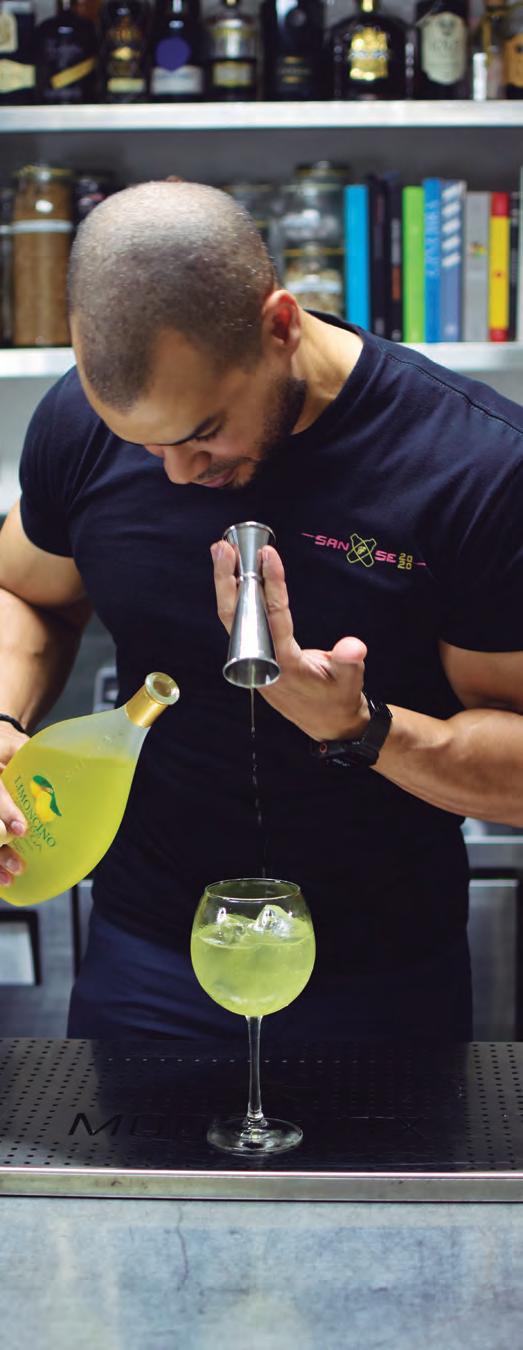
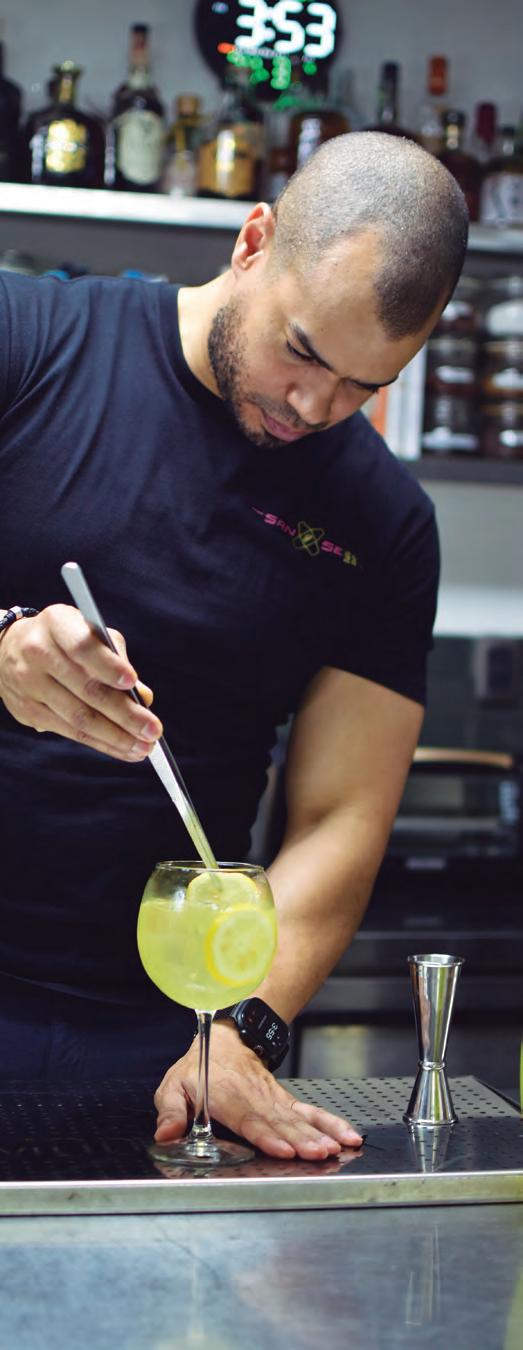
Model Mix was born in 2014 thanks to the vision and dedication of its CEO, Carlos Mejía, who began his professional career as a model and assistant to brand ambassadors, a job he gradually fell in love with. Driven by this passion, he decided to train at the A&B Master School of Food and Beverage, specializing in mixology.
At the same time, Carlos studied Agronomic Engineering at the Universidad Autónoma de Santo Domingo (UASD), where he obtained his degree in Agricultural Engineering, thus combining his creative spirit with a solid academic background.
Soon after winning a Ketel One challenge, he made a trip to Holland, where he visited distilleries and toured bars of international prestige. It was there that he made the decision to found his own company. Upon returning to the country, he registered his project under the name Model Mix, with the mission of offering comprehensive solutions in cocktails, providing innovative, high-quality services aimed at creating unique experiences for his customers.
In 2018, he participated in the World Class, the most important competition in the cocktail industry, and won the title of Best Bartender in the Dominican Republic, which opened the doors for him to represent the country in Berlin, Germany, where he reached the Top 20 in the World, becoming the first Dominican to achieve such important recognition.
After that journey, he developed the project “El Bar de las 5R’s”, a sustainable cocktail concept aligned with the demands of the environment. Since then, his personal brand took a transcendental turn, consolidating himself as an ambassador for Diageo and taking Model MIX to a unique place, accompanied by important brands for more than 10 years, thanks to the excellence and professionalism in his services.
Currently, Model MIX is known for providing unique and unparalleled experiences, in addition to generating countless opportunities within the cocktail industry. Its services include: cocktail experiences for brands and events, rental of mobile bars, drink truck and professional glassware, development of cocktail concepts and training programs, cocktail workshops and personalized tastings, training and training of cocktail personnel.
As part of its expansion and continuous innovation, the company created the Model Mix Store, a physical and online store for products related to cocktails. And it recently launched Ice Clear RD, dedicated to the production of high-quality crystalline ice for premium cocktails, which strengthens the brand’s comprehensive proposal.
Model MIX already manages a fixed payroll of 26 employees and more than 100 subcontractors. This reflects its constant growth and impressive operational capacity, which consolidates it as a the undisputed leader of Santo Domingo’s cocktail industry.
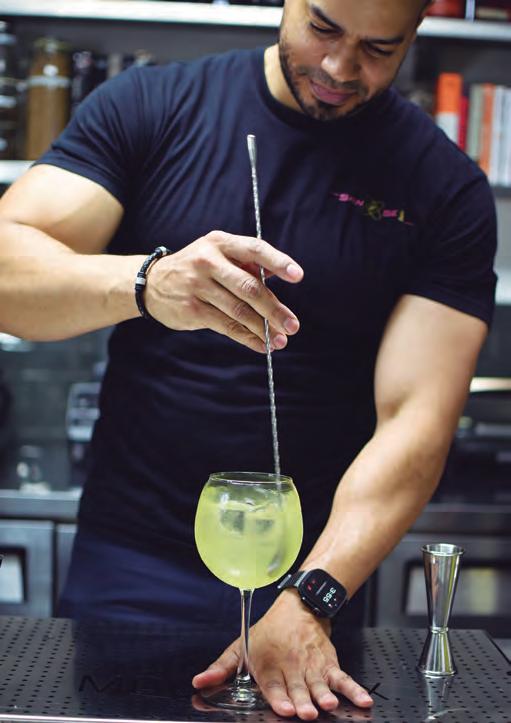
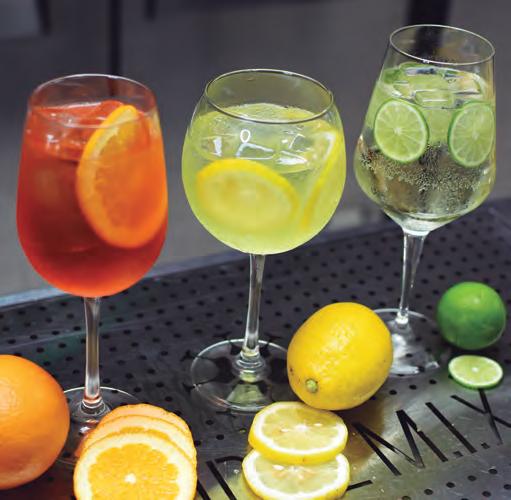

Nada es más italiano que la pizza; y a la vez, nada más internacional. Porque la pizza se ha convertido en una de las comidas más populares en todo el mundo. Y el Caribe no es la excepción.
En Santo Domingo hay excelentes pizzerías. Una de las más conocidas es Il Camineto, certificada como “Vera Pizza Napoletana”. Pero recientemente, han llegado tres establecimientos que ofrecen nuevas alternativas que añaden un toque de innovación esta tradición culinaria: Curcio, Figata y La Pinseria.
Nothing is more Italian than pizza; and at the same time, nothing more international. That’s because pizza has become one of the most popular foods around the world. And the Caribbean is no exception.
In Santo Domingo there are excellent pizzerias. One of the best known is Il Camineto, certified as “Vera Pizza Napoletana”. But recently, three establishments have arrived that offer new alternatives that add a dash of innovation to this culinary tradition: Curcio, Figata and La Pinseria.
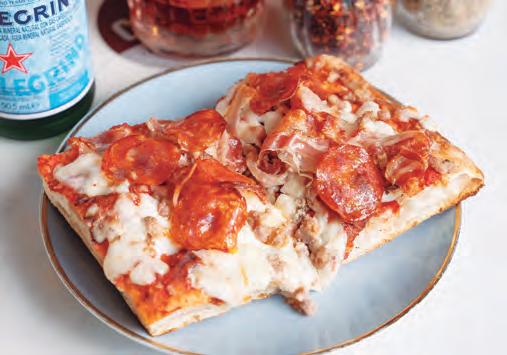
Para los verdaderos amantes de la pizza, CURCIO Pizza al Taglio es un destino obligado. Aquí no se sirve cualquier pizza: se trata de la auténtica “pizza in pala romana” que se hornea en grandes bandejas rectangulares y se sirve “al taglio”, o sea, cortada en pedazos cuadrados. Es una joya de la tradición pizzera italiana que seduce a primera vista…¡y conquista desde el primer bocado!
Su masa es arte puro: ligera y crujiente por fuera, pero suave y aireada por dentro. Esta textura única se logra gracias a un proceso de fermentación indirecta de más de 72 horas y una altísima hidratación con harinas tipo 1 y 2 que son más saludables, pues contienen menos azúcares y más fibra que las harinas tradicionales. El resultado: una base ligera, sabrosa y fácil de digerir.
Cada pedazo es una experiencia distinta. Gracias al formato “al taglio”, puedes probar varias combinaciones en una sola visita. Los ingredientes son todos italianos y de calidad premium: salsa de tomate San Marzano, mozzarella fior di latte, embutidos curados, trufas, pesto fresco, verduras asadas y mucho más. Todo importado directamente desde Italia.
No solo se trata de una pizza, sino de la pasión, técnica y sabor romano servidos por pedazos. ¡Es una experiencia que todo amante de la pizza debe vivir!
CURCIO abrió su primera sucursal en enero de 2023 en la calle Isabel la Católica 163, en plena Zona Colonial. Debido a su rotundo éxito, pronto inauguraron una segunda en Piantini, en la calle Federico Geraldino esquina Gustavo Mejía Ricart, con una terraza espectacular diseñada por Natalia Franch de Bosques Urbanos.
For true pizza lovers, CURCIO Pizza al Taglio is a must-go destination. Not just any pizza is served here: it is the authentic “pizza in pala romana” that is baked on large rectangular trays and served “al taglio”, that is, cut in square pieces. It is a jewel of the Italian pizza tradition that seduces at first sight... and conquers from the first bite!
Their dough is pure art: light and crispy on the outside, but soft and airy on the inside. This unique texture is achieved thanks to an indirect fermentation process of more than 72 hours and a very high hydration with type 1 and 2 flours that are healthier, as they contain less sugar and more fiber than traditional flours. The result: a light, tasty and easy-to-digest base.
Each piece is a different experience. Thanks to the “al taglio” format, you can try several combinations in a single visit. The ingredients are all Italian of premium quality: San Marzano tomato sauce, fior di latte mozzarella, cured meats, truffles, fresh pesto, roasted vegetables and much more. All imported directly from Italy.
CURCIO opened its first branch in January 2023 at 163 Isabel la Católica Street, in the heart of the Colonial Zone. Due to its resounding success, they soon opened a second one in Piantini, on Federico Geraldino Street on the corner of Gustavo Mejía Ricart, with a spectacular terrace designed by Natalia Franch of Bosques Urbanos.
It is not only a pizza, but the passion, technique and Roman flavor served in pieces. It’s an experience that every pizza lover should have!
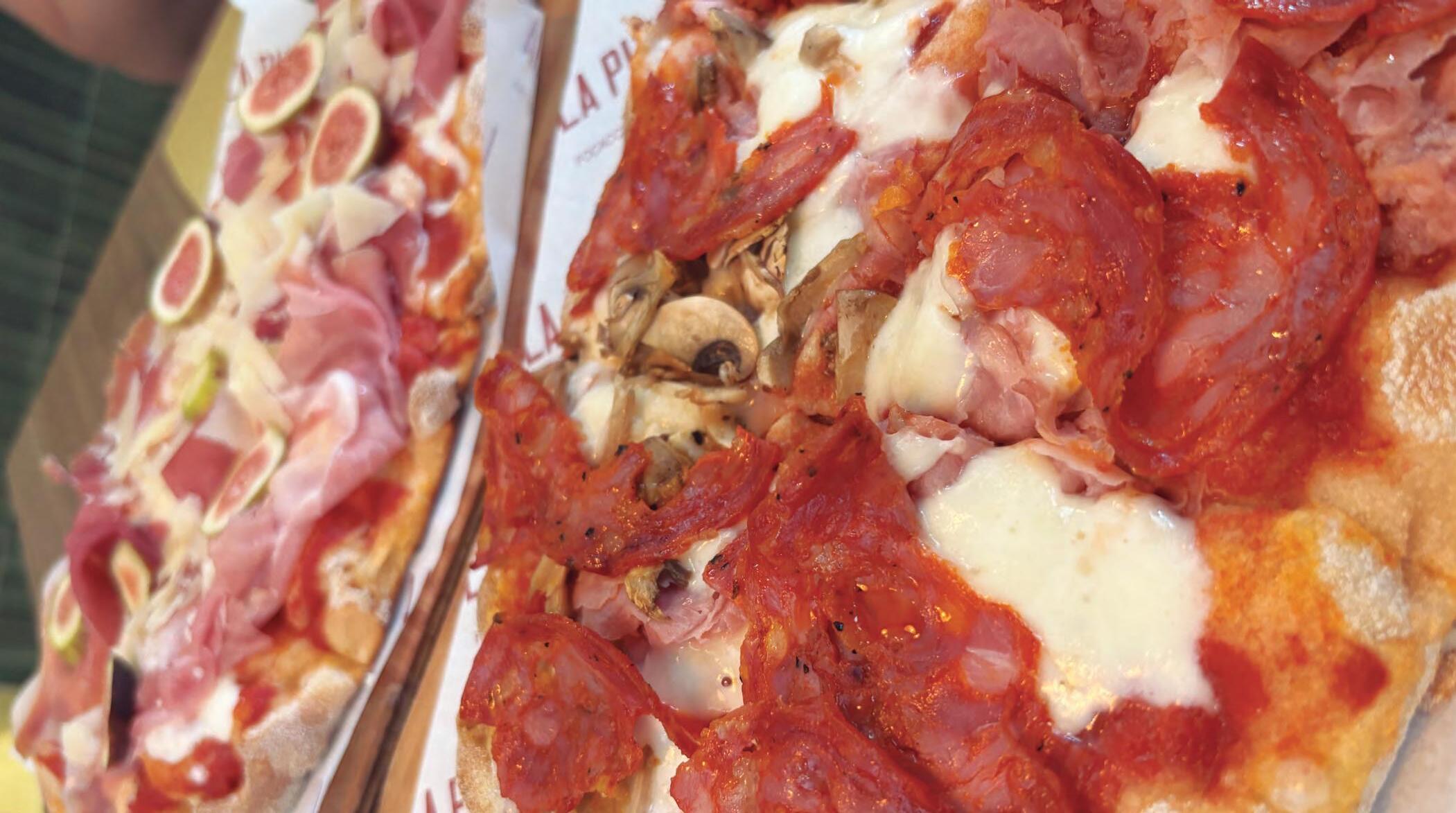
Aunque la pizza ha sido parte de la tradición culinaria italiana durante siglos, su más reciente versión, la pinsa romana, llegó para conquistar los paladares dominicanos desde los hornos de La Pinseria en Piantini.
Esta moderna y acogedora Focacceria y Enoteca con Cucina, que abrió sus puertas el pasado año, se especializa en elaborar esta singular pizza, cuya masa combina tres harinas — trigo, soja y arroz.
El nombre «pinsa» proviene del latín «pinsere», que significa «aplastar», en referencia a la forma en que se amasa la masa a mano.
La pinsa también se diferencia de la pizza tradicional en que tiene forma ovalada, mayor tiempo de fermentación y doble proceso de horneado, antes y después de colocarle los toppings seleccionados. Por eso, su borde es más ligero y crujiente, su centro suave y esponjoso, y es de más fácil digestión.
Es pinsa, y no pizza. Y hay más de 30 combinaciones a escoger. Aquí algunas de las más interesantes:
LA MIA: Salsa de tomate, queso mozzarella, prosciutto cotto, hongos champiñones, salame picante
PARMA E HIGOS: Salsa de Tomate, mozzarella, higos, prosciutto crudo di Parma, escamas de parmesano, miel picante
LA NORDICA: Ricotta, queso crema, rucul, yogur griego, salmon ahumado, tomaticos cherry.
Ubicada en la Gustavo Mejía Ricart #62, La Pinsería también ofrece Pizza in Teglia, así como un variado menú de tapas y entradas con una excelente carta de vinos, cervezas y licores.
Although pizza has been part of the Italian culinary tradition for centuries, its most recent version, the pinsa romana, is conquering Dominican palates from the ovens of La Pinseria in Piantini.
This modern and cozy Focacceria and Enoteca con Cucina, which opened its doors last year, specializes in making this unique pizza with a dough that combines three flours — wheat, soy and rice.
The name “pinsa” comes from the Latin “pinsere”, which means “to crush”, in reference to the way the dough is kneaded by hand. The pinsa also differs from traditional pizza in that it has an oval shape, a longer fermentation time and a double baking process, before and after placing the selected toppings. For this reason, its border is lighter and crisper, its center soft and fluffy, and it is easier to digest.
It’s not pizza, it’s pinsa! And there are more than 30 combinations to choose from. Here are some interesting ones:
LA MIA: Tomato sauce, mozzarella cheese, prosciutto cotto, mushroom mushrooms, spicy salami
PARMA AND FIGS: Tomato sauce, mozzarella, figs, raw prosciutto di Parma, parmesan flakes, spicy honey
LA NORDICA: Ricotta, cream cheese, arugum, Greek yogurt, smoked salmon, tomato cherry.
Located at Gustavo Mejía Ricart #62, La Pinsería also offers Pizza in Teglia, as well as a varied menu of tapas and entrees with an excellent list of wines, beers and spirits.

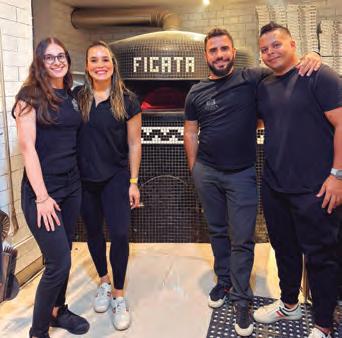
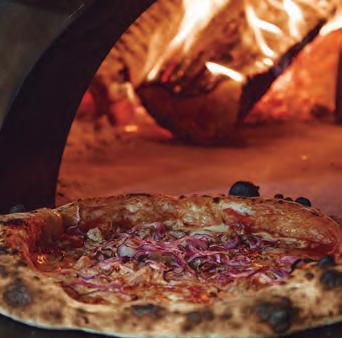
¡Que chulería! Eso es lo que significa la palabra “figata” en italiano. Pero también es la vibra que se siente en la pizzería de este nombre, tan creativo como sus pizzas estilo napolitano que utilizan masa madre y te sorprenden con increíbles combinaciones de sabores.
Para que tengan una mejor idea, el menú de pizzas incluye: SWEET GOAT (mozzarella, queso de cabra, bacon y miel, regular o picante), MAMMA (mozzarella, sopressata, mermelada de tomates) y FIGATA (mozzarella, jamón cocido a la brasa y crema de trufa).
La TONNO es excepcional (mozzarella, pomodoro y cebolla con atún), así como la FILETTI (mozzarella, tomate cherry rostizado, ajo, aceite de oliva extra virgen y albahaca), inspirada en la pizzeria UNA de NYC, y la PUTANESCA que seduce con el sabor intenso de las alcaparras, aceitunas, pancetta, queso pecorino, pepperoncino y pomodoro.
Para preparar estas delicias, utilizan un horno traído de Nápoles y hecho de manera artesanal especialmente para Figata. Y una vez salidas del horno, puedes acompañarlas un excelente menú de cervezas artesanales, vinos italianos y cocteles.
También tienen unas ricas opciones de entradas: focaccia rellena de jamón a la brasa, queso stracciatella con pesto de albahaca, carpaccio di bresaola, burrata con prosciutto, salsiccia vino e miele.
Todo esto es posible gracias a la pasión pizzera de José Luis Añez Febles, quien comenzó a probar distintas recetas en su casa y las fue perfeccionando hasta dar con el punto perfecto. Luego fue a Nápoles a tomar varios cursos en la escuela Associazione Verace Pizza Napoletana, uno de pizza napolitana y otro de frituras napolitanas.
Junto a él trabajan Toskana Ureña, encargada de la masa madre que requiere 48 horas de fermentación, y sus otros dos socios: Diego Boni Ureña, a cargo de servicio, proveedores y logística, y su esposa, Francesca Mainardi, a cargo de la administración.
Estos cuatro fantásticos comenzaron hace dos años en un pequeño local, solo con delivery y pick up, pero crecieron tanto como la levadura, y al poco tiempo se mudaron a donde ahora están ubicados en Alma Rosa 1era, Santo Domingo Este. Y pronto se van a expandir para llevar a @pizzafigata a otros puntos del país.
How awesome! That’s what the word “figata” means in Italian. But it’s also the vibe you feel at the pizzeria of this name, as creative as their Neapolitan-style pizzas that use sourdough and surprise you with incredible flavor combinations.
To give you a better idea, the pizza menu includes: SWEET GOAT (mozzarella, goat cheese, bacon and honey, regular or spicy), MAMMA (mozzarella, sopressata, tomato jam and mint) and FIGATA (mozzarella, grilled ham and truffle cream).
The TONNO is exceptional (mozzarella, pomodoro and onion with tuna), as well as the FILETTI (mozzarella, roasted cherry tomato, garlic, extra virgin olive oil and basil), inspired by the UNA pizzeria in NYC, and the PUTANESCA that seduces with the intense flavor of capers, olives, pancetta, pecorino cheese, pepperoncino and pomodoro.
To prepare these delicacies, they use an oven brought from Naples and made in an artisanal way especially for Figata. And once they come out of the oven, you can accompany them with an excellent menu of craft beers, Italian wines and cocktails.
They also have very special starters: focaccia stuffed with grilled ham, stracciatella cheese with basil pesto, carpaccio di bresaola, burrata with prosciutto, salsiccia vino e miele.
All this is possible thanks to the pizzeria passion of José Luis Añez Febles, who began to try different recipes at home and perfected them until he found the perfect point. He then went to Naples to take several courses at the Associazione Verace Pizza Napoletana school, one on Neapolitan pizza making and another on Neapolitan fried foods.
Working alongside him are Toskana Ureña, in charge of the sourdough that requires 48 hours of fermentation, and his other two partners, Diego Boni Ureña, in charge of service, suppliers and logistics, and his wife, Francesca Mainardi, , who manages it.
These fantastic four started two years ago in a small location, only with delivery and pick-up, but they grew as much as yeast, and soon after they moved to where they are now located at Alma Rosa 1era., Santo Domingo Este. And soon they will expand to take @pizzafigata to other parts of the country.
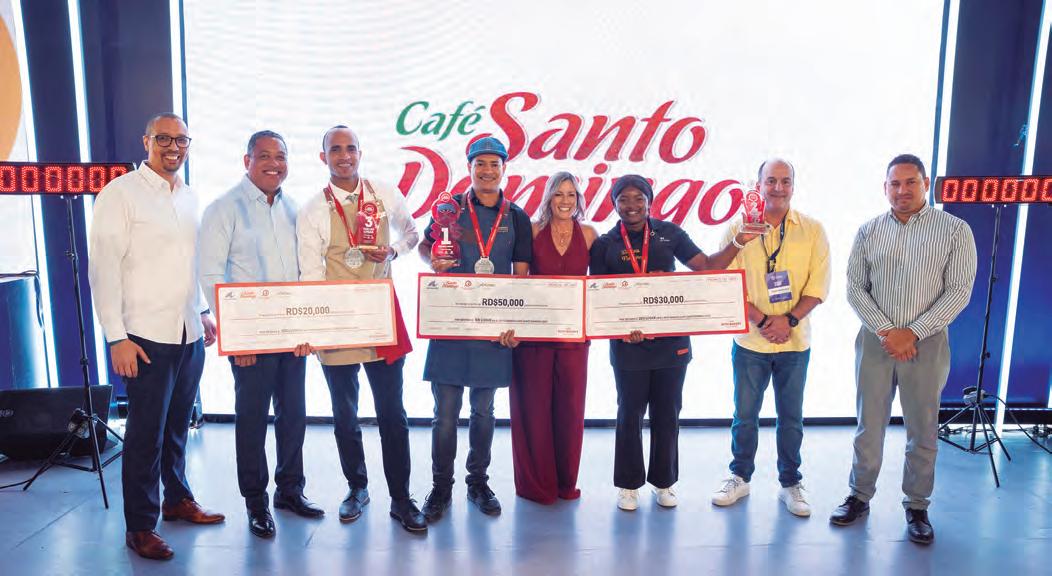
Innovación y celebración del café en Punta Cana
Las competencias de baristas a nivel mundial comenzaron en Mónaco en el 2000 organizadas por la Specialty Coffee Association of Europe (SCAE) y, desde entonces, no han dejado de evolucionar. Año tras año se han rediseñado para responder a las nuevas tendencias de la industria del café, ampliando sus categorías hacia disciplinas más especializadas y creativas como latte art, coctelería, catación y brewing.
¡Y La República Dominicana no se queda atrás! El pasado 11 de septiembre de 2025 se celebró en Blue Mall-Punta Cana la competencia final de la novena edición del RETO BARISTA Café Santo Domingo, en el marco de la Feria Comercial de ASONAHORES, que se unió al Instituto del Café Santo Domingo y Aroma Coffee Service como patrocinador de este evento.
En esta edición participaron baristas de 28 hoteles y restaurantes de la zona este, quienes pasaron por tres etapas. Las dos primeras fueron de adiestramiento intensivo, con talleres del Instituto de Café Santo Domingo, donde los baristas afinaron técnicas y conocimientos.
Luego llegó la fase eliminatoria, de donde surgieron los ocho finalistas, quienes se enfrentaron en la gran final, en la cual cada barista contó con 12 minutos para presentar y preparar tres tipos de bebidas: 2 espressos, 2 cappuccinos y 2 cócteles a base de espresso.
Un panel de tres jueces —dos sensoriales y uno técnico— evaluó tanto la calidad de las bebidas como la ejecución, el manejo de equipos y los tiempos de preparación.
Todos los finalistas recibieron una medalla de participación en este evento, en el cual representaron a prestigiosos hoteles y restaurantes de Punta Cana-Bávaro y Romana para los que laboran: Frances de la Cruz (Casa de Campo), Nancy Bautista (Hotel Riu), Francis Soriano (Hotel Dreams & Secret La Romana), Lisbet Valverde (Hotel Breathless Punta Cana), Nadiurca Lima (Hotel W), María Caridad (Dreams Onyx Resort & Spa), Rafael Zavala (Noah Restaurante & Lounge), y del Hotel Secret Cap Cana, Ramón Tejeda, quien resultó ganador del primer lugar, llevándose un premio de RD$50,000.
Más allá de la competencia, el evento fue una experiencia sensorial y educativa. Para los baristas, un espacio de crecimiento y aprendizaje. Para los jueces, la oportunidad de presenciar cómo el café se eleva a un arte. Y para los espectadores, un festín de sabores y conocimientos.
Aquí te compartimos algunas de las recetas de cocteles a base de café elaborados por los finalistas durante la gran final del RETO BARISTA Café Santo Domingo 2025. Cada receta es una invitación a degustar y descubrir el café desde nuevas perspectivas.
Espresso Tropicalizado
• 2 oz espresso
• 1 oz ron
• ½ oz licor de naranja
• ½ oz crema irlandesa
• crema de leche vaporizada y caramelo
• caramelo de naranja
• canela flameada
Aromas del Caribe
• 2 oz de espresso
• ½ oz de Cointreau
• ½ oz de syrup de vainilla
• garnish: azúcar morena, canela, anís estrellado, naranja deshidratada, y una astilla de canela
Tropical Coffee
• 1 oz de espresso
• 2 oz de mamajuana
• 1 oz de crema de coco
• hielo
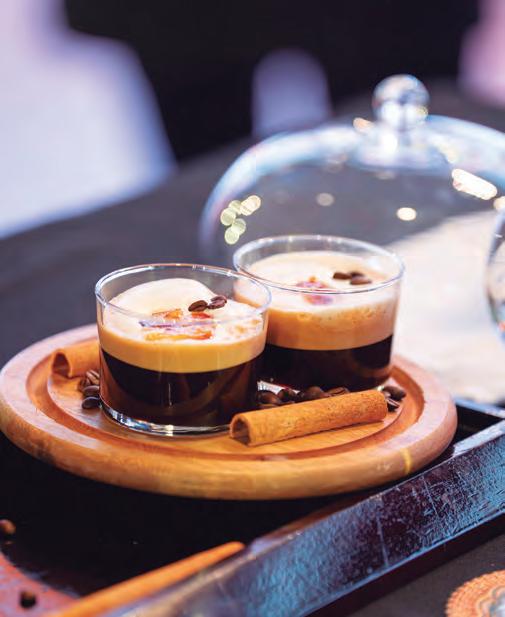
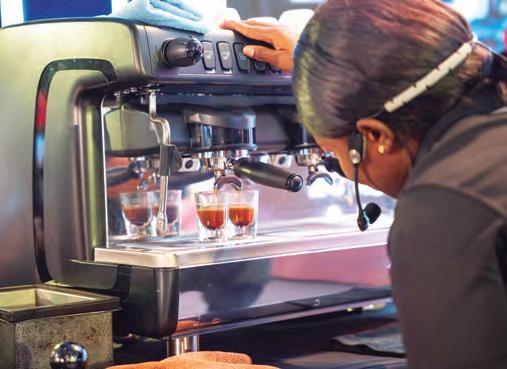
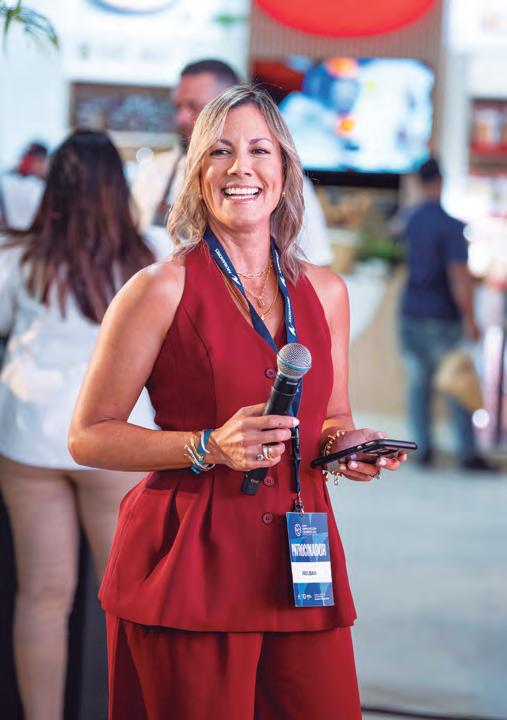
Nuestra colaboradora de Mundo Barista fue la conductora de RETO BARISTA 2025
ERICA REYES Presidenta/Fundadora
Café Cola’o Coffee Shop VSJ
Escuela de Café y Baristas de PR
Hacienda Moraica (3ra Generación Caficultores)
Autora del libro Te invito a una Taza
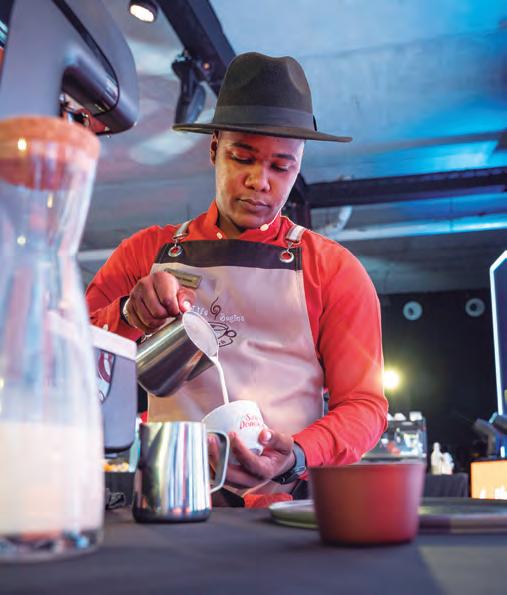
Innovation and Coffee Celebration in Punta Cana
World-class barista competitions began in Monaco in 2000 organized by the Specialty Coffee Association of Europe (SCAE), and have continued to evolve ever since. Year after year, they’ve been redesigned to keep up with the latest trends in the coffee industry, expanding into more specialized and creative disciplines such as latte art, mixology, cupping, and brewing.
And the Dominican Republic is no exception! On September 11, 2025, the final competition of the ninth edition of RETO BARISTA Café Santo Domingo took place at Blue Mall Punta Cana, as part of the ASONAHORES Trade Fair. The event was co-sponsored by Instituto del Café Santo Domingo and Aroma Coffee Service.
This edition featured baristas from 28 hotels and restaurants in the eastern region of the country. The competition was divided into three stages. The first two consisted of intensive training workshops led by the Instituto del Café Santo Domingo, where participants refined their techniques and deepened their knowledge.
Then came the elimination round, from which the eight finalists emerged to face off in the grand finale. Each barista had 12 minutes to present and prepare three types of beverages: two espressos, two cappuccinos, and two espresso-based cocktails.
A panel of three judges—two sensory and one technical— evaluated not only the quality of the beverages but also execution, equipment handling, and timing.
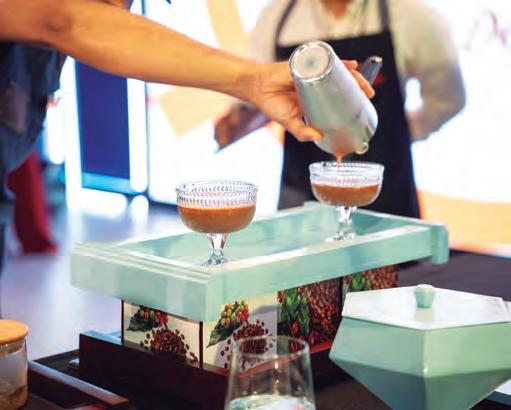
All finalists received a participation medal as representatives of renowned hotels and restaurants across Punta Cana–Bávaro and La Romana, including: Frances de la Cruz (Casa de Campo), Nancy Bautista (Hotel Riu), Francis Soriano (Hotel Dreams & Secret La Romana), Lisbet Valverde (Hotel Breathless Punta Cana), Nadiurca Lima (Hotel W), María Caridad (Dreams Onyx Resort & Spa), Rafael Zavala (Noah Restaurante & Lounge), and from Hotel Secret Cap Cana, Ramón Tejeda, who earned first place and a RD$50,000 cash prize.
Beyond the competition itself, the event became a sensory and educational experience—a space for growth and learning for the baristas, an opportunity for judges to witness coffee elevated to an art form, and for spectators, a feast of flavors and knowledge. Here we share a selection of espresso-based cocktail recipes created by the eight finalists during the grand finale of the RETO BARISTA Café Santo Domingo 2025. Each recipe is an invitation to taste, explore, and rediscover coffee from a fresh perspective.
Tropicalized Espresso
• 2 oz espresso
• 1 oz rum
• ½ oz orange liqueur
• ½ oz Irish cream
• Steamed milk cream & caramel
• Orange caramel
• Flamed cinnamon
Caribbean Aromas
• 2 oz espresso
• ½ oz Cointreau
• ½ oz vanilla syrup
• Garnish: brown sugar, cinnamon, star anise, dried orange slice, and a cinnamon stick
Tropical Coffee
• 1 oz espresso
• 2 oz mamajuana
• 1 oz coconut cream
• Ice
Por/By: Orlando Jerez
Tres franquicias internacionales de yogurt helado han llegado recientemente a la República Dominicana, transformando para siempre la manera en que disfrutamos este postre tan sabroso, refrescante y saludable.
Cada una presenta una versión muy singular que logra elevar la experiencia.
En GOYUR, ya no se trata solo de endulzar y refrescar el día, sino de crear tu helado ideal y saborear lo bueno sin culpa.
Mientras que MYKA y GRIEGGO son ya dos paradas obligatorias en la Zona Colonial, donde el yogurt griego artesanal se convierte en toda una experiencia sensorial.
Con una trayectoria de más de 12 años y presencia en 35 ciudades, esta marca líder en Latinoamérica aterriza en grande con dos nuevas tiendas: una en el moderno Ágora Mall (Santo Domingo) y otra en el recién inaugurado Santiago Center (Santiago de los Caballeros).
Goyurt no es cualquier heladería. Aquí, tú eres el creador de tu postre ideal. ¿Te gusta lo tropical? Prueba sus sabores exclusivos para el mercado dominicano como chinola, lechosa, pitahaya o coco. ¿Prefieres algo clásico? También tiene opciones suaves, cremosas y bajas en grasa que te van a encantar. Lo mejor: todos sus productos son bajos en azúcar, deslactosados y ricos en calcio. Una opción perfecta si buscas cuidarte sin dejar de disfrutar.
Pero el toque especial está en su barra de toppings. Desde frutas frescas hasta crumbles, granolas, salsas artesanales y superfoods, puedes mezclar y combinar a tu gusto. Cada visita es una experiencia creativa, refrescante y ligera, ideal para el clima caribeño.
El local en Ágora Mall ya está listo para recibirte con un ambiente moderno, alegre y diseñado para que vivas momentos dulces y saludables. La tienda del Santiago Center promete convertirse en el nuevo spot favorito de la región del Cibao, para disfrutar con amigos, familia o simplemente darte un gusto sin culpa.
Ubicada en la Calle Las Mercedes #59, es mucho más que una heladería: es una casa del yogurt griego artesanal que respira cultura mediterránea en cada rincón. Inspirada en Santorini, su estética blanca y azul te transporta directamente al corazón de Grecia. Aquí, el equilibrio entre placer y bienestar es el alma de la marca. Sus helados, elaborados con ingredientes naturales y sin aditivos artificiales, conservan la cremosidad y el sabor auténtico del yogurt griego. ¿La estrella? Sus toppings: frutas frescas, nueces, miel, pistacho, granola, y hasta baklava artesanal, que hacen de cada bowl una obra de arte saludable.
Trae una vibra distinta pero igual de irresistible con un local encantador en la Calle Arzobispo Meriño #256. Esta marca nació en Madrid y, en solo un año, se ha expandido por más de 13 países, aterrizando ahora en RD. Su fórmula estrella es el yogurt griego hecho con leche de alta calidad y kéfir de cabra, fermentado y colado triple para lograr una textura ultra cremosa sin aditivos industriales. Aquí no hay trucos, solo ingredientes reales y beneficios digestivos gracias a sus probióticos naturales.
Su oferta de toppings es de otro nivel: crumbles, compotas artesanales, superfoods, mieles y hasta aceite de oliva virgen extra. Además, para los que buscan opciones veganas o sin lactosa, ofrecen sorbetes de fruta fresca que rotan mensualmente.
Three international frozen yogurt franchises have recently arrived in the Dominican Republic, forever transforming the way we enjoy this delicious, refreshing, and healthy treat.
Each one brings its own unique take—elevating the experience to new heights. At GOYURT, it’s no longer just about sweetening and refreshing your day, but about creating your ideal yogurt and indulging in goodness—guilt-free.
Meanwhile, MYKA and GRIEGGO have become must-stop destinations in the Colonial Zone, where artisanal Greek yogurt turns into a full sensory experience.
With over 12 years of experience and a presence in 35 cities, this leading Latin American brand has made a big entrance with two new stores: one in the modern Ágora Mall (Santo Domingo) and another in the newly opened Santiago Center (Santiago de los Caballeros).
Goyurt is not just another ice cream shop—it’s a place where you create your perfect dessert. Craving something tropical? Try their exclusive Dominican flavors like passion fruit, papaya, dragon fruit, or coconut. Prefer something classic? You’ll love their smooth, creamy, low-fat options. Best of all, every product is low in sugar, lactose-free, and rich in calcium—a perfect choice if you want to stay healthy without giving up on flavor.
But the real magic happens at their topping bar. From fresh fruits to crumbles, granola, artisanal sauces, and superfoods, you can mix and match to your liking. Every visit is a creative, refreshing, and light experience—ideal for the Caribbean climate.
The Ágora Mall location welcomes you with a modern, cheerful space designed for sweet and healthy moments. Meanwhile, the Santiago Center store promises to become the new favorite spot in the Cibao region—perfect for enjoying with friends, family, or simply treating yourself without guilt.
Located at Calle Las Mercedes #59, this is much more than a frozen yogurt shop—it’s a true house of artisanal Greek yogurt, infused with Mediterranean culture in every detail. Inspired by Santorini, its white-and-blue aesthetic transports you straight to the heart of Greece. Here, the balance between pleasure and well-being defines the brand’s soul. Their frozen yogurts, made with natural ingredients and no artificial additives, retain the creaminess and authentic flavor of traditional Greek yogurt. The stars of the show? The toppings— fresh fruit, nuts, honey, pistachios, granola, and even handmade baklava—turning each bowl into a healthy work of art.
MYKA brings a different yet equally irresistible vibe, with a charming shop on Calle Arzobispo Meriño #256. Born in Madrid, this brand has expanded to more than 13 countries in just one year—and now lands in the Dominican Republic. Its signature formula is Greek yogurt made from high-quality milk and goat kefir, fermented and triple-strained to achieve an ultra-creamy texture— without industrial additives. No tricks here—just real ingredients and natural probiotics that offer digestive benefits.
Their toppings take things to another level: crumbles, artisanal compotes, superfoods, honey varieties, and even extra virgin olive oil. For those seeking vegan or lactose-free options, MYKA also offers rotating flavors of fresh fruit sorbets each month.
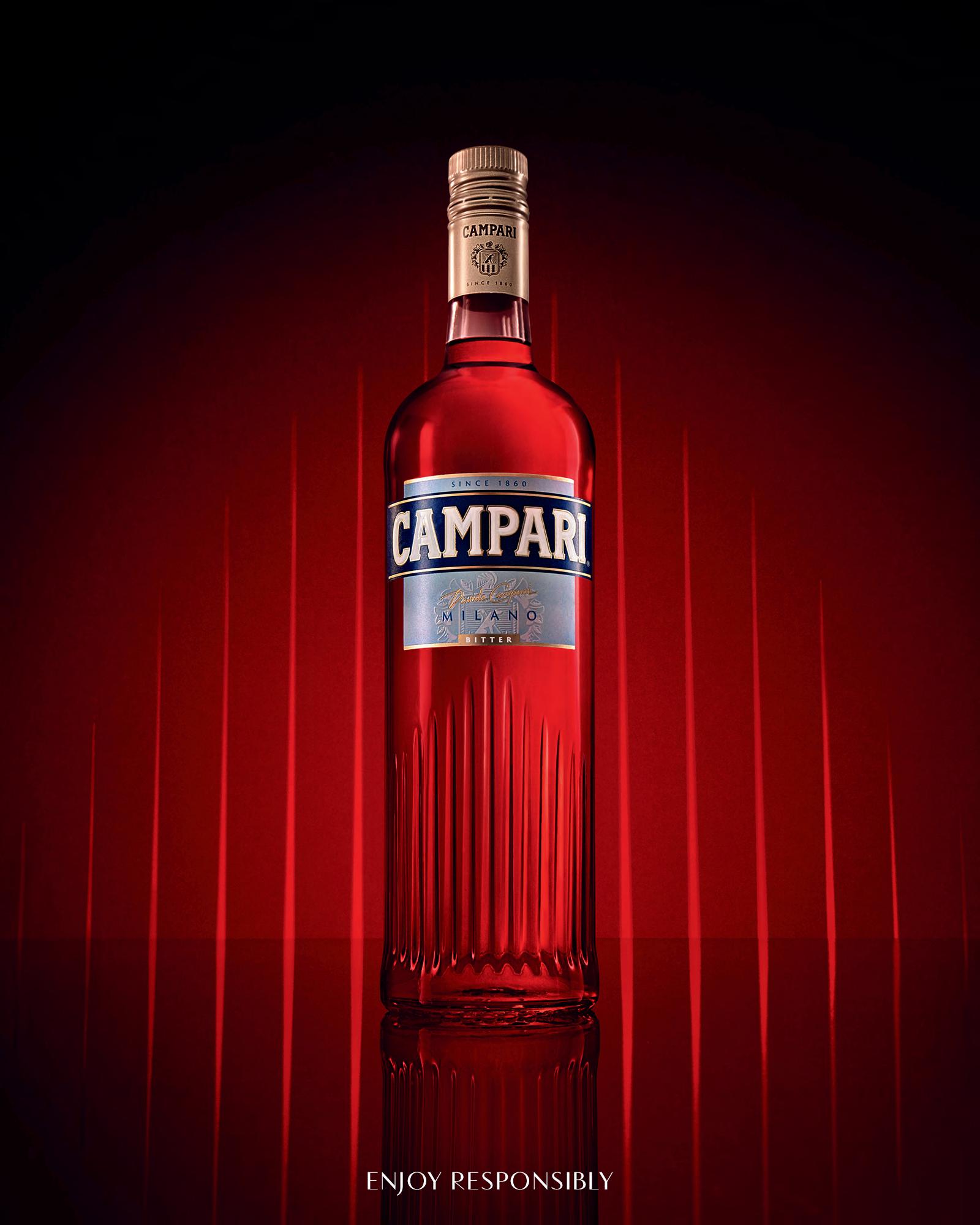

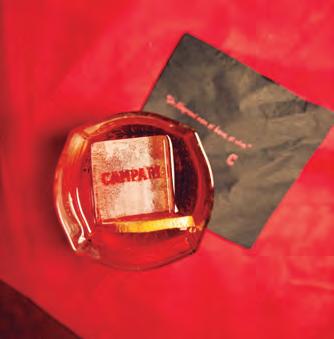
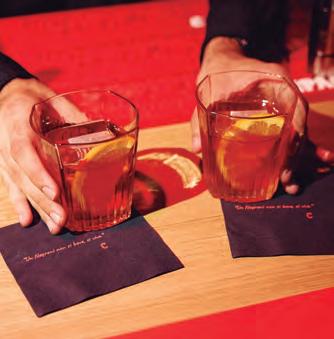
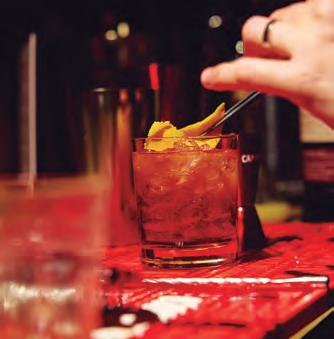
Por/By: Orlando Jerez
Brindis con el eterno clásico italiano que no pasa de moda
Todo comenzó con una espectacular noche de verano que convidó religiosamente a los amantes del buen cóctel. Las instalaciones de Altri Tempi fueron testigo del glamour y el esplendor, que también fueron protagonistas de la velada que celebró al Negroni, considerado como el eterno clásico italiano que nunca pasa de moda.
La cita era obligatoria. El rojo se convirtió en el color predilecto de la noche, cada uno de los convidados desfilaron por la alfombra con atuendos alegóricos al código de vestimenta Cinema in Rosso, con la firme convicción de vivir la experiencia en todo su esplendor. Y créanme que valió la pena.
El encuentro fue impecable, sin desperdicio alguno. La música electrónica, los cócteles y el exquisito menú de tapas mexicanas del restaurante Vuelve a la Vida hicieron el maridaje perfecto entre arte, cultura y sabor.
Durante la celebración que rindió homenaje al Negroni, se dio a conocer la extensa agenda de actividades del Negroni Week que abarcó todo el mes de septiembre con experiencias especiales en diferentes restaurantes y bares del país.
Más de 50 bartenders dominicanos compitieron con menús especiales, reinterpretaciones de autor y con versiones creativas del Negroni, destacando ingredientes locales e innovación en espacios que conectaron con la comunidad local de mixólogos y los amantes del cóctel. La marca Maserati se unió como co-patrocinador, sumando lujo y estilo a la velada.
El concepto del lanzamiento del Negroni Week 2025 fue desarrollado por Álvarez & Sánchez, distribuidor de Campari en RD, liderado por Andrés De Marchena, en colaboración con el grupo creativo Casimente.
It all began on a spectacular summer night that faithfully gathered lovers of fine cocktails.
The Altri Tempi venue became a stage for glamour and splendor—protagonists themselves of an evening dedicated to the Negroni, the timeless Italian classic that never goes out of style.
It was an unmissable event. Red became the color of the night as each guest walked the carpet dressed according to the Cinema in Rosso dress code, fully embracing the experience in all its glory. And believe me—it was worth it.
The gathering was flawless, without a single dull moment. Electronic music, cocktails, and the exquisite Mexican tapas menu from Vuelve a la Vida created the perfect harmony between art, culture, and flavor.
During the celebration honoring the Negroni, the extensive schedule for Negroni Week was unveiled—an entire month of special experiences across restaurants and bars nationwide.
More than 50 Dominican bartenders competed with exclusive menus, signature reinterpretations, and creative versions of the Negroni, showcasing local ingredients and innovation in spaces that brought together the mixology community and cocktail enthusiasts. Maserati joined as a co-sponsor, adding an extra touch of luxury and style to the evening.
The 2025 Negroni Week creative concept was developed by Alvarez & Sánchez, Campari’s distributor in the DR, led by Andrés De Marchena in collaboration with the Casimente creative group.
Una de las noches más memorables del Negroni Week fue la velada en el restaurante Vuelve a la Vida – Gastro Rooftop que deslumbró con un menú cuidadosamente diseñado para maridar con el icónico cóctel italiano. La propuesta inició con platos fríos llenos de frescura y audacia: el Ceviche de Camarones Rojo a la Michelada ofreció un contraste vibrante de sabores, mientras que el Ceviche Verde con Leche de Tigre de Mandarina, Tomatillo y Aguacate sorprendió por su acidez equilibrada.
Las Tostadas de Steak Tartare con Crème Fraîche de Habanero y las de Gravlax de Salmón con Unagi y Chipotle elevaron la experiencia a otro nivel. Todo acompañado de Guacamole y Totopos, creando una experiencia sensorial redonda y sofisticada, digna de esta celebración global.
La dulzura también dijo presente. El menú rindió homenaje a los sabores del Negroni con un exquisito Helado de Campari, además de Bombón de Chocolate, Mandarina y Cacao 62%, y Galletas con toques de Tajín y Pistacho.
Ganadores de la Competencia de Negroni
El punto culminante fue la gran final y ceremonia de premiación, realizada en “Vuelve a la Vida”,con la presencia de figuras clave de la gastronomía y hospitalidad. El jurado compuesto por Roque Del Río, Andrés De Marchena, Juan Febles y Johnnatan Mejías estos ganadores: Julián Tafur (San Marzano), Cristina Torrealba (Food Inc.) y Yonathan Marte (Model Mix). El premio al “más viral” fue para Wilmer Rodríguez (Hotel Kimpton Las Mercedes).
Además del arte y la coctelería, Negroni Week mantiene su compromiso social, habiendo recaudado más de 5 millones de dólares globalmente para causas benéficas, consolidando al Negroni como un icónico cóctel, que desde hace más de un siglo sigue siendo sinónimo de estilo, sabor y sofisticación.
One of the most memorable nights of Negroni Week took place at Vuelve a la Vida – Gastro Rooftop, where guests were dazzled by a menu carefully crafted to pair with the iconic Italian cocktail. The experience began with cold dishes full of freshness and audacity: the Red Shrimp Ceviche à la Michelada offered a vibrant contrast of flavors, while the Green Ceviche with Tangerine Leche de Tigre, Tomatillo, and Avocado impressed with its balanced acidity.
The Steak Tartare Tostadas with Habanero Crème Fraîche and Salmon Gravlax Tostadas with Unagi and Chipotle elevated the experience even further. All accompanied by guacamole and totopos, creating a rounded, sophisticated sensory experience worthy of this global celebration.
Sweetness also made its mark. The menu paid tribute to Negroni flavors with a delightful Campari Ice Cream, along with Chocolate, Tangerine & 62% Cacao Bonbons, and Cookies with Tajín and Pistachio touches.
Negroni Competition Winners
The grand finale and award ceremony took place at Vuelve a la Vida, with key figures from the gastronomy and hospitality scene in attendance. The jury—Roque Del Río, Andrés De Marchena, Juan Febles, and Johnnatan Mejías—selected these winners: Julián Tafur (San Marzano), Cristina Torrealba (Food Inc.), and Yonathan Marte (Model Mix). The “Most Viral” award went to Wilmer Rodríguez (Hotel Kimpton Las Mercedes).
Beyond art and mixology, Negroni Week maintains its social commitment, having raised over $5 million globally for charitable causes—solidifying the Negroni’s status as an iconic cocktail that, for more than a century, has remained synonymous with style, flavor, and sophistication.



Por/By: Orlando Jerez
En noviembre, el alma de España vuela al corazón del Caribe, específicamente a Casa de Campo Resort & Villas, en La Romana, donde durante tres días se podrá sentir, saborear y celebrar las tradiciones ibéricas en ALMA Casa de Campo.
Esta tercera edición se llevará a cabo del 20 al 22 de noviembre, prometiendo un viaje sensorial irrepetible a través de la cultura, la gastronomía, la música y las tradiciones españolas.
Bajo la curaduría apasionada de las empresarias Cuchy Pérez y Susana Deleito, este encuentro se ha convertido en una cita imperdible para quienes valoran la elegancia de la cultura mediterránea en un entorno tropical.
Todo comenzará el jueves 20 con una jornada de apertura en el majestuoso campo de golf Dye Fore, donde los invitados se conectarán entre cócteles y vistas espectaculares. El viernes 21, la cena de gala eleva la experiencia: el célebre chef Ramón Freixá, con tres estrellas Michelin, deleitará a los presentes, mientras Miguel Poveda llenará la noche de flamenco puro.
El sábado 22, el campo de polo se convierte en una auténtica Feria de Sevilla: casetas, trajes típicos, tapas, vino, sevillanas y la alegría de vivir que solo el sur de España puede ofrecer.
Alma Casa de Campo no es solo una feria, es una celebración íntima del arte de vivir. Una invitación a sentir el pulso de España, pero sin salir de la República Dominicana.
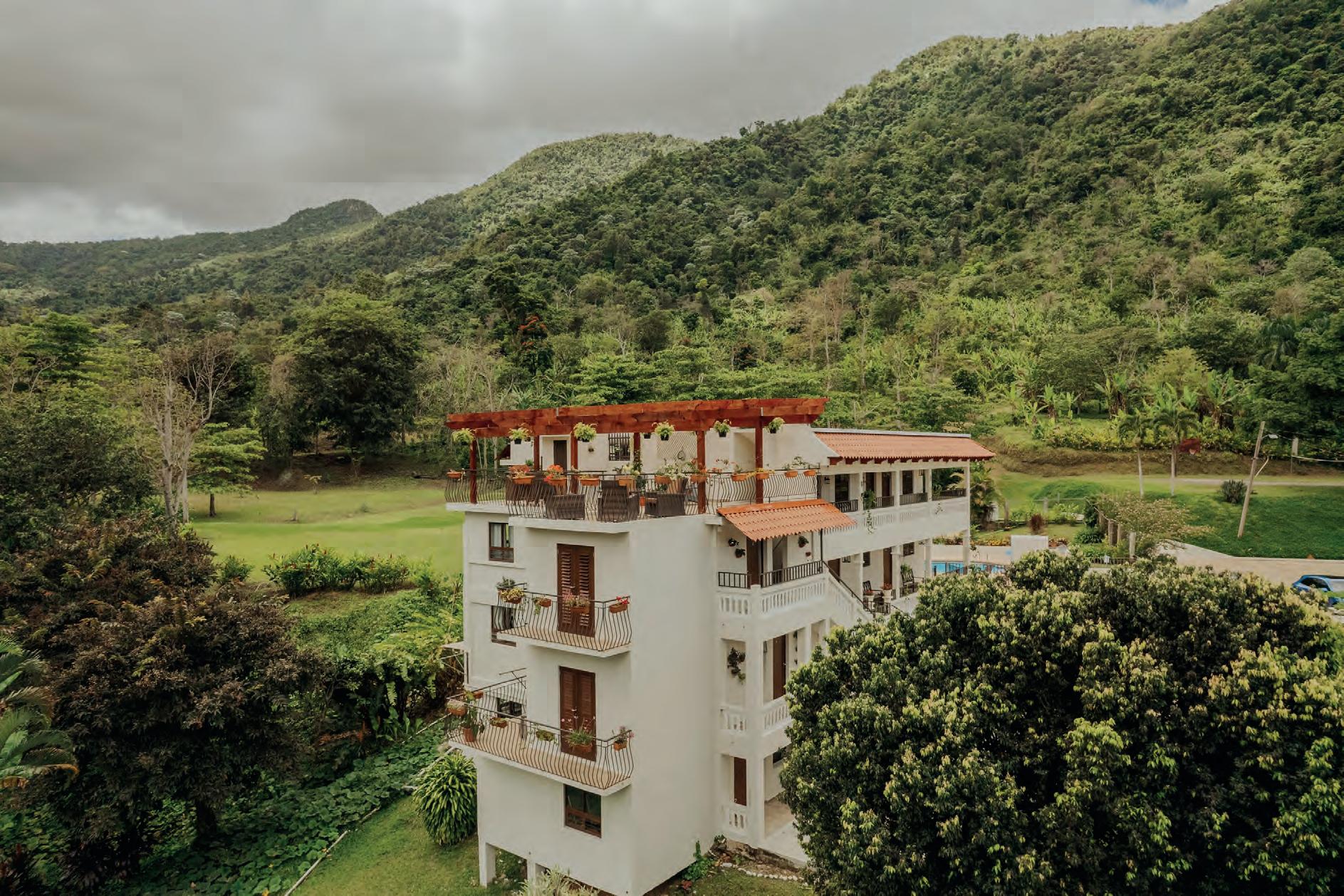
In November, the soul of Spain takes flight to the heart of the Cari bbean—to Casa de Campo Resort & Villas in La Romana—where for three unforgettable days, guests will be able to celebrate Iberian traditions at ALMA Casa de Campo.
This third edition, taking place from one-of-a-kind sensory journey through Spanish culture, gastronomy, music, and traditions.
Under the passionate curatorship of entrepreneurs Cuchy Pérez and Susana Deleito, this event has become an unmissable rendezvous for those who appreciate the elegance of Mediterranean culture in a tropical setting.

The festivities will begin on Thursday, November 20, with an opening soirée on the majestic Dye Fore golf course, where guests will mingle over cocktails and breathtaking views. On Friday, November 21, the gala dinner will elevate the experience to new heights: celebrated Michelin three-star chef Ramón Freixá will delight guests with his artistry, while Miguel Poveda will fill the night with the pure essence of flamenco.
On Saturday, November 22, the polo field transforms into a true Feria de Sevilla—with colorful tents, traditional attire, tapas, wine, sevillanas, and that joy for life that only the south of Spain can offer.
ALMA Casa de Campo is more than just a fair—it is an intimate celebration of the art of living. An invitation to feel the heartbeat of Spain, without ever leaving the Dominican Republic.

Hacienda Moraica es una hospedería & hacienda de café ubicada en Orocovis, Puerto Rico. Cuenta con 25 habitaciones, restaurante, piscinas, canchas de juego, área de pesca, centro de entretenimiento & experiencias de café.

Hospedería Recorridos de Café
Campamento de Café Restaurante & Barra Bodas & Eventos
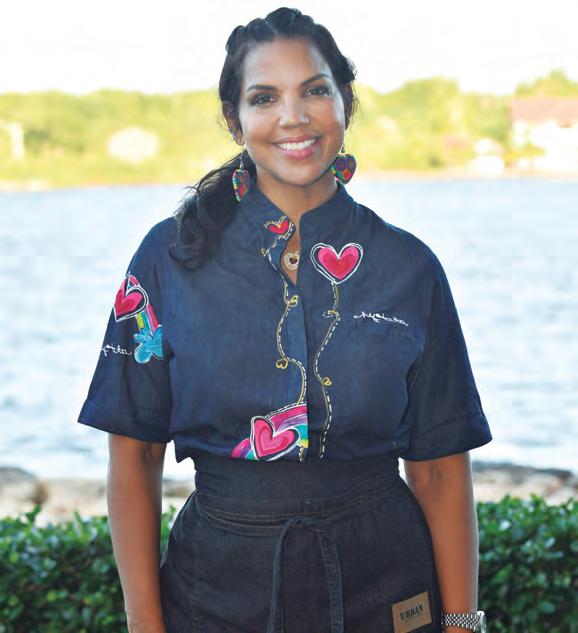
La gastronomía dominicana se luce en el panorama internacional gracias a Inés Páez Nin, conocida como Chef Tita, quien fue galardonada con el Champions of Change Award 2025 por Latin America’s 50 Best Restaurants.
Esta distinción la convierte en la primera persona de América
Latina en recibir el premio, que honra a figuras que fusionan la excelencia culinaria con un impacto social tangible y la corona como la embajadora del sabor dominicano.
A través de su labor con la Fundación IMA y su restaurante Aguají, Chef Tita ha transformado comunidades rurales, rescatando productos ancestrales, técnicas tradicionales y dándole voz a los pequeños productores del país, sirviendo así de puente entre el patrimonio culinario dominicano y la innovación social.
“Me llena de orgullo seguir representando a la República Dominicana de manera digna y poner nuestra cultura en alto en mercados internacionales”, expresó al recibir la noticia.
El próximo 2 de diciembre, Chef Tita recibirá oficialmente el galardón en Antigua, Guatemala, durante la gala de 50 Best Restaurants, marcando un momento histórico para la cocina dominicana.
Dominican gastronomy shines on the international scene thanks to Inés Páez Nin, known as Chef Tita, who was awarded the Champions of Change Award 2025 by Latin America’s 50 Best Restaurants.
This distinction makes her the first person from Latin America to receive the award, which honors figures who fuse culinary excellence with tangible social impact and crowns her as the ambassador of Dominican flavor.
Through her work with the IMA Foundation and her restaurant Aguají, Chef Tita has transformed rural communities, rescuing ancestral products, traditional techniques and giving voice to the country’s small producers, thus serving as a bridge between Dominican culinary heritage and social innovation.
“It fills me with pride to continue representing the Dominican Republic in a dignified way and to make our culture shine in the international markets,” she said upon receiving the news.
On December 2, Chef Tita will officially receive the award in Antigua, Guatemala, during the 50 Best Restaurant gala, marking a historic moment for Dominican cuisine.
El restaurante Ajüala de Santo Domingo fue incluido en la edición 2025 de 50 BEST DISCOVERY. Esta prestigiosa guía global incluye una selección curada de los mejores restaurantes, bares y hoteles en todo el mundo, e incluye más de 1,600 destinos aprobados por expertos para comer y beber en 75 países.
Felicidades al Chef Saverio Stassi y su equipo por este gran logro que llega como un merecido regalo por la celebración del sexto aniversario de Ajüala, y además de reconocer su innovación culinaria, proyecta a RD como un destino gastronómico mundial.
Santo Domingo’s Ajüala restaurant was included in the 2025 edition of 50 BEST DISCOVERY. This prestigious global guide includes a curated selection of the best restaurants, bars, and hotels around the world, and includes more than 1,600 expert-approved dining and drinking destinations in 75 countries.
Congratulations to Chef Saverio Stassi and his team for this great achievement that comes as a well-deserved gift for the celebration of Ajüala’s sixth anniversary, and in addition to recognizing its culinary innovation, projects the DR as a global gastronomic destination.

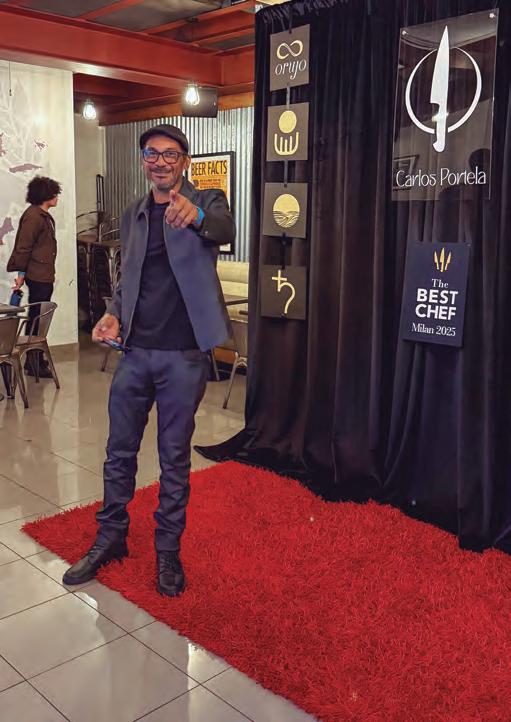
El Chef/Owner de Orujo Taller de Gastronomía, Carlos Portela, fue reconocido con “un chuchillo” por la entidad gastronómica internacional @thebestchefawards en Milán, Italia.
Esta distinción le otorga una clasificación Excelente a Chef Portela y lo convierte en el primer boricua en obtener este reconocimiento. Además, coloca a PR en el lente gastronómico mundial.
The Chef/Owner of Orujo Taller de Gastronomía, Carlos Portela, was recognized with “a knife” by the international gastronomic entity @thebestchefawards in Milan, Italy.
This distinction gives Chef Portela an Excellent rating and makes him the first Puerto Rican to obtain this recognition. In addition, it places PR in the global gastronomic lens.
La Academia Puertorriqueña de Gastronomía anunció los finalistas de los Premios Nacionales de Gastronomía 2025, a presentarse en una ceremonia que se celebrará el 13 de noviembre en la Plazoleta del Banco Popular, Hato Rey.
Esta segunda edición reconocerá a los profesionales y proyec tos que encarnan los valores de una Solidaria, Sostenible y Satisfactoria (4S) la Academia Iberoamericana de Gastronom
Los ganadores de las primeras cinco categorías representarán a PR en los Galardones Iberoamericanos de Gastr 2025, y de resultar finalistas, irán a la gala de premiación en Madrid a fines de noviembre.

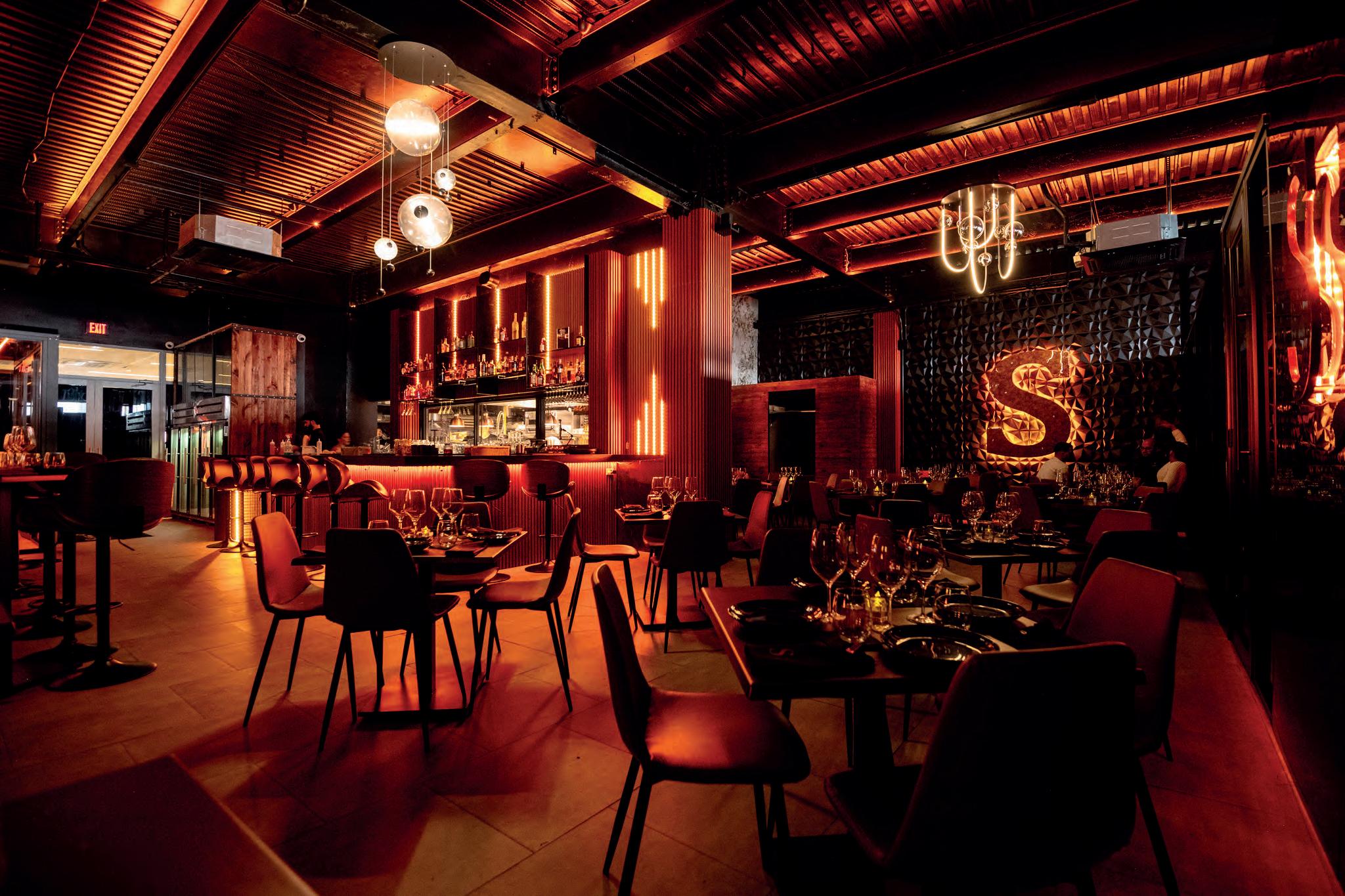
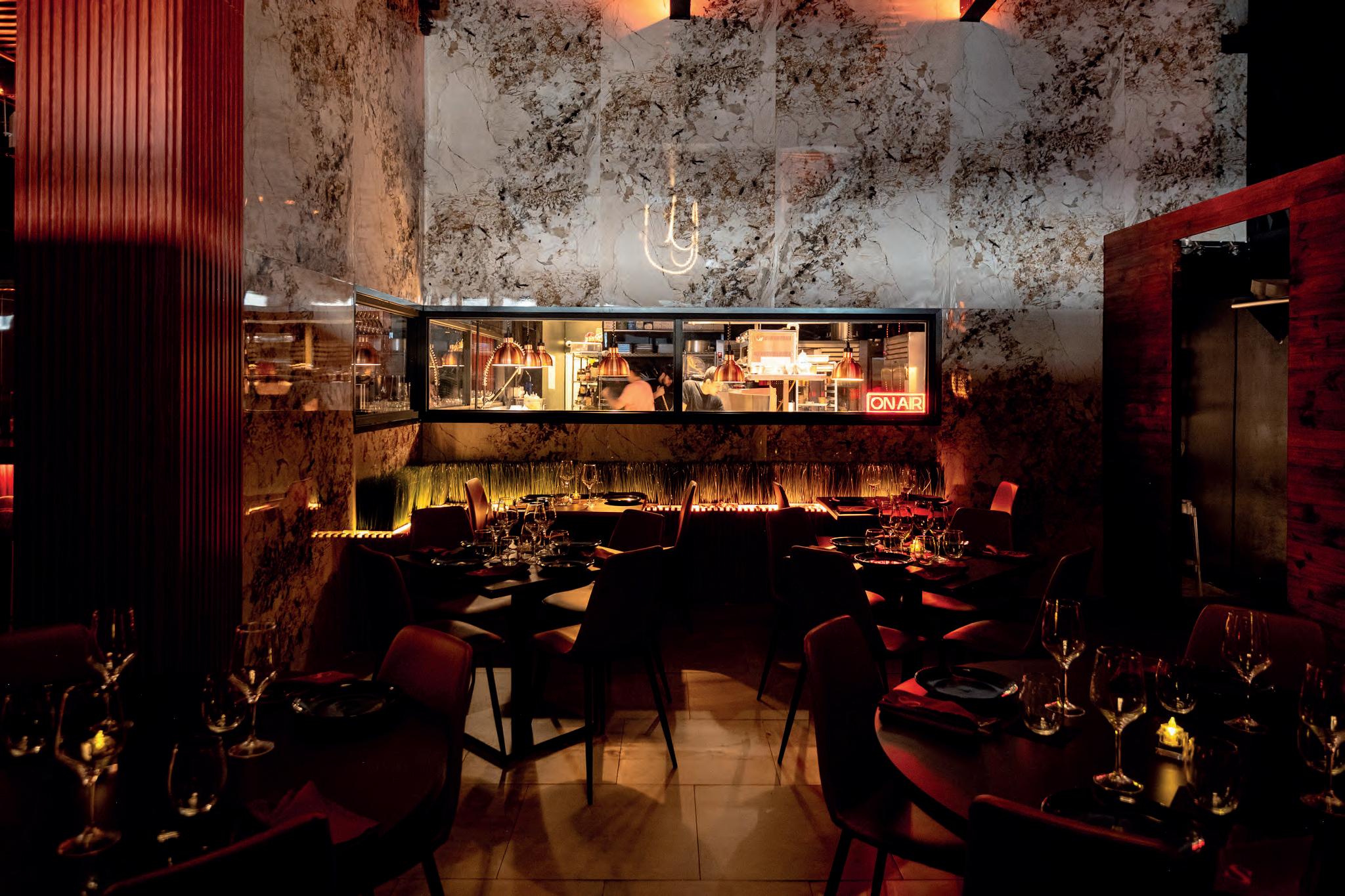


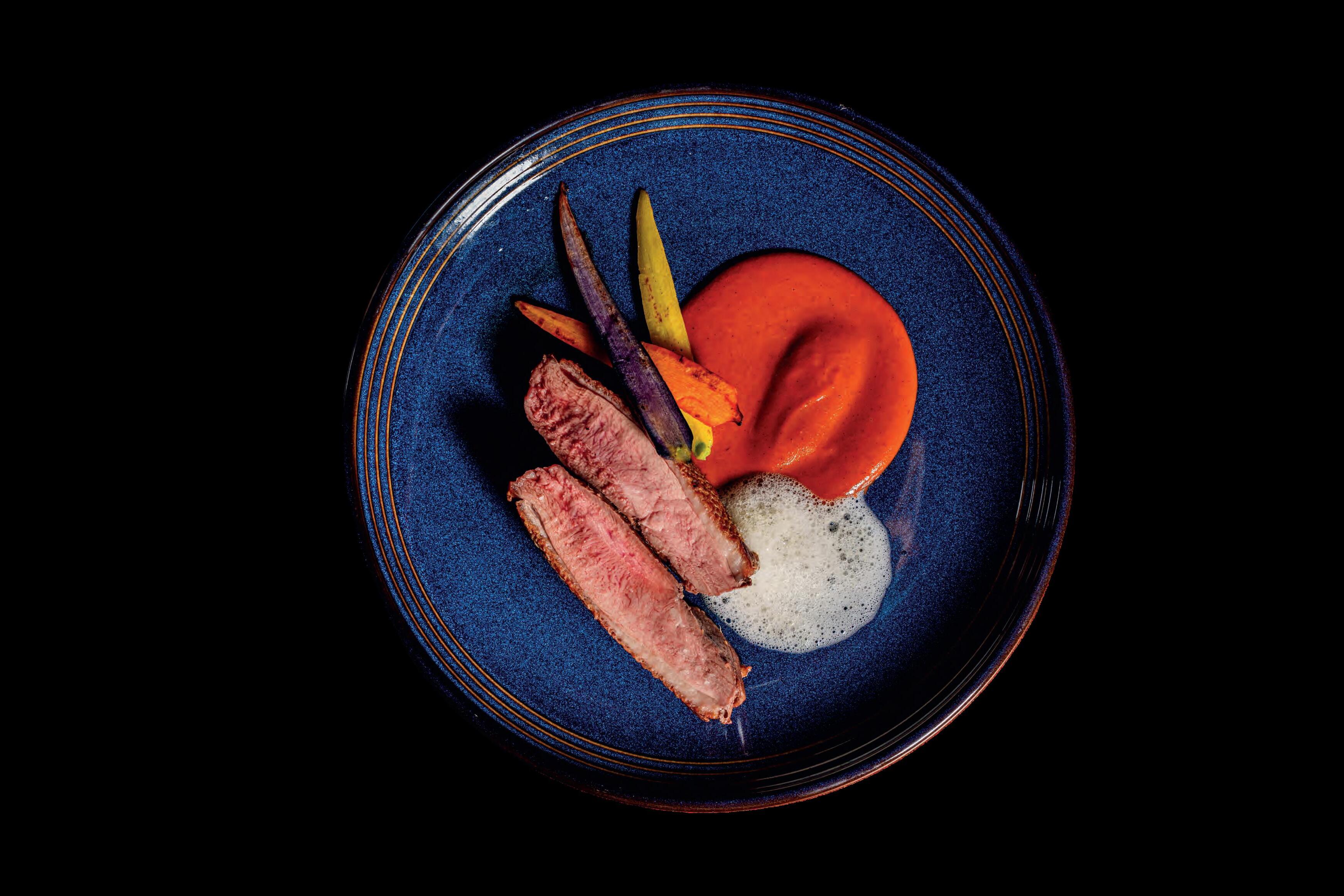

• Staff with an average of 30 years of combined experience in the transportation industry
• Electronically connected to all related Federal & State Government agencies
• We possess a US Customs National Permit which allows us to provide services in all US ports
• Member of the National Customs Brokers & Forwarders Association of America