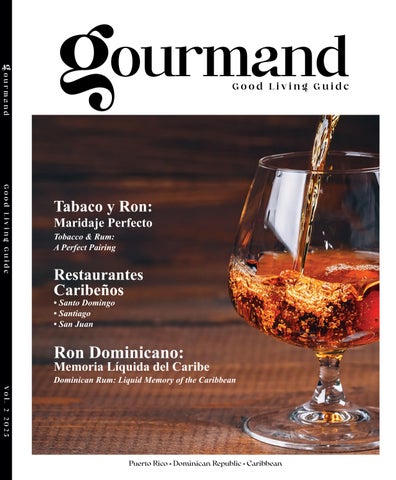
Tabaco y Ron: Maridaje Perfecto
Tobacco & Rum: A Perfect Pairing
Restaurantes Caribeños
• Santo Domingo
• Santiago
• San Juan
Ron Dominicano: Memoria Líquida del Caribe
Dominican Rum: Liquid Memory of the Caribbean









































Queridos lectores:

Tobacco & Rum: A Perfect Pairing
Restaurantes Caribeños
• Santo Domingo
• Santiago
• San Juan
Ron Dominicano: Memoria Líquida del Caribe
Dominican Rum: Liquid Memory of the Caribbean
Queridos lectores:
¡Qué alegría darles la bienvenida a esta segunda edición de Gourmand! Tras el exitoso lanzamiento de nuestra revista en junio, no podemos más que agradecer la cálida acogida que hemos recibido, tanto en República Dominicana como en Puerto Rico. Su entusiasmo, sus mensajes y su complicidad con esta propuesta nos confirman que existe un genuino apetito por explorar la riqueza gastronómica del Caribe —y el mundo— con una mirada fresca, curiosa y profundamente conectada con nuestras raíces.
En esta nueva entrega hemos querido rendir homenaje a uno de los grandes tesoros del Caribe: el ron dominicano. Los llevaremos de viaje por las tierras que lo vieron nacer, a través de entrevistas exclusivas con maestros roneros, visitas a destilerías emblemáticas y recorridos históricos que revelan el alma de este destilado que trasciende fronteras.
Más que una bebida, el ron representa tradición, cultura y celebración. Es símbolo de identidad y testimonio del ingenio y la pasión caribeña. Por eso, esta edición no solo busca informar, sino también enamorar: seducirte con sus aromas, su historia y el arte que implica crear una botella que encierre tanto carácter.
Queremos extender un agradecimiento muy especial a las marcas roneras que apoyaron esta edición, abriéndonos sus puertas y compartiendo con generosidad sus conocimientos, historias y pasión por este legado caribeño. Su colaboración fue esencial para dar vida a este número, en ocasión de la celebración del Día Mundial del Ron el 16 de agosto.
Esperamos que disfruten cada página, cada historia y cada sabor compartido. Seguimos comprometidos con brindarles un contenido exquisito, auténtico y con sabor a Caribe. Gracias por permitirnos entrar a sus mesas, sus cocinas y sus corazones.
Bon appétit,
Dear Gourmands:
What a joy to welcome you to this second edition of Gourmand! After the successful launch of our magazine in June, we want to deeply thank you for the warm reception we have received, both in the Dominican Republic and in Puerto Rico.
Your enthusiasm, messages and complicity with this proposal confirm that there is a genuine appetite to explore the gastronomic richness of the Caribbean –and the world– with a fresh, curious and deeply connected look with our roots.
In this new installment, we wanted to pay tribute to one of the great treasures of the Caribbean: the Dominican rum. We’ll take you on a journey to the lands where it was born, through exclusive interviews with rum masters, visits to emblematic distilleries and historical tours that reveal the soul of this distilled spirit that transcends borders.
More than a drink, rum represents tradition, culture and celebration. It is a symbol of identity and testimony of Caribbean ingenuity and passion. For this reason, this edition not only seeks to inform, but also to make you fall in love: to seduce you with its aromas, its history and the artcraft involved in creating a bottle that embodies so much character.
We want to extend a very special thanks to the rum brands that supported this edition, opening their doors to us and generously sharing their knowledge, stories and passion for this Caribbean legacy. Their collaboration was essential in bringing this issue to life, coinciding with the celebration of World Rum Day on August 16
We hope you enjoy every page, every story, and every flavor shared. We remain committed to providing you with an exquisite, authentic content with its distinct Caribbean flavor. Thank you for allowing us into your tables, your kitchens, and your hearts.
Restaurantes Caribeños
Caribbean Restaurants
RD PR
• Casarré
• Palma y Celia
• Campuno
• Vianda
• Cocina al Fondo
• Bar Identidad
Ron Dominicano
Memoria Líquida del Caribe
Dominican Rum
Liquid Memory of the Caribbean
David Ortiz da otro gran hit con Ron Ozama
David Ortiz scores his latest hit with Ozama Rum
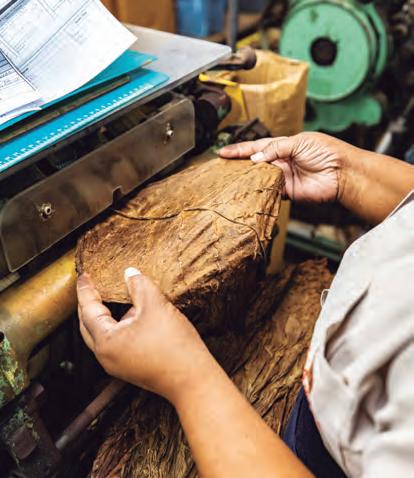

Visita a la fábrica La Aurora
La Aurora Cigar Factory Tour
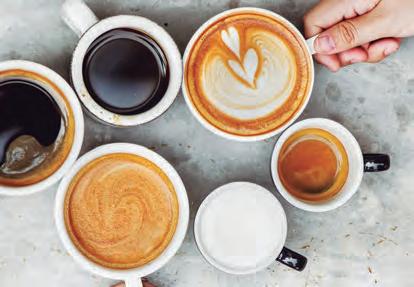
Mundo Barista Barista World
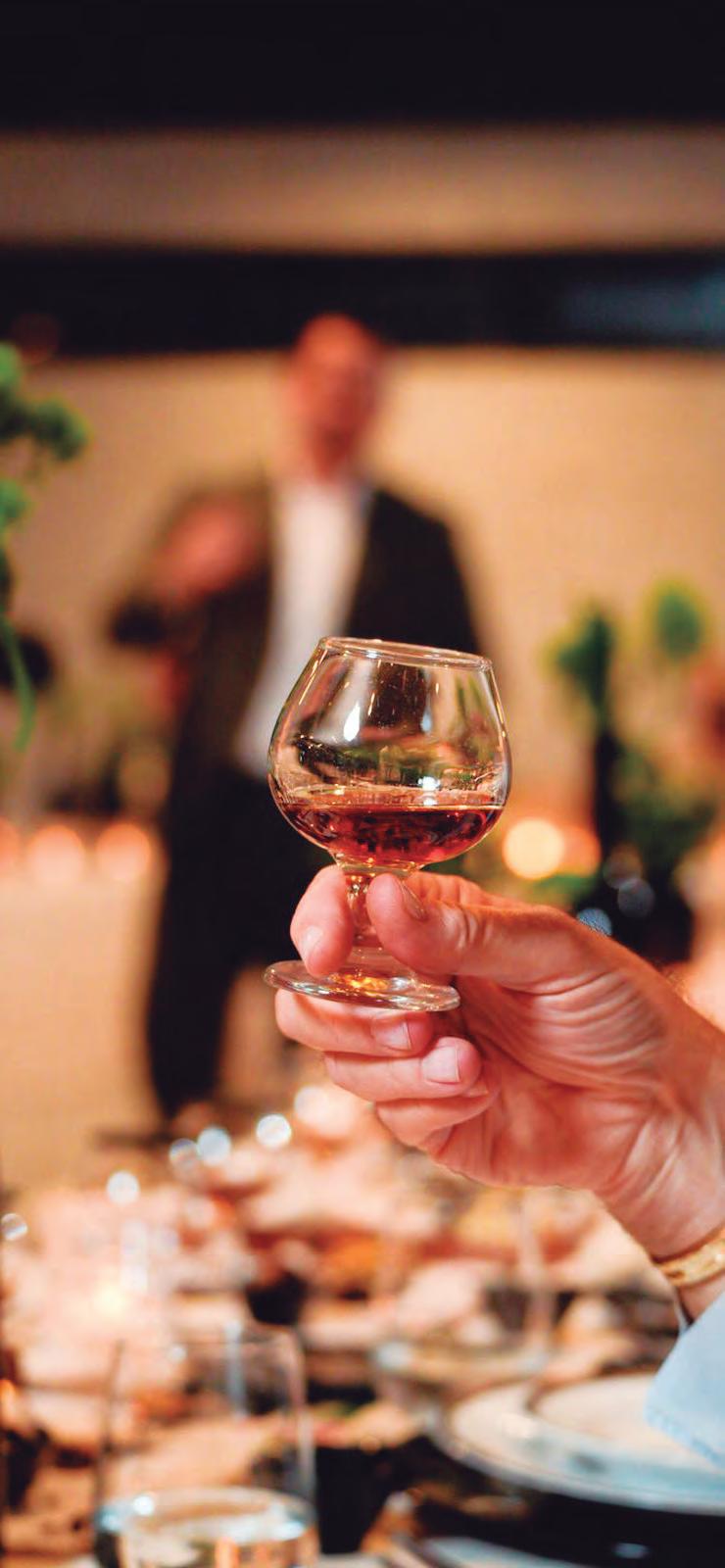
The wine “world cup” moves to Argentina 64 79
El “mundial” del vino se muda a Argentina
Good Living Guide
Puerto Rico • Dominican Republic • Caribbean
DIRECTORA • DIRECTOR
Roselyn O’neil
EDITORA • EDITOR
Yvonne Brown Ieromazzo
PERIODISTA • STAFF WRITER
Orlando Jerez
DISEÑO • DESIGN
Albert Polanco
Thomas Sartori
Spot 21 • Hospitality Lab
Erica Reyes
Escuela de Café y Baristas de P.R. Gilberto Gómez
Sommelier y Educador de Vinos y Licores
FOTOGRAFÍA • PHOTO
Javier Celado, Julio César Peña, Rafael N. Ruiz Mederos / Discover Puerto Rico (Identidad Bar, Cocina al Fondo, Vianda) Palma y Celia, Campuno, Ron Barceló, Ron Ozama, Ron Don Isidro, Ron Punta Cana, La Frizzanteria, Diageo (World Class RD), APUGA, Goyurt
Bodega de Méndez, Martin Codax, Catena Zapata Restaurant Week, Ajualä
EDITORIAL info@gourmandintl.net
VENTAS • SALES sales@gourmandintl.net
REP. DOMINICANA
José Eduardo García 849-450-2579
PUERTO RICO
Lourdes Rivera 787-402-0433
GOURMAND ES UNA PUBLICACIÓN DE
C/ 2, Villa Marina Sur, No. 8, Sto. Dgo. D.N, República Dominicana Tel.: 829-688-0256
@Gourmandintl • https://issuu.com/https://issuu.com/gourmandguideintl
Gourmand
Prohíbe la reproducción total o parcial de su portada, artículos y secciones fijas de la misma. No se hace responsable de las opiniones vertidas por los colaboradores o encuestas realizadas en sus artículos.

La gastronomía refleja el alma de los pueblos. Y nada expresa mejor la cultura, alegría y pasión de su gente que la rica tradición culinaria caribeña.
En esta segunda edición de Gourmand, dedicada al ron, reseñamos tres restaurantes en República Dominicana y dos en Puerto Rico que, al igual que esa legendaria bebida tropical, representan lo mejor de los aromas, colores y sabores del Caribe.
Hay opciones de menú para todos los gustos: desde la auténtica cocina del campo y comida criolla tradicional en un elegante ambiente tropical, hasta una elevada cocina “farm-to-table” y la fusión caribeña con un toque internacional.
Y todos utilizan los ingredientes más frescos, las técnicas culinarias más avanzadas y las combinaciones más atrevidas para llevar la gastronomía local a otro nivel.
Gastronomy reflects the soul of the people. And nothing better expresses its culture, joy and passion than the rich Caribbean culinary tradition.
In this second edition of Gourmand, dedicated to rum, we review three restaurants in the Dominican Republic and two in Puerto Rico that, just like this legendary tropical spirit, represent the best of the aromas, colors and flavors of the Caribbean.
There are menu options for every taste: from authentic country cuisine and traditional Creole food in an elegant tropical setting, to elevated farm-to-table cuisine and Caribbean fusion with a global twist.
And they all use the freshest ingredients, the most advanced cooking techniques and the most daring combinations to take local gastronomy to another level.
Fascinante aventura culinaria y cultural con un alucinante menú de degustación de nueve cursos
Por/By: Orlando Jerez e Yvonne Brown Ieromazzo
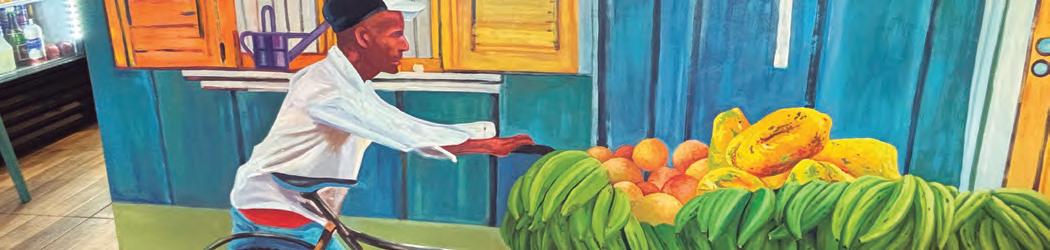
Más que un restaurante, Casarré es un homenaje a la riqueza gastronómica del Caribe. Y su concepto de cena de degustación privada, estilo “chef’s table”, va más allá de los sabores. Es una experiencia sensorial y cultural que conecta a los comensales con los ingredientes, técnicas y tradiciones culinarias locales.
Desde que cruzas la puerta, Casarré sorprende con su diseño auténtico y acogedor, repleto de detalles originales: una pared de bambú hecha en Bonao, la vajilla elaborada por artesanos locales y unas hermosas cucharas en guayacán diseñadas por la artista Mencía Zagarella ¡hasta puedes escoger el modelo que quieres usar en la cena!
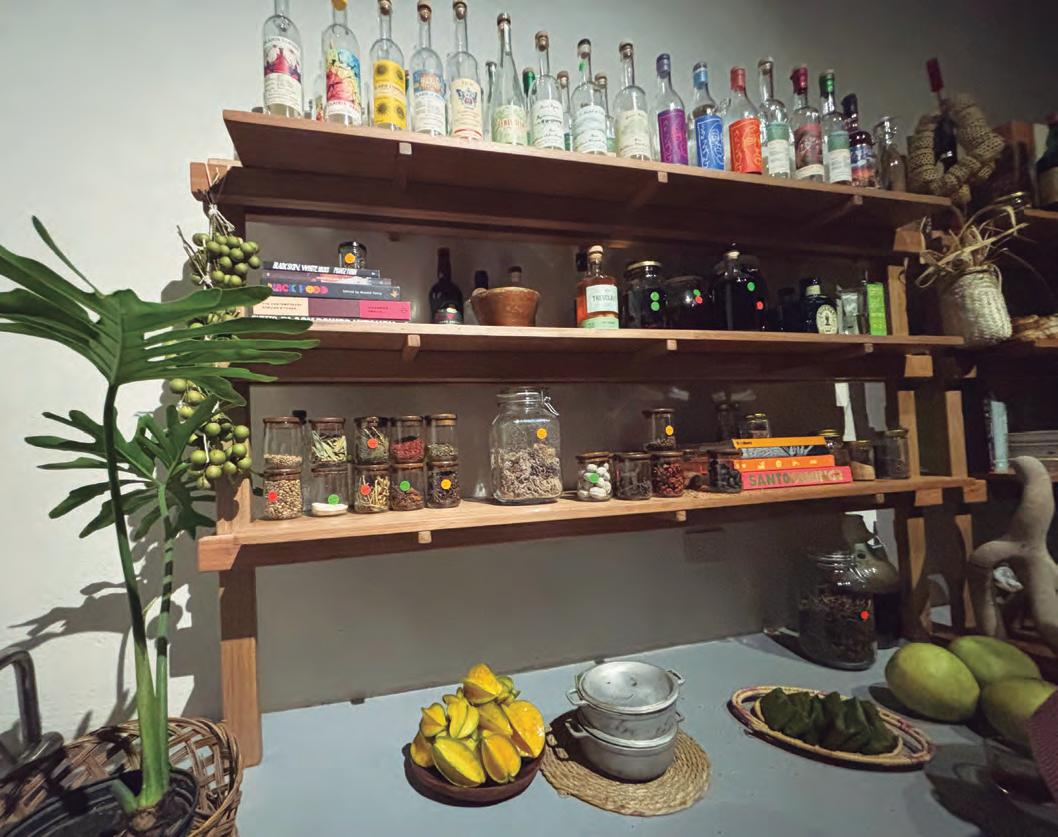
Al entrar en este espacio tan singular, llegas al “colmadito típico”, donde puedes descubrir ingredientes locales que forman parte de la cocina dominicana, y que no son tan conocidos, pero se utilizarán en el menú a degustar.
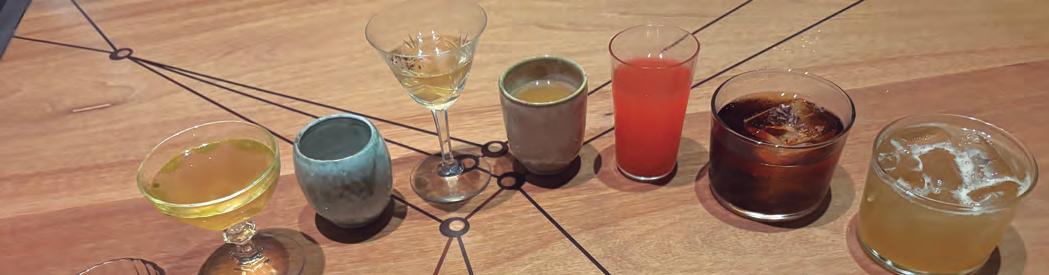
Aquí te reciben con dos cocteles de bienvenida elaborados con licores artesanales: Sour de Canelilla —ron agrícola y jarabe cítrico de canela endulzado con miel de abeja— y un Mamajuana Negroni que sustituye la ginebra por ron y el Campari por mamajuana casero, y le añaden un toque de vermouth rosso. ¡Ambos tan refrescantes como sabrosos!
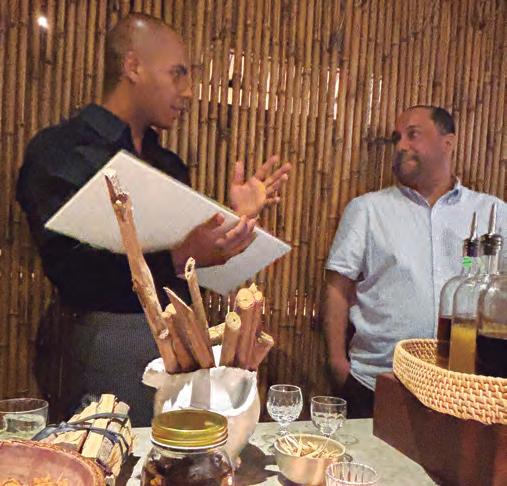
Mientras van llegando los 18 comensales — el cupo máximo por noche— el grupo tiene la oportunidad de compartir y escuchar la explicación del concepto de Casarré y lo que están a punto vivir. Luego se acomodan alrededor de la imponente mesa, tipo barra comunal en forma de “u”, con un tope de fina madera tallado con un moderno diseño.
El chef domínico-suizo Olivier Bur y su entusiasta equipo los reciben para juntos iniciar una fascinante aventura culinaria y cultural con un alucinante menú de degustación de nueve cursos. Al servirte cada plato, que parecen pequeñas obras de arte, te explican su historia, sus ingredientes, el proceso de elaboración y su razón de ser.
Siempre comienzan con un caldo y, en esta ocasión, te despiertan el paladar con uno hecho a base de leche de coco casera, aromatizado con hongo silvestre Yonyón de Duvergé y hojas de limoncillo y guanábana, como las que usan las abuelas en los tés para abrazarte y calentar el alma.
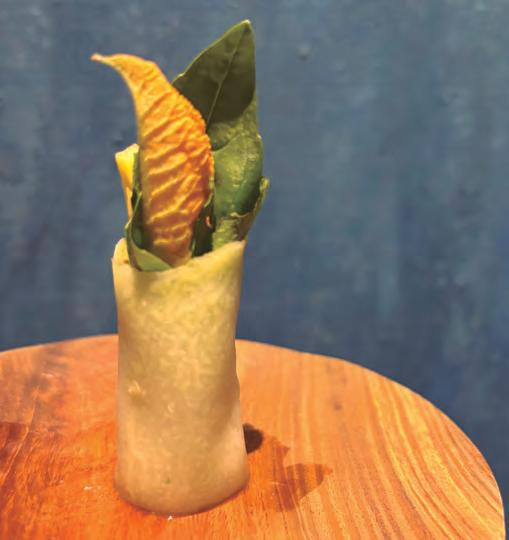
Luego nos sorprenden con un escultural rollo de tayota (chayote) con mango verde, pepino, flor de auyama y yerbas aromáticas del Mercado Modelo con una salsita botánica para mojar. Este pequeño bocado de intenso sabor tropical evoca a un dim sum oriental.
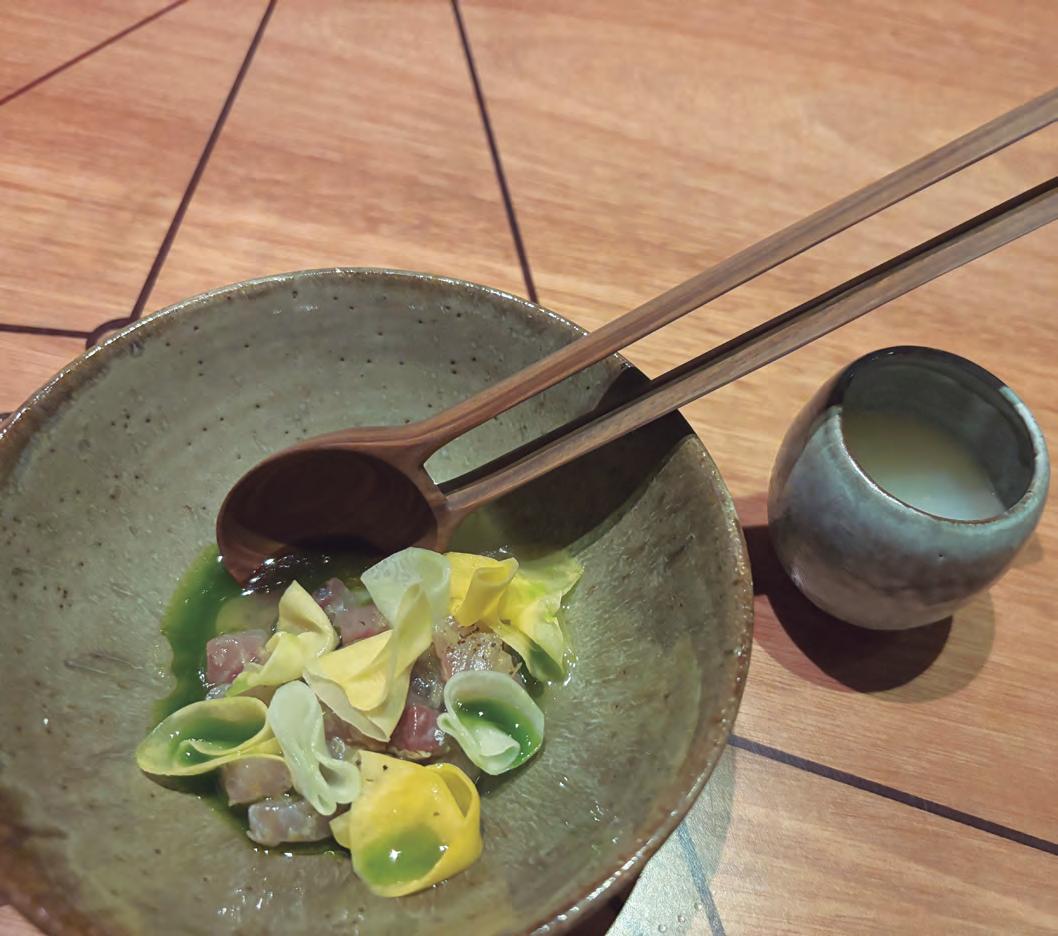
Cuando piensas que ya nada te puede asombrar, llega a la mesa un salpicón de pescados en una salsa de carambola y aceite de hierbas con mango y tayota.
Le sigue el calamar diamante a la brasa (especie de gran tamaño que habita en las aguas tropicales), servido con una reducción de coco, puré de Yonyón, cebolla y un mix de cacao bañado con una salsa de almendra criolla tostada. Viene acompañado de un casabe elaborado en la casa y sazonado con algas, lo que le da un toque distintivo.
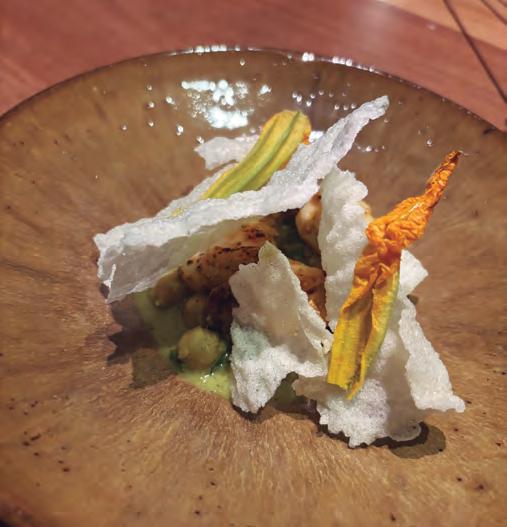
La degustación continúa con un plato a base de sofrito de macadamia con coco tierno asado con Tri Trí, los gustosos camaroncitos disecados con crujientes cáscaras. Y concluye la parte salada con el Calalú, emblemático guiso caribeño que se prepara en distintas islas (Jamaica, Trinidad y Tobago, y RD), y que Casarré reinterpreta con garbanzos, hierbas, leche de coco y camarones de Sánchez, acompañado de chips de arroz y flores de auyama (calabaza).
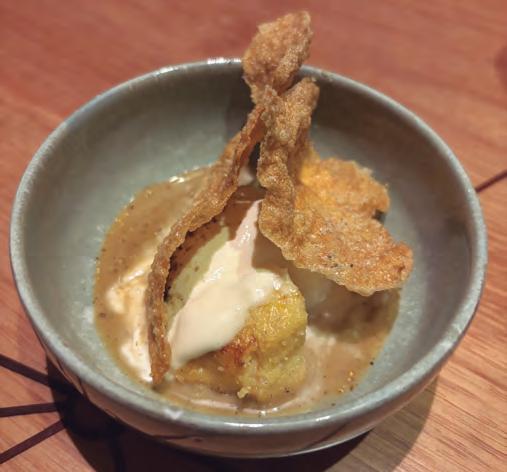
Como gran final, dos postres que fusionan tradición e innovación a la perfección: arepita de mano con caramelo de hoja quemada y helado de maíz con chips de harina de Guáyiga (planta nativa de las Antillas Mayores), espolvoreados con gofio (pasote), y dulce de mamey en almíbar con vainilla dominicana, miel de abeja y una espuma de guanábana que sabe a gloria.
Entre cada suculento platillo, nos deleitan con una serie de originales bebidas y cocteles que completan la experiencia y sirven de “palate cleanser”: daiquiri de jagua con base de clerén (tradicional bebida artesanal alcohólica de Haití), y el borde cubierto con sal de jagua deshidratada; champola de guanábana; té de cáscara de cacao; un estupendo mocktail de cereza y licores artesanales elaborados con piña, malagueta y endulzado con su propia mezcla de raspadura.
Cabe resaltar que el menú de platos y coctelería puede cambiar cada día dependiendo de los ingredientes frescos que se consigan en el mercado y el mar.
Anímate a vivir esta inolvidable aventura multisensorial en Casarré, un espacio para saborear el Caribe desde sus raíces, con respeto, belleza y emoción.
A fascinating culinary and cultural adventure with a hallucinating nine-course tasting menu
More than a restaurant, Casarré is a tribute to the gastronomic richness of the Caribbean. Its private tasting dinner concept, chef’s table style, goes beyond the flavors. It is a sensory and cultural experience that connects diners with local ingredients, techniques and culinary traditions.
From the moment you walk through the door, Casarré surprises with its authentic and welcoming design, full of original details: a bamboo wall made in Bonao, the tableware made by local artisans, and beautiful guayacán wood spoons designed by the artist Mencía Zagarella. You can even choose from the basket the model you want to use for dinner!
Upon entering this unique space, you arrive at a little market that looks like a typical “colmadito”, where you can discover local ingredients that are part of Dominican cuisine, but are not so well known, and will be used in the menu to be tasted.
Here you are greeted with two welcome cocktails made with artisanal liqueurs: a Canelilla Sour–agricultural rum and citrus cinnamon syrup sweetened with honey– and a Mamajuana Negroni, that replaces gin with rum and Campari with a homemade mamajuana, then adds a splash of vermouth rosso. Both are as refreshing as they are tasty!
While the 18 diners arrive —which is the maximum capacity per night— the group have the opportunity to share and listen to the explanation of the concept of Casarré and what they are about to experience. Then they settle around the imposing table, a u-shaped communal bar with a fine wood top carved in a modern design.
They are welcomed by Dominican-Swiss chef Olivier Bur and his enthusiastic team, so together they can embark on a fascinating culinary and cultural adventure with a hallucinating nine-course tasting menu. While serving each dish, which look like small works of art, they explain its history, its ingredients, the preparation process and its reason why.
They always start with a broth and, on this occasion, they awaken your palate with one made from homemade coconut milk, flavored with wild Yonyón mushroom from Duvergé, lemongrass and soursop leaves, like those used by our grandmothers in teas that hug you and warm your soul.
Then they surprise us with a sculptural chayote roll with green mango, cucumber, pumpkin flower and aromatic herbs from the Mercado Modelo with a botanical sauce for dipping. This small bite of intense tropical flavor evokes an oriental dim sum.
When you think that nothing can surprise you anymore, a fish salad in a starfruit sauce and herb oil with mango and chayote arrives.
It is followed by grilled diamond squid (a large species found in tropical waters), served with a coconut reduction, Yonyón puree, onion and a mix of cocoa bathed in a toasted Creole almond sauce. It comes with cassava made in the house and seasoned with seaweed, which gives it a distinctive touch.
The tasting continues with a dish based on macadamia seasoning with roasted tender coconut with Tri Trí, the tasty dried baby shrimps with crunchy skins. And the salty part concludes with Calalú, an emblematic Caribbean stew that is prepared on different islands (Jamaica, Trinidad & Tobago, DR), and that Casarré reinterprets with chickpeas, herbs, coconut milk and shrimp from Sánchez, accompanied by rice chips and pumpkin flowers.
As a grand finale, two desserts that perfectly fuse tradition and innovation: hand arepita with burnt leaf caramel and corn ice cream with Guáyiga chips (made with flour from this plant native to the Greater Antilles), sprinkled with gofio (pasote), and mamey fruit in syrup with Dominican vanilla, honey and a soursop foam that tastes like glory.
Between each succulent dish, they delight us with a series of original drinks and cocktails that complete the experience and serve as a “palate cleanser”: jagua daiquiri with base of clerén (traditional Haitian alcoholic craft drink), and the rim covered with dehydrated jagua salt; soursop champola; cocoa husk tea; a great cherry mocktail and artisanal liqueurs made with pineapple, malagueta and sweetened with their own raspadura mix.
It should be noted that the menu of dishes and cocktails can change every day depending on the fresh ingredients that are obtained from the local produce markets and the sea.
Dare to live this unforgettable multisensorial adventure in Casarré, a space to savor the Caribbean from its roots, with respect, beauty and emotion.
Luperón #52, Zona Colonial Santo Domingo, R.D. (809) 610-6375 www.casarre.com @casarre.sdq
Sofisticado oasis tropical con alta cocina caribeña y vibrante oferta musical en vivo
Por/By: Yvonne Brown Ieromazzo
Esta nueva propuesta gastronómica en Piantini rinde homenaje al Caribe clásico y refinado, pero relajado, creando un espacio con mucha alma y buena vibra, ideal para celebrar el arte del buen vivir ¡de sol a son!
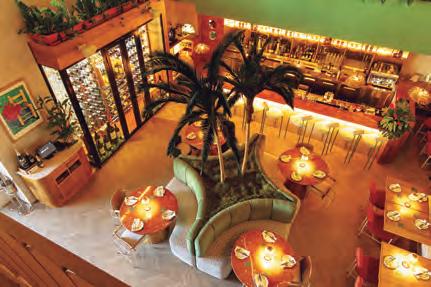
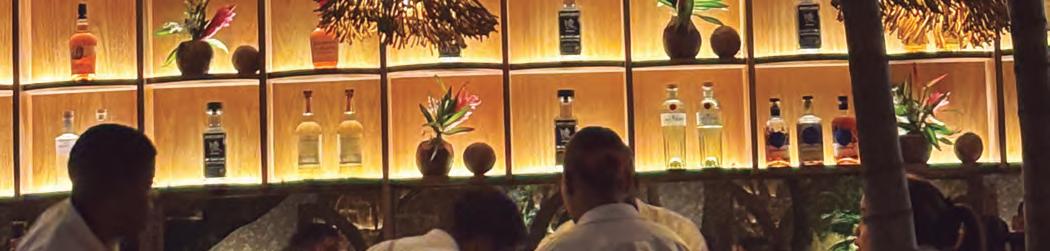
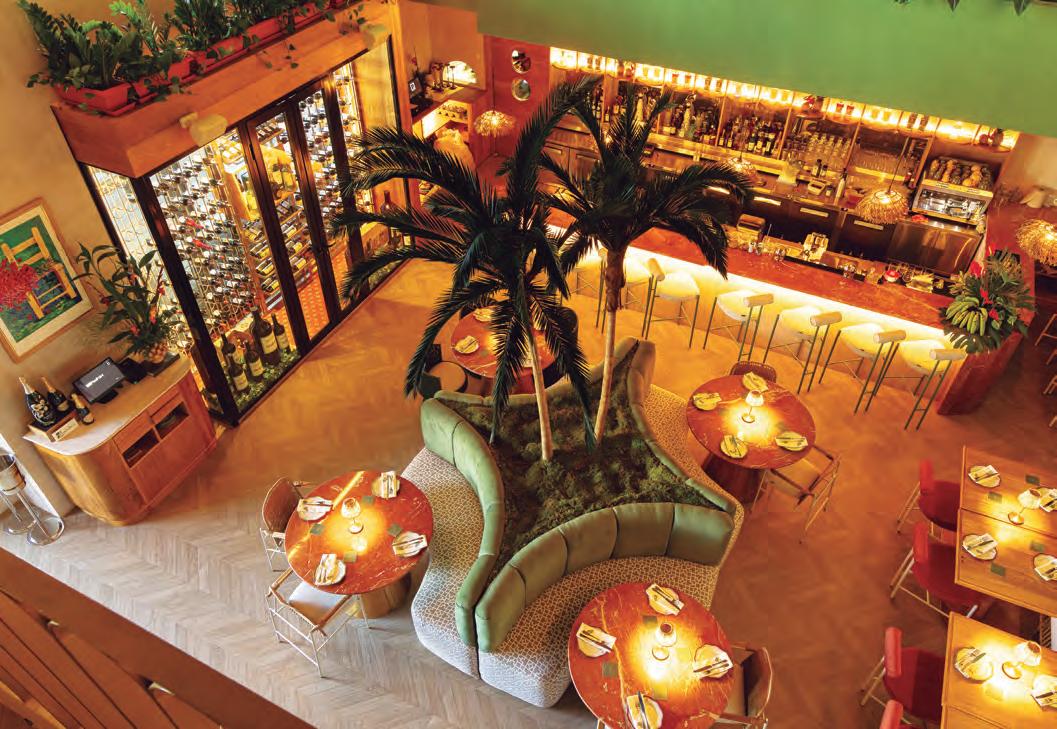
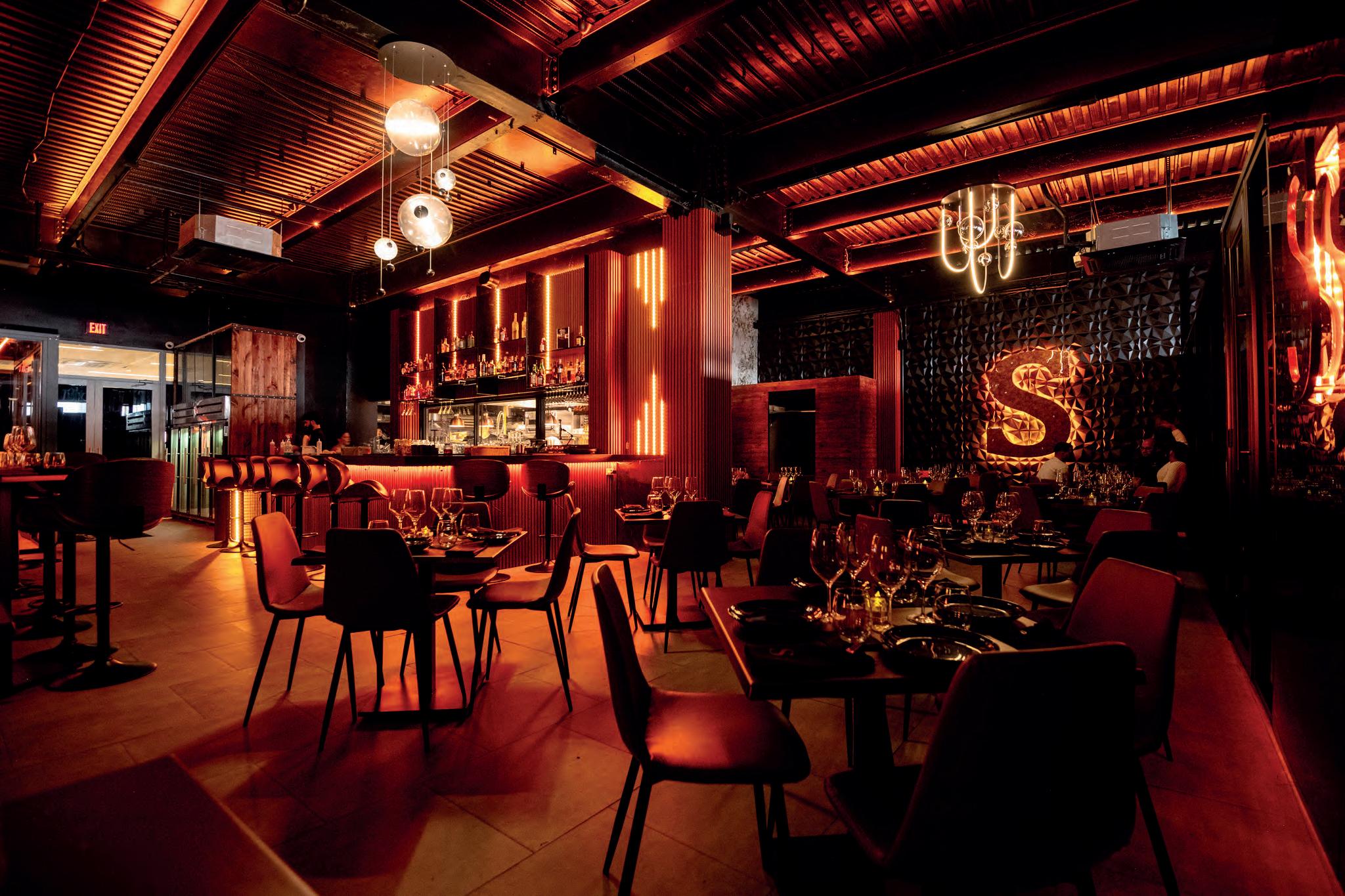
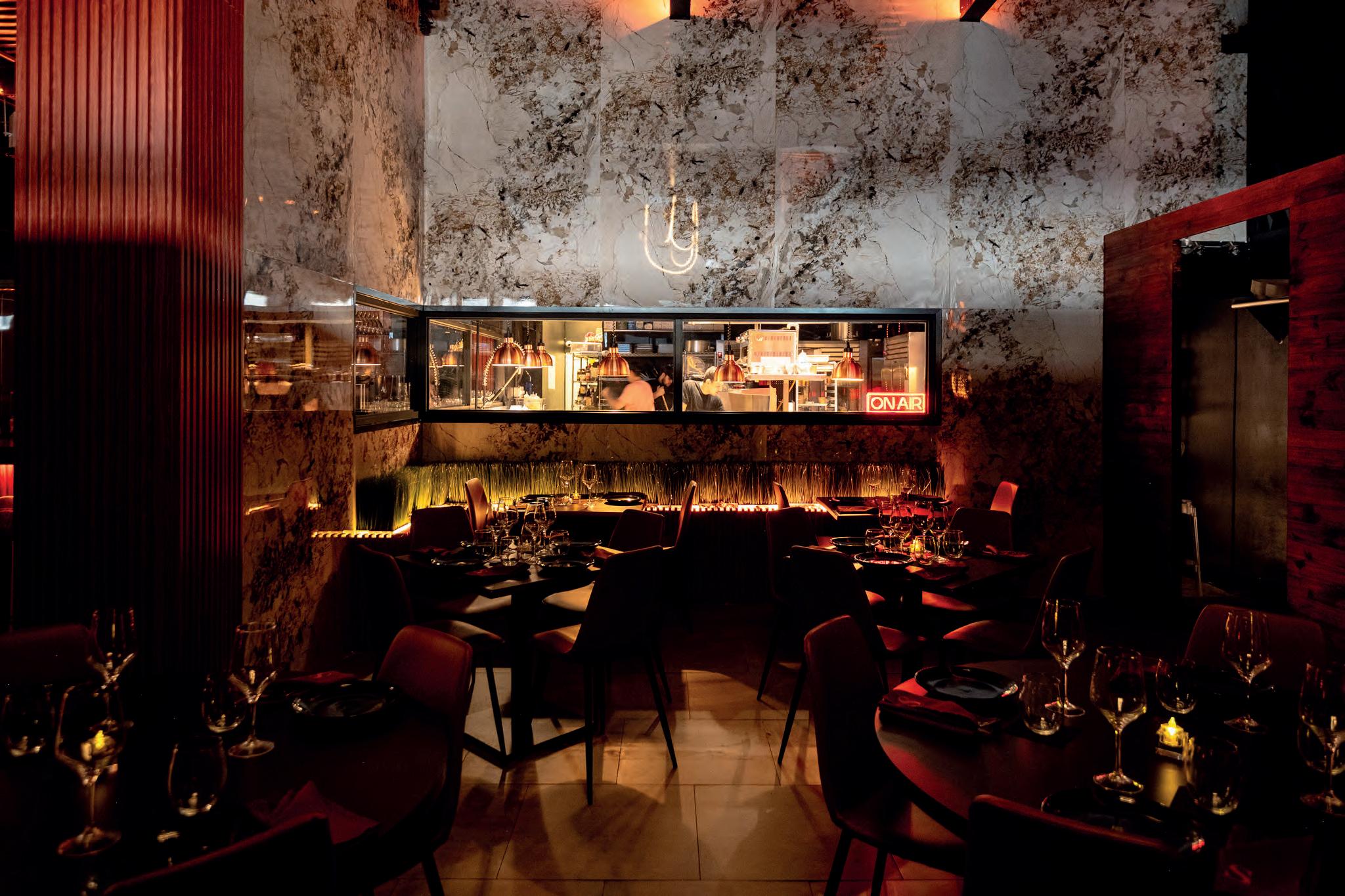
El recién inaugurado restaurante Palma & Celia redefine la experiencia culinaria en Santo Domingo al fusionar la alta cocina internacional con ingredientes locales de primera y brindar una innovadora coctelería de autor en un ambiente elegante y vibrante, al mejor estilo chic tropical.
La música en vivo llena de ritmo y alegría este espacio todos los días, lunes a sábados desde las 8:30 PM y domingos de 1:30 PM a 5 PM. Desde un balcón indentado en el segundo piso, las orquestas tocan un curado repertorio que destila nostalgia y honra las raíces culturales del Caribe. De ahí el nombre del restaurante, inspirado en dos íconos de esta región: uno visual, las palmeras, y otro musical, la sonera Celia Cruz.
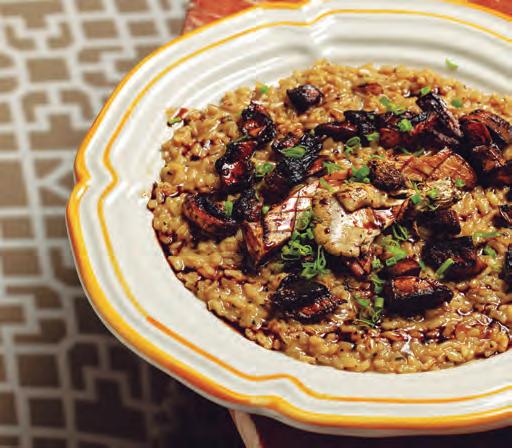
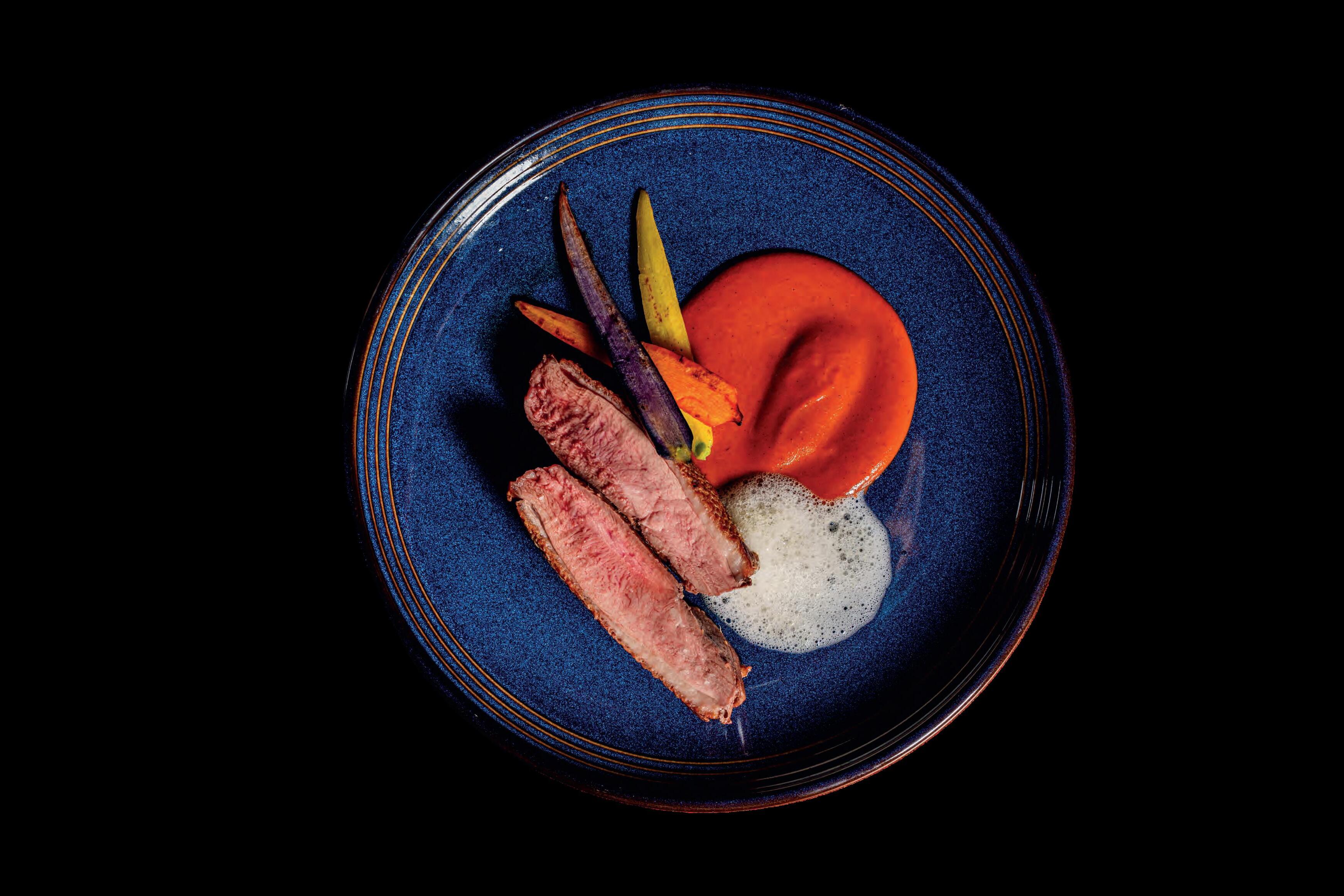
La cocina de Palma y Celia celebra la abundancia, la tradición y el compartir. Entre los platos principales más populares se encuentran el risotto Tumbao en tinta de calamar con chipirones, el risotto de hongos con mantequilla avellanada, pasta de trufa, queso crema de cabra y queso parmesano, y el Tomahawk de cerdo con boronía de berenjena y plátano.
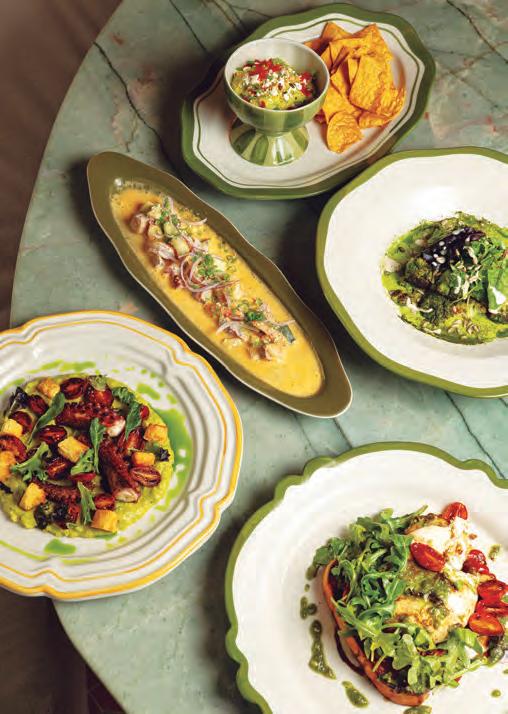
Las opciones de entradas ofrecen innovadoras combinaciones de sabores: croquetas de yuca y chivo, guacamole de Celia con togarashi, queso feta, pico e’gallo, huevas de tobiko y totopos de maíz, ceviche mixto de pesca blanca en leche de tigre con chinola, coco y curry rojo, pepino y cilantro, así como pulpo al sartén, ostras, burrata y mini burgers.
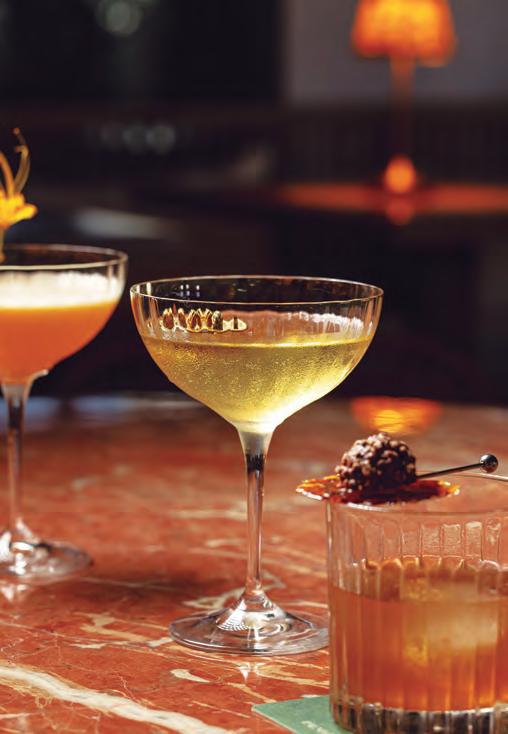
En la monumental barra —que es el punto focal del salón y cuyo estilo te remonta al Tropicana Club en La Habana— los bartenders elaboran cócteles de autor, como el Carola (vodka, licor de uva, y St. Germain), el Celia (tequila reposado, cordial de flores chinas y licor de ciruela), y el New Old Fashion Trufa (syrup de shiitake y bitter de cacao).
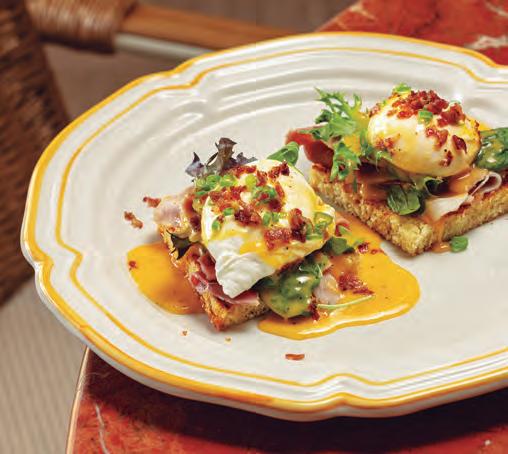
También hay un menú de desayuno los sábados y domingos, cuando abren desde las 8 AM. Este incluye el Desayuno Típico con puré de guineito, chicharrón de cerdo, queso fresco y guiso de tomate casero, y Huevos Benedictinos con salsa holandesa, jamón, tocineta, rúcula y pan brioche.
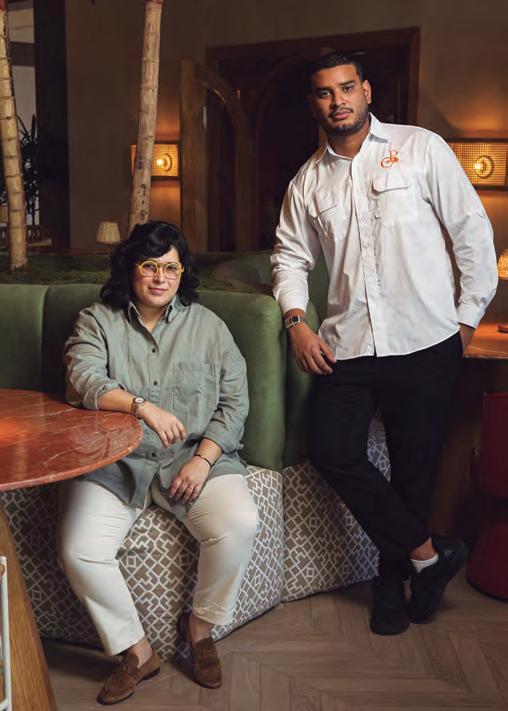
Palma & Celia es el más reciente proyecto de la restaurantera María José Manrique y la interiorista Miriana Cotes, en alianza con Grupo Diecisiete, empresa que opera varios restaurantes en Colombia, bajo la dirección de José Quinto como Chef Ejecutivo.
“Queremos que Palma & Celia sea un lugar donde la gente no solo venga a comer, sino a sentir, conectar, recordar y disfrutar”, expresó María José.
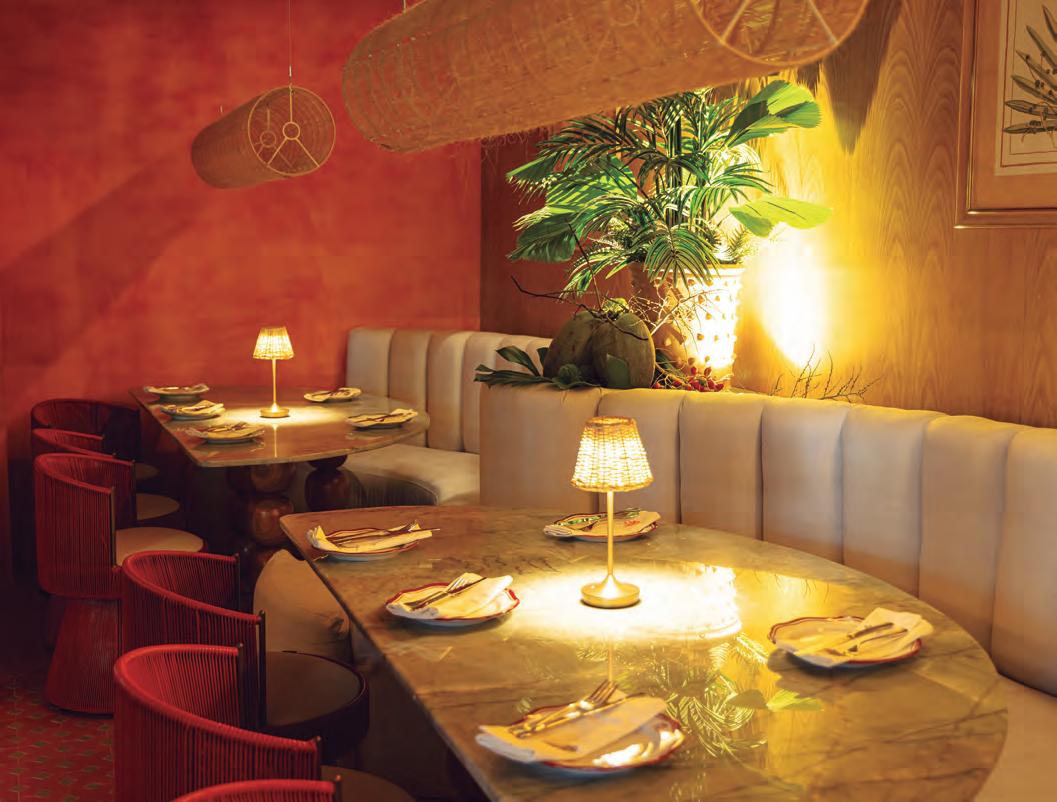
La exquisita ambientación del espacio fue diseñada por Miriana, quien ha logrado impartirle mucha alma al trasladar la estética del Caribe de antaño a cada rincón del restaurante mediante piezas artesanales, mobiliario exclusivo traido de Colombia y una iluminación que acentúa la calidez del local, que tiene dos pisos y capacidad para 150 personas.
“La idea fue mirar de nuevo al Caribe, abrazarlo, saborearlo, y traer esa vibra a Santo Domingo, una ciudad con la que compartimos sazón, música, clima y alegría de vivir”, señaló Miriana.
Con esta apertura, Grupo Diecisiete reafirma su visión de crear espacios donde la cultura, la gastronomía y la identidad se entrelazan para ofrecer experiencias memorables, a la vez que posiciona a Palma y Celia como un nuevo referente del elegante estilo de vida caribeño en Santo Domingo.
Sophisticated tropical oasis with haute Caribbean cuisine and vibrant live music
This new gastronomic proposal at Piantini pays homage to the classic and refined, yet relaxed Caribbean, creating a space with a lot of soul and good vibes, ideal for celebrating the art of good living, from sun to son!
The recently opened Palma & Celia restaurant redefines the culinary experience in Santo Domingo by fusing international haute cuisine with top local ingredients and providing innovative signature cocktails in an elegant and vibrant atmosphere, with the best tropical chic style.
Live music fills this space with rhythm and joy every day, Monday to Saturday from 8:30 PM and Sundays from 1:30 PM to 5 PM. From an indented balcony on the second floor, orchestras play a curated repertoire that exudes nostalgia and honors the cultural roots of the Caribbean. Hence the name of the restaurant, inspired by two icons of this region: a visual one, the palm trees, and a musical one, the sonera Celia Cruz.
Palma y Celia’s cuisine celebrates abundance, tradition and sharing. Among the most popular main dishes are the Tumbao risotto in squid ink with baby squid, the mushroom risotto with hazelnut butter, truffle paste, goat cream cheese and Parmesan cheese, and the pork Tomahawk with eggplant and banana borony.
The appetizer options offer innovative flavor combinations: yucca and goat croquettes, Celia’s guacamole with togarashi, feta cheese, pico e’gallo, tobiko roe and corn chips, mixed ceviche with white fish in tiger’s milk with passion fruit, coconut and red curry, cucumber and cilantro, as well as pan-fried octopus, oysters, burrata and mini burgers.
At the monumental bar —which is the focal point of the room and has a style that takes you back to the Tropicana Club in Havana— the seasoned bartenders create signature cocktails, such as the Carola (vodka, grape liqueur, and St. Germain), the Celia (reposado tequila, Chinese flower liquor, and plum liqueur), and the New Old Fashion Truffle (shiitake syrup and cocoa bitters).
There is also a breakfast menu on Saturdays and Sundays, when they open from 8 AM. This includes the Typical Breakfast with guineito puree, pork rinds, fresh cheese and homemade tomato stew, and Eggs Benedict with hollandaise sauce, ham, bacon, arugula and brioche.
Palma & Celia is the latest project by restaurateur María José Manrique and interior designer Miriana Cotes, in partnership with Grupo Diecisiete, which operates several restaurants in Colombia, under the direction of José Quinto as Executive Chef.
“We want Palma & Celia to be a place where people not only come to eat, but to feel, connect, remember and enjoy,” said María José.
The exquisite ambience of the space was designed by Miriana, who has managed to impart a lot of soul to it by transferring the aesthetics of the Caribbean of yesteryear to every corner of the premises through artisanal pieces, exclusive furniture brought from Colombia and lighting that accentuates the warmth of the two-story restaurant with capacity for 150 people.
“The idea was to look at the Caribbean again, embrace it, savor it, and bring that vibe to Santo Domingo, a city with which we share seasoning, music, climate and joy of living,” Miriana said.
With this opening, Grupo Diecisiete reaffirms its vision of creating spaces where culture, gastronomy and identity intertwine to offer memorable experiences, while positioning Palma y Celia as a new benchmark of the elegant Caribbean lifestyle in Santo Domingo.

Roberto Pastoriza #457 Piantini, Santo Domingo, R.D. (849) 478-6738
@palmaycelia_rd
Auténtica cocina del campo dominicano
Por/By: Yvonne Brown Ieromazzo
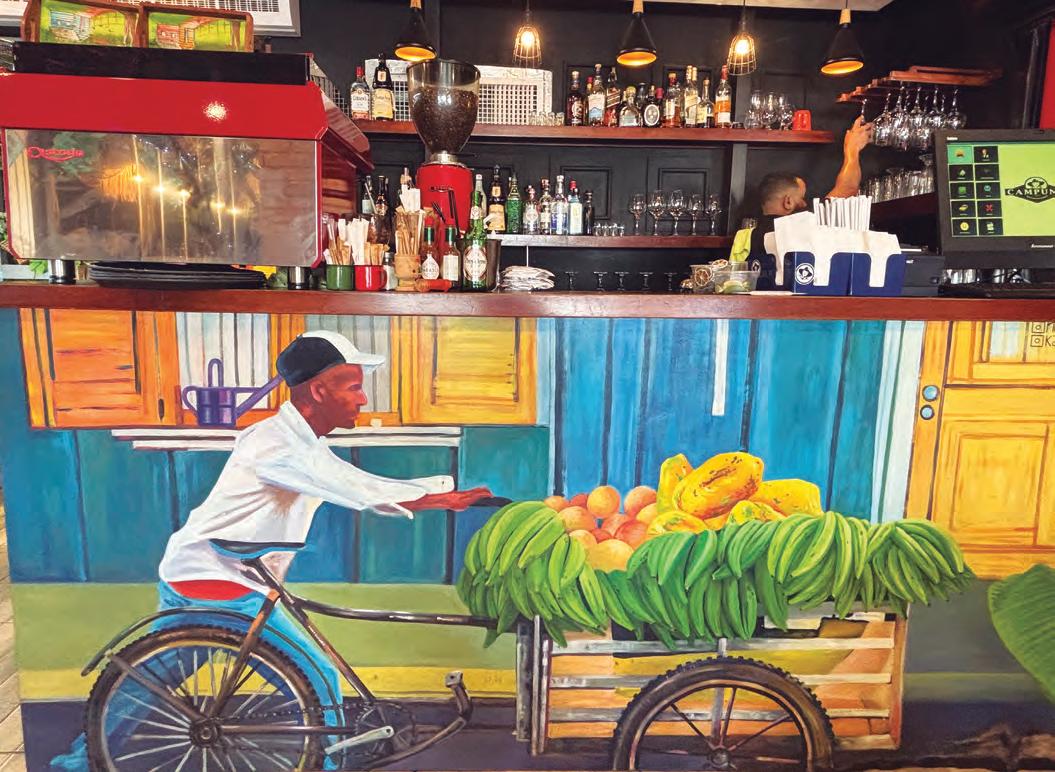
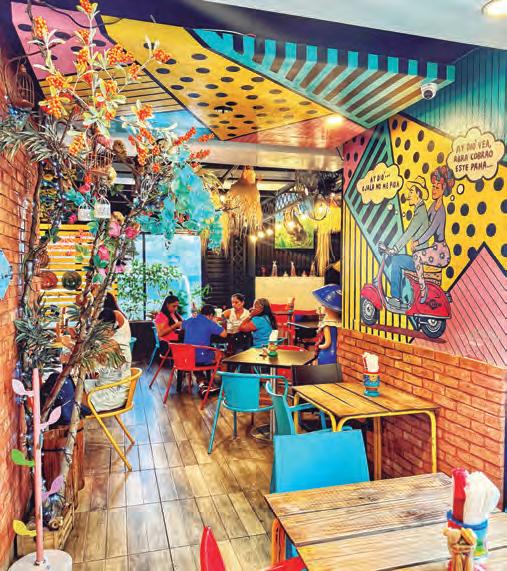
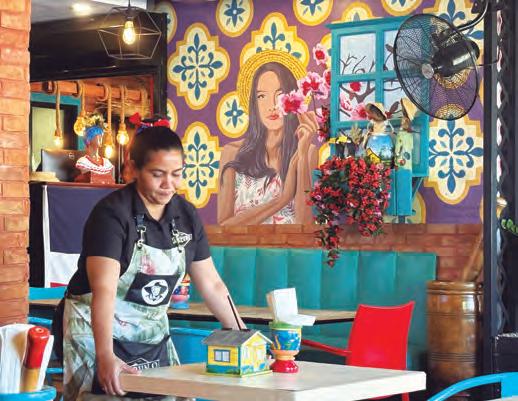
Entrar a Campuno Master Gourmet es sumergirte en una época llena de nostalgia y sabor, donde puedes vivir una auténtica experiencia gastronómica dominicana “dei” campo (en buen cibaeño) en medio de la Ciudad Corazón, Santiago de Los Caballeros.
En este espacio pintoresco y acogedor te atienden con la distintiva hospitalidad de la gente del Cibao, mientras te sirven la comida más sabrosa y sustanciosa. Cada plato es elaborado con ingredientes bien frescos de la zona, usando recetas tradicionales con el sazón criollo tan inconfundible que nos recuerda a nuestras abuelas.
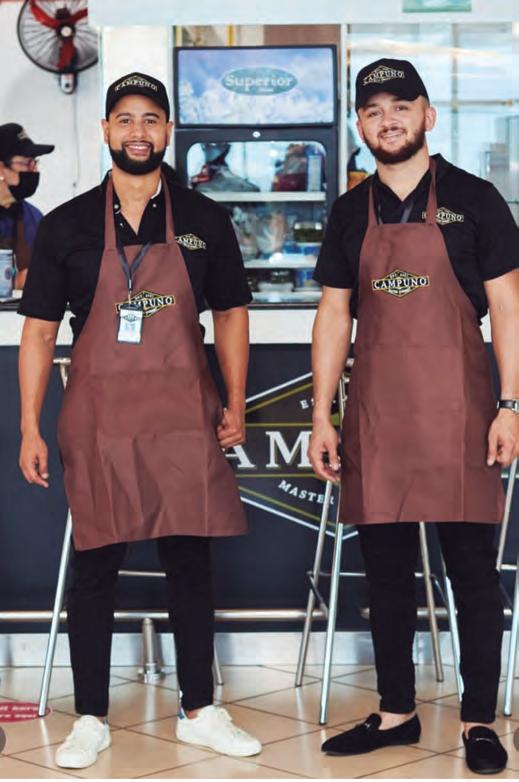
Los propietarios de Campuno son Milton Estrella y Guillermo Muñoz, dos jóvenes empresarios locales con mucha hambre de tirar pa’lante y compartir lo mejor de la cocina criolla en este restaurante marca-país.
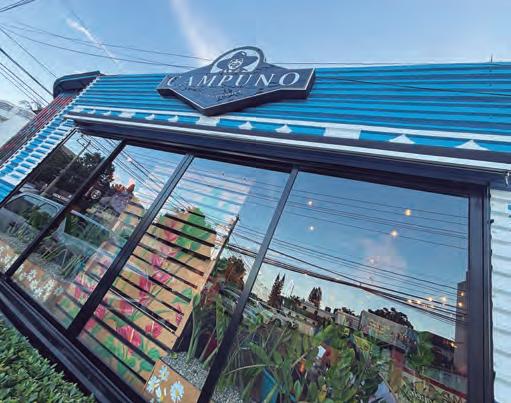
“Todo surgió en plena pandemia, cuando nos dimos cuenta que en el Aeropuerto del Cibao solo había comida rápida internacional. Así que decidimos inyectarle el sabor criollo que le faltaba y abrimos el primer restaurante Campuno. Como tuvo tanto éxito, al poco tiempo, abrimos el segundo en Villa Olga”, explica Milton con su pegajoso entusiasmo.
Ya Campuno tiene unos 50 empleados, incluyendo a más de 10 cocineros traídos directamente del campo. Para cocinar, utilizan calderos y un fogón de leña, junto a una cocina moderna de alta tecnología, y combinan sus técnicas de antaño con alta cocina, para servir un delicioso menú repleto de platos memorables.
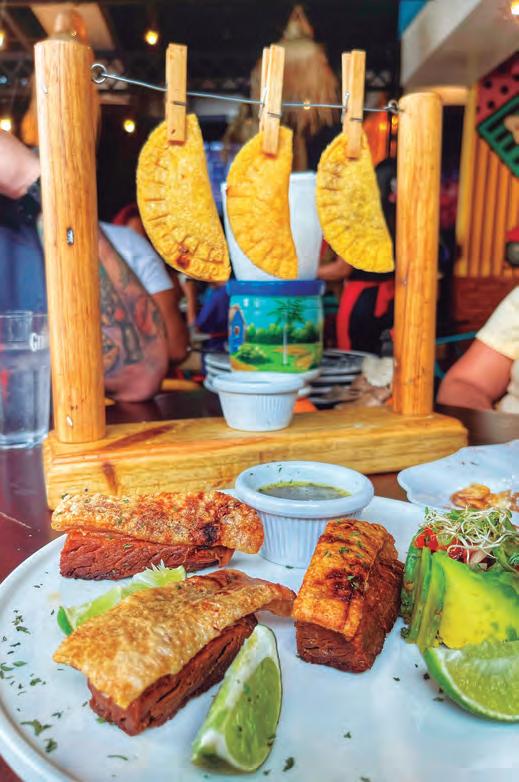
Entre los favoritos de entrada están las famosas cativías del campo. El servicio trae tres —queso, res y pollo— y salen acompañadas con “cachú de mamajuana” para un toque picosito. Estas vienen “colgadas” en un original tendedero de madera, con todo y los mini pinches de ropa. También las croquetas de chivo, elaboradas con una masa de papa y longaniza muy suave y apetitosa.
En un menú dominicano “de verdad” no puede faltar el típico plato de La Bandera: arroz, concón, habichuelas o guandules con coco, tostones y plátano maduro al caldero y la opción de chivo, pollo, cerdo o chicharrón.
Otro de los platos más solicitados es la pierna de chivo con chenchén cremoso, elaborado a base de maíz molido, leche evaporada y leche de coco. Si aún no lo has probado, es hora de expandir tus horizontes culinarios con este sustituto del arroz, considerado un rico tesoro de “tierra adentro”.
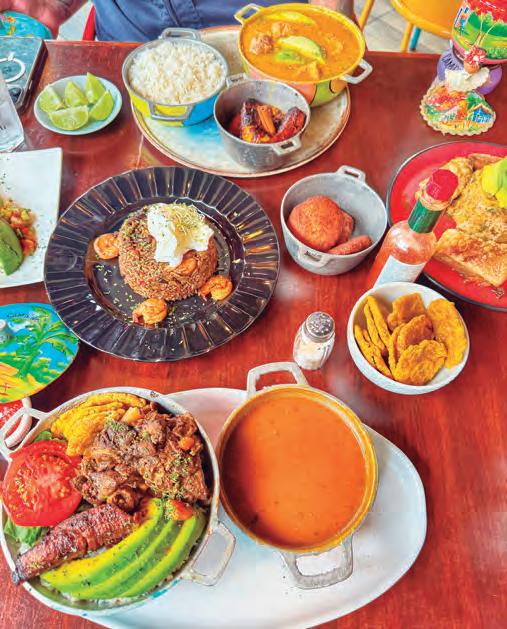
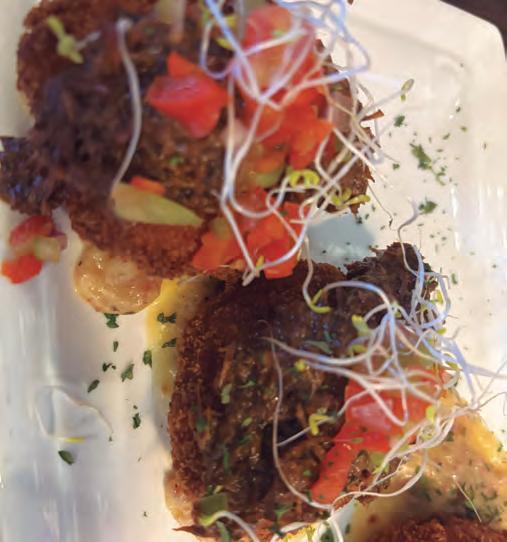
El rabo encendido con risotto de habichuelas rojas está a otro nivel. La carne se desmenuza con el tenedor y sabía aún mejor con arepitas de yuca y aguacate. Y ni se diga del conejo a la criolla, que sale con una fusión de puré de yuca con auyama y queso parmesano.
Para los “soperos”, hay cinco caldos a escoger: sancocho tradicional, sancocho de guandules con coco, sancocho de habichuela, asopao de pollo y sopa de gallina.
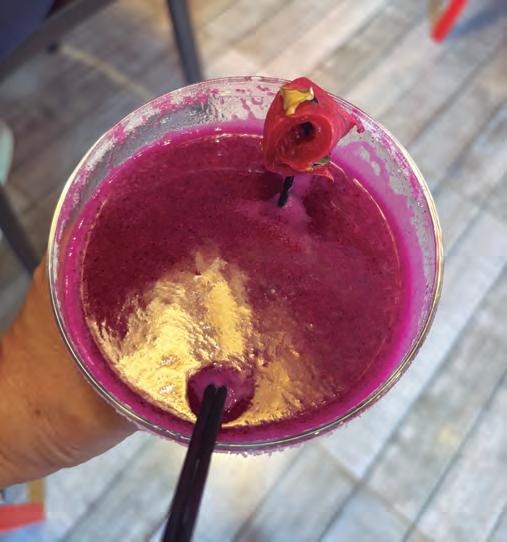
Los originales cócteles añaden un toque de sabor y color a la comida — desde la llamativa Margarita de Pitahaya hasta el explosivo Mojito de Mamajuana.
Y los postres son delirantes. En especial, un majarete que se le sienten los granitos de maíz tierno y viene con una rajita de canela encendida, lo que le añade un aroma exquisito. También tienen dulces típicos, como coco tierno, pudín de pan y dulce de batata con coco, y varios de t emporada, como dulce de tomate y naranja con piña.
Con razón, y mucho sazón, Campuno ha tenido tan buena acogida. Y el proyecto sigue creciendo, ya que pronto añadirán un segundo nivel en Villa Olga, y abrirán restaurantes fuera del Cibao en Santo Domingo y Punta Cana.
“Me encantaría que todo el que venga a conocer Santiago, igual que visita El Monumento, pase por Campuno a disfrutar de la hospitalidad y la verdadera esencia del campo dominicano”, añadió Milton.
Entering Campuno Master Gourmet is to immerse yourself in a time full of nostalgia and flavor, where you can live an authentic Dominican gastronomic experience “dei” campo (in a Cibaeño accent) in the heart of la Ciudad Corazón, Santiago de Los Caballeros.
In this picturesque and cozy space you are served with the distinctive hospitality of the people of the Cibao region, while you are served the most tasty and hearty food. Each dish is made with very fresh ingredients from the area, using traditional recipes with the unmistakable Creole seasoning that reminds us of our grandmothers.
The owners of Campuno, Milton Estrella and Guillermo Muñoz, are two young local entrepreneurs who are very hungry to suceed and share the best of Creole cuisine in this country-branded restaurant.
“It all came about in the middle of the pandemic, when we realized that there was only international fast food at Cibao Airport. So we decided to bring the Creole flavor that it lacked and opened the first Campuno restaurant. As it was so successful, shortly after, we opened the second one in Villa Olga,” Milton explains with his catchy enthusiasm.
Campuno already has about 50 employees, including more than 10 cooks brought directly from the nearby farms. They use cauldrons and a wood-burning stove, along with a modern high-tech kitchen, and combine their techniques of yesteryear with haute cuisine, to serve a delicious menu full of memorable dishes.
Among the starter favorites are the famous ‘‘cativías del campo’’ (countryside). The service brings three — cheese, beef and chicken — and they are accompanied by “cachú de mamajuana” for a spicy touch of catchup. These are “hung” on an original wooden clothesline, with mini clothespins included. Also the goat croquettes, made with a very soft and appetizing potato and longaniza sausage dough.
A “real” Dominican menu cannot miss the typical dish of La Bandera: rice, concón, beans or pigeon peas made with coconut, tostones and ripe plantain in the cauldron and the option of goat, chicken, pork or pork rinds.
Another of the most requested is the goat leg with creamy chenchen, made from ground corn, evaporated milk and coconut milk. If you haven’t tried it yet, it’s time to expand your culinary horizons with this dish, considered a perfect rice substitute and an “inland” treasure.
The hot oxtail stew with red bean risotto is on another level. The meat can be shredded with the fork and tasted even better with yucca fritters (arepitas) and avocado. And not to mention the rabbit “a la criolla”, which comes out with a fusion of yucca puree with pumpkin and parmesan cheese.
For the “soup lovers,” there are five rich broths to choose from—traditional sancocho, sancocho de guandules with coconut, bean sancocho, chicken asopao, and hen soup.
Original cocktails add a touch of flavor and color to the food — from the eye-catching Pitahaya Margarita to the explosive Mamajuana Mojito
And the desserts are delirious. In particular, a majarete that has tender corn kernels and comes with a a lit stick of cinnamon, which adds an exquisite aroma. They also have typical sweets, such as tender coconut, bread pudding, and sweet potato fudge with coconut, as well as seasonal ones, such as tomato and candied orange with pineapple.
Rightly so, Campuno has been such a success. And the project continues to grow, as they will soon add a second level in Villa Olga, and open restaurants outside of the Cibao region in Santo Domingo and Punta Cana.
“I would love for everyone who comes to know Santiago, just as they visit El Monumento, to pass through Campuno to enjoy the hospitality and the true essence of the Dominican countryside,” Milton added.
Benito Juárez #70, Calle 11
Villa Olga, Santiago de los Caballeros, R.D. (829) 816-3894 @campunomg
Innovadora cocina de fusión donde los frutos de la tierra son el ingrediente estrella
Por/By: Yvonne Brown Ieromazzo
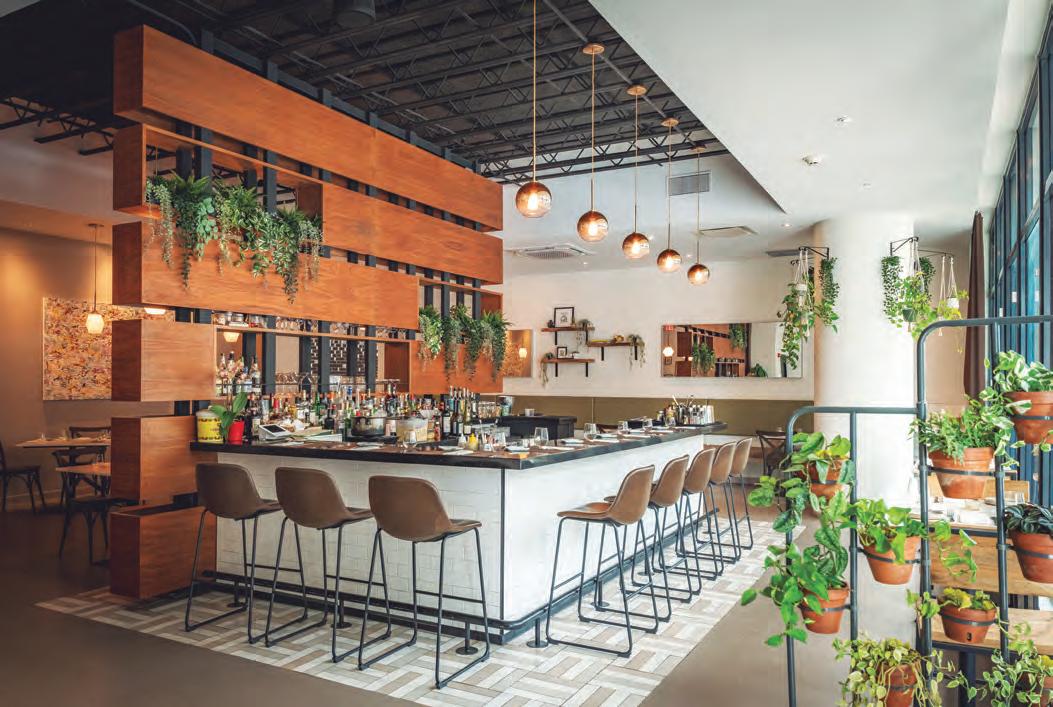
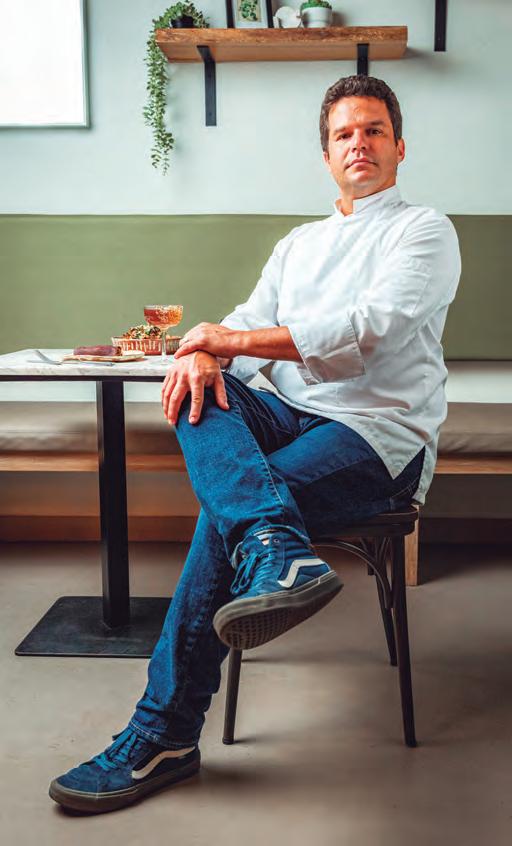
Cuando el chef Francis Guzmán decidió mudarse a su natal Puerto Rico en 2017 junto a su esposa Amelia Dill, luego de que pasaran 15 años laborando en el exigente mundo culinario de San Francisco y New York, ambos tenían claro que querían abrir su propio restaurante “farm-to-table” en San Juan.
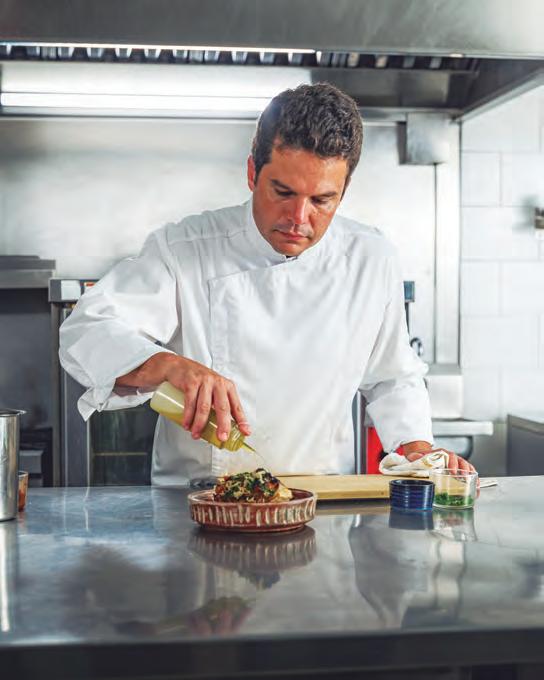
Así nació Vianda, donde en los pasados siete años, Francis ha sabido “sacarle el jugo” a los ingredientes locales más frescos y hacer una innovadora fusión de sabores del Mediterráneo, Asia y el Caribe, utilizando su gran creatividad y pulidas técnicas de la cocina gourmet, muchas aprendidas cuando era sous chef en The Modern, el restaurant 2 Estrellas Michelin del MOMA.
Esto le ha permitido crear platos realmente sabrosos y vistosos — siempre servidos con mucho arte y corazón— que reflejan lo mejor de la Isla: su variada agricultura y la inigualable hospitalidad de su gente.

Para lograrlo, Chef Francis cuenta con una vasta red de agricultores a través de toda la Isla, quienes le proveen frutas, vegetales y especias que aseguran la máxima frescura y calidad en cada bocado.
Por eso, cuando uno comienza a leer el menú de Vianda, se hace tan difícil escoger, pues todo suena demasiado tentador. “Yo les recomiendo que compartan muchos platos pequeños para que tengan la experiencia de probar más combinaciones de sabores, sobre todo aventurarse con aquellos en que los frutos de la tierra son el ingrediente estrella”, aconseja chef Francis.
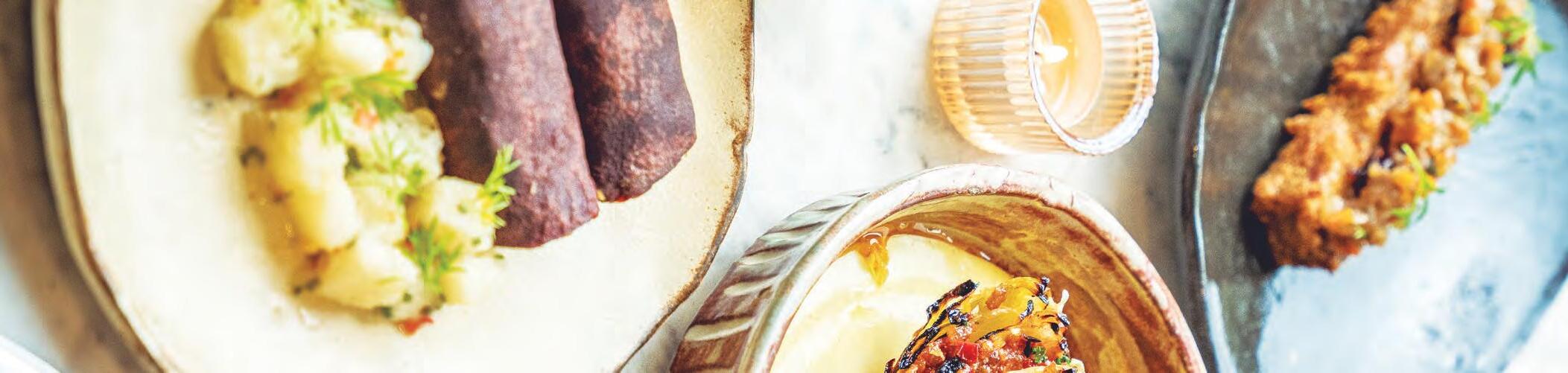
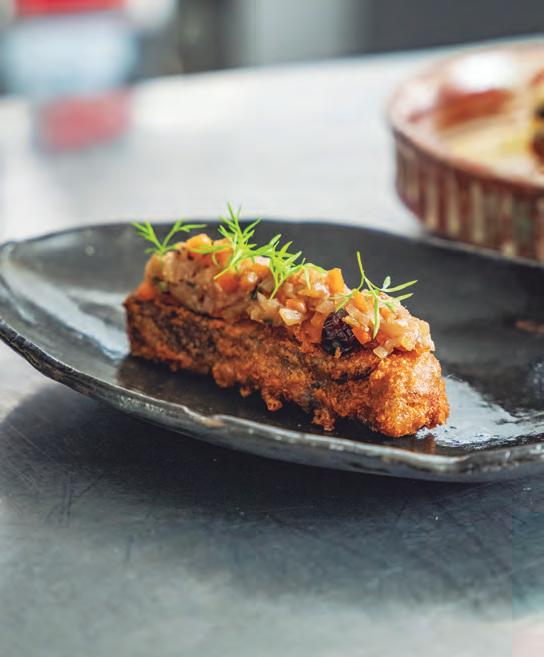
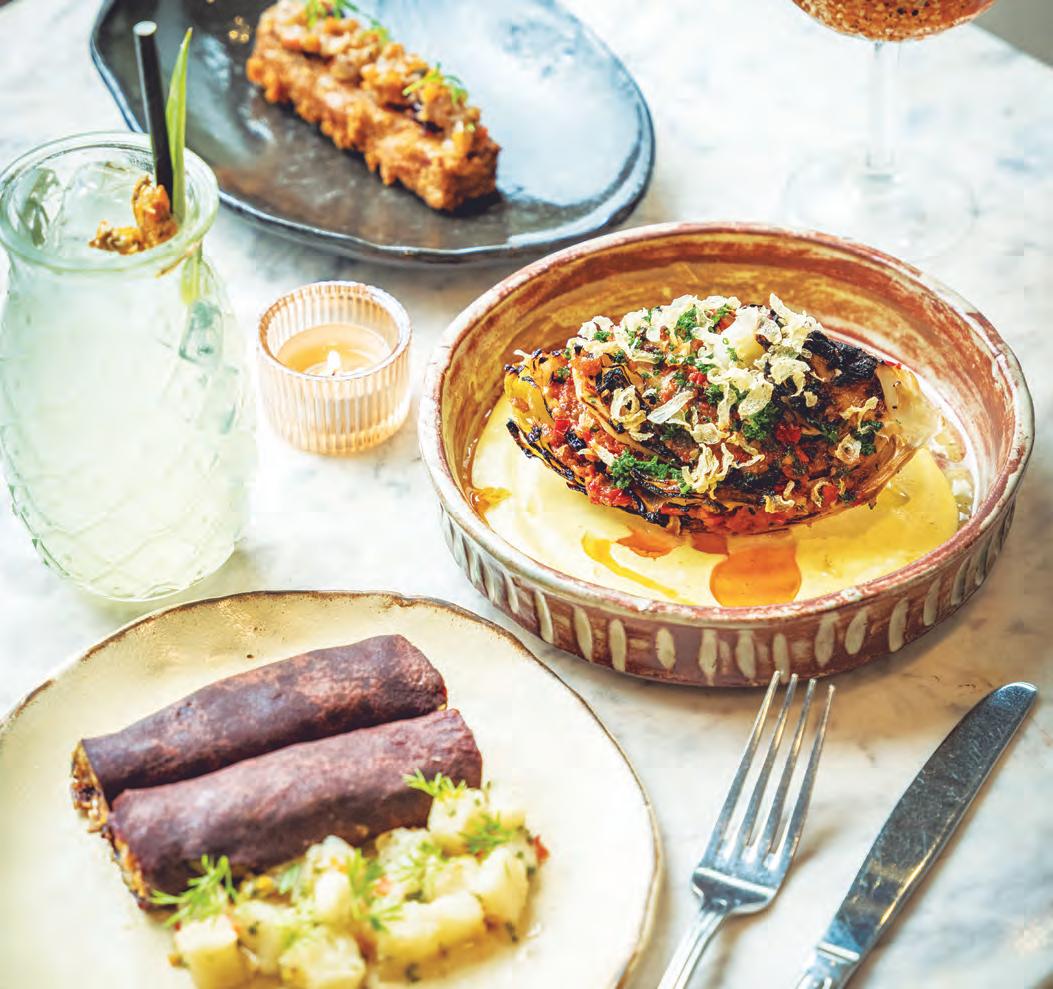
Uno de los que hay que probar sí o sí es el pastelón de pernil y amarillito frito con caponata de berenjena. El pernil se marina en un mojo casero y luego de guisarse, se coloca desmenuzado entre dos capas de plátano maduro que se fríen ligeramente.
También son recomendadas las crepas de morcilla con yuca en escabeche y habichuelas blancas. Las crepas son hechas con el embutido de sangre cocinado con leche, y sazonado con recao, ajo y jengibre. Otro hit es el repollo al carbón con salsa de huevo frito, nueces y sofrito de ají rojo.
Este menú está en continua evolución, y una de las creaciones más interesantes que añadieron recientemente es la berenjena asiática crecida en Puerto Rico. Luego de ser rostizada y empanada, es servida con una compota de guineo maduro y pimiento campana (bell pepper), acompañada de una salsa de curry y coco.
También ofrecen una selección de carnes y pescados como el Wagyu Bavett con cepa de apio (celery root) estilo alfredo y chimichurri de apio o la Pesca del Día con puerro frito confitado, crema de chayote y aceite de puerro quemado.
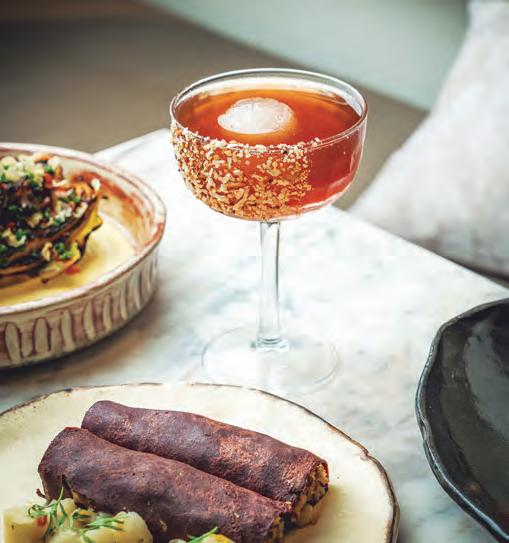
Y los cócteles están de show. Dos a probar son el Verano en NY —una versión del Manhattan con Barrilito 3 Estrellas, coco, vainilla y amargo de nuez— y el Pika Piña, que lleva mezcal, licor picante y oleo de piña.
Chef Francis entiende que “ir a un restaurant es mucho más que comer. Por eso, queremos hacer la experiencia memorable y nos enfocamos en cómo te hacemos sentir con nuestro buen trato, además de ofrecerte cosas diferentes que no encuentren en otros restaurantes o que la gente no haga en su propia casa generalmente”.
El visionario dúo de Francis y Amelia sigue cosechando éxitos. Los también propietarios de La Santurcina, planean abrir un segundo local de ese concepto casual por Los Filtros, entre Guaynabo y Bayamón. Y esperan continuar subiendo la vara de la excelencia gastronómica con nuevas colaboraciones con restaurantes y otros reconocidos chef locales e internacionales.
Innovative fusion cuisine where the fruits of the land are the star ingredient
When chef Francis Guzmán decided to move to his native Puerto Rico in 2017 with his wife Amelia Dill, after spending 15 years working in the demanding culinary world of San Francisco and New York, it was clear to them that they wanted to open their own farm-to-table restaurant in San Juan.
This is how Vianda was born, where in the past seven years, Francis has been able to “get the juice out” of the freshest local ingredients and make an innovative fusion of flavors
from the Mediterranean, Asia and the Caribbean, using his great creativity and polished techniques of gourmet cuisine, many learned when he was sous chef at The Modern, MOMA’s 2-Star Michelin restaurant.
This has allowed him to create truly tasty and colorful dishes — always served with a lot of art and heart — that reflect the best of the island: its varied agriculture and the unparalleled hospitality of its people.
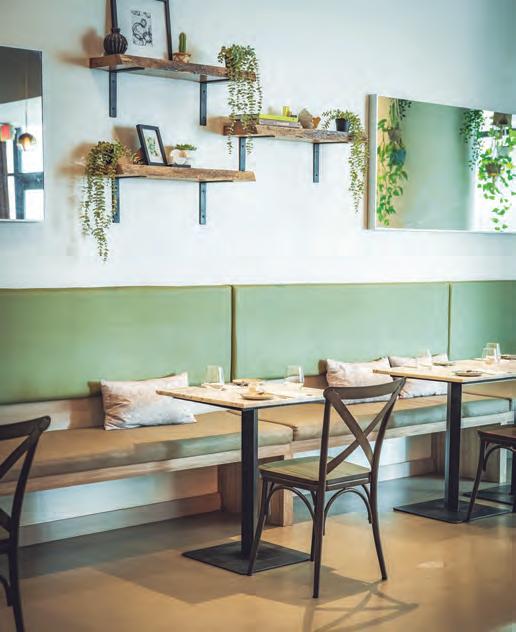
To achieve this, Chef Francis has developed a vast network of farmers throughout the Island, who provide him with fruits, vegetables and spices that ensure maximum freshness and quality in each bite.
That’s why, when you start reading the Vianda menu, it becomes so difficult to choose, because everything sounds too tempting. “I recommend that they share many small plates so that they have the experience of trying more combinations of flavors, especially venturing with those in which the fruits of the earth are the star ingredient,” advises chef Francis.
One of the must-try dishes is the pork and ripe plantain pastelon with aubergine caponata. The pernil style pork is marinated in a homemade mojo and after stewing, it is shredded and placed between two layers of ripe plantain strips that are lightly fried.
Also reccomended are the morcilla crepes with pickled yucca and white beans. The crepes are filled with blood sausage cooked in milk, seasoned with recao, garlic and ginger. Another great choice is the charcoal-grilled or charred cabbage with fried egg sauce, walnuts and red chili sauce.
This menu is still evolving, and one of the most interesting creations they added recently is the Asian eggplant grown in Puerto Rico. After being roasted and breaded, it is served with a compote of ripe bananas and bell pepper, accompanied by a curry and coconut sauce.
They also offer a selection of meats and fish such as the Wagyu Bavett with alfredo-style celery root and celery chimichurri, or the Catch of the Day with confit fried leeks, chayote cream and burnt leek oil.
And the cocktails are a hit. Take a sip of the Summer in NY, —a version of the Manhattan with 3-Star Barrilito Rum, coconut, vanilla and walnut bitters— or the Pika Piña, a mix of mezcal, spicy liquor and pineapple oil.
Chef Francis understands that “going to a restaurant is much more than eating. That’s why we want to make the experience memorable and we focus on how we make you feel about with our good service, in addition to offering you different things that you don’t normally find in other restaurants or that people don’t usually cook at home.”
The visionary duo of Francis and Amelia continues to reap success. They also own La Santurcina, and plan to open a second location of that casual concept in Los Filtros, between Guaynabo and Bayamón. At the same time, he hopes to continue raising the bar for gastronomic excellence with new collaborations with other restaurants and renowned local and international chefs.
Ponce de León #1413, Santurce San Juan, P.R. (939) 475-1578
@vianda_pr www.viandapr.com
• Staff with an average of 30 years of combined experience in the transportation industry
• Electronically connected to all related Federal & State Government agencies
• We possess a US Customs National Permit which allows us to provide services in all US ports
• Member of the National Customs Brokers & Forwarders Association of America









Puro sabor boricua que eleva la gastronomía local con un sorpresivo toque global
Por/By: Yvonne Brown Ieromazzo
Atraídos por una suculenta oferta culinaria enraizada en las ricas tradiciones y sabores de Puerto Rico, pero salpicada de influencias globales, Cocina al Fondo se ha convertido en visita obligatoria para los gourmands en San Juan.
Cada plato está elaborado con amor, utilizando ingredientes locales frescos —repletos de color y sabor—, las recetas heredadas de los ancestros, y las técnicas de cocina modernas o de la intuición. Por eso, en cada bocado se puede detectar el ADN culinario caribeño y puertorriqueño.
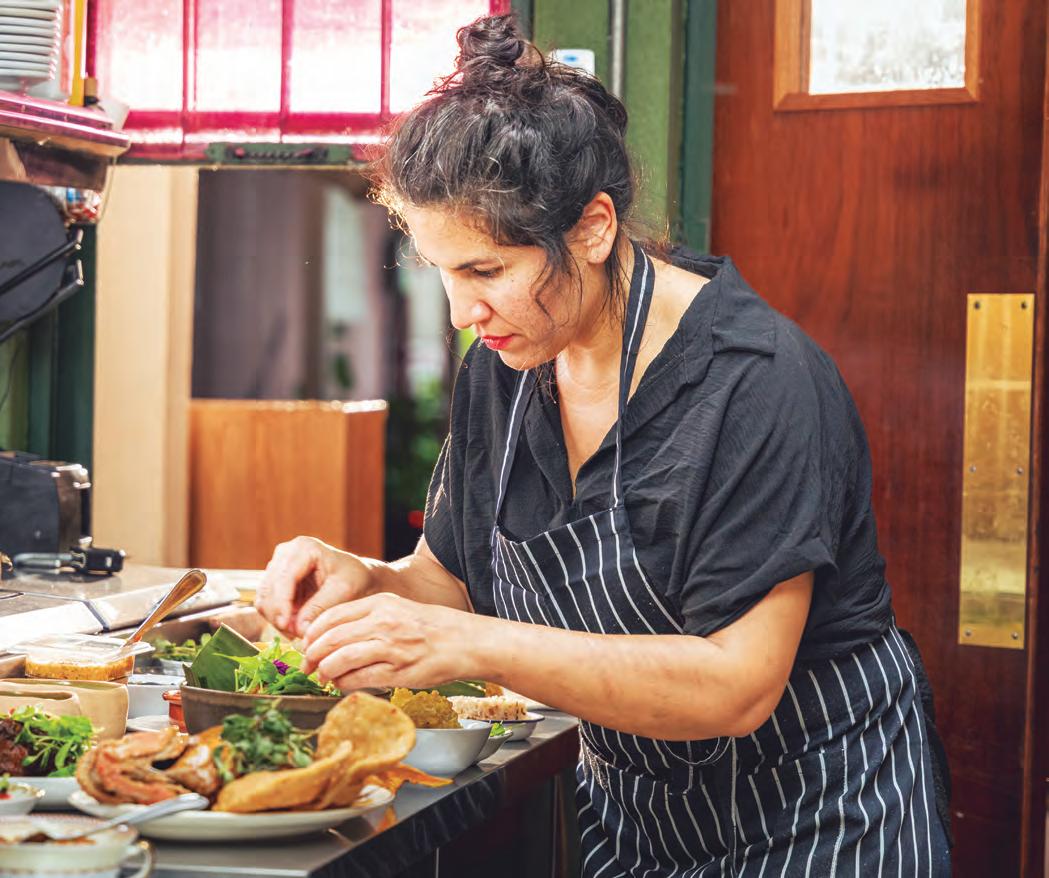
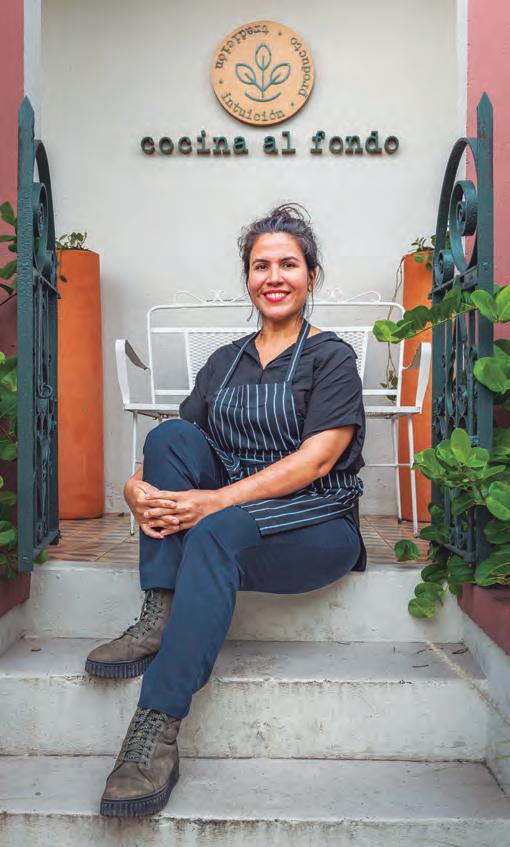
La co-propietaria y jefa de cocina de Cocina al Fondo es la Chef Natalia Vallejo, quien en 2023 obtuvo el Premio James Beard—Mejor Chef del Sur y se convirtió en la primera persona de Puerto Rico en ganar este prestigioso galardón.
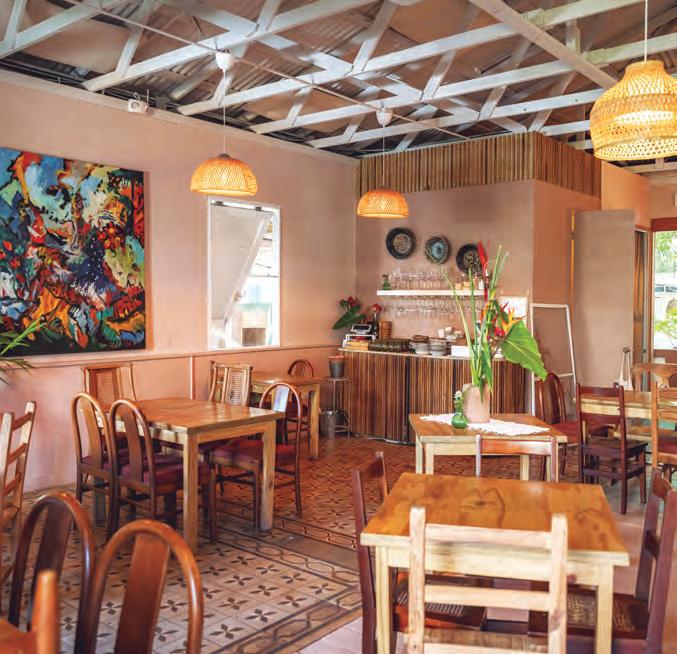
“Mi intención fue crear un espacio de encuentro y celebración, donde los comensales puedan pasarla bien y comer bien rico, como en la casa de la abuela, y que sientan el orgullo de nuestra cocina Boricua”, asegura Chef Natalia.
“Me considero una cocinera tradicional y hasta hago mi propio sofrito “from scratch”. Quiero contar nuestra historia a través de la simpleza de los ingredientes, una buena selección del producto local y cocinar de la manera más natural, sin potenciadores de sabores, con la receta más parecida a la original de nuestros ancestros”, añadió la chef.
Cada uno de los 30 integrantes del equipo Cocina al Fondo, tienen un serio compromiso con la sostenibilidad. Esto los lleva a usar producto fresco del campo o del mar que le llevan los agricultores, pescadores y productores locales, o frutas, nueces y hierbas cultivadas en el patio del restaurant.
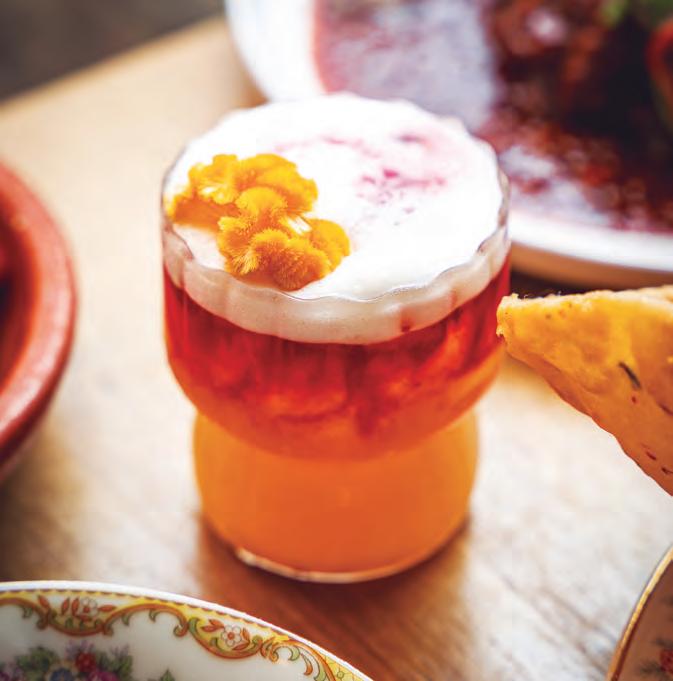
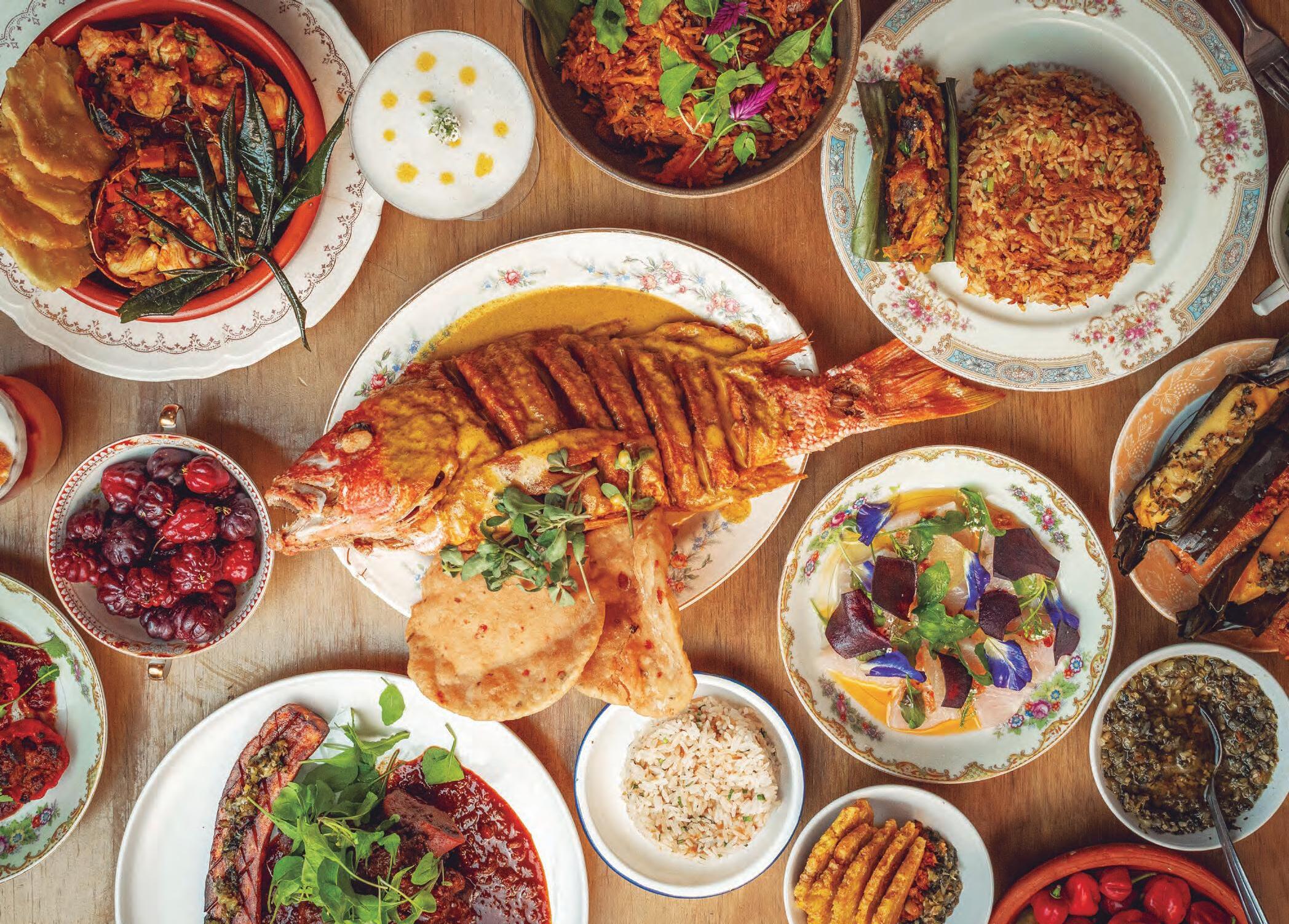
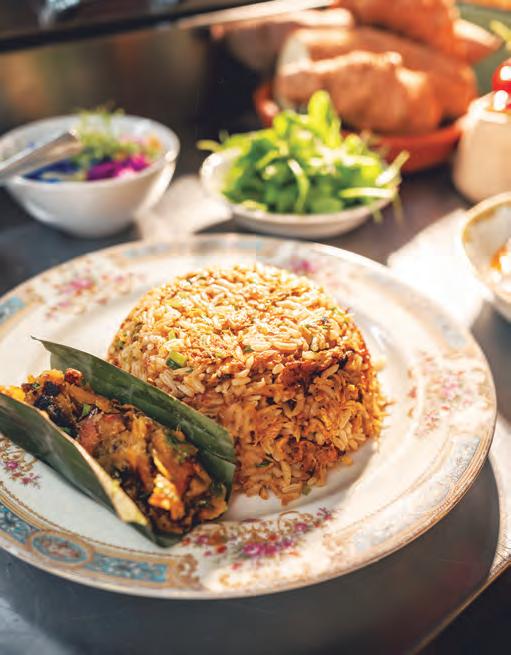
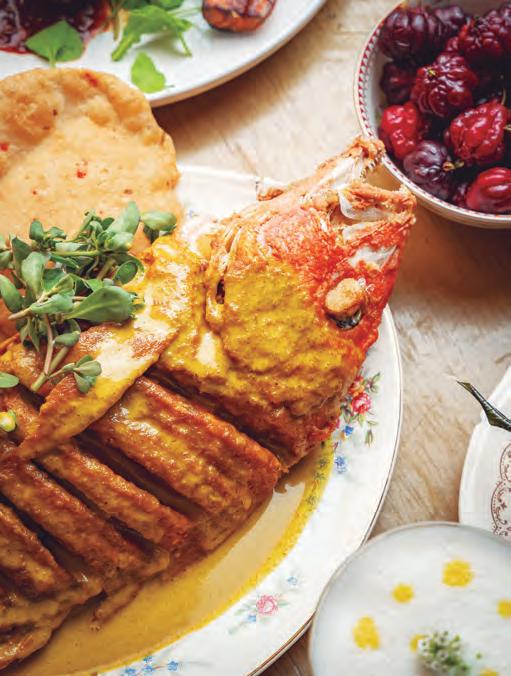
Entre los platos icónicos de Cocina al Fondo, debes probar el arroz con conejo, un verdadero manjar con notas de cúrcuma y canela, acompañado con plátano maduro al pilón envuelto en hoja de plátano.
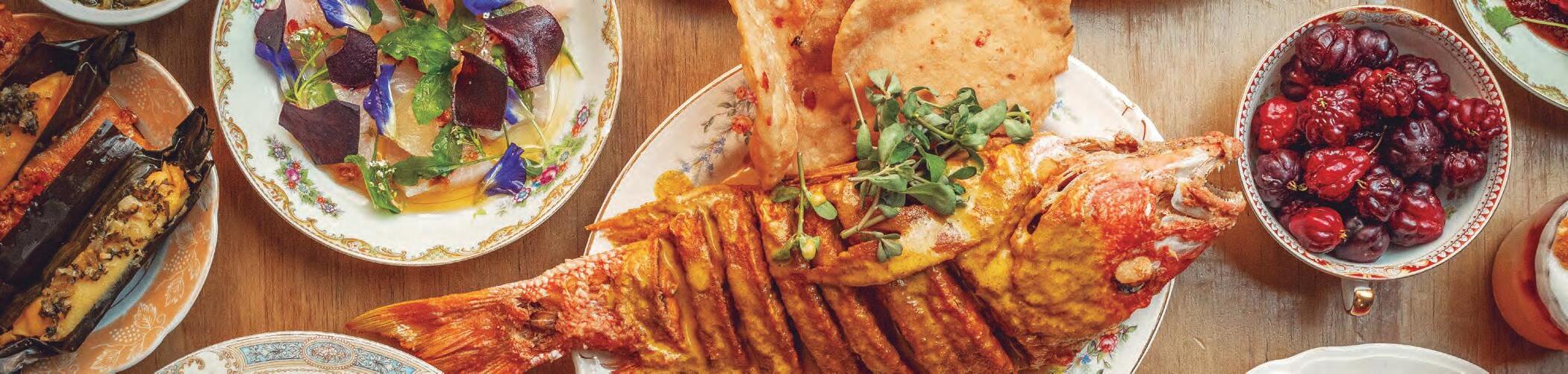
Si prefieres algo del mar, no dejes de pedir la Pesca del Día, que incluye un pescado completo frito con una arepa casera inspirada en el yaniqueque dominicano, o degustar un crudo de peto (wahoo) aderezado con vinagreta de parcha (chinola o maracuyá) con chips de batata lila, verdolaga y flores comestibles.
“Me encanta usar flores tropicales para decorar mis platos”, dice Chef Natalia, quien logra un plateado impactante y sabores memorables de la alta cocina utilizando técnicas aprendidas en sus estudios culinarios en Puerto Rico y Argentina.
Además, pone al servicio del fogón la experiencia obtenida en cocinas locales e internacionales: Delirio en Miramar —donde fue aprendiz del legendario chef Alfredo Ayala— e Igueldo en Barcelona, cuyos dueños se conocieron trabajando en Arzak, el famoso templo culinario vasco.
Estos suculentos platillos maridan a la perfección con las excelentes opciones de una carta de vinos muy bien curada y la coctelería creada por Karla Z. Torres, la socia de Chef Natalia en Cocina al Fondo.
Karla utiliza espíritus artesanales, como vermouth casero y ginebras infusionadas, para hacer atrevidas mezclas con una vistosa presentación que reflejan la esencia tropical y hacen de cada brindis uno especial. Ese es el caso del cóctel De Cayey a Santurce, una seductora mezcla de ron puertorriqueño y dominicano —Barrilito y Barceló— con cítricos y float de vino tinto que sabe a Caribe.
Precisamente en Cayey, Karla es dueña de otro local, Te-tas la Cocina. Y allí también vive Chef Natalia, quien como siempre, sigue buscando inspiración en esas montañas, bien pegadita a las nubes y en el mismo corazón de la Isla.
Authentic Puerto Rican flavors that elevate local gastronomy with a surprising global touch
Attracted by a succulent culinary offer rooted in the rich traditions and flavors of Puerto Rico, yet sprinkled with global influences, Cocina al Fondo has become a must-visit for gourmands in San Juan.
Each dish is made with love, using fresh local ingredients – full of colour and flavour–, the recipes inherited from the ancestors, modern cooking techniques or those that come from intuition. That’s why the Caribbean and Puerto Rican culinary DNA can be easily detected in every bite.
The
Award—Best Chef South and became the first Puerto Rican to win this prestigious recognition.
“My intention was to create a space for meeting and celebration, where diners can have a good time and eat deliciously, as in grandma’s house, and feel the pride of our Boricua cuisine,” says Chef Natalia.
“I consider myself a traditional cook and I even make my own sofrito seasoning “from scratch”. I want to tell our story through the simplicity of the ingredients, a good selection of local produce and cooking in the most natural way, without flavor enhancers, with the recipe most similar to the original used by our ancestors,” added the chef.
Each one of the 30 members of the Cocina al Fondo team have a serious commitment to sustainability. This leads them to use fresh produce from the countryside or the sea brought to them by local farmers, fishermen and producers, or fruits, nuts and herbs grown on the restaurant’s patio.
Among the iconic dishes of Cocina al Fondo, you must try the rice with rabbit, a true delicacy with a hint of turmeric and cinnamon, accompanied by ripe plantain “al pilón” wrapped in banana leaf.
If you prefer something from the sea, be sure to order the Catch of the Day, which includes a complete fried fish with a homemade arepa inspired by the Dominican yaniqueque, or taste a crudo de peto, a fresh raw wahoo fish dressed with a passion fruit vinaigrette accompanied by lilac sweet potato chips, purslane greens and edible flowers.
“I love using tropical flowers to decorate my dishes,” says Chef Natalia, who achieves strikingly plated dishes and memorable flavors of haute cuisine using techniques learned in her culinary arts studies in Puerto Rico and Argentina.
In addition, she puts to good use the experience obtained in local and international kitchens: Delirio in Miramar –where she was an apprentice to the legendary chef Alfredo Ayala – and Igueldo in Barcelona, whose owners met working in Arzak, the famous Basque culinary temple.
These succulent dishes pair perfectly with the excellent options of a very well-curated wine list and the cocktails created by Karla Z. Torres, Chef Natalia’s partner at Cocina al Fondo.
Karla uses artisanal spirits, such as homemade vermouth and infused gins, to make bold blends with a colorful presentation that reflect the tropical essence and make every toast special. That’s the case with the De Cayey a Santurce cocktail, a seductive blend of Puerto Rican and Dominican rum —Barrilito and Barceló— with citrus and red wine float that tastes like the Caribbean.
Precisely in Cayey, Karla owns another locale, Te-tas La Cocina. That’s also the town where Chef Natalia lives and she still continues to look for inspiration in those mountains, very close to the clouds and in the very heart of the Island.
San Juan #658, Santurce San Juan, P.R. (787)-469-5527 www.cocinaalfondo.com @cocinaalfondo








www.cntraveler.com
Vianda y Cocina al Fondo, dos de los restaurantes reseñados en esta edición de Gourmand, están entre los Top 20 de Puerto Rico, según Condé Nast Traveler 2025
La lista incluye otros icónicos destinos gastronómicos en San Juan: Santaella, Casita Miramar, Qué PezCa’o, La Casita Blanca, La Alcapurria Quemá, Orujo-Taller de Gastronomía, Verde Mesa, Marmalade Rest. & Wine Bar.
Y fuera del área metro: Bacoa Finca + Fogón (Juncos), Diverso (Ponce), Marina by Chef Jose Carles (Cabo Rojo), La Copa Llena at The Black Eagle (Rincón), La Guardarraya (Guayanilla), La Estación (Fajardo), Uma’s Playa Jobos (Isabela), El Quenepo (Vieques). Y en Cayey, Lechonera Los Pinos y Te-Tas La Cocina, cuya propietaria también es socia de Cocina al Fondo.
Vianda and Cocina al Fondo, two of the restaurants featured in this edition of Gourmand, are among the Top 20 in Puerto Rico, according to Condé Nast Traveler 2025
The list includes other iconic gastronomic destinations in San Juan: Santaella, Casita Miramar, Qué PezCa’o, La Casita Blanca, La Alcapurria Quemá, Orujo-Taller de Gastronomía, Verde Mesa, Marmalade Rest. & Wine Bar.
Outside the metro area: Bacoa Finca + Fogón (Juncos), Diverso (Ponce), Marina by Chef Jose Carles (Cabo Rojo), La Copa Llena at The Black Eagle (Rincón), La Guardarraya (Guayanilla), La Estación (Fajardo), Uma’s Playa Jobos (Isabela), El Quenepo (Vieques). And in Cayey, Lechonera Los Pinos and Te-Tas La Cocina, whose owner is also a partner of Cocina al Fondo.
Considerados “los Oscar del mundo culinario”, los Premios James Beard se otorgan anualmente a los mejores chefs, restaurantes y bares de los Estados Unidos y Puerto Rico.
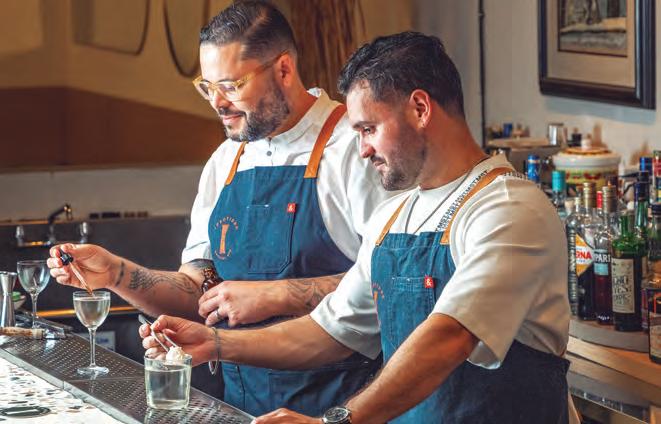
La gran sorpresa del 2025 , cuando los JBAs celebran su 35 aniversario, fue el premio a Mejor Bar Nuevo que ganó Identidad Cocktail Bar en Miramar. Según sus dueños, Edrick Colón y Stephen Alonso: “ El premio es para nuestro equipo, para nuestra Isla y para cada persona que ha llegado a nuestra barra y ha encontrado algo más que un cóctel ”.
Otros dos talentosos boricuas —Kevin García , de La Faena Agrococina en Guaynabo, y Ángel David Moreno Zayas , de El Gallo Pinto en Guayama— quedaron finalistas como Mejor Chef del Sur 2025 .
Natalia Vallejo de Cocina al Fondo ganó ese premio en 2023 , siendo la primera chef boricua en lograrlo. El año anterior fue nominado en esa categoría y Mejor Restaurante Nuevo.
“Veo este premio como una reivindicación del trabajo de las mujeres en las cocinas, pues más allá de ser chef, me considero parte de una tradición de cocineras, mujeres que se enfrentan al fuego: madres, tías, abuelas que hicieron platos desde la intuición, la tradición, la memoria y el cariño”, afirma Vallejo.
Vianda fue seleccionada en 2019 entre los Top 20 Best New Restaurants . Y el Chef Francis Guzmán fue nominado en la categoría de Mejor Chef del Sur en 2022 y 2023, así como Chef Destacado en 2024 y 2025
“Ser nominado al Premio James Beard significa mucho para mí. Me motiva a seguir estudiando las cocinas del mundo y tratando cosas nuevas para crear platos cada vez más creativos y sabrosos”, dice el Chef Francis.
Considered “the Oscars of the culinary world,” the James Beard Awards are given annually to the best chefs, restaurants, and bars in the United States and Puerto Rico.
The big surprise of 2025, when the JBAs are celebrating their 35th anniversary, was the selection of Identidad Cocktail Bar in Miramar as Best New Bar. According to its owners, Edrick Colón and Stephen Alonso: “This award is for our team, for our Island and for every person who has come to our bar and have found more than just a cocktail.”
Two other talented Puerto Ricans —Kevin García, of La Faena Agrococina in Guaynabo, and Ángel David Moreno Zayas, of El Gallo Pinto in Guayama— were finalists for Best Chef of the South.
Cocina al Fondo’s Natalia Vallejo won that same award in 2023, and became the first Puerto Rican to achieve it. And the year before, she was nominated in that category and for Best New Restaurant.
“I see this award as a vindication of the work of women in the kitchens, because beyond being a chef, I consider myself part of a tradition of cooks, women who face the fire: mothers, aunts, grandmothers who made dishes from intuition, tradition, memory and affection,” says Vallejo.
Vianda was also selected in 2019 among the Top 20 Best New Restaurants. And Chef Francis Guzmán was nominated a Best Chef of the South in 2022 and 2023, as well as an Outstanding Chef in 2024 and 2025
“Being nominated for the James Beard Award means a lot to me. This motivates me to continue studying different cuisines of the world and trying new things to create creative and tasty dishes,” said Chef Francis.
Vibrante coctelería caribeña en Miramar
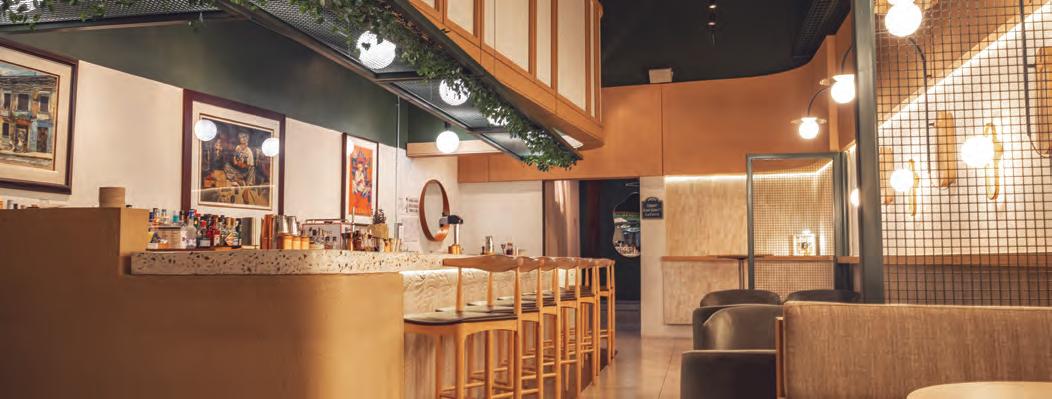
En este nuevo altar de la mixología, Stephen Alonso y Edrick Colón conjuran innovadores cocteles que elevan los aromas y sabores del Caribe para brindar una mágica experiencia al libar.
Luego de 15 años laborando en las mejores barras de San Juan, este dúo dinámico ha logrado crear su propio espacio, uno muy único y especial, donde la mixología artesanal se encuentra con lo mejor del producto local.
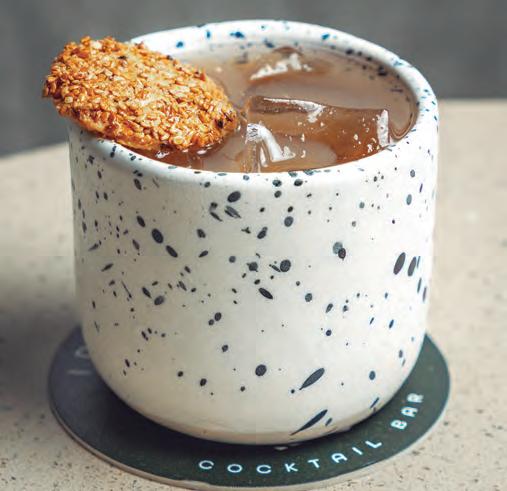
Así surgen algunas de sus maravillas líquidas: Juniper Paradise (ginebra, piña, limón, albahaca, vainilla, cardamomo, aire de albahaca), Vida (vodka, matcha, parcha, limón, miel de jengibre, cacao), Mi Última Palabra (mezcal, lima, genepy, pamplemousse, paleta de habanero y tajín), Tamarindo y Setas (tequila, setas, tamarindo, ajonjolí tostado).
También están experimentando con los Boozed Gelatos en colaboración con @eatdunda. Luego de probar unas mezclas con coco, café y lavanda, ahora seguirán explorando nuevas combinaciones.
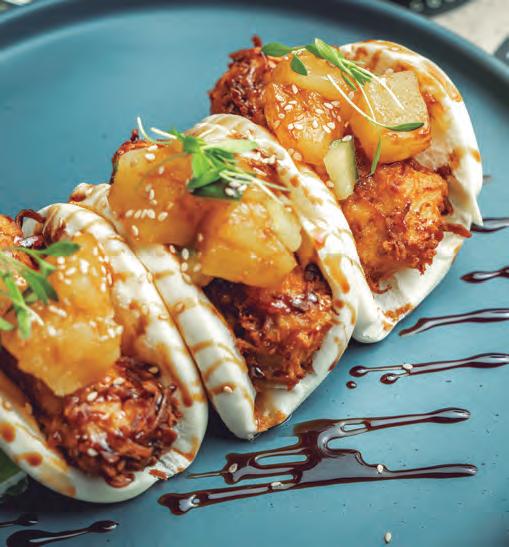
Para maridar, Identidad ofrece una selección de platillos de la nueva cocina latina que son un festín al paladar, como Piña Colada Fish Bao, Tuna Tartare, Alitas al estilo Jamaican Jerk, Dumplings Salmón Ahumado y Jalapeño. Su visión de elevar la gastronomía y coctelería caribeña en un ambiente relajado y divertido, está basada en una cultura de calidad y creatividad, tanto en los productos que utilizan como en la experiencia del servicio que brindan.
Por eso no sorprende que, apenas un año después de abrir sus puertas en la vibrante comunidad de la Calle Cerra en Miramar, Identidad fue reconocido con el Premio James Beard a Mejor Nuevo Bar del 2025
“Es muy emocionante y surreal. Aún estamos asimilando el logro tan grande de haber recibido el Premio James Beard. Es una validación a nuestra dedicación y pasión por la coctelería, y nos inspira a continuar dando lo mejor de nosotros, pues cosas maravillosas suceden cuando pones toda tu alma y corazón en un proyecto”, aseguró Edrick.
Al aceptar este galardón, un emocionado Stephen afirmó: “Que esta celebración sea punto de partida para seguir construyendo juntos el futuro de la industria. Desde Puerto Rico, con el pecho inflado de orgullo, brindamos por el presente, por todo lo que viene y, sobre todo, por nuestra identidad”.
Vibrant Caribbean cocktails in Miramar
In this new altar of mixology, Stephen Alonso and Edrick Colón conjure innovative cocktails that elevate the aromas and flavors of the Caribbean to provide a magical drinking experience.
After 15 years of experience in the best bars in San Juan, this dynamic duo has managed to create their own space, a very unique and special one, where artisanal mixology meets the best of local produce.
This is how some liquid wonders emerge: Juniper Paradise (gin, pineapple, lemon, basil, vanilla, cardamom, basil air), Vida (vodka, matcha, passion fruit, lemon, ginger honey, cocoa), Mi Última Palabra (mezcal, lime, genepy, pamplemousse, habanero & tajin lollipop), Tamarindo y Setas (tequila, mushrooms, tamarind, toasted sesame).
They are also experimenting with the Boozed Gelatos in collaboration with @eatdunda. After trying some mixtures with coconut, coffee and lavender, they will now continue to explore new combinations.
For pairing, Identidad offers a selection of new Latino cuisine dishes that are a feast to the palate, such as Piña Colada Fish Bao, Tuna Tartare, Jamaican Jerk-style wings, Smoked Salmon Dumplings and Jalapeño.
Its vision of elevating Caribbean gastronomy and cocktails in a relaxed and fun environment is based on a culture of quality and creativity, both in the products it uses and in the experience of the service it provides.
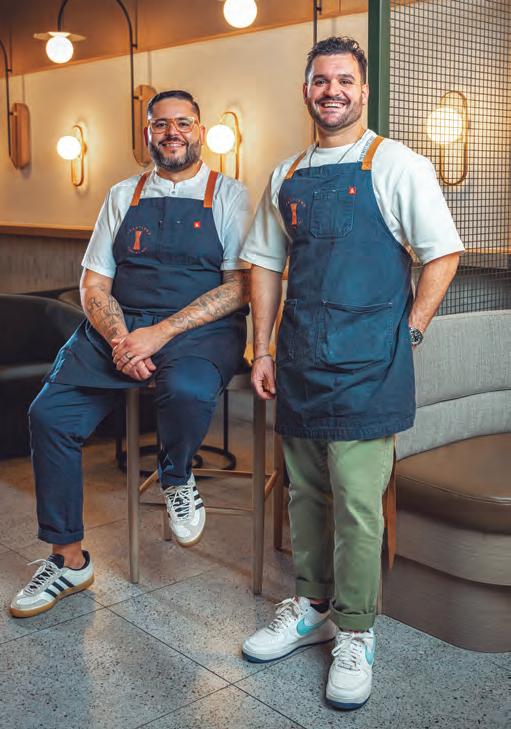
So, it’s no surprise that, just a year after opening its doors in the vibrant community of Calle Cerra in Miramar, Identidad was recognized with the James Beard Award for Best New Bar of 2025
“It’s very exciting and surreal. We are still coming to terms with the great achievement of receiving the James Beard Award. It is a validation of our dedication and passion for cocktails, and inspires us to continue giving our best, because wonderful things happen when you put all your heart and soul into a project,” said Edrick.
Accepting the award, an emotional Stephen said: “May this celebration be a starting point to continue building the future of the industry together. From Puerto Rico, with our chests puffed up with pride, we toast to the present, to everything that is to come and, above all, to our identity.”
Calle Cerra (962 PR-25)
San Juan, P.R. (787) 593-0630 www.identidadbarpr.com @identidadcocktailbar




Por/By: Thomas Sartori
Hay bebidas que cuentan historias. Otras que las inventan. Y algunas —muy pocas— que logran hacer ambas cosas. El ron es una de ellas. No nació en una mesa elegante, ni en una bodega subterránea con temperatura controlada. Nació donde hace calor, donde la tierra huele a cañ a quem ada y a sudor de campesino. Nació del exceso, de lo que sobraba, de un subproducto que nadie quería... y sin embargo, encontró la m anera de convertirse en tesoro.
En República Dominicana, el ron es m ás que un a bebida: es parte del ADN de su gente. Está en los brindis, en las fiestas, en los entierros y en los nacimientos. En la bachata de fondo, en la mesa de dominó, en las conversaciones lentas de los colmados y en las grandes decisiones que se toman —o no— en la política y los negocios.
Pero el ron también ha cambiado. El mismo líquido que antes era sinónimo de resaca y etiqueta pegajosa, hoy se viste de gala. Entra a concursos internacionales, se somete a catas a ciegas, se compara con whiskies de malta y cognacs centenarios... y sale con medallas. Porque el ron —como la gente de estas tierras— sabe reinventarse.
Ron Premium: ¿moda, marketing o madurez?
Los rones añejos dominicanos han encontrado un nicho donde pocos se atreven: el de la elegancia sin pretensión.
Ya no es solo bebida de fiesta o souvenir de aeropuerto. Hoy hay botellas que descansan 12, 18, 25 años en barricas
que antes albergaron bourbon, jerez o vino tinto. Hay soleras, hay dobles barricas, hay etiquetas numeradas y precios que obligan a pensarlo dos veces antes de comprarlo.
Pero m ás allá de las modas y del mercado, hay algo real. Un buen ron puede ofrecer la redondez del tiempo, la calidez del Caribe y la complejidad de una tierra que ha sabido hacer del mestizaje su mejor virtud.
La paradoja del ron dominicano Paradójicamente, muchos dominicanos siguen viendo el ron como algo menor. Quizás p orque lo tienen demasiado cerca. Porque no hay nada m ás fácil de subestimar que lo cotidiano. Aquí le llaman el Complejo de Guacanagarix: esa tendencia —a veces inconsciente, a veces culturalmente heredada— de rendirse ante lo extranjero, de creer que lo de afuera siempre es mejor, m ás fino, m ás digno.
Y sin embargo, basta una copa bien servida, un momento de silencio, y una mente abierta. Solo hace falta mirar el producto con otros ojos: no como un escape, sino como un espejo.
Así que, la próxim a vez que levantes una copa de ron dominicano, no pienses solo en el dulzor o en el precio. Piensa en lo que estás b ebiendo: un destilado de historia, de tierra, de tiempo... y de identidad.
There are drinks that tell stories. Others that make them up. And some –very few– that manage to do both. Rum is one of them. It was not born at an elegant table, nor in a temperature-controlled underground cellar. It was born where it is hot, where the earth smells of burnt cane and peasant sweat. It was born from excess, from what was left over, from a by-product that no one wanted... and yet, it found a way to become a treasure.
In the Dominican Republic, rum is more than just a drink: it’s part of the DNA of its people. It is in toasts, in parties, in funerals and in births. In the background bachata, at the domino table, in the slow conversations of the colmado markets and in the big decisions that are made –or not – in politics and business.
But rum has also changed. The same liquid that used to be synonymous with hangovers and sticky labels, today dresses up. It enters international competitions, undergoes blind tastings, compares itself with malt whiskies and hundred-year-old cognacs... and comes out with medals. Because rum –like the people of these lands– knows how to reinvent itself.
Premium Rum: fashion trends, marketing or maturity?
Dominican aged rums have found a niche where few have dared: that of the unpretentious elegance. It’s no longer just a party drink or airport souvenir. Today there are bottles that age 12, 18, 25 years in barrels that previously housed bourbon, sherry or red wine. There are soleras, there are double barrels, there are numbered labels and prices that force you to think it twice before you buy.
But beyond fashion trends and markets, there is something real. A good rum can offer the roundness of time, the warmth of the Caribbean and the complexity of a land that has made the mixing of races its best virtue.
The paradox of the Dominican rum
Paradoxically, many Dominicans still see rum as something minor. Perhaps because it’s too familiar. Because there is nothing easier to underestimate than the everyday things in life. Here they call it the Guacanagarix Complex: that tendency —sometimes unconscious, sometimes culturally inherited— to surrender to the foreign, to believe that what is outside is always better, finer, more dignified.
And yet, a well-poured drink, a moment of silence, and an open mind are enough. You just need to look at the product with different eyes: not as an exhaust, but as a mirror.
So, the next time you raise a glass of Dominican rum, don’t just think about its sweetness or price. Think about what you are actually drinking: a distillate of history, of land, of time... and identity.
Thomas Sartori
Wine & Spirits Consultant Spot 21
Director Hospitality LAB
@spot.21 @hospitalitylab.rd
Noviembre de 2021 marcó un hito en la industria ronera en la República Dominicana, pues se hizo realidad la Denominación de Origen Ron Dominicano.
La D.O. es una certificación oficial de la calidad, autenticidad, credibilidad y características únicas del ron dominicano. Esta funciona de forma similar al de otras bebidas internacionales que son emblemáticas de los países donde nacieron, como el champagne (Francia), el tequila (México) y el pisco (Chile).
Estos son todos los requisitos que debe cumplir una bebida para obtener la D.O. Ron Dominicano:
Materia prima local
• Únicamente elaborado con caña de azúcar dominicana (jugos, mieles o melaza) de cualquier provincia del país Producción 100% en RD
• Todo el proceso de fermentación, destilación y envejecimiento debe ocurrir completamente en RD Envejecimiento
• Mínimo 12 meses corridos en barricas de roble
• Mínimo de 37.5 % de alcohol por volumen
• Debe ser natural, por lo que se prohíbe el uso de aditivos artificiales que imiten el envejecimiento Producido y Etiquetado
• Debe ser producido por una empresa licorera inscrita ante un Consejo Regulador
• Etiquetado debe mostrar de manera clara y visible el sello de la D.O. Ron Dominicano
Desde marzo 2024, cinco empresas roneras han recibido certificados oficiales de D.O.: Casa Brugal, Ron Barceló, BAINSA, YAZOO-Rones y Bebidas del Caribe (productor de marcas privadas) e Isidro Bordas.
La Asociación Dominicana de Productores de Ron (ADOPRON) continúa trabajando con las certificaciones de las marcas y las casas roneras —como Bermúdez que ya inició el proceso— así como las destilerías y envasadoras fuera de R.D., que también la requieren.
“Estamos a punto de firmar el Acuerdo de Lisboa, que nos permitirá registrar el D.O. Ron Dominicano en 35 países de Europa y Latinoamérica, y seguimos definiendo algunos aspectos de logística para la fase final de implantación de la certificación y el cumplimiento del manual de uso oficial del logo de D.O., que fue recientemente aprobado”, explicó la representante de ADOPRON, Circe Almánzar.
Una vez se haya implementado para fines de año, el sello distintivo D.O. garantizará que la bebida que lo despliega en su botella cumple con todos los estándares superiores de color, aroma y sabor del verdadero Ron Dominicano.
“El D.O. Ron Dominicano contribuirá a preservar la centenaria tradición ronera del país, asegurar la calidad del producto y reforzar su reputación a nivel internacional, a la vez que solidificará el posicionamiento marca país del ron, el cual representa la sociabilidad y alegría del pueblo dominicano”, añadió Almánzar.
Más allá de inspirar gran orgullo nacional, el ron genera el mayor valor agregado industrial del país al sumar las distintas fases de la cadena de producción, desde cultivo de la caña, destilado, elaboración y empaque, hasta distribución, consumo local y exportación.
Eso tiene un impacto económico muy positivo en todo el país. El ron representa el 40% del total mercado de bebidas alcohólicas en la República Dominicana y aporta más de 10,000 empleos directos, mientras produce $129 millones de dólares al año exportaciones y más de $15 mil millones de dólares anuales en recaudaciones.
Al degustar un destilado con la D.O. Ron Dominicano, tendrás razones de sobras para brindar, más allá del gran sabor de esta bebida nacional.
November 2021 marked a milestone in the rum industry in the Dominican Republic, as the Dominican Rum Designation of Origin (D.O.) became a reality.
The D.O. is an official certification of the quality, authenticity, credibility and unique characteristics of the Dominican rum. It works in a similar way to other international drinks that are emblematic of the countries where they were born, such as champagne (France), tequila (Mexico) and pisco (Chile).
These are all the requirements that a drink must meet to obtain the Dominican Rum D.O.:
Local raw material
• Only made with Dominican sugar cane (juices, honey or molasses) from any province of the country 100% produced in the DR
• The entire fermentation, distillation and aging process must occur completely in the DR Aging process
• Minimum 12 months nonstop in oak barrels
• Minimum of 37.5% alcohol by volume
• It must be natural, so the use of artificial additives that mimic aging is prohibited Production and Labeling
• It must be produced by a liquor company registered with a Regulatory Council
• Labeling must clearly and visibly display the seal of the Dominican Rum D.O.
Since March 2024, five rum companies have received official D.O. certificates: Casa Brugal, Ron Barceló, BAINSA, YAZOO-Rones y Bebidas del Caribe (private label producer) and Isidro Bordas.
The Dominican Association of Rum Producers (ADOPRON) further continues to work with the certifications of brands and rum houses –such as Bermúdez , which has already started the process –as well as distilleries and bottling plants outside the D.R., which also require it.
“We are about to sign the Lisbon Agreement, which will allow us to register the Dominican Rum D.O. in 35 countries in Europe and Latin America, and we continue to define some logistical aspects for the final implementation phase of the certification and compliance with the official user manual of the D.O. logo, which was recently approved,” said ADOPRON representative Circe Almánzar.
Once implemented by the end of the year, the distinctive D.O. seal will guarantee that the beverage that displays it on its bottle meets all the superior standards of color, aroma and flavor of true Dominican Rum.
“The D.O. Dominican Rum will contribute to preserving the country’s centuries-old rum tradition, ensuring the quality of the product and reinforcing its reputation internationally, while solidifying the rum’s country brand positioning, which represents the sociability and joy of the Dominican people,” added Almánzar.
Beyond inspiring great national pride, rum generates the greatest industrial added value in the country by adding the different phases of the production chain, from cane cultivation, distillation, processing and packaging, to distribution, local consumption and export.
That has a very positive economic impact throughout the country. Rum represents 40% of the total alcoholic beverage market in the Dominican Republic and provides more than 10,000 direct jobs, while producing $129 million dollars a year in exports and more than $15 billion dollars annually in tax revenues.
So, the next time you go to have a drink with the D.O. Dominican Rum seal, you will have plenty of reasons to toast, beyond the great flavor of this national beverage.

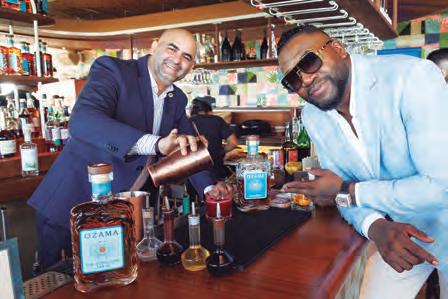
El campeón de la Serie Mundial de la MLB y leyenda del Salón de la Fama del béisbol, David Ortiz, anunció el lanzamiento del Ron Ozama, un licor ultra premium tan auténtico, vibrante y genuinamente dominicano... ¡como él!
El “Big Papi” colaboró con un equipo de expertos en bebidas espirituosas y artesanos dominicanos para crear su propio ron. Con su empaque audaz y suave sabor, Ron Ozama viene en tres variaciones: Blanco, Añejo y Gran Añejo.
Su nombre está inspirado en el icónico Río Ozama de Santo Domingo, donde David pasó innumerables horas cuando era niño, nadando y pescando jaibas.
“Para mí, Ozama no se trata solo de ron, se trata también de identidad, orgullo y progreso. Quería crear algo que celebrara la energía y el alma de mi gente y mostrara al mundo de qué estamos hechos. Siempre ha sido importante para mí hacer las cosas de la manera correcta, por lo que este trabajo de amor ha sido uno de los proyectos más gratificantes de mi carrera. ¡No puedo esperar a que la gente lo pruebe!”, dijo David.
Ron Ozama lleva la Denominación de Origen (DO) Ron Dominicano, que certifica que está hecho de caña de azúcar 100% dominicana, fermentada, destilada y envejecida durante al menos un año en barricas de roble y embotellada en la República Dominicana.
Elevando a una comunidad
Además de crear un producto premium de alta calidad, uno de los objetivos principales de David era añadir un componente caritativo que retribuyera a su amado país y elevara a la próxima generación de dominicanos.
A través de una plataforma de responsabilidad social corporativa, la marca planea crear un fondo a partir de un 2% las ganancias de Ron Ozama que se distribuirá para apoyar los esfuerzos de limpieza del río Ozama y construir comunidades locales a lo largo del río.
Ron Ozama está disponible en tiendas de la República Dominicana y mercados selectos de EEUU. @drinkozama • www.drinkozama.com.
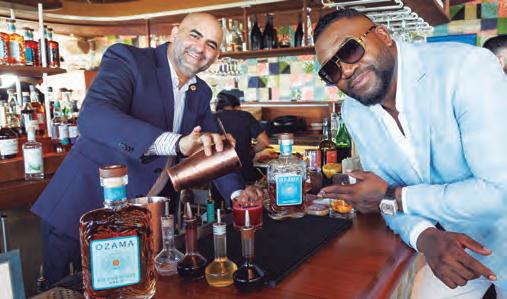
MLB World Series Champion and Hall-of-Fame baseball legend David Ortiz announced the launch of Ozama Rum, an ultra-premium spirit, that feels so authentic, vibrant, and undeniably Dominican…just like him!
The Big Papi joined forces with a team of spirits experts and Dominican artisans to create his own rum. Featuring a bold packaging with smooth taste, Ron Ozama is available in three variations: Blanco, Añejo, and Gran Añejo.
It is named after the iconic Ozama River in Santo Domingo, where David spent countless days as a little boy, swimming and crabbing for jaiba.
“To me, Ozama isn’t just about rum, it’s also about identity, pride, and progress. I wanted to build something that celebrates the energy and soul of my people and shows the world what we’re made of. It’s always been important for me to do things the right way, which is why this labor of love has been one of the most rewarding projects of my career. I can’t wait for people to try it!,” said David.
Ozama offers a fresh take on rum while bearing the Denominación de Origen (DO) Ron Dominicano, which certifies that it is made from 100% Dominican sugarcane, fermented and distilled and aged for at least one year in oak barrels and bottled in the Dominican Republic.
Uplifting a Community
In addition to creating a high-quality, premium product, one of David’s primary goals was to ignite a charitable component that would give back to his beloved country and uplift the next generation of Dominicans.
Through a built-in corporate social responsibility platform, the brand plans to create a fund from Ozama Rum profits with 2% to be distributed to support Ozama River clean-up efforts and build up local communities alongside the river.
Ron Ozama is available in stores in the Dominican Republic and select U.S. markets.
@drinkozama • www.drinkozama.com.
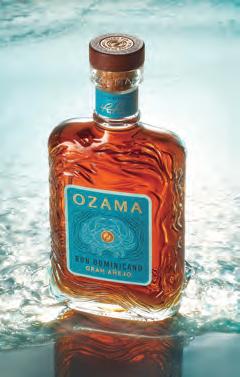
Ozama Blanco
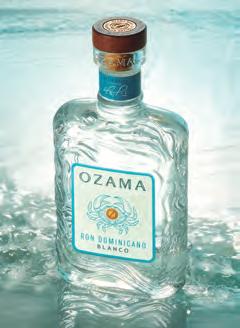
Brillante y limpio. Suave y atrevido. Ofrece una acidez equilibrada con toques de vainilla.
Bright and clean. Smooth yet bold. Its profile delivers balanced acidity with hints of vanilla.
Ozama Añejo
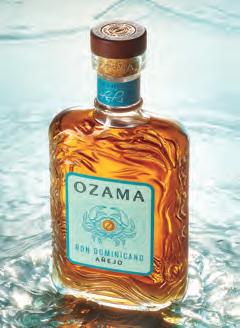
Rico tono cobrizo con un toque de chocolate en nariz. Suave y refinado en boca con capas de caramelo, especias y vainilla.
Rich copper hue with a hint of chocolate on the nose. Smooth and refined on the palate with layers of toffee, spice, and vanilla.
Ozama Gran Añejo
Brilla con un tono ámbar. Aromas de madera fina, vainilla, miel y frutas confitadas. es sedoso, con notas de dátiles y pasas.
It shines with clean amber tones. Aromas of fine wood, vanilla, honey, and candied fruits. Silky with notes of dates and raisins.
Excepcional en todos los sentidos
Por/By:
Gilberto Gómez
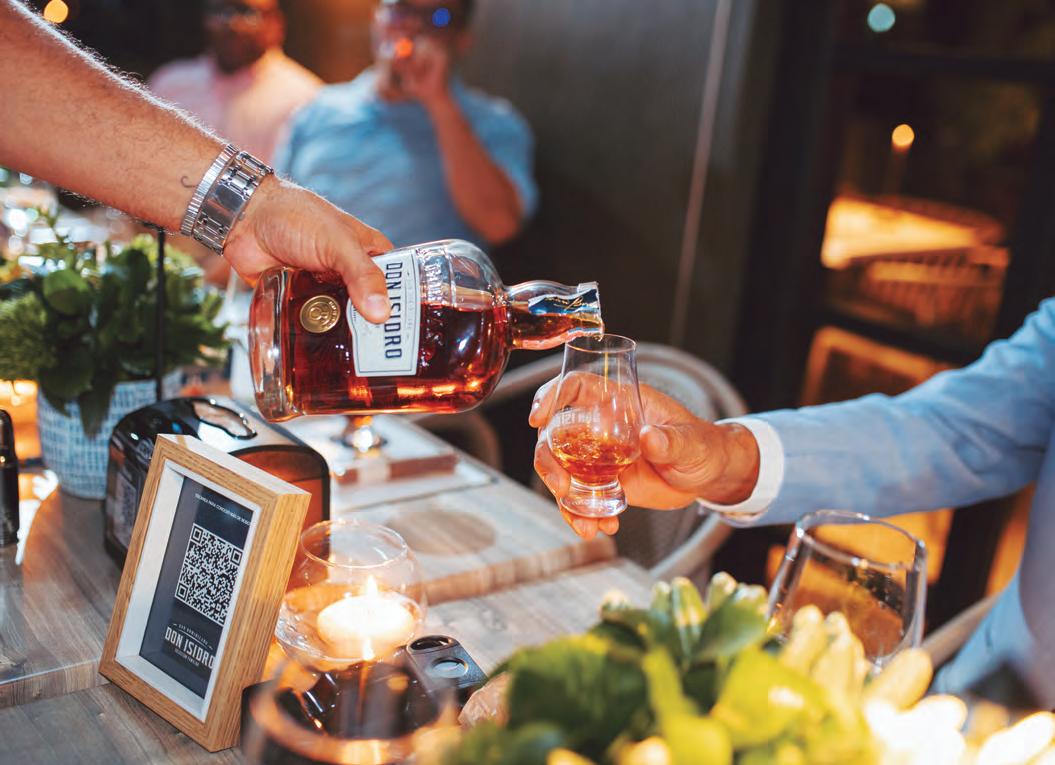
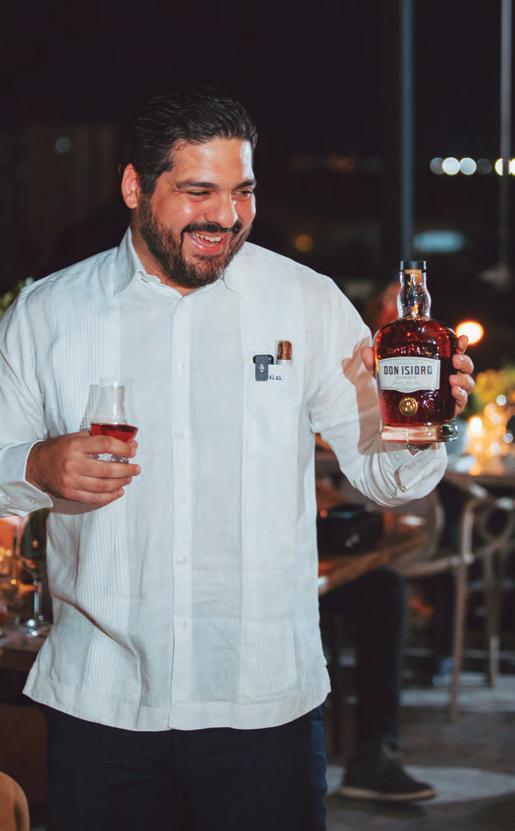
Ron Don Isidro Selección Familiar nace como un tributo al fundador de Isidro Bordas S.A. por su visión y legado de más de 85 años en la República Dominicana.
La tercera generación de la Familia Bordas —que ahora está a cargo de la empresa fundada en 1935 por su abuelo en la ciudad de Santiago de los Caballeros— han querido honrarlo con un ron que proyecte la esencia clásica del exitoso patriarca y la modernidad de sus predecesores.
Con Don Isidro, han inyectado nueva vibra a esta antigua familia ronera, logrando hacer un ron relevante a estos tiempos con apego a los métodos tradicionales.
Elaborado con pasión y dedicación, Don Isidro es un ron dominicano premium, envejecido en barricas de Bourbon en la antigua bodega familiar escondida en el corazón de la región del Cibao.
Esto le aporta un exquisito sabor con notas de madera, aromas de caramelo tostado y vainilla, con un perfecto equilibrio entre suavidad y carácter. En boca se siente una sutil presencia de frutas secas y notas de cáscara de cítricos, especiado de clavo dulce y frutos del bosque.
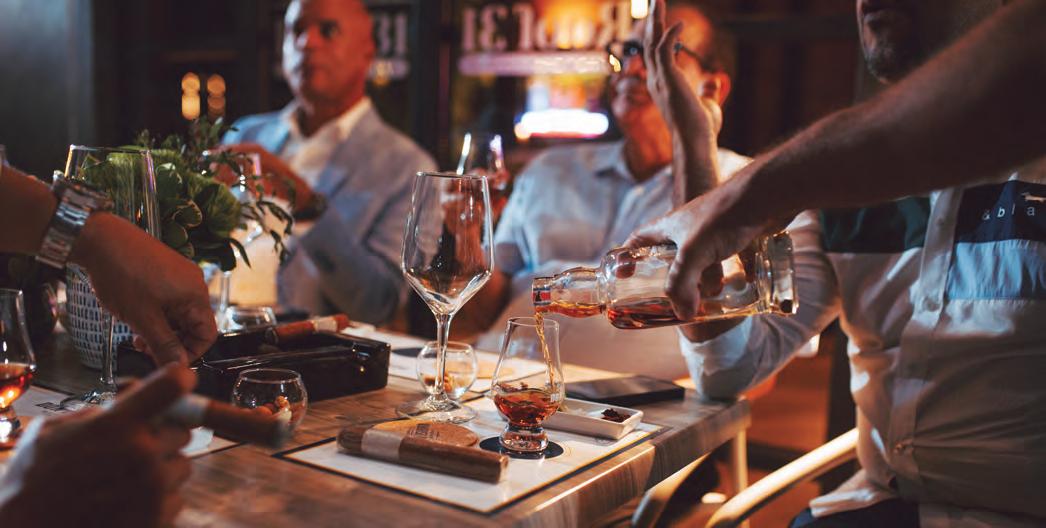
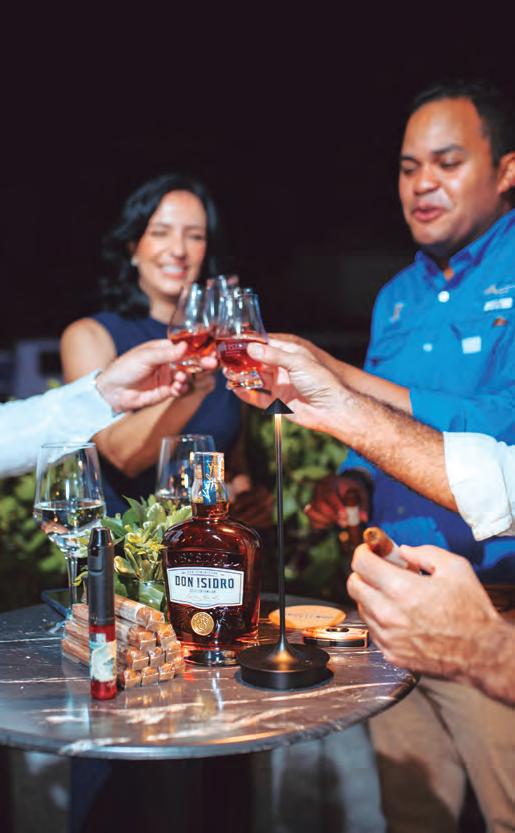
Con un perfil seco y cuerpo medio, Don Isidro funciona bien para cocteles premium, pero es recomendado tomarlo solo, sin hielo o mixers, y servido en una copa de cristal Glencairn para apreciarlo mejor. Marida a la perfección con chocolate 70% a 75% cacao, montaditos de chivo o un corte premium de res, como Ribeye o Striploin.
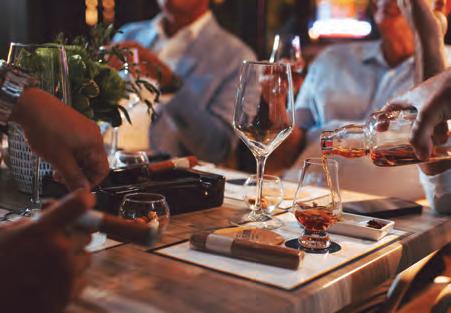
Y por supuesto que, un ron premium como Don Isidro, siempre sabe mejor acompañado de un buen puro dominicano en buena compañía.
Ron Don Isidro Family Selection was born as a tribute to the founder of Isidro Bordas S.A. for his vision and legacy of more than 85 years in the Dominican Republic.
The third generation of the Bordas Family –who are now in charge of the company founded in 1935 by their grandfather in Santiago de los Caballeros– wanted to honor him with a rum that projects the classic essence of the successful patriarch and the modernity of his predecessors.
With Don Isidro, they injected the old rum family with new vibes and managed to make a rum relevant to these times but following the traditional methods.
Made with passion and dedication, Don Isidro is a premium Dominican rum, aged in Bourbon barrels in the old family winery tucked away in the heart of the Cibao region.
This gives it an exquisite flavor with notes of wood, aromas of toasted caramel and vanilla, with a perfect balance between softness and character. On the palate, there is a subtle presence of dried fruits and notes of citrus peels, spicy sweet cloves and berries.
With a dry profile and medium body, Don Isidro works well for premium cocktails, but it is recommended to drink it neat, with no ice or mixers, and served in a Glencairn crystal glass to appreciate it better. It pairs perfectly with 70%-75% cocoa chocolate, a goat tapa or a premium beef cut, such as Ribeye or Striploin.
And of course, a premium rum like Don Isidro, always tastes better with a good Dominican cigar in good company.
Gilberto Gómez
Wine, Spirits and Rum Educator • @aftertasteRD
Certifications: Sommelier CMS-A and WSET-2
DÍA INTERNACIONAL DEL RON
El 16 DE AGOSTO de cada año se le rinde culto al ron en todo el mundo. Coincidiendo con esa gran celebración, Gourmand dedica el tema de portada de esta segunda edición a esta bebida espirituosa con rico legado caribeño.
POPULARIDAD GLOBAL
Desde sus orígenes antillanos en el Siglo XVII, el ron ha cautivado a los más exigentes paladares gracias a su diversidad de sabores y complejidades aromáticas. Su popularidad sigue creciendo debido al auge de la cultura coctelera y una notable preferencia por los espíritus destilados de origen natural y artesanal. El mercado global de ron ya sobrepasó los USD$11,000 millones en 2022
ORIGEN DE LA PALABRA RON
Esta bebida se menciona por primera vez en 1650 en un documento de Barbados. Entonces se le llamaba rumbullion (‘gran tumulto’). Y se le conocía popularmente como kill-devil (‘mata-diablo’) o guildive (en francés) y posteriormente tafia (de origen africano o indígena). No fue hasta 1661 que aparece en una orden del Gobernador de Jamaica la primera mención oficial de la palabra rum, de donde provienen sus versiones en español ron y en francés rhum.
Los métodos de producción del ron varían mucho, lo que resulta en diferentes estilos y calidades, pero todos siguen estos pasos:
COSECHA Y EXTRACCIÓN
La caña se cosecha una o dos veces al año y el jugo es extraído al triturar la caña.
FERMENTACIÓN
El ron se elabora a partir de productos derivados de la caña de azúcar: miel de caña, la melaza y jarabe de caña. Estos se diluyen en agua antes de agregar la levadura para iniciar la fermentación.
DESTILACIÓN
Se usan alambiques de cobre y columnas de destilación para separar impurezas y concentrar el sabor. Un destilado de mayor fuerza tendrá más alcohol y menos compuestos que aportan aromas y sabores (congéneres) y viceversa.
ENVEJECIMIENTO
Una vez destilado, pasa a ser añejado, generalmente en barriles previamente utilizados para bourbons y otros licores. Cuanto más tiempo interactúa con el barril, más color y extracto tendrá.
MEZCLA
Para lograr la fórmula final, se mezclan rones de diferentes edades, países y estilos. La edad indicada en un ron se refiere al ron más joven en la mezcla.
On AUGUST 16 of each year, rum is celebrated all over the world. Coinciding with this great celebration, Gourmand dedicates the cover of this second issue to this tasty spirit with a rich Caribbean legacy.
GLOBAL POPULARITY
Since its origins in the Antilles in the seventeenth century, rum has captivated the most demanding palates thanks to its diversity of flavors and aromatic complexities. Its popularity continues to grow due to a rising cocktail culture and a notable preference for distilled spirits of natural and artisanal origin. The global rum market already surpassed USD$11,000 million in 2022
This drink is first mentioned in 1650 in a Barbados document. It was then called rumbullion (‘great tumult’). And it was popularly known as kill-devil (‘devil-killer’) or guildive (in French) and later tafia (of African or indigenous origin). It was not until 1661 that the first official mention of the word rum appears in an order of the Governor of Jamaica, followed by its versions ron in Spanish and rhum in French.
Rum production methods vary greatly, resulting in different styles and qualities, but they all follow these steps:
HARVESTING AND EXTRACTION
The cane is harvested once or twice a year and the juice is extracted by crushing the cane.
FERMENTATION
Rum is made from products derived from sugar cane: cane honey, molasses, and cane syrup. These are diluted in water before the yeast is added to start fermentation.
DISTILLATION
Copper stills and distillation columns are used to separate impurities and concentrate the flavor. A distillate of greater strength will have more alcohol and fewer compounds that provide aromas and flavors (congeners) and vice versa.
Once distilled, it goes on to be aged, usually in barrels previously used for bourbons and other spirits. The longer it interacts with the barrel, the more color and extract it will have.
MIXTURE
To achieve the final formula, rums of different ages, countries and styles are mixed. The age indicated on a rum refers to the youngest rum in the blend.
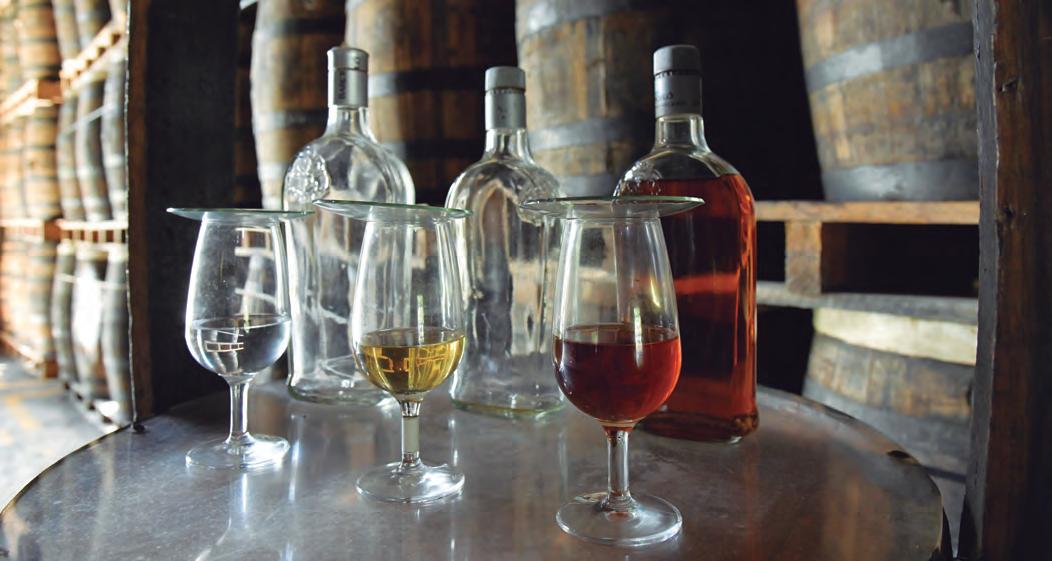
Fuente/Source: Diageo Bar Academy
No existe una sola forma de categorizar el ron, por lo que es común hacerlo según distintas consideraciones:
POR COLOR
Blanco
El contacto con la madera durante el añejamiento le imparte un ligero color ámbar que es eliminado por filtración. Su sabor neutro lo hace el favorito de cócteles.
Dorado
Es más fuerte que los rones blancos, pues tiene mayor tiempo de añejamiento. Su color ámbar puede ser acentuado al agregar caramelo y otros colorantes.
Negro/Oscuro
Pesados, con mucho cuerpo y un fuerte sabor a melaza. Color oscuro, casi a negro debido a los colorantes usados para oscurecer el tono ámbar que toman en barrica.
POR MÉTODO DE PRODUCCIÓN
Premium
Máximo añejamiento y mezclado de superior calidad.
Over-Proof
Rones blancos con un contenido alcohólico super alto.
Especiados/Saborizados
Mezclados con extractos para añadirle sabor. Se usa ron blanco para frutas y dorado o añejo para especias.
There is no definitive way to categorize rum, so it’s common to do it according to different considerations:
BY COLOR
White
The contact with oak wood during aging gives it a slight amber color that is removed by filtration. Due to its neutral flavor, it’s the preferred choice for cocktails.
Gold, Ambré
Its flavor is stronger than the whites, as they have a longer aging time. The medium amber color can be accentuated by adding caramel and other colorants.
Black, Dark
Heavy and full-bodied with strong molasses flavor. The dark, almost black color results from colorants added to deepen the amber tone that they get from the barrels.
Premium
Maximum aging time and top quality blending.
Over-Proof
White rums with a super high alcohol content.
Spiced/Flavored
Mixed with extracts to add flavor. White rums are used for fruit flavors and golden or aged rums for spices.
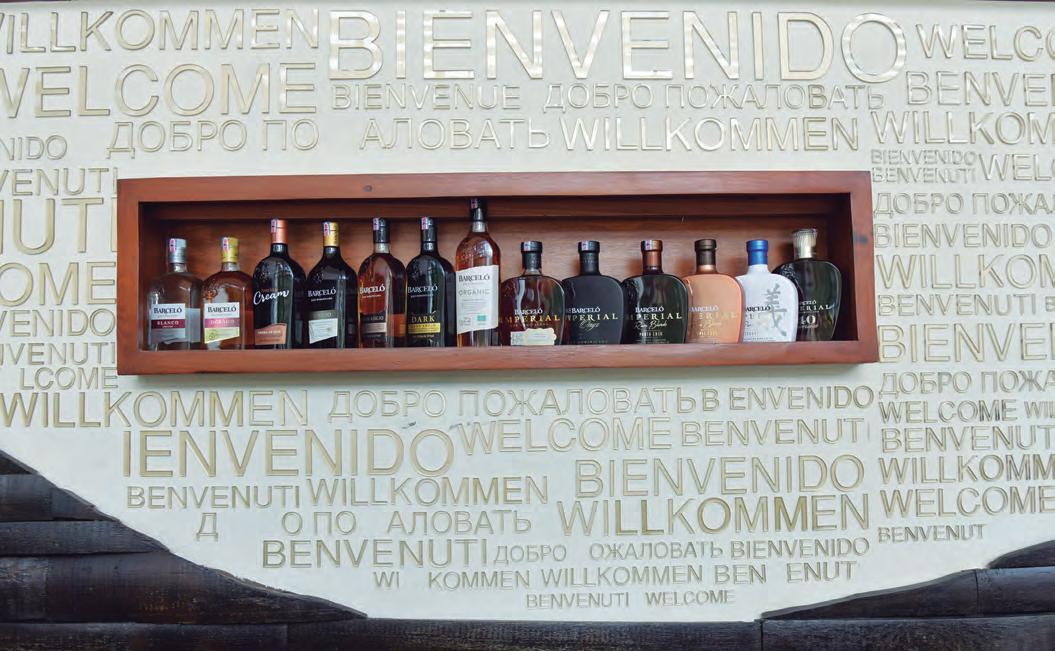
¿Sabías que ya podías viajar al fascinante mundo de Ron Barceló en República Dominicana? Solo tienes que reservar el próximo tour a la fábrica ronera en San Pedro de Macorís, que te lleva a descubrir esta famosa casa de los espíritus destilados donde se elabora una de las marcas de ron dominicano de mayor prestigio mundial.
La visita guiada de 90 minutos hace una parada en el Centro Histórico, que te transporta al pasado para conocer más sobre la transformación de la caña de azúcar en ron y la empresa fundada en Santo Domingo en 1930 por don Julián Barceló quien llegó a Quisqueya desde otra isla, su natal Mallorca en España.
El sabroso tour espiritoso concluye con una cata de ron en las bodegas de añejamiento para degustar distintos productos de Ron Barceló. Y tienes la opción de vivir el singular “bartender experience” y aprender a elaborar tus propios cocteles.
Did you know that you could travel to the fascinating world of Ron Barceló in the Dominican Republic? You only have to make a reservation on the next guided tour to this rum factory in San Pedro de Macorís, which takes you to discover this famous house of distilled spirits where one of the Dominican rum brands with the greatest worldwide prestige is made.
The 90-minute excursion makes a stop at the Historic Center which transports you back in time to learn more about the transformation of sugar cane into rum and the company, founded in Santo Domingo in 1930 by Julián Barceló, who arrived in Quisqueya from another island, his native Mallorca in Spain.
This flavorful spirited tour concludes with a rum tasting in the aging cellars to enjoy different products of Ron Barceló. And you have the option of living a unique “bartender experience” and learn how to make your own cocktails. www.ronbarcelo.com
Visit its factory and historic center in San Pedro de Macoris

Al llegar, te reciben en el Centro Histórico Ron Barceló, cuyo diseño está inspirado en las barricas.
Upon arrival, you are greeted at Ron Barceló Historic Center, with a design inspired by barrels.
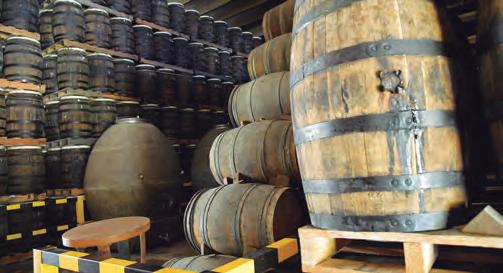
La primera bodega alberga 10,000 barricas donde se añejan de 10 a 22 años los rones premium Barceló Imperial y el super premium, 40 Aniversario.
The first aging warehouse holds 10,000 barrels where the premium Barceló Imperial rum series and the super premium, 40th Anniversary, are aged from 10 to 22 years.
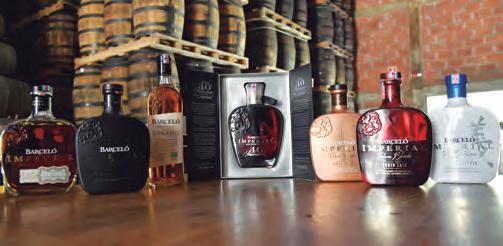
Imperial Rare Blends es una colección de rones terminados en barricas poco comunes para lograr aromas y sabores disruptivos más allá de lo ordinario: madera virgen de roble japonés (Mizunara Cask), madera de arce (Maple Cask) y maderas de roble europeo previamente usadas para añejar vino de Oporto (Porto Cask).
Imperial Rare Blends is a collection of rums finished in rare barrels to achieve disruptive aromas and flavors beyond the ordinary: virgin Japanese oak wood (Mizunara Cask), maple wood (Maple Cask) and European oak woods previously used to age Port wine (Port Cask).
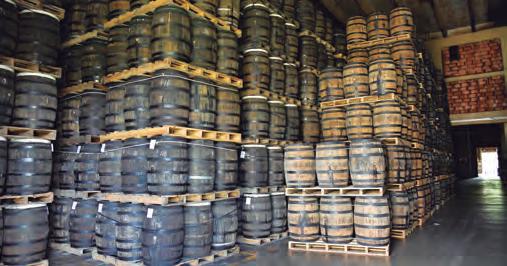
La segunda bodega tiene 30,000 barricas para los rones de añejamiento medio que son muy populares para la coctelería, como son el Dorado, el Blanco y el Gran Añejo.
The second aging warehouse has 30,000 barrels for medium-aged rums that are very popular for cocktails, like Dorado, Blanco and Gran Añejo.
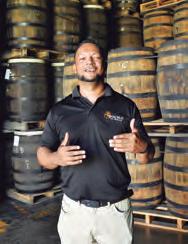
Según el guía, Jiancarlo Castro, a 10 minutos se encuentra otra bodega con capacidad de 110,000 barricas adicionales, para un gran total de 150,000 barricas.
According to tour guide Jiancarlo Castro, 10 minutes away is another aging warehouse with an extra capacity of 110,000 barrels, for a grand total of 150,000 barrels.

En los tanques de acero inoxidable se deposita el alcohol destilado rectificado a 95%, que se diluye a 70% con agua desmineralizada y se deja reposar. El proceso inicia en Alcoholes Finos Dominicanos, la destilería de Barceló donde tienen unos 70 kms cuadrados de plantación de caña.
The distilled alcohol rectified to 95% is deposited in the stainless steel tanks, then diluted to 70% with demineralized water and left to rest. The process begins at Alcoholes Finos Dominicanos, the Barceló distillery where they have about 70 square kilometers of cane plantation.
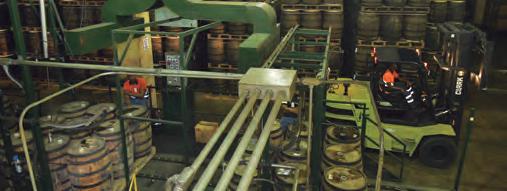
Las barricas que han finalizado el tiempo de maduración son vaciadas en tanques de acero inoxidable bajo la supervisión del Master Blender de Barceló y Expertos Roneros, quienes se encargan de hacer la mezcla del producto final.
The barrels that have completed the maturation time are emptied into stainless steel tanks under the supervision of Barceló’s Master Blender and Rum Experts, who are in charge of blending the final product.


Los preciados líquidos son enviados directamente a la planta para embotellado y sellado.
The precious liquids are sent directly to the plant for bottling and sealing.
Las botellas, tapas y sellos son revisados manualmente para asegurar su óptima condición y presentación.
The bottles, caps and seals are manually checked to ensure their optimal condition and presentation.
Las botellas son empacadas y transportadas a los almacenes para su eventual distribución. El 85% de la producción de Ron Barceló se exporta a más de 90 países.
The bottles are then packaged and transported to warehouses for eventual distribution. An 85% of Ron Barceló’s production is exported to more than 90 countries
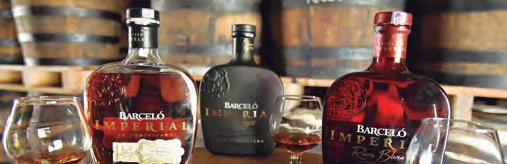
Tras el recorrido, se pasa a las bodegas para hacer la cata del Ron (Añejo y/o Imperial según la opción seleccionada) y aprender a apreciar su calidad y distintivo sabor.
After the tour, you will go to the aging warehouses for the rum tasting (Añejo y/o Imperial, depending on the option selected) and learn to appreciate its quality and flavor.
Entonces se regresa a donde todo comenzó: El Centro Histórico Ron Barceló. En el área del museo se exhiben alambiques, carretas y herramientas usadas en la cosecha de caña, destilación del alcohol y añejamiento del ron.
Then you go back to where it all began: The Ron Barceló Historic Center. In the museum area, there’s an exhibit of stills, carts and tools used in the cane harvesting, alcohol distillation and rum aging.
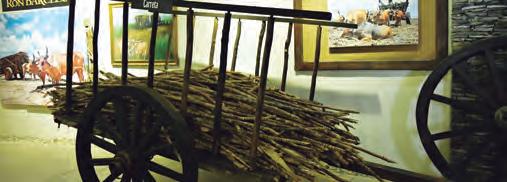
En la Galería de Recuerdos se muestra la evolución de la empresa y sus rones más icónicos. Y hay una tienda donde pueden adquirir souvenirs y productos Barceló.
The Gallery of Memories shows the evolution of the company and its most iconic rums. And there is a shop where you can buy Barceló products and souvenirs.
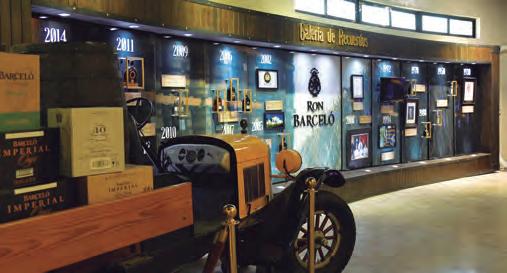
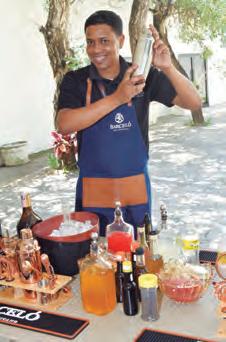
Como opción al final del tour, un mixólogo te enseñará a utilizar los instrumentos de preparación de bebidas —que muchos tenemos y nunca usamos— y te guiará para que puedas elaborar tu propio cóctel original con jugos, especies y rones Barceló.
As an option at end the tour, a mixologist will teach you how to use the tools for preparing drinks –those that many of us have and never use– and will guide you to make your own cocktail with juices, spices, and a selection of Barceló rums.
Durante la visita a Ron Barceló es evidente que están seriamente enfocados en hacer de la sostenibilidad una realidad.
Como resultado, han puesto en vigor una serie de medidas eco-amigables en diversas fases de su operación:
• El 90% de la energía en la destilería se produce con el bagazo de la caña.
• El 60% de la energía en la fábrica es de paneles solares.
• Los gases generados en la fermentación no van a la atmósfera, sino que los convierte en burbujas de CO2 que comercializa a las compañías de gaseosas.
• El jugo rojizo que resulta de la destilación, vinaza, se usa como fertilizante en los campos de caña de azúcar.
El compromiso ambiental también se refleja en sus productos. En el 2020, lanzaron Barceló Organic, el primer ron dominicano 100% orgánico del mundo. Este producto pionero en su clase en la República Dominicana, es la fiel representación de “la sostenibilidad hecha ron”.
Barceló Organic está envejecido de forma natural en barricas nuevas de roble y tiene una producción anual limitada. Para su elaboración, solo se utiliza caña procedente de un cañaveral de apenas 1.5 kilómetros de extensión donde la caña de azúcar crece libremente, sin la ayuda de fertilizantes ni sistemas de riego, ¡solo la lluvia!
Barceló Organic viene en un estuche elaborado de bagazo, fibra vegetal resultante de la extracción del jugo de caña que es el perfecto empaque para esta reverencia a la Madre Naturaleza. Y como toque final, Barceló optó por usar una tinta cien por ciento orgánica imprimir sobre este hermoso empaque eco-amigable.
Este producto marcó otro hito ambiental importante para Ron Barceló, ya que en 2016 fue el primer ron del mundo certificado como Carbono Neutral por la Organización Internacional de Estandarización (ISO14067) y el primero con licencia Bilan Carbone®.
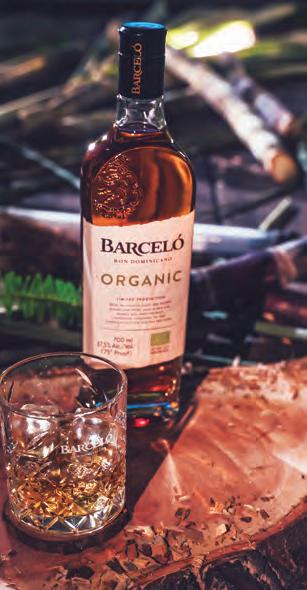
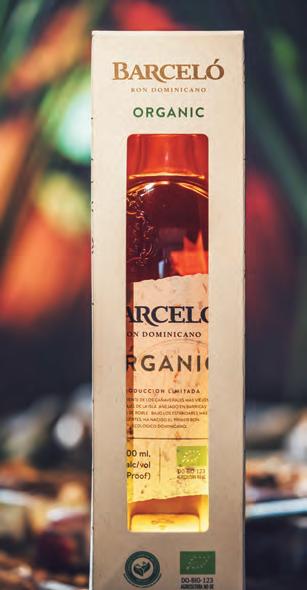
During the visit to Ron Barceló it is evident that they’re seriously focused on making sustainability a reality.
As a result, the company has put in place a series of eco-friendly measures in various phases of its operation:
• A 90% of the energy in the distillery is produced from sugarcane bagasse.
• A 60% of the energy in the factory is from solar panels.
• The gases generated in fermentation do not go into the atmosphere, but instead, are converted into CO2 bubbles that are marketed to soft drink companies.
• The reddish juice that results from distillation, vinasse, is used as fertilizer in sugarcane fields.
The environmental commitment is also reflected in its products. In 2020, they launched Barceló Organic, the world’s first 100% organic Dominican rum. This pioneering product of its kind in the Dominican Republic is the faithful representation of “sustainability made rum”.
Barceló Organic is naturally aged in new oak barrels and has a limited annual production. For its production, only cane from a sugarcane field of just 1.5 kilometers in length is used where sugarcane grows freely, without the help of fertilizers or irrigation systems, only rain!
Barceló Organic comes in a case made from bagasse, a vegetable fibre resulting from the extraction of cane juice that is the perfect packaging for this reverence to Mother Nature. And as a final touch, Barceló chose to use a 100% percent organic ink to print on this eco-friendly packaging.
This product marked yet another important environmental milestone for Ron Barceló, as in 2016 it became the first rum in the world certified as Carbon Neutral by the International Standarization Organization (ISO14067) and the first with a Bilan Carbone® license.
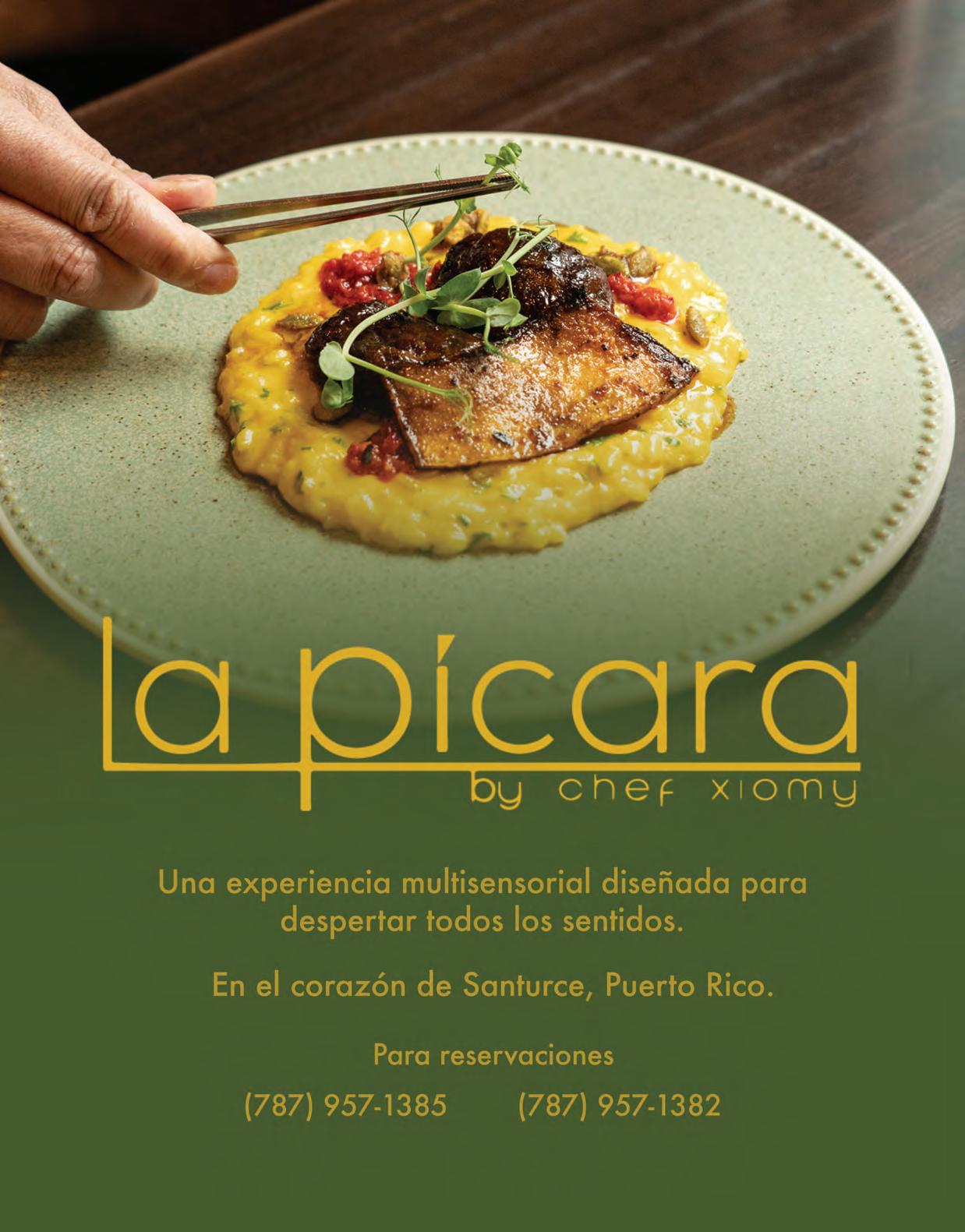
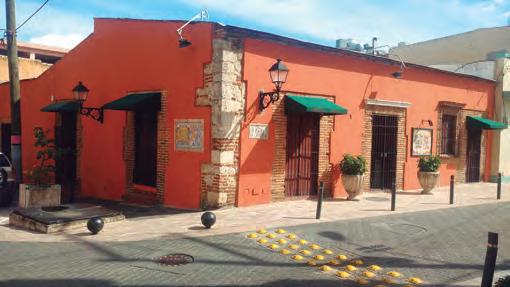
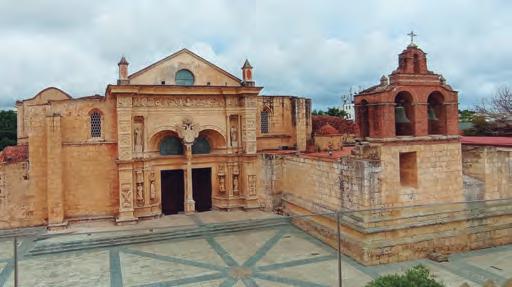
Ciudad Colonial, SD
En pleno corazón de la Ciudad Colonial de Santo Domingo, donde las piedras del pasado conviven con la energía vibrante del presente, existen dos espacios que te invitan a vivir una experiencia ronera única llena de tradición, cultura y sabor: Sugar Cane y el Museo del Ron.
El visitar ambos destinos te brinda la oportunidad de aprender, degustar, compartir y disfrutar, a la vez que puedes conectar con la identidad dominicana.
Conocida como La Casa del Ron, es una parada obligada para quienes desean disfrutar de la auténtica coctelería dominicana en un ambiente colonial. Desde su rooftop puedes apreciar la impresionante fachada lateral de la Catedral, siendo un spot ideal para turistas y locales que buscan pasar de una velada especial.
Su carta de bebidas combina creatividad con ingredientes locales, donde el ron —estrella nacional— se mezcla con frutas tropicales, especias y esencias que despiertan el paladar. También tiene sabrosas opciones gastronómicas, como las tapas de fusión dominicana y española.
Also known as The Rum Experience, is a must stop for those who want to enjoy authentic Dominican cocktails surrounded by a colonial atmosphere. From its rooftop you can see the amazing side façade of the Cathedral, making it an ideal spot for both tourists and locals looking to have a truly special evening.
Its drinks menu combines creativity with local ingredients, where rum – the national star – is mixed with tropical fruits, spices and essences that awaken the palate. It also offers savory food options, including Dominican and Spanish fusion tapas.
Arzobispo Meriño #204, Sto. Dgo, R.D. (809) 920-3935 • @sugarcanelacasadelron
In the heart of the Colonial City of Santo Domingo, where the stones of the past coexist with the vibrant energy of the present, there are two spaces that invite you to live a unique rum experience full of tradition, culture and flavor: Sugar Cane and the Rum Museum.
Visiting both destinations provide you with the opportunity to learn, taste, share and have fun, at the same time you connect with the Dominican identity.
Museo del Ron
Este espacio cultural revela el alma de una de las industrias más emblemáticas del país con exhibiciones históricas, fotografías, y utensilios tradicionales. A través de una experiencia educativa e interactiva, puedes conocer el proceso de elaboración del ron, desde el cultivo de la caña hasta la destilación y añejamiento. ,
Al final, visita la tienda para adquirir marcas exclusivas, souvenirs y productos artesanales, o participa en degustaciones guiadas para descubrir las diferentes marcas de ron dominicano. En las noches, el local se convierte en un bar donde bailar música caribeña y saborear cocteles de ron.
This cultural space reveals the soul of one of the most emblematic industries in the country with its historical exhibits, photographs, and display of traditional utensils. Through an educational and interactive experience, visitors can learn about the rum-making process, from the cultivation of the cane to distillation and aging.
At the end of the visit, stop at the shop to buy exclusive products, souvenirs and artcrafts, or enjoy the guided tastings to discover different brands of Dominican rum. At night, this place becomes a lively bar where you can dance Caribbean music while sipping rum cocktails.
Isabel La Católica #261, Sto. Dgo, R.D. (829) 471-1080 • @barymuseodelron

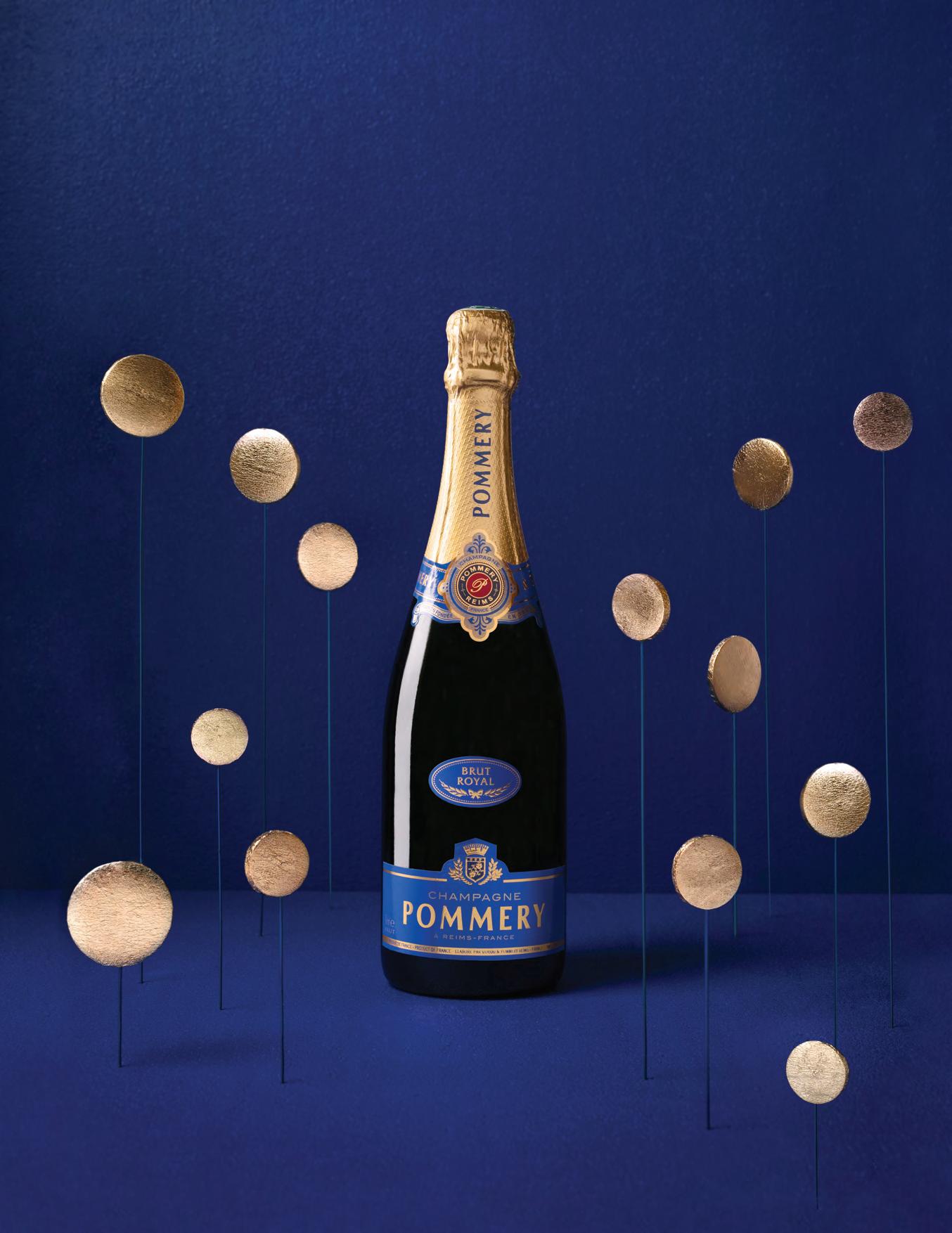
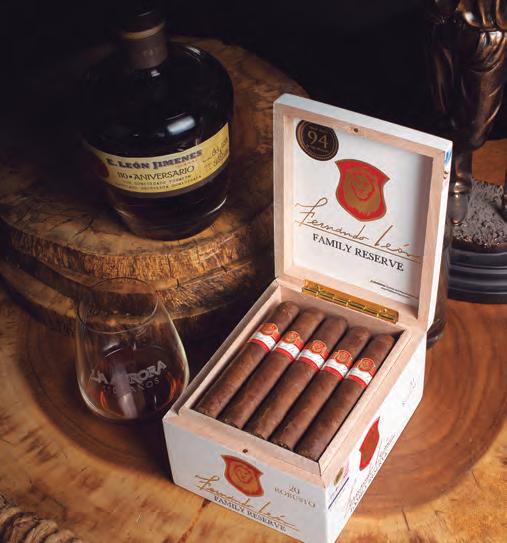

Maridaje perfecto de dos pasiones dominicanas en una misma empresa
Perfect pairing of two Dominican passions in one company
La Aurora es la fábrica de cigarros más antigua de la República Dominicana. Fue fundada en 1903 por Eduardo León Jimenes, cuando este hijo y nieto de cosecheros de tabaco heredó unas tierras con apenas 18 años.
Gracias a su visión de convertir la tradición familiar en una operación artesanal de alcance global, La Aurora es hoy el principal productor de puros dominicanos y uno de los más emblemáticos del mundo.
Luego de 122 años, la empresa cuenta con más de 2,600 empleados y una sólida presencia en más de 90 países de su amplia gama de productos, incluyendo renombradas marcas de puros destacadas por su excelencia y calidad. También produce marcas privadas a compañías locales y extranjeras, e incluso a personalidades como Karl Malone.
Como parte de su proceso de diversificación, la firma integra una serie de experiencias innovadoras y productos complementarios bajo el concepto La Aurora Cigar World. Entre estos, la visita a la fábrica La Aurora y dos exclusivos rones E. León Jimenes: 110 Aniversario y 1903
Tiene mucho sentido que ambas pasiones dominicanas se combinen en una misma empresa, el Grupo León Jimenes, pues el ron es el maridaje por excelencia para los amantes de los puros, quienes disfrutan esa fusión única de humos y sabores que deja un imborrable recuerdo.
La Aurora is the oldest cigar factory in the Dominican Republic. It was founded in 1903 by Eduardo León Jimenes, when this son and grandson of tobacco harvesters inherited some land at the tender age of 18
Thanks to its vision of turning the family tradition into an operation with global reach, today La Aurora is the main producer of Dominican cigars and one of the most emblematic in the world.
After 122 years, the company has more than 2,600 employees and a strong presence in more than 90 countries with its wide range of products, including renowned cigar brands all noted for their excellence and quality. It also produces private labels for local and foreign companies, and even for personalities like Karl Malone.
As part of its diversification process, the firm integrates a series of innovative experiences and complementary products under the concept of La Aurora Cigar World. Among these, the visit to the La Aurora factory and two exclusive E. León Jimenes rums: 110 Aniversario and 1903
It makes perfect sense that both Dominican passions are combined in the same company, the León Jimenes Group, since rum is the quintessential pairing for cigar lovers, most of whom enjoy that unique fusion of smoke and flavors that leaves an indelible memory.
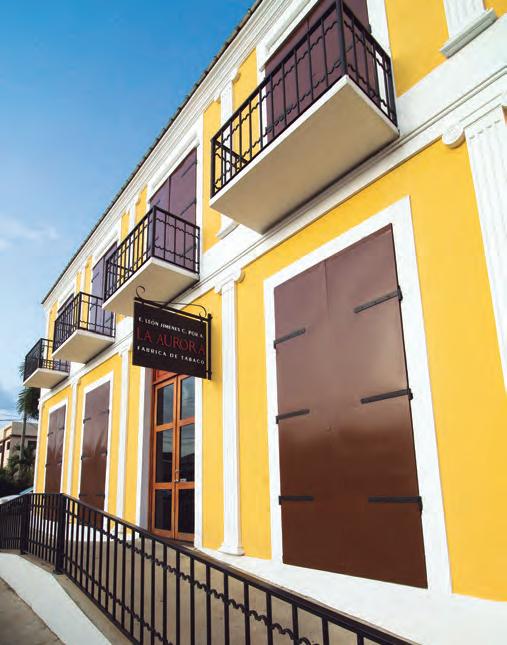
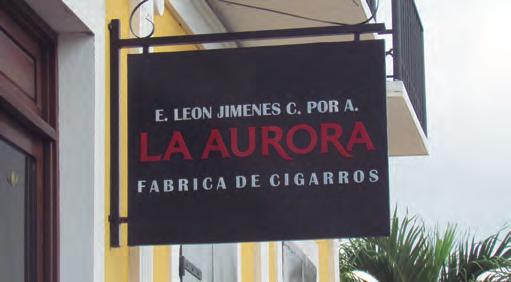
En el 2007, La Aurora regresa a sus orígenes, al mudarse de la ciudad de Santiago de los Caballeros a una comunidad de esa provincia, Guazumal, donde comenzó la operación original en 1903
En ese mismo espacio ancestral ubica la sede actual en lo que hoy es la Zona Franca de Tamboril, donde puedes visitar la Fábrica La Aurora. Considerada la atracción #1 de la zona por Trip Advisor, el tour guiado te abre las puertas al maravilloso mundo del tabaco…¡orgulloso patrimonio cultural de la República Dominicana!
En el salón de exhibición conocerás sobre las distintas variedades de tabaco y las etapas que pasa —cultivo, cosecha, selección y secado— hasta llegar a la fábrica.
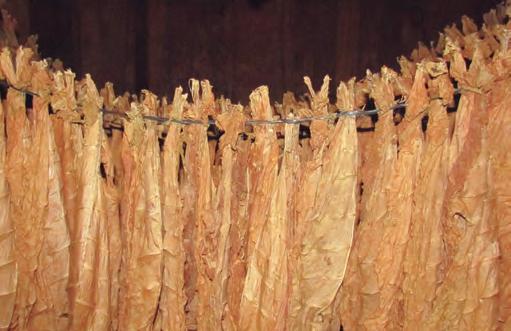
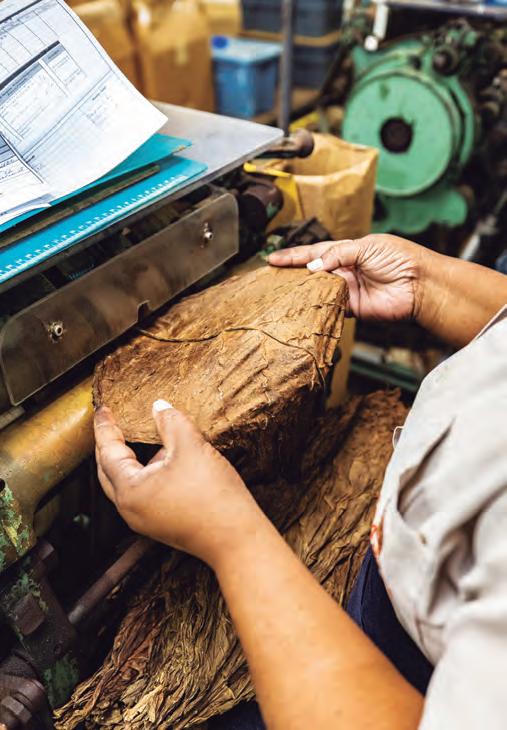
Y al entrar en la planta, verás el proceso de elaboración del puro: desde el añejamiento, depalillado y clasificación de las hojas, hasta las estaciones de enrolado, donde las expertas manos de casi un centenar de artesanos hacen 35,000 cigarros al día.
También se recorren las áreas de etiquetado y empaque antes de hacer la parada final: una visita a la tienda para llevarte una muestra de los exquisitos cigarros La Aurora y los rones E. León Jimenes, y animarte a hacer tu propio maridaje en casa con buena compañía.
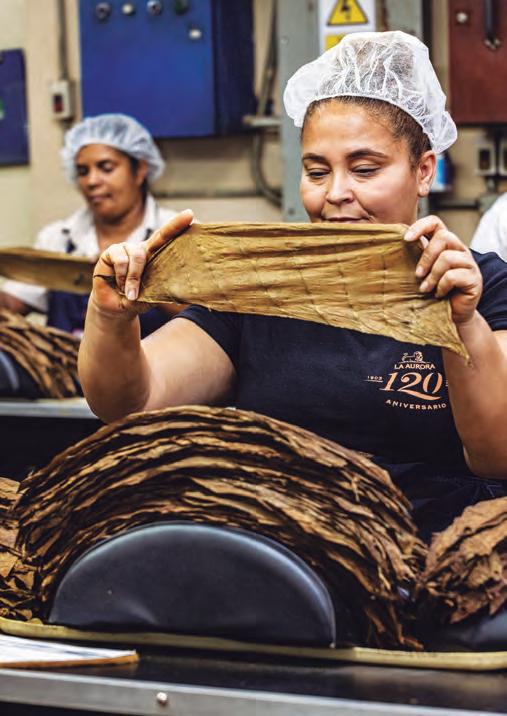
In 2007, La Aurora returned to its origins, moving from the city of Santiago de los Caballeros to a community in that same province, Guazumal, where its original operation began in 1903.
In that same ancestral space, where the current headquarters are located in the Tamboril Free Trade Zone, today you can visit the La Aurora Factory. Considered the #1 attraction in the area by Trip Advisor, this guided tour opens up the doors to the wonderful world of tobacco… a proud cultural heritage of the Dominican Republic!
In the exhibition hall you will learn about different varieties of tobacco and the stages it goes through —cultivation, harvest, selection and drying— until it reaches the factory.
When entering the plant, you’ll see the entire cigar-making process: from aging, destemming and sorting leaves, to the rolling stations, where the expert hands of nearly one hundred artisans prepare 35,000 cigars a day.
The labeling and packaging areas are also visited just before the final stop: a visit to the store so you can get a sample of the exquisite La Aurora cigars and E. León Jimenes rums, so you can make your own pairing at home in good company..
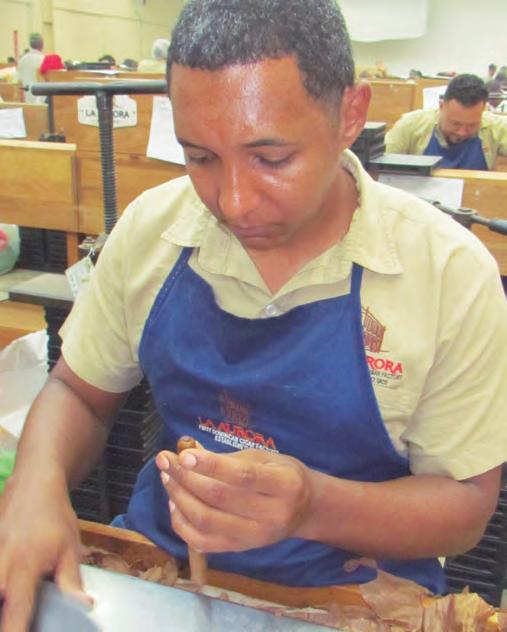
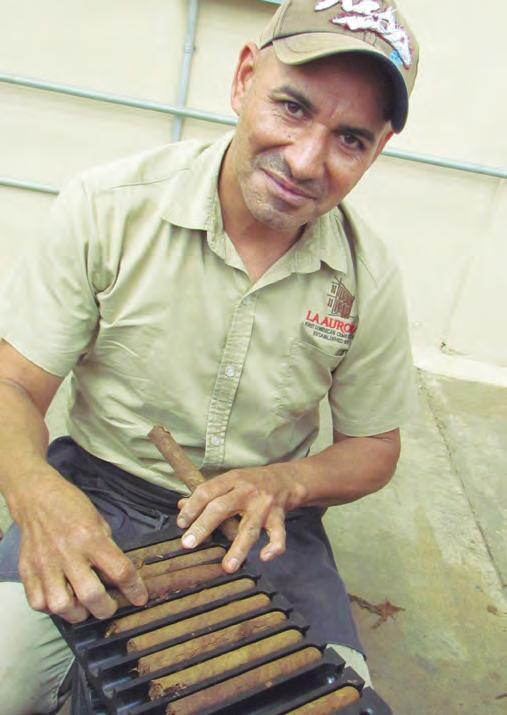
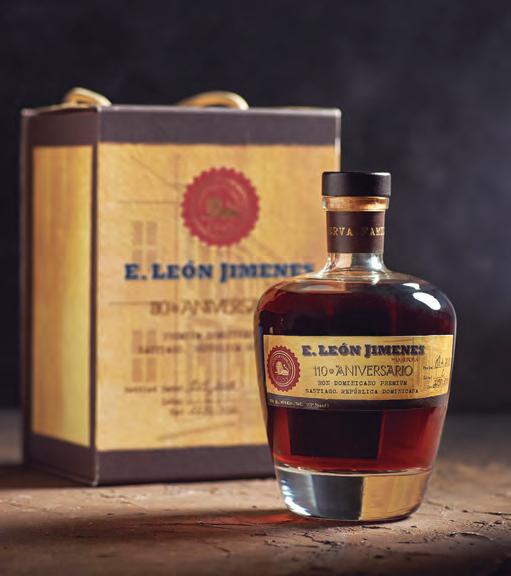
Para celebrar los 110 años de su fundación, en el 2013 La Aurora lanzó el Ron E. León Jimenes 110 Aniversario, un destilado super premium con una edición limitada de 3,000 botellas, todas numeradas.
Con un sabor excepcional y un final vibrante, este ron nace luego de un singular proceso de añejamiento de 10 años: los primeros ocho los pasa en barricas de roble blanco americano virgen y los últimos dos en toneles de roble francés virgen.
Su extraordinaria calidad le valió una puntuación de 97 del Beverage Testing Institute. Y en 2020, obtuvo la Doble Medalla de Oro del Concurso Mundial de Bebidas Espirituosas de San Francisco.
To celebrate the 110th anniversary of its foundation, in 2013 La Aurora launched the E. León Jimenes 110th Anniversary Rum, a super premium distillate with a limited edition of 3,000 bottles, all numbered.
With an exceptional flavor and a vibrant finish, this rum was born after 10 years of a unique aging process: the first eight years spent in virgin American white oak barrels and the last two in virgin French oak barrels.
Its outstanding quality earned it a score of 97 from the Beverage Testing Institute. And in 2020, he won the Double Gold Medal of the San Francisco World Spirits Competition.
Lanzado al mercado en es un tributo a la rica tradición de La Aurora y conmemora el año de fundación de la empresa.
Envejecido
americano previamente usadas para bourbon y barriles de roble europeo que antes añejaron jerez.
Tiene toques color rojo caoba intenso y notas agradables de caramelo, especias, miel y frutos secos, creando una armonía exquisita.
Cada botella está elaborada con materia prima dominicana, resaltando las profundas raíces de la marca, el orgullo familiar y su compromiso con la excelencia.
Launched in Aurora’s rich tradition and year of the company’s founding.
It its aged for a total of oak barrels previously used for bourbon and then European oak barrels used to age sherry.
It has touches of intense mahogany red and pleasant notes of caramel, spices, honey and nuts, creating an exquisite harmony.
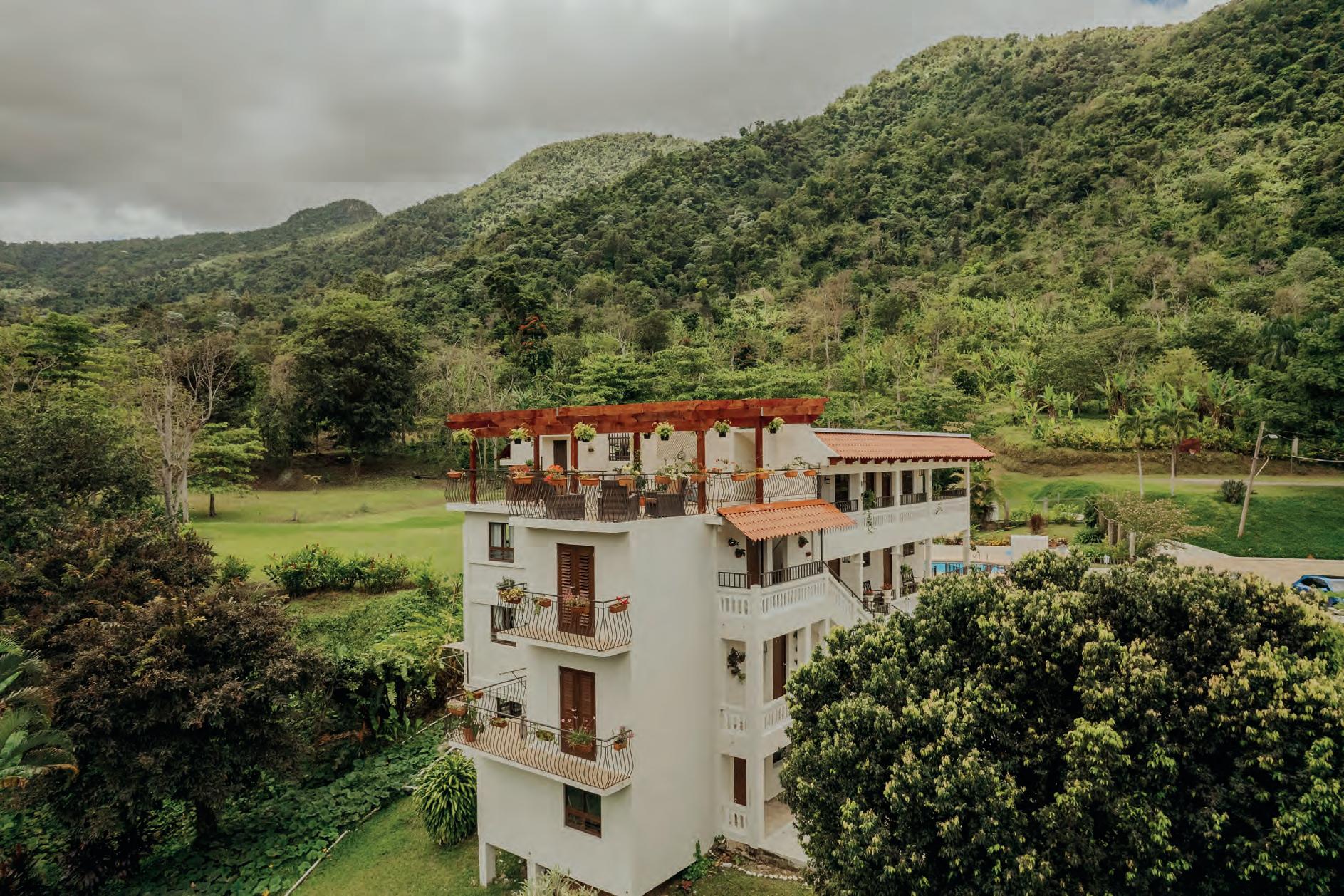
Each bottle is made with highlighting the brand’s deep roots, family pride and commit ment to excellence.
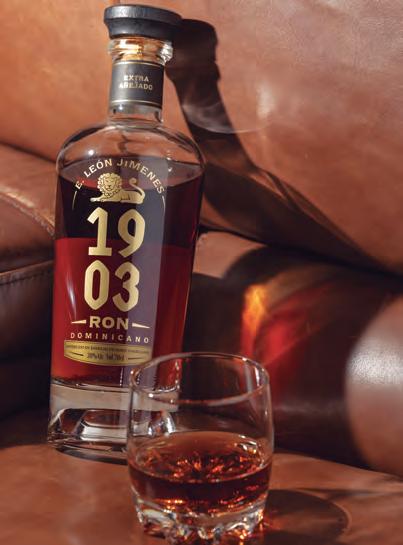


Hacienda Moraica es una hospedería & hacienda de café ubicada en Orocovis, Puerto Rico. Cuenta con 25 habitaciones, restaurante, piscinas, canchas de juego, área de pesca, centro de entretenimiento & experiencias de café.
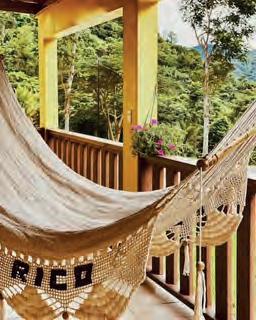
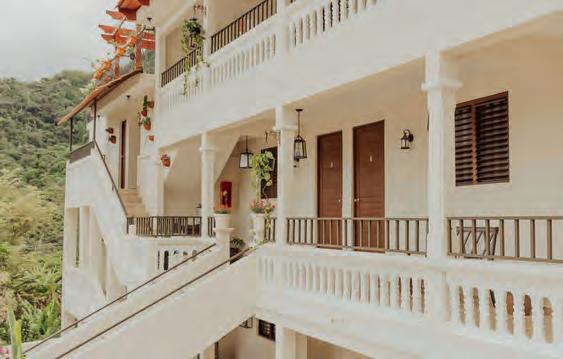
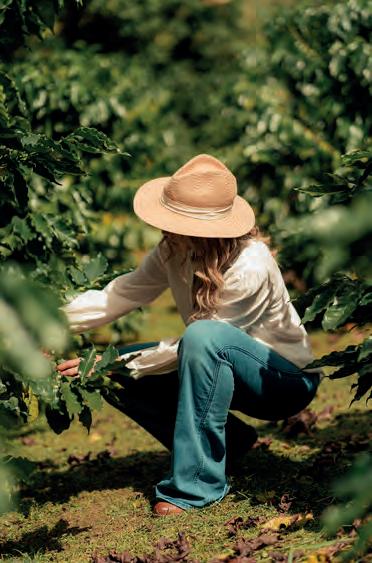
Hospedería Recorridos de Café
Campamento de Café Restaurante & Barra Bodas & Eventos
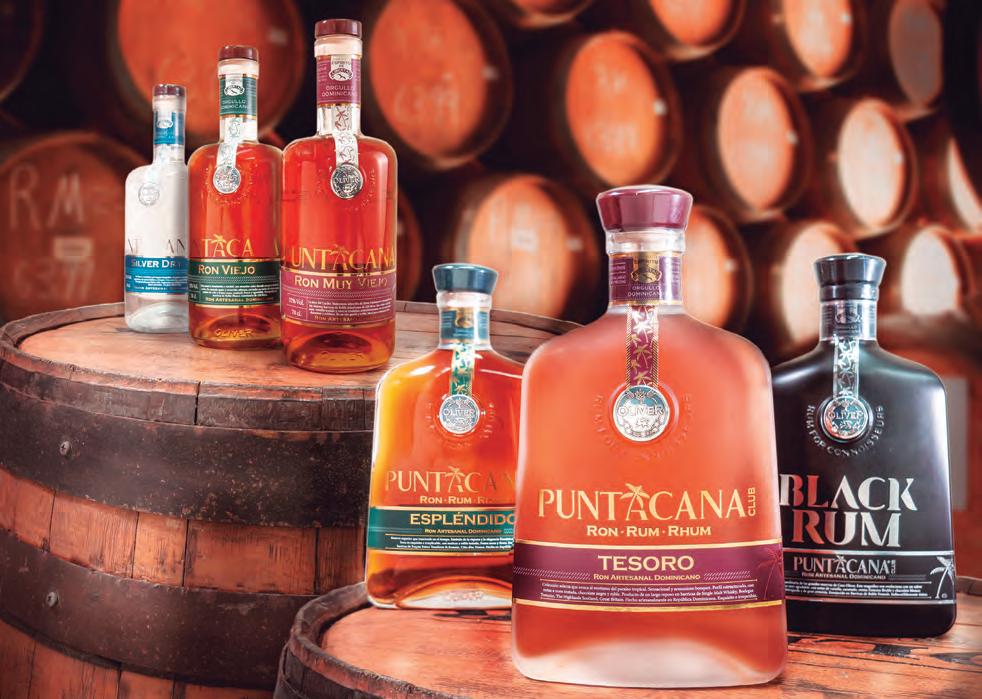
Una declaración de amor al Caribe
Inspirado en el destino turístico más emblemático de República Dominicana, Ron Puntacana Club encarna el espíritu cálido, acogedor y vibrante de su gente. Cada botella es una invitación a brindar por lo bueno de la vida y a saborear el presente. Y cada sorbo de este ron, nacido en el corazón del Caribe, celebra la esencia y excelencia artesanal dominicana.
Un viaje de sabor
El proceso de elaboración de Puntacana Club es un viaje en sí mismo. Desde la cuidadosa selección de melazas de caña hasta el añejamiento en barricas de roble francés y americano mediante el método solera, cada paso está pensado para lograr un equilibrio perfecto entre intensidad y suavidad.
Las diferentes expresiones del Ron Puntacana —XOX 50 Aniversario, Club Tesoro, Club Espléndido, Club Black Rum, Club Viejo, Club Muy Viejo, y Silver Dry— ofrecen perfiles aromáticos complejos, con notas de vainilla, frutos secos, especias suaves y toques de madera que evocan su prolongado reposo en bodega.
Reconocimiento internacional
Puntacana Club ha recibido múltiples galardones en prestigiosas competencias internacionales, incluyendo medallas de oro en el International Spirits Challenge, medallas de plata en el Beverage Testing Institute y el Madrid International Rum Conference, así como la clasificación de Excepcional en la Guía Peñín, confirmando que la excelencia dominicana tiene eco en el mundo.
Rones para conocedores
El Puntacana Club no solo destaca por su calidad, sino también por su exquisita presentación e identidad visual. Sus botellas transmiten lujo sin excesos, elegancia sin pretensiones. Es el ron perfecto para compartir en ocasiones especiales, para hacer un regalo de buen gusto o simplemente disfrutar a solas.
Con una estética sobria y elegante, Puntacana Club ha conquistado paladares dentro y fuera de nuestras fronteras, posicionándose como una de las joyas del portafolio de Oliver & Oliver. Fundada en Cuba en 1874, esta empresa familiar inició sus operaciones en República Dominicana en 1995 bajo el liderato de Pedro R. López Oliver. Desde entonces, se han enfocado en la creación de rones artesanales de alta gama que han recibido más de 200 premios internacionales, como QUORHUM, OPTHIMUS, UNHIQ, Presidente, Cubaney y Puntacana. Todos rones para verdaderos conocedores.
Inspired by the most iconic tourist destination in the Dominican Republic, Puntacana Club embodies the warm, welcoming, and vibrant spirit of its people. Each bottle is an invitation to toast to the good things in life and to savor the present. And every sip of this rum, born in the heart of the Caribbean, celebrates the Dominican essence and artisanal excellence.
The process of making Puntacana Club is a journey in itself. From the careful selection of cane molasses to the aging in French and American oak barrels using the solera method, each step is designed to achieve a perfect balance between intensity and smoothness.
The different expressions of Puntacana Rum — XOX 50 Aniversario, Club Tesoro, Club Espléndido, Club Black Rum, Club Viejo, Club Muy Viejo, and Silver Dry— offer complex aromatic profiles, with notes of vanilla, nuts, soft spices and hints of wood that evoke its prolonged stay in the cellar.
Puntacana Club has received multiple awards in prestigious international competitions, including gold medals at the International Spirits Challenge, silver medals at the Beverage Testing Institute and the Madrid International Rum Conference, and a Peñín Guide Exceptional classification, confirming that Dominican excellence resonates around the world.
But the Puntacana Club not only stands out for its quality, but also for its exquisite presentation and visual identity. Its bottles convey luxury without excess, elegance without pretensions. It is the perfect rum to share on special occassions, to give as a gift of good taste or simply to enjoy on our own.
With a sober and elegant aesthetic, Puntacana Club has conquered palates in the Caribbean and around the world, positioning itself as one of the jewels of the Oliver & Oliver portfolio. Founded in Cuba in 1874, this family business began operations in the Dominican Republic in 1995 under the leadership of Pedro R. López Oliver. Since then, the company has been focused on creating high-end artisanal rums which have received over 200 international awards, such as QUORHUM, OPTHIMUS, UNHIQ, Presidente, Cubaney and Puntacana. All rums for true connoisseurs.
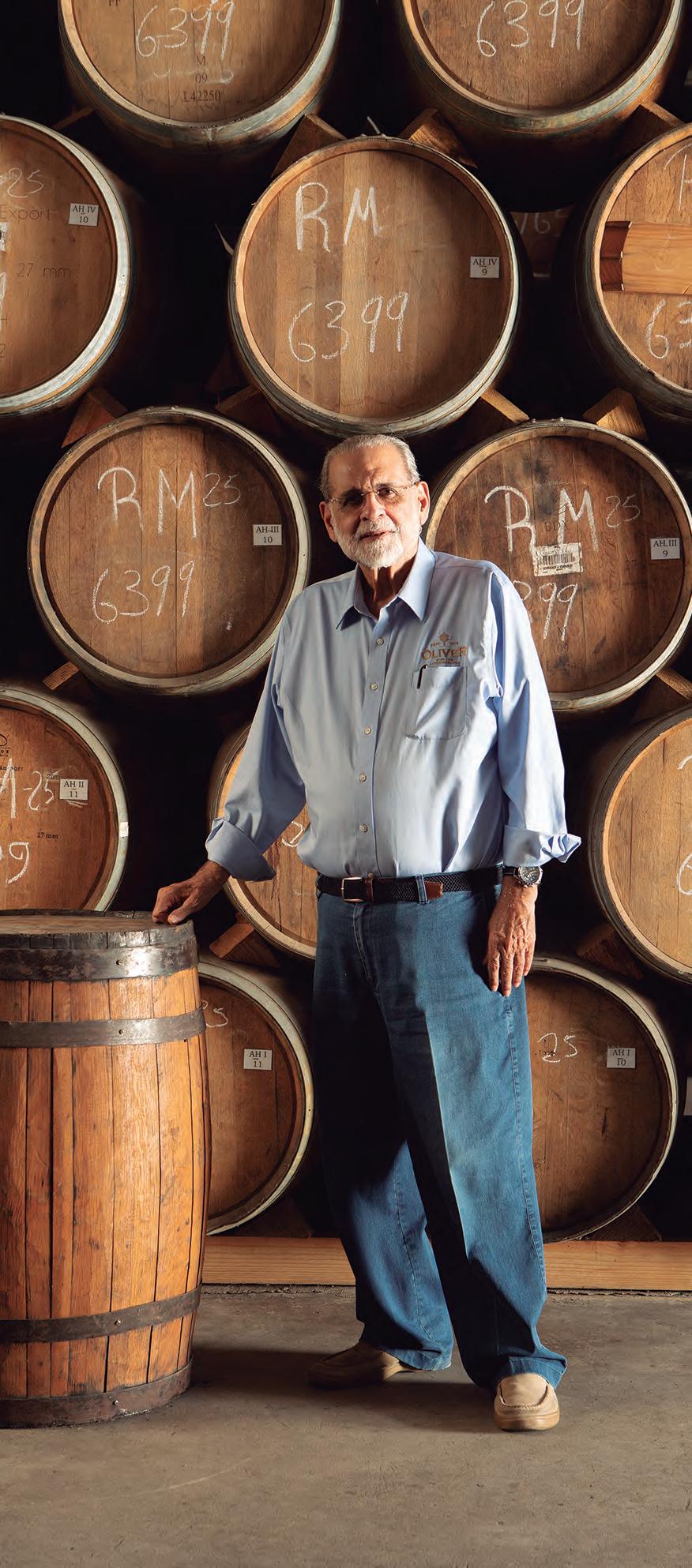
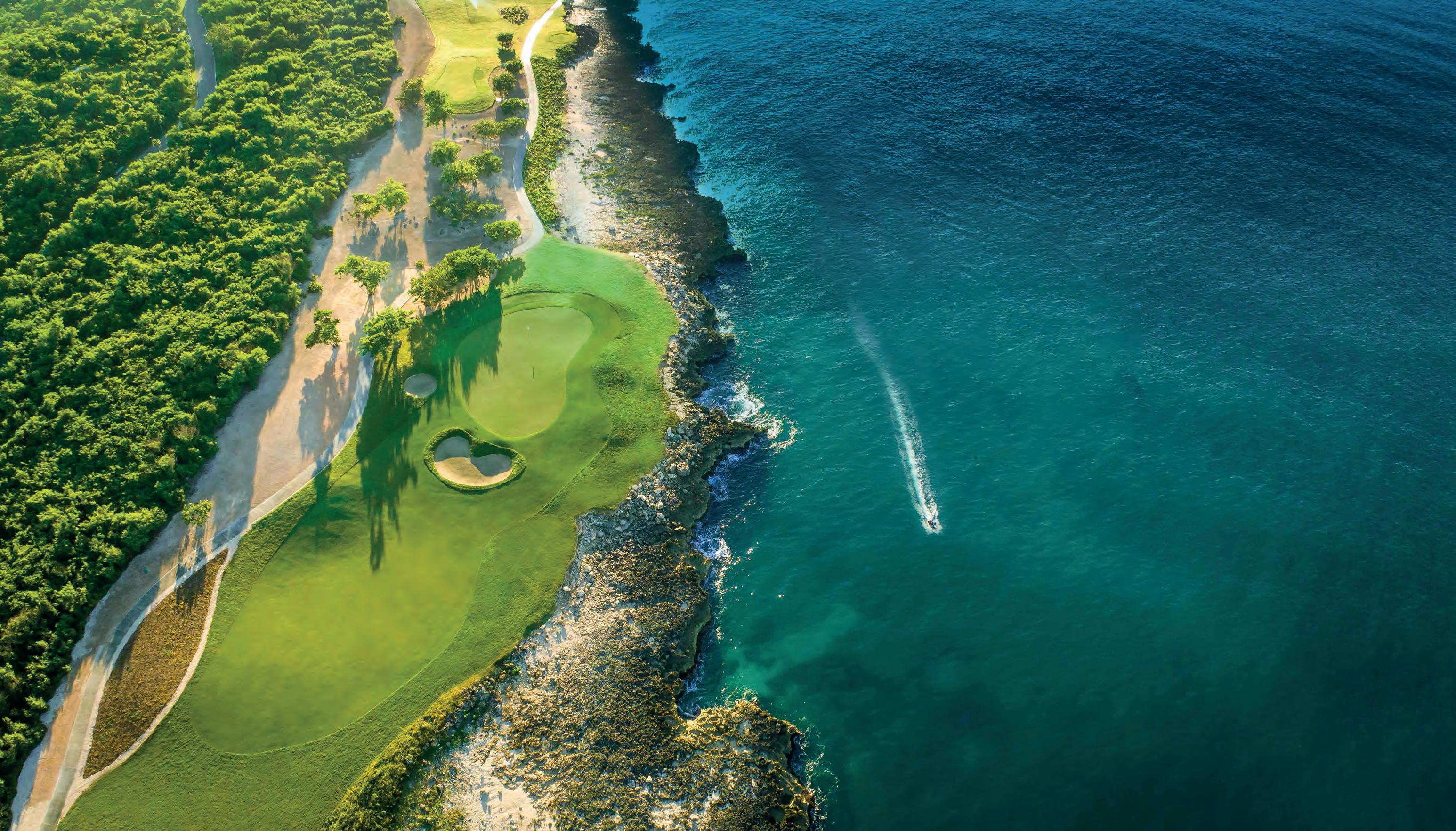
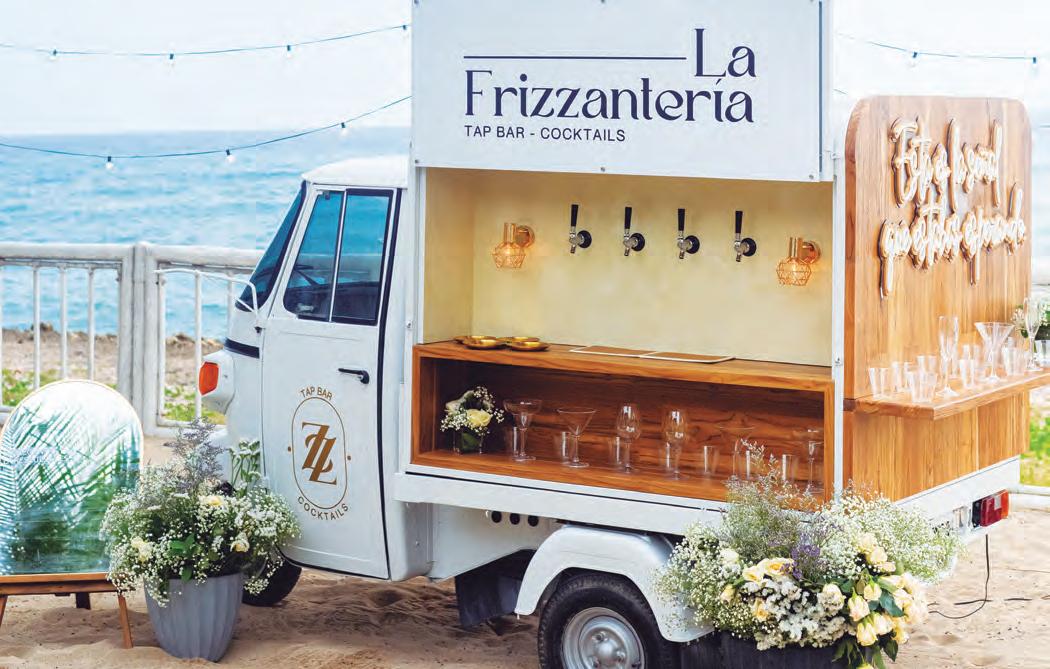
Coctelería
Desde principios de este año, ya está rodando y brindando alegría el primer tap bar móvil de la República Dominicana: La Frizzantería.
Te lo puedes encontrar sirviendo cocteles artesanales y cervezas de grifo en todo tipo de fiestas privadas y eventos corporativos, desde bodas en la playa y cumpleaños en las casas hasta festivales musicales y actividades empresariales.
Este genial concepto es original de la publicista y diseñadora Sabrina Stanchieri, quien se inspiró en unos carritos de bebidas que vio en Italia, de donde es su madre. Y el nombre nace del término italiano “frizzante” que se utiliza para describir bebidas con gas.
“En honor a esa efervescencia ligera, vibrante y refrescante, creamos La Frizzantería, una experiencia que burbujea de alegría, estilo y sabor en cada evento”, explica Sabrina.
La barra móvil está montada sobre una Vespa Piaggio Ape, que tiene integrado 4 taps donde se sirven las bebidas. Se puede añadir una pared de servicio con otros tres taps y un draft bar con dos grifos más. Cualquiera de las tres se puede usar con el nombre de La Frizzantería o adaptar la rotulación con la marca o el diseño del cliente.
En un letrero se exhiben las bebidas disponibles en cada actividad seleccionadas de un menú de 12 opciones: Paloma, Gin Tonic, Margarita, Cuba Libra, Mimosa de Piña, Sangría, Vino Tinto, Vino Blanco, Apperol Spritz, Mojito de Mango, Moscow Mule y Whiskey Sour.
El cliente también puede escoger algún trago especial que no esté en el menú o la alternativa de servir cervezas draft: Ipa Blond, Blond, Imperial Stout e IPA Black.
“Todo fue creado desde cero y construído aquí en RD. En la coctelería, me asesoré con un bartender profesional que me ayudó a optimizar recursos y crear recetas que funcionaran con el sistema de grifo y estoy muy contenta con el resultado final y el sabor de los cocteles”.
El costo del servicio dependerá de varios factores, incluyendo el tipo de bebidas, si son standard o premium, la locación a donde hay que trasladar el bar, si usa decoración standard o individualizada, si necesita cristalería, y por supuesto, la cantidad de invitados.
“La Frizzantería ha tenido una gran acogida en tan poco tiempo. Ya estamos cotizando bodas para 2026 y hasta el 2027”, dijo una sorprendida Sabrina.
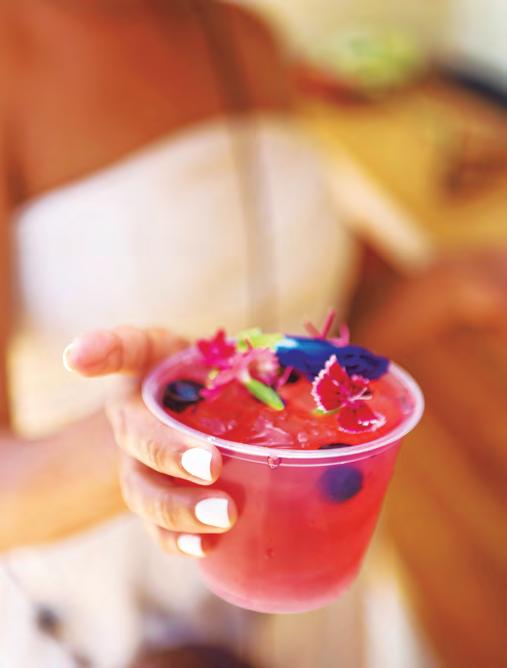
Since the beginning of this year, the first mobile tap bar in the Dominican Republic has been rolling and bringing joy : La Frizzanteria.
You can find it serving cocktails and craft beer on tap at all kinds of private parties and corporate events, from beach weddings and home birthdays to music festivals and business gatherings.
This is an original concept by publicist and designer Sabrina Stanchieri, who was inspired by some drink carts she saw in Italy, where her mother is from. And the name comes from the Italian term “frizzante” which is used to describe carbonated drinks.
“In honor of that light, vibrant, and refreshing effervescence, we created La Frizzanteria, an experience that bubbles with joy, style, and flavor at each event,” Sabrina explains.
The mobile bar is mounted on a Vespa Piaggio Ape, which has 4 taps integrated where the drinks are serve. A service wall can added with three extra taps and a draft bar with two more taps. Any of the three alternatives can be used with La Frizzantería brandname or adapt the signage with the client’s brand or design.
A sign displays the drinks available at each event selected from a menu of 12 options: Paloma, Gin Tonic, Margarita, Cuba Libra, Pineapple Mimosa, Sangria, Red Wine, White Wine, Apperol Spritz, Mango Mojito, Moscow Mule and Whiskey Sour.
The customer can also choose a special drink that is not on the menu or the alternative of serving draft beers: Ipa Blond, Blond, Imperial Stout and IPA Black.
“Everything was created from scratch and built here in the DR. In the cocktail area, I was advised by a professional bartender who helped me optimize the resources and create recipes that worked with the tap system and I am very happy with the final result and the flavor of the cocktails.”
The service cost will depend on several factors, including the type of drinks, whether they are standard or premium, the location where the bar has to be transported, whether standard or custom decoration is used, if glassware is needed, and of course, the number of guests.
“La Frizzantería has been very well received in a short time. We are already quoting weddings for 2026 and even 2027,” said a surprised Sabrina.
809-395-0202 www.lafrizzanteria.com @lafrizzanteria
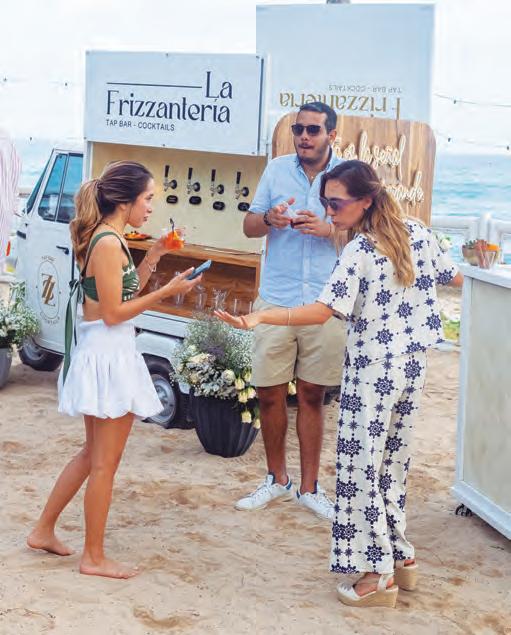
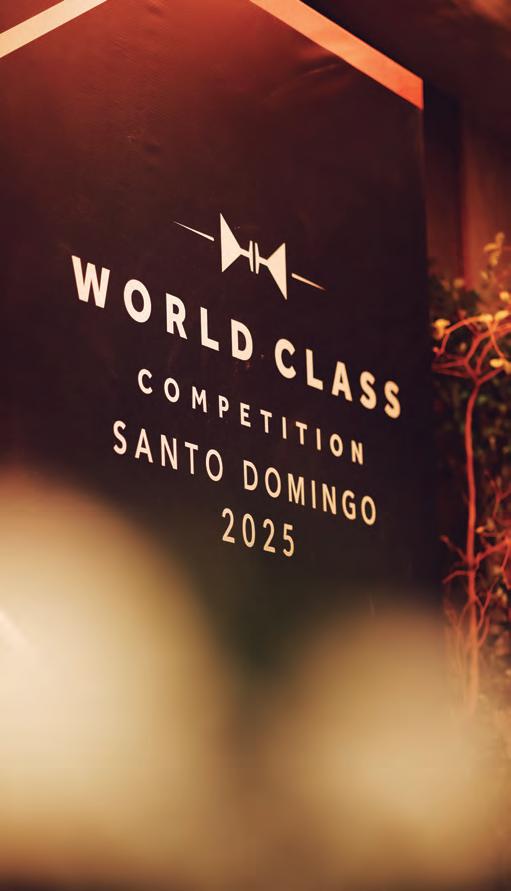
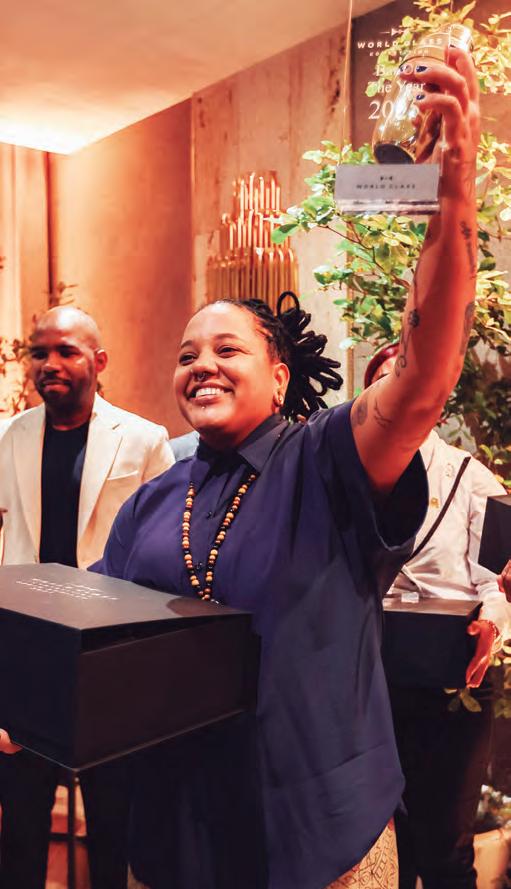
La escena de la coctelería dominicana vivió uno de sus momentos más esperados con la celebración de la final nacional de World Class Bartender of the Year RD 2025
Organizada por Diageo a través de su portafolio Reserve, esta competencia de bartenders es la más prestigiosa del mundo y su misión es elevar el arte de la coctelería, impulsar la innovación detrás de la barra y reconocer el talento de los mejores exponentes del sector.
Este año, los cuatro finalistas que buscaron convertirse en el próximo bartender dominicano World Class fueron: Frendymar G. Camacho (Casa 24 Patio Gastronómico, Santo Domingo), María Bonilla (Hotel St. Regis, Punta Cana), Félix R. Coronado (Hotel Amarena, Río San Juan) y Juan Fuego (Hotel Dreams Ònix, Punta Cana).
Frendymar fue la gran ganadora de la noche, destacándose por su destreza técnica, visión creativa y capacidad de conectar con el jurado a través de sus creaciones y habilidad de contar historias. Durante el desafío inspirado en Johnnie Walker Blue Label, logró capturar el espíritu de la marca con un cóctel que celebró la profundidad y complejidad del blend.
El jurado estuvo integrado por Arturo Savage, embajador regional de Diageo para Caribe y Centroamérica, José Miguel Guerrero, socio de Bocao RD, y Luis Adrián Rodríguez, ganador en 2024 del World Class Competition RD.
Como ganadora nacional, Frendymar representará a RD en el World Class Global Final 2025 que se llevará a cabo del 27 de septiembre al 2 de octubre en Toronto, Canadá.
The Dominican cocktail scene experienced one of its most anticipated moments with the celebration of the national final of World Class Bartender of the Year RD 2025
Organized by Diageo through its Reserve portfolio, this bartender competition is the most prestigious in the world and its mission is to elevate the art of bartending, promote innovation behind the bar and recognize the talent of the best performers in the sector.
This year, the four finalists who sought to become the next World Class dominican bartender were: Frendymar Camacho (Casa 24 Patio Gastronómico, Santo Domingo), María Bonilla (St. Regis Hotel, Punta Cana), Félix R. Coronado (Amarena Hotel, Río San Juan), and Juan Fuego (Dreams Ònix Hotel, Punta Cana).

Frendymar was the big winner of the night, standing out for her technical prowess, creative vision and ability to connect with the jury through her creations and storytelling skills. During the Johnnie Walker Blue Label-inspired challenge, she managed to capture the spirit of the brand with a cocktail that celebrated the depth and complexity of the blend.
The three members of the jury were Arturo Savage, Diageo’s regional ambassador for the Caribbean and Central America, José Miguel Guerrero, partner of Bocao RD, and Luis Adrián Rodríguez, winner of the 2024 World Class Competition RD.
As the national winner, Frendymar will represent DR in the 2025 World Class Global Final to be held September 27 to October 2 in Toronto, Canada.
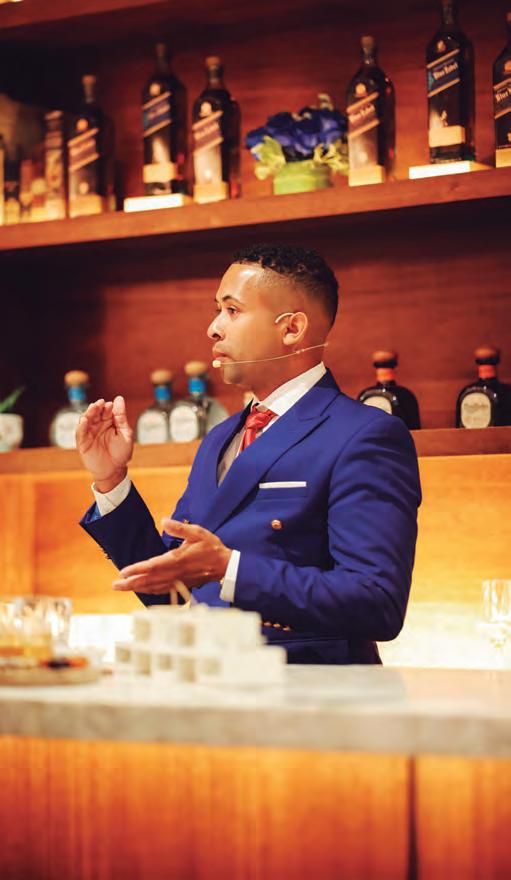
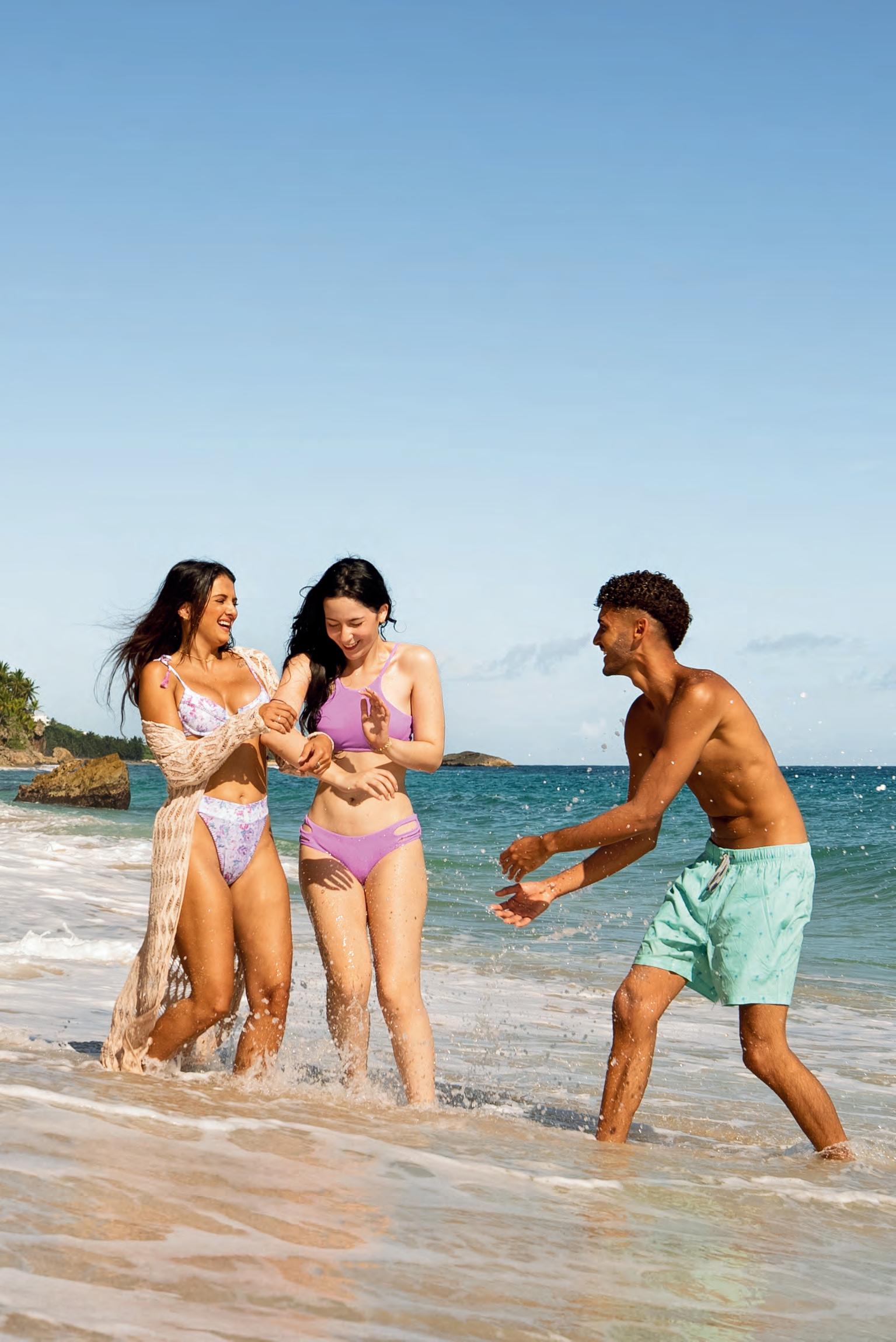
¡Este verano es DE los Boricuas!
Quédate donde la diversión nunca se desaparece. Sol, playa y sonrisas te esperan en nuestro PLACE.
Oferta incluye:
20% de descuento en tarifa Desayuno bufé americano complementario
Estacionamiento gratis
Una (1) Pizza familiar con un padrino de refresco
15% de descuento en la entrada a Cueva Ventana
RESERVA AHORA (787) 854.1000
Oferta exclusiva para Residentes de Puerto Rico. Identificación valida al momento del registro. No se puede combinar con otras ofertas, promociones o descuentos. No válido para grupos. Pueden aplicar fechas bloqueadas y otras restricciones pueden aplicar.
Por/By: Erica Reyes
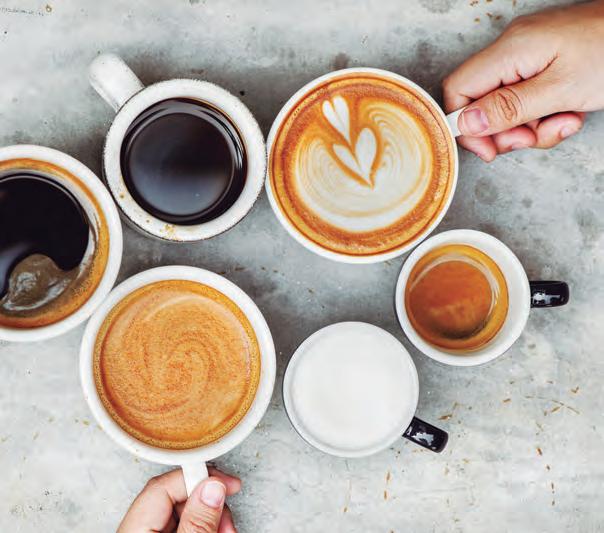
and recommendations
Las barras de café de especialidad no solo se distinguen por lo que sirven, sino por lo que representan: historias de familia, compromiso con la tierra, innovación y, sobre todo, una conexión auténtica con el consumidor.
Cuando hablamos de verdaderos coffee shops, debemos considerar tres perspectivas clave:
• La calidad del café: Se ofrece café de origen controlado y calificado como café especial.
• El elemento diferenciador: Un rasgo único que distingue al lugar —su propuesta, ambiente o técnica.
• La conexión personal: Qué lo hace especial para el consumidor y amante del café.
En los últimos años, este tipo de local ha proliferado notablemente en Puerto Rico y en República Dominicana, dos islas caribeñas donde existe una arraigada tradición cafetalera.
Ya sea en el Viejo San Juan o en Santo Domingo, siempre hay una buena razón —y un buen café— que merece ser descubierto “con taza en mano”.
Specialty coffee bars are not only distinguished by what they serve, but by what they represent: family stories, commitment to the land, innovation and, above all, an authentic connection with the consumer.
When we talk about true coffee shops, we must consider three key perspectives:
• The quality of the coffee: Coffee of controlled origin and qualified as specialty coffee is offered.
• The differentiating element: A unique feature that distinguishes the place – proposal, atmosphere or technique.
• The personal connection: What makes it special for the consumer and coffee lover.
In recent years, this type of place has proliferated notably in Puerto Rico and the Dominican Republic, two Caribbean islands where there is a deep-rooted coffee tradition.
Whether it’s Old San Juan or Santo Domingo, there’s always a good reason—and a good coffee—that deserves to be discovered “cup in hand.”
Nos enfocamos en los coffe shops más emblemáticos del Viejo San Juan (VSJ), zona pionera del movimiento barista. Here we focus on the most emblematic coffee shops of Old San Juan (VSJ), a pioneer area of the barista movement.
Café Cola’o
@cafecolaopr • www.cafecolaopr.com
Fundado en 2006, es el coffee shop de especialidad más antiguo del país y se mantiene en su ubicación original del Muelle 2. Su calidad y compromiso con el café puertorriqueño lo distinguen. Ofrece diferentes granos locales, una terraza al aire libre con vista a la bahía y un enfoque profesional. Su fundadora y actual presidenta, Erica Reyes, representa la tercera generación de caficultores de Hacienda Moraica, Orocovis.
Founded in 2006, it is the oldest specialty coffee shop in the country, and it remains at its original location on Pier 2. Its quality and commitment to Puerto Rican coffee sets it apart. It offers different local grains, an outdoor terrace overlooking the bay, and a professional approach. Its founder and current president, Erica Reyes, represents the third generation of coffee growers of Hacienda Moraica, Orocovis.
Café Don Ruiz
@cafedonruiz • www.donruizstore.com
Ubicado en el Cu artel de Ballajá, combina tradición cafetalera con visión empresarial. Fundado por Abimael Ruiz, cuarta generación de caficultores de Yauco, cuenta con su propia torrefacción dentro del local, garantizando frescura y control del producto. Además, han expandido su oferta con su propia fábrica de pastelería artesanal especializada en croissants.
Located in Cuartel de Ballajá, it combines coffee tradition with business vision. Founded by Abimael Ruiz, fourth generation of coffee growers from Yauco, it has its own roasting within the premises, guaranteeing product freshness and control. In addition, they have expanded their offer with their own artisanal pastry factory specializing in croissants.
The Coffee PR
@thecoffee.pr
Una de las propuestas más recientes es esta franquicia japonesa en la Calle Sol. Con su estilo minimalista, brinda una experiencia distinta, enfocada en granos internacionales y tés, especialmente el matcha. También cuenta con una variedad de acompañantes que complementan su propuesta de bebidas especializadas.
One of the most recent proposals is this Japanese franchise on Calle Sol. Its minimalist style offers a distinct experience, focused on international grains and teas, especially matcha. It also has a variety of sides that complement its proposal of specialized drinks.
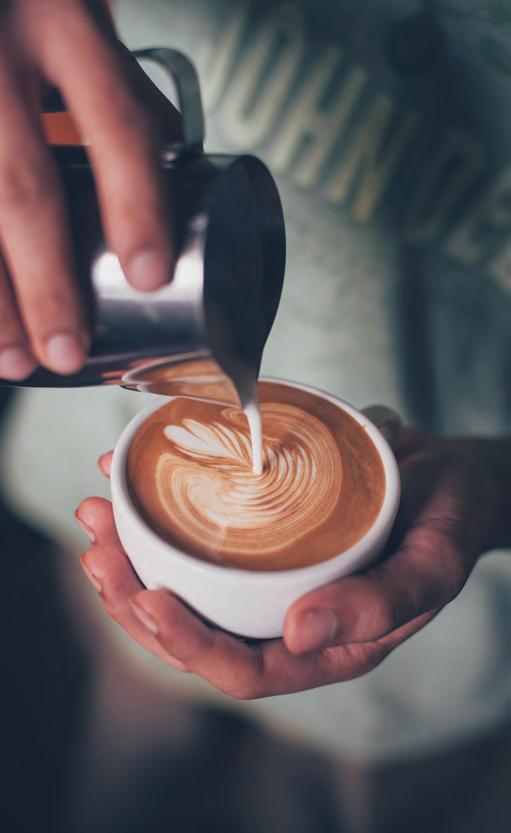
República Dominicana también ha abrazado la cultura del café de especialidad con SD como epicentro de innovación Dominican Republic has also embraced the specialty coffee culture, with Santo Domingo as the epicenter of innovation.
Induban Gourmet The Roastery
@indubangourmet • @cafesantodomingo
Este proyecto pionero abrió su primera barra en 2012 en Ágora Mall. Su evolución más reciente es Induban
Gourmet The Roastery, un elegante espacio en el tercer nivel del mismo centro comercial. Respaldado por más de 80 años de historia cafetalera, esta barra ofrece desde el clásico café hasta cocteles, como el solicitado Espresso Martini. Un espacio diseñado para llevar la experiencia de la taza a un próximo nivel.

This pioneering project opened its first bar in 2012 at the Agora Mall. Its most recent evolution is Induban Gourmet The Roastery, an elegant space on the third level of the same mall. Backed by more than 80 years of coffee history, this bar offers everything from classic coffee to cocktails, such as the sought-after Espresso Martini. A space designed to take the mug experience to the next level.
Calcalí Coffee Roasters
@calcalicoffee • @montealegrerd
Fundado por Melissa Núñez, Calcalí combina desayuno tipo brunch con café preparado en diversos métodos de colado, incluyendo la colada en sifón, hecha frente al cliente. El café proviene de su propia finca, Monte Alegre, es tostado semanalmente para garantizar frescura y está disponible en empaque. Además de Santo Domingo (Naco), tiene locales en Bonao, y varios en Santiago, donde comenzaron.
Founded by Melissa Núñez, Calcalí combines brunch style foods with coffee prepared in various brewing methods, including siphon laundry, made in front of the customer. The coffee comes from their own farm, Monte Alegre, is roasted weekly to ensure freshness and is available in packaging. In addition to Santo Domingo (Naco) it has a location in Bonao and several in Santiago, where they began.
@cafebaristacoffee • www.casabaristacoffee.com
Este aco gedor local destaca no solo por su café de especialidad, sino por su cocina saludable. Inspirado por una experiencia personal del fundador, promueve una alimentación consciente sin gluten, y un paladar educado, con herramientas como la rueda de sabores del café. Encuéntralos en el local original en Plaza LMP (Piantini) y en la Ciudad Colonial.
This cozy place stands out not only for its specialty coffee, but also for its healthy cuisine. Inspired by a personal experience of the founder, it promotes a conscious gluten-free diet, and an educated palate, with tools such as the coffee flavor wheel. Find them in the original location in Plaza LMP (Piantini) and in the Colonial City.

Erica Reyes
PR Coffee & Barista School
Café Cola’o Coffee Shop in VSJ @ericareyescafe

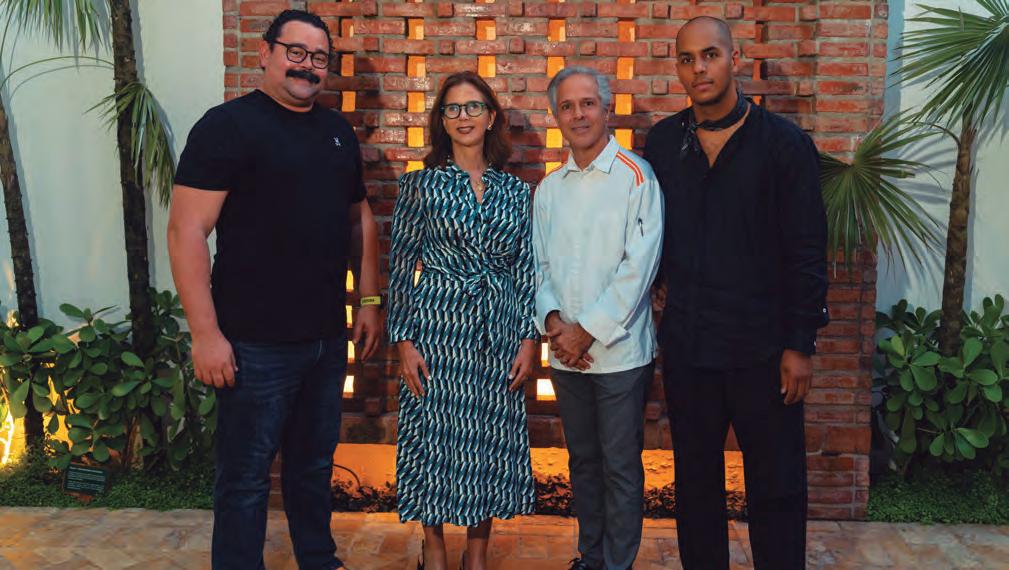
Por/By: Orlando Jerez
El conversatorio “Secretos del chef: alimentos taínos en la nueva cocina dominicana” fue una verdadera revelación sobre cómo la herencia culinaria taína sigue viva y más cerca de nosotros de lo que imaginamos.
Celebrado en el Centro Cultural Taíno Casa del Cordón en la Ciudad Colonial, el evento reunió a tres figuras destacadas de la gastronomía local: chef Olivier Bur, quien es un apasionado de la historia culinaria dominicana; Alberto Morel, experto en cocina criolla; y el chef Carlos Estévez, directivo de la Asociación de Chefs de RD y moderador del encuentro.
Lo que más me impactó fue cómo cada uno de ellos, desde su experiencia y sensibilidad, mostró que los taínos no solo nos dejaron ingredientes y sazones, sino todo un sistema de saberes, técnicas y una forma de entender la alimentación en armonía con la naturaleza.
Escucharlos hablar del casabe y la manera en que se producía la yuca en los conucos te hace pensar en la inteligencia agrícola ancestral. También mencionaron alimentos como el maíz, la batata, el maní, la yautía y frutas tropicales como la guayaba, la piña o el mamey, que todavía hoy forman parte esencial de nuestra dieta.
El ají picante es otro ingrediente que tiene raíces taínas y es muy común en nuestra cocina hoy. Quizás porque está tan presente, a veces se nos olvida su origen y todo lo que representa. Y, por supuesto, que no podía faltar la barbacoa, ese método de cocción a fuego lento que heredamos de los taínos y que ahora es parte del lenguaje gastronómico global.
Según la directora del Centro Cultural Taíno Casa del Cordón, Carmen Rita Cordero, esta iniciativa forma parte de la agenda de actividades de esa institución, auspiciada por el Banco Popular Dominicano, en su misión de fomentar la valorización de las raíces precolombinas.
Este diálogo me hizo sentir una mezcla de orgullo y curiosidad por saber que la cocina dominicana tiene un origen tan profundo, tan sabio, tan vinculado a la tierra. Ahora quiero seguir aprendiendo, probando, rescatando recetas y sabores que quizás hemos olvidado pero que siguen latiendo en nuestra identidad. Este tipo de conversatorio es un regalo para quienes queremos reconectar con lo que somos a través del arte, la cultura y, en este caso, la gastronomía. Sin duda, fue una experiencia que me dejó con hambre... ¡de conocimiento!
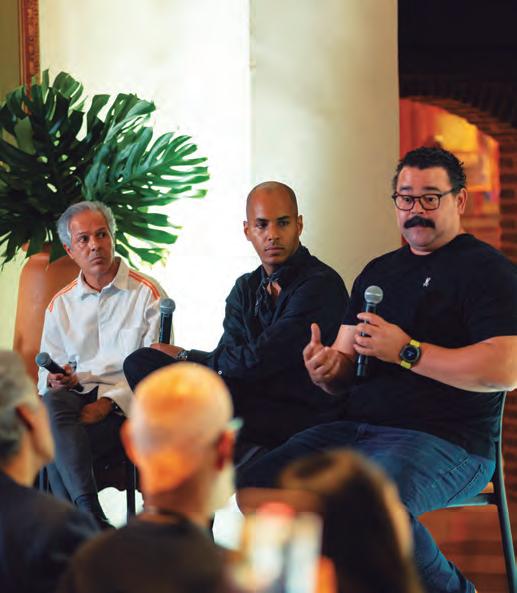
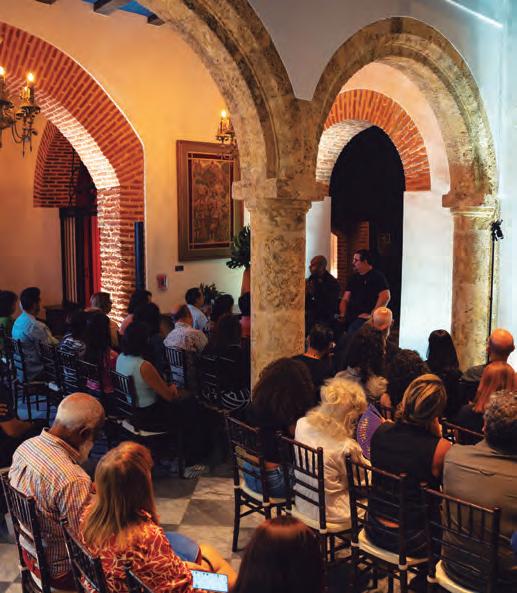
The panel “Chef’s Secrets: Taino Foods in the New Dominican Cuisine” was a true revelation about how the Taino culinary heritage is still alive, closer to us than we imagine.
Held at the Casa del Cordón Taíno Cultural Center in the Colonial City, the event brought together three leading figures of local gastronomy: chef Olivier Bur, who is passionate about Dominican culinary history; Alberto Morel, with vast experience in Creole cuisine; and chef Carlos Estévez, director of the Association of Chefs of the DR and moderator of the meeting.
What struck me the most was how each of them, from their experience and sensitivity, showed that the Taínos not only left us ingredients and seasonings, but a whole system of knowledge, techniques and a way of understanding food in harmony with nature.
Listening to them talk about cassava and the way cassava was produced in the conucos makes you think of ancestral agricultural intelligence. They also mentioned foods such as corn, sweet potato, peanuts, yautía and tropical fruits like guava, pineapple or mamey, which are still an essential part of our diet today.
The hot pepper is another ingredient with Taino roots that is very common in our cuisine today. Perhaps it is so present, that sometimes we forget its origin and everything it represents. And of course, one can’t leave out the barbecue, that slow-cooking method that we inherited from the Taínos and is now part of the global gastronomic language.
According to the director of Casa del Cordón Taíno Cultural Center, Carmen Rita Cordero, this educational initiative is part of the events held by this institution, supported by Banco Popular Dominicano, in its mission to promote the valorization of our pre-Columbian root
The dialogue gave me mixed feelings of pride and curiosity to know that Dominican cuisine has such a deep origin, so wise, so linked to the land. I now have a deep desire to continue learning, trying, rescuing recipes and flavors that we may have forgotten but that continue to mark our identity.
Conversations like this are a true gift for those of us who want to reconnect with who we are through art, culture and, in this case, gastronomy. It was certainly an experience that left me hungry... for knowledge!
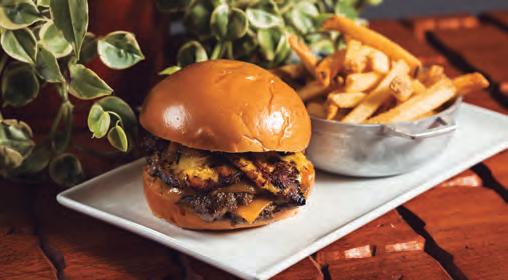
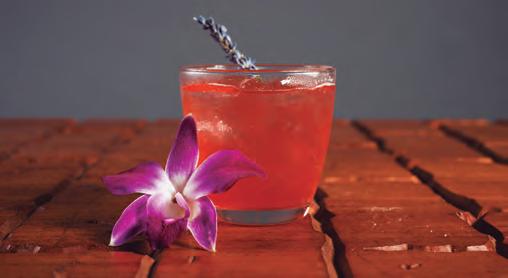

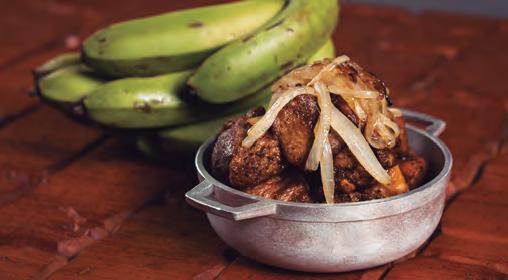
Menú especial eleva oferta de gastronomía y coctelería
La residencia histórica de Bad Bunny promete ser un hito cultural, pero no solo por el impacto masivo de los 30 conciertos que está presentando el ícono global del género urbano en el Coliseo de Puerto Rico (‘‘El Choli’’).
Los asistentes al show viven una experiencia multisensorial que fusiona la música con lo mejor de la cultura y el orgullo boricua, al degustar un menú especialmente diseñado para la ocasión con platos típicos de la cocina puertorriqueña y una coctelería exclusiva.
La Chef Ejecutiva Alexsandra Muñoz y Fernando Moinelo, director de Bebidas y Alimentos del Coliseo, estuvieron a cargo de crear este menú especial.
“Comenzamos esta planificación hace meses con nuestro equipo culinario y suplidores locales —como los de frutas y vegetales de varias fincas alrededor de Puerto Rico— y juntos diseñamos un menú extraordinario, inspirado en la Isla, las canciones de BB y los sabores locales favoritos del artista”, comentó Moinelo.
Platos Principales
• Jíbaro Smash Burguer con maduros y papas fritas
• Carne Frita con tostones de plátanos
• Choli Fries con papas fritas cubiertas de pollo o res
• Tostones Residentes de pana (panapén) con topping de pollo guisado o carne molida en sofrito
• Alcapurrias de Carne ¡no pueden faltar en las fiestas!
Además, una selección de la picadera que más le gusta a BB: bacalaítos, empanadillas de pizza, tostones de pana y croquetas de arroz con gandules.
Cocteles Exclusivos
También crearon exclusivos cócteles que mezclan ingredientes y sabores emblemáticos de Puerto Rico, como el café, el agua de coco y jugos de parcha (chinola/maracuyá) y piña.
Los conceptos y los nombres de los tragos están inspirados en situaciones de la vida de Bad Bunny y algunas de sus más populares y pegajosas canciones:
• Café con Ron: Ron Don Q 7, infusión de café en frío, jarabe de especias y nuez moscada, y después de tomarlo tú también cantarás “por la mañana café, por la tarde ron”
• El Favorito de Mi Ex: Ron Don Q Cristal, lavanda, fresa, limón y soda de toronja
• Doble 6: Ron Don Q Piña, limón, piña y soda de jengibre
• Bad Johnnie: Black Label, jugo de parcha y agua de coco y la versión sin alcohol, Bad Johnnie Zero
• Ruby Fizz: Black Ruby, licor de granada y soda. Como complemento, el Coliseo instaló unas estaciones con shots de ron infusionado con coco, (en alusión al “pitorro con coco”) entre muchas otras sorpresas culinarias y cocteleras.
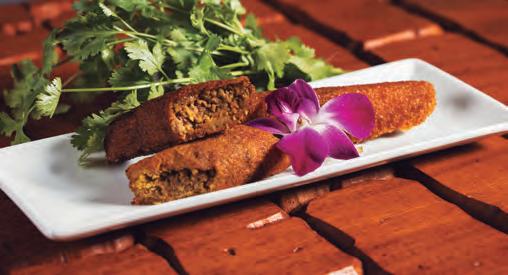
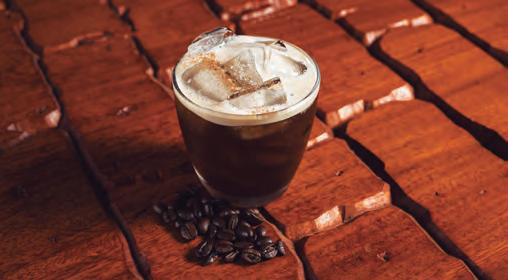
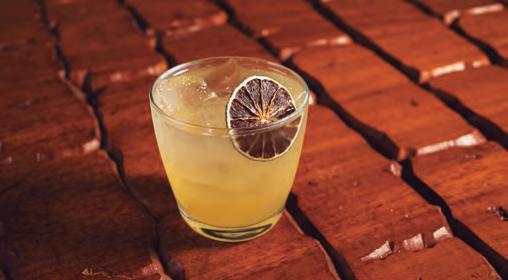
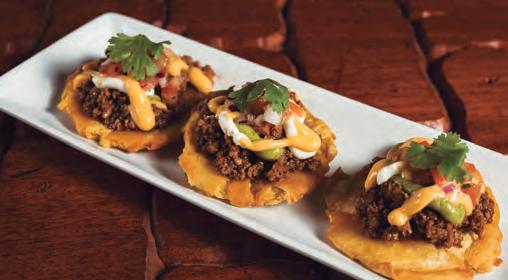
Bad Bunny’s historic residency promises to be a cultural milestone, but not only because of the massive impact of the 30 concerts that the global icon of the urban genre is presenting at the Coliseo de Puerto Rico (‘‘El Choli’’).
Show attendees will live a multisensory experience that blends music with the best of Puerto Rican culture and pride, when tasting menu specially designed for the occasion featuring typical dishes of Puerto Rican cuisine and exclusive cocktails.
Executive Chef Alexsandra Muñoz and Fernando Moinelo, director of Food and Beverage at the Coliseum, were in charge of creating this special menu.
“We began this planning months ago with our culinary team and local suppliers – such as those of fruits and vegetables from various farms around Puerto Rico – and together we designed an extraordinary menu, inspired by the Island, BB songs and the artist’s favorite local flavors,” Moinelo said.
Jíbaro Smash Burger with maduros and fries
Carne Frita with plantain tostones
Choli Fries with a bed of fries covered in chicken or beef
Tostones Residentes made of pana with topping of stewed chicken or ground beef in sofrito Alcapurrias with Beef ¡cannot be missing from any party!
In addition, a selection of the snacks that BB likes the most: cod fritters, fried pizza stuffed pastries (empanadillas), breadfruit tostones and rice croquettes with pigeon peas.
Exclusive cocktails were also created mixing ingredients and flavors emblematic of Puerto Rico – such as coffee, coconut water and passion fruit and pineapple juices.
The concepts and names of the drinks are inspired by situations from Bad Bunny’s life and some of his most popular and catchy songs:
• Coffee with Rum: Don Q 7 Rum, cold brew coffee, spice syrup and nutmeg, and after you drink it you’ll sing “coffee in the morning, rum in the afternoon”
• My Ex’s Favorite: Don Q Crystal Rum, lavender, strawberry, lemon, and grapefruit soda
• Double 6: Don Q Pineapple Rum, lemon, pineapple & Ginger Soda
• Bad Johnnie: Black Label, passion fruit juice and coconut water and a non-alcoholic version, Bad Johnnie Zero
• Ruby Fizz: Black Ruby, pomegranate liqueur and soda.
As a complement, the Coliseum installed stations with shots of coconut-infused rum, (alluding to the “spout with coconut”) among many other culinary surprises and cocktail shakers.
Iniciativas para impulsar la
Initiatives to promote Puerto Rican gastronomy
ALIANZA APUGA Y UAGM
La Academia Puertorriqueña de Gastronomía (APUGA) y la Universidad Ana G. Méndez (UAGM) firmaron un acuerdo de colaboración para fortalecer el posicionamiento de Puerto Rico como destino gastronómico mundial y a la vez fomentar las oportunidades académicas y profesionales.
A través de esta alianza, se dará mayor énfasis a las siguientes áreas de la gastronomía y el turismo:
• Participación en eventos internacionales
• Programas de sostenibilidad en artes culinarias
• Intercambios y pasantías para estudiantes y profesores
• Estudios de impacto económico sobre el turismo gastronómico de Puerto Rico.
APUGA AND UAGM ALLIANCE
The Puerto Rican Academy of Gastronomy (APUGA) and the Ana G. Méndez University (UAGM) signed a collaboration agreement to strengthen Puerto Rico’s positioning as a global gastronomic destination, whilepromoting academic and professional opportunities.
Through this alliance, greater emphasis will be given to the following areas of gastronomy and tourism:
• Participation in international events
• Culinary Arts Sustainability Programs
• Exchanges and internships for students and teachers
• Economic impact studies on PR’s gastronomic tourism.
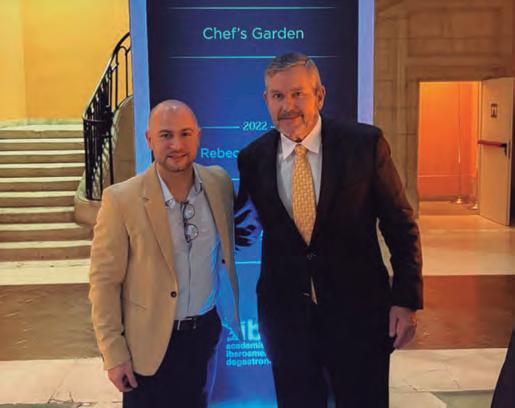
Chef Josiah Hernández
César Cordero-Krüger
APUGA es una organización sin fines de lucro dedicada a preservar el patrimonio gastronómico de Puerto Rico al tiempo que promueve su continua evolución y su proyección internacional.
A estos fines, crearon los Premios Nacionales de Gastronomía, que buscan reconocer la excelencia de la gastronomía en Puerto Rico y que encarnan la filosofía de la Nueva Gastronomía del siglo XXI: Saludable, Solidaria, Sostenible y Satisfactoria (4S).
Los premios cubren 12 categorías, y abarcan desde la cocina, mixología e innovación hasta la producción agrícola, educación y preservación cultural. Quienes resultan ganadores en las cinco categorías relacionadas las 4S, representan a PR en los premios de la Academia Iberoamericana de Gastronomía (AIBG), compitiendo con otros 17 países miembros de esta entidad a la que APUGA está afiliada.
PR participó por primera vez en los premios de la AIBG 2024, siendo el único país que fue nominado y finalista en todas las categorías. Chef Josiah Hernández, del restaurante Chef’s Garden en Rincón, se llevó el Galardón de Gastronomía Sostenible.
La convocatoria para las nominaciones de los Premios Nacionales de Gastronomía 2025 estará abierta hasta el 20 de agosto y los ganadores se anunciarán el 13 de noviembre. ‘‘Los que ganen en las cinco categorías 4S, representarán a PR en los Galardones Iberoamericanos y de resultar ganadores participarán de la ceremonia a celebrase en Madrid a finales de noviembre”, informó Madelaine Vázquez, Directora Ejecutiva de APUGA.
APUGA is a non-profit corporation dedicated to preserving Puerto Rico’s gastronomic heritage while promoting its continuous evolution and international projection.
To this end, it created the National Gastronomy Awards, which recognize the best projects and initiatives that embody the New Gastronomy of the 21st century philosophy: Healthy, Supportive, Sustainable and Satisfactory (4S).
The awards cover 12 categories, ranging from cooking, mixology and innovation to agricultural production, education and cultural preservation. Those who win in one of the five categories related to the 4S, represent PR in the awards of the IberoAmerican Academy of Gastronomy (AIBG), competing with 17 other member countries of this entity, to which APUGA is affiliated.
PR participated for the first time in the 2024 AIBG awards, being the only country that was nominated and had finalists in all categories. Chef Josiah Hernández, from the Chef’s Garden restaurant in Rincón, won the Sustainable Gastronomy Award.
The call for nominations for the 2025 National Gastronomy Awards will be open until August 20 and the winners will be announced on November 13. ‘‘Those whowin the five 4S categories will represent PR at the Ibero-American Awards, and if they win, will participate in the ceremony to be held by the end of November in Madrid,’’ said Madelaine Vázquez, Executive Director of APUGA.
www.apugapr.org • @apuga.pr
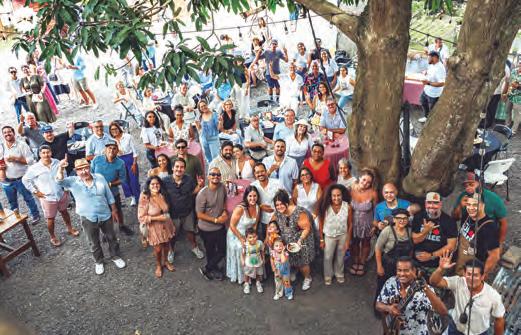
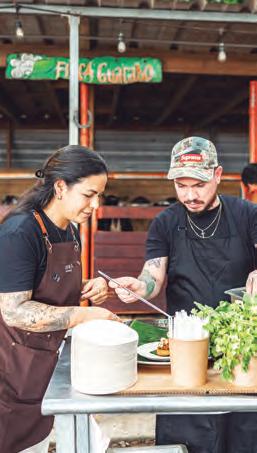
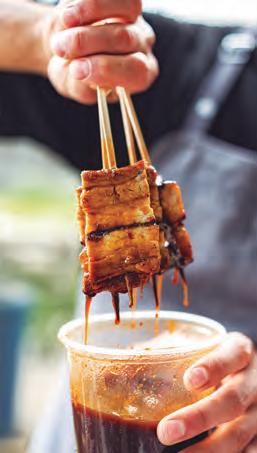
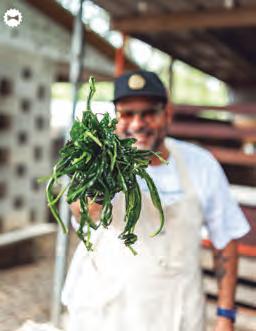
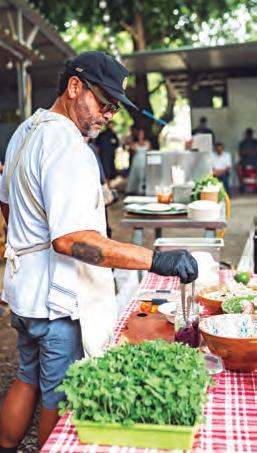
APUGA celebró la primera edición de “Entre Fuegos” en la Finca Frutos del Guacabo, en Manatí, una de las agroempresas más activas e innovadoras en la Isla.
En este gran junte culinario participó un extraordinario grupo de chefs, quienes compartieron sus recetas, té cnicas, historias y opiniones sobre la gastronomía:
• Chef Josiah Hern ández–Chefs Garden
• Chef Marielys Hern ández–Kumo Rooftop
• Chef Xavier Pacheco–Bacoa /Los Guapos
• Chef Juan Peñ a–COA Signature Rest. Ritz-Carlton
• Chefs Alexis Rivera y Fer Landrau –Crudo y Carb ón
Con el apoyo de esta serie de eventos de recaudación y confraternización , APUGA podrá cumplir con su misión. “Seguiremos trabajando desde la finca hasta el fogón, y desde el aula hasta la mesa, para unir productores, chefs, educadores, comensales y aliados en un mismo propósito: preservar, innovar y proyectar la cocina puertorriqueña al mundo”, afirma César Cordero-Krüger, presidente de APUGA.
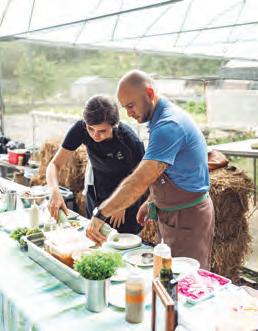
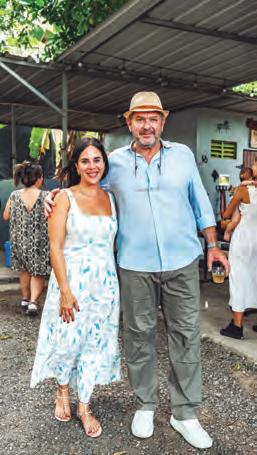
APUGA held the first edition of ‘‘Entre Fuegos’’ at the Frutos del Guacabo Farm, in Manatí, one of the most active and innovative agribusinesses on the Island.
An extraordinary group of chefs participated in this great culinary gathering, to share their recipes, techniques, stories and opinions about gastronomy:
• Chef Josia Hernández–Chefs Garden
• Chef Marielys Hernandez–Kumo Rooftop
• Chef Xavier Pachecho–Bacoa /Los Guapos
• Chef Juan Peña–COA Signature Rest. Ritz-Carlton
• Chefs Alexis Rivera and Fer Landrau – Crudo y Carbón
By supporting this series of fundraising and fraternization events, APUGA will be able to fulfill its mission. ‘‘We will continue working from the farm to the stoves, and from the classroom to the table, to unite producers, chefs, educators, diners and allies in the same purpose: to preserve, innovate and project Puerto Rican cuisine to the world,’’ says César Cordero-Krüger, president of APUGA.
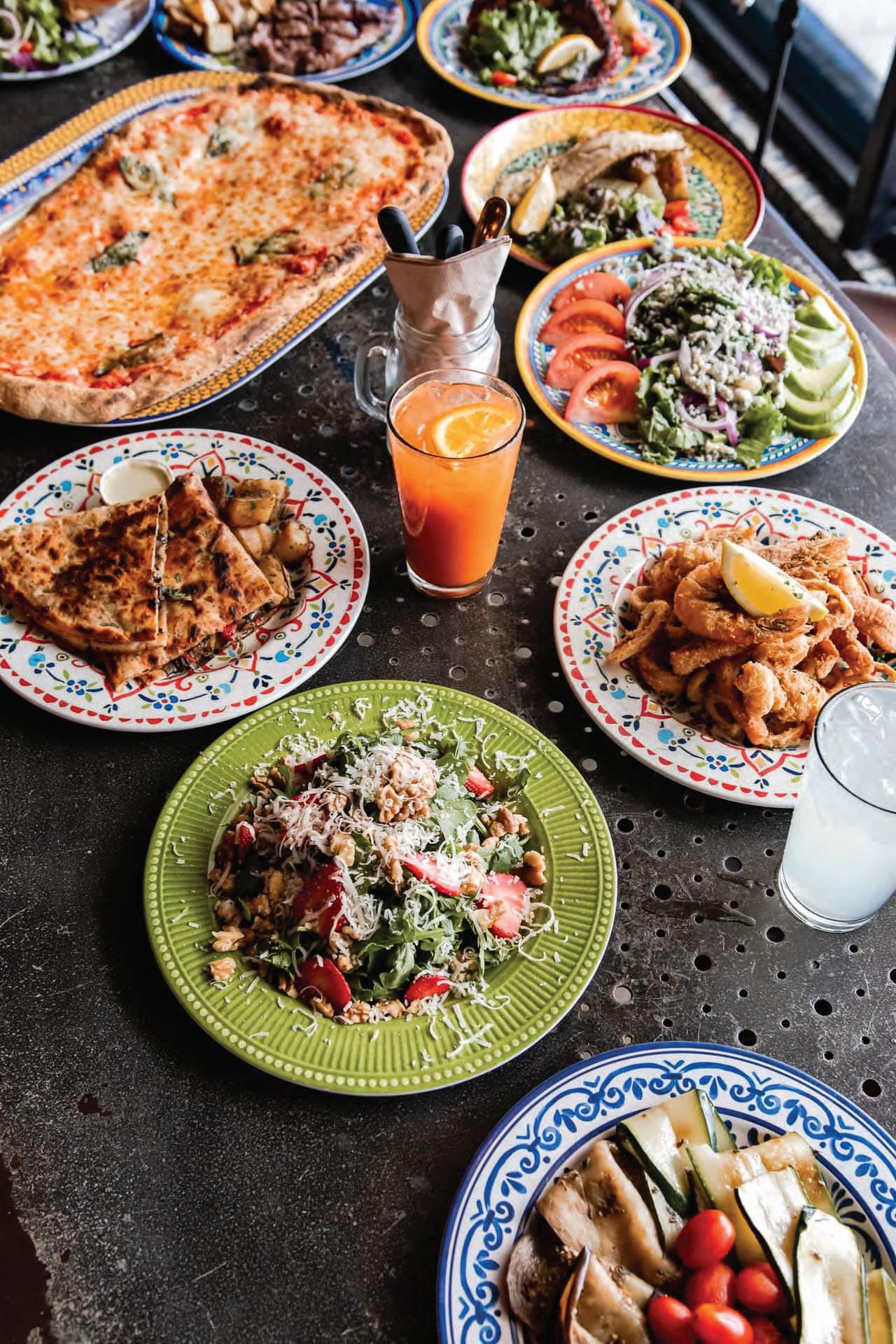
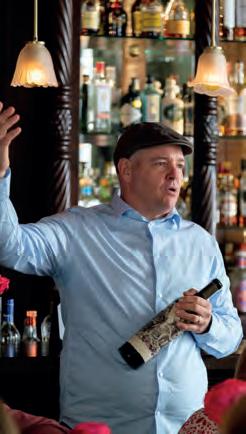
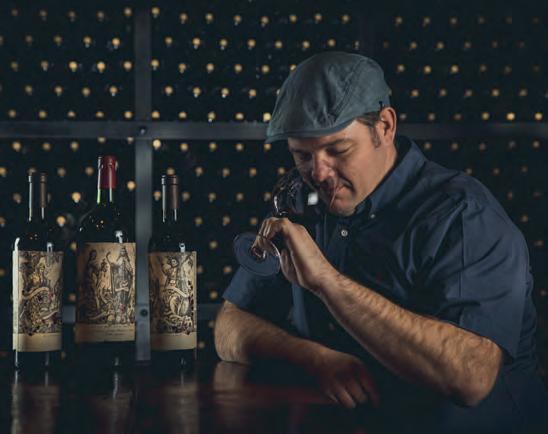
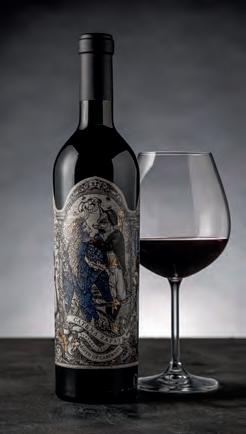
Méndez & Co. recibió en Puerto Rico al reconocido enólogo argentino Ernesto “Nesti” Bajda, figura clave del equipo técnico de Catena Zapata, una de las bodegas más emblemáticas e influyentes del mundo.
Por primera vez en la Isla, Badja presentó el innovador vino Birth of Cabernet, una de las expresiones más audaces y conceptuales del portafolio de Catena Zapata. Resultado de años de investigación, microvinificaciones de precisión y viticultura de altura en los Andes mendocinos, este vino fue concebido por Laura Catena y Adrianna Catena. Su etiqueta —mezcla arte, historia y narrativas ancestrales— fue galardonada con el Best Design and Packaging Award en la London Wine Fair 2025,
Durante el almuerzo de presentación, los asistentes disfrutaron del Catena Appellation Tupungato Chardonnay 2022 como vino de cóctel. La cata posterior ofreció un recorrido enológico por algunos de los vinos más representativos del portafolio de Catena Zapata: Catena Alta Chardonnay 2021, Birth of Cabernet 2021, Malbec Argentino 2022, Nicolás Catena Zapata 2021, Nicasia Vineyard Malbec 2014.
Cada uno de estos vinos refleja la diversidad, profundidad y precisión enológica que distinguen a Catena Zapata, distribuida en Puerto Rico por Méndez & Co. En 2025, Catena Zapata fue nombrada Marca de Vino Más Admirada del Mundo por Drinks International, lo que consolida su legado de innovación y reputación como líder de la viticultura argentina a nivel mundial.
Méndez & Co. received in Puerto Rico the renowned Argentine winemaker Ernesto “Nesti” Bajda, a key figure in the technical team of Catena Zapata, one of the most emblematic and influential wineries in the world.
For the first time on the Island, Bajda presented the innovative wine Birth of Cabernet, one of the boldest and most conceptual expressions of Catena Zapata’s portfolio. The result of years of research, precision microvinifications and high-altitude viticulture in the Mendoza Andes, this wine was conceived by Laura Catena and Adrianna Catena. Its label —combining art, history and ancestral narratives— was awarded the Best Design and Packaging Award at the London Wine Fair 2025
During the presentation lunch, attendees enjoyed the Catena Appellation Tupungato Chardonnay 2022 as a cocktail wine. The subsequent tasting offered an enological tour of some of the most representative wines in Catena Zapata’s portfolio: Catena Alta Chardonnay 2021, Birth of Cabernet 2021, Malbec Argentino 2022, Nicolás Catena Zapata 2021, Nicasia Vineyard Malbec 2014.
Each of these wines reflects the diversity, depth and winemaking precision that distinguish Catena Zapata, distributed in Puerto Rico by Méndez & Co. In 2025, Catena Zapata was named the World’s Most Admired Wine Brand by Drinks International, cementing its legacy of innovation and reputation as a world leader in Argentine viticulture.
@labodegademendez @mendezwineselecion www.catenawines.com @CatenaWines

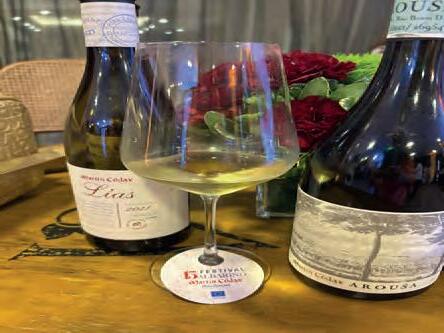
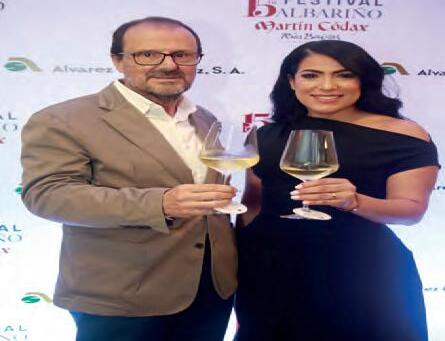
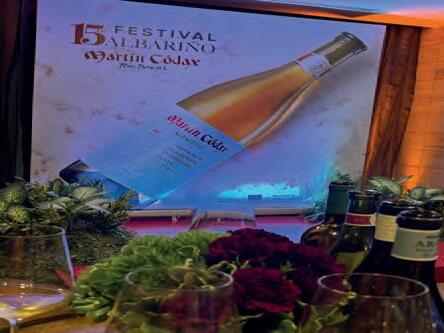
www.martincodax.com
Álvarez & Sánchez, distribuidores oficiales de los vinos Martín Códax en República Dominicana, celebró la 15ta. edición del Festival del Albariño de esta bodega gallega.
Durante el evento se anunció la incorporación de dos nuevos Albariños al portafolio Martín Códax: Arousa y Organistrum, dirigidos a restaurantes y hoteles.
Mientras saboreaban ricas tapas españolas, los invitados degustaron otro favorito de la casa, Lías, galardonado “Mejor vino blanco sin barrica de España” por la Asociación Española de Periodistas y Escritores del Vino.
Un selecto grupo de clientes, periodistas y referentes del mundo del vino, se dieron cita en Cava Alta, Santo Domingo, para conocer las últimas novedades de la exitosa bodega y ser parte de esta tradición anual.
Fundada en 1986 en Cambados, Galicia, Bodegas Martín Códax está amparada por la Denominación de Origen Rías Baixas. Fue una de las primeras en internacionalizar el Albariño y exporta sus vinos a más de 50 países.
“Martín Códax es marca insignia de los vinos gallegos tanto dentro como fuera de España y ofrece una garantía de calidad y tipicidad de la uva en sus vinos blancos Albariño”, indicó el viticultor Juan Vázquez Gancedo, director general de Bodegas Martín Códax.
Sus vinos son distribuidos en el mercado dominicano por Álvarez & Sánchez, empresa con más de veinte años en RD, donde se ha consolidado como uno de los principales importadores y distribuidores de vinos, licores y destilados premium.
Álvarez & Sánchez, official distributors of Martín Códax wines in the Dominican Republic, celebrated the 15th edition of the Albariño Festival of this Galician winery.
During the event, the incorporation of two new Albariños to the Martín Códax portfolio was announced: Arousa and Organistrum, both aimed at restaurants and hotels.
While sampling great Spanish tapas, the guests also tasted another house favourite, Lías, awarded “Best white wine without barrel in Spain” by the Spanish Association of Wine Journalists and Writers.
A select group of customers, journalists and leaders from the wine world, gathered at Cava Alta, Santo Domingo, to learn about the latest news of the successful winery and be part of this annual tradition.
Founded in 1986 in Cambados, Galicia, Bodegas Martín Códax is protected by the Rías Baixas Designation of Origin. It was one of the first to internationalize Albariño and exports its wines to more than 50 countries.
“Martín Códax is the flagship brand of Galician wines both inside and outside Spain and offers a guarantee of quality and typicity of the grapes in its Albariño white wines,” said winegrower Juan Vázquez Gancedo, general manager of Bodegas Martín Códax.
Its wines are distributed in the Dominican market by Álvarez & Sánchez, a business with more than twenty years in DR, where it has become one of the main importers and distributors of premium wines, liquors and distilled spirits.
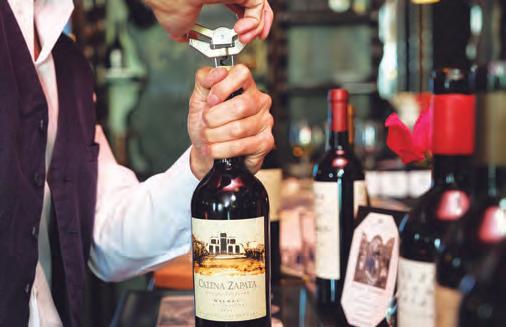
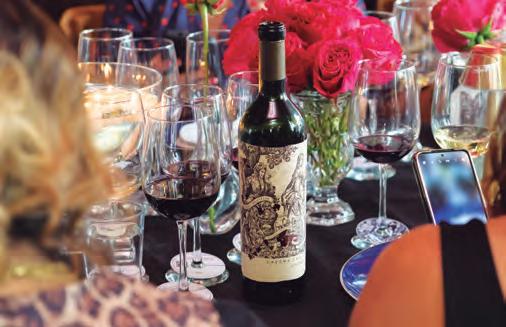
Parece que no fue suficiente con ganar “el otro Mundial”. Así que, por primera vez en Suramérica, llegan a Argentina los International Wine Challenge (IWC) Wine Industry Awards. Inspirado en el prestigioso certamen británico, el evento celebrará su edición local el 25 de septiembre en el Hotel Hilton Buenos Aires.
En la gala de premiación del IWC Wine Industry Awards Argentina se distinguirán a los integrantes de la cadena vitivinícola en 22 categorías: desde bodegas, distribuidores y vinotecas, hasta sommeliers, experiencias enoturísticas, campañas de comunicación y centros educativos, así como influencers y personalidades del vino.
El evento incluirá también una feria abierta al público y profesionales, charlas con referentes del mundo del vino, gastronomía y comunicación, y la entrega de trofeos y medallas a vinos argentinos reconocidos internacionalmente.
Cada empresa puede inscribirse en la categoría que mejor represente su labor. Un jurado especializado seleccionará a los finalistas, quienes serán invitados a la gala de premiación, donde se decidirán los ganadores.
La decisión de elegir a Argentina como sede regional surge tras la creciente relevancia de la vitivinicultura en el país y su fuerte arraigo cultural. El evento busca destacar y celebrar a todos los protagonistas del sector que aportan innovación, calidad y difusión del vino argentino.
Sin duda que este evento marcará un hito para la industria vitivinícola de Argentina, posicionando al país como epicentro de la escena mundial del vino y consolidando su prestigio global.
It seems it was not enough to win the “other World Cup”. So, for the first time in South America, the International Wine Challenge (IWC) Wine Industry Awards are coming to Argentina. Inspired by the prestigious British event, the event will hold its local edition on September 25 at the Hilton Buenos Aires Hotel.
At the IWC Wine Industry Awards Argentina awards gala, different members of the wine chain will be distinguished in 22 categories: from wineries, distributors and wine shops, to sommeliers, wine tourism experiences, communication campaigns and educational centers, as well as influencers and wine personalities.
The event will also include a trade fair open to the public and professionals, talks with leaders from the world of wine, gastronomy and communication, and the presentation of trophies and medals to internationally recognized Argentine wines.
Each company can register in the category that best represents its work. A specialized jury will select the finalists, who will be invited to the awards gala, where the winners will be decided.
The decision to choose Argentina as the regional headquarters comes after the growing relevance of viticulture in the country and its strong cultural roots. The event seeks to highlight and celebrate all the protagonists of the sector who contribute innovation, quality and dissemination of Argentine wine.
Without a doubt, this event will mark a milestone for Argentina’s wine industry, positioning the country as the epicenter of the world wine scene and consolidating its global prestige.
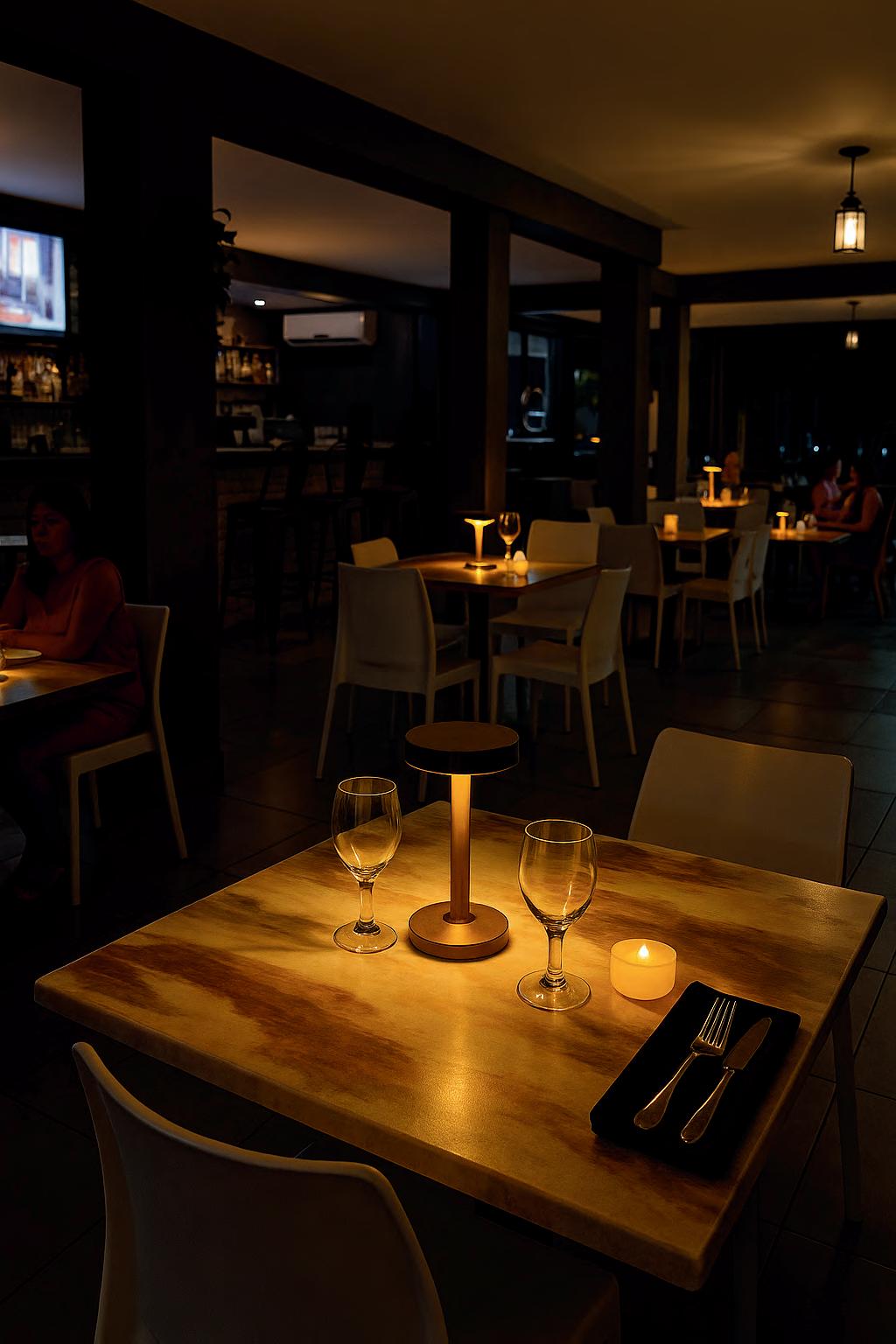
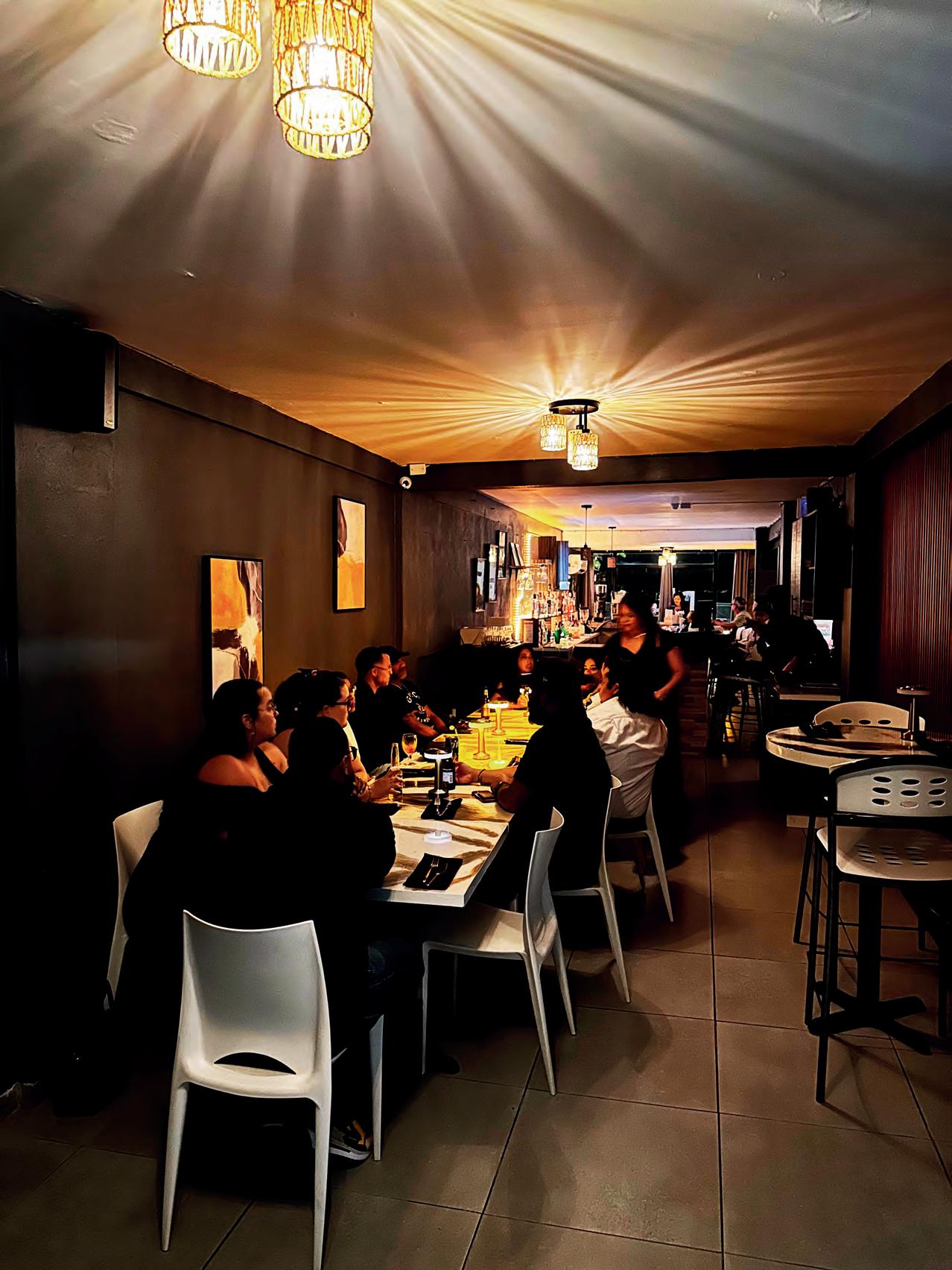

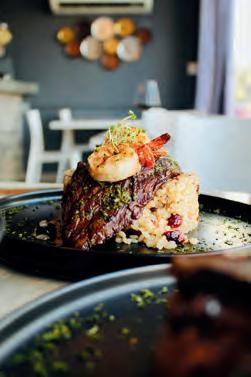



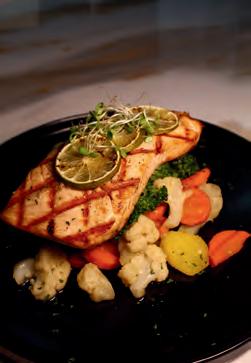
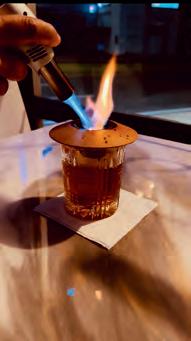
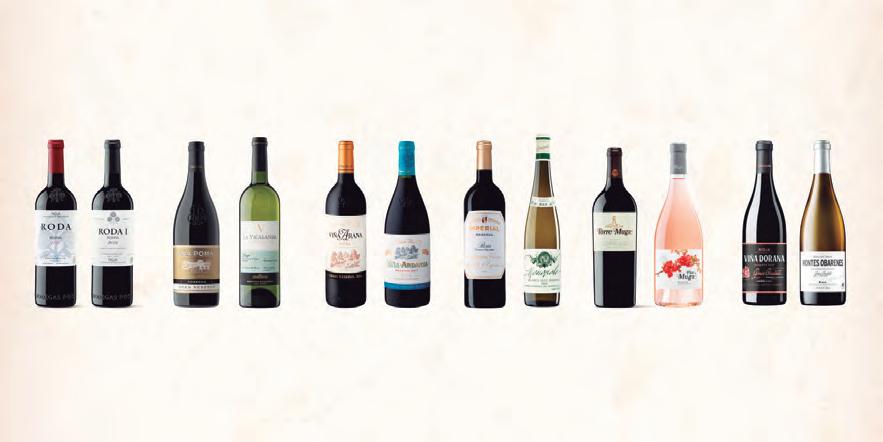
La ciudad de Haro se volverá convertir en el epicentro del enoturismo en la Rioja el sábado 13 de junio de 2026, fecha en que se celebrará la Cata del Barrio de la Estación.
En esta sexta edición, el famoso andén se llenará de viajeros gourmands en busca de excelentes vinos, alta gastronomía y experiencias únicas.
Las bodegas participantes dieron a conocer la fecha de su celebración con casi un año de antelación con la intención de facilitar a todos los asistentes la organización de su viaje y alojamiento para poder acudir al que ya es el mayor evento enogastronómico de España.
La Asociación del Barrio de la Estación está formada por seis bodegas históricas que conforman un destino único en el mundo y el legado de los grandes vinos finos de Rioja: Muga, Bodegas Bilbaínas-Viña Pomal, C.V.N.E., Bodegas Gómez Cruzado, La Rioja Alta, S.A. y Bodegas RODA.
Como esp eran repetir el éxito de la pasada edición, cuando las 3,500 entradas se agotaron en menos de 90 días, decidieron adelantar la venta, especialmente sabiendo que en 2026 no existirá una taquilla física el día del evento.
Las entradas estarán disponibles a partir del 10 de septiembre de 2025 y deben adquirirse online a través del web de la Asociación. www.barrioestacion.com
The city of Haro will once again become the epicentre of wine tourism in La Rioja on Saturday June 13, 2026, the date on which the Station District Tasting will be held.
In this sixth edition, the famous train platform will be filled with gourmand travellers in search of excellent wines, haute cuisine and unique experiences.
The participating wineries announced the date of their celebration almost a year in advance with the intention of making it easier for all attendees to organize their trip and accommodation to be able to attend what is already the largest food and wine event in Spain.
The Barrio de la Estación Association is made up of six historic wineries that make up a unique destination in the world and the legacy of the great fine wines of Rioja: Muga, Bodegas Bilbaínas-Viña Pomal, C.V.N.E., Bodegas Gómez Cruzado, La Rioja Alta, S.A. and Bodegas RODA.
As they hope to repeat the success of the last edition, when the 3,500 tickets were sold out in less than 90 days, they decided to start the sale earlier, specially knowing that in 2026 there will not be a physical ticket the day of the event.
Tickets will be available from September 10, 2025 and must be purchased online through the Asociacion del Barrio de la Estación website: www.barrioestacion.com


Santo domingo del 15 de septiembre punta cana
del 8 al 14 de septiembre
Por octavo año consecutivo, SDQ Gastronómico celebrará la gran fiesta culinaria Restaurant Week, y en esta ocasión, será en tres destinos de RD durante todo septiembre: Santiago 1-7, Punta Cana–Bávaro 8-14, y Santo Domingo 15 al 21
Más de 160 restaurantes participarán en Restaurant Week 2025. Desde su inicio en 2017, el evento se ha consolidado como una de las principales plataformas para destacar la riqueza culinaria de la República Dominicana, así como impulsar la industria gastronómica y el turismo interno.
Los restaurantes miembros de ASONAHORES, ADERES, ADECOR, AHSD y UGASA que participan diseñarán un menú exclusivo para Restaurant Week, elaborado con ingredientes nacionales y técnicas modernas.
El menú será con un precio fijo y estará disponible durante toda la semana en dos modalidades: Menú de dos tiempos: Entrada y plato fuerte, o plato fuerte y postre – RD$1,395.00 + impuestos Menú de tres tiempos: Entrada, plato fuerte y postre –RD$1,795.00 + impuestos
El público tendrá acceso a los menús especiales a través de un web-app y encontrará todas las novedades del evento en www.restaurantweek.com.do y @sdqgastronomico.
Los restaurantes serán calificados por la calidad, servicio y creatividad del menú mediante votaciones del público y evaluaciones de profesionales la Academia Dominicana de Gastronomía (ADOGA). Y al cierre de la edición, se reconocerán los mejores.
For the eighth consecutive year, SDQ Gastronómico will celebrate the great culinary festival Restaurant Week, and this time, it will be held in three destinations in the DR during the month of September: Santiago 1-7, Punta Cana –Bávaro 8-14 and Santo Domingo 15-21
More than 160 restaurants will participate in Restaurant Week 2025. Since its inception in 2017, this event has established itself as one of the main platforms to highlight the culinary richness of the Dominican Republic, as well as boost the gastronomic industry and domestic tourism.
The member restaurants of ASONAHORES, ADERES, ADECOR, AHSD and UGASA that participate will design an exclusive menu for Restaurant Week, prepared with national ingredients and modern techniques.
This will be a fixed price menu and will be available throughout the week in two modalities:
Two-course menu: Starter and main course, or main course and dessert – RD$1,395.00 + taxes
Three-course menu: Appetizer, main course and dessert –RD$1,795.00 + taxes
The public will have access to the special menus through a web-app, and they’ll find all of the event’s news in www.restaurantweek.com.do and @sdqgastronomico
Participating restaurants will be graded for their quality, service and menu creativity, both through public votes and evaluations by professionals from the Dominican Academy of Gastronomy (ADOGA). At the end of the edition, the best ranked will be recognized.
santiago
del 1 al 7 de septiembre
punta cana
del 8 al 14 de septiembre
Santo domingo
del 15 al 21 de septiembre
AGOSTO
CATA DE VINOS Y MARIDAJE EN 3 TIEMPOS
Evento @aftertasterd y vinos @sembrard Maestros Restaurante, Los Prados VIERNES 15 • SANTO DOMINGO, RD
DÍA INTERNACIONAL DEL RON
Celebración de este gran legado caribeño 16 DE AGOSTO • TODO EL MUNDO
ACADEMIA DEL VINO EL CATADOR
20 — DIFERENTES ESTILOS DE BURBUJAS 21 — UNA VUELTA POR ESPAÑA @loscatadores • SANTO DOMINGO, RD
FESTIVAL DEL VINO ITALIANO IL NUOVO MERCATO @mercatorooftop Tapas, música y más de 15 vinos Reservaciones: socialatmercato@gmail.com
JUEVES 21, MALL OF SAN JUAN, PR
DOCA BOCA POP UP
Buena comida, buena música, buen vino Ave. Privada 42, 4PM @docaboca_ VIERNES 23 • SANTO DOMINGO, RD
AFTER TASTE CON TAPAS Y VINOS
Pop up inclusivo de Fundación @Futurumeducandi @skylabevents.rd • Roberto Pastoriza #313 MIÉRCOLES, JUEVES Y VIERNES, 5PM-10PM AGOSTO A SEPT. • STO. DGO., RD
APPEROL SPRITZ EVENTOS DE VERANO
22 — BAR 2.0, Santurce 24 — MAR & ROSA, Viejo San Juan @vsuarezcompany • SAN JUAN, PR
DEGUSTACIÓN @LABODEGADEMENDEZ
ENTENDIENDO LA PINOT NOIR
Eduardo Dumont y chef Yamil Cancel Reservaciones (787) 826-7576 VIERNES 29, 6PM • AÑASCO, PR
ENTRE FUEGOS #2—CAMINO A VALENCIA
Fusión de sabores españoles y boricuas con 3 chefs y el representante de PR al Mundial de Paellas
Pro fondos Academia de Gastronomía de PR @apuga.pr • CASITA AUTÓNOMA DOMINGO 31, 1PM • CAYEY, PR
RESTAURANT WEEK 2025
•Santiago: 1 al 7
•Punta Cana – Bávaro: 8 al 14
•Santo Domingo: 15 al 21
restaurantweek.com.do • @sdqgastronomico
ACADEMIA DEL VINO EL CATADOR
TALLERES DE VINOS EN SEPTIEMBRE
3-4 — Taller Catador
10 — Los diferentes estilos de burbujas
11 — Francia en una copa
17 — Una vuelta por España
25 — Italia de Norte a Sur
26 — California y sus vinos
CURSOS Y CERTIFICACIONES
15 — Máster Enología (10 lunes)
16 — WSET-2 (8 martes)
@loscatadores • SANTO DOMINGO, RD
TALLER WINE MASTER LAB
VINOS BLANCOS DEL MUNDO
Thomas Sartori @hospitalitylab.rd MIÉRCOLES 3 • SANTO DOMINGO, RD
MIXOLOGíA Y MUJER “ENTRE COPAS”
Cata guiada @ronbarceloord
Ronmelier @ottoflores.rb HOTEL CATALONIA 12 & 19, 7:30PM SANTO DOMINGO, RD
COFFEEST
FESTIVAL INTERNACIONAL DEL CAFÉ
Degustaciones, Catas, Barismo
Atrio Central Agora Mall, 11AM – 8PM 22-28 SEPTIEMBRE • SANTO DOMINGO, RD
CAGUAS GASTRONOMY AWARDS 2025 & FORO CAGUAS: DESTINO GASTRONÓMICO
Conéctate con chefs, productores locales y foodies
Centro de Bellas Artes de Caguas JUEVES 23, 9AM-10:30AM • CAGUAS, PR
MUNDIAL DEL VINO EN ARGENTINA
International Wine Challenge Wine Industry Awards
Gala Premiación y Evento, Hotel Hilton B.A. MIÉRCOLES 25 • BUENOS AIRES, ARG
OCTUBRE
EXPOGASTRONÓMICA 2025
Convención nacional de la industria de alimentos y bebidas Hotel Catalonia @expogastronomicard 1-2 • EL MALECÓN, STO. DGO, RD
EL ENOTURISMO DEL FUTURO
Conferencia por Daniel Velásquez
Mendoza, Argentina (8va Capital Mundial del Vino) Congreso Turismo Y Negocios 2-6 • PANAMÁ
CONVENCIÓN ASORE
Asociación de Restaurantes de Puerto Rico 12-14 • CENTRO CONVENCIONES, SAN JUAN, PR
DÍA INTERNACIONAL DEL CHAMPAGNE 4TO. VIERNES • TODO EL MUNDO
CASA DE CAMPO FOOD & WINE FESTIVAL
Una experiencia inolvidable para amantes de la buena mesa con chefs internacionales. www.casadecampo.com.do 10-11 • CASA DE CAMPO, ROMANA, RD
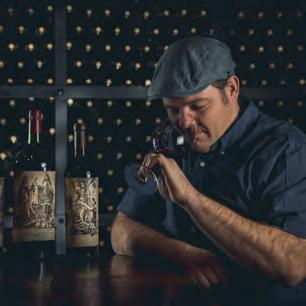
AUGUST 2025
3-COURSE PAIRING & WINE TASTING @aftertasterd event with @sembrard wines Maestros Restaurant, Los Prados FRIDAY 15 • SANTO DOMINGO, DR
INTERNATIONAL RUM DAY
This great Caribbean legacy is celebrated 16 • WORLDWIDE
EL CATADOR WINE ACADEMY
20 — DIFFERENT STYLES OF BUBBLES
21 — A TOUR OF SPAIN @loscatadores • SANTO DOMINGO, RD
ITALIAN WINE FESTIVAL
IL NUOVO MERCATO @mercatorooftop
Tapas, music and more than 15 wines Reservations: socialatmercato@gmail.com
THURSDAY 21, MALL OF SAN JUAN, PR
DOCA BOCA POP UP
Good food, good music, good wine Ave. Privada 42, 4PM @docaboca_
FRIDAY 23 • SANTO DOMINGO, DR
AFTER TASTE WITH TAPAS AND WINES
Inclusive pop-up @Futurumeducandi Foundation @skylabevents.rd • Roberto Pastoriza #313 WED. THUR. AND FRIDAY, 5PM-10PM
AUGUST-SEPTEMBER • SANTO DOMINGO, DR
APPEROL SPRITZ SUMMER EVENTS
22 — BAR 2.0, Santurce 24 — MAR & ROSA, Old San Juan @vsuarezcompany • SAN JUAN, PR
WINE TASTING @LABODEGADEMENDEZ
UNDERSTANDING THE PINOT NOIR
Eduardo Dumont and chef Yamil Cancel Reservations (787) 826-7576
FRIDAY 29, 6PM • AÑASCO, PR
ENTRE FUEGOS #2—CAMINO A VALENCIA
Fusion of Spanish and boricua flavors by 3 chefs with PR’s representative at Mundial de Paellas Fundraising for PR Gastronomy Academy @apuga.pr • CASITA AUTÓNOMA
SUNDAY 31, 1PM • CAYEY, PR
RESTAURANT WEEK 2025
• Santiago: 1 to 7
• Punta Cana – Bávaro: 8 to 14
• Santo Domingo: 15 to 21
restaurantweek.com.do • @sdqgastronomico
EL CATADOR WINE ACADEMY
WINE WORKSHOPS IN SEPTEMBER
3-4 — Tasting Workshop
10 — The Different Styles of Bubbles
11 — France in a cup
17 — A tour of Spain
25 — Italy from North to South
26 — California and its wines
COURSES AND CERTIFICATIONS
15 — Master in Oenology (10 Mondays)
16 — WSET-2 (8 Tuesdays)
@loscatadores • SANTO DOMINGO, RD
WINE MASTER LAB WORKSHOP
EMBLEMATIC WHITE WINES THE WORLD
Thomas Sartori @hospitalitylab.rd
WEDNESDAY 3 • SANTO DOMINGO, DR
MIXOLOGY AND WOMEN “BETWEEN DRINKS”
Guided tasting @ronbarceloord Ronmelier @ottoflores.rb @mixologiaymujer
Tix.do • HOTEL CATALONIA
12 & 19, 7:30PM • SANTO DOMINGO, RD
COFFEEST
INTERNATIONAL COFFEE FESTIVAL Tastings, Samplings, Baristas
Central Atrium Agora Mall, 11AM – 8PM 22-28 • SANTO DOMINGO, DR
CAGUAS GASTRONOMY AWARDS 2025 & CAGUAS: GASTRONOMIC DESTINATION
Connect with chefs, local producers, and foodies Centro de Bellas Artes de Caguas THURSDAY 23, 9AM-10:30AM • CAGUAS, PR
WINE’S “WORLD CUP” IN ARGENTINA
Intl. Wine Challenge Wine Industry Awards Awards Gala and Event, Hilton Hotel
WEDNESDAY 25 • BUENOS AIRES, ARG
EXPOGASTRONÓMICA 2025
National Food & Beverage Industry Convention Catalonia Hotel @expogastronomicard 1-2 • SANTO DOMINGO, DR
THE WINE TOURISM OF THE FUTURE
Lecture by Daniel Velásquez Mendoza, Argentina (8th World Wine Capital) Tourism And Business Congress 2-6 • PANAMA
ASORE CONVENTION
Puerto Rico Restaurant Association CONVENTION CENTER 12-14 • SAN JUAN, PR
INTERNATIONAL CHAMPAGNE DAY 4TH FRIDAY • WORLDWIDE
CASA DE CAMPO FOOD & WINE FESTIVAL
An unforgettable experience for food lovers with international chefs • www.casadecampo.com.do 10-11 • CASA DE CAMPO, ROMANA, DR


Desde Bangkok hasta Bogotá —y todo lo que queda entre medio—descubre los restaurantes que aseguraron un codiciado lugar en la famosa lista The World’s 50 Best Restaurants 2025, auspiciada por S.Pellegrino & Acqua Panna.
Este año, el número 1 del mundo está en América
Latina: MAIDO en Lima, Perú. Y la gastronomía peruana se coronó por partida triple, ya que otros dos restaurantes limeños también entraron entre los primeros del mundo: KJOLLE (#9) y MERITO (#26).
Aquí te compartimos los Top #1 por región y los que lograron los primeros 27 puestos. Si deseas conocer el resto de los top 50, así como los que integran el ranking extendido del puesto 51-100, accede la lista completa en @theworlds50best.
Latin America
Maido (#1) Lim a, Perú
From Bangkok to Bogota – and everywhere in between – discover the venues that earned a coveted place on the famous ranking list The World’s 50 Best Restaurants 2025, sponsored by S.Pellegrino & Acqua Panna.
This year, the number one ranked is in Latin America: MAIDO in Lima, Peru. The Peruvian gastronomy got a triple crown, as two other restaurants from Lima also made it to the top of the list: KJOLLE (#9) and MERITO (#26).
Here we provide you with the list of the Top #1 by region as well as those ranked among the Top 27. If you wish to know the remaining Top 50, and those in the extended 51-100 list, you can access the complete list on @theworlds50best.
EUROPA
Europe
Asador Etxebarri (#2) Atxondo, País Vasco, España
North America
Quintonil (#3) Ciudad México, México
ASIA
Asia
Gaggan (#6) Bangkok, Tailandia
Middle East
Trésind Studio (#27) Dubai, Emiratos Árabe