

SUNDAY,
SUNDAY,
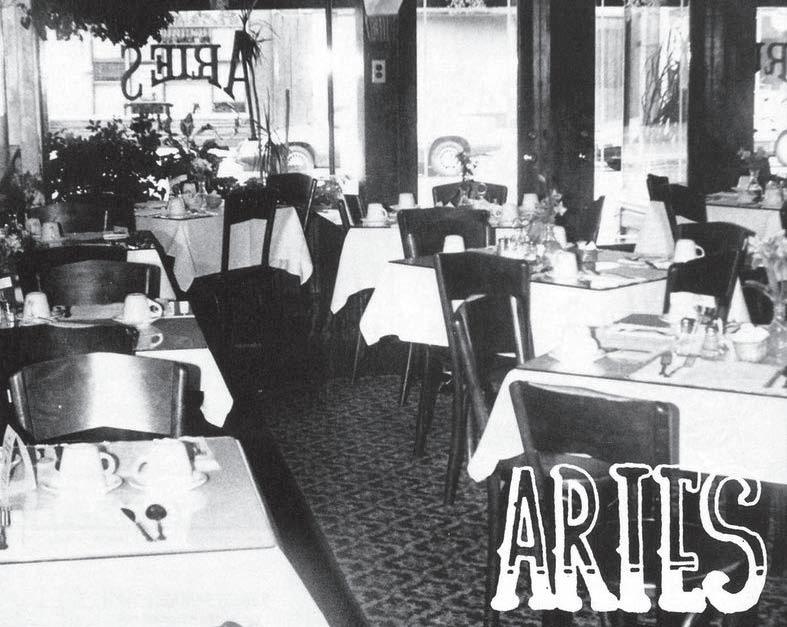
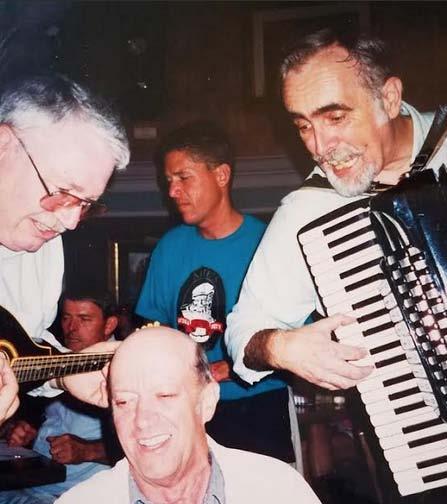
The charming casual atmosphere, reminiscent of a French café or bistro, along with the fresh, flavorful dishes and desserts at Aries Cafe created the perfect combination to attract discriminating diners from all over Southwest Michigan.
Brothers Bob and Tom Van Ravensway, founded the café in 1985, and named the restaurant after their father, Arie, whose love of history and food, had a profound influence on the culinary scene and especially at Arie’s Café.
Their menu and extensive dessert menu, changed daily and were written on chalkboards each day. They created their delightful dishes with fresh, flavorful ingredients. Former patrons shared their favorite dishes on the Plainwell Facebook page, including: white fish grenoble, fish in a bag served with grilled peppers and jasmine rice, filet mignon and many mentioned their homemade poppyseed dressing. Dessert favorites mentioned the sticky pudding and the favorite, hands-down, was their peanut butter pie!
Other Aries Cafe cherished memories former patrons remember, include: ”I was one of the original
waitresses. They really had a magical place going. The food was so good!”
“I remember going there on weekends for lunch. The butter burgers and salads with poppyseed dressing were great.” “I loved Aries, and working there too.” “My dad was one of The Brothers Flynn, the strolling musicians who played there on weekends.” “My grandma & I used to have their gourmet grilled cheese & peanut butter pie. It was our special treat!” “It was the best place. I can still taste the steak tips with stroganoff.”
Aries offered generous support to the Plainwell Arts Council, hosting, preparing and donating food for their art show receptions, including the Student Art Shows, held at Ransom Library. They also allowed artwork to be hung in the restaurant all month long, giving the artists the opportunity to sell their work.
Aries was located in downtown Plainwell at 127 E. Bridge St., in the iconic building, that previously housed the beloved Paris Bakery. Today it is home to Joe’s Pizza and Sports Bar.
Bob and Tom also opened Arie’s London Grill, just across the street at

200 E. Bridge Street. It was eventually sold to Tom Huff, of Kalamazoo’s Peregrine Realty.
Sadly, Aries Café closed in 2005, but was reopened in December of that same year when a new owner, Robert Powers, Jr., stepped in. The business continued until the end of August 2008.
In June 2007, the 747 Neighborhood Bistro opened north of downtown, across from the Plainwell Airport, hiring an Aries cook and the pastry chef. Gazette food critic William R. Wood reviewed 747 in September of that year and reported that “the food is reminiscent of the fare at Arie’s Café in the good old days.”
Another former Aries Café chef, Tom Rose, spent the first 12 years of his culinary career at Aries, where he learned the importance of using quality products and fresh, local ingredients. For the next 13 years, he was a corporate chef and account manager.
In June, 2011, Tom and his wife, Jan, bought the former 747 Neighborhood Bistro space and opened Four Roses Café. “Bob and Tom Van Ravensway, and the whole Arie’s experience, was a big part of Tom and my life and career. We actually met
at Arie’s. Tom and Bob were serving farm to table and creating an eclectic menu long before it was a popular thing to do. They were buying produce from small farmers and boosting the local economy long before it was a thing,” says Jan.
Four Roses carries on the Arie’s Cafe tradition of using quality products and fresh local ingredients to create their delicious meals, including the popular Whitefish Grenoble dish that Aries once served. Four Roses also offers the well-loved desserts –generous portions of pies and cakes, created by pastry chef, Kris Newland, who was once the pastry chef at Aries, and has worked at Four Roses since they opened.
Arie Van Ravensway was the inspiration behind his son’s restaurant, Aries Café. He also had a huge influence on the West Michigan culinary scene that continues to this day, which can still be enjoyed at Four Roses Café.
Jackie Merriam
Sources: KG 8/28/08, KG12/8/15, Facebook: City of Plainwell.


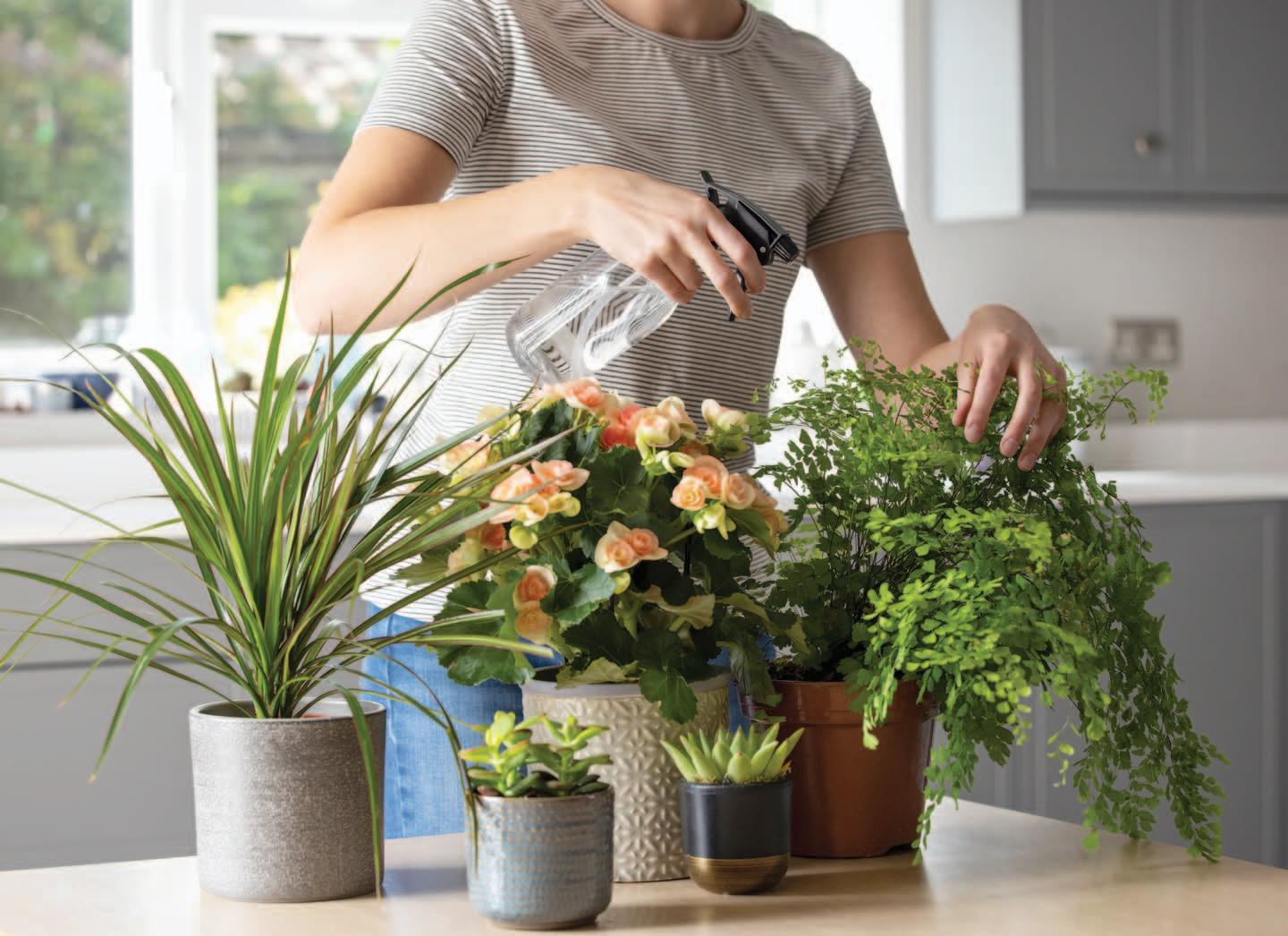
Winter might be a wonderland outside, but inside, it can be a bit of a challenge for your favorite houseplants. Shorter days, dry air, and hot and cold drafts can stress our plants—but don’t worry! With a few simple tips, you can keep your plants looking lush and lovely all season long.
1. Less Light? No Problem!
Winter days are shorter and darker, which means your plants get less of the sunshine they love.
The fix:
Move ‘em closer to the light if you can. Shift your plants to brighter windows (south- or west-facing, for example).
Rotate regularly. Give your plants a quarter turn every week so all sides get some sun love.
Supplement with grow lights. If your space is especially dim, a small LED grow light can make a big dif-
“Out with the old, in with the new.” This phrase suggests that in order to move forward, one must purge, remove or let go of something, with the expectation of gaining something fresh and new.
ference—and they’re more affordable than ever.
2.
Indoor heating zaps moisture from the air, which can lead to crispy leaf tips and unhappy tropical plants.
The fix:
Group your plants. Plants naturally release moisture, so clustering them together creates a mini humidity zone.
Add a humidifier. Your skin will thank you, too.
Place a shallow tray of water with pebbles under your plant’s pot (just make sure the pot isn’t sitting in water).
3. Dusty Leaves
Can’t See Dust tends to build up faster in winter and can block light from reaching your plant’s leaves..
The fix:
Wipe leaves gently with a damp cloth every couple of weeks.
If this phrase is taken literally, as in cleaning out your closets and donating old items, I advise you to be careful with what you purge. You may want to consult your kids and grandkids before you do.
On a recent visit from my son’s family, I pulled out my large trusty tote bag to carry extra hats, gloves, treats, etc. to the park and a farm that we were visiting that afternoon. I was shocked when my son said, “Someday, I want that tote bag.”
The tote bag is white with black letters on it that says “Esprit,” and was given to me as part of my birthday gift, from my mom, over 40 years ago. Knowing my frugal mom as I do, I’m certain that she picked it up
Shower time! For smaller plants, a quick rinse in the sink or shower can freshen them right up.
4. Watch Your Watering
Plants grow more slowly in winter, so they don’t usually need as much water as they do in spring and summer. Take care not to overdo it.
The fix:
Check before you water. Stick your finger an inch into the soil—if it’s dry, it’s time to water.
Use room-temperature water. Cold water can shock roots.
Watch for signs. Yellowing leaves? You might be overwatering. Wilting? It could be too dry.
5.
Drafts—hot or cold—and big temperature swings can stress your plants.
The fix:
Keep plants away from cold win-
for a couple of bucks on clearance at the end of the summer season.
This simple tote bag is more than a convenient way to transport our stuff, it has become the carrier of our memories - the beach trips, vacation destinations and daily excursions that we carried it to.
My Esprit tote bag will continue to be part of our memories, and is a reminder that the phrase, “Out with the old, in with the new,” doesn’t always ring true in benefitting from something fresh and new.
Happy New Year!
Jackie Merriam
dows, radiators, and heat vents.
Aim for consistency. Most houseplants prefer temperatures between 65–75°F.
Don’t Panic If Growth Slows It’s totally normal for your plants to put on little growth during the winter unless you give them extra light. You don’t need to fertilize or repot right now—just let them rest and recharge.
Come spring, they’ll be ready to grow like crazy again. Winter doesn’t have to be hard on your houseplants. With a little extra attention and a few easy adjustments, your indoor jungle can stay vibrant and healthy all season long. Remember—plants are resilient, just like you.
Article from the National Garden Bureau, written by Justin Hancock, Costa Farms Horticulturist.
Wedel’s Nursery, Florist & Garden Center
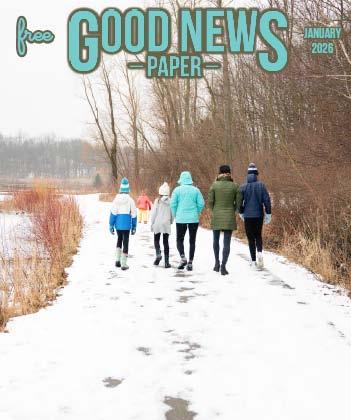
New Year, New You: Why 2026 Is the Year You Finally Choose Yourself
There’s something magical about a new year. Not the fireworks, not the countdown— but that split second where you realize you get to start over. And if we’re being honest, 2025 left a lot of us exhausted, overextended, and carrying emotional baggage no one informed us about. Here’s the wicked truth: 2025 doesn’t get to follow you into 2026 unless you give it a key to your castle. And this year, the door stays shut.
Picture 2025 like an old, tangled phone charger or tattered suitcase. It doesn’t work anymore, it stresses you out, and no matter how you twist it, it just won’t satisfy the life you’re gliding into. Leave it where it belongs—with outdated habits, expired relationships, and the version of you who kept saying “maybe next year.” You’re not that person anymore. You are going to make “maybe next year” a hot trend for your new year doing all the things that were on your “maybe next year list”
2026 is the year you listen to your own heart instead of everyone else’s opinions or expectations. The year you stop living by someone else’s playbook and start creating a life that feels just right on the inside, not just one that looks good online. When you follow what actually aligns with your soul—not your guilt, not your fear, not your obligations—your entire life shifts. Research even backs this up: pursuing goals that truly match who you are increases long-term happiness and motivation (Sheldon & Elliot, 1999).
Let’s talk about the “busy” epidemic. Somewhere along the way, society convinced us that being overwhelmed was a badge of honor. That burnout was a trait no one wanted. That the more drained you are, the more successful you must be. That mindset is outdated and honestly, dangerous. The world is finally realizing that rest isn’t laziness—it’s maintenance. The World Health Organization identifies burnout as a serious occupational

phenomenon, which means prioritizing rest isn’t soft, it’s smart (WHO, 2019). In 2026, rest is the new flex. Peace is the new status symbol. A new year also brings the chance to curate your circle with intention. Think of it like refreshing your For You Page: if someone brings anxiety, drama, or half-effort energy, they don’t need a front-row seat in your life. Surround yourself with people who love without competition, support without condition, and cheer for you without hesitation. Healthy relationships don’t drain you—they recharge you. Social support is directly linked to better mental and physical health, and yes, science says so (Uchino, 2006).
At the core of all this is your wellbeing—physical, mental, emotional, personal. Not the aesthetic, candle-lit, face-mask version of self-care, but the
kind that changes your life. The kind where you move your body because it feels good, rest because you’re human, set boundaries because you deserve peace, and explore hobbies simply because they bring joy. This isn’t about reinventing yourself overnight. It’s about nurturing yourself consistently and not taking a backseat in your own life.
What makes 2026 different? It’s the year you stop surviving and start intentionally thriving. The year you stop fighting for space in lives that don’t value you. The year you rewrite your narrative with confidence rather than compliance.
Your best year won’t come from a perfectly written set of resolutions. It will come from one simple, powerful choice: choosing you.
Choosing the life that makes your
heartbeat with peace.
Choosing the people who foster your growth.
Choosing dreams that make you feel alive.
Choosing to leave the noise of 2025 exactly where it belongs—behind you without even a side glance backward. This is your soft reset. Your reinvention era. Your comeback season. And it starts the moment you decide it does. Start it today
Great news!
Dr. Julie Sorenson has officially launched her brand-new podcast, Unpack with Dr. Julie — a fresh, dynamic space where she breaks down real-life challenges, mental-health insights, and the topics you care about most.
Even better, each article she writes will now have its own dedicated podcast episode, giving listeners a chance to hear the message when they don’t have time to sit and read.
And guess what? You heard it here first — exclusively through The Good News paper. Stay tuned… big things are coming.
APA References
Kross, E., Bruehlman-Senecal, E., Park, J., & others. (2014). Selfdistancing buffers against negative emotions surrounding autobiographical memories. Emotion, 14(3), 1–15. Sheldon, K. M., & Elliot, A. J. (1999). Goal striving, need satisfaction, and longitudinal well-being: The self-concordance model. Journal of Personality and Social Psychology, 76(3), 482–497.
Uchino, B. N. (2006). Social support and health: A review of physiological processes potentially underlying links to disease outcomes. Journal of Behavioral Medicine, 29(4), 377–387.
World Health Organization. (2019). Burn-out an “occupational phenomenon”: International Classification of Diseases.
Dr. Julie Sorenson, DMFT, MA, LPC, LMHC



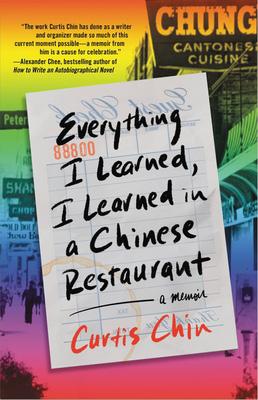


A few years ago, my grandchildren introduced me to an educational YouTube channel called Vsauce, which explores a wide range of topics in science, math, and all sorts of other engaging subjects. Its creator and host, Michael Stevens, launched Vsauce in 2007. His videos are smart, thoughtprovoking, and often delivered with a bit of humor—making learning fun. Some of his popular titles are “What Is the Speed of Dark?” and “Why Do We Dream?”
My favorite is titled “The Zipf Mystery” which explains Zipf’s Law (after George Zipf) which states that in any language, the most common word appears roughly twice as often as the second most common, three times as often as the third, and so on. Thus, there is a mathematically predictable pattern in word usage across different languages and texts. And the top 100 most frequently used words represent nearly half of all the words in written material.
I came across a Vsauce episode about a book of poetry titled Eunoia by Christian Bok (2001). The poems each use only one vowel throughout—A, E, I, O, or U.
What really caught my attention, though, was the title itself. “Eunoia” ( you-NOY-uh) is Greek for “beautiful thinking.” And here’s a clever play on words—it’s also the shortest
English word that uses all five vowels. That clever twist was a brilliant touch.
This writing technique is called “univocalic,” a form of “constrained writing” that restricts the author to using only one vowel letter throughout the entire piece—for example, only “E.” Michael Stevens has a knack for introducing these kinds of offbeat literary ideas in a way that makes them interesting and fun.
My favorite poetic form has always been haiku, and as I thought about constrained writing, it struck me that haiku fits the definition perfectly. It’s limited to three lines—the first with five syllables, the second with seven, and the third with five again.
Thinking further, I harkened back to high school and our study of another highly structured poetic form: the sonnet. The sonnet (14 lines) follows a precise rhyming scheme “ABAB CDCD EFEF GG,” in “iambic pentameter” (ten syllables per line, alternating soft and strong emphasis).
While I remember learning the rules (I had to look them up for this post) and mechanics of these forms, I now realize I never understood why they exist—or what their purpose might be. After all, doesn’t creativity thrive best when it’s least constrained?
Curious, I asked ChatGPT AI to write two original 100-word “drabbles” (another constrained literary form that is one of my favorites)— one using only the vowel “E,” and another using only “A.” Here’s what it came up with, both exactly 100 words and only uses the one vowel; I was impressed:
“The Secret Glen” Beneath green ferns, gentle breezes crept. The slender creek bent between wet pebbles, then settled, serene. There, Elen met her dearest self—reflected, trembled, then merged. She felt the tender spell of the sheltered dell, where every stem seemed sentient, where red stems bled sweetness. Her secret kept, she never left, yet never slept. The endless green nestled her, perfect, endless. Even when the desert entered her memory, the green never perished. The secret glen, her perfect secret, slept.
“A Small Caravan”
A warm dawn sang. Sand and grass swayed afar. A calm lamb and a black ram lagged back, ambling past a grand basalt crag. A man, tall, drab, sat astray, grasping a flask, planning a path afar. Harsh sun, vast land—and a fatal charm that drags all man and beast apart. At last, at camp, a spark, a crack—and a campfire’s warm glad chant. “Afar,” sang that man, “all scars and pain shall pass.” And stars, grand
lamps, sang back.
One Sunday, the grandkids who introduced me to Vsauce, were at our home for Sunday for dinner. After dinner I told them about the Eunoia episode on Vsauce.
To my surprise (and delight), our youngest grandson told me he had learned about a book written without the single use of the letter “E”! He accurately recalled that title of the book had something to do with “Gadsby.” No, it wasn’t F. Scott Fitzgerald’s The Great Gadsby.
The book titled Gadsby was written by Ernest Vincent Wright in 1939—a 260-page novel with more than 50,000 words!
As we dug into this, this falls under the definition of a “lipogram.” It’s the reverse of Eunoia in that rather than only using one vowel throughout, the lipogram requires the entire piece be written without using one letter. (“Lipo” is Greek for “leave out or omit” and “gram” means “letter.”
And that, dear readers, is what a Sunday dinner with grandkids can teach you—about poetry, lipograms, and a whole lot of wonder. Watching their curiosity and excitement, I can’t help but get a sense that the future for these kids is certainly unbounded—and not the least constrained.
James D. Coppinger





It’s a New Year! Phew, we made it! I am so ‘friggin proud of each and every one of you! Within our circle of people and community, each year brings birth and death, job offers and job loss, graduates, first year students, marriages, divorces, diagnoses, cures, retirements, and new home buyers. But how about all the little things, like the number of books you read, concerts you attended, walks you took, phone calls you answered, text convos you started, hobbies you tried, skills you perfected? We are made up of all the big and little moments in life. Some are thrilling, some are devastating, and some we don’t even give much consideration. I challenge us to shift that thinking as we enter into 2026. Every moment can be


precious and impactful to our future self. Giving value to everything as it deserves.
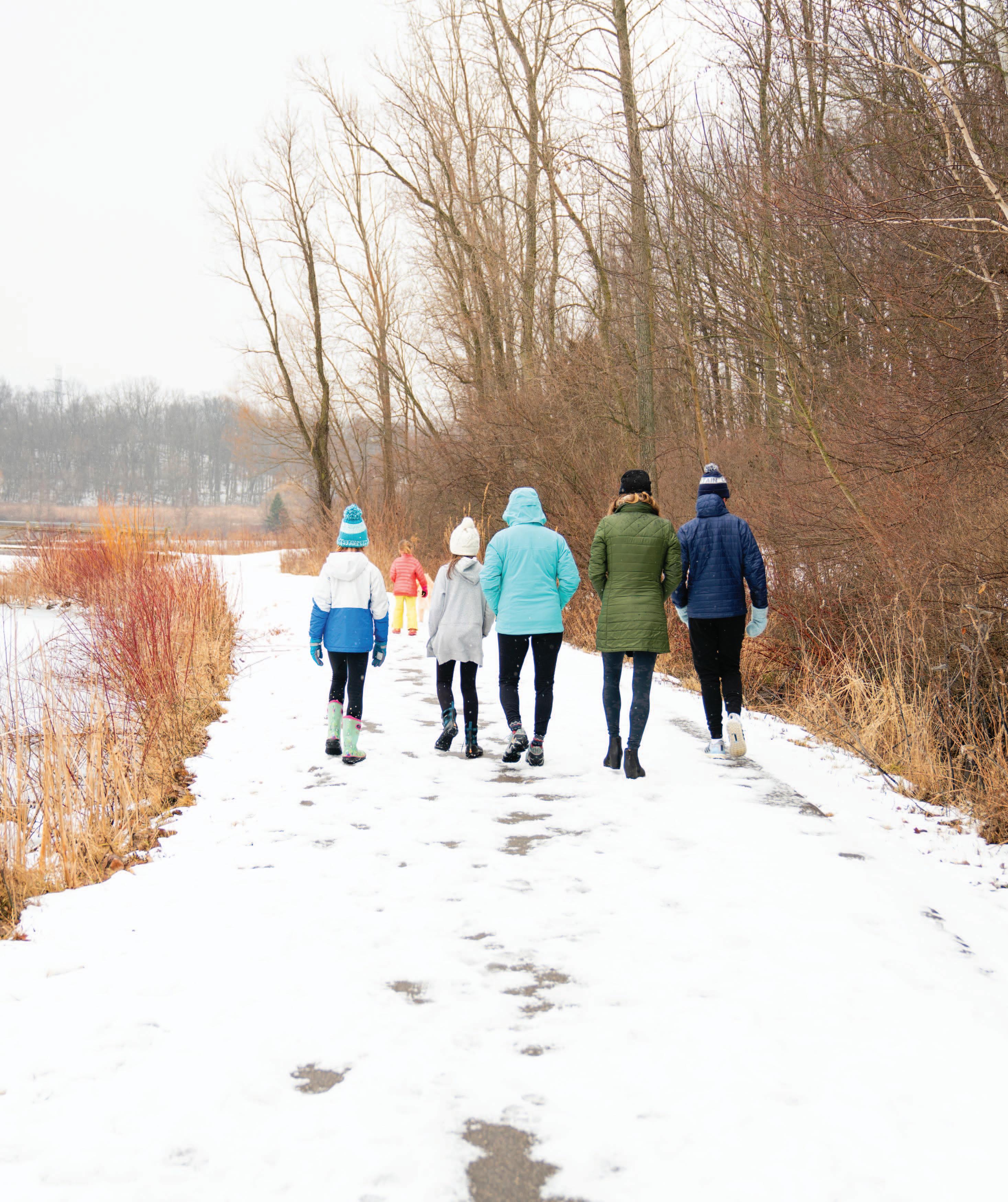
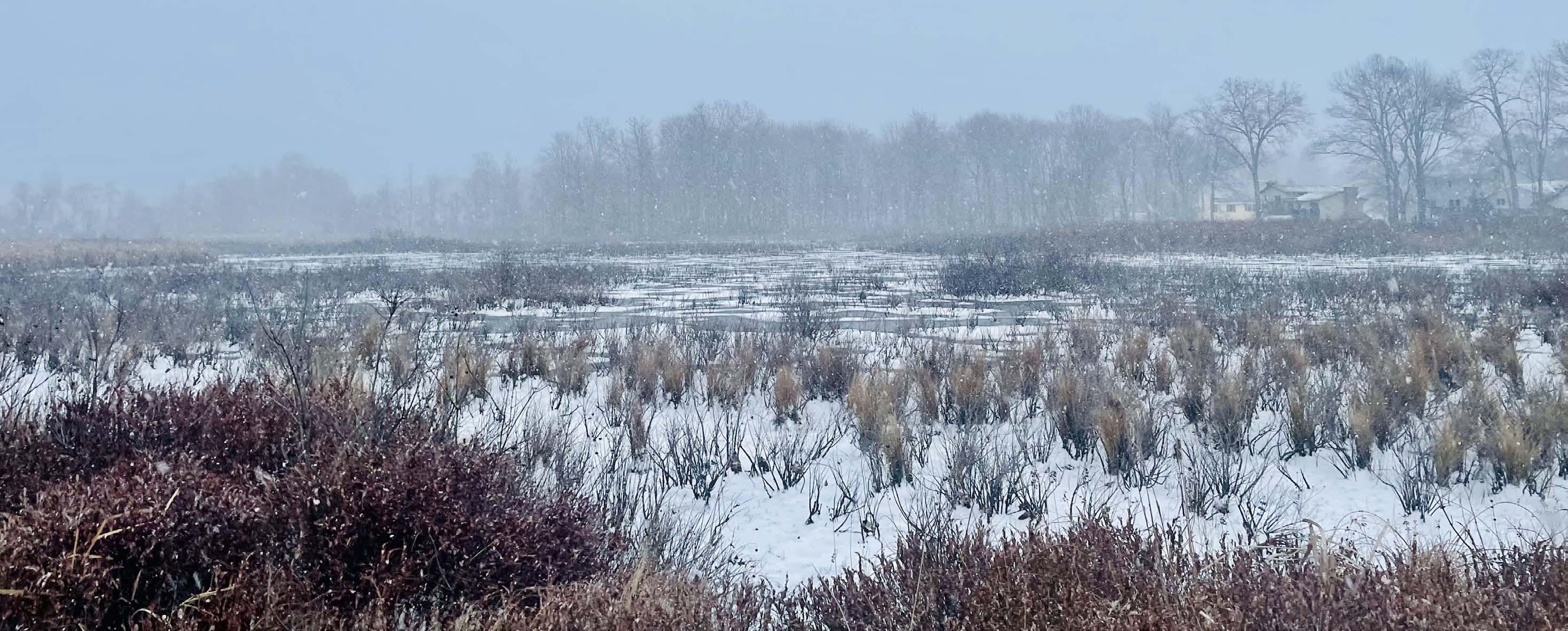
I was walking in the woods on a gray snowy evening with friends and family. One of my friends kept trying to get my attention to look at the sun peeking through the gray clouds casting a warm glow on the freshly fallen snow. Oblivious to his calls for attention, just a few minutes later, I paused and looked up, saw the sun, and snapped a picture—the one included in this article. He jokingly said, “Well, now you notice.” I replied, “It wasn’t the right time before, I needed the just right moment.” That’s life, just right moments. Moments of little things and big things. Moments that capture your attention.
For book recommendations from your Kalamazoo Public Library Staff go to www.kpl.gov/blog/
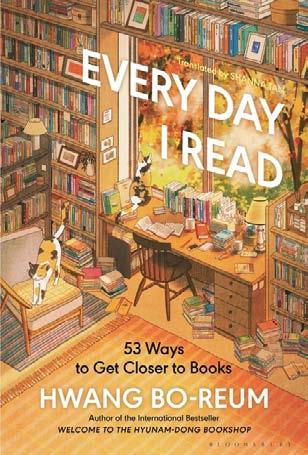
(Bloomsbury)
This is a thought-provoking book all about the various aspects of books and reading. It's impossible to read this short book of essays without reflecting on the joys and comfort that reading brings. So many books are recommended in the essays that readers will want their TBR tracker handy!
WI
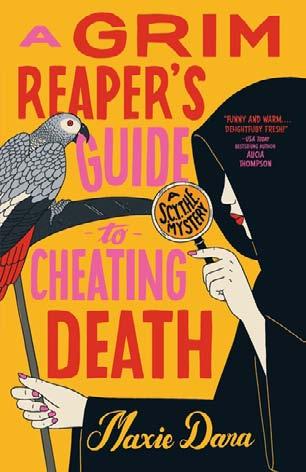
A Grim Reaper's Guide to A Reaper's Cheating Death Maxie Dara (Berkley)
Nora is terrified of death but works for S.C.Y.T.H.E., a company that employs grim reapers. To complicate things further, her twin brother's file has shown up on her desk. To save him, the siblings go on the run with a parrot named Jessica. They find the perfect place to hide until she realizes it isn't just Capital-D Death after her brother, but someone else trying to kill him. An enjoyable romp
Here’s another example. If you follow my writings, you know I thrift. I thrift a ton of my clothes. I recently bought a few blazers (side note, pretty darn proud to be a lady who owns some blazers—profesh Amy has arrived). One blazer fits me perfectly, one is good enough (the velvet texture taking full advantage to win a space in my closet), and one has so much styling potential, but it just doesn’t fit right. I tried it on with many combinations. With pants, skirts, dresses, over t-shirts, sweaters, cardigans, it just doesn’t look right. And I accepted this. It’s just not the right fit. When approaching 2026, in everything, make sure it’s the right fit. Make sure to pay attention to the just right moments. This year will fly by.

Every
Gr
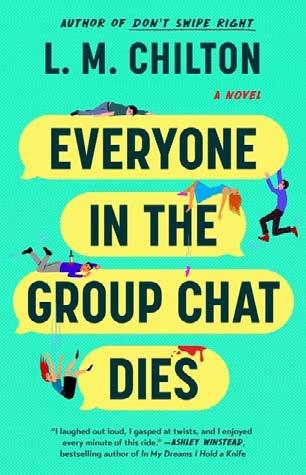
L.M.
Kirby gets a message from a friend she's sure is dead. As she tries to connect with her other friends to figure out what's going on, disasters befall her and the group until she's in a race for her life. Witty, clever and creepy, this true-crime thriller is a fun, easy read for readers looking for something murderous that doesn't take itself too seriously
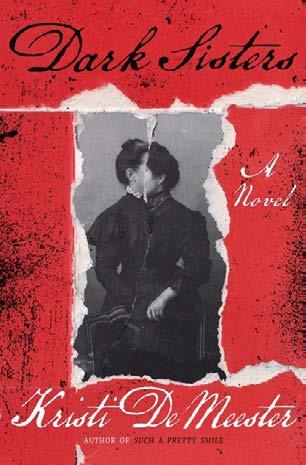
Dark Sisters Dark Sisters Kristi DeMeester (St.
This fast-paced, terrifying work of historical horror is unapologetically feminist and told in alternating chapters across three timelines: Camilla in 2207, Mary in 1953, and Anna in 1750 Readers will be compelled to learn the women's secrets and the origin of the powerful church called The Patch. Recommended for fans of books about witches and women's power
FL
St.
of Things hings Jennie Godfrey (Sourcebooks Landmark)
In the late 1970s, the Yorkshire Ripper casts a shadow of fear
There will be things that might bring us to our knees in sadness, take our breath away in wonder, be so average we might overlook them, like sitting and reading this article--but all of these parts make up our human-ness and it’s quite an amazing thing. I hope that 2026 brings you all the just right moments, and you give them the attention they deserve, in humility to the you that they help to create. 20 original art prints are placed randomly in this month’s issue of the Good News Paper.
Peace, Love, and Art. -Amy Instagram: @amylgieschen

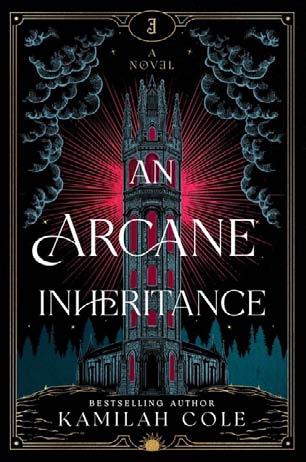
An Ar
Ellory gets a full ride to an Ivy League university and isn't sure why. Within weeks she's dog-tired and feels like she's losing her mind. Strange things are afoot and she has a nagging sense of déjà vu. Exploring themes of racism and elitism, this dark academia delight stands out for great character development, a fast-moving plot, and unexpected twists
NoveList read-alike: Babel by RF Kuang
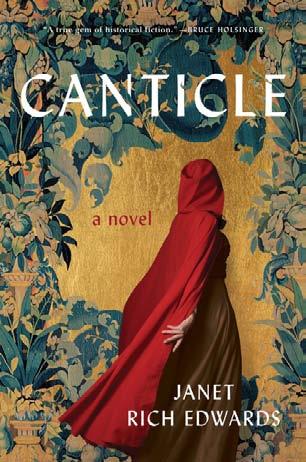
Cantic Canticlle: A No e: Novveel l Janet Rich Edwards (Spiegel & Grau)
An intriguing historical fiction about a woman who, from a young age, is called to God. Set in 13th century Bruges, this is a particularly timely look at gender politics, especially as they relate to religion—how far will men go to hold on to their power and standing, and to what lengths will a woman go to serve her god?
A great pick for book clubs
As another new year rolls around, many of us consider our goals for the future—and many of us fail at keeping on track toward those goals. According to an Ohio State University study, only a meager average of 9% of Americans complete their New Year resolutions. Most don’t even make it past the first week of January, and by end of the month, 43% have tossed their resolutions to the wind. Not me.
I set my resolution 14 years ago, when I signed at the bottom line of that incredibly thick stack of a mortgage contract for my purchase of what I call Z Acres—my little red farmhouse on 10 acres. The agreement was for a 30-year mortgage. My firm goal, however, was to pay it off much faster. I chose 30 years to give myself room should I have a bad month now and then. In these 14 years, I have had only two months that I did not make a extra payment on principal.
Mind you, I live lean. Very lean. As an independent contractor, my pay can vary greatly from month to month, even from year to year. It is challenging to plan a budget ahead when my income is a grand unknown.
But a resolution is a resolution, and in my mind, it is written in stone. Paying off my mortgage early would

lead me to those golden years we all dream about, a time to relax and truly enjoy life, follow our passions, chase dreams we have had to put aside too long.
Once a resolution is in mind, the next one is to formulate a plan. To pay a mortgage off early, groundwork includes paying off all other debt first. Those high-interest credit cards, the student loans, they have to go first. It is also important to have
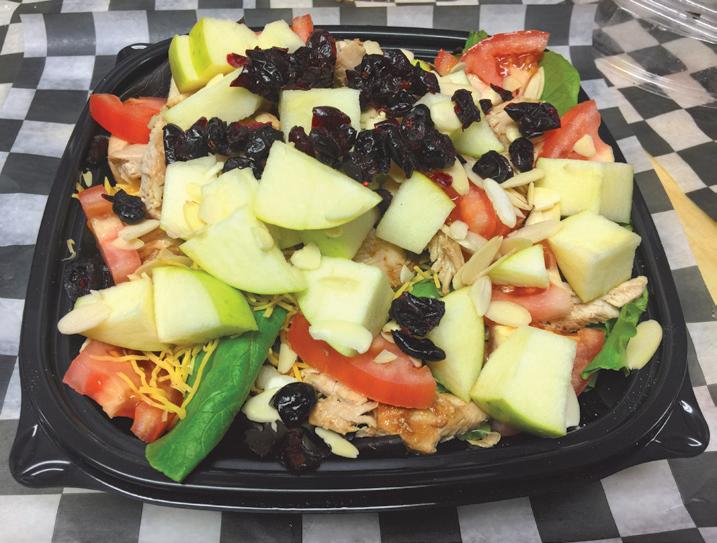
Cranberry Walnut Chicken Salad
Pancake & Eggs
2 pancakes and 2 eggs any style $8.49
1 egg, 1 meat choice of bacon or sausage and 1 pancake $8.49 Ham & Cheese Omelet
2 egg omelete with hash browns and 1/2 order of toast $9.49
1/2 Waffel with Two Eggs
$8.49 (Only on Wed. Sat. & Sun.)
Burger & Fries
Topped with lettuce, tomato & mayo $9.49

a reasonable amount of savings as an emergency fund. Don’t forget to invest in a retirement fund. Next comes a review of one’s budget. Where are those dollars going? Where can one’s belt be tightened and made more efficient? Stop buying crap. Seriously. Stop it. The kids already have 253 toys. The clothing closet is overfull, no need for that 15th pair of shoes, and the winter coat will easily last another year or
three. It turned my stomach a bit to see that in a worsening economy, Black Friday still brought out record crowds of shoppers even while Americans are carrying record debt. Stop it.
Stop going to restaurants or picking up fast food—not good for you anyway. Cancel subscriptions. Knock off online shopping. Browse thrift stores.
The next step is especially important. Make extra payments on principal. First priority, put that extra hundred or more into paying off principal. Every month. Talk to your banker or financial advisor about what works best for you. Just make sure you are paying principal, not interest. Put the tax refund or any bonus pay into the mortgage rather than fun money.
I am almost there. I love looking at the mortgage numbers coming down. The savings in interest by paying off a mortgage early can go into the tens of thousands if not six figures, depending on the original loan amount. Living debt-free and with the peace of mind of knowing that I will always have a roof over my head—priceless. My golden years are looking ever more golden. Happy 2026!
Zinta Aistars
Just north of Marshall, southwest of our state capital of Lansing, is the historic city of Charlotte. This, Good News reader, is where my best pickin’ pal, Julie, and I decided to celebrate our joint birthdays! After all, gals should do their favorite things on their birthday - being together and pickin’ junque! The most difficult part of our pickin’ is always WHERE we should go! Charlotte has long been a picker’s “honey hole” - almost a secret of sorts! You are being allowed into a Mecca! So, with the strains of the birthday song (they say it’s your birthday! Da, da, da, da, da, da, dum!) echoing in our heads, our journey began!
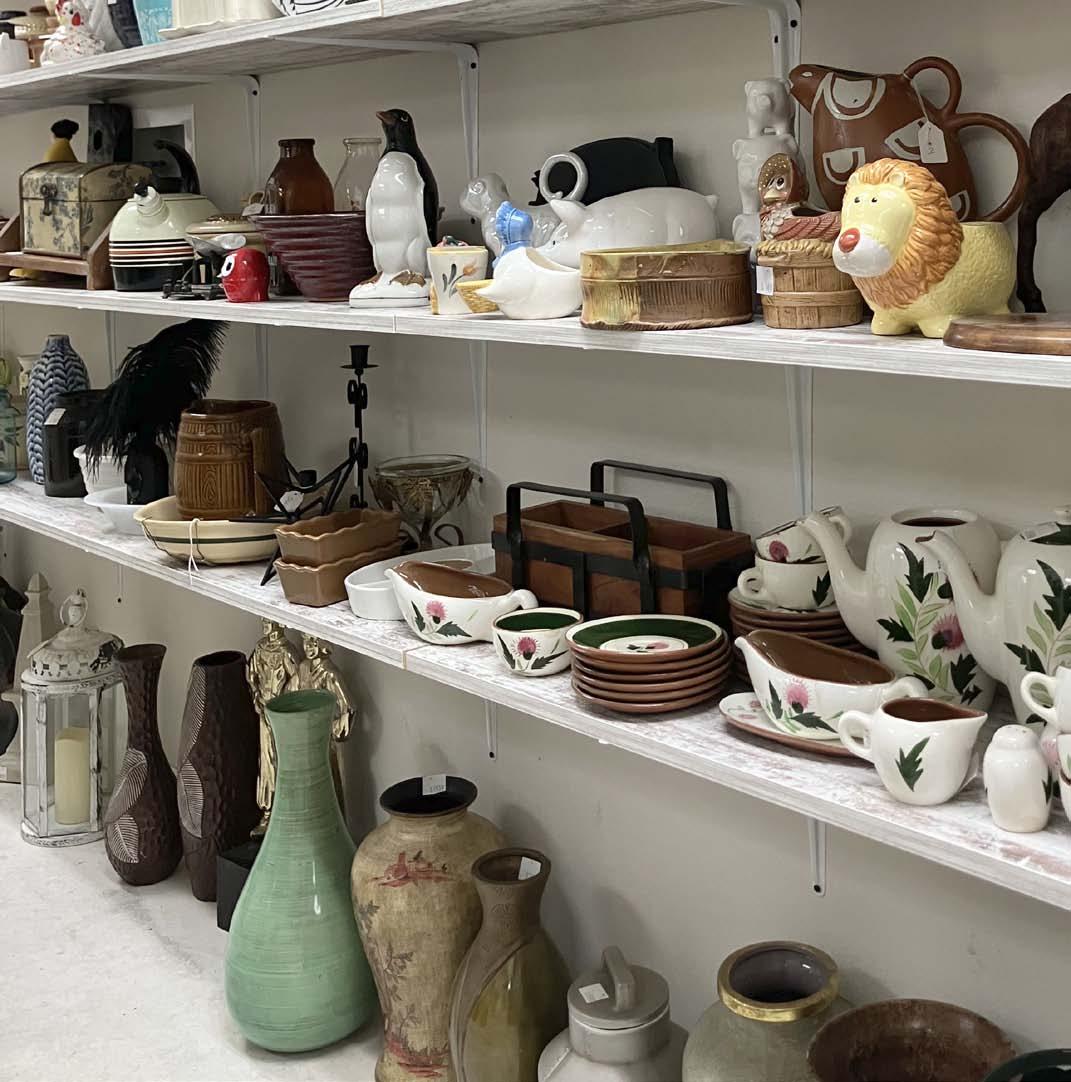
Our first stop, (well, actually our second, but we cannot divulge ALL of our secrets!) is the unbridled shop of Needful Things. In 2019, after years of selling junque at open air and thrift markets, Abby, and her husband, Jeff, had a chance to purchase a brick and mortar shoppe. The two have carefully curated two buildings, once an old church with two levels, stock full of treasures! Abby shares of having to have had to recently removed the pulpit to increase room. With over 150 vendors, the variety of different tastes are sure to please any palette. Shelves and tables line the walls of the many nooks, crannies, and niches. The remaining rooms and hallways are a fun maze
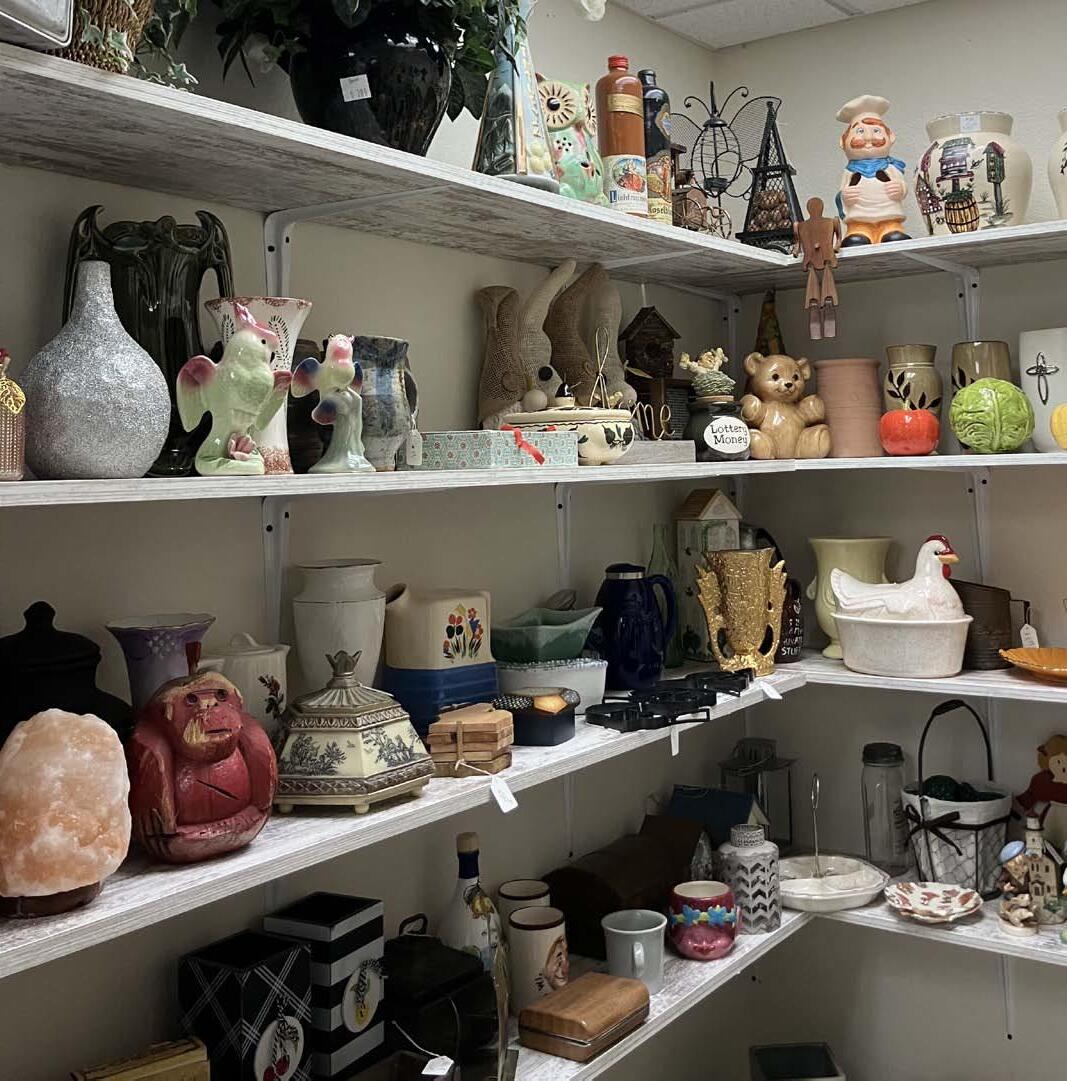
to navigate and explore, not knowing what may be about the next corner. Furniture, glassware, pottery, jewelry, art, books, antiques, and collectibles are likely to be found in this array of good junque. One just never know what may be found!
Abby and Jeff share the story of a couple from Las Vegas, perusing a particular vendor’s space. The gentleman stopped to gaze at an antique oval framed sepia photograph of a gentleman. “Look”, he commented to his wife. “He looks like my father.” Long story short, apparently, the









gentleman sent a picture of the framed photograph to his mother. She remembered the photograph from her childhood. It was her grandfather! How the photograph ended up at Needful Things, we may never know, but the old gentleman went home again!
Abby has a map in the main building indicating all the places customers have come from to shop at Needful Things. For some, it has LITERALLY been from around the world! It has become a tradition for visiting family members, tourists, etc.
to return to the shop. Abby accidentally made a post on FB to Charlotte, NC. The mistake increased her customer base! The sister city made it a destination, wanting items that were posted! Make Needful Things YOUR destination! Add your pin to the board! Find a treasure, or two! Lay away, and delivery are available!
Needful Things
117/121 East Harris St. Charlotte, MI 48813 (517)983-5034
Cris Bronkema Mimi’s GigiMigi









Family-owned fruit & produce store evolved into much more
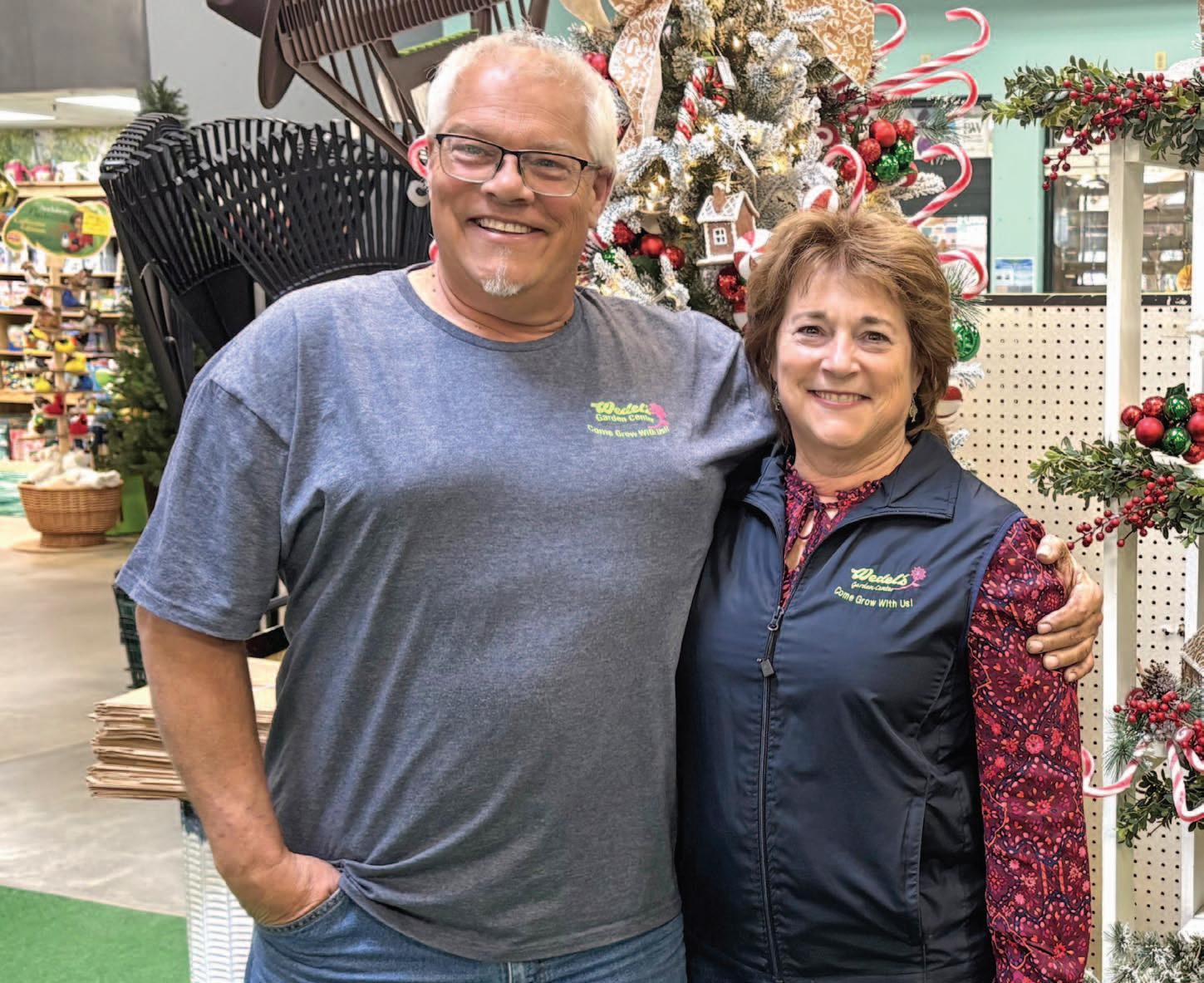
If you’re one of the many folks in the Kalamazoo area who enjoys gardening, taking care of the lawn, attracting birds, or are looking for just the right floral arrangement, you’ve probably visited Wedel’s. And it may seem to you that Wedel’s has been around for quite a while. If so, you’re right. The local family-owned, family-run business was established in 1946, before most local residents were born, and 2026 marks the 80th anniversary of what has become Wedel’s Nursery, Florist, and Garden Center, located at 5020 Texas Drive in Texas Township.
But Wedel’s didn’t start out as all of those things. When Harley Wedel founded the business, then located at the corner of Westnedge and Maple streets in Kalamazoo, Wedel’s specialized in selling fresh vegetables and fruits, all grown locally, under the store’s original name, “Wedel’s Fruit and Produce Store.”
“Grandpa (Harley) added evergreens and nursery plants to our retail items,” says Terrie Schwartz, Harley’s granddaughter and vice president at Wedel’s. “Grandpa grew trees and evergreens on Angling Road in Portage and grew produce to sell.” Harley’s sons George, Dick, and Roger (who is now Wedel’s chief executive officer) raised most of Wedel’s plants on their local family farm. At the time, such a center was rare. The name was then changed to “Wedel’s Evergreen Gardens.” Fourteen years later, in 1969, expansion of the business required
a new location. “We moved to the corner of Westnedge and Milham Road in Portage,” says Schwartz, “where we stayed until 2000,” when additional growth prompted a move to their current 17-acre operation on Texas Drive.
One major benefit of buying products and services from an enduring local business such as Wedel’s is expertise. Wedel’s state-certified team members are trained to help customers determine the best solution to fit their needs. For example, from personal experience, I know that by taking a small sample of my lawn into Wedel’s, they could tell me what I needed to fix the problem. (Also from personal experience, when I walked into the store to research this story, within two or three minutes, three Wedel’s team members greeted me and asked if I needed help. That’s customer service.)
Wedel’s customers—who quickly become friends, and are treated like family—who want to enhance their home can literally find hundreds of varieties of perennials and shrubs, and more than 100 varieties of trees at Wedel’s, in addition to numerous evergreens and houseplants. Much of Wedel’s nursery stock is grown on a large family farm in Galesburg, while almost all of their perennials are grown on another family-owned farm in Scotts.
Wedel’s meets customer needs by offering lawn and landscaping products, as well as seed, birdbaths and birdhouses, bat houses, and all the tools to complete the job. Folks who need a floral arrangement for a wed-

ding or funeral can find it at Wedel’s. In addition, Wedel’s provides numerous classes, clinics, and programs such as a Growing Gardeners Club for kids and a Green Thumb Club for the grown-ups. Wedel’s kicks off each growing season at their Spring Flower & Garden Expo, which in 2026 will take place on March 20 & 21. Kids and adults alike also enjoy the annual petting zoo at Wedel’s in September as well as several Christmas events.
Importantly, in addition to all of the lawn and garden products, customers value Wedel’s expertise in getting the job done right. Members of the Wedel’s team seem to regard it not only as a goal, but also as a personal challenge.
“Dad (Terrie’s father, George Wedel) taught us, ‘How many times do you want to plant that plant?’” says Terrie, emphasizing the long-term benefits of doing the best thing the first time, rather than having to re-do a job, as a means of saving money as well as effort and frustration. Terrie’s brother, Wedel’s general manager Andy Wedel, adds “Why plant a 10-dollar plant in a 10-cent hole?” sharing George’s adage that emphasizes first-time success in a job.
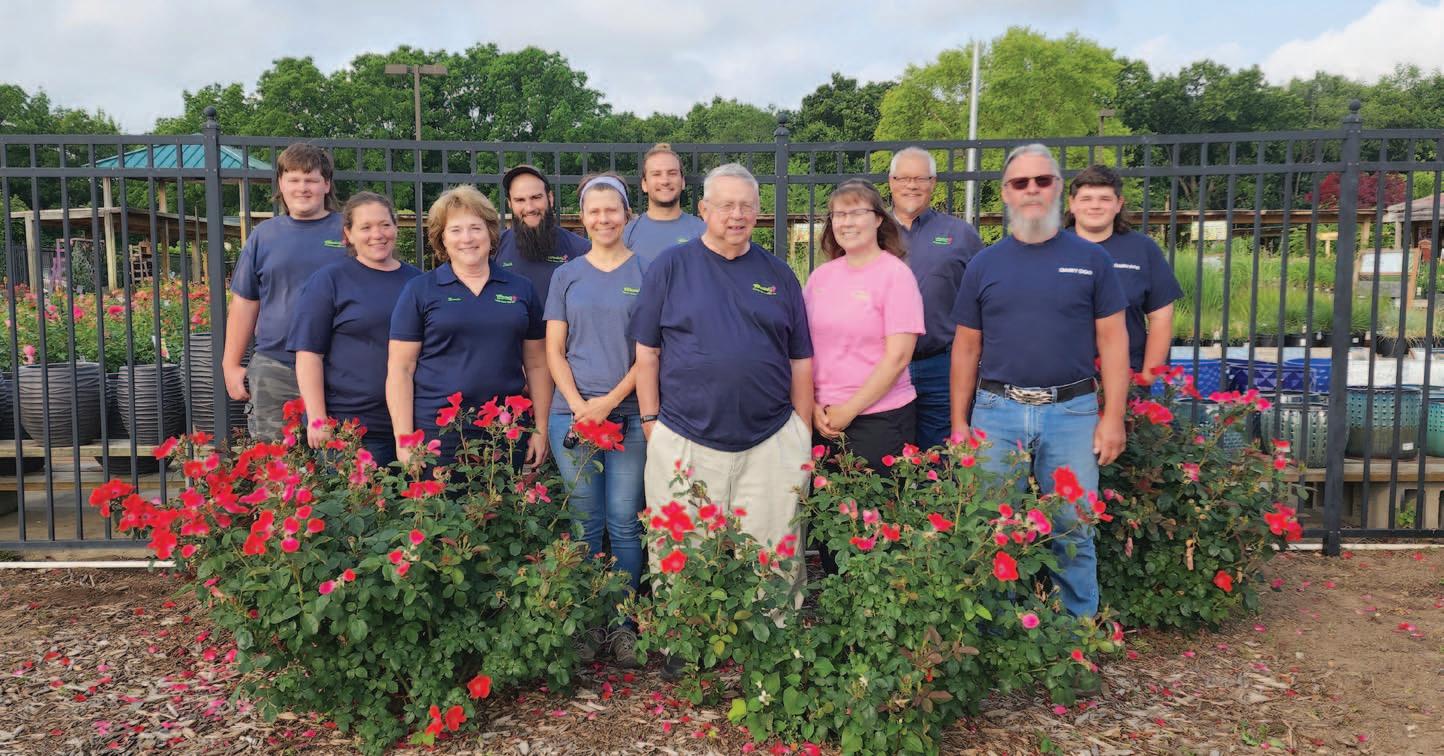
If you know someone who has worked at Wedel’s—or if you’ve worked there yourself—you’re not alone. Wedel’s is rightfully proud to have employed hundreds of local workers over the years, workers who, according to Terrie and Andy, learned the joy of camaraderie, of doing an
honest day’s work, of providing good customer service, and the importance of ethics.
“Grandpa had another saying: ‘Dirty hands make a clean heart,’” adds Andy, who says he frequently meets former Wedel’s employees who say their time at the store was “their favorite job ever.” Andy says the store has also experienced employees from multiple generations whose family members worked at Wedel’s.
Terrie emphasizes that by purchasing products and services at a store like Wedel’s, customers not only help to employ local people, but their purchasing dollars remain in the community more than if Wedel’s were part of a large network of franchises.
A long-standing tradition of Wedel’s is their radio show, Over the Garden Fence, which has been on WKZO Radio for 69 years. For the last 20 years, Andy has answered callers’ questions and provided updates to listeners, continuing in the footsteps of Harley and then Harley’s son, George, who did the job for 42 years. The show airs on Saturday mornings during the growing season and has become must-listen radio for gardeners and yard-keepers.
Wedel’s has served our community for 80 years, and 2026 promises to be a big year as customers look for excellent service and products to enhance their homes, lawns, and gardens.
Tony Ettwein HistoryZoo1837@gmail.com

The wedding trends for 2026 are about sharing and personal expression. It’s less about following what’s been done before, and more about creating a once-in-a-lifetime event that feels very personal.
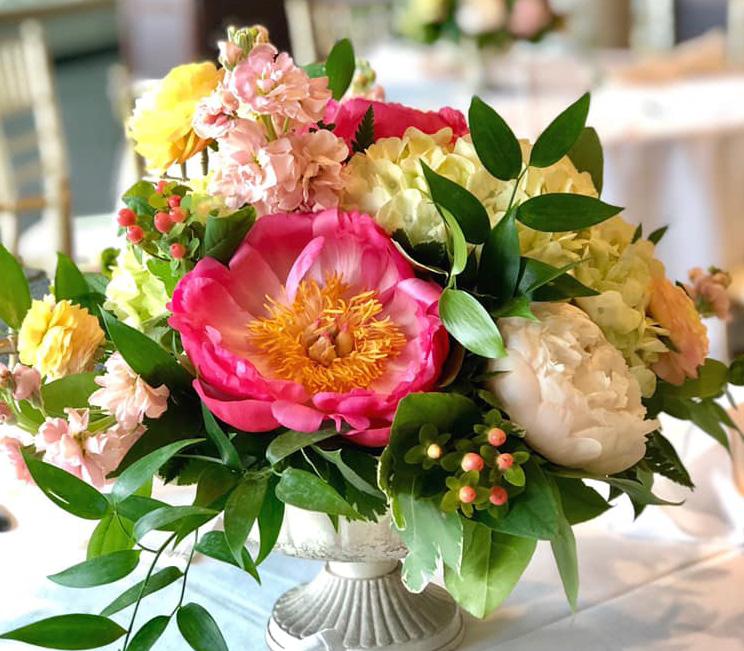
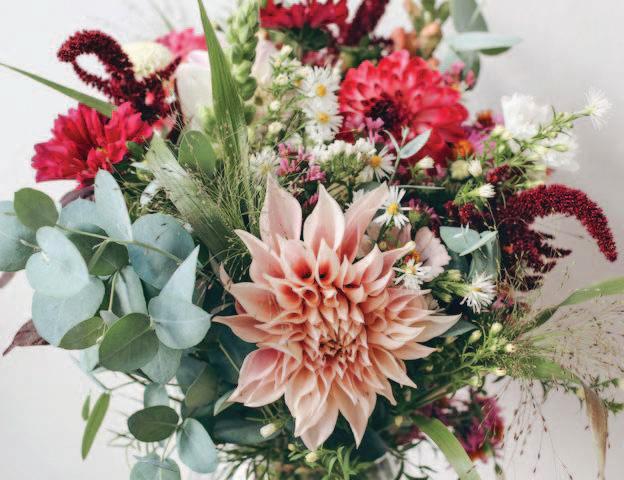
Relaxed styles are making their way into the floral décor. Meadow inspired, organic and natural centerpieces are taking center stage. Arrangements are looser and less manicured - effortlessly chic this year. In addition, long stemmed wedding bouquets, with flowers such as calla lilies and tulips, offer a streamlined look.
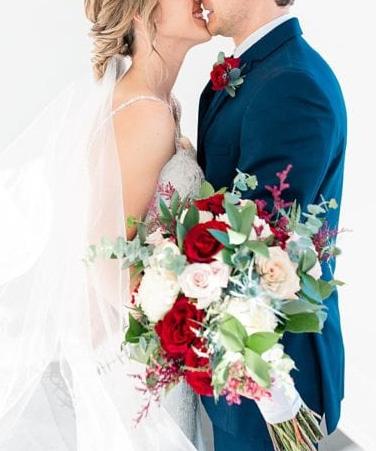
with unexpected textures like velvet, lacquered finishes and metallic accents takes the trend one step further. This color trend expands into engagement rings (colored stones) and fashion-forward attire – from statement veils to colorful tuxedos and accessories.





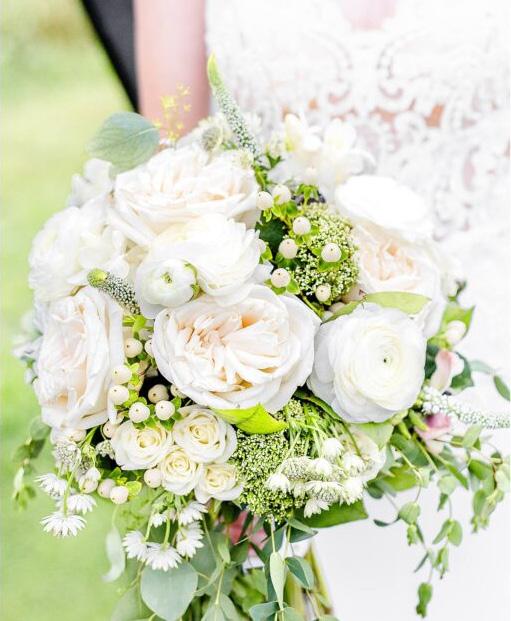
Photography trends are also more relaxed, focusing less on posed shots and more on atmosphere, movement and feeling. Couples want the timeless moments captured.
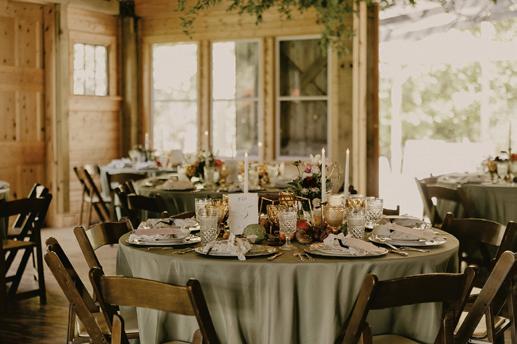
Reception formats are shifting from formal plated meals to more progressive, lounge-style dining. Tables styled like intimate dinner parties, not banquet halls.
The focus is on vibe, music and movement as soon as the guests arrive.
Colorful elements are making their way onto the scene. Sunset shades like vibrant pinks, red and oranges are making a return as a form of personal expression. Pairing these bold colors
Wedding dresses for 2026 are all about texture, including soft ruching, micro pleats, airy organza and subtle appliques. Fabrics are transformed with laser-cut motifs, peekaboo cutouts and transparent overlays that add depth and dimension. Intentional drama is in, with peplums, bubble skirts, thoughtful volume and cinematic details. Minimalist bridal styles pair well with luxe fabrics like silk crepe, duchesss satin and soft chiffon, which allow the fabric itself to be the statement.
Serpentine aisles are on the rise in requests to add drama and add a visual effect to the entire ceremony. These work really well, especially at destination wedding venues in a unique setting.
For indoor venues, especially ballrooms, extravagant textured draping is an important design element for both ceremony and reception décor. Cocktail towers and fountains will be popular this year. An endless




flow of cocktails for your guests to enjoy all evening long. A dry option, such as a mocktail on the menu is an endearing trend for guests who don’t indulge in alcohol.
Couples can add the personalization aspect to extend to the guest experience as well by offering on site engraving of wedding favors. Think leather-embossed coasters or suede keychains. Consider custom engraved napkins and luggage tags for guests to take home. This is not only
a wonderful gift, but an opportunity to spotlight local vendors and businesses.
Consider incorporating some of these exciting new trends for 2026 into your special day to create a personalized event that will surprise and delight your guests.
Jackie
Merriam
Sources: theknot.com, marthastewart.com


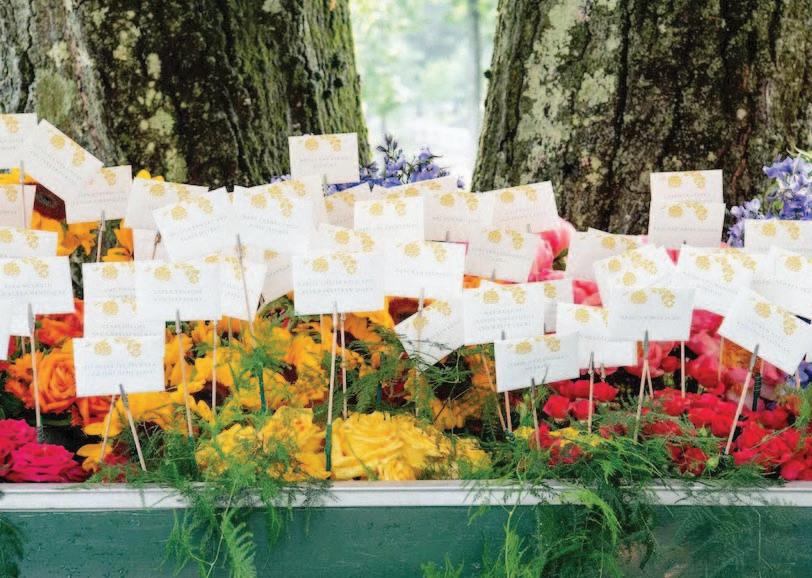

Historic orchard estate specializing in full weekend weddings, with overnight lodging for friends and family on the grounds. Enjoy rehearsal, ceremony, and reception among our seasonal flower gardens and wooded backdrops, as well as a secluded riverside honeymoon suite for the happy couple, all conveniently located in downtown Plainwell. 414 N Sherwood Ave - Plainwell (269) 512-5857 • sherwoodgardens.net
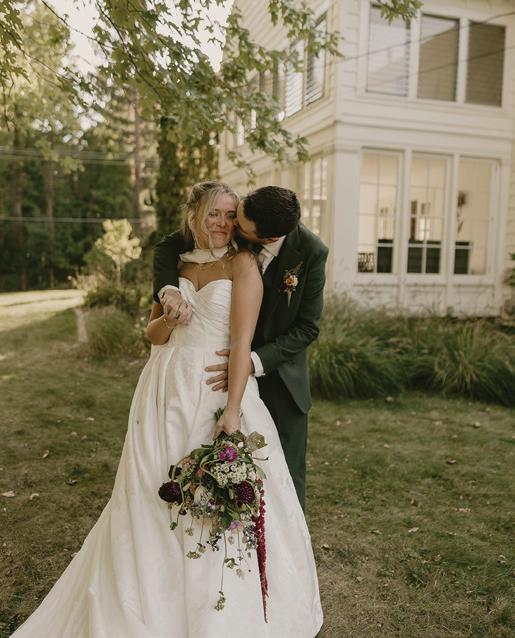










As we jump into the 2026 wedding season, more couples are choosing paper goods that aren’t just traditional invitations, but pieces of art; sentimental keepsakes that tell their story; and the first glimpse into the mood of their wedding day.
They’re also viewing their paper goods in a more holistic way, including coordinating day-of pieces — menus, seating charts, programs, napkins, signage — all echoing the same design language as the invitation itself, creating a seamless story. Here are a few of the emerging trends we’re loving this season!
Couples are thinking outside the box (or bouquet) when it comes to their wedding stationery.
Florals will always be en vogue, but we’re seeing more fruit, veggies, bread and beyond being added to the mix. This works really well for picnic or garden parties, farm-to table foodies, and destinations where a particular food or drink is popular.
• Lemons and oranges for Mediter-
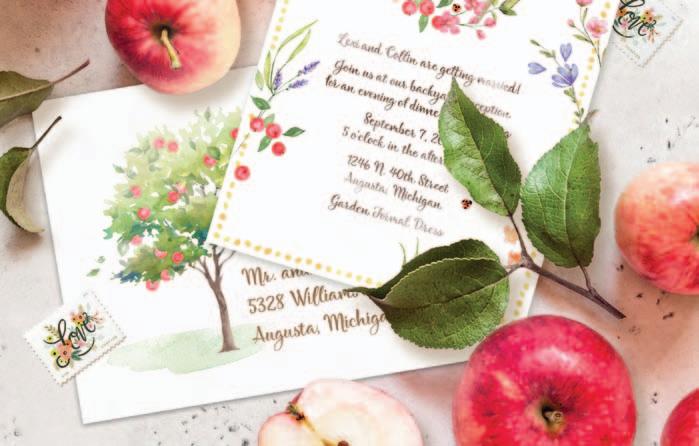
ranean-inspired celebrations
• Cherries or strawberries for summer weddings
• Pears and apples for autumn celebrations
• Tomatoes and herbs, or olives for Italian-inspired events
• Bread, grapes or wine for a vineyard venue
If you’re not familiar with Rococo, just imagine Marie Antoinette’s wedding cake, and make it paper! Ornate borders, sculpted details, and layers of romantic drama.
• Layered pastel shades
• Curved, interesting invitation shapes
• Sculptural embossing with ornate details
• Custom crests and decorative borders
• Handmade paper with deckled edges
• Gilding and metallic accents
As destination weddings become more popular, destination details are being added to the wedding suite! From artistic interpretations of the venue to highlights of local flora and fauna, adding a little local flair makes the invitations more place perfect. Adding a custom map that explores local hangouts, attractions, and coffee or good eats, is a really fun way to
share one of your favorite places with your guests.
We’ve been seeing this trend for a while now, but it only seems to grow as destination weddings gain momentum.
• Venue Illustrations or paintings
• Custom maps highlighting local gems
• Local florals or wildlife included within the suite
• Traditional pattern or color palettes from the surrounding area
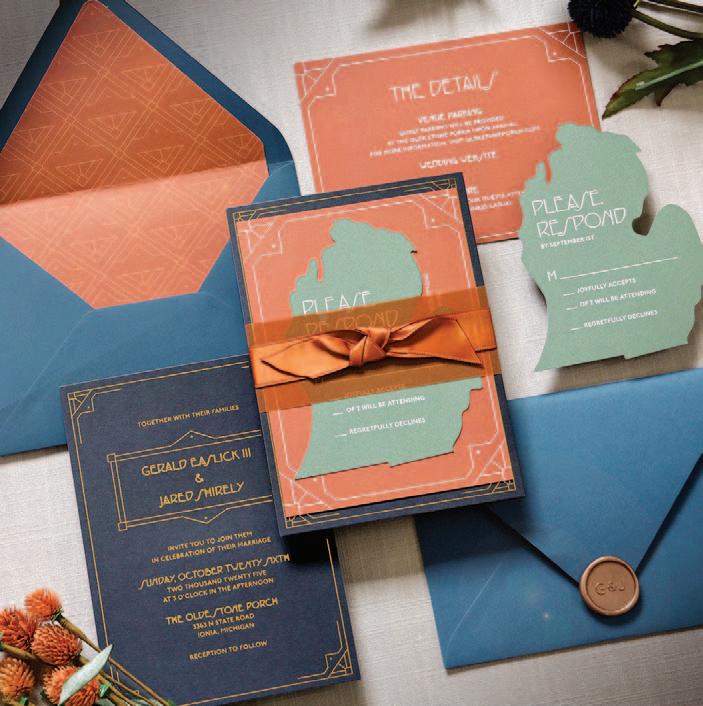
Despite white being Pantone’s trending color for 2026, we’re seeing more couples embracing COLOR with intention and joy! Think sunset shades of vibrant pinks and oranges, bold shades of turquoise, lime and chartreuse, or moodier rich jewel tones.
Color is an easy way to add a ton of personality without the price tag of embellishments or specialty print treatments. It can be woven through every detail of your wedding from stationery and signage, to florals, linens and even guest dress codes.
• Layered cards in bold paper colors
• A pop of color with a wax seal or ribbon
• Bold envelope choices: add a contrasting liner for a pop of extra flair
• Playful stamp choices in coordinating colors
Despite the trends that come and go, we are still seeing a lot of classic black and white, with hints of silver or gold. Clean lines, timeless typography, and beautiful paper will never go out of style.
• Black and White Minimalism
• Blind-embossing or letter pressed detailing
• Classic shapes or deckled handmade paper
• Elegance through texture and subtle embellishments
• Beautiful timeless foil accents
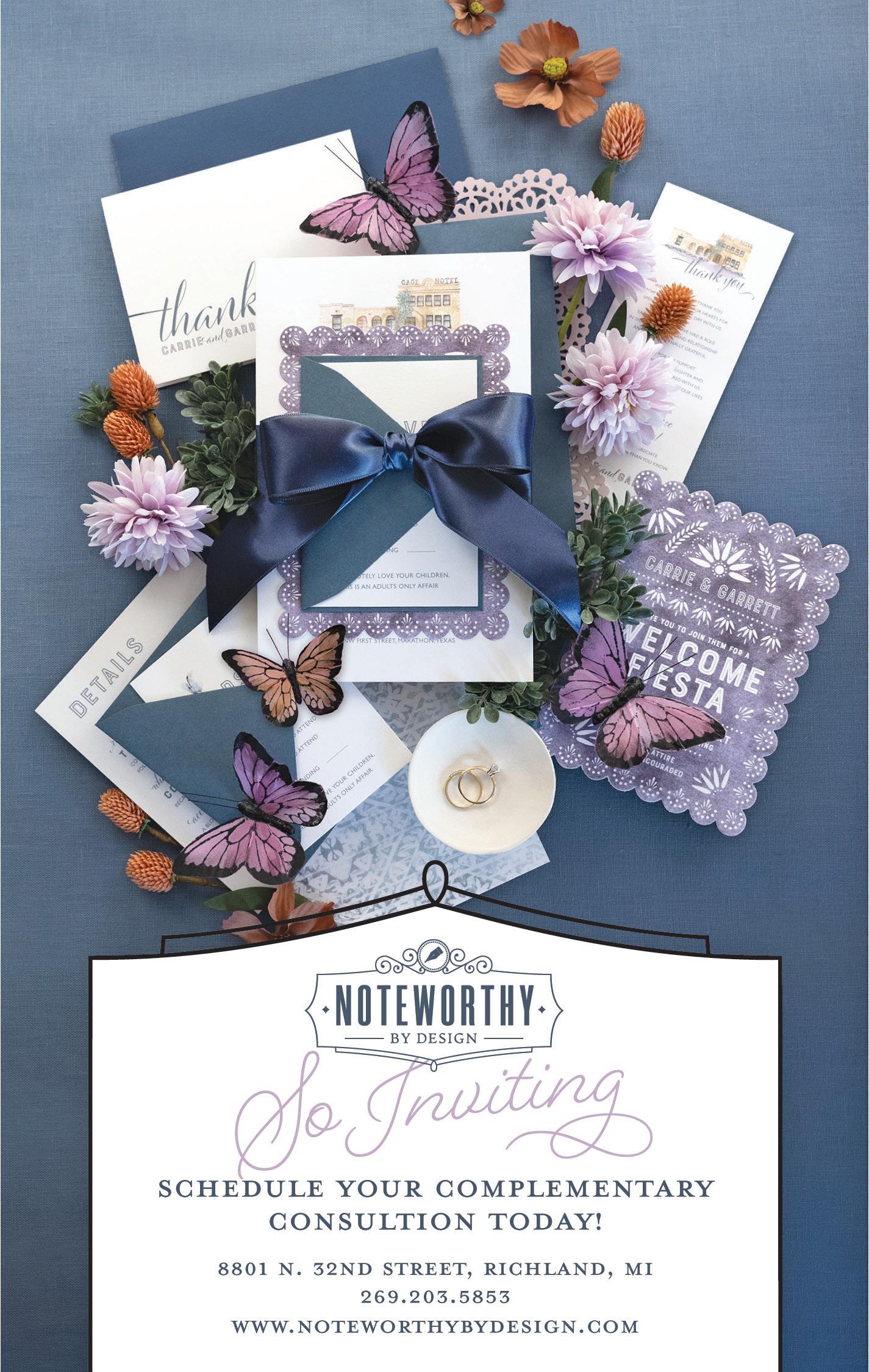
Whether you know exactly what you want or are unsure of your next steps, we suggest scheduling your complimentary consultation 9-12 months before the big day! We can help to build a budget you’re comfortable with and create the invitation and wedding suite of your dreams!
Noteworthy
by Design
Creative Director: Kristina Scobie

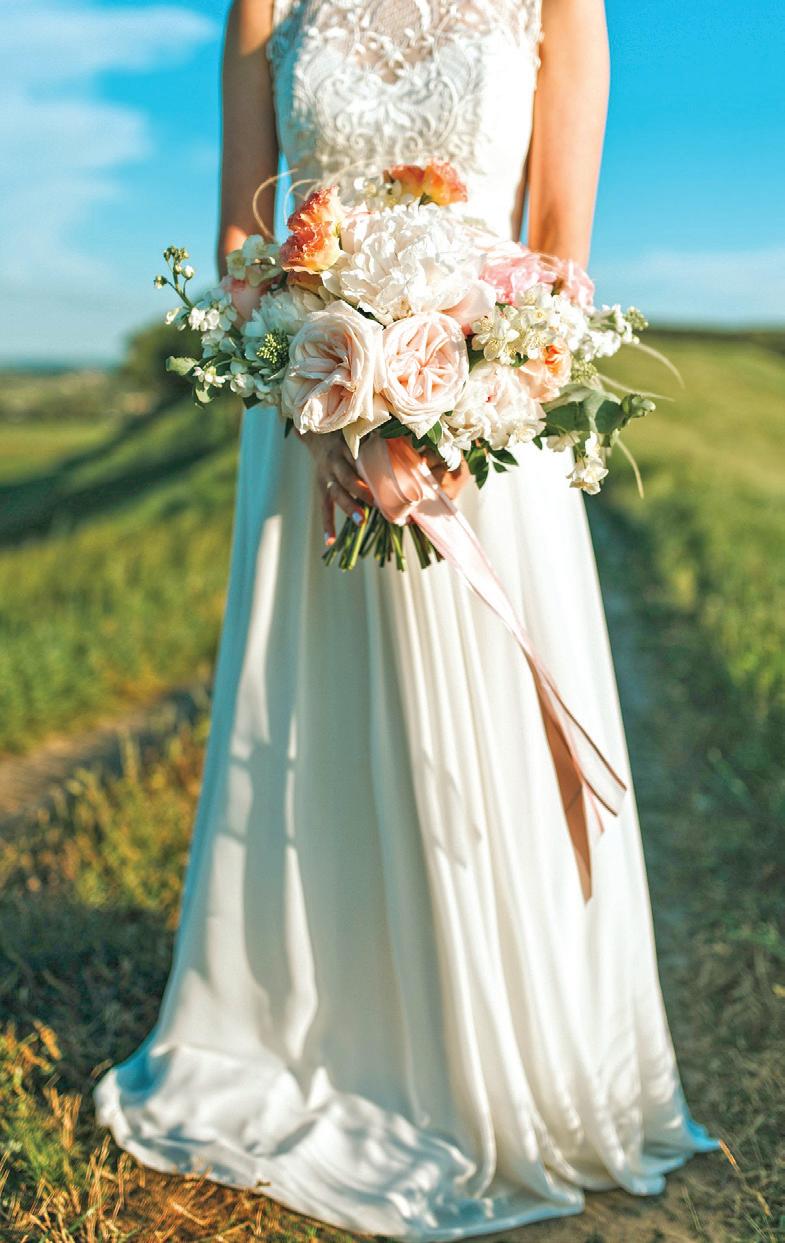
professional designers can custom create your perfect day with the best arrangements for your special occasion. Bring in your ideas, pictures & fabric swatches so we can help you choose the best flowers for •bouquets •crown or hair flowers •toss bouquet •boutonnieres •corsages •table arrangements •more!

On the third floor of Kalamazoo College’s Upjohn Library Commons is a room that mostly goes unnoticed by students despite its alluring name: The A.M. Todd Rare Book Room. As a former K College student myself, I often walked past this room, pushed back from the main hallway and set behind a circle of accent chairs, intrigued by the title but quickly forgetting about my interest to instead focus on upcoming assignments.
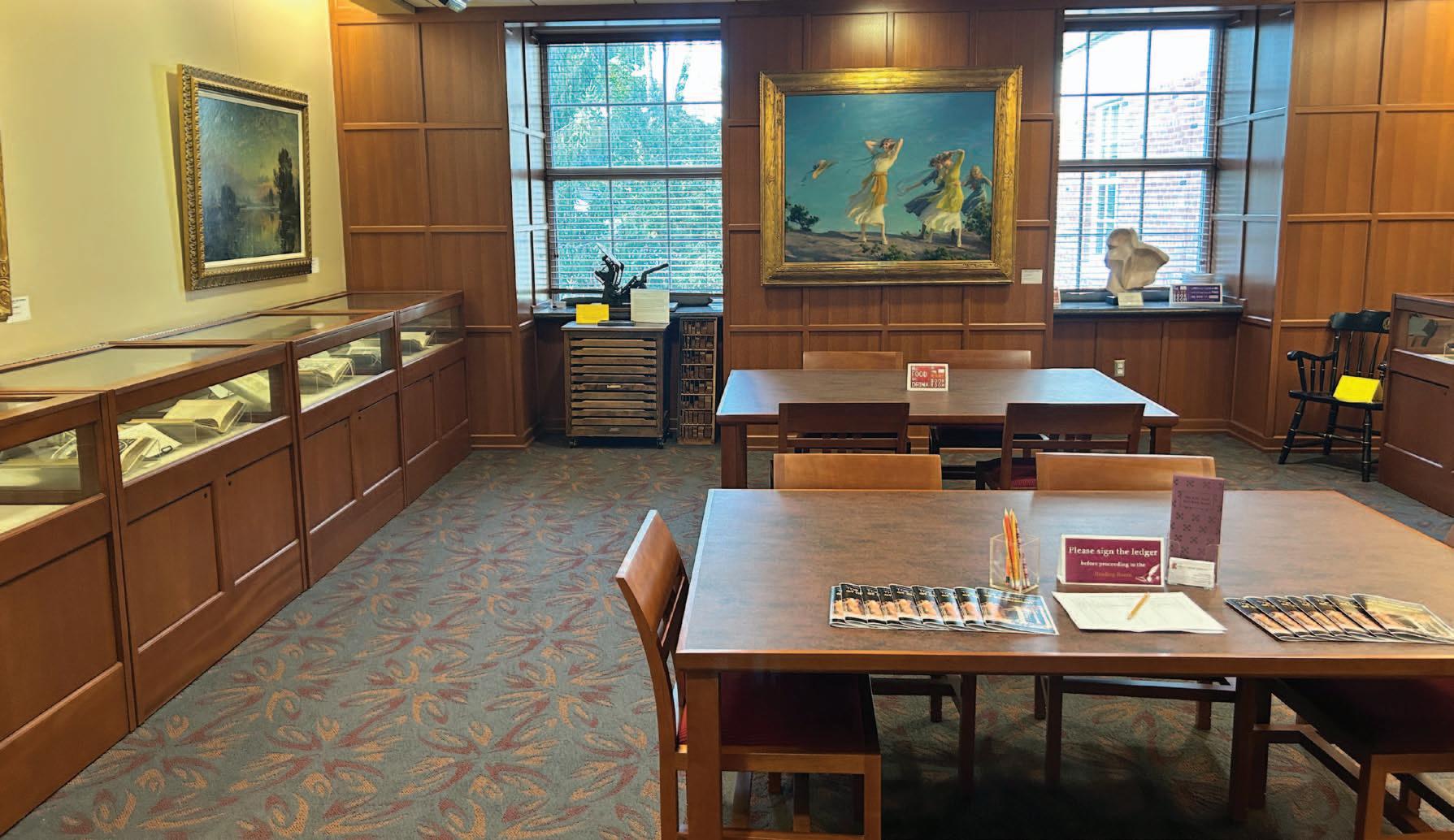
Now that I’ve graduated, I made an appointment with the Rare Book Room’s curator, Elena Pulliam, for a tour. The room itself had two tables with chairs in the center, with the table closest to the doors having a ledger and pamphlets regarding the current exhibit. Pulliam led me to the other table which held a smattering of books and manuscripts.
“The Rare Book Room was started by Albert May Todd, who went around the world collecting different strains of peppermint and opened the peppermint factory off Douglas Avenue in Kalamazoo,” Pulliam said. Known as the Peppermint King of Kalamazoo, Todd was a world leader in the production of peppermint oil, having discovered the crystallization of peppermint which allowed for higher production. During Todd’s travels across the globe in search of various botanical extracts, he also collected rare books and manuscripts. “So by the time he passed in 1931, he was estimated to have over 11,000 volumes in his collection,” Pulliam said. Kalamazoo College owns roughly 35 to 40% of Todd’s original library, or about 1,000 books.
The Rare Book Room was founded in 1957 with contributions from Todd’s personal library. After his passing, Todd’s daughter Ethel Todd Woodhams donated a lot of his collection to Kalamazoo College, the
Kalamazoo Valley Museum, and Western Michigan University. “The collection gained traction over time as the Todd family continued to donate books, as well as other alumni and book lovers.”
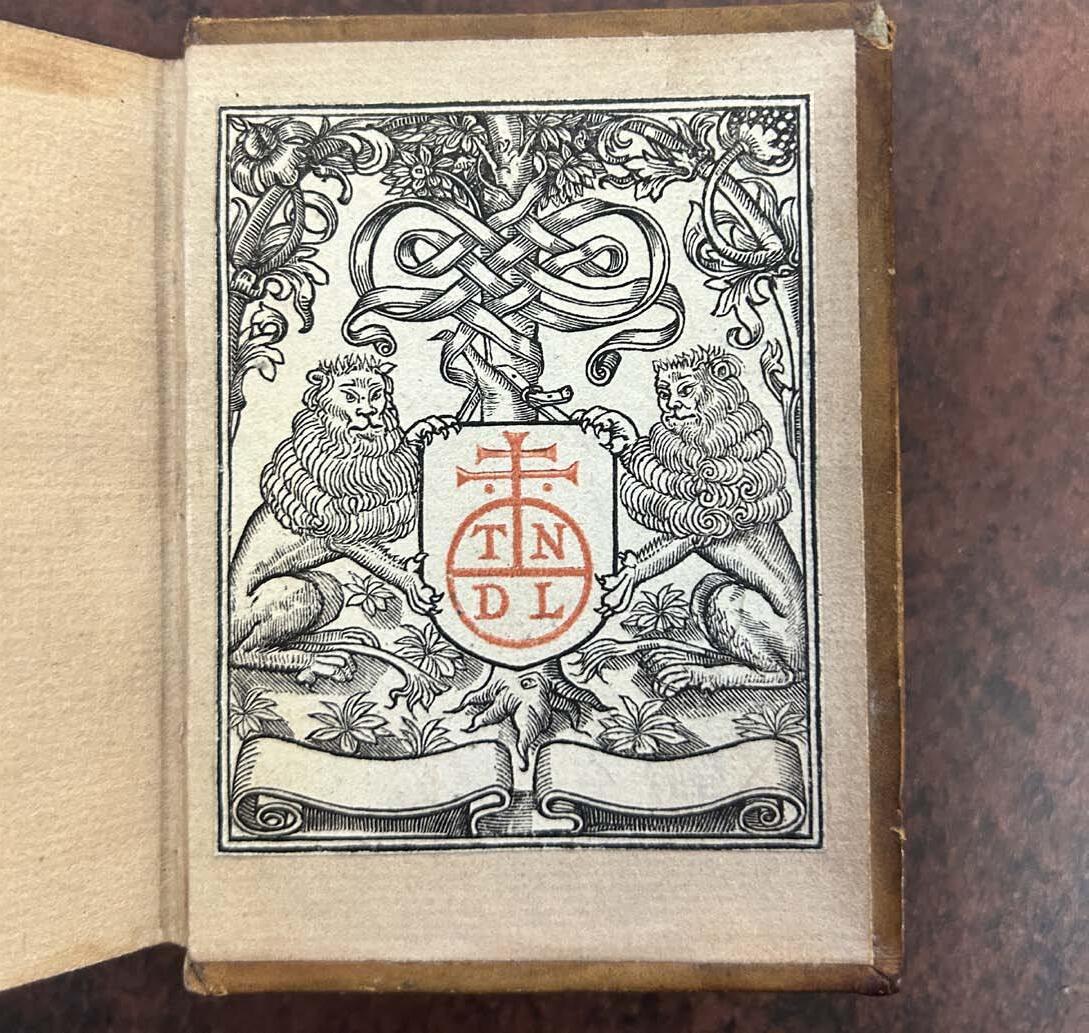
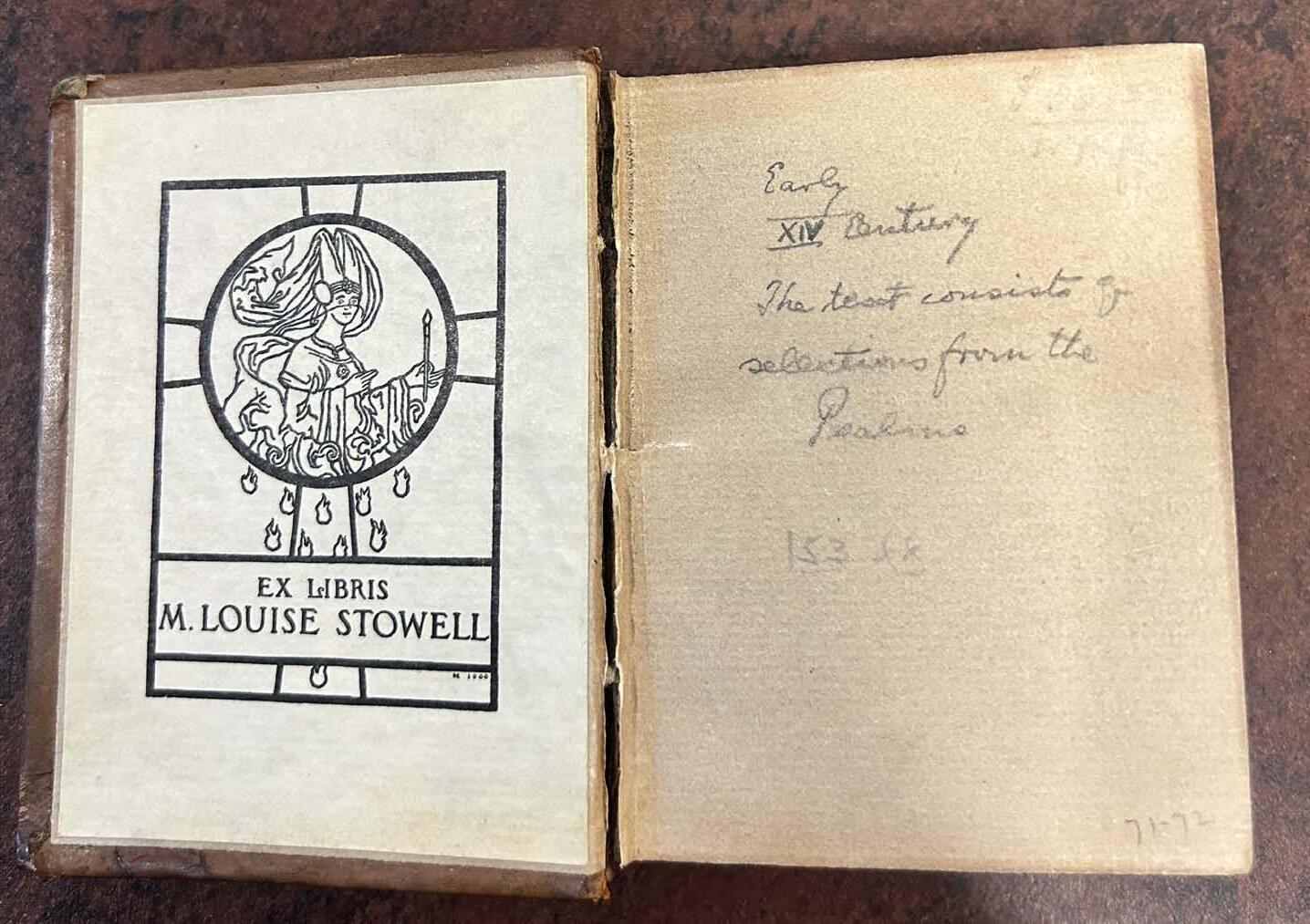
Pulliam then selected a leatherbound manuscript from the table and gingerly opened its pages. “One of the oldest books we have in the collection is a medieval manuscript estimated to be from between the years 1250 to 1350,” Pulliam said. “The bookplate [which is a personalized paper that shows ownership] at the front means that it was originally owned by a New York artist, and the bookplate in the back shows that before the New York artist the book was owned by an English lord. However, this book is much older than both of these bookplates, and was originally made on vellum.” During the Middle Ages, materials to make books were very expensive and paper had not yet been invented, so book-
binders often used animal skin for the paper. Vellum, or calf skin, was a common material, as well as parchment made of goat or sheep skin. This particular manuscript was bound in leather.
Opening the manuscript to its first pages, Pulliam pointed out a stamped “KL” in gold lettering that stood for kalends in Latin, meaning the beginning or 1st of the month. “So the entire beginning of this book is a calendar,” Pulliam said. Based on this Latin, and the fact that the red ink found in the pages signifies the most important saints to the culture (hence the term “red letter days”), Pulliam and her colleagues were able to deduce that the manuscript was originally owned by a Cistercian monk in France. “The book is so small because [the monk] would carry it around in his pocket as a calendar. The rest of the book is filled with The Book of Psalms, which [the monk] could reference day to day.”
Pulliam flipped to another page within the manuscript, ornate with a gold border, red, blue, and black ink letters, and a small image of two figures inside of an ornamental letter O. “This is one of the most valuable pages in the book,” Pulliam said. “It has what’s called a historiated initial, which essentially means that it tells a little bit of a story.” Pulliam didn’t know what this story could be, but guessed it related to the psalms found in the book. “This is the only one left in this book; the rest were most likely ripped out and sold because of their high value.”
Pulliam concluded the history of this piece by explaining the difference between a book and a manuscript, and why that is an important distinction. “A manuscript is all handwritten, versus a book is printed.” This meant that all of the ink and art featured in this manuscript was handmade, starting with the black ink, then the red, then blue, and the gold was added last. Learning about this history and the efforts that went into creating books showed me how books were not just about the written content but were also artistic wonders from times before modern technology.
The Rare Book Room’s winter exhibit is titled “Fairy Tales, Fables, and Folklore,” and is open on Mondays and Thursdays from 3-5pm, with additional hours by appointment. For further inquiries or a request to tour the Rare Book Room, visit their website (https://rarebookroom.kzoo.edu/ rbr/guidelines-for-visiting/) to fill out a visitors form or contact rarebookroom@kzoo.edu or elena.pulliam@ kzoo.edu.
Carson Williams carsonw542@gmail.com



Did I just read that older adults who carry a few extra pounds may result in better health outcomes than those who are normal weight? Yes, I did. The December 2025 issue of Consumer Reports on Health discusses how carrying those few extra pounds may be healthy as we grow older. This additional weight may give us something in reserve if we have an illness, surgery, or a fall. Of course, this begs the question of how many pounds are a few. Let’s find out. We have to start with a measurement called body mass index (BMI). This index is an estimate of body fat by comparing your height to your waist. Health professionals often use this for general information when evaluating clients and patients. I say general because it does have limitations. (There are several BMI calculators online in case you would like to know yours.) An index below 25 is considered healthy, between 25 and 29.5 is overweight, and over 30 is obese. But research suggests that these numbers may be too low as we age. A 2023 review looked at 58 studies that tracked older adults’ risk of dying from any cause from various study periods. In about two-thirds of the studies, a BMI of 25 or higher was linked to improved survival. Having a higher BMI also reduced the risk

of such issues as gait and balance problems, falls, difficulty in walking, and malnutrition. Women and men (average age 77) with BMI’s of 31 to 32 and 27 to 28 respectively, fared better than those with BMI’s below 25 and above 35.
This may be that people with lower BMI’s are less able to withstand the physiological changes that occur after surgery including higher calorie burning and muscle breakdown. There was also an association
between BMI and death from all causes after elective surgery in 414 people older than 65. Those who were underweight or normal weight were more likely to die 30 days or one year after the procedure than those who were overweight or had low-grade obesity.
While BMI results tells you whether you might be carrying extra pounds, it doesn’t factor how much muscle you have or where the fat is located. It also doesn’t account for
differences in age, gender, or race. So, for older adults, the question is not how much fat we have, but how much muscle we have.
Muscle naturally declines with age. Starting with 30 year-old adults, we lose 3 to 5 percent in a decade. Around age 70, this increases to 10 percent a decade. Even more important, strength declines by up to 3 percent a year. This is often realized by trying to get up from a chair with no arms, wondering what happened to my legs!
So as we age, the emphasis is not on losing fat but on building muscle strength. Doing at least two strength training sessions a week, targeting the major muscle groups, is the key to preserving muscle strength.
Some of us really do need to lose excess body fat, which can contribute to heart disease, hypertension, type 2 diabetes, and osteoarthritis. Your doctor may advise you to lose weight. But it’s important to drop pounds in a way that maintains muscle.
Best wishes for the new year. I hope being kind is on your resolution list.
Till next time,
Ken Dettloff ACE
Certified Personal and Brain Health Trainer





Contrary to popular belief, fat is needed in our diet, especially “Smart Fats” which are so powerful they can help improve our health, and our waistlines, too!
Food Stylist/ Photographer: Laura Kurella
Live and learn is an old expression that will hopefully never go out of style because, thanks be to God, we gain so much when we learn from experience!
I love it when I have an eye-opening, “aha!” moment, which is why I am sharing some of them that I gained while reading, “Smart Fat,” by Steven Masley, M.D., and Jonny Bowden, Ph.D., CNS.
Cutting to the chase, Masley and Bowden wasted no time debunking the myth that fats make us fat! In fact, they state that it is fat, the smart ones, that help us lose weight!

Courtesy of Dr. Masley
3 teaspoons organic butter, divided, use in thirds
Two 8-ounce halibut fillets
1/3 cup almonds
1/3 teaspoon sea salt
1/4 teaspoon ground black pepper
1 organic-fed, cage-free egg
Directions: Preheat oven to 400 degrees. Lightly butter an oven-proof dish with 1 teaspoon butter. In a food processor, blend almonds, salt, and

“I want you to eat more fat,” Dr. Masley explained to me in a phone interview.
“Not bad fats but smart fats, which have two big, amazing benefits. They decrease inflammation, and they improve hormone levels, especially blood sugar control.”
Clinically tested and proven to prevent and reverse many diseases, the smart fats that Dr. Masley refers to include avocado, nuts, nut butters, and oils like pure-sourced olive oil, dark chocolate, cold water seafood, and eggs from cage-free, organic-fed chickens.
“Eating more smart fat benefits our heart, brain, and our waistlines too,” he said, adding that “tests show a drop in inflammation so significant that its measurable!”
Noting that the addition of smart fats helps our health improve, Masley interjected that we also need to do a little subtracting of things that are doing us no good like those overlyprocessed run-of-the-mill breads.
Courtesy of Dr. Masley
1/2-pound lump crab meat, drained
2 tablespoons lemon juice
1 avocado, peeled and mashed
1/4 teaspoon sea salt
1/8 teaspoon black pepper
1/8 teaspoon cayenne powder
1 tablespoon finely chopped Italian Parsley
In a chilled bowl, combine all ingredients and serve immediately. Best if eaten same day.
Approximate servings per recipe: 2
black pepper to the texture of a coarse flour. Put half the almond flour mixture on a plate. Beat egg in a shallow bowl then dip halibut fillets in egg, and then coat each side with almond mixture. Place coated fillets in baking dish, place 1 teaspoon butter on each fillet, then place in oven and bake for 20 minutes or until flaky. Serve Immediately.
Approximate servings per recipe: 2.
“We need to look at today’s bread no differently than we do birthday cake,” Masley said, “because anything made with wheat flour, whether it be whole grain or otherwise, is no different than eating pure sugar right out of a bowl!”
While noting that whole grain wheat flour does contain more nutrients and fiber than white flour does, Masley stated that regardless they both will elevate blood sugar levels very quickly.
“Once a grain is milled into a flour it behaves just like white table sugar does in our blood, so there’s really no difference.”
What’s interesting is that nutrientdense grains, such as steel-cut oats, quinoa, wild rice, and brown rice, as well as any nut ground into a flour, does not behave this way once in our bodies. Making these sources far superior for making bread, so we won’t feel deprived.
To help direct us to a smart fat eating plan, Dr. Masley and Bowden have
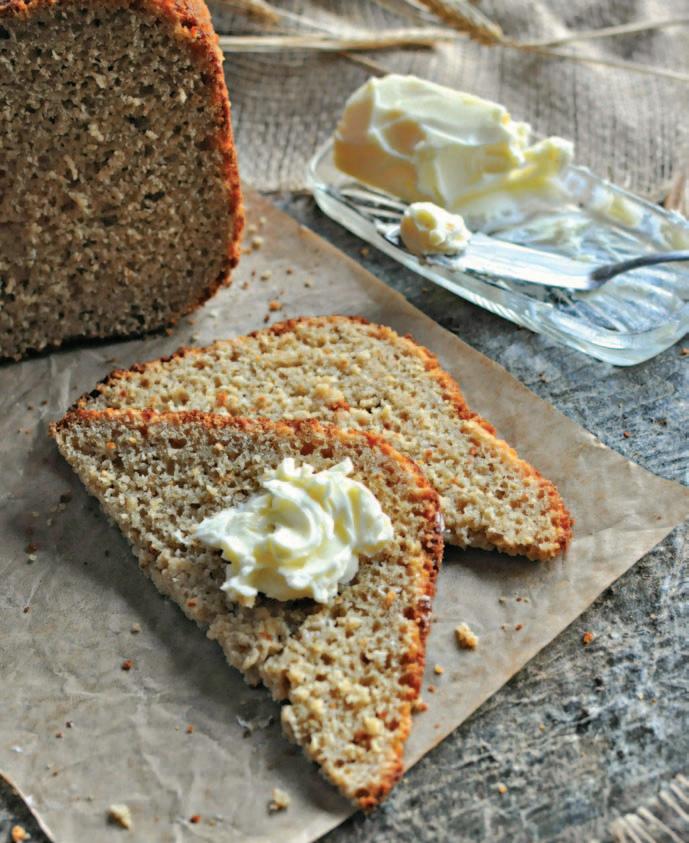
Can be made in Bread Machine or Convectional Oven
1 3/4 cup hot water, 110 degrees
1/8 cup butter, melted
1/8 cup olive oil (100% California)
3/4 cup honey, warmed
1 tablespoon dry pectin, or alternate
2 large eggs
2/3 cup dry milk powder
1 teaspoon natural mineral sea salt
3 cups oat flour, or finely-ground rolled oats
1 cup oat bran
2 1/4 teaspoons active yeast
Bread Machine Method: Place
created what they call a “5-5-10” eating program.
Five servings of a smart fat, five servings of a clean (or at least lean) protein, and ten servings of a fiber every day to help our body heal and repair itself in a positive way. sounds both easy and delicious! Here now are some equally delicious recipes from their book, and one of my own that offers a clever way to quell those cravings for a crusty bread while rising up to a more nutritious and delicious level in loaves that anyone can create easily at home. ENJOY!
GIVEAWAY!
Win a copy of “Smart Fat!”
To enter, leave a voice message or text at (269) 625-5817 naming a smart fat mentioned in this article. Be sure to leave your name, phone number, and city to be entered. Good luck!
Laura Kurella
Photographer Laura Kurella
ingredients in bread machine pan in order listed above, making a well in the flour to place the yeast. Be sure that the water is warm enough after all the remaining ingredients are added to activate the yeast. Set bread machine to normal, white bread cycle. Choose 2 lb. loaf size and choose color of crust then press start.
Conventional Oven Method: In a large bowl, combine all wet ingredients. In a separate, medium bowl, combine all dry ingredients. Add dry mixture to wet mixture, mixing well. Pour into two greased loaf pans and let rise in a warm place for 1.5 hours. Preheat oven to 350 degrees. Place risen loaves in preheated oven for 30-40 minutes, or until center of loaf is completely set.
Approximate servings per recipe: 12.


Who in Kalamazoo hasn’t read a book by award-winning Kalamazoo County author Bonnie Jo Campbell, please raise your hand? All one of you? May I suggest starting with “The Waters,” my favorite. But then there’s “Once Upon a River” which I really liked too. Both books take place in Michigan and “Once Upon a River” is centered around a familiar river – the Kalamazoo.
Guggenheim Fellowship recipient Bonnie Jo Campbell has authored seven fiction books. “The Waters” is a national bestseller and “American Salvage” was a finalist for the National Book Award and the National Book Critics Circle Award. Since her books have already gotten so much press, I asked her about her other interests such as taking care of her beloved donkeys and chickens.
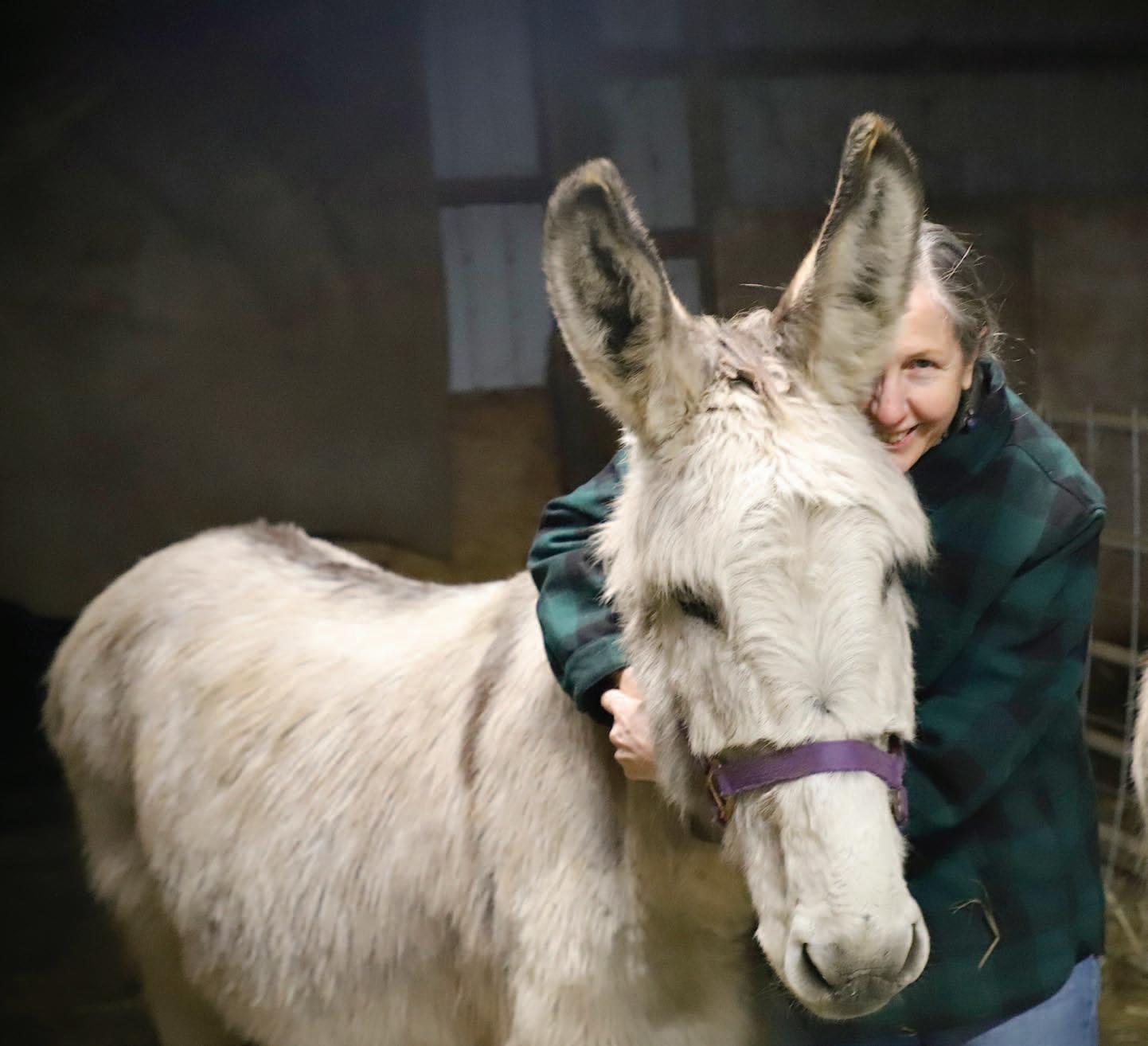
Bonnie Jo’s mother was a horse trader and sometimes donkeys were included in the deal. As a child Bonnie rode horses but became fascinated with the funny long-eared donkeys. She says donkeys can be cranky but are stubbornly affectionate. She worked donkeys into “The Waters” where she named them after two donkeys they had as kids, Triumph and Disaster. Those names came from the Rudyard Kipling poem, ‘If.’
She and her husband Christopher raised chicks in their kitchen for the chicks first eight weeks, so the adult chickens became used to humans and friendly. Some of them want to be picked up and petted like cats!


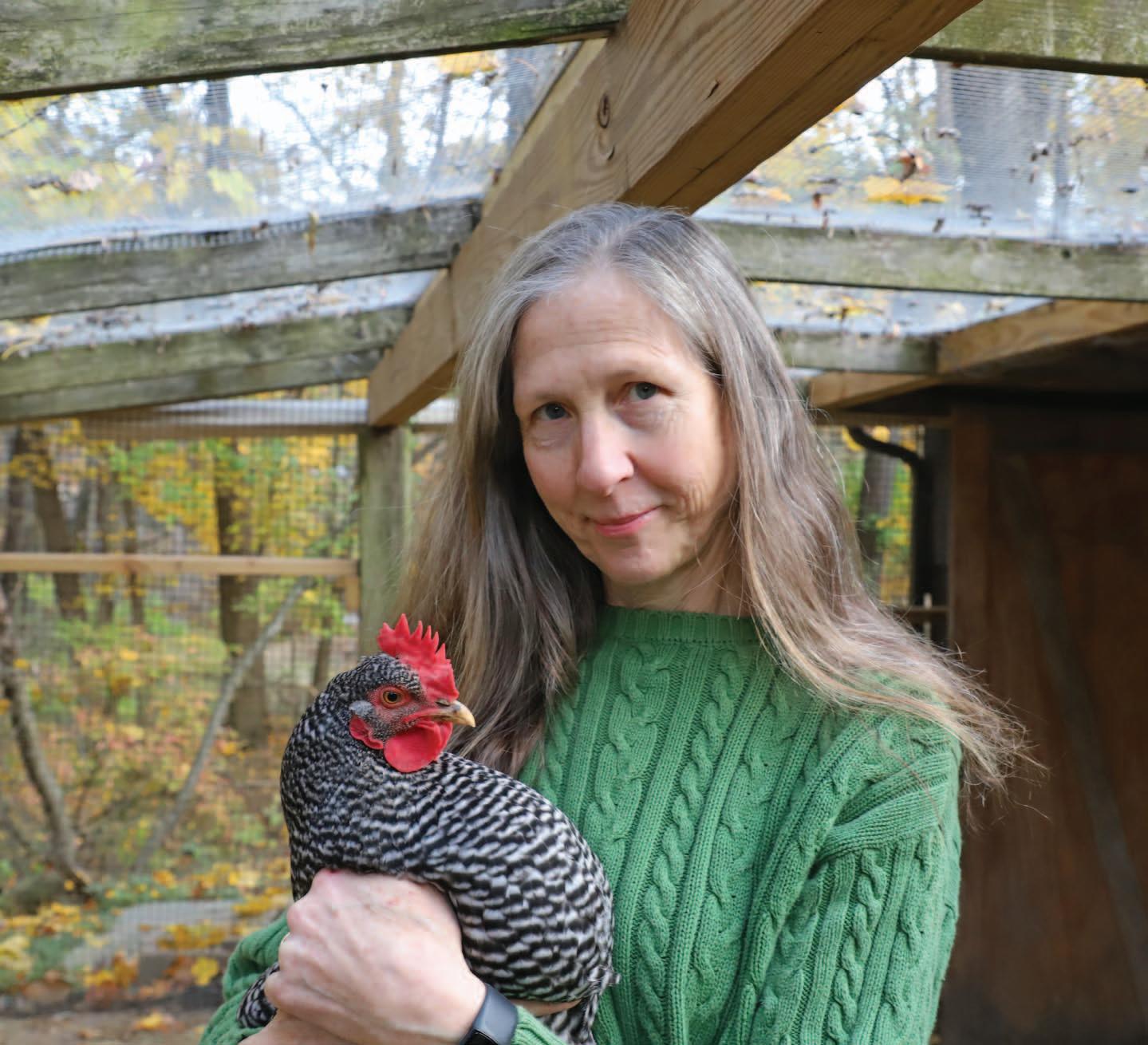
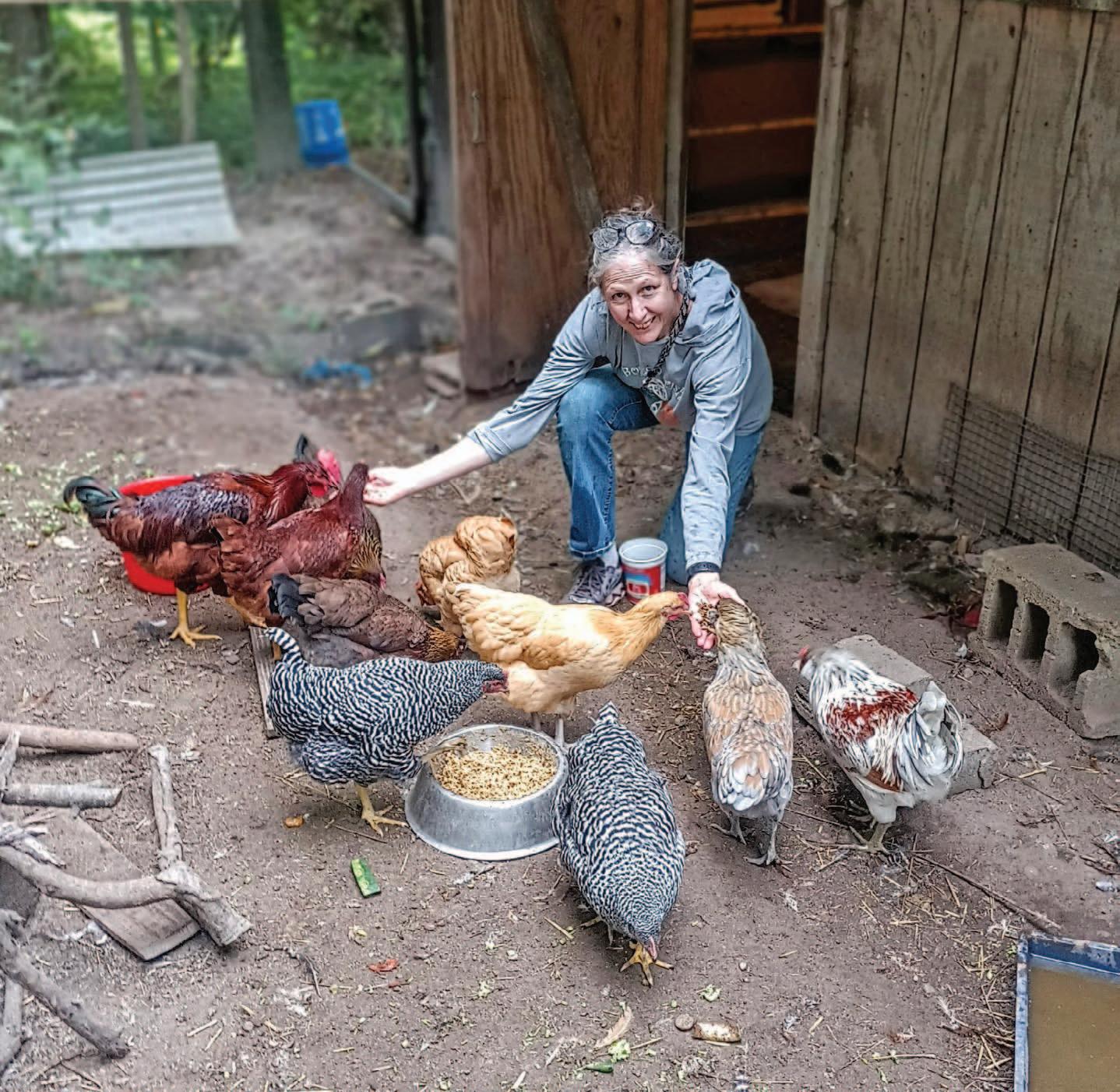
Even though it’s winter, they still lay many eggs in beautiful brown and blue colors. She believes women of a certain age enjoy the company of chickens and calls this phenomenon “hen-o-pause.”
Bonnie Jo and her husband do a lot of what I’d call homesteading tasks on their property and house. I asked if they viewed themselves as homesteaders. She said they are in the process of fixing up her family’s farm
“Winter
where her mother Susanna (RIP) lived her whole life. Bonnie’s mother was a divorced mom with many mouths to feed so they raised chickens, pigs, cows, turkeys, and goats to feed the family. She was a talented gardener and canned 200 quarts of tomatoes a year, as well as other produce, to feed her family of five kids. They didn’t call it homesteading then, but today we’d probably call her a true homesteader.
Bonnie Jo said she loves the homesteading spirit but must be careful to preserve her writing time. Her husband Chris can fix anything, and she jokes she can put something broken near him and the next time she looks up it’s fixed.
Bonnie Jo is a high energy person and prefers tossing around bales of hay or taking care of the animals to sitting in a chair staring at a screen. But she has a deep need in her soul to stop, sit down, and find meaning in it all by writing. After doing morning chores, she turns off the phone, forbids anyone from bothering her, and writes until 12:00 or 1:00 pm. She says when you find the right balance in life, you have the incentive to protect it.
Bonnie Jo’s latest book “The Waters” is now out in paperback, and it is a real love letter to Michigan’s natural environment. She imagines a Michigan swamp untouched by the last few hundred years of development, and it features her favorite rugged Michigan characters, as well as a woman who heals using Native American traditions. Bonnie Jo has recently finished a poetry collection featuring crazy poems about her favorite character types. It’s a great gift for any occasion – and a good way for me to spend the bookstore gift certificate I got from Santa this year.
Ann Murray
Photos by Chris Magson
Inspiration is plentiful at SHALOM as they serve adults with developmental, physical, emotional and mental disabilities. SHALOM is the inspiration for Keith Lohman. SHALOM volunteer and former Executive Director, Keith is fighting cancer while training for the Boston Marathon at age 70, to fundraise for furnishings to complete the next SHALOM home.
2025 was a busy and blessed year at SHALOM. They were given an anonymous donation to build a new home. However, the gift didn’t include the funds for furnishings. This created the desire and cause Keith needed to work towards qualifying for the Boston Marathon. Keith will run the Boston Marathon to raise awareness and funds for home furnishings, to make the house a home for six residents and their live-in caregiver family.
After choosing three marathons to run in an attempt to qualify for the Boston Marathon, Keith says he can see how the Lord made everything align to run the race of a lifetime!
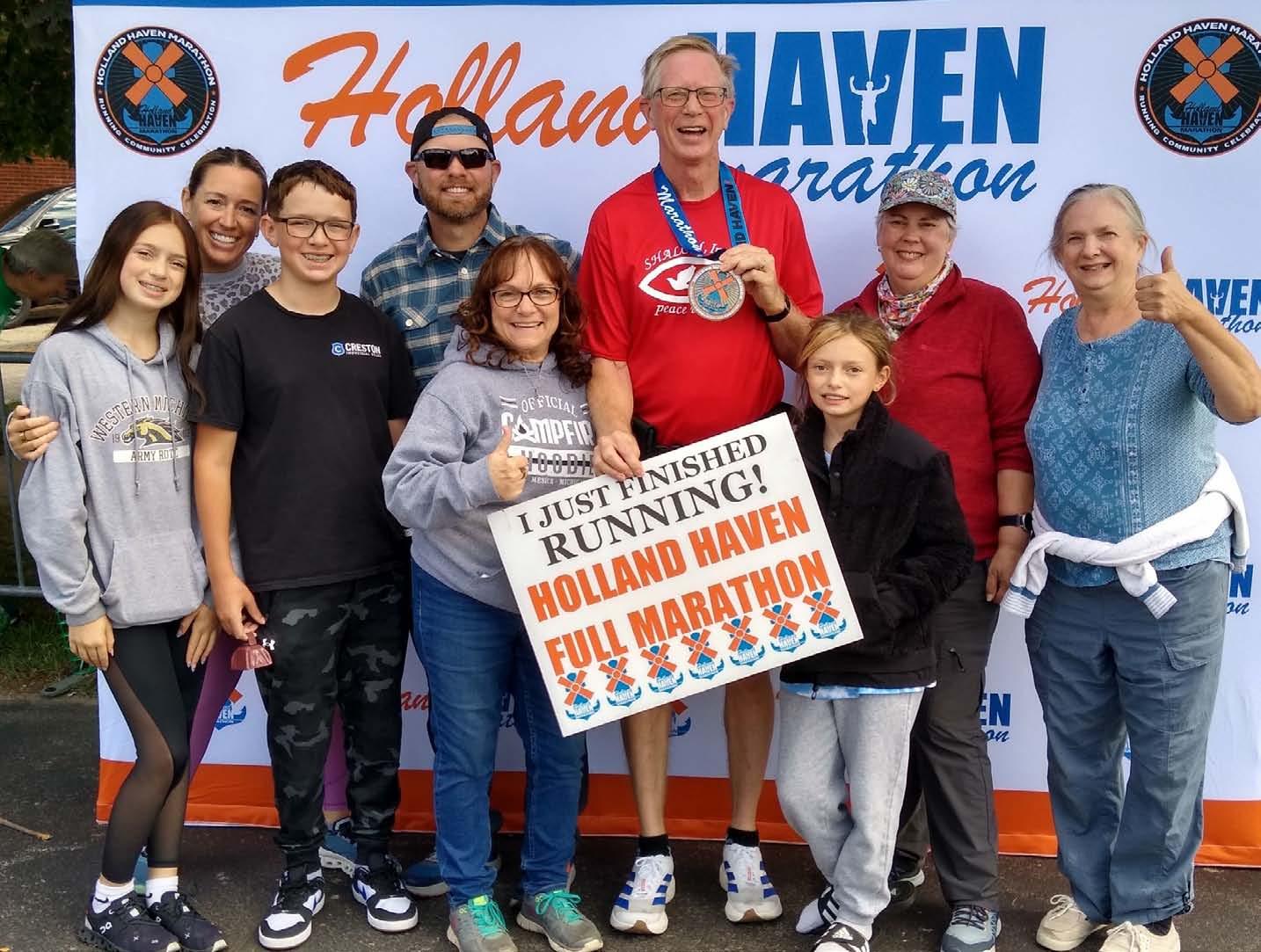
On his third, and final try, at the Holland-Haven Marathon, on September 8th, 2025, he qualified to apply for the Boston Marathon, with his personal best time of 4:09 hours! He attributes the success to the support he received from his family and the SHALOM family. Two weeks after the race, he received the Boston
Marathon’s response to his application, which said, “Congratulations! Your entry into the 130th Boston Marathon…April 20,2026, has been accepted!” Keith’s response, “WE DID IT!”
The SHALOM network includes 8 homes, serving 34 residents, soon to be 9 homes serving 40 residents, plus care providers and their families. Three homes are licensed AFC (Adult Foster Care) homes and five are self-determined, supported living homes. The homes are each managed by Christian care providers and operate as an extended family, giving residents a place to call home with the support they need.
SHALOM is people focused and community supported. The SHALOM Woolery, Shepherd’s Barn, Connection Depot Thrift Store, Coffee Connection, and the Farm are all a means to provide opportunities to those that they serve.
The SHALOM Woolery has been a bustling hub for many participants and their coaches, since its inception in 2012. Today there are 40 participants daily and 54 total. They work hard on a variety of tasks and create beautiful art and woolen wares including rugs, purses, wall hangings, dryer balls and much more. The SHALOM Woolery is an exciting place for work and fun - enabling participants to grow as a whole per-


son physically, emotionally, mentally, relationally and spiritually.
The SHALOM Farm is another busy place where participants help with animal care, gardening, maple syrup and fruit. The farm has sheep, chickens, goats, rabbits and alpaca, plus two farm cats.
The Connection Depot Thrift Store and the Coffee Connection enables many network residents, friends and community folks to work together and become friends – which is entirely the point! The store is also a place to sell the goods they produce through the SHALOM Woolery and farm products. The store and coffee shop are open every Friday and Saturday from 9am-3pm (except holiday weekends) and are located at 6276 N. Riverview Drive, just North of Parchment.
SHALOM is volunteer driven and depends on the interest and generosity of the community. They are thankful to the many people that invest in their mission each week. They do so though many hours of work along with lots of fun working in the thrift store, the SHALOM Woolery and on the farm. Others give financially or through donations to the store.
You are invited to be part of the SHALOM inspiration, and journey with Keith as he prepares to run the Boston Marathon on April 20th, to raise money to furnish the new SHALOM home! Follow the Sha-
lom Kazoo Facebook page for weekly updates. They are planning on going Live on their Facebook site from Boston the day of the race (before, during and after).
If you are interested in donating towards the $85,000 SHALOM home furnishing’s goal, mail your donation to: SHALOM, PO Box 265, Kalamazoo, MI, 49004 or use the QR Code for debit/credit card giving. Please designate to “FURNISHINGS.” You can give a set dollar amount or for a specific furnishings item (stove, couch, etc.- donor determined amount) or even for an entire bedroom for one resident ($3,500). Donor names will be written on a prayer card for Keith to carry during the Boston Marathon.
For more information visit the SHALOM website at shalomkazoo. org, stop into the SHALOM office and Woolery weekdays between 10am-2pm at 3191 Van Buren St. in Kalamazoo, Call (269) 382-3840 or email office@shalomkazoo.org.
Jackie Merriam





Occasionally words from the chorus of a 1983 song by Anne Murray, titled “A Little Good News” flashes through my mind. “We sure could use a little good news today.” (Thankfully, we all have Jackie Merriam to ensure we get monthly doses!)
Speaking of thankful, and more specifically the true spirit of Thanksgiving, and even more, as a friend recently said of a holiday experience I had, “the heart of America”, let me share a headline that doesn’t get highlighted through the algorithms and mind influencers that fill our daily lives.
This past Thanksgiving, my husband, myself, and two of our three dogs were in South Dakota. Riggs and I were staying in an Air BNB in Mobridge, while my husband and Kutana were enjoying a last day’s upland hunting adventure a few towns away.
Riggs let me know he needed to go outside for a moment. Adorned in comfortable sweatpants, a sweatshirt, and quickly slipped on boots, we went out into the snowy below freezing temperature for that “moment” to then find we could not get back in the door. Enter code. Check. Green light flashes. Check. Turn handle and open door. No. Try again. Check. Check. No.
I didn’t have my phone outside with me. Nor coat, hat, or gloves. After repeating several check, check, no’s and a couple of additions of throwing my weight – and

fist – against the door, I found myself following the direction a truck was driving, witnessing it enter a church parking lot along with other entering vehicles.
Enter kindness and generosity of many dear souls. First was the use of a phone to call my husband. After leaving him a voicemail, next came the open-hearted welcoming into the church to use a computer along with a second dear soul willing to stand outside with an energetic puppy.
When the first dear soul handed me his phone with my husband on the other line, and after we decided that I would first try to contact the landowner, enter modern technology. If one uses a different computer for their email, verification is needed, and

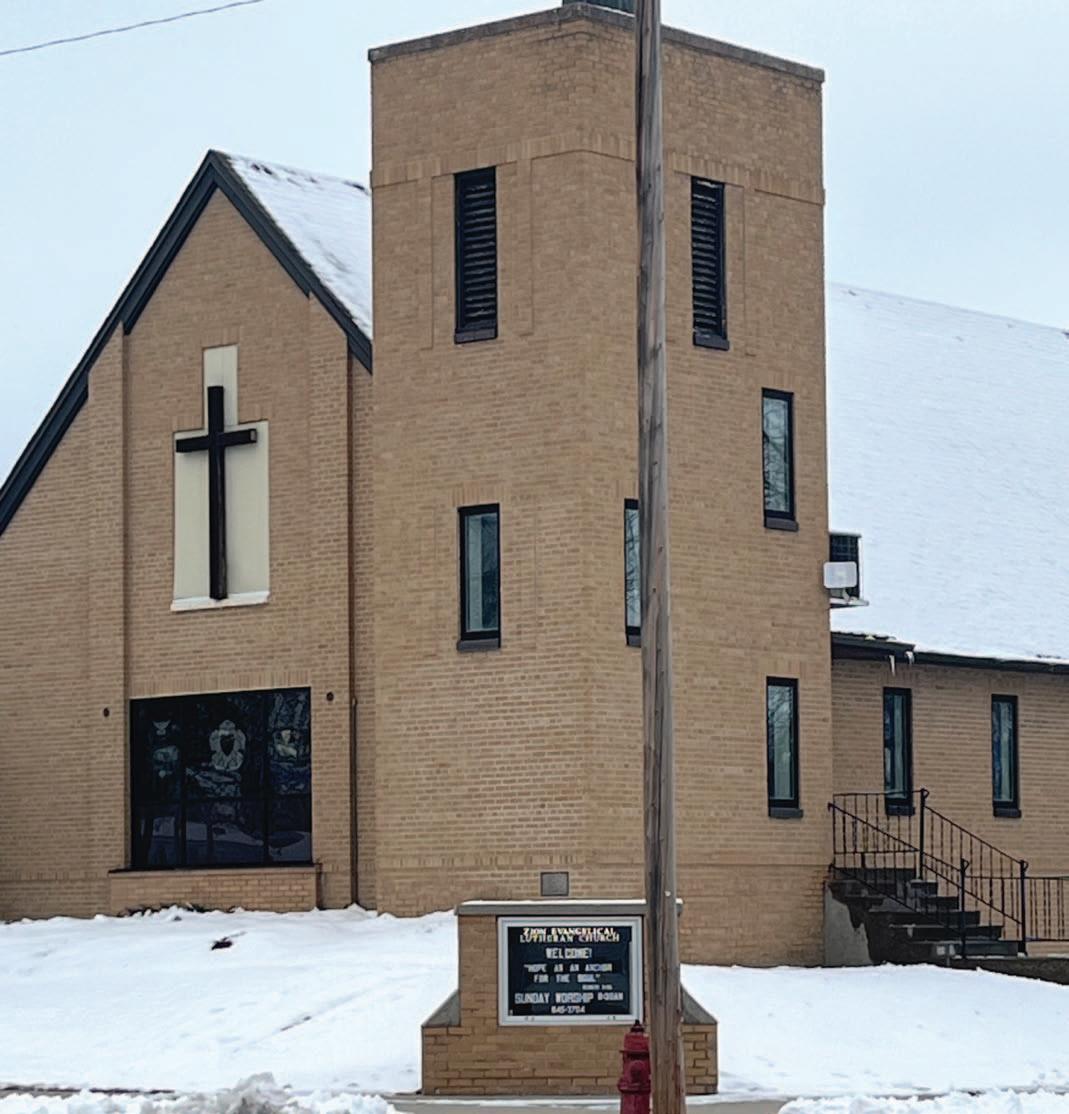
a code is sent to a phone locked inside a rental home. Since it was quickly becoming time for the church service, graciousness overflowed when the pastor grabbed his computer and phone and took Riggs and me to his home to stay so I could try to connect with the landowner directly through the Air BNB site.
There are several more instances of acts of compassion during the few hours that Riggs and I were unable to get back into the rental home. There were a few more hiccups designed to become laughable memories, too.
As I sat on the kitchen floor with Riggs in the warmth of this pastor and his family’s home, having also experienced the warm hearts of members of his congregation, I was

pondering this life tap Riggs and I were experiencing. What we were being taught.
I read the following words that decorated this loving home. “In all things give thanks,” “Be still,” “That I may know kindness all of my days.” As immense gratitude and peace washed through me, I also affirmed why I decided to tune out the news long ago.
Kindness and generosity abound. I know because a group of strangers wrapped this stranger in the blessed warmth of both.
Wishing you all good things in 2026. May you know kindness all of your days.
Christine Hassing https://christinehassing.com




Even in retirement, some autumnal seasonal tasks remain with me. Mid-September – must have the pool put to bed – tarp-covered, leaf net firmly tied down. Check! Plant next year’s wildflower seeds to ensure that they get enough “cold” days. Do this before Thanksgiving. Check! Flu shot – when? Not too early. The shot is most effective when given near the peak of flu season. But not too late, or I might be exposed before I’ve developed the antibodies that will keep me safe from severe illness. Experience tells me that mid-October, certainly before Halloween, is the sweet spot. Even then, I could get fooled. I remember 2009, when I had the H1N1 flu strain and was at home, sick for 8 days straight.
This year I’m all set. Pool prepped; seeds planted. Bees – clustered in their toasty hive with plenty of honey. New tires! I have my COVID and flu boosters. Fingers crossed, I’ve done what I can to survive the winter to come.
I recently read that the current flu vaccine is not a good match for the strains most likely to circulate this flu season. Not a miss, but not optimal. I want to be clear – I’m not complaining about the vaccine! Read that last sentence again. I am absolutely not an anti-vaxxer. I cried with joy and amazement when I received my COVID-19 vaccines in early 2021. What a wonderful thing to live in a world where we can mount an effective response to a worldwide pandemic in less than a year.
What frustrates me is that I will hear repeatedly over the next few months, “See, they don’t work. I got the flu shot and got the flu anyway!”
That may be true, but such statements undermine the very reason we get vaccinated. Vaccines don’t claim to protect us from “getting” the flu. They significantly reduce the chance of our getting severe illness that will produce grave complications, hospitalization, and even death. We may get the flu (or COVID, for that matter), but chances are significantly higher that we can ride out our illness at home, with bed rest and some Tylenol (oh yes, that’s a problem, too!) Not only that, but I get to be part of the “herd” that protects members of my circle who are immunocompromised or have multiple co-morbidities, like cancer and respiratory issues, which put them at significant risk for
severe disease. I’m doing what I can to make my community safer.
The question I want to explore this month is why some years’ vaccines are better than others. The cycle of vaccine formulation happens yearround. Flu season in the United States typically begins in October, peaks in January and February, and is mainly over by May. It coincides with fall and winter, primarily because we tend to spend more time indoors, and are in close proximity to others as we celebrate the holidays and engage in indoor social activities. It’s natural that the infections spread by droplets from coughing and sneezing are more easily transmitted from person to person and can linger longer on surfaces.
Each year, in February and September, the Global Influenza Surveillance and Response System (GISRS) arm of the World Health Organization holds a worldwide meeting to announce the identification of which flu strains are causing the most severe illness across the globe. Their data are based on samples cultured from the tissues and body fluids of infected people, as well as wastewater screening from sources in the southern hemisphere (flu season roughly from April to September), Europe, and Asia. Public health specialists from the Centers for Disease Control and Prevention (CDC) decide which unique flu strains will be used to make next year’s vaccine. It takes about six months to develop and manufacture doses in sufficient quantity for public health needs, so we are basically deciding about a half-year ahead of time which viral profile will be distributed in the coming flu season. We are currently working on the flu vaccine we will receive next fall. Data from the U.S. collected over the next few months and presented in February, will be of particular importance to other countries around the globe, especially in Asia and the southern hemisphere. This global system of constant monitoring and surveillance enables countries to understand the infectious nature of the currently circulating virus, with the lead time to create and deliver the enormous number of doses needed, but without time to correct for genetic mismatches if they fall within the manufacturing window. Isolates of influenza strains for future vaccines, chosen in our case

by the CDC based on this year’s data, will be injected into millions of fertilized chicken eggs. This is why your provider asks whether you are allergic to eggs when receiving the “jab.” These sterile living systems will become infected and produce a fluid rich in the viral strains of interest. After several days’ incubation, the fluids are harvested, the viruses are killed (remember, no living virus is injected), and the purified solution is formulated into a vaccine to be administered to patients. This system should produce a perfect vaccine. Well, no. Viruses, especially RNA-based types like influenza, replicate extremely quickly, especially under favorable conditions, such as those in a host species like humans or domesticated animals that live together in large groups and readily swap illnesses. Note that many pathogenic viral illnesses first arise in animals, particularly herd or flock species, as well as in humans in close contact with these animals and living in population-dense countries. The RNA viruses are also known to be sloppy in their replication from one generation to the next. Since there are so many hosts to infect, this sloppiness allows genes to be traded between viruses. This inaccurate replication produces lots of mutations that can be passed on and accumulate rapidly. What would seem to be generation after generation of the same virus can instead be quite similar but genetically different enough to be more virulent, causing more sickness. The mutations can also result in changes to identification markers, called antigens, on the viral surface, allowing the virus to evade detection by antibodies produced in response to the vaccine and to proceed with infecting the host’s cells, rendering the vaccine less effective.
This year’s predominant influenza vaccine contains three strains of viral pathogens. The vaccine, as they usually do, includes a mixture of dead viral strains of Influenza A and one of Influenza B. Those identified as A are considered more pathogenic and more likely to cause widespread illness. Type As are further identified by subtypes containing two specific, but slightly different enzymes, present on the viral protein coat and necessary for the virus to bind and infect host cells, like ours. One of those markers is called Hemagglutinin
(HA), and the other is called Neuraminidase (NA). This year’s target strains are Type A (H1N1) and Type A (H3N2). Influenza B is a different group of viruses, causing illness to be sure, but generally much less likely to cause widespread sickness in the human population.
The difficulty with this year’s vaccine lies in mutations that have caused the H3N2 virus to “drift” from its original genome, rendering it no longer an optimal physical match for the vaccine’s antibodies. It is, however, significantly better than no vaccine at all – especially if you are young or a senior with chronic disease. As the virus has evolved in real time, it appears that mutations in H3N2 are causing significant illness, with an uptick in observed co-infections such as pneumonia, shortness of breath, and more severe fever. According to Dr. Natasha Bagdasarian, Michigan’s Chief Medical Executive (and Kalamazoo College class of ‘99), early data indicate that hospital emergency departments should expect to see sicker patients, especially children and seniors, due to the increased virulence of the H3N2 strain.
At present, only 20.6% of the population is vaccinated against the flu. Combined with decreased medical access due to lack of insurance, general financial difficulties, increased homelessness, immigration issues, and lack of childcare, we may experience a rough flu season. Bagdasarian suggests that we should support our communities by taking the opportunity to get vaccinated – not only to reduce our risk of severe illness, but also to protect our neighbors.
If, like me, you are a data lover, it is easy to follow local public health statistics online. I am including references to the most updated information and encourage you to stay informed – and consider getting your vaccine if you’ve been putting it off. I want us both to be around and healthy for a long time to come!
Cheryl Hach Retired Science Teacher
Kalamazoo
Area Math and Science Center
References:
Please scan the QR code to access this month’s references.

Through January 4
Exhibit: Dancing with Life: Mexican Masks, Kalamazoo Valley Museum
Thursdays, Jan.1, 8,15,22,29 Triple Threat Trivia, 6:30pm Presidential Brewing Co.
Thursdays, Jan. 1,8,15,22,29 King Trivia, 7-9pm, Gull Lake Distilling Co., Galesburg
Thursdays, Jan. 1,8,15,22,29 Karaoke, 7-11pm @ Alley Cat in Kalamazoo
Thursdays, Jan. 1,8,15,22,29 Music Extreme Bingo, 7pm Shakespeare’s Pub
Thursdays, Jan. 1,8,15,22,29 Music Bingo, 7-9pm, Louie’s Trophy House, Kalamazoo
Fridays, Jan. 2,9,16,23,30 Family Story Time, 10:15am, All ages, Richland Library
Friday, January 2
Memory Café – for people with Mild dementia and their care Partners, 10:30am – Noon Paw Paw District Library
Fridays, Jan. 2,9,16,23,30 Live Music 6-9pm @ Zero: NonAlcoholic Bar, Kalamazoo
Fridays, Jan. 2,9,16,23,30 Live Music @ The Dock at Bayview, 8pm-12am
Saturdays, Jan. 3,10,17,24,31 Kalamazoo Farmers Market 8am-1pm, 1204 Bank St.
Saturday, January 3
Beginning Birding Walks, 9am, Wolf Lake Fish Hatchery
Saturdays, Jan. 3,10,17,24,31 Karaoke & Dance Night Back Alley Saloon, 9pm12am, Continental Lanes
Sundays, Jan. 3,10,17,24,31 Sunday Night Blues Jam, 6-9pm, Shakespeare’s Pub
Mondays, Jan. 5,12,19,26 Family Storytime 10-11am, Books, songs, more! Vicksburg Library
Monday, January 5
Great Michigan Read Launch Party: Everything I Learned, I Learned in a Chinese Restaurant By Curtis Chin, 4-6pm Parchment Library
Mondays, Jan. 5,12,19,26
Support Group: depression, Bipolar disorder & other mental Health challenges, 7-8:30pm Portage Chapel Hill United Methodist Church
Monday, January 5
Monday Night Trivia, 7-8pm Hop Cat Kalamazoo
Monday, Jan. 5,12,19,26 Trivia Night @ Louie’s Corner Bar, 7-9pm
Tuesdays, Jan. 6,13,20,27
Preschool Workshop (ages 3-5) 10:15am, Richland Library
Tuesday, January 6
Craft Stitching Group –Bring your own project, 1-4pm, Parchment Library
Tuesdays, Jan. 6,13,20,27
Weekly Gaming, grades 6-12, 3-5pm, Register: Richland Library
Tuesday, January 6
Teens/tweens Dungeons & Dragons, 4-6pm, Vicksburg Library
Tuesdays, January 6 & 20
Adult Jackbox Game Nights, 6pm Register ahead: Richland Library
Tuesdays, Jan. 6,13,20,27
Trivia Night, 7-9pm Louie’s Trophy House
Tuesdays, Jan. 6,13,20,27
Laugh Draft Open Mic Comedy 7-9pm, Apoptosis Brewing
Tuesdays, Jan. 6,13,20,27
Best Trivia Ever Team Trivia!, 7pm, Shakespeare’s Pub
Wednesdays, Jan. 7,21 Mugs & Hugs, stories, activites, play, 10-11am, Vicksburg Library
Wednesday, Jan. 7,14,21,28
Wednesday Wigglers, infant/ Toddler, 10:15am, Richland Library
Wednesdays, Jan. 7,14,21,28
Teen Dungeons & Dragons, 3-5pm, grades 6-12, Register: 629-9085, Richland Library
Wednesdays, Jan. 7,14,21,28
Free ½ hour of Bowling, Crafted Copper, Kalamazoo, 4-10 pm
Wednesday, January 7
Adult Dungeons & Dragons Bravo Team, 5-8pm, Register: 629-9085, Richland Library
Wednesday, January 7
Trivia Night @ 468 Wine in Portage, 6-8pm
Wednesday, Jan. 7,14,21,28
Live Music, 6-9pm, Zero: Non-alcoholic Bar, Kalamazoo
Wednesday, Jan. 7,14,21,28
Karaoke Bingo, 7-10pm Presidential Brewing, Portage
Wednesdays, Jan. 7,14,21,28
Trivia at the Taproom, 7-9pm, Apoptosis Brewing Co., Kal.
Thursday, January 8
“Solito” by Javier Zamora, 9:30 –10:30am, Vicksburg Library
Thursday, January 8
Start a Side Hustle, 11am Richland Library
Thursdays, Jan. 8,15,22,29
Free Thursdays, 11am-8pm, Kalamazoo Institute of Arts
Thursday, January 8
Elementary “Drive-in” Movie night We make popcorn, you bring, drink,blanket & cardboard box largeenough to sit in, 3:30-6pm, Vicksburg Library
Thursday, January 8
Writers’ Motivational Group, 4-5pm, Vicksburg Library
Thursdays, Jan. 8,15,22,29
Teen Dungeons & Dragons, 4:30-6:30pm, Register: 629-9085, Richland Community Library
Thursday, January 8
Gallery Gathering: Taekyeom: Design, Printed & Fired, 5:306on, Kalamazoo Institute of Arts
Thursday, January 8
Wine & Euchre, 6-8pm, Sign up ahead, 468 Wine, Portage
Thursday, January 8
Friends Read Book Club, discuss What you are reading/snacks, 6:30-7:30pm, Paw Paw Library
Friday, January 9
Sit N’ Stitch, 10am-12pm
Bring your own project Richland Library
Friday, January 9
Play, Learn, Connect with KRESA, Preschoolers w/adult 10am, Parchment Library
Saturday, January 10
Internet group, bring Smart Phones, 10am-Noon & questions, Paw Paw Library
Saturday, January 10
Art Detectives: An ABC of What Art Can Be by Meher McArthur, 10:30-noon, Kalamazoo Institute of Arts
Saturdays, Jan. 10 & 24
Art Journaling for Adults, 11-1pm, Richland Library
Sunday, January 11
2nd Sundays Live!: The Pensioners, 2pm, Parchment Library
Monday, January 12
Parchment Book Group: Miss Morgan’s Book Brigade by Janet Charles, 6pm, Parchment Library
Tuesday, January 13
Adult Scrabble Club, 1-2:30pm, Vicksburg Library
Wednesday, January 14
Birds & Coffee Chat on Zoom: Backyard Birds 10-11am, register: birdsanctuary@kbs.msu.edu
Wednesday, January 14
Artbreak: Exploring the KNAS Faculty Review with Director Leslie Donaldson, 12-1pm Kalamazoo Institute of Arts
Wednesday, January 14
Lego Challenge for kids, 2-5:30pm, Richland Library
Wednesday, January 14
Adult Dungeons & Dragons
Bravo Team, 3-6pm, Register: 629-9085, Richland Library
Wednesday, January 14
WMU Master Class, Ari Cohen Mann, 5pm Dalton Center Recital Hall
Wednesday, January 14
Adult D&D: Bravo Team, 5-8pm Register: Richland Library
Thursday, January 15
Make a Mini-Habitat (ages 10-14), Register ahead, 6pm, Parchment Library
Thursday Jan. 15, 29
Teen Break & Bulldog Break, Fun, crafts, games, activities, Treats, Teen/tweens under 18, 2:45-4:45, Vicksburg Library
Thursday, January 15
Writers’ Motivational Group, 4-5pm, Vicksburg Library
Thursday, January 15
Wine & Euchre @ 468 Wine, 6-8pm, Portage
Thursday, January 15
Book Club, 6pm, Richland Library
Thursday, January 15
Frosty Fun Family Night, tour & Create winter masterpiece, 67pm, Kalamazoo Institute of Arts
Thursday, January 15
Make a Mini- Habitat (ages 1014), 6pm, Register ahead: Parchment Library
Thursday, January 15
Heartbreak Book club: All the Missing Pieces by Catherine Cowles, 6:30-7:30pm, Paw Paw Library
Thursday, January 15
STEAM, hands-on/problem solving, 6-7pm, Vicksburg Library
Friday, January 16
Fiber Friends – Bring your own project & lunch, 10am2pm, Parchment Library
Fri., Jan. 16 – Sun. Jan. 18
The Portage Home Show, Fri.11-8pm, Sat. 11-8pm, Sun. 12-6pm, Crossroads Mall, Portage
Friday, January 16
Blood on the Clocktower: A Court of Lies, ages 11-17, 5-9pm, Register Ahead: Richland Library
Saturday, January 17
Once Upon a Saturday, 10:15am, Stories, songs & craft, all ages Richland Library
Sunday, January 18
WMU Final Concert featuring The Mass Horn Choir, 6:30pm Dalton Center Recital Hall
Monday, January 19
STEAM event & activity 11am-12pm, Vicksburg Library
Monday, January 19
Board Game Night @ Zero Non-Alcoholic Bar, 6-9pm
Tuesday, January 20
Lego & Duplo Club, 1-2pm & 5:30 – 6:30pm, Vicksburg Library
Tuesday, January 20
Mystery Book club: Death In Brittany by Jean-Luc Bannaiec, 6:30pm, Parchment Library
Wednesday, January 21
Book Discussion: My Friends By Fredrik Backman, 2-3pm Kalamazoo Institute of Arts
Thursday, January 22
Manage Your Stress, 11am Richland Library
Thursday, January 22
Artful Evening: Expanding The Senses of Design: Using Tactility and 3D Printing, 6-7pm Kalamazoo Institute of Arts
Thursday, January 22
Cookie Swap (Adults) - Bring In 2 dozen to taste & trade 6-7:30pm, Vicksburg Library
Friday, January 23
Paint Your Pet portrait, ages 11-17, 3pm, Register ahead Richland Library
Saturday, January 24
Friends of KPL Bag of Books Sale, 10am-3:30pm, Kalamazoo Central Library
Saturday, January 24
Lit Letters Bookmark, create Your own, 11am-3pm Kalamazoo Institute of Arts
Sunday, January 25
WMU Concerto Competition Finals, 1pm, Dalton Recital Hall
Monday, January 26
Tween Book club (ages 10-14), City Spies by James Ponti, Register ahead to receive a Free copy, 4pm, Parchment Library
Monday, January 26
Great Michigan Read Craft Night Express thoughts creatively about Everything I Learned, I Learned in A Chinese Restaurant by Curtis Chin, 6pm, Parchment Library
Wednesday, January 28
ArtBreak: Typography and the Art of Communication 12-1pm Kalamazoo Institute of Arts
Wednesday, January 28
Between the Pages Romance Book Club for adults, 6pm, Register: Richland Library held at Ned’s on Gull Lake
Thursday, January 29
Kids Mini Canvas Painting, 4pm, Register ahead: Richland Library
Thursday, January 29
Between The Lines Book Club: The Caretaker by Ron Rash Paw Paw Library 6:30-7:30pm, Paw Paw Library
Friday, January 30
Board Game Blast!. Play board games with other adults, 10am-112pm, Parchment Library
Friday, January 30
Listen Up Book Club, An Audiobook club for people With low vision, 10:30am-11:30am, Paw Paw Library
Friday, January 30
Black History Month
Movie: Green Book, 6pm, Portage Zhang Senior Center