Nurturing Sustainability
2025 | 2026
Head of School
Brendan Largay
Editor, Director of Communications and Marketing Koreen McQuilton
Graphic Design Good Design, LLC gooddesignusa.com
Writer Christine Foster
Photography Tom Kates Photography Jim Walker BDS Faculty
Send alumni news to: Kyle Beatty Belmont Day School
55 Day School Lane | Belmont, MA 02478 or email bdsalumni@belmontday.org
Comment?
We’d love to hear what you think. Please write to Koreen McQuilton, Editor Belmont Day School 55 Day School Lane | Belmont, MA 02478 or email communications@belmontday.org
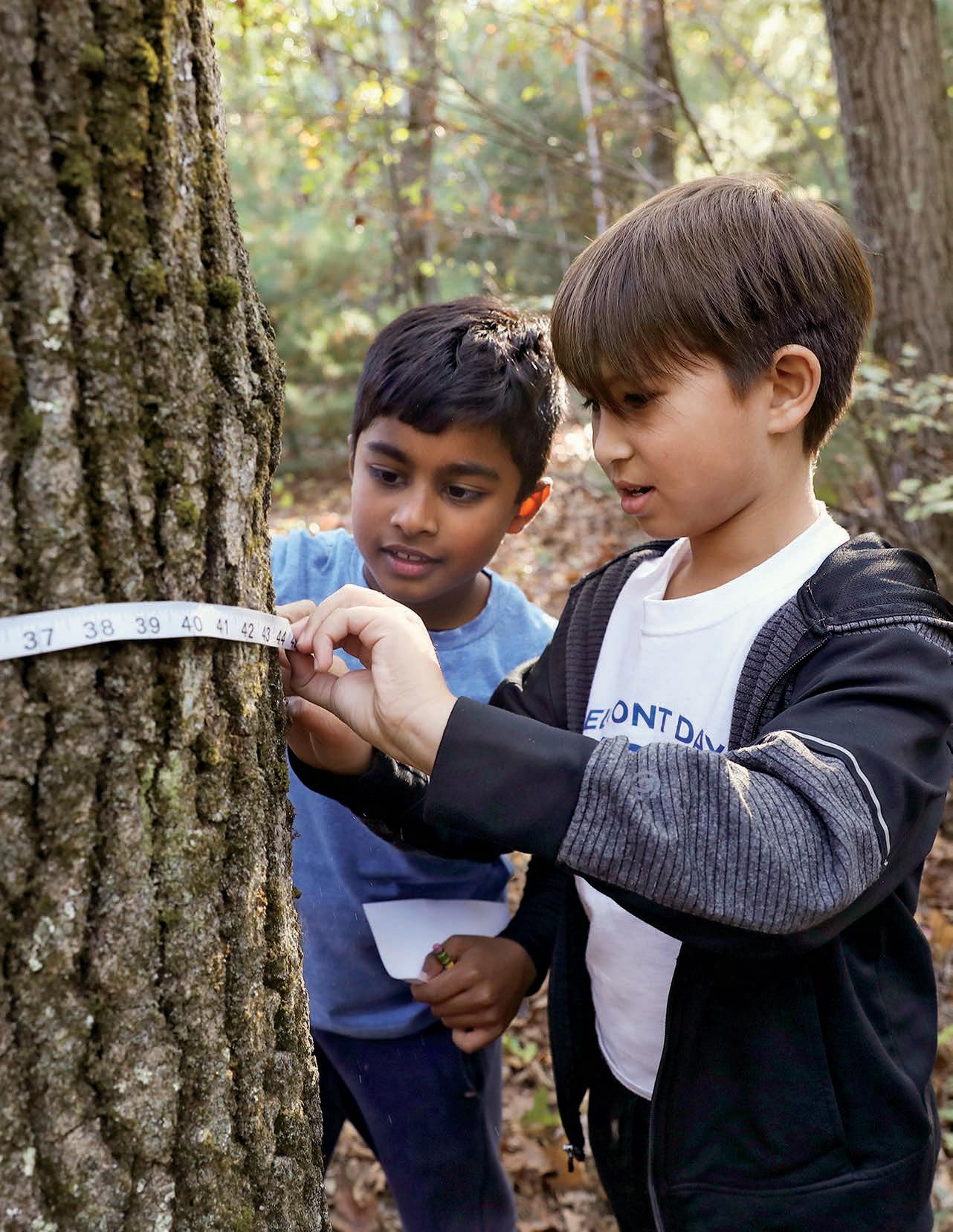
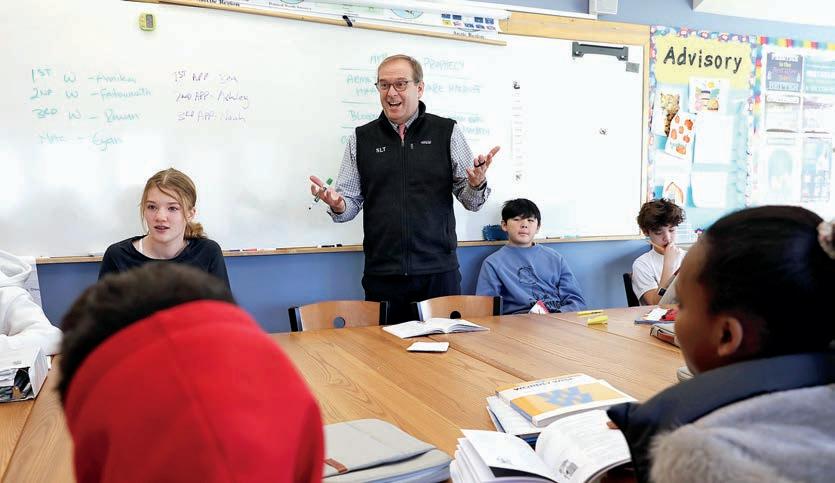
Aaron Abraham and Riaan Vazirani measure trees in Mr. Fox’s enrichment class, Outdoor Science Adventures.
Founded in 1927, Belmont Day School is a bold, remarkable, inspiring community of learners and leaders in pre-kindergarten through eighth grade.
mission
Inspire and challenge. At Belmont Day School, we foster intellectual curiosity, honor differences, and empower meaningful contribution with excellence, respect, honesty, responsibility, caring, and joy.
FROM THE HEAD OF SCHOOL
“What strikes me most is how naturally sustainability has become part of our students’ vocabulary and worldview. It’s not a separate initiative; it’s interwoven with the same core values that guide how we teach them to be communicators, collaborators, and thoughtful citizens.”
Sustaining What Matters Most
Brendan Largay, Head of School
As we move through this school year, I find myself reflecting on the ways our students are preparing to meet the challenges of tomorrow—not only with knowledge and skills, but with a deep sense of care for the world around them.
This commitment to environmental stewardship has always been woven into the fabric of Belmont Day. When our pre-kindergartners take their regular walks through the woods, absorbing the rhythm of nature, or when our second graders harvest vegetables from the garden to share in school lunches, they are learning something fundamental: that we are all caretakers of this earth.
Over the past decade, we’ve made the implicit curriculum even more visible. When we built the Barn, we explored every sustainable option and ultimately installed solar panels that now provide more than 40 percent of the building’s energy needs. Our composting program has become second nature to students—they know instinctively how to sort their lunch waste because it is simply part of what we do. And each week,
our student recycling team walks the halls, helping ensure we carefully separate what goes into the landfill, what can be recycled, and what is composted.
What strikes me most is how naturally sustainability has become part of our students’ vocabulary and worldview. It’s not a separate initiative; it’s interwoven with the same core values that guide how we teach them to be communicators, collaborators, and thoughtful citizens.
I see the fruits of this approach when alumni like Colton, Eric, Jess, Margo, Samantha, and Sue, featured in this issue, continue to study, steward, and advocate for the environment after leaving Belmont Day. I also see it every day here on campus in countless small moments of care for one another and the world we share.
As we approach Belmont Day’s 100th anniversary, I am reminded that our founders sought to create a place where students could raise their voices. They valued children learning not just how to think, but how to live responsibly and well. That mission continues today. When I see

our students navigating their day with an awareness of sustainability that feels effortless and joyful, I know we are preparing them not just to inherit the world, but to make it better.
“When I see our students navigating their day with an awareness of sustainability that feels effortless and joyful, I know we are preparing them not just to inherit the world, but to make it better.”
Growing
Tomorrow
HOW BELMONT DAY SCHOOL
CULTIVATES ENVIRONMENTAL STEWARDS

FROM PRE-KINDERGARTEN POTATO PLANTING TO MIDDLE SCHOOL BEEKEEPING, BDS STUDENTS LEARN TO CARE FOR THE EARTH Through
Hands-On Action
The seeds of environmental stewardship are planted in Belmont Day students at the very start.
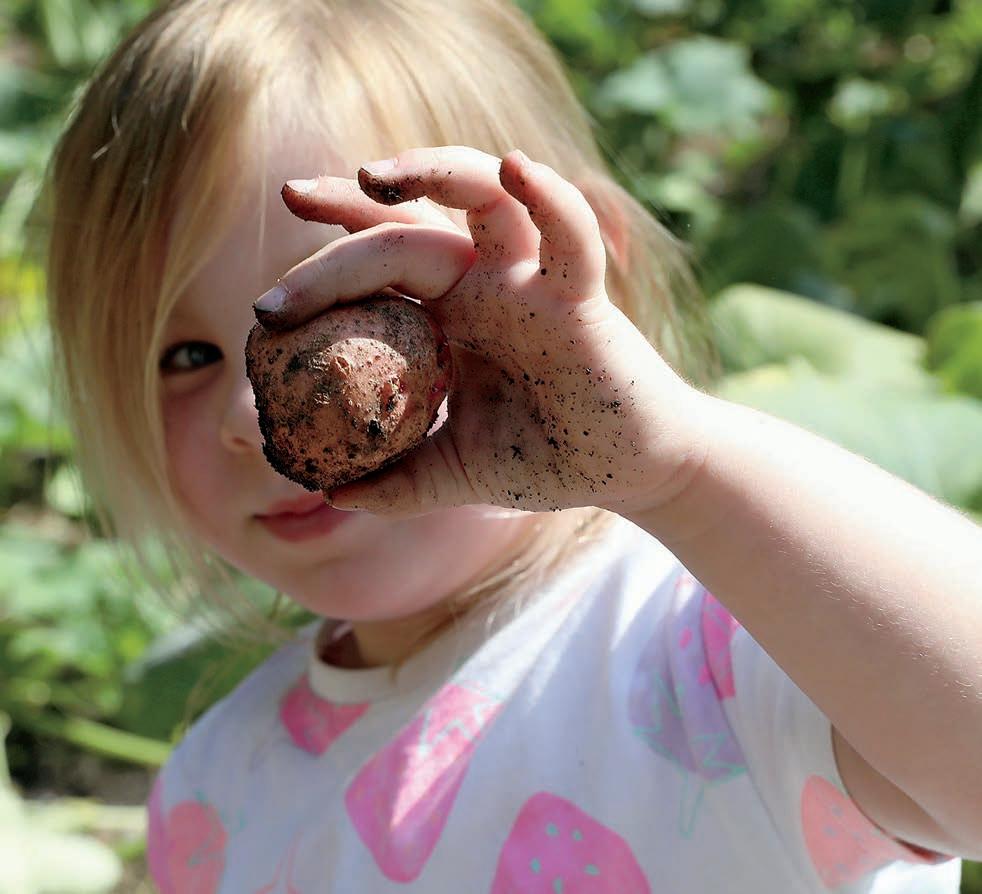
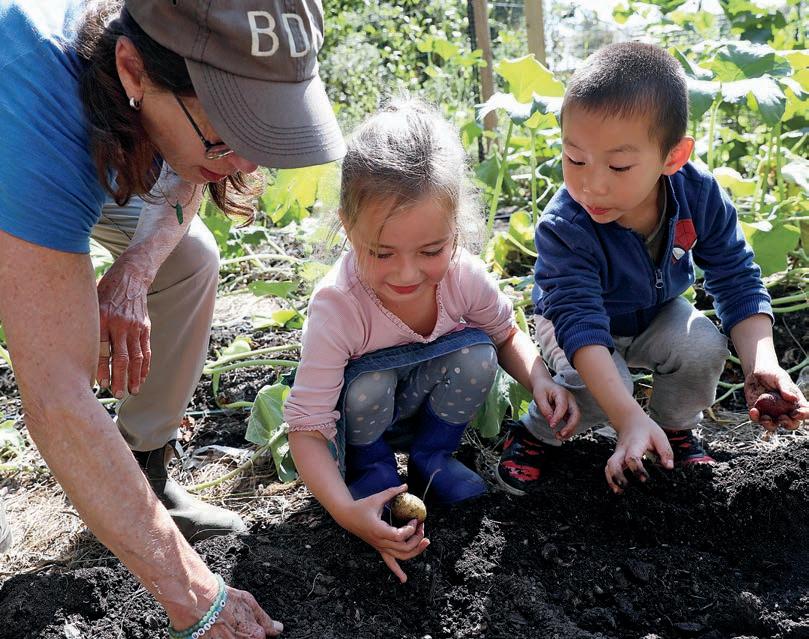
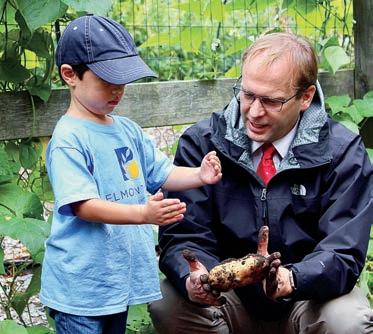
Each spring, pre-kindergartners carefully place seed potatoes in a trench and then cover them with soil. The following fall, when these children return as seasoned kindergartners, they know that the next group of students will harvest the fruits of their labor, gathering potatoes to be served in Coolidge Hall. They all begin to understand their role as caretakers of the earth.


This cyclical approach to learning defines sustainability education at Belmont Day. Environmental stewardship isn’t just a topic to be studied but a way of life to be practiced. From the youngest learners planting these first seeds to eighth graders managing beehives, students across all grades engage with sustainability. Hands-on experiences connect them to the natural world and their responsibility within it.


“We’re trying to get our students to be stewards of the environment. In order for children to really feel committed to this endeavor, you have to have interactions around it.”

Building Stewards
FROM THE GROUND UP
The school’s commitment to environmental education reflects Belmont Day’s distinctive blue and gold—and green—values. These colors extend beyond school spirit to represent the earth, sun, and growing things that sustain life. Guided by Kathy Jo “KJo” Solomon P ’04 ’07, who serves dual roles as visual arts teacher and sustainability coordinator, this philosophy permeates campus life.
“It’s really important because of climate change,” KJo explains. “We’re trying to get our students to be stewards of the environment. In order for children to really feel committed to this endeavor, you have to have interactions around it.”
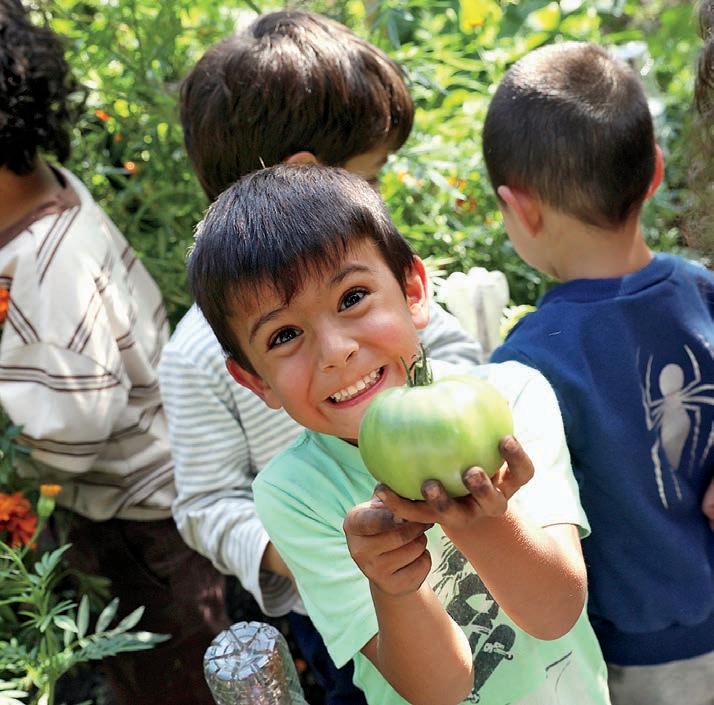
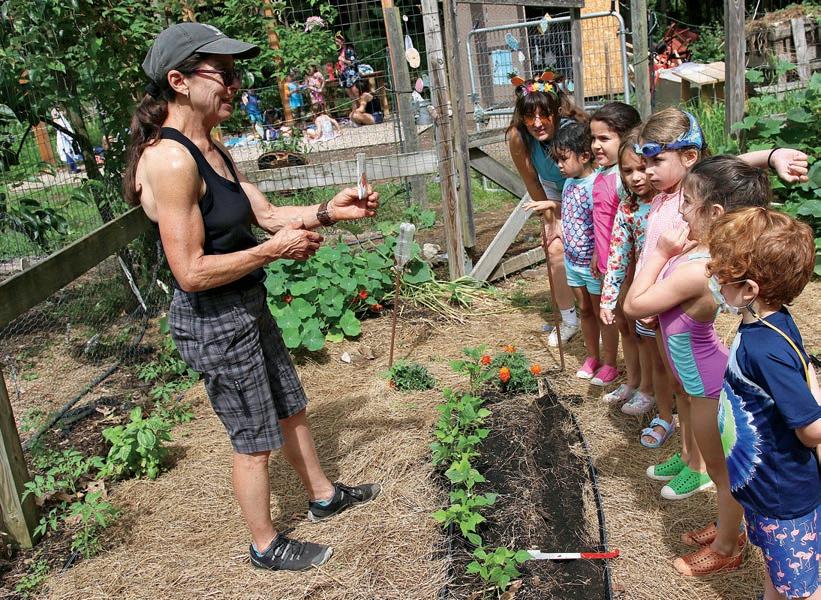
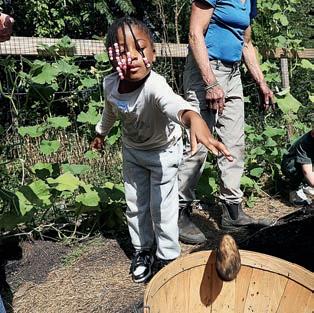
Those interactions begin with the school’s crown jewel: a 20-by-80-foot garden that serves as both an outdoor classroom and a community resource. The garden operates on carefully planned cycles that ensure many grade levels from pre-kindergarten through middle school play a meaningful role in its cultivation and harvest.
The potato cycle exemplifies this approach. In the spring, pre-kindergarten students learn hands-on skills such as
proper planting depths and soil preparation. When fall arrives, the new pre-kindergarten class harvests those same potatoes—discovering that their lunch vegetables came from the work of last year’s students. This direct connection introduces young learners to concepts of growth, time, and interdependence in a way that abstract lessons never could.
First graders take on the “Three Sisters” garden, planting corn, squash, and beans using indigenous agricultural practices that demonstrate how different plants can support each other’s growth. When these students return as second graders, they harvest the corn as part of a year-long science program that weaves garden work throughout their curriculum.
The Science OF SUSTAINING LIFE
Second grade represents a particularly deep curricular integration of garden work, with students participating in planting, harvesting, weeding, and food preparation throughout the year. In late fall, as first graders, students plant garlic that is harvested the next summer. When the
students return as second graders, they help dry the garlic in their classroom, then work with the school chef to use it to make garlic bread, completing another cycle while learning practical food preparation skills. The students also harvest and dry popcorn.
Fourth graders explore sustainability through scientific inquiry, studying vermiculture composting and starting seedlings to understand plant life cycles from seed to harvest. The school starts most garden plants from seed indoors in early spring, giving students hands-on experience with the entire growing process, from germination through hardening off and transplanting.
This seed-to -table approach extends beyond the classroom into the school’s comprehensive food waste management system. Every classroom maintains compost containers, with students taking responsibility for proper sorting and disposal. Rather than managing composting on-site, the school partners with Black Earth, an industrial composting company that can process all food waste, including meat and dairy products that wouldn’t break down in typical home composting systems.
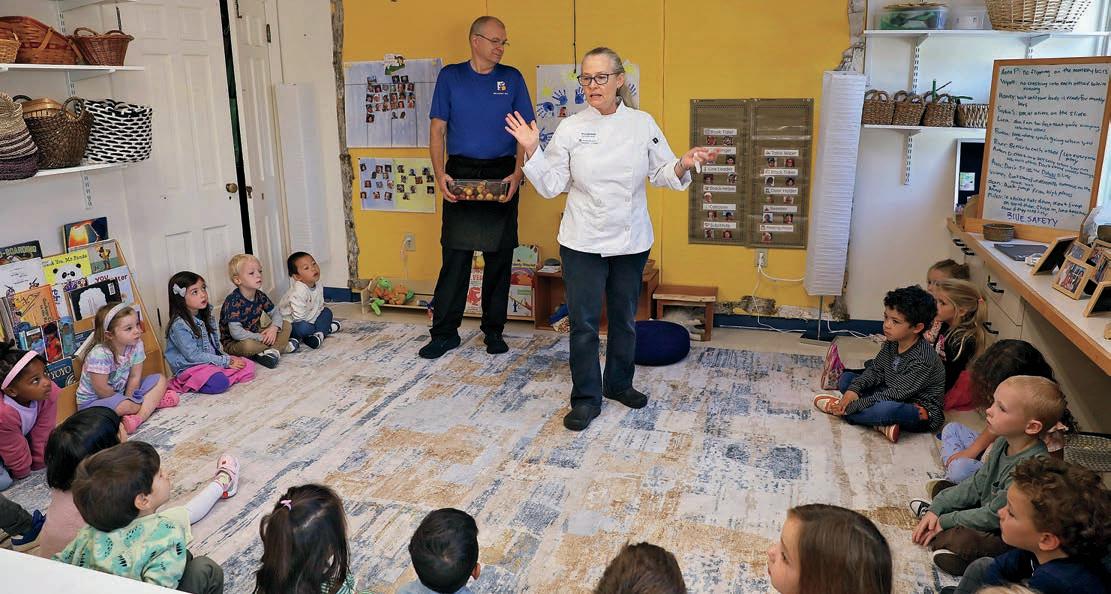
“Everything at lunch is compostable,” KJo notes. “When we use paper goods, they are compostable. We get students involved—middle school students take leadership roles in this process.” They collect recycling throughout the school each week and manage the transfer of materials to recycling dumpsters. This hands-on work helps them begin to internalize the impact of their consumption choices rather than simply following the rules without understanding.
Innovation MEETS ENVIRONMENT
Belmont Day’s Innovation Team plays a key role in sustainability efforts. Led by Annie Fuerst, director of innovation, Brit Conroy, innovation coach, and Amy Sprung, librarian, the team has developed projects that seamlessly integrate technology with environmental learning.
Students in every grade engage with biodiversity in their immediate environment through a unique bird monitoring project that uses Haikubox, a high-tech device that records and identifies bird calls. The students connect with scientists who
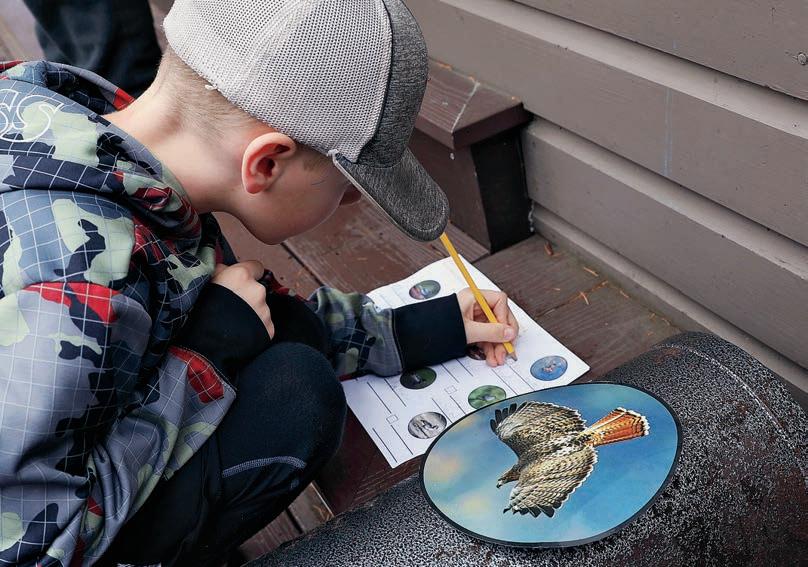
designed the technology, demonstrating how experts can create tools that serve environmental understanding.
Second graders learn specific bird calls using augmented reality books. Pre-kindergarten students are divided into the “Indigo Buntings” and “American Goldfinches.” These are blue and yellow birds chosen to reflect school colors that also remind them of species actually present in the local habitat. Even their classroom lineup calls mirror their assigned bird sounds, integrating environmental awareness into daily routines.
The project includes an all-school event where older students guide younger ones through campus-wide bird identification activities, using field guides to locate and identify cut-out birds hidden around campus. When students spot actual birds during these exercises—like the mourning dove one student identified both visually and aurally—the excitement is palpable.
“We can’t protect what we’re not aware of,” explains Amy. “We’re trying to inspire students who will become stewards of the environment, and the awareness of biodiversity supports that.”
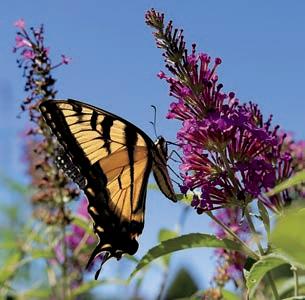
“We can’t protect what we’re not aware of. We’re trying to inspire students who will become stewards of the environment, and the awareness of biodiversity supports that.”
introduce children to many different flavors and opportunities to taste new things, but it’s also about empowering them to make their own choices and to learn about what that means.”
Beyond THE GARDEN GATES
The school’s sustainability efforts extend beyond the garden. There are solar panels on the Barn, Belmont Day’s newest building, demonstrating renewable energy in action. The whole school, including families, participates in a textile recycling program that diverts fabric waste from landfills. Fabric scraps from quilting and other projects are collected for recycling rather than thrown in the trash.
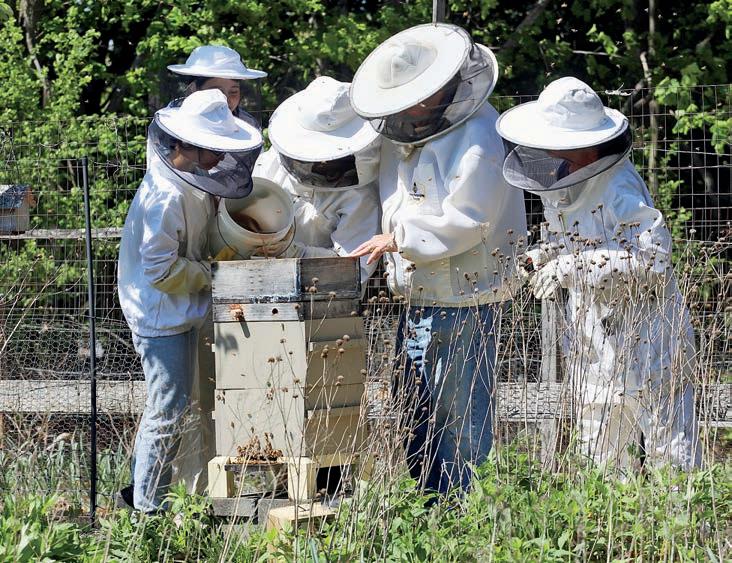
Middle school students who love this work can dive even deeper through the Garden and Beekeeping Club. Students maintain the school’s beehive, adding new bees to the colony, and learning about the role of pollinators in food systems. Club members don bee suits to feed bees and observe hive management.
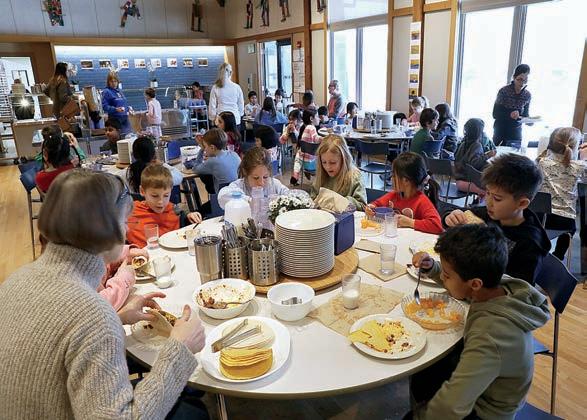
The school’s sustainability philosophy extends to dining in Coolidge Hall, led by Food Program Director Tara Lightbody. The family-style dining program connects directly to the garden’s output—when students return in the fall, the vegetables they’ve grown appear on their lunch plates.
“My goal is to introduce children to many different flavors and opportunities
to taste new things, but it’s also about empowering them to make their own choices and to learn about what that means,” Tara explains. This philosophy aligns perfectly with the school’s environmental mission: students learning to make conscious decisions about what fuels their bodies and to understand the broader impact of their choices.
The dining program demonstrates sustainability in action through student responsibility and innovative food preparation. Students clear their own plates, manage composting and recycling, and take turns with various cleanup duties—integrating waste management into their daily routines rather than treating it as a separate lesson. When serving dishes that might exclude students with dietary restrictions, Tara adapts recipes to be inclusive, using tamari instead of soy sauce so everyone can eat the same meal and eliminate waste from separate preparations.
The results speak to students’ openness to sustainable eating: When chicken teriyaki appears on the menu alongside hot tofu, the school serves twenty pounds of the plant-based alternative. “I think it’s because they’re willing to try new things,
and they’re exposed to it,” Tara notes. The connection to their own gardening efforts, a little positive peer influence, and abundant choices encourage students to expand their palates beyond typical childhood preferences.
This comprehensive approach—from first graders learning to build balanced plates as part of their nutrition curriculum to eighth graders advocating for their own dietary needs—ensures that sustainability becomes a practiced skill rather than an abstract concept. Students don’t just learn about responsible consumption; they live it daily, developing habits that will serve both their health and their planet throughout their lives.
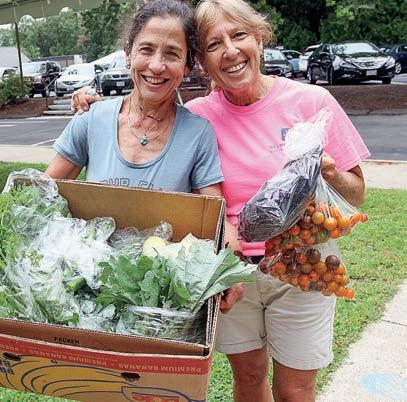
During the summer months when school is not in session, the garden’s productivity serves the broader community. The garden typically produces about 500 pounds of fresh vegetables. That bounty is donated to Food Link, a local nonprofit that addresses food insecurity. When students return in the fall, the remaining produce goes directly into school meals, creating a tangible connection between their gardening work and their daily sustenance.
Cultivating TOMORROW’S LEADERS
Head of School Brendan Largay helps set the vision for making environmental stewardship a top institutional priority. A staff sustainability committee meets regularly to expand programs and integrate sustainable practices into all aspects of school operations, from event planning to facility management.
The committee added an electronic recycling drive for the broader community.
“We’re committed as a whole community to act sustainably, to care about the environment, to care about animal cycles,” KJo emphasizes. “All these things have an effect—if there’s an imbalance in the environment, certain things aren’t going to work as well.”
Growing UNDERSTANDING THROUGH PRACTICE
A key goal is to demonstrate that environmental stewardship focuses on interconnection and taking responsibility rather than sacrifice or limitation. Students learn that their daily choices matter, that waste can become a resource, and that even young people can contribute meaningfully to environmental health.
This approach offers hope. We aim to develop young people to be both learners and leaders, showing them that caring for the earth can begin with something as simple as planting a seed and watching it grow.
“We’re committed as a whole community to act sustainably, to care about the environment, to care about animal cycles.”

LEARNERS + BELMONT
Leaders
These alumni are young, but already making their marks in the fields of sustainability and environmentalism. And it all began at Belmont Day.
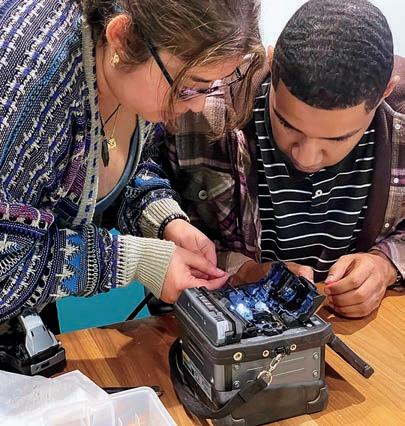
“BDS taught me to dream about what a better world could look like. I’ve basically spent my life building toward that dream.”
Innovation AS INHERITANCE
Eric Juma ’12 on Energy, Ethics, and Carrying Forward a Legacy of Sustainability
When Eric Juma ’12 thinks back on his years at Belmont Day, what stands out is not a single project or specific unit on the environment—it’s the ethic the school cultivated.
“There was a strong focus on responsibility toward stewarding the world,” he recalls. “Environmental issues weren’t treated as niche topics. They were a normal part of how we learned to think about our place in the world.”
That worldview was reinforced at home. Eric comes from a family deeply rooted in conservation, science, and sustainable development. His great-grandfather was a zoologist. His grandfather devoted much of his personal resources to forest restoration in Shirley, MA. His mother worked on river protection and watershed health. His late father, Professor Calestous Juma, a globally
influential scholar at Harvard University, spent his life championing innovation, technology, and science as tools for sustainable development across Africa.
“I learned early that innovation is at the heart of sustainability,” Eric says. “Even something like the transition from incandescent bulbs to CFLs to LEDs—each iteration is more sustainable.”
At BDS, he remembers a project in fourth grade to craft wording for an environmentally-focused T-shirt (“By the year 2020, 25% of the rainforest will be gone. We have choices and voices.”) and a schoolwide anti-idling campaign. “Those things stick with you,” Eric says. “They form the counterweight to the part of life where the world’s incentive structures push you to focus only on the immediate. BDS kept the big picture front and center.”
“There was a strong focus on responsibility toward stewarding the world. Environmental issues weren’t treated as niche topics. They were a normal part of how we learned to think about our place in the world.”
Today, Eric is the director of technology at HEET, a nonprofit innovation hub working to help utilities transition to renewable, networked geothermal heating and cooling. His work focuses on research, open-source modeling tools, and data systems designed to understand how geothermal networks behave underground. He supports the groundbreaking Framingham geothermal network, the first utility-owned system of its kind in the country.
“Our strategy is both social and technical—bringing people together to find common ground, and charting a path forward through research and innovation,” he explains, “but ultimately it’s about evolving the energy system to meet the needs of the future.”
Eric also plays an active role in the Calestous Juma Legacy Foundation, created in honor of his father to advance innovation in Port Victoria, Kenya, his hometown. More than 300 young people have already
graduated from the foundation’s innovation hub with new digital skills. Eric is helping to lead new initiatives, including a coding competition and a startup software company that supports local creators. “It’s about giving students access to tools that can open their world,” he says. “My dad always believed that innovation belongs in the hands of communities.”
Eric traces his own desire to help build and imagine back to an unexpected place: the BDS music room. Guided by music teacher Frank Toppa, Eric discovered creative confidence—first with bass guitar, then with digital music production, which now influences the music-tech projects he’s developing in Kenya. “Mr. Toppa encouraged me to experiment,” Eric says. “That spirit to think big, to try things, and to create has shaped everything I do.”
“BDS taught me to dream about what a better world could look like,” he says. “I’ve basically spent my life building toward that dream.”
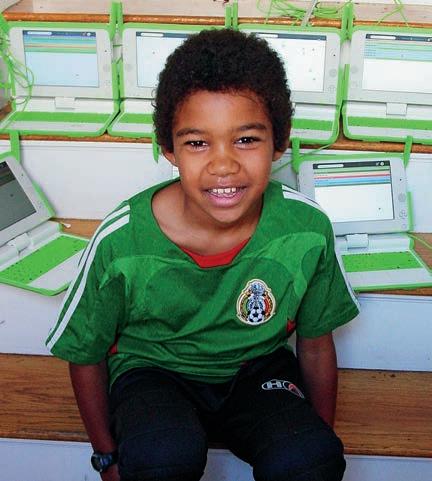
Eric with OLPC XO Laptops. The school hosted a fundraiser for One Laptop per Child (OLC), a nonprofit that aimed to distribute free devices to children in developing countries.
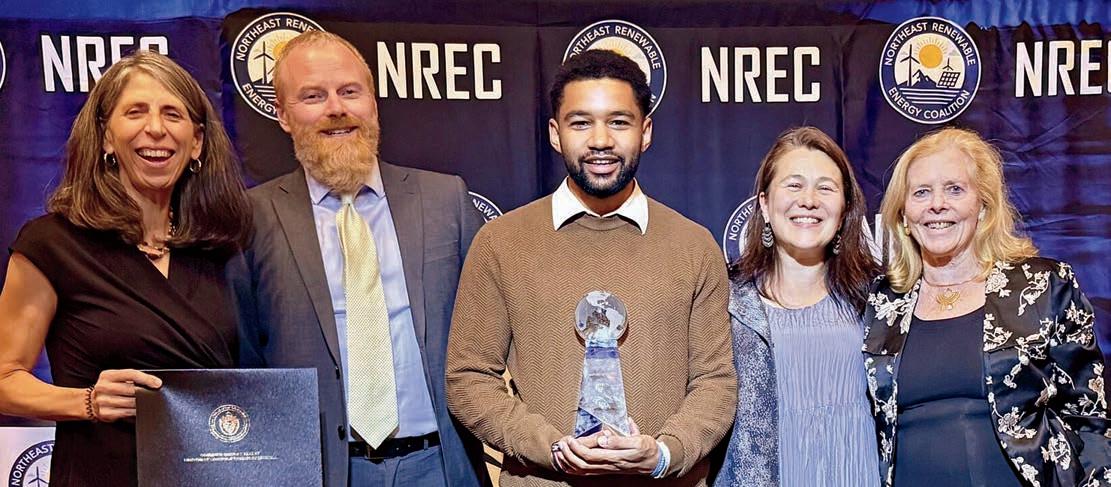
Eric, along with his HEET colleagues, accepts the Northeast Renewable Energy Coalition’s award for Nonprofit of the Year at the Mass Clean Energy Week Gala 2025.
“BDS was the center of my world. Being in a small community taught me about relationships, about caring for the people around me.”
Rooted IN PLACE
Farmer Jess Saunders
’12 on Finding Purpose in the Soil
For Jess Saunders ’12, Belmont Day was more than a school—it was the landscape of her childhood. A “lifer,” Jess, who uses she/they pronouns, spent ten years on campus. She recalls a decade shaped by a tight-knit community, joyful excursions into the woods, and teachers who modeled curiosity.
“BDS was the center of my world,” she says. “Being in a small community taught me about relationships, about caring for the people around me. Also, both of my parents showed me and my sibling, Amanda ’09, what it can look like to be deeply connected to friends and family in practice. Those lessons stuck.”
The place itself left a deep impression. Jess still remembers romping through the woods with a childhood friend who lives on Pinehurst Road, right behind BDS, and off-campus trips that immersed her in hands-on learning.
They especially recall a visit to The Farm School, which she now recognizes as her first transformative experience in an agricultural environment.
“I remember collecting eggs in the mornings, going on long walks around the property. It felt so expansive,” she says. “There were so many incredible agricultural projects going on in a really small space. I had never had access like that before. Farms were just out of reach from my suburban upbringing. It was foundational to how connected I felt with the natural environment.”
So were the teachers. Jess lights up when they talk about third grade teacher Leigh Twarog, who was once her childhood babysitter. “Leigh is a natural teacher of science and curiosity about the world,” Jess says. “And now, when I am teaching kids or guiding college students, I find myself drawing on my own teachers at BDS.”
After BDS, Jess went on to Groton School and then to Middlebury College, where the vision of her future clicked into place. Vermont’s landscape drew her outdoors, toward farming. They spent time working on Middlebury’s organic farm and discovered that agricultural spaces brought together everything she cared about—problem-solving, physical work, ecology, and community.
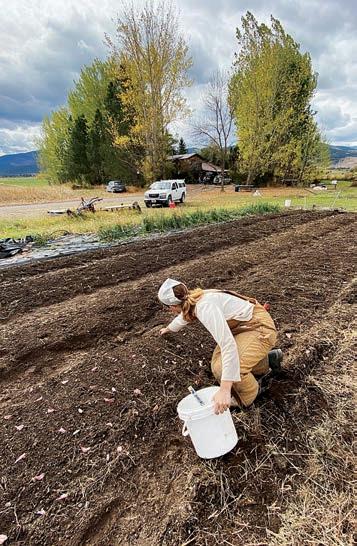
After graduating in 2020, Jess farmed in Montana and Washington before landing in Maine. Ever since, Jess has immersed herself in the farming landscape in Maine, working on farms that cultivate organic vegetables, flowers, blueberries, and justice. Now, her community of farming mentors and friends is one of the things that keeps her rooted in Maine. She works at The Ecology School at River Bend Farm, her first role outside a commercial production setting. The farm grows food
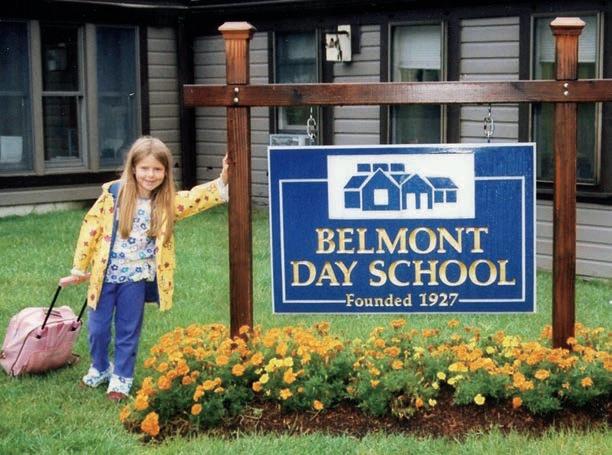
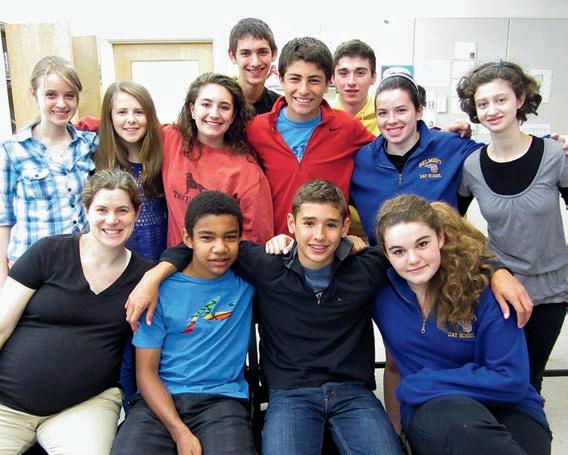
(left) Jess on the first day of pre-kindergarten • (right) Jess and Eric, with their Advisory group led by math teacher Becca Gerner.
“I had never had access like that before. Farms were just out of reach from my suburban upbringing. It was foundational to how connected I felt with the natural environment.”
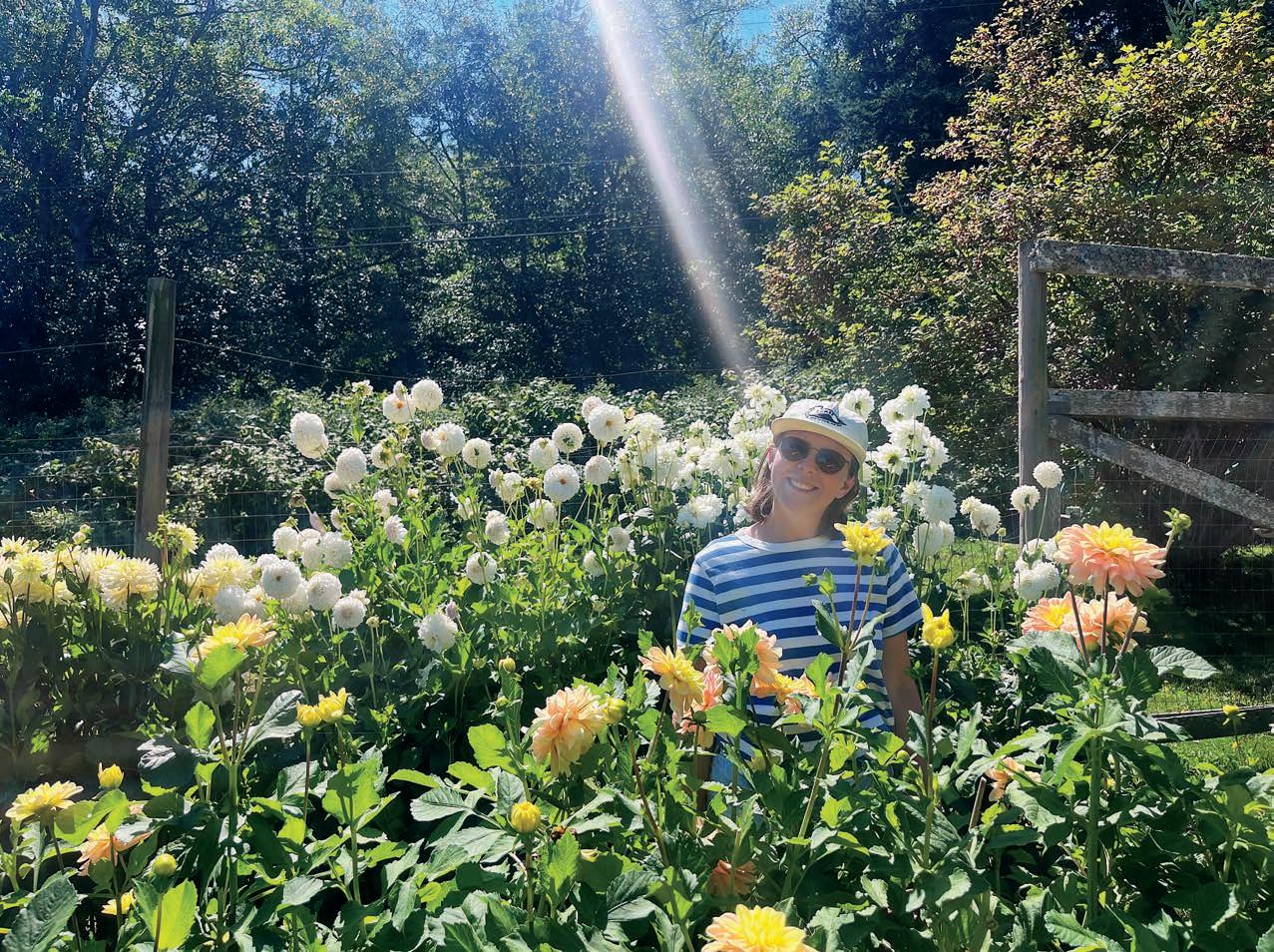
for the school’s dining hall and donates thousands of pounds of produce each year to local food banks. Jess’s role blends hands-in-the-soil labor with education: They grow food, guide apprentices, answer children’s questions, and help visitors understand sustainable agriculture. It is a flashback to The Farm School experience they loved so much at Belmont Day.
“About 90 percent of my time is spent farming,” she says, “but I love getting to teach folks who are learning to farm for the first time. Learning from kids and adults is part of what keeps me grounded.”
For Jess, farming isn’t just a job; it’s a worldview. “It’s become how I understand the world and my place in it,” they say. Environmentalism shows up for her not as a slogan but as a practice: sustainable growing techniques, soil care, equitable food systems, and the daily
work of feeding people well. Farming has also oriented Jess’s understanding of justice. They are deeply committed to connecting where our food comes from, who is growing it, the conditions farmworkers often endure, and how they can support a more just food system.
They feel called to continue to contribute to just food systems and their farming community in Maine, and so looking ahead, she’s deciding whether to start her own farm, partner with others, or perhaps connect new farmers with land from retiring farmers.
“Parents might not picture their child becoming a farmer,” Jess says with a smile. “But I think most parents want their kids to love their work, to feel connected to it. Farming does that for me. And we need people growing our food— people who care deeply about the land and the communities it feeds.”

Finding HER PATH
Samantha Friborg ’14
on Creating Meaningful Environmental Change
For Samantha Friborg ’14, the seeds of her academic and professional journey were planted long before she knew what environmental policy even meant. “I’ve always loved the outdoors,” she says. “Summers along the coast in Maine or at Lake Winnipesaukee in New Hampshire, romping in the woods and building forts— that’s where it all started.”
After graduating from Belmont Day and Acton-Boxborough Regional High School, Samantha earned a bachelor’s degree in environmental affairs from Yale University, focusing on economics, law, policy, and ethics. This year, she completed a master’s degree in marine and environmental affairs at the University of Washington, where she explored how climate change, biodiversity loss, and inequity shape the future of coastal communities.
The trajectory may sound linear now, but Samantha’s path was anything but. “At Yale, I knew I liked policy and current events, but it took time to figure out how that connected with my love for the natural world,” she recalls. Her coursework led her toward environmental work, while her
time as a Division 1 track and cross country runner deepened her resilience, teamwork, and sense of community, which were first shaped at Belmont Day.
“At Belmont Day, I learned how to advocate for myself and stay curious, she says. “That foundation—knowing how to ask questions and how to keep going when something’s hard—has carried me through every stage since.”
Samantha’s passion for running also opened extraordinary opportunities. She served as captain of Yale’s cross country team, competed at the national level, and later helped her University of Washington relay team set a collegiate record in the 4 x 800 meters. “Running has always grounded me,” she says. “It’s about discipline, connection, and finding joy in forward motion.”
Her graduate work built on those same habits of curiosity and persistence. As lead researchers on a two-year project, Samantha and her team developed “A Framework for Analyzing Feedbacks Between Climate Change, Nature Loss, and Social Inequity in Coastal Social-Ecological

“Running has always grounded me. It’s about discipline, connection, and finding joy in forward motion.”
Systems.” Their research examined three case studies—Kivalina, Alaska; the nearshore systems of the Island of Hawai’i; and Washington’s Duwamish River—to understand how historical and social inequities amplify environmental harm.
Samantha’s own case study focused on Kivalina, a small Iñupiaq community of about 450 residents on Alaska’s northwest coast. “It’s a place where the impacts of climate change aren’t theoretical—they’re part of daily life,” she explains. There, shifts in caribou migration, industrial noise from mining operations, and the increasingly unpredictable Arctic weather threaten a subsistence lifestyle that has endured for generations. “Our goal was to show that histories of colonialism inform current institutional arrangements that limit access to local and traditional resources and have produced inequitable outcomes for communities,” Samantha says. “Given the amplifying impact of climate change on these inequities, it
is more important than ever to develop sustainable solutions through a holistic, community-centered approach.”
“The people of Kivalina are the experts of their own realities,” Samantha adds. “I approached the work as a listener, in the hopes of centering traditional and local knowledge to understand a system and community experiencing rapid change.”
While completing her degree, Samantha also worked for the Port of Seattle’s environment and sustainability team, helping produce its first sustainability annual report and redesigning more than 150 web pages to make environmental data more accessible to the public.
“Ports sit at that fascinating intersection of conservation and industry,” she said. “It taught me that progress comes from working within systems, not outside them.”
Now based in Seattle with Cambridge Leadership Associates, Samantha is exploring how people and organizations adapt to change. “It’s a different lens, but
it’s still about transformation,” she says. “Whether it’s climate or corporate systems, the question is the same: How do we create the conditions for meaningful and impactful change?”
“Belmont Day taught me to see learning as something you do with others,” she remembers. “That same spirit of collaboration drives my work now—whether I’m researching climate and social change in the Arctic or helping corporate teams navigate complexity or helping teams build more sustainable futures.”
“Ports sit at that fascinating intersection of conservation and industry. It taught me that progress comes from working within systems, not outside them...Whether it’s climate or corporate systems, the question is the same: How do we create the conditions for meaningful and impactful change?”

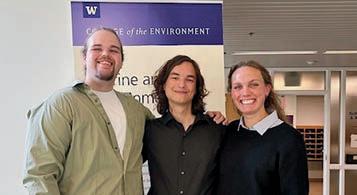
Samantha presenting research with colleagues at the University of Washington.
Learning FROM THE WATER
Colton Largay ’19 on Discovering Marine Science at Eckerd College
The earliest seeds were planted far from the oceanfront—on a quiet lake in Maine, where Colton Largay ’19 spent childhood summers catching and releasing painted turtles from a kayak.
“I’ve always loved animals, marine and terrestrial,” he says. “Turtles were the beginning of it.”
Now a junior, double-majoring in marine biology and animal studies at Eckerd College, Colton says his path traces from those summer days, through middle school science classes at Belmont Day. Then, a defining Costa Rica trip during high school highlighted a path to where he is now, doing fieldwork along Tampa Bay, where shifts in water temperature, salinity, and acidity tell stories of a changing ocean.
Colton arrived at Belmont Day in sixth grade. In science classes, he learned that questions matter and that curiosity has value. “That definitely stayed with me, and I continue to use a lot of what eighth grade science teacher Mrs. Trentowsky introduced me to in biology and earth science,” he says.
High school at Concord Academy sharpened that curiosity and gave it purpose. A summer program in Costa Rica became the pivot point. It was his first major trip away from home, a three-week stay at a sea turtle research station, where he learned about marine species, local conservation efforts, and the full lifecycle of sea turtles from nesting to hatchlings.
“There was a moment when I got to hold a hatchling and measure it,” Colton recalls. “That was when I realized I really wanted to pursue this.”
Eckerd College, with its direct access to Tampa Bay, became the logical next step. The campus functions as a living laboratory—fieldwork happens by boat, off the seawall or, on the college’s own beach. Walk 150 feet from the dorm and you’re in the ocean.
First-year reality hit hard in Biological Oceanography, Eckerd’s notoriously difficult gateway course. “It’s a weed-out class,” Colton says, “but I did well enough.”
Since then, his coursework has taken him deep into marine invertebrates, animal behavior, genetics, and oceanographic field methods. The list of species he’s studied reads like a naturalist’s journal: sea stars, seahorses, blowfish, sea squirts, corals, hermit crabs, mussels, flatworms, and more kinds of snails than he knew existed.
These hands- on experiences transformed climate change from an abstract concept to a visible reality. Water temperature, salinity, acidity—everything shifts. Species struggle to adapt fast enough. Colton got to see the ecology he had read about responding in real time to these forces.
Looking ahead to his senior year and beyond, Colton circles back to an interest in using this background as a teacher. Summers working at Belmont Day’s summer camp have reminded him how much he enjoys helping younger students learn.
“I think I want to go into STEM education,” he says. “Maybe I’ll bring marine science into the classroom someday. There’s so much kids can learn from the ocean.”
The path forward continues taking shape, but the direction holds steady— science, water, and helping others discover wonders in both.
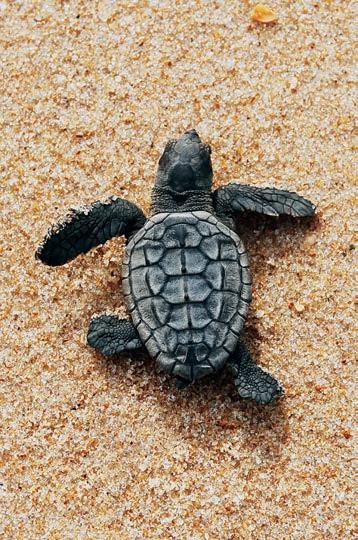
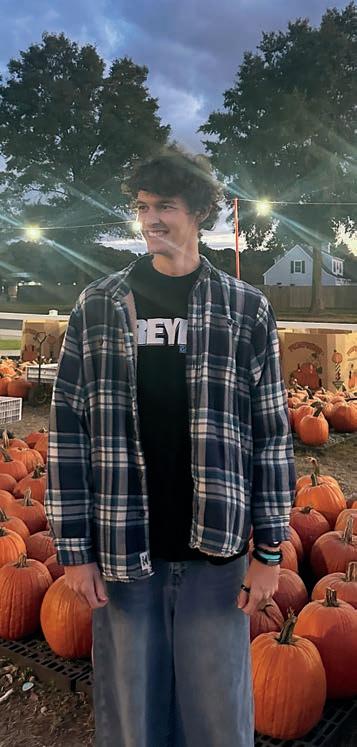
“There was a moment when I got to hold a hatchling and measure it. That was when I realized I really wanted to pursue this... Maybe I’ll bring marine science into the classroom someday. There’s so much kids can learn from the ocean.”
A Young Voice WITH REAL IMPACT
Sue Kelman ’21 on Building a Life of Climate Activism
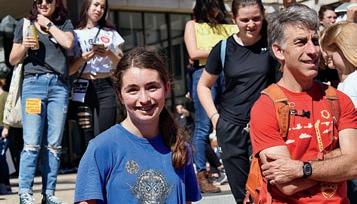
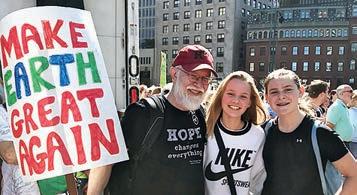
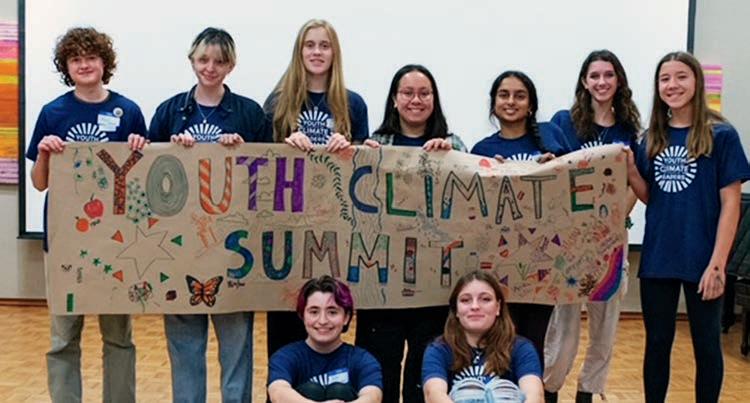
In sixth grade, Sue Kelman ’21 was introduced to an idea that would help shape her life, thanks to social studies classes with a rich curriculum on civil rights. Teacher Dean Spencer encouraged his students to think of the American Civil Rights Movement not just as part of our history but as a blueprint for responsible citizenship. An opportunity to engage came in the form of the September 2019 Global Week for Future Climate Strikes. Dean encouraged students to consider attending the Boston event, which was planned in part by Margo Danahy ’17; Sue attended with her family and came back changed.
“That next week, Mr. Spencer invited anyone who had gone or wished they had gone to meet during lunch,” Sue recalls. “So many kids showed up that it became a weekly thing.”
The informal debrief morphed into “Climate Lunch,” a student-led group that organized campus initiatives from Lights Out Day to classroom climate lessons. “It felt like the adults were saying, ‘You can do something. Your voice matters,’” Sue says.
Dean remembers it the same way. “Sue is a powerhouse,” he says. “She helped other students discover their own agency. That’s the whole point of teaching.”
When the pandemic shut down in-person school, the group adapted, hosting Zoom discussions and partnering with Elders Climate Action. Though Climate Lunch eventually ebbed like many student groups disrupted by COVID, Sue’s activism didn’t.
“I kept looking for ways to be involved,” she says. “I’d search things like, ‘How can kids help with climate change?’ and that opened doors.”
Those doors led to a remarkable series of leadership roles:
• Mass Audubon Climate and Nature Champions (letter-writing advocacy)
• Our Climate ( lobbying state legislators on climate education bills)
• Governor’s Youth Climate Council
• Climate Communication Fellow at the Critical Action Lab
• Co -founder of Concord Academy’s Green Lobbying Club
• Habitat Nature Camp counselor (teaching younger students how to act on climate issues themselves)
Sue also spent a transformative semester at the High Mountain Institute in Colorado, immersed in environmental
“It felt like the adults were saying, ‘You can do something. Your voice matters.’”
ethics, ecology, and intensive backcountry expeditions. She says the experience was “a reset, and a reminder of what we’re fighting for.”
Last spring, she stepped into a new role as a designer and youth leader for Mass Audubon’s Climate Action 101 Summit, where she helped teach hundreds of students—including BDS seventh and eighth graders—how to advocate for climate solutions in their own communities.
“It felt like coming full circle,” Sue says. “I was doing for other kids what my teachers at BDS did for me, saying, ‘You can do this. You can make a change.’”
Now a first-year student at Amherst College, Sue is exploring environmental careers, with dreams of someday working on policy at a think tank or in a climate-focused nonprofit. She will always credit BDS with helping her understand that real change starts with young people who are told their voices matter.
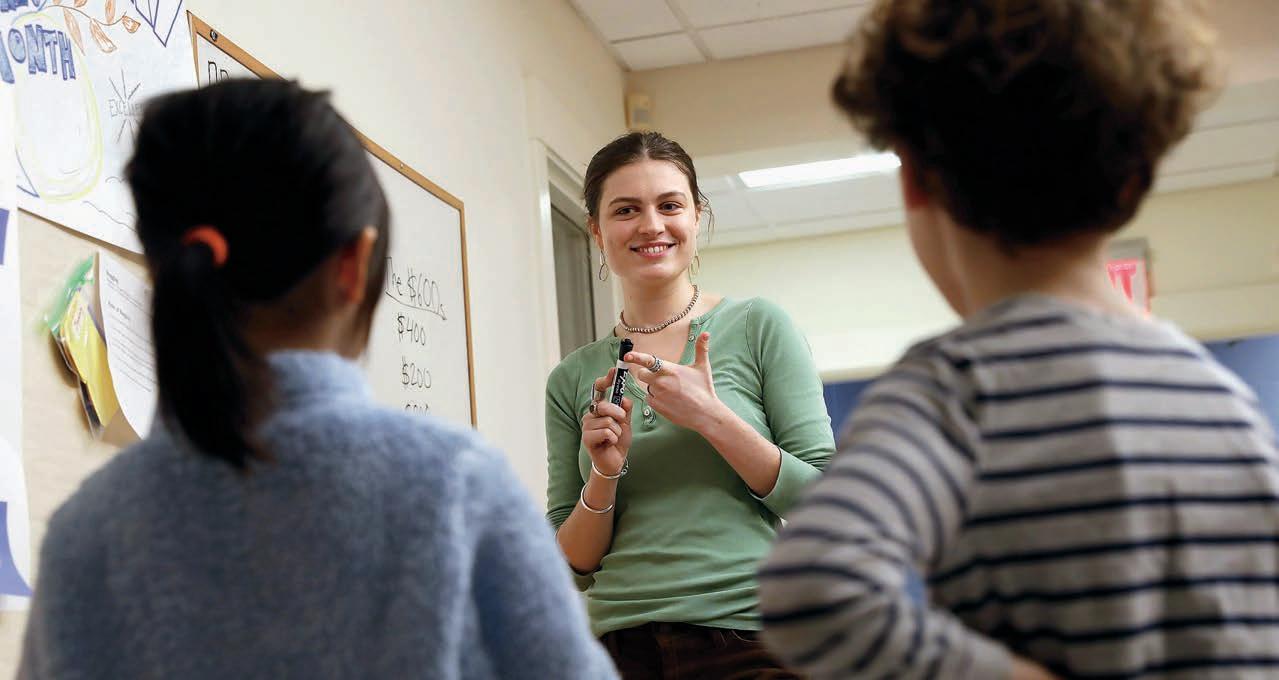
(top left) Sue Kelman ’21 with her dad • (bottom left) teacher Dean Spencer, Sophie Dornstein ’19, and a friend at a Boston climate strike event • (right) Sue Kelman ’21 with the MetroWest Summit youth leadership group.
“Young people are the key to the climate crisis. Having the joy and curiosity children naturally bring to being outside—you can harness that and raise people who care about making change.”
Building THE MOVEMENT
Margo Danahy
’17 on Creating a Career at the Intersection of Climate Science and Advocacy
For Margo Danahy ’17, a sense of responsibility for the planet began outdoors, in pre-kindergarten, playing, exploring, and learning to take joy in the natural world. Those early experiences, shaped by Belmont Day’s emphasis on outdoor learning and time spent at the nearby Mass Audubon Habitat Education Center & Wildlife Sanctuary, planted seeds of a life rooted in environmental stewardship.
“Having a sense of responsibility for the planet has always been part of my life,” she says. “I definitely owe that to Belmont Day.”
For Margo, simply being outside and loving nature before learning to protect it was foundational, a priority her parents also nurtured. “Fostering joy in playing outside is the first step in raising people who want to care for the environment,” she says.
As she moved through Belmont Day, that early joy solidified into understanding. The sixth grade visit to The Farm School sparked a lasting interest in sustainable farming and food access. Seventh grade hikes at Cardigan Mountain reinforced the connection between community and the outdoors. But it was a year-long sixth grade curriculum on the Civil Rights Movement, led by teacher Dean Spencer, that helped Margo really connect learning to purpose.
Immersed in history, primary accounts, and difficult truths, she began to see education not as something separate from the world, but as preparation for engaging with it. “That experience made me think about my education as being intrinsically connected with my purpose as an advocate or as a steward,” she explains.
“To go to school and feel like this is my purpose here—to learn the history and the facts that I can take and turn around and give back to the world in a meaningful way—I was lucky that I was able to see school that way.” That philosophy continues to guide her.
At Belmont High School, Margo found a way to put that mindset into action. She started a climate action club and successfully advocated for the new high school building to be net zero. She also spoke at the State House in support of a carbon tax bill and organized climate strikes through Massachusetts Youth for Climate Justice and the Sunrise Movement. In partnership roles with both organizations, she worked with other social justice organizations, faith groups, and schools, building
coalitions and learning how interconnected climate justice is with issues of access, language, and equity. Margo was one of the high schoolers who organized the Youth Climate Strike that so inspired Sue Kelman ’21. (See page 17.)
One of the initiatives she’s most proud of grew out of that collaborative work: helping develop climate curricula for Boston Public Schools in partnership with the Boston Teachers Union. The lesson plans covering environmental science, climate justice, and the history of environmental advocacy were designed to be age-appropriate and accessible. They were successfully shared with teachers across the district. “We realized that even groups that weren’t explicitly doing environmental work were still promoting climate justice,” she says.
Alongside organizing, Margo spent her summers teaching environmental science at Habitat Nature Camp in Belmont. Through trail games, lessons on soil composition and weather patterns, and hands-on exploration, she learned how to translate complex ideas for young learners—a skill that would later shape both her academic path and her career goals.
When she arrived at Bates College, Margo realized there was still a gap she needed to fill. After years of advocacy, she
understood the policies she cared about, but wanted a deeper grasp of the science behind them. “I wanted to better understand what was actually going on in the atmosphere, and how fossil fuels get from the ground and result in the planet heating up,” she says. “I wanted to be able to model and understand that.”
She double-majored in English and earth and climate sciences, studying everything from glaciers and volcanoes to climate and glacier retreat modeling. She spent a summer working in a salt marsh in Phippsburg, Maine, researching methane and carbon sequestration. The work combined rigorous field research with collaboration among local stakeholders and indigenous communities on communication and policy.
“That experience made me realize that I love climate research,” she says. “It was so exciting to do that kind of field research.”
The marshes themselves left a lasting impression. Highly effective natural carbon sinks, they play an outsized role in climate mitigation, yet remain widely overlooked.
That connection deepened during the summer after graduating in Normandy, where she lived on a farm with a host family, helping tend their greenhouse and working in her host dad’s restaurant. “It
felt full circle,” she says, “moving from salt marsh research and restoration advocacy to then using salt marsh and farm vegetables as part of the meals we were making at the restaurant.”
Since then, Margo has been searching for roles that allow her to stay rooted in both science and advocacy. She has also come full circle, working in Belmont Day’s After School Program and as a substitute teacher, and sharing environmental lessons with first and second graders. Alongside a co-teacher who also worked at Mass Audubon, she leads bug hikes, nature walks, and other seasonal outdoor explorations that echo her own early experiences.
The work feels purposeful. “Young people are the key to the climate crisis,” she says. “Having the joy and curiosity children naturally bring to being outside—you can harness that and raise people who care about making change.”
Looking ahead, Margo imagines a career that balances time in the field with time advocating for policy—collecting wetlands data one day, writing and speaking about wetlands protection the next. It’s a path that reflects the full arc of a journey that began at BDS, where science is informed by values and education turns into action.
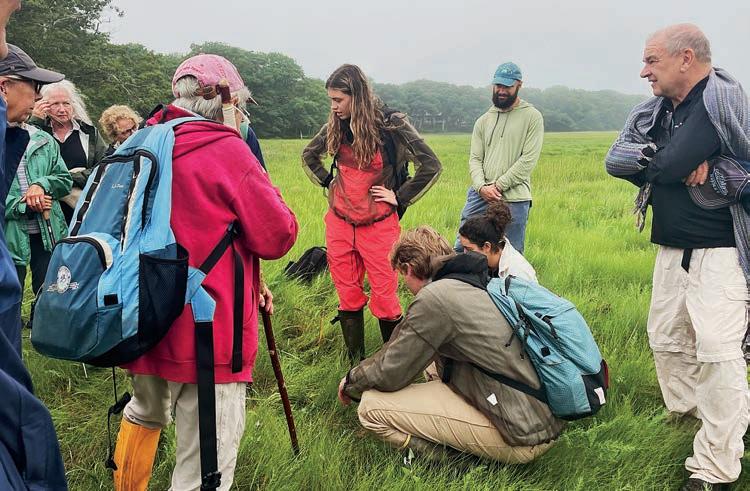
Margo teaches local stakeholders about the science of salt marshes.
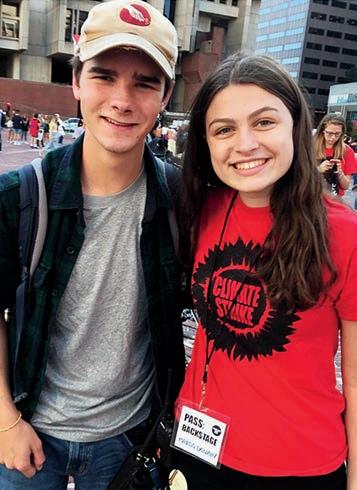
Margo reconnects with BDS classmate Ethan Smyke ’17 at the Boston Climate Strike.

How Hidden Systems Transformed Seventh Grade Science
Uncovering
What’s Beneath the Surface
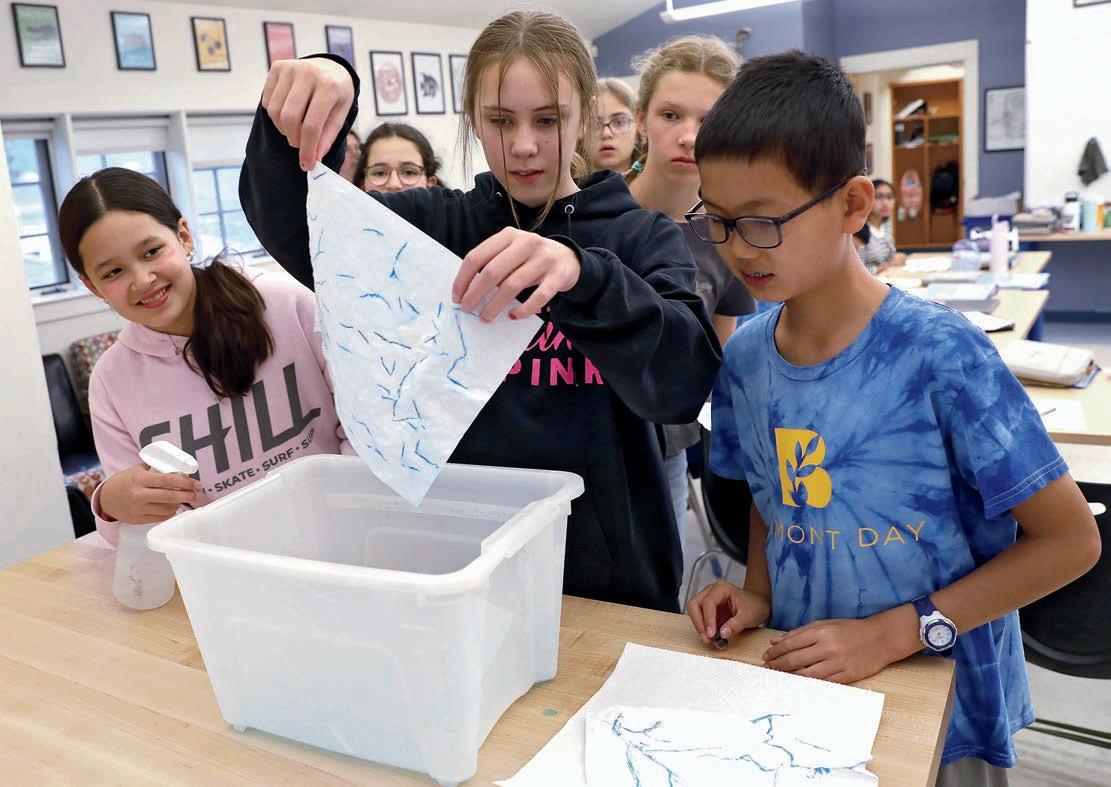
When seventh graders ask their favorite question—Why are we studying this?— science teacher Maggie Small doesn’t hesitate with her answer.
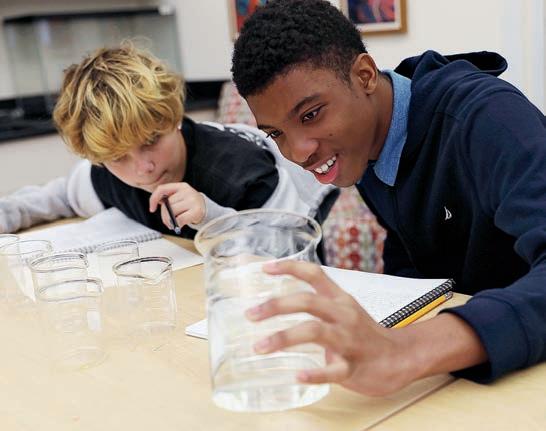
“Because water touches your life every day,” she tells them. “You shower, you brush your teeth, you drink it, you flush it. Knowing where water comes from and how fragile those water systems are is something everyone should understand.”
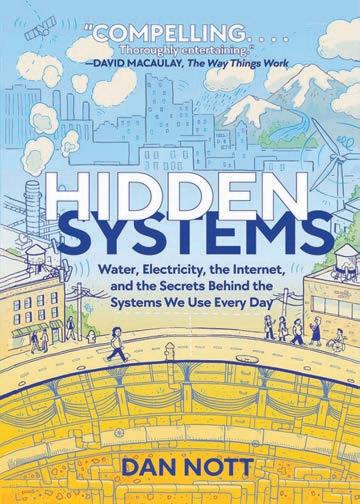
Knowing that she was adjusting her curriculum to foster learning that builds on itself and helps students make sense of the real world, a colleague slipped a book into Maggie’s hands. That book was Dan Nott’s Hidden Systems: Water, Electricity, the Internet, and the Secrets Behind the Systems We Use Every Day. The graphic nonfiction text maps the invisible infrastructure most people never consider, from pipes and pumps to reservoirs and cables. It also shows how human choices shape these systems.
A Year Built Around Water
Inspired, Maggie had a vision of how this book touched on many of the key science skills important for this grade. She saw that each piece would intentionally align with the grade-level standards and would provide an engaging entry point for students. She decided to rework the yearlong seventh grade science curriculum around water systems. Students dig into their own daily water use. They look at where their water comes from, how climate affects access to it, and how decisions made decades ago still shape today’s ecosystems.
During the first year, students traced the route of their own drinking water. They learned that Belmont draws from the Quabbin Reservoir, delving into the complex history behind its creation, including the four towns that were dismantled and flooded for the “public good.” A virtual field trip to the reservoir explored conservation efforts and the challenges posed by climate-driven droughts.
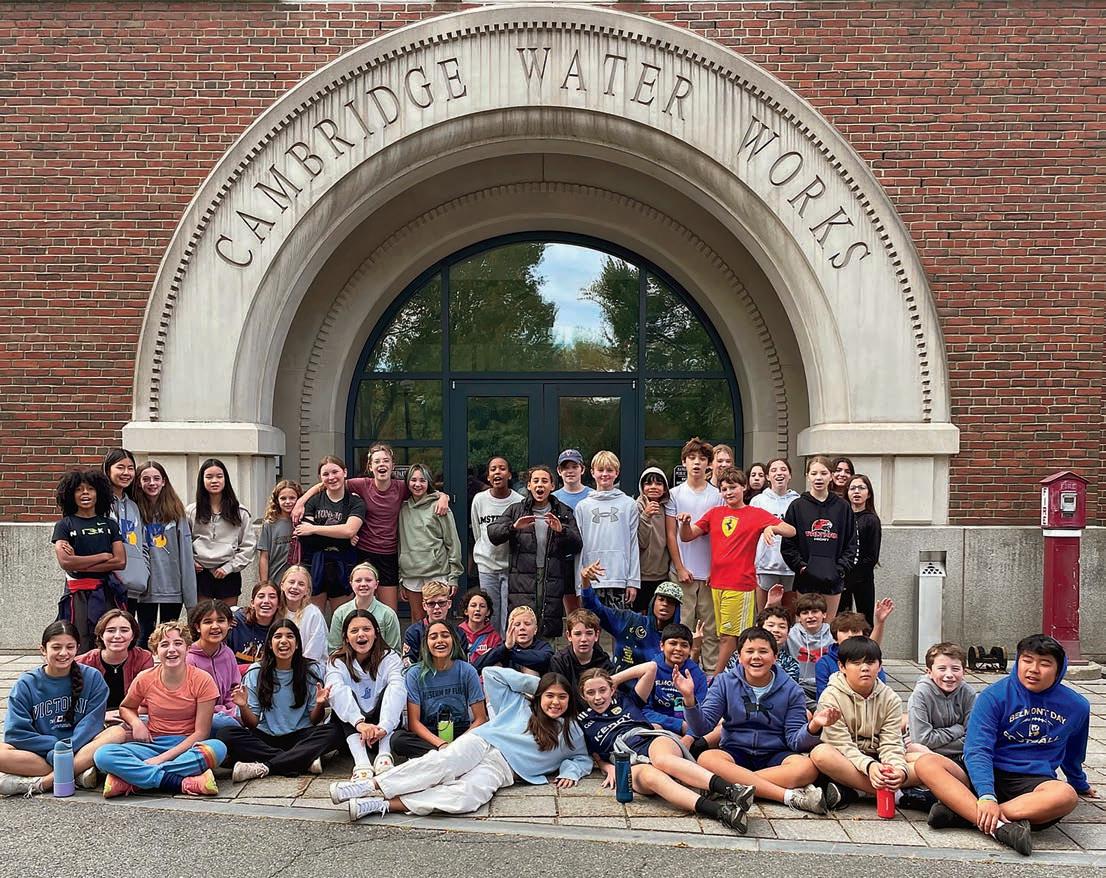
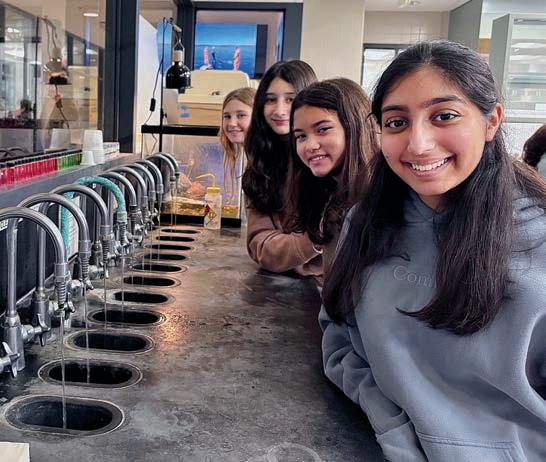
The class also visited the Cambridge Water Treatment Plant at Fresh Pond to study local ecology, invasive-species
management, and purification systems. Inside the plant, students met the scientists who keep the system running around the clock and saw how engineering and environmental care come together.
Turning Learning Into Design & Action
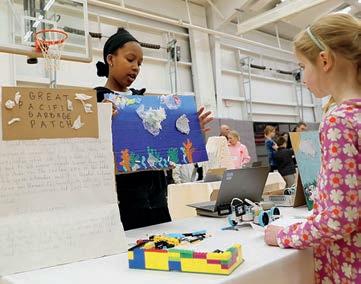
By winter, the class turned to oceans. For the annual STEAM Expo in late February, students investigated marine issues, including microplastics, oil spills, and overfishing. They then prototyped solutions with LEGO robotics. One group built a debris-sorting robot. Another designed a skimmer to collect floating waste.
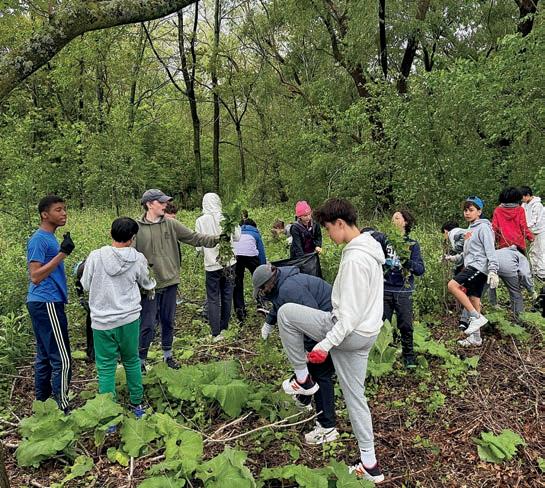
In the spring, they followed the path of pollution through local rivers and watersheds. A partnership with Mystic River Watershed Association brought the learning outside, where students spent an afternoon pulling invasive garlic mustard and cleaning riverbanks.
“It’s all connected,” Maggie says. “The water we use, the oceans we depend on, the rivers running through our towns.”
Comics as a Teaching Tool
In November, the writer whose book sparked the curriculum redesign came to campus. Graphic novelist and educator Dan Nott spoke at a middle school assembly and visited Maggie’s class to show how illustration can uncover the hidden forces shaping our world. Students traced aquifers and storm drains through his panels like detectives.
“It opened their eyes,” Maggie says. “Science isn’t just facts—it’s stories about systems, people, and choices.”
Nott also led a two-day summer workshop for faculty on the history of comics and practical ways to use them in the classroom. Teachers from every division joined in.
“I now have so many resources and direct exercises for my students from this professional development session that I am excited to incorporate into my class curriculum,” says visual arts teacher and sustainability coordinator Kathy Jo Solomon.
A Curriculum That Keeps Evolving
For Maggie and her students, the water curriculum is still growing. She’s planning deeper climate connections and a new project in which seventh graders act as “water ambassadors” during Earth Week.
“The students are starting to see how precious water is,” she says. “And they’re realizing that our choices, both as individuals and as communities, matter.”
The inspiration for this thoughtful reworking of the seventh grade science curriculum began with a graphic novel. But the larger story is the one students are learning to uncover: Behind every system is a responsibility and a chance to make things better.
“ It’s all connected. The water we use, the oceans we depend on, the rivers running through our towns. ”
Inside Second Grade’s Changemakers Project
Learning to Change the World
On a fall morning in the Erskine Library, a second grader studies a picture book more intently than some adults read the news. Pencil hovering, she is not just reading for fun; she is hunting for evidence. Her task sounds simple, but it is, in fact, wonderfully sophisticated. She needs to find out how the subject of her book—an environmental leader—changed the world.
That inquiry launches the Changemakers Project, a yearlong, cross-curricular experience that weaves together research, reading, writing, social-emotional learning, and hands-on service. It begins with a single idea:
A changemaker is someone who identifies a problem, finds a solution, and inspires other people to help.
By the end of the year, these young students aren’t just learning about these leaders. They are becoming changemakers themselves.
Step 1
Research Like a Scholar (Even When You’re Just Seven)
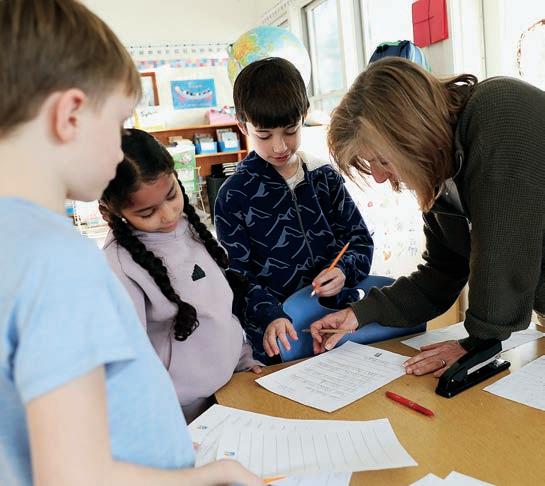
For many BDS students, this is their first real research project. In collaboration with librarian Amy Sprung, second graders are introduced to PebbleGo, a research database designed for early readers, and to a set of carefully selected texts. With support, they learn to:
• Navigate a database rather than just “Googling it.”
• Decide whether a source is reliable and appropriate.
• Pull out key ideas instead of copying sentences word-for-word.
• Record information in a graphic organizer.
• Put ideas in their own words.
“This is where they’re switching from learning to read to reading to learn,” says Nancy Fell, who has been teaching at BDS for nineteen years.
Once the students have completed this research, they create a bookmark about their changemaker, synthesizing all of their research into a single sentence and picture that conveys their important accomplishments. Although smaller than a traditional report, the impact is big. The bookmarks live on, tucked into books in the Erskine Library. Students also present their work to a small group of peers. Academically, they learn research, writing, and presentation skills. Developmentally, they learn that their voices are worth hearing.
Step 2
Connecting the Learning with Something Tangible
Throughout the year, students return again and again to the idea that one person can make a difference, especially when it comes to caring for the environment and one another.
In social studies and science, they learn about local food systems, food deserts, and food insecurity. They discover that not everyone has access to fresh, healthy food, even in communities near their own. The conversations can touch on big, scary topics—climate change, pollution, inequity—but the teachers are intentional about focusing on empowerment rather than fear.
“Our goal is to help them see that it just takes one person to make a change,” says second grade teacher Katie O’Brien, “and that person can be a second grader.”
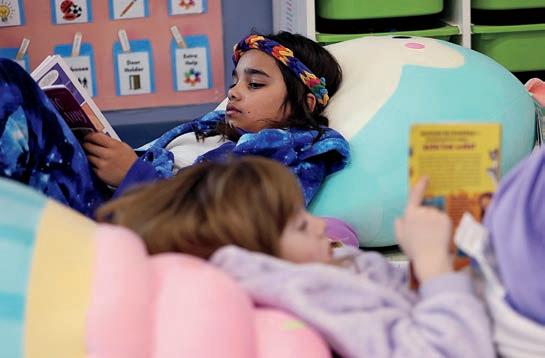
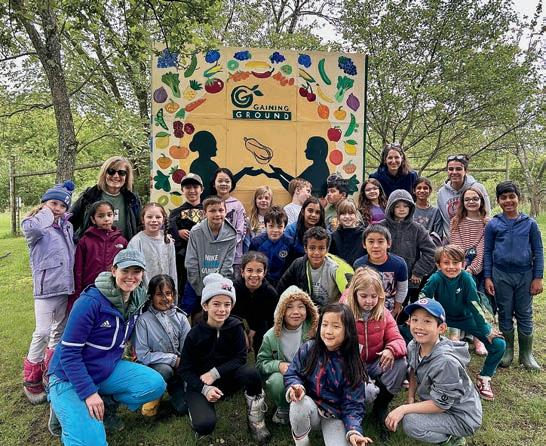
The learning builds toward Read for Seeds, a longstanding second grade partnership with Gaining Ground, a Concord-based farm that grows organic food for local meal programs and food pantries. Students gather pledges tied to their reading and raise money to support the farm’s work. Over nearly two decades, Belmont Day second graders have contributed more than $100,000.
In the spring, the students visit Gaining Ground to plant, weed, and prepare beds. It is a hands-on moment when abstract ideas about service become real. They began the year researching changemakers, and now they experience what it is like to be one.
Step 3
Values, Voice, and the Bigger Belmont Day Journey
Underneath the research and fieldwork, Changemakers is a key component in launching students onto a broader path.
This research experience doesn’t stand alone. It’s an initial step in a school-wide trajectory:
• In third grade, students research states for the annual State Fair.
• In fourth grade, the study topic is ancient Greece.
• By eighth grade, they are tackling Capstone, a yearlong research experience that culminates in a research paper, project, and a community presentation.
Each project gets more complex, but the foundations— evaluating sources, note-taking, summarizing, and presenting—remain the same.
Even more than these hard skills, however, Changemakers means students leave second grade understanding a more powerful truth: Research can be joyful, service can be meaningful, and even very young people can make a difference.
A DECADE OF RigorCare&
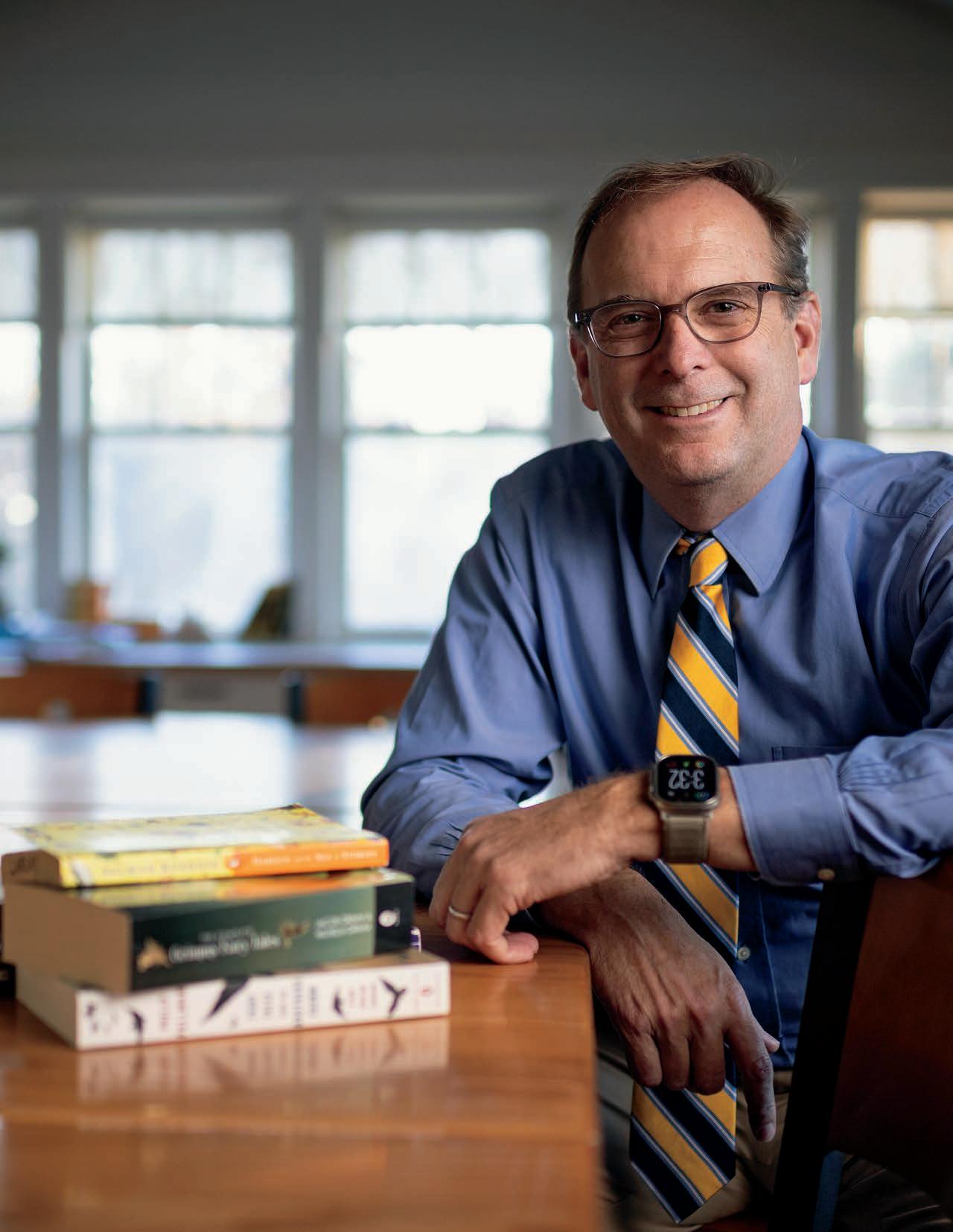
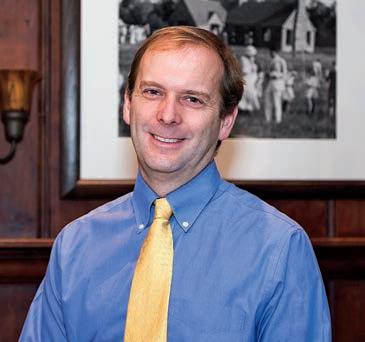
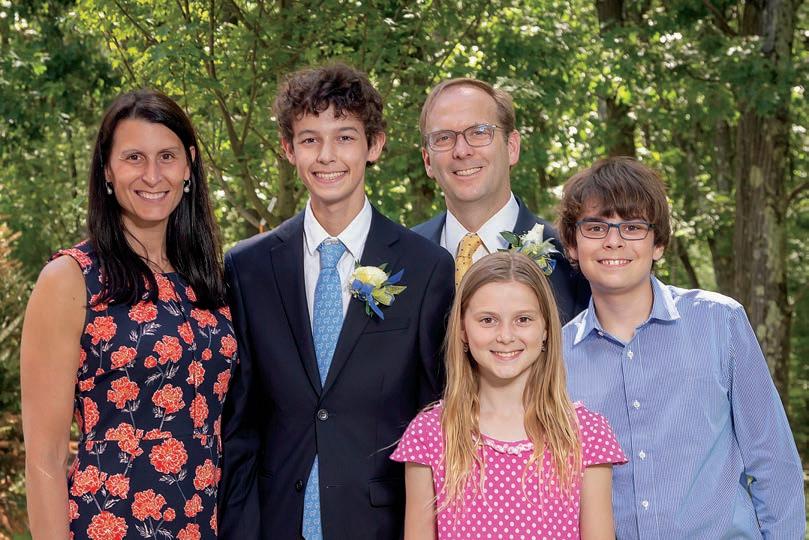
BRENDAN LARGAY Marks 10 Years of Leadership at Belmont Day School
When Brendan Largay first visited Belmont Day in 2013, he came as part of an Association of Independent Schools of New England (AISNE) accreditation team. What he encountered stayed with him: a school where every teacher could articulate the six core values, where every student seemed to embody them, where the alignment between mission and practice was unusually authentic.
“I had never seen a school more powerfully live its core values,” he recalls. “Many schools paint them above classroom doors. At Belmont Day, they live those core values. It’s impossible not to feel it.”
Two years later, when the board of trustees interviewed him for the role of head of school, they described Belmont Day as “Boston’s best-kept secret”—a place families never wanted to leave once they found it.
Brendan’s response was characteristically direct: “That’s a wonderful sentiment and a terrible marketing strategy.” He made his position clear: “If you hire me, you should know I’m less of a secret keeper and more of a ‘give me a mountaintop and a bullhorn, because I’ve got a story to tell’ kind of a guy.”
Ten years later, that secret is out.
Enrollment is full, the school’s reputation is soaring, and Belmont Day has evolved from “a little school on the hill” into one of the region’s most respected pre-kindergarten through eighth grade institutions—one known for pairing high expectations with heart.
Leading with Kindness and Challenge
Brendan begins any discussion of his tenure with what drew him to Belmont Day in the first place: its values. “There’s an authenticity gap if the head of school isn’t living, breathing, advancing their own core values that are consistent with their school’s core values,” he explains.
For him, two values that many might see as opposites are in fact inseparable. “I believe deeply that challenge is a form of care,” he says. “Stretching students, at whatever level they need, is one of the most important ways to show how much we care about them. But kindness and joy are equally essential, especially in a pre-kindergarten to eighth grade environment. Too often, people
view those as opposing forces. In fact, they support one another.”
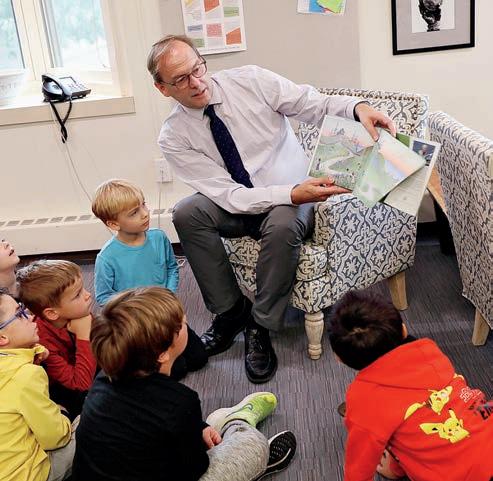
That philosophy runs through every aspect of the school. In the eighth grade Capstone program, students tackle rigorous independent projects with faculty mentors who know them as whole people. In math clubs, budding mathematicians test their skills through Purple Comet or Math Olympiad. Even in the Early Bird morning program, children explore what sparks their curiosity—building with LEGOS, burning energy through active play, or curling up with a book.
When our students have the opportunity to stretch themselves, Brendan observes, “they engage rigorously in whatever they choose to do.”
Steering Through the Storm
Midway through his tenure came the test no leader could have predicted: the COVID-19 pandemic. “Everyone tells you being a head of school will be challenging,” he says. “But no one says, ‘You’ll be navigating a global pandemic.’ Never would I have expected that on my bingo card.”
Brendan credits the “extraordinarily talented” team around him—more than 100 adults who stepped into new roles from managing classroom layouts to consulting with a parent who is a leading infectious disease doctor in Boston. Beyond campus, he joined a weekly 7 a.m. call with forty other heads of pre-kindergarten to eighth grade schools. “Some mornings we cried;
other mornings we shared ideas about what was working and what wasn’t,” he recalls. “It became a lifeline.”
The spirit of collaboration changed his perspective. “What COVID taught me is that the veil between schools is actually artificial,” he says. “We’re far better as collaborators than competitors. We’ve all committed to guide children and families through what we all believe to be the most important years of development.”
Within Belmont Day, families stepped up, teachers adapted with remarkable agility, and by September 2020, the school reopened for five days a week of in-person learning.
“That built enormous trust,” Brendan says. “Parents knew if we could take care of their children in the hardest moments, they could trust us with everything else.”
Innovation as a Constant
Brendan credits much of Belmont Day’s forward momentum to what he calls “innovation as an ethic.” “True innovation isn’t new gadgets or shiny programs,” he says. “It’s a mindset: designing things so they will be a little bit better.”
He points to Director of Innovation Annie Fuerst as central to that culture.
“Annie is incredible,” he says. “Among the things I’m most proud of is that every faculty member believes that innovation
lives in their classroom, whether or not they use a laser cutter or a 3D printer. That’s the spirit that drives Belmont Day.”
From the Haikubox birding project, which brought together technology, science, and the library to cross-grade partnerships that build leadership, examples abound. Even the BDS Showcase, once a student-produced outdoor concert, evolved into a live-recorded Night in the Studio
“When our music teachers told me they weren’t repeating the showcase the next year, I was shocked,” Brendan says, laughing. “But they were right. They wanted to imagine something new, different, and better for the future. Innovation means you are always thinking that way. This year, the showcase is back—refined, re-energized, and even more student-led.”
Hiring for Heart and Excellence
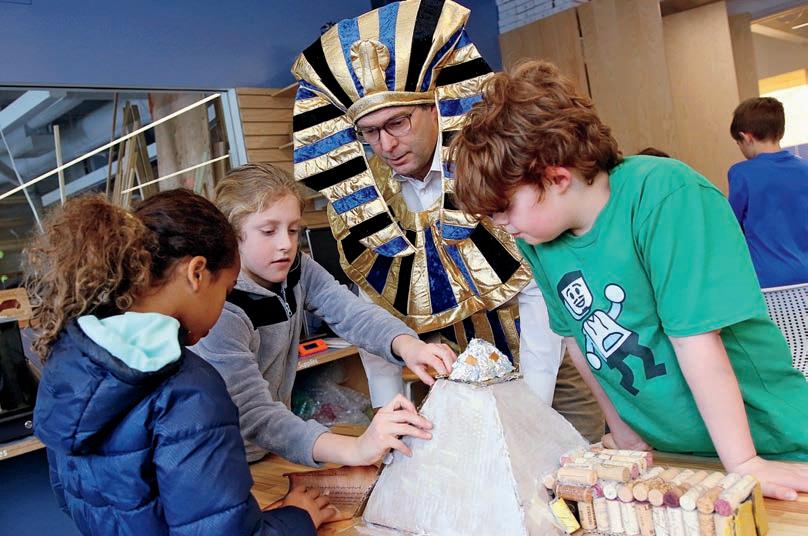
Hiring the right people, Brendan says, is his most important responsibility in delivering the school’s mission. He looks for excellence, but not just on paper. “You are hiring a person, not just a skill set,” he explains. “I want teachers who have a growth mindset, are committed to their work, and love working with children. If you have great people, they will rise to whatever the school needs.”
A Model that Builds Leaders
As both an educator and a parent, Brendan is deeply committed to the pre-kindergarten through eighth grade model. “I believe it is designed for student leadership,” he says. “Our eighth graders aren’t standing in the shadow of high schoolers—they are the leaders.”
Cross-grade partnerships, where older students mentor younger ones, form the backbone of that leadership development. “When an eighth grader has to care for a pre-kindergartner as one of their buddies, it inspires in them a feeling of responsibility and accountability,” he explains. “It also reminds them of the joy of being four years old and the magic of playing in the dirt.”
Intentional transitions mark each stage of growth: first grade’s first trip to the lunchroom, fourth grade’s move to oldest buddy status, and the eighth grade Capstone presentation. “There are these intentional moments, where things change with greater responsibility, and our teachers are so good at helping the students understand what that means,” he says.
Despite the demands of his role, Brendan co-writes recommendation letters for every eighth grader alongside the middle school head and the director of
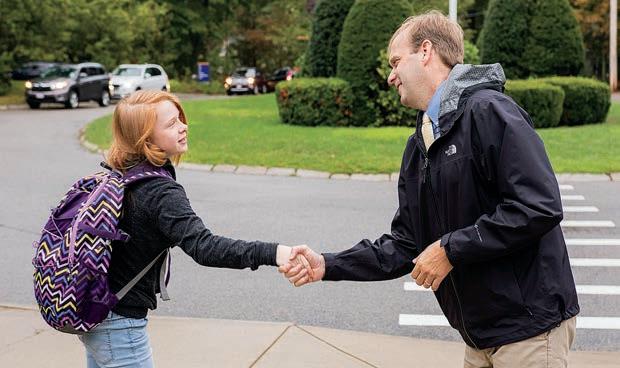
“In 2013, I encountered a place that stands for everything I believe is right about education. I’ve had the gift afforded to me of leading that institution for ten years. This place means a great deal to me.

It’s been truly a gift, an honor.”
high school placement. When he tells other school heads about this practice, their jaws drop. “They respond with, ‘What? Why?’” he laughs. “But I’ve taught these students. I know them. Writing about who they are and what they will bring to their next school is authentic. It’s how we live our promise of individualized education— it’s been in our DNA since 1927.”
The Work of Belonging
Brendan is deeply committed to a school culture and practices that foster belonging and inclusion. “It is really important to me that every student feels safe and can be their full and authentic self, with teachers and classmates who honor and celebrate all the unique qualities each individual brings,” he says.
During his tenure, BDS hosted the AISNE Middle School Diversity, Equity, and Inclusion Conference, created the Growth, Development, and Belonging curriculum, hosted faculty professional development, and instituted the Office of Diversity, Equity, Inclusion, and Belonging. Cultivating this culture is a journey, and Brendan embraces the work. “Fostering
belonging isn’t just a shiny trophy—it’s an ongoing commitment,” Brendan says.
What does real belonging look like? “It’s when every student and family can see themselves reflected in the community— those mirrors—and can also see through windows into someone else’s experience,” he explains. “It’s when diversity isn’t tokenism, when we have a genuine socioeconomic range, diversity of thought, and when every child has at least one adult they deeply trust. That’s how you feel safe and know you belong.”
From “Best-Kept Secret” to Regional Leader
Over the past decade, moments of visibility have accumulated: the opening of the Barn, the school’s second academic, arts, and athletics building; the school’s successful navigation of COVID; and five years of enrollment growth of more than sixty students.
“All of that, and the extraordinary work of our admissions and communications teams, lifted Belmont Day’s profile. We’re now in the same conversation as the very best pre-kindergarten to eighth
grade schools in Boston. Word is out, and I couldn’t be happier.”
Brendan’s leadership has also shaped the broader independent school landscape. He served on AISNE’s board of trustees for six years (2018–2024), including as chair of the trusteeship committee from 2021–2024 and secretary from 2022–2024. He also served for six years on the ESHA board of directors (2019–2025), including four years as treasurer.
Coming Full Circle
As he reflects on ten years of leadership, Brendan returns to his first visit in 2013 and to the alignment he recognized between his own values and those of the school. The work of rigor with care continues as he leads the development of a new strategic plan to coincide with the school’s centennial celebration.
“In 2013, I encountered a place that stands for everything I believe is right about education,” he says. “I’ve had the gift afforded to me of leading that institution for ten years. This place means a great deal to me. It’s been truly a gift, an honor.”
For a school that has always lived its values, there could be no better match.
LOWER SCHOOL
Betty Chu Pryor Lower School Head
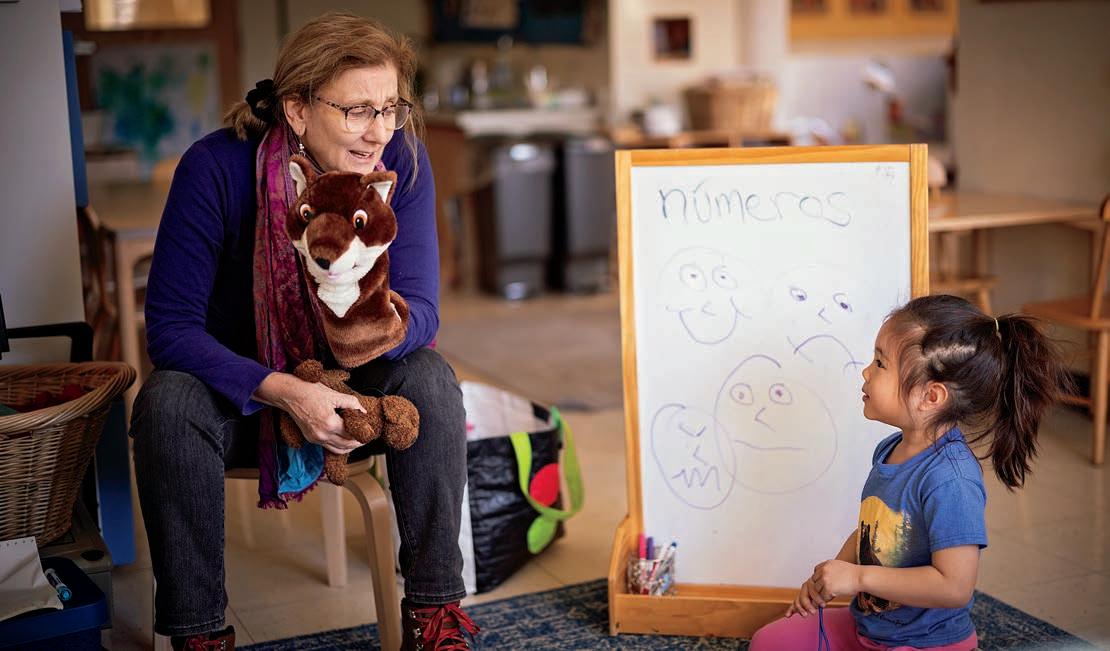
A New Chapter in World Language Learning
A great number of people in the United States speak Spanish—41 million at last count, or 12 percent of the country’s population. As of the 2025–2026 school year, the youngest students at Belmont Day are beginning to learn Spanish, too.
After careful consideration and community input, the lower school world language offering transitioned from
French to Spanish. This transition reflects our commitment to providing students with learning experiences that build cultural understanding and communication skills that enable them to engage with Spanish-speaking communities both locally and globally. French continues to be offered as a choice in middle school alongside Latin and Spanish.
Diane Crefeld is our inaugural lower school Spanish teacher. Diane brings valuable experience in building language programs from the ground up, having successfully developed similar programs at other institutions. Her expertise in growing new language curricula makes her the ideal educator to launch this exciting chapter in our students’ world language journey.
Learning Communities
by Walking Through One
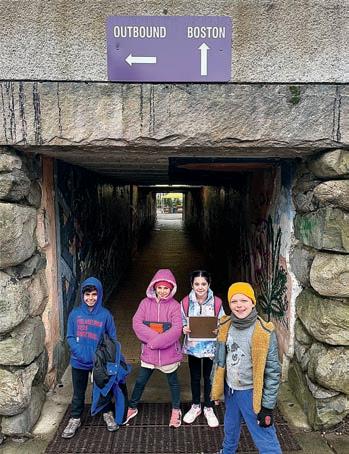
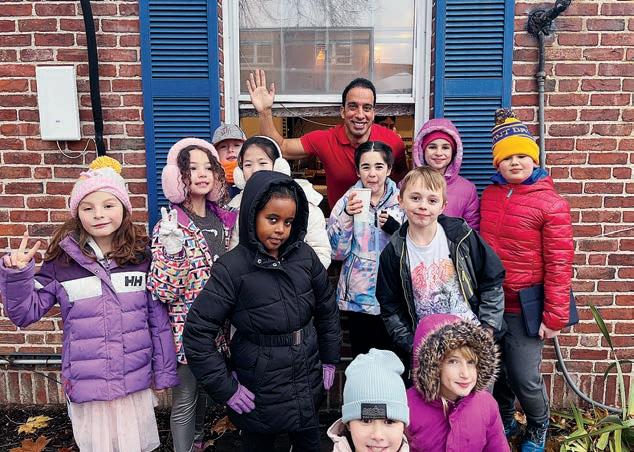
One of our most engaging curricular innovations continues to evolve in third grade, where students study what it means to be a community by stepping directly into one. Now in its fourth year, our walking field trip to Belmont Center has become a beloved tradition that perfectly integrates classroom learning with real-world exploration.
Rather than simply studying communities abstractly, our third graders walk down the hill from campus to interview Belmont business owners, meet with elected officials, and observe firsthand the
elements that make a community function. Students separate into focus groups to study different aspects: businesses, accessibility, utilities, transportation, public spaces, and topography. Each group follows a specific route, taking photographs and notes about their observations.
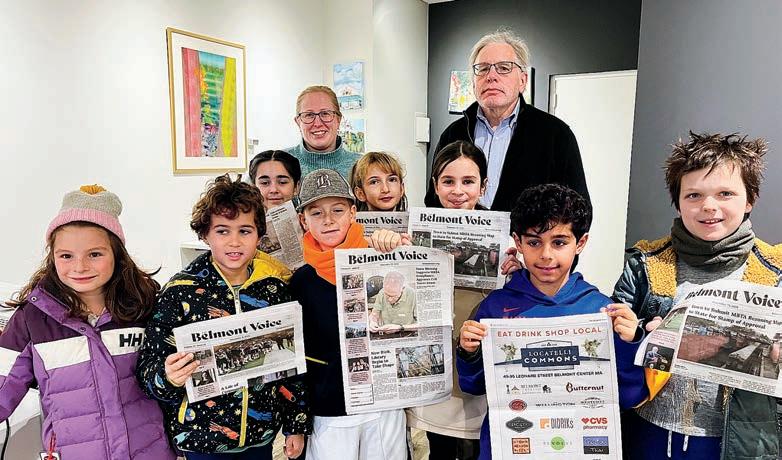
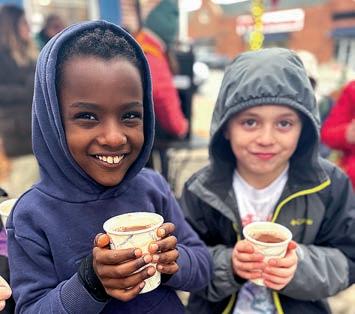
The partnerships we’ve formed with local businesses have been particularly meaningful. The owner of Bellmont Caffé has become such a supporter of this learning experience that he now provides complimentary hot cocoa to warm the students during their fall visit. His enthusiasm was
“The partnerships we’ve formed with local businesses have been particularly meaningful. ”
evident when he posted about the students’ visit on Facebook, prompting other local businesses to ask when they might also welcome our young community researchers. Students wrote thank-you notes to all who took the time to meet with them.
This hands- on experience now includes more engineering, including using Google Earth to observe the town from above and building their own communities using cardboard, incorporating their newfound understanding of what makes communities thrive across different environments—rural, suburban, and urban.
Summer Learning Through Choice and Connection
The upper elementary grades in the Labyrinth—our nickname for the learning spaces for grades three through five—reimagined summer learning by celebrating student choice and reading diversity. Rather than assigning a single book that might be too challenging for some students and too simple for others, we created a flexible framework that honors different reading abilities and interests.
Students also received a summer challenge grid, similar to a bingo board, with activities in math, reading, and writing, that kept students engaged over the summer break while allowing them to pursue their individual interests. Fifth grade students were invited to build a connection with their new homeroom teachers by writing a postcard about their summer reading and mailing it to them.
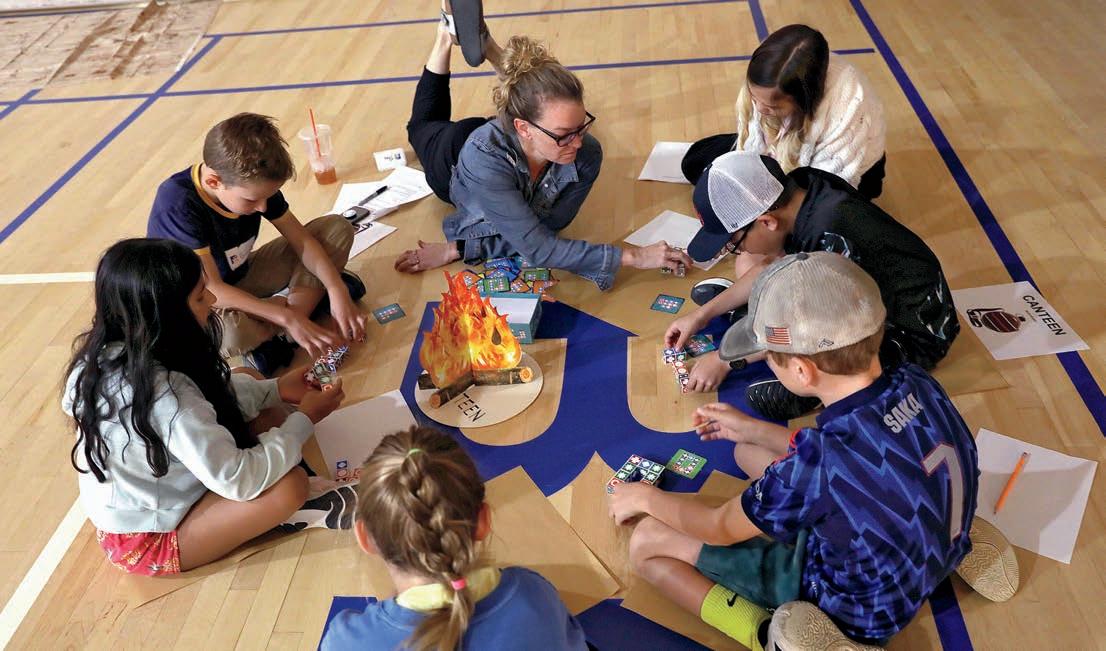
The magic happened when students returned in the fall for a themed kickoff event. We embraced a camping theme, transforming the Downing Gym into an outdoor adventure complete with pretend campfires, tents, and mixed-grade groups sharing their summer reading experiences. Students sat together—third, fourth, and fifth graders intermixed—looking through books, discussing their favorites, and responding to prompts to celebrate their diverse reading journeys.
This three-year rotation ensures every Labyrinth student experiences this community-building celebration for each subject area (reading, math, and writing). The response from families has been overwhelmingly positive, as parents appreciate an approach that meets children where they are as readers while maintaining high expectations for engagement and growth.
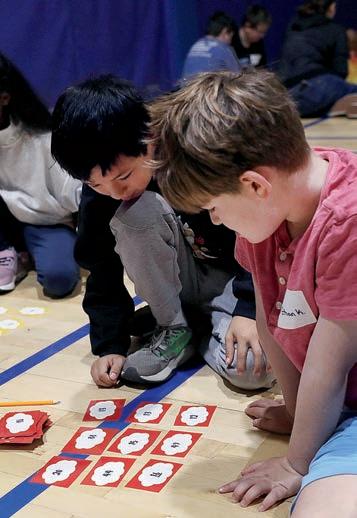
MIDDLE SCHOOL
Liz Gray Middle School Head
Preparing for Tomorrow: AI in Education
Belmont Day is part of a select cohort of eighteen New England schools participating in a year-long professional development program on artificial intelligence in education. Hosted by Buckingham Browne & Nichols School, the program provides educators with space to thoughtfully consider how to integrate AI in their curriculum. BDS is helping to lead these conversations as one of only two pre-kindergarten through eighth grade schools in the group.
The central focus is “augmentation over automation”—teaching students to use AI as an assistant rather than as a replacement for their own thinking. Faculty are exploring critical questions about assessment design in an AI-enabled world. If the point of an assignment is to teach grammar editing skills, for example, that work must happen in class without AI assistance. But if the goal is to evaluate deeper analytical thinking about literary themes, educators need to design AI-resistant questions that require nuanced understanding and personal reflection.
In partnership with Director of Innovation Annie Fuerst and me, five Belmont Day faculty are participating in the professional development consortium: Innovation Coach Brit Conroy, librarian Amy Sprung, eighth grade teachers Emma Alexander and Emily Phan, and Capstone Coordinator Jen Friborg. The conversations have been particularly rich around humanities education, with our teachers contributing

“The central focus is ‘augmentation over automation’—teaching students to use AI as an assistant rather than as a replacement for their own thinking.”
insights about maintaining authentic student voice while embracing technology tools.
This professional development cohort operates on the principle that generative AI is an “arrival technology” that will fundamentally change how we
work and learn. Rather than avoiding this reality, we are developing a school-wide approach that helps students use these tools ethically and effectively. Our goal is for students to understand where AI assistance is appropriate and when independent work is required.
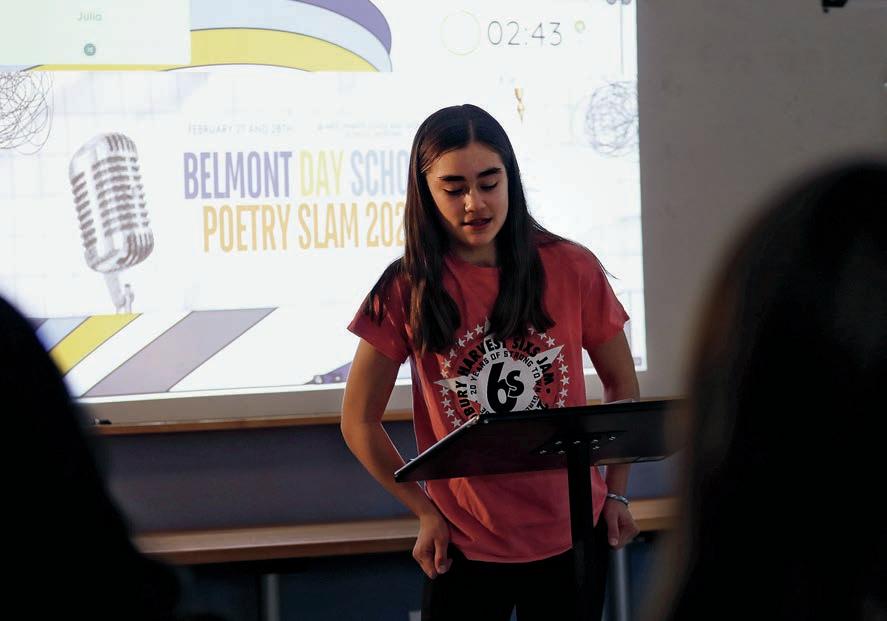
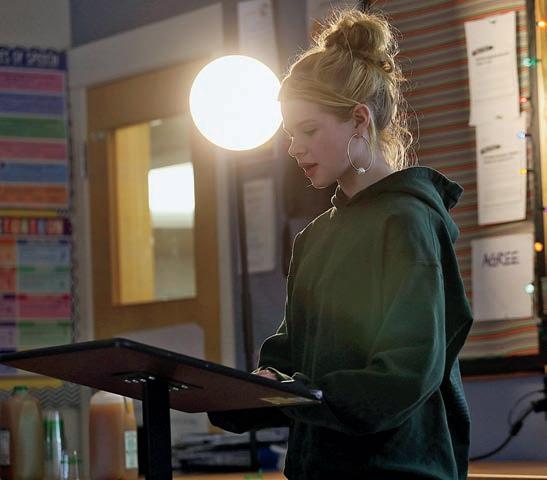
Poetry Takes Center Stage at Slam
Eighth graders brought performance poetry to life at the school’s annual poetry slam. Held in coordination with Black History Month, the event created a powerful connection with our Harlem Renaissance unit, celebrating the rich tradition of spoken word poetry that emerged from that pivotal cultural moment.
After spending weeks studying the works of Langston Hughes, Claude McKay, Jean Toomer, and other Renaissance poets in English teacher Emily Phan’s class, students had developed deep familiarity with the themes and techniques that defined the era. They watched slam poetry performances, including Boston poets and a national youth competition, analyzing how performers used their bodies and voices to create impact.
Emily taught students a technique called the “golden shovel,” where poets select a meaningful line from a Harlem Renaissance poem and use each word of that line as the final word of successive lines in their own new poems.
The resulting works addressed topics including being a Black student in a predominantly white space, feeling unseen by parents, and anxiety about growing up that resonated deeply with the middle school audience.
When the students presented their own work at Middle School Meeting, the impact was profound. You could hear a pin drop as classmates shared vulnerable pieces. It was a powerful celebration of student voices.
As He Sleeps
By Kiernan Patel ’25 after “Theme for English B” by Langston Hughes
Once upon a time there was an amazing, awesome, super cool kid.
He lived in a house made of multicolored LEGO bricks
His neighbor? To the right, the Justice League to the left, fairies, heck I
Wish I was his neighbor too, down the street, a palace, dinosaurs, wizards, he wonders About the royalty as he sleeps, he sleeps sound, as if
To say, “go away, I’m just a kid”. It’s
Odd, because his shoes are getting smaller, he’s taller, deeper hollers, his dollars, weigh more in his pocket. But he doesn’t know why. That
One soft black shirt with a pizza on it, those light up shoes, Simple
As it may seem it sure isn’t
Students Reflect on Their Leadership Growth
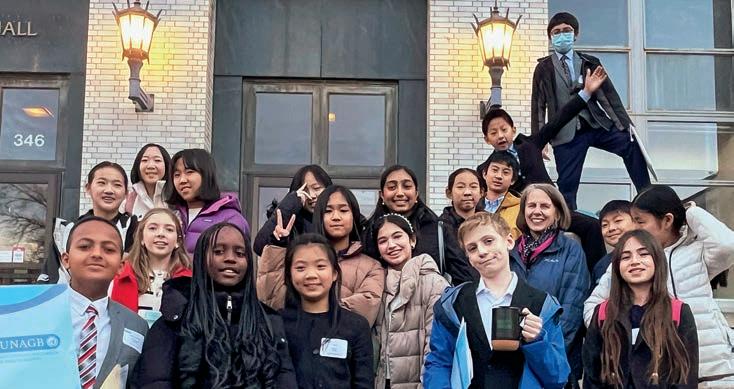
Growing leaders is a key goal for Belmont Day, and our biennial survey of middle school students shows we are succeeding. When we asked, “In what areas have you grown as a leader at school?” every single student identified at least one meaningful area of growth. That striking result reflects the breadth of leadership opportunities woven throughout our program.
The most frequently cited areas were public speaking (20%), athletics (20%), and serving as role models for younger students (20%). Another 15 percent of students specifically mentioned that they had developed a stronger moral compass, pointing to the school’s core values as vital in helping them learn to make better decisions and understand how their actions affect the broader community.
Beyond these top responses, students also identified growth in specific roles— serving as admissions ambassadors, participating in Model United Nations, and presenting at STEAM Expo—as well as less formal leadership such as helping classmates understand difficult concepts and navigating complex friendship dynamics. The variety shows how leadership development happens across multiple contexts, from formal presentations to everyday peer interactions.
What makes these responses particularly revealing is their voluntary, reflective natures. Students weren’t prompted to mention specific programs—they identified these growth areas on their own.
Most compelling are the students’ free response comments, which demonstrate sophisticated insight and awareness of their responsibility to the school community:
• “I’ve developed a better understanding of what I feel is right and what is wrong. When someone is doing something when they really should know better, I call them out for it.”
• “I think I have grown as a leader by learning how to follow and not be in the spotlight, but still help the group.”
• “I have grown as a leader in my academics. I find myself stepping forward and getting things done on time or even before.”
This data confirms that authentic leadership development happens when students internalize values and skills rather than simply participating in leadership activities. The fact that students can articulate their growth suggests that they are developing self-awareness that will serve them throughout their lives.
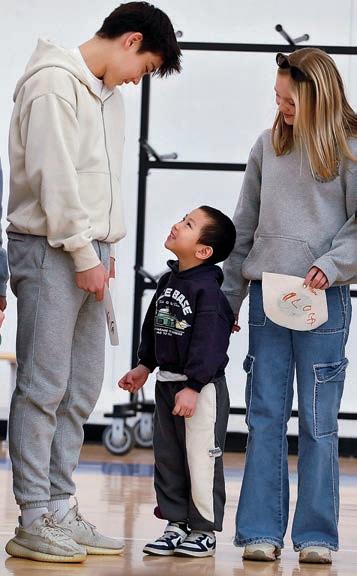
“Every single student identified at least one meaningful area of growth. That striking result reflects the breadth of leadership opportunities woven throughout our program.”
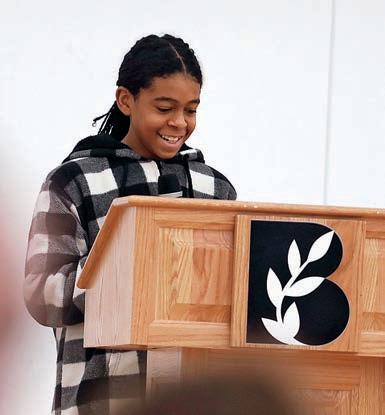
DIVERSITY, EQUITY, INCLUSION, AND BELONGING
Trinity Johns
Associate Director of Diversity, Equity, Inclusion, and Belonging
Streamlining Support
The Equity Fund Transition
The Equity Fund is available to students who qualify for financial assistance, ensuring that all students can fully participate in the robust programming that makes Belmont Day special—from away games to after-school activities. This year, we transitioned oversight of the fund from the financial assistance office to the diversity, equity, inclusion, and belonging office. This shift will allow us to take a more

holistic approach to understanding each student’s needs, considering all aspects of their identity and experience, while creating structural clarity and consistency for families.
Transportation emerges as one of the most common needs we address. The Boston region is car-centric. Ensuring students can participate in away games or evening events requires thoughtful
coordination. By partnering with Director of Summer Programs Zach d’Arbeloff, who oversees transportation for Belmont Day, we can now arrange rides more efficiently, removing barriers that might prevent students from experiencing the full breadth of our program. It’s a reminder that equity often lives in the details—the practical supports that make participation possible for everyone.
Hidden Histories
Hair
and Revolution in Middle School
Some of my most meaningful work happens in seventh grade, where I teach a social studies class. Students at this age are ready to grapple with complex historical narratives. One of my favorite lessons each year is “Hair and Revolution,” where I teach about the ingenious ways enslaved people used braided hairstyles to communicate escape routes and plans for freedom.
We begin by listening to contemporary musicians who celebrate Black hair and culture. The class then learns how these traditions trace back hundreds of years and, in some places, have shaped history. Students discover that enslaved people might hide codes in braided hair. It gives them a glimpse of how something as personal as a hairstyle might carry messages of resistance and hope. When students learn

Windows and Mirrors Expanding Perspectives in Lower School
In our lower school classrooms, powerful learning happens when students discover both themselves and others through literature. I had the privilege of reading What Can You Do with a Paleta? by Carmen Tafolla to our third graders during Hispanic Heritage Month. The vibrant illustrations sparked rich conversations about different communities and ways of life.
Students noticed that the neighborhoods in the book featured fruit stands, while their own communities mostly have grocery stores. This detail opened a window into a different world for students, many of whom live in suburban
areas. Some shared memories of family members who had lived in neighborhoods that are similar to those shown in the book, while others learned about these communities for the first time. The conversation naturally expanded to observations about climate differences, transportation options, and community structures.
These moments demonstrate that diversity encompasses far more than race and ethnicity—it includes geography, socioeconomic background, family structure, and countless other dimensions of human experience. One student mentioned
their neighborhood doesn’t have sidewalks and noticed the walkable community in the book. This is a chance for students to practice critical thinking skills that help build empathy and understanding.
Our youngest learners approach these conversations with curiosity rather than judgment, making space for questions like “Would you like your neighborhood to have sidewalks?” These discussions are intended to help students recognize both differences and commonalities. Our hope is that nurturing curiosity sets the foundation for inclusive thinking that will serve them throughout their lives.
that these communication systems were preserved through oral histories, they begin to understand why some historical stories don’t appear in traditional textbooks.
The lesson culminates in a hands- on art project where students create silhouetted profiles adorned with braided patterns that represent routes meaningful to them—perhaps from home to
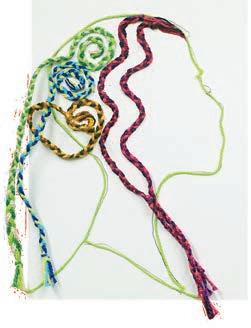
school. One of our classes happened on Grandparents and Special Friends Day, so these guests joined us for this activity. Seeing grandparents learn alongside their students, hearing them say, “I’ve never learned this before,” reminded us all that learning is a lifelong journey.
I love to see students have that “ah-ha” moment during this lesson. They


come alive when they connect something modern and relevant—hairstyles—with social studies. Students see how people found ways to communicate and resist even under oppressive conditions, and they gain appreciation for both human resilience and the ongoing work of building a more just society.

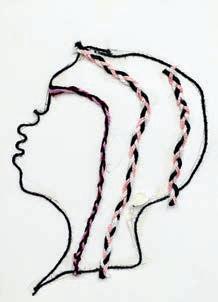
SPOTLIGHT Ar ts
Anne Armstrong Arts Coordinator
Shakespeare Festival
Brings the Bard to Life Across Disciplines
This November, Belmont Day launched its inaugural Shakespeare Festival, an interdisciplinary celebration that brought together seventh and eighth grade students from multiple academic classes and arts electives. Head of School Brendan Largay proposed the festival, and it was made possible by an Inspire Stipend—a summer grant that supports curricular innovation and experimentation. With the support and leadership of theater teachers Susan Dempsey and Christopher Parsons, the vision developed into a schoolwide learning experience centered on performance, collaboration, and literary exploration.
The primary goal of the festival was to make Shakespeare’s work more accessible and engaging for students. While some students participate in electives focused on Shakespeare, the festival provided an opportunity for students who had not chosen those classes to encounter his language, themes, and dramatic power in an inviting, low-risk way. By emphasizing performance and interpretation, the event highlighted the enduring relevance of Shakespeare’s ideas and the expressive beauty of his language.
Student performances reflected a wide range of theatrical disciplines. The Stage Combat class presented a sword fight from Romeo and Juliet, while students in the Special Effects Makeup elective contributed to the event’s visual
storytelling. Students from other electives participated as well; puppetry students were the emcees, guiding the audience through the program with playful Shakespearean commentary. Students from Tragedy and Comedy in Shakespeare performed selected scenes from several plays, and the seventh graders presented excerpts from Romeo and Juliet alongside several of Shakespeare’s sonnets.
Students approached their work with enthusiasm and ownership. The witches in Macbeth were a particular highlight, using rhythmic drumming to heighten the intensity of their scenes, and each student developed a distinct interpretation of their character. Across performances, students demonstrated creativity, confidence, and a growing command of Shakespeare’s language.
Perhaps most significantly, students who only months earlier might have felt intimidated by Shakespeare found themselves volunteering to perform sonnets, stage combat, and monologues. Many left the festival with a deeper understanding of their own abilities as both scholars and performers.
Susan and Chris hope the Shakespeare Festival will serve as a model for experiential, collaborative, and performance-based learning across disciplines, demonstrating the power of the arts to deepen academic engagement and student voice.
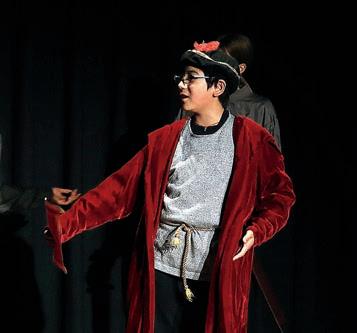
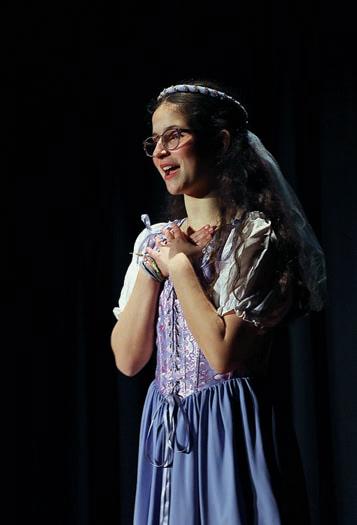
Pre-kindergarten Studios: Where Innovation Meets Early Childhood
Fostering an innovation mindset begins in the earliest grades at Belmont Day. Every Friday, Innovation Coach Brit Conroy visits the pre-kindergarten classrooms, guiding the students as they explore and express their creativity through various materials, fostering problem-solving and critical thinking skills. Brit works closely with pre-kindergarten teachers Kim Edwards and Nicole Siverls, who draw inspiration from the Reggio Emilia approach. This project-based, child-centered philosophy places children’s interests at the heart of learning. Brit’s innovation sessions complement and reinforce the skills students develop in other areas. By engaging with her from an


early age, students build lasting relationships and gain confidence in collaborating with both peers and adults. This supportive approach encourages them to generate new ideas and embrace mistakes as essential steps in their growth.
Groups of five or six students move through a series of stations. One recent project involved experimenting with different kinds of paper, learning how paper is made, and creating a paper rock that they hung outside the IMPACT Lab. As part of another study, students visited the outdoor labyrinth and then produced a stop-motion animation that explored patterns, color, and repetition using the Gif-o-Graf.
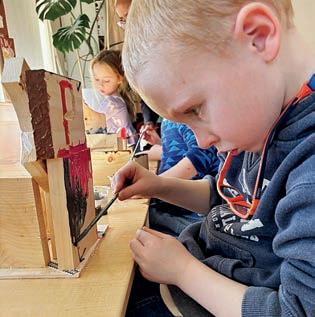
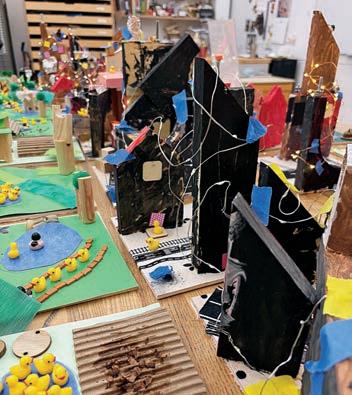
Drawing Comics: From Professional Development to Student Engagement
When author and illustrator Dan Nott visited Belmont Day to discuss his graphic novel, Hidden Systems: Water, Electricity, the Internet, and the Secrets Behind the Systems We Use Every Day, Arts Coordinator Anne Armstrong and visual arts teacher and Sustainability Coordinator Kathy Jo Solomon walked away inspired.
Middle schoolers—fully immersed in that self-conscious stage of life—often think of themselves as either great at drawing or not good at all. What if a comic-drawing class helped reluctant students dive in and explore drawing as a way to communicate?
The teachers were excited and eager to hear more from Nott. He returned to campus to lead a two-day summer workshop for faculty. The second day was an in-depth session with Anne and Kathy Jo. During these professional development workshops, participants explored cartooning, world-building, storytelling, and different ways readers engage with comics. They also examined how comics function as a medium and discussed integrating them into the curriculum. Recognizing a great opportunity, Anne and Kathy Jo introduced a Drawing Comics elective for middle school
students. The first session launched this winter, with a second to follow in the spring. This new elective is especially relevant for today’s students, many of whom are immersed in anime and have grown up reading graphic novels. The genre levels the playing field: Success isn’t determined by whether you consider yourself an artist, but by your ability to express ideas with just a few strokes. The focus is on removing unnecessary details and highlighting only what is essential. As a result, students learn to distill their ideas to their core—a valuable skill that extends far beyond the art studio.
Cross-Disciplinary Class Brings Animals to Life
Belmont Day introduced its first cross-curricular arts elective for seventh and eighth graders: Automata, a class combining woodworking and innovation. The arts team developed this new class to address a specific problem. The seventh and eighth grade arts program aims to expose students to a variety of disciplines, with each student ideally taking six classes per year across five areas. However, students involved in the school play or musical are often unable to meet this goal. By merging woodworking and innovation into a single elective, students gain exposure to both disciplines in one class.
Additionally, Automata offers students the opportunity to learn from two experts: Innovation Coach Brit Conroy and woodworking teacher Bill Smith. Both teachers bring valuable experience with the design thinking process from their previous
careers in landscape architecture and engineering, respectively.
In Automata, the students spent one day each week focused on design—documenting their plan and building a prototype with cardboard and paper clips. Then they spend a day in the woodshop, learning the skills to bring a small moving machine to life. The key learning is in the process—they ideate, brainstorm, prototype, and iterate until they create the desired outcome. The final projects included dolphins, dragonflies, butterflies, hummingbirds, flying fish, and even a dragon. Each moves using cams, pulleys, or levers.
Brit and Bill already have the next collaboration in mind—marbling, which requires students to build wooden baths and engineered combs to create marbled paper. It’s a celebration of process; the tools are designed and built, and the art emerges from that.
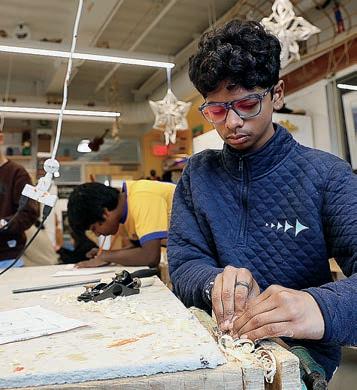
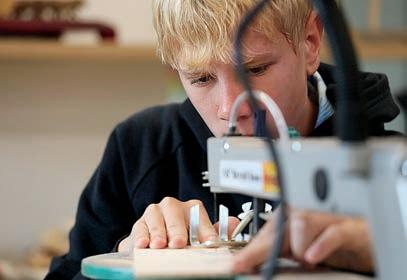
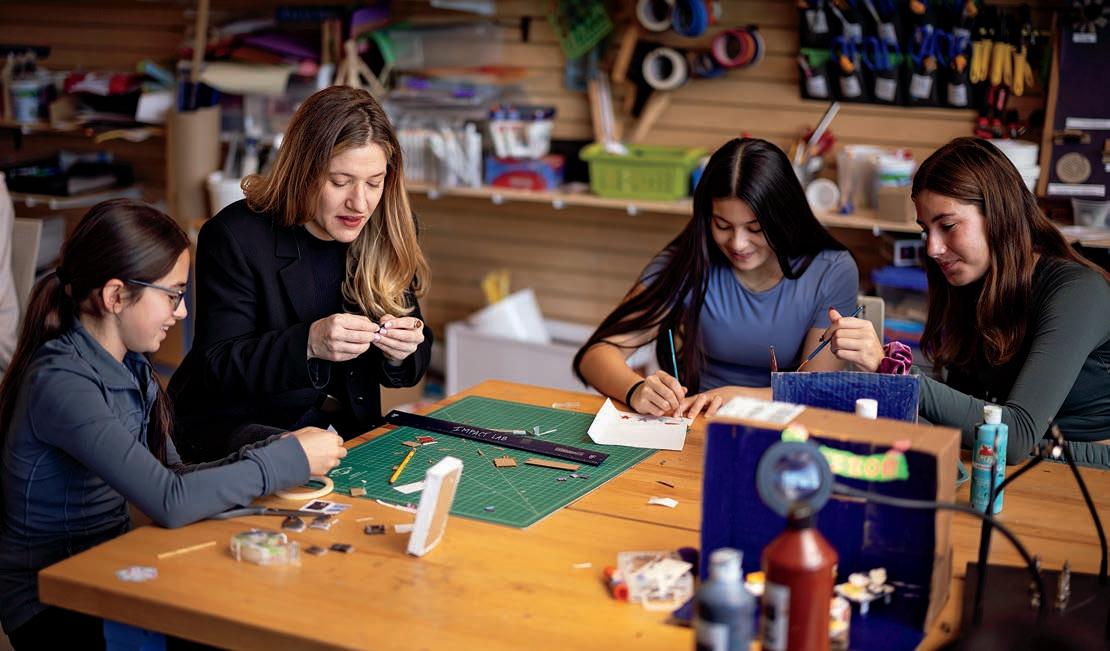
BELMONT DAY
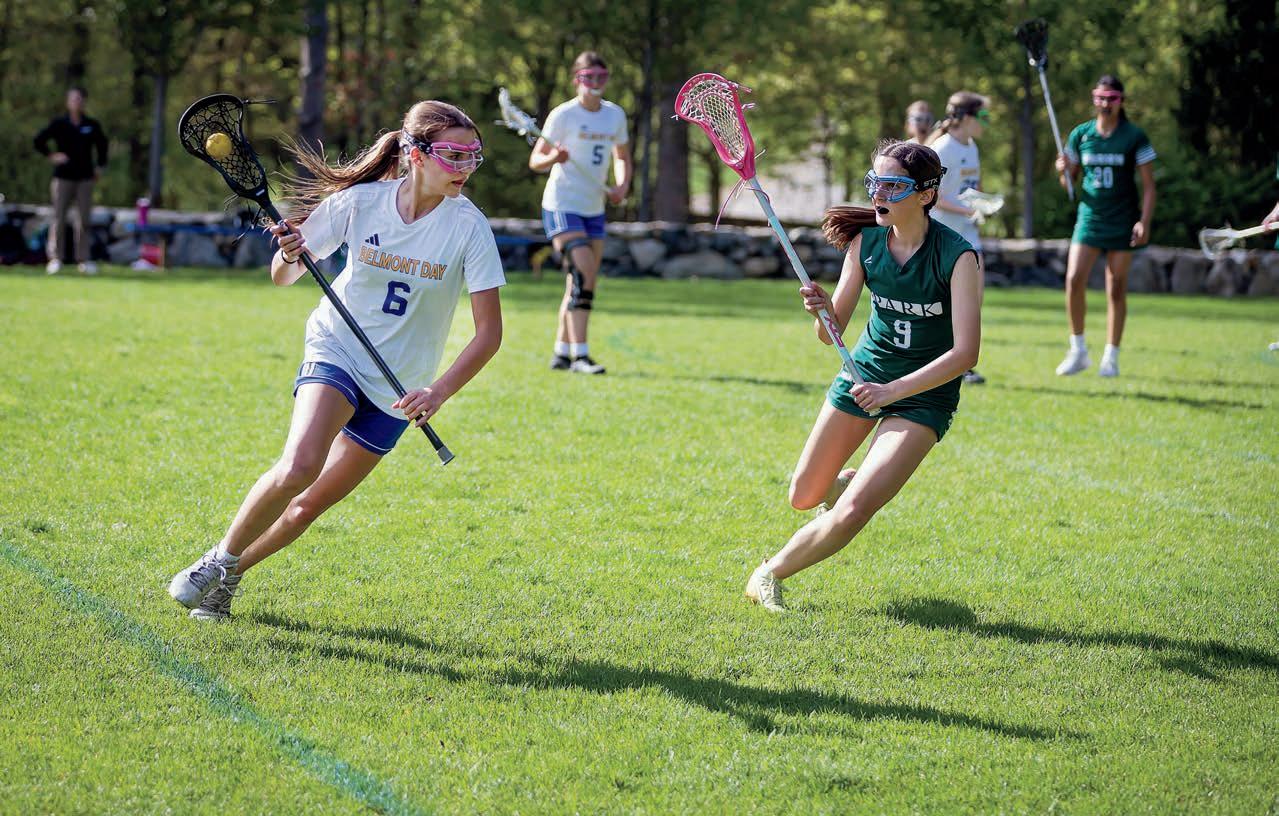
Stephen Marks Director of Athletics
Student Voices Drive New Advisory Committee
Middle school students are at the heart of the athletics program, and a new Belmont Day Athletic Advisory Committee aims to put their voices at the center of program development. The committee includes ten seventh and eighth graders: Fergus Fagenholz, Sylvie Fry, Violet Hancock, Suryavir Nallari-Jhala, Eden O’Sullivan, Jaya Patel, Bella Tan, Harper Treisman, Penelope Wong, and Indira Yeshwant. They were selected through a competitive application process, selecting leaders ready to work with me to evaluate current offerings, identify areas for improvement, and
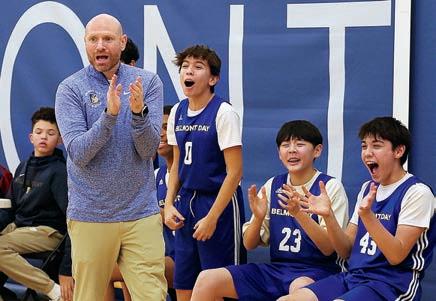
propose new initiatives. The committee also includes coach Zach d’Arbeloff and administrators Liz Gray and Blair Fross. Including students in decision-making makes the program even more responsive to their needs. They sometimes see things adults might miss and are quick to advocate for programs or ideas they love, making sure we keep them. For example, after the students on the committee conducted a SWOT analysis of the program, they divided themselves into three groups: one that focused on offerings, one on spirit, and one on uniforms and gear.
These advisory committee members will examine how team captains are selected and what leadership training could further enhance their effectiveness. They will evaluate whether the sports offerings align with their peers’ interests and abilities. Students will explore how to promote athletics events and offerings most effectively.
Students’ voices matter because they understand team dynamics and what motivates their peers and resonates with their friends. This effort gives our students authentic ownership of the program.
Meet Athletics Director Stephen Marks
Q: How did you end up working in athletics?
My entire life has been based around sports. I grew up in Bethesda, Maryland, playing every sport with a ball—soccer, basketball, football—from the moment I could get on a team. My grandfather played minor league baseball and semipro basketball. My father coached me almost every season. Sports were just in our blood.
I also went to an all-boys sports camp in Maine with my older brother every summer, where we played from the moment we woke up until we went to sleep. When I became a counselor, it pieced my whole path together—my love for sports and athletics, combined with my love for coaching and teaching.
I went to Ithaca College, and first majored in sports studies, which combined physical education, sports management, and sports communications. After graduation, I started working in
independent schools as a PE teacher and coach. A few years in, an interest in administration kicked in, and I became an assistant athletic director. I returned to school to earn a master’s degree in athletic administration, which brought me to Boston for a ten-year stint as athletic director at Shady Hill School.
Q: Why did you come to
Belmont Day School?
To be honest, I wasn’t necessarily looking for a new job. I had been working in Medfield Public Schools, running their physical education and health department. But I knew a lot about Belmont Day from my time working at Shady Hill. Longtime Director of Athletics John O’Neill and I worked very closely together as we both examined program growth and facility expansion. I was part of many really good conversations as Belmont Day was growing. I always kept my eye on the school.
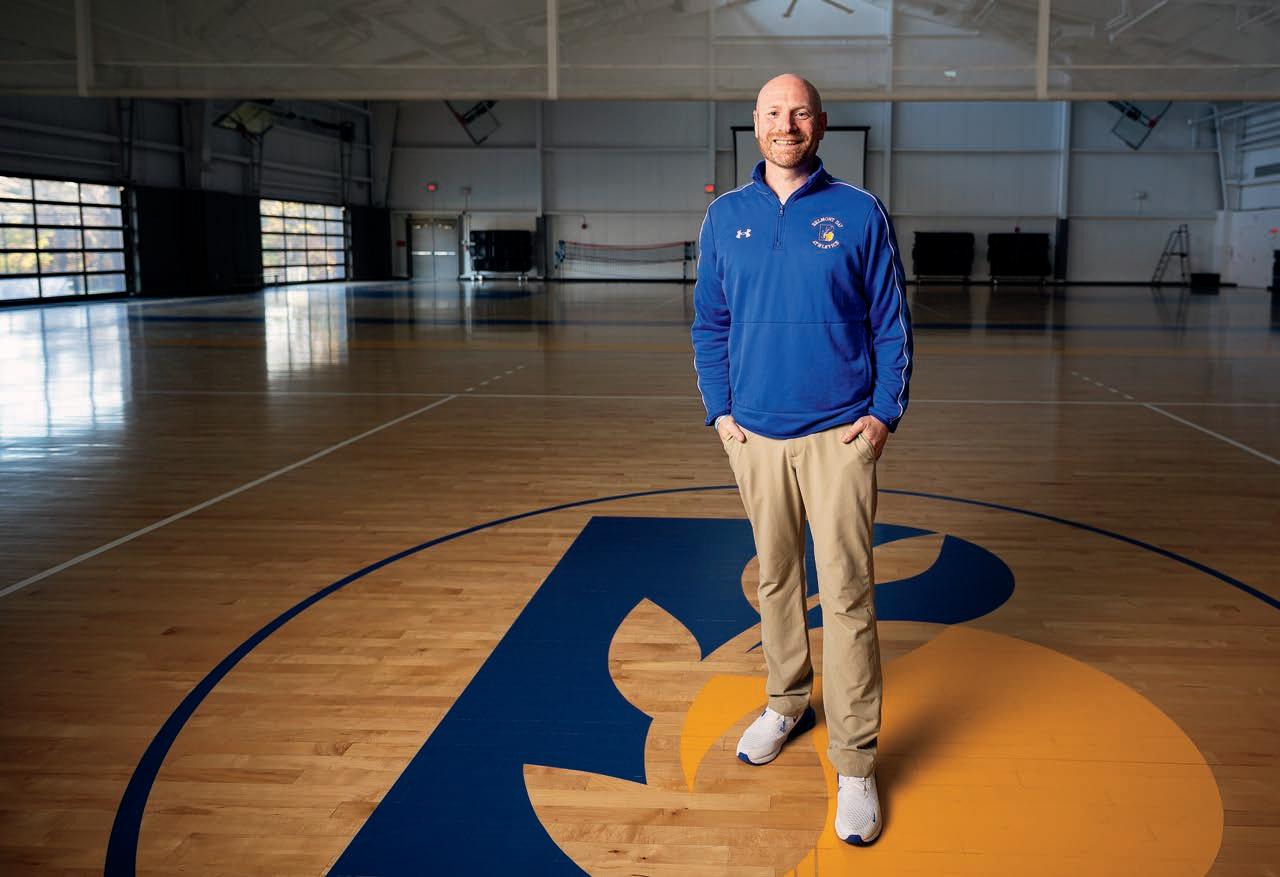
“My goal is to spend the first year really listening and watching, to fully understand where we are as a program ... I’ve got a fantastic team, not only the PE teachers, but the coaching staff as a whole is amazing. We are working together to ensure everything is set up to give students the best possible experience.”
When I learned that the position was open, I could not pass up the opportunity. It was a chance to get back into the independent school world. Even in my interview, I told [Head of School] Brendan [Largay], it felt like home, the school itself, the community vibe. It all felt so familiar.
Q: What draws you to independent elementary and middle school athletics?
After spending five years in public high school athletics, with the state championships and college recruiting, I realized what I missed was the relationships you can form with students and families in an independent school. This is the purest form of sport and athletics, right here at the middle school level. It’s before college recruiting comes into play, and students are transferring schools. This is where I enjoy working most.
Q: What are your plans for the athletics program?
My goal is to spend the first year really listening and watching, to fully understand where we are as a program, and then put together a strategic plan for what we want the next three to five years to look like. I want to honor the past and the current program, while also putting my own spin on things.
I’ve got a fantastic team—not only the PE teachers, but the coaching staff as a whole is amazing. We are working together to ensure everything is set up to give students the best possible experience.
Q: What should we know about you outside of work?
My wife, Jamie, and I have been married for ten years, and we have two sons—Logan, who’s eight and in third grade, and Lincoln, who is six and in first grade. We also have a big old English sheepdog, named Mikey J, after Michael Jordan.
Lincoln is the happiest, healthiest guy in the world. He is also nonverbal, autistic, and significantly developmentally delayed. Because Jamie and I both went to overnight camp with our siblings—I went to camp in Maine with my older brother, and she went to camp in New Hampshire with her sister—we wanted our boys to be able to go to camp together, too.
We started a nonprofit called Linclusion, named after Lincoln, with the word inclusion, to provide one-to-one support for children with special needs at summer camp. Last summer, we were able to support 24 families sending children to camp. It’s a passion project that we’re really proud of.
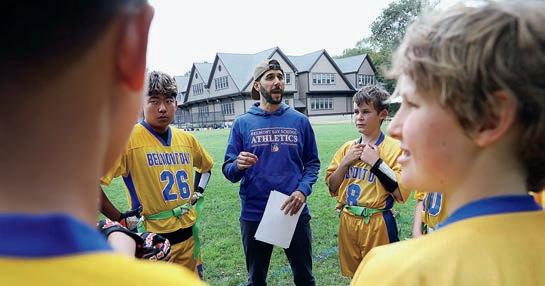
Faculty Coaching: The Heart of Belmont Day Athletics
Having faculty members serve as coaches remains a cornerstone of our athletics program. We would much rather have a faculty member coach a team than hire the best club coach in the area. That’s because our faculty coaches bring unique advantages.
Faculty coaches understand each student’s complete academic and social picture, allowing them to tailor their coaching approach to match that student’s needs. That holistic understanding enables the most effective mentoring and support.
Integrating classroom and athletics experiences creates powerful learning opportunities. Faculty coaches model Belmont Day’s core values. They understand that for us, athletics is a learning opportunity. When teachable moments arise, whether on the bus or on the playing field, these educators respond in ways that align with our educational philosophy.
Finally, faculty coaches communicate seamlessly with their classroom teacher colleagues, ensuring that students feel support across all aspects of their school experience. While occasional exceptions exist, our commitment to faculty coaching remains strong and pays dividends in student development, whether in the classroom or on the court.
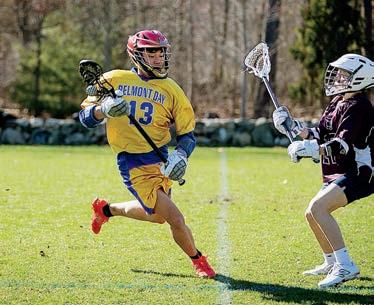
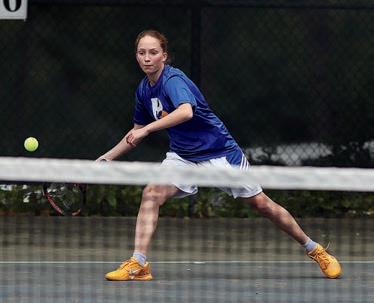
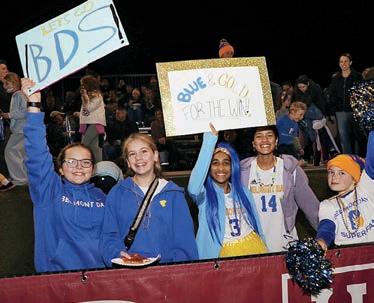
Planning to Shape the Future of Athletics
In the coming year, Belmont Day will launch a comprehensive review of its athletics program, which will serve as the foundation for broader planning and implementation. This effort will bring together voices from across the community. Anderson Santos, director of operations, will provide insight on how athletics programs coordinate with the school’s facilities. Abbey Nyland and Alex Tzelnic, PE teachers who have been at Belmont Day since 2018 and 2019, respectively, will speak about the program’s history. Assistant Director of Athletics Mia Thompson and current coaches will add their observations. Current parents and parents of alumni will be recruited to provide both new and long-term perspectives on how the program has evolved.
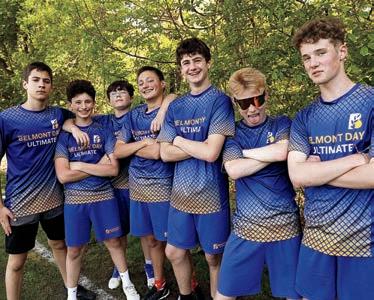
Insights gathered during this review phase will inform the development of a plan, designed to create a roadmap for the athletics program over the next three to five years. This timeframe recognizes how quickly the landscape can evolve and ensures the program remains responsive to changing needs. As with most planning processes, the assessment will include subcommittees to examine specific needs and community-wide surveys.
This planning process enables a deep dive into the school’s current state, why we do what we do, and potential changes on the horizon for athletics and the school as a whole.
The process will examine the optimal use of facilities, staffing models, and program offerings and ensure alignment with the school’s mission. Once
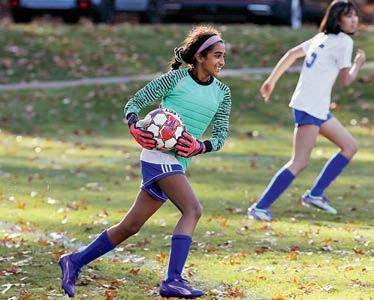
priorities are identified, the plan will move into an implementation phase, translating goals into actionable steps.
For example, the committee will examine how recent enrollment changes have affected athletics. The group will consider what sports, both current and new, might best serve the diverse student body. They will explore how facilities can be enhanced to support expanded programming over time.
The plan isn’t about dramatic change, but rather a thoughtful evolution that honors the strong foundation already in place and considers how future changes might better serve students. By the spring, the community will have a clear roadmap for athletic excellence that reflects Belmont Day’s core values and the evolving needs of our student-athletes.
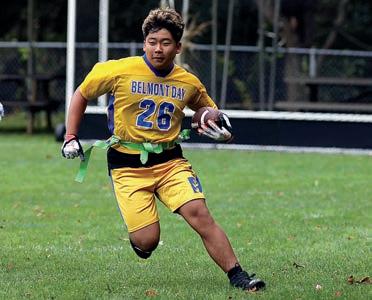
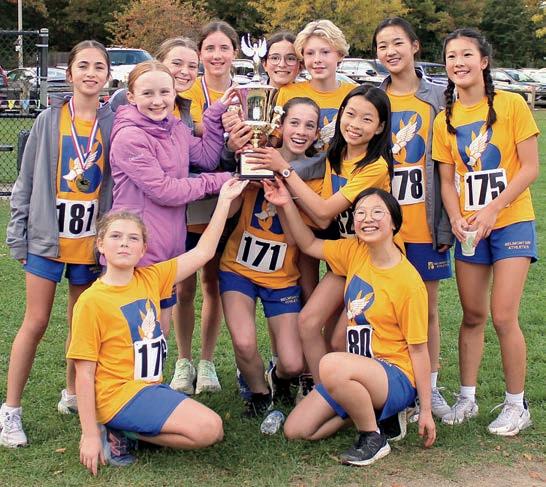
Congratulations to these outstanding cross country runners for their win at the Larz Anderson Invitational. Go BDS!
XC Wins!
Each fall, our middle school cross country team participates in the Larz Anderson Invitational, hosted by The Park School, and 2025 marks the first-ever girls’ team win for BDS at an invitational meet. Eighth grader Zoe Bantham-Livermore finished first in the girls’ race, and sixth grader Alana Brown (8th place) and eighth grader Reema Wulfsberg (10th place) medaled. Seventh grader Simon Bays (11th place) medaled in the boys’ race. Zoe joins Miles Sandoski ’20 and Sam Leviton ’23 in finishing in first place in the Larz Anderson Invitational.
On the heels of this success, the team participated in the Massachusetts State Middle School Cross Country Championships in Devens, MA. Zoe finished first in the state for eighth grade girls, and Reema (14th place) and Alana (12th place) both medaled. Zoe joins a growing list of incredibly strong Belmont Day runners—Miles Sandoski ’20 (1st, 3rd), Henry Buckley-Jones ’21 (1st, 2nd), Alexander Colangelo ’21 (3rd, 3rd), and Sam Leviton ’23 (1st, 2nd)—who have finished in the top 3 of their grade level races at States.
Honoring Every Athlete
Plus the 2025 Coaches’ Awards Winners
At Belmont Day, athletics are about more than just points and wins—they are about living our core values of respect, honesty, responsibility, caring, joy, and excellence.
Each spring, the entire middle school gathers for the Athletics Banquet, a beloved tradition to celebrate each student’s athletic journey. Coaches share reflections, families cheer, and we remember highlights about how athletics brought our community together.
One special moment is hearing from the previous year’s Coaches’ Awards winners. Andrew Green ’24, Rhys Kaplan ’24, Annika Vittal ’24, and Liv Dawson ’24 returned to announce the 2025 winners, those student-athletes who best embody the core values through athletics. Congratulations to Vicente Aguerrevere, Claire Huang, Julia Casey, and Jun Murakami.
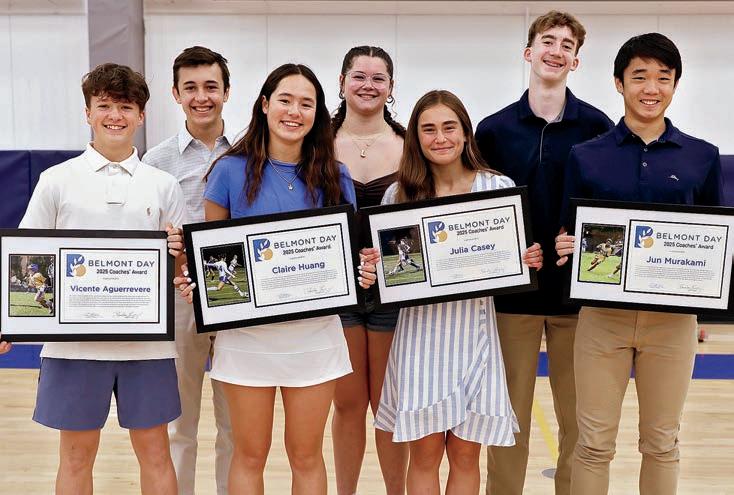
SOMEONE YOU SHOULD KNOW
The Question Asker
How Divya Muralidhara Built a Career
Reimagining What is Possible in Schools
Divya Muralidhara wasn’t looking to change careers that night at Politics and Prose. She was simply leading a book club discussion about Invisible Man by Ralph Ellison at the Washington, D.C. bookstore. It was a lively, searching conversation, the kind that has participants leaning forward in their chairs. As the crowd dispersed, a man Divya had never met approached her.
“Have you ever thought about teaching?” he asked.
The question was unexpected, but it stuck with her. “It was a pivotal time in my life,” Divya recalls. “I was young and figuring things out, and I realized that being around young people, supporting their growth and helping them thrive and get to know themselves was deeply important to me.”
Nearly three decades later, the impact of that conversation is still unfolding. It has led Divya to Belmont Day, where she now serves as the assistant head of school, bringing a leadership philosophy rooted in curiosity, connection, and the belief that children flourish when adults build genuine relationships with them and with one another.
Rooted in Relationship
Divya’s instinct for creating connection began long before she entered a classroom. Growing up in Fair Haven, New Jersey, she and her older brother were raised by parents who had emigrated from India in 1967, one of the few families of color in the town. Her father, a chemist, and her mother, an entomologist by training,
attended every school meeting and modeled civic engagement. That duality of being Indian-American shaped Divya from an early age.
“I loved when my teachers really got to know me,” she says. “I learned early on the value of being seen as an individual.”
At Wellesley College, she studied cultural anthropology and served as the student government’s multicultural affairs coordinator. She conducted fieldwork in Mexico City and in Oaxaca, explored how museums portray, and sometimes erase, culture, and met then-president Diana Chapman Walsh as part of the student government cabinet. “I am always asking whose voices are being heard and which ones might be missing,” Divya says. That lens would one day become central to her leadership in schools.
After college, Divya worked as a research intern at the National Gallery of Art in Washington, D.C., contributing to an exhibition of Olmec art—ironically, at one of the very museums she had critiqued. She spent her summers at the Johns Hopkins Center for Talented Youth, where she served as a residential advisor and dean of residential life. Surrounded by bright young students, she discovered her calling. She also met her future husband, Ed.
Finding Her Voice as a Leader
That unexpected question at the bookstore opened the door to her first teaching role at The Field School in Washington, D.C. Over the next decade, Divya taught
English and art history, helped inaugurate the school’s first dean of students role, and helped rethink the ninth grade orientation program. She also completed a master’s degree in educational leadership from Columbia’s Klingenstein Center.
“I was that person in a meeting who asked, ‘Why do we do it this way?’” she says, laughing. “I had no fear about suggesting how things could be different.”
Her curiosity was not about challenging for the sake of challenge. It was about possibility: How could schools better see students? How could they deepen belonging? How could connection shape learning?
Those questions guided her next major leap.
Eighteen Years of Impact at Waynflete
In 2006, Divya attended a diversity institute at Milton Academy. She had planned to go with a colleague; when her colleague had to cancel, Divya went alone. She found herself sitting with the same group of warm, thoughtful educators from Maine’s Waynflete School at every meal.
“I just couldn’t get enough of talking to them and being around them,” she says. “There was something about their approach to children that resonated deeply.”
That fall, Waynflete posted an opening for a middle school director. Divya applied, interviewed, and accepted the post. She went on to spend eighteen years there, eventually working alongside Ed, who joined the admissions team.
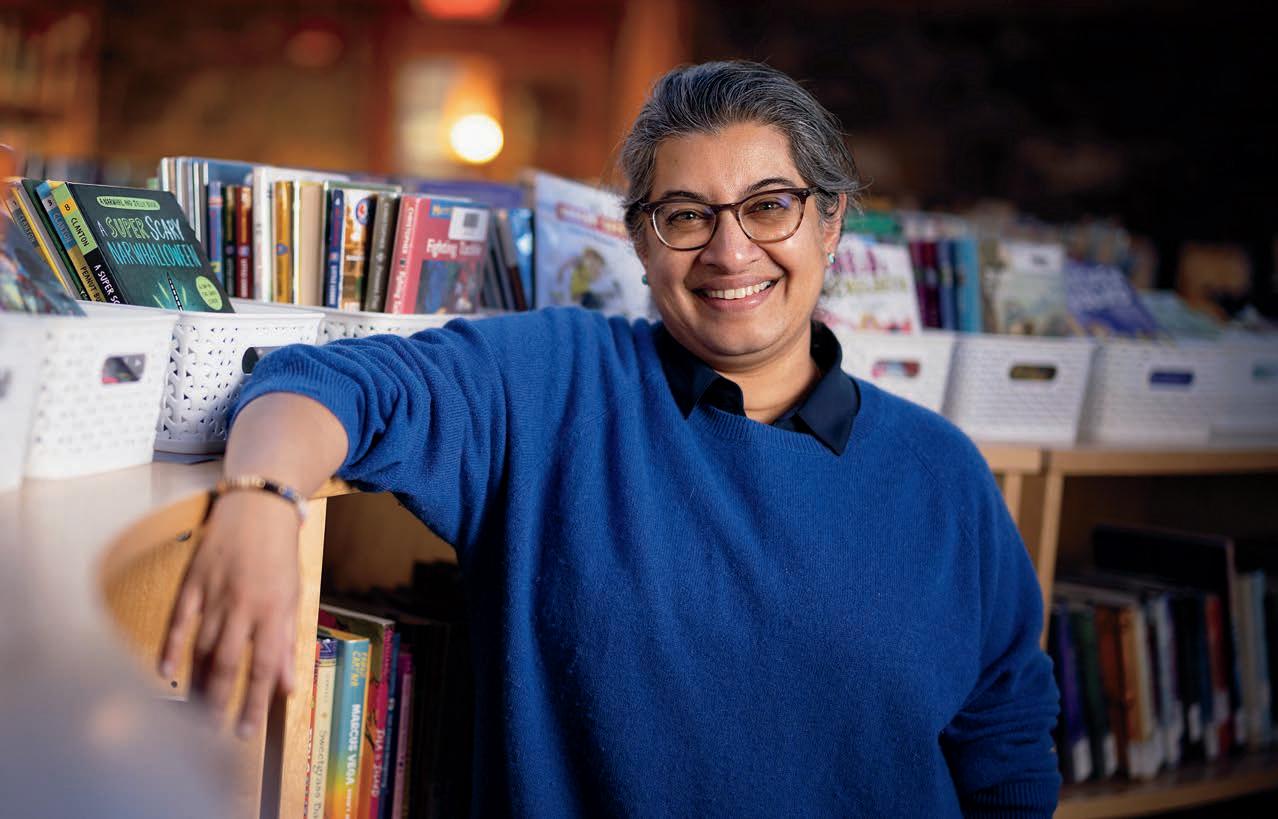
“It’s about inviting people to engage from where they are. Authentic connection starts with being seen and known.”
Under her leadership, the middle school at Waynflete adopted three core values—curiosity, care, and courage—that became the division’s shared language. Each fall, Divya opened the year with assemblies where she or colleagues projected personal photographs: family snapshots, nature scenes, moments from their lives. Students were invited to ask questions.
“It’s about inviting people to engage from where they are,” she says. “Authentic connection starts with being seen and known.”
A New Chapter at Belmont Day School
Belmont Day’s joyful energy resonated with Divya from the start. “People laugh here,” she says. “And I really like being around younger students.”
Divya and Ed, along with their Maine coon cat Penelope, settled in Belmont, about seven minutes from campus. Just weeks after starting her new
role, Divya spent three days with her father, now 90, and still living in the family’s Cape Cod home. Her mother passed away two years ago.
“I learned the value of relationship and community from them,” she says. “That’s really at the heart of who I am.”
The Connector
At Belmont Day, Divya’s portfolio spans curriculum development, faculty hiring and support, supervision of division heads, and partnership with Head of School Brendan Largay. At the center is connection— building bridges among students, teachers, families, and programs.
“I think the search was for someone who could think about the program from multiple vantage points,” she says. “That’s what I hope to bring—a sense of connection that helps everyone move together.”
She has begun her tenure with a listening tour—meeting with faculty and families to understand Belmont Day’s
strengths and opportunities. Her thoughtfully designed office, filled with curated artwork and color, reflects her belief that spaces can nurture relationships and spark creativity. “Maybe in my next life I’ll be an interior designer,” she jokes, drawing on her Hindu upbringing’s belief in reincarnation.
Outside of school, Divya maintains a committed writing practice focused on personal narrative and shares her father’s passion for photography. “When we’re together, my husband jokes that he’s never seen two people spend so long analyzing a single photograph,” she says, laughing.
One Question, Many Possibilities
Divya’s career began with a single question in a bookstore. She has spent her life asking more, focused especially on questions that open doors rather than close them. At Belmont Day, she is continuing that journey: one conversation, one relationship, and one joyful discovery at a time.
FACULTY FOCUS
2025 Bellwethers Faculty Milestones
Traditionally, a bellwether was a sheep with a bell around its neck that led the rest of the flock. In a more modern context, bellwethers are celebrated as people of influence and insight who are at the forefront of trends. At Belmont Day, we mark tenure milestones by celebrating the dedication and expertise of our colleagues, each of whom is a bellwether when it comes to making a difference in the lives of our students.
Twenty Years
Bea Rooney
Human Resources Manager
Bea Rooney has worn multiple hats over her twenty-year tenure, serving as director of alumni relations, director of summer programs, and, currently, our human resources manager. She has consistently upheld the community’s high standards throughout her time here. With a program first approach, Bea strengthened Belmont Day Summer Camp’s reputation and has similarly enhanced our human resources systems by introducing structure and consistency. Her remarkable versatility and two decades of excellence demonstrate that there’s truly nothing she can’t achieve.
Sarah Merrill
Director of High School Placement
Sarah has helped place well over 500 Belmont Day graduates in public and independent high schools throughout her twenty-year tenure at Belmont Day. Highly relational, Sarah has earned the respect of admissions offices throughout New England and beyond, and her reputation has only been strengthened by the strong matches she has helped to facilitate for our students. With a commitment to a best-fit philosophy, it is clear that Sarah herself has been the true best fit for Belmont Day, enriching our community through her dedicated work over these remarkable twenty years.
Fifteen Years
Bill Smith
Woodworking Teacher
With a craftsman’s eye and a sailor’s wisdom, Bill Smith has confidently and capably led the Belmont Day woodworking program for fifteen years. Whether helping students envision a cubic foot of wood, designing clocks and lanterns, or teaching our youngest learners how to use tools safely, Bill’s work on the arts team has been as consistent as it has been creative. The woodworking studio has a long history at Belmont Day, and Bill has innovated and advanced that tradition, and we are grateful.
Ten Years
Liz Gray
Middle School Head
For ten years—nearly half the age of the middle school itself— Liz Gray has made a profound and lasting impact on Belmont Day. From guiding the middle school community through the challenges of a pandemic to leading a transformative shift in enrollment and structure, her leadership has been defined by flexibility, creativity, care, and a clear, steady vision. In her first year here, there were 90 middle school students; today, there are 144. Overseeing this kind of growth, while transitioning from a fifth to eighth to a sixth to eighth middle school model, is no small feat—and Liz has done it with grace, strength, and conviction. Knowing Liz to be a fan of the classics, this quote from Ovid’s Metamorphoses is apt: “Happy are those who dare courageously to defend what they love.” We are deeply grateful for the leadership, courage, heart, and wisdom Liz has brought to Belmont Day over the past decade.
Tara Lightbody
Food
Program Director
Perpetually innovating, leading with conviction, and delivering a food service program that has long distinguished Belmont Day, Tara Lightbody has nourished our school and our souls for fifteen years. An excellent collaborator, flexible thinker, and master chef, Tara has created a program that honors dietary restrictions, offers variety, and helps our students develop healthy nutritional habits for their overall well-being. Tara has much to be proud of after fifteen years of excellence.
Vlad Hucko
Assistant Chef
If the fastest way to a community’s heart is through its stomach, then Vlad Hucko won ours ten years ago—and has kept it full ever since. Whether firing up the grill at dawn and filling the air with the promise of a delicious cookout or coaching middle school athletes in mountain biking and wrestling, Vlad has poured his energy, care, and spirit into every corner of Belmont Day. Our hearts—and stomachs—are grateful.
CONGRATS

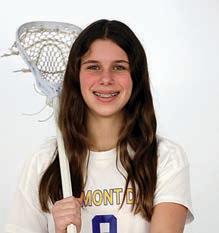
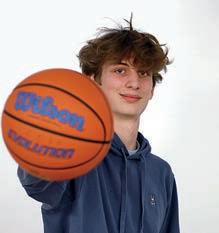
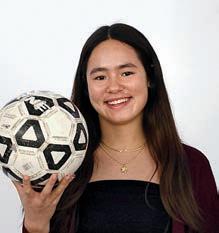
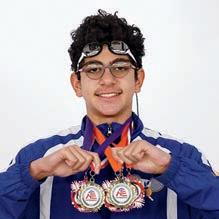











Melisa Adhikari
Vicente Aguerrevere
Laurice Bandar
Calum Dunbar
Cordelia Goldstyn
Henry Kiraly
Vatche Balikian
Samantha Cuming
Benjamin Fleming
Alexander Kiraly
Wyatt Baker
Sara Colangelo
Zeke Fine
Claire Huang
Adam Ahmed
Penelope Bern
Isadora Eiref
Penny Gottesman
Jonathan Laipson
Christian Atem
Julia Casey
Makenzie Ekechukwu
Lila Green
Jordan Levine
2025 GRADS














Christian Samuel
Kiernan Patel
Hugue Marsan
Aidan Tan
Jack Ward
Mylo Rosenfeld
Kali Owens-Schwartz
Copeland Maier
Josie Stevenson
Lucy Walther
Sam Rodriguez
Jun Murakami
Emmett Mack
Isla Smith
Genevieve von Rekowsky
Sohan Shah
Siri Paulsson
Zazoue Marsan
Griffin Targum
Ethan Zipkin
Maraki Shiferaw
Julia Popa
Leeul Miteku
Edwin Voiland
Class of 2025 Graduation Speech Excerpts
Claire Huang
As we journey beyond the walls of BDS, we’re not leaving our home behind; we are instead carrying it with us. We bring the lessons, the challenges, the laughter, and the friendships wherever we go. We bring the courage to lead in our own ways, the openness to listen, and the confidence to grow.
So, to my fellow graduates, I say this: Let’s not be afraid to step into new spaces, no matter how uncomfortable we are, because we now know how to make them feel like home. Let’s carry our values proudly, lead quietly or boldly, and always remain open to the perspectives that shape our world.
It’s like each of us carrying a backpack, not the one full of books, but one filled with what we’ve learned here: courage, kindness, and resilience. We will unpack it as we need it for high school and beyond. Look around, at your classmates, your teachers, and your family. These are the people who have helped shape you. That’s what makes today exciting, but also a little bit hard. We’re not just saying goodbye to a school, we are saying goodbye to this version of ourselves. So thank you, BDS, for being a home. Thank you for helping us find our voices and providing us with something special we can take into our future years.
“Let’s not be afraid to step into new spaces, no matter how uncomfortable we are, because we now know how to make them feel like home. Let’s carry our values proudly, lead quietly or boldly, and always remain open to the perspectives that shape our world. ”
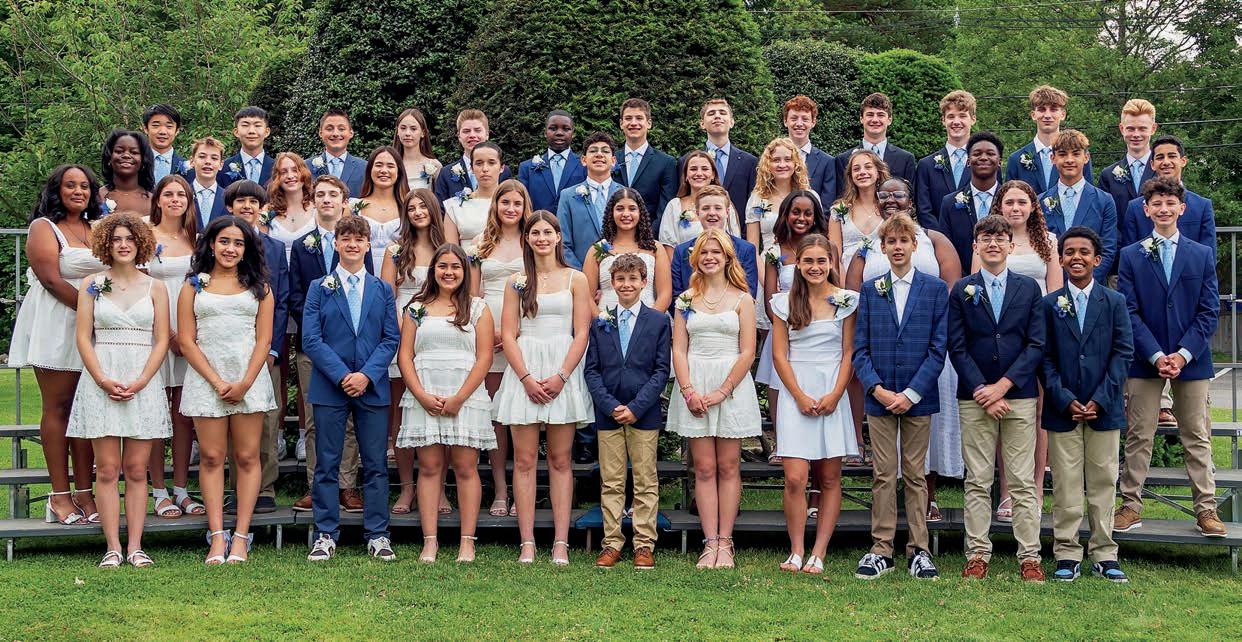

“Finally, Belmont Day School, I will walk away from here, always remembering how I felt and the impact you have had on me.”
Kiernan Patel
In the end, by presenting us with challenges, Belmont Day School has taught us grit and perseverance, which have certainly set the stage for our success in the future. But perhaps the largest lesson we will take away has to do with heart. I was one of the head student ambassadors this year, and whenever I was asked the question, “What is your favorite part about Belmont Day?” I always answered “the community.” Our classes, advisories, clubs, teams, grades, buddies, teachers, and the community at large have inspired us to put our full heart into everything we do and have always been there to support us.
Laurice Bandar
I cannot predict the future, nor change the past, but all I know for certain is how I feel standing up here today, leaving this place, ready to begin a new journey. Ten years from now, I will look back on this moment. I may not remember what I had for breakfast this morning or what I was wearing. But I will remember the sense of pride that has overtaken me. I am proud of everything we have all been through and all of the hard work we have put in. I am proud of the different, amazing people we have begun to be and continue to grow into. I am proud of the risks we have taken, the dreams we have set, and the goals we have crushed. We have all grown into unbelievable leaders, athletes, scholars, musicians, artists, and so much more... Finally, Belmont Day School, I will walk away from here, always remembering how I felt and the impact you have had on me. These moments of fear, adrenaline, joy, sadness, anxiety, relief, pride, and so many more are what give me enough courage to take on the next chapter of my life. So goodbye, BDS, I will never forget how you made me feel.
Class of 2025 High School Matriculation List
Arlington High School (2)
Belmont High School (5)
Belmont Hill School (4)
Boston College High School (2)
Boston University Academy
Buckingham Browne & Nichols School
Cambridge Rindge and Latin School (8)
The Cambridge School of Weston
Chapel Hill-Chauncy Hall School
Commonwealth School
Concord Academy (6)
Lawrence Academy (2)
Lexington Christian Academy
Lexington High School
Marblehead High School
Middlesex School
Noble and Greenough School (2)
Phillips Andover Academy
The Rivers School (4)
St. John’s Prep School
St. Paul’s School
The Winsor School
Where Are They Now?
Members of the Class of 2021 attend the following colleges and universities:
Amherst College
Bates College
Brandeis University
Bunker Hill Community College
Case Western Reserve University
Claremont McKenna College
Dartmouth College
Harvard University (2)
Haverford College
Lake Forest College
Lawrence University Conservatory of Music
Middlebury College
Massachusetts Institute of Technology (2)
School of the Museum of Fine Arts at Tufts University
Skidmore College
Syracuse University
University of California, Los Angeles
UMASS Boston
Union College
University of Chicago
University of Colorado Boulder (2)
University of Massachusetts Amherst
University of Southern California
University of St Andrews
Wesleyan University
Yale University
class notes
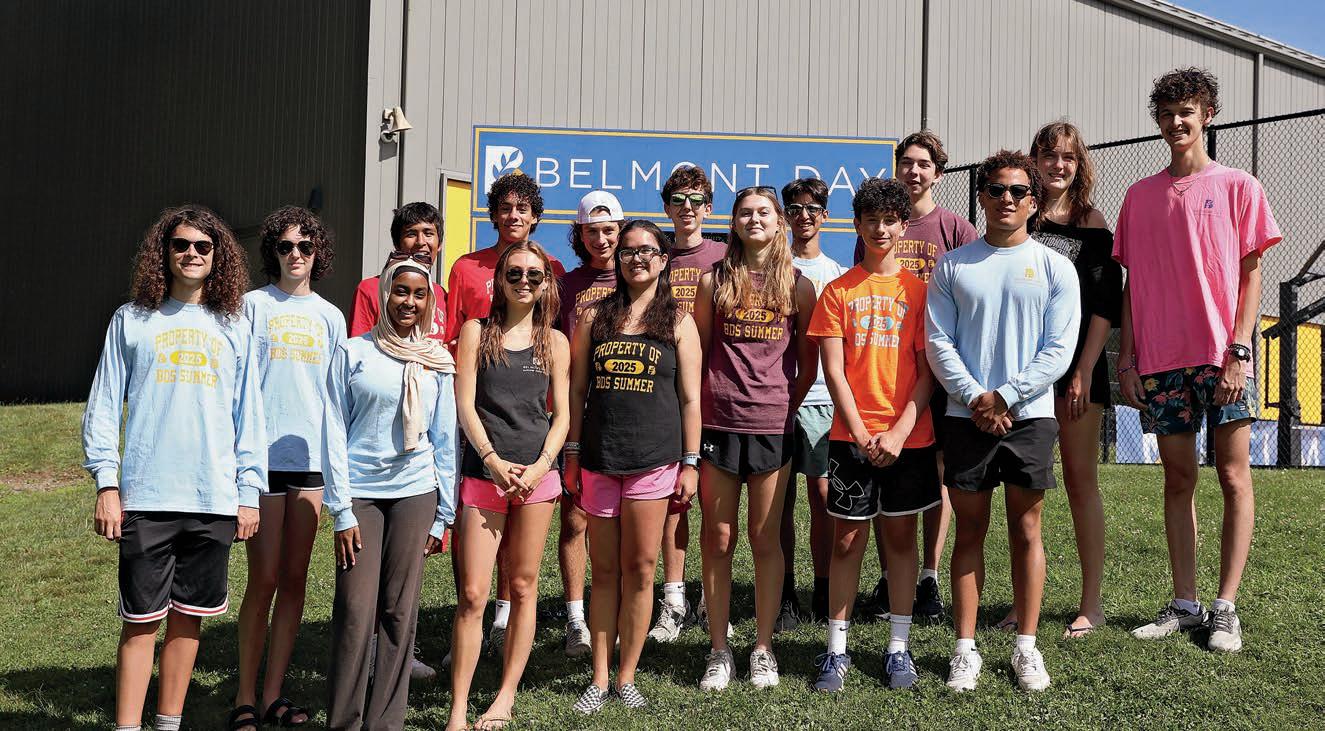
oversee the collection of news and updates from former classmates and friends. If you are interested in serving as a class representative, please contact Associate Director of Development Kyle Beatty at kbeatty@belmontday.org.
1970s
DAVID M. MORRIS ’73 wrote: “I compete nationally in a rodeo sport called Cowboy Mounted Shooting, a very technical sport that requires a high degree of horsemanship and care for the horse. My horse and I are a team and have won several national competitions. I hope it is interesting for students to see what some alumni are up to and to know that anything is possible if they work at it.”
2000s
KAMILAH WELCH ’04 completed the Master of Design Studies in Design for Human Health program at Boston Architectural College (BAC) in May 2025. She entered the BAC program after working as a history and English language arts teacher in the Boston Public Schools, as an educator in a Boston-area jail, and supporting a social enterprise in Johannesburg, South Africa. She was previously awarded a master of education degree from Boston College. Kamilah is currently on the faculty at BAC.
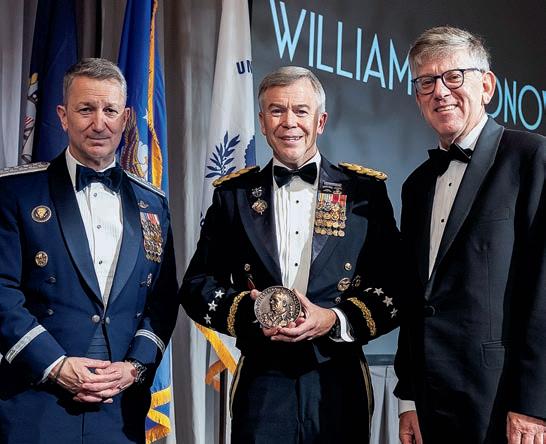
. . . so we can return the favor and keep you up-todate on all things BDS. Share your news—your classmates will be glad you did!
Reach out to the alumni relations team at development@belmontday.org.
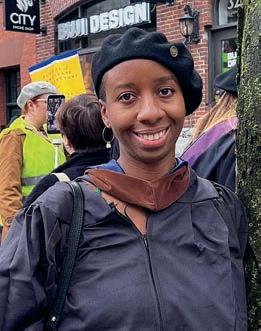
WELCH ’04
(L to R) Gen. Dan Caine, USAF, Chairman of the Joint Chiefs of Staff; General Bryan Fenton, USA, the 13th Commander of the US Special Operations Command and the 2025 recipient of the William J. Donovan Award; and CHARLES PINCK ’76, President of The OSS Society, at The OSS Society’s William J. Donovan Award Dinner— the preeminent annual gathering of the US intelligence and special operations communities—in Washington, DC, on October 18, 2025.
KAMILAH
CAS COHEN ’09 is a master of social work candidate at Smith College School for Social Work. During the first year of their master’s program, Cas was a social work advocate at CARES (Community Advocates for Referral and Education Services). This clinical social work team works to reduce the number of 911 calls by providing follow-up with no-cost clinical support to the community across a broad spectrum of issues and diagnoses. Cas presently interns for a private practice as an individual therapist serving predominantly queer and trans clients in the Seattle area.
2010s
EMMA WEISS ’12 is a JD candidate at Temple University
James E. Beasley School of Law, graduating in May of 2026. During her time in law school, she revived and served as co-president of School Discipline Advocacy Service, a student organization that advocates for children facing disciplinary hearings in the School District of Philadelphia.
In January, MIA BIOTTI ’16 made her career debut as a defender with the Boston Fleet, a professional ice hockey team based in the Greater Boston area that competes in the Professional Women’s Hockey League (PWHL). Since graduating from Harvard University in May 2025, Mia has been training full-time in preparation for this opportunity.
ALIZA KEEGAN ’16 graduated from Tufts University in May 2025 with a double major in civic studies and psychology. Aliza says her primary academic focus was on social psychology, the carceral system, and criminal justice reform. She has been involved in community organizing and social justice campaigning work. Aliza will begin a master’s program in clinical social work at the Boston College School of Social Work in the fall. She hopes to bring this experience into future practice in the nonprofit sector, working
with system-impacted individuals to enact change within the criminal justice system.
ELI SIEGEL-BERNSTEIN ’16 graduated with high honors, Phi Beta Kappa, from Wesleyan University in May 2025. After completing his undergraduate degree in science and technology studies and Middle Eastern studies, Eli headed to Egypt for a year-long fellowship to study advanced Arabic at The American University in Cairo.
KATE FINNERTY ’17 writes: “I am excited to share that I recently graduated cum laude from Denison University, where I earned dual degrees in psychology and Black studies. I am back in Boston, preparing to apply to PhD programs in clinical psychology. My academic and research interests center on behavioral health, pediatrics, and culturally competent clinical care.”
2020s
LYNN LEWIS ’20 spent three months in Patagonia on a National Outdoor Leadership School semester program, during which she earned various wilderness certifications and demonstrated her strong leadership skills. Over 72 days in the field, she explored the Aysén region of Chile by sea kayaking, mountaineering, and backpacking. Lynn is now studying at Middlebury College.
KENDREE CHEN ’21 was honored as a US Presidential Scholar for outstanding academic achievement, leadership in STEM, and dedication to expanding computer science education for underserved students. In May, Kendree presented her senior thesis at the Boston University Academy annual Senior Thesis Symposium on “A Communitybased Program Model for Engagement of Underserved Students in STEM.” Kendree is now a freshman at MIT.

ISAAC FREHYWOT ’21 was a recipient of the National Honor Society commendation and was inducted into the Cum Laude Society during his senior year at The Roxbury Latin School. Isaac is now a student at the University of Southern California.
SARAH MCPEEK ’21 took on the role of secretary general at COMMUN X, the tenth day-long Model United Nations conference for middle schoolers organized and led by students at Commonwealth School. Sarah describes herself as “hooked on Model UN” since middle school at Belmont Day. Sarah is a freshman at Claremont McKenna College studying economics and government.
In her final season at The Winsor School, NELL SPARKS ’21 was co-captain of the varsity basketball team and set the all-time scoring record with 1,620 points. Nell received the Bremer Athletic Prize at graduation in June. She is currently studying at Harvard University.
In her senior year at The Winsor School, AMANIE YUSEF ’21 took the stage in the school’s 2025 assembly in honor of Black History Month. The program wove together spoken word, singing, and dance to explore Black history from African enslavement to the present day. Amanie performed as a member of the NIA Dance Troupe, part
of OrigiNation Cultural Arts Center. Amanie was selected to join the Center’s November trip to Cape Verde. She joined six other Boston-area dancers for a weeklong cultural exchange on the African island nation, where they performed and taught dance in local schools, shared traditional meals, and engaged with Cape Verdean youth while providing community service. Amanie is currently a student at UMASS Amherst.
JULIANA LI ’22 is a senior at Commonwealth School. She is also a research trainee working with Dr. Joseph Hardie in the Shafiee Lab at Harvard Medical School and Massachusetts General Hospital. Juliana volunteers as a junior mentor for the Science Club for Girls and works with adult mentors to teach young girls about science and promote curiosity about STEM. In addition to her passion for health sciences, Juliana is an accomplished athlete, having been selected to the All-League volleyball team.
BERNIE MATTOX ’22, a student at Concord Academy, is collaborating with the school’s marketing and communications office to highlight the vibrancy of campus life through creative digital content.
MIA BIOTTI ’16 Credit: Boston Fleet @PWHL_Boston
KESARIYA NALLARI-JHALA ’23 has been honored with seven awards by the Scholastic Art and Writing Awards for the Massachusetts region in the categories of Photography (two Gold, one Silver), Poetry (two Silver), and Personal Essay and Memoir (two Honorable Mentions). This is the third year Kesariya will exhibit her photography in the Gold Key Exhibition. Kesariya’s creative pursuits began at Belmont Day, and her parents, Liluye Nallari-Jhala and Mithun Nallari, credit her introspection to the reflective writing exercises, where she was asked to think critically about her work and develop a growth mindset.
Liluye and Mithun note that as part of the cohort who started middle school in 2020 during the pandemic, “resilience may be the best lesson that BDS taught her, alongside the joys of a creative life.” Kesariya is a student at Noble and Greenough School.
OLIVIA GARRITY ’24 returned to Belmont Day to read her picture book, Maisey and Watson’s Helping Paws, to pre-kindergarten students. The book is based on her Capstone research, which explored how community resource dogs impact communities. Watson and his handler, Lexington Police Officer Hankins, joined Olivia for this special reading.
AIDAN TAN ’25, a freshman at Boston University Academy, competed in USA Fencing’s North America Cup in November and placed in the top eight finishers in Division I Men’s Foil. He shared the podium with Olympic medalists and top NCAA fencers and was eliminated by a Paris Olympic team gold medalist. Way to go, Aidan!
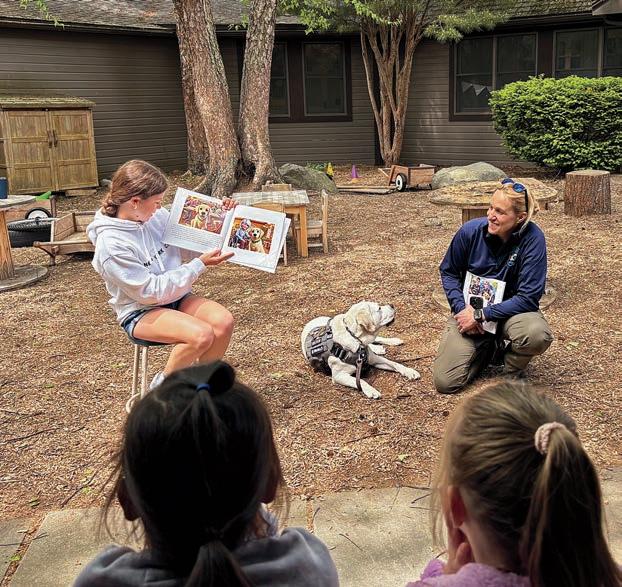
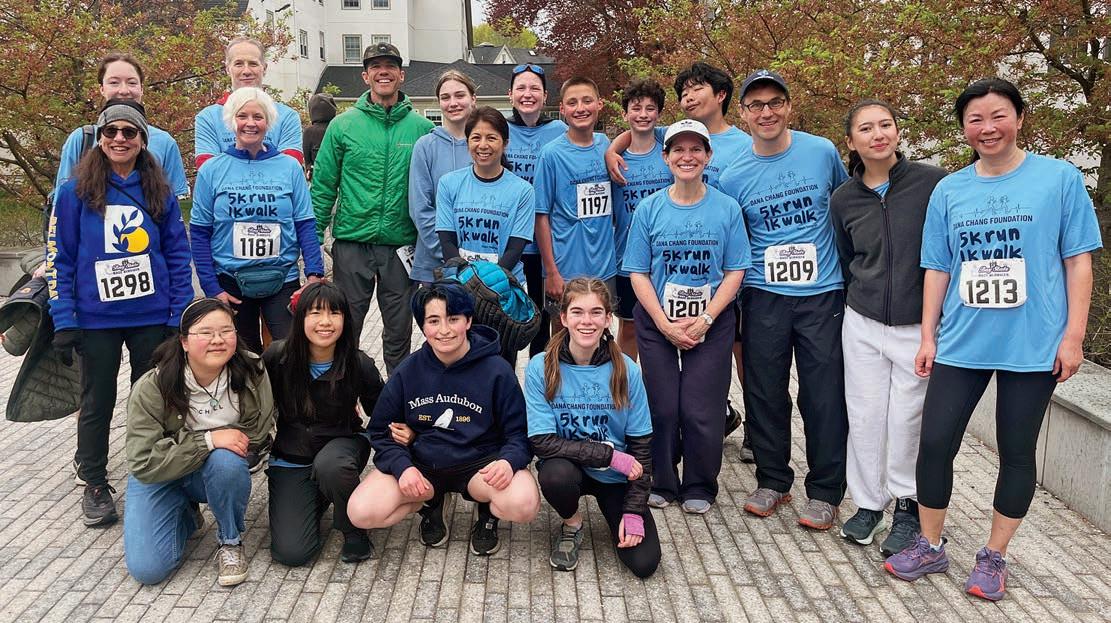
REMEMBERING DANA CHANG ’21
On Sunday, April 27, 2025, former teammates, friends, and families participated in the inaugural Dana Chang Foundation 5K for Heart Anomalies, an event dedicated to raising awareness of congenital heart conditions. The race honors the memory of DANA CHANG ’21, whose spirit, determination, and love for running left a lasting impact on our Belmont Day teams and community.
Pictured: Standing: ELENA FERRARI ’20, JOVANA ZIVANOVIC ’24, KIERNAN PATEL ’25, ETHAN ZIPKIN ’25, EVAN BAE ’26, ALETA SANDOSKI ’23 Kneeling: KENDREE CHEN ’21, VIVIAN CHUANG ’21, SUE KELMAN ’21, RIPLEY BRIGHT ’21
OLIVIA GARRITY ’24
IN MEMORIAM
Alumni
BARBARA TAGGART KENT ’41 passed away on July 28, 2025, at the age of 96. Known as Tigger to her old friends and in-laws and as Bennie to her beloved grandchildren, Barbara was born in Watertown and was a resident of Winchester for nearly seven decades. After Belmont Day School, Barbara attended Northfield Academy and Skidmore College. Barbara and her husband, John Eric (Jack) Kent, raised their seven children in a Winchester neighborhood teeming with children and created a life of constant activity and countless happy memories. Barbara took delight and pride in each and every one of her children, grandchildren, and great-grandchildren, and gave them unconditional love and support. Neighbors and friends, including cherished lifelong friend Eleanor (Taffy) Taft Fernald ’42, remember Barbara as kind and gracious. She will be deeply missed by all who knew her.
Former Faculty
Dedicated educator ANN SMITH passed away on December 19, 2025. Ann was Belmont Day School’s upper school reading specialist from 1989 until her retirement in 1999. At that time, and before the school added a middle school program, the upper school comprised grades four, five, and six. Ann was an engaging, patient, and gifted teacher and a wise mentor to many BDS teachers. She brought the first annual poetry festival to BDS so that the community could, as she noted, “experience, enjoy, and appreciate the art of poetry… applauding the poetic efforts of everyone in the school.”
Ann enjoyed an active retirement. She served as president of WomenKind Educational Resource Center and co-founded the Financial Literacy Project, producing one of the first books on financial literacy for women. She continued tutoring students and worked at the Arlington Children’s Library. Passionate about the arts, she sang with the Mystic Chorale, regularly attended the Boston Symphony, and took piano lessons into her eighties. An avid traveler and nature lover, she explored destinations around the world, enjoyed Cape Cod vacations, birding, and skiing, and cherished views of Spy Pond from her apartment.
Grandparent
LORRAINE PERLES BECKER GP ’15, loving grandparent of Rebecca Blumenstein ’15, passed away on January 7, 2026, at the age of 88. Born on September 12, 1937, in Boston, she was the youngest of three daughters. Lorraine studied accounting at Boston University and lived in New York before returning to Massachusetts, where she raised her daughters, Jill and Wendy.
Lorraine was a vivacious and curious person with a love of museums, theater, travel, the Boston Marathon, and chocolate. An active member of Congregation Mishkan Tefila, she cherished her Jewish faith and became a bat mitzvah as an adult. Lorraine met Abba Arthur Appelstein later in life, and they shared a love of travel and the arts. She took a particular interest in and became president of Ventfort Hall Gilded Age Mansion and Museum in the Berkshires, where the two shared a second home.
She enjoyed outings with Wendy and time at Jill’s home with her granddaughter, Rebecca, whom she adored. Lorraine made Rebecca heart-shaped sandwiches, engaged in playful flour “fights” while baking together, and passed on her love of the arts. Lorraine is survived by her daughters, granddaughter, and many relatives. Her memory will forever be a blessing.
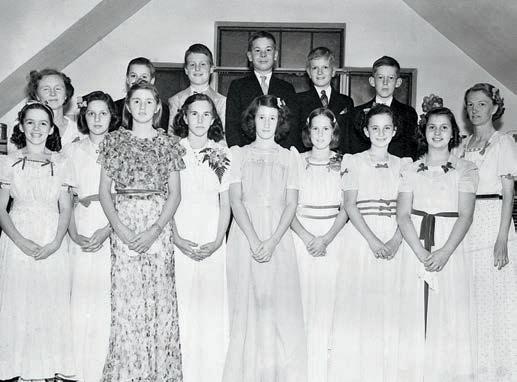
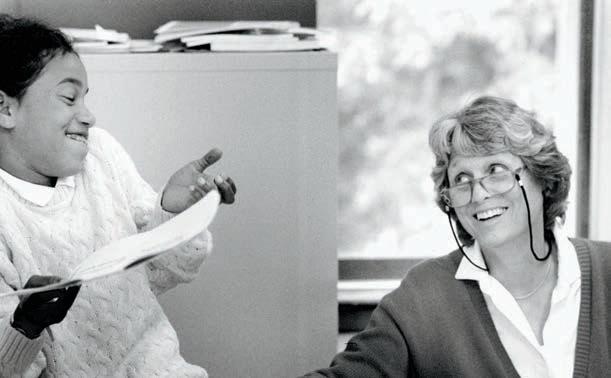
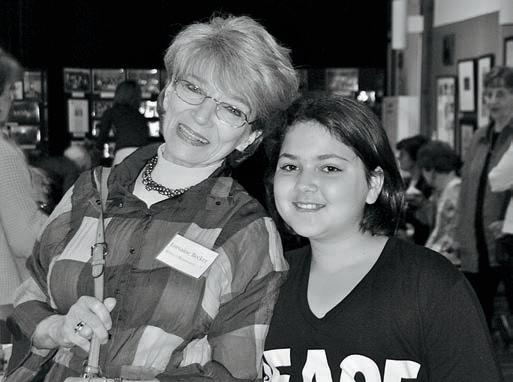
BARBARA TAGGART KENT ’41 (front row, last student on the right) with her class on graduation day.
ANN SMITH with a student.
LORRAINE with her granddaughter Rebecca on Grandparents and Special Friends Visiting Day.
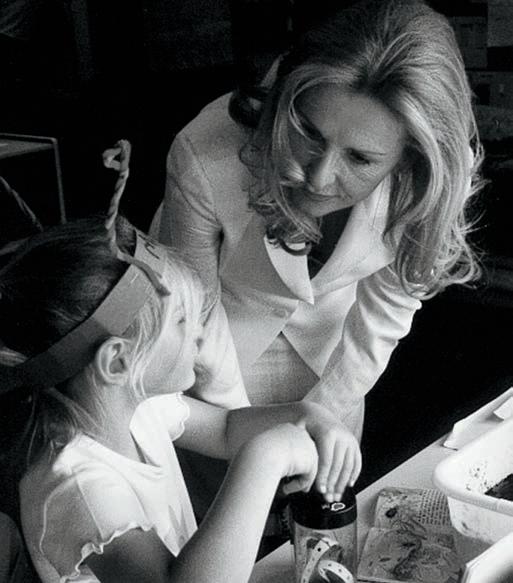
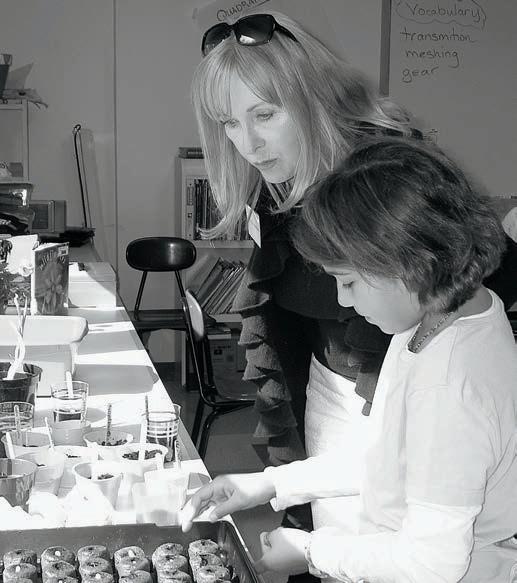
Parent of Alumni & Grandparent
Devoted parent and grandparent SHEILA LAURIANNA PALANDJIAN died peacefully at home surrounded by loved ones on August 9, 2025. She was 84.
Sheila was born on May 25, 1941, in Boston, grew up in Watertown with her four siblings, and attended Watertown High School. Before graduating, she met foreign college student Petros Palandjian on a blind date. They married on April 24, 1960, and moved to Iran to live with Petros’ family. Sheila learned the Armenian language and cuisine, and the tradition of fortunetelling. After three years in Iran, the couple returned to Belmont, and their family eventually expanded to include four sons. Sheila nurtured her boys’ pursuit of advanced opportunities in education and sports. She volunteered at Belmont Day School and The Fessenden School, while reading the canons of literature alongside her children and helping them with writing assignments. She accompanied her sons to tennis tournaments across New England and nationally, while also encouraging their interest in martial arts and team sports.
Petros often attributed his business success to Sheila’s gracious, warm aura and wise judgment. After losing Petros to cancer in 1996, Sheila moved to Palm Beach, FL, while continuing to visit her children in Belmont. Sheila played joyously with her twelve grandchildren and helped shape their upbringing, rarely missing a chance to attend a Belmont Day Grandparents and Special Friends Visiting Day.
Sheila was generous and empathetic and found beauty in every person. She maintained profound, lifelong friendships. Sheila was deeply committed to her volunteer work, hosting galas and raising money for the Brigham and Women’s Hospital and Dana-Farber Cancer Institute in her communities in Palm Beach and Boston.
Sheila is survived by her sons, Peter Palandjian ’76 P ’34 ’35 and his wife, Eliza P ’34 ’35, Paul Palandjian ’78 and his wife, Dionne, and Leon Palandjian ’81 and his wife, Tracy; her grandchildren, Manon (Palandjian) Freese ’05 and her husband, Nate, Petros Palandjian ’09 and his wife, Sydney Harrington, Margot Palandjian ’10, Madelon Palandjian ’13, Nicolas Palandjian, Estelle Palandjian ’09 and her husband, Francesco Falcone, Declan Palandjian ’14, Te Palandjian ’13, Charis Palandjian ’14, Pari Palandjian ’16, Bourne Palandjian ’34, and Bodan Palandjian ’35; and her great-granddaughter, Mila Freese. In January 2010, Belmont Day School’s performing arts center— named the Palandjian Arts Center—was dedicated to Sheila, and in “honor of all the mothers who have lighted these hallways with their perpetual grace, nurture, and love.” This year’s theater productions are dedicated to the memory of this exceptional member of our community.
SHEILA PALANDJIAN with her granddaughter Madelon.
SHEILA PALANDJIAN with her granddaughter Estelle.


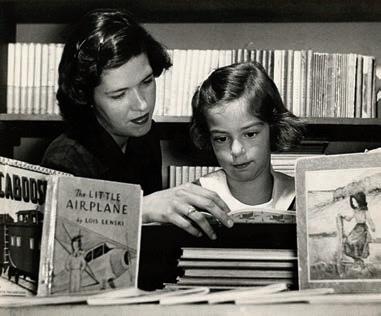
Belmont Day’s Centennial Year
Planning to recognize Belmont Day’s Centennial year is already underway!
We encourage alums, parents of alumni, former faculty, and friends to contribute memorabilia, artifacts, and photos to our archives for this very special celebration.
Please use the QR code to upload your digital BDS treasures. Have a physical item you would like to loan to the school? Reach out to Director of Communications and Marketing Koreen McQuilton at kmcquilton@belmontday.org.