GONZAGA
• THE JESUIT HIGH SCHOOL IN THE NATION’S CAPITAL •

Gonzaga College High School
Educating young men in the Jesuit tradition since 1821 19 Eye Street, NW Washington, D.C. 20001
GONZAGA’S MISSION
A Catholic, Jesuit high school founded in the nation’s capital in 1821, Gonzaga prepares young men for college success and for lives marked by integrity, purpose, and an enduring commitment to service and justice. Gonzaga develops in our students a love of learning, strength of character, an awareness of their gifts and talents, and an understanding of how deeply and personally they are loved by God.
PRESIDENT
Rev. Joseph E. Lingan, S.J. ’75
CHAIR OF THE GONZAGA BOARD OF TRUSTEES
Scott M. McCaleb ’84
HEADMASTER
Thomas K. Every II
CHIEF OPERATING OFFICER
Stephen M. Neill ’89
SENIOR VICE PRESIDENT OF ALUMNI & ADVANCEMENT
David Dugan ’98
DIRECTOR OF ALUMNI RELATIONS
Byron Harper ’84
Gonzaga Magazine, the official magazine of Gonzaga College High School, is published by the Gonzaga Office of Marketing and Communications.
EDITOR
Mary Clare Glover
ASSISTANT EDITOR
Annie Rosello
DESIGNER
Renee Spencer
CONTRIBUTORS
Byron T. Harper ’84
Conrad Singh ’00
Andrew Wood ’12
PHOTOGRAPHY
Conrad Singh ’00
Renee Spencer
Stone Photography
Jessica Taglieri
Matt Taglieri ’04
Please send comments, suggestions, corrections, and changes of address to info@Gonzaga.org.
GONZAGA.ORG
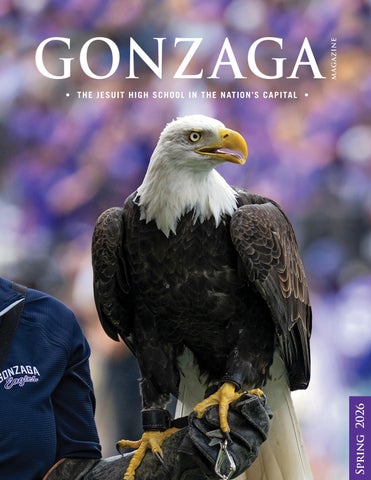
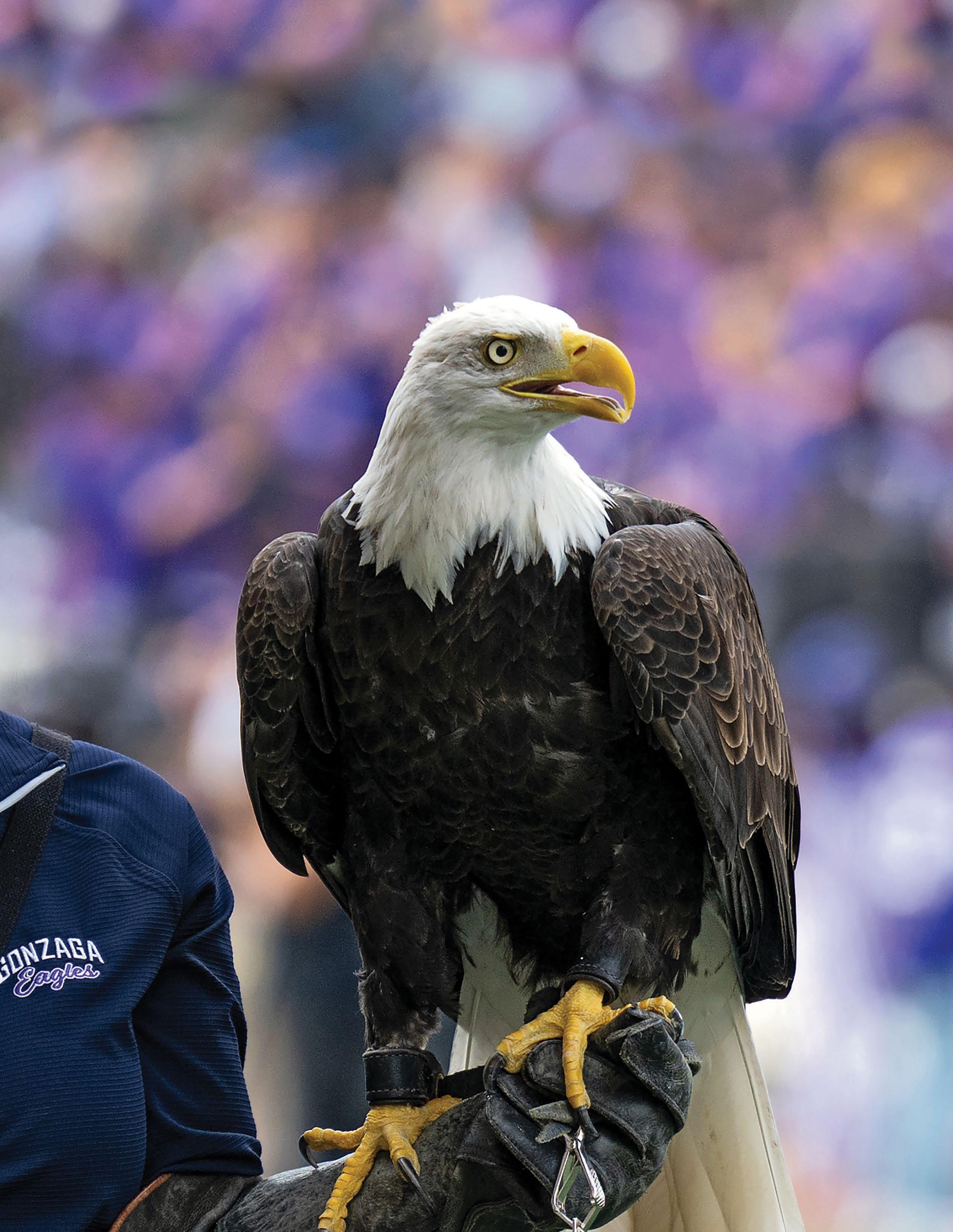
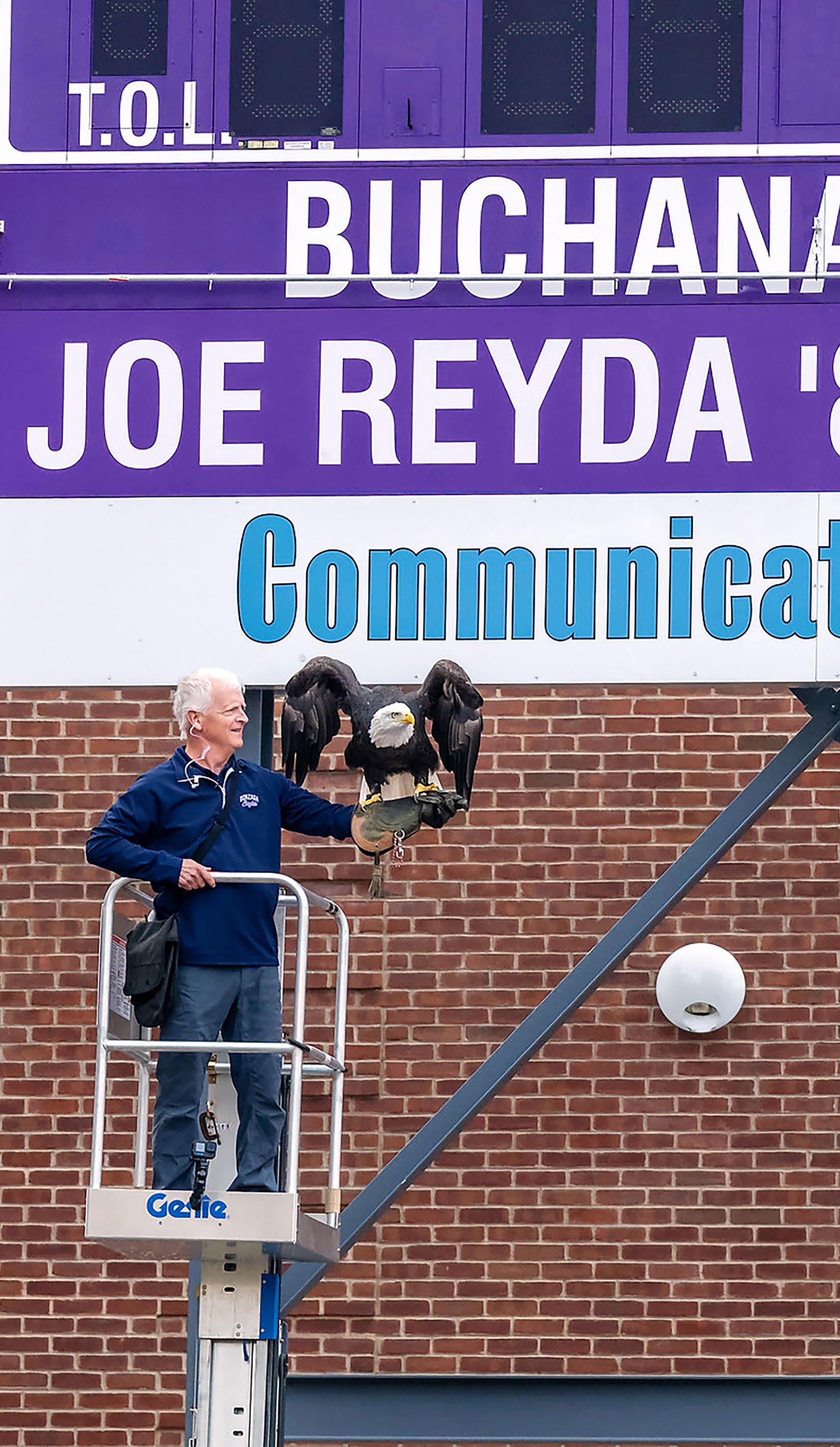
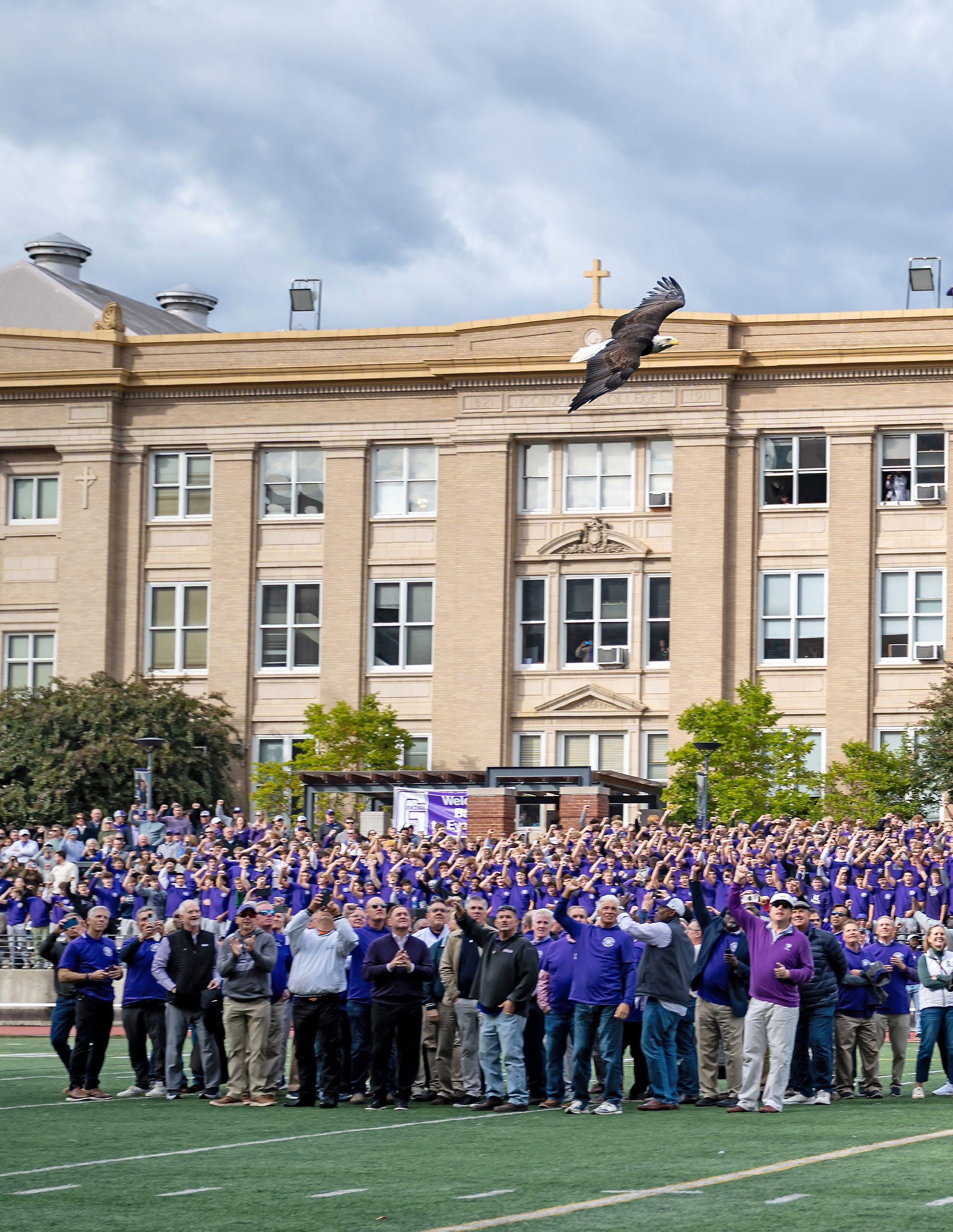
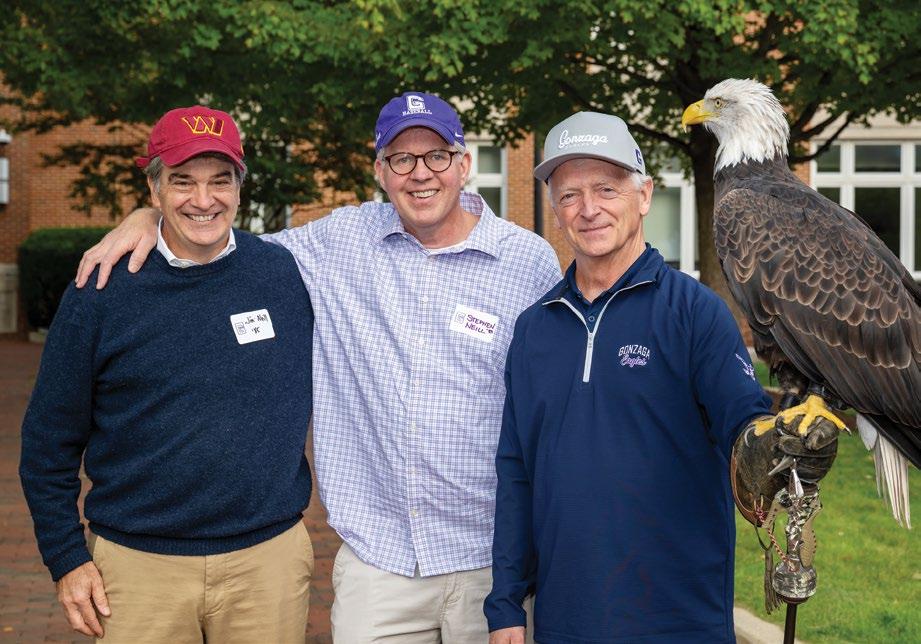
Jeff Meshach, Deputy Director of World Bird Sanctuary, provides a landing spot for Clark, an American Bald Eagle, during the dedication of Reyda Stadium. To read more about Clark’s memorable trip to Eye Street, turn to page 20.

Joe Reyda ’85 spent his life championing the Gonzaga Eagles, so it was only fitting that his stadium dedication included a tribute of historic proportions. What followed was a secret plan to bring a living symbol of the school’s spirit to Eye Street.
More than 30 years after they first met as Gonzaga freshmen, four friends from the Class of 1997 have each become influential leaders in Jesuit mission and ministry. In this Q&A, they reflect on the teachers and experiences that set their career paths in motion.
Dear Gonzaga Community,
In this issue of Gonzaga Magazine, we cover a key component of our mission: the enduring power of the Gonzaga sense of fraternity or brotherhood. You will find an article titled “Common Inspiration, Uncommon Purpose” (page 24). It features four friends from the Class of 1997—Brendan Hartnett, Dr. John Krambuhl, Brian Greenfield, and John Pignone, S.J.—who have each become Ignatian leaders in Jesuit mission and ministry.
It is both inspiring and heartening to hear them reflect on how their days on Eye Street in the 1990s planted the seeds for their vocations, and how they were “loved into the Kingdom” by Gonzaga faculty members. Seeing these classmates continue to lead with a shared purpose more than thirty years after they first met as freshmen is a testament to the transformative power of a Jesuit education. Further, we look forward to John Pignone’s ordination this June—the first Gonzaga alumnus in 35 years to enter the Society of Jesus.
That same sense of fraternity or brotherhood was present this past fall during Reunion Weekend, a highlight of which was the dedication of the Joe Reyda ’85 Stadium. Our cover story, “A Soaring Tribute” (page 20), recounts that afternoon, when Clark, a beautiful bald eagle, took flight from the North Capitol Street endzone and soared over our stadium. Truly, it was more than just a magnificent sight, it was a meaningful memorable reminder and encouragement to “fly high.” Please read and enjoy the story about how Clark came to Gonzaga – including details about the Wild Bird Sanctuary that he calls home and the “administrative ruse” we used to keep Clark’s visit a secret before the game. I hope you enjoy reading it.
In addition, this issue includes stories and photos that feature our talented students, supportive parents, dedicated teachers, and generous benefactors. We celebrate the dedication of the Machen Wrestling Room (page 5), a space in recognition of Ron and Ayana Machen that fosters the grit and perseverance of our athletes. That care for the “whole person” extends to our new student-led mental health initiative, Eagles Strong (page 12), as well as a thoughtful reflection from Dr. Andrew Wood ’12 (page 18) on how the study of music expands the hearts and minds of our young men.
I hope these pages inspire in you a genuine sense of both pride and gratitude. Gonzaga is an educational institution and community bound together by faith, tradition, and a genuine commitment to be of service for and with others. I thank you, sincerely, for your continued support and for all you do to help the Gonzaga Spirit soar.
With every best wish,

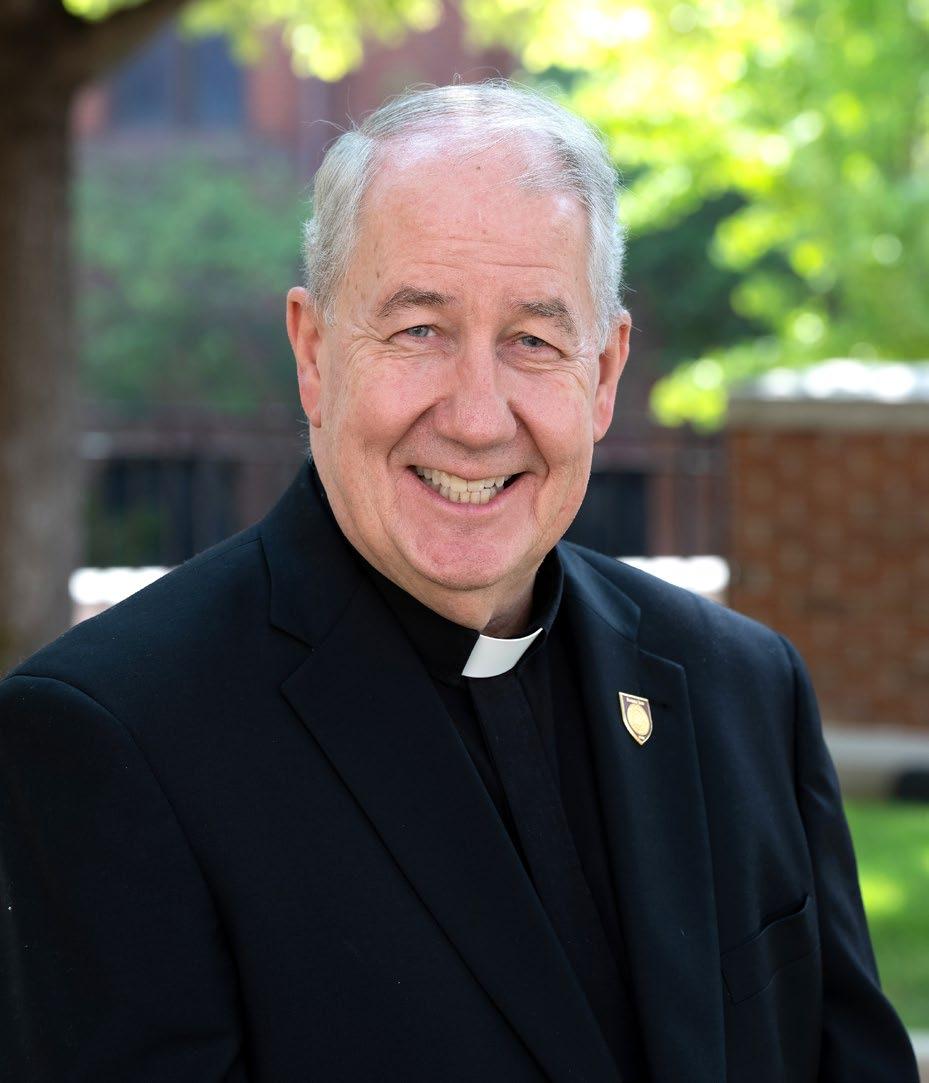
Rev. Joseph E. Lingan, S.J. ’75 President

Grandparents Day Mass and Breakfast
September 21, 2025
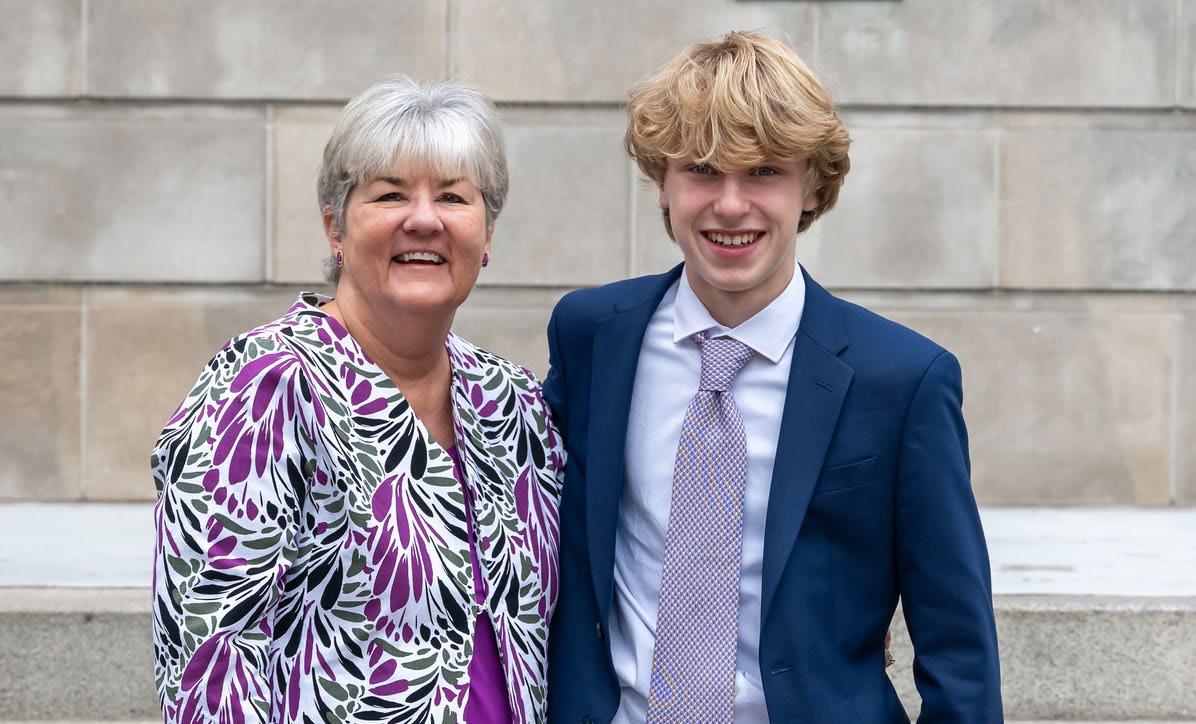
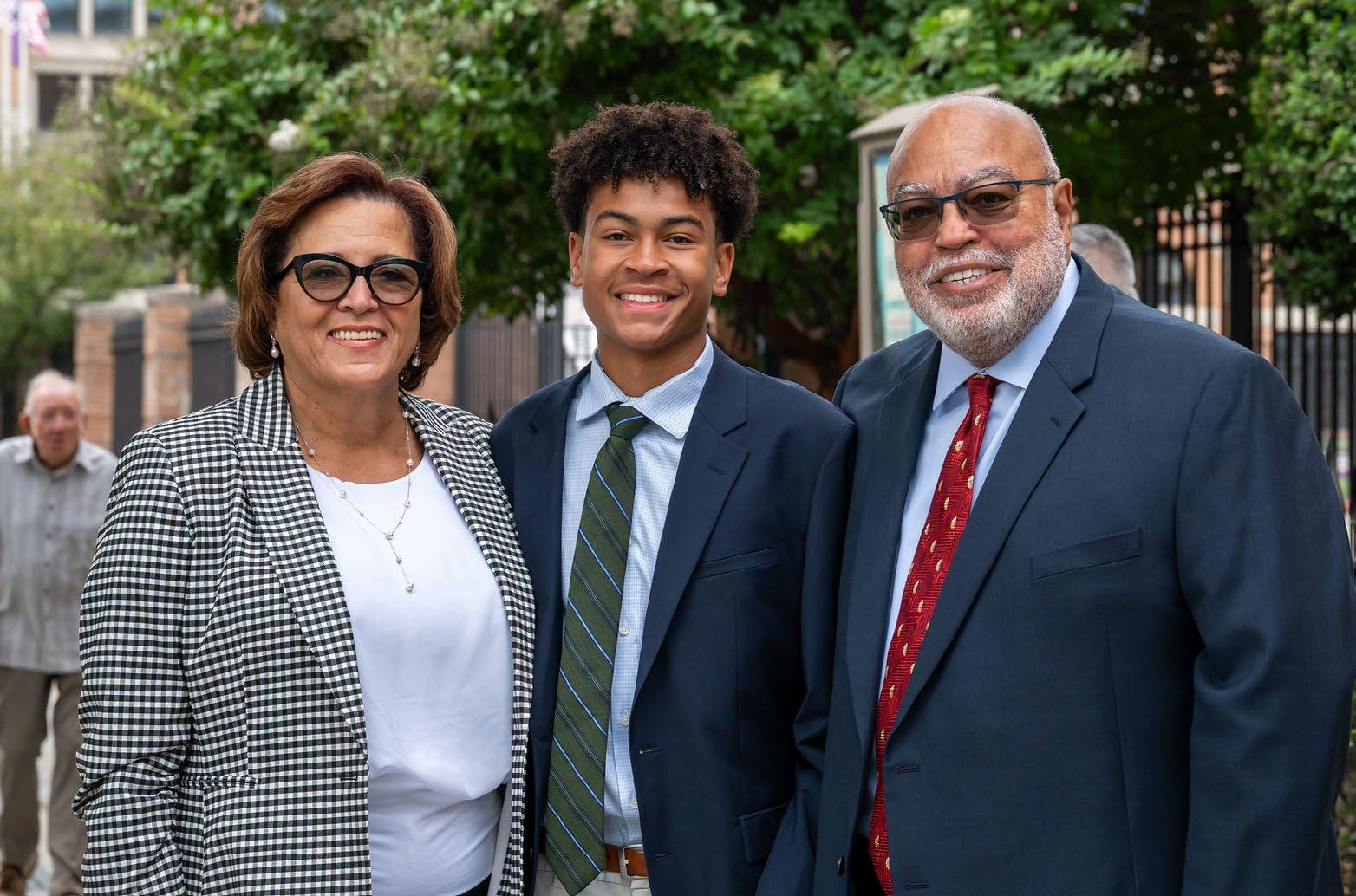
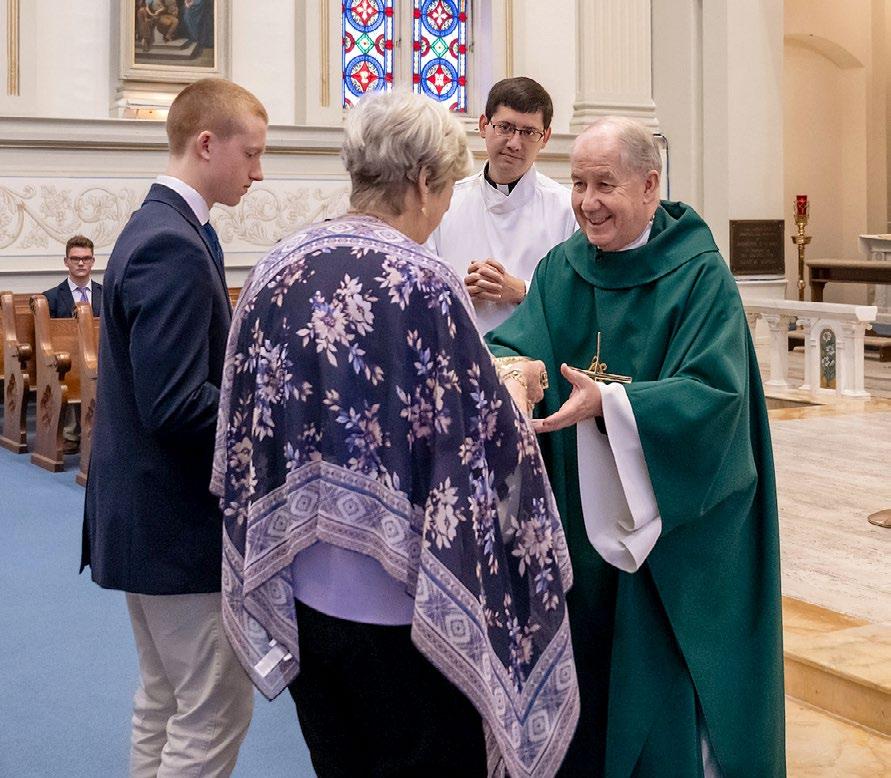
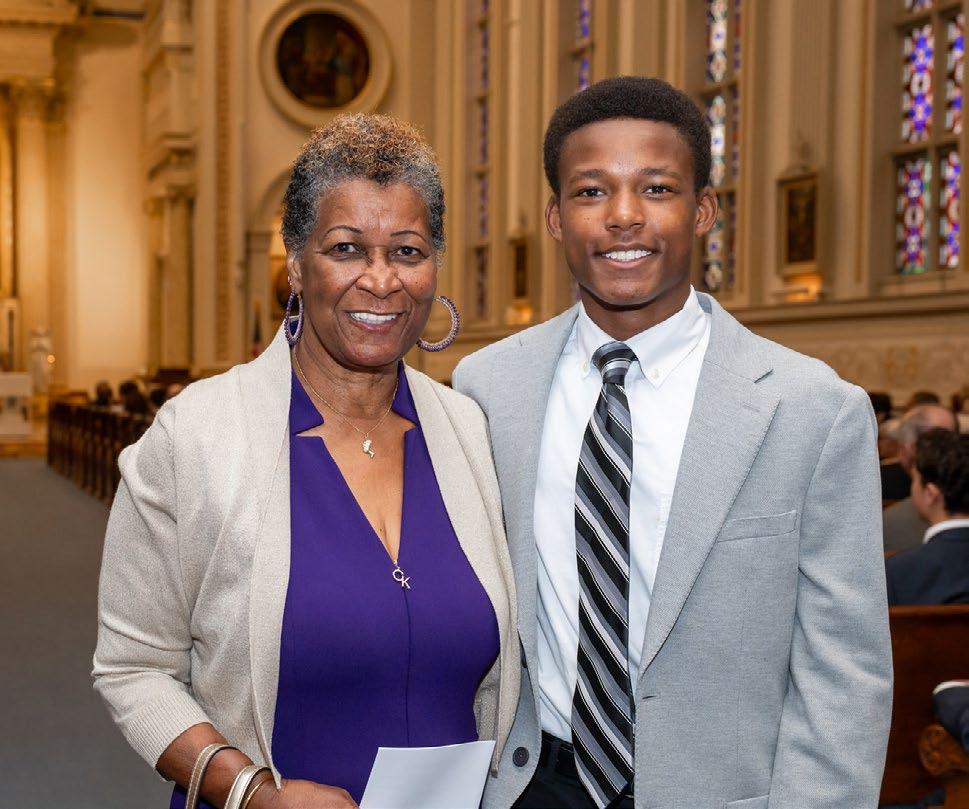
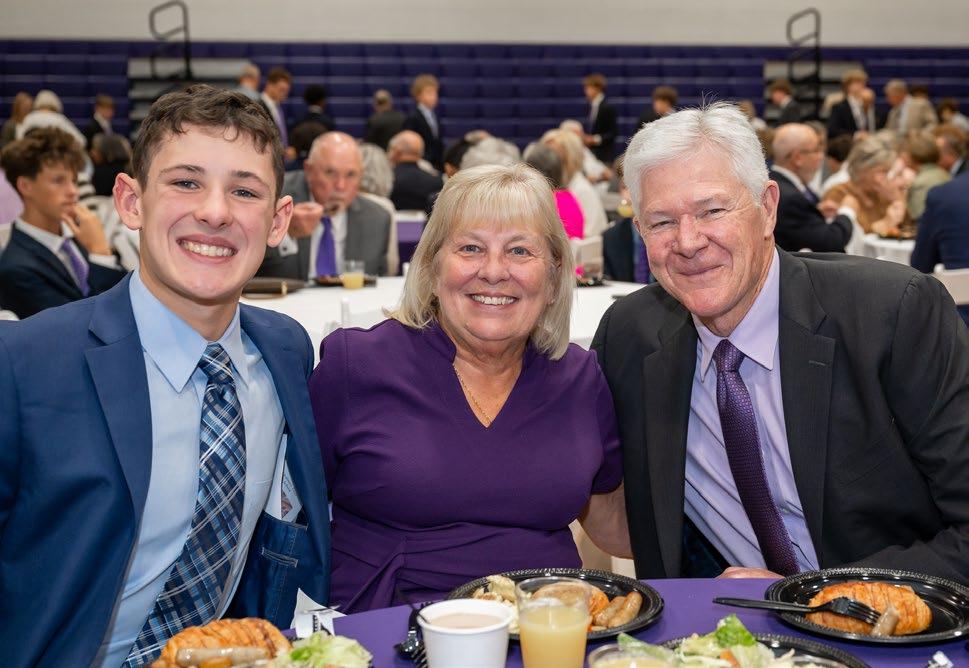
More than 500 Gonzaga students and their grandparents joined us in late September for Gonzaga’s Grandparents Day, which included Mass in St. Aloysius Church celebrated by Father Lingan, followed by brunch in the Carmody Center.
1., 2.,
Gonzaga students with their grandparents.
The Eager Family bringing up the gifts at Mass.
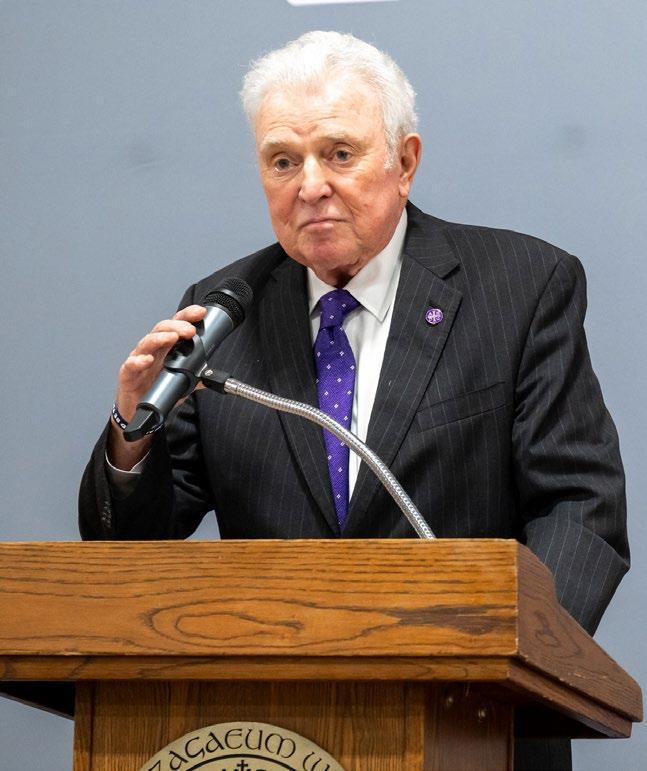
William W. Eager (P ’97,’00,’03,’05,’05,GP ’21,’25,’28,’29) delivered the keynote during brunch. 6. Enjoying brunch in the Carmody Center.
G Fest
October 4, 2025
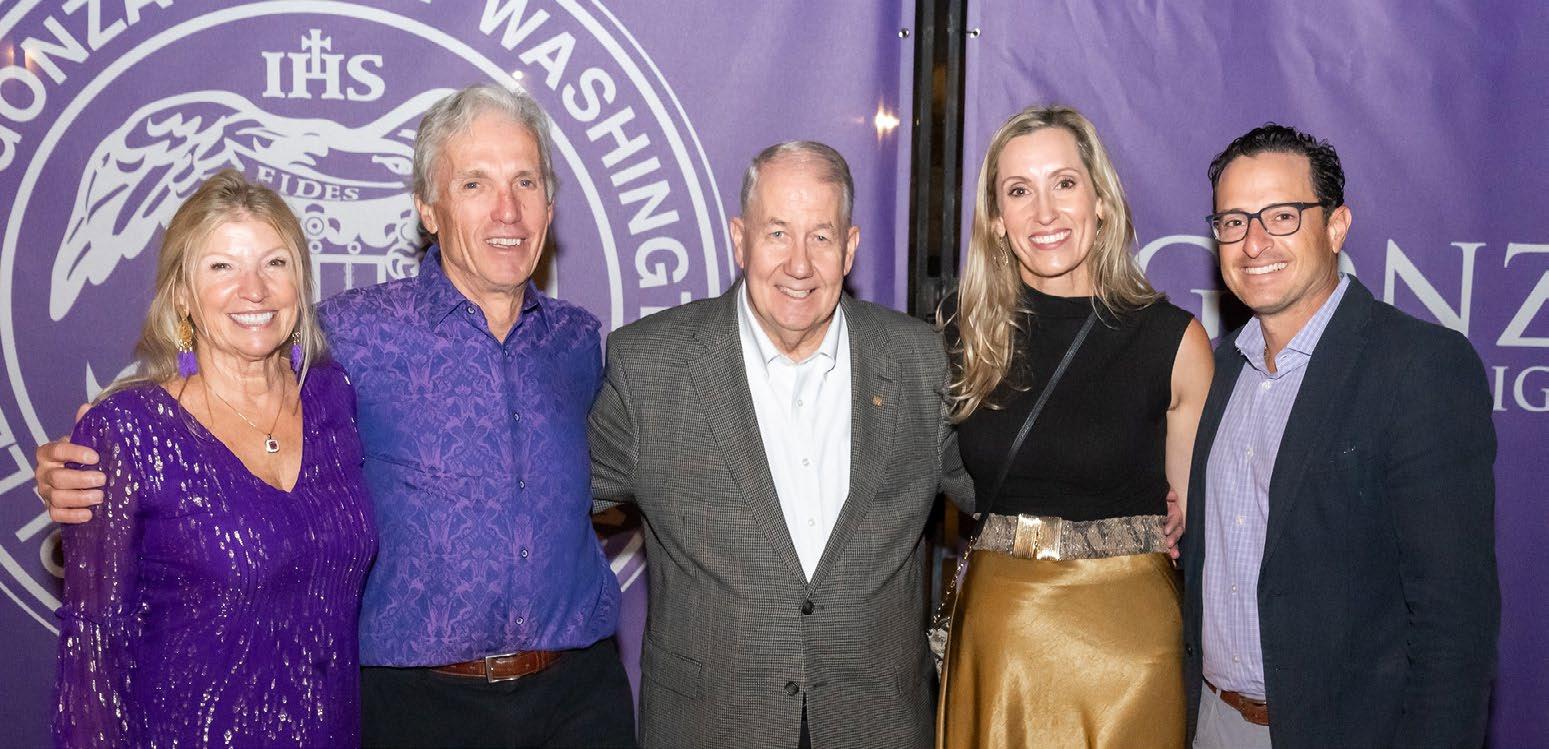
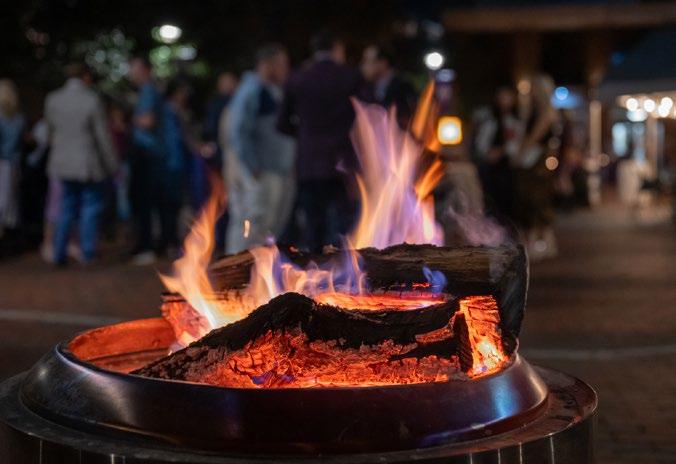
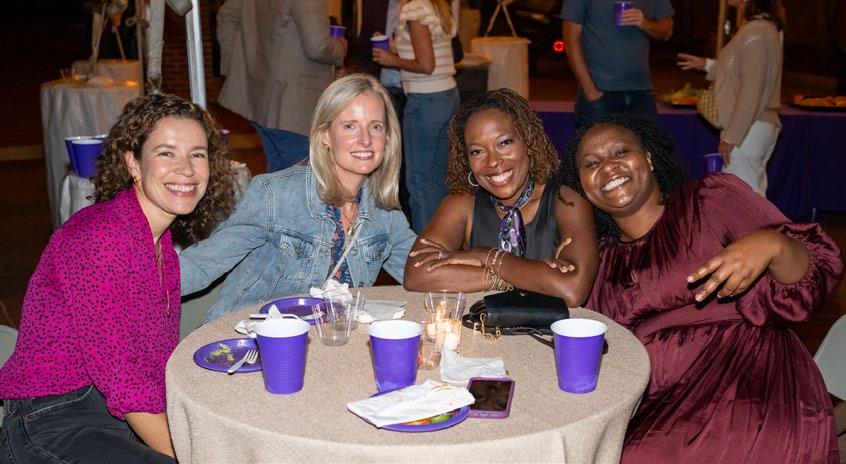
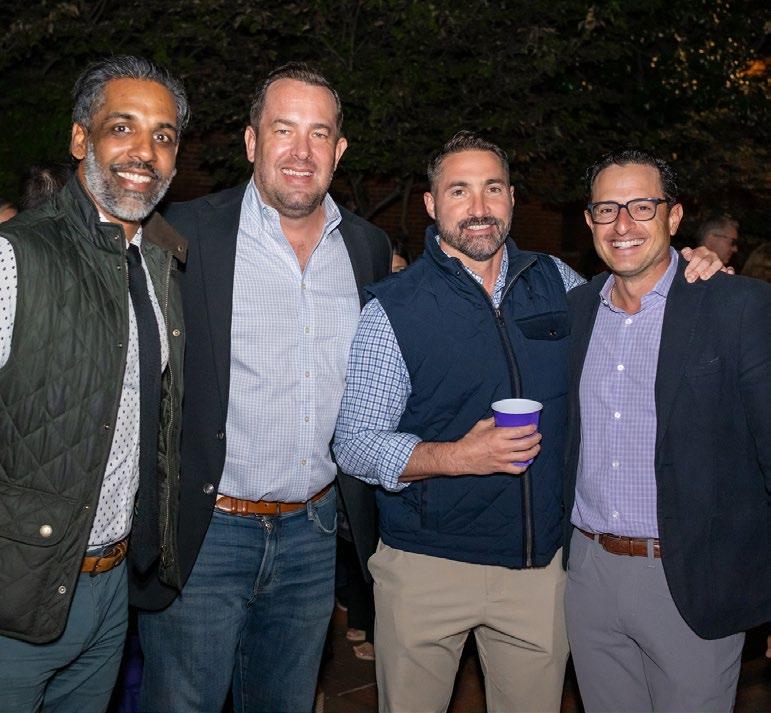
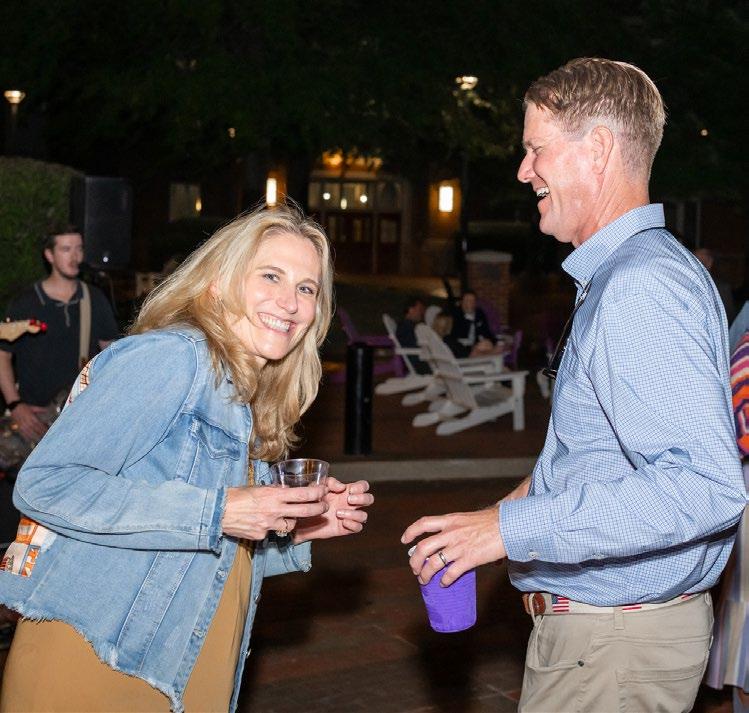
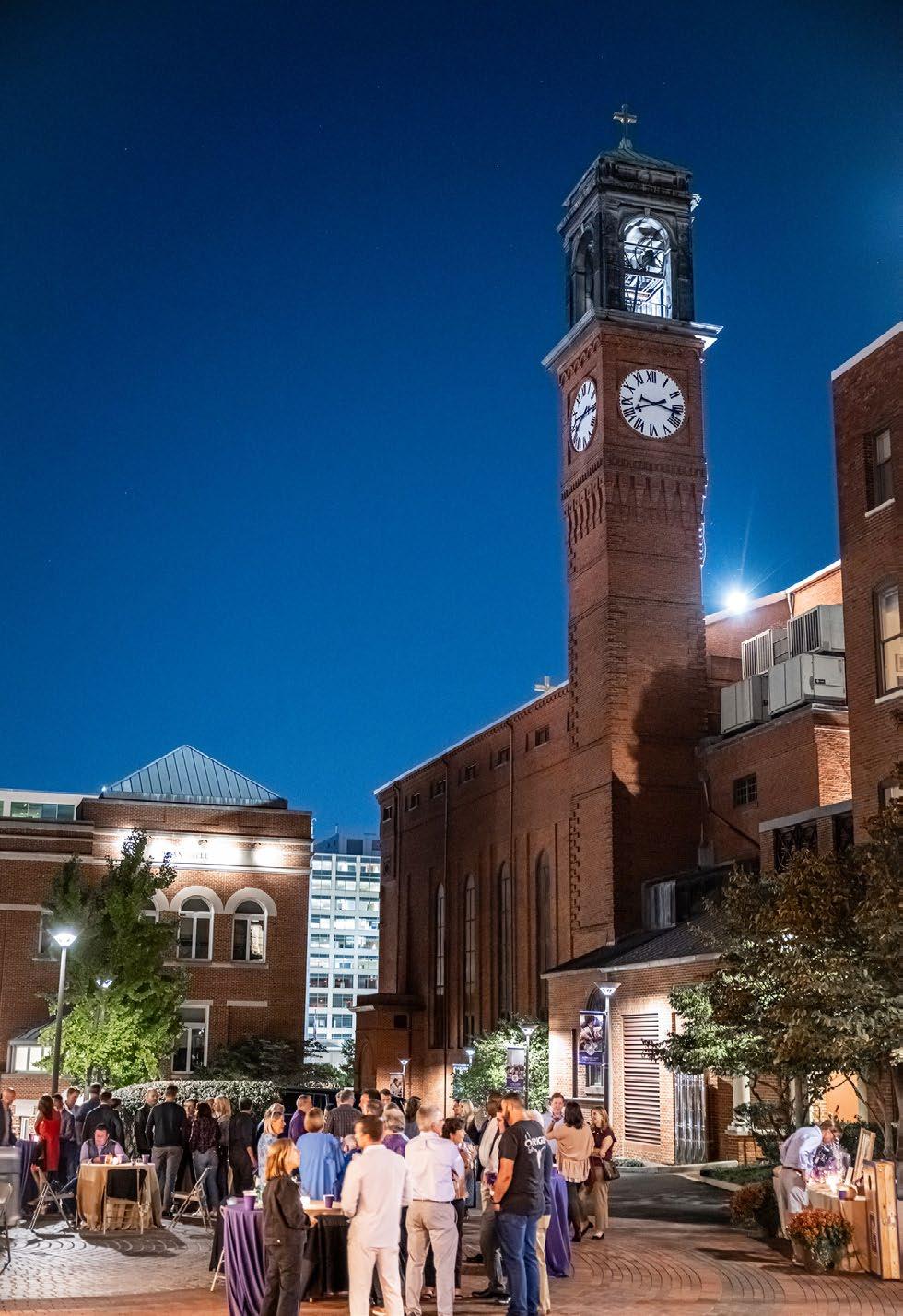
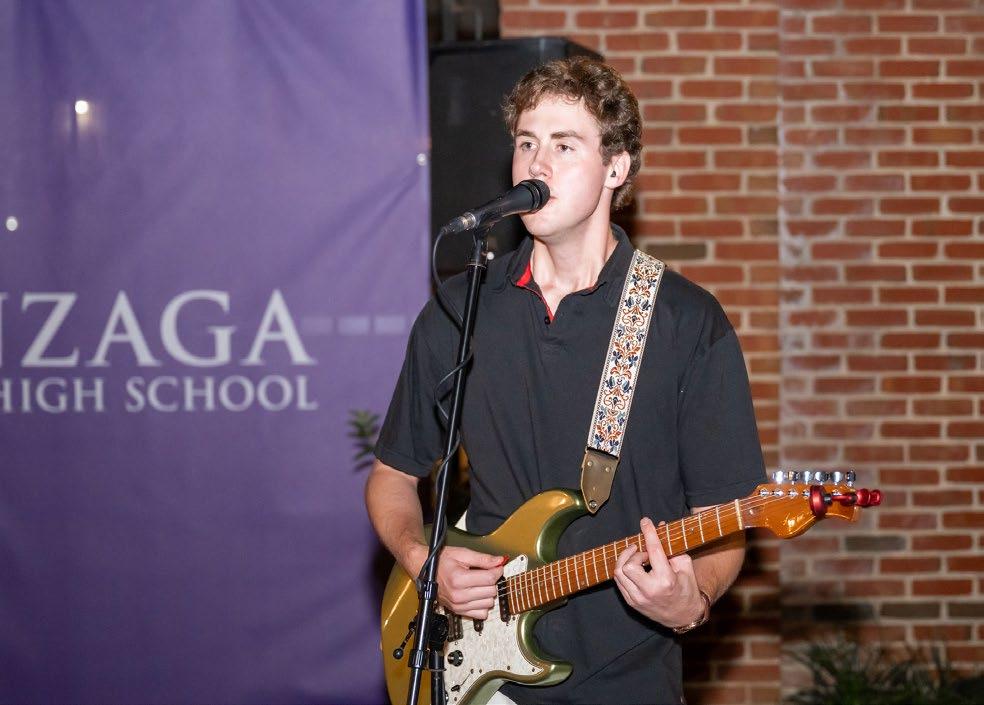
Hosted in memory of Geordan Harris ’03, Gonzaga’s G Fest event returned to Eye Street in the fall of 2025 for the first time in many years. It was a fun night of live music and community, with all proceeds benefiting the Geordan Harris Endowed Scholarship Fund.
1. The Harris family with Father Lingan
from left to right: Heather Harris
’03), Bob Harris ’69 (P ’03), Kristelle Kambanis (P ’29) and George Kambanis (P ’29). 2., 3., It was a perfect early fall evening on campus. 4., 5., 6., Current parents and friends enjoyed an evening of fellowship. 7. Popular local band Hathway played live music for the crowd.
(center)
(P
Carmody Lynn Open
October 24, 2025
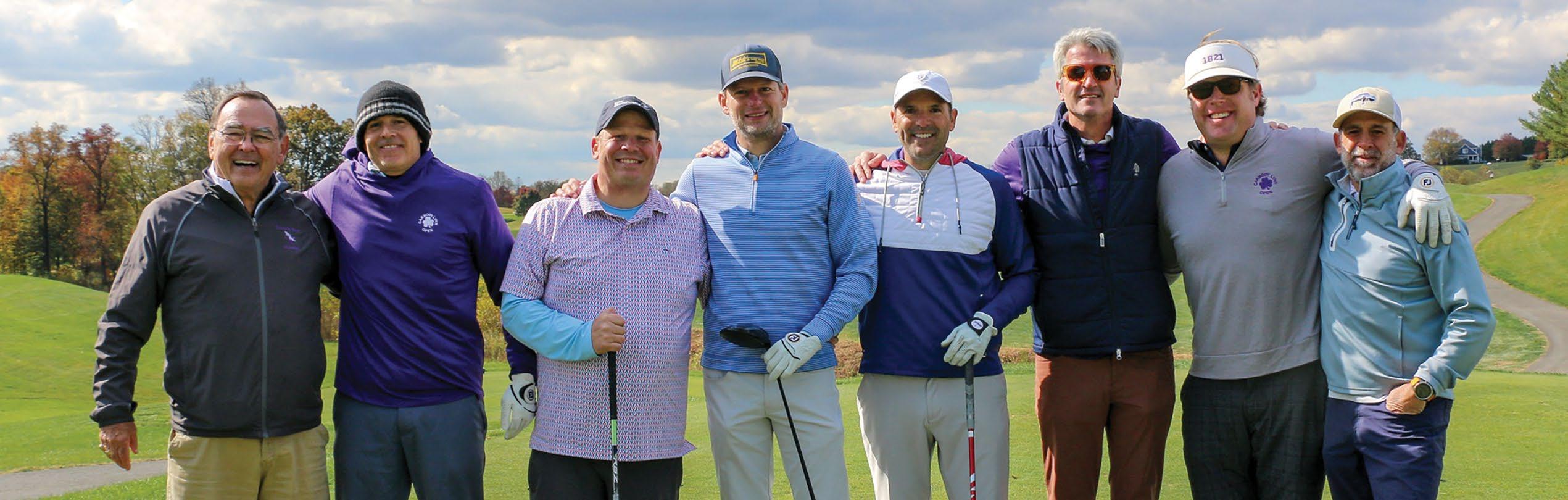
Hundreds of Gonzaga alumni and friends gathered on Friday, October 24 for the 41st annual Carmody Lynn Open, at P.B. Dye and Worthington Manor golf clubs. Played in honor and memory of Kevin Carmody ’62 and Michael Lynn ’94, this annual event raises tuition assistance for Gonzaga students who do not have a father in their lives.
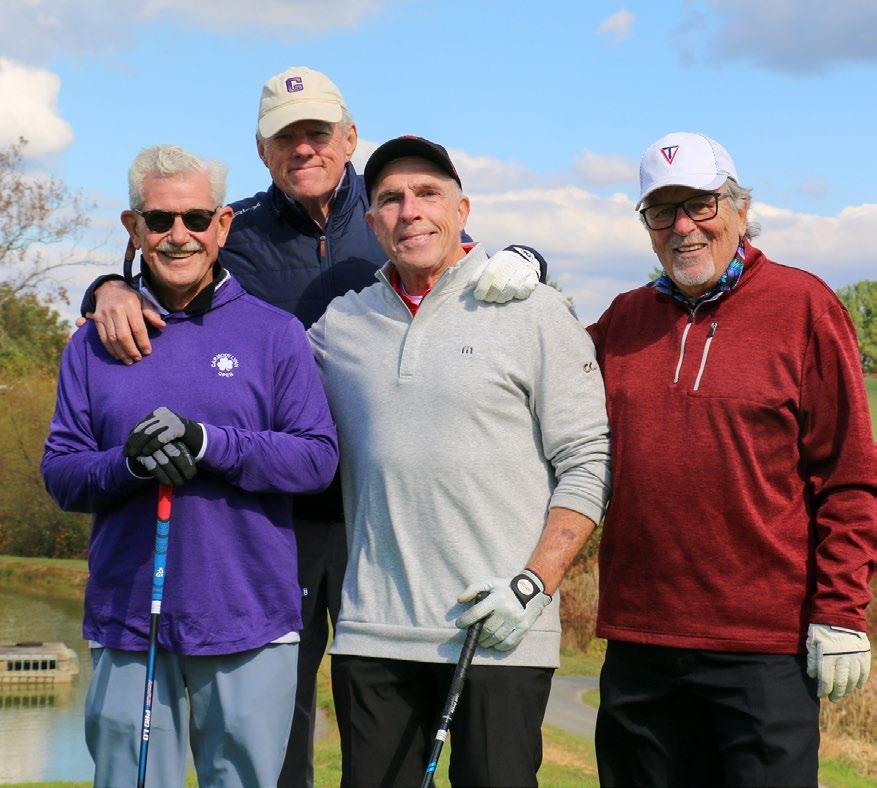

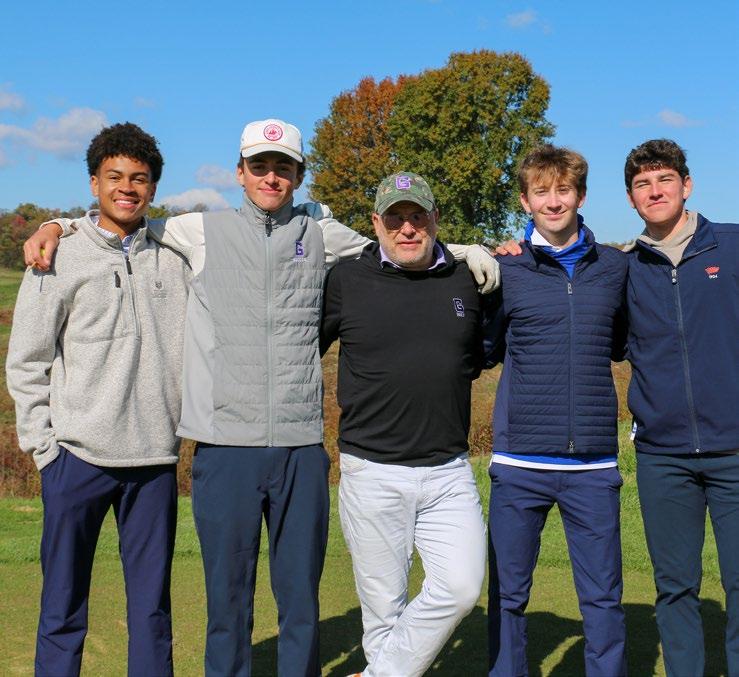
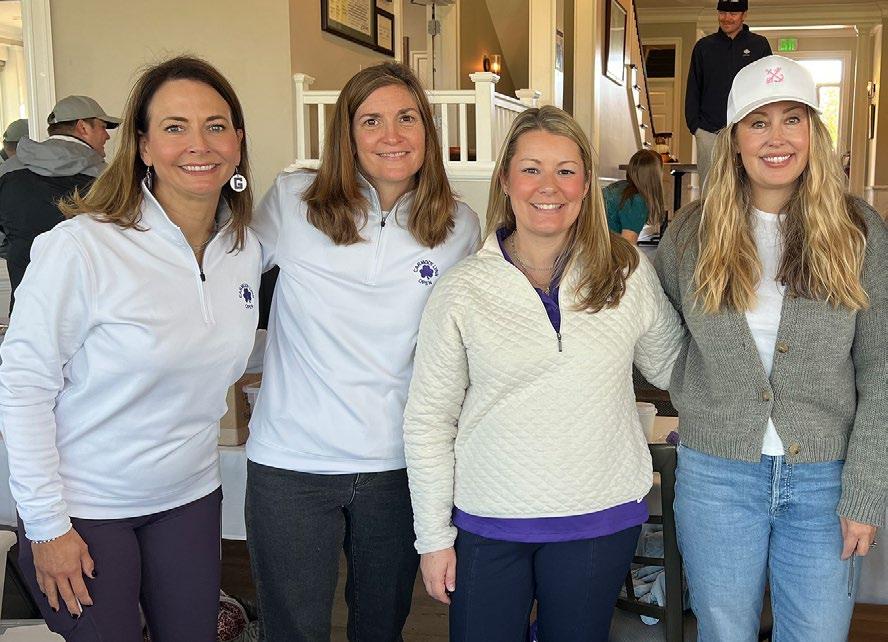
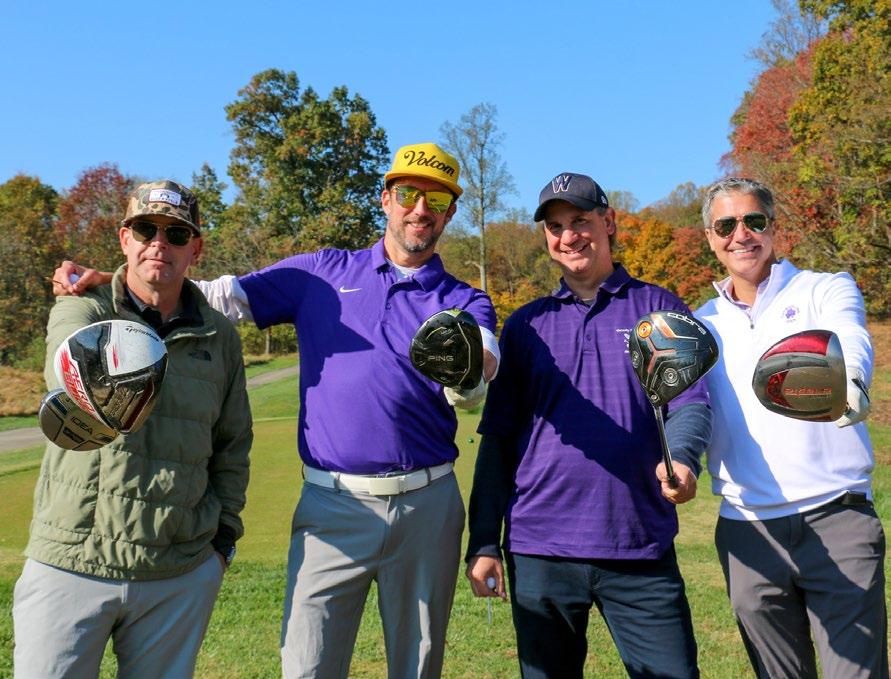
1. From left to right: Mike Murray ’62, Andrew Falcone ’95, Tony Dodson ’95, Greg Trimble ’95, Ryan Worch ’95, Sean Tuohey ’95, Dave Dugan ’98, Brian Urgo. 2. Gonzaga swag on full display. 3. A big thank you to our volunteers; Robin Bernhard, Teresa Pipia, Erica Lynn, Brandi McKeating 4. From left to right: Gael Delany ’66, Randy Dyer ’66, Jack Cullen, Jerry Villella. 5. From left to right: Varsity soccer players with their coach, Scott Waller (middle), Xavier Baugh ’26, Cyrus Welch ’26, Declan Lynn ’26, Ari Lyubinsky ’26. 6. From left to right: Andrew Edgerton ’94, Kevin Ewoldt ’95, Jimmy Miller ’94, Todd Reinecker ’94.
45th Annual Gonzaga Mothers Club Gala
December 6, 2025
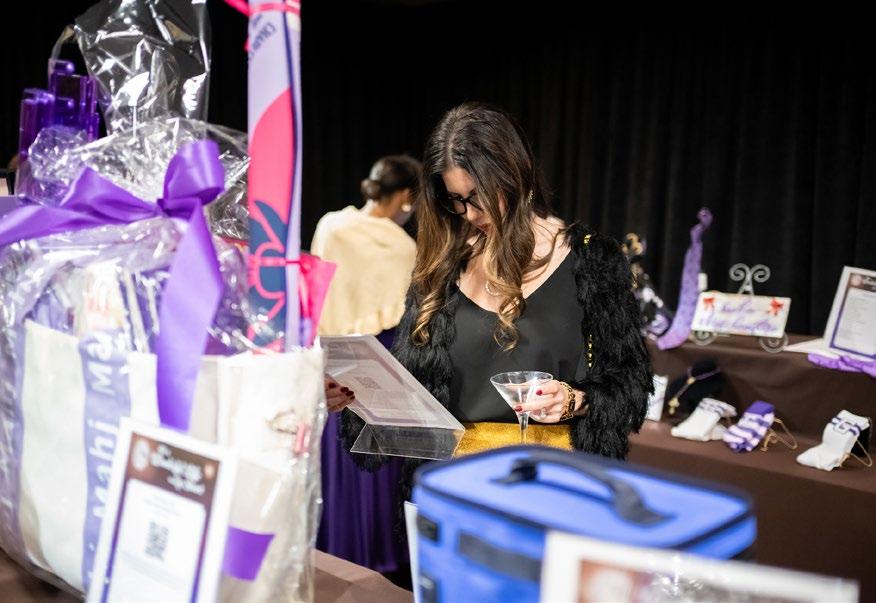
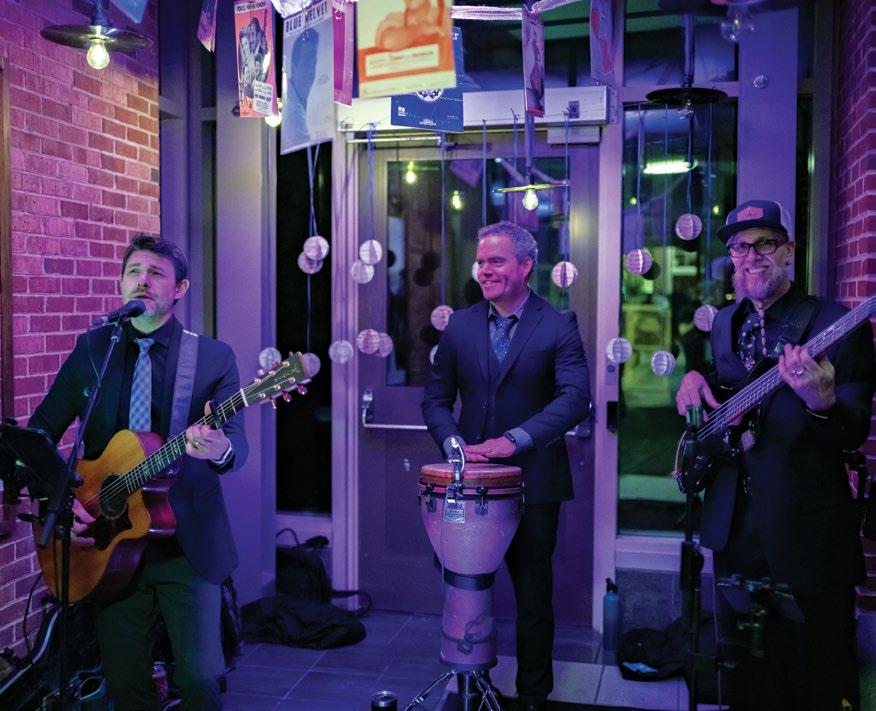
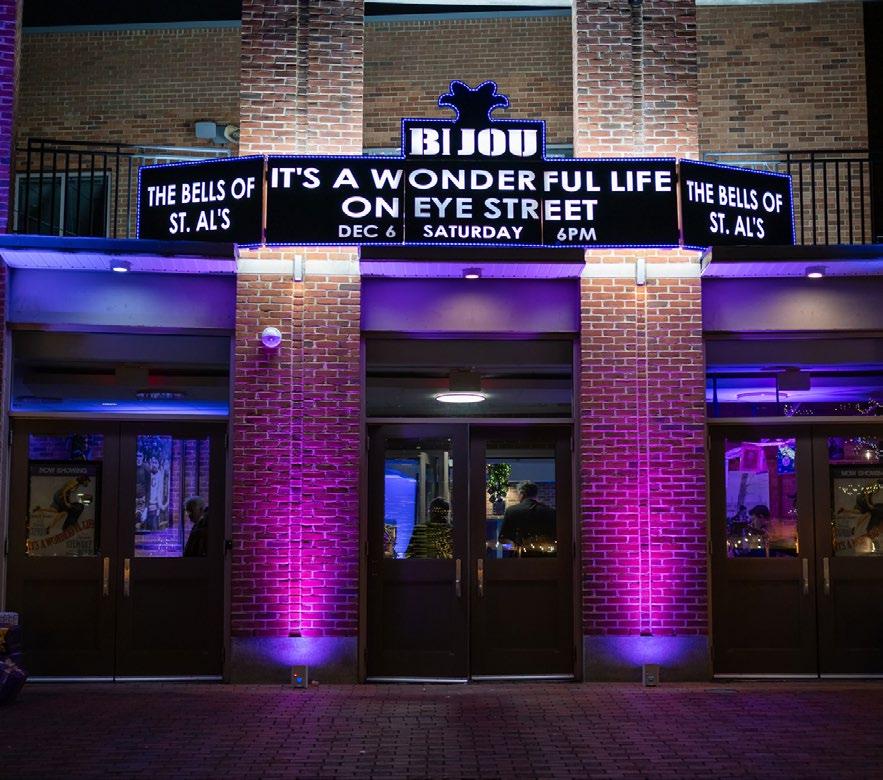
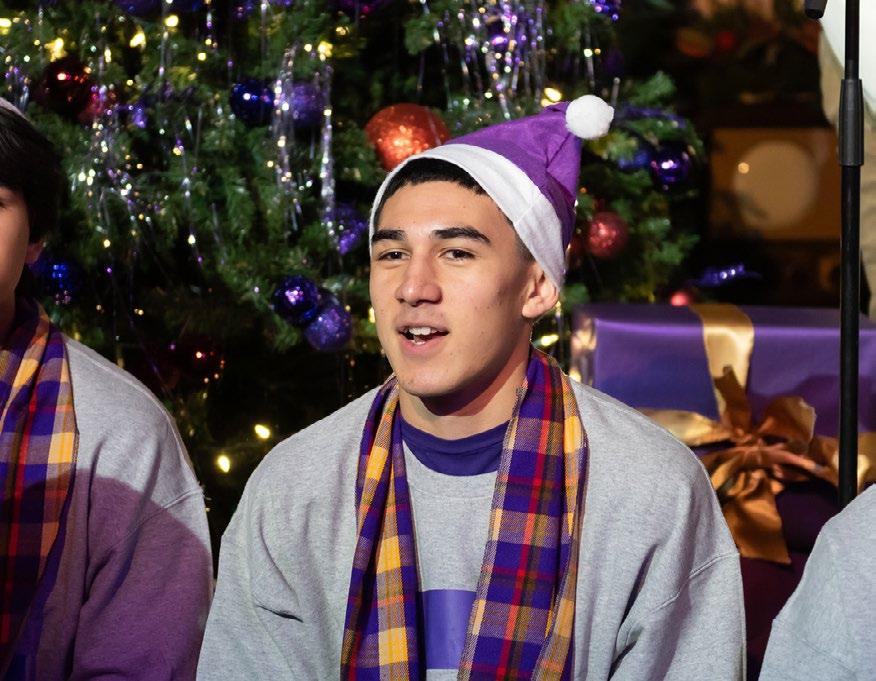
For its annual Christmas Gala this year, the Gonzaga Mothers Club took inspiration from It’s a Wonderful Life, transforming Eye Street into “Zagford Falls” for the evening. The event included silent and live auctions, a seated dinner, and dessert and dancing, all in support of the Gonzaga Annual Fund, which directly benefits current students, as well as a special initiative to replace Buchanan Field’s turf—which, after ten years of hard use, will be replaced this summer.
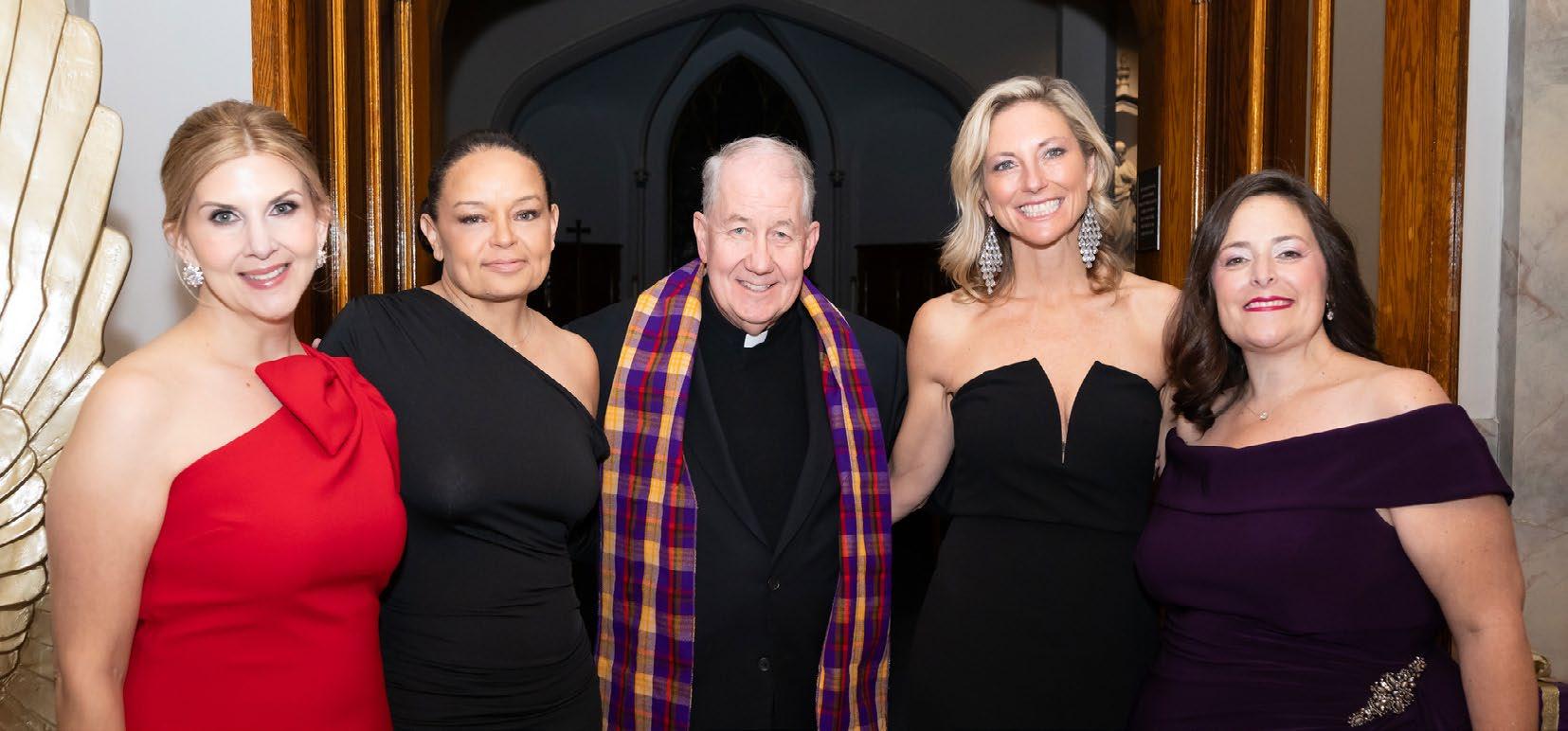
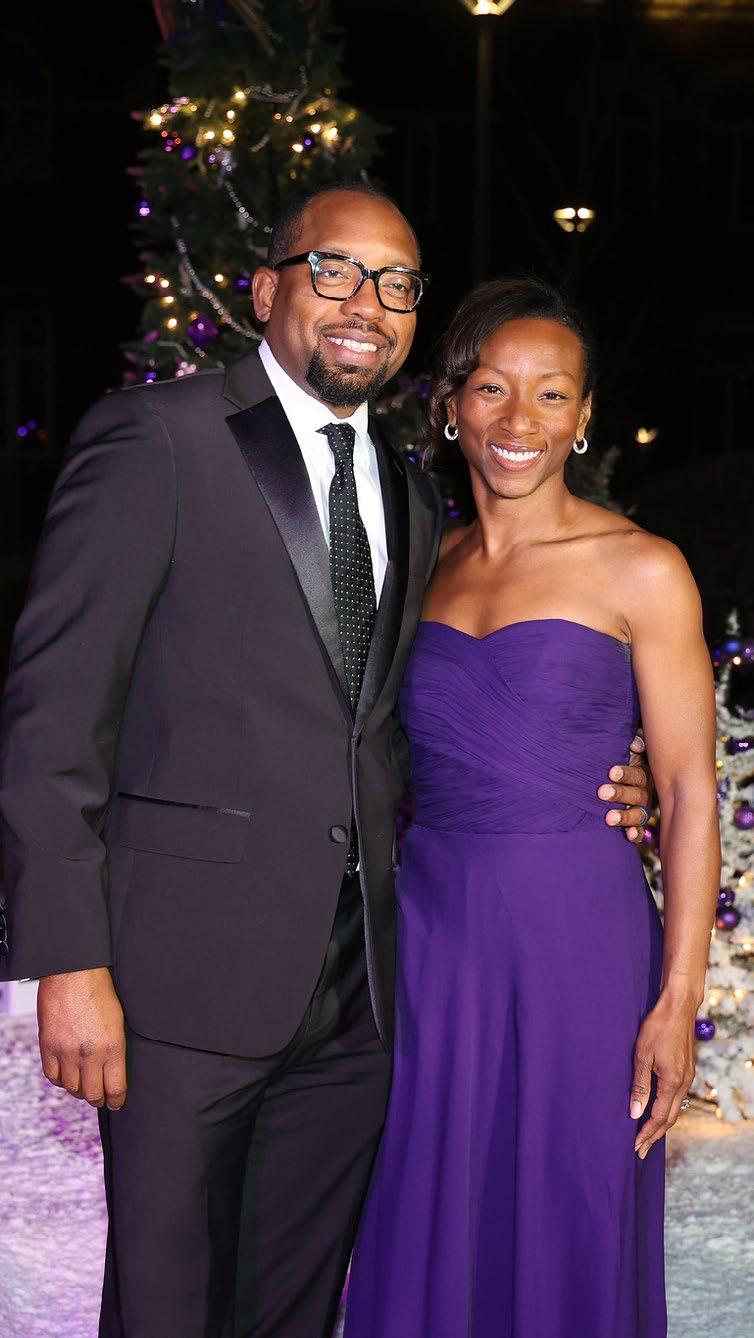
1. From left to right: Dede Curteman (P ’28), Tara Moore (P ’26), Father Lingan ’75, Ann Woodson (P ’26, ’28), Jennifer Burnside (P ’26)
2. Guests entered the Carmody Center through a custom movie marquee reminiscent of George Bailey’s hometown theater. 3. Before dinner began, guests were able to bid on hundreds of silent auction items. 4. A live band played before dinner outside the Carmody Center, then moved to the Upper Commons after the live auction for more dancing and merriment. 5. Many guests posed for photos atop the “frozen pond” in the Collins Courtyard. 6. A highlight of the evening was the students singing Christmas Carols before the live auction began.
by
the numbers
Gonzaga Dramatic Association
From the debut of Guy Mannering in 1896 to this year’s high-energy production of Spamalot, the Gonzaga Dramatic Association has been a cornerstone of Eye Street culture for over a century. Here, we pull back the curtain to give you a closer look at the GDA by the numbers—from the youngest star on stage to the unique geometry of the Sheehy Theater.

60
Number of cast members in this year's production of Spamalot

82
Number of cast members in the GDA’s largest-ever production, 1982’s West Side Story

Year the Sheehy Theater opened and the year of its first production (Guy Mannering)

ft squared: area of the Warman Stage
Age of the youngest person to appear in a GDA production (Naomi Waller in 2018’s A Midsummer Night’s Dream) 6
788
Number of seats in the Sheehy Theater
Year of the GDA’s first co-ed production
5
rake (or slope) from the back wall to the front of the stage. This means the back of the stage is over a foot higher than the front, creating a dramatic and challenging performance space (in which all furniture, scenery, and heavy equipment need to be secured or have their legs cut to sit level on the incline).
Strength in Body, Mind, and Spirit
A new club shines a light on student-athletes’ mental health
For decades on Eye Street, “toughing it out” was an unwritten rule of athletics. “Growing up in my generation, it was kind of considered ‘soft’ to talk about mental health or any of your struggles,” says Head Basketball Coach and Assistant Athletic Director Keith Urgo ’97 – a three-sport athlete on Eye Street who went on to play basketball and lacrosse at Fairfield University and then coach Division 1 basketball at the collegiate level. Thankfully, that mindset is changing.
With support and encouragement from Urgo as well as the entire Gonzaga Athletic Department, sophomores Liam Fore and Grant Hellmold set out to create a new club this year called Eagles Strong to support student-athletes’ mental health. The goal of the club is to provide a forum to discuss challenges like social media harassment, performance anxiety, and the pressure to balance sports with academics, as well as share coping strategies and resources for help.
“Being at a school like Gonzaga, which emphasizes both rigorous academics and high-level athletics, we saw an opportunity to help other students on an important issue,” says Fore, who played water polo, basketball, and lacrosse his freshman year, and played basketball this year.
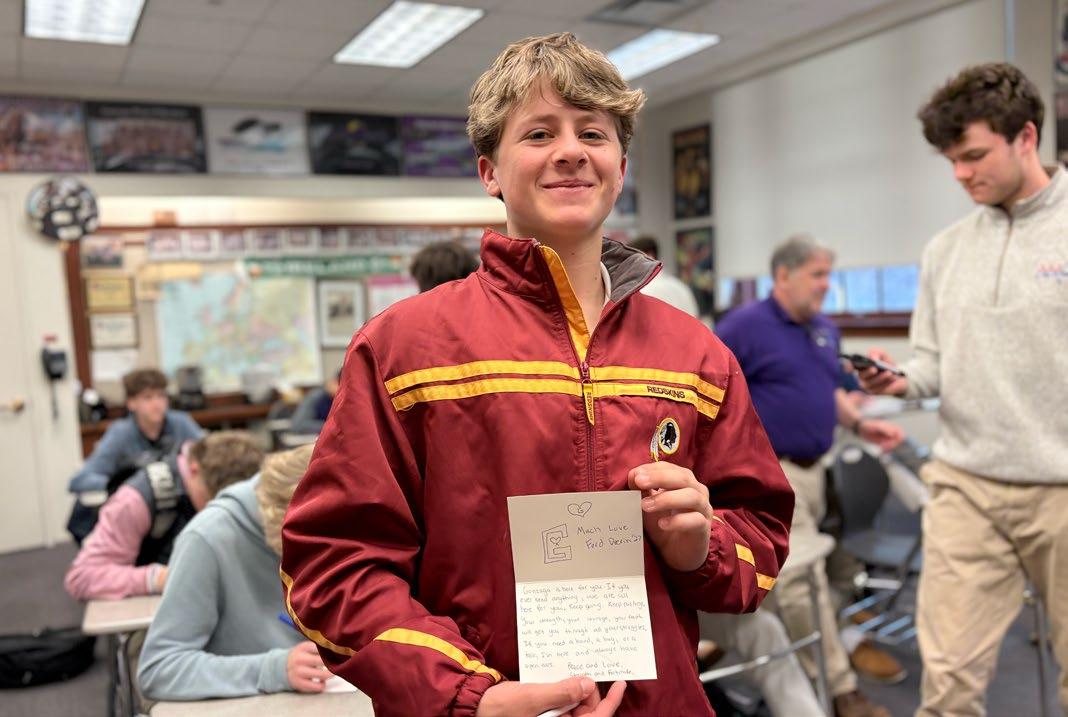
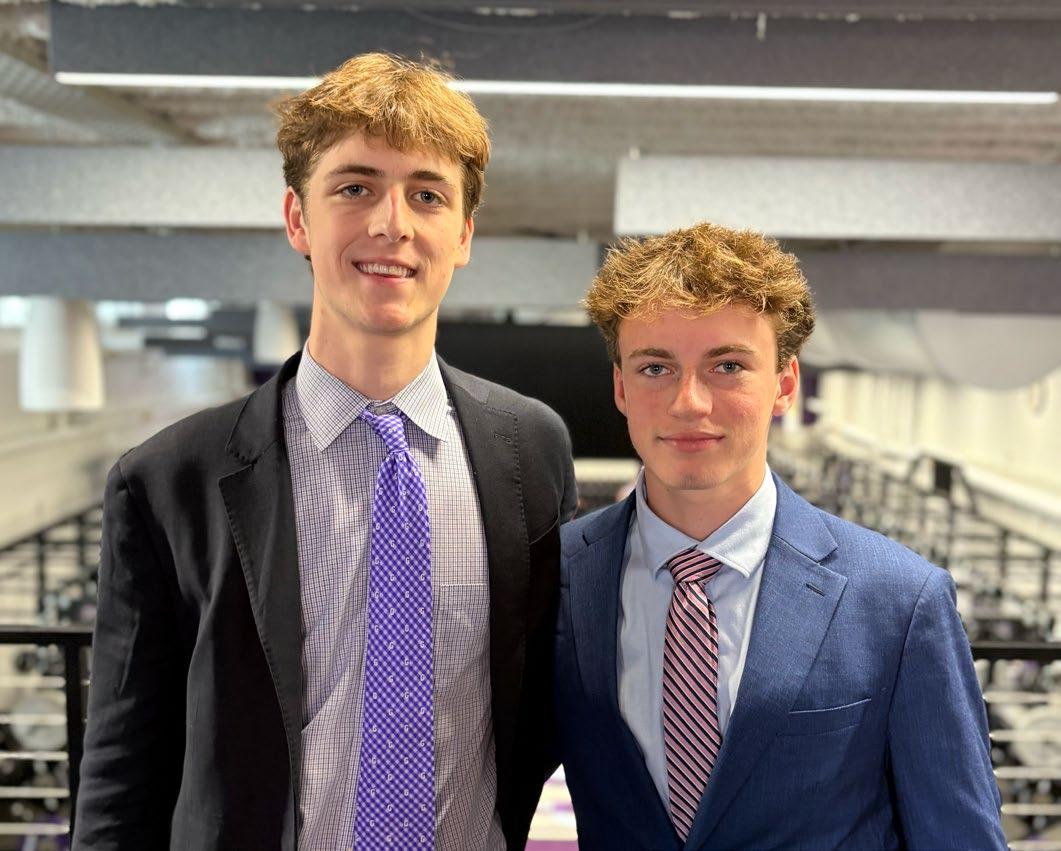
“Being mentally strong is just as important as being physically strong, and can even improve your performance,” adds Hellmold, a lacrosse player. “Being a good athlete means gaining every inch of advantage you can get.”
Social Studies teacher Mr. Joe Viola ’83, a longtime faculty member and coach, serves as club moderator. He says there is much more pressure on today’s student-athletes than when he was a student in the early 1980’s. “We’re in an environment where athletics are often seen as a pathway to college,” he says.“While that can be true for some, we want our students to value the high school experience for its own sake, rather than as simply a means to an end. High school sports should also be about the joy of the game and the bond with teammates, not just the pressure to reach the next level.”
Urgo, who coached basketball at Fordham, Villanova, and Penn State before returning to Gonzaga this year, has seen firsthand the pressure high-performing young athletes are under. “What we found through Covid was that a lot of teens and young college kids were feeling isolated as a result of phones and social media and so much peer pressure - it’s never been as evident as it is now. I think Eagles Strong is going to become one of the most important clubs at Gonzaga.”
In October, Eagles Strong hosted a videoconference with Justin and Brooke Jackson. Justin won an NCAA Championship at UNC and went on to play in the NBA; Brooke played basketball at the University of Florida. The couple shared powerful stories about their own experiences as faithdriven athletes. The club plans to invite other guest speakers, particularly Gonzaga alumni who have gone on to play collegiate and professional sports, with the hope of inspiring Gonzaga student-athletes to have open conversations, take care of their mental health, and seek help when needed.
Follow @GonzagaEaglesHoops for all basketball updates!
“Even the most elite athletes struggle with mental health,” Fore says. “The more we talk about it, the more the mental side of the game becomes a source of strength, not weakness.”
In March, club members wrote notes of support and encouragement to their Gonzaga classmates, which were distributed by the counseling department.
Club leaders Liam Fore ’28 and Grant Hellmold ’28
IN THE FOOTSTEPS OF ST. IGNATIUS
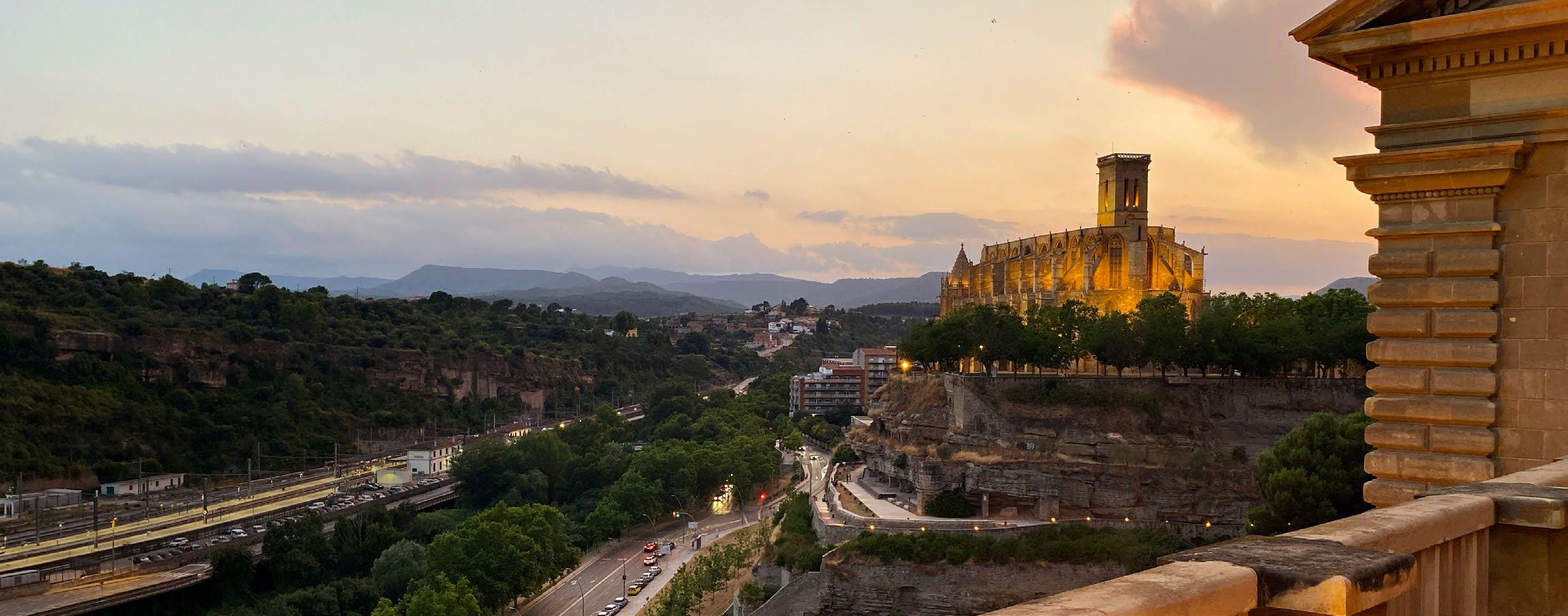
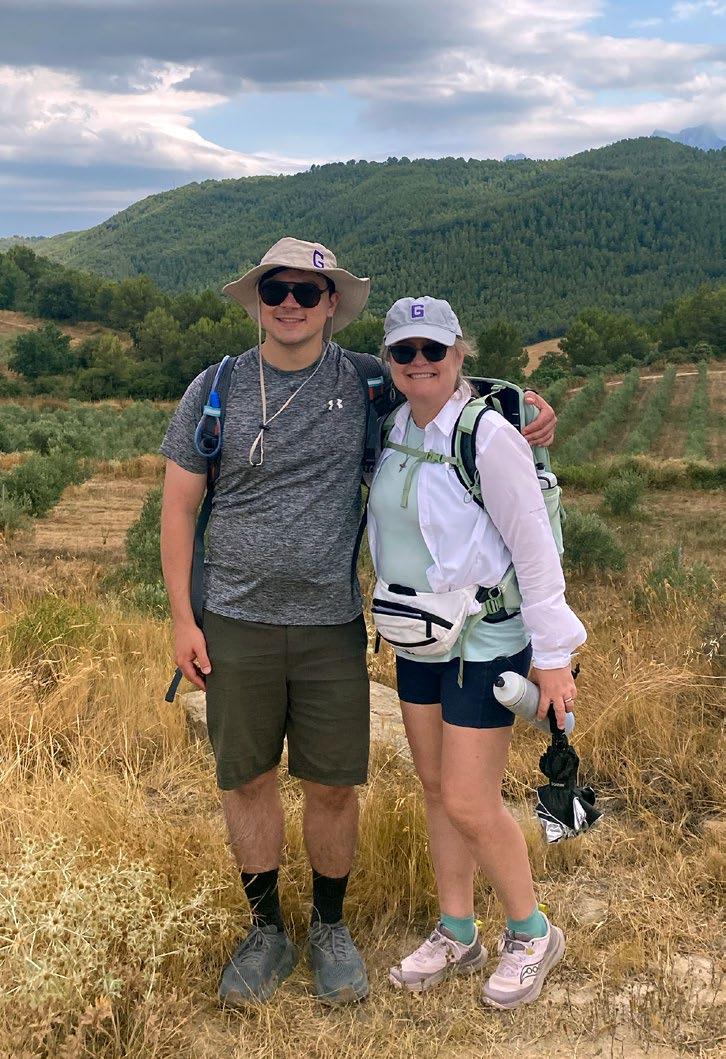
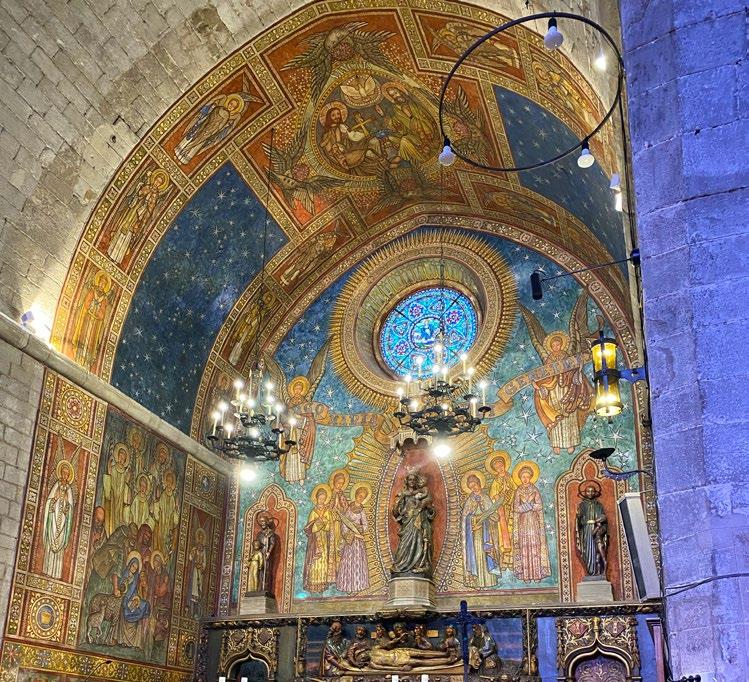
Last summer, two members of the Gonzaga faculty—longtime Physics teacher Mrs. Marilynn Kelley and Jesuit Regent Mr. Christian Zombek—embarked on a 92-mile pilgrimage along Spain’s Camino Ignaciano. Retracing the historic route from Loyola to Barcelona, they walked in the literal and spiritual footsteps of Saint Ignatius of Loyola.
Upon their return to Eye Street, they shared how this grueling yet grace-filled journey from the Basque country to the cave at Manresa has deepened their commitment to Jesuit education and their personal walks with God.
Preparation of Body and Soul
Kelley: “We joined 17 other teachers from North American Jesuit schools for the nine-day trek. Initially, I focused on the physical training, becoming intentional with my daily walking and weekend hikes. But the preparation was spiritual, as well; we were assigned readings and met monthly for the six months leading up to our pilgrimage to ensure we were ready for the internal journey as much as the physical one.”
Walking with a Saint Zombek: “I was asked to serve as a spiritual leader for the group, which was moving. Being able to pray in front of the same statues and at the same churches where Ignatius stood allowed me to more fully understand and appreciate a man who has done so much for me. It helped me grow in my relationship with him, seeing him not just as a historical figure, but as a companion.”
A Continued ‘Yes’ to the Mission Kelley: “At the end of the Camino, you realize that your journey is not over. The hike was only one part of my walk with God. Teaching at Gonzaga for 33 years has been a continued ‘Yes’ to my calling to be a companion of the Jesuits in their mission to educate the young men of Eye Street. The finish line in Barcelona was really just a reminder to keep walking here at home.”
Bringing the Pilgrimage Home
Zombek: “There’s a frequent saying by pilgrims, ‘Everyone has something to learn on the Camino.’ What I brought home was a deeper sense of patience and a renewed heart for companionship. I learned a great deal by spending those miles alone in prayer and with God, but also through the shared struggles and joys of my companions along the way. I am eager to share those blessings with my students and continue experiencing the fruits of that wonderful trip in my daily work at Gonzaga.”
BEYOND THE MAT
The newly dedicated Machen Wrestling Room honors a family’s deep commitment to Gonzaga’s Jesuit mission.
When Gonzaga renovated the Old Gym, transforming it into the Sheridan Strength and Conditioning Center, the Wrestling Room took over the former weight room above the Carmody Center. For the past few years, as the Gonzaga Wrestling program has settled into its new light-filled practice space, there has been just one problem: The new space did not yet have a name.
For Father Lingan, the Machen family immediately came to mind as the perfect fit to become the room’s namesake.
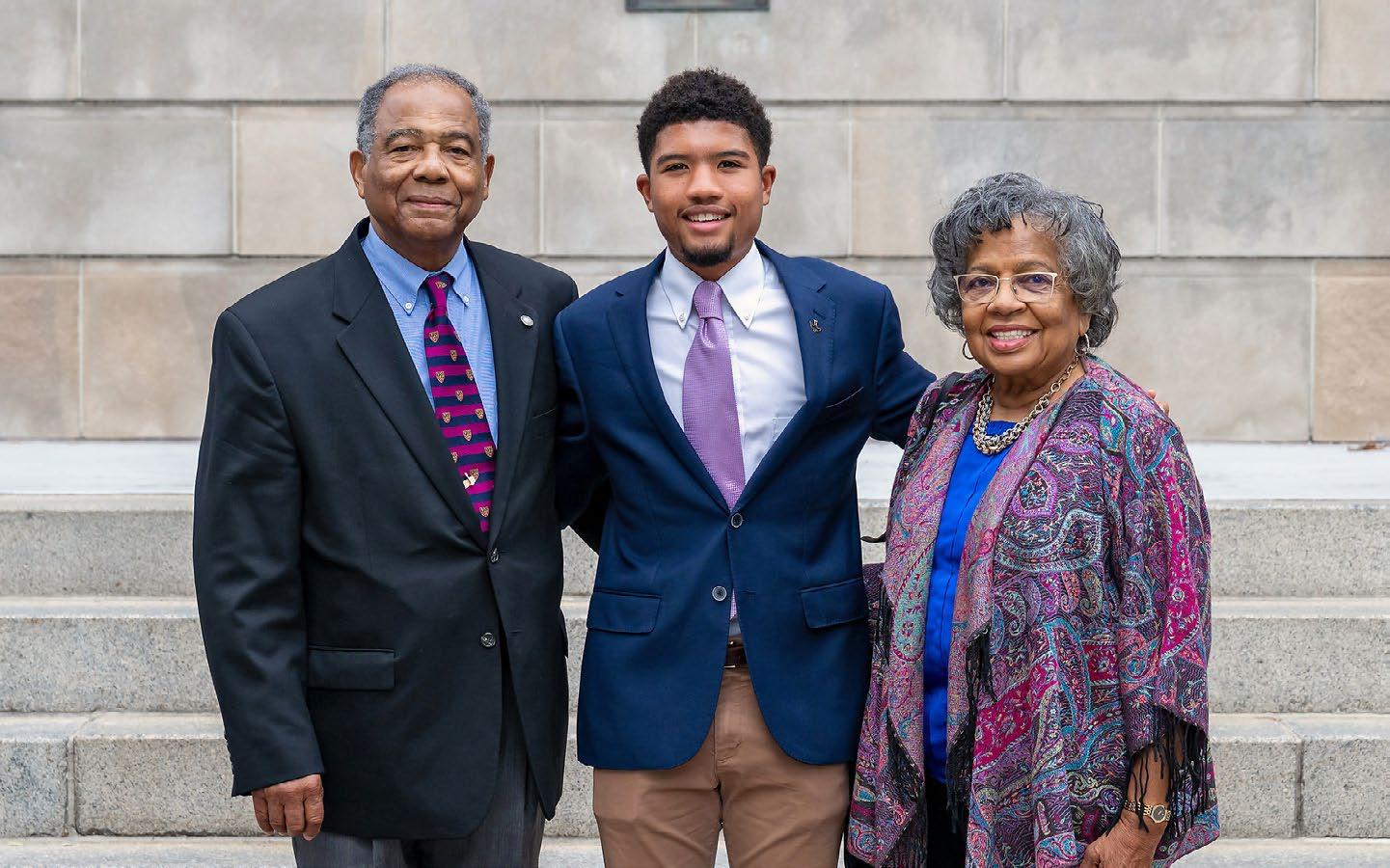
The parents of Kadari ’22, Ron and Ayana Machen have been generous supporters and representatives of Gonzaga, with Ayana serving as a Gonzaga Trustee and chair of the Advancement Committee. The family also endowed a fund, called the Machen Family Endowed Scholarship Fund, to provide need-based tuition assistance to either a Vinco Scholar or a Keith-Sean Lindsey ’84 Scholar (a son of an African-American Gonzaga alumnus).
In addition to Ayana and Ron’s deep generosity to Gonzaga, they have seen through Kadari the key role
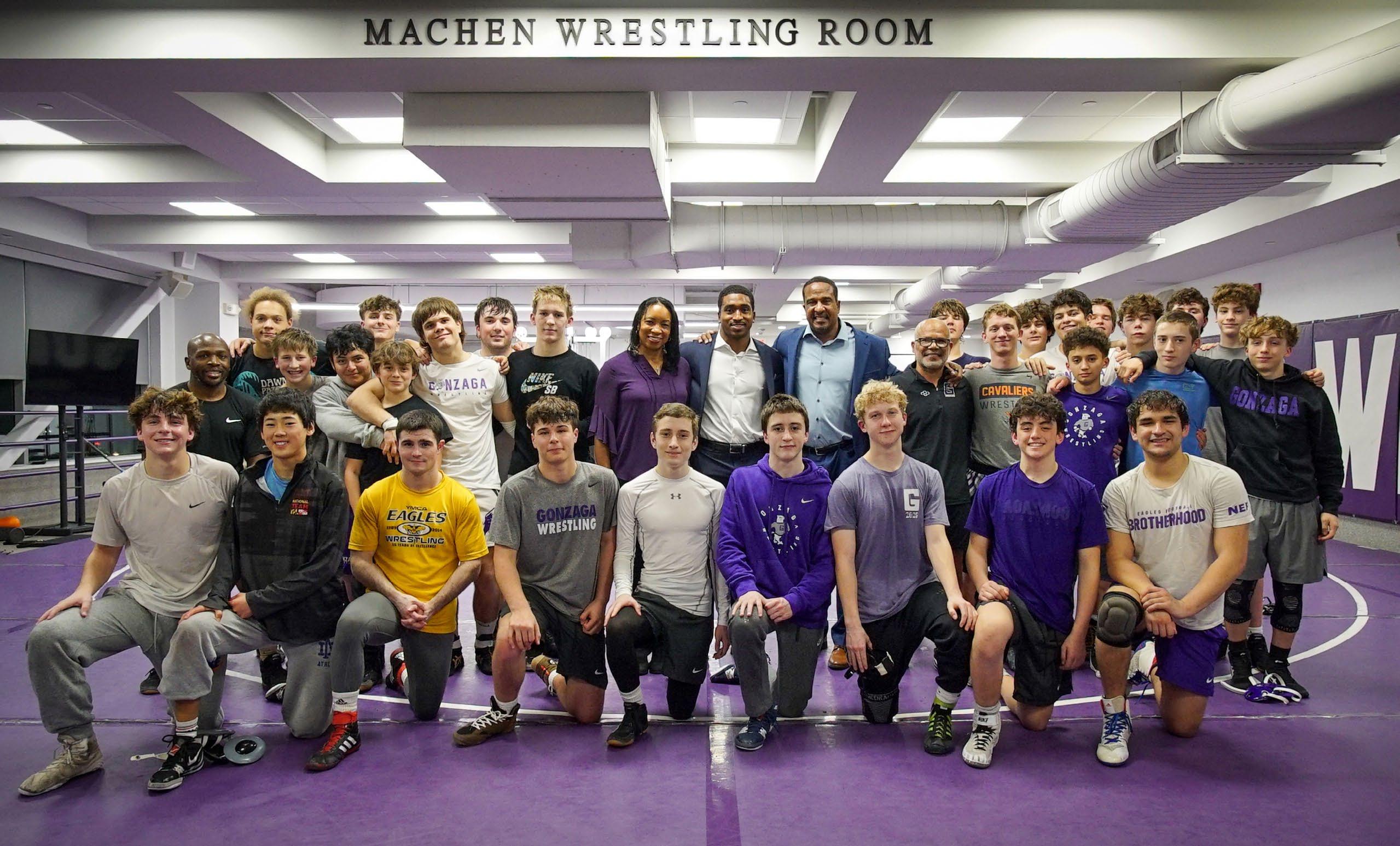
Gonzaga wrestlers pause practice to pose for a photo in the Machen Wrestling Room.
wrestling can play in forming young men. A stand-out student-athlete at Gonzaga, Kadari was a first-team All-Met wrestler and captain of the team his senior year. “Wrestling teaches personal accountability, grit, and perseverance like no other sport,” says Ayana. “We want as many Eagles as possible to have a chance to experience this amazing sport.”
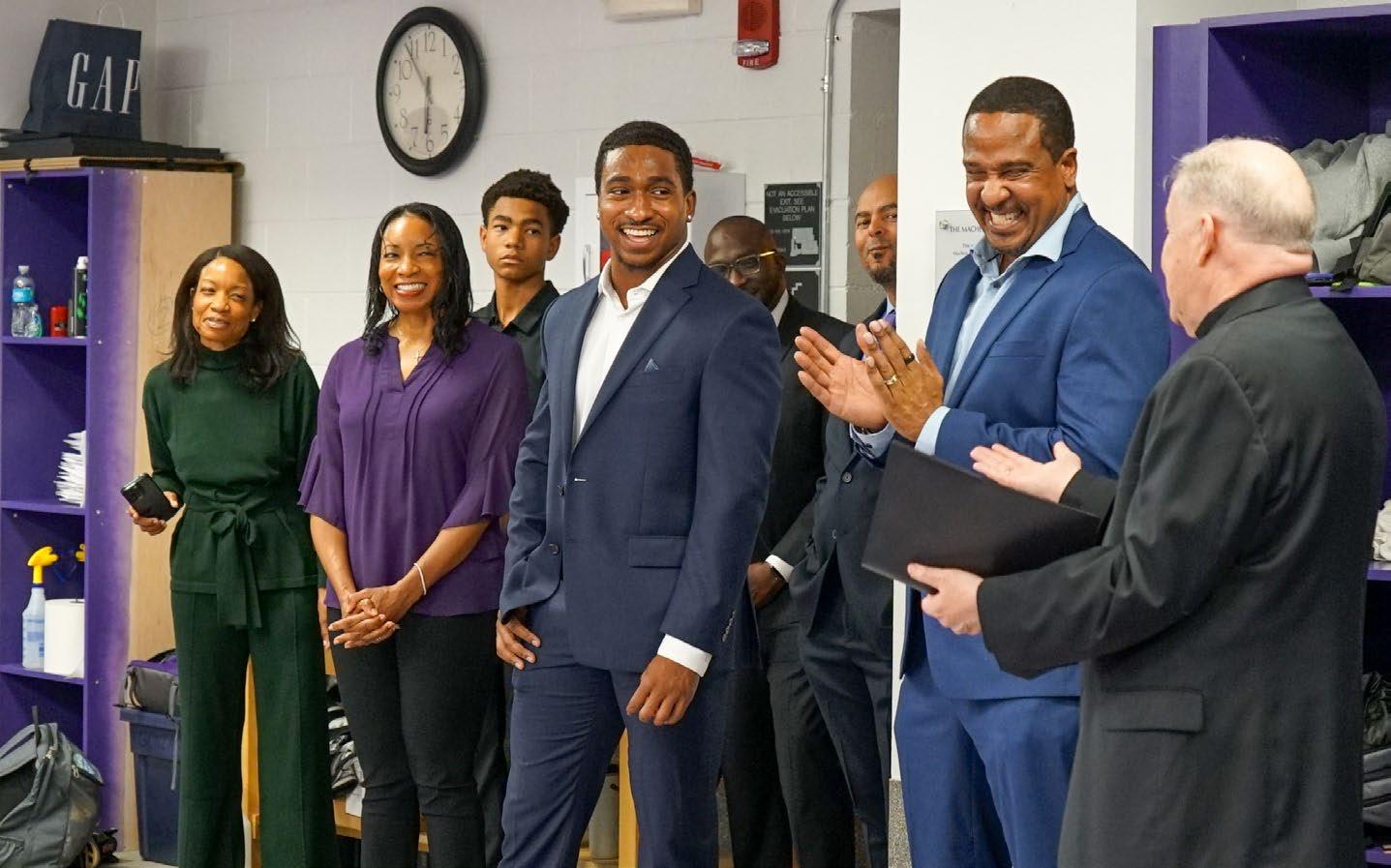
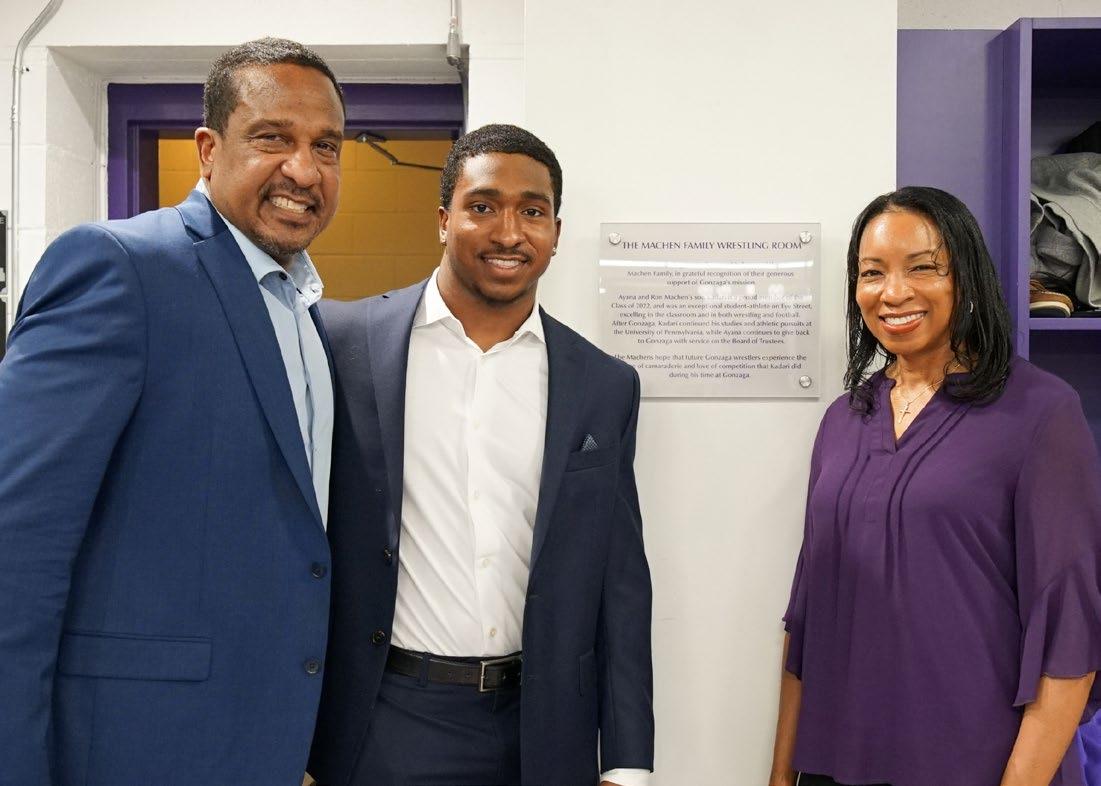
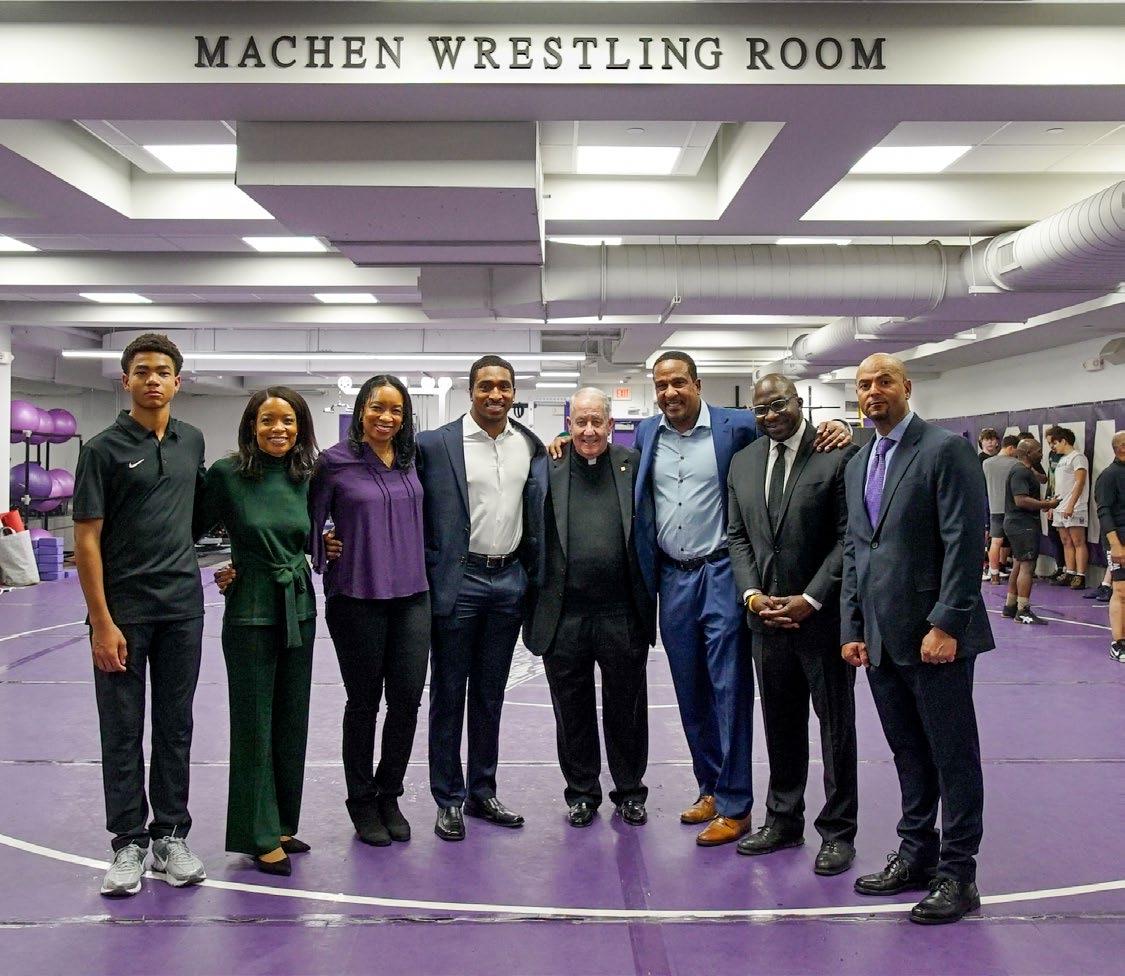
In early January, Kadari and his parents returned to Eye Street for the official dedication of the Machen Wrestling Room. Father Lingan said it was special to have Kadari, his parents, and several family members back for the dedication, which was also attended by the current team’s coaches and players. “It was my pleasure to honor Ron and Ayana’s generosity and leadership in this way, and also to be able to introduce our students to a hardworking, dedicated young alum who is thriving in college.”
Kadari is currently a senior at the University of Pennsylvania in the Wharton School of Business and a linebacker on the Penn football team. “Many of my fondest memories of being an athlete on Eye Street come from moments that were incredibly challenging at the time,” says Kadari. “I think back to traveling to Spain and wrestling European champions, where every one of us walked away bruised and humbled, or spending a grueling week in Mercersburg, Pennsylvania, pushing through two-aday football practices and lifts. In those moments we felt exhausted and tested, but coming out of them together gave us a confidence and connection that could not be replicated anywhere else.”
While Kadari was giving his all on the wrestling mat, the football field, and in the classroom, his parents found joy in watching his growth. “Every aspect of Kadari was developed and honed for the better due to the teachers, coaches, and staff members who challenged him academically, gave him an opportunity to use his voice in writing and in public speaking, and allowed him to lead and serve others in campus ministry, academics, and athletics,” says Ron. “Many times, he was pushed to think about a different
perspective or try something new, always with the intention of helping him grow into a better version of himself and to see God in everything.”
Kadari says his transition to the Ivy League felt natural because of the high standards he was used to as an Eagle. “The expectations at Gonzaga — academically, athletically, and spiritually — pushed me to develop discipline, resilience, and strong time-management skills.”
During his four years on Eye Street, Kadari learned about music engineering and production, wrote poetry, and served as a member of the Retreat Team. “Those experiences reminded me that you are never just one thing and the skills you build in different areas of life often strengthen each other.”
He adds that Gonzaga’s religion classes provided a spiritual foundation and maturity that grounded him when starting college. “I learned to see God in both victories and setbacks, which gave me stability during moments when others around me were questioning their faith or identity. Even though religion class seemed to sometimes be my most challenging subject, I now deeply appreciate how those moments allowed me to pause, reflect, and recenter. Gonzaga taught me to trust more, question with purpose, and carry my faith into everything I do.”
Gonzaga’s hope is that the newly dedicated Machen Wrestling Room will become a space where future generations of Eagles can forge the same grit and grace that Kadari embodies. Beyond the takedowns and the sweat, the room stands as a testament to the Machen family’s strong belief in Gonzaga’s Jesuit mission. It is a place where young men will not only learn to compete but will discover the discipline, resilience, and faith necessary to lead lives of purpose long after they have stepped off the mat.
Kadari Machen ’22 with his parents, Ron and Ayana Machen.
The extended Machen family with Father Lingan.
Hail Gonzaga!
HIGHLIGHTS FROM THE FALL 2025 SEASON
Cross Country
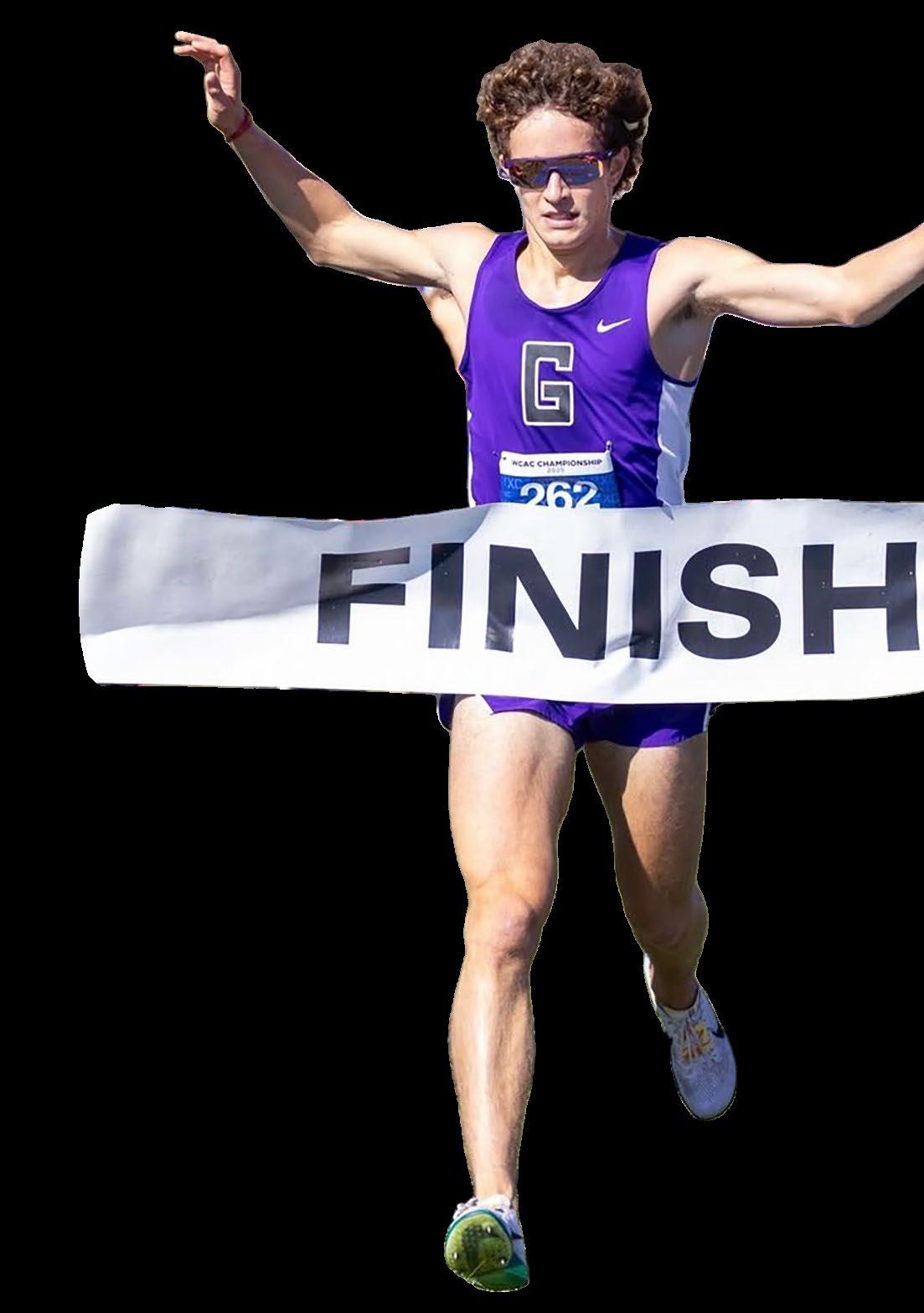
Cross Country won its second consecutive Jesuit Championship this fall— their sixth since 2009—at Van Cortlandt Park in the Bronx. Captain Anthony Sarro ’26 made history as the first Gonzaga runner to win back-to-back individual titles, followed closely by runner-up Kai Rock ’26. In addition, key performances from Ian Catanzano ’26, Teddy Fritz ’26, Jack Coogan ’28, and Jennings Davis ’27 fueled the victory. After placing second in both the WCAC and DCSAA, the team ended their season by earning Nike All-Region honors with a 10th-place finish in the Southeast Region at the national competition in North Carolina.
Football
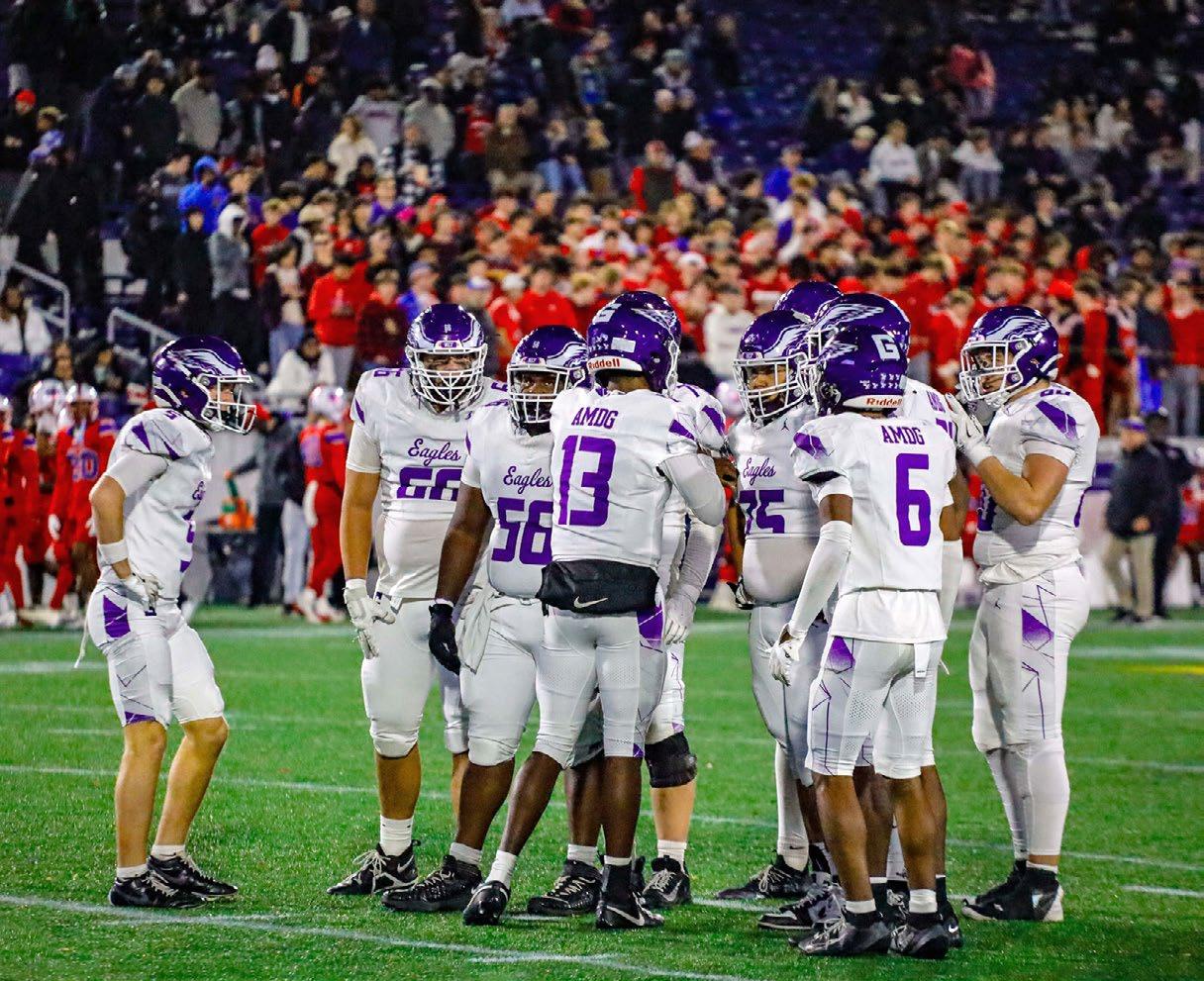
Football earned a spot in the WCAC Championship after a three-game win streak at the end of the season. As the #2 seed, the Eagles hosted their first home playoff game since 2016, defeating St. John’s and Good Counsel to reach the final. In a hard-fought championship at Navy-Marine Corps Stadium, Gonzaga fell 13-20 to DeMatha. The team was led by captains Jalyn Christian ’26, Jack Gaskins ’26, and Walker Littleton ’26, with standout play from defensive ends Carter Meadows ’26 and Tyson Harley ’26. Offensively, Jason Lindsay ’27 connected with Jerry Harrison ’26 and Asheton Burton ’27 for touchdowns in the finale.
Soccer
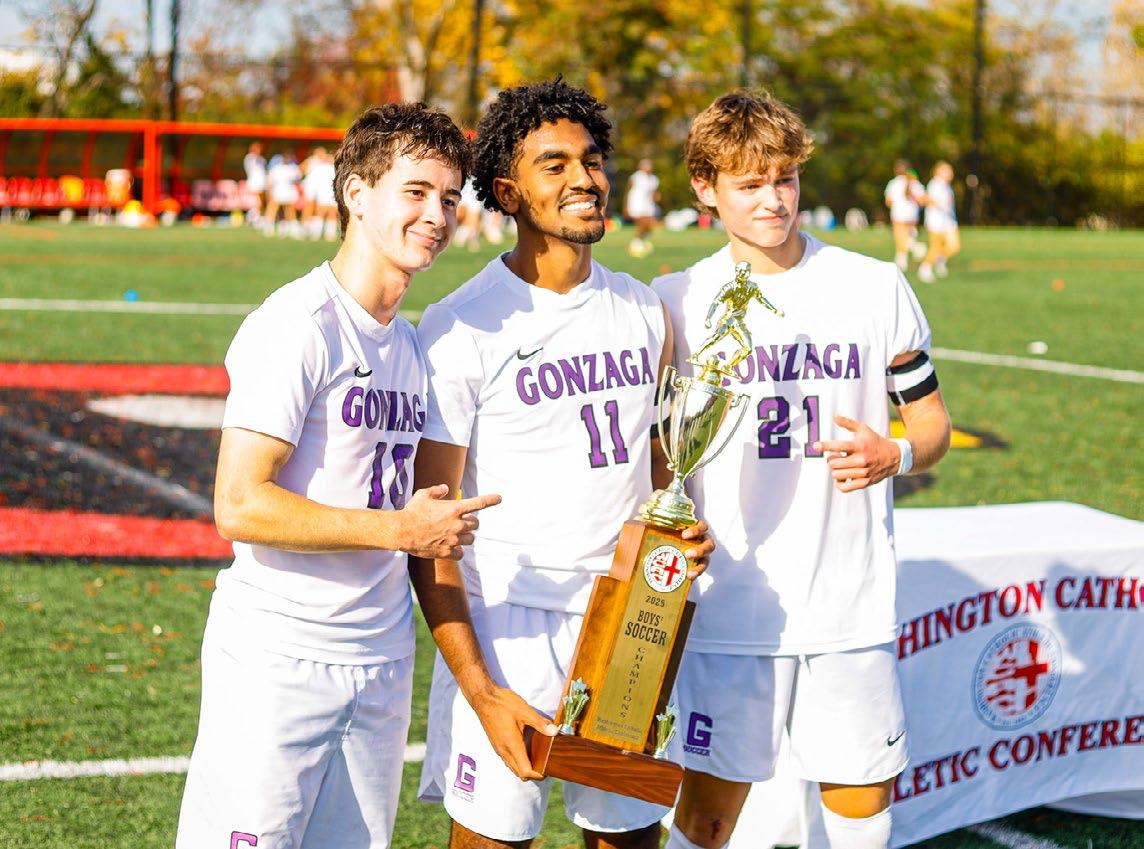
Soccer repeated as WCAC Champions in the fall of 2025, capped by a 1-0 shutout over The Heights in the WCAC Championship game at Catholic University. After a scoreless first half, captain Julian Antezana ’26 headed home a perfect free kick from Ari Lyubinsky ’26 to secure the lead. Defensive efforts from captains Erik Carey ’26 and WCAC Co-Player of the Year Charlie Waller ’27 ensured the victory for goalie Callahan Smith ’26. The season was also a milestone for head coach Scott Waller, who earned his 300th career win on September 2 and captured his 11th conference title. The Eagles finished the year ranked #3 in the area by the Washington Post.

Water Polo
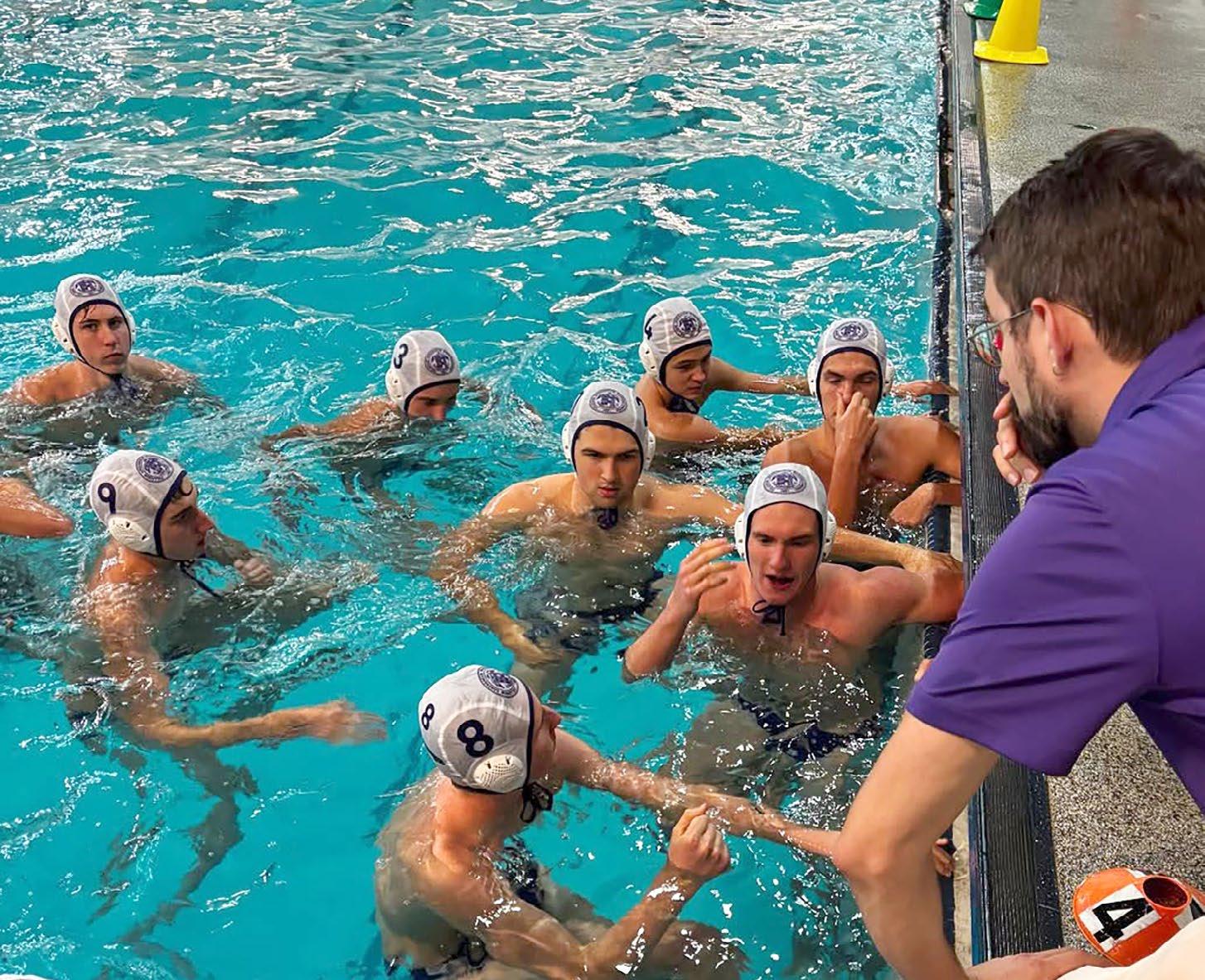
Water Polo delivered its best season in program history, capturing the Eastern Invitational Tournament Championship for the first time since 2016. The Eagles secured the title with a thrilling 10-9 overtime win against Episcopal Academy, sealed by a last-second save from goalie Joan Prats ’27. Throughout the tournament, Thomas Singleton ’26 led the offense with 15 goals, while Jack Singleton ’29 contributed 10 goals and 13 steals. Supporting the attack were Joe Mills ’26, Kasper Parfomak ’27, and John Stubner ’27. Congratulations to Coach Nick Pugliese ’08 on a historic 22-win season.
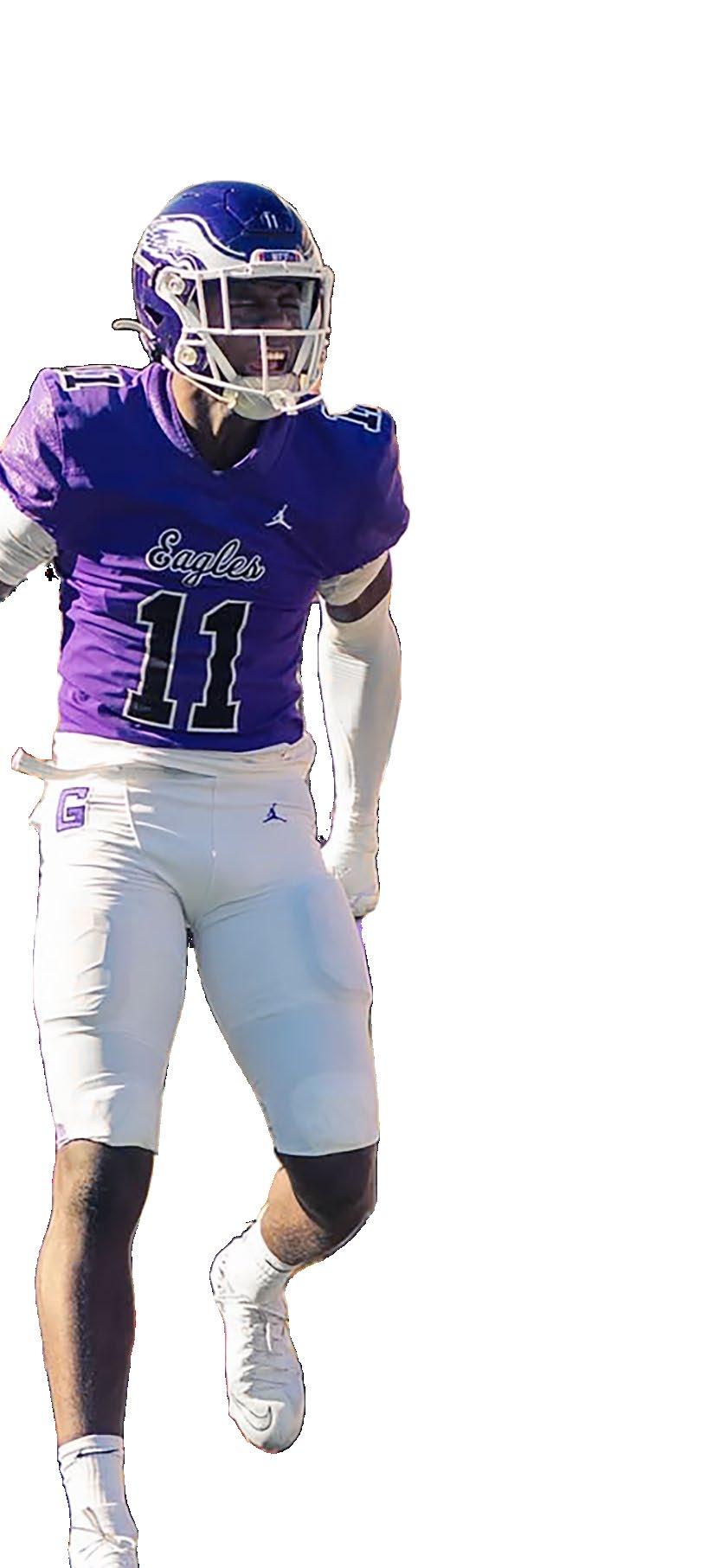
“The area’s highest-ranked senior prospect helped Gonzaga to a WCAC championship game appearance. [Carter] Meadows had 62 tackles, seven sacks, two forced fumbles and a fumble recovery. He signed with Michigan.”
- Washington Post
Fall All-Met Selections
Cross Country
Runner of the Year: Anthony Sarro ’26
Football
1st Team: Carter Meadows ’26
2nd Team: Tyson Harley ’26, Brayden Marko ’26
Honorable mention: Walker Littleton ’26
Soccer
1st Team: Charlie Waller ’27
2nd Team: Julian Antezana ’26
Honorable mention: Xavier Baugh ’26
“The highly skilled midfielder totaled 10 goals and 10 assists, helping the Eagles to their second straight WCAC championship. He [Charlie Waller ’27] is committed to Georgetown.”
- Washington Post
Fall All-WCAC Selections
Cross Country
Individual Champion: Anthony Sarro ’26
1st Team: Anthony Sarro ’26, Kai Rock ’26, Ian Catanzano ’26, Jennings Davis ’27
Football
1st Team: Walker Littleton ’26, Billy Matan ’26, Carter Meadows ’26, Brayden Marko ’26, Langston Blair ’26, Gavin Bennett ’26, Jack Gaskins ’26
2nd Team: Tyson Harley ’26, Jago Woodards ’27, Luke Hodgkinson ’27, Will Day ’26, Lincoln Shelton ’27, Jerry Harrison ’26, Xavier Rienzo ’26
Honorable Mention: Derien Terry ’26, Jason Lindsay ’27, Jackson Waddy ’28, Jalyn Christian ’26, Rocco Williams ’26
Soccer
Co-Player of the Year: Charlie Waller ’27
1st Team: Julian Antezana ’26, Xavier Baugh ’26, Charlie Waller ’27
2nd Team: Christian Borno ’26, Dylan Test ’26, Issac Fordjour ’26
Honorable Mention: Ari Lyubinsky ’26, Cyrus Welch ’26, Declan Lynn ’26
“Good Morning, Gonzaga!”
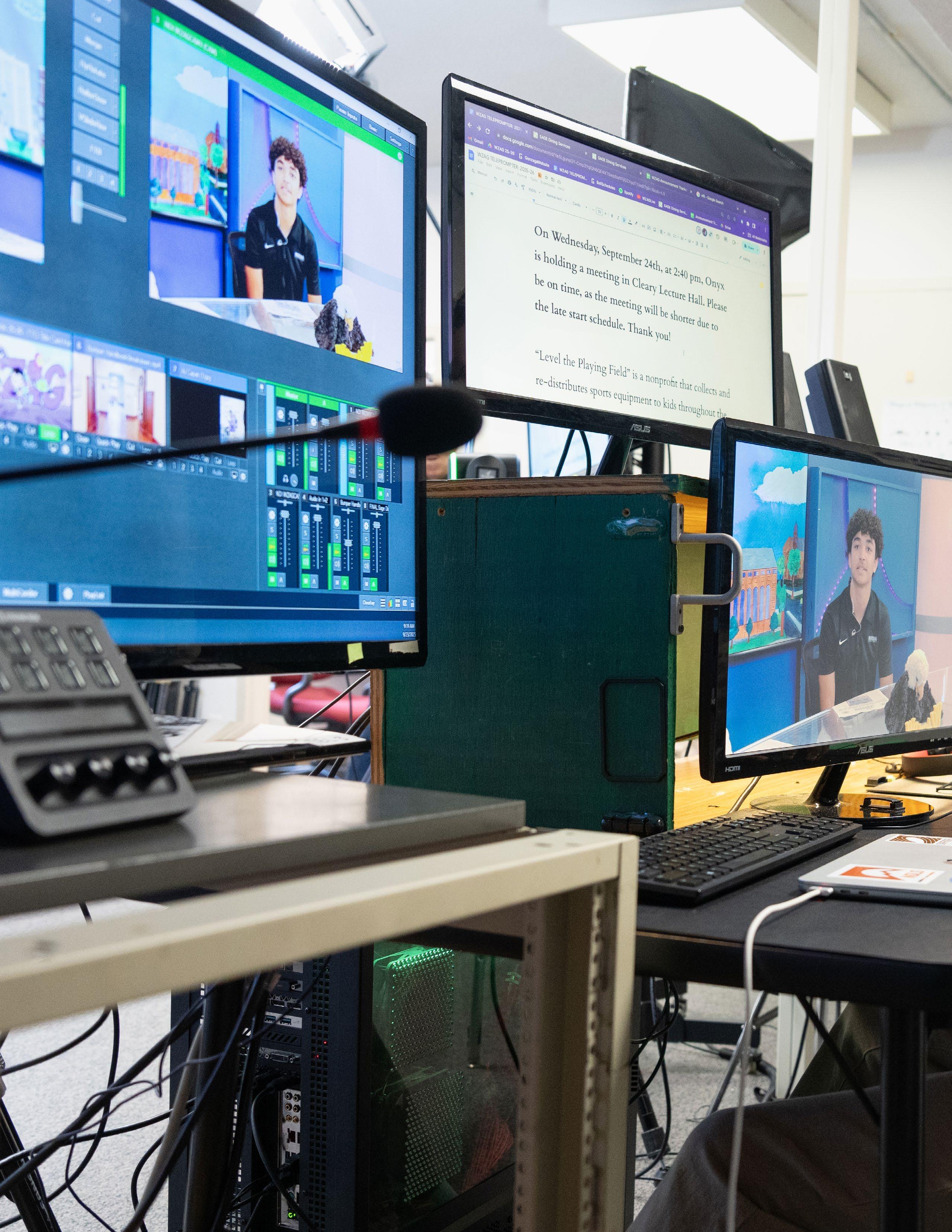
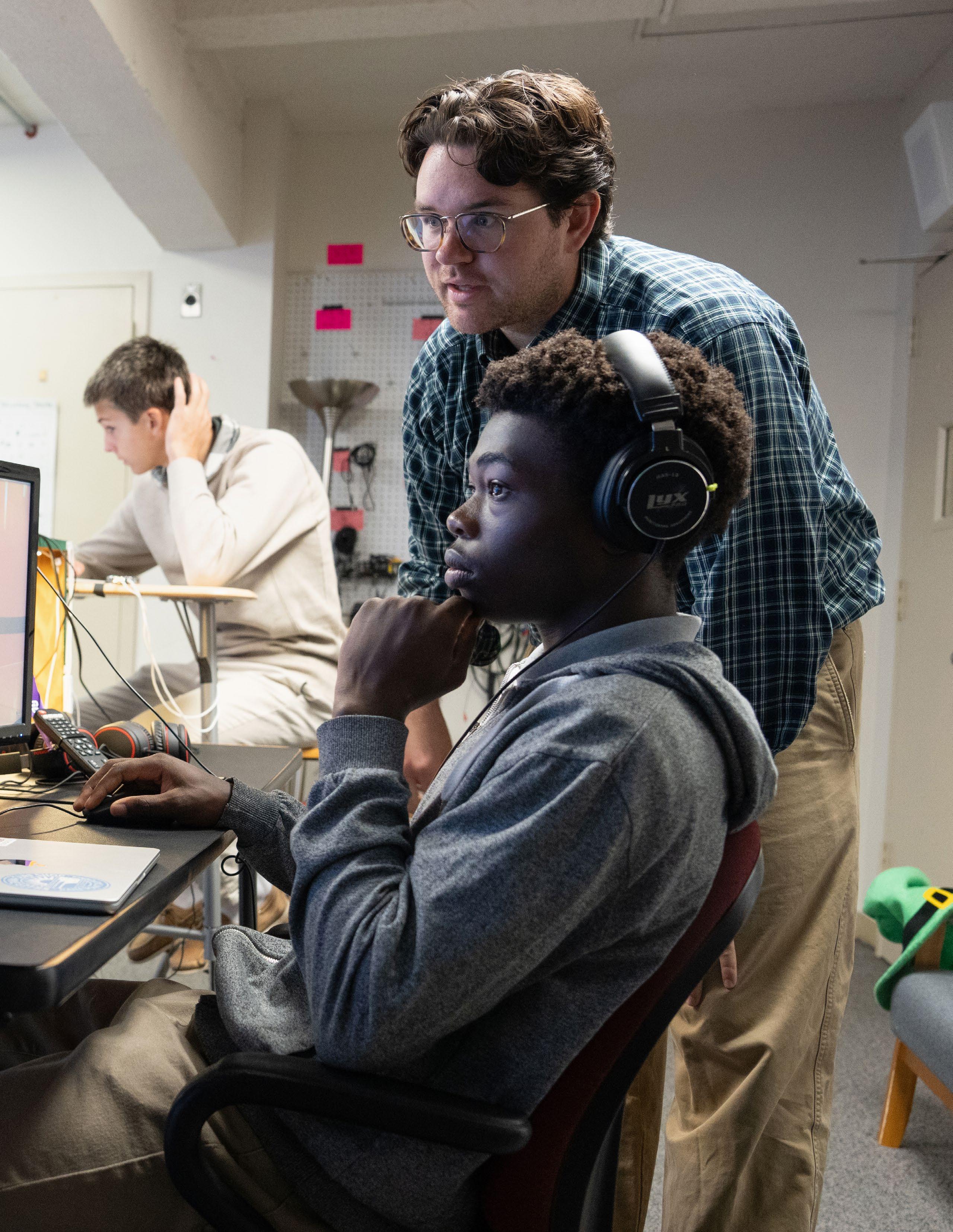
The WZAG studio in Forte Hall is a hub of activity each morning. Students in Mr. Ciaran Freeman’s popular TV Communications courses learn the basics of broadcast journalism while producing and airing a daily live broadcast that is viewed in classrooms each morning during Homeroom. A rotating crew of anchors rehearse in coordination with directors and producers, who learn the ins and outs of equipment operations and editing. This fall for the first time, correspondents did a live spot from the Innovation Commons across campus. “When the broadcast goes live, you never know what might happen, what might break, or what might go wrong,” said Mr. Freeman. “In those moments, students respond in real time, learning to communicate with clarity, confidence, and purpose. In the Jesuit tradition, that’s eloquentia perfect a, a 400-year-old ideal of thoughtful, effective expression, playing out in a 21st-century classroom.”
WHY STUDY…MUSIC
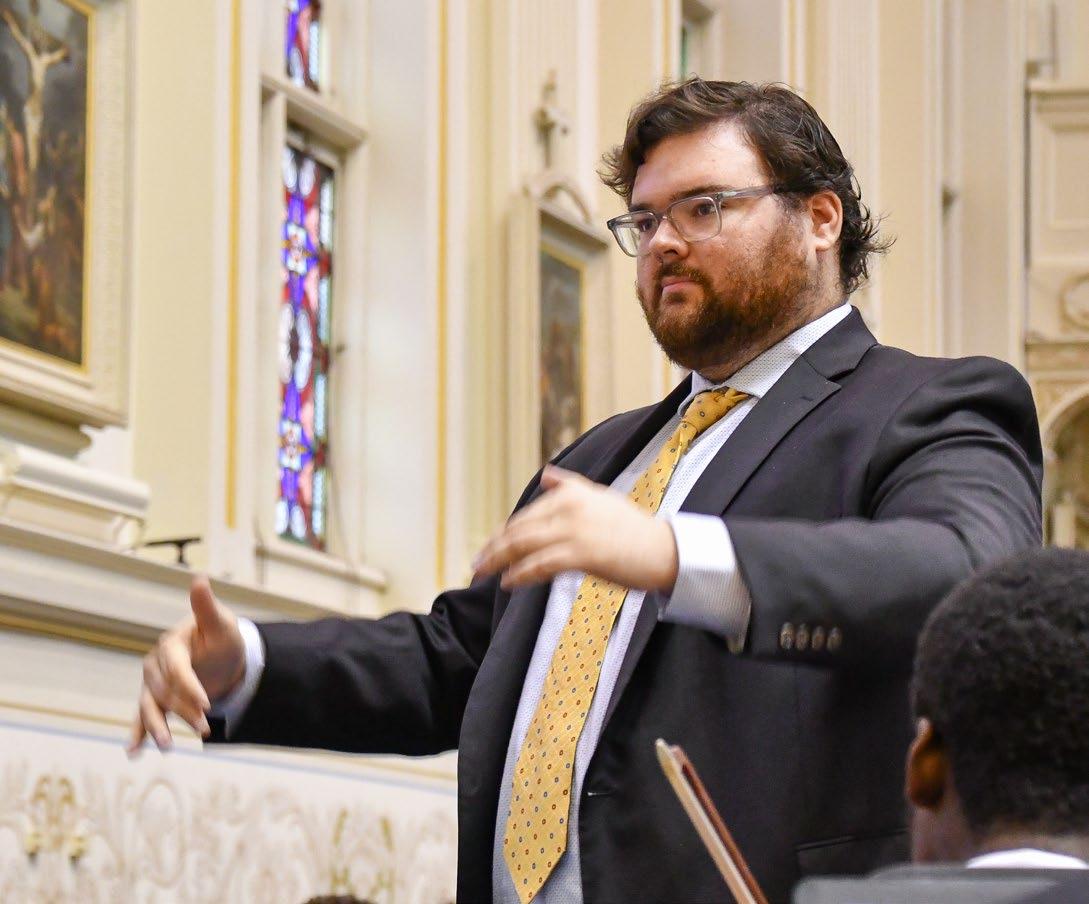
In every issue of Gonzaga Magazine, we invite a faculty member to reflect on the question: What do today’s students gain from studying your subject? In this installment of Why Study…, Fine Arts teacher Dr. Andrew Wood ’12 makes the case for music’s ability to help students find their voice, build lifelong community, and live fulfilling lives in tune with their passions.
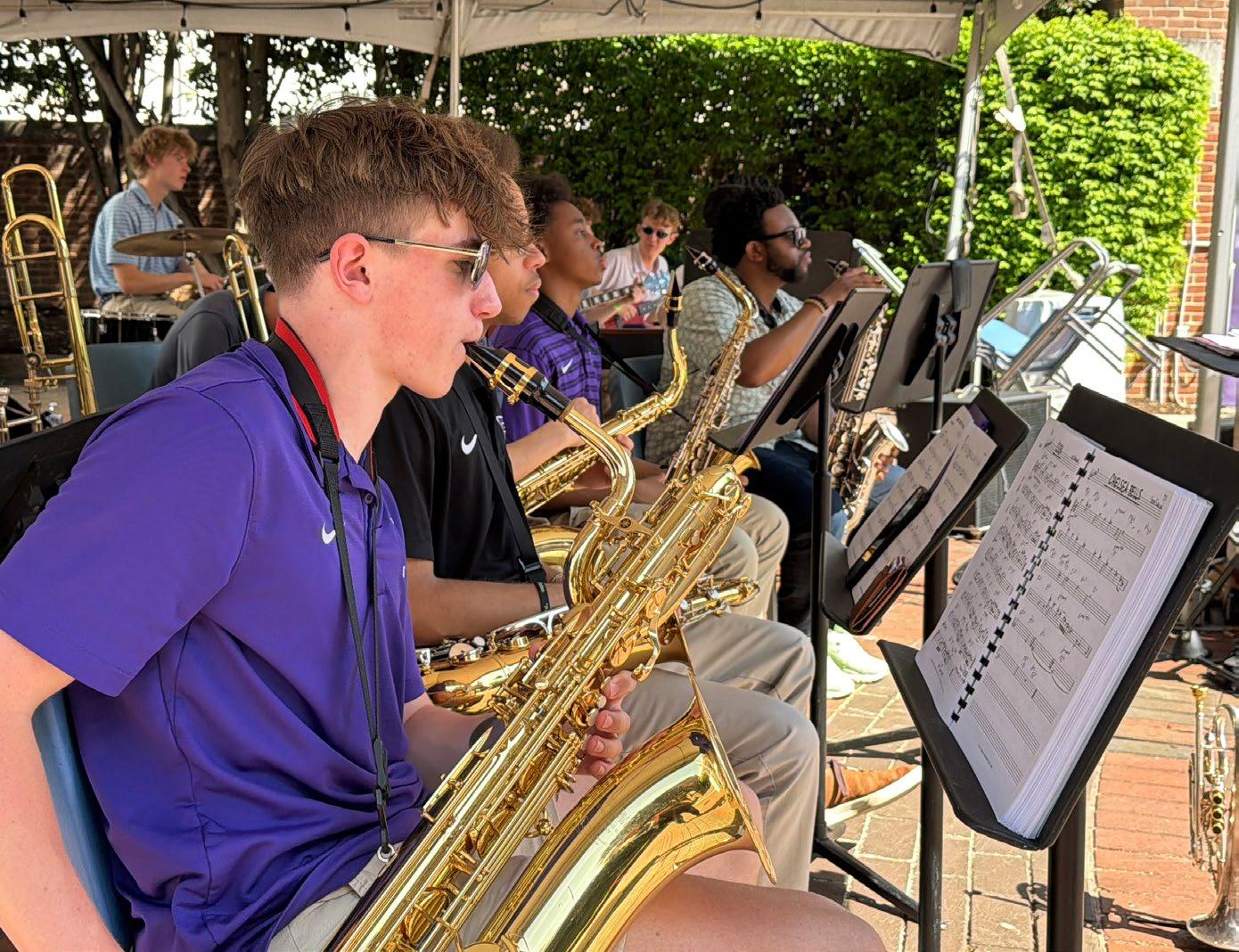
Ivividly remember my first interaction with Gonzaga’s former longtime Band Director Chris Flannery. As an 8th grader, I had heard of Gonzaga through a friend and applied. Feeling fortunate to be accepted and wanting to prove that I brought more than distinctly average grades to the table, I decided to audition for the Sousa Scholarship. Named for Gonzaga’s illustrious previous band director, the “March King” John Philip Sousa, the scholarship is designed to support and encourage musical study over four years. I was already fairly hooked on playing trumpet and knew that I wanted to continue. Knowing essentially nothing about the music program at Gonzaga and with my Dad’s old horn in hand, I stepped into Our Lady’s Chapel in Dooley Hall to play.
“Flan,” as we called him, was welcoming and kind. He was complimentary of my playing, marveling that a decent sound was coming out of a beat up Holton trumpet from the 1950’s. Admittedly, I do not remember playing. What I most remember was Flan’s warmth and excitement. He was excited about Gonzaga, about music, and about me being a part of the experience. His care was evident, and his vehicle for showing it was helping others develop strong musicianship. Over my first two years at Gonzaga, I greatly enjoyed my music classes, and discovered a talent and passion I did not realize I had. When I decided in my junior year to pursue music in college, Flan became the template for how I gauged future programs and teachers. I miss him greatly, and feel honored to have learned from him. I wish he could see our program now.
So, why study music? More specifically, why study music at Gonzaga? In the wider discourse about music education, the primary mechanism for proving its worth is to cite studies about how it benefits student outcomes in other subjects. For example, a 2019 study published in the Journal of Educational Psychology indicates that, “On average, the children who learned to play a musical instrument for many years, and were now playing in high school band and orchestra, were the equivalent of about one academic
year ahead of their peers with regard to their English, mathematics and science skills, as measured by their exam grades.” While this is certainly good news, it also belies this fundamental issue: Music education is often valued in relation to how it benefits other academic pursuits, rather than as an intrinsically valuable discipline. With this in mind, I’d like to take a different approach to the initial questions. If we look past test scores, the study of music offers great value as a way for students to find their voice. Music is, at its core, the art of translating the intangible into the audible. This process of turning a series of symbols into a living performance fosters creative problem-solving; a student must navigate the technical challenges of intonation and rhythm while making subjective, artistic choices about expression. There is great satisfaction in this—a sense of accomplishment that comes from realizing that you are not just a student of a subject, but a creator of art. In an increasingly digital and automated world, the ability to produce something of beauty from within oneself is a deeply
Dr. Andrew Wood ’12 now has the pleasure and honor of teaching students in the Christopher T. Flannery Music Center, a space named after his mentor.
rewarding and even transformative experience. And this process teaches our young men that their value lies not just in what they know, but in the beauty they are capable of bringing into the world.
Indeed, my greatest joy as a teacher has been to see students leave Gonzaga and form or join bands and orchestras in other places.
”
A core value of Jesuit education is the idea of cura personalis or “care of the whole person.” Flan was an expert in teaching with this idea in mind. He knew, as many know, that the goal of a music education is not just the creation of profound art. It is also the development of skills that lead to a fulfilling and successful life. These range from the simple to the more philosophical. Showing up on time to rehearsal, taking responsibility for learning a part, listening and responding to the music created by your bandmates, and developing the discipline to practice routinely are just some of these highly transferrable, simpler skills. However, on a deeper level, developing musical skill is a pathway for lifelong community. Professional or amateur, the musician’s ability to join a group of people anywhere who care about them is central to building a fulfilling life. Indeed, my greatest joy as a teacher has been to see students leave Gonzaga and form or join bands and orchestras in other
places. I know that, whatever happens in the vagaries of life, these alumni will always have a support system in which they are valued.
Most importantly, those who feel valued and supported are best able to value and support others. At Gonzaga, we are charged with developing young men of integrity and purpose. There is no better way to be that person than active participation and leadership in communities that support and value others. A music education provides access and a path to these communities. Our young men, especially those who study music, are uniquely placed to create spaces that are welcoming to a diverse population. Through this, they have the ability to affect positive change in the lives of others. As we know at Gonzaga, this is the path to fulfillment. While there are many great reasons to study music, within the context of Jesuit education, the most compelling may be equipping the young men in our care to live lives marked by fulfilling interaction with others. The Gonzaga student experience is important but brief. What comes after, and how our alumni thrive in the wider world, is just as crucial. So, why study music? To ensure that when our alumni walk out into the world, they possess the tools to build a community, the character to serve others, and the enduring personal joy that comes from a life lived in tune with one’s own passions.

Beloved by his colleagues and students, the late Mr. Chris Flannery taught music at Gonzaga for more than 30 years.
A Soaring Tribute
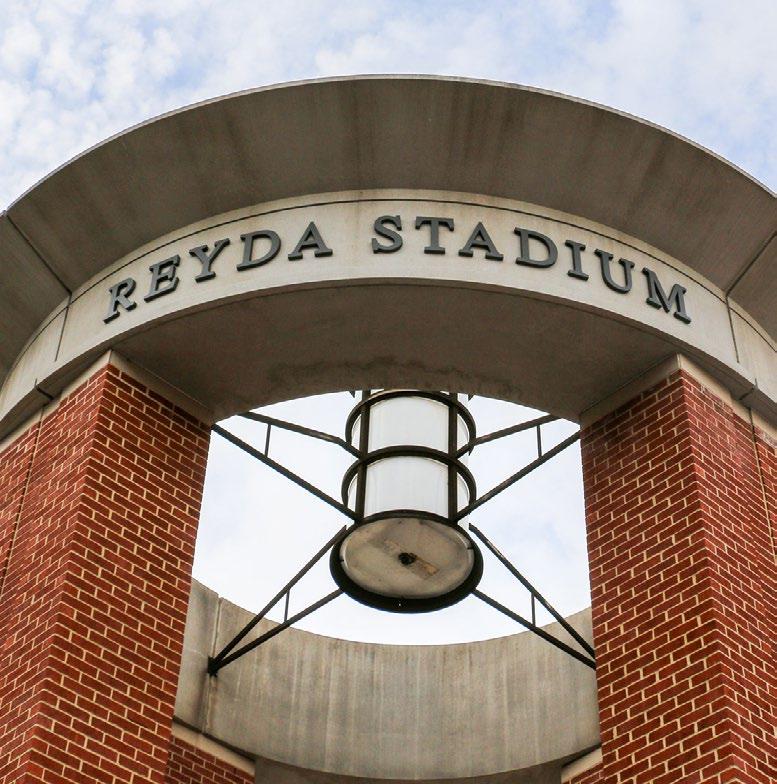
Joe Reyda ’85 spent his life championing the Gonzaga Eagles, so it was only fitting that his stadium dedication included a tribute of historic proportions. What followed was a secret plan to bring a living symbol of the school’s spirit to Eye Street.
The special guest waited quietly in the locker room at 800 North Capitol Street beside Buchanan Field. He had traveled nearly 900 miles and taken multiple flights to be ready for this momentous day. Outside, Gonzaga and Good Counsel were battling on the gridiron. The stands were packed with students and hundreds of alumni who had returned to Eye Street for reunion weekend.
A student entered the locker room and spied a large crate covered with a blanket. “What do you have in there?” he asked. The guest’s travelling partner replied with a smile, “You’ll see soon enough.”
As the second quarter ended, the guest exited the locker room before the players piled in. Out on the field, an emotional and carefully planned halftime ceremony was about to get underway. Earlier that fall, Gonzaga had announced that it would name its stadium Joe Reyda ’85 Stadium in honor of our longtime former Athletic Director, who had passed away unexpectedly in June 2023.
That dedication ceremony was about to get started, with Joe’s family, former classmates, and many friends travelling from near and far for the event. Surrounded by Joe’s family and dozens of alumni and friends, Gonzaga
President Father Joe Lingan S.J. ’75 stood at midfield and addressed the crowd.
“We celebrate the Gonzaga spirit,” Fr. Lingan said to the hushed crowd. “The enduring spirit of competition, camaraderie, community and brotherhood that Joe helped nurture throughout his career and time as a student, coach and athletic director here on Eye Street.”
Unnoticed by the crowd, the special guest – Clark, an American Bald Eagle – had been moved in his crate to the North Capitol Street endzone by his handler, Zoe Boyer. His other handler, Jeff Meshach, climbed into a cherry picker at the far end of the field, and was quietly raised to a height just below the scoreboard.
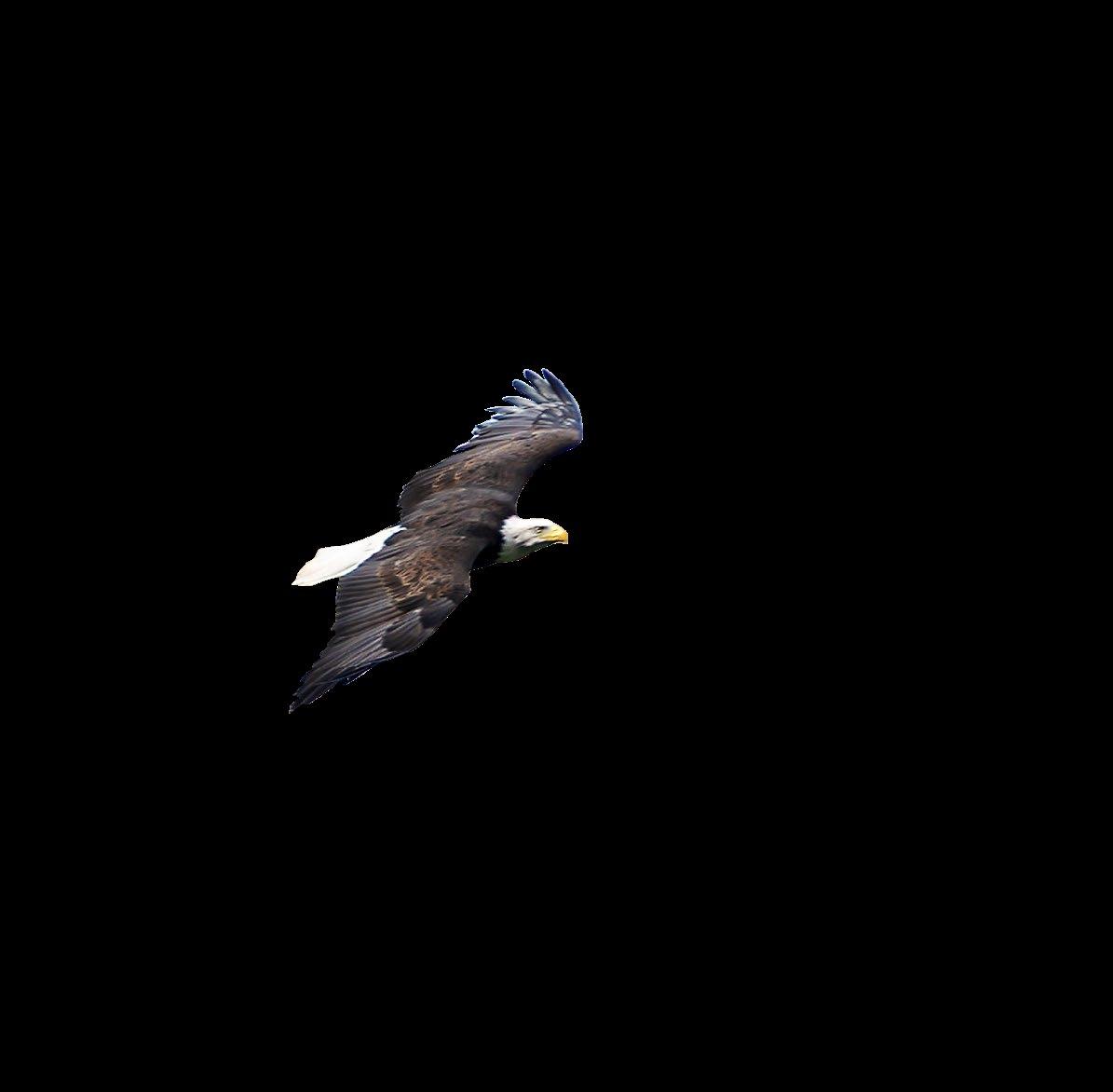
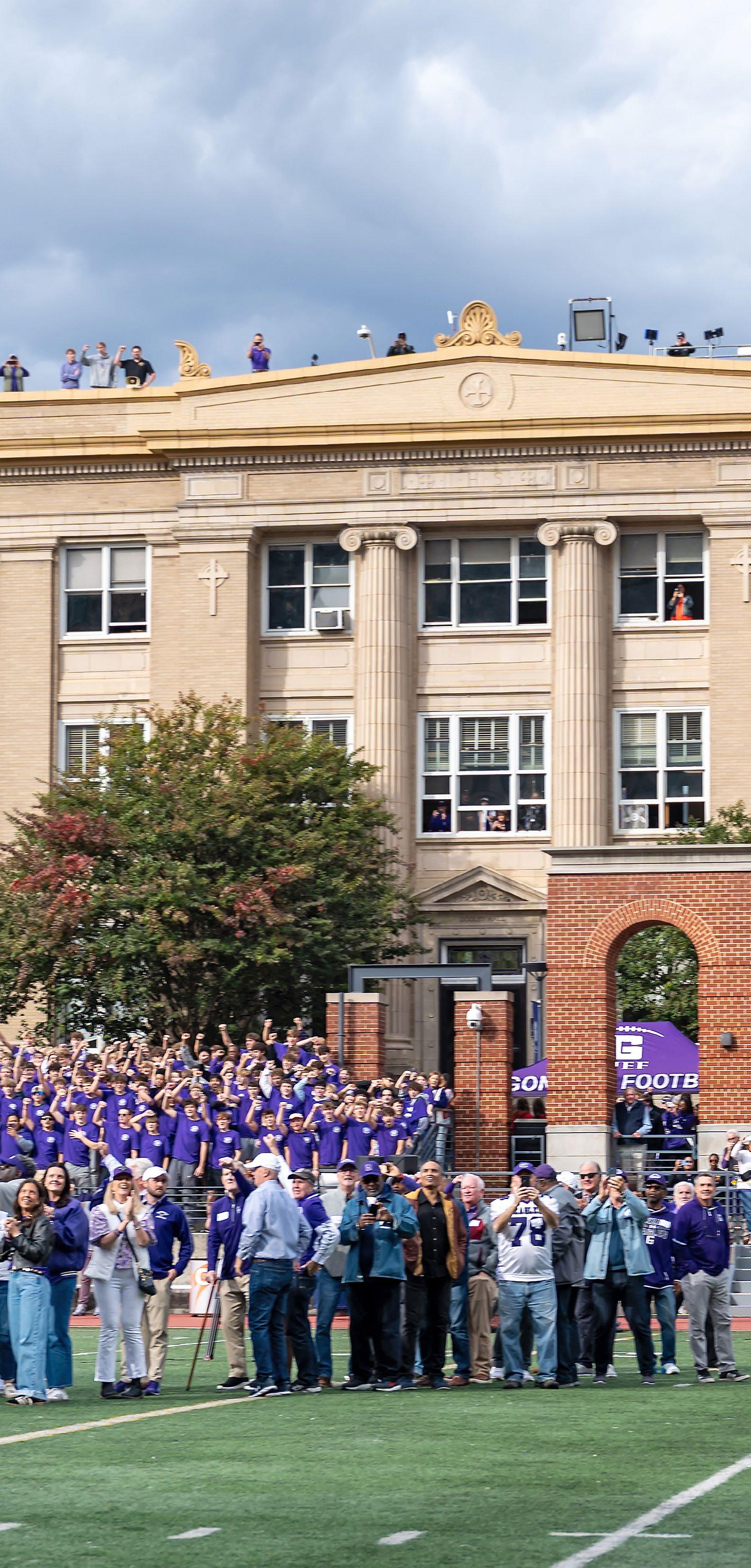
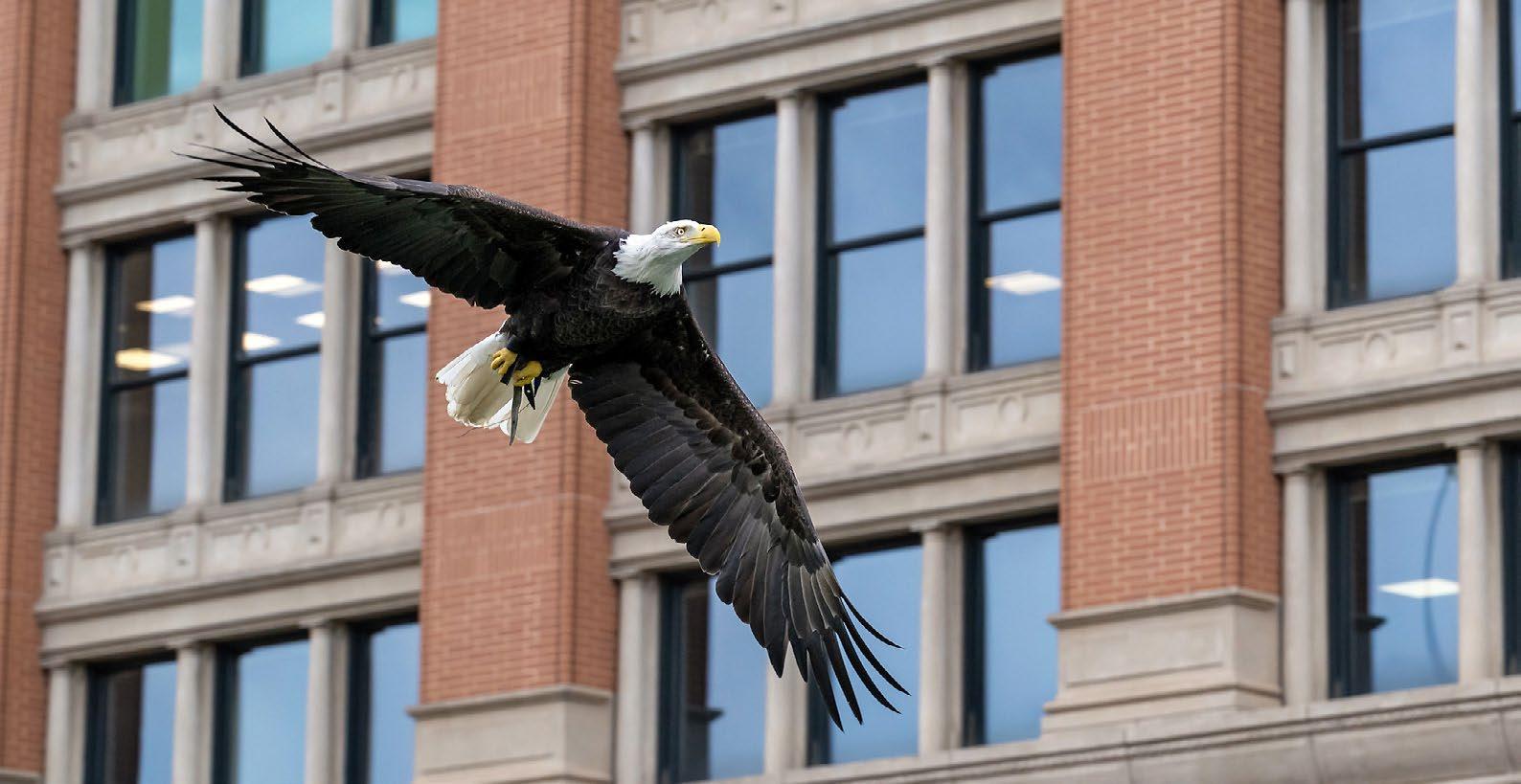
As Fr. Lingan called the crowd’s attention to the majestic bird, Clark unfurled his six-foot wings and took off from the endzone, soaring over Buchanan Field, and landing on Mesach’s outstretched arm. With the Alma Mater playing over the PA system, Clark swooped back over the field as students and alumni raised their fists and sang.
When Gonzaga began planning the Reyda Stadium dedication in early 2025, Fr. Lingan had the idea to incorporate a real bald eagle. “The
Gonzaga community proudly identifies with our school mascot and students frequently cheer ‘Eagles Fly High,’ but to see Clark’s sheer power and grace up close gave us all a whole new level of appreciation,” he says.
Keeping Clark’s appearance a secret required some clever logistics. The eagle and his trainers arrived from the World Bird Sanctuary (WBS) outside St. Louis, Missouri, two days before the dedication to acclimate, but practicing on a bustling school day proved a challenge. The solution? A perfectly timed administrative ruse. “We have to do a certain number of lockdown drills each year,” explained Assistant Headmaster for Student Life Jim Kilroy. “So we announced the drill, students and staff sheltered in place, and Clark was free to practice without distraction—or ruining the surprise.”
During the practice flights, a handful of staff members stood at midfield, so that Clark would get an idea of his flight path and where the crowd would be. “We all know that eagles fly high, but we quickly found out that they also fly really low – and fast,” said longtime staff member Scott Blair, who found himself ducking as the massive bird swept past.
Also on hand during the practice flights and the dedication was Gonzaga
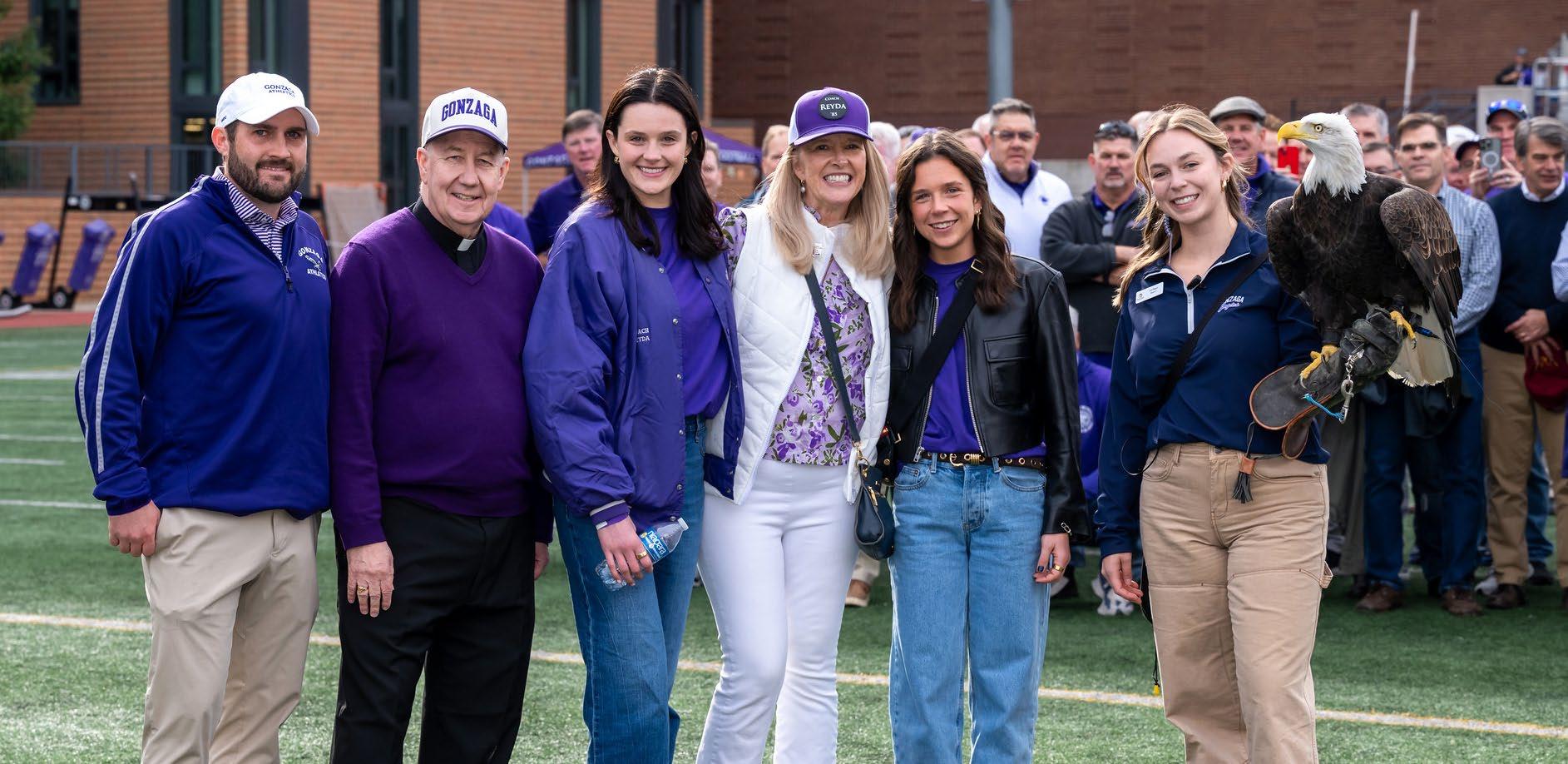
Left to right: Gonzaga Athletic Director Terry Kernan ’08, Gonzaga President Fr. Joe Lingan, SJ ’75, Joe’s daughter Caroline Reyda, his wife Trish Reyda, his daughter Molly Reyda, and Zoe Boyer of World Bird Sanctuary with Clark.
alumnus Andrew Deerin ’95, a musician and AV expert. Andrew managed the production and kindly offered his expertise to help the halftime ceremony run smoothly.
“Andrew was a pivotal part of the day’s success,” says Father Lingan.
Clark is no stranger to the spotlight, having flown at several St. Louis Cardinals games at Busch Stadium, four NFL games, and programs and events at zoos and universities. His handlers at WBS prepare for every variable, from stadium scenery to local territorial raptors—like the ravens spotted circling Buchanan Field during his practice flights—that might try to harass an eagle in their airspace.
Clark’s composure is the result of years of trust and positive reinforcement. He and other birds at WBS start with short flights, sometimes just a jump from one glove to the next, then trainers spread out further and further. The trainers make Clark’s flights worth his while: When he flies from the gloved hand of one trainer to another, he receives his favorite treat, rat meat.
Although it was his first visit to Gonzaga, Clark has a deep familial connection to Washington, DC. Clark’s father, Captain, was one of two bald eagles given as a gift to President Ronald Reagan from West German Chancellor Helmut Schmidt in 1982. Within a few years, Captain moved to WBS as part of a breeding program to help save the endangered species.
Born in 2003, Clark hatched with a deformity in the scales on his legs that would make it difficult for him to survive in the wild, so he has spent his whole life in human care.
World Bird Sanctuary is nestled in 305 acres of Missouri hardwood forest. It began in the 1970s as a small rehabilitation center and has grown into an internationally renowned rehabilitation, education, and conservation organization. Clark is one of about 200 animals representing 60 different species who call WBS home.
When he travels for events, Clark flies commercial or rides in the car. He and his team drove from Missouri to DC for the Gonzaga festivities and stayed in a “pet-friendly” hotel, where he stayed on prior visits to DC.
Long after the football game’s final whistle, Clark remained on Eye Street, posing for photos with the many alumni who were celebrating their reunions. While the logistics for Clark’s visit were complex, for trainer Jeff Meshach, the reward was simple: “There aren’t too many people in the world who get to experience a majestic bird like Clark trusting them enough to fly to their glove from a hundred yards away. It’s incredibly special.”
It was also a fitting tribute to Joe Reyda’s own gifts of friendship, loyalty, and dedication. Clark’s visit to Gonzaga will forever be a soaring reminder of a beloved friend who taught us all what it means to fly high.
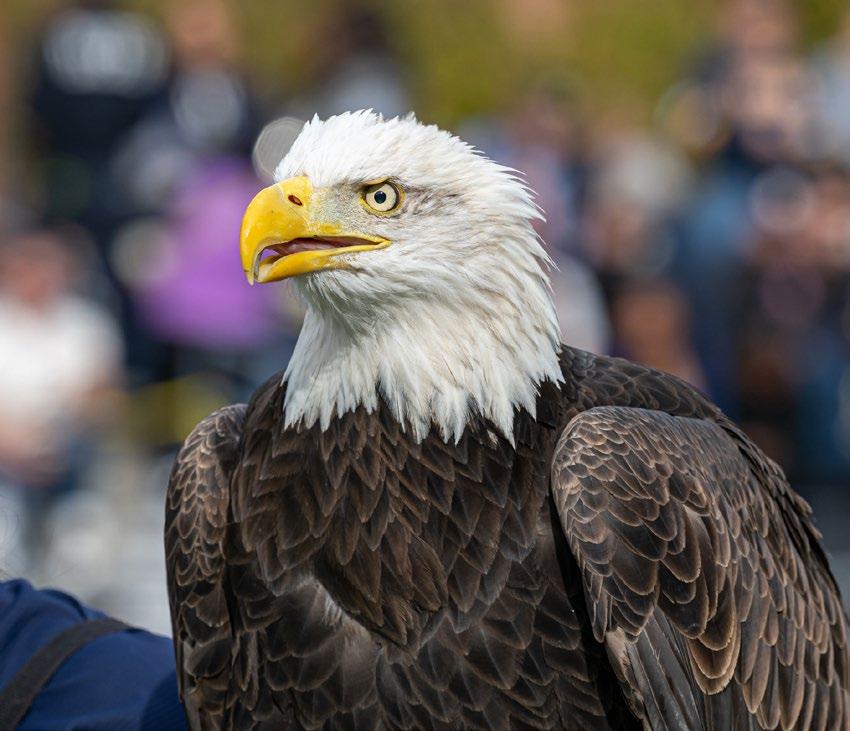
Bald Eagle Facts

Eagles mate for life, and build some of the largest bird nests, typically five to six feet in diameter and two to four feet tall. The largest nest ever recorded was in Florida and weighed nearly 6,000 pounds!

Their heads and tails do not become fully white until they are four or five years old.
Eagles raised in human care can live up to 40 years, while those that live in the wild typically live to about 25.
An eagle’s eyesight is eight times stronger than a human’s, with a 340 degree field of vision.
They can fly at 30 mph, dive at 100 mph and soar at altitudes up to 10,000 feet –Eagles do, indeed, fly high!

Scan the QR code to watch a video of the day’s event. WATCH VIDEO

COMMON INSPIRATION, UNCOMMON PURPOSE
More than 30 years after they first met on Eye Street, four friends from the Class of 1997 have each become influential leaders in Jesuit mission and ministry. In this Q&A, they reflect on the teachers and experiences that set their career paths in motion.
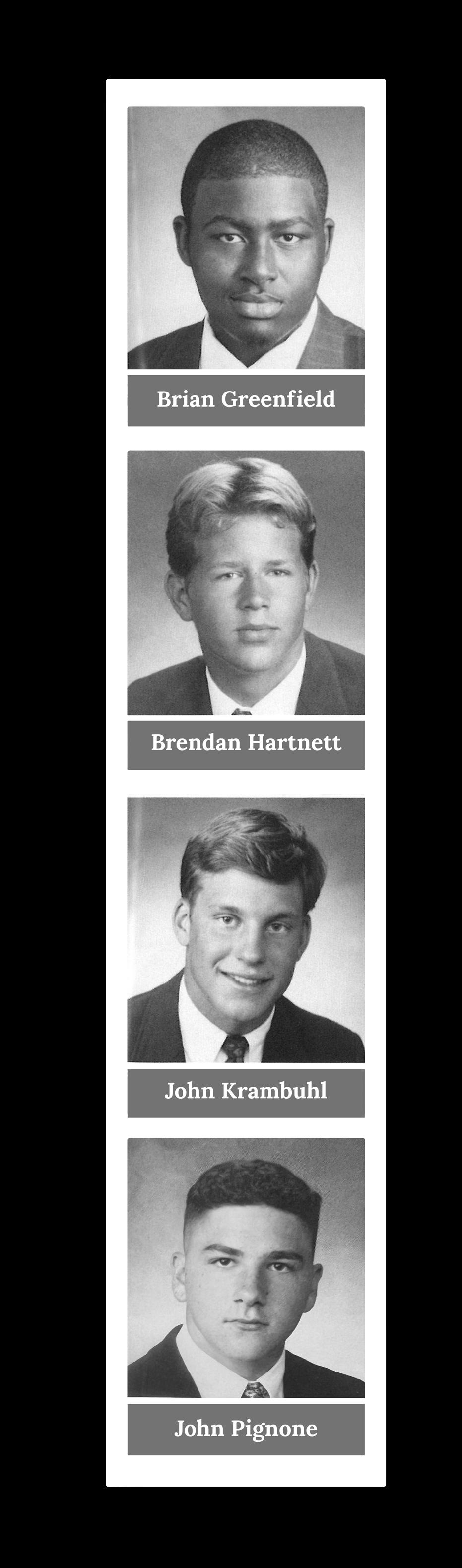
In the fall of 1993, Brendan Hartnett, John Krambuhl, Brian Greenfield, and John Pignone arrived on Eye Street as freshmen members of the Class of 1997. Over the next four years, their lives were woven together through the shared experiences of student life at Gonzaga—from time spent in the classroom and on athletic fields to the formative moments of service and Kairos. While their peers ventured into a wide variety of professional fields, these four friends found themselves drawn back to the roots of their Jesuit education. Decades later, each one has ascended to leadership roles within the Jesuit network, dedicated to preserving the mission that first shaped them here on Eye Street.
Today, Hartnett serves as the Director of Mission and Ignatian Identity at Gonzaga; a veteran of the faculty since 2002, he holds a Master’s Degree in Catholic School Teaching from the University of San Francisco and has deepened his vocation through the Spiritual Exercises and the Camino Ignaciano pilgrimage. Krambuhl, who earned his PhD in Education from George Washington University, also
taught at Gonzaga before moving to Georgetown Prep, where he now serves as the Director of Mission and Ministry. Similarly, Greenfield taught at Gonzaga for four years after earning Master’s degrees in both Theology and Educational Leadership; he now serves as the Assistant Principal for Mission at Jesuit High School in Tampa, Florida. Pignone’s journey took him from Eye Street to the United States Marine Corps, where he served three deployments following September 11. After a distinguished military career, he entered the Society of Jesus in 2015. Currently a deacon and theology student at Santa Clara University, he is set to be ordained this June—the first Gonzaga alumnus in 35 years to enter the Society of Jesus.
This spring, Gonzaga Magazine hosted a video call to find out how this group of friends and classmates were influenced to lead lives steeped in Ignatian education and service. They shared memories, laughed about teenage shenanigans, and contemplated the role that Gonzaga played in shaping their lives and informing their vocations.
QHow did your experiences with retreats and service at Gonzaga shape your spiritual and professional journeys?
Brian Greenfield: I was a bit slow to the faith and to service, but Kairos really opened my eyes. I went on it as a senior, then I led it later that year. Kairos has different ways of influencing how you value yourself. Initially learning that you’re loved, and then, as a leader, impacting other people, those were the retreats that hit me the most.
Dr. John Krambuhl: Preparing for the retreat, writing a talk and getting up in front of my peers and sharing my experience of God was a great opportunity to be in a high trust environment, recognize that you’re not alone, and to be really honest about how you feel about things. That was very moving and continues to influence me today.
Brendan Hartnett: Even though it was a service project, the Appalachian weekend trip was a lot like a retreat. We had real encounters with underserved populations, which would trigger a lot of internal discernment, reflection, and group sharing in the evenings, facilitated by our teachers. It created an environment of honesty and trust, and started to give me the tools and the confidence to lean into those experiences and talk about them, process them, and pray over them.
John Pignone and I did that trip several times together, because it was also just a boatload of fun. But I would say the service, as much as the retreats, was incredibly formative to my experience.
John Pignone, S.J.: I remember in Appalachia, there was so much grace, it was such a gift to find growth in myself when I was able to just be with people, rather than active service, like stocking shelves at the McKenna Center. While serving in a hospital, you might say, ‘What do you want me to do?’ and the answer is, ‘Just sit here, just be here,’ and that was plenty. That opened up a different idea of service for me, and I remember that being pretty impactful.
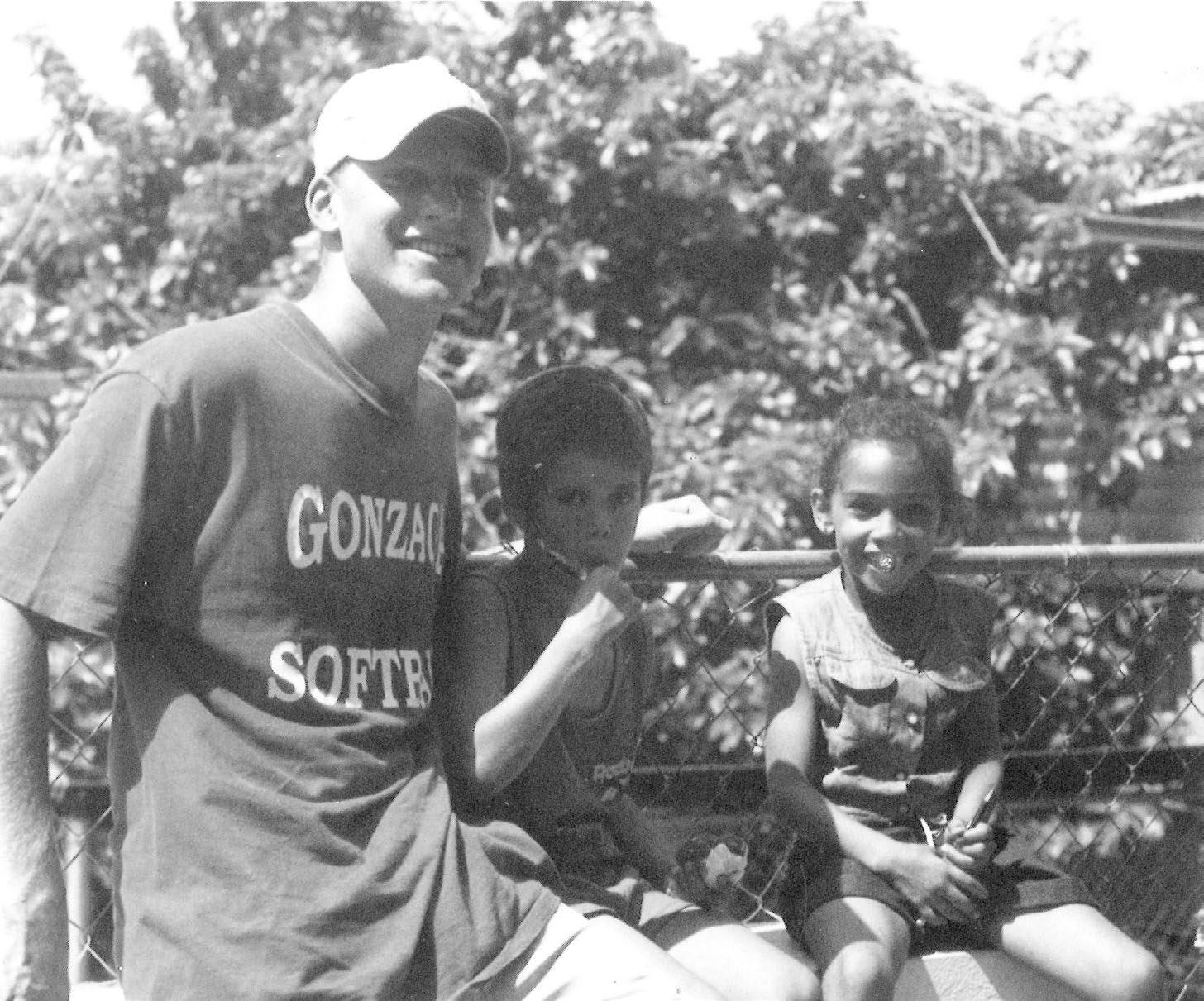
John Krambuhl on a service project as a student on Eye Street.
Krambuhl: Fr. Bruce Steggert ran an incredible month-long service trip to Puerto Rico, known as GIVE. There were seven of us on the trip; we lived in a rainforest and volunteered in a local town where an order of nuns had a school and needed help with tutoring, running a summer program for children, and manual labor. We would reflect each day on the service we did, and recount where we found Christ; we kept a journal and had Mass every day. That was super formative for me personally. That was the biggest event that, when I look back, explains why I was so drawn to working in Jesuit schools – that experience of service and reflection all tied together.
QWhich teachers left the most lasting impact on you during your time on Eye Street?
Hartnett: There were so many great and dynamic teachers who were inspiring and huge influences. To see people do the work and take tremendous joy and fulfillment out of it was really attractive.
Greenfield: The teacher that comes to the forefront of my mind is Sister Seton Cunneen. She arrived our junior year, and we had a pretty boisterous class. I thought, ‘She doesn’t know what she’s getting herself into,’ but she had a strength about her. She could roll with the guys and she never backed down. She took us on a trip to Lorton Prison, and that really rattled me.
Krambuhl: I can still remember a hug that Sister Seton gave me on a Kairos retreat. She just put her arms out like she was the most accepting, kind person – it was like being hugged by God. Brendan and I worked with Sr. Seton as colleagues, too, during our first few years working at Gonzaga. That just further strengthened her influence on me. Being able to get to know her and soak in her personality and holiness was really special.
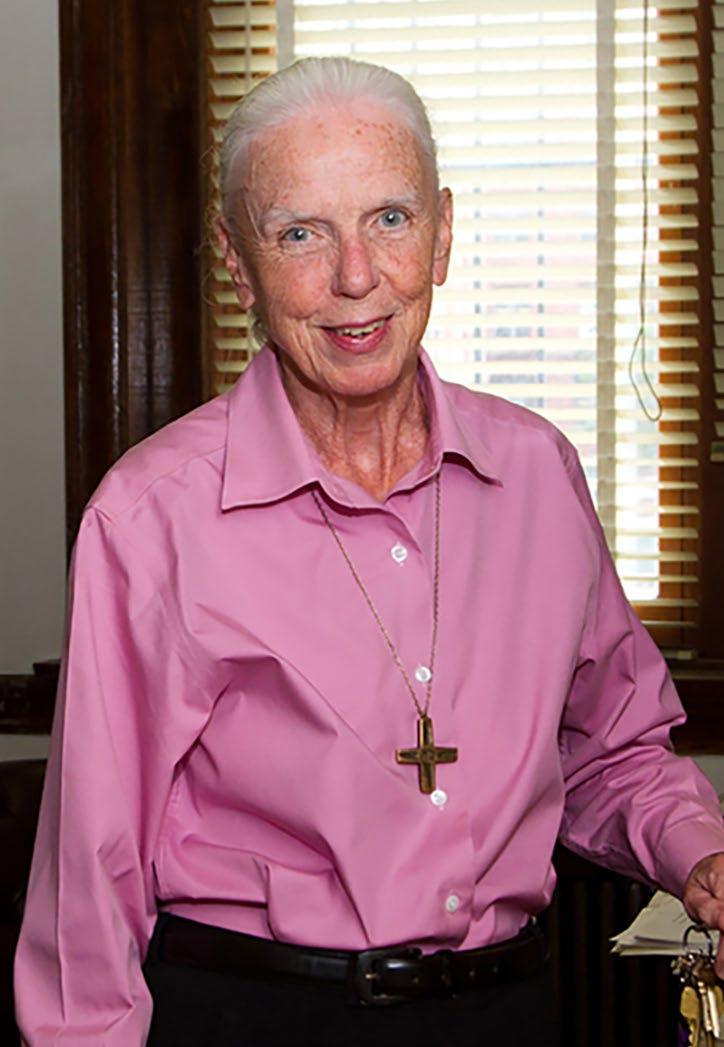
Hartnett: I would add Sr. Caroll Ann Kemp - as a colleague, in particularshe had a holiness to her. Her ministry of presence and just being around her was incredible.
Pignone: I had Mr. Don Smith as a freshman and again as a senior. He matched my demeanor and energy, and was a nice counterbalance to it. He was firm, but he was also very loving in his way. He would correct me, but I never felt chastened, just redirected, kind of like an uncle would do. He looked like he was a happy man; I think that always kept a door open for me, like there’s something to be had here. There’s a life to be had in education.
Greenfield: Fr. Lucien Longtin was another teacher we all admired, and we all had his Systematic Theology class. He was serious about his faith, and he was serious about making us learn it.
Krambuhl: Fr. Lucien would talk about working with people in the McKenna Center and in the neighborhood. That was very eye opening to me, his depth of care for those on the margins. It was so spiritual and beautiful in its own way. I admired that sense of love that gives and stands with the poor and the vulnerable, and the confidence he had in doing that.
QWhat “planted the seed” for you to pursue a career in Jesuit education or the priesthood?
Hartnett: I didn’t know the Jesuit phrase Cura Personalis (care of the whole person) as a student, but all of those people we mentioned really loved us and cared for us, and they were happy. They genuinely seemed to like their jobs and be fulfilled by them. So you fast forward to college and the discernment process of trying to decide where you want to put your focus and attention, and what you want to do for a living. When I thought about teaching or working in Catholic education, it was a real blessing to have access to role models like that. I don’t think it’s an overstatement to say that we’re all where we are because of them.
Greenfield: There’s a saying, ‘You get loved into the Kingdom.’ I think about all of those teachers – they all loved us. When I was struggling to figure out what I wanted to do, because I wasn’t sure if I wanted to be a priest or get married, I remember having lunch with Fr. Longtin in the Jesuit residence and we talked about all of it. I remember sitting with Mr. White, the Dean of Students, in his office and him telling me he was so proud of me. All of them legitimately loved us, and you remember people who love you – especially at that age.
Krambuhl: I felt very comfortable in my four years at Gonzaga. I wasn’t nervous, I didn’t feel awkward – especially as a high school student, that’s pretty remarkable. I felt completely at home. I learned a lot and was excited to learn from people who obviously loved their subject matter, loved being there, and loved interacting with us. It felt more like a family than a school or a job. Having experienced that, I wanted to give back to and participate in a similar environment, and keep that tradition going.
Hartnett: Brian, John Pignone and John Krambuhl were all pretty formative in my decision to stay at Gonzaga. I
Sister Seton Cuneen, SNDdeN
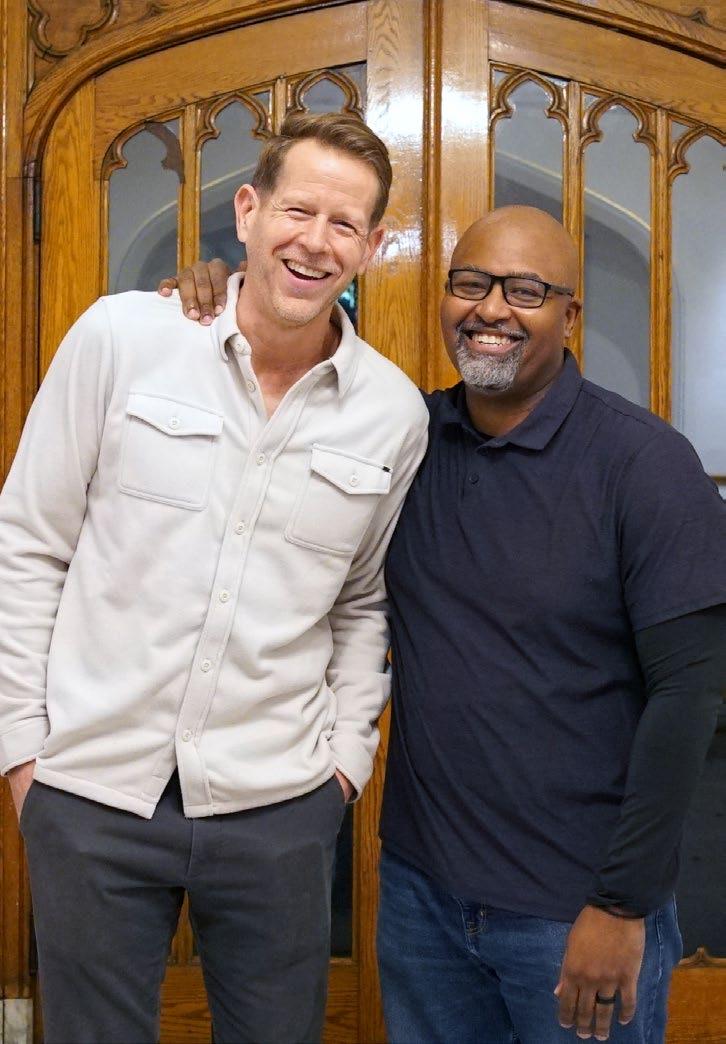
did a lot of working through my own discernment just by talking with friends. We often talked about the difference between Campus Ministry and teaching in the classroom, as well as the overlap. John Pignone has been a source of wisdom and a confidant of mine my whole life since we’ve been friends, so I don’t think I would have ended up pursuing this path without having friendships with these three guys.
QHow has Gonzaga changed since the Class of 1997 graduated, and what has stayed the same?
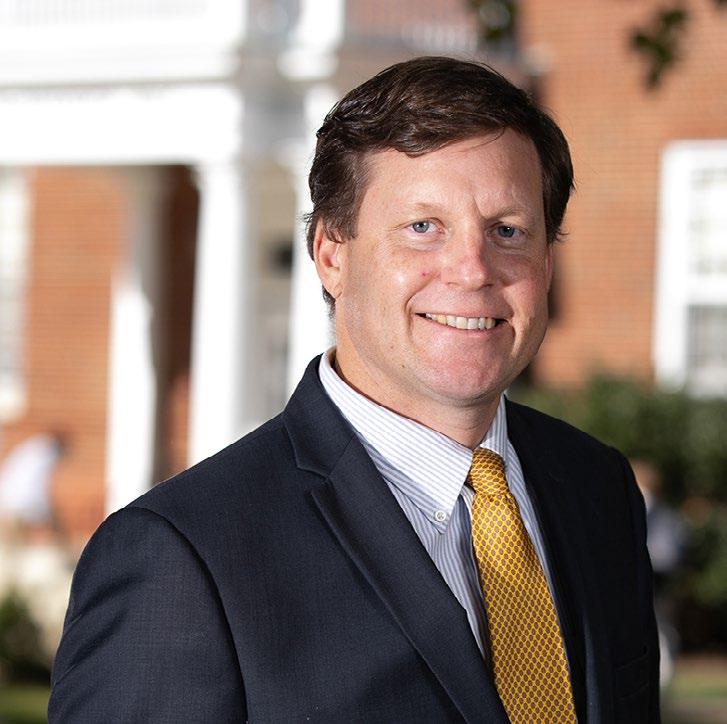
Krambuhl: When we went there, the facilities weren’t very nice - radiators
would spray hot water around the room - it was ridiculous how bad some of the facilities were. Although I loved it that way, it was a very smart institutional move to update the facilities. When I came back to teach, a lot of the buildings had changed. It forced me to realize that a tradition isn’t replicating the past, a tradition is passing it on. Important things are going to change, even if you liked them a certain way. Gonzaga is very blessed with a really strong core and to be able to move through time and all the changes that happen in history and still be centered, that is a real gift.
Pignone: I loved it too, the grittiness added to the excitement of the adventure of going into the city. For me, at least, it had an edge to it that made it real. It saddens me in a way that the Gonzaga of 1997 is no longer there, but it’s still very much alive in the memories and the relationships. Things change, different colored paint is added, but the impact it had on us is not degradable. Now all these new generations of guys are coming in, and this is their Gonzaga, this is their memory. They’re going to go through those same emotions because things change, but it’s the stability of the mission and what’s done at Gonzaga that is indelible.
Greenfield: We just had our faculty retreat at Tampa Jesuit, and the theme of it was ‘United in Christ’. I think that’s the origin of why the Gonzaga
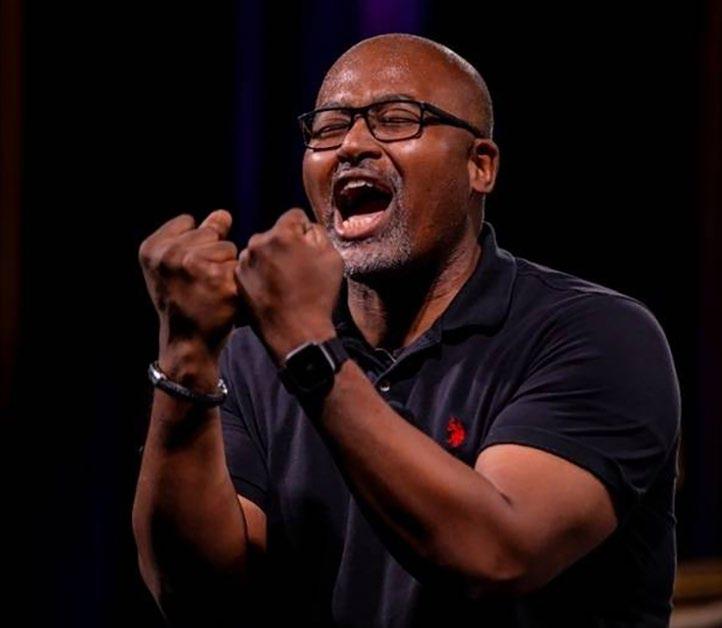
brotherhood is strong, and there’s a firm foundation to it. St. Ignatius knew what he was doing when he went into schools with the Spiritual Exercises and forming young men and the Grad at Grad. When I see these guys or if I need something, there’s no hesitancy. We just fall right back into our friendships. I think it’s because we had those formative experiences together, we were all going through it together. From the students that I see there now, that brotherhood is still going strong. It’s probably changed in the sense that the culture has changed, but the core of Gonzaga – that transcends changes in time.
Brendan Harnett and Brian Greenfield
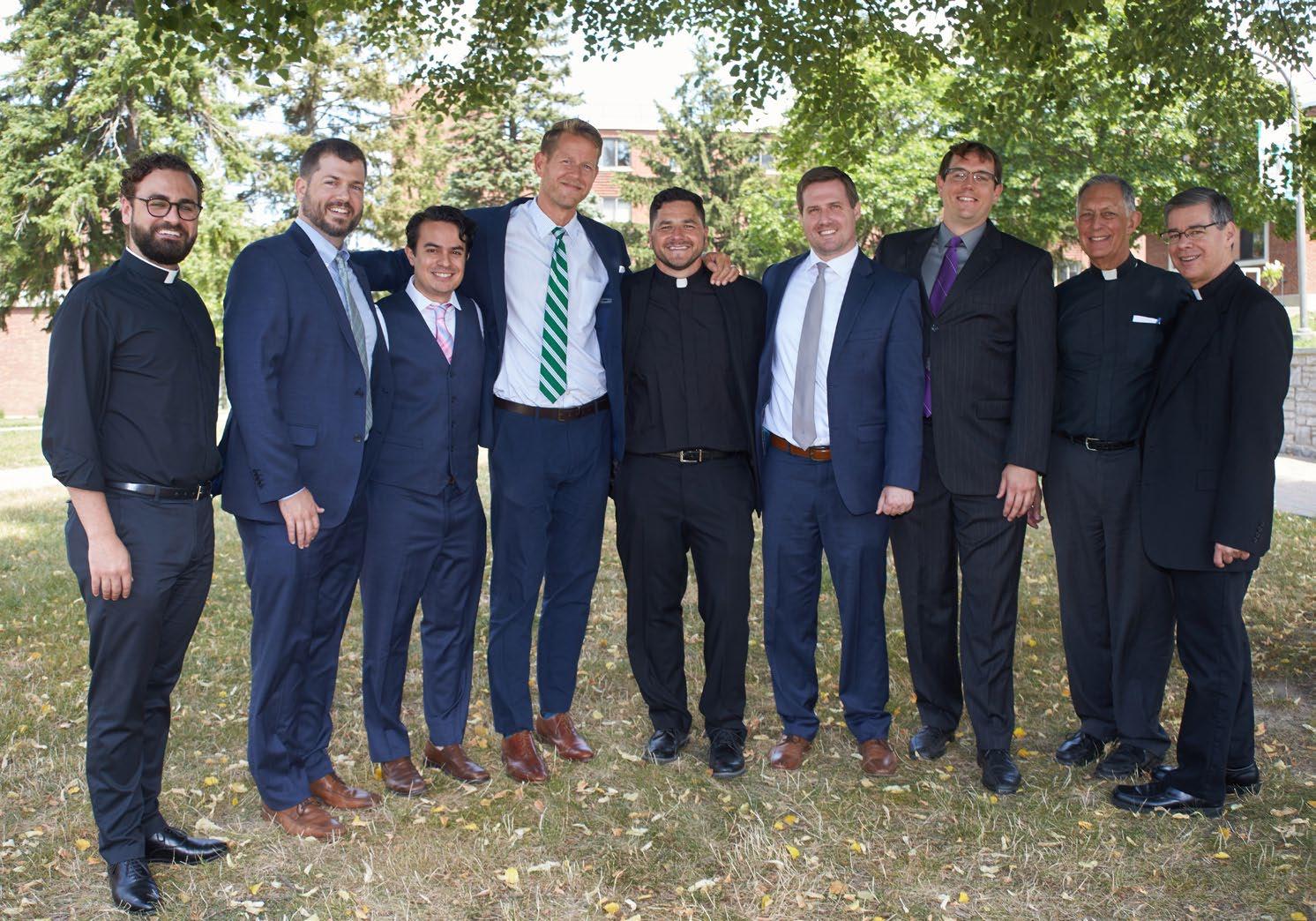
John Pignone, S.J. (center) took his Jesuit vows at the Jesuit Novitiate in Syracuse, New York, in August 2017. He is pictured here with several Gonzaga classmates and fellow Jesuits.
Dr. John Krambuhl
Brian Greenfield
Welcome Back!
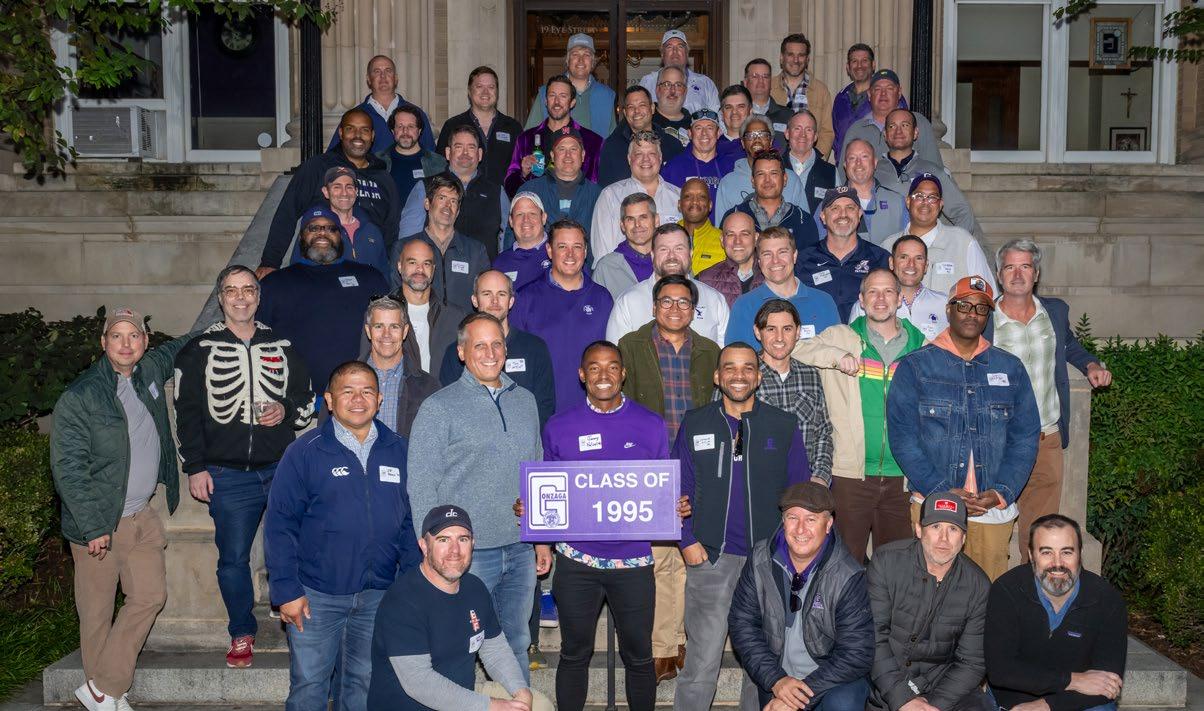
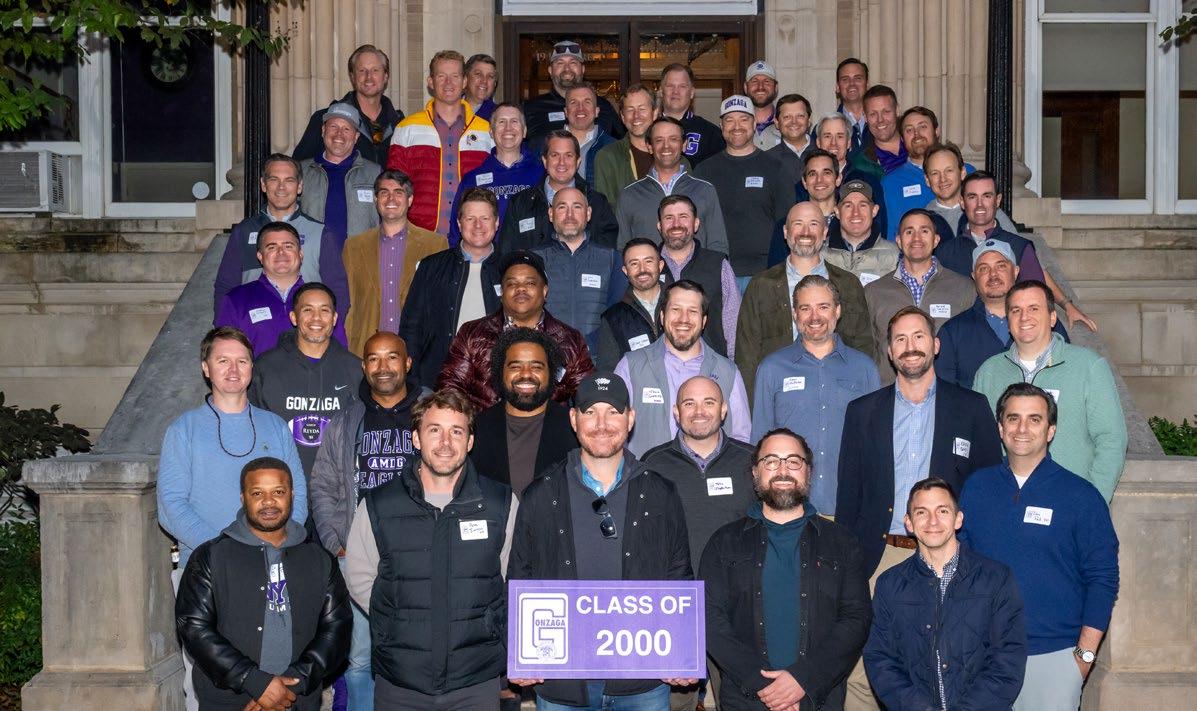
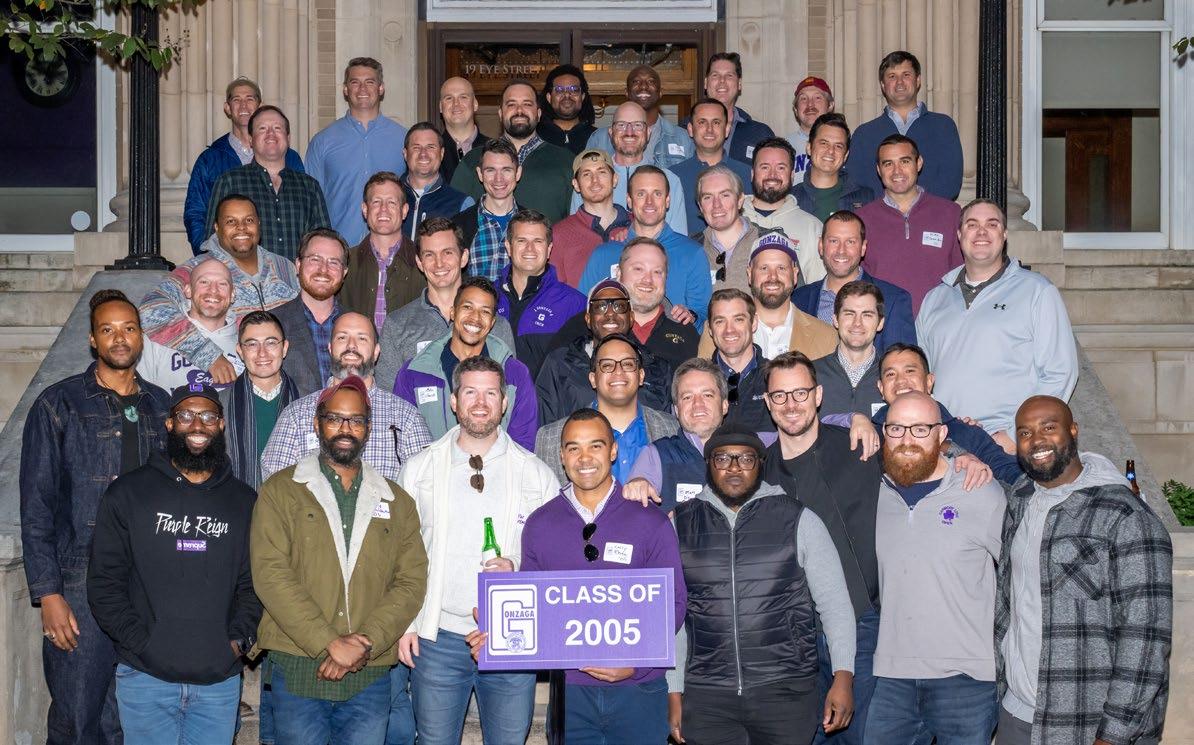
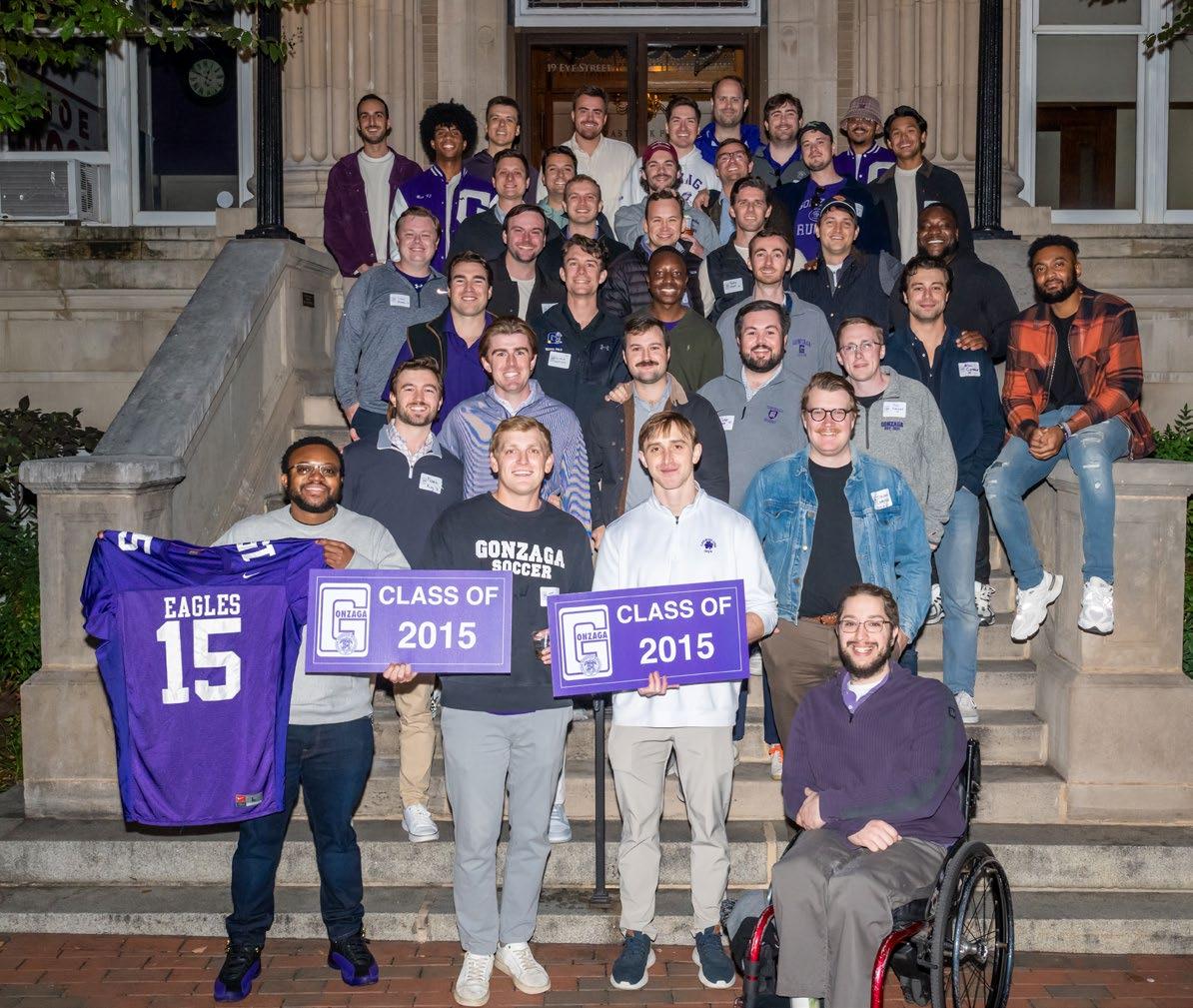
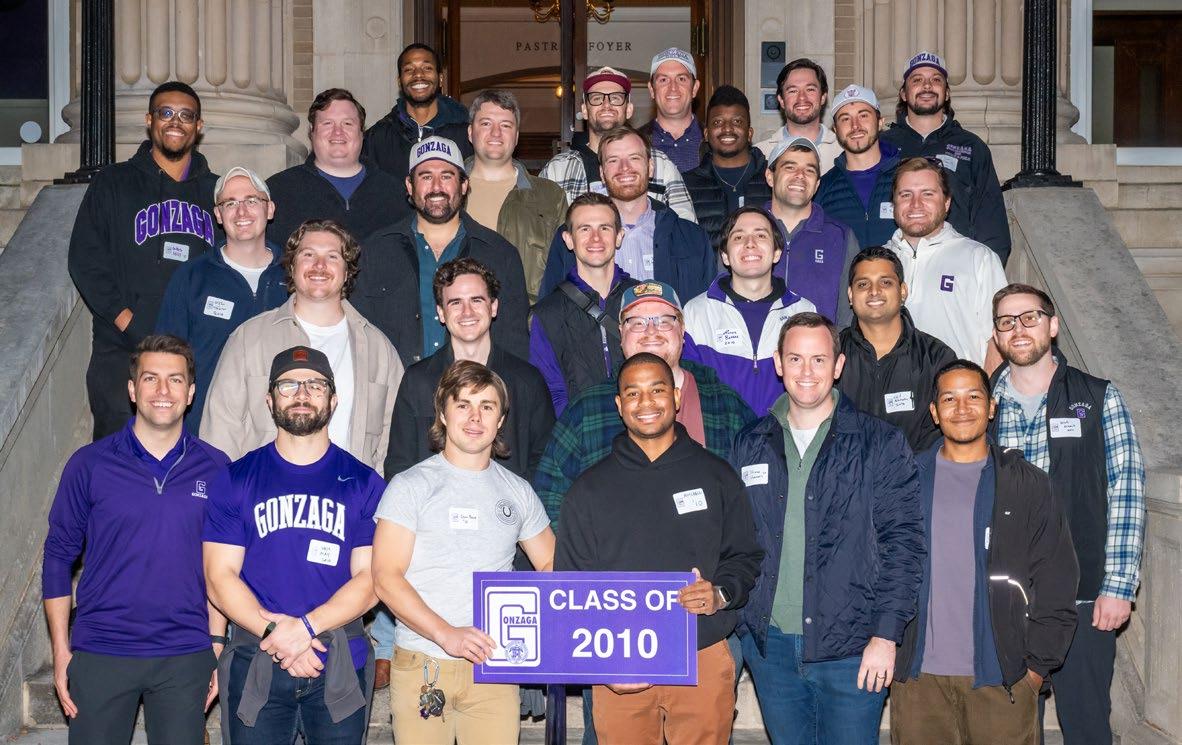
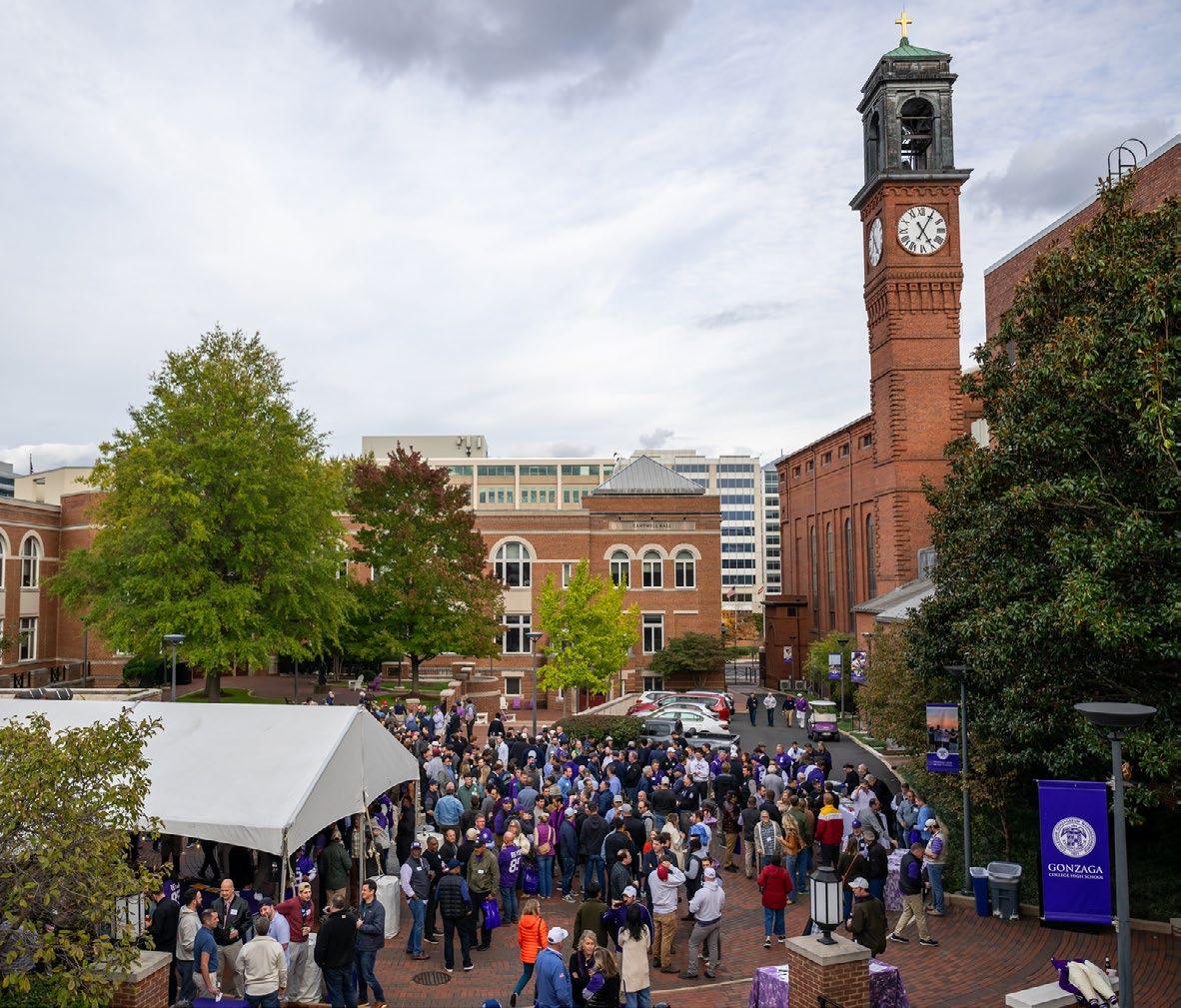
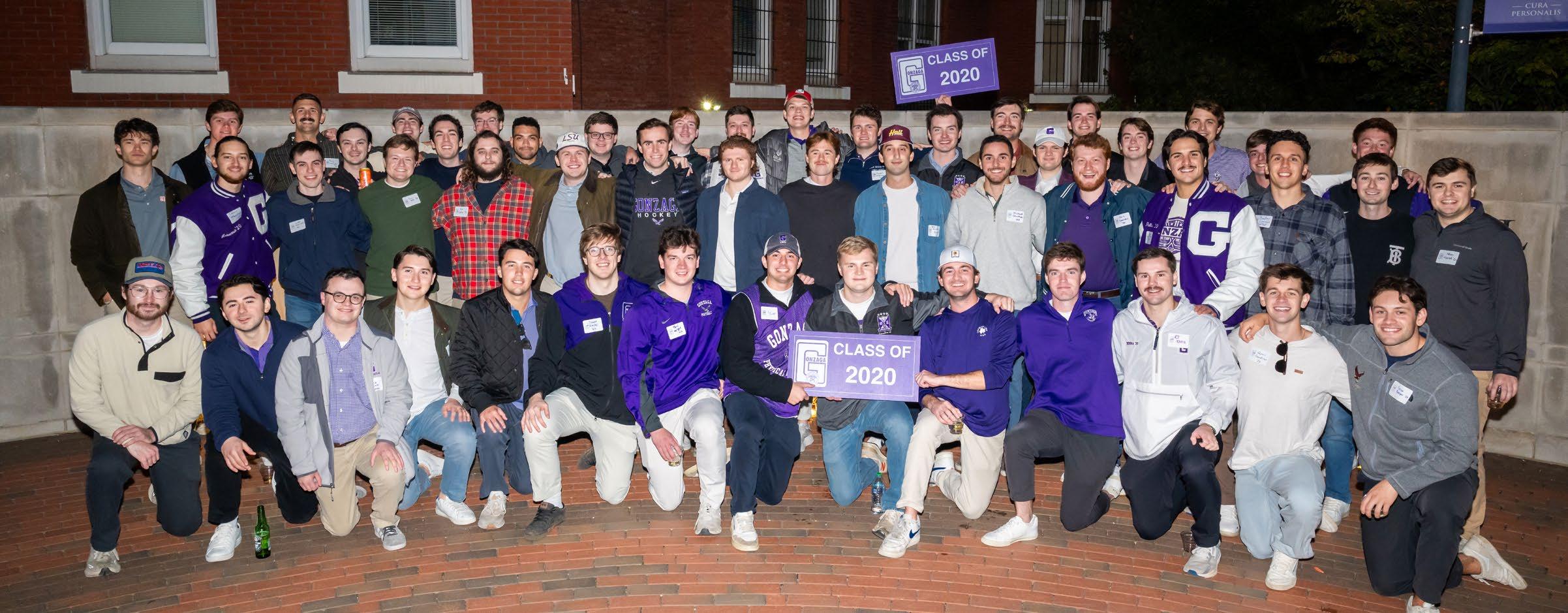
Thank you to the many alumni who joined us on campus this past fall to celebrate their reunions!
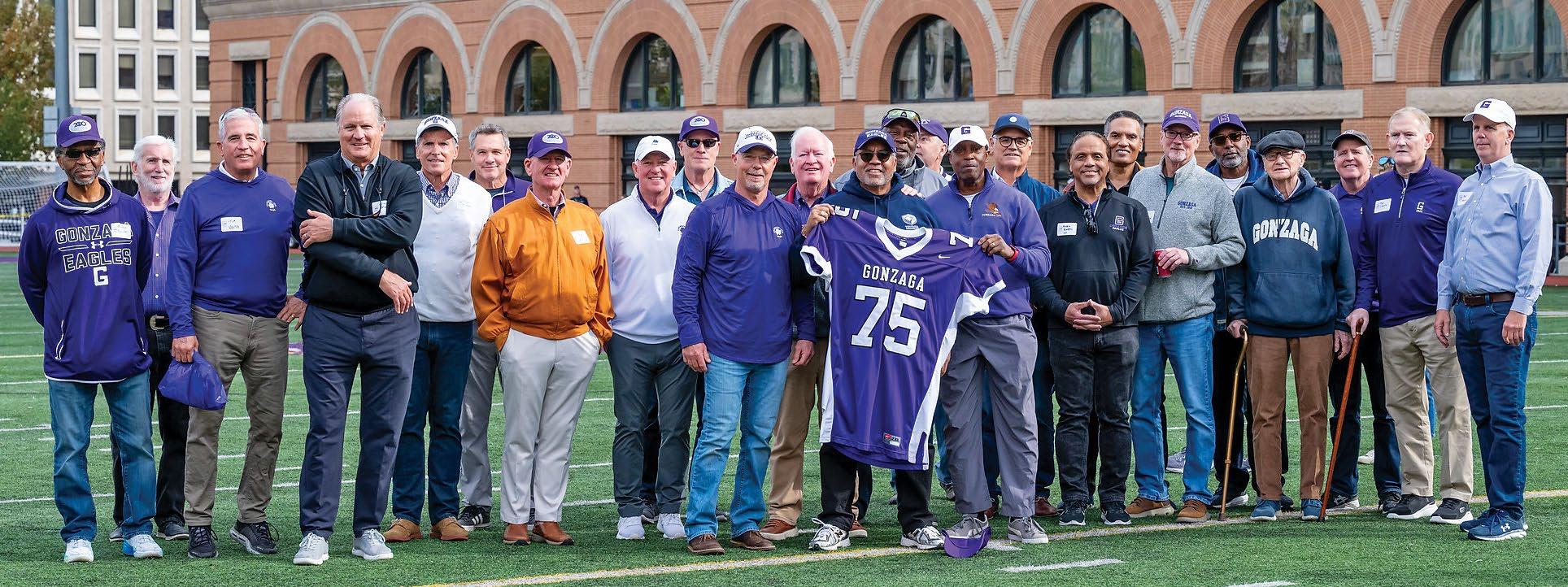
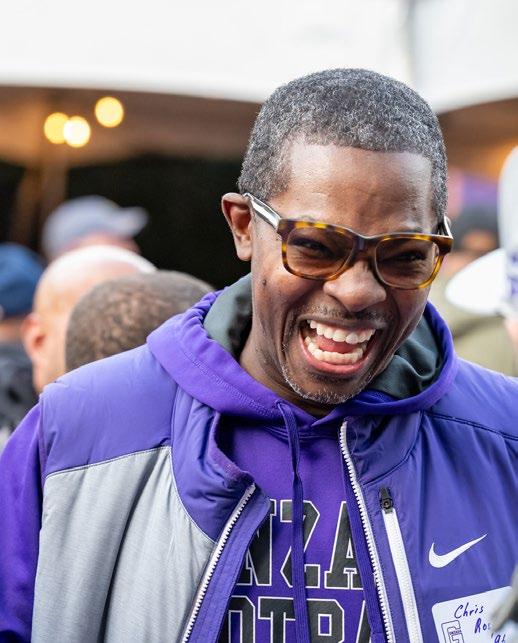
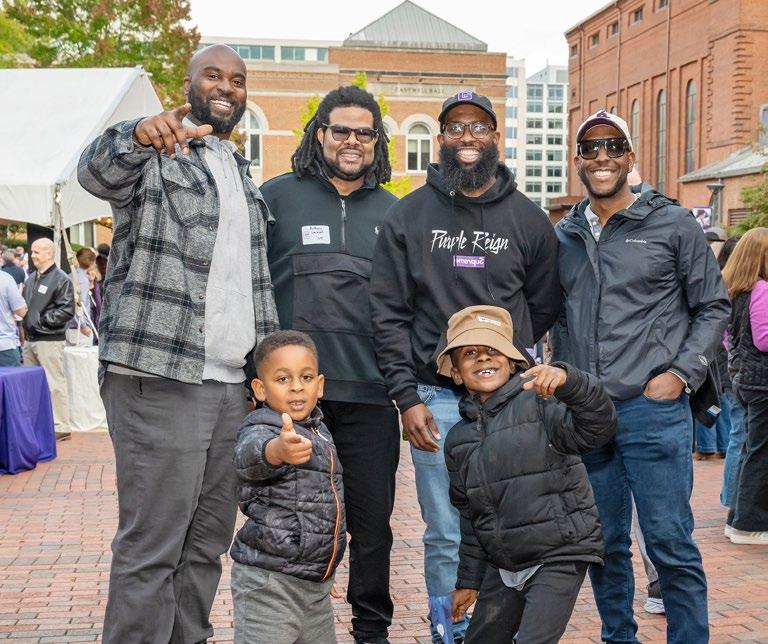
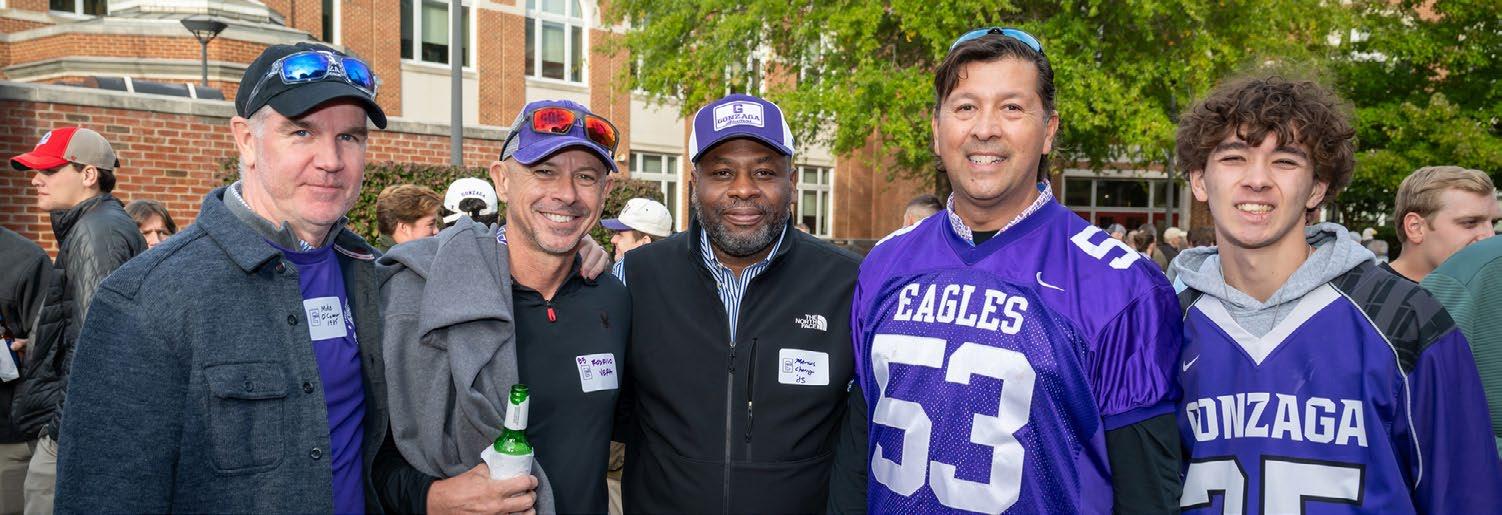
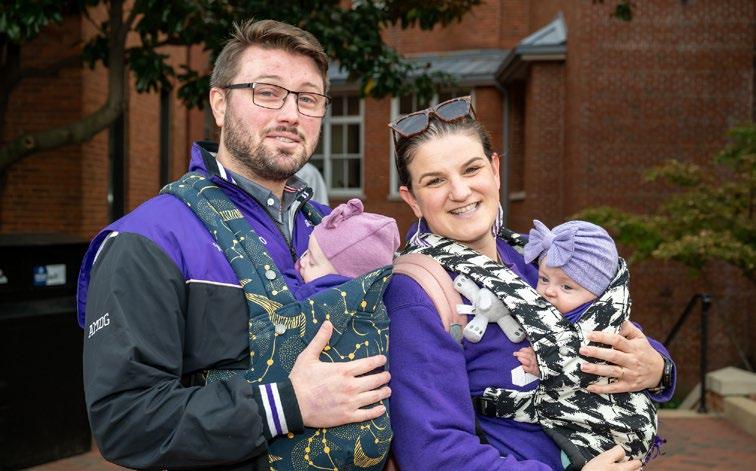
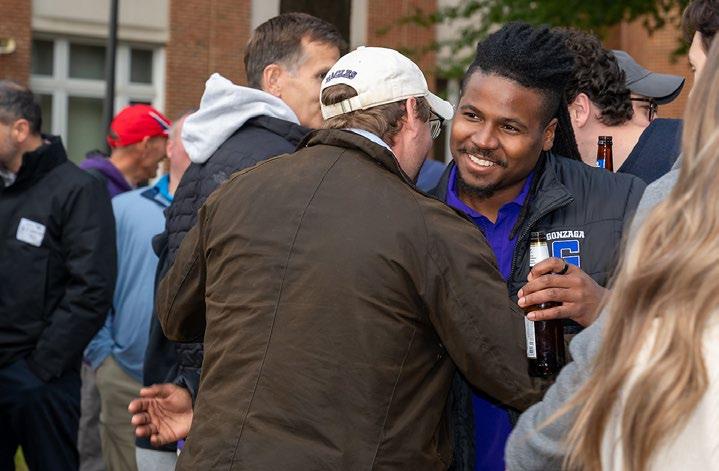
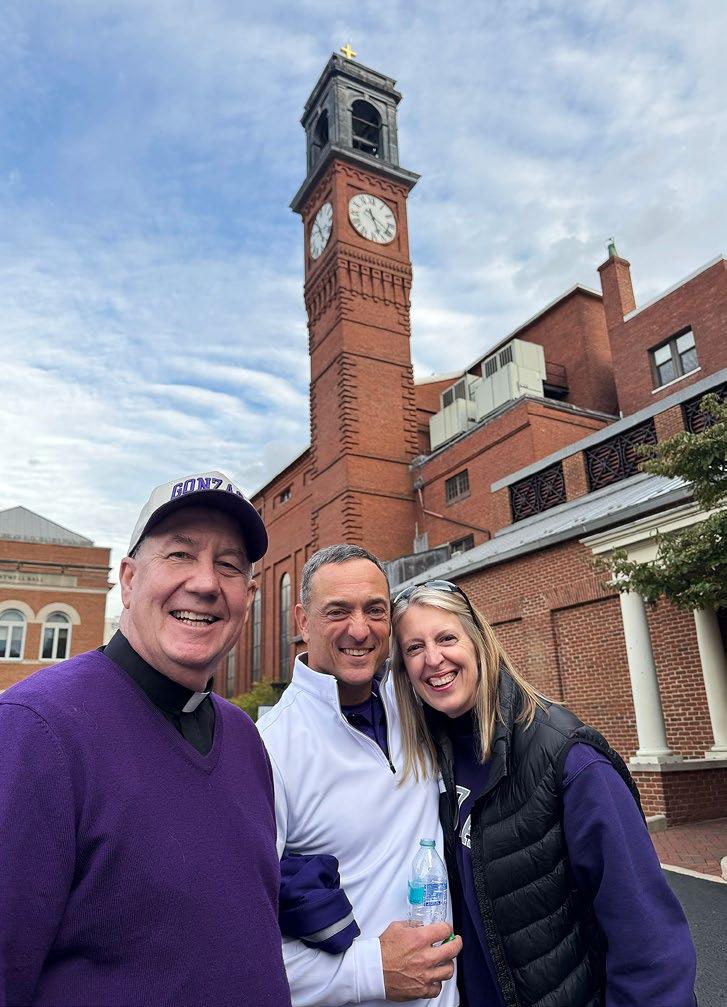
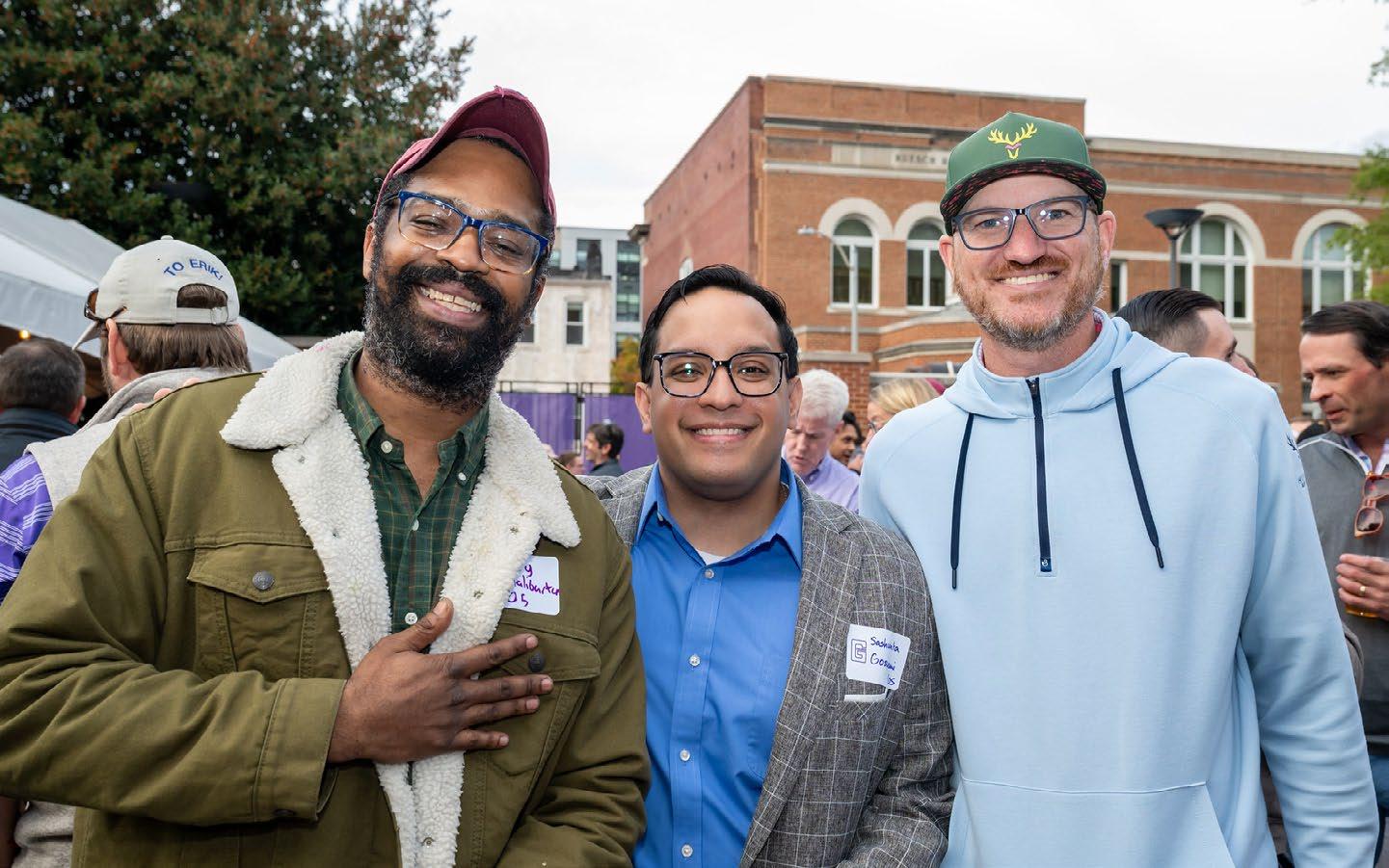
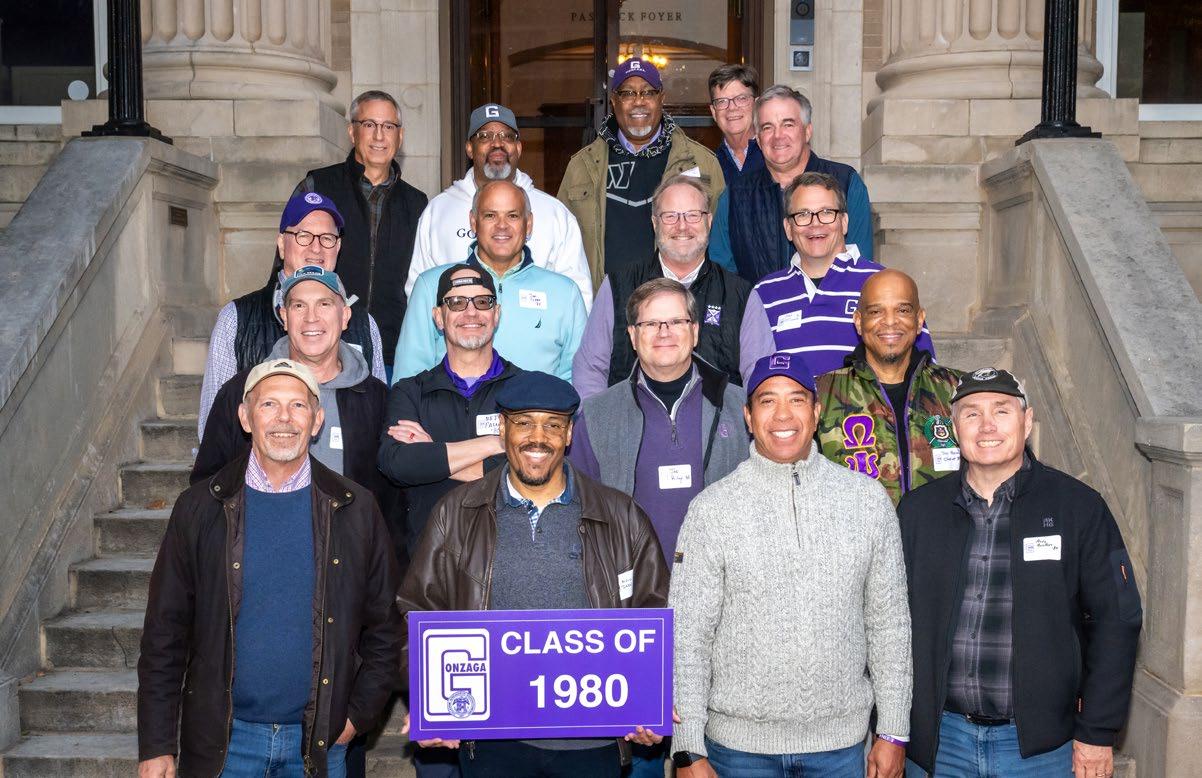
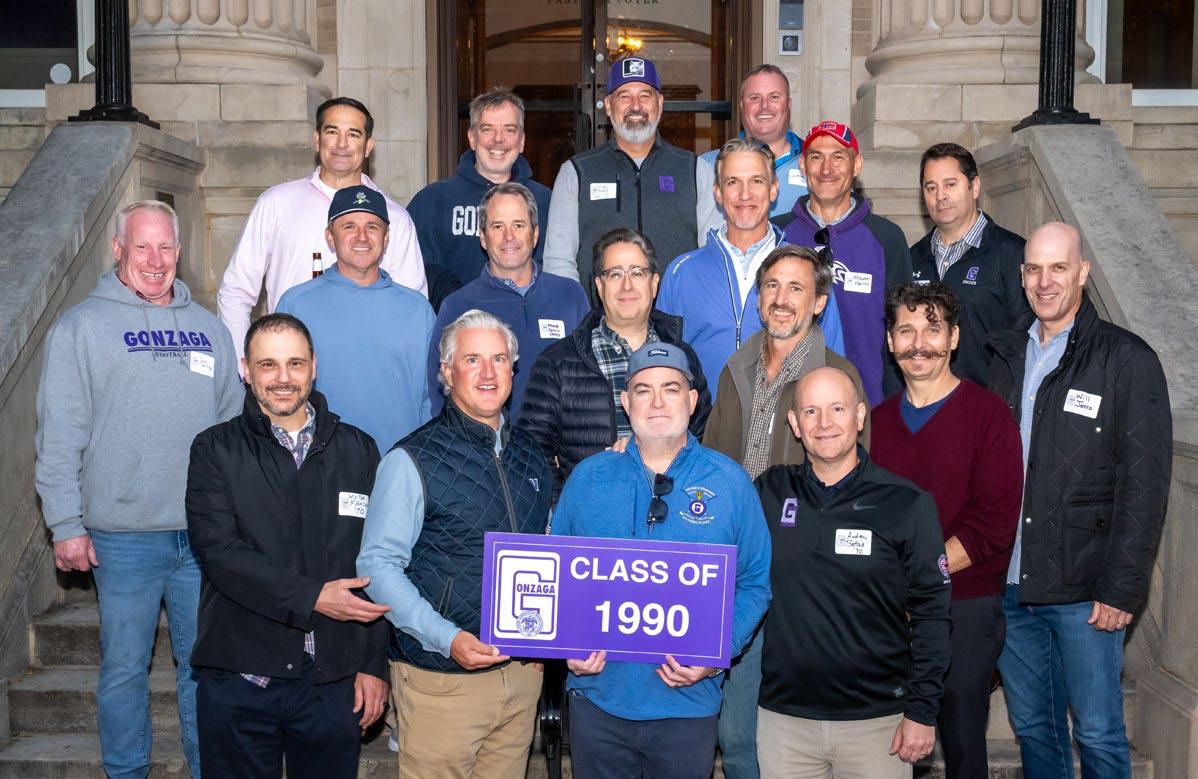
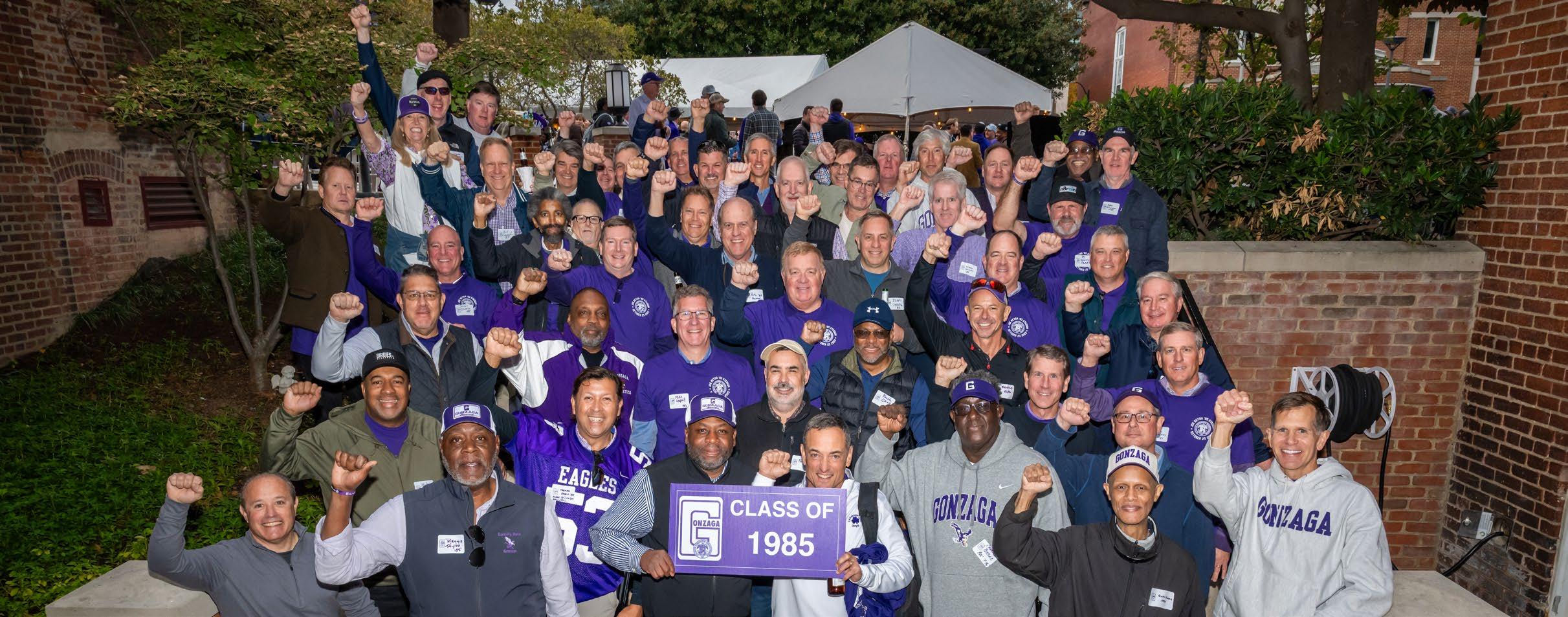
Alumni from the Classes of 1980, 1985, 1990, 1995, 2000, 2010, 2015 and 2020 joined us on Saturday, October 25 for their Class Reunions. After Gonzaga Football defeated Good Counsel on Buchanan Field, alumni gathered in the courtyard and on Eye Street for dinner, drinks, and class photos.
Alumni News & Notes
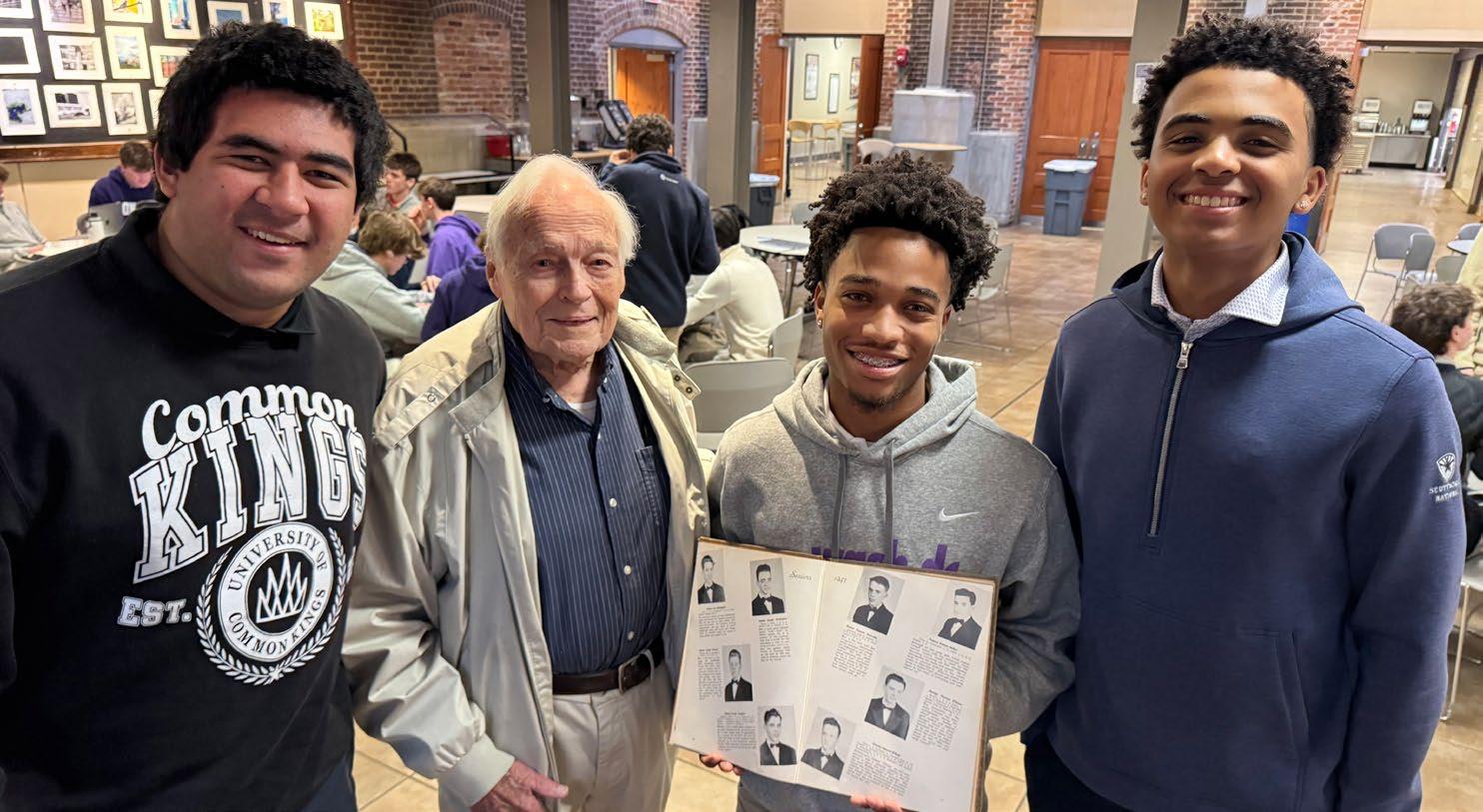
Franc Miller ’47 Returns to Eye Street
Last October, Franc Miller returned to Gonzaga for the first time in 78 years. Along with his son and daughter, he was given a guided tour of the campus that has changed so much during the intervening decades, and students and staff were delighted to greet him and welcome him back. His advice for current students was simple: “Stick with it and study hard.”
After Gonzaga, Franc studied art at the University of Maryland and became a graphic designer, art director and eventually operated his own one-man advertising agency. In an email after his visit, Mr. Miller shared his thoughts on the day: “It was outstanding. The current school buildings, facilities and student variety is certainly exemplary, and demonstrates the pride and accomplishments of the Jesuit character. The location is the same but the buildings and programs reflect the advances of the times. Well done. I am impressed and should have returned sooner.”
1953

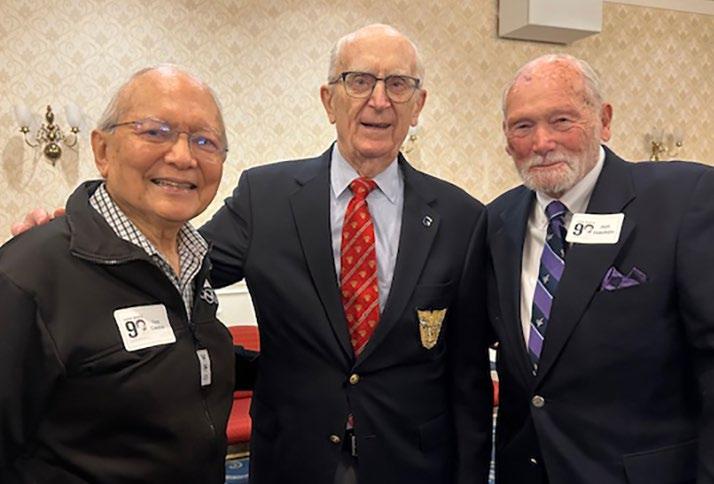
Gonzaga friends and classmates
Tino Calabia and Ash Hawken joined Gerry Galloway for his 90th birthday celebration last fall.
1956
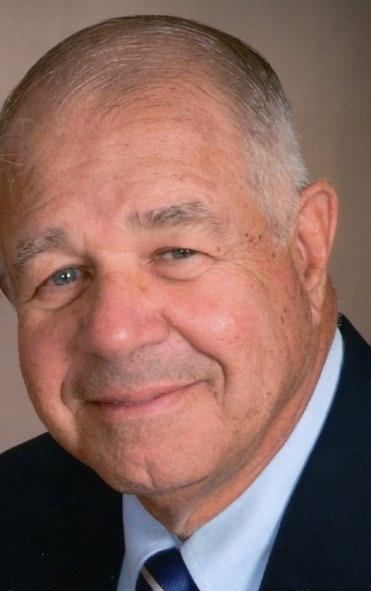
Last spring, Dick Nasca was named “Guest of Honor” by the Piedmont Orthopedic Society, which is composed of orthopedic surgeons who did their residency at Duke University. A graduate of Georgetown Medical School, Dick completed his postgraduate training at Duke from 1965-1970. He served as Chief of Amputee and Hand Services at the Philadelphia Naval Hospital, caring for Vietnam War casualties. He held teaching appointments at the University of Arkansas and the University of Alabama Schools of Medicine. During his time in practice, Dick specialized in caring for patients with spine deformities, injuries, and disorders.
1967
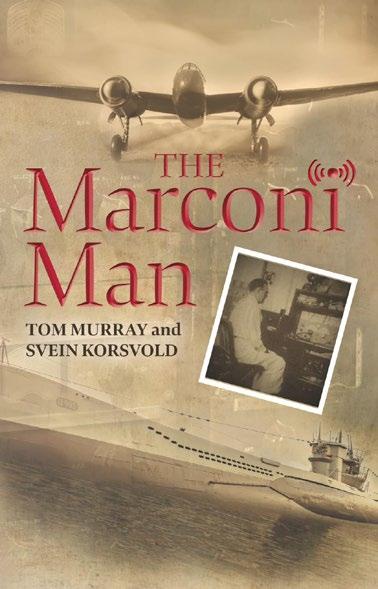
Tom Murray recently published his third book since retiring from federal service, The Marconi Man. Based on true events about his grandfather, a British intelligence officer who put his stamp on history as a Marconi wireless officer, the story involves spying on the American mob during Prohibition, supporting the Norwegian resistance against the Nazis during the German invasion of Norway, and service with British Intelligence leading up to D-Day.
1970
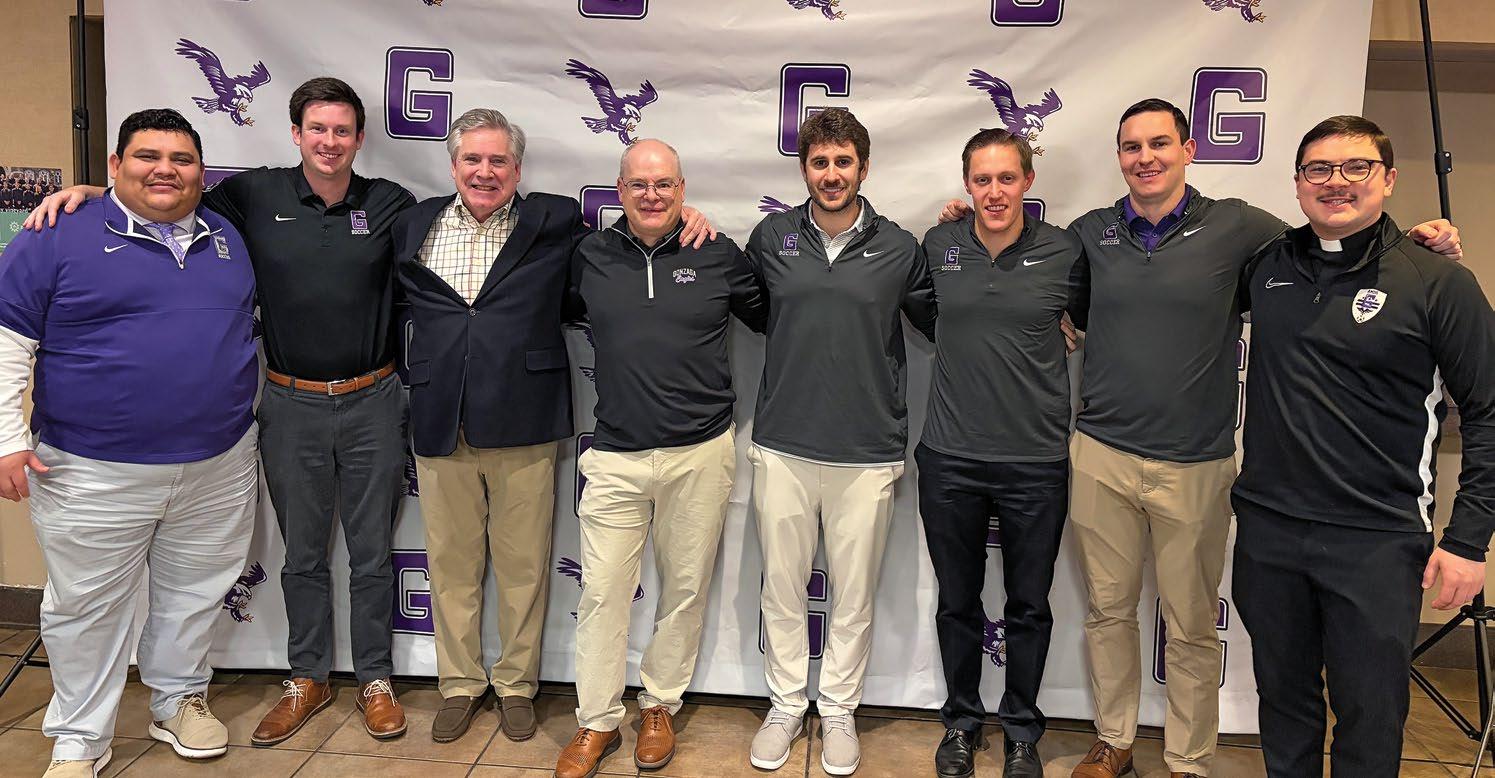
At the annual Gonzaga soccer banquet in January, Head Coach Scott Waller invited Gerry Fay (father of Kevin ’02, Sean ’04, and Colin ’07) to be the guest speaker. Gerry founded the Gonzaga soccer program in 1968 after being cut from the basketball team. He shared some incredible stories about the program’s origins and his time on Eye Street. After Gonzaga, Gerry played for four years at Villanova before moving to the professional ranks with the Baltimore Comets—where he even played against Pelé. To cap off the night, Coach Waller dedicated a new program award in Gerry’s honor.
1972
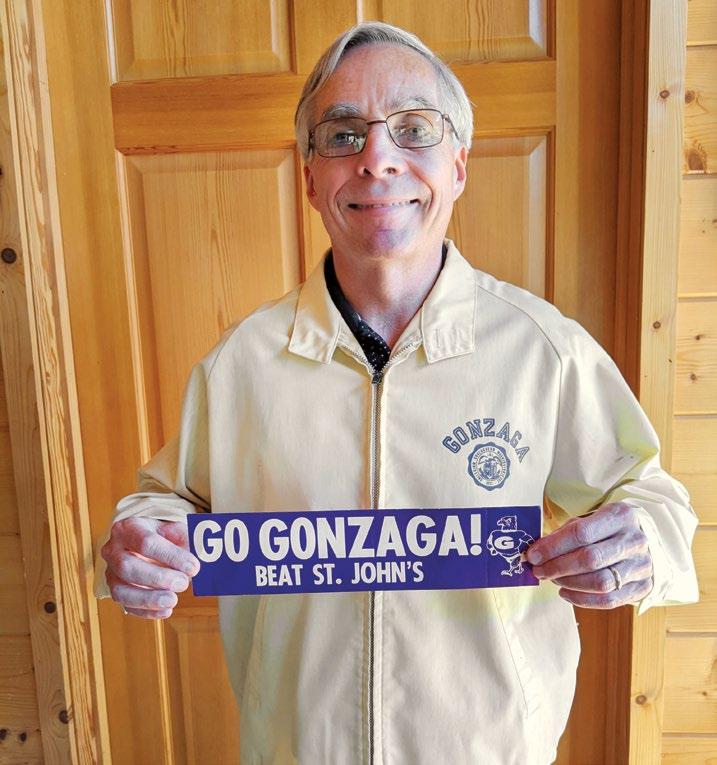
In the fall, Glenn Hein sent his best wishes to Eye Street and included a photo with a sentiment that never fades!
1976
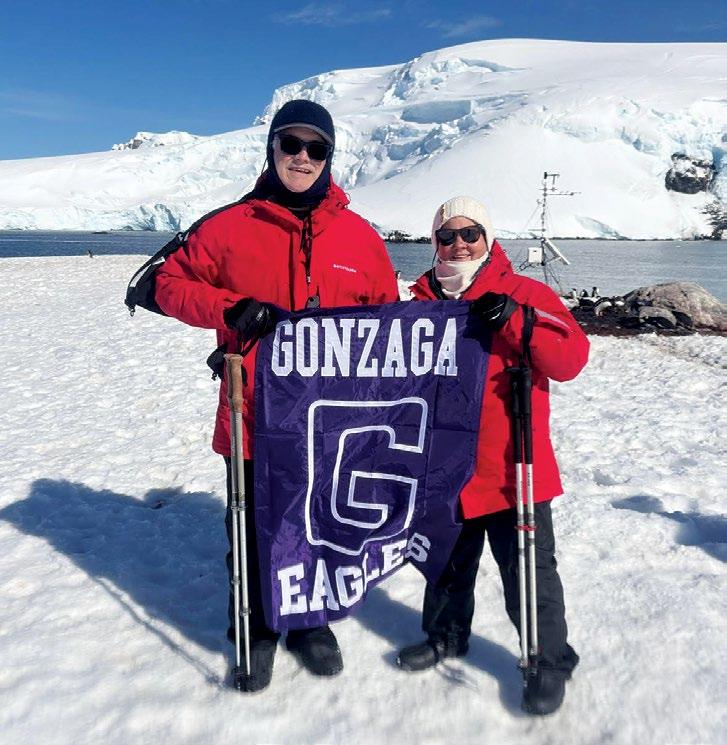
Jerry Cardillo and his wife Chris traveled to Antarctica and completed their dream of stepping foot on all seven continents. They proudly displayed the Gonzaga colors on the Antarctic ice, which, according to Jerry, “may be the most beautiful place on the planet – that we have seen so far.”
1986
Last fall, Paul Zapatka was awarded first place for his oil painting “Shawme Pond, Sandwich, Cape Cod” in the Fredericksburg, VA online art exhibition “Majesty” through the Adonai Global Arts Fund. For the exhibit, which “glorif[ied] God through contemporary Biblical art”, Paul chose Psalm 23:2 to reflect the impressionistic green nature on water based on a photograph taken years ago. He remains grateful for his Gonzaga education.

1997
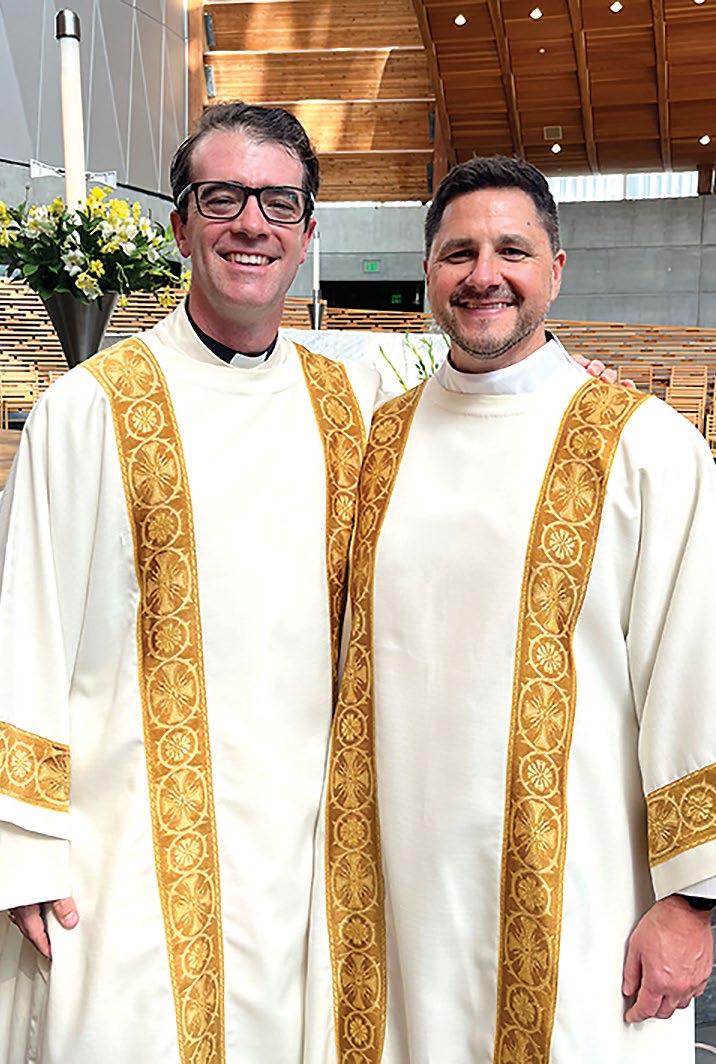
In October, John Pignone, S.J. was ordained to the diaconate at the Cathedral of Christ the Light in Oakland, California. Please keep him in your prayers as he continues his studies for the priesthood and serves as deacon at St. Agnes Parish in San Francisco. He is pictured at right in the photo.
Gonzaga on the Road: Alumni Gather in Dallas and New York City
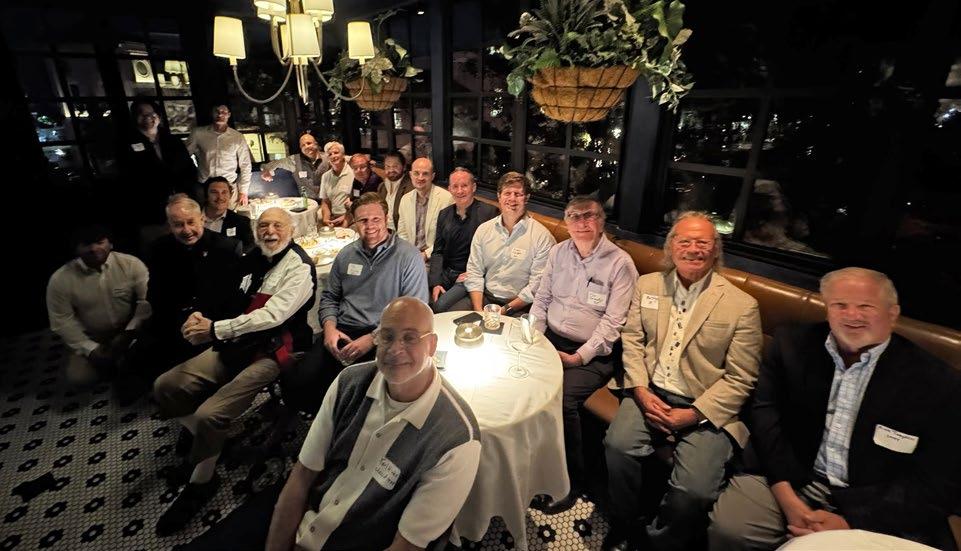
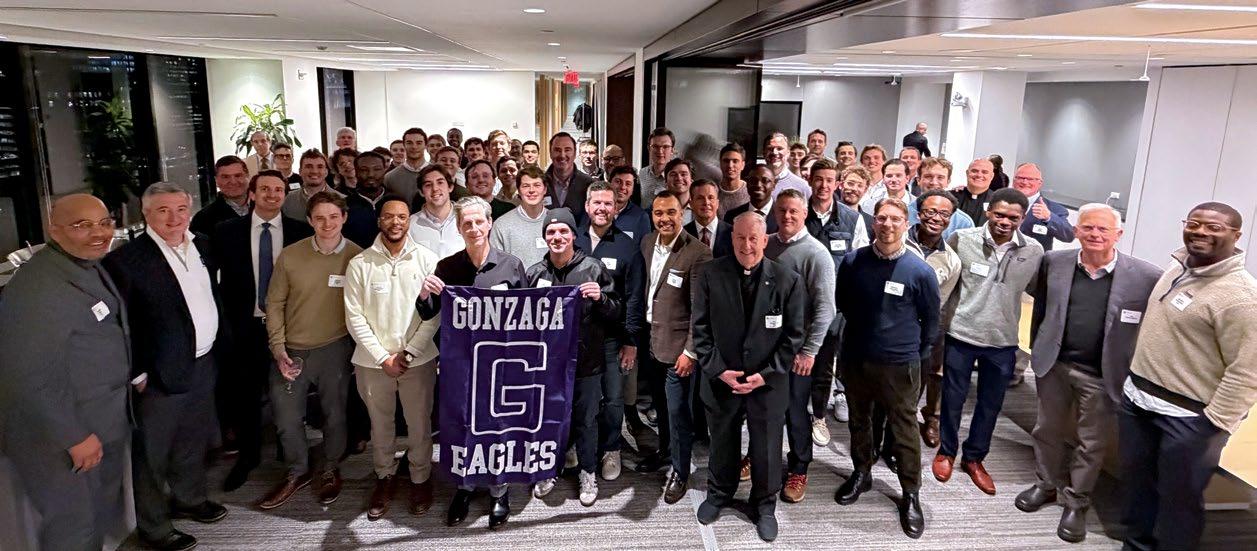
From the Lone Star State to the Big Apple, Gonzaga’s alumni network has been busy this year. In October, Ryan Turner ’02 generously hosted a gathering for alumni in the Dallas area. It was a fantastic evening for our Texas-based Eagles to reconnect and share stories. A couple months later, in January, nearly 100 alumni and friends gathered in New York City. Generously hosted by Mike Miller ’78, the event brought together Eagles from across the decades. Gonzaga President Fr. Joseph Lingan, SJ ’75 attended both events, providing updates on the school’s mission and the exciting things happening on Eye Street today. Our deep thanks to Ryan and Mike for their hospitality and leadership!
1998
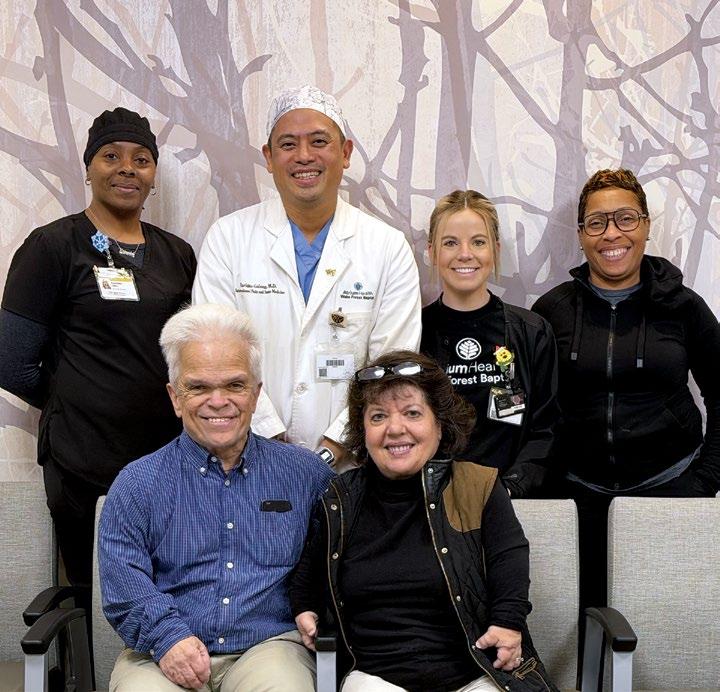
Dr. Enrique Galang, an interventional pain and spine physician at Wake Forest University School of Medicine, was recently recognized for his role in helping a patient with debilitating post-surgical spine pain regain function and travel to Italy with his family. The long-deferred journey culminated in a papal audience so close that the family was able to shake Pope Leo XIV’s hand and speak with him personally, a profoundly moving moment made possible through thoughtful interventional care, careful coordination, and a commitment to caring for the whole person.
2002
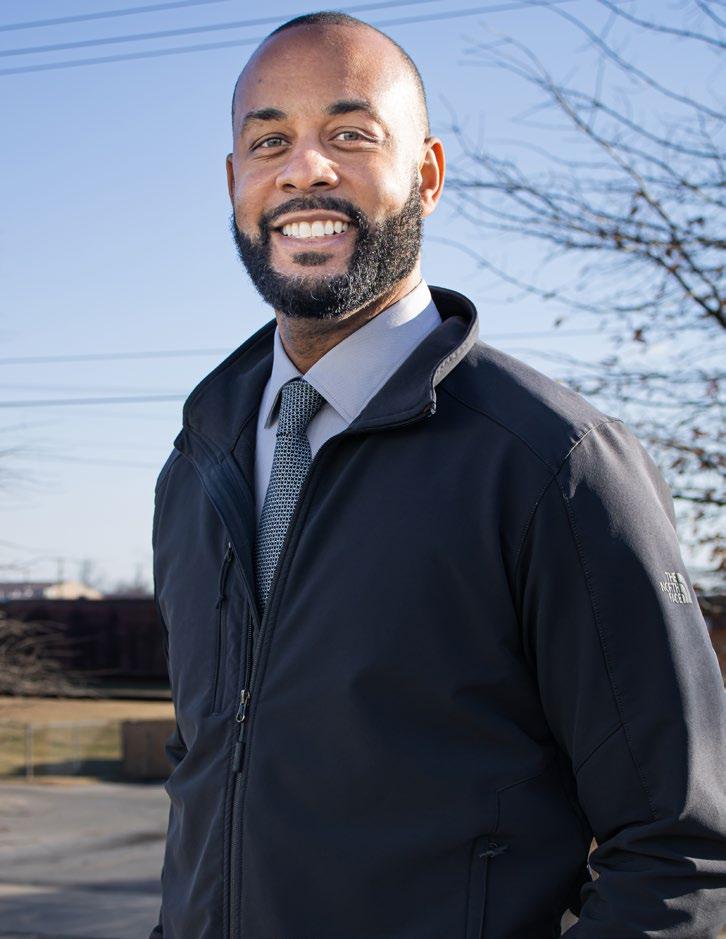
Kevin B. Chavous is running for the Washington, DC City Council At-Large. A lifelong resident of DC, Chavous attended Howard University for both his undergraduate and law degrees, and has devoted his career to quality of life issues in the city, especially housing stability, education, public safety, and access to essential services.
2005
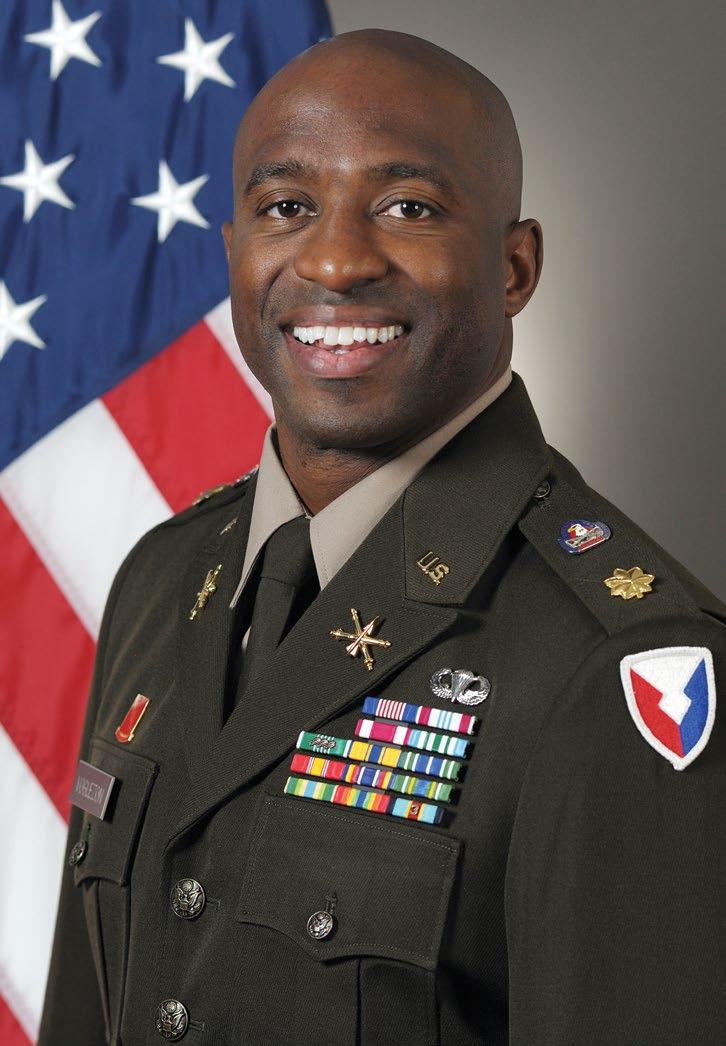
Steve Voglezon was promoted to Lieutenant Colonel in the U.S. Army. Ranked among the top officers in his cohort and promoted ahead of his peers, Voglezon’s merit-based promotion was confirmed by the U.S. Senate in June 2025.

2009
Devin Kelly recently published his first novel, Pilgrims. “A rumination on abandonment and the intimacies we’ve lost to a world obsessed with progress and material success, Pilgrims announces the arrival of a striking new voice in American fiction.” Devin teaches English in New York City and has published books of poetry.
2010
Sammy Gerdano earned his third Coach of the Year award after leading Saints Peter & Paul to a 19-3-2 mark this hockey season. He is the technology coordinator at the high school in Easton, Maryland.
2011
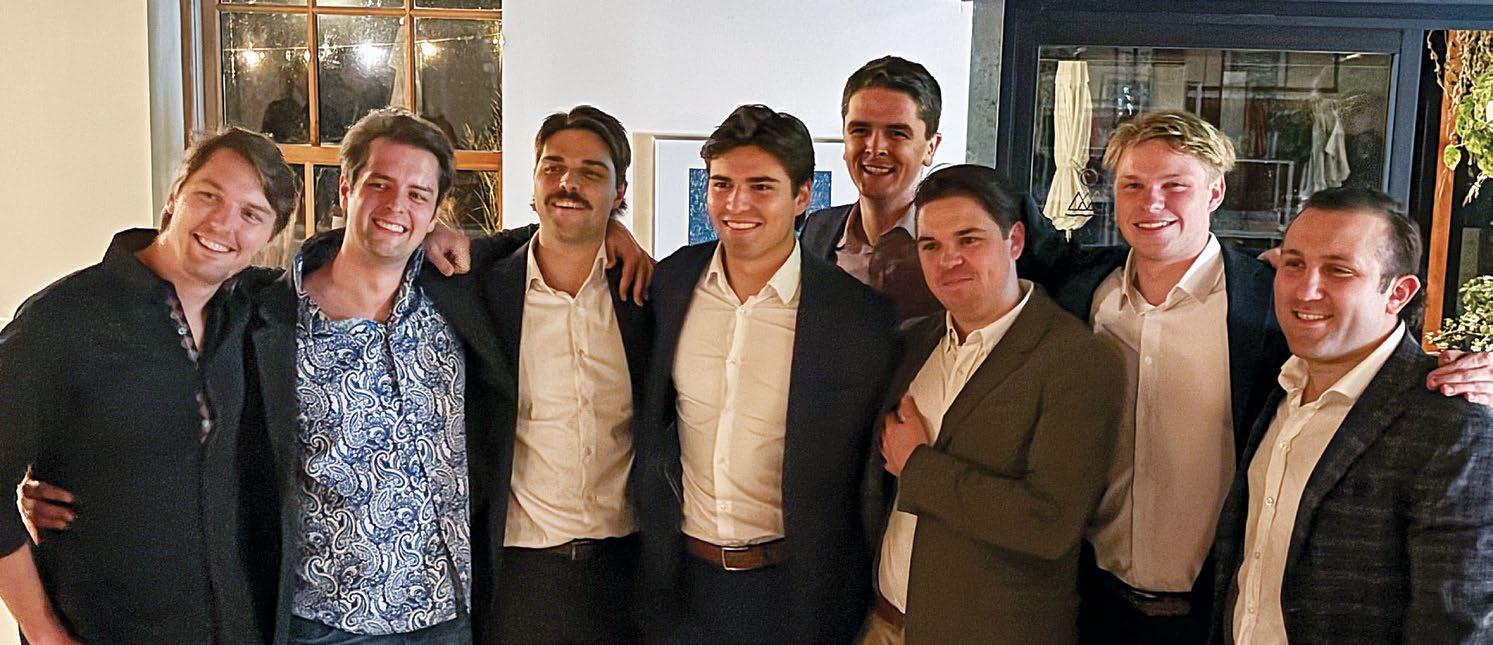
Ryan McGlynn married Mindy McGoughran in Beacon, New York on October 24, 2025. He was joined by Connor Whitcomb ’11, Peter Mulcahy ’11, Nelson Gomez ’11 (not pictured), Ryan Mulcahy ’13, Jack McGlynn ’14, Nick McEvoy ’16, Ian McGlynn ’22, and Pierce McGlynn ’24
2013
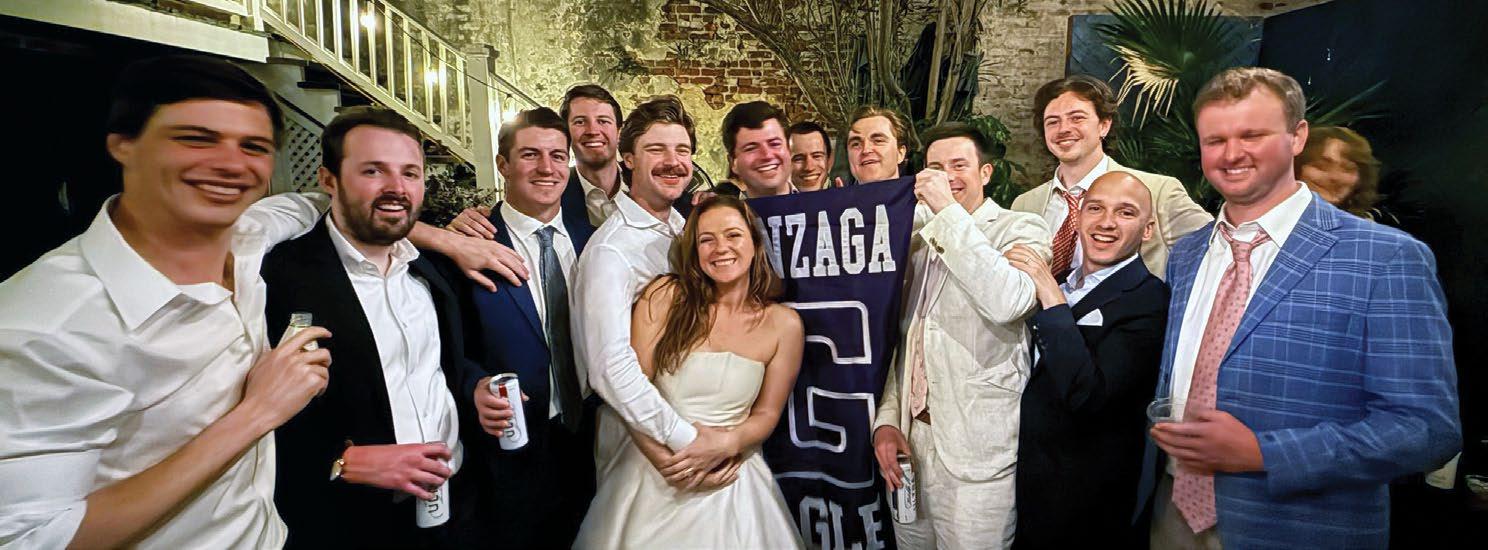
Stephen Ewanciw married Leigh Jervey in May 2025 in New Orleans. Stephen graduated from the University of Maryland and works at Throne Sport Coffee. Leigh (sister of Trap Jervey ’11 & Will Jervey ’17) attended Stone Ridge and graduated from Tulane; she now works at Spotify. They reside in New York City. A lively crowd of Gonzaga alums were in attendance, including Trap Jervey ’11, J.B. Gallagher ’14, Patrick McNamara ’13, William Marks ’16, Devin Doolan ’14, Colin Savercool ’14, Shane O’Connell ’16, Marshall Marks ’14, Will Jervey ’17, Nick Von Utter ’13 and Jack Draddy ’14
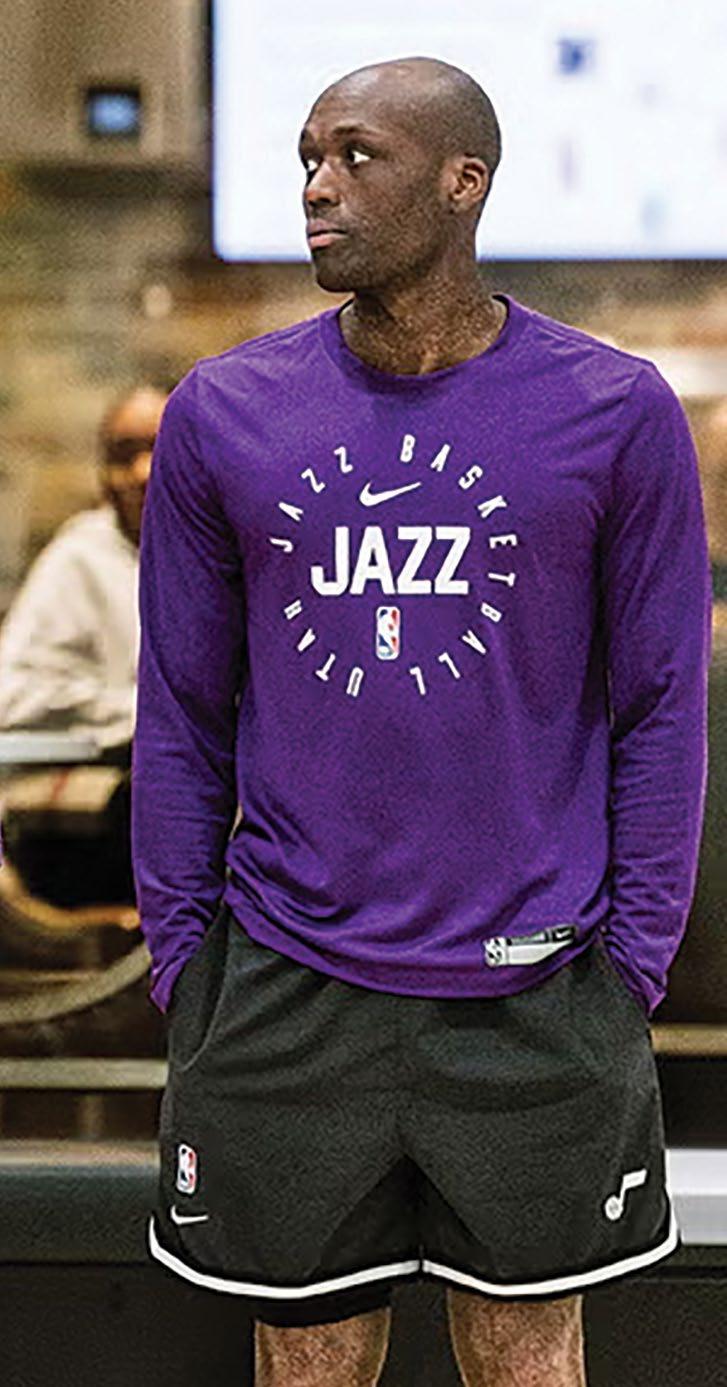
Mike Williams was recently featured in the University of Maryland alumni magazine. He is currently an assistant coach for the NBA’s Utah Jazz. Prior to joining the Jazz staff, he coached the Capital City Go-Go team from 202123. He has also held assistant coach and player development roles with the Washington Wizards and Portland Trail Blazers. photo credit: University of Maryland
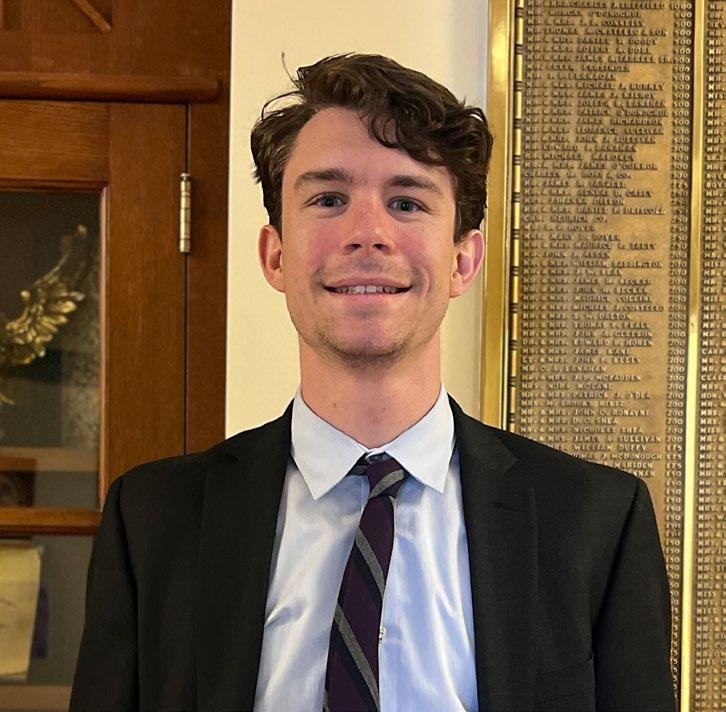
2014
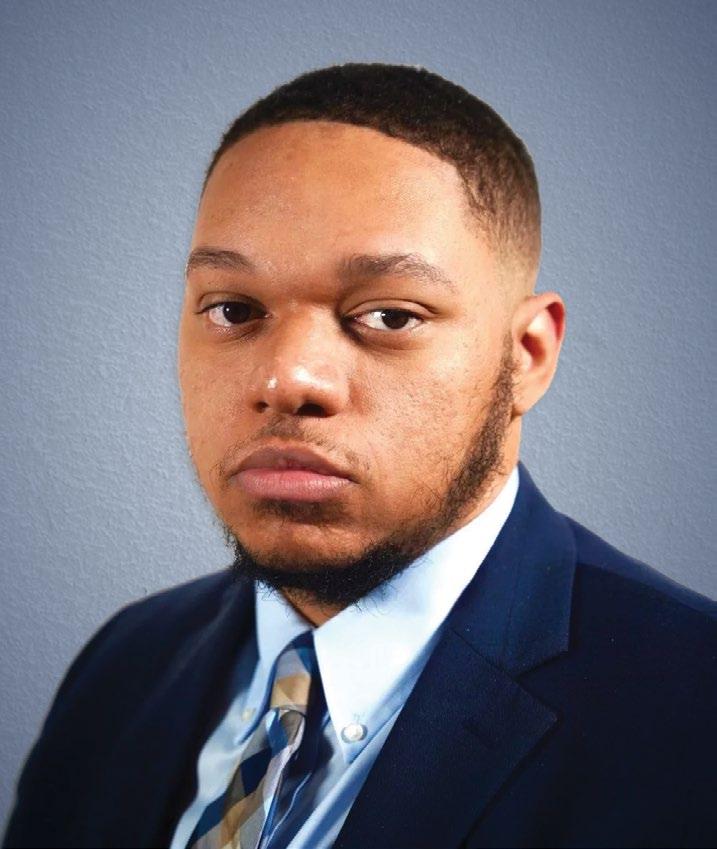
Ke’Shawn Alexander is Founder & President of R.O.S.A. (Raising Overachieving STEM Academics), a nonprofit organization focused on expanding access to STEM education, financial literacy, and career pathways for under-resourced students. He was recently honored by the Young Nonprofit Professionals Network of Atlanta with the ‘30 Under 30 Award’, which recognizes young nonprofit leaders creating meaningful impact in their communities and selected for leadership, creativity, and commitment to social change. Crediting his years on Eye Street, Ke’Shawn shared, “Gonzaga played a foundational role in shaping my sense of responsibility to serve others and to lead with purpose—principles that continue to guide my work today.”

2015
Gonzaga Computer Science teacher Patrick Shipley was named a Novice Teacher of the Year by the Archdiocese of Washington in October. As Chair of the Computer Science Department, Patrick has taken on significant leadership responsibilities, guiding his students through a subject that is both timely and essential. Beyond the classroom, Patrick serves as an assistant coach for water polo, and as a retreat and service leader. Said a faculty colleague, “I spent time with Patrick on a one-week immersion to the Father McKenna Center this past summer. In addition to his dedication in the classroom, I witnessed the great care Patrick has for the spiritual and character development of our young men at Gonzaga.”
2016
In September, Andy Carluccio and Jonathan Kokotajlo won an Engineering, Science & Technology Emmy Award for their work on Zoom’s groundbreaking broadcast tools. The pair supported Gonzaga during the pandemic by helping stream Masses and community events, and today they continue that innovative work as leaders at Zoom. In his acceptance speech, Carluccio thanked Gonzaga and exemplified the Men for Others ethos: “Engineering is
not about the problems we solve, or even the solutions we create, but about the people we help.”
Share Your Good News!
Just married? New job? Welcoming a baby? Gatherings with your Gonzaga mates? Share your news with the Gonzaga community.
To have your news included in the next Gonzaga Magazine please email it to info@Gonzaga.org.
Don’t forget to include a photo!

2018
In December, Will Spartin was named to the high-profile Forbes 30 Under 30 list created annually by Forbes magazine, which recognizes notable young people in a variety of industries. Will and his partner, were named to the Food & Drink list for their company, Triple Cannabis Beverages. “Gonzaga played a meaningful part in shaping my curiosity, discipline, and confidence to pursue entrepreneurship,” explained Will. “I am thankful for the foundation the school helped instill, and felt it was important to share this milestone with the community that supported me throughout my high school years.”
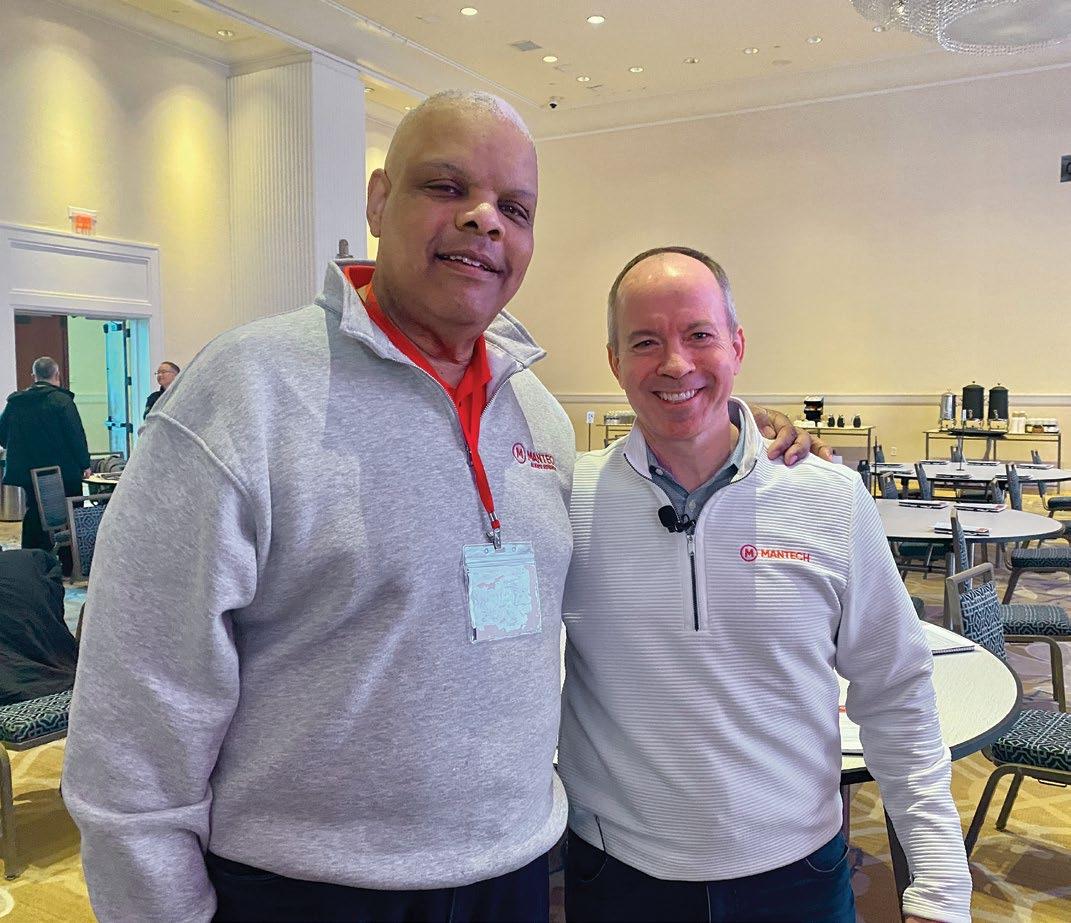
Alumni Network at Industry Conference
Gonzaga Board of Trustees Member, Retired Rear Adm. Sinclair M. Harris, USN ’77, and Mike Ruppert ’91 recently worked together at the MANTECH leadership conference. Ruppert serves as the company’s Chief Financial Officer, while Harris is the Navy Growth leader.
2019
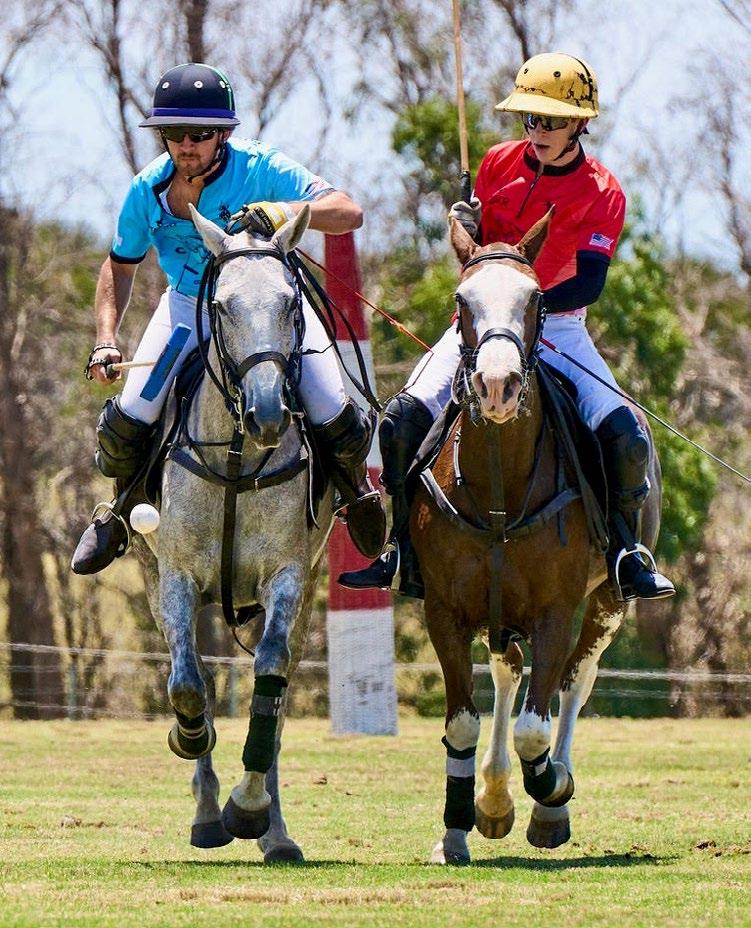
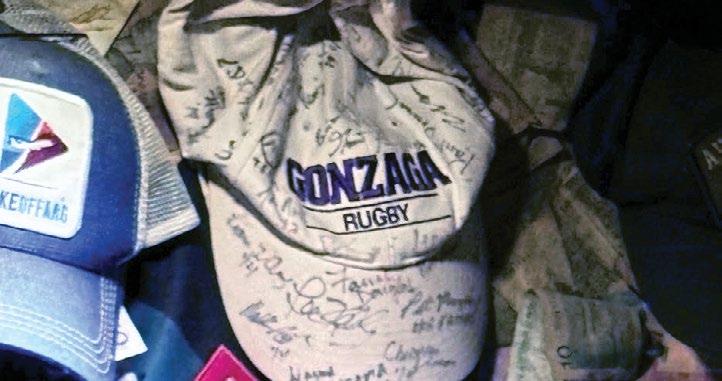
Last fall, while traveling with the College Polo Tour 2025 in Punta del Este, Uruguay, Patricio Fraga-Errecart discovered a wonderful piece of Gonzaga history at Moby Dick Pub – a Gonzaga Rugby hat signed by former players who toured Uruguay in 2013. Fraga-Errecart played rugby all four years at Gonzaga, and captained the Cornell University polo team throughout his time there. Said his father, “Encounters like this remind us of the lasting camaraderie and traditions that unite us all.”
2021
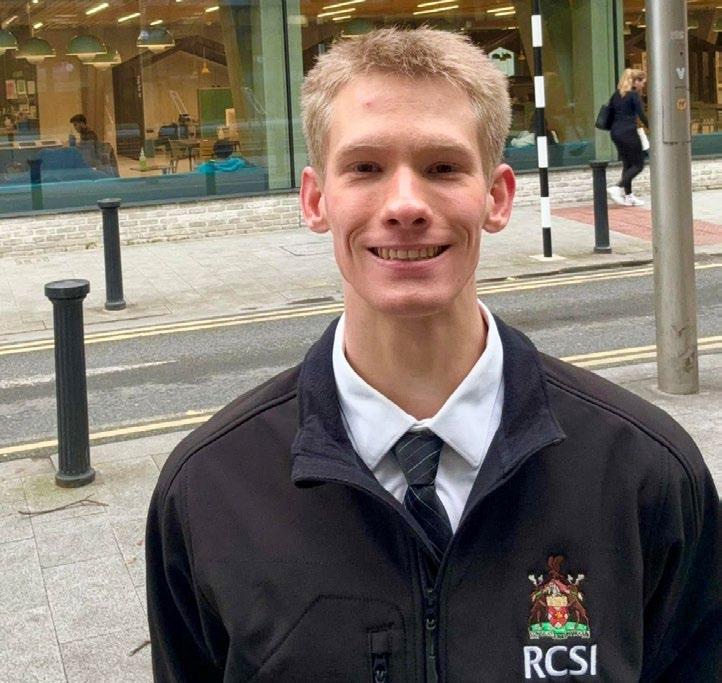
Joseph “JJ” Horsfield has been awarded a Fulbright Scholarship to attend the Royal College of Surgeons in Ireland to pursue a PhD in Chemistry. The Fulbright/RCSI PhD Award has been offered to only two U.S. students each year since 2019. This opportunity is based in Dublin; JJ is pursuing studies in cancer pharmaceutical development.
Powerful Work of Art
Class of 2025 Alumnus and Family Gift
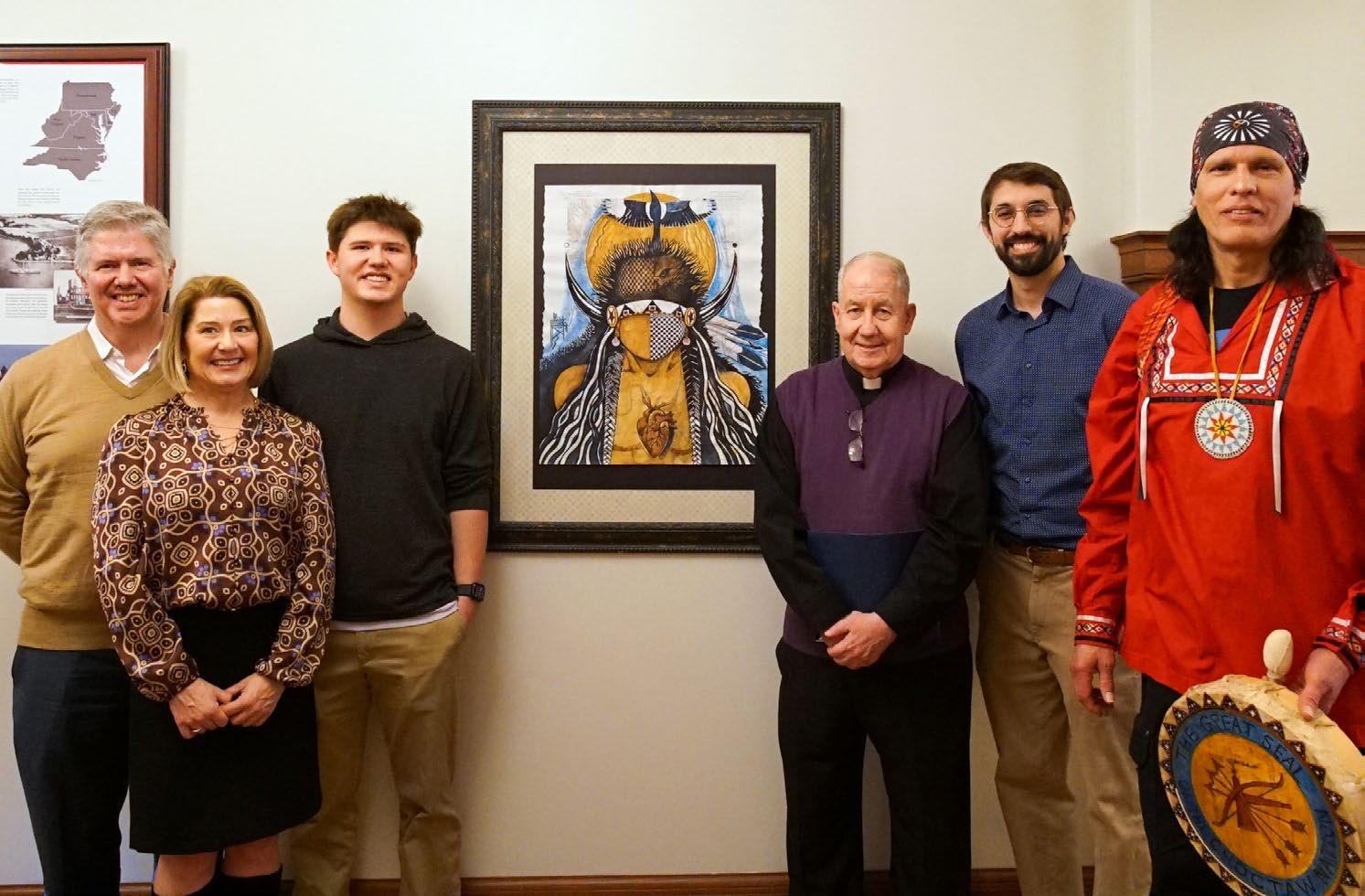
In early January, the Native American Cultural Appreciation Club (NACAC) invited the school community to celebrate the installation of “The Dreamer,” a painting by Lakota artist Joe Pulliam that now hangs in the main hallway of Ruesch Cantwell and was a generous gift by the Decker family: Will, Class of 2025, and his parents, John Decker and Jennifer Short. The painting powerfully evokes the spirituality of dreams, the connection with the Creator, and the Lakota people’s sacred bond with the Black Hills.
Gonzaga President Fr. Joseph Lingan, SJ ’75 hosted the ceremony and welcomed Mr. Joe Gaines, a member of the Choctaw Nation and a local Lakota drumming and singing group. The installation marks the culmination of a multiyear effort led by Will Decker to find a piece of Native American art that honors Gonzaga’s enduring relationship with American Indian communities. “As the former leader of the NACAC and with the help of Gonzaga, I have had so many opportunities to explore and learn about the world,” Decker said. “I’ve run over hills in Arizona, attended a sun dance in South Dakota, and walked the Mexican border. These experiences had a fundamental impact on my life. I am extremely proud to say that Gonzaga has something uniquely meaningful hanging in its halls—a reflection of the bonds we have built with indigenous communities across the country.”
2023
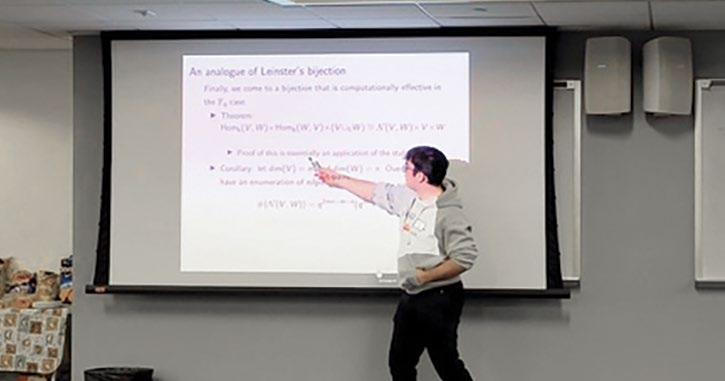
In December, Nicolas Rugo was invited to give a talk on a representation math theory paper at a conference hosted by George Washington University. In January, Nicolas and his professors at Johns Hopkins University traveled to the Korea Institute for Advanced Study in Seoul, where he spoke about Nilpotent Quiver Representations. A junior majoring in mathematics, Nicolas is currently taking master’s level courses and conducting research; he is expected to graduate in 2027 with both a BA and an MA, and hopes to pursue a PhD in pure math after college.
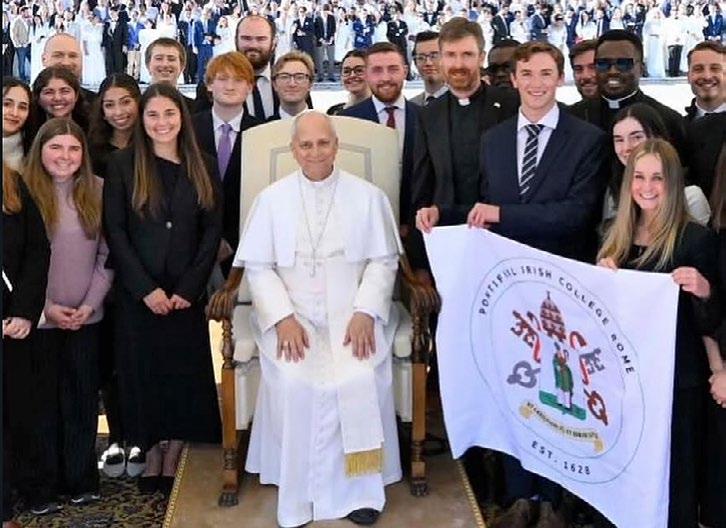
Winn Sechriest is currently a junior at Providence College, where he is studying business management, active on the men’s rugby team, and a member of the Campus Ministry leadership team. He spent the fall semester in Rome, studying at the Pontifical Gregorian University. On November 5th, Winn and a group from the Pontifical Irish College had the great honor and privilege to have an audience with Pope Leo XIV at the Vatican. Winn is just over Pope Leo’s right shoulder, wearing (naturally) a purple tie.
In Memoriam: Therese Johnson Matan
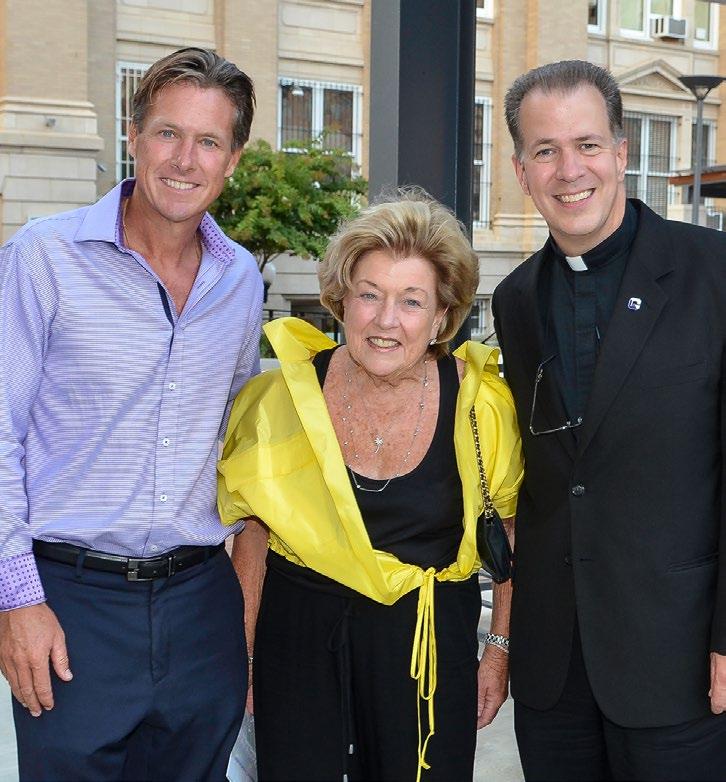
In February, the Gonzaga community lost a beloved matriarch and patron. Therese “Terry” Johnson Matan, a graduate of Georgetown Visitation and the wife of the late Tom Matan ’57, was a devoted supporter of Gonzaga and St. Aloysius Church for decades.
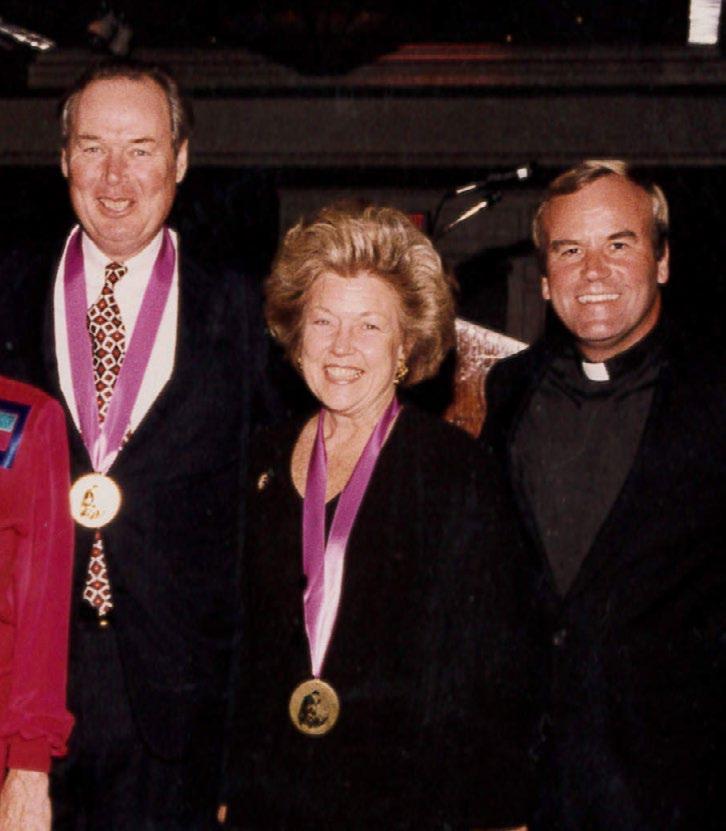
In 1995, Terry was one of the first four people, alongside her late husband Tom, who were awarded Gonzaga’s highest honor, the St. Aloysius Gonzaga Medal. “The Great Church of St. Aloysius is more splendid and Gonzaga itself more beautiful in large part due to the efforts of Therese Johnson Matan,” read The Good News in November 1995.
Terry worked tirelessly for decades with numerous Gonzaga presidents, Jesuits, artists and benefactors to restore the church. In the early 1990s, the late Gonzaga President Father Bernard Dooley, S.J. presided over the restoration of St. Al’s. Terry, he recalled, “became the heart and soul of a major restoration of the second oldest Catholic Church in the Federal City.”
“I will miss her always gracious and sincere smile,” said Gonzaga President Father Joseph Lingan, SJ ’75. “But make no mistake, Terry was a force – a force for good. She wanted the best for St. Al’s and Gonzaga, and nothing short of that would do. It is clear, Gonzaga has been, and will continue to be, blessed by God through Terry’s life – the graced lessons she taught, the honorable example she set, and the wonderful memories she ensured for us.”
Together, Terry and Tom raised five children, daughter Michelle Matan Dombo, three sons who attended Gonzaga: Mark ’84, Joseph “JP” ’88 and James ’94, and the late Tommy Matan. They also had eight grandsons who attended - and still attend -
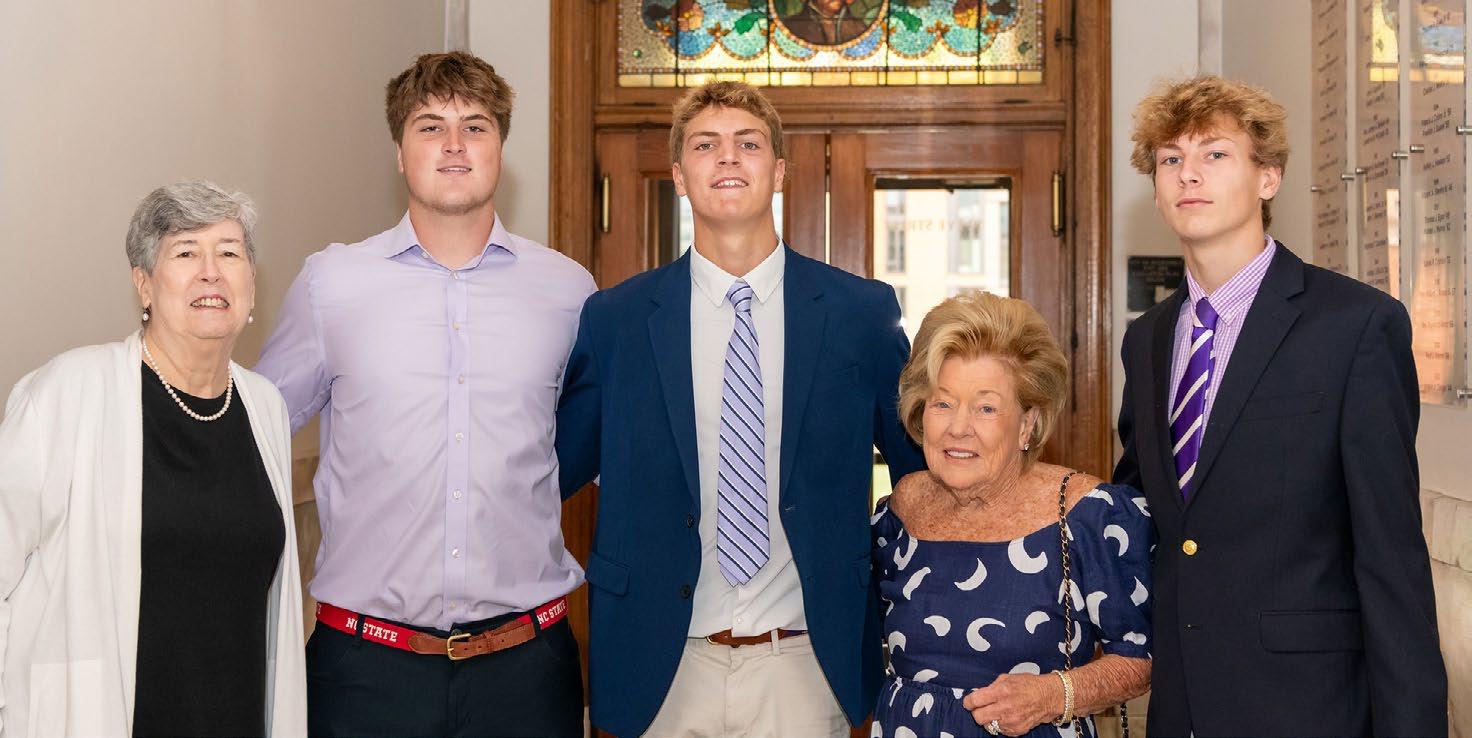
Joe ’24, Billy ’26, Michael ’26, Tommy Dombo ’22, William “Steele” Dombo ’24 and Hank Dombo ’28. Terry was a constant presence at countless school and athletic events on Eye Street, including Grandparents Day, where she read at Mass and beamed proudly in photos alongside her sons and grandsons.
Beyond Eye Street, she served as Secretary of the Matan Family Foundation, supporting children’s health, education, and the homeless. “She had a wonderful sense of humor,” said David Dugan ’98, Gonzaga’s Senior Vice President of Alumni and Advancement. “She loved to tease and laugh, and when she wanted to get something done, you knew it was going to happen, and be done to her high standards. We have been blessed to know Mrs. Matan; she will be long remembered on Eye Street.”
Father Lingan added: “Whenever I walk into St. Al’s, I will remember her dedication, commitment, generosity, and extraordinary and deep appreciation for this House of God. May she rest in peace, and may she hear well God say to her, ‘Well done, good and faithful servant.’”
Gonzaga: Patrick T. ’20, James, Jr. ’22,
Anthony A. Antonelli, father of Michael ’96 and Vincent F. ’01
Mary T. Athridge, mother of John ’91
Michael E. Baroody, Sr. ’64, father of Matthew ’92 and Peter M. ’96
Marion E. Bell, mother of Michael A. ’79
Michael B. Bowman, father of Peter D. ’00, John ’02, James R. ’03, and former faculty member Joseph B. ’94
Ronald G. Boucher, Sr. ’51, brother-in-law of Gregory T. Lyon-Loftus ’62, C. Michael Loftus ’64, the late Joseph P. Loftus Jr. ’48 and the late Martin J. Loftus ’51; uncle of Martin T. Loftus ’78, Kevin M. Loftus ’89, Christopher Loftus ’92 and James B. Loftus ’95; great-uncle of Christian M. Loftus ’26
Robert Bovim, father of Eric ’94; grandfather of Alexander B. ’24
Larry L. Boyer, father of Benjamin ’97 and Jonathan D. ’00
Philip F. Cardillo ’78, brother of Anthony T. ’71, Gerald R. ’76 and John C. ’80
Mary Ann Carmody, wife of the late John J., Jr ’54; daughter-in-law of the late John J. 1919; mother of John W. ’82, William J. ’84 and Michael J. ’85; sister-in-law of the late Kevin W. ’62; grandmother of Colin M. ’18 and William L. ’22; aunt of Joseph T. ’98 and Patrick J. Rowe ’27
Gloria Clanton, mother of George D. ’82
John F. Cotten, father of Marquise F. ’11
Berenice V. Cranston, wife of the late Arthur S. Cranston, Jr. ’45; grandmother of Ryan F. O’Toole ’08
Kathleen M. Dean, mother of Matthew G. ’02
Mary N. Donahue, mother of William O. ’82 and Edward ’88; aunt of Michael Farquhar ’82, Jordan O’Neill III ’84 and Andrew O’Neill ’88; grandmother of Thomas D. Donahue ’27; sister-in-law of John J. O’Neill ’54
Joseph L. Donnelly II, father of Joseph Donnelly III ’91, Matthew Donnelly ’95, and Patrick Donnelly ’98; son-in-law of Alfred B. Riley ’41; brother-inlaw of Peter Carroccio, Sr. ’79, Joseph Riley ’80, and Thomas Riley ’81; uncle of Tripp O’Brien ’93, Andrew O’Brien ’95, Matthew Gormley ’05, Peter Carroccio, Jr. ’08, Peter Barry ’08, Kevin Riley ’10, John Riley ’15, George Clifford ’20, Brendan Burns ’20, and Matthew Clifford ’24.
Ann Donofrio-Benson, mother of Anthony G.’01, Peter J. ’03 and Mark C. ’06
Brenda Douglas, sister of Timothy E. Carmody ’65
Kathleen M. Duffy, mother of faculty member
Matthew L.
Suzanne G. Endres, mother of faculty member
Kathleen E. Parlett
Kathleen H. Flynn, mother of Terence F. ’78, grandmother of Devin P. ’14
Elizabeth A. Gallagher, sister of James M. ’70, Timothy K. Sr. ’73, Mark F. ’75 and the late Thomas R. ’66; aunt of Brian T. ’98 and Timothy K. Jr. ’99; great aunt of Lucian Bourke ’29
Michael R. Gardner ’60, brother of Timothy J. ’56
Ruvva Gomez-Ruiz, mother of faculty member
Cecilia Fernandez
Lawrence P. Graves ’71
Michael J. Hackett, III ’68, brother of T.P. Hackett ’71 and John F. Hackett ’74
Barbara Hall, wife of John W. Hall ’58
Timothy F. Hickey, Jr. ’58
Fr. William P. Hill ’56
Kevin M. Horan ’69, brother of Thomas J. ’68
Daniel W. Howe ’73
James M. Howell Jr., father of James M. III ’84 and Keith A. ’87
Lewis C. Hudson, Jr. ’52
William C. Hughes, Jr. ’59
Conor C. Hull ’13
Fr. Milton E. Jordan, Jr. ’59
Karen M. Kane, mother of Fr. Brian P. ’91, Steven C. ’92, Daniel B. ’94, Patrick M. ’96, Gregory E. ’98, and Douglas J. ’00
Bernard Kirshbaum, father of Jason ’97
Dennis E. Lacot ’00, brother of Gregory J. ’00
Paul Lafranchise ’68
Edward T. Laios ’60, brother of the late Straton C. ’51
Mary G. “Gerry” Lavan, mother of David J. ’80, and grandmother of Declan B. ’17 and John S. ’19
Stephen L’Etoile, brother of former faculty member Allan ’73, John ’74, and Martin J. ’77; uncle of John C. ’06, Matthew M. ’06, Nathan J. ’12 and Michael J. ’18
Thomas M. Lisi ’59
Delois E. Lynch, mother of staff member Penny Lynch
William “Billy” D. Malloy ’47
Sarah Cameron “Cammie” Marshall, mother of Matthew G. Morris ’98; grandmother of Gibbon J. Morris ’29
Therese J. Matan, wife of the late Thomas W. ’57; sister-in-law of the late Joseph A. ’54; mother of Mark C. ’84, Joseph P. ’88 and James A. ’94; grandmother of Patrick T. ’20, James A., Jr. ’22, Joseph T. ’24, Michael F. ’26, William S. ’26, Thomas F. Dombo ’22, William S. Dombo ’24 and Harrison M. Dombo ’28
Thomas J. McCloskey ’56, father of Thomas F. ’99
Stephen J. McClure ’60
Barbara A. McHenry, wife of the late Charles J. ’48
Stephen S. Meehan ’63
John N. McKevitt ’62, brother of the late Thomas L. ’59, the late Brian ’65 and the late Mark E. ’69; cousin of the late Jay Dugan ’61
Robert F. Murray ’53
J. Kevin O’Donoghue ’57, son of the late Martin 1919, brother of the late Patrick C. ’48 and the late Morgan K. ’60
Rosemary Ourand, mother of Michael C. ’77, Brian J. ’79, J. Christopher ’82 and John P. ’85; grandmother of John L. ’17
Michael L. Pate, father of faculty member Shelly P. Farace
Darlene J. Piacesi, mother of Robert F. ’85
Joseph C. Randall, Jr. ’77
Michael J. Regan ’59, brother of the late Thomas F. ’62; stepfather of Kevin P. Mulcahy ’84 and Timothy Mulcahy ’86; grandfather of Brendan M. Mulcahy ’23
Steve J. Reyda, Sr., father of Stephen J. Jr. ’83, Michael E. ’84, the late Joseph J. ’85 and the late Kenneth F. ’88
Albert P. Ross Jr. ’73
Clifford Rotan ’80
Daniel S. Shaheen, father of Mark A. ’86; grandfather of Conor D. ’21 and Timothy S. ’21
Russell B. Shaw ’52
Nicole R. Slye, wife of John E. ’05
Judith K. Simpson, wife of Thomas F. ’57; daughter-in-law of the late John A. 1923; sisterin-law of Michael J. ’63, the late John A. Jr. ’53 and the late Robert E. ’55; aunt of Robert ’88 and Edward T. ’91
Clara Ann Smith, mother of William J. III ’85 and Stephen J. ’88
Anne E. Strahota, mother of Jeffrey R. ’98 and James P. ’01
Roger John Stroh, father of Michael E. ’88 and Robert T. ’90; grandfather of Luke M. ’22, Brendan A. ’24 and Owen C. ’26
Peter D. Sullivan ’57, brother of Paul A., Jr. ’52; uncle of Timothy J. Mulholland ’82 and the late Thomas F. Mulholland ’86; great-uncle of James R. Mulholland ’25
Robert C. Sullivan Jr., son of the late Robert C. Sr. ’44; uncle of Conor R. Welch ’01, Matthew J. Mulligan ’16, and Daniel P. Mulligan ’18
Ann DeStefano Sutherland, mother of Stephen N. ’04
Mark A. Sylvester ’72
Marcelene D. Taylor, mother of Tyrone Bush ’90
Edward A. Trott Jr. ’54
Paul R. Underwood ’69
Richard W. Volkman ’64, brother of William A., III “Lefty” ’61
GONZAGA
COLLEGE HIGH SCHOOL
19 Eye Street, NW Washington, D.C. 20001
Just married? New address? New job? Let us know!
Please visit www.Gonzaga.org/update or e-mail info@gonzaga.org to update your information and share your news. Photographs are always welcome. We love hearing from our alumni and staying in touch!
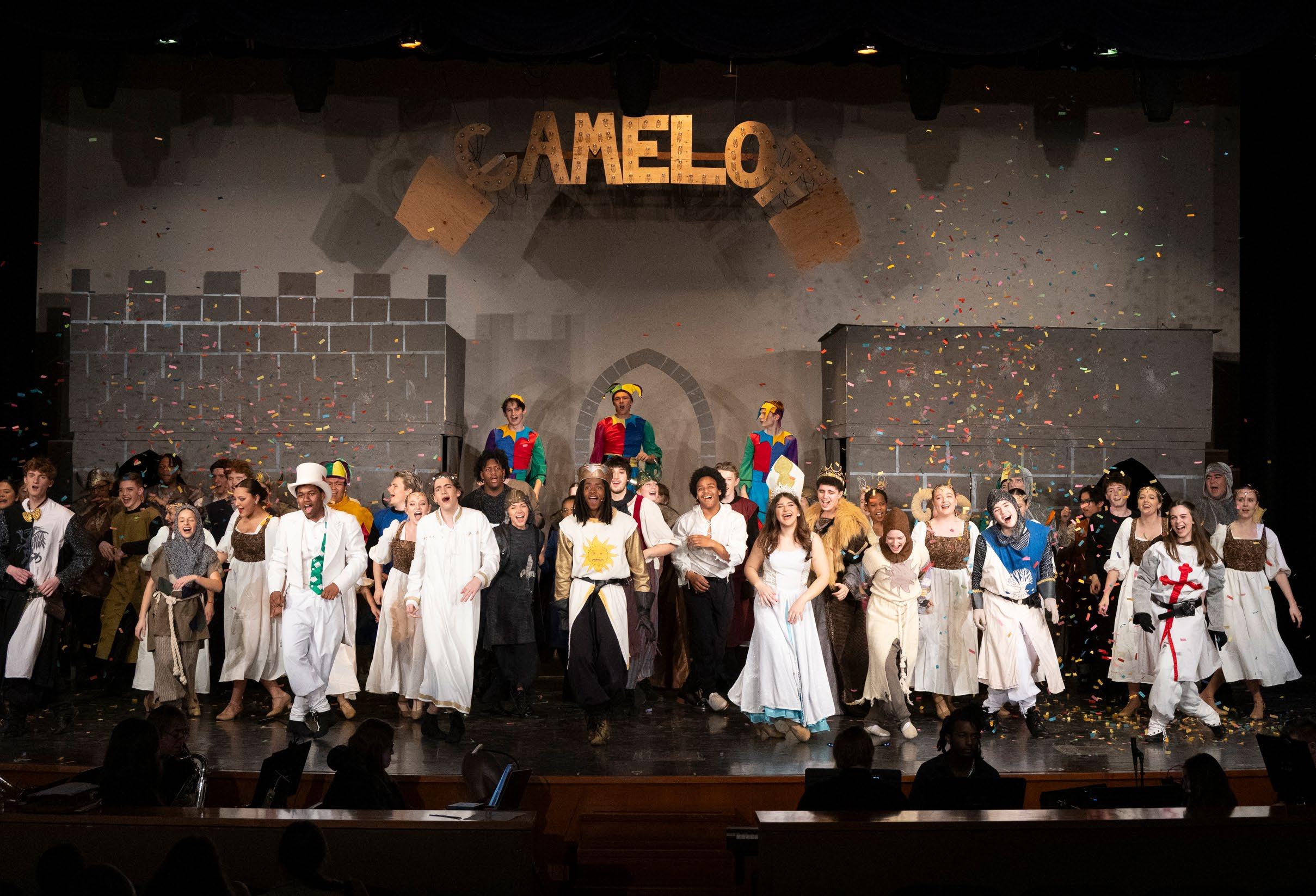
This year, the Gonzaga Dramatic Association’s spring musical was Spamalot. Turn to page 9 to learn some fun facts about the GDA over the years.