WHERE PAST & PRESENT COME TOGETHER
By Kate Vanskike
Through orientation programs, Gonzaga students, faculty and staff gain a glimpse into the work of the Jesuits who came to the West to set up missions among the Indigenous peoples in the mid-1800s. Names we hear and see on campus – like Pierre DeSmet and Joseph Cataldo – are familiar within the broader community, as well, as streets and facilities bear their names.
But more can be gained from better understanding the relationships between the Jesuit missionaries and the Salish tribes they served before the founding of Gonzaga. As with other universities, our history includes the displacement of Native communities by colonial settlers who sought to add Western education to the list of industries that would hasten economic development.
When Wendy Thompson, director of Tribal Relations; Molly Ayers, Center for Community Engagement; and members of St. Aloysius Parish and Gonzaga Preparatory School participated in a Faith Doing Justice discernment series with other Jesuits West institutions, they identified tribal relations work as a priority for Spokane’s Jesuit entities. To provide some context for Gonzaga’s tribal relationships, Thompson and Ayers, with support from Mission and Ministry’s Beth Barsotti, developed an immersion experience beginning with a visit to the site where Fr. Pierre DeSmet, S.J., began the work among the Bitterroot Salish, the people who invited the Jesuits to come West.
In May, staff and faculty from a variety of Gonzaga’s schools and programs, a GU Regent and a member of the Jesuit community set out for the St. Mary’s Mission in Stevensville, Montana, followed by a stop at the Flathead Reservation – home to the Bitterroot Salish, Upper Pend Oreille and Kootenai people –where the St. Ignatius Mission is located. The group hosted a dinner for community members, spent the night at the Tribes’ hotel on Flathead Lake and visited the mission in St. Ignatius. The final stop was the Sacred Heart Mission, built by members of the Coeur d’Alene Tribe and missionaries, at Old Mission State Park in Idaho.

Participants listened to Native community members share their own histories, then
discussed and reflected on the complex dynamics between the missionaries and the tribal people.
“Touring the missions was hard,” says James Hunter, director of the TESOL programs in the School of Education. “I know it is unfair to judge the past by today’s norms, but there was an element of patriarchal, white superiority in the interactions of Jesuits and Native people that was/is inescapable - and is to some extent still reproduced today.” From the frescos in
There is growing interest in and support for the work of Tribal Relations, with more great opportunities to learn about the context of our tribal relationships. Stay in touch through Instagram, @gu_nativehouse or email thompsonw@gonzaga.edu.
the old chapels to the artifacts on display, exhibitions left an impression that “classical European design and artistry was meant to civilize and to replace,” Hunter says.
Rebecca Larson, HR’s senior training specialist, says what sticks with her from the mission tour is that “Indigenous lands continue to be taken from Indigenous people,” as noted on the Flathead Reservation where many non-Natives inhabit the space. She adds, “Seeing this so clearly made me reflect on the importance of land acknowledgements and encouraged me to work with Tribal Relations to write one for my department.”
“As a person of a Christian faith background grappling with the tension of evil things done in the name of a god I still believe in caused me to feel what it is like to live in tension,” says Candace Williams, a campus minister in Mission and Ministry. “I don’t think the tension is meant to be easily resolved or put on a shelf; it is healthy to continue to see what work still needs attention.”
Page 1
Continued on pg. 2
As we celebrate Native American Heritage Month, Spirit looks back on a Gonzaga mission immersion trip in May to learn more about the relationships between Jesuit missionaries and Native peoples.
GONZAGA FACULTY AND STAFF NEWSLETTER › Analyzing Enrollment 2 › CTA’s New Director 4 › Grounded and Taking Leave 5 › New Housing Proposed 6 NOVEMBER 2022 VOL. 24 | #3
Gonzaga Imagines New Approaches to Enrollment Management
Considering the world was just coming out of COVID this past year and given the state of the economy and increased competition for fewer college-aged students, Associate Provost Julie McCulloh feels very good about the 1,217 first-year students that are part of Gonzaga’s overall fall enrollment of 7,253.
This is the most diverse class the University has enrolled at 32% students of color and 4% international students. They have an average high school GPA of 3.73, an SAT average of 1,330 and hail from 37 states and 22 countries. Gonzaga enrolled more students from Washington in this class, but fewer from California as many from California stayed at in-state universities, McCulloh says.

Another highlight of the fall enrollment report shows 93% of last year’s 1,311 first-time fulltime students returned this fall while Gonzaga graduation rates remain among the best in the country at 74% in four years and 88% in six, “a testament to this entire community in the way it welcomes and serves our students.”
But, McCulloh says, we must continue to find new opportunities to attract students here, echoing sentiments expressed by President Thayne McCulloh in his address to faculty and staff in September.
“We need to be open to developing new academic programs and refining existing ones to ensure they are contemporary and relevant as we seek to recruit new students who want to address real-world needs,” the president said.
The associate provost says the University is looking to increase transfer initiatives, including a potential partnership with the Community Colleges of Spokane; pursue possibilities with colleagues in Student Affairs on Opportunity Northeast projects; and explore partnerships which could include Spokane Public Schools, corporate partnerships and other organizations.
Mission Immersion
Continued from pg. 1
Hunter shares a similar reflection: “It’s hard to believe how much of the cultural richness of this area has been obliterated in so short a time, and it’s hard not to see Gonzaga and the Jesuits as part of a colonizing project. I don’t doubt that most of those who came to establish missions and build schools did so with the very best intentions – what higher purpose can there be than to show ‘the way, and the truth and the life’ to those who are ignorant of it? But did they ever stop to think about other ways? Other truths? Have we stopped to think about it?”
For Barsotti, whose work at Gonzaga centers on mission formation, “The experience of the
Gonzaga has hired a new financial aid strategy firm, HAI Analytics, to assist the University in aid strategies including being more assessible to diverse populations. Opportunities for new undergraduate and graduate programs in applied technology and health care are being explored as well, Julie McCulloh says.
The new Center for Lifelong Learning was officially launched this fall to assess community, business and industry needs and then work with university departments to create training and certification programs to meet community exigencies.
Many departments on campus continue to develop new programs and seek job opportunities and internships for our students, networking with partners in the community, Associate Provost McCulloh says.
Graduate and doctoral student enrollment has declined across the board over the past three years, while law school enrollment
has increased from 414 in 2020 to 498 this semester.
What’s the secret in the Law School?
“I think it has been the confluence of three things,” says Luke Cairney, director of law admissions. “Application numbers have been very high for the last three years, driven primarily by the market. When the market is down, people go back to school. Second, we eliminated conditional scholarships and have gone to guaranteed scholarships in the Law School. Third, we have assumed an attitude that accurately represents who we are, eliminating obstacles for our students while building a healthy environment for all. Law school doesn’t have to be cut-throat. We represent a place where a student can enjoy a balanced lifestyle while still receiving a rigorous legal education.”
mission tour called my attention to the way we tell ‘our story’ at Gonzaga,” she says. “I have grown attentive to the perspective we take when telling our story and the reality that there are many versions (and impacts) of how Gonzaga University came into being.”
Many participants also recall the warmth experienced while sharing dinner with tribal members on the Flathead reservation at Salish Kootenai College. In advance of the trip, GU’s Tribal Relations staff met with the Confederated Salish and Kootenai Tribal Council to seek support for the visit. They also hosted Gonzaga alumni, tribal council members and community members to a dinner, catered by a tribal member-owned businesses and held on the college’s grounds.
Thompson says, “We tried to be good visitors by being intentional about everything.”
In turn, the hosts and community members were gracious with their time and Gonzaga grads were eager to connect with the Spokane guests.
“The hospitality and love was palpable at the Salish Kootenai College,” Williams remembers. This fall, the Spokane CORE team continues to build upon its learning through reading about and discussing guidelines and practices for ethical and respectful engagement with Indigenous peoples to re-imagine possibilities for this work.
Page 2
GU piloted a successful summer session of New Student Orientation last July. Plans to pilot a summer orientation for all students in 2023 are moving forward.
The University’s pooled endowment generates an annual spending distribution to support scholarships, operations and other endowed initiatives that represent just over 3% of the annual operating revenues.
With recent stock market declines, one might ask “How does this impact the University’s budget?”
Endowments are designed to manage over the long-haul and sustain the ups and downs that come with the stock market. While recent annual performance is down 9.7% through June 30, our longer-term performance has been stellar, says Chief Financial Officer Joe Smith.
Compared with other college and university endowments, Gonzaga’s three-, five- and 10-year investment returns have ranked consistently in the top one-third in the nation over the last decade. In 2021, the annual return was 45%, placing Gonzaga in the top 5% in the nation. “We are knocking on the door of a half-billion-dollar endowment, a goal set forth in the University’s Strategic Plan,” Smith continues. “We’ve also had strong contributions to the endowment over the past couple of years, ranging between $7 and $16 million annually, which speaks to the level of commitment we see from our donors to our mission.”
Gonzaga generally uses 4.5% of a 12-quarter average of the endowment value for its general operations. That’s $13.2 million for our current fiscal year. This calculation creates a smoothing effect so annual spending does not gyrate up and down from year to year based on a single year of performance.
“We have a lot of momentum coming from our endowment,” Smith summarized.
Veterans Honored For Sacrifice, Care for Country
Gonzaga pays tribute to the men and women who serve or have served our country in the U.S. Armed Forces, and especially to the 88 employee and 180 student veterans who are part of our campus community.
Transfer, Veteran and Adult Services office is collaborating with the First Generation office to host a drop-in breakfast, Nov. 11, 8-10 a.m. in Hemmingson 201, for all members of the Gonzaga community who have served in the military.
President and Army veteran Thayne McCulloh is hosting a Nov. 11 luncheon for all veterans and Military Science employees at noon in the Karen Gaffney Room in Volkar Center. Marine veteran Charlita Shelton, the president’s chief of staff, will present a keynote message. The
ROTC Bulldog Battalion will present colors to open the event, and student Natalie Marssdorf will sing the national anthem. Veteran RSVPs were due Nov. 3.
Being a veteran and having served this country means different things to different people. Here are a few insights from our vets.
U.S. Air Force vet Phil Tyler, Campus Security and Public Safety, said his service, like for many Black men, provided an opportunity for upward mobility in a society that at the time did not provide such chances. “It provided me one of the few images of Black men leading others.”
For Matt Gerdes, also Campus Security and Public Safety, the Army provided a brotherhood/sisterhood for life. “Seeing
another veteran is knowing he or she is an ordinary and yet extraordinary human being –a person who offered some of their life’s most vital years in service to their country,” and knowing what they sacrificed, big and small.
Tammie Maple, Health and Counseling Services, is touched by the lifelong friendships and shared missions, and the “chance to experience cultural exchanges, diversity of people you meet, and learning their stories.”
Retired Air Force Master Sergeant Henry Alvarado, now serving Gonzaga Military Science, says: “To my fellow veterans, thank you for standing next to me. I will never forget you.”
See more from these and other veterans at gonzaga.edu/veterans
Page 3
OUR ENDOWMENT OVER THE “LONG HAUL”
AND LIFE INCOME
and life income values include all assets, regardless of restriction
2012
$ 300 M $ 250 M $ 200 M $ 150 M $ 100 M
2022 $ 350 M $ 400 M $ 450 M $ 500 M
ENDOWMENTS
Endowments
$148.3 20162014
$218.8
2018 2020
$173.3 $212.9 $282.0 $298.0 $311.9 $320.2 $200.8 $436.6 $453.1
Learning to be Inclusive, Assessing Assignment Success KEYS TO A GOOD FIRST YEAR AT C.T.A.
Nichole Barta and other faculty members across campus are reading “What Inclusive Instructors Do” as part of the Center for Teaching and Advising’s efforts to help teachers build community within their classrooms.

Barta assumed charge of CTA at the beginning of this school year as the University’s first fulltime director.
“Most faculty want to be inclusive, but there is a lot of room in understanding what that means,” says Barta, who has taught kinesiology and sports management here since 2016. “I’ve been teaching 21 years and as I read this book, I am finding many things that I could do better; meet students where they are at in a better way.”
Barta has taken this new position running, perhaps appropriate for someone who has made exercise a part of her catalog of academic expertise. CTA has two fall priorities: 1. Assessment for success, including how to design assignments to help students achieve success, especially when considering underrepresented and first-time college students. Also, how to teach faculty assessment design to support students to develop high-quality work. 2. Inclusive pedagogy. Encourage each faculty member to examine their syllabus to assess and make any necessary course design changes to make their classes inclusive for all students.
Excitement for her new job effuses from Barta, who loves helping people find solutions to their problems and soliciting ideas from others.
“We get focused in silos in our academic areas, but we need to make the time to learn best practices for teaching and effective means to advise in ways that best support our students,” Barta says, “while remaining true to our institutional priorities.
“Teaching can be overwhelming. There seems never to be enough time to do what you really want to do, so to help faculty find new ways to be more effective for students is important,” she says.
Coming out of COVID restrictions requires a balance between cura personalis and rigor. “Part of this is how to keep challenging students to learn and improve themselves when many of them are still struggling with the mental health impact. We need to be caring for our students while making sure not to burn ourselves out,” says Barta.
Barta has three faculty fellows working for CTA: Communications Studies Associate Professor Juliane Mora, inclusive pedagogy specialist; Communications Studies Senior
“Each of them is an expert in their own way, reconstructing new faculty orientation, supporting pedagogy book study, and leading sessions on rank, tenure and promotion, among other assignments.
Barta Background, Going Forward
Barta grew up in Montana, her high school graduating class numbering 25. The firstgeneration college student taught 16 years in high school before joining Gonzaga. The last few years in secondary education she was an instructional specialist and observed a need for better teacher preparation to meet student needs. Hence, her draw to the CTA job.
She found a good fit at Gonzaga. “There is attention to the mission here. People work for the common good. I appreciate a community that wants to lift others up and collaborate on projects,” Barta says. “I appreciate my colleagues and the energy they have for student success and their willingness to collaborate. I love reflective discussions with faculty. We have students who are really engaged and want to learn here.
“I remember a student leaving my class and saying thank you. Students here are grateful for their experience. I didn’t ever have a student say thank you after a lesson in the public-school sector,” she adds.
As part of the ongoing discussions about the next Strategic Plan, Gonzaga endeavers to support and raise the level of teaching and scholastic pursuits.
“CTA is looking at expanding into a center for faculty development,” Barta says, “a central location for faculty resources and support. It will focus on four aspects: teaching, advising, scholarship and leadership. A one-stop shop where teachers can find many of the resources they need.”
An Army Reserves veteran, she wants to help teachers achieve their best academic fitness just as she has taught her students to achieve physical fitness.
“I love this message from Maya Angelou. ‘Do the best you can until you know better, then when you know better, be better.’ I like the idea of consistently trying to know better and seeing our collective growth in trying to do better.”
Page 4
Lecturer Kris Morehouse, advising; Art Professor Shalon Parker, new faculty.
Nichole Barta becomes the first full-time Center for Teaching and Advising director.
HATCHER GROUNDED
His Crew Made GU One of 56 Most Beautiful Campuses in USA
The quiet but slyly funny Tim Hatcher served four years as a student groundskeeper here before graduating in 1981 with a degree in political science. He worked nearly a year as a duty manager at Riverfront Park, then tried his hand at politics, serving as an aid in the Washington state legislature for three months. “I couldn’t get out of there fast enough,” Hatcher says, trading his tie and briefcase for a pair of jeans, t-shirt and a rake as he returned to the Gonzaga grounds crew fulltime in May 1982.
The affable and hardworking Hatcher, who was promoted to irrigation specialist in 1990, lead groundskeeper in 1994 and supervisor in 2004, will hang up his rake (or snow shovel) Dec. 30 after 45 years working grounds here. During that span Gonzaga grounds just kept looking better, and early this fall was named one of the country’s 56 most beautiful campuses by Conde Nast Traveler magazine. But, as always, he is quick to deflect the credit to his 11 groundskeepers, who work hard at maintaining the beautiful Gonzaga landscape because that’s what Hatcher does.
“Tim is a super hard worker,” says Groundskeeper Matt Bafus, who has been with Hatcher 38 of his 40 years here working fulltime. “He is always the person who will skip breaks, skip lunch just to get the job done on time. And he is a great boss. So easy going. He’d do anything for you.”
Maintenance and Grounds Director Tomson Spink knows what he is losing.
“He has a steadfast nature. He is always present,” Spink says. “From managing his crew to doing the work, he is always where he needs to be. He goes out of his way to care for his crew and enable them to do their work. He is authentic.”
Todd Ullrich has been on the crew for 12 years and watched Hatcher grow.
“He gives us the tools and knowledge we need to succeed. He has modernized our tools and equipment to keep us up with current trends,” Ullrich says.
Hatcher developed a zone program so each groundskeeper is assigned to their own zone on campus.
“It provides the ultimate in accountability,” Hatcher says. “But it is very good for each worker. They take ownership in their area. And they get quite a variety of work. They’re not stuck on the mower all week. They do weed eating, trimming, cleaning and planting beds, snow removal and trash pick-up.”
“It comes down to this. Give the person the knowledge he or she needs to do their job well, provide them the right tools and
Avoiding attention, Tim Hatcher has simply gone quietly about his work here for 45 years. Now he’s supervising groundskeeper for one of the 56 most beautiful college campuses in America.

materials to get the job done, and then leave them alone to do their job.”
Snowplowing is one of their jobs, and winter is perhaps the most stressful time for Hatcher, Bafus says. “Tim has to predict what the weather is going to do and get ahead of it.”
Hatcher and his crew have adopted a presnow substance that is applied just before a snowfall, which allows plows to remove snow down to the pavement, making pathways much safer.
Spink and Hatcher have made sure the equipment is kept up to speed. Each groundskeeper is equipped with an all-terrain Kubota to carry tools, tow equipment and facilitate plowing and trash disposal. Ninetyfive percent of the campus sprinkler system is computerized with watering changes made from one central computer.
Now, imagine Bill Murray’s character in Caddy Shack, a groundskeeper trying everything within his power to remove a gopher from his land. “I’m going to get that vermin,” he says more than once.
Part of Hatcher’s job has been dealing with wildlife on campus, i.e., hornets, beavers, marmots, raccoons, wasps, snakes, birds and raptors. There is a science to trapping animals in the most humane way and releasing them in an appropriate environment. Hatcher finally has a handle on that, but he won’t miss that part of the job.
What Hatcher will miss is the camaraderie with his crew and the campus community.
“The community was so very supportive when I lost my wife Lisa to cancer in 2006,” Hatcher says. “Being a part of this community has been so rewarding.”
And Hatcher has returned the favor.
His approach to life is simple, yet hard for many to attain. “Treat people with respect, give them a chance to grow, do all you can for them and let them know you’re on their side,” Hatcher says.
“We can’t replace him,” Spink says. “But we have a great crew, they’ve been led well and trained by the best. The transition should be smooth because of Tim’s legacy.”
Page 5
Sophomore Housing Most Critical Need as Preliminary Plans Revealed
A physical facilities assessment firm hired to analyze and recommend changes as part of a housing master plan study recently recommended to Gonzaga a housing development plan that differentiates firstyear, sophomore and upper division/graduate student housing in village-like environments, with different common spaces and amenities to better achieve the integration of academic and student development goals.
The most urgent resource challenge is space for sophomores, the report indicates. Many sophomores are currently housed in upper division, apartment style housing making those spaces unavailable for their intended upper-division students.
As a first step, Spokane-based Wolff Architectural Group has filed a predevelopment application on behalf of Gonzaga to demolish structures the University owns at 802, 808 and 814 E. Sharp Ave., immediately west of Pita Pit, and build a 92-bed, three-story residence hall on that site. The proposed demolished structures were acquired with the intent of future University development on this site. The project has yet to be approved by the Board of Trustees. With approval, the project could begin in summer 2023.
The last new housing project, Coughlin Hall, was completed in 2009 with approximately 330 beds. Since then, enrollment has grown, retention rates have increased, and some dormitory floors have been repurposed for other university uses.
While these numbers support the need for student housing updates, Student Affairs Vice Provost Kent Porterfield says his premise for rethinking student housing centers on
Site for proposed sophomore housing is between Cincinnati and Hamilton on the south side of Sharp, immediately west of Pita Pit.
“serving student needs better, offering a residential experience that enhances student learning and provides opportunities for more upper-division students to live on campus in facilities intended for their use.”
Gonzaga has an aging and uneven housing stock. New student housing will assist the University in recruiting new students. The competitive and rapidly changing Spokane housing market supports the need for increased on-campus housing options for upper-division students to assist in their retention as rent in private housing continues to increase.


“While the plan to address a more robust first-year village is important, a sophomore
village is a higher priority where the campus can address multiple challenges at once,” Porterfield says.
He and Chief Strategy Officer Chuck Murphy are leading the creation of a master facilities plan to improve the quality of existing housing and amplify the student experience with integrated learning and developmental opportunities with well-situated common spaces for socializing and studying.
With a long-term plan likely to actualize over many years, Porterfield is hopeful the team receives approval by the Board of Trustees in December for work to begin on addressing sophomore housing in the next year.
New Faculty Bring Diversity of Expertise

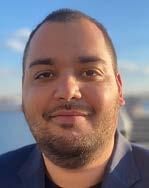
Among the 45 new professors who have joined Gonzaga this fall, there is great diversity of expertise to enhance student learning. Consider these topics of research from our newest faculty members:
• What happens when state policies fail to produce intended outcomes (Sarah James, Political Science)
• Cardiac regeneration, stem cells and neurodegenerative diseases (Andrei Kochegarov, Biology)
• Medical practices promoted by Arabic and Persian treatises of ethics (Joseph Vignone, History)
• Biomechanics and surgical implementation (Brandon Sargent , mechanical engineering)
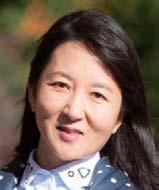
• Marginalized identities in a global and transnational context ( Tao Zhang , Communication Studies)
• Racial icons (Charles Anthony Athanasopoulos, Communication Studies)
View the full listing and pictures of new colleagues.
Page 6
Tao Zhang
Charles Athanasopoulos
Sarah James
Joseph Vignone
OFFICE ADVENTURES
Please share your adventures with office mates and other colleagues by emailing a picture and brief details to spirit@gonzaga.edu.

Zags for Cougs
Knowing Zag football has been undefeated since 1941 (because we no longer have a football team), colleagues from University Advancement traveled to Washington State University to root for our neighbors on the gridiron versus the Cal Bears during a “Zags for Cougs” team-building day. Pictured at a pre-game function are Holly Jones, Lucas Schwind, Andrea Cadriel, Marit Jacobs, Nicole (Desart) Clute, Stephanie Rockwell Not pictured are office companions Riley Lindsey and Crissy Byers.
E-Bikes Rise

With the growing number of colleagues riding electronic bikes to work, Jim Simon created a Microsoft Team site for the growing group and playfully called it the Gonzaga Electric Bike and Motorcycle Club. More than a half-dozen folks are currently a part of this unofficial club. Pictured here: Tracy Martin (Marcom), Cole Kelly (CCE), Angela Velasco (Health & Counseling), Trevor Iwata (CCE, ONE), Jamie Bartlett (Lincoln Center), Dave Gilbert (Student Involvement), Jim Simon (Sustainability). Contact Simon (simonj@gonzaga.edu) for more information.
Faculty: What Does Civil Discourse Mean to You?

This year, Marketing and Communications is orchestrating a package of stories (with potential use on the web and in publications) centering on Civil Discourse. Our news/story team aims to cover the topic from a variety of academic disciplines and provide to readers plenty of tips for practical application. We expect the material will be presented in first-person reflection from faculty members, Q&As, and other pieces and formats developed by our writing staff. To help jumpstart the work, we’re asking faculty across the University to respond to this prompt:
• In 125 words or less, what does “civil discourse” mean to you through your particular academic lens?
Faculty, please send your replies to editor@gonzaga.edu, along with any other relevant ideas you may wish to share for our consideration.
Page 7
NEW HIRES
Alexandra Griffin , program coordinator, Nursing & Human Physiology; Alexandria Reed , program asst III, Arts & Sciences; Amy Berg , lecturer nursing, Nursing & Human Physiology; Andrei Kochegarov, lecturer, Biology; Andrew Kim , lecturer, kinesiology & sport management, Education; Anthony Fisher, lecturer, Philosophy; Blake Edwards, lecturer, Theatre & Dance; Brandon Sargent , asst professor Mechanical Engineering; Carol Smith , paralegal/ admin asst, Law; Chandler Rogers, lecturer, Philosophy; Charles-Anthony Athanasopoulos, asst professor, Communication Studies; Chris Barton , sr project manager, ITS; Corinne Sugino, asst professor, Communication Studies; Daniel Dolan-Derks, interlibrary loan specialist, Foley; Darian Spearman , asst professor, Philosophy; Eric Marr, lecturer, Biology; Harwen Lea , asst professor, Human Physiology; Hussein El Ebiary, lecturer, Biology; Jacqueline Crissey, lecturer, Human Physiology; Javier Garcia-Morales, counselor, Admission; Jenaro Abraham , asst professor, Political Science; Jensen Hegg , asst professor, Biology; Jeremiah Favara , asst professor, Communication Studies; Ji Myoung Kim , asst professor, Marketing; Jillian Hall , life skills coordinator, Athletics; Joseph Vignone, asst professor, History; Kaitlan Ducken , program coordinator, Research & Interdisciplinary Programs; Kelsey Carlston , asst professor, Economics; Kevin Rivers-Lopez, lecturer/teaching fellow, Math; Kendall Fisher, asst professor, Philosophy; Kevin Sigerman , program coordinator, Resolution Center for Conduct/Conflict; Margaret Stohlmann , asst professor, Music; Martin Northcroft , asst athletic director/marketing & creative services, Athletics; Mary Anderson , asst women’s rowing coach, Athletics; Melkam Tesfaye, asst director, Resolution Center for Conduct/Conflict; Michael Spencer, technician III, ITS; Miranda McLeod , asst professor,
»»
The Aspen Institute Impact Index inaugural class of impact fellows included GU’s Director of the Payne Leadership Center Pam Alvarado and Vice Provost for Student Affairs Kent Porterfield, a senior fellow, to advance the future of youth leadership development.
»»
A Midsummer Night’s Dream, Nov. 10-12, 7:30 p.m., Magnuson Theatre, faculty/staff $12, GU students $10.
»»
Eva Lassman Award winner Travis McAdam addresses the GU community on how opposition research helps communities counter hate, Nov. 14, noon, at Cataldo Globe Room.
»»
The Credibility of Climate Models, Nov. 15, 5:30 p.m., Zoom. Register at ClimateCenter@gonzaga.edu.
»» Contemporary Issues on the Classroom: Balancing Our Roles with Student Curiosity and Fear, Nov. 16, 4:30 p.m., Hemmingson Auditorium, School of Education.
English; Nigel D’Souza , asst professor, Biology & Environmental Studies; Rebecca Doyle, counselor, Admission; Samuel Matthews, asst professor, Management; Sarah Porter, asst professor, Religious Studies; Stephen Keller, sr director, Undergrad Admission; Tao Zhang , lecturer, Communication Studies; Weili Yuan , lecturer, Special Education; Albana Dwonch , lecturer, International Studies; Avery Dame-Griff, lecturer, Women’s and Gender Studies; Bryan Brown , lecturer, Religious Studies; Bryan Fischer, lecturer, Computer Science; Debbie Lindgren , lecturer kinesiology & sport management, Education; Emily Loeffler, lecturer, Music; Joshua Anthony, lecturer, English; Krista Crotty, lecturer, Psychology; Ryan McWilliams, lecturer, English
POSITION CHANGES/PROMOTIONS
Alec Schumacher, assoc professor, Modern Languages & Literature; Boe Burrus, assoc professor, kinesiology & sport, Education; Christina Thomas, acting director sexual harassment & discrimination prevention/ Title IX coordinator, President; Clinton Wutzke, assoc professor, Human Physiology; Danielle Layne, professor, Philosophy; Erik Aver, professor, Physics; Gina Sprint , assoc professor, Computer Science; I-Ling Chien , assoc professor, Religious Studies; Jeff Dodd , assoc professor, English; Josh Armstrong , assoc professor, Organizational Leadership; Kendall Smitley, head athletic trainer, Athletics; Kristen Kavon , director general activities program, Education; Maria Tackett , assoc professor, Economics; Mario Puccinelli, budget & personnel officer, Engineering & Applied Science; Marybeth Kuester, clinical placement coordinator, Nursing & Human Physiology; Masaomi Matsumoto, assoc professor, Chemistry; Melina Palomba , program asst III, Leadership Studies; Michael DeLand , assoc professor, Sociology; Michael Reamer, lead security officer, Security; Michael Hazel , professor, Communication & Leadership; Michele Shaw, professor, Nursing; Nathan Mannetter, director admission operations, Admission; Nicole Barta , assoc professor, kinesiology & sport management, Education; Olga Kozubenko, sr lecturer, Math; Rick
Around Campus
»» Bestselling author John O’Leary speaks Nov. 16, noon, Hemmingson Ballroom on the power of living an inspired life. This free inaugural Regis Lecture is open to GU faculty, staff and students.
»» Talk About It Thursdays, “The Cost of the American Dream: Stolen Land Built by Stolen People,” Nov. 17, 5:30 p.m., Jundt Lounge, Hemmingson. UMEC sponsored.
»» 2022 Qatar FIFA World Cup and International Day of Tolerance Symposium. What is the potential for sport to bring about global inclusion, tolerance and diplomacy? Nov. 17, 5:45 p.m., Hemmingson Auditorium.
»» School of Business Wine and Dine 2022 fundraising event, Nov. 18, 6-10 p.m., Hemmingson Ballroom. More information here.
»» Dance Presents! Nov. 19, 7:30 p.m., featuring students and guest RirieWoodbury Dance Company (Utah). Cost
VIEW ONLINE: www.gonzaga.edu/spirit
Dale Goodwin, Editor
Story Ideas/Feedback: Spirit@gonzaga.edu
Cox , sr lecturer, electrical & computer engineering; Shannon Dunn , professor, Religious Studies; YuKyung Kang , assoc professor, English; Zebulon Klemke, accounts payable/travel services manager, Controller
GOODBYES
Amber Bavishi, international student adviser, Global Engagement; Brook Payne, custodian, Plant; Caroline Senn , admin asst, Provost; Dalean Neiner, IT support tech II, Law; Graham McIntire, custodian, Plant; Jenna Parisi, director health promotion, Student Wellbeing; Kimberley Vietz, asst to the CDO and office manager, Inclusive Excellence; Rachel Young , asst director academic operations, Nursing & Human Physiology; Shannan Palomba , assessment officer, Education; Sherry Steinaway, director organizational development, Human Resources; Stephanie Thomas, director sexual harassment & discrimination prevention/ Title IX coordinator, President; Tina Swannack , graduate academic adviser & program coordinator, Business
ANNIVERSARIES
Vitaliy Kuzmenkov, groundskeeper, Plant
Becky Wilkey, director campus security & public safety, Security
Joanne Barber, director of development/ asst VP, Development; Scott Carpenter, IT technician I, Support Center; Joan Perkins , finance systems administrator, Controller
$15-$25; Snowflake Showcase dance show, Dec. 2, 6 p.m., both at Woldson PAC.
»» Annual Tree-Lighting Ceremony, Nov. 29, 5 p.m., Hemmingson Rotunda, featuring music by Big Bing Theory and a message from President Thayne McCulloh Traditional holiday dinner in the COG follows, $10.
»» Gonzaga Jazz Ensemble Christmas Concert, Nov. 29, 7 p.m.; Wind Symphony Concert, Dec. 1, 7:30 p.m.; Wind Ensemble Concert, Dec. 3, 7:30 p.m.; Gonzaga Symphony Orchestra featuring violinist Schlomo Minta, Dec. 5, 7:30 p.m.; Candlelight Christmas Concert, Dec. 10, 7:30 p.m. & Dec. 11, 3 p.m.; Blind Boys of Alabama Christmas Concert, Dec. 18, 2 p.m., all at Woldson PAC.
»» GU Theatre Sports (GUTS), Dec. 3, 9 p.m., Magnuson Theatre, $1.
Page 8
20 10 5 NOTEWORTHY
