2026
SENIOR DESIGN EXPO
Sponsors
Sponsoring organizations provide projects, resources, and professional influence to the senior design teams. Diverse sponsors provide a wide range of project options.
Aeroforge
ArmorText
Avista
Boeing
Budinger
City of Spokane
Coffman Engineers
CorporateTools (formerly Two Barrels)
Cushing Terrell
D Squad Studios
DOWL
Fairchild AFB
Framatome Garco
Gonzaga Department of Chemistry & Biochemistry
Gonzaga Department of Civil Engineering
Gonzaga Department of Computer Science
Gonzaga Dept. of Psychology
Gonzaga Institute for Climate, Water, and the Environment
Gonzaga Modern Languages and Literature
Gonzaga Tribology Lab
Gonzaga/MSU
Graham Morehead
Design Advisory Board (DAB)
Design
Levi Arnold
Hunter Banks
Stu Barton
Michael Bernard
Glenn Blackwelder
Les Bohush
TJ Bolser
Chris Collins
Thomas Cooney
Brenna Doll
Jordan Dunn
Jennifer EmersonMartin
Lindsey Evers
Lee Firth
Andrew Flagstead
Lindsay Gilbert
Sarah Hagen
Spencer Harper
Michael Herzog
Karen Hills
Sean D. Johnson
Jacob Krantz
Katie Larimer
Colleen Little
Steven Long
Kaela Mansfield
Jared Marshall
JJ Masterson
Dawson Matthews
Glorilyn Maw
Ben McDonald
August MurphyBeach
Jesse Phillips
Doug Pooler
Integrus Architecture
Itron Jacobs
Kaiser Aluminum
Ken Hanson
McKinstry
NE Public Development Authority (Hillyard)
Reed Family Companies
Selkirk Sports
WSDOT
Vince Poxleitner
Rafael Pozos
Jeff Presley
Nick Questad
Nick Reasoner
Eric Ryan
Emily Sackmann
Damiano Seghetti
Sam Shoemaker
Kalika Singh
Henry Stone
Jesse Tatum
Gregg Thompson
Nathan Verboort Mel Verwest
Jim Weston
Byrl Williams

Welcome to Gonzaga University’s School of Engineering and Applied Science (SEAS) 2026 Design Expo Day. We’re celebrating an important milestone in our student’s academic journey—their senior design projects. To transform innovative ideas into proofs-ofconcept and prototypes, our students learned about project planning, communications, report writing, budgeting, and resource management.
I am deeply grateful to all those who helped our seniors achieve this daunting feat—supervising faculty, industry sponsors, numerous community members, the SEAS Capstone Committee, Bob Turner, Acting CEDE Program Manager Rhonda Young, Manufacturing Technology Center Manager Beau Grillo, Project Support Coordinator Kevin Matulis, Cadwell Maker Center & Lab Coordinator Daniel Clark, and the Dean’s Office staff Colleen McLean, Mindy Ratcliffe and Janean Schmidt.
To our seniors, congratulations on completing this monumental effort. Your design teams have worked hard all year long to take the project from ideation to the physical realization you are presenting today. Thank you for your dedication and commitment to excel in this demanding but gratifying pursuit. I wish you much success in all your future endeavors.
Jennifer Shepherd, Ph.D.
Dean and Professor of Chemistry & Biochemistry School of Engineering & Applied Science
Welcome from the Acting CEDE Program Manager

Celebrating our Senior Design graduates! This year’s cohort has impressed us with their technical skills, inventive problem-solving, and a level of determination that truly sets you apart. Everyone who has followed your journey is celebrating with you, inspired by what you’ve accomplished and excited for what comes next.
We are deeply appreciative of all who make Senior Design possible. Our sponsors, advisors, and Design Advisory Board members continue to give generously of their time, expertise, and support. I also want to recognize the Dean’s Office, the Capstone Committee, the MTC Lab, and our dedicated faculty and staff—your commitment to this program shapes its success year after year.
To our seniors: this milestone marks the beginning of a new chapter. As you move forward, carry the lessons, friendships, and challenges of this experience with you. Let them remind you of your resilience and your capacity to rise to any occasion. You are ready to make your mark.
Rhonda Young, Ph.D., PE
Professor of Civil Engineering, Associate Dean for Faculty Affairs
School of Engineering & Applied Science
CS26-01 | Energy Load Dashboard
Aj Cononetz, B.S. Computer Science
Aidan Kaiser, B.S. Computer Science
Eva Ulrichsen, B.A. Computer Science
Advisor: Chris Sharman
Sponsor: McKinstry
Liaison: Phil Marr
CS26-02 | AI Manufacturing Operations Assistant
Evan Delanty, B.S. Computer Science
Liam Fitting, B.A. Computer Science
Scott Riddle, B.S. Computer Science
Harrison Sheldon, B.S. Computer Science
Advisor: Chris Sharman
Sponsor: McKinstry
Liaison: Phil Marr
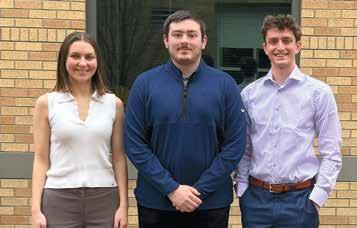
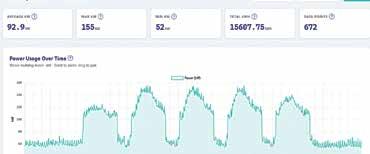
The CPSC-01 team worked with Edo to create an Energy Load Dashboard that pulls real-time energy data for the Catalyst and Morris Center buildings. When data is collected, it is stored separately under specific equipment types based on where the source originates. CPSC-01 was tasked with making a set of dashboards that groups together this data and displays interactive, meaningful visualizations for each data group. CPSC-01 created an application that accesses Edo’s API based on user request, the application then performs summary calculations on the data gathered. The team used the React framework for the front-end. After user testing and feedback from Edo stakeholders, the application was deployed on Edo’s Azure hosting service. The application can be continued on by Edo in the future as data becomes available.
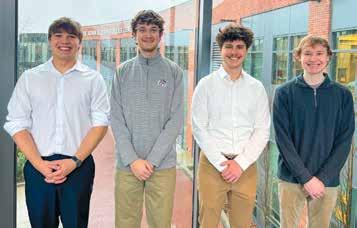
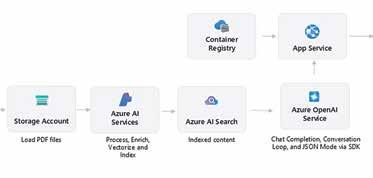
CPSC-02 worked with McKinstry to create an AI chatbot capable of providing a manufacturing team with accelerated access to enterprise data, including payroll, labor, and job costs. The team developed and implemented a web app interface that processes natural language inquiries to deliver curated analysis and real-time insights. The solution leverages Azure AI Foundry which implements a retrieval-augmented generation (RAG) pipeline to provide accurate responses utilizing the data. The project concluded with the deployment of a functional system that allows the manufacturing team to maintain high productivity levels through streamlined data accessibility. The solution has been passed off to McKinstry’s internal operations for further development and optimization.
CS26-03 | Merge Request Health Bot
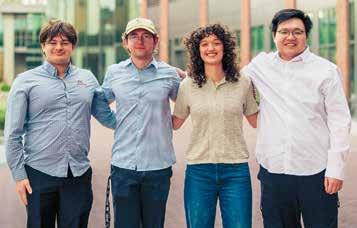
Nick DeYoung, B.S. Computer Science
James Hagan, B.S. Computer Science
Isabel Tilles, B.A. Computer Science
Yusen Xia, B.S. Computer Science
Advisor: Chris Sharman
DAB: Andrew Flagstead
Sponsor: CorporateTools (formerly Two Barrels)
Liaison: Noah White
CS26-04 | ChoiceConnect Fixed Network
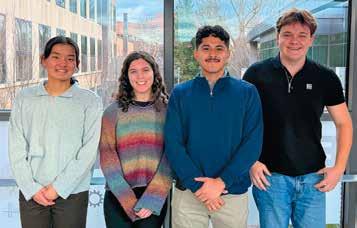
Murat Aitov, B.S. Computer Science
Hannah Horn, B.A. Computer Science
David Sosa Vidal, B.A. Computer Science
Maya Stelzer, B.S. Computer Science
Advisor: Phillip Fishburn
DAB: Rafael Pozos
Sponsor: Itron
Liaison: Randy Bustamante, Mike Ives
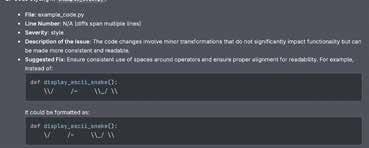
This AI merge request health bot allows users to upload documents and style guides to team CS26-03’s hosted UI. These documents are then stored to an S3 bucket to be accessed by the model. The health bot begins by reading a merge request from the repository service GitLab. It is then sent to an AWS lambda function in which it is parsed for important relevant to the merge. The code is then sent to an EC2 model where it is linted and reviewed by an AI with a RAG pipeline to generate smart fixes for the given code and ensure it is consistent with the documents uploaded by the user. Finally, the smart fixes and feedback are uploaded to GitLab via a comment to the merge request using the available API to reduce the amount of time Corporate Tools engineers spend reviewing submitted code.
The CPSC-04 team worked with Itron to address the challenge of diagnosing failures within the ChoiceConnect Fixed Network, where cell control units (CCUs) generate large system and application log files. Engineers previously spent significant time manually reviewing these archives to identify abnormal behavior. To streamline this process, the team designed, trained, and tested an LSTM-based anomaly detection model using real CCU logs to learn patterns of normal activity and flag deviations. The application runs within Itron’s Azure environment, processes log archives, and generates a CSV report identifying anomalies and their locations. A commandline interface enables analysis of new logs, while an engineer feedback loop supports manual labeling and iterative model refinement to improve diagnostic accuracy over time.
CS26-05 | Speaker Segmentation
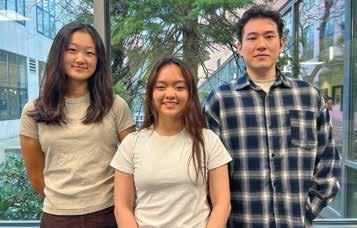
Keyu Chen, B.S. Computer Science
Thi Lan Anh Ha, B.S. Computer Science
Samuel Hopper, B.S. Computer Science
Grace Lee, B.A. Computer Science
Advisor: Joe Dumoulin
Sponsor: Gonzaga Department of Computer Science
Liaison: Paul De Palma
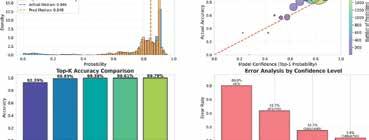
The CPSC26-05 team was sponsored by Dr. Paul De Palma of Gonzaga University to address the challenge of analyzing large repositories of early childhood speech recordings, where existing speaker segmentation tools struggle due to overlapping speech, background noise, and the irregular vocal patterns of toddlers. CPSC26-05 developed a machine learning pipeline that processes child-centered audio data and converts CHILDES (.CHA) transcripts into reference RTTM files for evaluation. The system performs speaker diarization using pyannote.audio models and integrates a voice-type classifier (VTC) to categorize speakers such as children and adult participants. Model performance was evaluated using pyannote. metrics by comparing predicted RTTM outputs with reference annotations. The pipeline was implemented in Python and deployed using Apptainer containers to run the pyannote and VTC environments on GPU-enabled HPC nodes. Experiments using the HomeBank speech repository supported model evaluation and fine-tuning for child speech analysis.
CS26-06 | Language Acquisition Research Framework
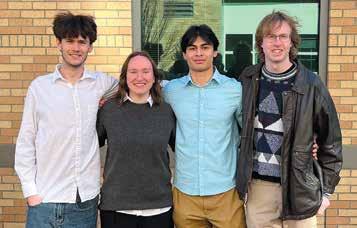
Lincoln Deen, B.S. Computer Science
Liam Kordsmeier, B.S. Computer Science
Miles Mercer, B.S. Computer Science
Abby Skillestad, B.S. Computer Science
Advisor: Joe Dumoulin
Sponsor: Gonzaga Department of Computer Science
Liaison: Paul De Palma
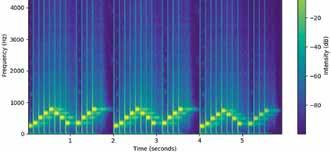
The CPSC26-06 team developed an open-source framework for human language acquisition research with sponsorship from Dr. Paul De Palma. Researchers required a transparent tool to process day-long speech recordings, so the team created a full-stack web application for uploading and segmenting audio data. The team implemented a node-based interface for intuitive audio manipulation and segmentation. In collaboration with linguistics expert Dr. Mark VanDam, the team integrated the Parselmouth Python library to automate phonetic analysis, including pitch determination and spectrogram visualization. The project concluded with a functional prototype that allows researchers to export processed data. The resulting system establishes a scalable foundation for future linguistic studies.
CS26-07 | LLM-Assisted Operational Fault Analyzer
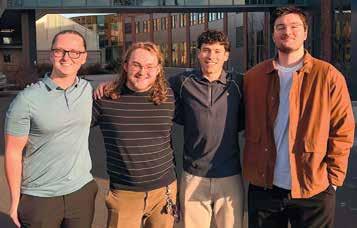
Carson Frost, B.S. Computer Science
Cash Hilstad, B.S. Computer Science
Nick Maximiano, B.A. Computer Science
Advisor: Yanping Zhang
DAB: Kalika Singh
Sponsor: Boeing
Liaison: Nick Questad, Brenna Doll, Joseph Caferro
CS26-08 | True Reasoning for LLMs
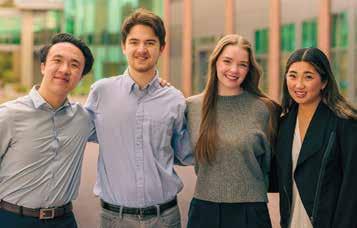
Lauren Chin, B.S. Computer Science
Ethan Danitz, B.S. Computer Science
Sean Nickerson, B.A. Computer Science
Maura Sweeney, B.S. Computer Science
Advisor: Yanping Zhang
DAB: Michael Herzog
Sponsor: Graham Morehead
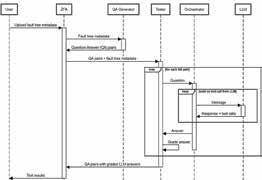
Boeing tasked the CPSC-07 team with creating an LLM-assisted fault tree analyzer. Fault trees are diagrams used to predict and monitor failure rates of aircraft components. The CPSC-07 team created the Zag Fault Analyzer (ZFA) to preform large-scale, automated analysis of fault trees contained on PDFs. Users can upload a large PDF containing a fault tree, and the system ingests the data into a machine-friendly format. Once the data is ingested, users can ask the ZFA questions about the data. The ZFA uses an LLM to plan actions, call functions, and retrieve data to properly answer the user’s question. This system empowers engineers to quickly inspect massive fault trees and work through conceptual questions as needed, saving countless hours of time.
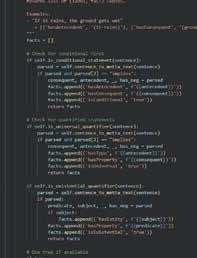
Pangeon tasked CS26-08 with improving Artificial Intelligence reasoning and performance with actual logic. AI models, especially LLMs, do not perform human-based logical reasoning when generating responses. They use probabilistic reasoning to apply patterns observed in training data to craft a response which can cause illogical mistakes and hallucinations. Parsimony aimed to address this problem by providing these LLMs with true reasoning. This created a better-performing reasoning model where users get better responses to their complex prompts. Natural language is parsed into the simplest representation of the meaning of the sentence in the form of trees, which is then converted to propositional logic statements, which were fed to an LLM, creating a network of facts to reference in response to a query.
Sam Carter, B.S. Computer Science
CS26-09 | AI Robotic Control
Ayla Bhatia, B.S. Computer Science
Liwei Liu, B.S. Computer Science
Geoff Spilker, B.S. Computer Science
William Wellborn, B.S. Computer Science
Advisor: Joe Dumoulin
Sponsor: Graham Morehead
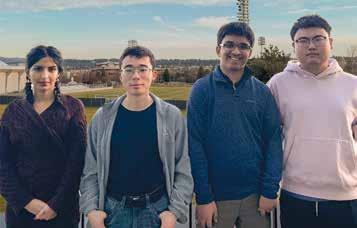
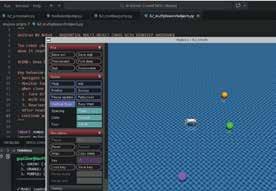
This project developed a comprehensive suite of motion control macros for the Unitree B2 quadruped robot using MuJoCo physics simulation in a WSL environment. Over 20 unique macros were created to demonstrate various robot capabilities including basic movements, locomotion gaits, manipulation tasks, recovery behaviors, and other specialized movements. Each macro uses PD control with tuned joint angles and timing to ensure stability, as the project prioritized safe, repeatable movements over aggressive performance. The macros serve as demonstrations and capability testing for eventual deployment on physical hardware. The system integrated these macros with a trained neural network that learns goal-directed navigation by working with the macro library as its control foundation.
CS26-10 | Power Line Protection System Extension
Kim Lenz, B.A. Computer Science
Jack Ou, B.S. Computer Science
Jake VanZyverden, B.S. Computer Science
Advisor: Alex Giacobbi
DAB: Henry Stone
Sponsor: Avista
Liaison: Greg Johnson
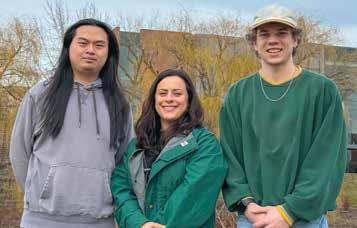
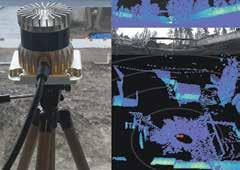
Team CS26-10 extended CS25-03’s powerline safety system for Avista Utilities. The previous team attributed ghost object detections to code bugs. The team diagnosed the actual root cause: training data perspective mismatch. The model trained on forward-facing automotive data was incompatible with upward-facing powerline monitoring. The team collected a comprehensive upward-facing LiDAR dataset from construction sites across Spokane (100+ recordings), data that did not yet exist before this. They developed a complete retraining infrastructure, including data conversion, annotation, and validation workflows. The team delivered baseline performance metrics, a retrained PointPillars model for upward-facing deployment, comparative performance analysis, and comprehensive user documentation for development teams and field operators, ensuring system maintainability and deployment readiness.
CS26-11 | AI-Powered Threat Intelligence
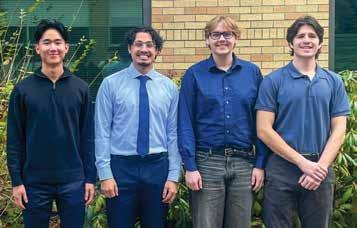
Ritchie Fu, B.S. Computer Science
Gabriel Hoing, B.S. Computer Science
Cody Kesselring, B.S. Computer Science
Mark Sanghera, B.S. Computer Science
Advisor: Jasmin Jans
DAB: Jesse Phillips
Sponsor: ArmorText
Liaison: Navroop Mitter
CS26-12 | Virtual Conversations Scheduler
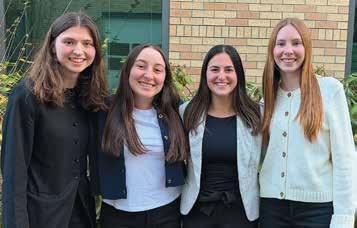
Jillian Berry, B.S. Computer Science
Drew Fitzpatrick, B.S. Computer Science
Abby Hidalgo, B.S. Computer Science
Isabelle May, B.S. Computer Science
Advisor: Bethany Alcamo
DAB: August Murphy-Beach
Sponsor: Gonzaga Modern Languages and Literature
Liaison: Rebecca Stephanis
Cybersecurity analysts face a constant stream of news, making it tough to keep pace with emerging threats.
CPSC26-11 created a tool to help analysts quickly parse through information from these news sources. The team worked with ArmorText to develop a website powered by AI agents that summarizes articles, provides metrics, displays actionable steps, and more. Our tagging system allowed analysts to set up article feeds tailored to their threat interests. The team expanded upon an existing frontend made with React, with new data being stored in MongoDB. CPSC26-11 created an article processing pipeline that leveraged the Gemini API for multiple features and used reputable frameworks from MITRE and CISA for TTP extraction and countermeasures. After local testing on Postman, the backend service was deployed and tested on AWS, where it was able to periodically scrape articles and extract data.
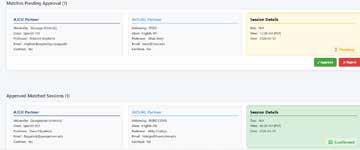
CPSC26-12 worked with the GU Department of Modern Languages to create a convenient scheduling app for their dual immersion program with AUSJAL and AJCU universities. The team created a web application, LinguaLink, that streamlines the process of matching classes across Jesuit institutions in Latin America and the United States to facilitate virtual exchange sessions. Some of LinguaLink’s key features include: an automated matching algorithm for cross-institution class pairings, role-based access control for administrators and coordinators, and an administrative dashboard for managing users, schools, and matches. Overall, this project addresses a real need in international education, making cross-cultural learning experiences more accessible to students while reducing administrative burden on faculty coordinators.
CS26-13 | Minecraft Integrated AI Companion
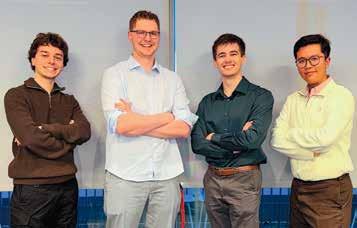
Computer Science
Tony Nguyen, B.S. Computer Science
Alexandre Sautereau, B.S. Computer Science
Aiden Tabrah, B.S. Computer Science
Advisor: Pete Messina
DAB: Sarah Hagen
Sponsor: D Squad Studios
Liaison: Kevin Dang, Drew Bogdan
CS26-14 | Spokane Air Quality Dashboard
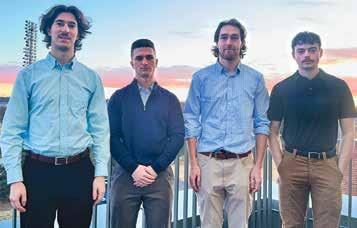
Nikita Dubinin, B.S. Computer Science
Kevin Rocca, B.S. Computer Science
Luke Sahlin, B.S. Computer Science
Jake Snitily, B.S. Computer Science
Advisor: Pete Messina
DAB: Hunter Banks
Sponsor: Gonzaga Institute for Climate, Water, and the Environment
Liaison: Brian Henning, Marc Baumgardner
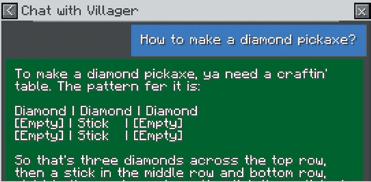
D-Squad Studios tasked CPSC-13 with creating an opensource and free Minecraft mod that brings villagers to life with natural AI-driven conversations. To accomplish this, the team first modified the existing Minecraft villager trading UI to have an additional chatbot screen. Two open-source LLMs were combined, hosted by Ollama with a Retrieval-Augmented Generation (RAG) system to serve as the “brain” of the villagers. The RAG system uses a vectorized database to give villagers memory, accurate knowledge of game mechanics, and context about their immediate surroundings. With personalities shaped by their professions, players can now engage in dynamic, world?aware conversations that make every Minecraft world feel more alive.
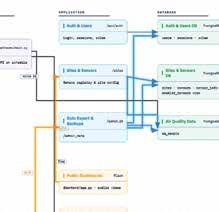
The CS26-14 team partnered with the Gonzaga Institute for Climate, Water, and the Environment to modernize an existing air quality monitoring dashboard. The original platform lacked administrative functionality and required direct database interaction to manage sites, sensors, and users. CS26-14 developed a full-stack web application featuring a secure login system with role-based access control, an admin dashboard for managing users, sites, and sensors through a graphical interface, automated email notifications for sensor anomalies, and an advanced data export tool with filtering capabilities. The application was fully containerized using Docker for easy deployment, and a new production server was provisioned to support the expanded system. The team successfully delivered a platform that allows non-technical staff to operate and maintain the dashboard entirely through the website UI.
Jack Kabil, B.S.
CS26-15 | Emergency Preparedness Vehicle/Drone
Charles Bennington, B.S. Computer Science
Thomas Domser, B.S. Computer Science
Katie Park, B.S. Computer Science
Liya Tekie, B.A. Computer Science
Advisor: Joe Dumoulin
DAB: Jacob Krantz
Sponsor: Framatome
Liaison: Jared Marshall
CS26-16 | Universal Sensor Board
Jacob Alfonso, B.S. Computer Science
Steve Deibert, B.A. Computer Science
Fady Youssef, B.S. Computer Science
Advisor: Tim Ecklund
DAB: Michael Bernard
Sponsor: Itron
Liaison: Tim Ecklund
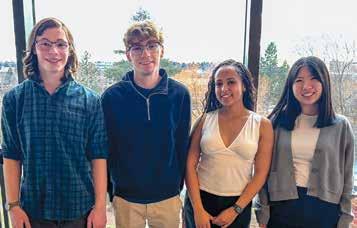
The CPSC26-15 team worked with Framatome, a nuclear energy company, to design a GUI for an unmanned vehicle in the event of a chemical spill on the Framatome facility. Currently, Framatome relies on a person wearing hazmat PPE to enter a spill zone and manually measure the concentrations using a sensor. Together with Team EN26-57, the teams designed a vehicle sensors, able to be remotely controlled by an operator through an Arduino via LoRa, to instead collect the chemical information. The sensors send back information to the operator about each chemical, displayed through the GUI through graphs and interactive GPS that displays the concentration and the GPS location of each chemical. The GUI was developed using Java, and will be handed off, alongside the vehicle, to Framatome for use in the event of a chemical spill.
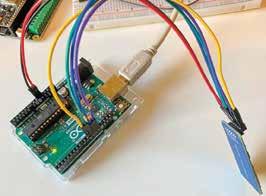
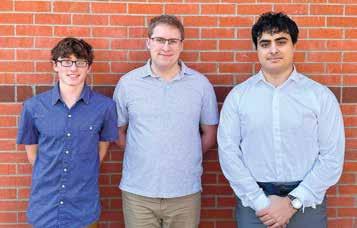
The CS26-16 team was engaged with Itron to address the issue of using different devices to communicate with Itron’s sensor modules. The need for multiple devices to communicate with the variety of modules such as CW, W, or 500G makes gathering the data time consuming and complex. CS2616 was tasked to create a universal sensor board that can communicate with a variety of sensors Itron works with and display the gathered data using an intuitive desktop application, all while maintaining a battery life span of 20-years. The team implemented FreeRTOS to develop the communication system and QT to design the interface for further analysis by Itron Engineers. After comprehensive testing, the board’s software and application were transferred to Itron for further testing before manufacturing and deployment.
Junyou Guo, B.S. Computer Science
Jacob Jarvis, B.S. Computer Science
Leonard Jia, B.S. Computer Science
Zobe Murray, B.S. Computer Science
Advisor: Dan Lenz
DAB: Ben McDonald
Sponsor: Gonzaga Deptartment of Psychology
Liaison: Doug Addleman
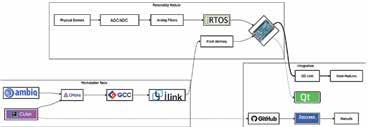
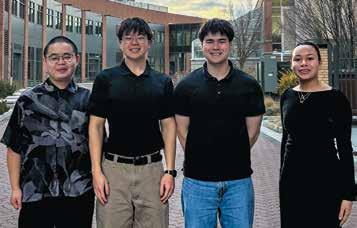
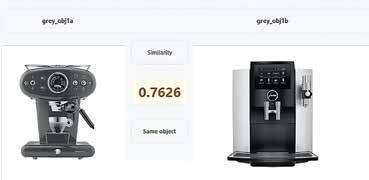
CPSC26-17 has created an Image Processing Application that allows researchers to easily upload and analyze images by utilizing and adding to image similarity models previously created for the Department. As the fields of neuroscience, psychology, and computer science continue to integrate, there is an increasing need for accessible, user-friendly options for supporting interdisciplinary work. The application examines variables such as image characteristics and differences to help researchers understand how humans perceive and process visual stimuli. Designed with a simple user interface and clear documentation, the tool allows researchers to use the application without computer science expertise.
EN26-20 | Market/Haven Two Way Street Conversion
Baila Burnam, Civil Engineering
Karlynn Kenny, Civil Engineering
Tim Schantz, Civil Engineering
Alex Willis, Civil Engineering
Advisor: Mutasem Alzoubadi, Rhonda Young
DAB: Jennifer Emerson-Martin, Lindsay Gilbert
Sponsor: NE Public Development Authority
Liaison: Jesse Bank
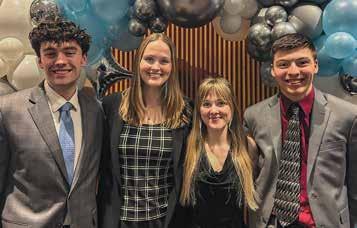
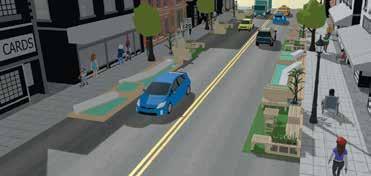
The team developed and evaluated design alternatives to convert the Market/Haven St. one-way couplet in Spokane’s Hillyard neighborhood into a safer two-way corridor. The client for this project was the Northeast Public Development Authority (NEPDA), coordinated through Jesse Bank and in partnership with City of Spokane traffic engineers. The project aimed to reduce vehicle speeds, improve pedestrian and cyclist safety, and support local businesses while maintaining acceptable traffic operations. The team collected and analyzed traffic and crash data, engaged stakeholders, and developed traffic models to simulate future conditions. The alternatives were evaluated, and a preferred design, meeting traffic operations goals, was recommended to the city.
EN26-21 | Aki Kurose MS Structural Design
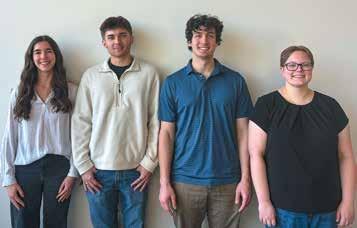
Dante Dolan, Civil Engineering
Kristen Hatley, Civil Engineering
Matthew Janicki, Civil Engineering
Ava Rifenbury, Civil Engineering
Advisor: Aaron Zwanzig
DAB: Levi Arnold
Sponsor: Integrus Architecture
Liaison: Aaron Zwanzig
EN26-22 | I-90 Bridge Deck & Steel Replacement
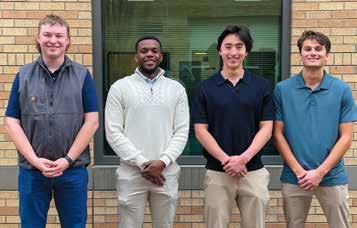
Luc Guidroz, Civil Engineering
Nathaniel Kaufman, Civil Engineering
Rest Mugwagwa, Civil Engineering
Anthony Segale, Civil Engineering
Advisor: Erik Wick
DAB: JJ Masterson
Sponsor: Garco
Liaison: Erik Wick
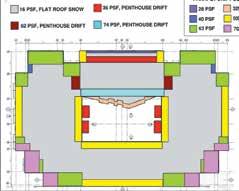
Team CENG-21 collaborated with Integrus Architecture to simulate a 50% structural design development for a two-story middle school building extension located in Seattle, WA. The project scope included the development of structural framing plans and a calculations package to support both the gravity and lateral load resisting systems. The team first conducted research on three materials to determine the most optimal material for framing using a decision matrix with seven criteria. Next, the team completed the load development and preliminary sizing of beams, girders, columns, braced frames, and footings in accordance with local and national codes and regulations. Finally, the team developed a structural framing plan set for the different floor levels and foundations for the building and compiled a formal calculation package with sample calculations for each part of the design.
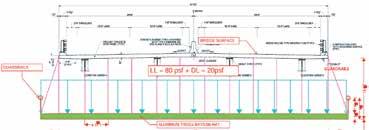
Team EN26-22 developed and proposed a comprehensive construction planning strategy for the replacement of the I-90 Vantage Bridge deck and associated structural elements. The project established a safe and efficient sequence of operations that meets Washington State Department of Transportation (WSDOT) requirements while maintaining traffic and protecting the existing structure. The team evaluated construction constraints, including limited workspace, structural load limits, lane closures, and underdeck access requirements. Based on these conditions, coordinated work plans were produced for deck replacement, cross-frame modifications, temporary steel installation, and pier repair activities. Final deliverables included construction sequence diagrams, conceptual access layouts, structural loading considerations, and a preliminary cost overview demonstrating the feasibility of their approach.
EN26-23 | Anchorage MA Lane Drop Potential
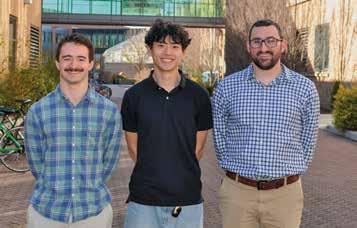
Connor Britts, Civil Engineering
Tyler Brown, Civil Engineering
Nathan Cho, Civil Engineering
Advisor: Adam Miles
DAB: Glenn Blackwelder, Stu Barton
Sponsor: DOWL
Liaison: Adam Miles
EN26-24 | Water System Resilience to Wildfire
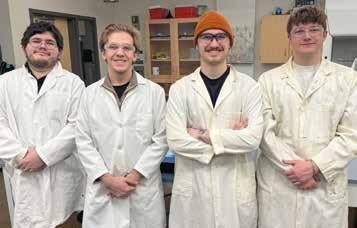
Jonathan (JD) Margaroni, Civil Engineering
Anotonio Guiterres-Jaramillo, Civil Engineering
Alex McCulloch, Civil Engineering
Dillon Wendle, Civil Engineering
Advisor: Kyle Shimabuku
DAB: Katie Larimer, Kaela Mansfield, Jesse Tatum
Sponsor: Gonzaga/MSU
Liaison: Kyle Shimabuku
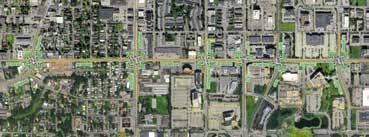
DOWL tasked EN26-23 with creating a policy for the Municipality of Anchorage (MOA) and Alaska Department of Transportation and Public Facilities (DOT&PF) that allows planners and engineers to quickly determine which roadways within the municipality are viable to conduct a lane reallocation. Many of the existing roadways in Anchorage are overbuilt for existing traffic trends which encourage high driving speeds, make it difficult for pedestrians to cross and are expensive to maintain. The team’s policy, backed by intensive research and rigorous testing, provides clear insight as to which corridors are good candidates for lane reallocations while maintaining local standards. The policy allows the MOA to quickly determine where lane reallocations can be successful and address safety, maintenance, and accessibility concerns around the city.
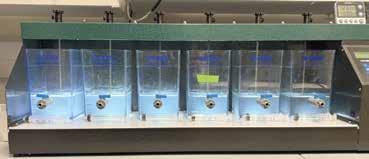
Originally proposed by the U.S. Forest Service, this project adds to existing modeling software to help drinking water utilities respond to extreme water contamination events caused by wildfires and other natural disasters. The team developed and validated open-source models to estimate the effectiveness of powdered activated carbon (PAC) and coagulation in removing high levels of dissolved organic carbon (DOC) and disinfection byproduct (DBP) precursors. Our goal is to provide water treatment facilities with practical tools to quickly adapt to postfire “disaster-level” conditions while maintaining safe drinking water standards.
EN26-25 | NSC - Highway and Bridge Construction
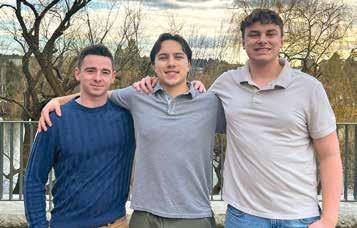
Keawa’One Brouns-Prince, Civil Engineering
Michael Ewers, Civil Engineering
Joseph Johnson, Civil Engineering
Advisor: Bill Meeks, Jody Qualley
DAB: Vince Poxleitner
Sponsor: WSDOT
Liaison: Bill Meeks, Jody Qualley
EN26-26 | Temporary Bridge Foundation
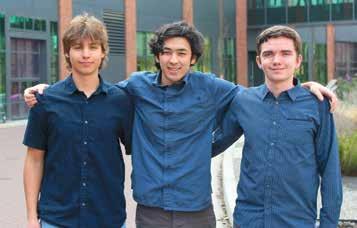
Lucas McLachlan, Civil Engineering
Joseph Mitchell, Civil Engineering
Tyler Tran, Civil Engineering
Advisor: Collin McCormick
DAB: Byrl Williams
Sponsor: Budinger & Associates
Liaison: Collin McCormick
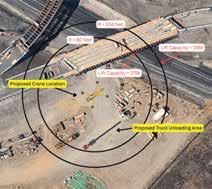
In a technical advisory partnership with WSDOT, Team EN26-25 applied agency specifications to several projects related to the North Spokane Corridor. The team developed the EW–N Bridge construction schedule establishing activity logic, durations, and the critical path. They completed a construction cost estimate and outlined procedures to maintain accuracy under potential change orders. The bridge abutment foundation design was verified through structural load analysis to confirm geotechnical stability and strength requirements. A local street design was completed in accordance with local codes and regulations. The team also advanced a DBE participation strategy and defined Good Faith Effort procedures. The team completed a crane-pick plan with associated rigging calculations. Finally, the team selected project-specific stormwater Best Management Practices to ensure regulatory compliance and environmental stewardship.
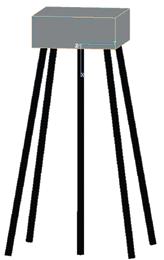
Team EN26-26 designed a temporary foundation for Grant County Bridge 202 after subsurface erosion undermined the north abutment, requiring temporary jacking of the bridge deck, demolition and reconstruction of the north abutment. The team reviewed geotechnical data, design standards, and site constraints including limited overhead clearance and proximity to an irrigation canal. A shallow foundation and a drilled micropile system were considered as two feasible foundation alternatives. A weighted evaluation matrix indicated the micropile option as the preferred solution. For the micropile option, axial and lateral loads were evaluated using a pile group analysis to verify structural capacity and deflection under governing load combinations. The analysis confirmed five micropiles satisfied strength and service requirements.
EN26-27 | Stormwater Treatment and Reuse
Damon Frostad, Civil Engineering
Trenton Goodell, Civil Engineering
Caroline Triplett, Civil Engineering
Advisor: Aimee Navickis-Brasch, David K Moss
DAB: Glorilyn Maw, Colleen Little, Chris Collins
Sponsor: City of Spokane
Liaison: Rebecca Casey, Trey George
EN26-28 | CDA High End Residence
Will Denniston, Engineering Management
Kara Johnson, Civil Engineering
Elsa Lawerenz, Civil Engineering
Katerina Scott, Civil Engineering
Advisor: Ted Bernards
DAB: TJ Bolser
Sponsor: Cushing Terrell
Liaison: Ted Bernards
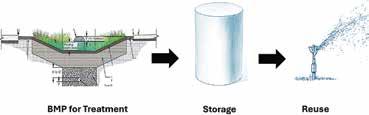
EN26-27 evaluated the feasibility of capturing, treating, and reusing stormwater in ultra-urban areas with limited space for conventional treatment systems (Best Management Practices – BMPs). The team established design criteria by reviewing regulatory requirements, pollutant removal performance data, and flow and water quality data from a bioretention site on Gonzaga’s campus. In coordination with the City of Spokane, the team screened and compared reuse alternatives and advanced a selected concept to a 30% design package that includes a stormwater treatment BMP, a polishing step for possible lingering regulated pollutants, and storage for irrigation end use.
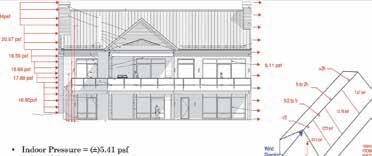
Team ENSC-28 proposed a structural design for a 10,000-square-foot luxury residence in Coeur d’Alene, Idaho. The project focused on creating a Pacific Northwest Modern home that combined sustainable design with high-end comfort. The team researched applicable codes and developed design loads, including snow and seismic criteria for the hillside site. Their simulated 50% structural design package included the gravity system, lateral force-resisting systems, and foundation design. The team produced a comprehensive calculation package and structural drawings detailing members and connection pieces. This package showed the proposed structural systems and provided a baseline for initial cost estimating. The final deliverables complied with Kootenai County building codes and industry standards.
EN26-29 | Fish Hatchery Building
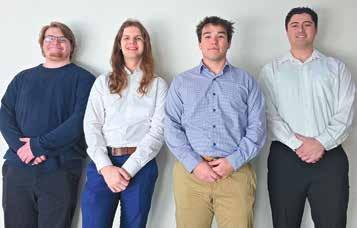
John Carone, Engineering Management
Derek Muller, Civil Engineering
Carter Weener, Civil Engineering
Jude Weist, Civil Engineering
Advisor: Wesley Davis
DAB: Emily Sackmann
Sponsor: Coffman Engineers
Liaison: Wesley Davis
EN26-30 | Large Wood Nourishment in Rivers
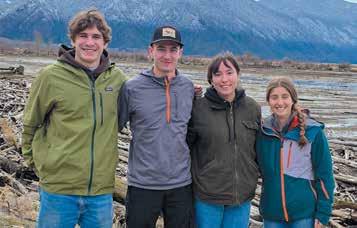
Melanie Adams, Civil Engineering
Isabella Camarota, Civil Engineering
Alec Flury, Civil Engineering
Will Hoing, Civil Engineering
Advisor: Sue Niezgoda
DAB: Spencer Harper, Dawson Matthews
Sponsor: Gonzaga Dept. of Civil Engineering
Liaison: Sue Niezgoda
Team ENSC26-29 developed and proposed a fish hatchery building for the Colville Tribal Hatchery. In a technical advisory partnership with Coffman Engineers, the team integrated structural elements around the mechanical systems required for hatchery operation. All designs resist the determined loads. The proposal’s finalized drawing set includes the foundation plan, roof framing plan, partial elevations, and a summary of design criteria included in the general structural notes.
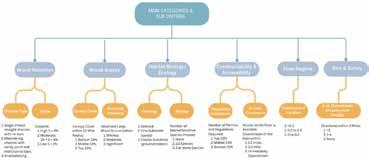
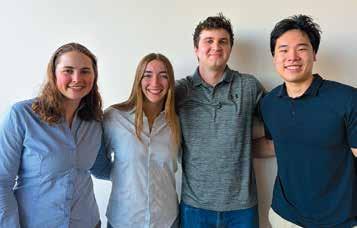
Large wood is an important component of natural river systems. Dams disrupt the natural transport of wood along rivers. ENSC30 was tasked with identifying key sites for reintroducing large wood downstream of a dam and developing a design plan for a selected location. The site was chosen using a weighted decision matrix evaluating factors affecting wood mobility, ecological benefits, and project access to wood. The team selected a river reach downstream of Albeni Falls Dam due to an upstream drift facility that provides substantial wood access. Bank stabilization and cold-water refuge designs were developed for specific sites between Albeni Falls Dam and Box Canyon Dam. These designs enhance fish habitat, stabilize banks, reduce water temperatures, and help restore the river to a more natural condition.
Sam Leman, Civil Engineering
Sophia Mitchell, Civil Engineering
Sam Nash, Civil Engineering
Advisor: Joshua Schultz
DAB: Damiano Seghetti
Sponsor: Gonzaga University Department of Civil Engineering
Liaison: Joshua Schultz
EN26-32 | Mountain Home Treatment Plant
Kyle Fan, Civil Engineering
Julia Heywood, Civil Engineering
Rebecca Riley, Civil Engineering
Ethan Thompson, Civil Engineering
Advisor: Jason Evers
DAB: Mel Verwest, Gregg Thompson, Lindsey Evers
Sponsor: Jacobs Liaison: Jason Evers
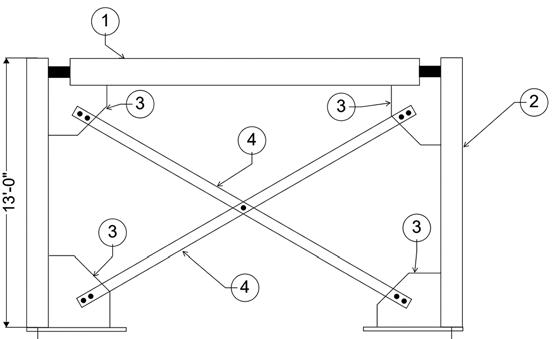
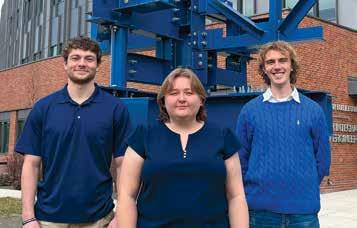
ENSC 26–31 modernizes the AISC Steel Sculpture, a handson teaching tool found on over 170 campuses worldwide, by pairing the physical structure with interactive digital models and design examples. Steel connections are among the most detail-intensive aspects of structural engineering, and students often struggle to visualize the path from calculation to finished product. This project models the sculpture in Revit and applies finite element analysis to ten industry-selected connections. The team developed AISC-based design spreadsheets that mirror real engineering workflows and assembled an online content package hosted on the AISC website. Built using tools like Three.js, the platform lets users explore interactive models and review design results without specialized software. These efforts transform the sculpture from a static display into a dynamic, multilayered teaching resource connecting classroom theory to practice.
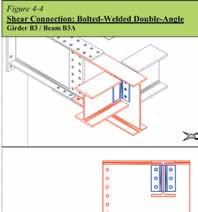
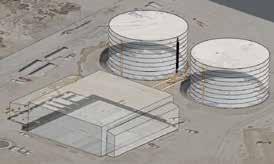
In a technical advisory partnership with Jacobs Engineering, team EN26-32 addressed increasing groundwater reliability concerns of Mountain Home Air Force Base. The team proposed 30% design package for two 3.0-million-gallon raw water storage tanks that comply with AWWA D100-21 Design Standards. The team delivered calculations, drawings, specifications, and cost estimates for the steel tanks. The design scope included structural and foundation design, as well as details of necessary access points and piping systems. The structural design for each tank utilized hoop stress analysis and selected the tank between three size alternatives, to minimize steel use based on tank footprint-to-height ratios. A pile-enhanced mat foundation design was selected based on the surrounding site-subsurface conditions and the demand load of each tank. The alternatives were also evaluated for potential environmental impacts.
EN26-35 | Pickleball Paddle Design
Jeffrey Alfonso, Mechanical Engineering
Ashton Bischoff, Mechanical Engineering
Jack David, Mechanical Engineering
Ryan Spuck, Mechanical Engineering
Advisor: Brooke Colburn
DAB: Sam Shoemaker
Sponsor: Selkirk Sports
Liaison: Dana Hansen, Michael Eisele, Tom Barnes, Brian Riddle
EN26-36 | Durability Cannon
Charlize Lim, Engineering Management
Connor McRae, Mechanical Engineering
Aidan Mullany, Mechanical Engineering
Kai Zettel, Mechanical Engineering
Advisor: Marc Baumgardner
DAB: Eric Ryan
Sponsor: Selkirk Sports
Liaison: Dana Hansen, Michael Eisele
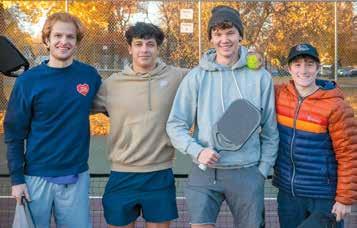
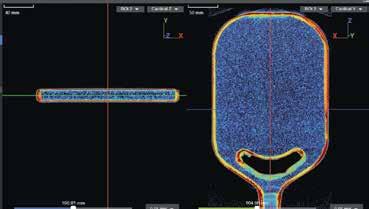
Selkirk Sport produces an array of pickleball paddles, balls, apparel, and sporting equipment. EN25-35 was tasked to create a functional pickleball paddle design and prototype that meets current industry and governing association standards. The team developed detailed schematics for paddle design, a materials research report, and a testing and evaluation report. Paddle prototypes produced by the team integrated composites, expanded polypropylene foam, and other specialty materials. The team completed the project by delivering prototypes that will inform Selkirk’s paddle design choices for future production paddles.
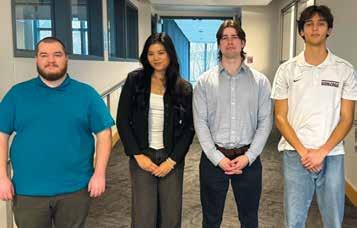
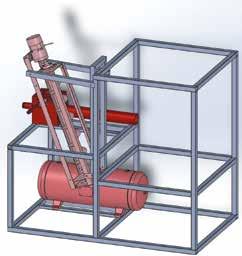
EN26-36 redesigned and built an improved self-loading pickleball durability cannon to evaluate the effects of repeated high-speed impacts on pickleball paddles and balls. The project focused on reducing the system’s overall footprint while working toward improving speed, reliability, and efficiency. The team completed mechanical assembly and pneumatic integration, and implemented an auger-based loading mechanism to minimize jamming and enable automated highspeed cycling. A PLC control system with integrated sensors was developed for ball detection, velocity monitoring, and precise system control. The resulting prototype offers Selkirk a more compact and serviceable solution for inhouse durability testing.
EN26-37 | Small Proof Load Table
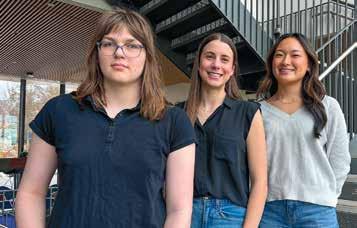
Artemis Bishop, Mechanical Engineering
Kayla Muneta, Mechanical Engineering
Sydney Pifer, Mechanical Engineering
Advisor: Max Capobianchi
DAB: Lee Firth
Sponsor: Aeroforge
Liaison: Scott Scheerer
EN26-38 | Open Air Cabin Window
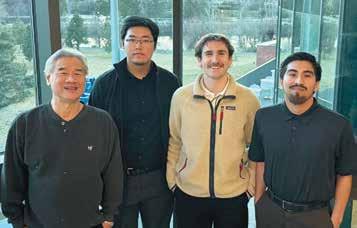
Benjamin Harris, Mechanical Engineering
Joshua Lara, Mechanical Engineering
Yihao Zhang, Engineering Management
Advisor: Damon Taam
DAB: Karen Hills
Sponsor: Boeing
Liaison: Andrew Fabry
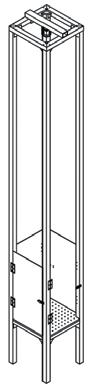
EN26-37’s project is to design and fabricate a small proof load testing table, utilized to test parts that do not require as much force from the load test table that Aeroforge currently uses. It is intended to provide an opportunity to test smaller parts faster. The 20ft tall table has a footprint of 30” by 30” and is designed to be rated for 10,000lbs. The team went through concept generation, performed technical analysis calculations, produced a set of engineering drawings, and fabricated the table.
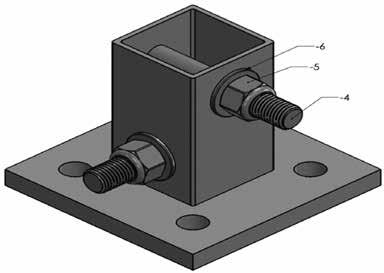
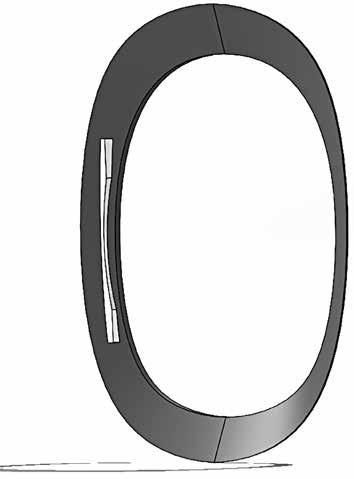
Boeing tasked EN26-38 with developing a personal airflow solution for aircraft cabin passengers. The team designed and fabricated a window reveal air vent system that mounts directly within the existing window panel, delivering a gentle, breeze-like airflow to seated passengers. All components were manufactured from 3D-printed PETG, including a custom plenum that snap-fits onto Boeing’s provided panel and routes air directly into the window vent, forming a single integrated assembly. The team validated the design through bench testing and full panel integration testing. To evaluate passenger comfort, the team administered user surveys during live vent operation and collected acoustic noise data to characterize the system’s sound profile.
EN26-39 | Solar Gasification with Added Efficiency
Emma Iwaniec, Mechanical Engineering
Henry Stroud, Mechanical Engineering
Isaac Xiong, Mechanical Engineering
Advisor: Max Capobianchi
DAB: Sean D. Johnson
Sponsor: Ken Hanson
Liaison: Daniel Clark
EN26-40 | Dam Solution
Lula Macey, Mechanical Engineering
Evan Mueller, Mechanical Engineering
Nicholas Roberts, Mechanical Engineering
Advisor: Jeff Nolting
DAB: Jeff Presley
Sponsor: Ken Hanson
Liaison: Daniel Clark
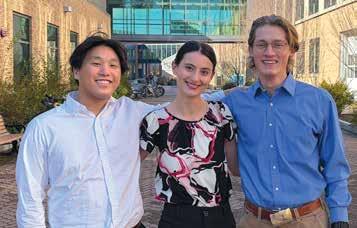
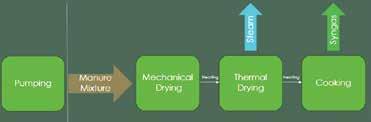
The EN26-39 team collaborated with Ken Hansen to address the issue of cattle waste management utilizing a Continuous Solar Gasification System. Organic waste is a large cost for dairy farmers. Therefore, large amounts of fertilizer are required to maintain their crop production. Biochar, a carbon rich product of degraded organic matter, is a prime natural fertilizer. EN2639 was tasked to develop multiple designs and conduct an analysis to determine the most efficient system regarding its parameters, required heating, and biochar production. After sufficient research, the team found that a Pyrolysis system would be more efficient than a Gasification System for producing biochar. For that reason, the analysis was iterated towards a Pyrolysis system instead.
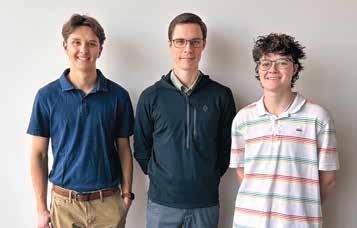
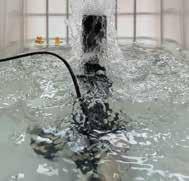
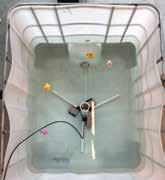
The EN26-40 design team designed and tested a prototype “bubble lift” or “air-lift pump” for dam reservoirs. The static nature of reservoirs creates a thermocline layer that prevents the mixing of temperature and oxygen, creating regions that are too hot or not appropriately oxygenated for fish survival. The team proceeded through testing phases of bubble lift designs, varying lift height, bubble size, tube shape, and overflow collection to determine the most ideal design to present. Lift designs were graded upon their ability to effectively reoxygenate and mix a water tank, while also evaluating energy efficiency and ability for energy generation in full scale models. The team used a decision matrix to determine the optimal design for presentation.
EN26-41 | Baja Car Instrumentation
Odin Finsen, Mechanical Engineering
Wyatt Jones, Mechanical Engineering
Spencer Mamula-Simons, Mechanical Engineering
Owen Munger, Mechanical Engineering
Advisor: Nathan Zavanelli
DAB: Jim Weston
Sponsor: Student Proposed Liaison: Jim Weston
EN26-42 | Advanced Environment Chamber
Ansel Mautz, Mechanical Engineering
Brendan Moskalik, Mechanical Engineering
Matthew Yoder, Mechanical Engineering
Advisor: Harman Khare
DAB: Nick Questad
Sponsor: Khare Harman
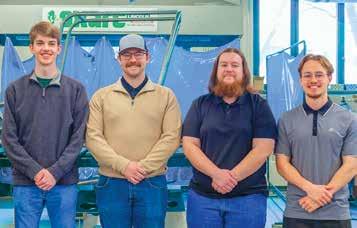
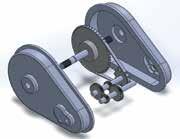
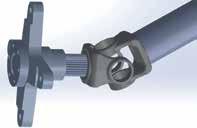
Last year, the Gonzaga Baja SAE team competed at the national competition in Maryland, with the vehicle’s performance showing critical areas where significant upgrades could be made. To improve performance for the 2026 competition season, the EN26-41 team has been tasked to design, analyze, and manufacture a new drivetrain system and implement an instrumentation system for vehicle data acquisition. A high-low range transfer case was designed and fabricated, enabling in-seat shifting between torque and speed modes, improving versatility and performance. Additionally, the instrumentation system developed can measure motor RPM and vehicle speed, allowing comparison against set target metrics and iterative vehicle refinement. The team has worked diligently with the Gonzaga Baja SAE club and the Manufacturing Technology Center to model and construct the vehicle.
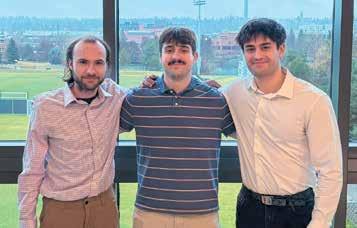
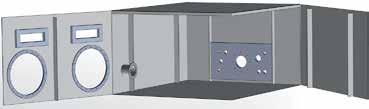
EN26-42 has developed a chamber that regulates its internal environment and houses both a tribometer and microbalance for the GU tribology lab. This regulation includes both reducing oxygen content via displacement with nitrogen as well as controlling the humidity inside the chamber. The control systems can add both moisture to the chamber via a bubbler, or remove it via a scrubber. It is able to maintain this environment for the duration of the test. Additionally during the test it allows access and interaction with the inside of the chamber via mounted gloves without breaking any seals containing this environment. This chamber adds capabilities to the Gonzaga tribology lab which allows for varying internal conditions used to isolate and study effects.
EN26-43 | Sonic Scanner Capability Improvement
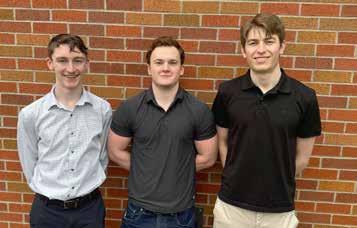
Kamden Doud, Mechanical Engineering
Andrew Hoag, Mechanical Engineering
Benjamin Webb, Mechanical Engineering
Advisor: Colleen Nolting
DAB: Jeff Presley
Sponsor: Kaiser Aluminum
Liaison: Chris Nicol
EN26-49 | Aeromedical Evacuation Lift Basket
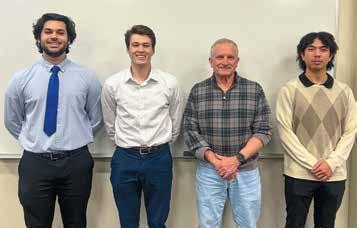
Tobias Choudry, Mechanical Engineering
Bryson Lopez, Mechanical Engineering
Owen McCarter, Mechanical Engineering
Advisor: Bob Reed
Sponsor: Fairchild AFB
Liaison: Capt. Mikhayla Polivka, TSgrt. Justin Ulin
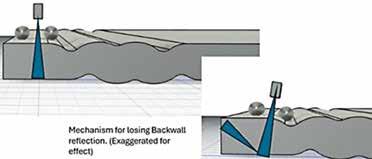
Kaiser Aluminum performs ultrasonic scanning, which is a form of non-destructive testing (NDT) on the aluminum plates that they produce. A majority of plates produced at the Kaiser facility must be scanned for internal defects prior to shipping. Flatness and chatter, which are shape issues on these plates, can cause backwall loss during scanning. This backwall loss makes it so that Kaiser cannot prove that enough sound has passed through the plate as per the material standard. EN26-43’s goal was to provide Kaiser with a method to prove enough sound has passed through plates with shape issues, in order to reduce scrapped aluminum plate. The team utilized an attenuation check method with data easily accessible in current scanning software to show plate viability in areas with backwall loss, significantly reducing scrap numbers.
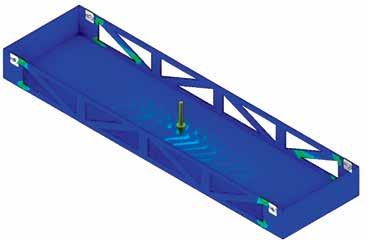
The EN26-49 team addressed the issue of the KC-135 platform being unable to support an aeromedical evacuation. The KC135 R/T platform is a series of aerial refueling planes designed to meet and refuel other aircraft while in the air. EN26-49 was tasked with designing a lift basket capable of accommodating an aeromedical evacuation litter, such that the KC-135 can be used for the purpose of aeromedical evacuations. The team provided a feasibility study containing proposed designs, technical feasibility, documentation of all research, and recommendations for future steps.
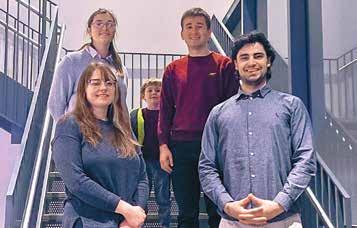
Mark Bruyere, Electrical Engineering
Kira Cowell, Mechanical Engineering
Natan Nery, Mechanical Engineering
Payton Peters, Computer Engineering
Advisor: Lamont Miles
Sponsor: McKinstry
Liaison: Phil Marr
EN26-51 | Liquid Cooling Data Center Units
William Blackburn, Mechanical Engineering
Megan Brooks, Engineering Management
Samuel Firth, Mechanical Engineering
Rylan Leonhardt, Mechanical Engineering
Advisor: Marc Baumgardner
DAB: Les Bohush
Sponsor: McKinstry
Liaison: Phil Marr
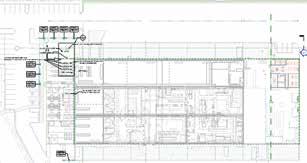
The EN26-50 team partnered with McKinstry to evaluate energy use at the Spokane Warehouse in support of ongoing sustainability initiatives. The project focused on calculating building electrical loads, assessing rooftop solar performance, and analyzing the impact of electric-vehicle charging on overall demand. The team developed a comprehensive load model incorporating major systems such as HVAC, lighting, equipment, and EV infrastructure. Solar generation data was compared against demand to identify opportunities for improved energy utilization. Battery storage scenarios were evaluated to estimate potential peak-demand reduction and operational benefits. The results provided McKinstry with data-driven recommendations to guide future energy planning and facility optimization efforts.
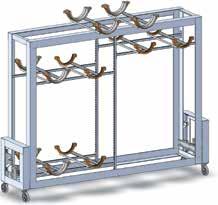
Team EN26-51, worked with McKinstry Modular Products to optimize the manufacturing of modular cooling units (MCU’s) for data centers. Four recommendations were identified with the goal of saving $30,000 per MCU, including changes to system design, hardware selection, and assembly. First is Equipment Selection, where the team selected new hardware at a reduced cost without affecting systems performance. The second is Equipment Fastening, improving time efficiency with a new bolt-up method. The third is Frame Construction, consisting of modified component geometry for ease of installation. The final recommendation is an Assembly Jig, where the team has designed tooling to improve product consistency while reducing assembly time. In addition to site visits and other research, each optimization was supported by CAD models, detailed calculations, and an ROI analysis.
Robert Berger, Mechanical Engineering
Lucas Johnston, Mechanical Engineering
Jake Kaplicky, Computer Engineering
Alexander Nicolazzo, Computer Engineering
Advisor: Gabe Achenbach
DAB: Jared Marshall
Sponsor: Reed Family Companies
Liaison: Kenneth Cooper
EN26-53 | Machine Vision Defect Detection
Miguel Alcira, Electrical Engineering
Jonathon Hoene, Mechanical Engineering, Engineering Management
Noah Sabra, Computer Engineering
Kellen Wang, Engineering Management
Advisor: Kevin Damron
DAB: Brenna Doll
Sponsor: Boeing
Liaison: Nolan Miller, Karen Hills
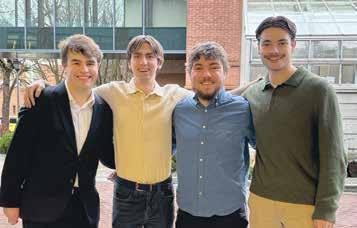
EN26-52 worked with George Reed Inc. on a system to provide accurate aggregate production data.The project uses an optical scanning system over the conveyor belts toestimate weight of material being produced. The team created a prototype tested further by the Reed Family Company. The user-interface in Ignition by Inductive Automation software allows the LiDAR system to communicate with the software and provide data to the operator. Other aspects of the project included calibrating the sensor and creating a simple front-end for the technicians.
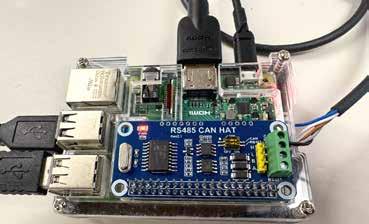
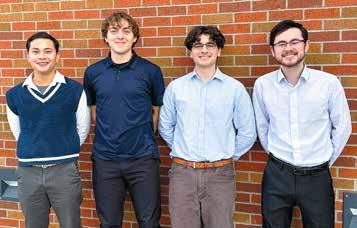
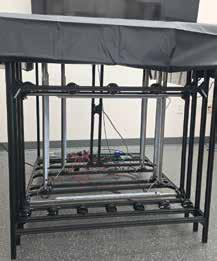
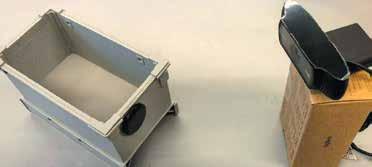
Boeing tasked ENSC26-53 with designing a proof-of-concept Computer Vision Defect Detection inspection system. This design uses industry-standard structural materials, electrically safe pulse width modulation LED lighting, and computer vision hardware and software—all powered by an industrysafe system. The team built a mechanical structure made of aluminum extrusions, steel rods, and 3D-printed parts, covered with blackout cloth to block ambient light. A 12.2MP industrial computer vision camera, controlled by an NVIDIA Jetson Orin Nano, captures, analyzes, stores, and displays defect data on a touchscreen monitor. The system enables comprehensive early-process quality assurance to reduce material waste and provide consistent inspection results.
EN26-54 | Next-Gen Galley Cart
Andrew Moyer, Engineering Management
Emily Scofield, Electrical Engineering
John Stark, Mechanical Engineering
Ezra West, Mechanical Engineering
Advisor: Shane Pacini
DAB: Nathan Verboort
Sponsor: Boeing
Liaison: Karen Hills
EN26-55 | Airplane Cargo Lock Detection
Leonardo Kraus, Mechanical Engineering
Fabricio Pons Samano, Engineering Management
Nolan Schaper, Mechanical Engineering
Advisor: Nathan Zavanelli
DAB: Nick Reasoner
Sponsor: Boeing
Liaison: Kyle Hadley, Peter Owen
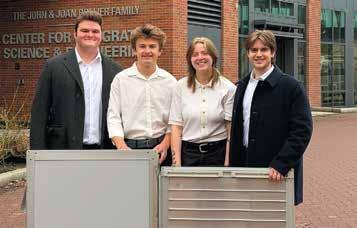
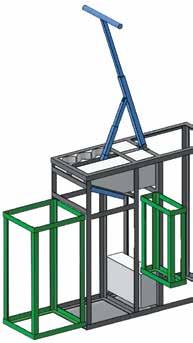
Commercial airline flight crews face significant storage challenges managing trash during flight. ENSC 26-54 developed a prototype retrofitted galley cart that reduces
the volume of in-cabin waste through a mechanical lever compactor system, while incorporating dedicated compartments for recyclables and liquid waste. Following a comparative analysis of five volume-reduction methods (vacuum compaction, electric screw compaction, mechanical compaction, food dehydration, and incineration), mechanical compaction was selected for its balance of low cost, minimal maintenance, operational simplicity, and compatibility with FAA regulations. The retrofit design integrated a telescoping lever arm delivering approximately 150 pounds of compaction force to achieve a target 30% or greater volume reduction per cycle, alongside other features.
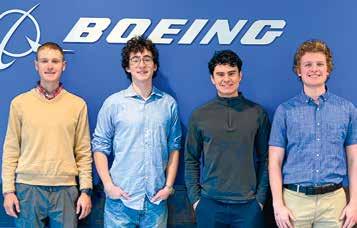
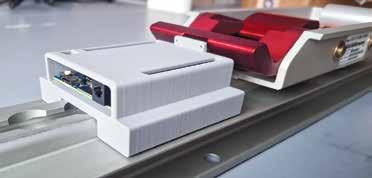
Cargo carriers have been raising concerns about the risks of cargo latches becoming disengaged during flight. Team EN26-55 consulted Boeing Engineering to determine potential solutions, understand operational restrictions, and define necessary maintenance. The team developed a proof-ofconcept prototype that will enable Boeing Engineering and Operations to make informed, actionable decisions to reduce cargo lock disengagement risk, increasing both aircraft safety and customer confidence.
EN26-56 | Cysteine Chapel
Jesse Jordan, Engineering Management
Cooper Krossa, Computer Engineering
Vinhson Nguyen, Mechanical Engineering
Tyler Robinson, Civil Engineering
Advisor: Ted Bernards
DAB: Chance Wilson
Sponsor: Gonzaga Dept. of Chemistry
Liaison: Stephen Warren
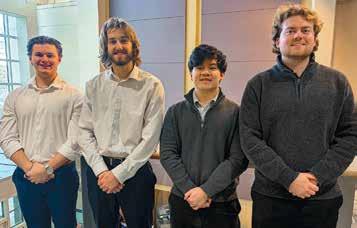
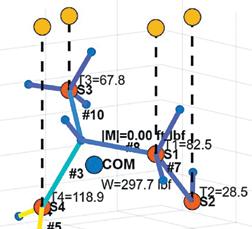
The Gonzaga University Chemistry Department commissioned EN26-56 to design a suspended artistic light fixture for the Hughes Hall atrium: an illuminated model of the amino acid L-cysteine, envisioned as Gonzaga’s own “Cysteine Chapel.” The team created a detailed 3D model of both the installation and the atrium to ensure proper scale, integration, and structural feasibility. Responsibilities included selecting materials, engineering the tubular bond framework, designing the suspension system, and developing illuminated translucent spheres to represent atoms. Deliverables included a construction-ready design package for PLANT Services approval and a professional prototype. The prototype is a scaled subsection centered on the sulfur atom, incorporating tubing, internal structure, lighting, and sphere.
EN26-57 | Emergency Preparedness Vehicle/Drone
Benjamin Gamblin, Computer Engineering
Isaac Hsu, Electrical Engineering
Joseph May, Computer Engineering
Advisor: Jared Marshall
DAB: Thomas Cooney
Sponsor: Framatome
Liaison: Jared Marshall
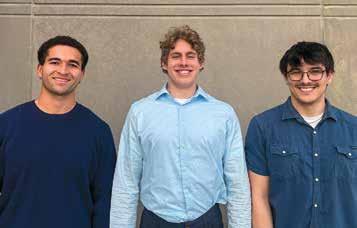
Nuclear energy company Framatome tasked EN26-57 to design a device to remove the danger in a of sending humans out to a chemical spill in PPE with handheld sensors. EN26-57 with CP26-15 designed and fabricated a chemical sensor module (CSM) that can be attached to a remotely controlled vehicle. The CSM senses the chemicals concentrations of HF, NH?, NO2, O2 and CO and transmits the concentration readings, as well as a live video and audio feed, to a remote location. Additionally, the team has created the necessary documentation to allow the client to maintain and operate the vehicle.
Thiago Cordova Rodriguez, Mechanical Engineering
Owen Grimes, Mechanical Engineering
August Ricard, Electrical Engineering
Kirk Shelton, Computer Engineering
Advisor: John Tadrous, Chris Nicol
DAB: Doug Pooler
Sponsor: Kaiser Aluminum
Liaison: Chris Nicol
EN26-59 | Universal Sensor Board
McEwan Bain, Computer Engineering
Michael Baker, Computer Engineering
Carlo Cortez, Computer Engineering
Gabriel DiMartino, Computer Engineering
Advisor: Tim Ecklund
Sponsor: Itron
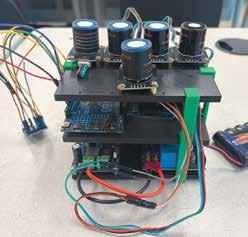
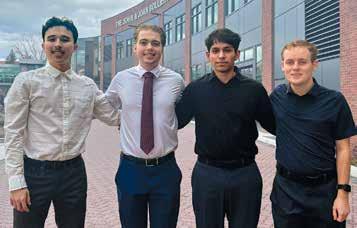
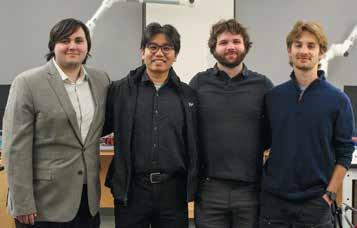
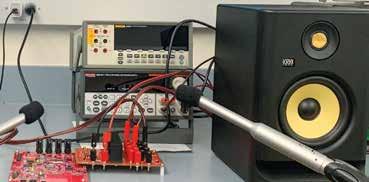
Kaiser Aluminum approached ENSC 26-58 to develop a prototype active noise cancellation system for their facility air compressor room. An active noise cancellation system creates a secondary anti-noise sound signal that would reduce or cancel the sound at a worker’s position, allowing for safer and easier communication within the room. The team developed a prototype active noise cancellation system for Kaiser built around a digital signal processor. Additional research into passive noise cancelling panels was used to develop an acoustical simulation with MATLAB to test different panel layouts. The prototype and acoustic simulation delivered to Kaiser will be used to develop a future implementation of the active noise cancellation within the compressor room.
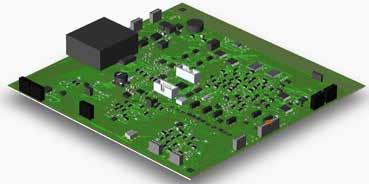
Itron tasked team ENSC 26-59 to design and develop an ultralow power, flexible, universal sensor board. The team worked on modifying the circuit schematic and designing the physical layout of the board. Working with mixed-signals and a 4-layer board, they ensured proper plane and crosstalk management, component placement, and signal integrity. Finally, they’ve handed the CAD files to the manufacturers while working alongside the adjoint computer science team to test and bring up this device after receiving the manufactured board.
EN26-60 | Raw Materials Inventory Tracking System
Trent Blair, Mechanical Engineering
Eli Bunn, Mechanical Engineering
Elijah Chin, Computer Engineering
Advisor: Lamont Miles
DAB: Steven Long
Sponsor: Kaiser Aluminum
Liaison: Chris Nicol
EN26-61 | Smart Scrap Tubs
Joseph Edmonson, Mechanical Engineering
Kevin Hill, Computer Engineering
Cexiao Hu, Mechanical Engineering
Advisor: Shane Pacini
DAB: Jordan Dunn
Sponsor: Kaiser Aluminum
Liaison: Chris Nicol
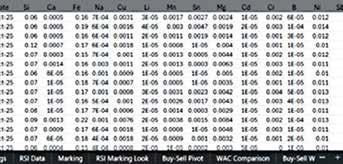
ENSC 26-60 is tasked with creating a program to track Kaiser’s raw aluminum inventory, giving manufacturers tools to identify optimal ingots for casting. Starting with an Excel file containing chemical composition information for each aluminum ingot, data was processed using Python and sent to a digital database. A spreadsheet was output highlighting the usability of each ingot for specific manufacturable alloys, allowing Kaiser to quickly select optimal ingots for a certain product. The team’s program allows Kaiser to find optimal uses for their existing aluminum backstock, ultimately increasing production output.
EN26-61 team partnered with Kaiser Aluminum’s Spokane plant, where metal scrap is unavoidably generated during production and more than 100 scrap tubs must be transported and managed across large indoor and outdoor work areas. EN26-61 was tasked with developing a tracking solution for these tubs, centered on computer vision. To support the core system loop shown in the workflow, the team designed a BLE tag based identification and update process that captures and verifies tag IDs, communicates with a selected tag to estimate relative distance, pushes updates to a database, and generates structured data for server-side visualization. The final deliverable will emphasize the tracking system prototype and end-to-end concept, demonstrating the key data required for multi tub management.
SEAS Capstone Coordinators




Sponsor a Senior Design Project
• Invest in your own R&D
• Strengthen your organization’s innovation pipeline while mentoring future engineers.

• Gain access to a wide range of academic experts, equipment, dedicated lab space, fabrication facilities, and computation resources.
Tailian Chen, Ph.D. Mechanical Engineering
Brooke Colburn, M.S. Engineering Management
Sue Niezgoda, Ph.D. Civil Engineering
John Tadrous, Ph.D. Electrical & Computer Engineering
Yanping Zhang, Ph.D. Computer Science
SEAS Outstanding Senior Awards





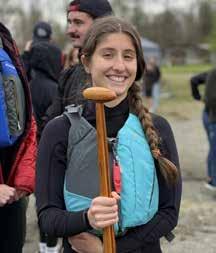
Isabella Camarota has been selected by the Dean as the School of Engineering & Applied Science Outstanding Senior. Her leadership, academic excellence, and service make her highly deserving of this recognition. A Civil Engineering major with a Hogan Entrepreneurial Leadership minor, she is a proven leader in ASCE and the Concrete Canoe Club, a dedicated peer tutor, and a top-performing student with a 3.92 GPA. She exemplifies professionalism, resilience, and a strong commitment to supporting others.
Isabella Camarota Civil Engineering
Elijah Chin Computer Engineering
Cash Hilstad Computer Science
Cooper Krossa Electrical Engineering
Kellen Wang Engineering Management
Emma Iwaniec Mechanical Engineering