


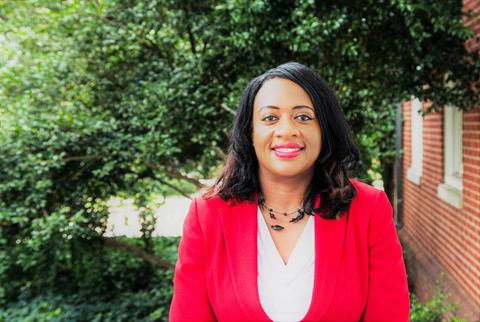
Dear Gonzaga Community,
I am pleased to remember and honor Dr. Martin Luther King, Jr. When we celebrate and remember Dr. Martin Luther King, Jr. on his birthday and the day, we celebrate his birthday we uphold his legacy. We know more than anything else that Dr. King was a man of faith, peace, and love.
He demanded Justice for all especial when the law was not always kind to the people or his movement, the Civil Rights movement. He repeatedly demanded that the law bend towards justice because at times the law did not cover or provide protections for everyone
Dr. King provided the blueprint for multidisciplinary and holistic strategies for activism and civil disobedience. He interwove peace, unity, Christianity, and rebellious action together into a beautiful tapestry of love.
Dr. King’s 2500 public speeches carried a thread of redemptive love and restorative action. His wish and dream were for a beloved community. Dr. King’s Beloved Community is a vision, in which all people can share in the wealth of the earth. The Beloved Community is a vision, that poverty, hunger, and homelessness will not be tolerated because of the standards for human dignity. An all-inclusive spirit of humanity will replace racism and all forms of discrimination, prejudice, and bigotry. The Beloved Community would lead with love and trust, and peace and justice.
Dr. King said that the end of nonviolent action, is “reconciliation; the end is redemption; the end is the creation of the Beloved Community. It is this type of spirit and this type of love that can transform opponents into friends.
It is this type of understanding goodwill that will transform the deep gloom of the old age into the exuberant gladness of the new age. It is this love which will bring about miracles in the hearts of men.” It is an overflowing love which seeks nothing in return. It is the love of God working in the lives of men. This is the love that may well be the salvation of humanity.
In a speech entitled “The Role of the Church in Facing the Nation's Chief Moral Dilemma, ” in 1957, at the Conference on Christian Faith and Human Relations, Dr. King Jr. had an urgent call against hate and complicity He discussed what he called the Beloved Community Moving towards a Beloved Community will require a personal evolution He said, in your evolution move towards solidarity. Dr. King was not talking about words that you say, or email signature. He was asking for more. Dr. King was saying we must move towards solidarity which requires internal work.
We must continually reflect and engage in introspection. Ask often of ourselves in the actions we take.
Why am I pursuing this path? Is it to check the social justice box? Am I performing ally-ship and support, or is it to meet a tangible need?
How can I commit to a long-term strategy OR action?
When evaluating my actions, might there be a difference in my intentions versus the impact? If so, how can I realign them?
How do I authentically meet the needs of a particular community if I do not include them? If I do not see their humanity?
Do this practice daily in honor of Dr. Martin Luther King, Jr and his vision for a beloved community
It is with this message that I want to carry you forward into reading and enjoying this edition of the Diversity Digest.
In solidarity,

Robin Kelley, Ph.D. Chief Diversity Officer


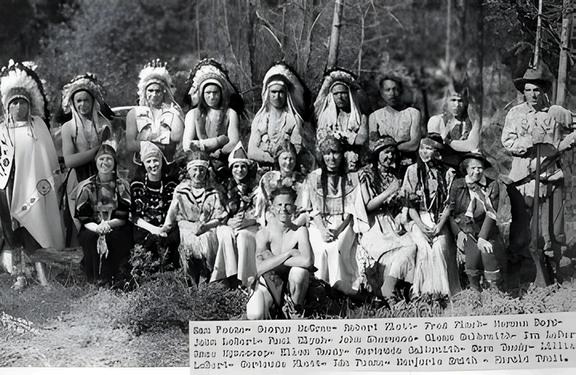
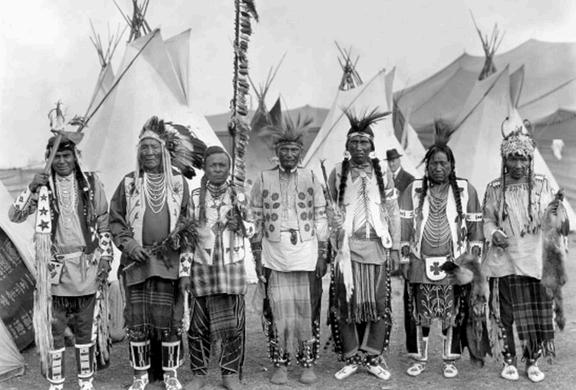
centered on hunting, fishing, and gathering along the Spokane and Columbia rivers. Their diet relied heavily on salmon, steelhead, and shellfish, which were vital to their sustenance and culture.
Today, the Spokane Tribe manages 159,000 acres of land in Wellpinit, Washington, and continues to play an active and integral role in the broader Spokane community. The Tribe remains deeply committed to protecting, managing, and enhancing its natural resources, ensuring their sustainability for generations to come. Through collaboration and the application of best management practices, the Spokane Tribe continues to uphold a legacy of stewardship and c

1858
1881
against advancing U.S. soldiers during military incursions through Spokane territory, at a time when no formal treaty had been established with the U S government
Under President Rutherford B. Hayes, the Spokane Indian Reservation was officially established, encompassing roughly 154,602 acres of land that became known as Chief Lot’s Reservation
1887 1951
Following an agreement, the Upper and Middle Spokane bands were to relocate to the Coeur d'Alene, Jocko (Flathead), or Colville reservations. In time, some members made their homes on the Spokane Reservation.
Upon achieving federal recognition as one of the 574 tribal governments in the United States, the Spokane Tribe established a formal Constitution that continues to shape its governance
The Spokane Tribe oversees approximately 159,000 acres of land in Wellpinit, Washington, with a strong emphasis on natural resource stewardship and environmental preservation The Tribe remains actively involved in the broader Spokane community and has an enrolled membership of about 2,900 individuals.
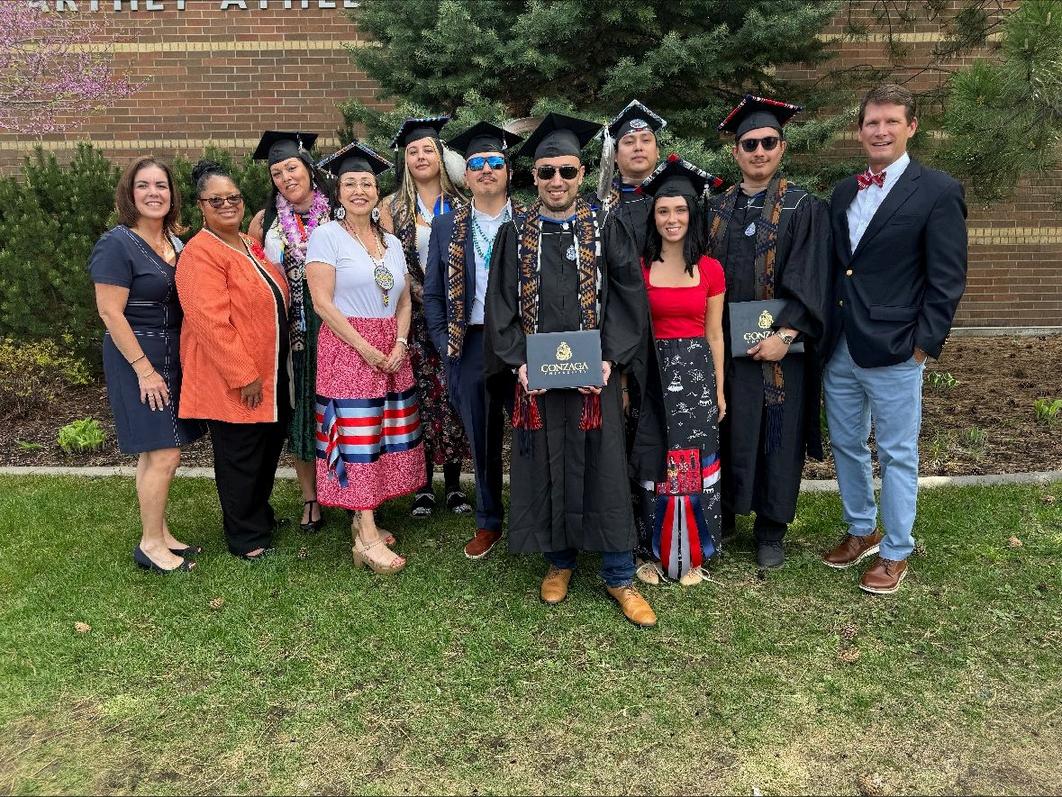
within their communities. Each new cohort begins in the summer, with coursework combining both on-campus immersion sessions and distance learning throughout the academic year. During immersion experiences, students engage directly with business leaders and consultants working to expand economic opportunities for Native communities. Participants also visit Nativeand non-Native-owned businesses to explore how strategic planning translates into real-world success.
The MBA-AIE is a two-year, 35-credit-hour program. Through Gonzaga’s partnership with the Johnson Scholarship Foundation, students receive a 50% tuition reduction as well as additional scholarships to assist with travel and course materials.
Eligibility Requirements, applicants must:
Be an enrolled member of a federally recognized American Indian or Alaska Native tribe (with the exception of non-natives working at tribal colleges and native-owned businesses)
Earned a bachelor’s degree

festive cheer, but also about reflection, belonging, and shared hope.
On December 2, 2025, the Hemmingson Center Rotunda once again became the glowing heart of campus as students, families, and community members gathered for the beloved Tree Lighting Celebration. Lasting just half an hour, from 5:00 to 5:30 p.m., the event offered far more than its brief schedule suggests.
Live musical performances from Gonzaga’s own Big Bing Theory a cappella group filled the Rotunda with warmth, their harmonies echoing against the tall windows as people gathered shoulder-to-shoulder. For senior psychology major Raina McRae, who has attended the Tree Lighting every year since arriving at Gonzaga, the music is what makes the celebration feel magical. “I love being able to stop by the tree lighting ceremony in Hemmingson during the holidays,” she shared. “It’s a reminder of how easy it is to come together as a community for a short moment when everyone is in the thick of their own stress. My favorite part is our university’s a cappella group that angelically demonstrates the magic that happens when a few voices come together to make something that brings real joy into each and every one of our lives.”
ceremony served as a collective deep breath before the stress of finals—a moment to stand together and welcome the spirit of the season. The Tree Lighting remains one of the most cherished campus-wide gatherings of the year, reminding attendees of the Jesuit value of community: that joy is something we actively create for one another.
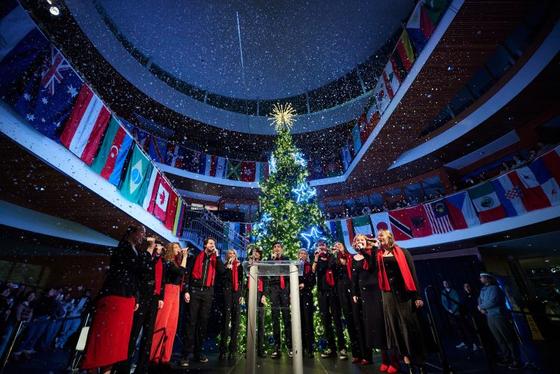
Though short and sweet, the ceremony served as a collective deep breath before the stress of finals. A moment to stand together and welcome the spirit of the season. The Tree Lighting remains one of the most cherished campus-wide gatherings of the year, reminding attendees of the Jesuit value of community: that joy is something we actively create for one another.
Christmas Home for the Holidays,” was brought to life by more than 150 performers, each contributing to a program that shimmered with talent and heart.
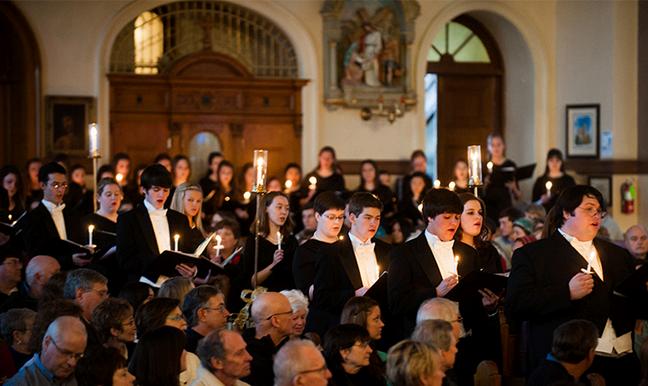
The stage featured an impressive lineup: the One O’Clock Jazz Combo, Jazz Ensemble, Brass Quintet, Orchestra, Big Bing Theory, Gonzaga Glee Club, Musea Treble Chorus, Concert Choir, and even the St. Aloysius Gonzaga School Choir. Their countless hours of rehearsal culminated in a performance that truly made the season shine. Inside the softly lit theater, audience members held candles as layered harmonies, jazz arrangements, and festive instrumentals filled the space. The music offered a moment of peaceful reflection, an invitation to slow down, breathe, and enter into the warmth of the season. For many, attending the Candlelight Concert is more than a performance; it’s a grounding ritual that ushers in Advent with beauty, community, and shared light.


Beyond in-person celebrations, the spirit of the season continues through Gonzaga’s beloved online Advent Calendar—an annual tradition that many Zag families eagerly return to each December. The digital calendar offers daily Zag-themed activities, reflections, and messages designed to help families prepare for Christmas in a way that feels both fun and meaningful. For some, it’s a nostalgic ritual; for others, it’s a chance to connect with Gonzaga’s mission through small moments of joy, gratitude, and anticipation. Together, these daily prompts highlight the diversity of traditions woven into the season and extend Gonzaga’s sense of community far beyond campus.
Gonzaga’s Christmas traditions are not merely decorative or celebratory, rather they are deeply tied to the university’s mission. In Jesuit education, reflection and community co-exist, inviting people to slow down, look inward, and look outward with equal care. Whether through a candlelit performance or the daily anticipation of Advent, these traditions create space for connection, gratitude, and belonging. As the lights on the Hemmingson tree continue to glow throughout December, they echo the spirit of the campus community: diverse, hopeful, and grounded in the belief that even small acts of togetherness can illuminate the world.
camps, and the closure of all Czech colleges and universities.
Since then, November 17 became International Students’ Day, a global observance that continues to highlight student activism while honoring significant student-led movements such as Kent State, Soweto, Tiananmen Square, the Velvet Revolution, the Umbrella Protests, and more.
While the origins of this day are solemn, its meaning has expanded over time. Around the world, International Students’ Day has become a moment to reflect on student empowerment, academic freedom, and the resilience of

To learn more about this day, come visit Aastha’s blog at the iSchoolConnect: International Students’ Day | Know the reason behind celebrating this day!

Transgender Awareness Week leads into Transgender Day of Remembrance (TDOR) on November 20, an annual observance dedicated to honoring the lives lost to acts of anti-transgender violence. TDOR is not only a moment to remember and mourn, but also a call for us to reflect on how we can collectively build a more inclusive and caring community.
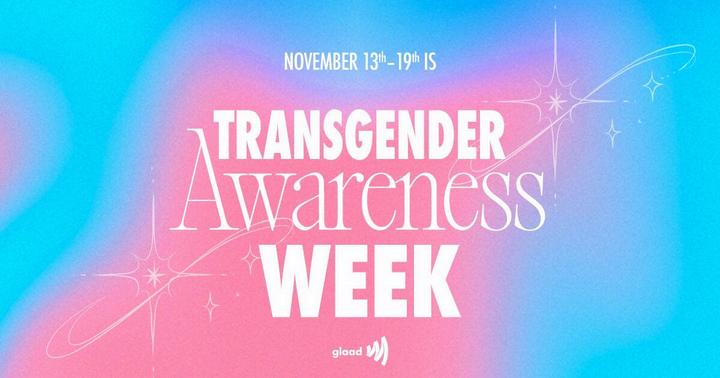
To learn more, visit: https://glaad.org/tag/trans-awareness-week/
The history of HIV reaches even further back: scientists traced the virus to a 1959 blood sample from the region now known as the Democratic Republic of Congo. It is believed that HIV originally crossed into humans from chimpanzees, given its similarity to simian immunodeficiency viruses (SIVs). Importantly, HIV can only be transmitted through specific bodily fluids such as blood or semen, NOT saliva, despite longstanding myths. The virus attacks CD4 cells, weakening the immune system and leaving individuals vulnerable to infections that would normally be manageable.
What was once viewed as a near-certain death sentence is now considered a treatable chronic condition. Medical advancements such as PEP (post-exposure prophylaxis) can reduce the chance of HIV infection by up to 80% when taken within 72 hours of exposure. PrEP (preexposure prophylaxis), fully covered by insurance since 2021, offers highly effective preventive protection for those at higher risk, and can benefit many others as well.

prevention, treatment, and education. As Francisco Ruiz, Director of the Office of National AIDS Policy, reminds us, progress must also include ending stigma, discrimination, and misinformation that still affect people living with HIV today.
As we honor those impacted by HIV/AIDS during AIDS Awareness Month 2025, and reflect on this year’s theme, “Overcoming Disruption, Transforming the AIDS Response,” we also celebrate the progress made and reaffirm our ongoing commitment to awareness, compassion, and health equity.

For more information, visit: https://www.hiv.gov/hiv-basics
reported having been victims of stealthing. It should be noted that this statistic encapsulates those who have reported, not the total number of people who have been victimized. This statistic also doesn’t highlight the health and emotional risks stealthing poses nor give insight into the motivation behind the act and its definition.

So, what is condom stealthing? The term refers to the removal of a condom during intercourse without the knowledge or consent of one's partner. In the gay community, the term stealing is used to describe this same act. Stealthing and stealing are both considered forms of sexual assault. Consent can only occur when everyone involved is informed of the potential risks of the encounter, and if one party agrees to using a method of protection and then secretly removes it, the encounter is no longer consensual. The most common form of condom stealthing entails a man taking off a condom while engaged in sex, but can also involve lying about having put a condom on in the first place, putting it on incorrectly so it comes off during intercourse, or tampering with it. Tampering involves poking holes, slightly tearing, or using lubricants that degrade a condom, making it ineffective.

partner in a relationship. Either because the spark is dying or as another form of exerting control. Children have often been used to keep those experiencing domestic violence in a relationship. Misogynistic beliefs have also been linked as a motivator, which includes feeling as though they have a right to ejaculate in their partner and that their partner should take their ‘seed’.
As mentioned earlier, the health risks of stealthing include unintended pregnancy and sexually transmitted diseases, which the term stealing highlights in its definition; criminal transmission of HIV. The emotional risks, specifically for the one victimized, are a little less intuitive. These risks include loss of trust, guilt, shame, feelings of violation, powerlessness, and may retraumatize a survivor of sexual assault as their body autonomy has been violated.
If you have been victimized by stealthing or stealing, remember it is not your fault. You deserve to be in a relationship with someone who respects your boundaries and deserves your trust.
If you or someone you know needs assistance, please do not hesitate to contact the Title IX Office. Our team will respond promptly and ensure you receive the support you need. You are not alone.

Link to campus resources
The romanticization of stalking has left many confused as to what stalking actually looks like and the harm it inflicts on those who have been stalked. According to The Intersection of Stalking and Sexual Assault Among Emerging Adults forty three percent of undergraduate students meet the legal criteria of stalking but did not identify their experience as such. This disparity may be a result of films focusing on the more physical aspects of stalking, such as following someone on foot while today most stalkers utilize electronic devices to survey or cause harm victims. Along with having stalkers ‘win’ the girl at the end of the film, with seemingly no mention of their problematic behaviors. With these points in mind, films that depict stalking should attempt to illustrate how the crime looks today, along with avoiding turning it into the grand gestures pushing a romance.

Before analyzing a case of stalking from the media, let's review the legal definition of stalking. In the U.S. stalking is widely defined as patterns of behavior directed at specific person that would cause a reasonable person to fear for their own safety or the safety of others or suffer emotional distress. In simple terms, stalking is unwanted contact that leads someone to feel upset, anxious or scared for their safety. Stalking is consistent, not one or two incidents and persists after an individual has asked their stalker to stop contacting them. According to the National Coalition Against Domestic Violence, nearly three out of four stalkers are someone the victim knows, most often a current or expartner. Stalking on campuses most often looks like unwanted voice messages, texts, emails, and social media contact. Along with being approached by the stalker or stalker showing up somewhere unwanted, such as someone's home or place of work. Stalking also appears to have a connection to femicide, seventy percent of women murdered by an intimate partner were stalked prior.
This isn’t to say victims of stalking who haven’t faced violence are unaffected by stalking. Thirty-seven percent of victims of stalking illustrate symptoms of PTSD, along with other mental health concerns and drastic life changes.

With these concerns in mind, one would hope that films and other pieces of media would take stalking seriously in their depictions. Sadly, this isn’t always the case. Films like Twilight that depict stalking in a manner that aligns with what most think of stalking do not do a great job of highlighting the behavior as harmful. Throughout Twilight Edward appears to surveil Bella, from watching her sleep at night to following her to Port Angeles. Though people intuitively pick up these behaviors as being problematic and stalking, the film does not frame them as so. This is problematic as many current college students’ first encounter with Twilight was at an age where they don’t have the life experience or knowledge to know that such behaviors are concerning, so for an author and director to frame such behaviors as heroic or expressing romantic interest can lead to confusion as to what courtship should look like. Knowing this and that children today have more unsupervised access to the internet, today's films need to ensure that they are not framing unhealthy behaviors as romantic.
If you or someone you know needs assistance, please do not hesitate to contact the Title IX Office. Our team will respond promptly and ensure you receive the support you need. You are not alone.
Link to campus resources
investigations of sex discrimination and sexual misconduct complaints, ensuring fair and prompt resolution processes, and developing and implementing prevention and education programs. Gonzaga University has both a Title IX Coordinator and two Deputy Title IX Coordinators on the Equity and Compliance team within the Office of Inclusive Excellence, responsible for university Title IX trainings and overseeing university Title IX reports and investigations. Gonzaga also has a Deputy IX Coordinator for Athletics, who oversees training compliance for GU Athletics.
If a student informs a resident assistant (RA) they were subjected to sexual violence by a fellow student, is the RA obligated under Title IX to report the incident to the university?
Resident Assistants (RA) are mandatory reporters at Gonzaga University and must report any alleged incident of sexual violence to the Title IX Office. Therefore, an RA should make every effort to ensure that before the student reveals information that they may wish to keep confidential, the student understands the RA’s reporting obligation and the student’s option to request that the university maintain confidentiality.
once directed to the “Title IX” webpage, click on the “Report an Incident” tile under the “REPORT = SUPPORT” header. On the “Report an Incident” page, click the “Report Online” button which will route you to the online reporting form. You can also scan the QR code below to be routed directly to the form.
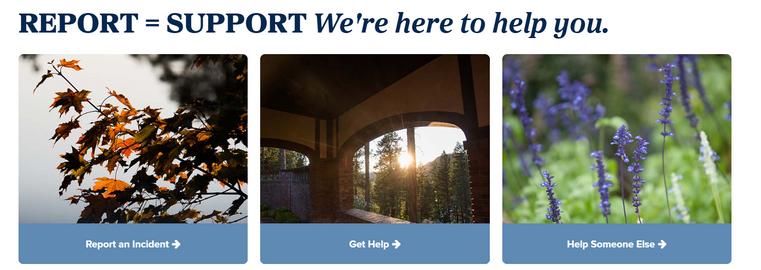
Go to title IX Website, scroll down and click “Report an incident” or scan/click the QR Code
If you would like to ask us a question about the Title IX or Harassment and NonDiscrimination policies or grievance processes, scan/click the following QR code:
Link to Question Submission

disability equity, and cultural dynamics; topics that reflect both his personal experiences and his professional commitment as a multiracial man with a disability.
Throughout his career, Dr. Wright has been dedicated to “bridging theory and practice.” One of his most meaningful contributions is coining the term chronic codeswitching to describe how Black/White multiracial students navigate complex intersectional experiences in higher education. He shared that Gonzaga’s commitment to social justice and developing the whole person “aligns perfectly with my work and vision.” He is especially excited to host the office’s monthly reading group, with the next session on November 24. He also encourages everyone to look forward to the office’s signature event, the Inclusive Excellence Symposium in Spring 2026.
Outside of work, Dr. Wright enjoys exploring Spokane with his spouse, Aryn, and their beloved rescue dog, HoneyBee. He loves running, hiking, gaming, and discovering new food spots.
Be unapologetically true to who you are. Embrace every part of your identity, even the parts that might feel misunderstood or overlooked. The world doesn’t need you to fit a mold; it needs you to be exactly who you are.

sexual health, healthy relationships, personal boundaries, and violence prevention, topics she cares deeply about and continues to bring into her work with students. As a Spokaner at heart, she was always a Zag fan, and when her family moved back here in 2020, she signed up to help with Gonzaga’s COVID-19 response as a way to give back to an institution with deep roots and impact for the local community.
Bethany has three kids who keep her busy as their chauffeur, cheerleader, and ATM while supporting their different sports and activities. On the rare days when her family does not have lessons, practices, or games, she enjoys playing Fortnite and other video games with her husband and kids, reading the latest BookTok recommendations, and cheering on the Zags and her favorite sports teams.
College is an exciting time, figuring out who you are going to be and what you are capable of. That growth typically includes some challenges, mistakes, and new situations you are not sure how to navigate. I am happy to walk beside you on this journey!
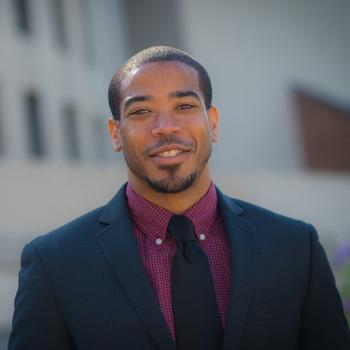
Dr. Yates joined Gonzaga in September after more than 15 years working in higher education. His focus is on compliance work related to Title VI, VII, and Title IX What he loves most about the Office of Inclusive Excellence is the strong team foundation, making his transition here “very seamless.” Most of all, he is looking forward to growing with the office, bringing Dr. Kelley’s vision for the division to life while ensuring that Gonzaga remains a compliant institution under Title VI, VII, and Title IX.
Currently, he and his colleague are working on providing more training for campus partners and preparing updated training content to ensure ongoing educational opportunities across campus. As this is the first time the office is fully staffed, he said they are “building the plane and flying it at the same time.”
In his free time, Dr. Yates is especially fond of going to the gym to re-center and decompress; it is his calm space to focus on physical and mental health. He also loves cooking and is looking forward to the holiday season, when he can prepare bigger meals and experiment with seasonal recipes.
It’s important to learn the culture of the institution you’re at. And when the right opportunity is presented, I never want to be limited by the location.

Meghan Ridgely, M.L.S. Assistant to the Chief Diversity Officer & Office Manager
As the year comes to a close, we would like to extend our heartfelt gratitude to Meghan Ridgely for her unwavering support and dedication to our office. Through both challenges and celebrations, Meghan has consistently gone above and beyond, offering her time, expertise, and positive spirit in ways that have made a lasting impact on our team. Her commitment, reliability, and willingness to step in whenever needed have not gone unnoticed, and we are incredibly thankful for all that she has contributed.
Please join us in congratulating Meghan and sending her our warmest wishes as she embarks on her next journey. While she will be greatly missed, we are excited to see all that lies ahead for her and wish her continued success and happiness in this next chapter.
As the current Co-President of the Queer Student Union (QSU) alongside Madelyn Holland, Olivia has been deeply involved with the organization since her freshman year. Her journey with QSU began out of a desire to find belonging. “I joined because I wanted to meet friends and find a space where I could feel comfortable,” she reflected. What started as a search for community soon evolved into leadership. After serving as Vice President for two years, Olivia stepped into the Co-President role, motivated by a vision to help QSU thrive after the disruptions of the COVID-19 pandemic. “Like many other clubs on campus, QSU was struggling to come back,” she said. “I wanted to make sure a community like this could be successful again.”
For Olivia, leadership within QSU has always been rooted in connection and care. “What continues to motivate me is that feeling of belonging,” she explained. “I want to help others find that, a safe space where they can be themselves.”
QSU serves multiple functions on campus, as both a social and educational hub for queer students and allies alike. “It’s a space where people can come to relax and be with friends, but it’s also a place to learn about queer topics and activism,” Olivia shared. The organization’s dual mission allows it to foster both community and awareness, ensuring that students not only find belonging but also gain tools for understanding and advocacy.
g y , Drag Show. “The drag show has been my biggest source of pride,” Olivia said, recalling how the event has evolved over time. “It used to only feature professional performers, but now students can share the stage alongside them. Seeing that come together and watching friends perform in drag was incredible.” For Olivia, the event not only celebrates self-expression but also showcases the vibrancy of Gonzaga’s queer community. Looking ahead, Olivia is already excited for the Spring 2026 Drag Show, themed “Drag Me to the Red Carpet.” Scheduled for late February, the event promises to continue the tradition of joy, performance, and pride that QSU has cultivated over the years.
Despite QSU’s successes, Olivia acknowledges that challenges remain for LGBTQ+ students on campus, particularly for transgender students. “Classrooms should always be safe environments. That’s why spaces like QSU are so important.”
Ultimately, Olivia hopes her work with QSU continues to shape Gonzaga into a more inclusive and supportive place. “I want QSU to remain a space where students feel safe and like they belong,” she emphasized.
For students still searching for their place on campus, Olivia’s advice is simple: Explore and show up. “Stop by QSU, we have different types of meetings and game nights,” she encouraged. “Check out clubs that align with your interests or even ones that don’t. Visit Student Affairs offices, UMEC, the Lincoln Center, or the Office of Sustainability; the staff are incredibly supportive, and those spaces can lead to valuable friendships and connections.” Through her leadership, Olivia Jennings continues to exemplify what it means to build belonging; one event, one connection, and one student at a time.
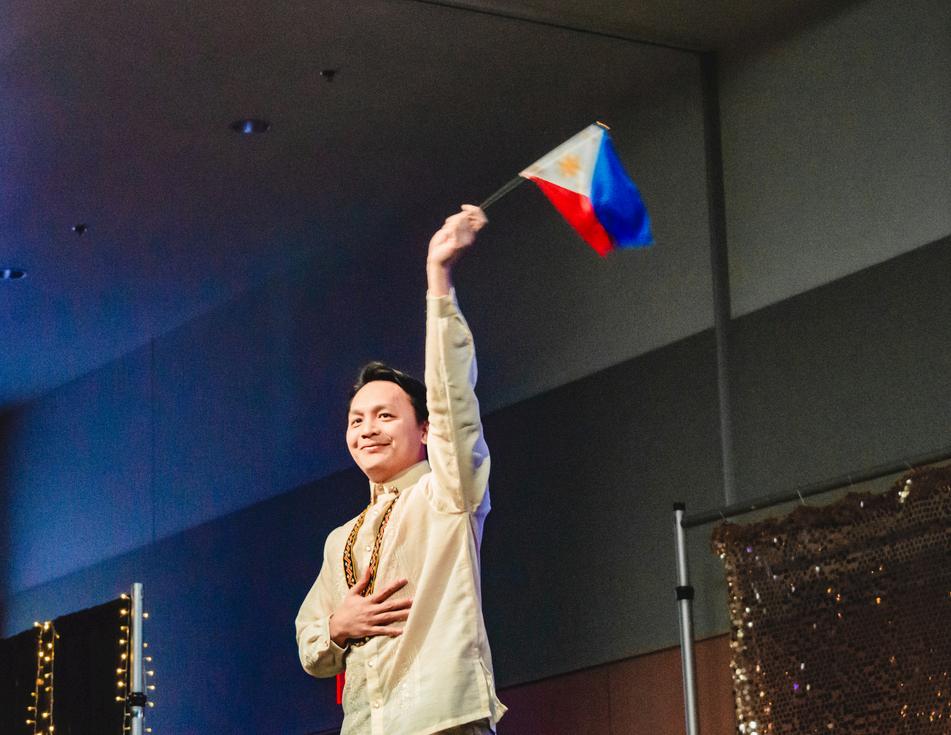
Professor Gipal earned his Bachelor of Secondary Education in English, and later completed his Master’s in English Language Teaching. It was his love for languages and teaching that guided his path to expanding his horizon beyond country’s border. After years of working in the Philippines, he applied to the Fulbright Foreign Language Teaching Assistant (FLTA) Program not once, but three times. Rejected twice before finally being accepted, he describes those three years as a test of patience and faith that ultimately led to a dream come true. Today, he proudly represents his home institution as its first Fulbright Scholar.
Professor Gipal describes his experience here at Gonzaga as both transformative and humbling. As a Fulbright FLTA, he serves as a foreign language teaching assistant in the Modern Languages and Literature Department of the College of Arts and Sciences. He was able to share his love for language and culture while learning from his students and colleagues every day. “This program allows me to engage with students from diverse backgrounds, design meaningful lessons, and foster cross-cultural understanding,” he shared. “I’ve grown not only as a teacher but also as a global citizen, learning from my students while sharing my own culture.”
The most rewarding moments for him are when his students begin to connect with Filipinos in the most authentic and heartfelt ways. Whether it’s from hearing them
of being a person for and with others.
Among his many accomplishments, one day stands out clearly in his memory. “I received the news that I would be teaching at Gonzaga as a Fulbright FLTA on my birthday, June 17, while rehearsing for my commencement ceremony,” he recalled. “It felt as though everything I had worked for, years of teaching, studying, and persevering, had beautifully come together in one day.”
For Professor Gipal, this milestone represents both professional success and personal growth. It is a reminder of the resilience and dedication it took to be where he is now.
As he continues teaching at Gonzaga, Professor Gipal hopes to inspire his students to see language not just as words to learn, but as a bridge to understanding people, stories, and as a shared moment of understanding.
representatives for the College & Schools during the 2022 – 2024 term.
After being approached to run during the election recruitment process, McAloon eagerly accepted the opportunity to represent her colleagues. Midway through her term, when then–Vice President Matt assumed the presidency, the vice presidency became vacant. McAloon volunteered to serve as interim vice president and later successfully ran for the 2024 – 2026 term.
Her background in the College & Schools area, along with her experience as a supervisor, brings a valuable perspective to the executive council and to discussions surrounding staff concerns and campus culture.
Under McAloon’s leadership, Staff Assembly continues to focus on initiatives that strengthen the sense of community among staff members. Popular programs such as Coffee & Donuts offer casual opportunities for colleagues across departments to connect, while COG meals provide free breakfast or lunch gatherings that foster camaraderie.
Additionally, the biannual staff awards celebrate outstanding contributions to the university through the Mission, Innovation, and Zag Spirit categories recognizing the commitment and creativity of Gonzaga’s employees.
staff community.
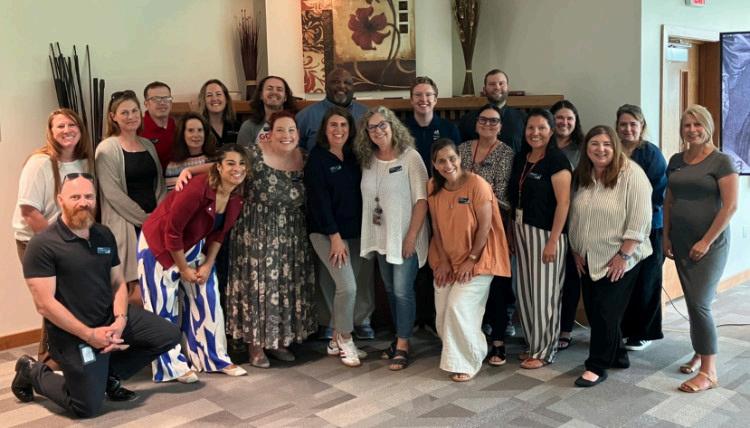
2024-2026 Executive Council of the Staff Assembly.
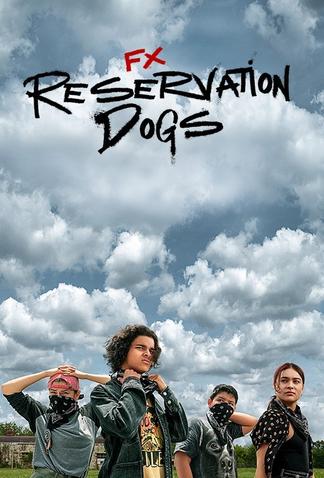
all Indigenous writers room and a majority Native cast. Blending humor and heartfelt storytelling, the series across its three seasons offered an authentic, modern portrayal of Native life, highlighting themes of home, belonging, family (both chosen and biological), and reclaiming one’s identity.
Killers of the Flower Moon is a powerful retelling of the Osage murders that exposes greed, racism, and corruption with unflinching clarity. The film is long but gripping, beautifully shot, and grounded in strong performances. What stands out most is its respect for the Osage Nation and its willingness to center their voice in a story that has too often been told from the wrong perspective. It’s heavy, thoughtful, and exceptionally crafted, a must-watch for anyone interested in historical tragedies and American justice.

progress in higher education and reflected on her experience becoming the Universitys first woman president She spoke about both the encouragement and criticism that accompanied her appointment and urged attendees to take opportunities even when they feel unprepared— echoing Geraldine Ferraro’s well-known line, “Some leaders are born women.” Looking ahead to the next decade, Women Lead remains committed to fostering spaces where women can grow, lead, and support one another
On November 4, 2025, SLATE Dental founder and CEO Brynn MacLennan visited the Jepson Center’s Wolff Auditorium to share the story behind her company’s rapid growth She walked attendees through the development of the SLATE Electric Flosser from early prototypes to her successful 2021 Kickstarter campaign, which reached its funding goal on the very first day.
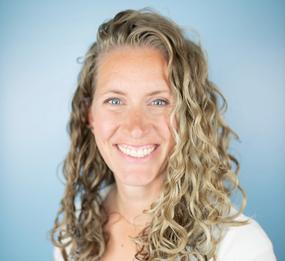
Since then, SLATE Dental has expanded significantly, reaching $4 million in sales in 2024 and earning features in publications such as Men’s Health, Allure, BuzzFeed, and others. In 2025, MacLennan was also named one of the top 25 most influential businesspeople in the Greater Spokane area. Reflecting on her journey, she emphasized the importance of mission-driven values and educating customers on oral health as central to SLATE’s growth
The event, moderated by Professor Christopher Stevens, offered students a behind-the-scenes look at the challenges and creativity involved in building a health-focused consumer brand.
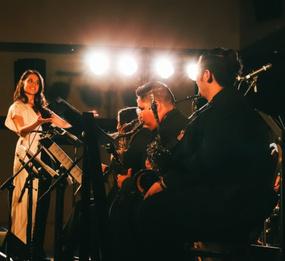
About: A high-energy jazz performance celebrating Indigenous musicians and culture, led by acclaimed bandleader Julia Keefe.
When: Monday, Jan 12, 2026 | 7:30 PM
Where: Myrtle Woldson Performing Arts Center
About: A week-long series of events honoring Dr. Martin Luther King Jr.’s legacy through speakers, discussions, and community engagement focused on justice and equity.
When: Jan 18 – Jan 24, 2026 | Various times
Where: Gonzaga University Campus
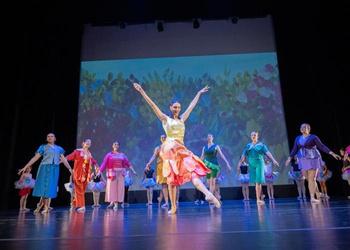
About: A whimsical dance-theatre production based on the classic fairy tale Thumbelina, featuring imaginative choreography and storytelling by Gonzaga Theatre & Dance.
When:
Friday, Jan 23, 2026 | 7:00 PM
Saturday, Jan 24, 2026 | 7:00 PM
Sunday, Jan 25, 2026 | 2:00 PM
Where: Magnuson Theatre, College Hall

When: Tuesday, February 24| 12:15 PM to 1:15 PM
About: Staff, faculty, and anyone interested in intercultural connection are welcome to join us for lunch, meet new and familiar faces with shared interests, and take part in guided conversations that foster dialogue, learning, and belonging.
Where: Humanities Building 153 College Common (HUB)
When: Wednesday, February 04 | 12:15 PM to 1:15 PM
About: A contemporary performance blending music, movement, and narrative to explore themes of identity, culture, and artistic expression.
When: Friday, Jan 23, 2026 | 7:30 PM
Where: Myrtle Woldson Performing Arts Center Yagódy
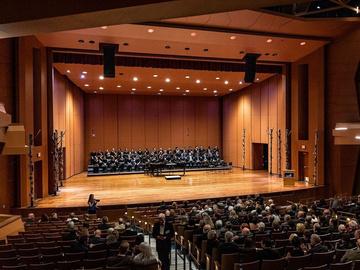
PBK Day Lecture: Bernal - Pokébio
About: A Phi Beta Kappa Day lecture highlighting interdisciplinary scholarship and academic excellence through a featured faculty presentation.
When: Monday, Jan 26, 2026 | 7:00 PM
Where: Gonzaga University Campus
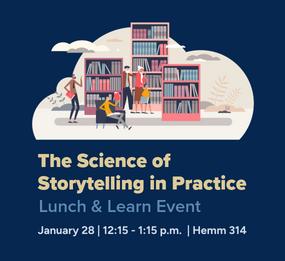
About: An interactive talk exploring how storytelling influences communication, learning, and human connection across academic and professional settings.
When: Wednesday, Jan 28, 2026 | 6:00 PM
Where: Hemmingson Center 314
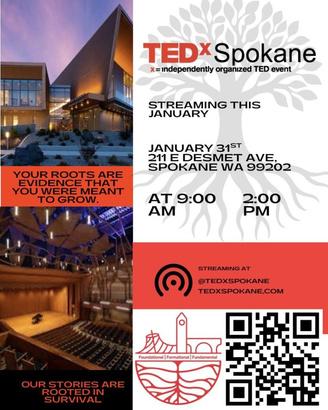
About: A full-day TEDx event featuring innovative ideas, inspiring talks, and local voices sharing stories worth spreading.
When: Saturday, Jan 31, 2026 | 10:00 AM - 5:00 PM
Where: Myrtle Woldson Performing Arts Center
Merry Questmas!
About: A festive winter village experience featuring seasonal décor, family-friendly activities, holiday treats, and photo opportunities Perfect for kids, families, and anyone wanting cozy holiday vibes after Christmas.
Where: Northern Quest Resort & Casino (West Plains)
When: First Friday of every month

About: A local favorite ski resort known for affordable lift tickets, uncrowded slopes, and terrain for all skill levels. Great for families and college students
Where: 49° North Mountain Resort (Spokane County)
When: January 16 – January 22
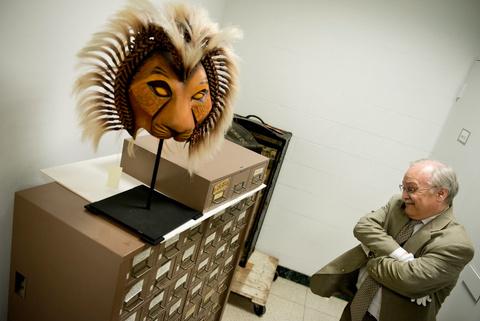
About: An exclusive exhibit showcasing the original masks and costumes used in Disney’s The Lion King Broadway production, highlighting African-inspired design and theatrical craftsmanship.
Where: 49° North Mountain Resort (Spokane County)
When: January 16 – January 22

Want to explore more events? Click or scan the QR code to go to VisitSpokane or the Inlander for more suggestions on what to do in Spokane! VisitSpokane The Inlander
Dear readers, thank you all for your support in 2025. We wish you a Happy New Year!
Subscribe for future editions and tell us what you think!
Follow us on Instagram: @gonzagadiversity Questions? Comments? Have an idea for an article?
Email us at inclusiveexcellence@gonzaga.edu
EDITORIAL BOARD
Aryana Schiller
Ashlinn Aguayo
Brice Yates, Ph.D., CPD
Kristina Poffenroth
May Ly
Meghan C. Ridgely, M.L.S.
Robin Kelley, Ph.D.
Trieu Khanh Vy Nguyen