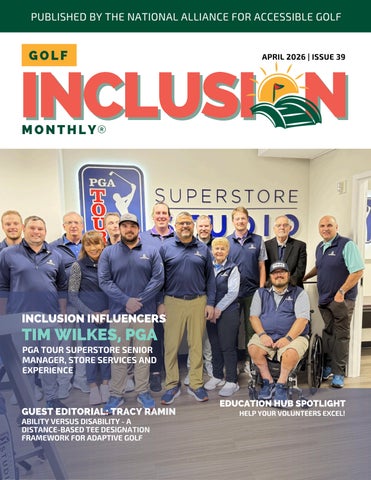
IINC NC MONTHLY
INCLUSION INFLU TIM WILKES,
PGA TOUR SUPERSTORE MANAGER, STORE SERV EXPERIENCE
EDUCATION HUB SPOTLIGHT
ABILITY VERSUS DISABILITY DISTANCE-BASED TEE DESIG FRAMEWORK FOR ADAPTIVE GUEST EDITORIAL: TR HELP YOUR VOLUNTEERS EXCEL!


INTHISISSUE APRIL2026
A MESSAGE FROM THE ALLIANCE
Executive Director, Dave Barton, PGA
ACCESS + INCLUSION
The Alliance is a leader in access and inclusion - increasing the participation of people with disabilities in the game of golf
INCLUSION INFLUENCERS
An interview with Tim Wilkes, PGA - PGA TOUR Superstore Senior Manager, Store Services and Experience.
“
SO, A GUY GOES INTO A BAR
... ”
The game of golf can better serve individuals with disabilities.
GUEST EDITORIAL: TRACY RAMIN
Ability versus Disability - A Distance-Based Tee Designation Framework for Adaptive Golf
GAIN SPOTLIGHT
We want your Guest Editorial opinions!
EDUCATION HUB SPOTLIGHT
Help your adaptive tournament and/or program volunteers excel!
BOARD & STAFF
Melissa Low, CAE President
Dana Dempsey, MS, CTRS Vice President
Jan Bel Jan, ASGCA Secretary
Sheryl Bindelglass, CSP ICAE Treasurer
Dave Barton, PGA
Executive Director
Justin Apel
Chava McKeel
Ronnie Miles
Andrew Yeast
Liz Cooper, LPGA
Erik Nielsen, PGA
Kevin Corn, PGA
Rich O’Brien
Joe Trauger
Mike Tinkey

NATURAL STONE. GROUNDBREAKING SOLUTIONS.

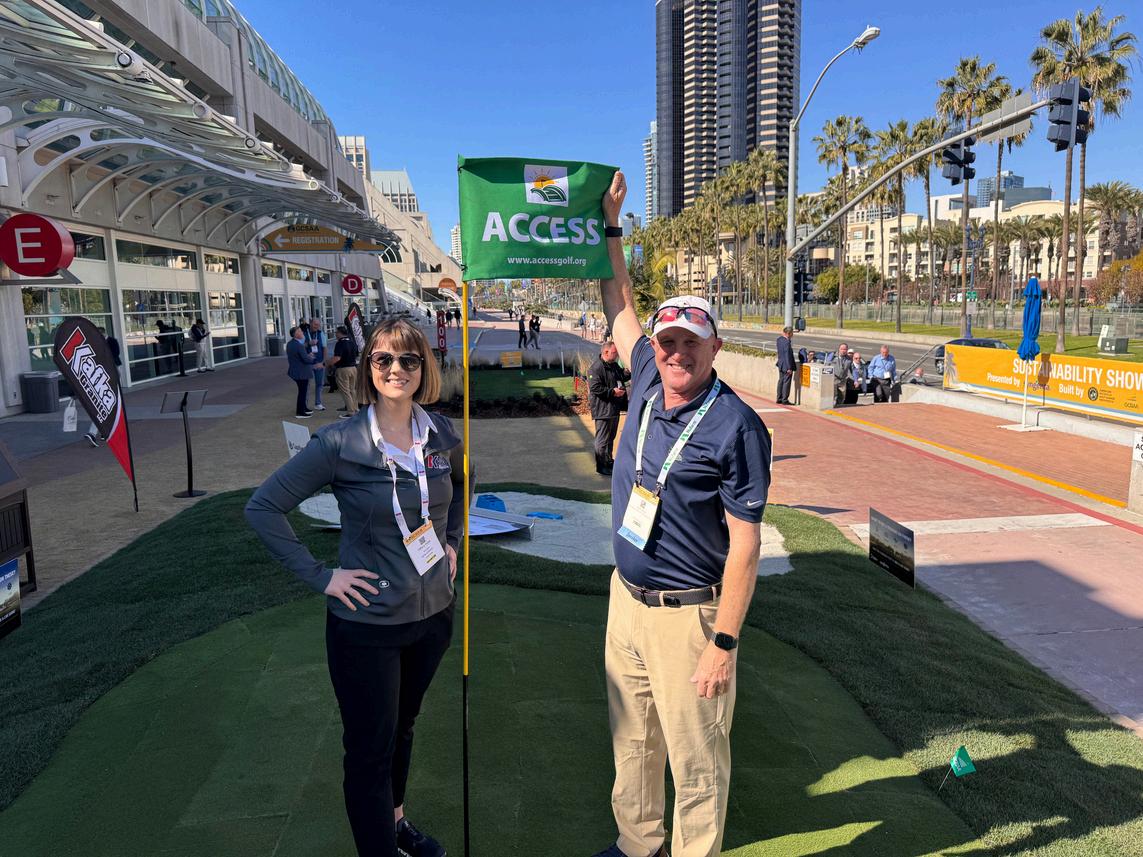

“Kafka’s support of our mission makes it possible for us to deliver education to the golf industry We are proud to be associated with them and the commitment they have to delivering products that improve accessibility to golf facilities around the country!”
Dave Barton, PGA, Executive Director, National Alliance
GOLF PATHWAY MIX.
AMESSAGEFROM THEALLIANCE
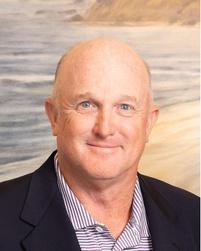
Dave Barton, PGA Executive Director
Millions of brackets busted. The Masters. The golf season has officially started!
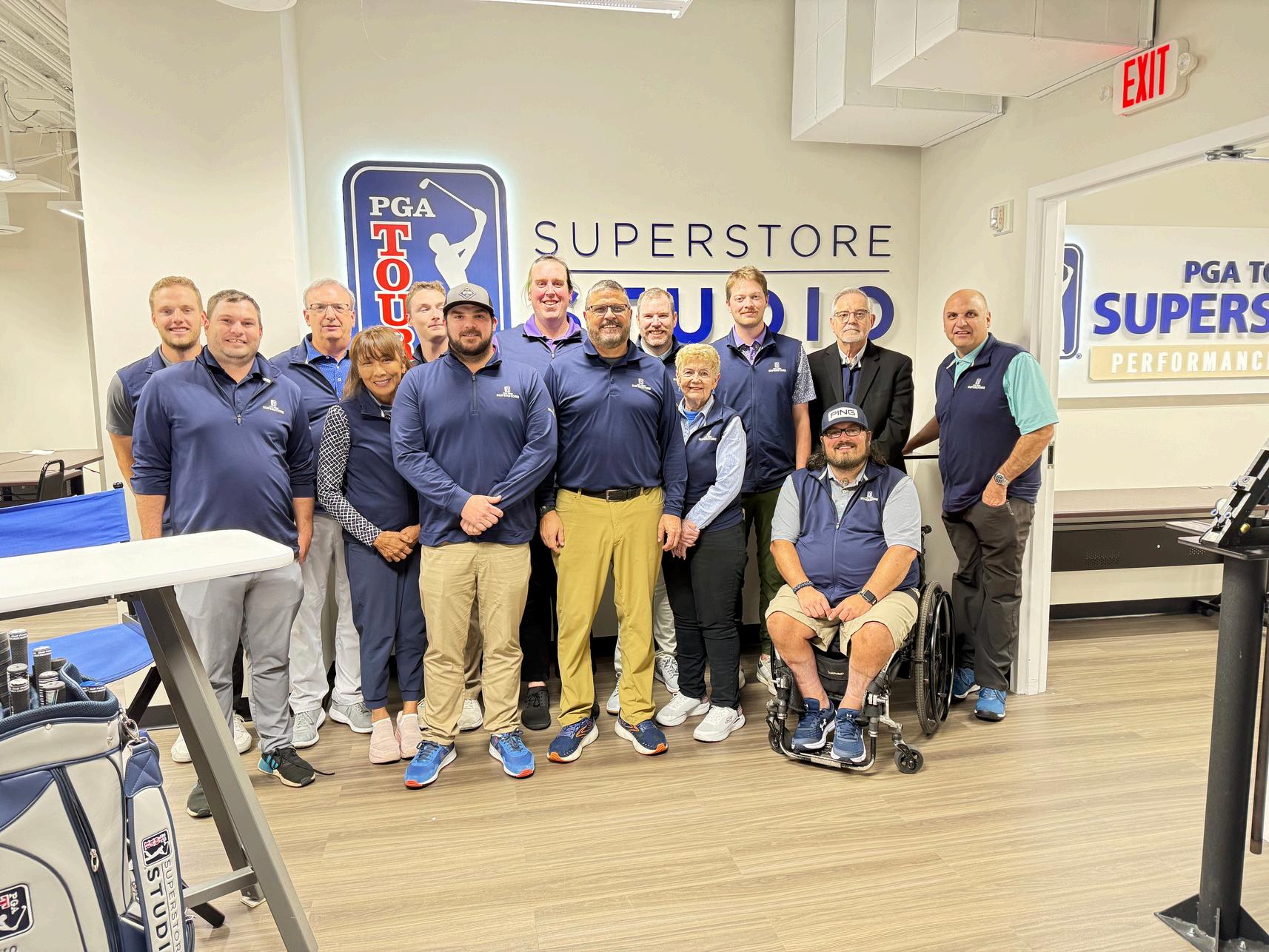
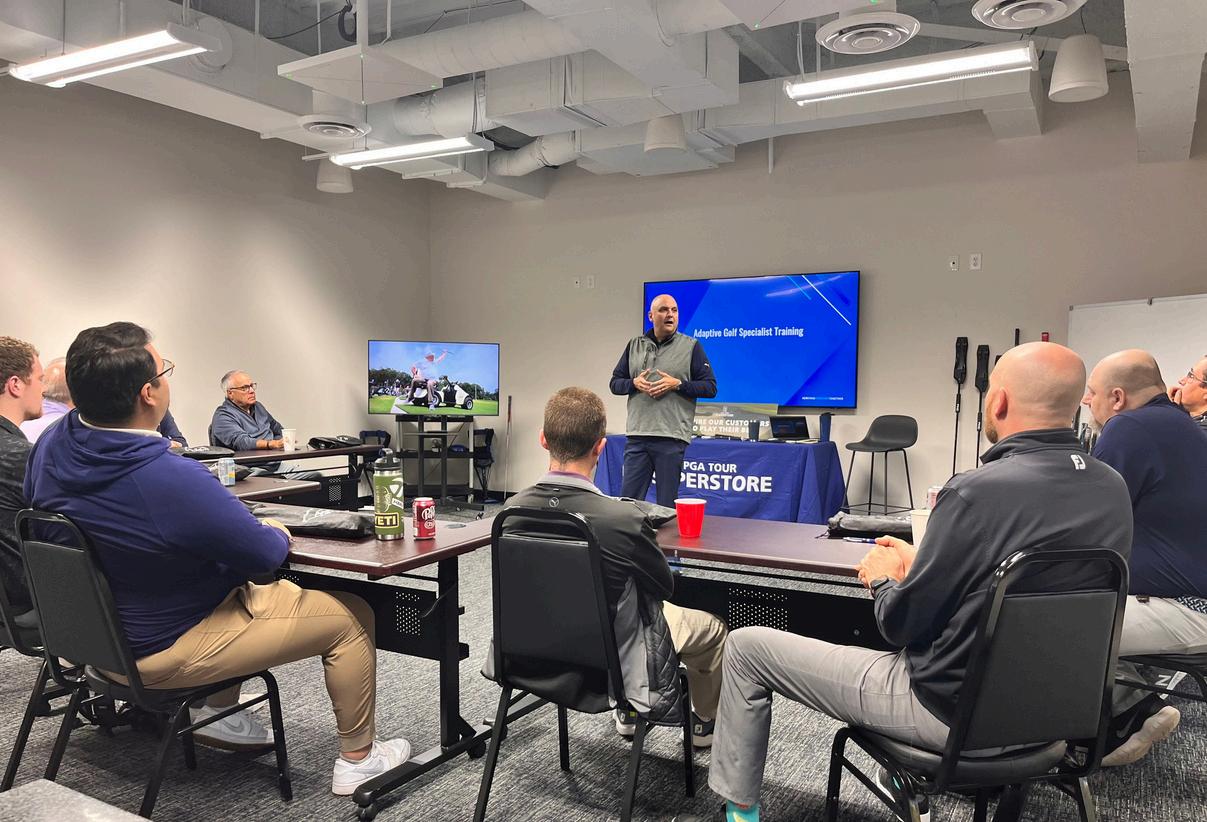
Joining us as the April Inclusion Influencer is Tim Wilkes, PGA, Senior Manager, Store Services and Experience for PGA Tour Superstore Tim is leading PGA Tour Superstore efforts to ensure every store they have in the US (approaching 100) has a trained adaptive golf fitter and working to provide opportunities for individuals with disabilities to play golf.
The Alliance is pleased to announce there was no shortage of nominations for the Adaptive Golf Hall of Fame inaugural class. The candidate review and selection process began in early April and announcements are planned for June, 2026
Check out the new feature we will bring out periodically in Golf Inclusion Monthly® , the “Guest Editorial” Our first guest editorial is provided by Tracy Ramin, who has some views on creating equitable competitions that are worth the read Better yet, we provide a way for you to share your opinions about the editorial!

ACCESS+INCLUSION
Our mission is to increase the participation of people with disabilities in the game of golf
The National Alliance for Accessible Golf (National Alliance) is the leader in inclusion working to ensure the opportunity for all individuals with disabilities to play and participate in the game of golf Formed in the summer of 2001, the National Alliance is represented by professional associations within the industries of golf, recreation and leisure, and health care providers as well as organizations that advocate for inclusion and provide services to individuals with disabilities
WHATWEDO
Advocacy and Awareness
In addition to advocating for individuals with disabilities in print and online publications as well as social media marketing and interviews, the National Alliance engages in speaking opportunities at conferences and other public events. The Alliance also hosts GAIN, an adaptive golf community networking and engagement forum
Education
The Alliance Education Hub provides guidance to golf course owners and operators seeking ways to make their golf courses and facilities more welcoming, accessible, and inclusive to golfers with disabilities, including programs to bring new golfers into the game.
Resources
The Alliance delivers resources including ADA guidance, policy templates and more to create accessible, inclusive, and welcoming environments.
INCLUSIONINFLUENCERS
ANINTERVIEWWITHTIMWILKES
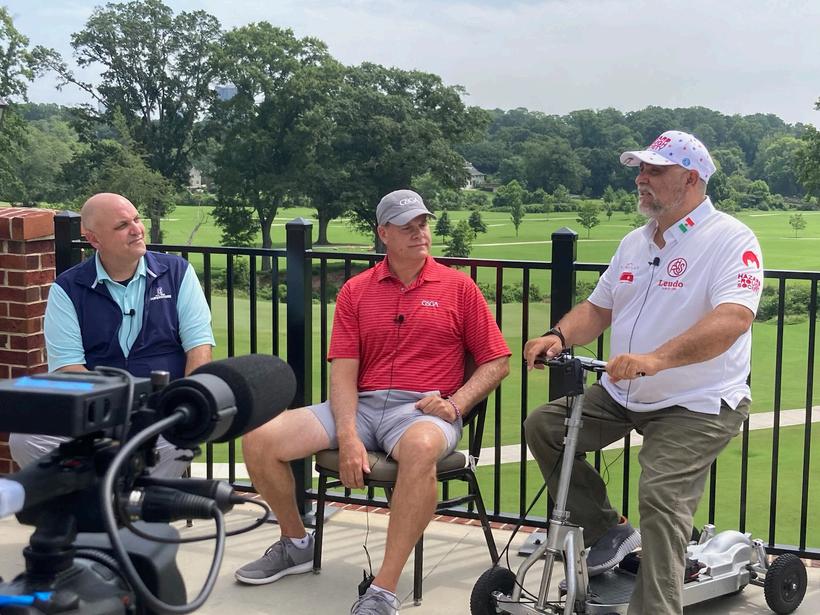
Alliance Executive Director Dave Barton speaks with Tim Wilkes - Senior Manager, Store Services and Experience, PGA TOUR Superstore. Tim is spearheading efforts around the country to educate and certify adaptive golf fitters in each of their stores.
Early Golf Roots... “I grew up in a small town in Wisconsin called Watertown, about halfway between Madison and Milwaukee I started playing golf at an early age My mother has always told people that I lost my pacifier on the golf course, so if that tells you anything, I’ve been playing quite a while. ”
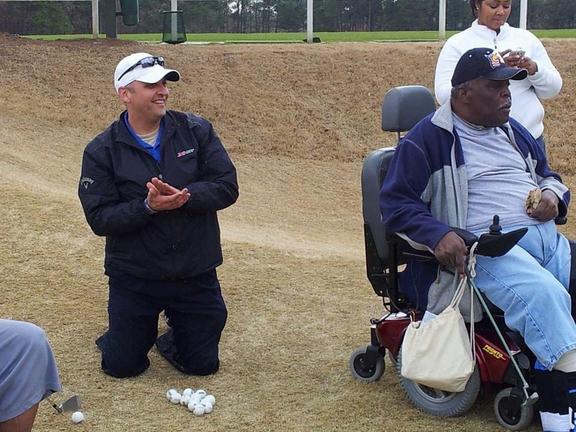
“I started to embrace that diagnosis by doing everything I could to feel as normal as I possibly could. And golf made me feel normal. ”
Family influence matters... “Golf was something very important to me at an early age The big golfer in my family, actually, is my mother She was very competitive and very athletic, and in fact, she won the club championship at Watertown Country Club while she was over 12 weeks pregnant with me. ”
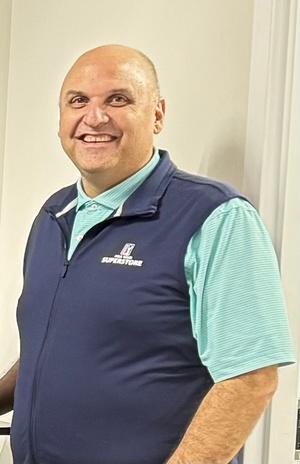
Diagnosis and perspective... “That ankle breaking that I was mentioning led to a diagnosis at age 13 of muscular dystrophy and having Charcot-Marie-Tooth disease, which is a neurological disorder affecting your lower limbs I started to embrace that diagnosis by doing everything I could to feel as normal as I possibly could. And golf made me feel normal. ”
Adaptive turning point... “It completely ignited my desire to learn how to apply what I know to somebody that has such a limited mobility Everything you’re taught about, all the positions, the key to balance, everything that I knew about golf, I needed to almost throw out the window and start all over. Here’s where he’s at, and let’s meet him where he’s at. ”
Training philosophy evolves... “I wanted to fastforward that process for everybody there. All the things that I didn’t know that I had to learn, I wanted them to experience right away That’s why at PGA TOUR Superstore we bring in doctors and therapists, simulate the diagnoses, and then let our fitters actually work with adaptive athletes. ”
Emotional Program Impact... “It’s emotional to talk about it, it’s emotional to see it. Every time I see it, I get emotional, but it’s that powerful part of it that pushes these fitters to want to do whatever they can to try to help anybody play the game It’s more than a game, it changes lives ”
Community and Inclusion... “You see everybody in every walk of life come together, and it’s the hardest thing sometimes to decipher who is a volunteer and who’s a participant, because they’re the same They rally around each other, and it’s amazing to see that camaraderie and fellowship. Knowing that, our goal at PGA TOUR Superstore is to be a resource of support in every community we serve. ”
Hidden Challenges Revealed... “I thought for the longest time that I was hiding my disability from the world, that only I knew about it because it was so subtle. It wasn’t to where I needed assistance to walk in any way, so I was wearing the same shoes, doing the same thing, never had to really adjust I realized at a late age that others knew that I had challenges, I just refused to admit that I did ”
Adaptive Golf Discovery... “As I got older and thought I was hiding it more, that’s really when the world of adaptive golf came to me It wasn’t something I was initially seeking out, but once I found it, it opened my eyes to what was possible That realization changed everything for me personally and professionally. ”
Early Superstore Experience... “I started there as a golf instructor and never really had a focus on the adaptive community All of my clientele were able-bodied people, and I never really thought twice about it. It wasn’t until someone reached out about a customer’s father who had a stroke that things began to shift for me. ”
Equipment Matters... “I felt there was a need to add equipment into the conversation because I know how much the value of equipment can affect motion. There have been so many amazing pioneers in instruction, but I really felt the need was to work on the equipment side as well That’s where we started to focus ”
Scaling the Mission... “I could only affect so many people myself. We wanted to make sure we could do the same thing throughout the United States where all of our stores are That’s when the company decided this was something we really wanted to expand ”
Confidence Through Exposure... “The first day of training, they’re almost scared, thinking they’re not doctors and won’t know what to do. But then they start to see the method to the madness By the end, they’re confident, capable, and ready to help ”
Role of Retail in Growth... “We want to be a beacon for help in the community. Everybody that comes into our stores, we want to be able to help. Now, to include people with disabilities in that mission means there’s really nobody we can’t help. ”
Universal Adaptive Truth... “Every one of us is going to end up at one point or another being an adaptive golfer. It’s not just about visible disabilities. It’s about understanding that the game can evolve with you. ”
Emotional Motivation... “When I hear someone say they don’t want to play anymore because they can’t play the same way, that tears me apart. I’ve seen what’s possible for people with far greater challenges. There’s always a way to adapt. ”
Final Mission Statement... “We need to make sure that we educate those that have left the game that it’s still a game they can play. That’s where I think we can do better as an industry. Because we know how we just need to share it ”
Editor's Note: Published quotes may be paraphrased or abbreviated for conciseness Be sure and listen to the full audio on YouTube.
“SO,AGUYGOESINTOABAR.”
STOPMEIFYOUHAVEHEARDTHISONE
By Dave Barton, PGA, Executive Director, National Alliance
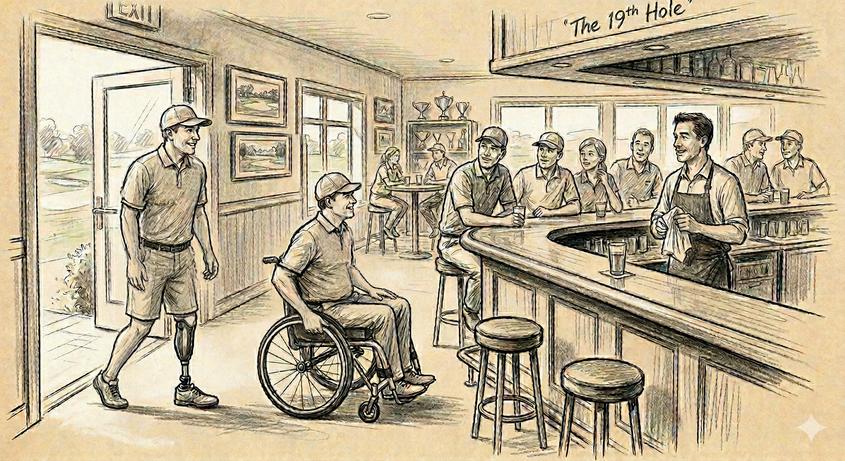
So, a guy with lower limb loss and another guy who is paralyzed from the waist down go into a bar The bartender says, “Can I get you gents a beer?”
One guy says a beer is fine and the other ops for a nice cold Coca Cola…in a bottle, the kind that tastes like Coke.
The bartender serves them and says, “What brings you here today?”, and they reply simultaneously, “We’re just here to play some golf and decided to start at the 19th hole!”
Well, it got awfully quiet in the bar all of a sudden You know, only the sounds of silence after gasps broken by lightly clanking and clinking silverware and glasses as things seemingly just got uncomfortable. Why? Because the bartender and those that overheard the conversation know that this course, public as it may be, is not prepared to provide the level of access some golfers need to play
Is it common for individuals with additional access requirements to just appear at a golf course and expect adaptive golf cars to be available, or assume with limited mobility they will be given access closer to or on greens and teeing grounds? No, it is not common because most have learned the hard way that calling in advance is one way to prevent uncomfortable situations for all involved. That, however, does not solve the problem. There should not be uncomfortable situations related to providing access.
Should an individual with a disability or impairment be obligated to call ahead to a public golf course to see if they can play? The answer to that question is NO A public golf course is required to provide access to the goods and services they offer to ALL customers … and should be prepared to do so.
The individual with the amputated leg is “probably” going to be just fine and given access to get a little closer to greens, maybe off the path when others can not, perhaps closer to some teeing grounds pending weather and maintenance of course
But, the guy in the wheelchair? What’s the story there? How is he (or she) going to play? This course does not have an adaptive golf car - whether theirs, nor one shared by another course nearby. There was nothing on the course website that said this public golf course was not fully accessible In what can only seem logical, these golfers just assumed since it was a public golf course, access was a given Nope, not so fast
As to these two guys entering the bar
What if I was to say one of those guys was the Golf Writers Association of America Ben Hogan Award recipient in 1958 and the other received the award in 1978, both who, per the GWAA, “ … continued to be active in golf despite a physical handicap or serious illness. ”
How is it possible in 2026, 35 years after the Americans with Disabilities Act was put into law, and well before the ADA when the industry was recognizing influencers like this that we are still having this conversation about people trying to access the game? Why?
Because just like pace of play sometimes, change in the golf industry just moves too slow without large leading organizations being more directly involved. Whether paradigms, myths, or social and cultural changes, a sport that is affordable (contrary to opinion in too many circles) just gets distracted by the “shiny new penny” sometimes Let’s talk about a few of those.
As a disclaimer prior to the following “shiny pennies” , I am 65 and, at this point, I and most of the people I play with, younger or older, could care less what you wear or
do on any course as long as it is aligned with that particular business’s rules and not a distraction to others beyond simply playing the game That is just plain common courtesy This used to be called “golf etiquette” .
No backwards hats? Who cares? Clubs have rules. Don’t like them, spend your money elsewhere And if you’re north of 30, it might be time to consider which way the brim points
No collar? You can’t play! C’mon. Fashion evolves. Performance shirts without collars now cost a small fortune, look sharp, and let’s be honest often beat a tired cotton polo on a guy who’s been a little too loyal to pasta
Music on the course? Love it, hate it, or TBD. If it carries past your cart, it’s probably too loud. And if you’re not asking your group, skip the playlist and seek a refresher on etiquette
Slow play: caused by men, women, low handicaps, high handicaps, kids, seniors, beginners or all of the above? Trick question! No group owns it. Everyone has offenders. And if you’re helping someone learn, you might be the problem if you’re not educating about slow play
How much energy is spent in golf talking endlessly about the above and more … none of which can literally change a person’s life?
Where’s the fire burning beyond the adaptive golf community to fix the lack of access the game as a whole delivers to individuals with lower body mobility impairments or paralysis? Why aren’t more operators working harder to facilitate access (which equals “playing the course”) for individuals with disabilities and seeking solutions that will make an adaptive golf car available?
The ability of an individual with paralysis or significant lower body mobility impairments to access your goods and services the ADA requires is not possible without an adaptive golf car, specifically designed for use on the entire golf course. Yes, including on tees tees, on greens, and in most bunkers with well designed entry and egress points Simply providing OEM modified golf cars with hand controls does not solve this problem It helps, but not entirely. Buy one, finance one, create an asset sharing agreement with nearby properties. Do something.
Cost is not the issue, it’s an excuse. Golf courses finance and/or capitalize a major portion of larger expenses and
often have delayed payment arrangements so sales can be generated to cover on-site or future inventory Share an asset if you have to and pick up an extra customer base along with their friends and family Isn’t that “good” business?
We all know what golf car fleets cost to lease or buy. Which OEM wants to be the game changer? Perhaps OEMs could work directly with the leading adaptive golf car manufacturers and facilitate the placement of these adaptive golf cars within their leasing structure wherein the adaptive golf car is owned at the end of term? Who knows, this could be an incentive for an operator to decide which OEM they want to be in business with?
Liability concerns, if any, can easily be managed by the adaptive golf car manufacturer and let’s be real, where is the bigger risk? Is it with 60-75 other golf cars and special pricing on 6-packs or with the one driver in an adaptive golf car who actually had to be trained to use their vehicle?
Driving inventory placement in this way could potentially help decrease adaptive golf car costs for both the golfer and facilities as more can be manufactured. Demand is growing so there is a real opportunity to effect positive change in this area.
To be clear, numerous golf courses around the country (and world) are getting this right but, the United States has approximately 16,000 golf courses per a recent estimate and there are many, many golf courses in the country who, although open to the public, are seemingly making no efforts at all to deliver the access so many could benefit from Beyond the health and wellness benefits, it is a growing customer base if any attention is being paid whatsoever
Looking for an area in golf that needs to move faster and more effectively for the “good of the game”? Look no further than figuring out a way to be able to say “YES” , when a person reaches out to you and requires an adaptive golf car to play, or is just passing through town
Some individuals can afford to purchase one for themselves, many can not, few have them everywhere they may travel. Adaptive golf cars are not golf bags they can throw on an airplane or in the trunk of their car Neither is a “lift” at a public swimming pool, but the aquatic industry seems to have access and inclusion figured out.
The game of golf can better serve individuals with disabilities.
GUESTEDITORIAL:ABILITYVERSUSDISABILITY
ADISTANCE-BASEDTEEDESIGNATIONFRAMEWORKFORADAPTIVEGOLF
By Tracy Ramin
Welcome to a new feature in Golf Inclusion Monthly® we will occasionally present, the “Guest Editorial” . Guest editorials will deliver opinions, views and recommendations related to adaptive golf and growing the participation of individuals with disabilities in the game.
Note: Editorials do not necessarily represent the views of the National Alliance for Accessible Golf, but if you see it here, you can assume we believe it is a conversation worth having.
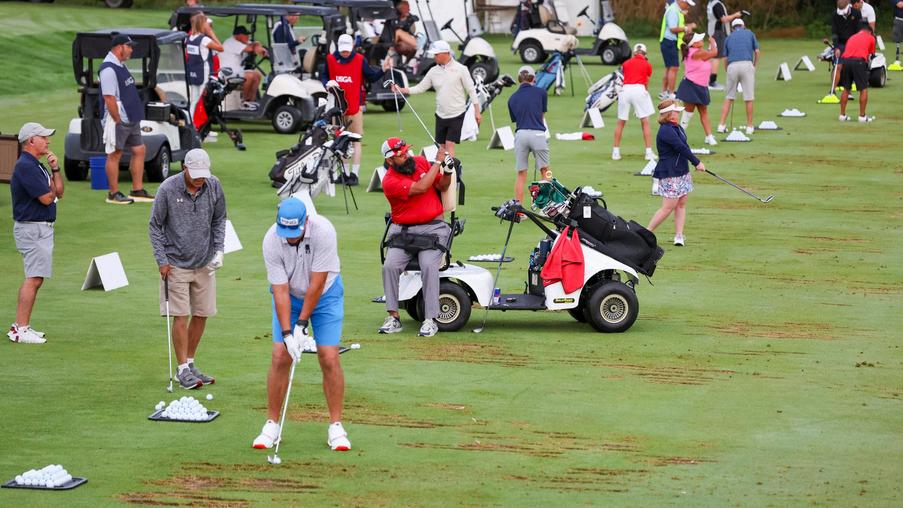
Adaptive golf has experienced significant growth in participation, visibility, and competitive structure However, the current reliance on a 15-category medical classification system presents ongoing challenges related to competitive equity, administrative complexity, and scalability While designed to promote inclusivity, medical classification does not consistently produce fair competition, as athletes within the same category often demonstrate substantial differences in functional performance particularly in driving distance and approach-shot capability.
This proposal introduces a performance-based tee designation framework determined by a combination of verified average driver distance and 7-iron distance The central premise is that competitive equity in golf is best achieved by aligning players with course yardages that reflect actual playing ability rather than medical diagnosis.
Golf is fundamentally a distance-driven sport, but scoring is ultimately determined by approach play Course architecture is designed around both tee shot positioning and approach-shot demands, including landing zones, forced carries, and greens-in-regulation opportunities Driver distance establishes the starting position, while the 7-iron provides a standardized measure of mid-iron approach capability
Together, these two metrics offer a comprehensive and reliable representation of a player’s functional golf performance.
When tee assignments are misaligned with a player’s capabilities, the architectural integrity of the course is compromised. Holes may become unreachable in regulation, forced carries may exceed physical limits, and strategic shot-making is replaced by necessity This creates artificial scoring disparities and shifts competition away from execution toward structural limitation
To address this, the framework establishes four performance-based tee categories using both driver and 7-iron distance:
Category 1: Driver 250+ yards; 7-iron 160+ yards Championship tees
Category
yards Reduced championship tees
Category 3: Driver 150–
yards; 7-iron 120–139 yards Forward tees
Category 4: Driver under 150 yards; 7-iron under 120 yards Most forward tees
Source: USGA
Players are assigned to the most forward category in which both metrics are met, ensuring preservation of regulation opportunity. This dual-metric system ensures that competitors face comparable second-shot yardages and maintain realistic opportunities for greens in regulation. As a result, competition is determined by execution accuracy, consistency, and course management rather than physical disparity
To ensure integrity, a standardized verification process is required. Players’ distances are calculated using the average of 10 measured drives and 10 measured 7-iron shots under controlled conditions, such as a launch monitor or flat-surface range. Certification occurs annually, with provisions for reassessment in cases of significant performance change The use of two performance metrics reduces the risk of manipulation and provides a more stable measure of playing ability.
A critical component of this framework is the integration of course rating and slope to ensure competitive balance across all tee boxes. Tee placement establishes appropriate architectural challenge, while rating and slope normalize scoring relative to difficulty
Together, these elements create a unified competitive structure in which players competing from different tees are evaluated equitably. When properly aligned, this system ensures that any player regardless of tee box can compete on equal terms and win based on performance
This proposal does not modify the Rules of Golf, equipment standards, handicap systems, or course rating methodologies It alters only tee designation within adaptive competition, maintaining full compatibility with existing governance structures.
A phased pilot program is recommended to validate the model. Initial testing across select events would measure scoring relative to par, greens-in-regulation percentage, scoring dispersion, and pace of play These results would be compared to events operating under the current classification system to evaluate improvements in competitive equity and administrative efficiency Findings would inform any necessary refinements prior to broader implementation.
The anticipated impact is both practical and strategic The framework reduces administrative burden, enhances scalability, and strengthens competitive integrity Most importantly, it ensures that outcomes are determined by measurable performance rather than structural limitation.
In this model, adaptive golf does not require expanded classification to achieve fairness it requires proportional challenge
By aligning distance, approach capability, and established rating systems, this framework ensures that ability, not disability, defines competition
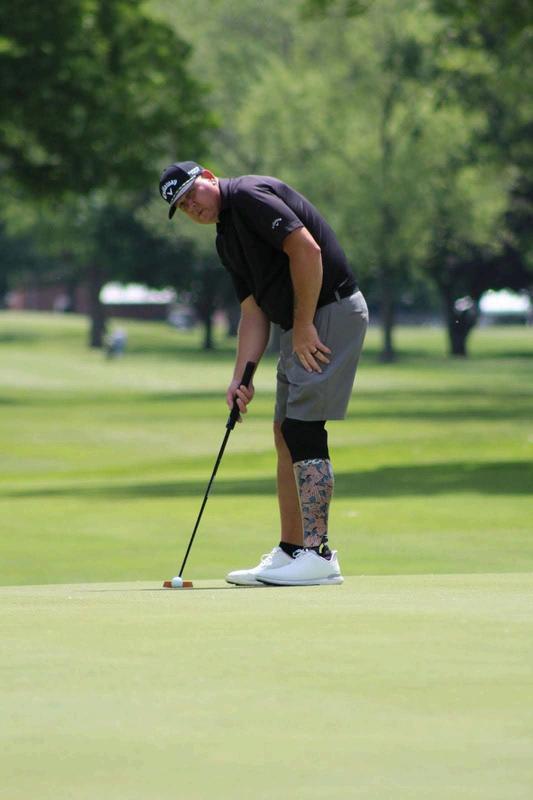
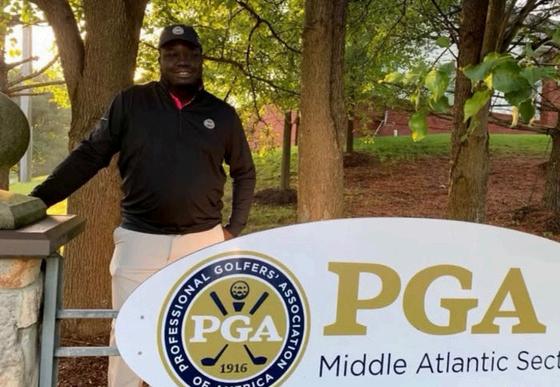
About the author: Tracy Ramin (pictured below) is an adaptive golf advocate and teaching professional with over 20 years of experience. Involved in adaptive golf since 1998 following a tragic accident, he has served nearly two decades on the Michigan Adaptive Golf Association board, is former Executive Director of the National Amputee Golf Association (NAGA), a competition committee member, co-founder of the U.S. Adaptive Golf Alliance (USAGA), and current member of the Callaway Adaptive Team. Tracy is dedicated to promoting adaptive golf for the benefit of all players and making the game more inclusive
Do you have an opinion about this article?
To comment, simply log into GAIN - the Golf Access and Inclusion Network® to engage with others and share your views in the Open Forum. GAIN is a FREE platform provided by the National Alliance.
JOINTHECOMMUNITY. JOINTHECONVERSATION.
“GAIN is not simply a community networking platform, it is the top national resource and education center for the golf industry related to ADA compliance, education, and the game. Existing programs are growing and new ones are developing. But, can we say that golf facilities around the country are universally prepared? No … we can’t say that. ”
Dave Barton, PGA Alliance Executive Director

GAINSPOTLIGHT
READYTOCOMMENTONTHISMONTH’S GUESTEDITORIAL?
In this month’s edition of Golf Inclusion Monthly® , we share a Guest Editorial from Tracy Ramin, adaptive golf advocate and teaching professional with over 20 years of experience, who discusses using driver and 7-iron distances for individuals as a way to create equitable adaptive golf competitions.
Presently in most, if not all, high level adaptive golf competitions, players are assigned to an impairment category to compete against individuals with similar impairments while also competing for the broader overall title. Many of these are “gross score” events, but a fair share have a “net” component as well.
There is no perfect system, including GHIN or Impairment assignment that truly levels a field. However, is it possible there is an alternative method that bases divisions or flights within a tournament on an “ability” versus a “disability” wherein someone could find themselves competing with anyone in their division, regardless of impairment?
Do you have an opinion? To comment, simply log in to GAINthe Golf Access and Inclusion Network® to engage with others and share your views in the Open Forum. GAIN is a FREE platform provided by the National Alliance
Source: Southern Intrigue LLC
EDUCATIONHUBSPOTLIGHT HELPYOURVOLUNTEERSEXCEL!
Is your organization hosting a tournament or program for adaptive golfers, or any golfers?
If you’ve been around golf long enough, you know golf tournaments of any scale rarely succeed without significant volunteer participation. Are your volunteers prepared to interact with individuals with disabilities in ways that ensure a positive experience is had by all?
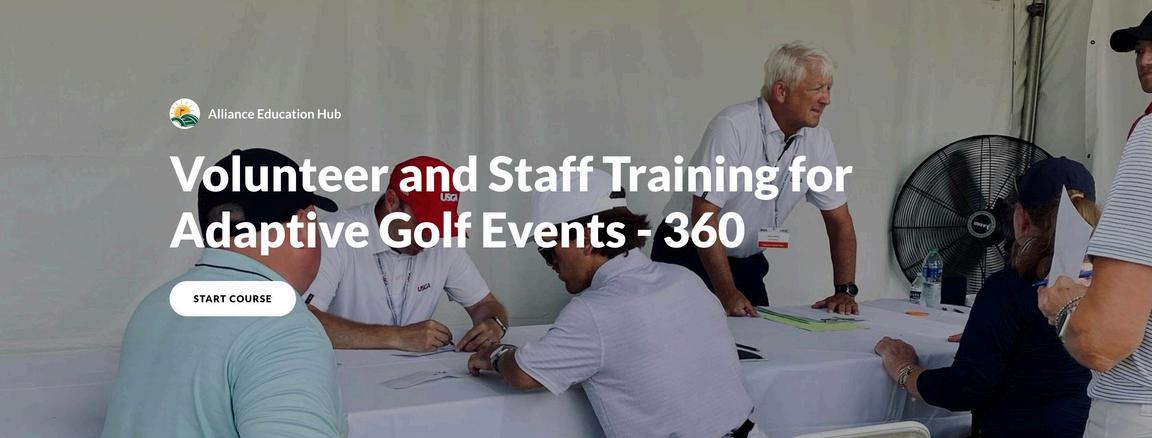
Volunteer and Staff Training for Adaptive Golf Events was developed to help event organizers prepare themselves, staff and volunteers to better understand the basics of disability etiquette and communications. When should you touch someone else's wheelchair? What is the best way to communicate with someone who might have a sensory or intellectual impairment?
Make a choice to elevate the experience for everyone at your program or events. Start with this microlearning lesson to learn more!
Enrolled Learners
Course Completions
Training Hours Completed
The Alliance Education Hub is a FREE service available to anyone in the golf industry.
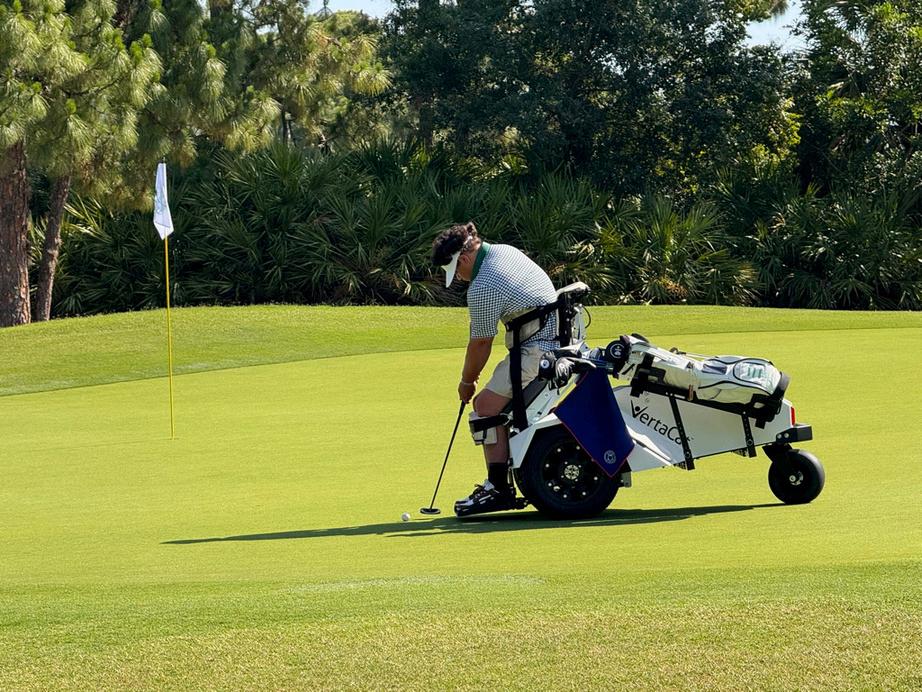
THEBUSINESSCASEFORADAPTIVEGOLF
Presented by Jeff Nicholson (VertaCat) and Dave Barton, PGA (Alliance)
A Practical Growth Strategy for Owners, Operators, and Golf Professionals
For golf course owners, operators, and professionals, the challenge is familiar: how do you grow rounds, increase revenue per visit, and remain relevant to a changing demographic landscape?
One of the most promising and underutilized answers lies in adaptive golf
While often viewed through the lens of inclusion or community impact, adaptive golf is increasingly proving to be a viable and scalable business strategy. Based on analysis conducted for a real U.S. golf facility in a strong coastal market, the numbers tell a compelling story one that applies to courses across the country
A Market You’re Already Serving—But Not Fully Reaching
Within a typical 30-minute drive-time radius of a mid-tolarge U.S. golf facility, the total population can range from 600,000 to 800,000 people. Using established public health data, approximately 13% of that population lives with some form of mobility impairment That translates to roughly 78,000 to 104,000 individuals in a single primary market area.
Now consider this: industry benchmarks indicate that 10–12% of that group either already plays golf, has
played previously, or would engage if access barriers primarily equipment and confidence were addressed. That’s a potential adaptive golf audience of 7,800 to 12,500 individuals.
Most facilities today are capturing only a fraction of that
The Revenue Multiplier Effect
Adaptive golf is not just about the individual player it’s about the group dynamic
Unlike many other customer segments, adaptive golfers rarely play alone They participate with spouses, friends, caregivers, or playing partners In other words, every adaptive golfer represents multiple rounds, not just one.
Consider two realistic participation scenarios:
Ultra-Conservative Scenario
A facility engages just 50 adaptive golfers, each playing four rounds annually, typically accompanied by one other player
That level of activity representing well under 1% market capture can generate approximately $46,000 in incremental annual revenue through green fees, cart rentals, and food and beverage
Integrated Foursome Scenario
Now scale modestly: 120 adaptive golfers playing six rounds annually, each within a traditional foursome Because those rounds include accompanying players, total participation expands significantly. The resulting impact can approach $300,000+ in incremental annual revenue.
For most facilities, that is not marginal it is meaningful.
Why Adoption Often Starts Slow and Why That’s Normal
Operators sometimes hesitate because early utilization of adaptive equipment can appear limited This is not a demand issue it’s an awareness and confidence curve. Facilities that succeed in this space typically move through three phases:
Phase 1: Passive Availability - Equipment is present, but awareness is low Utilization is minimal
Phase 2: Structured Introduction - Golf professionals introduce adaptive golf through lessons, clinics, and local partnerships. This is where momentum begins. Phase 3: Integration - Adaptive golfers transition into regular play, joining standard groups and contributing consistently to rounds and revenue
This progression often unfolds within 6 to 12 months when supported by even modest programming and promotion
The
Golf Professional’s Role
For golf professionals, adaptive golf is a natural extension of player development.
It creates opportunities to:
Re-engage former golfers who left the game due to injury or physical limitation
Introduce new players who previously viewed golf as inaccessible
Expand lesson programming through clinics and one-on-one instruction
Strengthen relationships with families and multigenerational players
Importantly, it also reinforces the professional’s role as a leader in growing the game
Beyond the Numbers
While the financial upside is clear, adaptive golf also aligns with broader industry priorities. It supports inclusion. It strengthens community engagement. It enhances a facility’s reputation
And increasingly, it meets the expectations of today’s consumer who values access and meaningful experiences
A Scalable, Transferable Opportunity
What makes this opportunity particularly attractive is its portability.
The analysis behind these projections is based on an actual U.S. golf facility but the underlying dynamics are not unique to that market Any course with a meaningful population base, existing infrastructure, and a commitment to player development can replicate similar results
The barrier to entry is relatively low. The upside, both financially and culturally, is significant.
The Bottom Line
Adaptive golf is no longer a niche initiative. It is a practical, revenue-generating strategy that fits squarely within the operational goals of today’s golf facilities
For golf course owners, facility leaders, golf professionals and more, the question is no longer if this segment matters but how quickly and effectively it can be integrated into your operation.
Those who move early will not only capture new revenue they will help define the future of the game
THEREAREWARM,CARINGHEARTSINGOLF; FORPROOF,JUSTASKMARCUSNARCISSE
By Jim McCabe | powerfades
.com | March 18,
2026
There are those days when we’re in vintage golfspeak, gushing about how we love our turf firm and fast, or how it’s best when professionals face set-ups that are cold, hard, demanding. Clearly, tough love is a concept we embrace when it comes to competitive golf
Then, of course, there are those feel-good stories which cross our paths elsewhere in golf and are sprinkled with soft hearts and caring souls. For sure, gentle humanity is easily saluted.
This week, we choose the latter It’s a story of a young man, Marcus Narcisse, with a passion for golf, and some very special people who have gone deep into their hearts to help him spread his goodness on the game It would be lovely to say it has been an easy ride for Marcus, but the truth is, “his resiliency, his perseverance and how he has gotten this far is the crux of his story, ” said Joan Stein
To return to the 2022 U S Open at The Country Club in Brookline, Mass., is the starting point here, for that is where the story first intersected at Narcisse, a volunteer that week through the Lee Elder Internship Program; and Stein, whose consulting firm is a leader in making sure ADA compliance is up to standards
Since his childhood days when he used to accompany his father, Paciene, to Montclair GC where he was manager of the locker room, Marcus Narcisse has had a passion for golf
and has been working U.S. Opens since 2007; and a TCC member, Mike Curtin of Westwood, Mass , who volunteered to chair the committee that worked with Stein and would make the experience as easy and as enjoyable as possible for those with disabilities
In her 34 years as an ADA consultant, Stein said she has “used humor to humanize the issue” and her message has always been to the point “When you have a disability, life isn’t over, it’s different. ”
With Mike Curtin, Stein had a chairperson who was the real deal “An angel, ” she called him, and so the experience at TCC was most favorable Marcus Narcisse was a big part of that week because his story hit home with Stein and Curtin.
“I don’t like the word ‘disability, ’ ” Marcus said that summer when his story first was introduced to readers of Power Fades. He didn’t view his autism in that light. Instead, Marcus explained that “My brain works very well; slowly, but it works I’m still a loving person ”
Stein knew of Marcus’ story, how the young man had graduated from East Stroudsburg State and worked at Shawnee CC in Delaware, Penn , because he loved golf so much. “Never, ever does he let things stand in his way, ” said Stein, “and I think that’s what connected him to Mike ”

Indeed, Mike Curtin’s investment in Marcus’ story wasn’t written off once the 2022 U.S. Open ended. It’s not his style. Instead, he remained in contact with Marcus and maintained a vigilant commitment to the young man’s passion to stay involved in golf
That he describes his experience at The Country Club in 2022 as “life-changing” and how a year later things were “fantastic” gives measurement to the depths to which the world tumbled so unfortunately for Marcus Narcisse. Sometime in late 2023, he woke up one morning and felt “a numbness in my legs, tingling in my toes
“It was weird, ” said Marcus
It also ignited a series of tests and weeks of mystery until it was determined that he had Guillain-Barré Syndrome, a non-contagious, autoimmune disorder Those with GBS experience muscle weakness,
tingling, and paralysis. Sadly, Marcus Narcisse could check all three boxes.
“I was paralyzed from the waist down, ” said Marcus, who was told he got the disease through a respiratory infection
For large parts of 2023, ’24, and ’25 the young man’s world has been spent in hospitals, rehabs, and nursing homes. The passion that percolated within –“I want to find spaces to help give adaptive golfers a voice, ” he said – still existed but more importantly were the forces that he had harbored all of his life, thanks to his late mother, Marie
“My faith and my support system got me through ”
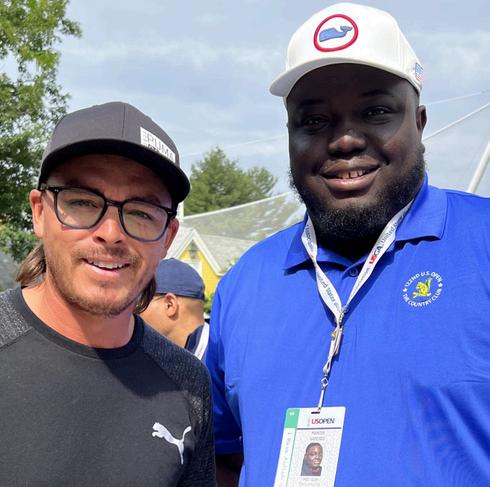
That system is comprised of his godmother, a fraternity of hometown friends from Orange, N.J., and his “angel” from that week at The Country Club – Mike Curtin. When he volunteered at the 2022 U.S. Open at The Country Club, Marcus Narcisse made friends with many, including Rickie Fowler
With uncanny care and due diligence, Curtin kept in touch with Marcus and felt heartache at all the issues the kept piling up for the young man. As if the GBS wasn’t enough of an issue, Curtin discovered that social security had stopping payments to Marcus. Paralysis on
top of autism on top of red-tape and government bureaucracy it all felt so unfair to Curtin, who quietly and humbly accepted a role as advocate for Marcus Narcisse
One of the first calls Curtin made was to Stein and you could joke that the band was back together, but in truth, these cases stir emotional flames within this ADA dynamo “It’s not just what I do, it’s what I am, ” said Stein.
Deeply caring about her work, Stein might be found inspecting a parking lot at a shopping mall to make sure it is ADA compliant or she could be heard speaking to a convention of builders But it’s the annual work she has done for the USGA since 2007 (save for 2020 when the championships were held without spectators) that most pleases her.
“My passions are one, the world of accessibility, and two, golf, ” said the Pittsburgh resident. She is especially pleased that those two loves come together not only in making U.S. Opens ADA compliant but also for the USGA’s commitment to the Adaptive Open, held annually since 2022
But in another lifetime, Stein worked in two careers – as a social worker and helping those with development issues get onto social security. Curtin’s call to Stein, explaining Marcus’ nightmare, hit a nerve It also produced action, because after navigating a sea of paperwork, Stein eventually helped get Marcus Narcisse’s social security benefits flowing.
“It’s been a journey, said Marcus, who has made great strides in his rehabilitation “Mike and Joan have been so important to me ”
What keeps the story on a positive roll is yet another quality piece of golf – the soft and caring hearts within the Met Golf Association Specifically, Ryan Kayton, manager of the group’s adaptive golf program
The MGA is committed to its program that serves children with autism, intellectual disabilities, and adaptive golf opportunities for adults. “Fun, great casual clinics, ” said Helen Farrelly, director of communications Marcus has had conversations with Kayton about possible opportunities to help with these clinics, which touches on his dream. “If I’m able to help a golfer get better, that’s great, ” said Marcus. “But my hope is to be able to bring some hope to golfers with disabilities. “I want to let them know your voice matters ”
He should probably also tell them that there are people in golf who do care about them, too. Marcus can offer testimony.
When he volunteered at the 2022 U S Open at The Country Club, Marcus Narcisse made friends with many, including Rickie Fowler
THELOOPINCHASKA:BUILDINGADAPTIVEGOLF
ACCESSFROMDAYONE
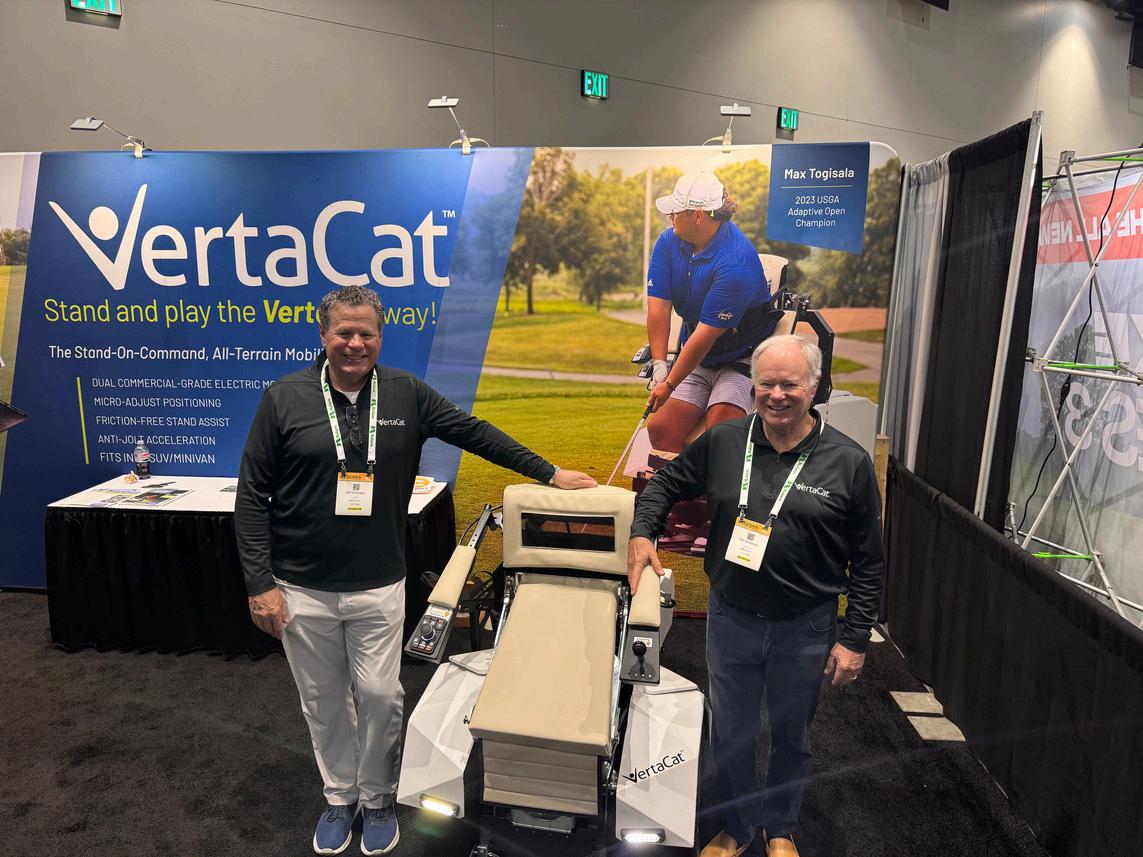
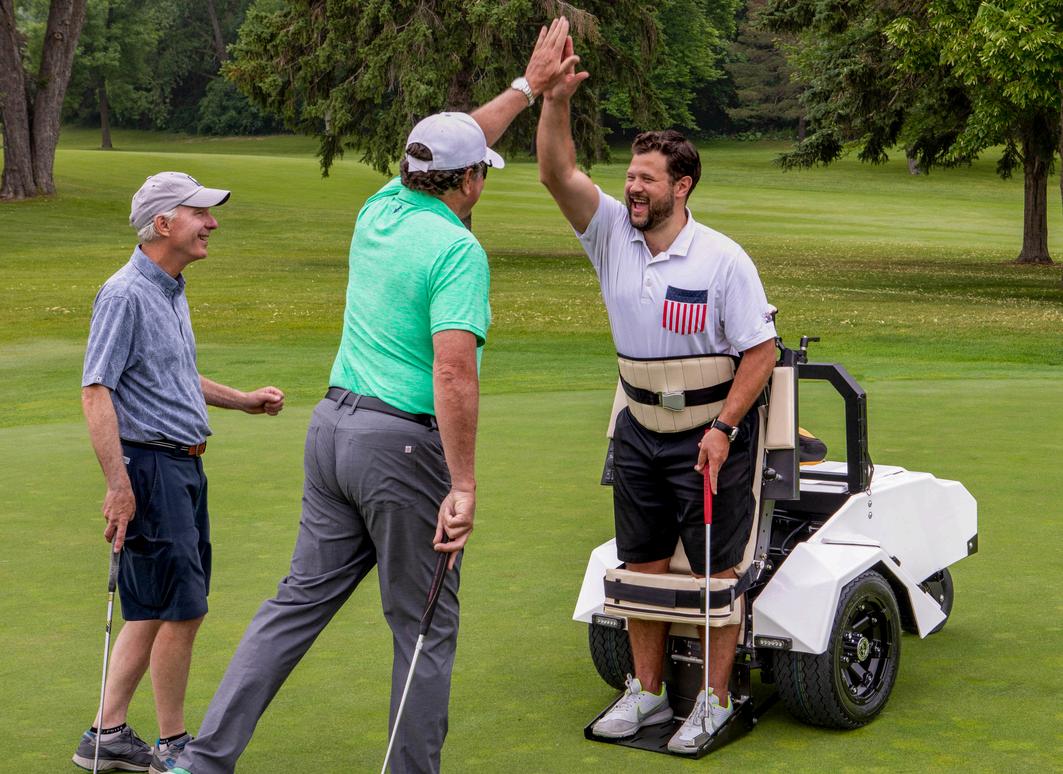
At The Loop Golf Course in Chaska, Minnesota, adaptive access was baked into the blueprint. Today, three VertaCats serve golfers who travel from across Minnesota and beyond Many drive an hour or more just to experience what they thought was impossible: playing a full round of golf standing up.
Tim Anderson, John Kellin, and John Young have been involved since the beginning Kellin, Head Golf Professional at the neighboring Chaska Town Course, says, "All that cool stuff really revolves around the VertaCat because without that, you don't have the things happening. "
Accessibility in Design
The conversation about adaptive golf started before The Loop even existed Partnering with Barrier Free Golf, led by Anderson, the Par 30 course established accessible inclusivity as a main pillar.
"Part of that was including the population that plays out of a wheelchair and other differently-abled golfers, " explains John Young, The Loop’s PGA professional
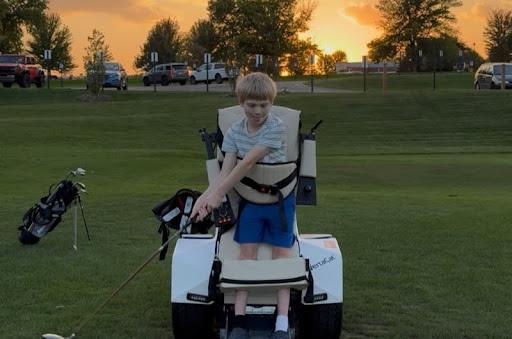
During course development, the team at The Loop looked at the available options for serving seated golfers. By the time construction began, the VertaCat stood out
"Everything about VertaCat was better The versatility, just a lot of thought had gone into it, " Kellin notes
The course secured funding through grants (the PGA REACH Foundation and a Minnesota license plate grant) and a Barrier Free Golf donor They started with two VertaCats Courage Kenny Rehabilitation Institute purchased a third VertaCat after seeing the impact of its weekly program.
Training and Setup
The VertaCat team provided comprehensive training on operation and adjustments The staff work with golfers of varying sizes and ages, and the process is straightforward.
Rhys Andersen in action at The Loop Golf Course thanks to the use of the VertaCat !
When golfers book tee times, the system notes VertaCat availability, and an employee is available to help with setup. However, many repeat users know their settings and handle the setup themselves
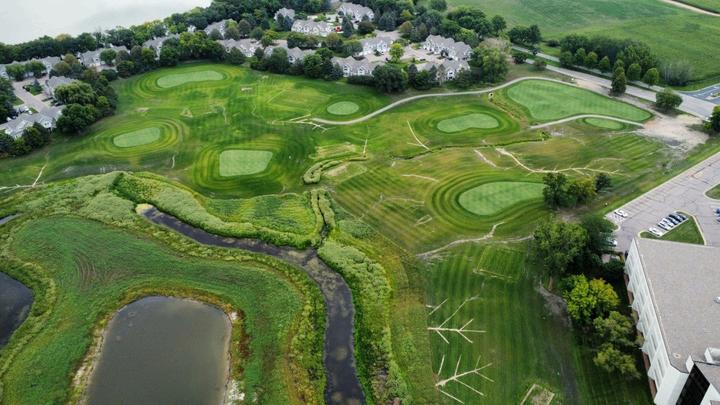
Kellin notes The Loop’s terrain is not a "flat pancake course” it has "a lot happening with terrain and slopes " The VertaCat handles every piece of it, allowing players to navigate the natural challenges.
Who Uses It
The VertaCat's users span a wide range of ages and abilities It is truly "game-changing" for:
Veterans: Including those with age or mobility challenges, not just combat injuries
Amputees who still have arm strength.
Young people: A nine-year-old boy, recently diagnosed with a degenerative hip disease, has returned four or five times in a month Kellin says: "He now knows that he still has a future in golf because of the VertaCat. Without the VertaCat, he would not. "
Travelers: A young paralyzed man drove five hours from Iowa after hearing about the course He is already planning his next trip
Older regulars: A gentleman "bent over at 90 degrees" who thought he was done golfing is now a regular at The Loop because of the VertaCat
Golfers now drive from places like Anoka and Elk River to use the VertaCat Young notes, "A number of lifelong golfers who thought they were done golfing now know that they can get in. "
Growing the Adaptive Community
The Loop partners with Chaska's community center, which runs a strong adaptive sports program They've brought groups out to the course. Barrier Free Golf promotes events. The Minnesota Golf Association has used it several times for adaptive golf days, running three or four events each summer
The course never charges for VertaCat use, and more adaptive-specific events are coming.
Kellin and Young hope The Loop continues to support Minnesota's growing adaptive golf movement.
The three VertaCats create some capacity considerations for dedicated adaptive events, but availability hasn't been an issue yet The education process includes letting people know during booking that VertaCats are available and which one is ready.
Building From the Beginning
Golfers travel from across Minnesota and neighboring states to play with a VertaCat at The Loop They thought they were done golfing Now they're regulars, they're improving, they're dreaming about competitive adaptive golf.
The infrastructure exists The equipment works The demand is there
"Every course should have one, " Kellin says.
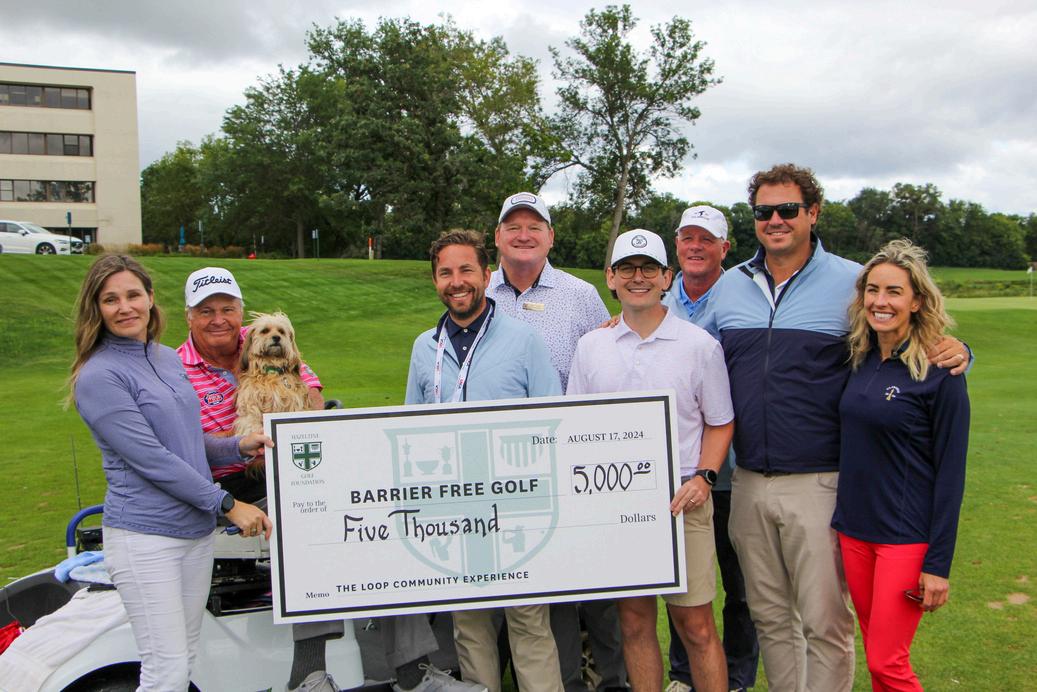
The Loop at Chaska is a joint venture between the City of Chaska and Barrier Free Golf At the Loop, golfers will experience quality golf architecture, a welcoming atmosphere, and fun. The Loop at Chaska will become a national demonstration project that showcases how golf course design can enable access to golf by appealing to new populations - especially golfers with physical and sensory impairments.
GAIN is your community ... a free networking forum to foster better access to adaptive golf experts across the country and resources to serve the community of golfers with disabilities and those that lead and support these efforts.
All are welcomed on GAIN ... those seeking information about adaptive golf, the ADA and more with those that can provide the answers.
ADA & Accessibility
Competition & Rules
Facilities, Programs, Adaptive Golf Cars
Calendar of Events
Open Forums