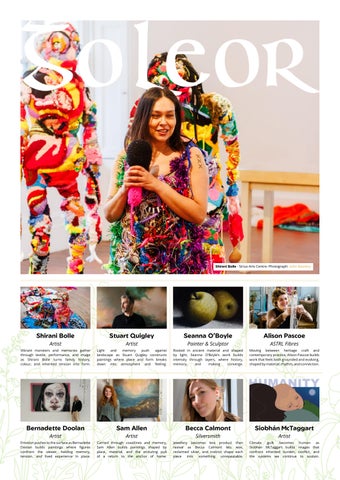
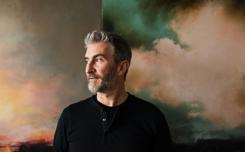
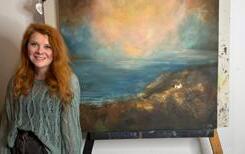
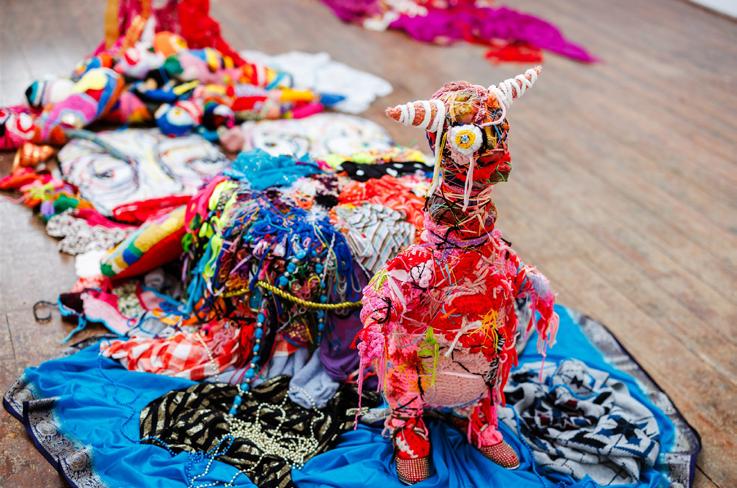
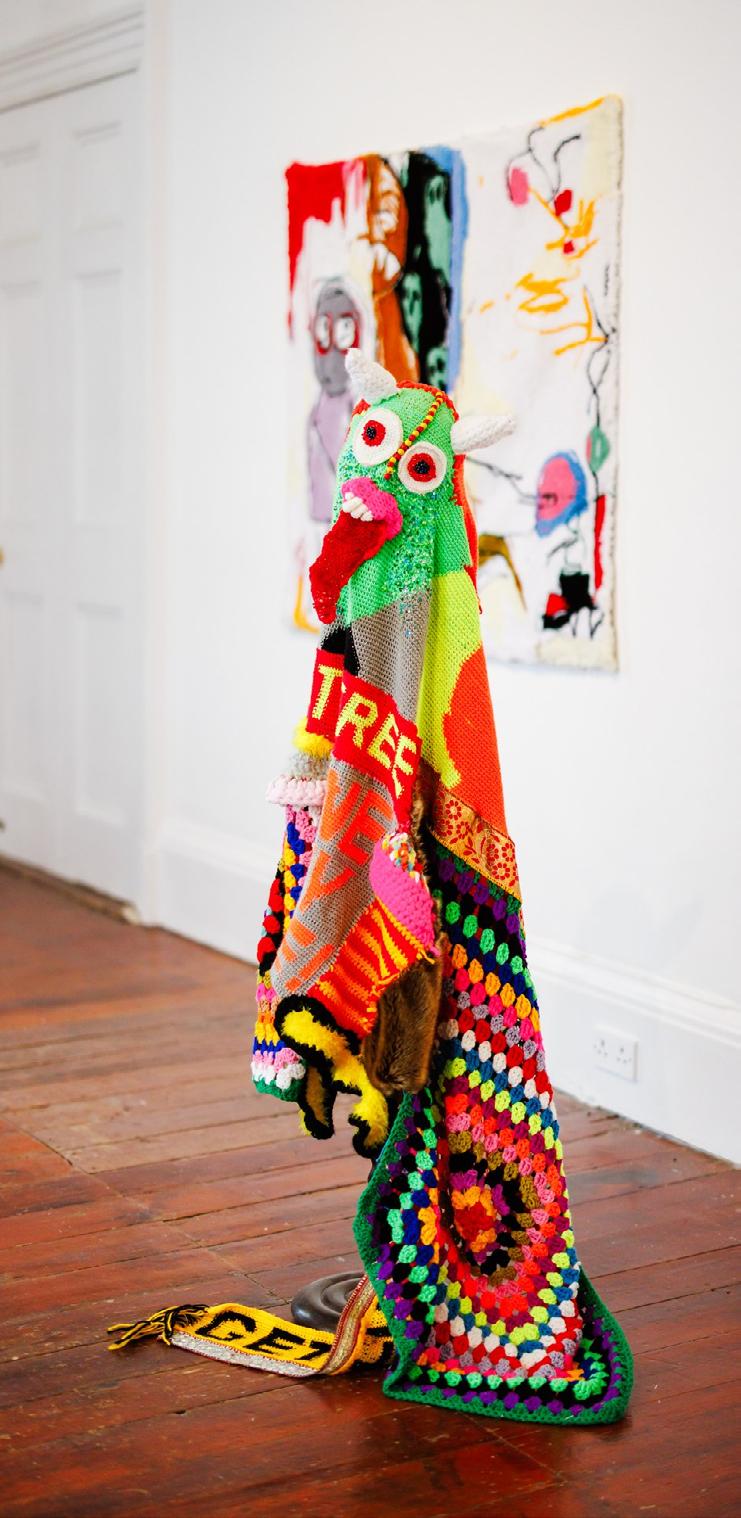
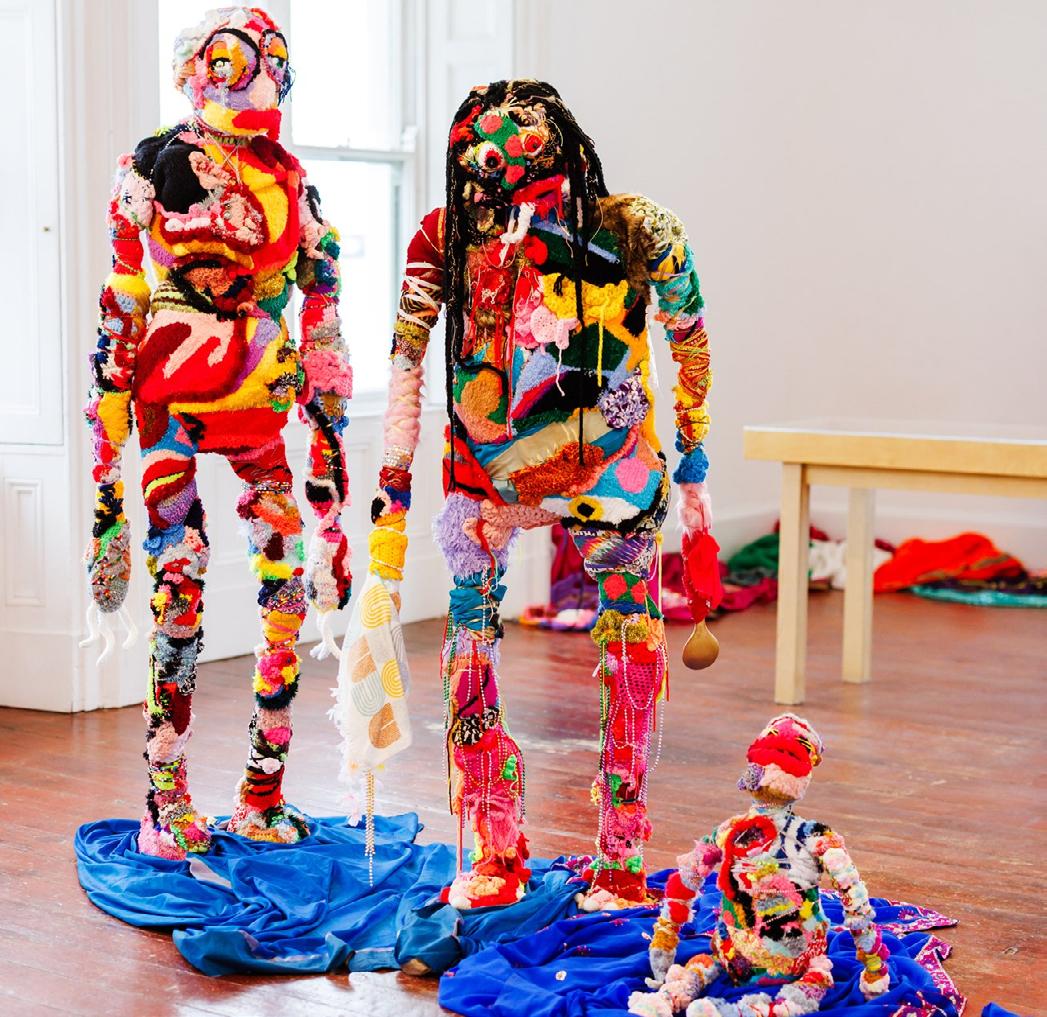
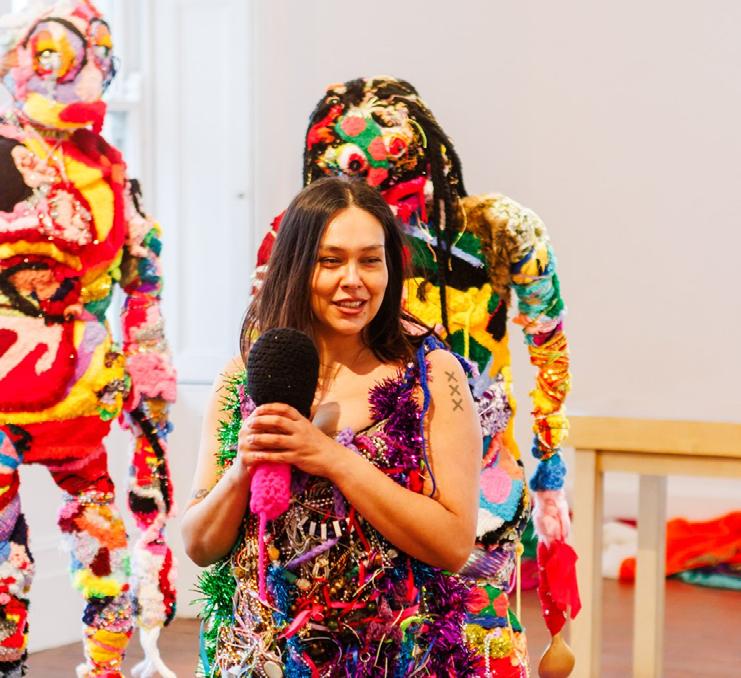
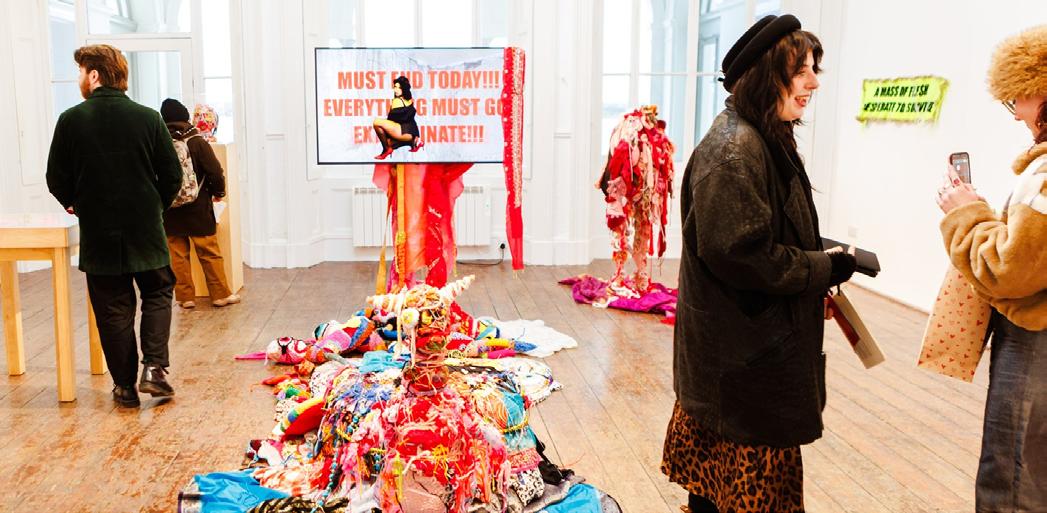
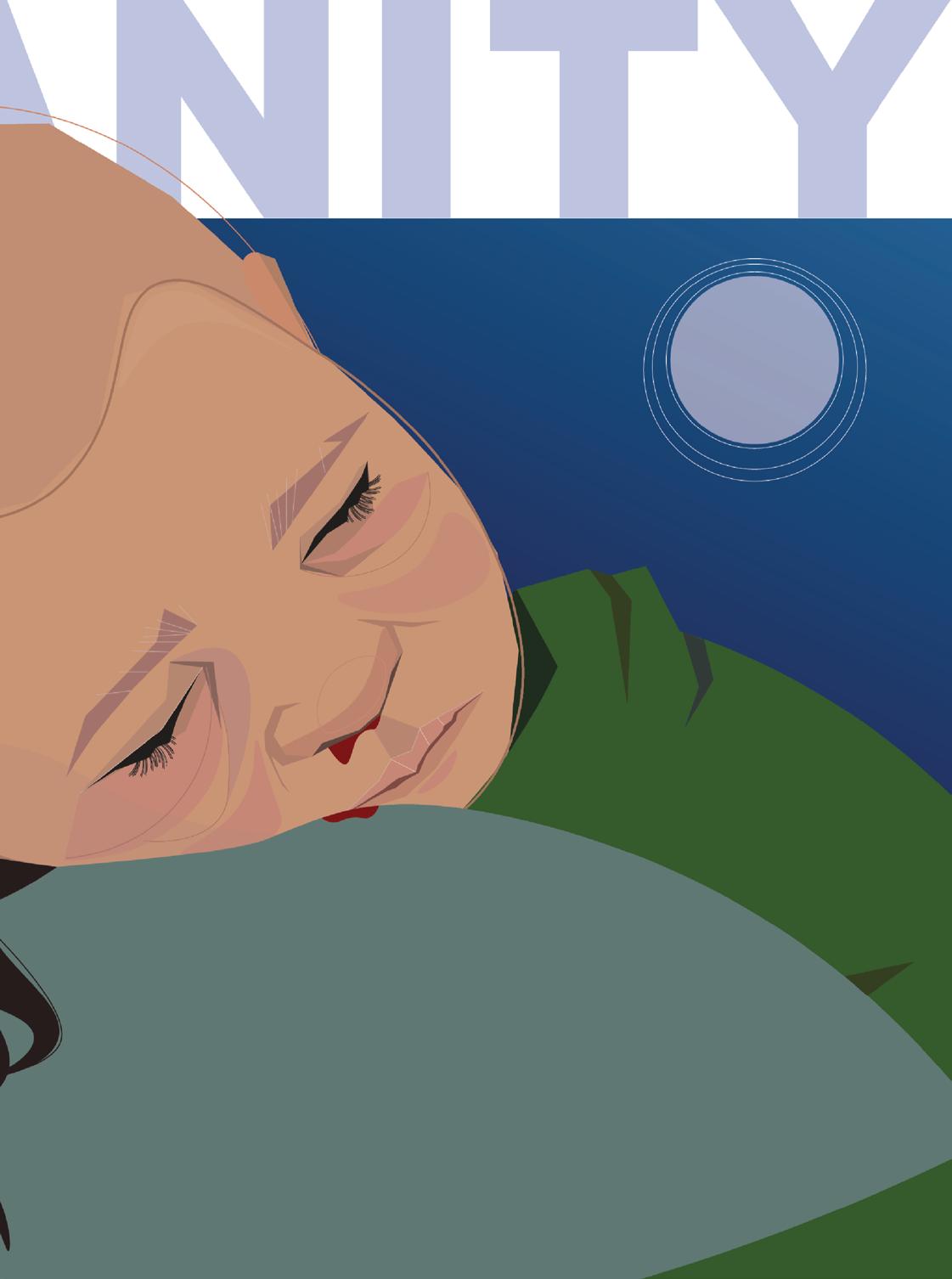
Vibrant monsters and memories gather through textile, performance, and image as Shirani Bolle turns family history, colour, and inherited tension into form.
Artist
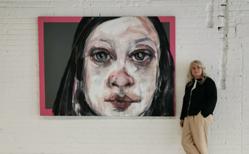
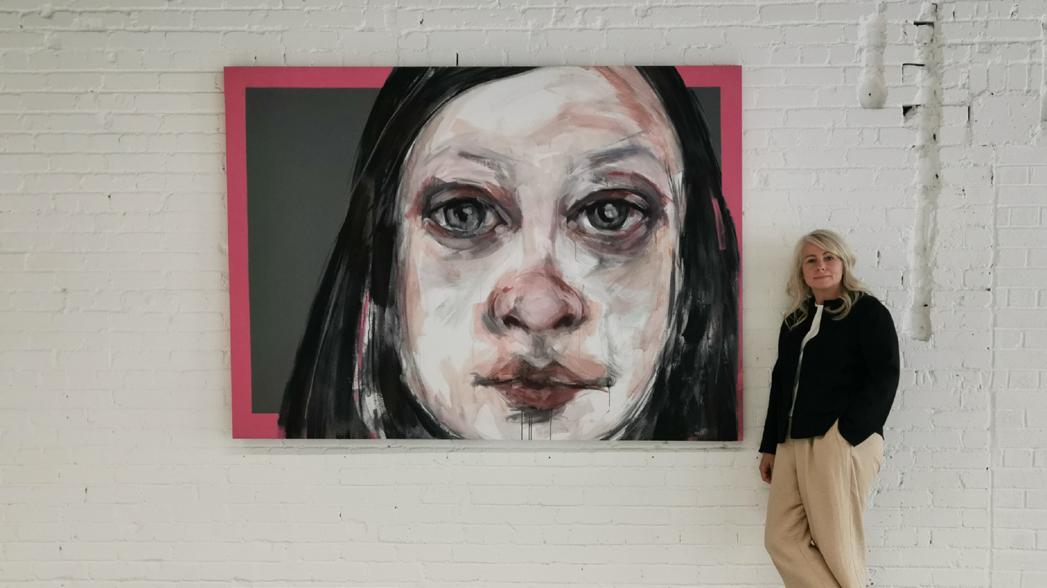
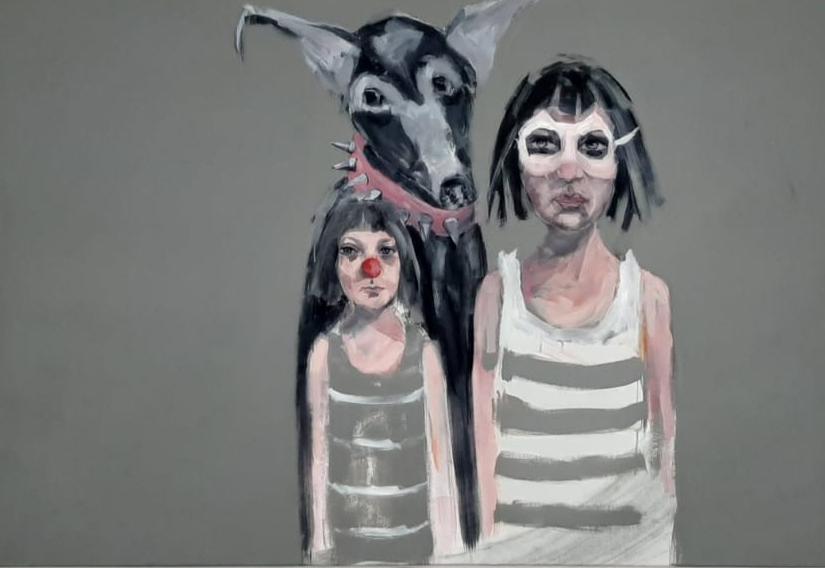
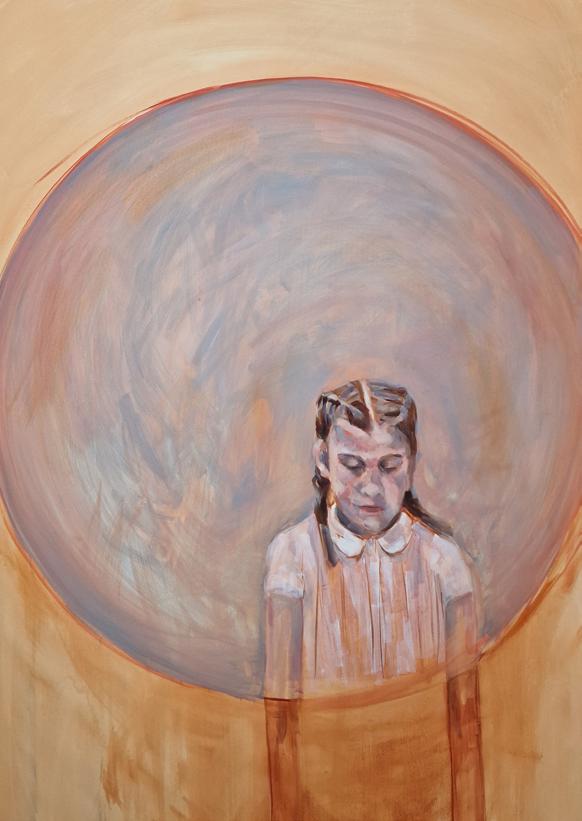
Emotion pushes to the surface as Bernadette Doolan builds paintings where figures confront the viewer, holding memory, tension, and lived experience in place.
Artist
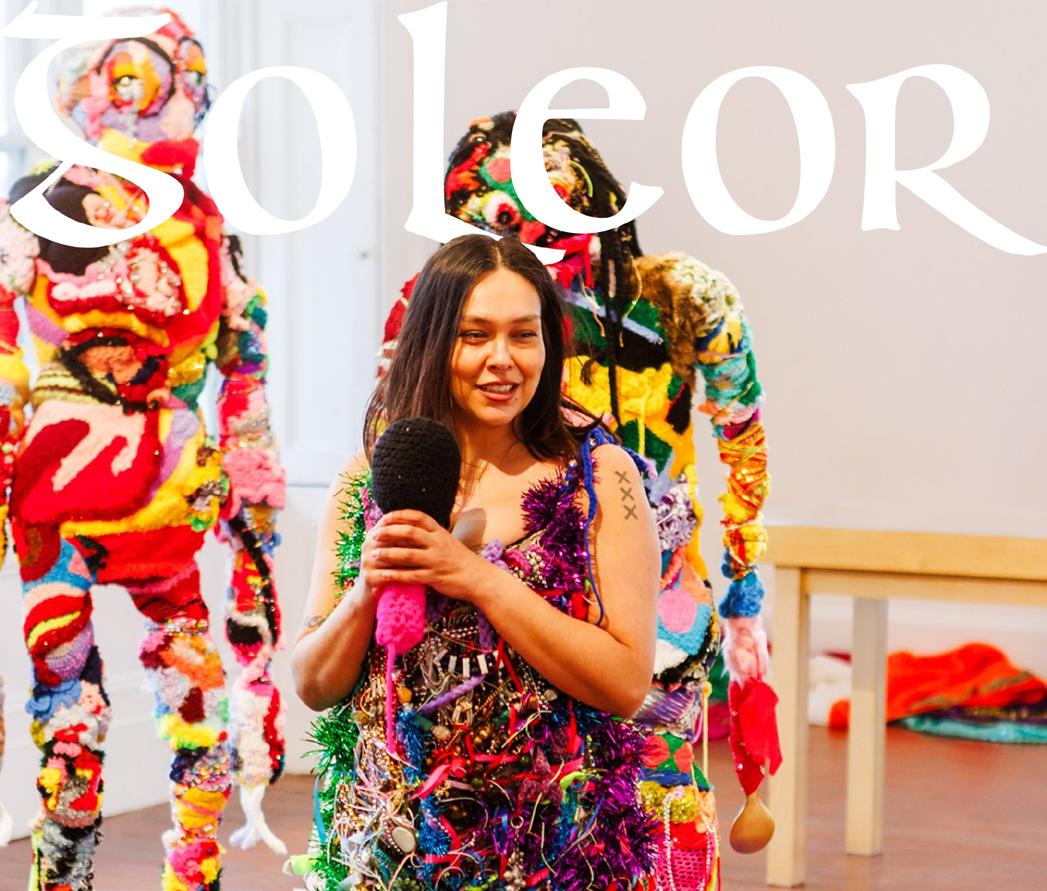
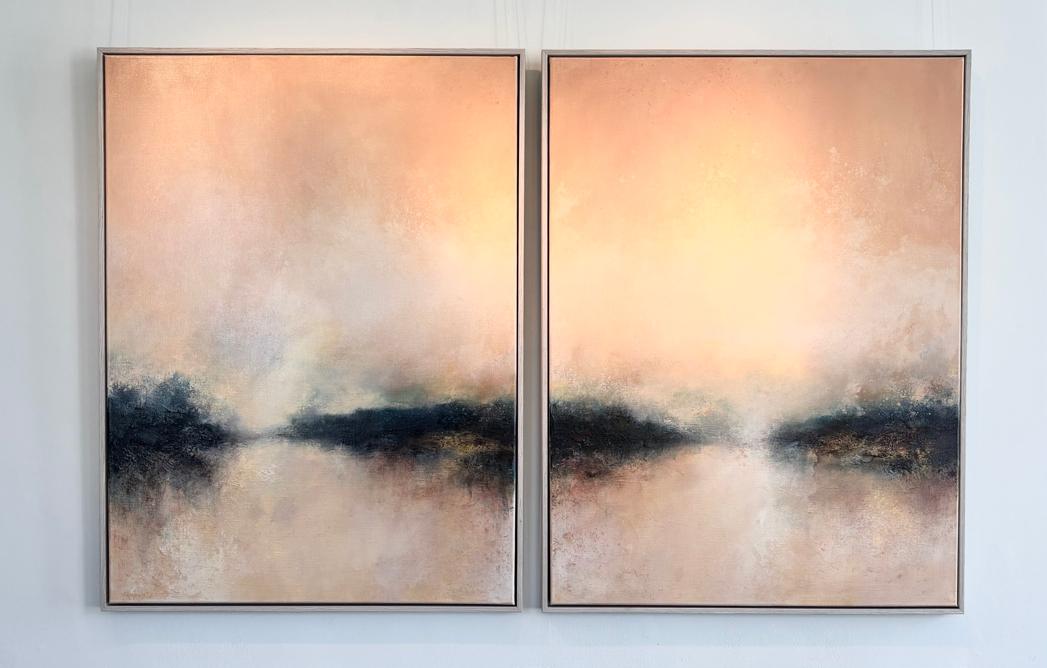
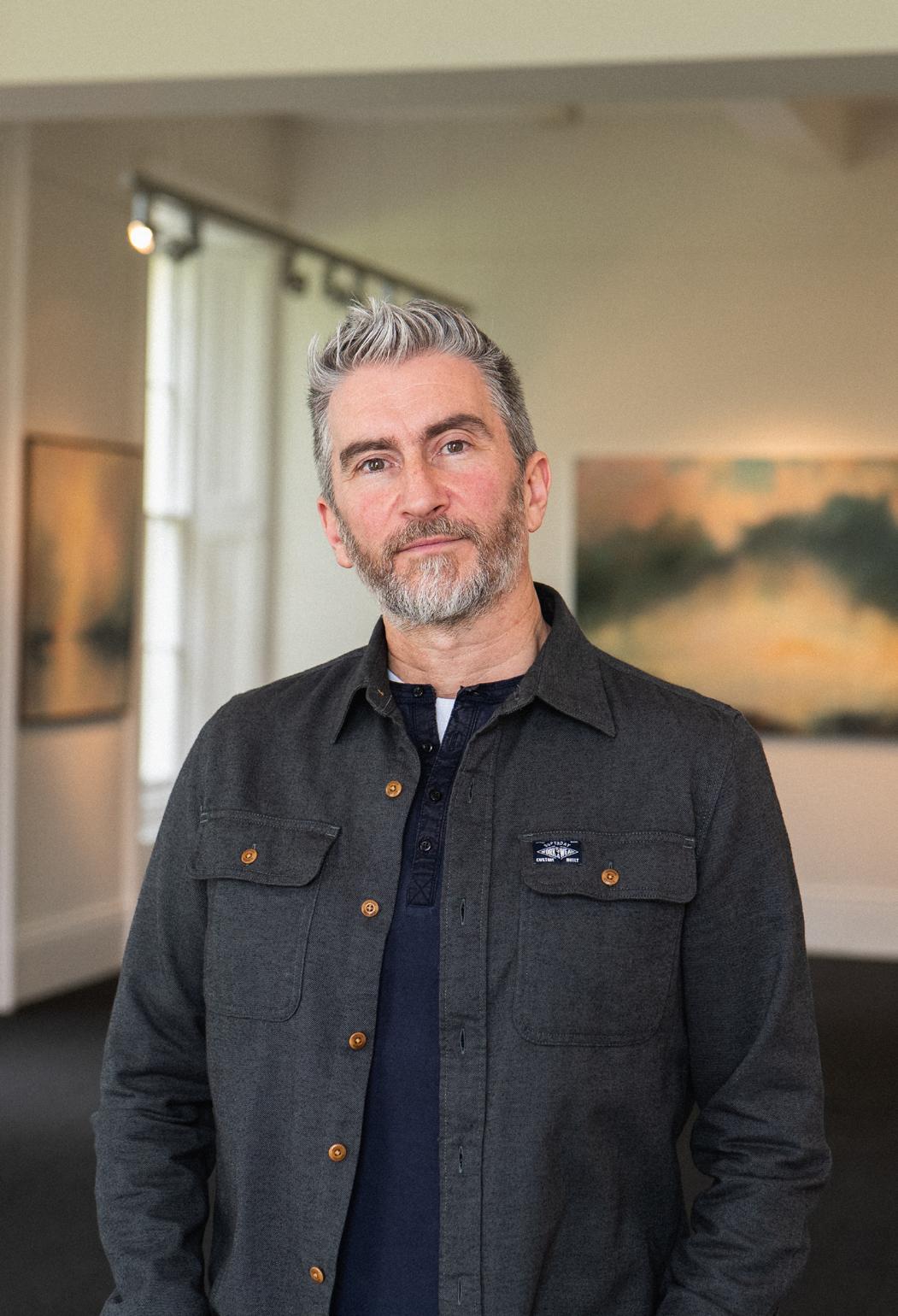
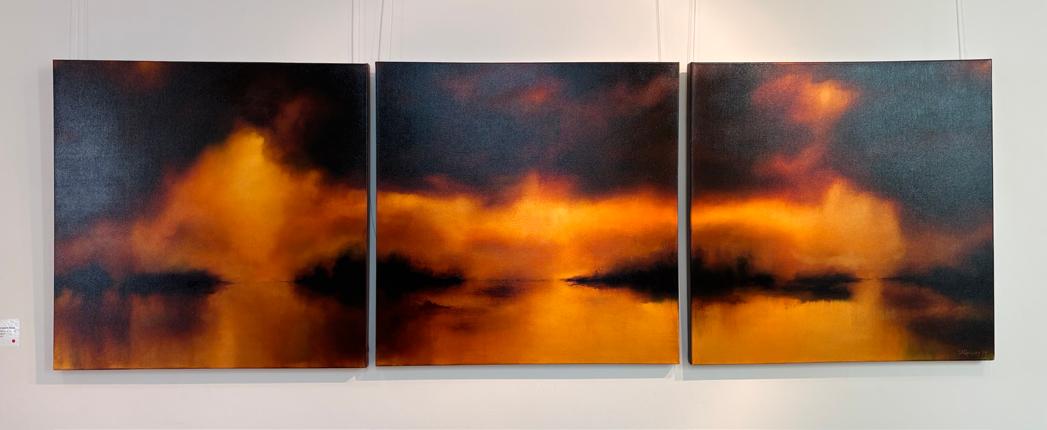
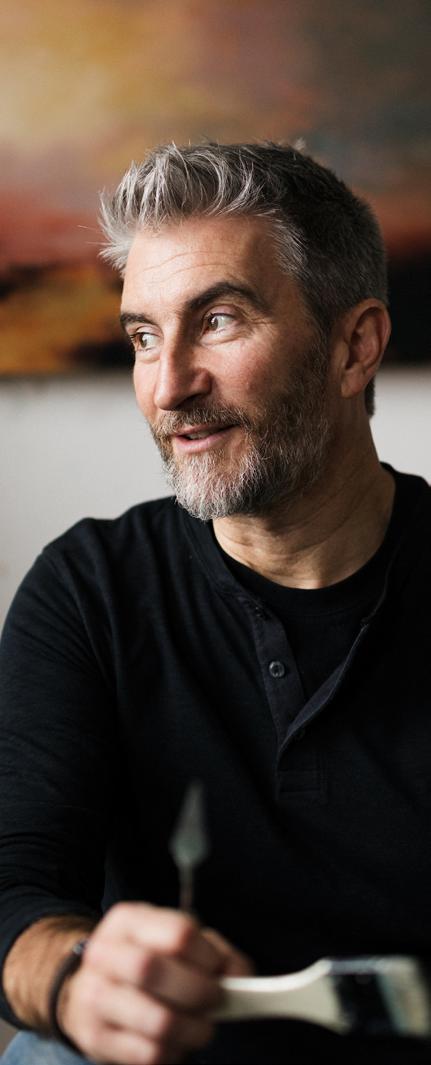
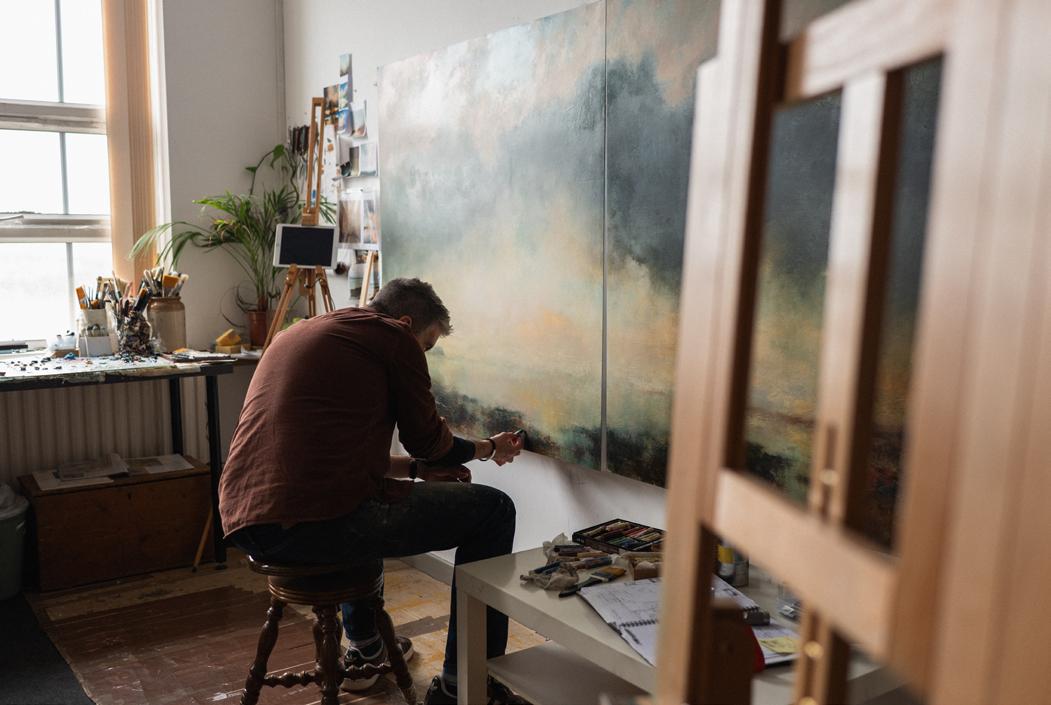
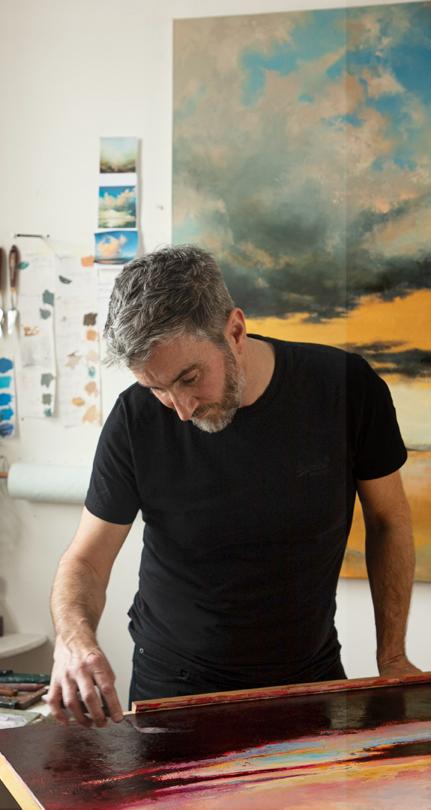
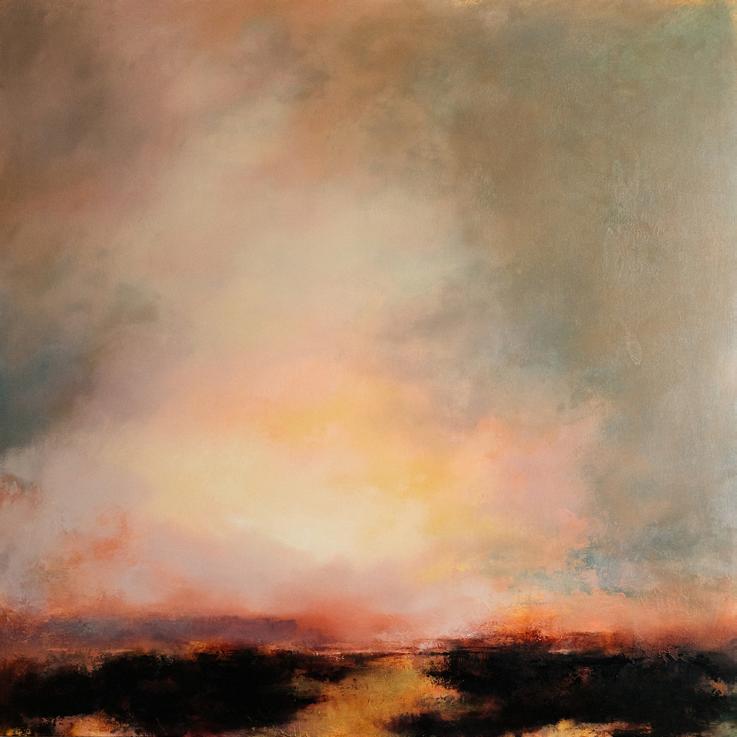
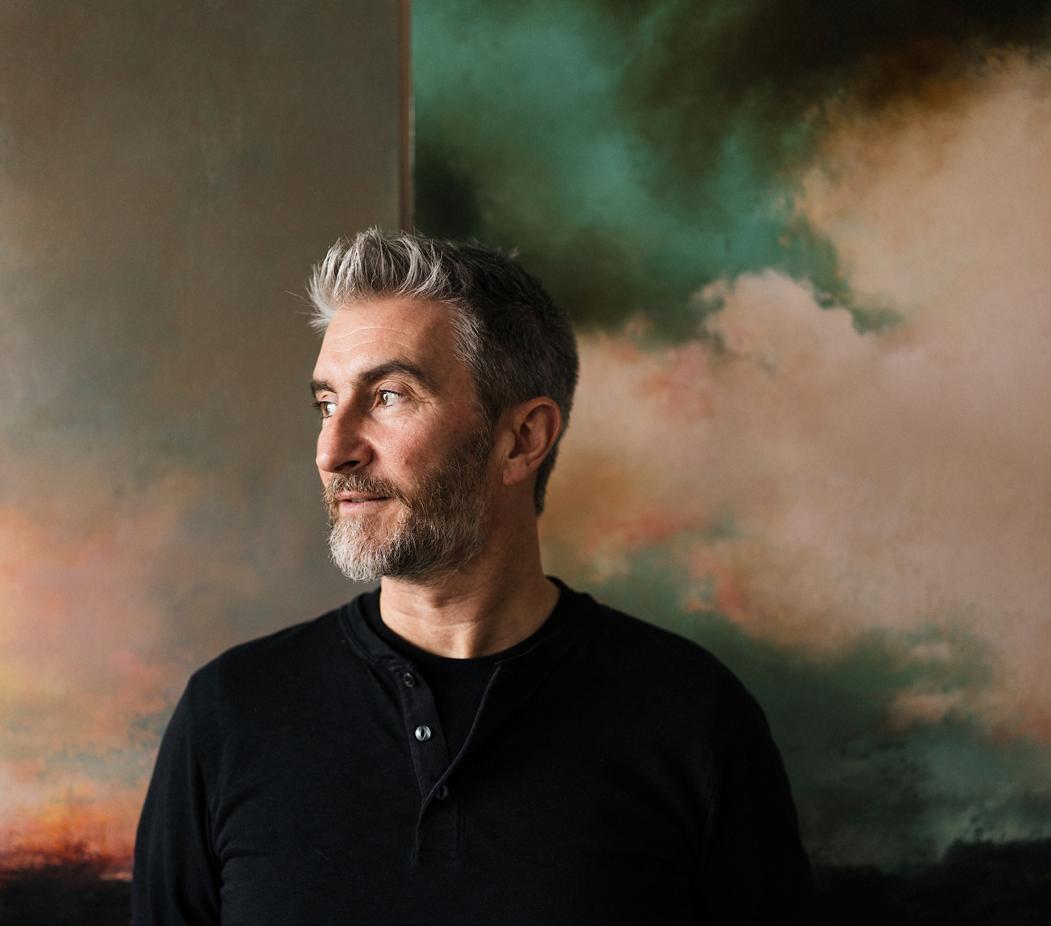
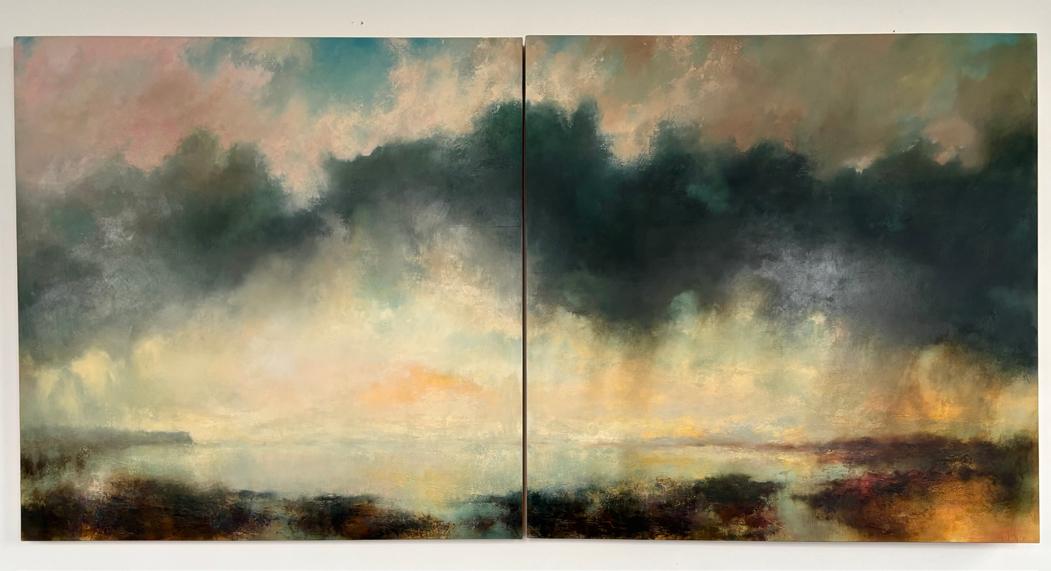
Light and memory push against landscape as Stuart Quigley constructs paintings where place and form breaks down into atmosphere and feeling.
Seanna O’Boyle
Painter & Sculptor
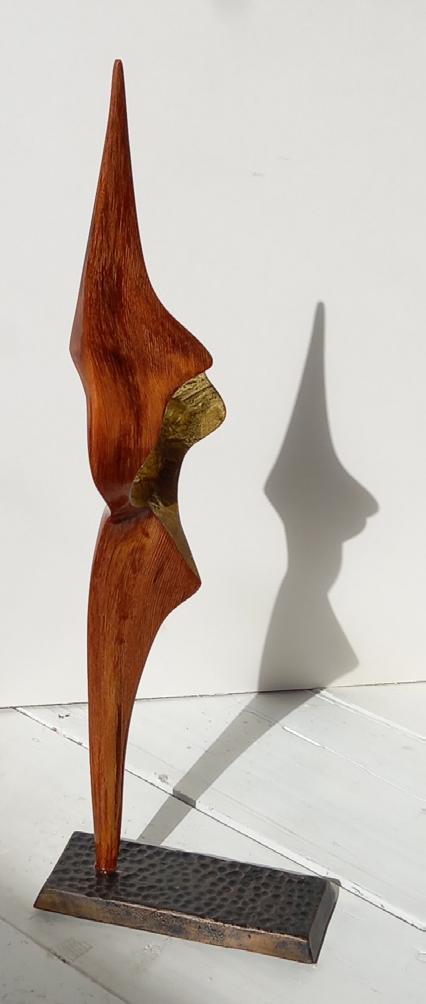
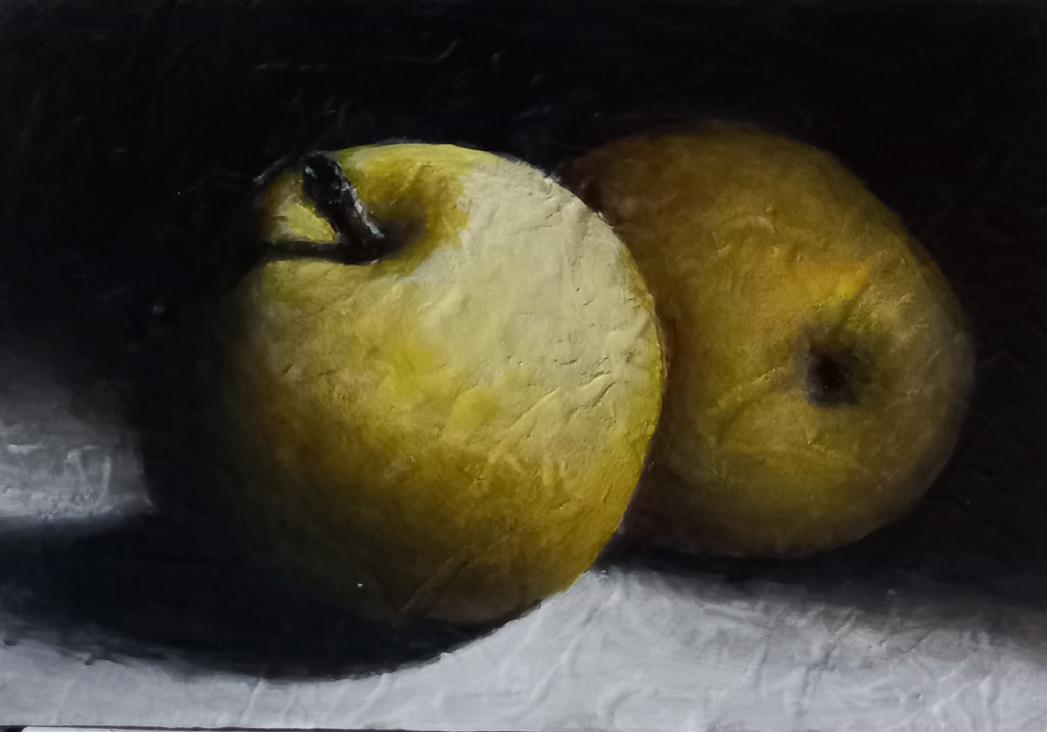
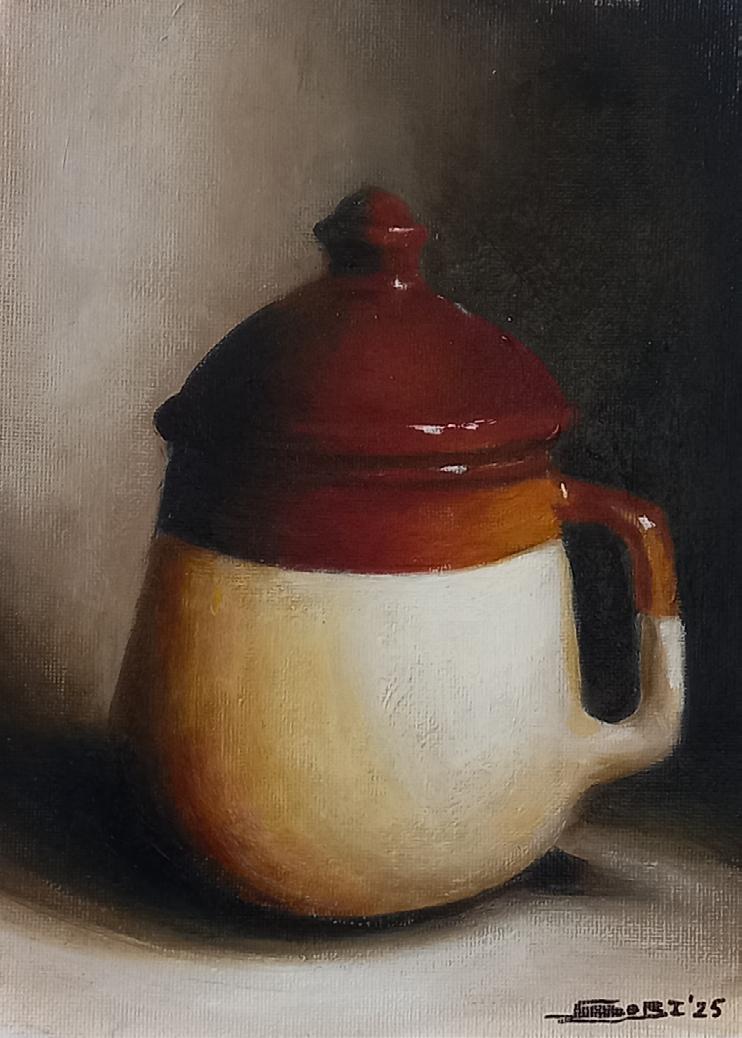
Rooted in ancient material and shaped by light, Seanna O’Boyle’s work builds intensity through layers, where history, memory, and making converge.
ASTRL Fibres
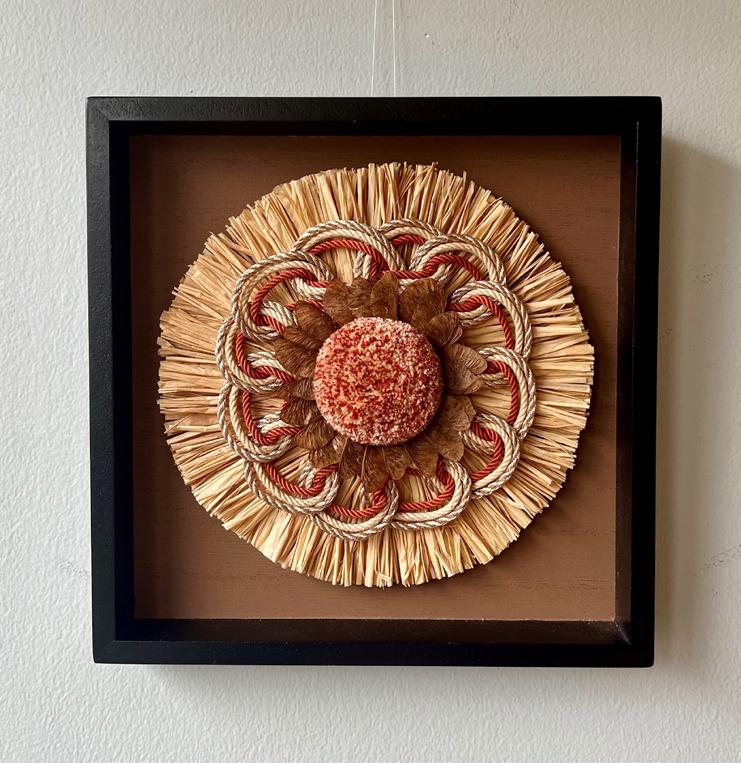
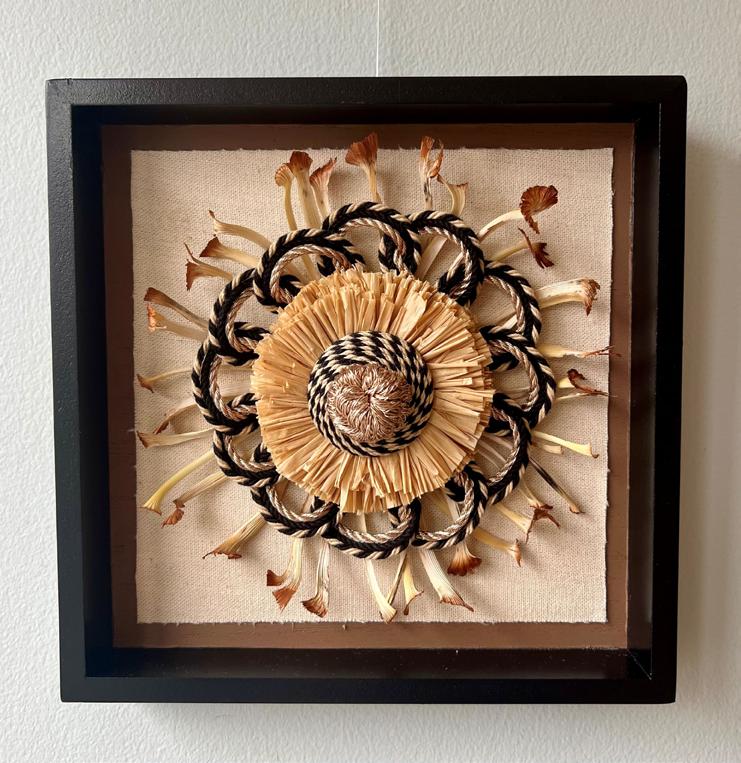
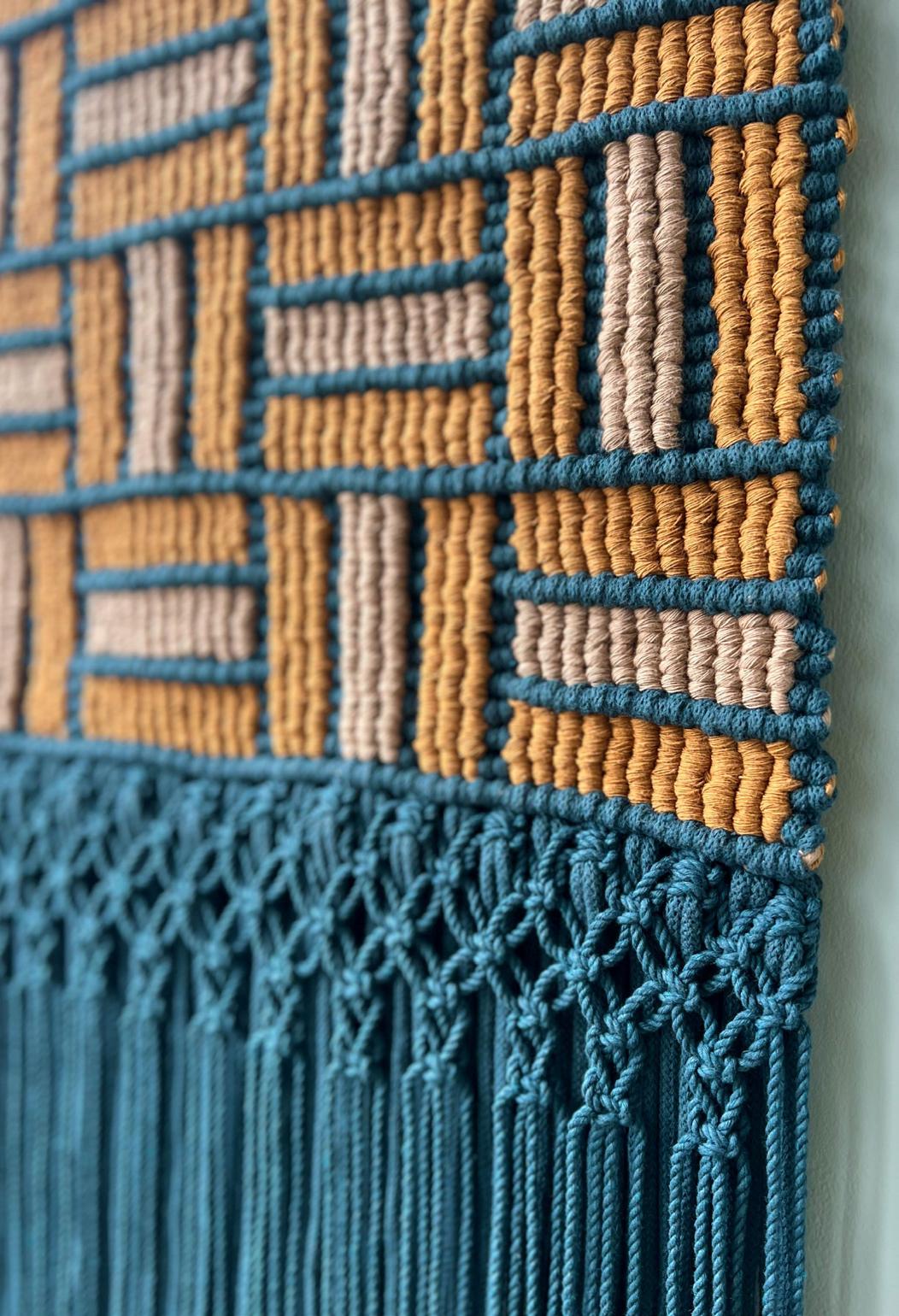
Moving between heritage craft and contemporary practice, Alison Pascoe builds work that feels both grounded and evolving, shaped by material, rhythm, and connection.
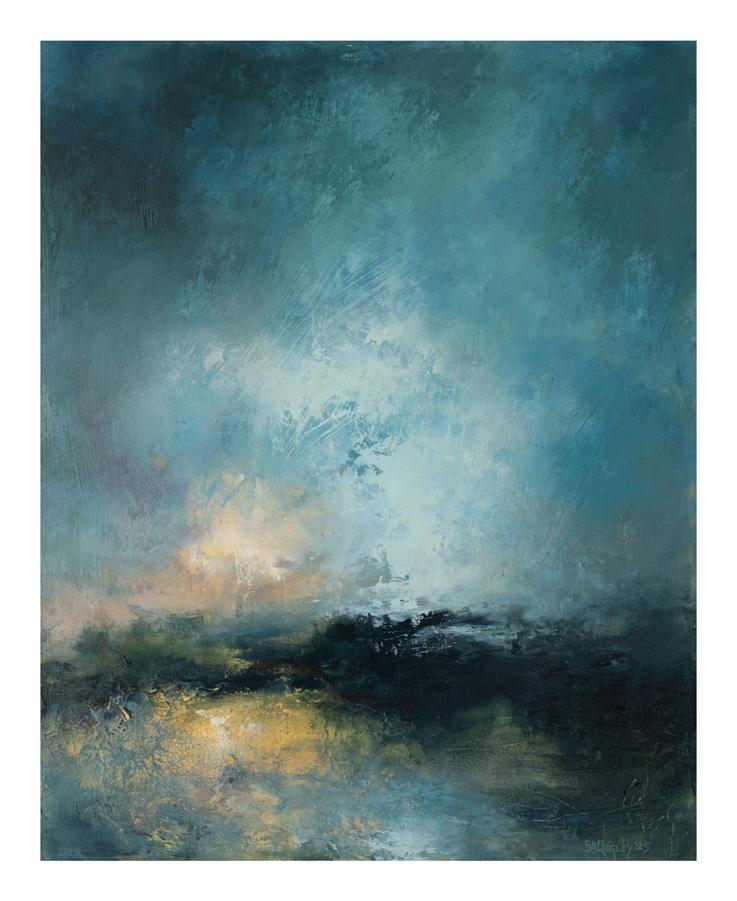
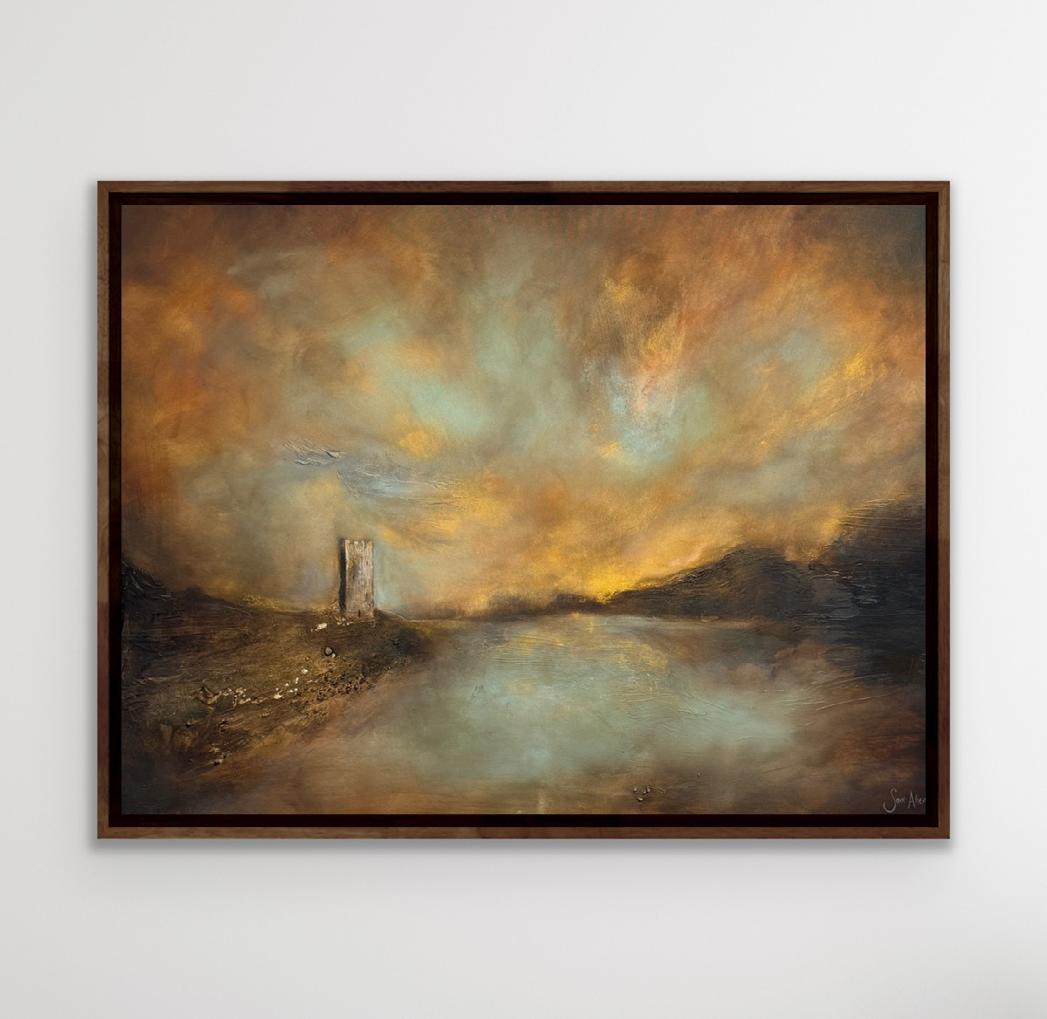
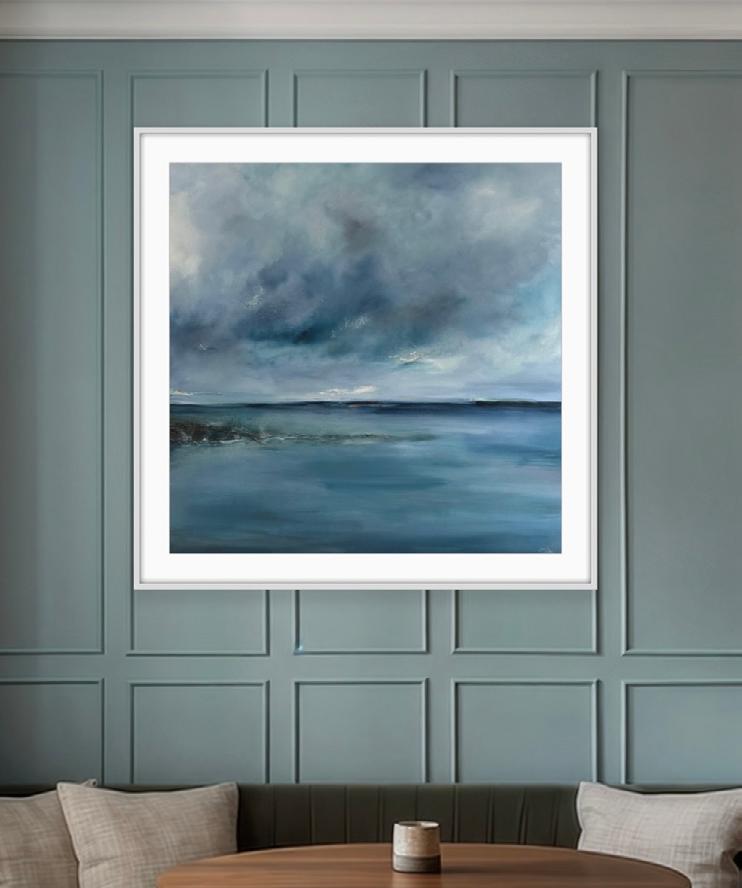
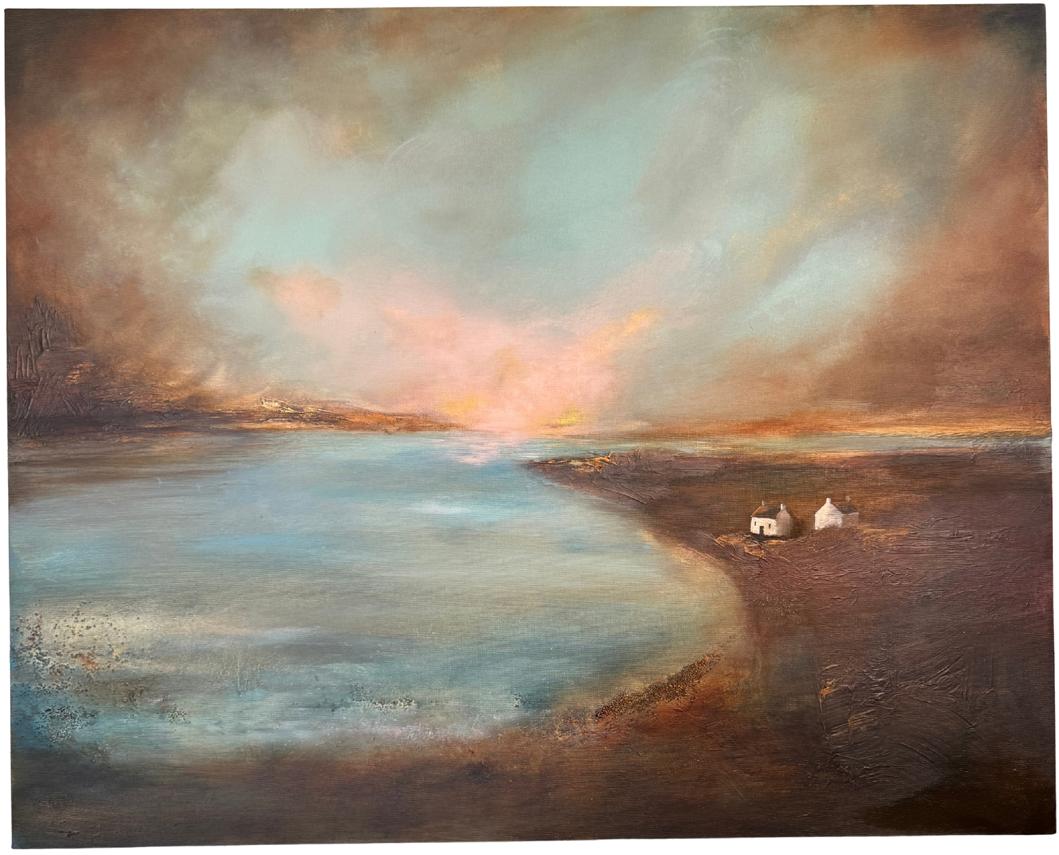
Carried through coastlines and memory, Sam
by
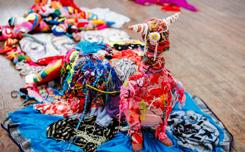
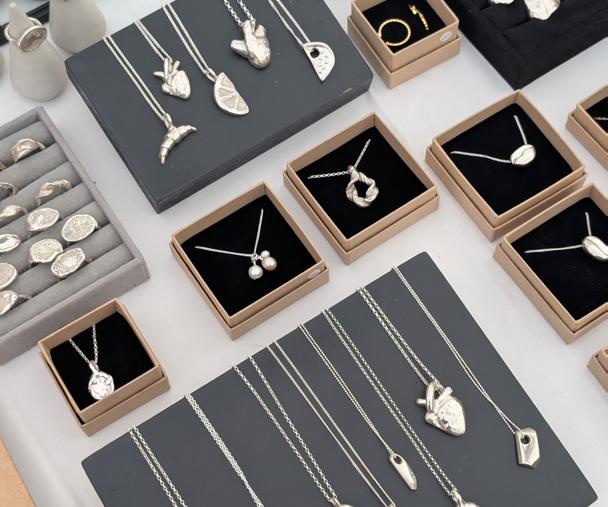
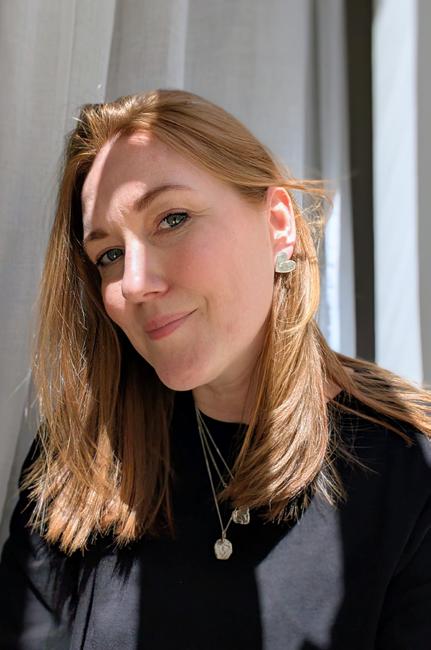
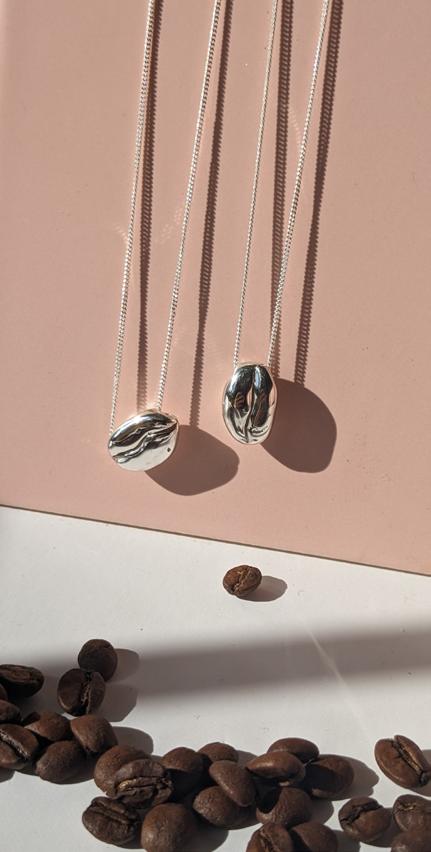
Jewellery becomes less product than revival as Becca Calmont lets wax, reclaimed silver, and instinct shape each piece into something unrepeatable.
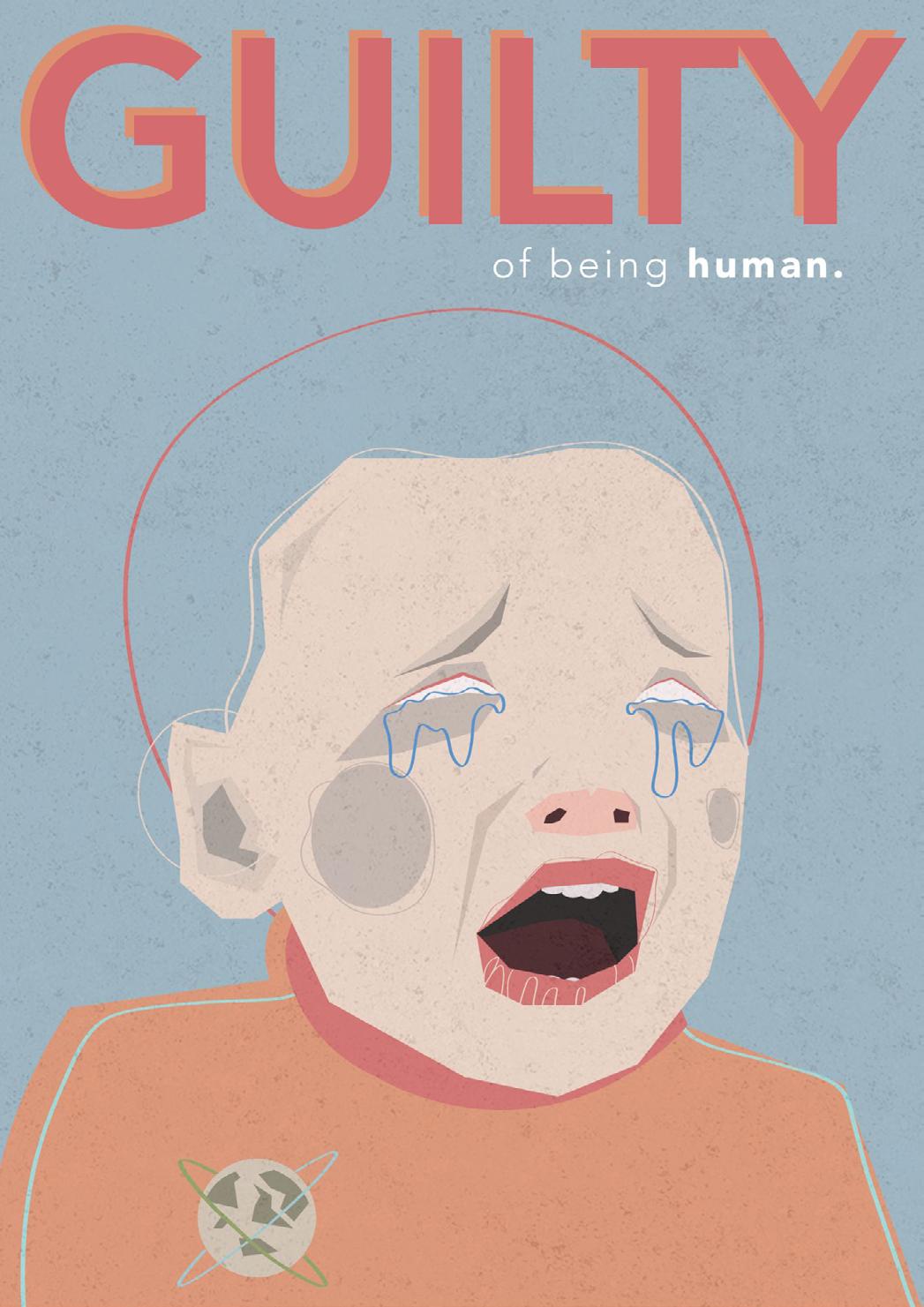
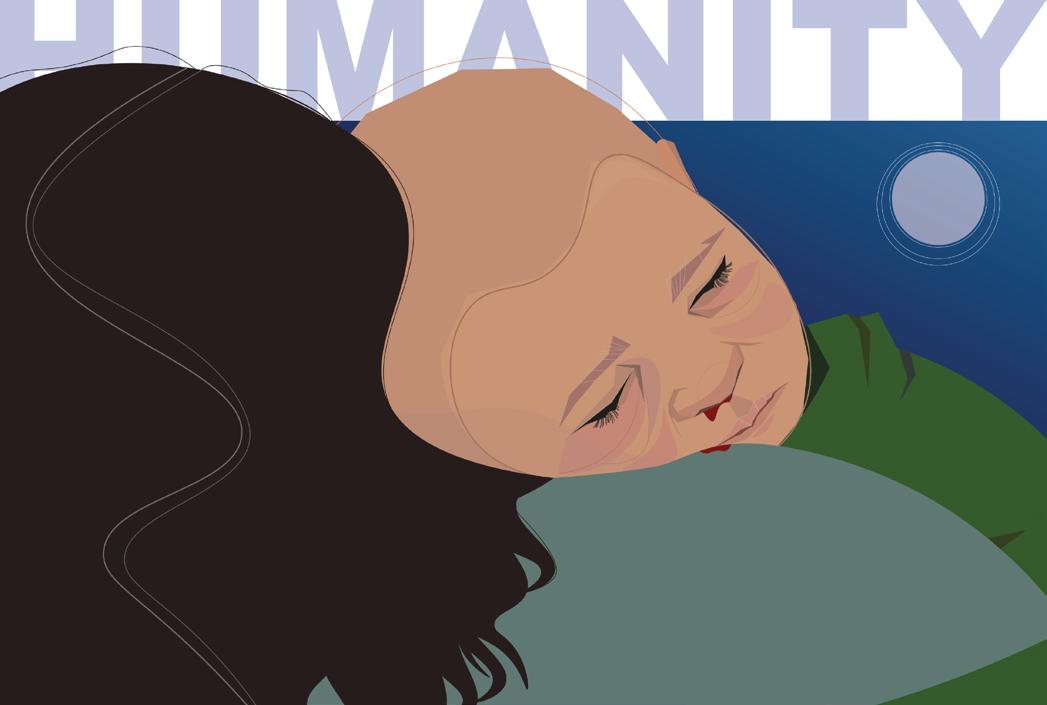
Climate guilt becomes human as Siobhán
builds images that confront inherited burden, conflict, and the systems we continue to sustain.
Bernadette Doolan
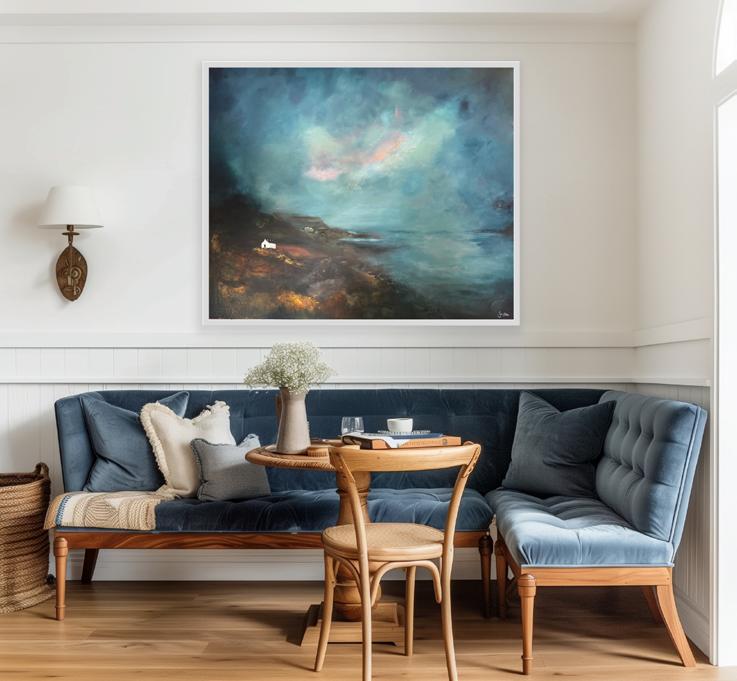
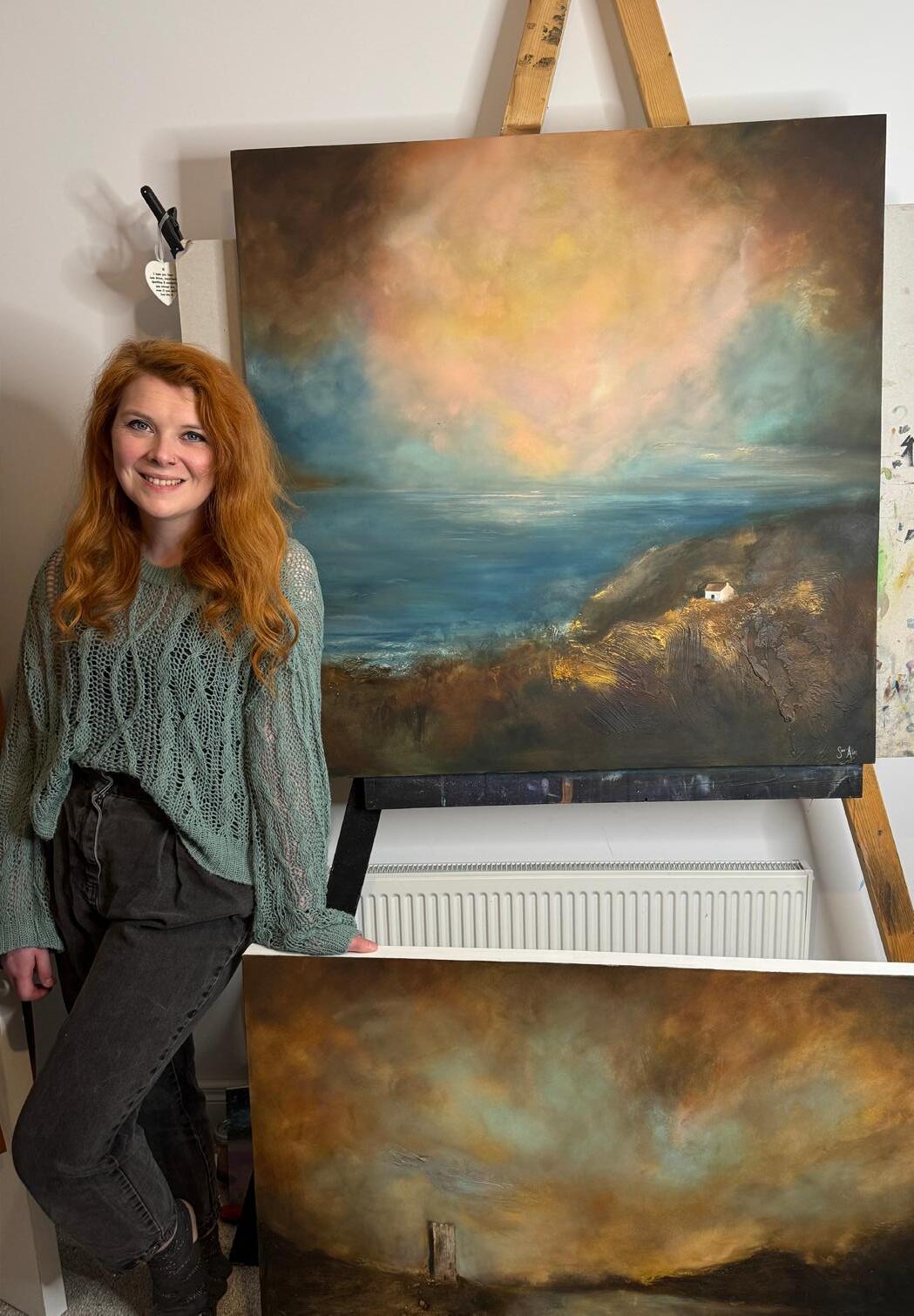
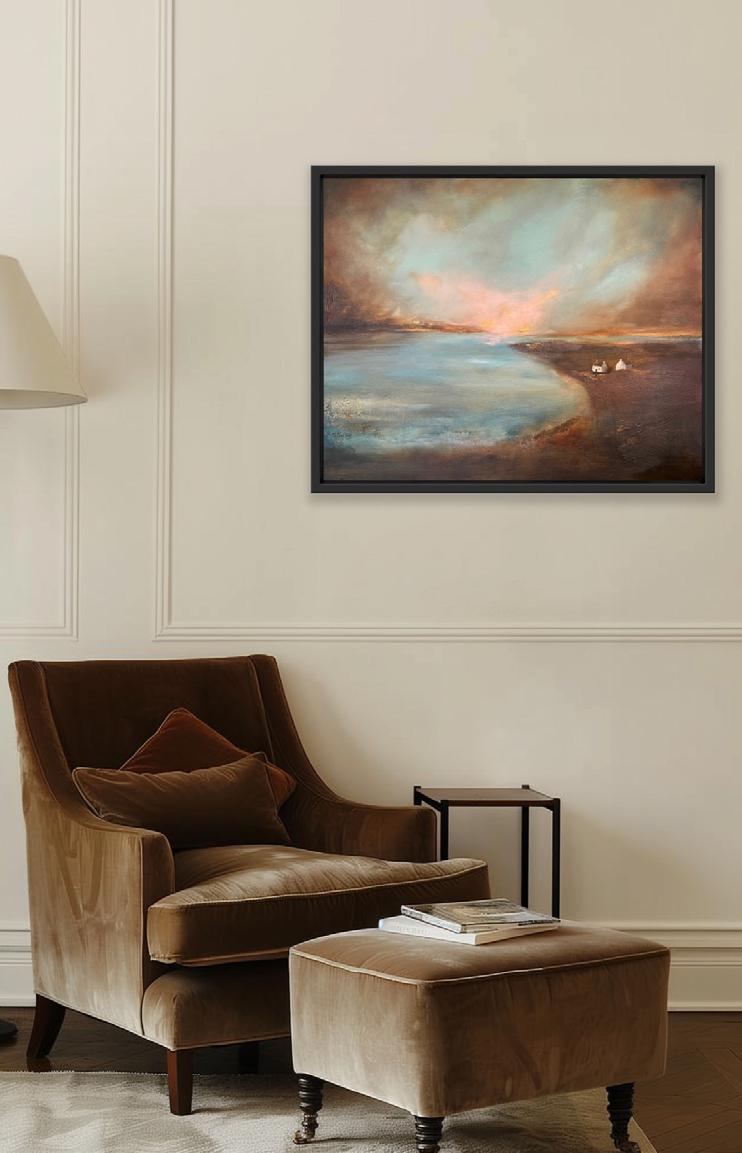
Sam Allen
Artist
Allen builds paintings shaped
place, material, and the enduring pull of a return to the anchor of home.
Becca Calmont Silversmith
Siobhán McTaggart
Artist
McTaggart
Shirani Bolle
Stuart Quigley
Alison Pascoe
Shirani Bolle - Sirius Arts Centre. Photograph: John Beasley
Founding Supporters
This issue is supported by: Mark Bonello
Marianna J Dunn
Shirani Bolle
Seanna O’Boyle
Go Leor is built independently and sustained by its readers. Thank you for helping this publication grow.
Colour, craft, and confrontation converge in a feminist practice that reclaims the body, the home, and the right to be seen
At Sirius Arts Centre, Shirani Bolle encountered her work differently in an exhibition curated by Miguel Amado, her first solo show and the largest presentation of her work to date.
The exhibition marked a turning point - not just in visibility for her work, but in understanding. As a self-taught artist, she describes her practice as something built in motion, each piece part of an ongoing process rather than a fixed outcome.
“I learned loads, to be honest. I’m self-taught, so everything
I do is a learning experience… you’re just getting more and more steps as you go along.”
But it wasn’t simply the act of exhibiting that shifted things. It was the process of installation, working alongside the curator, that reframed how she understood her own output. The context of the space itself also carried weight, having previously admired exhibitions by artists like Alice Rekab and Thaís Muniz , who also explore themes of identity and diaspora through their own and intergenerational lived experience.
She describes that proximity as affirming, feeling not only inspired by their work, but genuinely part of a wider conversation she had already felt connected to before her work entered the space.
Within the exhibition, pieces she had previously dismissed - work left sitting in the studio, half-forgotten - were suddenly recontextualised.
“I get very bored… even with things I’m proud of. My mind moves on really quickly, so I can dismiss work very easily.”
That impulse - to judge, discard, move on - was challenged when it was proposed to her to bring everything into the gallery and take things from there.
What emerged was not a collection of stand-alone, separate works, but a system of relationships.
“I realised how a curator puts things together to tell a story… how every piece interacts with every other piece. And how important it is to see that journey.”
The shift is subtle, yet fundamental. The question moves from “is this good?” to “what does this do in relation to everything else?”
“It doesn’t matter whether I really like it or not… it just has to have value within the wider conversation.”
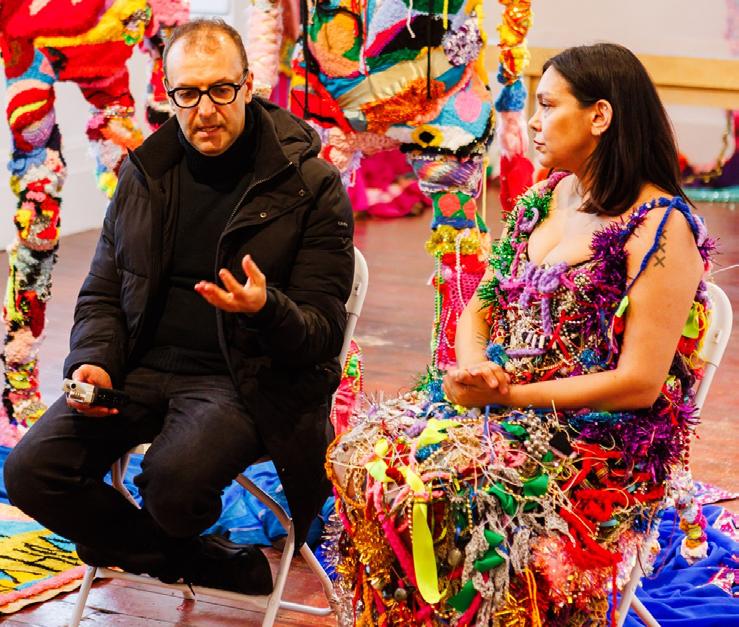
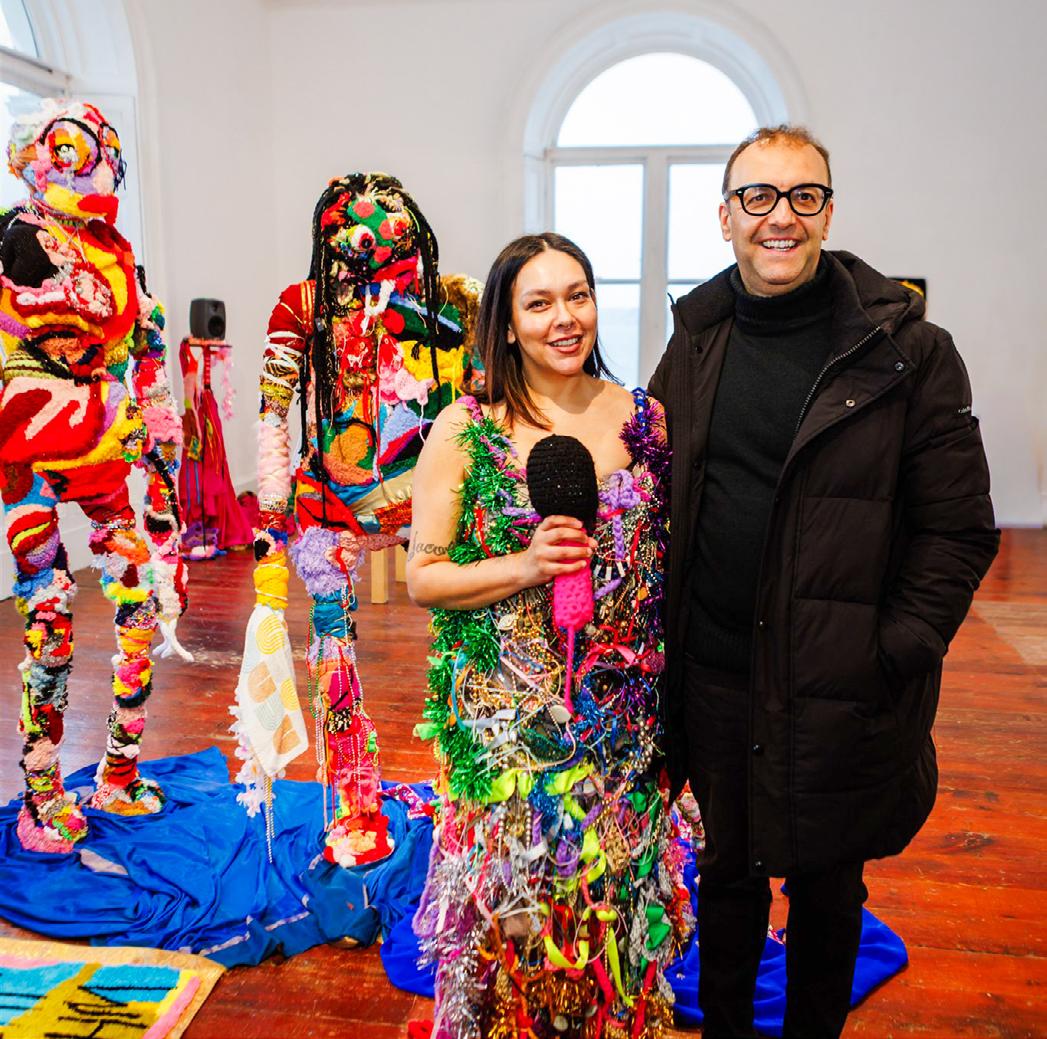
Shirani Bolle and Miguel Amado, Sirius Arts Centre, 2026.
Photograph: John Beasley
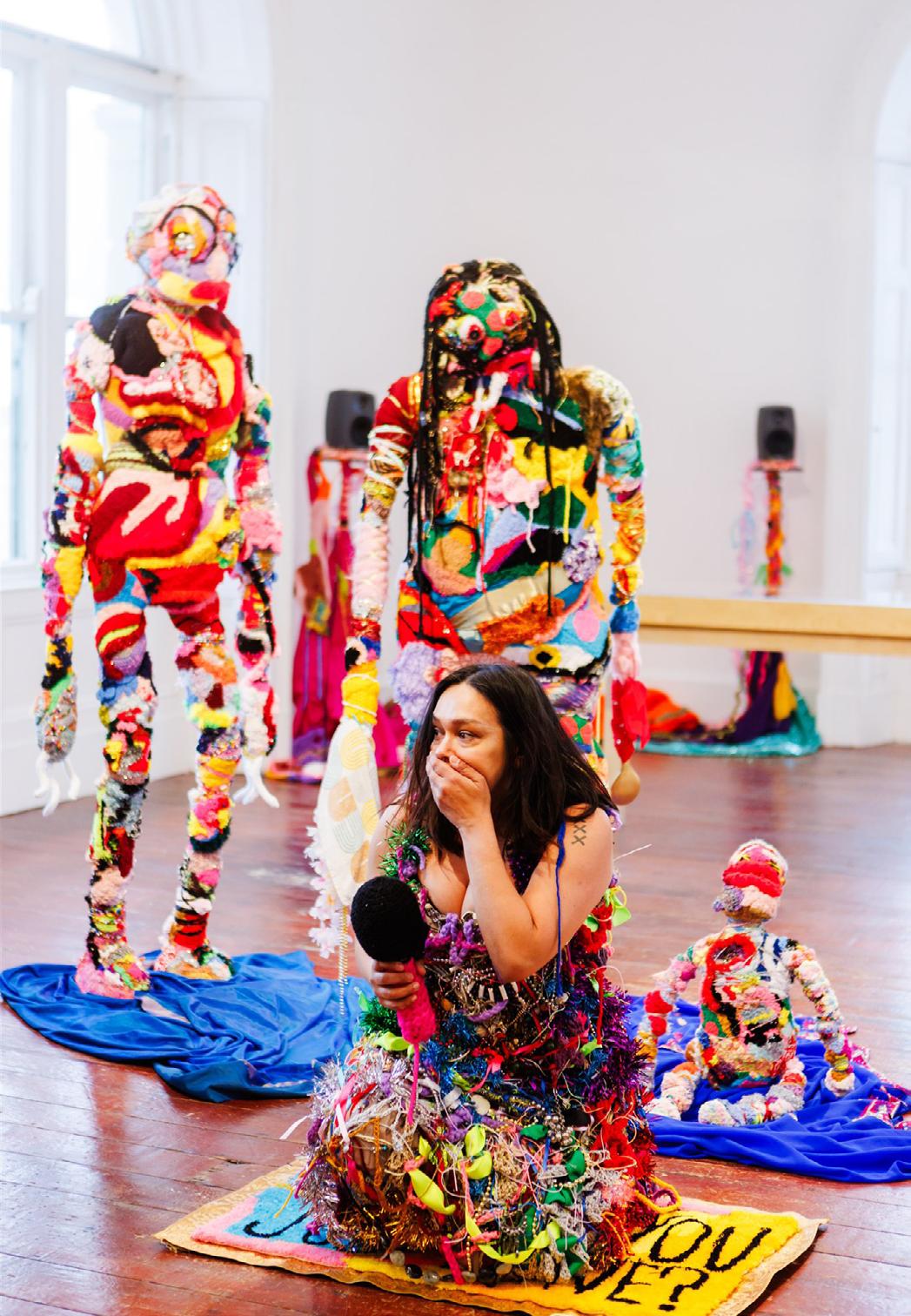
Shirani Bolle performing Oh Bondage, Up Yours!, 2026, Sirius Arts Centre, 2026. Photograph: John Beasley
Go Leor
From Fragment to Whole
Bolle’s practice resists containment within a single medium. Sculpture, sound, moving image, textiles - each element emerges independently, often without a clear endpoint.
In isolation, this can feel disjointed.
“When you’re in your studio… you feel a bit crazy. You’re like, why am I doing this? None of it makes sense together.”
It is only in the gallery that the logic becomes visible.
“I realised ‘this is why’. Because I had the sculptures, and the performances, and the sound,
and the film… and suddenly it’s a world.”
This idea of world-building becomes central. The work is not a series of objects, but an environment - something immersive, cumulative, and interconnected.
“That’s what I’m trying to do as an artist. It’s not about individual pieces - it’s about the whole.”
Even elements that feel unresolved in isolation - an experimental video, an unfinished form - find their place within that structure.
“Put it with everything else and it makes complete sense.”
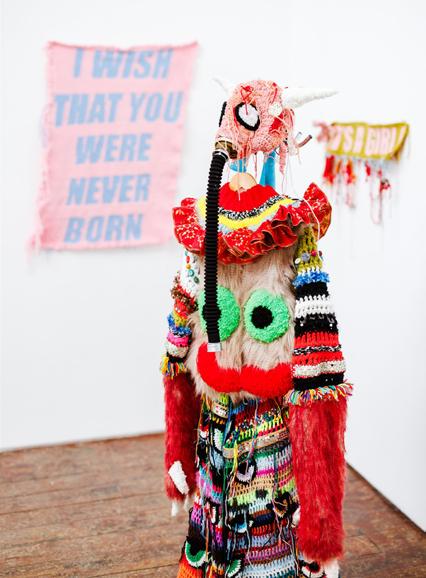
Mr Denneboom, 2024; I Wish That You Were Never Born, 2025. Photograph: John Beasley
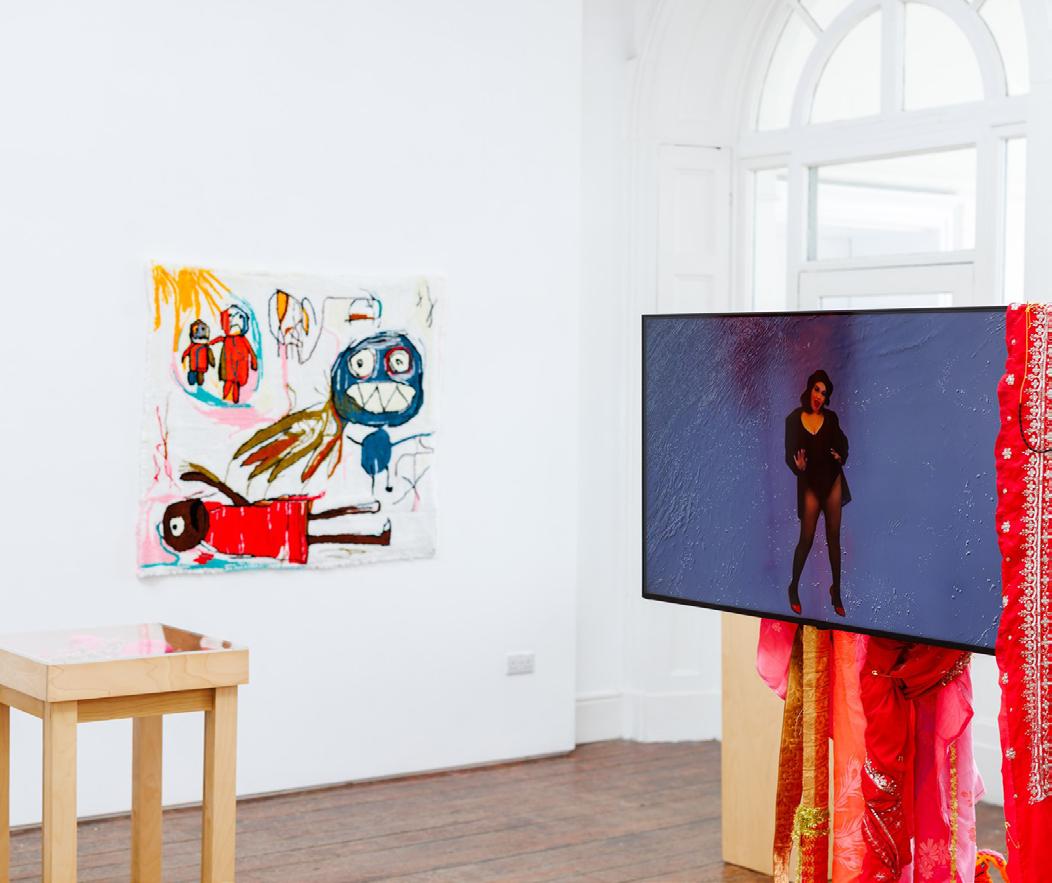
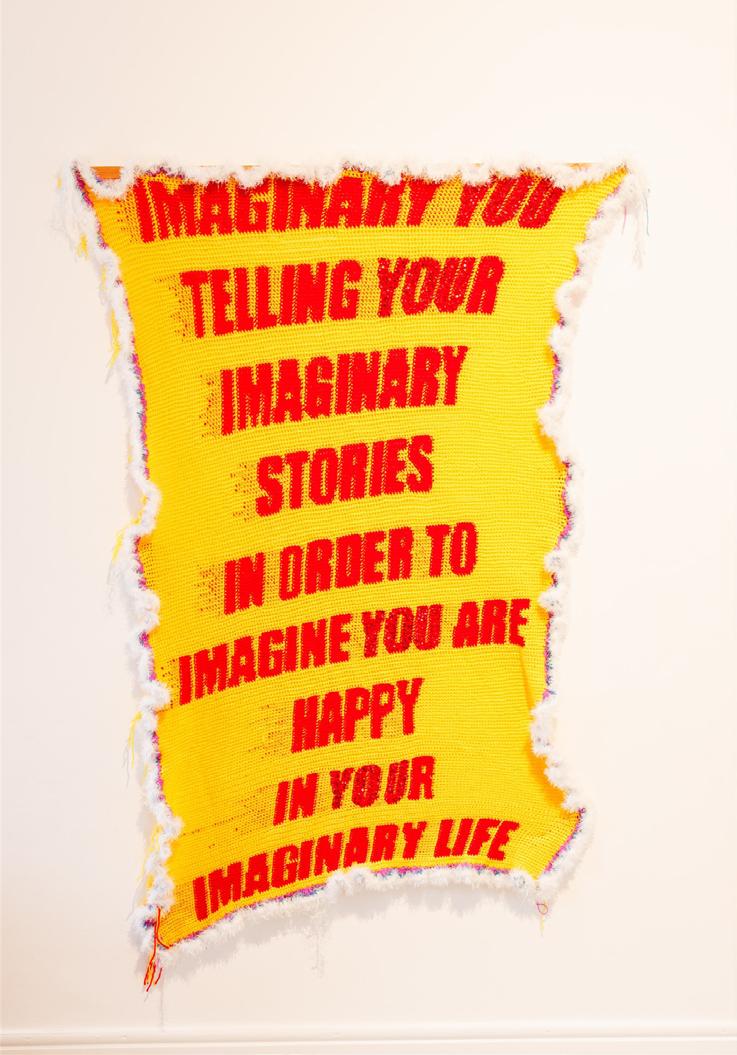
DEAL!!!, 2025; Scapegoats and Sausage Rolls, 2025. Photograph: John Beasley
Making Through Necessity
Bolle’s move into textiles began not as a conceptual shift, but as a practical one - a way of continuing to make work within the constraints of daily life. Working primarily with paint, she found the demands of the medium increasingly difficult to sustain while raising two young children. Crochet offered something different: a form that could move with her rather than requiring stillness - a quiet but pointed reclaiming of time, labour, and authorship within a space so often structured around care.
“My connection to textiles was born out of necessity really… I taught myself how to crochet and quickly realised it was something I could pick up and put down when I needed.”
The work began to unfold in fragments - in cars, at football practice, in the small intervals between responsibilitiesreshaping not only how Bolle worked, but how the work itself could exist. In this, the act of making becomes inseparable from the conditions it emerges within, foregrounding a feminist understanding of labour that refuses to separate art from the realities of lived experience.
Inheritance, Material, and Collaboration
What began as a practical solution reveals deeper connections. Textiles, for Bolle, carry an inherited weight, shaped by both personal memory and wider histories of labour - particularly those historically carried by women.
“There’s an element of ancestral connection to it as my Sri Lankan grandma taught girls in the local village in Colombo how to crochet and that’s how she paid for her family to survive.”
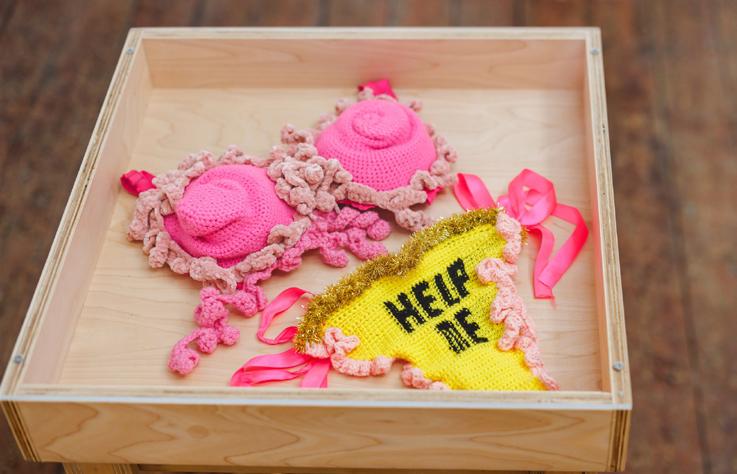
Help Me, 2025. Photograph: John Beasley
this has nothing to do with me, 2026. Photograph: John Beasley
Alongside this are early memories of making and material - her mother crocheting and sewing, and her Dutch grandmother’s cupboard filled with wool, which she recalls as “like a treasure trove.” Within that item, one discovery stands out: a small gun hidden inside a book. It’s an image that lingers, one that feels uncannily aligned with her own work - where softness and tension, care and threat, are held together within the same form.
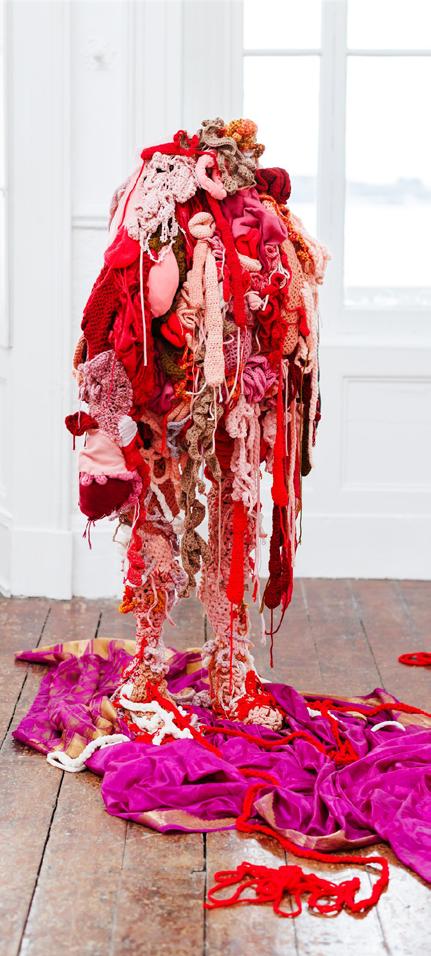
This duality runs through her sculptures. The pieces come together gradually, forming something cohesive through accumulation rather than design - a process she relates to the transformation of fabric itself.
“The way that a saree is just a huge sheet of cloth with no real structure until it is wrapped around the person… that feels very much how I construct my textile sculptures.”
Her use of second-hand fabrics extends this further, bringing the labour of unseen makers into the work. These materials carry the imprint of global production systems - often shaped by gendered and racialised labour - and, in repurposing them, Bolle reframes the act of making as collective rather than singular.
“I view these works as a kind of a collaboration between me and the person working in the sweatshop… this question is often on my mind ‘who gets to be an artist’?”
The Monstrous and the Human Across Bolle’s work, figures recur - soft, ambiguous forms she refers to as “monsters.” The term is provisional, but revealing.
“I haven’t settled on the name… but I keep calling them monsters.”
The word is less about appearance than it is about recognition.
“I kind of see everybody as having this potentially monstrous nature.”
Rather than depicting something external or fantastical, the figures operate as a way of surfacing what is already present - something internal, often concealed beneath social acting.
“They’re revealing the reality of who we are… the parts we try to cover up with niceties.”
In this sense, the “monster” becomes less an accusation and more a mirror - an unflinching, whole figure that holds the full breadth of human nature without reducing or softening it.
Masks, Perception, and Power
This idea extends into her engagement with Sri Lankan masking traditions, where masks are not symbolic but functional - used in ritual to
ward off illness or embody specific conditions.
“There’s a belief that if you portray something - if you embody it - it has power within your reality.”
For Bolle, this intersects directly with her experience of neurodivergence, particularly the shifting nature of perception.
“So many things can feel like an attack… but that doesn’t necessarily mean that they are.”
The mask, then, becomes more
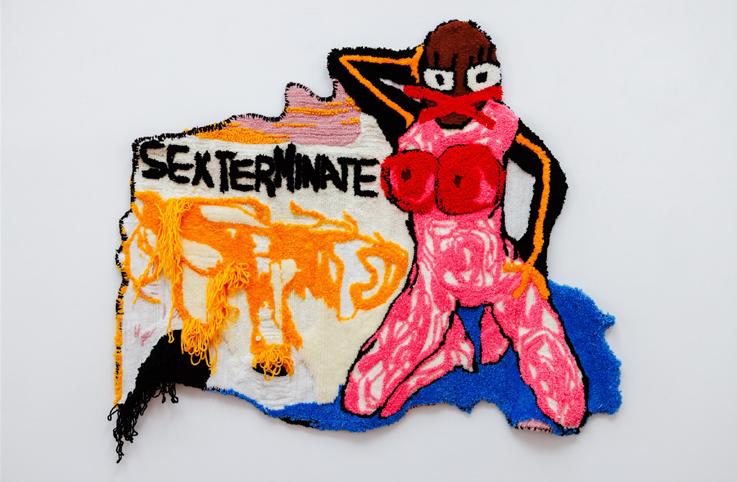
Treaty, 2025; Thank You Very Much, 2025; Treaty (Baby), 2025. Photograph: John Beasley
than concealment. It becomes a tool - something that can alter consciousness, redirect lived experience, and create space for agency.
“Masking is seen as negative… but once you understand it, there’s a power there. You can choose how you perceive things.”
This reframing moves the mask from defence to expression.
“I believe a mask can really reveal who we are.”
Understanding Instead of Winning
Running through Bolle’s practice is a persistent question: how do we live alongside difference?
Not in abstraction, but in lived experience - family, relationships, political divides.
“I disagreed incredibly with my dad… but the only way I could
move forward in my life was by trying to understand him.”
That relationship carries a deeper weight. Her father’s experience as a Holocaust survivor shaped not only his life, but the atmosphere of the home - where anxiety, vigilance, and learned fear were not abstract notions, but realities. For Bolle, this becomes a way of understanding how trauma moves across generations: how fear is absorbed, how it lingers in the body, and how it informs the way we apprehend and respond to the world around us.
It is not something she renders directly, but it underpins the emotional logic of the work - an awareness that what we carry is often inherited as much as it is understood.
This extends outward into broader social tensions, where division often hardens into certainty.
“Everyone thinks they’re right. No one thinks they’re the monster.”
Instead of positioning her work as corrective, Bolle sees it as exploratory - an attempt to create space for complexity rather than resolution.
“There is no truth… we’re all moving around in our own versions of it.”
Art, in this context, becomes a slower form of communication. Less direct, but more enduring.
“You might not remember someone saying something… but you remember how something made you feel.”
Comfort, Protest, and the Limits of Expression
This tension is brought into focus in her performance Comfort Fruit, where she interrogates the nature of protest in a mediated, comfortable world.
“I explore the paradox of protest in the digital age, where empathy often remains confined within the boundaries of comfort and where solidarity is performed at a safe distance.”
During the performance, Bolle ‘doom scrolls’ on her phone while singing Strange Fruit by Billie Holiday, positioned within a context of comfort: seated, wrapped, contained.
The contradiction is deliberate.
“It’s almost more about wanting to be right… you get a dopamine hit when people agree with you.”
The work asks a difficult question: what does it mean to care, if that care never leaves the realm of safety?
Shirani Bolle performing Oh Bondage, Up Yours!, Sirius Arts Centre, 2026
Photograph: John Beasley
‘this has nothing to do with me’, opening, Sirius Arts Centre, 2026. Photograph: John Beasley
Colour as Disruption
Colour operates as both entry point and provocation within Bolle’s practice.
Audiences often respond instinctively - describing the work as playful, childlike, even “fun.” But this reading is deliberately unstable.
“I use colour as a cultural reference to Sri Lanka and beyond… where it can be used in everything.”
Placed within a Western framework, that same use of colour creates friction. It unsettles expectation.
“There’s this feedback loop… people reveal something about themselves in how they react.”
For some, the response is immediate connection. For others, distance.
“I love that. Even if people are turned off - I enjoy that reaction.”
Colour becomes a mechanism of disruption, exposing assumptions about seriousness, value, and cultural hierarchy.
Becoming the Work
It is difficult to separate Bolle from the environment she creates.
The materials, the props, the techniques, the garments - they operate as extensions rather than outputs.
“That’s the biggest compliment… when someone says you look like your work.”
This integration is not accidental. It is the result of a gradual turn toward a clearer personal alignment with the mediums, allowing the work to reflect something personal and unfiltered.
“In recent years, I’ve just gone… and made the work that’s truest to myself.”
What emerges is not a practice defined by medium, but by continuity.
Each element - visual, sonic, performative - feeds into the same evolving structure.
“It all has to come together. It has to be the whole.”
I Can’t Breathe, 2025. Photograph: John Beasley
A Place to Make
Now based in Limerick City, Bolle speaks about the move away from London, where she lived before, not as a compromise, but as a necessary recalibration.
“In London, it’s very easy to feel like you’re doing something when you’re not really doing anything at all… you’re just being swept up in noise.”
In Limerick City, the pace - and
the community - offers something different.
“I’ve never made more work than I have here. The community is incredible.”
What might initially appear as a quieter setting reveals itself as fertile ground.
“There’s always someone… whatever you need, there’s someone to do it.”
The result is not isolation,
but focus - a terrain where the work can expand without distraction.
Learning Through Children
Running parallel to her practice is the influence of her children, whose questions - direct, disarming, and often existentialcut through the learned caution of adulthood.
Bolle discusses how revealing these exchanges can be, not just as a parent, but as an artist. Children approach the world without the same fear of asking the “wrong” question, often articulating ideas that adults have learned to suppress or avoid.
These moments become a form of clarity - reminding her of the importance of curiosity, as well as of staying close to the kinds of questions that first drove her to make art.
At its core, Bolle’s practice is driven not by answers, but by questions - often the same ones carried from childhood into adulthood.
At the same time, her children become a counterpoint within this. Their questions cut through the caution that adulthood builds, offering moments of clarity and openness that resist the tendency to close down or retreat.
Bolle speaks about how revealing these exchanges can be. In those moments, there is a reminder of something essential - of curiosity without constraint, and of the importance of continuing to ask difficult questions.
This
Has Nothing To Do With Me
In her exhibition, this has nothing to do with me, Bolle expands this approach into a fully realised realm - one that resists linear
reading and instead asks the viewer to move through it intuitively, encountering fragments that build into something larger.
Bolle is the definition of an artist, with an incredible ability to draw audiences into her world in every medium she turns her hand to - all disciplines are interwoven strands of the same language.
There is a generosity to the work, echoed in her presence online - her social media an outpouring of support to those struggling to communicate their
own ideas and concerns. That openness carries into the exhibition, where vulnerability is not presented as spectacle, but as something lived and shared.
The cultural references embedded throughout the work reveal the depth of her life, while the playful - and at times deliberately lurid - use of textiles and colour complicates that reading. Rather than softening difficult themes, these elements becomes a way of holding them in view, allowing trauma and hurt to exist alongside humour,
absurdity, and warmth.
Like the rest of her practice, the exhibition does not resolve into a single statement. Instead, it creates a space in which meaning is built through proximity - between works, between motifs, and between artist and audience.
To learn more about Bolle, visit her website: shiranibolle.com
And keep up with her journey via social media: @shiranibolle_
Shirani Bolle and Miguel Amado, Sirius Arts Centre, 2026. Photograph: John Beasley
Stuart Quigley Artist
Through This Beyond, Stuart Quigley transforms landscape into a charged field of light, colour, memory, and return.
There’s a quiet weight to the way Stuart Quigley speaks about returning home. Not as a simple reversal of distance, but as something slower - a reorientation shaped by time, memory, and lived experience.
After years spent in Cumbria, Yorkshire, and beyond, it was something deeply personal that brought him back - a reconnection with a childhood relationship.
Now, that connection places him within the daily rhythm of Green Cat Bakery, his wife’s
small working bakery where the steady, demanding movements form a quiet counterpoint to the slower, reflective pace of his painting practice.
What followed was not nostalgia, but discovery:
“It was really lovely to come home as an adult… it’s been really a reawakening of home.”
That sense of reawakening now runs through the work - shaped by time spent across Donegal and along the north coast, where landscape becomes less a subject and more a foundation.
This Beyond - A Landscape Reimagined
Quigley’s current exhibition, This Beyond, held at Flowerfield Arts Centre (11 April – 23 May), brings these ideas into sharp focus.
The exhibition explores the layering of light, colour, and form over time - drawing from the landscapes that have shaped him, from Cumbria to Isle of Skye and back to the North Coast of Ireland.
It positions painting not as a direct response to place, but
Resonance
as something filtered through memory and experience.
As Quigley describes:
“The conditions of light alter what we see and how we see it… what is painted is an eventual interpretation.”
This aligns closely with his own reflections during our conversation:
“It’s an amalgamation of ideas that isn’t any one particular thing.”
The exhibition itself builds on his earlier experience at Roe Valley Arts & Cultural Centre - marking a continuation of his move toward larger, more ambitious bodies of work, while refining the conceptual depth behind them.
Painting Beyond Place
While Quigley’s work sits within landscape, it resists the idea of fixed location. His paintings are not depictions, but constructions - built from overlapping memories, experiences, and observations.
Fragments of Cumbria, Skye, and Ireland merge into something new, something that feels familiar but can’t be placed.
“Sometimes [they] would almost blend from Skye to Cumbria to Ireland…”
This approach shifts the focus entirely. The question is no longer where - but how.
“How does it make you feel… to stand in front of something that’s wide and big and beautiful?”
It’s here that the work takes on its distinctly turneresque quality - not through direct reference, but through its commitment to atmosphere, light, and emotional resonance.
Exhibitions, Scale, and Momentum
For much of his career, Quigley worked almost exclusively through commissions - building a global audience without necessarily building a public exhibition practice.
“I never really had exhibited… it was just working back to back on commissions for years.” That changed when he committed to his first major exhibition - a decision that reshaped not only how he worked, but how he thought about his work.
“It really made me look at how long does it take to make a
painting, through production and scale.”
Now, with This Beyond, there’s a clear sense of momentum. The work has expanded - in size, in ambition, and in clarity of intent.
Scale and the Physical Experience of Painting
One of the most immediate qualities of Quigley’s work is its sense of scale - not just in size, but in how it unfolds across space. Large canvases sit alongside diptychs and triptychs, where a single image is extended, fractured, or transitioned across multiple panels. These works allow him to move between moments - shifting light, place, or memory - creating a rhythm that carries the viewer from one surface to the next.
“I thought, this is great. I can really play here… I can really maximise it.”
At the same time, smaller works remain just as considereddrawing the viewer inward, asking for a different kind of attention.
“You can almost spend too much time working on a tiny bit… you want to say so much.”
Across single canvases and multi-panel pieces alike, there’s a consistent balance between immersion and intimacy - a practice that expands and contracts while holding the same level of intent.
The Language of Colour
Quigley’s command of colour is one of the defining strengths of his practice. His palettes are rich but controlled - built through layers of blues, umbers, and ochres that shift under changing light.
That sensitivity can be traced back to an early fascination with Egypt, particularly encounters
with artefacts like the coffin of Tutankhamun - where the interplay of deep blue and radiant gold leaves a lasting impression. Those colours, both symbolic and luminous, have stayed with him, quietly informing the way he approaches tone, contrast, and depth.
Rather than relying on black, he builds darkness through colour itself:
“I very, very rarely use black… I’ll try to go as dark with the browns and the blues.”
The result is work that feels alive - colours interacting, shifting, and revealing themselves over time. What might initially read as darkness is in fact layered colour, holding warmth and variation beneath the surface.
This sensitivity to colour is not incidental. It’s something deeply
embedded in his thinking - a thread that runs from those early encounters with Egyptian artefacts through to the present, where golds, blues, and earth tones continue to define the visual language of his work.
Surface, Texture, and Process
In recent years, Quigley’s move toward wooden panels has transformed his process. The surface itself becomes part of the work - not just a support, but an active element.
“That smooth starting point lets me control the surface more.”
What’s particularly striking is the way he builds textureoften embedding it at the very beginning of a painting, long before it becomes visible.
“The marks that I made when I was priming it… come into play at the very end.”
It’s a process that speaks to both control and patience - an understanding of how a painting will unfold over time.
Between Two Distances
A key idea within Quigley’s work is the relationship between proximity and distance.
Up close, the paintings reveal their making - the gestures, the textures, the movement of the hand.
Step back, and those same elements resolve into something more structured.
“You stand at two feet… and then at twelve feet… there’s this sort of dialogue between those two distances.”
This dynamic creates an active viewing experience - one that requires movement, attention, and time.
Light, Memory, and the Dissolving Form
Light sits at the centre of Quigley’s practice - not as a detail, but as a force that reshapes everything it touches.
Solid forms dissolve. Edges soften. The landscape becomes something transient.
“The ambiguity of form… I’m finding more and more appealing.”
This shift toward ambiguity is closely tied to memory - to the act of holding onto fleeting moments and translating them into something lasting.
“I’m constantly trying to memorise that… a light effect on the water… or the side of a mountain.”
The result is work that feels less like depiction and more like distillation.
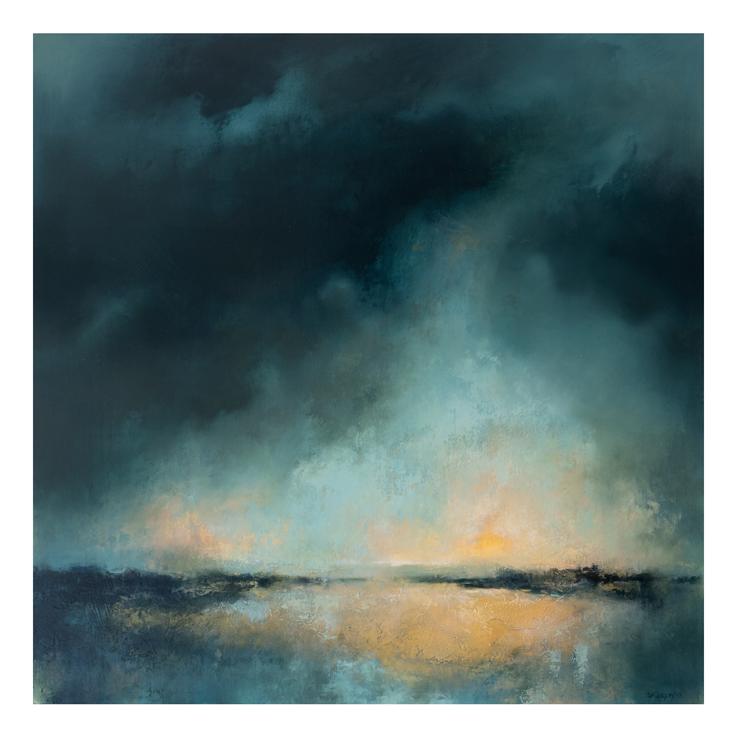
Rest by the Water
A Practice Rooted in Time
Time runs through every aspect of Quigley’s work.
Each painting becomes a record - not just of what is seen, but of the process of seeing, remembering, and making.
“I think of painting… as a repository or a treasury of time.”
This idea transforms the work into something more than image - it becomes a document of experience.
The Human Element
Alongside the landscapes, Quigley’s figurative work offers a different kind of insight into his practice.
A graphite portrait of his stepson, included in This Beyond, demonstrates a clear command of form - an ability to capture structure and presence with precision.
“I have a piece… a big graphite drawing.”
It’s a reminder that beneath the atmosphere and abstraction lies a strong foundation in drawing - one that informs everything else.
Studio, Teaching, and the Balance of Practice
Quigley’s time is split between the studio and teaching - a balance that feels central to his work.
The studio offers space for focus and reflection, while teaching provides connection and energy.
“Half the week I’m with people… and the other half I’m alone and process everything.”
This rhythm allows ideas to
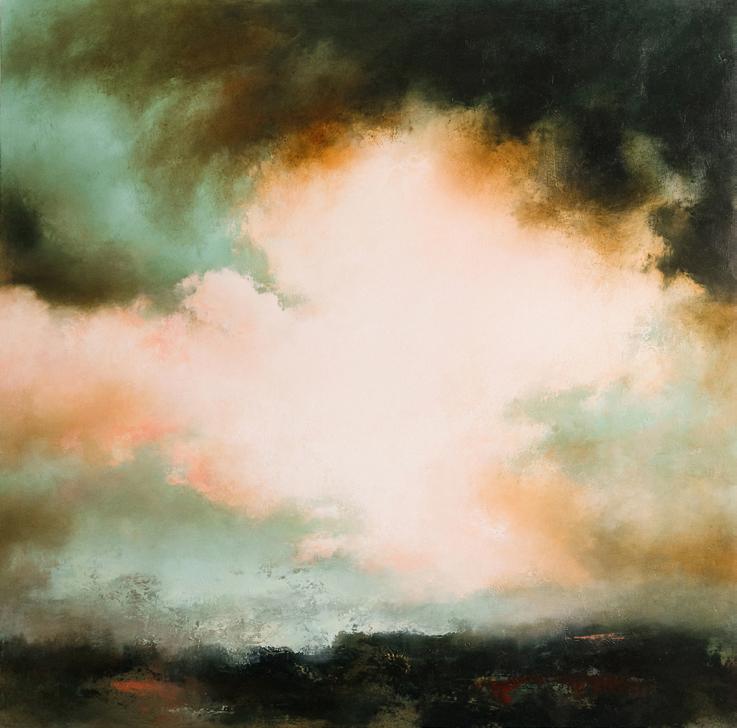
Liminal
move between environments - to be tested, absorbed, and reworked.
The Experience of Seeing
Despite the reach of digital platforms, Quigley remains committed to the physical experience of painting - to the importance of encountering work in person.
“It just doesn’t do it justice… you feel absorbed into it much more than you would looking at a screen.”
It’s a sentiment that resonates strongly within This Beyond - an exhibition that rewards time, movement, and attention.
An Artist in Full Flow
There’s a sense, throughout this work, of an artist fully engaged with his practice - pushing it forward while remaining deeply connected to its foundations.
The paintings carry weight - not just technically, but emotionally. They hold moments, memories, and experiences, translating them into something that lingers.
“That’s made the whole exhibition worthwhile.”
These are not simply landscapes. They are encounters - shaped by light, held in time, and offered back with clarity and intent.
Join Stuart Quigley for his Artist Talk on Saturday 2 May (11:30am–12:30pm) at Flowerfield Arts Centre - with This Beyond running until 23rd May - and book your place here: flowerfield.org/events
And keep up with Stuart via social media: @stuquigley
Rest by the Water II
Closing on the West
Seanna O’Boyle
Painter & Sculptor
Drawing from the Old Masters and Irish prehistory, a practice that builds meaning through material, memory, and the discipline of making
There is a particular density to Seanna O’Boyle’s work that resists easy description, something rooted not only in subject or composition but in the materials themselves.
Whether working in paint or carving from ancient bog wood, her practice is guided by a sensitivity to history, culture and the work’s physical presence, where making becomes less about forcing and more about responding to what is already there. What emerges across both strands of her work is a consistent way of thinking - one that treats material, light, and history as active participants rather than passive elements.
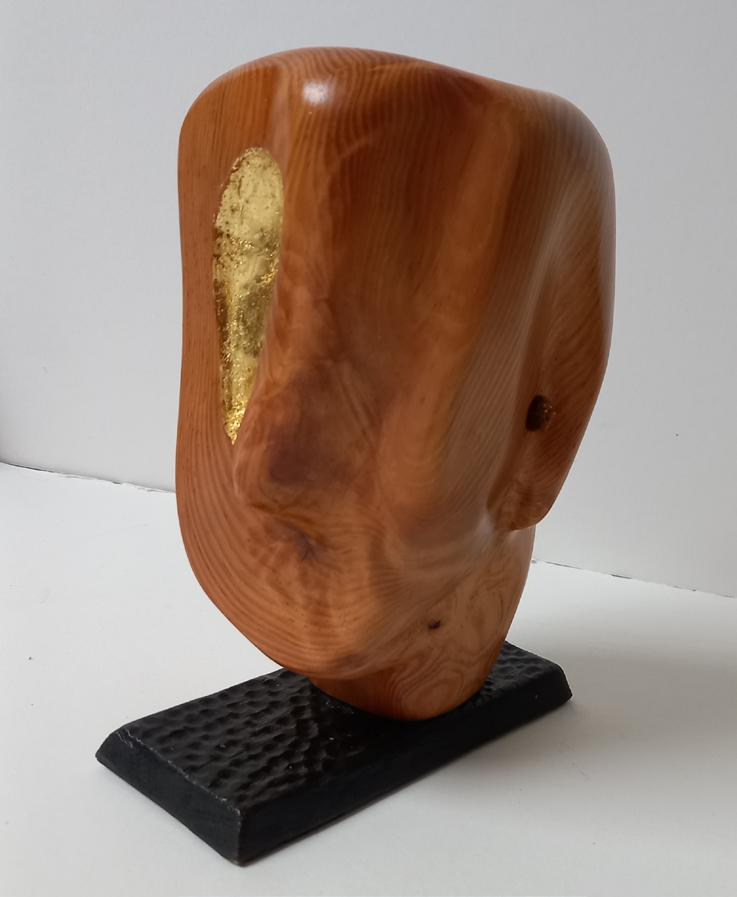
Her sculptural work begins, quite literally, in the ground. The bog wood she uses is not simply found material but something approached with a sense of care and recognition. This bogwood, sourced on the west coast of Ireland, was dated to around 5,000 years old - something she recalls as a defining moment for her sculpture.
“So I found a piece of wood about 5 or 6 years ago in a bog… and I just knew there was something special about it… I took it to Queens University and they dated it to about 5,000 years old and it was potentially the original pine that grew in Ireland… so it’s precious to me.”
That sense of time translates to the finished work alongside her knowledge of archaeology directing how she approaches the material, shaping both her decisions and her restraint. There is an awareness not just of the wood as an object, but of its life
before it became the materialits place within a landscape and timeframe that no longer exists in the same form.
“When this was alive… millennia ago… farming was a new idea... this wood just fills me with awe and wonder.”
This attitude carries through into the act of carving itself, where control can be transitory. Seanna describes how “the wood tells you where it wants to go”, a recognition that the material can redirect intention at any stage. Cracks or shakes and faults then become part of the process, forcing adjustment rather than resistance, and creating a practice grounded in responsiveness rather than certainty.
Light as Structure
If sculpture is a negotiation with material, painting becomes a negotiation with light. Seanna’s work draws a clear line back to the Old Masters - unconsciously through instinct not imitation. Her paintings are built through contrast, where shadow and light are used to construct form.
“The Old Masters such as Caravaggio and Rembrandt created strong dramatic contrasts… producing a theatrical atmosphere between the light and the shadow… I use these too, in fact only very recently being self taught I realised these techniques had a name. Chiaroscuro and Tene-
Cry From The Bog
brism, both using light dark to create the dramatic contrasts I am always after”
Her attraction to shadow is rooted in a preference for depth, atmosphere, and a sense of something emerging from darkness.
“I just love the depth of shadows but without the light it is meaningless, light is important to all artists … by filling the surface with the composition it adds to the drama creating a volume nearly sculptural in appearance.”
That preference shapes everything that follows. Light is not used to reveal but to isolate, often focusing attention in a way that feels almost theatrical. Objects are not arranged casually but deliberately staged, emerging from surrounding shadow in a way that focuses attention.
Building the Surface
Seanna’s paintings are built through layering. Layers of paint sit over textured gesso, creating a surface that holds the history of its making even when those earlier stages are no longer visible.
“Painting multiple layers is something I have always used because even though the viewer may not be aware of this it does create a felt depth… ”
This idea of “felt depth” becomes central. Her paintings are not concerned with surface realism but with building intensity, layer by layer, until the image has impact. The viewer may not consciously register the number of layers or the complexity of the surface, but the effect is cumulative.
“If you create more and more layers… the person looking at it
won’t know, but they’ll feel the depth adding more interest to it… it’s something they sense rather than see. It’s all about the layers”.
That phrase - “it’s all about the layers” - becomes a quiet key to her practice. It applies equally to paint, to material, and to meaning, where it sits alongside broader cultural reference.
That depth of feeling is reinforced by her approach to colour. Rather than relying on pure black or stark contrast, she builds shadow mixing colours from the painting’s limited earthy palette, allowing colours to harmonise across the painting.
“If you mix colours together, the painting will naturally harmonise… the viewer won’t necessarily know what’s been done, but they will feel it.”
Showing Up II
The Shadow Box
Central to this process is composition, shaped by a clear grounding in what each painting is trying to achieve. Seanna constructs her own compositions within what she refers to as her ‘shadow box’. This allows her to direct light with precision rather than relying on observation alone, a method influenced by her ongoing return to a Giacometti quote she holds onto: “the object of art is not to produce reality but to create a reality of the same intensity.”
“This quote inspired me to create compositions in a homemade lightbox or as I call it my ‘shadow box’. There I can control the intensity of light and the shadows… if I didn’t create my own composition and lighting I think the work would suffer.”
This method places her somewhere between observation and invention. The objects may be real, but the conditions in which they exist are constructed. Light becomes an active tool, shaping the painting rather than simply illuminating it.
Layers of Influence
The idea of layering extends beyond material into influence. Seanna’s father, a hobby potter, introduced her early to making, though not in a direct way.
“My father could turn his hand to anything… finding an early pot by my father inspired two paintings, just adding my own personal layer to the works… in fact both were bought by a potter closing the circle”
A more defining influence came through her apprenticeship with bodhrán maker Eamon Maguire, where she encountered Irish culture in a deeper way.
“He was so enmeshed in Irish culture… the music, dance, myths and legends, celtic art for example the Book of Kells… that really influenced me the most because I’d never really been exposed to that before.”
This period introduced her to Irish culture and its legacy. Eamon Maguire was rooted in music, storytelling, craft, and community. His approach, grounded in traditional bodhrán making and a lived engagement with Irish culture, exposed Seanna to a way of working where materials, heritage, and daily practice were inseparable.
Material as Meaning
This sense of historical continuity becomes most visible in her sculptural work, where the materials themselves carry meaning. The use of bog pine, bronze, and gold is not decorative but deliberate, each element chosen for both its physical and cultural weight.
“The value I place on this wood I find hard to put into words so I let the materials reflect thisbronze… and real gold… both
One Lump Or Two
high value materials found in the earth and used in ancient times.”
The decision is not purely aesthetic but ethical - an attempt to match the value of the material with the value of its presentation. “I didn’t want to combine it with cheap materials… it deserved the quality.”
Between Knowing and Not Knowing
Seanna’s interest in Irish prehistory extends into her painting, though in a less direct way. Her interest in rock art - symbols carved into stone before the existence of written language - initially led her toward abstraction, but over time this approach felt disconnected.
“Rock art basically was potentially a symbolic language of our ancestors before the written language… and we still don’t know to this day what it means completely… and I find that so powerful.”
Stepping back from this to improve her technical skills she returned to drawing and still life, rebuilding her practice through repetition and observation.
“I just thought I need to stop… went back to still life… started just drawing… over and over again.”
This return to fundamentals was not a regression but a recalibration “this gave me the time to reconnect with art, creating work that meant something to me .”
A Practice Still Moving
There is no sense of completion in Seanna’s work, particularly in painting, which she sees as still evolving. Her approach remains critical and iterative, defined by revision as much as creation.
“I paint over so many things… but if I’m not happy with it, what’s the point in putting it out there?… I want to stand over it.”
That critical eye is balanced by a clear sense of direction. She speaks about wanting to loosen her work, to move toward more fluid brushwork while retaining the intensity created through light and shadow.
“I would like to loosen up… not be so tight… but still using the same techniques with dark and light… I’m always searching for that intensity.”
More than a pursuit of intensity alone, Seanna’s practice is defined by a deep respect for history, Irish legacy and the
discipline of making. Whether working in paint or wood, she builds work that carries meaning - drawing on the cumulative importance of tradition and practice she recognises in the people, materials, and landscapes around her. Through material, through light, and through the patient accumulation of layers, her work holds not just form, but a continuity of knowledge and care.
To explore Seanna’s work further and view pieces currently available, visit her website: seannaoboyle.com
And keep up with Seanna via social media: @seannaoboyleartist What
Alison Pascoe ASTRL Fibres
A practice rooted in heritage craft, where knotting, material and teaching become a language of connection across place and people
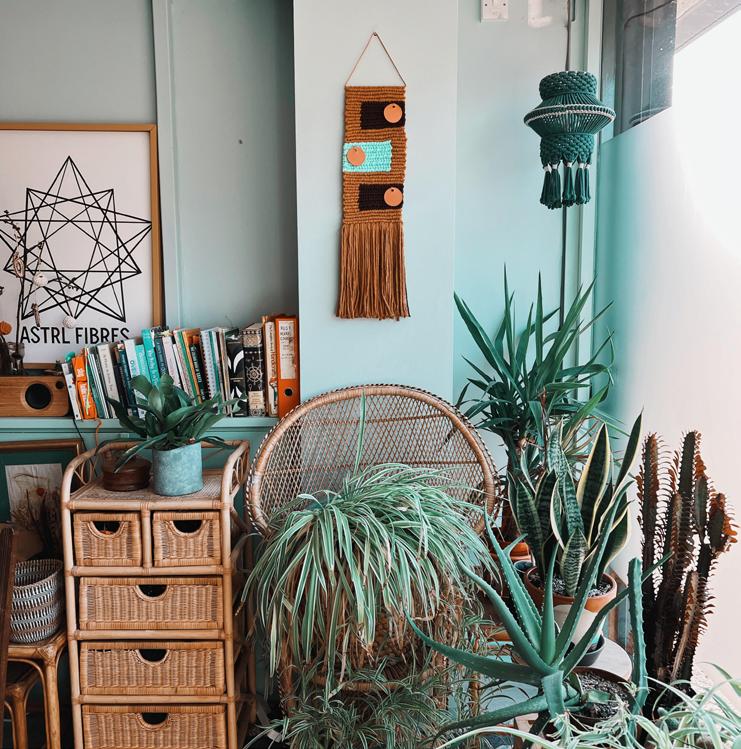
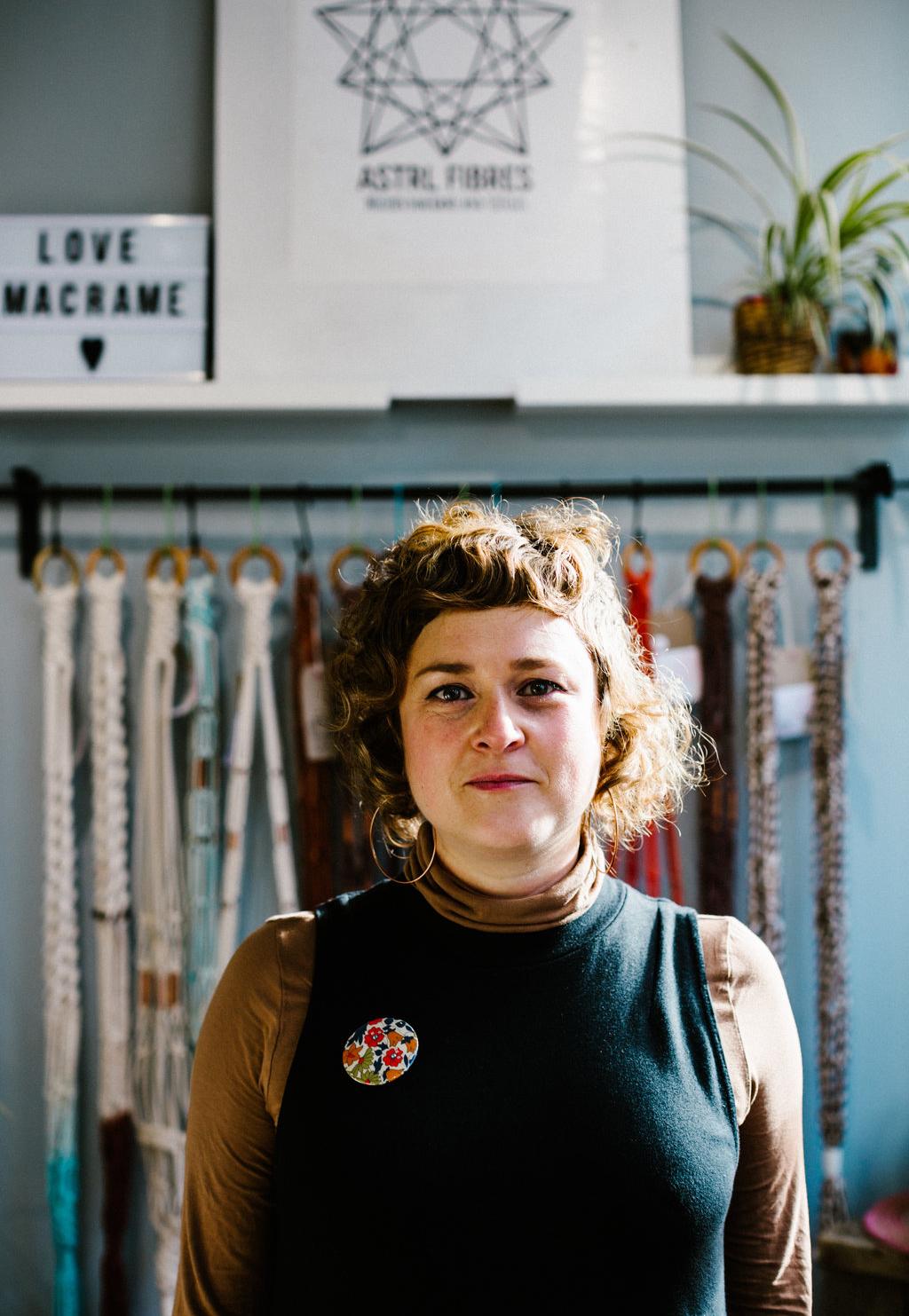
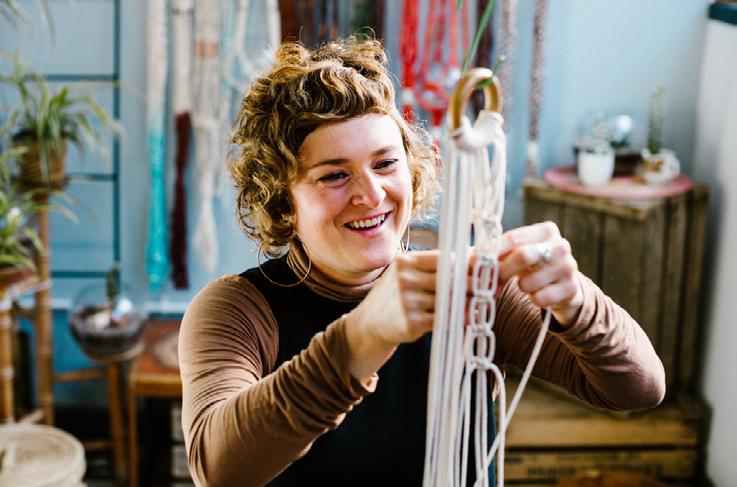
Alison Pascoe’s work begins long before ASTRL Fibres was ever named. It begins in Calgary, growing up in a home where making wasn’t a hobby - it was simply part of life.
Her father, a self-employed welder and builder, could “build anything,” while the women in her family carried forward generations of textile knowledge - quilting, stitching, working with fabric in ways that were both practical and expressive.
It was an environment where craft wasn’t separated from daily life, but embedded within it.
“I always wanted to be in the creative industry,” she recalls. “Even as a child, it was always artist or writer - it had to be something like that.”
That instinct led her to study sculpture and textiles at the Alberta College of Art and Design before life - as it often does - took her elsewhere.
Travel, work, and eventually a move to Northern Ireland shifted her away from her own creative practice for a time.
What followed wasn’t a rejection of making, but a quiet absence of it.
And then, in 2016, something returned.
The Rhythm of the Knot
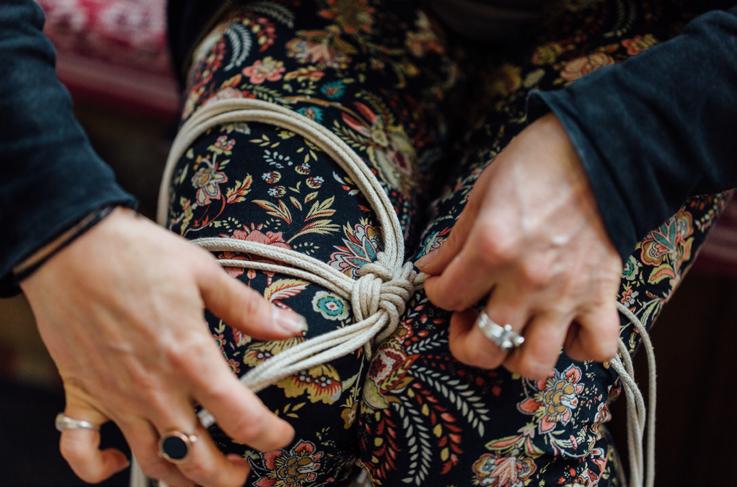
Macramé re-entered Pascoe’s life almost incidentally - not as a career move, but as a way to reconnect with something she had known instinctively as a child. Making bracelets as a teenager had once been casual, almost throwaway. Now, it became something else entirely.
“I just started practicing it as a way to relax,” she says. “And then eventually realised - God, I love this.”
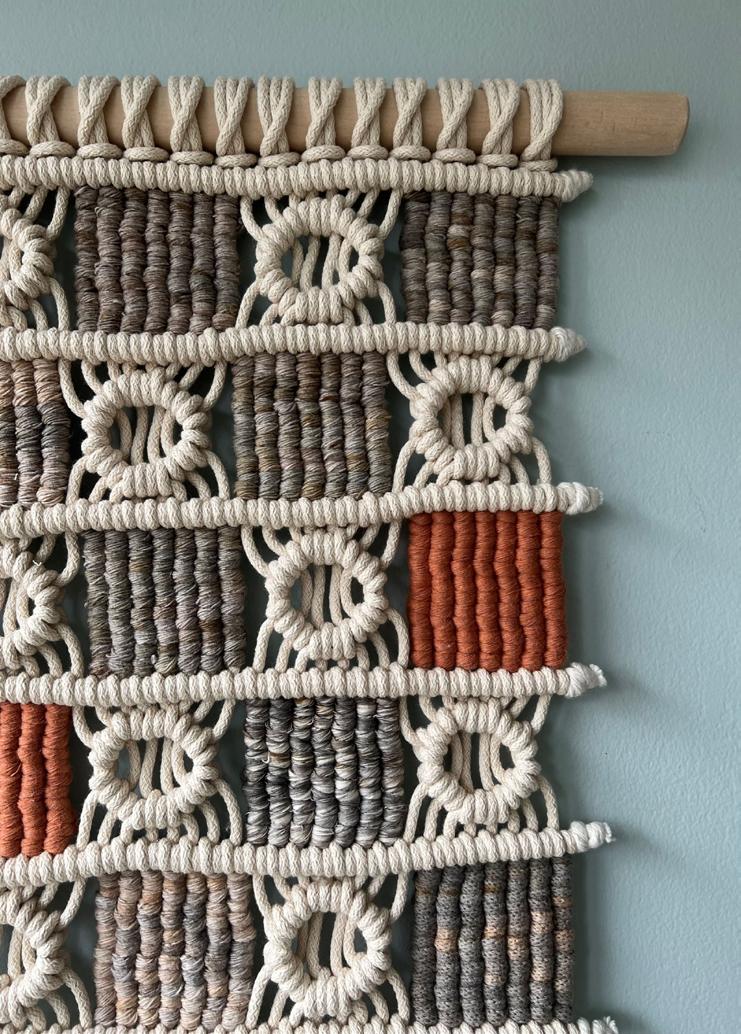
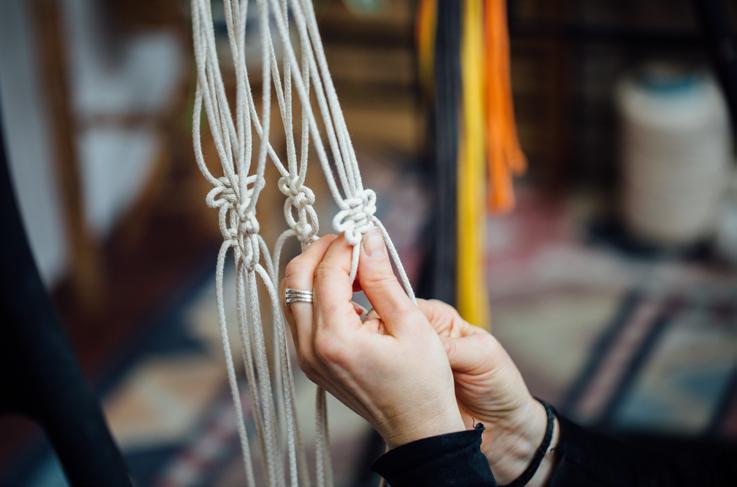
What drew her in wasn’t just the material, but the process itself. Macramé offered a rhythm - repetitive, meditative, structured yet open-ended. A single strand could be multiplied, layered, and transformed into something intricate and expressive.
“There’s something about taking a single strand and lining up a whole bunch of them… and creating something so complex and decorative,” she explains.
That process - part logic, part intuition - became central to
Photograph: Jess Lowe
her thinking. Despite never feeling at home with maths in school, she found herself drawn to the hidden geometry and problem-solving within knotting.
“It’s like it sparked that part of my brain… I realised I’m actually quite good at working it out.”
What began as a personal return soon became something more defined. ASTRL Fibres emerged not just as a business, but as a framework for a way of working - one rooted in craft, but open to exploration.
Building a Practice in Northern Ireland
Now based in Northern Ireland, Pascoe’s practice sits within a wider ecosystem of makingone that spans both her own studio work and her involvement in conservation.
Working alongside Decowell Restoration dealing with historic interiors, restoration, and heritage sites, she occupies a space where past and present are constantly in dialogue. From projects connected to venues like the Grand Opera House to
training programmes bringing in international specialists, this environment feeds directly into her own work.
“It’s a really interesting sector to work in… and I think it’s influenced a lot of my own work as well.”
There is a clear crossover here - not just in skill, but in perspective. Conservation requires precision, patience, and respect for history. These same qualities underpin her fibre practice, where technique and tradition are never far from the surface.
At the same time, building ASTRL Fibres demanded something else entirely: the ability to navigate the realities of self-employment - administration, organisation, and the often unseen labour that supports creative work.
“All these different skills… you have to draw from them,” she says.
Expanding the Language of Fibre
While macramé formed the foundation of her work, Pascoe’s practice has steadily expanded into more specialised and historically rich techniques.
A turning point came through her discovery of passementerie - the elaborate art of decorative trimming, once central to European interiors and fashion, now an endangered craft on The Heritage Crafts Red List
“I didn’t even know the name of it at first,” she says. “But I was captivated by it.”
That curiosity led to a 2024 training bursary from Heritage Crafts, allowing her to study directly with Elizabeth Ashdown Alongside this, she trained in plysplit braiding with Julie Hedges
and explored traditional Japanese braiding (Kumihimo) with Jaqui Carey.
Each of these disciplines carries its own history - from the courts of Europe to the traditions of northwest India and Japan - yet Pascoe approaches them not as static forms, but as evolving systems.
“You kind of fall into a rabbit hole with it,” she says. “But it’s so fascinating.”
Between Art and Function
Pascoe often describes her work as existing in a space between art and craft, between function and expression. Her own framing is simple: rooted in craft, shaped by curiosity.
The craftsperson, she explains, is concerned with precisionhow something is made, how it holds together, how it functions. The artist, by contrast, asks different questions: what happens if this is pushed further, turned slightly, disrupted?
“It’s like - how do I do that? But also, how can I do that differently?”
This balance is particularly evident in her engagement with endangered techniques. Alongside attempting to revive them in their original form, she looks for ways to recontextualise them - introducing them to new audiences through contemporary work.
“I’m not trying to reinvent the wheel… I want to take those things and see how I can create new work that introduces that skill to a wider audience.”
Material, Value, and the Land
Material plays a central role in this process - not just in terms of aesthetics, but in what it represents.
Traditionally, techniques like passementerie relied on highly ornate, expensive materialsgold threads, fine silks, markers of status and wealth. Pascoe’s work shifts that perspective.
Instead, she looks to what is available locally - fibres gathered from the landscape, materials that might once have been overlooked.
“How can I make things with fibres I’ve foraged from a hedge?” she asks.
This approach reframes value itself. Where once prestige was tied to rarity and expense, her work suggests a different hierarchy - one rooted in sustainability, locality, and connection to place.
There are practical considerations too. Working in Northern Ireland, sourcing materials can be unexpectedly difficult, even for something as historically embedded as linen.
“It’s surprising how hard it is to find good local linen thread,” she notes.
In response, she has begun creating her own cords using a cord walk - opening up new possibilities for customisation, experimentation, and independence from external supply chains.
Teaching, Community, and Connection
If making is the foundation of Pascoe’s practice, teaching is its extension.
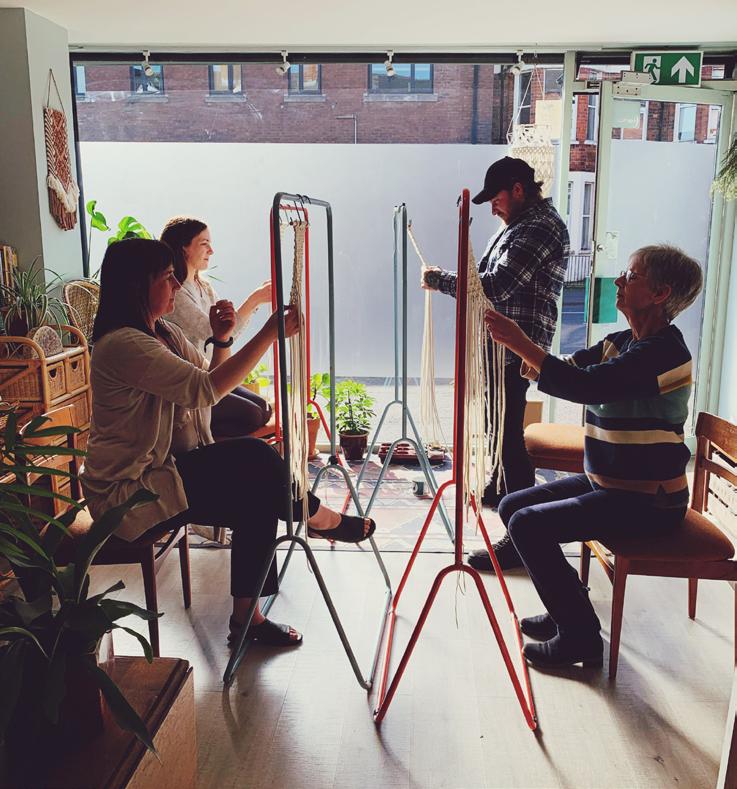
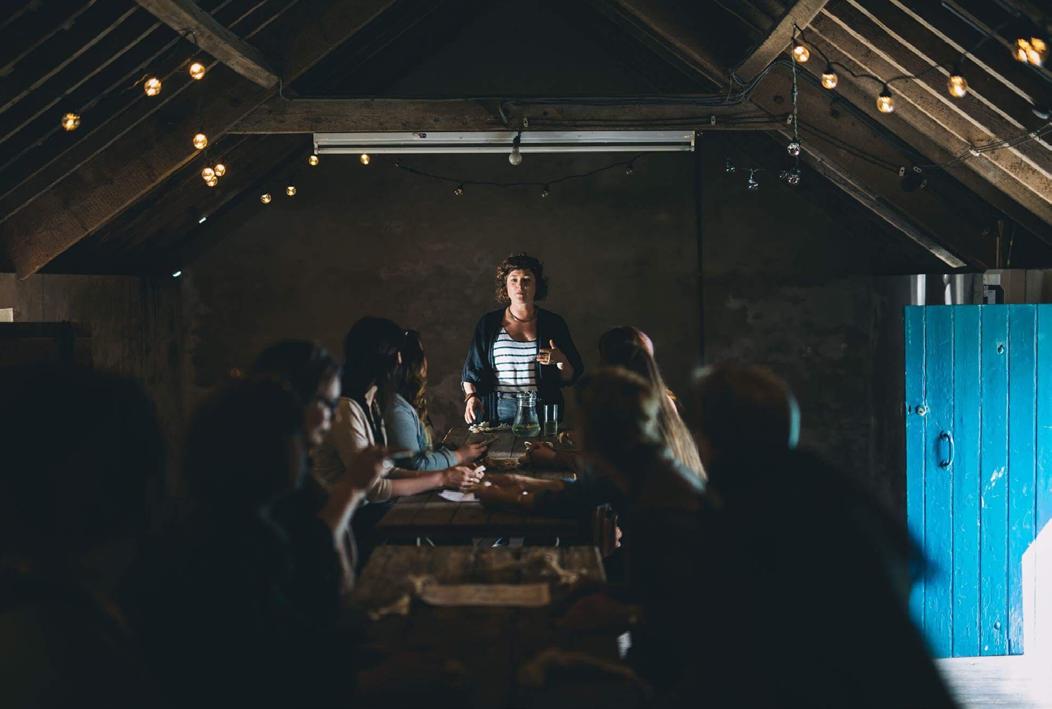
Workshops, one-to-one tuition, and community projects form a significant part of her work - not as an addition, but as something integral.
Initially, teaching emerged in response to demand. People
Photograph: Ruth Kelly - Native Ivy
Photograph: Ruth Kelly - Native Ivy
Photograph: Jess Lowe
wanted to learn, and Pascoe felt comfortable guiding them. Over time, however, it has taken on a deeper meaning.
“Craft is just such a good connector,” she says.
In a workshop setting, the act of making becomes shared. People arrive for different reasons - curiosity, creativity, experience - but the process itself creates a space for connection.
“Everybody has a story… why they’re making, who they’re making it for.”
There is also a broader responsibility at play. Many of the techniques Pascoe works with are rare, passed through limited lineages. Teaching becomes a way of extending that lineage - ensuring that knowledge continues to move forward.
“Once you pass that on, it’s started… that line continues.”
Photograph: Kat Mervyn
Thinking With Your Hands
Underlying everything in Pascoe’s practice is a simple but powerful idea: thinking with your hands.
In a world increasingly defined by screens, speed, and abstraction, craft offers something different - a physical, grounded way of engaging with the world.
“It’s about stepping out of your busy life… switching off for a bit,” she says.
The repetition of movement, the focus on material, the shared space of making - all of it contributes to a slower, more attentive way of working. But it is not passive. It is active, engaged, and deeply human.
For Pascoe, this is where the real value of craft lies - not just in what is produced, but in what is experienced along the way.
A Living Practice
ASTRL Fibres is not a fixed endpoint. It is a practice still unfolding - shaped by new techniques, new materials, and ongoing exploration.
There are still skills to learn, materials to source, and ideas to test. The “10,000 hours” she references is not a benchmark already reached, but something actively in progress.
And perhaps that is the point.
Pascoe’s work doesn’t seek to close a loop or define a finished form. Instead, it keeps things open - a continuous conversation between past and present, between craft and curiosity, between the individual and the collective.
One strand, connected to another.
To explore Alison’s work at ASTRL Fibres - from macramé and passementerie to braids, cords, and cane and cord weaving - visit her website: astrlfibres.com
Join upcoming hands-on workshops at ASTRL Fibres, including a Macramé Coaster Workshop on Wednesday 27th May, and a Macramé Bag Workshop running on Tuesday 2nd June and Wednesday 3rd June: astrlfibres.com/collections/ workshops
To follow Alison’s ongoing reflections on craft, materials, and the traditions that shape her work, visit The Language of Knots on Substack: astrlfibres.substack.com
And keep up with her via social media: @astrlfibres
Photograph: Kat Mervyn
Bernadette Doolan
Artist
A practice shaped by resilience, where the figures she paints hold a quiet strength that continues to rise through each work, carried across a practice that moves between mediums
Bernadette Doolan doesn’t describe painting as something she chooses to do. It’s something that runs beneath everything else.
“I don’t think I make the decision to go and paint… I just find myself there.”
Even when life intervenes - as it inevitably does - it never replaces the work. It feeds it.
“It never takes over. It’s always going on… percolating. Life gets
in the way sometimes, but I think it’s all part of it… it feeds the excitement when you get in.”
Living and working in Wexford, her practice sits in constant dialogue with her surroundings - nature, memory, and the quiet rhythms of daily life. Even the small, almost incidental relationships - like the robin she’s patiently befriended, “Mr. Bo Jangles” - become part of that ecosystem, grounding the work in something lived rather than constructed.
Showing Up, Letting It Happen
For Doolan, the act of painting begins long before the first mark. It starts with showing up.
“I’m constantly in the studio… sometimes it’s just showing up. I think that’s half the battle.”
There is no rigid plan, no fixed outcome. The process is responsive, almost conversational - guided by the materials as much as by the artist herself.
I’ll find a way
“I always find that if I go in, I’ll end up starting something, even if I don’t have an intention.”
That first mark is the threshold. From there, the work unfolds on its own terms.
Portraits That Are About People
At first glance, Doolan’s figures might read as portraits. But they resist identification.
“They’re portraits and they’re figurative, but I want them to be more about portraits of emotions… lived emotions that we’ve all experienced.”
This ambiguity is intentional. A named subject would close the work down - fix it in place. Instead, she creates space for the viewer to enter. “If I painted from a picture of somebody, then it’s like, ‘oh, that’s Mary’… and then it loses that ambiguity.”
What replaces that certainty is something more expansive. The work becomes a shared emotional field - one where the viewer’s experiences sit alongside her own.
The Moment the Painting Looks Back
There’s a recurring reaction to Doolan’s work - one she values deeply.
“It’s the first time I’ve actually stood in front of an artwork where I feel I’m the one being looked at.”
This observation, shared with her by a writer named Daniel after an exhibition at GOMA, captures something central to her practice. The figures don’t simply present themselvesthey confront.
What begins as unease often turns into recognition.
“Sometimes people are a bit unnerved… but then they sit with it… and they end up telling me what’s going on in the painting.”
In that exchange, the work expands. It becomes layered with interpretations she never consciously placed there.
Memory, Childhood, and the Emotional Trigger
Much of Doolan’s imagery is rooted in memory - not as a literal recollection, but as a feeling.
“It could be through whatever they’re wearing… you kind of go, ‘oh my God, I had a pair of those’… and suddenly you’re transported back.”
Her paintings act as portals - small, precise triggers that unlock entire sensory worlds. A gesture, a posture, a fragment
of clothing can collapse time, bringing the viewer back into their own past.
Even when she references her own childhood, the intention is not documentation - it’s resonance.
The Dog as Witness
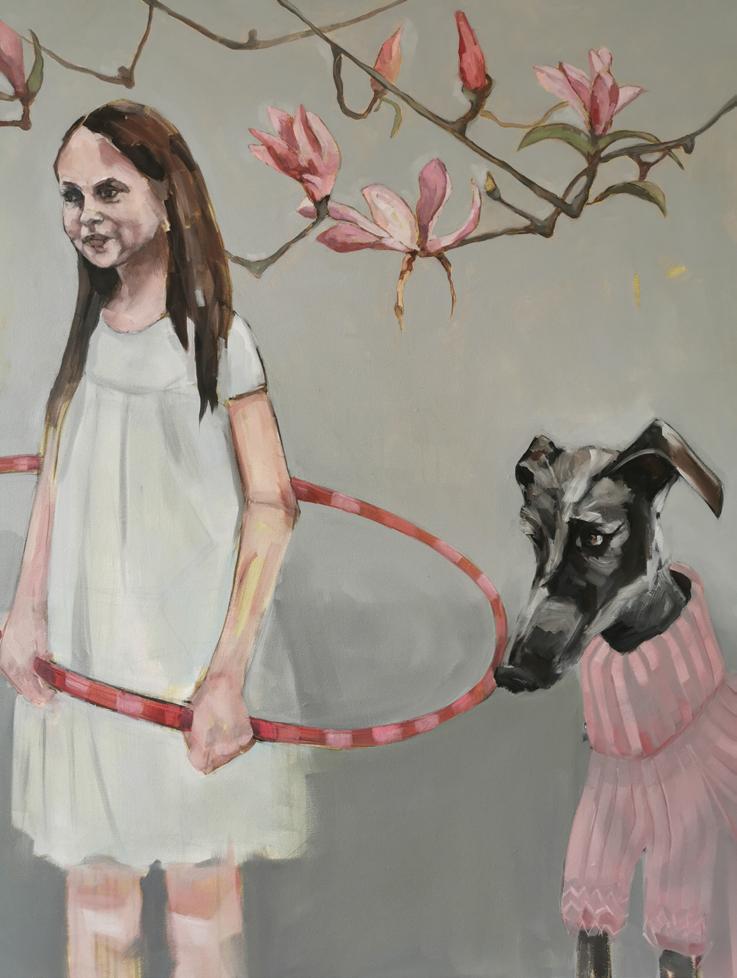
Dogs appear throughout her work, not as decoration, but as emotional anchors.
“They represent that kind of unconditional support… that’s always there.”
Drawing from her own life,
including the presence of her two rescue lurchers, these figures embody a kind of quiet companionship. They stand alongside the human subjects - not intruding, not demandingsimply present.
Space, Suggestion, and the Power of Less
One of the most striking aspects of Doolan’s work is what she leaves out.
“I was trying to do as much with as little… to create an impact.”
Her figures often sit to one side of the canvas, surrounded by
vast areas of empty space. It wasn’t a conscious decision at first - but over time, she began to understand it.
“I realised… I stand over on the right-hand side… it’s like I’m getting out of the way… leaving space.”
That space isn’t absence - it’s invitation. It allows the viewer to enter, to project, to complete the image.
The same restraint carries through into her mark-making. Faces are suggested rather than fully rendered, gestures implied rather than fixed. The result is a kind of visual openness - where meaning isn’t delivered, but discovered.
The Child That Keeps Going
Running parallel to her technical approach is something more instinctive - a conscious effort to hold onto a childlike way of working.
“The kid in me shows up sometimes… just go for it.”
Where the adult voice hesitates - measuring, comparing, doubting - the child moves forward without permission. For Doolan, maintaining that mindset is essential.
“Children… fall down, they get back up again… whereas we’ll go, ‘better not try that again.’”
It’s this resilience that allows her to keep pushing, to keep submitting, to keep makingregardless of outcome.
Self-Sabotage and Self-Belief
That tension between doubt and instinct surfaces clearly in her discussion of a self-portrait.
“I don’t do self-portraits… but I thought, ‘have a go.’”
Unconditional Love
What followed was both unsettling and revealing. As the image developed, she recognised herself in it - and with that recognition came resistance.
“I gave myself a black eye… I realised that’s what we tend to do as artists… we sabotage things before we even start.”
The act of finishing the painting became a quiet assertion - not of technical ability, but of belief.
Making Work That Has Weight
Alongside her paintings, Doolan’s other work carries a different kind of gravity.
Her piece 196 - a series of porcelain spoons created in response to the deaths of children in institutional care - emerged slowly, over years of reflection.
Going places yet unknown
“I needed to do something… but it took maybe three years.”
Each spoon represents a life, a presence, a loss. When exhibited in Dublin, the work took on a physical rhythm - moving in the air, casting shadows that resembled musical notation across the walls.
What followed was unexpected.
“I got emails… from sisters and brothers… thankful that it had been acknowledged.”
For Doolan, this is where the work extends beyond the studio - into something shared, something held collectively.
Doolan returns to a piece of advice from her husband: “If you kick the ball enough times, it has to go in.” It’s a simple idea,
but one that sits at the core of her practice.
The act of continuing, of showing up again and again, is where the work holds its ground. That same persistence carries into the ideas she continues to develop beyond the studio, where her attention turns to stories that remain unresolved.
There is a sense that some works take years to surface for a reason - that they require time, space, and a willingness to return. In that return is a quiet insistence: that certain lives, particularly those too easily overlooked, deserve to be held, counted, and made visible.
There Is Nothing Else
For all the shifts in medium, scale, and subject, one thing remains constant.
“If I never sold another painting… I wouldn’t stop.”
The work isn’t dependent on validation, or exhibition, or outcome. It exists because it has to.
“It’s part of me… part of my DNA.”
And perhaps that’s what defines Doolan’s practice most clearly - not a style, not a subject, but a refusal to separate life from making. The two are intertwined, feeding each other, shaping each other - until the distinction no longer matters.
To find out more about Bernadette and browse her available paintings, sculptures, and prints, visit her website: bernadettedoolan.com
To hear Bernadette discuss her work and exhibitions in more depth, visit her on YouTube: @bdetted
And keep up with her via social media: @bernadettedoolanart
Sam Allen Artist
A practice shaped by return - where coastlines, family memory, and material come together to explore what it means to carry home with you
There’s a quiet consistency running through Sam Allen’s work - a sense that no matter how far it travels, it is always orienting itself back toward something familiar. Not just landscape, but the idea of home as something lived, shared, and returned to.
Her recent work, Made from the Sea , sits at the centre of that instinct. It’s a body of work shaped by movement - across coastlines, across memory, across time - but grounded in the belief that there is always somewhere to come back to.
“No matter how far you go, no matter how much time passes, you’ll always have somewhere to return to… there’s always a light on at the table.”
The Centre of Things
That idea of return begins close to home. For Allen, it’s rooted in family - houses that weren’t just places to live, but places people gathered.
“My mum and dad’s house was nearly like the centre of even our extended family… when big events were happening, everyone came back there.”
Even as life took her further afield - studying in Scotland, living in England - the pull of Northern Ireland remained constant.
“We’d always wanted to come back… my family and all of that connection is here.”
That sense of openness has followed her. In every place she’s lived, her home has become a point of return for others toofriends arriving with bags, staying over, settling into something that feels shared.
“There was a space and a bed and a seat at the table… it was really nice.”
It’s a feeling that moves quietly through her work: the idea of an eternal welcome.
Mapping a Place
While cottages appear in her paintings, they’re only part of a wider map. Allen is careful not to let the work settle into a single motif.
“I don’t want everything to just be little cottages… today I’m working on a bridge in Tollymore Forest.”
Across the work, locations begin to accumulate - Donegal, the Ards Peninsula, Bangor, Murlough Bay, Cave Hill, the Mournes - each one carrying its own atmosphere, its own pull.
Lighthouses appear too - Fanad Lighthouse, South Rock Lighthouse - markers not just of place, but of direction.
“That was the other idea… the light that guides you home.”
These aren’t fixed destinations. They are points of connection - places that hold memory, or offer the possibility of return.
Inheritance and Observation
Allen’s relationship with place is not just built through her own experience. It carries through generations.
While working from locations around Donegal, she discovered that many of the places she had painted already existed in photographs taken by her grandmother.
“It was incredible to see a painting that I had already finished, and then I found her photos… I recognised them straight away and saw the link.”
The connection felt less like coincidence and more like continuity - a thread running quietly beneath the work.
That sense of inherited place becomes even more explicit in works like her painting of the Widows Row Cottages in Dundrum. Built after a devastating storm claimed the lives of local fishermen, the cottages became a collective act of care - communities coming together to ensure families were not left without support.
It’s a story that sits naturally within Allen’s practice: place as shelter, as memory, as something sustained through people as much as landscape.
Made from the Sea
If Returning to Place maps the landscape, Made from the Sea brings it into the work itself.
For Allen, the sea has long been a place of instinctive return.
“Nearly every point in my life where things have been really, really difficult, I have ended up by the water.”
It’s not just the view, but the sensory experience - the sound of waves, the smell of salt air - that resets something internally.
“It just takes it all down and helps you come back to centre.”
The shift came while painting on the beach.
“I just want to bring this feeling home… what if I actually tried to put the sea and the sand into the paintings?”
Held - The Places You’ll Go
From there, the process expanded. Sand and seawater are gathered from specific locations - Donegal, the Ards Peninsula, Murlough Bay - each labelled, each carried back to the studio.
“I have them all labelled on little jars… I look a bit strange with my bags of sand.”
The result is a work that doesn’t just depict place, but contains it.
“It’s not just a seascape… this is a part of Ireland that’s come home with you.”
Material as Meaning
That instinct - to embed experience - extends beyond the coastline.
Tea, for instance, becomes part of the work. Not just visually, but symbolically.
“Quite a lot of my paintings have sand and seawater, but I’ve also used tea and tea leaves… it’s creating that moment around the kitchen table.”
In one piece, this becomes a reflection on decision-making
and shared knowledge.
“You sit around the table, you get your cup of tea… you’re looking to the heads for making decisions.”
Elsewhere, history and mythology enter the work - but not as distant reference points. On Achill Island, the remains of Grace O’Malley’s castle become something far more immediate within Allen’s practice.
The connection is not simply to O’Malley as a historical figure, but to her as a mother.
Grainne Ni Mhaille’s Castle - The Places You’ll Go
“The story goes that her child had been kidnapped and taken over to Britain… and she went and insisted on the release of her son.”
Allen speaks about this from a place that is deeply personal. As a new mother herself, the story shifts from history into something felt.
“The depths that you would go to to try and bring them home safely… I really connected with that.”
What might otherwise read as a story of power or legend instead becomes something more intimate - about protection, instinct, and return. The castle on Achill, weathered and enduring,
sits alongside her cottages not as contrast, but as continuation.
It reframes the emotional core of the work. From storm to stillness, from sea to shelter, from castle to cottage, the thread remains the same: the pull to return, and the force that brings people home.
Colour, Process, and Trust
Despite the clarity of these themes, Allen’s process remains largely intuitive.
“I’ll sketch out roughly the proportions… and then I put it away and everything else is very intuitive.”
Colour - often described by
others as bold - is not something she consciously sets out to define.
“I just wanted to create something that was uplifting… and that was just what came out.”
Instead, it emerges through layering - base tones, sand, paint, texture - built up slowly until the surface holds together.
“If you have a base colour… that can pull all of the other colours together.”
The process itself is not always immediate.
“The painting can look really terrible for a long time… but I know that it will reach a better stage.”
It’s a practice built on trust - allowing the work to find its way.
Routine and Reality
That trust extends into how she approaches the act of working.
“I’m not going to wake up every morning and think, I’m going to paint today.”
Instead, she builds a routinetea, candles, music - creating a sensory environment that allows her to step into the work.
“Because so much of my work is sensory… it’s creating that sensory environment that will promote it.”
Even on days where motivation is low, starting becomes the most important part.
“I’ve never regretted a session of painting… even if what I’ve created isn’t there yet.”
Between Life and Work
Like many artists, Allen is working within the realities of daily
The Sea Carries the Story - Made from the Sea
life - motherhood, time, and the demands of visibility.
“I’m really struggle with social media… I’m not good at remembering to post or knowing what to say.”
There’s a tension between the uninterrupted flow of her process and the stop-start nature of documenting it.
“You’re stopping and moving the camera… you’re nearly losing some of that time.”
And yet, she recognises what people connect with.
“People really like seeing the artist behind the art.”
Her presence online has continued to grow, drawn by the
clarity of what she’s making.
“I love creating art that holds a story and brings a real sense of atmosphere into whatever home they belong in.”
That message has resonated with others who feel that same connection to place, to Ireland, and to the sea.
An Open Door
What emerges from Allen’s work is not just a visual language, but a way of thinking about place - one rooted in return, connection, and continuity.
Across cottages in Donegal, coastlines in the Ards Peninsula, lighthouses along the shore, and castles on Achill Island,
the message remains consistent.
“There’s always somewhere to return to… there’s always that safe space.”
In her work, home is not fixed. It is carried - through memory, through material, through the quiet persistence of place.
Sam’s upcoming exhibition The Places You’ll Go launches at The Hallows Gallery on 13th June 2026: thehallowsgallery.co.uk
Explore Sam’s latest work and find available pieces on her website: samallenart.com
And keep up with her via social media: @sam_allen_art
Becca Calmont Silversmith
From reclaimed materials to instinct-led making, a jewellery practice built on process, variation, and the refusal to repeat
There’s a point in Becca Calmont’s process where control gives way to something else entirely. It happens not in silver, but long before - in wax.
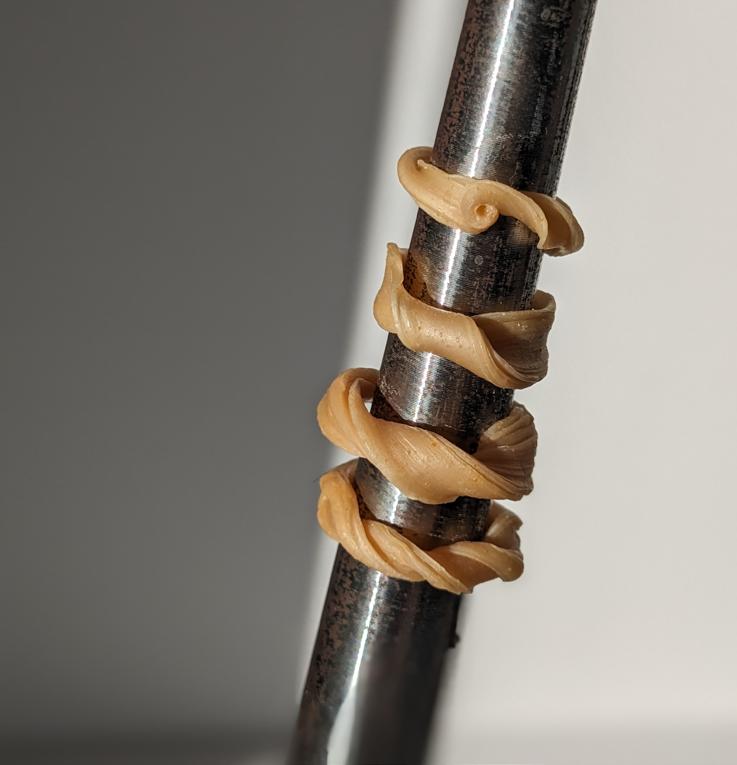
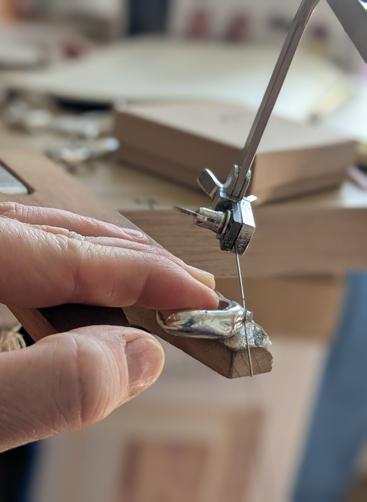
Working from her studio on the North Coast, Calmont creates her jewellery using the lost wax method. At times, she works with Mitsuro Hikime - a traditional Japanese wax technique that resists precision - while
at others, she turns to classic jewellery waxes that allow for cleaner, more fluid forms.
The material stretches, pulls, and collapses in unpredictable ways, leaving behind textures that feel closer to something grown than something designed.
“Quite often, the wax guides me… I don’t feel like they’re designed - they sort of just happen.”
It’s a process built on responsiveness rather than control. Forms are shaped, reconsidered, and often destroyed entirely - returned to the wax pile if they fail to hold their weight. What remains is not the result of a fixed idea, but of something gradually arriving.
A
material that leads the hand
Calmont describes her approach as “very naive” - not as a limitation, but as a way of working that stays open. Self-taught, she has built her practice around what the material allows rather than imposing rigid design structures onto it.
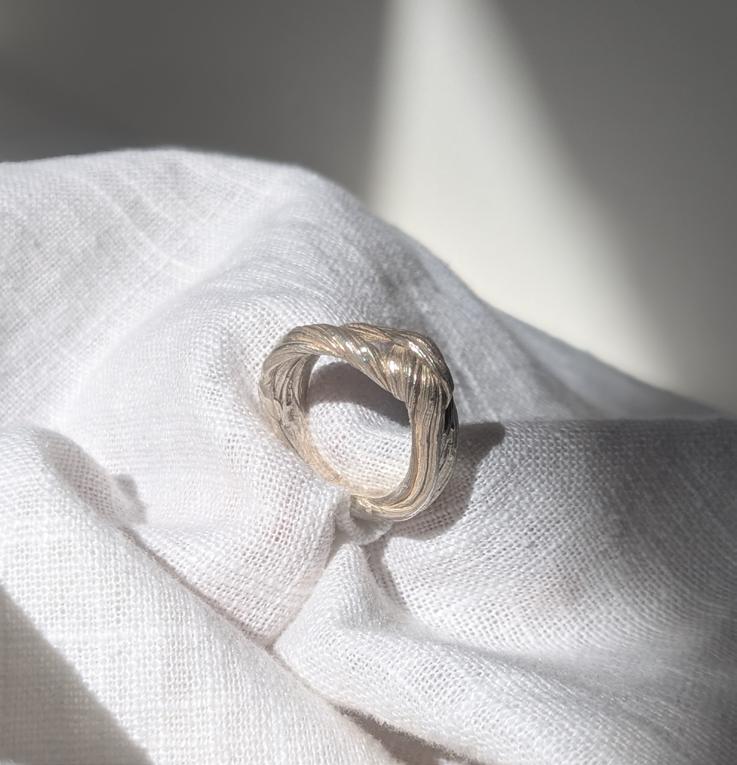
The wax itself dictates much of what follows. Temperature shifts its behaviour; slight changes in pressure create entirely new forms. Even imperfections - fingerprints, fragments of dust, or the stray cat hair - are carried through the casting process, embedded permanently in silver.
“Any mark or impression that was on the wax comes back in the silver.”
Once complete, these wax forms are sent to Scotland, where they are cast into recycled silver by a small independent family business with decades of expertise. The transformation is a pivotal moment - the softness of wax becoming something solid, tactile, and lasting.
From there, the work shifts into refinement. Filing, sanding, and polishing bring clarity to forms that began far more fluidly. It’s a slow process, but one that allows each piece to retain its origin.
Between industry and independence
Before turning fully to jewellery, Calmont spent over fifteen years in fashion buying - an experience that continues to inform both her creative outlook and her approach to making.
From her early role at Jaeger to time spent working in Hong Kong and with companies like Monsoon, then JoJo Maman Bébé she developed a broad understanding of how products are designed and brought to market.
It was during her later role under Laura Tenison MBE that her perspective began to shift more definitively. Working within a company grounded in ethical decision-making - from materials to manufacturing - brought a clearer sense of what mattered.
“That ignited it in me… that’s what’s important to me.”
Those experiences now sit at the foundation of her jewellery practice, shaping a more considered approach to materials, longevity, and scale.
She works exclusively with semi-precious metals - not only for their durability, but for their ability to be melted down and reused.
“Even if you don’t like it, it can be melted down and reused… it can be a family heirloom.”
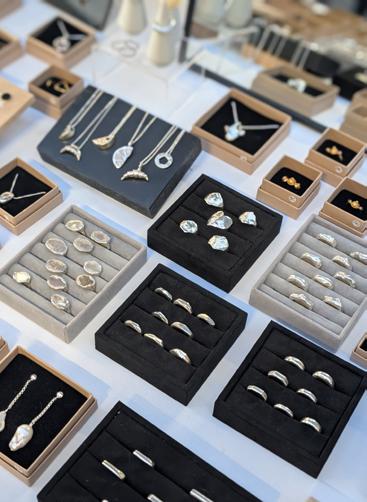
This refusal to overproduce is deliberate. Even when pieces are cast in multiples, they are made in small batches - often no more than five at a time.
Influence without imitation
Calmont’s work draws from a wide range of influences, though rarely in direct ways. Instead, ideas surface gradually - filtered through memory, observation, and material.
Recent time spent in Sardinia has begun to shape her thinking, particularly through encounters with the sculptural work of Costantino Nivola Smooth, organic marble forms - described by Calmont as “quite feminine shapes” - have sparked ideas for future pieces.
“How can I translate those into small, tiny pieces of jewellery?”
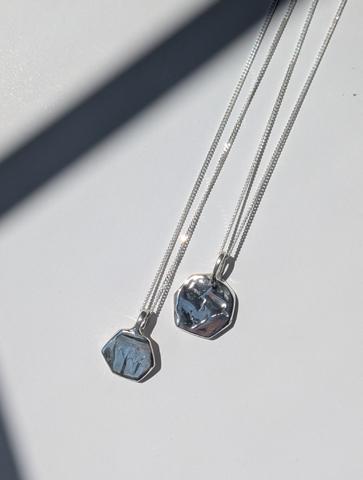
Elsewhere, influence comes from closer to home. A series inspired by the Giant’s Causeway began with a simple idea - a hexagonal form - but evolved through the behaviour of the wax itself, softening into more fluid, organic shapes.
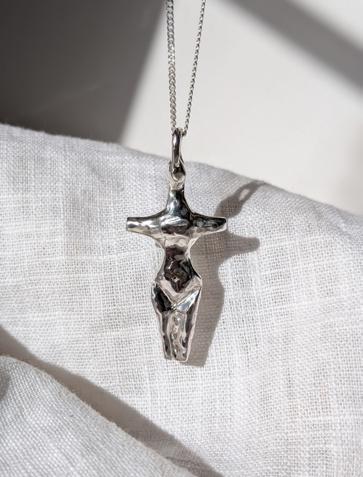
There are also moments of more direct inspiration. A “mother goddess” form, drawn from ancient imagery shared by a friend, became one of her most resonant pieces - later recognised by viewers as echoing figures from Malta, Cyprus, and beyond.
“Even though I said she’s a Romanian goddess… in hindsight, there’s versions all around the earth.”
A global sensibility, grounded in material
Time spent living in Hong Kong and travelling through India has also left a lasting impression. These experiences surface not through literal motifs, but through a broader understanding of material, colour, and value.
“From India - the semi-precious
Mother Goddess Silver Necklace
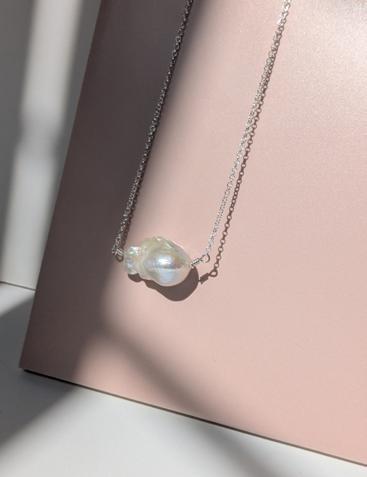
Eilidh Fireball Pearl Necklace
Causeway Coastal Silver Pendants
stones, the colours, the gold… at some point I’d love to bring that in.”
In many of these places, jewellery is not only worn but held - as investment, as inheritance, as something passed down. This idea of longevity feeds directly into her own work.
Even her use of pearls carries this sense of continuity. Many are reclaimed - sourced from broken jewellery or from connections in Hong Kongbringing with them their own histories and irregularities.
A practice built in community
Despite the solitary nature of her studio work, Calmont’s practice is supported by a wider network of makers.
Regular meetups with local artists - jewellers, ceramicists, and printmakers - provide space for exchange, advice, and collaboration, with particular support coming from fellow female business owners such as Quirky but Fierce and SimplyNJewellery, both of whom remain consistently open to collaboration and have played an active role in supporting her work.
“We bounce ideas off each other… it’s really fab.”
One piece, one outcome
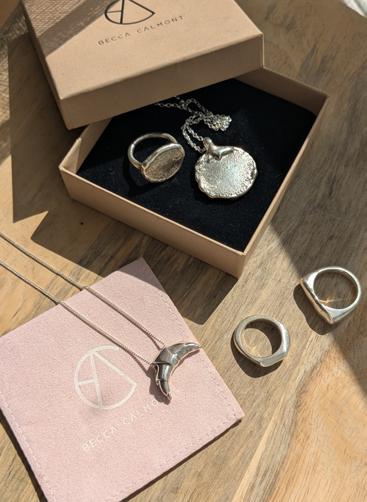
At the core of Calmont’s work is a refusal to repeat. Even when working within familiar forms - hearts, signet rings, or anatomical studies - each piece is shaped individually, never replicated exactly.
“This is the only one that’s exactly like that.”
It’s a philosophy that runs through every stage of her process. From the unpredictability of wax to the permanence of silver, each piece becomes a record of its making - shaped by hand, by material, and by a willingness to let the outcome remain uncertain.
What emerges is jewellery that feels less like a product and more like a moment - held, resolved, and left to stand on its own.
For Becca’s latest creations and to stay up to date with her work, visit her website: beccacalmont.com
And keep up with her via social media: @beccacalmont
Barista Bean Coffee Necklace
Siobhán McTaggart
Artist
A reflection on climate, conflict, and the emotional weight of living within the systems we sustain, while navigating an evolving landscape shaped by AI
Siobhan McTaggart’s work begins with observation, but it rarely stays there. What she encounters - whether through news, lived experience, or memory - tends to stay with her, building over time until it needs to be processed.
Art, for her, is how that happens.
“Creating… is my language and output,” she says.
That sense of necessity runs through her work, from her climate-focused pieces to her storyboards centred on conflict, and across the range of mediums she works within - from digital illustration to prosthetics and film.
Growing up with an awareness of damage
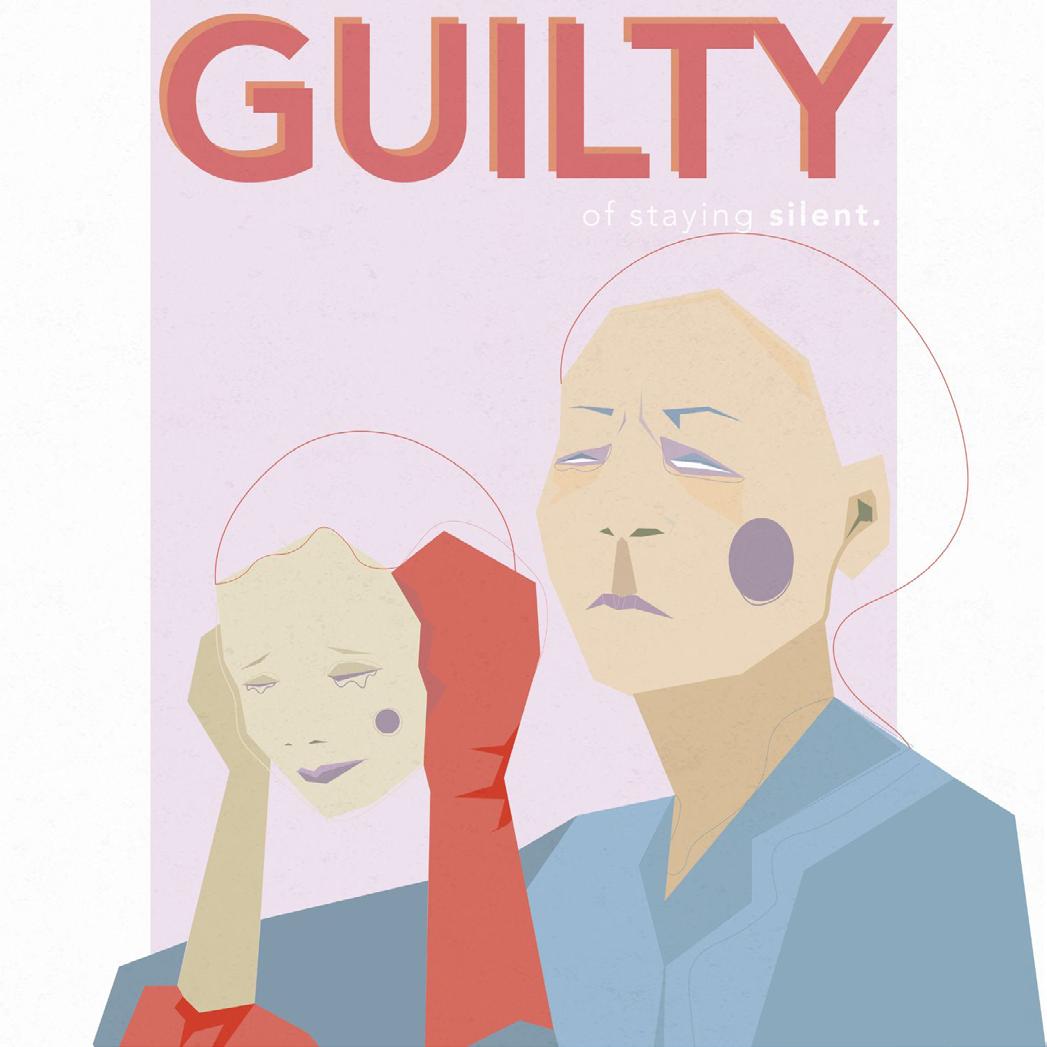
The work GUILTY didn’t emerge from a single moment. It developed over time, shaped by a long-standing relationship with the natural world.
“Since childhood, I have held a fascination, love and respect for the natural world,” she explains.
That early connection was paired with a growing awareness of harm - not just in
abstract terms, but through visible, repeated examples.
“From large oil spills… cruelty in our food chain systems… deforestation, climate instability, pollution… and the hostility of manmade infrastructures making it impossible… for other life forms to simply even exist.”
Over time, that awareness shifted into something more personal.
“It was some years later I gained the awareness that living within modern society meant I was contributing to that harm.”
That contradiction - care alongside complicity - became the starting point for the work.
Moving away from statistics
Rather than approaching climate through data, McTaggart focused on how people respond to it.
She spoke with others to understand the range of perspectives around her.
“Some deeply aware… some actively advocating… some indifferent, and some who viewed climate action as an exaggerated woe or falsity.”
What became clear was that information alone wasn’t enough to connect people.
“I needed to… create a statement people could empathically understand rather than statistically.”
That thinking carries directly into the composition of GUILTY, where a child becomes the focal point of the image.
“The first one is… passing down the burden of what we’ve failed to do and what we have done.”
The work is grounded in lived experience - including time spent working with childrenand the question of what kind of world they are inheriting.
“I thought, if it’s bad for me, how bad will it be for them?”
Living inside the system
One of the central tensions in McTaggart’s work is the difficulty of separating individual action from larger systems.
“You grieve for the world, but you also live in a system where you feed into that at the same time.”
That applies not just to large-
scale issues like climate, but to everyday realities - infrastructure, consumption, and the way environments are shaped.
She points to simple observations: manicured lawns that act as “deserts” for biodiversity, or small disruptions to natural processes caused by built environments.
These aren’t presented as isolated problems, but as part of a broader system that is difficult to step outside of.
“It’s such a larger thing than just… recycling or being greener… you’re really born into this sort of system.”
That scale - and the lack of clear solutions - is what gives the work its weight.
Processing conflict and media exposure
Alongside climate, McTaggart’s work also engages with conflict and the way it is experienced through media.
“We’re exposed to so much trauma… and we consume that on a daily basis,” she says.
Often, that exposure goes unspoken in everyday life.
“You don’t really talk about them… so going home and making a piece… is my way of making noise.”
Her storyboards, in particular, return to war as a subject - not in a stylised or heroic sense, but as a way of examining human behaviour under pressure.
“It’s a very chaotic environment… it’s brutal… and because it’s so brutal, I think it emphasises someone’s humanness.”
What interests her is the con-
trast between expectation and reality.
“When you really look at war, you actually see vulnerability… you see emotions, you see fear.”
Thinking through image and environment
Even in still work, McTaggart approaches her pieces as part of a larger visual and emotional environment.
“Being an animator inherently shapes the way I approach still work,” she explains.
Her process begins with building the world around the subject.
“My mind instinctively begins by constructing the world… allowing me to feel… colour, density, and emotional weight.”
Figures are then developed within that space.
“I begin to imagine their presence… how they occupy it, what they carry.”
Even without movement, there’s an implied narrative.
“Even in stillness, there is a sense of before and after… something held in suspension.”
Medium, craft, and influence
McTaggart works fluidly across mediums, selecting processes based on what best suits the idea.
“I move between processes quite fluidly, following whatever best serves the idea.”
Digital illustration - particularly using Adobe Illustrator - remains central to her practice however, shaping how she constructs form, colour, and composition.
“I would think in illustrator 100%… the way those images are formed.”
Her use of colour also traces back to early visual influences.
“I’ve taken so much inspiration from games like Spyro… I remember as a kid looking at them and thinking, wow, what a beautiful world.”
That early curiosity extended beyond playing into analysingquestioning how and why things were made.
“That’s when I first started that… artistic way of thinking.”
Alongside this, her work in makeup and special effects has reinforced an approach centred on character.
“You need to really jump into the character and feel that character… to create the look.”
Craft, authorship, and the scourge of AI
Alongside the themes that run through her work, there is another concern beginning to take shape - one that sits closer to her own practice.
“I think what’s on my mind at the moment… is definitely what’s on a lot of artists’ minds, and that’s AI,” she says.
It’s not something she has fully resolved into a piece yet, but it’s already influencing how she thinks about making.
“It’s on the forefront of my mind… where AI is going, how it affects us on our day to day, and obviously how that affects the art world.”
The uncertainty isn’t abstract - it connects directly to the value of craft, and the time spent developing it.
“For myself… sometimes you might think, what’s the point of creating?”
That question carries particular weight in fields like animation and illustration, where the line between generated and handmade work is becoming increasingly blurred.
But rather than stepping away from that tension, McTaggart’s response is to lean further into the act of making - and into the skills that underpin it.
“I suppose that highlights the importance of still drawing your imagery and still keeping up that craft, and not to give that craft away because that’s more convenient.”
Even the tools she turns to reflect that position. While she works digitally, her process remains rooted in drawing - building images manually through Illustrator rather than relying on automated systems.
It’s not a rejection of technol-
GUILTY of staying silent - Siobhán McTaggart
ogy, but a reaffirmation of authorship.
And ultimately, it brings her back to the same point that runs through the rest of her work - that creating is not just output, but a way of understanding.
“Creating is just my language… so that’s why I keep doing it.”
In that sense, the question of AI doesn’t replace her practice. It sharpens it - forcing a clearer
sense of what it means to make something, and why that still matters.
A practice rooted in concern
Across Siobhan McTaggart’s work, what becomes clear is not just the subjects she returns to, but the way she continues to approach them.
Whether addressing climate, conflict, or personal experience, her work is grounded in a willingness to engage directly with difficult material - not to resolve it, but to work through it. Each piece becomes part of an ongoing process: observing, questioning, and translating
those responses into something visible.
That flexibility allows the work to shift in form, but not in intent. What remains consistent is the commitment to making - to testing ideas through practice, and to staying with them long enough to reach something honest.
“What connects them all… is the act of exploring… and pushing it until it finds its most honest expression.”
In a space where images are constant and attention is short, that kind of persistence stands out. Not as resistance for its
own sake, but as a steady continuation of craft - one that prioritises depth, process, and meaning over immediacy.
McTaggart’s work doesn’t attempt to simplify the themes it engages with. Instead, it holds them in place - giving form to experiences that are often difficult to articulate, and allowing them to be seen, considered, and felt.
It’s in that continued act of making that her work finds its strength.
Keep up with Siobhán via her social media: @creating1324