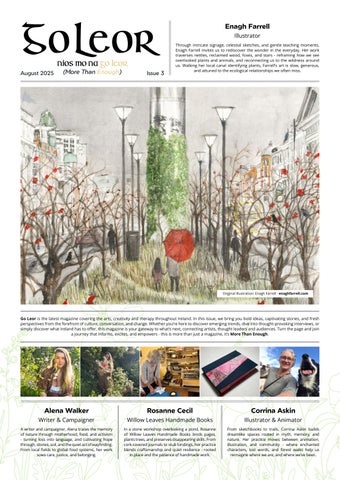
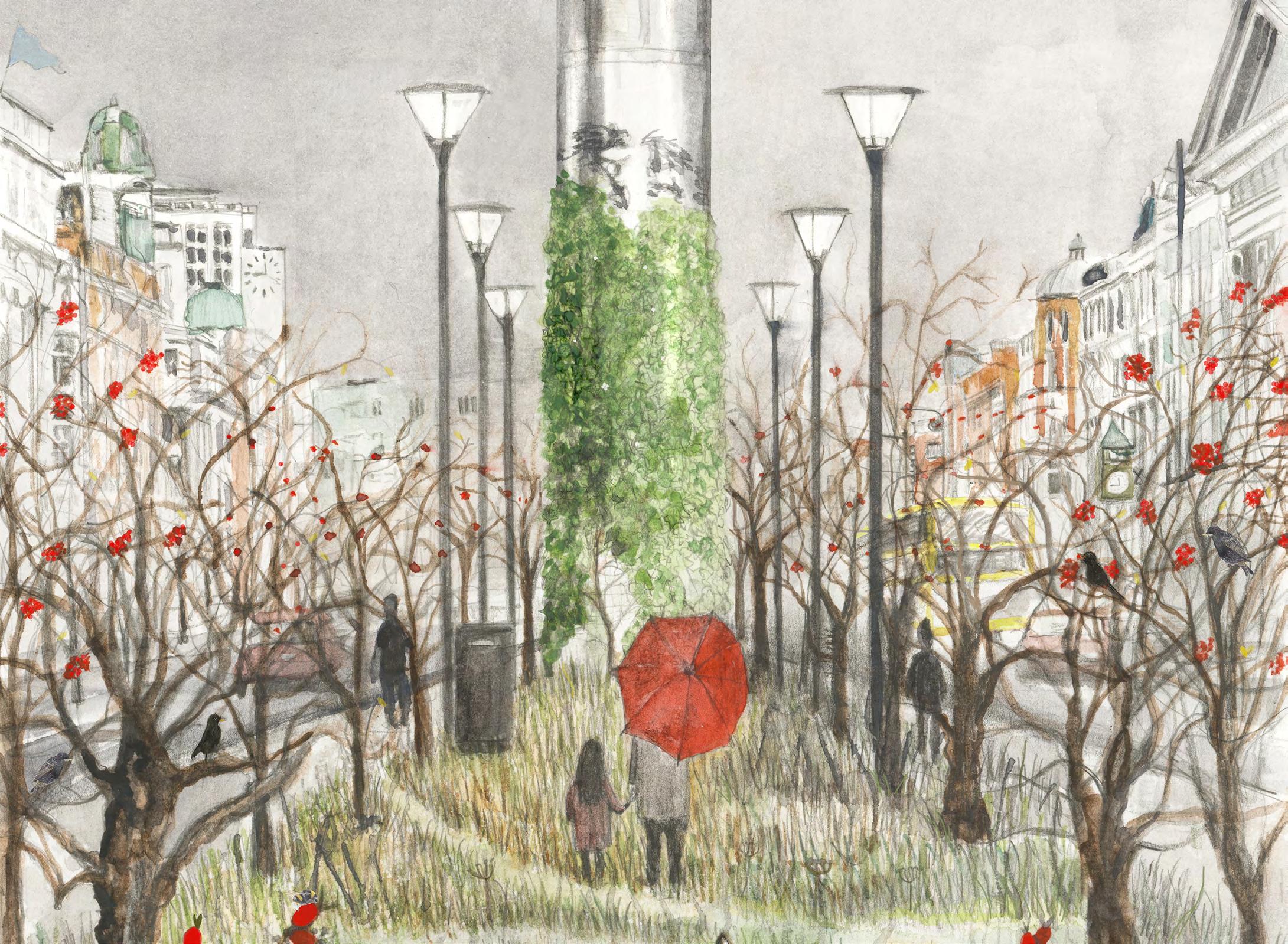
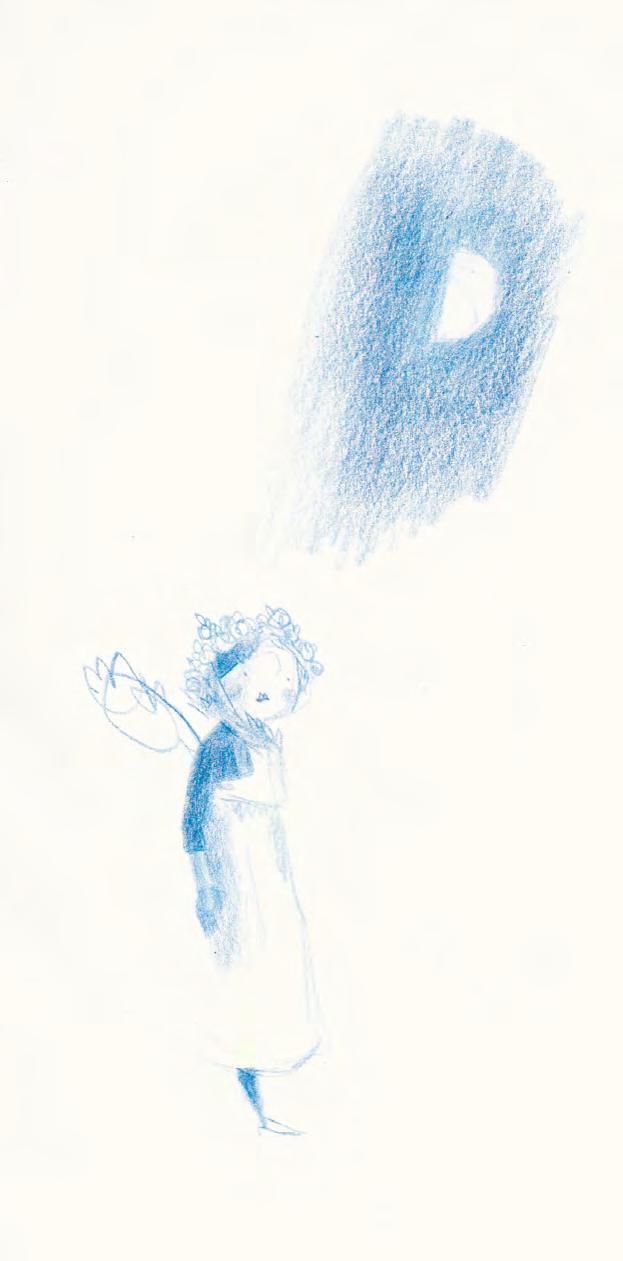
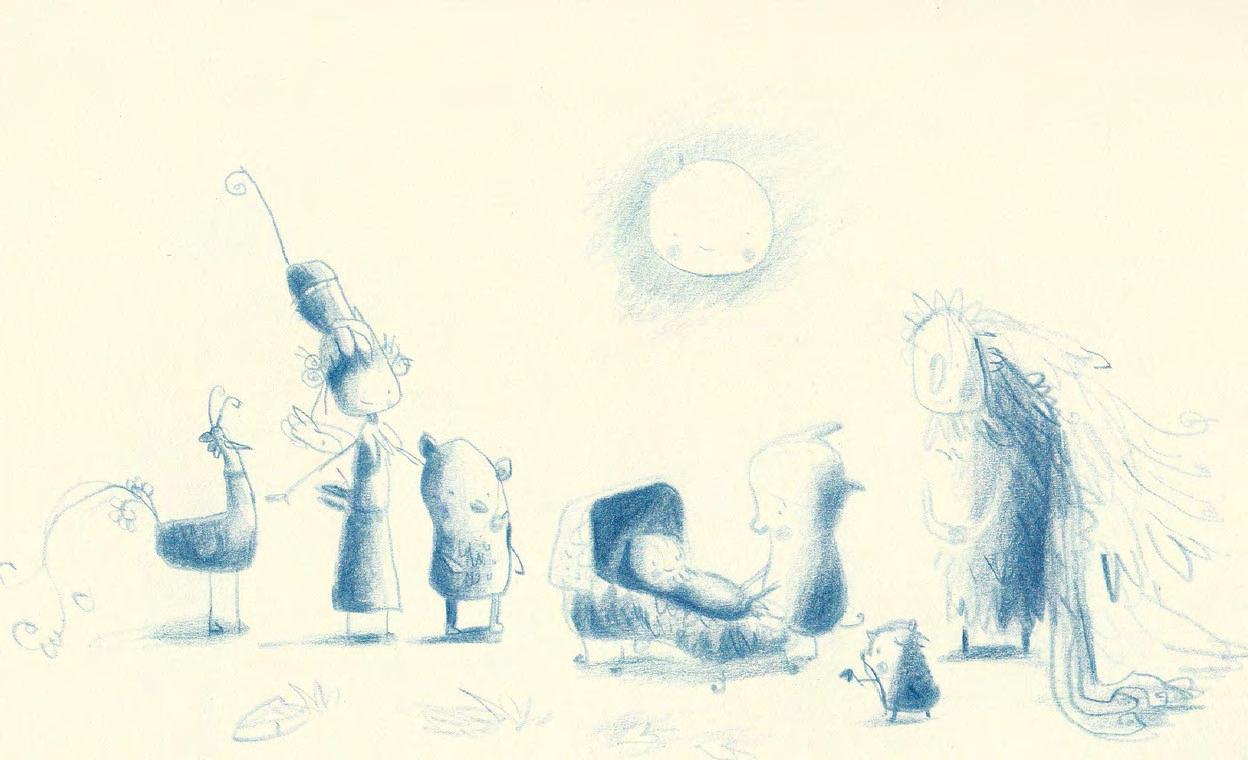
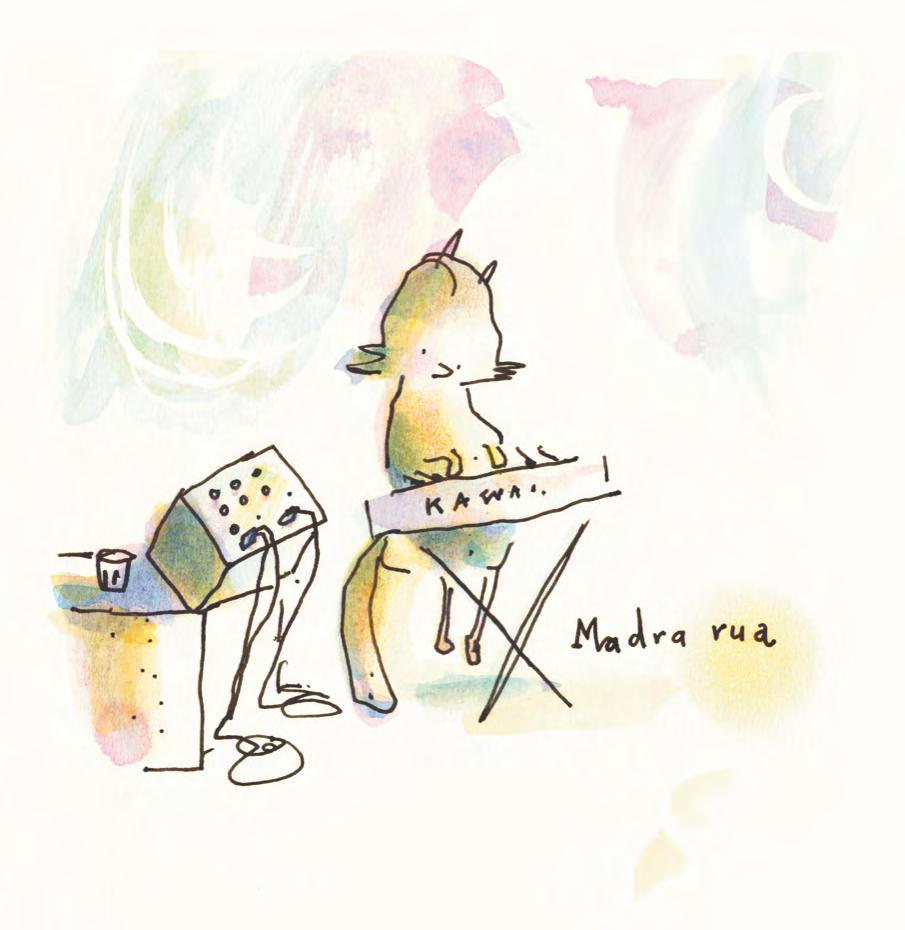
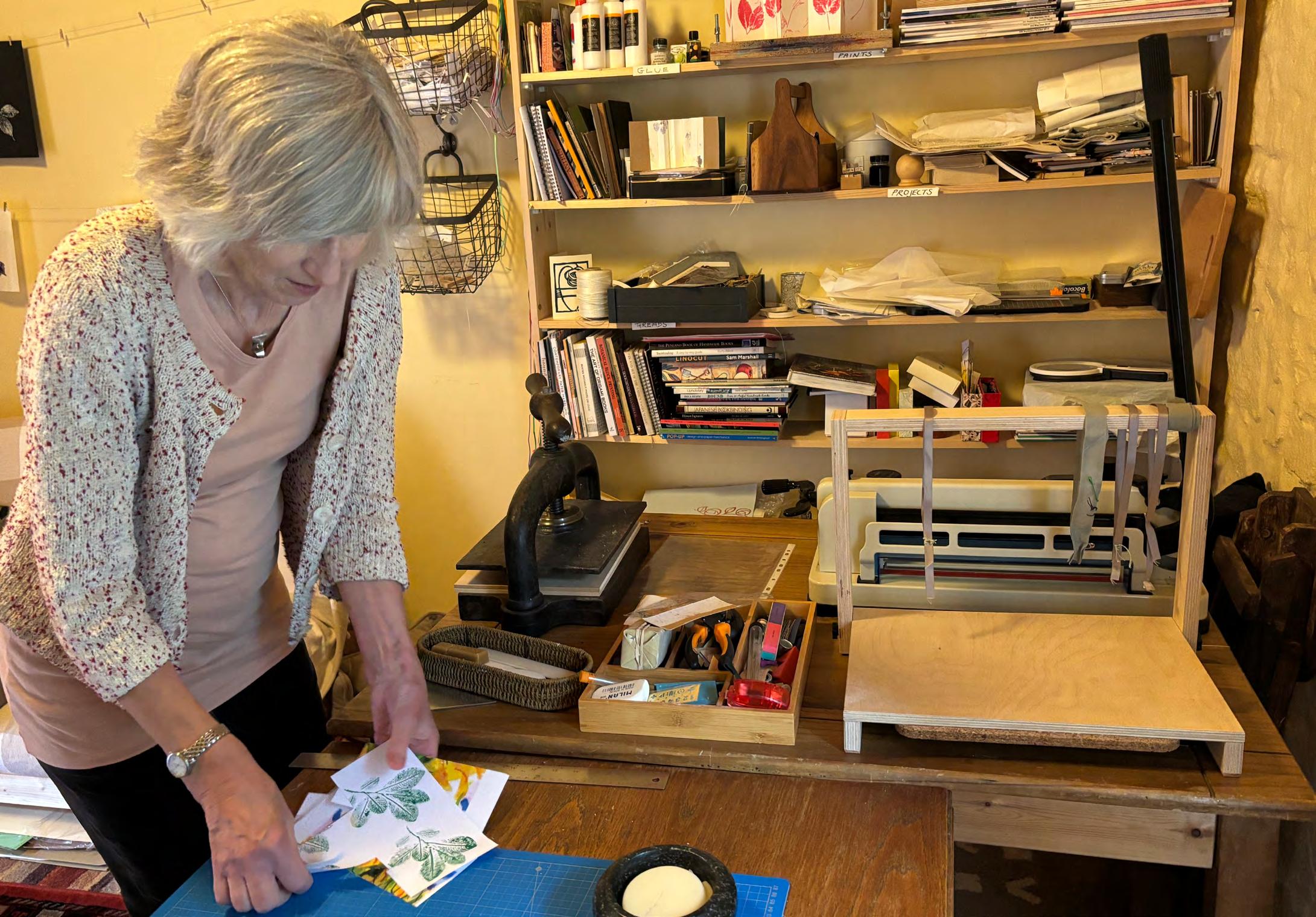
Through intricate signage, celestial sketches, and gentle teaching moments, Enagh Farrell invites us to rediscover the wonder in the everyday. Her work traverses nettles, reclaimed wood, foxes, and stars - reframing how we see overlooked plants and animals, and reconnecting us to the wildness around us. Walking her local canal identifying plants, Farrell’s art is slow, generous, and attuned to the ecological relationships we often miss.
Go Leor is the latest magazine covering the arts, creativity and therapy throughout Ireland. In this issue, we bring you bold ideas, captivating stories, and fresh perspectives from the forefront of culture, conversation, and change. Whether you’re here to discover emerging trends, dive into thought-provoking interviews, or simply discover what Ireland has to offer, this magazine is your gateway to what’s next, connecting artists, thought leaders and audiences. Turn the page and join a journey that informs, excites, and empowers - this is more than just a magazine, it’s More Than Enough
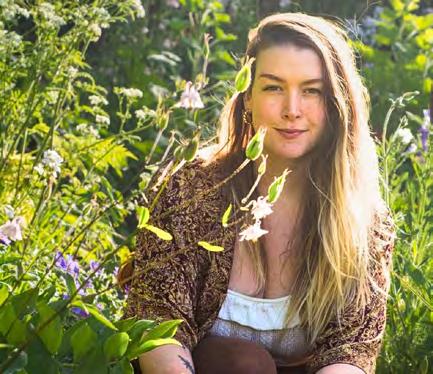
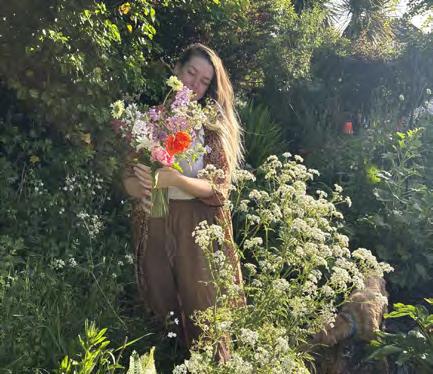
Alena Walker Writer & Campaigner
A writer and campaigner, Alena traces the memory of nature through motherhood, food, and activism - turning loss into language, and cultivating hope through, stories, soil, and the quiet act of wayfinding. From local fields to global food systems, her work sows care, justice, and belonging.
Rosanne Cecil
Willow Leaves Handmade Books
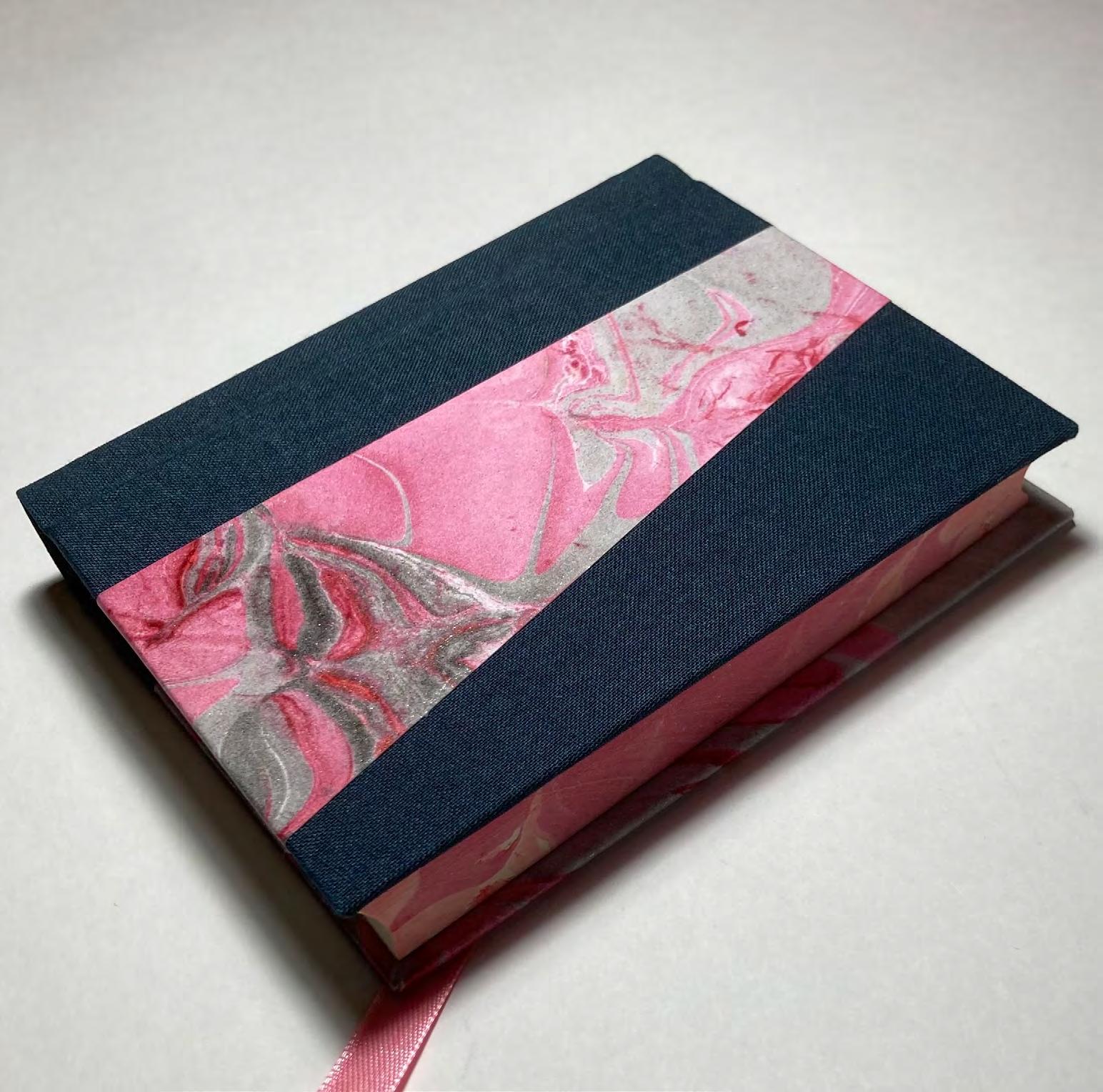
In a stone workshop overlooking a pond, Rosanne of Willow Leaves Handmade Books binds pages, plants trees, and preserves disappearing skills. From cork-covered journals to stub bindings, her practice blends craftsmanship and quiet resilience - rooted in place and the patience of handmade work.
Corrina Askin
Illustrator & Animator
From sketchbooks to trails, Corrina Askin builds dreamlike spaces rooted in myth, memory, and nature. Her practice moves between animation, illustration, and community - where enchanted characters, lost words, and forest walks help us reimagine where we are, and where we’ve been.
Original Illustration: Enagh Farrell - enaghfarrell.com
Issue 3 - August 2025
Enagh Farrell
Illustrator
Alena Walker
Writer & Campaigner
Corrina Askin
Illustrator & Animator
Rosanne Cecil
Willow Leaves Handmade Books
We’re always on the lookout for fresh voices, bold ideas, and stories that matter. If you have a topic you’re passionate about, a request for something you’d love to see featured, or an idea you think deserves a platform, we’d love to hear from you. Go Leor is built on conversation and collaboration, and your input helps shape the future of the magazine. Get in touch with the editor via aidan@goleor.co.uk - let’s create something great together.
Interested in advertising with Go Leor? Partnering with us puts your brand in front of a vibrant, engaged audience of curious minds, creative thinkers, and culturally-aware readers who value authenticity and innovation. Our publication reaches a diverse mix of young professionals, artists, changemakers, and trendsetters who are always seeking what’s next. With a focus on creativity, events and exploration, whether you’re launching a new product, promoting an upcoming event, or building brand awareness, we offer tailored advertising opportunities to help you make a meaningful impact. To explore how we can work together get in touch with us at advertising@go-leor. co.uk
Responsibility takes many forms - and in these four stories, it’s carried gently, creatively, and with deep attention.
Rosanne’s handmade books hold the weight of care: each stitch a refusal to rush, each tree planted a quiet act of return. Enagh walks her local canal, naming and celebrating weeds & plants - reframing what we overlook. Corrina sketches luminous dreamworlds where nature and imagination meet, while holding
space for children and words we’ve forgotten. Alena plants food, language, and activism in equal measure - balancing grief with grounded, regenerative hope.
Together, they remind us: responsibility isn’t always loud. Sometimes it’s printed on recycled paper. Sometimes it’s carved from a block of wood. Sometimes it’s just the decision to stay, to notice, and to begin again.
Aidan McGrath
Enagh Farrell Illustrator
A Dublin-based illustrator exploring the quiet power of plants, stars, and stories - reframing how we see nature, one nettle, sign, or skyward glance at a time.
At the moment, I’m trying to finish a project that I’ve been working on with a local group,” says illustrator Enagh Farrell, who is based in Inchicore, Dublin. “It’s the D8 Green Bridge Forum, and we have been working on local signage.”
The work is field-based and intuitive. “It meant that I had to
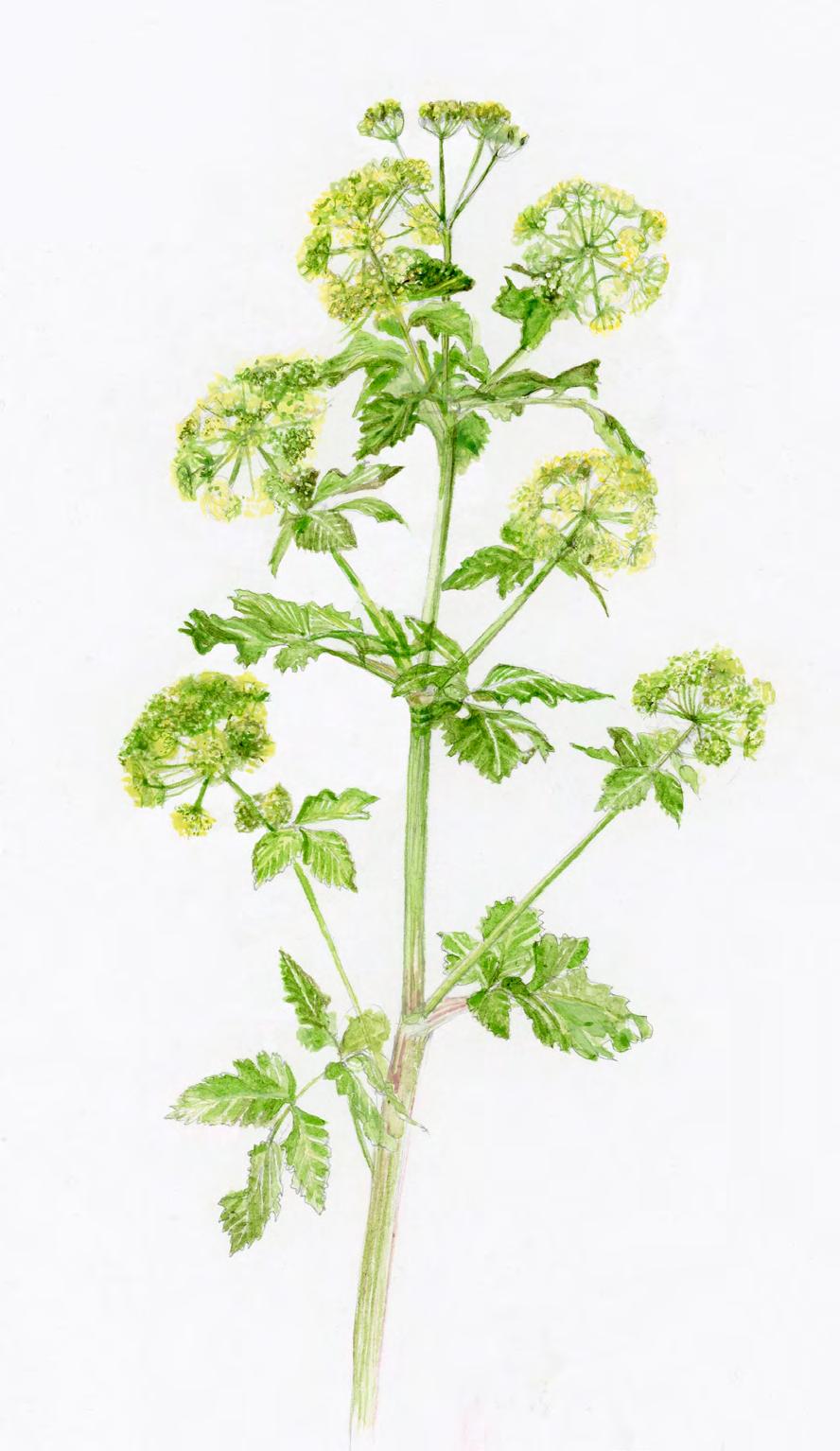
Alexanders Plant, Illustration
“It grows everywhere in Inchicore. It’s such an interesting plant. It came here probably with monks around the 4th century. We often find it growing around old monestary sites.”
do a lot of walking in my local area and identifying the plants correctly takes time” She draws each plant individually before assembling them digitally, creating what she describes as a subtle narrative - guiding walkers through overlooked relationships in the local ecosystem.
“I’m interested in how we can reestablish our connection with plants that are maybe not so loved all the time, because they’re really beautiful as well... they’re such gorgeous plants.”
Weeds and Wildlands
That philosophy carries through to her workshops, where even a stinging nettle becomes a conversation. “I did nettles once and I think people thought it was funny that we were sitting down to draw nettles... and then by the end of the class they were so enthusiastic, ‘it’s actually a really gorgeous plant’.”
“They’re so generous in so many ways, and particularly with the insects that depend on them... what I want to do in the workshops is try to help reframe our relationship to plants, and then as a whole, maybe nature.”
Farrell describes her approach as one of reframing - how we teach children and adults alike to see overlooked species not as weeds but as foundational
players in our ecosystems. “If we all spent more time in nature, even just the nature outside our door, I wonder if we might not have such a problem with biodiversity or climate.”
Signage and Storytelling
In Inchicore, where Farrell lives, both the Camac River and Grand Canal converge. It’s a uniquely rich environment for biodiversity - “It’s normal to see dragonflies around here and damselflies and herons and cormorants.” Through her illustration, she hopes to build an informal trail. “If you came to Inchicore and you’d never been here before... it might make you look at some of the overlooked plants or the birds or the insects.”
The signs are intended to last: printed on steel to weather a decade or more. The durability is important - especially in outdoor spaces where weather and time can quickly wear down more fragile materials.
Farrell often uses reclaimed wood in her projects - materials that carried their own subtle history. One particular piece sparked her imagination. “I actually found it just behind my house,” she explains. With apartments nearby, she wondered about the wood’s past life: “I’d say someone pulled it out of their apartment.”
“It felt like it had already taken
its own journey,” she says of the wood. “It had already had its own life and its own experience of living beside the Camac.” That layered sense of timeof material as witness - adds another thread to her practice, reminding her that even found objects carry stories long before they reach her hands.
One recent source of material came from a carpenter friend, who gave Farrell offcuts from locally sourced native woods. “They’ve all actually originated in Ireland, so it’s kind of nice,” she says. “And some of them are really beautiful, but I think because they’re so beautiful, I’m struggling to work on them.” For Farrell, even a scrap of timber is treated with reverence - its beauty not just in appearance, but in origin and story.
Materials with Memory
Farrell’s commitment to ecological responsibility is woven through every part of her practice. “It’s hard though, living in the world we live in, to always be ethical,” she says, “but I do struggle with it a lot, worrying I’m not making the right choices.” From greeting cards to packaging, she’s constantly weighing environmental impact against accessibility. “The idea originally behind it was that everybody can have an image, a piece of artwork, and I love seeing them framed in peoples homes... but I struggle then with making products, taking into consideration the inks that are used, and the trees that are affected.”
Her response is practical and evolving. She uses recycled paper and minimal packaging - often reusing materials sent to her. “I have a whole box of packaging bits. I save it all up and I will use that in things that I post out to people.” While many creative business courses
encourage elaborate packaging, she resists that trend. “No matter how beautiful it is, I just get really irritated if there’s loads of wasteful packaging.”
A Book for Midwinter
Some of Farrell’s most recent work is as an illustrator in an upcoming book with writer Michael Harding, published by Hachette Ireland. “Michael’s
writing is just gorgeous... I felt really, really lucky to be part of that that project.” The collaboration brought her into contact with Joanna and Ciara from Hachette Ireland. “They gave really great art direction. And they were really supportive the whole way through.”
The book, Midwinter: A Journey through a Season, is contemplative and rooted in close
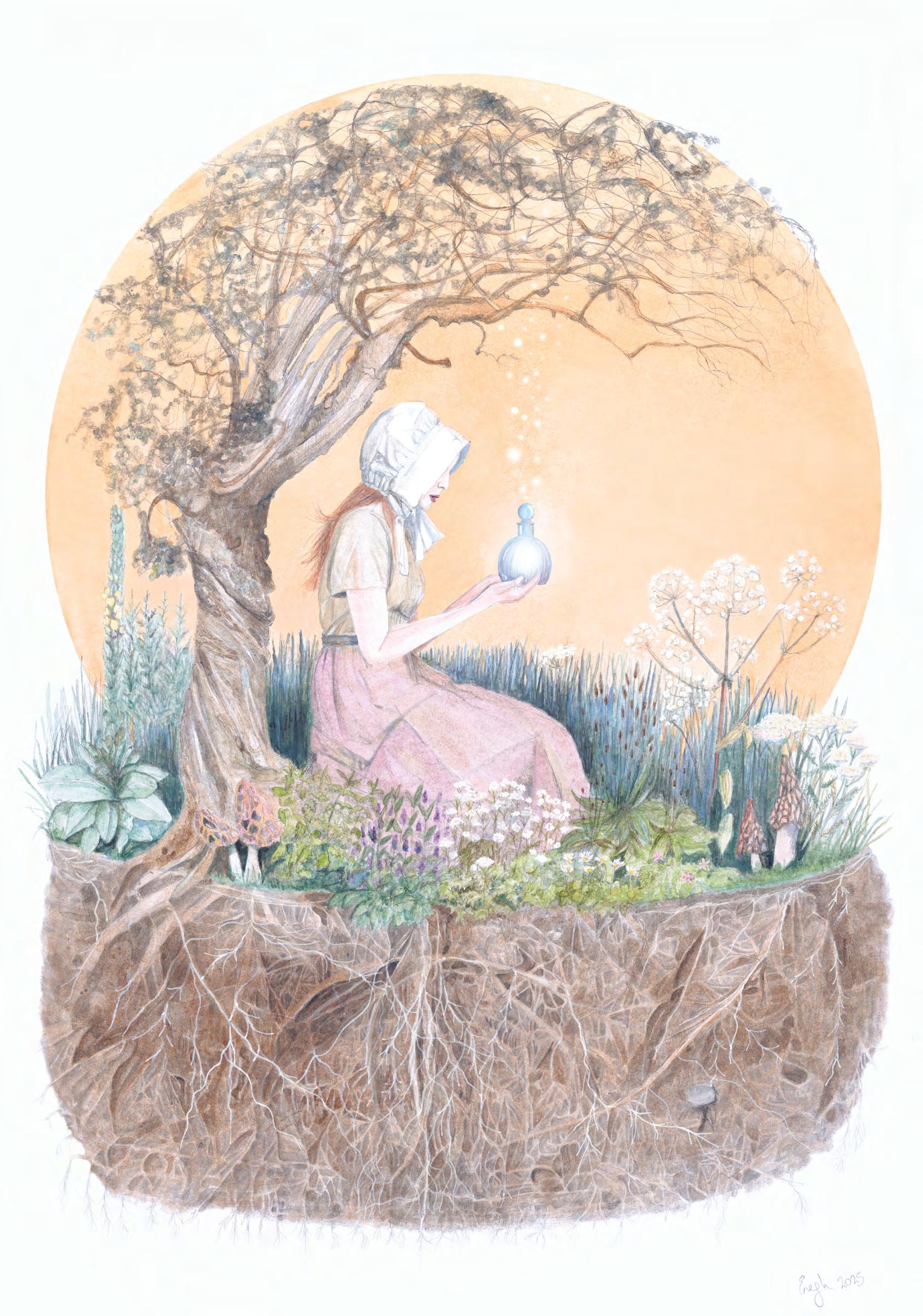
“I did this for the Illustrators Ireland exhibition. It was first shown in Belfast. Biddy was a herbalist and wise woman. I was interested in her relationship to local plants in the area she grew up, East Clare.”
Biddy Early, Illustration
observation. “He’s very contemplative about his surroundings and really focusing in on small details within nature... and I think there’s something really gorgeous about winter, because there’s just a quietness... you really feel the quietness of winter through the book.”
Though she was illustrating it in spring and summer, she found it easy to slip into its atmosphere. “I’ve done lots of winter projects... the first packet of cards that I did, the winter trees, they were done in pencil.”
That first series came out of a desire to gently support people who might be experiencing seasonal depression. “I just kept thinking, maybe if everybody just went out and spent time walking in winter and looked at the trees... and the stars are easier to see in winter.” The quiet clarity of the season - bare trees, cold light,
visible stars - became not just subject matter, but a form of encouragement.
Skyward and Grounded
Farrell’s fascination with stars is long-standing. “I actually think about the sky a lot... I remember when I was in college and a good friend of mine, she said to me something that stuck with me, ‘I just can’t believe the sky is real’.”
The sky, for her, is a site of connection. “It’s always moving and it’s never the same. And then at night... we’ve got this access to all these other stars.”
One night in Beara Peninsula, after leaving her tent for the toilet at 3 a.m., she found herself transfixed by the stars. “I was feeling sorry for myself. I was all cozy in my sleeping bag, and I got out of the tent frustrated, and looked up, and it was just the most incredible sky. And I just stayed out looking up for ages, I felt so glad that my bladder had woke me up to go and see the stars.”
“Stars make you feel really small, but in a really nice way. They’re so infinitely far away, and there’s so much happening outside of my existence.”
Unfinished Stories
Though she’s busy with commissions and signage projects, Farrell is always working on picture books and writingstories for children that reflect her themes of ecological connection and observation. “I’m always working on writing or picture books... again, it’s trying to explain little bits about nature to children.”
She’s also attentive to the ways modern culture distorts our relationships with animals and plants.
“There’s a fox in my allotment, actually,” she says. In an urban setting like Inchicore, where children may not encounter deer or otters, the presence of foxes becomes especially meaningful.
“Foxes I think are really lovely for people in an urban environment because we sometimes don’t see other creatures in the same way that somebody in the countryside might.”
She reflects often on how children encounter nature - or don’t. “Getting kids to be able to know the names of these creatures” is part of what drives her.
Her interest in nature storytelling extends beyond animals to wild plants, insects, and the spaces that support them. “That’s why I’m always trying to talk about Wildlands because the relationship is so strong there.”
Farrell’s workshops and imagery work to rebuild these links: connecting allotments, signage trails, and overlooked insects into a broader map of relationship and attention.
That curiosity threads through all of her work - from celestial reflections to nettle drawings, from steel signage to recycled cards. “What I want to do is try to help reframe our relationship to plants, and then as a whole, maybe nature.”
And maybe, through that, reshape how we relate to each other.
Explore Enagh’s latest work and shop via her website: enaghfarrell.com
Keep up with her via social media: enaghfarrell_illustration
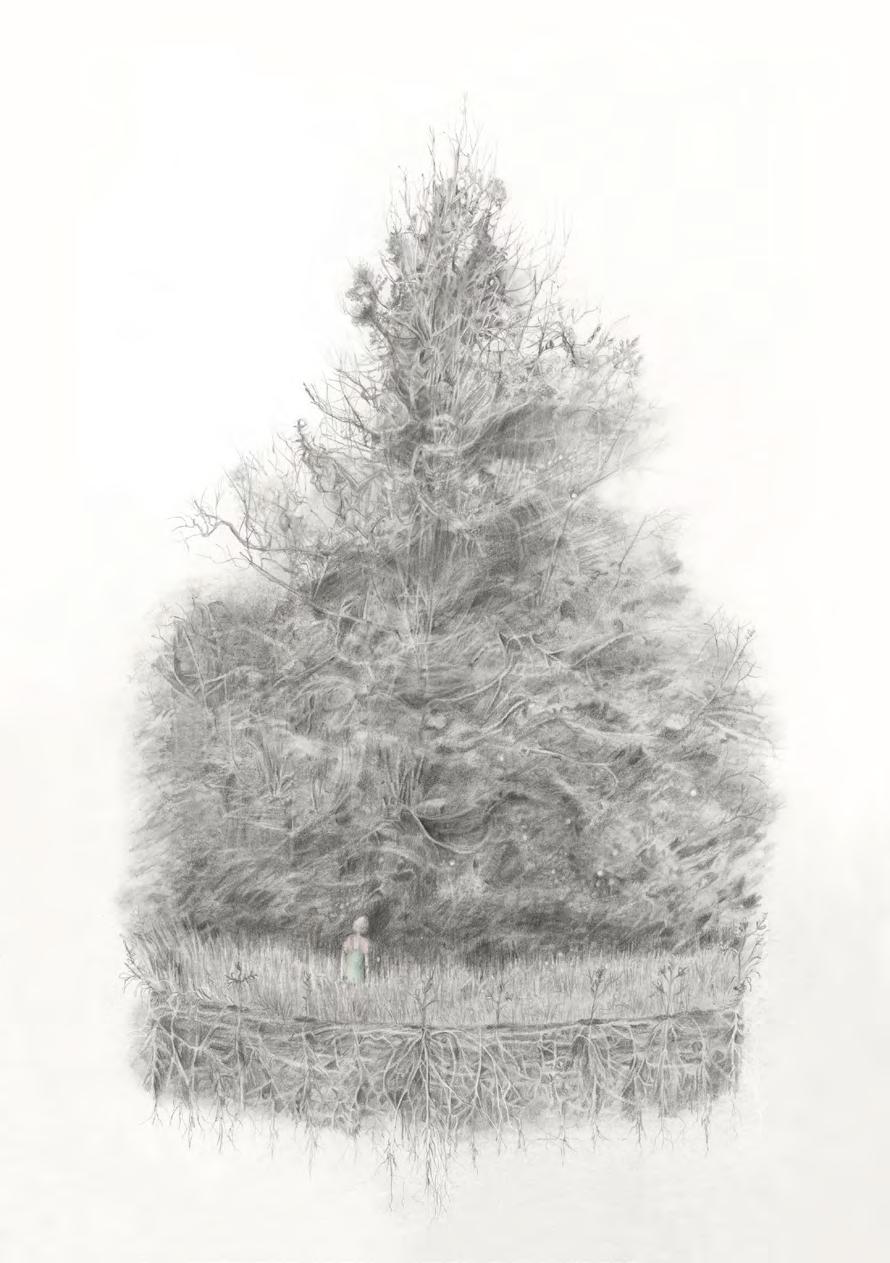
The Forest Midwife, Illustration
“I was commissioned to respond to the mini documentary, The Forest Midwife.”
Alena Walker Writer & Campaigner
Shaped by place, motherhood, and memory, Alena Walker is turning grief for a vanishing natural world into stories of hope, agency, and return.
Corncrakes is actually a part of that,” says Alena Walker, reflecting on the origins of her new project, Nature Remembered. Remarkably, it wasn’t until last year that she made her first trip to Rathlin Island - a surprising detail for someone who grew up so close to the North Coast. “Which is crazy,” she says. “Apparently I’m not alone in that.” The visit
came during a time of personal upheaval: a move to Ballycastle and the arrival of her daughter, Alba. “She was maybe about four months old when we took her.”
It was there, among the spring stirrings of island life, that Walker heard the corncrake for the very first time - a loud, rasping call unlike anything she’d
encountered before. “It was exciting,” she says. But the thrill of that moment soon gave way to a more sobering realisation: the very sound that felt so alive on Rathlin was now absent from the mainland, where corncrakes had once thrived. That contrast - vivid presence in one place, haunting silence in anotherplanted the seed for a deeper exploration of memory, nature, and what we pass on.
“The anxiety that I have about nature loss has really motivated me to try and piece together that timeline of memory,” she says. “If we don’t take the time to bring it together, curate that and grieve that, we just completely forget it.”
Motherhood intensified that urgency. “It’s made me think about the landscape that Alba is going to inherit... there are memories that people in Northern Ireland have of corncrake in fields... and that sort of disappeared.” That sense of loss extends beyond birdsong. Walker recalls childhood moments filled with insects - clouds of moths drawn to evening lights, windshields splattered with bugs on summer drives, the unmistakable hum of abundance.
“That has completely stopped,” she says. “You can have your window open and you might get the occasional fly, but there’s nowhere near what we had when we were younger.” For her, these silent absences aren’t just ecological - they’re person-
al. “Now kids, much like Alba, are reading about butterflies in a book. But I don’t think I could go out and point to her an abundance of butterflies in the back garden.”
Hope as Creative Practice
Walker brings her skills as a writer and communications specialist to causes that bridge nature and culture. She previously worked with Headliners, helping young people develop their writing and storytelling, and later became Head of Communications at the Nature Friendly Farming Network, where she helped advocate for sustainable agriculture and amplify the voices of smallscale farmers. These roles laid the foundation for her belief in narrative as a powerful tool for change. Now, as a campaigner with UK Youth for Nature, she’s found a rare balance of urgency and optimism. “There’s a really lovely feeling... the volunteers that work there approach the challenge of nature loss through their own unique creative lens.”
“It’s trying to take that eco anxiety and channel it into making something that makes people stop and think,” she explains. “Channelling that anxiety into some sort of art form, to me, is a way of moving from a cynical, quite depressing place... into feeling really enlightened and hopeful.” That shift, she adds, is only possible in a creative and collaborative space: “I enjoy working somewhere where I have that sense of lift in dealing with something that is so heavy. It’s really lovely.”
Against Gatekeeping
Walker is clear-eyed about the barriers that limit public connection to nature. “Almost a sense of gatekeeping? I think in the experience of nature we
need to break down barriers so that people can access nature in a lot more friendly way.”
“She points to working in the conservation sector, where technical knowledge becomes a competitive tool: “There would be a sense that you couldn’t go out and identify a bird or a plant unless you’re 100% sure it was the plant or the bird that you were observing.” It’s this kind of high-stakes correctness that she believes alienates many people who are curious but unsure where to start.”
This is where social media, she says, has played a surprising role. “Instead of being influenced to buy something,
you can be influenced to learn something.” She cites @outsidewithlira as a standout voice: “She’s just got such a way of being able to reach into communities that just don’t have access to nature, especially in urban environments.” What Walker finds powerful is the tone and accessibility of such creators: “She’s really able to make people feel welcome in nature, without needing to have all the right gear or all the right knowledge. That sort of warm, inclusive approach opens up spaces that have been historically closed off - especially in urban contexts where natural access is often limited.” For Walker, this represents a model of nature communication that
The only way we can navigate crisis is through optimism and hope.
prioritises storytelling, lived experience, and emotional connection over rigid classification or scientific gatekeeping.
Learning to Grow
Walker didn’t grow up in a family that grew food, but began to shift her lifestyle as she became more involved in climate and nature movements. “There was such a disconnect between how I lived and how I wanted to live and what I believed in.”
From studying fashion journalism with a focus on sustainability, she found herself questioning the entire industry. “I don’t think you can [make it sustainable]. Ultimately, we need to buy a lot less.” Her experience working with major fashion brands - and later in marketing - brought her face-to-face with the depth of greenwashing embedded in global supply systems. “My job was branded as having this focus of sustainability... and then I’m trying to sell people clothes that are very expensive, with a very fancy label, and tell them it’s sustain-
able.” At another point in her early career, she was asked to market a poultry agri-food business renowned for its intensive practices: “They had the most horrendous pollution stories. So it sat really uncomfortably with me. That moment put the final nail in the coffin of me working in FMCG marketing.”
That reckoning led her to food. “Growing my food started as a small act of self-sufficiency,” she explains, but it quickly became a deeper interrogation of the food system itself. The act of planting, tending, and harvesting sharpened her awareness of the systems that govern how food is grown and distributed. “There was a moment of reckoning where I just thought about the utter insanity of it all in terms of how our food is grown,” she says. Her experience in marketing and journalism had already exposed her to the structural issues, but growing food made them personal. “Even just understanding the rhythms of nature and the seasons... is quite empowering.” She adds, “It’s taught me
‘enoughness’ - how to be in relationship with the land rather than divorced from it.”
The Power of Local
Walker is a member of the Land Workers Alliance and previously worked as Head of Communications for the Nature Friendly Farming Network. She’s seen firsthand the challenges and resilience of small-scale food systems.
“Food is too cheap... it’s punishing work,” she says of small growers. “There’s a lot more that communities need to do to support local growers in being able to sustain their businesses.” She recalls a local example: “There was a really great walled garden grower that I bought from when I lived down in Helen’s Bay. And they said they struggled because the labor they were putting into growing the vegetables wasn’t proportionate to the cost of what they were selling as veg boxes because they were working around the clock.” For Walker, the collapse of that
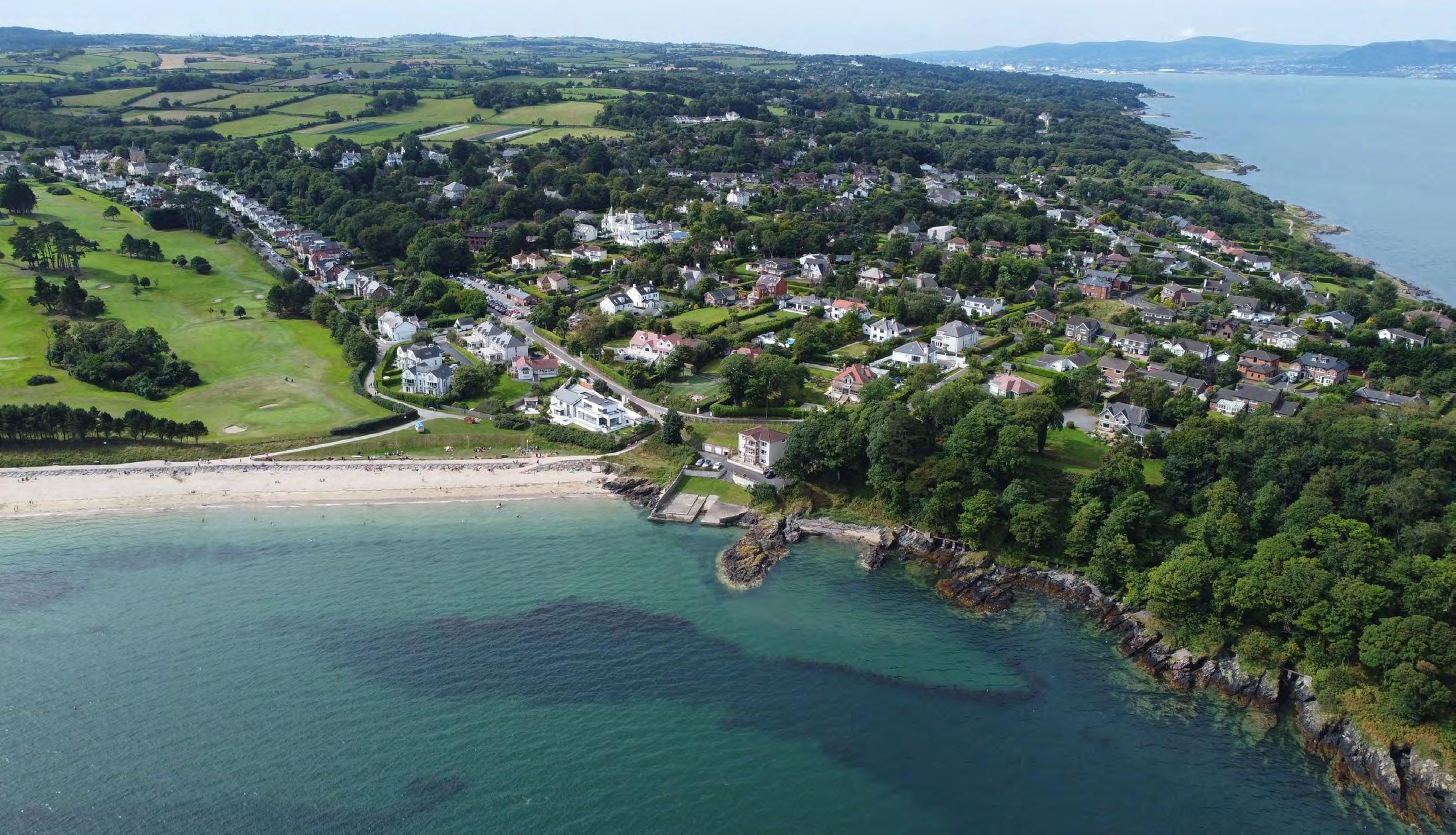
Helen’s Bay, County Down
kind of grassroots effort reveals just how fragile and undervalued sustainable food systems remain. It’s a call not just for admiration of growers, but material support and structural change.
She speaks passionately about the Oxford Real Farming Conference, a grassroots counterpart to the mainstream Oxford Farming Conference. “I find it really inspiring to see just actually what can be done on the ground.” Unlike its larger, industry-focused sibling, the Real Farming Conference brings together small-scale growers, campaigners, and land-based communities who are exploring regenerative and alternative systems of food production. For Walker, it’s a space where “words like ‘regenerative’ take on real meaning.” It’s not just a concept - it’s about composting beds, feeding the soil, and asking how plants interact with biodiversity. “I kept hearing the word ‘regenerative’ when I worked in the Nature Friendly Farming Network, but I actually didn’t really understand much
of what it meant until you actually grow food yourself, and attended these events,” she says.
A Regenerative Lens
To Walker, regeneration is about more than soil: it’s a philosophy. “Instead of just take, take, take, you’re giving back in some sort of way... It’s a way of remembering that the way we live can either mirror that extractive system or it can begin to heal what’s broken.”
That lens carries over into how we label food. She’s sharply critical of misleading terms like “grass-fed”: “According to DEFRA, livestock only need to derive 51% of their diet from grass to be sold as ‘grass fed’... that animal could be eating imported soya or be grain fed for half its life.” She draws on insights from her past work and wider campaigning experience to highlight the way language can mislead consumers. “The label would make you think that they have a certain quality of life,” she says. For Walker, clearer la-
belling is not just a technical fix, but a cultural and ethical issue. “I believe that if you’re a farmer that uses chemicals, you should have that labeled on your food,” she argues, pointing to the need for greater transparency around pesticide and herbicide use as well. It’s all part of making food systems more accountable to the public and the land alike.
Wasted Plenty at The Open
Recently, Walker witnessed firsthand the contradictions of modern food systems when The Open Championship came to Portrush. Despite the massive crowds and bustling local economy, what stayed with her most was the sheer volume of food waste. “There was an inordinate amount of waste from restaurants and food businesses around the area,” she recalls. Businesses had over-ordered, anticipating unprecedented demand, and much of it went unused. “Boxes and boxes of food that was just going to be thrown away - would have been dumped or incinerated.”
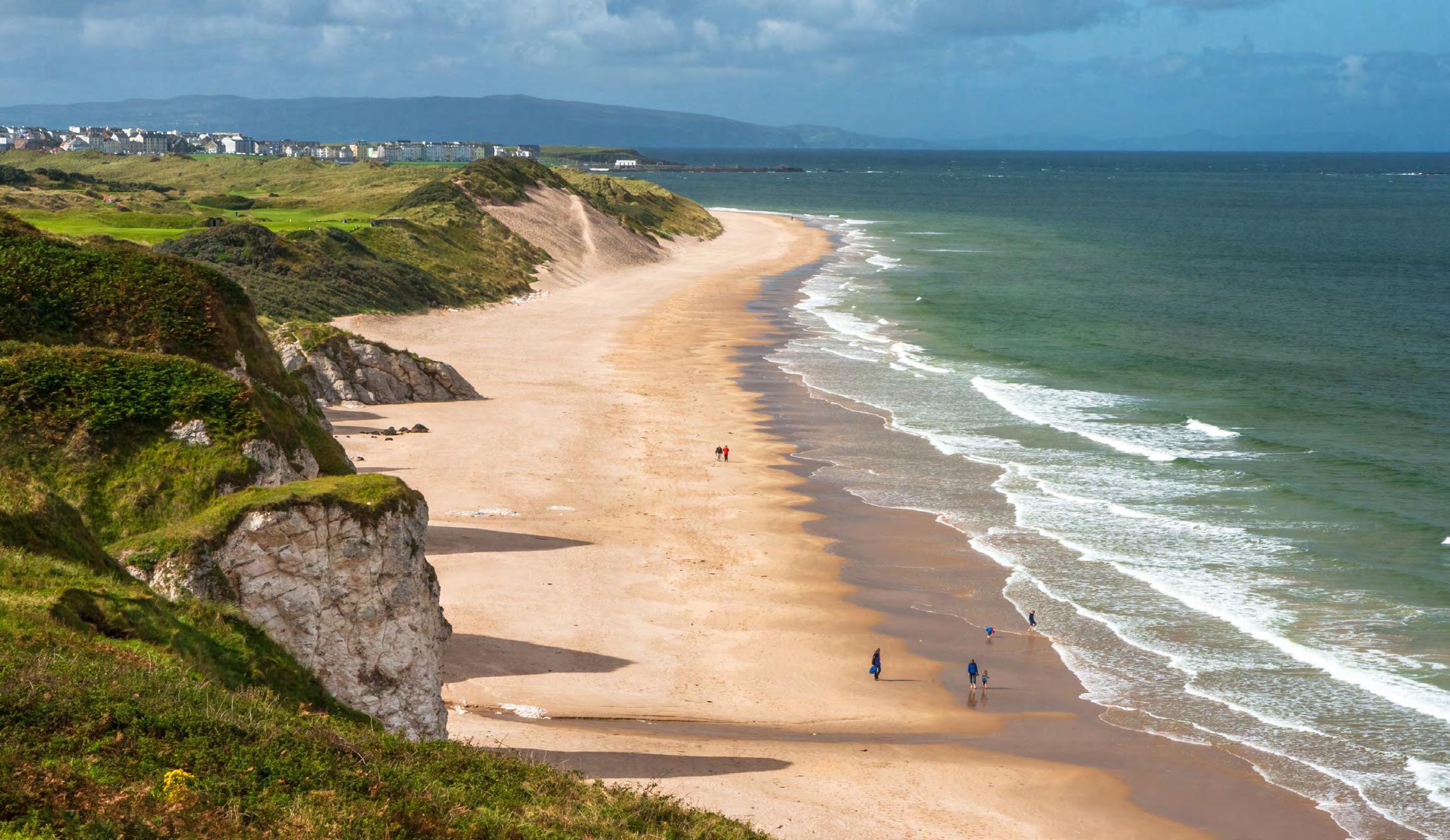
Portrush, County Antrim
Some of the surplus was salvaged through apps designed to reduce waste, but for Walker, it was a stark reminder of the disconnection between production and consumption. “We’ve just completely lost it within the food system. There’s no closed loop there,” she says. “A lot of it doesn’t even end up being consumed by humans. It either ends up as animal feed or in the food waste bin before it’s even bought.”
That experience reinforced her belief in the need for more regenerative and closed-loop models.
The Seeds of Storytelling
Walker’s podcast Your Wild Streets with Roisin Taylor, co-director of UK Youth for Nature, has just released its first teaser. Upcoming guests include Mary Reynolds and Satish Kumar. “It’s nice to get to have conversations with such incredible people. It’s really inspiring.”
For Walker, the podcast is not just a professional project - it’s a creative act of listening and learning. It marks her return to adult conversations after maternity leave, something she admits has been both energising and daunting: “I wouldn’t recommend it though, after you’ve done a year of maternity leave to nominate yourself for a podcast where you have to have adult conversations with people, because I’m so out of practice.”
Still, the podcast gives her space to engage with voices that challenge conventional approaches to nature and land. She speaks with admiration about Reynolds: “She’s a real activist and campaigner who looks at completely throwing out our approach to gardening and to make it native and to make it
scrubby and messy and, you know, just a lot more nature friendly. She’s someone who is relentless. And I really admire her for that.”
The podcast, like her writing and campaign work, is part of Walker’s broader commitment to making conversations about the environment more inclusive, more intuitive, and more emotionally resonant. It’s a chance to explore big questions - about land, community, and regeneration - with people who are unafraid to imagine new ways of being.
Alongside this, she’s also launched her Substack. “It’s given me a platform to look at how I’m using nature to navigate times, good and bad,” she says, describing the project as a deeply personal form of storytelling. Central to this is the concept of “wayfinding,” a term that captures how she uses natural symbols and encounters to navigate both outer landscapes and inner shifts.
During postpartum, she experienced a period of profound upheaval, having moved unexpectedly to Bushmills with a newborn. In this unfamiliar setting, nature became her compass. “I go out for walks every day and these kind of symbols have come to me in nature,” she says. One recurring sign was the heron. “I kept seeing a heron all the time... on every daily walk, regardless of the time of day; on someone’s bin, in Alba’s book, in a postcard through the door.” That symbol took on meaning as she researched its mythological and cultural associations: a quiet, persistent guide during a time of uncertainty.
Motherhood and the Sacred & Mundane
If motherhood has sharpened her perspective, it’s also
deepened it. “I think language... marries the mundane to the sacred, which I love. And I love taking the time to find the right words, to wayfind through the inner and outer landscapes of my life.”
“The lens of motherhood has given a whole new dimension to writing. Because when I look back at my old writing... it felt like I wasn’t going deeper in myself, whereas motherhood plunged me into that depth.”
That language now shapes how she tells stories to Alba. “I’ve had to make a real effort to consciously buy books or buy animals that are of native wildlife from Northern Ireland... everything’s about farm animals and about farms.”
Toward a Future in Balance
Walker is optimistic but grounded. “Stories bring us back to the essence of who we are... the only way we can navigate [crisis] is through optimism and hope.”
Whether through Nature Remembered, her podcast, or her writing, Alena Walker continues to do what she calls “wayfinding through words.”
It’s a practice rooted in stewardship, imagination, and a new kind of kinship - with land, language, and future generations.
Find out about Alena’s work, and some of her past projects via her website: alenawalker.com
Discover her writing by subscribing to her Substack: @alenajwalker
And keep up with the latest news, campaigns and episodes of Your Wild Streets via the UK Youth for Nature website: ukyouthfornature.org
Corrina Askin Illustrator & Animator
A Dreamer’s Practice: Corrina Askin on Storytelling, Sketchbooks, Forest Walks, Forgotten Words, and the Spirit of Place
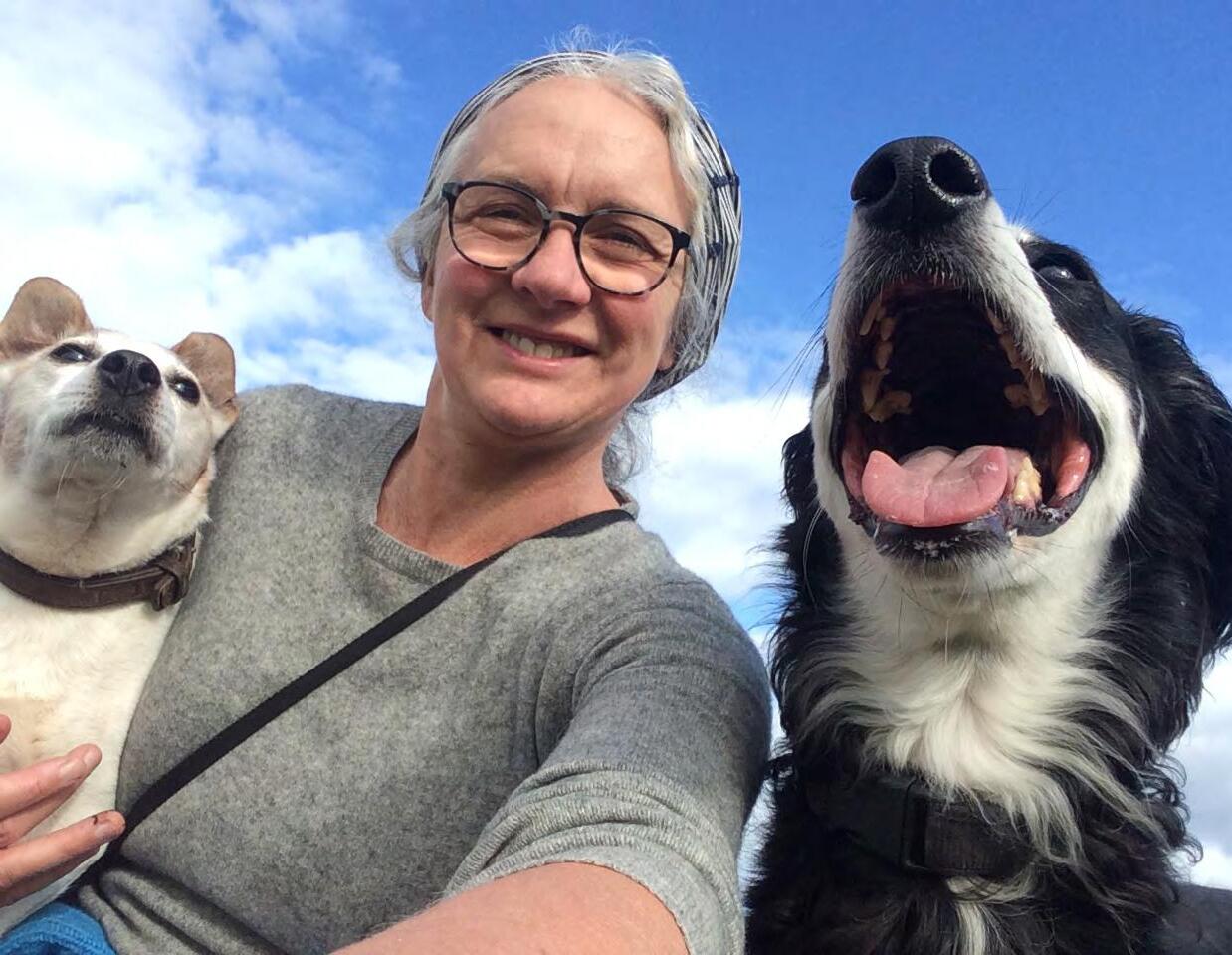
Corrina Askin begins her day with quiet purpose.
“I’m an early riser. I work best in that quiet, unrushed space in the morning,” she says.
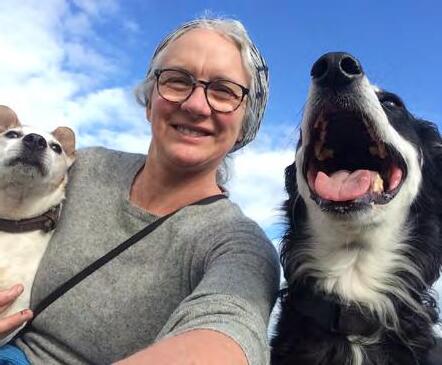
To maintain focus and momentum, she has developed a routine: “I start early and take regular breaks. The pauses are as important as the work. A long walk on Cavehill with my two dogs in the afternoon helps
untangle any issues - and I work on those when I get home.”
These scheduled sessions help move ideas from sketchbook to reality. “I have dozens of sketchbooks - little bits of notions or ideas that just stay there if you don’t make a plan.”
From Bologna to Kildare
Her recent creative energy was
sparked by a visit to the International Children’s Book Fair in Bologna: “I am reconnecting with the publishing world.”
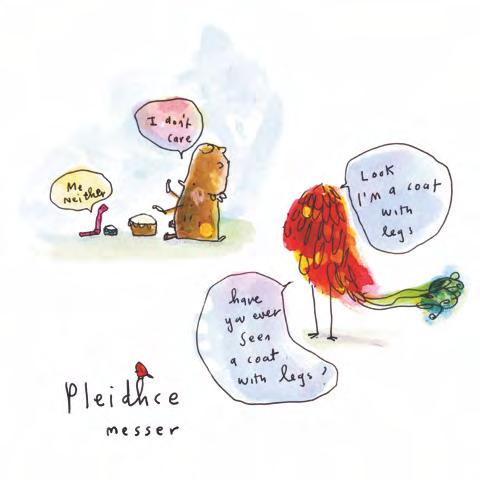
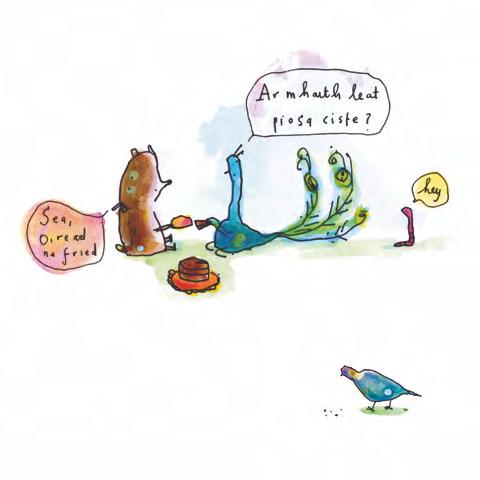
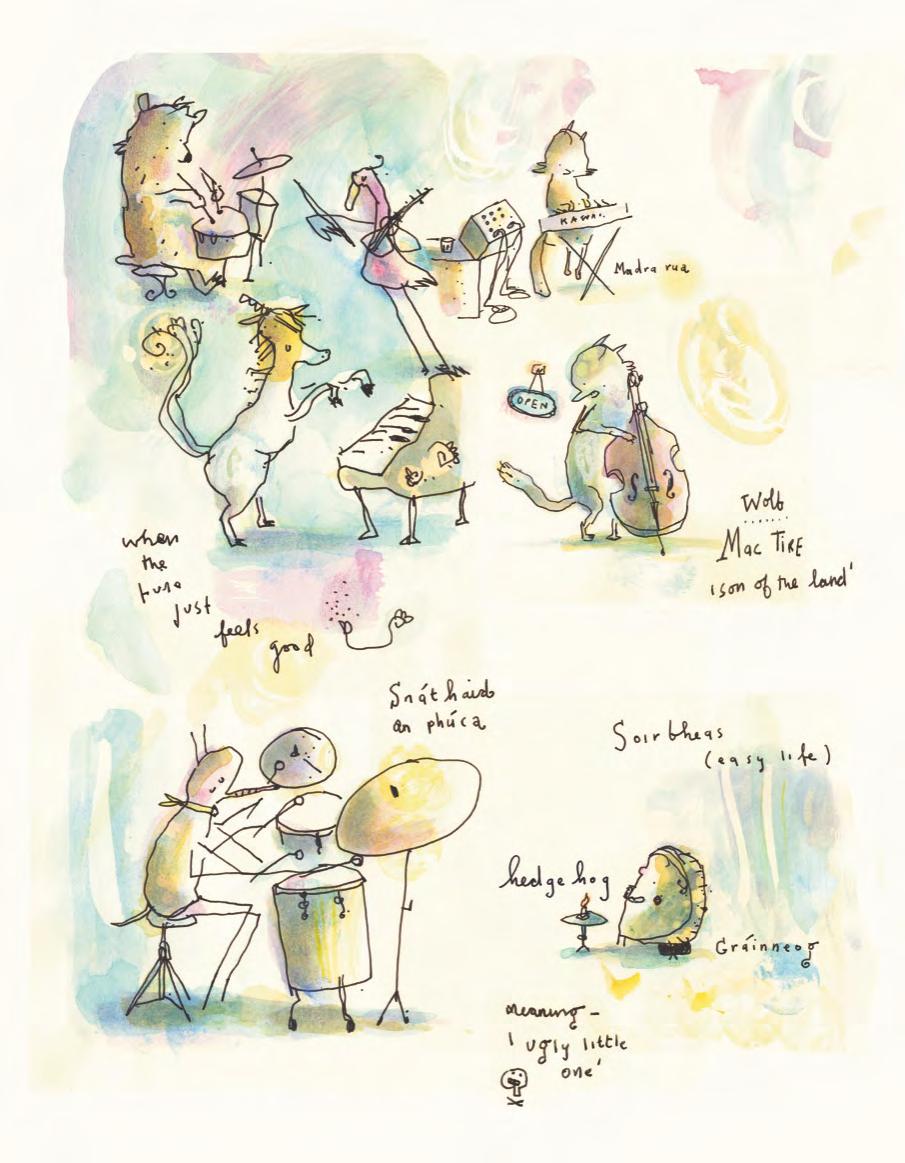
Two of the picture books she is currently working on have come from the exhibition Cat Crainn agus Madraí Uisce (Treecats and Waterdogs), a collaboration between Corrina and bestselling writer and documentary filmmaker Manchán Magan,
co-commissioned by Riverbank Arts Centre, Kildare and Linenhall Arts Centre, Castlebar.
“Working with Manchán has been completely inspiring, and he gave me the freedom to pursue my own way of interacting with his work.”
Language, Memory, and the North
Askin grew up in Tyrone during the Troubles. “There wasn’t much colour or connection to culture, so working with Manchán has helped rekindle a love of language, heritage, and connection to place. His work helps fill in the gaps of who we are and where we’ve come from - what we’ve forgotten.”
The collaboration started with an online project based around lost words: “I illustrated these evocative lost words that Manchán had collected - mostly to do with farming, the seasons, or nature - but there are also words that connect with a more spiritual or emotional mindset and to a faerie world beyond our human understanding.”
“When the opportunity came along to develop this into a body of work for Riverbank Arts Centre in Kildare, I jumped at it. I had read all his books and used them as background inspiration to create a universe that is playful, enchanting, but also grounded in this place.”
The exhibition is multi-layered and consists of full-colour illustrations and animation, as well as a mini theatre set.
“My own background is animation. I’ve created two animated children’s series for TV. I find it very easy to conjure up story moments and magical spaces based on the words that he uses.”
Her animated series Castle Farm was created for Milkshake on Channel 5. She was living on a small farm in Donegal at the time, which became her inspiration. Joe and Jack was created for RTÉ and was sold internationally. “It started simply - one day, I did a drawing of my cat with a little boy who
used to visit with his mum. I could see a dynamic, and it felt like the beginning of something. It became Joe and Jack, an animated series that aired on Disney, Canal+, and ABC Australia.”
Apart from the work with Manchán, she is currently working on an artist’s book called Dreamer’s Space, funded by the Arts Council of Northern Ireland.
The concept began in Paris. Nora Hickey M’Sichili, Director of the Centre Culturel Irlandais, noticed Corrina sketching in the courtyard.
“Nora saw my drawingshalf-scribbled ideas - and asked if I could do that in a real place. That was somebody noticing - really noticing - what you’re doing. And that was it. That was a turning point, you know. I really try to remember that when I’m working with kids or doing workshops. That moment - of someone seeing the value in what you’re doing - that’s
huge. Because there’s value in all creative work.”
“I volunteer in a community garden here in North Belfast - an amazing space called Grow, in the Waterworks.” As part of an Arts Council-funded trail there, Askin created a set of characters rooted in the cardinal directions. She embedded figures like the bear and the wolf into benches around the garden to embody feelings of direction and grounding.
“That garden space… it’s a safe
place. It’s a quiet place. It’s a place for thinking. A place for growing food. A place to connect with other people. It’s just a nice feeling, you know? So I really wanted to somehow, kind of reframe that - in some way.”
It was the beginning of a journey that would involve her most important work - and a turning point for which she’ll be forever grateful.
A Dreamer’s Space, an artists book is scheduled for Spring 2026
Corrina’s show with Manchán travels to Linenhall Art Centre, Castlebar, September to December 2025 thelinenhall.com
Discover Corrina’s recent work, along with the latest news via her website: corrinaaskin.com
Keep up with her on social media: @corrinaaskin
And with A Dreamers Space: @dreamersspaceproject
Rosanne Cecil Willow Leaves Handmade Books
A gentle studio rooted in books, trees, and tradition - Rosanne shares her quiet craft and the slow rewilding of land and skills across seasons.
I’ve got some open studio days coming up,” says Rosanne, the binder behind Willow Leaves Handmade Books. This August, she’ll open the doors of her stone workshop - just next to her home outside Broughshane - for the first three Saturdays of the month, as part of August Craft Month coordinated by Craft NI and the Design & Crafts Council Ireland
The days are informal, gentle: “You meet a few people, if they come, it’s nice; if they don’t, you just get on with work, get some things done.” Her workshop may be small, but the welcome is warm. “Last year I did it for August Craft Month. It was a steady stream, really, which was great.”
Rosanne’s studio looks out over a pond, often visited by frogs.
It’s a carefully maintained space - insulated and re-pointed to fend off damp, which paper never appreciates - but it still has the quiet magic of a building that holds a patient kind of practice.
“I’ll have books on display that show different styles of binding... but it’s more talking about it and showing it rather than actually doing.”
From Bread to Books
The name Willow Leaves came by way of bread - and before that, a cottage. Years ago, Rosanne and her family renovated an old building on their property and named it Blackthorn Cottage, after the abundance of blackthorn growing nearby. When she began selling her homemade bread, the name evolved into Blackthorn Breads. “And then I had a friend who makes baskets,” she recalls, “and we had stalls together sometimes where I’d sell my bread and she’d be selling her baskets, and we just called it Blackthorn and Willow.”
That became the name of her craft shop in Glenarm, where she sold artisan foods, locally-made crafts, handmade books, and ran a micro-bakery on Saturday mornings. When the shop closed just before the pandemic - “not knowing that was coming, but it was good timing” - Rosanne shifted her attention fully to bookbinding and the name Willow Leaves was an obvious choice.
“I just always loved books,” she says. “I used to make little books when I was a child... I was very taken by the illuminated manuscripts of the monks. The idea that books can be beautiful as well as informative.”
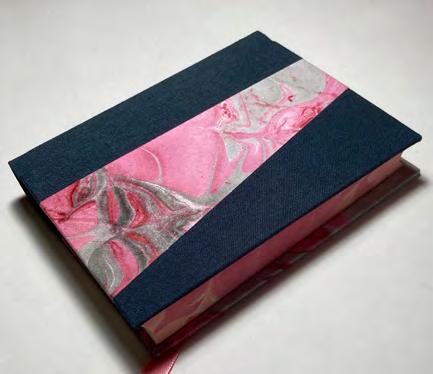
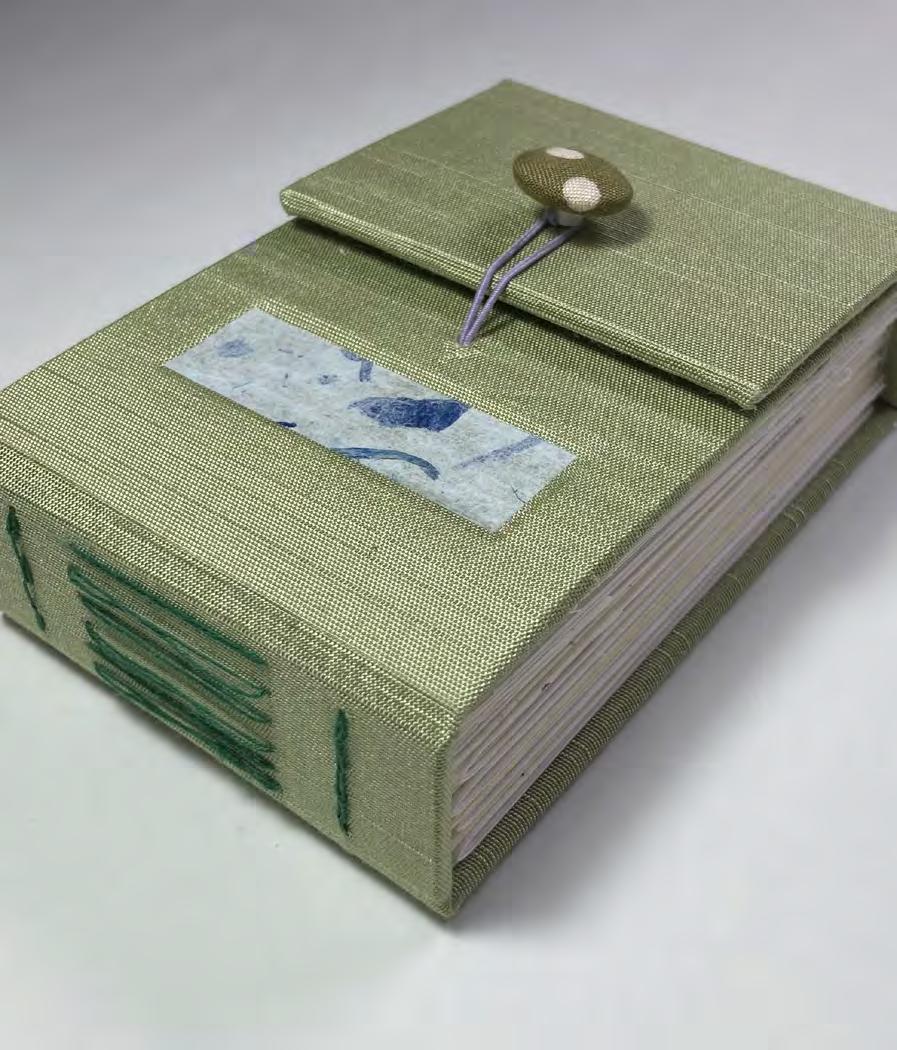
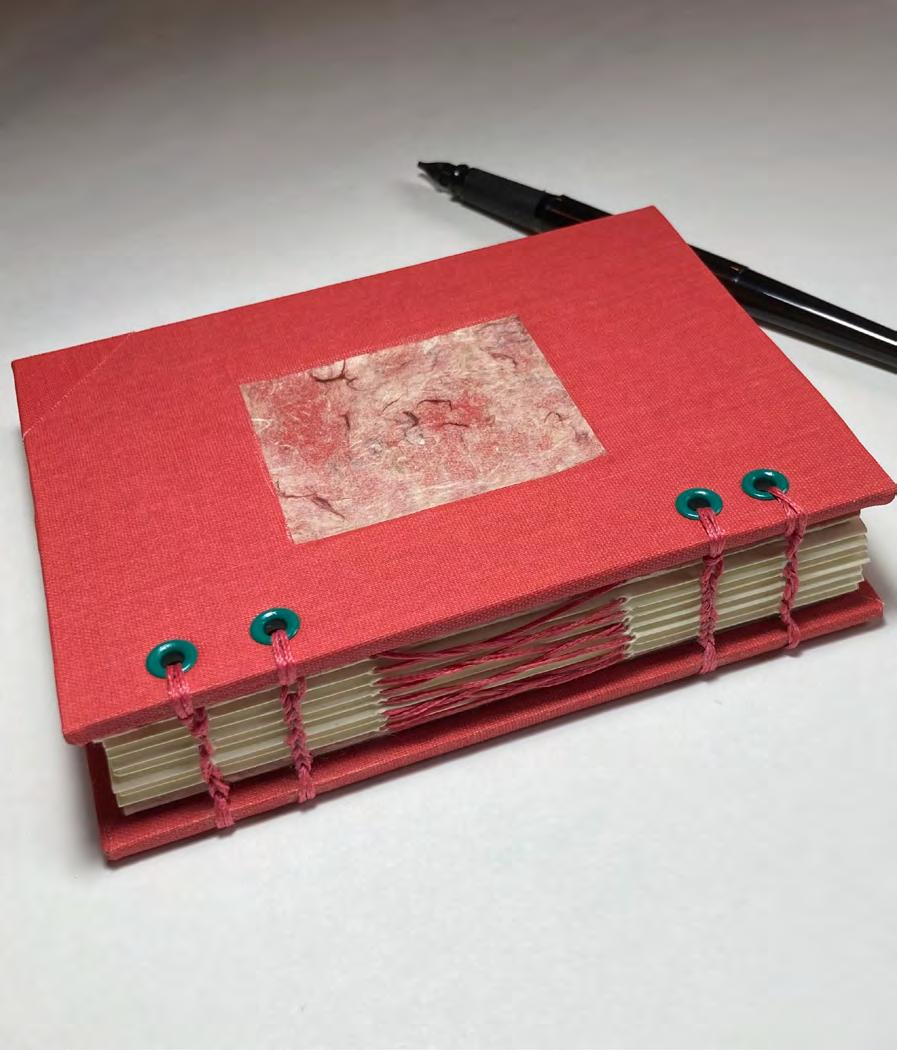
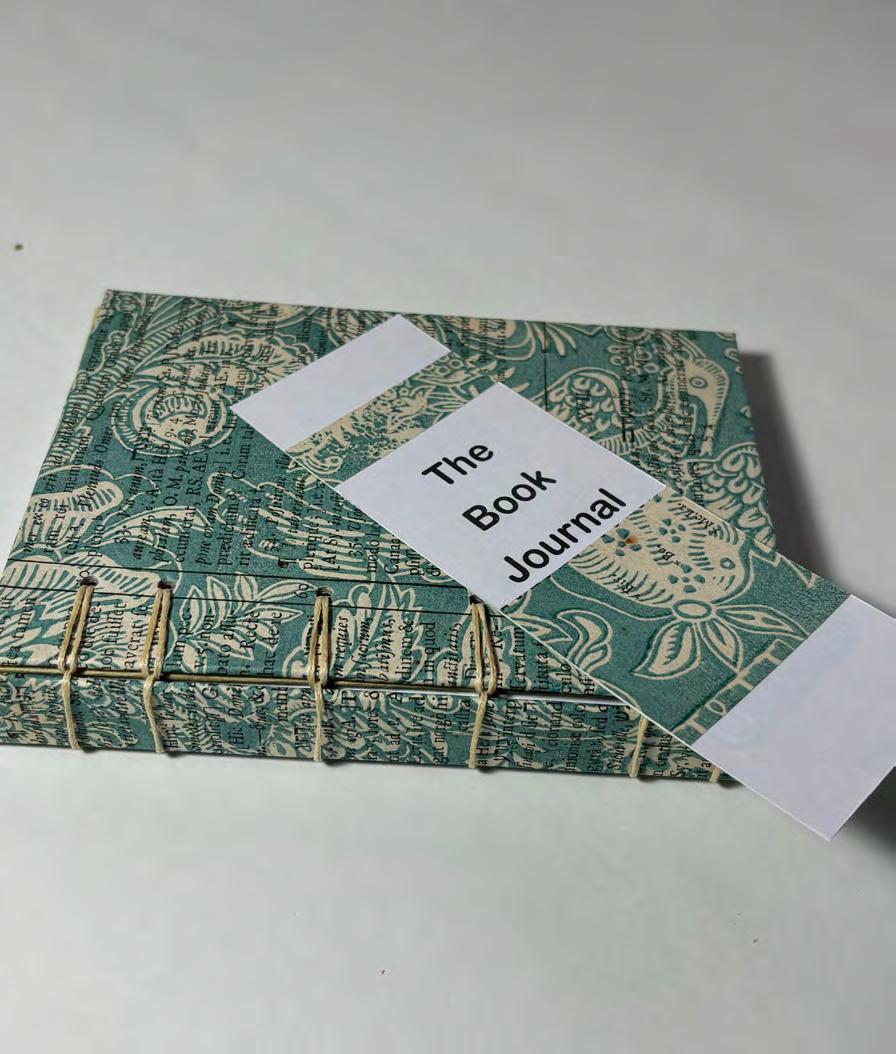
That early fascination has carried through in the variety of forms she creates today. “I make books for writing and sketching and I want them to be both useful and beautiful: I think that I have always been a bit influenced by the Arts and Crafts Movement, in that respect. Different styles of binding suit different sorts of use. The traditional casebound book is a beautiful object and is very sturdy but it is not as flexible as a book with exposed spine binding such as a Coptic-stitched
book where the pages open wide and lie flat – much appreciated by artists – that is less robust. Another style valued by artists is the concertina or Leporello book that is ideal for presenting a panorama. A style that I make a lot is limp binding; this is traditionally made from soft leather, such as goats skin, but I use cork material instead which is supple and pliable and lovely to work with.”
She often works with high-quality materials like Japanese silk book cloth, prized for its subtle texture and “It looks gorgeous with a range of colours,” she says of the silk. “It feels nice.”
Rosanne loves to work with beautiful papers. ”I use paper from different sources including my own marbled paper and my prints from lino cuts; however, I get particular pleasure from using the work of my sister who is a talented artist. There is something very nice about having a bit of a family connection in my work and to use papers that are unique.”
Learning and Relearning
Rosanne’s curiosity leads her to explore unusual forms - stub binding, flag binding, blizzard binding and piano hinge binding. “It’s interesting: sometimes I try out different designs and I think it’s going to take off but then I think, now I have learned how to do it, that’s all I needed to know.”
She credits recent inspiration to Scottish binder Gillian Stewart (of Juju Books), whose workshops in Scotland have deeply influenced her. “Her work made me think about the stub binding,” Rosanne says. “I had seen it elsewhere, but didn’t know a great deal about it.” She’s also hoping to refine her leaf printing this year. “I do some leaf printing, but I’m not very
good at it. I want to get better. I think that would be very nice for endpapers.”
Her bookbinding journey has also been inspired by a recent trip to the highlands in Scotland, where she encountered a vibrant book arts community.
“There’s a very strong bookbinding tradition in Scotland, and a real network of people who are engaged in it in lots of different ways,”
The openness and generosity of other bookbinders helps Rosanne feel more connected to a broader craft traditionone that, while rooted in skill, also thrives on curiosity and exchange.
Tools and Traditions
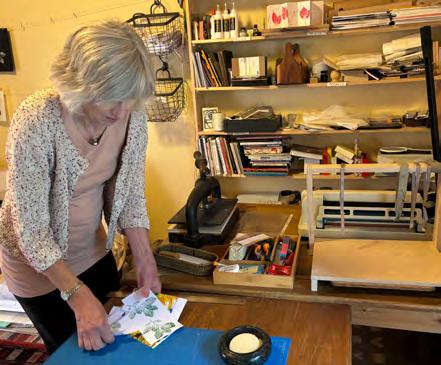
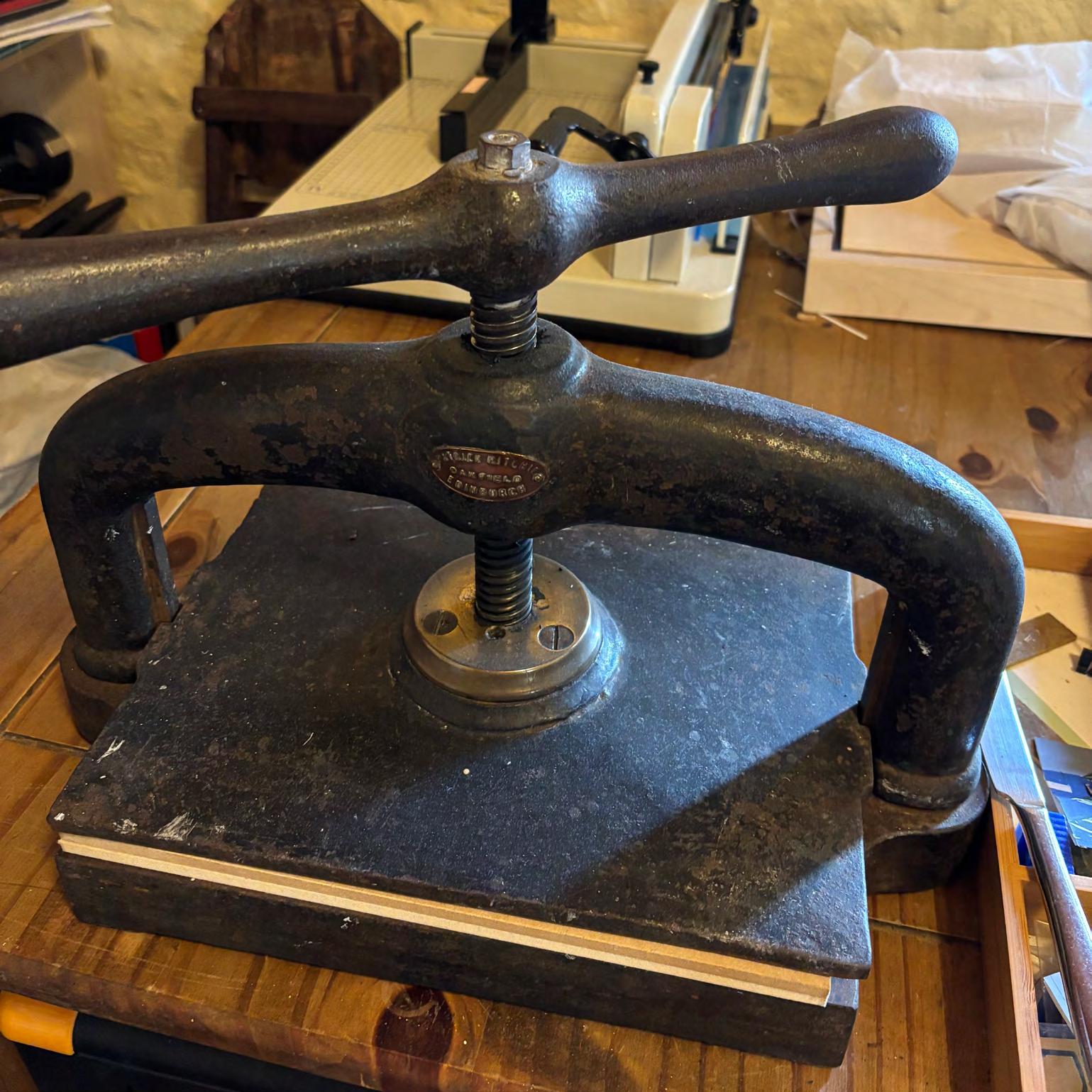
Rosanne’s practice is grounded in the physical. She uses a nipping press, a custom sewing
frame made by a neighbour, and a range of different tools including scalpels and various knives and – because bookbinding involves a lot of pressing –heavy old domestic irons, weights from old scales, big old books and a large Russian doll filled with obsolete coins.
“Quite a lot of people think that I put covers on books. They don’t realise that I stitch the whole book,” she says. That’s partly why she opens her studio: to give visitors a glimpse into the many-layered work of this craft. “You look at a book of mine and it might be sitting in a shop next to a little notebook for £4. And mine isn’t £4.”
In an age of mass production and rapid turnaround, the care, materials, and time that go into handmade work can be hard to price - and even harder to
explain. Rosanne reflects on this tension quietly but clearly: craftsmanship isn’t about speed or scale, and yet it often finds itself measured by both. “People don’t always see the hours that go into it, or the quality of the materials.” As part of County Antrim Open Studios, she hopes that Open Studio days help visitors to understand the work that goes into the creation of beautiful craft pieces, whether ceramics, textiles, jewellery or books.
Rewilding and Resilience
Rosanne’s quiet commitment to craft extends beyond her studio and into the land surrounding her home. ”Tree planting and concern about the environment came first.” she says, describing decades of tree planting and habitat restoration. The first trees were planted over 35 years ago; since then, waves of new growth have followed each shift in family life - including the retirement of their goats.
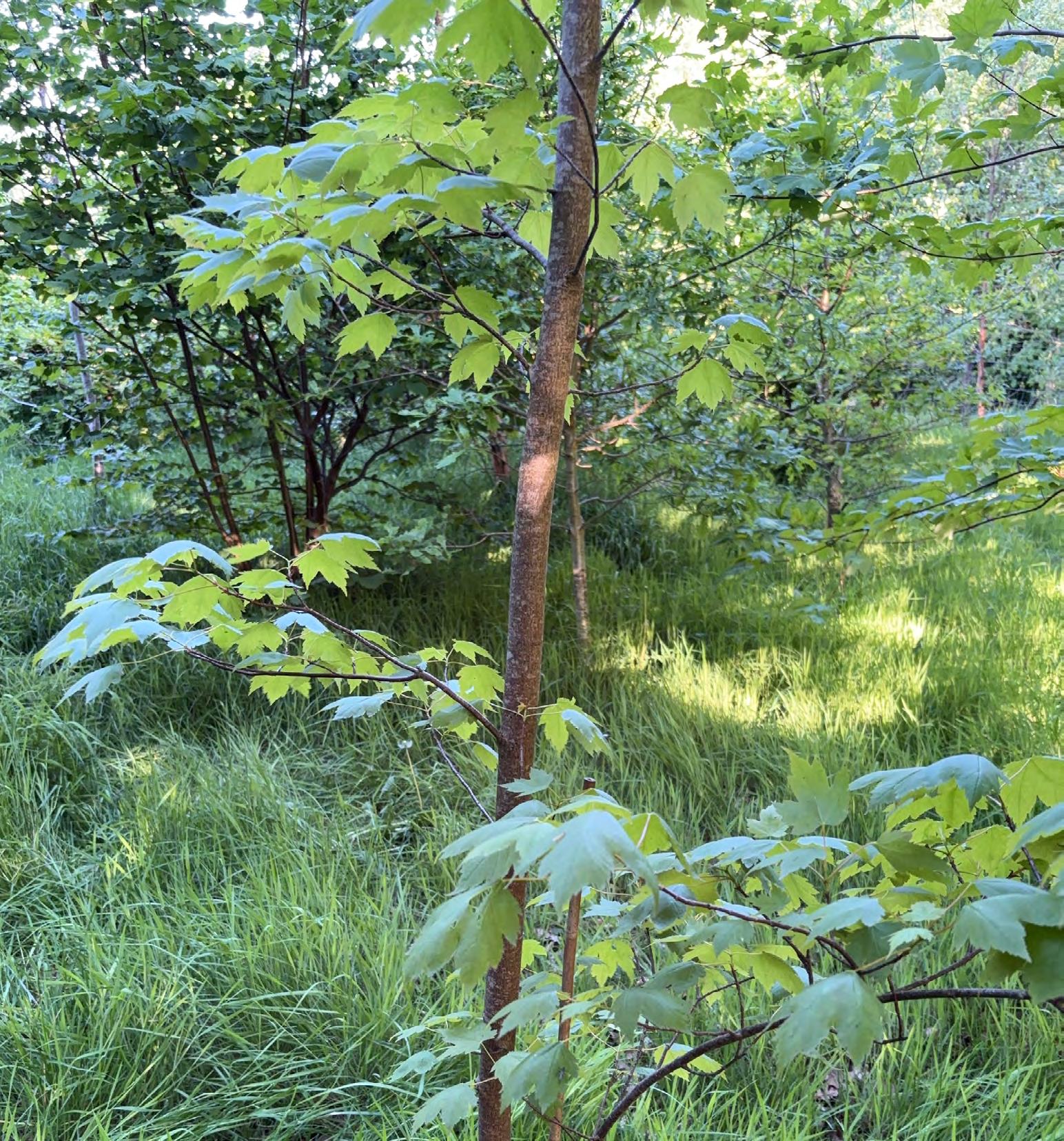
More recently, she and her partner acquired rough grazing land, planting a range of native broadleaf trees: hazel and alder for quick growth and slower-growing oak, birch, rowan and hawthorn. “You plant equidistant, you know, for the best growth, but within a very short length of time, they don’t look like they’re in rows. Some saplings die while others grow and re-seed and so it becomes a natural-looking woodland very quickly.”
Her approach is pragmatic and unforced. “Initially you do have to use stuff to clear the grass to give them a bit of a start. But after a while, it’s nice not to have to go that route at all and just let them grow.”
But even with all the new growth, Rosanne is acutely
Rosanne’s Nipping Press
aware of what’s missing. “Every generation takes it (the environment) as their normal, you know, the wildlife that we see. I remember my mother talking about wildflower meadows she would have seen – and taken for granted – when she was young. And sometimes you get a sense from older books as well where, although nature isn’t the focus it’s just a backdrop to the main narrative, you kind of realise what an abundance of wildlife there was and that it’s all just shrinking so much.”
A Living Craft
From marbled edges to cork-covered gardening journals, every part of Rosanne’s work reflects slow care and practical elegance. “There are an awful lot of disappearing or declining skills - book conservation and restoration among them; however, there is a new wave of interest in bookbinding and book art as an innovative craft”
Willow Leaves Handmade Books will open its doors for August Craft Month on the first three Saturdays in August and other days by arrangement. Visitors can expect quiet conversation, examples of Rosanne’s varied techniques, and a rare look inside a bookbinder’s world defined by quiet dedication, thoughtfulness, and meticulous care.
Find out more about visiting Willow Leaves Handmade Books’ Open Studio via the County Antrim Open Studios website: countyantrimopenstudios. co.uk
Keep up with the latest information and see their latest work via their social media: @willowleaveshandmadebooks