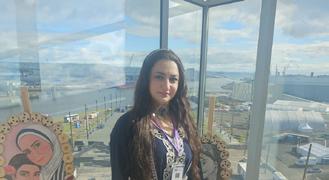
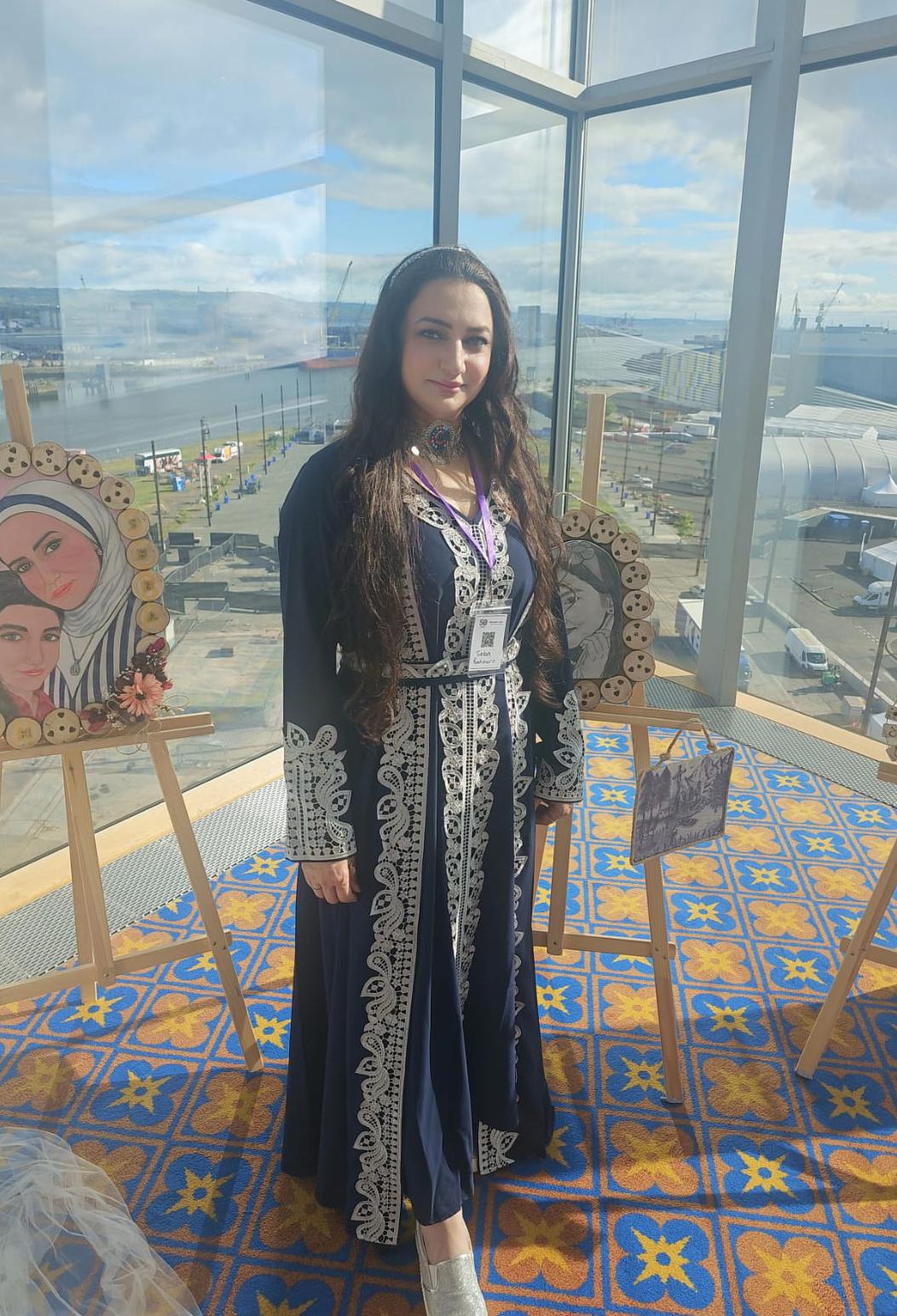
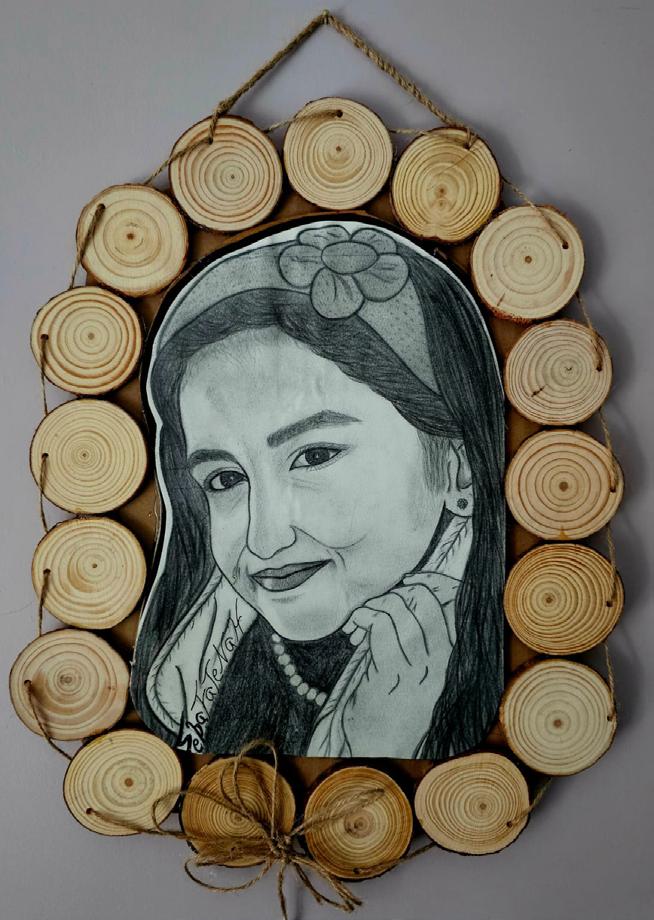
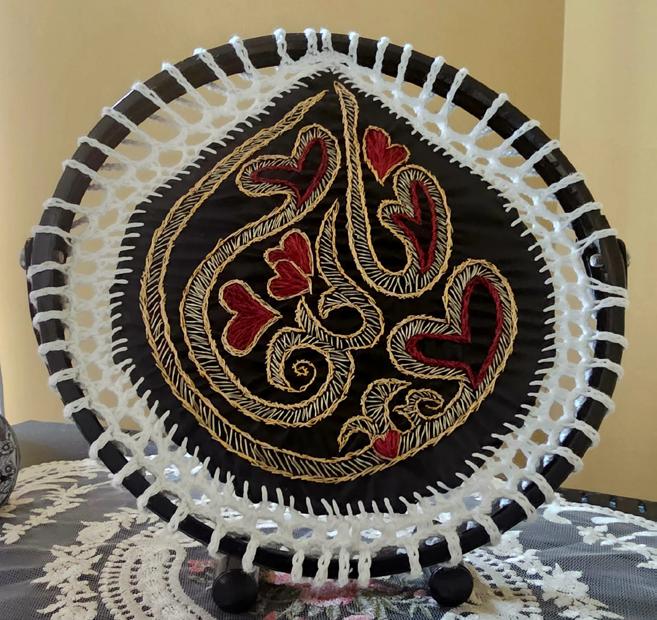
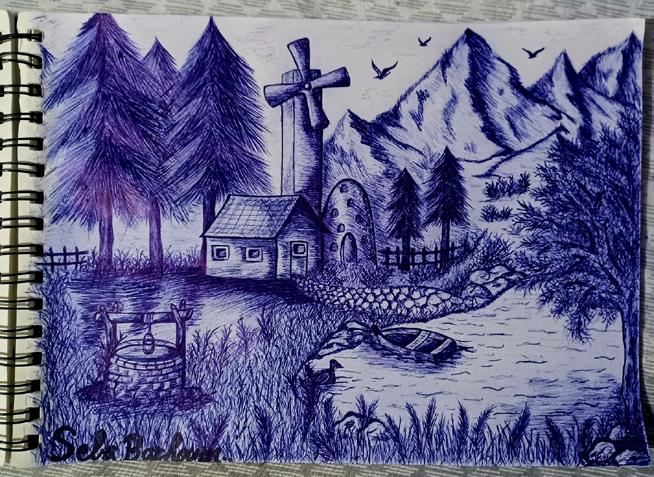
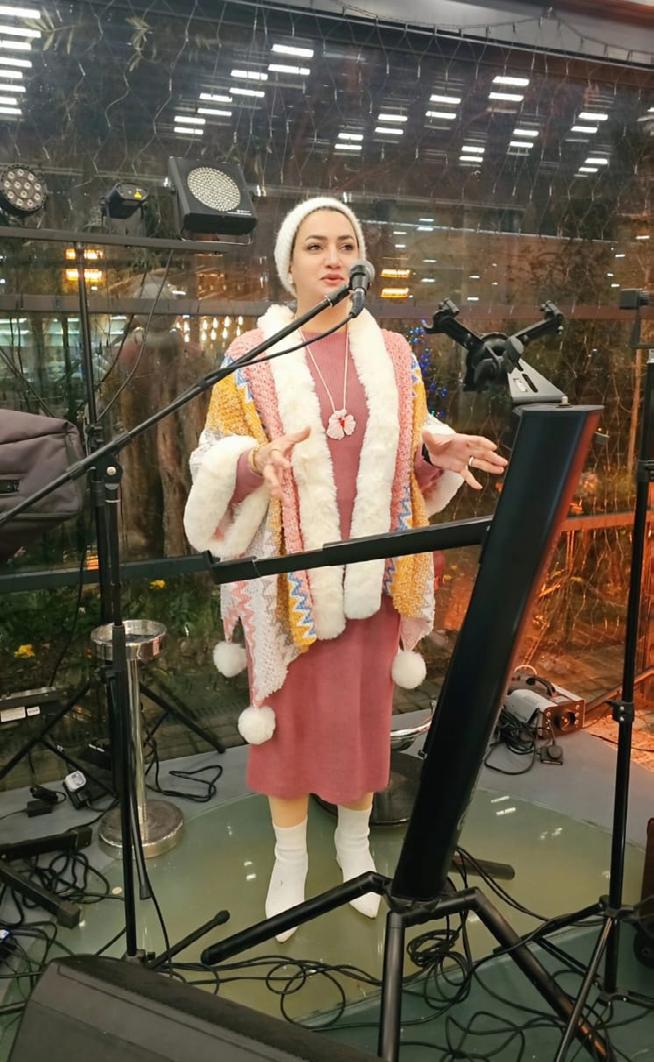
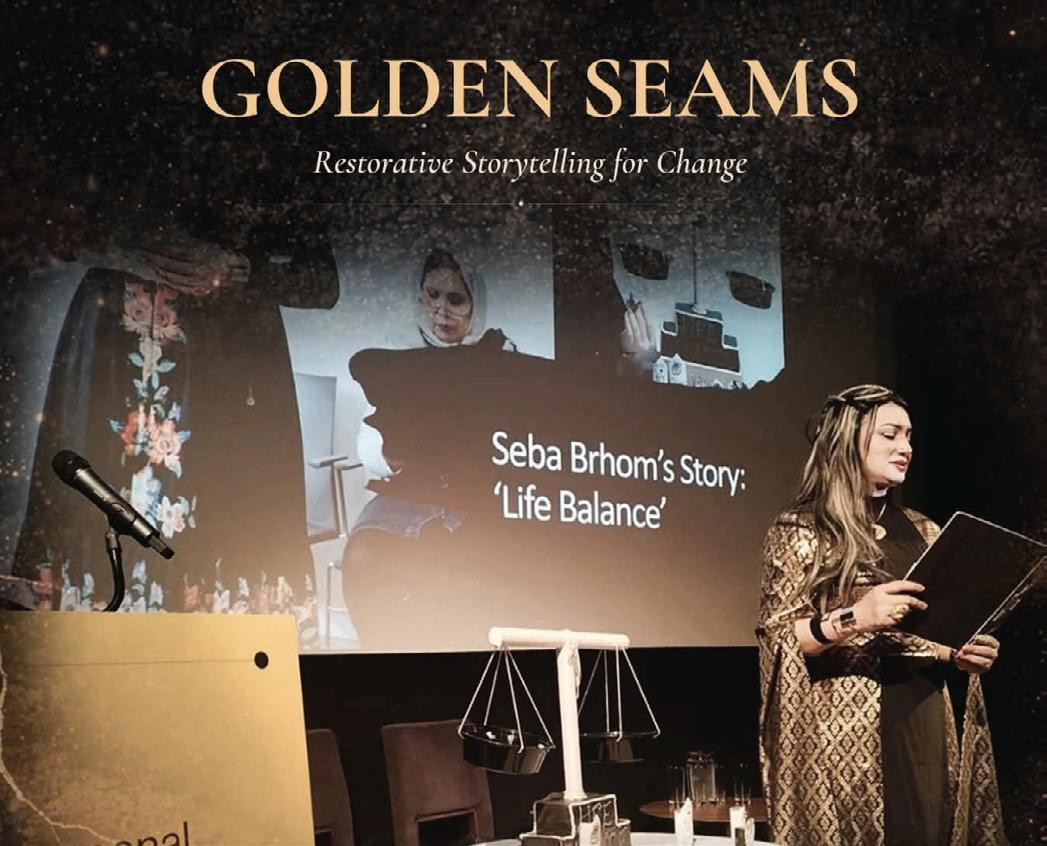
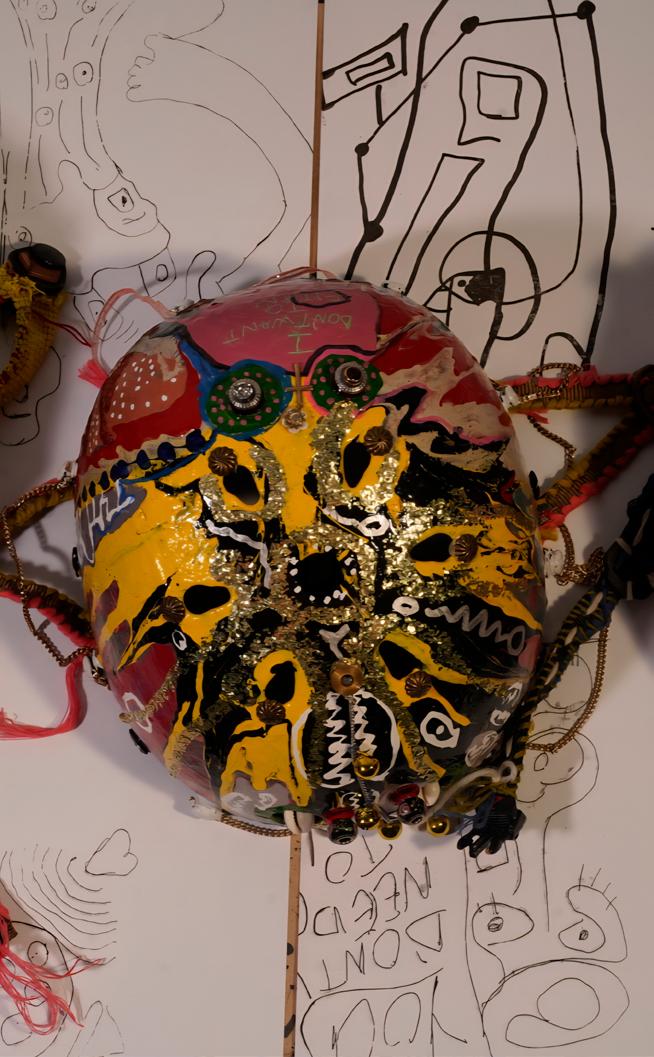
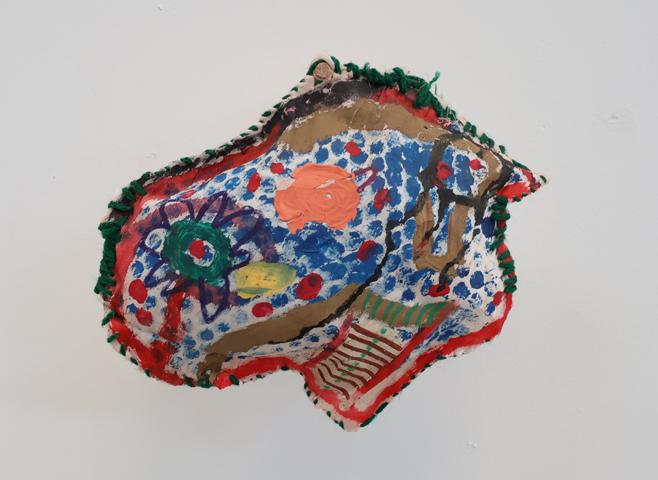
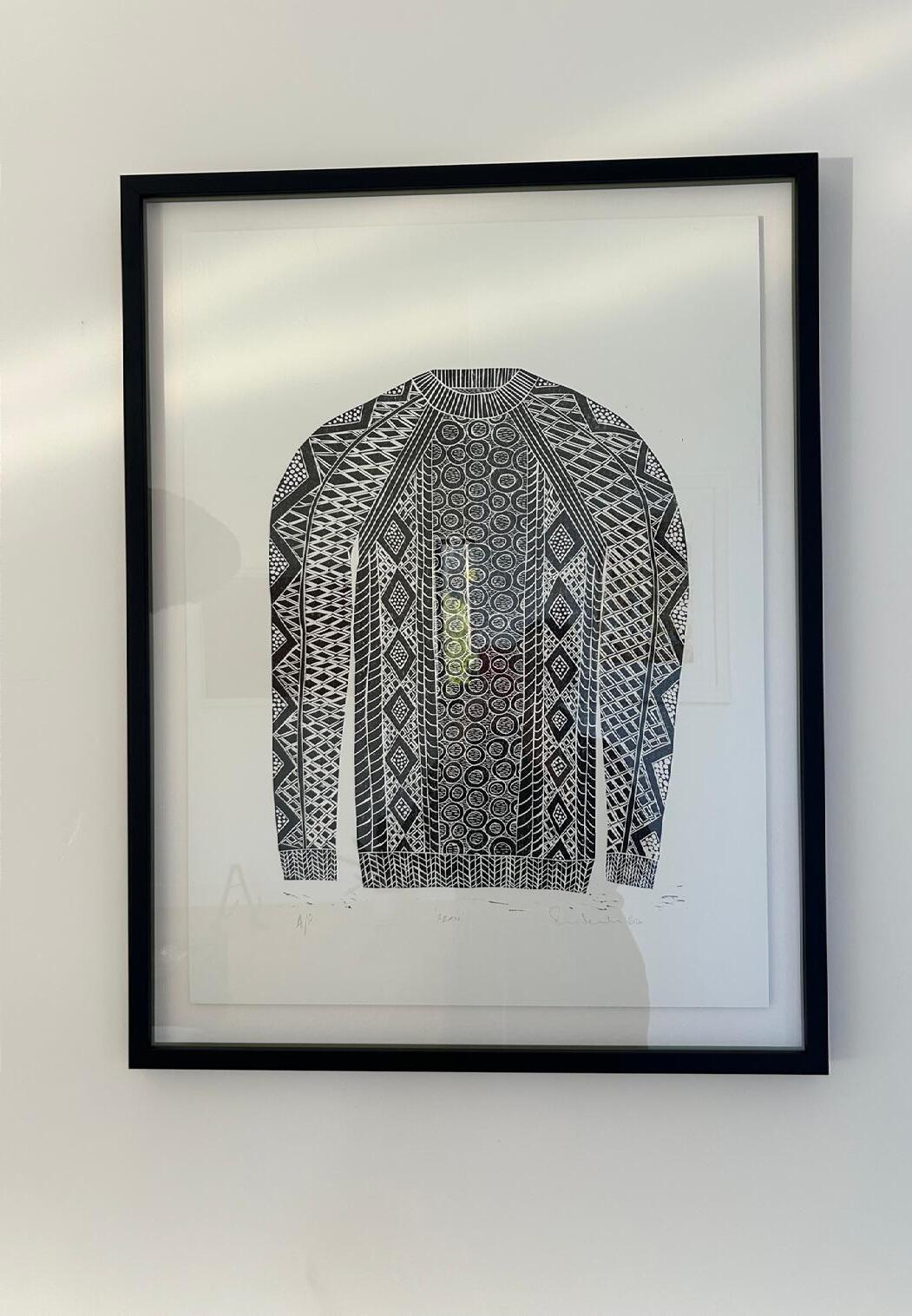
A Syrian artist and teacher now living in Northern Ireland, Seba Brhom uses drawing, fabric, Arabic lettering and community workshops to share beauty, memory and gratitude.
For Seba Brhom, art is not separate from life. It is a way of learning, a way of teaching, a way of remembering, and a way of saying thank you.
A Syrian refugee now living in Northern Ireland, Seba is both an artist and a teacher. Before coming here, she worked as a primary school teacher in Syria. Her hobbies included art, travel and horse riding, but teaching was already central to who she was. When she arrived in Northern Ireland, she found a way to bring those parts of herself together again.
“I was working as a primary school teacher in my former country Syria,” she explains, “and my hobby was arts, travel and horse riding. When I got here, I got the chance to volunteer teaching art in schools here for almost two years.”
For Seba, that opportunity mattered deeply. It allowed her to return to the work she loved, while also sharing the creative part of herself that had always been present.
“This was the most beautiful thing for me,” she says, “because I loved my job as a teacher and I loved creating art, and I was able to combine them while volunteering as a drawing teacher because of my experience in both situations.”
That combination runs through Seba’s work. She makes art in many forms, from drawing and fabric-based work to pieces that
“This was the most beautiful thing for me, because I loved my job as a teacher and I loved creating art”
use Arabic ornamentation, English letters and Arabic letters as visual material. She has also taken part in small exhibitions, including one connected to the Titanic Belfast, and has created works of gratitude for people and places that helped her begin again in Northern Ireland.
Her practice is shaped by displacement, but it is not defined only by it. Seba speaks strongly about effort, ambition, learning and the desire to give something back. She is clear that the people who supported her helped light the way, but she also worked hard to become who she is.
“My family, teachers and other people were the first flame,” she says, “and I struggled and followed my path.”
The first flame
Seba’s creative life began with encouragement. Her mother supported her by bringing her books, and a teacher encouraged her to share her art in her homework books. These gestures stayed with her. They did not simply praise her creativity; they helped her understand that creativity was something worth carrying forward.
“Yes, the support of my mother, teacher, or anyone else has played a big role in who I am now,” she says, “and they are part of making me love the teaching profession.”
The phrase “first flame” is an
important one. Seba does not describe herself as someone passively shaped by others. Instead, she speaks about support as the beginning of something she then had to protect, develop and pursue for herself. Encouragement gave her warmth, but it did not replace the hard work of following a dream.
“I mean, who I am now is not just because of the support of my family, teachers and other people,” she says. “When I grew up I relied on myself and worked hard to be what I wished. I pursued my dream and ambition with personal effort.”
Her parents remain cherished figures in this story. Seba has not seen them in more than ten years, yet their presence still runs through her work, her teaching and her sense of who she is. The distance is painful, but the love has not been lost. In her art, teaching and words, there is a continued effort to honour what they gave her.
That is also how she understands teaching. She knows how much encouragement can mean to a child, but she also knows that each child must be met as an individual. When she teaches, she tries to remember what it felt like to be young, curious, uncertain and full of needs that adults do not always notice.
“I position myself in the children’s shoes,” she says, “to understand what important ways they need to teach them. I try to remember how I thought when I was a student at their age, desire, and needs, and therefore I teach them in a way that suits their young and innocent minds.”
There is tenderness in that approach, but also discipline. Seba’s teaching is not only about showing children how to draw or make. It is about understanding how they think, how they learn, and how creativity can help them feel seen.
Art as a language of learning
Seba’s own art moves across materials and languages. She sometimes uses Arabic ornamentation, Arabic letters or English letters to create visual work. In those pieces, writing becomes more than a tool for communication. Letters become shape, rhythm, pattern and memory.
Arabic calligraphy and ornamentation carry long artistic traditions, but Seba’s use of them also feels personal. For someone living between languages and countries, letters can hold more than one meaning at once. They can be read, but they can also be looked at. They can carry identity, beauty and cultural memory without needing to explain everything directly.
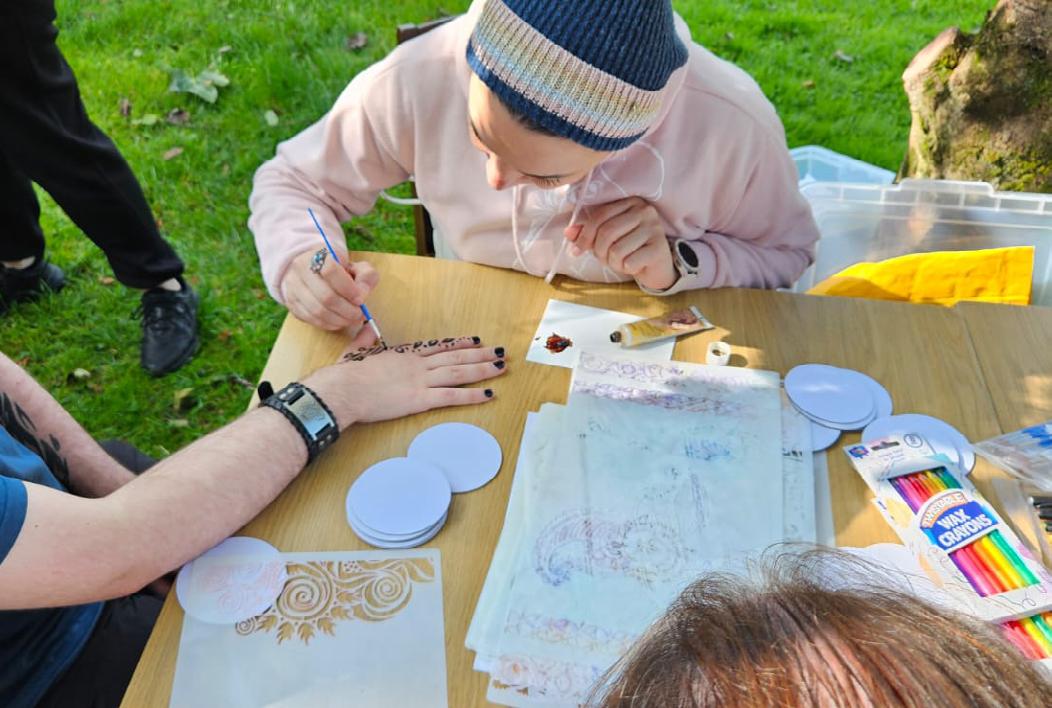
Her work also moves into fabric, recycled materials and collaborative workshop-making. This flexibility is part of Seba’s belief that creativity should not be limited to one form, one age or one stage of life. She often shares the process of learning something new, and sees that sharing as part of the joy of making.
“One of the greatest things I believe in is sharing all that is beautiful in this life,” she says, “so that we sow the seeds of love and learn to give for nothing and feel that we are here in this life and we are not just machines.”
That sentence carries much of Seba’s philosophy. Art is not only a finished piece. It is participation. It is exchange. It is evidence that people are not machines moving through life without feeling, memory or generosity.
“Participation is itself an art,” she says.
For Seba, participation means that creativity moves both ways. A teacher gives knowledge, but also
receives something from those she teaches. An artist shares a work, but may receive a smile, a response, a moment of connection.
“Participation means giving and taking at once,” she says. “I may give information or art and take a smile.”
For Seba, learning does not end at a particular age or achievement. It continues through daily life, through students, through mistakes, through trying new materials, and through being willing to begin again.
“At a specific stage or age, man does not stop learning,” she says. “Every day until death we keep learning new things.”
That belief shapes both her artwork and her teaching. She does not only teach students; she also learns from them. She does not only present finished work; she shares process, experimentation and discovery.
She does not only teach students; she also learns from them.
Reading Irish history from Syria’s shadow
Before moving to Northern Ireland, Seba read about Irish history and watched documentaries and films. As she learned more, she began to recognise echoes of Syrian history and more recent events in her own country.
“When I was reading about Irish history or watching films, whether documentary or film, I felt there was a connection between us,” she says. “It was remembering events about my country and its history, and even events not so old.”
For Seba, this recognition helped her understand why many people in Northern Ireland were able to respond to refugees with empathy. She saw a connection between histories of suffering, occupation, loss and the taking of rights. Without collapsing Ireland and Syria into the same story, she noticed a shared understanding of what it means for people and land to be harmed.
“This made me understand why the people here are so understanding of refugees and cooperative and supportive,” she says, “because they have suffered so much as we have suffered so much, that our country has been occupied, wronged, and the rights of people and their land taken away.”
It is a powerful observation because it does not treat welcome as politeness alone. Seba sees it as something rooted in memory. When a place has known suffering, some people may recognise suffering in others more clearly. That recognition can become practical kindness, support and friendship.
After Cyprus, the first smiles
One of Seba’s clearest memories of feeling welcome came during her first months in Northern Ireland.
For the first three months after arriving, she rarely left the hotel except for emergencies. Then, after three months, she decided to go outside, walk, and begin to know the place around her.
“From the moment I left until I returned,” she says, “I walked and passed people I never knew, but they all smiled at me with kind faces, some of whom greeted me.”
The moment surprised her. It was simple, but it stayed with her. A smile from a stranger can be a small thing, but for someone newly arrived, uncertain, and carrying the weight of displacement, it can become something much larger. It can say: you are not invisible here.
Seba had been worried before she left the hotel. She feared people might keep their distance because she was a stranger from another country. Instead, she found kindness in ordinary passing moments.
“They all smiled at me with kind faces, some of whom greeted me.”
“When I saw their smiles, kindness, and greetings to me, I started to feel comfortable and happy,” she says. “Since that day and until now I feel like I have a big family here that embraces me and supports me and pushes me forward after recovering from the destruction of the past.”
The depth of that relief becomes clearer when Seba speaks about her experience in Cyprus, where she had lived for four years before arriving in Northern Ireland. She describes that time as deeply isolating, marked by racism and by people turning away from refugees.
“In fact, the reason I was surprised was that I was living in Cyprus Greece and they were racists and they were turning away from us because we are refugees,” she says.
Seba explains that people there sometimes assumed she was Turkish because she is Muslim, despite her being Syrian. She connects that misunderstanding to painful histories of occupation, including Syria’s own history under Ottoman rule and Cyprus’s own divided history. What stayed with her most was not only the political misunderstanding, but the feeling of being refused as a person.
“I spent four years in Cyprus like a machine that eats, sleeps, and breathes with nothing else that makes me feel present in this life,” she says.
Placed beside that experience, the smiles she met in Northern Ireland become much more than friendliness. They became a sign that life could return. That people did not move away from her. That people were not afraid of her. That she could be seen as human before anything else.
Seba describes feeling embraced by the community in Northern Ireland. She speaks of friends, associations, institutions and individuals who helped her find ways to participate in the things she is good at. Through that support, she was able to volunteer, teach art in schools, take part in exhibitions, and deliver workshops.
“There are many in this country who have supported me and embraced me,” she says, “and who have been kind and friendly and loving to me.”
The strength of her words is striking.
“Here I found myself,” she says, “and felt that I was still alive.”
That sentence should not be softened. It speaks to the depth of what welcome can mean. For Seba, Northern Ireland did not simply offer safety. It offered the possibility of returning to life, to creativity, to teaching and to herself.
Giving thanks with art
Seba’s gratitude has not remained private. She has tried to return something to the people and place that supported her.
“One of the things I strive for,” she says, “is to give back a small part to this people from the beauty they shared and what they gave me.”
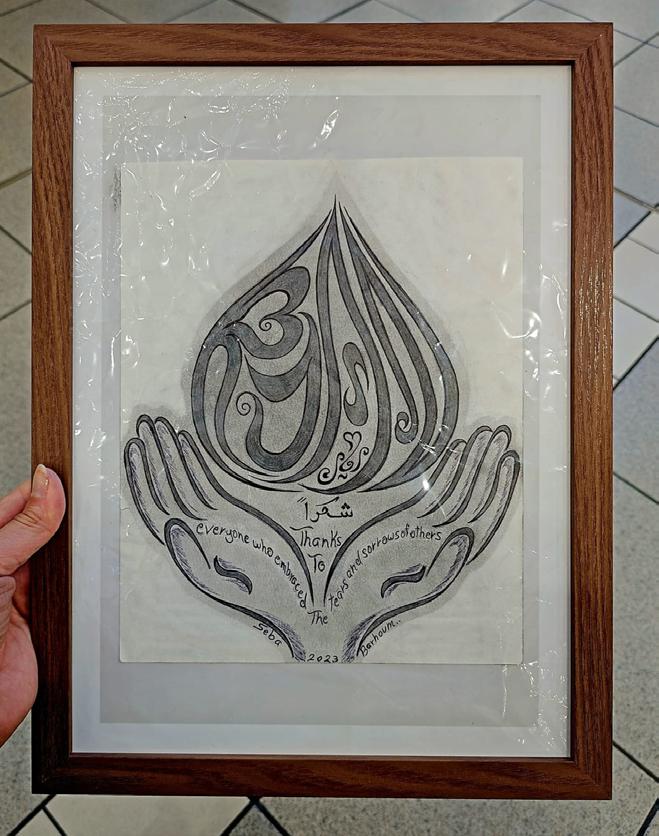
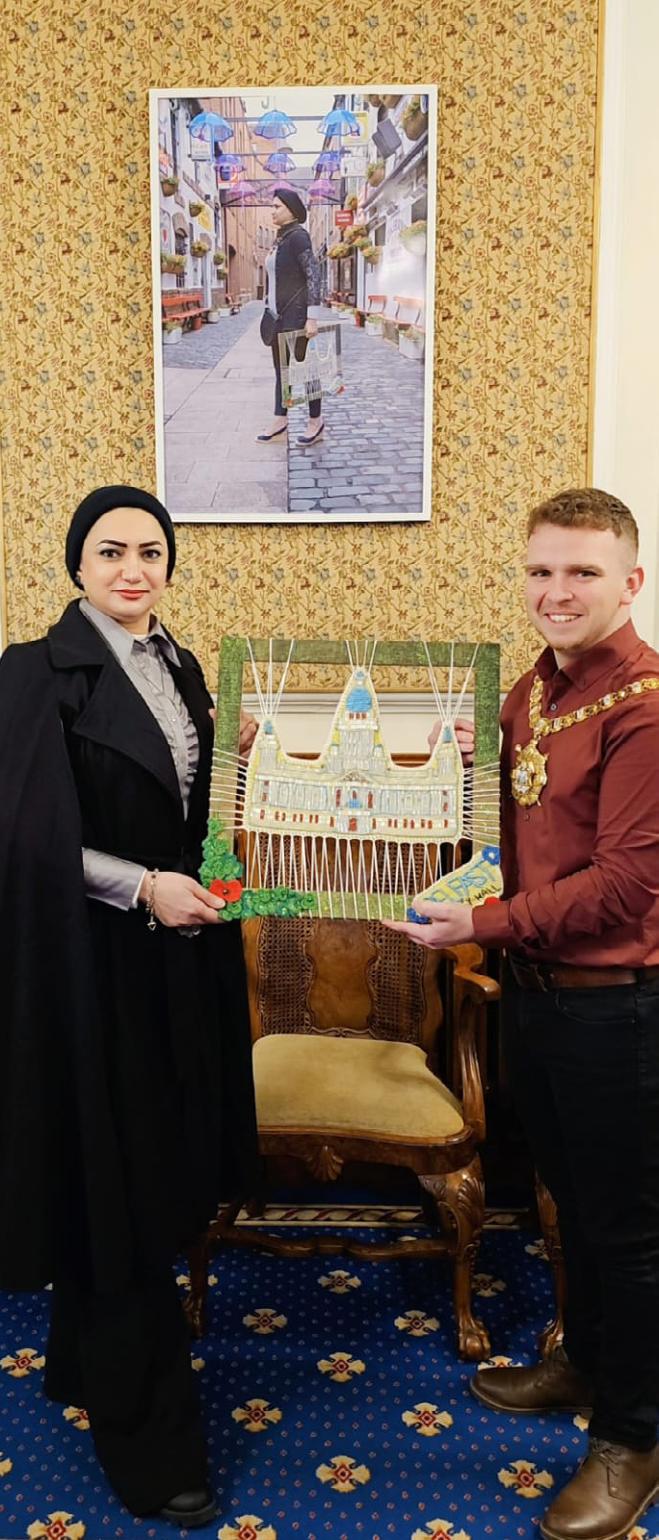
One of the ways she did this was through an artwork presented to City Hall. The work was a thank you, made not only with words but through her creative practice.
“I started with a work of art and presented it to City Hall,” she says, “to say to this country and to the people here, thank you very much with all my heart and art.”
The phrase “with all my heart and art” feels like a title in itself. It
heart and art.”
“Thank you very much with all my
captures how Seba understands creativity: as a way of speaking when ordinary thanks are not enough. Art allows feeling to become visible. It can carry gratitude, memory and recognition in a form that others can receive.
Seba has also used art to personally thank people who helped her. She created works of thanks for Darren from Beyond Skin and Deirdre from Belfast Exposed, recognising the individual kindness and support that helped her continue into public creative life here.
Those gestures matter. They show how Seba’s art moves in a circle. Support comes to her, and she turns it into something made by hand. Gratitude becomes a drawing, a presentation, a gift, a public acknowledgement, a way of saying: I remember what you did for me.
Seba has also been supported by organisations and projects that helped her share her work in different public and community settings, she mentions Women’s Aid, Beyond Skin and Voicing the Void. Through these opportunities, she has taken part in work with humanitarian aims, exhibitions and workshops.
These spaces helped her continue as both an artist and teacher. They also allowed her to use art as a meeting point between people from different backgrounds.
Maps, fabric and being embraced
One workshop Seba describes brings together many parts of her practice: recycling, fabric,
A meeting point between people from different backgrounds.
storytelling, identity and welcome. The workshop began with a practical idea. Seba wanted to teach people about recycling and about using the materials around them. This was not only an environmental message. It also came from lived experience.
She wanted to show that people do not always live in prosperity, and that circumstances such as war or cold days can force people to make what they need with their own hands and simple materials.
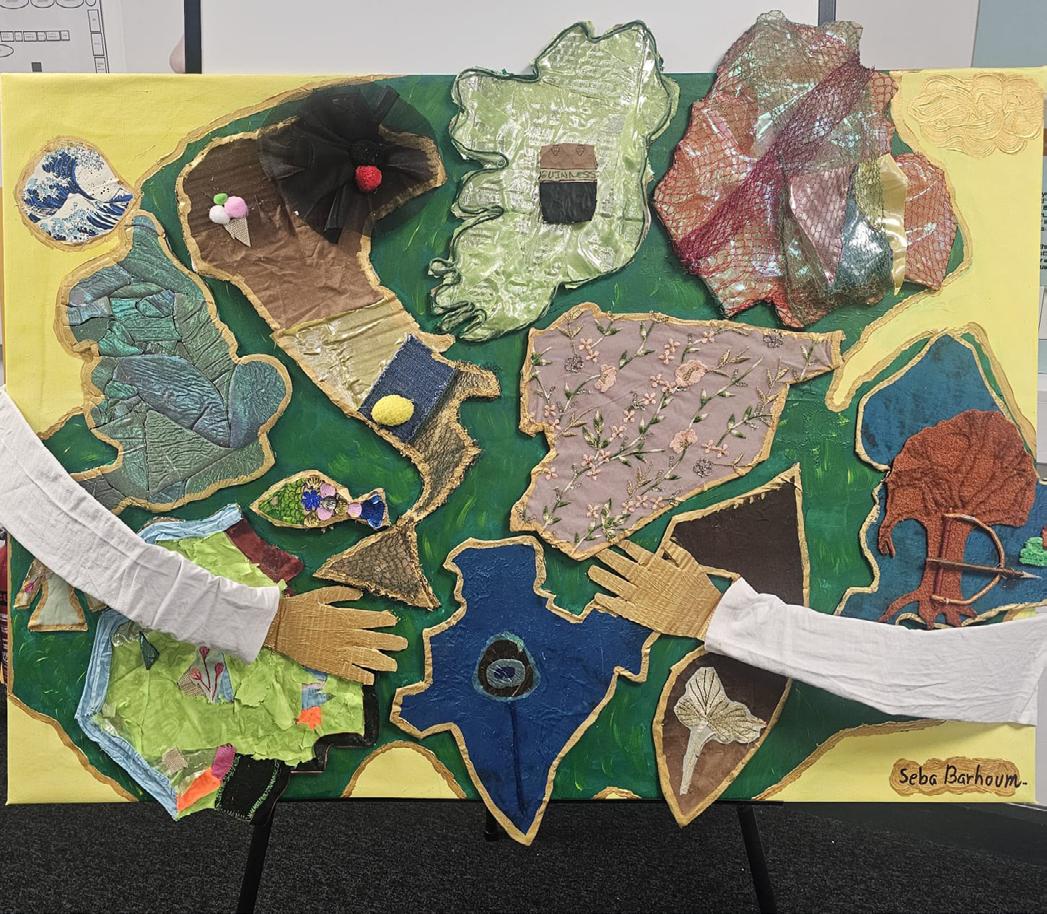
From there, the workshop moved into self-expression. Over four weeks, Seba asked participants to introduce themselves without words, using art instead. Each person formed a map of their
country and decorated it with fabrics. They added landmarks, popular heritage, famous places or meaningful details from where they came from.
Through this, Seba could learn about part of each person’s personality.
The final stage brought the individual maps together. Seba created a map of Northern Ireland, arranged the different country maps around it, and placed arms around them. The image was direct and generous: Northern Ireland embracing people from different countries.
“I wanted to tell people Northern Ireland embraces our country,” she says. “The people here embraced us coming from different countries as refugees.”
The workshop turned personal identity into a shared artwork.
Each participant could show something of where they came from, while also becoming part of a wider image of welcome. It did not erase difference. It arranged difference into relationship.
For Seba, the meaning was clear. Northern Ireland had supported people who arrived from different countries, cultures and backgrounds. It had helped them “return to life” by treating them as human beings.
“This country embraced us and supported us and made us return to life,” she says, “without caring about our colour, race or culture, but treating us only as human beings.”
More than survival
Seba’s story contains war, displacement and refuge, but her work should not be reduced to survival alone. She is a teacher with long experience. She is an artist who works across drawing,
“I wanted to tell people Northern Ireland embraces our country, the people here embraced us coming from different countries as refugees.”
fabric, ornamentation, lettering and community workshops. She is someone who learned from her mother, her teachers, her students, her new community and her own effort.
She speaks about pain, but also about joy. She speaks about welcome, but also about responsibility. She speaks about gratitude, but also about what she can give.
Her work insists that creativity is not a luxury. It is part of being alive. It is how people learn, remember, connect and begin again.
It can be found in books brought by a mother, in drawings shared in homework, in a classroom full of children, in a recycled fabric map, in an Arabic letter turned into pattern, in a smile from a stranger, and in an artwork offered to a city as thanks.
Seba believes in sharing beauty. She believes in giving without always asking what will return. She believes people keep learning until death. She believes students can teach the teacher. She believes art can introduce a person without words.
Through her work in Northern Ireland, Seba Brhom continues to bring together the parts of her life that could have been separated by displacement: the teacher, the artist, the learner, the Syrian woman, the refugee, the daughter who still carries love for parents she has not seen in more than ten years, and the person who wants to give back.
In her own words, she came here and found herself. She felt she was still alive.
Now, through art, she helps others feel seen too.
Keep up with Seba via social media: @sebabrhom
KODJO
Isac Kossivi
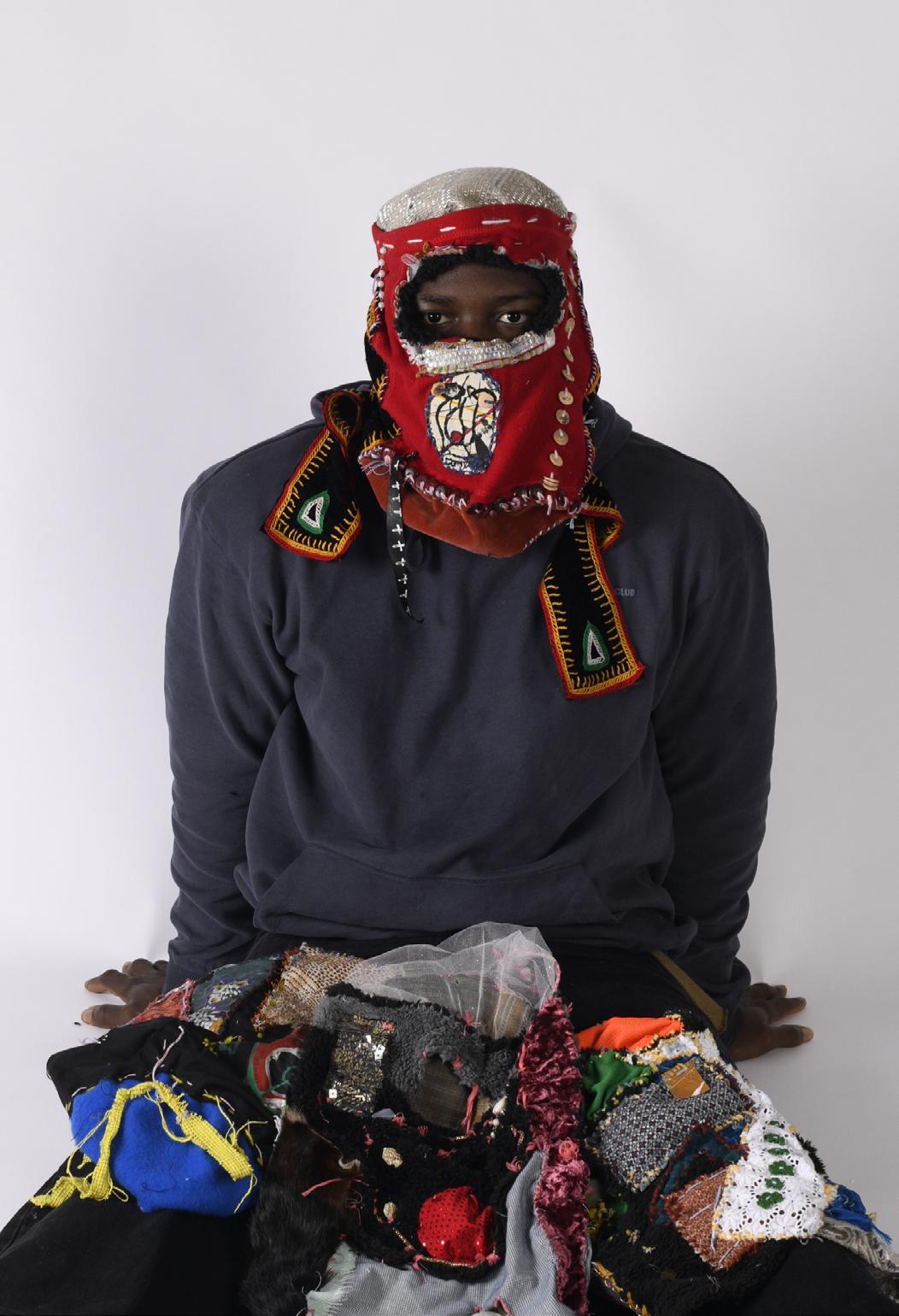
Through sculpture, fabric, dance and lived experience, KODJO explores migration, family, racism and the work of building belonging beyond temporary welcome.
There is a particular kind of energy around Isac Kossivi, also known as KODJO, that seems to come from movement in every sense of the word. Movement between countries. Movement between communities. Movement between work, study, responsibility, art, dance, football, friendship and family.
When we spoke, he had just come to the end of his time working in Dunnes. He had also just finished his course and was preparing for the next chapter, including a Student Union Vice President role beginning in July. In the middle of all that, what he wanted to make clear was not a grand artistic statement, but something much more grounded.
“I’m eating well and looking after myself.”
That small sentence says a lot about where KODJO is at. He is an artist standing at the edge of several thresholds at once, but he is also someone trying to stay steady, to prepare properly, and to carry the people who have helped him without losing himself in the process.
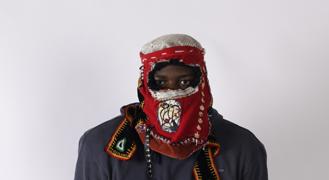
The Weight We Give to Fabric
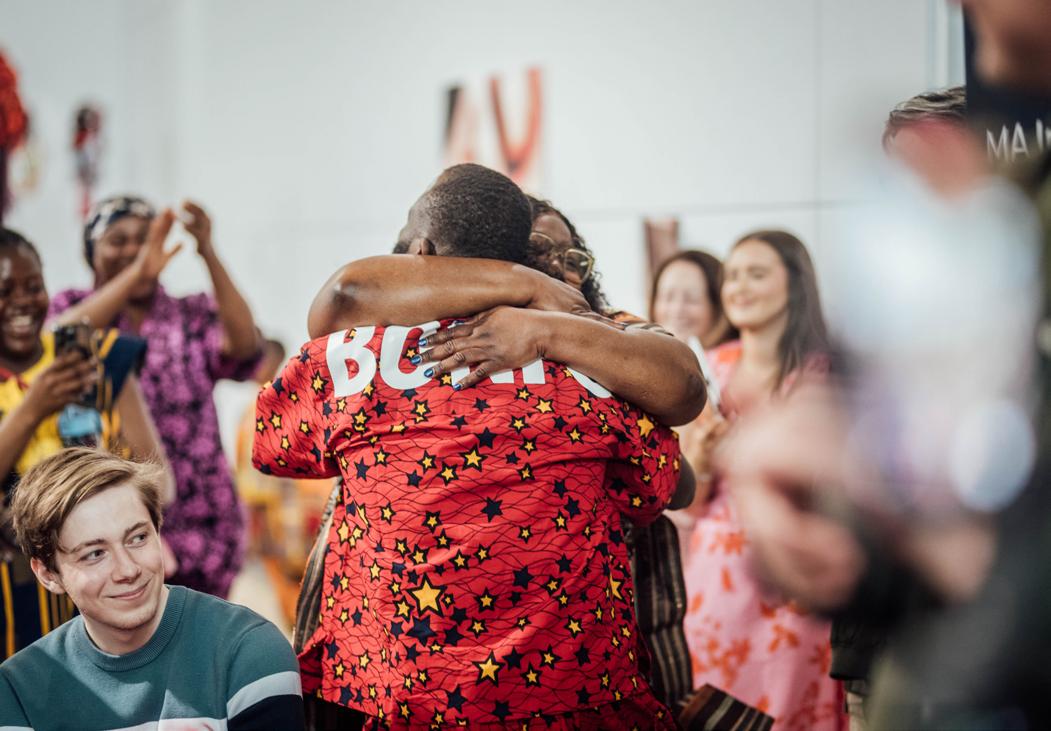
As KODJO steps into his new role within LSAD, his focus on community and its inherent diversity becomes central to how he imagines the space evolving. One of the images he returned to was simple but powerful: students bringing different flags together
He is interested in work that is not individualistic, work that gathers people, materials and histories into one place.
to reflect the range of people who make LSAD what it is. For him, this is not just a symbolic gesture but a way of recognising and valuing the many identities that coexist within the college. Fabric, in this sense, is not decoration. It carries identity, distance, memory and belonging, and becomes a way of making visible the diversity he is committed to supporting and strengthening within the LSAD community.
That way of thinking connects strongly with his interest in Ibrahim Mahama, the Ghanaian artist whose work often uses fabric, labour and collective histories to speak about how communities are formed and remembered. KODJO will travel to Ghana in December, during the holidays so that it does not interfere with his responsibilities, to spend time learning from Mahama’s work.
What draws him most is not just Mahama’s scale or international recognition, but the communal nature of the practice. He is interested in work that is not individualistic, work that gathers people, materials and histories into one place. Coming originally from Togo, KODJO also sees deep cross-community and shared historical connections between Togo and Ghana. The trip is not simply professional development. It is a return toward West Africa through art, learning and cultural exchange.
Long term, his dream is to open
cultural spaces in Togo. He speaks about the lack of infrastructure there for the kind of artistic spaces he has encountered in Ireland, and about the difficulty of even moving between Ireland and Togo when diplomatic ties are limited.
Often, he says, travel has to be routed through the UK or France. These are practical barriers, but they also become part of the larger threshold he keeps returning to: who gets access, who gets recognised, and who has to take the longer route to be seen.
The Pressure to Become Useful
KODJO is honest about the pressures that come with immigration. When family members, cousins, uncles, brothers and sisters carry a financial burden to help someone move to Europe, that movement is rarely seen as only personal. It comes with expectation. You are not just leaving. You are being sent forward.
But
he also knows that art is where his life has opened.
That expectation can be loving, but it can also be heavy. KODJO spoke about the pressure to become a productive part of that movement, to succeed in ways that are legible to family and community. He had originally considered art education, but quickly realised it was not for him. Fine art, however, was not always seen as the safest path. There was scepticism around it, as there often is when families want security for someone they have sacrificed for.
He understands that pressure. He does not dismiss it. But he also knows that art is where his life has opened.
There is another threshold he names too: the one that exists even in Togo, between people studying with the aim of emigrating to Europe and the Western-orientated skills that are often seen as proof of success. KODJO is aware of how much value can become attached to leaving, to adapting, to becoming
employable elsewhere. Part of his work seems to push back against that, not by rejecting movement, but by asking what it would mean to build something meaningful at home too.
A Camera as a Passport
Before KODJO was making the work he is making now, a camera helped him move through the world. He described it as his “passport out of the house.”
It gave him a reason to go to events, to stay out late, to be part of things without feeling as though he was only there to socialise. With a camera in his hand, he could look more closely. He could give meaning to nights that might otherwise pass by as noise. He could document, observe, and slowly become part of a community.
It was through that process that he first photographed his friend Tobi Omoteso breakdancing, before KODJO himself had ever tried it. That connection would become part of his route into the dance community, and into Top 8, the street dance group and battle space where KODJO now works as creative director, shaping its visual identity and contributing to its growth. He has even made trophies for their awards, turning celebration itself into something handmade and personal.
The camera was never just a tool for images. It was a way of entering. A way of belonging before belonging had fully arrived.
Threshold of Belonging
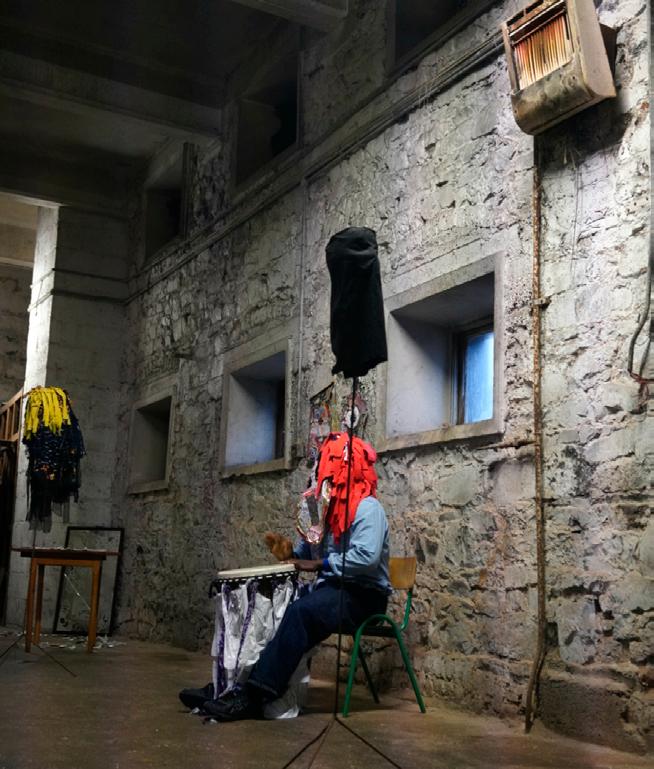
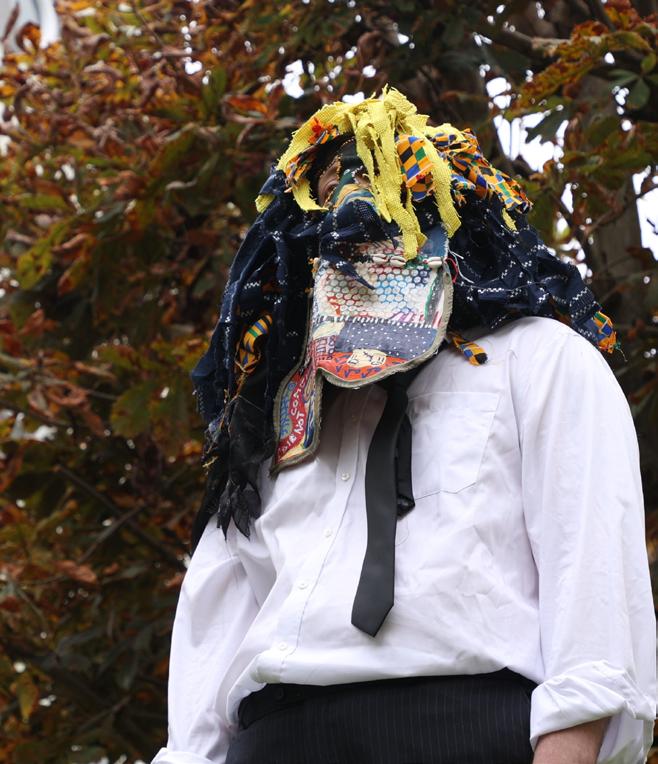
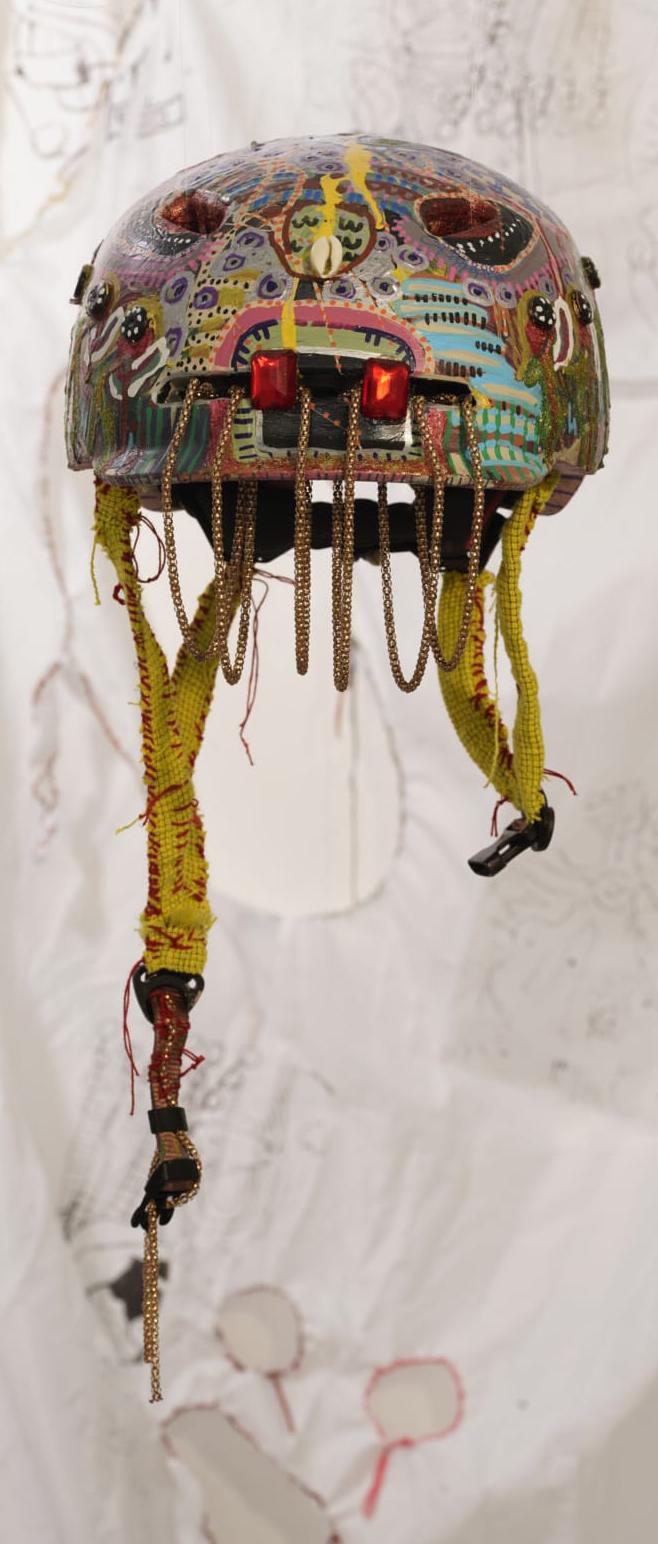
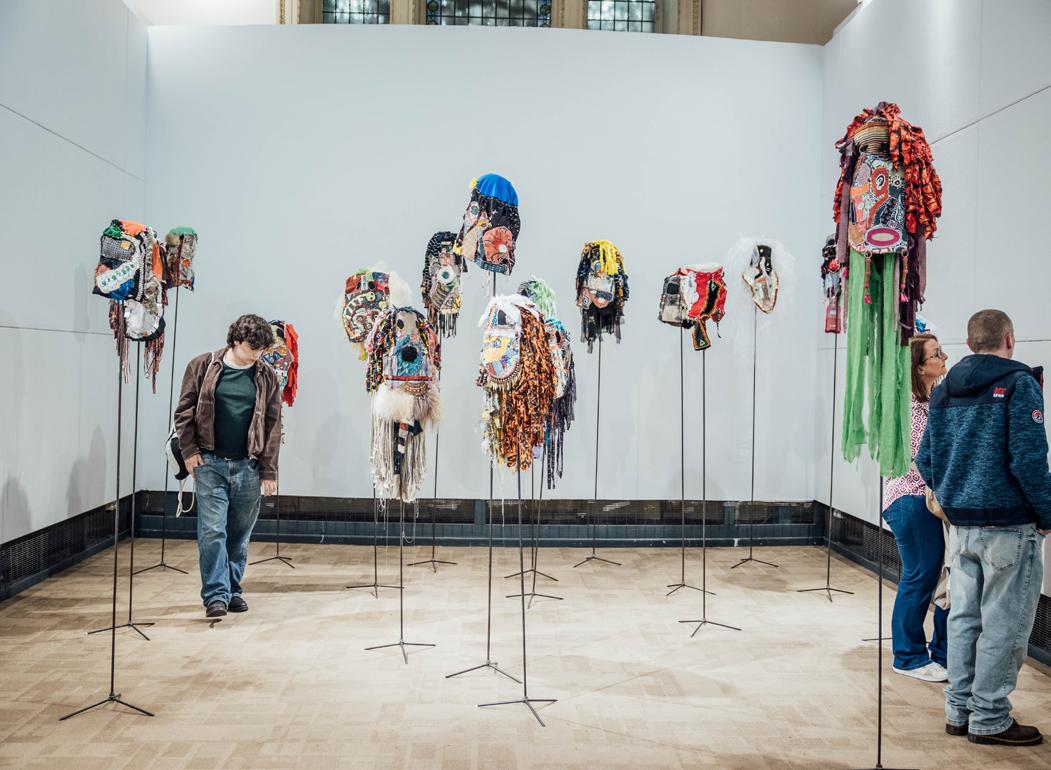
KODJO’s exhibition, Threshold of Belonging, emerged from personal and communal experience. The helmets in the work reflected family care: the protection that is placed over a person, layer by layer, through material, sacrifice and expectation.
He spoke with deep affection about his mother and about trying, in whatever way he can, to repay her kindness. But the work also reaches into more difficult feelings. He remembers gaining the documents that allowed him to travel to Ireland only a few days before his eighteenth birthday. Alongside the relief, there was imposter syndrome. His sister, who had a child, was unable to acquire the same documents because she was deemed too old. That contrast stayed with him.
The opportunity to move was not neutral. It was marked by luck, age, paperwork and the uneven decisions that shape families. One person crosses. Another cannot. One life opens in one direction. Another takes a different path.
In KODJO’s work, belonging is never treated as a soft or easy word. It is layered with paperwork, grief, pride, guilt, hope, protection and survival.
What Happens After the Event
One of the moments that brought the idea of the threshold into sharper focus came after his friend Tobi was attacked while they were both in the car. They had left a community event in Limerick city connected to street dancing and hip hop through Top 8 to go host a community event in the cresent shopping centre. The incident forced KODJO to think more deeply about visibility, safety and how quickly a narrative can change depending on who is being spoken about.
He wondered what would happen if the person attacked had not been part of a large, dynamic, visible community. What if it had been a person of colour who simply worked nine to five, went home, and played video games? Would people still gather around them? Would the story still be understood with care? Would anyone make the effort to see them fully?
That question sits at the centre of a lot of what KODJO is trying to do. He is not interested in only reacting when something terrible happens. He wants stronger structures of belonging before crisis arrives.
As he put it, “We need to not just react to terrible events, we need to be building a home for everyone, not just making space for visitors.”
That distinction matters. Making space for visitors still implies that some people are temporary, tolerated or politely accommodated, and it reflects a reactionary way of handling the world - only supporting communities when they are attacked, rather than permanently accepting diversity. Building a home suggests permanence. It suggests responsibility. It suggests that people are not guests in the places where they live, study, work, create and contribute.
“We need to be building a home for everyone, not just making space for visitors.”
Football, Racism and the Room Behind the Game
KODJO also spoke about football, particularly Sunday league football, and the racism that can exist inside that world. His interest is not only in what happens on the pitch, but in the spaces around it: the changing room, the locker room, the places where jokes, comments and attitudes can be normalised before they ever become visible outside.
He has considered work that addresses the inside of a football locker room, and even the idea of people wearing masks while playing football as a way of confronting the issue. It is a striking image because football is already so tied to identity, masculinity, belonging and tribalism. To bring masks into that environment is to ask what people hide, what they reveal, and what they feel entitled to say when they think no one is watching.
For KODJO, art has a role in opening that conversation. Not as a neat solution, but as a disruption. A way of making people face what they have learned to ignore.
Care That Needs to Be Spoken
Again and again, KODJO returned to the need for better dialogue. He spoke about the way people often say prayers for others, or carry care silently, without actually communicating that care in a way the person can feel.
That observation is simple, but it reaches into something deep. In families, in immigrant communities, in friendships, in institutions, love and concern are not always expressed directly. Sometimes people sacrifice for one another without ever saying what they need. Sometimes people are protected without being understood. Sometimes people are expected to endure because previous generations endured.
KODJO wants immigrant communities to feel that systems like Garda stations are accessible to them, and that they “don’t have to smile and take it” in the way their parents or other generations may have felt they had to. That is not just a political point. It is an emotional one. It is about giving people permission to name harm, ask for support, and expect dignity.
Learning From Artists Without Becoming Them
KODJO is deeply thankful for the artists who have supported him. He spoke with warmth about Alice Rekab, who became a close friend and someone he had the opportunity to work with. He is equally thankful to Shirani Bolle, and to lecturers who, over time, became friends.
Some of that support arrived in ordinary, generous ways. Artists
would drop into Dunnes to see him, talk about his work and motivate him. These moments matter because they show how artistic development is not only shaped in studios, crits or exhibitions.
It is also shaped in shop aisles, quick conversations, encouragement given at the right time, and the feeling that someone has remembered what you are trying to become.
At the same time, KODJO is careful. He does not want to be pulled too tightly along the same threads as acclaimed artists he admires. He wants to learn, but not imitate. He wants to remain close to the artists he graduated with, the people who know his process best, because they understand where the work is actually coming from.
That instinct feels important. KODJO is not trying to borrow significance from proximity. He is trying to build his own language.
That language has also been shaped through collaboration. One of KODJO’s long-term creative relationships has been with multidisciplinary artist and musician Methembe Thabani Mafu, whose work moves through sound, painting, performance and improvisation. Their connection points to the way KODJO’s practice often grows through exchange, conversation and shared creative risk.
He has also carried that energy into his role as creative director of StateYourFlow, the platform founded by DJ Ceese, Ciara O’Callaghan. In that space, creativity is not treated as something fixed or solitary, but as something that moves between people, music, image, performance and community. For KODJO, collaboration is not a loss of authorship. It is part of how he tests, sharpens and expands the work.
No Backup Plan
There is a sense, speaking to KODJO, that his work is still changing shape in real time.
He does not pretend to have fixed answers. His practice is in a constant stage of evolution, moving through sculpture, fabric, performance, photography, social spaces and lived experience.
But there is no hesitation in the commitment.
For him, being an artist is not one option among several. There is no neat fallback position waiting behind it. He is giving everything to everything he does as an artist.
That can sound risky, but it also explains the urgency in his work. KODJO is not making art from a distance. He is making it from the middle of things: from the shop floor, the dance battle, the football pitch, the family home, the immigration office, the studio, the street, the memory of Togo and the reality of Limerick.
His work asks what it means to cross a threshold, but also what happens after you cross it. Who meets you there? Who protects you? Who speaks for you? Who listens? Who helps you build a home?
For KODJO, belonging is not something handed over once the door opens. It is something made, remade and defended together.
Keep up with KODJO via social media: @isac_with1a
And follow the journey of State Your Flow Studio: @stateyourflowstudio
Keep up with Top 8 Dance Battle for future events, battles and community updates: @top8streetdancebattle
Refuge
In the world driving by comfort and quickly retreat when faced by discomfort. Every living creation are constantly looking for comfort
Either physical, emotionaly and mentally
We spend our existence looking for the next comfortable couch, bed or couch that turn into bed. People we feel comfortable around. While some people are hunted out of the comfort by war, racism and natural catastrophie, leaving behind things and the people the hold on to the most. It’s a story we all share. We are all targeted Tagged and surveill But when we move together Stand together for each other Picking up the broken promises
We build a world of Hope that stand tall on equity and equality. Then we make knew promises of joy.
Kodjo kossivi.
René Mullin
PLACED
Through printmaking, rescued Irish linen and careful teaching, René Mullin builds a practice rooted in hand-process, access and the lasting value of cloth already in the world.
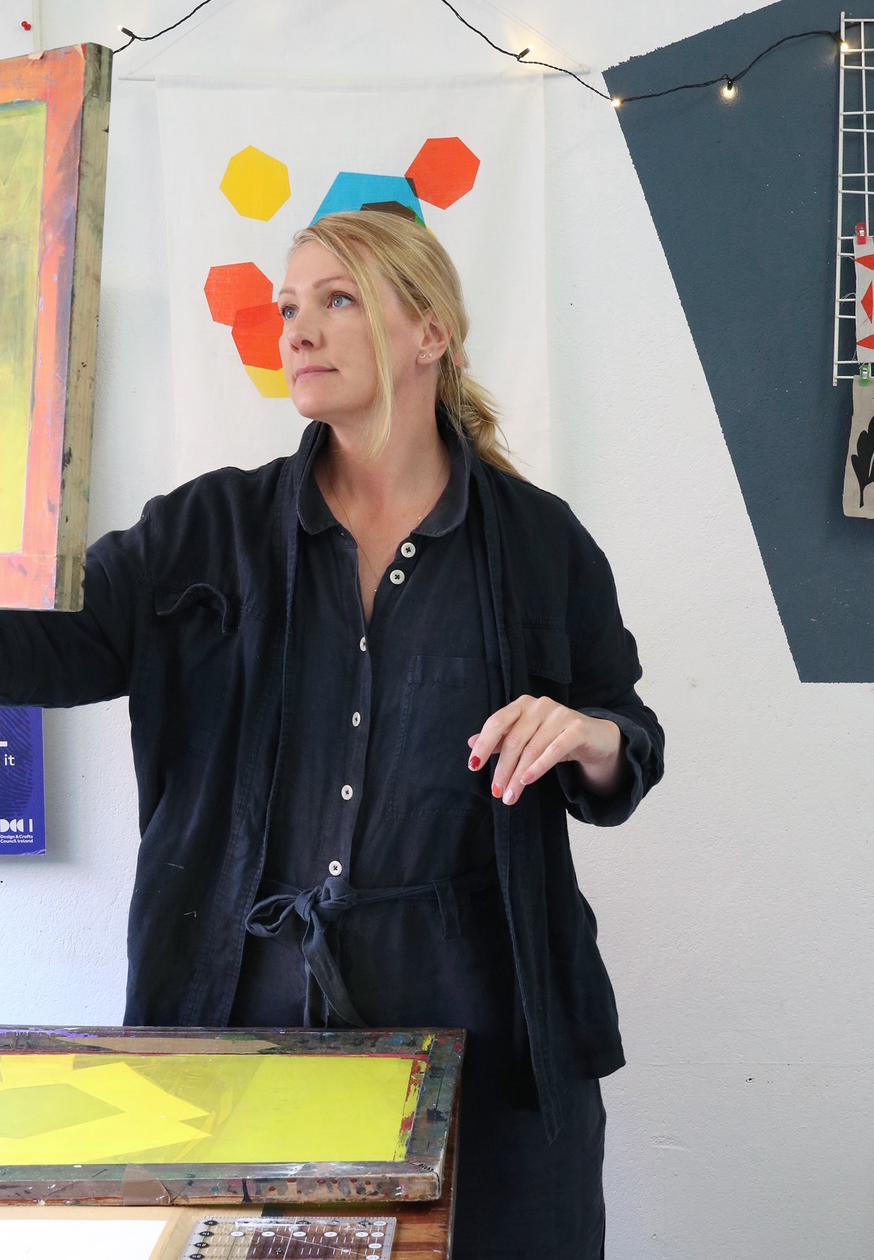
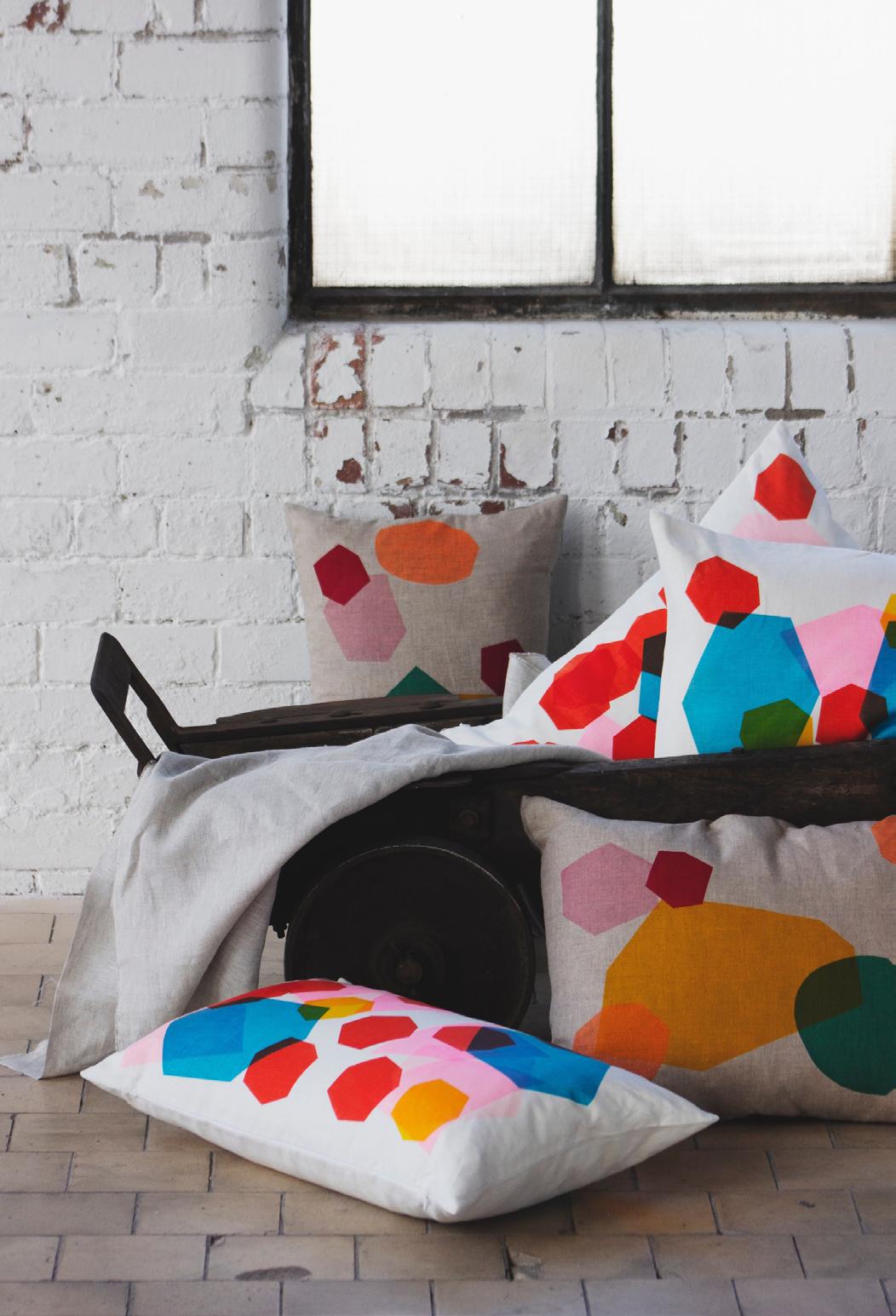
René Mullin works with print, Irish linen and the practical realities of making things by hand. Her work moves between screen print, textiles, homewares, teaching and rescued cloth, but it is held together by a clear position: there is enough material already in the world, and the act of making should not be reduced to production alone.
Her studio is in a barn in the countryside outside Strangford, Co. Down. It is not set up as a digital workspace. There is no Wi-Fi for her own work there. No phoneled admin. No constant screen. If she has to show work online, answer messages or deal with
anything screen-based, she comes back inside.
“I don’t like doing anything that’s screen related out there,” she says. “It’s all analog stuff.”
That boundary is practical rather than romantic. Mullin uses a camera when she needs to document process or take product shots, but she has to remind herself to do it. The main activity in the barn is physical: cutting, printing, stitching, drying, sorting. Screens are for screen printing, not for scrolling.
From Prints to Products
Mullin began printmaking in Edinburgh in the late 1990s, taking part in summer schools and night classes before joining Belfast Print Workshop after returning to Ireland. In 2009, she set up her own studio, Placed. At first, much of her work was printed on paper. She made hand-pulled screen prints, built up stockists and, for a time, supplied shops across Ireland.
“I had about 29 stockists around Ireland,” she says.
That early period led to product work. Irish Design Shop commissioned Mullin and five other artists to design mugs in celebration of the Year of Craft. For Mullin, that project shifted something. Until then, her work had largely existed as prints. After that, it began moving toward objects people could use.
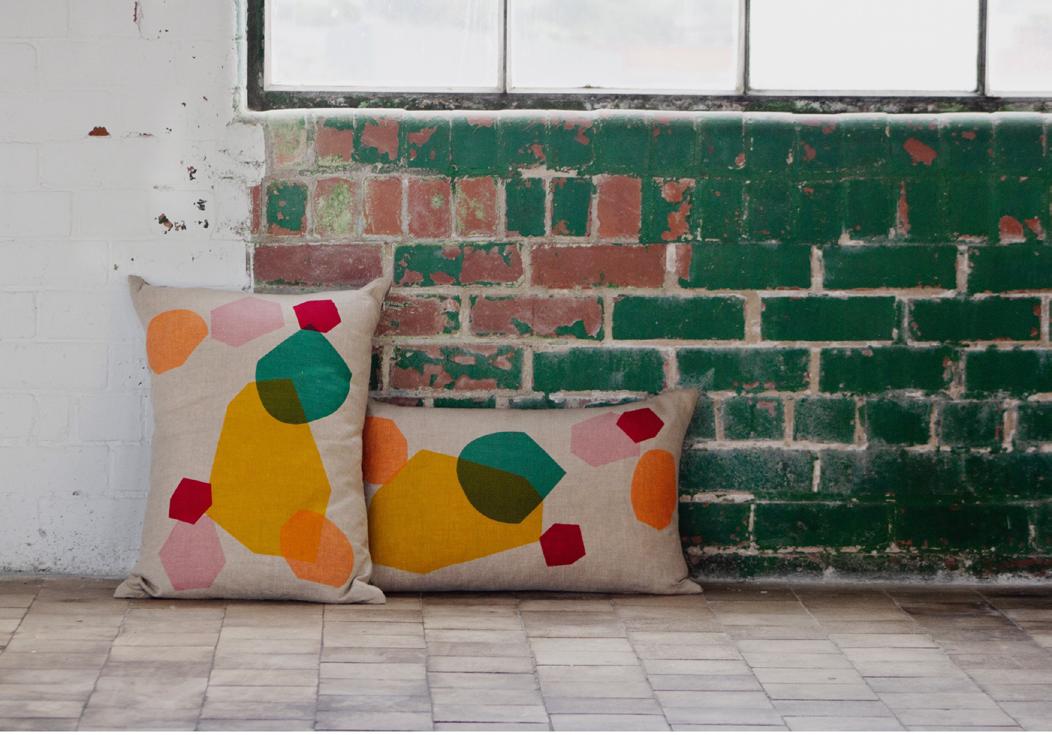
Photography by Rachel McCarthy
“That was kind of the start of me working on product-based things rather than prints,” she says.
She had already been interested in linen and textiles, but had not yet brought print and cloth together in the way she would later. The move into applied art allowed her to make homewares and functional pieces: craft that could sit in a kitchen, be handled, carried, used and worn into daily life.
But wholesaling at scale came with a cost. At its busiest, Mullin was producing for more than twenty shops. The work became less about making and more about keeping up.
“It became a logistics game,” she says. “The joy of making had gone when I was making at that level.”
She later opened her own shop, hoping to sell more directly, but that brought another lesson. A maker running a shop quickly becomes a retailer. The shop needs attention, customers, stock, display, ordering and admin. Making can be pushed to the edge.
“You basically are a retailer,” she says. “You have no time to make.”
Since closing the shop in 2018, Mullin has returned to wholesale more carefully. Now she works with a small number of shops, only occasionally, while also making direct commissions and selling through her own studio. The scale is deliberate. The work has to remain possible.
Print and Linen
Printmaking remains the centre of Mullin’s work.
“Printmaking is my first love,” she says, “and Irish linen goes alongside with that.”
Those two elements give her a working language. She prints on paper and on cloth, using screen
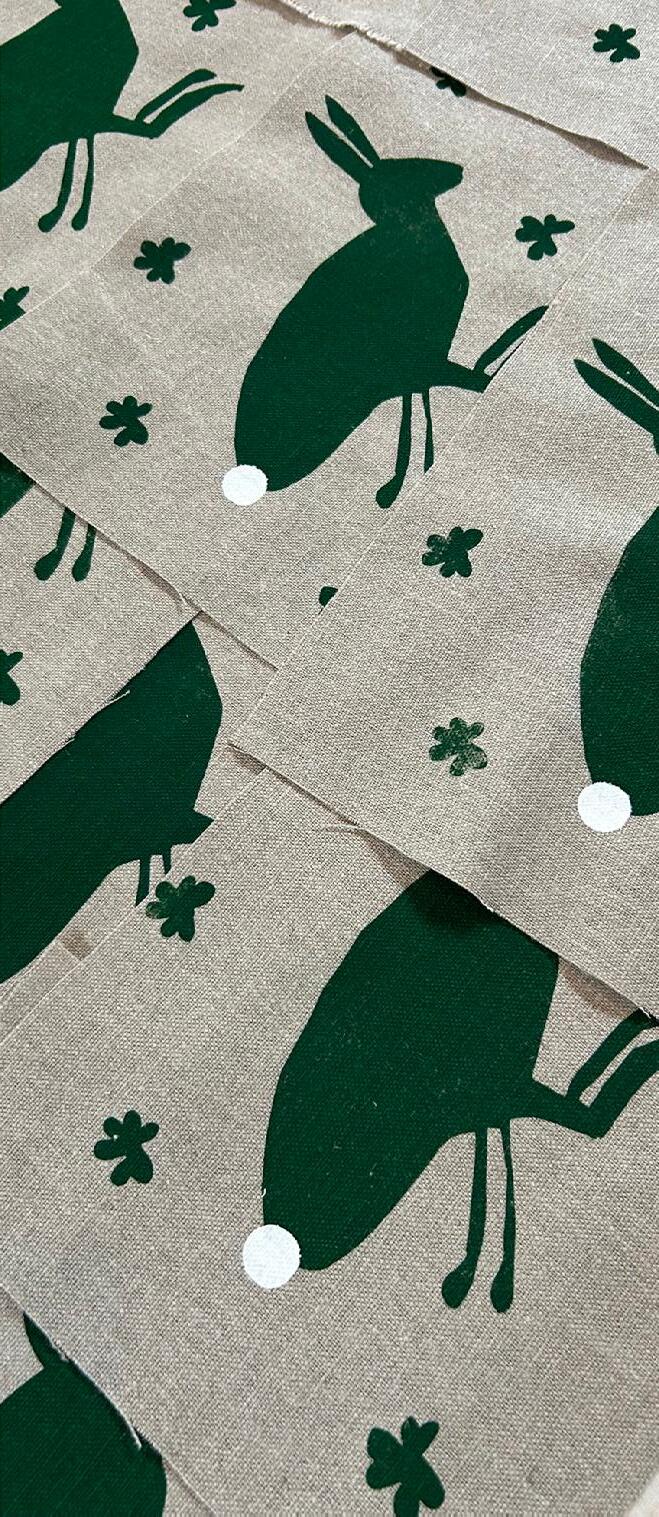
Audleystown Folk - Hare
print, lino print and block print. Over time, she has become more particular about which process belongs where.
Lino printing still matters to her, especially on paper. She enjoys the carving, the surface, the pressure of the block. But when the image moves onto textile, she prefers screen printing. It gives her the finish she wants: cleaner, smoother, more controlled.
“I always like the outcome of a screen print on textile more than block print,” she says.
That preference has taken years to understand. The irregularity of block printing on fabric is exactly what many people love: the small shifts, gaps and unevenness that show the hand. Mullin understands that appeal, and teaches the technique often, but in her own textile work she finds herself drawn to a smoother, more even finish.
“I prefer a very smooth finish,” she says, “and I find I get a better result with screens.”
There is a useful honesty in that. Mullin is not choosing a process because it sounds traditional or because it photographs well. She is choosing by looking at the finished cloth and deciding what works for the particular outcome she wants. Printmaking, for her, is not a single fixed identity. It is a set of methods, each with its own strengths, textures and possibilities.
Teaching What People Can Do
Teaching is a major part of Mullin’s week. She brings printmaking into schools, art centres, her own studio and other venues, working with a wide range of people across different settings.
In those settings, print becomes a way of testing assumptions. People may arrive believing they cannot draw, carve, press or
make a finished piece. Others around them may assume the same. Mullin is interested in what happens when the tools are placed in front of them anyway.
“A lot of the people that I work with, on first impression, you may expect that they aren’t going to be able to control a carving tool or reach and press enough pressure to pull a screen,” she says. “I really like to help them to prove us all wrong.”
Printmaking has a useful starting point. Many people remember potato printing at school, or using small stamp kits. There is often some memory of ink, pressure and the reveal of an image. That memory helps people enter the process without feeling shut out by it.
“Everyone has some kind of a reference to it,” Mullin says.
She has seen how quickly people respond once the process begins. Ink is applied to a surface. Pressure is used. A print appears. The method is clear enough to grasp, but still carries surprise. “It lights them up,” she says.
One recent participant in a sixweek community art project in Strangford stayed with her. The girl was a wheelchair user and had the use of one hand. She carved, inked and printed her own piece.
“She produced the most exquisite print,” Mullin says. “The precision and care in it were really beautiful.”
The impact of that moment went beyond the work itself. It affected the whole room. In a regular community class, held in a local hall, people saw someone with visible physical limits produce something careful, confident and strong. Assumptions shifted. The issue was no longer who looked most able, but what becomes possible when someone is given enough time, tools and trust.
“The whole experience is emotionally charged, because these people’s lives have completely changed in an instant.”
Art in the Hospital
In hospital settings, Mullin is aware that the art class sits inside a much larger emotional reality. In a spinal ward, people may be adjusting to a life that has changed suddenly. Progress can mean sitting upright, taking a step, moving a hand or rediscovering a movement that had disappeared.
“The whole experience is emotionally charged,” she says, “because these people’s lives have completely changed in an instant.”
In that context, making a print is not separate from the physical work of recovery. It can support motor skills, hand movement, pressure, coordination and confidence. It can sit beside physiotherapy and other forms of therapy, not as a replacement, but as another route into the body.
A person might learn how to hold a tool. They might pull a squeegee. They might remember how to close a hand. The artwork becomes one part of a larger set of achievements.
“Engaging in art and making art ties the whole thing together for people often,” Mullin says.
She speaks about this work without overstating it. The art class does not solve everything. But it offers people a task, a result and a reason to try something difficult. It gives effort a visible outcome.
Village Charms
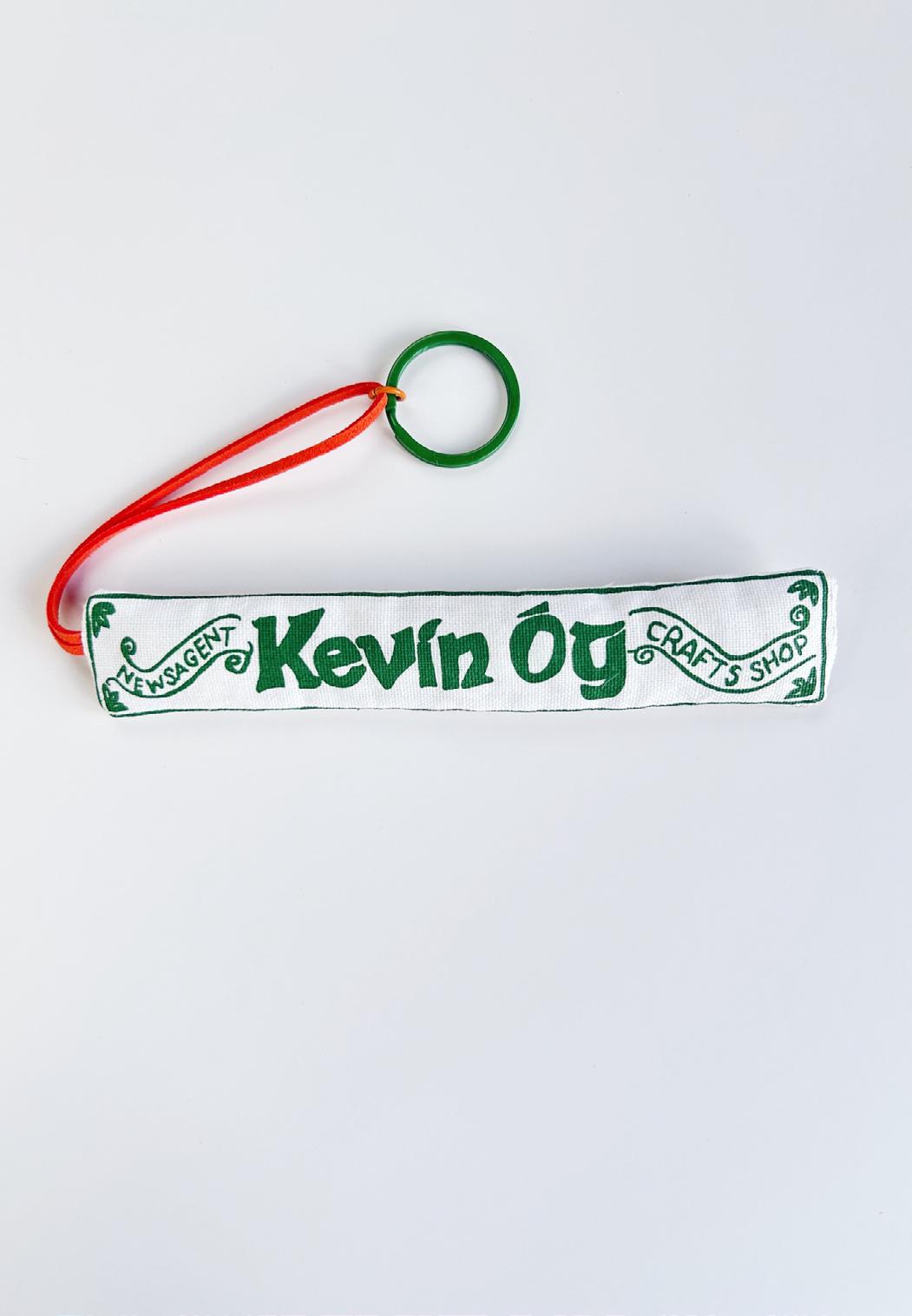
Mullin’s current orders show how she now works: smaller batches, limited cloth, selected shops and less waste. One series began with Kevin Og’s, the local craft shop in Strangford. After moving to the area, Mullin asked whether the shop wanted something connected to the village.
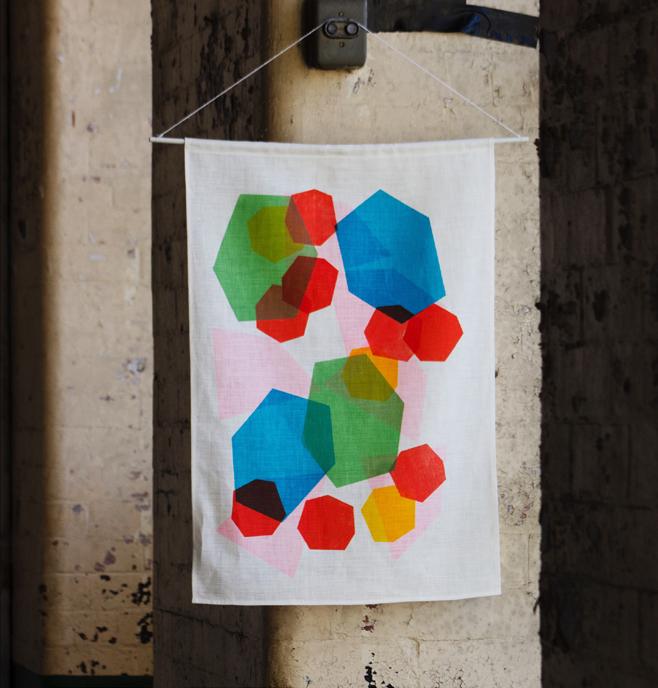
Together, they developed tea towels using small Strangford
images that she calls “Village Charms”.
The work led to a problem familiar to anyone who prints by hand. Some tea towels came out imperfect. There were thumbprints, uneven areas of ink, sections that could not be sold as tea towels. Mullin began cutting them up and making other things: pencil cases, smaller pieces, and eventually keychain charms.
The charms caught attention online. Irish Design Shop asked to stock them.
“I just posted online one day while I was making these and then the Irish Design Shop were like, we have to have those in store,” she says.
What began as a way to use damaged or imperfect cloth has become its own line. It is a good example of how Mullin works now. A mistake is not automatically waste. A misprint can become
Rather than designing large repeatable ranges, she works with what is there.
another object. A tea towel can become a charm. The material keeps moving.
The Linen Already Exists
Mullin now works with a lot of rescued linen. Some comes from people clearing out houses. Some is found in roof spaces. Some comes from factory closures or end-of-line runs from mills. She does not usually have huge quantities. Often, there are only small amounts of a particular cloth.
Rather than designing large repeatable ranges, she works with what is there.
“I have very small amounts,” she says. “So then I can make marks on those smaller pieces, and I use them to then turn into homewares.”
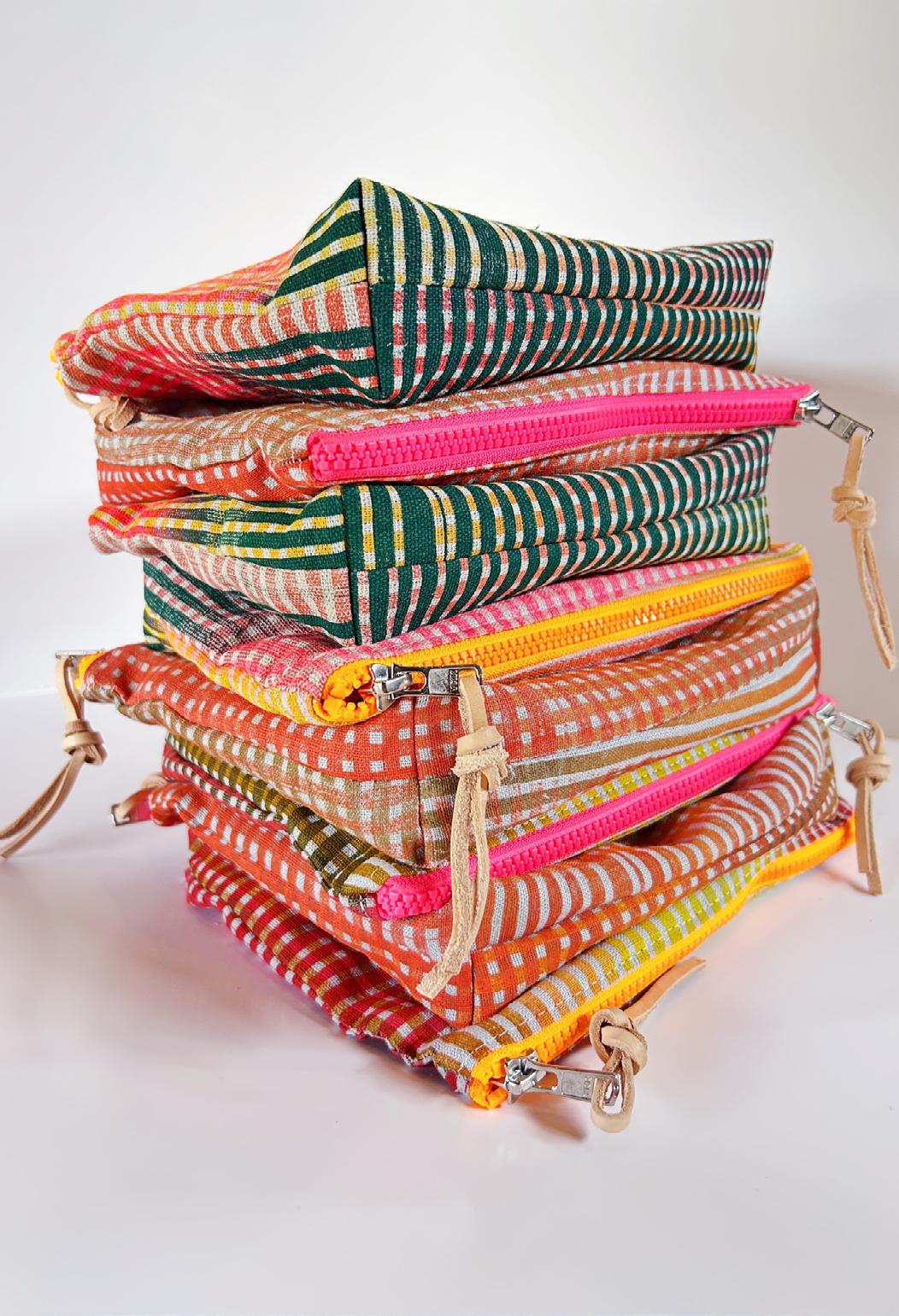
This means pieces are naturally limited. A set of zipped bags might be made in three colours from a
piece of linen that will not exist again in the same way. Once the cloth is gone, that version of the work is finished.
“Once they are done, they’re done,” she says.
Some linen arrives marked by storage. A fold may have been exposed to light. Edges may be discoloured. Mullin might dye it with natural dyes, wash it, hang it outside and see whether the sun evens out the staining. The work begins before the print is added. The cloth has to be read first.
Her aim is to buy as little newly woven cloth as possible.
“There’s so much old linen in people’s cupboards and dressers,” she says. “It’s all still in its original packaging.”
For Mullin, that is both beautiful and frustrating. Good cloth was often kept for best until it was never used at all. She wants to pull it back into use: print on it, cut it, stitch it, make it part of a working object.
Her position is direct.
“The world does not need more cloth,” she says.
Family Links
Mullin began using linen around 2002 or 2003, before she fully understood her own family connection to it. At the time, she was studying business in Edinburgh. Her then-boyfriend, now husband, was at art school. When she first stepped into the art school, she felt immediately that she should have been there.
“I didn’t know art schools existed,” she says. “I thought, My God, I should have been here.”
She did not have a portfolio or A-level art, so she stayed on her course and took every creative
“There’s so much old linen in people’s cupboards and dressers, it’s all still in its original packaging.”
class she could: summer schools, evening classes, ceramics, printmaking, paperwork and textiles. She stayed in Scotland during holidays and spent her spare time learning practical skills.
Around the same time, she was frustrated by the lack of affordable Irish-made homewares available when she came home or visited Dublin. Irish craft seemed split between expensive pieces and tourist souvenirs. There was little for a young person with limited money who wanted something made in Ireland and useful at home.
So she started making what she wished she could buy. She embroidered pieces of linen and made cushions. She tried things she no longer does now, but those experiments began her relationship with the material.
Only later did her mother tell her that her grandfather had grown flax. He had a field of it once a year, alongside other work as a blacksmith, taxi driver and whatever else needed doing.
Mullin also learned that her father’s mother had worked in a Belfast mill before marriage.
Mullin had grown up without knowing the link.
Since returning to Ireland and becoming more involved with linen, she has found that this is common. Many people in the north have some family connection to the linen industry if they look back far enough.
“There is a familial link with everyone, to be honest,” she says.
“If you dig.”
The Route She Took
Mullin once regretted not going to art school. She felt she had missed the validation and the freedom of that environment. Over time, her view changed.
She still sees what she missed: the chance to make without worrying whether work will sell. She describes it as the “blind abandon” that art school can offer. But she also sees the value of the route she took instead.
Her business degree and later master’s in arts management helped her understand selfemployment, governance, cultural policy and the structures around creative work. She has served as chair of Belfast Print Workshop and as a director of Craft NI. That experience gave her tools she continues to use.
“I used to regret having that instead of having the innocence of creation,” she says. “But actually now I realise that it’s a real asset to know how to navigate being a self-employed person in the arts.”
Since 2018, she has also taught a course called The Business of Being an Artist. Many of those who take it are recent graduates trying to work out how to survive after art school. At first, Mullin wondered whether business training should be built into art school itself. Then she reconsidered.
“The purpose of going to the art school is to not concern yourself at all with what’s going to happen to the work,” she says. “It’s just about how to make the work.”
That tension runs through her own career: making and selling, freedom and survival, cloth and commerce, the object and the order sheet. Mullin does not pretend those pressures disappear. She has learned to work around them without letting them take over.
What the Work Does
Mullin’s work is built from decisions rather than slogans. No Wi-Fi in the barn. Screen print
“Now I realise that it’s a real asset to know how to navigate being a self-employed person”
for textiles. Lino for paper. Fewer wholesale orders. More rescued linen. Use the damaged cloth. Teach the person in front of you. Do not assume inability. Do not buy new material unless it is needed.
The result is a practice that is practical, clear-eyed and deeply connected to use. Her work does not treat linen as something too precious to touch. It becomes cushions, bags, charms, quilts, homewares, prints and class projects. It returns to the hand.
In Mullin’s work, cloth is not honoured by being kept in a cupboard. It is honoured by being cut, printed, stitched and used.
Explore printmaking, textile work, courses and workshops through René’s website, where you can also browse her online shop and see her latest pieces: placed.ie
And keep up with her via social media: @renemullin_
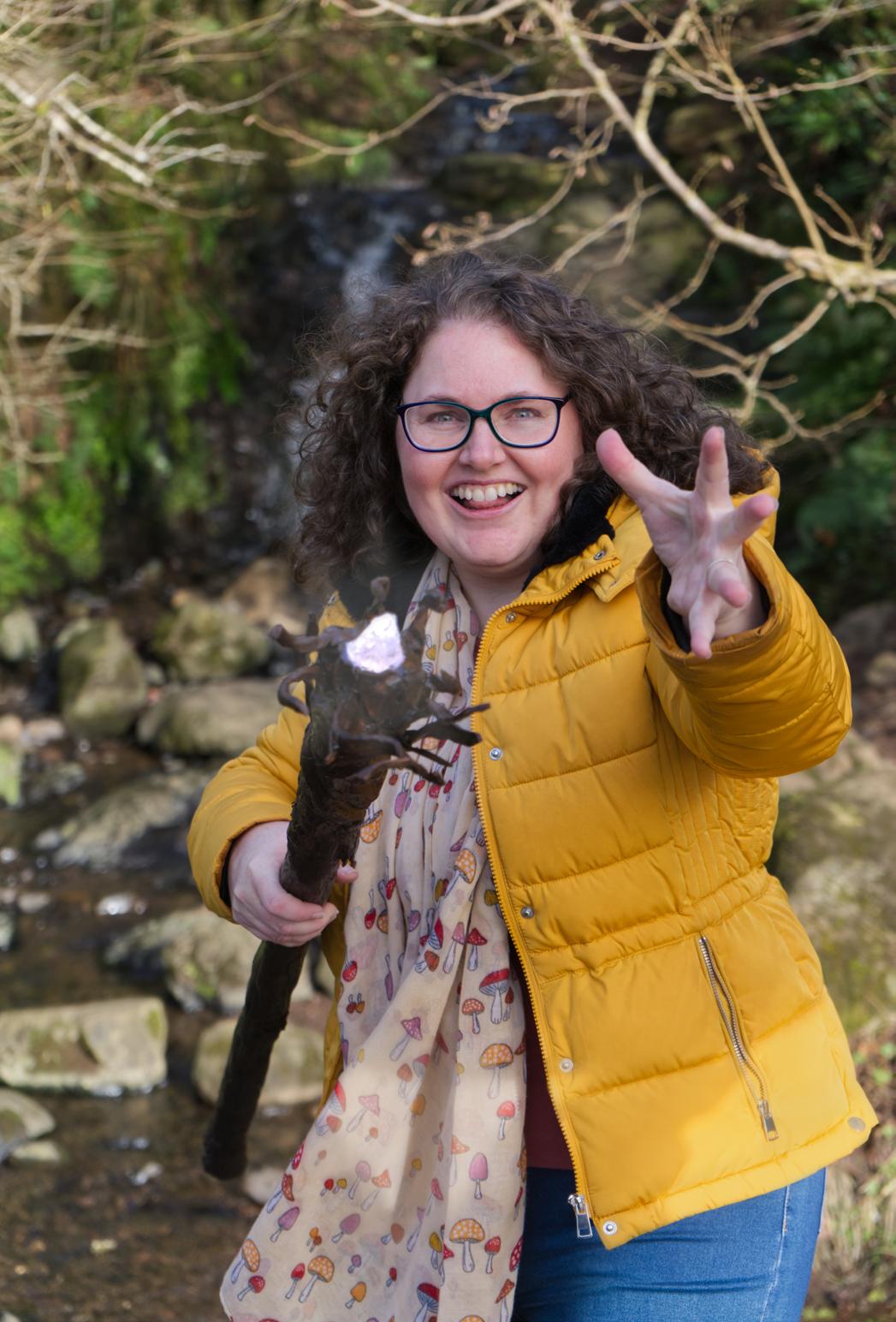
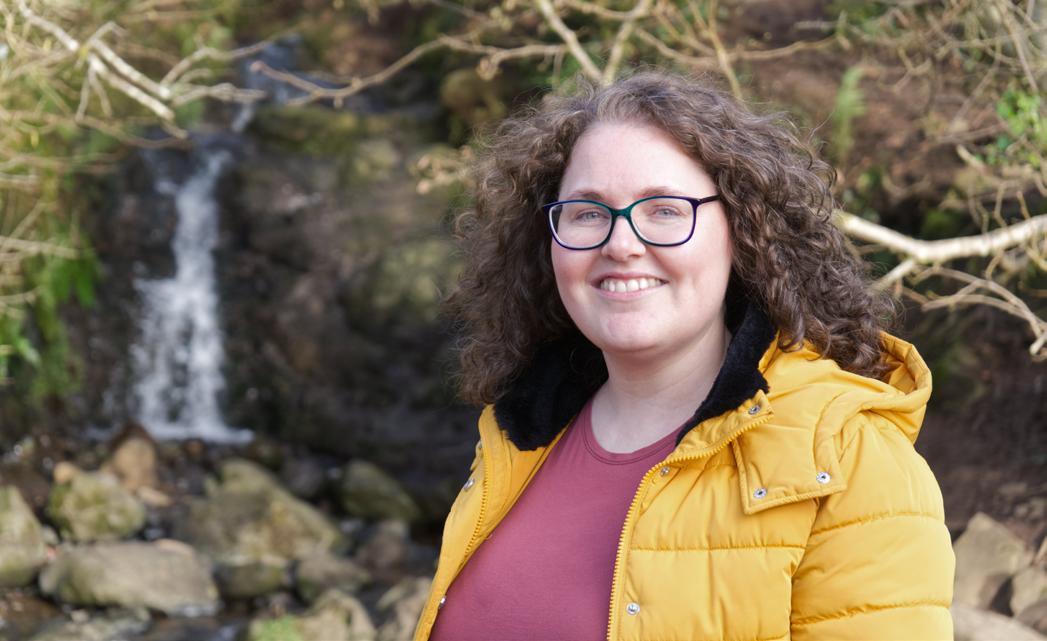
Laura McKenzie Atkins
Fine Artist
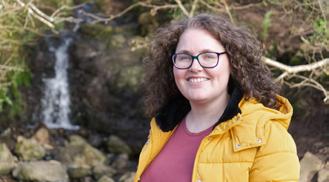
Intricate ink, hidden stories and strange little worlds come together in Laura McKenzie Atkins’ wimmelbild drawings.
There is a point in Laura McKenzie Atkins’ work where looking becomes searching.
At first, the image may read as a castle, a teapot, a street, a tower, a crowded fantastical structure or some impossible building from a story that has already been told somewhere just out of reach. Then the eye starts to move. A small figure appears. Then another.
A joke, a ghost, a historical reference, a creature tucked into a corner, a tiny architectural detail, a character doing something strange on the edge of the scene. The drawing opens out not through scale, but through attention.
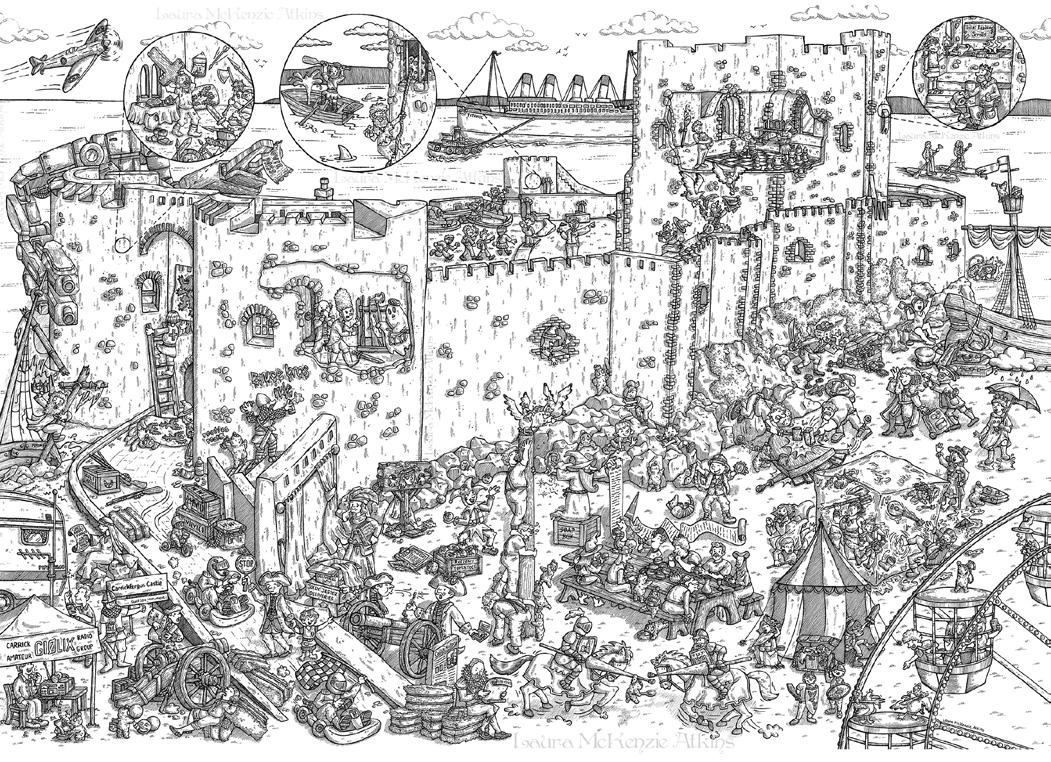
Her work belongs to the tradition of the wimmelbild, a type of densely populated image filled with stories, characters and small incidents. It is a form many people might associate with Where’s Wally, but Laura’s route into it came from somewhere much older and stranger: castles, ink illustrations, dark fairy tales, medieval binding, fantasy games, family stories and the childhood thrill of climbing around Carrickfergus Castle with chips from the local chippy.
Laura did not grow up with the word wimmelbild. She had not heard it until 2022. The discovery came almost accidentally, through a Facebook art group challenge
“I had no plan when I started, I just drew a thing and thought, okay, next day I’ll just add on to that.”
called Inky April, where artists were encouraged to make an ink drawing each day for the month.
Most people made a separate image each day. Laura began with a doorway. Then came the guards. Then the surrounding structure.
Day by day, the image grew outward.
“I had no plan when I started,” she says. “I just drew a thing and thought, okay, next day I’ll just add on to that.”
By the end of the month, the drawing had become Castle Teapot, her first wimmelbild. When she shared it, people recognised the form before she had the language for it.
“They went, that’s a wimmelbild,” Laura says. “I had never heard of it. I didn’t know what that was.”
When she looked it up, something clicked. The term gave a name to what she had already begun doing instinctively: building an image as a world, filling it with movement, characters and small stories that refuse to be taken in all at once.
Bad Doodles and Better Plans
Although Laura is the artist whose name sits on the work, her process is not entirely solitary. Her
husband Scott plays a quiet but important role behind the scenes, especially in the early planning stages.
Scott is creative in his own right. He paints tiny models, plays tabletop games and has a strong eye for colour, structure and imaginative problem-solving.
Laura describes him as someone who helps her think through the early shape of a piece before the drawing becomes too fixed.
“At the start, when I’m planning out a build, Scott will be very much part of it,” she says. “He’s really good at doing what I call bad doodles.”
Those “bad doodles” are often quick stick-figure sketches on Post-it notes, rough indications of how a scene could work or how a problem might be solved. They are not the finished image. They are a way of testing the architecture of an idea before Laura commits to the long labour of drawing it.
That collaboration developed over time. Early on, Laura was more protective of the work,
“At the start, when I’m planning out a build, Scott will be very much part of it,”
reluctant to show it before it reached a stage where she felt it could be seen. Scott would sometimes look at a finished or nearly finished piece and point out ways it could be improved. Over time, Laura realised that asking earlier could save her from having to redraw whole sections later.
Now, the rhythm is more fluid. Laura brings the idea. Scott helps break open possible approaches. They bounce plans back and forth, testing what can work and what might cause trouble later.
For a practice built on dense detail, that early stage matters. A wimmelbild may feel playful, even chaotic, but the final image depends on hundreds of decisions about layout, scale, perspective, spacing and narrative movement. Without that underlying structure, the abundance can collapse into noise.
Laura describes herself as more of a “wing it” person. Scott plans.
Together, they make those instincts meet.
Fantasy, Games and Shared Worlds
Laura and Scott’s interests overlap without being identical. Both are drawn to fantasy and science fiction, though from slightly different directions. Laura leans towards Lord of the Rings, darker fantasy, old stories and fairy-tale worlds. Scott is more drawn to Star Wars, space opera and tabletop role-playing.
Their history with Dungeons & Dragons goes back more than twenty years. They began playing with friends in their teens, working from a rulebook they barely understood at first, and are still playing with some of the same people now.
“We have a Friday night group and we still play together,” Laura says.
Sometimes games use miniatures, sometimes they do not. Scott paints models, and friends’ characters have been printed and painted
Worlds to fill, systems to complicate and small visual jokes to hide in plain sight.
over the years. That kind of worldbuilding runs parallel to Laura’s own drawings. A campaign, like a wimmelbild, depends on small invented details that make a setting feel alive. A character has to exist somewhere. A place needs rules, atmosphere, history and surprise.
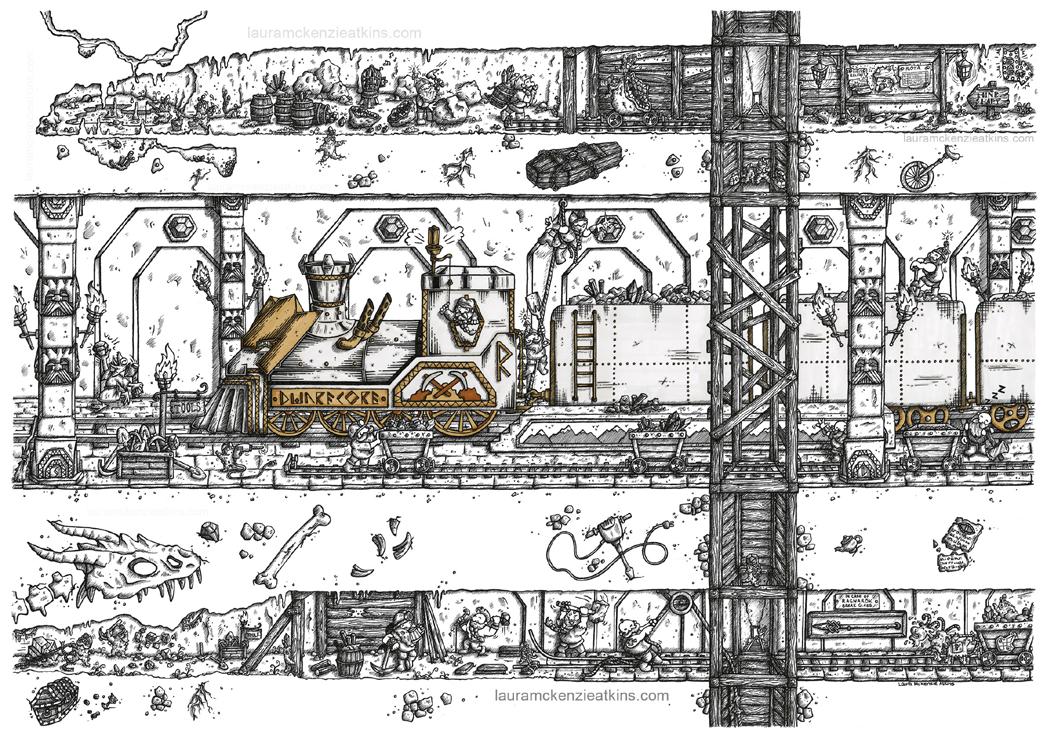
Scott’s influence is especially clear in the way some of Laura’s future ideas twist familiar genres and settings into something stranger, busier and more playful. A dwarven mine shaft becomes a train station. Pirates become space pirates. A Victorian city becomes a steampunk machine full of brass, cogs, trains, airships and strange inventions. These are the kinds of ideas that suit Laura’s work because they give her worlds to fill, systems to complicate and small visual jokes to hide in plain sight.
There is a shared pleasure in asking: what happens if two worlds that should not belong together are made to work?
Dwarfcore
Castles, Chips and Childhood Dragons
Laura’s attraction to castles is not abstract. It comes from growing up in Carrickfergus, where the castle was part of childhood geography.
“Because I grew up in Carrickfergus, the castle was where we would go,” she says. “My parents would take us down into the town, and then we would climb around the castle while eating chips from the local chippy.”
It was familiar, free and full of imaginative possibility. Laura remembers the marina, the boats and the freedom of being able to climb around parts of the castle that are no longer open in the same way. As a child, it was not simply a heritage site. It was a place to inhabit.
Her family invented their own stories around it. Carrickfergus
“Because I grew up in Carrickfergus, the castle was where we would go”
Castle has its own history and legends, including the story of a princess connected to the castle, but Laura and her siblings added dragons, rescues and their own imagined dramas.
“We always pretended there was a princess in the castle and we were rescuing her from the dragon,” she says.
That combination is central to her work: real architecture, local memory, historical research and invented fantasy all layered together. Her drawings do not treat history as something sealed off. They let it become active again, crowded with the stories people attach to places as they grow up around them.
Her father also encouraged that fascination with old places. He would take Laura and her siblings to ruins, forests and historic sites, feeding a curiosity about what had
Carrickfergus Castle
been there before. Even now, Laura is drawn to the question of who occupied a place before her, what they might have done there, and what stories a building or ruin might still hold.
Books, Ink and Older Illustrations
Before wimmelbild became the label for her work, Laura was already drawn to older forms of illustration. She loved ink sketches in books, especially spot illustrations that interrupted a novel with a glimpse of what a place, creature or character might look like.
She was less interested in bright search-and-find books as a child and more interested in older stories, darker fairy tales and images that looked like they came from a character’s own diary or sketchbook. Scott describes it as the kind of image that appears as if it has been drawn inside the world of the story itself, not outside it as decoration.
That matters because Laura’s work often feels less like an illustration of a finished tale and more like an artefact from one. The drawings have the density of something found: a map, a manuscript page, an old book plate, a visual record made by someone who lived inside the story.
She is particularly drawn to etched images from old books, where metal plates allowed artists to create precise, highly detailed scenes. The appeal lies in the amount of information they could hold.
“I always loved those because they could get so much fine detail,” she says. “It was always big landscapes with characters in them, and it was always telling a story.”
She has not moved into etching herself. Printmaking, especially in a school art department context, feels too messy for the way she
Ink pen gives her the clean line, directness and control she wants.
likes to work. Ink pen gives her the clean line, directness and control she wants.
“I like the clean nature of being able to use a pen, and being able to put the cap on when I’m done,” she says.
Handmade Books and Thinking Through a Project
Laura also makes leather-bound journals, a skill that emerged partly through her work as a technician in a grammar school. The school had access to a resource centre where materials could be collected, and one of those materials was leather. Laura began wondering what she could do with it, then taught herself to make small books.
The result fitted perfectly with her
wider interests. Leather binding, long stitch, medieval methods, handmade pages: all of it sat naturally beside the worlds she was already drawing.
“I learned the long stitch method, which is medieval binding,” she says. “It turned out so good that I started selling them to the teachers in school.”
At first, she made them for herself. She liked the idea of creating the object that would then hold her own sketches.
“I’ve made a thing and now I’m going to put my own drawings in it,” she says. “This is all by me. I like that.”
The journals have become part of her project process. During Covid, she filled one with sketches from favourite movie scenes while she and Scott watched old films they loved. Now, every major build has its own journal. Into it go research
“I’ve made a thing and now I’m going to put my own drawings in it”
notes, newspaper clippings, photographs, sketches, timelines, important names, dates and visual ideas gathered during visits to a site.
Scott points out that these journals often become a place to design figures who may later appear in the finished wimmelbild: historical characters, local figures, ghosts, legends or people connected to the building’s story.
In that sense, the journal is not separate from the artwork. It is where the world begins to gather itself.
The Discipline of Tiny Lines
Laura’s finished drawings are often so detailed that a magnifying glass becomes part of the viewing experience. She uses extremely fine pens, including a 0.03mm nib, and Scott bought her a magnifying lamp so she could work even closer.
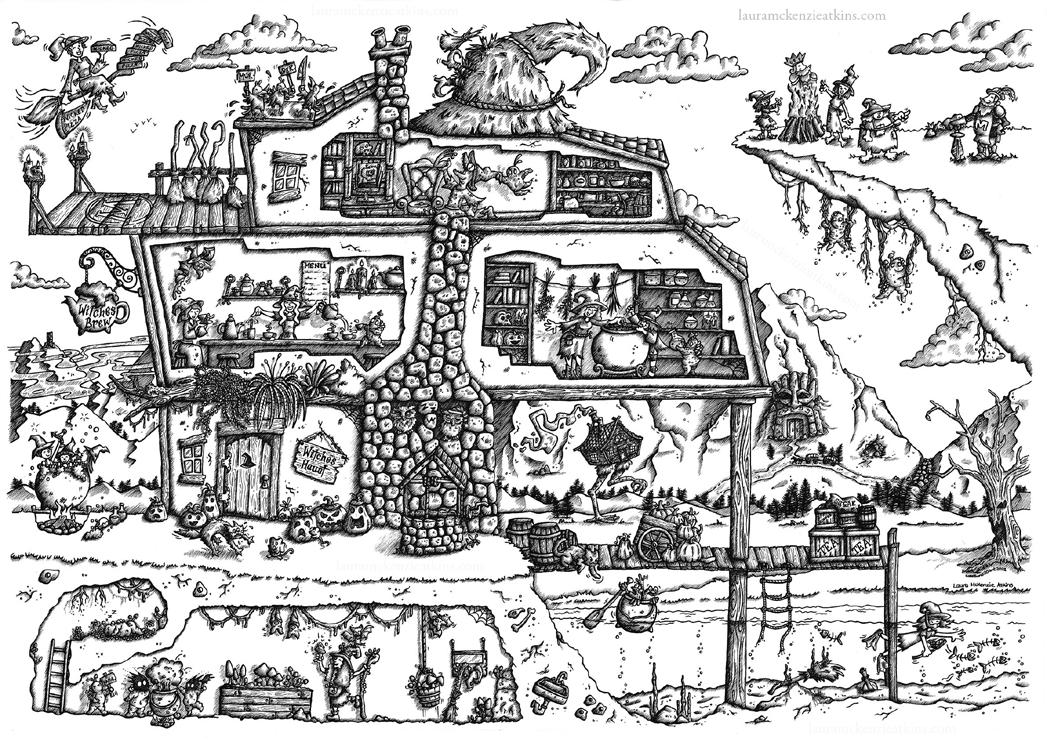
Witches Haunt
That intensity creates a strange contradiction. The drawings are full of lively figures, jokes and movement, but they are produced through a process of extraordinary patience. Every mark has to be considered. The image is drawn first in pencil, then inked, often in multiple passes. A first pass establishes the lines. Later passes alter weight, strengthen certain forms and build depth.
Scott notices those stages clearly.
“She’s not happy to just do the same line thickness across everything,” he says. “It doesn’t look right, so she’ll go over it all again with a second ink pass.”
Laura likes pencil, but ink gives her something pencil cannot: crispness at a tiny scale.
“I find that I just can’t get the tiny marks that I want in pencil,” she says.
The clean line is important because the drawings are already full. If the marks became too soft, the work could lose clarity. Ink lets her pack the image with detail while keeping each part readable.
Perspective has been one of the challenges. Laura describes herself as not naturally strong at it, though she is improving. Castle Teapot, her first wimmelbild, has a flatter quality that reminded her of the Bayeux Tapestry: figures and buildings arranged in a way that carries the story without requiring strict depth.
Later works have demanded more structure. Scott remembers telling her that a mineshaft image with multiple layers could not simply be drawn section by section. It needed measuring, planning and straight lines.
Laura wanted to wing it.
The finished result worked because planning made the complexity possible.
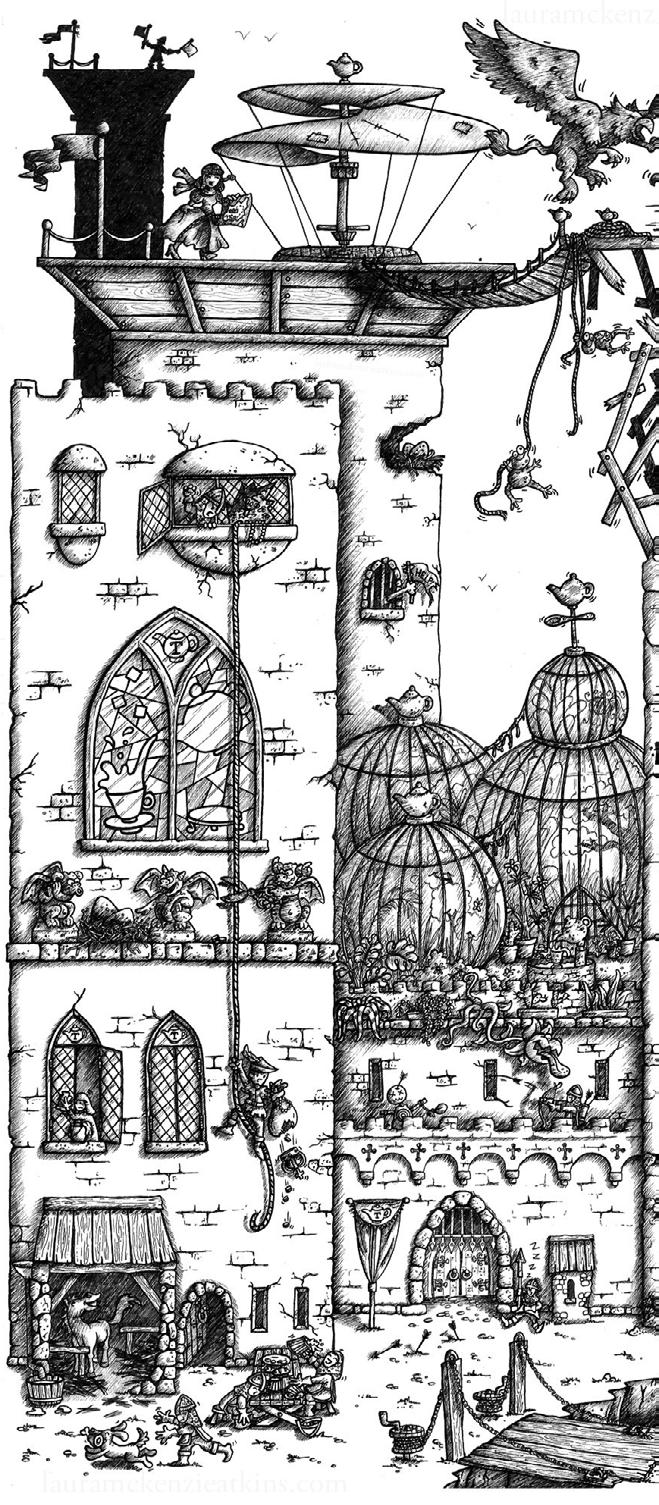
Castle Teapot
Print, Paper and Keeping Detail
Laura keeps her originals and sells prints. That brings its own technical problems. A drawing full of tiny marks can easily lose its force if the scanning, paper or printing process fails.
Her first major piece, Castle Teapot, was drawn on watercolour paper. She liked the slight texture and warmth of the surface, but it did not scan cleanly. The paper’s bumps and shadows appeared in the file, creating hours of editing work for Scott.
After that, he encouraged her to separate drawing surface from final print surface. Now Laura draws on Bristol board, which gives her the smoothness needed for fine ink detail, then prints on the kind of textured paper she wishes she could have drawn on in the first place.
That solution keeps both parts: the clean scan and the tactile final print.
She also works with watercolour over ink in some pieces, though the sharpness of the lines can make the colour look digital at first glance. She does make digital work too, but she prefers pen on paper.
Digital drawing is faster, but it changes how she works.
“When I do digital, I zoom in too much and I put in too much detail,” she says. “Whenever you get your print, so much of that is lost because I’ve been so close to it.”
Hand drawing keeps the image grounded in a physical scale. The paper resists. The pen has limits. The work takes longer, but Laura has stopped treating that as a problem.
“It takes as long as it takes,” she says.
“They may not know who the architects were, or the argument over who actually designed the building.”
Asking People to Look Longer
That refusal to hurry is not only practical. It is part of what the work asks from the viewer.
Laura is aware of how quickly art is consumed online. An image appears, is liked or ignored, and disappears with a swipe. Her drawings do not work properly at that speed. They need time. They reward the person who leans in.
“You can’t do that with my art,” she says. “You have to stop and take a look and you have to look really closely.”
She wants people to recognise references, to find hidden figures, to discover that a castle is not only a castle but a container for myths, jokes, films, ghost stories and real history. In her later castle works, research has become central. She looks for local stories, legends and factual histories, then folds them into the image.
She also creates a secrets list to accompany the work, showing where particular characters, ghosts or references can be found.
Scott sees that list as a way to make local history more playful.
“People don’t know about the local ghost stories of Belfast Castle,” he says. “They may not know who the architects were, or the argument over who actually designed the building.”
The secrets list turns the print into a game, but it also opens up the history behind the image. A viewer might begin by looking for hidden cats or ghosts, then end up learning something about the building itself.
That mixture of play and research is one of Laura’s strongest qualities. Her work does not lecture. It hides information in plain sight and invites people to go looking for it.
Riddles, Aliens and Castle Roswell
Laura is currently working on a jigsaw wimmelbild for a Canadian company. The piece, called Castle Roswell, brings together a medieval castle and aliens.
“They came to me and said, we want to have aliens, and I know that you like castles,” she says. “Would you put an alien in a medieval castle? I’m like, yes, of course. That’s my dream.”
The project fits naturally into her interests. Although she had not drawn aliens before, she grew up loving alien stories, films and The X-Files. Scott helped develop the title, Castle Roswell, which instantly tied the medieval setting to UFO mythology.
It also gave Laura room to include her own recurring creatures: small characters she calls Rootles, little mandrake-like beings with mushrooms on their heads. They began as clay figures made for an art class in school, then started appearing in drawings.
Mischievous and small enough to hide, they now populate her builds like a private species from her own visual folklore.
“They’re just mischievous and get into things,” she says.
Castle Roswell is planned as part of a later Kickstarter. Another artist, based in Vietnam, is working on a related alien-and-pirate theme. Next year, the artists are expected to swap prompts, with Laura taking on pirates and aliens in her own way.
Scott already knows how he wants to twist it.
His version would not simply be aliens on a pirate ship. It would be space pirates: an old-style galleon floating in space, crewed by figures in comic bubble helmets.
“Why is there a wooden ship in
space?” he says. “Because it’s funny.”
That answer could almost stand as a manifesto for part of Laura’s work. The images are highly skilled and deeply researched, but they are not solemn. They are full of play, strangeness and the pleasure of making unlikely things belong together.
Steampunk, Time and Future Worlds
Beyond the commissions, Laura and Scott have their own ideas waiting. One is a steampunk timethemed world: Victorian London, brass and bronze machinery, cogs, gears, airships, trains, pocket watches and impossible inventions.
It is easy to see why the idea appeals. Steampunk offers the kind of visual excess Laura’s work thrives on: mechanisms, costumes, windows, streets, pipes, signs, engines and tiny moving parts. Scott is especially drawn to pocket watches, with their intricate internal logic and visible machinery.
For Laura, those future worlds are not a departure from castles and folklore. They are another way of doing what her work already does: building an image that can hold many stories at once.
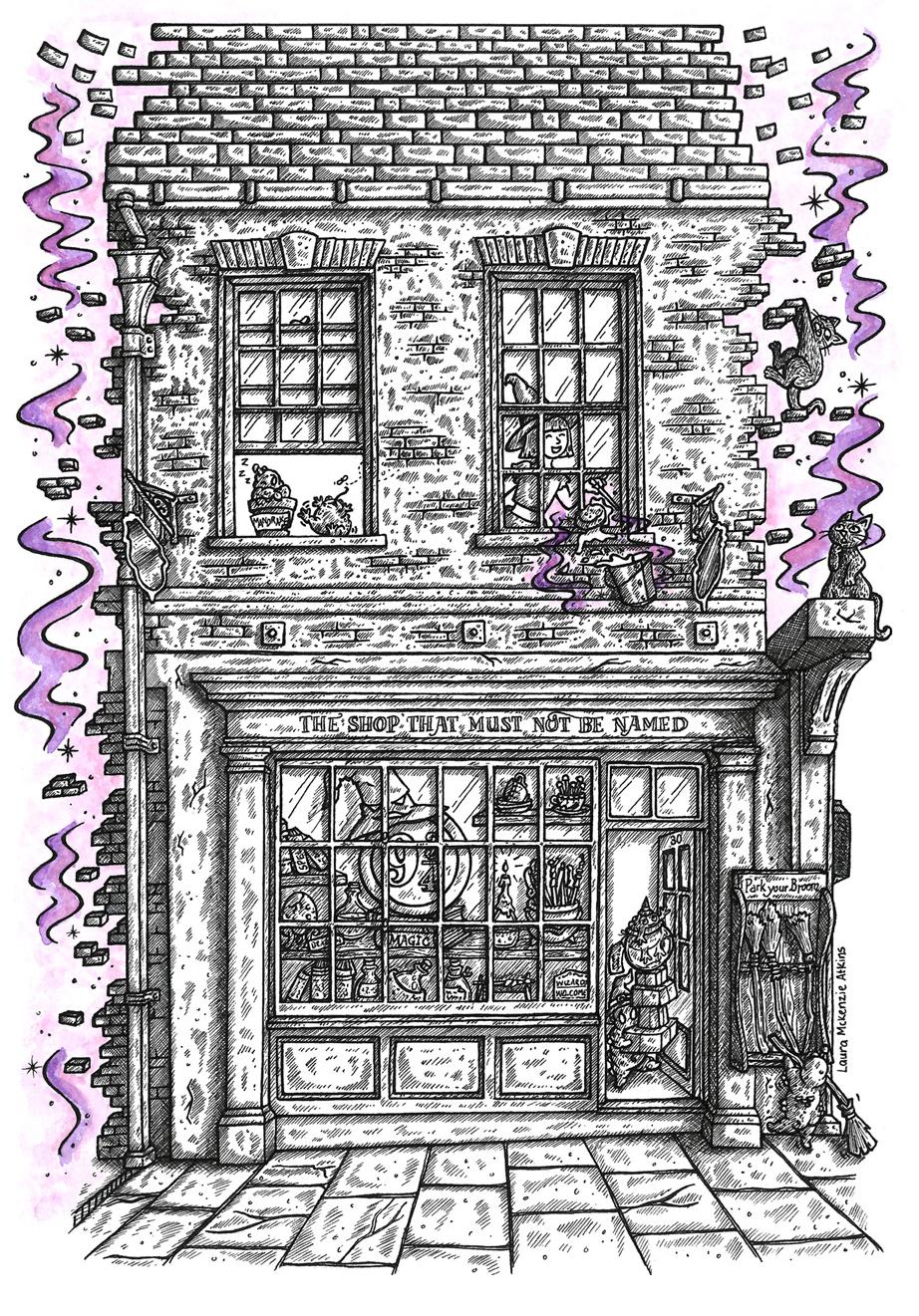
She is also open to commissions, though Scott is clear that they take time because of the detail involved. Laura has already created wimmelbilds of houses and meaningful places for people: homes, meeting places and sites with personal memory attached. Not every piece has to be huge. A small build can still hold a world if the subject matters enough.
Beginning Later
One of the most striking things Laura says comes near the end of the conversation. She explains
Laura has already created wimmelbilds of houses and meaningful places for people: homes, meeting places and sites with personal memory attached.
that she was 41 when she began making this particular kind of art seriously. Before that, she painted and doodled, but the wimmelbild work arrived later.
She does not present that as a regret. Instead, it becomes a kind of encouragement.
“You’re never too late,” she says.
That feels important in relation to her work.
These drawings are not rushed declarations from someone trying to keep pace with every trend. They are the result of years of accumulated interests finally finding the right form: childhood castles, family stories, school materials, tabletop games, ink drawings, dark fairy tales, old books, handmade journals, films watched during lockdown, and the practical partnership of someone willing to say when a mineshaft needs a ruler.
Laura McKenzie Atkins’ work asks for something unfashionable: time. Time to make, time to plan, time to research, time to draw, time to scan, time to print, and time for the viewer to look properly.
In a visual culture built for speed, her drawings resist the glance. They are full of doors, windows, ladders, towers, creatures, ghosts and jokes. They pull the viewer into the page and make them work for the reward.
The result is art that feels alive with attention. Not because it shouts, but because it waits for the viewer to come closer.
Explore Laura McKenzie Atkins’ website to find her latest work, online shop, commissions and upcoming events: lauramckenzieatkins.com
And keep up with her via social media: @lauramckenzieatkins
Deirdre Murphy
Queen Dragon
Music, movement and revolutionary imagination meet in work that turns political urgency into something physical, funny and impossible to ignore.
Deirdre Murphy begins her day by slowing down. Most mornings start somewhere between eight and nine, followed by meditation, coffee, voice and movement.
It is not a dramatic ritual, but it says a great deal about the artist behind Capitalism: The Musical Before the spectacle, before the politics, before the vocal layering, loop station, choreography and satire, there is a body being prepared. There is a voice being warmed. There is imagination being given room to move.
“I usually meditate in the morning for 15 or 20 minutes,” she says, describing a rhythm that often leads into vocal work and music early in the day. “Very often I do a physical practice as well.”
The meditation itself is practical rather than precious. Murphy uses guided meditations online, whatever “gets me there,” as she puts it. But what draws her in is not passivity. It is depth, stillness, imagination and what she describes as the felt sense connected to imagination.
“I love going really deep and still,” she says. “I love being guided into the body, finding a trigger for the imagination and the felt sense.”
That phrase, the felt sense, runs beneath much of Murphy’s work. Her art is not built only in the mind. It is written through the body, sung through the voice, moved through nervous system,
“I love being guided into the body, finding a trigger for the imagination and the felt sense.”
breath and muscle. Whether she is speaking about music, dance, political change or healing, Murphy returns again and again to the body as a place where thought becomes real.
Capitalism Keeps Catching Up
Murphy’s Capitalism: The Musical has had a long life. Written initially in 2013 and shaped more fully by 2017 after a year and a half performance residency, the show has moved through different forms, returns and contexts. It recently received an award for Best Ensemble, adding another marker to a production that has continued to find new relevance with every passing year.
Yet for Murphy, the strange thing is how little the bones of the piece have had to change.
“It has changed a bit,” she says. “But honestly, the bones of it are so similar to what it was when I started writing it in 2013 and more or less finished shaping it in 2017.”
The world, she suggests, has done more changing than the musical. What once may have seemed like an exaggerated or theatrical response to economic systems now feels increasingly direct. The conditions the work was trying to confront have only become sharper.
“Mostly the world is just proving that the musical is more relevant,” she says. “It just keeps on going in the direction of what the musical is trying to combat or trying to
disarm. Things are just getting more intense. The stakes are getting higher.”
That sense of political acceleration gives the work a particular charge. Capitalism: The Musical is not a historical curiosity, nor a fixed piece from another political moment. It is a work that keeps being answered by the present.
Murphy did not arrive at political performance as a late development. The desire to make art that intervenes in the world has been with her since youth. At sixteen, still living in Alaska, she remembers feeling that she had a choice between dance and law, particularly human rights law. Even then, she believed the body might be able to do something that argument alone could not.
“I thought at the time that dance would have a bigger impact,” she says. “A more visceral, more physical impact than anything I could do intellectually.”
That choice became formative. For Murphy, performance creates a direct line between content, performer and audience. A dancer or performer does not only represent an idea; they pass through it. The audience sees that transition inside a living body.
“Seeing this honest transition within somebody’s body is part of creating the virality with which I want to bring love to the world,” she says.
It is an unexpected use of the word virality, especially in an age where virality is often tied to outrage, humiliation or conflict. Murphy uses it differently. She is interested in what spreads through bodies when performance carries delight, love, energy or possibility.
“I do think it’s contagious,” she says. “High vibes are contagious. Delight is contagious. Love is contagious.”
“I thought at the time that dance would have a bigger impact. A more visceral, more physical impact than anything I could do intellectually.”
Writing Towards Revolution
Murphy speaks with admiration about the science fiction writer Kim Stanley Robinson, whose work she returns to for its ability to imagine political and ecological transformation at scale. What interests her is not escapism, but the insistence on writing towards possibility.
“He keeps on writing his way to revolution,” she says. “He’s covering the science. He’s covering the economics. He’s covering the personal element. He’s covering compassion and kindness.”
That combination matters to Murphy. Political art can fail when it becomes too narrow: all theory and no feeling, all rage and no tenderness, all diagnosis and no possible route forward. Robinson’s writing gives her a model of imagination that refuses despair.
“I find it so inspiring,” she says. “I would actually love to write a musical with him. It would be top of the list for things I would like to do.”
When asked whether writing for revolution is part of her own work, Murphy does not hesitate.
“Yeah,” she says. “I think it’s part of my remit here on this earth.”
There is no irony in the statement. It is not grandstanding either. It comes from the same place as her morning practice, her vocal discipline, her choreographic scores, her interest in the body and her belief in joy as force. Murphy’s revolutionary imagination is not only about overthrowing systems. It is about remaking sensation, attention, confidence, love and the ways people understand what is possible.
Alaska, Expanse and the Body
Murphy grew up in a remote part of Alaska, on the Kenai Peninsula, in what she describes
as “pretty full-on wilderness.” Her parents built their home near a few other families, with nine children growing up across the small cluster. The result was a childhood marked by outdoor play, imagination, solitude and wild space.
“I grew up living in the middle of the woods,” she says. “A lot of time spent outside and playing in our imaginations, and a lot of time alone in nature as well.”
She did not necessarily understand the significance of that at the time. Looking back, she sees it as foundational. It gave her a feeling of space that is hard to recreate elsewhere.
“In hindsight, I feel like it gave me a real sense of spaciousness,” she says. “I don’t know if it’s really recreatable in a city or in another environment.”
Murphy now lives in Dublin, and she is clear that she thrives in the city. She likes its stimulation, music and cultural movement. But the wilderness remains part of her internal architecture. She speaks of sea swimming, camping and being outdoors at festivals as necessary forms of reconnection.
“Connecting to the land is still very much critical to who I am,” she says. “And to the water.”
What she misses most about Alaska is its rawness. The mountains there, she says, are not gentle. They are young, sharp and physically present.
“The mountains are so sharp,” she says. “You can literally go up to the top of them and cut yourself on them. They’re so young and they’re so raw.”
That image feels close to Murphy’s work: beauty that is not softened, landscape as force, performance as something that can cut through what has become dulled.
“I grew up living in the middle of the woods. A lot of time spent outside and playing in our imaginations, and a lot of time alone in nature as well.”
Moving to Ireland
Murphy moved to Ireland around twenty years ago. She had citizenship through her grandparents, and her parents had long imagined retiring there. At the time, she had been living in Montana and decided with her then partner to move to Ireland spontaneously.
“It was an adventure,” she says.
There was also a political element. George W. Bush had just entered office, and the atmosphere in the United States was beginning to feel unstable.
“The political situation in the US was starting to feel like…” she trails off, allowing the implication to sit. Looking back now, she says, “it seems like those were the days of innocence.”
That mixture of adventure, instinct and political unease feels very much in keeping with Murphy’s later work. She is alert to systems before they fully announce themselves. She notices when something is turning. She does not separate personal movement from political weather.
Ireland has offered a balance: city life, music, performance, water and access to nature. Dublin, for her, gives both stimulation and a route back out.
“Dublin is a really good balance of cultural stimulation and amazing music and access to nature,” she says.
Music, Body, Words
Murphy works across so many forms that trying to define the centre of her practice is difficult. Music, dance, theatre, writing, voice, movement and political storytelling all overlap. When asked what sits at the centre, her answer shifts as she thinks.
Music comes first. Then the body. Then words.
“I think about the body and the felt senses and our imagination as part of the senses,” she says. “As being a portal for spiritual development or development of increasing perception.”
For Murphy, the body is not separate from thought. It is a way of perceiving energy, interaction and the internal life of experience. She speaks of human development as something that may now need to move inward, towards bliss or an enlightened state, not as an escape from politics but as part of how people might become capable of changing the world.
“A lot of my work tries to get to that,” she says.
She describes the transition from music into dance as “the original synesthesia,” where one sense moves into another. Sound becomes body. Body becomes healing. Healing becomes creativity. Creativity becomes a way of recreating the world.
“I say get to the dance floor,” she says.
Words, too, have become increasingly important. This has not always been easy. As a dancer, Murphy was trained to let the body speak, and earlier in life she felt shy of words and of her own voice. Now, words have become a source of pleasure.
“I love words and I love writing lyrics,” she says. “Whereas in my earlier life I was very shy of my voice, very shy of words in general.”
That movement from shyness to delight matters. It reflects the wider arc of her practice: the body finding voice, voice finding politics, politics finding humour, humour finding music.
“I love words and I love writing lyrics. Whereas in my earlier life I was very shy of my voice, very shy of words in general.”
Loop Stations and Internal Choreography
Murphy is currently close to finishing her second album, with a hoped-for release in September. Much of the work has been built through loop station experiments, vocal layering and vocal composition. Some tracks include spoken word, with two moving into a kind of science-fiction register.
“I’m really happy with it,” she says. “I’m delighted. I’m really pleased with the sound and how it’s all coming together and how it feels as a body of work.”
Although she plays guitar live, the current reshaping of her performance may allow her to put down the instrument and move more freely. She imagines staging collaborators in beautiful lighting on bigger stages, giving her the freedom to communicate through movement and the body.
That matters because several of the pieces have choreographic scores.
For Murphy, choreography is not always a fixed sequence of steps. It can be an internal arc, a set of states to pass through, a structure of experience rather than instruction.
“It’s more like I’m going to experience this and see how my body reacts,” she says. “Taking into account the lyrics, taking into account the music and taking into account what I want to communicate, how I want that experience to land with the audience.”
This approach connects directly back to the decision she made at sixteen. She is still looking for that visceral response, still trying to find the place where body, music and audience meet.
“Ideally, we’ll get to that same sort of visceral response I was hoping for when I was 16 years old,” she says.
Collaboration and the Captain of the Ship
When speaking about Capitalism: The Musical, Murphy is clear that directing and choreography were collaborative. She values what other performers bring into the room, and she understands that a work can become stronger when it is not built by one person alone.
“It was a beautiful collaborative process,” she says. “You want to be open to other people’s amazing ideas and it comes out better than you could ever do on one’s own.”
At the same time, she believes in the need for direction. Collaboration does not mean vagueness. A production still needs someone holding the larger shape.
“It’s also important to have the captain of the ship,” she says.
That balance between openness and authorship seems central to Murphy’s work. She allows the unexpected to enter. If a moment calls the work in another direction, she follows it far enough to see what it offers. Sometimes those discoveries become part of the final production. Sometimes they remain part of the learning.
“If something happens to call me to roll this way, of course I’m going to be like, absolutely, let’s explore it,” she says.
Healing, Luck and Becoming Older
For all the scale of Murphy’s political concerns, there is also a deeply personal thread in the way she speaks about healing. She describes a moment when something fell from a counter but caught on what she was wearing rather than smashing, and she experienced a burst of luck. Instead of rushing past the moment, she paused.
“I felt so pleased and proud!” she
“It was a beautiful collaborative process. You want to be open to other people’s amazing ideas and it comes out better than you could ever do on one’s own.”
says. “I was like, I’m just going to pause for a second and let my nervous system absorb it.”
The practice stayed with her. Several times that day she found herself noticing more evidence of luck, reinforcing the feeling rather than dismissing it.
For Murphy, this kind of attention is not naive. It is a sophisticated practice: allowing love, luck or safety to imprint the nervous system. She connects it to the idea of calling up unconditional love from a pet, parent, friend or anyone with whom love feels easy, then pausing to allow that feeling to become available inwardly, to tune in with the energy of it.
“I think that’s a very intelligent practice,” she says. “To take those moments… and let that love imprint you.”
Getting older, she says, has also been healing. She is not the same person she was ten years ago, and that change has come through art, somatic practice, movement, therapy, coaching and better frameworks for understanding herself.
“One of the blessings of getting older is that getting older can be super healing,” she says. “I’ve really changed a lot and for the better.”
This is part of what gives Murphy’s political work its texture. Her art does not only point outward at systems. It also asks what has to change internally for people to become freer, kinder, more available to one another and more capable of collective transformation.
Anti-Capitalist Cabaret
Murphy began writing music because she needed it for Capitalism: The Musical. Before that, she had never written music.
“I started writing music so I could
write the musical,” she says.
The impulse was clear. She felt there was a need in the world for anti-capitalist cabaret, something that could carry difficult truths without becoming unbearable.
“If you’re going to tell people bad news, you better make it funny,” she says. “So that’s where that started for me.”
Since then, she has continued writing. Her first album took ten years to record, and she now has a large backlog of songs waiting to be developed. Some are guitarbased. Some are among what she considers her best songs. Alongside the second album, she is already thinking towards future recording projects, including the need to properly record the musical itself.
“There’s a lot to do,” she says. “Quite a lot.”
That backlog suggests an artist still gathering momentum. Capitalism: The Musical may be the work that introduced many people to Murphy’s political and theatrical imagination, but it is not the limit of it. The next album, the unrecorded songs, the possible future musicals and the continuing development of her live work all point to a practice still expanding.
Towards the Dance Floor
What makes Murphy compelling is the way her work refuses separation. Politics is not separate from music. Music is not separate from the body. The body is not separate from healing. Healing is not separate from revolution. Revolution is not separate from joy.
That refusal gives her work its particular force. In Murphy’s world, a musical can be political theory, a cabaret can be warning system, a loop station can become architecture for the voice, and
“If you’re going to tell people bad news, you better make it funny. So that’s where that started for me.”
choreography can be an internal state made visible.
Her work asks what performance can do when argument is not enough. It asks how delight, humour, rage, love and physical presence can reach people before defensiveness closes the door. It asks what becomes possible when the audience does not simply hear an idea, but feels it move through another human being.
Murphy’s answer is not fixed. It is still being sung, danced, written, layered, recorded and tested live. But its direction is clear.
“Get to the dance floor,” she says.
For Deirdre Murphy, that is not escapism. It is a route back into the body, back into connection, back into the kind of contagious aliveness that might yet help remake the world.
Find out more about Deirdre Murphy’s music, theatre work and upcoming projects via her website: deirdremurphy.net
And keep up with her via social media: @deirdremurphymusic
Aodh O’Cuana
Cloch, Croí, Crann
Through cairn-building, oak saplings and communal remembrance, Aodh O’Cuana asks how we might honour those we love beyond the formal space of a funeral.
Aodh O’Cuana’s recent MFA project begins with a simple invitation: bring a stone for someone you love.
That stone might come from a beach, a field, a walk, a garden, or a place connected to the person being remembered. It might be carried in silence or arrive with a story already attached. Once brought to the site, it becomes part of a communal cairn. In return, each participant receives an oak sapling to take into their care.
The project, Cloch, Croí, Crann - Stone, Heart, Tree - creates a structure for remembrance that is neither a funeral nor a monument in the traditional sense. It is a shared act, built by those who take part. Aodh describes the project as an attempt to create “a way to memorialise people outside of a funeral,” and also “outside of a catastrophe.”
It is a work about grief, but not only grief. It is about love that still needs somewhere to go. Participants can honour someone who has passed away, but they can also remember, celebrate or hold close someone who is still living. What matters is the act of choosing someone and carrying that care into the project.
“I wanted to create a space for that,” Aodh says, reflecting on the gap the project responds to. “A day-to-day chance for someone to say something about somebody who they love or respect.”
Outside the funeral
The impulse behind Cloch, Croí, Crann was sharpened by Covid, and by the disruption that period brought to funerals, gatherings and communal mourning. The formal structures around death were suddenly limited, delayed, reduced or made impossible. Many people lost the chance to stand together, to speak together, or to take part in the rituals that help grief become shared.
Aodh’s project does not try to replace those rituals. Instead, it creates another route into remembrance. It asks what can happen outside the usual structures, when people are given a simple framework and allowed to bring their own meaning to it.
The work is deliberately participatory. “The project was basically trying to get people to have their own experience,” Aodh explains. He wanted “to make something that was truly participatory,” where those who arrived were not just viewing a finished artwork, but helping to make it.
The cairn became the centre of that participation. People brought stones and placed them together, gradually building a shared form out of individual acts. The project turned the familiar image of a pile of stones into something named, felt and remembered.
For Aodh, that question began partly through looking at the Irish landscape and the cairns that already exist across it. He remembers walking up Croagh Patrick and seeing stones gathered at the top. “On the one hand, a pile of stones is a pile of stones,” he says. “But I was wondering what it would be like if you could know each one of those stones, who it was for.”
That thought becomes one of the most moving parts of the project.
A cairn can be ancient, anonymous and communal, but Aodh’s work asks what happens when each stone has a story attached to it. Who carried it? Who did they carry it for? What memory sits inside the act of placing it down?
A cairn made from personal journeys
Each participant’s stone entered the work through a small personal journey. Some people chose stones from meaningful places. Others found them through instinct or accident. The route to the stone became part of the story.
Aodh noticed that this produced “a folkloric aspect” within the project. People did not simply arrive with material for a sculpture. They arrived with accounts of where the stone came from, how they chose it, and why it mattered.
“Even just the stories from each person, where they got their stone, they were quite folkloric,” Aodh says. “Everybody had their own story about how they had decided or picked.”
This is where the work becomes more than a memorial gesture. It also becomes a gathering of narratives. The cairn holds the physical stones, but the project also holds the stories that brought them there. It recognises that remembrance does not happen only in the final act of placing something down. It begins earlier, in the walk, the search, the choice, the private thought before joining the group.
The project’s power lies in the fact that those stories are partly shared and partly withheld. Participants were invited to speak, but they did not have to. Some chose to tell the group who their stone was for. Others could remain quiet. That choice matters. The project does not force disclosure. It allows space for public remembrance without demanding public confession.
Aodh describes the experience of bringing people into that space as deeply affecting. “Some people were crying and genuinely mourning.”
At that point, the work required another kind of care from him. It was no longer simply an art project with a participatory structure. It was a space where people were speaking about those they loved.
“I realised how there was another element to how I was facilitating that,” Aodh says. He had to be “impartial” and “respectful,” aware of the weight people were bringing into the work.
The transference of care
If the stone anchors the project in memory, the oak tree sends it forward.
Each participant who added a stone to the cairn was given an oak sapling to take away and look after. Aodh describes this as “a transference of care.” Someone arrives holding a memory of a person they love, and leaves with a living tree now placed in their responsibility.
“I thought it would tie in very nicely,” he explains, “to ask somebody to think about someone who they really loved and then to
present them with a life to care for.”
The exchange gives the project a powerful movement between past and future. The stone is placed into a cairn, joining a collective memorial. The oak leaves the site, travelling outward into someone’s garden, land, home or care. The memorial is not fixed only in one place. It branches out.
The oak also changes the timescale of the work. A human life may be remembered in a moment, but an oak demands a much longer imagination. Aodh speaks about the tree’s lifespan with a kind of awe. “If it survives,” he says, “it’s going to be growing for 200 years, maturing for 200 years, living in maturity for 200 years, and then kind of on its way out for 200 years.”
That long life turns the sapling into more than a symbolic object. It is fragile at first, then enduring if cared for. It may outlive the participant who plants it. It may become part of a landscape long after the original act of remembrance has passed.
The oak trees came into the project through a collaboration with Mike Fay and Lara De Rivero Fernandes, whose own work at Cregg Castle in Claregalway has involved gestating more than 10,000 acorns and bringing them through the long, careful process of becoming saplings.
While living in Claregalway, Aodh stayed in Cregg Castle, where he connected with Mike, known locally as “Magic Mike”, who works with a forest school. Together, Mike and Lara had collected thousands of acorns and begun the slow work of selecting, storing and nurturing them.
“He collected 10,000 acorns and went through the arduous process of selecting them,” Aodh says, describing how they were placed
into crates with layers of paper and soil, needing darkness and cold through the winter before they could gestate. Around 8,000 sprouted.
When Mike and Lara heard about Aodh’s project, they kindly donated 500 oak saplings. “He was just happy for them to be finding a place,” Aodh says.
Around 70 of those saplings were sent out during the first phase of Cloch, Croí, Crann, leaving hundreds more with the potential to extend the work through future events or new cairn sites.
A house for gathering
The first phase of Cloch, Croí, Crann was not only about the cairn. It also involved a meeting point, a temporary structure and a journey from one place to another.
Aodh created a flat-pack structure from OSB boards, designed to be reusable if the project moved elsewhere. It was a practical object, but it also became part of the project’s symbolic language. Participants met there before walking to the cairn site.
“I had a kind of pop-up flat-pack structure,” Aodh says. “If there was another cairn site, I wanted that to be flat-pack.”
The structure gave people somewhere to arrive. It slowed the process down. Rather than turning up, placing a stone and leaving, participants enocuntered a shared space first. They gathered, waited, became acquainted, and then moved together.
Its hexagonal shape also began to connect with older forms of gathering. Aodh describes some of these links as “happy accidents,” but they became important to the atmosphere of the work. He was thinking about roundhouses, fire, conversation and the older social structures of people sitting together.
“I was trying to think about preRoman conquest, and what was the living situation for a lot of that time,” he says. “It was the roundhouse. I just thought about the nature of that, with people sitting around with the fire in the centre.”
This interest in gathering shaped the experience of the participants. At the site, they could tell the story of their stone if they wished.
“They didn’t have to say anything if they didn’t want to,” Aodh says.
That optional quality is essential. The project creates a ritual, but not a rigid one. It gives people a sequence of actions, but allows them to decide how much of themselves to place into it.
Turning away from the digital
Although Aodh studied Fine Art Media, the project became a deliberate move away from heavy digital layers. Technology was used where it was useful, but not allowed to dominate the work.
“I’ve just been going away from the digital,” he says. “I wanted to use all parts of modern life, so I used WhatsApp as a kind of catalyst to organise it, but I didn’t want it to be majorly tech heavy.”
At one point, Aodh had considered augmented reality elements. In the end, he chose not to include them. The work did not need that layer. “It felt like a hat on a hat,” he says.
That decision is one of the reasons the project feels so direct. The materials are plain and readable: stone, wood, paper, saplings, soil, handwriting. The work does not need a technological explanation to make it meaningful. It asks people to do something ancient and immediate with their hands.
This restraint also allows the emotional charge of the work to remain with the participants. A
digital layer might have drawn attention towards the cleverness or modernity of the artwork. Instead, the project stays focused on the act of remembrance.
The Book of the Loved
Alongside the cairn and the trees, Aodh has been developing another element: The Book of the Loved. This book gathers the short texts written by participants for the people they chose to honour.
Aodh asked each person to write a small testimonial of around 20 words. It could take any form. It might be plain, poetic, drawn from a song, or shaped as a direct message.
“I wanted to know about each stone, who it was attached to,” Aodh says. Participants were asked to write a short testimonial using “any words that they wanted.”
The book connects to Aodh’s interest in calligraphy, ancient Irish manuscripts and the act of writing. He mentions looking at the Book of Kells and older Irish visual traditions, thinking about how writing itself can become an object of care.
The language around these texts is important. “Epitaph” does not quite fit, because not everyone being honoured had died. Some participants wrote for people still living. “Testimonial” is closer. The book is not a record of death. It is a record of love.
Aodh has created a housing for the book and has been working on motifs and possible decorative elements. He is still deciding whether to handwrite the testimonials and whether to include illustrations. The book is still forming, which seems
appropriate for a project that is itself still open.
There is also a careful administrative side to the work.
Aodh speaks about the project almost feeling like “setting up a company,” because it needed systems, records, a visual identity and a way for people to understand how to take part. But this structure does not make the work cold. It protects it. When many people’s loved ones are being carried within the same artwork, care has to include organisation.
The artist as operator
One of the most interesting aspects of Cloch, Croí, Crann is that Aodh does not seem interested in making himself the permanent centre of the work.
He created the project, shaped its ritual, built its structures, organised its participants and facilitated its first gatherings. But he also speaks about wanting the work to be clear enough that it could continue elsewhere without him always needing to be present.
“It’s almost like a package or a road map,” he says. “The elements of it could be clearly defined.”
Someone else could potentially meet participants and guide them to a cairn site. The project could be replicated, not as a copy of an object, but as a shared method: bring a stone, honour someone loved, add to the cairn, record a testimonial, take a tree into care.
Aodh describes himself as needing to be “just an operator” within the system he has created. That phrase says a great deal about the ethics of the work. The artist sets up the conditions, but the meaning belongs to those who participate. The grief, love, humour, tenderness and memory are not his to own.
“I wasn’t necessarily 100%
necessary for it to operate,” he says, reflecting on the possibility of the project moving beyond him.
That does not reduce the artistic authorship of the work. If anything, it clarifies it. Aodh’s role is in designing a structure that can hold other people’s emotional truths without overwhelming them. The artwork is not only the cairn, the tree, the book or the meeting. It is the full system of care that connects them.
A living memorial
By the end of its first phase, around 70 stones had been placed and around 70 trees had been sent out into people’s care. The cairn still has space to grow. Hundreds of oak saplings remain available. Aodh hopes to continue the work through further events, and the possibility of new sites remains open.
What makes Cloch, Croí, Crann so moving is that it does not offer grief a neat conclusion. It does not pretend that remembrance can be finished. Instead, it gives remembrance a form of work to do.
A stone is placed. A tree is planted.
Through Cloch, Croí, Crann, remembrance becomes something physical, ecological and ongoing.
A sentence is written. A name is held. A person leaves with something living to care for.
The project is quiet, but it is not small. It asks how love might be carried beyond the structures we usually rely on. It asks what happens when mourning is made communal without becoming institutional. It asks whether a memorial can be built slowly, by many hands, and still remain intimate.
Aodh’s answer is not theoretical. It is practical. Gather people. Ask them to bring a stone. Let them speak if they want to. Record the words. Build the cairn. Give them a tree.
Through Cloch, Croí, Crann, remembrance becomes something physical, ecological and ongoing. It is not sealed into the past. It is held in stone, written into a book, planted into soil and carried forward through care.
Follow Cloch, Croí, Crann on social media to learn more about the ongoing project, including future opportunities to take part in the communal cairn-building and oak tree planting: @clochcroicrann