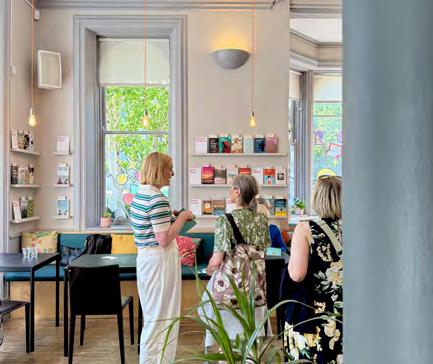
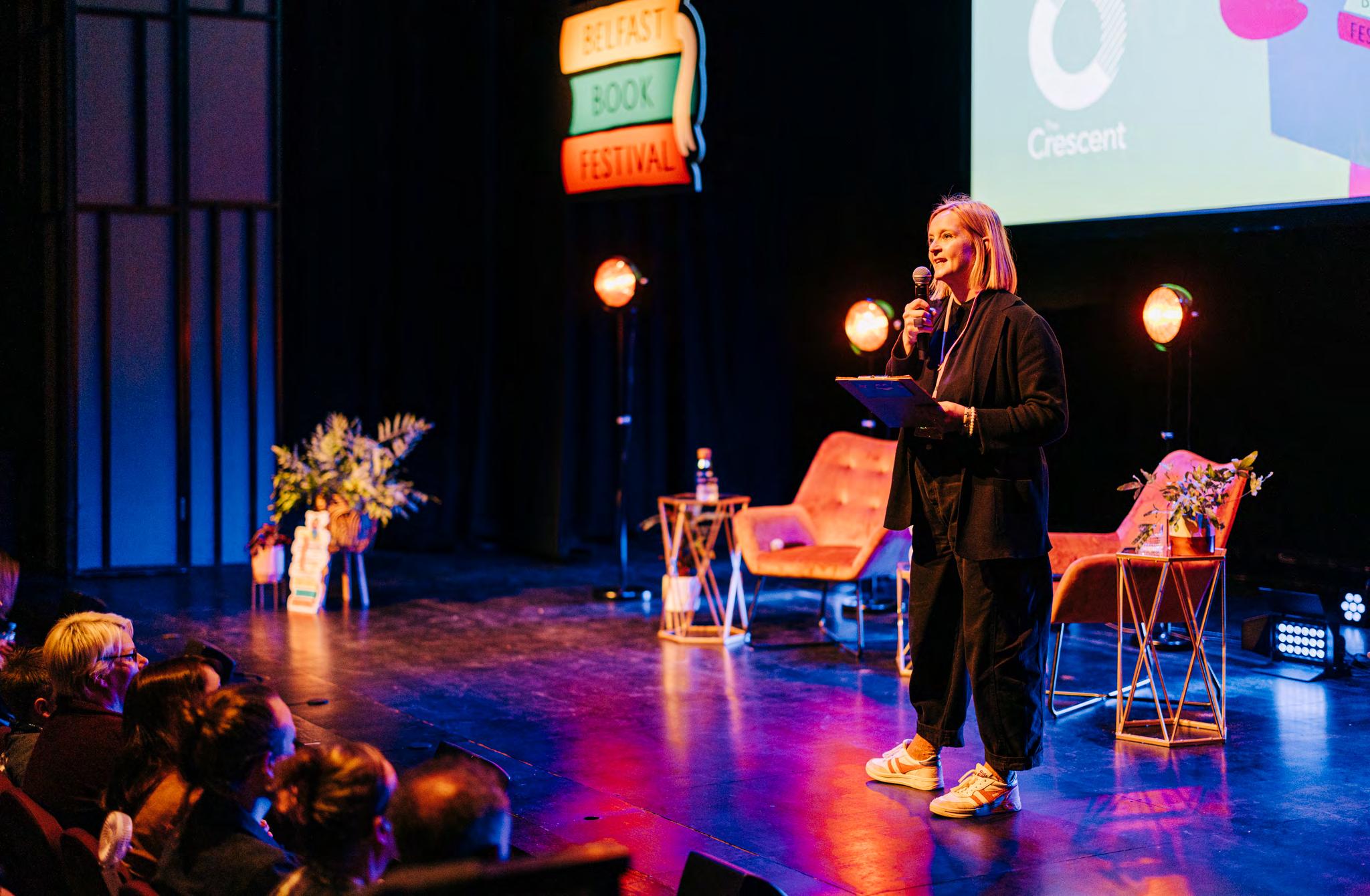
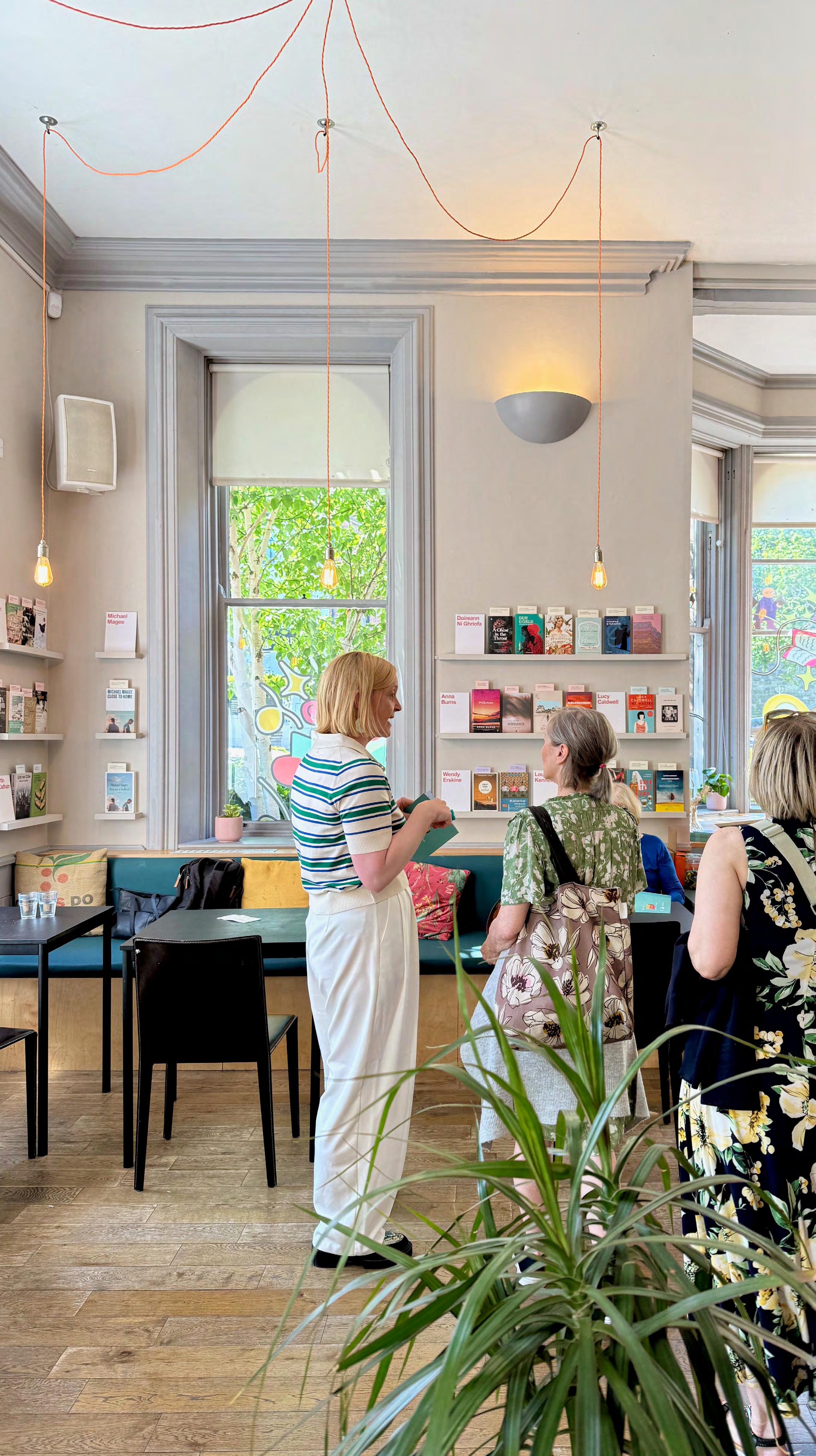
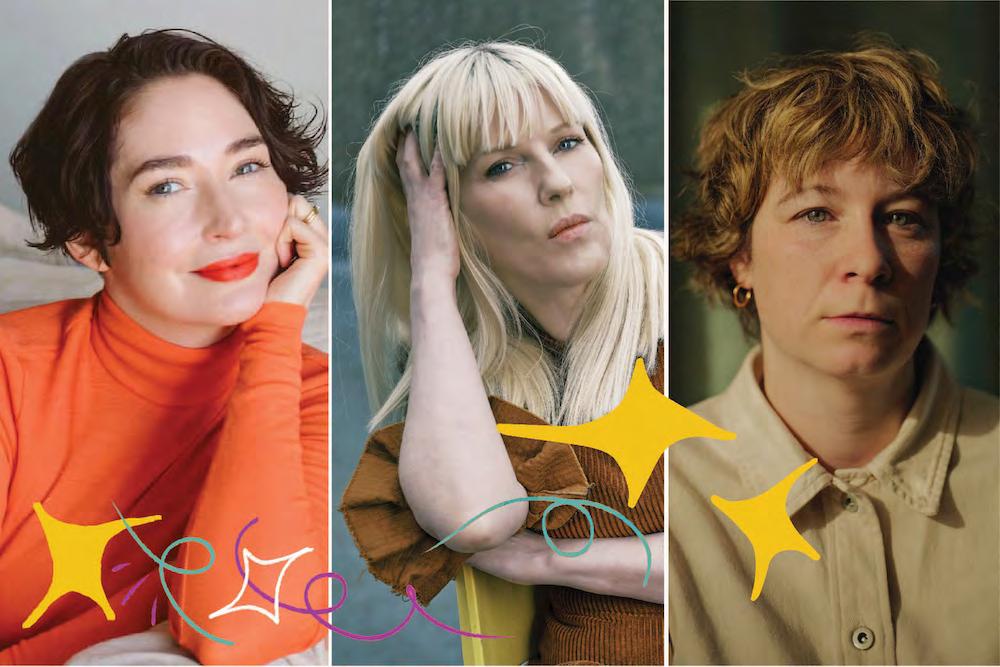
From homegrown talent to migrating swifts, Crescent Arts Centre CEO Sophie Hayles shares how community, creativity, and care shape one of Belfast’s most inclusive and inspiring cultural spaces.
Roberta Bacic
Conflict Textiles Curator
Roberta Bacic weaves memory and resistance through fabric. As curator of Conflict Textiles, she shares powerful global stories stitched by women confronting silence with creativity and courage.
(More Than Enough)
June 2025 Issue 1
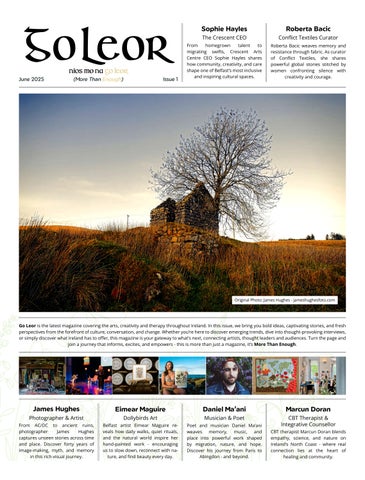
Go Leor is the latest magazine covering the arts, creativity and therapy throughout Ireland. In this issue, we bring you bold ideas, captivating stories, and fresh perspectives from the forefront of culture, conversation, and change. Whether you’re here to discover emerging trends, dive into thought-provoking interviews, or simply discover what Ireland has to offer, this magazine is your gateway to what’s next, connecting artists, thought leaders and audiences. Turn the page and join a journey that informs, excites, and empowers - this is more than just a magazine, it’s More Than Enough
Marcun Doran
From AC/DC to ancient ruins, photographer James Hughes captures unseen stories across time and place. Discover forty years of image-making, myth, and memory in this rich visual journey.
Dollybirds Art
Belfast artist Eimear Maguire reveals how daily walks, quiet rituals, and the natural world inspire her hand-painted work - encouraging us to slow down, reconnect with nature, and find beauty every day.
& Poet
Poet and musician Daniel Ma’ani weaves memory, music, and place into powerful work shaped by migration, nature, and hope. Discover his journey from Paris to Abingdon - and beyond.
CBT Therapist & Integrative Counsellor
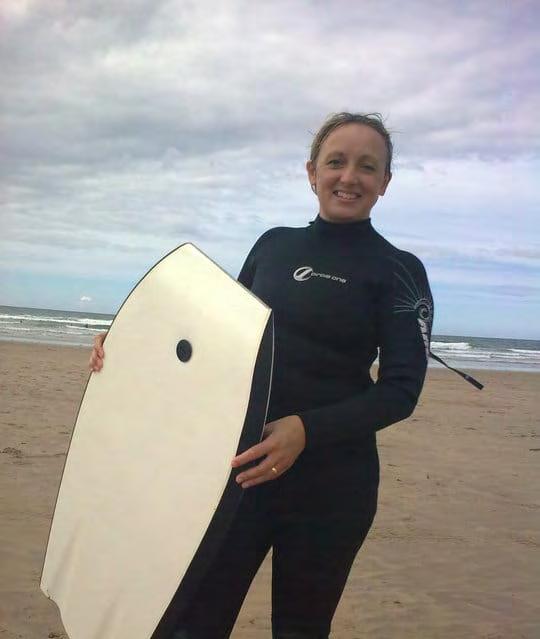
CBT therapist Marcun Doran blends empathy, science, and nature on Ireland’s North Coast - where real connection lies at the heart of healing and community.
Eimear Maguire
Daniel Ma’ani Musician
James Hughes Photographer & Artist
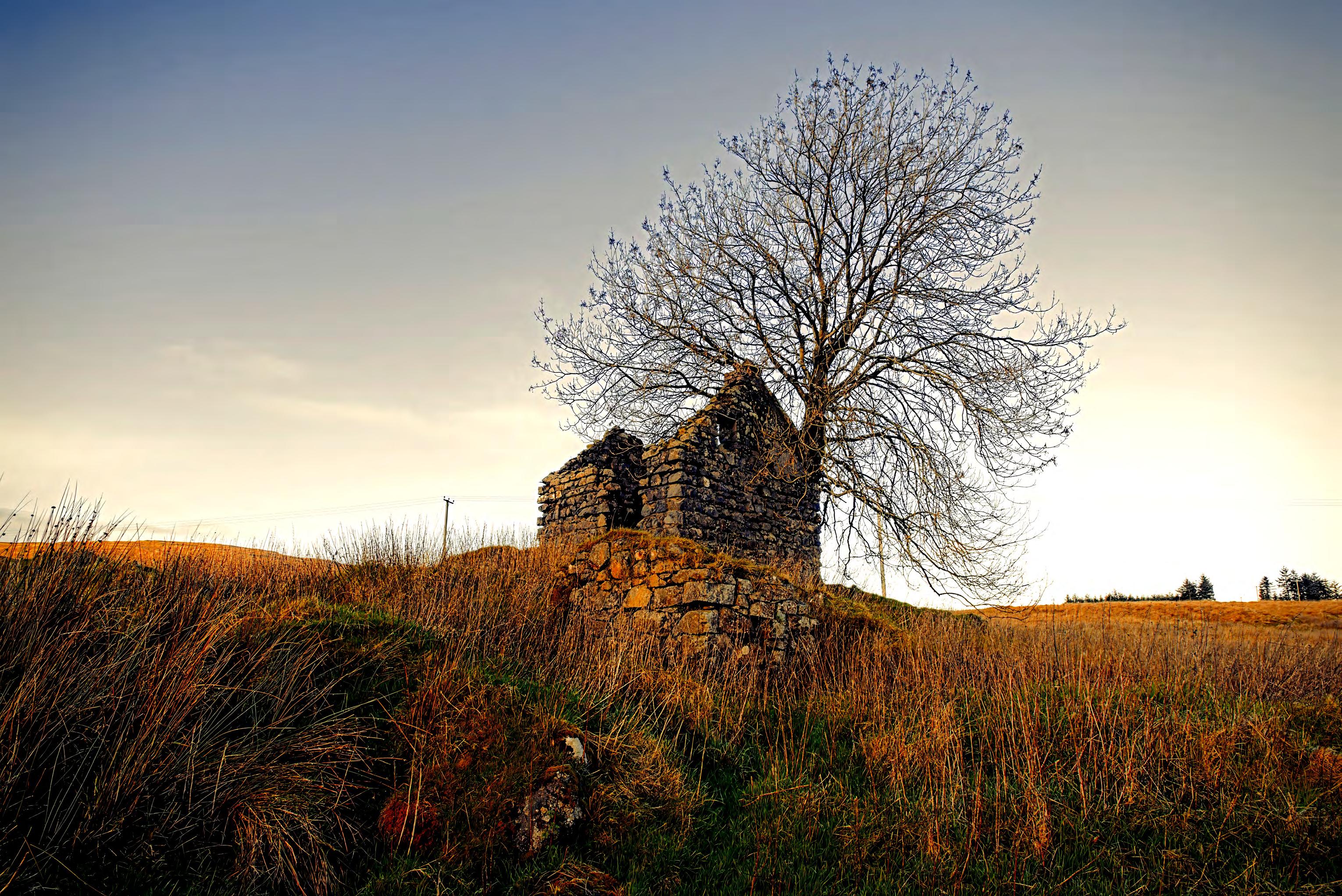
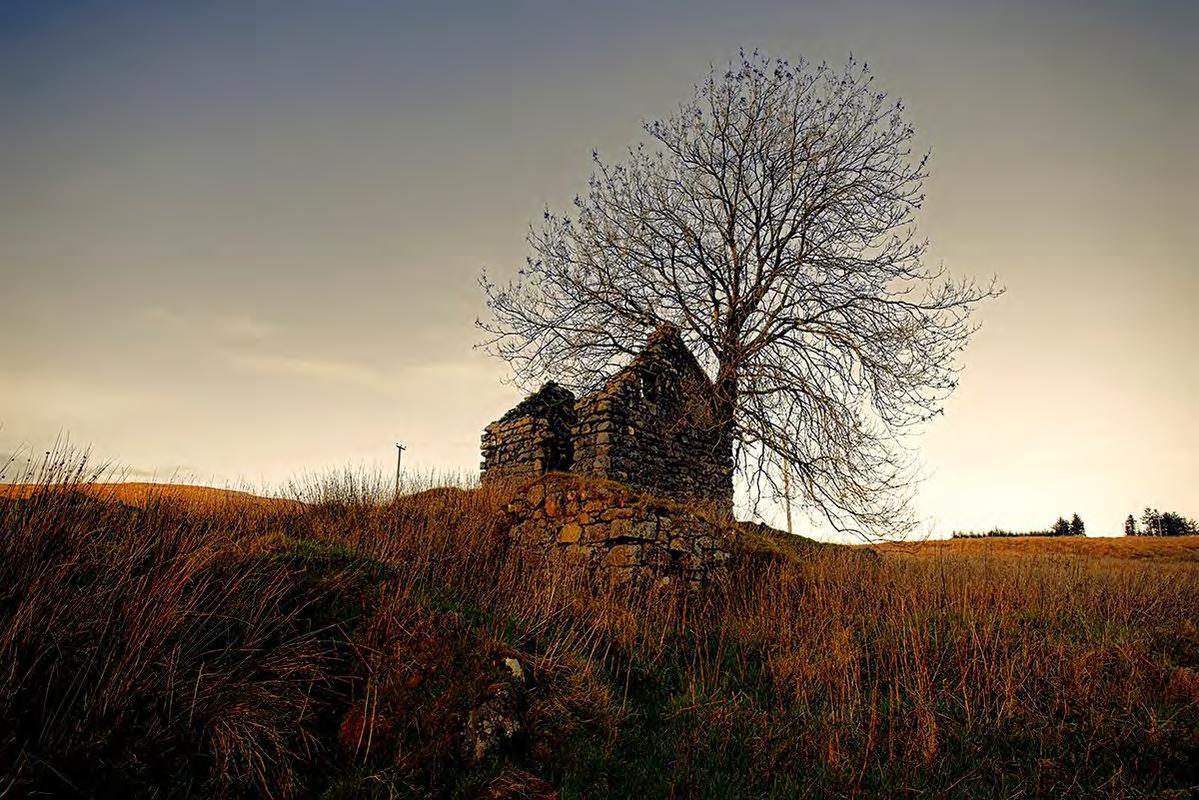
Original Photo: James Hughes - jameshughesfoto.com
We’re always on the lookout for fresh voices, bold ideas, and stories that matter. If you have a topic you’re passionate about, a request for something you’d love to see featured, or an idea you think deserves a platform, we’d love to hear from you. Go Leor is built on conversation and collaboration, and your input helps shape the future of the magazine. Get in touch with the editor via aidan@go-leor.co.uklet’s create something great together.
Sophie Hayles
James Hughes
Daniel
Roberta Bacic Conflict Textiles Curator
Interested in advertising with Go Leor? Partnering with us puts your brand in front of a vibrant, engaged audience of curious minds, creative thinkers, and culturally-aware readers who value authenticity and innovation. Our publication reaches a diverse mix of young professionals, artists, changemakers, and trendsetters who are always seeking what’s next. With a focus on creativity, events and exploration, whether you’re launching a new product, promoting an upcoming event, or building brand awareness, we offer tailored advertising opportunities to help you make a meaningful impact. To explore how we can work together get in touch with us at advertising@go-leor.co.uk
I’d like to thank all the contributors who volunteered to be part of this first issue of Go Leor.
One theme that naturally runs through this issue is migration and the idea of home. As editor, I feel incredibly lucky to speak with creative people who are not only trying to capture fleeting moments but also build community - often while navigating personal loss, hectic lives, and a constantly changing world. Their honesty and insight have been both moving and inspiring, and I’m excited to share their stories with you.
With each new issue, I hope artists, curators, and community workers can discover the connections they share with one another - and that readers begin to see the vibrant communities around them. More than that, I hope you feel inspired to engage with these networks, connect with others, and feel a real sense of belonging in the creative and cultural conversations happening all around you.
A special thank you to my family for supporting me through creating this magazine, and I hope you enjoy!
Aidan McGrath
Sophie Hayles The Crescent CEO
Holding Space for Art and Audiences: Sophie Hayles Reflects on Leading Through Uncertainty, Reimagining Accessibility in the Arts, and Welcoming Homegrown Talent Back to Belfast
It’s that lovely time between, a lovely/busy time,” says Sophie Hayes, CEO of The Crescent Arts Centre in Belfast. She’s describing the moment after the launch of their book festival: the energy of promotion, the wait for ticket sales, and the quiet hope that the right people are being reached.
“And so it’s a nice time,” she adds,
“because it’s the connection time between the events and audiences and things coming together.”
Despite a tough political and funding landscape, Sophie is driven by what The Crescent represents. “People are coming to join in and participate and be part of something. And I think that’s what a place like The Crescent does—as a building, and as an ethos. It’s
about bringing people together.”
“We Take Full Credit for Her Creative Genius”
One of the stories Sophie returns to with fondness involves celebrated book cover designer Anna Morrison
“She did classes at The Crescent when she was a teenager. She
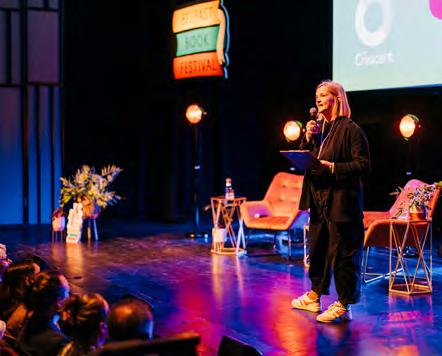
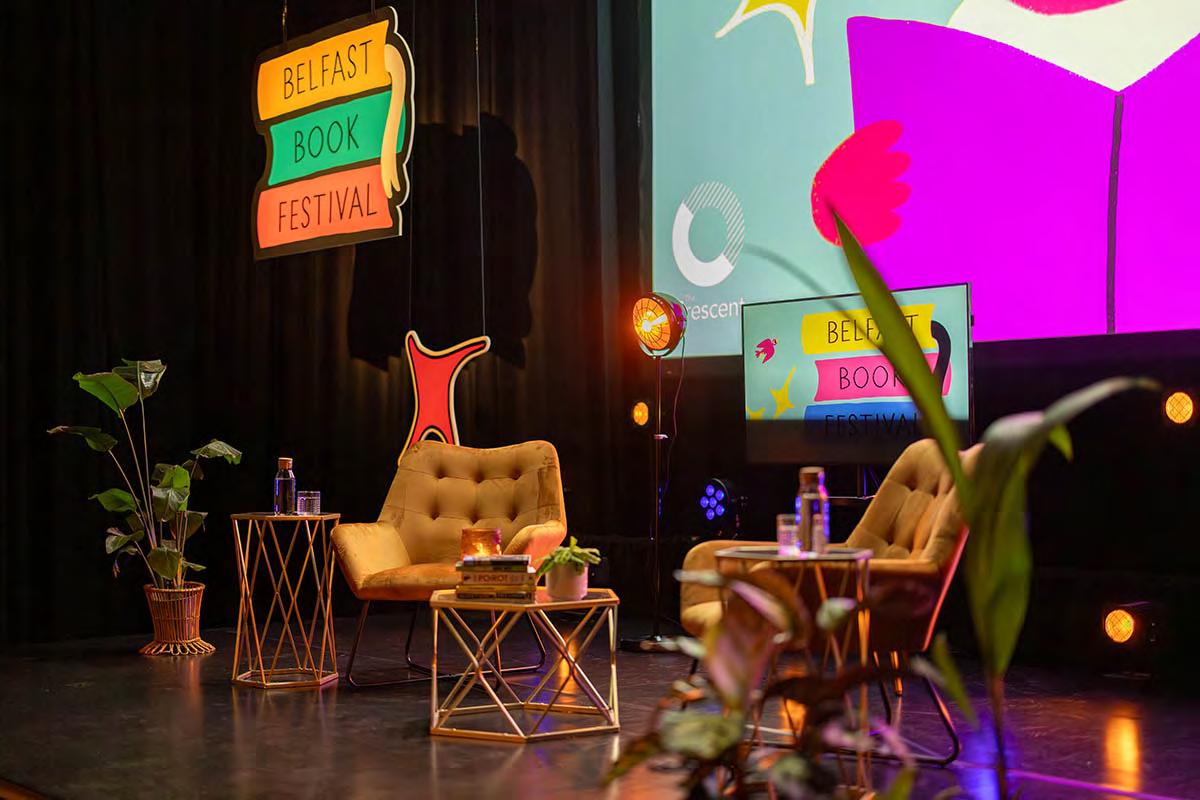
15th edition of The Belfast Book Festival at The Crescent Arts Centre 5 – 12 June
There’s something in the ethos and spirit of this building that is a female-led entrepreneurship.
did life drawing here. That’s why we take full credit for her creative genius” Sophie laughs.
Anna has returned to work on an exhibition called Art of Translation, featuring some of her most iconic cover designs. “She’s come back here to work for a bit on the exhibition, and she’s doing different workshops and activity in the festival.”
The exhibition came together serendipitously. “I had a conversation with a writer named Caroline Magennis… she wrote an amazing book - Harpy: A Manifesto for Childfree Women - and I loved her cover. And I said, ‘Caroline, who is the book cover designer?’ And she named Anna. And then I looked Anna up and I said, ‘Anna, please, could we have a chat? I’m not quite sure what it’s about, but I think your work is amazing.’”
“They Recognized Each Other from the School Bus”
Anna’s return was made even more meaningful during a recent media event. “We had Kristian Nairn and Anna Morrison… and Wendy Erskine, she’s a writer,” Sophie recalls.
Then something unexpected happened.
“Anna and Kristian recognized each other from being on the school bus! She was at Victoria College and he was at Methody. So they sort of recognized each other. This was their old stomping ground.”
“That was something,” she adds. “that’s one of the things that we as a festival, and I think particularly this year celebrate. There’s a lot of Belfast-based and Northern
Irish creatives who are just amazing.”
“A Place That Was Built by and for Women”
The Crescent is steeped in the legacy of pioneering women. “I feel very rooted in a place that was built by and for women,” Sophie says. “There’s something in the ethos and spirit of this building that is a female-led entrepreneurship.”
She points to Margaret Byers, founder of the original girls’ school on the site, and the inspiration for a new commissioned postcard by tutor Leah Davis. There’s a blue plaque for Byers on the building, as well as one for Helen Lewis MBE, a choreographer and Holocaust survivor.
Inside, the dance studio is named after Lewis, the writing room after
poet and theologian Helen Waddell, and the art studio after Mercy Hunter, a renowned teacher and artist - recognised in Belfast as a personality around town walking with her distinctive afghan hounds.
“I feel in the spirit of the place that women have had a very actual and natural ownership of the building. And I think that has continued to flourish.”
“They Always Come Back Here”
The Crescent is also home to a colony of swifts, which inspired writer and illustrator Ruby Free during a mini residency.
“She spent some time in The Crescent, and we asked her to focus on the colony of swifts that calls The Crescent their home,” Sophie says. “She’s done a creative writing response and some sketches.”
“They always come back here,” Sophie reflects. “They travel from Mozambique, the same journey across continents. And they always come back here.”
Delighted to draw a comparison between the swifts and so many creatives coming home to The Crescent - “It’s a really lovely way— swifts—of thinking about what home means. How identities are formed… that kind of mutuality. We provide their accommodation and they come and kind of bless us with their presence.”
“People Want to Invest in Talent and Community”
The Crescent’s “Pay What You Decide” model is more than a pricing strategy - it’s a commitment to accessibility.
“It was a calculated risk, I suppose… It’s also an audience engagement initiative,” Sophie says. “It’s been really interesting seeing donations increase, and
the number of repeat customers increase.”
She’s especially proud that the model has challenged assumptions. “Before we did the Pay What You Decide model, I always remember feeling really frustrated that people assumed that poetry events with local authors should be free. People do pay. They want to invest in talent and community.”
“Three Really Powerful, Creative Women”
Sophie lights up talking about another highlight: a panel called Page to Screen, featuring Kathryn Ferguson, Wendy Erskine, and Stacey Gregg.
“They’re collaborating at the mo-
ment,” Sophie says, “because one of Wendy’s short stories has been made into a film, directed by Kathryn that Stacey’s done the adaptation for… three really powerful, creative women talking about their craft.”
She challenges the idea that festivals need big-name imports to succeed. “There is so much talent here that people do want to listen to, do want to hear from and will pay for.”
“It Just Gives Me That Sense of Expansiveness”
Sophie commutes daily from Bangor, and says the train ride has become a vital “third space.”
“It’s not work, it’s not home… it’s a place that you can just hang out
Page to Screen - Sunday 8th of June
and be for a bit… I usually read a book and there is nothing more delightful than seeing water beside you and like letting your mind expand with the water and reading a book.”
That sense of in-between, she says, also defines what The Crescent offers: “somewhere where people can be.”
The Crescent is hosting exciting events and workshops throughout the summer explore them all at: crescentarts.org
The Crescent also runs the annual June Belfast Book Festival - be sure and check out their programme available at: belfastbookfestival.com
Director Kathryn Ferguson Writer Wendy Erskine
Film Writer Stacey Gregg
James Hughes Photographer & Artist
“On Myth, Memory, and the Uncommercial Eye: Photographer James Hughes on Forty Years of ImageMaking Across Time, Place, and Protest”
Iused to work for PWC in Belfast,” begins James Hughes. “And now I’ve retired, I’m busier than I ever was.” With over forty years of experience behind the camera, Hughes has cultivated a life in photography marked by passion and perseverance.
Hughes started with newspapers and weddings but soon turned away from commercial demands. “I didn’t like the commercial aspeect. So it was nice to be able to do what I love... like fine art, reportage, documentary.” Reflecting on his long professional life in photography, he notes, “Now I can just concentrate full time.”
In his early years, Hughes was a regular at live gigs, capturing icons
like AC/DC in 1979. “You remember doing AC/DC 79, Bon Scott, doing you know, people like that,” he recalls. “I really loved my music, so...” At that time, it was much easier to photograph gigs: “You could smuggle your camera in and you could get in easier.” Hughes also shot Prince for a magazine based in Cork. “You were allowed up for three songs and then you had to get out,” he explains. He remembers the experience fondly: “It was, you know, a passion again, you know.” Rory Gallagher was another figure who left a lasting impression. “Met Rory twice. Great to be able to see those people.” But the live music world has changed: “Yeah, I think it’s a different thing. It’s moved into a different era, a different time. Even the accessi-
bility is different. You know, I still enjoy it, and I would still take a notion - I still do the odd one.”
Even today, Hughes occasionally returns to concerts, albeit with a slower, more deliberate pace. “Back in the day it was film photography... and you had to be spot on. You couldn’t see what you were doing.” He fondly recalls the incredible lighting at a Queen gig in Dublin and compares it with the challenge of shooting in bars “where there was maybe just one lightbulb.”
His guiding philosophy in portraiture: “Get as close as you can... go further in and out of your comfort zone.”
Slowing down has become his intentional practice. “When I was younger, it was charging all the time. Now I’m slow... and it changes the look, changes the picture.”
Film photography remains a passion. He recalls travelling to New York in 2000 with 100 rolls of film: “It was a pound a roll, a pound to develop it in Snappy’s. And now it’s 30 quid.” Recently, he revived his Olympus OM-1, shooting in Dublin. “Whenever you shoot film, you can’t see what you’ve got, so you keep going... you can actually get something really better.”
Developing has become a rarer pursuit due to the cost of chemicals and papers. Still, he compares the process to cooking: “You have your own recipes. These days, I try
and stay out of the darkroom, you know? Yeah, but I still like shooting film.”
Even with an iPhone, Hughes finds magic. A train journey from Tbilisi to Gori in Georgia became a black and white film. “That was the same journey Steinbeck took in ‘47.” The result was a book: Steinbeck’s Georgia: The Stills. A few years ago, he notes, “you couldn’t have done any of that at all... and if it was film it would have cost a fortune.” Thanks to modern digital tools - even an older iPhone capable of shooting 4K - this kind of spontaneous, cinematic storytelling is now possible, opening up new creative possibilities that simply weren’t accessible with traditional film.
His recent exhibition, POSTCARDS (Ghostwritten), in collaboration with poet John Brown, pairs Hughes’ images with fictional postcard writings. “He looked through my archive... and wrote the back of the postcard, really as an imaginary or dead writer.”
The partnership, rooted in years of friendship that began in Belfast bookshops, has resulted in a uniquely layered artistic dialogue. Brown, once literary arts officer
James’ Upcoming Workshop
for the Arts Council, brought a narrative sensibility that complemented Hughes’ visuals. Together, they created around 100 imageand-text combinations which first appeared at the Fenderesky Gallery and now reside at Roe Valley. “It quite good. It’s a nice collaboration... people seem to enjoy it.” From the Fenderesky Gallery to Roe Valley and upcoming workshops, Hughes balances sharing techniques with beginners and advanced participants alike through his upcoming workshops, like the PHOTOGRAPHY MASTERCLASS based in the Roe Valley Arts Centre from 10am on Saturday the 7th of June.
Teaching in Istanbul offered a contrast: “There, you had a very rigid framework... whereas this, I can just actually tell them what I do.”
Working primarily with teenagers through to degree-level students, he recalls, “you were dictated what you had to teach them.” Despite the restrictions, Hughes found Istanbul to be a vibrant and enriching environment: “Istanbul was very good to me. It was better than here sometimes, even though it’s had its crazy moments.” He remembers the Gezi Park Protests in 2013 vividly: “There was teargas and different things,” he notes.
Still, the city’s energy, history, and complexity left a lasting impression on his creative journey.
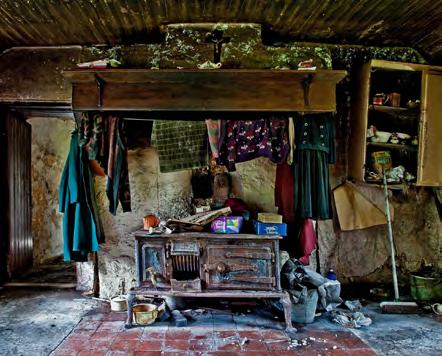
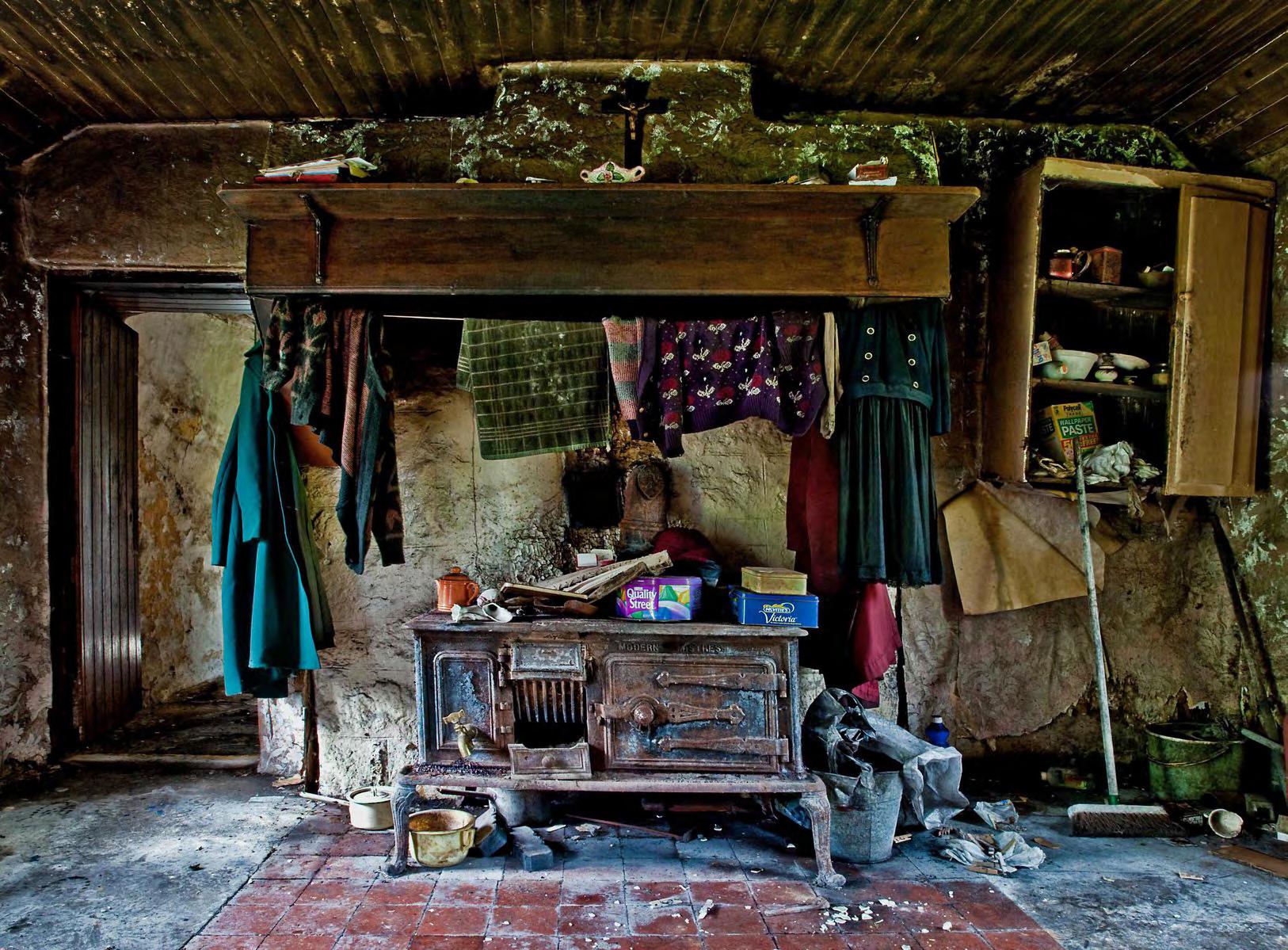
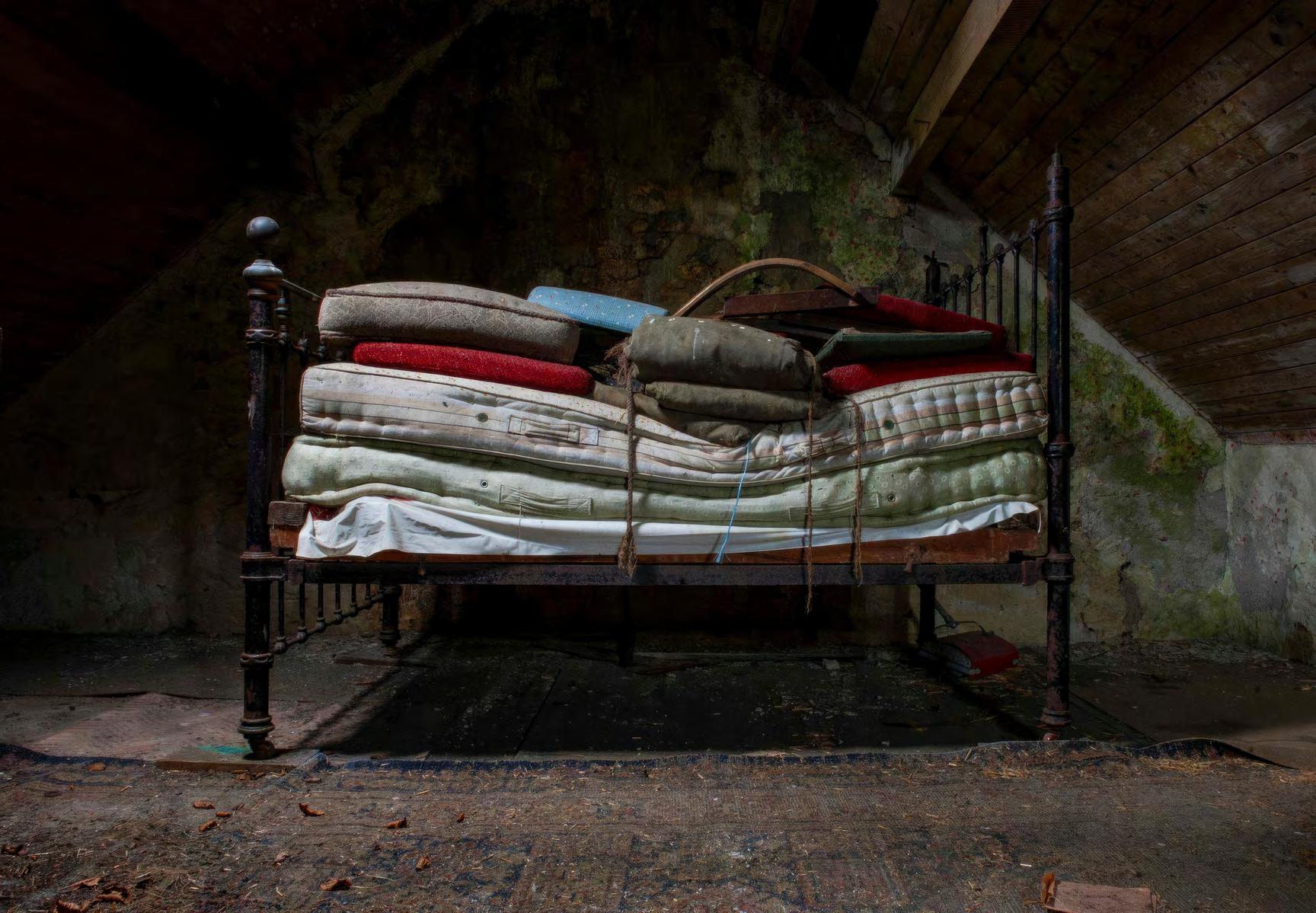
Cultural immersion defines his work. “Places like Georgia... it’s like being in a movie. A time machine.” Tangier offered “pictures everywhere.” Common themes persist across locations: “wardrobes, beds, ladders.” These recurring elements, often found in domestic or abandoned interiors, act like visual echoes. “You see wardrobes and think of the lives that touched them, the letters left in drawers, the layers of dust on forgotten beds.” Hughes sees these not just as motifs, but as portals into stories - quiet, personal narratives that linger in the architecture and furniture people leave behind.
“I deliberately get lost and then let the pictures find me.”
He anticipates a trip to Palermo, Italy, intrigued by its Moorish influences, vibrant colours, and unresolved war damage. “It’ll actually charge me up,” he says. As with his other travels, he doesn’t plan a route. “I deliberately get lost and then let the pictures find me,” he says. Palermo, with its overlapping histories—from ancient ruins to the scars of the Second World War—offers fertile ground for his process of wandering and quiet observation. “I’ve never been to that part of Italy, so I’m looking forward to that. It’ll be good, you know.”
Hughes is a devoted reader and draws heavily from mythology: “Look at Homer and Dante, and what we have here in Ireland, it’s incredible.” His visit to Troy left a strong impression: “As you arrive all the tourists go into the... Trojan horse and back on the bus. But if you go right round the back... there’s a little path... a whole other world.”
That little path soon revealed something more interesting. “The
local villagers go digging at night trying to find things,” he says, describing the discreet, well-worn trail hidden behind the official site. For Hughes, that quiet side path symbolised everything he seeks in his work: stories that go unnoticed, worlds just behind the curtain of what’s been commercialised or codified. “It’s very, very beautiful,” he adds, emphasizing how mythology isn’t just ancient - it’s alive in the everyday, in the spaces that escape the spotlight.
“I need a story,” Hughes states plainly. “A thread to hold it together... the glue to stick the story together, to create a narrative.”
Serendipity and unconscious instinct guide his photography. “The pictures almost dictate to you... you have an unconscious thing going on.”
Exploring the Sperrins, Hughes sees overlooked beauty in “forgotten” places. Recently, he travelled through the region with a group of friends, stopping to take pictures along the winding roads and silent bogs. “Parts of the Sperrins
are just empty, you know, there’s nothing there. It’s like forgotten, and you’re trying to find a petrol station.” Passing through small towns, Hughes noticed shuttered shops and a distinct lack of activity. “There’s nothing really happening. But again, it’s very, very beautiful.”
What makes the Sperrins particularly resonant for Hughes is their quiet, unpolished beauty and deep sense of history. These locations are rarely marked on tourist maps; rather, they are found on foot, tucked away beyond roads or deep in the folds of the terrain.
The journey, he says, is a reminder of how much of the country lies unseen by the mainstream. “It’s not even about funding... people haven’t even really been there, just forgotten or whatever.” Yet the Sperrins hold a raw, unfiltered beauty for Hughes - one tied closely to Irish concepts of place and spirituality. “They’re what we call really the Irish idea of a thin place... not just the bogs, but places where there’s a beautiful vibe, a very spiritual one that is thou-
sands of years old.” These are not easy-access tourist spots. “Thankfully, they’re not populated with people because you can’t drive there. A lot of these places, you have to walk.” He recalls walking through the bogs, dodging hazards but finding “just beauty, real beauty.”
“I don’t want to be put in that paradigm.”
For Hughes, institutional funding often comes with expectations that can narrow creative scope or impose predefined outcomes. He prefers to operate independently, shaping his projects according to artistic intuition rather than policy objectives. His collaborations with local museums and councils - like those in Ballymena, Roe Valley, and Waterford - allow him to present authentic work on his own terms, free from the pressures of aligning with agendas. “I don’t want to be put in that paradigmthere’s a sense of freedom in your own work” he says, contrasting this with the more prescriptive models that dominate national arts funding structures.
“In Istanbul... it’s all like the big commercial banks. If they like something, they’ll throw incredible money at it.”
Despite Ireland lacking a commercial art market, Hughes finds audiences abroad. “If somebody here doesn’t like it, I can usually get somebody elsewhere it’s about getting your work out there.”
He worries for emerging artists: “Once you think like that - how are we going to get money out of this? - your work changes... it hasn’t got the same integrity.”
“People say, aren’t you scared to go there? No, not at all.”
He continues to find influence in cinema: “I like foreign films... not so much Hollywood... more to do
with slowness and lighting and story.” Directors like Chantal Akerman, Paweł Pawlikowski, Wim Wenders, and Yasujirō Ozu have all shaped his visual sensibilities.
“Ever since I saw those I always did my interiors from a very low perspective, often on my knees,” he says, referencing Ozu’s signature low camera angles.
It’s not just technique that speaks to Hughes, but the mood these directors evoke - the pacing, the attention to atmosphere, the way a room breathes or a shadow falls. He responds to the painterly colours of Akerman, the stark compositions of Pawlikowski’s black and white, the emotional restraint of Wenders, and the contemplative poise of Ozu’s domestic interiors. These cinematic influences permeate his photography, lending it a stillness and weight that resists easy consumption.
“Also literature, I read a lot... I tend to like my books and poetry as well.”
Next year, the John Hewitt Society Summer School in Armagh will host an exhibition of Hughes’ portraits of poets and musicians. The show will span years of work, showcasing portraits of literary figures, many of whom are no longer living.
For Hughes, it’s a deeply personal endeavour: “Trying to keep it alive,” he says, referring not just to the subjects, but to the cultural and creative legacy they represent. This body of work captures the richness of local voices and celebrates the artistic spirit of the region—one that Hughes has consistently documented with quiet reverence.
In Ballymena, where affection is sometimes shouted as abuse, Hughes finds groundedness. “You can go anywhere in the world... it’s quite funny in a way.” Growing up and spending much of his
life in the area, he’s developed a deep familiarity with its character - both endearing and eccentric.
“If you know people, you tend to almost shout abuse at them,” he laughs. “It’s almost a term of affection... in other places you would be in trouble for that.” This uniquely Northern Irish humour and bluntness grounds him, and he reflects fondly on years spent working in local factories, gaining not only resilience but a rare ability to connect with people anywhere. “You can go anywhere in the world,” he repeats. “People say, aren’t you scared to go there? No, not at all. It’s quite funny in a way.”
His observations in Istanbul, where cultural heritage is often at risk of being wiped away by commercial development, resonate with what he now sees in Belfast.
In both cities, Hughes has watched old streetscapes and artist communities give way to corporate interests, often with little regard for the cultural soul of a place. “They don’t care how old or what it is. If there’s money, it’s gone.”
As redevelopment threatens Belfast’s Cathedral Quarter and North Street Arcade, Hughes sees history erased: “It will look like part of New York... not like anything to do with here.” For him, these spaces are layered with cultural memory and artistic possibility - places where people used to gather, share, and create.
The thought of losing them to generic developments troubles him deeply. “There’s lots you could do,” he says. “But it’s the money again. Comes down to money.” It’s a sentiment that closes out the conversation, reflecting the encroachment of commercialisation on place, identity, and the stories worth preserving.
Keep up with the latest news from James via his website: jameshughesfoto.com
Join his upcoming workshop with the Roe Valley Arts & Cultural Centre on the 7th of June: roevalleyarts.com/workshops
See POSTCARDS (Ghostwritten) by James Hughes & John Brown: roevalleyarts.com/events
Daniel Ma'ani
Musician & Poet
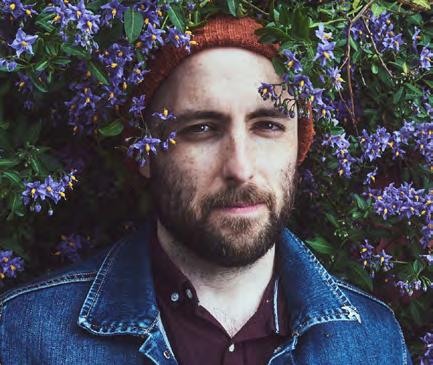
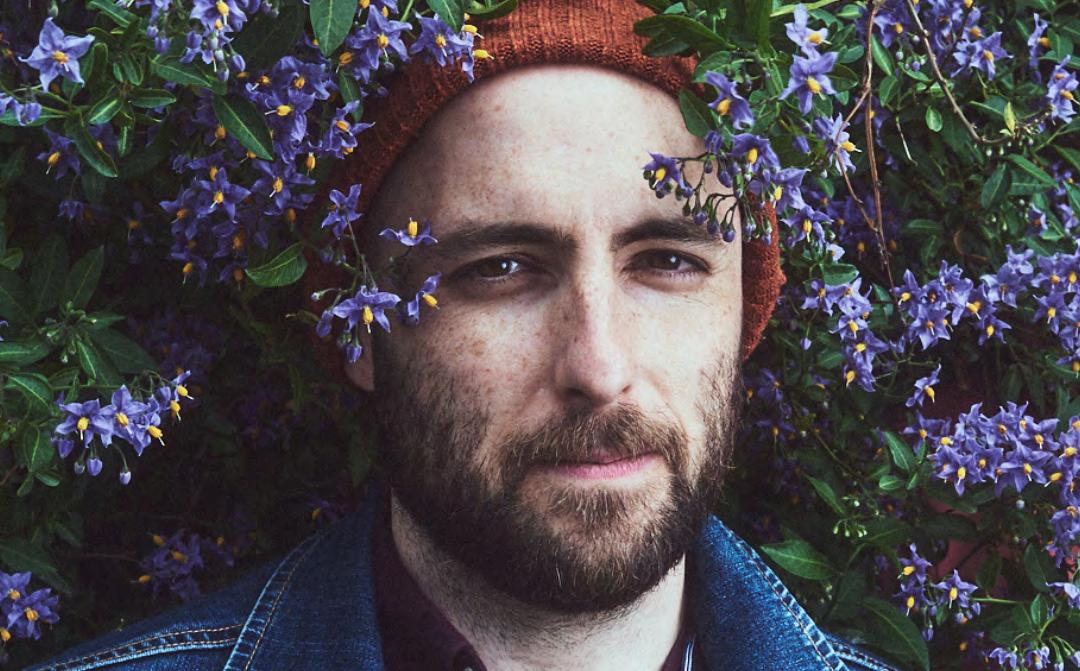
Growing up on the North Coast, Daniel is a poet and musician whose work is deeply influenced by his roots, travels, and a lifelong connection to the natural world. Now based in Abingdon, he blends spoken word with music in his collaborative project You Talk Too Much alongside Markus Reyhani.
In the quiet town of Abingdon, just ten minutes from Oxford, Daniel has found more than just a place to live - he’s found a creative home. Formerly based in Paris, Daniel relocated when his wife landed a job with Oxfam, whose very name is rooted in Oxford.
Although she has since moved on from the organization, the couple chose to stay, drawn by the town’s vibrant cultural atmosphere steeped in music and poetry. Daniel’s creative journey, however,
didn’t begin in Abingdon. It has been a lifelong pursuit, marked by movement and reinvention. From his early childhood in Greece, to adolescence in Ireland, and then stints in Malta and Paris, Daniel has continually grappled with the idea of belonging and self-expression.
Frequently, these transitions left him feeling like a fish out of water - navigating new languages and relationships. Whether adjusting to life in Greece as a child or grow-
ing up in Ireland as a teenager, Daniel was often caught in a liminal space. This recurring sense of displacement seeped into his creative work, fuelling a deeper introspection and sensitivity to the nuances of identity and place, while still being underpinned by his close family relationships.
Perhaps his biggest transition was made when he uprooted once again, this time to Paris to be closer to his partner, now his wife of 8 years. However, Daniel found
Young people don't have a lot, but they're full of hope and trying to find their way.
his time in Paris created a sense of personal invisibility.
Witnessing homelessness at levels and in forms he had never encountered before, all while surrounded by the opulence of the French capital, the result was a period of creative dormancy that only very gradually began to lift.
He recalls writing prolifically on the Paris Metro, where hours underground gave him the time to utilise his voice. From this emerged a unique idea: what if a poem could become a Hollywood blockbuster? Drawing inspiration from epic narratives like Beowulf and the rhythms of Greek literature, Daniel began crafting longer, self-aware poems - “As long as I make it a little bit silly and self-aware then it suddenly becomes totally worthwhile”
Daniel continues to publish poetry on his substack which has garnered hundreds of followers and
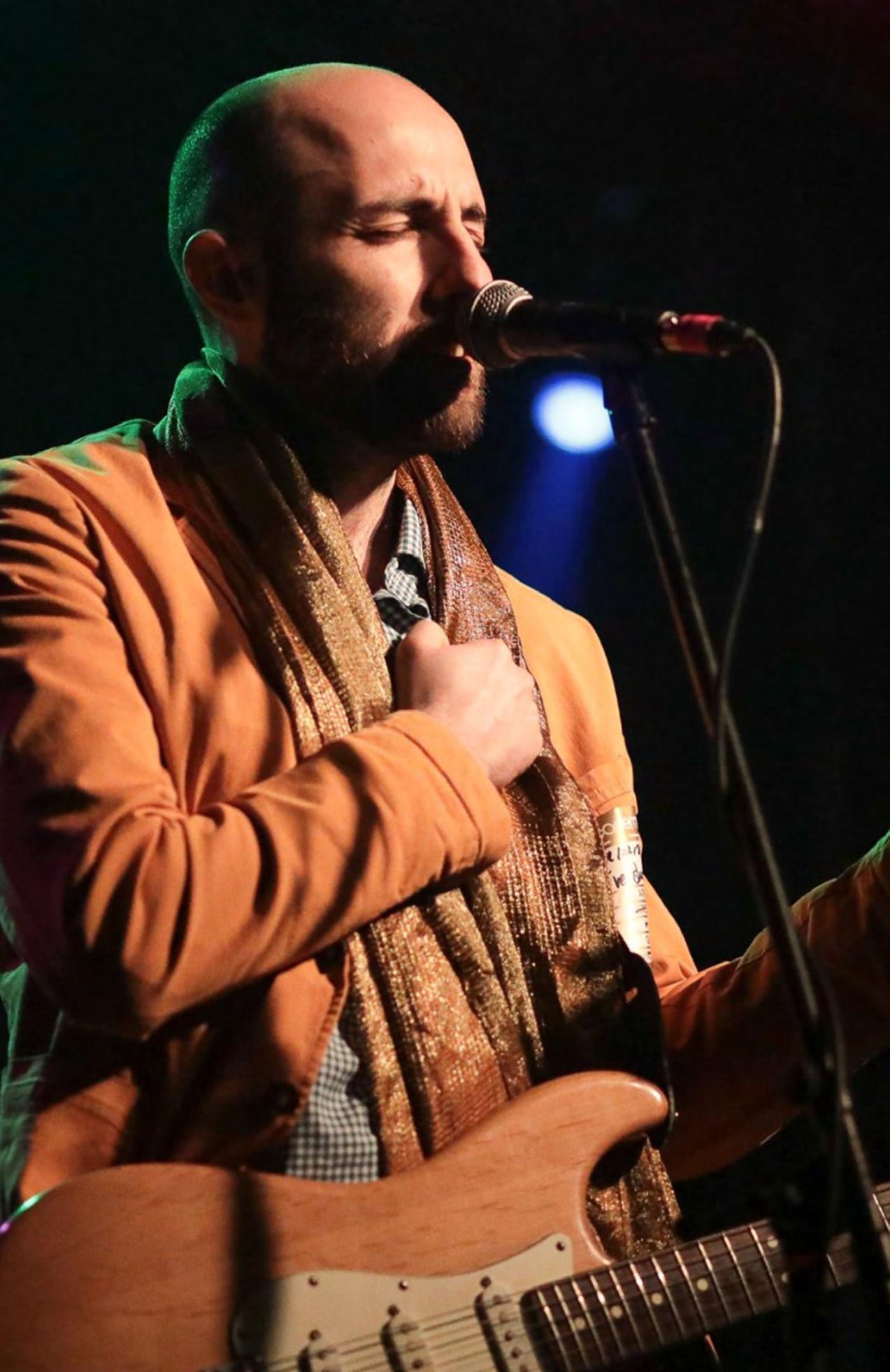
recently passed the 1 year milestone. But Daniel’s artistry doesn’t stop with the written word. Music has long been a part of his identity, dating back to school bands and guitar-driven folk songs.
It recently culminated in 2020, while living in Abingdon - a lockdown encounter with a composer neighbour named Markus, who shared Daniel’s curiosity and gentle demeanour, it led to an enduring creative partnership.
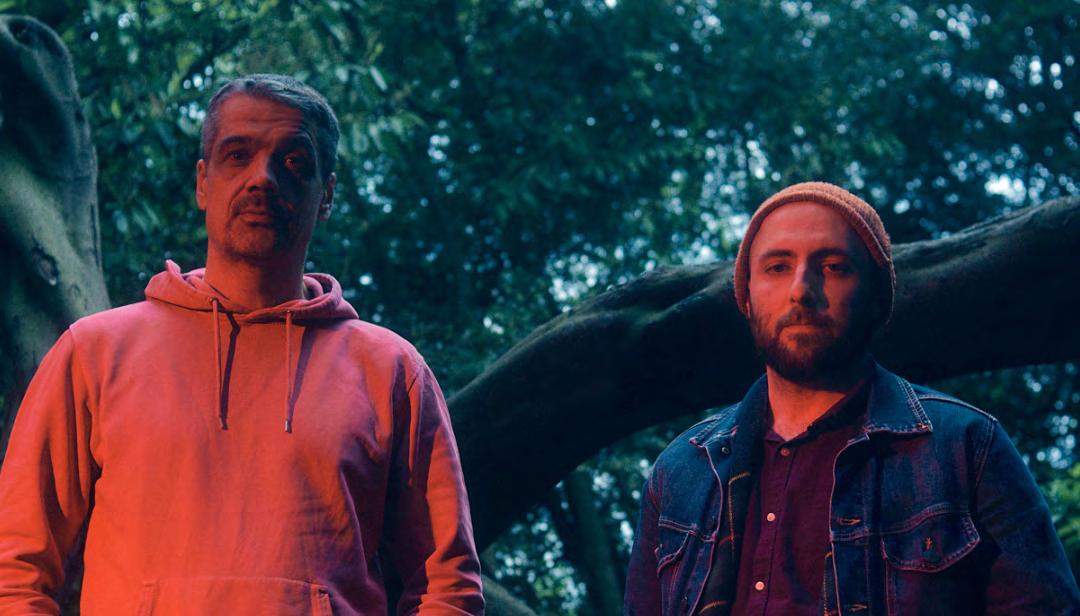
They formed the band You Talk Too Much, blending Daniel’s spoken word poetry with Marcus’ compositions. Their work dances on the edge of sentimentality, infused with the melody of Daniel’s voice and the rich sonic landscape of Markus’ music.
One of their standout pieces, “Cormorant Conversation”, was inspired by local wildlife and the nuances of meaningful dialogue. “It mirrors our personal relation-
You Talk Too Much - Photographed by Joe Magowan
ship,” Daniel says. “We both give each other space to share ideas.”
The theme of belonging runs deeply through Daniel’s work. He recounts the story of his father, who emigrated from Iran to Northern Ireland in the 1970s, experiencing educational discrimination both in Iran as part of the Baha’i community and again in London as a migrant, he was directed to Northern Ireland in the midst of the troubles.
“Immigrant mentality is about hope,” Daniel explains. “Young people don’t have a lot, but they’re full of hope and trying to find their way.”
This sense of generational identity - shaped by conflict and cultural evolution - is a common thread in Daniel’s writing. A local radio host once noted that conflict, especially in places like Northern Ireland, forces people to question their place in the world. Daniel
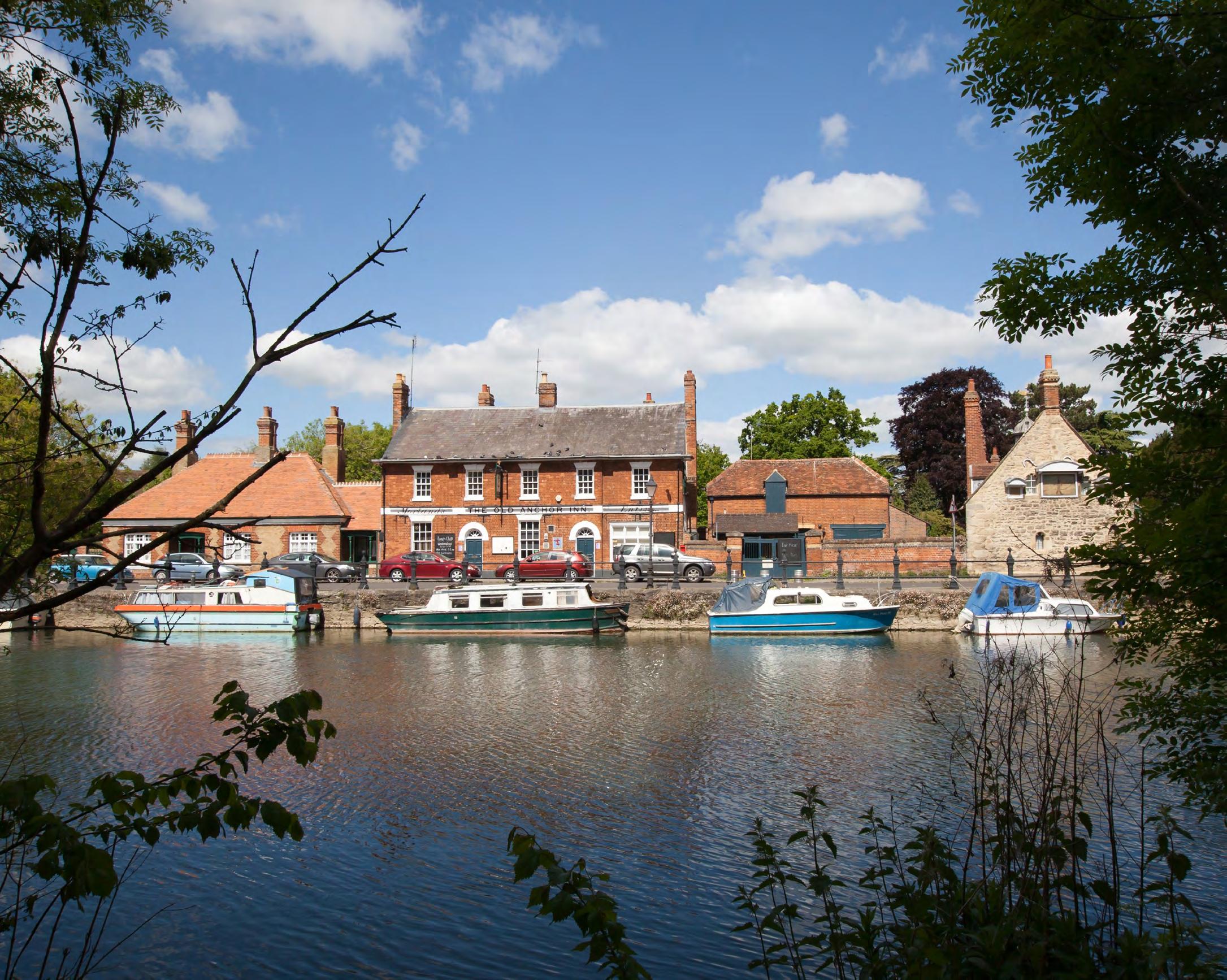
Abingdon, Oxfordshire
agrees. “I thought my feelings of not belonging came from being part-’somewhere else’, but i was born in Ballymena, and I think it’s actually a feeling shared by a lot of people my age from Northern Ireland”
The natural world is another recurring motif in his poetry. Inspired by gardens in England and his coastal upbringing in Northern Ireland and Greece, nature often provides a peaceful counterbalance to the complexities of urban life.
“I always felt smaller than the natural world,” he says. “It was stronger, forever.”
“I think the people around me are very much lovers of the natural world - and I’m a bit of a watcher and observer. Living here I saw people who loved their gardens, took care of their plants, and I always wanted to find a deeper meaning in it”
This reflection has led to Daniel’s upcoming collection of poetry, Plant Pot Poems, which continues his engagement with themes of nature and observation. The collection is set to offer new work that builds on his interest in the relationship between people and the natural world, particularly through the lens of gardening and plant life.
When asked about current inspirations, Daniel mentions Joshua Burnside having released a new album, he enthuses how on the pulse he finds his music. However, he makes a modest comparison, full of humour, between his own talent and that of Burnside, again reflecting the introspective and thoughtful nature throughout Daniel’s work. “This is what I could have been! If I had his talent and stuff...”
He then turns to local performers at open mic nights - individuals who create for the sheer love of it.
One such influence is Mandy Woods, a songwriter of over 35 years whose craftsmanship Daniel studies closely. “These people are the real inspiration,” he says. “They keep going without reward, without recognition. That’s the purest kind of artistry.”
“I think that’s our most powerful resource, these people and their will to create.”
We can exclusively reveal that You Talk Too Much have an upcoming new release: ‘Big Thing’. Check out their whole catalogue of music on Spotify: You Talk Too Much
Keep up to date with Daniel’s latest news and music via his website: danielmaani.com
Subscribe to and support his poetry on substack: substack.com/@danielmaani
Roberta Bacic Conflict Textiles Curator
Roberta Bacic reflects on decades of curating stories through fabric, the responsibility of memory, and the importance of empowering future generations to continue communicating beyond words.
Well, my role has been changing and expanding over the years. In a way. I started in 1975 to collect a few Arpilleras in solidarity with the women who were telling their stories. And the stories were not going out from Chile.”
So begins Roberta Bacic, curator of Conflict Textiles, whose life’s work has been shaped by the powerful handmade textiles known as Arpilleras. Experiencing the turmoil of Chile’s military dictatorship, these textiles became a visual voice for women silenced by repression.
“So it’s not that there was a tradition in Arpilleras. They were born out of the need to express themselves,” Bacic says. “Especially because in traumatic times, you don’t find the words. What does it mean to have a disappeared husband? How do you explain it?”
As Arpilleras became illegal, Bacic played a crucial role in protecting and distributing them through international solidarity movements. “I looked after the pieces by sending them out,” she explains. “The solidarity movement in the UK, in France, in Germany, in the United States and Canada and Japan ac-
quired many, many Arpilleras... to support the women and give them some income for survival, but also to pass on these messages.”
Upon moving to Northern Ireland over two decades ago, Bacic found new relevance for these stories. She recalls how the exhibition “Stitching and Un-Stitching the Troubles“ led local women to recognize parallels in their own lives.
“They started to make their own,” she says. Now, the local council holds a significant number of Northern Irish Arpilleras about the Troubles.
“The Arpilleras are like ambassadors,” Bacic continues. “They tell the story of the recent history of Chile, and also they influence and encourage other cultures to tell their own stories.”
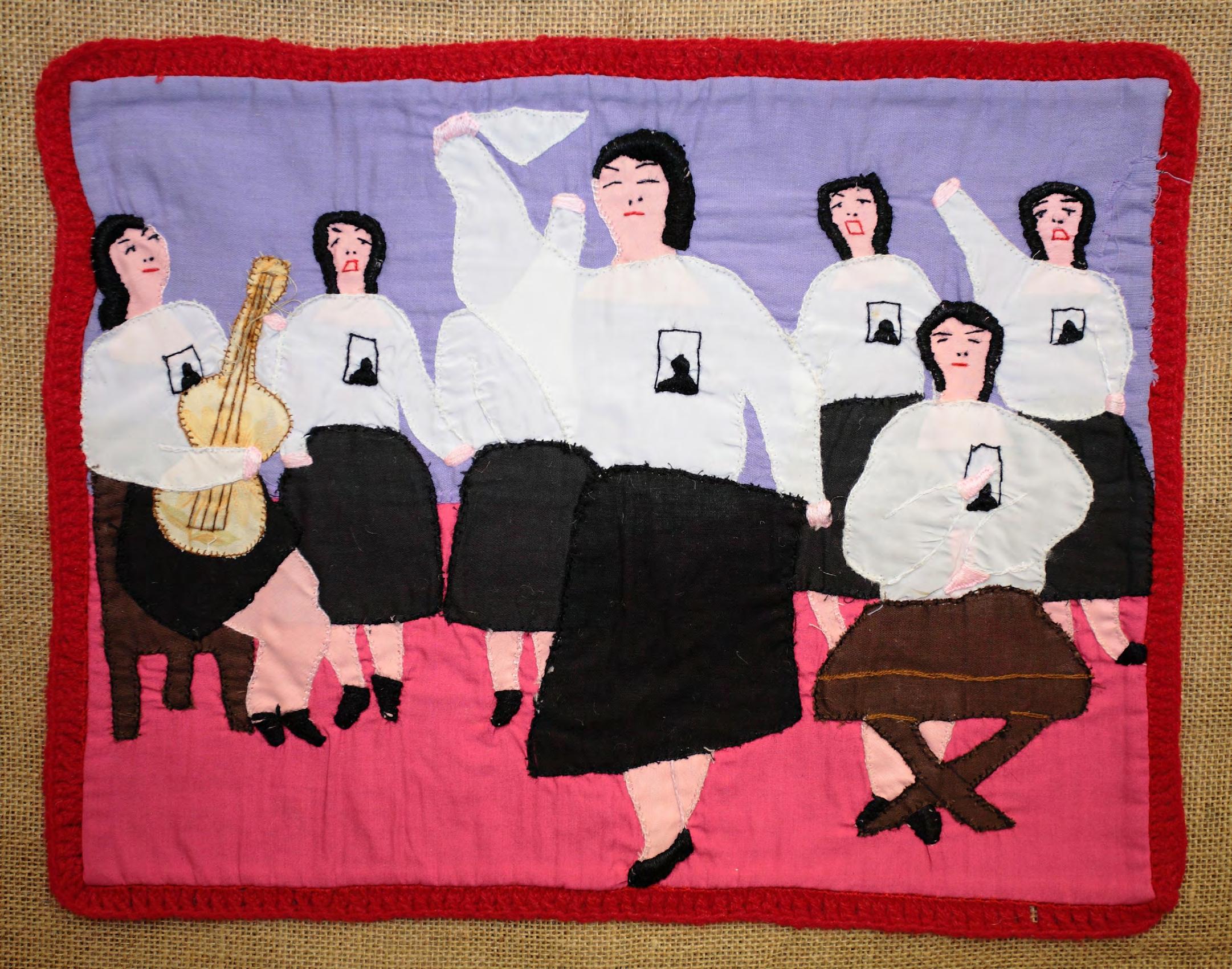
One piece that stands out is “La Cueca Sola”, the reimagined national dance of Chile, performed alone by women holding photos of disappeared loved ones. “They have transformed that message, and they have gone into the black and white to show the mourning,” Bacic explains the women state: “I don’t have my partner, now I don’t have my son with whom to dance. So I dance alone.”
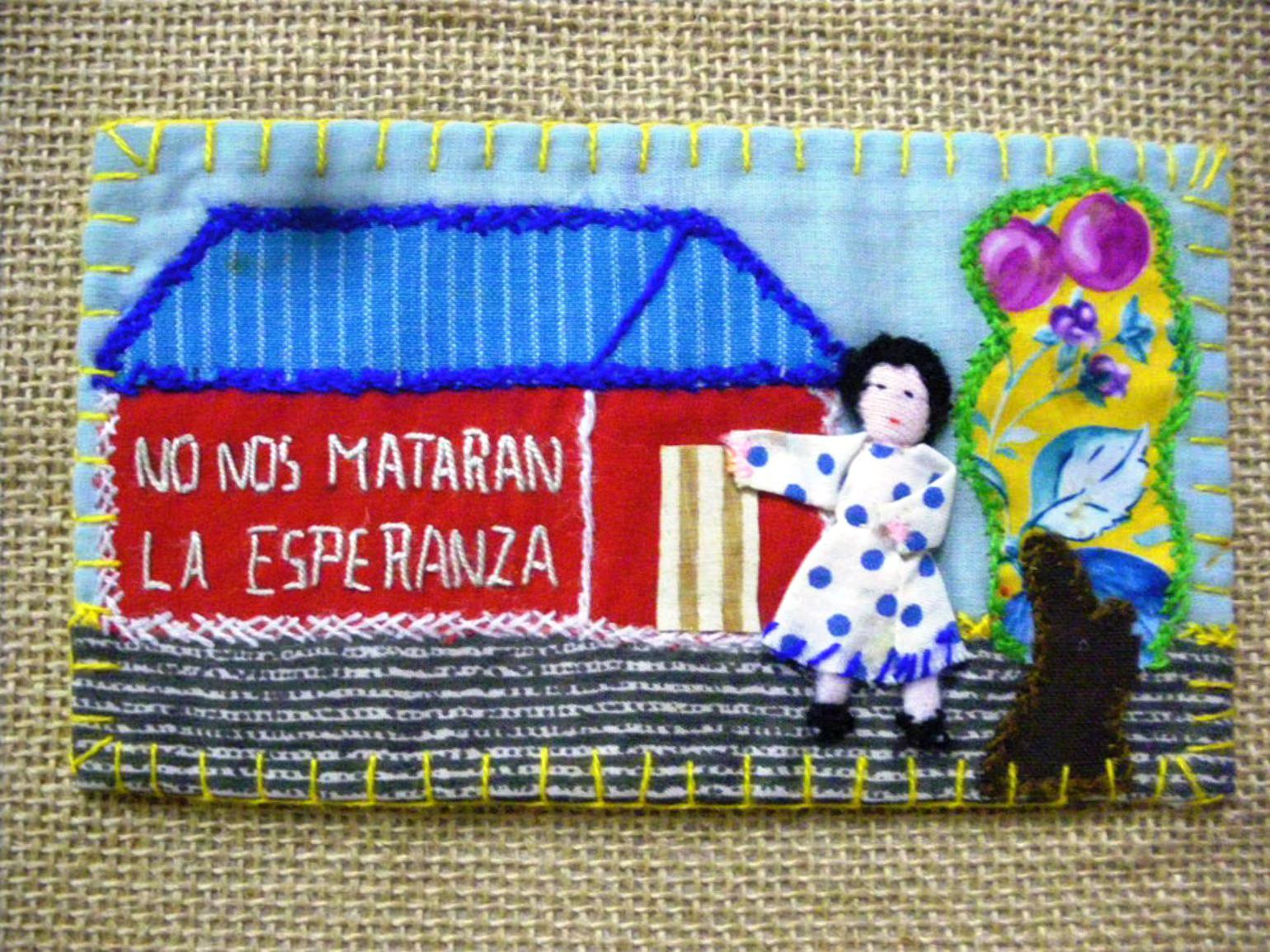
Another memorable Arpillera, “No nos matarán la esperanza” (They won’t kill our hope), embodies defiance. “It’s a little piece that is very elaborate,” Bacic notes. “Don’t lose hope. Because if you lose hope
Each Arpillera is made with great intention, stitch by stitch. “You have to be very determined,” Bacic says. “It’s this stitch in and out, in and out. It doesn’t run through the sewing machine.” The process is not just physical, but emotional and temporal: “It has what I call a bank of time,” she continues. “The time of having lived experience, the time to have processed the experience, the time to decide what you tell and what you don’t tell. And the time you dedicate to making it.”
Bacic reflects deeply on the significance of the Andes in shaping Chilean identity. “Chile is over 4200km long and the Andes goes from the north to the Antarctica, and it goes from desert to the icebergs,” she explains. “It’s a determining space by which you know if we are in the north, south, east or west, it is very determinate of a physical location.” The mountains are more than geography - they are a marker of place and memory.
When her husband invited her to his mountains in Northern Ireland over 25 years ago, Bacic recalls, “I came here and I said, not laughing at him, but what mountains? Are you talking to me about Binevenagh? It’s so beautiful. But it looks a hill for me.”
Yet, she came to appreciate the distinct identity of the Irish landscape. “You have the elements with the green, the water... you come by plane and you see the green,” she says. In contrast, “You come to Chile, you cross the mountains and it’s always mountains.” Flying back to Chile, Bacic and her family always take photos of the Andes from the plane, struck by their grandeur, even in summer heat: “It always has snow on the top of the mountains.”
Her observations on the sun’s symbolism in Arpilleras are strik-
ing: “Observers would say, oh, that is the sun, the flowers, a very mild message. But no, the sun is there because it shines for everybody. The makers put the sun in because they are making what they don’t want others to experience. What has happened to me, I don’t want it to happen to others. That’s a message I pass on in the present times to the wars we have. It’s not to one or the other, it’s to everybody. The sun is there because it shines for everybody and makes no discrimination.”
Conflict Textiles has inspired communities far beyond Chile. In Catalonia, workshops led to a series on the Spanish Civil War. In Zimbabwe, women displaced and erased from official records created their own Arpilleras. “We have brought them out, emerging from silence,” Bacic says.
A particularly poignant work, by Argentinian Ana Zlatkes, depicts Bacic herself. “She did this very small piece about me, how she
saw me in my action of bringing out the voices of the people who have no agency.”
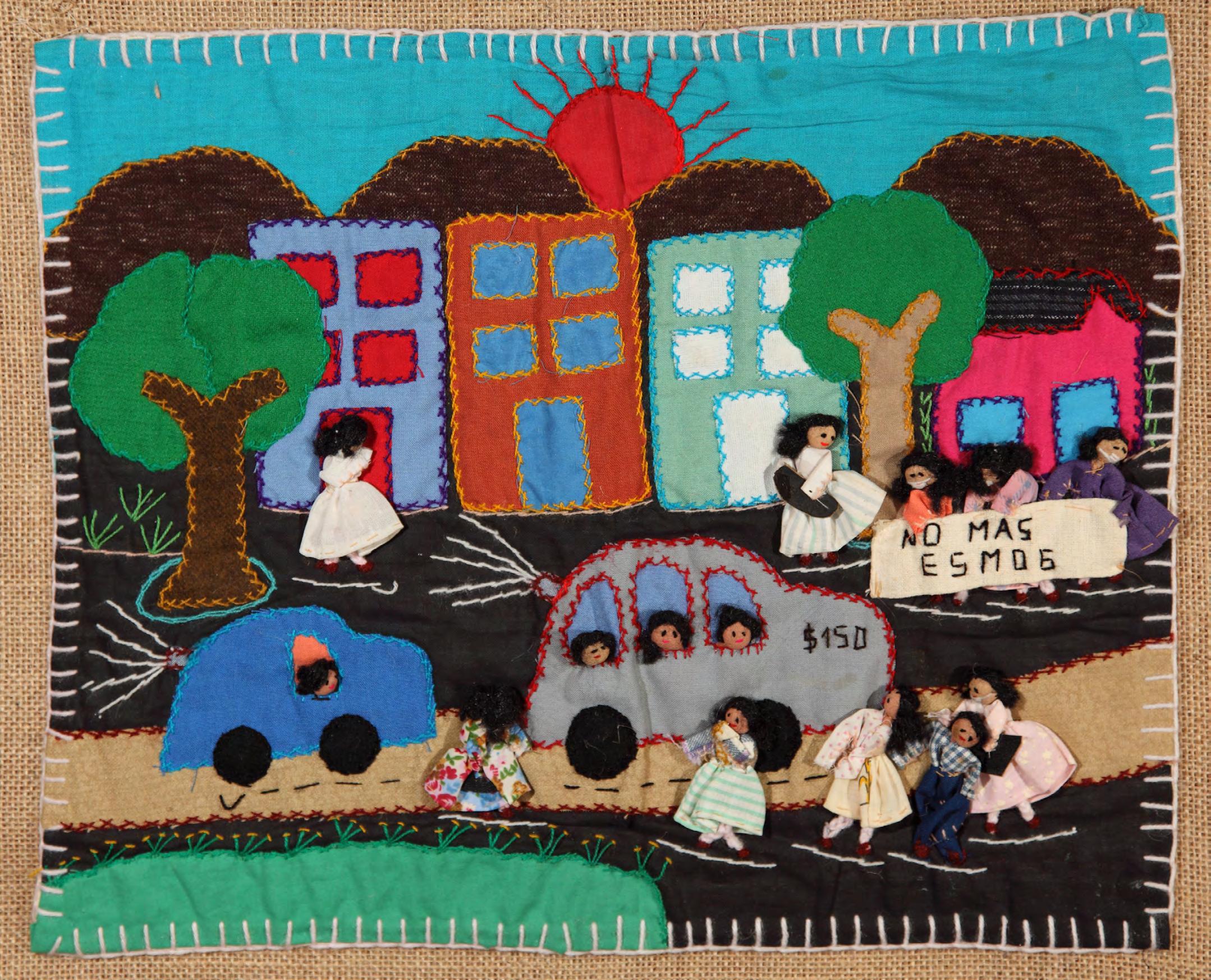
Among Bacic’s collection are pieces like “No más contaminación” (No more pollution) from the 1980s, mounted on hessian to honor its origins. “The Arpilleras don’t come with the backing,” she explains. “The backing is something I invented, is like the signature of Conflict Textiles”
Bacic has carefully mounted each piece on hessian to remind viewers of the humble beginnings of the Arpilleras, originally made on sacks used for flour. “Very relevant as a few of our pieces have gone to the Tate Gallery, to the V&A and beyond.”
“In a way, it’s a frame. Also, it’s very easy to hang because we put a loop and just put a stick through and they can hang. They don’t get handled by the hand, protecting them and assuring there are no oils.”
This process ensures preservation while maintaining the character of the original textile. “I do workshops and there is no tea and biscuits; that’s very different to the average quilting bee group,” she adds. “That’s a social place. There, people can work and they can have tea before or after, but in our workshops we focus on the sewing and talk about the issues they portray.”
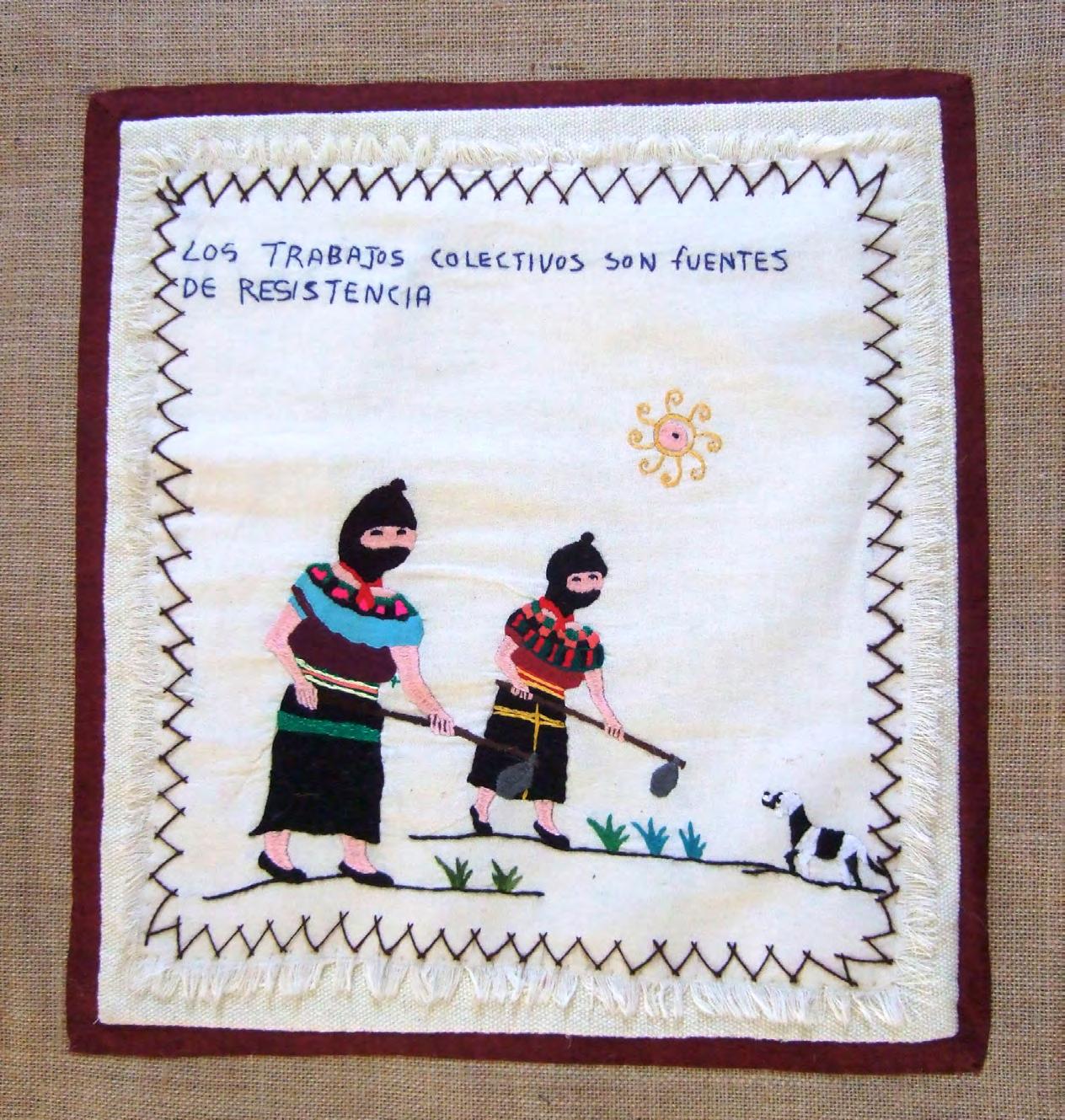
Another is “ Los trabajos colectivos son fuente de resistencia .” (Collective work is a source of resistance) Bacic shares, “It was a little scarf that I was given in Mexico... I turned it into an Arpillera.” The piece emphasizes that resistance can take many forms: “You can resist by working together.”
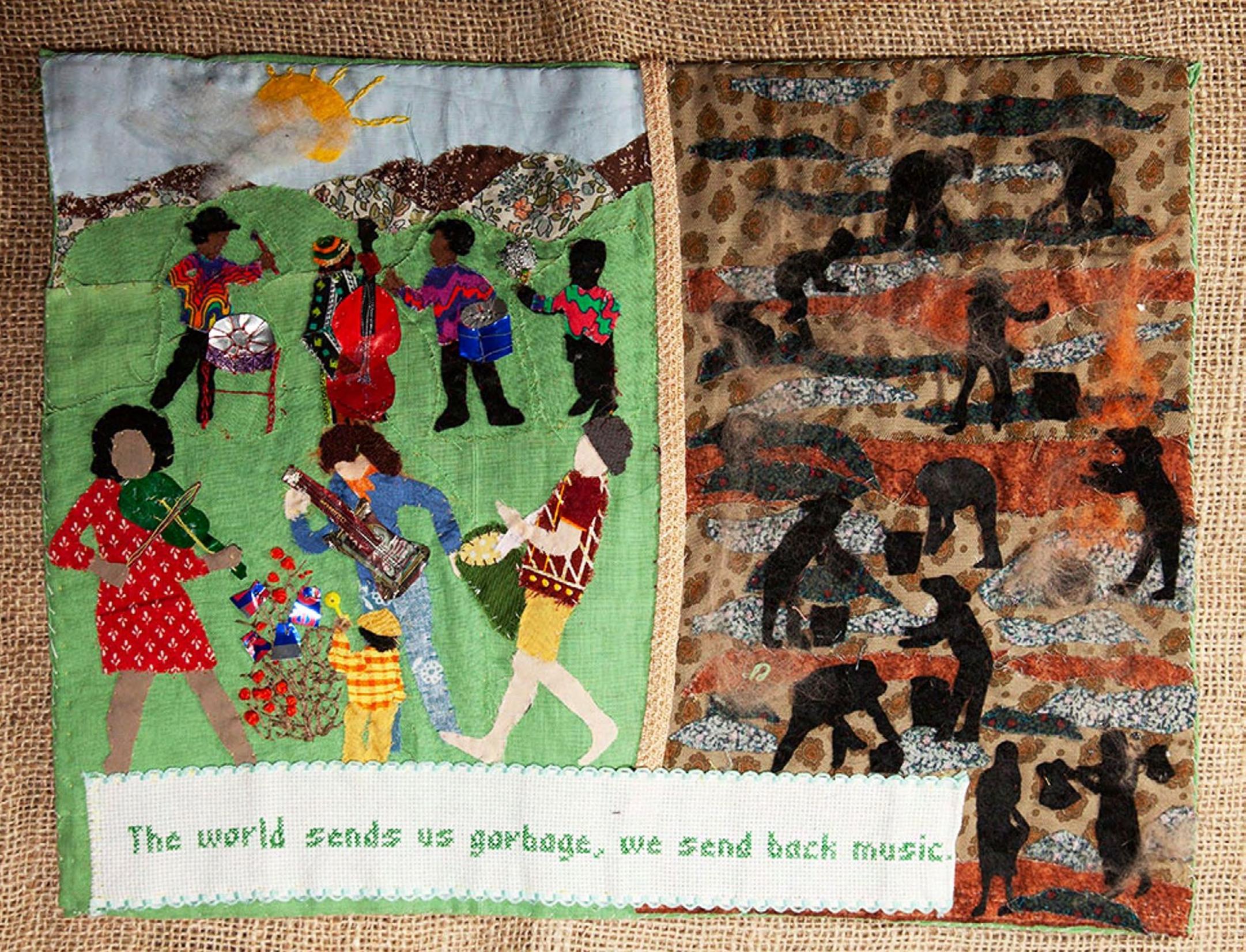
New works currently featured in the library at Queen’s University Belfast include “Landfill Orchestra,” where people in Paraguay turn rubbish into instruments that children play. The message: “The world sends us garbage. We send back music.”
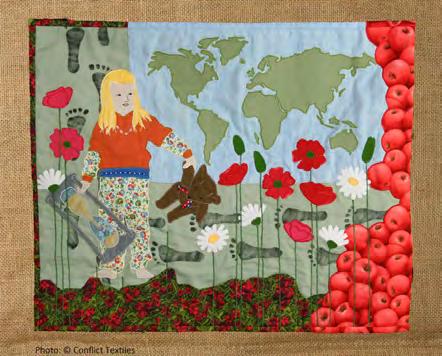
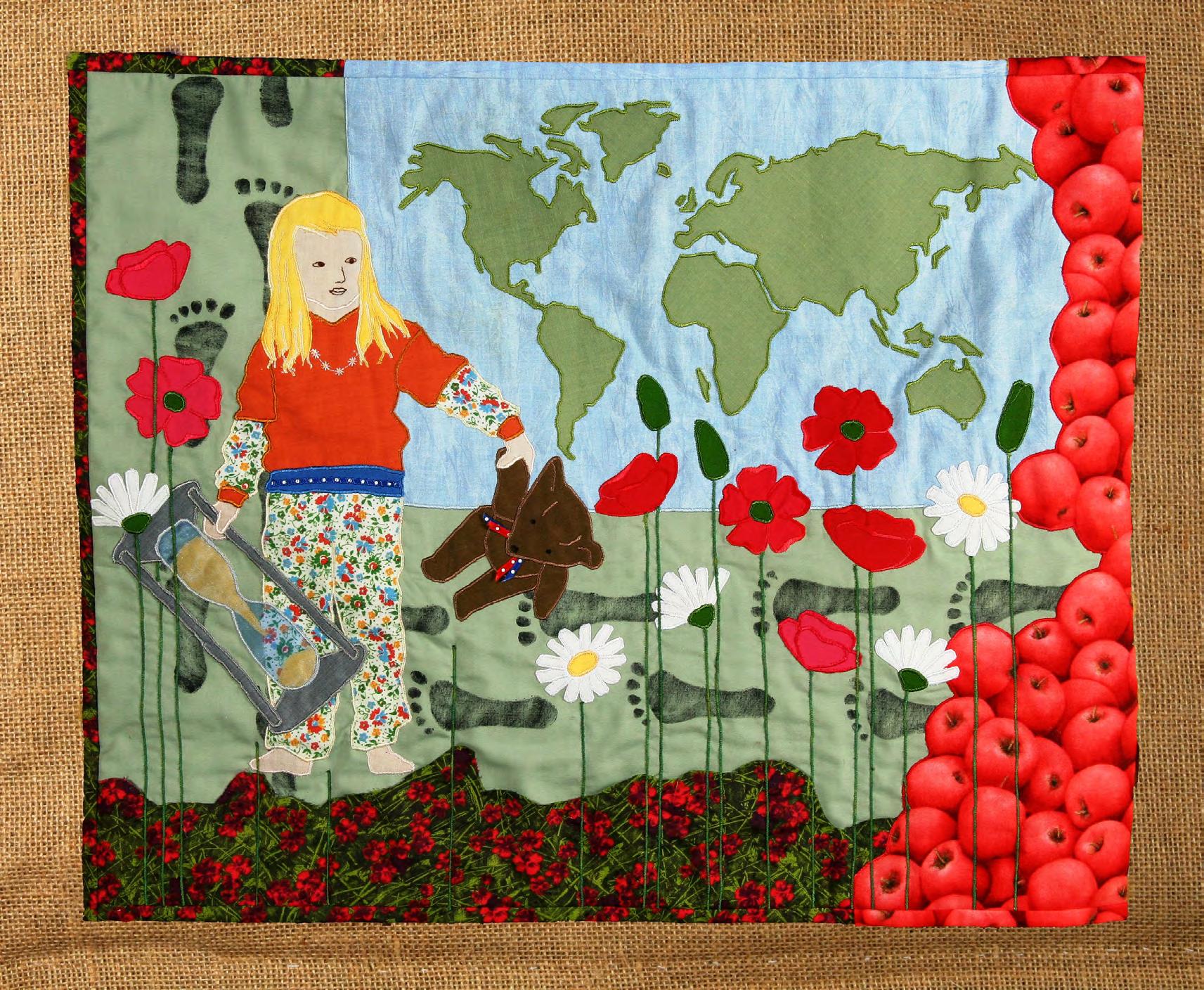
Also on display is Irene MacWilliam’s “Will there be poppies, daisies and apples when I grow up?” This child-centered piece reflects environmental fears. MacWilliam received RSPB’s Artist of the Year award in 2021 for this work.
One framed scarf honors a murdered Mexican environmental defender. “This really represents us, the people, who defend nature and get killed,” Bacic explains.
“The collection started with a topic that I have worked as an academic and then as part of the Second Truth Commission in Chile,” Bacic says. That topic is the disappeared—those abducted or killed under authoritarian regimes. Her role in the Truth Commission involved documenting these stories, ensuring they were acknowledged and not forgotten.
As Bacic continued her work, she found that the themes of loss, injustice, and resistance embedded in the Arpilleras extended naturally into other global issues. The scope of the collection has
since grown to include displacement and climate change. “The disappeared don’t just disappear, they’re targeted for political reasons,” she adds, emphasizing the systemic nature of erasure and how political violence continues in many forms.
Conflict Textiles continues to travel. Exhibitions have appeared in the Ulster Museum, the Basque Country, and soon in Warsaw’s National Museum of Art. Bacic will also play a significant role at a major conference in Portugal on “Slow Memory,” where she will speak at the closing ceremony on textile language and how people remember through fabric and narrative.
In addition to international exhibitions, the Conflict Textiles Collection is expanding its presence within Northern Ireland. A dedicated wall at Queen’s University Belfast’s McClay Library will host several newly curated pieces beginning May 27, focused on environmental themes and collective resilience. Among the six pieces displayed will be “Landfill Orchestra,” “Los trabajos colectivos son fuente de resistencia,” and the tribute scarf for a murdered Mexican environmental defender. These works will provide students and visitors with a tangible connection to global struggles and local reflections.
As part of Bacic’s long-term vision, parts of the collection are also displayed in the libraries at Ulster University’s campuses in Coleraine, Belfast, and Derry/Londonderry establishing textile language in the libraries. Each campus houses pieces that speak to community, memory, and activism, ensuring that students across disciplines - from law to environmental science - can engage with the textiles as living archives. “The idea is to populate with conflict textiles and textile language so that other communities take the initiative to do the same,” Bacic explains.
The Flowerfield Arts Centre event, “Community as a Superpower“ will take place on Saturday the 21st of June from 10:30 a.m. to 3:30 p.m. in the centre’s gardens and interior spaces. It will include exhibitions, hands-on creative workshops for children making Arpilleras on cardboard, while adult participants will craft their own textile pieces. Music, dancing, and shared stories will create a vibrant, intergenerational atmosphere. The day will be framed not as one of mourning, but as a joyful
celebration of resilience, memory, and cultural expression, held in solidarity with refugees and open to the broader community.
Despite her international work, family ties remain strong. “This year for the exhibition in Flowerfield my daughter and my granddaughter are coming from Chile... my granddaughter will dance.”
”We can’t promise good weather, but we can promise good spirits and good energy.”
Find the full photographed collection of Conflict Textiles, alongside more information and upcoming events by visiting their website: cain.ulster.ac.uk/conflicttextiles
The Flowerfield exhibition “Community as a Superpower” will be available from 21st–30th June. A special Exhibition Launch will take place on Saturday 21st of June featuring workshops, music and a short talk from Roberta Bacic: flowerfield.org/events
Top Left:
Will there be poppies, daisies and apples when I grow up?
Belfast-based artist Eimear Maguire shares how daily walks, natural rhythms, and quiet rituals shape her hand-painted work - and why nature, for her, is both subject and sanctuary.
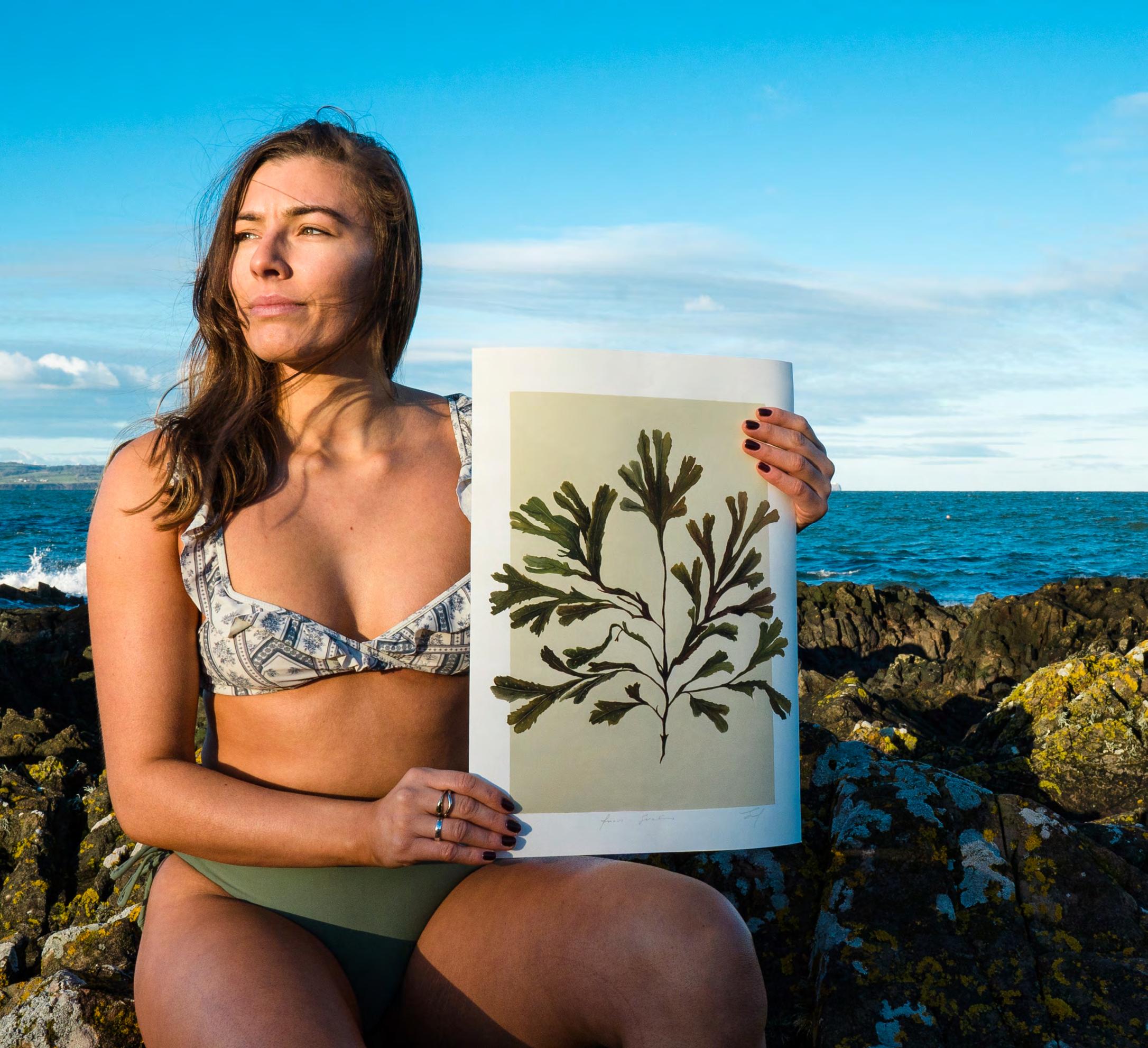
In her home studio looking out onto her garden in Belfast, surrounded by the foothills of Cavehill, Eimear Maguire begins her mornings with a ritual. She walks up the mountain, makes coffee or herbal tea, burns sage and lights a candle, and puts on her apron. “That’s like putting on my uniform” she explains. This space, with its natural light and quiet, is the creative centre of Dollybirds Art - her practice built around
hand-painted work inspired by nature.
Nature, Maguire says, has always been a constant. “Although my work has changed throughout my lifetime, nature has always been really a constant source of inspiration.” Her connection to the land comes not only from her surroundings, but from her upbringing. Her father, also an artist, played a central role in shaping
her creative and environmental sensibilities. “My earliest memories are sitting on the sofa with him and drawing,” she recalls. He would take the family out every weekend, driving out over Lough Neagh and walking through the countryside. “He used to walk us over Belfast’s hills and that’s where we would go with him now.” Even in his eighties, she says, he still loves to get out to places like Divis, a connection that continues to inspire her own routine. Those shared experiences instilled not only a love of nature but a way of seeing and moving through it that continues to influence her daily practice.
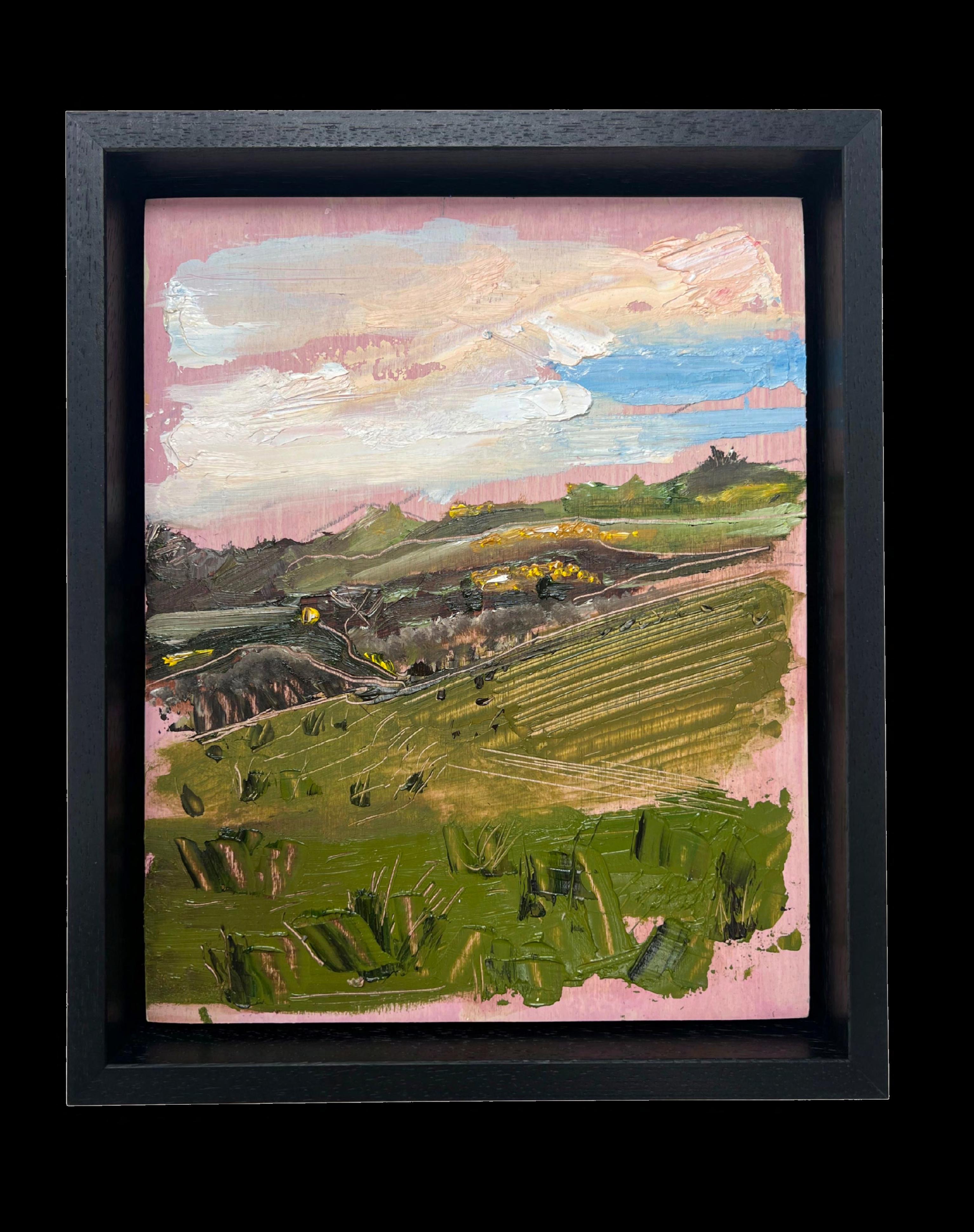
During a recent residency in West Cork arranged through The Duncairn, Maguire stayed at the top of Mount Kid, a remote and wild setting with 360-degree views. The drive up was daunting, but the location was perfect. “It was everything that I really needed,” she says. Waking up to the dawn chorus and the sound of cows became part of her experience of place. She absorbed rather than created, but when she returned home, she was full of energy. “You just have to get it out onto the canvas,” she says.
That week of immersion shifted her practice. She found herself returning to landscapes for the first time in years, painting in oils instead of gouache. The vibrancy of Ballydehob and especially Levi’s Corner House found its way into her palette. “Levi’s Corner House,
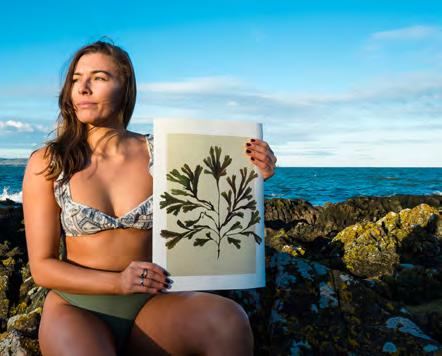
Serrated Wrack - Hand-painted Seaweed Print
painted bright pink, in the town really is the center of creativity of that area,” she recalls. “They have an area out the back where they were making masks. They do a lot of parades, carnivals and festivals.” Levi’s stood out as a space that blurred boundaries, ”almost like a community center, pub, music venue.” It was the heart of the town’s creative life, and, as Eimear explains, “Everyone we met there talked about it... it was all just so positive.” That brightness and energy led her to paint on pink ground for the first time: “It was a nice way for me to just incorporate it into my work. I’d never done anything like that before.”
While she typically uses gouache— these new landscapes demanded oil. “With gouache I focus inwards.
Whereas with oils I can work outwards.”
On walks with fellow artist Sonia Caldwell she collected seaweed, grasses, and shells. She described how certain objects seemed to call out to be painted. These gatherings, always a part of her process, became the foundation for something new. For the first time, she is creating a collaborative nature map. “There were no road signs to our accommodation on Mount Kid, and all the roads looked the same. The broken gorse, the blue house and the fern walls became our markers - quiet signs from nature that we hadn’t lost our way”.
These journeys have inspired the nature map. “I’m going to work with Corrina Askin, an illustra-
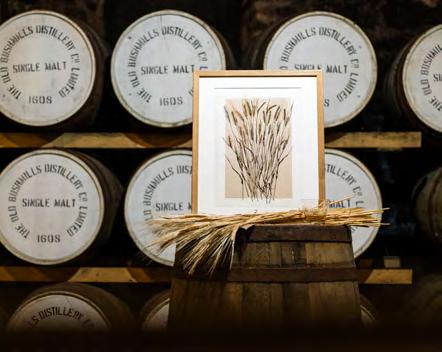
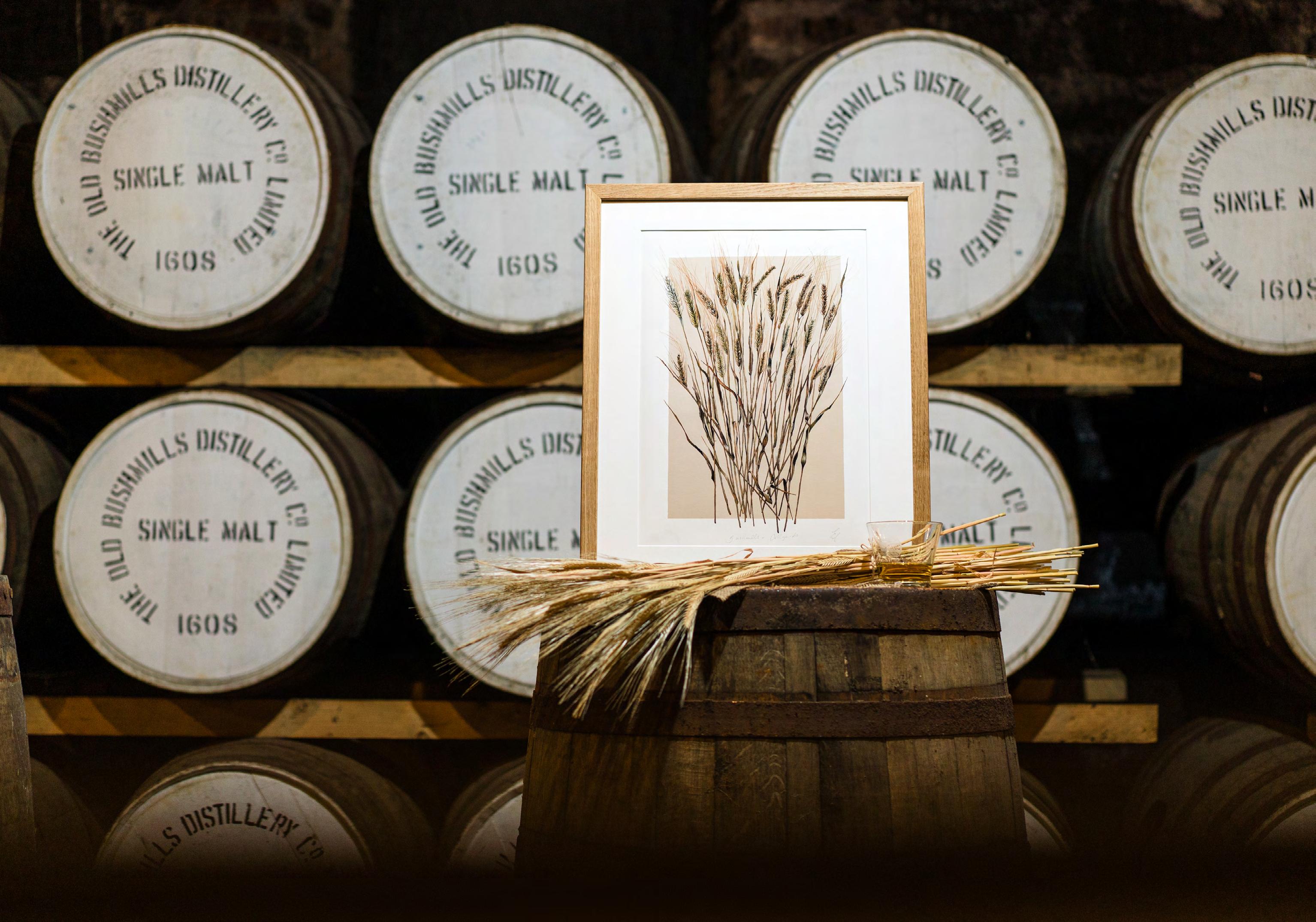
Bushmills x Dollybirds - Hand-painted Barley Print
tor who was with me on the trip, on this,” she says. “The iridescent shell, that’s going to be the moon. A piece of crockery, that’s going to be the North Star.”
Her studio reflects this collected, layered life. One desk is for painting, the other for computer work. “I always think of this as my nest,” she says. Each morning includes journaling, writing out tasks, and checking her chalkboard of longerterm goals. Structure and ritual help her navigate the practical aspects of running a creative business.
A project for Bushmills Distillery had her painting the very barley used to make their whiskey - stalks from County Cork laid beside her as reference. Her observation of
nature is always close and intimate. “I go to the beach, I take in everything... but I’ll focus in and I’ll find one thing where I think, right, that’s the thing I want to paint.”
She sees a relationship between this kind of focused seeing and her life at home, her children, and her garden studio. Working from home, rather than in a city-centre space, has grounded her.
Her walks are a constant source of calm and gentle inspiration—halfhour morning routes, long shoreline strolls in Donegal, and weekend hikes up Divis. But the Seven Summits challenge in the Mournes stood apart. “It was really, equally, a mental and physical challenge,” she says. Moving from single peaks to multiple climbs in a day, she was pushed far beyond her usual rhythm. Yet the views—”breathtaking, spectacular”—were motivation enough to go from peak to peak.
It’s a contrast to her usual meandering paths, but one that, like all her walks, ultimately feeds into her creative life.
This desire to share a sense of ownership, wonder, and connection is central to Maguire’s practice. She hopes her work, particularly shared through social media, inspires others to go for a walk in the woods or spend time by the sea. “Spark enough curiosity so, people then might... generate interest in the natural world and experience it for themselves.”
She’s currently working on a children’s book based on bird migration. “It’s about a bird... but I also think it really relates to human life.” She hopes readers will see themselves in the journey between two homes—between belonging and moving. One of the characters, an egret, has already appeared on her Instagram.
The conversation turns to swifts, and Eimear lights up. “They’re my favourite birds,” she says. “I have about five here, they fly over my house.” For her, their arrival marks a shift not just in season, but in mood and presence. “The noise they make... it just actually makes me relax” That screaming sound—often overlooked by others—acts as a signal of renewal and comfort, anchoring Eimear’s sense of time and place through the natural rhythms she finds so grounding in her work.
Through Dollybirds Art, Eimear Maguire invites us to slow down, look closely, walk further, and find our own rhythm in the natural world.
Explore the Dollybirds website: dollybirdsart.com
Keep up with Eimear on social media: @dollybirdsart
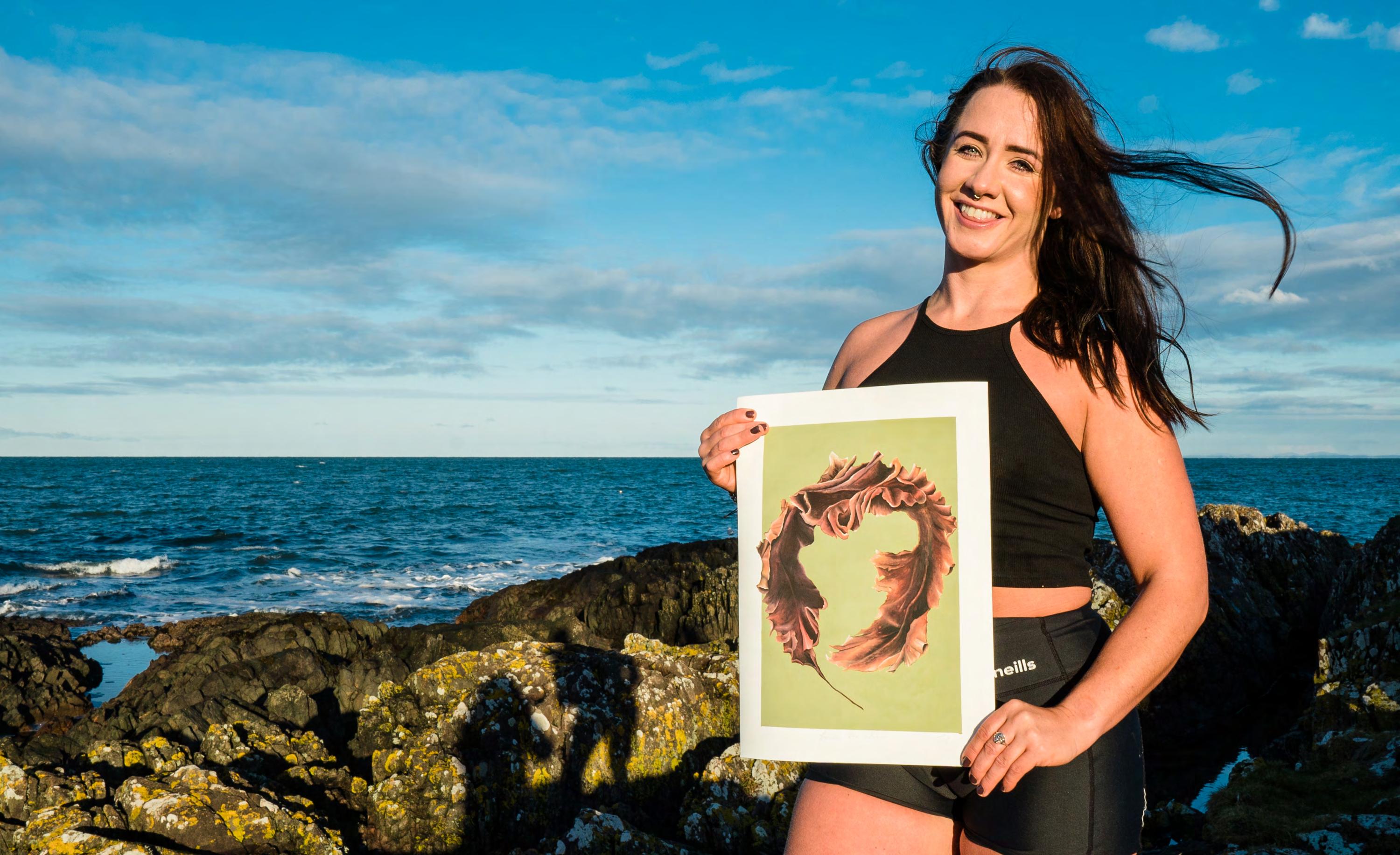
Sugar Kelp - Hand-painted Seaweed Print
Oil Landscape on Pink Ground Inspired by Eimear’s time in West Cork
Marcun Doran
CBT Therapist & Integrative Counsellor
Working at the intersection of evidence-based therapy and emotional intuition, Marcun’s practice on Ireland’s North Coast invites clients to find healing through conversation, community, and connections.
When she first arrived on the North Coast of Ireland for her university interview, Marcun drove up from Larne and was immediately captivated. “I just could not believe it,” she recalls. “Absolutely stunning. And the accessibility - you’re down on the beach or the rocks in five minutes.”
That visceral connection to place would become central not just to her life, but to her work. Now a practicing CBT therapist and integrative counsellor, Marcun brings
together clinical expertise and intuitive empathy to help clients across Northern Ireland, and beyond, find healing.
More Than One Approach
“It’s a long title, but I usually introduce myself as a CBT therapist and integrative counsellor,” Marcun says. “I’m qualified as both.” Her dual training allows her to draw from multiple methods: CBT, person-centred, and psychodynamic. “Integrative in a basic sense means that you can choose the tools and techniques that you believe are going to be helpful.”
While CBT offers structure and practical goals, Marcun is mindful of its limitations. “Sometimes the delivery can be a little bit cold, a little bit harsh,” she admits. Her background in integrative counselling was partly motivated by a desire for more emotionally nuanced work.
She describes a typical process: “Different people suit different approaches. Some need space to talk. Others want to get to the crux of it immediately.” She blends styles according to client needs. “CBT is about focusing on the problem now, in the present. Person-centred is more about processing emotion, with empathic reflective responses. And psychodynamic brings in the ideas of Freud,
working on identifying defence mechanisms for example.”
A Therapist’s Journey
Marcun’s route into counselling was shaped early on. “I always liked real conversations,” she says. “Not small talk. I mean, I can do small talk, but if it goes on too long, it can be tiring.”
After studying at Ulster University, she worked for a consultancy firm in Bristol, commuting back and forth before eventually settling permanently in Northern Ireland. “I always loved hearing about people’s lives. I’ve always liked helping relieve people’s suffering.”
Her experience spans GP surgeries, NHS referrals, the charity and voluntary sector, and working with victims and survivors, alcohol dependence, disadvantaged youth, and more. In 2018, she established her private practice. “I wanted to bring something helpful to my local community.”
The arrival of COVID-19 and the shift to online sessions opened new possibilities. “I now see clients from all over - the UK, Ireland and Europe.”
The Power of Place
The North Coast isn’t just a backdrop for therapy - it’s part of the
Marcun Doran
process. “From a CBT perspective, the way you make meaning out of your environment significantly affects your feelings,” Marcun explains. A peaceful landscape can evoke calm. A traumatic association can trigger anxiety.
Avoidance, she cautions, only reinforces negative emotions. “If you had a bad fall somewhere, going back there might make you anxious. But avoiding it strengthens that fear.”
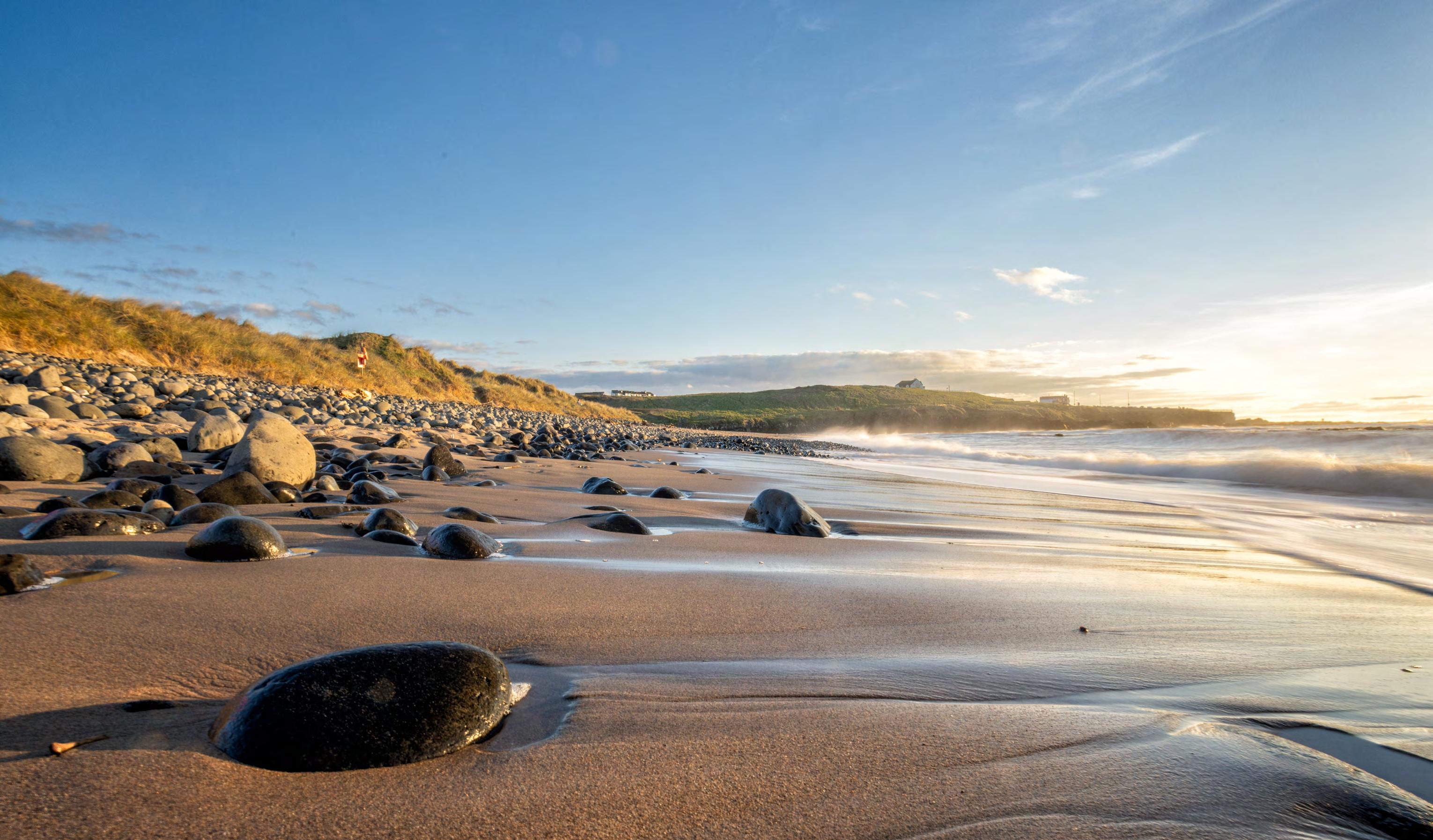
There’s also something inherently healing about the coastline itself. “You can be alone on a beach here quite easily. It gives you a sense of perspective - like, we’re just small creatures in a big world.” For Marcun, places like Portballintrae’s Runkerry Strand, and Portstewart are more than scenic, they’re therapeutic.
“Nature promotes feeling good,” she says. “Cities, on the other hand, can almost lead to isolation and loss of connection. Often empathy can feel absent in cities. People live alone in apartments, rushing around. It’s a less mindful existence.”
On Empathy and the Digital Age
Despite her deep respect for nature and human connection, Marcun embraces change. “Therapy is going digital - AI, online platforms, mental health apps. And that’s fine. Different mediums work for different people. But there’s nothing quite like a real human relationship.”
She points to therapy research that highlights the importance of the therapeutic relationship. “Thirty percent of outcomes are due to
to the theerapeutic relationship,” she says. “That’s huge.”
Empathy is at the heart of it. Referencing motivational interviewing pioneers Miller and Rollnick, she recalls their studies showing that therapists with the best outcomes were those with the most empathy. “You can develop empathy,” she says. “If we can teach it to kids, we can teach it to adults.”
Culture, Community and Care
Marcun has noticed the differences between her Yorkshire upbringing and the culture of Northern Ireland. “I have found people here to be more careful with each other’s feelings. It’s a more tender way of communicating.”
She highlights how important family is in Northern Irish culture:
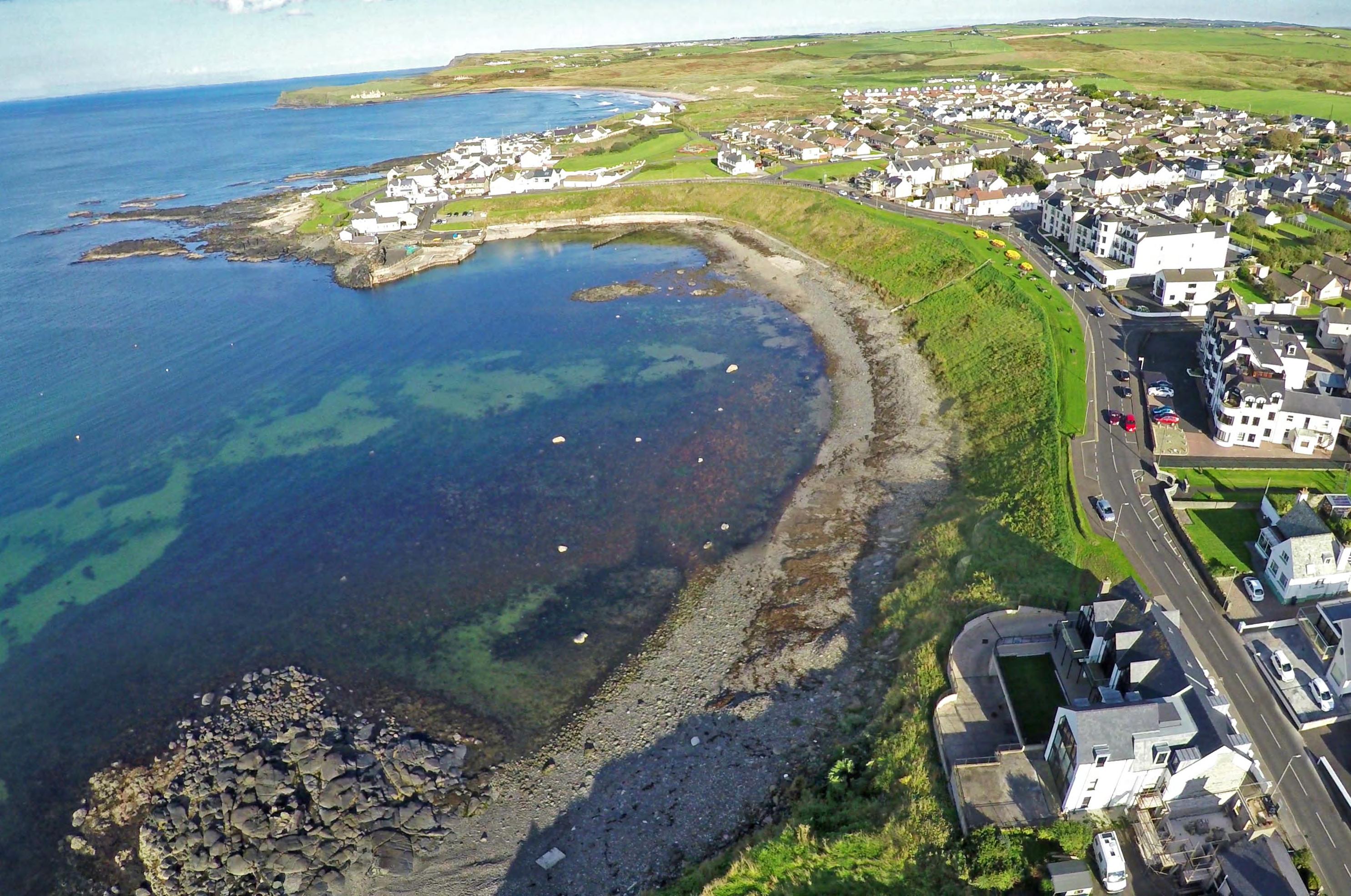
Portballintrae
“People spend time with their families. They live near each other. There’s respect, a strong sense of community.”
One powerful example of this deep-rooted sense of community comes from an early experience Marcun recalls after moving to Ireland: “I was driving down the street and there was a businessman in full business gear, and he was talking to a man who quite clearly looked homeless, you know, and they were laughing and getting on.”
The scene struck her for its simplicity and warmth - cutting through social divisions and revealing a culture where human connection comes first. Her reflection highlights how Irish values of empathy, respect, and genuine connection extend beyond private life, quietly shaping the tone of everyday public encounters.
This cultural closeness, she be-
lieves, supports mental health.
“Small communities keep each other in check. Some people say they wish they were more anonymous, but in the long run, that accountability is a good thing.”
Folklore and Evidence
As a CBT therapist, Marcun works within a scientific, evidence-based model. But that doesn’t mean she dismisses the folklore and spiritual traditions of Irish culture.
“You have to be respectful of people’s beliefs,” she says. “As long as they’re not harmful, you can still work with them.”
She’s had clients with spiritual or magical thinking, and she adapts accordingly. “You can still use Socratic questioning. You’re just trying to find the line between what’s supportive and what might be unhealthy.”
A Human Connection
At the heart of Marcun’s work is the desire to connect. “I don’t want clients to feel they have to be accountable to me,” she says. It’s not about ticking boxes. If someone didn’t do the exposure work we planned, the question isn’t ‘Why didn’t you?’ It’s ‘How can we make it easier for you?’”
She reflects on how therapy is evolving. “When I did my CBT training, I felt the empathic element was missing. I hope that’s changing.”
And despite all the tools and techniques, she still believes the most powerful moment in therapy is when a client uncovers something for themselves. “Even if I think I know what’s going on, it’s better if they come to it on their own with my support.”
Find out more about Marcun and the support she provides on her website: vitalitycbt.com