Understanding Painful and Heavy Periods: When to Seek Expert Care
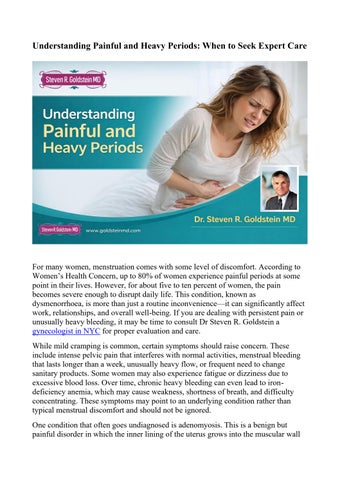
For many women, menstruation comes with some level of discomfort. According to Women’s Health Concern, up to 80% of women experience painful periods at some point in their lives. However, for about five to ten percent of women, the pain becomes severe enough to disrupt daily life. This condition, known as dysmenorrhoea, is more than just a routine inconvenience—it can significantly affect work, relationships, and overall well-being. If you are dealing with persistent pain or unusually heavy bleeding, it may be time to consult Dr Steven R. Goldstein a gynecologist in NYC for proper evaluation and care. While mild cramping is common, certain symptoms should raise concern. These include intense pelvic pain that interferes with normal activities, menstrual bleeding that lasts longer than a week, unusually heavy flow, or frequent need to change sanitary products. Some women may also experience fatigue or dizziness due to excessive blood loss. Over time, chronic heavy bleeding can even lead to irondeficiency anemia, which may cause weakness, shortness of breath, and difficulty concentrating. These symptoms may point to an underlying condition rather than typical menstrual discomfort and should not be ignored. One condition that often goes undiagnosed is adenomyosis. This is a benign but painful disorder in which the inner lining of the uterus grows into the muscular wall