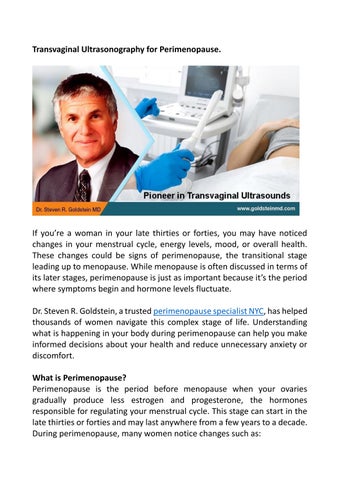
Transvaginal Ultrasonography for Perimenopause.
If you’re a woman in your late thirties or forties, you may have noticed changes in your menstrual cycle, energy levels, mood, or overall health. These changes could be signs of perimenopause, the transitional stage leading up to menopause. While menopause is often discussed in terms of its later stages, perimenopause is just as important because it’s the period where symptoms begin and hormone levels fluctuate. Dr. Steven R. Goldstein, a trusted perimenopause specialist NYC, has helped thousands of women navigate this complex stage of life. Understanding what is happening in your body during perimenopause can help you make informed decisions about your health and reduce unnecessary anxiety or discomfort. What is Perimenopause? Perimenopause is the period before menopause when your ovaries gradually produce less estrogen and progesterone, the hormones responsible for regulating your menstrual cycle. This stage can start in the late thirties or forties and may last anywhere from a few years to a decade. During perimenopause, many women notice changes such as: