Are home insurance policies in the county being canceled?
LORRIE FOX FOR THE SENTINEL
Whispers of home insurance cancellations—particularly in wildfire-prone areas—are rippling through Klickitat County, leaving renters and property owners scrambling for answers and sharing experiences on social media as local officials work to distinguish rumor from a broader retreat by insurers.
Earlier this year, county officials launched an online Wildfire Property Insurance Survey to collect firsthand reports from residents who have experienced non-renewals, cancellations, or steep premium increases over the past 36 months. The survey is available at 2025 Klickitat County Wildfire Property Insurance Survey (via KCDEM) at the website https://tinyurl.com/ynrmayww.

Holidays
are the happiest time of the year for
scammers
Beware the too-good-to-be-true
LOU MARZELES EDITOR
As holiday shopping ramps up, consumer watchdogs are warning that online scams—especially those tied to social media ads— are becoming more sophisticated and more common. A recent report from AARP Magazine highlights how criminals are increasingly using artificial intelligence to create convincing ads, fake websites and even polished product reviews designed to separate shoppers from their money.
“It often starts with casual scrolling,” said Melanie McGovern, spokesperson for the Better Business Bureau. “People see an attractive product, tap a button and buy without doing any homework.”
With payment information stored on many smartphones, those few taps can be all it takes. And for more Americans, those taps are happening inside social media apps: according to Norton’s 2025 Cyber Safety Holiday Report, 54 percent of U.S. shoppers made purchases directly through social media ads last year, up sharply from the year before.
Iskander Sanchez-Rola, Norton’s director of AI and innovation, said scammers are capitalizing on new technology. AI tools now allow criminals to generate photo-realistic images and videos for their fake storefronts—materials that not long ago would have been easy to spot as phony. They’re also using AI to ensure their bogus sites rank well in search results, a tactic experts call “AI content poisoning.”
Kathy Stokes, who directs fraud prevention at the AARP Fraud Watch Network, said AI removes many of the telltale signs consumers once relied on: “Perfect grammar, perfect images, perfect contact information—AI smooths out every red flag.”
Common scam tactics
Fraud analysts say the following schemes are showing up most often:
• Fake online stores. Some are entirely fabricated; others mimic well-known retailers using lookalike logos and URLs chosen to catch typographical errors. “It’s incredibly easy now to make a website look polished and credible,” said Jennifer Pitt, a cybersecurity and fraud analyst with Javelin.
• Knockoff products or nothing at all. Some shoppers receive poor-quality replicas. Many get
no product whatsoever after payment is processed.
• “Card declined” attacks. A newer scam: consumers are told their card was declined and asked to enter another form of payment. Both cards end up being charged.
• Malware-planted links. Popup coupons, email offers or unfamiliar retail sites can contain malicious software that gives criminals access to personal data.
Simply clicking the link can be enough to infect a device.
Warning signs
Consumer advocates are urging shoppers to pause when they encounter:
• Prices significantly lower than major retailers
• Hard-to-find items available only through one discounted seller
• Requests for extra payments supposedly tied to “tariffs”
• Overly glowing or repetitive customer reviews
• Coupons or deals delivered by text, random email accounts or sponsored ads
• Demands for payment by wire transfer, money order or gift card
• Sites claiming an unusually long list of industry awards
Protecting yourself Fraud experts offer several steps to reduce risk:
1. Go straight to known retailers. Avoid clicking sponsored search links, which scammers commonly purchase.
2. Check the seller’s reputation. Search the company name with words like “complaints” or “scam,” and review the BBB’s Scam Tracker.
3. Compare prices. If one site’s offer seems too good to be true, it likely is.
4. Scrutinize coupon emails. Odd spacing, long strings of numbers, or free email domains can indicate a fake offer.
5. Read return policies. Reputable companies provide clear, accessible customer service.
6. Limit what you share. A retailer needs no more than your payment info and shipping address.
7. Use a credit card. Credit cards provide the strongest fraud protections.
If you’re a victim
AARP urges victims to immediately report losses to local law enforcement and to the FBI’s Internet Crime Complaint Center. Shoppers should also contact their bank to halt payments and place fraud alerts on their accounts.
reducing their exposure to wildfire risk, leaving many homeowners uncertain about whether their coverage is secure.
Homeowners and renters throughout Klickitat County have taken to social media to share their experiences—from sudden non-renewal notices to skyrocketing premiums. Some residents report spending weeks contacting multiple insurance providers, only to find limited options or policies with stricter terms. These first-hand accounts highlight the anxiety the county’s survey is intended to measure.
many will pay higher premiums or agree to more restrictive policies. Klickitat County officials say the survey will help determine whether local experiences reflect these broader statewide trends, and it will help guide potential advocacy or support for affected residents.
Preliminary reports suggest that some insurers are already
Statewide, the Washington Office of the Insurance Commissioner (OIC) has issued a formal 2025 Nonrenewal and Cancellation Data Call, instructing insurers to report all policy non-renewals and cancellations, including those related to wildfire risk. While some homeowners can find alternative coverage,
Many homeowners are also taking proactive steps to protect their property and their insurability. Creating defensible space, clearing brush, and following fire-safe landscaping guidelines can help reduce wildfire risk—and may influence how insurers assess a home. Residents are documenting communications with their insurance companies, exploring multiple carriers, and sharing experiences with neighbors to better understand their options in an uncertain market. As wildfire risk grows across Klickitat County, homeowners
Jobs
Washingtonians
LOU MARZELES EDITOR
Every year, the U.S. Department of Labor quietly sends a few more occupations off into the sunset—professions whose numbers have dwindled so low they no longer appear in federal employment counts. Past farewells have included blacksmiths, shoemakers, and film processors. The newest trade to join the “gone but not forgotten” list: breakfast cereal manufacturers.
But with modern life increasingly shaped by automation and AI, one group wanted to know a different story: which disappearing jobs do people actually miss?
A new survey from the website resume.io asked more than 3,000 Americans to name the work roles that once shaped everyday life but have now largely vanished from the landscape. For Washingtonians, the results paint a nostalgic portrait of quirky, analog jobs that added color—and sometimes chaos—to life before the digital age.
Most missed jobs in Washington VHS repair technicians Once the emergency surgeons
miss the most
of living-room entertainment, these were the people who could rescue a tape tangled beyond recognition. They might even have prevented a few sibling disputes over a mangled copy of The Little Mermaid
Film developers
Long before photo filters and instant previews, these were the keepers of our awkward vacation memories. You waited three days to find out whether your eyes were closed in the family picture, and somehow that delay was part of the magic.
Video-rental clerks.
Part human algorithm, part neighborhood therapist. You walked in for an action flick and walked out with a rom-com because the clerk had a hunch you needed a good cry. Netflix recommendations have never had quite the same attitude.
Bowling-alley pin-setters.
Before machines took over, real people dodged balls and flying pins to reset the lanes. It was dangerous, low-paying, and—apparently—beloved in hindsight.
Arcade attendants.
The keepers of the neon kingdom. They fixed jammed machines, enforced pinball et-
iquette, and held the power to hand out that last precious prize ticket.
Transcriptionists.
Armed with fast fingers and saint-level patience, they turned mumbling dictation into polished prose. And unlike AI, they always caught sarcasm.
Film projectionists
The invisible operators who transformed reels of film into two hours of escapism. If your first movie kiss happened under a flickering beam of light, they deserve some credit.
Mall-kiosk salespeople. If you ever walked through a mall without making eye contact, you know why these extroverts made the list. Persistence, charisma, and a sample packet of lotion were the tools of their trade.
Record-store clerks. The curators of cool. They knew every B-side ever pressed and weren’t shy about judging your taste. Millions of playlists later, people still miss them.
Office relics people remember most
The survey also asked Washingtonians which old-school
EFSEC proposes power line under Columbia River
RODGER NICHOLS FOR THE SENTINEL
The Energy Facilities Site Evaluation Council (EFSEC) was back in Klickitat County last week. The agency held a public information meeting in White Salmon November 19 on a plan to run a high-voltage line from the Big Eddy substation outside The Dalles to a Pacific Gas & Electric (PGE) substation on the other side of Portland by burying
Community Thanksgiving Dinner tomorrow noon at Father’s House, 207 S. Klickitat, in Goldendale. To order for delivery or ask for a ride, call (509) 773-4719.

New resident portal promises easier access to state services
PAUL W. TAYLOR
WASHINGTON STATE STANDARD
For Washington residents, getting help from state government could soon become easier and more secure, thanks in part to increased use of artificial intelligence.
Early next year, the state will launch the fi rst public version of a new Resident Portal as part of a redesigned and expanded wa. gov. It will give people a single place to sign in and find and use online services across state agencies.
Officials say the goal is to save time, reduce frustration and make government work more like private sector sites like Amazon, but with public accountability at the center.
In an interview on TVW’s “Inside Olympia,” Washington’s chief technology officer, Gretchen Peri, called the effort “an exercise in efficiency and effectiveness,” adding that government must “constantly look to strike” this balance on behalf of the public.
The rollout will be phased.
A pilot completed this
past June tested a personal profile, AI chatbots and tailored service recommendations, for things like professional license renewals, social services, cash benefits and assistance with employment, higher education and workforce training.
A statewide rollout began the next month, with the fi rst public version planned for early 2026 as the state retires its older Secure Access Washington login system. The state expects to add agencies and features through 2029.
The project builds on more than 25 years of digital government. Washington launched Access Washington in 1998, one of the nation’s first government web portals, to help people fi nd services online.
The new Resident Portal comes with technologies that help deliver on that original promise, with tools designed for cellphone users. Instead of navigating hundreds of agency sites and logins, residents will use a single connected system spanning more than 140 agencies.
Chief Privacy Officer
Katy Ruckle, also appearing on “Inside Olympia,” told host Austin Jenkins the portal’s success depends on maintaining public trust.
“Security is how we’re protecting the data,” she said. “Privacy is really thinking about the ‘what’— what data are we collecting, and for what reasons do we need it?”
Her office has set new guardrails to ensure agencies limit what they collect and use it responsibly. She and Peri are developing a statewide framework to guide how agencies deploy automated tools, while aligning with the state’s privacy principles.
In practice, they say responsible AI means using automated tools carefully and transparently, ensuring they serve the public good, protect privacy and include clear human oversight. The focus is fairness, accountability and limiting data use to specific, lawful purposes.
Some applications are straightforward: AI is already helping people navigate government. The Department of Licensing uses a public-facing chat-
KVH recognized with Performance Leadership Award
As part of National Rural Health Day, Klickitat Valley Health (KVH) Thursday announced it has earned a 2025 Performance Leadership Award for excellence in Patient Perspective. Compiled by The Chartis Center for Rural Health, the Performance Leadership Awards program recognizes top quartile performance (i.e., 75th percentile or above) among rural hospitals in quality, outcomes, and/or patient perspective.
“Receiving this award is both an honor and a reminder of the responsibility we carry as a rural health care provider,” said Jonathan Hatfield, KVH
CEO. “Our community deserves excellent care close to home, and this recognition reflects our dedication to meeting that standard.”
The Performance Leadership Awards program is based on the results of the Chartis Rural Hospital Performance INDEX®, a comprehensive and objective framework for assessing how rural hospitals are performing. INDEX benchmarks are relied upon by rural hospitals, health systems with rural footprints, hospital associations, and state offices of rural health to measure performance across multiple areas
impacting hospital operations and fi nance.
“The areas of quality, outcomes, and patient perspective are cornerstones of healthcare delivery across rural America, and this year’s Performance Leadership Award recipients are establishing a standard of excellence for their rural peers to follow,” said Michael Topchik, executive director, Chartis Center for Rural Health. “We are delighted to shine a spotlight on such strong performance and honor the achievement of these hospitals on National Rural Health Day.”
bot named DOLLY on its website to answer customer questions.
At the Department of Commerce, an internal chatbot pilot is making regulatory and compliance work more efficient, allowing expert staff to focus on more complex and substantive tasks instead of manually reviewing documents.
Ruckle said piloting and implementing chatbots is done with careful human supervision to ensure privacy, security and accuracy. Some applications raise fewer privacy questions, she said, such as AI trained to identify fi sh species from underwater video. Unlike people and their data, she noted, “the rockfish just doesn’t care.”
The portal’s evolution comes on the heels of an executive order from Gov. Bob Ferguson directing agencies to improve how they serve residents.
“The time is right for us to actually understand where we are today, where we want to be, and then prioritize the initiatives that are going to get us there,” Peri said.


Contributed: Henry Dyuck
THE ANNUAL PIG BOWL: In Sunday’s Pig Bowl, the Klickitat County Sheriff’s Office and the Goldendale Police Department played the Goldendale High School Timberwolves. Funds and food were collected for the food bank. The Timberwolves won the game with the final score 30-16.

G OLDENDALE ’ S A TTIC
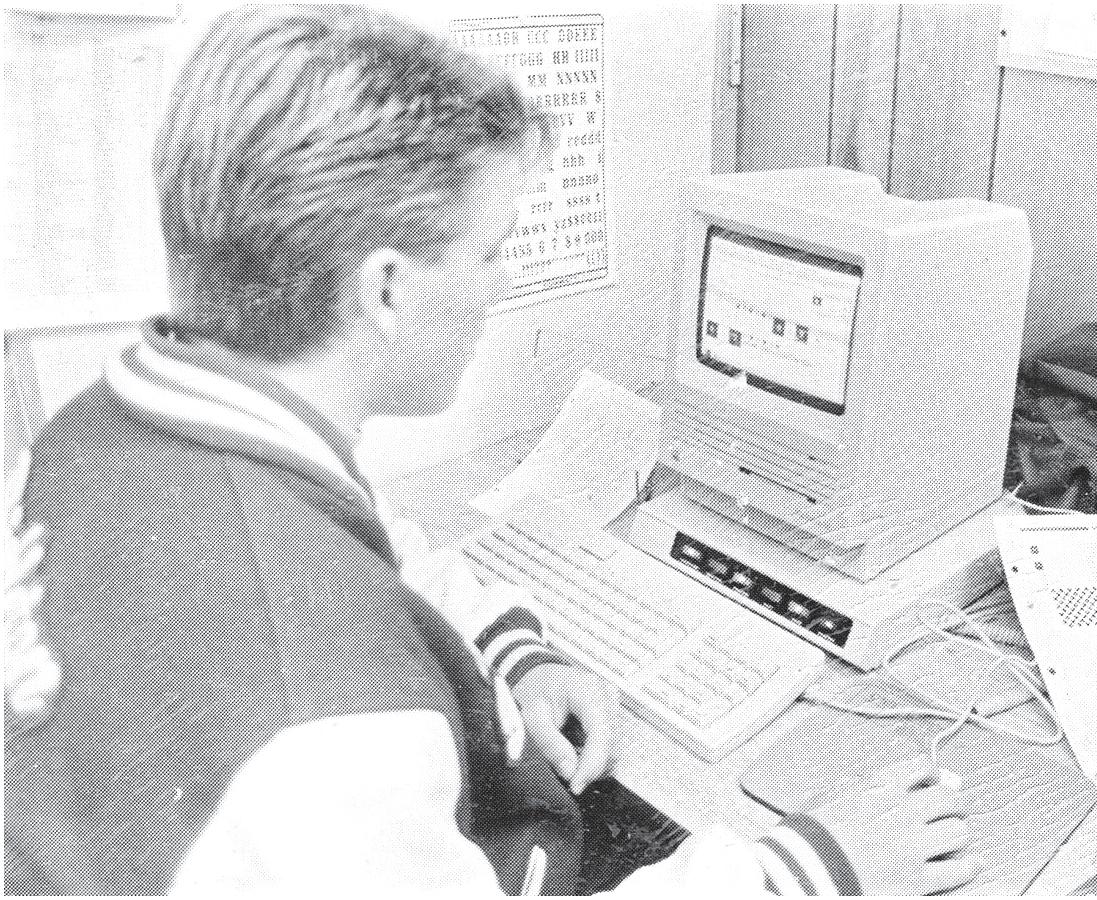

This week’s Goldendale’s Attic Mystery Picture
The object on the desk in front of this person used to be the cat’s pajamas in computers back in the day, and it was far more useful than sleepwear for felines.
You could play games on it! Write a document! Become incredibly frustrated with it! Boy, we’ve come a long way, haven’t we? But who is the person? We don’t know.
All we know is this picture ran in The Sentinel sometime, lost in the annals of yesteryear. If you know anything about it, please send us an email (info@
goldendalesentinel.com), or give us a call (509-773-3777), or drop in at the office—and remember, you’re welcome to come in and take a look at the original photograph.
L OOKING BACK
November 11, 1937 – 88 Years Ago
Washington’s blue and white license plates are to be superseded in 1938, by the traditional green and white combination which was so popular a few years ago.
November 22, 1945 – 80 Years Ago
Victory Bonds – by Buzz Claussen: I have been asked by the publishers to write the reasons, in my opinion, why we should buy Victory Bonds. One of the main reasons, of course, is to hasten the homecoming of the men who are still overseas waiting to come home. The war has been over now for the men in the European theater for approximately six months and there are still thousands of men waiting to come home. The same applies to the Pacific theater, though the war hasn’t been over so long in that part of the world, there are many men who have been over there for three years or more. The Government needs money to hasten the homecoming of the men still overseas.
October 25, 1951 – 74 Years Ago
Life Magazine photographer Margaret Bourke White of New York rode an “egg-beater” into Goldendale
Wednesday, Oct. 17. The well-known photographer was in one of the three “egg-beaters” (helicopters) that landed at the Robinson airstrip on the outskirts of Goldendale to get reports on weather conditions over the Columbia Gorge and at Seattle. Miss White was dressed in Arctic clothes because she was riding in a copter with no enclosure on either side. She was making the trip to get pictures for a story on the work of the helicopter. The helicopters were on a routine flight checking BPA power lines. Robinson airstrip was located approximately where the current post office stands.
November 10, 1955 – 70 Years Ago
Lewis and Clark Diary – Nov. 12 – 28, 1805 - In a driving wind and rainstorm, the Lewis and Clark Expedition reached the mouth of the Columbia and the gray angry Pacific Ocean 150 years ago this week [now 220 years]. In 18 months, they had come 4,100 miles from St. Louis, Missouri. The men sought shelter in the rocks at the mouth of the river. It is unlikely they realized the significance of their journey—that they had established America’s strongest claim to the Northwest Territory. Probably the men were thinking about the long winter which lay ahead and the even longer journey back to the United States when spring came again. In any event they had completed their commission from President Jefferson to find an overland route to the Pacific.
November 18, 1961 – 64 Years Ago
The Grand Opening of Hi-Way Supermarket is scheduled for Monday, November 20. The location is on Columbus Avenue just south of the Goldendale post office. The 80 x 100 building is devoted entirely to the display and sale of groceries, meats, produce: with additional departments for health and beauty aids, toys and housewares. The new market is the biggest in the county. [Hi-Way Supermarket is now known as Holcombs.]
November 17, 2005 – 20 Years Ago
The Klickitat Valley Grain Growers, Inc., is hosting its annual meeting Nov. 17 at the Centerville Grange Hall. The Klickitat Valley Grain Growers Cooperation, founded in 1930, includes a farm store, fertilizer and chemical business and a trucking company, Klickitat Valley Trucking LLC. Current board members are Jim Hill, president: Jim Pence, vice president; Larry Williams, treasurer; Butch Beyerlin, director; Karl Enyeart, director; Dan Rhoads, director; and Clay Schuster, director.
—
Richard Lefever Klickitat County Historical Society
Testing Station Just a Game To
Woman Driver
October 27, 1938
Editor’s Note – Klickitat county motorists last week and this have kept local garage men busy fixing lights and brakes in an effort to get a green and white seal of approval from the state highway department’s portable motor vehicle testing station now located in Goldendale. The station is located on B Street just east of its intersection with Chatfield. The station will be in operation here until Sunday when it will be moved to Bingen. In the story below a woman driver gives her impression of the test. The pictures show the actual operation of a testing station similar to the one located in Goldendale.
Those yellow and black zebra-stiped sawhorse things that will close up B sstreet between Chatfield and Wilbur here in Goldendale till Saturday night mark the beginning and end of a new little game devised by the state highway department for citizenry of the state of Washington. Anybody can play, the only requirements being a car, a certificate of registration, and a motor vehicle operator’s license (driver’s license to you).
biggest day, and with a dusty certificate in one hand and a grimy drivers’ license fallen to the floor of the car, I took my place in the line. A whitecoated highway employee standing beside an outdoor desk explained the rules of the game. First you turn on your lights, but that’s just warming up. The umpire in the white coat punches your score on a little white card, and you go on to the next contest. It’s more fun this time because, after a little preliminary jacking up of the front wheels to do check wheel alignment, you get to do something I have always wanted to— take your hands off the steering wheel and let the car drive itself. (Ever try that on a bicycle?)
Points to ponder:
How many surrealists does it take to change a light bulb? Two, one to hold the giraffe and one to put the clocks in the bathtub.
How many other surrealists does it take to change a light bulb? To get to the other side.
Harry believed so strongly in reincarnation, he wrote a will leaving everything to himself.
Obituary: The world champion crossword puzzler died yesterday. In a quiet ceremony, he was buried 3 across and 6 down.
A manic-depressive goes on vacation and sends his psychiatrist a postcard. It said, “Having a wonderful time! Wish I was somewhere else.”
For over a week, about 150 players a day have been progressing interruptedly up and down the block, with a high percentage of wear and tear on the starters. There’s not much time left to play, though, and likely as not the lanes will be crowded with the lucky motorists who got the red stickers that entitle them to play again.
Last Saturday was the
Now comes the most fun of all. You step on the throttle and speed a distance of maybe twenty feet, and bang, step on the brakes when the official in white raises his arm with its fancy insignia. What’s your score now? He’s the final card puncher, and it’s up to him to choose the color of the sticker. It’s green and white for a high score, but red’s more fun because you get to come back. I know, I’m going back tomorrow. Seriously, though, don’t let them scare you. Washington’s highway department, one of the finest in the country, is really arranging these tests for the safety of our motorists, and though every car in the state has to have a green and white sticker on its windshield, it’s lots of fun to play.
This picture has been colorized. This one was tougher for readers. The people in the picture are, left to right, Bill Wang, his
wife Carol, and their son Brady. The opened a shop in Goldendale called All-Star Sports focusing on sports cards and memorabilia.
Thanksgiving is much more than a big meal with family and friends. It’s a time to reflect on, and be thankful for, all of the good things you have. It’s important to be grateful, not just on Thanksgiving but each and every day. Rather than lamenting what you feel is lacking in your life, begin each new day by developing an attitude of gratitude. Take inventory of your blessings, and you will be surprised at just how much you have to be thankful for.
If you have enough to eat, a place to live, a way to get around, people who care about you, or people you care about, then you are wealthy. If you lack any of these elements, you must still be grateful for what you do have, while striving to obtain whatever is absent. Focus on all positive aspects of your life. Take nothing for granted. Every morning, recharge your appreciation. Be happy for everything there is, not upset over what you feel is missing.
Dreams of the future shouldn’t diminish appreciation for the present. If all you do is concentrate on what you want, you won’t enjoy today. Don’t be jealous of others; what they do or have has no bearing on you.
You can feel bitter or resentful for a variety of reasons. Perhaps you feel something is missing from your life, things aren’t going your way, or you have been treated unfairly. You may wonder, “Why do these things always happen to me?”
Life’s problems tend to dominate your thoughts, turning your focus to what you feel is wrong. You may start to resent those who appear to be better off. You’re apt to dwell on things you think would make your life better if you had them. If only you had more money, more time, a bigger house, a different car, a different job, a different boss, had picked a different career, etc.
Once your attitude becomes one of deficiency instead of abundance and appreciation, you can become overwhelmed by feelings of frustration and feel like a victim. As this happens, a consuming vicious cycle starts. Being bitter or resentful blows situations out of proportion. People who are bitter frequently find their situations deteriorate and their mental and physical health decays.
It’s difficult, if not impossible, to achieve your goals while you are bitter or resentful. Regardless of what challenges might befall you, bitterness makes finding solutions much more elusive. There is no point to feeling bitter since it accomplishes nothing, harms you and makes things worse. Filling yourself with gratitude on a daily basis makes you feel good, while driving out negative feelings.
Begin your practice of gratitude each morning as soon as you wake. Every day is a great day. If you have any doubts, try missing one. Take inventory of everything, no matter how small or seemingly insignificant, that is good in your life.
THE GOLDENDALE SENTINEL
Official newspaper of Klickitat County, Washington
Established 1879 • Published every Wednesday from offices at 117 W. Main Street • Goldendale, WA 98620 • Telephone: (509) 773-3777
Emails: news@goldendalesentinel.com (News, editorial, Letters)
Obits@goldendalesentinel.com (Obituaries)
Classifieds @goldendalesentinel.com (Classified ads and inquiries)
Ads @goldendalesentinel.com
(Display advertising information and inquiries)
Legals @goldendalesentinel.com (Legal and public notices)
Payables@goldendalesentinel.com
Receivables@goldendalesentinel.com
Events @goldendalesentinel.com (Events and activities)
Editorial: Lou Marzeles, Editor & Publisher
Business and office staff: Owned by Tartan Publications, Inc.
Leslie Geatches, President, Financial management, Special Section production, Ad Design Naomi James, Bookkeeping


If it helps, make a written list of all things you are grateful for. Read your list every day. As you do this, you will build and reinforce your attitude of gratitude. Don’t waste any time with what you feel you don’t have. Keep things in perspective. Consider all the people who have overcome difficulties far worse than yours. Don’t be consumed by your problems, there is always a solution. Maintaining an attitude of gratitude allows your mind to devise a resolution for your circumstances.
Make every day a day of Thanksgiving, and you will be amazed how much better your life will become.
Burn-out has got to go
The Festival of Wheels gave it another try this year. It seems the attendance has dwindled to much lower levels than when the event was new, 10 years ago. There are a lot of competing car shows this time of year, so it doesn’t surprise me .
This year Goldendale Motorsports Association and ABATE brought back the burn-out, which was tried several times in the past with questionable benefits to the town. This year someone had the brilliant idea to use the old skateboard park as a place to stage the return of the burnout. It was held on the concrete slab, a tempting medium for anyone inclined to bum rubber. Rednecks of many degrees, punk kids or maybe the little old lady from Pasadena. I personally was left with a bad taste in my mouth and lungs. Even though I made it a point to stay away from the burn-out and was at my home where I thought I would escape the noise and smoke, when the toxic cloud rose from the park and drifted over the Little Klickitat River Park (the swimming pool) on to the kids and families at the pool and on to me while I was sitting on my property. We were contaminated by the toxins in the smoke, and my eyes and throat were imitated, and my lungs filled with carbon monoxide and other cancer causing toxic compounds
for three hours.
I think the city of Goldendale needs to rethink supporting burnouts in our park. Next year don’t issue a permit to any group that wants to burn-out. There are places in the county where it could be held, just not in the city please. I hate toxic smoke, and you should too.
On Sept 4 I will be asking the mayor and his administration to make an ordinance forbidding anyone from reckless unsafe burnouts in any ones neighborhood or any street in the Goldendale city limits. I would appreciate some support from like-minded citizens at the council meeting. Let them know how you feel.
Ken McKune Goldendale
I recently received an updated “Terms for Business and Deposit Account Agreement” from Columbia Bank. I am not in the habit of reading the fine print but for some reason this time I did. I came across an “added” line that I found very concerning. Again, this line is both for personal and business accounts. It reads: “We may refuse to open and account and may close your account at any time for any reason or for no reason at all.”
“For No Reason At All” I particularly found offensive.
I contacted the bank for an explanation. The answer was essentially that “we wouldn’t do that.” Then why is it in your documents, I asked. The answer was to send me up the chain of command. The second person gave the same answer as the first and then was to have me contacted by some-one higher up. That person has not contacted me after more than a week so I am following through on what I told the bank contacts I was going to do—write a letter to the editor to be sure local folks are aware of how Columbia Bank is choosing to deal with its account holders.
My concern is that a comment as broad as this opens the door for abuse. I have had no difficulties with our local branch and am sorry that the headquarters has decided to take such a hard line. It ap-pears I will need to look for a bank that does not behave in this manner.
Ken Margraf Goldendale
Letters from the community
It was only two weeks ago that I was standing in the middle of Hostage Square in Tel Aviv, Jerusalem, trying to take in all the yellow ribbons, the messages, the burned out bullet-riddled car, and the big screen with the clock that will keep ticking, ticking, ticking up the hours, minutes, seconds until the last hostage is returned.
My family was honored to have the opportunity to take a family trip to Israel. We established residency in an Airbnb just outside of the Old City in Jerusalem and spent the next 11 days visiting the Knesset, the Supreme Court, many biblically historically significant sites, including the Temple Mount,
Capernum, and the Sea of Galilee, and walking the Via Dolorosa, the path Jesus Christ carried the cross to his crucifixion. We heard many languages, observed the whole city shut down for Shabbat, and had to close the windows during the Sunday morning Anglican church service so the sermon was not drowned out by the Muslim call to prayer. We learned that we could not order cheeseburgers because they are not kosher, and we had the sobering privilege to speak with families who lost loved ones on October 7.
At one point, our 17-year-old daughter started crying. “I feel so stupid,” she said, “I don’t know any of this.” I let her know that was exactly why we were there: not because we knew it all, but because
Guidelines for Letters
we knew so very little. The nuances of living in an area that is significant to the Jews, the Christians, and the Muslims, combined with a few thousand years of conflict, is very overwhelming. The rules are not clear, and the tensions are evident. What a challenging way to live. It was a great trip; it is great to be home. We know more now than when we started our journey: all nations have their challenges. As we enjoy Thanksgiving and reflect on our nation’s youthful few hundred years of history, I am thankful for its relative simplicity.
Letters to the editor should be original and comment on an issue. Deadline for letters is noon Monday for the same week’s paper.
Requests to keep letters exactly as written when published cannot be honored. All letters are subject to editing for grammar, spelling, clarity, and/or brevity. There is a suggested length limit of about 300 words. Unsigned letters (including anonymity requests), letters with fictitious signatures, letters with multiple signatures, or letters to public officials are not accepted.
Please keep the tone of letters free of rants, wild speculation, unsubstantiated claims, or pointedly personal comments. Letters that go overboard in these directions will be refused publication.
Writers must include name, city/town of residence, and phone number for verification purposes. (Street address is not required, only city or town.)
Hostage Square
Lisa Evans White Salmon
It’s hard to believe we’re already at Thanksgiving with Christmas and New Year Day coming soon. Where did this year go? There’s not a lot of community news, so I’ll start by wishing everyone a most joyful, peaceful Thanksgiving.
Many here enjoyed the Glenwood School Thanksgiving dinner last Wednesday hosted by the students and staff, and the community Thanksgiving dinner last Sunday at the school, hosted by the Glenwood Community Church. I hope you all have marked your calendars and started preparing for the Glenwood Christmas Lights Contest.
I recently received some news from the Mt. Adams Community 4-H club reporter, Avery Eichner.
I don’t think I shared it when it was received, so I wanted to share it here again because we have an awesome group of 4-H kids and adult leaders in our end of the county. They’re already planning and preparing for next year’s county fair. Here is the 4-H news from Avery:
“The Mt. Adams Community 4-H club held their annual kickoff meeting for the 2025-2026 year on November 2 at the Glenwood school at 6 p.m. The 2025 officers, including President Josie Dickey (graduated spring 2025), Vice President Riley Eichner, Secretary Jade McLean and Treasurer Clair Jensen (graduated spring 2025), were not in attendance, so senior-level members Riley Rickman and JayCee McLean ran the meeting in their absence.
“Going on tradition, new and old members recited the Pledge of Allegiance and the 4-H pledge followed by introductions for new members and roll call.
Shayne Rickman, our club leader for the last five years, stepped down and nominated Kelsey Griffin to take over her position. Kelsey was unanimously voted in by members and parents. Longstanding leader of the Beef Club, Mike Woodward, also stepped down, and Jonathan Monroe replaced him. The Swine group leader will be Jason Bensel; Horse leader will be Nicole Ladiges; and Sheep and Goat leader will be Dorothy Carillo. For anyone interested in the Chicken group, we are in need of a new leader. Sewing and Cooking
groups are also looking for new leaders. The Mt. Adams Community 4-H wishes to thank Shayne and Mike for their years of dedicated service to our group. We are lucky to have had your leadership for all those years.
“Jim McLean led the new and old members in a crash course in Robert’s Rules of Order on how club meetings will be run to keep things moving efficiently and orderly. Riley Rickman read the treasurer’s report. Riley and JayCee led the group in nominating the following positions: Adult Treasurer - Talia Kreps handed over the position to Kaylee Towel with a unanimous vote; Youth President -JayCee McLean; Youth Vice PresidentWyatt Patterson; Youth Treasurer - Emma Patterson; and Youth Secretary - Riley Rickman.
Additional positions voted on included the Phone Callers, who will replace Monroe Szekley, Bryn Kreps, and Lily Rude from the 2024-2025 year. The new positions will be held by Justace Griffin, Anita Patterson, and Maddie Huber. The Youth Reporter will be Intermediate (1113) Avery Eichner.
“The 20252026 budget was proposed with the following activities: fruit sales, office supplies/ meeting and educational materials, fair decorations, project posters, fair barbecue/meeting food supplies, Glenwood and Trout Lake parades, pop stands and programs, membership costs, show shirts, and thank you cards for market livestock buyers. All budget items were approved with the recommendation that the new show shirts budget will be reserved for new members and members who did not receive them in the 2024-2025 year.
“Nicole Ladiges (Horse leader) wanted to remind all members to start working on record books now, especially for beef and horse members, so that you can work on them as you go and not wait until July since these require updated record keeping from the start of your project. Record books are a great learning tool and provide members with premium money opportunities at the fair. Record books and project forms can be found through the WSU Extension website: extension.wsu. edu/klickitat/4h/4-h-
recordkeeping.
“Current members offered ideas for community service projects that included Beef barn updates, Hoodenpyle park clean-up efforts in the spring to prepare for the annual easter egg hunt. West Klickitat saddle club posse grounds clean-up efforts, with Nicole Ladiges to discuss recommended efforts with club president, Jim McLean. Janna Hughes spoke about an opportunity to get involved in a curriculum about How Government Works.
“We finished the meeting with a reminder for all new and old members to sign up at the following website: https://4honline. com/#/user/sign-in. For agenda topics to be added to future meetings, please contact the Secretary, Riley Rickman.”
Thank you, Avery, for this great 4-H reporting.
Members of the Glenwood community were recently sent an informational letter regarding the upcoming school funding levy in February 2026. If you did not receive one, please contact Mrs. Troh or Mr. Rogers, the superintendent, at the school office and they’ll make sure you get the information. This levy doesn’t change anything. It’s the same amount the District has requested for about the last 23 years or so to help fund vital programs and services for our students. Mr. Rogers has asked me to share the following information:
“The Glenwood School District is seeking applications from persons interested in being appointed to committees to write the for or against statements for the Klickitat County Local Voters’ Pamphlet related to the District’s upcoming Replacement Educational Programs and Operations Levy ballot measure to be considered at the February 10, 2026, election. The deadline has been extended, so any registered voter in the Glenwood community who is interested should send their name, address, phone number and which position they represent to Robert Rogers, Superintendent, Glenwood School District, PO Box 12, Glenwood, WA 98619 or via email to bob. rogers@glenwoodsd. org by December 11, 2025, or directly to the Klickitat County elections office by 5 p.m. on December 12, 2025.”






Natalee Garcia BuildiNG commuNities committee
On November 20, seven FFA members from Goldendale Middle School visited the Goldendale Senior Center with their advisor, Mrs. Randi Krieg. Members brought games, prizes, and lots of smiles to share at this November event.
One of the games was “Thanksgiving A to Z” in which members helped seniors think of things they are grateful for using the letters A to Z. After filling out the worksheet, members passed out holiday-themed pens as a prize. FFA GMS President Bo Hedgecock said, “It was fun to see what each person was grateful for in their life, such as family for F.”
FFA members also handed out Oreo cookies to seniors who did a unique dance move or danced.
After the games FFA members served lunch to the seniors. GMS FFA Vice President Aubrey Rhoades commented, “It was a lot of fun to help serve the seniors, and they were grateful for our help. I had
a great time helping them. I hope I can go back to help again soon!” For pictures of the event
and more information about FFA, see the Goldendale FFA Facebook and Instagram Page.
Contributed
EXERCISE IN GRATITUDE: Goldendale FFA members visited the Goldendale Senior Center to focus on giving thanks.

George Miner
George Berry Miner passed away peacefully on November 6, 2025, in Goldendale surrounded by his loved ones.
George was born on July 3, 1946, in Key West, Florida to Earl and Florence Miner. George was raised up and down the East Coast while his dad was in the Navy until the family finally settled in Portland, Oregon. He graduated from Lincoln High School in 1964 and joined the Navy for two years. He received his Bachelor’s from University of Portland and his Master’s Degree from Portland State University.
In 1967, he married Katherine Allegre, and together they welcomed a daughter, Christine, in 1972. In 2004, George married his beloved wife Norma, and they moved to Goldendale.
George spent most of his career as a special education teacher in Evergreen Public Schools but was a man of many talents. In his 79 years, he also worked as a police
officer, tow truck driver, volunteer firefighter, Mt. Hood Kiwanis Camp Director, and adolescent counselor. He was a Commander with American Legion No. 116 and a captain in the Sheriff’s Posse in Goldendale. George proudly served his country with tireless dedication for almost 30 years in the 104th Division Army Reserve Band, retiring as a 1st Sergeant. He attended many specialized schools and trainings and received multiple awards, including the Army Achievement Award and the Meritorious Service Medal for exceptional leadership. George played “Taps” for many fellow veterans at their memorial services. Following his retirement, George worked as a substitute teacher in the Goldendale School District where he touched the lives of many students.
George was quick to laugh and always had a mischievous twinkle in his eye. He was quick witted with a great
sense of humor, and many would say he never met a stranger. He loved going on vacation and eating at restaurants, but his favorite place to be was with his family and pets.
George is survived by his wife Norma; daughter Christine (Jerry); grandchildren Aubree, Kelsey (Mason), and Carson; brothers Earl (Debbie) and John (Jan); and nieces and nephews. He is also survived by his stepchildren Ken (Leslie), Shannon (Ben), and Heidi (Justin); and step grandchildren Kiana, Korina, Kylee, Kolten, Danner, Justin, Makiah, and Mason; and step greatgrandchildren.
George was preceded in death by his parents; sister Clare Harris; brother-inlaw Ken Harris; and many beloved animals.
A celebration of life will take place on December 6 at 11 a.m. at the American Legion in Goldendale with Military Honors. A memorial service will take place at Willamette National Cemetery on July 2, 2026, at 1 p.m. George had a love for his country and for animals. Memorial contributions may be made in his name to the American Legion in Goldendale or the Southwest Washington Humane Society.
William Playfair, M.D.
Dr. William Playfair, 81, passed away September 24, 2025, at his cherished home in Goldendale, Washington.
Born February 28, 1944, in LaGrande, Oregon, Dr. Playfair was a modern-day Renaissance man—a consummate medical professional and a deeply spiritual healer whose skills and compassion brought comfort to all who knew him. After graduating from Cleveland High School in Portland, he went on to study at the University of Oregon Medical School (OHSU), and completed his internship at Hennepin County in Minnesota. He served as an Emergency Room doctor for more than ten years. He later pursued an anesthesia Residency, and a Fellowship in critical care
Longtime Goldendale resident Darlene Moore passed away peacefully on November 8, 2025, in Lynden, Washington. She was 80 years old. She was preceded in death by her husband,
at UC Irvine. In his distinguished career, Dr. Playfair specialized in anesthesia and pain reduction. He was also a committed scholar, dedicating time to studies at Talbot Seminary and Dallas Theological Seminary and becoming a respected scholar in Hebrew literature and biblical studies. Dr. Playfair retired to Goldendale in 2000 to live in the Mitchell family home, where he remained until his passing. He contributed generously to his community, serving on school, church, and hospital boards. He was the author of a book entitled The Useful Lie , an insightful analysis of addictions therapy. Beyond his many achievements, Dr. Playfair’s love
Larry Moore, in 2012. She is survived by her three sons, Robert Robison (wife Annette), Steven Robison, and Mike Moore (wife Rachel). She had three grandchildren, Raymond Robison, Sara Robi-
for his family and home was the center of his life. With his beloved wife, Kathy, he shared a partnership defined by deep spiritual and physical connection. He was a very supportive and devoted father.
He also found joy in the company of his Doberman dogs, his passion for cars, and the pursuit of medical knowledge. Dr. Playfair’s passing leaves his family and community bereft of his wisdom and his healing spirit.
“Dr. Bill,” as he was known, will be remembered as a man devoted to learning and healing—a legacy that will continue to inspire those of us who had the good fortune to know him.
He is survived by his wife of 54 years, Kathryn Playfair; his daughter, Emily Playfair; his brother, Brian Playfair; and his two children, Katie and Tim.
son, and Grayson Reimer. She enjoyed cooking, sewing, gardening and her trips to the casino.
Her passing leaves a hole in our hearts. She will be dearly missed, but we hold our memories close.
Darcy Jeanette (Reno) Johnson
Darcy was born October 6, 1969, in Portland, Oregon and passed November 14, 2025, in Vancouver, Washington, due to a massive stroke.
Darcy was the second daughter of Delos and Malinda Reno. She started school in Ridgefield, Washington, and graduated in 1988 in Goldendale. During her high school years, she worked in the family business, Reno’s Pizza. After graduation, she went to Clark College in Vancouver and then
to Yakima Valley College in Yakima. While there, she worked at Pizza Hut. From there, she moved back home to Goldendale to work in the family business.
In 1997 she married Josh Jaco.
Together they had one son, Jesse Jaco, born in 2001.
In 2007 she married Oscar Johnson.
Darcy worked a few years at Sterling Bank in Goldendale.
In 2020 a new TA station was built in Biggs, Oregon, and she had worked there
since its opening. Darcy was always a great worker, was very artistic, and took pride in all that she did. Everyone enjoyed working with her due to her good personality and good ethics. She will be missed by all.
Darcy is survived by her mother Malinda Reno; sisters Dana (and Robert) Allen and Dee Reno; son Jesse Jaco; husband Oscar Johnson; and many loving family members.
Services for Darcy will be held at Holy Trinity Catholic Church in Goldendale November 29, at 10:30 a.m.
Arlene Larison
Memorial Service for Arlene Larison
December 9 at 1 p.m.
Montevilla United Methodist Church 232 SE 80th Avenue, Portland, Oregon
Arlene Larison, age 95, passed away October 25, 2025, in Portland, Oregon. She was born August 27, 1930, in Buffalo, Oklahoma, the daughter of Bessie and Pierce Prophet. Arlene met her husband,
Clarence B (C. B) Larison at Northwestern State College in Oklahoma (now State University) and they were married in 1949 at the Buffalo Christian Church. The two later lived in Goldendale. They had three children, Sydney, David, and Brenda.
When the children were old enough, Arlene, already an accomplished artist, returned to school to finish her bachelor’s. She received
In
her Bachelor of Fine Arts at Stanislaus State College (now Stanislaus State University) in 1976. She continued producing exceptional drawings and paintings throughout most of her.
addition to her parents, she was preceded in death by her husband C. B and her son David. She is survived by her two daughters. She will be buried at Highpoint Cemetery in Buffalo.
Darlene Moore
COUNTY from page A1
droplow is a blade that contains a number of highpressure water jets,” he said, “They create a trench by essentially emulsifying the sediment. As the sediment rises within the trench, the cable is simultaneously laid into the trench to the required depth.”
Hocker said that there was a bottleneck in the grid between The Dalles and Portland, and the goal of the project was to transport the electricity generated by wind and solar power projects east of the Cascades, to the population on the west side.
He told the audience that regulations in both states require an applicant to do a thorough analysis of alternatives, and they had found none. Burying it along the right of way of Interstate 84 is prohibited by both state and federal law and Washington would only allow use of SR-14 right of way for the 7-mile stretch around Bonneville Dam. Using the railroad right of way would be prohibitive due to the number of bridges that would have to be crossed.
There was no way to go above ground. The Colum-
JIM WHITE FOR THE SENTINEL
Welcome to December, the last month of the year, the Holiday season, and the winter solstice. December does not have a lot of clear skies but has plenty to see when the clouds do part!
December 21 marks the winter solstice, when the Sun reaches its lowest point in the sky and day length reaches its minimum. On the 21st the Sun will rise at about 7:44 a.m. and set at about 4:24 p.m. for a day length of about 8 hours and 40 minutes. Daylength will begin to slowly increase after the 21st, adding a few seconds each day. At the start of December, we’ll have a bright, waxing crescent Moon. On the 4th, we’ll see full Moon, followed by December’s new Moon on the 19th. On December 3, the bright Moon will move in front of the bright star cluster the Pleiades, starting at about 5 p.m., fi nishing at about 8 p.m. It may be difficult to view, as the bright Moon
bia River Gorge Commission would not allow a new set of tall high tension towers to march through the National Scenic Area.
The project would employ an estimated 300400 employes and take an estimated three and a half years, with the cablelaying barge moving perhaps only a mile and a half a day. Feeding into the trench would be two sixinch insulated lines tied side by side along with a fiber optic cable, capable of delivering 1,100 megawatts of electricity, enough for 800,000 homes. The company would pay the construction cost and own and operate it when completed. The only part of the project in Klickitat County would be six segments of the underwater line, as it crossed back and forth over the state line in the middle of the river, skirting rock formations on the bottom. EFSEC’s hearing here was as detailed as those held the previous two nights in Washougal for Clark County and Stevenson for Skamania County.
Hocker noted this was only the start of a long process. Hearings would have
may make it hard to see the stars as they disappear and reappear behind the Moon. On the 8th, the Moon will lie above Jupiter, in the eastern evening sky. On the morning of the 14th, the waning crescent Moon will present a nice view, just to the right of the bright star Spica in the constellation Virgo. Another nice view will occur on the evening of December 26, with the waxing crescent Moon lying just above Saturn, low in the southern sky. The Geminid meteor shower will peak on the night of December 13-14. The Moon should not be a big factor, being low in the morning sky and only about 25% illuminated. Saturn remains in the evening sky, easily visible, in the south and southwestern evening sky. This month our other gas giant, Jupiter, makes its debut in the evening sky. Look for Jupiter rising in the east by 7:30pm early in the month and dominating the eastern evening sky. Jupiter will be in the constellation
E XTRA
to be held in Wasco, Hood River and Multnomah counties for Oregon’s counterpart to EFSEC. The plan would have to pass muster with both state agencies and the Army Corps of Engineers Testimony at the meeting was largely in opposition.
Friends of the Columbia Gorge attorneys argued that the hearing was procedurally flawed because it was based on a draft application, lacked a Klickitat County representative on the council, and provided inadequate notice. They also said the project would require approval of the Columbia River Gorge Commission and the U.S. Forest Service, which administers federal lands in the National Scenic Area.
Other speakers announced opposition to the project. The Columbia River Intertribal Fish Commission said the disturbed silt would harm fish. The Columbia River Steamship Operators Association noted the proposed path involves multiple crossings through the Columbia River Federal Navigation Channel, which could
interrupt river traffic. And Klickitat County resident Dave Berger wondered if the project would truly provide power to the people or fuel power-hungry AI data centers
There was some supporting testimony. Members of two unions suggested workers would benefit from approximately 400 jobs on the project. Emily K. Schimelpfenig of Portland’s Stoel Rives law firm, on behalf of the applicants, argued that none of the development is taking place on land in Klickitat County and that neither the county’s zoning code nor the county’s comprehensive plan impose land use restrictions on any water uses or river bottom land within the Columbia River.
That the technology exists to do such a project is undoubtable. There is a 475-mile-long undersea high voltage line connecting the United Kingdom and Denmark. Whether it’s legally or politically feasible in the special circumstances of the Columbia River Gorge remains to be seen.
JOBS from page A1
workplace staples they recall most fondly:
• Typewriter clack (30%) — A sound with purpose, rhythm, and absolutely no “backspace.”
• Fresh-copy smell (26%) — Depending on who you ask, productivity… or ozone.
• Rolodexes (23%) — A spinning wheel of contacts, back when you knew who everyone was.
• Fax machines (15%) — Cantankerous, whiny, indispensable.
• Dot-matrix printers (6%) — Noisy, slow, and somehow soothing.
Retro gadgets people would revive for a week
• Typewriters — 28%
• Pagers — 27%
• Overhead projectors — 21%
• In-tray/out-tray systems — 17%
• Dictaphones — 7%
If people could bring back a whole era of work…
The 1980s topped the list at 42%—an age of power
HOME from page
and renters face a new stressor: uncertainty about whether they can maintain coverage and at what cost. With insurers reassessing wildfire exposure, residents are sharing experiences, seeking options, and taking steps to protect their homes—


Gemini, with the Gemini twins, Castor and Pollux, above the gas giant. Train a pair of binoculars on Jupiter and see its 4 largest moons, called the Galilean moons. If you watch them on different nights, you’ll see that they change positions, indicating that they are orbiting Jupiter, as Galileo observed centuries ago.
I don’t usually stray from describing the night sky for these columns, but this month I want to write a few words about the loss of a friend, Steve Stout, long-time Director of the Goldendale Observatory in Goldendale. Steve passed away in late October, after
A pair of teams playing in the 2B High School Football Semifinals this Saturday will reunite two Goldendale alumni. Adna and Tri Cities Prep will be playing in the big game November 29 at 3 p.m. at Fran Rish Stadium in Richland, Washington. Adna High School is coached by Aaron Cochran, and Tri Cities is coached by Kyle Cairns. Aaron and Kyle played football for three years at Goldendale High School. Aaron was head coach for Goldendale for five years, and this is his third season as head football coach at Adna high school. He was awarded the Central 2B coach of the year this year. Kyle coached Lyle/ Klickitat/Wishram for two years and coached with Aaron for three years. This is Kyle’s fourth season as head coach for Tri Cit-
I had already submitted my November column. Steve ran the Observatory from the time before it became a Washington State Park, through its beginnings as a unique State Park, until his retirement after 32 years running the Park. I started volunteering there in 1986 and spent many hours under the stars with him over the years. One thing Steve liked to do was describe his age not in years, but in “lunations”— a lunation being the time for our Moon to orbit the Earth. I calculated that Steve lived for 972.45 lunations. A life well-lived, Steve.
ies Prep. He was awarded EWAC coach of the year for his second year. Aaron was awarded EWAC coach of the year when he coached in Goldendale and this year for Adna. Aaron and Kyle have remained friends through the years.
ties, race walking, and louder ambitions. The 1990s followed with 23%, then the 1950s (19%) and 1970s (16%).
And what will future generations laugh at?
According to respondents, today’s workplace quirks most likely to become punchlines include:
• Zoom marathons (31%)
• Asking AI to write notes about AI (22%)
• “Per my last email” (20%)
• Using multiple timetracking apps (17%)
• Team-building on Slack (10%)
Career expert Amanda Augustine of resume.io says much of the nostalgia comes down to atmosphere. “Those old details—the hum of a printer, the click of a keyboard—helped create a sense of place,” she said. “As offices grow quieter and more digital, people miss the texture of working life.”
while local officials and state agencies monitor the situation to understand and potentially mitigate the full scope.
This story is the first in a series and incorporates information obtained and vetted from AI sources.













IN THE SUPERIOR COURT OF THE STATE OF WASHINGTON FOR THE COUNTY OF KLICKITAT
PETER MIRAMON and ELIZABETH MIRAMON, husband and wife, Plaintiffs, v. HEIRS AND DEVISEES OF JAMES R. THOMPSON, DECEASED; and ALL PERSONS OR PARTIES UNKNOWN CLAIMING ANY RIGHT, TITLE, ESTATE, LIEN, OR INTEREST IN THE REAL ESTATE DESCRIBED IN THE COMPLAINT, Defendants. Case No. 25-2-00245-20
SUMMONS
The State of Washington to the said Heirs And Devisees of James R. Thompson, Deceased; And All Persons Or Parties Unknown Claiming Any Right, Title, Estate, Lien, Or Interest In The Real Estate Described In The Complaint:
You are hereby summoned to appear within sixty days after the date of the first publication of this summons, to wit, within sixty days after the 5th day of November, 2025, and defend the above entitled action in the above entitled court, and answer the complaint of the Plaintiffs, and serve a copy of your answer upon the undersigned attorney for Plaintiff, at his office below stated; and in case of your failure so to do, judgment will be rendered against you according to the demand of the Complaint, which has been filed with the clerk of said Court.
The object of this action is for adverse possession of and to quiet title in real estate to Plaintiffs in Klickitat County, described as:
That certain strip of land bounded on the Southwest by the Northeast boundary of Lot 2, City of White Salmon Short Plat No. WS-SP-1988-6-15, filed in Book 2 of Short Plats, page 15, records of Klickitat County; on the Northwest by the Northwesterly boundary of said Lot 2, extended; on the Southeast by the Southeasterly boundary of said Lot 2, extended; and on the Northeast by the Southerly boundary line of the right of way of Grandview Boulevard; All in the County of Klickitat, State of Washington. Dated this 5th day of November 2025 Jordan Ramis Learon John Bird, WSBA #53249 Attorney for Plaintiffs (4509, 4603, 4701, 4801, 4901, 5001)
SHERIFF’S PUBLIC NOTICE OF SALE OF REAL PROPERTY IN THE SUPERIOR COURT OF THE STATE OF WASHINGTON IN AND FOR THE COUNTY OF KLICKITAT.
SHERIFF’S PUBLIC NOTICE OF SALE OF REAL PROPERTY. UMPAQUA BANK, SUCCESSOR BY MERGER TO STERLING SAVING BANK Plaintiff v. NAWASSA ELAINE BASKETT; DION LEE ROY JOHNSON; SHANE DOUGLAS JOHNSON; DOE 1 AND DOE 2 WHO ARE UNKNOWN HEIRS AND DEVISEES OF DOUGLAS R. JOHNSON; DOE 3 AND DOE
4 WHO ARE THE OCCUPANTS OF 1235 HWY 142, LYLE, WA 98635 Defendants, No. 23-2-00287-20. TO: Nawassa Elaine Baskett, Shane Douglas Johnson, and Dion Lee Roy Johnson, 1235 Hwy 142, Lyle, WA 98635. The Superior Court of Klickitat County has directed the undersigned Sheriff of Klickitat County to sell the properties legally described as follows to satisfy a judgment in the above entitled action: Property Description: Street address: 1235 Hwy 142, Lyle WA 98635. Legal Description: In the County of Klickitat, State of Washington LOT 3, BLOCK 1, STEARNS TRACTS, VOLUME 3 OF PLATS, PAGE 41, RECORDS OF KLICKITAT COUNTY, WASHINGTON. TOGETHER WITH THE RIGHT TO USE WATER FOR DOMESTIC PURPOSES FROM THE PIPELINE PRESENTLY ON THE SAID PREMISES. Assessor’s Property Tax Parcel/Account Number: 4-13-2251-0103/00. The sale of the above described properties is to take place: TIME: 10:00 A.M. DATE: December 26, 2025 PLACE: Klickitat County Courthouse. The Judgment Debtor can avoid the sale by paying the judgment amount
N otices
of $45,200.04, together with interest, costs and fees, before the sale date. For the exact amount, contact the Sheriff’s office at the address stated below. KLICKITAT COUNTY SHERIFF, 205 S Columbus, Room 108, Goldendale, WA 98620, 509-773-4455. (4615, 4704, 4802, 4901)
SHERIFF’S PUBLIC NOTICE OF SALE OF REAL PROPERTY IN THE SUPERIOR COURT OF THE STATE OF WASHINGTON IN AND FOR THE COUNTY OF KLICKITAT. SHERIFF’S PUBLIC NOTICE OF SALE OF REAL PROPERTY. UMPAQUA BANK, SUCCESSOR BY MERGER TO STERLING SAVING BANK Plaintiff v. DOE 1 AND DOE 2 WHO ARE UNKNOWN HEIRS AND DEVISEES OF DOUGLAS R. JOHNSON; Defendants, No. 23-2-00287-20. TO: Doe 1 and Doe 2 who are unknown heirs and devisees of Douglas R. Johnson, 1235 Hwy 142, Lyle, WA 98635. The Superior Court of Klickitat County has directed the undersigned Sheriff of Klickitat County to sell the properties legally described as follows to satisfy a judgment in the above entitled action: Property Description: Street address: 1235 Hwy 142, Lyle WA 98635. Legal Description: In the County of Klickitat, State of Washington LOT 3, BLOCK 1, STEARNS TRACTS, VOLUME 3 OF PLATS, PAGE 41, RECORDS OF KLICKITAT COUNTY, WASHINGTON. TOGETHER WITH THE RIGHT TO USE WATER FOR DOMESTIC PURPOSES FROM THE PIPELINE PRESENTLY ON THE SAID PREMISES. Assessor’s Property Tax Parcel/Account Number: 4-13-2251-0103/00. The sale of the above described properties is to take place: TIME: 10:00 A.M. DATE: December 26, 2025 PLACE: Klickitat County Courthouse. The Judgment Debtor can avoid the sale by paying the judgment amount of $45,200.04, together with interest, costs and fees, before the sale date. For the exact amount, contact the Sheriff’s office at the address stated below. KLICKITAT COUNTY SHERIFF, 205 S Columbus, Room 108, Goldendale, WA 98620, 509-773-4455. (4616, 4705, 4803, 4902, 5001, 5101)
NOTICE OF PUBLIC HEARING
In accordance with Chapter 36.81.121 of the Revised Code of Washington, the Board of County Commissioners are to hold a public hearing prior to the revisement and extension of the Six Year Transportation Improvement Program for Klickitat County. Public hearings will be held on Tuesday, December 2, 2025 at 1:30 p.m. in the Commissioners’ room located in the Klickitat County Services Building, Goldendale, Washington and Tuesday, December 2, 2025 at 6:00p.m. in the White Salmon Room #112, Pioneer Center, White Salmon, Washington at which time any person may appear and be heard for or against the proposed revisement and extension to be made to the Klickitat County Six Year Transportation Improvement Program for 2026-2031. Zoom meeting is only being provided at the Goldendale 1:30 p.m. meeting for citizen comment: To join the Zoom meeting: type in https://us02web.zoom. us/j/586587651 in your browser or use one of the call-in numbers below and Meeting ID: 586 587 651. 669-900-6833 346-248-7799
929-205-6099 253-215-8782 301-715-8592 312-626-6799
Americans with Disabilities Act (ADA) Information The Klickitat County Public Works Dept. in accordance with Section 504 of the Rehabilitation Act (Section 504) and the Americans with Disabilities Act (ADA), commits to nondiscrimination on the basis of disability, in all of its programs and activities. This material can be made available in an alternate format by emailing Klickitat County Public Works Dept. at titlevi@ klickitatcounty.org or by calling (509) 773 - 4616. Aviso a personas con dominio limitado del idioma inglés: Si
This Just In....
Notice of State’s Intent to Negotiate Lease: 10 Year
Communication Lease for a tract of land within Section 30, Township 3 North, Range 14 EastWashington State Department of Natural Resources
• Probate Notice to Creditors: Fredrick B Hein - Law Office of Kristin Lillquist Reeder, PLLC
• Notice of Public Hearing: CU25-04 KVH - City of Goldendale
Notice of Meeting: December 16, 2025 - Bickleton School District
Notice of Meeting: December 5, 2025 - Area Agency on Aging and Disabilities of Southwest Washington Probate Notice to Creditors: Diane V CazaletNorthwest Legacy Law
usted tiene alguna dificultad en entender el idioma inglés, puede, sin costo alguno, solicitar asistencia lingüística con respecto a esta información llamando al (509) 773-4616, o envíe un mensaje de correo electrónico a: titlevi@klickitatcounty.org
Title VI Statement
It is Klickitat County’s policy to assure that no person shall, on the grounds of race, color, national origin, as provided by Title VI of the Civil Rights Act of 1964, be excluded from participation in, be denied benefits of, or be otherwise discriminated against under any of its programs and activities. Any person who believes his/her Title VI protection has been violated, may file a complaint with Klickitat County’s Human Resources Department. For additional information regarding Title VI complaint procedures and/ or information regarding our non-discrimination obligations, please contact Klickitat County’s Title VI Coordinator at (509) 773-7171 or by email at: titlevi@klickitatcounty.org. Dated this 12th day of November, 2025 Ron Ihrig, Chairman Board of County Commissioners (4620, 4707, 4804)
BUDGET HEARING NOTICE
NOTICE IS HEREBY GIVEN that a public hearing will be held on Tuesday, December 2, 2025 at 1:30 pm in the Commissioners Chambers, 2nd floor of the Klickitat County Services Building, 115 W. Court, Goldendale, Washington, for the purpose of establishing the 2026-2031 Capital Improvement Plan, setting the 2026 property tax levies, and adopting the 2026 Klickitat County Budget. A draft copy of the 2026 Preliminary Budget and the 20262031 Capital Improvement Plan may be viewed at the County Commissioners’ office in the Services Building, 115 W Court Goldendale, Room 201. Or it may be viewed on the County’s website at www. klickitatcounty.org under the Fiscal Services department. Any interested person may appear and be heard for or against any part of the capital improvement plan and budget at the above-mentioned time and place. The Commissioners’ meeting room is accessible to persons with disabilities. Written comments are also welcome and should be received in the Commissioners’ Office or via email to bocc@ klickitatcounty.org with subject line: 2026 BUDGET by 1:30 pm on December 2, 2025. Board of County Commissioners Klickitat County, Washington Ron Ihrig, Chairman (4711, 4805)
PUBLIC NOTICE KPUD BOARD OF COMMISSIONERS PUBLIC HEARING REVIEW AND ADOPT THE 2026-2029 CLEAN ENERGY IMPLEMENTATION PLAN
DATE: December 9, 2025 TIME: 3:00pm LOCATION: Klickitat PUD Meeting Room. 1313 S. Columbus Ave. Goldendale, WA. The Klickitat PUD Board of Commissioners will hold a public hearing to review the Klickitat PUD 2026–2029 Clean Energy Implementation Plan (CEIP). The hearing will cover adjustments made to the CEIP based on feedback received during the public comment period, which concluded on November 28, 2025. An additional public comment period will be announced following the plan review. After public comment and discussion, the Board may vote to adopt the CEIP for the 2026–2029 period. For those unable to attend in
that has background and experience in range operations in one firm. Sealed proposals will be received by: Klickitat County Public Works Department 115 West Court Street MS 303 Goldendale, WA 98620
Email: jeffh@klickitatcounty.
org
Phone: (509) 773-4616
Fax: (509) 773-5713
person, the meeting can be accessed via teleconference by dialing (844) 621-3956, with the Access Code: 2491 850 0833. If you participate by phone, please provide your name and area you are joining from for the meeting record. Contact for More Information: Luann Mata, Executive Assistant/Clerk of the Board
Phone: (509) 773-5891 or (800) 548-8357 (4712, 4806, 4903)
PUBLIC NOTICE
KPUD BOARD OF COMMISSIONERS
2026 KLICKITAT PUD OPERATING BUDGET HEARING
DATE: December 9, 2025 TIME: 3:45pm
LOCATION: Klickitat PUD Meeting Room. 1313 S. Columbus Ave. Goldendale, WA.
The Commission will hold a hearing on the proposed 2026 KPUD Operating Budget at 3:45 p.m. on December 9, 2025. Concurrent with this hearing, the Commission will also hold a hearing on the proposed 2026 KPUD Electric Rate adjustments. A public comment period will follow these presentations. For those unable to attend in person, the meeting can be accessed via teleconference by dialing (844) 621-3956, with the Access Code: 2491 850 0833. If you participate by phone, please provide your name and area you are joining from for the meeting record. After public comment and discussion, the Board may vote to adopt the 2026 Klickitat PUD Operating Budget.
Contact for More Information: Luann Mata, Executive Assistant/Clerk of the Board Phone: (509) 773-5891 or (800) 548-8357 (4713, 4807, 4904)
PUBLIC NOTICE KPUD BOARD OF COMMISSIONERS 2026 KLICKITAT PUD ELECTRIC RATE ADJUSTMENT HEARING
DATE: December 9, 2025 TIME: 3:45pm LOCATION: Klickitat PUD Meeting Room. 1313 S. Columbus Ave. Goldendale, WA.
The Commission will hold a hearing on the proposed 2026 KPUD Electric Rate adjustments at 3:45 p.m. on December 9, 2025. Concurrent with this hearing, the Commission will also hold a hearing on the proposed 2026 KPUD Operating Budget. A public comment period will follow these presentations.
For those unable to attend in person, the meeting can be accessed via teleconference by dialing (844) 621-3956, with the Access Code: 2491 850 0833. If you participate by phone, please provide your name and area you are joining from for the meeting record. After public comment and discussion, the Board may vote to adopt the 2026 Klickitat PUD Electric Rate Adjustments. Contact for More Information: Luann Mata, Executive Assistant/Clerk of the Board Phone: (509) 773-5891 or (800) 548-8357 (4714, 4808, 4905)
KLICKITAT COUNTY REQUEST FOR PROPOSALS
Gun Range Management Services
Klickitat County Public Works Department is requesting proposals from Gun Clubs and other firms interested in providing services for the County owned Gun Range. Required services will include operational procedures, safety, lead abatement, local populous involvement, marketing plan, and staff qualifications needed to operate a gun range. Public Works intends to engage with a bonded and insured body
until 3:00 p.m. on December 11, 2025 at which time proposals will be opened and evaluated by the County. Proposal documents may be obtained from the Klickitat County Public Works Department at 115 West Court Street, Goldendale, Washington or free of charge access is provided to Prime Contractors, Subcontractors, Venders and Consultants by going to http://bxwa.com and clicking on: Posted Projects; Good & Services; Klickitat County; and Projects Bidding. Bidders are encouraged to “Register” in order to receive automatic email notification of future addenda and to place themselves on the self registered “Bidders List.” This on-line plan room provides Bidders with fully usable on-line documents; with the ability to: download, print to your own printer, order full / partial plan sets from numerous reprographic sources (on-line print order form), and a free on-line digitizer / takeoff tool. Contact Builders Exchange of Washington at 425258-1303 should you require assistance. The Klickitat County Public Works Dept. in accordance with Title VI of the Civil Rights Act of 1964, 78 Stat. 252, 42 U.S.C. 2000d to 2000d-4 and Title 49, Code of Federal Regulations, Department of Transportation, subtitle A, Office of the Secretary, Part 21, nondiscrimination in federally assisted programs of the Department of Transportation issued pursuant to such Act, hereby notifies all firms that it will affirmatively insure that in any contract entered into pursuant to this advertisement, disadvantaged business enterprises will be afforded full opportunity to submit proposals in response to this invitation and will not be discriminated against on the grounds of race, color or national origin in consideration for an award.
(4715, 4809, 4906)
NOTICE OF REQUEST FOR STATEMENTS OF QUALIFICATIONS FOR CONSULTANT SERVICES
Fort Vancouver Regional Library District (FVRL) is seeking requests for qualifications from experienced firms to provide on-call capital planning and project delivery services to FVRL to fulfill Levy Lid Lift promises and support projects within our 10-year master facilities plan. The full text of the RFQ (and any addenda thereto) can be found at the FVRL website: https://www.fvrl.org/ submit-bids/ Questions should be referred to bids@fvrl.org. Statements of Qualifications must be submitted by 5:00 PM on December 15th, 2025. (4710, 4810)
NOTICE OF STATE’S INTENT TO NEGOTIATE LEASE
The Department of Natural Resources (DNR) intends to negotiate a 10-year communication lease for a tract of land containing +/-1 shared acres,(Stacker Butte) that includes portion of the N1/2 of Government Lot 4 and the S1/2 of Government Lot 3 within Section 30, Township 3 North, Range 14 East, W.M., Klickitat County, Washington. Annual Rents will be negotiated. For details contact the Southeast Region office at (509)925-8510. Dave Upthegrove, Commissioner of Public Lands (4811)
SUPERIOR COURT OF WASHINGTON FOR KLICKITAT COUNTY ESTATE OF FREDRICK B. HEIN, Deceased. No. 25-400063-20 PROBATE NOTICE TO CREDITORS
The Personal Representative named below has been appointed as personal representative of this estate. Any person having a claim against the decedent must, before the time the claim would be barred
by any otherwise applicable statute of limitations, present the claim in the manner provided in RCW 11.40.070 by serving on or mailing to the personal representative or the personal representative’s attorney at the address stated below a copy of the claim and filing the original of the claim with the court in which the probate proceedings were commenced. The claim must be presented within the later of: (1) Thirty days after the personal representative served or mailed the notice to the creditor as provided under RCW 11.40.020(1)(c); or (2) four months after the date of first publication of the notice. If the claim is not presented within this time frame, the claim is forever barred, except as otherwise provided in RCW 11.40.051 and 11.40.060. This bar is effective as to claims against both the decedent’s probate assets and nonprobate assets.
Date of first publication November 25, 2025
Personal Representative: JEAN H. ROBERTSON
Attorney for Personal Representative: KRISTIN LILLQUIST REEDER, WSBA #29491
Address for Mailing Service: 2370 130th Avenue NE, Suite #103 Bellevue, WA 98005 (425) 861-1109 Court of probate proceedings and cause number: 25-400063-20 Klickitat County Superior Court (4812, 4906, 5001)
NOTICE OF PUBLIC HEARING CITY OF GOLDENDALE NOTICE IS HEREBY GIVEN that the Goldendale Hearing Examiner will conduct a Public Hearing in the Council Chambers at City Hall, 1103 S. Columbus, Goldendale, Washington 98620 at 2:00 PM on December 16, 2025. Also accessible via zoom https://us02web. zoom.us/j/3732905204? omn=86541073808 You can go to our website for instructions on how to get on Zoom. THE PURPOSE of said hearing is to hear all interested parties who wish to testify for or against the following proposal: CU 25-04 Applicant: Klickitat Valley Health Proposal: To allow the construction of four Solar Carport Structures In the current parking lot area on the 700 BLK of E Allyn. Said proposal is in the following described property: LEGAL: ALL BLOCK 4 ACADEMY HEIGHTS SWNE 21-416 Commonly known as 310 S Roosevelt, Goldendale, WA 98620 Parcel # 04162165040000 THE PURPOSE of said hearing is to hear all interested parties who wish to testify for or against the following proposal: To allow for a solar carport to be constructed for Klickitat Valley Health, this would allow for covered parking facilities with secondary use for solar energy project. The Goldendale Hearing Examiner may take action on this matter to approve, deny, approve with conditions, table or continue these issues to a set time and place. Robert Thompson Building Official/ Code Enforcement Officer
(4813, 4907)
NOTICE OF MEETING The Bickleton School District’s December board meeting will be held on December 16th at 7:30pm.
(4814, 4908)
NOTICE OF MEETING The Area Agency on Aging and Disabilities of Southwest Washington Bi-monthly Meeting of the Council of Governments Friday December 5, 2025 at 1:00 p.m. 201 NE 73rd Street, Vancouver WA 98665 Persons with a disability should call (360) 735-5721
CREDITORS
RCW 11.40.020, .030
William S. Stallings III has been appointed as personal representative (“personal representative”) of this estate. Any person having a claim against the decedent must, before the time the claim would be barred by any
otherwise applicable statute of limitations, present the claim in the manner as provided in RCW 11.40.070 by serving on or mailing to the personal representative or the personal representative’s attorney at the address stated below a copy of the claim and filing the original of the claim with the court in which the probate proceedings were commenced. The claim must be presented within the later of: (1) 30 days after the personal representative served or mailed the notice to the creditor as provided under RCW 11.40.020(1)(c); or (2) four months after the date of first publication of the notice. If the claim is not presented
c LAssiFieDs
and chaps, LIKE NEW $125 for the set 509-261-2115
MOTOR HOIST – 2 ton $125 509-393-6230 QUART CANNING JARS –2 dozen @ $12/dozen 509773-5666
METABO 10” miter saw & Ryobi folding stand, lightly used $100 509-790-9985
RYOBI 13.5 amp corded 16” rototiller, lightly used $100 509-790-9985
BLACK & Decker Portable air conditioner, as new $125 509-790-9985
PROPANE TORCHES, 4, 2 with hoses, & 1 oxy-propane torch with many accouterments $75
STIHL 18” MS290 chainsaw with Oregon skiptooth chain $300 907-252-1593 IN SEARCH OF old-style ground drive manure spreader, working or repairable 509-439-1158
ENCYCLOPEDIA Full set of 1966 World Book Encyclopedias $100 509-773-5666 leave a message
BLUE FIG ROLLING SEW-
ING MACHINE CART, purple, 24” x 12” x 20” big enough for two machines $130 509-261-2038
RIMS (4) stock 16” 5 lug $75 Rims 509-342-6923
Announcements & Notices
LEVY COMMITTEE
The Lyle School District Board of Directors is seeking applications from residents interested in being appointed to committees to write the for and against statements for the Klickitat County Local Voter’s Pamphlet in regard to the District’s upcoming Replacement Enrichment Levy Ballot Measure to be considered at the February 10, 2026, election. Interested applicants must reside within the Lyle School District boundaries and be known to favor the measure to serve on the committee for and be known to oppose the measure to serve on the committee against (per RCW 29A.32.280).Interested parties can send their name, address, phone number, email address, and which position they’d like to represent via email to ann. varkados@lyleschools.org by December 1, 2025.
Classified Deadlines: MONDAY 9AM Mid-Week Editions:
ATTENTION READERS: Readers respond to ads at their own risk. If in doubt about a particular offer, check with the Better Business Protection Agency @ 503-3784320 before investing any money. This publication assumes no liability over advertisers.
Loans IT’S ILLEGAL for companies doing business by phone to promise you a loan and ask you to pay for it before they deliver.
A public service message from the Federal Trade Commission and the Hood River News, The Dalles Chronicle and the White Salmon Enterprise. Support Groups AA in WAMIC (open): Tuesdays @ 7pm, NEW LOCATION! Molly B’s @ 57740 Main St., Tygh Valley, Oregon.
AL ANON FAMILY GROUPS
(Support for family and friends of alcoholics) meets Mondays at noon Pathways to Recovery Riverside Community Church 317 State St. Ruth Wells Room Tuesdays at 7pm St. Mark’s 11th & Eugene Hood River
DO YOU HAVE HURTS, HABITS, HANG-UPS? Attend CELEBRATE RECOVERY, a faith-based 12 step program, every Thursday night at Hood River Alliance Church 2650 W. Montello (Off Rand Road) Dinner provided at 5:45pm and large group meeting at 6:30pm For more info. call 541-386-2812
AL-ANON in The Dalles: The Dalles Serenity meeting every Monday at 7pm @ Gateway Presbyterian Church, 1111 Dry Hollow. For more info, call 541-2962677.
ALCOHOLICS ANONYMOUS meetings please go to gorgeaa.org.
NARCOTICS Anonymous: Goldendale United Methodist Church, 109 E Broadway, Thursdays @ 7pm.
NA MEETINGS Every Wednesday. 6:30 - 7:30 at the Casa Guadalupe House, 1603 Belmont, Hood River, Oregon.
TOPS OR #443 meets Thursday mornings, 8:30- 10 am. @ Zion Lutheran Church, use elevator entrance only. 10th and Union St., The Dalles, OR.
YOUNG Parents Support Group: ages 15-21, Tuesdays @ 7pm, call Tess @ 541-298-5104.
RECOVERING
COUPLES
ANONYMOUS Meets 2nd & 4th Sundays at 10am. 216 Cascade St., Suite 26 Hood River
Survivors of Suicide Loss Support Group Meets in person at Columbia Gorge Community College, Hood River campus, across from Rosauers, on the second Tuesday of each month from 5:30-6:30pm. Support group participants have all lost someone to suicide and strive to help each other with their grief journeys and advocate for suicide prevention. Contact Brent and Shawnee at bsemmons@ hrecn.net or 541-806-2790.
DEMENTIA Support Group every 2nd Monday of the month at the Oregon Veterans Home, 10:30am - 11:30am 541-296-7190 for info.
PARKINSON’S Support Group: 1st Thursday of every month, 10:45am11:45am in the Deschutes Room at Waters Edge, 551 Lone Pine Blvd., 2nd Floor. For more information, please contact Chad @ 541340-0142.
RIVERVIEW Al-Anon Family Group in The Dalles: Episcopal Church of St. Paul, 1805 Minnesota, Taylor Hall. Meets every Thursday, 12:30-1:30pm. This meeting is free and open to anyone in the community who is interested in attending.
AA in MAUPIN (open), Maupin Community Church, 490 5th St., Thursdays @ 7pm.
NAMI|Oregon National Alliance on Mental Illness
NAMI is the largest education, support and advocacy organization on mental health in the nation. The Mission of NAMI Oregon is to improve the quality of life of persons with mental illness and of their famillies through support, education and advocacy.
Under NAMI Oregon sponsorship, NAMI-Gorge providees a monthly support group meeting for caregivers, friends, and family members of persons with mental illness.
Monthly NAMI Gorge inperson meetings are being conducted the first Thursday of every month from 6 to 7:30pm at the Gloria Center at 2505 W. 7th Street, The Dalles. For information on local NAMI Resources, please contact Barbara Telfer: at 541-980-7264 or by email: booklovinbarbarian@ gmail.com.
For other NAMI information or resources: NAMI Oregon Support Line 1-800-3436264.
STROKE SURVIVORS SUPPORT GROUP Mid Columbia Senior Center 1112 W 9th Street The Dalles 3rd Thursday of the month 1:30pm-3pm Questions, 541-980-8633
Alcoholicos Anonimos Reuniones Jueves 7:30 pm to 8:30 pm St. Paul Episcopal Church 1805 Minnesota St. The Dalles, OR 97058
TOPS OR #942 meets at Gateway Presbyterian Church, The Dalles, Thursdays, 5:30-6:30pm.
TOPS - Taking Off Pounds Sensibly meets upstairs at Columbia Bank in White
within this time frame, the claim is forever barred, except as otherwise provided in RCW 11.40.051 and RCW 11.40.060. This bar is effective as to claims against both the decedent’s probate and nonprobate assets.
Date of First Publication: November 26, 2025 Personal Representative:
Salmon at 10am on Tuesdays. Join us at 90 NE Tohomish St., White Salmon, WA 98672. No meetings during severe weather. 541980-0251.
MAC Lung Disease Support Group: for details, please call 541-483-2253 or 541805-5068.
GRIEF SUPPORT
Establishing a Grief Support Group. Please call Natasha 702-755-0778
HAVEN: Weekly counseling groups for victims of domestic/teen dating violence or sexual assault. Biweekly educational classes given in Spanish and English for domestic violence. Call Haven, 541-296-1662.
24 HOUR AA HOTLINE and meeting information: District 14. 1-833-423-3683
Volunteers Gorge Youth Mentoring (G.Y.M.)
a program of The Next Door, is seeking a positive, adult role model for a 12-year-old girl in The Dalles, who enjoys arts and crafts, animals, and going for walks. She has been waiting to spend a couple days a month with a mentor who could get her out of the house and expose her to more outdoor activities. For more information on how to get involved with G.Y.M., please call Kateel at 541-399-0259.
Gorge Youth Mentoring
(G.Y.M.)
a program of The Next Door, is seeking a positive, adult role model for a 7-year-old boy in The Dalles, who is outgoing, talkative, and fun. He enjoys playing basketball, riding bikes, and building things with Legos. He has been waiting to spend a couple days a month with a mentor who could expose him to more outdoor activities and help expand his reading skills. For more information on how to get involved with G.Y.M., please call Kateel at 541-399-0259.
MENTORS WANTED
Would you enjoy building a meaningful friendship with a child or teen? If so, become a mentor! Gorge Youth Mentoring, a program of The Next Door, provides children and teens with community based, one-on-one mentoring relationships with adult volunteers. Right now, 18 youth ages 6 to 21 are waiting to make a new friend. Mentors and youth plan their own activities based on their own schedules, meeting at least twice a month, for one year or more. For more information, visit www.nextdoorinc.org/gym or email gym@nextdoorinc.org
$500 or Less
HOLIDAY Wreath Making Table. High volume wreath making table. $50. 541-4783312.
JACOB Doll Antique Upright Piano. Needs to be cleaned and tuned. Free. You Haul. 541-806-0859.
FOOD Dehydrator, 9 shelves. $15. 541-354-1748.
GRACO Pack ‘N PLay. Comes with mattress pad & sheet. $40. 541-490-1575. $500 OR LESS Ads run 1 Week FREE! • Private Party Only • No Commercial Ads • Items $500 or less • 5 Lines Free • Includes print & online Excludes: Food, produce, hay, animals, firewood, fuel, automobiles and garage sales.
SNOW Tires (2). Goodyear brand on 5-lug wheels. 31/10 50 R15 LT. $25. 541354-1748.
TRUMPET. Jupiter CXL CTR-60. Used. Valued new at $850, selling for $350. Comes w/ hard case and music stand. Email: ljcaracciolo@embarqmail.com or call/text: 541-705-0342.
WANT to sell something in the Budget Classifieds section? If you’re selling ONE item for $500 for less, we’ll place your five-line ad for free for one week! See the $500 or Less Box for exclusions. Call one of our newspapers to play your ad: Hood River News 541-386-1234 The Dalles Chronicle 541-296-2141
White Salmon Enterprise 509-493-2112
DEWALT Pressure Washer (Model DXPW3625). 3,600 PSI gas pressure washer. 10 hours operating time. $400. Email: ljcaracciolo@ embarqmail.com or call/text: 541-705-0342.
Christmas LOCALLY GROWN NORDMAN & CONCOLOR FIR CHRISTMAS TREES Fresh & Pre-cut Open November 28th Hours: 10am-4:30pm
Open daily 7 days a week until sold out Cash or Check Only 3870 Pheasant Drive Hood River 541-806-1758
Please be aware we may be too busy to return your call.
Heating & Air Conditioning
FUEL FURNACE
CENTRAL Boiler Classic Outdoor Wood Duel Fuel Furnace. $3,000. You load & haul from Hood River. Leave message at 541-387-2204.
Miscellaneous
HOLIDAY Wreath Making Table. High volume wreath making table. $50. 541-4783312.
GRACO Pack ‘N PLay. Comes with mattress pad & sheet. $40. 541-490-1575. FOOD Dehydrator, 9 shelves. $15. 541-3541748.
Miscellaneous Wanted
WANTED: Old Rock Collections Agate, jasper, jade, mineral specimens, etc. 541-399-5039.
WANTED: RADIO
EQUIPMENT
Wanted Radio Tubes, Ham Radio Tube Stereo. Call or Text, 503-999-2157.
Musical Items
TRUMPET. Jupiter CXL CTR-60. Used. Valued new at $850, selling for $350. Comes w/ hard case and music stand. Email: ljcaracciolo@embarqmail.com or call/text: 541-705-0342.
Tools
DEWALT Pressure Washer (Model DXPW3625). 3,600 PSI gas pressure washer. 10 hours operating time. $400. Email: ljcaracciolo@ embarqmail.com or call/text: 541-705-0342.
Sporting Goods
NOTICE
Certain laws and restrictions, as well as registration requirements, apply to the sale of firearms. For more information, contact the Seattle Field Division of the Department of Alcohol, Tobacco and Firearms at 206204-3205. This field division is responsible for Washington, Idaho, Oregon, Alaska and Hawaii. You may also go to www.atf.gov for FAQs and information.
William S. Stallings III
Attorney for the Personal Representative: Jakob O. Seegmuller Address for Mailing or Service: c/o NW Legacy Law, P.S. 1003 Officers Row Vancouver, WA 98661 Court of probate proceeding: Clark County Superior Court
Garage/Yard Sales
Advertise Your Garage Sale Up to 10 lines Print and Online $25 Prepaid To place your ad contact your local newspaper. Hood River News 541-386-1234 hoodrivernews.com Click Classifieds The Dalles Chronicle 541-296-2141 thedalleschronicle.com Click Classifieds White Salmon Enterprise 509-493-2112 whitesalmonenterprise.com Click Classifieds
Auto Parts & Accessories SNOW Tires (2). Goodyear brand on 5-lug wheels. 31/10
Cause number: 25-4-0147706
Jakob O. Seegmuller, WSBA No. 53860
Attorney for Personal Representative NW Legacy Law, P.S. 1003 Officers Row Vancouver, WA 98661 (4816, 4909, 5001)
Motorhomes

November 27, Dad’s Sourdough Community Thanksgiving Dinner: 12 - 6 pm at the Lodge on across from the Courthouse in Goldendale. We will need volunteers for prep and serving. To sign up for delivery please contact Dad’s Sourdough Bakery 509 250 8011 with how many meals and an address and contact number.
November 27, Dr. Ogden’s anksgiving Dinner: Serving starts at noon at Father’s House, 207 S Klickitat. To order a meal for take-out or delivery call: 509773-4719 or 509-250-6147. You an also ask Mopar Limo for a ride.
November 27, Community anksgiving Dinner in Bingen: 3 - 6 p.m. at Murphy’s Family Watering Hole, 216 W Steuben in Bingen. Join us for our annual Community anksgiving Dinner. is is an inspiring invitation to unite with us, share joy, and indulge in a delectable anksgiving meal with smoked turkey, pulled ham, and scrumptious sides. Arrive anytime between 3pm to 6pm, ll up a plate, and savor. To-go dinners will be reserved for the hospital, re departments, police, sheri , ambulance workers, and those unable to leave their homes. In the past, we have been blessed with abundance to feed large numbers, and we pray this year will be equally triumphant. We
c
Community Events
are grateful for our community and each one of you that makes it exceptional. Come join us for a beautiful day of breaking bread together and may you and yours Have a Happy anksgiving.
November 29, Barn Burner, 3rd annual Bakerseld Bash with Countryside at Trout Lake Hall: $17 Advance // $23 Day Of Show. 6pm Doors / 7pm Show. All Ages. BARN BURNER shows are all about the dancing! No matter who might be on the stage, you are guaranteed to groove. e Countryside Ride Band will be bringing their 3rd Annual Bakers eld Bash to the Trout Lake Hall celebrating their most in uential country music subgenre: e Bakers eld Sound. Being West Coast country artists, Countryside Ride has been profoundly in uenced by the Bakers eld Sound, the artists who created it, and are thrilled to be dedicating a night to performing the music of Buck Owens, Merle Haggard, Wynn Stewart, Red Simpson, Tommy Collins, Dwight Yoakum, and many more of the purveyors of The Bakersfield Sound. Mark your calendars and don’t forget to bring your dancing boots!
December 5 - 7, Winter Wonderland Bazaar: Friday 48 p.m., Saturday 11 a.m. - 6 p.m., Sunday 11 a.m. - 3 p.m. in Bingen
December 6, Centerville School Bazaar: 10 a.m - 6 p.m.
LAssiFieDs
LOOKING for a new job? Browse employment ads from throughout the Gorge on our classified websites: thedalleschronicle.com hoodrivernews.com whitesalmonenterprise. com
SCHOOL NURSE ADMINISTRATOR $61k - $73k Come join our Columbia Gorge ESD team in the beautiful Columbia River Gorge. This role manages a caring team of 9 staff addressing the health needs of students. Part-time .7 FTE or 154 days annually. https://www.cgesd.k12. or.us/page/jobs
IT SYSTEM ADMINISTRATOR I or II Information Technology Department - Goldendale, WA. Full-time – Non-ExemptGrade 42 or 44, Steps 1-3
$30.29-$36.10/Hr, DOQ, First review 12/5/2025, Open until filled. Visit www. klickitatcounty.gov for details & application or contact HR Dept. 509-773-7171. A Klickitat County application must be on file to be considered for employment.
ROAD MAINTENANCE POSITION
Sherman County Road Department is accepting applications for a Maintenance Worker. Must possess ability to obtain Class A CDL within 6 months of date of hire. The person will perform a variety of manual and skilled tasks involving heavy lifting; operating heavy and specialized equipment in the general construction and maintenance of county roads, bridges and related facilities. All road department personnel are subject to random drug testing. Before hiring, applicants must pass a drug screening and criminal history/background check. Applications are available on Sherman County’s website: co.sherman. or.us and from the Sherman County Road Department (phone: 541-565-3271 or 541-565-3623) in Moro, Oregon. Applications are due Friday, December 12, 2025 by 5pm. In accordance with applicable laws, veterans
at the Centerville School. Come shop, enjoy lunch and warm up with apple cider, co ee and cocoa (all for purchase). Centerville PTC will be selling hot dogs,
December 6, Festival of
Making: 3 - 7 p.m. at Gorge Makerspace 32 NE Pioneer Pl. White Salmon. In joy and merriment, we will revel in the crea-
chili dogs, baked potato bar and nachos. ere will also be a bake sale by the 7th/8th Centerville kids and chances to win a rafe basket. Hosted by Centerville PTC
who meet the minimum qualifications for the position may be eligible for veterans’ preference in public employment. Sherman County is an equal opportunity employer. Position will remain open until filled.
COLUMBIA
GORGE NEW IS HIRING AN OUTSIDE MARKETING REPRESENTATIVE Outside Marketing Representative: Columbia Gorge News is hiring a marketing advisor to service businesses in the area. This position is outside sales for the weekly newspaper in print and online plus niche publications. You must live in the Columbia River Gorge to perform this job. If you are outgoing and like to talk through ideas, this position is for you. The candidate will work from both home and the office. They will need reliable internet, computer, and a smart phone. A vehicle and valid driver’s license with insurance is a must. The candidate will work one on one with small businesses in our community to help them find ways to effectively market their business. The sales position will allow the person hired to work their own schedule to fit the needs of the customers. Weekly sales meetings and trainings required. Must have the ability to multi-task and be self-motivated. The ability to handle basic excel or word documents, perform math calculations and the willingness to communicate well with customers in person and over the phone are needed. Sales experience a plus but will train the right candidate. This position is mainly Mon-Fri but is somewhat flexible with part-time or full-time hours. Hourly, mileage, plus commissions. Email resume and references to: ChelseaM@GorgeNews.com Columbia Gorge News P.O. Box 390, Hood River, OR 97031. If you have questions, leave a message: 541-386-1234 Ext. 100.
THE TICKET to a dream job might be a scam. Please be cautious! High-Paying Postal Jobs! No Experience Required! Don’t pay for information about jobs with the Postal Service or Federal Government. Call the Federal Trade Commission toll free @ 1-877-FTC-HELP, or visit www.ftc.gov to learn more. A public service message from Teh Dalles Chronicle and the FTC.
HR ANALYST Human Resources Department – Goldendale, WA. Non-Exempt - Full-Time –40 hr/week, Grade 38, Step 1-3, $24.00-$25.44/Hr DOQ. Open until filled. Visit www. klickitatcounty.gov for details & application or contact HR Dept. 509-773-7171.
Air Conditioning & Heating
NOTICE
Oregon Construction Contractors Law (ORS 701) requires that all businesses that advertise remodeling, repair, home improvements or new construction be registered with the Construction Contractors Board. Registration means contractors have a bond and insurance. Home inspection businesses also must be certified which means the inspector has passed a test and must comply with standard of practice and behavior. For your protection, call 503-378-4621, ext. 4900 to check an inspector’s certification.
Notice to Contractors
Washington State Law (RCW 18.27.100) requires that all advertisements for construction-related services include the contractor’s current Department of Labor and Industries registration number in the advertisement. Failure to obtain a certificate of registration from L & I or show the registration number in all advertising will result in a fine up to $5000 against the unregistered contractor. For more information, call Labor & Industries Specialty Compliance Services at 1-800-647-0982 or check L & I’s Internet site at www. wa.gov
tive spirit with our maker community!
December 6, Board Game Social Club: 1 - 4 p.m. at the Goldendale Library. Drop in to enjoy a variety of board games
Business & Service Directory 4 Weeks Up to 10 Lines Print and Online Only $45 $5 per additional line. Contact your local newspaper or place your ad online using our fact and easy online entry system. hoodrivernews.com 541-386-1234 thedallechronicle.com 541-296-2141 whitesalmonenterprise. com 509-493-2112
Construction
OREGON Construction Contractors Law requires that all those who advertise remodeling, repair, or construction services be registered with the Construction Contractors Board. Registration means contractors have bonds and insurance on the job site. For your protection, be sure any contractors you hire are registered. Contact the Construction Contractors Board in Salem at 503-378-4621. To verify a contractor’s CCB license through the CCB Consumer Website, visit: hirealicensedcontractor.com Landscaping SYS LANDSCAPE SERVICE BONDED – INSURED FREE ESTIMATES Lawn Mowing and Maintenance Landscaping Excavation Work Soil Removal Tree and Shrub Trimming Sprinkler System Service Aeration – Power Raking Paver Stone Patios Lawn
for all ages. Play an old favorite, or learn something new! Light refreshments provided by the Friends of Goldendale Community Library.
December 7, Sip The Gorge: 2 - 6 p.m. at the Mt. View Grange #98 in White Salmon. Sip the Gorge is an intimate holiday wine tasting and small bites pairing event celebrating the best of the Columbia Gorge AVA at the historic Mountain View Grange.
December 11, Judging Best Decorated Homes and Businesses. Keep your lights on from 6-10 pm
December 12, Winter Open House at the Goldendale Library:4 - 6 p.m. Celebrate winter with us! Gather with the community for music, activities, and snacks. Create your own macramé gnome. Food and drinks provided by the Friends of Goldendale Community Library.
December 12 & 13, Shine Local: 5 - 9 p.m. both nights at the Goldendale Chamber of Commerce on Broadway. Celebrate the magic of the season at Shine Local, presented by the Greater Goldendale Chamber of Commerce and Chamber Ambassadors! This sparkling two-night event transforms the Chamber grounds into a Winter Wonderland, featuring the beloved Tinsel Trail — a dazzling display of Christmas trees
CORTES Yard Service & Construction, LLC Yard Maintenance, Excavation, Drainage Work, Retaining Walls, Blocks, Pavers, Stonework, Fencing, Delivery of Gravel, Bark Dust and Topsoil & SNOW REMOVAL FREE ESTIMATES AFFORDABLE PRICES 25 Years Experience Licensed & Bonded WA: CORTEYS876BP
decorated by local businesses, organizations, and families. Enjoy the sights and sounds of the holidays as you stroll through the Lighted Interactive Park, sip from the Hot Cocoa Bar, and take part in festive fun for all ages. From cheerful Christmas music and hands-on holiday cra s to the always entertaining Ugly Sweater Contest, Shine Local is your invitation to slow down, connect, and celebrate the spirit of community. Call the chamber at 509-773-3400 for a Tinsel Trail application or visit the Chamber website.
December 13, Candy Cane Lane Christmas Parade: 5 - 6 p.m. on the normal parade route. Gather at The Lodge a erwards for free hot soup, hot chocolate and more!
December 13, Goldendale Farmer’s Market Annual Holiday Bazaar: 9 a.m. - 3 p.m. at the Goldendale Grange Hall on East Darland. Kick o the holiday season at this annual community favorite! e Holiday Bazaar features local vendors o ering handmade gi s, seasonal décor, baked goods, cra s, and more— all perfect for holiday shopping. Enjoy a festive atmosphere while supporting small businesses and artisans from the Goldendale area.
BONDED
LICENSED
509-281-0821 White Salmon, WA bonislandscaping@gmail. com CHAPIN Landscaping on the Cutting Edge All Season Clean Ups & Maintenance Flowerbeds and pathway design, mowing and edging, trimming/pruning trees & shrubs. Also retaining walls,
STATEWIDE Classifieds:
$$ Paying Top Dollar $$ for sports card collections & Pokemon. Premium pay for vintage. Please leave detailed message and number. Corey (541) 838 0364.
Consumer Cellular - the same reliable, nationwide coverage as the largest carriers. No longterm contract, no hidden fees and activation is free. All plans feature unlimited talk and text, starting at just $20/month. For more information, call 1-833462-1801
Replace your roof with the best looking and longest lasting material – steel from Erie Metal Roofs! Three styles and multiple colors available. Guaranteed to last a lifetime! Limited Time Offer - up to 50% off installation + Additional 10%
off install (for military, health workers & 1st responders.) Call Erie Metal Roofs: 1-844-8009166
Donate your car, truck, boat, RV and more to support our veterans! Schedule a FAST, FREE vehicle pickup and receive a top tax deduction! Call Veteran Car Donations at 1-877-225-8568 today! No more cleaning out gutters. Guaranteed! LeafFilter is backed by a no-clog guarantee and lifetime transferable warranty. Call today 1-866489-4496 to schedule a FREE inspection and no obligation estimate. Get 15% off your entire order. Plus, Military & Seniors get an additional 10% off. Limited time only. Restrictions apply, see representative for warranty and offer details.
Check It Out
Vintage Authors from Pulp to Popular From the late 1800s to the mid-1950s, inexpensive ction magazines referred to as “pulp” magazines circulated in the United States. Made of low cost, untrimmed paper and printed on cheap printing presses, these magazines provided affordable entertainment to the masses in the form of (often) sensational ction stories, featuring crime, action and adventure for a very low price. Many popular authors of the ‘30s through the ’60s began their careers writing short stories for the pulp magazines of the day - magazines such as “Argosy”, “Adventure”, “Blue Book”, and “Short Stories”. Below are some of the authors who moved beyond the pulps, their most famous genre(s), and at least one of their well- known titles or characters.
• Asimov, Isaac - science ction. “I, Robot” (1950)
• Brackett, Leigh - science ction, mystery and screenplays. “No Good from a Corpse” (1944)
• Bradbury, Ray - science ction. “Dandelion Wine” (1957)
• Cain, James M. - detective ction. “The Postman Always Rings Twice” (1934)
• Chandler, Raymond - detective ction with character Philip Marlowe. “The Big Sleep” (1939)
• Dick, Philip K. - science ction. “The Man in the High Castle” (1962)
• Gardner, Erle Stanley - detective ction with character Perry Mason. “The Case of the Careless Kitten” (1942)
• Hammett, Dashiell - detective ction with characters Sam Spade and Nick & Nora Charles. “The Maltese Falcon” (1930)
• Heinlein, Robert - science ction. “Stranger in a Strange Land” (1961)
• Leonard, Elmore - western and crime ction. Many of Leonard’s stories became movies. “The Big Bounce” (1969)
• MacDonald, John D. - detective ction. “Cape Fear” (1957)
• MacDonald, Ross - detective ction with character Lew Archer. “The Moving Target” (1949)
• Queen, Ellery - detective ction. Ellery Queen is a
pseudonym, and was sometimes a character and sometimes the author in these stories and novels. “The Siamese Twin Mystery” (1934)
• Thompson, Jim - crime ction. “The Killer Inside Me” (1952)
Many of the hard-boiled detective books also became movies:
• “Double Indemnity” (1944)
• “The Big Sleep” (1946)
• “The Postman Always Rings Twice” (1946)
• “The Maltese Falcon” (1941)
• “The Thin Man” (1934) In the 1940s, pulp magazines began to give way to today’s paperback books. There are still a few magazines that publish short stories, and the library subscribes to several:
• “Analog Science Fiction and Fact”
• “Ellery Queen’s Mystery Magazine”
• “Fantasy & Science Fiction”
You can always get your short story or mid-century ction x at the library!
Beth Wood is a senior collection development librarian for Fort Vancouver Regional Libraries. Email her at readingforfun@fvrl.org.
Holiday desserts just got a dairy-forward upgrade
(Family Features) Holiday desserts set the stage for seasonal delight and add a touch of joy to gatherings. From festive cookies to indulgent dips, these delicious desserts bring people together to create memories that will last a lifetime.
If you’re looking to impress guests, Santa Cookies are the ultimate treat. Made with Maple Hill Salted Butter, they’re rich, soft and full of festive spirit. For a unique twist, try Gingerbread Dip, featuring vanilla Greek yogurt made with 100% grass-fed organic milk. Whether you’re hosting or deciding what to bring to the potluck, Maple Hill’s 100% grassfed organic dairy makes it easy to whip up desserts that are as wholesome as they are delicious. Rich in nutrients and free from GMOs, hormones and antibiotics, each product comes from farms that prioritize regenerative practices as nature intended. With a 40% healthier ratio of omega 3:6 and 40% higher levels of CLA fatty acids compared to traditional organic dairy, you can feel good about sweet treats at the holiday table. To find more recipes, visit MapleHill.com.
Santa Cookies
Yield: 14 cookies
1 cup (2 sticks) Maple Hill Salted Butter, at room temperature
• 1/2 cup brown sugar
• 1 tablespoon vanilla extract
• 1 large egg, at room temperature
• 2 1/4 cups all-purpose flour • 1/4 teaspoon salt
1 teaspoon red food coloring
mini chocolate chips
mini red chocolate-coated
candies
Frosting: • 1/2 cup (1 stick) Maple Hill Salted Butter, at room temperature
2 1/2 cups powdered sugar Preheat oven to 350 F and line two baking sheets with parchment paper. In large mixing bowl, beat butter, sugar and vanilla until light and fluffy. Add egg and beat until combined. Add flour and salt; mix until dough begins to form ball. Remove 1 cup dough and set aside. Add red food coloring to remaining dough. From red cookie dough, make one 1-inch ball and five 1/2-inch balls. From plain cookie dough, make one 3/4-inch ball and five 1/4-inch balls. On prepared baking sheet, place red 1-inch ball and gently flatten until 1/2-inch thick. Attach four red 1/2-inch balls for arms and legs. Attach plain 3/4-inch ball for head and gently flatten until 1/2inch thick. Attach plain 1/4-inch balls for hands and feet. Shape remaining red 1/2-inch ball into triangle for hat and attach. Repeat with remaining dough, arranging cookies 2 inches apart on baking sheet. Add chocolate candies for eyes and buttons. Bake 12-15 minutes, or until lightly golden. To make frosting: In medium bowl, beat butter and cream cheese until light and fluffy, about 3 minutes. Add vanilla and powdered sugar; mix until combined.
To decorate: Place half of frosting in piping bag with small tip to line Santa’s arms and legs. Place other
half in second piping bag with small star tip to add Santa’s
hat and hands. Put small dot of icing between eyes and beard and place red mini chocolate-coated candy on face for nose. Gingerbread Dip Servings: 8-12
• 4 ounces cream cheese, at room temperature
• 1/4 cup brown sugar
• 1/4 cup powdered sugar
• 3 tablespoons molasses
• 1 container (16 ounces) Maple Hill Vanilla Greek Yogurt
• 1 teaspoon ground ginger
• 1 teaspoon ground cinnamon
• 1 teaspoon ground nutmeg
• 2 cups whipped cream
• graham crackers
• fruit
In medium bowl using electric mixer on medium speed, beat cream cheese and sugars about 1 minute. Add molasses and mix until combined.
Add Greek yogurt, ginger, cinnamon and nutmeg; beat until combined. Fold in whipped cream and mix until fully incorporated. Refrigerate 1 hour before serving or overnight. Serve with graham crackers and fruit.




New at the Library
FICTION
“The Glowing Life of Leeann Wu” by Mindy Hung
“The Ferryman and His Wife” by Frode Grytten
“Secret Nights and Northern Lights” by Megan Oliver NONFICTION
“Truly” by Lionel Richie
“Last Rites” by Ozzy Osbourne
“Pride and Pleasure: The Schuyler Sisters in an Age of Revolution” by Amanda Vaill
CHILDREN
“My Cat Is a Secret Agent” by Daniel J. Mahoney
“Little
In our household, my husband, Peter, and I have acquired nicknames which we imagine our cat, Felix, calls us by. To Felix, I am Mama, and Peter is Mouse.
We came by these names because I spend more time cuddling with Felix— although he is not much of a cuddler. On the rare occasions when he decides he’d like to make biscuits (or whatever term you use for that endearing activity where a cat treats you like a loaf of bread and kneads you with his two front paws), I am the one he selects. But other than that, Mama has few redeeming qualities because it is Mouse who plays all the games, and Felix loves games. Peter and Felix have string games and chase games and games in a box. They have surprise-one-another-around-thecorner games and throw towels over Felix’s head games. They have so many games in so many varieties that I do not try to keep track. Occasionally, I hear something fall to the ground (usually something that used to live on my nightstand) but, other than that, I don’t pay much attention to the many games that Felix and Mouse play. Mouse is also the one who dispenses the treats. This is because, according to Felix, Mouse knows where the treats are kept, and he knows how to open a tuna can. There is no indication that Mama knows either of these things. Mama also does other things, things that Felix really does not like. Mama yells when Felix is on the table (Mouse pretends he does not see him). And—worst of all—Mama gets out the nail clippers and cuts Felix’s beautiful curving claws. This is just plain awful and only
41)Aussieavian 42)Leaveoffthe list 43)Familysymbol 14)Ethiopian princessofopera 44) Regretdeeply
47)Equestrianbeasts
48)Gellerofmindgames 49)Boyfriend
51)Featureofheavytraffic,on therails
59)Apt rhymefor"anticipate" 60)Touch borderswith 61)Teenybiter
62)"20,000Leagues Underthe Sea"writer 63) Mathematicalsetsofpoints
64)"BeetleBailey"dog
65)Inquired
66)"Touching"Olympicevent 67)Stickysemiliquid
barely compensated for when he then gets a special treat once the torture is complete.
So Mama, it must be said, is rather useless when she is not outright annoying.
But lately, since the weather turned cold in San Miguel, Mama has demonstrated a new, unexpected skill that has come in quite handy. Mama can find the warm spots.
In reality, I have two electric back heaters that I plug in and use to keep warm since the apartment has no heating. I keep one under my desk, under a towel, and the other on my side of the bed, under the sheets. I only turn them on when I plan to use them, and these mysterious warm spots are very appealing to Felix. But he’s never sure where they are and when they will be warm.
This has given Mama a little unexpected clout as she locates the warm spots in the apartment, and Felix follows her around to see if she is hogging one of them so he can move in.
If she is sleeping on one of them, he slowly works his way over until he is under Mama’s armpit. If there is one under her desk, she inconsiderately puts her feet on top of it, so Felix has to stretch himself right over the top of her feet to suck up the available warmth. Then she’ll get up to fetch more coffee and return, only to shove her feet under him again. It is very bothersome. But once Mama has a fresh cup of coffee and Felix is securely on top of her wool socks, life is pretty good. Mouse goes out for his hike. Mama stays put at her desk making “tappa-tappa-tapping” noises on the computer above, and Felix decides Mama is not entirely bad after all.
To see photos,check out CarrieClassonAuthor on Facebook or visit CarrieClasson.com.
1) Pessimist’sword 2) "In 3) Unpleasantsmell 4) Tug 5) Coralcreatures 6) Nimble 7) Rankled 8) Popularsnorkelingdestination 9) Accessories
10)Ascot relative 11)Carryon wildly
12)Islamicleader
13)Fatherfigures
21)Consumed
22) Plumbingorcarpentry,eg
25)Sufferedwith dull pains
26)Causeofaredface
27)Describeconcisely
28)Fraternityvowel
29)TopicofmanyaNewYear's resolution
30)Architectural recesses
31)Stirtoaction
withelbowgrease
pas
Likea wolf 46)Spokefrom thesoapbox
McDanielof"GoneWiththeWind"
beard,
Warm Spots
Killwith kindness
Twothrees forone
Havingland
