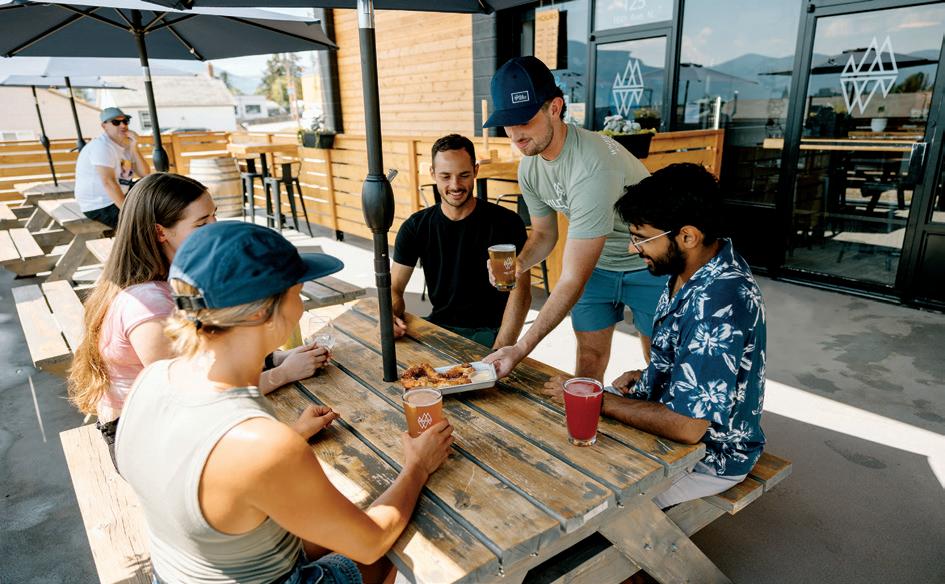
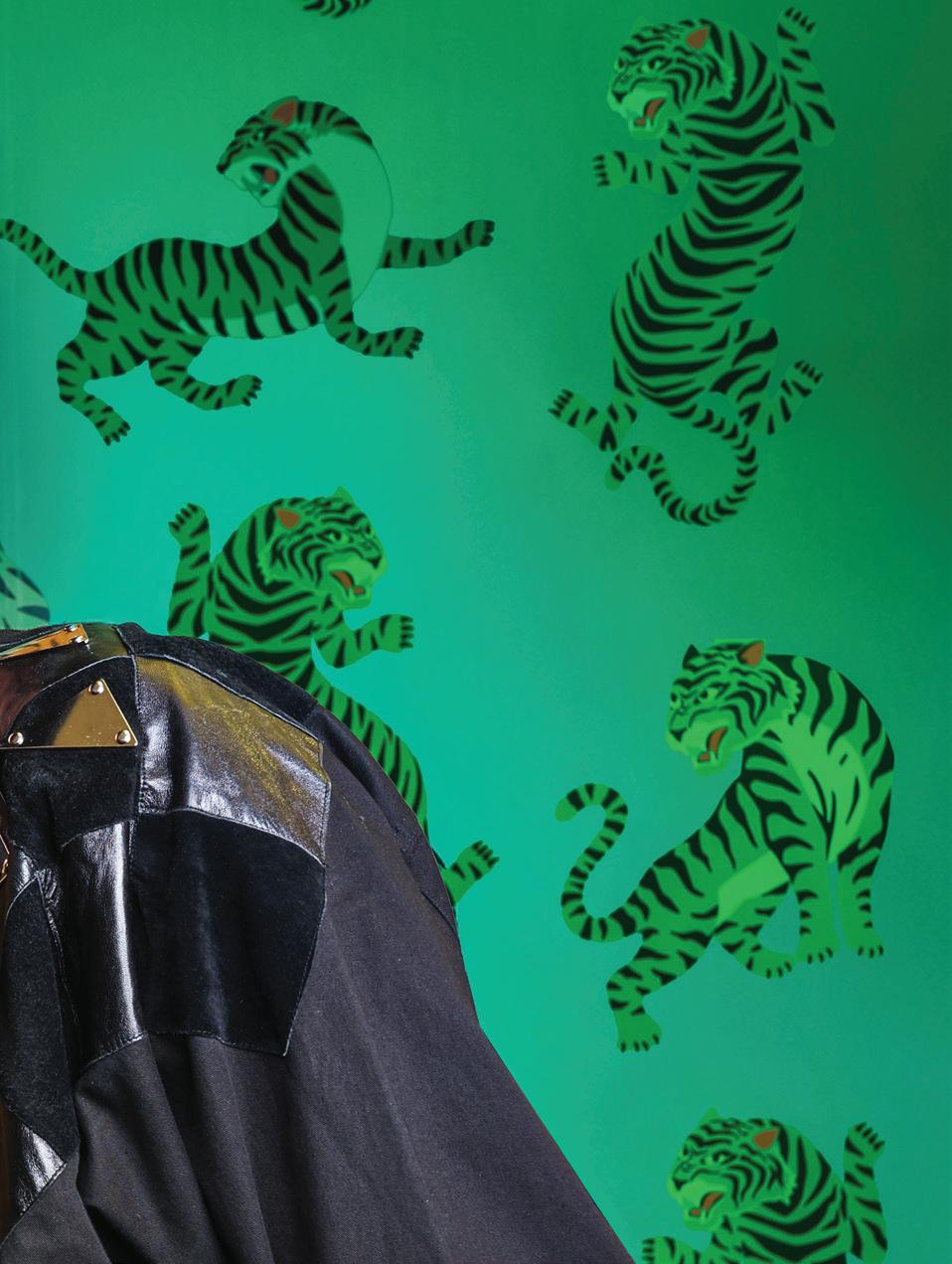
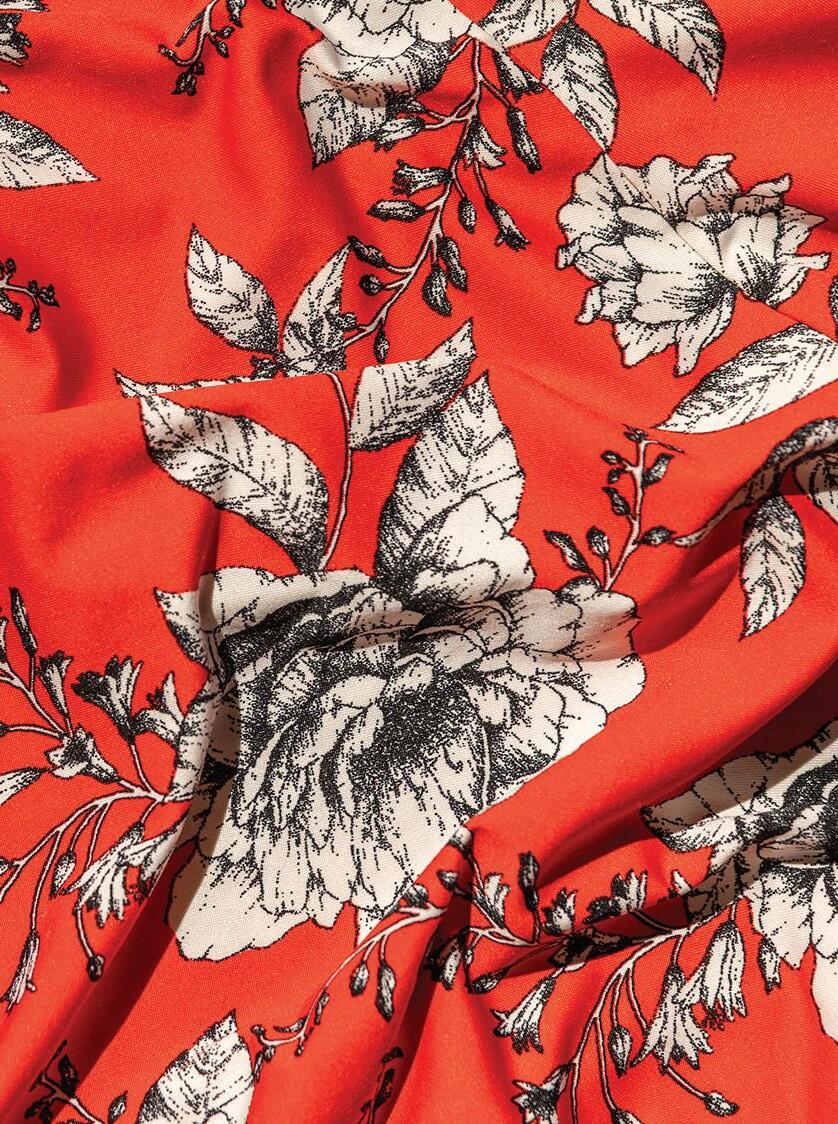
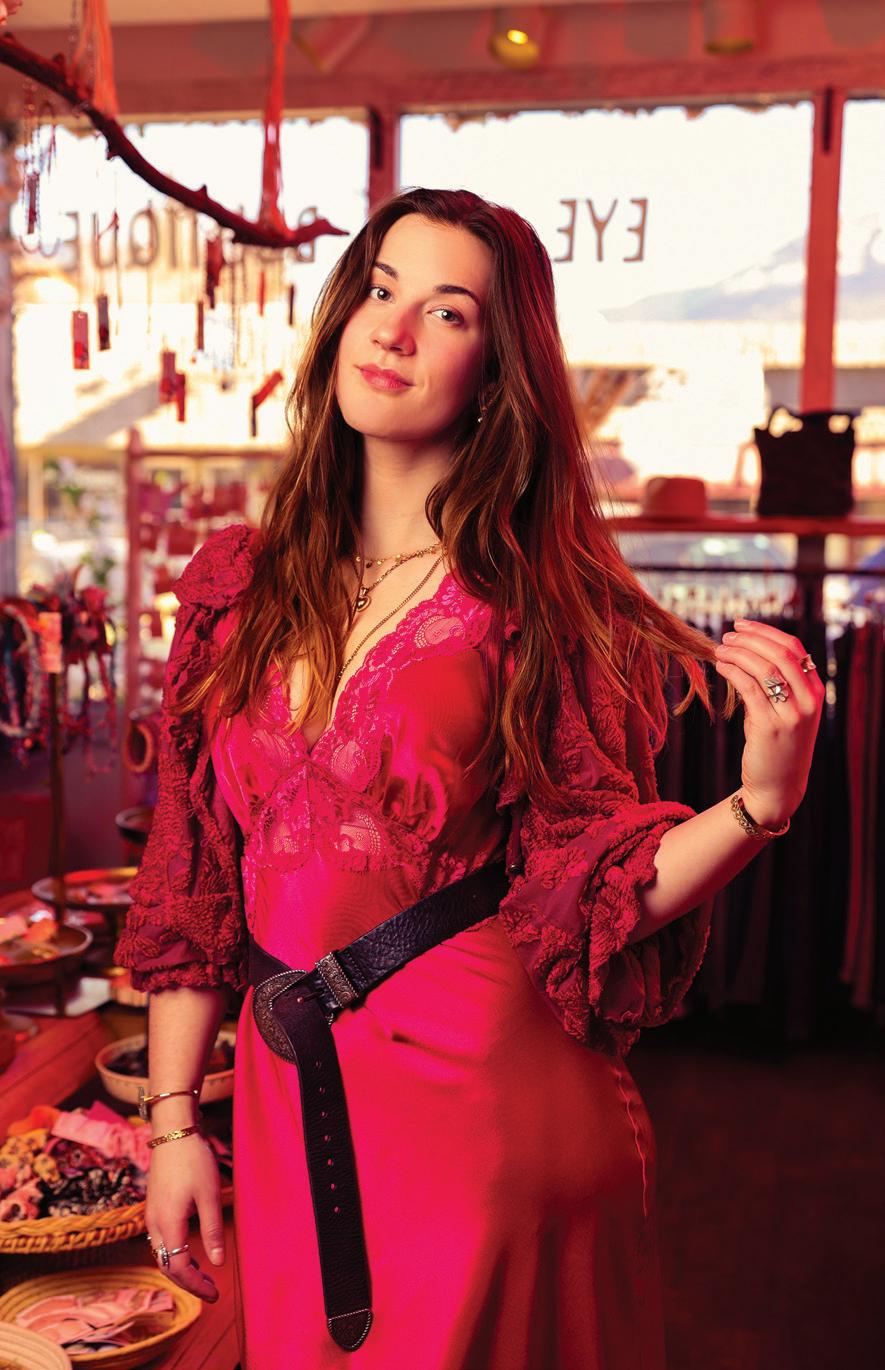
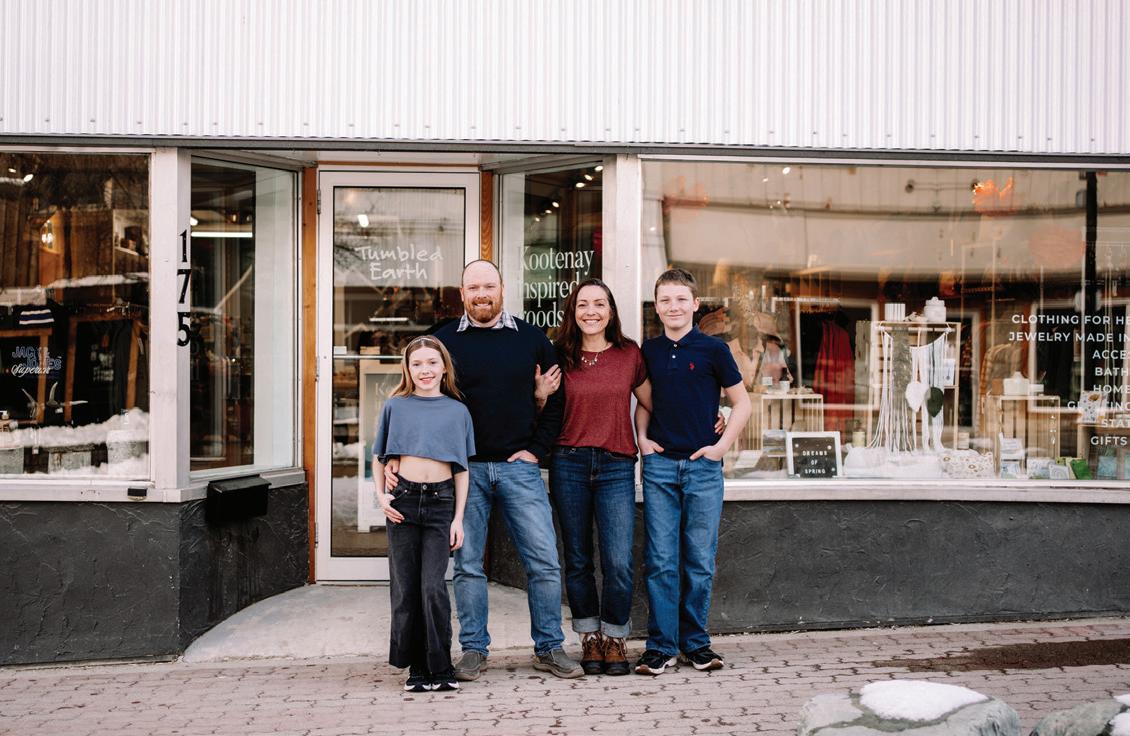
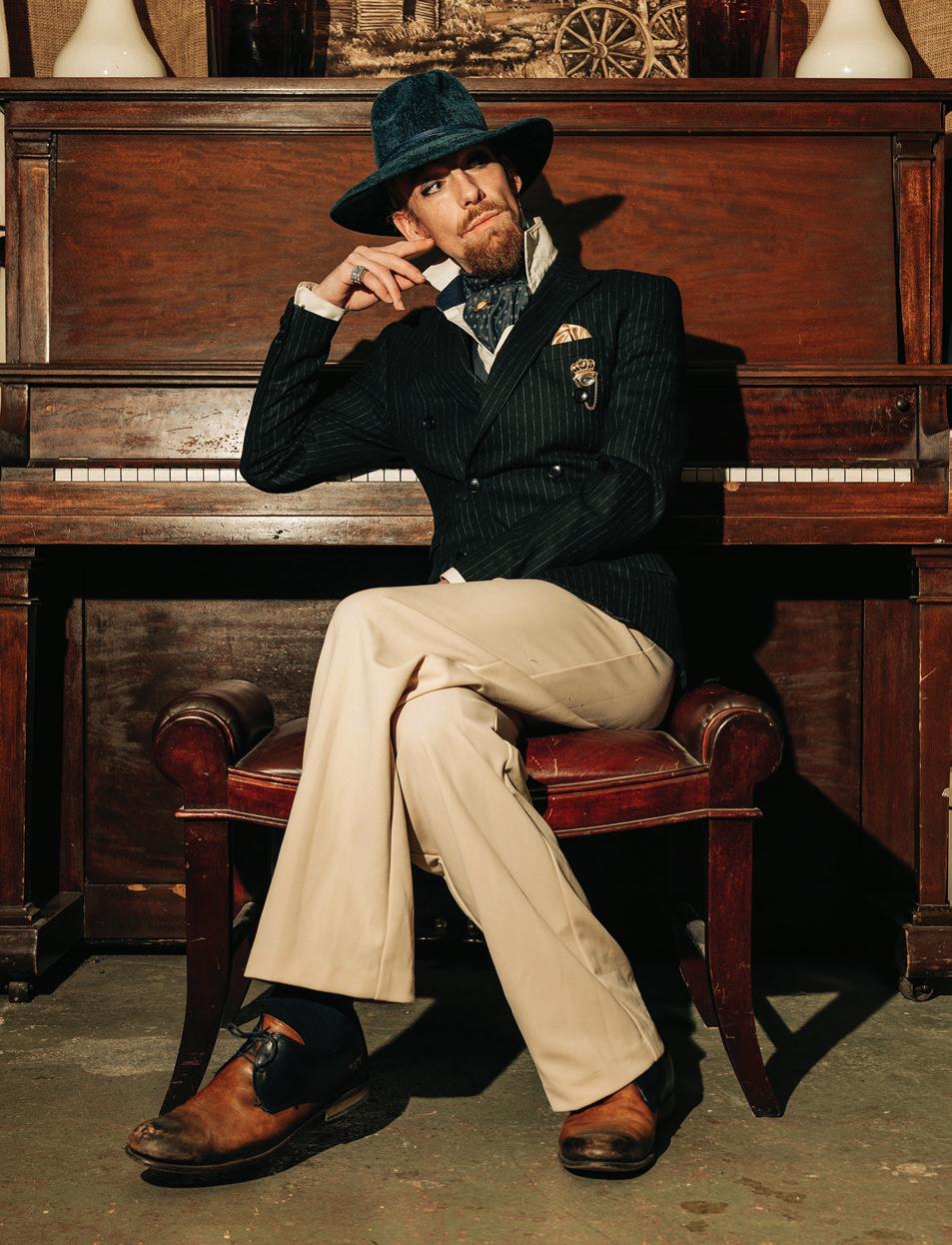
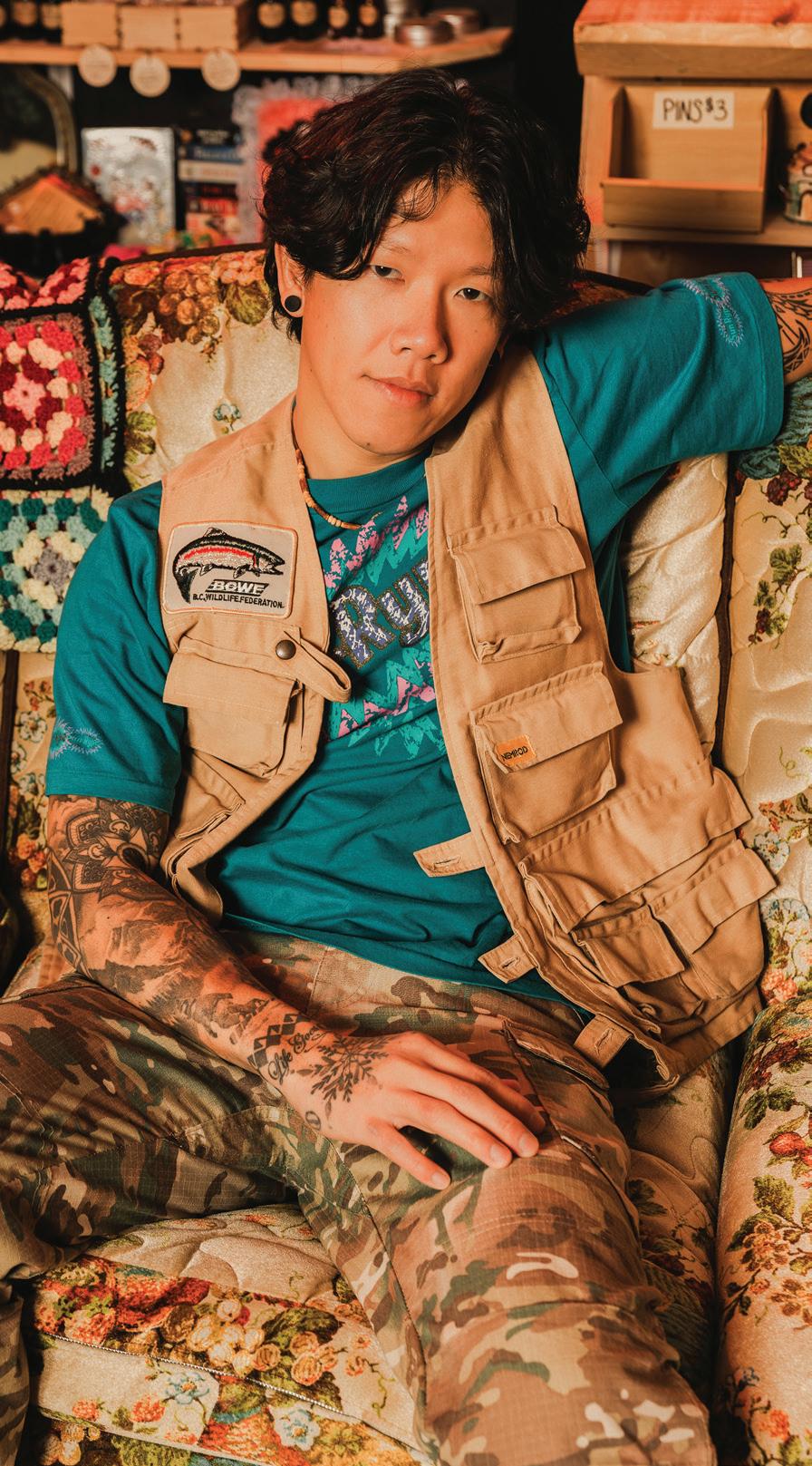
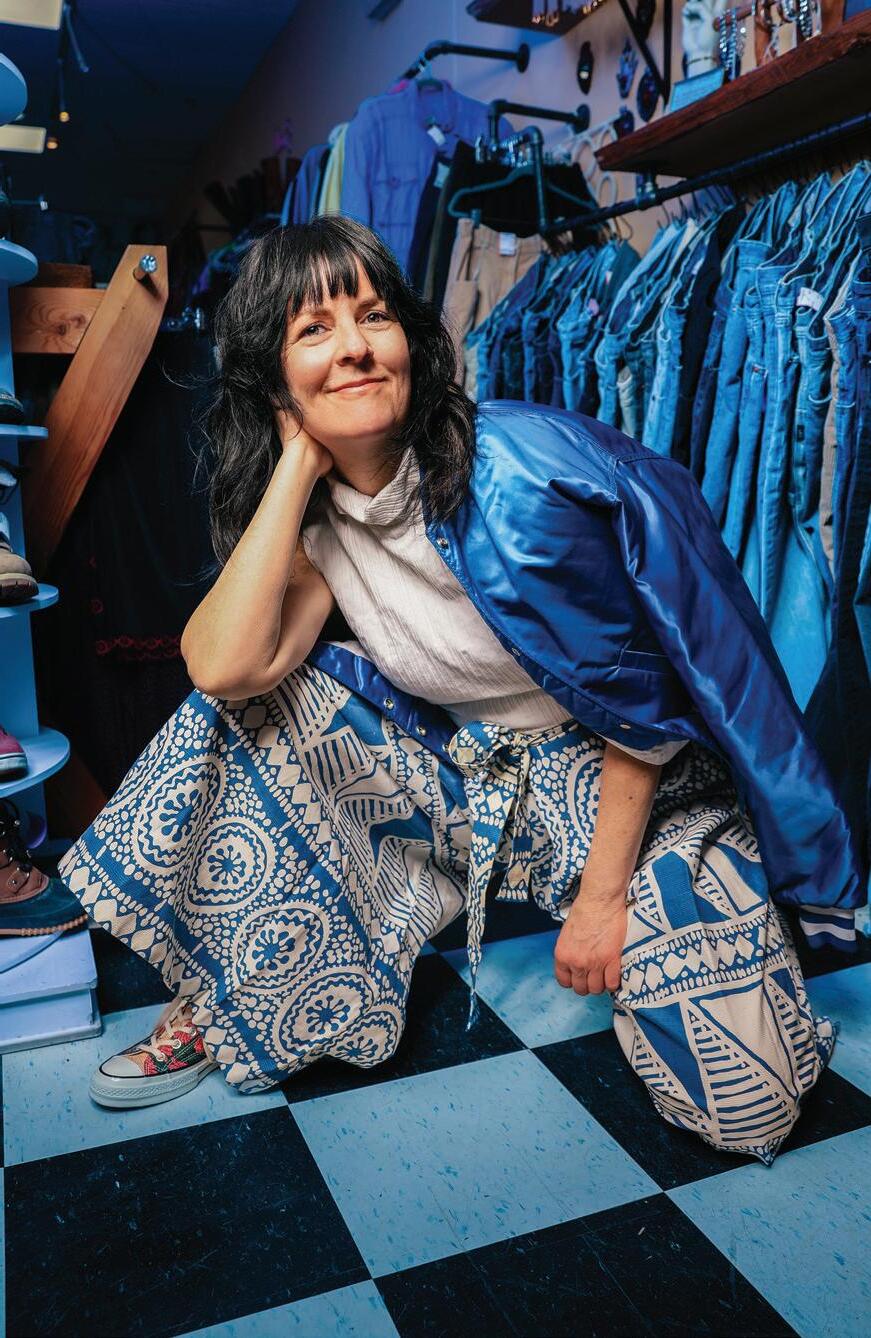
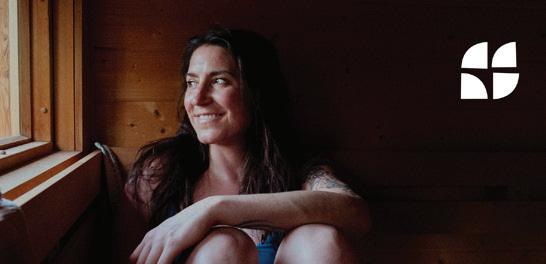
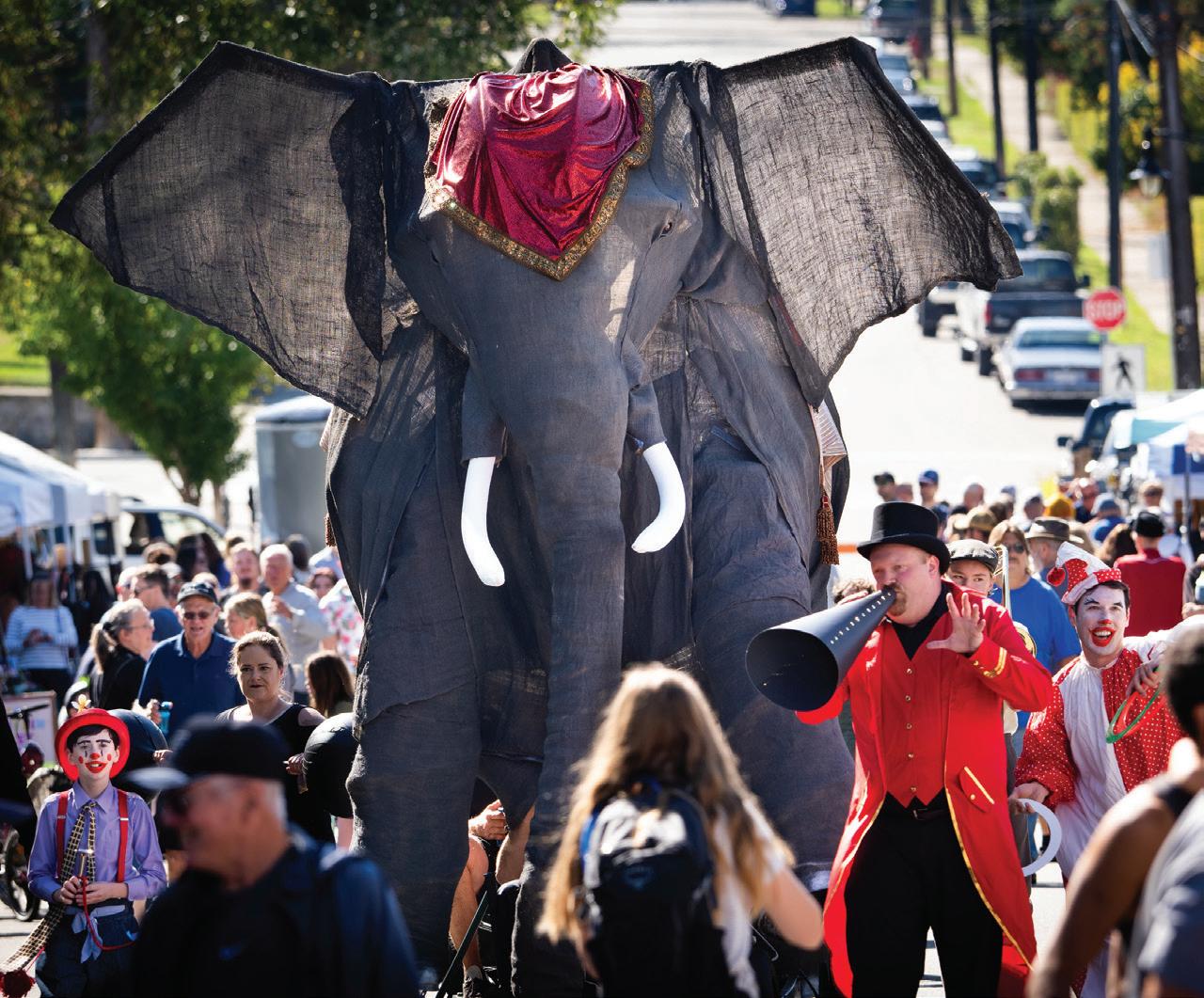
With fast fashion turning to trash and times getting tight, East Kootenay consignment is kind and cool.
SOWING THE SEEDS OF LOVE
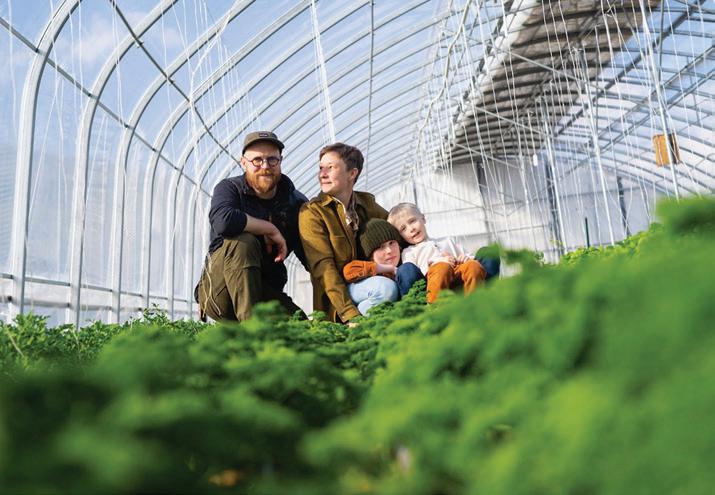
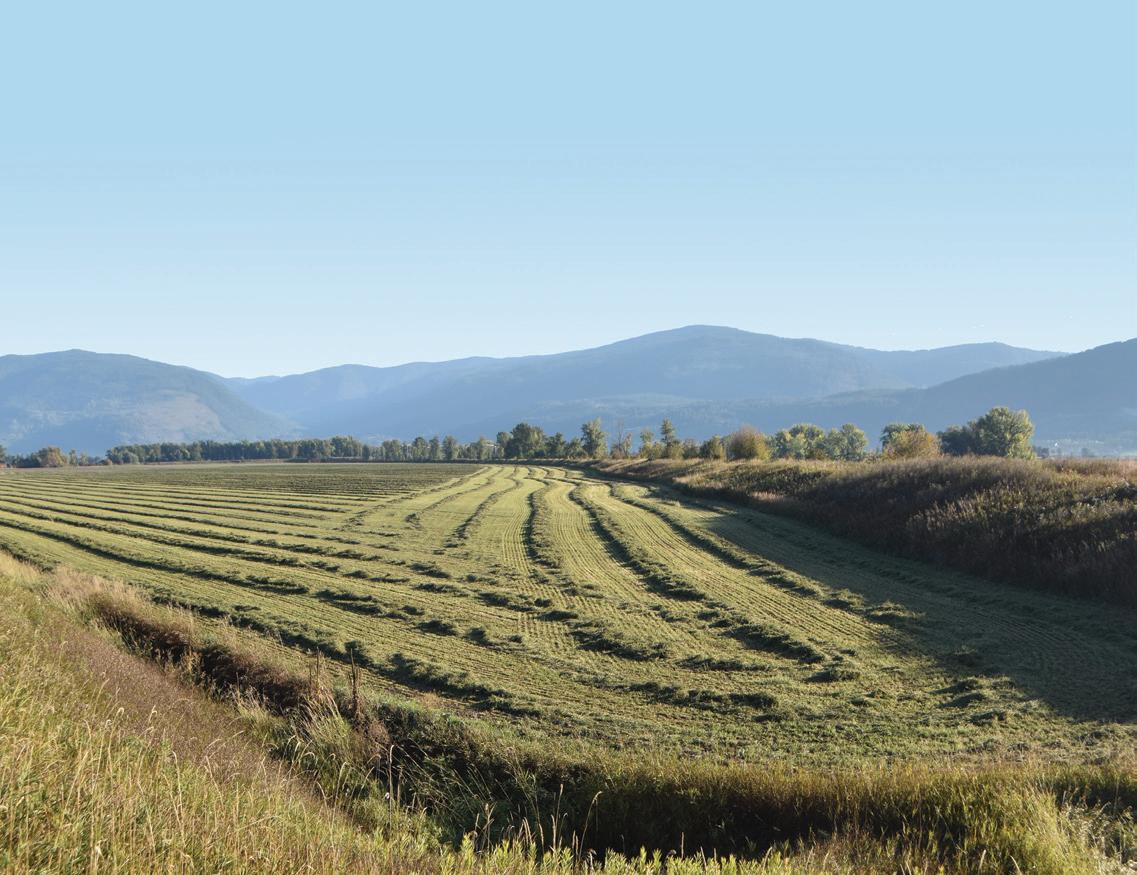
Two Creston farming families, food’s past, and its future.
GOLDEN MOUNTAIN GUIDE
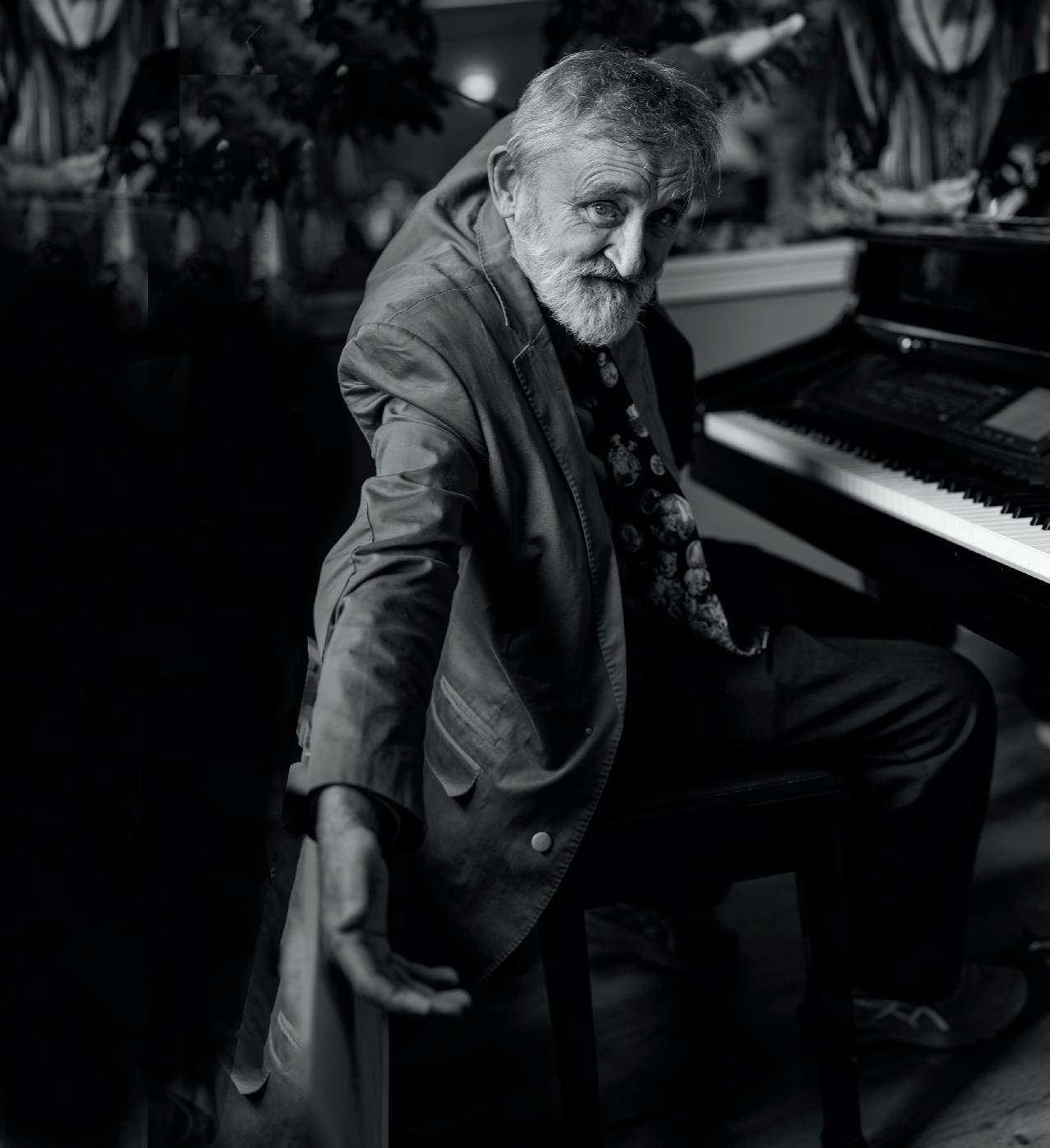
MARK HERBISON:
Near death calamity, dark times, and redemption.
25 YEARS GONE
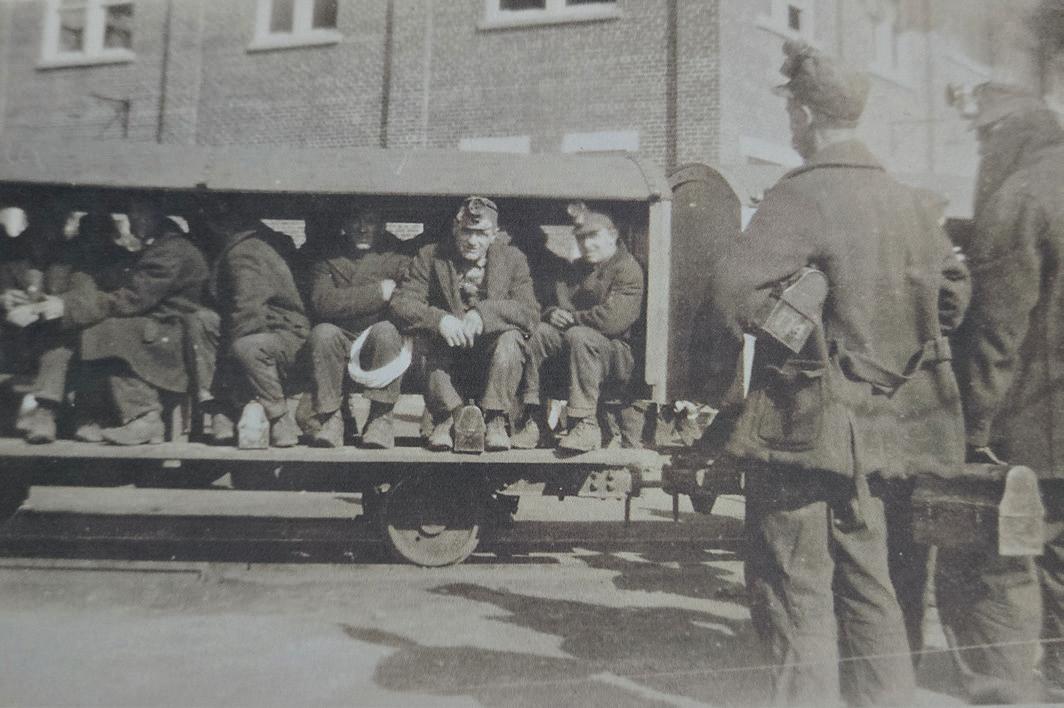
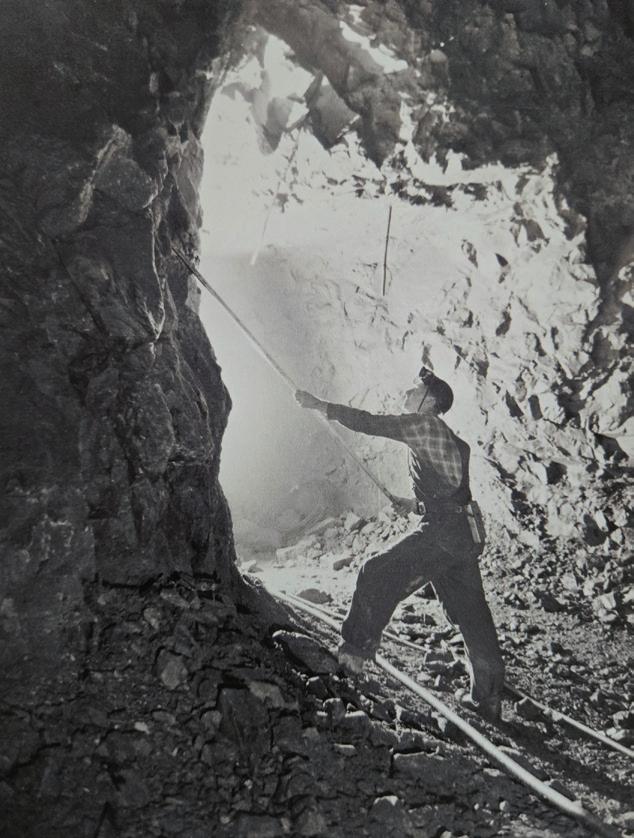
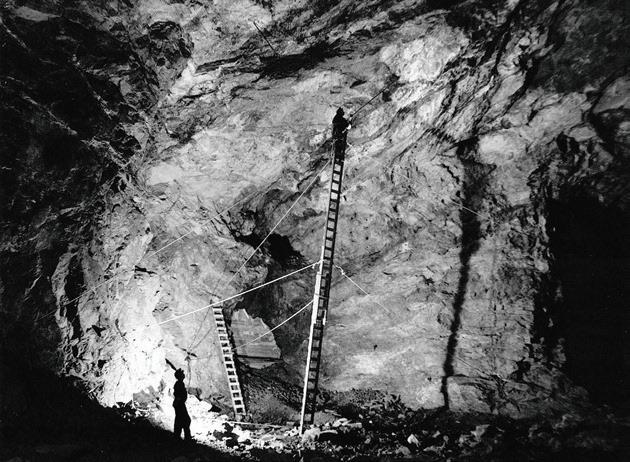
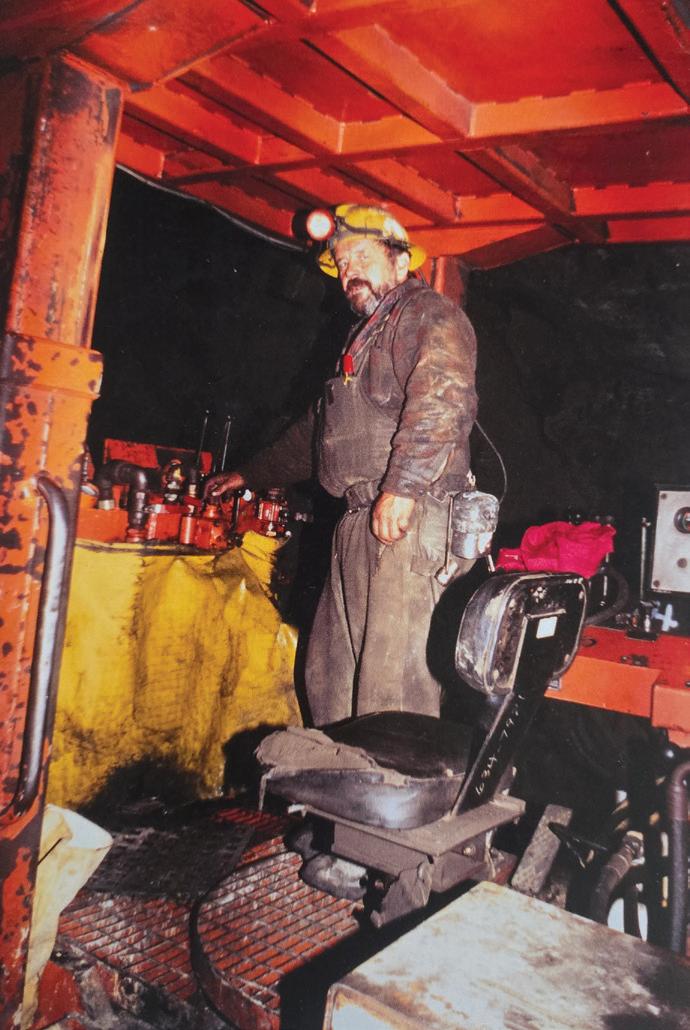
Last shift at the Sullivan Mine.
RUGBY RETROSPECTIVE
BOOBS ON TUBES
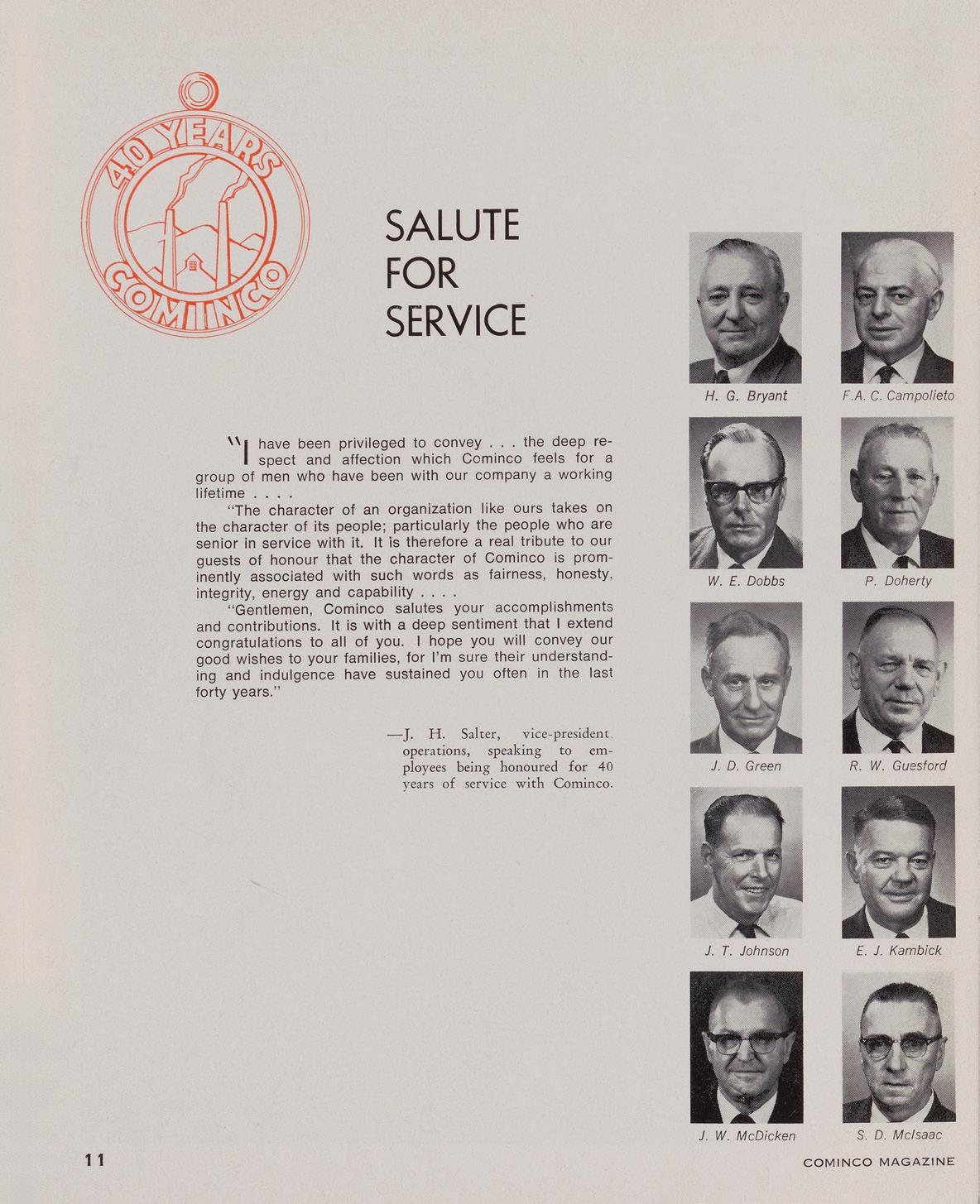
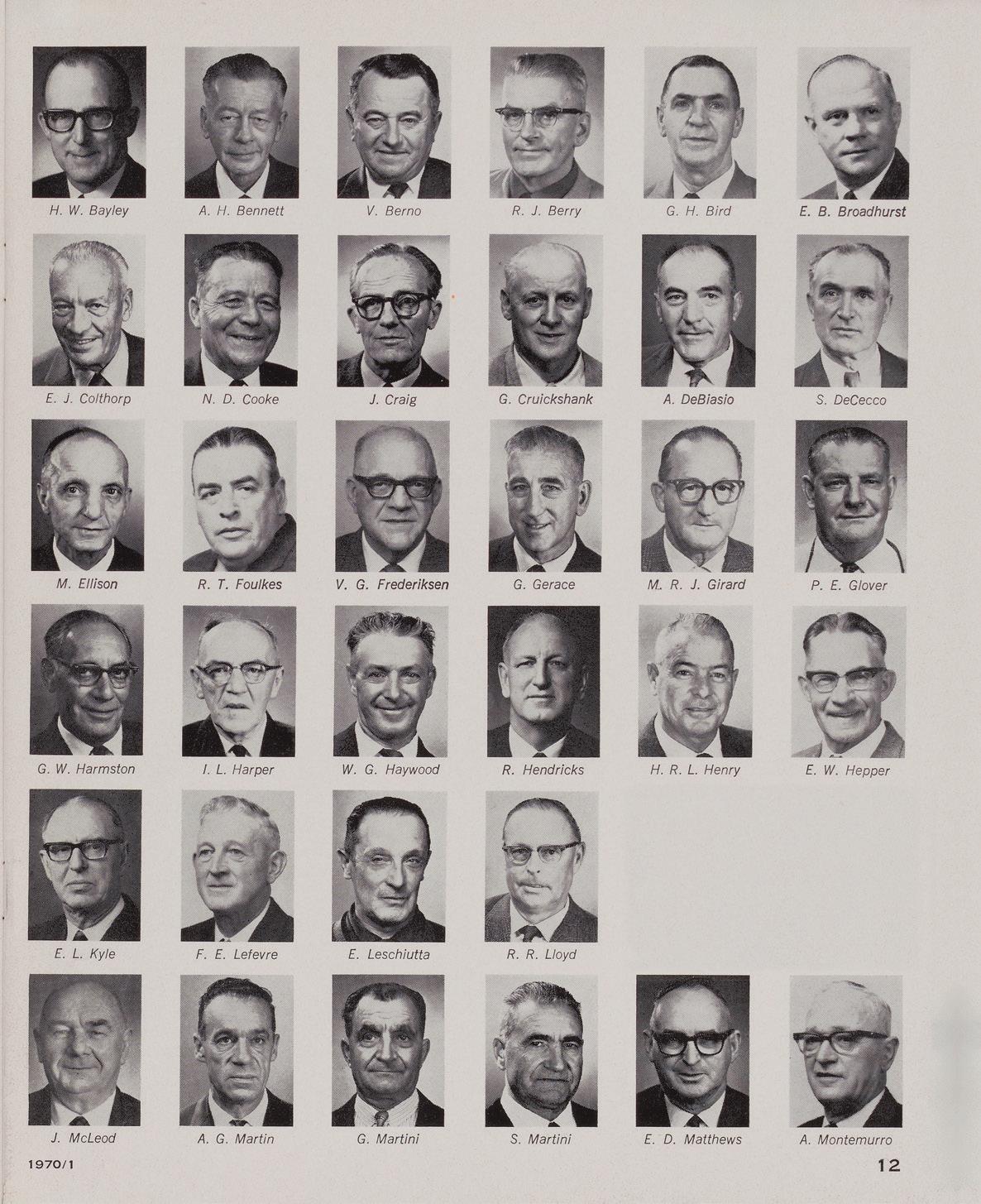
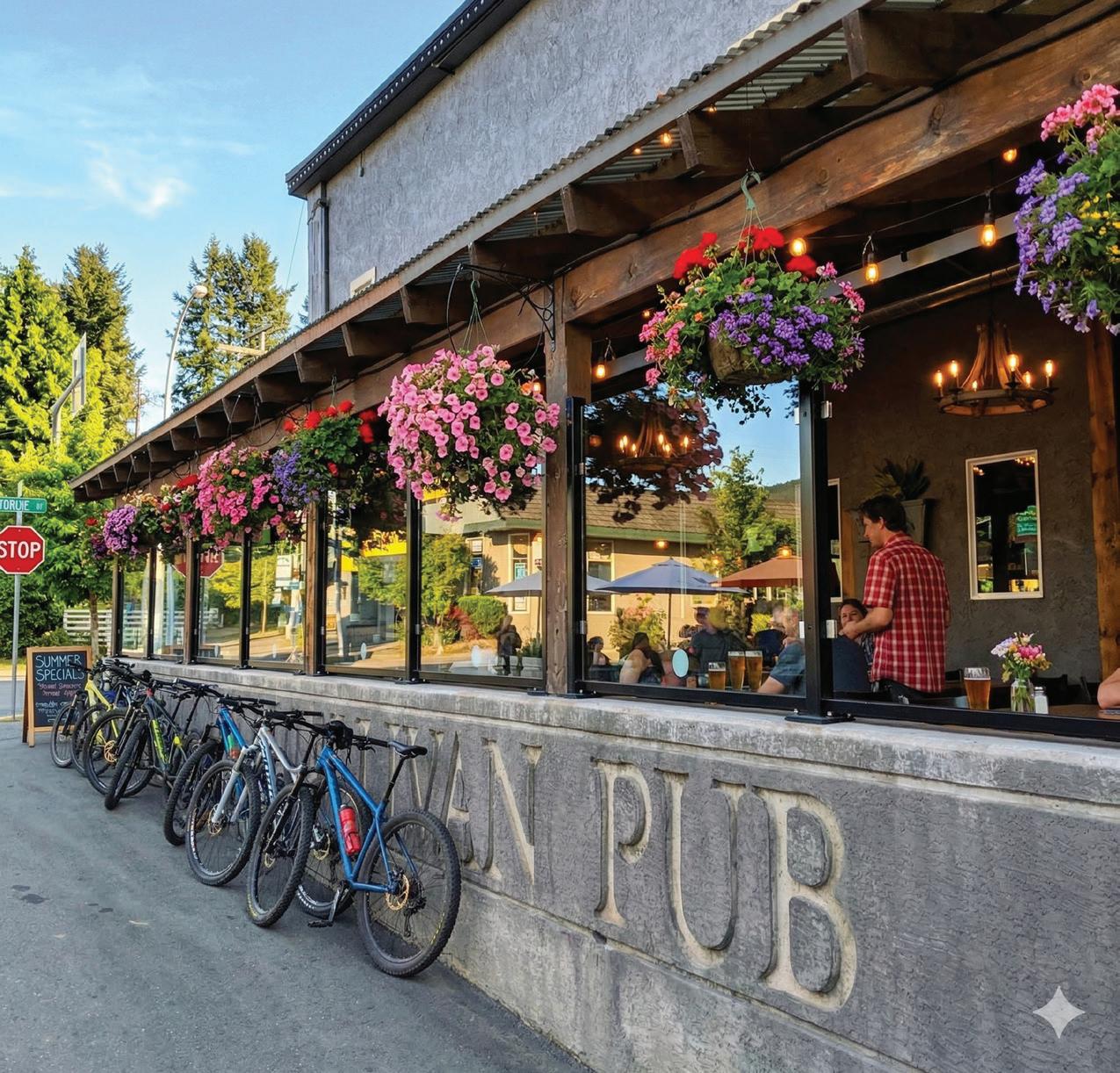
CELEBRATING THE SULLIVAN MINE
Twenty-five years after the closure of the Sullivan Mine, one of Canada’s largest underground mines, Kimberley, B.C. stands as a model for transitioning from a mining town to a vibrant community and popular tourist destination. Teck remains committed to ongoing stewardship of the Sullivan Mine, ensuring long-term safety and responsible environmental management.
May is Mining Month in B.C., a time to celebrate the significant contributions mining has had and continues to make to our province. Learn more at teck.com/sullivan and mining.bc.ca/miningmonth
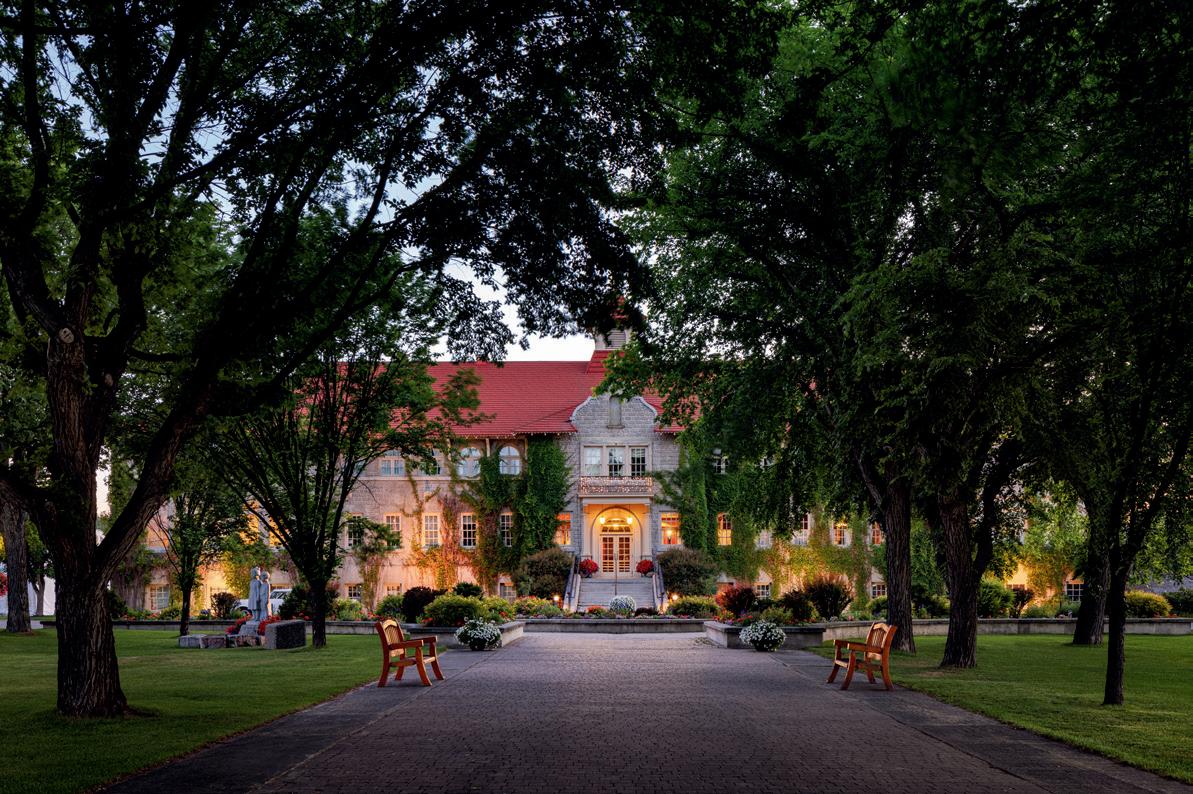
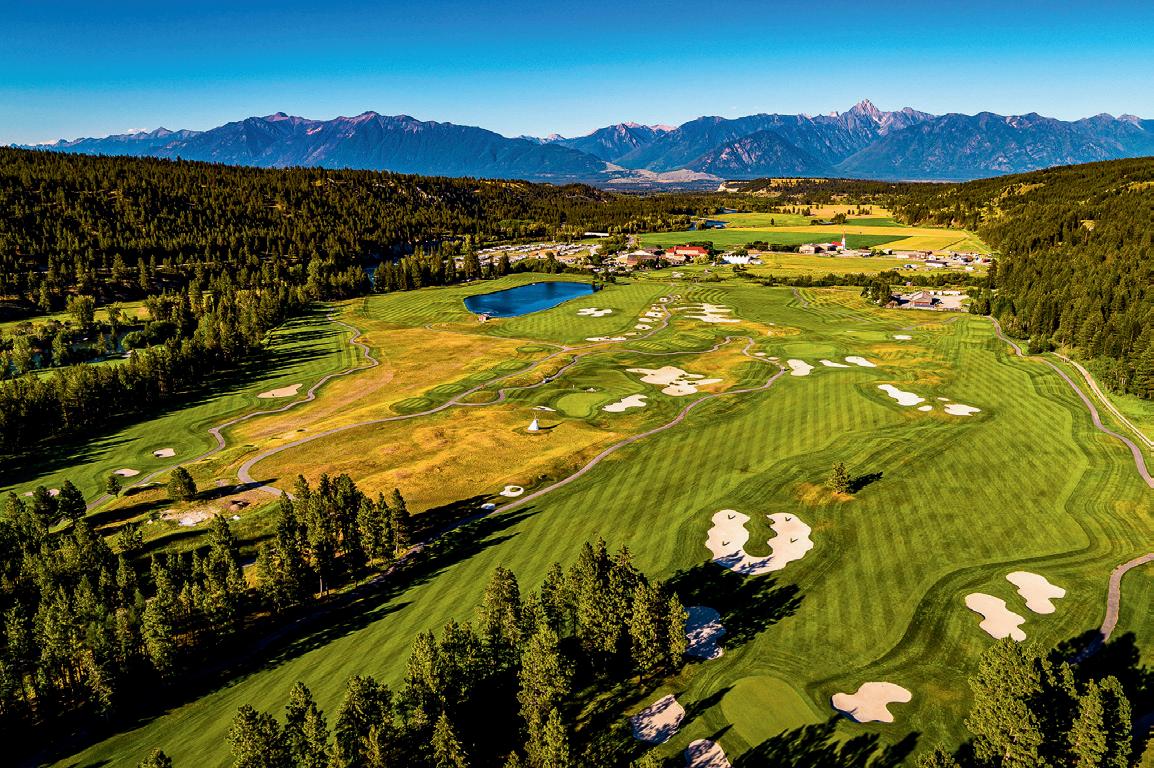
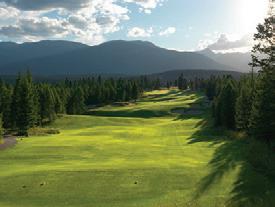
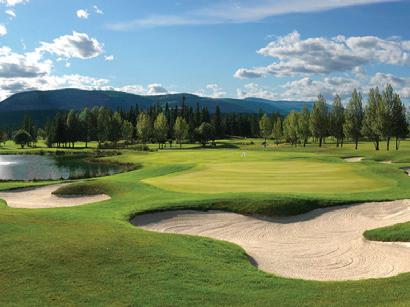
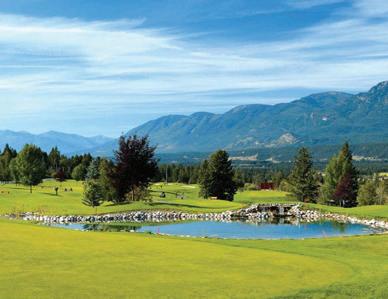
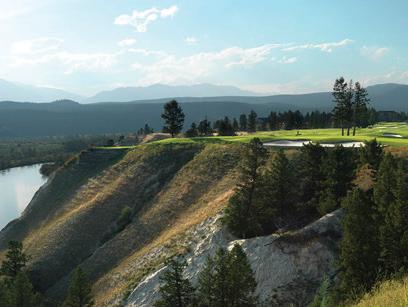
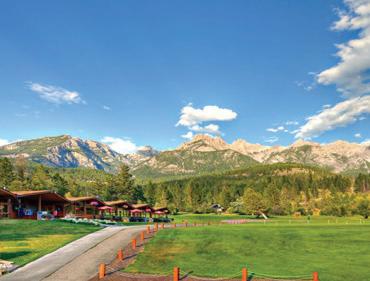
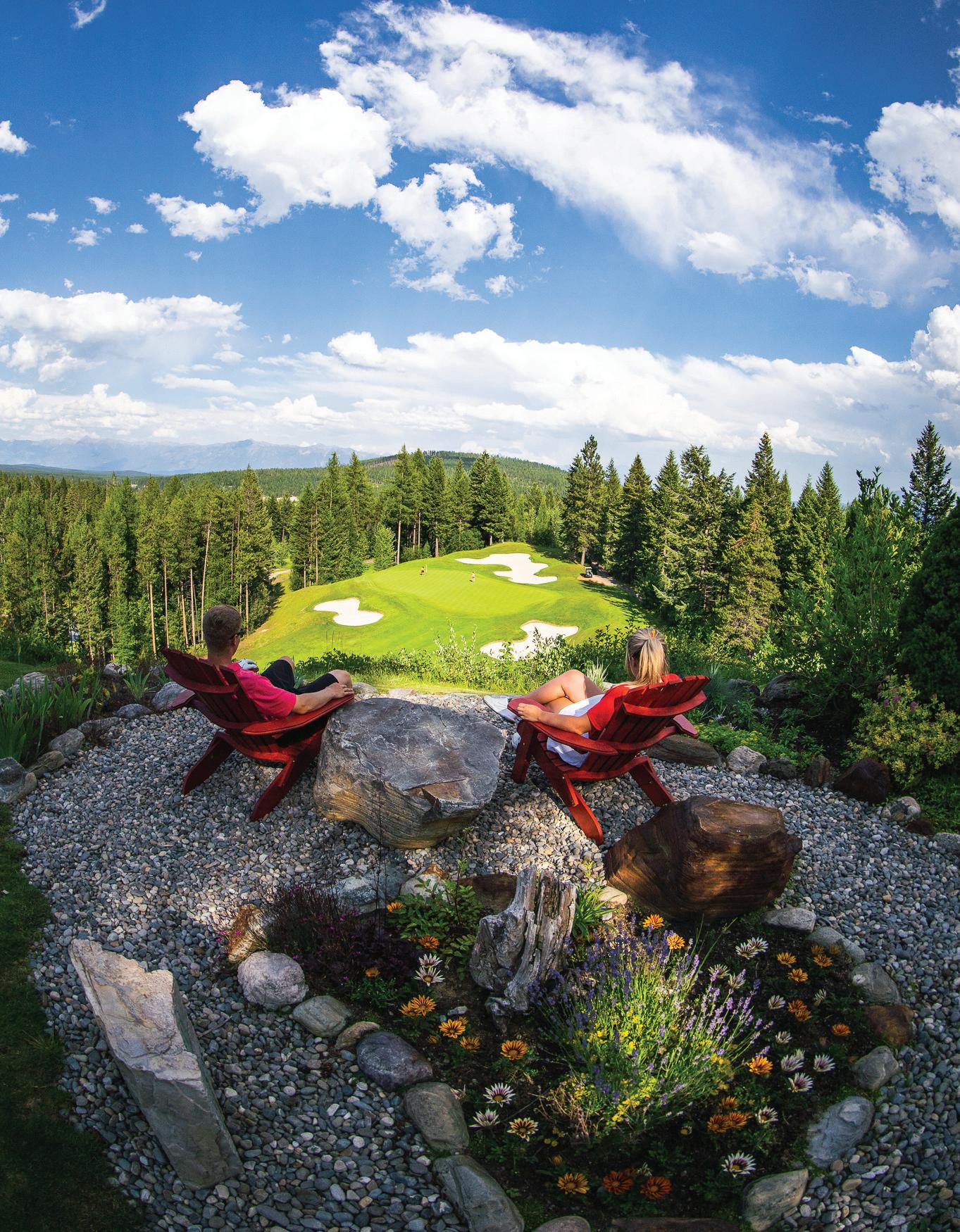
at St. Eugene Resort with scenic beauty and mountai n views, our 18-hole championship golf course, elegance of dining at Num a and unforgettable weddings.
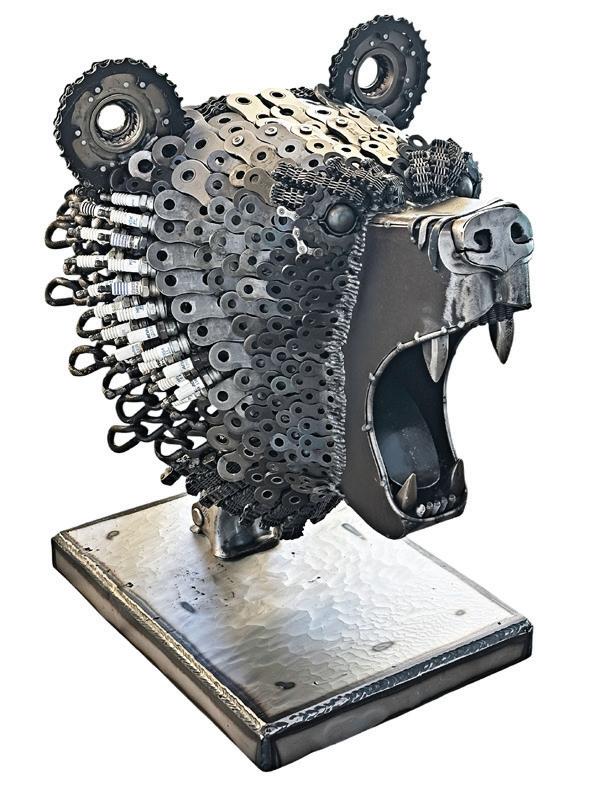
Oso radical
Calgary-based metal artist and Red Seal welder Wendy Stone created this sculpture, titled Trinket , from reclaimed steel, repurposed bike chain, railroad spikes, and a fan panel that’s seen 40 years of industrial use. Stone shows her work — exclusively — at Invermere’s Effusion Art Gallery. The sculpture took her two months of evidently bearable work. Asking price — for those who need more heavy metal ursa in their midst — $10,500.
46
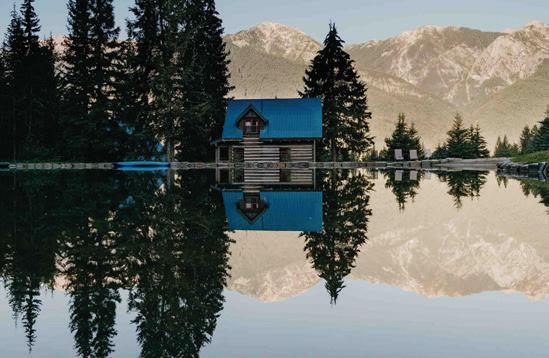
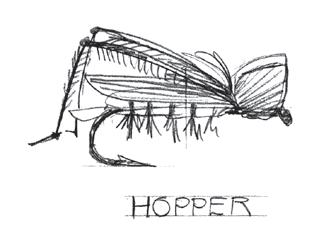
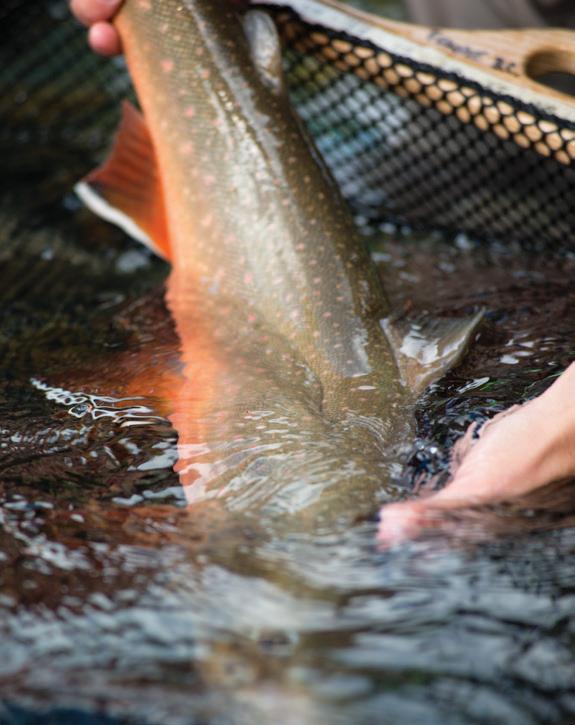
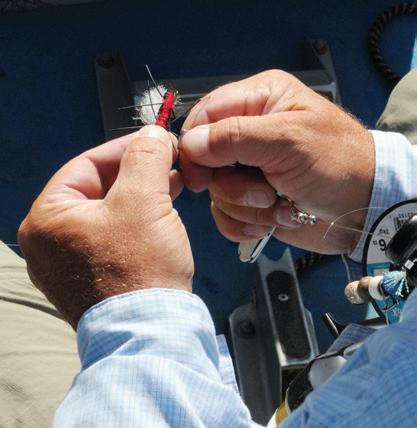
CASTING CALL
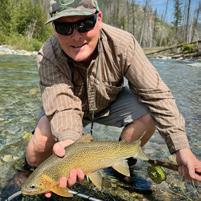
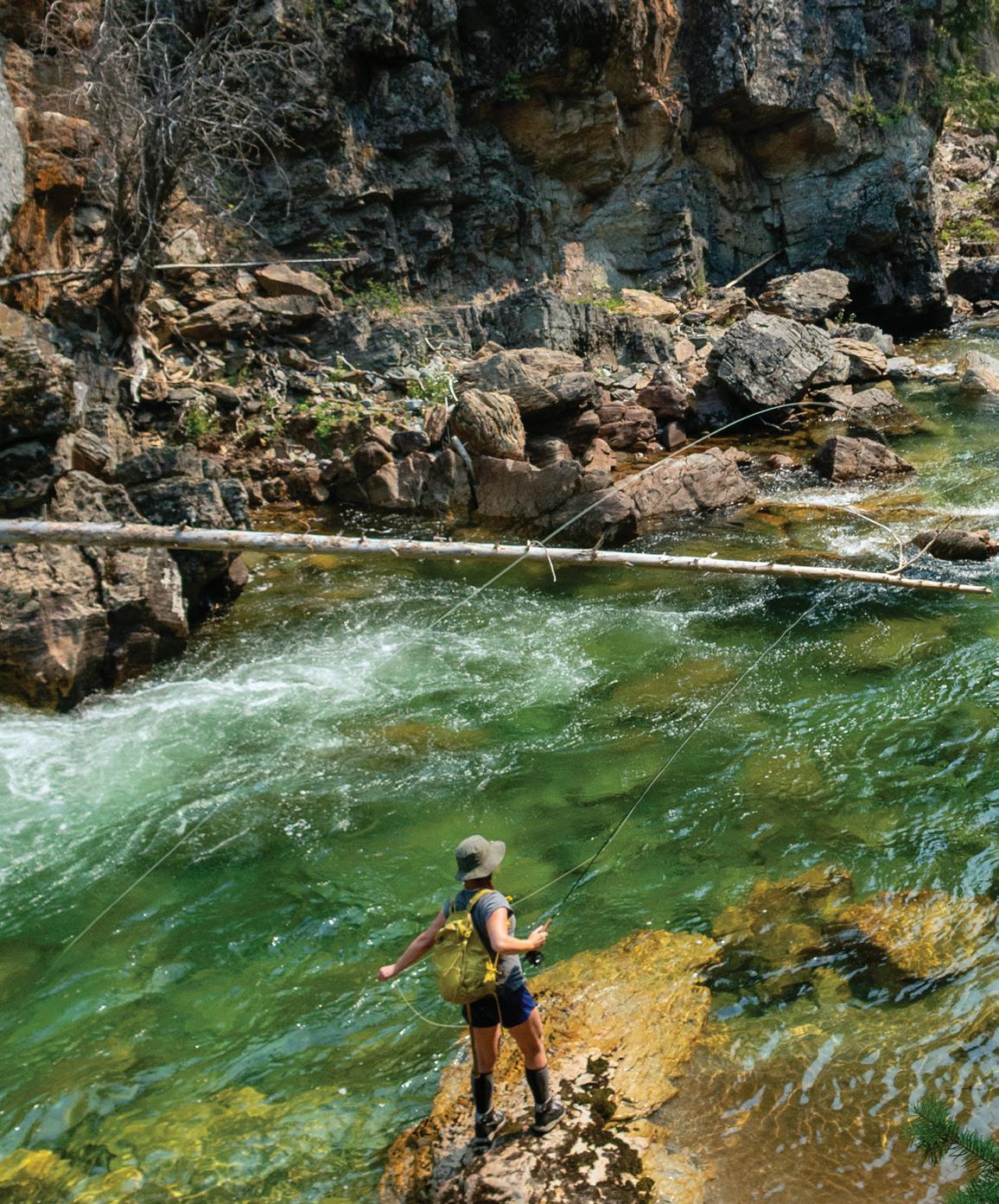
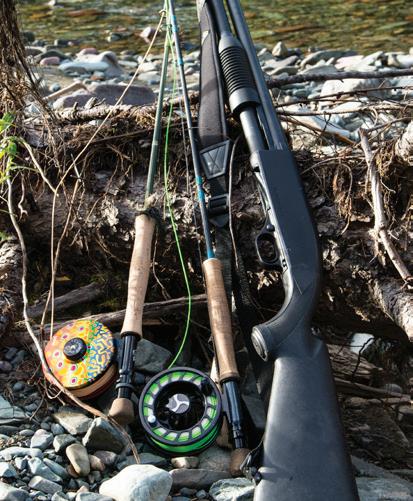
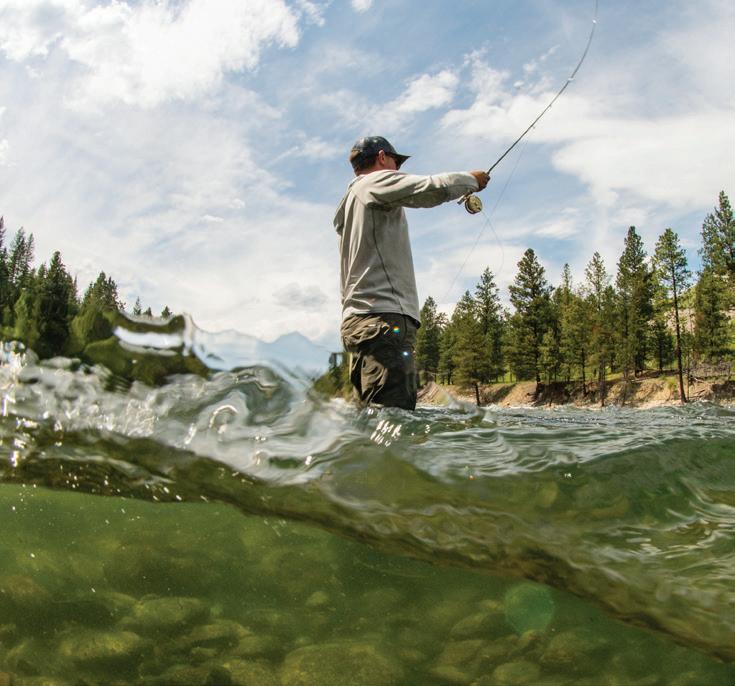
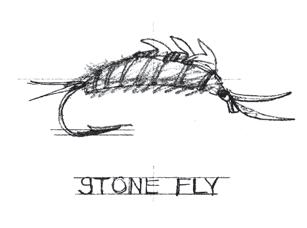
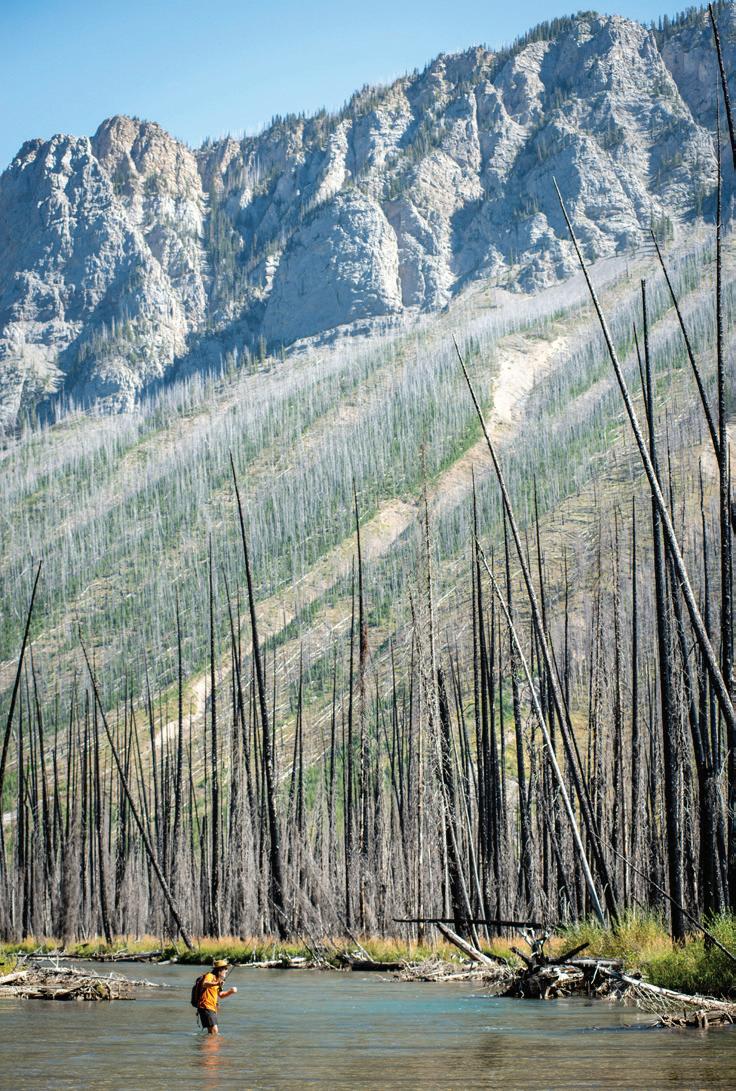
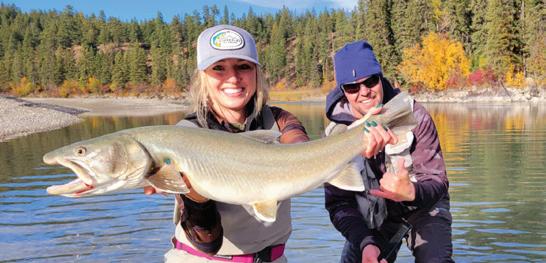
An ardent angler reflects on the deep allure of fly fishing — and the East Kootenay’s extraordinary place amongst it all.
56
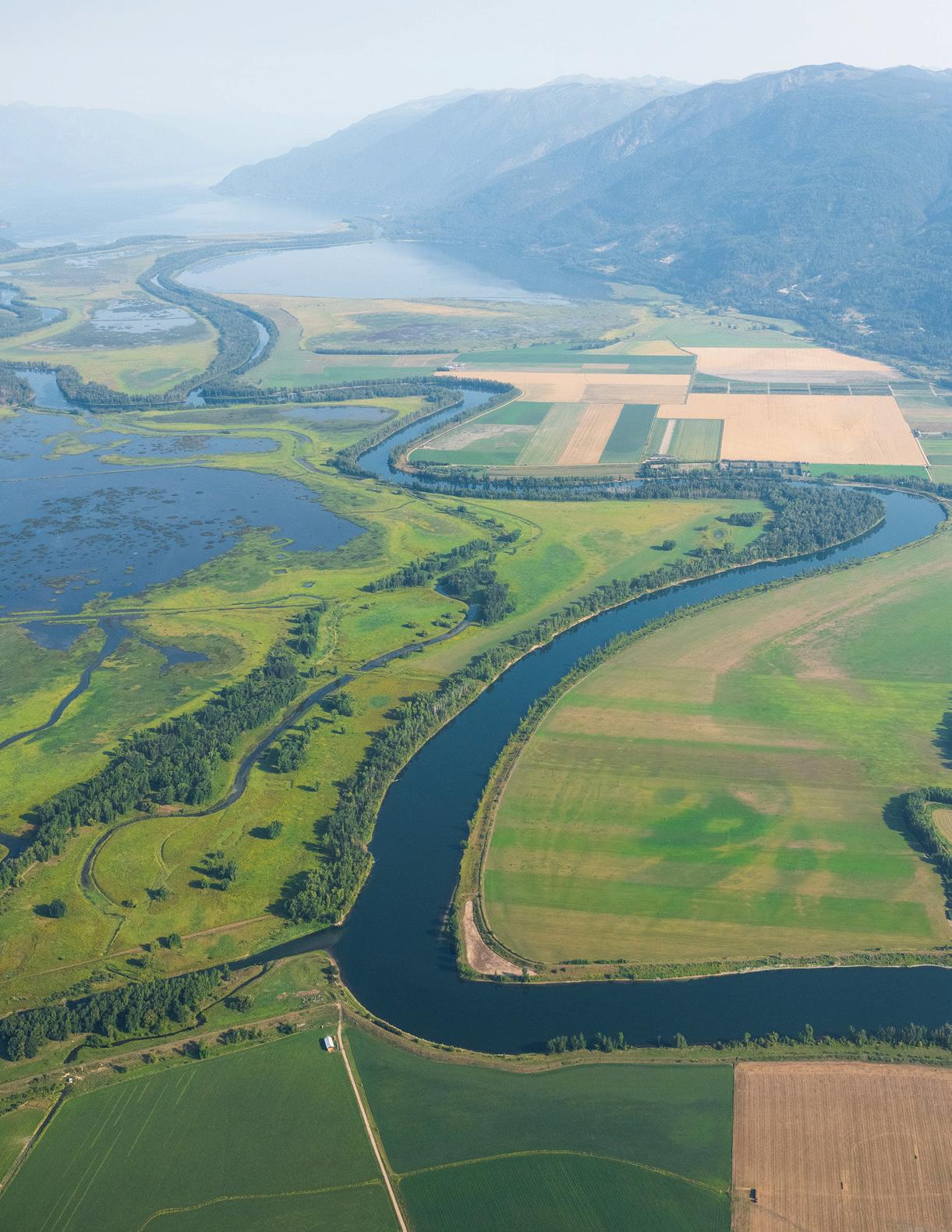
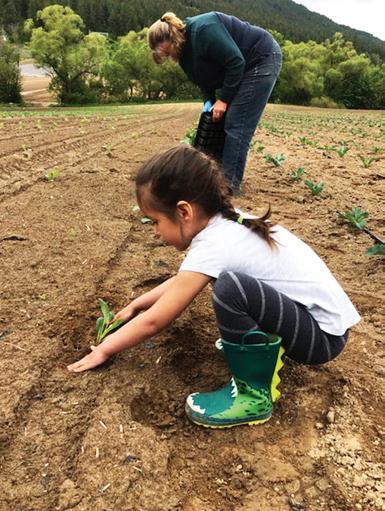
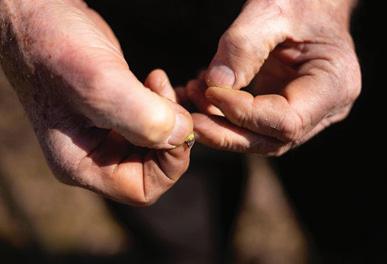
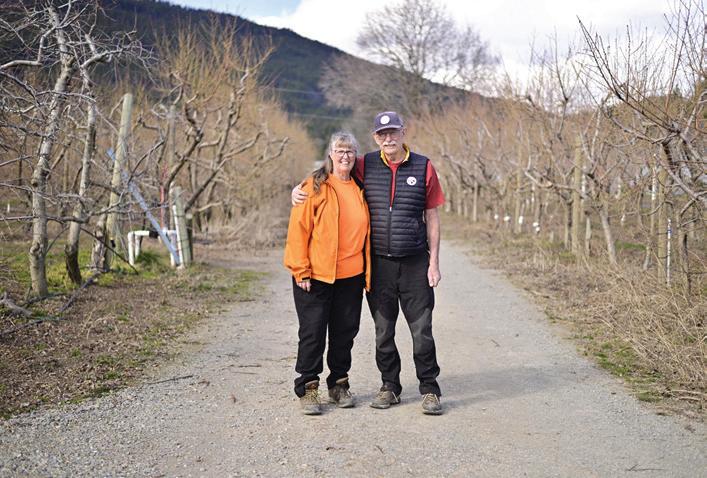
SOWING THE SEEDS OF LOVE
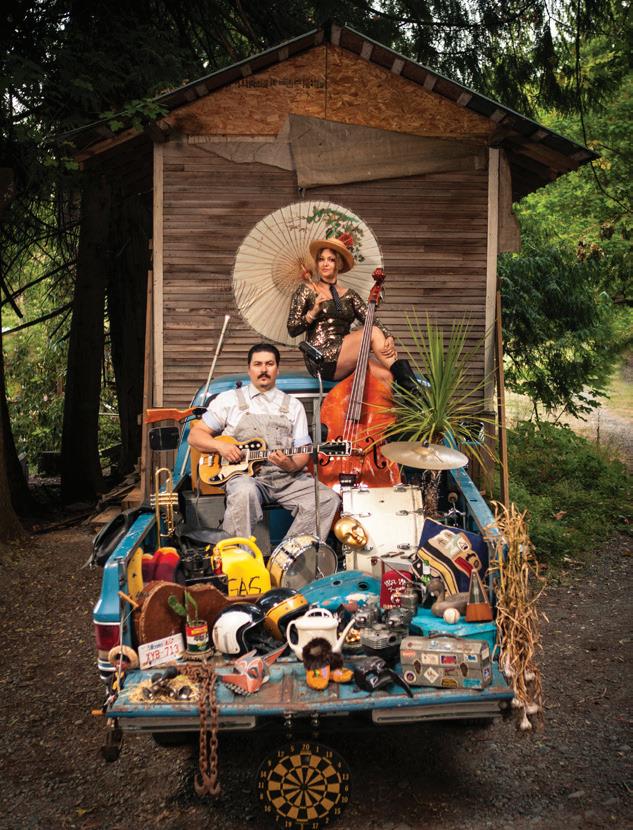
Two Creston farming families, one going back generations, the other brand new. Together, their stories speak to hometown heritage, food’s future, and mankind’s most profound calling.
66
THE LAST SHIFT
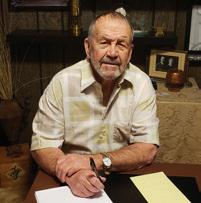
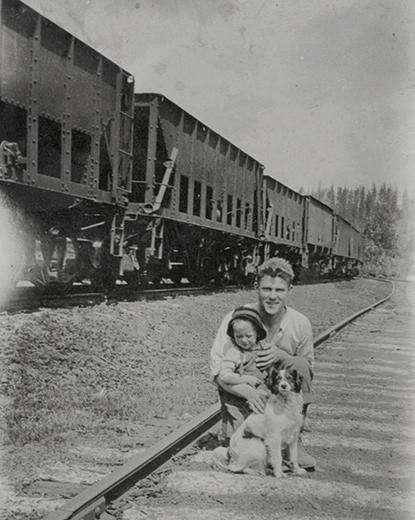
Retired Kimberley miner and author Bill Roberts digs back into a life of hard-earned, company-town living.
76
POPPIN’ TAGS
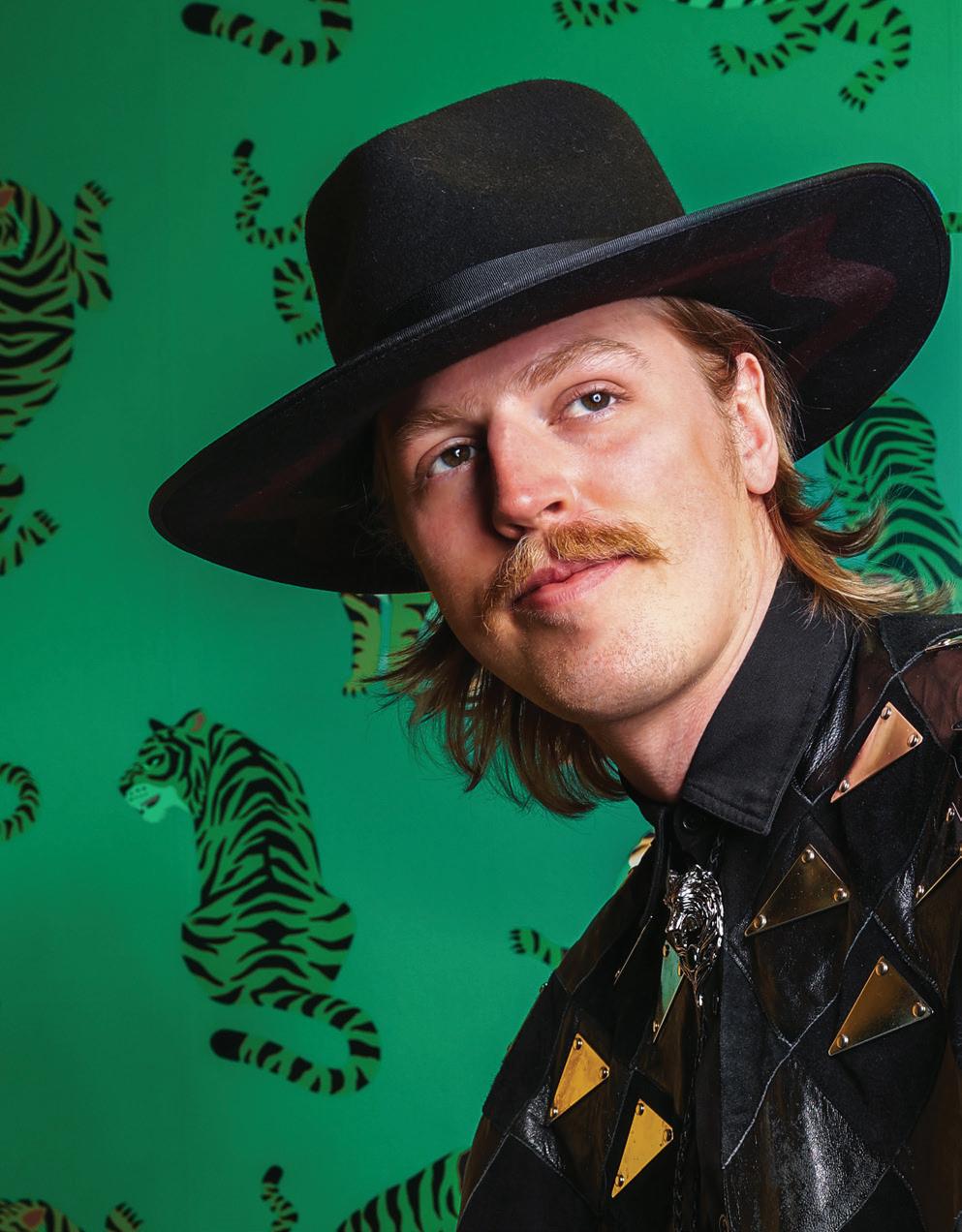
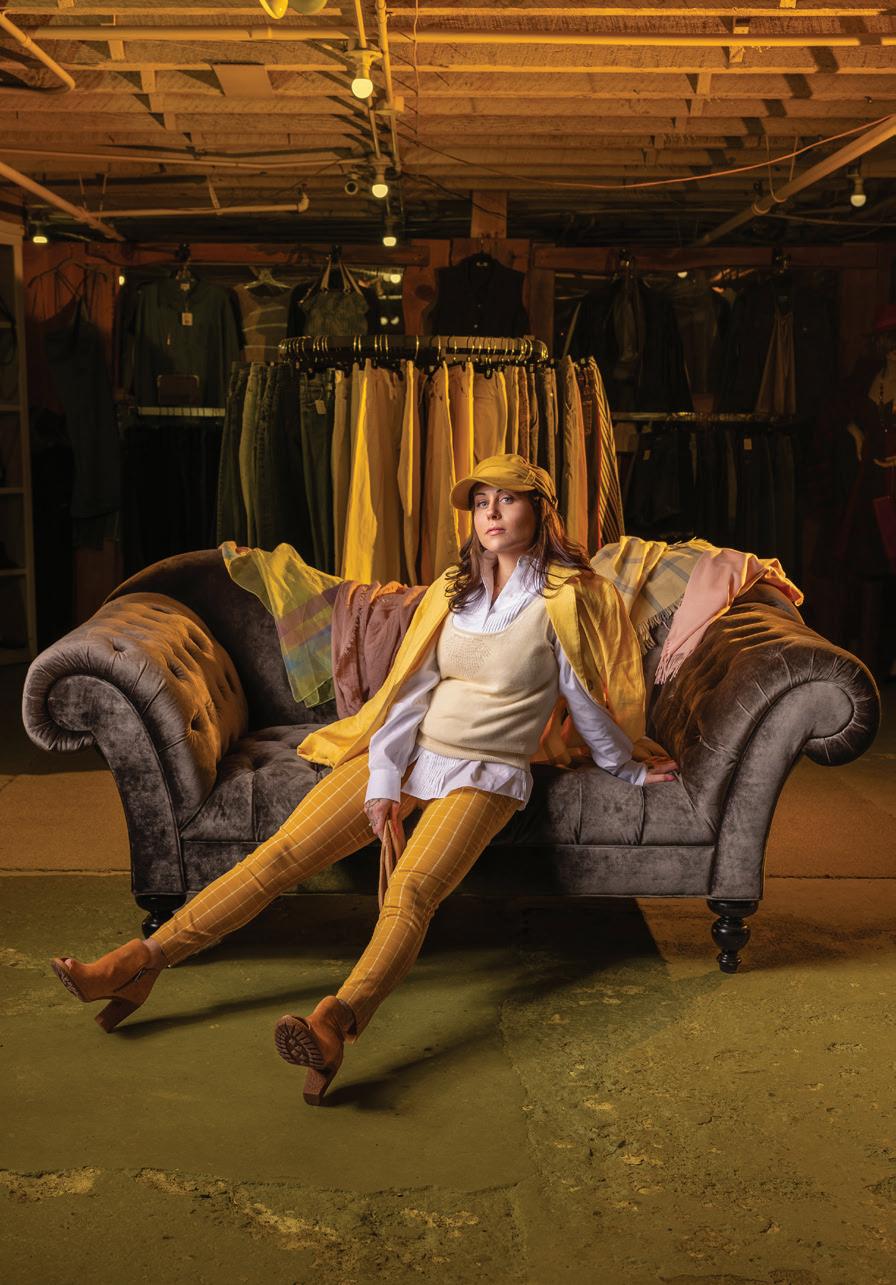
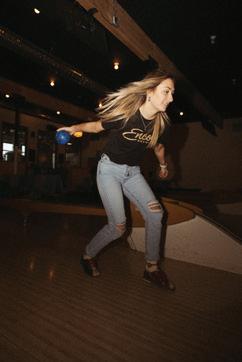
Cool couture has not resigned. It’s consigned. Around the world — and right here at home.
A photo essay by Trench senior photographer Nicole Leclair and writer Jacquie Moore.
ROUND UP
12 X'ED OUT, TIME CHANGE CHALLENGED, CRESTON NOT A NAPA
Q AND EH
14 RETURN TO SENDER
Golden mountain guide Mark Herbison on dark days and an adventurer’s encore.
MOTORSPORT
18 OF METTLE, MUD, AND PEDAL
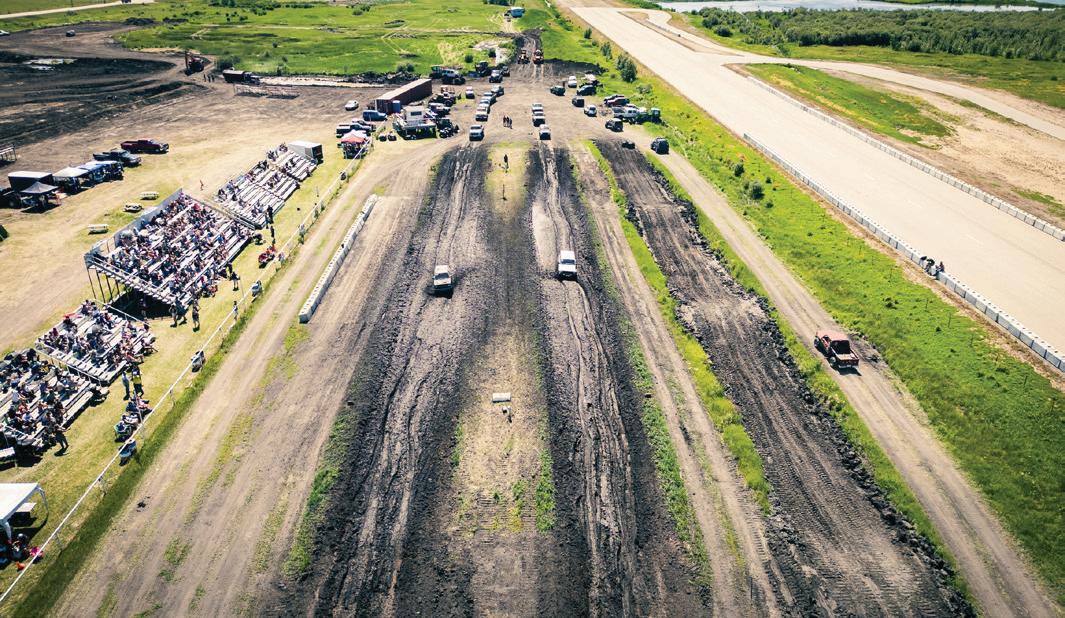
Following tragic turns and a brave restart, an Alberta transplant brings mud bogging back to the Elk Valley.
LOCAL YOKEL
21 HAIR APPARENT
He started with an ’80s mullet wig and YouTube videos. Now 17-year-old Kimberley barber Brady Langille-Higgins is chop-chop.
ADVENTURE
24 BELLE RAISERS
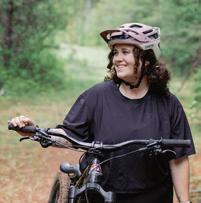
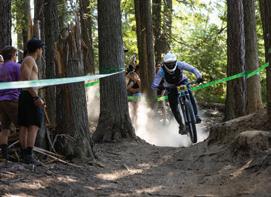
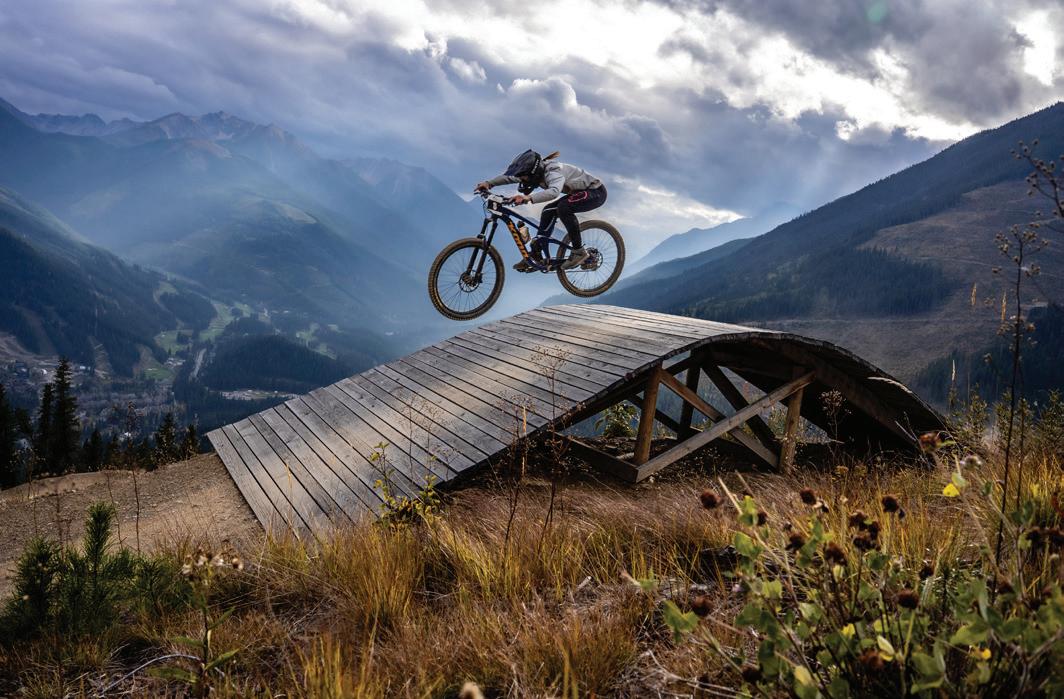
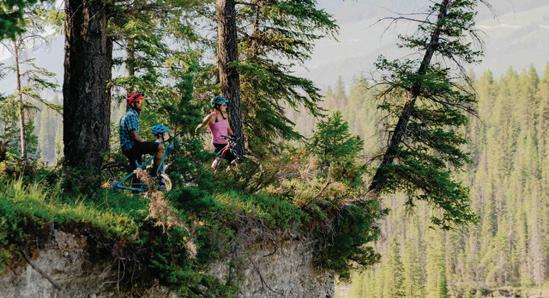
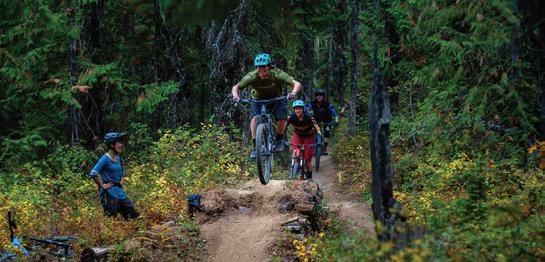
Meet the Boobs on Tubes posse. Women mountain bikers stoked on she-power.
SPORT AND CULTURE
26 FOR THOSE ABOUT TO RUCK…
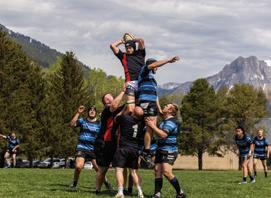
An unofficial retrospective on Kootenay rugby’s 70-year history.
CONSERVATION
29 OVERWORKED BUT UNDERWAY
Can Joseph Creek — Cranbrook’s blue-collar watershed — bounce back?
YOU FUNNY
33 ELIMINATION RUMINATION
The once-beloved biffy seems to have gone the way of the doo doo.
SPONSORED CONTENT
36 BUSINESS & NON-PROFIT HIGHLIGHTS:
• Secwépemc First Nation
• Münter Design & Build
• The Kootenay Conservation Program
• Teck Resources
BIGGER PICTURE
92 ‘SQUATCH WATCHER
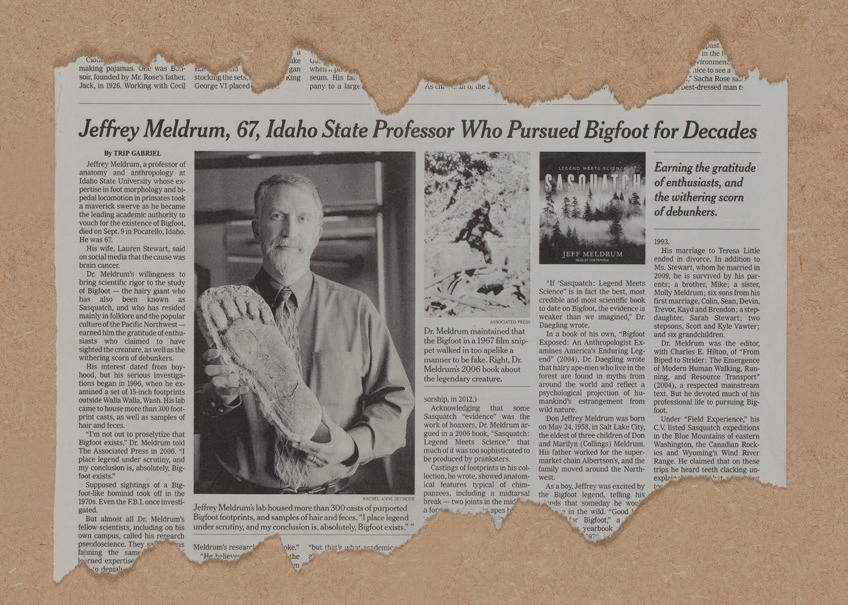
Idaho-based professor Dr. Jeffrey Meldrum's scientific approach to Sasquatch left us with a timely lesson: only fact can trump fiction.
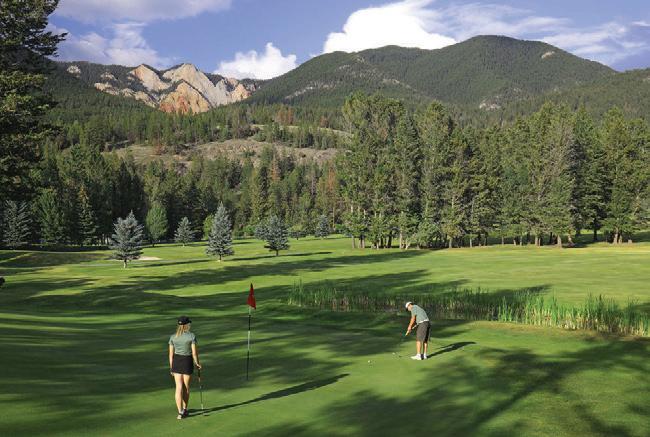
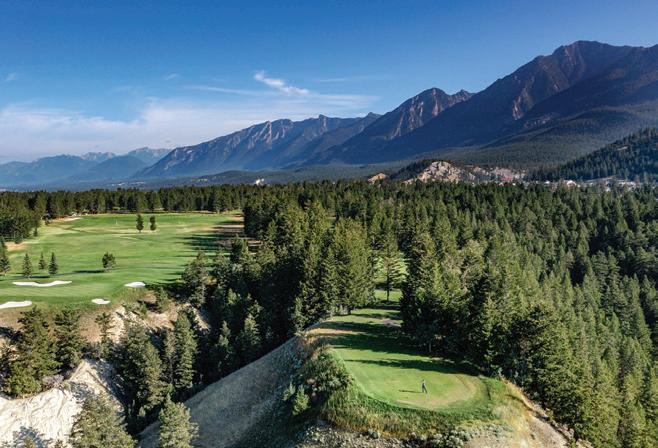
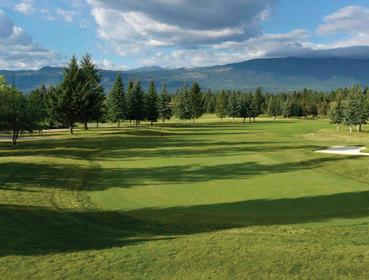
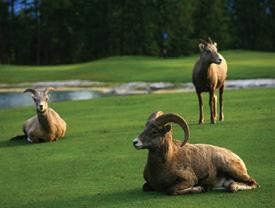
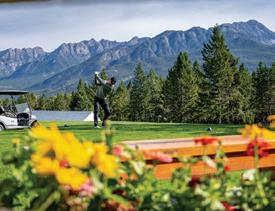
11 Stunning Golf Courses Within
25 Minutes
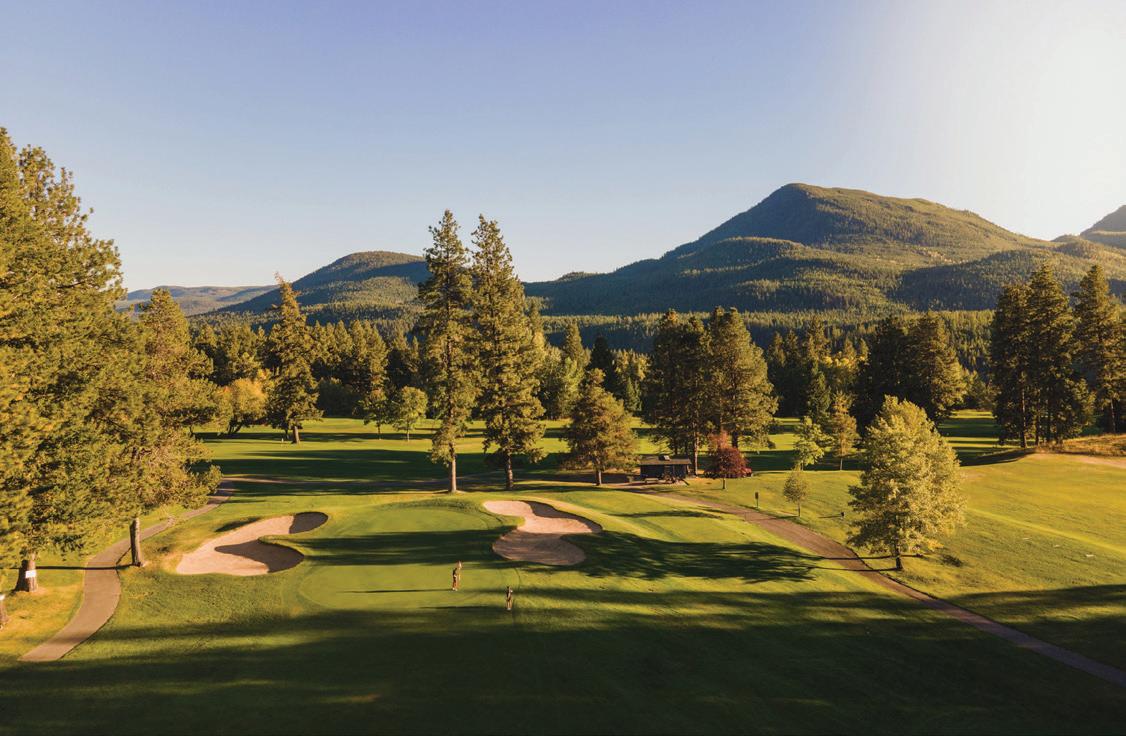
Experience the Columbia Valley Golf Trail! The 11 stunning courses offer unique golf experiences spanning from family friendly charm to world-class in the communities of Spur Valley, Radium Hot Springs, Invermere, Windermere, and Fairmont Hot Springs.
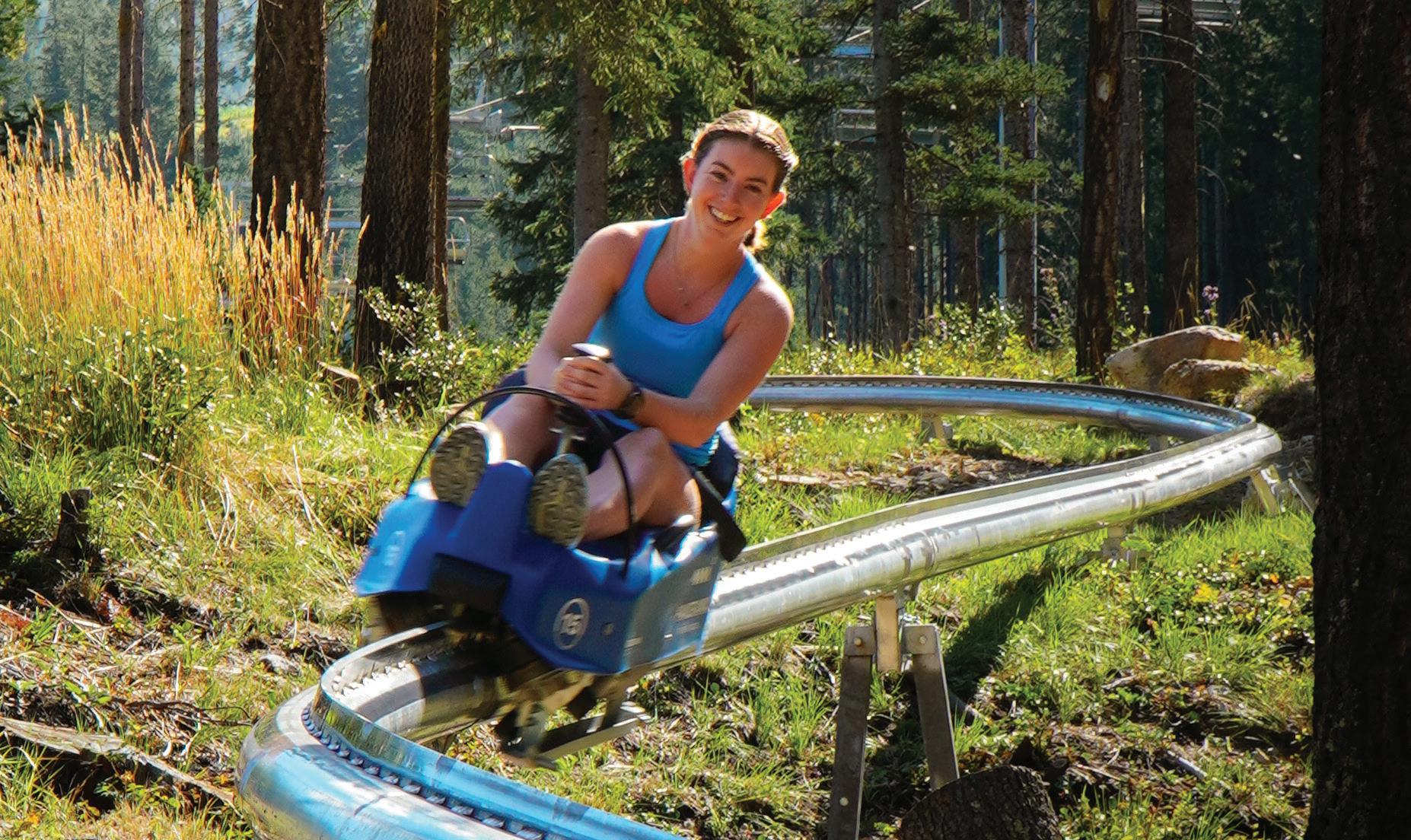
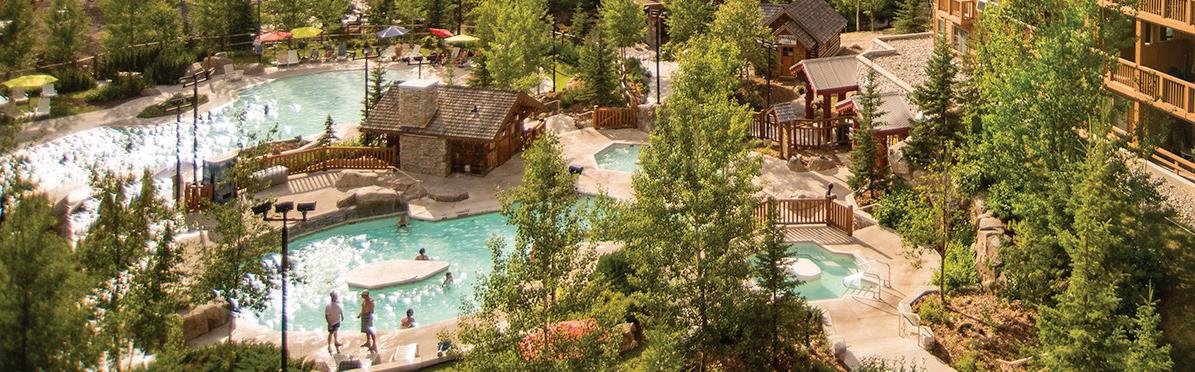
In the morning, tee off at Greywolf, one of BC’s top courses, ride the region’s newest coaster in the afternoon, and unwind poolside at sunset. Your summer, your vacation, your way. Book early, book online and save on summer!
For more information, visit: PanoramaResort.com/Summer-Vibes
Panorama Springs Pools
Meet Our ~
CONTRIBUTORS
ELLIE CRABB
Ellie is originally from Scotland, but has made Invermere her home — and she couldn’t be happier with the decision. You will usually find her in Panorama, either on bike or skis depending on the time of year. Ellie champions the outdoors being for everyone — regardless of size, shape, age, or gender — and believes that no matter who you are, you are worthy of taking up space. Her work is always a reflection of these values. Check out Belle Raisers on page 24. crabbtacular
MIKE MCPHEE
Mike has spent 25 years in the East Kootenay working in tourism, marketing, and education.
As a photographer and writer, he’s contributed to numerous international publications, authored one book, and produced many films and TV shows.
Mike has helped shape the region’s tourism and recreation industries through his role on various boards, committees, and media projects. An avid traveler and fly fisher, Mike shot and penned the feature Casting Call on page 46. mikemcphoto
BILL ROBERTS
Since retiring from a mining career that spanned four decades, Kimberley’s Bill Roberts has guided at the city’s Underground Mining Railway and honed his craft as a writer passionate about telling stories from underground. Roberts is the author of The Best Miners in the World, which sold nearly 100,000 copies over nine printings. On page 66, Roberts’ creative non-fiction story The Last Shift makes its debut, alongside a retrospective on his storied career.
Down and Dirty Rowdy, loud, and highoctane mud drags make their return to Fernie this fall. On page 18, Trench writer Vince Hempsall shares the tale of the 23year racing veteran who’s bringing bogging back.
— Photo Courtesy Myron Krahn
On the Cover Threads once shed — Just in time for summer, or any time, Trench photographer Nicole Leclair hits the high couture highway and takes y’all on a tour of East Kootenay consignment stores. Model Emily-Ann Perry, styled by Dustin Mousseau, in the funky depths of My Best Friend’s Closet in Kimberley. — Nicole Leclair Photo
The Headwaters podcast brings Columbia Basin stories to life.
Discover stories featuring people and places in the East
Kootenays, and beyond, and explore all 40 episodes for more.
Listen at headwaterspodcast.com
or wherever you get your podcasts.
Living Alternatively - Episode 14
Australian entrepreneurs who moved to Canal Flats in search of cryptocurrency
Art for Change - Episode 29 Featuring an ʔakisqnuk First Nation poet.
Beautiful Bicycles - Episode 25
Highlights the founder and race director of the Cranbrook Gravel Grind.
Carbon Footprint - Episode 4
Highlighting a resourceful local shop in Kimberley selling products that yield zero waste.
Caleb Hart & Friends • Sadé Awele
Mount Rushka • Ethan Askey & The Elevators WITH DJ Cona
PUBLISHER
Darren Davidson
EDITOR
Britt Bates
COPY EDITOR
Danette Polzin
ART DIRECTOR
Ashley Dodd
PRODUCTION DESIGN
Sarita Mielke
AD SALES & DESIGN
Alesha Thompson
DISTRIBUTION
David Cook
Alesha Thompson
SOCIAL MEDIA
Danette Polzin
PUBLISHERS EMERITUS
Karen Vold
Grady Pasiechnyk
WRITERS
Ellie Crabb
Vince Hempsall
Lynn Martel
Mike McPhee
Jacquie Moore
Trixie Pacis
Jeff Pew
Danette Polzin
Dave Quinn
Bill Roberts
Sarah Stupar
PHOTOGRAPHERS
Kelsey Adele Photography
Jenny Rae Bateman
Alison Bortolo
Christopher Dehart
Somhairle Greene
Nicole Leclair
Mike McPhee
Tara Merrillin
Steve Ogle
Robin O’Neill
Trixie Pacis
Jeff Pew
Picnic Creative
Tristan Proctor
Dave Quinn
Daniel Seguin
Ashley Voykin
ILLUSTRATORS
Mark Cromwell
Geoff Hager
X is out, time change challengeD, Creston
not a Napa
“A lie can travel halfway around the world,” said Mark Twain, "while the truth is putting on its shoes.”
One hundred fifty years after penning the sage observation, the American writer and humorist would probably find little to laugh about given the boot-stomp social media has laid on everything from decency to democracy.
What feedback does all-knowing AI dish up on our feeds, and what impact does it have on life as we think we know it?
"Social media profoundly impacts modern life by reshaping communication, marketing, and cultural trends while simultaneously introducing significant risks to mental health and societal cohesion.”
Those universal observations likely played in to the City of Cranbrook’s decision to abandon its X social media channels this past winter, after staff and council “lost confidence in the platform as an appropriate avenue for sharing City information.”
“X has changed significantly in its operations since 2020,” the City’s website said, “with recent reports of harmful content and insufficient safeguards in place.”
Last November, four years after the platform that used to be Twitter was purchased by rogue gazillionaire Elon Musk, Cranbrook turned off public comments on both X and its 8,500-follower Facebook account “in order to reduce disre -
spectful comments and to help prevent the spread of misinformation.”
And spread does it ever. Earlier this year, The Media Ecosystem Observatory collaboration from McGill University and the University of Toronto released a study on how social media drives concepts of conspiracy. The number one culprit? Elon knows. The study found that people who use X are way more likely to be aware of conspiracy theories — and to believe them. The researchers poured over 14 million social media posts on X, Bluesky, TikTok, and Instagram, and interviewed nearly 1,500 Canadians before concluding that a “tiny minority” of social media accounts were behind most of the nation’s
one of its best landscape photos of 2025. Based in Rossland, Voykin’s portfolio includes work for National Geographic, Powder, Norco Bikes, and the CBC. — Ashley Voykin Photo
conspiracy content.
It’s high KoolAid tide for conspiracy cocktails. The report’s authors say conspiracy content becomes popular during times of crisis, when the masses are antsy. “They help reduce anxiety and restore a sense of control amidst uncertainty by offering coherent explanations for complex events," said Mika Desblancs-Patel, one of the report’s authors, in an interview with The Tyee.
Further, researchers found conspiracy claims spread widely, but only some people believe them — more men than women, and more 35-to54-year-olds than those younger and older than that demographic.
While Cranbrook has nixed X, feed followings
show no sign of abating. Social media is the single most preferred avenue for receiving City information. Nearly half of the Cranbrookers who responded to a survey about communication channels rely on Facebook, Instagram, and LinkedIn, with 41 per cent following the City’s e-newsletter, and 39 per cent watching its website.
We’ll give Twain the final word. "Get your facts first,” he once said, “then you can distort them as you please.”
In March, after narrowly supporting Premier David Eby’s decision to keep all of B.C. on permanent Mountain Standard Time — meaning East Kootenay clocks would match those in the Okanagan, Vancouver, and Victoria,
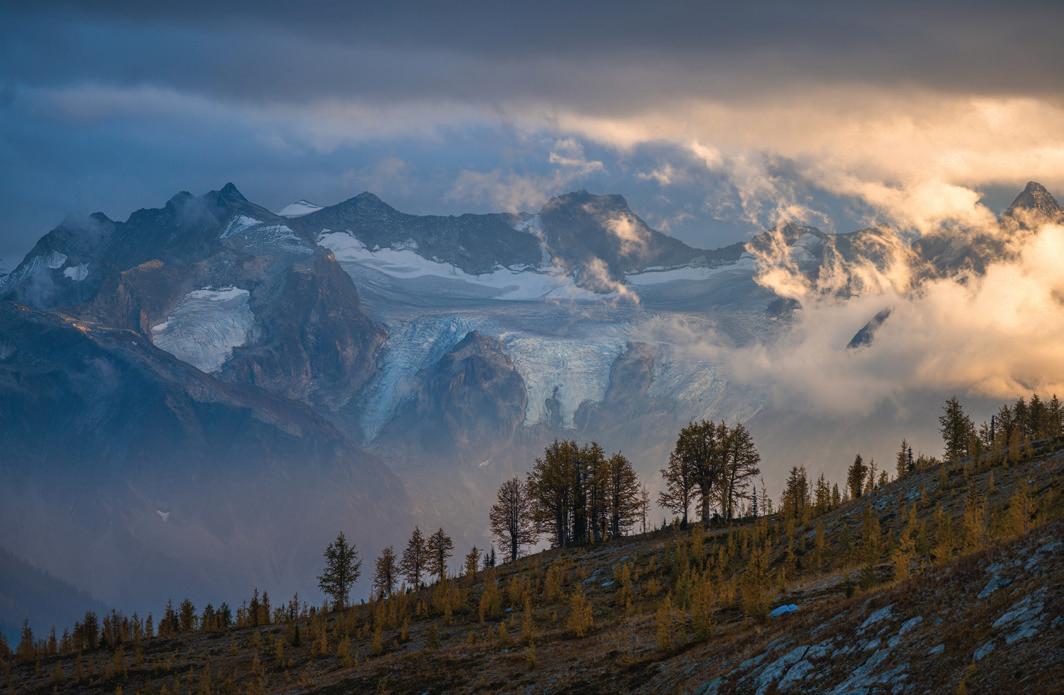
Ice and alpine — This shot of the Purcell Mountains’ Cauldron Group and Horseshoe Glacier, captured from Monica Meadows by Kootenay photographer Ashley Voykin, was selected by Canadian Geographic as
but not those in neighbouring Alberta — the Regional District of East Kootenay paused the plan following pushback from residents who said they wanted more time to provide input. As of Trench press time in late April, the RDEK and Columbia Valley Chamber of Commerce were conducting a survey of residents and business owners before any further decisions are made.
If news of the wild world out there leaves you feeling the need for a long run, a tall drink, or both, Creston may be the place to head this summer.
A celebration of the Creston Valley’s burgeoning beverage and booze sector, the Hop To Vine Hustle marks its fifth year July 11. Last year nearly
400 folks got in their costumes, many running or walking along an 11-kilometre course, replete with nine “hydration stations.”
“We’re not the Okanagan, we’re not Napa, we’re a tiny, little valley,” says Lisa Wood, one of Hop To Vine’s organizers.
“But if we band together, look what we can do — microbrew and macro-brew beer, create award-winning wines, we’ve got two cideries, with another on the way.” And a distillery or two, too.
Still on the earnest events front … Panorama Resort is plugging in to the e-mountain bike tsunami this August with The Purcellerator E-Bike Enduro. “It’s for those who ride because they love it,” says Pano’s Andi Endruhn.
“Early mornings, dusty trucks, taped-up knees, and e-bikes that cost more than their first car.” The six-stage race runs August 22/23.
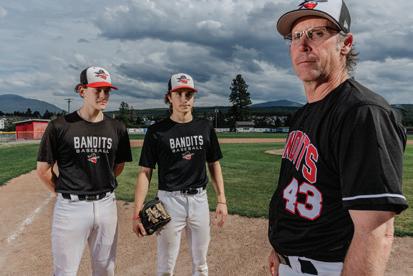
An update on one of the sluggers profiled in the Summer/Fall 2024 issue, from our baseball feature entitled “ DeCki Ljeta/ Los Chicos De Verano ” — meaning “The Boys of Summer” in Croatian and Spanish.
After over 800 games and 19 seasons with the Cranbrook Bandits American Legion Baseball Club, skipper Paul Mrazek is moving to Croatia to coach the Vindija Baseball Club in Varazdin, located in the European nation’s north, along the Drava River. Mrazek has spent the last five summers there. Robert Nicholl ,
who played five years with the Bandits, takes over as head coach.
And in the bottom of the ninth … a quick correction from our Summer/Fall 2025 issue … we wrongfully noted former Kootenay MLA Corky Evans as a co-founder of the Columbia Basin Treaty. Evans was in fact involved in developing the Columbia Basin Trust. That’s the ball game. Have a great summer! – Trench Staff
Going, going … gone — Having coached for over 30 years in Canada, Austria, Belgium, and Germany, Cranbrook Bandits’ skipper Paul Mrazek (right) is moving to Croatia as head coach of the Vindija Baseball Club. — Nicole Leclair Photo
Return To Sender
Golden mountain guide Mark Herbison on the loss of limb and nearly life, dark days overcome, and his adventure athlete’s encore.
Mark Herbison is wired with determination in the face of difficulty. Based in Golden since 2007, he’s an IFMGA/ACMG Mountain Guide working in mountain rescue and avalanche forecasting. He’s an accomplished, high-performance athlete who ski mountaineers, rock and ice climbs, trail runs, whitewater kayaks, mountain bikes, and paraglides. And, as of just two years ago, he’s also an amputee.
In September 2024, Herbison’s life changed drastically when he crashed his paraglider on Monroe Peak in Utah, fracturing his left wrist and demolishing his left foot. Committing to his post-surgery physical therapy with resilience and a remarkably positive mindset, Herbison has fully embraced his new reality — rapidly relearning multiple mountain sports with his prosthetic, and returning to work as a visitor safety specialist in Glacier National Park and Rogers Pass.
What happened on Monroe Peak?
I had a bad launch in strong winds. Thirty pilots launched safely ahead of me, but I was hit by strong turbulent air, lost control, and slammed into the rock face just below launch. I knew I was in bad shape when I saw a stream of blood spurting from an open fracture of my ankle.
Fellow pilots were on me within seconds, applying a tourniquet and stabilizing me. Paramedics and SAR arrived and I gave them a patient briefing of myself: 41-year-old male, open fracture of the wrist and ankle, did not hit his head or lose consciousness, no neck or back pain, alert and oriented. I was relieved when they gave me ketamine to manage my pain.
Once settled at Vancouver General Hospital, you decided to amputate. How did you feel saying those words?
I’d pretty much accepted
that I would amputate my foot the second day in the Utah hospital after a thorough discussion with two surgeons. In Vancouver, I spoke with several surgeons who described some likely scenarios. I listened and contemplated my options. I reached out to numerous amputees, some through social media. I spoke with my dad, and later I told my mom, “I’m ready.” Saying those words was a relief, as it would allow me to move forward with my recovery. I felt certain it was the right decision in order to not be disabled the rest of my life.
What did you think and feel the first time you saw your stump?
I don’t remember feeling scared, sad, or upset. It was a wild experience seeing that part of my body gone. I was impressed by how clean it was, as it hadn't leaked any blood and wasn't showing signs of infection. My orthopedic surgeon wanted to give me the lon-
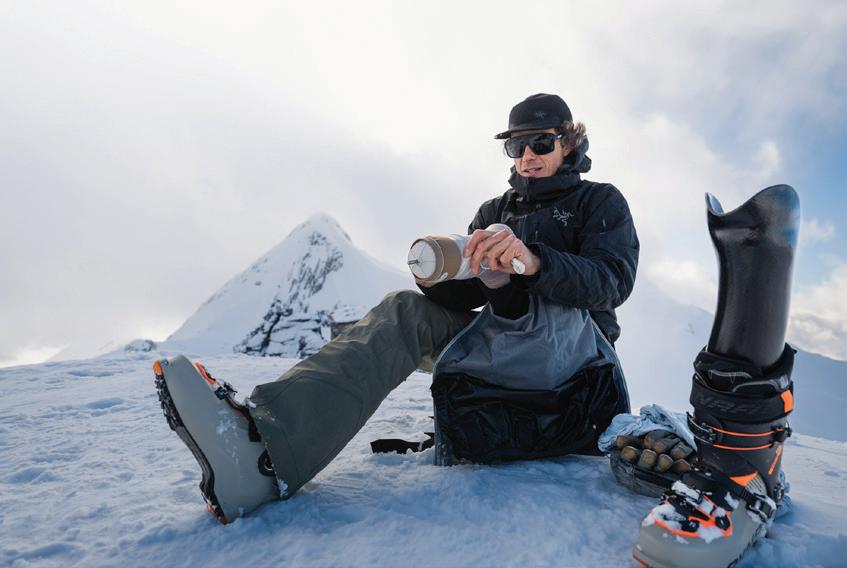
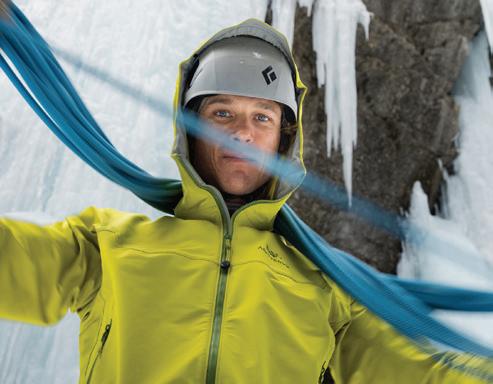
Back on top — Less than two and a half years after his life-changing accident, Herbison gears up for glory at the summit of Video Peak in Rogers Pass/Glacier National Park, with Balu Peak towering in the background. — Robin O’Neill Photo
gest residual limb possible in order to continue doing all my mountain sports. I was lucky I didn't damage my tibia or fibula. He could make the cut anywhere along those bones.
How did you choose your prosthetic?
I met with five different prosthetists. I decided on the same clinic that made Terry Fox’s leg 45 years ago. I often joined the technicians to watch them work.
I call it a mini blade, carbon fibre with a vacuum seal. I chose the foot that gives me the most “range of motion,” mimicking similar qualities to a regular ankle. I feel super lucky to be an amputee at this point in technology. I have five prosthetic feet: an everyday walking and hiking foot; a ski and snowboard foot; a rock-climbing foot; a running foot; a ski-touring and ice-climbing foot.
How did you return to an active life?
The first week after surgery, the pain was intense. Every time I stood up for physiotherapy, the blood rushed to the stump with debilitating, crushing pain, and required both focused breathing and heavy meds to calm it down. Many adjustments were made. The goal was for my stump to achieve a conical shape, so the upper part takes all the load in the socket with no pressure on the narrow tip. After a month in bed, I was able to swim. That was a “f*** yeah!” moment, to get that movement back.
How did you navigate the dark times?
I accepted those days for what they were. I would feel tired, sad, irritable, lonely, worthless, useless, hopeless. I wanted my life back, my identity as a mountain dweller, adventurer, and sensation seeker. I wanted the pain to end, my injuries to heal, my body to gain strength, and to become comfortable
with who I am. Real sorrow and depression crept in as I grieved losing my foot. I cried … a lot. I allowed myself to work through it, to feel everything and acknowledge the emotional pain — knowing it wouldn’t last forever. I let my barriers down and let people in. The darkness is more comfortable with company anyway. My community has been incredible, and the outreach from people I don’t even know has been humbling and motivating. It’s brought tears of joy and gratitude.
How did you set yourself up for the best recovery possible?
Being fit definitely helped during the crash, as I likely absorbed more of the impact, lessening the severity of injury. It also gave me a head start on recovery.
I stayed in Vancouver to attend G.F. Strong, one of North America’s best rehab facilities. Vancouver gave me quick access to specialized physio, as well as athletic and aquatic centres I wouldn't have in Golden. I intentionally avoided winter and the distractions of regu-
that so quickly? I was determined to return to all my mountain sports and I made a goal to ski by the end of February. It brought me so much joy, except I felt my stump twisting around in the loose socket on every turn. But I was stoked that I didn’t miss
have lost something I love. There wasn’t a single moment I didn’t think I would fly again. I stopped comparing my current self to my old self very early in my recovery. I took on challenges I’ve never done: competing in my first X Triathlon and a
I LET MY BARRIERS DOWN AND LET PEOPLE IN. THE DARKNESS IS MORE COMFORTABLE WITH COMPANY.
lar life to focus on myself, do physio, and train to return home as a new person, not a broken one. I am naturally very driven.
You led a pitch ice climbing and skied just five months after surgery. How did you manage
a single ski season. I skied another 12 days before the resort closed. I launched off Mount 7 six months after crashing. Paragliding has brought so much to my life — if I didn’t return to it, I would be dishonouring the amount of energy I invested into it and would
4.5-kilometre open-water swim. The only amputee competing, I was shocked to place 2nd for my age category in both events. In early September, I ran my first UltraMarathon: 60 kilometres with 2,400 metres elevation gain and loss in just over 10 hours.
No surprise, I didn’t podium! But I had previously thought that simply walking downhill would be an arduous, uncomfortable experience. The fact that I can now run down, though slow and methodical, gives me incredible motivation.
You returned to Monroe… I wanted to return to my crash site, specifically to fly off on the one-year anniversary. I wanted to show myself that the fear isn’t going to control or stop me from doing anything I want. Standing on the site where I lay broken the previous year gave me so much power and hope for the years to come. Getting ready to launch, I was fearful. Don’t f*** this up again. The flight was one of the more powerful experiences
continued on page 17
Strings attached — Herbison credits his arduous days training in freezing conditions as an 11-year-old provincial cross-country skiing champ in Regina, Saskatchewan for giving him the resolve to get through challenging circumstances. Here, he manages his rope at the base of "The Tumor," an ice climb near Spillimacheen in the Columbia Valley. — Robin O’Neill Photo
of my life. Spending hours above the peak, spinning circles above the site where I crashed. Tears obscured my vision as I reflected on the past year, how far I’ve come, what I’ve been able to regain and achieve.
Can mountain adventurers gain from talking about accidents more openly?
It's easy to blame people for their incidents; we want to reassure ourselves we wouldn't make the same mistake. But by talking
since 2010. These experiences led me to complete my ACMG/ IFMGA Mountain Guide certification. I really enjoy the quick decision making in complex situations. As a rescuer, I’ve dealt with many tough situations. It’s challenging and rewarding, and I work with an amazingly strong and talented team.
Were there obstacles to returning to your job?
Though I am not the person I once was, I’m able to carry out
THERE WASN’T A SINGLE MOMENT I DIDN’T THINK I WOULD FLY AGAIN.
more about incidents, sharing learning moments and preventative measures, we as a mountain community benefit — ideally resulting in fewer incidents.
What do you love about working with visitor safety?
I’ve worked for Parks Canada since 2008 — with the trail crew and initial attack fire crew, and as an avalanche technician, visitor safety technician and specialist, and avalanche officer. For six seasons, I worked on the mountain safety team at Kicking Horse Mountain Resort, and really enjoyed helping people in first aid or technical rescue situations. I’ve also volunteered with Golden Search and Rescue
the majority of rescues I could in the past. The exception would be in technical rock terrain, in which I’d assume another role in the operation. Safety is top priority and I do not want to put myself, the team, or the patient at additional risk. My first rescue since returning, loading the patient into the heli sent shivers down my spine. But there was no question about my position or me coming back. My desk and locker were untouched. It’s been super satisfying to come full circle.
– Lynn Martel
SATURDAYS 6pm - 9pm
JULY 4 - LEO D.E JOHNSON TH
JULY 11 - DUKE & GOLDIE TH
JULY 18 - LOWDOWN BRASS BAND TH
JULY 25 - KAILEE DUGGAN TH
AUGUST 1 - NIGHTSHADES ST
AUGUST 8 - ALINE DEANNA TH
AUGUST 15 - FONTINE TH
AUGUST 22 - BLONDE DIAMOND ND
AUGUST 29 - OH PRAY TELL TH
SEPT 5 - LAZY SYRUP ORCHESTRA TH
Of Mettle, Mud, And Pedal
It’s been 20 years since the East Kootenay hosted a sanctioned mud bogging race. But, following tragic turns and a brave restart, Alberta transplant and racing champ Myron Krahn is bringing the hoonin’ back to his family’s new home.
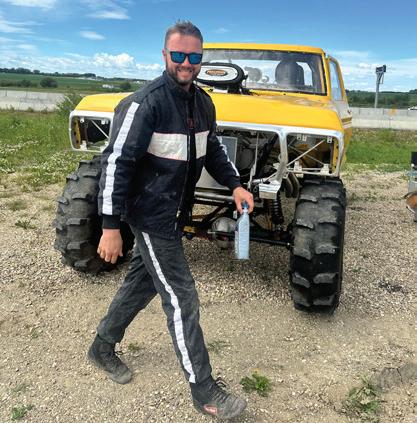
Myron Krahn opens the fibreglass door of the truck cab because his fire suit is uncomfortably hot and the methanol fumes are causing his eyes to water. He peers past the supercharger rising out of the hood, the one with “Mud Freak” stenciled on it, and takes in the 200foot straightaway of shredded earth before him. Very soon, he’ll explode off the start line and hoon across that boggy track against another modified pickup in the adjacent lane. Their massive tires will spew dirt like paddle wheels churning up swamp water, and Krahn
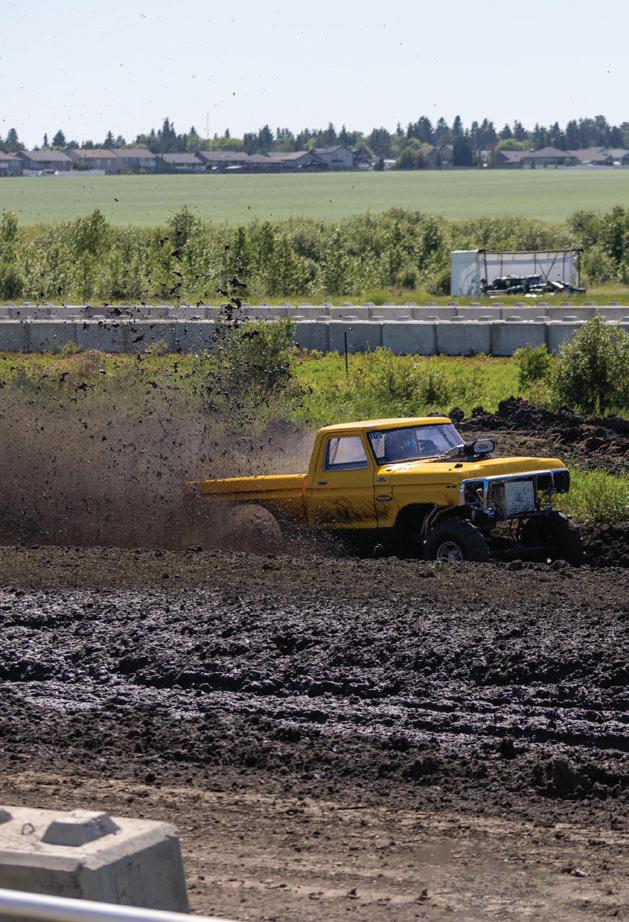
Not so mellow yellow — Racing trucks, like this 1979 F250, run on high volumes of methanol race fuel, which burns cooler than gasoline, prevents engine overheating, and delivers immense horsepower and a quick throttle response. — Photos Courtesy Myron Krahn
will be white-knuckling the steering wheel while fighting down his fear.
For the past 23 years, Krahn has been participating in the niche sport of mud bogging. The current iteration of his 1979 F250 pickup is “insanely fast,” he says in his soft, rural Albertan drawl.
“But hey, if it doesn’t scare you, it’s not fast enough.”
The canary-yellow truck boasts a 600 cubic-inch big-
The latter is what Krahn fell in love with because, like drag racing, it pits two racers against one another on a set course and the fastest wins. But unlike the predictable runways of car racing, the courses are clogged with mud up to three feet deep and anything can happen: stuck tires, rollovers, even engine fires.
Despite the dangers, Krahn was all-in. He became the president of the Peace Country Offroad
THIS TRUCK IS SO FAST, IT USUALLY TAKES LESS THAN FOUR SECONDS TO COMPLETE A RACE — UNLESS IT CRASHES.
block Ford motor topped with a 14-71 supercharger that runs off methanol fuel. It’s so fast, Krahn says it usually takes less than four seconds to complete a race. “Unless I crash,” he jokes.
Krahn was raised in Grande Prairie and is a self-described adrenaline junkie who rode bulls throughout his teens, then took up drag racing before discovering mud bogging.
The roots of the sport trace back to the middle of the last century in North America, when four-wheeldrive trucks became more commonplace. Farmers and ranchers would test their rigs in muddy fields, and eventually friendly competitions arose. Today, there are two main kinds of sanctioned events: distance bogs, in which drivers attempt to travel the farthest through a deep mud pit before getting stuck, and mud drags.
Racing Association in 2010, which oversees mud races in the Grande Prairie region. But then his wife was tragically killed by a drunk driver in 2017. Soon after, his house was damaged by a flood, and the following year he lost his job. It was time to start fresh, so he and his two children moved to Kimberley, B.C. and he became a heavy equipment operator for the City of Cranbrook. He continued to modify his truck and race in the western part of Canada and the U.S., and he now has over 40 wins and 30 trophies to his name. But he had never competed in the East Kootenay — until this year. It’s been two decades since the region hosted a sanctioned mud bog race, but thanks to Krahn’s hard work, one will be held at the Fernie Derby Grounds on September 12, 2026.
The format is simple: excavators will churn the
soil of two, 200-foot parallel tracks; water trucks will dial in the slickness; and then seven classes will line up to test their mud mettle. At one end are stock trucks, 150-horsepower rigs on mud tires that might take 10 to 12 seconds to clear the course. At the other end is the X Class: big trucks like Krahn’s that push 1,500 to 1,800 horsepower. With these beasts, control is everything.
“The biggest mistake racers make is over-correcting,” Krahn says. On a slippery surface, a fishtail can easily turn into a rollover. So Krahn’s solution is simple: “I’ll just stand on the throttle all the way through, and stay on it well past the finish line, because I don’t want to leave anything to chance.”
Not that he hasn’t had accidents. Within five days
of installing the first lift kit on his truck, Krahn rolled it in a ditch. It’s been on fire.
He’s blown steering boxes and twisted stock frames.
“There’s not a bolt on that truck that hasn’t been replaced,” he says.
Aside from Krahn’s cus-
tom rig, there may also be mega trucks at the Fernie event: those halfway beasts between mud racers and monster trucks. Long term, there’s even a dream of a cross-border points series culminating in Fernie. For this inaugural event,
– Vince Hempsall
though, it’s all about filling the stands and proving that sanctioned mud racing can thrive here. The crowd won’t just see what it’s all about. They’ll feel it.
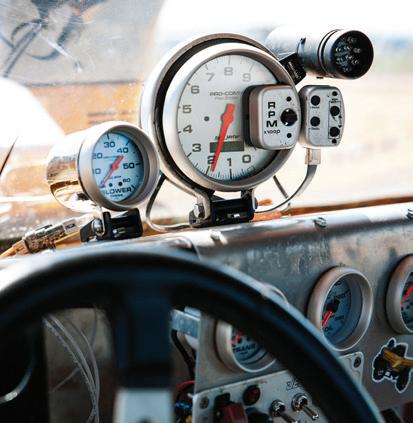
Dial it in — Krahn and other racers put in hours of prep before a few seconds of race: oil replaced, filters rebuilt, and an intricate systems check that includes g-force and driveline speed. — Photos
Courtesy Myron Krahn
Hair Apparent
At age 12, he started with an ’80s mullet wig and YouTube videos. Now 17, Brady Langille-Higgins is mastering a craft, turning heads, and learning what happens when people finally sit still.
At first, the boy doesn’t trust him.
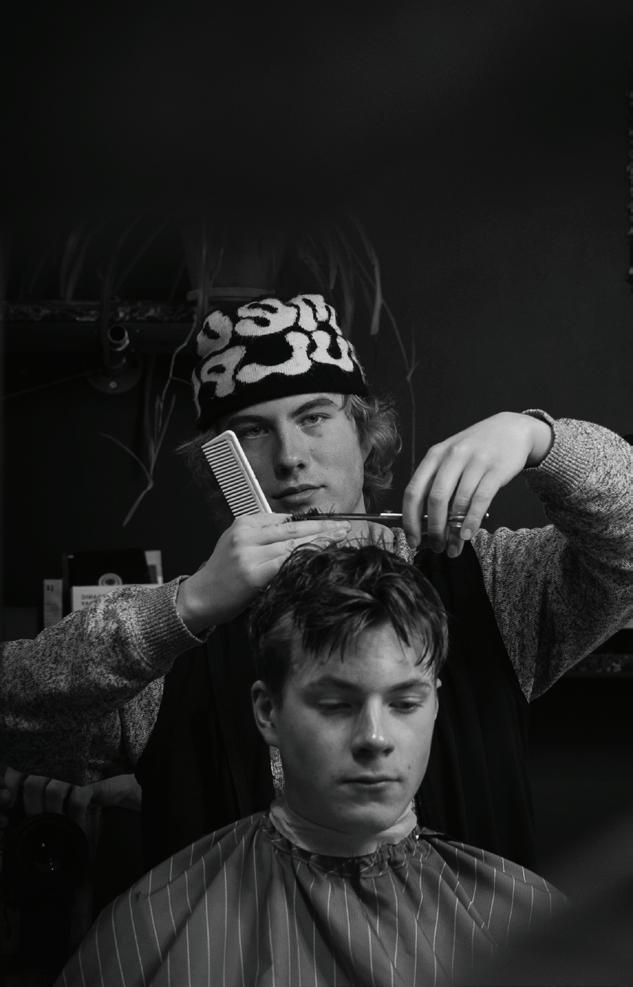
The shop is quiet except for the low hum of clippers and the metallic percussion of scissors. Brady Langille-Higgins, 17, moves around the barber’s chair with an ease that surprises first-time clients. He tilts the young boy’s head gently, studies the shape of it, steps back, and looks again. It’s the boy’s first haircut here. Brady talks to him about school, about hockey, about
nothing in particular. The boy’s shoulders drop. His feet stop swinging.
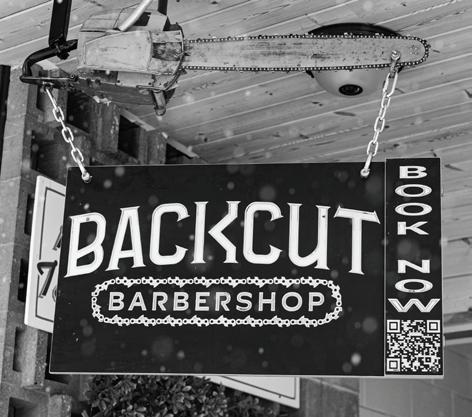
He appears like a seasoned professional at work, yet Brady is only in Grade 11. It’s his first year cutting hair at Backcut Barbershop — part café, part modern hair studio, located in the middle of Kimberley’s Platzl.
“Pretty soon into the cut,” he says later that day, “I get a feel for how it’s going to look.”
A cut above — Brady started cutting hair at 12 years old. While renovating their Nova Scotia home, his parents built him a small barber space and friends would get dropped off on the bus after school for haircuts. — Jeff Pew Photo
other wig, then he started watching YouTube videos on barbering.
His father, Zach Higgins, remembers those early years not as a turning point but as something simple. “We encouraged any interest that didn’t involve a screen,” he says. “We had no idea this would go where it has, but it was skill-building. We all thought it was a neat inter-
cutting hair never faded.”
When he talks about cutting hair, Brady shifts from teenager to craftsman. “I study the shape of the client’s head and how I want the cut to sit,” he says. “I check the parietal ridge, see how prominent it is, then set my first guide all the way around.” He returns to the language of art. “I get creative. I envision what I want it to look like and make it happen.”
Brady’s interest in cutting hair started with an ’80s mullet wig. “We had one lying around the house,” says his mom, Amanda Langille. “For some reason, Brady wanted to dreadlock it. I thought, 'sure, why not?' so I bought him the tools off Amazon.” She laughs at the memory.
“At 12 years old, it didn’t feel like the start of anything that might become a career, but he was so obsessed with it.” Langille bought him an-
“I’VE HEARD SOME CRAZY STORIES. THE CONVERSATIONS GO ANYWHERE. MOST PEOPLE ARE DECENT. IF YOU’RE DECENT TO THEM…”
est, so we supported him.”
Brady’s grandmother, a hairdresser, gave him his first set of clippers — and from there, the leap wasn’t as big as it sounds. He moved from wigs to the people around him.
“First, I asked my brother to let me cut his hair,” he says. “I really messed it up. I had to pay him twenty bucks the next time.” His initial clients were family: his brother, father, grandfather, cousin Jeff, and uncle Marc. They all paid generously.
“I’ve always been drawn to hair and felt like an artist,” says Brady. “This just made sense to me.”
Higgins says his son has a gift for focusing deeply on what interests him. “He was outdoorsy. He hunted, processed, and cooked what he harvested. He loved basketball. He had friends, but he was quiet. His passion for
He’s learned that the chair is about more than just hair. “I’ve heard some crazy stories,” he says, laughing. “The conversations go anywhere. Most people are decent. If you’re decent to them, they’re decent back. It’s helped me develop my people skills.”
His mother has noticed the change more than anyone. “The biggest shift I’ve seen in him is how social he is now,” Langille says. She still remembers something his boss, Ethan Schnell, wrote about him on Instagram.
“What makes Brady special goes beyond the clean fades. It’s the way he listens, the way he connects, the way he makes every person in his chair feel seen and valued. The conversations. The trust. The community he’s building — that’s the real magic.”
Schnell had heard about the “kid barber” and watched some of his cuts on Instagram. “I thought he had an intuitive feel and good bones for someone not
continued on page 22
rainbow storytime rainbow storytime pride in the park pride in the park bike parade bike parade drag brunch drag brunch flag raising flag raising workshops workshops readings readings music music and more and more workshops
classically trained,” Schnell says. “I wanted to give him a shot. A more professional space to work. See if he can get better with some mentoring and what kind of doors that opens. Every week, we focus on one little aspect to improve his cuts.”
Trust didn’t come easily at first. When adults sat in Brady’s chair, some hesitated. They looked at his age. They teased
high school, then attend the Calgary School of Barbering.
“I’ve heard I might be a little ahead of the curriculum,” he says, smiling.
Back at Backcut, the young boy in the chair studies his reflection, turns his head left, then right. He grins. His mom pays, leaves a tip, and thanks Brady.
For a moment, the shop is quiet again. Brady sweeps
“I’VE ALWAYS FELT LIKE AN ARTIST … I ENVISION WHAT I WANT IT TO LOOK LIKE, AND I MAKE IT HAPPEN.”
and tested him. “A lot of times they tell me, ‘I don’t know if I trust you,’” Brady laughs. But they let him work. No one has walked out.
Now his clients are a mix of fellow high school students and adults who find him online. “My cuts are cheaper than the industry standard,” he says. “That’s probably why many adults book with me. But I get quite a few return clients.”
Brady’s goal is to own his own shop one day. “There’s definitely got to be a theme,” he says. “It’s got to stand out.”
For now, he plans to complete
the loose hair into a neat pile, resets his tools, and checks his schedule.
The door opens and Brady smiles. A friend, Luke, walks in and drops into the chair. Brady snaps the cape open with ease, the fabric settling on Luke’s shoulders. He studies the shape of his head, steps back, then forward. Beside him, Schnell works quietly, saying nothing.
“So, what are we gonna do today?”
– Jeff Pew
Saw the signs — Backcut Barber shares a space with Fantails Espresso, and the shop is reminiscent of a laid-back garage where you can put your feet up and kick back for a cut or coffee, or both, with friends. — Jeff Pew Photo
Summer Events & Races in Fernie
June 13 NADGT Disc Golf Tournament
June 26-28 Fernie Singletrack3 Bike Race
July 1
July 3-5
July 10-12
Canada Day Festivities
Fernie Gravel Grind Bike Race
BC Cup/Canada Cup Dunbar Summer Series DH MTB Race
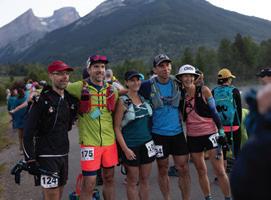
July 25 Elk Valley Ultra Trail Running Race
Aug 7-8 Wapiti Music Festival
Aug 8-9 BC Rugby Saratoga Cup
Aug 29 Tears & Gears Mountain Duathlon
Discover Fernie’s vibrant scene filled with arts and culture events, live entertainment and mountain races for all ages, year round. The above is just a highlight of all the great events you can expect this summer in Fernie –find many more online. Stay longer and enjoy everything that Fernie has to offer.
| #ferniestoke |
Belle Raisers
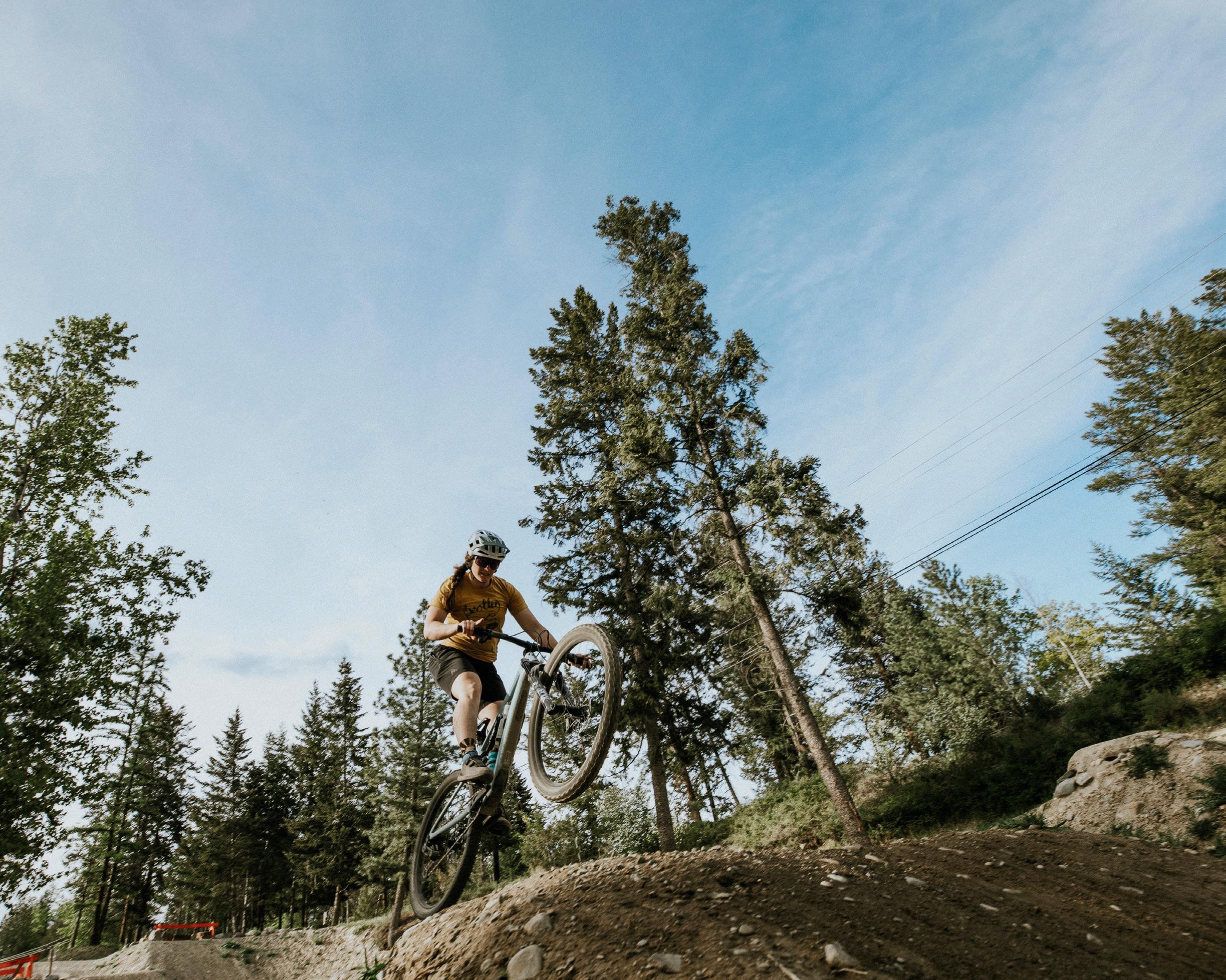
This group of Columbia Valley women mountain bikers named their posse’s weekly program Boobs on Tubes. Much laughter, radical racing, and general stoke for shepower has since ensued.
“All abilities welcome,”
Hannah De Soto, an Invermere resident, typed into a group chat in the spring of 2022. She was hoping to go for a mountain bike ride and invited a few friends, encouraging them to bring others. Nine women showed up. That casual invitation has since grown into a group affectionately call Boobs on Tubes: a weekly fixture in the Columbia Valley riding scene, a social staple for women on bikes, and the official host of a women’s
enduro event at Panorama Mountain Resort.
The name grew as organically as the group did when one of the women’s husbands spontaneously and teasingly dubbed the women’s regular group rides as such. The group immediately embraced Boobs on Tubes. It was both humorous and unapologetic — perfectly fitting. By its second summer, the group was meeting weekly. This is when Shelly Sharrock joined, who would go on to lead group
rides and the enduro event. “That first ride ended with a tailgate beer and getting hailed on, which somehow made it even better,” Sharrock recalls.
Undeterred by the high Purcells’ unpredictable weather, Sharrock stepped into a leadership role alongside De Soto. The duo’s aim was to open the
carries into life too.”
Weekly women’s group rides are something that both Sharrock and De Soto are keen to see expand into other communities. They explain to me that the key to success is inclusivity.
“Take twice as many breaks as you normally would,” suggests De Soto, emphasizing the impor-
Fly at her — More than just an enduro event, the Boobs on Tubes crew gathers weekly for informal and inclusive group rides. Columbia Valley ripper Lindsay Bishop jumps aboard "Party Train," a trail at Toby Creek Adventures, near Panorama Mountain Resort — Tristan Proctor Photo
enjoying a beer together afterward. “When women exchange numbers and
“RIDING BIKES & SUPPORTING EACH OTHER CREATES SOMETHING POWERFUL. I BELIEVE THAT CONFIDENCE ON THE TRAIL CARRIES INTO LIFE TOO.”
group more publicly and to welcome women of all ages, sizes, and abilities.
“Riding bikes and supporting each other creates something powerful,” Sharrock explains. “I believe that confidence on the trail
tance of never letting anyone fall behind.
Success can look like many different things on group rides — even just stopping for photos or cheering each other on while hitting a feature or
make plans to ride again,” Sharrock says, “that tells me confidence has grown and community has been built.”
Leigha Stankewich, one of the participants of the weekly group rides, experienced this sense of
community first-hand. By her second ride with the women, she was already making plans to go biking together later.
“Everyone is so chill," Stanke wich says. "We hang out and have a beer after, and to me, it’s more about the socializing. I've made some wonderful friends, and got some exercise in, too."
For those who want to push themselves further than the group rides, the Boobs On Tubes team also hosts an an nual enduro event. Now in its
third year, it’s a timed, multistage competition at Panorama Resort that combines technical downhill skills with endurance. It’s a step up in difficulty from the group rides, but with the same supportive atmosphere.
The participants at the enduro might be anxious, but after a group photo, a little bit of chatting, and a lot of cheering each other on, the atmosphere is as inclusive and relaxed as the group rides. For Stankewich, connection is a goal for her second attempt at the event.
“I was so nervous last year and just wanted to finish, so I wasn’t as chatty as I wanted. This year I will be.” Stankewich did go on to finish, and completed her goal of not getting off her bike on the final and hardest stage. She has
supported and celebrated as they go after it.
“I realised how powerful these opportunities can be,” Sharrock says, “not just for building confidence on the bike, but for creating new pathways and visibility for women in the mountain bike industry.”
To attend the group rides with Boobs on Tubes in the Columbia Valley this summer, check out @ BoobsOnTubes on Instagram for details. The 2026 enduro will be July 4th at Panorama Resort and you can sign up at boobsontubesenduro.ca.
– Ellie Crabb
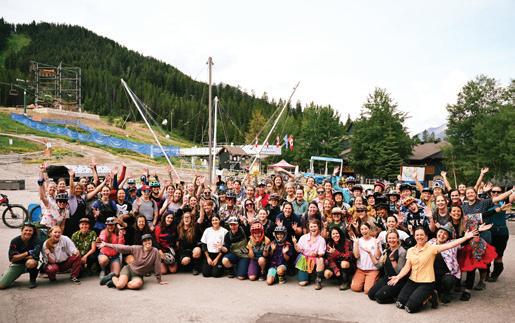
Gang’s all here — Nearly 100 registrants kick off the 2025 Boobs on Tubes Women’s Enduro Event — and just as many are expected for the event’s third iteration this year. — Alison Bortolo Photo
For Those About To Ruck…
Barbarians and Bulls. Colonials and Rogues. Trench scribe and internationalcalibre rugger Trixie Pacis tackles an unofficial retrospective on Kootenay rugby’s 70-year history.
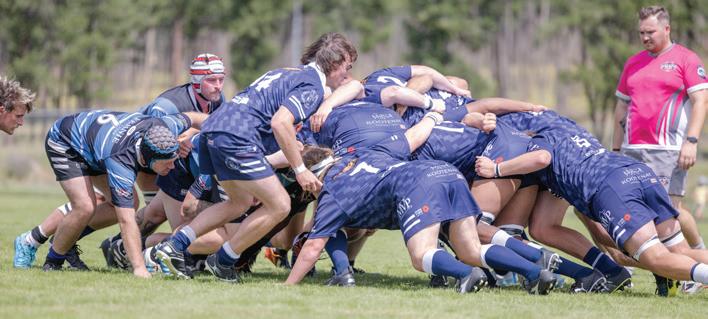
Saturday is a rugby day across the globe, and the Kootenays is no exception. Here, mountains provide a stunning backdrop for the carnage of a match — thunderous tackles, sweaty scrums, and all the mischief that unfolds during what we players call the ‘third half.’
Rugby took root in Canada in 1864 when British military officers first played the game on Canadian soil.
British Columbia has since evolved into one of the country’s dominant rugby provinces, now home to over 90 registered clubs. Most are clustered in the Lower Mainland, but a handful have taken hold in the Kootenays where
winter is long, travel is far, and communities are built on resilience.
PEAKS AND VALLEYS
Legend has it that rugby was played in the Kootenays as early as the 1920s.
Little is known of that era, but history records show that rugby has ebbed and flowed in the Kootenays for the last half century.
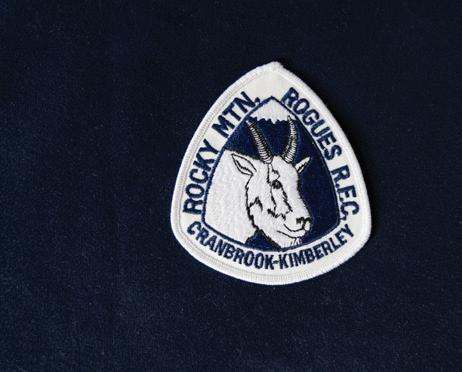
The Kimberley Barbarians had been active since the early 60s, the Trail Colonials since 1966, and the Cranbrook Rugby Club since 1976. The Kimberley and Cranbrook teams amalgamated in 1978 and adopted the Rocky Mountain Rogues moniker in 1984 after “much thought
and a few beers.”
Each club has experienced intoxicating highs and demoralizing lows. Jim Maletta, a Cranbrook founding member who retired from the game at the ripe age of 50, fondly recalls heated matches against Trail, the Nelson Grizzlies, and the Invermere Tigers.
“We went through peaks and valleys like crazy, and they were very tied to the
cially formed in 2013 after founding members Pete Dudman and Dan Parker unknowingly plastered Fernie with separate recruitment posters. They consolidated their efforts and within six months, the Bulls had won the Saratoga Cup, returning the coveted trophy to the Kootenays for the first time since the 1970s. Their instant success set the stage for
leading teams go on to the Saratoga Cup — a coveted trophy contested by winning teams across the Kootenay, Okanagan, central interior, and northern regions of the province. Held each August over a single weekend, it is more than a tournament: it’s a proving ground. Saratoga offers a provincial pathway for grassroots teams in geographically remote regions.
CLUBS OFTEN LEND PLAYERS TO EACH OTHER; PLAYERS BUY THEIR OPPOSITE A BEER AFTER THE MATCH. THEY SHARE AN UNDERSTANDING: WHAT IT MEANS TO PUT YOUR BODY ON THE LINE, AND WHAT IT TAKES TO BUILD A COMMUNITY FOR THE NEXT GENERATION OF ATHLETES.
economy,” Maletta reflects. Economic cycles, seasonal work, and the outflow of players to school or jobs elsewhere have all shaped club fortunes.
The story is the same for the Elk Valley Rugby Football Club, which offi-
a deep-seated rivalry: to this day, matches between the Elk Valley Bulls and Rocky Mountain Rogues are physical, emotional, and fiercely contested.
The Kootenay season culminates in a league championship, and the
Winning the Saratoga Cup requires discipline and commitment — no small ask for volunteer-run clubs whose players often make thousand-kilometre road trips to compete. That’s precisely why it matters. Saratoga celebrates not just skill,
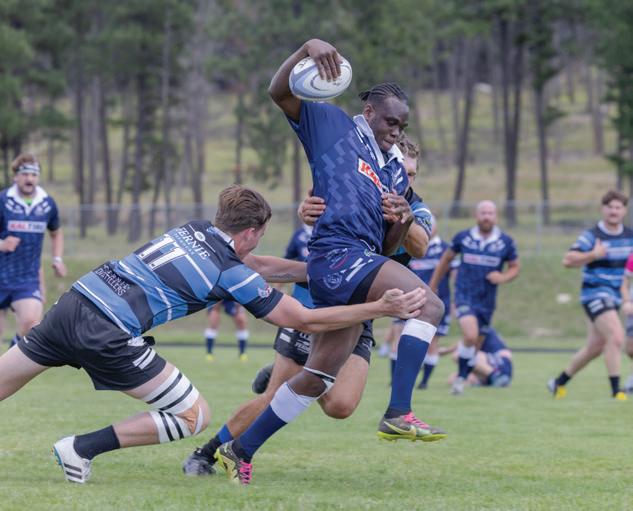
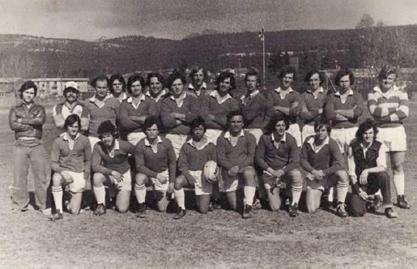
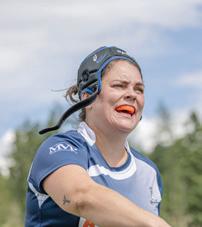
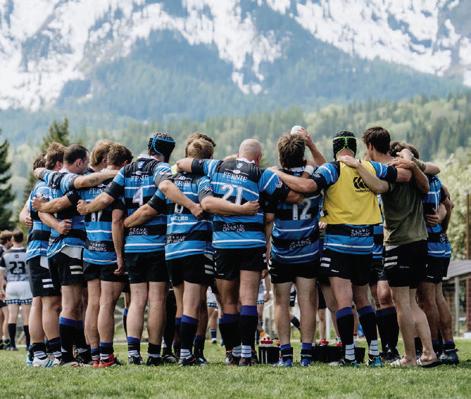
Up in arms — (Clockwise from left) Rocky Mountain Rogues player Daniel Dixon aims to evade the grasp of Elk Valley Bulls tacklers. The 1980 Mount Baker Secondary team. Old Tigers and Rogues team crests. Kelsey Olson, women’s forward. —
but survival — the ability of small clubs to keep show ing up year after year.
LET’S GO, GIRLS
Rugby in the Koote nays was historically a men's game by default. Women typically trained alongside men, filled gaps where needed, or played socially. For Lesley McKen zie, a capped Team Canada player currently coaching women’s rugby in Japan, playing in men’s games with the Nelson Grizzlies was the only option in the early 2000s.
both a men’s and women’s team — while rumour has it that a women’s side is rallying in Nelson.
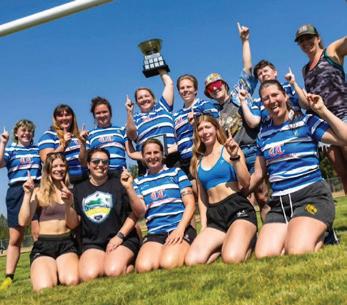
Today, women’s rugby is thriving in the form of rugby sevens: a fast-paced, seven-a-side variation of the game that made its Olympic debut in 2016. Elk Valley launched its women’s program in 2015. The Rogues followed suit, reigniting their women’s side in 2023 and placing second at the Saratoga Cup three years running.
A PLACE MISFITS BELONG
Rugby has always been a sport that makes room. Rugby union has a position for every type, from thicknecked props to speedy wingers, for brawn and also brains. Diversity is woven into the fabric of the game and reflected in the rugby community — a motley cast of characters bound by a desire to ruck and get rucked.
In remote towns with high turnover and transient populations, a sense of belonging is powerful — and joining a rugby club offers an instant family. In the Kootenays, where sustainable growth depends on cooperation as much as competition, friendships are forged even between players on rival teams. Clubs often lend players to each other when numbers are thin; players buy their opposite a beer after the match, and often boat races ensue, giving the losing side a shot at redemption.
Ultimately, players share an understanding: they know what it means to put your body on the line and what it takes to make things better for the next generation of athletes.
GRASSROOTS GROWTH
Meanwhile across the re-
continued on page 28
AN ABRIDGED HISTORY OF RUGBY IN THE KOOTENAYS
1823: Rugby invented in Warwickshire, England
1974: Rugby introduced at Cranbrook’s Baker Secondary
2013/14: Elk Valley RFC formalized and win successive Saratoga Cups
2018, ’21, ’22: Rocky Mountain Rogues RFC win Saratoga Cup
2023: Rocky Mountain Rogues Women’s team established; Elk Valley Women win KRU Championships and Saratoga Cup
2024: Trail Rugby Football Club established (Men’s and Women’s); Rocky Mountain Rogues Women place 2nd at Saratoga
2025: Elk Valley Women win Kootenay Regional Championship and place 3rd at Saratoga; Rogues Women place 2nd
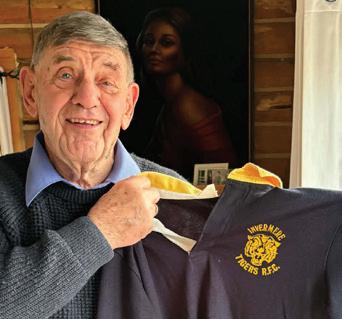
Hooker, lineout, and sinker — (Clockwise from bottom right) The Elk Valley Women’s Rugby Football Club, winners of the 2023 Saratoga Cup. (Elk Valley RFC Photo) Kootenay-raised rugby player Lesley McKenzie, player for Team Canada and current coach of Japan’s National Women’s team — known as the Cherry Blossoms. The scrum — a place for dark arts, often practiced out of the ref’s view. (Jenny Bateman Photo) 87-year-old former Invermere Tiger Ray Picton. (Kelsey Adele Photography)
Face the facts — (Top) While not as rough and occasionally lawless as it once was, with rules introduced in the last 10 years to protect players in contact, rugby’s physicality is still noteworthy for the fact there is little protection from tough tackles and loose play. — Trixie Pacis Photo (Below) The Bulls with a beauty backdrop at their home field, Fernie’s Prentice Park. — Somhairle Greene Photo
gion, mini rugby, rookie rugby, and high school rugby programs are flourishing. Cranbrook teens Evan Stahl and Cliff Jarvis made the BC Bears selection, paving a rare pathway to provincial and national rugby for those with World Cup and Olympic ambitions.
Perhaps the clearest sign of Kootenay rugby’s generational pull is the rise of second-generation Rogues — players who grew up on the sidelines while their parents toughed it out and now proudly wear the jersey themselves. Rogues President Jared MacDonald remembers getting into trouble at the pitch while his dad trained. Fittingly, he is known around the club as “Deuce,” coined after his father “Ace,” and now has a son of his own causing mischief on the sidelines.
FOR THE LOVE OF THE GAME
Rugby in the Kootenays has never come easy. It has survived recessions, population fluxes, and decades of logistical quandaries. It has relied on volunteers who coach and play at the same time, executives who juggle spreadsheets after practice, and players willing to drive hours for a single match. Rugby exists here purely because of people who love the game and want others to love it, too.
- Trixie Pacis
Pacis, a rugby player of 20 years, has represented the Philippine National Team 14 times.
+ Providing life-saving training in the Kootenays since 2012
+ Customizable training for work crews, business & individuals
Low to no water. Flooding. Dismal downstream water quality. Joseph Creek, a main water source for Cranbrook’s rural and urban residents and a vital habitat for species including Kootenay trout, is struggling.
Flowing from the city’s southeast, the creek’s watershed is a workhorse. It’s Cranbrook’s second-most important surface water supply, providing 3.7M gallons per day to the municipality’s raw water reservoir. Cranbrook’s primary water source, Gold Creek, provides about double that.
The dual fates facing both the creek’s vital water provision and its biodiversity mirror those that have
befallen waterways enveloped by development and urbanization worldwide.
Once known as the Kootenay’s most important cutthroat trout recruitment watershed, Joseph Creek has seen much of its forest cover shaved — twice in the last 120 years — altering snow retention and spring runoff, and hurting the general well-being of plants and critters. Northbound cattle range across the watershed all summer, soaking their southern ends in the creek’s cold water and adjacent wetlands, with predictably unsavoury results. Meanwhile, extensive offroad vehicle use by locals and visitors alike has left
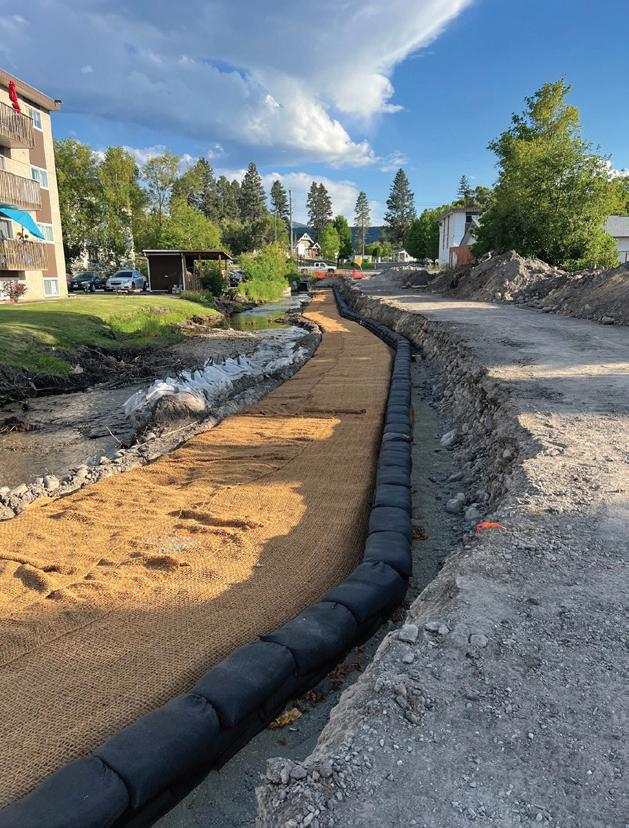
Critical time, critical resource — Cranbrook’s rehabilitation of Joseph Creek’s route through town reflects Canada’s challenge to protect municipal water sources threatened by changing climates and urban growth. During the dry summer months, up to 80 per cent of the creek’s volume is removed for licensee use. — City of Cranbrook Photo
Overworked but underway
Citizens and government are trying to help Cranbrook’s shallow blue-collar watershed out of deep trouble.
priority, meaning Joseph Thibeault and the St. Mary’s Indian Band — whose license priority dates back to 1868 — get first dibs.
The City of Cranbrook was late to the party. As of 1872, it holds 11 separate water licenses on the creek, meaning the city has to leave enough water for the earlier licensees.
We thirsty humans ask a lot of our water sources.
its mark on the hillsides of Mount Baker and Cranbrook Mountain, spreading
Consider the journey a litre of Joseph Creek takes before it pops out the tap. After its run through logged forest and ranchland, the creek hits town, gurgling past homes, condos, commercial blocks, streets, sidewalks, and gutters, all the while
storm sewers. During summer months, those waters are warmed to temps that shock the creek. Plants like non-native Russian willows have taken root, choking out the natural stream-bank and contributing to flooding. In town, the creek’s once-natural, sinuous path now features all the straight lines and right angles of a trigonometry problem. The numbers are daunting. During the dry summer months, up to 80 per cent of the creek’s volume is removed for licensee use. Water temperatures between 20 and 24 degrees celsius have been recorded for up to a month straight — conditions lethal to cutthroat trout. Co-
IN 2018, WE HAD OVER 3,000 ELEMENTARY STUDENTS FROM CRANBROOK PARTICIPATE IN A DAY-LONG EDUCATION PROGRAM, PLANTING CLOSE TO 5,000 NATIVE SHRUBS, PLUGS, AND GRASSES.
invasive weeds and encouraging erosion.
Joseph Creek’s waters have been in high demand for over a century. Downstream, 23 separate water licenses issued to 11 individual stakeholders siphon water for agriculture, industry, and rural residential use. Water licenses work in a first-come, first-served
collecting bits of livestock waste, grass clippings, fertilizer, herbicide runoff, and Joseph knows what else.
But before reaching the city’s water treatment facilities, rainwater washing over thousands of hectares of Cranbrook’s asphalt, concrete, and urban trash end up mixed back into the stressed waterway via
liform bacteria levels have peaked at 60 times normal after significant rain events. Freshwater shrimp — biological indicators of troubled waters — outnumber sensitive lifeforms like mayflies, caddisflies, and stoneflies, aquatic insects found in abundance upstream.
The very good news? The
continued on page 30
community and local government have a plan to save the stream from its overworked and under-loved status. The Restore Joseph Creek Project, a partnership between local First Nations, municipal, and regional governments, as well as School District 5, College of the Rockies, and Columbia Outdoor School, embodies a
long-term vision to undo 150 years of destruction.
“Our restoration efforts have focused on mitigating temperature uptake in the creek and to replace the non-native willow that dominate the banks,” says Todd Hebert, the executive director of the Columbia Outdoor School. Hebert has been coordinating the restoration
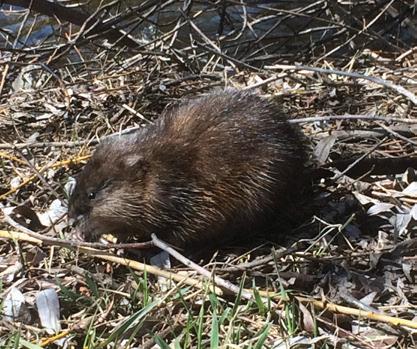
Wetlands are life — Wetlands like the Joseph Creek watershed are vital to humans, flora, and fauna of all sorts, like this muskrat. Canada is home to 25 per cent of earth’s wetlands, which globally are being lost three times faster than forests. More than 80 per cent of the world’s wetlands have disappeared since the 1700s. — Dave Quinn Photo
project since 2018. “A series of temperature loggers tell us where we can make the biggest difference, mainly by planting native shade vegetation to help cool down non-vegetated areas.”
“The City of Cranbrook is committed to making this project a success in restoring natural vegetation to the restored area,” adds Curtis Mummery, manager of roads and infrastructure with the City of Cranbrook. “Each year, the City continues to plant and maintain natural vegetation to ensure the project meets the long-term goals of creek restoration.”
Cranbrook is also hustling towards major upgrades to
its water treatment facility, plans that will help the city avoid building a $100M filtration treatment plant, while supporting projected growth of the East Kootenay’s major municipality over the next 75 years.
The greatest accomplishment so far? Hebert says it’s the new connection between community and creek.
“In 2018, we had over 3,000 elementary students from Cranbrook participate in a day-long education program, planting close to 5,000 native shrubs, plugs, and grasses at Idlewild Park after the dam reconstruction occurred,” he explains. “It was great to have the
public and students out helping redevelop the area into a quality habitat for fish, birds, Western painted turtles, and mammals.”
Annual cleanups and re-naturalization of riparian areas along Joseph Creek — like the Spooner Park project, where a historic dump and creekside lawn is slowly being replaced by native shrubs and trees — all help repair the overall watershed.
This is a ‘restoration by 1000 projects’ approach. Repair some of the intense damage, then step back a little and let nature do what she does — work with water, instead of against it.
More info at: www.restorejosephcreek.com
– Dave Quinn & Darren Davidson
Elimination Rumination
Once a staple of cabin and campground life, the once-beloved biffy seems to have gone the way of the doo doo. And for some, that’s kinda crappy.
I’ve never been one to shy away from toilet humour, and for some unexplained reason, I’ve had outhouses on the brain lately. I never anticipated becoming a “kids these days” kind of person, but I can’t help wondering, “Are kids these days pooping outside enough?”
The youth of today are surely familiar with the porta potty. A mainstay at music festivals, these portable plastic rooms allow one to “drop the kids off” in a chemical pool. Or perhaps one might encounter this
mountain or on the Arctic tundra. No longer found behind every home, a poo in an outhouse is now a poo on the edges of civilization.
Yet even the edges of civilization have become more traveled, which has brought surprising amounts of sophistication to some remote outhouses. Imagine this: you have hiked to the Neil Colgan Hut, an alpine hut on the Fay Glacier in Kootenay National Park. It has taken you eight, maybe even 12 hours of hiking through the elements to reach it. You will need to
I’M NOT SURE WHAT I’M NOSTALGIC FOR. THE POSSIBILITY OF SLIVERS IN MY BUTT? CHOLERA?
cramped structure at a job site or a farmers’ market: places with a temporary need for extra relief.
If they venture into the wilderness, this zone of contact can also offer young people a glimpse into a world without on-demand hot water. Nowadays, exposure to an outhouse can mark a person as adventurous or even brave. They’re someone who has trekked to remote reaches where indoor plumbing cannot exist, such as the top of a
hole moved. Outhouse real estate on a mountain top is limited, though, so the honey wagon of the sky is the preferred method. As a geriatric millennial, even for me an outhouse was somewhat of a novelty. Not an everyday reality, but nonetheless a regular fixture in the bush or at a cabin — and this is the place where I find myself feeling a strange nostalgia. The porta potty seems to be pushing further and further into the forest. The places it hasn’t reached yet have still seen upgrades, though: perhaps a concrete block or a plastic throne in place of the wooden bench with a hole. I’m not sure what I’m nostalgic for. Breathing through my mouth to avoid the stench?
stay the night and probably relieve yourself in the highest permanent outhouse in Canada at 2,957 metres above sea level. The next day will be another eight to 12 hours down. Your poop, however, will make the return trip by helicopter.
Because while indoor plumbing carries the business out of sight, outdoor plumbing keeps the business in one large hole that eventually must be dealt with — either emptied or the structure around the
humour in the form of off-colour joke books, or perhaps letters to the editors of nudie magazines. Believe it or not, I’m not the only person in the world with an obsessive nostalgia for outhouses. In the course of my research, I came across the Outhouse Museum attached to the Rossignol Cultural Centre in Liverpool, Nova Scotia — and it had a collection of over 200 outhouses. Sadly, that museum seems to be permanently closed so outhouse enthusiasts will have to venture
the United States instead. Perhaps to Elk Falls, Kansas, for the Outhouse Festival scheduled for this November. Or take a trip to Trenary, Michigan, home of the Trenary Outhouse Classic where biffies mounted on skis are raced down Main Street. This past winter saw the event’s 33rd — or Turdy-Turd — iteration.
– Sarah Stupar
Mosquito bites on my butt? Chol era? Perhaps it’s the reading material. I’m not so old that I encoun tered Sears catalogue pag es for toilet pa per, but I am from a generation that still kept books in the bathroom. Outhous es exposed me to toilet
The Lands Need Guardians
Throughout Secwepemcúĺecw, Shuswap Band Land Guardians lead with ancestral knowledge, grounding today’s ecological care in timeless responsibility and lived relationships with the land.
If you have ever stood beside a cold mountain stream in early morning light, or watched fog lift off the Columbia Wetlands, you know the feeling; this place matters.
Across the Columbia Valley and throughout Secwepemcúĺecw, the land shapes who we are. It feeds us. It protects us. It draws people here and keeps them here. It holds memory.
But land does not stay whole on its own.
It needs care.
It needs attention. It needs people who feel responsible for it.
The Shuswap Band has an active Guardian Program rooted in an ancient truth; caring for the land is a duty passed from one generation to the next.
The lands need Guardians.
Not just because policy requires monitoring. But because relationship
requires presence.
Long before British Columbia existed, Secwépemc people governed these lands through laws grounded in respect, reciprocity, and restraint. There were protocols for harvesting, for movement across territory, for protecting sensitive places. There were teachings about taking only what was needed and ensuring abundance for those not yet born.
That responsibility has never disappeared. What has changed is the pressure.
Forestry roads cut deeper into habitat. Recreation increases in fragile alpine areas. Mining exploration expands. Water temperatures rise. Wildfire seasons grow longer. Each impact may seem manageable on
its own. Together, they reshape landscapes.
Guardians stand at that intersection, between past and future, between development and protection.
“As Guardians, it is our responsibility to steward and protect our lands, waters and everything that lives there. In this new age, our culture and way of life have changed significantly. Bringing back our cultural knowledge and instilling it in our stewardship practices will help our future generations not only preserve the cultural aspects, tangible and intangible, but also provide teachings for the next generations to come, ensuring they are still there to enjoy and experience. If we do not protect what little remains, we will be putting the lands, water, animals, plants, cultural landscapes
and practices in danger of being lost. Throughout the past few hundred years, the First Nations have lost so much. The Guardians that each nation can have out on the land is a great step forward in preserving our lands, waters, animals, plants, cultural landscapes and cultural practices," says Joshua Martin, Director of Culture and Heritage.
Guardians are on the land in every season.
They test water in streams that once ran colder.
They document wildlife tracks where migration routes are narrowing. They record culturally significant sites that do not appear on provincial maps. They speak with elders about respectful management.
Sometimes their work looks technical with GPS units, field notebooks, and habitat assessments. But beneath that is something deeper. It is about noticing.
When you walk the same valley year after year, you see change others might miss. You know when a stream sounds different. You know when berry patches are thinner. You know when elk are moving earlier than they used to.
That kind of knowledge cannot be downloaded. It is built through relationship with the land.
Across Canada, programs supported by the Indigenous Guardians Program have shown that Indigenous stewardship strengthens conservation
outcomes. Here at home, it also strengthens something less measurable but equally vital: connection.
“I find working on the land super rewarding. Every day in the field feels like a new adventure. As a Guardian, I get to learn more every day and protect what I value most," says Christopher Dehart.
Clean water does not distinguish between reserve and non-reserve. Wildlife corridors do not end at property lines. Smoke from wildfire settles over all of us.
When Guardians monitor habitat, restore access protocols, or flag environmental risk, they are not protecting one community at the expense of another. They are protecting a shared future.
Many residents value
“TO ME, BEING A GUARDIAN IS AN OPPORTUNITY TO RECONNECT WITH THE LAND AND THE COMMUNITY THAT SHAPED ME. IT ALLOWS ME TO DEEPEN MY UNDERSTANDING OF THE PLACE I CALL HOME, BOTH CULTURALLY AND SCIENTIFICALLY, AND TO STRENGTHEN THE RELATIONSHIP BETWEEN OUR PEOPLE AND THE ENVIRONMENT THAT SUSTAINS US.” — DEVIN CAPILO
intact landscapes, but may never see the quiet, consistent work behind that integrity. Guardians make sure that commitments to sustainability are not just words in planning documents. They translate them into action on the ground. They also carry stories. Place names. Teachings. Language. When youth work alongside Elders as part of the Guardian Program, knowledge moves forward. Cultural continuity strengthens ecological care.
Because when you understand a place as family, you treat it differently. It would be easy to describe the Program as an environmental initiative. But that framing is too small.
It is an expression of jurisdiction. It is an investment in youth.
It is climate resilience in practice. It is reconciliation made tangible.
Most of all, it is a statement; the land is not an afterthought.
In a time of accelerating change, we need more than regulations and designations. We need people who show up consistently, attentively, and with long term accountability.
Today, they are trained, organized, and working every day, walking shorelines, climbing ridges, listening to rivers, ensuring that the places we love remain whole enough for the next
The lands need Guardians.
And whether we realize it or not, we all depend on them.
– Justine Burns
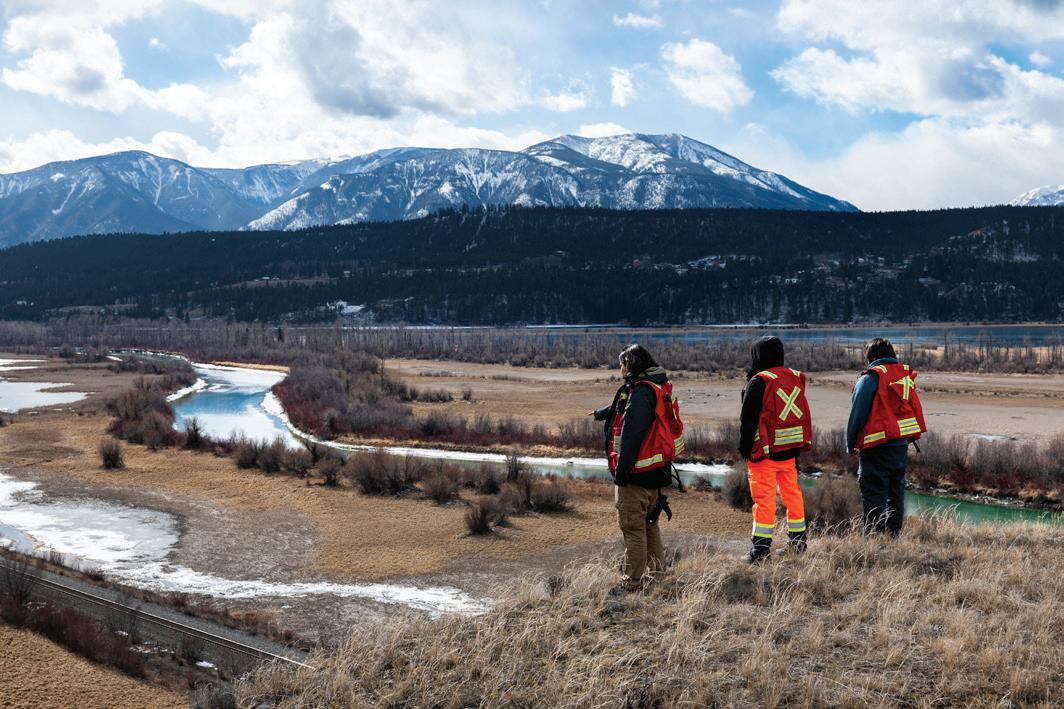
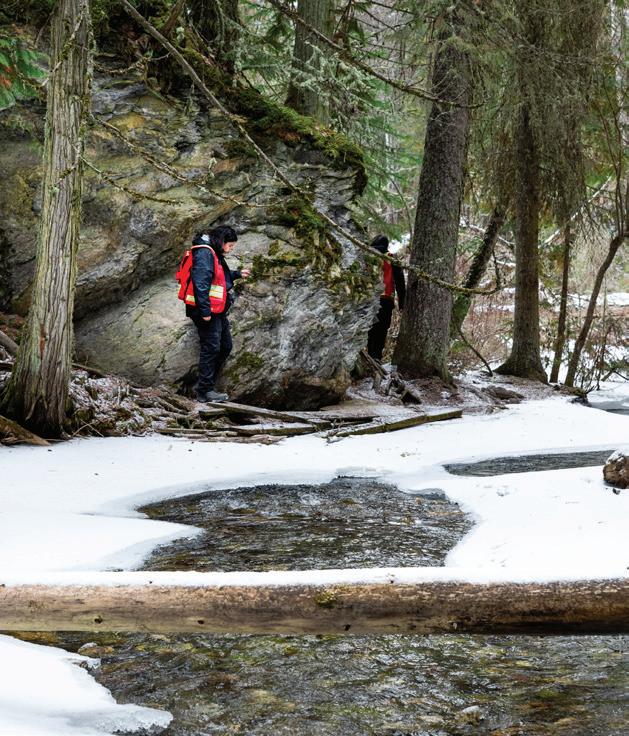
Left — Shuswap Band Guardians Zaylyn Stevens, Lukus Clowers, and Devin Capilo. Right — Zaylyn Stevens and Devin Capilo — Christopher Dehart Photos
generation to stand in awe of them too.
A Better Custom Home Experience Starts Long Before
Construction
From the first sketch to the moment you walk through the door, Münter delivers a seamless full-service custom-home experience, built around you.
Building a custom home should be exciting.
For many people, though, it quickly becomes overwhelming. Not because the vision is wrong, but because the process is fragmented. Design happens in one place. Budgeting happens somewhere else. Interior decisions come later. Construction begins before everything is fully aligned. What felt clear at the beginning can become harder to price, harder to coordinate, and harder to deliver than expected.
That is how stress creeps in, and why many projects start to lose momentum.
durability, complexity, and long-term performance. Finish selections influence budget, timeline, and the final result. When those decisions are made together from the start, the outcome is stronger, more cohesive, and better aligned with the client’s goals.
It also means better decisions happen earlier. Rather than waiting until construction is underway to discover conflicts, clients can work through key details before they become costly changes later.
Münter uses advanced 3D design software, detailed renderings, and virtual walkthroughs to help cli-
A CUSTOM HOME IS NOT ONLY ABOUT THE FINISHED PRODUCT. IT IS ABOUT CHOOSING THE RIGHT TEAM TO GUIDE THE PROCESS, PROTECT THE VISION, AND DELIVER IT PROPERLY.
Münter Design & Build works differently and was built to solve those problems.
Serving Kimberley, Cranbrook, Fernie, and the Elk Valley, Münter is a full-service design-build firm specializing in high-performance custom homes and major renovations. Custom home design, interior design, budgeting, planning, and construction are brought together under one team and one process, creating a clearer path from first ideas to final handover.
This matters because a well-designed home is about far more than how it looks. Layout affects cost, structure, comfort, and how the home lives every day. Exterior form affects
ents explore their future home before construction begins. Layouts can be tested. Finishes and lighting can be understood more clearly. Structural details can be reviewed early enough to spot and resolve potential issues in advance. That proactive approach helps reduce surprises, protect the budget, and give homeowners more confidence in the decisions they are making.
This is one of the real advantages of a well-run design-build process. It does not just create a more cohesive home. It creates a better-run project. When design, budgeting, planning, and construction are aligned early, the build is far better positioned to move forward smoothly.
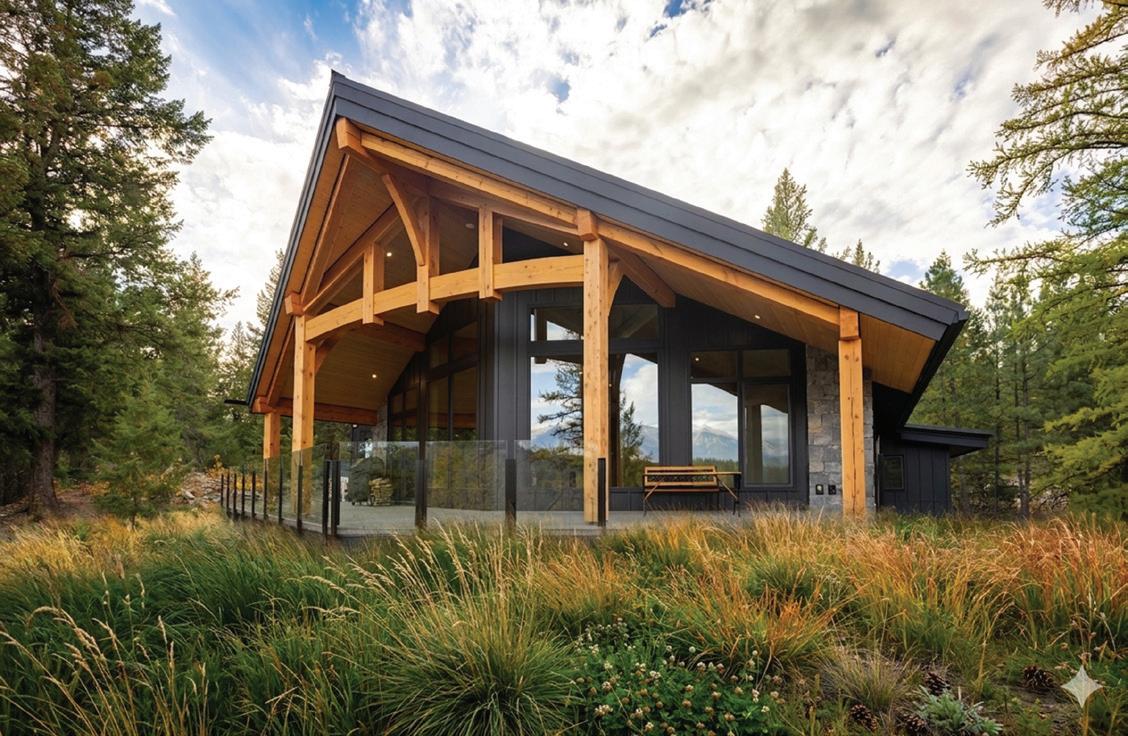
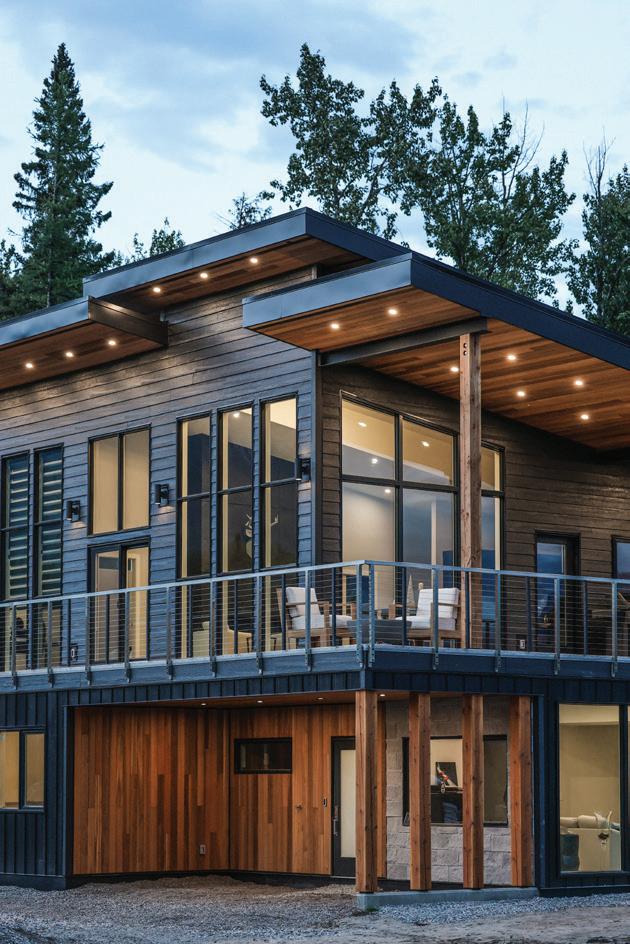
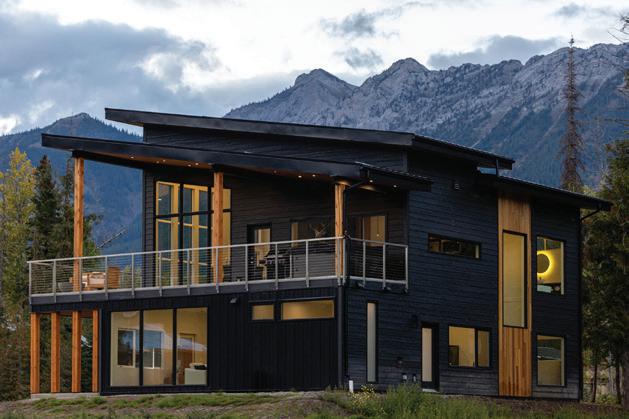
Elevated living — Huckleberry Haven, an award-winning custom home in Fernie by Münter Design & Build, is perfectly positioned to capture sweeping views of the Lizard Range and Mount Fernie.
Clarity around budget is part of that experience too. During pre-construction, clients are guided through the major decisions that shape both the home and the investment behind it. That early work helps define priorities, align expectations, and reduce the risk of expensive surprises later on. It also allows for more informed conversations around finish levels, complexity, and where the budget is best spent to support the overall vision.
The experience during construction matters just as much.
Münter is known for clear communication, transparent systems, and a personalized client portal that gives homeowners access to updates, schedules, key documents, progress photos, and direct messaging with the team. For local and out-of-town clients alike, that means visibility without feeling like they have to manage the project themselves.
Clients stay informed,
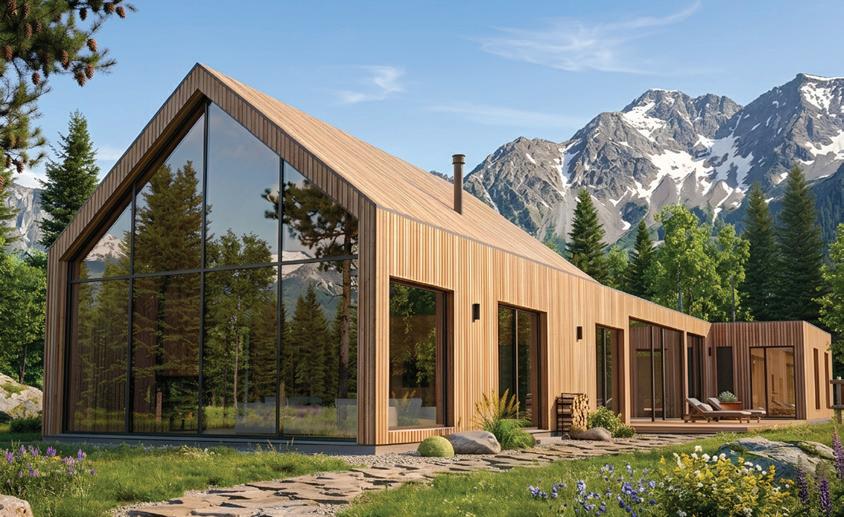
Peak perspective — (Left)
This modern Scandinavianinspired design by Münter Design & Build illustrates how thoughtful planning and site integration brings a home to life. (Below) Huckleberry Haven’s spacious deck is intentionally designed for year-round connection to the surrounding landscape.
connected, and supported throughout the process while the Münter team keeps the project moving with discipline and care.
That level of coordination is especially valuable in the East Kootenay, where building well takes more than good taste. It takes local knowledge, disciplined execution, and the ability to handle steep sites, rugged terrain, demanding conditions, and ambitious design goals.
Homes in this region need to respond to climate, site, and lifestyle in a way that is both practical and beautiful. Münter has built its reputation by taking on complex projects with craftsmanship, trusted trade relationships, and a high standard of care from start to finish.
Those long-term trade relationships matter. The right subcontractors do not just improve workmanship. They improve coordination, accountability, and the ability to execute challenging homes properly. Combined with
a guided process and a strong internal team, they help create a building experience that feels more organized, more transparent, and more dependable. That approach has earned Münter multiple CHBA Keystone Awards, Best of Houzz service recognition, and finalist standing in the 2025 CHBA National Awards for Housing Excellence. Because in the end, a custom home is not
only about the finished product.
It is about choosing the right team to guide the process, protect the vision, and deliver it properly.
munter.ca, info@munter.ca
– Robin Brazenall, Managing Director
The East Kootenay’s Changing Climate
Actions for a Resilient Future
Dr. Suzanne Bayley doesn’t just study wetlands — she calls them home. Based in Brisco, a small farming community in the heart of the Columbia Wetlands, Bayley has watched parts of the region harden like a dried-out sponge. One place she used to hike, near the headwaters of the Columbia River, has evaporated, leaving an oval imprint where water once pooled.
“Ten years ago, there were shallow lakes there,” says Dr. Bayley, a world-renowned wetland expert. “Now they’re gone — bone dry. Lakes that used to have lots of birds in them, they’re gone.” Gone too are the riparian-nesting birds and the moisture-dependent plants.
As the climate continues to shift, ecosystems will change or disappear, pushing many species to seek habitat elsewhere. In
some areas, suitable habitat no longer exists nearby. Yet when habitats are connected and part of a larger ecological corridor, there is more potential climate change refugia, giving species more options and room to move.
Landscape connectivity has always been important for biodiversity. With climate disruptions already impacting our region, main-
in the Kootenay region.
KCPP drew on the expertise of conservation ecologist Greg Utzig to analyze how climate change will impact the Kootenays’ ecological corridors; Utzig has spent the past forty years analyzing landscapes across
“WE’RE ALL RESPONSIBLE FOR THE FUTURE. WHAT WE DO ON THE GROUND MATTERS.”
taining ecological corridors is more important than ever before. Kootenay Connect Priority Places (KCPP) — a science-based initiative of Kootenay Conservation Program — was built on this premise, with the aim to sustain and connect exceptional places of biodiversity
the region. He has travelled almost every valley in the region on foot or by air: his knowledge of the interconnectedness between lands and waters runs deep.
According to Utzig, climate projections are largely the same across the region, whether in the Creston Val-
ley or the Columbia Valley.
“In the coming decades, average temperatures are going to go up anywhere from two or four degrees,” Utzig says. “And that is going to override everything everywhere.”
Increasing drought, smaller snowpacks, more wildfire: the East and West Kootenay already see these trends. Over time, these changes will reshape the hydrology and ecological mosaic of landscapes that, to the average eye, has had limited variation over the past thousand years. In some places, valley bottoms may turn into a grassland-steppe ecosystem, akin to the areas much further south like southern Idaho or Utah. For plants and animals to survive and adapt, they will need to shift their
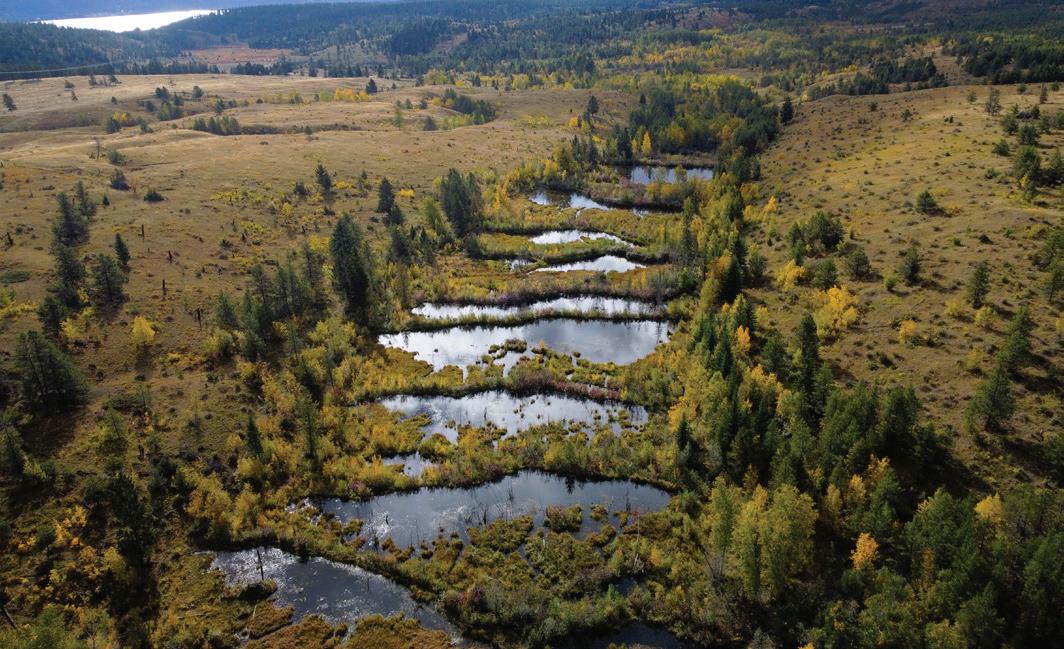
Climate change superhero — Beavers transform landscapes, store large amounts of water, and create important wetland habitat for other wildlife in the upper reaches of Marion Creek west of Columbia Lake. — Catriona Leven/Columbia Wetlands Stewardship Partners
ranges by relocating to higher elevations or migrating farther north.
“Nature needs to move,” says Marcy Mahr, Kootenay Connect Manager for Kootenay Conservation Program. “Plants, painted turtles, grizzly bears — as the climate changes, everything will need a place to go.”
In 2019, Mahr co-authored a report with grizzly bear biologist Michael Proctor identifying a network of 12 ecological corridors across the Kootenays. She emphasizes that for people to prepare to mitigate climate change impacts, they need to know what actions to take — and this is where Utzig’s climate analyses come in. Although ecological corridors across the Kootenays will be experiencing similar climatic trends, the impact on each area will vary.
“As temperatures go up, places that hold water are going to be important in the Kootenays,” says Utzig. “Riparian areas, wetlands, and headwater streams help keep connectivity within a corridor. If these ecosystems are damaged or dry out, the opportunity for species movement breaks.”
One shift Utzig details in his analyses has to do with increasing vapour pressure deficit. Appreciating this process takes a basic understanding of plant photosynthesis — something most may remember from biology class. Put simply: the drier the air, the more evaporation occurs. If a plant cannot keep up with the demands of evaporation, it shuts down photosynthesis, regardless of how much moisture is in the ground. Drying trees and plants with drying soils are fodder for intense wildfire, which releases more car-
bon into the atmosphere, which of course feeds climate change, which causes more evaporation — and so the loop continues.
Long ago, the greatest obstacle to ecological connectivity in the Kootenay region was its topography: mountain ranges running north-south like a set of rocky ribs. These natural barriers have always made it hard for low elevation species to easily move east to west.
Over the past century, humans have upped the difficulty by adding in highways, roads, clear cuts, residences, and agriculture. “We’ve also dammed the rivers,” adds Utzig, “and filled the valleys with reservoirs. It’s complex.”
secure habitats in a landscape,” says Mahr. “It’s not saying there can’t be any development or activity in them, but that development and land use has to be compatible with maintaining a diversity of connected habitats for wildlife.”
Utzig recently completed
studying wetlands in the upland west benches of Columbia Lake, and their findings highlight how Utzig’s climate assessments are not just future projections — they are already happening.
Bayley shares that “of the 17 wetlands visited, only five had surface water.”
AS THE CLIMATE CONTINUES TO SHIFT, ECOSYSTEMS WILL CHANGE OR DISAPPEAR, PUSHING MANY SPECIES ELSEWHERE. YET WHEN HABITATS ARE CONNECTED, THERE IS MORE POTENTIAL CLIMATE CHANGE REFUGIA, GIVING SPECIES OPTIONS AND ROOM TO MOVE.
Too
Despite this fragmentation, at least a dozen potential ecological corridors remain in the Kootenays. As climate change progresses, these areas have the best chance of supporting landscape resilience — if the habitat is there.
“The general idea with connectivity corridors is to keep a reasonable distribution of high quality and
an analysis for the Columbia Lake Corridor, one of KCPP’s ecological corridors. This broad area spans from the Rockies to the Purcells, and includes the dried-out lake where Dr. Bayley used to hike. She and her team at Columbia Wetlands Stewardship Partners have been
Most of the land in the study area is owned and managed by land trusts, either The Nature Trust of BC or the Nature Conservancy of Canada.
For these groups and their conservation partners, understanding the current state of wetlands and future predictions helps to plan out next steps.
“We know that the remaining wetlands and the beaver dams that maintain them are particularly important for keeping water on
the landscape,” says Bayley. “This type of data can sharpen our focus, directing restoration to have the most benefit.” While it’s unlikely water will return to the completely dry lake, it’s possible that — with the right actions — some wetlands will stay moist.
For every ecological corridor assessed, Utzig prescribes the same top action: embrace uncertainty. “It’s essential that people understand the history of the area,” Utzig says. “To know how things functioned in the past and have changed, are changing, and will continue to change in the future.” While many of his recommended actions may seem directed at land managers, they’re relevant for anyone wanting to learn more about what their community needs to do to work within the big picture.
“We’re all responsible for the future,” says Mahr. “As property owners and communities, what we do on the ground matters.” Mahr explains that seeing the landscape around us as a whole is important because this is the scale at which climate change is impacting humans, water, forests, plants, and animals.
Drawing on Utzig’s assessments, she adds, “by protecting wetlands for water storage, retaining riparian habitat and deciduous trees for moisture, shade, and fire breaks, and treating our communities’ forests to prevent catastrophic wildfire, our actions can boost resiliency of the places we love.”
To learn more about the Columbia Lake Corridor’s climate assessment, visit: kootenayconservation.ca/ columbia-lake-climatechange-adaptation/
For more information about Kootenay Connect Priority Places, visit: kootenayconservation.ca/ kootenay-connect-priorityplaces/
–Emily Nilsen, Nelsonbased writer + consultant
hot to handle — The 2024 wildfires severely burned the upper Coyote Creek watershed which starts in Top of the World Provincial Park and feeds the Lussier River. — Greg Utzig/ Kutenai Nature Investigations
Celebrating 25 Years of Stewardship
Safe and innovative reclamation of the Sullivan Mine keeps ecosystems healthy and a community strong.
For nearly 100 years, the Sullivan Mine — one of the world’s largest underground lead and zinc mines at the time of operations — was a critical part of Kimberley’s social and economic fabric: it was the city’s largest employer and the largest single contributor to Kimberley’s tax base.
Just as the mine’s operation was fundamental in Kimberley’s story, so too is its closure and reclamation — and this year, the Sullivan Mine celebrates 25 years of post-closure site stewardship. Having successfully transitioned from a mining community to a vibrant tourist destination and thriving recreational center, Kimberley provides
mine-impacted water — all priorities that continue to guide post-closure improvement efforts today.
This includes water collection and treatment strategies that have resulted in significant improvements to water quality indicators in both Mark Creek and the St. Mary River. Teck’s water management systems contain more than 25 pumps and 30 kilometres of pipeline that convey it to the Drainage Water Treatment Plant, located southwest of Marysville. The plant features a high-density sludge treatment process; at the time of its construction, this innovative process was one of the first of its kind in the world.
stewardship over time. Safe and effective management of tailings — which are the leftover materials from processing mined ore — is another vital element of Teck’s ongoing remediation work. At the Sullivan Mine, soil cover experiments between
ONGOING CARE FOR THE SULLIVAN MINE SITE — AND THE COMMUNITY AND ECOSYSTEM SURROUNDING IT — HAPPENS THROUGH CONSISTENT ENVIRONMENTAL MONITORING, THOUGHTFUL MANAGEMENT, AND COMMUNITY ENGAGEMENT.
a model for mine reclamation that maintains community vitality and continually improves ecosystem health.
Teck and its community partners spent years preparing for the mine’s closure in 2001. The closure plan included objectives such as protecting public health and safety, reclaiming land and watercourses to protect wildlife, and managing
Additionally, field studies of aquatic vegetation, invertebrates, and fish began before the mine’s closure, and are still completed periodically to assess changes over time, as water quality improves.
Teck's water management and treatment efforts are intended to protect the region's water resources and support their careful
1977 and 1994 tested various cover configurations over a variety of tailings, to determine which would best prevent the uptake of metals, acids, and salts into the growth medium and reduce water infiltration.
Teck’s tailings facilities follow global best practices for safety and efficacy. The Sullivan Mine has five tailings facilities that have been
secured with multi-layered soil covers, with water conveyed through collection and diversion channels for treatment at the Drainage Water Treatment Plant.
Decommissioned tailings sites are regularly evaluated and rigorously monitored, and risks are managed through robust design, ongoing stewardship, and engineered solutions. Teck is proud to adhere to the highest standards in tailings management for mining companies, including the Global Industry Standard for Tailings Management.
Ongoing care for the Sullivan Mine site — and the community and ecosystem surrounding it — happens through consistent environmental monitoring, thoughtful management of vegetation growth, maintaining soil cover, regular compliance monitoring, and
community engagement. All remediation efforts are designed to ensure longterm safety and environmental protection, and in 2020, the Sullivan Mine was recognized with a B.C. Mine Reclamation Award for Outstanding Reclamation Achievement.
Twenty-five years on, the Sullivan Mine stands as more than a closed chapter: it’s an evolving example of leading-edge restoration and protection. Through ongoing work with local partners, Teck continues to advance innovative approaches to water treatment, tailings management, and environmental stewardship — ensuring that Kimberley remains a global leader in responsible mine closure, and a vibrant, resilient community for generations to come.
Teck’s water treatment efforts and tailings management at Kimberley’s Sullivan Mine protect the region's water resources. — Teck Resources Ltd, with credit to Morgan Turner Photography
Casting Call
On rivers and streams around the planet, mankind’s fascinated quest beneath currents has spanned ages of empire and aristocracy. Ardent angler, Mike McPhee, reflects on the deep allure of fly fishing — and the East Kootenay’s extraordinary place amongst it all.
Murmuring, babbling, and soothing: the sound of moving water achieves a mysterious task that moves something deep within us. There is no other sound in nature that compares. It draws you in from afar and can hypnotize you. Its meditative qualities have been understood since ancient times. There’s a reason the spa plays its whispering soundtrack during treatments. Stepping out into a steady current, its audio can wash away all concern of the modern world’s bustle. The fog of screen time and sensory overload dissipate, and something else takes over. One enters a time-warping trance. Five hours seems like one.
Fly fishing is an inexpensive form of healthcare, to be certain — but it’s more than that. It’s an art that can lead to obsession; a never-ending lesson that involves immersion and exploration in nature, and often an expansion of mindfulness. It’s a zen-like endeavour punctuated by moments of adrenaline. And then there’s the trout: feisty and alluring quarry that just happen to prefer the same habitat that I do — clear and cool mountain rivers, quiet places, and the remarkable Kootenay wilderness.
CONTINUED ON PAGE 49
ISLAND GIRL — Fernie angler Jackie McCullough makes a sublime cast on the Skookumchuck River.
Words & Photos Mike McPhee
CONTINUED FROM PAGE 47
From Fernie to Kimberley to Golden, the rivers and creeks of the East Kootenay are simply a trout stalker’s paradise; a fly-fishing trout highway of sorts. The magic is in the water. Freshly birthed creeks often start as ice and snow high in the Rockies and Purcells on either side of the Rocky Mountain Trench. The valley bottom provides a reprieve, allowing creeks and streams to shift to a lower gear after many of them come tumbling out of the mountains full of youthful vigour. They then join with their brethren into more significant rivers, such as the Kootenay and Columbia, on their long journey to the sea.
Paul Samycia, a longtime river guide and owner of the Elk River Guiding Company in Fernie, knows this landscape well. “East Kootenay waters have some unique qualities that make them special, and different from other waters in the northwest,” Samycia says. “Many of these rivers we fish are in close proximity to the glaciers they originate from and are true freestone rivers. This leaves them in complete control of mother nature — and that’s pretty cool for such accessible waters.”
Though the term is often overused, it’s my opinion that the trout waters of the East Kootenay are indeed worldclass — and entirely underrated. At this point, aficionados will hope that I stop discussing these superlative streams to preserve their secrets. I would point out in response that there are many hundreds, if not thousands, of kilometres of creeks, streams, and rivers throughout the region — as well as hundreds of lakes for anglers. In a lifetime of exploring, one could not fish all these waters. I know … because I’ve been trying.
The Kootenays have always drawn explorers and those seeking raw wilderness and untamed mountains. Those who need to see “what’s around the corner” often end up in these parts. These traits are part of what has driven my fly-fishing affliction, to be sure. Immersion in nature on its own is good
for the soul; it heals and inspires. The uninitiated should be warned, there is a dangerously addictive quality to fly fishing that may strain relationships and work schedules.
Initially, the endeavour can be a bit frustrating, as you take your first casts and perhaps catch yourself in the face with a fly. You will curse the wind and shrubbery for sure. One should consider tangled line and making close friends with local trees part of the learning curve. Tying flies on the line also takes a bit of patience before proficiency sets in. Once past the initial pain points, something else takes over: quiet moments in the car, the liminal space between sleeping and being awake, and time at the work desk may start to be filled with thoughts of rising trout.
Another addictive and gratifying quality of the endeavour is the endless process of improvement and education. From casting to entomology, the learning curve continues as far as you want it to. This is not like other sports where you often hit a plateau and coast along in your comfort zone. Learning to cast is also a lesson in patience. Watching someone proficient at casting is inspirational and artful and can push you towards betterment.
Bushwhacking is not for everyone, but if you are willing, there may be the reward of untouched and seldom-fished waters. Finding magical pools and places on a small creek can feel like winning the lottery. These trout-holding spots often change year to year, making exploration of last year’s favourite spots
CONTINUED ON PAGE 50
HANDLED WITH CARE — (Top) Thriving in clean and seemingly inhospitable waters alike, a cutthroat trout is gently released back into a stream. (Below) Fly fishing often delivers anglers into deep wilderness. Tools of the trade seen here include a nine-weight rod setup for bull trout, six-weight setup for dry fly — and a 12-gauge shotgun to ward off unexpected visitors, presumably four-legged.
WATCHING A COLOURFUL TROUT SLOWLY COME UP FROM ITS HIDEOUT, FOLLOW YOUR FLY, AND FINALLY GRAB IT NOT ONLY PROVIDES A SHOT OF ADRENALINE, BUT IS DEEPLY GRATIFYING.
CONTINUED FROM PAGE 49
a new endeavour. There is often an intimate and surreal sensation when coming up to a new or known pool. I often stand and watch, taking in the scene, absorbing the moment. This act of observing which insects are flying around, and hopefully seeing where in the pool some trout might be rising, sharpens the senses. A splash and or mouth slurping off the surface gets the heart racing.
In these instances, patience is necessary. You don’t want to go throwing lines and flies around willy-nilly. Stalking and sneaking up to get close to a rising fish activates some primordial part of the brain; perhaps a holdover from our hunter-gatherer days. The heart races and sweat beads as you near your quarry. Landing a well-aimed
fly upstream from the riser, and letting it float overhead in as natural a presentation as possible, can lead to that exhilarating moment all the work has led to. Watching a colourful trout slowly come up from its hideout, follow your fly, and finally grab it not only provides a shot of adrenaline, but is deeply gratifying.
As you might imagine, entomology, or the study of insects, plays a significant role in angling’s learning curve. Mimicking trout food is the key to tricking the trout into your offering. You may see a seasoned angler staring at the water above a creek or looking under rocks to see what’s happening. They aren’t crazy: they have learned to observe, trying to figure out what the trout are feasting on. “Matching the hatch” is a term often heard: this refers to trying to figure out what insects are hatching at any given time during the day and trying to match that with the arsenal in your fly box. The goal is to be at the right place at the right time, and offer the right fly to your quarry.
I can think back to the first time that I was at a perfect spot on a river when a hatch started and trout began their rush to the bug buffet. It was late afternoon and the sun hit a certain pool, warming the water just enough. The insect life suddenly went into overdrive — and so too did the cutthroat trout. Catching several of the large rising beasts in short order changed me from a curious, novice angler into the fully obsessed one I am today.
These hatches occur only at certain times of the day when water temperature and air temperature are perfect for insects to hatch. Nymphs (juvenile insects) often lie at the bottom of a creek or river in wait for this perfect moment of elements coming together. They then rise through the water column, metamorphose, hit the surface, and emerge into a flying insect. These magical moments do not last long; often an hour or less is all you have. Depending on the exact insect, it could be midday or early
DEEP STATE — Brennan Lund, on and under the St. Mary River.
Details of the Discipline
A few FAQs for those just starting on their path to fishing fixation. Though fly anglers target other fish species like salmon and tropic varieties elsewhere, the Kootenays are all about trout. There are generally three types of fly fishing.
First: streamer fishing, which is basically trying to mimic small minnows beneath the surface. This often involves casting a weighted fly, called a wet fly, and retrieving it through the water, often trying to make it look like a wounded small fish or sprat.
Second: nymph fishing, or trying to mimic subaquatic forms of insects and invertebrates. These are usually small, imitation larvae. The tactic is usually to let the nymph float within the water column, and the art of it is to figure out what kind of nymph the trout are feeding on and at what depth. This type of nymph fishing, specifically with chironomids, is also employed on lakes.
The third and final type of fly fishing is considered by many to be the pinnacle of the sport, akin to skiing deep, dry backcountry powder. Dry fly fishing is when one imitates flying insects landing and floating on the surface of the water. Catching trout, taking flies off the surface, and sometimes launching out of the water entirely, is a glorious sight and feeling — a sensation that tends to stick around in your memory banks and treat you later.
evening. On warm summer days, you may be treated to multiple hatches with a few types of insects throughout the day. Other conditions, such as a light rain, can also start a hatch and subsequent feeding frenzy.
The Elk, Kootenay, and Columbia
The Elk River is perhaps the most famous of this area’s waterways. It has been called one of the top dry fly-fishing rivers in North America — and for good reason. Starting as glacial ice high on the B.C. and Alberta border and Continental Divide, it flows south for 220 kilometres, gaining strength along the way before entering Koocanusa Lake. Anglers come from all over the world to experience the beauty of its freestone magic.
Most of the commercial guiding on the Elk River is done by drift boat. These flat-bottomed dory boats are maneuverable, can navigate shallow water, and are perfect to cast a fly line from.
“Westslope cutthroat trout are almost always eager to take a dry fly on the Elk, but recently there has been a new obsession with bull trout,” explains Samycia. “Having both these wild, native species available makes the Elk a destination that has fly anglers coming from around the globe to wet a line.”
There are about six sections from Sparwood to Elko that can be accessed by a solid day’s float. No boat, no worries: there are many walk-and-wade sections to wander, easily accessed by the highway that runs parallel to the river for a long stretch.
For those willing to put in the extra effort, there is always more to
CONTINUED ON PAGE 52
explore off the beaten track. The river holds large populations of bull trout and Westslope cutthroat trout, and many of the tributaries of the Elk are also trout havens. Some have become famous in their own right, such as the Wigwam and the Michel.
BULLISH — Bull trout, considered part of the char family, can be identified during spawning season by their bright orange bellies and white-tipped fins. Bull trout grow considerably larger than cutthroat.
To the west, the mighty Kootenay River starts as a small affair in the Rockies, in the national park that bears the same name. The river winds its way in and out of the park, picking up volume along the way. Flanked by impressive mountains, it then enters the Rocky Mountain Trench at Canal Flats where it mellows a bit. This section of the lower Kootenay can be a bit on the murky side for part of the year, as it winds through the valley bottom and mud flats, but by mid-summer it’s often unclouded and fishable. By fall, it’s lower, clear, and inviting. Creek outlets on the Kootenay are often a favourite spot for various species to hang out and await your offerings. Many tributaries of the Kootenay are also well-known trout waters. The St. Mary, Bull River, and Skookumchuck River are all extraordinary in their own right.
Starting at Columbia Lake, we have the legendary Columbia River. Though dams now block their return, salmon used to come all the way up to Columbia Lake and were an important resource for the Ktunaxa and Secwépemc peoples. Exiting the lake, the Columbia begins as a small creek. By the time it reaches Golden, it’s a substantial river of breadth and volume. For anglers, the
Columbia, its tributaries, and the many lakes that dot the Columbia Valley have been gaining popularity and a reputation for large bull trout.
“The area surrounding Golden offers incredible fishing opportunities that aren’t available in many corners of the world,” says Dave Burns, a seasoned guide at the fly-fishing outfit The Golden Gillie. “From dry fly fishing on intimate streams, to sight fishing big stillwater rainbows, or chasing huge migratory bull trout — there are some truly memorable experiences to suit every angler.”
It should be noted that many of the East Kootenay’s streams have a special designation with specific regulations. These classified waters have been deemed extraordinary and deserving of extra protections: they require an additional permit on your annual fishing licence and are, for the most part, catch and release only. A few very special waters, like the Michel and Wigwam, have a limited number of open days and a lottery system for out-of-province anglers.
Ode to Trout
In my respectful opinion, Westslope cutthroat trout are the true “mountain trout” species of North America. Some look down upon the cutthroat and say they don’t get as large as other species; that they are too easily fooled by an artificial fly and don’t fight as hard as other species. And truth be told, other species are more difficult to fool and easier to spook. Brown trout, for instance, are notoriously frustrating in their selective eating and weariness of anglers.
Cutthroat, though, love eating off the surface. They spend more time looking up than any other trout species, and they can’t resist a good dry-fly buffet. Cutthroat can often be found in what might seem, at first glance, to be an inhospitable ecosystem. They thrive in high altitude alpine creeks and lakes. They’re extremely hearty and it never ceases to amaze me to find them in the nooks, crannies, and upper reaches of a watershed. They require cold, clean water and often hang out in small creeks that do not look “fishy” at first glance.
Because of these more challenging conditions, they grow a bit slower than
their other trout cousins, and are a bit more vulnerable to overfishing and ecosystem disturbances — hence why many of the area’s streams and creeks are classified waters and catch and release only. The Elk River watershed contains the largest population of Westslope cutthroat left in North America. For these reasons, anglers are encouraged to keep them wet when catching them, treat them gently, and put them back as quickly as possible. Bull trout are also native to the region’s waters. Ironically, they are cons and not trout at all — they’re from the char family, which becomes very apparent when they spawn in the fall with their bright orange bellies and white-tipped fins. They get much larger than cutthroat: it’s not unusual to catch 15-pound bull trout in the Kootenay and Columbia rivers. They also take over many small creeks and streams every fall as they head to their spawning grounds.
While on a rare occasion bull trout might take a dry fly off the surface, they are much more likely to aggressively hit a big, submerged streamer fly. The tactic anglers often employ is to cast weighted streamers into a deep pool, or run and retrieve the wet fly at a medium speed. This mimics smaller fish, such as cutthroat and whitefish. The adrenaline rush one gets when one of these large river sharks comes darting out of the depths at your streamer is something that sticks with you. These apex predators also love the clean, cold streams that the region offers. Though endangered in other places, the East Kootenay holds good numbers in most of the significant waterways.
Rainbow trout are also residents of the region. In the neighbouring West Kootenay region, Kootenay Lake is home to the legendary Gerrard rainbow trout, which grow to be the largest rainbow variety in the world. Other sub-species also lurk in our waters as their ability to grow fast makes them especially popular for stocking in the smaller lakes of the Kootenays. Though not native to many of the creeks and streams they have made their way into, rainbows easily hybridize with cutthroat, producing “cutbows”. There are ongoing conservation efforts to keep their habitat separate.
THE TROUT WATERS OF THE EAST KOOTENAY ARE INDEED WORLD-CLASS — AND ENTIRELY UNDERRATED. IN A LIFETIME OF EXPLORING, ONE COULD NOT FISH ALL THESE WATERWAYS.
A Fascinating History
Deep in the fog of hominid history, humans noticed fish that were a bit harder to catch with basic fishing methods. They likely noticed this quarry feeding off the surface of rivers and streams. There’s an illustration from an Egyptian tomb from 1,400 BC of what looks like a stonefly and an ancient angler fishing on the surface of a stream.
Two thousand years ago, the Roman nature writer Aelian wrote what many consider the first description of fly fishing. He describes Macedonian anglers using red wool around a hook, with two attached feathers from under a rooster’s wattles, to trick spotted fish — likely trout — into taking the artificial fly from the surface of a river.
Deceiving trout with artificial flies seems to have taken on new meaning and began growing into a sport in the late Middle Ages with a brief mention in a manuscript from the 1400s. First printed in 1653, The Complete Angler is often credited with first documenting fly fishing for sport and its association with nature.
The Chalk streams of England and the rivers of southern Scotland are where things really started coming together in the 18th century. Bamboo rods and horsehair line were the tools of the day and anglers started experimenting with fly patterns. Some of the fly patterns we still use today were developed and perfected during this time including Pheasant Tail Nymphs, Woolly Buggers, and Elk Hair Caddis. Tweed suits and a wee dram of whiskey on the side of the river added to this cultured pursuit. Early train travel allowed city folk from Edinburgh, Scotland to start taking the train down to the River Tweed for weekends in search of salmon and trout. The Scottish poet Robert Burns even mentions trout and fly fishing in a few of his famous verses. Over the last few hundred years, the technology has steadily improved. The introduction of synthetic line, composite CONTINUED ON PAGE 55
IT’S THE TIES THAT BIND — During mid-summer, cutthroat are drawn to flies including big hoppers and stimulators. Fly tying dates back to 200 AD. Fly names are almost as colourful as their exquisite designs. Consider: The Humpy, Royal Wulff, Elk Hair Caddis, Parachute Dun, Spinner, Hares Ear, Wooly Bugger, Muddler Minnow, and Zug Bug.
Our Rivers Restocked
In this province, your angling license dollars go to a great cause: the Freshwater Fisheries Society of B.C. operates six fish hatcheries throughout the province. These hatcheries stock over 800 lakes throughout B.C. for freshwater sport fishing.
DRAWN TO IT — The fly and fish sketch work of Dallas, Texas artist Geoff Hager has helped us share some insight into East Kootenay fly fishing. We landed his work after spotting a 35-year-old poster of Hager’s in a café in Turner Valley, Alberta. An avid fly fisherman to this day, now wildlife artist-turned-contemporary artist, Hager’s modern pieces have been exhibited throughout the U.S. at galleries in Santa Fe, NM, New York, Dallas, and Jackson Hole, WY. Visit geoffhagerartist.com for more.
Our local Kootenay hatchery is located near the Bull River, about a 40-minute drive from Cranbrook. Depending on the year, they produce between 800,000 and 1.2 million fish. Provincially, the Society stocks around eight million fish a year. Rainbow trout, cutthroat trout, brook trout, and kokanee are all included in the stocking program. Rainbow trout make up the majority, and are well suited to grow quickly in our lakes.
"FFSBC is really a wonderful, multi-faceted organization whose mandate is to enhance and conserve B.C.’s freshwater fisheries for the benefit of the public," says Chad Fritz, manager of the Kootenay Fish Hatchery. The hatchery and Freshwater Fisheries Society are also involved in conservation
work with a variety of partners. "We’re currently working on the Upper Kootenay Burbot Recovery,” Fritz adds, explaining that the initiative involves the Ktunaxa Nation Council, the ʔaqam Community, Yaqit ʔa·knuqⱡi'it First Nation, FFSBC, and the B.C. government. The program is funded through Environment and Climate Change Canada’s Environmental Damages Fund to help restore burbot to some of their traditional habitat in the Kootenay River watershed.
The hatchery also offers a learn-to-fish program on its outdoor pond in the summer. Families, youth, and adults can use provided equipment to get a taste of the sport and learn about trout and our local ecosystem. Kootenay Trout Hatchery’s visitor centre is open seven days a week from 8:30 a.m. to 3:00 p.m. for self-guided tours. The fishing pond is open daily from April to October. During the summer months, fishing gear is available to borrow for use at the pond on a first-come, first-served basis.
SMOKED TROUT? — Fernie’s Mike Wilson far south of Kananaskis, AB, in a Rockies range previously swept by forest fire. CONTINUED FROM PAGE
rods, and a host of modern fly patterns has accelerated the sport. The Brad Pitt movie A River Runs Through It is credited for a dramatic uptick in interest in the 90s. In recent years, the COVID pandemic helped push people into the outdoors, including spending time on the water trying to coax trout onto a fly. Today’s Goretex and Neoprene waders are certainly more comfortable in the water than tweed suits of the 18th century.
Destination Angling has also witnessed a surge lately as travellers seek new and interesting adventures. Fernie has certainly earned its moniker Trout Town, as anglers from across the globe now add to its visitor economy in a significant way. Cranbrook, Kimberley, and Golden also receive a number of visiting anglers throughout the fishing season.
Therapy - Fully Covered Benefits
There are certain moments that hold in your memory banks for decades, often popping into your thoughts like an old friend stopping by. Late summer sun filtering through the trees, wildflowers and grass overhanging the banks of an intimate stream. That murmur of moving water that projects both energy and tranquillity. The unique and gratifying smell of coniferous forest adds to the full sensory experience. Sitting on a mossy rock on the side of a pool, taking it all in, and watching for trout: that’s my happy place. My therapy session. It’s where my mind often goes when left to its own wanderings.
Shinrin-yoku, the philosophical idea behind the Japanese practice of forest bathing, is a similar notion. Opening the senses and consciousness to fully embrace the sights, sounds, and smells of the natural landscape. These quiet corners and wilderness endeavours have become even more important of late as the digital world continually encroaches into our spheres. The ability to pursue
trout in the Kootenay wilderness is one of the greatest favours I could receive. I’m grateful for the lessons, peace of mind, and personal growth this pursuit has gifted me. I encourage others to get out into the wild, see what's around the next corner, and explore some of the habitat we share with majestic mountain trout.
Sowing the Seeds of Love
Two farming families, one going back generations, the other brand new. Together, their stories speak to hometown agriculture heritage, the future of our food, and, as Creston Valley writer Danette Polzin discovers, the embrace of a most profound calling.
THE
CRESTON VALLEY
is as rich in memories for me as it is steeped in history. My childhood was full of barefoot running in the dirt, juices on my face from whatever fruit happened to be in season. My grandparents owned property on the Goat River bottom, and my grandfather had a penchant for growing potatoes. When we weren't in the fields, we were seeking shade under fruit trees, a fresh plum or apricot always within arm's reach.
Only when I moved to Alberta and paid $10 a pound for Okanagan cherries did I realize our privilege — much of the world doesn't understand what we reap here. When I returned to Creston in late 2018, the prominence of fruit stands lining the highways brought my heart delight — neighbours and strangers constantly offloading fresh-grown produce. The age-old joke that you must roll up your windows during zucchini season still rings true.
As I've grown older and looked around at all the challenges we face collectively, one thing has become clear: our food system is much more important than many of us realize. Food provides health, nourishment, livelihoods, and community. And it seems much of that is quickly slipping away — especially outside this idyllic valley.
By the Numbers
According to Agriculture and Agri-Food Canada, B.C. contributed 30.6 per cent of Canada's total tree fruit production in 2021, yet overall fruit production declined 5.3 per cent from the previous year.
Within B.C., the Okanagan dominates with 80.2 per cent of the province’s tree fruit acreage. The Creston Valley holds just 2.9 per cent — small in scale but distinct in character, with production heavily oriented toward cherries. With over 1,100 farms across the full spectrum of agriculture, the valley is positioned as the region's primary agricultural centre.
Yet modern farmers face myriad challenges. Climate volatility, labour shortages, rising costs, and succession planning pressure growers. Jennifer Woike, president of the B.C. Agriculture Council, doesn't mince words: "B.C. is the most ex-
pensive province to farm in Canada."
Fertilizer prices jumped more than 80 per cent in 2022 alone. For cherry producers, trade tensions have flooded Canadian markets with American fruit, driving producer's returns to below $0.80 per pound while production costs average $1.60 per pound. Meanwhile, climate change intensifies these pressures through hotter summers, declining rainfall, and shifting growing conditions.
Roots in the Floodplain
Before European settlement, the Yaqan Nuʔkiy people relied on the valley's rivers and wetlands for fish, game, and wild plants, their stewardship maintaining rich soils for generations. The story of modern agriculture here begins with water, and the struggle to control it. Early dike-building efforts failed
until the Goat River Dam was opened in 1933, making the flats reliably arable.
By the early 1900s, apple orchards dotted the landscape, and a landmark 1908 property sale sparked what observers called the "Creston Valley fruit boom." As “Strawberry Capital of the World,” Wynndel shipped almost 20,000 strawberry crates annually at its peak in the '30s. Then came Little Cherry Disease in 1933, decimating orchards and reshaping the valley's identity for decades.
When reliable disease control finally emerged in the 1990s, cherry prices were rising while cheap American apples flooded the market. Government replanting incentives catalyzed the modern identity. Today, roughly 92 per cent of the region's 388 acres of tree fruit production is cherry orchards.
Calloused Hands Built The Land — LEFT: The Creston Valley agriculture industry generates roughly $27.5M annually, an output achieved using about half of the region’s available agricultural land. Ashley Voykin Photo. ABOVE: Generations of the Wlokas tend the land. A granddaughter, above, and below, the hands of Frank Wloka peeling the sheath of an apple seed. (Top: Wloka Family Photo; Bottom: Steve Ogle Photo)
Rooted in the Orchard
They've learned to save in good years and to diversify against disaster. "Every year's a good year. Some years are just better than others."
Long Haul Frank and Barb Wloka have spent over 40 years farming in Erickson, riding out the highs and lows of their land — including a standout cherry season that yielded nearly 500,000 pounds of crop.
— Steve Ogle Photo
Frank Wloka was raised in an orchard, and almost born in the orchard. The Creston Valley Hospital, technically, but his mother probably would have delivered him among the trees if she could have.
His parents moved to Creston in the 1950s, his father working in a cherry orchard. They saved until they could buy a tiny place on Erickson Road for $500 — a fortune in those days. The house had three rooms, no indoor bathroom, and a cook stove in the basement. The furniture was apple boxes and planks.
Frank’s childhood was shaped by dirt and shifting seasons. His parents grew strawberries, and young Frank's job was hauling carriers — four carriers in his hands with six baskets on each carrier — out of the fields.
"My arms are so long because of it," he jokes.
In his teens, Frank rejected farming. After working at Overwaitea Foods and
a garden hose, he simply asked: "So, you're putting a bathroom in next year, aren't you?"
They did.
For 16 years they ran the stand while Frank also worked at Columbia Brewery. A Labatt opportunity took them to the U.S. and Russia for a decade, managing half a million pounds of cherries annually from 11 time zones away.
"Frank knew his trees so well he could do crop estimates from photographs better than the crew on the ground," Barb says.
But wholesale farming eventually broke them.
then a stint in Squamish, he eventually bought his own place in Creston, where he met Barb — a waitress at the local donut shop.
She'd grown up in the valley after her father, a school superintendent, moved the family here. She'd travelled to Brazil, Australia, and New Zealand before returning to work at the donut shop, where Frank's flirting turned into partnership. Barb ran Frank's first fruit stand for years before he married her.
"The family joke is he wanted to make sure I could do something," she says. "I knew nothing about farming. Nothing."
That first stand opened in 1980: a dirt-floored shed attached to a two-bay garage. No bathroom. Barb changed their daughter Keandra's diapers while selling fruit. When Alex Nielsen, then the local health inspector, stopped by during one particularly memorable incident involving a baby, a mess, and
learned to save in good years and to diversify against disaster.
"Every year's a good year," Barb says. "Some years are just better than others."
Through it all, they've never stopped learning. Frank continues discovering storage incompatibilities; a $50,000 bean picker proved unnecessary; a strawberry experiment ended in herbicide disaster.
"You're going to make mistakes," Barb says. "You have to learn to laugh at them, because if you don't, you’ll never survive."
A shipment destined for Germany sat unrefrigerated on a Paris tarmac for 24 hours, the loss returned to them. "That's when we thought, this is stupid," Barb says.
They returned to Creston in 2006 and opened their current operation in 2014. Today, Wloka Farms spans 80 acres: 40 in market garden, 40 in orchard. They grow 55 varieties of squash alone, along with tomatoes, peppers, corn, cabbage, apples, cherries, and much more. In 2025, they employed 58 people: front staff, back staff, and field crew, including 10 workers from Mexico and one from Guatemala who have become essential to the successful operation.
"If we didn't bring in those 11 migrants, the other 47 wouldn't have a job," Frank says. "This place wouldn't be here."
The work is relentless. Climate volatility means constant adaptation. 2024 brought near-total crop loss for stone fruits from early freeze; 2025 delivered abundance. They've
What keeps them going isn't money — Frank hasn't drawn a wage since retiring from the brewery.
"Many years ago, a customer said to me, 'What an honour to put food on people's plates,'" Barb recalls, her voice catching. "When things get hard — weather's wrong, bugs are horrible, you're losing sleep — I come back to that. People take my carrots, my potatoes, and my apples home, sit down at their table and eat dinner with my food on their plate. They talk about their day, take that good food into their bodies and go on living their lives. There's nothing you can do that's more important than feeding people."
Frank and Barb are looking for a succession — someone to carry this forward with the same love they've poured into it. But after nearly half a century of farming through flood and freeze, disease and drought, Frank and Barb Wloka have learned one thing above all: you keep going.
"We farm to farm," Barb says simply. "And we always will."
Finding Home in the Soil
Nigel and Laura Francis didn't set out to become farmers. They weren't even sure they'd stay in the Kootenays.
with people in their sixties and seventies," Nigel recalls. "They had better life experience and advice to give us."
"It was super provocative," Nigel says. "We'd been theorizing about food and ethics and farming practices, but not actually in it. And I thought, 'Well, someone's got to do it.'"
They bought their farm in December 2014. The land was already certified organic, requiring no transition period. They started Cartwheel Farms from scratch, knowing almost nothing, learning as they went.
"There's nothing that prepared us for doing this," Laura admits. "Our families weren't going to feel super cool about it. We had no money. There was a lot of surrender."
ated the Cartwheel Farm Sharing Fund, where customer contributions help provide deliveries to families in need. Laura also stocks a "friendship fridge" at the Lower Kootenay Band with food for anyone who needs it.
The challenges the Francises face are less about regulation or labour — though those exist — and more about culture. People's disconnection from food and loss of cooking skills shrinks the pool of customers who can transform raw produce into meals.
“Food is a gateway to what's best in ourselves. An easy one, too. And we live in a bit of a fairytale here.”
Seal of Soil Cartwheel Farms founders Nigel and Laura Francis and their boys. Cartwheel is among approximately 7,500 certified organic farms in Canada, which represent about 3.3% of the country’s farming operations. Certification requires detailed record keeping and regular inspections.
— Steve Ogle
Photo
The couple met in 2003 at an international boarding school on Vancouver Island, then wound their way through universities in Vancouver and Toronto. By Nigel's master's degree at University of Toronto, both were struggling with urban life's grind.
"It didn't work for us," Laura says simply.
Nigel's family expected him to follow his father and sister into law. He applied, and was accepted, to UVic's environmental law program, with dreams of taking down Monsanto — and the couple prepared for their next whirlwind. But first, they needed to breathe. They remembered a place they'd driven through one summer while hiking across B.C. — a charming little valley that had stuck with them. They rented the first place that came up and landed in Boswell in 2009.
"We were hanging out
One evening, one of those retirees said something that changed everything: “This doesn't really sound like your story. If you want to not do that, you could live with us.”
Nigel deferred his law school admission. They stayed.
For three and a half years, they house-sat around Boswell, surrendering to community needs.
In their last stretch of house-sitting, the couple took Michael Pollan’s online Rise and Future of the Food Movement course at UC Berkeley. The final lecture was by Carlo Petrini, founder of the Slow Food movement, speaking about food as culture, as community building, as something central to life itself.
In the Q&A, someone asked what a young person should do to contribute to the food system.
"Be a farmer," Petrini said, laughing in his Italian accent.
Today, they grow over 150 varieties of vegetables and herbs across their operation, selling on-site and at the farmers' market, and feeding roughly 200 families through their weekly delivery service. What sustains that relationship with their customers is the way they choose to farm.
Their commitment to sustainable farming runs deeper than organic certification. They've installed solar panels to power an electric delivery van. They compost local waste to feed soil rather than trucking in fertilizer. Their greenhouses feature thermal blankets that reduce heating needs and provide shade during heat waves.
"It's about ethical and ecological integrity," Laura explains. "Everything from how we source our seed, to what we apply to the field, to how we move food. It should be a given that our food doesn't have adverse human or ecological health impacts."
The Francises also cre-
"We're selling ingredients," Nigel says. "If customers aren't able to make them into something, we don't have a product anyone wants to buy."
"There's hope signalled by putting time into feeding ourselves well," Laura reflects. "And if people aren't feeling invested in that — time, skills, whatever — that's hard."
But there's also profound reward in their work. They've witnessed health transformations, family reconnection, and customers gaining courage to quit jobs, start gardens, and rethink food entirely.
Listening to stories like these, I'm reminded how easily those connections can be taken for granted when you grow up surrounded by farms and fruit stands.
"Food is a gateway to what's best in ourselves. An easy one, too. And we live in a bit of a fairytale here," Laura admits. "We can feel as excited as we do about feeding people because people are excited to be fed. This is an agricultural community. People care."
The Roots We Share
Two farms. Two stories. One truth. Frank and Barb Wloka hold deep roots in the valley with generations of learning the land's rhythms and garnering the hard-won knowledge that comes from weathering countless seasons of trial and triumph. Nigel and Laura Francis bring the vibrant energy of first-generation farmers who stumbled into the Kootenays almost by accident and discovered their calling in the soil.
Yet sit with either couple long enough and the same message emerges: food, community, and connection matter. Food is more than a commodity; we are more than consumers. It is an essential part of both our inner and outer ecology, nourishing us on levels most of us don't even think about.
And this shared conviction — that growing food is an act of love, community building, and cultural preservation — runs deeper than any debate about organic versus conventional, wholesale versus direct-to-consumer, traditional versus innovative. It's the thread that connects the Wlokas' 58-person operation with Cartwheel Farms' intimate weekly deliveries. It's what makes the Creston Valley more than just another agricultural region.
Beyond that, in terms of Canada’s organic market, it’s booming — now over $9 billion annually. But domestic production hasn’t kept pace, driving up imports and missed opportunities for domestic farmers.
A 2025 Canadian Organic Growers report calls for
$68.5 million annually to triple organic agriculture, recognizing both private gains from price premiums and public benefits like climate resilience and biodiversity. Regenerative agriculture — emphasizing no-till methods, ground cover, and integrated livestock — is also rising to improve soil health and capture carbon.
The Creston Valley is well-positioned in this landscape, growing diverse crops and livestock for both local and export markets. High transport costs encourage local production and value-added processing — turning raw farm products into processed goods that farmers can sell themselves. Organizations like Fields Forward and the Kootenay Farms Food Hub are working to strengthen these connections: they provide commissary kitchens, processing equipment, and support that keeps food dollars local. Their work represents the kind of infrastructure investment that regional food security requires.
But the challenges are real. The B.C. agriculture industry faces persistent losses. Sixty per cent of Canadian farm operators are over 55, while fewer than nine per cent are under 35. Labour shortages leave 10 to 30 per cent of B.C. fruit crops unharvested. Climate volatility creates new risks for aging production systems.
pace can be. Across the valley, aging farmers face the same question: who comes next?
Time will tell, but the stats show that a demand for local food grown with care rewards producers who focus on quality, sustainability, and genuine connections with their
The future of agriculture in communities like Creston will depend on many things: public investment, infrastructure, water stewardship, and climate adaptation. But fundamentally, it will require valuing regional food production as a public good worth sustaining, not merely as a commodity to
Full Table
With farms and orchards of all sizes, dairy and poultry producers, and a large beef cattle sector, the Creston Valley’s local food landscape is diverse. The weekly farmers’ market draws more than 50 vendors and 1,000 visitors at peak season. — Daniel
Food is more than fuel; farming is more than business; the act of feeding one another is among the most human and meaningful things we do.
customers. Farmers' markets, CSAs, and farmgate sales reflect a deeper desire to know our food and its growers.
The Wlokas watch for successors who might carry their operation forward with love. The Francises pour themselves into feeding families while wondering how sustainable their
Perhaps this valley, with its rich soils and richer traditions, its weathered orchardists and idealistic newcomers, its fruit stands and food hubs and weekly delivery boxes, represents something worth protecting. A model for what food and farming could mean across North America well into the future.
be optimized through industrial consolidation.
It will require us to remember what the Wlokas and Francises already know: that food is more than fuel, that farming is more than business, that the act of feeding one another is among the most human and meaningful things we do.
When I think back to those childhood days running barefoot and carefree, I realize now what I couldn’t see then: that
abundance wasn’t ordinary at all. It was the result of generations of people who chose to care for this land and feed their community. And if this valley continues to thrive, it will be because people like them — and perhaps the rest of us too — decide that this work is worth carrying forward.
Seguin (left), Tara Merrillin (right) Photos
Building the Infrastructure for Local Food
When Fields Forward was established 15 years ago, growers posed a simple question: what do you need? The answer shaped everything.
"Our ultimate job is really to support the farming community and the agricultural community to move with changing times," says Tanya Wall, who leads the organization. "But also to keep them as secure and safe as possible — so that we don't lose another farmer."
Tanya Wall combines entrepreneurial experience with public service, having spent about 14 years in local government as RDCK Area B director before becoming the executive director of Fields Forward and the Kootenay Farms Food Hub.
Fields Forward advocates for farmers, connecting them with policymakers and supporting education. But its most visible achievement sits at 401 Payne Street in Creston: the Kootenay Farms Food Hub Innovation Centre, one of 13 food hubs established by the provincial
government, and the only one serving the East and West Kootenays.
The philosophy of the Food Hub is straightforward. Fields Forward invests in equipment and infrastructure, then offers it to producers and farmers' market vendors at affordable fee-for-service rates. This lets entrepreneurs test ideas and build businesses without major capital investment.
"It gives producers the opportunity to try new things in value-added products," Wall explains. "Which then diversifies their businesses from just growing fruits and vegetables and having to sell them in that seasonal space."
The hub operates three main spaces. The commissary kitchen — the most active component — includes a shared prep space and an isolated kitchen where up to four producers can work simultaneously. Secondly, processing houses freeze dryers, pouch-filling equipment, and cold storage. And finally, a CFIA-regulated space allows Old Iron Ranch to wash, inspect, grade, and ship eggs to Kootenay Co-op in Nelson, connecting Central Kootenay producers with West Kootenay markets.
The model has already spawned independent businesses. Fields Forward's mobile juicing operation evolved into two profitable enterprises: Faraman Farms and Pippin Point, the latter now experimenting with ciders and
ginger tonics, along with juices. Twenty-one different producers currently rely on these two businesses for value-added processing.
"Through the support of Fields Forward and the Food Hub being there, we
Food, With Thought
With storage options, processing facilities, and fully-equipped commercial kitchens to create value-added products — all available to food producers of any size at accessible rates — the Kootenay Farms Food Hub was established to help businesses grow sustainably and create long-term success. — Picnic Creative Photos
The Food Hub’s equipment and infrastructure lets entrepreneurs test ideas and build businesses without major capital investment.
now have business entities that are developed and supporting other producers," Wall says. "Which then in turn gives us more space to explore other options."
The collaboration extends beyond commercial production. Fields Forward now works alongside the Creston Valley Food Action Coalition — which operates
Cokato, Cultivated
A new exhibit at the Fernie Museum showcases a community’s little-known chapter as the heart of the Elk Valley’s agricultural industry.
On the banks of the rushing Elk River, just south of Fernie, sits the small community of Cokato — a quiet spot with deep agricultural roots in the region.
Once a vital resource and transportation hub for the Elk Valley, Cokato was home to a sawmill and Canadian Pacific Railway headquarters in the late 1800s. By the mid-20th century, the community had evolved into a thriving agricultural centre, with a tapestry of family-run farms that fed Elk Valley residents, and their livestock, for decades.
A new exhibit at the Fernie Museum, called In the Midst, celebrates the people who built Cokato into a prosperous farming community. It runs until June 21; admission is free.
the Creston Valley Farmers’ Market and the Harvest Share Program — and collaborates with the Creston Valley Gleaners' Food Bank. The three organizations have streamlined their efforts: harvested produce comes to the hub for sorting, with the best going to the food bank while "not so perfect" items get processed into jams, soups, or freeze-dried products that return to school lunch programs and community organizations.
The numbers reflect the impact. Between the farmers' market and Food Hub, the organizations facilitated approximately $1.7 million in economic activity in 2024. Grant funding brought in $900,000 for community programming, with projections of $1 million for 2026.
A federal Local Food Infrastructure Fund grant will soon add a hydroponic growing module capable of producing 600 heads of lettuce weekly, with production split between food banks, school programs, and revenue-generating retail sales. A community garden will provide tools, education, and garden space for apartment dwellers and seniors.
But Wall is clear-eyed about the challenges facing the sector. Generational farming has declined. Labour shortages have pushed many operations toward foreign worker programs. Water availability and heat dome cycles threaten production. And the cost of inputs continues rising while retail prices remain stubbornly flat.
"A farmer isn't growing produce to get rich," Wall says. "They're doing it because they're passionate about feeding people. But in the
end, they still need to make money — or at least break even — so they can continue to farm."
She points to consumer expectations as another barrier. Commercialized produce has trained shoppers to expect visual perfection. "Not so perfect" sections represent progress, but shifting mindsets takes time.
"We have been so commercialized as consumers that when we're buying fruits and vegetables, it has to look perfect for it to taste good," Wall says. "We really need to break that cycle."
Looking ahead, Fields Forward envisions purchasing the Food Hub property — which includes 3 acres of developable land — to establish a proper distribution centre that connects East and West Kootenay producers. The valley's geographic position makes it a natural distribution hub.
"If we can help get people healthy food at a lower cost, that's what we're driving to do," Wall says. "And keeping our small farmers supported so they're not getting gobbled up by big industry farmers."
Fields Forward's infrastructure — processing, storage, distribution, and business support — is the connective tissue between farm and table, truly making "buy local" possible.
"Our world in general is starting to understand that our food doesn't just come from the grocery store," Wall reflects. "It comes from our farmers. And without our farmers, we have no food."
Support the Food Hub and invest in Creston Valley agriculture by donating to help them purchase the Food Hub building and land. Visit www.kootenayfarms.ca for more details.
After four decades underground, life-long hard-rock miner and author Bill Roberts harkens back to a final bell at the Sullivan Mine.
DAILY DESCENT — Kimberley’s Sullivan Mine employed an average of 1,000 people annually, more than half of whom worked underground. The mine operated 24 hours a day, every day.— Photo Courtesy Kimberley Heritage Museum
Previous page: A commemoration to 40-year veterans from the Sullivan Mine and Trail's lead and zinc smelter, from a 1970 edition of Cominco Magazine.
taring at the clock on the bedside table with its fluorescent green hands showing five thirty, Mac pushed the button so it wouldn’t ring, a habit formed years ago. He was always ready to work; he had been like this for over 40 years. This morning had a special significance, though: it was to be his last shift as a miner for The Company.
Hefting his legs over the side of the bed as gently as his stiff limbs would allow, he tried to be quiet so as not to wake Maggie, his wife of 43 years. He and Maggie had come to an agreement after Jamie was born that there was no sense in her getting up at that hour just to stare over a cup of coffee at him. What’s to be said at that time of morning?
He turned on the radio
first, then went to the stove and put on the coffee. He pulled his lunch from the fridge, made the night before: two sandwiches, a jar of soup, and some cookies. He put these in his bucket on the counter. The coffee would come later.
While frying bacon and eggs, he looked to the corner of the kitchen where Taffy used to lay on his old rug waiting for Mac to give him some tidbits and scratch him behind the ear. Taffy and Mac had been getting up together for fifteen years, ever since the kids had brought him home. Now Taffy was gone, put down by the vet while the old dog still had some dignity; had gone blind and had to hobble around. Mac
missed his old friend. Maggie, pretending to be asleep, had watched as Mac got up. Forty years of mining had taken its toll on him. She could hear the water running in the bathroom as Mac made it as hot as possible to put his hands in, numb from the years of the drill vibrations and cold water; fingers occasionally broken and
The hot water would get the circulation going in his hands again but the coughing would have to run its course. She knew her husband would be hanging on to the sink until it passed, and Maggie knew not to go to him. His pride stopped her. It would pass.
Coming into the kitchen while doing up her housecoat, Maggie approached
She could hear the water running in the bathroom as Mac made it as hot as possible to put his hands in…
taped to the next one until healed; thousands of scratches and bumps on hands that sometimes looked like raw liver. She could hear him coughing — the miner’s cough, the cough of dust and oil and dampness.
Mac from behind where he was sitting with his breakfast. She stopped behind his broad back, took note that only a few grey hairs told the tale of his age — the rest was pitch black. Maggie put her hand on his shoulder so as not to startle
him; without his hearing aid, one could land an airplane next to him and he wouldn’t know: another miner’s trait.
“How’s the coffee?” Maggie asked, taking note as she sat down that
up from the table and going to the closet for his coat and hat. She reached up instinctively and adjusted his collar.
“You’re going to miss it, aren’t you?” she asked. “Yeah, just going to
who joined him on the street while they headed for the bus stop. “I guess the company will have to hire three guys to take your place,” he added with a smirk.
“At least three,” Mac
from the bosses.”
“Yeah, it’s going to be great, alright,” Mac replied.
Two other men were already at the bus stop: Nick and Pete. They chimed in, telling Mac how great it was going to be to be a
…hands numb from the years of the drill vibrations and cold water; fingers occasionally broken and taped to the next one until healed; thousands of scratches and bumps…
Mac’s bacon and eggs had hardly been touched.
“What are you doing? You didn’t have to get up,” he grumbled, his deep voice coming from a face that could have been etched out of the rock that he mined, full of deep lines and scars. A face that, when smiling, urged those nearby to smile too. Behind his thick glasses were eyes that liked to laugh, but that have also seen hardship and pain.
Turning the radio down, Maggie poured a cup of coffee and filled up Mac’s thermos, putting in more than the necessary amount of sugar. “On this special occasion, I thought I would get up and get you on your way,” she said, joining him at the table. She sensed that he was glad she was there.
Sitting together quietly, they were glad of each other’s presence. A feeling that only forty-three years of marriage can bring, with decades of laughter, sorrow, and understanding behind them; the raising of three children and now grandchildren; both of them now facing a new stage of life.
“I guess I better get going,” Mac said, getting
be another old pensioner now,” he said, dropping his eyes to the floor in an uncharacteristic display of self-pity. “I’ll be alright,” he added, regaining composure.
Maggie put her hand on his arm as he went out the door. “See you at supper,” she said with a hug. Mac paused at the door like he always did to let Taffy out to accompany him to the corner where he’d catch his ride, forgetting for a moment that Taffy was gone. He glanced at Maggie and shrugged his shoulders before walking out the door.
Watching from the window, Maggie remembered what Mac used to look like striding off to work with a swagger in his step, usually whistling some tune that only he knew; now a hunched figure bent over as if walking into a strong wind. She watched until he faded into the pre-dawn light.
“Last one, eh!” remarked Tony, a neighbour
replied, chuckling as he caught the infectious humour in his friend.
“I wish it was me,” said Tony. “Get up when you want, do what you want, and not have to take crap
pensioner, and Mac responded with the same old replies he’s heard over the years from guys retiring.
After getting off the bus, Mac and the others joined the stream of other miners
going into the dry: a large building that always reminded Mac of an athletic locker room in both appearance and odour. Several hundred baskets hung from the ceiling on pulleys in which men stowed their gear and work clothes so they’d be dry for the next shift.
Having changed into his diggers, Mac joined the procession of miners going to the lamp room. They all looked the same: ragged coats and shirts covered in dirt, stains, and grease, washed so many times that they are now worn into a drab uniformity. The hard hats, caked with months of accumulated dirt, were
LEAD & LEGACY — The Sullivan Mine was discovered in 1892, and acquired by Cominco in 1909. It operated for 111 years as one of the world’s major producers of lead and zinc, and was one of the longest-operating mines of its kind. — Photo Courtesy Kimberley Heritage Museum
cocked at every angle. Safety belts, supple from wear, hung at each miner’s preferred place on his hip.
doing some BSing. The alternative would be just sitting outside the office and dry complex, putting capped it, and stuffed it back in his shirt pocket. The conversations before a shift were generally
MAKE A DIFFERENCE IN YOUR COMMUNITY
Become an Emergency Support Services Volunteer
When emergencies hit, such as wildfires, floods or evacuations, people can be forced from home with little warning. That’s where ESS in the RDEK steps in. ESS volunteers provide help when it matters most
Want to make a real difference in your community?
Consider volunteering with ESS.
Learn more, and apply today at www.rdek.bc.ca/ess
Full-Service Legal Support for the Kootenays.
Practical advice. Strategic advocacy. Trusted support across a full range of legal services.
With offices in Nelson and Fernie, we’re proud to support individuals, families, and businesses throughout the region.
new miner made his appearance, he became the subject of cool, appraising stares from the old guard. Although they never stopped chatting on their bench, the old miners were plainly amused by the appearance of the new men and their clean work boots, stiff new safety belts, shiny hard hats, and gloves that had yet to see dirt.
It was the hard hat more than any other single thing that clearly announced a new man about to attempt underground mining. The experienced miners seemed to blend into their scratched, battered hard hats and wear them at angles that make the head and the hat, even with the protruding lamp, appear to be one unit. On a new hand, the hat and lamp combination rested precariously on the head like a fat barnyard chicken trying to roost in a tree. It was there, but it didn’t want to be.
“They’re the guys who are going to replace you,” hooted Tony. The others around chuckled and threw
in their own observations. The new starts heard the laughter and looked even more cowed.
“We all had to start somewhere,” chuckled Mac, remembering his first day. His mood was changing.
A warning bell clamoured. The two doors protecting the mine entrance swung open automatically. Out burst a train with its string of man-coaches behind. It had not come to a complete stop before a surge of men started dismounting. A grey-brown flowing mass, faces grimy beneath the Cyclops-like lamps, charged for the lamp room door, jumping, pushing, running, and leaving a trail of mud from a hundred pairs of boots. The rattling of tools and feverish eyes, brilliantly alert through all the dirt, shining with determination and excitement, show that shift is over. A few stragglers drift through the muddy doors, guys Mac’s age. The riot shifted to the change and shower rooms; graveyard shift has come off and it
in Mac’s case.
“Well, Pards, I think she’s deep enough. I’m gonna go home and see what Maggie’s got for me to do.”
Once he said it, Mac felt the pressure lift and his new reality took over. Nodding towards the new starts moving as one, he said, “Look after those young bastards. God knows they’re gonna need all the help they can get.”
you just don’t throw away. He could have phoned Maggie to come and get him in the car but he opted to walk the two miles home. It was an easy walk downhill to town, even for a sixty-two-year-old guy who was short of wind.
is evident that the miners want out.
Mac looked at the empty train as it waited for its return trip into the mine. A few guys started getting on to grab a still warm seat and light a cigarette.
“Well, Pard, what’s it going to be?” asked Tony. The others waited expectantly for Mac’s answer. “One more time, or is she deep enough?”
Before answering Mac looked over his comrades, men close to his own age who he had mined with over the years. Like him, they had no formal training, no diplomas or certificates, but judged each other by their quality of work in drilling and blasting. These finely-honed skills were immediately apparent to their fellow miners, as their lives were dependent on each other’s work. There is a buried pride within them, based on the fact that at the end of the shift, if their bodies are intact, they have beaten the odds. They have lived well and drank heartily for the possibility of living on a pension, as
His friends nodded in agreement as they reached out silently to shake his hand. The men turned and headed toward the man-coaches as Mac headed to the lamp room. “Let’s have a beer after shift, Mac,” Nick called out. Mac waved his hand in acknowledgement.
After putting his lamp away, Mac went over to the shifter’s window. Big John saw him coming and came out around to the front of the windows. He extended his big hand. “Enough, Partner?”
“Yeah, enough. Let the young guys do it now. I’m gonna go home and do some things that I just never had time to do before,” answered Mac as he shook Big John’s hand.
“I’ve put you down for eight hours so you might as well bugger off. Gonna go for a beer after shift?”
“Yeah, I’ll meet you there,” said Mac. “Gotta wash the dust down.” He turned to walk into the dry to shower.
There were just a few guys left in the cavernous room. As Mac peeled off his familiar layers of clothing, he put his hard hat and mine belt in his laundry bag; the rest went into the garbage can. He wouldn’t need them again. He would take the hat and belt home. Some things
Turning for one last look at his familiar stomping grounds, he caught sight of a movement by the big garbage containers alongside the dry. A young pup emerged, wagging his tail. He stopped before Mac, wincing a little. “You hungry, boy?” asked Mac, opening his bucket. “Here’re some sandwiches I’m not going to need.” He tore up pieces to feed the ragged creature before him.
The small pup had been hanging around the dry for a couple of weeks, competing with the bears for scraps around the garbage bins. Mac had noticed him before, but had paid no attention until now.
“That’s a fella,” said Mac, closing his bucket and starting to walk down the hill. Immersed in his thoughts and remembrances, Mac was halfway down the hill when he felt a presence. Turning, he saw the pup following, unsure of his welcome. Mac stopped, put his bucket and laundry down. Squatting, he called to the pup.
The burly man and the small dog sensed something in each other; the pup needed a refuge and the man needed to provide it. The acceptance was mutual. The pup came to Mac, unafraid now, eager for those big hands to pet him, and Mac did.
“No place to go, fella? Well then, you better come with me and meet Maggie.”
SHAKY GROUND — One of the many underground mining roles is barring: knocking down the loose rock above so miners can work more safely below — though perhaps not always with ladders tied together, as above. — Photo Courtesy Kimberley Heritage Museum
I’M A MINER. AND THEY’RE MY PEOPLE.
Amongst a lifetime of deep memories from far underground, it was the loss of his mining partner, in a graveyard shift cavein in Kimberley’s Sullivan Mine, that eventually prompted Bill Roberts to pick up a pen shortly after putting down his hard hat and headlamp following a 38-year career. Despite efforts to rescue his friend Mike from the horrifying blackness of a 45-degree excavation, hauling him steeply upwards over his shoulder while struggling to keep his lungs full of air, his partner passed away in hospital.
The tragic tale is one of countless yarns Roberts lived and heard in his decades underground as a blaster, truck driver, shift boss, inspector, rescue instructor, and hard rock miner.
“Bill wanted to capture the stories of underground miners,” says his wife Sandra, “because no one else knew what they did down there.”
Nearly two decades after the release of The Best Miners In The World, Roberts’ tome to the Sullivan’s
legions of subterranean labourers, the book has sold nearly 100,000 copies through nine printings.
Born in Calgary in 1943, Roberts’ family moved to Kimberley when he was 10, before he left for school in Saskatchewan where he was encouraged to write.
After a ruptured Achilles tendon ended his early-‘60s pro football bid with the Stampeders and Roughriders, he returned to Kimberley, entering into an unknown profession in what was then the world’s largest lead and zinc mine. He was 21.
“Underground was an interesting culture,” says Sandra. “There’s no apprenticeship for mining. It’s all on-the-job training.”
Roberts would work through mining’s transition from an age of colossal cumulative manual labour to the new era of brute force mechanization, retiring in 2000. The Sullivan would close a few years later. Bill has worked as a guide at Kimberley’s Underground Mining Railway most of the years since.
For the book, both he and Sandra tackled the
often verbatim transcription of interviews with 18 veteran miners.
“Bill wrote a lot of it long-hand, without punctuation and capitals,” laughs Sandra, who “sorted it all out,” urged by her husband to leave the curses and Canadian mining town vernacular.
Says the book’s preamble: “Bill feels in his heart
that these stories are told the way they should be.”
Roberts is now 83. He’s got four different doctors keeping an eye on myriad conditions common to a lifetime spent where humans were never built to be. He can still have trouble sleeping, memories from underground caged within him for life. And he still wakes promptly at 5:30
a.m. in the dawn above a mountain city built from far below.
“It’s a mining town, I’m a miner, and they’re my people,” he says. “I’d go anywhere to help any miner. Even at my age.”
— Darren Davidson
Bill Roberts’ journey from miner to writer.
STRENGTH & SUPPORT — Roberts is shown here in the mid-1990s on a bolter, drilling holes to arrange large metal screens to the roof above, making the area safer for workers. — photo courtesy Bill & Sandra Roberts
PoPPiN’
Tags
With fast fashion soon tossed to the trash, and affordable living thrown to the lions, the question is: what to wear? Good news. Cool couture has not resigned. It’s consigned. Around the world. And right here at home.
W: Jacquie Moore
P: Nicole Leclair
In the East Kootenay, where mega-malls are mercifully absent, style is a unique affair. Without the low-hanging fruit of Aritzia or American Eagle to drive sartorial sameness, shoppers in the East Kootenay often rely on indie boutiques as well as, increasingly, consignment and thrift stores to find clothes that have been discovered, reimagined, and given a second chance to shine.
While an obsession with the hunt for old things isn’t new, second-hand fashion has moved from niche hobby to global movement. According to the 2025 resale report from ThredUp — widely cited by publications including Forbes — 58 per cent of consumers shopped for second-hand clothing in 2024, and the global resale market is projected to reach $367 billion by 2029.
That shift isn’t only about saving money, or finding something unique. It’s also a response to the staggering cost of fast fashion, an industry responsible for roughly 10 per cent of global carbon emissions and a throwaway cycle in which the average garment is worn only seven to ten times before being discarded.
This part of the world is home to more than its fair share of consignment clothing stores, each as distinctive as its shopkeeper. One proprietor thrives on the thrill of discovering hidden gems; another curates with a sharp eye for fabric and silhouette; yet another specializes in niche aesthetics, focusing on decades, moods, or particular labels. Meanwhile, the unofficial IKEA of consignment stores embraces joyful unpredictability: find a 1960s silk blouse in one room, and a pair of perfectly beat-up Levi’s in another.
bird's eye boutique JESSICA FRY MODEL
What unites these stores is not sameness, but philosophy. Each believes in the beauty of second lives. A dress that once danced at a wedding; a blazer that powered through boardrooms; a sweater that warmed countless winters. Here, they are not relics, they are possibilities. These boutiques invite us to slow down. To browse thoughtfully. To imagine the new version of ourselves we might unlock in an old piece of clothing.
Trench photographer Nicole LeClair celebrates that spirit in her portraits of five distinct visionaries in their five distinct spaces — bonded by their shared conviction that exceptional style doesn’t end with an outfit’s first owner.
my best friend's closet DUSTIN MOUSSEAU MODEL
chupacabra collective
Tucked into Kimberley’s colourful Howard Street, Chupacabra Collective is not only a singular boutique, but a working ecosystem. Founded by Chelsie McCurdie — who has been sewing since she was eight — the space grew out of her lifelong instinct to make what she couldn’t find.
“I started making my own clothes because nothing felt quite like how I wanted to express myself,” she says.
McCurdie opened her first storefront in 2012. It was built around her upcycled designs, including jackets, hoodies, and overalls cut from vintage textiles like quilts and curtains.
Today, Chupacabra Collective houses more than 40 creators and collectors — each running their own micro-business under one roof. It’s a deliberately different model that marries retail with community, where creativity is shared and discovering eclectic style is a one-stop-shop.
THEDY TIRTAHADI MODEL
kimberley
worthy
In Golden, where performance fleece tends to dominate, Worthy feels like a quiet rebellion. Owner Tracy Mihajic — who studied fashion design at Victoria’s Pacific Design Academy — has created a consignment store that leans into texture, individuality, and a strong sense of style. Here, vintage denim, linen, silk, and oneoff pieces from a roster of more than 900 consignees, give even the most outdoorsy locals opportunity to stand out.
Opened in 2018, Worthy packs a dynamic selection of clothing into its vibey, narrow shop, with Mihajic filling in any sartorial or size gaps with her own buying trips. She’s frequently counted on to provide personal styling advice from regulars who, she says, “bring in pieces from their own closet and ask, ‘what can I wear with this?’” Mihajic’s eye for beauty and detail is both timeless and unexpected; her shop is all that and more.
SUZANNE COOPER MODEL
Closet 31 in downtown Cranbrook is run by mother-daughter team Andrea and Lauren Gramm who transformed a long-standing consignment business into something distinctly chic, complete with exposed 1950s hardwood floors, damask wallpaper, and a sparkling chandelier overhead.
Their goal was simple: elevate the experience. Today the racks hold carefully selected designer labels: think Prada, Coach, and Fluevog, alongside lesser-known luxury finds waiting to be discovered. “People often can’t tell if an item is consignment or new,” says Andrea. “We take that as a compliment. We’re proud to be picky.”
With more than 800 consignors and strict standards (no worn shoes or overstuffed drop-offs), the shop maintains a clean, curated feel that draws fashion lovers who enjoy the thrill of uncovering high-end pieces at unexpected prices. It’s a place where the hunt is refined — and the window displays are as irresistible as what’s inside.
Closet 31
LAUREN GRAMM MODEL
bird's eye boutique
At Bird’s Eye Boutique, fashion feels less like dressing up and more like stepping into a mood. The shop’s racks lean toward a “soft and romantic” sensibility with flowy fabrics, lace, colour, and pattern that echo somewhere between Coachella ease and Gold Coast beach energy. Owner Tara Morgan has been thrifting since she was a teenager, recalling the moment it all clicked: “I bought my prom dress at a thrift store for $6 … this beautiful mermaid satin gown,” she says. “All my friends were buying $500 dresses.” Today, her store channels that same thrill of discovery. “If we see something and we’re like, ‘yes, this is exciting’ — that’s what makes it onto the racks.”
JESSICA FRY MODEL
My Best Friend’s Closet
Kimberley’s 8,000square-foot shop My Best Friend’s Closet feels almost like a mini department store, with nine themed rooms devoted to everything from denim to dresses, menswear to plus sizes. The effect is abundance without chaos.
Owner Kaylyn TK says customers often describe the store as “the IKEA of consignment stores,” where each room helps shoppers know exactly what they’re looking for while still leaving room for discovery.
Their Cranbrook location offers a different but complementary experience. More streamlined and focused on women’s fashion, it highlights distinctive brands from outside the region, pieces brought in by consignors visiting from cities like Calgary, Vancouver, and Montreal. In a smaller centre, that matters: shoppers know they’ll find something unique. Together, the two locations balance organization with the thrill of the hunt, powered by thousands of consignors and a lively, theatre-loving team that keeps the racks, and the energy, constantly turning over.
KIMBERLEY + CRANBROOK
THE CRESTON MUSEUM WE TELL GREAT STORIES
Ever heard of the great Creston bank robbery? Or the mystery body found underneath the Creston Hotel?
All these stories and more can be unfolded at the Creston Museum, so stop in for a visit! With personalized tours, there is sure to be something to pique everyone's interest. The truth is so much better than fiction. After all, there is no time like the present to discover the past.
250.428.9262
219 Devon St., Creston f crestonmuseum crestonmuseum.ca
RIDETHEORY
MOUNTAIN BIKE COACHING IN FERNIE, CRANBROOK, & KIMBERLEY
Ridetheory offers diverse mountain bike and gravel bike instruction for all ages and skill levels — from introductory lessons, to welcoming group courses, to exciting competition development programs. We meet you where you’re at, and help you grow your skills and confidence on your bike — on singletrack, dirt jumps, and more. With options for private coaching, women’s-only courses, youth clubs and summer camps, and incredible guided tours, all Ridetheory programs emphasize fun — because that’s what stokes passion, builds community, and creates long-term commitment. The professional, dedicated Ridetheory team helps take your riding to the next level.
250.602.9315
info@ridetheory.ca f l ridetheory ridetheory.ca
the Columbia Basin Culture Tour invites you to meet people behind the scenes at galleries and museums, visit studios and venues not normally open to the public, shop for original art or fine crafts, and enjoy special events. Self-directed and free!
FERNIE FILM LAB ALLCHROMES
FILM LOOKS DIFFERENT
Local processing for the Kootenays and Elk Valley.
We develop disposable cameras, 35mm, 120, and 4x5 in C-41, B&W, E-6, ECN-2, and experimental film soups.
Carefully handled in Fernie for anyone who loves film.
f l wkartscouncil cbculturetour.com
l ferniefilmlab allchromesfilmlab.com
SUN LIFE
FINANCIAL SERVICES, INVERMERE,
B.C. NOW’S THE TIME TO GET SERIOUS ABOUT YOUR FINANCES
Money can be overwhelming, but it doesn’t have to be. We work closely with clients to simplify financial decisions and create strategies that align with what matters most: family, security, and future freedom. Although Jessica is new to her career as a Sun Life Advisor, she has many years of experience helping clients with savings strategies and investing through her time at a local credit union. That experience taught her something important — people don’t just need products; they need a plan. She is currently welcoming new clients who are ready to take control of their financial future. Book your complimentary consultation today.
250.342.9052
Rhiannon.tutty@sunlife.com
Jessica.r.clark@sunlife.com
image: Yvonne Vigne
KOOTENAY INSURANCE SERVICES
TRUSTED IN OUR COMMUNITIES FOR OVER 30 YEARS
KIS proudly serves the East Kootenay as a locally-rooted insurance brokerage, owned by three community-based credit unions: StellerVista, Kootenay Savings, and Nelson District. Our friendly, knowledgeable team lives and works here, and is committed to protecting the lifestyle you value most. We help our clients safeguard what’s important, with expert guidance and straightforward solutions for all your insurance needs, including home, auto, travel, and more. For business owners, we provide thoughtful, value-added insurance and risk management solutions tailored to your unique and evolving needs, so your business can continue to grow. Request a quote online anytime at kootenayinsurance.ca.
1.844.467.8748
info@kootenayinsurance.ca kootenayinsurance.ca
KAMU SAUNA
REAL LÖYLY. FOR REAL PEOPLE.
Not cool. Simply sauna.
From backyards to communities — sauna sessions, goods, builds, + purpose-driven projects.
Born in the Kootenays. Rooted in Finnish tradition.
We slow things down. And warm people up.
SUN LIFE FINANCIAL SERVICES, INVERMERE, B.C.
HELPING YOU ACHIEVE YOUR DREAMS NOW & DOWN THE ROAD
If you own a second home in the Columbia Valley, chances are it’s more than just a getaway — it’s part of your long-term plan. For many Canadians, that vacation property eventually becomes their full-time retirement home. If that’s your vision, your financial strategy should reflect it. We believe retirement planning works best when it’s built around your future lifestyle — including where you plan to live. Local insight matters. A local advisor understands the lifestyle you’re working toward and can tailor strategies around income planning, tax efficiency, wealth transfer, and legacy goals. Connect with Rhiannon Tutty and Jessica Clark at the local Sun Life office in Invermere to make sure your retirement plan is built for where life is headed.
250.342.9052
Rhiannon.tutty@sunlife.com
Jessica.r.clark@sunlife.com
KIMBERLEY FLY FISHING
WORLD-CLASS GUIDED TRIPS FOR ANY SKILL LEVEL
Welcome to the best fly fishing in British Columbia, nestled in the Rockies and Purcell mountain ranges. Our full-day and overnight trips include a licensed guide, all the gear you need, transportation, and hearty riverside meals. We also offer peaceful river drifts to experience breathtaking landscapes from the water. Our fully-stocked shop, both in Kimberley and online, has all the gear you need: flies, lines, fly rods and reels, river boots and waders, and high-end apparel. Our team of experts, with decades of experience fishing in the East Kootenay, will answer your questions and help uplevel your ability.
250.432.5022
hello@kamusauna.ca f l KAMUSAUNA KAMUSAUNA.CA
220 Ross St., Kimberley
250.427.2278 | 888.592.2278 f l kimberleyflyfishing kimberleyflyfishing.com
FERNIE tourismfernie.com/events
May 22-24
FERNIE TOURNEY PDGA DISC GOLF TOURNAMENT. James White Park.
May 23
JUDGEMENT NIGHT VII –CHARITY BOXING. Fernie Memorial Arena.
May 30
FERNIE COMMUNITY YARD SALE. Various locations around town.
May 30
JAFFRAY OFF ROAD MAYHEM – 5, 10, 21.1 KM RACES
May 31
ELKFORD TRIATHLON. Elkford Community Centre.
June 8-14
COAL MINER DAYS. Sparwood.
June 13
NANGT DISC GOLF TOURNAMENT. James White Park.
June 19
ISLAND LAKE LODGE OPENING DAY FOR SUMMER.
June 20
2ND ANNUAL FERNIE FUN RUN. Annex Park.
June 20-21
SUN SMASH VOLLEYBALL TOURNAMENT. Fernie Beach volleyball courts.
June 25
FERNIE ALPINE RESORT OPENING DAY FOR SUMMER.
Canadiana Americana
Winners of the Juno Blues Album of The Year Juno in 2022, Duncan BC’s Blue Moon Marquee play this summer’s Wapiti Music Festival, August 7/8 in Fernie. Mixing blues, jazz, swing and Indigenous soul, the Vancouver Island band is one of nine acts on tap. Learn more about Wapiti, and purchase your pass, on page 10.
July 25
ELK VALLEY ULTRA TRAIL RUNNING RACE. Check stagleaprunning.com.
WESTERN CANADIAN INDIAN MOTORCYCLES GROUP CELEBRATION. Various locations Kimberley.
Aug 8-9
COLUMBIA BASIN TRUST CULTURE TOUR. Kimberley & Surrounding Kootenays.
Aug 22-23
BLACK SPUR ULTRA. Kimberley Alpine Resort.
Sept – TBA KALEIDOSCOPE ARTS FESTIVAL. Centre 64.
Sept 17-18
KORE OUTDOORS SUMMIT 2026. Kimberley Alpine Resort Conference Centre.
Sept 19
WORLD SUMMIT SCREENING – BANFF MOUNTAIN FILM FESTIVAL. Kimberley Alpine Resort.
CRANBROOK
cranbrooktourism.com/events & Keycitytheatre.com
May 29-31
CHOREFEST 2026 SONGS OF HOME. Key City Theatre.
May 29
SUMMER KICKOFF LIVE AT THE YORK. Multiple bands. The York Country Cabaret.
June 5
CANADA CUP WEST – ARCHERY COMPETITION. Moir Park.
June 5-6
DOWNTOWN IN BLOOM –SHOPPING & COMMUNITY EXPERIENCE. Downtown Cranbrook.
June 12
6TH ANNUAL ROCK AND GEM SHOW. Cranbrook History Centre.
June 18-21
SPIRIT OF THE ROCKIES FESTIVAL (FORMERLY SAM STEELE DAYS). Western Financial Place.
June 27-30
CRANBROOK FIFA WORLD CUP CELEBRATION. Various locations
June 27
ON THE HORIZON – SYMPHONY OF THE KOOTENAYS. Fort Steele Heritage Town.
Aug 14-16
CRANBROOK PRO RODEO. Wycliffe Exhibition Grounds.
Sept 5
CRANBROOK GRAVEL GRIND. Idlewild Park.
Sept 12
THE KOOTENAY ROCKIES GRAN FONDO – BIKE RACE. St. Eugene.
Sept 18-19
ED FEST 2026. Rotary Park. See ad details on back cover.
Sept 26-27
KOOTENAY UP AND DOWN DISC GOLF TOURNAMENT. Wycliffe Regional Park.
GOLDEN
kickinghorseculture.ca/events/ May 21
TRAIL RUNNING FILM FESTIVAL. Whitetooth Brewing Company.
May 23
SELKIRK SLACKER ULTRA. Keith King Memorial Sports Fields.
June 19-22
EARTH DAUGHTERS WOMEN’S FESTIVAL. Golden.
July 1,8,15,22,29. Aug 5,12,19
SUMMER KICKS CONCERT SERIES. Keith King Park. See ad details on page 79.
July 4, 11, 18, 25. August 1, 8, 13, 22, 29. Sept 5
SUMMER CONCERT SERIES. Golden Sky Bridge. See ad details on page 17.
August - Wednesdays
SUMMER KICKS CONCERT SERIES. Keith King Park.
Sept 11
GOLDEN ULTRA. Kicking Horse Mountain Resort.
If it’s happening, we want to hear about it!
Send your event for the next issue of The Trench to alesha@ kootenaymedia.ca
‘Squatch Watcher
Last fall, Idaho mourned the loss of beloved professor Jeffrey Meldrum. But so did legions worldwide, thanks to his unapologetically scientific treatment of the Sasquatch legend. His legacy? Only fact trumps fiction.
It might be said that Dr. Jeffrey Meldrum was a giant among giants. When he died at 67 last September, the Idaho State University professor was not just an ordinary anthropologist mourned by students and colleagues. To the shockingly extensive worldwide legion of Sasquatch enthusiasts, he was a legend — the world’s only fully accredited academic who took their tales seriously.
Set aside whether you consider the existence of cryptozoology’s favourite behemoth to be utterly laughable, somewhat plausible, or dead certain. Forget that for millennia
many First Nations have also invoked mystical wilderness entities that defy easy explanation. The fact remains that Meldrum became renowned for his dispassionate, unrelentingly scientific approach to the subject.
As a physical anthropologist, Meldrum’s specialty was bipedal locomotion, its human evolution, and anatomical parameters. So, as a young professor in 1996 when he discovered a muddy trackway with large humanoid footprints near Walla Walla, you better believe he got out the plaster of Paris and made castings. They became foun-
dational to his collection of over 300 similar moulds gathered from around the world. What those reveal, among much other detail over which he obsessed and published scientifically, is a foot that bends in the mid-tarsal bones. Not only is that starkly different from human feet, it would be virtually un-hoaxable by your average prankster.
In an academic world that’s supposed to be open-minded but often is not, you’ve got to hand it to the brain trust in Pocatello for supporting Meldrum as he conducted his business over decades. It helped that he was so scrupulous in both deed and language, never making wild claims for which he had no evidence. Prior to his emergence, the “bigfoot community” was not as constrained. However, Meldrum’s influence inspired a new sense of fact-finding rigour among the folks he liked to call “citizen scientists.”
The truth is way out there — Idaho State University anthropologist and academic Dr. Jeffrey Meldrum believed in Sasquatch, authoring the thorough but controversial Sasquatch: Legend Meets Science in 2006. — New York Times Image
In 2026, they are more numerous than ever, even close to home. Face it: we live where hairy-hominid sightings are far from unknown. You yourself may have heard first-hand accounts. Therefore, it’s not surprising that so many investigators come to B.C. specifically for research purposes. One way to keep up, if you’re likewise curious and prepared to separate the wheat from the chaff, is via YouTube channels like Robert Maxwell’s Cabin in the Woods.
Maxwell was an ordinary content producer in the homesteading sphere until an experience during a 2024 family vacation on Vancouver Island. There he saw and briefly filmed a brown ape-like creature, an event that changed his life. Now he produces films examining research in the field, performing even-handed analysis with more skepticism
than you might expect from a guy with his personal experience.
Then there’s Steve Isdahl, the Pemberton man behind The Facts by HowToHunt. com, a YouTube channel that began with his exploits as a big-game hunting guide in deep wilderness. That changed when he had his own encounters with mysterious large creatures. Far from now seeking them out, however, he wishes they’d never happened. He calls being a possible Sasquatch witness “the club to which you don’t want to belong.”
Now his films have a predictable format: beginning with breathtaking wildlife film from ultra-remote locations, they cut to Isdahl pulling out his phone and reading emotional firsthand reports of encounters. What makes him angriest is people who bully and marginalize those who had the courage to report something extra-weird they saw in the bush.
Next up in Squatchology? Be on the lookout for a forthcoming digital re-mastering of all 364 frames of the Patterson-Gimlin film that kicked off bigfoot fever back in 1967. As ever, we shall see what we shall see.