Within the Red Brick Walls
RAVEN BRINGS THE LIGHT | WHAT IT MEANS TO TRULY “GO LOCAL” SHELDON DECOSSE AND HIS FLIGHT TO SAVE THE WORLD | PULLED TO WIN
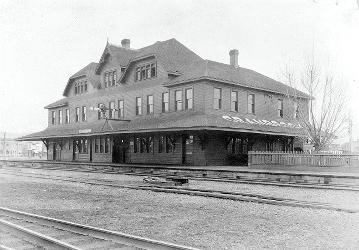
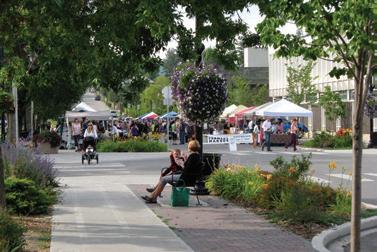
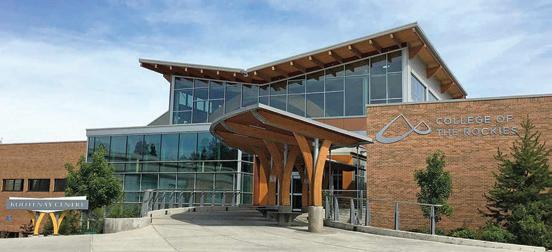
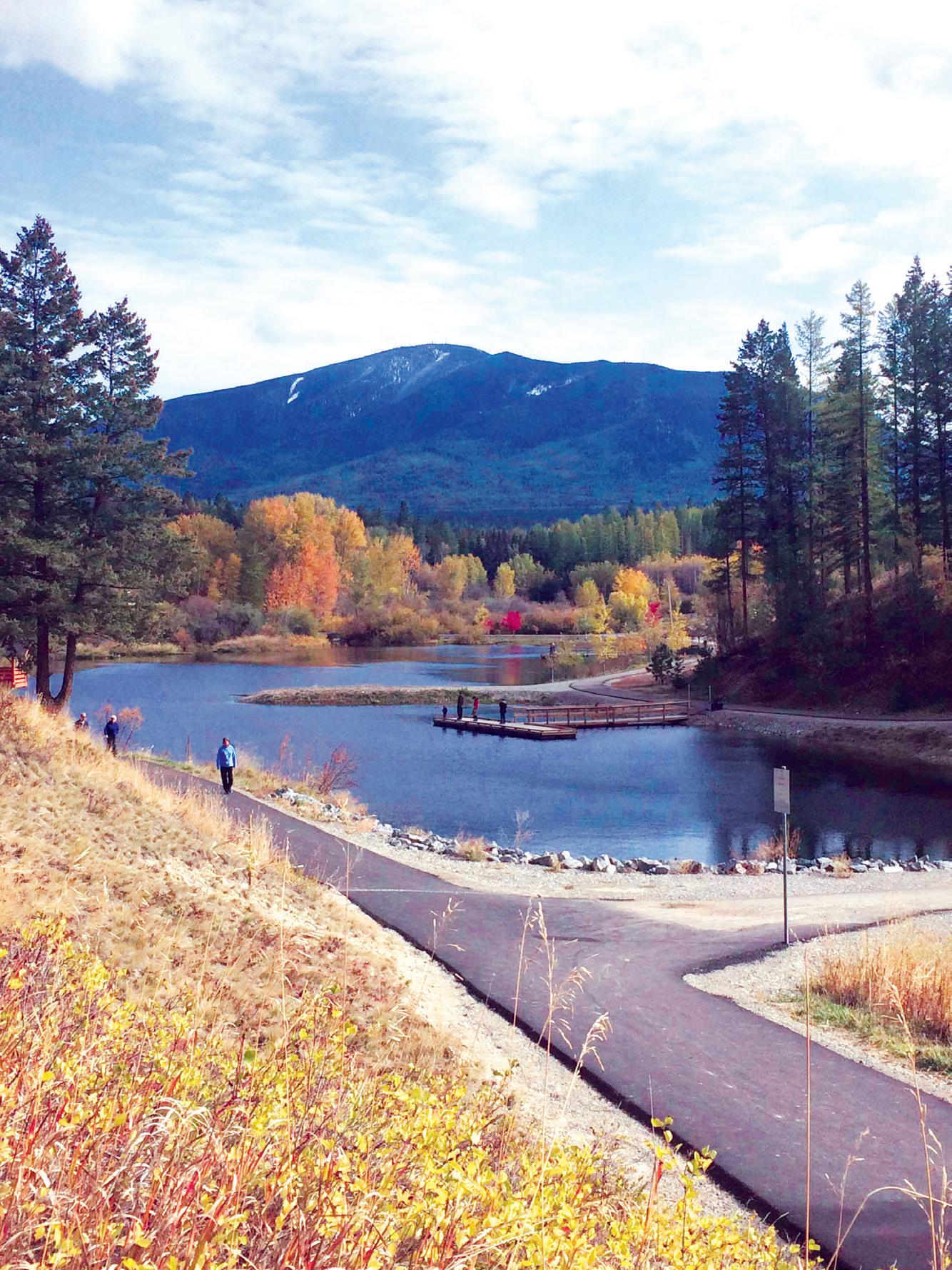
We’ve grown and changed a lot in the last 100+ years, becoming the largest urban centre in southeast BC. Over that time, we may have underestimated our success in creating one of the safest, happiest and healthiest communities in Canada. We have a stable economy and home to a wide range of businesses in retail, healthcare, education and trades. Hitting important metrics of location, lifestyle, labour and connectivity, we offer an enviable advantage to those looking for new opportunities for business and life.

kootenaymedia.ca
FOR ADVERTISING, DISTRIBUTION, OR GENERAL INQUIRIES PLEASE CONTACT US: grady@kootenaymedia.ca
For article submissions contact: karen@kootenaymedia.ca | 250.427.0808
Reproduction, in whole, or in part, is strictly prohibited. No part of this magazine may be reproduced or duplicated without the written permission of the publisher. All rights reserved on entire contents. GO Cranbrook Magazine makes every effort to ensure the accuracy of the information it publishes and is not responsible for any consequences arising from errors or omissions. The opinions expressed in the articles are those of the authors.
GO Cranbrook Magazine is published four times per year and is printed in Canada.
GO Cranbrook is published by: Kootenay Media Ltd.
MANAGING EDITOR
Karen Vold
CREATIVE DIRECTOR
Grady Pasiechnyk
SALES & DISTRIBUTION
Grady Pasiechnyk
COPY EDITING & SOCIAL MEDIA
Monica Karaba
ART DIRECTION & DESIGN
Ashley Dodd
CONTRIBUTORS
Britt Bates
Julie Godsave
Sherry Jackson
Dan Mills
Jeff Pew
COVER WINTER 2019
Janice Strong
PHOTO CREDIT CORRECTION
In our last issue, we failed to identify an additional photographer for the Cooperative Community story, so we want to apologize to Alana Krushen Imagery & Design and give her beautiful image its due. Thank you Alana!
RAVEN BRINGS THE LIGHT
PULLED TO WIN
SOMETHING THAT SOMEBODY, EVENTUALLY, CARES ABOUT: Sheldon DeCosse and His Flight to Save the World
WITHIN THE RED BRICK WALLS












W & P: Dan Mills | Graphics: Ashley Dodd
It was one of those oppressively gray, December mornings, when the dogs and I set out on our walk up the ridge. An inversion, so typical of this time of year in the Kootenays, was pressing the clouds down on top of us, hiding the tops of the trees in a lowering shroud of mist. It was eerily quiet. Even the sound of the snow beneath our feet seemed muted. It was as if the world was holding its breath, waiting for something to break the silence.
Then, somewhere behind us, I heard a raven call. It more than fit the mood. It was not the staccato “caw, caw, caw” of its cousin the crow, but a soft “knock, knock, knock.” This was followed by a melodic gurgling and then three of the more familiar ravenesque “rawks,” each spaced a few heartbeats apart for dramatic effect. This was a raven with something to say, and he intended to use every part of his vocabulary to say it.
My father—a man who had always seemed to have a story about nature to tell or a fact to impart—had once told me that ravens were incredible mimics. He claimed that the birds could not only duplicate human speech but could sound like a barking dog and the tamed ones, whom had encountered such a thing, a flushing toilet.

I admit that as a young man I was skeptical of my father’s “facts” but later, long after he had passed, I discovered that many of his colourful claims had indeed been substantiated by scientists and natural historians. Ravens, it turns out, can indeed mimic a flushing toilet. It is an unfortunate truism that our parents’ intelligence only increases as do our own levels of maturity.
The raven went quiet and the dogs and I resumed our walk in the winter woods. Shortly thereafter, we heard the swishing of wings overhead and a raven, presumably the chatty one we had been listening to, flew passed us and landed in the snowdraped branches of a fir tree, just a short ways ahead. The black bird remained silent this time. No gurgling. No knocking. No “Never More.”

Regardless, this raven’s actions, while being disconcerting, were at the same time incredibly intriguing. Why was he following us?
We passed beneath its perch and continued up the trail. After only a short distance, however, I felt compelled to pause and glance over my shoulder. For some reason, I was feeling just a little spooked by this bird who had appeared out of the gloom. Turns out, it was about to get a whole lot spookier.
We hadn’t gone fifty steps when we again heard the sound of wings cutting the winter mist, and again the large blue-black bird stared down at us from a tree just a little further up the trail. This eerie game of leap-raven continued on for almost two kilometres, with the raven accompanying us through every twist and turn in the trail, all the way to the top of the ridge.
Perhaps it was from my father that I acquired my passion to learn as much as I could about animals and their behaviour. Regardless, this raven’s actions, while being disconcerting, were at the same time incredibly intriguing. Why was he following us?
The raven, like all corvids—a family of birds that also includes crows, jays and magpies—are an intelligent and inquisitive lot. Perhaps this bird just found our inter-species group interesting somehow. Either that or this renowned carrion eater knew something we didn’t about our impending doom and was just waiting for its opportunity for a meal.
Historically, ravens are linked to death. With humans having a penchant for war, the birds—who will eat just about anything but do love a good bit of carcass to peck at—became synonymous with loss and suffering. Although they were not responsible for the carnage, their presence was seen as evil. A sad example of don’t shoot the janitor.
The relationship of corvids and ravens in particular, with humankind, is not limited to this one dark depiction however. Throughout time, the birds have featured prominently in our myths, folklore, religion and history. Perhaps due to their undeniable intelligence, penchant for play, and reputation as a trickster, we see a little bit of ourselves in their dark shining eyes.
The one overarching depiction of the raven in cultures all over the world is that of the messenger. The Norse god Odin used two ravens, Muninn (memory) and Huginn (thought) to fly around the world and gather news. Upon their nightly return, they would perch on Odin’s shoulders and whisper to him what they had discovered.
The first bird Noah sent from the ark to find out if the biblical flood had abated was not a dove but a raven. Only when the inky-feathered trickster didn’t return was the dove released.
In Greek mythology, the god Apollo sent a raven—who were then all coloured white—to spy on his lover Coronis. When the raven returned with the news that she had been unfaithful to him, Apollo angrily burned the raven, turning its feathers black. An early example of don’t scorch the messenger.
In some indigenous west coast cultures, the raven itself was raised to the level of deity. Worshiped as the god that put the sun and the moon in the sky—after stealing it of course—Raven is credited as the bringer of light to creation.
By the time we reached the top of the ridge, we had nearly climbed above the clouds of the inversion. The sun leaked through the misty shroud and as if on cue, the ominous raven, flew off into the pearly light. We, too, turned and headed back for home. This time without our shadow bird.
Nearly an hour later, I was standing in the warmth of our living room, recounting the odd and eerie encounter with the raven. My wife listened patiently; then I saw something in her expression change. Without saying a word, she pointed out the window behind me.
I turned and there sitting on the railing of our deck was a raven. Something that had never happened before and hasn’t happened since. The bird stared in at us, then ruffled its feathers and flew off.
The hair rose on the back of my neck and then a thought appeared as though thrust at me from my subconscious. “What is the date today?” I asked. My wife didn’t hesitate. “December 21st, the winter solstice...” she said. And then, pausing two heartbeats for dramatic effect, she added, “...your Dad’s birthday.”
A bringer of the returning light? A messenger from the realm of the dead? Or maybe just a trickster bird with a twisted sense of humour. Maybe all or none at all. Only Raven knows for sure.
Something That Somebody, Eventually, Cares About:
Sheldon DeCosse and His Flight to Save the World
“The only thing we need to worry about is what’s going to kill us. Everything else is just a technical difficulty.”
Frank Simonik
Writing
& Portrait: Jeff Pew | Photos: Sheldon DeCosse
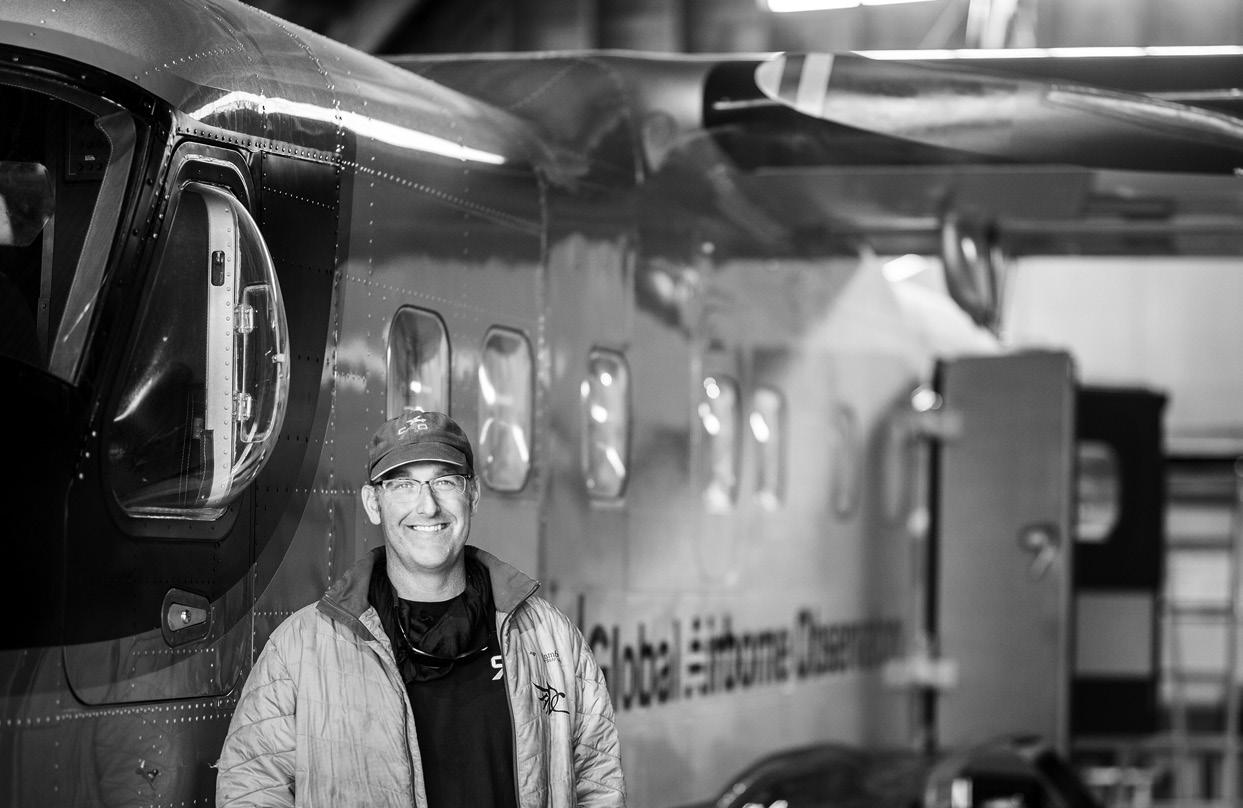
Parked inside a nondescript hangar at the Canadian Rockies International Airport is an aeroplane that’s saving the world.
The aircraft, a 1986 Dornier 228, is Arizona State University’s (ASU) airborne laboratory containing over 25 million dollars’ worth of technology: the VSWIR, a NASA-built, high-powered, twin-laser lidar (similar to radar except that it uses light waves), provides 3D topography of everything from rainforests to ocean floors. There’s only five VSWIRs in the world; the other four are owned and operated by the U.S. military. Also on board are two spectrometers that measure 427 colours—mostly outside the range of visible light—to detect spectra identifying chemical compositions and the area’s fauna and flora.
“It’s important work,” Cranbrook’s 46-year-old Sheldon DeCosse states, “if you believe in global warming.” DeCosse, the aircraft engineer responsible for keeping the Dornier safely in the air, considers himself a professional risk manager. Contracted by ASU, DeCosse coordinates the Dornier’s logistics. “I focus primarily on the engineering, while my pilots do the flying,” he says. “We get the plane to where the scientists need to go in the safest and most reliable way.”
Sheldon’s Other
Talent: DeCosse
Custom Skis
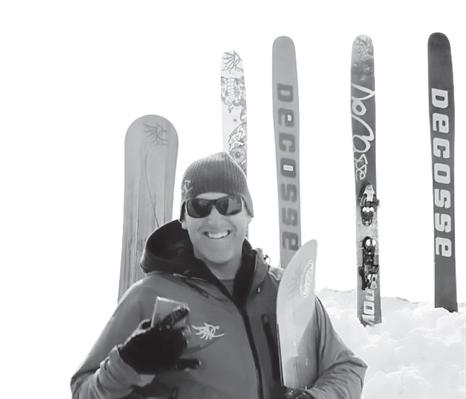
DeCosse, previously known as the founder, designer, and builder of DeCosse Custom Boards and Skis, constantly downplays his brilliance: “I’m just a glorified Zamboni driver scanning the earth,” he says. “I’m the dumbest guy at the dinner table. We’re like roadies for the Grateful Dead, but we’ve got 25 million dollars’ worth of equipment.”
The scientists he works with are among the world’s foremost climate change ecologists. Their projects receive funding from donors such as William Hearst III, Leonardo DiCaprio, James Cameron, and Paul Allen. Over the last five years, DeCosse has flown research trips to practically every corner of the world: Peru, Panama, Ecuador, the Dominican Republic, Mexico, Belize, Borneo, California, Guam, Hawaii and Texas. “The Dornier’s a workhorse.” DeCosse says, “It’s one of the best in the world. It’s like part of my family.”
The scientists he works with are among the world’s foremost climate change ecologists.
Multi-million Dollar Aerial Research Equipment
So, how does a small-town Kootenay boy become the head transport of the world’s most advanced aerial research lab? “You start by becoming an expert in something that somebody, eventually, cares about,” DeCosse says. “For me, it was the Dornier 228.” After receiving his aviation mechanic’s training and pilot’s license, he moved to Yellowknife in 1996 to fly for Summit Air. “We bought a Dornier, then ended up with seven, so I eventually learned to solve all its problems,” DeCosse says. “I became a bit of a Dornier expert.”
Years later, when DeCosse was a private contractor, the Carnegie (its previous name) encountered technical problems in Peru. “They’d lost all their power,” DeCosse says. “I was asked to fly down and take a look. When I fixed the problem, I suggested to Dr. Greg Asner, the team’s lead American scientist, ‘I’ll maintain and crew the Dornier and figure out the logistics of how to get it into countries. You supply the scientists. Since then we’ve been a good team and conducted some very important research.”
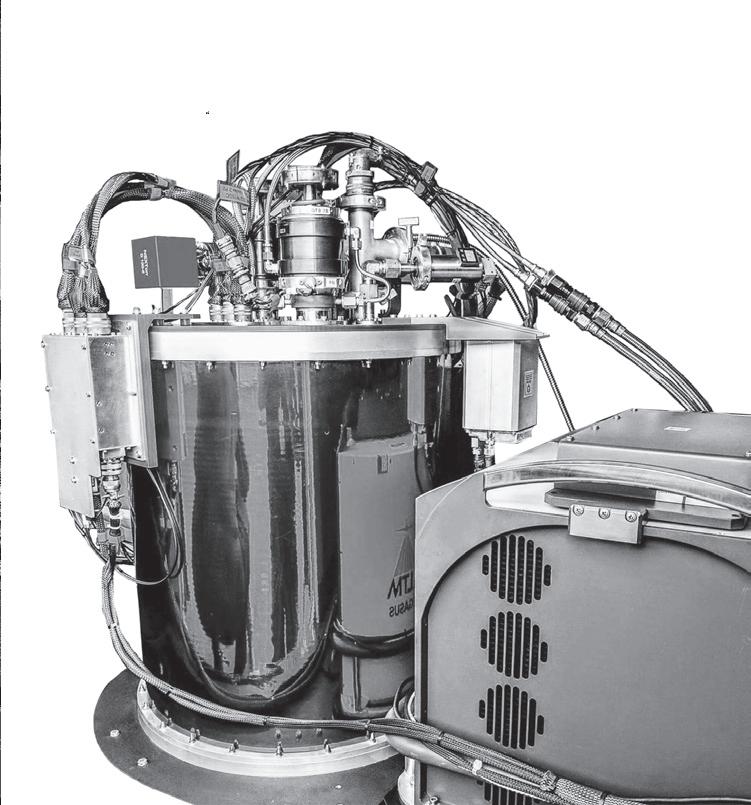

The Dornier 228 in Action
In recent years, Asner’s research team has created the most detailed maps of coral reefs and rain forests ever devised. This research provides scientists with the ability to analyse the health of the ocean’s coral reefs, one of the most important habitats and sources of survival for ocean aquatic life.
“Our science discovered that a thimble-sized amount of sunscreen can kill a coral reef the size of an Olympic-sized pool,” DeCosse says. “Scientists are trying to generate an evolution of consciousness. If our coral reefs die, we’re screwed. Now, because of this, before commercial planes land in Hawaii, tourists are educated about environmentally reef-safe sunscreens. ”
“It’s exciting and important work,” DeCosse says. “The scientists are scared as hell. They’re hopeful but terrified about the rate of change. They’re shocked that global warming is even an argument.” DeCosse, whose work separates him from his family for over 90-plus days a year, says that no one else on earth can perform this research. “We’re it,” he says. “Nobody else does it. We take some incredible risks, but I’m motivated to keep going until things get better. There’s not really an out for me until it’s over.”




Pulled to Win
W: Britt Bates P: World Armwrestling Federation
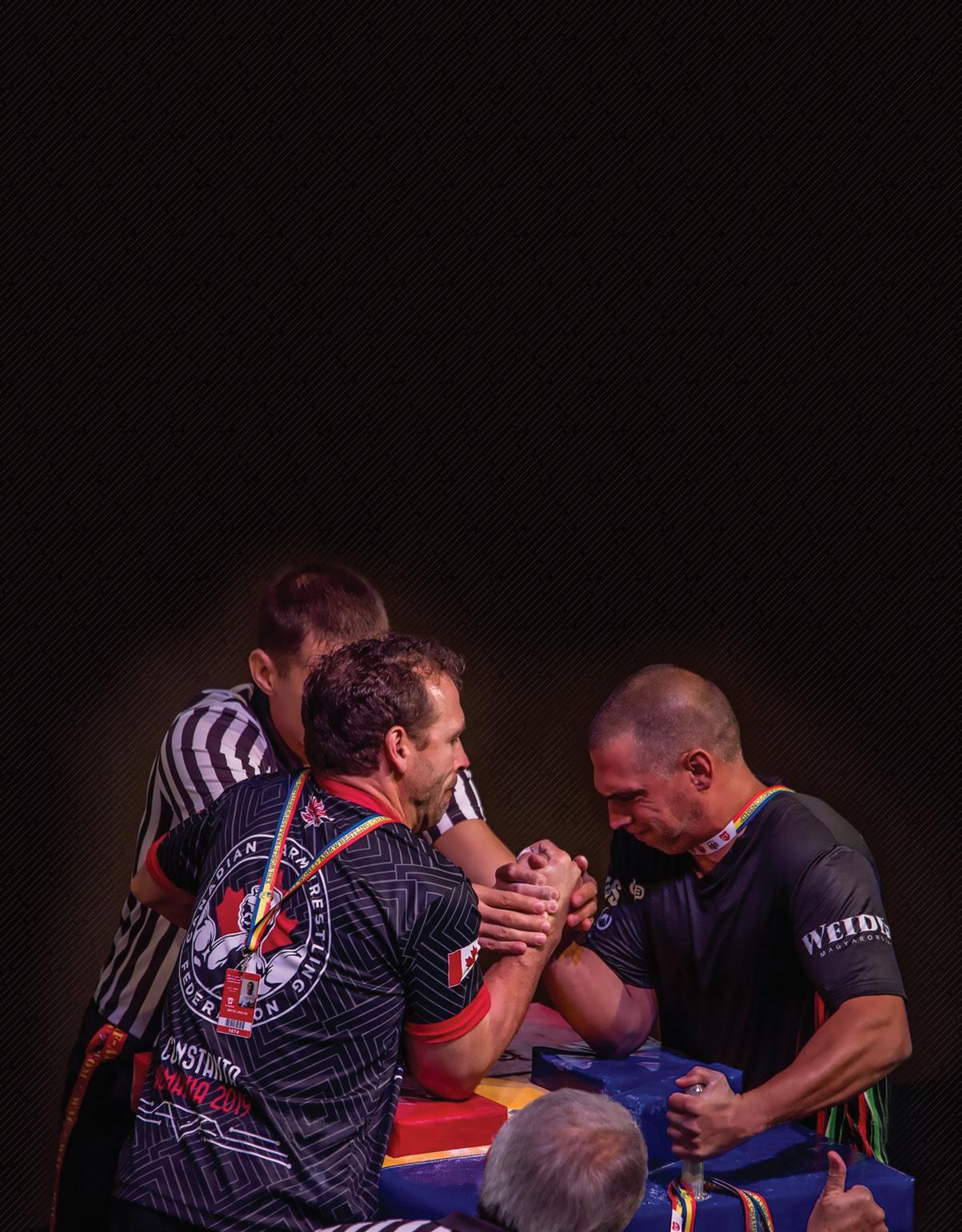
I’m sitting down with Martin Langlois in the bright afternoon sunshine the day before he leaves for Romania to compete in his sport. “I’ve been training twice a day, every day, seven days a week,” he says with a sparkle in his smile. “But I’ll rest for a day or two before the competition.”
The competition he’s referring to isn’t just a small tournament, but rather the World Championships: qualifying requires being one of the top two athletes in Canada, of which Martin is one. No small feat.
And the sport? Professional arm wrestling.
What perhaps is most commonly thought of as a hobby drunkenly undertaken by assertive male bar patrons is actually a sport with a global community of dedicated athletes, who train with coaches on rigorous schedules. Across Europe, athletes make a lucrative full-time living off of arm wrestling, or−as it’s exclusively referred to−”pulling.”
However, in Canada, it’s yet to be recognized as an official sport although the bureaucratic proceedings to make it so are well underway. Nonetheless, the sport is growing in popularity and competitiveness−drawing athletes that include women and even kids as young as six-years old to tournaments all across the country, including the annual Nationals.
“It’s like a fight, but without getting hurt,” martin tells me .
“I pull both right and left arms, but the right is stronger. Most only pull one arm,” Martin, who has lived in Kimberley for six years, tells me, as he dives into an enthusiastic explanation of the sport. I quickly realize that there’s far more to it than I had originally presumed: the matches are won not simply with strength but with technique and strategy, too. Athletes quickly and intuitively figure out which variation of two main moves− the hook or the top roll−their opponent is going to use, then instantly counter it with an opposing move. Matches can last anywhere from a fraction of a second to the rare twenty minutes.
Two referees man each table, ensuring that elbows don’t move, that the athletes’ other hands remain on the two pegs on each tabletop, and that a myriad of other rules are followed, lest a player be given a fault−two of which result in an automatic loss.
“It’s like a fight, but without getting hurt,” Martin tells me. “It keeps you strong; you train everything from your very fingertips to your core. But it’s also just a great way to meet people from all over the world.”

Martin−who placed second in his class in the 2018 Canadian Nationals, and fourth and sixth at last year’s World Championships in Turkey−is officially one of the best pullers in the world. He remains delightfully modest and yet grounded in a mindset that’s geared for success: he shows me a list of his own personal rules he keeps for himself, recorded on the Notes app on his phone, that he reads before every competitive match he plays. Rule #1? “That’s my table, I own it, and I’m going to win.” He grins.

His personal rules for success continue on through 14 and articulate all the ways that Martin knows how best to beat the odds−and often his opponent. They include rule number four: “Start fast,” and number five: “Take five seconds at the start to work hard and struggle, and then relax and strategize.” The latter points to the technique that’s required to come out of a match as the winner. And while it certainly plays a part, brute strength only takes a player so far.
Martin−who has been pulling professionally since 2008−admits to having always had a competitive streak. “I spent 21 and a half years in the military,” he explains. For much of that, he was a professional biathlete. His penchant for pulling began as a youth, growing up in a small farming community in rural Quebec. After working hard on his family’s farm, he’d meet up with a gang of friends who, like himself, were small but strong, and they’d queue up matches of arm wrestling.
Later in life, after his biathlon career in the military, his knees began to ail him: after several surgeries, and another coming up, arm wrestling offers him an outlet for his competitive nature, without aggravating his injuries. He’s committed to keeping on top of his training, but admits that, “pulling is a special sport, because no one really knows exactly how to train. There’s a lot of conflicting advice. You just have to find what’s best for you.”
He’s clearly given a lot of thought to what works best for him and is happy to share it generously. He’s a leader and organizer within the Kootenay Kings, Cranbrook’s own local arm wrestling club that draws participants from surrounding Kootenay towns. Anyone is welcome to join, including kids, making it a family-friendly group. “You leave your ego at home,” Martin explains with a smile. “It’s for fun.”
While the sport is always fun for him, he takes the competitive circuits more seriously and admits to still getting nervous before a match. “There’s a lot of adrenaline,” he says. “I try to go in feeling strong. When you feel strong, you trust yourself.”
It’s clear that Martin has dialed in on a combination of mindset, strength, and strategy that keeps him at the top of his game. Despite leaving for the World Championships in less than a day, where he’s well known as one of the best amongst athletes from across the globe, he’s happy to admit with a charming smile: “I’m still learning.”
Martin Langlois wins the silver medal at the 2019 World Championships.
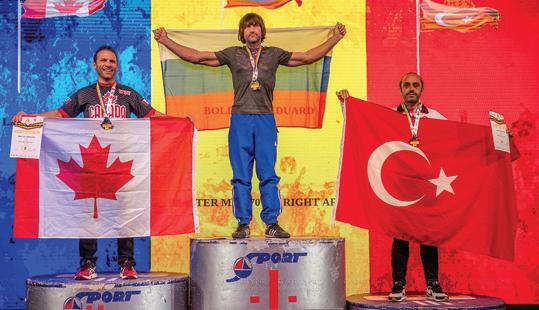
Editor’s Note: This story gets even better! Martin just won the silver medal at the 2019 World Championships described above! Congratulations Martin!

Think. Do. Inspire. Care. Mould. Teach. Become.


Within the Red Brick Walls
W: Julie Godsave | P: Grady Pasiechnyk
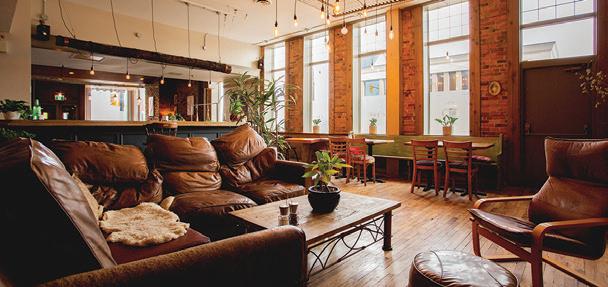
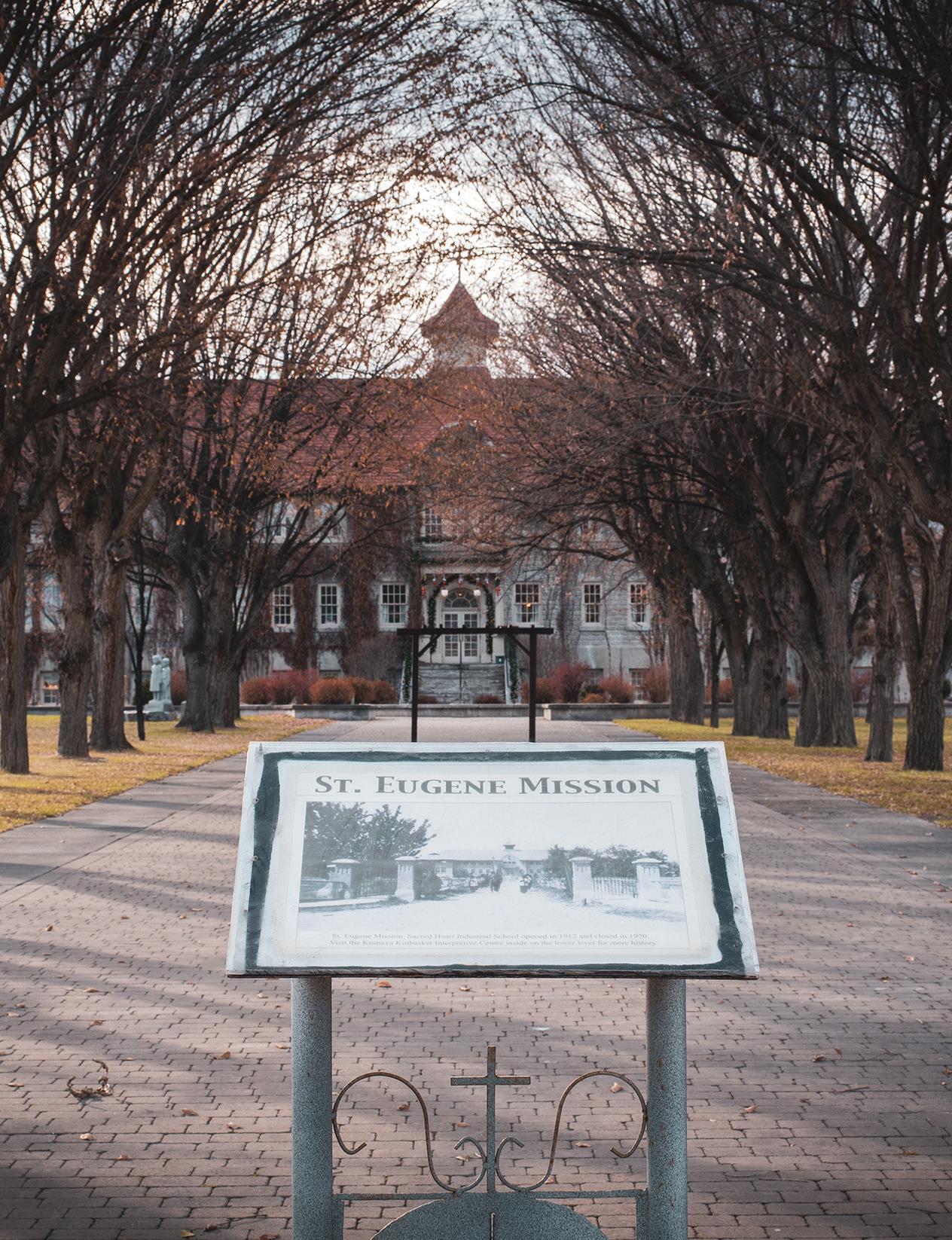
The leaves swirl and dance in the wind as I make my way down the windy road to St. Eugene. Even though it is minutes from town, as I round the corner it seems as though I’m miles away. With the majestic Mount Fisher as a backdrop, it is clear why this setting is really “postcard picturesque,” however this is a storied landscape with much history of its own.
The mission building sits quietly poised alongside the giant elm trees whose massive canopies overhang the walkway. Vines twist and turn as they scale the brick walls signifying yet another change of season with their deep crimson hue. As I climb the steep stairs toward the entrance, I pause thinking about how many feet from then and now have walked through these doors; today, the guests of the St. Eugene Golf Resort & Casino who come to stay and play in this beautifully restored building and those of yesteryear—the thousands of indigenous children who were students of this once residential school. On this day, I would learn about the history of the Ktunaxa people and their journey to truth and hope within these walls.
I’m greeted by Margaret Teneese at the Ktunaxa Traditional Knowledge & Language Interpretive Centre, adorned with a beautiful handmade necklace and a warm, welcoming smile. She is the archivist of the Ktunaxa Nation Council and my guide for the tour. I learn about the story of Creation and through her words, Margaret paints a picture so vivid in my mind that I close my eyes and for a moment feel like I am amongst the mountains, trees and rivers as she describes how her people and this land came to be. She speaks of ʔaknumuȼtiⱡiⱡ, meaning the highest law of the land and how her people believe this to be the way toward balance and harmony in the world. I learn about the ways of the Ktunaxa, with 10,000 years of history on this land; their
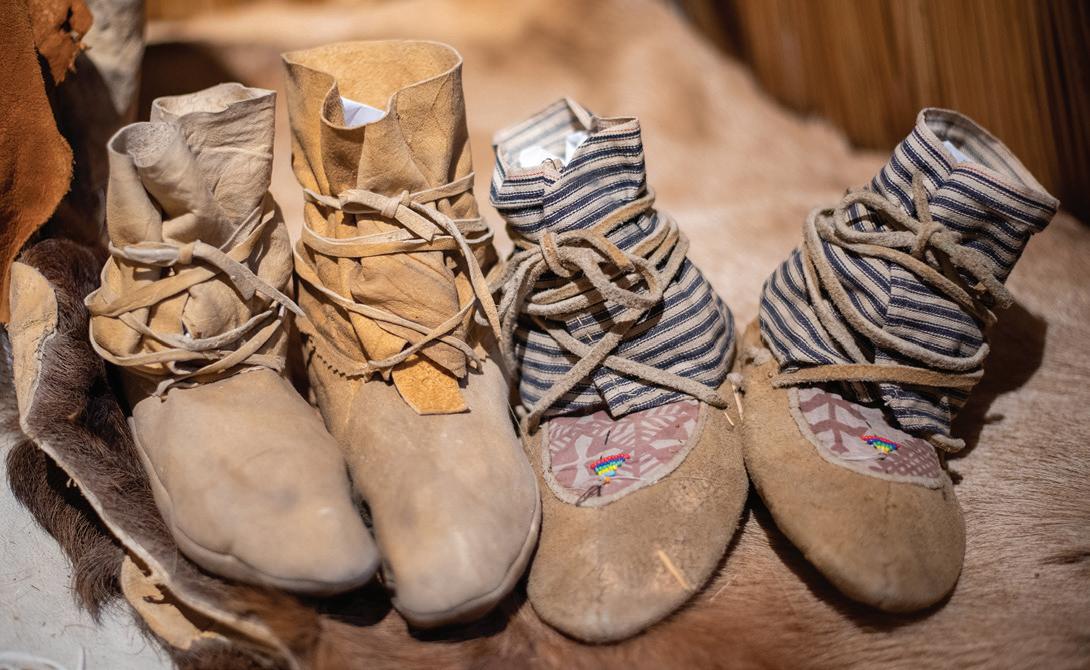

respect for nature and all creatures is well displayed in the many unique artifacts throughout the exhibit.
Margaret turns our attention to a wall in the Centre representing a pictorial timeline of the journey of the First Nations People. From the early 1800s to the Indian Act of 1876 to the first residential schools in Canada and BC, I am taken back to my own school years of history class where I first learned of the mistreatment of our First Nations People and how they were stripped of both language and culture. Part of my tour includes a video of students of this once school, returning after many years as courageous adults to face their past memories here. As a parent myself, my heart sinks as I think about what these children and their families must have endured. It saddens me to think that so many years later, we as a human race have evolved very little with our need for power and domination. Such non-endearing qualities and I wonder if we will ever learn?
Our tour continues and as we make our way floor by floor, Margaret shares with me that three generations of her family; her grandparents, parents, and she and her siblings were all stu-
dents here. She shows me where the school was divided in half, boys on one side and girls on the other, and where the six classrooms, kitchen and sleeping quarters were. Many hours were spent praying—it was the first thing done upon waking, practiced throughout the day and the last thing done before bedtime. She explains how children were separated from their siblings, and I think of how lonely an experience this must have been. After school, chores were done and at all of six-years old, Margaret’s responsibility was to scrub and clean the two flights of stairs linking the floors we’ve just taken. Perhaps Margaret senses my sadness and so shares with me that she was the fastest runner in her class and attributes this to her time spent in gym class. Margaret explains that many children from this residential school became very strong athletes in competitive sports such as hockey, having a rink right outside the school to practice on. She smiles as she recalls how she learned to ride a bicycle at the school and tells me that there were some happy times here, but I get a sense there weren’t many.
Throughout the tour, I notice the red brick pillars, once dividing areas in the school, now enclosed between drywall to create
guest rooms—still solid and standing many years later, perhaps a symbol to the resolute strength of the Ktunaxa people themselves. Margaret finds a quiet space with two chairs for us to sit below a half-moon shaped window. She points out the cemetery in the distance, where rows of white crosses stand between tall grasses swaying in the wind. Some of her classmates rest there. I can’t help but feel this overwhelming heaviness, and I finally ask Margaret the question that has been weighing on my mind. “Why did the Ktunaxa choose to keep this building with all of its’ dark history?” Margaret reminds me of the portrait in the lobby of Ktunaxa Elder Mary Paul. Each time I have passed through the lobby, this picture and her words have always drawn my attention: “...since it was within the St. Eugene Mission School that the culture of the Kootenay Indian was taken away. It should be within the building that it is returned.”
Margaret nods and tells me that while many residential schools were demolished, the decision was made to save St. Eugene. “We wanted to take something that is really sad and turn it into something we all can be proud of,” she says. Margaret places her hand on the red brick and speaks to the importance of exposing and acknowledging the history within these walls and using it as an educational opportunity to gain back what her
people have lost, through profitability and sustainability for the generations to come. With various partners, financial cooperation and loan repayment over the years, today the Ktunaxa and Shuswap Indian Band fully own this resort, something Margaret and her Nation is extremely proud of.
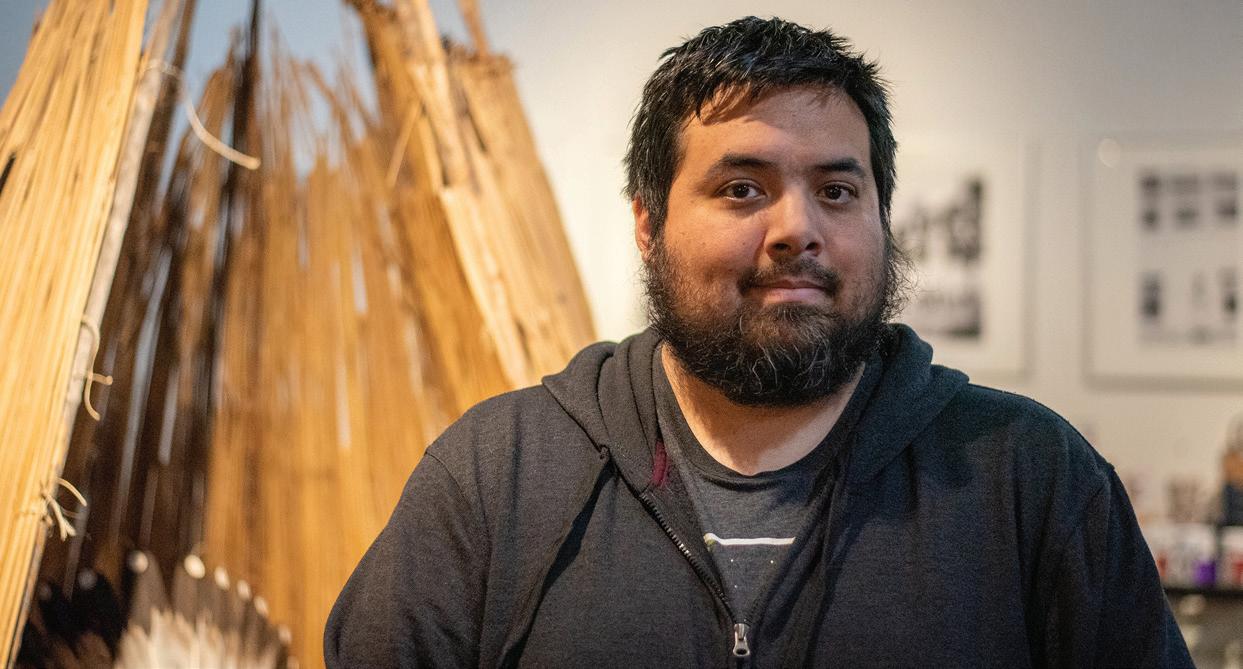
As we make our way back down to the Interpretive Centre, I meet Jared Teneese, Business & Product Development Coordinator for the Traditional Knowledge and Language Sector. A young man himself, with his own family, Jared returned to the area in 2016, having worked here from 1999-2001 prior to the restoration where he had the opportunity to spend many hours listening to the stories of those who were former students here. I ask him about his purpose and he says, “Having lived in many parts of Canada, I’ve learned that most people don’t understand the history of First Nations.” He feels that his role is to
build awareness with hope that guests who come to the Centre will learn one thing and share it with others. He highlights the many programs available: from the tour I have just taken with Margaret, to school and corporate offerings including Speaking Earth where participants experience Ktunaxa cultural values and heritage through traditional games and crafts, authentic
food, time with Elders and a night in a Tipi. There is also a new program, Indigenous Culture & Awareness Training. We tour the gift shop and with pride he shows me all of the handmade items available, some made by local Ktunaxa artisans and other First Nations crafters. I make a mental note to visit again if I am ever looking for unique and authentic gifts. I ask Jared what his wish is for the important work that he is doing and he echoes Elder Mary Paul, “This should be the building where our culture and language comes back.”
For as much as can be learned from a book, spending time with those who have lived these experiences provides us an invaluable and unforgettable opportunity to learn from our pasts.
As my tour comes to an end, I thank both Margaret and Jared for their time and for sharing with me the history and future hopes for the Ktunaxa and all First Nations People. I imagine that it must be painful to revisit this dark history time and time again, and I admire their incredible determination to continue to share their stories. As I pass through the lobby toward the exit, I glance back at the portrait of Elder Mary Paul and reflect on her words again. Through the efforts of Margaret, Jared and many other Ktunaxa ambassadors, the culture of the Kootenay Indian is being returned within these brick walls, and I am certain she would be very proud.
As I make my way back home, I can’t help but reflect on all that I’ve learned over the last few hours and the amount of history that literally lies ten minutes away. I plan to bring my own children back for this tour. For as much as can be learned from a book, spending time with those who have lived these experiences provides us an invaluable and unforgettable opportunity to learn from our pasts. Through incredible adversity, the Ktunaxa People have transformed this once dark space into something bright and beautiful−a true testament to the power of the human spirit.
Got business plans as big as your dreams?
Cranbrook Business Centre Michelle Kleindienst, michelle.kleindienst@bdc.ca 100-131 7th Avenue South Cranbrook, BC V1C 2J3 1-888-INFO-BDC

Unlocking The Value Of Your Business
You may know what your business is worth on paper, but how do you unlock its true value when you are ready to retire?
By taking a proactive approach now, you can plan for a comfortable retirement and the successful transition of your business – on your terms.
John Reinarz, Investment Advisor at CIBC Wood Gundy can show you how to get the most from what you’ve invested in your business.
Take control of tomorrow by creating a financial plan today.
John Reinarz, Investment Advisor 102-117 Cranbrook St. N. Cranbrook, BC • 750 489 6952


What It Means to Truly “Go Local”
W: Sherry Jackson | I: Ashley Dodd
OFTEN I HEAR FOLKS SAY HOW THEY LOVE TO SUPPORT LOCAL BUSINESS, AND IT IS MUSIC TO MY EARS.
When a community first chooses to try and source what they need locally before looking elsewhere, it has huge implications for the economy and for a sense of community sustainability. As these options blossom and become more plentiful, it is getting easier to find something of quality that has been produced or designed nearby. The more successful we are as local businesses, the more options there will be for us all and the more dollars will stay in our community.
When it comes to business social media, it can be a blessing and a curse−involving both the positive and negative. From a local business perspective, I have seen exciting new start-ups launching locally, while established businesses continue to grow, create and set the bar high. I have seen businesses celebrated and encouraged for their hard work and local impact. I get inspired daily by the people behind them.
On the flip side, I have seen social media used to criticize and berate these same people and businesses. It is every customer’s right to have an opinion of an experience where they shop. As a consumer, you deserve a great experience, product and value for your hard-earned money. It is our desire to provide all of this consistently, and it is difficult to hear when we have failed this mission. The dream when launching, running and growing a successful business is that it is seamless, profitable, smooth, and enjoyable for all; and though we hope the process is implemented with perfection, we do make mistakes.
WHEN I WAKE UP EVERY DAY AND WHEN I GO TO SLEEP AT NIGHT, I AM OBSESSED WITH MY BUSINESS.
When I wake up every day and when I go to sleep at night, I am obsessed with my business. What is my priority today? What do I need to do to be prepared to do a great job as a leader and as a local business owner? Can I develop better systems and procedures that make my customers have a better experience? Can I make the systems within my business more supportive for the crew? Can I create a space that makes people feel welcome and where staff feels safe and supported? Can I create a business that returns a fair profit? Can I pay my staff and myself a fair wage while saving for my own retirement? Yikes! It is exciting and heavy, and it is every day. There are a lot of wheels spinning in our heads and multiple balls in the air at all times. So this makes every accolade we receive and also every criticism, very personal.
THROUGH MY JOURNEY AS A BUSINESS OWNER, I HAVE HAD MANY FORMS OF CRITICISM TO MANAGE AND NOT ALL ARE CREATED EQUAL.
We had a woman who came in on a Tuesday night while we were slammed with customers and had to wait twenty minutes for her takeout. When we brought her her order, we apologized for the wait. She took a cookie from our baking area and announced that she had “waited too long and I am taking this cookie as compensation for my wait.” Yes, the cookie was only worth a dollar, but she justified not paying for it in this particular way.
In another instance, a customer had received her breakfast and sadly, it was cold. She approached one of the staff members, took some of her eggs and rubbed them on the staff’s arm to prove their dissatisfactory temperature.
More recently, I have seen significant conversations unfold on social media with an unhappy customer and other local businesses. In these conversations, the business was forced to apologize, explain and sometimes educate people on their business choices. Some of the conversations spiralled way out of control, with many people and voices involved. I was mortified for them and have been in the same boat myself. This is significant stress on any business to have these issues become so public.
First, as an owner we hate to screw up. It feels awful and shaming when one of your patrons is unhappy because it is never the intention.
Second, it often leads to a negative review (often using passionately negative words that are very inflammatory), and it affects us. It matters in the big picture because prospective customers often check the rating of businesses, whether they are travelling or looking locally for services and products, and use reviews to decide where to shop. I know I do.
I WOULD HAVE GLADLY TALKED WITH HER, REMADE HER FOOD RIGHT THEN AND CHANGED HER BREAKFAST EXPERIENCE FOR THE BETTER.
I recently had a customer rant on social media about not only how awful her breakfast was but her entire experience at the café. I opened up my feed while at a function to read this. I was instantly mortified and upset. How could we have screwed up that badly? Where did we go wrong? I asked her a series of questions regarding her visit in hopes to find out what had happened. I wanted to fix it−and not just this one experience but to alter our systems or communication so it did not happen again. Discovering later that on the morning of her visit, my manager and I were in the building was even more of a knife to the heart−as it had happened on my watch. I inquired if she had asked to talk to anyone while she was in the store, to which she replied no. I would have gladly talked with her, remade her food right then and changed her breakfast experience for the better. Ultimately, I did not get the chance to work and grow our business which in the end always makes me sad.
Something I have thought about in regards to negative comments on social media is this: Would you be able to express the same level of vitriol and nastiness face-toface with an owner or a manager? If what is spewed on the internet is not something you would ever say in person, it needs to be rethought.
ON THE FLIP SIDE, we have had some wonderful local heroes. We messed up Cheryl’s visit, although I didn’t know it at the time. A few days after her experience, she came into the store and asked to talk with me. She explained how disappointed she was but wanted to reach out to me personally. She was absolutely allowed to be upset—we messed up big time! What Cheryl did by coming to me in person and allowing me to apologize, fix and make change for the long term, was a true sign that she cares—and that she truly supports local business. It took extra effort on her part and we appreciate her so much for it.
This amazing girl Nikki has had a couple café experiences that were very subpar and not what she has rightly come to expect. In both instances she had her order made incorrectly. It was so embarrassing for us and so frustrating for her to get to her dinner break at work, be pumped on her food, only to find it was not what she ordered at all. In each instance, Nikki took the time to private message me on our page with a picture of her meal and the error in it. This was above and beyond showing local support by giving us as a lo cal business the chance to be better and to fix our errors.
These two women are not the only local customers who have shown next-level support of local business by handling concerns in this manner. What we have out there in people is truly amazing, and this level of loyalty, commitment and con sideration is just plain classy.
Thank you for going the extra mile to com municate with us personally and not rant ing on social media as a sounding board for your frustration. It goes a long way and the impact is far reaching.






Get close to 30 bottles of wine for a fraction of what they cost at the liquor store. We can make any varietal or style you like, and we guarantee you’ll love it.* It’s as easy as coming to see us.
*Seriously!Wereallydoguaranteeeverywinewemake.Youcanexchangeyourbatchforanyreason.
Open: Monday-Thursday 9am-5 pm | Friday 10am-4pm
50,000 eyes are nothing to sniff at. That’s a lot of people! It means that every year the combined populations of Kimberley and Cranbrook will see this magazine. Wouldn’t it be great if they were looking at your business, too? Our new directory format gives each ad enough space to stand out and ensures that your business has a consistent presence in each issue for the entire year. Our design team will help build it, and the price will probably surprise you. Send us an email or give us a call to find out more.








nter

november
Nov 21 | Rockies Film Festival: Gordon Lightfoot If You Could Read My Mind | Key City Theatre | 6:30-8:15 pm
Nov 21 | Rockies Film Festival: Sometimes, Always, Never Key City Theatre | 8:30-10 pm
Nov 22 | Rockies Film Festival: Brittany Runs a Marathon Key City Theatre | 6:30-8:15 pm
Nov 22 | Rockies Film Festival: Maiden Key City Theatre | 8:30-10:07 pm
Nov 23 | Cranbrook Farmer’s Market | Ktunaxa Gym, 220 Cranbrook St. N. (across from the library) | 10 am - 1 pm
Nov 23 | Rockies Film Festival: Parasite | Key City Theatre | 1:00-3:10 pm
Nov 23 | Rockies Film Festival | Wine & Cheese Reception Key City Theatre | 6:30 pm
Nov 23 | Rockies Film Festival: The Farewell Key City Theatre | 7:30-9:08 pm
Nov 24 | The Huron Carole | Key City Theatre | 7:30 pm
Nov 27 | Ballet Kelowna: Mambo & Others | Key City Theatre | 7:30 pm
Nov 30 | Special Winter Farmer’s Market
Western Financial Plaza | 1777 2nd St. North | 1-7 pm
Nov 30 | JCI’s Cranbrook Santa Parade | Baker Street | 5:30 pm
Nov 30 | Symphony of the Kootenays: Christmas in the Old Country Key City Theatre | 7:30 pm
december
Dec 1 | Special Winter Farmer’s Market
Western Financial Plaza | 1777 2nd St. North | 11 am - 3 pm
Dec 1 | The Polar Express Movie | Wildhorse Theatre Fort Steele Heritage Town | TBD
Dec 1 | Serena Ryder Christmas Kisses Tour | Key City Theatre | 7:30 pm
Dec 2 | Wild Coasts of Canada: Presentation & Performance in Imagery, Story, and Song! | Stage Door Community Theatre | 7:30 pm
Dec 7 | Cranbrook Farmer’s Market | Ktunaxa Gym, 220 Cranbrook St. N. (across from the library) | 10 am - 1 pm
Dec 7 | Victorian Tea at the Windsor Hotel | Fort Steele Heritage Town | 1-2 pm, 2:30-3:30 pm
Dec 12-14 | A Christmas Carol | Mount Baker Wild Theatre | 7:30 pm
Dec 14 | Opening Day at Kimberley Alpine Resort 2019 | 9 am
Dec 14 | Cranbrook Farmer’s Market | Ktunaxa Gym, 220 Cranbrook St. N. (across from the library) | 10 am - 1 pm
Dec 15 | A Christmas Carol | Mount Baker Wild Theatre | 2:30 pm
Dec 20 | God Is a Scottish Drag Queen Mike Delamont Key City Theatre | 7:30 pm
Dec 24 | Santa’s Annual Tour of the City of Cranbrook (with Cranbrook Fire & Emergency Services) | 4-9:30 pm
Dec 31 | Anything Goes (Cole Porter Musical) New Year’s Eve Gala Key City Theatre | 7:30 pm
january
Jan 1 | Annual Sleigh Ride Day | Fort Steele Heritage Town | 11 am - 3 pm
Jan 3-4 | Banff Centre Mountain Film Festival World Tour
Key City Theatre | 7 pm
Jan 10-11 | Anything Goes (Cole Porter Musical) | Key City Theatre | 7:30 pm
Jan 12 | Anything Goes (Cole Porter Musical) | Key City Theatre | 3 pm
Jan 16-18 | Anything Goes (Cole Porter Musical) | Key City Theatre | 7:30 pm
Jan 18 | Cranbrook Farmer’s Market | Ktunaxa Gym, 220 Cranbrook St. N. (across from the library) | 10 am - 1 pm
Jan 21 | Samajam – Participative Youth Musical Show
Key City Theatre | 6-7 pm
Jan 24 | Ballet Jorgen: Anne of Green Gables | Key City Theatre | 7:30 pm
Jan 25 | Ballet Jorgen: Anne of Green Gables | Key City Theatre | 9:30 am
Jan 28 – Feb 2 | 2020 BC Women’s and Men’s Curling Championship Western Financial Plaza
february
Feb 1 | Snowed In Comedy Tour 2020 | Key City Theatre | 8 pm
Feb 7-8, 13-16, 19-22 | The Fighting Days A Historical Drama
Directed by Melodie Hull & Produced by Gordon Sheridan
Cranbrook Community Theatre | Studio/Stage Door | Various times
Feb 10 | Matt Andersen Live in Concert (Blues) | Key City Theatre | 7:30 pm
Feb 14 | Samantha Martin & Delta Sugar (Blues/Soul)
Key City Theatre | 7:30 pm
Feb 15 | Cranbrook Farmer’s Market | Ktunaxa Gym, 220 Cranbrook St. N. (across from the library) | 10 am - 1 pm
Feb 15 | CBK-X Winter Blitzville | Details TBD
Feb 22 | Symphony of the Kootenays: Cranbrook Divas A Homecoming
Key City Theatre | 7:30 pm
Feb 25 | Shay Kuebler: Epilogos | Key City Theatre | 7:30 pm
Feb 29 | White Rabbit, Red Rabbit No Rehearsals, No Director, No Set
Key City Theatre | 7:30 pm
UNLESS YOU only see potential.
UNLESS YOU can get past the gatekeeper.
UNLESS YOU have an opinion about the oxford comma.
UNLESS YOU can’t sit still.
UNLESS YOU are obsessed with the Kootenays.
UNLESS YOU can do work from a cafe, pub or boardroom.
UNLESS YOU could make a better ad than this.
If you still think a job as our Sales and Distribution Manager is for you, get in touch. grady@kootenaymedia.ca