A Tradition Of Client Service And Integrity
At CIBC Wood Gundy, we believe there is no better investment than the time we spend getting to know our clients. Understanding their personal and financial goals helps us create a
plan that incorporates all aspects of their life and puts their wealth to work for them – today and in the future.Generations in the Kootenays have relied on the expertise of our Investment Advisors and their teams.
W & P: Dan Mills
It is said that the road to great wealth is often a hard one. The Maus Creek road then, would be no exception. As my son Sean, dog Boulder, and I bump our way along this rough track in fourwheel drive, I am reminded of a Ministry of Mines report I had recently discovered. Dated 1898, it indicated that this road hasn’t changed much in 119 years. Then mines minister, Fred Hume, wrote, “... the claim is reached by trail, at present not very good but capable of improvement should development warrant.”
It was gold, silver, lead and zinc, or at the least the lust for it, that eventually built both the road and the Victor Mine at the headwaters of Maus Creek. A sawmill, concentrator, office and bunk houses were constructed and three shafts carved into the solid rock of the mountain side. However, in the end, the ore was just not rich enough, and the mine closed in 1921.

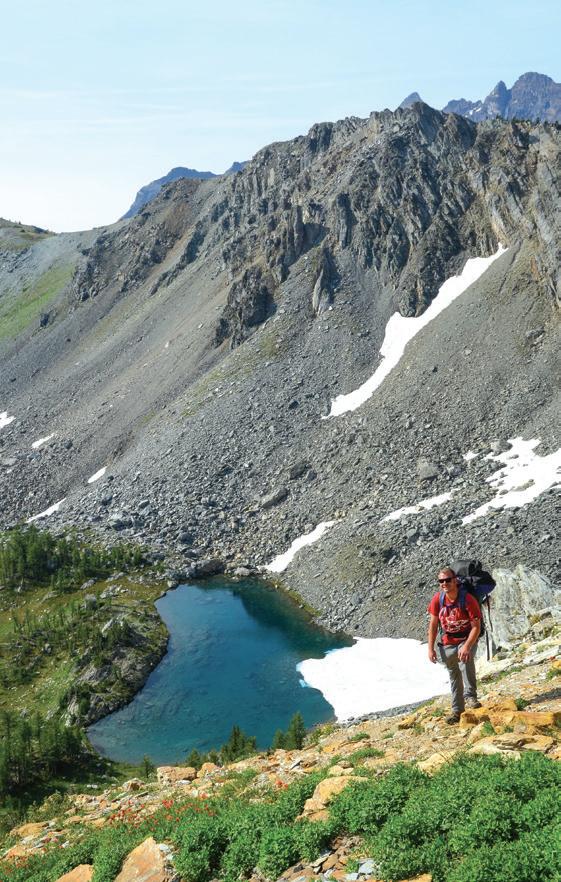
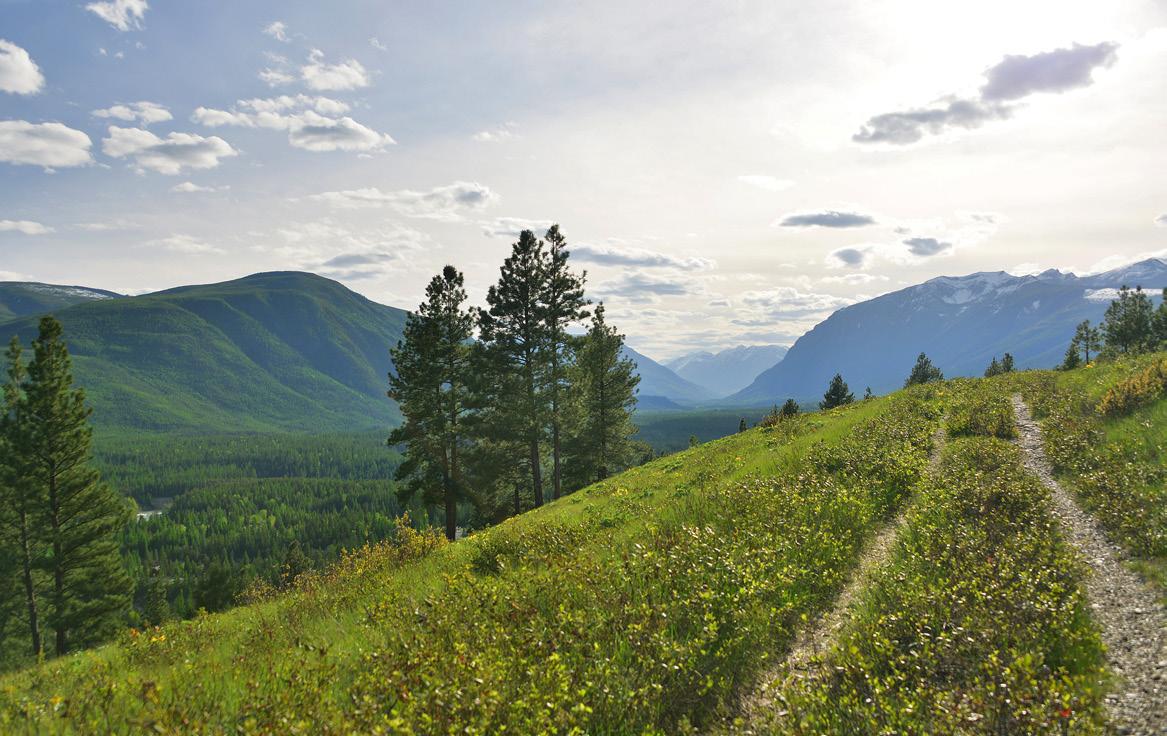
The road may not have led to the type of riches initially hoped for, but it did provide access to some incredible treasures just the same. Not gold perhaps, but a trove of natural wonders that many would deem even more priceless, including the alpine wonder of the tarns at the headwaters of Maus Creek, Tanglefoot Lake, Cliff Lake, Dibble Glacier and Sunken Creek. It was the lure of this high-country bounty that had Sean, Boulder and I setting out on a two-day backpacking trip that would take in all of these destinations in one continuous loop called the Five Passes Trail. An ambitious trek perhaps, but there is no motivator more powerful than greed and we wanted to see it all!
After about 10 kilometres of truck abuse, we reached the parking area. Shouldering our packs we continued up the road on foot, crossing three shallow creeks and a couple of avalanche paths before the old wagon track stopped abruptly at several tumbled-down buildings: the remnants of the Victor Mine workings.
These ruins may have marked both the end of the road and the end of the dream that was the Victor Mine, but it also marked a beginning of sorts. The start of a trail that wound its way through the wildflowers, up and to the east, toward the first of the five mountains passes we would have to negotiate on our little adventure.
Traveling through the semi-open environs of the Maus Creek headwaters eventually put us at the foot of the talus-strewn path that leads up and over Tanglefoot Pass. At the top we were met with a strong breeze that ruffled our hair/fur and a seemingly endless view of the peaks to the north that ruffled our wanderlust.
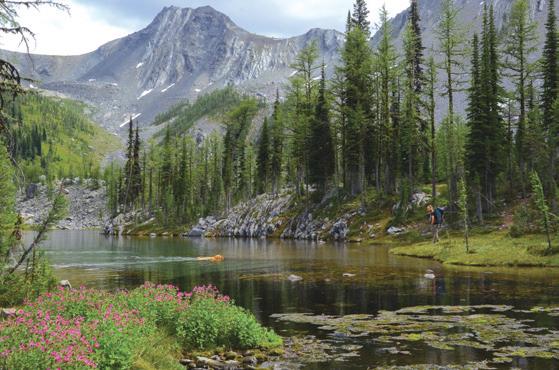
The three of us descended on the decently-marked trail to Tanglefoot Lake. Clear and icy cold, its depths beckoned to overheated hikers but only dog Boulder took the plunge. Continuing on, we worked our way past several more large tarns and began our ascent of Windy Pass. Once at the top, we looked back at the iconic Fisher Peak casting a lengthening shadow towards a sparkling Tanglefoot Lake. Longer shadows are an indication that the day is being stretched thin. We hurried over the cornice at the top of the pass to a small lake just below. This would be home for the night.
The blue shadows of a moonlit night turned into a glorious golden morning and after hurriedly striking camp, our trio dropped down into the Cliff Lake basin. The lake lies to the north, but our route led us south, past sapphire-blue tarns and ruby-red Paintbrush blooms, towards Bear Pass and Dibble Glacier.
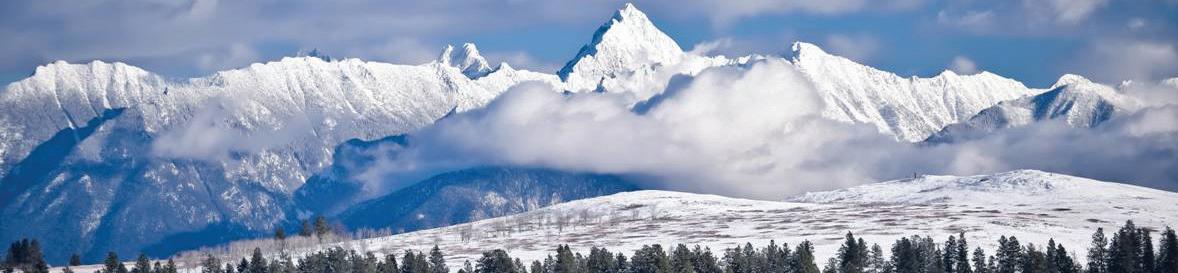
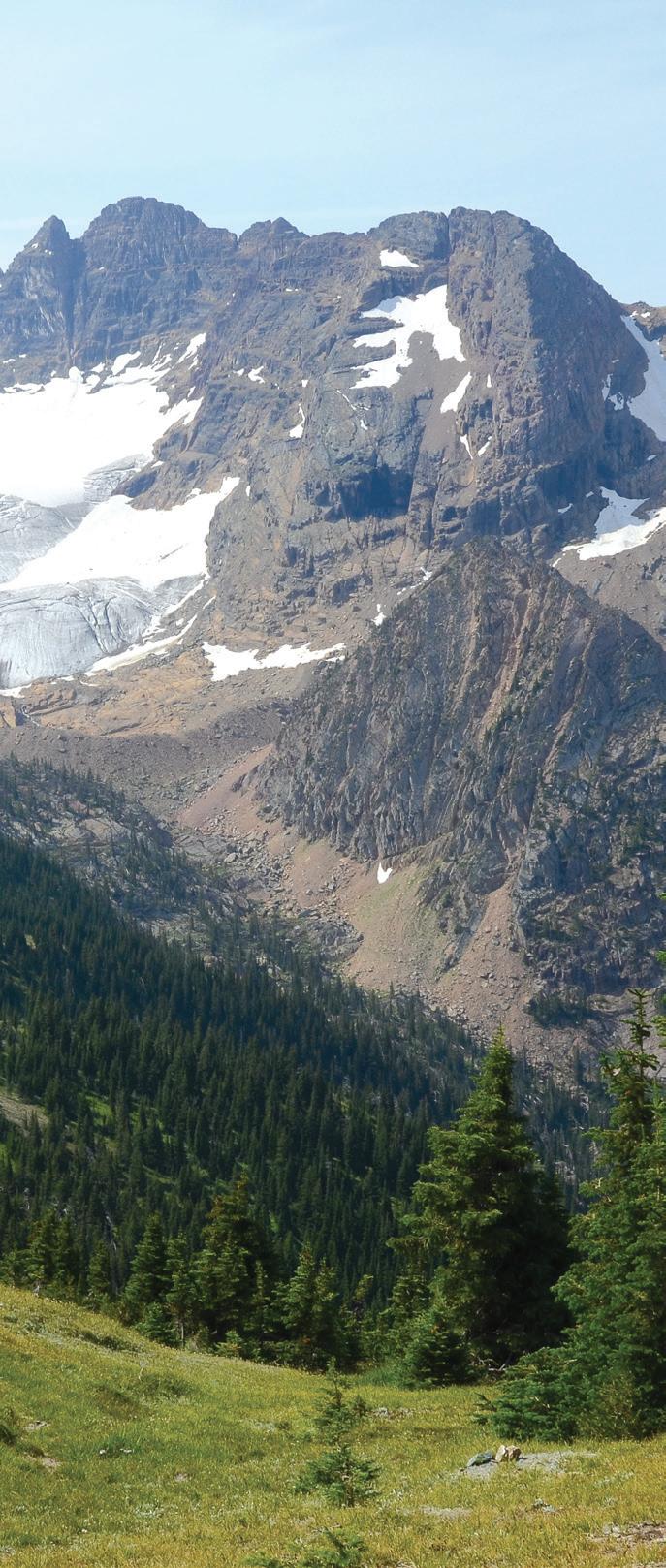
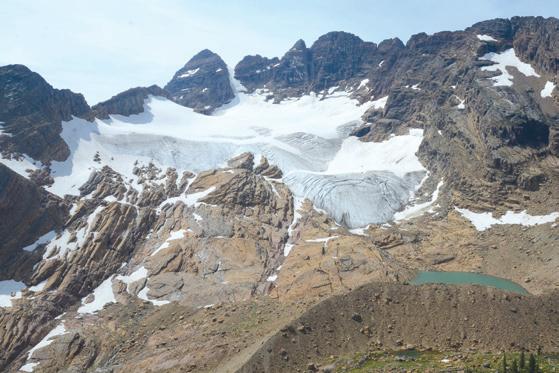
The Dibble ice mass clings to the back side of the Steeples, a well-known group of peaks that the people of Cranbrook look on every day. Few are aware however, of the opal-like glacier hidden right there in plain sight, less than 25 kilometres away from the city as the crow flies. Our troop explored the marvels of the area as long as we dared, before heading steeply down into the Sunken Creek drainage.
The trail we descend on is another track carved into the wilderness by men hoping to strike it rich. The Lost Creek/Dibble Basin Mine used these trails to haul their ore back to civilization using a method called “rawhiding.” a practice where the ore was tied into leather sacks and drug along the ground by horses. We descend nearly 500 metres in elevation before turning north and again began to climb, up through Sunken and then Horseshoe Passes, gaining the 500 metres right back. Difficult to be sure, but at least we didn’t have to drag a bag of rocks behind us.
From Horseshoe Pass we drop back into the Maus Creek drainage and follow the path until we find ourselves standing once again at the ruins of the Victor Mine concentrator. Where the trail once began, it now ends. The circuitous Five Passes Loop is now complete and a bonanza of golden mornings, ruby-hued blossoms, liquid sapphires and the mother of all frozen opals, deposited safely into the memory banks. An embarrassment of riches indeed.
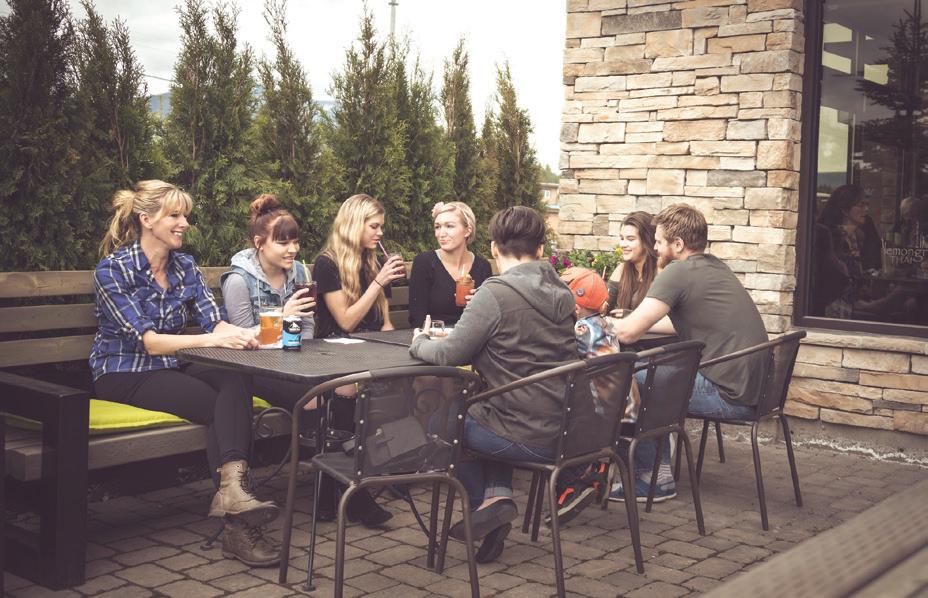
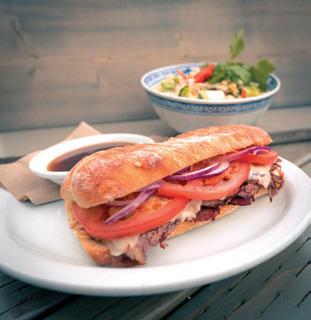
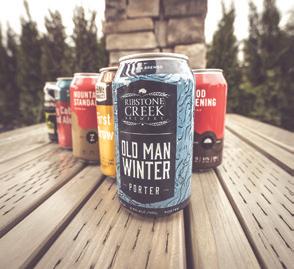
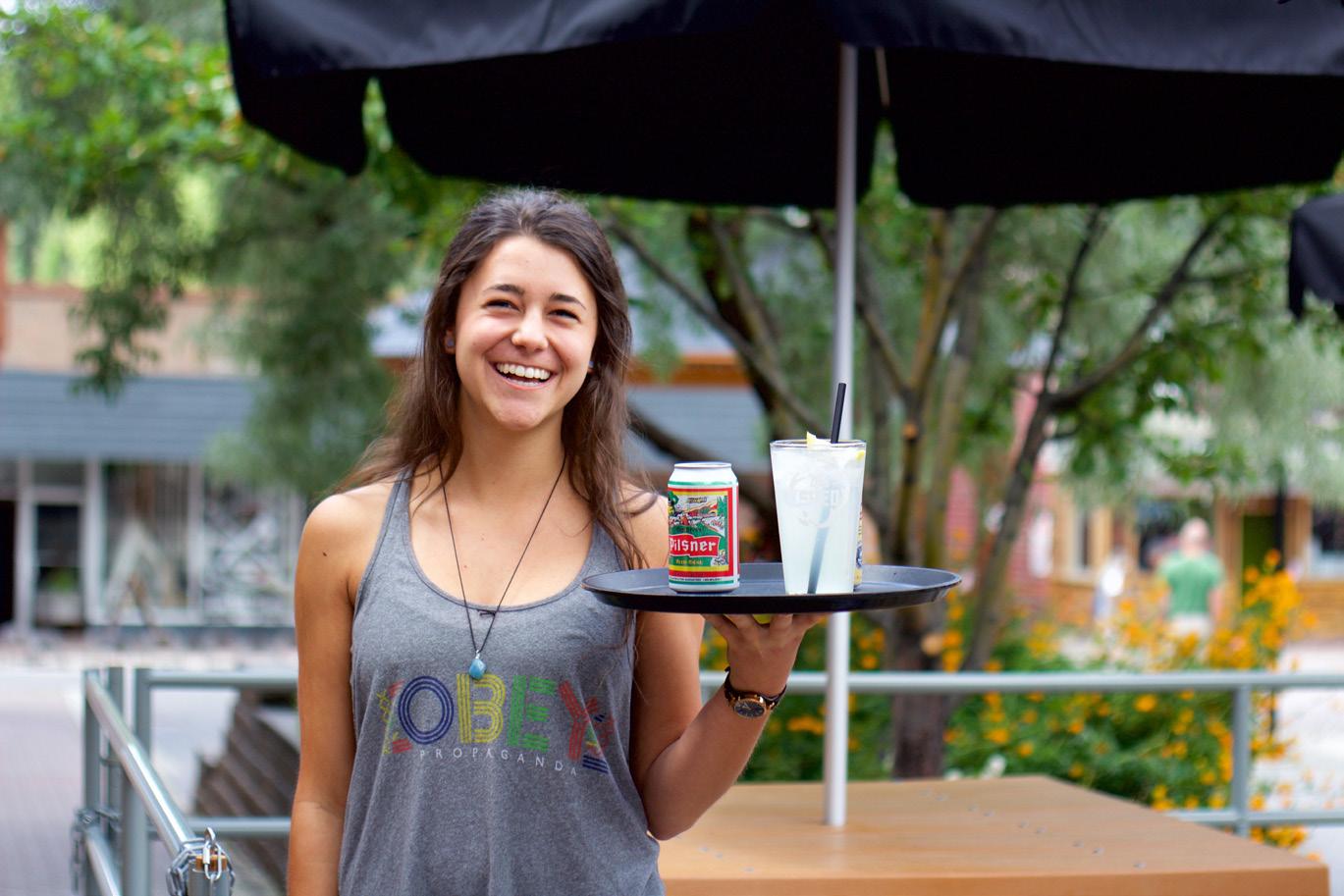
Comfy patio, local brews & yummy bites!
W: Danielle Cardozo
P: Pexel
After what appears to have been the longest, coldest, and most disliked winter known to Cranbrook, residents can rejoice at sunshine and summer days! It is time to put away the long dark days in the office and give yourself a muchdeserved break. Campfire season is upon us.
With summer comes camping, and with camping comes campfire cuisine! Gone are the days of hotdogs and ketchup or eating beans from a can (though we’ll happily admit that our childhood nostalgia has us craving each of those once in a while). But we are adults now. Our palettes have graduated from unrefined to somewhat sophisticated, and we desire a little more to go with our campfire, cocktails, and conversation.
The beauty of camp cooking is that anything goes. It’s an opportunity to get creative, without the pressure of presentation and perfection. Here are a few helpful hints to make it even easier.
Plan Ahead
Make food, not lists. Jars are a great way to create an easy and successful campout. Pre-mix and prep foods ahead of time.
Add some coconut rum into a jar of fresh fruit and soak overnight before you head out. Enjoy in the warm afternoon sun the next day. Plums are a must try!
Mix feta, black olives, roasted red peppers and sundried tomatoes. Use as a salad topper over lettuce, or stuff between two patties of chuck for an awesome campfire-cooked Mediterranean burger.
Double Up
Pack food items that can be cooked and used for more than one meal.
Fire the cast iron pan, add beer and bratwurst. Cook until the beer has been reduced and the bratwurst cooked through. Add sauerkraut until warmed. Serve with a grainy Dijon or on a fire-toasted bun. Then, make a breakfast skillet with leftover sausage the next morning.
Use the remaining rum-soaked fruit for a delicious cheese dish. Place a wheel of brie in foil and then set on rack over campfire (avoiding direct flame) for fifteen minutes. Turn halfway. Serve that boozy fruit you made over the campfire brie with sliced baguette.
Don't Forget Dessert
Get creative and take the work out of a childhood favourite to turn it into an adult experience.
Make grown-up s’mores by melting chocolate and marshmallows in a cast iron pot. Dip graham crackers fondue style.
Roast marshmallows and dip in Baileys. Yes, it’s that easy! You can put it in your coffee, too, of course.
Joey Sandberg, The Choice
“Steak bites on a stick with salt and pepper. Roast it just like a hotdog over a fire. Probably the best bite of steak I have ever had, using local organic beef of course.”
Tom White, Freightliner
“Roasting apples on a stick over the fire has been a favourite. It’s like warm apple sauce. It’s really good!”
Steve Mercandelli, Cranbrook Dodge
“We combine butter, a hamburger patty, onions, and other vegetables in a tinfoil wrap. You can add prawns if you like. Roast it on the grill over the fire.”
Jesse Roberts, Arby’s
“We make something called a ‘mountain man breakfast.’ It’s a dirty, greasy breakfast with bacon, sausage, and hash browns. When that’s cooked, we crack eggs into it. We add cheese at the end and cut it like a lasagna. It’s delicious. We cook that in a Dutch oven, but we have also gotten creative and cooked burgers on rocks and even shovel heads.”
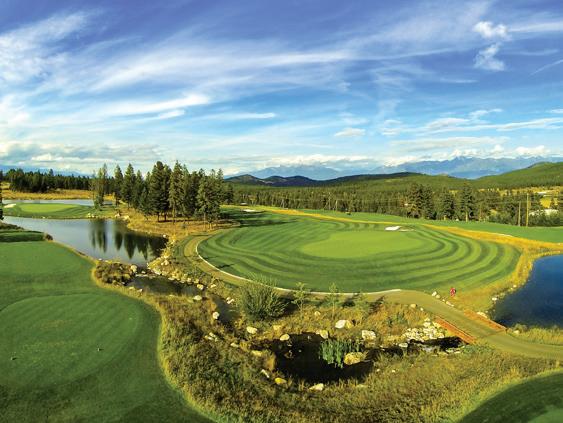
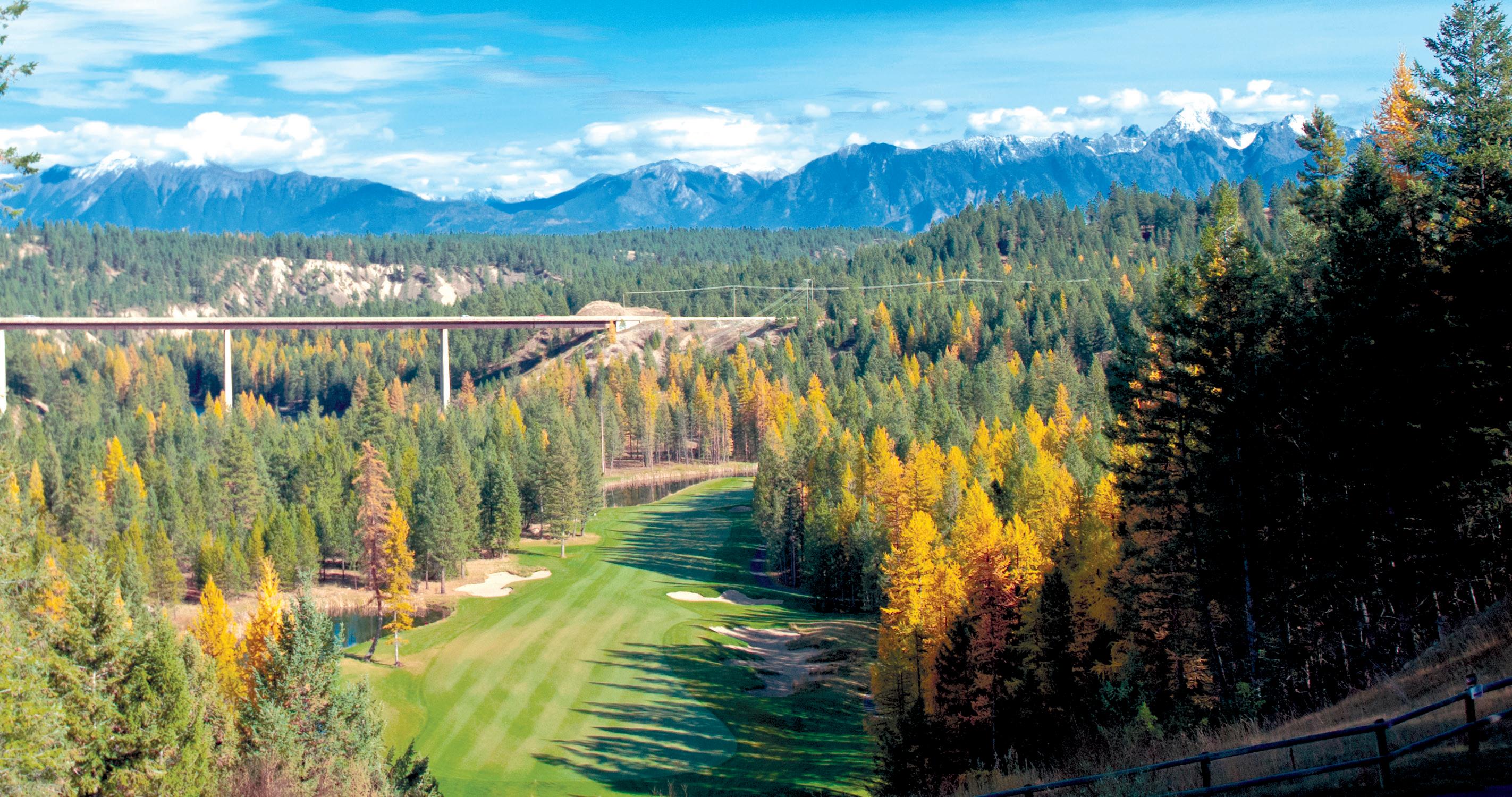
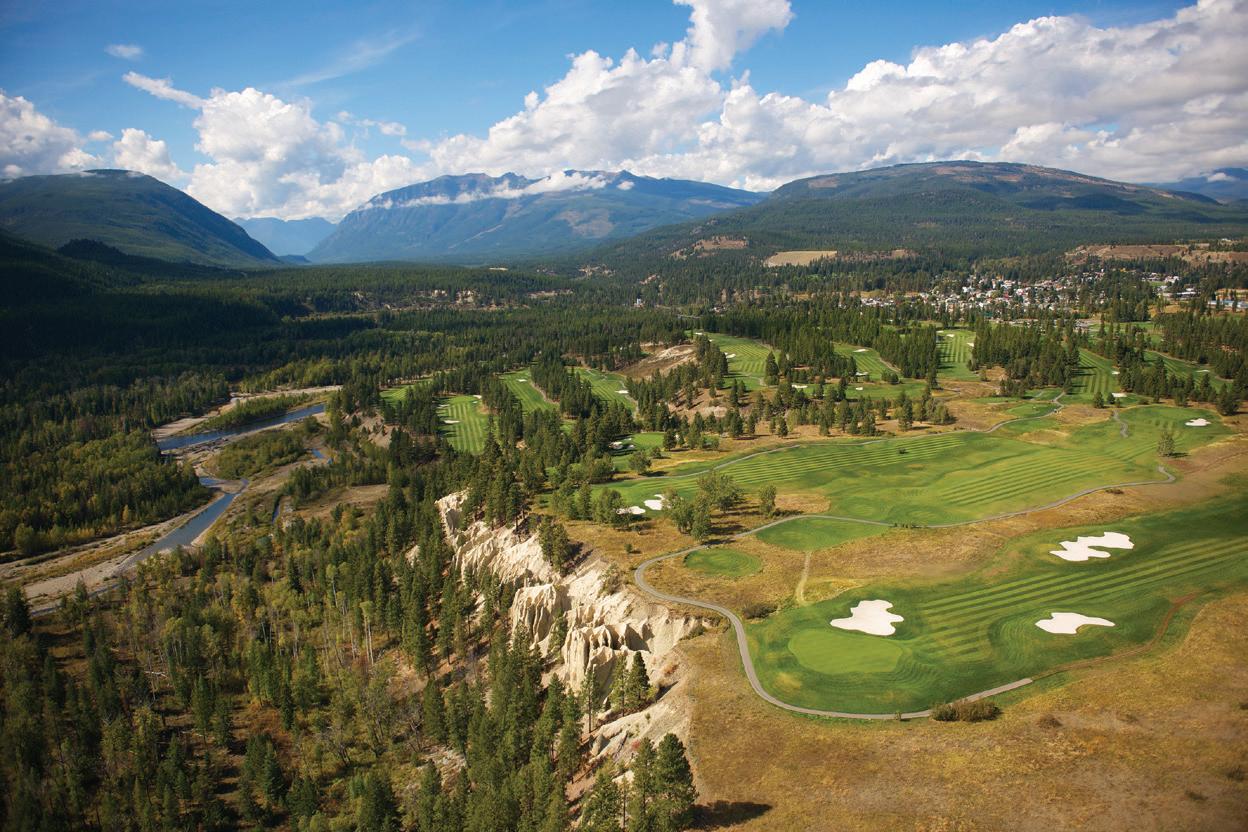
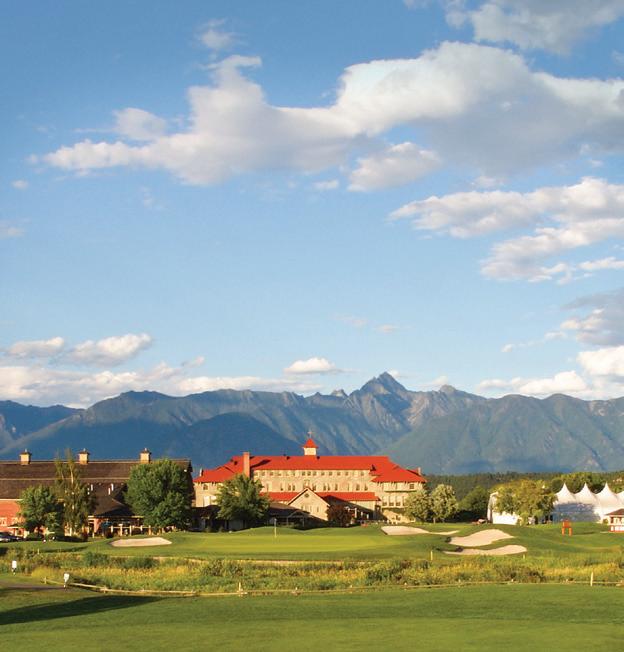
Shadow Mountain introduces 19 of the most breathtaking holes imaginable. Playing through local pines, traversing across rolling mountainous terrain and finishing with arguably the four most visually stunning holes in Canada, Shadow Mountain will leave you breathless and exhilarated all at the same time.
W: Dave Quinn
P: Blue Lake Centre
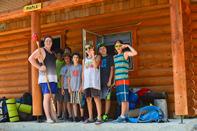
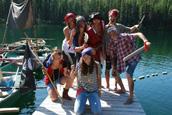
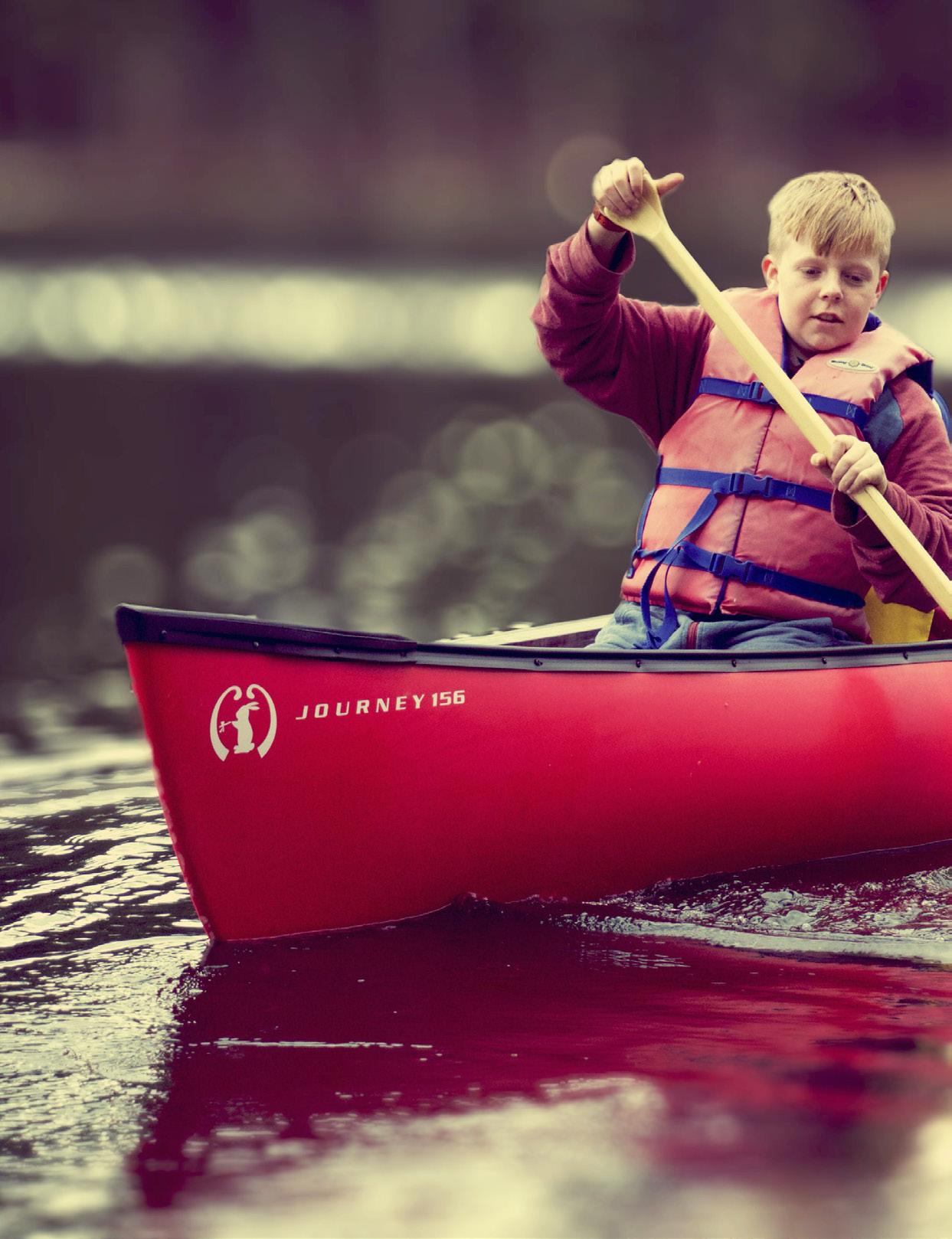
From humble beginnings in the mid-1970’s as the East Kootenay Junior Forest Warden camp until now, many thousands of young people from across the Kootenays and beyond have formed lifelong memories and deep connections with the wonder of our forests at the Blue Lake Centre.
Since its official opening in August, 1977, complete with Smokey the Bear and a symbolic chainsawing of a tree in place of the traditional ribbon cutting, the Blue Lake Centre has been a whirlwind of forestry, outdoor education, and recreation.
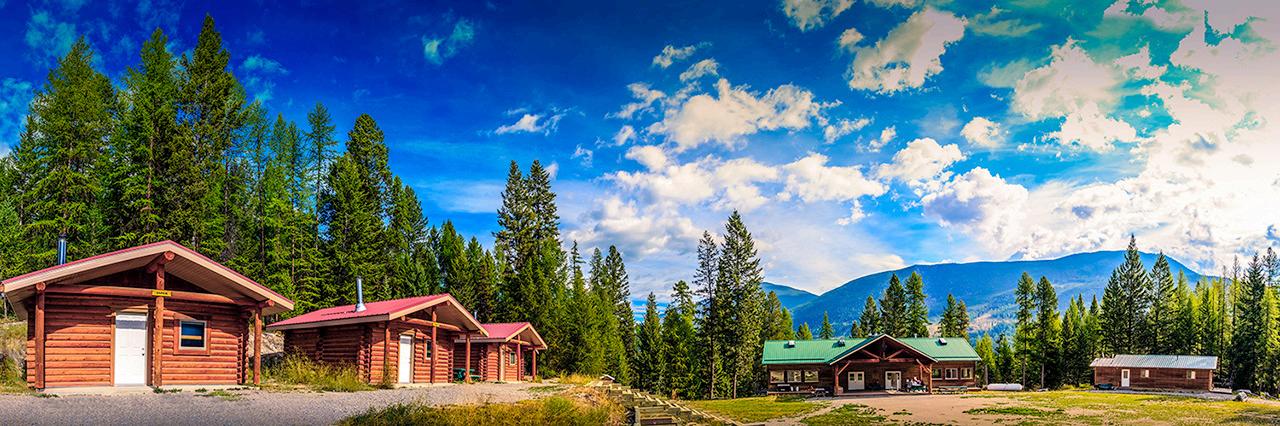
From an early partnership with former local timber giant Crestbrook, Blue Lake’s early facilities were cobbled together with a mix of donated BC Forest Service forest fire suppression camp structures, including five pan abode cabins and a mess hall trucked from Cranbrook to Blue Lake, as well as buildings trucked in from the original Junior Forest Warden camp at Rock Lake near Jaffray.
The camp proved so popular, with 100 campers per week for seven weeks of the summer, that early campers had to eat in shifts. In 1981 a larger mess hall was built, adding to more donated cabins trucked in from Wasa, as well as a log structure and camp trailer donated by Crestbrook and another building trucked in from the West Kootenays. The camp would not have been possible without broad support from a range of local businesses, including Finning, who welded up wood stoves for all the early cabins, allowing groups like the Kootenay Nordic Club to begin annual winter visits to the camp.
Over the years, a range of grants and donations made critical additions and upgrades to the facilities possible, culminating with a 2010 grant of $1.2 million. This triggered what was perhaps the fastest construction project on the planet as the Camp had to replace all cabins, build a new wash house and a new education/ training facility all within a seemingly impossible three-month time frame. The result is the Blue Lake Centre we all know and love. School groups, families, clubs, weddings, reunions, leadership programs, and the classic summer camp experience make Blue Lake an iconic part of the East Kootenay cultural landscape.
Over the years, the camp, purchased for $1 by the Blue Lake Forest Education Society from the British Columbia Forestry Association in 1995, has survived the 1985 Findlay Forest Fire, a range of challenges associated with non-profit management, and four decades of changing societal values and the economic roller coaster that is the forestry industry.
Creative solutions such as the revenue-generating educational tool of the East Kootenay Woodlot Education Society, granted a 450-hectare woodlot license around the Camp in 1986, and the tireless dedication of camp directors, programmers, leaders, funders, and local businesses has allowed Blue Lake to become a multi-generational experience similar to longlived summer camps in other regions.
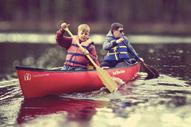
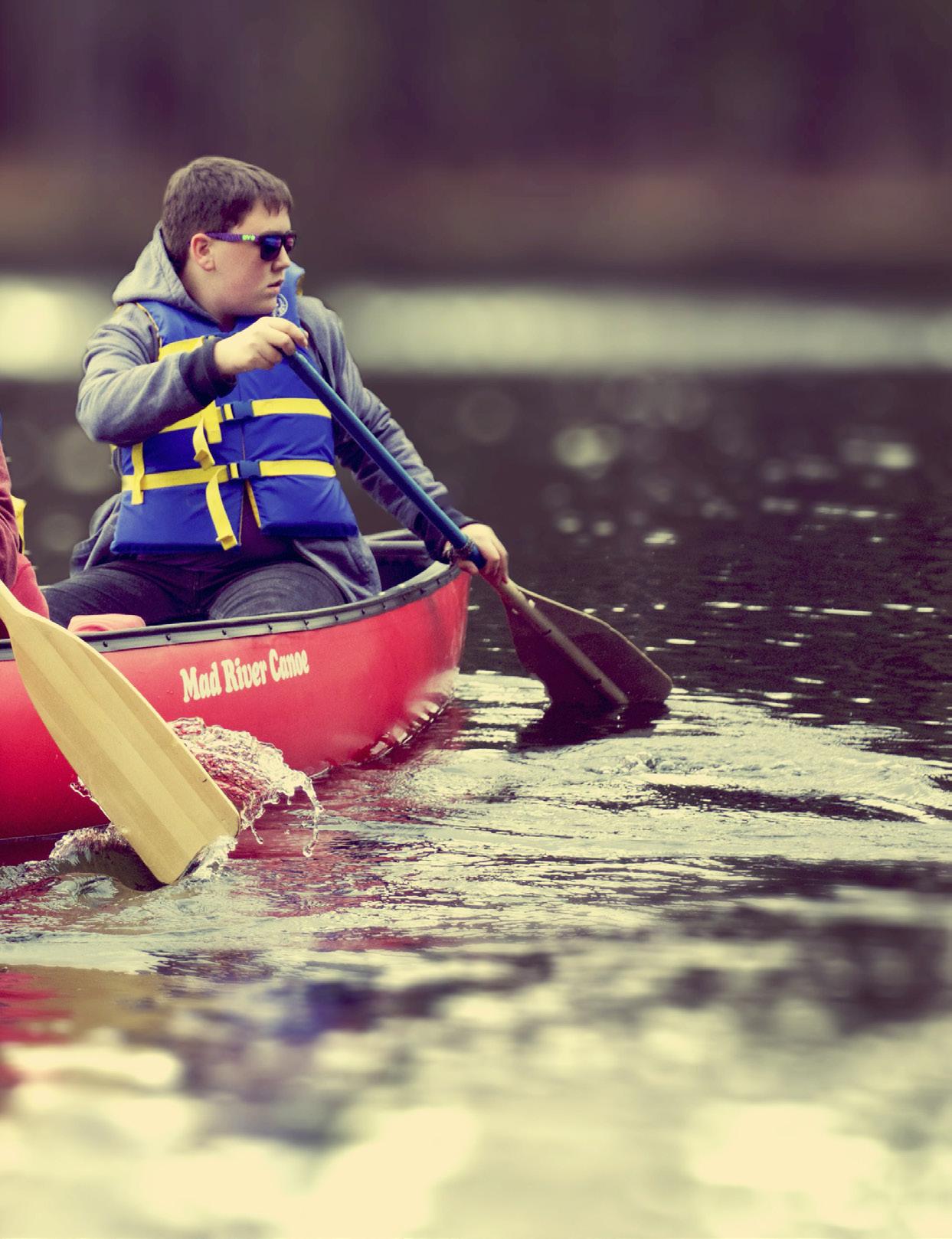
Camper alumni, staff, volunteers, teachers, media, stakeholders, and all future camp users are invited to Blue Lake Centre on June 10, from 10 am – 4 pm to celebrate 40 years of Blue Lake. Free on-site programming will include camp tours, education program demos, fun activities, canoeing, hydroelectric system tours, and a barbecue, plus a big announcement about the future of Blue Lake that you won’t want to miss!
W: Monica Karaba Huibers
P: Kata Schaeffer
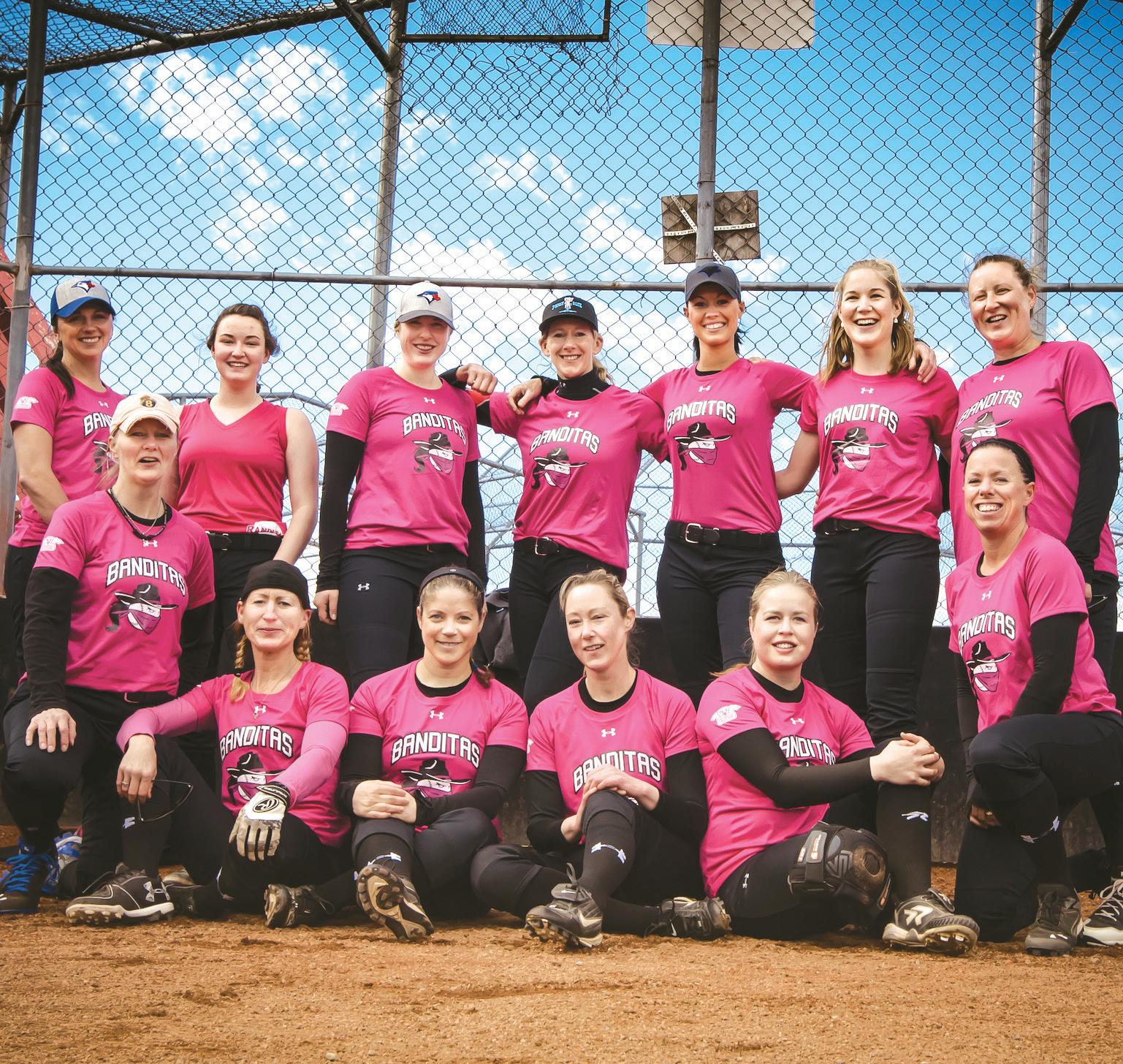
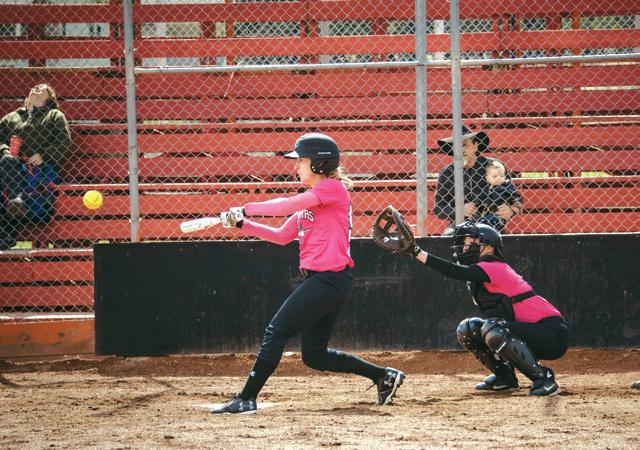
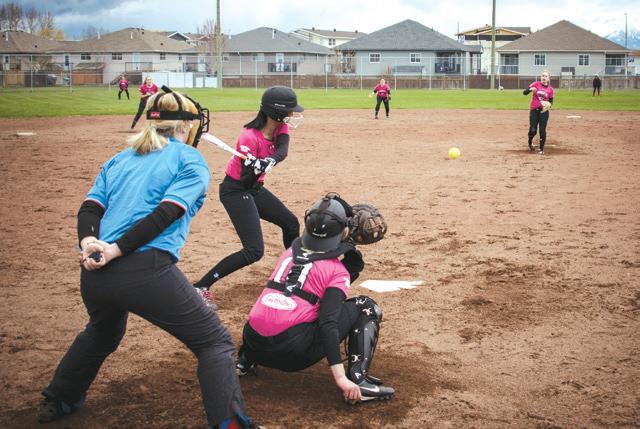
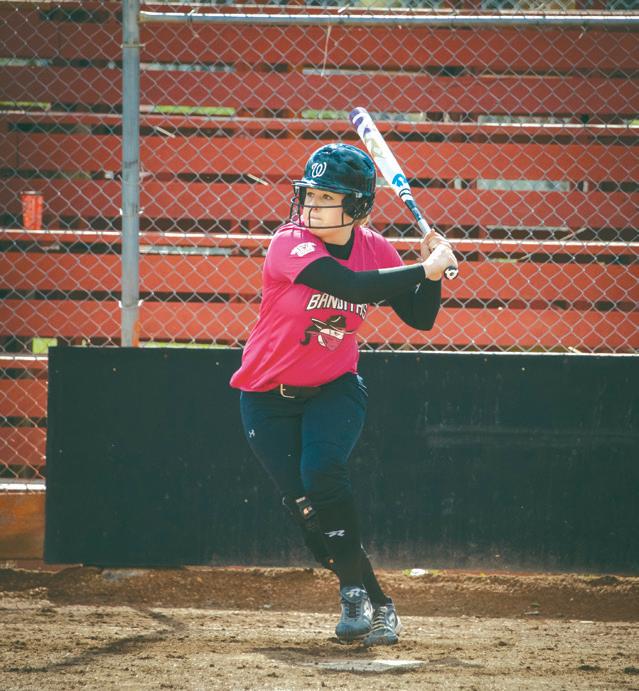
If you haven’t already seen them in action, a bunch of Cranbrook’s fastest-running, quickest-throwing, ballstoppingest women, attired in stylish hot pink shirts that they relish getting dirty, here’s your news flash: we have a new competitive women’s fastpitch team in town, the Banditas!
For a town of this size, there is a lot of extraordinary talent here when it comes to female athletes. Many of the Banditas have played with or against each other over the years, growing up together on the ball fields of Cranbrook. Last year, the Cranbrook U16 (under 16) Heat, hosts of the BC Provincials, put out a call to find female players to scrimmage against. A group of Cranbrook’s finest answered the call, found magic together, and now, the momentum continues. They
have organized officially and are thrilled to find themselves reunited on the ball field so many years later.
Female minor fastball has been played in Cranbrook throughout the years with local all-star teams competing at Provincials and at Summer Games. However, registration numbers have been steadily decreasing so some of our local players have gone to Kelowna, Trail/Castlegar, and Spokane to find a U18 team. There also used to be a commercial ladies fastball league in town, but it folded in 2001-02. The last time our local women got to play competitively was in 2004 when Cranbrook players combined with players from Castlegar and Trail to form the Kootenay Villains. They competed at the 2004 Canada Cup, an international tournament held in Whiterock, BC.
“For a town of this size, we have a lot of extraordinary talent when it comes to female athletes.”
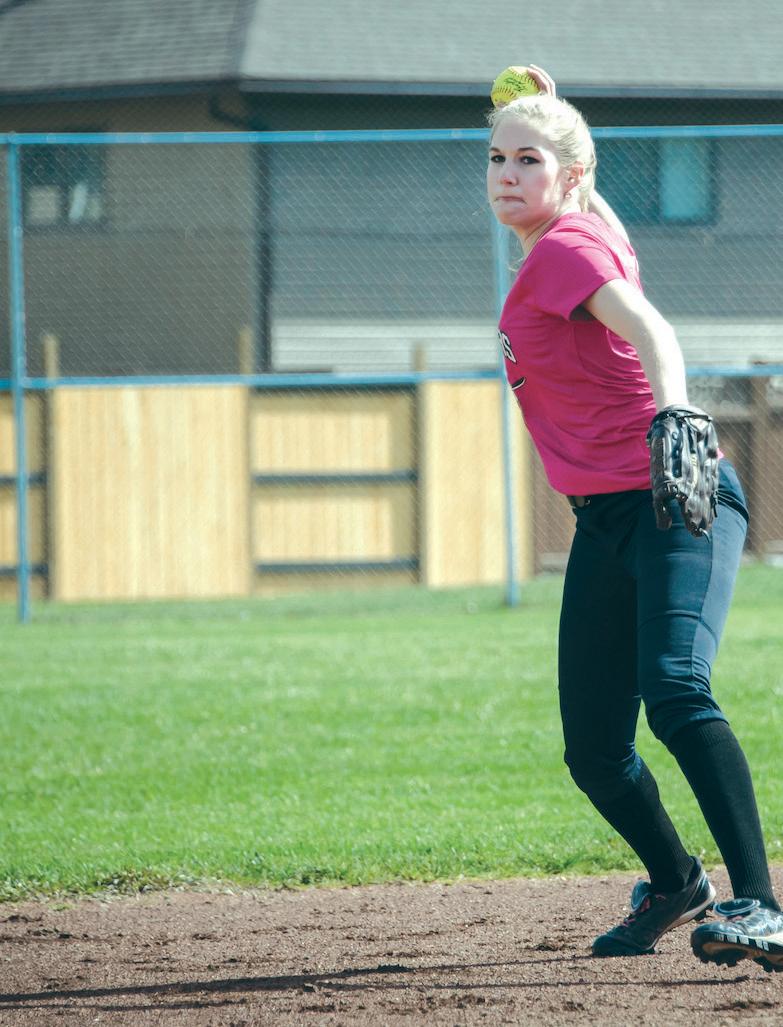
Don’t be fooled. Just because many of the Banditas have been waiting a long time to feel the leather of well-worn mitts grace their hands again, these women are well-conditioned, all-around athletes as well as seasoned ballplayers that have earned their stripes playing all over the world. The youngest Bandita is Megan Fisher, 22, starting pitcher, who is back in Cranbrook after playing four years at Whitworth College in Spokane. Christie Lode, also a pitcher, played competitively in women’s leagues in the Okanagan where she grew up and in Calgary. Another player to look out for is pitcher and pitching coach, Natasha Johnson, who won a full scholarship to play competitive NCAA league softball at Oklahoma Panhandle State and Southwestern Oklahoma State universities. Every one of the Banditas has an amazing bio that lack of space prevents us from sharing. However, be assured this is one group of women who proves that competitive athletes can keep good form at any age. Just ask the Banditas’ oldest member, the indomitable Jacqui Thompson Brown, 47. As a youngster, Jacqui played and won a silver medal in midget girls level C, served as a pitcher for the ladies Sam Steele fastball as a teen, and played women’s level B and C fastball as an 18-year-old. She then went on to coach medal-winning midget girls’ and Bantam girls’ teams.
What’s more, many of these women are also mothers, which surely counts as one of the most elite endurance training programs ever invented. Additionally, you will find these women hard at work in a wide range of careers – as business owners, financial services providers, retail managers, veterinary technicians, nurses, social workers, officers, and more. It is clear that with the Banditas, we have a great cross
section of strong women who are active in our community in so many ways.
Not to be outpaced is the team’s instigator, organizer, motivator, and captain, Sarah Coles, who works as a strength and conditioning coach and has trained many of Cranbrook’s elite athletes. Sarah’s ball-playing excellence led to her winning a scholarship at Oklahoma Panhandle State University as a catcher, where she was even on the same team for a year with her sister, Natasha. And what may be even more impressive is that Sarah Coles is also the first woman ever to play in a men’s expatriate league in Saudi Arabia.
Sarah has fond memories of all the years spent honing her fastball skills in Cranbrook. A large part of that is likely due to Sarah’s dad, Alan (Al) Coles, who was instrumental in coaching Sarah and many of her Banditas teammates when they were youngsters and who is proudly coaching them again now alongside the indefatigable Dave La Casse, who has distinguished himself in baseball, winning many golds and silvers over the years. Sarah says the team wouldn’t be where it is without all of Dave and his wife Jenna’s (also a full-fledged Bandita) behind-the-scenes efforts to promote the team and help raise funds for uniforms and equipment.
Fastpitch is just what it implies. The ball, at 12” circumference, is faster than the average softball, with a hard core and large seams that improve grip and spin movement. This means harder and more-controlled pitching, throwing, and batting, which if you ask this squad, provides a greater challenge and more intense play – just the way they like it.
Under Sarah’s expert guidance, the Banditas started indoor conditioning and practices in early February led by Al, Dave, and Natasha before they were able to get outdoors for dry land conditioning and practice. Sarah made sure to include corrective exercises with a focus on injury prevention to keep her athletes in tip-top shape for the long haul. The women have enjoyed the training and bonding thus far and are ready to play again after the first scrimmage of the season held against the Cranbrook Heat.
Sarah says that everyone involved has put so much effort into creating and grooming the Banditas because of their “love for playing at this level again. It’s really exciting to have such a great group of ladies who grew up playing together and to watch all of us getting stronger and growing as a team.” What made the Banditas’ first scrimmage extra special for Sarah was that many of the same players they were competing against in the under-16 team had been taught and/or coached as pre-teens by Sarah, Al, or Jacqui.
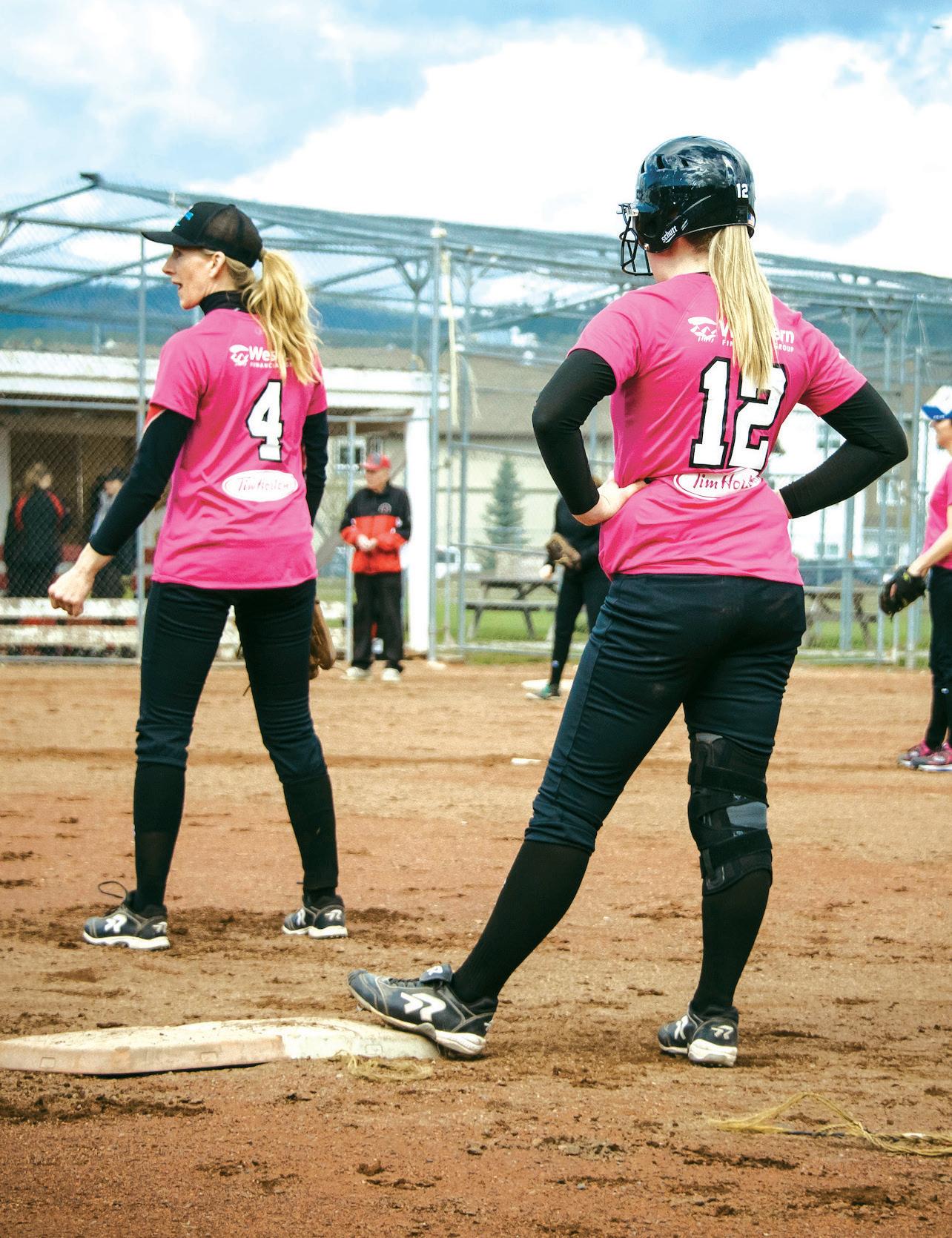
The team’s name was chosen as a nod to Cranbrook’s Division A Cranbrook Bandits, although they aren’t formally affiliated. And just in case their quick moves, elegant plays, and sassy attitudes don’t have you hooked, the Banditas will be quite visible on game days thanks to their snazzy choice of team shirts.
The Banditas would like to thank their main sponsor, Cranbrook Dodge and secondary sponsors, Tim Horton’s and Western Financial, as well as all the friends, family, and local community for supporting them. Their upcoming schedule includes a tournament in Sicamous, BC, the weekend of May 27; a game here in Cranbrook against Elkford at Kinsmen Quad on June 4th; and the BC Provincials in Richmond on July 28th.
The Banditas would love to have you come out, cheer them on, and let them show you what it really means to throw like a girl!
To follow the action or contact the Banditas, please visit the Cranbrook Banditas Ladies Fastball page on Facebook.
W: Monica Karaba Huibers
P: Kata Schaeffer
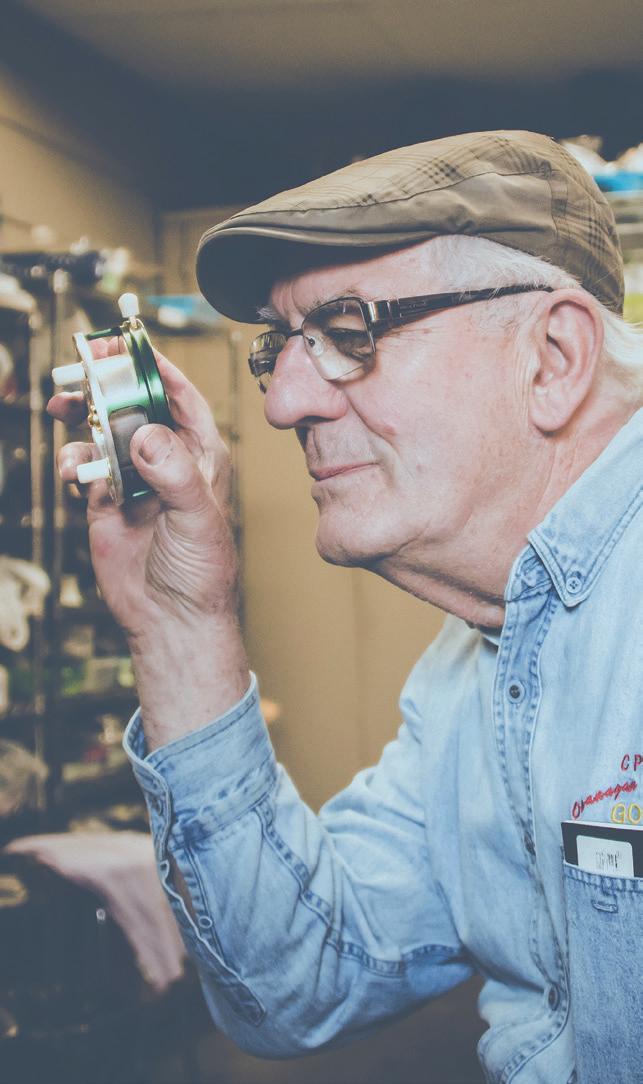
John Milner has the ideal commute. The distance from the door of his house to his office/factory is about ten yards. At first it looks like any unassuming garage or shed around town with no outward indication of the magic going on inside. Would I find a “reel” story here? A sign on the door of the shop states in humorous terms that unless you are there giving away beer, don’t bother knocking. Inside, it is like Santa’s secret workshop, elves included; although these elves are much taller and their names are Amanda, Dave, and Zak.
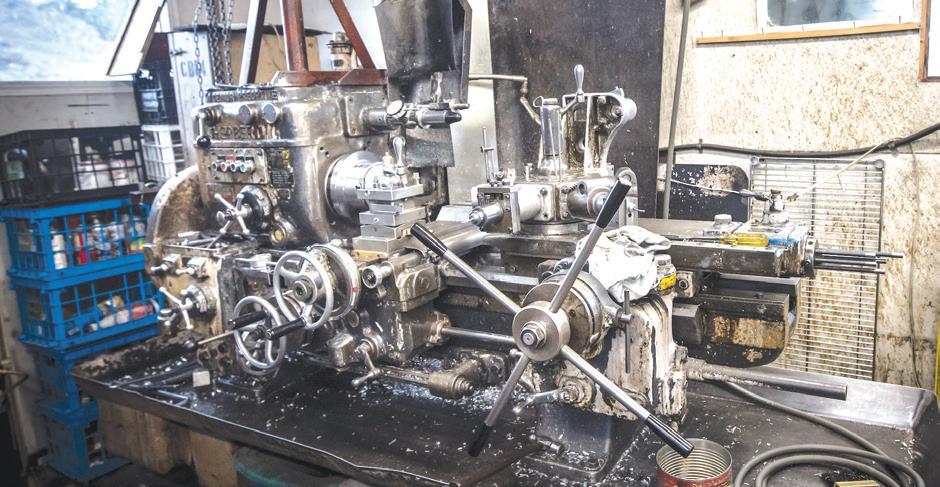
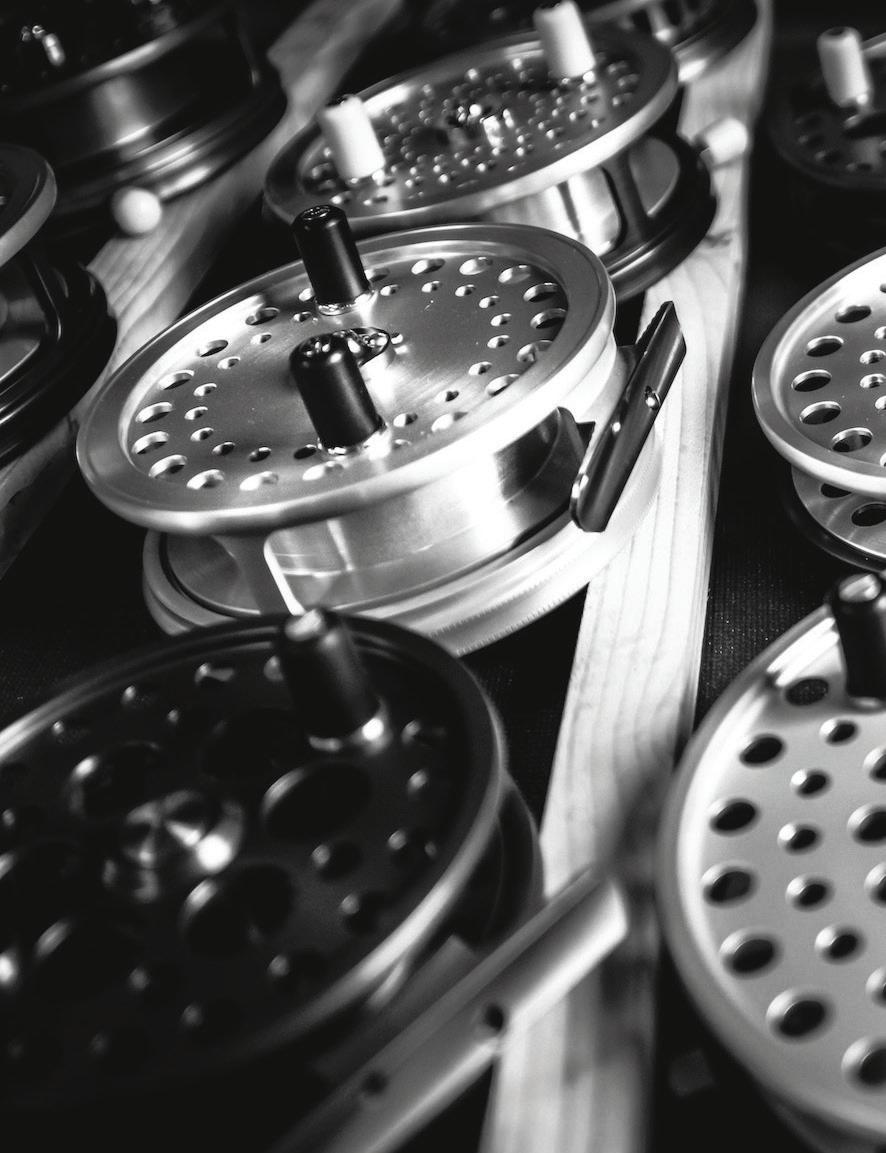
John’s employees, skilled machinists and metalsmiths, are busy operating an array of sophisticated metal-working machinery. After watching them for a bit, I can see the focus and precision that goes into crafting each one of the shining, spinning masterpieces, representative of the line of John Milner’s coveted centerpin fishing reels. In the corner sits an ancient, well-used turret lathe made in Coventry, England in 1953. It looks like something you might find on a big ship or an old Hollywood movie set. In the center of the shop is its modern-day counterpart, a computerized engine lathe that when opened reveals an intricate operation with dripping coolant water and flying metal shavings where the raw metal is cut and shaped. Throughout the shop, there are numerous trays and cabinets filled with all sorts of interesting tools and components such as wheels and bearings. John opens one of the drawers and shows us antique wooden fishing reels.
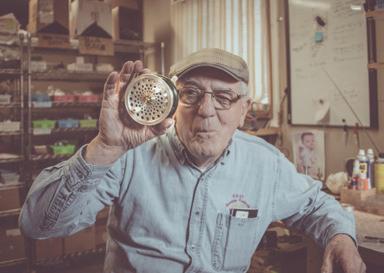
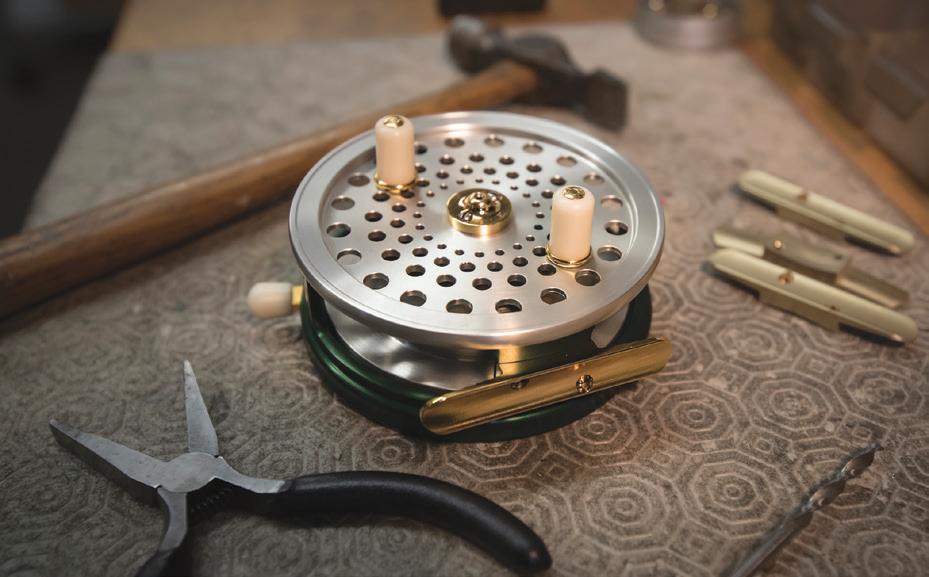
A master machinist descended from a lineage of machinists and mechanical engineers, John Milner came to Canada from Birmingham, England in 1963. He found work as the lead hand in an engineering workshop on the West Coast. In his spare time, he loved to fish and he also enjoyed repairing antique centerpin reels for friends who fished the Vedder and Thompson rivers with him.
A decade into his hobby, John decided he could do better than what was commercially available and started to develop his own original pin reel. He wanted to create a reel that could withstand the rigors of steelhead fishing while retaining the classic elegance of the types of reels that went out of style around the time of World War II. This was around the time that nylon fishing line was invented, which John says caused a radical shift in how reels were constructed and used.

John’s first bushing centerpin reel was such a hit with his friends that he proceeded to make a small run of them. In 1977, seventeen John Milner bronze bushing float reels were released into the wild, bringing joy to an elite group of fishermen who preferred using traditional methods to catch BC salmon. Word of mouth led to John being flooded with local and even international requests, so he started on his second batch of reels, The Talisman, a model which he still produces today. John continued crafting and refining his reels as a part-time hobby.
The centerpin or trotting reel as John calls it is a type of reel where one casts out into a stream, allowing the bobber or float to trot downstream with the current into the mouth of a hungry fish. The bait is quickly retrieved for another cast if there are no takers. This process is repeated until one actually catches a fish or “someone at home calls wanting to know what
the devil you have been up to all day.” John says that this style of fishing is by far “the most satisfying way to catch fish. You have more total control over the action of the reel and the float of the bobber.”
After thirty years of his career in the machine shop, which he had been part of growing from just a few employees to seventy, John hit the end of possibilities with his job and decided he wasn’t going to be a “has been” or end up the “odd job man” of the shop. “I’ve got more than that.” he thought to himself. At his daughter’s suggestion he visited Fernie and fell in love with the East Kootenays. He had a new wife and young son, and they were ready for a fresh start, so John, Marie, and Tom packed up and moved to Cranbrook in 1995. When asked why Cranbrook, John responded, “Look at where we are. This is God’s country, isn’t it? It’s a great place to breathe fresh air and a safe place to raise a family.” Today, the Milners still reside in the house they bought then.
With his next chapter started in Cranbrook, John dedicated himself to creating and expanding his growing line of fishing reels. He took the feedback and wishes of a widening network of friends and fans to heart, and in 1998, he released The Kingfisher, an open-faced float reel which went on to become as equally famous as The Talisman. John calls this reel his “lunch bucket” reel, one which was made to be affordable for the average angler at about $300.
John Milner Reels grew at a steady pace as the years went on. At first John produced the reels on his own with friends helping out on occasion. His son, Eric, who later became a photographer and film maker, worked with him for a couple of years, creating a web site and producing John’s first online videos to help him reach a larger audience. About five years ago, demand started outpacing John’s ability to deliver his reels singlehandedly in a reasonable time frame, so he hired his first employee, then his second and third. It makes John
proud that he can give back to his community by providing a few of its members with steady work. And by having his own business, he is also able to realize a dream held by his father and grandfather that they were never able to experience.
Over fifty years of focus and persistence have paid off, and John Milner’s centerpin reels are now sought by fishermen worldwide. Such appreciation is given for the crastsmanship, quality, and reliability of his reels that customers sometimes wait up to two years to get their hands on one. Prices range from $300 to $1,400 depending on features and customizations such as ball or bush bearings, gold or nickel plating, and inscriptions or engravings.
John’s customer service is a throwback to another time and way of doing business that surprises and delights people. He often answers the phone, and customers can’t believe they get to consult directly with “the guy who actually makes these reels” and who will spend as much time as it takes explaining and helping them select among all the options. Altogether, there are about 3,000 John Milner reels casting about in the world, the majority of them in BC with a growing number finding their way to the U.S.
Besides practicing his craftsmanship and guiding his employees, John loves teaching and has taken on apprentices of all ages, even helping one friend launch his own fishing reel business. He also enjoys mentoring other small business owners and would-be en-
trepreneurs. One of the tips he gives is to hold off on buying new equipment or making large investments until you have saved enough of your profits to pay for them outright.
When he’s not working, John likes to spend time with his wife, a writer for Kootenay Business magazine, and walk his feisty young dog, Bella. He can also be found most Sunday mornings and at least one evening each week during the school year mentoring a group of high school students from the Mount Baker Secondary School’s Robotics Club in his home workshop. John has served for many years as a technical resource and building resource for the club, which has gone on to win many awards and championships at the provincial and national levels, including a gold medal at the Skills Canada competition. “I can’t tell you how much satisfaction I get from handing on my knowledge and skills in metal working to these young people. This is my small contribution to the community.”
John’s enthusiasm, sense of humour, and appreciation of life is contagious, and I joke he could add to his income by conducting tours of his shop. Not shy to admit that he is super content with his business and his life, he muses, “All of my ambitions are realized in Cranbrook. If I could whistle up a better life for myself, I’d like to know what it is.”
W: Britt Bates
P: Jordan Nering
The annual bash is back again, and this year, we aren’t just celebrating Cranbrook, we’re celebrating Canada as a whole.
Believe it or not, this year, Sam Steele Days, Cranbrook’s favourite festival, is going into its 53rd year. Talk about successful! The annual celebration in June, which is host to an enormously wide range of fun events and performances for all ages to enjoy, is something that not only Cranbrook residents eagerly anticipate, but that draws a large crowd from surrounding communities and even farther-flung visitors, too. This year will be no different – and perhaps even more of a success, as the Sam Steele Society, the organizing body behind this week-long party, is kicking it up a notch for 2017.
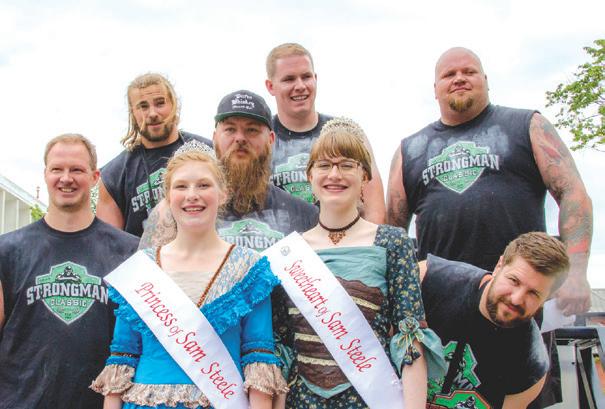
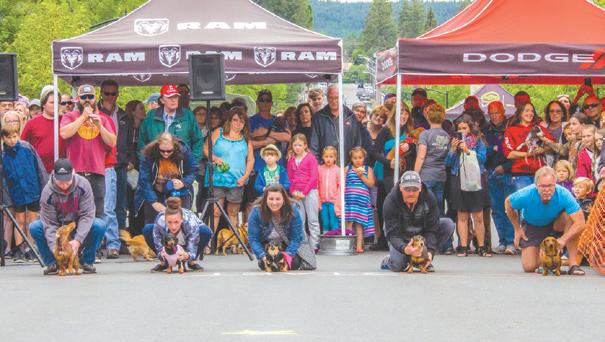
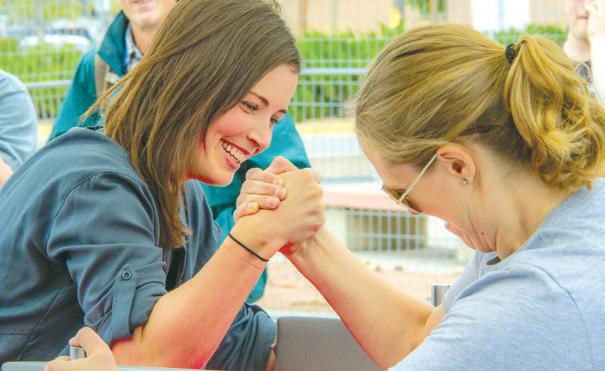
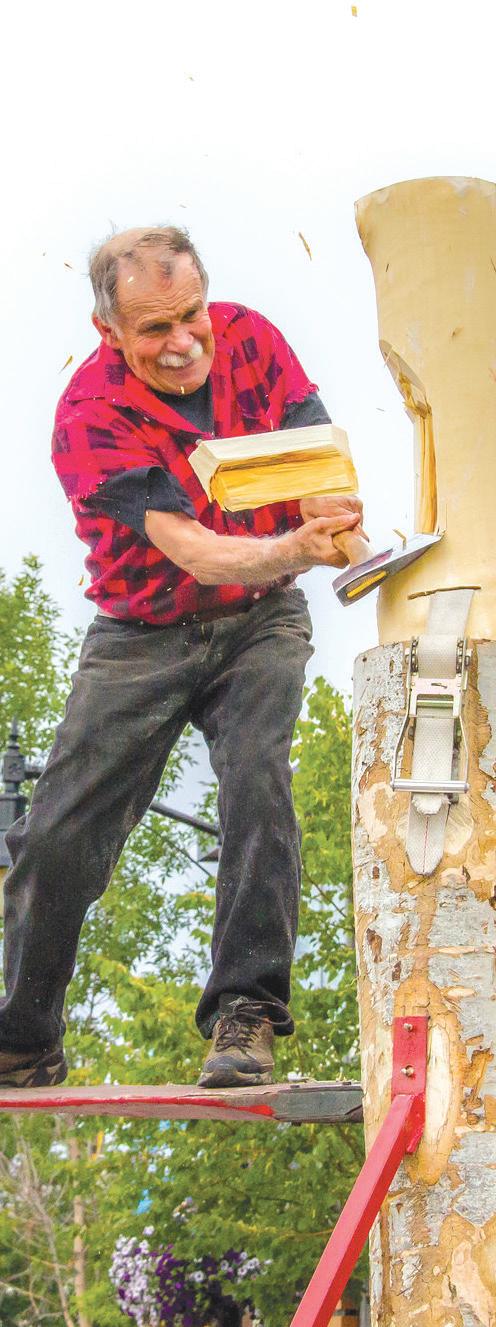
The days of June 15th–18th will be full to the very brim with activities: the biggest parade in the East Kootenays, public pancake breakfasts every morning and barbeques every evening, markets, beer gardens each night for the grownup kids, and tonnes of live music, including Smash Mouth. There’s also plenty of sporting events to take in: baseball and soccer tournaments, bocce championships, arm wrestling, and of course, the much-loved wiener dog race.
Maureen Frank of the Sam Steele Society explains that the schedule is so expansive and all-inclusive because it welcomes any organization or business to host its own event in conjunction with the festival; all one has to do is simply register it with the Sam Steele Society for the event to be included on the roster. Frank says that this structure is in place to foster “a spirit of involvement and connection in the community” – and what better reason than that is there to celebrate?

As we all know, this year marks Canada’s 150th birthday, and a component of this years’ Sam Steele Days will be dedicated to kicking up our heels to take part in the celebration – all with the goal of engaging the public. A new addition to Sam Steele Days this year is a collaborative art project that is intended to involve community members from all walks of life, including students, seniors, and Indigenous people. It will be a large mosaic of visual art, done in part by professional artists ahead of time, with swaths of blank space for anyone to add on to it. The piece, titled “This is me. This is we. Strong. Proud. Free.” is a space for community members to creatively express what it means to them to live in Canada. The piece will be up and ready for your artistic contribution from June 17th–18th at the festival grounds in Belmant Park, right next to the live music stage. The Canada 150 event extends further than just visual art though: there will be a free outdoor variety show, with more than 25 individuals and groups preforming – including actors, musicians, and dancers of rising and professional talent, all with the intention of celebrating the many facets of what it means to be Canadian.
The entire project is meant to honour diversity and the many ways we contribute to our society, locally, regionally, and nationally. The Sam Steele Society says that it has “welcomed the Ktunaxa Nation as its guests to encourage participation in the festival…as a way to contribute positively to Truth and Reconciliation.” In addition to participating in the Sam Steele Parade, the Ktunaxa will also be hosting its own event at the Ktunaxa Nation Council building downtown.
There’s a lot to look forward to this year, so be sure to mark off June 15th–18th on your calendar to head into downtown Cranbrook and engage in the fun. Between spectator events, live music and performances, and a chance to contribute your own voice and unique mark, this year’s Sam Steele Days is already proving itself to be a party you won’t want to miss.
You can check out the full schedule and times of events on the Sam Steele Society website, www.samsteeldays.org.
W & P: Jeff Pew
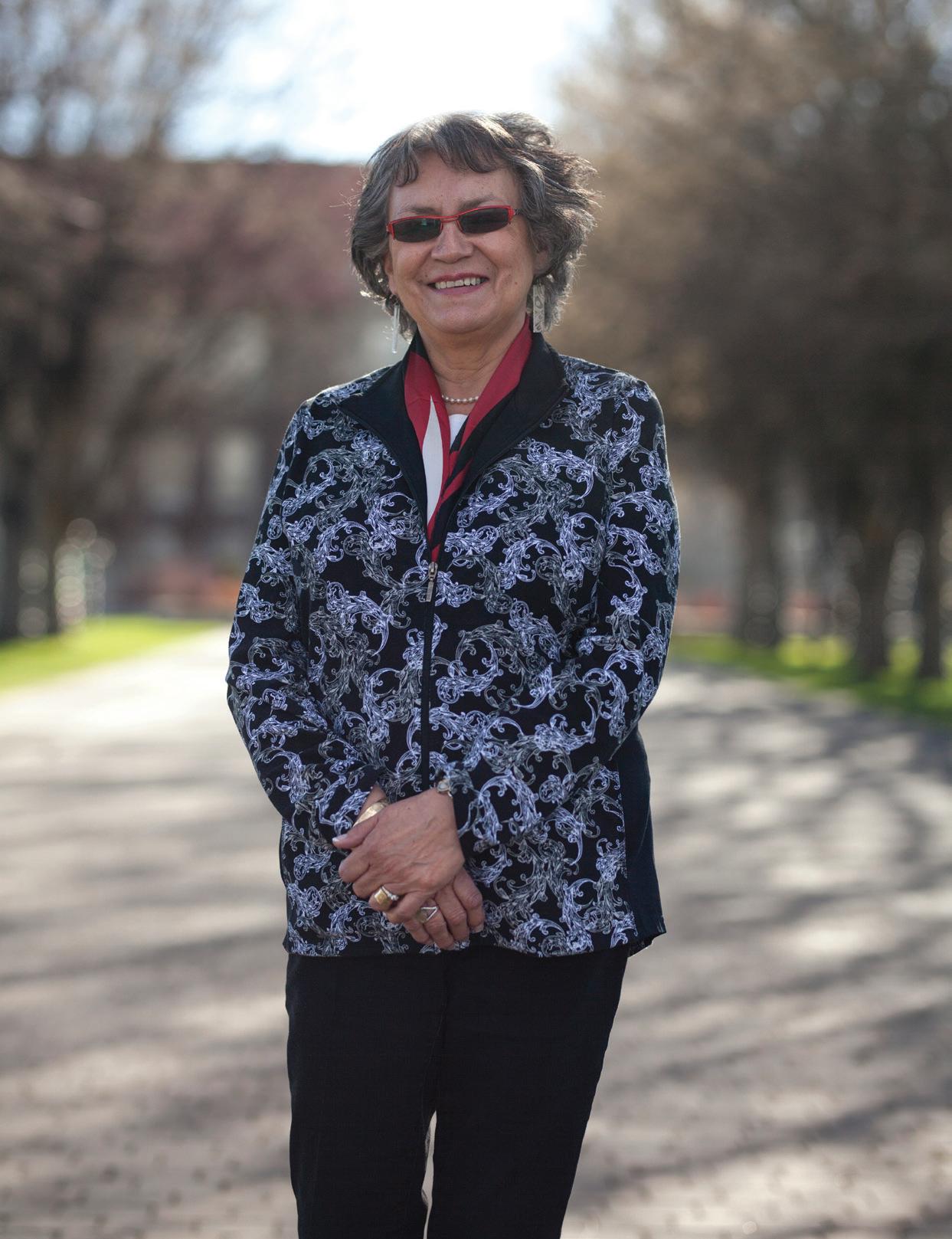
Sophie Pierre stands in the bricked hallway of Cranbrook’s St. Eugene Resort. She points to a framed picture on the wall: 1958, her first communion. She was eight years old, her second year at the Kootenay Indian Residential School. “From the top dorm, I could see my family home just across St. Mary’s River,” she says, “but I wasn’t allowed to go home.” She pauses for a moment. “It wasn’t all bad. I got a basic education. I was fed, housed, and clothed. They taught me how to read,” she says laughing, “though I’ve never used the Latin.”
It’s impossible to separate the story of Sophie Pierre from the bricks and whispers that line the residential school’s hallways. Since 1912 until its closure in 1970, the Roman Catholic-run school instructed over 5,000 children from the Okanagan, Shuswap, Peigan, and the area’s Ktunaxa (pronounced “k-too-nah-ha”) Nation. It operated under the Canadian government’s aggressive assimilation policy, designed to eradicate native traditions and indoctrinate indigenous children into Euro-Canadian and Christian ways of living.
“It was a really lonely place for a child to grow up and not feel any love,“ Pierre says. “I know how important it is for a child to feel love.”
Pierre spent her next nine years there, but escaped every summer to the familiar comfort of her grandmother’s farm. “When I returned home, I was Ktunaxa,” Pierre says proudly. “My grandmother helped me retain my culture. We spoke Ktunaxa. We hunted, trapped, fished and picked berries. That’s how we ate. ‘Grandma An’ wore moccasins until the day she died.”
At fifteen, Pierre left the residential school and continued her studies at Mt. Baker. The next year she took a job typing for an Indian agent on top of the Cranbrook post office. There, she learned things that would leave a lifelong impression. “I started to read the stuff I was typing,” she says. “I’d think, this doesn’t sound right.” Twelve years later, after the birth of two children, a divorce, and a business diploma in accounting, she returned to the Ktunaxa as an administrator and was elected chief of ʔaq’am, the St. Mary’s Indian Reserve. It was there she began to address the things that didn’t sound right. The things that would have made her ancestors cry.
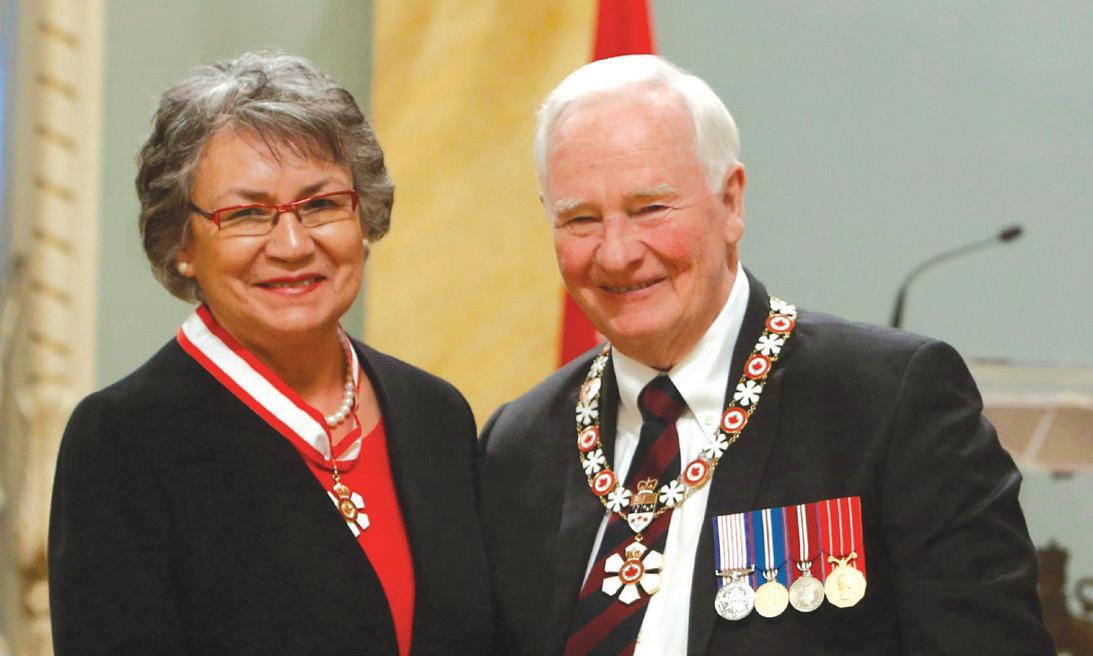
For twenty five years, Pierre served as Chief of ʔaq’am, and for six years as Chief Commissioner of the BC Treaty Commission. “Sophie dedicated her entire adult life to improving the lives of Aboriginal people across this province,” Kathryn Teneese, Ktunaxa Nation Council Chair, says. “I am honoured to call her my friend.” Pierre’s accolades are outstanding, and she has been the recipient of numerous awards: Order of British Columbia (1994), Queen’s Golden Jubilee medal (2002), National Aboriginal Achievement Award (2003), two honorary Doctorates in Law (University of Canada West, 2010; University of British Columbia, 2012) and the Order of Canada (2016) for “…her role in the British Columbia treaty process and for her commitment to the economic development of First Nations.”
Later that afternoon, Pierre sits in the resort’s lobby, under a painting of “Chief Crazy Dog,” her paternal grandfather. She reflects on the impact she’s had on ʔaq’am, yet always deflects to what her people, the Ktunaxa, have accomplished. “What we’ve done as a nation is pretty outstanding,” she says. “We’ve been through a lot of healing. Everything we’ve done has originated from our elders’ teachings that we hold the solutions.”
What the Ktunaxa achieved under Pierre’s leadership is remarkable: In the 1980’s and 90’s they were one of the first indigenous communities to begin taking control of both Child and Family Services and Education from In-
dian and Northern Affairs Canada. And, in the last few years, they’ve broken ground within indigenous education by leveraging their funds to secure a bank loan to build an elementary school, where they will continue to teach Ktunaxa language and culture. As well, they’ve undergone one of the most unique forms of cultural healing that a Canadian indigenous community has experienced: they converted the Kootenay Indian Residential School, a longstanding symbol of oppression and cultural genocide, into a thriving economic development venture: the St. Eugene Golf Resort & Casino. “This is the story of turning something so hurtful in our history,” Pierre says, “into something positive for our future generations.”
This was no easy task.
After the school closed in 1970, it stood empty for 20 years, a persistent reminder of the pain and cultural attrition the Ktunaxa endured. Many wanted to see the building demolished, yet Pierre was struck by Elder Mary Paul’s 1984 soft-spoken words: “If you think you lost so much in that building, it’s not lost. You just need the courage to go back in there and get it. You only really lose something if you refuse to pick it up again.” At the time, no one completely understood the significance of Mary Paul’s words, yet Pierre maintained, “It wasn’t the building that hurt us. It was what happened in it.”
FRED CHARTRAND / CANADIAN PRESS
“This is the story of turning something so hurtful in our history,” Pierre says, “into something positive for our future generations.”
The Ktunaxa Nation Council considered that if the building wasn’t demolished, it would have to be converted into a self-sustaining business venture, like a resort. For years, the concept was debated in council meetings and individual homes. Trauma counselling was provided. The residential school underwent a series of cleansing ceremonies by the Ktunaxa, the Catholic Church, and other nations whose children were impacted by the Kootenay Indian Residential School. After a referendum, they voted to move forward with the resort’s development. From 2001-2003, the Ktunaxa, with a number of financial partners, opened a $40 million resort, featuring a full-service, three-diamond hotel with 125 rooms and suites, the Casino of the Rockies, and a championship golf course. Now, 16 years later, “St. Eugene Resort is the flagship of regional tourism and one of the largest employers in the region,” according to Matt Ney, Ktunaxa Nation’s Director of Economic Development and Investment. “It’s the most significant tourism anchor in the East Kootenay.”
When Pierre reflects on the resort’s significance for future generations, she states, “In addition to it being a vibrant and viable business, it reinforces our pride in Ktunaxa culture. We’ve taken back who we are. We haven’t let a residential school legacy define us.”
Nowadays, Pierre has settled into what she considers retirement, despite serving on the Ktunaxa elder’s council for traditional knowledge and language, and having mentorship roles on the Trudeau Foundation, the Vancouver Foundation, and the Advisory Council of the University of Arizona Native Nations Institute, where she is one of two Canadians. “I’m happy I have free time now,” she says. “I can give my time to cultural initiatives. And most importantly, I just want to get old, sit back, and enjoy my grandkids.”

Pierre’s son, Joe Pierre, now chief of ʔaq’am , is amazed at what his mother still accomplishes: “My mother always thinks of others first. She has a husband, three children, and four grandchildren and the love and time that she has for all of us is amazing considering everything else that she does. She always puts the needs of the Community and the Nation before her own. She has always believed that the work she is doing is for the future generations of Ktunaxa. Everything she does is for the benefit of her grandchildren’s grandchildren.”
Sophie Pierre walks along the resort’s driveway leading to the steps she walked every day as a child. The wind is blowing and she laughs nervously posing for a picture. “The wind is messing up my hair!” she yells and laughs. She describes the most important lesson she learned inside this building and how it shaped her as a person. “It was such a strict and cold place to grow up as a child,” she says. “Whenever someone was getting punished, I could feel their pain. After that, I put myself in the place of everyone around me. I’d ask, ‘What would they want?’ What I do doesn’t just affect me. It affects others. It’s never just that I want to do what’s right. I know how it feels when you get it wrong.”
At her car, before heading home, Pierre ponders her legacy and vision for the future: “I hope they will remember me with kindness,” she says. “The last quarter of the 20th century was a tough time for leaders. We had to have tenacity. It wasn’t easy. I had a job to do and I did it. What I wanted for myself — a stable home, a good education, opportunities for my children — I wanted for my community.
My hope is that future Ktunaxa generations thrive in their rightful place. This is where the creator placed us. We’ll always be here.”
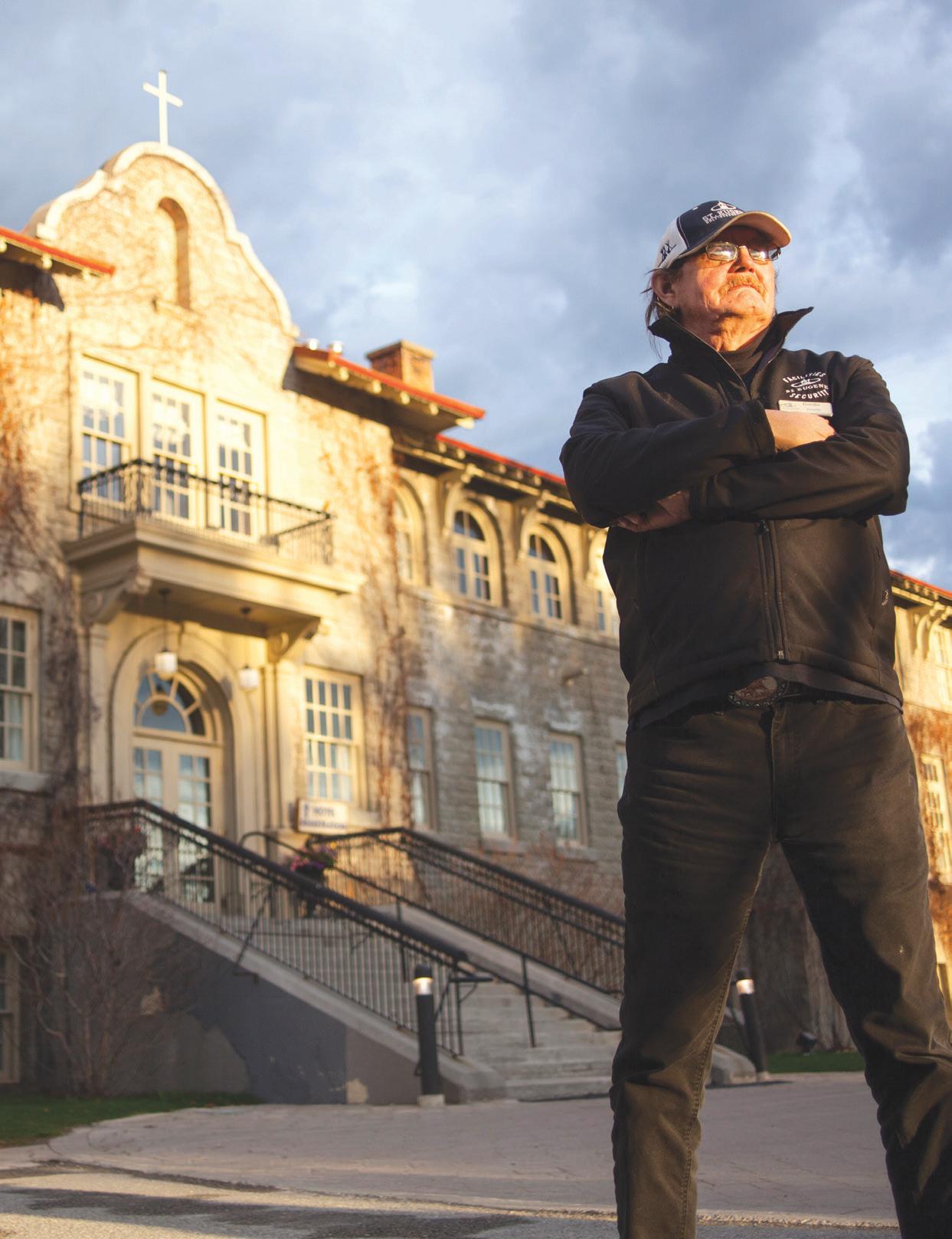
If Sophie Pierre is the visionary architect behind the St. Eugene’s Resort, then Gordie Sebastian is its unofficial ambassador. Since the resort opened in 2002, Sebastian has been its night watchman, maintenance man, guest tour guide, and one of the most uplifting human beings you’ll ever meet.
In 1957, when Sebastian’s grandmother dropped him off on the steps of the Kootenay Indian Residential School, it would be the saddest day of her life. He would spend the next eleven years there, other than the holidays with his family. He recalls the sad times: a year of smallpox which forced him to remain at school during the holidays, the fights with nuns, and the familiar sound of kids crying at night. He remembers his grandmother’s parting words which helped shape how he approaches the world: “If you have problems, deal with it here. Don’t carry it around on your shoulders for the rest of your life.”
“I never let the building get the best of me,” Sebastian says. “Once I was out its door, I never let it hold me back. I drive by it every day. Whether the school is here or not, the scars are still there. Scars talk, and I choose what I listen to. I don’t want to spend my time or energy on the negative. And besides, we all grow old really quickly.”
When Sebastian talks, every word is deliberate and wise. He talks about how to approach life’s curveballs: “Don’t try and change something you can’t, yet take control of the things you can.” He chuckles, “And if it’s changing too fast, then you better catch up.” After a car accident in his early 20s left him half-paralyzed, he had every reason to give up and feel sorry for himself. “The doctor told me I’d never walk again,” he says. “Instead, I took up bull riding and competing in rodeos.”
When reflecting on the leadership and legacy of Sophie Pierre, Sebastian becomes quiet. He stirs sugar into his coffee and makes slow circles with his spoon. “She treats everybody fairly,” he says. “She makes time for people, even when she doesn’t have it. There’s something about the way she carries herself. She’s kind, determined, and never quits.” He talks about the government’s attempt to assimilate his people. “They came close,” he says. “But they never got rid of the seed. There’s always someone who keeps it going. Keeps it growing. For the Ktunaxa, that’s been our elders and people like Sophie Pierre.”