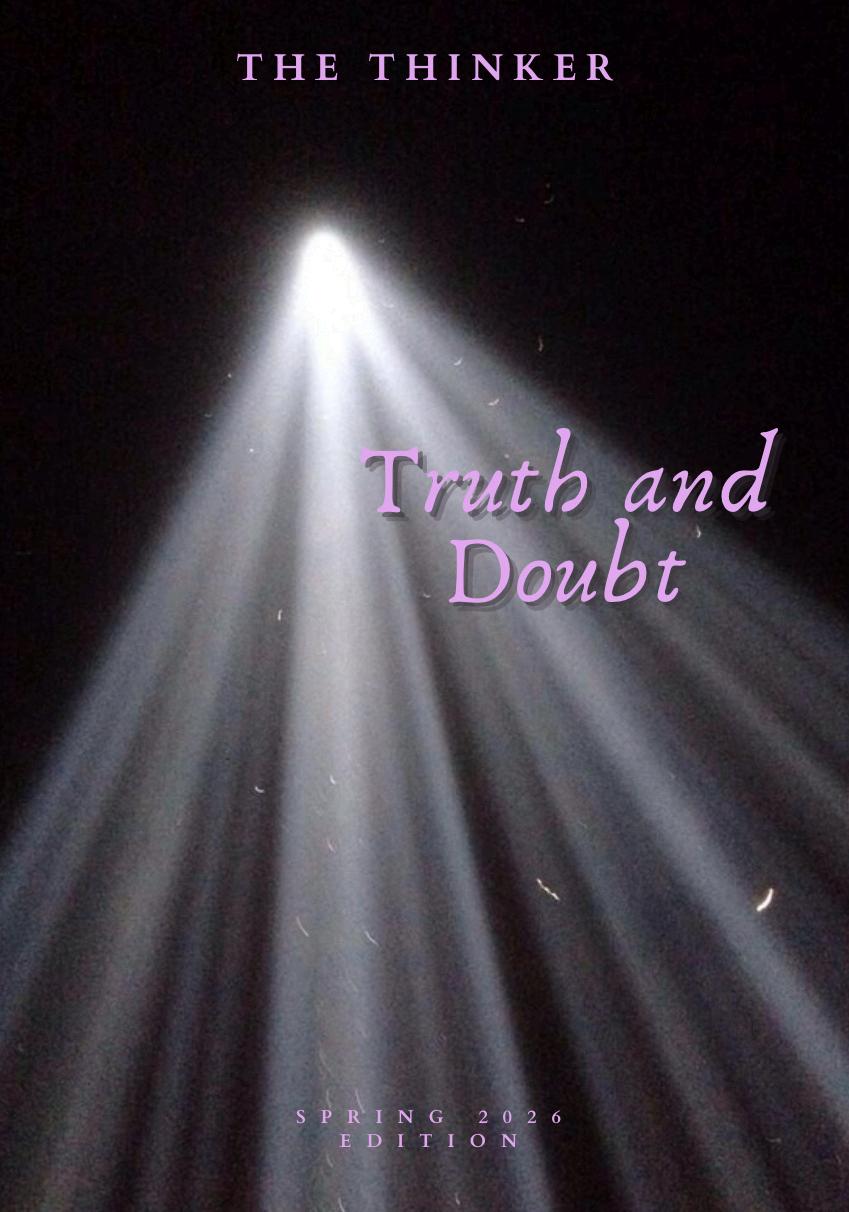
Are our conceptions of truth authentically our own, or merely reflections of collective conformity? - Leila Corcoran
Can truth exist without doubt? - Ananya Padhi Is truth discovered, constructed or revealed?- Truth in Jaqueline Harpan’s ‘I who have never known men’ - Livia Meisels-Neufeld
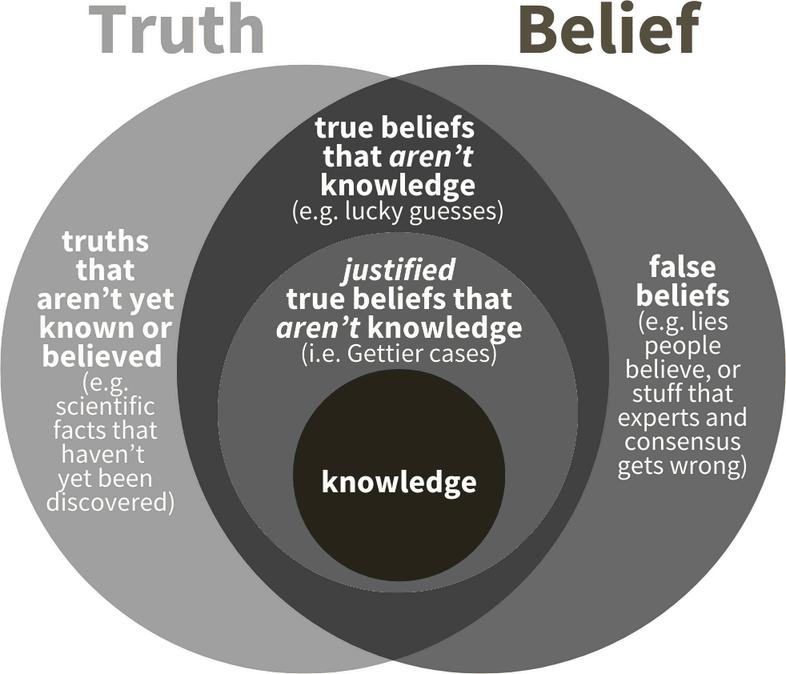
Does the Gettier problem prove that knowledge and justified true beliefs cannot coexist? - Alicia Sevanot Davis
The problem with doubting everything - Gloria Schvorob
The Mandela Effect: why do events of mass misremembering occur and what does it mean for society? -Victoria Ciampolini Manley Is Truth, true? - Olive Jogiya
Truth and objectivity in Nietzche’s perspectivism - Luis Escobar
The morality of humanity’s quest for truth - Anna Ponticos
Are truths managed to impose control, ensure safety, or keep structure in society? - Anoushka Rana is journalism ever impartial?-Georgia May ‘I don’t know’ - the three most powerful words in the English language -Marisa Assomull
Extras!
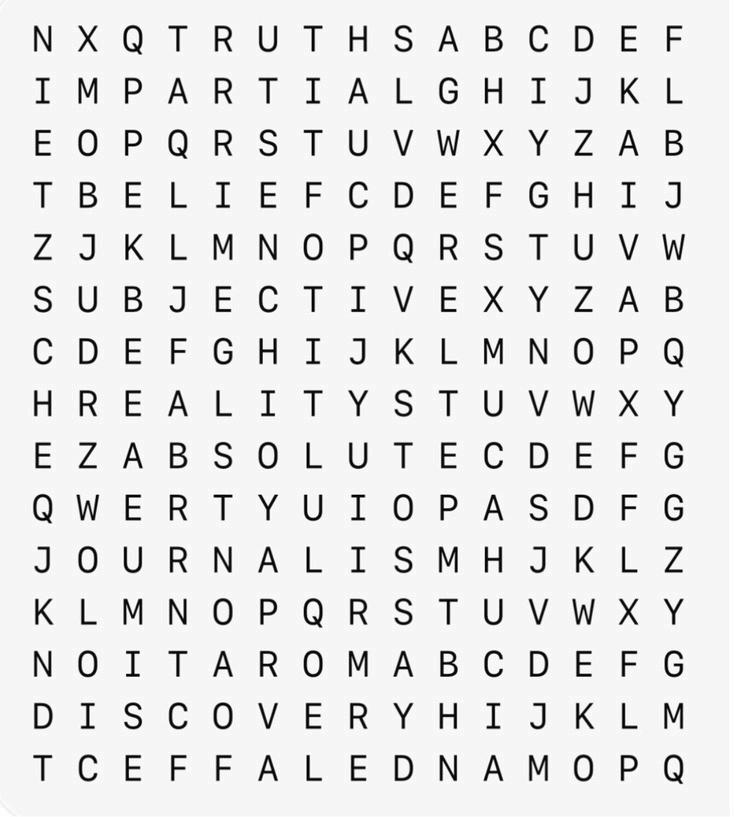
wordsearch
Ifyouenjoyedthis,youmightlike:
‘TheMoralMaze’- podcastepisodeontruth ‘ShutterIsland’-film; formatureaudiences though,maybe!
‘Inception’-film
‘ThePictureofDorianGray’

Opinions are like inventions Most were created many years back when there was still a lot to discover, yet we still claim to have invented new ones despite them being variations of the same original design. Designs may evolve over time but the purpose of the object remains the same If you think about the first phone created by Alexander Graham Bell you see the adaptations over the years that led us to the current iPhone And over time the objective of the phone stayed the same no matter how many design revaluations it went through. So opinions are a lot like inventions in that most new opinions aren’t as unique and fresh as they claim to be
Humans are conditioned to be influenced by one another and often unknowingly pick up on ideas from other people while thinking their thoughts are completely their own Because, have you ever had an idea that you believe is completely unthought of and been disappointed by finding out that it does in fact exist, you just had not thought about it yet?This may also apply to your own opinions because as much as we love to say we think for ourselves, oftentimes we express alternative opinions that we agree with as our own original views. But is anything nowadays truly original? Is everything not just different interpretations of something else? Is something truly original if it may have been thought of in the past or even in the present by someone half way across the world? Therefore are our opinions our own? Most likely not. But people bond over musicbecausetheyenjoylisteningtothesamegenre or artist. People share interests for the same hobby for different reasons, each individual tothem So even though our opinions may not have been generated by our own mind, they are often something that pique our interest Something someonemayfeelpassionateabout.
Or just something you agree with Whatever it may be,yourtruthmustreflectyou,andwhatyoubelieve is right. If someone enjoys country music it does not mean they are right or wrong for that opinion. It also does not mean that you should also enjoy country music,sinceyoumaydislikeit That’stheessenceof opinions: to have your own and possibly be a part of otherswhoyousharethemwith.
However, what exactly is the truth? I suppose that varies, depending on morals, location, beliefs, religion, influences or your experiences. There is never one truth in the world. There are many different ways people interpret the truth and what they believe is true but there are always multiple factors that influence those opinions. Is this collective conformity or is it simply agreement with one another? How far does our independent thinking go in terms of creating a completely unbiased view based on your own personal experience and belief? I would say that it is impossible. In modern day, where we are constantly being fed varying inputs and perspectives, it is harder to not run along with something you agree with than to choose to form an informedopinion
In our world, where social media is such a large contributor to the information we consume, it is easy to pick a side without knowing the full picture.And that does not necessarily mean that you are wrong It may mean that your opinion is in fact a reflection of collective conformity and not an authentic reflection ofyourbeliefsandwhatyoustandfor.Andwhatever your truth may be, not that there ever is one universal truth, I believe it should truly come from within, where all of your values are considered and taken into consideration before making a consensus ofyourpersonaltruth
The truth is only the truth once tested
Truth and doubt are often portrayed as polar opposites. Truth is associated with strength and certainty whereas doubt is linked to hesitation. Do truth and doubt exist in a more complex relationship? Perhaps truth is not independent from doubtbutisratherstrengthenedbyit Withoutdoubt, we risk blindly believing everything and losing our critical thinking, which is imperative in finding the truthinanuncertainworld
Truth is often thought of as something fixed but in reality, truth is usually discovered through questioning and thus is a constantly evolving theory. In scientific research, new discoveries are often discovered when people doubt existing knowledge and search for better ones. Without doubt, knowledge would stagnate as we would lack a drive of curiosity and imagination, simply believing the first o edibly dange aging misin t face value
Socra moted the S oning design ritical thinking His philosophy reflected ideas around truth not being handed to us but rather earned through humility and persistent doubt. He stated that the ‘unexaminedlifeisnotworthliving’,suggestingthat doubt is not a sign of weakness but rather one of intellectual prowess Moderate doubt itself can be seen as a symbol of creativity, encouraging to think more deeply and to imagine a better future. Doubt doesn’t destroy creativity, but rather allows it to grow, strengthening it and fostering a unique sense ofcuriositywhichisfundamentallyhuman

Additionally, truth can be influenced by human psychology. People often prefer comforting truths rather than difficult realities demonstrating that truth is not always objective. Doubt can prevent individuals from lying to themselves or putting too much thought into these lies. On the other hand, too much doubt can lead to anxiety and trust issues between people and reliable knowledge Therefore, truth and doubt exist in a precarious balance, with doubt acting both as a protective force and a challengertohumanunderstanding.
On the other hand, doubt allows the rise of subjective truth, allowing people to express individuality in their opinions. It encourages individuals to interpret the world through personal experience rather than accepting a single fixed reality Thus, without doubt, people might believe there is only one absolute truth and ignore the complexities. While this may weaken absolute truths, it promotes debate, facilitating examination around laws, moral values and social ideas, ultimatelyleadingtoarefinementofthem.Similarly, Nietzsche argued that absolute truth did not exist, suggesting that truth is wholly shaped by culture and perspective, all fostered by doubt and leading to subjectivetruth.
In conclusion, doubt strengthens subjective truth by encouraging interpretation, while it only strengthens objective truth when it leads to evidence based testing rather than blind scepticism of objective truths. They exist in a precarious balance. Perhaps truth is not something solely owned by humanity, but something we slowly acquire through doubt and intellectualcuriosity.
‘I who have never known men’
The idea of truth itself is quite paradoxical, seemingly flitting between illusions of the definitive and binary, and the personal and subjective. We can acknowledge how some truths appear to be definitive, for example in social constructs of truth, one being money; it is valuable because society has decided it is, and that value, therefore, is true. Simultaneously, however, truths can somehow remain completely personal and subjective we often find opinion based truths, such as the existence of God, as a manifestation of this. Here, truth seems to fit into 4 main categories: objective,political,personalandsocial.
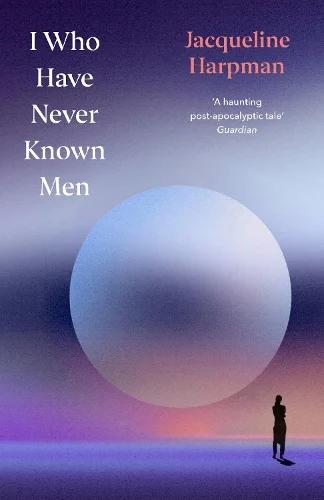
Truth’s story in the media, school and general representationisoneofdiscovery,whereourcurrent truths only exist because they have been scientifically proven. I found a very interesting exploration of truth in the modern classic “I Who Have Never Known Men”, by Jacqueline Harpman. The premise of the book is based on the fact that the narrator has never grown up in our world, thus she has no knowledge of it or the entire opposite sex, since she grew up in a bunker only with forty other women. Because the women lack normal social structures, many things that we treat as obvious truthsneverfullyformforthem
Throughout the book, one of the main philosophical themes which emerges is that truth is formed or distorted through culture and a sharing of knowledge, which is morphed by individual situations. In the book, our narrator is the youngest; the only one to not have experienced our world, and relies purely on the other women to teach her We see that the truths- the memories and the experiences that survive the retelling and reach our narrator-areonesofhopethatourprotagonisthas
not and will never experience, but yet are what she is most curious about. However the only truths that seem to prevail are primal and non-social; ones of hunger, survival, curiosity, loneliness and awareness oftimepassing.Althoughthetruthisrevealedtoher by the other, remaining women, it is still one of basic survival. The only socially constructed truth is hope, but she seems to not to have discovered, but instead allowed herself to feel it, only initially however.
During the book, more information is gradually revealed, but confusion persists and the book never resolves this, instead leaving us with a variety of questions; of what that world was, how it worked etc. However, the truths the other women tell her of the other world seem hugely insignificant and irrelevant, such as even the basics of counting. Of course, we all want to be intelligent, aware and continuously discovering new ideas due to our innate human curiosity, but it seems to have no valuetoher
This idea of truth seems to be as a social construct, or even something that, for regular society, is learnt rather than directly explored.Truths seem to be only truths when they are relevant to us or impact us For example, people believe in religion, a truth to them, either because it was taught, an event which seems explained only by divine intervention or because they were exposed to it and needed hope. All of these ideas ultimately come back to the person, their need for it or not and their want for it or not. The book lends itself to the idea that truth is both constructed, discovered and revealed but is only relevant because the person themselves decides to believe in it, to follow it and to try to act in accordancewithitforhoweverlongtheybelievein
it. Because even though there are or seem to be objective truths- such as our earth is round- there still remains so much doubt and conspiracy surrounding the truth; number one, we are all affected by its relevance, but it also is something that must be explored individually, with it being almost impossible to force a belief on to someone for a long period of time Truth therefore, for the majority,becomessomethingindividuallybuilt.
LiviaMeisels-Neufeld,Year10
Imagine that you were in competition with your friend to get a job After a meeting, your boss takes you aside and breaks the news that your friend has gottenthatjob.Youthenreturntoyourworkandsee your friend place 10 coins in their pocket so, you asserttwopreposition,that:
1)Yourfriendisthepersonwhowillgetthejob.
2)Thepersonwhowillgetthejobhas10coins in theirpocket.
This is clear to you, as you were told that your friend will get the job and you saw them put exactly 10 coins in their pocket so you have a true belief that you accept and you have adequate evidence to proveit,soitisjustified.
Now, later that day, you enter another meeting with your boss where they unexpectedly announce that you, in fact, got the job So you were not correct with your assumption. Randomly, you decide to look inside your pockets and realise that you have 10coinsinyourpocket Soyouwerecorrectinyour secondassertion.The personwhogot the jobhad10 coins in their pocket but it happened to be you and not your friend. Therefore, your justified and true beliefwasnotknowledge.
This is one of the Gettier cases, brought to light by Edmund Gettier, an American philosopher who wrote about this problem in 1963, in his article called: "Is Justified True Belief Knowledge?" which challenges the definition of knowledge as a "justified true belief" that dates back to Plato's Theaetetus. This was very controversial and heavily criticised because the definition of knowledge has been accepted for generations and it alters how we could answer any possible question. If we cannot prove what is actually knowledge then can we definitivelyfindsolutionsforanything?Oristhis
definition just not specific enough? Because without a further specified definition knowledge could be alteredbyluck.
For example, if you look at a clock that says 2:15 would you assume that it was actually 2:15? If you did and it happens to be 2:15, but the clock has been broken for days, your belief is justified and true, but it is not knowledge. This is clearly luck of the draw, because the clock could be slightly off and you would be none the wiser. Even though this would alter the course of your day, leaving 15 minutes early for every activity and missing out on a whole quarter of an hour where you could have done something meaningful. Obviously, this is an exaggeration, but it could be important when doing somethingdangerous.Suchas,ifyouwereonaboat and the sonar detected a small piece of litter that is directly next to you, whilst in actuality it was an iceberg, the results could be catastrophic. So, if you made the conclusion that there is an object directly next to you which is justified, true and knowledge, you would believe that it was small rather than giant. This clearly shows that truth and knowledge are separate and both should be doubted, as well as if knowledge can be properly defined it should remove the aspect of luck that is intertwined within it.
In addition, another aspect of beliefs is false lemmas which are defined as a false belief or premise used as a stepping stone to reach a conclusion that happens to be true, often resulting in a "lucky" justified true belief that falls short of actual knowledge.An example is this: I think that the earth is round because I felt the earth move spherically. If we add the aspect of there being no false lemmas in thedefinitionofknowledgethenitcannotbe
inferredfromanyfalsepremisesorassumptions.
Thereisalsothequestionofwhetherknowledgethat has no false lemmas, is justified and true and has fevers (because it mainly suggested that diets and warmth could help), otherwise it would have not beenbelievedforsuchalongtime.
In conclusion, the gettier cases prove that not all justified and true beliefs can exist as knowledge and it would only be possible for all justified and true beliefs to be knowledge if there was a fourth condition that removed the aspect of luck. Even after decades of debates, there is still no consensus on how we can prove knowledge as eternal. Thus, doubt shouldalwaysremainasanessential aspect of ourthinking.
AliciaSevanotDavis,Year10

Doubt has a good reputation. We are often told that questioning things is the beginning of real thinking. Scientists doubt old theories before replacing them with better ones, journalists doubt claims before accepting them as facts, and philosophers doubt everyday assumptions in order to see whether they actually hold up. Because of this, doubt often feels like the path toward truth If we keep questioning what we believe, it seems reasonable to think that eventuallywewillarriveatsomethingthatcannotbe questioned any further. Yet there is a strange problem hidden inside this idea. If doubt is so valuable,whydon’twedoubteverything?
At first, that might seem like the most honest thing todo Ifbeliefscanturnouttobewrong,thenmaybe the most rational thinker is the one who questions every belief they have Philosophers have sometimes pushed doubt in this exact direction. They ask whether the world around us is real, or whether we might be dreaming without realising it These kinds of questions sound extreme, but they reveal something important. The moment we try to doubt everything at once, the whole idea of doubt starts to feelunstable.Itbecomesdifficulttoexplainwhatthe doubtisactuallyabout
This is the problem that interested the philosopher Ludwig Wittgenstein He suggested that doubt only works when certain things are already taken for granted In order to question something meaningfully, there must always be a background of beliefs that stay stable. Without that background, the act of doubting itself begins to fall apart Doubt is not something that can exist completely on its own; it depends on a framework of language and shared understandingthatweusuallydonotnotice
A simple example helps show why this matters Imagine someone sitting at a desk and saying, “I doubtthatthetableinfrontofmeexists.”Atfirst
this sounds like the kind of dramatic philosophical doubt that people often discuss. But if we look closely, the sentence already relies on quite a lot.The word“table”hasameaningthatboththespeakerand the listener understand They know what counts as a table, and what it normally means for something like that to exist. If none of those things were already understood, the sentence would stop making sense The doubt only works because some things are not beingdoubted
Wittgenstein believed that this background of shared understanding is what allows language to function at all. Words do not get their meaning from definitions alone. Instead, they gain meaning from the way people use them in everyday life We learn what a “table” is by observing them, using them, talking about them, and recognising them in different situations. Over time the meaning becomes stable enough that people can communicate without constantly explaining themselves Language quietly carries thousands of assumptions about the world, and most of the time we rely on them without even noticing.
Doubt takes place within this context When someone questions something, they are usually questioning a small part of a much larger framework that remains stable A scientist might doubt a particular theory, but they do not doubt the meaning of the words they are using or the basic logic that allows them to reason. A historian might question whether a certain event happened in a particular way, but they are not doubting the existence of history itself. Even ordinary disagreements depend on a sharedsenseofrealitythatbothsidesaccept.
This is why Wittgenstein thought the idea of doubting everything was ultimately misleading Doubt needs something solid to push against. If we triedtoquestioneveryassumptionatonce,the
language we use to express those doubts would lose its footing. Words would stop having clear meanings, and the very questions we were asking would begin to collapse. Instead of discovering a deeper truth, we would simply lose the framework thatallowsustoaskquestionsatall
Seen this way, truth and doubt are not opposites They are connected in a much more complicated way. Doubt can challenge beliefs and force us to examine them more carefully,but it canonlydothis because certain things remain steady in the background. Truth, in this sense, is not simply the final answer that appears once all doubt disappears. Rather, it is part of the structure that makes meaningfuldoubtpossibleinthefirstplace
This does not mean that we should stop questioning things Doubt still plays an essential role in thinking, learning, and discovery. But Wittgenstein’sinsightsuggeststhatdoubthaslimits. The most radical form of doubt, trying to question everything at once, turns out to undermine itself. In order to doubt anything at all, we must rely on a shared world of language, meaning, and basic assumptionsthatwerarelystoptoexamine. Perhaps that is the real relationship between truth and doubt. Doubt tests our beliefs and prevents them from becoming blind certainty, but it cannot exist without a foundation that remains temporarily secure. In the end, the search for truth may not begin with doubting everything, but with recognising the quiet background of things we alreadytrustenoughtoquestiontherest.
GloriaSchvorob,Year10
Have you ever heard the iconic line, “Mirror, mirror on the wall, who’s the fairest of them all?” uttered by an infamous Evil Queen? What if I told you that was never the line, that this phrase from your childhood never actually existed? Well, that is exactly the case, because the Evil Queen actually says, “Magic mirror on the wall...”.The fact that we all remember the line as something else entirely is due to the Mandela Effect. This phenomenon is defined as the occurrence of large groups of people sharing the same false memory. It often presents itself as misrememberings of events, sayings like the aforementioned Evil Queen Line , and images. So, why does this happen? There are three main causes for this. Firstly, there is confabulation, also known as the memory aspect of schema theory Thisistheprocessbywhichthebrainfillsingapsin your memory with new, often false, information. Secondly, there is suggestibility, which is when repeated statements from others can alter our own memories or create entirely new ones This is enabled largely by social media, which facilitates repeated spread of false statements, like misquoted movie lines The final aspect contributing to the Mandela Effect is the cognitive function of interference Many studies have shown that our memories consistently disorder and disrupt one another through interference, which then results in false memories So, now you know what the Mandela Effect is and why it exists, but what actual impactsdoesithave?
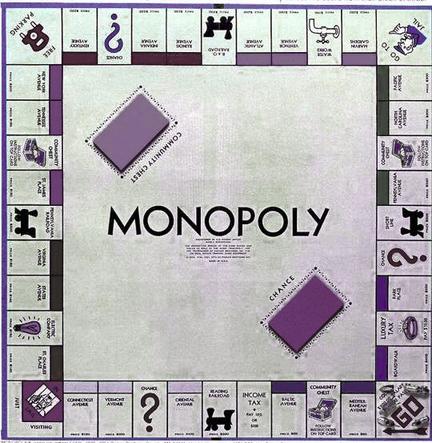
into ours, causing collective false memories. While conspiracy theories are not inherently harmful, they can often enable radical views which can lead to controversy and polarisation. Famous pop culture references are constantly being thrown around From, “Luke, I am your father” to “Fly, my pretties, fly” (neither of which were said by the nefarious or any other characters) The Mandela Effect has created many iconic moments. Furthermore, these avidly recognised moments have also promoted certain programmes and brands. For instance, the world famous Monopoly Man, despite never having had a monocle as many believe, has enhanced the board game industry and become a global figurehead. However, in creating these iconic moments, the Mandela Effect alters and thereby undercuts the true events, reducing their impact. Nevertheless, although they are false, many famous moments have fostered an enormous sense of community and shared experience. Therefore, in pop culture, the Mandela Effect can actually be a largelypositivephenomenon.
One of the most prevalent instances of the Mandela Effect is in pop culture Platforms like Reddit, which can serve as a means for validation of false memories, allow for groups of people to essentially fall down rabbit holes together This often leads to the propagation of conspiracy theories. For instance, many people attempt to explain the Mandela Effect bysuggestingthatalternaterealitiesareslipping
Contrastingly, occurrences of the Mandela Effect in historical events are far more dangerous. One of the most famous examples of the Mandela Effect is, unsurprisingly, the death of Nelson Mandela himself. Although Nelson Mandela passed away in 2013, many claim they have a vivid memory of the South African president dying in prison in the 1980s, with people recalling funeral footage and more This incorrect concept of a historical event has many implications. False memories of the past can undermine the truth of serious historical events For instance, if everybody misremembered the cause or circumstances of a war, it would erode the gravity of tragic events and compromise the warnings against large-scale combat that wars issue. Moreover,theMandelaEffectdirectlycontributesto thespreadofmisinformation,which,inturn,hasa
wide variety of impacts. Misinformation can frequently encourage unsafe decisions, often regarding health; for instance, the outrageous notion that vaccines cause autism. Furthermore, misinformation fuels division, polarising public opinion, inciting violence, and causing distrust in publicinstitutions.Therefore,regardinghistory,the MandelaEffectcanbeveryprecarious,especiallyas it can potentially be weaponised to intentionally alter history, which I will expand on later. Overall, while some examples of the Mandela Effect in history may not be damaging to wider society, like h i b d d h f h k f his
p y , p p y caused by the repetition of false information that alters an existing memory. Explored in the novel 1984,wheretheprotagonistworksattheMinistryof Truth rewriting historical records to observe the regime’s desired version, the modification of history can be utilised as a political tool to exert power and control over a population This can be amplified by herd mentality and the tendency of people to think and behave in conformity with others in a group With the technological revolution we currently exist in, and a growing global dependence on AI, which can be manipulated and is known to hallucinate, the threat of the Mandela Effect as an instrument of hegemony is ever growing. Therefore, the Mandela Effect, as it essentially causes people to believe incorrect versions of facts, has the potential to be incrediblyprejudicial
Overall, in pop culture and minor historical events, the Mandela Effect is a harmless and fascinating occurrence that, in some instances, can even have a positive impact. However, in the case of affecting major historical events in tandem with potential future implications of an induced Mandela Effect event, this cognitive occurrence is baleful. Therefore, it is imperative that we discuss and spread awareness about the Mandela Effect to foster media literacy, healthy skepticism, and to highlight thefallibilityofcollectivefalsememory
Truth: the one thing we know is true, but is it? Does truth even have a meaning? Truth is simply what we perceivetobecorrect.Cantruthsleadusastrayfrom the real world of doubt? A truth is something you know, however can you really know anything for certain? Simply imagine something, a so called fact; I regret to inform you that the fact is actually false, using the very well known quote stated by Socrates: “The only thing I know is that I know nothing”, we can deduce not only foundational rationalism but taking this quote at face value it demonstrates that nothing is true and nothing is actually known Everything is philosophy until proven what we considerfact.
How do we prove something? Well, we prove things based on what we think we know, however we know nothing. We prove things based on our theories of the world, so automatically everything is what we call philosophy Humans have created a domino effect on truth as we’ve based everything off of the first truth and if something applies to that truth then it must apply to the next, in order for it to be considered true. Iif we doubt it to be true then we believeit’sfalse
Perception and truth are both very similar topics - no single person's perception of their lived experience will ever be the same, like LudwigWittgenstein said “The limits of my language are the limits of my world’.Anotherpointhemakesisthatwordsarejust painting images in each other's heads, therefore if words are not real then why is the truth true? Basing the truth off of Ludwig Wittgenstein's theory we could deduce that if no word is real then truth isn’t either, but that’s referring to truth as mere word of mouth; truth is much more than that, truth is the foundationsofhumannature,regardlessoflanguage
All animals naturally doubt things based on instinct as it's essential for survival So this proves that truth and doubt are natural and are actually quite accessibleyetalsosubjective.Forexamplesome
people perceive spiders to be scary and harmful, however the spider potentially perceives us to be harmful because of our huge appearance and threatening behaviour Across the animal kingdom and within humans, notably across different cultures, races and religions, we believe difference is a threat without properly assessing a situation. However this isn’t necessarily wrong as we are programmed to do soforsurvival.
The next point is that whenever truth is doubted, emotion and opinions start to reveal themselves - this can lead to countless arguments and disagreements Why is truth so subjective? Well truth has come from something, whether that be innate thinking or a first truth that was spread into many variations. The chances are that if there was a first truth and they were split into many different variations, then that indicates that the first truth has been bent and twisted through different people's interpretations of everything If innate instinct leads to many different peoples thoughts then we can settle on the fact that there will never be one certain truth and that people's opinions,whicharedevelopedandinfluencedbyeach other, will have the free will to draw their own conclusions.
Truthshidecomfort,withoutdoubtourmindcanbeat ease, since it’s one less thing for the human mind to process.Although the mind is driven by curiosity and knowledge-seeking behaviours, it can become overwhelming and the mind begins to search for something to comfort itself in a world of unknown possibilities. Without constantly doubting our own theories we can find inner peace in the possibility for conclusion and what we are spoon fed. Doubt gives the brain a sense of fear. In a world of undisclosed complexity the brain can easily be cast adrift from any train of thought, feeling or action. So truth is an idealistic concept for humans to seek solace in unrevealed knowledge. Truth is also an innate protection mechanism set by your brain for your survival. Truth and doubt - like all things - are not real, as language is a made up concept that paints pictures in your head and is highly subjective, Truth isthegameofperception…
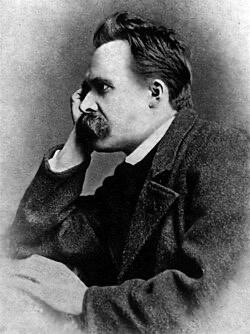
Friedrich Nietzsche wrote about doing philosophy “withahammer”,whichexpressesthewayinwhich he aimed to shatter many of the Western philosophical tradition’s beliefs. In particular, he challenged the assumption that we can use reason to discoverobjectivetruthsabouttheworld
Immanuel Kant had an important influence on the development of Nietzsche’s perspectivism. In his Critique of Pure Reason, he argued that it is impossible to know about the world as it is ‘in itself’. This is because we perceive things through a priori intuitions of the mind, such as space and time, which are not intrinsic to things in themselves Space and time are features of the phenomenal world (the world of experience sensed by our bodies) rather than of the noumenal world (the world in itself). We cannot perceive things separately from these intuitions, which means we cannotaccessthenoumenalworld.
Nietzsche also believed that the objective reality of the world is out of reach. He argued that perspective is “the fundamental condition” of life, because all knowledge is filtered through our needs, values and viewpoints. He accused past philosophers of unwittingly pushing their prejudices onto others through their work, writing that “the greater part of the conscious thinking of a philosopher is secretly influenced by his instincts, and forced into definite channels”.
For example, Nietzsche held that an inability to enjoy life had led rationalists, such as Plato, to demote the importance of living below that of thinking Plato believed that through reason we can access the Realm of Forms: a world of immutable essences of all things In his view, the things we experience through our senses are mere reflections or shadows of the Forms. This theory renders the ‘apparentworld’unimportantincomparisonwith
the ‘real world’of intellect, which Nietzsche saw as an expression of Plato’s prejudice, thus showing that objectivetruthcannotbeaccessedthroughreason
Not only did Nietzsche aim to show that the noumenal was unattainable, but he also wanted to abolish the concept altogether as it distracts us from building meaningful earthly lives The fact that the “true world” is out of reach makes it “a useless idea that has become quite superfluous”. In Thus Spake Zarathustra, Nietzsche famously stated that man is something to be surpassed. When we dissolve the notions of objective truth and the ‘real world’, its separation from the ‘apparent world’will deteriorate so that the distinction is no longer the obsession of philosophers This will be “the end of the longest error; mankind’s zenith”, making way for the Übermensch (Superman): a way of being that affirms life and creates meaning on Earth rather than through the hope of other-worldly fulfillment. Put another way, “To blaspheme the earth is now the dreadfulest sin, and to rate the heart of the unknowablehigherthanthemeaningoftheearth!”
Thus, Nietzsche’s warning about the myth of objectivity is clear. However, while the influence of perspectiveinphilosophycanmisleaditsreaders,we must not ignore the possibility for perspective to make a positive contribution in our pursuit of knowledge. Nietzsche proposed that we utilise the differences between perspectives to elucidate their limitations, thereby making possible an asymptotic approach towards truth. This is an important but often overlooked element of Nietzsche’s perspectivism It means that perspectivism does not lead to relativism, aligning with our intuitions that some things must be more true than others even if wegrantthatnothingisabsolutelycertain.
Nietzsche’s account of the inevitable influence of a philosopher’s perspective on their work is a valuable reminder to be curious about the prejudices which may have shaped a given text. The importance of doubt and questioning also extends beyond philosophy,especiallyinthetwenty-firstcentury,as
a result of the prevalence of misinformation. In addition, we can use Nietzsche’s perspectivism to qualify the claims made by scientists While they are widely regarded as discovering objective truths, and Iagreethatscienceisoneofourmostpowerfultools in the pursuit of knowledge, the way in which scientists build on and replace each other's theories suggests that even in rigorous experimental contexts, the full explanation of the world is always slightly out of reach. Nietzsche’s emphasis on the grounded human ideal is also relevant to us as British society becomes increasingly secular. Affirmation of life, individualityandself-createdvaluesmighthelpusto lead meaningful, grounded lives in the modern world.
LuisEscobar,LVI
Since the beginning of humanity's timeline, knowledge has been the thirst that has propelled us forward. Those most revered in the society of ancient Greece were its philosophers, our very own ‘lovers of wisdom’. We became more closely alignedwiththisconstantsearchforprogressionand truth in the emergence of the enlightenment period in the 17th and 18th century, theAge of Reason that transformed politics, philosophy and science; the almost rabid revolution to question previously held truthsandsearchdesperatelyfornewanswers.
This sentiment is one that has followed us into the modern day; phrases like ‘what you don't know can’t hurt you’ are condemned in a betrayal of the quality which humanity seems to treasure so completely; its curiosity. Ingrained into the systems of society are the values of a tireless search, a culture for constantly aiming higher, to get closer to the truth It's in the lives of those in developed countries which are shaped around the structures of our education, in our politics often oriented around the penetration of a deliberate veil of falsity, such as PresidentTrump’sso-called‘TruthSocial’.Amongst the positions now most rewarded are those for the perpetuation of truth including the justice system
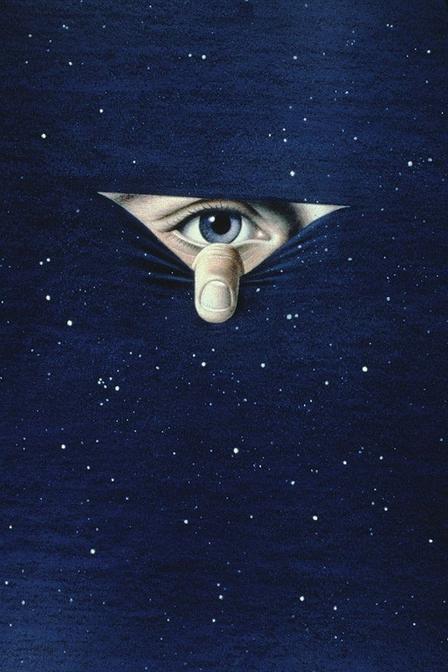
All of this is largely viewed as a noble cause; an asset and a gift which sets us apart from the rest of the natural world. The ability to be ever curious is a beautiful thing, truly- it enables us to think and feel more deeply, understand and remain in awe amidst thespectaclethatistheearthanduniversearoundus, it brings with it a sense of self betterment and accountability. From a biological perspective, the United States’ National Library for Medicine conducted a study which found that ‘within persons, a lower level of ‘need for cognition’’, taken here to meanadesiretounderstandandmakereasonablethe experiential world, ‘predicted higher future levels of anxiety and depression symptoms, and vice versa’onsimplerterms,thiscuriosityissomethingweneed to sustain ourselves, not only to progress. From a spiritual and moral perspective, the quest for truths around God and His teachings has consistently been associated with piety, a bid to close the epistemic distance which we feel has haunted us throughout our history. It becomes no surprise, therefore, that we so elevate the pedestal of truth and its pursuit, andinreturnsanctionthesinofcomplacency
However, there is undoubtedly a danger and ruthlessness that lurks behind this constant quest for the truth. Proverbs and myths warn of the curiosity thatkills,andapunishable,Prometheantransgression which accompanies it. We see examples where truth, often a religious truth, is seen as a justification for violence and a cause for forced conformity, examples such as colonialism where a dominance over unexplored uncertainty breeds atrocious acts of exploitation. In the media, Paparazzi- an insertion to expose the lives of others as an extension of the ‘truth’- becomes ever more intrusive and unethical In science, we subject animals to our morbid curiosity in cruel experiments, probe ceaselessly into space to uncover, and no doubt encroach into, what’s there. All of this as an accumulation poses the question of the morality to our undying quest- a
question that we’re not oblivious to, as a recurring theme in film and literature, such as the familiar ‘The Strange Case of Dr Jekyll and Mr Hyde’ and films like the ‘Avatar’ saga. Even the very fact that we write media about our sins proves we recognise them, yet we never learn from them, we never stop reaching- so why? Is it our own personal greed, a self gratifying thrill that comes with the awe of understanding? Or an effort for self-soothing, to ward off the terror of the unknown? Is it something hard wired into us as the species that never stopped evolving? With either angle, the morality of it all remains up for debate, possibly even muddied by the question of autonomy over our nature. The problem is something that is almost impossible to approach, with its largely situational nuances and the complexity of our relationship with the truth- on one hand needing it, and also treasuring it against stagnation Andwhilstwesearchwithintheclamour of our own voices, some protesting and some so vehemently defending the sanctity of our quest, the great machine of humanity continues unerringly on its path - the question of whether its one of destruction or betterment, though, remains to be seen.
AnnaPonticos,LVI
Billions of pieces of information are shared by vast amountsofpeoplearoundtheworldeveryday Some of which will be true, and some of which will be false. However, there is often a middle ground between these two opposites where information is twisted and used to create or manipulate people’s thoughts, views, and opinions on any subject that the puppeteer desires The extent to which the facts are warped is up to the individual, but, once these ‘truths’ are presented to others, their effects are uncontrollable and out of anyone’s hands; once a piece of information is out there, no matter how correct or factual it is, there is no measure of how muchdamageitcancause.
Throughout history, we have seen how large populations are controlled by their rulers through violence, fear, and rules This includes the period that covers the reign of the Nazi regime in Germany (1933-1945), where we can see all three of these elements used as a means of power However, the most interesting tactic that Hitler decided to utilise was manipulation and distortion of the facts presented to the German public. The Nazis implemented this mainly using propaganda, which hadmanydifferentpurposes Oneofwhichbeingthe slandering of Germany’s enemies to the German people, where the Nazis would exaggerate minor events (like smaller Allied mistakes) and portray them as atrocities or massive failures, which caused the Germans to think of the Allies as monsters and villains. For example, there was a bombing raid by the Allies that hit military targets but caused some civilian damage, yet it was presented as the deliberate mass murder of innocent Germans. Another way the Nazis would slander theAllies was the omission of context where facts that could make the Allies look reasonable or justified were deliberatelyleftoutinpropaganda
Theseexamplesshowhowthetruthisoftendistorted to fit a specific party’s wants Furthermore, propaganda was also used to present Germany as a victim because the Nazis would blame other nations for Germany’s problems (eg economic difficulties after World War I), exaggerateAllied aggression and portray treaties as unfair oppression. This changed the way Germans viewed other countries and equipped the Nazis to strengthen their control over the population by reinforcing the idea that Germany held moral superiority. Joseph Goebbels (the leader of the Ministry of Propaganda under Hitler) also used racial and ideological narratives that depicted Jews as an existential threat. They were blamed for Germany’s economic struggles, loss in WW1, and supposed conspiracies to dominate the world. Communists and socialists were also framed as dangerous outsiders who were subversive, violent and a threat to Germany’s order. Propaganda was also used to boost morale in Germany by turning smallsuccessesintowhatseemedlikehugevictories, giving Germans the false impression that their country was defeating theAllies during wartime.All these ideas promoted through propaganda were the result of deliberately distorted truths that altered perceptions and helped the Nazis maintain control overthepopulation.
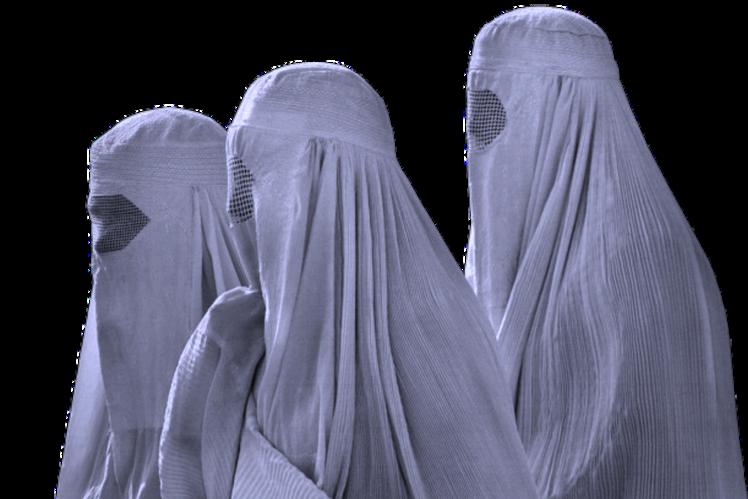
Manipulating the truth to suit leaders’ views is not only seen historically but also in the modern world. Anotorious example of this can be seen through the Taliban, an Islamic fundamentalist political and military group in Afghanistan. The Taliban take passages from religious Islamic texts (mainly the Qur’an and the Hadith) and interpret them in extremely restrictive ways while ignoring broader context For example, some Qur’anic verses give women rights to work, own property, and participate insociety,buttheTalibanfocusinsteadonverses
about modesty, male guardianship and gender segregation. This creates the illusion that their rules are divinely mandated rather than a specific interpretation shaped by culture and politics. By presenting these selective interpretations as religious truth, the Taliban can maintain tight control over the Afghan population. Furthermore, the Taliban claim that ignoring their rules will lead to moral decay, societal chaos, or divine punishment. This exaggeration creates fear among citizens and makes obedience appear necessary rather than optional For example, allowing women to attend school or work is portrayed as corrupting family structures and defying God’s will. This psychological manipulation encourages people to accept strict restrictions without questioning them Additionally, the Taliban describe Western culture, foreign aid organisations and modern education as threats to Afghan society. By portraying outside influence as an attack on religionandtradition,theycreatean‘usversusthem’ mindset that strengthens loyalty to Taliban authority and discourages critical thinking. The repetition of these ideas over time makes their selective interpretations appear like an unquestionable reality rather than a political agenda, showing how controlling information can strengthen power and maintaincompliance
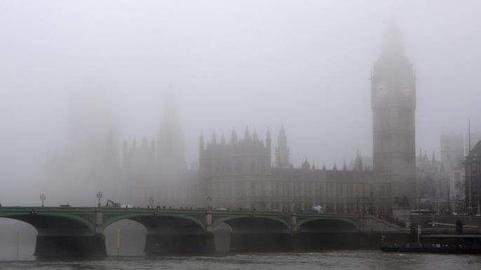
Similarly, governments may occasionally delay releasing certain information to the public in order to prevent panic or confusion while a situation is still being understood An example of this occurred during the Great Smog of London in 1952, when a thick layer of pollution covered the city and caused severe health problems Evidence suggested that many people were dying from the smog, yet officials delayed public warnings and information because theyfearedpanicandeconomicdisruption.Whenthe scale of the disaster eventually became public, it caused anger and concern among citizens Situations like this show how information is sometimes withheld temporarily in order to manage public reactionwhilesolutionsarebeingdeveloped
However, the management of truth is not always used negatively. In some situations, altering or simplifying the truth can help maintain stability or encourage positive behaviour For example, parents sometimes tell children small ‘white lies’, such as saying that eating carrots will help them see in the dark. While this is not literally true, it encourages children to eat healthy food and can lead to a beneficialoutcome
In conclusion, the management of truth plays a powerful role in shaping societies. Throughout history and in modern times, leaders and institutions have used distorted information to influence public opinion, strengthen authority, or maintain stability. While this power can be used to manipulate populations and enforce control, it can also sometimes be used to promote safety or order. Ultimately, the impact of managed truths depends on the intentions of those controlling the information andtheresponsibilitywithwhichthatpowerisused.
AnushkaRana,Year9
Before considering the possibility of impartial journalism, a crucial question to answer is how bias is portrayed through writing and why this occurs. Prejudice in journalism presents itself through the omission of key facts or ideas, which can trivialise certain points, which may otherwise be significant in the understanding of the event reported Bias can also be seen in the use of words that denote specific and opinionated ideas, which may often have political connotations. This bias is a result of many factors,includingpsychological,suchasthewriter’s personalhistorywhichcansubconsciouslyinfluence their views. Furthermore, the demographic of the audience that the journalist is aiming to reach often influences the perspective of the story, since readers are more likely to affiliate with news that substantiates their existing views, known as confirmationbias.
Fundamentally, there is no such thing as impartial journalism. The basis for this statement is that journalists are merely human and are consequently subject to the same universal right to opinion as everyoneelse.Ashumanbeings,weinherentlyform our own view on any situation, ranging from forming opinions on a friend’s outfit to forming one’sownjudgementonawarinajournalismpiece. The personal experience of the writer is often hugely prominent in their work and somewhat inescapable since there is a limited range of perspective in the field of journalism.This is caused by the lack of diversity in many newspapers which, despite the positive changes that have occurred in recent years, remainsa problem,withrecent studies such as that of the Reuters Institute of Journalism finding that approximately 90% of UK journalists being of white ethnicity. Furthermore, the words used by the journalist often have connotations that reflecttheirinnerviews,whetherdeliberatelyornot.
For instance, “freedom fighters” and “terrorists” can refer to the same people but denote hugely contradictoryideas
Undoubtedly, many journalists claim to report from “all”sidesofthestory,yettherealityofthisclaimis highly infeasible. It is surely inconceivable that a writer could incorporate every statistic, every point of view and every life affected into their writing. This leads to the question of which details to omit, causing the writing piece to be biased, even if multiple views are taken. For instance, journalism covering a war is likely to detail the effects on civilian lives, the political implications, perhaps even the environmental consequences, yet there is no chance that the writer could include an overview of all effects, partly due to a lack of accessible information.

While journalism may be biased, the question remains whether or not it ought to be this way. Opinion pieces, particularly critical ones, are extremely popular with the public, allowing the paper to sell more copies. On the other hand, impartial journalism would allow the public to form their own views on a situation, rather than merely reading and accepting the opinions of the writer Furthermore, it would act against the confirmation bias that causes so many people to only accept one wayofthinkingandneverexplorealternativeviews
Therefore, in an ideal world, journalism would merely provide facts and information, rather than forcingopinionsontothereader.
Every newspaper takes a different stand on the extent of bias shown in their coverage, mostly seen through the underlying political views that determine the narrative of the stories For instance, in the UK, papers such as the Daily Mail are notoriously right-wing and this political ideology is often prominent in their stories, which emphasise nationalism, Conservative policies and often detail celebrity news over significant world events The reason behind this bias is that the Daily Mail targets a middle-aged and conservative demographic and right-wing editors such as Paul Dacre hold considerableinfluenceoverthepaper’scontent.
This paper is just one example of the longstanding use of newspapers in political propaganda. Throughout history, propaganda has been spread through biased journalism, such as the Russian newspaper Pravda, which, translated, means Truth, which was an outlet of communist propaganda during the Cold War and continues to be published today
In the future, bias in journalism is highly unlikely to change It could be argued that AI is the future of writing and does not possess the ability to form opinions in the way that humans do and therefore will be capable of providing impartial journalism. This argument is flawed, however, as journalism still requires some level of bias in order to appeal to thetargetaudienceandthereforeitwillbenecessary for AI to replicate human opinion. Furthermore, AI itselfhasbeendesignedbyaparticulardemographic of largely American men, who project their own views into the algorithms. This is particularly problematic as people are less likely to question the motives of an AI piece of writing than an article with a named author Therefore, the enduring prejudice of journalism is likely to continue well intotheforeseeablefuture.
In today’s modern world, saying "I don't know" can feel like an admission of failure Uncertainty is treated as a liability: if someone doesn't have a further opinion on the global economy, local politics, or the latest viral scandal, they are often assumed to beuninformed,orworse,indifferent.However,ifour goal is to find the truth, "I don't know" might actuallybethemostpowerfulphrasewecanuse
Tostartoff,Ithinkit'simportantweunderstandwhat "I don't know" actually means, or rather, connotes. The literal definition is to "lack the facts or knowledge to answer," but the phrase can take on different meanings. I've started breaking down the effects of "I don't know" into three main points, which together demonstrate how this phrase of doubt canbringusclosertothetruth.
First, it separates fact from assumption. It allows you to draw a line between your verified evidence, facts and speculation This is a practical application of epistemic humility the recognition that our knowledge has limits. By finding out what exactly it is we are uncertain of, we protect ourselves from the ‘Dunning-Kruger effect’, where people with little information overestimate their ability When you say "I don’t know" in this context, you aren’t giving up; instead, you are making sure you don't believe in a foundation of assumptions By being honest about where your ‘map’ ends, you can ensure that any further action you take is based on verified facts rather than guesses. Second, it helps us avoid bias. Social media often forces us to use mental shortcuts, which are ways our brain quickly forms opinions based on what’s on our ‘side’. By pausing to say "I don’t know," you effectively mute the ‘noise’ and opinions from that side to see what the facts actually show. This is specifically helpful for fighting confirmation bias which is our tendency to only noticeinformationthatfitswhatwealreadybelieve.
Studies suggest that people who can delay their judgment are less likely to fall for misinformation or viral trends. This delay creates space in our mind needed to tell the difference between a majority opinion and the truth, allowing us to process informationcarefullyratherthanreactingemotionally.
Finally, it makes us more open-minded. When we focus on looking smart, our ego takes over to protect our ideas, even if they are flawed.This is often driven by what Sigmund Freud called the superego which represents moral standards and conscience This internal judge then pressures us to meet social expectations and avoid the "shame" of being uninformed However, thinking like a beginner removes the pressure to be right, which actually makes it easier to find the truth This openness makes us more willing to listen to different views and new datathatapersonwhohassuccumbedtoconfirmation biasmightignore
Scientific progress depends on this mindset, every major discovery in history started with someone admittingthattheotheranswersweren'tgoodenough. Take Copernicus, for instance, who challenged over a millennium of certainty by arguing that Ptolemy’s Earth-centred model was too flawed to be true, proposing that the Sun, not the Earth, was at the centreofthesolarsystem.Bynotbeingclose-minded, you remain flexible and your opinions are not set in stone, meaning you are less likely to be stuck with a falsesenseofcertainty.
In conclusion, a person who admits they "don't know" is often more reliable than someone who always has an answer Embracing doubt is not a sign of weakness but a sign of thoughtfulness. While the "expert" is busy defending their beliefs, the person who is comfortable with uncertainty is free to explore, learn, and grow. Humility and doubt are necessary to find thetruth