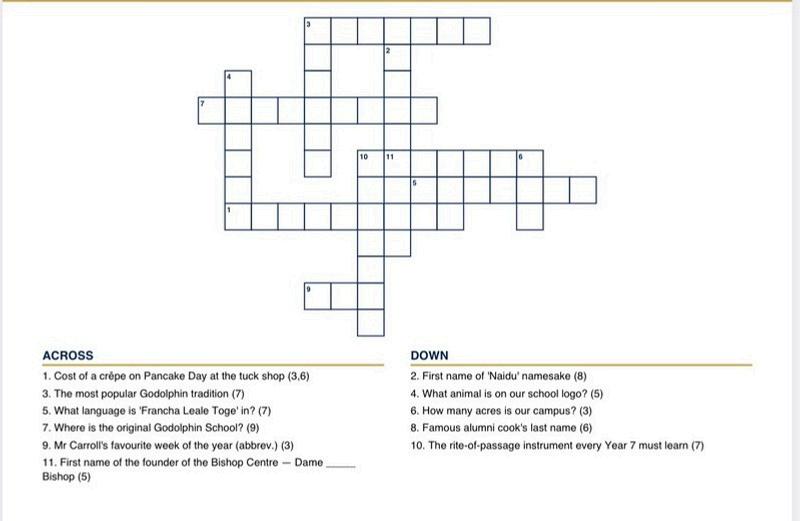
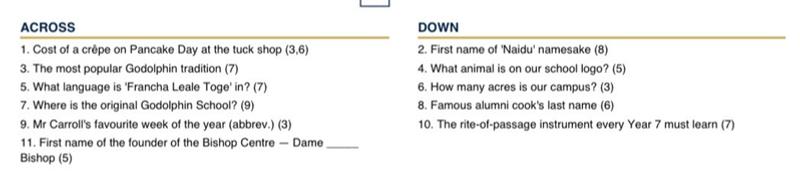
With some teachers, coins, and given away mass balances!
See page 15
Hear about the brand new Learn more about the
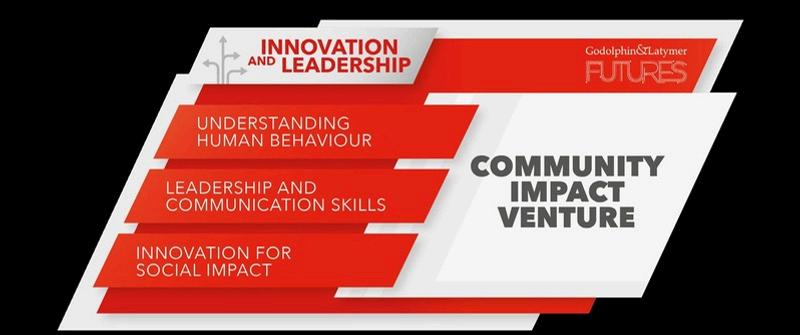
Wondering what is the PHONE BAN infamous on page 12 INNOVATION LEADERSHIP AND course designed by Mr Carroll himself
VOLUME 2 - SPRING 2026
“I'M NOT CONVINCED BY THE ARGUMENT THAT THE VOTING AGE SHOULD BE REDUCED.”
To Vote or not To Vote? : An Interview with Mark Field
Politics in the UK is ever-changing and it’s hard to keep up. It is probable that during your morning scroll or even better your
skim of the daily newspaper, headlines regarding the decreased voting age may have popped up on your screen. Before you rushed to swipe away the notification or close the newspaper, you may have caughtamereglimpseof anumber:16.
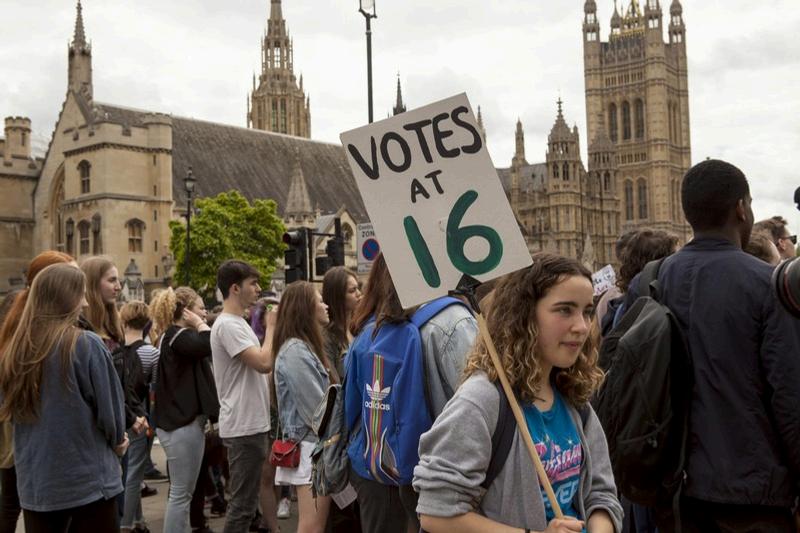
The announcement came last July, while most of us were frolicking and skipping through fields stress-free, it was announced that the voting age for the next general election had been reduced to 16.Therefore, in the near future (2029), current Year 8 Dolphins will be ticking ballot papers, doingtheircivicdutyandhavingasayinhowour countryisrun.
Naturally, people have diverging opinions on the act. Whilst many 16 year olds believe they can decisively cast their vote in the midst of GCSE hysteria, studies show that many teenagers feel unprepared or that they lack the knowledge to make an informed decision in the upcoming vote. But who knows? If we can survive an exam season, I’m sure we can survive past-the-post voting.
The G&L Times was able to interview Mark Field, a former member of parliament for Westminster during 2001 to 2019 to understand whathehadtosayaboutthematter.
What defines the voting age?
‘It is worth remembering that the change to 18 only came in the late 1960s, and was applied for the first time in the 1970 general election. One of thereasonsforthechangewasafeelingthatmore and more young people were paying tax and weren'tbeingrepresented’
He argued that one of the ‘key arguments’for the change in voting age ‘doesn’t really apply in the wayitdidover50yearsago’.Afterall,‘Inthelate 1960s, roughly one in 10 people went to university,andtheschoolleavingageatthatpoint was 15. Therefore, young people could have spent as much as six years in employment, earning money, paying taxes and being fully functioning members of adult society and still not having the right to vote.’ On the other hand, in our current society, ‘a significant number of people are still enrolledinfull-timeeducationat21’’.
At this point, the question is why aren’t they increasing the voting age instead of decreasingit?
'I am not convinced by the argument that the voting age should be reduced. If you look at the arbitrary age restriction of 18, in many areas this has beenincreasedfromtheoriginal16.For example,18isnowtheageinwhichyou can buy cigarettes, fireworks and the age in which you're allowed to marry, instead of 16. In a way, the argument thatthevotingageshouldcomedownis slightly against the trend in many other areasof publiclife.’
‘Turnout for relatively young voters is quitelowandithasbeenforalongtime and is significantly lower than for those over the age of 65. Once people start paying tax, having a job, owning property,havingchildren,theygenerally feel a little more engaged in the entire political process.’ Hence, he and many others, are not won over by the passing of the new voting age, believing that ‘18 strikes the right balance between the rights you have, as a voter, and the responsibilities to have interests and to get involved in politics.’ However, there is still hope, he does recognise that many ‘people in their teens, even younger than 16 are very politically engaged and very politically interested’, buthedoesnotbelievetherehas‘beena strong enough argument made for why we should reduce the voting age, given that we are raising the age for all the thingsI’vejustmentioned’.
CHECK THE FOLLOWING:
To hear more about what Mark Field had to say about the state of UK politics, check out the online version of this article.
BRING BACK NICHE CLUBS
Niche clubs have had their moment in the media, from Breakfast club to Babysitters club, people seem to be fascinated by small and undiscovered groups with their own personal focus. Although there are no choreographeddancenumbersonthetablesin detention (I would hope), Godolphin offers a plethora of clubs and there is something for everyone,andit’sprobablyrunbystudents.
Someof theclubsaremoremainstream,with a steady flow of newcomers at the beginning of term, but others are less widely known, tuckedawayinsomecornerof MGorRoom 4, and these are the clubs I wanted to know moreabout.
So I ended up in the Fashion and Business club. I had seen their multicoloured emails in my inbox on a Monday morning and decided to attend, tempted by the F.A.B acronym. Located in MG10, Fashion and Business club is a small but lively club run by3lowersixthstudents.Theirtopicsrange from the use of AI in fashion to consumer habitsindifferentseasons.
I’m not much of a businesswoman myselfI don’t think selling clothes on vinted counts - however I am as interested in fashion as the next person. As in, I have a pinterest account so consider myself well versedinthetrendsof theday.Inthissense, the Fashion and Business club has created their own interplay of fashion and, as the namewouldsuggest,business.
The students who ran the club had curated a variety of thoughtful, broad questions to prompt such discussion and the atmosphere was open, collaborative, and encouraging. Most recently, they brought in Kate Ferry, CFO of Burberry to give a talk on her career,whichwasastronginsighttowomen in these industries such as economics, business, and fashion, and it was received verypositivelybyallwhoattended.
If you are looking for a new club to go to, F.A.B should be at the top of your list. If you are into fashion, whether from an art perspective or a business-y economics one, it is both an informative and fun club to attend. If you prefer to be at the forefront of discussion or sit and observe, the club has a very cooperative energy, and you will definitely leave having learnt something new, or at the very least gone to the bottom of MGforthefirsttime!
I don’t study economics yet I found myself still interested in the graphs and information being talked about, and was still able to engageindiscussion.Andwhatadiscussionit was! The topic of AI prompted some passionate conversation on the nature of capitalism, the ethics of billionaires, and then moved from runways to the socio-economic realitiesof thefashionindustry.
packs a punch: Godolphin
As many Dolphins know already, the Amandaland Christmas Special aired on 25th December 2025. It is perhaps unknown, however, that it reached 7.4 million streams within the first 28 days, and starred the very centrepiece of this article, our own Old Dolphin Lucy Punch.
Given her explosive success, initially in lower-key British comedybeforeexpandingintoHollywood,atrackingof her journeysinceGodolphinfeelsnecessaryandanexcitingway todiscusssomegreatfilmsandnostalgictelevision.
Aphra Jikiemi Pearson
:Lucy Bingham
Punch’s dates at Godolphin were roughly from 1988-1995 (allow for a year or two either side) and, within the next decade she had already featured in many of the top titles of the day: Let Them Eat Cake, the British sitcom of 1999, saw Punch in one of her first television roles Though not a huge success with the British public, this led on to her key role in the first season of the 2004 ITV comedy-drama Doc Martin starring Martin Clunes
By 2007, Punch had landed her role in St Trinian’s, the crude and slapstick-heavy British comedy based on the original cartoons by Ronald Searle
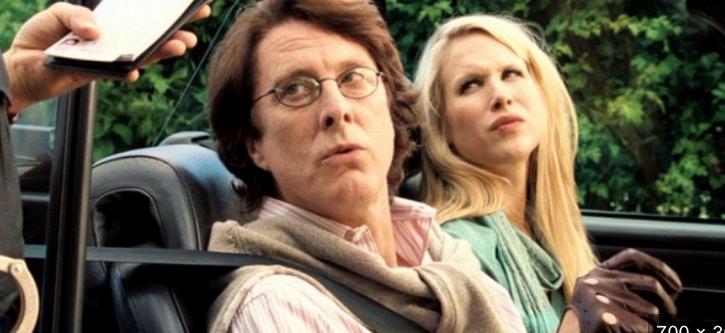
Which brings us neatly onto her role as Eve Draper in Hot Fuzz - a personal favourite The cast is star studded, not just with our own alumni, but includes the work of Simon Pegg, Nick Frost, Olivia Coleman, Jim Broadbent, and Bill Nighy (Need I say more?) It blends great acting with a satirical, witty and overly self-aware script to create a comedic masterpiece
It is famed for being a hyperbolic and satirical ‘send-up’ of the Hollywood Blockbuster ‘Buddy Cop’ genre and Lucy Punch’s role is no different. Playing a ditsy and untalented amateur actress in a small town production of Romeo and Juliet, she acts as a pawn in a series of entirely exaggerated and humorous murders For the sake of this article, she also provides an interesting insight into the nature of British comedy more widely
sports
Lucy Punch’s roles are notably all unpleasant characters that are often found to be difficult to watch Punch herself said in a 2014 interview: “If the character is smug, trashy or has dubious morals, call me!” (Something we hope she did not learn at Godolphin!) This does not necessarily highlight where Punch’s skills lie, but rather it demonstrates the way in which British comedy and drama often prizes authenticity, grit and deadpan, selfdepricating humour over the gloss of Hollywood productions These ideas are similarly manifested in the disgustingly awkward watches of The Office UK or Punch’s own Motherland
That same year, her role as the Ugly stepsister in Ella Enchanted no doubt features in most of our memories of year 5 (unquestionably also including her role as Esmé Squalor in the 2018 A Series of Unfortunate Events) As assured by Punch herself in 2014, this was a dream come true: “I was always playing witches and crazy women, when I was 11, I had an Ugly Sister birthday party All my idea ” We can imagine that the Year 7 dolphins had some great parties that year!
Punch’s career skyrocketed as a result of this trope when she landed the character of Amanda in Motherland In the ‘mum-eatmum’ environment of a PTA dominated, clique oriented and chaotic primary school, the grit of real life couldn’t be more prevalent Anna Maxwell Martin’s performance as Julia sends me into a cold sweat of stress - how could anybody be so disorganised? Lucy Punch, however, is the ‘yummy mummy’ Queen Bee of the school gate and acts as a self-assured and status-obsessed foil to Julia’s chaos.
Despite Punch’s dabbling in Hollywood, (a special mention to her brief appearance in the American hit sit-com New Girl - an incredible performance!) she has evidently stayed loyal to the genre that kickstarted her career Recently, it has caused new successes through her creation of an Amanda focussed spin-off show in Amandaland and she has therefore proven herself as a ‘respectful, courageous and remarkable’ actress as a result
spotlight on monica alcover: A guide to being A team player
Alcover (LVI) plays for Surbiton HC and the England U18 squad At school, Monica plays midfield, whereas at her club she is a defender After having played different positions over the yearsplaying forward at the start then running through midfield and finally settling in defence - she thinks that versatility has increased her knowledge on the game As captain of her team, it helps her consider the roles of other players and how her play would change if she communicatedbetterwithherteammates
Besidesherhockeylife,Monicaalsoplayednetball andstillcontinuestoplaytennisregularly She appreciatestheteamspiritandconsiderssporta communityandabreakfromacademicstress
Monicaadvisesyoungerstudentstosimplytrustthe process Sheseessetbacksasanaturalpartof developmentandsaysthatpassionevenonthe hardestdaysiswhattrulymatters
Did you know that our generation are predicted to have approximately 5 different careers in our lifetime? No, not jobs - that’s careers.
Who is it for?
So far, the innovation and leadership course has succeeded in surprising me with the many different projects and topics we have studied Since taking Innovation and Leadership, I now understand how important it is to keep an open mind - in studying, in considering careers, and even in making business decisions
Personal experiences:
In my opinion, the best project so far is learning how to manage and expand a business by using SimVenture SimVenture is a business simulation that we used, that accurately simulates a business, and all the decisions you can make(hiring, selling, advertisingetc)
I also now understand how important communication and collaboration is and A huge portion of our classwork involves working in teams and this has taught me a lot about effective communication and collaboration The course is offered to students as an optional subject taken in place of one GCSE - this can either be an option, or in place of one of the sciences
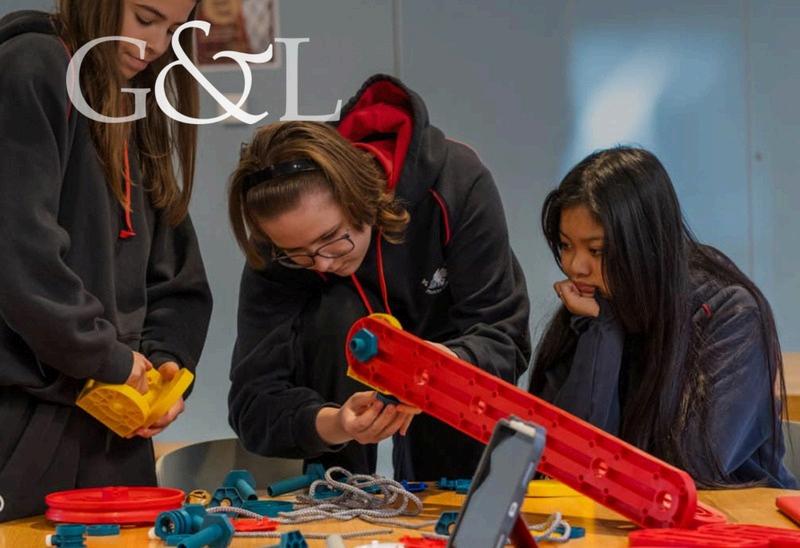
Another great experience was the team building project we did a few months back. We spent entire lessons in the hall, blindfolded, attempting to construct a method to transport a marble as far as we could across the hall( without dropping it) using what was effectively oversized lego
So far, the innovation and leadership course has succeeded in surprising me with the many different projects and topics we have studied. Since taking Innovation and Leadership, I now understand how important it is to keep an open mind - in studying, in considering careers, and even in making business decisions I also now understand how important communication and collaboration is and A huge portion of our classwork involves working in teams and this has taught me a lot about effective communication and collaboration The course is offered to students as an optional subject taken in place of one GCSE - this can either be an option, or in place of one of the sciences
competition where we tried to see whose business was worth the most money by the end (I won't bore you with who was on the winning team!)
We all really enjoyed this experience, as the collaborative element encouraged competition between teams, and it challenged us to link not only about our short-term tactics, but instead our long term strategies and how they would affect our businesses going forward
s very d The h of us longer n to the d how
This taught many of us for the leader (a role which we took in turns) to develop the ability to communicate with purpose, clarity and impact.
The Sim was a super interactive, exciting project, and from my experience projects like the Sim are great as they are quite a bit more involved than ordinary classes, and you really see the results of you and your team’s work
Demonstrating effective leadership and communication skills is hugely important for any future careers, and by also playing the part of the blindfolded, we learnt what it was like for both sides These are great skills to learn and not only in work, but in everyday life as well
G&L
However, there are a few other elements that contribute to this sense of community that are perhaps more underground. By “underground” I mean operate on a Saturday And by ‘operate on a Saturday’, I am, of course, referring to the Bridge Programme Led by Ms Ratsma and Ms Graham (geography), Bridge was designed to help kids, largely from economically disadvantaged backgrounds, who have been selected by their head teachers because they are thought to be exceptionally bright, bridge the gap between state primary schools and independent secondary schools One of Godolphin’s defining characteristics, and one that I consistently use when describing school life, is its palpable sense of community (one that is noticeably more vibrant after the lip-sync battle) It is this community that has raised generations of Dolphins through tuck shop cookies, Year 7 plays, and sports days
Bridge was designed to inspire and help these children navigate the 11+ process when applying for bursary places, either at Godolphin or other London schools Once a month, a group of 80 children are taught English, Maths and 2 other subjects that operate on a carousel: this session they were taught Ancient Greek and Geography In terms of choosing subjects, says Ms Ratsma, “we try to maintain the aims of Bridge as: keeping them fascinated and loving learning. So we pick sessions that we think they will really enjoy or equally subjects that they may not do at primary school ”
Ms Graham became interested in the Bridge programme primarily because of the community aspect (not just, she notes, because she's a Geography teacher) “We can't operate in isolation to our community, we are in a very privileged position at this school” Ms Ratsma agrees As an Old Dolphin who previously taught at a state school, she “was amazed by all the stuff that we can offer, and thinking about how we can support other people to have those kinds of things Sharing what we have with our community felt like a really important thing for [her] ”
When asked about her favourite part about Bridge, Ms Graham confidently said “break time” “[It’s] really nice because there are about two kids from every school, so they might know one other person, but you can definitely see the mixing of other people that they don’t know” Also, “the graduation is really nice we say a few words to them and it’s really nice to see the parents as well sometimes they come and say that [their child] has really grown in confidence or they have grown an interest in something, which is really nice to hear”. For Ms Ratsma it goes back to community: “I love seeing the kind of community that it creates, the kids actually form really good friendships and get to know each other The graduation at the end is adorable and the excitement at the end of the day you see this love of learning from them and you see the progress they make from being really nervous at the start and then at the end they’re all really sad to say goodbye to each other"
this bit is for you Students can only get involved in Lower Sixth, when they can apply to be on the Bridge Support Team This year there are 24 of us Otherwise, Ms Graham is always happy to hear out any ideas for taster sessions or activities you might want to run as part of the programme For example, on the 21st March some LVI are running a debating workshop as part of the day As a bridge volunteer myself I can confidently say that it is a super enriching experience In the midst of the chaos that seems to follow the IB wherever it goes, it can be really nice to go back to primary school and see the world from a different perspective The kids are all so creative and excited - it’s really special to see In the wise words of Ms Ratsma, “it’s that idea of community, isn’t it? We want to give back to people around us. We want to help people have the same opportunities that we have ”
What’s next for bridge?
The first ever bridge cohort are taking their GCSEs this year so “it’d be quite nice to have a reunion for them or develop some type of alumni network to see where they go in the future" says Ms Graham. The development of Bridge Seniors - which is targeted at 16+ students - is on the cards too Bridge Seniors runs at the very end of August and “we’re hoping that next year we can make it a bit longer and have more members” But she quickly adds “it’s really not about the numbers and more so about the positive impact it has ” As you’re reading this, you might notice how often the word community appears – 8 times to be exact That’s intentional, because in the end it really is that simple. At Godolphin, we are incredibly privileged to have access to the opportunities and resources that we do
So, if you’re reading this and you think you’d like to get involved,
Bridge is simply a way of sharing that with others. If you feel that you’d like to play a part in this and help extend our community further, I strongly encourage you to apply to join the Bridge Support Team
Arianna Enserro
160 YEAR OLD
SMUGGLED PIPE ORGAN
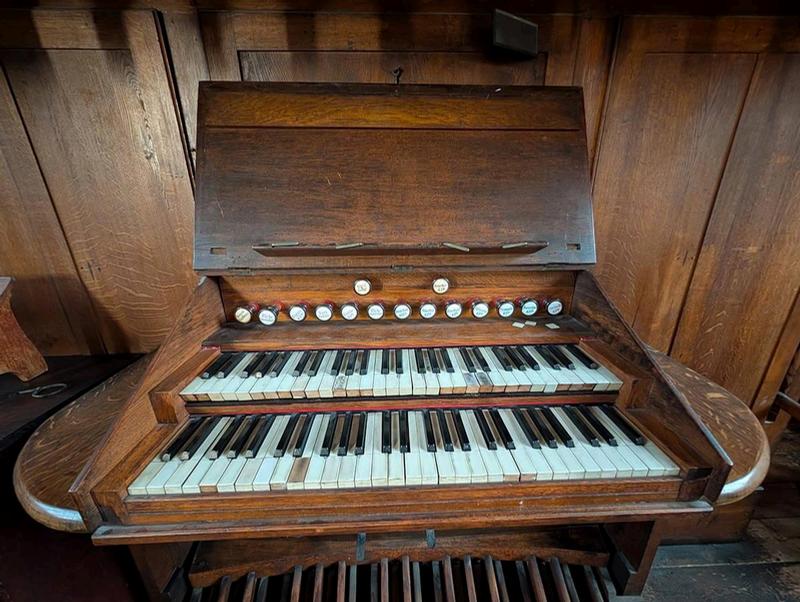
In mid-June 2025, our neighbours at Sacred Heart (some of you may remember it by the man who refused to get off its roof for 3 days backin2024…), were taken aback by the discovery that their school possessed one of the rarest pipe organs inEurope
Back in the summer of last year, Dr William McVicker, curator of organs at the Royal Festival Hall, visited the school with the intention of checking the condition of their chapel’s organ The school writes that during his visit “Dr McVicker nearly fell backwards overthegalleryledge”exclaimingitwas“one of the rarest organs he’s ever seen in his career”
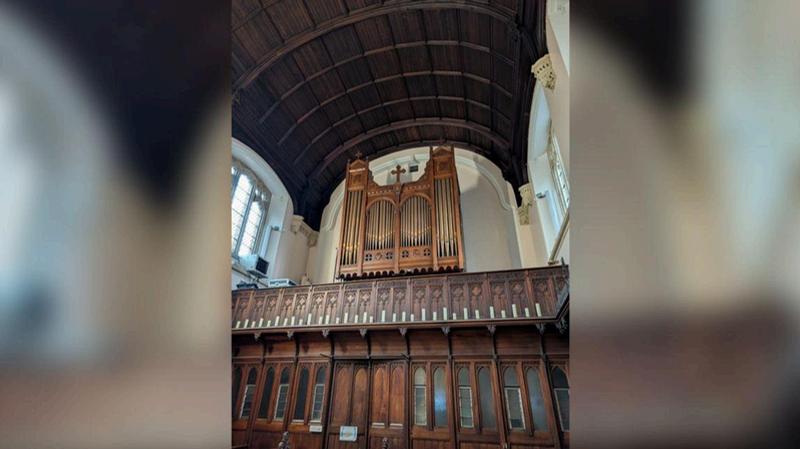
Once it reached London that same year, the organ was rebuilt in Sacred Heart’s Chapel in Hammersmith It is now believed to be "the only Loret organ in the UK", and one ofveryfewremaininginEurope
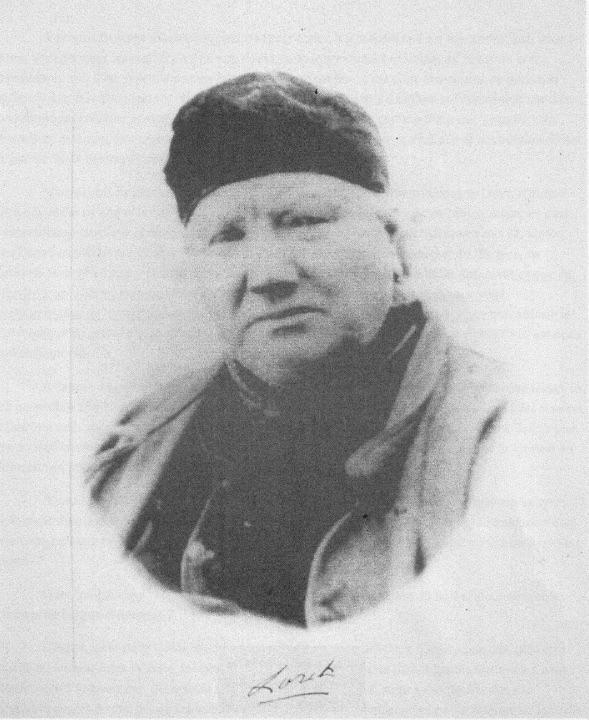
Whilst it was initially believed to be an original part of the school’s chapel, it was discovered that the organ was actually built in France by Belgian craftsman Hippolyte Loret over 160 years ago Loret had built it under the commission of the Society of the Sacred HeartforoneofitsParisianschoolchapels
In 1904, under the threat of the French government’s secularist policy aiming to break the influence of the Catholic Church, theorganwasdismantledandsmuggledoutof Paris to London The government had announced it would seize the headquarter of the Society of the Sacred Heart, in which the organwasbeingheld.
Since the visit, Sacred Heart School has been driving the restoration process, publicising the discovery and attempting to raise£252,700forthenecessaryrepairs
Alex Dijkhuis, head of communications at Sacred Heart, states: "We have a responsibility to the Sacred Heart sisters from Paris ( ) to save this precious pipe organ which serves as a symbol of the enduringnatureofSacredHearteducation"
Additional discoveries also came to light after research conducted at the Society'sarchivesinRome:thestatueof Jesus in Sacred Heart’s Cloister Garden had similarly been saved from Lille during the period of government repression, just like the organ had been fromParis.
Sacred Heart hopes that once the restoration process is complete, the organ can once again be put to use, entertaining Hammersmith audiences with public recitals and encouraging more students to play this unique instrument
This extraordinary event is being transformed into a BBC radio podcast and featured in an upcoming documentary
Vittoria Di Rienzo
HippolyteLoret
WOMEN’S HISTORY MONTH:
not just making history, shaping the
future
Karishma Shori
Women’s history month is upon us - everyone ’ s favourite time of year, I am certain - but in all seriousness, Women’s history month is an ineffably important and fascinating time of year, and if an assembly in the Bishop’s Centre can’t convince you of that (in which case, colour me absolutely shocked) then hopefully this article will be able to help
Women’s history month is an annual emblem of recognition that highlights the vast contributions to society and greater change that women have made throughout history and the impact they continue to pioneer Women’s history month was first celebrated in 1987 in the United States and rapidly spread internationally, evolving into the phenomenon it is today Some argue, however, that such celebrations and observances are redundant, and that in today’s age we are all aware of the importance and value that women - and other previously repressed groups - bring Yet, I would contend that the same sentiment is what is argued in support of minimising the importance of historic atrocities, such as the holocaust, with the claim that we have already learned from our mistakes, which we can all agree is wholly unreasonable Furthermore, the issue of having too many things and people to celebrate sounds like an awfully nice problem to have!
The theme for this year ’ s celebration is “Leading the Change: Women Shaping a Sustainable Future” so, as anyone taking GCSE Geography would know, that means commemorating the women who have contributed to improving social, economic and environmental sustainability for future generations Hence, I have decided to shed a spotlight on women I feel exemplify ‘Leading the Change’ in each of these pillars
Social Change: Harriet Tubman
Harriet Tubman (1822 - 1913) was an American abolitionist and activist who, after escaping slavery herself, made 13 daring missions to rescue approximately 70 enslaved people, including her family and friends, using the network of antislavery activists and safe houses known collectively as the Underground Railroad. Later in her life Harriet Tubman went on to work as a scout within a network of spies and further accomplished a plethora of other impressive feats Evidently, Tubman is an inspirational figure who reminds us that we all have the strength to face and overcome adversity, to fight for what is right, and to help those in need
Economic
Change: Margaret Thatcher
Margaret Thatcher (1925 - 2013) was famously the first female prime minister of the UK as the leader of the Conservative Party for fifteen years (making her the longest serving prime minister of the 20th century) Whilst Thatcher’s policies were often rather controversial, it is undeniable that she made immense economic change, most notably her implementation of the ‘Right to Buy’ scheme This policy allowed council property tenants to be able to purchase their homes, significantly increasing home ownership - especially for those who otherwise would be unable to do so financially
Environmental Change: Marina Silva
Marina Silva is a Brazilian politician and environmentalist, who is currently serving as the Minister of the Environment and founder of Sustainability Network One of her most notable accomplishments is the implementation of the Plan to Prevent and Combat Deforestation in the Amazon, which led to an approximately 84% drop in deforestation rates between 2004 and 2012. This environmental change proved revolutionary for the development and safety of the Amazon, and considering the ever deteriorating state of our environment, is an attitude we all ought to embrace
So, perhaps this article will help inspire you to Lead the Change. Who knows, maybe in the future you’ll find yourself mentioned in one of these…
BOOK IN THE
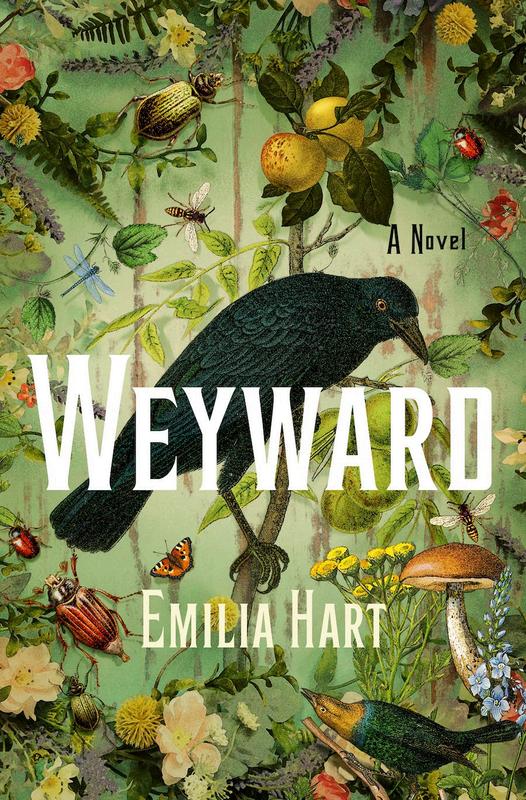
Tucked away somewhere between well-loved thrillers and permanently checked-out romance novels sits what might be Godolphin’s most neglected read: Emilia Recommended, with unwaveringfaith,byMrBenton,it’sabookthat,let’sbehonest,most ofushavewalkedpastwithoutasecondglance
So what is it actually about? Emilia follows its main character through a reflective, slightly mysterious journey of identity, relationships,andself-discovery It’sthoughtful,abitintenseattimes, and definitely not the kind of book you can skim while half-scrolling TikTok Whichmightexplainitscurrentsocialstanding Buthere’sthething.Justbecauseabookisn’tconstantlybeingfought over at the issue desk doesn’t mean it’s not worth reading In fact, it might mean the opposite Maybe Emilia is just waiting for the right reader, someone willing to give it more than 30 seconds of attention span
So next time you’re in the library, feeling brave or just mildly bored, consider picking up Godolphin’s “loneliest book” If nothing else, you’ll make Mr Benton’s day And honestly, that alone might be worthit
A GODOLPHIN GIRL’S GUIDE TO
VINTED:
Whether you’re an earth-conscious individual looking to reduce your ecological footprint, or a teenage boy looking for the perfect pair of busted up, archival Rick Owens high-top sneakers for a meagre £900 (I mean, what a bargain!), you’ve most likely heard of a little app called Vinted. If you haven’t? Watch and learn, as I take you on a speed-runguideonhowtomilkthemost out of this globally-recognised secondhand clothes app; in honour of Fast Fashion Free February, and the teenage frenzy to find those Y2K pieces for a measlyprice.
Vinted allows you to buy and sell second-hand almost anything, however the main commodity is clothes With the resurgence of thrifting and charity shopping,theappactsasadigitalwayof experiencing this activity, but without the need to leave your own home. It also means that with a few tips and tricks, you could stumble upon some major gems with simply a few minutes of scrolling, lowballing, and curating your algorithm
1.Curateyouralgorithm
WhenyoufirstgetVinted,yourfeedwill not look like some magical Italian vintage thrift store with the cutest tanks and baby tees I hate to break it to you, but life is not that easy To find the steals that you so desperately want to find by merely typing ‘Y2K clothes’ into the search bar, you must first curate your feed If you’re an unemployed final boss like me, this task should really be an easy feat However anyone can do it; with as little as 5 minutes every day, you can make sure Vinted starts recommending you listings that are actuallycute,andnotoverpricedRomwe topsmadeof200%polyester
Top tip: search for certain brands like Bay, Next (old Next is so good), Papaya, Peacocks, Kaleidoscope, Naf Naf It takes a bit of digging and scrolling, but trusttheprocess...
Or alternatively, you could look up specific clothing pieces that you’d like, find the cheapest options, and in the process identify a myriad of extremely uncommon and underrated brands that arenowonyourradar
Phaedra Mazaraki
Milana Rysbaeva
If you press the ‘send offer’ button, you’ll see the space where you can input your price; if you put in ‘£1’, you should be able to see a notification in red lettering come up which highlights the minimum price that you can offer for this particular listing What you’re then going to do is go ahead and offer that minimum price; the seller can either accept it (miracle!), or they could counter-offer a higher, yet still significantly low, price. This is how you save your money, folks; there’s nothing wrongwithalittlebitofhaggling
Unconventional advice: lying on Vinted can help you save your money too How many times have I lied about being a mother in need of a last minute birthday gift for her picky teenage daughter, meaning that the seller absolutely must give me a whopping discount? About four times, I’d say And four times it worked! I’m not one to promote the spreadingoffalsehoodsandI'mcertainly no advocate for lies… but I am saying that, sometimes, a girl gotta do what a girl gotta do As I said, unconventional Buteffective?Well
As with anything, you must always stay conscious of potential scams and situations wherepeoplemaybetryingtopullthewoolover your eyes. Here are my lists of red flags that I liveandbreathebyintheVintedworld:
If the brand says ‘Vintage Dressing’, ‘Y2K’, or anything vague of that sort, then run in the opposite direction; most of the time, the clothes are from Shein or other sketchy fast fashion sources. And half the time, the seller will be trying to pawn it off as ‘vintage’ and charge an arm and a leg for it Absolutely not If you do find something like this, you can check the images to see if the item has a label with an actual brand name; sometimes sellers like to select othersforreachandincreasingviews Also look out for other deviations; for example, Poeselle turns out to be a brand sold on Shein, andconsequentlyhorribleinquality
That question sits at the heart of the controversy surrounding changes to Science GCSEs in Wales What began as a simple policy reform has evolved into a nationwide debateaboutfairness,ambitionandthefuture ofSTEMeducation
In June 2024, Qualification Wales announced plans to scrap ordinary single-subject Science GCSEs and replace them with a mandatory Combined qualification from September 2026 To give basic context, single subject science naturally goes into more detail whereas a double award provides a broader overview of all three Under the proposal, students would no longer study Biology, Chemistry or Physics as distinct GCSEs Instead, they would take a broader course covering all three sciences, receiving two grades rather than three To clarify, the situation in England is the same however our government ‘actively encourages’ single sciencequalifications
tobetterpreparestudentsforSTEMcareers
Supporters argue this reform would “level the playing field” In its statement Creating More Opportunities for Learners to Study Science in Wales, Qualifications Wales claimed the new Combined Science GCSE would give learners “a firm grasp of scentific knowledge” while promoting greater equality Theaimistoeliminatewhatsomedescribeas a two-tier system where more advantaged pupils pursue triple science, while others are steeredtowardsdoubleawardroutes Yet critics quickly voiced concern Teachers, university representatives and scientific organisations warned that removing single sciences could disadvantage Wales’ most ambitious STEM students A broader course, they argue, inevitably sacrifices depth For pupils aspiring to medicine, engineering or research,depthmatters
The debate intensified when comparisons weredrawnwithEngland,wherethestructure is similar but single sciences are actively encouraged for high-attaining students pursuingSTEMpathways
I didn’t know this until I searched the brand name up and was quite frankly jump-scared Make sure to quickly check before buying anything.
Similarscamsthatyoucouldpotentiallycome across include the famous Abercrombie & Fitch fur-hood hoodie sham; with prices starting at a jaw-dropping £120 for a scrap of fabric they call ‘downtown girl', these fraudulent mercenaries hand-sew fake fur onto the hoods of ordinaryA&F hoodies, and pass them off as the viral ones that trended in the2000s Disgraceful
Lastly, I would recommend avoiding buying from sellers with no reviews You can never be too careful on these marketplaces, and anythingcouldbeascam…
Hopefully, you’ve picked up a thing or two that you didn’t know before reading this article I genuinely believe Vinted is a beauty of an app, albeit one that takes up an embarrassingly large amount of my screentime If you know what to search, where to look, and what to do, you can not only have a positive environmental impact, but also a much better wardrobe for a much cheaper price Score!
Leading universities questioned whether Welsh applicants might be placed at a competitivedisadvantageincomparison
Scientific bodies also entered the discussion TheRoyalSocietyofChemistrystressedthat while equitable access to science is vital, the distinct identities and rigour of Biology, ChemistryandPhysicsmustbepreserved Dilution, they cautioned, risks long-term consequencesforthescientificpipeline
In response to mounting pressure, the Welsh Government delayed the full removal of single sciences until at least 2028, with further consultation planned Any final changeswillnowtakeeffectfromSeptember 2031 The reversal reflects just how heated theissuehasbecome
At its core, this is more than a curriculum adjustment It is a philosophical clash: equality versus excellence Should educational systems prioritise universal access even at the cost of academic specialisation? Or rather, should they conserve pathways for higher level students evenifthatmeansreinforcingdisparities?
Nayeon Kang
Chloe Crowther
When we talk about money, investing is at the forefront of the discussion, but little more is said about how, when, and why to invest It can feel intimidating at first, but Godolphin offers many initiatives to improve financial literacy and help students gain practical experience Because investing is a male-dominated field, with 64% of 18–24-year-old men investing compared to only 34% of women of the same age, it is vital that all-girls’ schools like Godolphin provide the resources and guidance to allow Dolphins to thrive in this field One such initiative is the GAIN Schools Investment Challenge (Girls Are Investors) Through GAIN, girls are divided into teams and assigned a company in which they decide whether to hypothetically invest This year, Godolphin students have been assigned Burberry. Participants research the financial health of the company weekly and, with guidance from mentors at investment management firms, decide whether an investment would be worthwhile. The programme culminates in a stock pitch video, in which students present their investment decisions and reasoning. This requires Dolphins to assume the role of an investor, conduct thorough research on a company, and make an informed decision, which are skills that will prove immensely valuable when investing in real life, with realmoney
64%of18–24-year-oldmen investingcomparedtoonly 34%ofwomenofthesame age
In order to shine a spotlight on a teacher here at Godolphin - one of an amazing many - we decided to interview Dr Christie on an interesting project he and the English department have been working on As head of the department, he describes the details of this project, what it will entail, and where he hopes it leads in shaping the way we learn here at Godolphin, and even across the world to Australia IwonderifheknowsJacobElordi
So my first question was very simple: What are you doing? But don’t worry, I did elaborate I asked him to explain the research programme, and where his ideas had come from He replied, describing how he is running a research programme on ‘Conceptual Thinking’which the English Dept had initiated last year The programme involves research into different ways this can be applied or developed in the English Dept, and later the History of Art and Science depts too The main question of his research is whether this method of teaching could be transformed or expanded into an ethos or philosophy that can inform teaching across varioustopics
At the moment, he’s spent most of his time talking to other heads of department, discussing whether they are using these types of ideas in their departments, what sort of problems and limitationstheyhaveencountered,andhowthey planned to overcome them Which sounds a lot like a WWW and EBI to me nice to know both teachers and students use the same improvement methods. He went on to describe the survey he is putting together for teachers who have been consciously using this framework for a while, and next term he plans to engage more directly with students and how they approach knowledge. Watch this space! (mywords,nothis)
After he explained the main framework behind Conceptual Thinking and how it requires students to go beyond simply memorising quotes and regurgitating phrases from lessons, I asked him whether he thought that was a flaw with the UK’s current GCSE system He said thathefeltthecurrentGCSEspecificationwasa possible barrier to conceptual thinking in some subjectsmorethanothers
To follow up on his earlier mention of how the English department had been doing this already, I wanted to know more about his inspiration for thisorwhatspurredhimtodoit initially. He told me it originated in how students were responding in exam conditions It was particularly about removing the aversion students may feel toward volunteering their own conceptual ideas under exam pressure, and how to get students to the point where they are comfortable doing it wherethestakesarehigher Hewantedtobridgethe gap between students in the learning zone to the performancezone Yes,IamquotingDrBadger
I finally asked what his desired outcome was for this project, and he said it was primarily to have students who have this relationship with knowledge and are confident in that because that’s really what thinking and being intellectual is about It’s a disposition the school wants to send students out into the world with; to be able to look at the world aroundthem,withrawfactsandinformation,andbe able to step back from it, synthesise and organise it andfromthatformastance
He finished by telling me he had been working with other girls' schools, and even a school in Australia (!) who are looking at conceptual thinking from a more STEM perspective He thinks there is more to be discovered about seeing patterns in different manifestationsofthesamething Imustsay,I’mnot surprised that our teachers are working at more ways to develop our learning not only within school, but also to equip us in the real world. Can I add conceptual thinking as a skill on Linkedin? I hope I can, as after this productive interview I feel verywellversedinit Thankyou,DrChristie!
LifeAfterPhones:OneYearofGodolphin’s PhonePolicy
April 22nd 2025 should be in your calendars for two reasons One, because itwasthedaywefresh-facedDolphinsreturnedfromtheEasterholidays,all looking restored, relaxed and ready for the Summer Term And two, it was the day the use of phones was no longer allowed on school grounds, an extension of the previous rule which prohibited phone usage during the schoolday
As we come up on the first anniversary of this rule, we reflect on the reasoning and future of phone regulation in our school Our interview with Dr Carter and Mrs Holder gave us a behind-the-scenes look at Godolphin’s thought-process We also publish the results of our poll, where we asked LowerSixthonthesuccessofphoneregulation.
Godolphin’s stiffening on phone usage came after the Department of Educationissuedguidancerecommendingafullbanonphoneuseduringthe school day for all students (February 2024) Schools were expected to fulfill such guidance quickly, effectively and in its entirety. This was not a Godolphin policy, but a national one The government suggested 4 ways of implementing this guidance with the strictest option requiring phones to be handedinonarrivalandbanningphones’existenceontheschoolpremises
Godolphin instead chose the “never used, seen or heard” option This waspartlydoneforpracticalreasons,suchasstudentsneedingphonesto travel to school, but also as a show of trust and respect in the students thatcomesfrom“lotsofgoodwillinthecommunity”(DrCarter)
We understand that school culture and student well-being were at the forefront of the Senior Leadership Team’s mind. The thinking was that restricting phone usage (eg all that texting and scrolling) would encourage students to engage more with their friends and peers As Mrs Holder argued, it is key that Godolphin helps students to create healthy habits and relationships with their phones, by removing the distraction of phones during students' formative years. For students in the younger cohorts, who perhaps do not own a mobile phone yet, that rationale is that Godolphin should create an equitable environment in which those withoutaphonedonotfeelexcluded
The empirical evidence on the effect of phone usage on student wellbeing is mixed The SMART Schools Study finds that restrictive phone policies do not increase student wellbeing. By contrast, evidence collected by the DfE in Australia shows huge improvements in student wellbeing
The G&L Times conducted its own survey of 55 Lower Sixth students, asking them to rate improvements in school culture, engagement and student wellbeing on a scale from 1 (no or little improvement) to 10 (extremely large improvement) Students reported an average score of 4 for school culture, indicating a modest but meaningful improvement Studentwellbeingreceivedaslightlyloweraverageof3,suggestingamorelimitedimprovement
An important aspect of Godolphin culture is staff-students relationships Research from the SMART Schools Study suggests schools tend to spend over 100 staff hours per week enforcing phone policies.When questioned about this, Dr Carter explained that there has been little if any resistance from students when challenged by teachers, and that he does notbelieveGodolphinisforcedtodevotesuchmanpowertoenforcingthenewlyadoptedpolicy.
TheschoolmustalsoconsiderthepossibilityofnavigatingapotentialsocialmediabanforUnder-16s,predictingthatsuchabanwouldbeaccompanied by stricter and statutory (legally enforced) guidelines on phones For both technological and political reasons, the regulatory environment regarding phone usage in schools is evolving rapidly Nevertheless, the school is attempting to maintain a consistent and predictable approach In terms of how to reacttoapotentialban,MrsHolder&DrCarterrevealedthatitall“dependsonifitbecomesstatutory”andifitdoes,thequestionis“Whatsystemwill we employ to best serve the community?” They further assured us that, to the extent that it is legally possible, the school makes a concerted effort to involvepupilvoice,typicallythroughtheschoolcouncil Wewillbringyouanyfuturenewsaboutphoneusageinschoolasthesituationdevelops
ABrief(andSlightlyDramatic)HistoryofSchool
Between double maths, the hell that is the lunch queue and missing shinpads, we rarely pause to honour the brave pupils who suffered before us So buckle up: here’s a glimpseatschoolthroughtheages
19th Century: Discipline, Dates and Despair Victorian schools decided that if soldiers had uniforms, children should too Enter stiff collars, layers and the iconic Eton College look (the famous Eton suit arrived around 1820) Teachers loved the order Pupils loved subtly shortening their ties (maybe even skirts, shocker) in rebellion Examsarrivedin1858thankstodemandsfromUniversityofOxfordandUniversityofCambridge(TW:T*RA,M*LAT,E*AT).However,onlyaneliteminorityactually sat them, memorising monarchs and Bible verses like human encyclopaedias Teachers even argued in newspapers about which exam board was “easier” Some things neverchangeAsforhomework?PurememorisationsansQuizlet Poems,proofs,facts Traintheintellect,crushthespirit 1920s:Team Spirit (and Gym Slips) Whilst Post-WWI fashion relaxed, schools doubled down on identity Matching colours, gymslips and ties built unity Afull-blown “schoolgirl” culture flourished, boosted by authors like Enid Blyton For once, uniform was almost fun Exams evolved into School Certificates at 16 and Higher Certificates at 18. Meanwhile, parents began complaining about excessive homework, accusing exams of hogging childhood rather than jumping in muddy puddles or whateveronedidinthe1920s Theclassic“mydogatemyhomework”excusealsogainedpopularity Iconic 1940s: Ration Books and Rethinks War meant fashion froze But exam thinking thawed The 1943 Norwood Report boldly suggested exams might cause cramming and uniformity Revolutionary Only21%ofparentsandteachersstronglybackedhomework Pupils,unsurprisingly,feltthepressure
Post-War: Caps Off, Stress On The 1944 Education Act introduced O-levels (grammar schools only) Exams became dramatic, rank-based, pass-or-fail showdowns Nerves skyrocketed Sound familiar? Uniforms simplified, caps vanished, but teens compared blazers unfavourably with emerging pop-culture fashion Not quite at Bratz levelyetthough Homeworkcomplaintscontinued,thoughbythe1980screativitybegansneakingin
Now: Same Panic, Better Branding. Uniform is slightly looser, take ‘Barbie Princess Charm School’ as reference GCSEs aim for “analytical and evaluative skills”, but exam stress?Astronomical Coursework helps slightly Homework has upgraded from rote misery to “creative problem-solving” It still weighs a ton justwithbetterfonts Yetfromcorsetstocoursework,onetruthremains:everygenerationthinksschoolisuniquelystressful Historysuggestsotherwise
Aitana Blanes Easo
Nayeon Kang
ADolphin’sGuid survivalintheJu theLunchQueue
Ananya Padhi
Lunch.Thesacredhourfromonetotwoo’clock,treasuredbyallDolphins.Atimeof rest and sustenance, a time of freedom from the crushing thoughts of exams as well asoneofhurriedlyeatensandwichesinthemidstofdashingtoclubs
Lunch ceremoniously begins with the startling sounds of stampeding year sevens which flood our ears, signalling the clock has struck 12:45 Imagine that sound captured in your alarm clock and abracadabra, the Godolphin late bug solved Those last fifteen minutes always seem to pass extra slowly, a palpable hunger hangs in the air,oureyesfixatedontheclock
When the clock strikes one, we all run dodging the year seven's bags and Usain Bolt it to the queue Now, out of all the terribly tiring five days we eat lunch at school, my least favourite is probably Mondays or Wednesdays Every Monday, we come into school reluctant and weary. However, after entering the lunch queue we realise that there is no meat, no protein to sustain us While vegetables are healthy, thereisusuallythatonevegetablethatmakespeoplegag
s crispy, the curry is fragrant, and the bao buns are perfectly
es,IkeeponreturningtoaGodolphinclassic:curlyfries They hroughFridays
ert? The brownie wins for its fudge texture and dangerously llowed by the rocky road Wrestling through the five-minute sittastesweeter
ve the cafeteria food, the Cloisters is a different story A soup when it is grey and rainy - which, in the microclimate that is am,ismostofthetime.Itwouldhelptowarmusupandwould begreatlyappreciatedespeciallyover
Every Friday, alongside freshly made
There is a specific, sacred hour that exists between the death of a productive afternoon and the birth of a truly regrettable morning. It doesn’t hold an official name, but it begins somewhere around 10pm. This for me is the witching hour, the time where I’d rather hop on a broomstick and fly away than finish my 6 hour further maths homework. The time when the harrowing procrastination bill comes due, and I am forcedtopaywithinterest.
A few weeks ago, sitting in my room at 11:59pm with an assignment due the next morning and two weeks of half-touched free periods behind me, it occurred to me that I didn’t have to live this way I could’ve done the work earlier I could’ve used my time wisely Instead I was once againponderingthedeepexistential questionsthatonlyseemanswerable at midnight: why did I convince myself I worked better under pressure? What possessed me to spend my free periods online shopping? ‘Carpe diem’- ‘seize the day’- something I think of when the day has long been seized by everything except the task at hand, and here I stand in the pinnacle of the witching hour with nothing to show for it but a growing senseofdreadandanessaythatstillneedsanintroduction.
It’s hard to say how many students experience this particular brand of late-night regret. There aren’t many large-scale surveys of student procrastination, though I suspect the numbers would be high. Because truthfully, no one really bats an eye when you admit to pulling an allnighter- I don’t know how many times I’ve heard the same confessions of‘Ihaven’tstartedit’or‘I’lldoittonight’.Manyofusarelying,butwe say it anyway because admitting the truth, that we simply didn't accomplish the task, feels worse. Procrastination is a powerful force, whispering that you have plenty of time, that your future self will be more motivated, that a task isn’t as urgent as it seems The cruel irony is that future self always ends up full of resentment for such deluded convictions.
Perhaps I’ve simply lost the synergy my year 7 self once had, where no amount of sleep deprivation could stop me from bouncing off the walls, the dream-like state of being able to run on nothing and still function. Now the dream is simply to go to bed at 9:30pm- a statement which makes it seem as though I’ve aged several decades in the space of a few years. Onecould sayI’veassumed the identity ofPlato,fromthe amount of times I’ve pondered my poor life choices at ungodly hours of the night.AlthoughPlatoatleasthadtheexcuseofponderingnewquestions, while I’ve been ruminating on the same ones for years, arriving at the sameconclusions,andthenpromptlyforgettingthembythenext afternoon.Still,thereissomethinghopeful intherepetition-thefactthatIkeep noticingandquestioning,asignifier thatallhopeisnotlostyet. Eventuallythecyclehastobreak. NextweekI’msleepingearlyand renouncingphilosophy-Inever eventookthesubjectinthefirst place.
Liza Myshkina
Prisha-Hazel Mandav
With lots of exams and assessments just around the corner after the holiday, we must discuss the important question: is handwriting or typing better for writingnotesandrevisinginordertomaximiseyourretentionofatopic?
When writing notes by hand, your brain is able to carry out a process called deep encoding. This is when your brain relates something that you already remember to the topic. For example, you might see a year when studying a topic in history, and maybe that is 200 years from the year that your favourite actor or actress was born, and that’s how you might remember the date! This deep encoding happens because handwriting is a slower process than typing, and therefore, you will need to paraphrase in your notes in order to keep up with the teacher’s words. Which means that you will have to try and understand or find a way to remember what you are being told, in order to be abletowriteitdown.
When typing notes, the high speed at which words appear on a screen can make you feel very productive and engaged with your learning. However, in truth, you are currently fixated on the illusion of learning, rather than actually doing the learning itself. This is because you are actually just typing exactly what you are being told, almost word for word, which doesn’t require much effort, as you are barely using your brain to do so.Therefore, to actually make your digital notes effective in helping you learn and understand a topic you mustsynthesisethem.Thisiswhenyouactuallydothelearning!
An effective method of synthesising your notes is by carrying out an elaborative rehearsal, which is a form of deep encoding. A good analogy for this is to think about a LEGO tower, which represents everything that you have learnt and that is currently stored in your long-term memory, and you have some bricks in your hand (which represent the new information that you are learning). If you put the bricks on the tower by connecting them to ones that are already a part of the tower, they will stay in place, however, if you placethemonanearbytable,theywillbelostwithinafewdays,andforgotten about. Like this, you can retain new information that you have just learnt, by linkingittosomethingthatyouhavepreviouslylearnt.
Anothermethodforsynthesisingmaterialisbyreadingthroughyournotesand questioning parts of it. For example, you could question a certain concept that you have mentioned in your notes, and if you are not able to explain how that concept works or why it works, then consult a textbook or your teacher. This enablesyoutofullyunderstandeverypartofwhatyouaretryingtolearn.
Overall, typing may seem faster than handwriting (unless you can write really fast whilst still keeping it legible (if so then well done you!)), however, you will need to make sure that you synthesise your notes after making them, in order to actually learn the content that you have just written down.This might make the overall typed process seem even longer than that of making handwrittennotes.
After hearing this, some people might believe that if they handwrite notes, then they automatically carry out all the synthesis there and then, however (as you might have guessed), that is not the case. Even when making handwritten notes, synthesising is still an important part of the learning process, because handwriting notes is just an extra starter for the synthesis of the topic, and makes synthesising much easier, as you already have a moderate conceptual understandingofallthatyouhavejustwrittendown.
Many people believe strange things about science, so this article will delveinto15ofthemostcommonsciencemyths
1 Does cracking your knuckles cause arthritis? Myth Studies, including one by a doctor who cracked his knuckles for 60 years, shownolink
2 Whatisthesciencebehindtheinfamous'5-secondrule'?Myth Bacteria transfer instantly to dropped food, regardless of speed, especiallyifthefoodismoist
3 Does sugarmake kids hyper? Myth Multiple studies show sugar doesnotcausehyperactivebehaviourinchildren
4 Do chameleons change colour to camouflage? Myth They change colour primarily to regulate body temperature or to communicatetheirmoodtootherchameleons
5.What happens to swallowed gum, does it remain in an abyss in your stomach for the rest of eternity? Myth It does not stay in your stomach for years, but passes through the digestive system like other indigestible materials However, while it isn’t harmful in itself,itcancauseintestinalblockageorchoking
6 Do humans swallow spiders in their sleep? Myth Spiders have no reason to enter a human mouth, as breathing and vibration repels them, and a sleeping person would likely wake up and usuallyhasaclosedmouth
7 Are yawns contagious? Reality Yawns are contagious due to mirrorneuronsinthebrain,whicharelinkedtoempathy
8 Do bulls hate the colour red? Myth Bulls are dichromats and cannot distinguish red; they charge due to the movement of the cape
9.Does cold weather make you sick? Myth. Viruses (not cold air) cause colds While being cold can make you feel uncomfortable, it doesn'tcauseinfection
10 Do we only have five senses? Myth Humans have many more, including proprioception (body position), equilibrioception (balance),andhunger
11 Do hair and fingernails grow after death? Myth The skin dries out and shrinks back, making them appear longer, but they stop growing
12 Do we only use 10% of our brains? Myth Brain imaging shows we use almost every part of our brain, and most of it is active all thetime
13 Should you tilt your head back during a nosebleed? Myth You should not tilt your head back for a nosebleed This causes blood to run down your throat. You should lean forward and pinch the softpartofyournose
14 Does lightning never strike the same place twice? Myth Lightning often strikes the same place multiple times, especially tallstructureslikeskyscrapers
15 Does coffee stunt yourgrowth? Myth No evidence exists linking caffeinetoinhibitedbonegrowthinchildren
16.Can a penny dropped from the Empire State Building kill someone? Myth Apenny is too light and flat, reaching a terminal velocitythatisnotenoughtokillorcrackaskull
Yasmin Elam Nassar
SPLASHZONE
Imagine you have 10 stacks of 10 coins 9 of the stacks consist of coins of 1g each, and the 10th stacks consists of coins of 2g each You do not know which stack is formed using the heavier coins You are given a digital balance, and, using it only once, how can you identify which stack is made of the heavier coins?
Mr Sonntag has 10 stacks of 10 identical coins each. 9 of the stacks consist of coins of 1 gram each, but the 10th stack consists of coins of 2 grams each After seeing his stacks in the staff room every day, Dr Jones has become determined to find out which stack is made of the heavier coins To assist in her mission, Mr Barnes has kindly given her 1 digital balance (as the Chemistry A-Level students are hoarding the rest) HOWEVER, Mr McGrath needs it urgently so she can only use it once and she cannot take more than 1 reading from it (she can’t weigh coins and then remove some!) Help Dr Jones identify the heavier pile before she takes her frustration out making Year 8 tests!!