
Decoding MBA Rankings: FT vs QS Global
Understanding MBA rankings is crucial for prospective students eyeing admissions abroad. This comprehensive analysis compares the Financial Times Global MBA Ranking 2023 and QS QS Global 2024 Global MBA rankings, revealing how different methodologies shape school evaluations and what matters most for your MBA journey.





Financial Times Global MBA Ranking
Alumni Criteria
56% weight covering weighted salary (16%), salary increase (16%), value for money (5%), career progress (3%), and aims achieved (4%)
School Data
34% weight including faculty diversity, international student diversity, international experience, and faculty with doctorates
Research & ESG
Research rank (10%), carbon footprint metrics (4%), and ESG teaching rank (3%) emphasizing sustainability
Unique Strengths
Comprehensive evaluation including academic quality
Strong focus on international aspects
Inclusion of ESG factors
Long-standing reputation and consistent methodology
Limitations
Heavy reliance on salary metrics
May favor programs in high-cost-of-living areas
Three-year post-graduation timeframe might not capture long-term value
QS METHODOLOGY
Employability
40% weight derived from QS Global Employer Survey, reflecting graduate desirability in the job market
Return on Investment
20% weight considering 10-year ROI and payback period for long-term financial benefits
Entrepreneurship
15% weight evaluating entrepreneurial success and alumni outcomes post-MBA
Diversity
10% weight measuring class and faculty diversity across multiple dimensions
Thought Leadership
15% weight including academic reputation, research impact, and faculty with PhDs
LinkedIn MBA Rankings
LinkedIn offers a unique data-driven perspective based on real-time career progression and network analysis. This ranking leverages platform data to evaluate MBA program outcomes through actual professional trajectories. 1 Hiring & Demand
3 Network Strength
Alumni interconnectedness, quality of professional networks, and network growth rates
4 Leadership Potential
Post-MBA entrepreneurship and C-suite achievement
5 Gender Diversity
Representation and inclusion metrics across programs
Unique Strengths
Real-time career progression data
Detailed network analysis
Focus on recent outcomes
Data-driven methodology
Limitations
Limited to LinkedIn platform data
May favor tech-oriented programs
Newer ranking with less historical context


LinkedIn Top 30 MBA Ranked Business Schools

Weighted Salary
Average alumni salary three years post-MBA, adjusted for sector variations 16%
Salary Increase
Salary uplift from pre- to post-MBA, measuring immediate financial impact
5%
Value for Money
MBA cost versus post-MBA salary, assessing investment prudence
These three metrics collectively represent 37% of the FT ranking weight, emphasizing the critical importance of financial returns in evaluating MBA programs. The weighted salary metric adjusts for industry variations, ensuring fair comparison across different career paths.

Career Services and Alumni Success
Career Progress (3%)
Measures advancement in alumni careers in terms of seniority and organization size post-MBA
Aims
Achieved
(4%)
Reflects the degree to which alumni have met their personal and professional objectives through the MBA
Alumni Network (4%)
Evaluates the effectiveness and reach of the alumni network for career development
Careers Service (3%)
Assesses the quality of career services and support provided by the school

These metrics collectively represent 14% of the FT ranking, underscoring the importance of institutional support systems. Strong career services and alumni networks serve as critical differentiators, providing ongoing value long after graduation. www.goalisb.com | Shruti P | ISB, IIM, MBA Expert | contact@goalisb.com | https://www.youtube.com/@Goalisb

Diversity and Global Exposure
International Faculty
3% weight measuring global representation among teaching staff
ESG & Carbon Footprint
7% combined weight for sustainability and responsible business education
International Students
3% weight assessing diversity of student body across nationalities
International Mobility
5% weight tracking alumni working in different countries post-MBA
Female Faculty & Students
3% each for female faculty and students, promoting gender diversity Faculty with Doctorates 5% weight indicating academic rigor and expertise
Diversity and global exposure metrics represent approximately 27% of the FT ranking, reflecting the increasing importance of international perspectives and inclusive environments in modern business education. The inclusion of ESG factors demonstrates alignment with contemporary global challenges.
www.goalisb.com | Shruti P | ISB, IIM, MBA Expert | contact@goalisb.com | https://www.youtube.com/@Goalisb
QS Ranking Methodology Highlights
Employer Reputation
35% weight from QS Global Employer Survey, reflecting graduate desirability4significantly higher than FT's employment metrics
Alumni Outcomes
10% weight focusing on high-achieving alumni success, similar to FT's career progress but with specific emphasis on exceptional achievers
Entrepreneurship
5% weight unique to QS, evaluating post-MBA startup success and reflecting the growing entrepreneurial trend
Return on Investment
20% combined weight (15% for 10-year ROI, 5% for payback period), offering longer-term perspective than FT's 3-year view
Thought Leadership
15% weight including academic reputation (10%), research impact (2.5%), and faculty PhDs (2.5%), mirroring FT's research emphasis with distinct methodology www.goalisb.com | Shruti P | ISB, IIM, MBA Expert | contact@goalisb.com | https://www.youtube.com/@Goalisb

Comprehending the FT Global MBA Ranking 2023
The FT MBA ranking measures a comprehensive variety of factors that can be broadly classified into five key categories, each providing unique insights into program quality and outcomes.
Career Progress
Measured through career progress rank, employment at three months, and salary percentage increase. Emphasis on actual career growth and remuneration hike experienced by alumni postgraduation.
Diversity & International Exposure
Sector diversity rank, international mobility rank, female faculty percentage, international faculty and students percentages reflect program diversity and global nature.
Research & Teaching Excellence
FT research rank and faculty with doctorates represent research quality impact and academic rigor within the program.
Sustainability & Ethical Leadership
Carbon footprint rank and ESG teaching rank highlight the program's focus on sustainability and responsible business practices. www.goalisb.com | Shruti P | ISB, IIM, MBA Expert | contact@goalisb.com | https://www.youtube.com/@Goalisb

Understanding QS Global 2024 Global MBA Ranking
The QS ranking prioritizes different key areas, offering an alternative perspective on MBA program excellence with distinct emphases on employability and long-term value.
1 Employability
Measures how many graduates are absorbed into the job market, represented by employment score and rank4the single largest factor at 40% weight.
2 Entrepreneurship & Alumni Outcomes
3 Return on Investment
Examines alumni success in starting businesses and achieving professionally, indicated by entrepreneurship & alumni outcomes score and rank.
Compares graduate earnings relative to MBA costs with focus on long-term value, using ROI score and rank with 10-year perspective. 4 Thought Leadership
5 Diversity
Gauges institutional influence on business practices and academic disciplines through research and innovation via thought leadership score and rank.
Accounts for program efforts promoting inclusivity across nationalities, cultures, and demographics through diversity score and rank. www.goalisb.com | Shruti P | ISB, IIM, MBA Expert | contact@goalisb.com | https://www.youtube.com/@Goalisb

Comparative Interpretation of MBA Rankings
Focus on Employability & Career Progress
Both rankings prioritize MBA impact on career advancement. FT includes direct career progress metrics, while QS assigns 40% weight to employability, reflecting shared emphasis on practical career benefits.
Valuing Diversity & International Exposure
Each ranking system acknowledges the importance of diversity and global perspectives in business education, though using different metrics to capture this aspect.
Emphasizing Thought Leadership & Academic Excellence
Research-related criteria in both rankings highlight the value placed on thought leadership and generation of new knowledge within MBA programs.
Assessing Financial Outcomes
QS explicitly considers 10-year ROI, focusing on long-term financial gains. FT incorporates salary metrics for immediate post-MBA financial success.
While both rankings share common themes, the specific criteria and weightings differ significantly, offering varied perspectives on what defines a top MBA program. FT provides comprehensive view including sustainability and ethics, while QS presents focused analysis on direct career impact and financial success.
Common Schools in Both Top 20 Lists
Analyzing the overlap between FT Global MBA Ranking 2023 and QS Global 2024 reveals fascinating patterns in institutional excellence and consistent performance across different evaluation methodologies.

Harvard Business School
Leader in business education with tough courses, respected faculty, and influential graduates. Consistently tops rankings due to unparalleled reputation and alumni network.

INSEAD MBA
Global university with campuses in France, Singapore, and Abu Dhabi.
Recognized as international institution believing in diversity and global business perspective.
London Business School
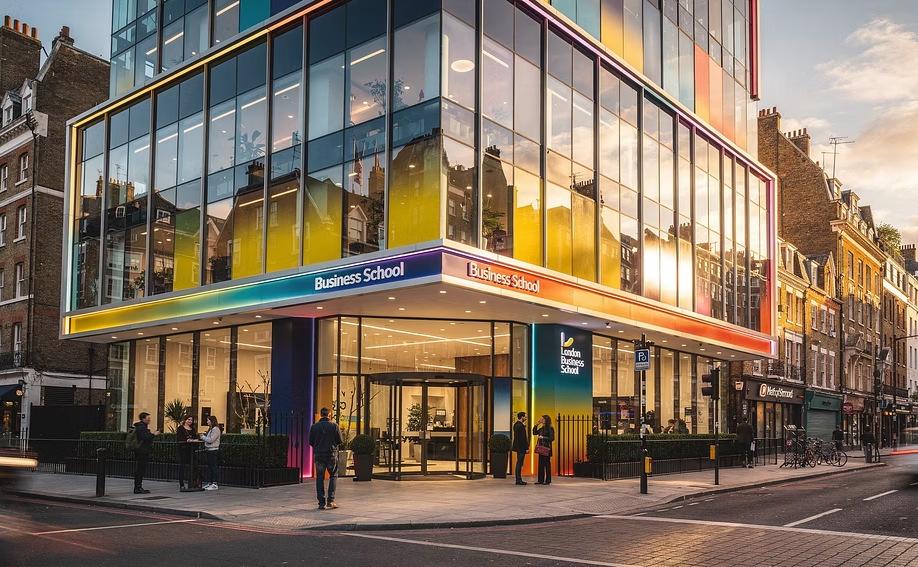
Balanced programs combining academic rigor and practical business sense. Strategic London location provides access to European and global markets.

Columbia Business School
New York City location provides strategic edge with close working relationships with corporate America, buttressing its consistent top rankings.
Additional schools appearing in both top 20 lists include IESE MBA; MIT Sloan, UC Berkeley Haas, Chicago Booth, UCLA Anderson, and Yale School of Management4confirming their consistent performance across different evaluation frameworks.

Comparative Analysis: Top Business Schools
Comparing ranks secured by select schools in QS Global 2024 vs FT Global MBA Ranking 2023 reveals insights into various assessment criteria and each school's unique strengths. Columbia
FT Rank QS Rank Key Insights
Columbia's #1 FT position indicates exceptional performance across career progression and research, while its #7 QS rank suggests other schools edge out in employability metrics.
LBS and HEC Paris show stronger QS performance, attributed to high employability scores and global alumni networks.
What This Means
Schools excel in different areas as highlighted by their ranks. FT provides broad assessment including diversity and research, while QS focuses on employability and ROI.
Prospective students should consider multiple factors when choosing programs, as rankings provide just one perspective on institutional strengths.

Detailed School Comparisons
Columbia Business School
FT Rank: 1 | QS Rank: 7
Columbia's top FT position indicates exceptional performance across broad criteria including career progression and research. QS rank suggests other schools may edge out Columbia in specific criteria like employability and thought leadership, though it remains firmly in top 10.
Harvard Business School
FT Rank: 4 | QS Rank: 3
Harvard's consistent top rankings in both FT and QS highlight its unparalleled reputation, academic rigor, and strength of alumni network, reflecting well-rounded excellence across all evaluation dimensions.
London Business School
FT Rank: 16 | QS Rank: 4
LBS's stronger QS performance attributed to high employability score and global alumni network. FT ranking reflects broader performance across various metrics including diversity and research output.
HEC Paris MBA
FT Rank: 17 | QS Rank: 5
HEC Paris's higher QS rank indicates strengths in employability and alumni outcomes, which are heavily weighted in QS methodology. Strong European network and career services drive QS performance.
Yale School of Management
FT Rank: 10 | QS Rank: 16
Yale's top 10 FT position indicative of strong career progress and satisfaction scores among alumni. QS rank reflects competitive field, particularly in employability and thought leadership metrics.
INSEAD MBA
FT Rank: 2 | QS Rank: 11
INSEAD's strong FT rank reflects global orientation and diverse community. QS rank indicates competitive performance in employability and international mobility, facing stiff competition in these specific areas.

Author's Bio

Shruti P
Shruti P is a seasoned MBA admissions consultant at GOALisB, known for her strategic insights and personalized approach to helping candidates navigate the complex landscape of business school admissions.
Shruti's expertise extends beyond admissions consulting; she is also a thought leader in the field, contributing valuable knowledge through articles, webinars, and workshops that demystify the admissions process and highlight the latest trends in MBA education.
Connect with GOALisB
Complete MBA Resource Guide: Explore Global Opportunities
Choosing an MBA program can be complex, especially with numerous international options. This comprehensive guide provides categorized resources for popular MBA destinations and essential insights to aid in your application journey.
General MBA Resources
Guide to MBA Admissions for Studying Abroad
Europe
SDA Bocconi, IESE, IMD, Cambridge, HEC
Paris, INSEAD, LBS
United States
Australia
Top 10 MBA Programs in Australia
Germany
Top MBA Programs in Germany
Canada
McGill, Alberta, DeGroote, HEC Montreal, UBC Sauder, Schulich, Rotman, Ivey
Singapore
NUS MBA, Singapore MBA Selection Guide
Foster, Olin, Georgetown McDonough, Michigan Ross, Carnegie Mellon, MIT Sloan, UVA Darden, Duke Fuqua, Dartmouth Tuck, UCLA, Berkeley Haas, NYU Stern, USC Marshall, Yale
Essential MBA Application Resources
Deferred MBA Programs for Graduates
Importance of Recommendation Letters
Scholarships for MBA 2024
Crafting a Standout SOP
Long-Term and Short-Term Goals Essay Tips
Executive MBA Rankings
ISB vs. Wharton MBA Comparison
MBA at Age 30 3 Pros and Cons

Frequently Asked Questions
Which MBA is best in 2025?
Stanford GSB ranks #1 in QS Global MBA Rankings 2025, followed by Wharton and Harvard."Best" depends on priorities like location, cost, salary, network, and specialization. Consider FT and QS rankings for global comparisons, U.S. News for U.S. schools, and NIRF for Indian programs. 2
Is it worth doing an MBA in 2025?
Yes, if you aim for career acceleration, leadership roles, or industry switch. MBA offers career growth, networking, global recognition, and high ROI at top schools. Average packages: ISB/IIM Executive MBAs ¹25340 LPA; Top US/Europe MBAs $150K+ annually 3
What is the NIRF ranking MBA 2025?
IIM Ahmedabad ranks #1 in NIRF 2025 Management category, followed by IIM Bangalore (#2) and IIM Kozhikode (#3). NIRF is the official Indian government ranking for management institutes. 4
What is the scope of MBA in 2025?
Strong scope in consulting, finance, technology, and product management. Growing opportunities in AI, sustainability, and entrepreneurship. Key roles: Strategy Consultant, Investment Banker, Product Manager, with average salaries ¹25340 LPA in India and $150K+ globally.
Which ranking is best for MBA?
Use Financial Times and QS for global comparisons, U.S. News for U.S. MBAs, and NIRF for Indian MBAs (IIMs, ISB, XLRI). Each ranking emphasizes different criteria4FT focuses on salary and research, QS on employability and ROI. 6
Is MBA safe from AI?
Yes, MBA careers are relatively safe as they emphasize leadership, strategic thinking, people management, and decision-making4skills AI cannot fully replace. However, MBAs must understand AI, data analytics, and digital transformation to remain competitive.
Book Free Consultation Talk To An Expert