As one of the nation’s top-selling master-planned communities, many have already discovered Cadence is a unique and special place. With its combination of value, lifestyle and community; it’s the perfect place to address your future. If you haven’t visited…come and see.
Follow a walkway. Explore Central Park. Marvel at the views. Tour model homes. Meet potential neighbors. Because once you’re here, we’re confident you’ll want to address your future too.
AVAILABLE 8:30PM - 10:00 PM
ART Photo by Christopher DeVargas /photo illustration ON THE COVER
14 WELLNESS
Making the case for simple, a ordable ingredients and recipes that deliver real nourishment.
Las Vegas roads lend themselves to bad driving, but agencies at every level are looking to change that precedent.
24 NEWS
Nevada o cials flaunt the results of a bill to help create a ordable housing, but who is it benefiting?
26 SPORTS
New coach John Tortorella tries to change his infamous style with the Golden Knights.
28 MUSIC
Vocalist Samara Joy builds on the legacy of jazz icons while reimagining them at the Smith Center.
30 FILM
Vegas is giving main character energy in the final season of HBO’s Hacks
32 FOOD & DRINK
Golden Boy brings the art of the sandwich to Henderson, plus what you need to eat at Kyu at Fontainebleau.
Oklou brings fresh hyperpop to Area15, Tracy Morgan fills Westgate International Theater and more happening this week.
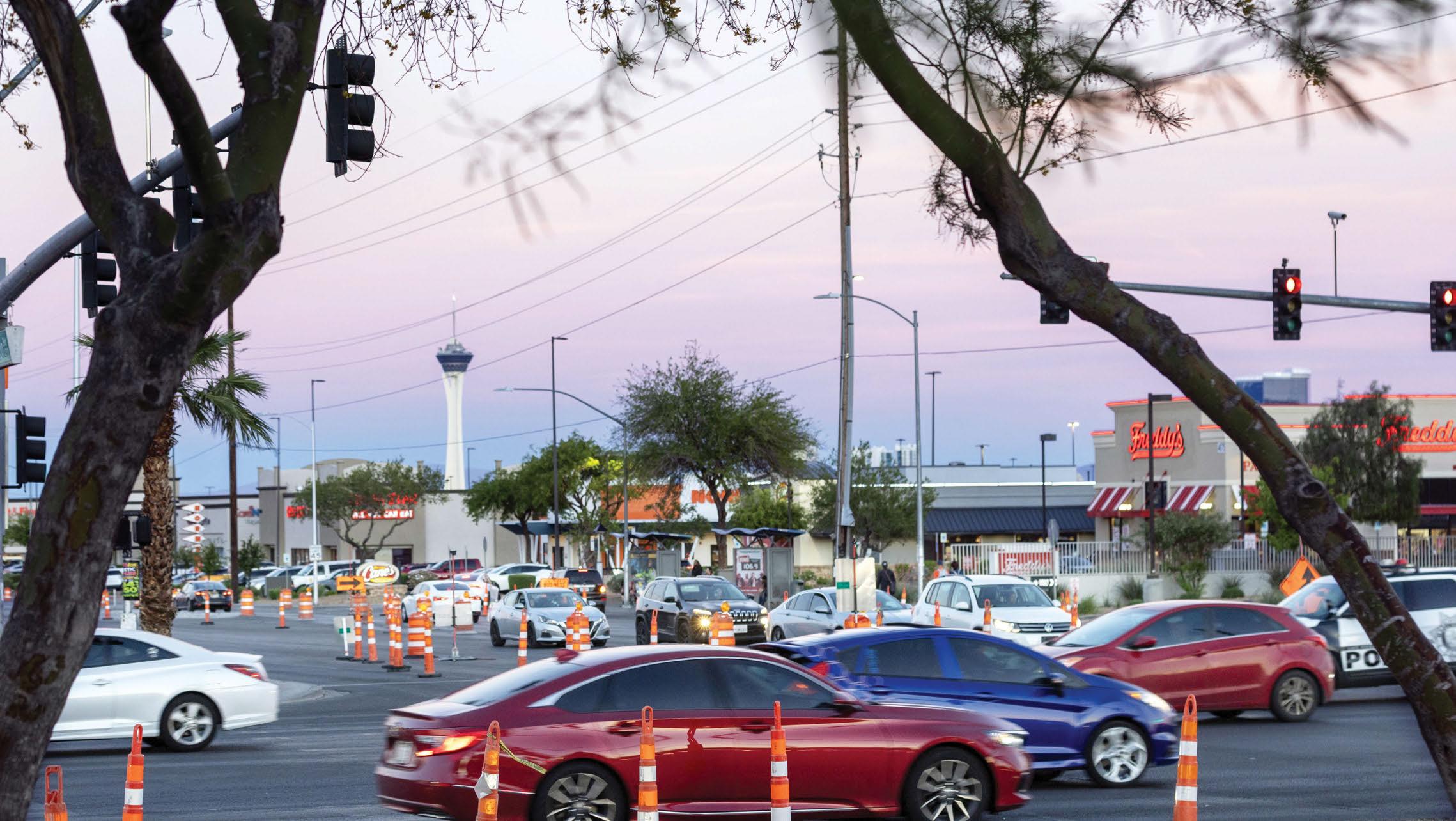
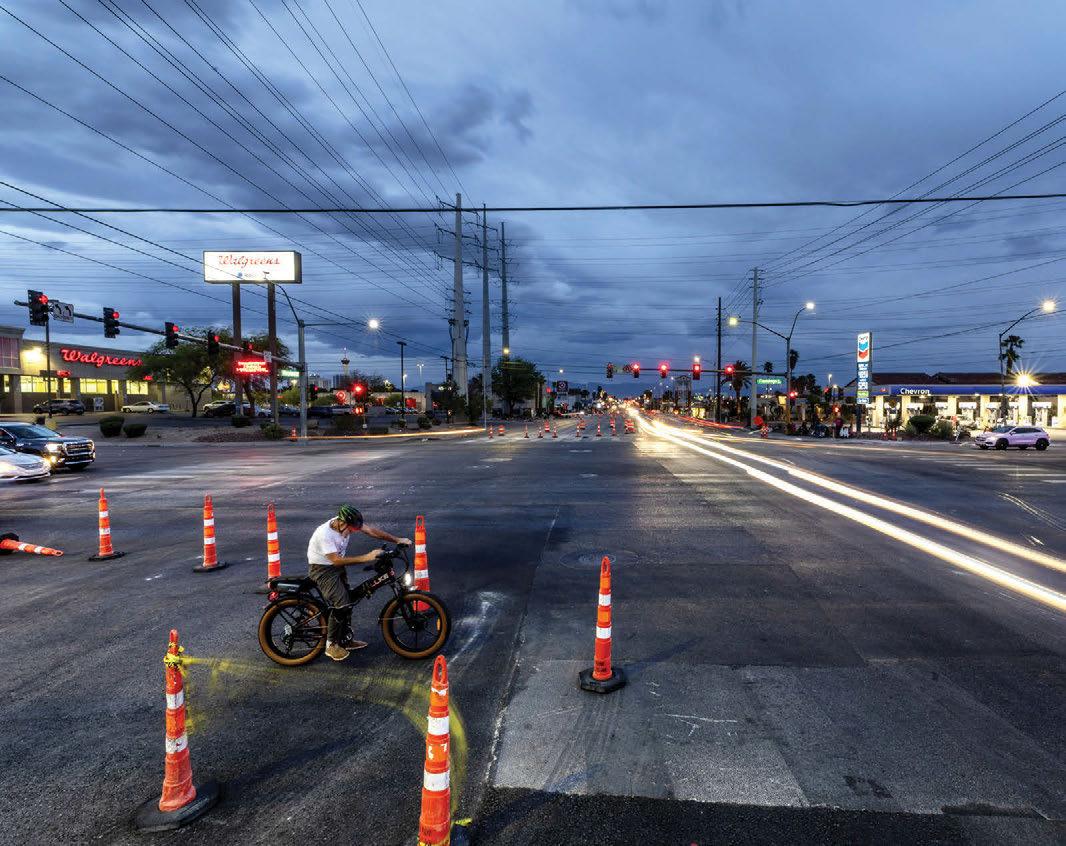
The intersection of Charleston and Decatur boulevards (Photo by Steve Marcus)
COVER
SUPERGUIDE
THURSDAY APRIL 9
FRIDAY APRIL 10
BRUNO MARS 7 p.m., & 4/11, Allegiant Stadium, ticketmaster.com.
7 p.m. (& 4/11, 6 p.m.), Lee’s Family Forum, axs.com.
DJ PAULY D 10:30 p.m., Marquee Nightclub, taogroup.com.
MERSIV
With Yheti, Schmux, 10 p.m., Substance, seetickets.us.
OKLOU
One of the freshest voices in hyperpop, Oklou is set to stop at the Portal during her North American run in support of her debut album, Choke Enough The French vocalist, producer and DJ crafts dreamy soundscapes that stretch the boundaries of pop, blending futuristic, trance-forward production with touches of R&B. Even after becoming a new mother last May, she’s quietly solidified herself as an exciting artist to watch, folding her rising pop stardom into the softness of parenthood rather than stepping away. See the ethereal pull for yourself and let it draw you into its swoonworthy digital haze. 7 p.m., $40+, the Portal at Area15, area15.com. –Gabriela Rodriguez
FKA TWIGS 8 p.m., the Chelsea, ticketmaster.com.
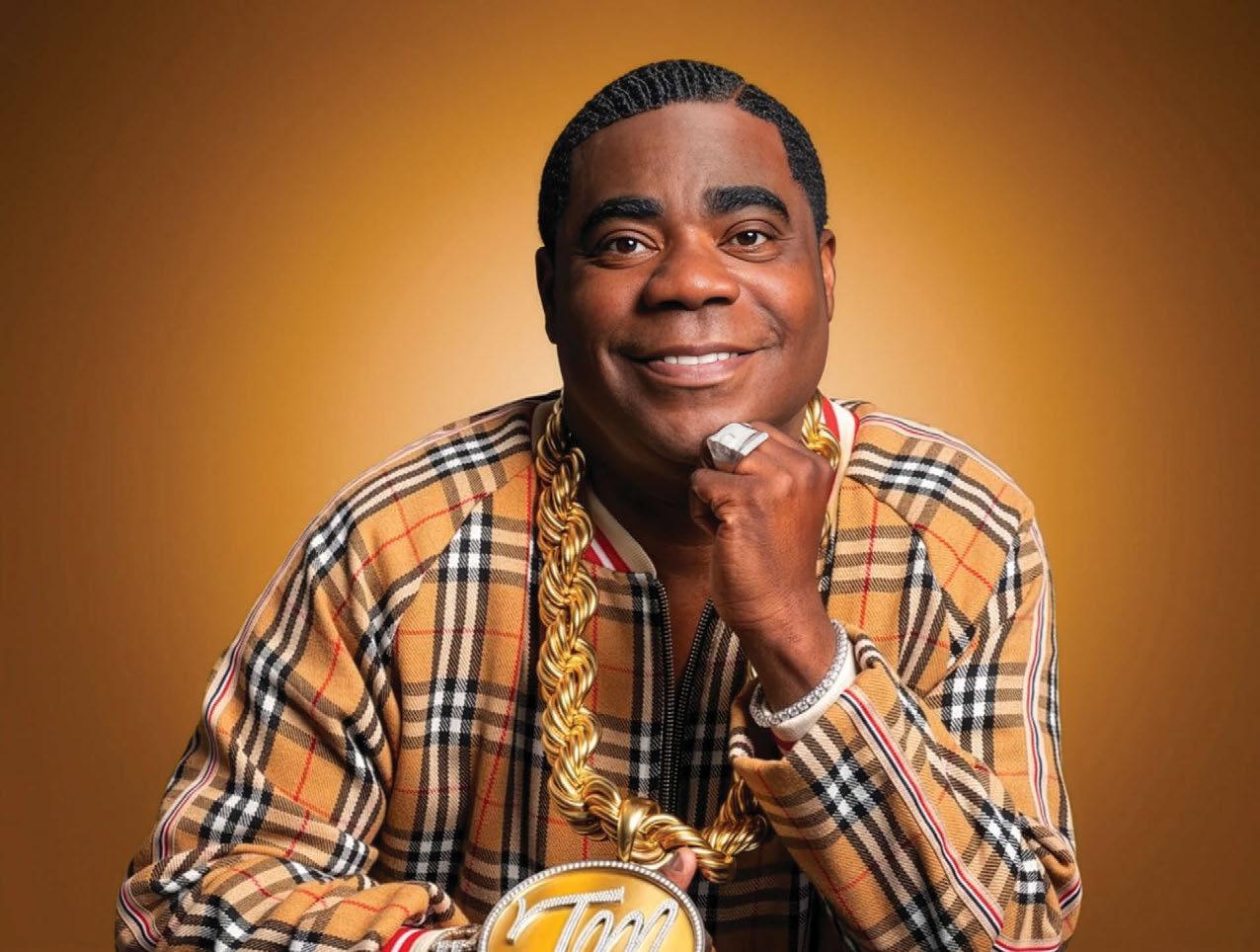
TRACY MORGAN
There are so many ways to appreciate the unique comic genius of Tracy Morgan: seven electric, scene-stealing seasons on Saturday Night Live; seven more as the oh-so-familiar Tracy Jordan on 30 Rock; this year’s sitcom debut The Fall and Rise of Reggie Dinkins, also featuring Daniel Radcliffe and Bobby Moynihan; and hilariously underrated roles in films like Chris Rock’s Top Five and Eddie Murphy’s Coming 2 America. So many of his characters stand out because they’re so raw and unfiltered, and you can expect the same of his storytelling style as a standup comedian. When Morgan takes the stage at Westgate—a show rescheduled from last summer—you may not believe some of the tales from his wild life, but you’ll definitely be laughing. 8 p.m., $84+, Westgate International Theater, ticketmaster.com. –Brock Radke
LAS VEGAS LIGHTS VS. SACRAMENTO REPUBLIC
7:30 p.m., Cashman Field, lasvegaslightsfc.com.
TACOS & TAMALES FESTIVAL
10 a.m., & 4/12, Desert Breeze Events Center, tacosandtamaleslv. com.
Junior Achievement of Southern Nevada’s Swimming with the Big Fish Luncheon returns on April 14, bringing together business and community leaders for an inspiring afternoon in support of local students. Guests will enjoy a Shark Tank-style showcase where students pitch real business ideas live to a panel of judges, highlighting creativity, confidence and entrepreneurial spirit in action. The event supports Junior Achievement’s mission to advance economic mobility and deliver Education for What’s Next, preparing local students with the skills, knowledge and confidence to succeed in a rapidly changing world. Buy tickets today at e.givesmart.com/events/MVw/ DO IT ALL
VEGAS GOLDEN KNIGHTS VS. SEATTLE KRAKEN 7 p.m., T-Mobile Arena, axs.com.
ETHEL CAIN
With 9million, 8 p.m., Theater at Virgin, axs.com.
MARK HENRY COMEDY SHOW 8 p.m., the Space, thespacelv.com.
YO YOLIE 11 a.m., Palm Tree Beach Club, taogroup.com.
ERIC FORBES 9 p.m., Ghostbar, palms.com.
BLACK VIOLIN 7:30 p.m., Reynolds Hall, thesmithcenter.com.
BRUCE HARPER BIG BAND
With Naomi Mauro, 7 p.m., Myron’s, thesmithcenter.com.
HENDERSON SILVER KNIGHTS VS. BAKERSFIELD CONDORS
7 p.m., Lee’s Family Forum, axs.com.
THE BIG GAMBLE IN THE DESERT
7 p.m., Mob Museum, themobmuseum.org.
NOAH GARDENSWARTZ
7:30 p.m., Wiseguys, wiseguyscomedy.com.
*Spotlight events are sponsored
FRIDAY APRIL 17
JACKSON DEAN
Rising country standout Jackson Dean brings his gritty vocals and high-energy sound to Bel-Aire Backyard at Durango Resort on April 17 as part of the Poolside Concert Series. Known for breakout hits like “Don’t Come Lookin’” and “Fearless,” Dean delivers a raw, storytelling style that blends modern country with a rugged edge. belairebackyardlv.com.
SATURDAY APRIL 18
REGGAE IN THE DESERT
Get ready for an unforgettable day of island rhythms at Jardin Presents Reggae in the Desert 2026, featuring an electrifying lineup including Steel Pulse, Collie Buddz, Protoje, Kabaka Pyramid, Anthony B and more. Beyond the music, savor authentic Caribbean flavors like jerk chicken and fried plantains at the Caribbean Islands Vendor Village, and stay refreshed with a variety of beverages. Explore vibrant exhibits and local vendors while soaking in the festival atmosphere. Lawn seating with blankets is welcome, along with a sealed water bottle per guest. Leave prohibited items at home and most importantly bring your best energy. This is a celebration of positivity, smiles, and nothing but good vibes. reggaeinthedesert.com.
Las Vegas Weekly - 4/9/26
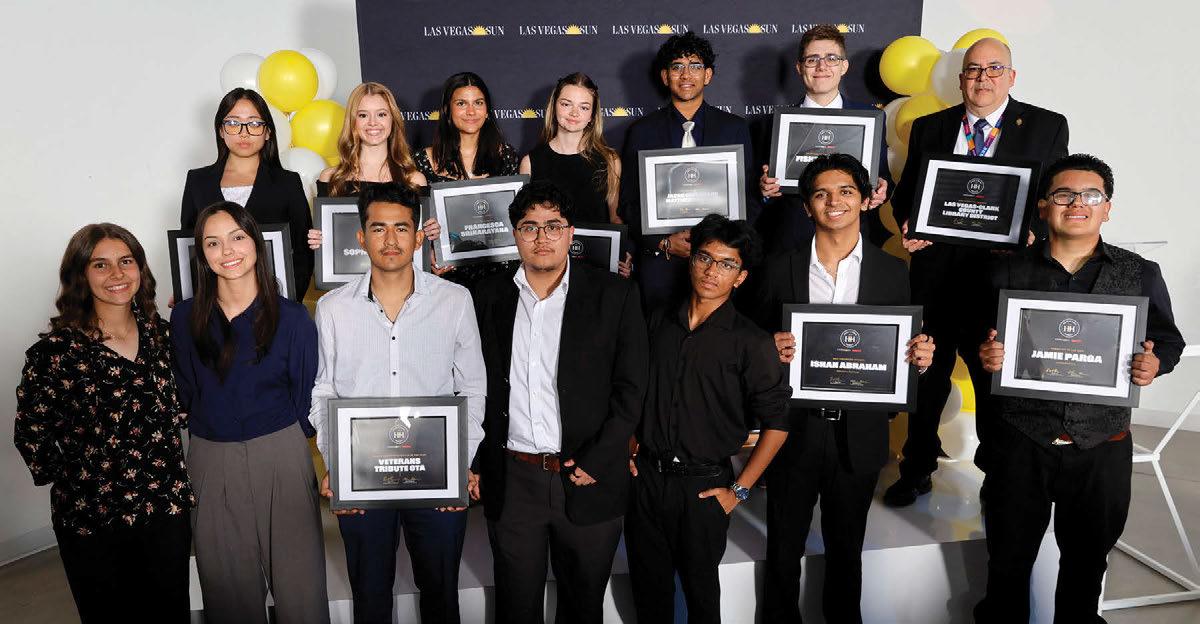
THE LAS VEGAS SUN STANDOUT AWARDS ARE BACK!
SCAN TO NOMINATE YOUR STUDENT-ATHLETES OR GO TO:
DEADLINE TO NOMINATE IS APRIL 17
Making the case for simple, a ordable ingredients and recipes that deliver real nourishment
BY GABRIELA RODRIGUEZ
WELLNESS | RECIPES
The word “superfood” has become a staple of modern wellness, conjuring images of expensive powders, exotic berries and photo-ready layered smoothie bowls. But according to Robyn Lew , a registered dietitian at Nutrition Moves! ( nutritionmoves.com ), the term itself is more advertising invention than scientific category.
“Superfood, technically, there is no definition,” Lew says. “It’s come to be known as something that’s very nutrient dense and providing some sort of health benefit. But it was initially developed just for marketing purposes.”
In practice, Lew argues, many so-called superfoods are neither rare nor expensive. Instead, they are everyday ingredients that often go overlooked. Beans, leafy greens
STEAMED LEMON, ARTICHOKE AND WHITE BEAN FISH
(serves four)
This easy-cleanup foil packet dinner layers pantry staples into a balanced, nutrient-rich meal. Artichokes and beans act as prebiotics, helping support gut health, while fish provides lean protein and omega-3 fats.
INGREDIENTS:
• 4 white fish filets (tilapia, cod or flounder), patted dry
• 1/2 lemon, zested and juiced
• 1 can white beans, drained
• 1 can or bag chopped artichoke hearts
• 3 cloves garlic, minced
• Salt and pepper
DIRECTIONS:
Preheat oven to 350. Place a large sheet of foil on a baking tray. Arrange fish on foil. Top with beans and artichokes.
Add lemon zest and juice, garlic, salt and pepper. Fold foil into a sealed pouch. Bake 15 to 20 minutes, until fish is cooked through.
Shutterstock; Robyn Lew/Courtesy
collagen and peptides and protein powders and replacements. You should just be eating whole real food, and that’s where you can get all the nutrition you need,” she says.
and sweet potatoes may lack the glamour of acai or collagen powders, but they deliver a powerful nutritional punch.
Lew’s food philosophy is grounded in simplicity and practicality. With a background as a chef, she emphasizes whole foods over supplements and processed alternatives.
“We’ve gotten a little obsessed with
BAKED SWEET POTATOES WITH SPICY GREEN GODDESS DRESSING
(serves four)
This dish pairs complex carbohydrates with a creamy, herb-packed sauce. Sweet potatoes o er fiber and antioxidants, while Greek yogurt delivers protein and probiotics that support digestion. Lew recommends making extra dressing to use throughout the week. It can be spooned over grilled chicken, mixed into pasta salad or used as a dip for vegetables.
INGREDIENTS:
• 4 sweet potatoes
• 1 cup plain nonfat Greek yogurt
• 1 cup fresh herbs (such as dill, basil, parsley or cilantro)
• 1 small jalapeño, seeded
• 1 clove garlic
• Salt and pepper
DIRECTIONS:
Blend yogurt, herbs, jalapeño, garlic, salt and pepper until smooth. Refrigerate.
Preheat oven to 375. Bake sweet potatoes until fork tender. Split open, mash lightly and drizzle with dressing. Serve with skin for added fiber.
As a working mother, she also designs meals with real life in mind, relying on flexible recipes and make-ahead components. “I am huge on meal prep and leftovers and having things that you can make once [and] use it three di erent ways,” she said.
But at the end of the day, figuring out how to feed your body using things you already love while discovering something new is part of the fun.
“If food brings you joy, you’ve got to figure out how to make that work without sucking that all out of your life,” says Lew. “There’s got to be some balance.”
SUPERFOOD PESTO
This versatile sauce is built on leafy greens, herbs and healthy fats. It can be used across meals from pasta to eggs, making it a practical staple for busy lives. Leafy greens provide vitamins and antiinflammatory compounds, while nuts and olive oil contribute heart-healthy fats. The result is a nutrient-dense sauce that can be made once and used in multiple ways.
INGREDIENTS:
• 2 cups chopped kale
• 2 cups basil leaves
• 1/2 cup olive oil
• Zest and juice of 1 lemon
• 3 cloves garlic
• 1/3 cup toasted nuts (walnuts, almonds or pistachios)
• 1/3 cup pine nuts, toasted
• 1/3 cup grated parmesan
• Pinch red pepper flakes
• Salt and black pepper
DIRECTIONS:
Toast nuts in a dry pan until golden. Let cool. Blend all ingredients until smooth.
LIVE THE VEGAS EXPERIENCE LIKE A PRO
Download the insider’s guide to dining, shopping, entertainment...and save money too!
DOWNLOAD THE APP FOR FREE
1,000+ VEGAS HOT SPOTS
ENABLE LOCATION TO UNLOCK NEARBY DEALS FIND WHAT’S NEAR YOU—FAST SEARCH IT. FIND IT. GO.
ENJOY EXCLUSIVE OFFERS
EXPLORE OUR COMPLETE EVENTS CALENDAR
VEGAS IN YOUR POCKET
WHERE TO EAT, PLAY, SHOP AND PARTY
From ‘Where should we eat?’ to ‘What’s happening tonight?’ —Vegas2Go’s free app answers it all.
1,000+ Vegas hot spots
Find what’s near you—fast Set your resort, unlock offers
Discover events happening now Search it. Find it. Go.
Save your faves with “My History”
Enable location to unlock nearby deals
DOWNLOAD THE APP FOR FREE
THE FUTURE IS SLOW
BY
Our Valley’s roads encourage speeding, and it’s time we reckoned with them–and ourselves
GEOFF CARTER WITH PHOTOGRAPHY BY STEVE MARCUS
“If you’re driving in Las Vegas, and the light turns green? Wait.”
Local performer Amy Saunders, aka Miss Behave, drops this line in her show-opening monologues, where it always gets a brittle, self-aware laugh because we’ve been on every side of that intersection. We’ve been in near-misses with drivers flying through red lights at high speeds; we’ve blown through those signals ourselves, traveling at speeds well over the posted limit; we’ve been the pedestrians crossing those streets, anxiously wondering if we are visible to our neighbors in their 5,000-pound machines; and we’ve been victims of collisions, learning the truth behind that terrifying joke in the hardest way.
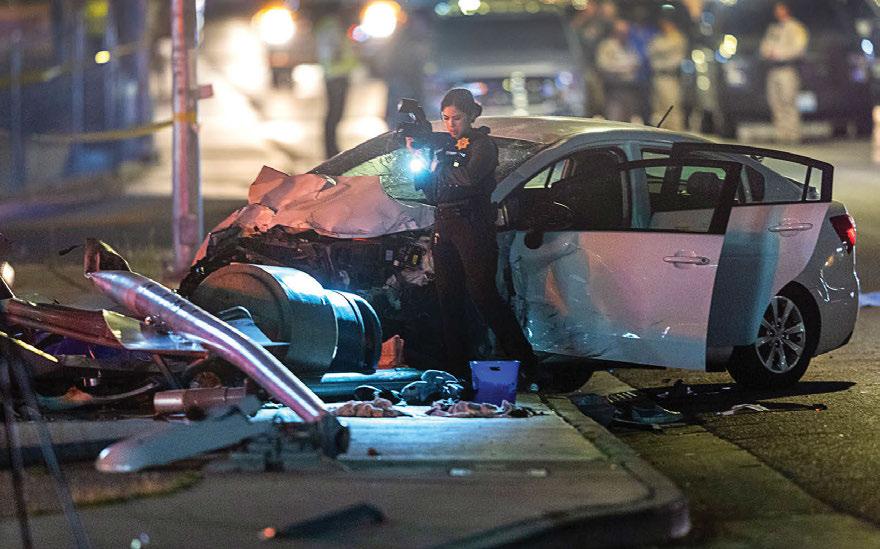
According to a report issued by the Nevada Department of Public Safety’s Zero Fatalities initiative, Nevada suffered 381 traffic fatalities in 2025, with Clark County alone accounting for 237 of those. Even though that number represents a decently sized falloff—there were 420 traffic-related fatalities statewide in 2024, a gruesome record high—it’s still a big enough number to give one pause when the light turns green, and big enough for the Las Vegas Metropolitan Police Department to maintain a list of the 50 most accident-prone intersections in the Las Vegas Valley, drawn from each of its 10 area commands.
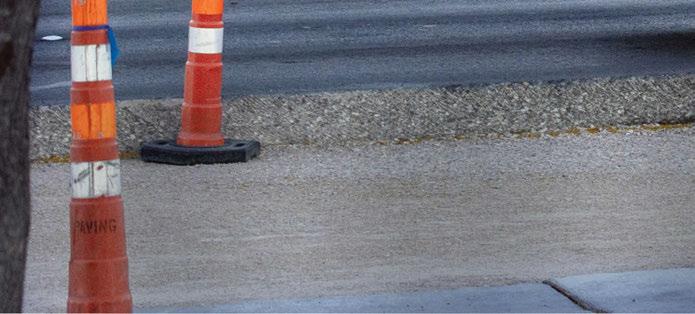
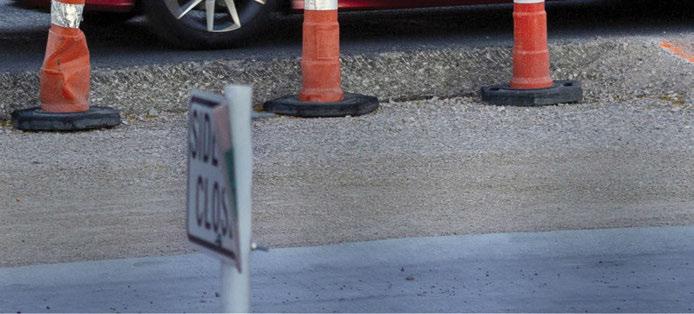
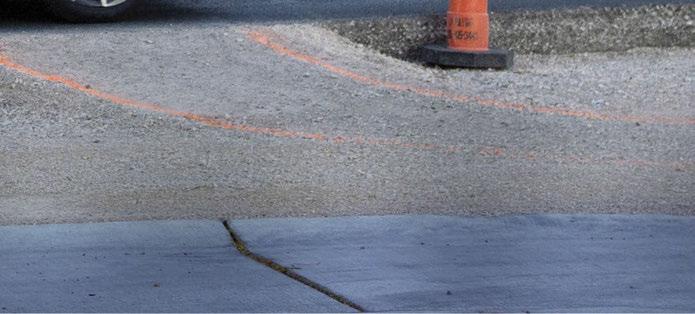
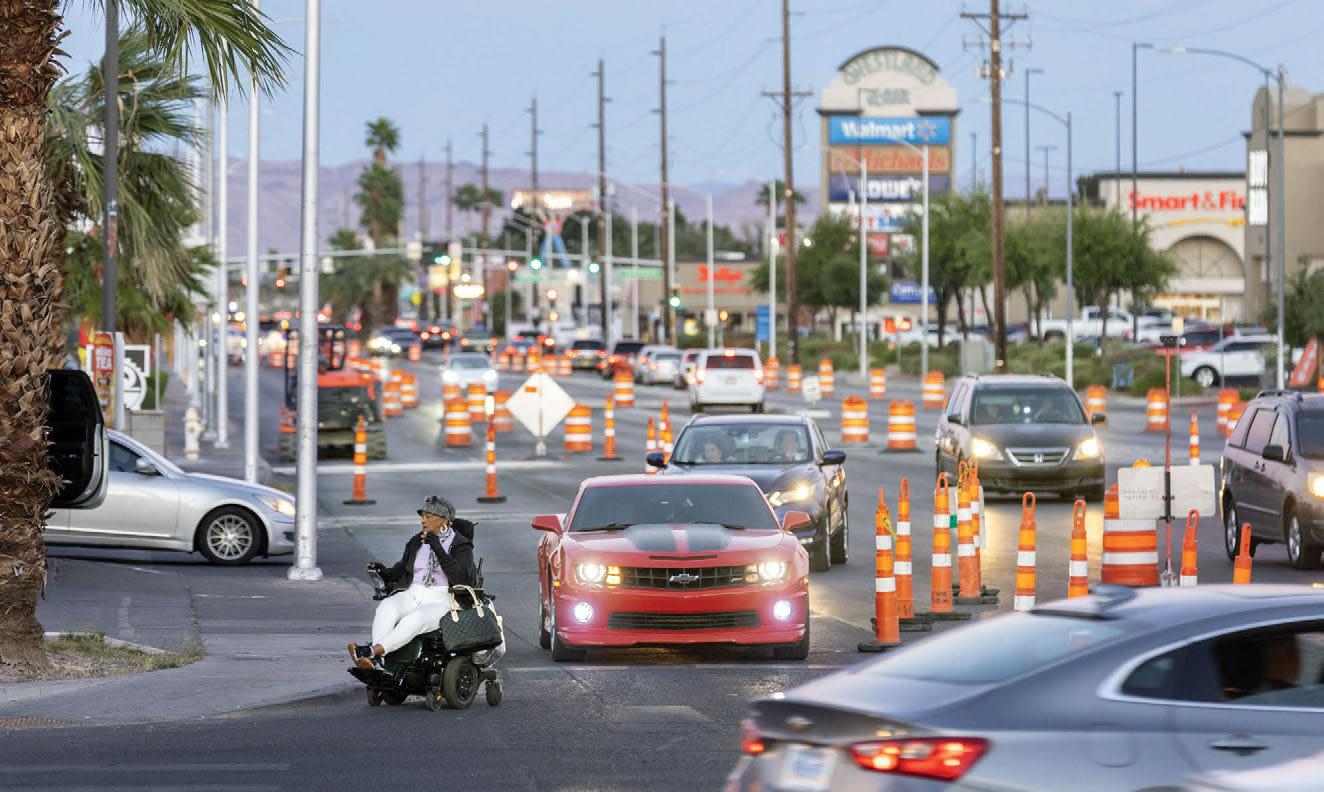
Published in January, Metro’s list of “top crash intersections” includes corridors touched by construction, like Flamingo Road and Maryland Parkway, which is receiving surface infrastructure improvements, and Charleston and Decatur Boulevards, which is getting underground utility work. It includes tourist-heavy intersections like Tropicana Avenue and Las Vegas Boulevard, and the largely local-use intersection of Desert Inn Road and Eastern Avenue. It’s got mega-busy intersections—Rainbow Boulevard and Flamingo,
each one nine lanes across— and some intersections so obscure, like Lamb Boulevard and Colorado Avenue, that I had to look them up in Google Maps.
All these intersections have three things in common: cars, pedestrians and crashes, and enough of each that Metro allied with other law enforcement agencies for the Joining Forces Speed Awareness Campaign earlier this year. “It’s a priority for Sheriff [Kevin] McMahill,” says Officer Robert Wicks with Metro’s public information office. “We’ve been hitting this message hard for the past three months.”
The message is a relatively simple one: slow down well before you even enter one of those intersections. Speeding increases the potential of losing control of your vehicle, increases your stopping distance and could make potential collisions deadly. That means keeping to posted speed limits and slowing down in wet weather. “Even at 45 miles per hour, your car won’t stop before entering the crosswalk on the other side of the intersection,” Wicks says. “Everyone should drive defensively; that’s the best advice at any time. And leave your house five to 10 minutes earlier.”
Metro is fully invested in the
three-pronged approach state and local agencies are taking to reduce—hopefully eliminate—traffic-related fatalities, keeping those numbers falling from their 2024 high. “We’re addressing this through what we call the Three Es—enforcement, education and engineering,” says Wicks, adding that the first E is an absolute given: “There’s no more leeway. We’re writing citations. We’re going to start holding people accountable.”
That leaves education and engineering. The former is about getting us to change our ways; we’ll get back to that one in a minute. But the latter raises lingering questions about roads in Nevada, and those in other Western sun belt states with a high number of traffic fatalities: why do we speed in the first place? Why are our roads so dangerous, both for those in cars and on foot?
“One fatality is way too many, not just as a state, but as a nation,” says Lacey Tisler, chief traffic safety engineer at the Nevada Department of Transportation (NDOT). “And that’s the reason I have a job. That’s the reason we partner with Metro, and truthfully, that’s the reason we’re having this conversation, because the goal is
LAS VEGAS METRO’S MOST DANGEROUS INTERSECTIONS
In January, Metro issued a list of its 50 “top crash intersections,” drawn from its 10 area commands. These are intersections that see a disproportionate number of accidents where Metro issues citations for speeding 11-20
MPH over the posted limit, running a red light or driving without a valid license, registration or insurance. These are the top-listed intersections from each of those area commands. Go carefully.
n Charleston and Valley View
n Desert Inn and Paradise
n Eastern and Stewart
n Blue Diamond and Durango
n Eastern and Tropicana
n Lamb and Lake Mead Blvd.
n Cheyenne and Tenaya
n Charleston and Durango
n Charleston and Nellis
n Decatur and Flamingo
(source: Las Vegas Metropolitan Police Department, January 2026)
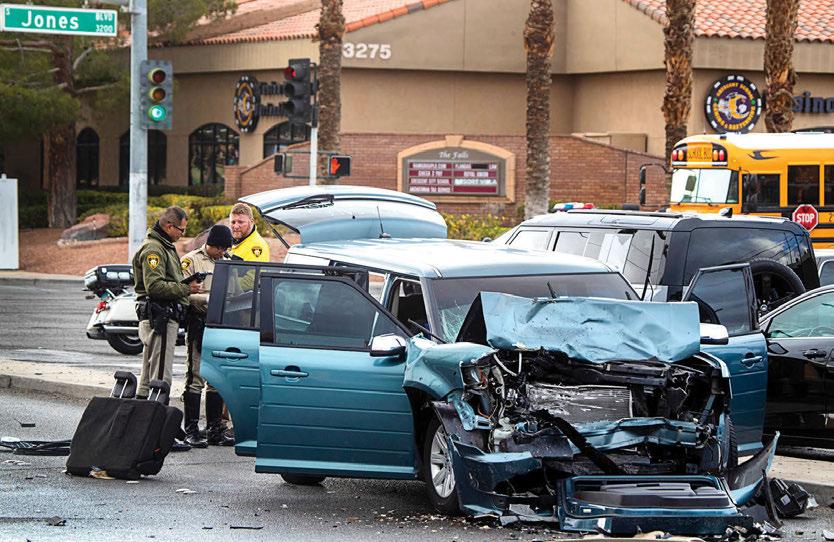
The scene of a fatal car accident on Desert Inn Road at Jones Boulevard on March 21, 2023.
ABOVE
The intersection of East Flamingo Road and South Maryland Parkway on March 31.
“As it pertains to vulnerable road users, unless you’re a motorcyclist, intersections are not where bicyclists and pedestrians die. They die mid-corridor most often. … It’s not the intersection or the corridor. It’s how we build our streets.”
–Erin Breen, director of UNLV’s Road Equity Alliance Project
BELOW
A woman with a motorized wheelchair prepares to cross South Decatur Boulevard at West Charleston Boulevard on April 3.
zero fatalities. And everybody needs to be involved, together.”
I’ve written about the Valley’s traffic issues many times before, even though I’m not an engineer and most of what I know about road infrastructure comes from interviewing civic engineers and listening to geeky influencers, like 99% Invisible podcast host Roman Mars and CityNerd’s Ray Delahanty. I’m compelled to do it because my time living in Vegas is broken up with a 10-year stint in Seattle, during which I got high on the whole idea of the socalled “15-minute city.” That’s a city where nearly everything you need to live—work, school, food, entertainment, culture and support for a healthy life—is within a 15-minute, non-motorized reach.
Las Vegas is not a 15-minute city. Las Vegas is Radiator Springs, the desert town from the Disney-Pixar Cars movies—a city built by machines, for machines. People don’t exist in that world—only race cars, trucks, sedans, tractors, fire trucks and fighter jets with windshield eyeballs and literal, toothy chrome grills. (It’s terrifying.) Our city was built out after World War II, when everybody and their brother bought
a car. As a result, Vegas’ streets are too wide, which encourages drivers to speed. Our sidewalks are skinny and frequently contain obstacles—light poles, zap boxes. Our city blocks are long, which encourages jaywalking. And the parking lots in front of our supermarkets, box stores and strip malls are entirely too big.
Delahanty calls these wide, flat thoroughfares “stroads,” a portmanteau of “streets” and “roads.” Las Vegas has little but stroads, and they’re probably the reason you’ve never walked to the supermarket. Even if you live within walking distance of one, you should be reluctant to cross an unshaded nine-lane road and ocean-sized parking lot in 90-degree weather to shop there.
“That comes down to drivers who never travel outside of their climate-controlled couch,” says Erin Breen, with a rueful chuckle. Breen, director of UNLV’s Road Equity Alliance Project, advocates for safer roads in several professional capacities, including as director of Ped Safe Vegas, a pedestrian safety education group. When she speaks to groups, she asks if people purposely park as far from the doors of the supermarket as possible, trying to get drivers
to identify with pedestrians.
“Occasionally one or two people raise their hands and I say, ‘Oh, new car?’ or ‘Getting those steps in?’, because that’s who parks in the corner,” she jokes. “Everybody else you know slams on their brakes the second they see a close parking spot. But those very same people have zero empathy for the folks that we’re asking to walk that long city block.”
Breen doesn’t think intersections are necessarily the main problem. “As it pertains to vulnerable road users, unless you’re a motorcyclist, intersections are not where bicyclists and pedestrians die. They die mid-corridor most often,” she says, talking about the people killed jaywalking across our too-long city blocks. “It’s not the intersection or the corridor. It’s how we build our streets.”
“Enormous roads do encourage speeding behavior. In general, the street grid systems that we see out west all experience varying levels of pervasive speeding,” says NDOT’s Tisler. “And that’s not just high speeds, [it’s] the systemic speeding, going 5, 10, 15 miles an hour [over the limit], that we see everywhere in a grid system. … As vehicles change, our systems aren’t changing. There’s
cultural impatience—the way our brains respond to speed and the other cars around us.”
The good news is that Southern Nevada is beginning to take the steps necessary to calm our streets. Maryland Parkway is getting wider sidewalks and a dedicated lane for bus rapid transit, bicycles and the steadily increasing number of e-scooters and e-bikes on our streets. (Tisler notes Nevada Assembly Concurrent Resolution 4, passed during last year’s special legislative session, directed the Joint Interim Standing Committee on the Judiciary to study new regulations for e-vehicles: “What are the rules around them? What are the space requirements? How do they fit into the [traffic] system?”)
And the Regional Transportation Commission of Southern Nevada and the City of Henderson are currently working together to tame the behemoth that is Boulder Highway, which is such the stereotypical “stroad” that the CityNerd YouTube channel devoted an entire episode to it. (Search for “Stroad Bingo.” Delahanty fills out his entire card: “Ginormous parking lots,” “excessive posted speeds,” “tight curbs/no sidewalks” and too many more.)
The Reimagine Boulder Highway project promises a reduction of traffic lanes, reduced posted speeds, mid-block pedestrian crossings with traffic signals, buffeted bike lanes, dedicated bus lanes, improved pedestrian access and more.
Engineers commonly call this right-sizing a “road diet,” and it’s a delicious indulgence following a meal of orange traffic cones. Main and Commerce streets underwent road diets a few years back, and while it sucked at the time, the pedestrian throngs now packing the 18b Arts District on weekends speak to its success. It’s not just Vegas that’s right-sizing, it’s the entire country—adopting electric vehicles that will eventually park themselves, utilizing rideshare and public transit in increasing numbers, and discovering the simple joys of walking or e-biking from A to B. If you had told me 20 years ago that the City of Las Vegas would have a successful bike share program, I’d have said you were nuts.
It’s possible to make Radiator Springs into a place where humans are welcome. We just need to be patient as the engineers do their thing, Breen says.
“Everything comes down to the individual that’s using the street. And as soon as they hear words like road diet, they go into a complete panic, because they think it will affect their commute for the time that it’s under construction, and I’m not going to lie about that, it absolutely will affect their commute.” (Breen sympathizes with me when I mention that I live on Maryland Parkway.) “But where we differ is on what the results of those improvements are. We’re not taking away capacity; we’re taking away from those oh-so-comfortable-to-speed-in travel lanes that are 14 feet wide
or better, making them more narrow so that you’re not so comfortable speeding, and then taking the extra space that we gain and giving it to people who travel by foot, or bike, or now, as it turns out, by [electric] mobility device. When roads are built for people and not for cars, those roads are safer for every road user.”
“These are generational changes,” Tisler says “They’ll move quicker when the community can come together. It’s very hard to drive change when you’re alone.”
Put that way, “leave the house earlier” doesn’t sound like a curse. There’s a common saying among urbanists, a kind of infrastructure-geek koan: “You’re not stuck in traffic. You are traffic.” Engineering will only take us so far in making the roads safer for everyone. We need to re-educate ourselves, to calm ourselves, to slow ourselves. And perhaps someday, when the light turns green, Las Vegas’ drivers won’t have that moment of existential doubt.
“There is value to driving the speed limit,” Tisler says. “I would challenge everyone to take their time getting from point A to point B. Watch their drive and watch the environment they’re in. Get curious about the road, take your time and feel and just reflect on how different it feels than when you’re rushing, and reflect on your travel time differences. Take it as a challenge, and we can continue to have a safety conversation.”
A fatal accident scene on southbound Boulder Highway on April 17, 2024.
Photos by Steve Marcus
IN THE NEWS
HEALTH WEEK
Dr. Leana Ramirez, chief health care o cer at the LGBTQ+ Center at the Gavin J. Goorjian Community Health Center, celebrates National Public Health Week, continuing through April 12. The Center o ers primary care, prevention services, chronic disease management, HIV services and mental health support to the entire community, regardless of identity, income or insurance status. Read more at lasvegassun.com
ROAD CLOSURES, PARKING FEES CONTINUE TO EXACT TOLL ON DOWNTOWN BUSINESSES
Construction projects and new parking fees in Downtown Las Vegas are slowly strangling tra c to local businesses. For one, the Arts District location of Dig It! Co ee Co. has announced its closure.
“Between over a year of construction, road closures, parking changes and now another construction project that’s scheduled within the coming months, it’s been really challenging for a small, independent business,” owner Taylor Chaney said in a tearful video posted to Instagram. “So, despite being named one of Yelp’s top co ee shops within the entire U.S., which I am so proud of, Dig It! will be o cially closing the doors to our Arts District location.”
Although the business recently announced a
ENTERTAINMENT
BRUNO MARS TO BE HONORED WITH PARADE AND STREET NAME
new location at Molasky Corporate Center on West Ogden Avenue, Dig It! is part of a growing number of businesses saying ongoing changes Downtown, including road closures and parking fee increases, have eaten into their revenue.
Restaurateur Cory Harwell told the Las Vegas Sun in October that his business, Carson Kitchen, which sits on the corner of South Sixth Street and Carson Avenue, had lost tens of thousands of dollars in revenue as a result of nearby construction for the Maryland Parkway Bus Rapid Transit project.
The Regional Transportation Commission of Southern Nevada is just over halfway done with the 12.5-mile, $378 million project that will link Harry Reid International Airport with the
Medical District using bus rapid transit on Maryland Parkway. The corridor is set to be out tted with designated bus lanes, better lighting, more landscaping, wider sidewalks and upgraded bus shelters for the 9,000 transit riders that use it daily, according to the RTC.
An increase in parking fees around Downtown Las Vegas has created another hurdle, business owners like Chaney say. The City of Las Vegas in October raised its on-street metered parking rates by $1 per hour, bringing the rates to between $2 and $4 per hour depending on the location. Public surface parking lots throughout Downtown, which are privately owned and operated by the city, also were hit with a $1-per-hour increase, raising costs to between $2 and $6 per hour.
“While the city is always sad to see a small business make the painful decision to close, it is a reality of how urban areas grow and change,” a city spokesperson said in a statement to the Sun. “Infrastructure work is a part of every city, and a new 500-space parking garage is under construction and set to open this summer in support of the very popular 18b Las Vegas Arts District. The district is growing and we look forward to more success in the future.”
–Grace Da Rocha
After years of performing on the Las Vegas Strip, global superstar Bruno Mars will be honored with a special parade and a dedicated street name on April 10 at 1 p.m. The spirited procession begins near Bellagio on Las Vegas Boulevard, traveling past the Cosmopolitan, Aria and Park MGM before ending at T-Mobile Arena’s Toshiba Plaza. Park Avenue will be renamed Bruno Mars Drive, in recognition of the “I Just Might” star’s long-running residency at Park MGM and his commitment to Las Vegas through Strip concepts like the Pinky Ring. Mars joins the ranks of legends like Frank Sinatra, Elvis Presley and Penn & Teller with this dedicated street. The singer will perform with Anderson .Paak and Leon Thomas at Allegiant Stadium as part of The Romantic Tour on April 10 and 11. –Amber Sampson
(Photo by Wade Vandervort)
Includes an initial consultation with a licensed medical provider, a full physical exam, complete body composition analysis, and your first dose of medication.
New patients only, cannot be combined with other offers
2 CONVENIENT LOCATIONS:
3365 E. Flamingo Road, Ste 2 Las Vegas, NV 89121 4966 S Rainbow Blvd STE 100 Las Vegas, NV 89118
DOES ‘ATTAINABLE’ EQUAL AFFORDABLE?
Nevada’s new housing bill is working, but for whom?
BY TYLER SCHNEIDER
According to a March report from the National Low Income Housing Coalition, 88% of Nevada’s extremely low-income renters—those making 30% or less of area median income—are severely cost-burdened, meaning they spend more than half of their income on rent and utilities. Those households are in desperate need of affordable housing, especially with the rising costs of gas, groceries and health care.
Unfortunately, Nevada is the worst state for that, with only 16 rental homes available for every 100 extremely low-income households that
need them, according to the report. And of the 50 largest metro areas in the U.S., Las Vegas also had the “most severe” statistics for extremely low-income households, with only 13 affordable homes available for every 100 renters who need them.
To chip away at those numbers, Republican Gov. Joe Lombardo worked with the Democrat-controlled Nevada Legislature to pass Assembly Bill 540, or the Nevada Housing Access and Attainability Act, last year. The bill appropriated $133 million into the newly created Nevada Attainable Housing Account, with the funds intended to spur the creation of new housing units for purchase
and rent, along with additional resources like a down payment assistance program.
The legislation was notably designed to encompass a greater range of income levels by creating the definition of “attainable housing,” which includes those earning 30% or less of area median income all the way up to 150% AMI. For a four-person household in Clark County, the Department of Housing and Urban Development defines this as $28,470 to $142,350 annual income.
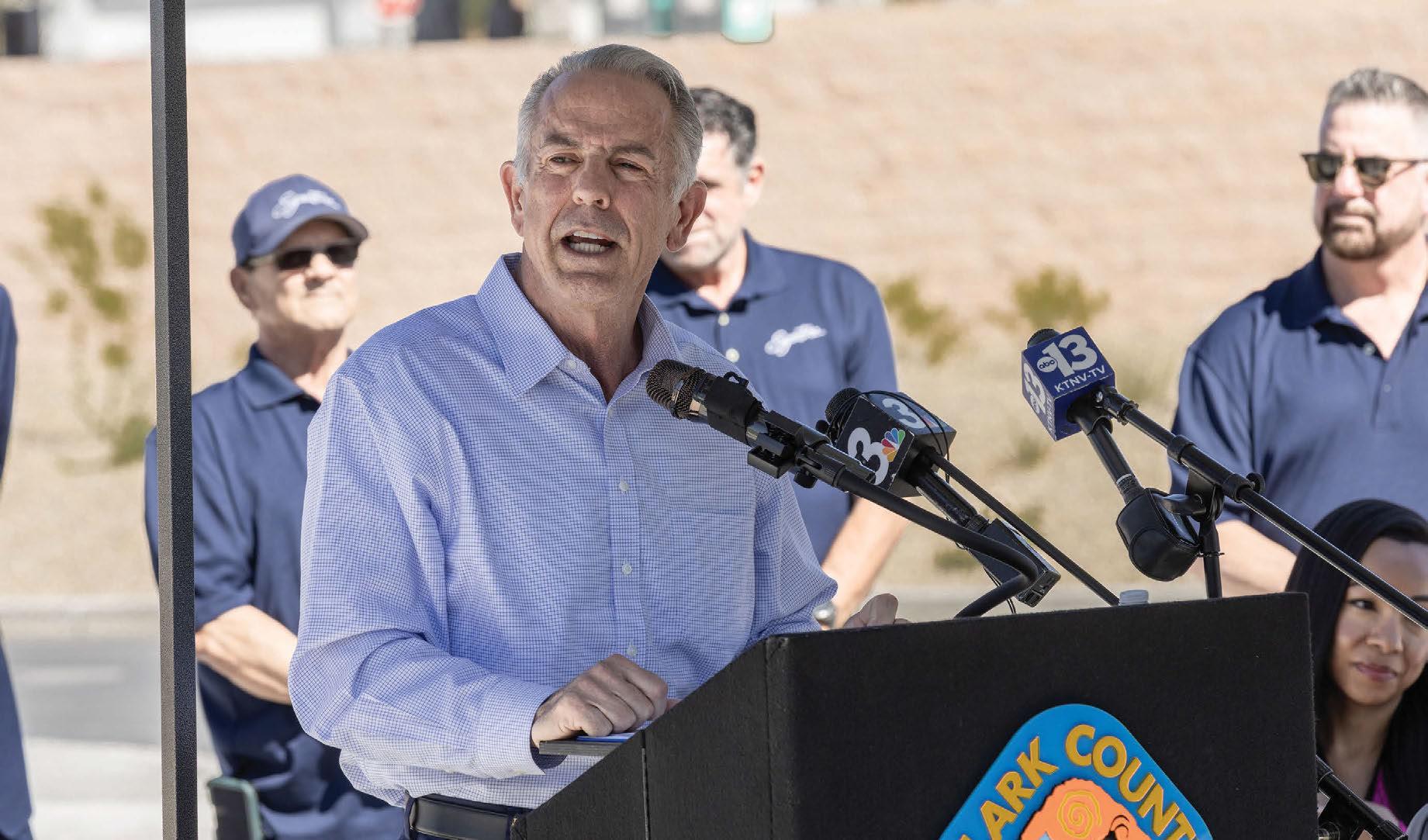
On March 25, Lombardo highlighted the first project to be partially funded through the legislation from a newly constructed bridge over the Flamingo Wash, which connects 29
Nevada Gov. Joe Lombardo at the unveiling of Signature Homes’ Paradise Trails project on March 25. (Photo by Christopher DeVargas).
new homes at the Paradise Trails subdivision to the greater community. The for-sale homes at Paradise Trails—one of seven Clark County-based projects benefiting from a $64 million disbursement Lombardo’s office announced in February—are earmarked for those earning between 80% and 150% AMI.
Tina Frias, CEO of the Southern Nevada Home Builders Association and a member of Lombardo’s Nevada Attainable Housing Council, which reviewed funding recommendations, says expanding the bill’s reach to 150% AMI represents a meaningful shift.
“It will allow this program to benefit a wider range of people, including more of our middle class. That’s something that is definitely a new precedent that’s set in legislation,” Frias says.
But while the bill casts a wide net, the most pressing aspect of Nevada’s housing crisis still lies at the opposite end of the spectrum. Of the 1,566 total units funded in the bill’s first disbursement, only 61 will explicitly serve extremely low-income households, according to the Nevada Housing Division’s own award recommendation. Lombardo’s communications director Drew Galang cites two permanent supportive housing developments set aside for the lowest income tier. In Clark County, that equates to 48 rental units at the Blind Center’s Visions Park.
Galang says the bill’s strength is that it’s intentionally designed to accommodate a range of project types.
“Each project requires a unique funding mix, but the new parameters of Assembly Bill 540 allow for
significantly more flexibility in securing capital,” he says.
Before touring one of the $449,940, three-bedroom homes at Paradise Trails, Lombardo plugged the public-private partnership model that made it possible. He called the project— which drew $800,503 from the Nevada Attainable Housing Account after developer Signature Homes matched those funds dollar-for-dollar, per the bill’s terms—a lifeline for a workforce that he said “is being priced out of the ability to see the proverbial American dream.”
“When we partner with the private sector, and when we stay focused on practical solutions instead of politics, we can deliver real results for Nevada families,” Lombardo said at the event last month. “That bears repeating— partnership with the private sector, which the government has traditionally not been used to. But it’s a game changer for us.”
Construction executive Xavone Charles, managing partner at the Valley-based Desert Elite Management and a member of the North Las Vegas Planning Commission, says the reality is a bit more complicated.
“Most of these projects serve households between roughly 60% to 120% [AMI], which is more in line with teachers, health care workers and other essential members of the workforce—but not necessarily low-income housing,” Charles says.
The outcome is partly a reflection of how the bill was structured, as the housing division’s application process awarded bonus points to applicants that could repay their loans within two to four years. That’s typically an easier threshold to meet
“Assembly Bill 540 is doing what it’s designed to do by leveraging public dollars to unlock private investment and increase housing supply. But if the goal is to address the deeper affordable housing needs, it must be paired with additional tools like tax credits, long-term subsidies and a stronger public-private partnership.” –Xavone Charles, managing partner, Desert Elite Management
for larger developers with a lot of capital, but not necessarily viable for nonprofit developers that prioritize deeply affordable options.
Charles adds that the task of adding housing in the lower AMI brackets is complicated by the fact that they don’t easily “pencil out using traditional financing.”
“[AB 540] is doing what it’s designed to do by leveraging public dollars to unlock private investment and increase housing supply. But if the goal is to address the deeper affordable housing needs, it must be paired with additional tools like tax credits, long-term subsidies and a stronger public-private partnership,” Charles says.
Galang says Lombardo is pursuing additional methods for shoring up the difference, “including working groups with advocates and industry leaders and efforts to
streamline federal land transfers so that more housing can be built faster in Nevada.”
For Charles, closing this gap requires more resources than any single bill can provide.
“I don’t think it’s appropriate to say whether or not the city or [AB 540] is doing enough, or the developer is being greedy, or the contractor can’t get the costs down,” he says. “In my mind, it’s probably a coalition of just targeting areas that can provide the amount of housing that we still need for those under 30% AMI, and then really, really taking a lens to it.”
While Lombardo examined a two-car garage at Paradise Trails with coffee in hand, the bridge over the Flamingo Wash stood as a symbol of progress. Still, many Nevadans remain on the other side, waiting for a bridge they can finally afford to cross.
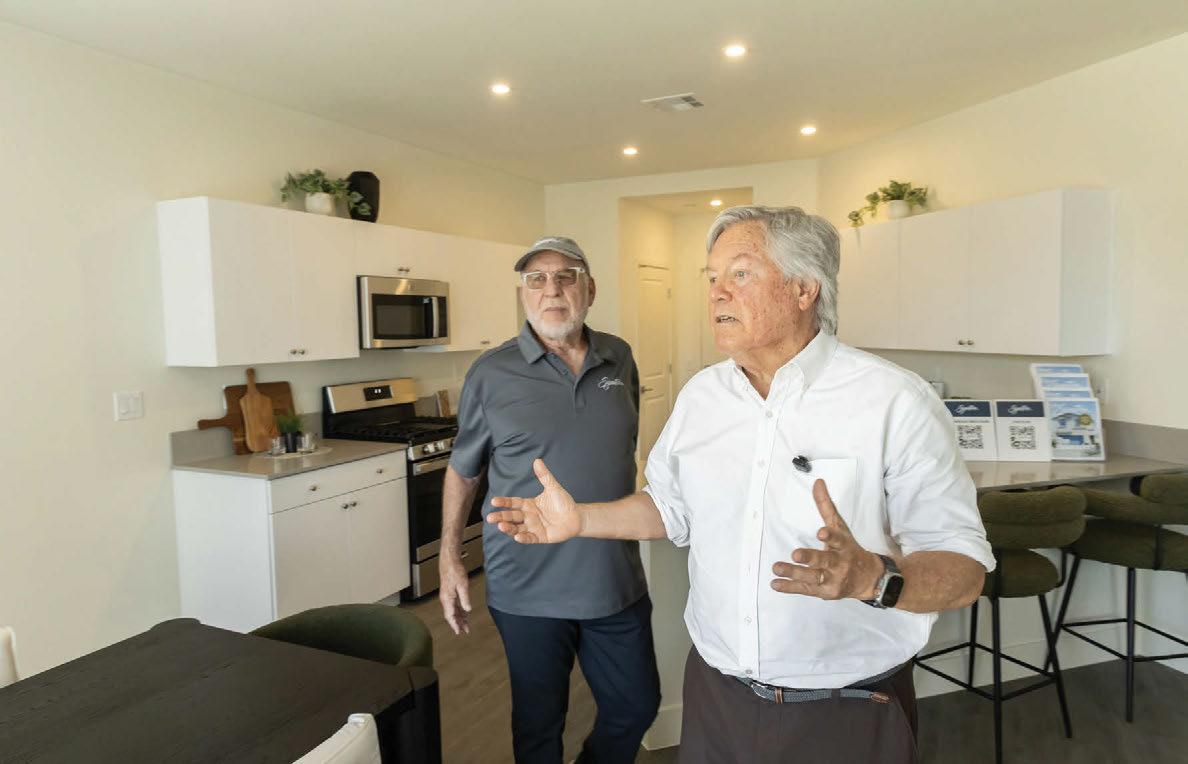
Signature Homes CEO Richard Plaster (left) and Clark County Commissioner Tick Segerblom tour a model home at Paradise Trails on March 25. (Photo by Christopher DeVargas)
A TAMER ‘TORTS’
Why new coach John Tortorella is trying to change his infamous style with the Golden Knights
BY CASE KEEFER
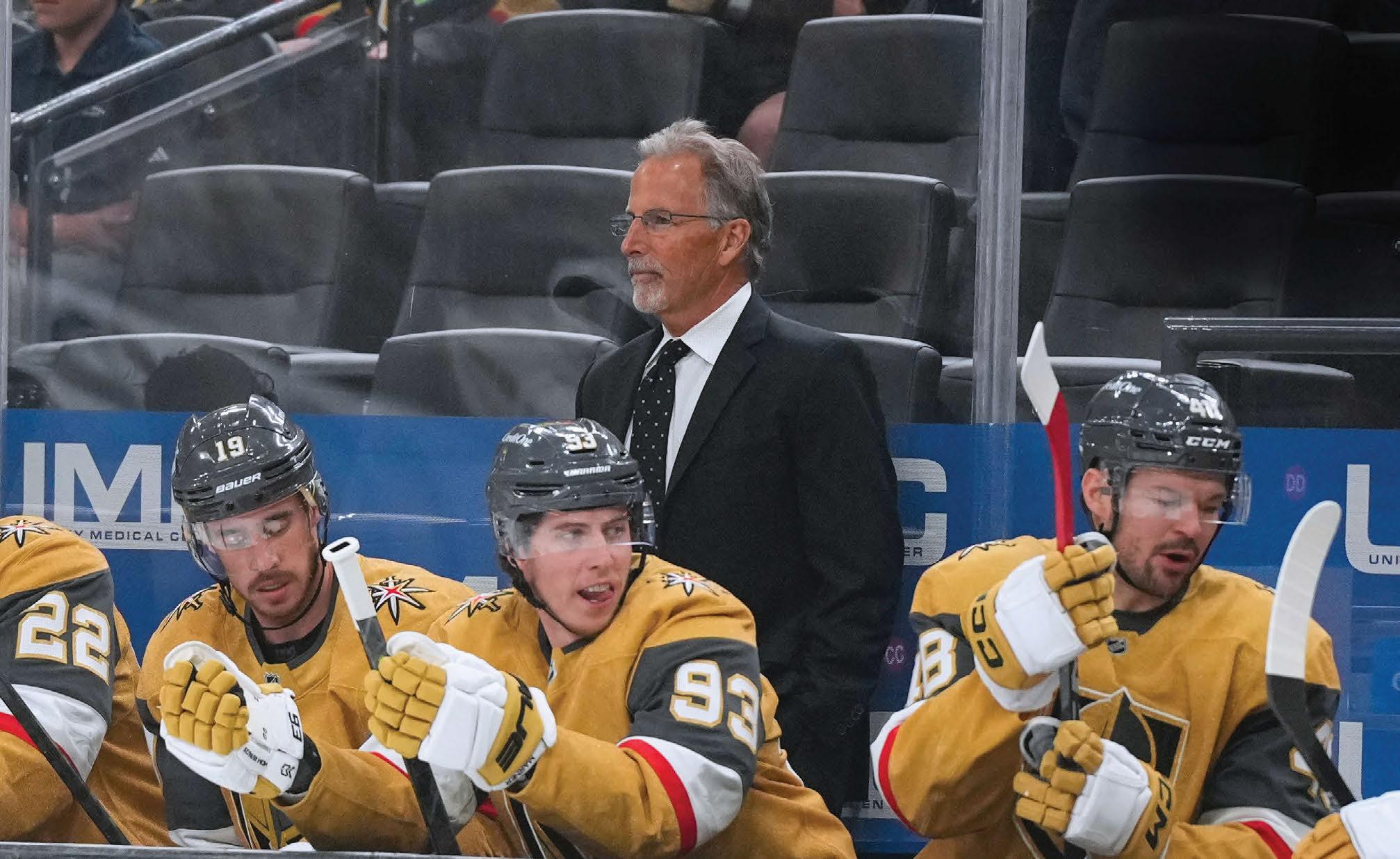
For maybe the first time in the more than 25 years since he emerged as an NHL coach, John “Torts” Tortorella was easy to miss while on the bench with Team USA in February at the Olympics in Italy.
The 67-year-old veteran who most famously won the Stanley Cup with the 2004 Tampa Bay Lightning is widely known as a firebrand, a reputation largely earned through in-game antics over the years. At his last NHL stop with the Philadelphia Flyers, Tortorella’s incidents included a screaming match with a star rookie and a refusal to leave the rink after receiving a game-misconduct penalty.
But he understood his role as an assistant on coach Mike Sullivan’s staff at the Olympics and drew no extra attention to himself while the American men’s hockey team soared to its first gold medal in 46 years.
It may have turned out to be good practice. The spotlight will be on him a little more now, but Tortorella says he wants to follow a similar tact as the new head coach of the Vegas Golden Knights.
“I just want to keep my head down here and play and behave myself and help the team try to find its way in such an important time of the year,” he said at a recent news conference.
In news that sent upheaval through the NHL
world, Tortorella became the fourth coach in the history of the Golden Knights on March 29 after the team fired Bruce Cassidy, who helped bring the Stanley Cup to town in 2023. Vegas had gone just 5-10-2 since the Olympic break— the second-worst record in the NHL—with general manager Kelly McCrimmon diagnosing that the team had lost its “spirit.”
Tortorella seemed like a natural replacement if the intention was to stir more emotion out of an underperforming team.
“(He’s) emotional, passionate,” said Vegas star Jack Eichel, who’s played for Tortorella with Team USA. “Both (the Olympics and Four Nations Faceoff in 2025) were really good experiences. If you talk to guys that have played for him for longer periods of time, they all say the same thing: He cares about his players, he’s emotional, he’s invested in it. I think that’s great for us.”
The makeup of the Golden Knights is another reason why Tortorella is trying to exercise a new level of calm. He described his last two jobs in Philadelphia and Columbus as rebuilding franchises.
That’s not Vegas, which has a veteran roster and championship experience.
“To come into a team that just understands how to win, has won, has played in a bunch of playoff series, who am I kidding,” Tortorella
said. “This is something I’ve self-taught for the time I’ve been given for a great opportunity—just get out of the way and learn from (the players). I need to take information from them. … I want them to be able to come to me and say what’s on their mind.”
That doesn’t mean Tortorella won’t be implementing some of his own tweaks, especially when the playoffs begin on April 18—assuming Vegas holds onto its spot.
He wants to be more fluid with his forward lines and defensive pairs, especially as games progress. He hinted at using the team’s three best players—Eichel, Mark Stone and Mitch Marner—together more frequently. Cassidy only employed the Big Three strategy for two shifts totaling less than 2:30 of ice time over the first 74 games this season.
“If I see something and my eye test or stomach say, maybe you need to move something around to spark something, I’ll do it,” Tortorella said. “Been criticized many years, many times that I’m moving players all over the place. I really don’t give a sh*t.”
Perhaps that response illustrates that his old ways aren’t totally gone yet. But he hopes gratitude and poise prevail more than frustration and intensity at his new stop, where he’s only contracted to remain through the end of this season.
Vegas Golden Knights head coach John Tortorella, center, looks on from behind the bench during a game against the Vancouver Canucks on March 30. (AP Photo/ Candice Ward)
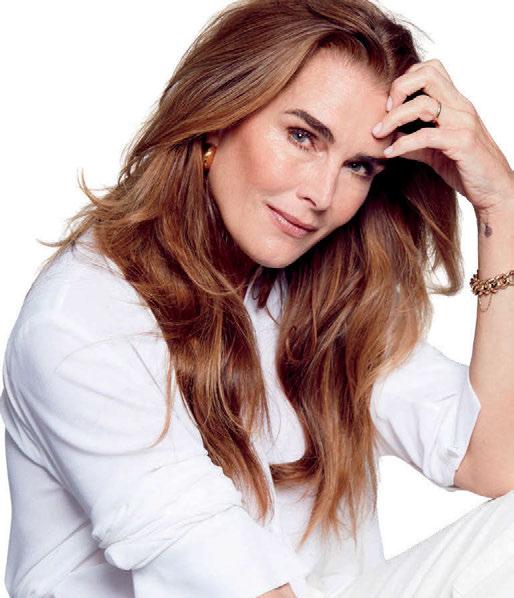
From Icon To Author: Brooke Shields On Life In The Spotlight
Monday, April 20, 2026 | 7:30 p.m. Artemus W. Ham Concert Hall
Tickets are strictly limited to 2 per person and are ONLY available at the UNLV Performing Arts Center Box Office, Tuesday–Saturday 12 p.m.–6 p.m. For information, call (702) 895-ARTS; however, tickets cannot be reserved by phone.
UNLV Faculty, Staff and Students may obtain tickets beginning at 12 p.m. on Wednesday, April 1. A valid UNLV Rebelcard is required.
The General Public may obtain tickets beginning at 12 p.m. on Saturday, April 4.
Liberated sounds
Vocalist
Samara Joy shares a legacy of reimagined jazz at the Smith Center
SAMARA JOY April 10, 7:30 p.m., $52-$160. Reynolds Hall, thesmithcenter.com.
BY GEOFF CARTER
The career of six-time Grammy Award-winning jazz singer Samara Joy is young, but packed. She began posting TikTok videos in 2020, performing jazz standards in her soulful, velvet-like contralto—clips that racked up millions of views and earned her such distinguished fans as Anita Baker and Regina King. Her self-titled debut album, recorded while she was still enrolled in the jazz program at State University of New York’s Purchase College, dropped in July 2021. In 2023, she won her rst two Grammys, including Best New Artist.
But the inspiration driving this 26-year-old generational talent is much older than TikTok. Joy’s teachers aren’t just her musical family—her father is a gospel musician, as were his parents—or her mentors at Purchase. Her teachers are Ella Fitzgerald and Billie Holiday, who created, lived and died before she was born. In a phone interview, previewing her rst-ever Vegas appearance at the Smith Center’s Reynolds Hall, she eagerly talks about the late, great Carmen McRae: “There’s something so clever and musical about the way that she sings. … She doesn’t have to do anything super fancy. She just gets right to the heart of the song and the heart of the lyric, as if she’s lived it a hundred times.”
Teachers like McRae, among other greats, speak directly into Joy’s heart and soul. She talks about the rst time she heard Cli ord Brown and Max Roach’s 1954 live recording of the ballad “I Can’t Get Started,” and was “entranced.”
“[Brown’s] playing the song, but he’s not playing the melody as it’s written, note for note and rhythm for rhythm,” Joy says. “It was the most liberated sound I’ve ever heard. He was improvising the whole time, and yet it sounded so incredibly tender and lyrical and melodic. ...Everything that I love about Sarah Vaughan, about Betty Carter, about Max Roach, about Bird, it’s all a part of how I now interpret music. People can hear that, but also how I made it my own. We can only imitate so much before it’s time to get creative.”
She’s eager to perform those inherited, reinterpreted sounds, from her transcendent versions of “Guess Who I Saw Today” and “’Round Midnight” to the music from her latest Grammy-winning album, 2024’s Portrait, along with material she and her band have worked out on the road. But above all, she’s coming here to share from that instructive and inspiring legacy, and to add her own notes.
“I’ve had now ve years [of] being put in so many di erent situations that have helped me to grow and be more con dent in sharing the music that I love in a way that connects with people, no matter where we are,” she says. “It has allowed me to become a better performer, a better artist, better at sharing and expressing myself spontaneously. I want to keep doing it because I feel condent in it, but also, I feel like there’s room to grow.”
BY GABRIELA RODRIGUEZ
Much like its coastal counterparts of Los Angeles and New York City, Las Vegas has long been a place where rising talent is discovered and nurtured. It is only tting, then, that a dedicated space exists to spotlight artists on the cusp of something bigger. That’s where the Shag Room at Virgin Hotels comes in.
For the past ve years, the intimate lounge, known for its swanky hideaway vibe, has evolved into a live music hub, hosting weekly open mic nights on Wednesdays and curated showcases from Thursday through Saturday. And what began as an experiment has grown into a vital
platform for local performers.
“This is so unique and interesting. You are not nding this anywhere else, de nitely not on the Strip, but really anywhere in town with this level of talent and collection of people,” says Andrew Pittard, vice president of food and beverage at Virgin.
According to Pittard, the concept aligns naturally with the Virgin brand’s roots as a British independent record label in the ’70s.
“It was the missing piece for our entertainment portfolio,” he says. “There’s been a little bit of the up-and-comer performances at 24 Oxford, the big acts in our theater.
Inside the Shag Room’s role as an incubator for emerging talent
What was missing was the people being able to get their foot in the door and perform for an audience.”
That opportunity has proven valuable not only for performers but also for industry workers looking for midweek entertainment on their days o . Each open mic is judged by a panel that includes musician and host Shawn Eiferman, alongside rotating guest judges with music industry experience or background knowledge. Weekly winners advance to a quarterly nale, where one standout artist earns a featured residency slot.
The performances them-
selves re ect the diversity of Las Vegas’ creative scene.
“At times, it feels more like a variety show,” Pittard says. “We’ve had people get up there and do singing, comedy bits, you know, spoken word. We’ve had people get up there with violins and every instrument you can think of. You’re going to see a little taste of everything that’s out there currently. It’s the beauty of what’s going on in Las Vegas.”
Beyond the stage, the Shag Room fosters a sense of musical community. Artists support one another while watching their peers grow and move on to bigger opportunities. Pittard points to Michael Richter, the venue’s rst open mic winner, who later went on to open for Jason Mraz at the Theater at Virgin.
“It’s almost like seeing your kids grow up,” he says. “We hope that they’re the next act we book in 24 Oxford as they start to move up, and then hopefully in the theater one day, and they’re headlining it. That’s full circle for us.”
OPEN MIC NIGHT AT THE SHAG ROOM
Wednesdays, 8 p.m., free. Virgin Hotels Las Vegas, virginhotelslv. com.
Greyson Bos performs at the Shag Room. (Photo by Wade Vandervort)
NO BUSINESS LIKE SHOW BUSINESS
BY SHANNON MILLER
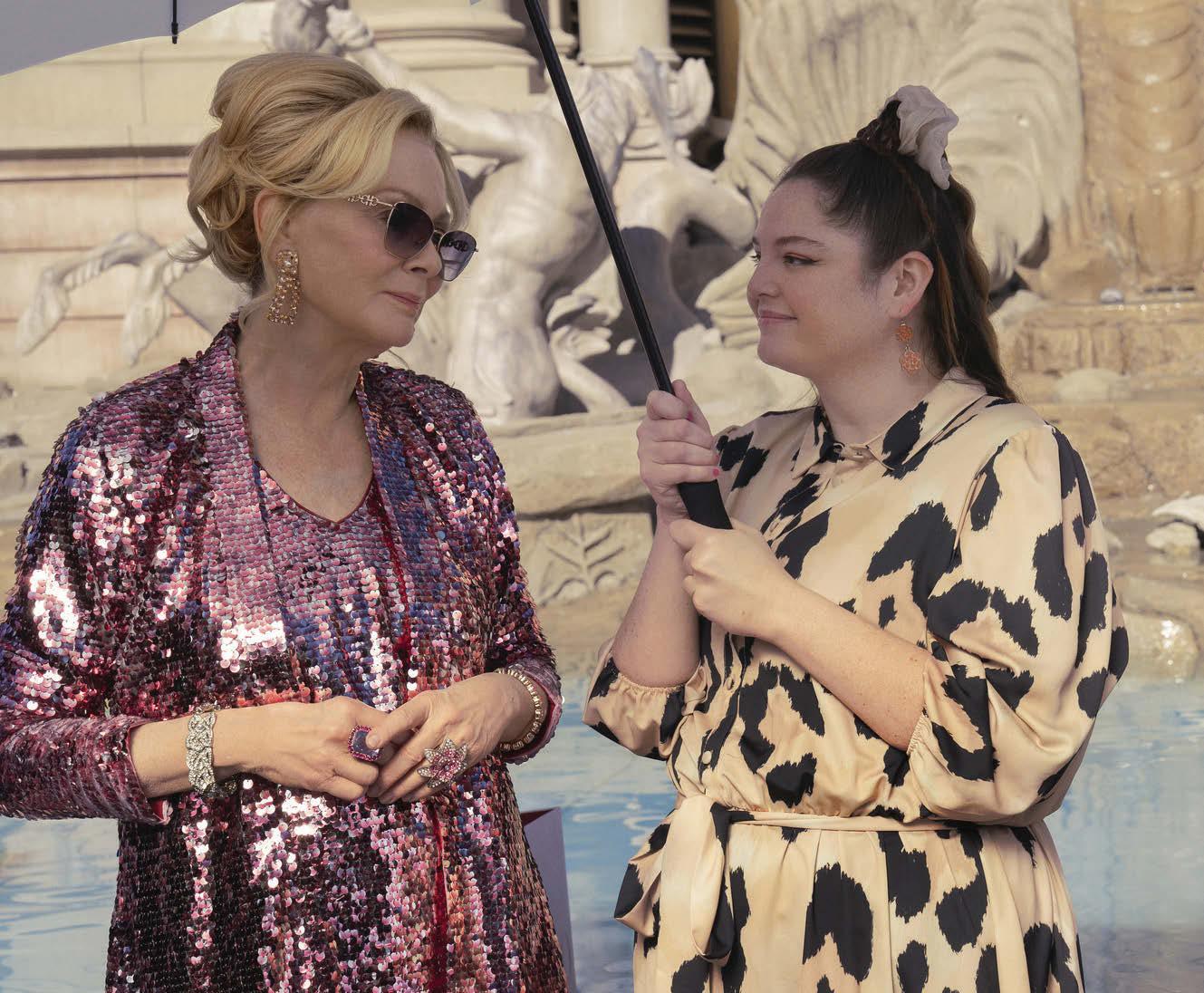
The fifth and final season of Hacks, premiering April 9 on HBO, starts with this question: How does aging comedy diva Deborah Vance, who has been fighting to stay at center stage since season one, deal with being out of the spotlight? She retreats
to her Vegas mansion and doubles down on the city that helped make her who she is.
“I think we wanted to represent a place where people could be themselves without shame, and that was something Vegas provided Deborah. It’s a really important thing, and it’s something we
Co-creator of HBO’s Hacks Paul W. Downs on Vegas’ main character energy in the final season
really explore this season and in the season finale of the show—how important the place was for a woman who was kind of cast aside by the entertainment agency, but is embraced by this city of real survivors,” says co-creator Paul W. Downs, who also plays Deborah’s manager, Jimmy.
What steps did you and co-writers Lucia Aniello and Jen Statsky take to make sure you did Las Vegas justice and didn’t just fall into overdone stereotypes?
From the jump, we wanted to show Vegas in a way that was a little bit different than how people see it in shows and movies, where it’s like people go to a party and then they leave. It was about people that live there. And while Deborah Vance lives somewhere like the enclave—she lives a very rarefied experience in Las Vegas—it’s also about the casino dealers and back of house. …We really wanted to show what the city was like, the lifeblood of the city and the people that work in hospitality. To portray that accurately, we spent a lot of time there. It almost feels like a second home for us.
I love the portrayal of the hospitality industry, when we see Deborah and Ava in the back hallways of the casinos with the bellhops, dealers and showgirls. We also have characters like casino owner Marty, and Marcus who in season five enters into that business.
A lot of dealers we met, we learned, go from casino to casino to find a place that
maybe has better benefits, better pay or feels like a better fit. It’s a career-long path for them. Another thing, I think, that we try to reflect is the fact that there are fewer and fewer independently owned boutique casinos. So many of them are corporate-owned. So, it’s kind of wish fulfillment. It’s aspirational, it’s almost like what we wish for Las Vegas is what Deborah and Marcus set out to do, which is to open their own for visitors and locals alike to come and drink and gamble, and make some memories.
You seem to have really done your homework in terms of what would resonate with Vegas locals— using the Silver Stamp as a setting, for example.
That is such a great bar.
We were so happy to shoot there. Their beer menu is crazy. One place we always wanted to shoot, and we did in season four, was Bonanza [Gift Shop]. Deborah’s there late at night shopping for trinkets and a little drink. The city is even more rich and layered than what I think you get from the Strip angle, and we wanted to bring all that character into the show. It mirrors what we try and do with the ensemble of the show. We try and make them multidimensional and give them full stories, full lives. I think using the city to reflect that was really a great gift Vegas gave us. The show premiered in 2021, and five award-laden seasons later, it’s wrapping up. What are your closing remarks for fans of the show who are sad to see it conclude?
In Deborah Vance style, we didn’t want to run the light. We wanted to leave you laughing and go out with a bang. So I hope you find it satisfying and unexpected, but full circle. I hope it … holds up so that you can rewatch it and come back to it whenever you want and spend some time with these Vegas characters.
In season five, locals will love seeing their city represented on screen—Orleans Arena, Caesars Palace, Fontainebleau, the Silver Stamp and the surrounding desert all help the story unfold. The Weekly sat down with Downs to talk about Vegas not only as a setting, but as a main character.
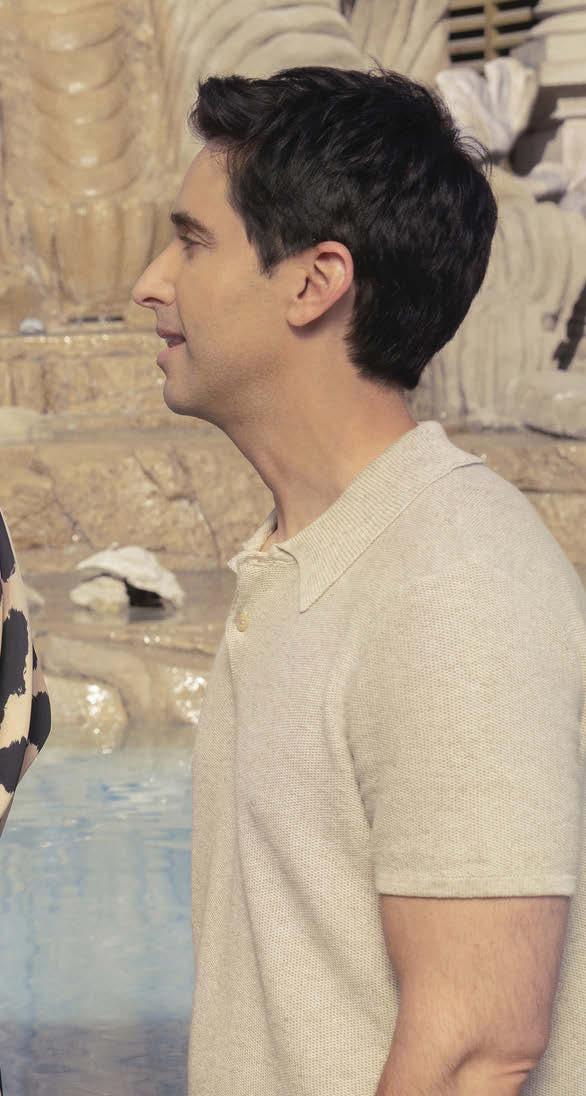
Paul W. Downs (above right) in Hacks with Jean Smart (left) and Megan Stalter. (Courtesy)
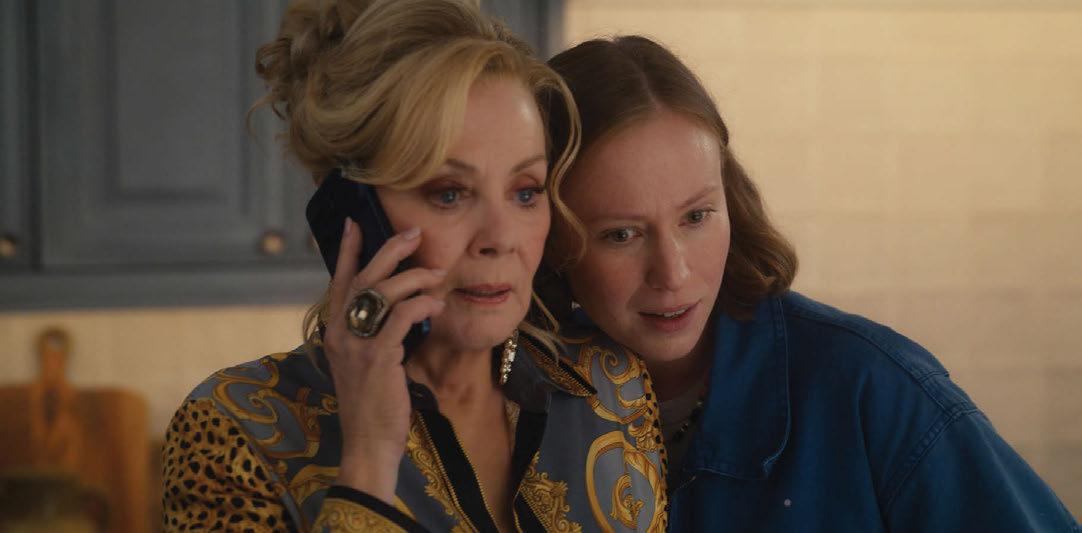
Smart (left) and Hannah Einbinder in Hacks. (Courtesy)
Henderson’s Golden Boy puts perfectly crafted sandwiches on a pedestal
BY AMBER SAMPSON
My love language has and always will be a great deli sandwich. Freshly prepared, conveniently portable and insanely satisfying, it’s my go-to meal when I’m craving something hearty and a touch complex.
So, imagine my surprise when Golden Boy Market & Deli opened in Henderson last year to the resounding praise of every TikTok-famous foodie in a 20-mile radius.
Owners Scott Arn and Ramtin Yashar, two former chefs of Downtown’s beloved Esther’s Kitchen and Bar Boheme, debuted the neighborhood deli with a global flavors inspired by their travels. Having worked in high-caliber kitchens where every ingredient, every drizzle of oil and individual element can
make or break a dish, the chefs uphold that standard at Golden Boy.
Trust me when I say this isn’t your average sandwich shop. Between my first and second bite, I began to see why there are DMV-level lines at Golden Boy. But the food is worth waiting for, and it’s fun to hang out in the chic space deli as your sandwich is dressed with a craftsman’s care.
The bread is a perfectly toasted 10-inch baguette, crunchy and crisp enough to bear the brunt of the heartiest bite. Sandwiches like The Deli ($16), a stack of salami, mortadella and roasted pork topped with pickled peppers and tangy Japanese Kewpie mayo, could make a starving carnivore cry. The fire-roasted beef sandwich ($16) tones down the toppings with sharp cheddar, onions and crumbly potato sticks, but
peppery and pungent au poivre aioli seals the deal. The chicken sando ($16), with a heavy dose of Caesar dressing and shredded parmesan, is another bite worth savoring. It’s deliciously light, similar to the stracciatella caprese sandwich ($15), which shines with its syrupy drizzle of pomegranate molasses. And the deli’s signature chili crisp oil serves as the secret ingredient. Put it on as many bites as you can and watch that subtly spicy flavor profile punch a hole through the most modest of sandwiches.
To top it off, Golden Boy always has a limited-time dessert. Recently, it served homemade biscuits with Herbally Grounded orange blossom honey. There’s no telling what’ll come out of this neighborhood deli next, but it’s likely to be the gold standard.
& DELI 10960 S. Eastern Ave. #103, 725-735-7288, goldenboy market.com. Wednesday-Monday, 10:30 a.m.6 p.m.
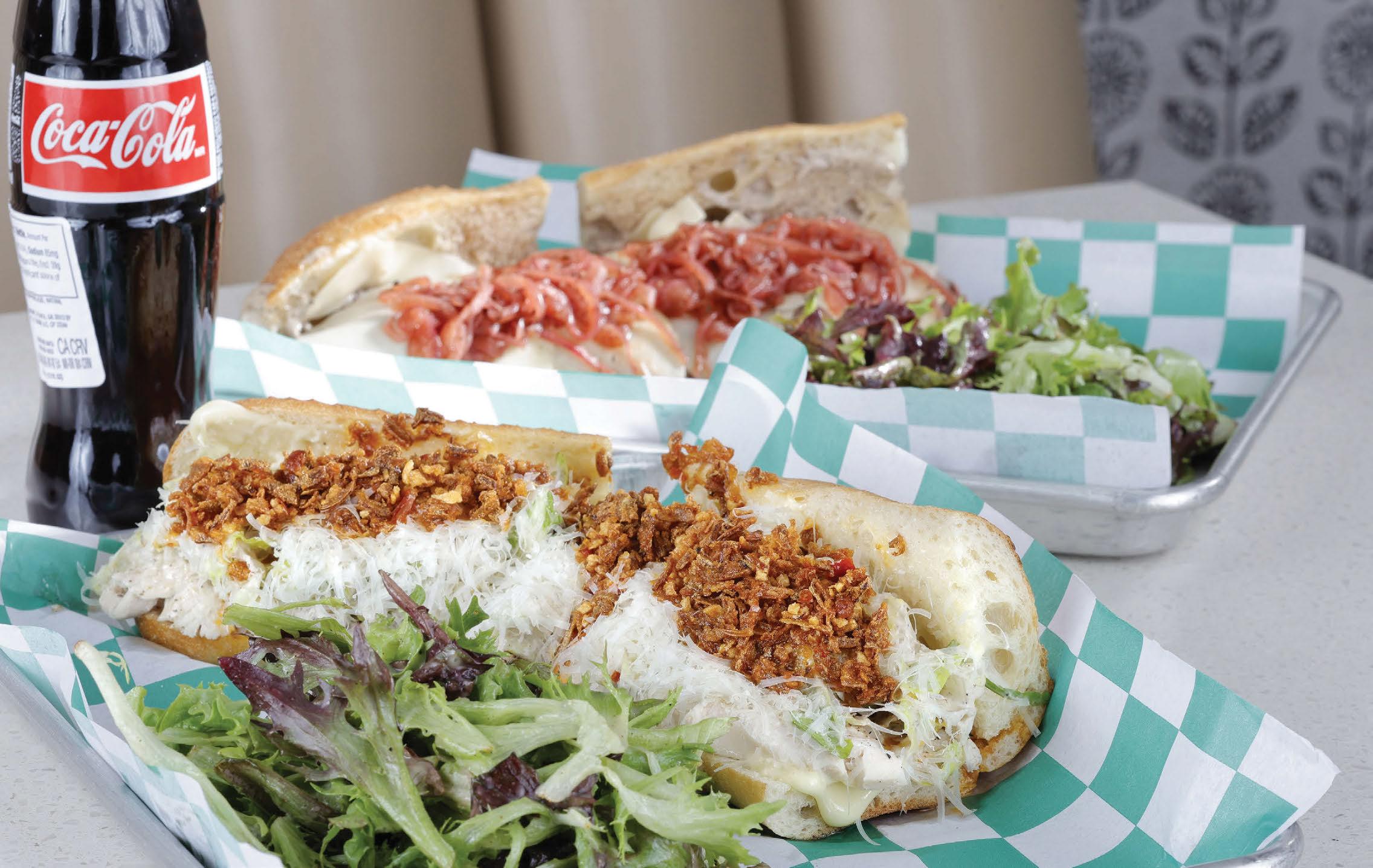
Golden Boy’s chicken Caesar salad sandwich (front) and beef sandwich (Photos by Steve Marcus)
GOLDEN BOY MARKET
What you need to eat at Kyu at Fontainebleau
BY SHANNON MILLER
GRILLED OCTOPUS
($39) Charred, wood-fired flavors shine with a kick of paprika and tender hearts of palm.
($52) This
comes
THAI
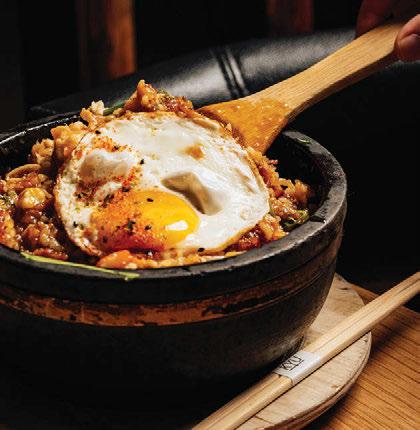
($37-$47) Inspired by the technique of dolsot bibimbap, this sizzling flavor bomb comes with vegetarian, confit duck or king crab options.
($68) This fish and white miso are a match made in heaven, and otherworldly when paired with a fresh herb salad.
Since opening with Fontainebleau in 2023, Kyu has satisfied tourists and locals alike with wood-fired cooking, innovative dishes and elevated atmosphere.
The Asian-inspired restaurant headed by global executive chef Raheem Sealey uses Japanese yakiniku (which translates to “grilled meat” in Japanese) techniques to deliver unforgettable flavors. Here are some must-try items.
($89) Seasoned with
KYU LAS VEGAS Fontainebleau,
Courtesy Kyu
WAGYU STEAK TARTARE
showstopper
with bone marrow broiled tableside, furikake aioli and Parker House rolls.
RICE STONE POT
CHILEAN SEABASS
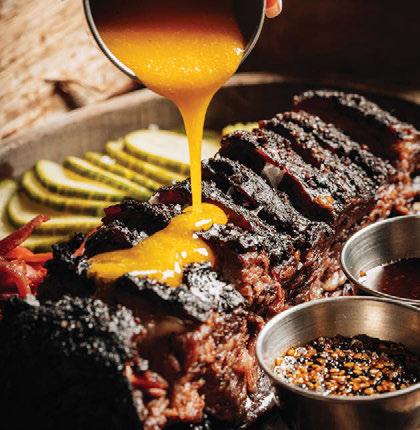
BEEF SHORT RIB
black shichimi pepper and sweet soy, this generous hunk of tender beef comes with three dipping sauces, pickles and lettuce cups.
HEALTH CARE
NEW RESEARCH AIMS TO CLARIFY EXERCISE DURING PREGNANCY AND POSTPARTUM
BY STEVEN SLIVKA GUEST COLUMN
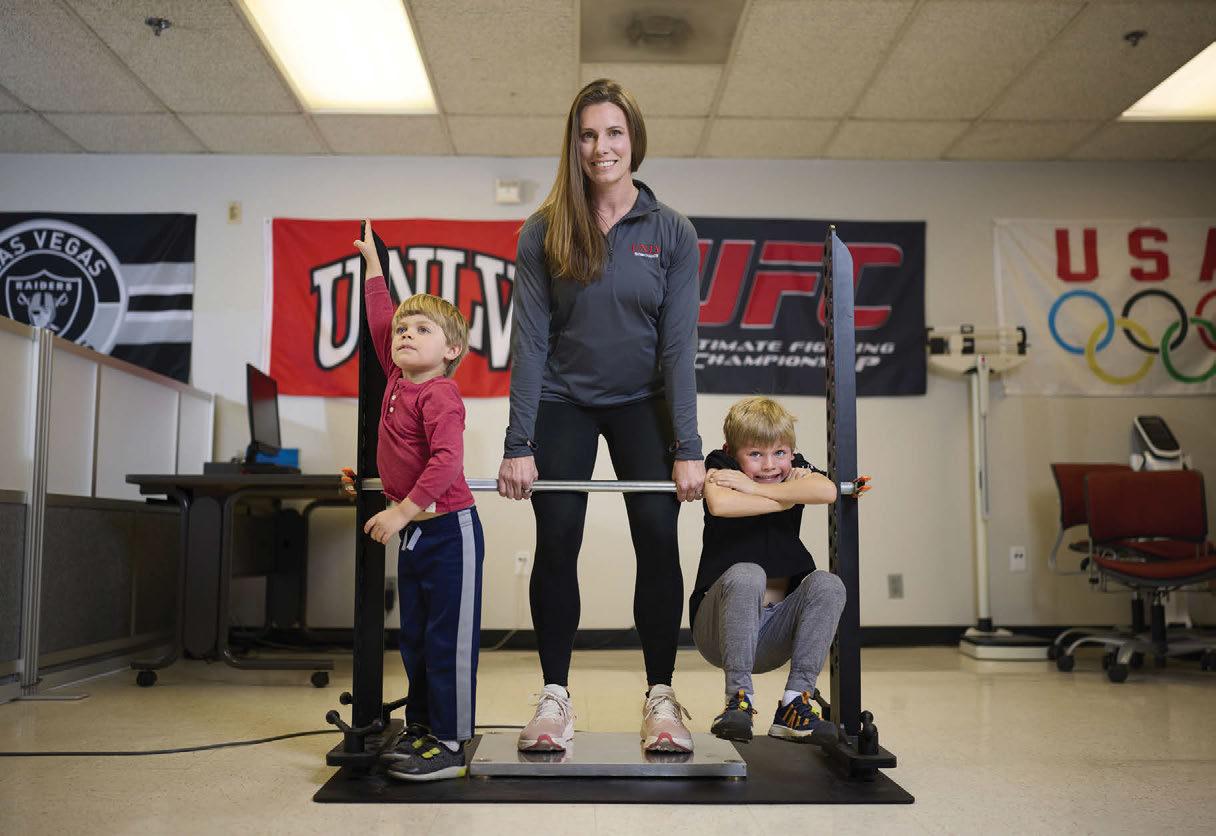
As an athletic trainer with a sports medicine background, Kara Radzak was curious to know how much she could put her body through after giving birth to her first son in 2018. Radzak, a professor at UNLV’s School of Integrated Health Sciences, browsed PubMed for evidence-based guidelines to support her recovery—to little avail.
More research was available by the time she had her second son in 2021, but she turned to social media to see what information was being shared for women like her. What she found was an algorithm full of dubious information.
“So much of what I saw online was fearbased,” Radzak said. People were saying, don’t do ab exercises, or don’t lift anything heavy. I saw a lot of stuff out there that, as a clinician, I knew wasn’t true.”
Radzak emphasized that it’s extremely beneficial to work out while pregnant or postpartum. She said there can’t be a blanket approach to physical activity during pregnancy since everyone’s journey is unique.
“There’s emerging research that shows even if you’re not physically active prior to getting pregnant, if you start to increase activity
during pregnancy, it provides better birth outcomes and decreases risk for pregnancy complications,” she added.
Radzak and UNLV alumna Annie Lindsay of t he University of Nevada, Reno Extension ar e studying the information women in Southern Nevada receive on physical activity during pregnancy and postpartum. They interviewed Clark County mothers and health care providers to better understand where they felt the information was lacking, such as timelines for returning to exercise and the rationale behind restrictions or modifications.
The collaboration is funded by the extension. Once their research is complete, the team will post a centralized online toolkit so health care providers and pregnant people can access information about continuing and returning to exercise.
“As an extension specialist working in the community, I have seen the need for greater support and encouragement of physical activity during the peripartum time period and how mom’s health and health behaviors impact their children,” Lindsay said.
Radzak said plenty of new pregnancy research is being conducted through a sports medicine and exercise science lens, but findings may not be making the interdisciplinary
jump to obstetrics.
“Our knowledge of safe exercise during pregnancy and postpartum has evolved so much in the past five years, particularly regarding high-intensity interval training and strength training during pregnancy and stepwise return to activity postpartum guidelines,” she said.
“Women want their providers to have that information for them, but that is difficult if providers don’t have resources to point them to.”
Radzak hopes they’ll be able to help close the information gap so mothers don’t feel lost sifting through the fear mongering on social media. And while there is still more work to do, she remains encouraged by the progress their team has made.
“Research has really taken off in the pregnancy and postpartum space, and now we’re able to collect our data and give people the information they need,” she said. “There are a lot of female researchers with stories like mine who want to see exercise science and sports science move forward. It feels great to do research in an area that needs it.”
Steven Slivka is the director of communications at UNLV’s School of Integrated Health Sciences.
UNLV Health Sciences professor Kara Radzak and family (Courtesy/Becca Schwartz)
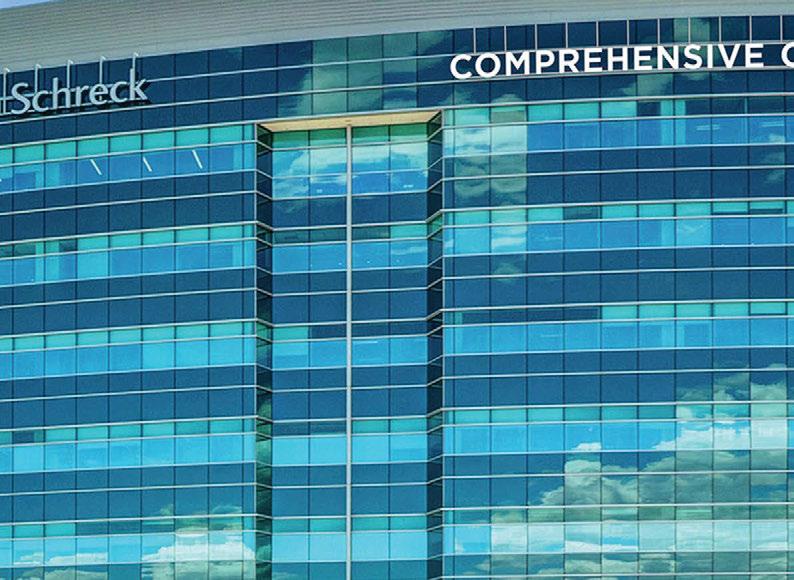
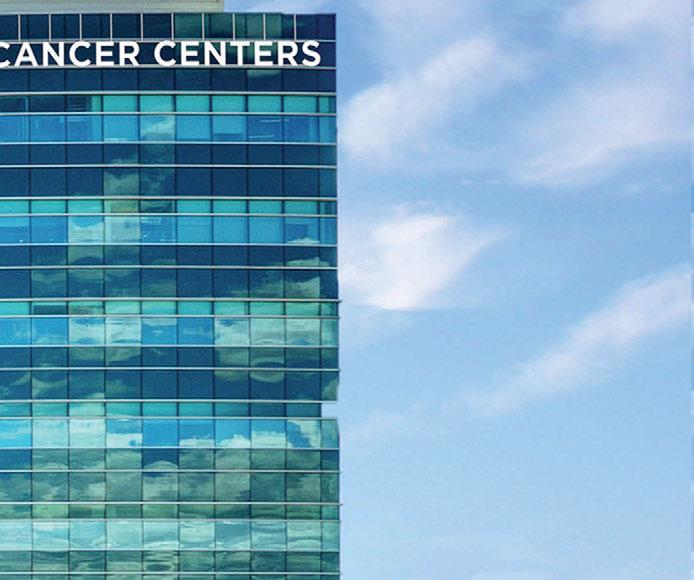
Comprehensive proudly announces its flagship cancer treatment center at the Molasky Corporate Center in downtown Las Vegas, where our mission is to provide world-class cancer care while contributing to the district’s growth as Southern Nevada’s premier hub for academic medicine and clinical research. Designed to foster healing and collaboration, our new flagship facility will offer multi-disciplinary cancer care with medical oncology, diagnostic PET/CT imaging, genetic counseling and access to the practice’s extensive clinical research program, with phase II and III clinical trials conducted on-site.
With overdose rates rising, correctional facilities are playing a critical role in substance use treatment. Elliot Wade, MD, corporate medical director (western states) at NaphCare, discusses the most common disorders, overdose prevention strategies and how care is managed inside the system. What are the most common substance use disorders you see among people entering local detention facilities?
Most commonly, opiate use disorder—primarily fentanyl and heroin— alcohol use disorder, and stimulant use disorder, primarily methamphetamine. Nevada has seen rising overdose rates in correctional settings. What steps can facilities take to prevent overdoses?
It is key for correctional facilities to have comprehensive, evidence-based treatment and medication protocols for treating acute opiate withdrawal and opiate use disorder.
Partnership between health care providers and correctional sta is vital. Clear, consistent communication and alignment between treatment protocols and security procedures ensure a coordinated approach to treating patients while also preventing onsite overdoses.
One step in preventing overdoses is Narcan. This safe, life-saving medication should be available to all sta —and even on patient housing units—with education on how and when to use it.
How does treatment inside a jail di er from treatment in a hospital or clinic?
Correctional facilities can make a
signi cant impact in this area. Many times, we are on the front line. From the standpoint of diagnosis and medications, it may not be that di erent. However, the circumstances are often di erent. In general, patients voluntarily attend clinics or arrive at a hospital versus a jail, where patients arrive involuntarily.
The added layer of the courts and legal proceedings are also di erent. For example, there may be instances where treatment is impacted by what is happening with the courts, by a transfer to another correctional facility or by sentencing.
NaphCare aims to stabilize patients with substance use disorder while they are under our care. We then partner with community clinics to create a plan for continued treatment upon release that bridges the gap between the jail and the community.
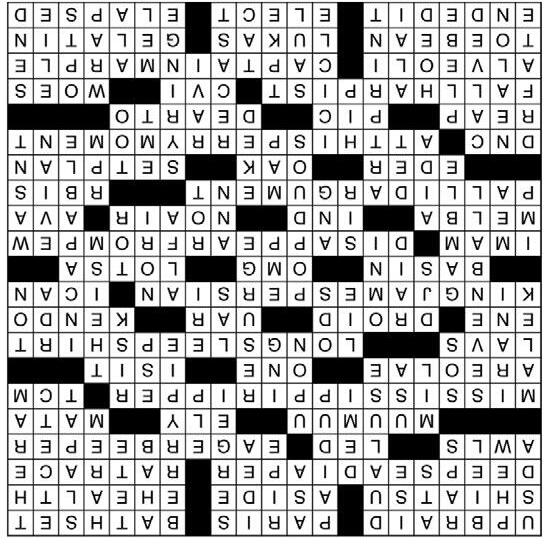
PREMIER CROSSWORD HOROSCOPES
FRANK LONGO
BREZSNY
ARIES (March 21-April 19): Unexpected deliverance or beginner’s grace? To the untrained eye, it may look like you are bending cosmic law in your favor. In truth, you’re simply redeeming the backlog of blessings you earned in the past—acts of quiet generosity and unselfish hardship that never got their proper reward. Welcome these uncanny gifts, Aries, even if they aren’t what you expected.
flaky-crusted dessert
Moby-Dick mariner
Head, in Haiti
“No men allowed” area
Try to swat
“And on and on”: Abbr.
Aries
Actress Moore
Assist, in some British poems
“Cool” cash quantity
TAURUS (April 20-May 20): Life seems to be teasing you with promises that then go into hiding. My advice: Imagine your predicament as an intriguing riddle rather than a frustrating ambiguity. Figure out how to grow wiser in response to this mystery. My prediction? You will.
GEMINI (May 21-June 20): Your mercurial wisdom is a superpower. You excel at translating between the lyrical and the pragmatic, knowing that consistency is overrated. In the coming weeks, prove that wholeness includes all fragments. Be both the question and the answer.
CANCER (June 21-July 22): The fabled setting of Homer’s The Iliad was a settlement of just seven acres. Let that detail resound. A seemingly modest situation in your life is becoming the stage for a mythic turning point. An experience that starts small may grow into a story of immense significance.
LEO (July 23-Aug. 22): Your fortunes are shifting toward an unusual kind of luck. It is a potent moment to select a new lucky number. I suggest that you also choose a new guiding animal, a fresh initiation name and a charged symbol to serve as your personal emblem.
VIRGO (Aug. 23-Sept. 22): You are close to stumbling upon the guidance you need to escape the fog. Seek a mentor or friend who reminds you that you aren’t merely your latest drama. Don’t obsess over fixing everything; find one source of wisdom to educate your heart.
LIBRA (Sept. 23-Oct. 22): Fostering harmony is about rearranging reality so beauty is a central feature. Your charm is a lubricant for the truth, not mere decoration. Homework: Beautify one system you use every day so it serves you with less friction and more pleasure.
SCORPIO (Oct. 23-Nov. 21): You are an expert in creative destruction, honing in on energy drains to unleash transformation. This intensity may unnerve those who prefer numbness, but you are simply a specialist in authentic love. You’re not shadowy or negative. You just refuse to enable delusion or sanction decay.
SAGITTARIUS (Nov. 22-Dec. 21): Be the antidote to cynicism. Your task is to gather an overflowing harvest of lavish pleasure, fun epiphanies and meaningful plot twists. Don’t hoard the joy, Sagittarius. Spread your breakthroughs and miraculous marvels to everyone you encounter.
CAPRICORN (Dec. 22-Jan. 19): The “id” is the part of the psyche where basic instincts, needs and drives reside. It supplies a huge charge of psychic energy, but on the other hand, it mostly operates outside conscious awareness. Consider the implications: The fierce, pulsing center of your life force is largely hidden from you. However, you are poised to cultivate a righteous relationship with this high-voltage core. Treat your id as a brilliant, untamed creature. Invite it to show you more about itself.
AQUARIUS (Jan. 20-Feb. 18): In architecture, a clerestory is a high window that brings light into a space without compromising privacy. It illuminates without exposing. Find your metaphorical equivalent. Your assignment is to practice strategic vulnerability. Look for ways to let spaciousness and brightness into your world without disturbing your boundaries.
PISCES (Feb. 19-March 20): In 1903, the Wright brothers flew a primitive model of the first airplane. How did they prepare the way for their spectacular milestone? Their workshop was a bicycle shop, not a high-tech, stateof-the-art lab. By building and fixing bikes, they learned key insights about flying machines. Mastery in one area is often transferable. Evaluate how your current skills might be repurposed. Don’t underestimate the value of what you already know.
PHOTOGRAPHY BY STEVE MARCUS
BACKSTORY
ALLEGIANT STADIUM | ELECTRIC VEGAS RECYCLE & RIDE | APRIL 4, 2026 Electric cars zoom through my neighborhood all the time. They go “eeeeee” and “nnnnnn” because they don’t have internal combustion engines. I applaud them for being environmentally sound, but they freak me out a little because I can’t always hear them coming, and I can’t quite shake the suspicion that they’re based on alien technology because I’ve heard Elon Musk talk. That’s why I like this 2026 Dodge Charger Daytona, a 670 horespower electric muscle car, seen here on a test drive during the Electric Vegas Recycle & Ride event at Allegiant Stadium. This literal Charger can go from 0-60 in 3.3 seconds ... and has a chambered exhaust system that makes the sound of a traditional gasoline-powered V8, so I can hear Sustainable Mad Max coming from a block away. Recycle & Ride, an event sponsored by local environmental groups and electric auto dealers, allowed people to test-drive electric vehicles while dropping off recyclable items. So fast, so Furiosa. –Geoff Carter
Photo by Steve Marcus
A MOTHER’S DAY EVENT
Celebrate Mother’s Day with a cozy and delightfully pampering rooftop afternoon made for the incredible ladies in your life. Sip endless sparkling mimosas, enjoy live DJ music, and explore charming activations like dainty permanent jewelry and a mini bouquet station.