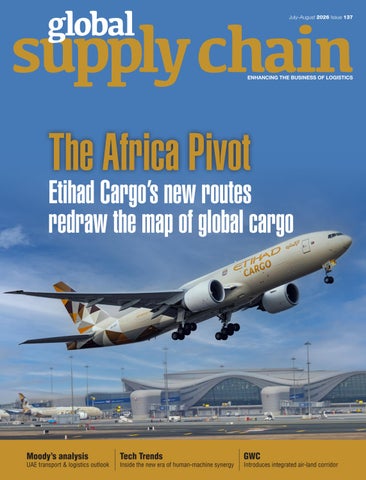
The Africa Pivot
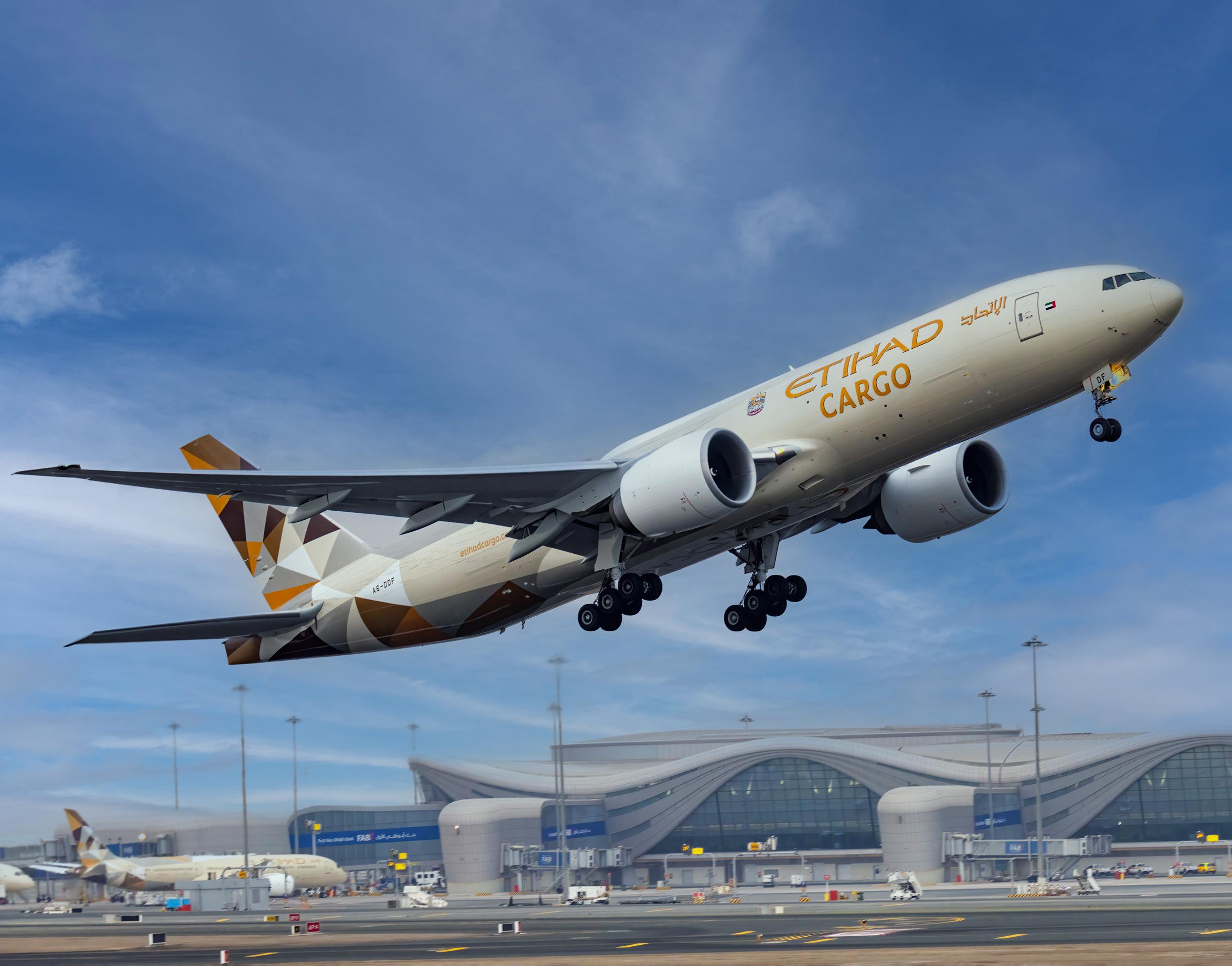
Etihad Cargo’s new routes redraw the map of global cargo





















Full offering








- Full range vehicles with the most advanced technologies
- Highly customized product driven by market needs and optimized Total Cost of Ownership
High capillarity of aftersales




European technology

- High quality complete line-up in terms of tonnage, power, torque, safety, ergonomics
- High performance and robust trucks for extreme Off-road conditions




- Repair and Maintenance contracts and competitive warranty conditions
- Origin 100% IVECO Parts and a widespread network coverage


Customer centricity




- Comfort, ergonomics and the latest safety technology to make on board easier
- Driver Style Evaluation tool on Heavy ON-road range and optimized vehicle design to improve customer profitability










visibility solutions.
Connecting healthcare to patients, without compromise.
With our expanding regional network, dedicated heal thcare expertise and regional hub set up, we support safe, compliant, an d efficient movement of critical pharmaceutical and life sciences products — connect ing healthcare to patients without compromise.
H ellmann Healthcar e Logistics enables healthcare supply chains across the Middle East through GDP-compliant warehousing, temperature-cont rolled transport, and end-to-end visibility solutions.
With our expanding regional network, dedicated heal thcare expertise and regional hub set up, we support safe, compliant, an d efficient movement of critical pharmaceutical and life sciences products — connect ing healthcare to patients without compromise.
Turkey
Egypt
Regional Healthcare Distribution Center
United Arab Emirates
Saudi Arabia
Turkey
Egypt
India
Regional Healthcare Distribution Center
United Arab Emirates
South Africa
Saudi Arabia
India
South Africa
GET IN TOUCH!
Peter Delkuti
Strategic Account Director IMEA
GET IN TOUCH!
Healthcare
Email: Peter.Delkuti@hellmann.com
Peter Delkuti
Strategic Account Director IMEA

SIGNATURE MEDIA FZ LLE
P. O. Box 49784, Dubai, UAE
Tel: 04 3795678
Email: info@signaturemediame.com
Exclusive Sales Agent Signature Media LLC
P.O. Box 49784, Dubai, UAE
Publisher: Jason Verhoven jason@signaturemediame.com
Editor: Abigail Mathias abigail@signaturemediame.com
Art Director: Johnson Machado johnson@signaturemediame.com

Printed and Distributed by Masar Printing and Publishing L.L.C., Part of Dubai Media Incorporated Dubai, UAE
Contributor’s opinions do not necessarily reflect those of the publisher or editor and while every precaution has been taken to ensure that the information contained in this magazine is accurate and timely, no liability is accepted by them for errors or omissions, however caused. Articles and information contained in this publication are the copyright of Signature Media FZ LLE & SIGNATURE MEDIA LLC and cannot be reproduced in any form without written permission.
As the sweltering summer settles in, the logistics industry is finally regaining its rhythm after a quarter marked by political uncertainty. You can almost sense the collective sigh of relief from freight forwarders and manufacturers.
At Global Supply Chain, we’re pleased to bring you the developments shaping this renewed momentum.
This issue spans Etihad Cargo’s expansion into Africa and the latest technological breakthroughs redefining efficiency. We feature insights from CargoTech, Epicor, and others, while ground handler CargoCrew outlines its data driven operating model. You’ll also find DHL’s 2026 Trend Report and a thoughtful reflection from GOODS2LOAD Founder and CEO, Jessica Panigari on her experience at the TIACA Executive Summit in Warsaw. GWC details the strategic launch of its integrated air–land corridor in Qatar, and we examine the rising implications of sourcing closer to home. Combined with the latest industry news, this edition promises to be one you won’t easily set aside.
Happy reading.
Abigail Mathias Editor
abigail@signaturemediame.com www.globalsupplychainme.com
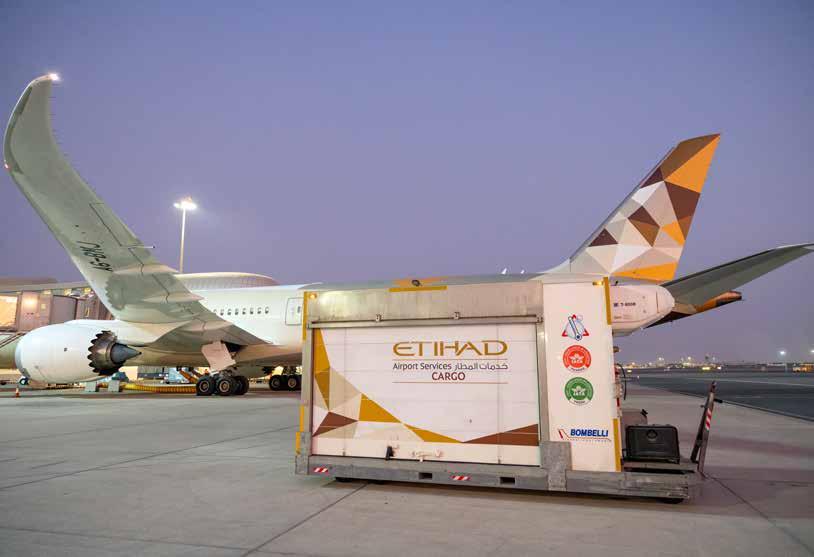




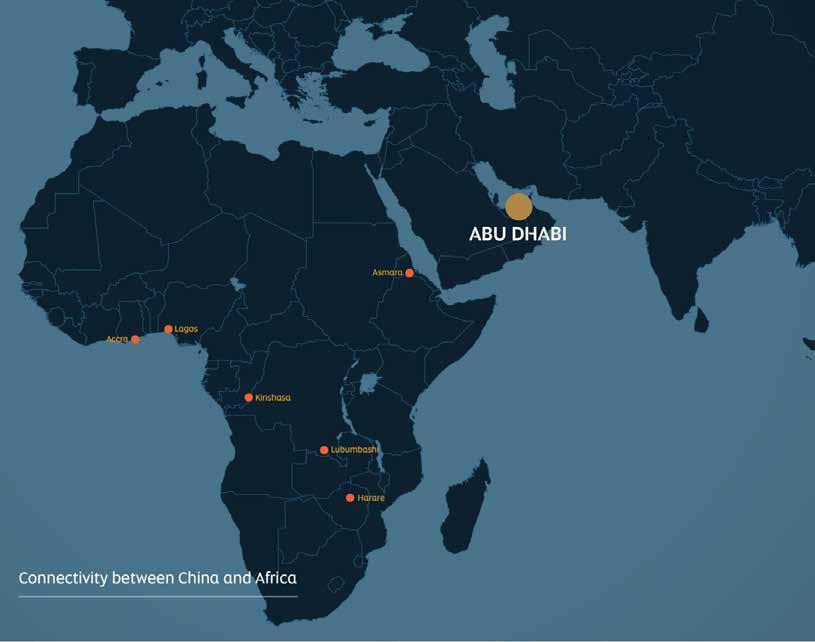
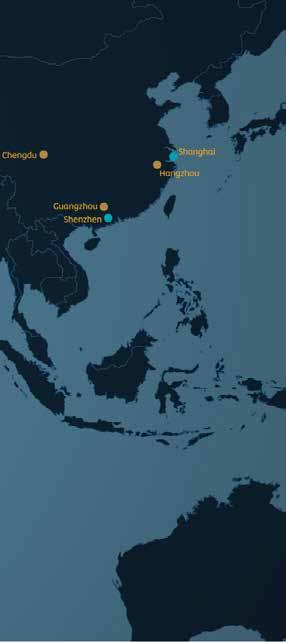
Etihad Cargo’s expansion into the Democratic Republic of the Congo, Eritrea, Ghana, Nigeria and Zimbabwe marks a calculated move to capture emerging trade flows between Africa and Asia. These markets are accelerating on the back of mineral demand, industrial diversification and rising intra‑regional commerce. By funnelling this growth through Abu Dhabi’s integrated logistics ecosystem, Etihad is not just adding routes — it is consolidating the emirate’s position as a high‑efficiency gateway shaping the next phase of global supply chain architecture.
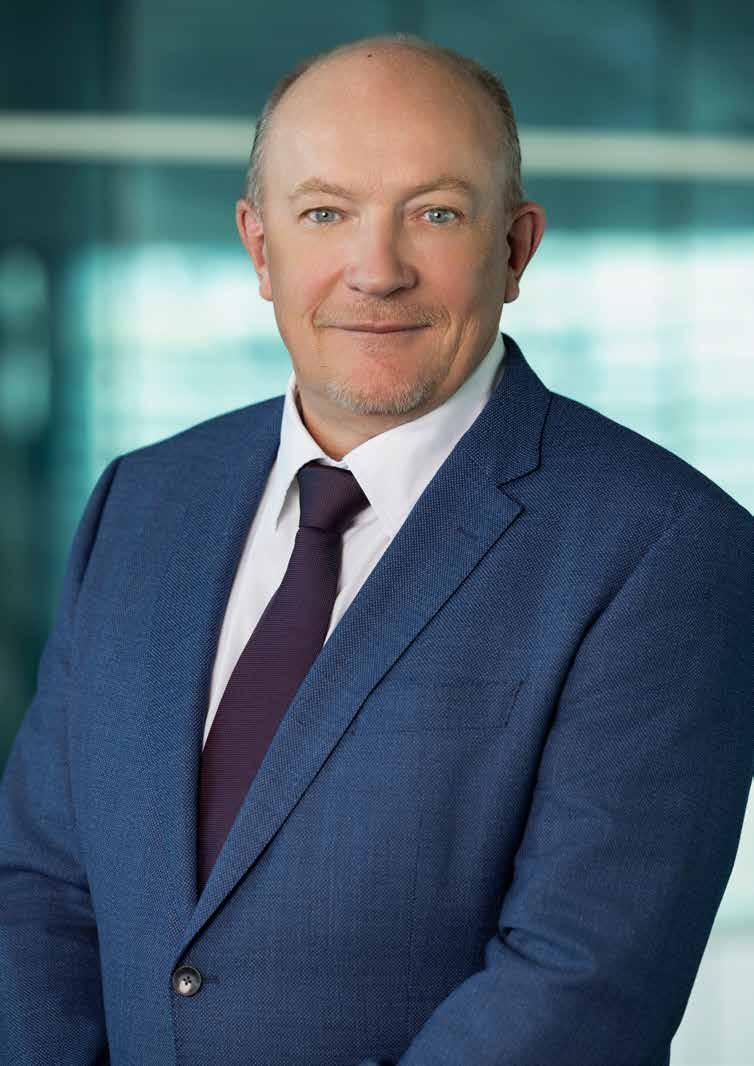
In an exclusive with Stanislas Brun, Chief Cargo Officer, Etihad Cargo, we uncover the impact of these developments.
Global Supply Chain: How will Etihad’s new routes to the DRC, Eritrea, Ghana, Nigeria and Zimbabwe reshape air connectivity between Africa, Abu Dhabi and Asia?
Stanislas Brun: Etihad Cargo’s expansion into the Democratic Republic of the Congo, Eritrea, Ghana, Nigeria, and Zimbabwe reinforces Abu Dhabi’s role as a strategic global gateway linking Africa with Asia, the Middle East, and key international markets. These new services establish more direct and efficient trade corridors between high growth African economies and major manufacturing and consumer markets across Asia.
Abu Dhabi’s geographic advantage enables Etihad Cargo to deliver faster, more reliable connectivity between Africa, India, China, and Southeast Asia through a single, integrated hub. The routes strengthen access for critical sectors including pharmaceuticals, agriculture, mining, manufacturing, and infrastructure, where speed, reliability, and

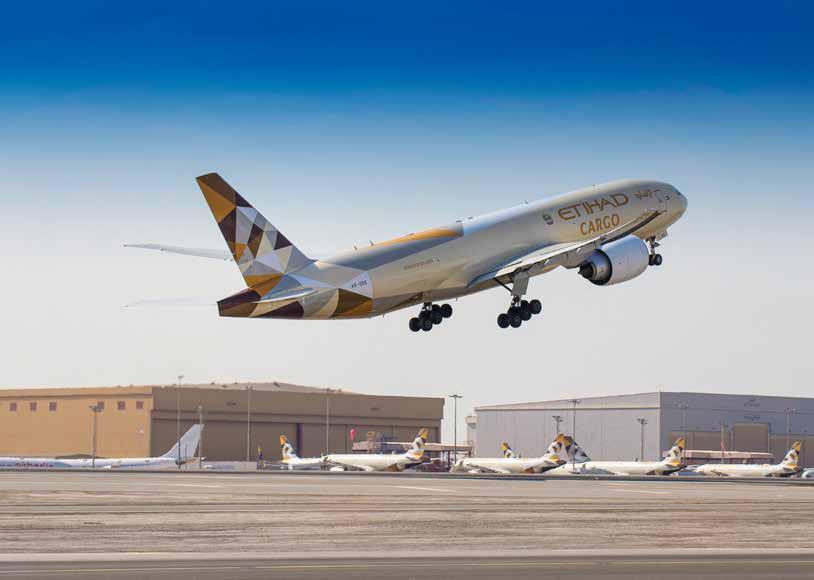
Etihad Cargo’s expansion into the Democratic Republic of the Congo, Eritrea, Ghana, Nigeria, and Zimbabwe reinforces Abu Dhabi’s role as a strategic global gateway linking Africa with Asia, the Middle East, and key international markets.
GSC: What economic indicators make these African markets “high growth” and attractive for Etihad’s long term network strategy?
SB: For Etihad Cargo, Africa is a clear long term growth priority. The expansion of our network into the Democratic Republic of the Congo, Eritrea, Ghana, Nigeria, and Zimbabwe reflects a targeted strategy to strengthen connectivity with markets that are becoming increasingly important to global trade. From Abu Dhabi, these destinations create new opportunities to support industrial growth, diversify supply chains, and reinforce the UAE’s role as a key trade partner for the African continent. Several of these markets have strong export fundamentals. The Democratic Republic of the Congo, for example, plays a critical role in the global supply of cobalt and copper, both of which are essential to electric vehicles, battery production, and the energy transition.
GSC: In what ways does Abu Dhabi’s expanding aviation footprint strengthen its position as a global gateway for trade, cargo and investment flows?
SB: Abu Dhabi’s geographic location remains one of Etihad Cargo’s strongest competitive advantages. Positioned within reach of major global markets, Etihad Cargo offers reduced transit times, optimised supply chains, and strong accessibility to international markets. Abu Dhabi has developed an integrated logistics ecosystem that combines world class airport infrastructure, advanced cargo handling facilities, free zones, and multimodal transport connectivity.
Facilities such as the Abu Dhabi Airports Free Zone (ADAFZ) and Khalifa Economic Zones Abu Dhabi (KEZAD) continue to attract multinational companies seeking efficient regional distribution and manufacturing hubs.
GSC: How does Etihad’s Africa expansion complement its recent growth in China and its extensive India network to create a new Africa–Asia corridor?
SB: This connectivity supports demand in both directions. From Africa, it strengthens access for exports such as mining products, agriculture, perishables, pharmaceuticals, and industrial materials. Into Africa, Etihad Cargo’s India and China networks support the movement of manufactured goods, electronics, automotive components, machinery, healthcare products, and e commerce shipments. India remains a core market, with strong connectivity supporting trade flows between India, the UAE, and Africa. China is equally critical, with rising China Africa trade demand across infrastructure, electronics, renewable energy, automotive, and e commerce.
Africa remains a high-potential growth market, supported by demographics, urbanisation, industrialisation, and increasing trade integration.
GSC: How might increased connectivity influence bilateral trade and investment between the UAE and African economies across sectors like energy, mining, logistics and infrastructure?
GSC: What competitive advantages does Abu Dhabi offer as a hub for businesses seeking faster, more efficient access between Africa and Asia?
GSC: What structural gaps in cargo capacity and trade linked mobility is Etihad aiming to address with these new African routes?
SB: Etihad Cargo’s expansion into key African markets addresses clear gaps in cargo capacity, direct connectivity, and specialised logistics capabilities between Africa, Abu Dhabi, and major global markets.
Many African markets still rely on fragmented or indirect cargo routes, which can increase transit times, reduce reliability, and add cost. Through Abu Dhabi, Etihad Cargo can provide streamlined one stop connectivity to key markets across India, China, Southeast Asia, and Europe, improving supply chain efficiency for businesses operating across these trade lanes.
SB: Stronger connectivity between Abu Dhabi and key African markets will support deeper trade and investment flows between the UAE and Africa, particularly across energy, mining, logistics, and infrastructure. Through its expanded network, Etihad Cargo is enabling more efficient movement of goods and stronger commercial links between these high growth regions.
This is critical for strategic sectors. In energy, stronger connectivity supports the movement of specialised equipment and industrial materials. In mining, markets such as the Democratic Republic of the Congo are central to global supply chains for cobalt, copper, and lithium, which are essential to electric vehicles and clean energy technologies.
The expansion also gives customers more flexible routing options between Africa, Abu Dhabi, and Asia, strengthening trade diversification and accelerating import export flows.
SB: One of Abu Dhabi’s key strengths is its location at the crossroads of Africa, Asia, Europe, and the Middle East, allowing Etihad Cargo to provide efficient one stop connectivity between major production centres, industrial markets, and consumer economies. This helps businesses reduce transit times, optimise supply chains and improve access to international markets through a single hub operation.
Abu Dhabi’s investment in digitalisation, customs efficiency, and cold chain capabilities also provides significant operational advantages. Businesses transporting time sensitive or specialised cargo benefit from streamlined processes, advanced temperature controlled infrastructure, and reliable handling standards. This includes our exclusive PharmaHub at Zayed International Airport. Additionally, Abu Dhabi offers a stable business environment, strong regulatory framework, and pro investment economic policies that continue to attract multinational companies and global logistics operators.
GSC: How does the strategic joint venture between Etihad Airways and Ethiopian Airlines enhance the airline’s ability to serve the African continent?
SB: Through this partnership, Etihad Cargo gains access to Ethiopian Airlines’ extensive African network, one of the largest and most established on the continent, enabling broader connectivity into underserved and high growth African markets. At the same time, Ethiopian Airlines benefits from Abu Dhabi’s strategic position as a global gateway linking Africa with Asia, the Middle East, and wider international markets.
For Etihad Cargo, the collaboration creates stronger cargo routing opportunities and improved network flexibility across key sectors including pharmaceuticals, perishables, manufacturing, energy, and mining. Businesses can benefit from more seamless cargo movement, reduced transit times and improved access to global distribution networks through the combined reach of both airlines.
GSC: What role does population growth and rising consumer demand in African markets play in shaping Etihad’s expansion strategy?
SB: As African economies scale, demand is increasing for imported goods, e commerce, healthcare products, perishables, and reliable supply chain connectivity.
Markets such as Nigeria and Ghana are seeing strong demographic and consumer growth, creating greater demand for reliable capacity and flexible logistics solutions. At the same time, investment in infrastructure, healthcare, and industrial development is increasing the need for specialised cargo capabilities, including temperature controlled transport, time sensitive shipments, and high value industrial logistics.
For Etihad Cargo, this is a clear growth opportunity: to provide the network, capacity, and product capabilities required to support Africa’s next phase of trade and economic development.
GSC: What operational or regulatory challenges might Etihad face as it deepens its presence in diverse African markets?
SB: Operational complexity is a reality of working in fast growing and fragmented logistics markets. Infrastructure, regulatory processes, cargo handling standards, and customs requirements vary significantly between countries, which makes strong local partnerships and disciplined execution essential.
Markets have different levels of cold chain capacity and regulatory maturity, so specialised cargo is a critical focus. Pharmaceuticals, perishables, and high value industrial goods require strong handling standards, temperature control, and time sensitive movement.
These challenges do not change the long term opportunity. Africa remains a high potential growth market, supported by demographics, urbanisation, industrialisation, and increasing trade integration. As initiatives such as AfCFTA support greater regional connectivity over time, Etihad Cargo is in a strong position to drive trade access through Abu Dhabi.


GSC: How will the expansion influence global cargo flows, particularly for industries relying on faster access to Asian manufacturing and African raw materials?
SB: Etihad Cargo’s expansion across Africa will strengthen cargo flows between African resource markets, Asian manufacturing centres, and global consumer economies through Abu Dhabi.
Markets such as the Democratic Republic of the Congo play a key role in global supply chains for cobalt, copper, and lithium, which are essential to electric vehicles, electronics, and renewable energy technologies.
At the same time, its strong Asian network supports growing demand for manufactured goods, machinery, electronics, pharmaceuticals, and high value industrial goods.
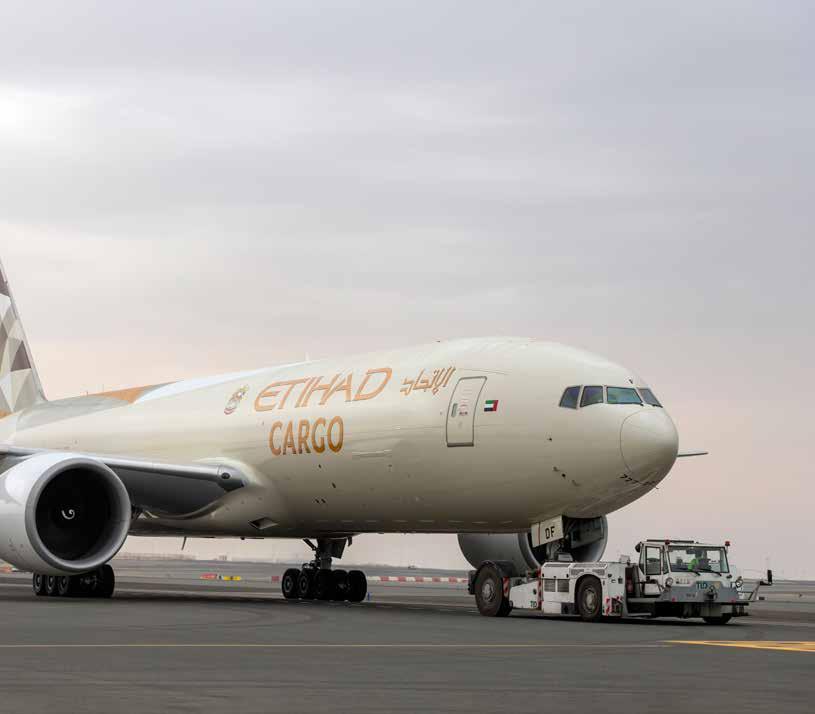
Many African markets still rely on fragmented or indirect cargo routes. Through Abu Dhabi, Etihad Cargo can provide streamlined one-stop connectivity to key markets across India, China, Southeast Asia, and Europe, improving supply chain efficiency for businesses operating across these trade lanes.
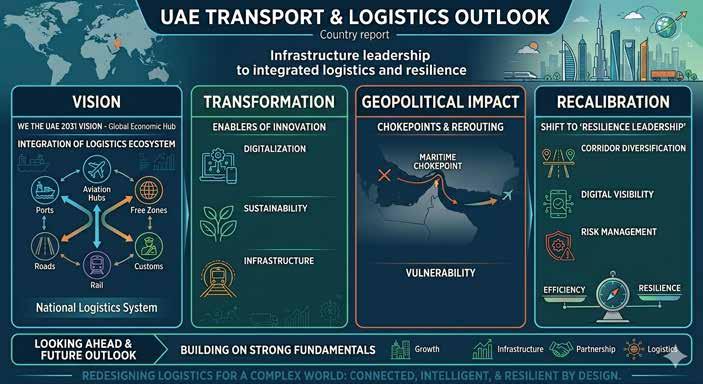
The United Arab Emirates is entering a decisive phase in its economic evolution, where transport and logistics are no longer treated as supporting infrastructure, but as a central engine of growth, competitiveness, and global positioning.
Over the past decade, the UAE has built one of the region’s most advanced logistics ecosystems, anchored by world-class ports, aviation hubs, free zones, and expanding multimodal connectivity. This has positioned the country as a critical gateway between Asia, Europe, and Africa, aligned with its ambition under the “We the UAE 2031” vision to become one of the world’s most influential economic hubs.
At the core of this strategy is a shift in the way logistics is conceived. Historically, the UAE developed best-in-class infrastructure across individual transport modes. The current phase moves beyond this toward systemic integration, unifying ports, aviation, road networks, rail, customs, and border systems into a coordinated national logistics ecosystem. The establishment of national
coordination mechanisms, alongside digital enablement and regulatory alignment, is designed to optimize end-to-end supply chains, reduce friction, and enhance predictability.
Digital transformation is an enabler of this integration. Investments in data platforms, interoperability, and real-time coordination between logistics nodes are reshaping the way supply chains are managed. Information flows are becoming as critical as physical infrastructure, enabling predictive planning, operational visibility, and faster decisionmaking across logistics networks. At the same time, major infrastructure investments, particularly in the national railway system, are redefining freight movement by connecting ports with inland industrial hubs, strengthening multimodal corridors, and
supporting both economic diversification and sustainability objectives.
There is a strong focus on innovation and sustainability. Initiatives to develop advanced mobility solutions and reduce emissions across transport modes align logistics strategy with broader national priorities, including Net Zero ambitions. Together, integration, digitalization, and sustainability define a coherent vision of a logistics ecosystem that is efficient, futureready and globally competitive.
However, geopolitics are affecting this strategy. The conflict with Iran this year disrupted shipping through the Strait of Hormuz - and demonstrated that infrastructure strength alone doesn’t guarantee smooth operations. Hormuz is a chokepoint that underpins a significant

The UAE’s next logistics advantage will not be measured by efficiency alone, but by its ability to keep trade moving when disruption strikes.

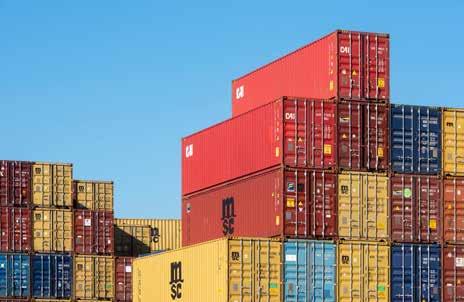
share of global oil, LNG, and other trade flows, so supply chains were tested on resilience, diversification, and continuity under stress.
This disruption has many consequences. Maritime transits through the Strait have been sharply constrained, with cargo rerouted through alternative corridors and east-coast ports, while congestion, delays, and increasing costs have affected both regional and global supply chains. These conditions have raised insurance premiums and increased pressure on energy, petrochemical, and industrial supply networks. In response, companies across the region are shifting away from lean, just-in-time models toward diversification of suppliers and higher inventory buffers,
an adjustment that improves resilience but raises costs and operational complexity.
The conflict has also highlighted the structural vulnerability of the Gulf region, including the UAE, to external supply shocks. High reliance on imported food, industrial inputs, and critical materials means that maritime disruption can have far-reaching implications for everyday economic activity, manufacturing, infrastructure, and utilities. In this context, the Strait of Hormuz is not only an energy corridor but a critical channel for the continuity of broader economic systems.
Against this backdrop, the UAE’s logistics strategy is undergoing a subtle but important recalibration. The strategic priority is no longer limited to maximizing efficiency and throughput; it is increasingly focused
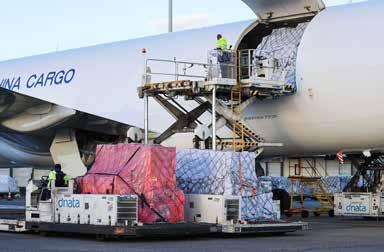

on ensuring reliability and continuity under adverse conditions. This implies a shift from infrastructure leadership toward resilience leadership. The ability to sustain trade flows during disruption is emerging as a defining competitive advantage, changing the way logistics performance is evaluated.
Looking ahead, three priorities will help to shape the evolution of the UAE’s logistics. First, corridor diversification is critical. Expanding the use of east-coast infrastructure, multimodal routing, and alternative trade pathways reduces overdependence on a single maritime chokepoint and enhances system resilience. Second, digital visibility is becoming indispensable. In an environment characterized by rerouting, delays, and fragmented logistics flows, real-time shipment intelligence and data-driven decision-making are essential to maintain
The UAE is evolving from an infrastructure leader to a resilience leader, redefining what competitive advantage means in global logistics.
operational control. Third, supply-chain and third-party risk management are shifting from operational considerations to strategic imperatives, affecting procurement, financing, compliance, and customer delivery models.
Meanwhile, the UAE continues to benefit from strong fundamentals. Its diversified infrastructure base, institutional capacity, and advanced logistics assets, including strategic locations such as Fujairah and Khorfakkan, provide a solid foundation for the future. These strengths position the country to withstand disruption and to play a leading role in shaping more resilient regional and global supply chains.
The UAE has built excellent infrastructure. The next step in its transport and logistics strategy will be to develop leadership and increase resilience with a more integrated ecosystem of transport and logistics. The
country is not merely expanding capacity or improving efficiency, it is redesigning its logistics system to operate in an increasingly complex and volatile global trade environment.
This year’s events illustrate that logistics systems must be built not only for performance in stable conditions but also for continuity during disruption. For the UAE, there is an opportunity in converting geopolitical shock into structural advantage by developing a logistics model that combines connectivity, integration, and innovation with resilience and adaptability. In doing so, the UAE will be positioned to evolve from a global gateway into a benchmark for the future of logistics: connected, intelligent, and resilient by design.
By Mohamed Daoud, Director & Industry Practice Lead at Moody’s

• Contract covers more than 100 freighter flights annually at Changi Airport
• Over 15,000 tonnes of cargo to be handled each year across diverse product categories
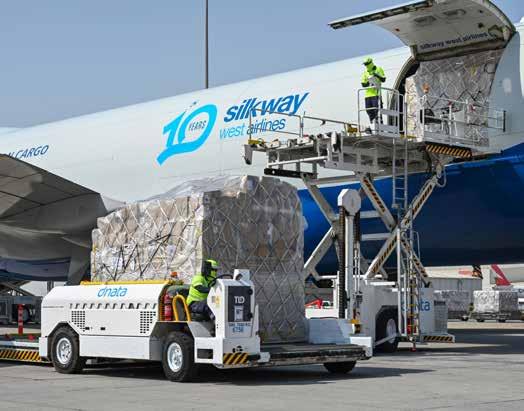
dnata, a leading global air and travel services provider, has secured a new multi-year contract with Silk Way Group to provide cargo and freighter handling services at Singapore Changi Airport (SIN), further strengthening a longstanding global partnership between the two companies.
As part of the agreement, dnata will support Silk Way Group’s twice-weekly freighter services at SIN. The operation is expected to handle more than 15,000 tonnes of cargo each year, including general freight, temperature-sensitive goods and specialised shipments such as oil and gas, aviation and aerospace equipment.
The contract was awarded following a highly competitive tender process, reinforcing dnata’s position as a trusted cargo partner in one of Asia’s most dynamic air freight markets.
Tom Alwyn-Jones, Managing Director of dnata’s Airport Operations unit in Singapore, said: “This agreement reflects the strength of our operations in Singapore and our ability to support freighter carriers in a fast-paced and highly coordinated hub, working closely with partners across the Changi Airport community – something our team here takes real pride in.
“For us, it’s about delivering consistent, reliable handling on the ground – ensuring aircraft turnarounds, cargo flows and service standards are maintained, even as operational demands continue to increase. That comes down to having the right teams, processes and systems in place locally, working together to keep operations running smoothly at scale.”
This latest agreement builds on dnata’s longstanding relationship with Silk Way Group across multiple international markets, where it already supports Silk Way West Airlines’ operations at scale – handling more than 1,000 flights and significant cargo volumes each year. More recently, the partnership has extended to a joint venture to de -
velop an aviation services hub in Azerbaijan.
Onno Pietersma, Chief Operating Officer of Silkway West Airlines, said: “Reliable ground and cargo handling is critical to maintaining efficient freighter operations, particularly in major transit hubs such as Singapore.
“With dnata’s support on the ground, we are well positioned to maintain high operational standards and continue delivering dependable service across our network.”
Across its network, dnata has been investing in digital systems, automation and operational processes aimed at improving visibility, control and throughput in cargo handling. These include advanced cargo management systems, data-led planning tools and modern weight and dimensioning technology, alongside ongoing upgrades to ground support equipment.
These capabilities, combined with dnata’s strong safety performance and customer-focused approach, enable the company to deliver efficient, reliable and scalable cargo solutions tailored to the evolving needs of airline partners.
In Singapore, dnata provides a full suite of its aviation services at SIN, supporting over 30 airline customers and handling approximately 250,000 tonnes of cargo annually. The team manages about 22,000 flights per year and employs more than 1,500 people, playing a key role in dnata’s Asia-Pacific network.
Globally, dnata delivers reliable and safe ground handling and cargo services at more than 90 airports across 16 countries. In the financial year 2025-26, dnata’s customer-oriented teams handled over 888,000 aircraft turns and moved 3.2 million tonnes of cargo.
• Carrier’s first cargo destination in Central Asia
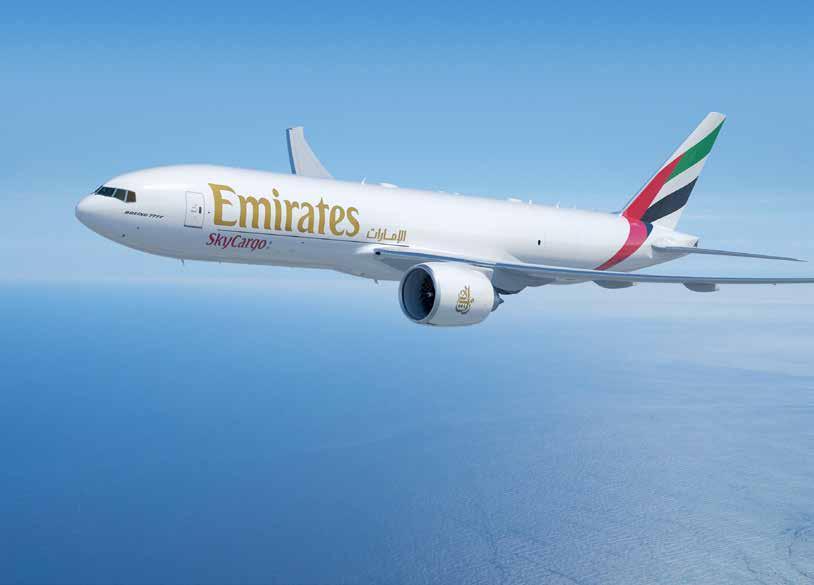
Emirates SkyCargo, the freight division of Emirates, has announced that it will be launching dedicated weekly freighter flights on its Boeing 777F aircraft to Almaty International Airport, Kazakhstan, commencing 16 June 2026. Almaty is Emirates SkyCargo’s first destination in Central Asia and the new weekly cargo flights from Dubai will help open a new trade corridor integrating the region into the carrier’s global network.
Almaty is Kazakhstan’s largest city and a growing commercial and logistics hub serving as an important economic and trade gateway Central Asia. Emirates SkyCargo’s weekly freighter service on Tuesdays will provide over 100 tonnes of cargo capacity every week for the seamless movement of key commodities including electronics, perishables, machinery and other consumer goods between Almaty and the rest of the world through Dubai.
Badr Abbas, Emirates SkyCargo’s Divisional Senior Vice President said:
“Emirates SkyCargo’s weekly freighter service to Almaty is in line with our role as a global trade facilitator and is an important step in expanding our network and connectivity to Central Asia, a region that is experiencing dynamic growth. Our flights will provide new opportunities for businesses in Almaty and the surrounding region to scale their international operations while allowing our global customers convenient and rapid wide-body cargo connectivity to a strategic marketplace. The expansion into Almaty supports our long-term growth strategy and D33 Dubai Economic Agenda objectives, accelerating foreign trade and Dubai’s standing as a global logistics hub.”
In line with growing global demand, Emirates SkyCargo is strategically expanding its freighter fleet and global network. The airline has taken delivery of four new
Emirates SkyCargo has taken delivery of four new Boeing 777 freighters since March 2026, with delivery of six more freighters lined up for the rest of the year taking Emirates freighter fleet to 21 aircraft by December 2026.
Boeing 777 freighters since March 2026, with delivery of six more freighters lined up for the rest of the year taking Emirates freighter fleet to 21 aircraft by December 2026. Emirates SkyCargo offers scalable and flexible cargo capacity solutions for its global customers. In addition to dedicated freighter flights, the carrier also offers high frequency bellyhold cargo capacity on Emirates’ fleet of passenger aircraft operating to destinations across six continents.




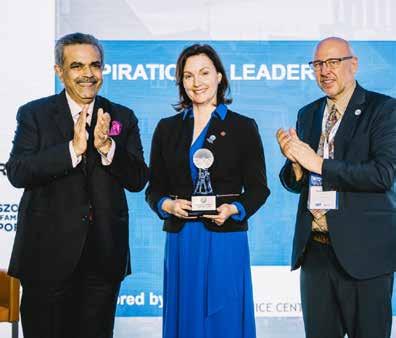
Some moments in entrepreneurship remind you why you started in the first place. Being selected among the Top 3 Global Finalists for the 8th Sustainability Award at the TIACA Executive Summit 2026 in Warsaw, Poland, was one of those moments for me. Representing GOODS2LOAD on such a global stage was not simply an achievement or a recognition. It was an opportunity to sit at the table with some of the brightest minds in air cargo, logistics, and sustainability and to participate in a conversation that is actively shaping the future of our industry.
Being named among the Top 3 Global Finalists confirmed that GOODS2LOAD is moving in the right direction — because in innovation, direction matters more than timing.
From June 1 to 3, more than 350 senior executives from across the international air cargo ecosystem gathered in Warsaw for the TIACA CHAMP Cargosystems Executive Summit 2026. Hosted by LOT Polish Airlines and Port Polska, the event marked the first time Poland welcomed this prestigious gathering. The Hilton Warsaw City became a meeting point for ideas, partnerships, and discussions around some of the most pressing challenges facing global supply chains. Walking into the summit as a finalist was both humbling and deeply affirming. As entrepreneurs, we often spend years building in relative silence, navigating uncertainty, testing assumptions, and pursuing a vision that many people cannot yet fully see. To have GOODS2LOAD recognised among the world’s leading sustainability initiatives was a powerful reminder that innovation does not happen in isolation. It happens through persistence, resilience, and an unwavering commitment to solving real industry problems.
As one of the chosen contenders of the coveted Sustainability Awards at the recently held TIACA Executive Summit 2026, CEO and Founder GOODS2LOAD, Jessica Panigari, describes the experience of being on a global stage.

The Sustainability Award itself represents one of the industry’s most forward-looking recognitions. The finalists represented very different but equally compelling approaches to sustainability. Some focused on emissions reduction technologies and alternative fuel strategies. Others presented AI-driven optimisation solutions and scalable models for green infrastructure. Together, these initiatives demonstrated something very important: sustainability
is no longer a peripheral discussion within logistics. It has become central to operational strategy, competitiveness, and the long-term viability of global trade.
We did not receive first place. Naturally, this was not the outcome I had envisioned. Entrepreneurs are ambitious by nature. We build with the hope of succeeding, and we work tirelessly toward our goals. Yet,
standing in that room, I realised that some experiences offer something even more valuable than a trophy.
During this period, I came across a phrase that remained with me: “Don’t forget that the compass was invented before the clock because direction is much more important than time.”
Those words perfectly captured what this experience meant to me.
In business, especially in startups, it is easy to become consumed by timelines, milestones, and immediate outcomes. We compare ourselves to others, measure progress against expectations, and sometimes forget to appreciate the journey itself. But innovation is rarely linear. Progress does not always arrive according to schedule.
Being named among the Top 3 Global Finalists confirmed that GOODS2LOAD is moving in the right direction. It reinforced our belief that increasing efficiency, transparency, and accessibility within logistics is not simply a business opportunity but a meaningful contribution to the evolution of global supply chains.
Beyond the award itself, the summit’s greatest value came from the people.
Throughout the event, I had the privilege of engaging with leaders, innovators, and policymakers from across the world. Every conversation, whether during formal sessions or informal exchanges, offered valuable insights into where our industry is heading.
Discussions around digital transformation, artificial intelligence, data-driven logistics, and the explosive growth of e-commercedriven air freight demonstrated just how rapidly operational models are changing. The future of logistics will not be defined solely by infrastructure or transportation capacity. It will increasingly be shaped by technology, collaboration, and the intelligent use of data.
Equally fascinating were the discussions surrounding regional development and the growing role of Central and Eastern Europe within global trade
networks. Warsaw’s emergence as a strategic logistics hub illustrates how infrastructure investment, policy alignment, and geographical positioning can transform an entire region’s importance within international supply chains.
On a personal level, this experience was also my first opportunity to visit Poland.
I found Warsaw to be a remarkable city— one that beautifully balances historical depth with modern ambition. The city’s story of resilience and transformation felt unexpectedly familiar. In many ways, it mirrors the logistics industry itself: continuously rebuilding, adapting, and finding new ways to connect people, markets, and opportunities.
Experiences like these remind us that every milestone, regardless of its immediate outcome, contributes to our growth. They refine our perspective, challenge our assumptions, and strengthen our commitment to our vision.
I would like to express my sincere appreciation to Secretary of State at the Ministry of Infrastructure and Government Plenipotentiary for the Centralny Port Komunikacyjny project, Maciej Lasek, as well as the leadership of LOT Polish Airlines, including CEO Michał Fijoł and CEO Filip Czernicki, for their support and for hosting such an exceptional global gathering.
I would also like to extend my gratitude to Glyn Hughes and to the
many industry leaders and professionals with whom I had the opportunity to exchange ideas throughout the summit. Every conversation contributed meaningfully to my understanding of the challenges and opportunities that lie ahead for global supply chains.
Finally, I would like to thank Gobal Supply Chain community for its continued willingness to engage with emerging regional initiatives such as GOODS2LOAD. Innovation flourishes when established industry players remain open to new ideas and new entrants. That openness creates opportunities for companies like us to contribute meaningfully to the industry’s evolution and to develop solutions that improve efficiency, increase transparency, and support sustainability.
I returned from Warsaw without the award, but with something equally valuable: perspective.
The experience reaffirmed a belief that has guided me throughout my entrepreneurial journey: meaningful transformation is built through persistence, collaboration, and clarity of purpose.
Because in the end, our progress is not defined solely by how quickly we arrive. It is defined by whether we are moving in the right direction.
By Jessica Panigari, Founder and CEO of GOODS2LOAD

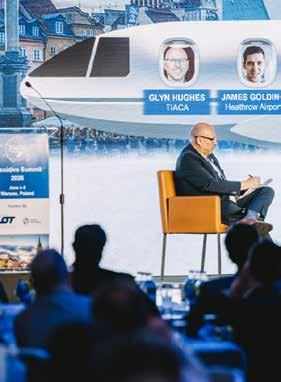
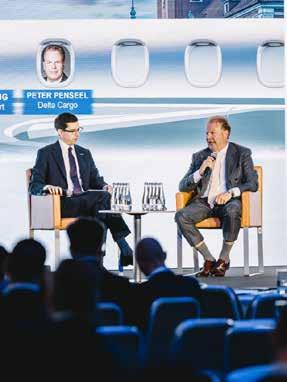
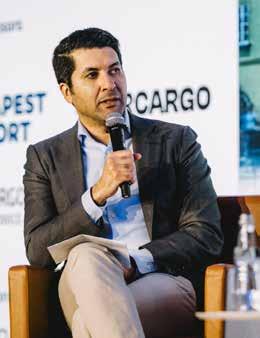
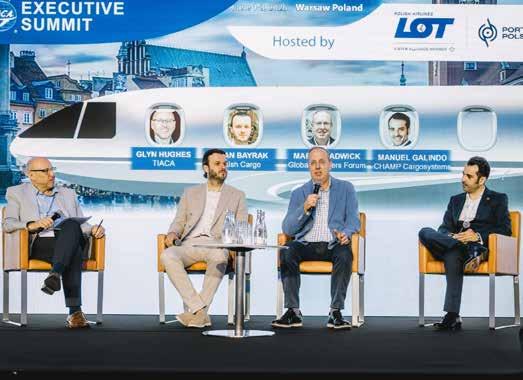
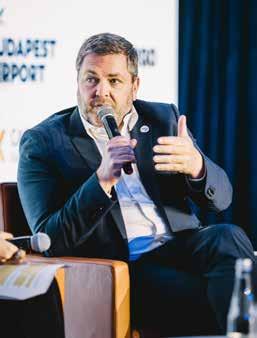
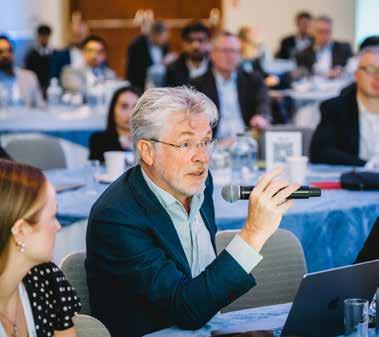
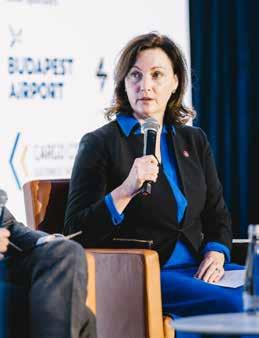
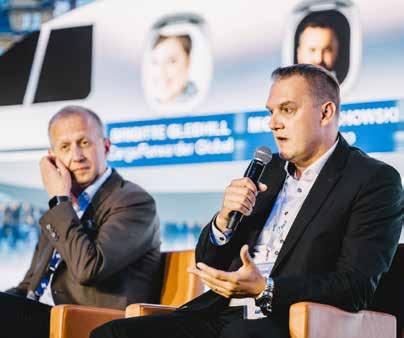
The TIACA Executive Summit 2026 unfolded at a moment when air cargo was being reshaped at high speed. From shifting trade lanes to AI‑driven operations and new sustainability pressures, the industry is rewriting its playbook. This year’s summit held in Warsaw, Poland, brought the sector’s sharpest minds together to decode what’s next — and to chart the strategies that will define the future of global air logistics.


• Shipment transported in refrigerated containers from Al Sila’ Port to Abu Dhabi Fish Market.
• Partnership reflects Etihad Rail Freight’s ongoing efforts to expand its services and diversify cargo deliveries from source to destination.
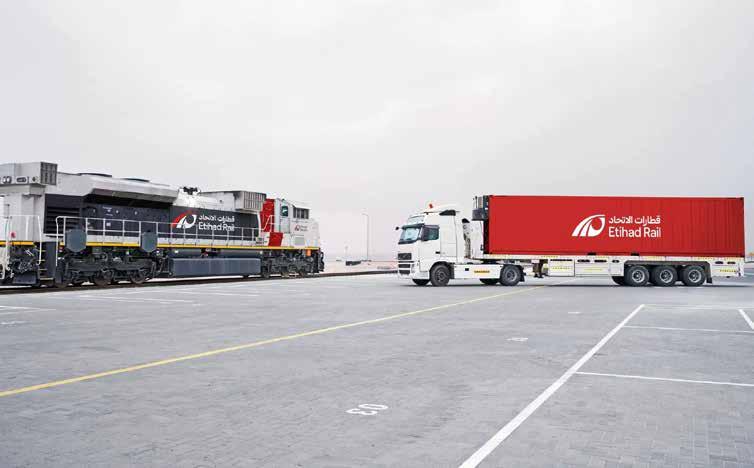
As part of a community-driven initiative, Etihad Rail Freight, a subsidiary of Etihad Rail which is responsible for delivering freight services, has partnered with the Abu Dhabi Fishermen Cooperative Society (ADFCS) to support local fishermen by transporting fresh fish via refrigerated containers from Al Sila’ Port to Abu Dhabi Fish Market.
This initiative reflects Etihad Rail Freight’s commitment to supporting a sector deeply rooted in the UAE’s national heritage and economy, all while empowering local fishermen to grow and sustain their businesses. By transporting fresh fish with the highest standards of temperaturecontrolled logistics, Etihad Rail Freight has showcased its ability to provide competitive cold-chain transport solutions that preserve fish quality, reduce transit times, and deliver greater efficiency in comparison to traditional transport methods.
This collaboration also reflects Etihad Rail Freight’s continuous efforts to expand its commercial partnerships and diversify the range of commodities transported across the UAE’s national rail network. The network has been instrumental in advancing the nation’s logistics sector, meeting market
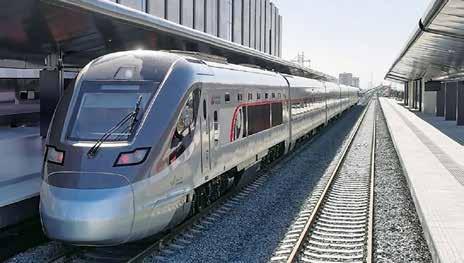
demands, and supporting economic growth and development.
Etihad Rail’s Freight operations are built around fully integrated first and last mile solutions, covering every stage of the freight journey, from collection at the source, through to final delivery. The shipment was transported directly from fishermen at Al Sila’ Port, one of the UAE’s key hubs for fishing activities and marine services, to Abu Dhabi Fish Market, with flexible, end-to-end logistics solutions designed around the
specific requirements of the cargo.
This partnership reflects Etihad Rail Freight’s ongoing commitment to safe, sustainable transport solutions that support the UAE’s goals to reduce emissions. Building on milestones such as the country’s first rail transport of passenger vehicles with Al Masaood Automobiles, Etihad Rail Freight continues to strengthen its role as a leader in building an integrated and sustainable transport ecosystem that serves the UAE’s economy.





don’t apply in the age of
• Nearly one-third of shoppers are willing to let AI make buying decisions within five years.
• AI chatbots, sustainable logistics, and second-hand marketplaces are going mainstream.
• Convenience drives conversion: flexible payments, free delivery, easy returns and out-ofhone (OOH) options are expected.
• Closing the gap between expectations and delivery is key to unlocking growth.
AI could soon choose what we buy, sustainability has shifted from nice-to-have to non-negotiable, and second-hand shopping is rapidly becoming mainstream, according to new DHL eCommerce research. The 2026 E-Commerce Trends Report, based on survey findings from 29,000 online shoppers and 5,800 e-commerce businesses across 29 countries, highlights the biggest shifts retailers need to prepare for in the coming years and how best to respond to the changing e-commerce landscape.
The global e-commerce market is experiencing rapid behavioural shifts, widening an expectation gap between what modern shoppers demand and what online businesses are prepared to deliver. AI is transforming buyer habits and accelerating innovation across the e-commerce ecosystem. In
doing so, it is beginning to upend traditional formats and could even lead to the disappearance of virtual storefronts. Securing consumer loyalty in this changing landscape requires moving past transactional speed to master checkout trust, payment choice, and localised delivery convenience. Pablo Ciano, CEO of DHL eCommerce, said: “The ability to understand and respond to customer needs has always defined success - but our new eCommerce trend report shows that AI is now redefining that advantage at hyperspeed. Consumers can identify the best offer in milliseconds, and retailers can gain insights that allow them to instantly capitalise on changing demand. For those of us powering the delivery infrastructure behind e commerce, AI enables new levels of speed, flexibility, and precision. In this new
era, the winners will be those who move fastest – and translate that speed into superior customer experiences.” To help brands navigate this rapidly evolving landscape, DHL eCommerce and Applied Futurist Tom Cheesewright have identified the key short and longer-term trends that businesses simply can’t afford to ignore:
Almost a third (29%) of shoppers (rising to 33% of Gen Z and 36% of millennials) say they would be happy to hand over control of their shopping to AI and let it make shopping decisions or purchases for them in the next five years, with almost two thirds (59%) of businesses expecting shoppers to browse and buy through virtual assistants in the future.

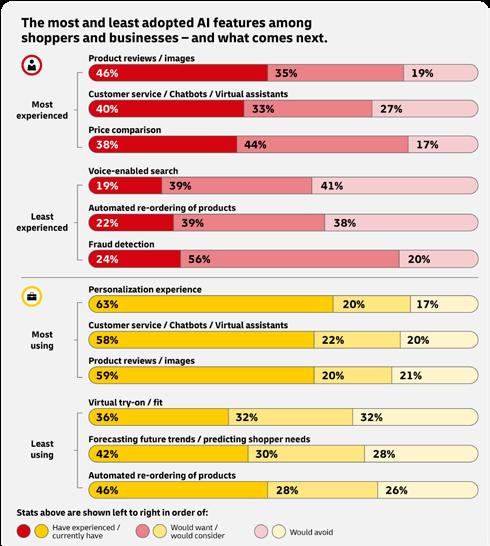
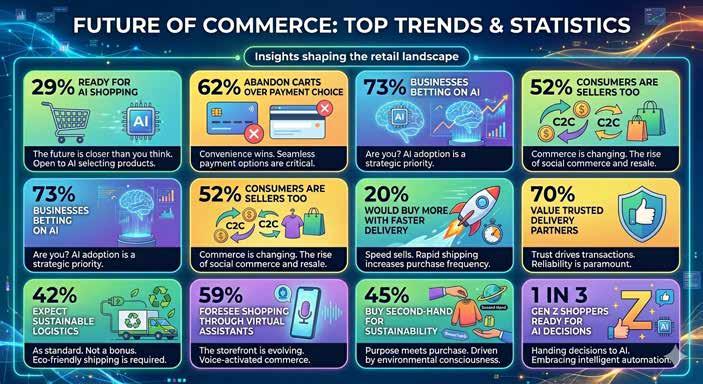
As generative AI continues to reshape the entire shopping journey – from product discovery to post purchase support – 73% of businesses anticipate using it more over the next five years, despite consumer concerns about privacy and trust (48%).
When it comes to the future of AI and online shopping, Cheesewright suggests that ‘the growth of open source AI agents as proven the consumer appetite for true AI assistants that can take on some of the cognitive overhead of modern life,’ and predicts that ‘this desire to streamline the admin associated with everyday tasks could extend even further, with shops and brands soon operating ‘bot fronts’ rather than traditional storefronts in the form of a website or app. These AI-powered bots will be communicating with the consumer’s own AI to negotiate personal offers and secure the best deals.
For consumers, the desire for delivery innovation comes from a continued need for convenience and flexibility, with a fifth (20%) of shoppers stating that faster delivery would encourage them to complete their purchase, and three in ten now looking to OOH deliv-
ery locations to meet the needs of their busy lives. Cheesewright predicts that “demand for flexible delivery options will continue to grow, driving the expansion of out-of-home delivery and returns.” To capture this trend, businesses will need fulfillment setups that offer greater flexibility, reliability, and convenient pickup and return options.
Free delivery and returns remain a key motivator for shoppers to close sales, posing an ongoing challenge to online retailers’ costs and margins in a competitive marketplace, although trust and choice of delivery partners are highlighted by 7 out of 10 shoppers as critical factors when choosing a brand to shop. A similar misalignment is occurring at the digital checkout counter: A massive 62% of shoppers say they will immediately abandon a purchase if their preferred payment method is unavailable, yet only 45% of businesses currently recognise this as a key driver of cart abandonment.
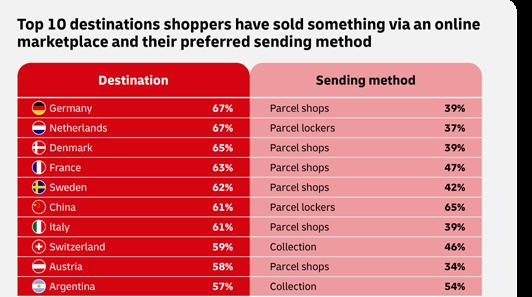
The line between shopper and seller continues to blur as second-hand consumer-to-consumer (C2C) shopping is set to go mainstream. One in two (52%) consumers
have sold an item on an online marketplace, rising to 62% amongst Millennials and 58% amongst Gen Z, although Baby Boomers trail behind on 35%. Globally, Europeans are the most active in C2C selling, with 57% saying they sell on marketplaces. While not the case for every consumer, many are turning to online buying and selling to adopt more sustainable habits, with 45% saying they purchase second-hand and refurbished items for sustainability reasons, and a further 15% saying they would consider it in the future.
Cheesewright predicts: “Within the next decade, three-quarters of adults will be recycling their furniture, fashion, and tech through marketplaces.” The reasons for this will be varied, from those looking to alleviate the burden of rising living costs to others who wish to reduce their impact on the planet by avoiding new purchases. For businesses, this means there’s a new competitor in the mix –previously, it was other brands, but now it’s the consumer themselves, increasingly acting as both target market and rival.
Overall, sustainable logistics – once seen as a competitive differentiator for retailers and logistics partners – is now expected to become a standard expectation by 42% of consumers over the next five years.

In the past, retailers across all formats built their vendor lists around established global suppliers who could deliver volume, compliance maturity, and operational consistency at scale. Local producers, by contrast, frequently struggled to meet the benchmarks that major buyers required: reliable cold chain infrastructure, internationally recognised food safety certification, and the capacity to scale supply without compromising on delivery windows. That gap has narrowed considerably, and the timing matters. Investment in UAE logistics infrastructure, including temperature-controlled warehousing, last-mile refrigerated delivery, and the development of alternative trade corridors, such as the Oman-UAE Green Corridor and the east coast ports of Khorfakkan and Fujairah, has given domestic suppliers a credible and sustainable path to retail shelves that simply did not exist half a decade ago.

The most consequential changes in business rarely announce themselves. They accumulate quietly in procurement decisions, in vendor reviews, and in sourcing conversations held far from the shop floor. What is happening inside UAE retail supply chains at the moment is exactly that kind of change.
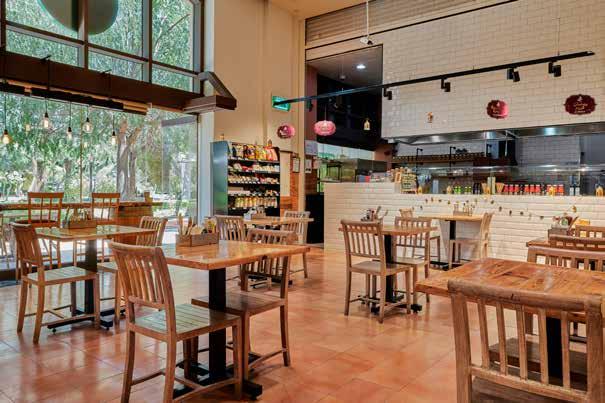
The impact is most visible at retailers who made early commitments to domestic sourcing. For instance, Organic Foods and Cafe, which works with over 400 vendor partners across local and global supply chains, has tracked the evolution closely. Over the past four years, the composition of its vendor list has shifted meaningfully, with a clear move toward sourcing from closer geographies. This has improved product availability, reduced transit times, and meaningfully lowered the carbon footprint across key categories. The transitions have been most pronounced in beverages, fresh produce, and dairy categories where domestic producers have invested seriously in quality and consistency. The products now earning space on shelves reflect genuine operational maturity, not simply a preference for local origin. Organic eggs from Risha Farms in Fujairah and fresh organic milk from Organiliciouz in Sharjah, both now stocked consistently, represent a
generation of domestic suppliers that would not have met major retailer requirements a few years ago. Alongside them, homegrown brands, including ME Kombucha, Pure Harvest, Humantra, Nothing Silly, and Shake Your Plants, are finding sustained footing in channels that once defaulted to international names as a matter of course. Sustainability expectations are also becoming a more significant factor in procurement decisions. While UAE retailers are not yet subject to the same formal carbon reporting requirements seen in some international markets, the direction of travel is clear. Frameworks such as the European Union’s Corporate Sustainability Reporting Directive (CSRD), alongside growing ESG reporting expectations across listed companies in the UAE, are creating a ripple effect throughout supply chains. Increasingly, suppliers are being asked to demonstrate not only quality, safety, and reliability, but also greater transparency
around sourcing practices, operational standards, and environmental impact.
The broader retail sector is also responding to the same underlying pressures. The Make it in the Emirates initiative, a government-led effort to boost domestic manufacturing and industrial investment initiative, has added meaningful policy weight to what was already becoming commercial common sense, with approved vendor lists across the industry being reviewed through a lens of supply chain resilience rather than simple cost optimisation. That recalibration has been sharpened further by recent events. When Red Sea freight disruptions compounded margin pressure across the sector in 2024, and as current tensions continue to play out around the Strait of Hormuz, through which around 70% of the GCC’s food imports pass, retailers who have already embedded local sourcing into their models have proved markedly better positioned to absorb the shock. Alternative freight channels were activated where necessary, but the businesses least exposed were those that had built domestic supplier relationships before disruption made it urgent. For many suppliers and retailers, sustainability is no longer viewed as a standalone initiative but as part of a broader resilience strategy. The ability to source closer to home can reduce transport complexity, shorten transit routes, and support the growing demand from customers and corporate buyers for more
transparent and accountable supply chains.
Of course, challenges still remain. The shortage of organically certified local producers is a persistent gap, particularly as sustainability and ESG expectations become increasingly embedded within procurement processes. Retailers continue to hold local suppliers to the same standards as international partners, not only on food safety and operational performance, but also on transparency and accountability throughout the supply chain. The pipeline of producers meeting that bar is growing, however, and the commercial argument has become difficult to dismiss. Faster turnaround, extended shelf life on domestic fresh goods, and meaningful resilience against freight volatility now outweigh the scale advantages that international suppliers once held unchallenged.
The restructuring of UAE retail around homegrown brands was already underway but with the current geopolitical situation, it has expedited it to a new level. It is now being driven by hard commercial experience, enabled by maturing infrastructure, and supported by national policy. And the businesses that recognise it for what it is - a fundamental supply chain shift, not a sourcing trend - will be the ones who shape what UAE retail looks like in the decade ahead.
By Firas Nasir, CEO of Organic Foods & Café and Co-CIO of the Gulf Japan Food Fund.

Dubai:
1. Organic Foods & Café - Sheikh Zayed Road
- next to Oasis Centre
2. Organic Foods & Café (Greens)
- EMAAR Business Park - Building 4
3. Organic Foods & Café (Cityland Mall)
- Wadi Al Safa 4 - beside Global Village
4. Organic Foods & Café (Mirdif)
- 35 71st St - Mirdif
5. Organic Foods & Café (Galleria Mall Al Barsha)
- Galleria Mall - Al Barsha
6. Organic Foods & Café - Golden Mile 9
- The Palm Jumeirah
Abu Dhabi:
1. Organic Foods & Café (Nation Tower)
- Galleria, Corniche, Nation Towers

The supply chain is no longer a linear path but a living system increasingly shaped by robotics, automation, and intelligent machines. As warehouses fill with autonomous movers and algorithms quietly choreograph global flows, the question is no longer whether technology will transform logistics, but what kind of ecosystem we are building in the process. These tools promise precision, resilience, and speed—yet they also force us to confront deeper questions about human roles, systemic vulnerability, and the ethics of delegating decisions to machines. The future of logistics may depend less on adopting technology and more on understanding its consequences.
GSC: How does the increasing use of robotics and other technologies in the supply chain expand the threat surface area?
Mortada Ayad: Every new connected system in a supply chain, whether that’s a robotic arm, an automated guided vehicle, or a remote sensor, is a new identity that needs access to something. That’s where the exposure starts.
In traditional IT, when you add a user, you on board them, assign permissions, and set a password policy. In OT environments, these connected systems often get provisioned quickly and then quietly accumulate access over time. Credentials go unchanged
for years. Vendor accounts get standing access because someone decided it was easier. Nobody asks whether the integration still needs the same permissions it had eighteen months ago.
So the attack surface isn’t just growing, it’s getting harder to see. Robotics and automation introduce dozens of service accounts and technical identities that don’t show up in your standard identity inventory. By the time an attacker finds one, it often has access far beyond what anyone intended. So, it’s not just a question of how many devices you’ve connected. It’s also about knowing what each one can reach.
GSC: How are the cybersecurity risks
As supply chains become more automated, every connected device and AI agent becomes a new identity that must be secured. Resilience starts with visibility, least-privilege access, and controlling who – or what – can reach critical systems.
Inputs by Mortada Ayad, VP of Sales – META, Delinea
to supply chains fundamentally different to those that enterprises face? How must security teams adapt?
MA: The core difference is time. In enterprise IT, if a vulnerability sits unpatched for 30 days, that’s a problem. In OT, it might sit unpatched for three years, not because teams are negligent, but because changing a system that controls a physical process carries real operational risk. You can’t patch a conveyor controller during peak fulfilment season.
This creates a fundamentally different risk profile around persistence. Weak access paths don’t get cleaned up on enterprise timelines. For example, a shared admin account that “everyone just uses” stays in place because replacing it feels riskier than keeping it. Service accounts outlive the integrations they were built for. Remote vendor access, opened for a maintenance window six months ago, quietly remains active.
Security controls are far more likely to stick when they work with the environment as it exists. That’s the adaptation security teams need to make: stop applying enterprise-speed remediation thinking to OT environments. The goal should be tightening the highest-risk access paths first, privileged

credentials, remote sessions and service accounts, in a sequence that operations can actually absorb. Governance has to match the operational rhythm, not fight it.
GSC: With the entry of more autonomic AI agents into supply chain operations, what risks arise and how can these be mitigated?
MA: The velocity problem is what keeps security professionals up at night. A human operator making a bad decision may give you time to catch, escalate, and reverse it. An AI agent making a bad decision, at machine speed, with access to live operational systems, doesn’t give you that window.
Non-human identities already outnumber human users by 40 to 1 in a typical enterprise. In supply chains, where automation
is accelerating, that ratio will only grow. The risk is that AI agents that were over-provisioned from the start are given broad standing access just because they need it and nobody modelled what happens when they use it. The non-deterministic nature of these systems means that if you give an agent broad standing access “just in case”, it will eventually find a reason to use it. That’s not a bug in the model. That’s a configuration decision.
The solution is to apply least privilege as a runtime principle, not a setup checklist. Every consequential action an agent takes should require earned, logged authorisation, not inherited access from the deployment that was stood up six months ago. This ensures that the blast radius of any single failure will be minimised by design.
The future of supply chains lies in combining AI-driven intelligence with human expertise, enabling organisations to anticipate disruptions, make better decisions, and build resilience through visibility, collaboration, and agility.

Inputs by Francesco Colavita, SVP - MEAPAC, JAGGAER
GSC: How is your technology roadmap evolving to address the next wave of automation, AI, and real time visibility in logistics?
Francesco Colavita: Automation, AI, and real-time visibility are a means to an end. What organisations are really chasing is centralised, real-time intelligence across the entire supply chain ecosystem. To achieve this, they’re moving beyond standalone automation tools towards connected platforms that
combine AI, real-time data, supplier collaboration, and human expertise.
What we’re seeing is a shift from reactive decision-making to predictive, and increasingly proactive, operations. Real-time visibility is no longer just about knowing where goods are. It’s about understanding potential disruptions and having predictivity on situations before they occur and evaluating the best response. AI plays an important role here, but not as a replacement for people. The most successful organisations are using AI to process vast amounts of data, surface insights, and automate routine tasks, anticipate supplier environment changes and supply chain risks, while leaving strategic trade-offs and relationship management to human experts.
GSC: What specific logistics problems have the greatest potential to be addressed by AI today, and which ones remain out of reach?
FC: A byproduct of the incredibly complex and expansive supply chains we operate today is the immense volume of data they generate. And that data has the potential to be either a blessing or a curse with AI increasingly determining which. With an unmatched ability to process and analyse large volumes of data at speed, AI is already delivering meaningful improvements across demand forecasting, supplier risk monitoring, order delivery prediction, shipment tracking, disruption prediction, inventory optimisation, carrier selection, and exception management.
Where AI continues to struggle is in situations that require context, judgement, and relationship management. Supply chains operate in a world shaped by geopolitical events, supplier negotiations, regulatory changes, and shifting business priorities. These decisions often involve competing objectives and information that simply isn’t captured in a dataset.
The ideal future, then, is one where AI streamlines the complexity and data intensity of day-to-day operations while humans focus on strategy, collaboration, and navigating uncertainty. The most effective supply chains will combine artificial intelligence with human intelligence, rather than treating them as competing forces.
GSC:How are you redesigning your platforms to help customers build more resilient and disruption proof supply chains?
FC: Supply chain resilience today depends on visibility, collaboration, and agility. The challenge isn’t simply identifying a disruption. It’s understanding the impact quickly and determining the most effective response.
Our focus is on embedding intelligence directly into procurement and supply chain workflows, so organisations can move from reacting to events to anticipating them. That means providing greater visibility into supplier networks, improving collaboration across trading partners, and using AI to identify emerging risks, recommend actions, and support scenario planning.
Importantly, we believe resilience is not achieved through automation alone. Human oversight remains critical. AI can help organisations evaluate thousands of variables and potential outcomes, but people are still responsible for making the strategic decisions that balance risk, cost, sustainability, and customer expectations.
GSC: What are some of the trends and applications of AI that you are seeing happening across supply chains at the moment?
Vibhu Kapoor: Initially, most organisations focused on using AI for optimisation use cases such as demand forecasting, inventory management, and operational efficiency. Those remain important, but today’s environment has shifted the conversation.
With ongoing geopolitical uncertainty, trade disruptions, and supplier volatility, businesses are increasingly looking to AI as a resilience tool rather than simply an efficiency tool. We’re seeing growing interest in
applications that help organisations assess supplier risk, identify alternative sourcing options, monitor potential disruptions, and strengthen supplier relationship management. Generative AI is also helping teams analyse large volumes of supply chain data and surface insights much faster than traditional methods.
The focus for AI is no longer just on running leaner supply chains. It’s about building supply chains that can adapt and respond quickly when the unexpected happens.
GSC: One proposed countermeasure to disruptions due to geopolitical issues has been acceleration of multimodal shipping. Are there any examples your seeing of this in the region?
VK: Absolutely. Businesses across the region are becoming far more creative in how they move goods, and multimodal shipping is a great example of that shift. Rather than relying on a single transportation route, organisations are combining sea, air, and land networks to improve flexibility, reduce risk, and control costs.
One notable example is Bahrain’s Global Sea-to-Air Hub, which has demonstrated how multimodal logistics can significantly improve supply chain agility. By streamlining clearance procedures and reducing lead times on bonded goods, the hub has helped accelerate movement while lowering costs.
What’s equally interesting is the growing adoption of what many refer to as “elastic logistics” i.e. the ability to rapidly scale logistics operations up or down based on market demand. In an era of constant disruption, that flexibility is becoming a major competitive advantage.
GSC: Apart from AI, what do you believe is another technology paradigm with the greatest ability to modernise and transform logistics?
VK: Beyond AI, I would point to the Internet of Things (IoT) as one of the most transformative technologies shaping modern logistics with the real value of this paradigm being visibility. By connecting vehicles, warehouses, equipment, and shipments through sensors and smart devices, organisations gain real-time insight into where products are, how they’re moving, and whether there are
issues that require intervention.
This level of transparency helps businesses optimise routes, improve asset utilisation, reduce waste, and enhance customer service. It also creates the data foundation that enables more advanced technologies, including AI, to deliver meaningful outcomes. As supply chains become more complex, the organisations that can see and understand what’s happening across their operations in real time will be far better positioned to make informed decisions and respond to change quickly.
GSC: As the need to enhance the sustainability of supply chains bears down, how are you helping your customers close the gap between assumed and actual sustainability in operations?
VK: One of the biggest barriers to supply chain sustainability is visibility. Many organisations are still relying on estimates, industry averages, or incomplete supplier data when measuring their environmental impact, particularly across Scope 3 emissions. To address this, at Epicor, we recently introduced a new environmental intelligence solution that helps manufacturers and supply chain organisations measure, track, and analyse their carbon footprint with far greater precision. Rather than relying on assumptions,
AI is no longer just about efficiency; it is becoming a strategic tool for resilience. Organisations that pair real-time visibility with adaptive, data-driven decisionmaking will be best positioned to navigate disruption and drive sustainable growth.
businesses can gain access to supplier-specific environmental data and product-level insights that reveal the actual impact of their operations and sourcing decisions.
This is important because sustainability is increasingly becoming a business requirement, not just a reporting exercise. Customers, regulators, and investors are all demanding greater transparency. By providing accurate environmental data directly within operational workflows, we’re helping organisations make more informed decisions that improve both sustainability performance and supply chain resilience.
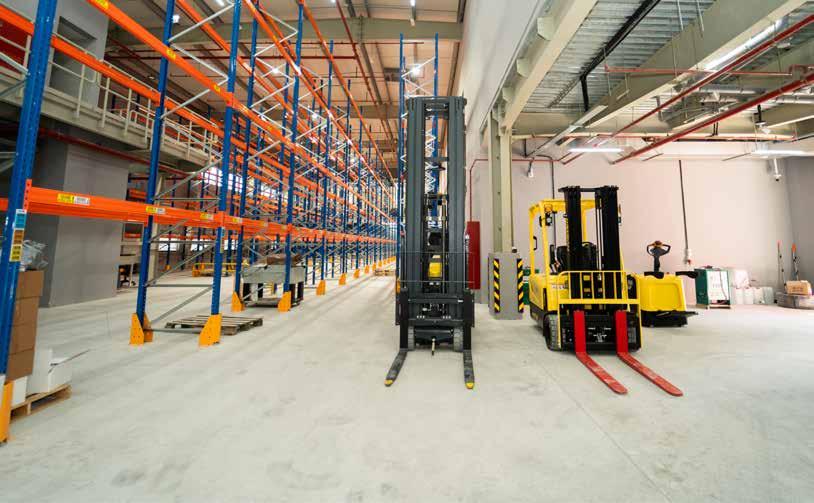
In an industry where every minute on the tarmac carries financial weight, CargoCrew is redefining what operational efficiency looks like. The company has built its rep utation on a simple but powerful belief: per formance isn’t driven by having more equip ment, but by using existing assets smarter.
As global supply chains strain under rising costs and tighter turnaround expectations, CargoCrew helps operators rethink how ground support equipment is deployed, monitored, and maintained.
Chairman and CEO CargoCrew Group, Hakan Ikizoglu champions a data‑first ap proach that reduces idle time, anticipates maintenance needs, and cuts fuel and han dling expenses without compromising safe ty. By aligning equipment availability with real operational demand, the company ena bles handlers to move cargo faster, safer, and with greater precision.
Global Supply Chain: Ground handling operations are under increasing pressure to balance speed, safety, and operational costs. From CargoCrew’s perspective, how is equipment optimisation helping air cargo operators improve efficiency while maintaining high safety
and performance standards?
Hakan Ikizoglu: At CargoCrew, we see equipment optimisation as one of the most overlooked drivers of operational perfor mance. The focus is no longer simply on having more equipment available; it is about having the right equipment, in the right loca tion, at the right time.
When equipment utilisation is planned in telligently, cargo handlers can reduce unnec essary movements, minimise waiting times, and improve loading and unloading efficien cy without compromising safety. Modern equipment monitoring also allows operators to identify maintenance requirements before failures occur, reducing operational disrup tions and safety risks.
In today’s environment, efficiency and safety are not competing objectives. Proper equipment optimisation enables both simul taneously, creating faster turnarounds, better asset utilisation, and safer working conditions across the cargo chain.
GSC: With rising operational costs across the aviation and logistics sector, what role does smarter ground support equipment utilisation play in reducing downtime, fuel consumption, and over-
all handling expenses?
HI: Operational costs continue to increase due to labour shortages, energy prices, infra structure costs, and global supply chain pres sures. As a result, every minute of downtime has a direct financial impact.
Smarter utilisation of ground support equipment helps operators maximise pro ductivity from existing assets rather than continuously investing in additional equip ment. Through better scheduling and utilisa tion tracking, operators can reduce idle time, minimise unnecessary equipment move ments, and significantly lower fuel and main tenance costs.
We believe the future lies in data driv en utilisation models where equipment performance, availability, and operational demand are continuously monitored. This creates a leaner operation that reduces costs while maintaining service quality and responsiveness.
GSC: Technology is rapidly reshaping cargo handling processes. How is CargoCrew leveraging data, automation, or predictive planning to optimise equipment allocation and improve turnaround performance at airports?
HI: Digitalisation is becoming a critical com petitive advantage in air cargo. At CargoCrew, our broader strategy is built around data visi bility and operational intelligence.
We are investing in platforms that provide real time operational oversight, allowing teams to anticipate capacity requirements, forecast cargo flows, and allocate resources more effectively. Predictive planning enables operators to identify peak demand periods in advance and position equipment accordingly.
Automation also reduces manual deci sion making and improves consistency. By integrating operational data from airlines, warehouses, and handling partners, we can create a more connected ecosystem where equipment, manpower, and cargo flows are synchronised to support faster and more reli able turnaround performance.
GSC: Sustainability is becoming a core focus area for the global air cargo industry. How do you see the adoption of energy-efficient ground support equipment influencing the future of cargo operations in the Middle East and beyond?
HI: Sustainability is no longer a future objec tive; it is becoming a business requirement.
The transition toward electric and ener gy efficient ground support equipment of fers significant opportunities to reduce emis sions, lower operating costs, and improve long term operational resilience. Airports and cargo operators across the Middle East are increasingly recognising that sustainabil ity and profitability can work hand in hand.
The region is particularly well positioned to accelerate this transition due to major infrastructure investments, ambitious sus tainability agendas, and the development of next generation logistics hubs. We expect energy efficient equipment to become a standard component of modern cargo oper ations over the coming decade.
GSC: Beyond transitioning to greener equipment, how important is smarter resource allocation in building more sustainable and resilient air cargo ecosystems?
HI: Smarter resource allocation is just as im portant as adopting greener technology.
An electric vehicle that is poorly utilised still creates inefficiencies. Sustainability is

The most successful cargo ecosystems of the future will not necessarily be those with the newest equipment, but those that use their resources most intelligently.
— Hakan Ikizoglu
ultimately about reducing waste across the entire operation. This includes minimising empty equipment movements, avoiding unnecessary handling processes, optimising workforce deployment, and improving asset utilisation rates.
The most successful cargo ecosystems of the future will not necessarily be those with the newest equipment, but those that use their resources most intelligently. Digital vis ibility, predictive planning, and operational coordination will play a major role in achiev ing this objective.
GSC: As the industry continues to evolve, what are the biggest opportunities and challenges you foresee in creating ground handling operations that are simultaneously cost-efficient, environmentally responsible, and operationally agile?
HI: The greatest opportunity lies in digital transformation. Operators who successfully combine data, automation, and sustain ability initiatives will achieve significant gains in productivity, customer service, and profitability.
However, the industry also faces impor tant challenges. Infrastructure investment requirements remain high, workforce short ages continue to affect many markets, and integrating new technologies into legacy operational environments can be complex.
Despite these challenges, I am optimis tic. The air cargo industry has consistently demonstrated its ability to adapt and inno vate. The future belongs to organisations that embrace technology, optimise resourc es intelligently, and build operations that are flexible enough to respond to changing mar ket demands while remaining committed to sustainability and operational excellence.
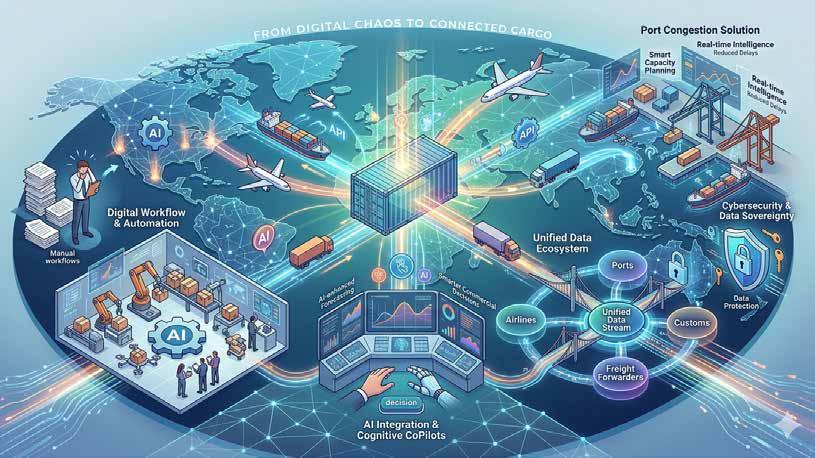
Global cargo is entering a decisive phase, where operational resilience depends on closing visibility gaps, eliminating manual friction, and enabling seamless data exchange. For Cédric Millet, President of CargoTech, the path forward is a disciplined shift toward real time intelligence, AI enhanced forecasting, and automation ready digital infrastructure. In this interview, Millet outlines how cognitive copilots, unified data flows, and smarter capacity planning can elevate performance across the global cargo ecosystem.
Global Supply Chain: How is CargoTech prioritising its technology roadmap to address the most urgent bottlenecks in global cargo operations, such as visibility gaps, manual workflows, or port congestion?
Cédric Millet: In the world of cargo operations, the industry is faced with
various levels of digitalisation, ranging from fully digital processes with real-time scanners and timestamp capabilities to manual handheld scanners with batch data uploads, resulting in patchy service quality. While standards and benchmarks are available across the industry, enforcement is generally managed by respective local country regulatory bodies.
From a customer perspective, real-time shipment visibility is non-negotiable. At CargoTech, our platforms are API-native, offering seamless data integration from various input sources, such as live airline data feeds, IoT sensors and RFID.
With software tools, airlines have the opportunity to standardise workflows across the entire organisation, which not only improves efficiency but also enables traceability and transparency for the business.
Workflow digitalisation removes paper
trails and reduces handoff latency. A prime example is paper air waybills and tedious customs pre-alerts, which continue to derail the adoption barometer.
At CargoTech, our core capabilities are infused in the software that we build to allow our customers to better manage capacity and improve forecasting accuracy, in order to reduce congestion and operational bottlenecks.
GSC: What role do automation and robotics play in your long term strategy, and how do you balance automation with the need for human expertise in complex logistics environments?
CM: CargoTech’s roadmap offers our customers strategic positioning to expedite automation in their business processes. We believe humans will co-exist with the tools that we offer. Whilst many generic processes can be automated or managed through
Agentic AI, the more complex logistics needs require human judgement to complete the review and approval process. In the long run, there will be more opportunities to move into autonomous decision-making, where data structure and quality are more accurate. CargoTech solutions address specifically the commercial processes (revenue optimisation, pricing, capacity planning, sales steering, etc). Our solutions in that domain (CargoStack Optimize Revenue Management System by Wiremind Cargo, or Fleet & Network / Sales Steering / Sales Cockpit by Rotate) act as “cognitive CoPilots” that help users be smarter and faster and take better commercial decisions.
GSC: How is AI being integrated into forecasting, routing, and capacity planning, and what measurable improvements have you seen in efficiency or cost reduction?
CM: AI enabled demand forecasting is outperforming human planners both in speed and accuracy. Our proprietary Machine Learning forecasting engine has seen double digit % improvement from our customer’s feedback. This precision allows airlines and freight forwarders better collaborate on the space commitment, thus reducing last-minute spoilage and improvement on load factors.
Wiremind’s SKYpallet does exactly this by improving space optimisation across 3 big activities; 1) At sales quotation and loadability, 2) Capacity control and management and 3) flight release and build up. Task that previously take 30 minutes to execute has been reduced to mere seconds with accuracy improving over time
GSC: How is Cargo Tech addressing the challenge of data interoperability across carriers, ports, customs systems, and freight forwarders to create a unified data ecosystem?
CM: As an API native software group, we operate an open API gateway that translates legacy EDI messages into real time data exchanges in a single, consistent format. CargoAi’s CargoConnect centers on API gateway that massively connects across Airlines, Airports, Transport Management System providers, Freight Forwarders to

offer, schedule sharing, booking as well as shipment track and trace by removing the legacy integration bottleneck Interoperability does not require everyone to surrender data to a central monopoly, the key is data movements across actors in the logistics chain and to those that are permitted to use it
GSC: With rising cyber threats targeting supply chains, what cybersecurity frameworks or innovations are you implementing to protect cargo data and operational continuity?
CM: As a software technology Group, we are not only compliant on frameworks such as GDPR, ISO27001 and SOC 2, but also we take pride in the principles of ethical data collection and usage. Data is the core foundation of what makes the Group excel in our tools offered to our customers, hence protecting our primary asset is a responsibility. Our clients are from across the globe and we respect the data sovereignty requirements of country laws and
The future of cargo isn’t built on more data—it’s built on connected intelligence, where real-time visibility, AI-driven forecasting, and seamless interoperability turn operational complexity into competitive advantage.
Cédric Millet, President of CargoTech
we ensure that our clients are offered the flexibility to determine the data principles within its organisation.
GSC: What KPIs or performance metrics do you use to evaluate the real world impact of new technologies on reliability, speed, cost, and customer satisfaction?
CM: CargoTech customers has the capabilities for our clients to measure performance such as load factors, financial metrics, adoption rates for generic KPIs. Nevertheless, the various tools offer much more detailed performance tracking such as overbooking forecasting, sales leads generation and quotation conversion, yield pricing performance, shipment loadability index, search to book ratio and many more. Whilst there is abundance of KPIs and performance metrics, what the Group offer is API capabilities for our customers to pull data for their internal analyses and decision making. For customers needing only visibility, we have dashboards for trend analyses and visualisation, without the hassle of a team to build them.
When companies rush into automation -- driven by urgency, labour pressure or market trends, they tend to jump straight to selecting robots or software, skipping important steps in the planning phase. This leads to results opposite of what was expected, creating added inefficiencies and unexpected disruptions later. RAXS helps companies build advanced, future-ready warehouses tailored to their business needs.
Successful warehouse automation is not robots and latest technology purchase only. It is a detailed planning process, where every phase matters. RAXS summarised them into seven equally important steps that companies should follow to avoid costly consequences.
1Data and operations analysis: A reliable automation solution can only be born from a deep understanding of real operations. This first step is about analysing the customer’s data and warehouse reality, not taking generic assumptions. It’s essential to examine how the warehouse actually works not how it’s assumed to work, and also consider other factors, such as:
• Business-specific constraints
• Future growth and scalability
• Anticipated changes in consumer behaviour
• What end customers will expect tomorrow, not just today
All data and information must be crosschecked and validated. Only when operations and data are fully understood can a solution begin to be born.
problem identification and solution development: Automation fails when companies try to solve the wrong problem. A sharp Diagnosis is key. Is the issue throughput? Accuracy? Space utilisation? Labour dependency? Scalability? Or is it a process design issue that automation alone cannot fix? This step focuses on clarity. Defining the real problem ensures that automation is applied where it adds value, rather than masking deeper inefficiencies.
Once the problem is clear, a concept solution is developed. This phase includes layout optimisation, process sequencing, storage and picking strategies, and clear interface points between people and systems.

By Alain Kaddoum, Founder and CEO of RAXS
The solution design sizing takes into account the customer warehouse layout but also the analyzed data. Solution sizing is a very important step in the design phase to determine the right amount of equipment needed to meet the current and future operational requirements. The design planning is even more critical, especially in brownfield projects. Installation and solution phasing must be carefully coordinated with the customer to minimise disruption and integrate new systems without disturbing ongoing operations. This is where an experienced team makes the difference.
Furthermore, during this planning phase, a detailed discussion around future growth and CAPEX phasing is essential. This allows future expansions to be built into the design, enabling the company to phase its CAPEX over time without needing to implement the full solution from day one.
4Selection of the right technology and the right brands: Only now does technology selection truly make sense. With operations understood, the problem defined, data analyzed, and the warehouse designed, it’s time to select the right type of robots, evaluate different brands and systems, and choose the right fit to the developed solution. Robotics, software, and automation systems must be selected based on operational reality, budget constraints, and long-term growth, not trends or preferences.
5Integration, software, and performance delivery: Automation is not only equipment; it is orchestration. Once systems are selected, the focus shifts to integration, especially the software layer. A strong Warehouse Control and Execution Software (WCS/
WES) is essential to synchronise and orchestrate automated processes with the existing manual ones, from inbound to outbound. Equally important is integrating the solution into the company’s existing ecosystem to avoid operational disruption.
and stabilisation: Automation does not reach peak performance on day one. The ramp-up phase is where real success is achieved. Teams work hand-inhand with the customer to:
• Fine-tune the system
• Calibrate machines
• Train operators
• Adjust based on real operational behaviour
Automation is not an “out-of-the-box” product. It is a tailored solution that requires learning, adjustment, and stabilisation. Performance is tested, KPIs are proven, and the system is supported until it reaches its expected operational level.
support: Automation is a long-term investment, and sustained performance depends on continuous support. Accompanying customers throughout the entire lifecycle of the solution, providing on-site support, preventive and corrective maintenance, and remote assistance are vital. Warehouse automation systems are designed to last at least 15-20 years, which makes long-term service capability essential. True partnership goes beyond delivering equipment; it means ensuring reliability, performance, and adaptability over time. When steps are skipped, automation projects suffer and everyone wonders why. Once the process is followed, automation becomes a powerful enabler of efficiency, scalability, and resilience.
At this year’s Eurosatory, Scania will showcase defence solutions developed for demanding operations where protection, operational availability and sustained performance are essential.
At Eurosatory in Paris, Scania will demonstrate how its modular system, broad powertrain portfolio and global support network can help defence customers meet operational requirements, in peace, crisis or conflict. With the message “Designed to perform, built to deliver”, Scania will showcase protected mobility, battlefield power, modular logistics solutions, Power Solutions and Integrated Logistic Support.
Scania’s display at Eurosatory includes: Indoor display Hall 6 – J244
• Heavy equipment tractor with CrewCab, 8x4/4
• Scania protected cab / modular protected cab concept
• Power Solutions display including next-generation 13-litre inline engine, 16-litre V8 engine and e-machine for hybrid or fully electric propulsion
• Integrated Logistic Support experience table, presenting Scania’s defence service portfolio
Outdoor display ExtPe6a – D194
• 4x4 vehicle with air defence system
• 4x4 hybrid vehicle with military equipment powering capabilities
• Multi-role 8x8 logistics truck
“Defence customers need solutions that perform in demanding operations and continue to deliver over time. At Eurosatory, we are showing how Scania’s modular system, powertrain expertise and global support capability come together to support operational availability, flexibility and resilience,” says Stefano Fedel, Head of Commercial, Scania.
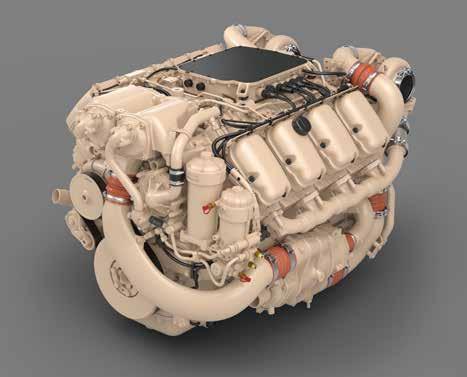
Since 1967, Eurosatory has established itself as a benchmark global trade show for Defence and Security, bringing together key players from across the international ecosystem. For Scania, the event is a platform to show how proven commercial technology, modularity and support can be adapted to meet defence requirements.
One of Scania’s key launches at Eurosatory is the new modular protected cab, developed to combine crew protection, mobility and operational performance in demanding defence environments. The modular protected cab represents a new step in Scania’s defence offering and demonstrates how the company adapts its proven modular vehicle

platform to meet evolving operational requirements.
The protected cab is developed for demanding defence operations where crew protection, mobility, ergonomics and operational availability are critical. The solution combines protection with visibility, driver control and performance in challenging terrain, harsh weather and around-the-clock operations.
A central part of this year’s display is Scania’s hybrid truck, which adds a new dimension to operational flexibility and battlefield power capability. The hybrid solution demonstrates
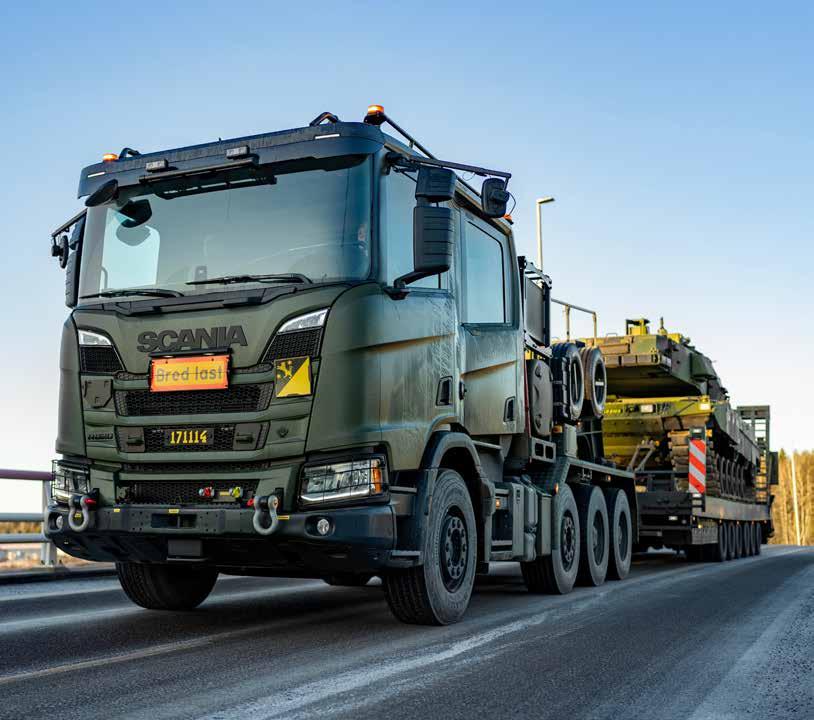
how electrified capability can support both mobility and local power supply in the field.
The vehicle can provide silent power generation for external equipment, reducing the need for conventional diesel generators while supporting operational flexibility in environments where infrastructure is limited or unavailable.
“Hybrid technology can bring important operational benefits in defence applications. It can enable silent operation, reduce the need for idling and support battlefield power capability for external systems in the field,” says Sara Forsberg, CTO and Head of Scania R&D.
The hybrid vehicle is connected to a re -
search project and will be part of a formal handover ceremony during Eurosatory.
For defence customers, performance is measured throughout the lifecycle of the system. Scania’s Integrated Logistic Support is designed to secure operational availability, reduce lifecycle costs and provide products and services across the entire lifecycle. This includes supply support, technical documentation, training, support and test equipment, technical support, repair and maintenance services, obsolescence management and configuration management. At Eurosatory, visitors can explore Scania’s ILS defence service portfolio at the Integrated Logistic Support experience table.
“We combine robust products with a global support structure. For defence customers, that means not only receiving the right vehicle, but having the service, parts, training and technical support needed to keep it operational over time. Scania is the preferred partner for many defence organisations across the globe, as we have delivered more than 10,000 of trucks and engines for generations, including the needed support functions,” says Fedel.
At 11:00 on Tuesday 16 June, Scania hosted the handover of the hybrid vehicle at Hall 6 J244/ The handover highlighted the vehicle’s battlefield power capability and its role in a research project exploring how hybrid solutions can support military operations.
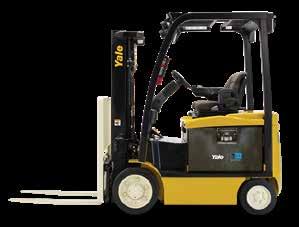
Yale Lift Truck Technologies has launched lithium-ion batteries and chargers which have been specifically built for Yale forklifts and other lift trucks. The heavy duty trucks are designed for use in the most relentless applications but still deliver durability for long periods of peak power, excellent acceleration and smooth torque.
According to the company, the purpose-built, integrated solutions negate compatibility concerns which can arise when using third-party power solutions and have the added benefits of providing a high-performance, maintenance-free, zero-emission power option.
The lithium-ion phosphate (LFP) chemistry used in the battery offers performance and usability benefits, including improved heat stability, longer lifespan compared to other battery chemistries and fast, flexible charging. The modular size and capacity options allow operations to find the best battery option for their application and enable individual cells to be replaced, rather than an entire battery.
The battery chargers are designed for strategic placement throughout the warehouse, including high-traffic areas, to encourage opportunity charging during breaks or between shifts.

“Our goal is to give warehouses as frictionless an experience as possible,” says Ken Schreiber, energy solutions leader, Yale Lift Truck Technologies. “The unified solution of advanced battery technology, chargers and lift trucks delivers on that promise, with easy day-to-day usability and performance, backed by the one-stop shop convenience of support from our local dealers.”
Yale says the battery and charger solutions are validated from the factory for each element to work as a fully integrated ecosystem providing the reliable power fast-paced warehouses demand while the modular battery pack design enables service of individual modules, rather than requiring replacement of an entire pack.
The Lifting Equipment Engineers Association (LEEA) has started rolling out an optional proficiency test, which takes testing from theory-only into real-world demonstrations of proficiency.
Developed in response to feedback from its members, the industry body says the testing offers learners the opportunity to test their knowledge across three key areas: preparation and planning, process, and reporting and justification.
The three stages are assessed against equipment in known conditions of repair, with learners demonstrating their true proficiency by passing each stage to achieve the relevant LEEA diploma.
LEEA says the same pass criteria applies across both multiple-choice question testing and practical test routes, ensuring consistency in standards, quality and reliability. Practical Test days are scheduled to give flexibility around when assessment takes place.
“Having listened to our members, we have designed our new Proficiency Testing for those who prefer to demonstrate their skills through hands-on inspection,” explains Matt Barber, LEEA director of membership.
“Not all learners feel at ease with online multiple choice assessments, yet for years this has been the standard – a single format and a single measure, but is that enough in an industry built on real world skill?
“LEEA’s new Proficiency Testing is a shift in mindset to a learner-centred, inclusive approach to qualification. It challenges industry standards and embraces initiative to create fair and reliable outcomes. Rather than replacing the existing route – the multiple-choice assessment remains available. So, this creates choice and provides an inclusive route to qualification by supporting different styles and removing unnecessary barriers.”











• For the first time, GWC Group connects air freight speed with cost-efficient, cross-border road transport, giving the GCC a new standard for cargo movement.
• GWC Group-powered corridor enables faster, more predictable delivery across Qatar, Saudi Arabia, UAE, Oman and Bahrain markets through coordinated multimodal operations.
• TIR enables cross-border movement under a single customs document, reducing delays and improving delivery predictability.
• Solution supports continuity of time-sensitive and high-value cargo flows amid an evolving regional logistics landscape.
Gulf Warehousing Company Q.P.S.C (GWC Group), one of the region’s leading logistics groups providing cross-border and integrated logistics solutions, has for the first time extended its end-to-end supply chain to include a fully operational air-to-land logistics corridor, powered by the TIR system, enabling Doha to serve as a regional air-to-land redistribution hub and supporting the continuity of supply chains across the GCC.
Cargo arriving at Hamad International Airport is transferred into sealed vehicles and transported across borders to key destinations in the region, enabling faster and more predictable delivery. The model allows shipments to be rapidly redistributed from a single-entry point, reducing reliance on disrupted traditional routing structures and enabling more flexible movement across markets without the cost of full air-to-air routing.
GWC Group acts as the engine driving this corridor through its cross-border land freight network and integrated logistics capabilities. Leveraging its regional infrastructure and TIR-certified operations, the Group coordinates the movement of cargo across key GCC markets, including Saudi Arabia,
the United Arab Emirates, Kuwait, Oman, and Bahrain, ensuring efficient execution and secure transit.
Setrak Khatchikian, Senior Vice President – GCC Transportation at GWC Group, said: “What we have built is a commercially smarter route. GWC Group’s cross-border land freight network now enables time-sensitive cargo to move from Doha across the GCC under a single TIR document, combining the speed of air freight with the efficiency of sealed cross-border trucking. The GCC no longer has to choose between speed and cost.”
By integrating air freight with cross border road transport, the model delivers the speed of air freight at a fraction of the cost of airto-air routing, without impacting delivery timelines. It provides a commercial solution for moving time-sensitive and high-value cargo, particularly in sectors such as e-commerce and pharmaceuticals, where speed, reliability, and cost control are critical.
Supported by the TIR system, cargo moves under a single customs document and guarantee, reducing border delays, minimising reinspection requirements, and improving delivery predictability across the region.
Rami Karout, Senior Manager for TIR and Transit Development at the International Road Transport Union (IRU), commented on the role of the TIR system in enabling the corridor: “Qatar has demonstrated strong agility in activating new road corridors under the TIR system to keep vital goods moving across the region. By enabling cargo to move under a single customs document and guarantee, TIR significantly reduces border delays and enhances delivery predictability. This air-to-land model is a clear example of how TIR supports efficient, secure, and scalable cross-border logistics, particularly in periods where traditional routes are under pressure.”
Led by GWC Group, this integrated airto-land model reinforces Doha’s role as a strategic regional hub and principal entry point for cargo flows into the GCC, enabling efficient redistribution of goods across markets. By combining air connectivity with cross-border land transport, GWC Group provides a scalable and commercially viable solution for sustaining supply chains under changing operating conditions.
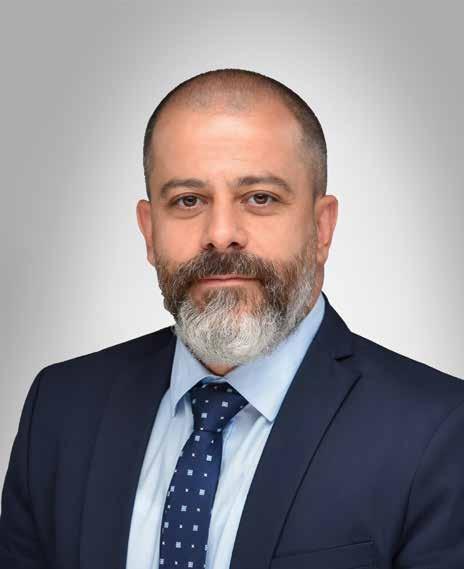
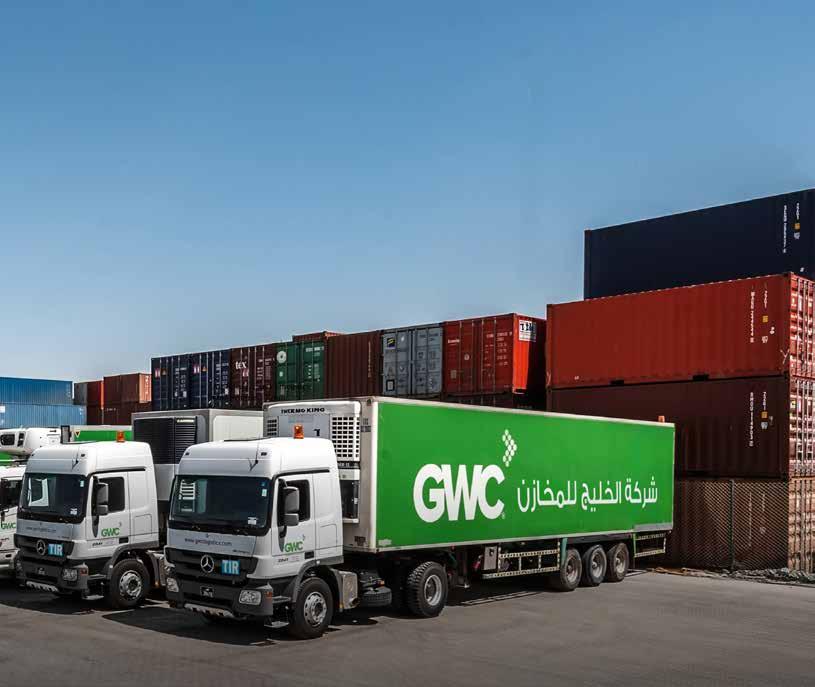
With freight costs, fuel prices and delivery timelines back in focus, questions are growing over just how vulnerable global supply chains could become.
Our Editor, Abigail Mathias, was recently invited by Mira Business FM, to discuss the latest on the risks, the market reaction and what businesses and consumers should be preparing for. We bring you excerpts of her discussion with host, Tim Elliott.
Tim Elliott: How serious is the threat to global trade if tensions continue escalating around the Strait of Hormuz?
Abigail Mathias: The threat is very serious. The Strait moves roughly 20-30% of global seaborne oil and a major share of LNG, so any prolonged disruption immediately affects global energy security. Markets are already pricing in higher risk, and several governments have warned that a full shutdown would have worldwide economic consequences.
Even brief disruptions matter because there is no equivalent alternative route for most Gulf oil and LNG exports. Pipelines that bypass Hormuz exist, but they handle only a fraction of total volumes.
TE: Which industries are most exposed right now, and has that changed since the conflict first escalated earlier this year?
AM: Energy remains the most exposed sector - especially oil, LNG, petrochemicals, and fuel dependent industries. But the impact has widened: shipping, fertilizers, metals, and food supply chains are now feeling secondary pressure from higher fuel costs and longer transit times. The risk has clearly broadened compared with the early stages of the crisis.
TE: Are shipping companies already rerouting cargo or cutting Gulf exposure as risks rise?
AM: Yes. Major global carriers — including Maersk, MSC, Hapag Lloyd and CMA CGM — have already suspended or limited transits

through the Strait. Many are diverting vessels to alternative ports or reducing Gulf calls altogether, which is slowing regional trade and increasing congestion elsewhere.
TE: What’s happening right now with freight rates, tanker costs and marine insurance premiums?
AM: All three are climbing sharply. Freight and tanker charter rates have surged as shipowners demand higher compensation for operating near conflict zones. At the same time, war risk insurance premiums have jumped, adding significant extra cost per voyage and pushing some operators to avoid the area entirely.
TE: Dubai’s Green Corridor through Oman was launched as an emergency logistics route earlier this year. How important has that become during the latest disruption?
AM: It has become a key pressure relief valve for regional trade. By shifting cargo to a land sea route through Oman, it allows goods to bypass the Strait entirely, helping maintain continuity for essential imports and exports. For many companies, its now one of the few reliable alternatives during peak disruption.
TE: Could the Green Corridor become a permanent alternative trade route for Gulf logistics if instability continues?
AM: It’s increasingly likely. If maritime instability persists, businesses will keep looking for predictable, politically insulated routes — and the Green Corridor fits that need. Over time, investment in infrastructure and customs integration could turn it from an emergency measure into a long-term logistics backbone.
TE: Are businesses now increasing stockpiles and regional warehousing to protect inventory and deliveries?
AM: Yes. Companies across energy, retail, and manufacturing are building larger buffer stocks and expanding warehousing to avoid
supply shocks. This shift toward “resilience logistics” began earlier in the year but has accelerated as disruptions have become more frequent and unpredictable.
Supply chains today are more resilient than in 2020–2022, Companies learned from the pandemic and the Red Sea crisis.
Many now use:
• multi route logistics planning
• larger safety stocks
• more regional warehousing
This doesn’t eliminate risk, but it reduces the shock.
TE: How quickly could consumers start feeling the impact through higher fuel prices, shipping costs and retail inflation?
AM: Consumers can feel the impact within days to weeks. Oil markets reacted almost instantly to Hormuz related risk, and fuel prices typically adjust shortly after. Shipping costs and retail inflation take longer — usually a few weeks to a couple of months — as higher freight, insurance and rerouting costs work their way through supply chains.
TE: How vulnerable are Asia bound supply chains given the region’s heavy dependence on Gulf energy exports?
AM: Asia is highly vulnerable. The region sources a large share of its crude and LNG from Gulf producers, and many manufacturing hubs — from electronics to chemicals — depend on stable energy flows. Any prolonged disruption forces countries to draw down reserves, pay higher spot prices, or scramble for alternative suppliers, which can ripple through industrial output.
TE: Are companies better prepared now after months of disruption?
AM: Yes, but only to a point. Many firms have already diversified routes, increased safety stock, and built more flexible logistics plans. However, no amount of preparation fully offsets the impact of a chokepoint like Hormuz, so resilience has improved but exposure remains significant.
n Emirates SkyCargo has partnered with Dogs 4 Wildlife, a UK-based charity that protects endangered wildlife in Africa through the deployment of specialist conservation dogs. The first phase of the partnership will see Emirates SkyCargo transport dogs from the UK to Southern Africa, where they will work alongside wildlife park rangers to track poachers and strengthen conservation efforts.
The first two dogs, Vega and Kuda, both Belgian Malinois, are specialist human scent tracking dogs trained by Dogs 4 Wildlife for conservation operations. Selected for their exceptional drive, determination, and natural tracking abilities, Vega and Kuda will help form a new conservation K9 unit supporting wildlife protection efforts in Zimbabwe.
The dogs are scheduled to travel from London to Harare via Dubai in late June and will be deployed at Zimbabwe’s Matusadona National Park on their arrival.
Emirates SkyCargo, the air freight division of Emirates, transports cargo for businesses across Emirates’ global network. Through its specialist live animal transportation services,
the airline provides reliable and welfare-focused transportation for animals. This is supported by dedicated handling processes, purpose-built facilities, and trained experts across its global network.
Badr Abbas, Divisional Senior Vice President, Emirates SkyCargo, said: “Protecting wildlife is a shared responsibility that requires collaboration, innovation, and long-term commitment. Through our partnership with Dogs 4 Wildlife, we are proud to support the deployment of highly trained conservation dogs, such as Vega and Kuda, across conservation initiatives. These animals will play a vital role in protecting endangered species and strengthening conservation efforts on the ground. This partnership reflects Emirates SkyCargo’s broader commitment to combatting illegal wildlife trade and supporting organisations that are creating meaningful impact for wildlife and global communities.”
The partnership between Emirates SkyCargo and Dogs 4 Wildlife aligns closely with Emirates’ longstanding commitment to wildlife protection. The airline maintains a zero-tol-

erance approach to the illegal wildlife trade, including Emirates SkyCargo’s ban on the transportation of hunting trophies. Emirates SkyCargo also operates robust screening processes and works closely with industry partners, government authorities, and conservation organisations to help prevent the movement of illicit wildlife products through global supply chains. Since launching its illegal wildlife trade awareness programme, Emirates has trained more than 46,000 employees across its business, helping frontline teams identify, report and respond to potential wildlife trafficking risks. Emirates has also achieved IATA’s Environmental Assessment (IEnvA) certification, which includes a dedicated wildlife module aligned with the Buckingham Palace Declaration.
n Lalamove, the leading on-demand delivery platform, announced the launch of two new services in the UAE, marking the completion of its first year of operations. After exceeding its initial first-year targets, the platform has expanded from a Dubai-only service to a nationwide network covering all seven emirates, while its driver partner network grew ten times over.
To support this growth, Lalamove has officially opened a new office in Dubai. The new workspace will serve as the operational base as the company continues to expand its logistics support for local small and medium-sized enterprises (SMEs).
Over the past 12 months, Lalamove has become a regular logistics partner for SMEs
across the UAE. With the country’s e-commerce market expected to reach $9.2 billion by 2026, local merchants increasingly require practical and flexible delivery options to keep pace with customer demand.
This demand is especially visible during the UAE’s diverse seasonal calendar, where celebrations such as Eid, Diwali, Valentine’s Day, International Women’s Day, and key national days often create sudden spikes in orders for florists, gifting businesses, retailers, homebased sellers, and food merchants. During these peak periods, Lalamove supports businesses as a flexible logistics partner, helping them manage everything from first-mile stock replenishment to last-mile customer fulfilment without the need for fixed fleet commitments.
Ashvin Nair, Managing Director of Lalamove UAE, said: “Our first year in the UAE has shown
strong demand for flexible, on-demand delivery among local businesses. We achieved tenfold growth in orders and served more than 50,000 users, which shows that SMEs are increasingly choosing Lalamove as a practical logistics partner.

n DMCC, the leading international business district that drives the flow of global trade through Dubai, today launched its Future of Trade 2026 report in Dubai, finding that the UAE is set to play an outsized role in the next phase of global trade as businesses seek trusted connector economies that can help them navigate disruption, access highgrowth markets and build resilience across key trade corridors.
Titled ‘Rebuilding Through Rupture’, the Future of Trade 2026 report finds that global trade will remain resilient over the next two years, but under a fundamentally different operating model shaped by AI at operational scale, structural tariff volatility, supply chains designed for resilience rather than cost efficiency, and an energy transition that has become a contest for industrial advantage.
The report’s scenario analysis shows that businesses are planning for disruption as the baseline, with more than 80% of respondents expecting slow, uneven trade growth over the next one to three years and only 4% expecting the best-case scenario.
The report finds that South-South trade now accounts for around 35% of global trade, surpassing North-North flows at around 25%, and shifting the geography of growth towards corridors linking Asia, the
n Oman Air Cargo has begun a daily Road Feeder Service (RFS) between Muscat, Oman and Dubai, United Arab Emirates (UAE) to enable larger and widebody-compatible cargo to be transported between the two countries.
Operating daily, the new service supports growing trade flows between the UAE and Oman by trucking goods in and out of both countries, while providing customers with greater flexibility and connectivity across the region.
“This new service creates greater flexibility for cargo movement between Dubai and Muscat by complementing traditional air
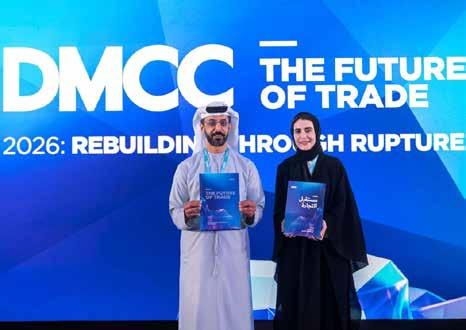
Middle East, Africa and Latin America.
Dr. Thani Bin Ahmed Al Zeyoudi, UAE Minister of Foreign Trade, said: “As the global trading system is reshaped by disruption, new corridors and the rapid rise of technology-enabled trade, businesses are increasingly seeking trusted, well-connected economies from which to navigate change and
reach new markets.
The UAE has anticipated these shifts through a long-term strategy built on openness, connectivity, diversification and investment in infrastructure, with our Comprehensive Economic Partnership Agreement programme expanding access to the world’s high-growth markets.”

freight operations and enabling the transport of a wider range of cargo types,” said Michael Duggan, head of cargo, Oman Air.
“As regional supply chains continue to evolve, Oman Air Cargo remains focused on delivering reliable, customer-centric
transport solutions that support trade across the Middle East.”
The new RFS offering will transport perishables and general cargo, while also accommodating shipments that cannot be carried on narrowbody aircraft.
n Vietnam Airlines has appointed ECS Group as its cargo General Sales and Services Agent (GSSA) in South Korea, reinforcing its commitment to expanding cargo revenues and enhancing customer service in one of its most important international markets.
The agreement covers comprehensive cargo representation, including sales development, capacity management, operational supervision, digital services and customer support. ECS Group will manage both general cargo and specialised cargo products, supporting Vietnam Airlines’ growing network and capacity between Korea, Vietnam and beyond.
South Korea ranks among the top three cargo markets across the Vietnam Airlines network and plays a critical role in the carrier’s international growth strategy. The partnership is expected to capitalise on increasing trade flows across Asia, as Vietnam continues to strengthen its role as a regional manufacturing and export hub, generating strong demand for shipments of electronics, semiconductors, automotive components, perishables, pharmaceuticals and e-commerce products.
“ECS Group presented a compelling business plan centred on revenue optimisation, supported by dedicated Vietnam Airlines
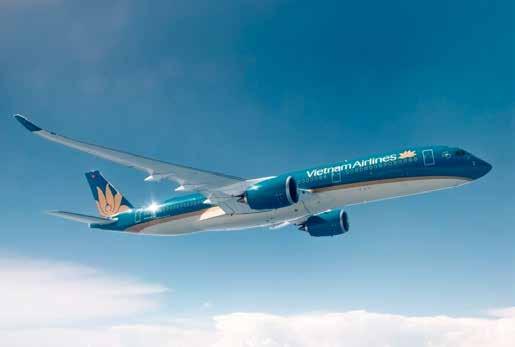
teams in Incheon and Busan and backed by advanced digital capabilities,” said Jean Ceccaldi, Chief Executive Officer of ECS Group. “We are proud to strengthen our partnership with Vietnam Airlines and to bring the expertise, sales reach and CargoTech-powered digital ecosystem that have already delivered successful results in other markets.”
Customers will benefit from ECS Group’s extensive sales network, proven cargo expertise and digital tools that improve efficiency, visibility and access to capacity. Both companies also confirmed that discussions are underway regarding potential expansion into additional strategic cargo markets in the future.
n Kuwait’s Public Works Minister Dr. Noura Al-Mashaan said recently that a planned railway project linking Gulf Cooperation Council (GCC) member states was a pillar of economic cooperation within the six-member bloc.
Putting in place an “Integrated logistics,” system across the Riyadh-based bloc was an integral measure to expedite the implementation of the GCC railway project, the minister told her counterparts from Gulf Arab states in a gathering held via video link.
The talks also centred on current developments around the wider region and beyond, particularly existential challenges that could encumber the progress of key development projects, citing the need to propel economic cooperation across the bloc to greater levels.
The minister went on to discuss the intricacies of the railway project and how far pro-
gress has come, in addition to the logistical steps needed in order to bring the marquee project to fruition, making sure that the project is inevitably completed in a manner that meets internationally-recognised standards, she underlined.
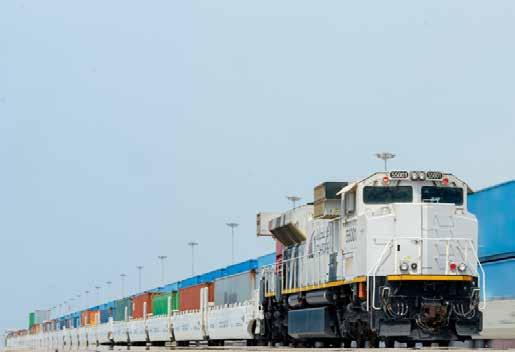
· The two sides explored opportunities to expand economic and investment cooperation
fields. Discussions and an exchange of views on key regional and international issues were also held.
n The Federal Chancellor of Austria Christian Stocker received Saudi Minister of Foreign Affairs Prince Faisal bin Farhan in Vienna recently.
During the meeting, they reviewed bilateral relations between the two countries and their friendly peoples along with ways to further strengthen and bolster them in various
Prince Faisal conveyed the greetings of Custodian of the Two Holy Mosques King Salman and Crown Prince and Prime Minister Mohammed bin Salman to the chancellor and their wishes for further progress and prosperity for Austria. On his part, Stocker reciprocated by conveying his warmest greetings to King Salman and the Crown Prince.
Prince Faisal bin Farhan also held wide ranging talks with Austria’s Federal Minister for European and International Affairs Beate Meinl-Reisinger in Vienna on Wednesday.
n Aramex PJSC (Aramex) and ICT Legal Consulting International BV (ICTLC International) have announced the approval of the Aramex Group Binding Corporate Rules for Controllers (BCR-C) by the Dutch Supervisory Authority, Autoriteit Persoonsgegevens, acting as BCR Lead, following the positive opinion issued by the European Data Protection Board (EDPB).
This achievement marks an important milestone in Aramex’s global data protection governance programme. As a leading global provider of logistics and transportation solutions, headquartered in Dubai, United Arab Emirates and operating through a worldwide network of subsidiaries, Aramex’s approved BCR-C provide a GDPR-recognised framework for intra-group international transfers of personal data and reflect the company’s continued commitment to accountability, transparency, and high standards of data protection across its global operations.
Aramex is a multinational leader and transportation provider, offering end-to-end solutions across express delivery, freight, and supply chain services. Headquartered in the UAE and listed on the Dubai Financial Market, it connects customers across 70+ countries worldwide.
ICTLC International provided comprehensive assistance throughout the BCR process, including:
During the meeting, the ministers reviewed bilateral relations between their respective countries and explored avenues to enhance cooperation across various fields, contributing to serving mutual interests and further strengthening the existing partnership between the two countries.
Prince Faisal congratulated Austria on its election as a non-permanent member of the Security Council for the 2027–2028 term, expressing hope that Austria will contribute to supporting international efforts aimed at reinforcing global peace and security, while upholding the principles of international law and multilateralism.

Drafting and structuring the BCR-C in alignment with the GDPR and the EDPB recommendations; Developing specific intra-group agreements and identifying relevant privacy contact points across Aramex Group entities; Supporting the Co-review and Cooperation Phases with the Dutch Data Protection Authority.
In its opinion adopted on 8 July 2025, the EDPB concluded that the draft BCR-C of the Aramex Group contained appropriate safeguards to ensure that the level of protection guaranteed by the GDPR would not be undermined when personal data is transferred to and processed by group members outside the European Union.
Amadou Diallo, Aramex Group CEO commented: “Trust is fundamental to the way Aramex operates across markets, borders, and communities. The approval of our Binding Corporate Rules for Controllers reflects the maturity of our privacy programme and our continued investment in responsible data practices. For Aramex, data protection is not only a compliance requirement, but an essential part of how we serve our customers, support our people, and work with partners around the world. This milestone gives us a strong and consistent foundation for managing personal data responsibly as our business
continues to grow globally.”
Paolo Balboni, Founder and Managing Partner of ICTLC International, stated: “We are proud to have supported Aramex in achieving this important milestone. Binding Corporate Rules remain one of the most robust GDPR instruments for international data transfers, and this result reflects Aramex’s commitment to maintaining very high data protection governance standards across its global operations.”
This achievement strengthens Aramex’s position as a trusted global logistics provider with GDPR-approved safeguards for international intra-group data flows. It also highlights ICTLC International’s experience in supporting complex, multinational privacy compliance projects, including data transfer governance, BCR approval processes, and global privacy and data protection framework implementation.
The ICTLC team was led by Paolo Balboni, Founder and Managing Partner, with the instrumental support of Martim Taborda Barata, Partner and Yazan AlMasri, Of Counsel, who worked in close collaboration with the Aramex team led by Farzana Hirani, Deputy General Counsel and Caroline Evans, Global Director Digital & Technology – Strategy, Performance and GRC, who provided invaluable support to the project.
Our SynQ software delivers data-driven intelligence that empowers your business by synchronizing the performance of your people, processes and machines. The result is a level of efficiency and performance you never thought possible.
swisslog.com


n Yango Group, global tech company, is expanding into public transport technology with the launch of an AI-powered management platform. The solution combines real-time data with operational tools in a single interface, helping transport authorities and operators manage complex urban mobility challenges.
Authorities and operators often rely on fragmented systems, leading to congestion,
unreliable services and operational inefficiencies. According to the INRIX Global Traffic Scorecard, congestion increased in 62% of urban areas globally in 2025, highlighting the need for smarter transport management.
The new platform supports key areas of public transport management: network planning, daily operations and revenue control. Its AI layer analyses real-time and historical mobility data to forecast passen-
ger demand, model traffic flows, identify network bottlenecks and suggest more efficient schedules, routes and fleet allocation. This enables authorities and operators to adjust networks of interconnected stops, identify areas with poor transport accessibility, introduce new routes, manage fleets, and monitor fare collection. According to internal estimates, integrated public transport solutions can help reduce traffic jams by up to 28%, lower operational costs by up to 35% and boost fare collection by up to 30%, while real-time data gathering and analysis can support up to 40% faster decision-making for city authorities.
“We work with urban mobility every day in cities around the world, from ride-hailing and navigation to delivery and other services. This gives us a practical view of how cities move and where the challenges are. Bringing that experience into public transport is a logical step. With the platform, we want to help cities build public transport systems that are easier to manage, more financially sustainable and more convenient for people to use, “ said Islam Abdul Karim, Regional head, Yango Group Middle East.
n Hong Kong cargo handler Hactl has signed a 15-year extension of its handling franchise at Hong Kong International Airport (HKIA).
The deal was signed with the Airport Authority of Hong Kong and will run from July 2028 through to 2043.
The signing of the deal comes after the airport added a third runway that has boosted cargo operations at the world’s busiest cargo hub and will prompt further investments by Hactl.
Hactl chief executive Frosti Lau said: “The signing of this new agreement marks an important milestone for Hactl, underscoring our commitment to Hong Kong and our global outlook, while reaffirming our longterm support for the city’s air cargo industry.
“We will continue to invest heavily, with at least HKD1bn allocated to modernising infrastructure, deploying new technologies, and further embedding ESG principles into every facet of our operations — ensuring superior services while driving sustainable development.”
+ The FIATA member certificate
+ Use of the Fiata logo
+ Entr y in the FIATA members directory & networking events
+ Advertising in the FIATA members directory, review and information (FIATA e-Flash)
+ Special Rates for FIATA publication and articles
+ Access to secretariat›s assistance
+ FIATA arbitration code
+ Use of FIATA documents
+ FIATA worldwide member connectivity
+ Talent Connect Worldwide, E-Learning


+ Discountes rates in participating in global and regional conferences
+ Asssistance in case of legal advocacy
+ Discounts for cargo/logistic events and exhibition stands
+ Discount training for NAFL members
+ Training/Certification for regional/international courses
+ Insurance at discounted rates (cargo/liability/medical)
+ Complimentary internship, Skill upgrade and Mentoring & Innovation ideas
+ Discounted supplier rates for industry products

Qatar Airways Cargo is redefining air freight for the energy sector with the launch of EnergyLift – an industry first, airport-toairport solution designed specifically to support the global energy ecosystem.
As the first air cargo carrier to introduce a fully specialised, end-to-end product for this vertical, Qatar Airways Cargo is addressing a long-standing gap in the market: the need for a fast, reliable and tailored logistics solution for time-critical energy infrastructure components.
EnergyLift marks a new milestone in specialised air cargo, combining the airline’s

global network, operational expertise and flexibility into a single, purpose-built offering. The product is engineered to support critical, time-sensitive operations across sectors including oil and gas, power generation, renewable energy (solar and wind) and water infrastructure.
It is the first product of its kind to bring together priority handling, rapid transfer capabilities and specialised logistics features under one integrated product. This includes high loading priority, four-hour tail-to-tail transfers, and the capability to transport outsized and complex shipments — ensuring vital equipment reaches
n The UAE Embassy in Brussels alongside Dubai Humanitarian and the European Commission’s Directorate-General for European Civil Protection and Humanitarian Aid Operations (DG ECHO), co-hosted a panel discussion on Humanitarian Supply Chain Resilience in a Volatile Geopolitical Landscape, amid escalating global tensions affecting supply chains.
Held in Brussels and bringing together more than 80 senior representatives, from the European Union, the UAE, UN agencies, NGOs, humanitarian logistics experts, and private sector stakeholders, the high-level dialogue addressed mounting pressures on global humanitarian supply chains and explored collaborative approaches to ensure operational continuity and sustained humanitarian access during crises.
In the opening remarks, H.E. Mohammed Ismail Al Sahlawi, UAE Ambassador to the Kingdom of Belgium, the Grand Duchy of Luxembourg, and the European Union, said: “Millions of people around the world depend on food, fuel and medicine delivered through the Strait. This latest crisis in the Hormuz is not the first time we are seeing supply chains disrupted. Since the shockwaves caused by COVID, the UAE has been working with our European partners to ensure we are better prepared for emergencies and that humanitarian deliveries are more resilient. Our event today allowed us to take stock of lessons and
destination airports within hours.
Designed with operational resilience in mind, the product also incorporates advanced handling for dangerous goods and optional temperature control. Endto-end shipment monitoring and 24/7 customer support is provided when combined with Q-Prime for guaranteed uplift in critical recovery scenarios, further reinforcing its role as a mission-critical logistics solution.
The product is available for booking via Qatar Airways Cargo’s Digital Lounge e-booking platform and through the cargo carrier’s third-party booking platforms.
to identify new opportunities to future-proof our systems.”
Maciej Popowski, Director-General, Directorate-General for European Civil Protection and Humanitarian Aid Operations (DG ECHO), said: “Resilience is built through collaboration. The experience of recent months has confirmed the importance of working together to address humanitarian challenges. We need to move from siloed and often disconnected supply chains towards a coordinated and integrated network – a system that enhances preparedness, adaptability and efficiency of humanitarian action. This is key to withstanding future shocks and ensure that life-saving assistance reaches those who need it most. In a volatile geopolitical environment, the EU remains a reliable, principled, leading humanitarian actor – committed to strengthening partnerships. Today’s discussion organised jointly with the UAE and Dubai Humanitarian is intended to catalyse broader engagement and help strengthen the collective resilience of our humanitarian system.”
Addressing growing pressures on global humanitarian supply chains: The dialogue examined the increasing impact of conflicts, maritime insecurity, airspace restrictions, and broader supply chain disruptions on humanitarian operations worldwide. Participants explored how strengthened international collaboration, more resilient logistics infra-


structure, and adaptive humanitarian corridor mechanisms can help safeguard the timely and reliable delivery of life-saving assistance to vulnerable populations.
The event reflected the growing strategic cooperation between the UAE and the European Union in the humanitarian field, building on the 2025 Administrative Arrangement between DG ECHO and Dubai Humanitarian.
Since then, both entities have been advancing closer coordination across humanitarian operations, including the use of shared humanitarian hubs, the development of a global humanitarian safety net, the exchange of information and best practices, support to local community preparedness, and mutual operational support among humanitarian hubs worldwide.
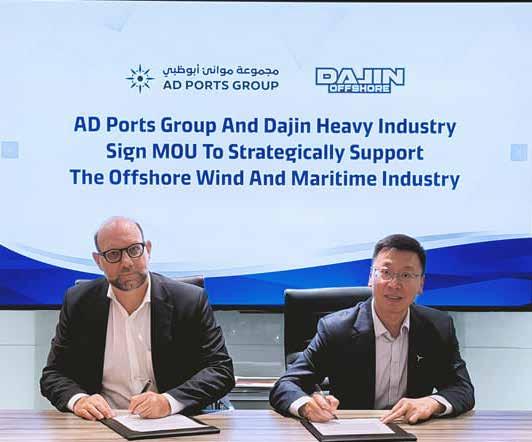
n AD Ports Group (ADX: ADPORTS), a leading global enabler of trade, industry, and logistics solutions, has signed a Memorandum of Understanding (MoU) with Dajin Heavy Industry Co., Ltd. a leading offshore wind equipment manufacturer to explore long-term cooperation across offshore wind supply chain development, maritime logistics, port infrastructure, and strategic vessel investments.
The collaboration builds on a series of strategic initiatives and partnerships announced by AD Ports Group in the renewable energy and offshore sectors, including recent agreements with Masdar, Siemens Energy, and Green Parrot, as well as the acquisition of Balenciaga Astilleros Shipyard in Spain, a specialist in offshore wind construction, all of which are building the Group’s offshore energy capabilities.
The MoU reflects the shared ambition of
both parties to combine their complementary strengths in order to accelerate growth within the offshore wind and energy infrastructure markets in Europe and other regions.
Under the framework of the MoU, both parties will explore opportunities, including transportation solutions for offshore wind components, development of pre-assembly hubs, cooperation on selected offshore wind tenders and industrial projects, plus fabrication, assembly, and logistics solutions for offshore energy infrastructure.
Friedrich Portner – Chief Commercial Officer, Maritime & Shipping Cluster, AD Ports Group, said: “We are pleased to partner with Dajin Heavy Industry to jointly work on opportunities that leverage our maritime and logistics capabilities in support of the offshore wind sector, a strategic growth area for us. Together, we aim to deliver more inte -
grated, efficient solutions across the renewable energy value chain.”
Walid Oulmane, Chief Commercial Officer – New Products, Dajin Heavy Industry, said: “This MoU represents an exciting opportunity to combine industrial strength, maritime expertise, and long-term strategic vision. We believe both companies can create meaningful value together in support of the global energy transition.”
The offshore wind energy market continues to experience strong global growth, driven by accelerating decarbonisation targets, large-scale renewable energy investments, and the expansion of offshore wind capacity across Europe, Asia, and emerging markets. The industry is projected to grow from USD 109 billion in 2026, to USD 307.5 billion by 2035, reflecting the increasing scaled and strategic importance of offshore wind within the global energy transition.

n Europe’s largest annual cargo and e-commerce event, the EU Cross-Border e-commerce Forum (EU CBEC) 2026, is now just three months away. Liege Airport (LGG)/ CARGOLAND is once again organising the forum which will be held at the prestigious Palais de Congres Liege from 8-10 September 2026.
“This is already promising to be the biggest EU CBEC forum to date as we have now passed the 1,000-mark in registered attendees for the first time ever. Among them are over 300 companies including 60 different airlines, more than 100 freight forwarders, 15 media outlets and a great many shippers from various industries,” says Frederic Brun, Head of Commercial Cargo & Logistics at Liege Airport.
“Everyone is anyone in the world of e-commerce and air cargo, will be there, and that includes an amazing line-up of speakers such as Stanislas Brun, Ryan Keyrouse, Peter Scholten, Justus Klever-Schlodtfeldt, Roos Bakker, Jannie Davel, Jonathan Clark, Alain Guerin, Jeffrey van Haeften, Amit Tendon, Asok Kumar, and Kristian Vanderwaeren, to name but a few. In total, we’re looking
forward to welcoming 53 speakers who will be discussing e-commerce from every relevant angle.”
For cargo, logistics, e-commerce, customs, technology, retail and supply chain professionals ready to shape what comes next in e-commerce and air cargo, EU CBEC 2026 is more than an industry event, it is a source of inspiration, innovation and opportunity. Across the three days, 17 expert panels and speeches will explore the forces transforming cross-border e-commerce, from customs and consumer expectations to diversification, AI, digitalisation, data, regulations and compliance, and international trade. Issues such as how freight forwarders can balance efficiency, resilience and growth opportunities in an increasingly unstable cargo market, and how to navigate the new e-commerce landscape with regard to customs reform, consumer expectations and logistics adaptation, will be discussed alongside the potentials that CARGOLAND offers as a dedicated cargo gateway and e-commerce specialist.
The EU CBEC forum is designed to go beyond information-sharing. Its dedicated
exhibition and networking areas provide a dynamic environment where industry leaders, entrepreneurs, solution providers and decision-makers can discover new technologies, showcase their capabilities and turn meaningful exchanges into concrete business partnerships. This year’s motto, “Freight meets Magic”, will set the tone from the cocktail welcome reception, which will launch the networking programme, through to the Gala Dinner, where a number of surprises are planned.
The LAB Area will also bring this theme to life, showcasing smart technologies and operational solutions for e-commerce and air cargo. Driven by innovation, EU CBEC stands as a hotbed of ideas, expertise and growing industry experience.
With networking embedded throughout the programme, from pre-scheduled one-to-one meetings and exhibition encounters to exclusive evening events in iconic Liege venues, EU CBEC 2026 offers the ideal setting for the global cargo and e-commerce community to connect, collaborate and continue to carve out the future of e-commerce air logistics.
“Effective time management is about working smarter, not harder”

Supriya Salve, BDM, AVN Shipping FZE, has written a book on the subject. Titled, “Navigate the Logistics Maze: A to Z of Logistics and Supply Chain Management,” she breaks down the intricacies of supply chain management with a specific emphasis on the logistics landscape in Dubai and the broader Middle East. We find out how she navigates various aspects of a challenging industry.
Abigail Mathias: What’s your typical day like?
Supriya Salve: My day begins with planning and reviewing priorities, followed by client engagement, business development activities, and overseeing logistics operations. I also dedicate time to continuous learning and industry updates.
AM: How has logistics in the UAE evolved since you first started in this industry?
SS: The UAE logistics sector has undergone remarkable transformation, driven by digitalisation, worldclass infrastructure, and strategic investments. Today, the UAE is recognised as a leading global trade and logistics hub connecting international markets.
AM: What made you pursue a career in logistics?
SS: The dynamic nature of logistics and its critical role in global trade attracted me to the industry. I enjoy creating solutions that help businesses move goods efficiently across borders.
AM: What advice would you give other business professionals juggling time?
SS: Be clear about your priorities, focus on high-value activities, and maintain discipline in how you manage your schedule. Effective time management is about working smarter, not harder.
AM: When do you catch up on world/business events?
Are you a coffee or tea person?
SS: I prefer black coffee and usually have two cups a day to stay focused and energised.
AM: What do you do to keep yourself fit?
SS: I maintain a balanced vegetarian lifestyle, stay active, and practice meditation to support both physical and mental wellbeing.
AM: What time do you break for lunch?
SS: I typically take lunch between 1:00 pm and 2:00 pm, depending on business commitments.
AM: How do you unwind in the evening?
SS: I enjoy reading, reflecting on the day, and spending quality time with my pets and family.
SS: I usually review industry and business news early in the morning and again in the evening to stay informed about market developments.
AM: What do you hope to achieve in the logistics arena in the next five years?
SS: I aim to strengthen international trade partnerships, expand business across key global markets, and contribute to innovative and sustainable supply chain solutions.
AM: To me and our association Global Supply Chain Magazine is…
SS: A respected industry platform that brings together supply chain professionals, promotes knowledge sharing, and highlights innovations shaping the future of logistics.