January 2026 Issue 131
ENHANCING THE BUSINESS OF LOGISTICS
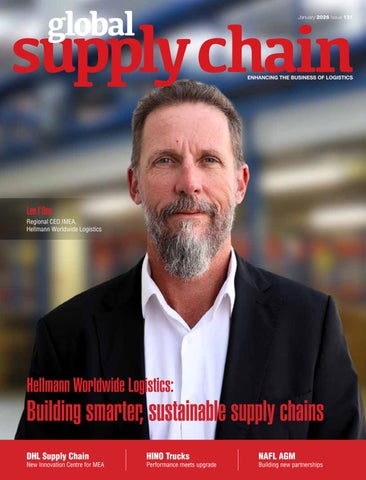
Lee I’Ons Regional CEO IMEA, Hellmann Worldwide Logistics
Hellmann Worldwide Logistics:
Building smarter, sustainable supply chains DHL Supply Chain
New Innovation Centre for MEA
HINO Trucks
Performance meets upgrade
NAFL AGM
Building new partnerships
Drive the road of change. Full offering - Full range vehicles with the most advanced technologies - Highly customized product driven by market needs and optimized Total Cost of Ownership
European technology - High quality complete line-up in terms of tonnage, power, torque, safety, ergonomics - High performance and robust trucks for extreme Off-road conditions
High capillarity of aftersales - Repair and Maintenance contracts and competitive warranty conditions - Origin 100% IVECO Parts and a widespread network coverage
Customer centricity - Comfort, ergonomics and the latest safety technology to make on board easier - Driver Style Evaluation tool on Heavy ON-road range and optimized vehicle design to improve customer profitability
Hellmann UAE Your Trusted Logistics Partner
www.hellmann.com
SIGNATURE MEDIA FZ LLE P. O. Box 49784, Dubai, UAE Tel: 04 3795678 Email: info@signaturemediame.com Exclusive Sales Agent Signature Media LLC P.O. Box 49784, Dubai, UAE Publisher: Jason Verhoven jason@signaturemediame.com Editor: Abigail Mathias abigail@signaturemediame.com Art Director: Johnson Machado johnson@signaturemediame.com
Printed and Distributed by Masar Printing and Publishing L.L.C., Part of Dubai Media Incorporated Dubai, UAE
Contributor’s opinions do not necessarily reflect those of the publisher or editor and while every precaution has been taken to ensure that the information contained in this magazine is accurate and timely, no liability is accepted by them for errors or omissions, however caused. Articles and information contained in this publication are the copyright of Signature Media FZ LLE & SIGNATURE MEDIA LLC and cannot be reproduced in any form without written permission.
As I sit in the bustling airport lounge of Sharjah Airport, I can’t help but wonder where 2025 seems to have flown by. It is already a new year and where did 365 days go? Our cover story features Hellmann Worldwide Logistics, a company that is as future ready as it gets. We take you up close with Lee I’Ons Regional CEO IMEA, who’s leadership seeks to promote a people culture. Along with our regular breaking news from the world of air cargo, we showcase how Emirates SkyCargo launched an airbridge to Sri Lanka to transport urgent relief aid. Cargo, the true heroes in a time of crisis! There’s a guest column on why efficient supply chains matter as well as exclusive images from a successful 41st Annual General Meeting of our partners, NAFL or the National Association of Freight and Logistics. We’ve carried a report about the dynamic team that put Hili, a hybrid heavy-lift cargo aircraft designed, built and manufactured entirely in the UAE. Watching it take off from close range in Al Ain was an unforgettable experience. In heavy trucks, we feature Al Futtaim Motors Hino Trucks which have been around for 30 years. This besides the latest news and views from the logistics arena, make this a truly busy issue which we hope gives you the fuel to kick start the year. Carpe diem! We wish all our readers a wonderful 2026! Abigail Mathias Editor abigail@signaturemediame.com www.globalsupplychainme.com JANUARY 2026 3
January 2026 Issue 131
06
Hellmann Worldwide Logistics Navigating the future
34 36United in thought Hino Trucks 42 46Security and risk assessments News from the industry 48 60The Business of Balancing Logistics Managing Supply Chain risk Oleg Tkachenko introspects
12GWC and QC+ Qatar Airways Cargo 16 20DHL Innovation Centre LODD Autonomous Logistics 26 30Convenience is the new luxury New facility for fine art storage
CargoAi accelerates transformation with QAC
Middle East & Africa centre first of its kind in region
Launches first flight
Zed mobility
4 JANUARY 2026
ISCM Forum’s 5th GSCL summit
Al-Futtaim Motors launches Euro 5
A discipline that keeps things moving
All the latest from the logistics arena
Dina Zuhair Ahmad Awad
MARKET LEADER IN INVENTORY OPTIMISATION 27
500+
96%
1500+
OFFICES
EXPERTS
RETENTION RATE
CUSTOMERS
150+
75+
PROJECTS / YEAR
COUNTRIES
PROMOTIONS & EVENTS
ORDER OPTIMISATION
REPLENISHMENT
ASSORTMENT PLANNING
SALES & OPERATIONS PLANNING
CAPACITY PLANNING
FORECASTING & DEMAND PLANNING
SUPPLIER COLLABORATION
INTEGRATED BUSINESS PLANNING
€
+5%
REVENUE
-50% WASTE
2902 & 2903, Cluster G, JLT, Dubai
+50%
OUT-OF-STOCKS
+50%
EFFICIENCY
+971 4 294 1949
-30%
INVENTORY
info@slimstock.com
HELLMANN WORLDWIDE LOGISTICS
6 JANUARY 2026
HELLMANN WORLDWIDE LOGISTICS
Navigating the future: Lee I’Ons on Hellmann Worldwide Logistics’ roadmap Lee I’Ons, Regional CEO IMEA, Hellmann Worldwide Logistics
H
ellmann Worldwide Logistics has established a strong global presence by blending innovation, a forwardthinking workforce, a family-driven culture, and a clear commitment to sustainability. At the helm is Lee I’Ons, Regional CEO IMEA, who brings 30 years of logistics expertise and deep industry insight. A South African native, he stepped into the role early last year, overseeing the Indian Subcontinent, Middle East, and Africa, and becoming a new addition to Hellmann’s International Executive Board underscoring the company’s confidence in
his leadership and strategic vision in one of the world’s most dynamic trade regions. In this interview, he shares his perspective. GSC: How has your perspective on leadership evolved as you’ve taken on the IMEA Regional CEO role at Hellmann Worldwide Logistics? Lee I’Ons: ”Good leaders get people to trust them; great leaders inspire people to trust themselves.” Since stepping into the IMEA CEO role, what has truly struck me is how deeply Hellmann’s culture is rooted in people.
It’s not something we state on paper - it genuinely lives in the organisation. People respect each other, support each other, and work with a remarkable level of openness. That environment naturally shapes how you lead. You must be engaging, collaborative, transparent, and present. When you lead in alignment with the organisation’s values, the team responds with trust - and when trust flows both ways, performance accelerates. Ultimately, my perspective on leadership has become even more centred on empowerment: enabling great people to thrive and make confident decisions.
JANUARY 2026 7
HELLMANN WORLDWIDE LOGISTICS
well, I see it as a future logistics powerhouse. Finally, India and the Indian Subcontinent represent major opportunities as global supply chains shift and diversify. Positioning Hellmann strongly in India is essential for our global strategy. Across all these initiatives, the common denominator is people. Strategy only succeeds if you have the right talent, culture, and leadership pipeline and that remains our number one focus. GSC: How do you balance operational efficiency with innovation in a region as diverse and dynamic as IMEA?
GSC: What personal values or philosophies guide your decisionmaking as a leader in a global logistics powerhouse? LO: My leadership philosophy is built on trust and accountability. I believe in putting the right people in the right roles and then giving them full trust - not 90%, but 100%. When you surround yourself with strong talent, your job is not to control every decision; it’s to create clarity, remove obstacles, and empower them to lead their teams with confidence. Open communication, continuous dialogue, and genuine enjoyment of working together also play a major role. Since we spend most of our lives at work, we should want to collaborate, share ideas, and build something meaningful as a team. That mindset drives my decision-making every day. GSC: Hellmann Worldwide Logistics has a strong global footprint. What strategic initiatives are you prioritizing
8 JANUARY 2026
in the IMEA region to align with the company’s long-term vision? LO: In IMEA, our strategy builds on the strengths we already have as a global organisation, while positioning the region for long-term growth. First, we are expanding our highly successful healthcare logistics platform across more markets in IMEA. Our standards, infrastructure, and compliance processes are among the strongest in the industry, and scaling these capabilities regionally is a major priority. Second, fashion and consumer goods are areas where we have deep expertise but have only scratched the surface in terms of market penetration. We will expand that significantly through better utilisation of our hubs and collaborative supply chain models. Third, Africa is a long-term strategic growth region. Growth there takes time and requires patient investment and strong local partnerships, but the potential is enormous. As someone who knows Africa
HELLMANN WORLDWIDE LOGISTICS
LO: Operational efficiency and innovation must always serve a purpose: strengthening customer service. Yes, we are leveraging automation, AI, data platforms, and digitally integrated workflows, and they absolutely improve speed, accuracy, and visibility. But the goal is not to reduce touchpoints; it’s to redirect human energy toward where it matters most: deeper customer engagement, problem-solving, and creating value. In a region as diverse as IMEA, innovation
must be practical, scalable, and culturally adaptable. Efficiency matters, but never at the expense of service quality. Our customers must always feel that they have a logistics partner who understands their business and communicates proactively. GSC: What role does digital transformation play in Hellmann’s strategic roadmap, especially in markets with varying levels of tech adoption?
LO: Digital transformation is now a foundational pillar of every logistics organisation. If you are not investing in digital capabilities, automation, and data intelligence, you will fall behind rapidly. At Hellmann, I’ve been impressed by how targeted our global digital strategy is. It’s not technology for technology’s sake, we invest where it creates real customer value, whether that is visibility tools, predictive analytics, or automation of complex workflows.
“If you’re not investing in digital capabilities, you will fall behind rapidly.”
JANUARY 2026 9
HELLMANN WORLDWIDE LOGISTICS
Even in markets where tech adoption varies, the fundamentals remain the same: build robust infrastructure, train teams effectively, and deploy solutions that enhance reliability and transparency. What matters most is the ability to integrate digital tools seamlessly across regions while maintaining the human element that defines our service culture. GSC: The automotive supply chain is undergoing rapid transformation. How is Hellmann adapting its logistics solutions to support electric vehicle (EV) expansion and sustainability goals?
10 JANUARY 2026
LO: Automotive is a major global initiative for Hellmann, and the sector’s transformation is accelerating. There are essentially two automotive worlds emerging: • Traditional OEMs, primarily European, operating with established logistics models; • The new generation of EV manufacturers, particularly from Asia, who operate more like tech companies fast, digital-first, and innovation-driven. EVs are reshaping our logistics approach. They bring new requirements: battery handling, specialized storage, temperature
control, regulatory compliance, and reverse logistics for battery returns and recycling which will be a major sustainability topic over the next decade. Hellmann is heavily investing in EV-ready solutions, high-voltage battery capabilities, and partnerships that support end-to-end EV supply chains. The future is electric, and we are aligning our capabilities to support OEMs as they transition at scale. GSC: How do you navigate regulatory complexities in healthcare logistics across IMEA markets while maintaining service consistency?
HELLMANN WORLDWIDE LOGISTICS
LO: Healthcare logistics demands uncompromising precision. At the end of the chain is always a patient someone who relies on the integrity of what we are delivering. Our strength in the Middle East has come from building a deeply compliant, highly certified healthcare network with the most stringent standards: GDP, temperaturecontrolled infrastructure, validated processes, and rigorous quality control. As we expand these capabilities across IMEA, we bring the same discipline: strict SOPs, unified quality management systems, and continuous training. Because of our experience, we understand how to navigate regulatory frameworks, complex import rules, and diverse health authority requirements. Consistency comes from one thing: a culture that respects the responsibility we carry. GSC: How do you integrate sustainability into your fashion logistics strategy, especially with growing pressure from eco-conscious consumers? LO: Sustainability is becoming a nonnegotiable expectation in fashion logistics. One of our key strengths is being the number-one Sea–Air provider in the region. This model moving cargo by sea from Asia to the Middle East, then by air into Europe significantly reduces carbon emissions while maintaining speed for time-sensitive fashion flows. We also focus on: • Cargo consolidation to reduce unnecessary flights • Optimised routing and hub utilisation • Carbon footprint reporting for customers • Collaboration with brands to redesign supply chains with sustainability at the core Fashion moves fast, but it can move responsibly - and we are helping customers strike that balance.
GSC: With new tariffs reshaping trade flows, what shifts are you anticipating in cross-border logistics within IMEA? LO: The initial period of tariff changes caused disruption, but markets are now stabilising. Consumers still buy essentials like healthcare, technology, clothing, so underlying demand remains. As tariff structures settle, trade flows should normalise in early 2026, although in a different shape than before. We expect: • Continued growth in nearshoring
and friendshoring • Increased relevance for hubs like Turkey, Mexico, and India • More flexible, multi-origin sourcing models • Greater demand for visibility and cost optimization For Hellmann, this means positioning ourselves alongside emerging manufacturing hubs and ensuring we can support customers across a more distributed and diversified supplier base.
“Africa is a long-term growth region with enormous potential — a future logistics powerhouse.”
JANUARY 2026 11
GWC & QC+
GWC AND QC+ announce plans to develop the Gulf region’s largest full-service, world-class storage and logistics hub for fine art in Doha New facility of GWC and QC+ will serve private collectors, institutions, galleries, major art and design event organisers throughout the gulf’s emerging art market
G
WC (Q.P.S.C.), Qatar’s leading logistics and supply chain provider, and QC+, the Qatari strategy group that develops new pathways for value across hospitality, retail, tourism, and the wider cultural economy, have announced plans to develop a state-ofthe-art hub in the Gulf Region for fine art storage and handling. Located in a designated free zone in Doha, the facility will meet rising regional demand for art storage and logistics while contributing to Qatar’s 2030 National Vision by expanding high-value economic activity in the creative and cultural industries.
12 JANUARY 2026
Gulf Warehousing Company Q.P.S.C (GWC) is Qatar’s leading logistics and supply chain solutions provider and a trusted industry leader across the GCC. Since its establishment in 2004, GWC has built a reputation for operational excellence, innovation, sustainability, and reliability. Backed by substantial investments in operational expertise and Class-A infrastructure, GWC Fine Art has successfully delivered hundreds of major projects over the past fifteen years, consistently meeting and exceeding
the standards of fine art insurers and government indemnities worldwide. Notably, GWC was the Official Logistics Provider for the FIFA World Cup Qatar 2022™, showcasing its world-class capabilities on the global stage. Matthew Kearns, Acting Group CEO of GWC, said: “With over 15 years of experience in fine art logistics and as the first Middle East-based company accredited by ICEFAT, GWC brings proven expertise to this partnership. Combined with Qatar’s vision for cultural and economic diversification, this project represents a new benchmark for integrated art infrastructure and creative economy growth in the region.” QC+ is a strategic partner with Qatar Sports Investments (QSI) and the Art Basel organisation in presenting the new Art Basel Qatar. Its diverse portfolio
encompasses in-house brands and services such as, Cass Art Qatar, and the celebrated Chef Noof Al Marri. QC+’s Initiatives extend across Qatar Creates, Michelin-awarded restaurants, art and design consultancy, cultural land development, experiential events, product development, and art retail, positioning the company at the intersection of culture and commerce. Kirstin Mearns, CEO of QC+, said: “The Gulf is no longer an emerging market for art. It is a global player, as demonstrated by the announcement of Art Basel Qatar. QC+ and GWC will use our combined expertise to provide innovative and industry-leading fine art logistics solutions. This collaboration reinforces Qatar’s position as a global centre for culture and creativity, and for the commercial infrastructure that supports both.” The Doha facility will provide museum-grade preservation, secure
storage, and professional care for artworks and cultural assets, supported by a conservation laboratory, private and shared storage spaces, viewing rooms, and custom-bonded areas for art logistics and handling. It will also include learning and collaboration zones designed to advance local expertise in art preservation and management. The facility will also benefit from its proximity to Hamad International Airport, a major international transit hub and one of the largest airports in the region, designed to handle a high volume of passenger traffic and cargo from around the world. The project aligns with Qatar’s growing role as host to major cultural events, including Art Basel Qatar in February 2026, and will further connect Qatar’s creative economy with the world. The global art market was valued at approximately USD 57.5 billion in 2024 (Art Basel & UBS 2025 Global Art Market Report), and the fine art logistics and storage sector is valued at around USD 3.4 to 3.6 billion and is projected to reach USD 4.6 billion by 2030.
JANUARY 2026 13
5TH GULF SUPPLY CHAIN LEADERS SENATE
Driving the future: Inside NAFL’s landmark 41st Annual General Meeting in Dubai National Association of Freight and Logistics - NAFL hosted its 41st Annual General Meeting at Sofitel, Dubai, The Obelisk, on 16th December. The event encapsulated all the many activities that the National Association has been organising not just in the UAE, but worldwide. President of NAFL Ms. Nadia Abdul Aziz used the platform to address important issues facing the industry and also showcased plans for the future. A new board was formed based on member elections at the AGM. Global Supply Chain Magazine was there to cover the event. We take you behind the scenes.
14 JANUARY 2026
5TH GULF SUPPLY CHAIN LEADERS SENATE
JANUARY 2026 15
QATAR AIRWAYS CARGO
CargoAi accelerates transformation with Qatar Airways Cargo
CargoAi marks another major milestone with the acceleration of its CargoMART Interline solution - Cargo AI’s latest innovation designed to digitise and automate interline cargo bookings between airlines. The company recently celebrated a three year partnership with Qatar Airways Cargo. 16 JANUARY 2026
T
he launch of the Interline module enables Qatar Airways Cargo to further streamline its digital operations, offering customers faster and more efficient interline booking capabilities while continuing its ongoing collaboration with CargoAi to enhance connectivity and innovation in the air freight industry.CargoMART Interline allows airlines to instantly check and book interline capacity across multiple partners in real time, eliminating manual coordination often across different time zones and reducing operational complexity. “Digitalisation remains a cornerstone of Qatar Airways Cargo’s strategic vision,” said
Mark Drusch, Chief Officer Cargo at Qatar Airways Cargo. “Our continued collaboration with CargoAi and the introduction of CargoMART Interline reinforces our commitment to innovation, enabling us to optimise interline partnerships and deliver a seamless, efficient digital booking experience for customers across an expanded global network.” Since its inception, the Qatar Airways Cargo and CargoAi partnership has delivered tangible value through innovative API and eBooking integrations, supporting Qatar Airways Cargo’s commitment to digital excellence and customer experience worldwide. The integration of CargoMART Interline now takes this collaboration to a new level by unlocking greater efficiency, automation, and scalability. Since the start of its partnership with Qatar Airways Cargo, 30 000+ bookings have been made via CargoAi platform for Qatar Airways flights from many origins worldwide and with a continuous growth. “We are proud to celebrate three years of partnership with Qatar Airways Cargo, one of the early adopters of digital transformation in the industry,” said Matt Petot, CEO of CargoAi. “With the CargoMART Interline module, Qatar Airways Cargo can now scale its partnerships effortlessly and optimize interline revenue — a game changer for airlines seeking to maximize network synergies through technology.” This collaboration reinforces both companies’ shared vision to drive innovation, efficiency, and sustainability in air cargo by simplifying complex workflows and enabling seamless digital connections between airlines worldwide.
Lay the Foundations for Your Dream Warehouse Supply chains are becoming increasingly complex, and customers’ demands are evolving. Future-proofing your warehouse is no longer a choice. But essential for efficient material flow. The time to act is now. Start Your Automation Journey Now
Dubai Logistics City, Plot WB54 Dubai South, United Arab Emirates +971 4 804 8100 | ssi-schaefer.com
IATA
Middle East leads global aviation profitability in 2026 with highest net profit margin
T
he International Air Transport Association (IATA) released its outlook for the Middle East as part of its 2026 global industry forecast, confirming the region will lead the world in airline profitability in 2026. Middle East carriers are expected to deliver the highest net profit margin globally (9.3%) and the highest profit per passenger ($28.6)—well above the global averages of 3.9% and $7.9 respectively. “The Middle East’s position as the most profitable region in 2026, in terms of profit margin and profit per passenger, underscores the benefits of strategic investment, supportive policy frameworks, and the region’s role as a global connecting hub. But this success is far from uniform. Several carriers continue to face severe financial pressure due to geopolitical instability, blocked funds, and uneven infrastructure development. Closing this gap must be a regional priority. A more harmonized regulatory approach and deeper cooperation will help ensure all markets can participate in—and benefit from—the region’s growth trajectory,” said Kamil Al-Awadhi, IATA Regional Vice President, Africa and Middle East.
Strong financial and operational performance Middle East airlines are forecast to generate $6.9 billion in net profit in 2026, reflecting the region’s strong fundamentals, including robust long-haul traffic, expanding hub
18 JANUARY 2026
capacity, and continued investment in infrastructure. By comparison, global industry net profit is projected to reach $41 billion, with a total of 5.2 billion passengers expected to travel worldwide. Cargo demand is expected to grow 2.6% globally, with Middle East cargo volumes remaining stable. The regional passenger market is forecast to reach 240 million passengers in 2026, supported by an expected 6.1% growth rate, outpacing the global average of 4.9%.
Persistent challenges impacting regional development Despite positive performance, the region faces several structural challenges: Blocked Funds: Of the $1.2 billion in airline funds blocked globally as of October, 43% ($515 million) is held in the Middle East and North Africa (MENA). Algeria now represents the largest share of blocked funds, driven by new approval requirements that have added administrative delays. Lebanon’s blocked funds remain static, representing legacy balances from 2019–2021. Geopolitical Instability: Conflicts in Yemen, Syria, Iraq, and Lebanon continue to restrict airspace and disrupt operations. Airlines face longer routings around closed or restricted airspace, increasing fuel burn, emissions, and flight times. Sanctions and rising GNSS interference, including spoofing and jamming, add further complexity. Economic Disparities: GCC States— including the UAE, Qatar, and Saudi Arabia—have made significant progress in
building world-class aviation systems. In contrast, lower-income countries such as Yemen, Lebanon, and Syria face outdated infrastructure, under-resourced aviation authorities, and limited investment capacity.
Advancing regional coordination IATA underscored the importance of greater cooperation to unlock aviation’s full potential in the Middle East. Key priorities include: Advancing toward a more integrated air transport market to improve connectivity and reduce market fragmentation. Ensuring fair and proportionate consumer protection by aligning national regulations with ICAO principles and global best practices. Supporting states emerging from sanctions to safely reintegrate into the global aviation system, including access to aircraft, financing, and international standards. “Greater regional coordination is essential for the Middle East to realize its full aviation potential. An integrated air transport market, fair consumer protection rules, and clearing blocked funds will strengthen connectivity and efficiency across the region. And for states emerging from sanctions, creating clear pathways for safe reintegration is vital. By working together on these priorities, the region can ensure that aviation’s benefits are shared more evenly and sustainably,” said Al-Awadhi.
Visit Our Website Visit Our Website
DHL GLOBAL FORWARDING MEA
DHL opens Innovation Centre in Dubai South DHL Supply Chain commits EUR120 million to develop a 55,000 square-metre multi-user warehouse designed to power global supply chains and serve as a strategic gateway connecting East and West
D
HL Group has officially opened its newly expanded Middle East & Africa (MEA) Innovation Centre, reinforcing the company’s continued investment in shaping the future of logistics across the region. In parallel, DHL Supply Chain is investing EUR120 million to develop a new multi-user warehouse in Dubai South: The facility will operate carbon-neutral and is strategically located near the Innovation Centre and the upcoming Al Maktoum International Airport. “The Middle East and Africa are one of our most vibrant regions, and DHL was among the first logistics companies to establish a strong presence here. Building on the success of its previous mobile setup, the new Innovation Centre is now a permanent hub, showcasing our commitment to MEA and the UAE as one of only four DHL Innovation Centres worldwide. It helps customers navigate the region’s dynamic logistics landscape through collaboration and cutting-edge innovation,” said Katja Busch, Chief Commercial Officer DHL and Head of DHL Customer Solutions & Innovation. Orkun Saruhanoglu, CEO at DHL Supply Chain Middle East & Africa, added: “Our new multi-user warehouse in Dubai South’s free zone strengthens our regional presence by bringing innovation and operations even closer together. Shaping the future of trade, this state-of-the-art facility is designed to power global supply chains and will
20 JANUARY 2026
enhance DHL’s ability to serve customers seeking shorter lead times. The site will serve as a contract logistics gateway, acting as a vital bridge between East and West.” Driving Innovation in the heart of MEA Spanning 1,700 square meters, the DHL MEA Innovation Centre is designed as a collaborative platform and brings customers, partners, startups, and academic institutions to foster exchange and explore emerging technologies, test scalable solutions, and co-create innovations that address real-world logistics challenges. It features dedicated meeting and workshop spaces, and serves as a regional lighthouse for logistics transformation. As part of DHL’s global network of Innovation Centres in Cologne, Singapore, and Chicago, it enables cross-regional collaboration, trend scouting, and the scalable development of next-generation logistics solutions. Irina Albanese, Head of Innovation Middle East and Africa, DHL Customer Solutions & Innovation, added: “The Innovation Centre in Dubai stands as a flagship example of these investments in action, bringing DHL’s innovation strategy to life in one of the region’s most dynamic logistics hubs. Collaboration is at the heart of innovation; by working closely with customers and partners, we combine diverse expertise to tackle complex challenges and turn emerging trends into practical solutions.” “Our collaboration with DHL underscores
Dubai South’s commitment to building a connected ecosystem that accelerates progress in logistics. By combining global expertise and local innovation, we are creating opportunities that strengthen Dubai’s position as a leading hub for logistics and innovation.” said Mohsen Ahmad, CEO of the Logistics District at Dubai South.
New contract warehouse planned DHL Supply Chain has signed a EUR120 million landmark agreement, including leasehold commitments, for a 38-year term on a 96,000 square metre land plot in Dubai South. The development will include a 55,000 square meter multi-user warehouse plus additional office space, strategically located near the upcoming Al Maktoum International Airport, set to become the world’s largest airport. Construction is scheduled to break ground in Q1 2026, with completion planned for summer 2027. DHL Supply Chain is committed to 100% net zero-carbon warehousing operations, enabling customers to significantly reduce their own carbon footprints by pursuing greener supply chains. The facility will handle high-value goods under stringent security and operational standards. This long-term investment underscores DHL’s renewed commitment to Dubai South as a key logistics hub for the Middle East.
DHL GLOBAL FORWARDING MEA
The new warehouse and the launch of DHL’s MEA Innovation Centre are complemented by significant infrastructure investments that reinforce the company’s regional growth strategy. These include a DHL Supply Chain multi-user facility within the Special Integrated Logistics Zone (SILZ) near King Khalid International Airport in Riyadh, designed to streamline customs processes and accelerate cross-border trade in Saudi Arabia. Additionally, DHL Express is establishing its first regional aircraft maintenance hangar at Bahrain International Airport, a world-class facility that will enhance line maintenance capabilities and support the company’s expanding fleet, ensuring faster turnaround times and improved operational reliability. Together, these projects underscore DHL’s commitment to setting new benchmarks for connectivity and operational excellence across the Middle East and Africa. Reflecting this ambition, the company recently unveiled its multi-year investment agenda, allocating €500 million for the Middle East and €300 million for SubSaharan Africa, an ambitious plan already being translated into action.
EXCLUSIVE In conversation with the CEO Tobias Maier has recently been appointed CEO DHL Global Forwarding MEA. He brings a strong track record in finance, digital innovation, and strategic growth, having led regional M&A initiatives and spearheaded DHL’s RailDirect JV with Etihad Rail. Discussing his new role, he says, “The past few weeks have been a transition period and I’m looking forward to building on our current structure which has grown a lot in the past 10 years. I’m honoured to be able to develop this further.” Speaking about some of the company’s goals, the dynamic CEO says, “We will continue to explore that we have the right footprint in the region that we are in the fastgrowing markets in the right cities, because as a freight forwarder that is very important. We are where the cargo is moving. I want to further ensure we improve on the quality we offer to our customers. We are the number one in the region but there is always a risk of getting complacent and we must avoid that at all costs.
We have a ‘strategy 2030’ by which we want to grow our revenues by 50 per cent in 2030 vs the 2024 baseline. We have significant growth ahead of us and I’m looking forward to making it happen.” Dwelling on the impact of the new centre he says, “I think Dubai is a very unique place that has so many companies who have their regional headquarters here. We are in the centre where a lot of important transitions are taking place. We can organise really meaningful events from our new Innovation Centre. A lot of decision makers are probably only half an hour away. The UAE authorities are also very supportive so it’s a great chance to connect people with decision makers and innovators. We have a large eco system of partners that we collaborate with. In Africa for example, we have agents in smaller markets where we cannot have a larger presence. As an asset light freight forwarder, it’s in our DNA to partner with various customers, partners and vendors.
When it comes to giving back, we have a collaboration with The University of Europe and we have a project called ENERGI which is similar to a German apprenticeship scheme. We recruited people from five countries, trained them on and off the job, rotated them across different countries and departments and ensure they gain a very solid foundation of the work we do as freight forwarders. We also want to transform our SALAM project which is designed to create and sustainably drive social initiatives to improve our communities and help those in need. As a company we believe that one percent of our net profit should be reinvested into social communities and projects. There are many social causes that could use our assistance. Finally, DHL is there when there is a crisis and we like to offer a helping hand as we have been doing for various natural disasters deploying our Disaster Response Team for immediate logistical support.”
JANUARY 2026 21
GREYRIGGE ASSOCIATES AND CADIZ ENTERPRISE
Global biotech consultancy meets logistics excellence: GreyRigge Associates and Cadiz Enterprise in focus
I
n the rapidly evolving world of biopharmaceuticals, success depends on both scientific innovation and flawless execution across development and supply chains. This special feature brings together insights from two seasoned leaders: Andrew Thomson, Managing Partner of GreyRigge Associates GK, and Roger Phillips, Director of Cadiz Enterprise, a logistics expert with decades of experience in pharmaceutical supply chains. Together, they highlight how quality by design, cold chain integrity, and risk‑managed logistics are shaping the future of therapeutics, vaccines, and cell‑based products globally. Andrew Thomson is a seasoned biotech consultant with 30 years’ global experience in cellular/RNA/antibody therapies, vaccines and biodefense. A UK-trained cell and molecular biologist and Managing Partner of GreyRigge Associates GK, he advises on process development and manufacturing strategies that translate complex science into accelerated product and regulatory success from early to commercial stage for clients worldwide. 1.Please give our readers an insight into how GreyRigge Associates operates as a global biotech consultancy, especially supporting biopharmaceutical products? GreyRigge Associates GK is part of the GreyRigge Associates global biotech consultancy that specialises in the development of biologics, advanced therapies and cell-based innovations supporting companies from early-stage development through to commercial launch. We offer a Quality by Design approach that builds quality management, including documentation, into the product development lifecycle. This includes Risk Assessments of materials, manufacturing processes and assays to ensure correct remediation and management controls are
22 JANUARY 2026
Andrew Thomson, Managing Partner of GreyRigge Associates GK, applied to ensure product quality and safety. This also provides product and process limit evaluations (e.g. precise temperature ranges) around all aspects of the manufacturing and delivery processes. This is built into support and provide solutions for development, manufacturing and assays to meet up-to-date compliance with global Quality and Regulatory requirements for early phase and commercial products. This includes control of raw materials (e.g. cell banks), assays to support quality and safety claims, manufacturing processes that require freezing/freeze drying, storage and shipping controls where appropriate. It is notable that as cell-based agriculture expands, the control of materials, manufacturing and shipping is driving. 2. Could you elaborate on some quality requirements, especially around cold chain handling, that are important for providing safe and efficacious product? From the earliest of times, humans have realised the importance of being able to preserve food and medicines. In modern times, quality and regulatory compliance are constantly being reviewed such that from the start to the end of use of a therapeutic, vaccine and food, safety and efficacy can be maintained to protect our populations and agriculture. Cadiz Enterprises and GreyRigge
Associates GK joint partnership supports research to product development transition through to commercial products and their local and global delivery for therapeutics, vaccines and cell based agricultural products. From the first experiment to a patient dose or consumer product consumption, documented temperature control is the backbone of quality for living and biologically derived products. This understanding and expertise is important to facilitate rapid and effective support in an ever-changing world where such life changing developments such as cell and gene therapies, secretome/ extracellular vesicle products, new vaccines and cell-based agriculture are becoming central to human existence. For all of these types of products starting materials such as cell banks through to the final product types require strict temperature and environmental control. For example, cell banks and cell therapies require ultra-cold (-165 to -195ºC) storage across all sites and during shipment to maintain the cellular integrity and functionality such that every batch of product can be deemed the same and guarantee the same potency and safety to a patient every time. Secretome and exosome products for long term stability require -65 to -85ºC to maintain component integrity and functionality. Other products may require -15 to -25ºC, 2-8ºC or humidity control requirements (e.g. if freeze dried) in order to maintain stability, where in case of cell based food products, maintain the fatty acid and protein integrity. As can be seen, there can be very narrow windows within a which a raw material or product can be deemed stable and usable. Quality and Regulatory compliance must be adhered to and traceability throughout the product lifecycle is an absolute requirement, where monitoring (documented), validation (processes, equipment, packaging) and documentation (traceability) must be maintained in all environmental circumstances.
Roger Phillips is a seasoned director with over 25 years of experience in supply chain management and international logistics for the pharmaceutical and life sciences sector. As Director of Cadiz Enterprise, he oversees global operations, regulatory compliance, and market expansion across APAC, Europe, Middle East and South America. Known for his strategic vision and operational rigor, Roger has built strong alliances with business partners while driving efficiencies and revenue growth. He is passionate about nurturing talent within organizations and advancing safe, innovative solutions in regulated markets. 1. How does Cadiz Enterprise differentiate itself from other supply chain partners in the clinical trial ecosystem? Cadiz enterprise is built on the foundation of over 25+ years covering supply chain / logistics relating to pharmaceutical product on a global landscape. This encompasses clinical supplies, named patient shipments and finished product logistics. 2. What are the biggest logistical challenges in ensuring investigational medicinal products reach trial sites on time and in compliance? Physical movement of the product is always no headache, but the focus point needs to be on documentation, ensuring it is clear, concise and meets the exit country requirements and destination country requirements to ensure smooth delivery with no hindrance by government authorities. These documents often need to have the correct sign off by the respective qualified personnel. 3. In what ways is Cadiz Enterprise leveraging technology (e.g., real time tracking, digital twins, AI forecasting) to enhance visibility and risk management in clinical trial logistics? With the advancement of visibility tools used in logistics, shippers can now see almost in real-time their critical shipments.
Roger Phillips, Director of Cadiz Enterprise Some of the advantages is checking on the stability of the product while using a temperature-controlled transport solution. If an event happens and the product falls outside of the temperature range, the shipper can see that straight away and take a corrective action by e.g. put that batch / shipment on hold (quarantine), active a use a destruction procedure while arranging for a dispatch a new replacement product ensure no stock out in market or for the clinical trial. 4. How do you balance speed and efficiency with the need for redundancy and risk mitigation in global supply chains? Before you ship anything critical, you need to run a risk assessment, that involves and is not limited to a trade lane assessment, day verses night shipment, direct shipment verses indirect shipment, external temperatures and validated first and last mile transport solutions. Anything can go wrong without carrying out an assessment. The data from the risk assessment should be discussed with the shipper so they understand the impact of critical control points and what can be done to mitigate them. Once all the points have been discussed and the risk assessment has been signed off, only then the cargo should be shipped.
5. What innovations in passive packaging are most critical today for maintaining product integrity during long haul shipments? For long haul shipments, all packaging solutions are up to do the job. Active solutions have their benefits, phase changing materials have their benefits and passive packaging also have their benefits. It really depends on the cost factor associated to each packaging solution. Over the years we have seen passive packaging solutions moving from a one-time use to multi use passive packaging solutions that fits into Corporate Social Responsibility (CSR) policies. Dry shippers – where the application of Liquid nitrogen is used for deep cold vaccines -50C – This temperature ranged can use the application of dry ice +2C - +8C - This temperature range uses frozen gel packs as sometimes dry ice, depending on the shipment size +15C - +25C - This temperature range uses frozen gel packs as sometimes dry ice, depending on the shipment size. Active solution – various temperatures can be associated with this solution as it relies on an active electric source. Phase changing materials – These passive packaging solutions require a level of conditioning before this solution can be used. This is mostly used for +2C-+8C vaccines shipments. 6. How is Cadiz Enterprise addressing sustainability concerns in packaging while still meeting GDP and GMP compliance standards? There are a number of solutions available for shippers to use, these can be phase changing materials, active solution and also passive packaging solutions that are multi use (post shipment validation is required to ensure integrity of the passive packaging material before it is used again).
JANUARY 2026 23
RETAIL IN 2026
Predicting Retail in 2026: AI, personalisation, and the data advantage AI agents will begin automating shopping for consumers, as retailers compete for attention.
W
hile enterprise AI grabbed headlines in 2024-2025, consumerfacing AI agents will dominate retail competition in 2026. The game-changer will be AI agents that already have intimate knowledge of consumers, your contacts, location, browsing history, and calendar events. Imagine an agent that knows you’re attending a first birthday party next month and automatically suggests and purchases the perfect gift based on your relationships and shopping patterns. Retailers will race to integrate with these AI assistants that can automate significant portions of the shopping journey. The stakes are enormous: consumers who trust an AI agent with their shopping preferences will concentrate on spending with retailers that seamlessly connect to their personal AI ecosystem, which in turn creates unprecedented customer lock-in and lifetime value capture.
Data-rich retailers and brands will dominate, as consumer choice overload increases As AI proliferates, manufacturing knockoffs get cheaper and more accessible. Consumers face exponentially more product options and content, and as a result, retailers with comprehensive customer data will
24 JANUARY 2026
capture a disproportionate market share. In 2026, the retailers who excel at collecting, controlling, and preserving customer data will build the most accurate predictive models for cross-selling, recommendations, and customisation. Buyers overwhelmed by choice will increasingly rely on trusted retailers who demonstrate they truly understand their preferences through personalied experiences. The more precise a retailer’s data-driven predictions, the more consumer trust they’ll earn, creating a competitive moat where data quality directly translates to customer loyalty and revenue growth.
AI-powered loyalty programs will become retailers’ primary defense against economic volatility As value-seeking behavior intensifies amongst consumers due to inflationary pressures, retailers are discovering that loyalty programs powered by AI and firstparty data can command premium pricing even during economic downturns. In 2026, leading retailers will leverage AI to transform loyalty programs from simple points systems into sophisticated value-creation engines that justify charging above market rates through personalised experiences and targeted benefits.
By Rosemary DeAragon, Global Head of Retail and Travel at Snowflake The key advantage lies in rich customer insights: AI-powered loyalty platforms will enable retailers to identify the non-price factors that drive purchasing decisions, convenience, community, personalised recommendations, exclusive access, and optimize these elements in real-time based on economic conditions. Retailers without AI-driven loyalty capabilities will find themselves trapped in pure price competition, while those with sophisticated first-party data and personalisation engines will maintain customer relationships and profit margins regardless of economic uncertainty.
LODD AUTONOMOUS
Hili makes history
LODD Autonomous conducts the first test flight of Hili, a hybrid heavylift cargo aircraft designed, built and manufactured entirely in the UAE. By Abigail Mathias
L
ODD Autonomous recently conducted the first test flight of Hili, a hybrid heavy-lift cargo aircraft designed, built and manufactured entirely in Abu Dhabi, in the presence of His Highness Sheikh Zayed bin Mohamed bin Zayed Al Nahyan, at the company’s flight-testing facility at Emirates Falcons Aviation in Al Ain. We take you on this historic journey. The Hili aircraft can transport payloads of up to 250 kilograms across distances of nearly 700 kilometres, powered by a hybrid propulsion system that combines electric and internal combustion technologies within a modular design, ensuring high levels of efficiency, safety and sustainability in aerial cargo operations. His Highness Sheikh Zayed bin Mohamed bin Zayed Al Nahyan reaffirmed that Hili’s successful first flight reflects Abu Dhabi’s leadership in the development of autonomous aviation and advanced logistics systems and embodies the emirate’s ambitious vision to transform innovation into applied solutions that drive economic and technological growth. He also commended the significant progress achieved by the sector in developing and manufacturing intelligent and autonomous
26 JANUARY 2026
systems in Abu Dhabi, particularly in advanced air mobility, thanks to the continued support of the Smart and Autonomous Systems Council. His Excellency Faisal Abdulaziz Al Bannai, Advisor to the UAE President for Strategic Research and Advanced Technology Affairs and Secretary-General of the Advanced
Technology Research Council, delivered a speech in which he praised this milestone, highlighting its importance in driving rapid progress in the vital air mobility and logistics sector and describing it as a testament to Abu Dhabi’s vision and continued investment in enabling the creation locally of globally competitive innovation.
LODD AUTONOMOUS
Rashid Al Manai, Chief Executive Officer of LODD Autonomous, said: “At LODD Autonomous, we align with the UAE’s vision for advanced air mobility and autonomous systems to strengthen the nation’s position as a global hub for future technologies. We extend our deepest appreciation to the UAE’s leadership for their ongoing support of advanced aviation and autonomous systems. This forward-looking vision has created a thriving environment for innovation, enabling us to design, manufacture and successfully test Hili, from Abu Dhabi to the world, showcasing the UAE’s capability to develop advanced technologies with global impact. “We take great pride in witnessing the success of Hili’s first test flight, representing the culmination of years of work and innovation. This milestone is not merely a technical accomplishment, but a reflection of the UAE’s growing position as a global centre for technology and innovation in smart and sustainable air mobility. “Through these achievements, LODD Autonomous continues to solidify its position as one of the UAE’s leading national entities in advanced air mobility, supporting the country’s vision to be a global destination for autonomous systems, logistics and future aviation technologies.” The first test flight of the Hili aircraft, attended by senior representatives from government entities and private sector companies operating in air mobility and autonomous systems, marks a significant engineering and operational achievement that demonstrates Abu Dhabi’s growing capabilities in designing and manufacturing advanced aviation systems. The aircraft was developed under an intensive engineering programme focused on safety, precision and quality, highlighting the emirate’s ability to transform a vision into tangible, real-world solutions with speed and efficiency.
Significant partnerships On the sidelines of TIACA’s Air Cargo Forum, which was also hosted in the c Etihad Cargo, the cargo and logistics arm of Etihad Airways, signed an agreement with LODD Autonomous, to explore the integration of next generation ‘Hili’ hybrid VTOL aircraft into UAE operations.
This collaboration will complement conventional fleets with agile, shortrange capacity that enhances operational resilience and service speed while ensuring lower emissions and more sustainable logistics. The new partnership will centre on experimental operations to test the efficiency, safety, and ground logistics compatibility of LODD Autonomous’ flagship drone for point-to-point UAE-wide transfers. The impact on logistics could be significant, as ‘Hili’ removes the need for runways and traditional airport infrastructure, cutting delivery times by hours or even days. As part of the trial, Etihad Cargo will also explore the operational and commercial potential of integrating ‘Hili’ aircraft into its future fleet. Stanislas Brun, Chief Cargo Officer of Etihad Airways, said: “As a fellow Abu Dhabibased company, LODD Services shares Etihad Cargo’s ambition to transform the future of air mobility. We’re continuously looking for new ways to enhance connectivity within the UAE, empowering both the people and businesses behind every shipment. Together with LODD Autonomous, we hope to open up new possibilities for air cargo, creating smarter, faster, and more sustainable ways to move goods across the country.” LODD Autonomous is transforming civilian logistics through automation, autonomous vehicles, and AI-driven software. Simplifying operations, reducing costs, and minimising emissions, its automated solutions serve industries spanning e-commerce, freight forwarding, healthcare, and beyond. LODD Autonomous’ focus on reliable, efficient transport seamlessly aligns with Etihad Cargo’s role as a local connector, ensuring every shipment is handled with purpose and precision. Etihad Cargo, the cargo and logistics arm of Etihad Airways, is continuously redefining traditional air freight while supporting the airline’s overall business growth ambitions. The carrier signed an agreement with LODD Autonomous, to explore the integration of next-generation ‘Hili’ hybrid VTOL aircraft into UAE. While conventional air cargo requires runways, airports, and a complex network of support infrastructure, Hili bypasses all of that, linking warehouses
Rashid Mattar Al Manai, Chief Executive Officer of LODD Autonomous said, “The UAE’s vision is built on harnessing innovation to propel everyday life forward. Our collaboration with Emirates SkyCargo blends LODD Autonomous’s frontier technologies with the country’s enduring commitment to safe, scalable, and sustainable logistics. Together, we will accelerate the adoption of drone-powered solutions that expand reach, cut delivery times, and strengthen the UAE’s position as a global logistics hub while upholding the highest standards of safety and regulatory excellence.”
directly and eliminating hours, even days, of delay. Another MoU was signed during the 2025 Dubai Airshow by Badr Abbas, Divisional Senior Vice President of Emirates SkyCargo, and Rashid Al Manai, Chief Executive Officer of LODD Autonomous. The two homegrown companies will work together to validate the use of VTOL aircraft across Emirates SkyCargo’s global network through feasibility studies, regulatory engagement and live demonstrations. The airline will support LODD’s experimental operations until the end of 2027, offering insights to guide design and development for possible commercial deployment in regional and global markets.
JANUARY 2026 27
EMIRATES SKYCARGO
Emirates and Dubai Humanitarian launch airbridge to Sri Lanka to transport urgent relief aid
E
mirates and Dubai Humanitarian have established an airbridge to Sri Lanka, transporting urgent relief aid to support those affected by the devastating Cyclone Ditwah. For the next two weeks, starting 15 December 2025, Emirates will offer over 100 tonnes of cargo space free of charge across its daily passenger flights to Sri Lanka, enabling Dubai Humanitarian and its associates to transport emergency supplies across affected areas, via Colombo. The first shipments departed Dubai International Airport on Tuesday 9 December on the three non-stop Emirates flights connecting Dubai and Colombo, consisting of fortified biscuits from the World Food Programme (WFP), followed by consignments of food items and relief aid from the Consulate General of Sri Lanka in Dubai and the Northern Emirates, and tarpaulins and other supplies from The International Federation of Red Cross and Red Crescent Societies (IFRC). On-ground, the shipments will be sent to a disaster management unit set up by the government to be distributed to provide much-needed relief to the hundreds of thousands of people affected and displaced by the severe flooding. HH Sheikh Ahmed bin Saeed Al Maktoum, Chairman and Chief Executive, Emirates Airline & Group said: “Emirates is deeply connected and committed to Sri Lanka, and so, in coordination with Dubai Humanitarian, we are mobilising our infrastructure and operations to extend essential support to the communities impacted by Cyclone Ditwah. Emirates will be dedicating bellyhold cargo capacity for crisis relief aid on our daily flights to Sri Lanka, providing a regular and reliable flow of vital commodities. Dubai Humanitarian is the largest humanitarian hub in the world, and we will work closely with them to facilitate the movement of urgent supplies.” HE Mohammed Ibrahim Al Shaibani, Chairman of Dubai Humanitarian, said: “We sincerely thank Emirates for their
28 JANUARY 2026
Working with organisations under Dubai Humanitarian, over 100 tonnes of relief aid will be deployed across Emirates’ daily flights to Sri Lanka First flight departed this week, carrying high-energy food items for WFP
continued support to Dubai Humanitarian and for enabling the activation of this critical airbridge in response to the floods in Sri Lanka. This collaboration reflects the strength of our long-standing partnership and the spirit of collective action that defines Dubai as a global hub for humanitarian action. As the world’s largest humanitarian hub, bringing together over 80 humanitarian organisations and companies, we rely on close cooperation with committed partners to ensure that essential relief items are delivered swiftly, efficiently, and sustainably. This continued support demonstrates how strategic collaboration between Dubai Humanitarian, its members, and partners can strengthen international emergency response and reinforce the resilience of affected communities.” As the largest humanitarian hub in the world, Dubai Humanitarian streamlines relief missions and, through their longstanding
partnership with Emirates, are able to mobilize swiftly and efficiently across the airline’s network. Since signing the partnership in 2020, Emirates and Dubai Humanitarian have collaborated on several relief missions, uplifting hundreds of tonnes of humanitarian aid to communities affected by natural disasters or other crises. In response to the devastating earthquakes in Turkey and Syria in 2023, Emirates SkyCargo dedicated space for hundreds of tonnes of relief goods, transported on its daily flight operations to Istanbul. Providing critical support during the catastrophic flooding in Pakistan, Emirates established an airbridge and donated cargo capacity on all Emirates’ passenger flights to Pakistan, transporting critical equipment and supplies, food and other emergency relief goods directly to the five airports – Karachi, Islamabad, Lahore, Peshawar, and Sialkot.
DATA AND ROBOTICS PERFECTLY SYNCHRONIZED. Our SynQ software delivers data-driven intelligence that empowers your business by synchronizing the performance of your people, processes and machines. The result is a level of efficiency and performance you never thought possible.
swisslog.com
ZED MOBILITY
Convenience is the new luxury: How mobility apps are being rebuilt around human behaviour For years, urban mobility has been defined by speed, faster cars, shorter estimated travel times (ETAs), and rapid expansion. But today, a new truth is shaping how cities move, with convenience becoming the real luxury. As people juggle busier routines and more complex urban environments, the value they seek from mobility is not necessarily only speed; it also encompasses simplicity, predictability, and humancentred design. We find out what drives the system. By Abhinav Patwa, Executive Vice President at Al Ghurair Group and Head of Zed
A
cross global and regional markets, mobility platforms are shifting from engineering-driven efficiency to behaviour-driven experiences. Recent research highlights this trend, showing that rider satisfaction increasingly correlates with comfort, matching customer preferences, and perceived reliability, not just travel time.1
30 JANUARY 2026
Dubai’s transport story illustrates this shift clearly. In 2024, public transport, shared mobility, and taxis recorded 747.1 million riders, a 6.4% increase from the previous year, averaging two million daily trips.2 This scale reflects not just population growth, but the city’s rising dependence on flexible app-based mobility. In that landscape, what people value
ZED MOBILITY
most is frictionless convenience. Whether booking a morning commute from Dubai Marina to Dubai International Financial Centre (DIFC), a school drop-off in Jumeirah, or a late-night ride from Business Bay, riders increasingly expect services tailored to their everyday rhythms. Small but thoughtful features like one-tap bookings, stored favourite locations, clear ETAs, and reliable driver availability have all become powerful differentiators. This is the new definition of luxury. Not premium cars or premium pricing, but premium ease. Human behaviour is shaping mobility in crucial ways. The majority of rides in any city are habitual, whether it be work commutes, errands or social meetups. When mobility platforms reduce friction for these repetitive journeys, they become indispensable. Riders gravitate toward apps that anticipate rather than react, hence valuing apps that plan for routines rather than those focused only on occasions. Cities move differently at every hour, so mobility apps are more likely to succeed when prioritising context over uniformity. In cities like Dubai, demand spikes around event districts like Downtown, nightlife hubs like Marina and Jumeirah Beach Residence (JBR), and airports during peak travel periods. Mobility services built with dynamic fleet distribution, predictive ETAs, and experience-focused pricing respond better to these shifts. Ultimately, ride-hailing is built on trust, which includes safety, transparency, and reliability. Nowadays, riders value consistent experience and driver behaviour as much as route efficiency, making human factors just as important as algorithms. Taking Dubai as an example, a few behavioural insights stand out. Weekend demands can reshape supply models, and comfort-led choices are rising as riders balance between public transport for routine and ride-hailing for convenience. In this regard, flexibility and customisation in ride options can help meet different customer expectations. Additionally, shifting traffic patterns are potentially driving demand for predictable scheduling and premium ride options. Therefore, mobility apps are not focusing on offering “just another ride,” but are instead
1. Convenience has replaced speed as the new luxury in mobility. Modern riders prioritise simplicity, predictability, and personalised experiences over just faster ETAs—making human-centred design the true competitive edge. 2. Behaviour-driven mobility is reshaping cities like Dubai. With over 747 million public transport and shared mobility riders in 2024, the region’s demand shows that people prefer intuitive apps that match daily routines, anticipate needs, and reduce friction in habitual journeys. 3. The future of ride-hailing is human-first, not tech-first. Trust, safety, inclusive ride options, and smart data-driven insights will define the next era—where the goal is not just getting people places faster, but enabling them to move through life more effortlessly. building around real behavioural patterns to design convenience into the experience. From one-tap booking for routine routes to reliable premium rides for business travellers like those offered by Zed, the industry vision is evolving to be human-first, not product-first. Looking ahead, the next era of ride-hailing will be shaped by experience, not speed. App interfaces integrating experienceled design that reduce effort, predict needs, and remove cognitive load will win. Booking a ride should be as effortless as sending a message. Similarly, embracing inclusive features such as women-only ride preferences, family-oriented ride options, and accessibility-focused services will become essential, especially in diverse cities. Furthermore, aggregated, anonymised mobility data will help cities identify statistic-backed urban insights, optimise peak traffic flows, event transport planning, and infrastructure needs. The global shift toward cleaner transport, supported by electric vehicle adoption and efficient fleet
utilisation, will also contribute to redefining what ‘responsible mobility’ means. Mobility is only as valuable as the ease it creates. Therefore, mobility apps like Zed are continually focusing on building the most intuitive and human-centric ride experiences possible, shaped by local behaviour, cultural nuances, and everyday habits. Modern consumers expect more ease, more reliability, and more relevance from the apps they use daily. Hence, companies are adapting to that shift and shaping the future of mobility in the region and beyond. Overall, as cities grow smarter and more connected, convenience has become the luxury people value most. The transportation industry is no longer racing to be faster; it’s racing to be simpler, more human, and more predictive. Mobility apps built around real behaviour will define how the next generation moves. In that future, the real innovation will not be in how quickly people travel, but in how effortlessly they can live.
JANUARY 2026 31
10 THINGS TO DO IN THE FIRST 180 DAYS
Building resilience: The first 180 days for supply chain leaders Stepping into the role of Head of Supply Chain is both exhilarating and daunting. The job demands balancing immediate firefighting with long-term transformation. Overnight, you’re accountable for everything — cost, service, resilience, people — and the spotlight is on you from day one. Umang Khan, Associate Partner, Supply Chain Talks, gives us further insights.
S
uccess in this role isn’t about making noise in the first 100 days; it’s about laying a foundation that sustains agility, resilience, and growth. In today’s world of constant shocks — from geopolitical tensions to climate risks and digital disruption — new leaders must hit the ground running. Having led supply chains across FMCG, F&B, and consulting in the Middle East, I’ve learned one truth: your first six months can define your legacy. These early decisions shape not just your credibility, but the organisation’s trajectory. Here’s my playbook — the 10 things every new supply chain leader should do in their first 180 days.
1
Anchor yourself in the numbers Start with facts, not assumptions. Establish a baseline of key KPIs such as forecast accuracy, OTIF (On Time In Full), inventory turns, and cost-to-serve — because numbers are your compass. Without them, you can’t measure progress, or credibility.
But don’t stop at the surface. Understand how these KPIs are calculated, what assumptions power them, and what targets they’re based on. If the formulas are flawed or riddled with outliers, fix the foundation first. Then verify if the reported data truly reflects reality. Numbers only guide you when they’re grounded in truth — not convenience.
2
Listen before you act Spend your first few weeks listening — not fixing. Start with your supply chain teams: planners, procurement, logistics, and warehouse staff. Then move vertically to understand leadership expectations and align efforts. Once you
Umang Khan is a global supply chain leader with 18+ years of end-to-end experience across FMCG, F&B, manufacturing, and consulting including leadership roles at P&G, GSK, and Masafi. An expert in supply chain transformation, digitisation, IBP, and logistics, she has led complex turnarounds and delivered measurable improvements across planning, procurement, manufacturing, warehousing, and distribution.
32 JANUARY 2026
10 THINGS TO DO IN THE FIRST 180 DAYS
just see the gaps — you see the handoffs, the hidden workarounds, and the silent bottlenecks that slow you down. A simple process map can become the mirror every transformation needs before the change truly begins.
4
Clean the foundation: Master data It’s not glamorous, but it’s essential. Poor master data silently erodes performance — wrong lead times, inaccurate stock levels, or outdated supplier information can derail even the best strategies. Start by cleansing the basics: safety stock levels, item classifications, and lead-time accuracy. Then, institutionalize ownership — define who updates what, and how often. When your master data is reliable, every system downstream — from planning to customer service — begins to hum in harmony.
5
Secure alignment with the C-suite Your role doesn’t operate in isolation. Sit down with the CEO, CFO, and Commercial Director early. Understand their definition of “winning.” Then translate your agenda into their language — whether that’s customer satisfaction, working capital, or revenue growth. When the C-suite sees supply chain not as a cost centre but as a value engine, you gain sponsorship. And sponsorship, not authority, is what gives a leader the power to drive transformation.
have that clarity, move horizontally — engage sales, finance, and marketing — to grasp how supply chain decisions ripple across the organisation. Finally, extend your listening beyond company walls. Speak with suppliers, distributors, and logistics partners upstream and downstream. You’ll be surprised how quickly the real issues surface when people realize you’re here to listen, not just to lead.
3
Map the supply chain end-to-end Don’t assume you “know” the business — even if you’ve been in it for years. Document the entire flow, from ‘sourcing to production, warehousing, distribution, and ultimately, the shelf.’ The act of mapping the current state often reveals inefficiencies leadership hasn’t noticed. When you visualise the process, you don’t
6
Deliver quick wins early Momentum is currency. Identify a few visible, high-impact wins within your first 90 days — perhaps reducing stockouts on top SKUs, improving dispatch lead times, or cutting detention charges. Quick wins are more than tactical fixes; they build belief. Each visible result earns you trust, funding, and freedom to take on the bigger, structural battles that follow.
7
Strengthen supplier and partner relationships A supply chain is only as strong as its weakest partner. Review your supplier scorecards, contract terms, and escalation mechanisms. But go beyond paperwork — meet them, understand their pain points, and co-create solutions.
Build trust before you need it. When disruption hits — and it will — the partners you invested in will become your first responders, not your liabilities.
8
Introduce a culture of root cause and continuous improvement Firefighting solves today. Root cause thinking builds tomorrow. Introduce routines like 5 Whys, A3 problem-solving, and daily stand-ups that drive structured thinking instead of reactionary fixes. Recognise people who spot systemic issues and fix them permanently. Over time, this mindset compounds — turning a reactive team into one that constantly raises its own bar.
9
Evaluate your systems and tools Technology should accelerate decisions, not complicate them. Evaluate your ERP, WMS, TMS, and dashboards through a simple lens: Are they helping us decide faster and better? If data is slow, fragmented, or manually adjusted, it’s time to act. Prioritize upgrades or digital pilots that solve specific business pain points — not vanity transformations. The right tools amplify people; the wrong ones frustrate them.
10
. Future-proof the organisation Supply chains run on people — not platforms. Invest in your team’s capability to think, not just to execute. Cross-train planners, empower supervisors, and give rising leaders space to stretch beyond their current scope. Don’t just train for today’s challenges. Develop people who can navigate tomorrow’s — whether that’s AI integration, sustainability regulations, or geopolitical shocks. Future-ready supply chains are built by future-ready people. Final word Becoming a Supply Chain Leader isn’t just about managing flows of goods and data — it’s about shaping the organization’s rhythm. The role demands resilience, empathy, and relentless curiosity. If you can balance quick wins with longterm transformation, if you can earn trust while challenging norms, then you won’t just manage the supply chain — you’ll redefine what it means to lead one.
JANUARY 2026 33
CDS DEVELOPMENTS
Managing supply chain risk in today’s development cycle As the real-estate sector in the UAE and across the GCC enters one of its most ambitious expansion cycles in decades, the capacity to design and maintain resilient supply chains has become central to development success. Supplychain resilience is no longer a backstage operational matter; it has shifted into the realm of strategic leadership. With construction output in the UAE projected to expand strongly through 2029, developers are under exceptional pressure to deliver high-quality projects without delay and without surrendering margin.
I
n 2025, the UAE construction market was valued at over USD 42 billion, with forecasts indicating continued annual growth driven by housing, mixed-use developments and infrastructure designed to support national diversification. Yet this bullish landscape is challenged by increased costs. Analysts expect construction cost inflation of 2–5 percent in 2025 alone, driven by global shipping volatility, materials scarcity and logistic pressures—meaning even small interruptions in supply can translate into project delays or cost overruns. In response, CDS Development has placed supply-chain governance at the heart of how we build, plan and deliver. Our development model is rooted in advanced procurement planning, longterm supplier partnerships and strategic sourcing that prioritise quality and certainty
With over 15 years of experience in real estate, trading, and hospitality across international markets, Oleg Tkachenko brings a strategic and results-driven approach to leadership. As a Managing Director of CDS Developments, Oleg stands at the forefront of the company’s expansion into the UAE, driving its vision of redefining real estate through craftsmanship, integrity, and innovation. At CDS Developments, his leadership philosophy centres on building fewer but finer projects developments that not only elevate lifestyles but also inspire long-term confidence for residents, partners, and investors.
34 JANUARY 2026
CDS DEVELOPMENTS
of delivery. We see the supply chain not merely as a conduit of material logistics but as an essential pillar of development value creation. Our internal system integrates procurement intelligence with project scheduling, ensuring that critical items are planned months ahead and that long-lead materials are supported by alternative sourcing paths. In a region where more than 70 percent of construction materials are imported, this is indispensable to timely handovers and to protecting both buyer trust and project viability. This approach is especially relevant in a market such as Dubai, where delivery timelines are directly tied to investor confidence and regulatory milestones. We secure key supply relationships long before construction mobilises, leveraging negotiated delivery windows, preferred pricing and prioritised logistics. This has enabled us not only to protect program schedules during periods of global disruption but also to deliver consistent finishing quality that reflects our “build fewer, build better” philosophy. Equally important is resilience. The last few years have demonstrated how quickly global events can affect materials, pricing and logistics. CDS has built resilience into its development framework by diversifying sourcing; balancing regional procurement options with international supply; and by maintaining contingency inventory for longlead items. We embed logistics milestones directly into the design and development programme and continually reassess supply conditions throughout construction. This flexible system is a deliberate response to supply-chain volatility and has proven vital in navigating recent shipping bottlenecks and international price fluctuations. From a market standpoint, this discipline translates into competitive advantage. The UAE construction market is forecast to reach more than USD 52 billion by 2030, and demand for high-quality residential and mixed-use developments continues to intensify. In such an environment, developers who demonstrate consistent project delivery, cost control and construction resilience naturally earn investor and brokerage confidence. At CDS, supply-chain strength has become a core element of our value proposition; one
that reinforces our identity as a premium, trustworthy and future-oriented developer. Looking ahead, CDS believes that supplychain resilience will increasingly differentiate serious developers from those who simply construct. Real estate is entering a period where buyer expectations, regulatory requirements and market timelines converge. With more complex projects and more sophisticated customers, the ability to uphold quality standards, secure materials on time and prevent schedule risk will define credibility. For us, this is not only about building homes, but about
contributing to national development, supporting the UAE’s urban vision and strengthening confidence in the future of the GCC real-estate sector. For these reasons, we view supplychain rigor as a strategic pillar rather than an operational task. By investing in procurement intelligence, supplier relations and resilient logistics, we continue to set a proactive and disciplined standard in development delivery; one that supports long-term trust, sustained growth and the broader architectural transformation of the UAE and the Gulf.
JANUARY 2026 35
5TH GULF SUPPLY CHAIN LEADERS SENATE
United in thought and a common goal The ISCM Forum held it’s 5th Gulf Supply Chain Leaders Senate on the 26th of November 2025 with various noteworthy, thought-provoking ideas on innovation, technology and sustainability. The road map for the future was also discussed by stalwarts from the industry. Global Supply Chain brings you all the action from the event as we look forward to the next gathering.
36 JANUARY 2026
5TH GULF SUPPLY CHAIN LEADERS SENATE
JANUARY 2026 37
5TH GULF SUPPLY CHAIN LEADERS SENATE
38 JANUARY 2026
5TH GULF SUPPLY CHAIN LEADERS SENATE
JANUARY 2026 39
SWISSLOG MIDDLE EAST
Key trends shaping warehouse automation in 2026
T
he Middle East logistics market is booming, with the UAE set to top $31B by 2026. Automation, robotics, and AI are redefining warehouses and fulfilment strategies. Digital twins and omnichannel models are powering e‑commerce growth across the region. Rami Younes, General Manager of Swisslog Middle East offers his perspective.
Global Supply Chain: What key trends do you see shaping warehouse automation and supply chains in the Middle East in 2026? Rami Younes: The Middle East logistics market is experiencing significant growth, with the UAE market alone projected to exceed $31 billion by 2026, reflecting significant investment in infrastructure, technology, and supply chain modernisation. Key trends include rapid adoption of automation, robotics, and AI, with autonomous mobile robots (AMRs) and automated storage and retrieval systems (AS/RS) becoming central to operations. AI and digital twin technologies are increasingly used to optimise throughput, storage density, and operational uptime. Warehouses are moving toward hybrid and omnichannel fulfilment, managing B2B, B2C, and returns from the same facility, a strategy that supports a regional e-commerce market projected to reach $518 billion by 2032.
40 JANUARY 2026
GSC: Which technologies—automation, robotics, or AI—will have the biggest impact in 2026? RY: All three technologies will play a critical, interconnected role. Robotics are increasingly taking on repetitive tasks such as picking, sorting, and replenishment, while AI supports real-time decisionmaking, demand forecasting, and workflow optimisation. Automation enables seamless integration of these technologies into scalable systems, allowing warehouses to maintain throughput and adapt to seasonal demand spikes. The Middle East warehouse robotics market is projected to exceed $714 million by 2030, while AI integration can reduce inventory levels by 20–30%. Adoption is accelerating, with robots expected to handle up to 50% of e-commerce orders by 2025, reflecting the region’s push to manage rising online volumes and meet evolving delivery expectations. GSC: How are sustainability and efficiency expected to influence warehousing decisions in the coming year? RY: Sustainability is becoming central to warehouse planning, driven by initiatives such as the UAE’s Net Zero 2050 and growth in renewable energy capacity. Energyefficient equipment, regenerative cranes, low-power robotics, and high-density storage
help reduce energy consumption while maximising space. Many systems operate below 0.1 kW per hour and can integrate with renewable sources. Automation also minimises waste through accurate inventory handling and optimised equipment cycles. By combining sustainability with operational efficiency, warehouses can lower costs, reduce environmental impact, and maintain reliable performance. GSC: What new opportunities or challenges do you anticipate for Middle Eastern warehouses as automation and e-commerce continue to grow in 2026? RY: The rise of e-commerce and automation presents both significant opportunities and challenges for the region. With the Middle East micro-fulfilment market projected to exceed $2.2 billion by 2030, these centres and lastmile hubs are becoming essential to meeting fast-delivery expectations. Meanwhile, modular automation and AI-driven platforms enable scalable, efficient operations, allowing warehouses to manage higher SKU volumes and shorten order cycle times. Challenges include workforce training, technology integration, and balancing operational efficiency with sustainability goals. GSC: How do you see the role of workforce skills and talent evolving as warehouses become more automated in 2026? RY: Even as automation scales, human expertise remains vital. Developing local talent in engineering, software, and technical operations ensures warehouses can manage complex workflows and integrate new technologies with existing systems. Training, hands-on project experience, and intuitive interfaces help staff adapt quickly while reducing errors.
AL-FUTTAIM MOTORS HINO
Al-Futtaim Motors HINO announces the return of the HINO 300 Series Euro 5, further strengthening brand’s presence in the UAE With an advanced engine delivering reduced environmental impact and improved fuel economy, the new Hino offers optimised performance and stronger power output.
A
l-Futtaim Motors HINO, the exclusive distributor of HINO trucks in the UAE, announced the highly anticipated return of its iconic HINO 300 Series, now equipped with an advanced Euro 5 engine. The new variants build upon the trusted design and legendary durability of its Euro 4 predecessor, though introduces a significant leap forward in both power and efficiency, with its enhanced engine meeting stricter emission standards.
42 JANUARY 2026
The upgrades offer customers improved performance, reduced environmental impact, better fuel economy, and optimised power output, all without compromising the rugged reliability HINO is renowned for, while the chassis, safety features, and robust build quality remain integral to HINO’s reputation for dependable light-duty trucks. The HINO 300 Series has long been the backbone of operations for leading organisations across the UAE, where its
proven track record in logistics, retail, construction, aviation services, Fast Moving Consumer Goods (FMCG), and last-mile delivery, underscores its versatility and ability to meet diverse industry challenges. And the light-duty truck is complemented further by Al-Futtaim Motors’ strong aftersales support, which ensures maximum uptime and cost efficiency for fleet operators, reinforcing the vehicle’s longterm value.
AL-FUTTAIM MOTORS HINO
The HINO 300 Series’ launch was marked by a high-profile event held at the Festival Arena Al Badia, and brought together around 200 distinguished guests, which included VIP customers and Al-Futtaim management, with an evening themed around “evolution, progress, and renewed strength,” symbolising HINO’s transition to a more environmentally conscious and technologically advanced future. Ramez Hamdan, Managing Director, Al-Futtaim Industrial Equipment, said: “Following 18 months of development and anticipation, we are proud to introduce the next-generation HINO 300, Euro 5 series, cleaner, smarter, and stronger than ever. The return of this Euro 5 model reflects our unwavering commitment
to quality, reliability, and our customers’ long-term success. We adopted a disciplined, engineering-led approach, investing significant time, rigorous testing, and extensive real-world validation. This deliberate focus on durability, efficiency, and dependability ensures we deliver a product that reinforces the trust our customers place in HINO and Al-Futtaim Motors. This launch is a new chapter for HINO, defined by smarter engineering, and cleaner operation. It marks a powerful comeback, reaffirming a steadfast commitment to delivering an even stronger value proposition for businesses nationwide, further cementing HINO’s and Al-Futtaim Motors’ legacy within the UAE’s commercial transport industry.
JANUARY 2026 43
TRENDS FOR 2026
Supply Chain and Logistics Technology Trends for 2026
M
iddlebank Consulting Group (MCG), shared its insights on the technology trends set to reshape supply chains in 2026. Founded over 25 years ago in New Zealand, supply chain and value chain management consultancy MCG has been operational in Australia since 2003, in Singapore and India since 2016, in the USA since 2022, and recently in the Middle East. The consultancy specialises in technology-driven operational efficiency, process optimisation and scalable supply chain solutions, helping businesses improve performance and reduce costs. “Supply chain teams are facing one of the most unpredictable periods in recent years,” said Alan Win, Founder and CEO, Middlebank Consulting Group. “Trade flows are shifting, new technologies are emerging, and customers expect faster, more transparent service. Companies that thrive won’t just react, they will experiment, adapt, and sometimes learn the hard way when assumptions don’t hold.” Here are eight key technology trends for supply chains in 2026:
1. Smarter Operations with AI Artificial Intelligence (AI) is moving beyond suggestions; it can act independently in many operational scenarios. Agentic AI systems adjust delivery routes, manage inventory, and flag potential bottlenecks with minimal human intervention. But here’s the catch: these tools are not flawless. Organisations that combine AI insights with practical operational monitoring are expected to see faster, more informed decision-making and improved agility in complex supply chain scenarios.
automated recommendations and testing tweaks on the ground. Together, this hybrid approach of human intuition and machine efficiency is expected to enhance accuracy, reduce errors, and improve overall warehouse performance in the year ahead.
3. Choosing Logistics Partners Selecting the right third- or fourthparty logistics partner will be critical. Experience, technology, and flexibility matter, but the real differentiator will be how partners respond under pressure. Open communication and adaptability are expected to strengthen operational continuity and support more seamless responses to evolving demands.
4. E-Commerce Cost Optimisation Cost reduction is one thing; frictionless customer experience is another. Simple changes like adjusting packaging sizes or optimising pick routes can have ripple effects through operations. These changes are expected to improve both speed and reliability, helping organisations maintain profitability and enhance customer satisfaction.
5. Flexible Networks Dual sourcing, nearshoring, and modular supply chains are no longer optional. Disruptions are inevitable, and the ability to pivot quickly can make the difference between maintaining client trust or losing it. Organisations that prioritise adaptive processes and continuous learning are predicted to strengthen client trust and operational continuity.
2. Warehouse Efficiency and Automation
6. Sustainability and Circular Supply Chains
Warehouses are evolving rapidly. Digital twins allow teams to model changes before implementing them, and autonomous robots take over repetitive tasks. That said, people remain essential. Warehouse teams uncover process gaps by questioning
Sustainability has moved from a nice-tohave to a must-have. Reducing emissions, cutting energy use, and limiting packaging waste are increasingly tied to performance. Practical improvements arise from simple steps: smarter routing, greener packaging,
44 JANUARY 2026
Alan Win, Founder and CEO of Middlebank Consulting Group and energy-conscious facilities. While no single initiative is transformative alone, collectively they will support sustainable and cost-effective supply chain practices.
7. Workforce Enablement AI frees teams from repetitive work, allowing them to focus on decisions, coordination, and process improvement. When technology is leveraged as a supportive tool, organisations are likely to see higher engagement, faster problem-solving, and enhanced operational insights that machines alone cannot produce.
8. Transportation and Last-Mile Optimisation Dynamic routing, real-time tracking, and close collaboration with carriers are transforming delivery. But technology alone is not enough. Human oversight, adjusting plans on the fly and responding to unexpected issues, will remain crucial, especially in complex last-mile scenarios. This combination of technology and on-the-ground decision-making is expected to improve delivery speed and customer satisfaction.
Looking Ahead Technology provides a competitive edge, but its value depends on people who know how to use it. In 2026, supply chains that blend AI, automation, adaptable teams, and strong partnerships are most likely to succeed. Those willing to experiment, learn from missteps, and adjust in real time will not only react to change but they will shape the future of the industry.
SUPPLY CHAIN’S SECURITY AND RISK ASSESSMENTS
Security and risk assessments: a discipline that keeps supply chains moving Supply chains do not fail only because of cost, capacity, or weather. They fail because organisations underestimate risk until it becomes operational friction, contractual delay, or reputational damage. That is why security has become a core component of modern logistics. Not as a separate function that “checks the box,” but as a practical discipline that reduces uncertainty, protects continuity, and keeps commitments intact. Scott Wilcox, Senior Advisor and Founder of Sicuro Group, uncovers more.
A
good security and risk assessment in logistics is simple in concept: identify what could interrupt movement, quantify the impact, and put controls in place that hold up under pressure. The difference between average and excellent is whether the assessment produces actions that work in the real world.
Security as a logistics enabler In project logistics, pharma distribution, high-value cargo, and cross-border trade, the security problem is rarely a single dramatic event. It is accumulation: a missed handover, a documentation gap, a delayed clearance, a route deviation, a theft attempt, a fraud indicator, or an emerging regulatory issue that no one escalated early enough. The role of security is to reduce those failure points. It protects the chain of custody, verifies assumptions about
46 JANUARY 2026
routes and nodes, and ensures leadership has decision options before time runs out. In practice, security is what turns a logistics plan into a logistics outcome.
How technology supports secure route planning and time-critical decisions Technology has changed what is possible in secure logistics, but only when it supports decision-making rather than generating noise. Route planning tools now allow organisations to balance efficiency with exposure by incorporating live conditions, historical incident patterns, local constraints, and operational thresholds. This matters for secure freight movements, for convoy operations in complex environments, and even for executive movements where the mission is time-critical and consequences are high.
The real advantage comes when route planning is paired with automated alerts and response protocols. Alerts tied to deviation, prolonged stops, geofence breaches, unexpected route changes, or custody anomalies create early warning. Response protocols define what happens next: who is contacted, who authorises cost, when escalation occurs, and what alternatives are activated. That combination shortens decision cycles dramatically. Instead of discovering a problem after a missed delivery window, organisations can intervene early, reroute, reschedule, or secure local support before the issue becomes a crisis.
Why virtual replicas improve security and resilience One of the most underused capabilities in supply chain risk assessment is…. practice. Creating virtual replicas of facilities,
Scott Wilcox, Senior Advisor and Founder of Sicuro Group, a risk management consultancy established in 2005 that has supported operations in more than 140 countries. The firm delivers advanced security, technology, and logistics solutions for governments, corporates, and multinationals working in complex regions. He is also the founder of GRAAL, a company that builds national resilience by developing human capital and advancing information, spectrum, and cyber dominance. Building on three decades of experience, Scott advises governments, corporates, and family offices on crisis response, resilience, and market entry. A former Royal Marines Commando, he has been named one of the Top 30 Security Influencers Globally by International Security Journal in both 2024 and 2025 and serves on U.S. State Department OSAC steering committees for MENA and Afghanistan.
supply chains, or mission areas allows security and logistics teams to stresstest contingency plans before they are needed. It needn’t be fancy - post it notes on a desk can work, as long as those executing the plan have the ability and understanding to walk and talk through. Teams can simulate scenarios such as constrained port capacity, delayed customs clearance, loss of a critical carrier, disruption along a corridor, or sudden changes in access conditions. The value is immediate: weak points become obvious, dependencies are exposed, and response roles can be defined in advance rather than negotiated mid-incident. This is particularly relevant for organisations entering a region for the first time or supporting new projects. When timelines are fixed and
reputations are on the line, the cost of “learning in production” is high.
than exploding, they can act on their terms.
Monitoring prevents risk crises
Where specialist support adds value
Most logistics crises are predictable in hindsight. The signals appeared early but were not seen, not trusted, or not acted on. Continuous monitoring helps organisations avoid that trap. It provides real-time visibility of location, status, and custody. It detects patterns consistent with fraud, diversion, theft, and illicit trade. It highlights delays early enough to protect downstream commitments. It also produces a defensible record for insurers, clients, and internal governance when decisions are challenged later. Monitoring is not just “tracking”. It is a management tool that creates decision space. When leaders see risk forming rather
Many companies have systems, vendors, and data. What they lack is integration and operational judgement. A specialist partner can strengthen the risk assessment process, design practical controls, build realistic response playbooks, provide local capability to resolve friction points, and support secure movement planning from origin to destination. In disrupted conditions, that support becomes the difference between delay and delivery. The goal is not to eliminate risk. It is to understand it early, treat it properly, and keep operations moving when conditions are imperfect.
JANUARY 2026 47
NEWS Blue Ocean Corporation expands to Egypt; holds debut global event on procurement, supply chain n In a strategic Middle East and North Africa (MENA) expansion, Blue Ocean Corporation, ranked as the World No.1 in Supply Chain Training and Consulting, announced the opening its office in Cairo, and holding its debut International Procurement & Supply Chain Conference (IPSC), in one of the fastest growing markets in the region. The new Cairo office adds to Blue Ocean’s strong international presence with active branches in the UAE, Saudi Arabia, the United Kingdom, and Tier 1 cities across India, a company statement said. The Cairo chapter of IPSC adds to the strong global legacy of the proprietary knowledge series, which has previously been hosted in the UAE, Riyadh, Qatar, India, and the United Kingdom. “IPSC Egypt showcased the country’s readiness to take on a much larger role in global supply chains. The engagement, diversity of perspectives, and industry-wide enthusiasm at IPSC Egypt reaffirmed Egypt’s
position as a rising force in international trade,” said Dr. Sathya Menon, Group CEO, Blue Ocean Corporation. The conference under the theme, “Reinventing the New Trade Equation: From Egypt to the World,” was attended by over 1,000 delegates, 400+ organizations, and over 30 international speakers from key sectors including logistics, manufacturing, pharmaceuticals, energy, retail, agriculture, technology, and government-linked industries. “Egypt is rapidly evolving into a smart, connected, and competitive trade hub. The arrival of IPSC in Cairo reflects the international community’s confidence in the country’s direction and its expanding role in shaping the future of global commerce,” said Ahmed Elshazly, Senior Economic Researcher and Maritime Analyst, Suez Canal Authority, speaking on Egypt’s strategic maritime relevance, supported by the Suez Canal’s role in facilitating the global trade flow.
Supply Chain, the economic nervous system Dr. Menon in a presentation said that in the context of the rising global interdependence, supply chain is the economic nervous system of the 21st century. “It is the century of interdependence and hence the century of supply chains. Every major global issue today, be it economics, geopolitics, sustainability, inflation, is fundamentally a supply chain issue.”
CEVA Logistics ‘Goes Big’ to acquire specialist Fagioli
n CEVA to add more heavy lift and project cargo capabilities via share transfer agreement for 100% of Fagioli Holding S.p.A and all affiliates—Fagioli Group Fagioli engineering expertise, heavy lift assets would complement existing CEVA project logistics operations to execute largescale cargo transport CEVA Logistics, a global leader in thirdparty logistics, recently announced the signing of a share purchase agreement to acquire 100 percent of the globally renowned project logistics firm Fagioli Group. The complementary capabilities would enable CEVA to cover the entire
48 JANUARY 2026
project logistics value chain, offering solutions from early-stage development to final delivery. The transaction is subject to customary regulatory approvals. Private equity firm QuattroR represents the largest shareholder of Fagioli Group, while the remaining shares are held by the family of its long-time chairman, Alessandro Fagioli. With 2024 revenue of 216 million euros, the company is well known around the world as a leader in the design, engineering and execution of specialized hauling, heavy lifting and hoisting activities required by complex project logistics operations.
CEVA Logistics currently delivers its project logistics solutions as a major player in the freight forwarding aspect of operations thanks to more than 1,000 experts at locations around the world. The acquisition would see CEVA welcome approximately 450 highly skilled employees from Fagioli Group, including more than 40 specialized engineers working in various technical operations and management roles. With deep industry knowledge and customer relationships, Fagioli Group’s expertise in large-scale project cargo and engineering solutions would complement CEVA’s current project logistics operations. Fagioli Group’s capabilities would allow CEVA to offer end-to-end solutions, from the design phase to the freight forwarding and transport to the complex delivery and installation operations. The project logistics specialist’s global operations would support CEVA’s business especially in Europe, Asia Pacific and North America thanks to its direct customer relationships with engineering, procurement and construction (EPC) companies and industrial customers.
NEWS Mitsubishi Logisnext Americas releases new electric forklift n In a welcome move, Mitsubishi Logisnext Americas (MLA) has released its new FBC20Q-FBC40Q Series electric forklifts for Mitsubishi Forklift Trucks. The series has payload capacities of 4,000 lbs. (1.8T) to 8,000 lbs. (3.6T), lift heights of 8m and passive sway control for stability at heights. The company is the exclusive manufacturer and provider of Mitsubishi Forklift Trucks throughout North, Central and South America, and says the new series has a 100-degree turning radius, offering up to 14 in. (35.6cm) shorter turns than competitors. MLA adds the new FBC20Q-FBC40Q Series can travel at speeds up to 12.5 m/ph (20km/h), “comparable to IC counterparts”. “With the FBC20Q- FBC40Q Series, we’re delivering dependable, high-performance built to meet the demands of today,” says Luca Ghiotto, manager of product marketing at Mitsubishi Logisnext Americas. “From advanced AC motors to integrated assistance systems, the FBC20Q- FBC40Q Series gives operators the confidence, productivity, and value they need to get the job done.”
Mubadala Bio expands UAE pharmaceutical capabilities with high-potency oncology facility Mubadala Bio, a life sciences company committed to advancing better health outcomes for the UAE and beyond, announced the opening of a high potency facility at its subsidiary, Bioventure Healthcare. The milestone also sees the launch of three new essential oncology medicines, some of which are being locally produced for the first time as branded generic products. The announcement marks a major step forward in strengthening the UAE’s pharmaceutical capabilities and ensuring continuous supply and access to essential treatments. The purpose-built facility at Bioventure Healthcare is designed to handle high potency drugs, including oncology and hormone products and is constructed to meet the highest international safety and regulatory standards. The first products to be launched from the new facility include: Lenalidomide – used in the treatment of myeloma, a type of blood cancer. Pomalidomide – locally produced for the first time in the UAE, used to treat multiple myeloma, offering an additional therapeutic option for managing the disease. Sunitinib – a targeted therapy used to treat certain types of advanced or progressive cancers. By introducing these critical medications to the local market, Mubadala Bio is helping
enhance drug security, ensure continuous supply of essential medications, and deliver more cost-effective treatment options for patients across the UAE. Dr. Bakheet Al Katheeri, CEO of Mubadala’s UAE Investments Platform and Chairman of Mubadala Bio said: “The launch of these locally produced oncology medications marks another important addition to Mubadala Bio’s growing portfolio. This milestone supports the development of a stronger and more advanced life sciences industry in the country while delivering meaningful benefits to healthcare providers and patients through improved access to critical treatments.” Dr. Essam Mohamed, CEO of Mubadala Bio, said: “At Mubadala Bio, we are deeply committed to strengthening the life sciences ecosystem in the UAE. By investing
in local capabilities and launching essential oncology medications, we are expanding access to additional medical therapies and ensuring consistent supply locally.” Hamad Husein Almarzooqi, Deputy CEO of Mubadala Bio, said: “Our focus is on addressing the nation’s most critical needs when it comes to highly needed medical therapies. The new high potency facility, along with the launch of three new oncology medications not only expands our pharmaceutical capabilities but also reflects our commitment to providing reliable, highquality medical products.” The establishment of the high potency facility and the introduction of locally produced oncology medicines are part of Mubadala Bio’s broader strategy to enhance national drug security and ensure consistent supply of essential treatments.
JANUARY 2026 49
NEWS Bahri named as “Strategic Partner” for WAVE initiative Championing ocean regeneration and sustainable maritime growth Bahri, the Kingdom’s leading shipping and logistics provider, is proud to announce that it has signed on to the WAVE initiative, a Collective Action Platform dedicated to achieving ocean regeneration within a human generation. The initiative, launched by Her Royal Highness Princess Reema Bint Bandar Al Saud, the Kingdom of Saudi Arabia’s Ambassador to the United States and Founder of the Initiative, in October 2023 under the aegis of the FII Institute in partnership with Ministry of Energy, focuses activities around several fundamentals, which include protecting marine ecosystems, reducing pollution, and promoting sustainable ocean use, aligning with Bahri’s long-term ESG strategy and its commitment to responsible maritime growth. By joining WAVE, Bahri underscores its role as a driving force in sustainable shipping
50 JANUARY 2026
and as a key enabler of Saudi Arabia’s Vision 2030 ambitions. The partnership with WAVE reflects the alignment between Bahri’s sustainability strategy and the Saudi Green Initiative (SGI), particularly the “30×30” target to protect 30 % of marine and terrestrial areas by 2030. HRH Princess Reema Bint Bandar Al Saud, Saudi Arabia’s Ambassador to the United States and Founder of the WAVE Initiative, said: “I am proud to champion the mission of the WAVE initiative, which seeks to advance a more responsible and globally coordinated approach to restoring the health of our oceans. Our oceans form the foundation of ecological stability and economic resilience worldwide, and they remain an essential asset for the future of humanity. The participation of strategic partners such as Bahri strengthens our collective ability to accelerate impactful scientific and practical efforts, drive innovation, and enable solutions that support a more balanced and
sustainable future for generations to come.” Eng. Ahmed Ali Alsubaey, CEO of Bahri, added: “By supporting this initiative, we reaffirm our commitment to safeguarding marine ecosystems and advancing the Kingdom’s leadership in sustainable maritime development. This partnership represents a meaningful step in our journey to strengthen ocean stewardship and collaborate with global partners to accelerate impactful scientific and operational solutions. Together, we aim to contribute to a safer, more resilient, and more sustainable future for the maritime industry and for generations to come.” As a WAVE partner, Bahri will help drive the practical implementation of oceanregeneration goals through innovation, collaboration and responsible maritime practices, reinforcing its forward-looking approach to logistics and trade, one that leverages digital transformation, cleaner operations and sustainability-driven solutions to strengthen global supply chains.
NEWS FedEx team members plant trees and lead clean-up drive to support UAE’s sustainability goals
This initiative supports the UAE’s sustainability goals by fostering greener spaces, enhancing biodiversity, and inspiring collective community action Federal Express Corporation (FedEx), the world’s largest express transportation company, joined the Emirates Environmental Group’s (EEG) annual “For Our Emirates We Plant” campaign, with more than 45 FedEx team members volunteering to plant native Ghaf trees in Al Shareea Forest, Abu Dhabi. The initiative contributes to local greening and biodiversity restoration efforts by planting approximately 650 trees to help absorb carbon dioxide, improve air quality, and provide vital habitats for pollinators that sustain the ecosystem. This effort supports the nation’s reforestation goals and
52 JANUARY 2026
complements the UAE’s ‘Year of Community’, which encourages volunteerism and environmental action. “At FedEx, we believe a healthier planet means a stronger future for everyone,” said Taarek Hinedi, vice president of FedEx Middle East and Africa operations. “Beyond reducing our own environmental footprint, we are committed to supporting community initiatives that protect ecosystems and create greener, more resilient cities across the UAE.” Alongside the tree planting, FedEx team members also took part in a community clean-up at the site, collecting litter and promoting responsible waste management using biodegradable bags. The activity brought team members together to care for the environment while helping preserve the
natural landscape. The initiative is part of FedEx Cares, the company’s global community engagement program that focuses on advancing sustainability and strengthening communities. Through the global Picture Proof of Planting photo-driven sustainability initiative, more than 2,000 FedEx team members worldwide have planted native trees, restored green spaces, and helped communities build resilience. Studies show that restoring forested areas globally could absorb up to 2.2 billion tonnes of carbon dioxide annually1, highlighting the collective impact of volunteer action globally. Since 2005, FedEx has donated over US $22 million toward conservation and mobilized thousands of volunteers around the world.
Upgrade your fleet to xFE today. The pressure on bus fleets to save fuel, reduce emissions and reduce whole life costs is relentless. So, why delay the benefits of the new Allison T 2100 xFE™ transmission, with Fuel Sense ® 2.0 software, until your vehicles are replaced? Our xFE upgrade programme is now live, offering fleets a mid-lifecycle switch with proven fuel consumption improvements of 7.13%-16%. To learn more, and join fleets such as First Bus, please contact one of our Allison Authorized channel partners Mitchell Powersystems or Powertrain Products.
allisontransmission.com © 2025 Allison Transmission Inc. All Rights Reserved.
2000 Series™
NEWS 23rd Edition S&OP and Integrated Business Planning Excellence Boost resilience of your supply chain by leveraging your business performance and driving competitive advantage
The Marcus Evans 23rd Edition S&OP and Integrated Business Planning Excellence conference taking place in The Hague, Netherlands on 18-20 May, 2026 will bring together industry leaders to transform Sales and Operations Planning into a dynamic, interconnected function. Marcus Evans is a global leader in business events, providing market intelligence and strategic connections to help organizations achieve their goals. With over 3,000 professionals worldwide, Marcus Evans delivers tailored solutions that drive innovation and growth. Understand the importance of supply chain agility and resilience for competitive advantage while fostering collaboration across functions and adopt a customercentric approach. Utilise technology, AI, and data to enhance forecast accuracy and align financial objectives with demand forecasting performance. Discover how integrated supply chain planning boosts customer satisfaction and operational efficiency. Don’t miss the chance to engage with industry leaders and unlock
54 JANUARY 2026
the next level of resilience and efficiency. Planning teams today are under pressure to make faster and better decisions. But many still work with disconnected systems, outdated data, and slow processes. S&OP and IBP help companies bring together supply chain, finance, and commercial teams to plan more effectively. Now, with AI and automation, there’s a big opportunity to take planning to the next level. Some of the key sessions include: • The Role of S&OP / IBP in Strategy Deployment • Master Change Management in S&OP/IBP for Long-Term Success • Digitalisation and Sustainability for Enhancing Supply Chain and Sales and Operations Planning Processes • Integrate Financial Objectives with Demand Forecasting and Supply Chain Strategies • Effective Product Portfolio Management in S&OP/IBP • Integrate Advanced Technologies to Optimise Operations
Best Practices and Case Studies from: • Juan Reyes, Head of Business Planning and AI Implementation, Amazon, Luxembourg • Fabrice Schneider, Head of IBP Endto-End Process Implementation and Continuous Improvement, Merck Life Science, France • Anna Kulikova, Global Head of Execution (S&OE) & Digital Enablement, RHI Magnesita, Netherlands • Kamil Mizgier, Head of the Risk Management Office, University of Zurich, Switzerland • Massimo Giannetto, Director Integrated Business Planning, Imperial Brands, UK • Sorina Bretan, Global Director of Sales Inventory and Operations Planning, Bugaboo, Netherlands Special discounts available to Global Supply Chain readers! For more information please contact: Stefanos Ioannou, Digital Media and PR Executive at stefanosi@marcusevanscy.com
Join NAFL / FIATA to get connected for networking and business opportunities Membership open for 2025
TRAINING
Most powerful network in the world for freight and logistics
SCHOLARSHIPS FOR DESERVING UAE NATIONALS
Here’s why you should consider being a member: International Benefits:
National Benefits:
+ The FIATA member certificate + Use of the Fiata logo + Entry in the FIATA members directory & networking events + Advertising in the FIATA members directory, review and information (FIATA e-Flash) + Special Rates for FIATA publication and articles + Access to secretariat›s assistance + FIATA arbitration code + Use of FIATA documents + FIATA worldwide member connectivity + Talent Connect Worldwide, E-Learning
+ The NAFL member certificate + Use of the NAFL logo + Free access to networking events + Discountes rates in participating in global and regional conferences + Asssistance in case of legal advocacy + Discounts for cargo/logistic events and exhibition stands + Discount training for NAFL members + Training/Certification for regional/international courses + Insurance at discounted rates (cargo/liability/medical) + Complimentary internship, Skill upgrade and Mentoring & Innovation ideas + Discounted supplier rates for industry products
Be the Industry voice, protect yourself by STC, Insurance and maritime advice, network B2B, B2C ACCREDITATIONS National Association of Freight & Logistics
the global voice of freight logistics
FIATA LEARNING ACADEMY
NAFL : National Association of Freight & Logistics P.O. Box 60944 Dubai, United Arab Emirates Tel: +971 4 3431112, Rayan Abdullah +971 56 146 5001
Register at info@nafl.ae or marketing@nafl.ae, www.nafl.ae
NEWS Swissport Malpensa scales up to 100 tonnes per day as new cargo operation accelerates Swissport has marked a major milestone at its newly launched Milan Malpensa (MXP) cargo operation, increasing throughput from 9 tonnes per day at the start of activities to up to 100 tonnes per day in just five months. The rapid scale-up demonstrates the company’s operational strength, disciplined execution, and growing footprint in one of Europe’s most dynamic cargo markets. The Malpensa operation, located in a newly refurbished 4,000 sqm second-line warehouse within the WTC Malpensa complex, meets the highest industry standards for customs compliance, safety, and security. Initially focused on import handling, pre-customs clearance, and express distribution, the facility is now
preparing to expand into export flows and broader general cargo services. Marina Bottelli, Swissport’s Country Manager for Italy, shared the strategic importance of the achievement: “Scaling from 9 to 100 tonnes per day in such a short time is a clear demonstration of Swissport’s ability to deploy harmonized global standards, advanced handling processes, and high-performing teams. Malpensa is a critical cargo gateway for Italy and Europe, and this success reflects
our commitment to delivering reliable, efficient, and seamless cargo flows for our customers across the region.” The milestone reinforces Swissport’s longterm strategy in Italy, where the company is pursuing growth across cargo handling, ground operations and lounge hospitality. With Malpensa positioned as Italy’s primary air cargo hub, Swissport’s investment is set to further strengthen the country’s logistics infrastructure and support rising demand from airlines, forwarders, and integrators.
Garbe Industrial, ARTAR to set up new Saudi logistics real estate JV This strategic partnership will drive the development of nextgeneration logistics facilities across the Kingdom of Saudi Arabia A leading developer, Garbe Industrial, providers and managers of logistics and light industrial real estate in Germany and Europe, and ARTAR, a leading real estate developer in the Kingdom of Saudi Arabia have signed a MoU to establish a landmark joint venture - AG Logistics Partners - that will focus on setting up Logistics Real Estate Developments in Saudi Arabia. This strategic partnership will drive the development of nextgeneration logistics facilities across the Kingdom of Saudi Arabia, fuelling economic diversification and reinforcing the kingdom’s position as a global logistics powerhouse. With the Kingdom’s rapid expansion and the strong demand driven by Vision 2030, modern Grade A industrial and logistics spaces are increasingly scarce, creating a significant supply gap that the joint venture aims to address, said the statement from Garbe Industrial. The joint venture will focus on delivering premium-grade warehouses and distribution centres in key economic hubs, including Riyadh, Jeddah, and Dammam. Over the next five years, the partnership aims to develop several international-standard logistics properties, it stated. Each facility will be designed to the highest sustainability benchmarks, incorporating advanced automation, energy-efficient systems, and smart design principles. These features ensure the assets can meet the growing demands of the e-commerce,
56 JANUARY 2026
manufacturing, and trade sectors, it added. Sulaiman AlRashid, the Chief Executive Officer of ARTAR, said this collaboration marks a pivotal moment in Saudi Arabia’s Vision 2030 transformation. “By partnering with Garbe’s world-class expertise, we’re not just building warehouses — we’re creating the backbone of a resilient, future-ready supply chain that will drive prosperity for generations to come.” Christopher Garbe, Managing Partner of Garbe Industrial, said: “Our ambition is to attain quality leadership in regard to modern high-end logistics real estate in Saudi Arabia within the framework of this joint venture. Working closely with ARTAR, we will merge local know-how with international experience in order to build up a highly productive logistics infrastructure that will attract international companies to Saudi Arabia.” The signing of the Heads of Terms marks a major milestone in establishing the JV, with groundbreaking operations scheduled to commence in Q1 2026.
ITED LIM ORSHIP S NS ITIE SPO ORTUN OPP
25 26 MARCH 2026 Yas Island, Abu Dhabi
Where the world discovers the business of event logistics Over 32 million events annually requiring structured logistics
Sustained 5.8%–6.5% CAGR, highlighting global stability and scalability
Support a $1.5T worldwide events ecosystem
More than 250 million tonnes of event-related freight moved yearly
CULTURAL & DESTINATION PARTNER
SCAN QR CODE TO ACCESS MORE DETAILS
NEWS ASMO launches operation of the largest facility within its network in the Kingdom ASMO launched operations in the Central Pipe Yard (CPY) in the Eastern Province, which spans over 5 million square metres, serving as the largest facility within ASMO’s network in Saudi Arabia and one of the world’s largest logistics hubs for pipe materials. ASMO, the joint venture between Saudi Aramco Development Company and DHL, recently announced it has launched its operations in the Central Pipe Yard (CPY) near Abqaiq, an Aramco facility covering over 5 million square metres that serves as one of the world’s largest logistics hubs for Oil Country Tubular Goods (OCTG) and Line Pipe materials. CPY supports Aramco’s Upstream, Downstream, and capital projects by storing and distributing OCTG and Line Pipe materials essential to drilling and production activities. Under ASMO’s management, operations will focus on elevating service levels, streamlining material flow, enhancing inventory visibility, and ensuring reliable delivery across Aramco’s supply chain network. Earlier in 2025, ASMO also assumed management of Aramco’s warehousing facilities in Riyadh and Jazan. Its managed supply chain network now spans three major sites, forming the foundation of a national framework that supports Aramco’s long-term supply chain transformation while contributing to Saudi Vision 2030 to position the Kingdom as a global supply chain and logistics hub.
58 JANUARY 2026
“The Central Pipe Yard has long played a vital role in supporting our operations in Aramco,” said Sulaiman M. Al Rubaian, Senior Vice President of Procurement & Supply Chain Management at Aramco. “This transition marks a significant step in our supply chain transformation as ASMO aims to introduce cutting-edge technology solutions, improve performance, and introduce efficiencies that will uplift supply chain service levels across CPY operations. Through this partnership, we are laying the foundation for a more resilient, agile and efficient supply chain that serves Aramco and contributes to the Kingdom’s strategic ambitions.” Craig Roberts, CEO of ASMO, added: “The transition of CPY operations to ASMO marks a significant milestone in our journey, as we continue to expand our footprint in the Kingdom and strengthen our capabilities. With three Aramco supply chain facilities now under our management,
we have a strong foundation to unlock new opportunities of efficiencies, optimize operations and drive innovation. Our focus is on building a robust and resilient supply chain ecosystem, and we are confident that our team’s expertise, combined with our investment in new technologies, will enable us to make a meaningful contribution to the supply chain landscape in the Kingdom.” By 2030, ASMO plans to operate six facilities strategically located across the Kingdom — three Aramco-owned sites now under its management and three new state-of-the-art facilities to be built as part of its long-term expansion plan. With a total storage expected capacity exceeding 8 million square metres and a procurement spend under its management projected to surpass USD 8 billion annually, ASMO is building local world-class infrastructure shaping the future of supply chains in Saudi Arabia and the wider region.
NEWS Royal Air Maroc appoints Ms. Rita Chraibi as VP Cargo Royal Air Maroc is pleased to announce the appointment of Ms. Rita Chraibi as its new VP Cargo, succeeding Mr. Yassine Berrada. With nearly 20 years of experience within Royal Air Maroc, Ms. Chraibi has held several key leadership positions that have shaped her strong understanding of the airline’s strategic priorities and operational challenges. In her new role, Ms. Chraibi will be responsible for advancing the cargo division’s commercial development strategy through 2037, with a focus on strengthening customer experience and supporting the expansion of the network through new cargo route openings. “I am deeply honoured by this appointment and the trust placed in me. The cargo division is a strategic pillar for Royal Air Maroc, and I am committed to driving its development with ambition and determination. Together with our teams, we will continue expanding our network, enhancing our services, and ensuring that customer experience remains at the core of our mission,” said Rita Chraibi. “I would like to warmly congratulate Ms. Chraibi on her appointment. Her extensive experience, leadership skills, and deep knowledge of Royal Air Maroc make her the ideal person to continue guiding the cargo division’s expansion. This transition reflects the continuity and strength of a company with 68 years of history, and I am confident she will lead the next phase with success,” said Yassine Berrada.
Tally launches new campaign to support KSA’s MSME growth and Vision 2030 goals
Tally Solutions, a global technology company providing business management software to 2.6 million businesses worldwide, recently announced the launch of its new Saudi-focused campaign, “Built for Saudi Businesses. Growing With You.” The campaign reinforces Tally’s long-term commitment to the Kingdom and aligns with the ambitions of Saudi Vision 2030,
which places SMEs at the centre of national economic diversification and digital transformation. Saudi Arabia’s SME sector continues to expand rapidly, driven by governmentled reforms, digitalisation programmes, and a rising entrepreneurial spirit among young Saudis. Tally’s new campaign aims to empower this growing segment by highlighting how TallyPrime is built specifically for the needs of Saudi businesses, from compliance to culture to everyday workflows. As a ZATCA-accredited business management and e-invoicing software, TallyPrime supports VAT compliance, Phase I & II e-invoicing (B2B & B2C), bilingual Arabic–English operations, and, soon, full support for the Saudi currency symbol. The campaign also emphasises non-feature elements that make TallyPrime truly “built for Saudi”, including a strong network of local Saudi partners, support teams across major cities, and a deep on-ground understanding of the challenges and working styles of Saudi entrepreneurs and accountants. Speaking on the launch, Vikas Panchal, General Manager – MENA, Tally Solutions,
said, “Saudi Arabia is experiencing a remarkable transformation under Vision 2030, and SMEs are at the heart of this journey. Our aim has always been to build technology that feels Saudifirst — compliant, simple, multilingual, and reflective of how businesses here truly operate. With this campaign, we are reaffirming our belief that as Saudi businesses grow, Tally grows with them.” The multi-format campaign features a series of short films and creative assets showcasing real Saudi talent and everyday business scenarios. Themes include e-invoicing readiness, all-in-one business management, multilingual ease, and software that adapts to each business’s way of working. The narrative reinforces TallyPrime as a trusted, future-ready solution for MSMEs at every stage of their growth. With its expanding partner ecosystem, dedicated on-ground teams, and decades of global experience enabling small businesses, Tally continues to deepen its commitment to Saudi Arabia — helping MSMEs build stronger financial systems, simplify compliance, and run their operations with confidence.
JANUARY 2026 59
BUSINESS OF BALANCING LOGISTICS
” y ll a ic g e t a r t s k “Always thin
nsive ecialist with exte sp n ai ch ly p p su a gistics. hmad Awad, is cused roles in lo fo tn – ie Dina Zuhair A cl d an al s Development mmerci es co n si ss u B ro , ac er ag ce g n experie as General Man ts, strengthenin C n W ie G cl g ed in in rt jo o y p tl p ses on su Having recen the UAE, she focu pany’s regional presence. in ed as b n io GCC Reg the com t bringing d contributing to ssional who is passionate abou an s ip sh n o ti la re rofe ges. ht up with this p logistics challen x le p m co Our Editor caug to g n n is ns-driven thinki to which locatio practical, solutio AM: When and : What’s your Abigail Mathias e? typical day lik y day begins with M : ad Aw Dina ional priorities reviewing operat ments, ensuring and client require goals. GWC’s strategic alignment with le rt of my schedu A significant pa on ting with teams na involves coordi ncy cie effi ng ions, drivi our UAE operat and innovation.
60 JANUARY 2026
rson? ay? coffee or tea pe your next holid y AM: Are you a y? da ssion, and I enjo a pa ps a y cu DA: Travel is If so, how man er off at lly th ations y go-to—usua exploring destin hts. DA: Coffee is m e morning d business insig th an in h e pt on de y, l ra da ltu cu ire sp two cups a in e m tions that rnoon, keeping ten choose loca of I es. tiv ec and one mid-afte rsp d pe broaden cision-making an innovation and energised for de ents. client engagem e you join the AM: What mad be ep ke d what would to an u do logistics field AM: What do yo others? your advice to obal yourself fit? utine with ro e backbone of gl d th ce is lan ics ba st a gi Lo A: D ed at g. DA: I maintain trainin mplexity fascin d light strength trade, and its co y, regular walks an e th e ag an brace adaptabilit m em e lps m me. My advice: s Staying active he ns ay io at alw er d logy, an ing logistics op leverage techno n demands of lead —especially whe lly s. ca on gi gi te re ra le think st E. UA across multip arkets like the entering new m r fo k ea br u yo do ve AM: What time ce would you gi AM: What advi h? s lunc gh al ou on th si ., es m p. of pr ound 1:00 other business DA: Typically, ar ics, especially st e? gi lo tim in g y lin ke is gg ju flexibility tively, delegate g cross-border A: Prioritise effec D when managin n. io and maintain our UAE expans where possible, operations like rm goals. Time g clarity on long-te do y da cal when balancin of e cr hat tim agement is iti an m l na io AM: Around w at ? er ts and op ork at the office expansion projec you wrap up w t with the bu ., m s. p. ie 0 ilit 7:0 responsib DA: Usually by new of logistics and dynamic nature s ur you catch up on ten extend my ho AM: When do UAE projects, I of s events? less execution. world/busines enings to ensure seam ngs and late ev DA: Early morni d times to stay are my preferre ts, al developmen ob informed on gl igned al n ai m rategies re ensuring our st nds. with market tre e hope to achiev : What do you AM xt ne e n th io in arena our associat in the logistics AM: To me and azine is… ag M n ai Ch s? ly ar five ye int Global Supp lights hen GWC’s footpr atform that high : I aim to strengt DA n, io at DA: A trusted pl rm fo gital trans ss and fosters the UAE, drive di in es industry progre tic s, er ac pr ad le le sustainab ong logistics and implement al collaboration am aring and sh hmarks for region enc dg be le w ow ne kn t at se th supporting e. ss the region. logistics excellenc innovation acro
WAYBILL NO. 607 7218 5970
FROM: SIN
SHIP TO:
It’s never just an address,
which is why we go beyond borders with our partners to deliver