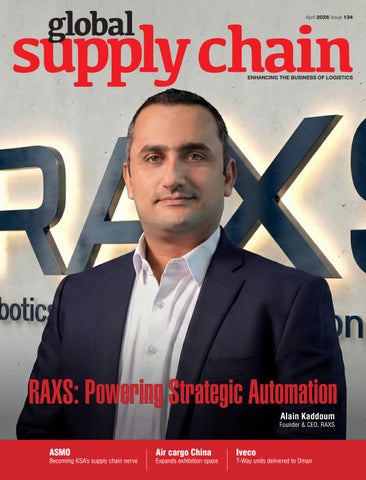
RAXS: Powering Strategic Automation
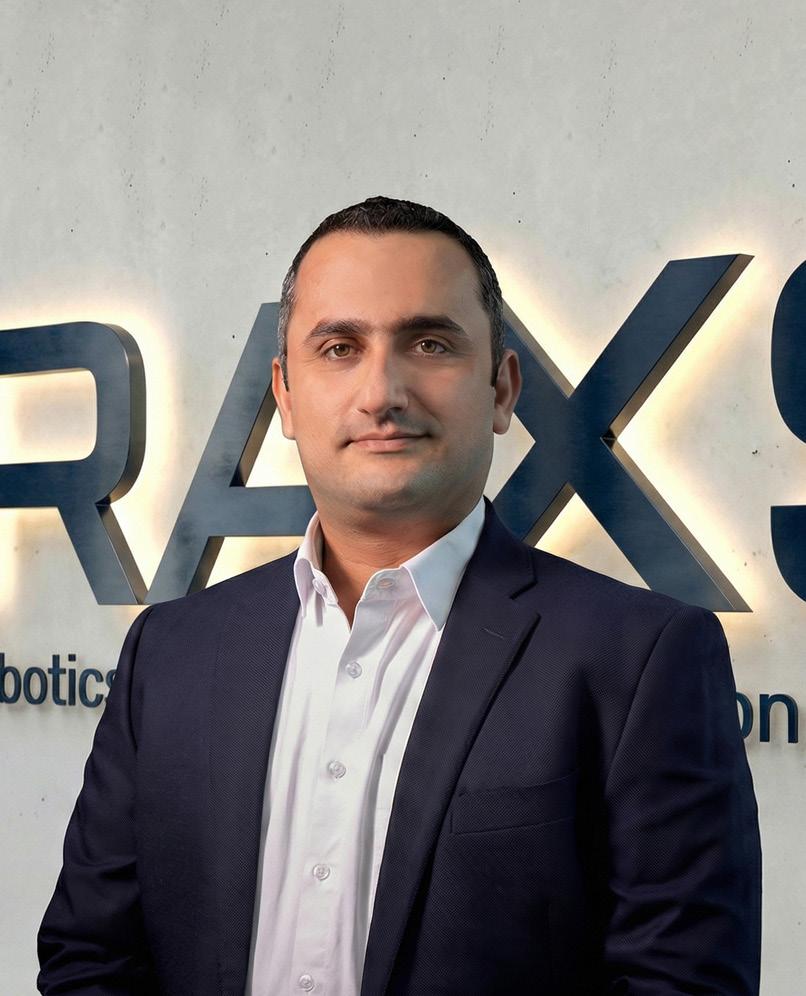
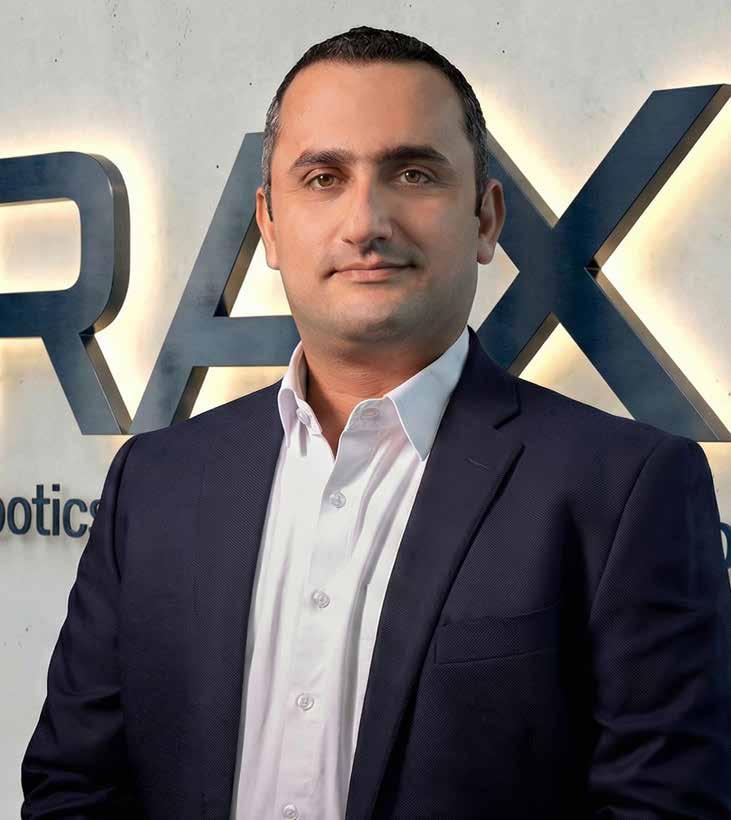
Alain Kaddoum Founder & CEO, RAXS










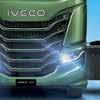

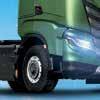





Drive the road of change.



Full offering








- Full range vehicles with the most advanced technologies
- Highly customized product driven by market needs and optimized Total Cost of Ownership
High capillarity of aftersales




European technology

- High quality complete line-up in terms of tonnage, power, torque, safety, ergonomics
- High performance and robust trucks for extreme Off-road conditions




- Repair and Maintenance contracts and competitive warranty conditions
- Origin 100% IVECO Parts and a widespread network coverage


Customer centricity




- Comfort, ergonomics and the latest safety technology to make on board easier
- Driver Style Evaluation tool on Heavy ON-road range and optimized vehicle design to improve customer profitability















SIGNATURE MEDIA FZ LLE
P. O. Box 49784, Dubai, UAE
Tel: 04 3795678
Email: info@signaturemediame.com
Exclusive Sales Agent Signature Media LLC
P.O. Box 49784, Dubai, UAE
Publisher: Jason Verhoven jason@signaturemediame.com
Editor: Abigail Mathias abigail@signaturemediame.com
Art Director: Johnson Machado johnson@signaturemediame.com

Printed and Distributed by Masar Printing and Publishing L.L.C., Part of Dubai Media Incorporated Dubai, UAE
Contributor’s opinions do not necessarily reflect those of the publisher or editor and while every precaution has been taken to ensure that the information contained in this magazine is accurate and timely, no liability is accepted by them for errors or omissions, however caused. Articles and information contained in this publication are the copyright of Signature Media FZ LLE & SIGNATURE MEDIA LLC and cannot be reproduced in any form without written permission.
These uncertain times seem to have slowly become easier to handle. The impact on our world, however, has been immeasurable.
Despite everything, the logistics industry soldiers on. Our cover story features RAXS, a brand-new company that is determined to shake up the automation industry.
We offer fresh perspectives from ASMO and Henkel to
name a few. Celebrating the spirit of togetherness, we take you behind the scenes to the NAFL Suhoor. Leading names from the industry discuss the aspect of Digital Twins and AI. As always, the brightest names from our fraternity offer their perspectives. We bring you the latest from MAN Trucks and IVECO. There’s also an update from air cargo China which is expanding its reach. All this besides the breaking news from the industry, make up an engaging issue for you, our dear reader. Feel free to write to us and tell us what you’d like forthcoming editions to cover.
Wishing you a pleasant read.
Abigail Mathias Editor
abigail@signaturemediame.com www.globalsupplychainme.com

YOUR
FOR AIR CARGO HANDLING AUTOMATION
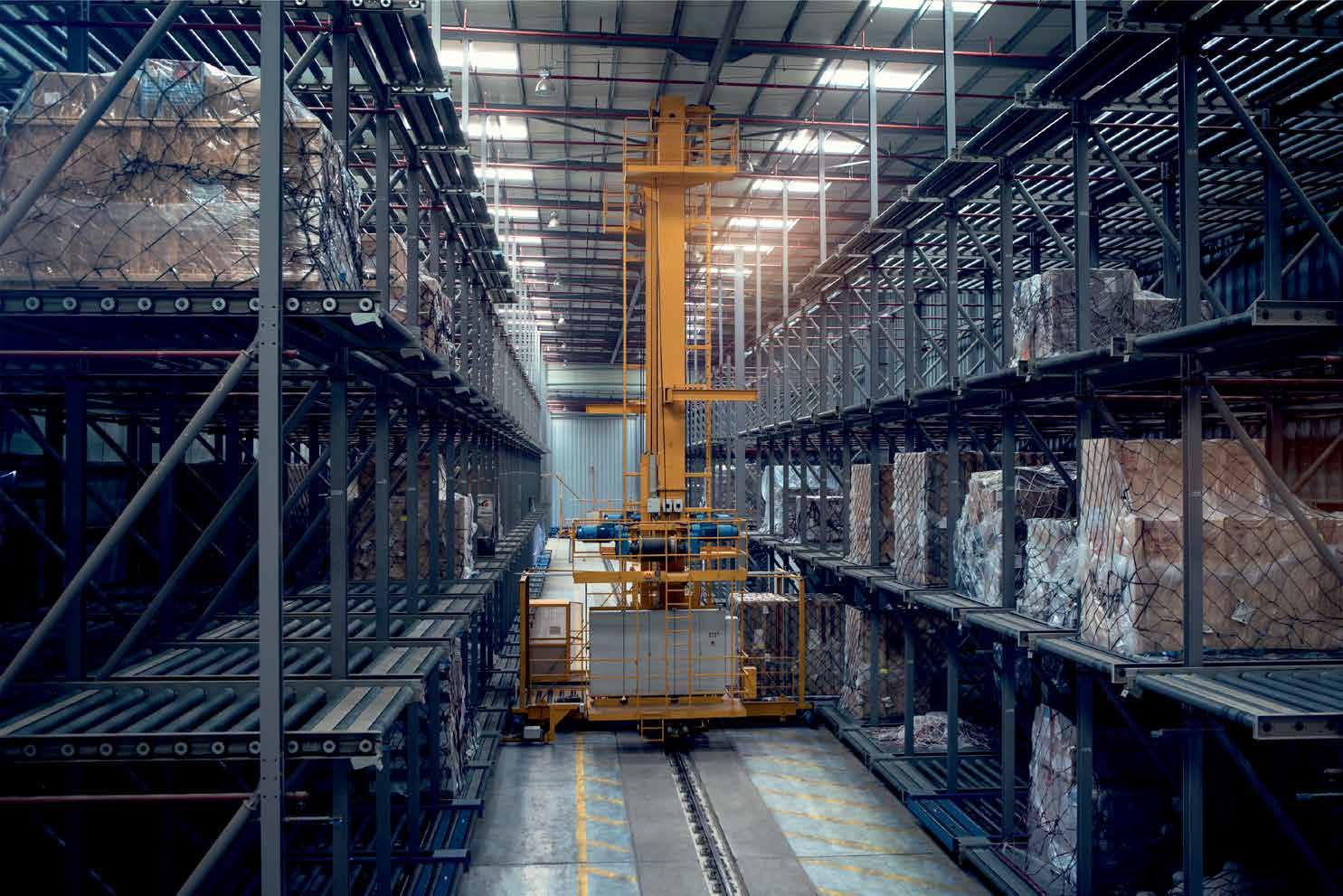

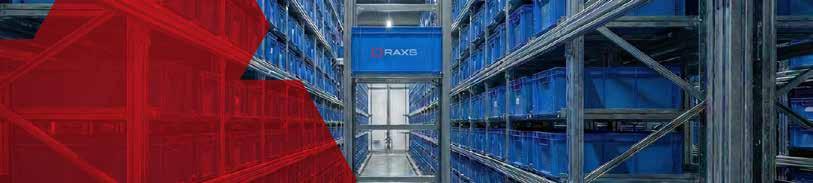
RAXS: Powering Strategic Automation
In a region defined by rapid transformation and an appetite for innovation, the arrival of RAXS feels less like the launch of a new platform and more like the ignition of a long‑anticipated shift. For years, businesses and consumers across the Middle East have been navigating a landscape where digital expectations rise faster than the solutions designed to meet them. RAXS enters this environment with a bold proposition: to reimagine how people connect, transact, and build value in an increasingly interconnected world. Its creators describe it as a next‑generation ecosystem, but the truth is that RAXS is positioning itself as something even more ambitious—a catalyst for a
new digital culture shaped by speed, transparency, and user empowerment. We speak to Alain Kaddoum, Founder and CEO, to discover more.
Global Supply Chain: What gap in the Middle Eastern market convinced you that now is the right moment for RAXS to launch in this region?
Alain Kaddoum: Despite ongoing and evolving disruptions, the Middle East continues to demonstrate remarkable resilience, growth, and market dynamism. In such an environment, the role of RAXS becomes even more critical. Uncertainty reinforces our position since businesses increasingly rely on strong local partners who can ensure continuity,
speed, and execution on the ground. RAXS is built for this reality. While we collaborate with leading global technology providers, our strength lies in local execution, delivering integration, implementation, and support with reliability and consistency, even in the most challenging environments.
In a region where geopolitical and economic conditions can shift rapidly, resilient and agile supply chains are strategic necessities. Warehousing, in particular, has become a cornerstone of operational continuity and economic stability. This is where RAXS leads: designing and integrating warehouse ecosystems that are efficient, scalable, and adaptable, regardless of industry or company size.
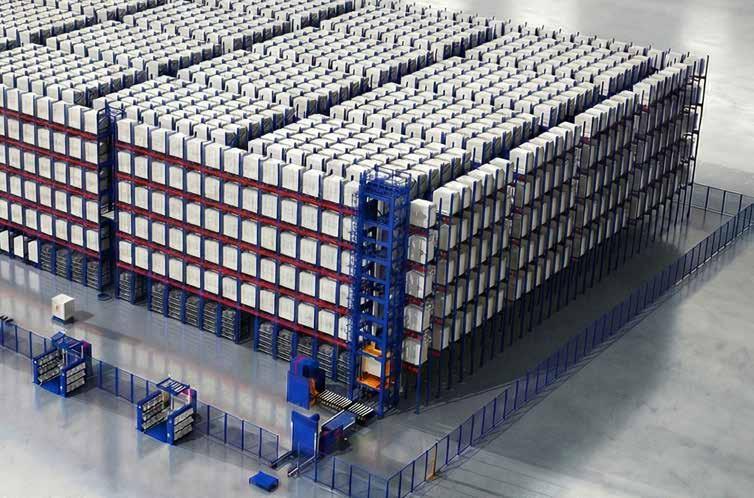

At the same time, the rapid rise of e commerce, digital trade, and mid sized enterprises is accelerating demand for advanced, flexible automation. No single provider can meet this complexity alone. Success now depends on the ability to navigate a huge and evolving technology landscape, selecting the right solutions and integrating them seamlessly. This is precisely where RAXS creates value. As a brand agnostic integrator, we connect our clients with the best technologies from around the world, balancing quality, cost, and performance, while staying fully aligned with realities of the Middle East. We introduce cutting edge innovations tailored to the region, helping to elevate industry standards through new solutions and capabilities.
GSC: How does your value proposition differ from existing regional players, and what makes RAXS indispensable?
Alain Kaddoum: At RAXS, trust is not a value we claim; it is a responsibility we carry. We position ourselves not as a provider, but as a true partner, fully accountable for the outcome we deliver. Our commitment goes beyond execution; we take ownership of performance, ensuring that every solution achieves the right KPIs and measurable impact. We believe accountability is on the top of what makes us indispensable: we deliver what we promise, and we promise only what we can deliver. This principle defines our culture and sets the foundation for long term partnerships. Our approach starts with deep understanding and an in depth analysis of each client’s operations, constraints, and ambitions, allowing us to design solutions that are aligned with their business reality and future goals. From there, we bring together the right mix of robotics, automation systems, and advanced software, selected objectively. By integrating technologies into a coherent ecosystem, we ensure that every component works as one, delivering consistency and scalability.
Our strength is amplified by a powerful ecosystem of partners technology providers, system implementers, and industry stakeholders, combined with decades of expertise. Yet, what truly differentiates RAXS is our human approach to partnership. We engage with care, adaptability, and a deep commitment to understanding each client’s business at its core. Grounded in a strong understanding of the local culture and market, we design and deliver solutions that fit not only the technical requirements, but also the operational realities of our clients.
Our approach is not driven by integrating large systems alone. We focus on the entire warehouse and every operational detail, ensuring that each component receives the right level of attention. We provide a full spectrum of robotics and automation solutions, including both core systems and value added processes such as sorting, wrapping, creating a complete and integrated warehouse ecosystem. The result is more than an automated warehouse; it is a fully integrated, high performing ecosystem, built to evolve, perform, and create lasting value.
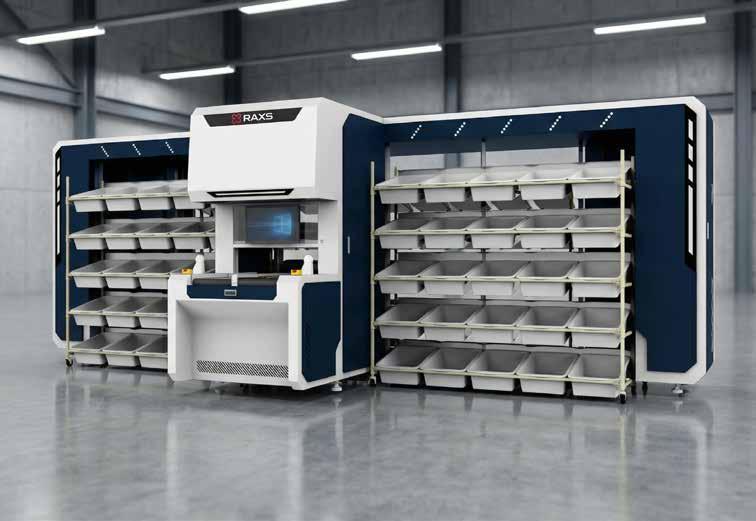
“RAXS positions itself not as a provider, but as a true partner, fully accountable for the outcome we deliver. Our commitment goes beyond execution; we take ownership of performance, ensuring that every solution achieves the right KPIs and measurable impact.”
GSC: What does success in the Middle East look like for RAXS in its first 12–24 months, beyond revenue metrics?
Alain Kaddoum: The Middle East is going through a period of significant growth and change, particularly in supply chains and strategic warehousing. Our role is to ensure that our expertise is accessible to companies across the region that are seeking to adapt to these changes. We seek to make advanced integration and warehousing expertise available in ways that are practical, relevant, and adapted to different operational contexts.
In a time where trends and technologies are rapidly spreading across the world, it is important to remain balanced. While innovation is essential, solutions must only be implemented where they truly create value. At RAXS, we believe in applying trends thoughtfully while maintaining strong operational foundations. Our goal is to ensure that every business receives a solution that genuinely fits its needs, free from technology bias or trend driven decisions, while delivering meaningful and positive impact within its specific operational context. Beyond revenue, success means
building trusted relationships with key industry players, delivering projects that demonstrate the value of well integrated automation and becoming recognized as a reliable integration partner for complex warehouse operations.
We aim to establish strong credibility through successful implementations, thought leadership, and meaningful engagement with the regional logistics and automation ecosystem.
GSC: How is RAXS adapting its global model to reflect the cultural, economic, and regulatory realities of the Middle East?
Alain Kaddoum: RAXS was built on the international exposure and world class expertise of its team, management, partners, and stakeholders. The Middle East has unique business dynamics, regulatory environments, and operational cultures. The philosophy behind RAXS is to translate global expertise into practical, tailored solutions for each client, prioritizing local cultural alignment, market specific design choices, and local collaboration to ensure that each automation solution fits the operational context rather than
imposing a one size fits all model.
To achieve this, we rely not only on strong international expertise but also on local partnerships and market specific knowledge. Our experts understand the realities of the region in which we operate to ensure that every solution is adapted to the specific context of the market, country, industry, and, most importantly, the unique needs of the warehouse itself. This local understanding and adaptable approach enable us to design solutions that are operationally and culturally aligned with how businesses operate in the region.
GSC: In what ways do you plan to contribute to local talent development, rather than simply importing expertise?
Alain Kaddoum: RAXS is built on a clear conviction: the future of warehouse automation in the region must be designed, engineered, and implemented locally. Leveraging our international expertise, we are establishing a local integration hub where solution design, engineering, and project execution are fully driven by local teams ensuring long term sustainability, continuity, and real impact. While we collaborate with leading global
technology providers, we bring the best of the world into a locally mastered integration model. As a brand agnostic integrator, we select the most suitable technologies globally, but ensure that every solution is designed, orchestrated, and delivered within the market it serves. This approach allows us to combine the best innovations from around the world with deep local understanding, delivering solutions that are both globally advanced and locally relevant.
At the core of this vision is talent. We are building multidisciplinary teams that combine expertise in AI, software, robotics, and engineering with a deep understanding of business and supply chain realities. But beyond recruitment, we invest in continuous development, hands on learning, and real project exposure, ensuring our teams remain agile in the face of rapid technological evolution and market changes.
We aim to shape a new generation of local expertise in warehouse automation and intralogistics, making RAXS a platform where talent grows, capabilities deepen, and knowledge is transferred through action. By combining global innovation with locally anchored expertise, RAXS is not only delivering advanced warehouse solutions, we are contributing to building a sustainable, self reliant, and future ready automation ecosystem in the region.
GSC: What long term impact do you hope RAXS will have on the region’s innovation ecosystem or industry standards?
Alain Kaddoum: The next era will be defined by logistics. Companies’ competitiveness is no longer driven only by product quality, innovation, or service, but by how quickly and accurately companies meet customer needs: delivering the right product, at the right time, through the most efficient channels. This is the new reality forged by successive revolutions, from the Industrial Revolution to the internet, and now AI.
Fully integrated warehouse systems enable companies to remain competitive. This is exactly where RAXS creates value: enabling companies to reach their customers faster, smarter, and more cost effectively without compromising on
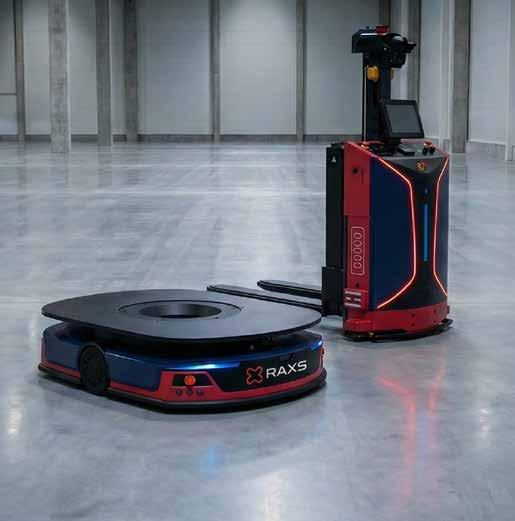
handling quality. With the right strategy, these trade offs disappear. At RAXS, we deeply analyze each industry, business model, and warehouse requirements to deliver tailored solutions that take competitiveness to the next level. As AI reshapes industries, access to real time and accurate stock data becomes the lifeblood of operational excellence for visibility and performance across the entire value chain. Today, the warehouse is the heartbeat of operations, where bottlenecks can ripple across the business. That’s why we ensure warehouses are advanced and seamlessly integrated across the entire value chain. This is where big data delivers real value. Without full alignment with warehouse operations, data remains underutilized, limiting the effectiveness of AI and the quality of strategic decision making. We are agile and future ready in our mindset, so we can help our customers become future ready as well. We continuously and regularly evolve our expertise to stay ahead of emerging trends, ensuring we always deliver leading edge solutions to our customers.
GSC: What core technologies or methodologies give RAXS a competitive edge, and how do you
plan to scale them in a region with diverse digital maturity levels?
Alain Kaddoum: Technologies are advancing at unprecedented speed, reshaping business and challenging organizations to act with strategic foresight. Success is not about adopting every innovation, but choosing the right technologies, distinguishing passing trends from lasting value, and applying them with precision. Access to technology by itself is no longer the differentiator. At RAXS, we go beyond that to focus on what drives real impact, protecting clients from unnecessary complexity and cost. Our strength lies in understanding how technology works, how it evolves, and how it should be applied strategically.
Using our integration methodology, we combine robotics, automation, software, and workflows into cohesive, data driven solutions, from design and system orchestration to full lifecycle support. We use the latest software to manage warehouses and integrate robotics and automation, ensuring these systems operate at maximum efficiency. By applying technologies with purpose and context, we help companies build an integrated ecosystem to deliver sustainable, measurable impact.
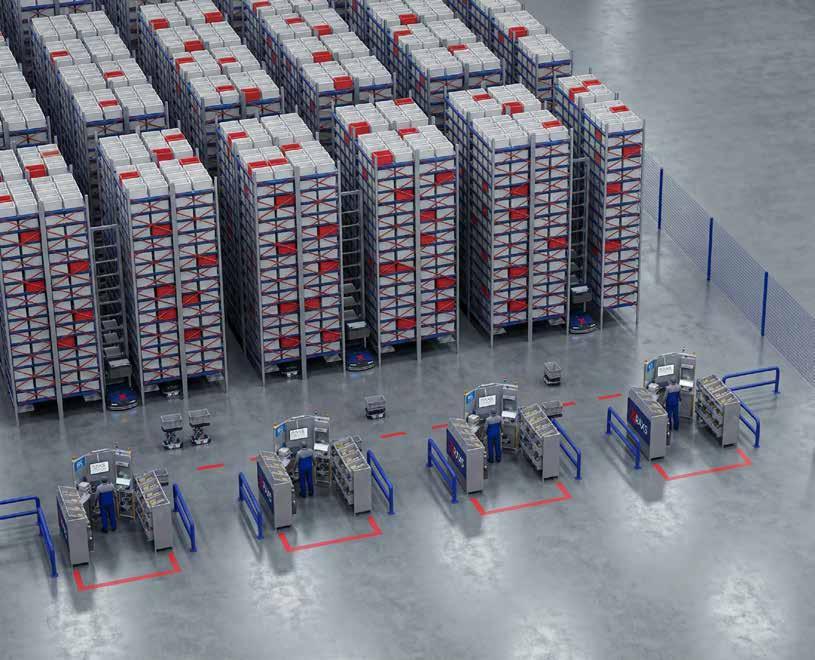
“Technology sets the stage, but the real value comes from the people and partnerships behind it. And transformation is delivered by aligning technology, operations, and strategy into one cohesive vision.”
Most importantly, we take a human centered and holistic approach, looking at the bigger picture and considering every part of the supply chain to design solutions that align with all other business functions. This approach allows us to guide customers through an adapted journey that engages all relevant stakeholders and ensures that warehouse automation decisions support broader operational and strategic goals.
We work with a global network of providers offering modular and flexible robotic solutions, allowing us to address each company’s needs based on its level of digitalization. We meet our customers where they are and help elevate their operations progressively, adapting to different levels of digital maturity, whether fully digitalized or at an early stage, by considering current priorities and realities. We then apply the right products, systems, and solutions where they create
the most value, ensuring a practical and scalable outcome. We also place strong emphasis on implementation without disruption, carefully planning, aligning, coordinating, and executing each phase to keep operations running smoothly.
Finally, our model is built on long term partnership. We stand with our clients from concept to operations and beyond, ensuring that the integrated systems continue to evolve and deliver value as their business grows.
GSC: Which types of partnerships— governmental, corporate, or startup—are most critical to your Middle East strategy, and why?
Alain Kaddoum: Governments in the region are rethinking strategies, adopting new measures, and seeking more advanced, context driven approaches to respond effectively and secure strategic reserves.
At RAXS, we understand this and aim to work closely with authorities to deliver forward looking warehousing solutions, while also enabling the adoption of advanced technologies and supporting the development of frameworks that facilitate the implementation of warehouse automation. Through this approach, we aim to contribute to shaping the next generation of logistics in the region.
At the corporate level, we help companies keep up with future demands brought by digitalization and enable them to have smarter, faster, and more integrated supply chains. RAXS leads in an evolving landscape through all the sectors, on top of them are the Retail & E commerce, 3 PL, Pharma, Spare Parts, and FMCG.
In addition, a new generation of startups will emerge. Many of these companies will need to scale quickly without having the necessary operational expertise in
place. RAXS stands by them from the early stages, helping mitigate the risks associated with rapid growth, by bringing modular robotic technologies at reasonable prices, expertise, and stability, while collaborating with incubators and ecosystem partners to support startups both technically and strategically as they grow.
RAXS aims to engage with all stakeholders to build a collaborative automation ecosystem that benefits the entire industry. We work across the three entities as they are deeply interconnected: today’s startups become tomorrow’s industry leaders, while governments create the enabling environment for growth. At the core of this ecosystem is logistics, the common foundation that connects and drives all players forward.
GSC: How is RAXS planning to build a sustainable presence here, ensuring it becomes a long term contributor to the region?
Alain Kaddoum: The market is shifting dramatically and RAXS is built for it. We combine a rock solid foundation of world class expertise and robust infrastructure with the agility to stay future ready and ahead of what’s next.

We balance proven, well grounded methodologies with the flexibility to adapt them to evolving market needs. We are deliberate in how we grow, carefully choosing where to invest and what to pursue, while avoiding the trap of short term trends and market myopia.
Building a long term presence in the region requires more than delivery, it requires continuity. At RAXS, we provide full spectrum support, from early engagement to lifecycle services, ensuring our clients have a trusted partner at every stage. We don’t step in and out; we stay, support, and grow with our clients.
Our strategy focuses on long term partnerships rather than short term projects. By building a strong local presence, investing in relationships, and delivering measurable operational impact, we aim to become a trusted partner for companies advancing their warehouse operations.
Sustainability also comes from our international knowledge transfer across the local market, our projects, the local
logistics directors, leaders, and operations. Our teams provide end to end services locally, from design to installation and testing to commissioning, elevating the operational excellence in the region. We leverage the local ecosystem to execute every aspect of the project and continue to provide ongoing customer support long after the project is completed.
GSC: What internal principles or leadership philosophies guide RAXS as it enters a region where expectations around trust, speed, and transformation are uniquely high?
Alain Kaddoum: Several principles guide our work, on top of them is trust, commitment, and accountability. Automation projects are strategic investments, and they require partners who take ownership of outcomes. Trust, for us, is built through consistency and clarity.
Our leadership philosophy emphasizes listening before designing, understanding
before integrating, staying accountable from concept to operations, and acting with agility. We operate with a deep respect for fundamentals (robust systems, proven methodologies, and world class expertise) because in a region where trust is critical, reliability is non negotiable. At the same time, we move with speed and precision, enabling our partners to adapt, scale, and respond to rapidly evolving demands.
Technology sets the stage, but the real value comes from the people and partnerships behind it. And transformation is delivered by aligning technology, operations, and strategy into one cohesive vision.
We don’t follow trends; we interpret them. Our role is to filter complexity, distinguish real value from noise, and make the right strategic choices for every client and every context. Ultimately, we lead with purpose: grounded in what works, driven by what’s next, and committed to delivering measurable, lasting impact.
How ASMO is fast becoming Saudi Arabia’s Supply Chain nerve
Dan Wood, ASMO Chief Commercial Officer, details how a unique “orchestration” model aggregates demand, embeds resilience, and connects the dots for the Kingdom’s most critical industrial projects.
As Saudi Arabia’s industrial ambitions under Vision 2030 shift from blueprint to build phase, the nation confronts the defining logistical challenge of orchestrating materials, equipment, and services at a national scale. This is the core mission of ASMO, the strategic joint venture between energy giant Aramco and global logistics leader DHL, to become the
integrated backbone for the Kingdom’s most critical supply chains.
In an exclusive interview, ASMO’s Chief Commercial Officer, Dan Wood, directly reframes the company’s purpose. “We don’t fit the traditional boxes. We are not a logistics vendor or a procurement consultancy,” he states. Instead, he defines ASMO as a “generational 4PL, an
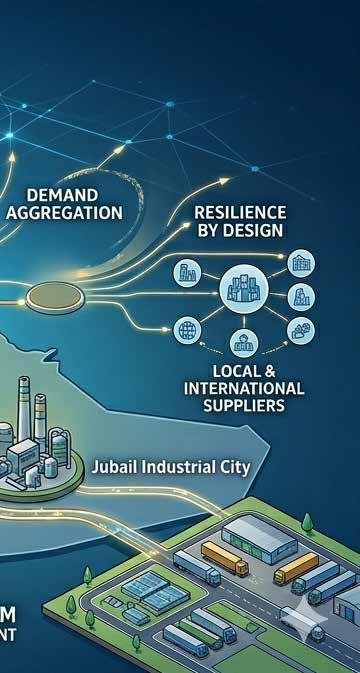
orchestration platform at the intersection of critical sourcing, integrated logistics, and digital intelligence.” This model, Wood explains, is what enables the company to aggregate demand across Aramco’s industrial ecosystem, managing complex, end-to-end supply chains that transform client operations from fragmented silos into cohesive, resilient systems.

A competitive edge forged by unique parentage
ASMO’s strategic advantage is derived from the complementary strengths of Aramco and DHL. From Aramco, it gains an unmatched command of high-stakes industrial supply chains and a missionaligned drive for national industrial growth. From DHL, it incorporates proven global logistics frameworks, digital expertise, and operational discipline. Dan Wood, Chief Commercial Officer, describes the result as a strong blend.
“This partnership creates a new entity that outperforms its origins,” he states. “We merge the credibility of a national platform with the executional prowess of a worldclass logistics organization. This unique fusion allows us to serve as a major partner, offering clients both unparalleled local access and global-scale excellence.”
Driving Vision 2030 from the ground up
For Wood, ASMO’s work is a direct contribution to the Kingdom’s economic transformation. “We are a key enabler of Vision 2030,” he asserts. The company strengthens industrial competitiveness by aggregating procurement demand, which in turn opens the market for local and regional suppliers while providing international players a clear, scalable pathway to establish operations in Saudi Arabia. Beyond economics, ASMO embeds long-term resilience through digital adoption and workforce development, building critical capabilities within the national economy.
Engineering resilience by design
In sectors like energy and chemicals, where downtime is measured in millions, resilience is non-negotiable. ASMO designs it into the operating model from the start. “We focus on multi-sourcing, supply diversification, and data-driven demand planning to mitigate risk,” Wood explains. A centralized control tower provides end-to-end visibility, enabling rapid decision-making. Perhaps most uniquely, by harmonizing procurement data across its client base, ASMO can identify common demand, aggregate purchasing power, and strengthen collective sourcing strategies, often allowing clients to purchase less while gaining more security.
The Road to 2027: Scale, expansion, and a digital game-changer
ASMO’s growth trajectory is ambitious. Within Saudi Arabia, the focus is on expanding category coverage and building out major logistics facilities in SPARK, Yanbu, and Jubail. By 2027, ASMO expects to operate a combined supply chain footprint exceeding 8.5 million square meters, placing it in “a different league” from regional players.
However, Wood identifies the true potential disruptor as ASMO’s B2B e-marketplace. “The digital platform doesn’t respect borders,” he says. “It uses AI to match buyers with qualified suppliers, creating a transparency this industry has lacked for
“The digital platform doesn’t respect borders. It uses AI to match buyers with qualified suppliers, creating a transparency this industry has lacked for decades.”
decades. That is the legacy piece. Building a platform that fundamentally changes how industrial supply chains connect— that could be one of the most meaningful impacts of our careers.”
In the execution phase of Vision 2030, ASMO has tactically positioned itself as more than a supplier, but as the indispensable orchestrator. It functions as the strategic nerve center, intelligently aligning and optimizing the industrial supply chains that support the Kingdom’s most ambitious projects.
This role makes ASMO a foremost enabler of Vision 2030. The company ensures critical projects are delivered on time and on budget by engineering resilient supply chains. The result is a more competitive, self-reliant, and secure industrial base for the Kingdom.
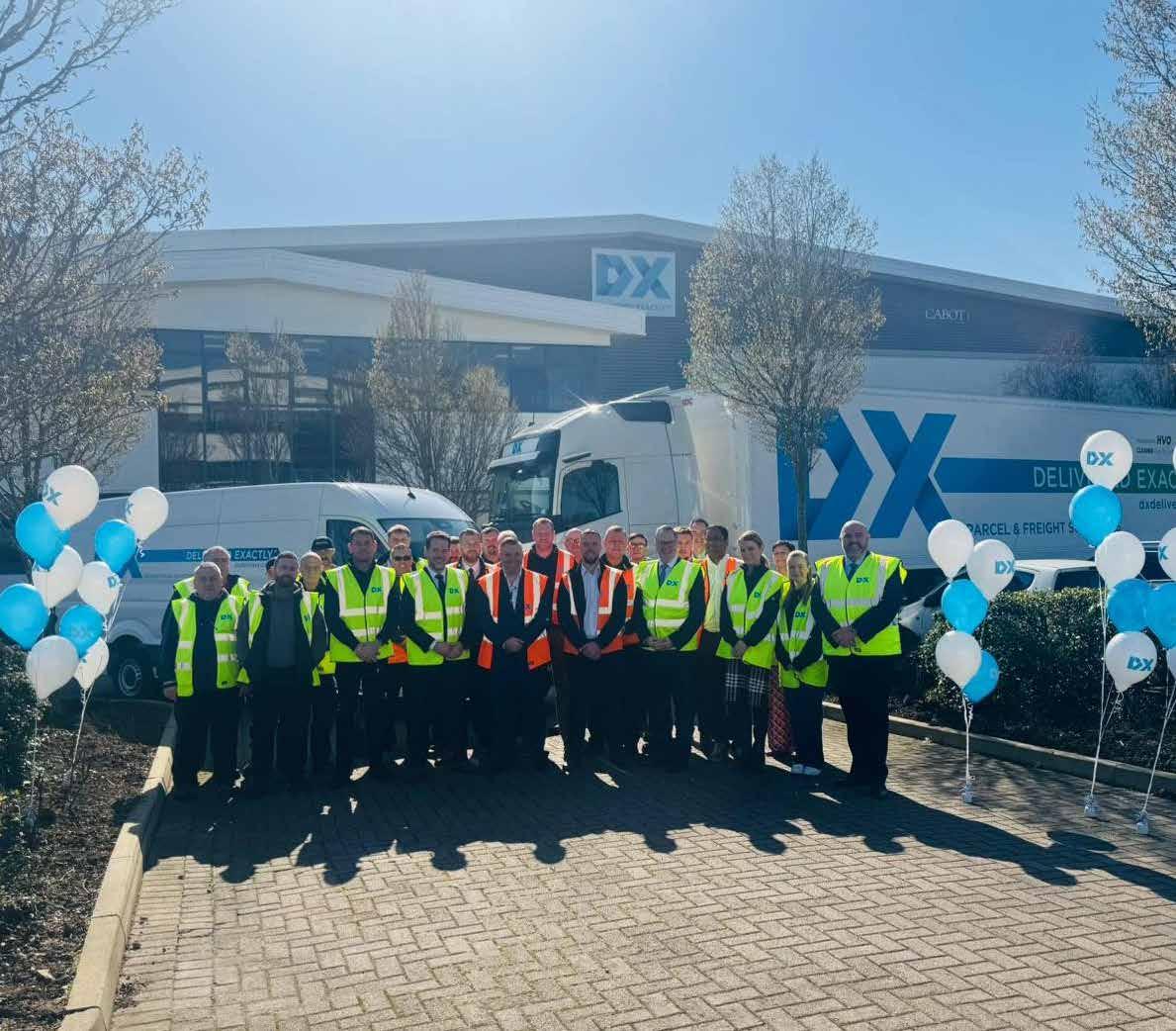
DX opens flagship distribution centre in Kettering
DX, a leading provider of integrated logistics solutions across freight, parcel, fulfilment, document and final mile, has opened a flagship distribution centre in Kettering, North Northamptonshire.
The new facility is part of the company’s ongoing investment programme to further scale and develop the business. The site significantly increases the business’s capacity in the East Midlands and will support DX’s Fulfilment, Freight and Final Mile operations.
The new facility is strategically located on a 7-acre site in Kettering Venture Park, south-east of Kettering. It comprises a 86,000 sq. ft facility, with 79,000 sq. ft. of warehousing, including seven dock level doors and six level-access doors, and office space. The unit is well-positioned, midway
between the M1 and A1(M) motorways, providing excellent access across the region and supporting national distribution.
DX Fulfilment provides warehousing, contract logistics and value-added services for a large number of customers nationwide, facilitating the storage, preparation and dispatch of goods as part of fully managed supply chain operations. Outbound distribution is seamlessly coordinated through DX Freight and DX Final Mile services, enabling all types of consignments, of varying size, weight and format, to move efficiently through the DX network for delivery to both residential and commercial premises.
These three services together create a highly efficient integrated logistics hub, giving DX the flexibility to configure its operations to meet the individual needs of its customers.
Ian Truesdale, Chief Executive Officer of DX Group, said: “We have made a confident start to 2026 with the acquisition of HBC Logistics and the launch of a strategic partnership with Rhenus Logistics, which is now well under way. The opening of this new distribution centre in Kettering continues that momentum and reflects the pace at which we are expanding and investing our operational footprint.
“The site brings together our fulfilment, freight and final mile services, enabling us to support more customers with a highly efficient integrated logistics solution.
“As DX continues to evolve, investments like this ensure we have the appropriate infrastructure and operational expertise in place to support our customers and the next stage of business growth.”
Automate
Air cargo demand up 5.6% in January 2026: IATA
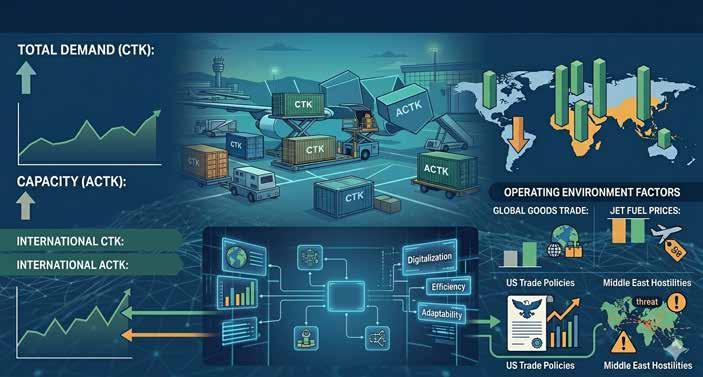
The International Air Transport Association (IATA) released data for January 2026 global air cargo markets showing:
• Total demand, measured in cargo tonne-kilometres (CTK), rose by 5.6% compared to January 2025 levels (+7.2% for international operations).
• Capacity, measured in available cargo tonne-kilometres (ACTK), increased by 3.6% compared to January 2025 (+5.7% for international operations).
“The demand for air cargo had a robust start to 2026, recording 5.6% year-on-year growth in January. At the regional level, the story is more polarized. Carriers in Africa, Middle East, Asia-Pacific, and Europe all reported faster growth than the global average. In contrast, carriers in the Americas reported aggregate contractions.
The resilience of air cargo will continue to be tested in the coming months. In addition to the long-running uncertainties of evolving US trade policies, the outbreak of hostilities in the Middle East will both weigh heavy on global supply chains. Addressing these topics will add extra importance to discussions at the upcoming World Cargo Symposium in Lima, Peru
(10-12 March 2026) where strengthening air cargo’s adaptability and efficiency through digitalization and other measures will be a key focus,” said Willie Walsh, IATA’s Director General.
Several factors in the operating environment should be noted:
• The global goods trade grew by 4.9% year-on-year in December 2025.
• Jet fuel prices decreased by 6.5% yearon-year in January.
• Global manufacturing sentiment strengthened in January, with the global Purchasing Managers’ Index (PMI) rising above the 50-point expansion threshold to 51.8, its highest level in over a year and a half. The PMI for new export orders climbed to 49.9, slightly below the growth threshold but the highest in 10 months, reflecting mixed but cautiously optimistic industrial growth.
January regional performance
Asia-Pacific airlines saw a 7.8% year-onyear growth in air cargo demand in January, maintaining the region’s role as the primary engine of the industry expansion. Capacity
increased by 3.3% year-on-year.
North American carriers saw a 0.5% year-on-year decline for air cargo in January. North America was the only region showing a capacity decrease, slightly declining by 0.2% year-on-year.
European airlines saw a 6.9% year-on-year increase in demand for air cargo in January. Capacity increased 4.9% year-on-year.
Middle Eastern carriers saw a 9.3% yearon-year increase in demand for air cargo in January. Capacity increased by 9.9% yearon-year, the strongest rise of all regions.
Latin American and Caribbean carriers saw a 2.0% year-on-year decrease in demand for air cargo in January, the weakest performance of all regions. Meanwhile, capacity increased by 2.3% year-on-year.
African airlines saw a 18.2% year-on-year increase in demand for air cargo in January, the strongest growth of all regions. Capacity increased by 6.5% year-on-year.





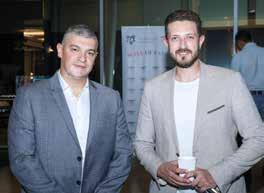
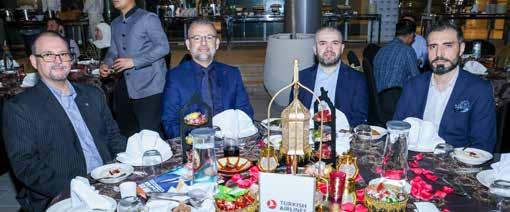

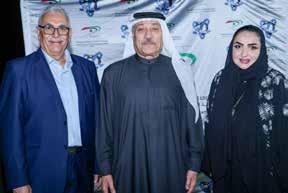
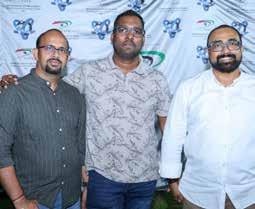
Spirit of the season
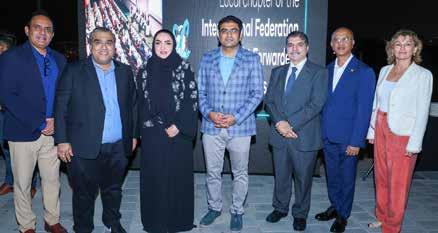
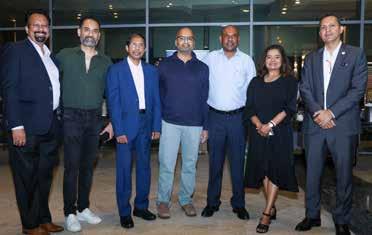
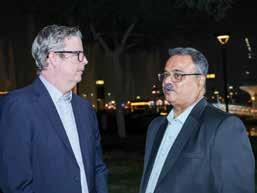
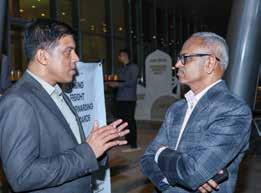
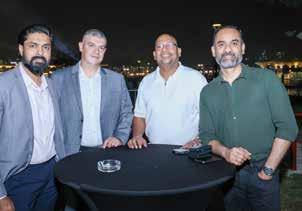
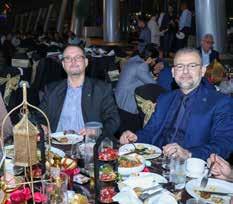
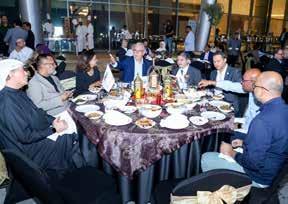
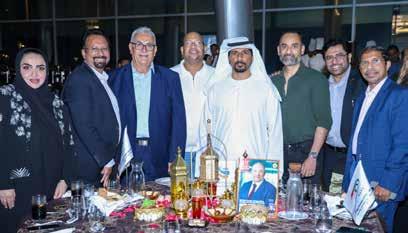
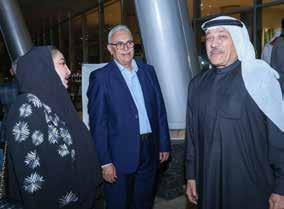
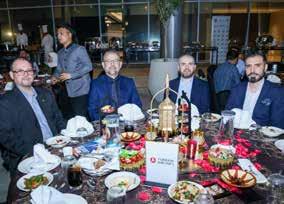
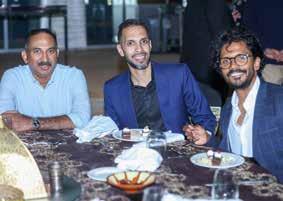
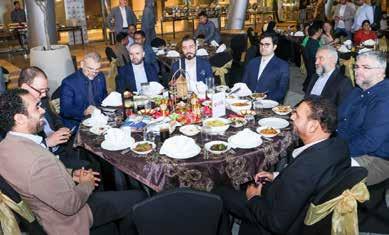
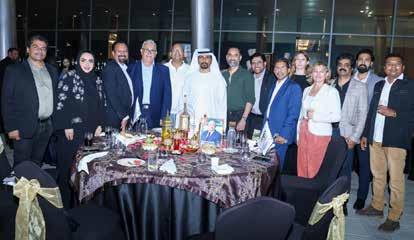
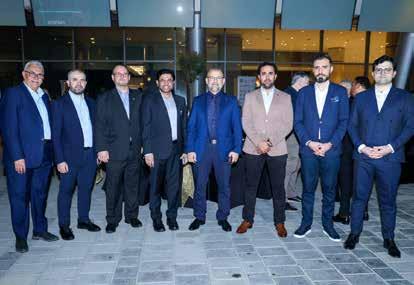
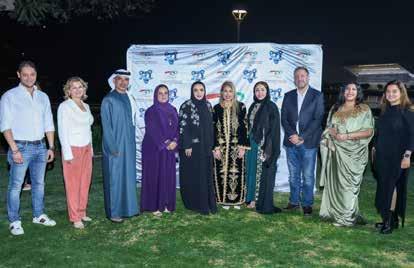
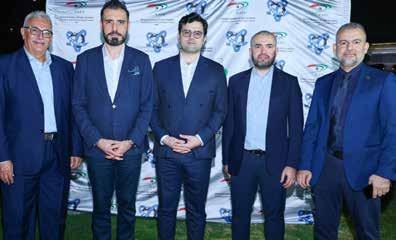
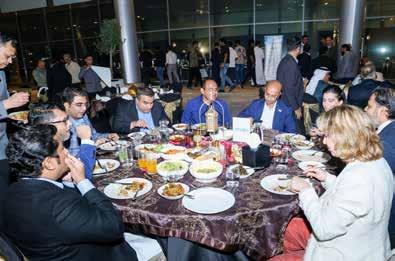
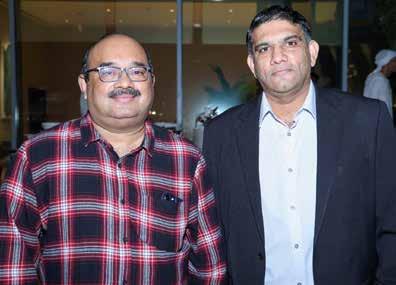
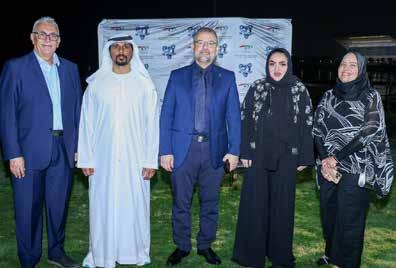
The National Association of Freight and Logistics (NAFL) hosted an eloquent Suhoor for its members and close associates. NAFL welcomed it’s members and strategic partners at the event from the airlines, shipping lines customs and port authorities. Ms. Nadia Abdul Aziz thanked the strategic partners that attended the Suhoor event who were from dnata, Dubai cargo village DCAA, Dubai Customs, Dubai Police, Turkish Airlines Cargo team and SVP amongst many others. We take you behind the scenes.









ECS GR O UP LOVES CARGOT ECH ,
because
strong networks need smart tools.
The resilience playbook: Strengthening supply chains in the Middle East amid growing geopolitical uncertainty
The region has always demanded a particular kind of operational agility. Regulations can shift quickly, demand patterns can be volatile, and consumer expectations continue to rise. For supply chain leaders operating in the Middle East, complexity has always been part of the job.
What is unfolding today, however, is of a different magnitude.
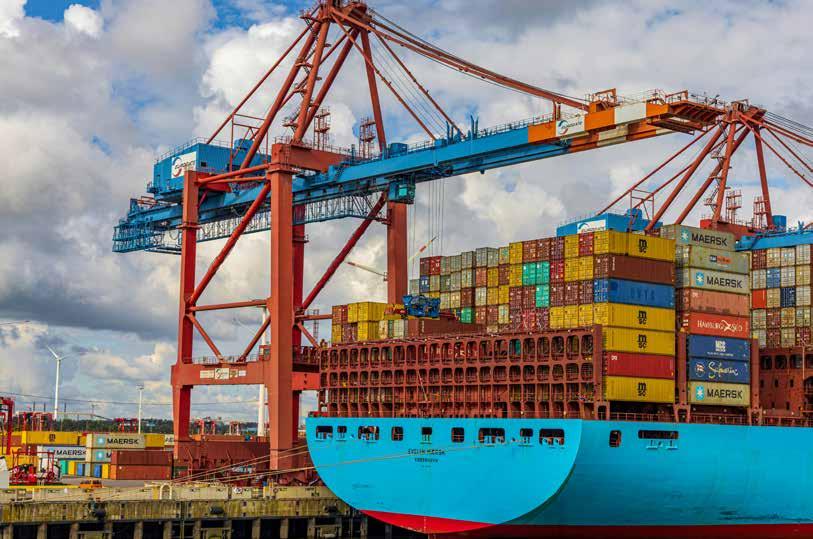
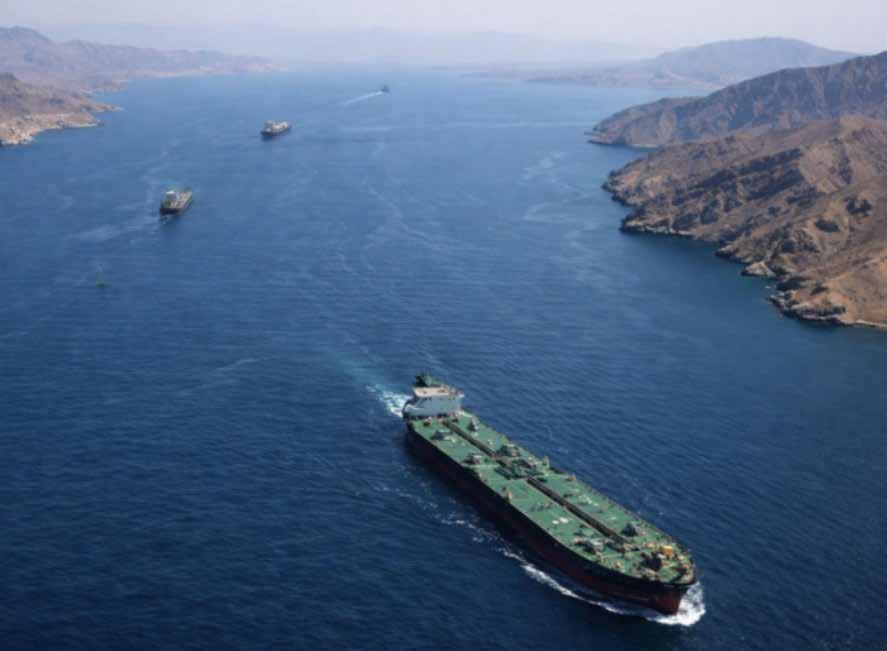
Airspace restrictions are constraining global air cargo capacity, with some estimates pointing to impacts on more than a tenth of worldwide freight flows. At the same time, the Strait of Hormuz has once again become a focal point of operational risk that carriers, shippers, and manufacturers are actively monitoring.
Ocean freight routes that were stable for years are being reassessed, while companies across sectors are reviewing inventory buffers, sourcing options, and routing decisions. For supply chain teams in
the region, these are very real operational variables influencing decisions being made on which routes to use, how much inventory to hold, and which suppliers to qualify as alternatives.
Based on our experience across the Middle East and other high-growth markets, three capabilities are proving particularly important in preparing organizations for this kind of pressure. However, it must be stated that before any operational strategy is deployed, our absolute first priority remains unwavering: ensuring the safety and wellbeing of our teams on the ground. Once our people are secure, we can focus on the operational pillars of resilience:
1. Trusting local intelligence over central assumptions
Resilience begins with local knowledge. One of the most damaging mistakes a supply chain organization can make is treating the Middle East as a single market. Countries like Egypt, Saudi Arabia, and the UAE may sit within the same regional footprint, but they operate within very different regulatory frameworks, trade structures, and logistics realities. Supply chains that rely on centralized decision-making often struggle to react with the speed required in this environment. By contrast, organizations that empower
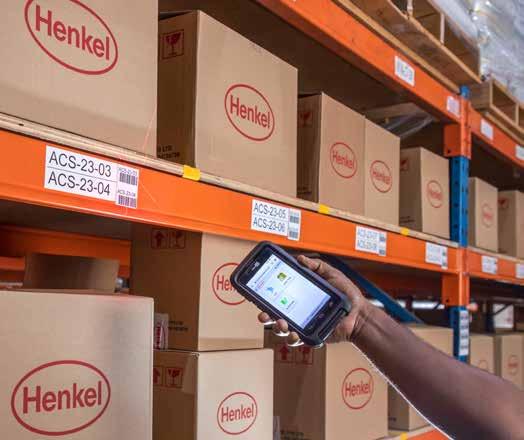
regional teams to respond quickly to changing conditions are far better positioned to manage disruption as it unfolds.
Henkel has been building operational capability across the region for decades, and the experience consistently reinforces the same lesson: the best decisions are often made closest to the market. Listening to local teams and trusting them to act quickly proves far more effective than waiting for direction from the center. The role of the center is to coordinate, provide support, and ensure consistent, ongoing communication flows. This approach protects local markets from an influx of redundant information requests, allowing them to focus fully on managing the situation on the ground.
2. Technology that helps you decide faster
Data is not the same as insight, and visibility is not the same as readiness. The technology investments that are actually paying off manage to improve the speed and quality of decisions under uncertainty.
Across our manufacturing facilities, Industry 4.0 technologies such as sensors, automation, and live production data are reducing exposure to single-point failures that become far more disruptive when the external environment is already under strain. These tools do not eliminate uncertainty, but they allow operations teams to respond faster and with greater confidence.
Furthermore, robust operations management relies on dynamic visibility. Therefore, Henkel utilizes integrated dashboards to continuously monitor operations, assess real-time situations, model potential scenarios, and rapidly execute Business Continuity Plans when disruptions arise.
3. Recognising that sustainability and resilience are the same investment
Operational sustainability and supply chain resilience are increasingly two sides of the same investment. The drive to reduce dependence on carbon-intensive logistics, diversify energy sources, and eliminate production waste often produces supply chains that are not only cleaner but structurally more robust.
Our manufacturing site in Egypt has achieved carbon-neutral production, and across our operations, we have reduced CO₂ emissions per ton of product by 64% since 2017. Designing operations carefully and systematically tends to produce leaner, more flexible, and disruption-resistant supply chains as a direct by-product.
Built over time: Preparing for the unpredictable
Henkel marks its 150th anniversary this year, a milestone that reflects decades of operating across different markets,
economic cycles, and technological shifts. One lesson that remains constant is that resilience is rarely built in moments of crisis. It stems from decisions made long before disruption becomes visible.
Ultimately, these times remind us that we must always prepare for the unpredictable. Having an open mindset for scenario thinking and leaning into cross-functional collaboration, now more than ever, is what truly makes a difference. Harnessing the power of collaboration ensures that when volatility strikes, the entire organization is aligned and ready to adapt.
In a region that sits at the crossroads of global trade and energy flows, supply chains carry a broader responsibility: keeping goods moving when conditions become uncertain. The companies that will navigate this environment most successfully will be those that accept volatility as part of the operating model and design their supply chains accordingly.
By Ferry Bakker, Henkel VP Reg SC
Ops HCB HG
Cainiao to build large-scale global robotic warehouse network
Cainiao plans to build a large-scale global network of robotic warehouses in 2026 as it expands local fulfillment and delivery capabilities for crossborder e-commerce platforms and merchants worldwide.
The automated facilities are planned for key markets including Hong Kong, China, the Netherlands, Spain, France, Germany and the United States. The warehouses will primarily use Cainiao’s self-developed next-generation warehouse robots and AI-powered scheduling system. Compared with traditional automated warehouses, the new robotic facilities are designed to deliver higher storage density and greater operating efficiency.
The push aligns with broader industry momentum: analysts from Fortune Business Insights forecast the global warehouse robotics market to more than triple—from approximately USD 7.35 billion in 2026 to over USD 25.41 billion by 2034—fueled by advancements in AI-enabled autonomous mobile robots (AMRs), automated storage and retrieval systems (AS/RS), and goodsto-person technologies. As retailers and brands race to meet rising consumer expectations for faster and more reliable delivery, businesses are accelerating investments in flexible, software defined warehouse infrastructure.
“As the AI era arrives, we are accelerating the application of AI and robotics across our global supply chain network to enhance the consumer experience,” Shuai Yong, Vice President of Cainiao and General Manager of its Global Supply Chain business, said. The company aims to significantly expand next-day and twoday delivery coverage from warehouses in those markets.
For Cainiao, AI is not simply about adding automation to existing logistics processes. The company is redesigning logistics operations from the ground up, using AI and automation to reshape how goods are stored, moved and delivered across the supply chain.
On the hardware side, Cainiao is accelerating the development of key enabling technologies, such as its next-
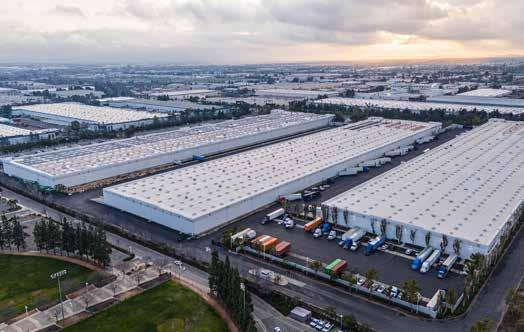
generation logistics warehouse robots. These advanced systems are engineered to fundamentally transform traditional warehouse workflows by automating and optimizing critical processes—including high-density storage, precise picking, and seamless goods movement—delivering substantial gains in speed, accuracy, and overall throughput.
Complementing this hardware push, Cainiao is expanding AI integration across the entire end-to-end logistics supply chain. One of Cainiao’s key advantages is its ability to develop technology in largescale, real-world business environments. As one of the logistics companies with the strongest technology capabilities, Cainiao operates highly complex, long-chain businesses at significant scale. These large operational scenarios provide a practical foundation for training, testing and refining AI and robotics solutions.
Cainiao also is broadening its service offerings to meet new market demand alongside the global expansion of its robotic warehouse network. That includes accelerating the rollout of large-item warehouses to support the overseas shipment of bulky goods, while also offering container loading at factories
worldwide to enable one-stop flows from global factories to overseas consumers.
In addition, Cainiao enables advanced value-added services such as bundled shipments (consolidating multiple orders from the same buyer into one efficient parcel), direct inbounding of unpackaged goods (allowing bulk or loose items to enter warehouses without individual packaging), and secondary assembly within facilities. These capabilities help merchants and platforms optimize packaging from the outset—reducing materials, minimizing waste, streamlining customs handling, and cutting overall logistics expenses significantly while maintaining high service quality and speed.
As a leading global e-commerce logistics service provider, Cainiao Global Supply Chain operates more than 40 overseas warehouses across 18 countries and regions in Europe, North America and the Asia-Pacific, providing a wide range of international brands and merchants with omnichannel, end-to-end supply chain management solutions and warehousing and fulfillment services, helping brands in sectors such as auto parts, home goods, consumer electronics and furniture accelerate their global expansion.
Thriving in turbulence: How digital twins and AI transform decision making
Organisations today are operating in an era defined by volatility— geopolitical shocks, supply chain disruptions, climate driven events, and rapidly shifting customer expectations. In this environment, traditional planning cycles and static operating models simply can’t keep up. Digital twins and artificial intelligence are emerging as the strategic technologies that bridge this gap. By creating dynamic, data rich virtual replicas of physical assets, processes, or entire ecosystems, digital twins allow leaders to simulate scenarios, test decisions, and anticipate risks before they materialise. When combined with AI’s predictive and optimisation capabilities, these models evolve from passive mirrors into intelligent advisors. Global Supply Chain catches up with leaders in the industry to understand their perspectives.

By Jeremy Eaton, Head of Technology Advisory & Architecture, Endava
“Digital twins and AI shift organisations from reacting to disruption after the fact to anticipating and responding in real time—enabling faster, more confident decisions in an increasingly volatile world.”
GSC: How are digital twins and AI shaping the way organisations operating in an increasingly volatile environment?
JE: What’s changing is visibility and speed. Digital twins, powered by AI and IoT, give logistics operators an up-to-the-second, end-to-end view of their operations, whether that’s a warehouse floor or a broader distribution network. In volatile conditions, that’s absolutely invaluable. Instead of reacting to delays or disruptions after the fact, teams can see issues forming in real time and respond immediately. It’s also a pragmatic way to modernise. Nearly 90% of businesses report slowed operations due to legacy systems, so layering digital twins on top allows organisations to move faster without overhauling everything at once.
In practice, it means better decisions, made earlier, with more confidence. Given the current geopolitical situation, that’s something every logistics leader is under pressure to deliver.
GSC: In what ways have digital twins improved the ability of organisations ability to model uncertainty, stress-test scenarios, or anticipate disruptions?
JE: The real value lies in simulation. Digital twins let logistics teams model different

scenarios ranging from equipment failures and process bottlenecks, to supplier issues and delays, without actually disrupting live operations. As a result, instead of guessing, you can test outcomes in advance. For example, predictive maintenance allows teams to anticipate issues before they escalate. With maintenance accounting for up to 40% of operational costs, and preventative action reducing that by 18–30%, the impact is immediate.
It’s this shift from reactive problemsolving to proactive, evidence-based planning that gives organisations a much stronger grip on uncertainty.
GSC: Which business functions are likely to see the most meaningful impact from digital twin or AI adoption, and what changes as a result?
JE: Operations and maintenance are the first to feel the impact. On the operations side, digital twins enable real-time monitoring and optimisation, helping logistics teams spot inefficiencies and improve flow without halting activity.
Maintenance becomes predictive rather than reactive. Teams can intervene before issues disrupt operations or inflate costs. And then there’s the indirect value, made possible as a result of how work then gets distributed. Digital twins can handle large-

scale simulation and oversight, freeing up teams to focus on execution. The result is a more efficient, balanced operation where decisions are faster, downtime is reduced, and resources are used far more effectively. This has the potential to drive benefit from teams ranging from finance to procurement.
GSC: What data challenges do organisatiosn typically face when building or scaling digital twins, and how can they overcome them?
JE: Data is often the sticking point. Many logistics environments still rely on legacy systems where data is siloed, inconsistent, or not available in real time. That makes building a reliable digital twin difficult from the outset.
The solution is to treat data as a core capability. Organisations need to invest in real-time data integration, ensure transparency, and prioritise interoperability between systems.
Once that foundation is in place, everything else becomes easier. You move from delayed reporting to live insights, from fragmented systems to connected operations. It’s that shift that allows digital twins to scale effectively and deliver meaningful value across increasingly complex logistics networks.
GSC: How are organisations preparing their workforces to collaborate with AI-driven systems and digital twin environments?
JE: It can’t simply be one-off training. What’s needed is structred, ongoing engagement. Organisations need to continuously educate teams on how these systems work, what insights they provide, and how to act on them.
Just as importantly, they’re creating feedback loops that will enable them to understand how teams actually use digital twins day to day, and refine the tools accordingly. That makes adoption far more natural and evolution more effective.
There’s also a cultural shift. Digital twins introduce more autonomy and flexibility into operations, which can feel unfamiliar at first. Clear communication, regular updates, and hands-on experience help bridge that gap. Over time, teams move from scepticism to trust, and that’s when the real value starts to come through.
GSC: What governance frameworks or safeguards should organisations put in place to ensure AI and digital twin outputs remain reliable and ethical?
JE: Organisations should establish strong governance structures, including clear
accountability, ethics committees or boards, and alignment with frameworks like NIST or ISO. This should be in addition to high-quality, well-governed data and rigorous model validation. Ongoing monitoring, transparency, and human oversight help maintain reliability and ensure standards over time. Ethical safeguards, security controls, and lifecycle management ensure systems remain robust, auditable, and aligned with regulatory and societal expectations.
GSC: Have digital twins or AI enabled new business models, revenue streams, or customer experiences that weren’t possible before?
JE: Absolutely. For example, AI has enabled hyper personalisation, taking care of a lot of the effort associated with bespoke services and products, and making these kinds of offerings economically viable where they may not have been before. AI and digital twins have also made more outcome-based offerings possible. Using a twin to model supply chains, for instance, allows them to be more resilient and to recover from issues more easily using prediction of failures and predictive maintenance and also ‘what if/scenario’ modelling. Additionally, organisations can monetise data and insights (e.g., simulation data, predictive analytics), creating entirely new revenue streams beyond physical offerings.
GSC: How can organisations measure the ROI or strategic value of digital twin and AI initiatives, especially in fast-changing conditions?
JE: The most effective way is to start small and scale. The staged approach from connected to more autonomous twins allows organisations to deliver early wins while building long-term capability. In logistics, ROI shows up quickly in improved efficiency, reduced downtime, and lower maintenance costs. But there’s also a strategic dimension. Faster decisionmaking, real-time visibility, and the ability to scale without disrupting operations all contribute to long-term resilience. In a fast-moving environment, that combination of immediate gains and future readiness is what really defines value.

By Mark Feathers, Product Marketing Manager, Epicor
GSC: How are digital twins and AI shaping the way organisations operating in an increasingly volatile environment?
MF: AI and digital twins give logisticsheavy organisations the ability to simulate complex scenarios and predict outcomes before committing resources. For example, AI-driven inventory forecasting allows firms to run thousands of “what-if” scenarios using historical and real-time data, helping them avoid stockouts or excess inventory. At the same time, digital twins (whether of a warehouse, production line, or asset) create a live, virtual view of operations. That’s transformative in the current business environment, as this anticipation, rather than guesswork, enables organisations to move faster, make smarter calls, and stay resilient without constantly firefighting disruptions.
GSC: In what ways have digital twins improved the ability of organisations ability to model uncertainty, stress-test scenarios, or anticipate disruptions?
MF: The value of being able to model different scenarios without real business consequence cannot be overstated. Instead of disrupting live operations, logistics teams can simulate demand spikes, supplier delays, or equipment
“By replacing guesswork with real-time simulation and prediction, AI and digital twins enable organisations to move faster, make smarter decisions, and stay resilient without constantly firefighting disruptions.”
failures in a virtual environment. Epicor’s approach, for instance, combines IoT data with digital twin models to mirror real-world conditions in real time. That means you can replay historical events, test alternative strategies, and identify bottlenecks before they escalate. Although these are simulations, they certainly aren’t theoretical as they’re grounded in actual operational data from the organisation itself.
GSC: Which business functions are likely to see the most meaningful impact from digital twin or AI adoption, and what changes as a result?
MF: The most meaningful impact from digital twin and AI adoption is concentrated in core operational areas such as manufacturing, supply chain, asset management, and, increasingly, finance and product development, where real-time data and process visibility drive better decisions.
In manufacturing and supply chain, these technologies enable a shift from reactive to predictive and continuously optimised operations, improving uptime, throughput, and resilience, while in asset management they support outcomebased service models through predictive maintenance and remote monitoring.
At the same time, finance and engineering benefit from more accurate forecasting, cost modelling, and faster innovation cycles driven by connected data across the product lifecycle.
The fundamental change is a move away from siloed, periodic decisionmaking toward integrated, AI-driven intelligence embedded directly into business workflows, allowing organisations to respond dynamically to change and operate with greater agility and precision.
GSC; What data challenges do organisations typically face when building or scaling digital twins, and how can they overcome them?
MF: Organisations building or scaling digital twins typically face challenges with fragmented, inconsistent and incomplete data spread across legacy systems, machines and supply chain partners, alongside issues around data quality, standardisation and real-time integration. Overcoming these barriers requires establishing a strong data foundation by connecting systems through a unified platform, enforcing robust data governance, and ensuring data is clean, contextualised and accessible across the enterprise. It is equally important to enable real-time data flows from operational technologies into enterprise applications so that digital twins remain accurate and actionable. By embedding these capabilities within core business systems rather than treating them as standalone initiatives, organisations can transform data from a constraint into a strategic asset that supports scalable, AI-driven insights and continuous operational improvement.
GSC: How are organisations preparing their workforces to collaborate with AI-driven systems and digital twin environments?
MF: What’s becoming clear is that adoption hinges on usability. Tools like the Epicor AI Knowledge Assistant make it possible for organisations to lower the barrier to entry by embedding AI into familiar workflows. Instead of expecting employees to become data scientists, they’re enabling natural language interactions so employees can simply ask a question and get a precise, contextual answer. This accelerates onboarding and builds confidence quickly. At the same time, digital twins are increasingly visual and intuitive, allowing teams to “see” operations in real time. The focus isn’t just on technology, it’s on making that technology accessible, so people can act on insights without friction.
GSC: What governance frameworks or safeguards should organisations put in place to ensure AI and digital twin outputs remain reliable and ethical?
MF: Organisations adopting AI and digital twins need to establish clear governance frameworks that ensure outputs are accurate, transparent and aligned with ethical standards, particularly as these technologies increasingly influence operational and strategic decisions.
This includes implementing strong data governance and quality controls, defining clear ownership and accountability for models and outputs, and maintaining transparency around how insights are generated and used. Safeguards such as continuous monitoring, validation of models against real-world outcomes, and robust security and access controls are essential to maintain trust and reliability.
Just as important, organisations should embed ethical considerations into their processes, ensuring AI-driven decisions remain explainable, unbiased and aligned with business objectives and regulatory expectations, while maintaining appropriate human oversight for critical decisions.
GSC: Have digital twins or AI enabled new business models, revenue streams, or customer experiences that weren’t possible before?
MF: Yes, particularly in how organisations deliver speed and reliability. Digital twin warehouses, for example, allow companies to optimise layouts, workflows, and even energy use, which directly improves order-to-delivery times. That creates a more responsive and predictable customer experience.
There’s also a shift towards more service-driven models, where products are paired with their digital twins, enabling real-time monitoring and proactive maintenance. That opens the door to value-added services rather than one-off transactions. In logistics, this translates into more transparent, data-driven customer engagements, where performance is continuously optimised and demonstrated.
GSC: How can organisations measure the ROI or strategic value of digital twin and AI initiatives, especially
in fast-changing conditions?
MF: ROI here is best measured through operational outcomes rather than abstract metrics. AI-driven inventory optimisation, for instance, delivers immediate value by reducing excess stock and avoiding costly stockouts. Digital twins contribute through improved uptime, better resource allocation, and fewer disruptions, especially when organisations can predict failures before they happen.
There’s also a speed factor as faster, more informed decision-making has a compounding effect across the supply chain. In volatile conditions, that agility is a strategic advantage. Ultimately, the value shows up in lower costs, improved efficiency, and a more resilient operation that can adapt quickly without compromising performance.

By Sami Heil, Director, Global Manufacturing Strategy at JAGGAER
GSC: How are digital twins and AI shaping the way organisations operating in an increasingly volatile environment?
SH: Done right, digital twins and AI
can work in perfect cohesion, with one mirroring reality, and the other interpreting it at speed. That combination compresses the time between signal and decision quite dramatically. Instead of reacting to disruption, organisations can simulate scenarios and act with a higher degree of confidence.
That said, a digital twin is only as good as the data feeding it. If the underlying inputs are incomplete or outdated, you’re not really modelling reality. And for the logistics segment, that’s where sourceto-pay becomes critical. Procurement and sourcing are where many of the most important signals originate, from supplier risk to pricing volatility. When that data is structured and continuously updated, the digital twin becomes far more credible, and therefore far more useful.
GSC: In what ways have digital twins improved the ability of organisations ability to model uncertainty, stress-test scenarios, or anticipate disruptions?
SH: Organisations can now stress-test actual supply chain configurations, rather than relying on theoretical models. But coming back to my earlier point, the impact varies significantly depending on how well their data is structured. If the data is flawed, the risk is false confidence, with decisions that look sound in a model but don’t hold up in reality. When done properly though, procurement intelligence becomes a powerful input. You can model single-source dependencies, geographic concentration, or exposure to specific commodities in real time.
That level of foresight is only possible when sourcing, supplier, and contract data is continuously captured and fed into the broader supply chain model. Without that, you’re still guessing.
GSC: Which business functions are likely to see the most meaningful impact from digital twin or AI adoption, and what changes as a result?
SH: If you break it down, procurement is about managing supplier relationships, cost, and risk, while supply chain planning is about balancing demand, inventory, and continuity. Both are inherently data-driven and scenario-heavy, which
“A digital twin is only as good as the data behind it—when procurement and sourcing data are structured and continuously updated, organisations can move from guesswork to truly confident, real-world decision-making.”
therefore make them a natural fit for digital twins and AI. So in the near term, that’s where we’ll likely see the most meaningful impact. AI can reduce solesource dependencies, accelerate supplier onboarding, and even shape contract terms in line with market conditions.
GSC: What data challenges do organisatiosn typically face when building or scaling digital twins, and how can they overcome them?
SH: You’ve pinpointed a fundamental challenge. Most organisations don’t have a modelling problem, they have a data problem. Supplier records sit in one system, contracts in another, and spend data somewhere else entirely. Often, it’s inconsistent and rarely updated in real time. Trying to build a digital twin on top of that is like building on shaky ground. You might get insights, but you won’t fully trust them. The more practical approach is to start by bringing that data together, across sourcing, suppliers, and contracts. Once you have a single, reliable view, everything else becomes easier. The digital twin then draws from a consistent source of truth, rather than stitching together fragmented inputs. Skip that step and the model outputs are only as good as the worst data source feeding them.
GSC: How are organisations preparing their workforces to collaborate with AI-driven systems and digital twin environments?
SH: In all honesty, it’s uneven. Some organisations are doing it well, others are still figuring it out. In my experience, I’ve seen that the organisations that succeed are those that adopt a gradual approach, using AI to support decisions people already own, rather than trying to replace them outright. For example, a buyer might review AI-driven supplier recommendations, or a planner might investigate a flagged
risk. That builds confidence over time because the value is tangible.
Procurement is a good starting point for this. The decisions are structured enough for AI to add value, but still important enough that people stay engaged. The organisations seeing the most success usually begin with a specific use case, prove it works, and then expand from there.
GSC: What governance frameworks or safeguards should organisations put in place to ensure AI and digital twin outputs remain reliable and ethical?
SH: It helps to recognise that these systems are influencing decisions with real commercial and operational consequences. Against this backdrop, we can quickly identify three essentials: clear visibility into where data comes from, human oversight on high-impact decisions, and ongoing checks to ensure models are performing as expected.
In practice, that might mean being able to trace why a supplier was flagged as high risk, having a procurement lead validate that decision, and then reviewing whether the model’s recommendations actually held up over time. Ethical considerations such as labour standards or environmental compliance also need to be built in as firm rules, not left as optional filters.
GSC: Have digital twins or AI enabled new business models, revenue streams, or customer experiences that weren’t possible before?
SH: They’re certainly starting to, particularly around transparency. In fact, supply chain visibility is becoming something organisations are not just managing internally, but now offering customers. Being able to demonstrate sourcing integrity or delivery reliability is a real differentiator. Internally, AI is also changing how sourcing strategies evolve. Instead of revisiting supplier strategies
once or twice a year, organisations can adjust continuously as conditions shift. But none of this happens in isolation. These new capabilities only work when they’re built on structured procurement and sourcing data. The business model innovation sits on top – but the S2P infrastructure is what makes it scalable.
GSC: How can organisations measure the ROI or strategic value of digital twin and AI initiatives, especially in fast-changing conditions?
SH: To start with, I believe it’s worth shifting the conversation from cost savings to risk avoidance. In volatile environments, the biggest value often comes from disruptions that never happen. So instead of just looking at savings, organisations should be asking: what risks did we identify early, and what would they have cost us? Alongside that, you can track things like how sourcing costs compare to the market, how well contracts are being followed, and how many supplier risks were addressed before escalation. The challenge is that you can’t measure any of this without a baseline. Organisations that haven’t properly instrumented their procurement processes often struggle to make the ROI case, not because the value isn’t there, but because it was never tracked to begin with.
GSC:Any other perspective you would like to add?
SH: One interesting dynamic in the Middle East is the relative lack of legacy infrastructure. Many organisations aren’t weighed down by older systems, which gives them a real opportunity to build this the right way from the outset. That means integrating sourcing, procurement, and supply chain intelligence early, rather than trying to retrofit it later. It’s a chance to design resilience into the operating model, not bolt it on.
More broadly, the organisations that consistently outperform tend to treat procurement as a strategic capability. Digital twins and AI simply amplify that. At the end of the day, this is about making better decisions, faster and that starts with the quality of the data coming out of procurement.

20 years of collaboration
CIMC Tianda and Leuze renew global strategic partnership for intelligent logistics automation
In March 2026, CIMC Tianda and Leuze celebrated the 20th anniversary of their partnership through two milestone events held in Shenzhen.
On March 11, representatives from CIMC Tianda attended the 20th anniversary celebration of Leuze China. One day later, both companies gathered at CIMC Tianda headquarters to officially sign the renewed Global Strategic Cooperation Agreement.
The collaboration dates back to 2006, when CIMC Tianda became Leuze’s
first customer in China. Since then, the two companies have expanded their cooperation from early airport logistics projects to global collaboration in automation and intralogistics solutions.
A partnership built on trust and innovation
At the celebration event, Benson Yang, General Manager of CIMC Intralogistics, reflected on the long-standing relationship between the two companies.
“We are more than business partners — we have grown together in Shenzhen over the past two decades,” Yang said. He recalled early cooperation projects including the Shanghai Pudong Airport Cargo Terminal and the Beijing Capital Airport Catering Warehouse. Over the years, both companies have worked closely together to support the rapid development of intelligent logistics and warehouse automation technologies in China.
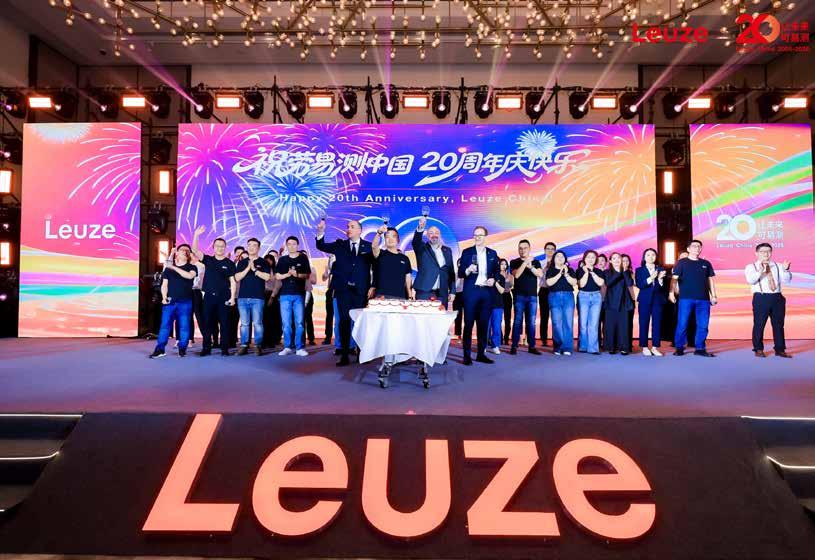
“True partnership means moving forward together through both opportunities and challenges,” Yang added, praising the professionalism and responsiveness of the Leuze team.
Strengthening global cooperation in automation technologies
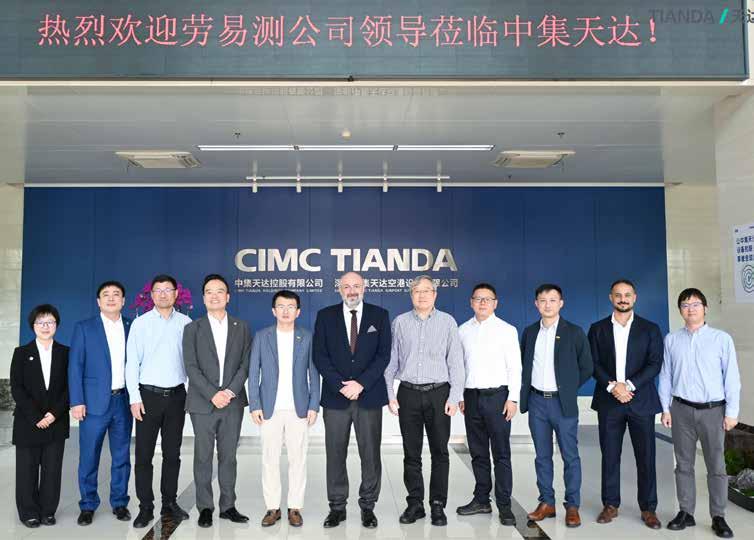
On March 12, CIMC Tianda welcomed Salvatore Buccheri, Global Chief Sales Officer of Leuze, and Steven Zhang, Managing Director of Leuze China, to its Shenzhen headquarters.
Under the witness of leadership teams from both companies, Benson Yang and Salvatore Buccheri officially signed the renewal of the Global Strategic Cooperation Agreement.
The renewed agreement focuses on deeper integration between sensor technology and intelligent logistics equipment, aiming to deliver smarter, safer, and more efficient automation solutions for global customers.
“We are more than business partners — we have grown together in Shenzhen over the past two decades. True partnership means moving forward together through both opportunities and challenges.”
Combining system integration with sensor technology
Founded in Germany in 1963, Leuze is a global pioneer in industrial automation sensors and safety technologies. With more than 1,600 employees worldwide and operations across numerous countries, the company provides advanced sensing solutions for logistics, manufacturing, and industrial automation.
CIMC Tianda, a global leader in intelligent logistics and aviation equipment, operates through specialized subsidiaries including CIMC Tianda Airport Support and CIMC Intralogistics. The company holds leading market positions in sectors such as air cargo systems and Passenger Boarding Bridges (PBB), supported
by a global business network.
By combining CIMC Tianda’s expertise in equipment integration and intralogistics systems with Leuze’s advanced sensing technology, the partnership creates a powerful ecosystem of hardware, software, and sensor integration.
Driving the future of smart intralogistics
Through this renewed partnership, CIMC Tianda and Leuze aim to jointly develop intelligent logistics automation solutions for a wide range of applications, including:
• Automated Storage and Retrieval Systems (AS/RS)
• Shuttle-based warehouse systems
• Automated Guided Vehicles (AGVs)
• Smart airport cargo handling systems.
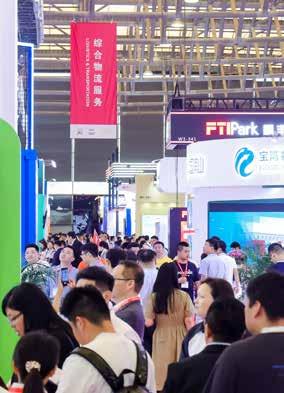
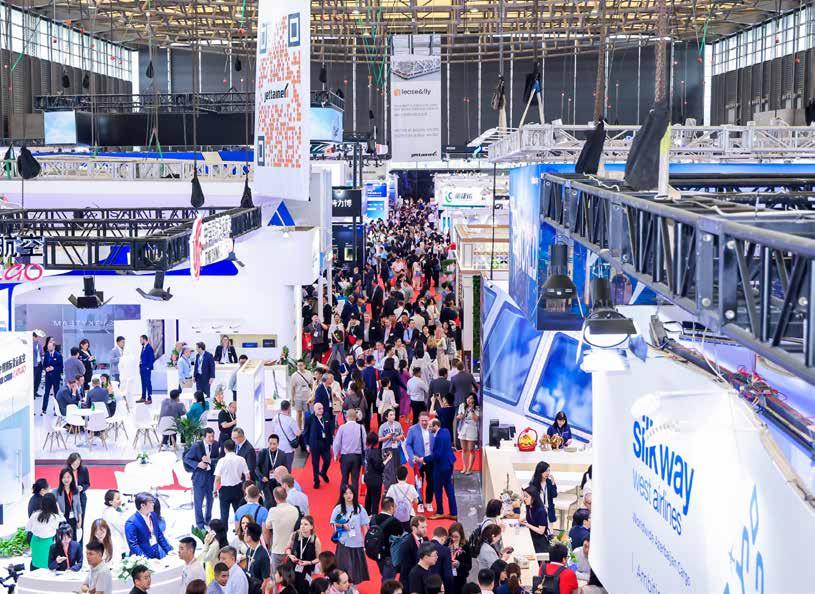
transport logistic China and air cargo China to expand exhibition space for 2026
Strong organic growth drives additional hall capacity and rising international participation
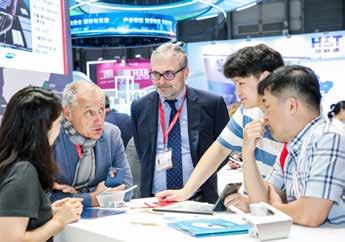
transport logistic China and air cargo China will significantly expand their exhibition footprint in 2026. Around 850 exhibitors are expected, up from 794 in 2024, with more than 600 companies already registered. Visitor numbers are projected to rise from 36,000 in 2024 to approximately 40,000 in 2026.
The growth is primarily driven by strong organic development in the air cargo segment, while transport logistic also continues to expand steadily. To meet rising demand, organizers are adding more hall space. Air cargo will extend beyond Hall W5 into Hall W4, and Hall W1 will be added to provide more exhibition space for the transport logistic segment.
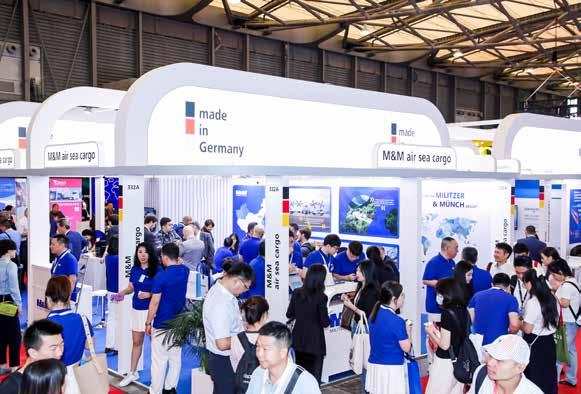
International participation continues to rise. Around 50 countries are expected in 2026, up from 42 countries in 2024. Five country pavilions are currently planned, representing Germany, Singapore, Slovenia, Saudi Arabia and Turkey.
The 2026 edition will feature a clearly structured hall layout. Hall W4 now houses the expanded air cargo exhibition area alongside the established logistic service provider exhibitors. Hall W3 will present key focus areas including project cargo and tank container solutions, alongside more logistics service providers and forwarders. Hall W2 will centre on rail logistics, highlighting the growing relevance of the China Europe Railway Express. Hall W1 will introduce a new focus on road transport and house a Truck Ecosystem Pavilion, organized by Messe Muenchen Shanghai together with G7 Connect to show the innovative future of road transportation.
By integrating rail, road, air, sea and project cargo solutions under one roof,
the event continues to strengthen its multimodal profile as a key business platform for the Asian logistics market.
“The strong exhibitor growth toward 2026 clearly reflects the market’s confidence in both the transport logistic China event and in China as a key logistics growth engine,” said Dr. Robert Schönberger, Global Industry Lead at Messe München.
“Participation here means being close to one of the world’s most dynamic supply chain markets. With its clear focus on multimodal solutions and expanding international reach, the event has become a strategic platform for companies looking to unlock long-term opportunities in Asia.”
Visitor registration for transport logistic China 2026 is now officially open, allowing attendees to secure their free of charge participation through early pre -registration. To pre-register, visit www.transportlogisticchina.com
The Strait of Hormuz changed overnight. Has your risk management?
The Strait of Hormuz changed overnight. Vessels stopped moving. Carriers invoked force majeure. Rerouting costs landed without a clear answer for who absorbs them. Insurance policies assumed solid turned out to have clauses nobody had read. This is not an insurance failure. It is a risk management failure.
Migle Matelionyte has spent over thirteen years at the intersection of logistics operations, underwriting, and maritime law. She sees preventable losses every week — claims that should never have happened, companies exposed to consequences nobody explained before the shipment moved. In these unprecedented times, staying silent is not an option. The price of doing nothing is too high for everyone. That is why, for as long as there is urgency for timely knowledge, she runs a free industry webinar every other week — “Who is Liable for What: Carrier Liability, Exclusions & Insurance Explained.”
The misconception that costs millions Carriers are not fully liable for your cargo. Under Hague-Visby, CMR, and Montreal conventions, carrier liability is capped — almost always at a fraction of commercial cargo value. The most dangerous misconception is that the freight forwarder’s liability insurance fills that gap. It does not. Logistics operator liability insurance covers the legal liability of the logistics company — not cargo value. Confusing them is the reason claims go unpaid.
Migle Matelionyte is Founder and CEO of SureForth Risk Partners and Director Middle East & Europe at World Insurance Services (WIS), part of the WCAworld logistics network. She organises free workshops for the supply chain and logistics industry every two weeks, for as long as the urgency and the need for knowledge remain. Details of upcoming sessions are published on her LinkedIn profile.


Standard Trading Conditions are a matter of company survival. Without communicating limitations of liability, logistics operators risk exposing themselves to claims for full cargo value while transporting millions daily. In her newsletter Logistics Risks Simplified, Migle published a free template disclaimer setting out these limitations and the cargo owner’s responsibility to arrange their own cover. Use it. Send it. Make sure it is seen before the shipment moves.
When an incident occurs, the key question is whether the logistics provider had reasonable control — whether the loss arose from something within their power to prevent, or circumstances outside their custody and control. International conventions carry built-in exclusions — acts of war, public enemies, inherent vice, force majeure — outside the scope of logistics liability. Knowing they exist is the first step to relying on them.
What war risk cover on cargo insurance actually does — and what it was never designed to do
War risk cover sits as a standard extension on most cargo policies — rarely read, never discussed until it becomes the only thing that matters. For years it cost very little. Insurers carried it comfortably because warrelated losses were remote. That calculation has changed.
When a region is designated a war risk zone, insurers invoke the seven-day cancellation clause — encountered by most policyholders for the first time right now. Sometimes that means unwillingness to cover at any price. More often it means the risk has changed so fundamentally that the original premium no longer reflects reality — and it can change daily. This is repricing, not refusal. The difference matters enormously to a cargo owner who assumes the door is closed when it may simply require a new key.
The moment a region is considered high risk, war cover for cargo travelling
through it, or to and from it, is no longer automatically granted. It must be specifically requested. If you have not had that conversation with your provider, now is the time.
If you need to go further
Dealing with an active claim, an insurance programme you question, or contracts with subcontractors and warehousemen — where Migle almost always finds the insurance and liability clauses addressed wrongly — SureForth Risk Partners is the contact you need. SureForth brings together maritime law, logistics operations, and underwriting expertise to give businesses a complete view of their exposure. For companies without a dedicated risk function, SureForth can act as your outsourced risk manager. Sometimes one consultation at the right moment changes the outcome. You do not have to navigate this alone.
Prevention is the work. Everything else is damage control.
A new Lion King
• MAN Truck & Bus is making a big splash in the heavy-duty transport sector with the launch of its new TGX 41.640 8x4/4 heavy-duty tractor unit with a gross vehicle weight of 250 tons.
• MAN celebrates the world premiere of the new 250-tonne heavy-duty tractor unit as a series solution ex works
• New heavy-duty truck is built as a complete vehicle at the Munich and Wittlich production sites
• Top TGX expands MAN portfolio to 3.5 to 250 tons
• First customer vehicle goes to MAN rental partner BFS
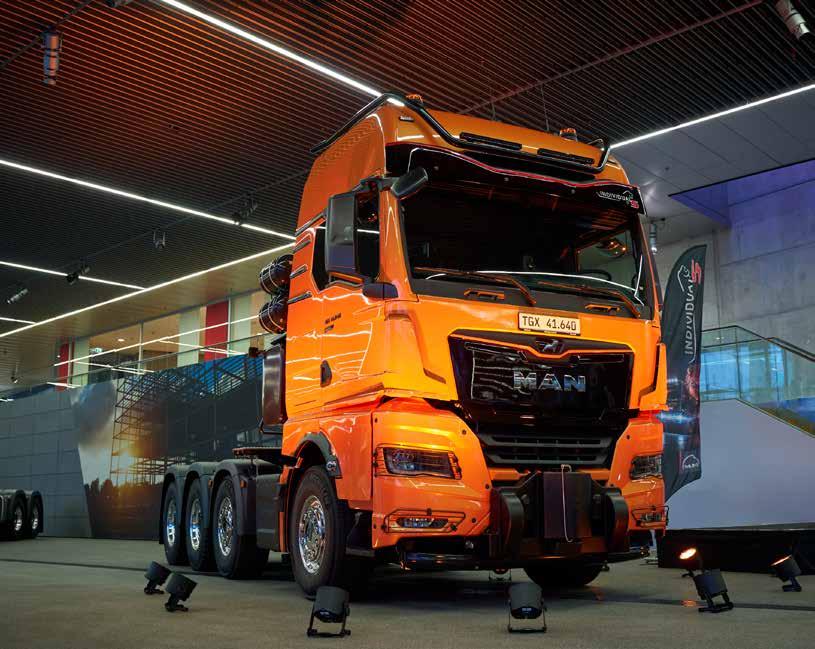
MAN Truck & Bus is making a clear statement in the premier class of heavy-duty transport with the launch of a new TGX 41.640 8x4/4 heavy-duty tractor unit with a gross vehicle weight rating of 250 tons. The 640 hp four-axle vehicle easily moves large turbines weighing hundreds of tons for wind turbines, high-voltage transformers or entire submarines. Among other things, the MAN TGX features a torque converter clutch, a special gearbox designed for extreme loads and powerful hydraulic and compressed air systems that enable precise steering and leveling of the 30 or more axles of heavyduty trailers in any driving situation.
The new heavy-duty range is a complete factory solution from MAN Individual: the four-axle base vehicle is produced at the Munich plant and then equipped with heavy-duty couplings, reinforced cooling and diesel and hydraulic tanks at the MAN Truck Modification Center in Wittlich.
The high-performance truck comes with the same comprehensive after sales, warranty, and financing services as all series vehicles. This makes MAN one of the few providers of series-based complete solutions from 3.5 to 250 tons and covers every transport task from light to heavy with the TGE, TGL, TGM, TGS and TGX models – also fully electric on request from 12 to 42 tons.
Friedrich Baumann, Executive Board Member for Sales & Customer Solutions at MAN Truck & Bus, unveiled the new tractor unit in the presence of around 80 international heavy-duty transporters: “With our new 250-ton tractor unit, we are returning to the supreme discipline of heavy-duty transport. Thanks to MAN Individual’s expertise, we are offering our customers a highly specialized vehicle that combines maximum performance, reliability and economy in one package. In doing so, we are once again sending out a strong signal to simplify our customers’ business.”
MAN has delivered the first new 250-tonne heavy-duty TGX to the German rental specialist BFS. The dark blue tractor unit is available for heavy-duty transport companies that require vehicles at short notice for particularly heavy-duty operations.
“We are very proud to have the very first of these special high-performance trucks in our fleet! It is the perfect
“We are very proud to have the very first of these special high-performance trucks in our fleet! It is the perfect flagship for our special vehicle rental fleet and another highlight in our 60-year partnership with MAN”
– Jan Plieninger, Managing Director of BFS.
flagship for our special vehicle rental fleet and another highlight in our 60-year partnership with MAN,” says Jan Plieninger, Managing Director of BFS. He and his team are cooperation partners of MAN for commercial vehicle rental: from standard models and special vehicles to 250-ton trucks – with flexible short to long-term rental and supported by a comprehensive service network of over 90 MAN-owned workshops in Germany, Switzerland, Croatia and the Netherlands.
New 250-tonne TGX: designed for extreme heavy-
duty applications
At the heart of the new heavy-duty model is the MAN D3876 in-line six-cylinder engine with 640 hp and 3,000 Nm torque, available in a wide range from 900 to 1,380 rpm¹ - ideal for high loads at low speeds. The torque converter clutch (WSK) integrated into the automated MAN TipMatic 12.30 OD gearbox enables low-wear, powerful starting with up to 1.59 times more torque and sensitive manoeuvring. In addition, the Retarder 40 ensures high continuous braking performance and thermal stability. Special TipMatic programs provide support during operation: the Heavy Transport program for loads up to 250 tons, the Efficiency mode for loads up to 70 tons with particularly economical fuel consumption.
Integrated heavy-duty equipment ex works
MAN bundles the central heavy-duty components in a heavy-duty tower behind the cab. It contains four pressure tanks for 160 litres of additional air supply, a 960-liter diesel tank and the 290-liter tank for the two-stage heavy-duty hydraulics. This delivers pressures of up to 300 bar, works with a load-sensing system and provides 20 or 40 l/min of oil independently of the load – depending on the requirements of the axle steering systems. A heavy-duty
transport cooler is also integrated into the heavy-duty tower, which keeps the engine temperature stable even at low speeds and high engine loads.
The JOST JSK 38 C fifth wheel (3.5”) is mounted on the frame, with an 800 mm shifting device as standard for optimum load distribution. For use in pushing or pulling operations, the vehicle has a front register coupling with three height levels. At the rear, the ROCKINGER 56 EA can be fitted as an option, whose automatic locking mechanism enables comfortable and reliable coupling even on uneven terrain.
Design, comfort and individualization with MAN Individual
The tractor unit is also available with the MAN Individual Lion S equipment package as an option. This includes exclusive design elements such as carbon applications, black aerodomes, red accents and high-quality interior details such as Alcantara seat covers, decorative stitching and red seat belts. A 24inch television or an electrically adjustable TV recliner are available as options, as is ambient lighting - elements that make every day driving much more pleasant, especially on long journeys.
Service and financing portfolio up to 250 tons
MAN complements the new heavy-duty model with a comprehensive service and financing portfolio: this includes MAN Service Contracts, Extended Warranty and the Uptime Guarantee as well as digital services such as Perform, Compliant M, Timed and ServiceCare. The global service network with around 1,670 locations in over 140 countries ensures rapid support. Flexible financing and insurance models from MAN Financial Services – including Hire Purchase and PremiumCover – offer additional planning security, especially for heavy-duty customers.
Situated at the crossroads of global commerce, the GCC is tied to one of the world’s most important trade corridors, the Red Sea, which carries 12% of global trade. Regional economies are diversifying, strengthening their role in international supply chains and investing in advanced manufacturing and distribution zones. In turn, warehouse operators face mounting pressure to increase speed, resilience, and efficiency. Against these structural shifts, Swisslog highlights five warehouse challenges that automation is positioned to solve across MENA by 2026.
1Labour shortages and rising costs
Warehouse processes such as picking and palletising can account for up to 60% of operational costs, with labour representing more than half of total warehouse expenditure. In high-demand logistics corridors, large turnover in manual roles and increasing wage expectations are intensifying pressure on operators to do more with fewer people.
High-density robotic systems, such as AutoStore, can perform the work of four or five manual pickers with 99% accuracy. Across the region, similar goods-to-person and mobile robotic solutions are reducing dependency on seasonal labour and lowering error rates that lead to costly returns. By redesigning workflows around automation, operators are shifting talent into higher-value supervisory and technical roles while protecting margins from escalating labour costs.
2E-commerce growth and peak volatility
E-commerce in MENA continues to expand rapidly, with the regional market projected to reach AED183.6 billion by 2028. Major peak events such as White Friday, 11.11, and Eid create demand spikes that manual
Five warehouse challenges automation will solve in MENA by 2026
operations cannot absorb through hiring alone. Robotics and automated storage and retrieval systems are expected to manage up to half of all orders in leading grocery and e-commerce environments, with fulfilment times projected to reduce from several hours to 30 minutes by 2028.
Integrated omnichannel facilities allow retailers to combine store replenishment and direct-to-consumer fulfilment within a single inventory pool. Shuttle systems and automated sortation enable dynamic allocation of stock between channels, while advanced warehouse control platforms synchronise robotics, manual workstations, and packing lines in real time. This allows operators to scale throughput during peaks without duplicating infrastructure.
3
Space constraints and rising industrial rents
Warehouse space near ports, airports, and major urban centres like Dubai and Riyadh is scarce and expensive. Here, optimising cubic capacity rather than expanding square metres is a competitive advantage. Automated storage and retrieval systems can maximise floor space utilisation by up to 85%, while compact grid-based and shuttle technologies allow operators to store up to four times more inventory than conventional racking within the same footprint. Increased density also reduces travel distances for both people and robots, boosting throughput and improving accuracy.
Extending the life of an existing facility through vertical and high-density storage offers a more viable financial path than relocation or greenfield construction.
4Food security and cold chain resilience
Governments are investing in local production and advanced logistics to reduce dependency on imports and minimise food loss, which globally approaches 30% before
reaching consumers.
Automation strengthens this resilience through precision handling, traceable storage, and reduced waste. In food and grocery environments, automated systems sustain pick accuracy above 99% while multiplying output, enabling retailers to meet growing online grocery demand without compromising freshness. Multitemperature automation solutions now allow fresh, frozen, and ambient products to be stored within coordinated systems, eliminating the need for separate cold rooms and streamlining replenishment. As temperature-controlled logistics expands to pharmaceuticals and biotech, these technologies are becoming foundational to quality assurance across the cold chain.
5Energy efficiency and sustainability mandates
National strategies such as the UAE Net Zero 2050 agenda and Saudi Arabia’s Vision 2030 are reshaping performance expectations for industrial facilities. The UAE–Ecuador CEPA promises $3 billion in renewable energy and clean technology investments, while Saudi Arabia’s Public Investment Fund has committed approximately $8.3 billion to develop 15,000 MW of renewable energy projects. These developments are prompting warehouse operators to integrate cleaner power sources into logistics infrastructure.
Automation technologies such as high-bay stacker cranes equipped with regenerative braking modules reduce energy consumption compared to conventional equipment, with many robotics drawing less than 0.1 kW per hour. Automation also enables more compact warehouse designs that limit the need for energy-intensive lighting, heating, and cooling. When paired with on-site renewable generation such as solar power, facilities can significantly lower carbon intensity while improving operational performance.
IVECO T-Way units to Gulf Leading Logistics Services in Oman
IVECO and Muscat Overseas deliver to Gulf Leading Logistics Services 16 IVECO T-Way, the most reliable and productive heavyduty truck to face the toughest off-road missions
IVECO and Muscat Overseas, IVECO dealer in Oman, just delivered 16 units of IVECO T-Way to Gulf Leading Logistics Services (GULLS) at the facility of Muscat Overseas. A delivery ceremony was held for this occasion.
The 16 units are all IVECO T-Way, model AT 720T47TH equipped with low bed semitrailer with generator and crane and will join the GULLS fleet for the operation in oil fields.
GULLS company is specialized in the transportation of heavy machinery, lifting solution and tipping semitrailers.
Fouad Al Harthi, Founder and CEO of GULLS, commented: “We have good record with IVECO, that’s why we chosen its vehicles for this heavy-duty mission. We look forward to strength the relation with IVECO and Muscat Overseas as we have several plans for 2026”.
Marco Torta , IVECO Business Manager for Oman, added: “We have a long relation with Gulf Logistic Oman, that appreciates the performance and reliability of our trucks and the after sales operations assured by our dealer, that has one of the best team in the country”.
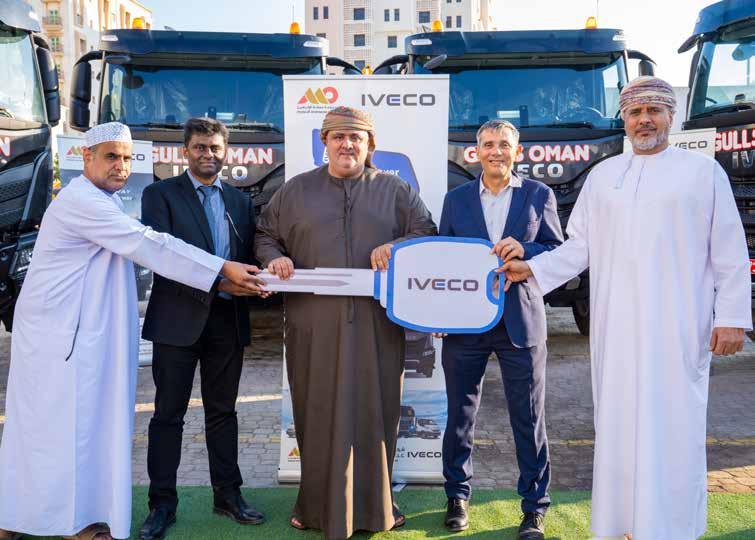
IVECO T-Way: the most reliable and productive heavy-duty truck to face the toughest challenges
The IVECO T-Way builds on the heritage of robustness and reliability of the brand’s long lineage of champion offroaders. It introduces state-of-the art technological solutions to exceed all expectations in productivity, payload capacity, safety and driver comfort.
“T” FOR TOUGH: designed and engineered for robustness and reliability
The IVECO T-Way has been designed to offer best-in-class performance in every off-road mission, robustness and torsional rigidity. It carries over from its predecessors the legendary robustness of the high-resistance steel chassis with a 10mm thick frame, with a Rail Bending Moment at the top of the segment at 177 kNm. The front axle has a maximum capacity of up to 9 tons.
Hub reduction on the rear axle is standard to maximize strength and performance.
The new heavy-duty rear suspension system for Tandem axles optimizes vehicle weight and improves off-road performance with greater ground clearance and a better departure angle.
The IVECO T-Way delivers all the power needed for traction and PTO with IVECO’s reliable and efficient Cursor 13 engine (13 litres) that develops up to 470 horsepower.
The engines are coupled with the proven 16-speed HITRONIX automated gearbox, which now also features new functions specifically intended for off-road mobility including a Hill Holder function to help departure on steep slopes, Rocking Mode to help recover traction in slippery conditions and Creep Mode for ultra-low speed when idling; for the onroad sections of the mission, the Ecoroll, function that uses the vehicle’s inertia when travelling downhill enhances the transmission’s efficiency.
HI-TRONIX represents the state-of-art in the automated transmission sector and delivers the perfect gearshift strategy for every application.
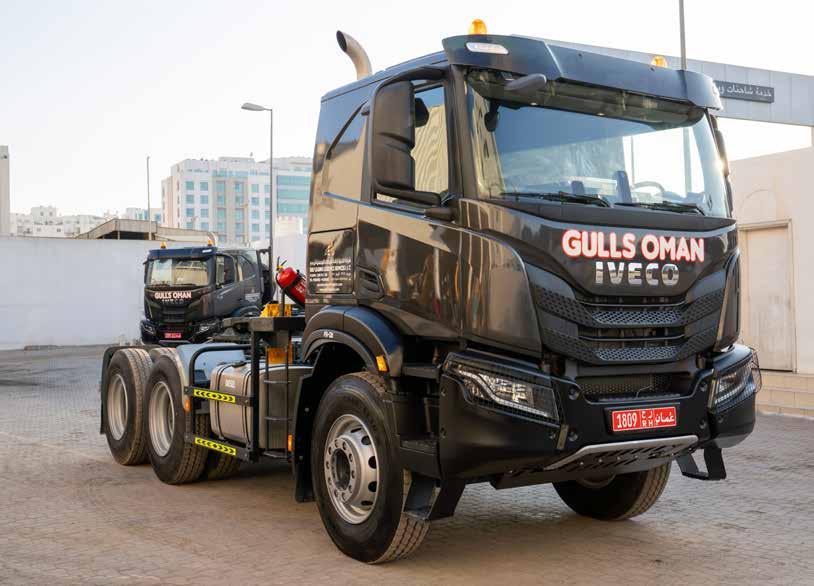
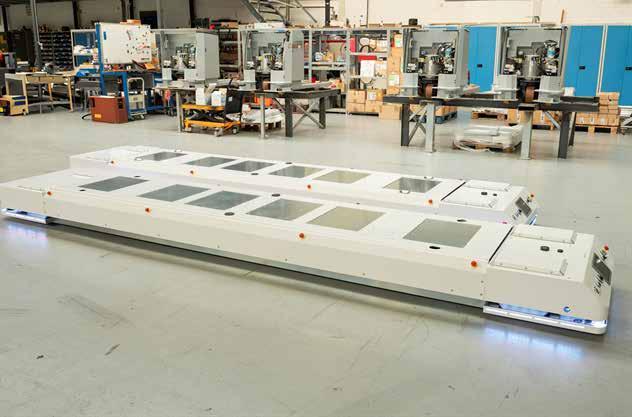
Dutch company starts production of Hexabot AGV
Dutch automated guided vehicle developer AGV International has started commercial production of its new Hexabot T506 autonomous guided vehicle (AGV), after a successful trial with a customer in the Netherlands.
The electric Hexabot T506 has been trialled by plastic piping manufacturer DKYA Nederland for the last month, after an extensive period of development.
It has been designed for heavy loads, demanding warehouse and production environments, with a 2.5T load capacity, a lift height up to 200mm and operates on a lithium-ion battery.
The Hexabot T506 measures 4,500mm long, 800mm wide and 310mm high, with the compact chassis making it suitable for use in narrow operations.
It features advanced navigation and safety architecture including automatic LED lighting, control current key switch, emergency stop buttons and T10 joystick contact point.
AGV International says the move into production of the T506 marks a major milestone in autonomous intralogistics, where power, precision, and intelligent control converge in one compact, industrialgrade omnidirectional lifting platform AGV.
“The first AGVs are the most difficult and the lessons are enormous,” the family business states. “But now there is certainly something beautiful!
“With the birth of the Hexabot T506, we focus on the market of LiDAR controlled AGVs.”
Beyond the technical specifications, the launch of the Hexabot T506 signals a broader shift within the European intralogistics sector. As warehouses and production facilities face increasing pressure to automate, AGV International’s move into commercial manufacturing positions the company as a serious contender in a rapidly evolving market. Demand for compact, high capacity AGVs has grown sharply in recent years, driven by labour shortages, rising operational costs, and the need for continuous, predictable material flow. The T506 appears to be AGV International’s answer to these challenges, combining a heavy duty lifting platform with a footprint small enough to navigate tight aisles and dense storage layouts.
The successful trial at DKYA Nederland also underscores the vehicle’s readiness for real world deployment. Plastic piping production involves bulky, weighty loads and a demanding operating rhythm— conditions that often expose the limitations
of early stage automation. That the Hexabot T506 performed reliably over a month long test suggests that AGV International has refined both its hardware and software to a level suitable for industrial scale use. The company’s emphasis on LiDAR based navigation further reflects a trend toward more precise, adaptive guidance systems capable of functioning in dynamic environments without the need for fixed infrastructure.
AGV International’s comments about the difficulty of developing its first AGVs highlight the steep learning curve faced by smaller automation manufacturers. Yet the firm’s persistence appears to have paid off. By bringing the T506 into production, the company is not only expanding its own portfolio but also contributing to the diversification of the AGV landscape, which has long been dominated by larger multinational suppliers.
As the Hexabot line matures, it will be interesting to see how AGV International scales its manufacturing capacity and whether additional models will follow. For now, the T506 stands as a notable milestone for the Dutch developer and a promising new option for operators seeking robust, intelligent, and space efficient autonomous transport solutions.
Our SynQ software delivers data-driven intelligence that empowers your business by synchronizing the performance of your people, processes and machines. The result is a level of efficiency and performance you never thought possible.
swisslog.com
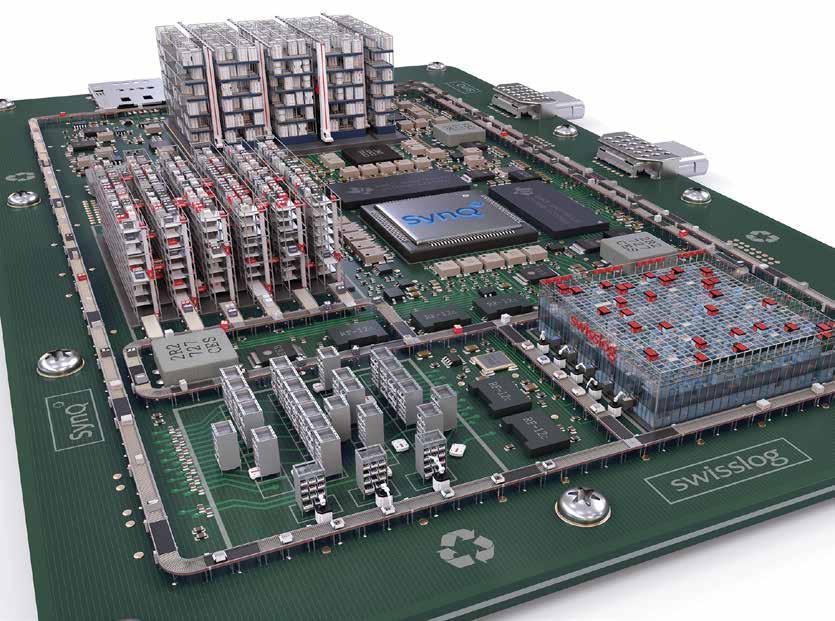
IFS launches IFS.ai Logistics, transforming enterprise transport management with Industrial AI
IFS.ai Logistics unites AI-driven planning, zerotouch execution, freight audit, and network optimisation into a single closed operational loop – turning logistics from a hard-to-govern cost centre into a strategic advantage.
IFS, the leading provider of Industrial AI software, recently announced the launch of IFS.ai Logistics, an AI-powered logistics intelligence platform purpose-built for enterprises operating complex, multicarrier, multi-region transport networks. The new solution extends Industrial AI into the physical movement of materials and goods – the operational heartbeat of industrial enterprises worldwide. IFS already manages $2.4 trillion in critical assets for its customers; IFS.ai Logistics adds the logistics intelligence layer that connects operational decisions to financial outcomes across the full supply chain.
Building beyond 7bridges technology, which was acquired in 2025, IFS.ai Logistics delivers a single closed operational loop spanning transport planning, automated execution, freight audit, cost governance, and continuous network optimisation. It operates within IFS Cloud, alongside Enterprise Asset Management, Field Service Management, Enterprise Resource Planning and Supply Chain Management and is composable with third-party platforms, reducing adoption friction for enterprises managing complex multi-system environments.
Overcoming costly logistics blind spots
Enterprises today spend five to ten percent of revenue on transportation, yet logistics remains one of the hardest costs to govern. Data is fragmented across carriers, regions, legacy systems and spreadsheets. The result: logistics teams in reactive mode, unable to act on data they cannot see,

trust, or compare. For large manufacturers and logistics providers, a one-percent inefficiency in freight spend can represent tens or hundreds of millions of dollars in avoidable annual cost. Against a global logistics market valued above $9 trillion today and projected to approach $20 trillion within the decade, the industry needs structural transformation, not incremental automation.
IFS.ai Logistics addresses this directly across four capability areas:
• AI-driven transport planning and carrier selection replace manual decisionmaking with intelligence-led optimization across modes, legs, and trade lanes.
• Zero-touch automated execution eliminates booking errors and operational overhead with real-time shipment visibility and intelligent exception handling.
• A finance-grade freight audit engine validates every invoice at line-item level, applying automated GL coding, surfacing billing discrepancies, and managing dispute

workflows to recover leakage.
• A network intelligence and simulation layer enables continuous what-if scenario modelling, from carrier strategy and cost forecasting to emissions planning and procurement consolidation.
Underpinning all four capabilities is a logistics-native data model that standardises and harmonises fragmented transport data into a single trusted intelligence layer with one source of truth for reporting, forecasting, and continuous network improvement.
Philip Ashton, President, IFS.ai Logistics, commented: “Logistics is one of the largest, most frequently disrupted and leastgoverned cost categories in global industry, and the consequences show up directly

in EBITDA. Over the last five years we have seen that when AI is applied at scale, directly inside specific industry applications, like enterprise logistics operations, customers can capture value within weeks – they begin to protect margin, improve service reliability, and increase operational agility. With IFS.ai Logistics, this is exactly what we are delivering: an AI-driven platform that closes the loop between every operational logistics decision and its financial consequence. This is Industrial AI applied where it matters most.”
The launch of IFS.ai Logistics builds on IFS’s continued expansion across the physical supply chain. Alongside solutions such as the recently acquired IFS Softeon for warehouse management and fulfillment,
IFS.ai Logistics introduces an intelligence layer that connects transport planning, automated execution, freight audit, and network optimization. Together, these capabilities help organisations create a more connected flow of materials and goods from warehouse operations through to final delivery, enabling more informed decisions across inventory, fulfillment, carrier selection, transport execution, and freight cost management.
Keith Kirkpatrick, VP & Research Director, The Futurum Group, commented: “Futurum’s research shows that nearly half of enterprise decision-makers are planning agentic AI deployments in supply chain management, and the supply chain software segment is accelerating toward double-digit annual
growth through 2031. Yet the current vendor landscape remains dominated by legacy planning and execution tools that were never designed for AI-native intelligence. IFS.ai Logistics addresses a genuine market gap - bringing closed-loop AI across transport planning, execution, audit, and optimisation into a single platform. For industrial enterprises spending five to ten percent of revenue on freight and transportation, the ability to connect every logistics decision to its financial consequence is transformational.”
The announcement comes at the first event in IFS’s global Connect 2026 series, where IFS customers and partners come together to accelerate Industrial AI adoption from concept to competitive advantage.
Oman-Dubai green corridor to push diverted cargo
n Dubai Customs and the Directorate General of Customs in the Sultanate of Oman have activated a temporary “green corridor” to facilitate the movement of diverted cargo shipments between Dubai and Omani ports via land routes, a move aimed at sustaining trade flows and easing pressure on regional supply chains.
The initiative, announced on March 14 under Dubai Customs Notice No. 04/2026, reflects close coordination between the two customs authorities and is intended to ensure the smooth handling of shipments that have been redirected to Omani ports under exceptional circumstances. The measure highlights the strong operational cooperation between the UAE and the Sultanate of Oman in maintaining the continuity of regional trade.

Under the arrangement, containers originally destined for Jebel Ali Port but arriving instead at Omani ports will be allowed to move quickly to Dubai through bonded land transport after completing simplified customs procedures in Oman. The mechanism is designed to reduce delays and provide a streamlined channel for logistics operators handling diverted cargo.
Once processed by Omani customs authorities, the containers will be
Saudi Arabia readies 500,000-truck fleet for smooth GCC freight movement
n The Transport General Authority (TGA) of Saudi Arabia has confirmed the full readiness of the kingdom’s fleet of over 500,000 trucks to maintain freight services and supply chain continuity, across the country and the wider Gulf region.
The land transport system, supported by 18,500 licensed companies, will serve as a vital link between ports, airports, industrial cities, and logistics zones, ensuring the smooth flow of goods across Saudi Arabia and the Gulf region.
This comes as part of the Logistics Corridors Programme launched by the Minister of Transport and Logistics Eng. Saleh Al Jasser at the Jeddah Islamic Port.
transported directly by bonded trucks to Jebel Ali Port. This approach allows cargo to continue its journey to Dubai with minimal disruption while maintaining regulatory oversight and customs compliance.
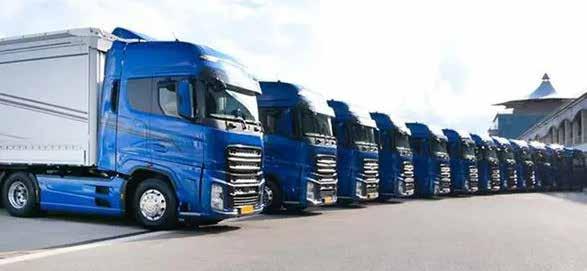
The program is aimed at ensuring the stability of trade routes with regional and global markets amid the ongoing Middle East conflict.
The launch was held during the minister’s inspection of the handling operations and supply chain activities at the port.
Speaking on the occasion, the minister said programme will also see additional operational corridors for receiving containers and goods diverted from the kingdom’s eastern ports as well as from the
ports of other GCC countries.
He noted that the handling operations and supply chain activities are operating with high regularity and efficiency to receive containers and goods smoothly and reliably.
Alternative logistics corridors
The minister stressed that Saudi Arabia possesses extensive experience in crisis management and dealing with geopolitical developments, enabling it to maintain the stability of trade and supply chains in the region.
Four Winds Saudi Arabia strengthens supply chain across the GCC with flexible logistics solutions
n Four Winds Saudi Arabia, a company specialising in comprehensive and integrated moving and logistics services since 1971, today reaffirmed its full readiness to ensure the continuity of supply chains for its clients and partners across the region in light of the evolving regional developments.
The company stated that it is closely monitoring regional developments through official channels and maintaining continuous coordination with relevant authorities, port operators, shipping lines, airlines, and service providers. These efforts aim to assess any potential operational impacts and take the necessary measures to ensure that logistics operations continue with efficiency and reliability.
In this context, Four Winds Saudi Arabia announced the availability of flexible and alternative logistics solutions for the GCC
countries, helping maintain the smooth movement of shipments and avoid potential disruptions in supply chains.
These solutions include:
• Air transit services through King Abdulaziz International Airport in Jeddah and King Khalid International Airport in Riyadh, enabling shipments to be transported quickly and efficiently to various destinations across the region.
• Sea transit services via Jeddah Islamic Port on the Red Sea, one of the region’s key strategic ports and a reliable option for rerouting shipments and ensuring the continuity of logistics operations.
The company confirmed that its operational teams are fully prepared to provide immediate support to partners and clients, offering flexible solutions that meet the requirements of the current situation while maintaining the highest
standards of operational safety and regulatory compliance.
Four Winds Saudi Arabia also invited all partners and clients seeking further information or coordination of urgent shipments to contact the company’s operations teams directly to ensure rapid response and appropriate logistical solutions.
The company reiterated its full commitment to its role as a trusted logistics partner, continuing to work toward minimizing any potential impact on its operational network and ensuring uninterrupted logistics services for its clients across Saudi Arabia and the wider region.
This step reflects the company’s proactive approach to safeguarding supply chain reliability and strengthening the readiness of its operational infrastructure in response to evolving regional conditions.
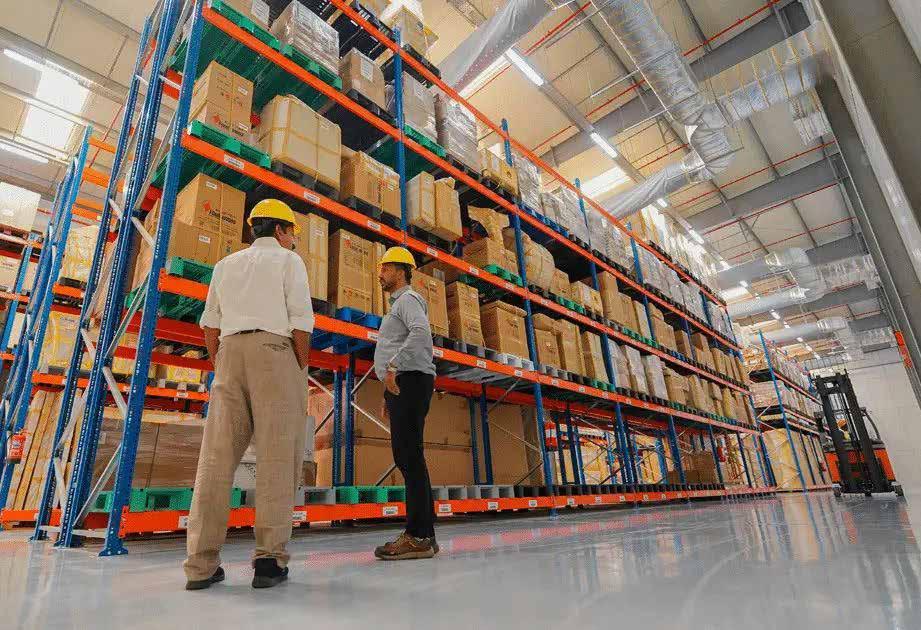
Etihad Rail reinforces role as reliable and essential channel for UAE trade
n Etihad Rail Freight services across the UAE’s national railway network continue to operate normally, ensuring the uninterrupted movement of goods throughout the country and supporting the resilience of national supply chains.
Over the past nine days alone, Etihad Rail Freight, one of Etihad Rail’s subsidiaries has operated more than 100 freight train trips, transporting more than 459,000 tonnes of cargo and over 7,900 containers across the network.
The network continues to provide reliable connectivity between key industrial zones, ports, and logistics hubs.
To further strengthen network resilience, additional rail corridors have been activated, with intermodal capacity
redeployed to East Coast ports. and Al Ghail Dry Port Rail Terminal supported by five additional train services. Operations remain fully aligned with established safety and operational protocols, while the company continues to coordinate closely with relevant authorities and monitor developments across the region.
Since the launch of commercial freight operations, the national railway has become an important component of the UAE’s logistics infrastructure, offering businesses a dependable, safe, and sustainable mode of transport that enhances supply chain efficiency and resilience.
Omar Alsebeyi, CEO of Etihad Rail Freight, said: “The UAE’s national railway
network was built to strengthen the resilience and reliability of the country’s logistics and supply chain ecosystem.”
He added: “Today, Etihad Rail Freight continues to play an important role in keeping goods moving across the UAE, ensuring businesses can rely on safe, efficient and dependable transport connectivity. Our teams remain fully mobilised and closely aligned with national authorities to ensure the continuity of freight services that support the UAE’s economy.”
Etihad Rail Freight continues to work closely with customers and partners across the logistics sector to ensure service continuity and will provide operational updates as required.
Saudi ports add five new shipping services amid Hormuz tensions
n The new services, launched in collaboration with major global shipping companies including MSC, CMA CGM, Maersk and Hapag-Lloyd, reflect the operational readiness and efficiency of Saudi ports in responding to regional developments.
The Saudi Ports Authority (Mawani) has introduced five new maritime shipping services amid ongoing tensions in the Strait of Hormuz. It aims to enhance logistics resilience and ensure the continuity of supply chains and cargo flows.
The new services, launched in collaboration with major global shipping companies including MSC, CMA CGM, Maersk and Hapag-Lloyd, reflect the operational readiness and efficiency of Saudi ports in responding to regional developments.
The added services — GULF SHUTTLE, REDEX, JADE, AE19 and SE4 — operate across multiple maritime routes linking Saudi ports with key regional and international destinations, expanding connectivity and improving logistics performance.
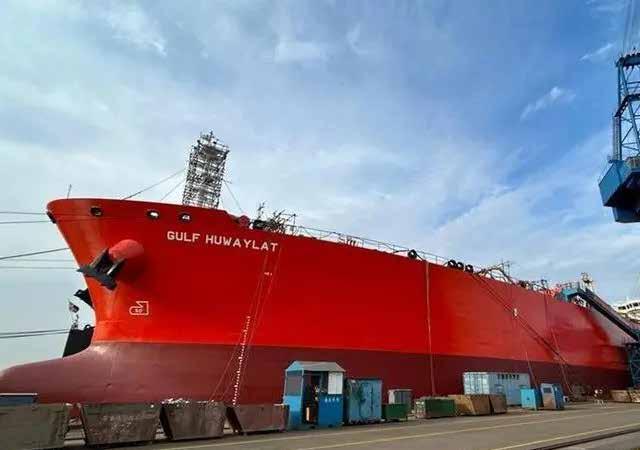
These services provide a combined capacity of approximately 63,594 twentyfoot equivalent units (TEUs), strengthening the operational capabilities of Saudi ports and offering greater flexibility for exporters and importers while supporting smoother trade flows.
The initiative is designed to mitigate the impact of disruptions affecting vital maritime corridors, particularly in the Strait of Hormuz, while also enhancing Red Sea
connectivity and improving overall supply chain efficiency.
It further supports the integration of Saudi ports and increases their capacity, reinforcing the Kingdom’s position as a global logistics hub.
Mawani said the move is part of proactive efforts to enhance the readiness of the maritime sector, ensure uninterrupted supply chains, and strengthen the reliability of Saudi ports as a key node in international trade.
ADNOC L&S confirms early delivery of LNG carrier ‘Arada’
n A 175,000 m³ liquefied natural gas (LNG) carrier constructed by Jiangnan Shipyard in China
ADNOC Logistics and Services plc (ADNOC L&S / the Company) (ADX symbol ADNOCLS / ISIN AEE01268A239), today confirmed the early delivery of Arada, a 175,000 m³ liquefied natural gas (LNG) carrier constructed by Jiangnan Shipyard in China.
Arada is the fifth of six newbuild LNG carriers ordered by ADNOC L&S as part of its ongoing fleet expansion program. Following delivery, the vessel has commenced operations.
Keith Mander, Manager of Marine Projects at ADNOC Logistics & Services (fourth from left), with crew members, and representatives from Jiangnan Shipyard marked the delivery of Arada at the shipyard in China.
ADNOC Logistics & Services Plc, listed on the Abu Dhabi Securities Exchange (ADX symbol ADNOCLS / ISIN AEE01268A239)
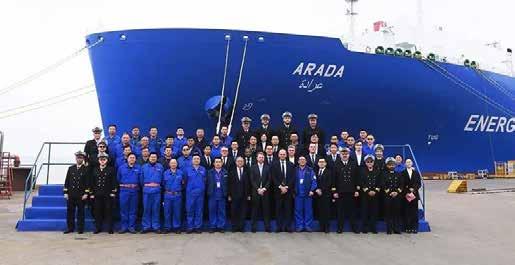
is a global energy maritime logistics company based in Abu Dhabi. Through its three business units – Integrated Logistics, Shipping and Services – ADNOC L&S delivers energy products and solutions to more than 100 customers in over 50 countries. ADNOC L&S’ key subsidiaries
include Zakher Marine International Holdings (100% ownership), an Abu Dhabi-based owner and operator of offshore support vessels; and Navig8 (80% ownership), a global ship owner and commercial pools operator also offering bunkering and ship management solutions.
Dubai’s DP World sets 2026 capex budget at $3bn
n Dubai-headquartered DP World has maintained its capital expenditure (capex) budget at almost $3 billion for 2026, with a focus on two local and four global assets.
Priority projects include Jebel Ali and Drydocks World in Dubai, Tuna Tekra (India), London Gateway (the UK), Ndayane (Senegal) and Jeddah (Saudi Arabia), the ports operator said in a statement.
Port capacity increased to 109 million twenty-foot equivalent units (TEU) with total gross throughput up 5.8 percent year on year (YoY) to 93.4 TEU last year.
The company’s capex for 2025 reached $3.1 billion, 24 percent higher than the $2.5 billion forecast for the year and 41 percent year on year (YoY).
Revenue rose 22 percent YoY to $24.4 billion, supported by strong performance across ports & terminals and logistics. Profit increased to $1.96 billion, 32.2 percent YoY.
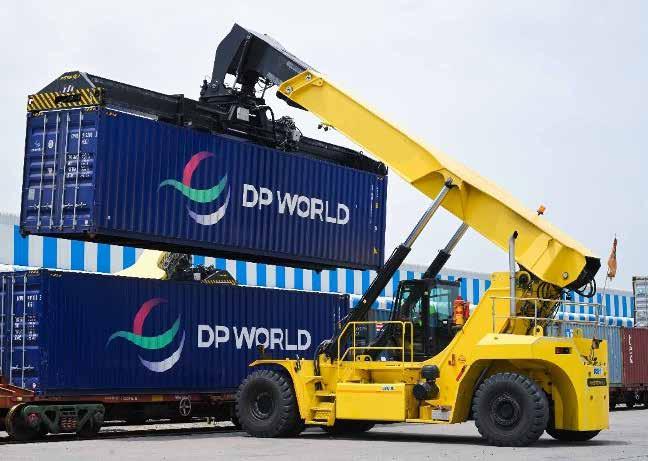

Yango Tech launches Industrial AI Agents to accelerate UAE’s digital workforce agenda
n Yango Tech, B2B technology solutions provider by Yango Group, launches a new business practice focused on developing and deploying autonomous industrial AI agents. These AI agents are designed to execute real operational tasks across customer service, analytics, compliance, and decision-making, serving industries such as fintech, medtech, e-commerce, logistics, smart cities, and the public sector. Yango Tech offers both ready-to-deploy solutions and a customizable platform for building AI agents tailored to the specific needs of each business. This new business direction addresses the rapidly growing demand across the Middle East for scalable
AI systems that deliver measurable business impact, as the region accelerates toward a projected $320 billion AI economy by 2030.
AI Agents connect directly to enterprise applications and data sources, including CRM, HR and finance systems, allowing AI to act like digital employees with memory, execution capabilities and built-in security. For governments and enterprises building digital workforces and smart cities, Yango Tech deploys AI employees across customer support, sales, recruitment and debt recovery, delivering 95% first-contact resolution, faster hiring and up to $100K in monthly operational savings. Its Smart City stack enables digital twins, emergency
navigation, mobility optimization and realtime urban analytics, helping municipalities accelerate decision-making, improve traffic flow, and reduce energy and operational costs through AI-powered city modelling and dispatch optimization.
In the medical world, Yango Tech reduces physician admin workloads through appointment transcription, smart search across electronic medical records, imaging analysis and AI and BI command centres. The solutions automate documentation, surface unified patient data in seconds, improve diagnostic accuracy and enable clinicians to treat more patients. In financial services, AI functions support front-, middle- and back-office transformation through AI-powered chatbots, smart search, credit scoring, anti-fraud analytics and workflow automation.
Commenting on the launch, Vladimir Razuvaev, Chief Executive at Yango Tech, said: “Enterprises today are under pressure to turn AI into practical outcomes. Our AI Agents were built to help organizations deploy autonomous digital employees that integrate securely into existing systems and deliver measurable productivity gains. With around 84% of GCC organisations adopting AI, the opportunity now lies in execution. Our vision is to help healthcare providers, banks, private firms and cities scale AI responsibly while strengthening performance, transparency and service quality.”
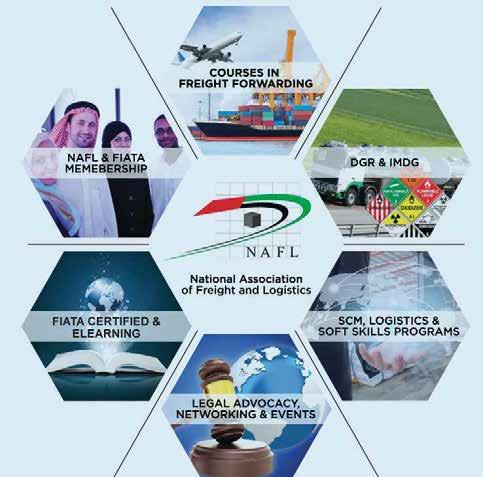
International Benefits:
+ The FIATA member certificate
+ Use of the Fiata logo
+ Entr y in the FIATA members directory & networking events
+ Advertising in the FIATA members directory, review and information (FIATA e-Flash)
+ Special Rates for FIATA publication and articles
+ Access to secretariat›s assistance
+ FIATA arbitration code
+ Use of FIATA documents
+ FIATA worldwide member connectivity
+ Talent Connect Worldwide, E-Learning

+ Discountes rates in participating in global and regional conferences
+ Asssistance in case of legal advocacy
+ Discounts for cargo/logistic events and exhibition stands
+ Discount training for NAFL members
+ Training/Certification for regional/international courses
+ Insurance at discounted rates (cargo/liability/medical)
+ Complimentary internship, Skill upgrade and Mentoring & Innovation ideas
+ Discounted supplier rates for industry products

Union Coop confirms stable supply chains and food security
n Union Coop confirmed that its food supply system is operating normally and that strategic stocks of essential goods and consumer products are sufficient to meet demand for extended periods.
The cooperative said supply and distribution operations are continuing according to approved plans, with ongoing coordination with federal and local authorities to ensure uninterrupted product flow to markets and stable availability across all branches and digital platforms.
Union Coop added that its inventory and supply chain management rely on proactive planning, close coordination with suppliers and continuous monitoring of market indicators and demand patterns to ensure readiness for any changes and maintain product availability.
Mr. Mohamed Al Hashemi, CEO of Union Coop, said the UAE’s food security remains a priority and confirmed that the cooperative’s strategic stock is stable while supply chains are operating normally. He added that Union Coop maintains an integrated supply management system that ensures the availability of goods under
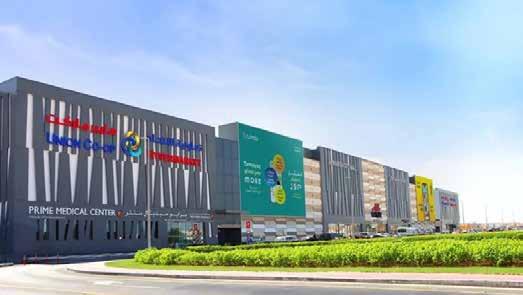
different circumstances, supported by continuous coordination with government authorities and supply partners.
Al Hashemi also said the cooperative continues to provide value to consumers through promotional campaigns and its Locked Prices program on a wide range of essential goods to support price stability.
GEODIS accelerates GCC cargo via air and road
n GEODIS will boost logistics in the GCC with flexible multimodal solutions that combine road and air transport, ensuring faster, reliable, and efficient movement of cargo for businesses. The company’s initiatives help reduce delays, improve predictability, and give supply chains greater flexibility in responding to shifting logistics trends.
Meanwhile, road freight along the Turkey–Syria–Jordan–Iraq corridor is running smoothly, providing a secure inland route for ongoing shipments. Inland routes further south remain stable, giving companies alternative options for uninterrupted transport.
Air hubs in Oman and Saudi Arabia expand capacity and speed up regional distribution. Bonded trucking connections from these hubs enable rapid delivery to the United Arab Emirates, Qatar, Saudi Arabia, and Bahrain, reducing congestions and supporting predictable timelines.
He stressed the importance of local production, describing it as a key pillar of the country’s food security system and a safeguard for supply chain stability. Union Coop, he said, continues expanding the presence of locally produced goods in its stores and strengthening partnerships with domestic producers to support the national economy.
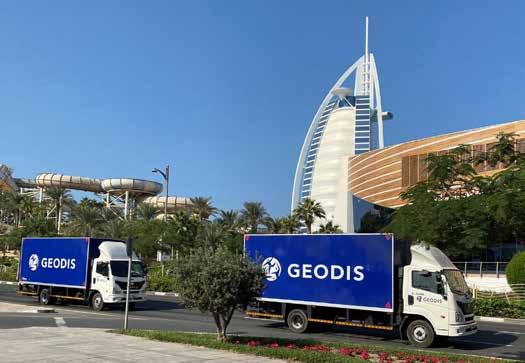


Dubai customs launches Corporate Resilience Program to strengthen readiness for a more competitive future
n Dubai Customs has launched its Corporate Resilience Program in a strategic step that reflects the organization’s direction toward strengthening organizational readiness and enhancing its ability to address global changes efficiently and proactively. The launch aligns with the organization’s vision to cement its position as a leading institution capable of adapting to international developments, ensuring business continuity, and safeguarding Dubai’s competitiveness as a global trade hub.
Leadership perspective
During the opening session, His Excellency Dr. Abdulla Busenad, Director General of Dubai Customs, said: “Amid the rapid transformations the world is witnessing today, corporate resilience is no longer an administrative option but a strategic necessity to ensure sustainable
performance, protect achievements, and enhance future readiness.”
He added that Dubai Customs’ Corporate Resilience Program represents an integrated organizational framework that strengthens the ability to anticipate and manage risks effectively, ensure business continuity, and enhance the organization’s readiness to respond flexibly and efficiently to various changes and scenarios. He emphasized that the program extends beyond policies and procedures, relying instead on an aware institutional culture, flexible operating systems, and human resources capable of making timely decisions.
Building an integrated resilience framework
The Director General noted that embedding institutional resilience
begins with a clear strategic vision and is reinforced through cross-sector collaboration, enhanced digital readiness, empowerment of national talent, and the integration of strategic planning with risk and opportunity management. He stressed the importance of adopting resilience as a sustainable operational approach rather than a temporary response to crises.
He concluded by underscoring that the program’s success depends on organizational commitment, integrated roles across sectors, and fostering a culture of shared responsibility and teamwork, saying: “We are developing an advanced institutional model that strengthens the protection of national interests, supports Dubai’s global competitiveness, reinforces the confidence of partners and customers, and keeps pace with change efficiently and proactively.”
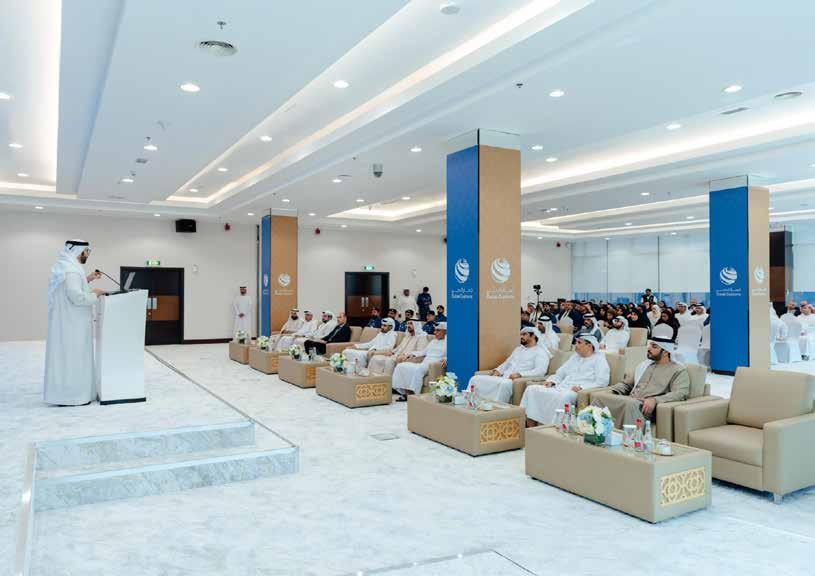











Aramex opens first regional healthcare hub in Dubai South
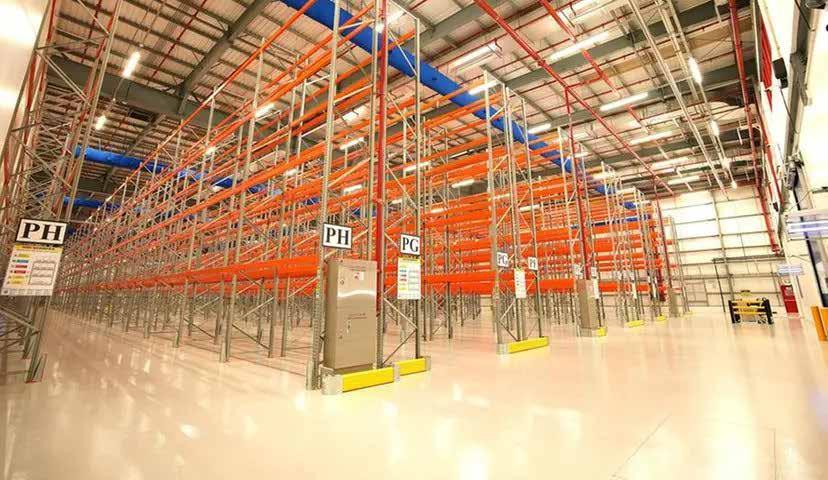
n Aramex has announced the opening of its dedicated regional healthcare and pharmaceutical hub in the Dubai South Free Zone, marking a significant expansion of its capabilities in the fast-growing life sciences and medical supply chain sector.
The announcement follows the recent certification of the warehouse by the UAE Ministry of Health and Prevention. Strategically located within the Free Zone, the facility is designed to serve as a comprehensive regional hub for healthcare and pharmaceutical companies seeking to leverage the Free Zone’s benefits.
Fadi Azzi, Senior Logistics Director, Aramex, said, “With the launch of our
dedicated healthcare hub, we are elevating the standards of pharmaceutical logistics in the region. Our goal is to provide healthcare partners with a resilient, compliant, and fully integrated supply chain that empowers them to serve patients with greater speed, safety, and reliability.”
The healthcare hub offers endto-end logistics solutions that help companies fully leverage the region’s strategic advantages while meeting the priorities of senior and operational leaders - enabling them to accelerate market growth; equipping supply chain, logistics, and operations managers with compliant, temperature-controlled
Oman Air Cargo on fuel and war risk surcharges
n In response to continued volatility in global aviation fuel markets and rising insurance costs linked to operations in elevated-risk or conflict-affected areas, Oman Air Cargo will introduce a Fuel Surcharge and War Risk Surcharge across its cargo network from 18 March 2026.
The measures reflect increased operating costs associated with fuel price volatility and higher insurance and security expenses linked to the current operating environment.
The War Risk Surcharge will be applied on a per kilogram basis, calculated using the chargeable weight stated on the Master Air Waybill.
The Fuel Surcharge will be determined using the US Gulf Coast Jet A1 price per gallon, based on data published by the U.S. Energy Information Administration,
and will be reviewed weekly in line with movements in global fuel prices.
Both surcharges will apply to shipments originating from, destined for, or transiting through the Oman Air Cargo network.
infrastructure that drives efficiency. It provides quality managers and pharmacists with a fully Ministry of Health (MHO) certified facility, operated to GDP standards and ISO-backed quality systems. Thus, giving healthcare providers a tightly regulated environment that safeguards product integrity throughout the distribution process.
Spanning 5,600 sqm, the hub is equipped with advanced temperaturecontrolled environments, including ambient storage, cold rooms, and freezer units capable of handling the full spectrum of pharmaceutical temperature requirements.
Oman Air Cargo will keep the surcharges under regular review and adjust them where necessary in line with changes in fuel markets, insurance costs, and the wider operating environment.
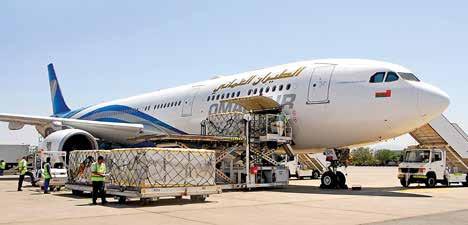
Abu Dhabi Customs continues to support operational sustainability, smooth cargo movement
n Abu Dhabi Customs continues, in light of developments in the region, to operate in continuous coordination with strategic partners and relevant authorities to support the sustainability of operations and ensure the safety of employees and customers, while maintaining the smooth flow of cargo and trade through the emirate’s customs ports.
As part of efforts to monitor the efficiency of operational processes and enhance the readiness of the customs system at key entry points to ensure business continuity with efficiency and flexibility in line with approved best practices, Rashed Lahej Al Mansoori, Director-General of Abu Dhabi Customs, reviewed customs operations at the Cargo Village of the Zayed International Airport Customs Centre.
Al Mansoori listened to field teams from Abu Dhabi Customs and reviewed their efforts in managing daily operations.
He also inspected operational sites to ensure the implementation of the highest security and safety standards, contributing
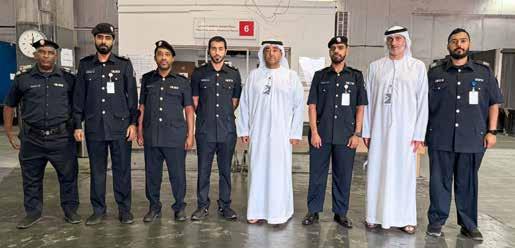
to the provision of an appropriate working environment. He emphasised the importance of adhering to the approved plans and procedures that ensure business continuity at the highest levels of readiness and operational efficiency.
The visit also included a meeting with representatives of cargo companies operating in the Cargo Village, during
Qatar Airways transports 300 tonnes of vital goods to Qatar since start of March
n Qatar Airways (QA) has made the necessary arrangements to ensure the arrival of essential goods to Qatar since the beginning of March, transporting nearly 300 tonnes of vital supplies to the country.
The shipments include medicines, baby milk, fresh food such as meat, fish, fruits and vegetables, medical equipment, and other essential food products.
In a statement issued recently, the airline said it has been delivering more than 200 tonnes of critical imports daily to Doha through flights operating from key global markets including Africa, Australia, Asia, Europe, India and Pakistan, as well as other international destinations.
The airline noted that despite the continued closure of Qatar’s airspace since February 28, it has continued to support the country by ensuring the uninterrupted flow of vital imports. Following temporary approval from the Qatar Civil Aviation
Authority for the partial resumption of air traffic through limited and safe corridors, the airline said it is operating cargo flights along these routes to support suppliers, traders and companies in maintaining the supply of essential goods to the country.
To facilitate this effort, Qatar Airways has
Customs’ commitment to providing the necessary support to facilitate business and accelerate cargo clearance procedures through the smart customs systems implemented in the emirate, enhancing the efficiency of logistics operations and reinforcing Abu Dhabi’s position as a global hub for trade and logistics services.
repurposed part of its fleet of 30 Boeing 777 Freighter aircraft to ensure the efficient delivery of vital commodities despite the current operational challenges. The airline stressed that the safe and rapid transport of essential goods remains a priority to maintain supplies for citizens and residents.
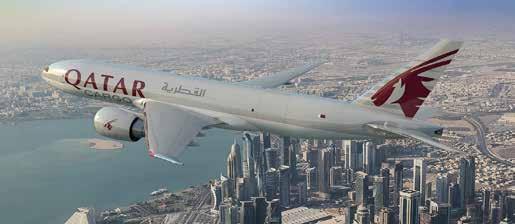
which Al Mansoori affirmed Abu Dhabi
“Keep everything balanced”
Ruth Waugh leads with a genuine commitment to people, progress, and purposeful growth. As General Manager of Twintec Middle East and VP Sales & Marketing for the Global Twintec Group, she focuses on delivering consistent performance and building lasting customer relationships. Within her team, she prioritises development, accountability, and open communication, creating a culture where people
Abigail Mathias: What’s your typical day like?
RW: I’m a morning person, so every day starts with a walk or workout to sharpen my focus. No two days are the same, priorities shift fast, but my time is split across client conversations and internal discussions covering everything from marketing and project negotiations to logistics, production planning, and cashflow. As a global organisation with time zones from USA to Australia – flexibility is key.

Are you a coffee or tea person? If so, how many cups
Tea, naturally …. I am English. I limit myself to about three cups a day, which in my world counts as “moderation.”
What do you do to keep yourself fit?
I’m a runner at heart, it keeps me fit and keeps me sane. I have a very sporty family, so staying active and being competitive comes naturally. I’m not a huge fan of the gym until, I’m actually in there, but I do it because it keeps everything balanced.
What time do you break for lunch?
I’m passionate (slightly obsessed) about good nutrition, so I never skip lunch and always eat healthy. But taking a proper lunch break? That’s still one of my worst habits.
Around what time of day do you wrap up work at the office?
I usually try to finish between 6 and 6:30 p.m., but I’m notorious for staying just that little bit longer to tie things up.
When and to which location is your next holiday?
I love to travel so am always planning something. China is the next exploring holiday, but the one I look forward to the most is our annual BIG family holiday in the summer – this year is Spain.
What advice would you’d give other business professionals juggling time?
I would say prioritise what truly matters and be disciplined with your time. Work will always expand if you let it, so protect space for life outside the office…. that balance is what keeps you effective long term. I need to practice what I preach !!
When do you catch up on world/business events?
I stay across world and catch the business news early each morning, reviewing a mix of trusted online briefings. My husband is very well read on current affairs too, so his perspective rounds out my morning update.
AM: To me and our association Global Supply Chain Magazine is… RW: Global Supply Chain Magazine is an excellent source of perspective and informed commentary. It connects the industry in a way that’s both relevant and forward thinking.