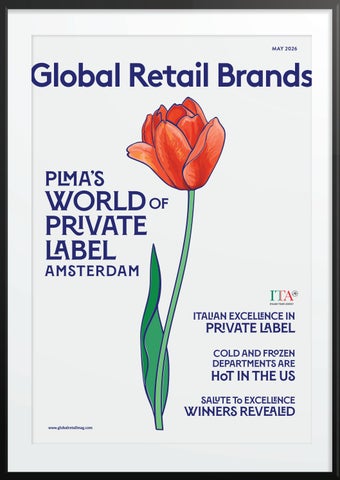
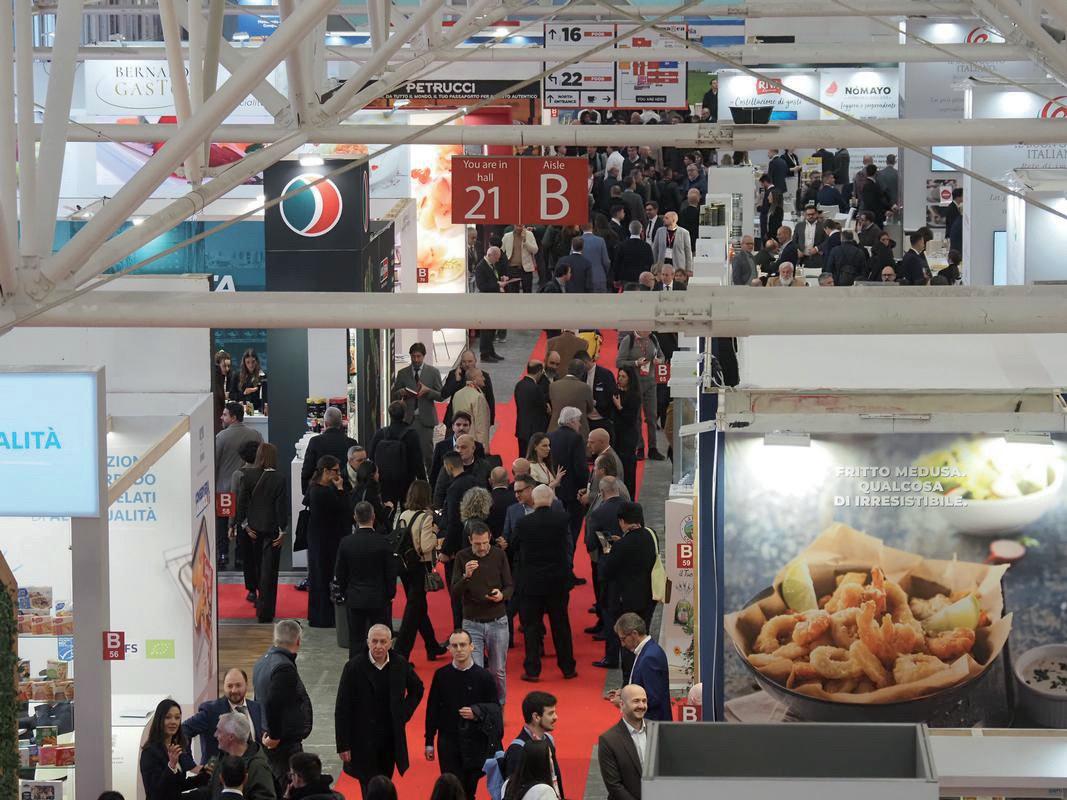
In the last few issues, I’ve kept my worldviews to myself and focused instead on matters confronting the retail and private label industries. Which makes sense given this is a trade magazine dedicated to such topics. But considering the “global” nature of PLMA’s World of Private Label, and the open nature of Amsterdam, I’ve allowed myself a little wiggle room.
But first, I want to point out just how much I love this city and how grateful I am for the opportunities it has provided. My first visit to PLMA’s US show in Chicago in 2002 opened my eyes to the Private Label industry, but it wasn’t until my experience here in 2003 that I realized the full breadth and scope of an industry now valued at half a trillion Euros.
The reality is that private label has evolved from a low-cost, low-quality product of the 1970s to become a peer of national brands. And not only a peer, but often a leader in quality, value, and innovation.
Consumers are the winners of this evolution. They have more choice than ever and are no longer embarrassed to purchase retail brands; instead, they embrace their quality while saving money for themselves and their families.
And it’s a good thing they save money, because they need it to pay for insanely high fuel prices, never-ending wars, and the care and feeding of greedy, thieving, hypocritical politicians (I did warn you in the first paragraph).
Whatever side of the political aisle you might be on, you may have noticed that the rollercoaster ride the US is on is causing havoc worldwide. The Strait of Hormuz was open, then closed, then re-opened, then blockaded, then both open, closed, and blockaded at the same time. In fact, I can’t be certain I’ll be in Amsterdam for this show. There may not be fuel for my flight, or perhaps no TSA agents to check me through security. Perhaps ICE will pick me up when I arrive at the airport. Who knows? And that’s the problem.
What I do know is that most of the retailers and suppliers that make this industry great can teach our governments a thing or two about the value of consistency, integrity, innovation, and efficiency. Common sense seems to have left the political arena. We held the door open to let it out and then locked it shut.
We need to force that door open and bring it back in, and where better to start than right here in Amsterdam.
Jacco van Laar BRAND AMBASSADOR jacco@globalretailmag.com
Melissa Subatch CREATIVE DIRECTOR info@melissasubatchdesign.com
Andrew Quinn
DIGITAL DIRECTOR andrew.quinniii@gmail.com
Luisa Colombo EUROPEAN DIRECTOR luisa@globalretailmag.com
Ana Maria Jimenez Aguilar BUSINESS DEVELOPMENT ana@globalretailmag.com
Sabine Geissler GREENTASTE.IT Italian Business Development s.geissler@greentaste.it
CONTRIBUTORS
Perry Seelert Emerge perry@emergefromthepack.com
Christopher Durham Velocity Institute cdurham@retailbrandsinstitute.org
Maria Dubuc
Marketing By Design mdubuc@mbdesign.com
Hans Kraak Kraak Media kraakmedia@gmail.com
Giovanni Quaratesi
Certified Origins giovanni@certifiedorigins.com
Tom Prendergast PLMA tprendergast@plma.com
Koen A. M. De Jong IPLC kdejong@iplc-europe.com
Published, Trademarked and all rights reserved by: Kent Media
Phillip Russo, Principal 225 1st Ave N. / Unit 3501 St. Petersburg, FL 33701 Tel. +1 917 743 6711
All rights reserved under the Library of Congress. No part of this publication may be reproduced or transmitted in any form or by any means, electronic or mechanical, including photocopying and recording, or by any information storage or retrieval system, except as may be expressly permitted in writing by the copyright owner. Opinions expressed by contributors are theirs alone and do not necessarily reflect those of the publisher.
Global Retail Brands is published 4 times a year.
Editorial Submissions phillip@globalretailmag.com
Advertising Inquiries – EUROPE luisa@globalretailmag.com
Subscription Information phillip@globalretailmag.com www.globalretailmag.com
LUISA COLOMBO
Luisa is an International Sales specialist with over 30 years of experience in the development organization and sales of products and services in an international environment. She has acquired extensive skills in promotion and advertising for the private label sector. Expert in the development of innovative sectors and products. For Global Retail Brands she shares the working group with Ms. Ana Maria Jimenez.
JILL DEARING
Jill Dearing, founder & CEO of Dearing & Company, leverages her extensive experience in the grocery, food, and private brand industries to drive innovative solutions and strategic transformations. She can be reached via email at jdearing@dearingco.com or visit www.dearingco.com.
MARIA DUBUC
President of MBD, is a creative and workflow expert in the retail landscape, Maria’s 30-year career translates branding experiences into eye-catching design that is unique and distinct for each client. She has created new private brands and redesigned/repositioned existing brands with leading retailers, while also implementing workflow management systems specifically tailored to the clients’ needs. Current clients include The Home Depot, Smart & Final, PetSmart, 7-Eleven, PriceSmart, BJ’s Wholesale Club, Sprouts Farmers Market, WinCo Foods, Natural Grocers and more.
CHRISTOPHER DURHAM
President of the Velocity Institute.
Prior to this he founded the groundbreaking site My Private Brand. He is the co-founder of The Vertex Awards. He began his retail career building brands at Food Lion and Lowe’s Home Improvement. Durham has worked with retailers around the world, including Albertsons, Family Dollar, Petco, Staples, Office Depot, Best Buy, Metro Canada. Durham has published seven definitive books on private brands, including Fifty2: The My Private Brand Project and Vanguard: Vintage Originals.
REBECCA HAMILTON
Rebecca is the CEO of award-winning Fish Agency and sister agency Whitespace Brands Inc. With over 30 years of experience, she has established herself as one of North America’s leaders in the fields of strategic branding, retail design, and communications for clients in the retail sector. Under Rebecca’s oversight, the Fish Agency brings brands to life at retail and has consistently delivered high ROI-generating retail experiences for its clients. She mentors and leads highly experienced and integrated teams that provide store design, package design for CPG and private brands, digital/social initiatives, “phygital” experiences, and advertising services.
HANS KRAAK
Hans Kraak is educated in biology and journalism and wrote three books about nutrition and health. He worked for the Dutch ministry of Agriculture, Nature and Food quality and the Netherlands Nutrition Centre. As editor in chief he publishes in the Dutch Magazine for Nutrition and Dietetics, as a food and wine writer he published in Meininger’s Wine Business International and reports for PLMA Live EU and PLMA USA.
KATIE LOCKE
If you’ve ever met Katie, you’ve seen or heard her excitement for building or rebuilding brands. Her passions also include just about every facet of food and eating experiences. For the past 13 years, Katie has worked in Sales & Marketing for Marketing by Design (MBD), a branding and packaging design agency specializing in high volume retailer programs.
GIOVANNI QUARATESI
Giovanni is Head of Corporate Global Affairs at Certified Origins, where he leads globa lcommunication strategies, stakeholder relations, and public outreach. With a deep commitment to food culture, innovation, and sustainability, he is a vocal ambassador for transparency and authenticity in the global food system. Whether representing Certified Origins at international forums or collaborating with public and private sectors, Giovanni champions initiatives that connect people to real food and support healthier choices.
TAE SUNG PARK
Tae has over 25 years of experience in technology and retail industries across North America and Asia, with the last 8 years focused on driving market data-based innovation into laundry care and home care industry in North America as the representative of WhiteCat in North America. He is passionate about technology-driven innovations that can have a positive and meaningful impact on the daily lives of consumers and their interaction with the world around them – “All the quiet smiles that surround us daily feels warmer than the Sun.”
PERRY SEELERT
A retail branding and marketing expert, with a passion for challenging conventional strategy and truths. Perry is the Strategic Partner and Co-founder of Emerge, a strategic marketing consultancy dedicated to helping Retailers, Manufacturers and Services grow exponentially and differentiate with purpose.
JUNE
IDDBA
Orlando, FL
7 - 9 JUNE www.iddba.org
FOOD TAIPEI
Taipei, Taiwan 24 - 27 JUNE foodtaipei.com
SUMMER FANCY FOOD SHOW
New York, NY 28 - 30 JUNE www.specialtyfood.com
JULY
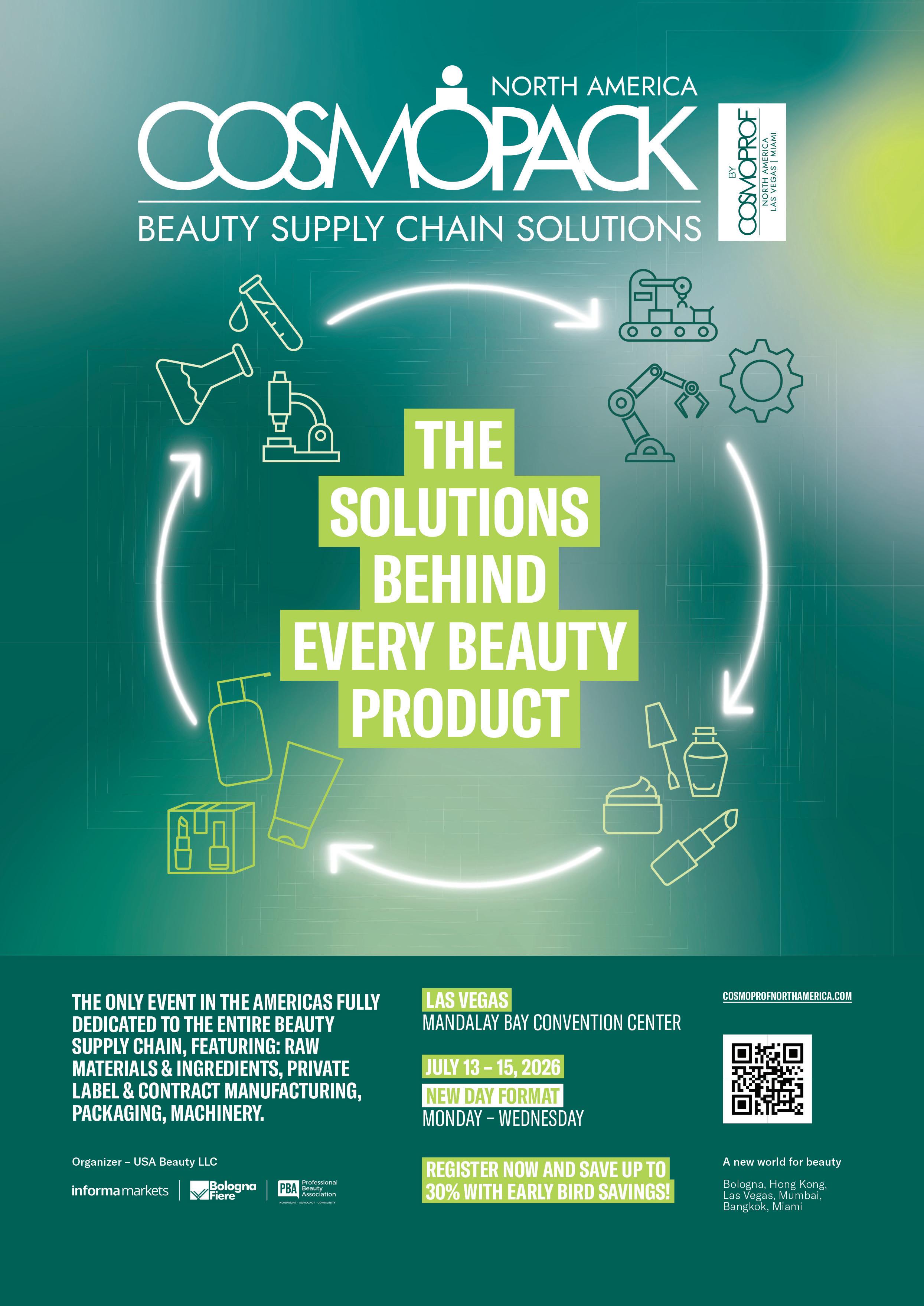
COSMOPROF NORTH AMERICA
NOVEMBER
COSMOPROF ASIA
Hong Kong 10 - 13 NOVEMBER www.cosmoprof-asia.com
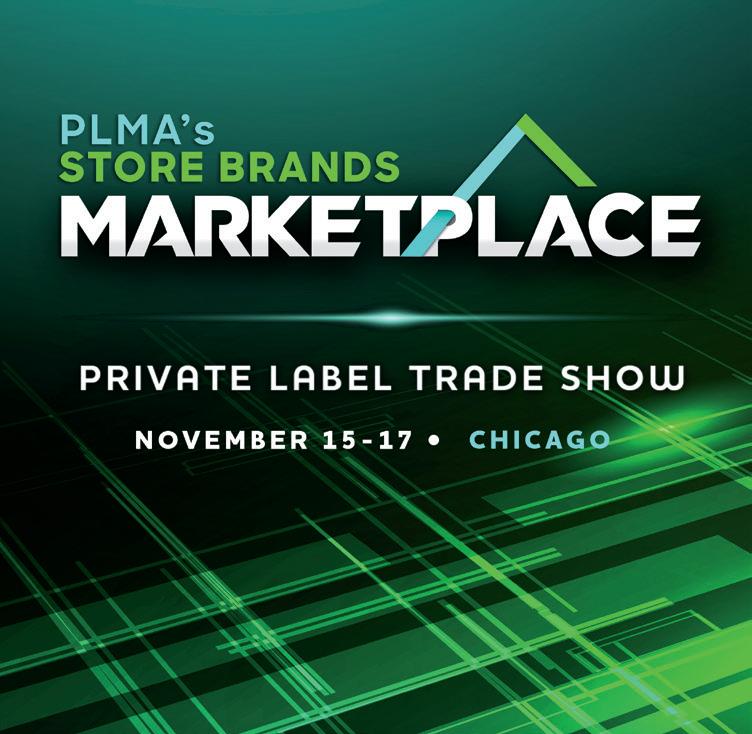
PLMA CHICAGO Rosemont, IL 15 - 17 NOVEMBER www.plma.com
DECEMBER
COSMOPROF INDIA
Las Vegas, NV 13 - 15 JULY cosmoprofnorthamerica.com
OCTOBER
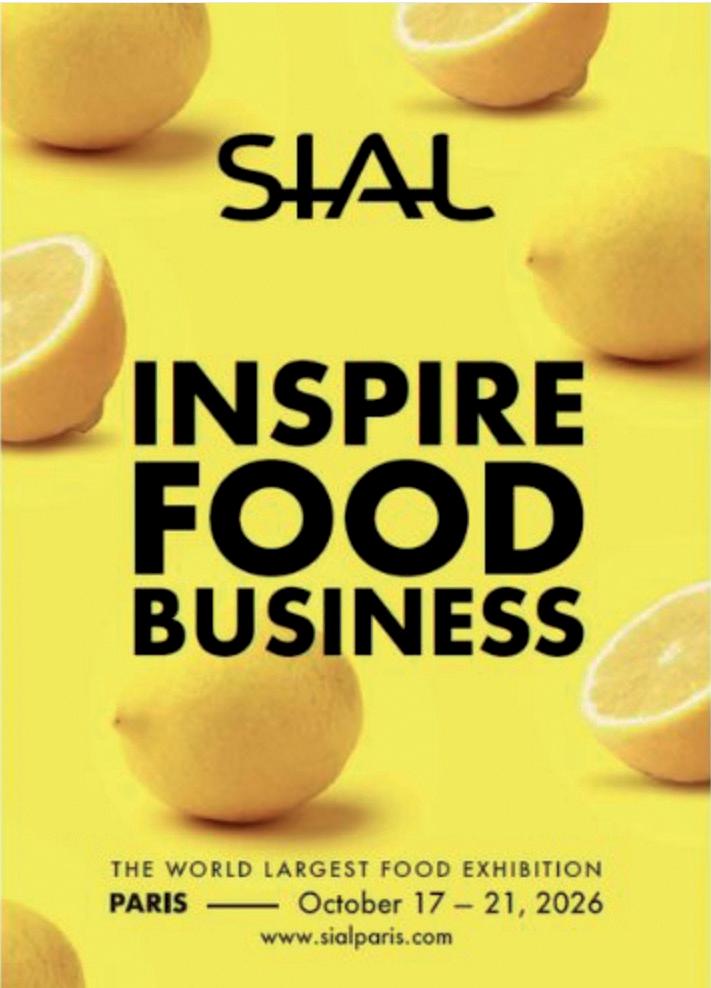
SIAL Paris, France 17 - 21 OCTOBER www.sialparis.com
PLMA SUMMIT
Copenhagen, Denmark 28 - 29 OCTOBER www.plmainternational.com
Mumbai, India 10 - 12 DECEMBER www.cosmoprofindia.com
JANUARY
2027
MARCABYBOLOGNAFIERE Bologna, Italy 13 - 14 JANUARY www.marcabybolognafiere.com
WINTER FANCY FAIRE
San Francisco, CA 17 - 19 JANUARY www.specialtyfood.com
A truly unparalleled focus
Focus Bio Bank
Key themes in the Italian organic sector. Data and statistics. Supermercati & Specializzati: browse it now at biobank.it
Private label manufacturers: 1st edition online in 2026
The Value of Italian Excellence for Private Label
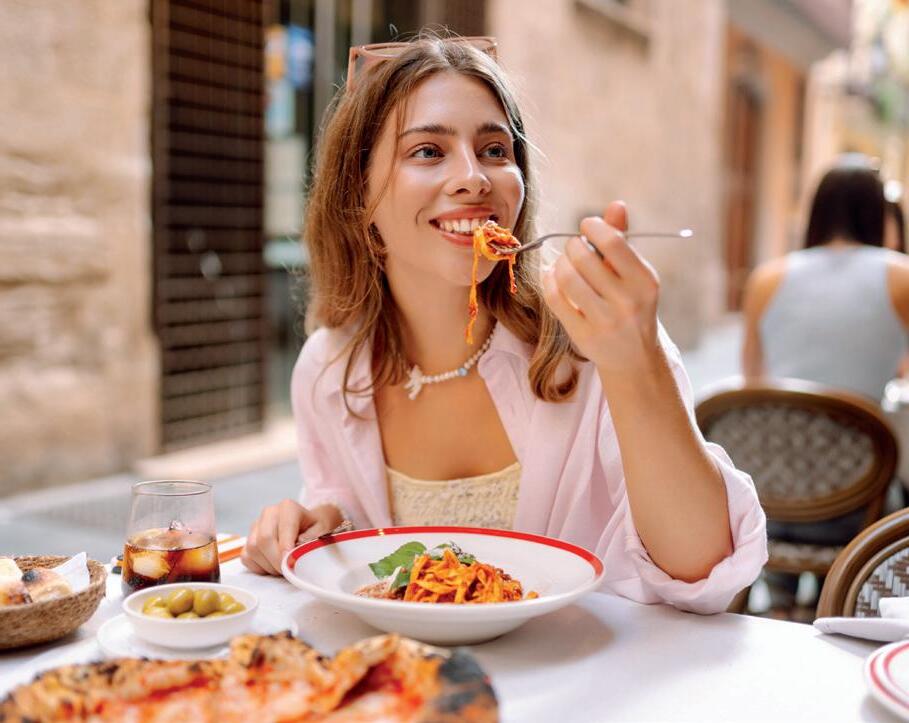
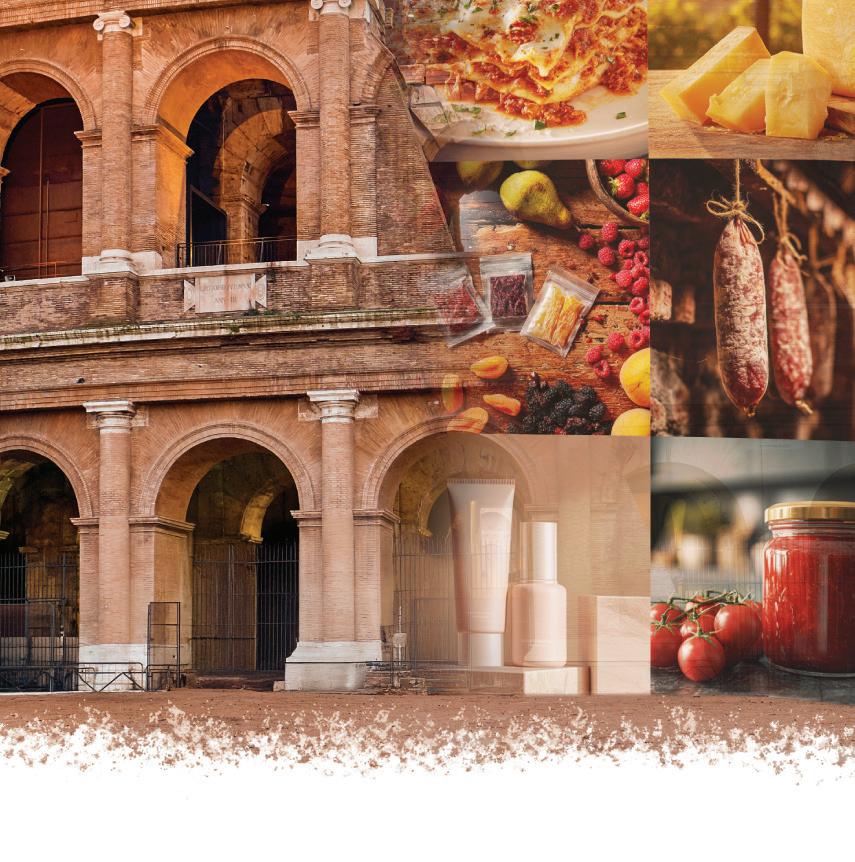
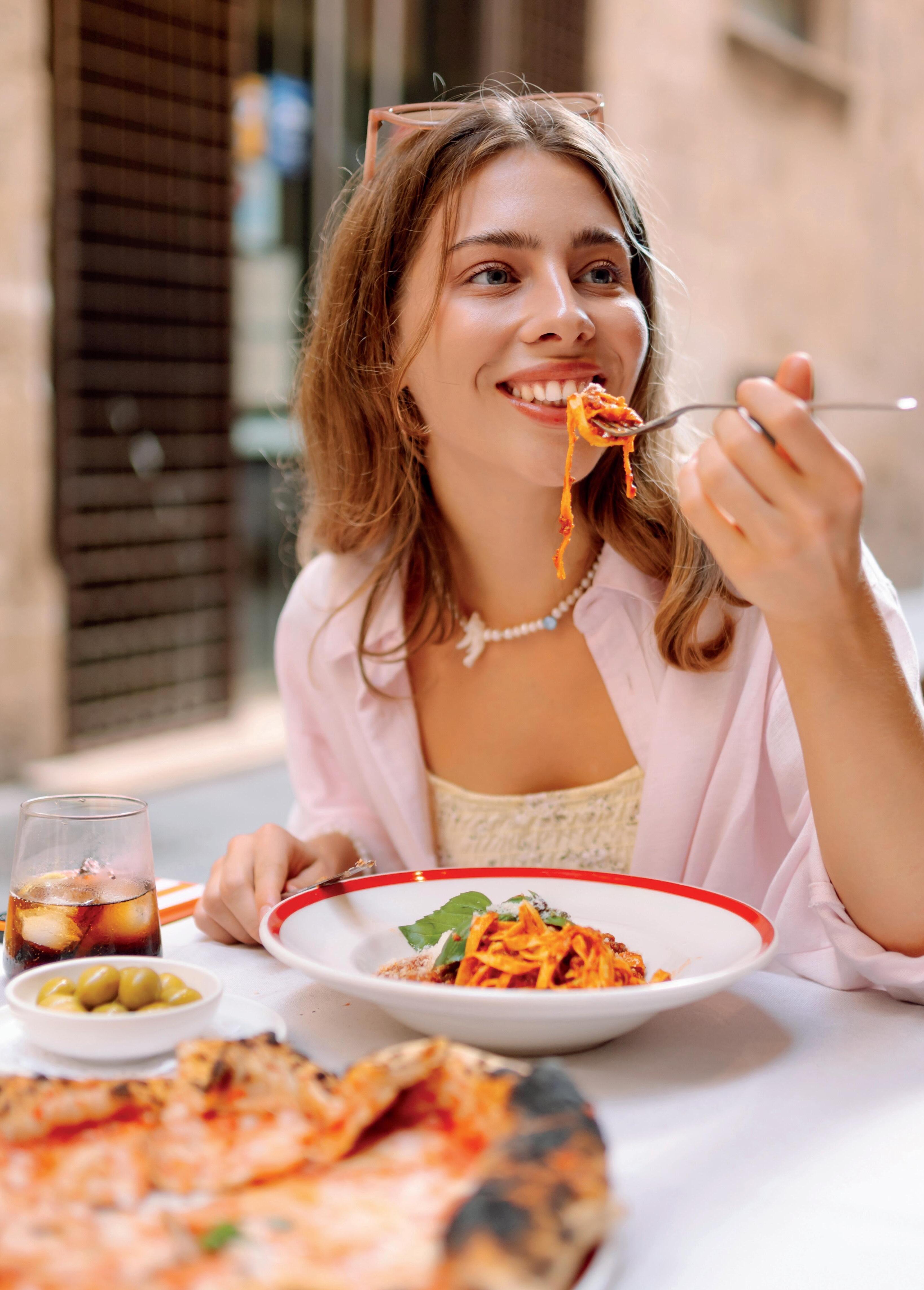
Private label is evolving. For today’s consumers, value is no longer defined by price alone, but by quality, authenticity, and trust. In this context, Italian products offer retailers a powerful advantage. They combine heritage, craftsmanship and innovation, enabling private label ranges to move beyond imitation and become true drivers of brand equity.
From Value to Differentiation
Across global markets, private label is shifting from a margin-driven strategy to a brand-building tool. Retailers are expected to deliver products that are not only competitive, but meaningful — with clear origin, consistent quality and a story consumers can trust. Italian products naturally respond to this need. Their authenticity allows private labels to compete not just on price, but on credibility and perceived value, particularly in premium and specialty segments.
Where does it come from? How is it made? Why should I trust it? “
The Commercial Strength of Italian Origin
Italy stands among the most recognized and trusted origins worldwide.
This prestige, now further solidified by Italian cuisine’s recent recognition as a UNESCO Intangible Cultural Heritage, represents a milestone that transcends culture to become a global benchmark for authenticity. For modern consumers, it’s not just tradition, it’s a guarantee of quality that actively shapes purchasing preferences.
By leveraging this heritage, Italian products across both food and non-food categories offer an inherent promise of design, craftsmanship, and meticulous attention to detail. For retailers, this translates into tangible strategic benefits:
• Instant differentiation on the shelf
• Premium positioning within private label tiers
• Stronger consumer trust, reducing barriers to trial
Authenticity is not just a claim. It is supported by production standards, certified supply chains, and, where applicable, recognized quality schemes such as DOP and IGP.
Trust, Transparency, and Consumer Expectations
Today’s consumers ask fundamental questions: Where does it come from? How is it made? Why should I trust it?
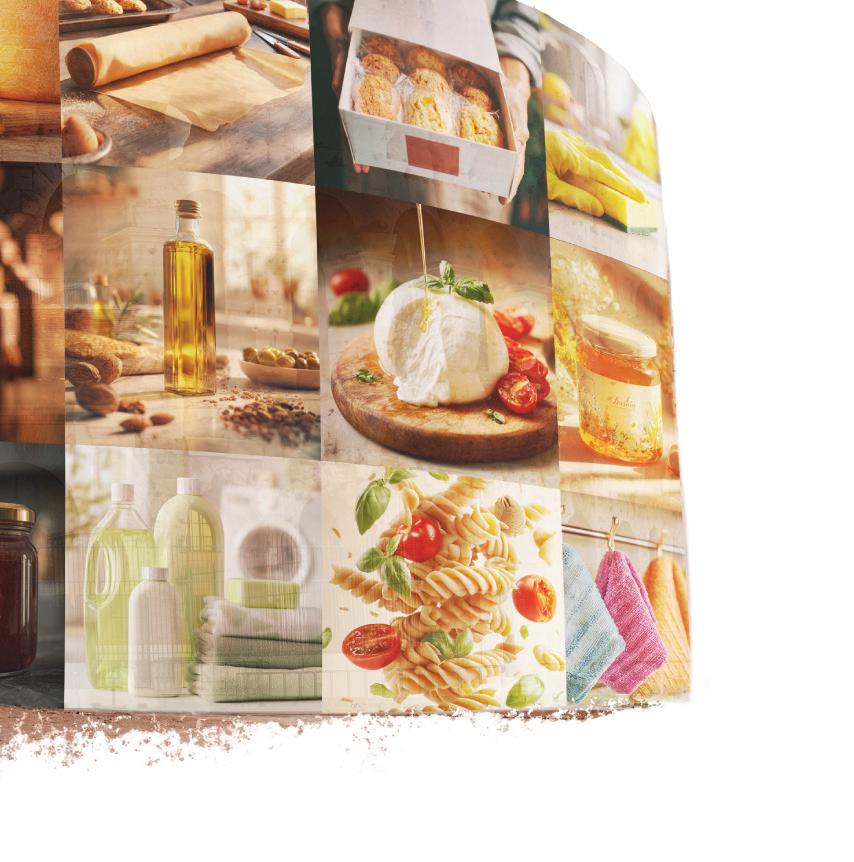
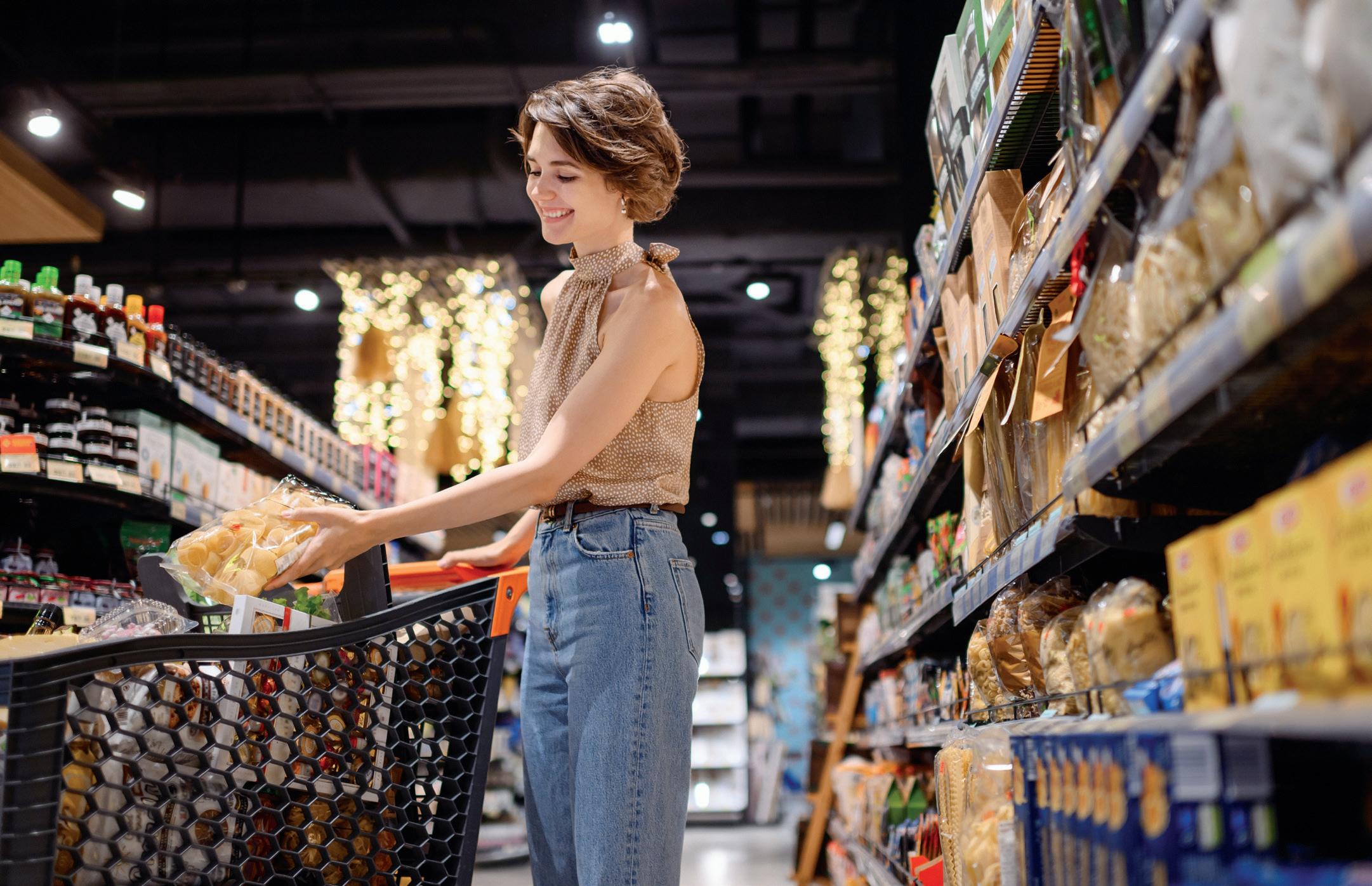
Italian products provide clear answers. Traceable origins, regional expertise and transparent production processes reinforce confidence — particularly in sensitive categories such as olive oil, pasta and specialty foods. For retailers, each authentic product strengthens the overall credibility of their private label offering.
Standing Out In a Crowded Market
As private label grows, so does the risk of commoditization. Italian products offer a way to stand apart. Rather than replicating national brands, retailers can introduce distinctive, origindriven products that are difficult to imitate and easy to recognize. From region-specific ingredients to design-led non-food items, Italian excellence creates real differentiation across categories.
More Than Sourcing: A System of Excellence
Behind every product is a network of manufacturers combining tradition and modern production capabilities. Working with Italian suppliers means accessing a reliable, curated system of expertise, built on long-term partnerships, quality control and international standards. This ensures consistency, scalability and credibility across markets.
Behind every product is a network of manufacturers combining tradition and modern production capabilities. “
A Strategic Opportunity at PLMA Amsterdam
2026
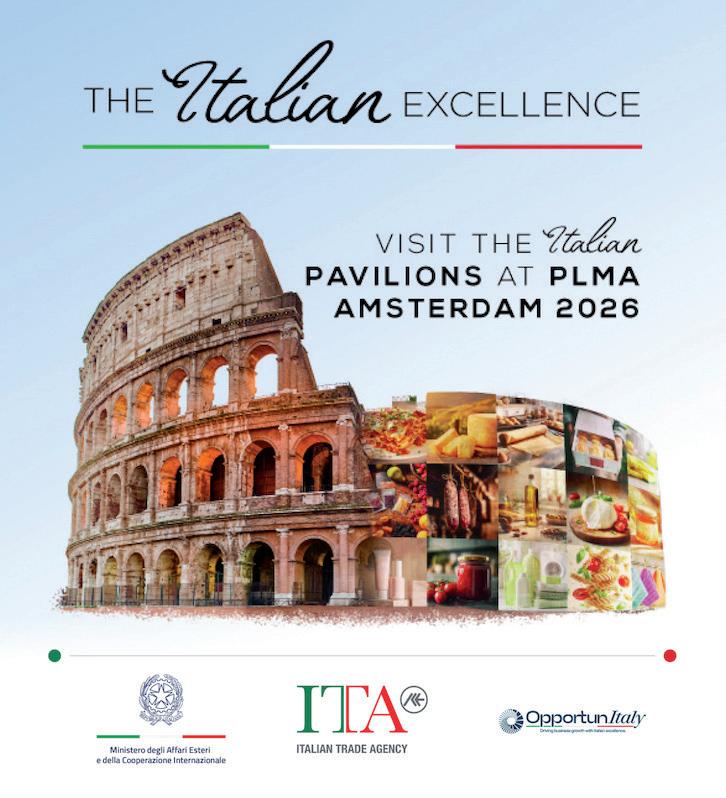
At PLMA Amsterdam 2026, the Italian Pavilions bring together this system of excellence in one place. 174 Italian companies, across food and non-food categories, will showcase solutions designed to help retailers strengthen their assortment, enhance differentiation and respond to evolving consumer expectations.
Empowering Made in Italy Worldwide: The Italian Trade Agency
ITA - Italian Trade Agency is the Governmental agency that supports the business development of Italian companies abroad and promotes the attraction of foreign investment in Italy. At the core of its mission to enhance the global image of Made in Italy, ITA acts as a catalyst for international trade and the premier gateway for global enterprises seeking strategic, long-term relationships with Italy's network of renowned manufacturers, artisans, and innovators.
Operating through a modern, widespread network of 87 overseas offices, ITA provides comprehensive information, tailored assistance, consulting, and training to Italian small and medium-sized businesses. By fostering industrial collaborations and leveraging advanced multichannel promotion tools, the Agency ensures that international professionals can seamlessly partner with a reliable, certified system of Italian excellence across all industries.
World of Ideas: Innovation and Inspiration at the Heart of PLMA
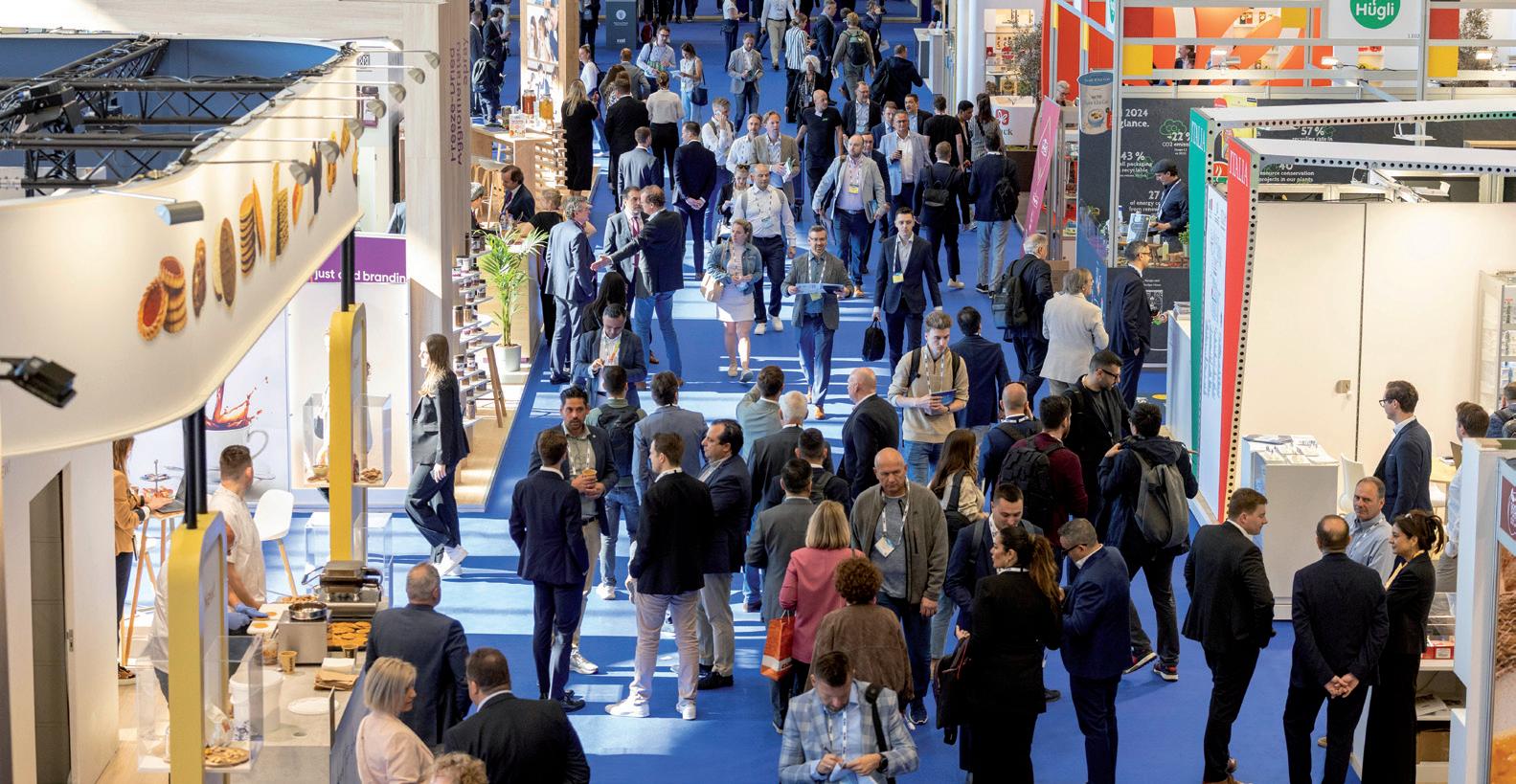
Bringing together more than 32,000 trade professionals from 125 countries and over 3,200 exhibiting companies across food and non-food categories, the event confirms its global reach and industry importance.
Reflecting the evolving trends shaping today’s private label market, the Idea Supermarket at PLMA’s World of Private Label has been reimagined as PLMA’s World of Ideas. With a new look, a new location, and a new name, the area emphasizes its global character and establishes itself as the central hub where new ideas in private label come to life.
From leading product innovations presented by exhibitors to products launched in retail stores around the globe, including award-winning private label products, visitors can explore the full spectrum of private label development to get inspired, stay driven, and remain ahead in today’s competitive market.
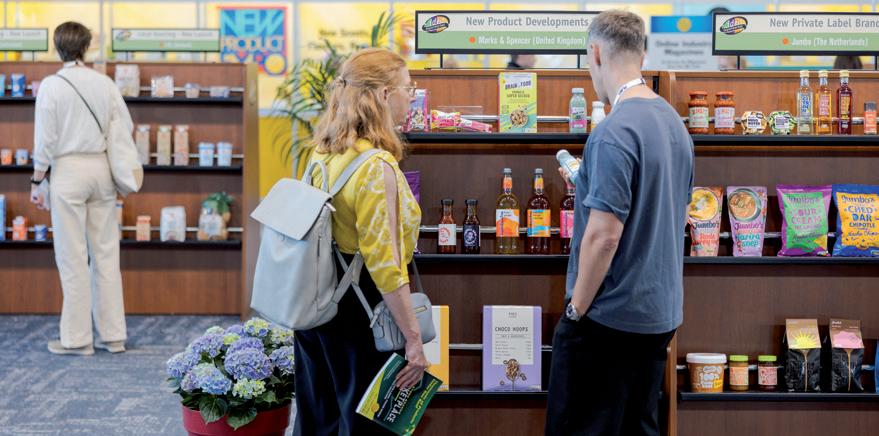
Within this broader context of innovation and trend development at World of Ideas, the New Product Expo area offers a glimpse into what lies ahead. Showcasing nearly 300
products new to private label and offered by exhibitors, it shows interesting product developments like, the growing presence of trendy matcha. Once considered a niche ingredient, matcha now appears across a wide range of categories, from yoghurts, sweets, beverages, and snacks to beauty and personal care products. In the Retail Trends area, the latest developments in packaging innovation and Gen Z trends, are on display, as seen on the shelves of 60 retailers worldwide.
Located in the RAI Auditorium Lounge at the heart of the show, the World of Ideas features a clear layout, improved visitor flow, and multiple access points for an enhanced experience.
“Witnessing the ongoing growth of international participation and the shared desire for a more dynamic focus, PLMA wants to emphasize the area’s global character and establish it as the show’s centre for private label innovation. I believe the name World of Ideas captures it perfectly,” stated Jan van Lier, Managing Director Trade Shows at PLMA International Council.
PLMA’s World of Private Label International Trade Show, taking place on 19-20 May at the RAI Amsterdam Convention Centre, provides the ideal setting for discovering what’s new in trending in private label. On the food side, convenience foods and ready meals are on the rise, with strong
traction for organic, vegan, gluten free, and lactose free products. On the non-food side, functional lotions, gels, moisturizers, and cosmetics are seeing similar growth, highlighting the expanding focus on wellness and personal care.
The fact that some 30% of the show floor is dedicated to exhibitors of organic, vegan and plant-based products is a testimony to the shift towards the more sustainable food approach that is driving growth in these sectors. Consumers are increasingly seeking products that are ethical, healthy, and environmentally conscious, with plant-based and organic highlighting the broader benefits of eco-friendly eating. Illustrating these trends are dedicated organic and plant-based pavilions organised by Food from Denmark, Consorzio Il Biologico (Italy), and PIZE, the Polish Chamber of Organic Food. In addition, hundreds of other exhibitors are showcasing organic and plantbased products. In this context, it was only natural that the Dutch initiative De BioBorrel asked PLMA to organise their ‘Organic Happy Hour’ networking event at the conclusion of the first show day, featuring speaker Paul Holmbeck, an authority in the field of organics.
continued on next page >
continued from previous page >
Free Seminars and Workshops –Monday, 18 May
PLMA’s Trade Show Seminars and Workshops, scheduled for 18 May, provide key insights into the market. Highlights include: McKinsey & Company presenting key insights of its new State of Grocery Retail Europe 2026 report. Eroski, one of Spain’s leading retailers, sharing how their private label journey, powered by data and AI, has created a customer-centric strategy and is shaping the next evolution of product design and concurrent workshops such as “Buyerology”, exploring the needs of buyers and suppliers with retail expert Karen Green, and an interactive session hosted by Art Frickus of Conspicuous, will examine how to transform sales into strategic partnerships. Click here for the full programme.
As the World of Private Label continues to evolve, the introduction of PLMA’s World of Ideas demonstrate how innovation, new product developments and consumer trends are shaping the future of private label.
Join the 2026 World of Private Label in Amsterdam on 19–20 May, including the pre-show seminars on 18 May. Go to www.plmainternational.com for more information.
PLMA’s
World of Ideas
FREE WORKSHOPS & PRE - SHOW SEMINARS
Monday 18 May
13.00 to 16.00
Forum Centre, RAI Amsterdam
WORKSHOPS:
13.00 – 14.00
(by pre-registration only)
Inside the Buyer–Supplier Relationship: What to Know (and How to Find Out)
Understanding each other’s world, the pressures, priorities and realities shaping decisions on both sides of the buying table. Making better connections at PLMA, practical ways to start the right conversations and turn show meetings into longterm relationships
SPEAKER :
Karen Green: Retail and FMCG Expert, Buyerology Ltd
From Price to Relevance: The Next Step in Private Label Growth
How can private label evolve beyond price-driven competition towards sustainable, value-led growth
SPEAKER : Art Frickus, Founder/Shopper Behaviour Specialist, Conspicuous
NEW PRODUCT EXPO showcases the newest products developed by this year’s exhibitors. On display are nearly 300 of the latest innovations in the private label industry, from new products & flavours, to marketing to packaging.
RETAIL TRENDS display the latest developments of private label ranges of 60 retailers worldwide. Walk the aisles for a world tour of trends and new launches from retailers around the globe.
2026 INTERNATIONAL PLMA SALUTE TO EXCELLENCE AWARDS & WINE AWARDS The Awards give recognition and honour retailers for innovation and quality in the creation of their private label programmes. All 2026 award-winners are on display.
PRE -
SHOW SEMINAR
PROGRAMME: 14.00 – 16.00
(Walk-In, free to all registrants)
Meet The Retailer: EROSKI (Spain)Eroski’s Customer Centric Private Label Strategy: Powered by Data and AI Eroski’s pioneering private label journey, how it shaped a unique customer centric vision and how AI driven product intelligence is accelerating the next evolution of Eroski’s Private Label design.
SPEAKER: Beatriz Santos , Commercial Director, Grupo Eroski
The State of Grocery Retail Europe 2026
Key insights from The State of Grocery Retail Europe 2026. Opportunities and challenges that will characterize the European retail market in 2026 and beyond
SPEAKER: Simon Wintels, Partner McKinsey & Company
The Winners of PLMA’s 2026
International Salute to Excellence Awards and Wine Awards
Honouring retailers for innovation and quality in private label products and packaging
Trendwatcher: Unlocking Trends and Insights
An inspirational session on the forces shaping our future AI reality
SPEAKER: Erick Smet, Head of AI Innovation, TrendWatching
AT A GLANCE
PLMA’s 2026
World of Private Label international Trade Show
Organiser:
Private Label Manufacturers Association plmainternational.com
Members:
More than 5.000 manufacturers from over 85 countries
Show Venue: RAI Amsterdam Convention Centre, The Netherlands
Show Dates:
Tuesday 19 May
Wednesday 20 May 2026
Monday 18 May - Free Pre-Show Seminars & Workshops
Opening Hours:
19 May: 09.00 – 18.30
20 May: 09.00 – 16.30
Exhibitor Profile:
Manufacturers of private label FMCG food and non-food products
Pavilions:
More than 70 national and regional pavilion organisers from 41 countries
New pavilions from: Brazil, Egypt, Poland, South Korea and Vietnam
Exhibitors:
3.300+ exhibiting companies from 80 countries
Surface:
46.500 net m2
Visitor Profile:
18.000+ trade professionals from 120+ countries, including buyers from supermarkets, hypermarkets, discounters, drugstores, and department stores, as well as importers and exporters, manufacturers, consultants, sales agents, and packaging & design experts
Halls:
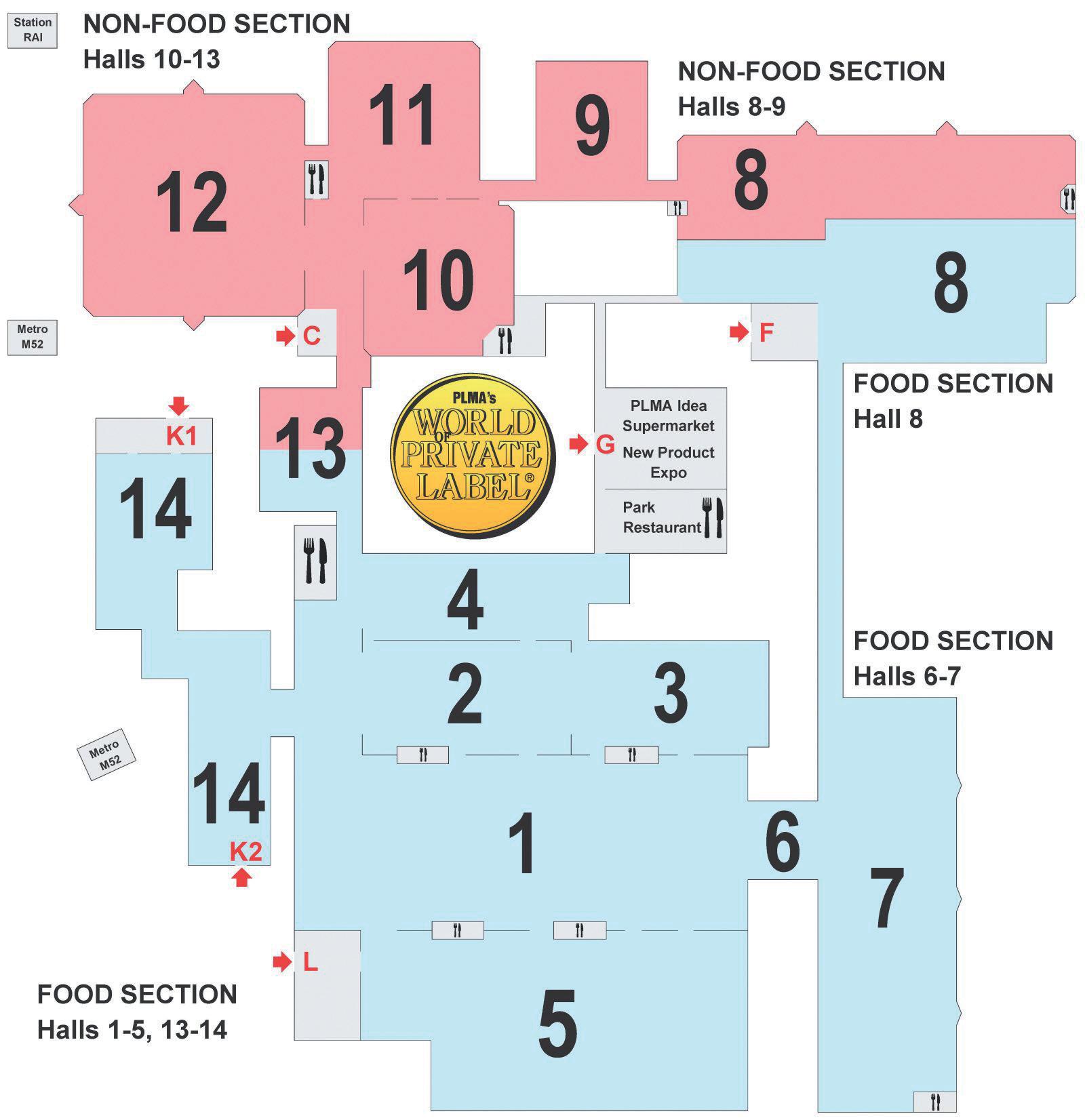
10 Food halls and 6 Non-Food halls, covering all complexes of RAI Amsterdam. Halls 1-8 and 13-14 accommodate the Food Section, Halls 8-13 accommodate the Non-Food Section
FOOD SECTION
Beverages
Snacks
Confectionery
Shelf Stable Products
Bakery Products
Sauces & Spreads
Pet Food
NON-FOOD SECTION
Fruits and Vegetables
Meat, Poultry and Fish
Ready Meals
Organic, Health and Dietary Products
Dairy Products
Oils, Dressings and Seasonings
Ingredients and Raw Materials
OTC-Products and Healthcare Hair Care and Skin Care
Baby Care and accessories
Feminine Hygiene
Toiletries
Cosmetics
Personal & Leisure
Show Floor Trends:
46% Sustainable Claims
57% Dietary Needs
Household Products
Paper and Plastic Products
Housewares and DIY Products
Pet Products/Accessories
Auto Care
29% Vegan, Plant-Based & Vegetarian
30% Organic
NEXT YEAR DATES: 25-26 May 2027
PLMA’s 2026 International Salute to Excellence Awards:
106 award-winners that cater to the needs of shoppers worldwide
In its 2026 Private Label Market Reports for Europe and the US, PLMA reports private label value and volume growth well above market averages. It reflects the high appreciation of shoppers for the value and quality store brands offer. 106 of the world’s best new private label products receive a Salute to Excellence Award. They represent the fuel that keeps the private label engine going, catering to shoppers around the world.
Retailers and private label manufacturers continue to develop exciting and innovative products, with bold flavor combinations, such as bubble tea in yogurt, mango ice with chili sauce, and caper-flavored potato chips, capturing the attention of the 11 judges who had the challenging task of selecting the best products for the International Salute to Excellence Awards.
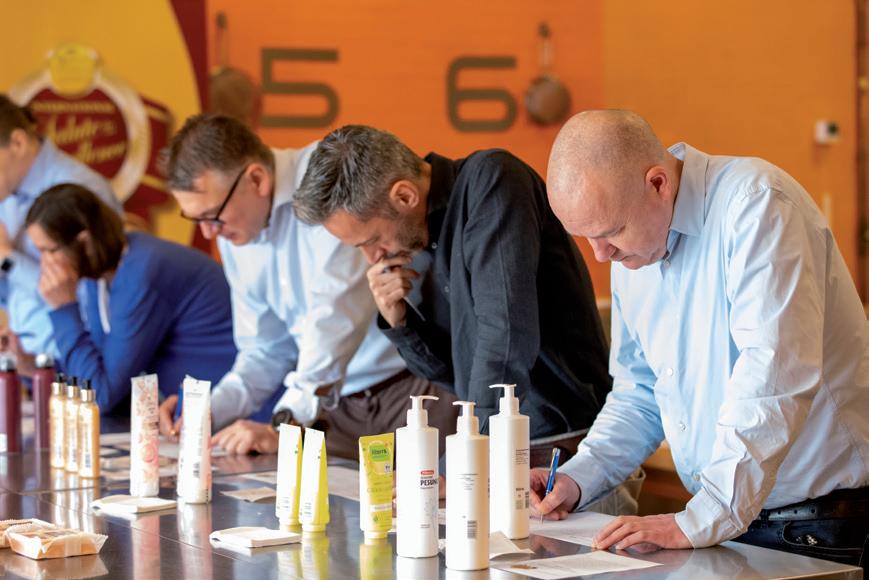
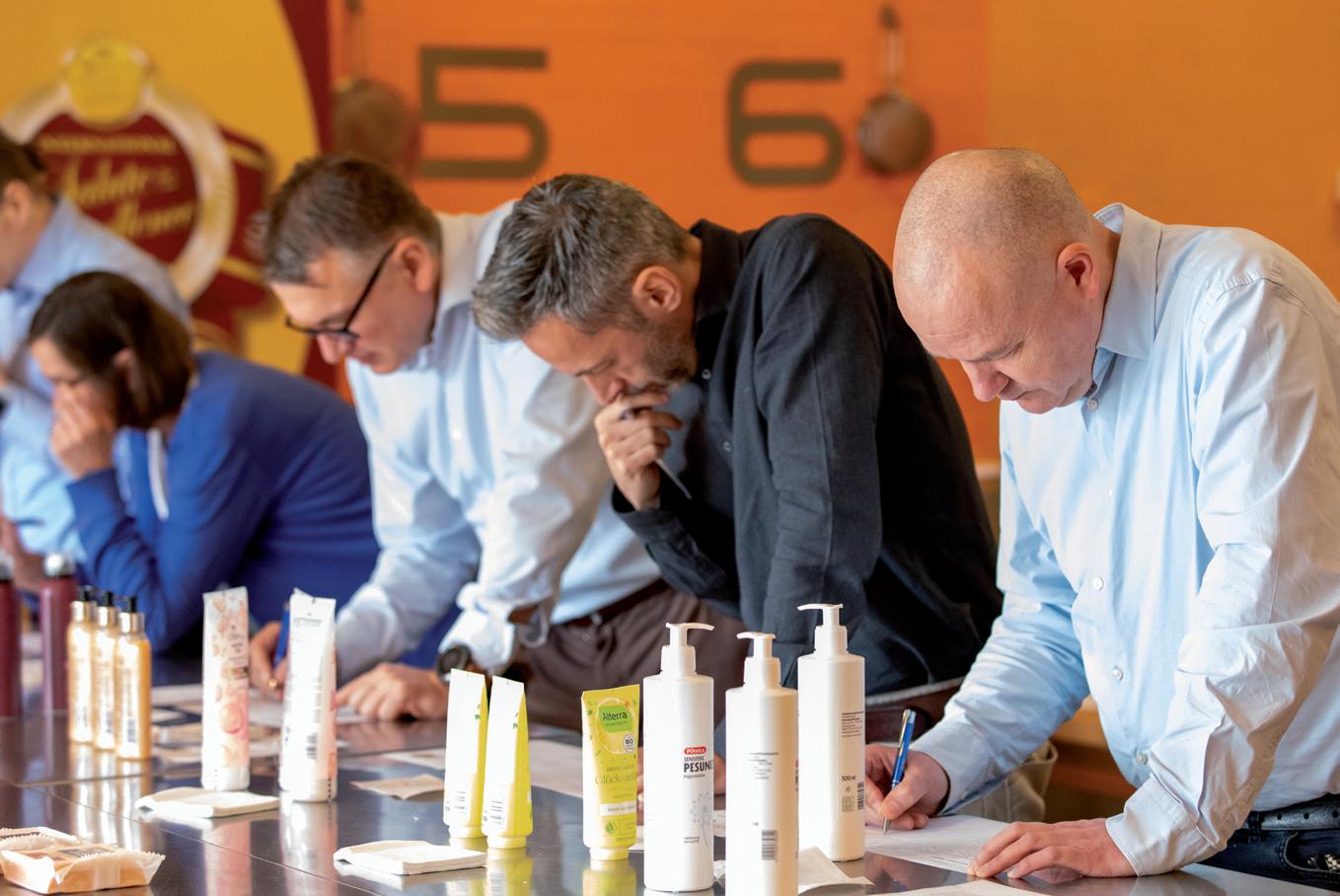
In this year’s International Salute to Excellence Awards, nearly 600 food and non-food products from 67 retailers across 27 countries were evaluated by an expert international jury during two dynamic days of testing and tasting, assessing concept, taste, aroma, packaging & presentation, and overall value proposition.
106 winners by 46 retailers from 24 countries
These winners were presented by 46 retailers from 24 countries. Most award-winning private labels (21) were introduced in Germany, followed by Italy with 12 Salutewinning products. Denmark is third with 10 Salute-winners, closely followed by The Netherlands and South Africa who share the fourth place in the ranking with 9 Salutewinners each. Portugal and Ireland complete the top 5 with 7 awardwinning products each.
Judges note that private labels continue to grow in quality and are now strong competitors to national brands, increasingly leading innovation rather than just offering alternatives.
What the judges say on packaging
Packaging plays a crucial role in communicating a clear product story. Consumers want to understand who the product is for, why it exists, and how it fits into their lives. A jury member says: “If you want to create a strong product concept, you need to have a clear customer in mind for who this is intended and a narrative that brings the customer, their needs and the product together.”
Clean, neutral, and simple packaging designs are preferred, especially when appealing to younger shoppers. However, inconsistencies remain: some products underdeliver visually despite strong quality, while others overpromise through packaging that doesn’t match the product inside.
What the judges say on trends
Judges highlight that key trends in food and non-food include health and wellness, convenience, premiumization, and functional ingredients such as protein, alongside growing interest in hydration and smaller portions. While sustainability remains important, it is becoming less of a marketing focus compared to health.
Gen Z is strongly influencing product development, driving demand for affordable yet highquality, globally inspired, and socially responsible products. Innovation is often rooted in “rediscovery,” combining traditional concepts with new flavours or formats.
PLMA’s Wine Awards:
Increasing quality and availability of private label wines
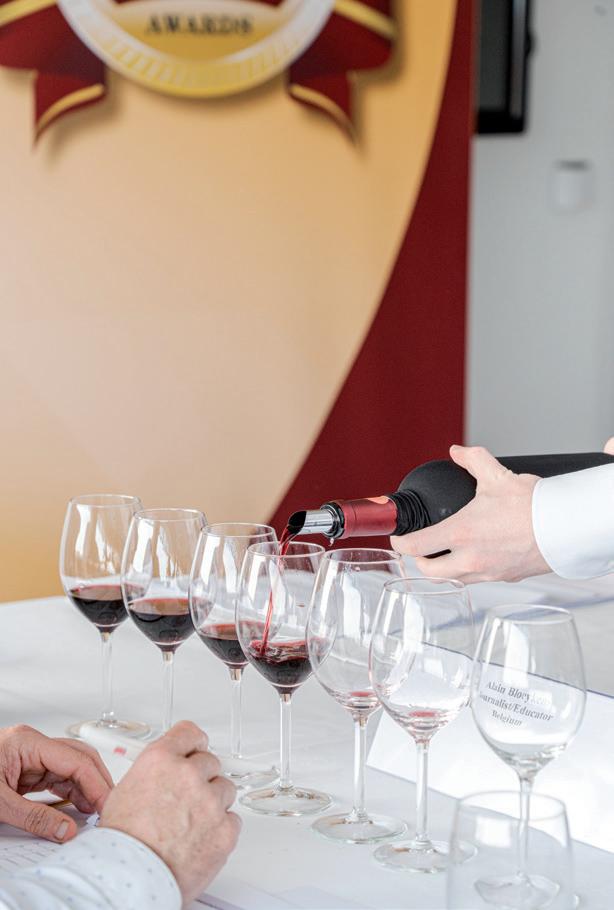
Private label wines are gaining in quality and availability. That’s a key take-away from the two panels of expert judges who tasted and discussed all kinds of wine entries, candidates for a Salute to Excellence Wine Award. “The quality gets better, year after year”, says wine expert Alain Bloeykens, moderator of one panel. “And more supermarkets are joining the private label arena”, adds Master of Wine Cees van Casteren, who guided the second panel.
Both panels of in total 8 judges with proven expertise in wine tasting, had an intensive session in which they tasted 108 wines, submitted by 14 retailers from 8 countries. These 108 entries for a Salute to Excellence Wine Award competed in 18 categories, ranging from red, white, rosé and sparkling to type of grape, organic, region of cultivation and of course level of alcohol.
Best Quality and Best Value
The judges conducted blind tastings within each category to ensure each wine was assessed purely on its taste, allowing them to identify the best quality wines without bias. From there, the best value wines were chosen by considering both their quality scores and price, highlighting those that offer the strongest balance of excellence and affordability.
The wine experts selected 24 award-winning wines, of which some won both the Best Quality and the Best Value in their category. Ultimately, 36 Salute to Excellence Wine Awards were presented to 12 winning retailers from 7 European countries and the U.S.
Retailers from Germany and Italy led the rankings with 12 and 8 Salute to Excellence Wine Awards, respectively, followed by Denmark with 5 awards.
What the judges say on trends in wine
Judges observe a shift toward lighter wines, with consumers favoring white wines and paying closer attention to alcohol levels, moving away from heavier styles. Interest in low- and no-alcohol options is growing, though non-alcoholic wine still faces challenges in taste and quality, with innovation expected to improve the category over time.
Judges highlight that private label wines are becoming a strategic differentiator for retailers, with growing investment in quality and value rather than being driven by short-term economic pressures. This approach also aligns with younger consumers, who are increasingly open to private label wines, prioritizing quality and enjoyment over brands and origin.
Storytelling, education, and a focus on organic and sustainable production are seen as important tools to engage shoppers, alongside expanding variety to introduce consumers to new grape types and wine pairings.
“Private label is evolving from a value alternative into a driver of innovation, quality, and consumer engagement—shaped by health trends, younger shoppers, and a growing focus on storytelling and experience,” Peggy Davies commented while assessing the awards program.
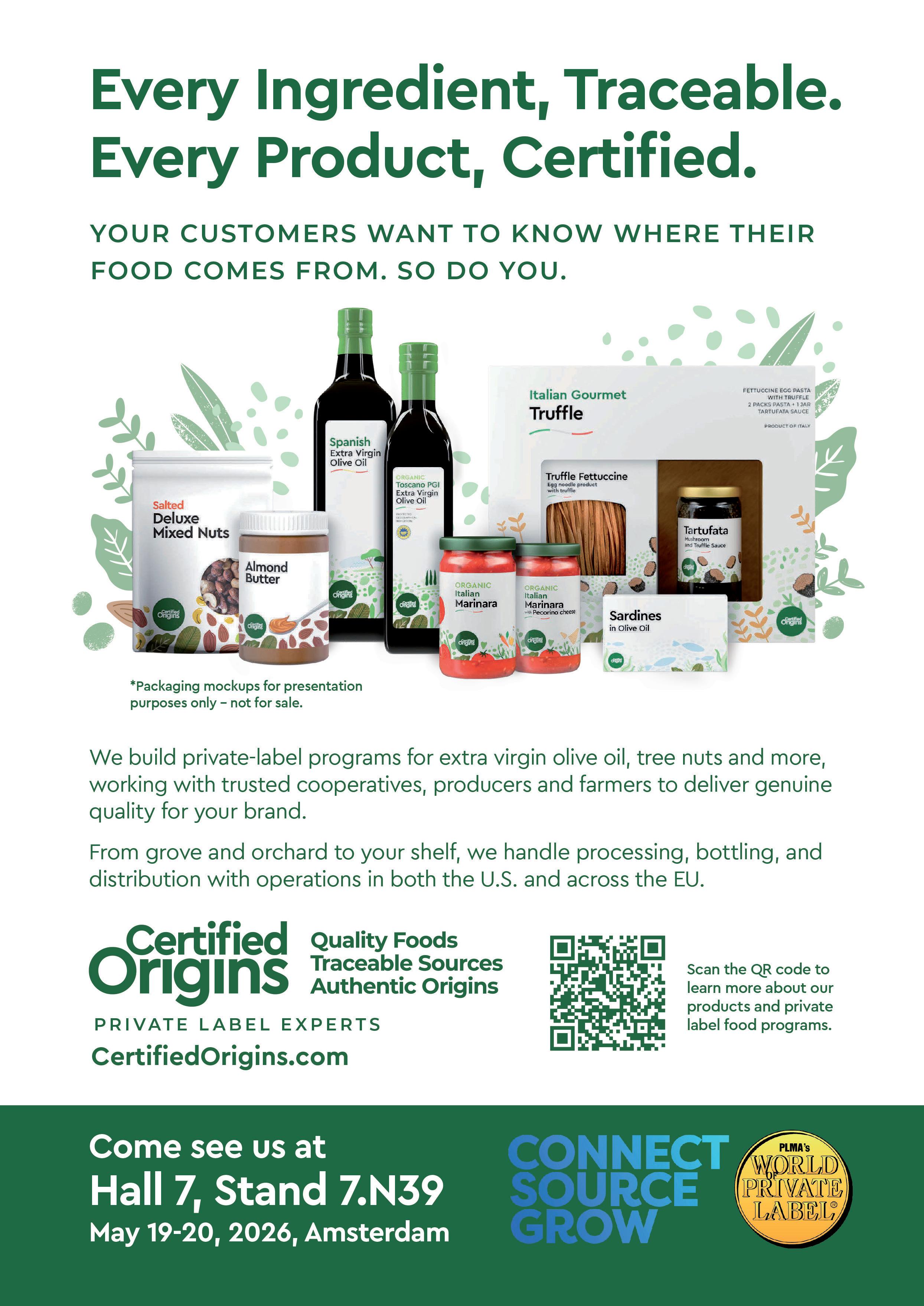
www.certifiedorigins.com
LADORIA
www.gruppoladoria.it
www.grazie.it
www.chiaverinifirenze.it
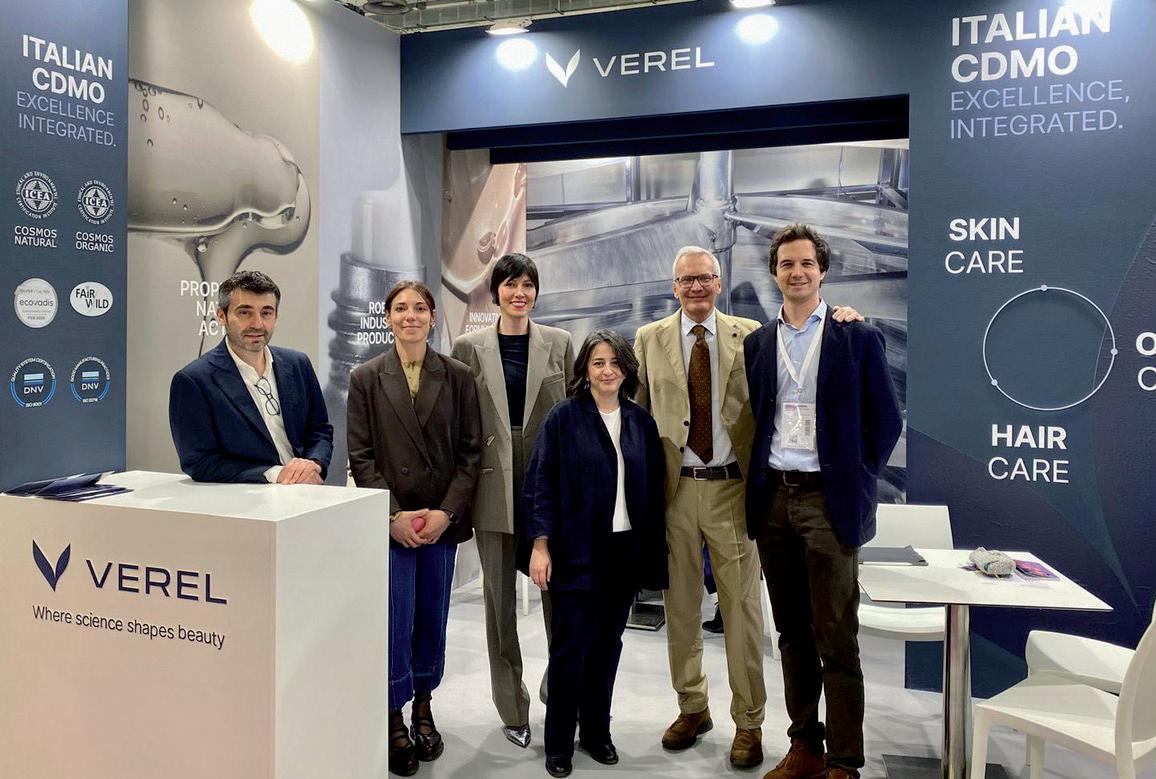
Verel Makes Its Debut At Cosmoprof: Cosmetic Innovation From Italy’s Food Valley
Verel, an Italian cosmetics contract manufacturer, participated for the first time in Cosmopack, the supply-chain segment of Cosmoprof Worldwide, held in Bologna from March 26 to 28. With more than 40 years in the industry and recently acquired by The Synergetic Group, the company officially debuted at one of the top global events in the beauty sector.
Led by a completely renewed management team — of executives aged 30 and 40 — Verel brings an innovative approach rooted in adjacent sectors, particularly food and functional ingredients. The Synergetic Group was founded by Giampaolo Cagnin, a serial entrepreneur from Italy’s Food Valley who previously established and scaled three high-tech companies in the food ingredients sector. He has now chosen to invest his expertise, methods and resources in a new venture in cosmetics.
By leveraging proprietary, naturally derived bioactive ingredients — developed in collaboration with the University of Parma as scientific partner — Verel positions itself as a trusted supplier for brands and retailers seeking high-quality, innovative and customizable cosmetic solutions. Its main application areas include facial and hair care, body care and treatment, and oral care.
The company is addressing the complexities of the cosmetics market through innovation. This includes the development of proprietary raw materials, advanced formulations, and a strong focus on marketing and digital transformation to support clients in identifying and anticipating trends, both domestically and, above all, internationally, where Verel currently generates 100% of its sales.
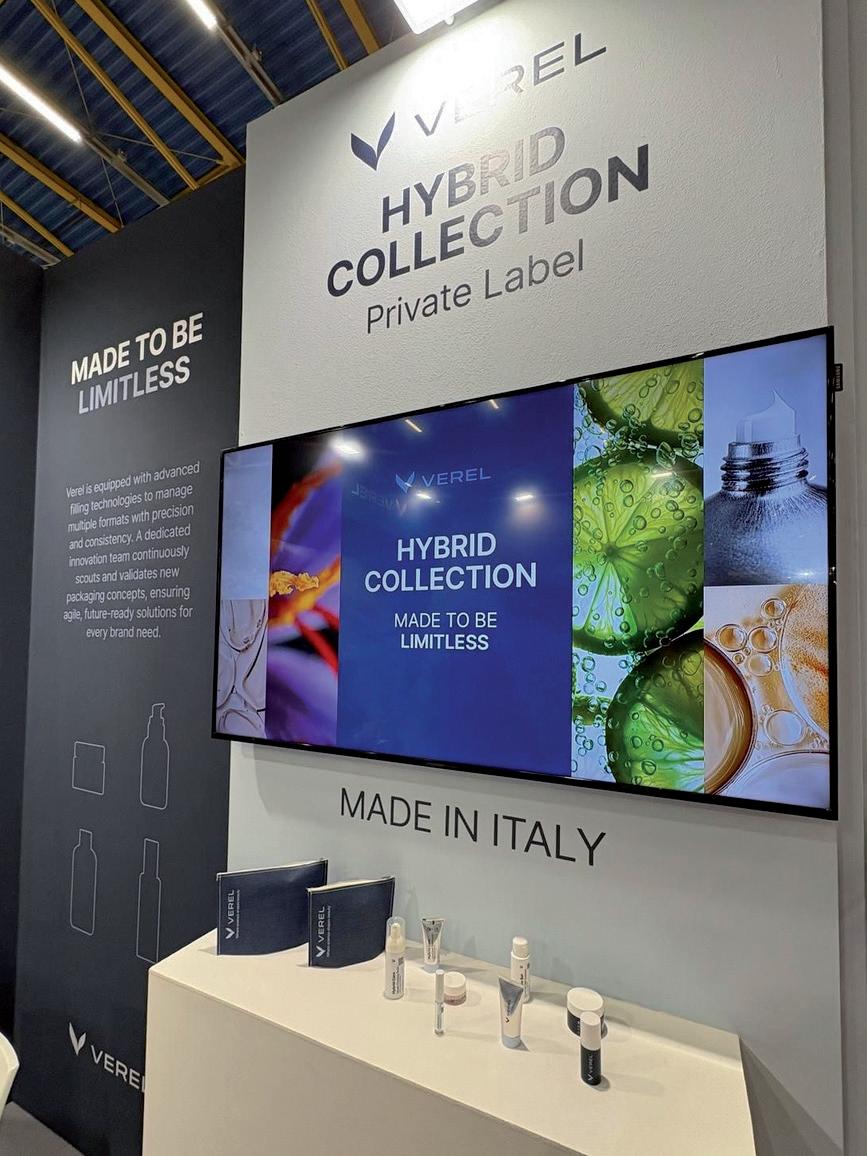
“Our goal is to relaunch Verel and bring it into the future. We are building on a solid industrial base, on which we intend not only to invest, but also to apply our know-how in raw material processing technologies,” said Eugenio Niccolini, CEO of Verel. “Verel’s first participation in Cosmopack was an important step, and the response was very positive. We started from our established expertise, particularly in oral care, and integrated a skincare-driven approach, which attracted strong interest from both long-standing clients and new potential partners. The Hybrid Collection we presented introduces innovative formulations and active ingredients that bridge oral care and skincare, enabling a new functional routine that treats the face, lips and oral cavity as a continuous, integrated system.”
The key launch at Cosmopack was a four-product system — including toothpaste, mouth foaming toner, a serum for teeth and gums, and a lip balm — unified by proprietary functional
ingredients tested both in vivo and in vitro, with antimicrobial and soothing properties inspired by skincare. For facial care, the company also introduced cleansing products based on proprietary actives derived from saffron flowers and bergamot leaves, both sourced through upcycling and clinically tested.
Sustainability remains a central focus. Since its acquisition, Verel has obtained Cosmos Organic, Cosmos Natural, ISO 9001 and GMP ISO 22716 certifications for its production facility near Parma, as well as a Silver sustainability rating from EcoVadis. Several of the biomasses used in its raw materials are either Cosmos-approved or cultivated in compliance with FairWild standards.
www.verel.it/en
Cold Departments in US Are Hot For Store Brand Growth Opportunities
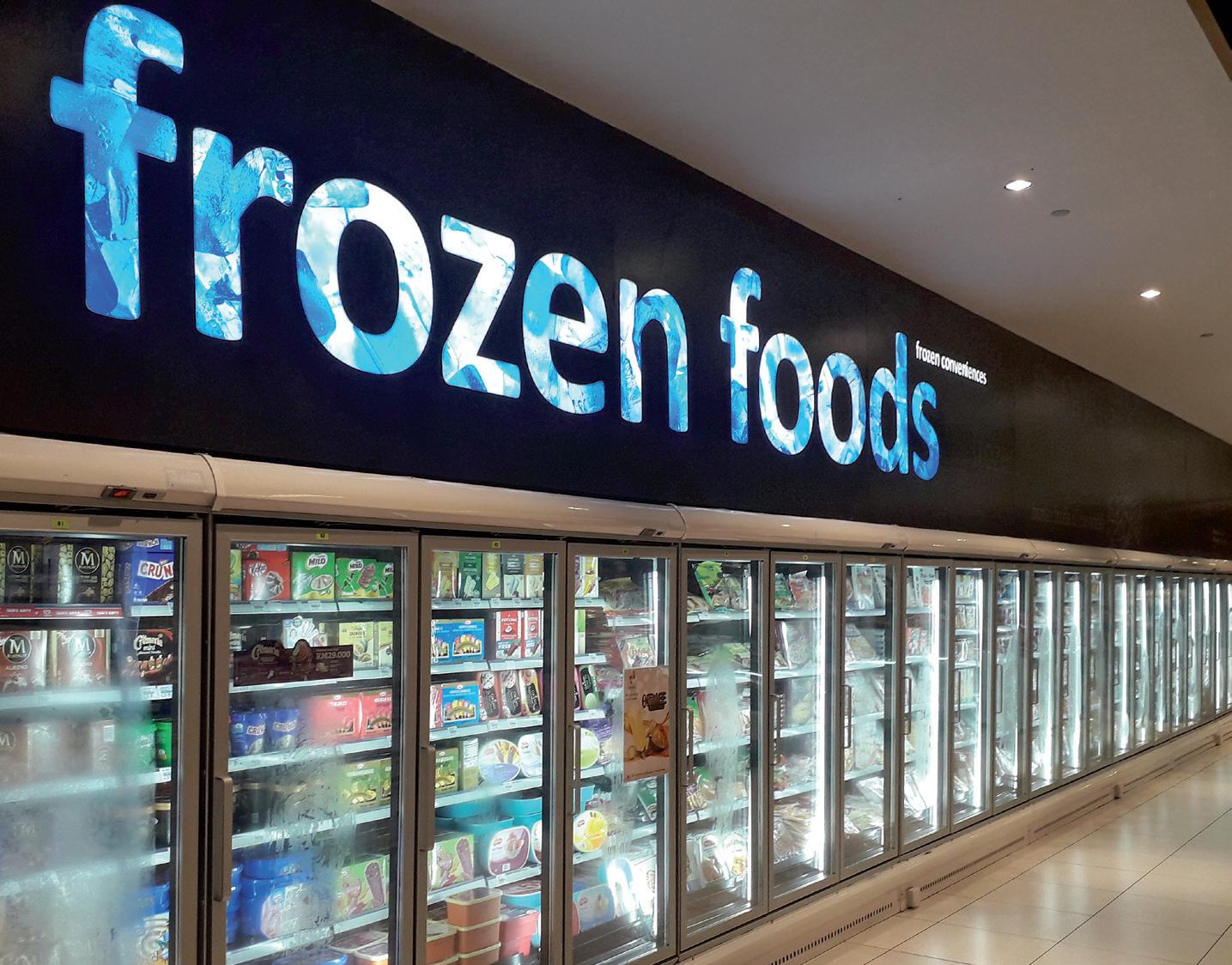
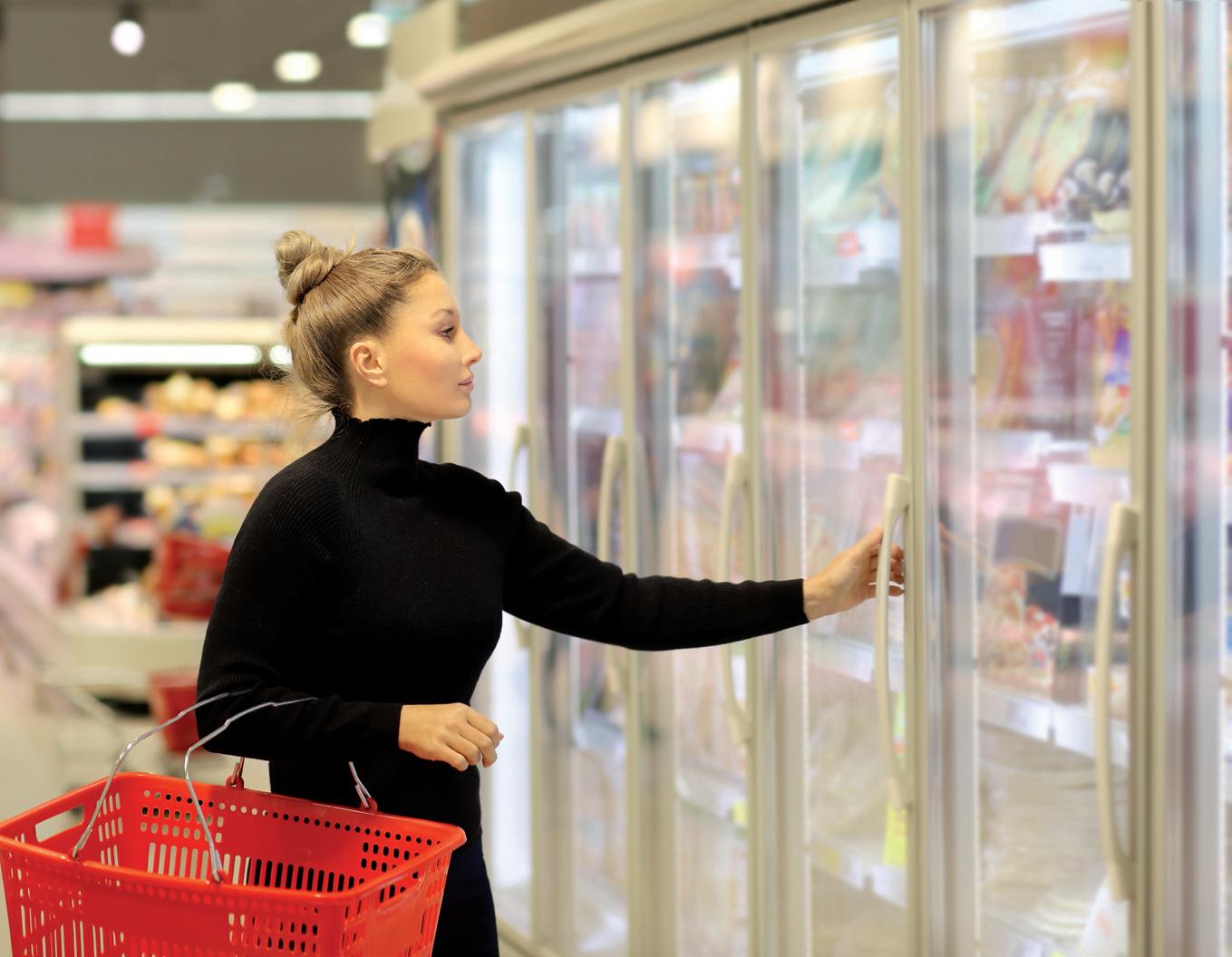
Store brand popularity continues to grow across all US retail formats but no more resoundingly than in the two “cold” departments -- Refrigerated and Frozen. Private label is clearly “hot’ in terms of both unit and dollar sales gains in these two huge sections, according to Circana, PLMA’s exclusive data provider.
Refrigerated is the 800-pound gorilla among the eleven departments that Circana tracks. In 2025, total store brand sales were $60.8 billion, by far the biggest section, an increase of 6.1% that was the best improvement among all departments. Total store brand unit sales were 15 billion, a gain of 0.7%. Some 22% of all US store brand revenue last year came from Refrigerated.
In Frozen, store brand dollar sales were $22.4 billion, up 2.4%, while unit sales came in at 4.7 billion, plus 0.9%. Frozen accounted for 8% of all 2025 store brand sales.
Not surprisingly, store brands dominated market shares in “cold.” In Refrigerated store brands held a whopping 36.6% dollar share and 38.4% unit share while in Frozen store brands accounted for a 26.4% dollar share and a 27.9% unit share
Top 5 Performing Categories in 2025 Store Brand Refrigerated
Top 5 Performing Categories in 2025 Store Brand Frozen Department
Digging deeper, top performing categories in store brand sales gains in Refrigerated included All other milk (+43%), Baked goods (+27%), Seafood (+21.5%), Meat (+14.6%), Yogurt (13.5%), Side dishes (+12.4%) and Cottage cheese (+10.1%). In Frozen, among leading gainers were Snacks-Dips (42.7%), Sides (+13.2%), Juices (+ 11.6%), Meat (+11.3%), Appetizers/Snack rolls (+7%), Pasta (+ 6%) and Fruit (+3.3%).
Growth is spurred by convenience and quality. Some 71% of shoppers favor ready-to-eat, refrigerated meal sections for quick, highquality preparation options. The refrigerated, ready-to-eat market is also thriving due to demand for meal
starters, sauces, and fresh, highquality ingredients. US consumers increasingly mix fresh and frozen ingredients, with 77% purchasing frozen items for specific meals or days. The trend is supported by advancements in cold chain logistics.
More opportunities for growth lay ahead, particularly in frozen. The US frozen food market is pegged to “reach $163 billion by 2033, a CAGR of 7.7% from 2026 to 2033,” according to Grand View Research. “Powered by a perfect storm of economic, lifestyle, and technological shifts.”
Ethnic frozen food is especially surging, powered by consumer demand for convenient, diverse, and authentic global flavors.
71% of shoppers favor ready-to-eat, refrigerated meal sections for quick, high-quality preparation options.
Drivers of popularity include Convenience & Lifestyle: Pre-cooked, "ready-to-eat" ethnic meals cater to busy lifestyles, offering gourmet experiences with minimal prep time; Adventurous Palates: Younger generations (Millennials and Gen Z) are actively looking for globally inspired, authentic flavors, often influenced by social media; Diverse Options: The market is moving beyond basic options to include specialized, high-quality, plant-based, and, in some cases, clean-label or organic ingredients; Premiumization: Consumers are moving away from budget frozen meals toward gourmet or "better-for-you" (organic, cleaner labels) international options; and Retail Expansion: Supermarkets are expanding their frozen aisles to include more niche ethnic products, enhancing accessibility.
"Store brands that lean into the trends with high-protein refrigerated and frozen innovations, clear nutritional messaging and preportioned packaging will be best positioned to connect with these rapidly growing segments," says Peggy Davies, PLMA President.
www.plma.com
PLMA’s 2026 Leadership Conference In Bentonville Sets Attendance Record
The hometown of the world’s biggest retailer was, fittingly, the site of PLMA’s best-attended, conference ever. Not surprisingly, a record number of store brand executives -- retailers, wholesalers, manufacturers, suppliers, brokers and others involved in adjacent industries -converged on Bentonville, Arkansas, the birthplace and global HQ of retail titan Walmart in April to participate in PLMA’s 2026 Leadership Conference and Annual Meeting.
Themed “Building Brands That Drive Success,” the event offered tracks on Brand Building: Value Proposition and Social Media; Emerging Technologies; Trends in Innovation; Private Brands and Consumer Behavior, and Private Brands: Purpose, Personalization and Performance.
Scott Morris, Walmart’s SVP of Private Brands Food, Consumables, and Manufacturing, delivered the keynote address on The Future of Private Brands. Morris and his team are tasked with positioning Walmart’s Private Brands, strengthening their value proposition, developing quality core and innovative products, and building customer loyalty and holistic cultural support as a strategic impetus for the organization.
"This isn’t your mama’s private brand anymore, today’s shopper is more engaged than ever before," Morris told the standing room only breakfast session. “We want to give the customer powerful choices they can trade into – not down.”
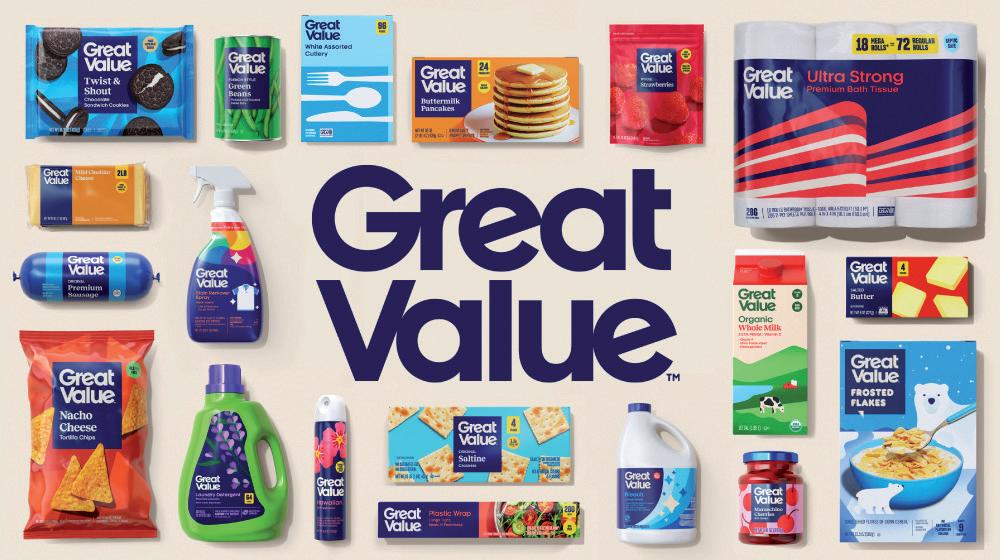
On the eve of the PLMA event, Walmart announced an update of the logo and packaging for its 10,000 SKU Great Value private label brand. It’s the first major change to the brand’s packaging, which was launched in 1993, in 10 years. “It’s time after a 10-year cycle to renew the brand and give it a fresh look; something that’s modernized and connects with the customer,” offered Morris.
The more than 300 conference participants were able to craft their own agenda from a schedule of more than a dozen breakout sessions on the tracks along with several main stage plenary presentations.
“Attendance has more than doubled from last year reflecting the momentum, energy and growth of our industry,” said PLMA President Peggy Davies during the Annual Meeting. “There’s no better time than right now to be in store brands,” she continued. “Today’s attendees represent one of the most dynamic, relevant, and fastest-moving sectors in all of consumer goods.”
“In a world filled with overwhelming amounts of information and limited time, PLMA is your go-to source. PLMA isn’t just an industry association anymore. We’ve stepped into a bigger role, moving from setting principles to setting strategy, with a sharper value proposition and a global vision to back it up,” Davies said in her President’s address.
The induction of 24 new members to the Private Label Hall of Fame also took place during the conference. “We are proud to recognize this exceptional group of leaders whose contributions continue to strengthen and advance store brands,” said Davies, of the honorees. “From champions and innovators to emerging talent and lifetime achievers, each reflects the collaboration, forward thinking and commitment that help move our industry ahead.”
At the conclusion of the conference, Davies announced the association's 2027 Leadership Conference and Annual Meeting will be held in Cincinnati, HQ city of the Kroger Company.
U.S. Private Label Wines Get High Marks Among International Contenders
PLMA’s 2026 International Salute to Excellence Wine Awards celebrated the best supermarket private label wines from around the globe with Albertsons Companies Inc. and Aldi Inc. named the U.S. winning retailers among the overall 12 award winners from eight countries.
Albertsons won Best Quality in the New World Cabernet & Blends Category with its Vinaforé Reserve Stags Leap District Napa Valley Cabernet Sauvignon 2022 and Best Quality in the Sauvignon Blanc & Blends Category with its Vinaforé Collection Marlborough New Zealand Sauvignon Blanc 2024.
Aldi was awarded Best Quality in the Pinot Noir Category with its Peaks & Tides Sonoma County Pinot Noir 2023. The Awards reinforce private label wine is not just a value alternative but a leader in quality, creativity, and excellence worldwide.
In the U.S., the Silicon Valley Bank’s 2026 State of the US Wine Industry Report that provides an analysis of current market conditions, success strategies, and forecasts for the year ahead expects double-digit growth in private label wines, as consumers seek high-quality, high-value wines.
Continuing to capitalize on this emerging growth category, PLMA’s Show in Chicago will once again feature a special section devoted to Wine & Spirits to provide the opportunity for retailers in all channels to expand their wine portfolio with new product offerings and exclusive partnerships. In addition to being displayed in Amsterdam, all the award-winning wines from the International Salute to Excellence Wine Awards will also be on display on the Show floor in Chicago.
“We’re seeing momentum in this category and are giving buyers in Chicago the opportunity to connect with exhibitors ready to collaborate and grow their wine programs,” said Director, Trade Show Sales, Sharon Davis. “Because our show is exclusively private label, buyers know they’re meeting partners who truly understand how to build and expand their offerings.”
In addition to wine, PLMA’s Store Brands Marketplace will feature spirits, ready-to-drink cocktails and non-alcoholic adult beverages among the tens of thousands of food and non-food offerings at the Show.
www.plma.com
NOTABLE
Private Label Excellence, From Source to Shelf
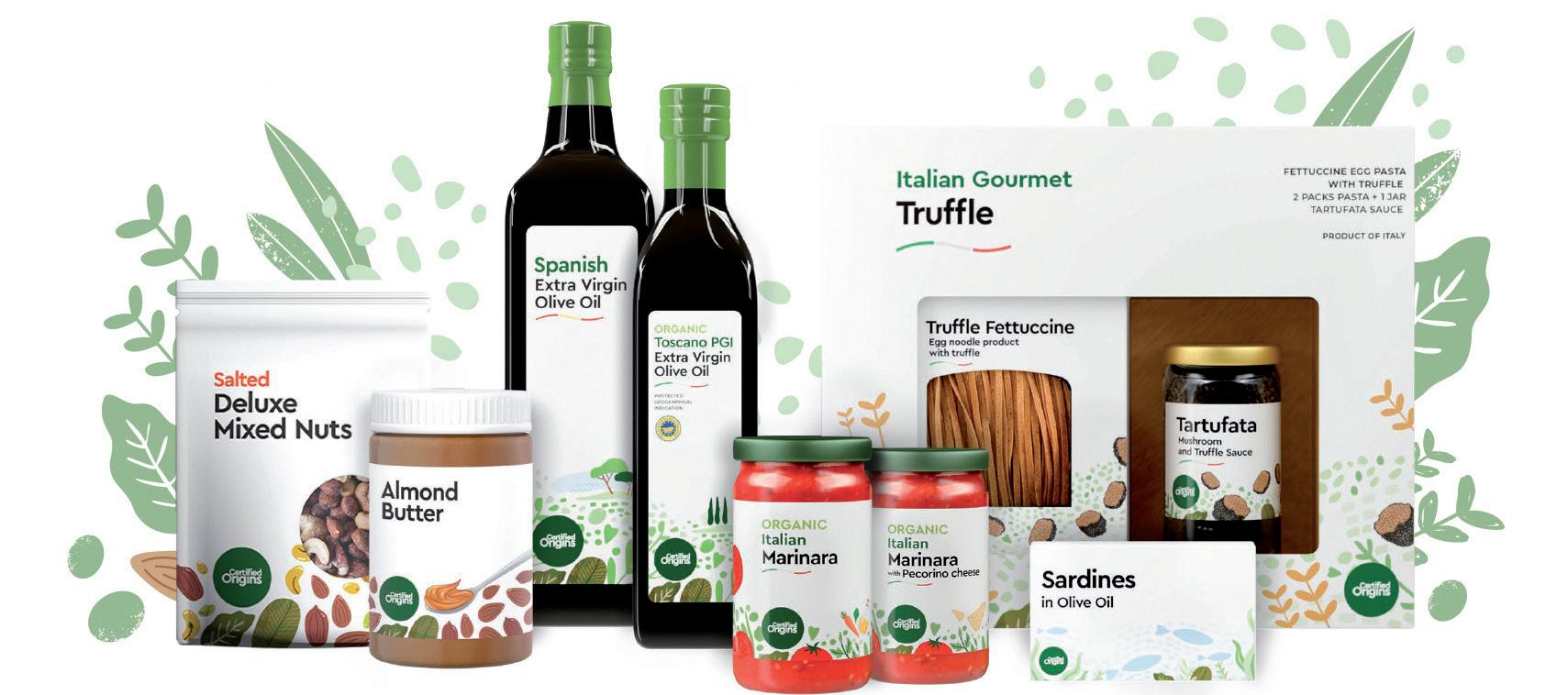
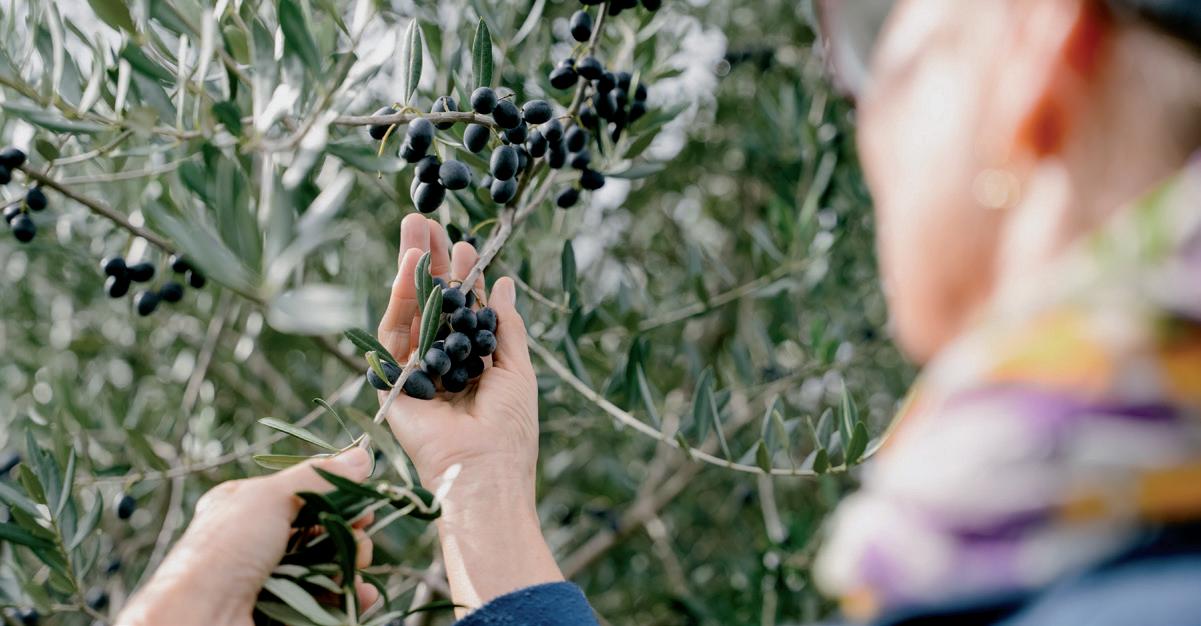
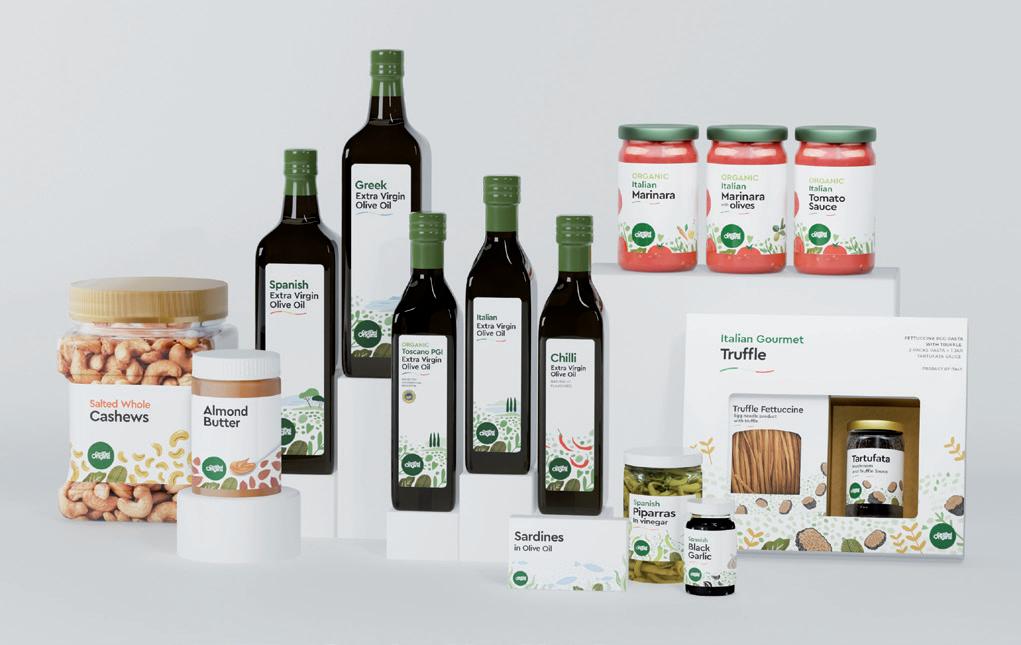
Certified Origins is a global private label and co-packing partner, delivering extra virgin olive oil, nut-based products, tomato sauce, and pantry products, supporting leading retailers and brands with end-to-end supply chain expertise, from sourcing to bottling and packaging.
Founded in 2006 by Mediterranean cooperatives, and still cooperatively owned today, the company combines origin expertise with industrial capabilities across Europe and the United States to deliver quality, transparency, and operational reliability at scale across Europe and the United States.
Building Bridges Between the US and Europe
Certified Origins owns production facilities in both Europe and the United States, reflecting a business model designed to stay close to both sourcing regions and end markets.
In California (Fresno), the company runs a facility dedicated to tree nuts and nut butter products, covering processing, roasting, blending, and packaging. The site supports a range of formats and specifications to anticipate and respond to retail and foodservice partners’ needs.
The Virginia (Newport News) North American hub oversees olive oil bottling operations, quality control, and distribution, backed by an on-site laboratory that complies with U.S. and international standards.
Nuts & Nut Butters: US-Based Innovation and Flexibility
Nuts and nut butters are a core part of Certified Origins’ private-label portfolio, from single varieties and snacking mixes to tree-nut butters, complementing our broader offering and supporting our ongoing commitment to delivering food that is both enjoyable and nutritious.
The range includes almonds, cashews, pistachios, macadamias, and more, with customizable processing and mix formats. Highcapacity processing lines enhance the private-label offerings by allowing the production and development of nut butters from single varieties or custom blends tailored to specific texture and flavor profiles.
Extra Virgin Olive Oil: From Mediterranean Origins to US Bottling
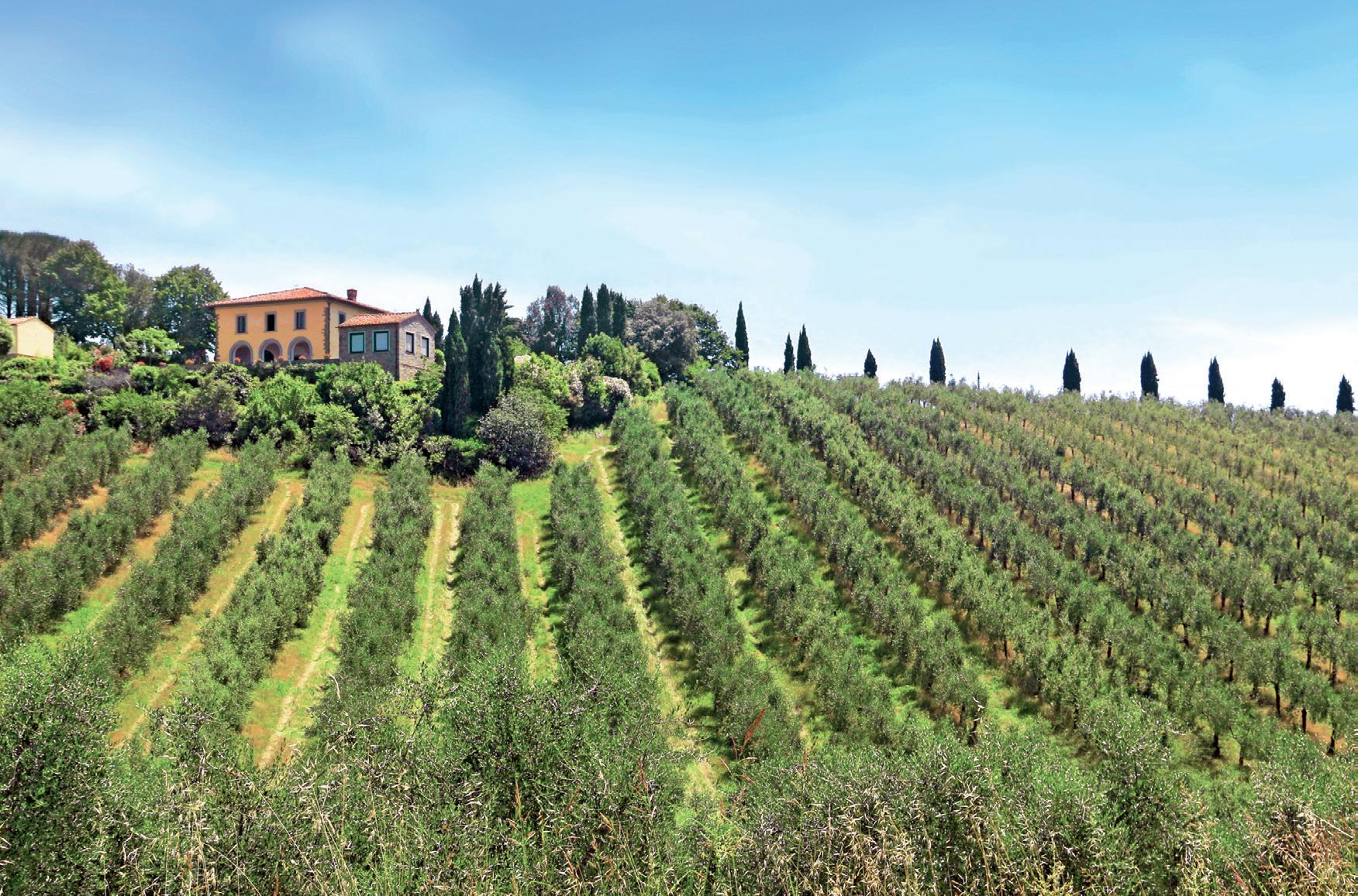
Extra Virgin Olive Oil (EVOO) remains the foundation of Certified Origins’ identity. The company is owned by cooperatives from Spain and Italy, two countries with long and deeply rooted olive oil traditions and sources directly from farmers across the whole Mediterranean, combining deep origin knowledge with industrial execution.
For the North American market, EVOO can be bottled locally at the Newport News facility, where flavor profile, quality control, and packaging are managed to match and surpass the highest retail standards. The result is an EVOO offering that links cooperative farming at origin with market-ready execution, without compromising either.
Tomato & Pantry Products: Scalable Solutions
Beyond oils and nuts, Certified Origins develops tomato sauces and select pantry products as part of its broader private label offering.
These categories benefit from the same integrated approach that defines the company’s core businesses: carefully selected sourcing, strong supplier relationships, quality certifications, and logistics expertise spanning Europe and North America.
La Doria Strengthens Global Position in Private Label
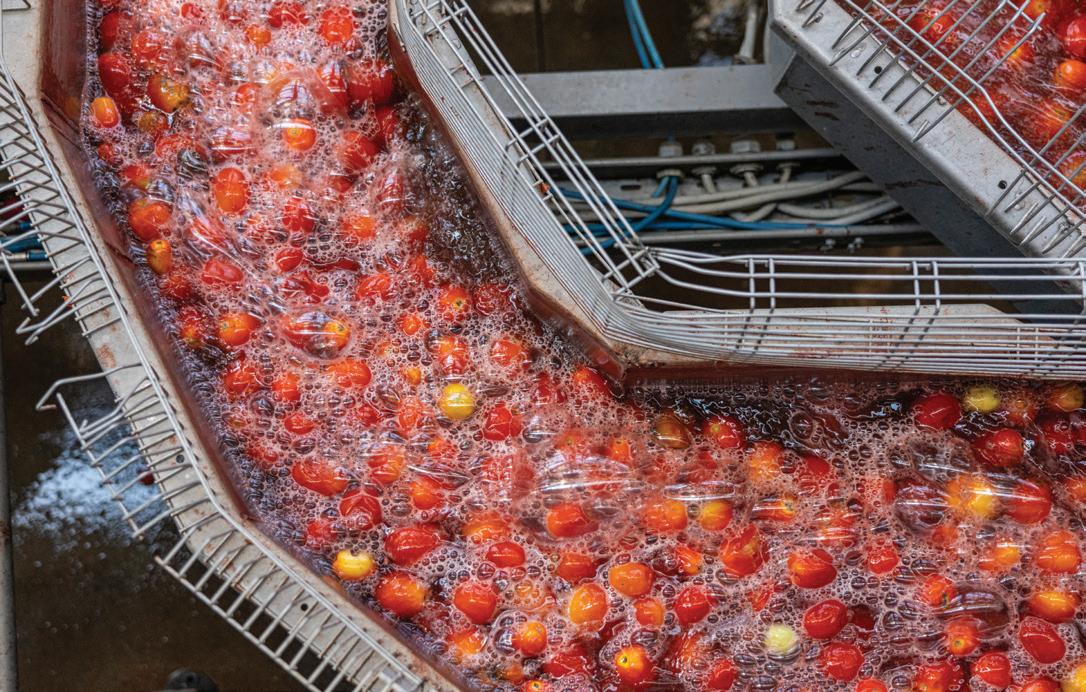
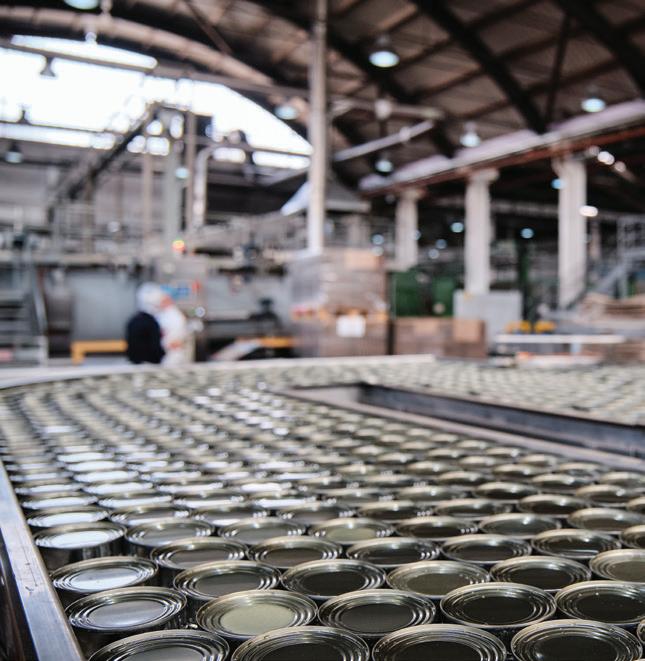
Headquartered in Angri, in the province of Salerno (Italy), La Doria represents Italian excellence in the food canning sector. Specializing in the production of tomato derivatives, ready-made sauces, canned pulses, juices, and fruit-based beverages, the company stands out as Europe’s leading producer of canned pulses, peeled tomatoes, and tomato pulp for the retail sector. Additionally, La Doria is one of Italy’s top producers of fruit juices and the leading European producer of private-label ready-made sauces. Recently, thanks to a significant acquisition, the Group has expanded its portfolio to include pasta, offering an even more complete range of products.
La Doria is a trusted supplier to major retail and discount chains worldwide. Its commitment to private label production is evident, with over 93% of the Group’s revenue derived from
this segment. Its goal is to offer high-quality products at competitive prices, positioning itself as a strong alternative to commercial brands. With extensive expertise and a continuous focus on research and development, La Doria is synonymous with reliability and innovation in the food sector. With twelve production plants located across Italy, La Doria has successfully combined Italian production tradition with a strong international presence. Exports account for over 80% of revenue, with a solid foothold in key markets such as the United Kingdom, Germany, the rest of Europe, Australia, and Japan. This global success is based on careful raw material selection and cutting-edge production processes that ensure high-quality standards.
La Doria is not only a successful company but also a responsible enterprise operating according to well-defined ethical principles. Environmental sustainability, legality, transparency, and respect for human rights are fundamental values that guide every aspect
of production and distribution. The Group is firmly committed to responsible energy resource management, waste recycling, and reducing the environmental impact of packaging. Furthermore, La Doria promotes fair working conditions throughout the supply chain, working closely with producers’ organizations to ensure respect for workers’ rights.
Since its founding, La Doria has maintained a strong connection with its local community, supporting educational initiatives for young people, urban regeneration projects, and social inclusion programs. The company contributes to the growth of the local economy by sourcing from a network of suppliers primarily located in Southern Italy, further strengthening the national production fabric.
Thanks to its dedication to quality, sustainability, and innovation, La Doria continues to be a benchmark in the international food industry. With a constantly evolving product range and a strategy focused on responsible growth, the Group confirms itself as an excellent partner for large-scale distribution, bringing the best of Italian food tradition to millions of consumers worldwide.
www.gruppoladoria.it/en/
Chiaverini Strengthens its Global Presence
From Local Icon to Global Leader in Premium Breakfast
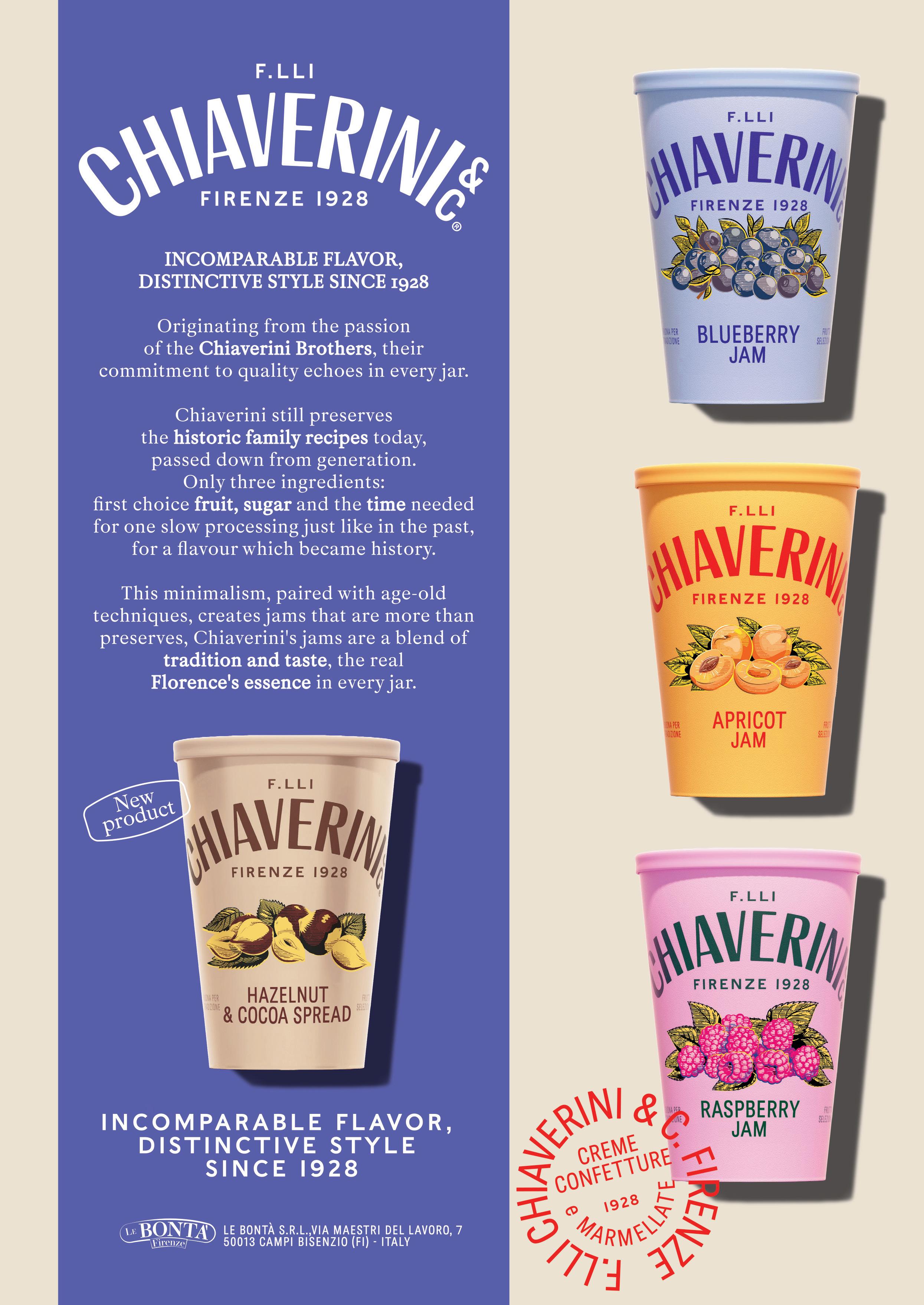
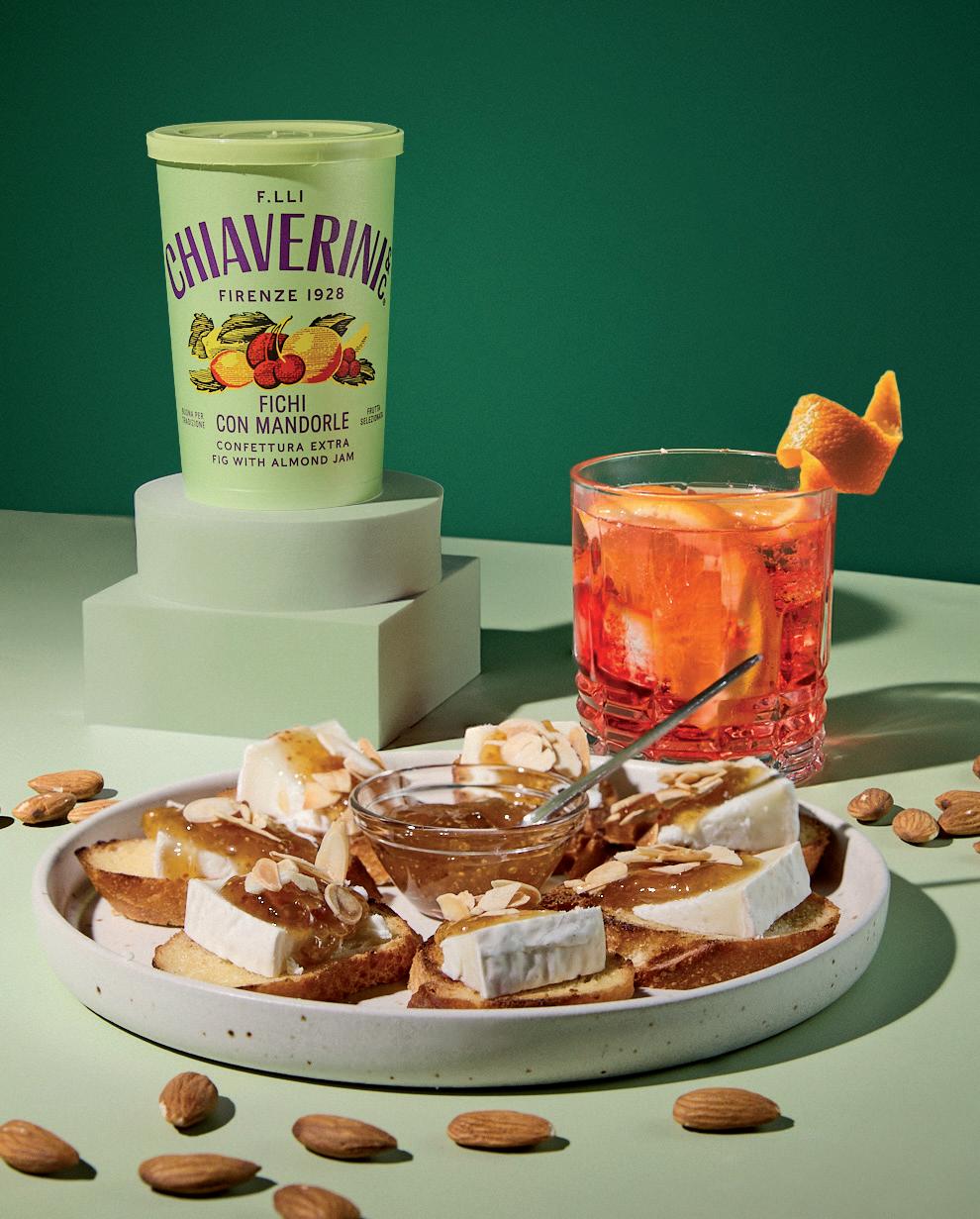
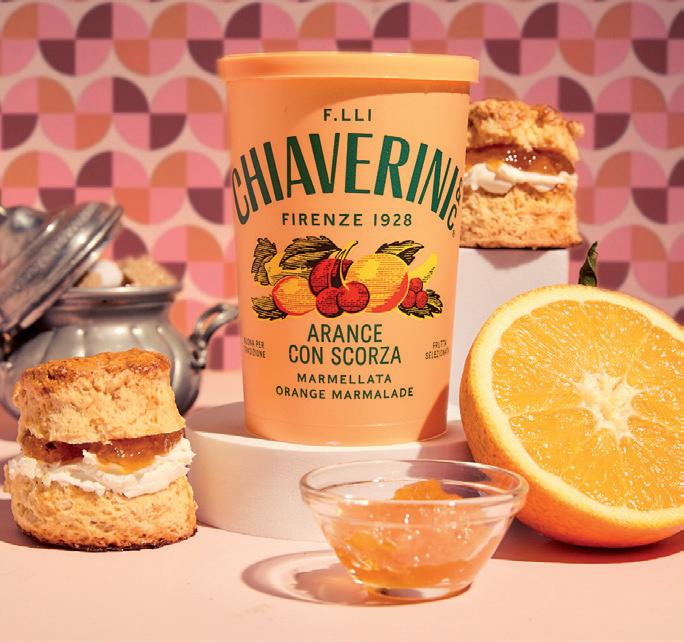
Chiaverini Firenze continues to strengthen its position in international markets, consolidating its global presence and establishing itself as a trusted and authoritative brand in the premium breakfast category. Building on its rich Florentine heritage, the brand has successfully combined tradition and innovation, gaining increasing recognition among consumers and trade partners worldwide.
A Legacy of Dedication
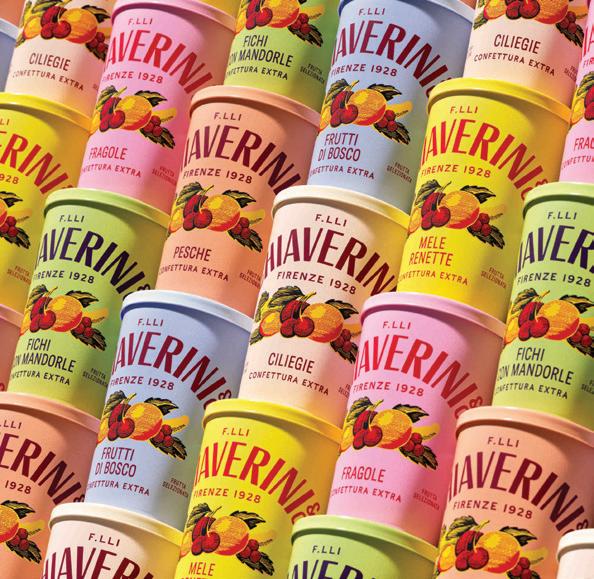
Chiaverini Jams have been defining Florentine culture since 1928. Originating from the passion of the Chiaverini Brothers, their commitment to quality echoes in every jar, making Chiaverini a staple in Florentine homes. The secret to Chiaverini’s success lies in simplicity: just fruit, sugar, and passion. Each jar is a testament to the art of slow cooking, melding flavors into perfection. Chiaverini’s jams are history, Florence’s essence in every jar. Each represents dedication, heritage, and resilience. Chiaverini isn’t just a taste of Florence; it’s a taste of history, a flavor transcending time.
An Unmistakable Symbol
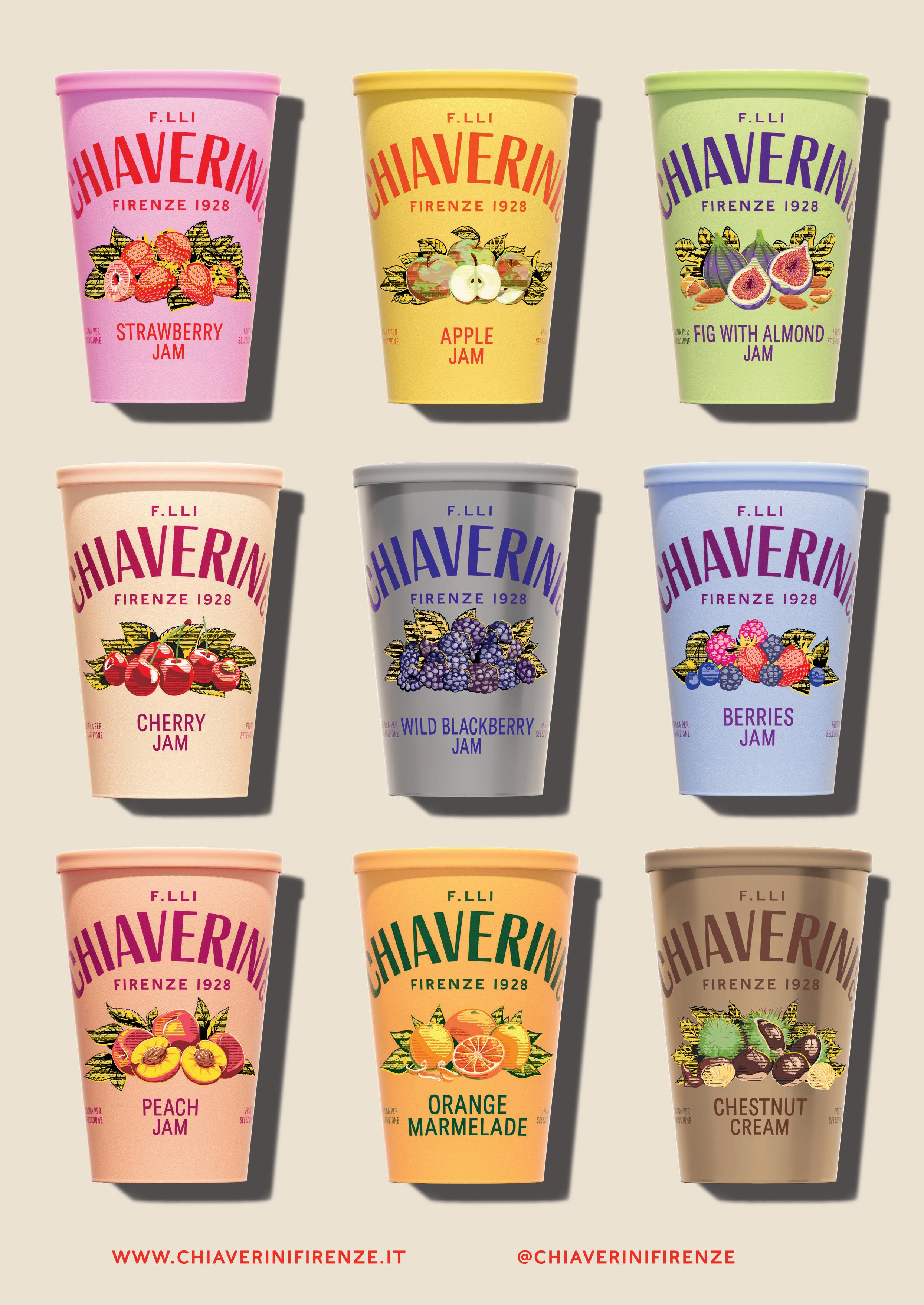
The packaging of the Chiaverini “Pail” is not just a container; it represents an evolution from rustic wood to sleek aluminum. The new line, featuring distinct colors for each flavor, caters to collectors while upholding the brand’s essence and tradition.
Not Just A Breakfast Spread, A Gourmet Lover’s Indulgence
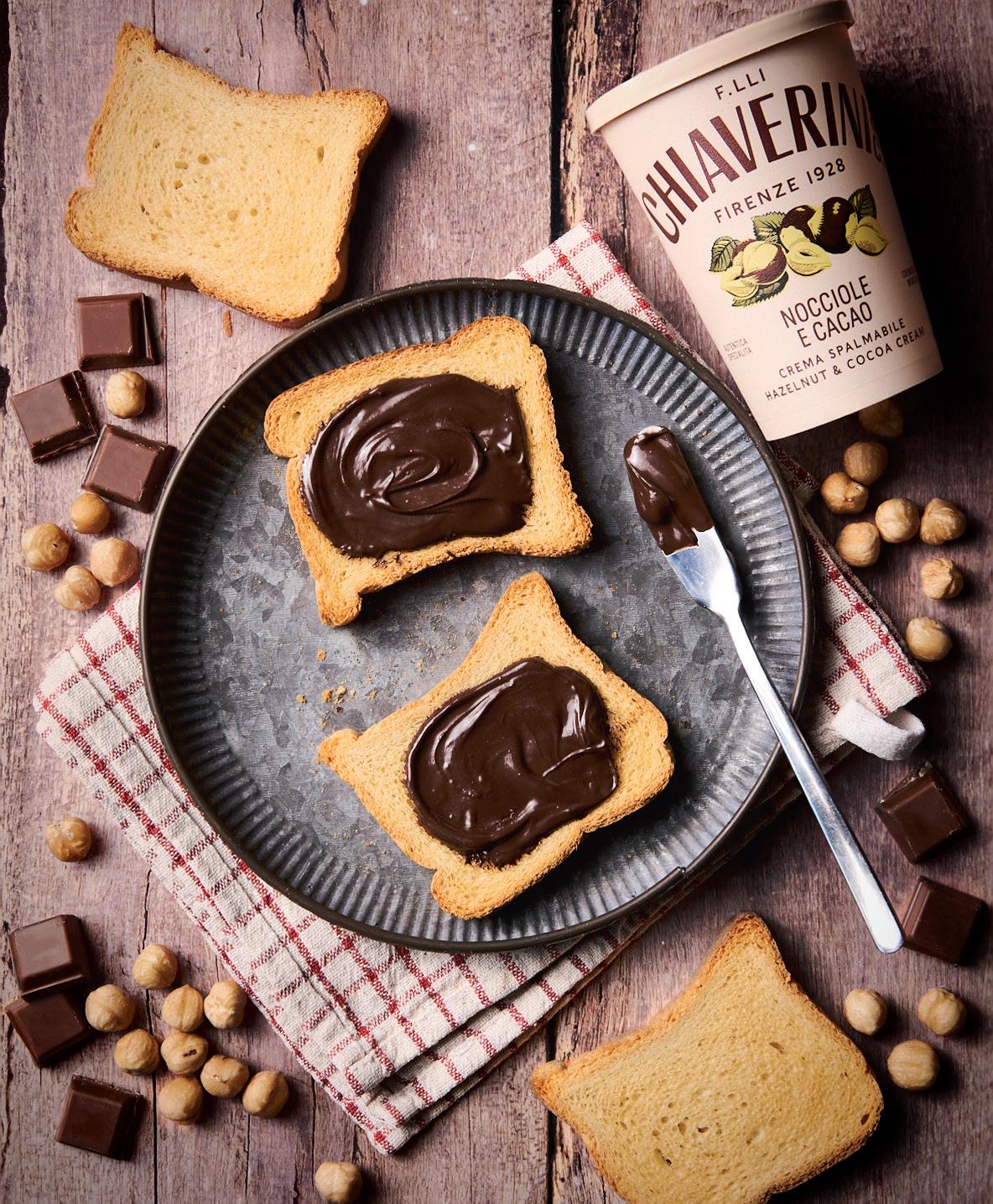
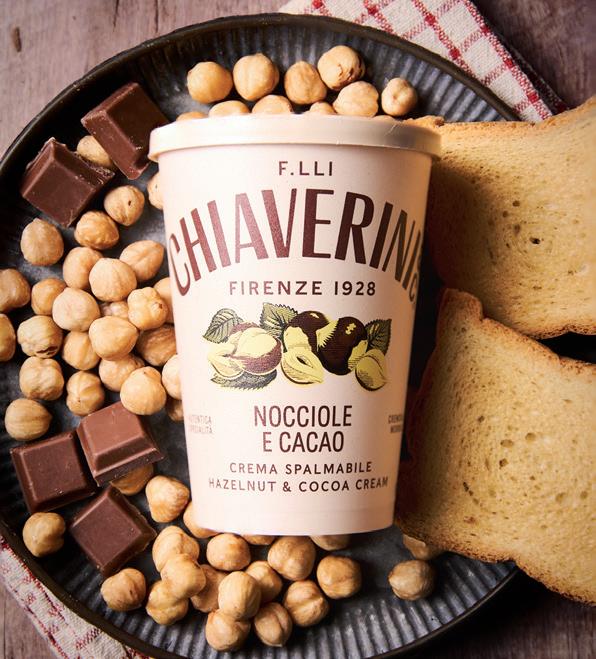
Not only iconic jams, but also a refined selection of premium spreads that complete the breakfast experience. Experience pure hazelnut bliss Chiaverini’s latest Hazelnut Cream is a true indulgence, crafted with 30% real hazelnuts and a time-honored recipe. Made with only the finest ingredients, it’s free from artificial flavors, colorings, preservatives, and palm oil. Its silky texture and rich, nutty flavor make it a must-have for any food lover’s pantry.
Chestnut Cream, one of the most beloved and gourmet products, is a delightful cream obtained from the simple processing of chestnuts, celebrating the authentic flavors of autumn.
Expanding Its International Footprint
With a clear vision and a strong identity, the brand continues to build on its legacy, bringing a taste of authentic Italian quality to tables worldwide.
Chiaverini Jams is part of LeBontà Group, a Tuscan based company that brings together high-quality brands with a strong connotation of genuine and natural products. www.chiaverinifirenze.it/en www.lebonta.it/en
A Key Player in the Consumer Goods and Away-From-Home Markets
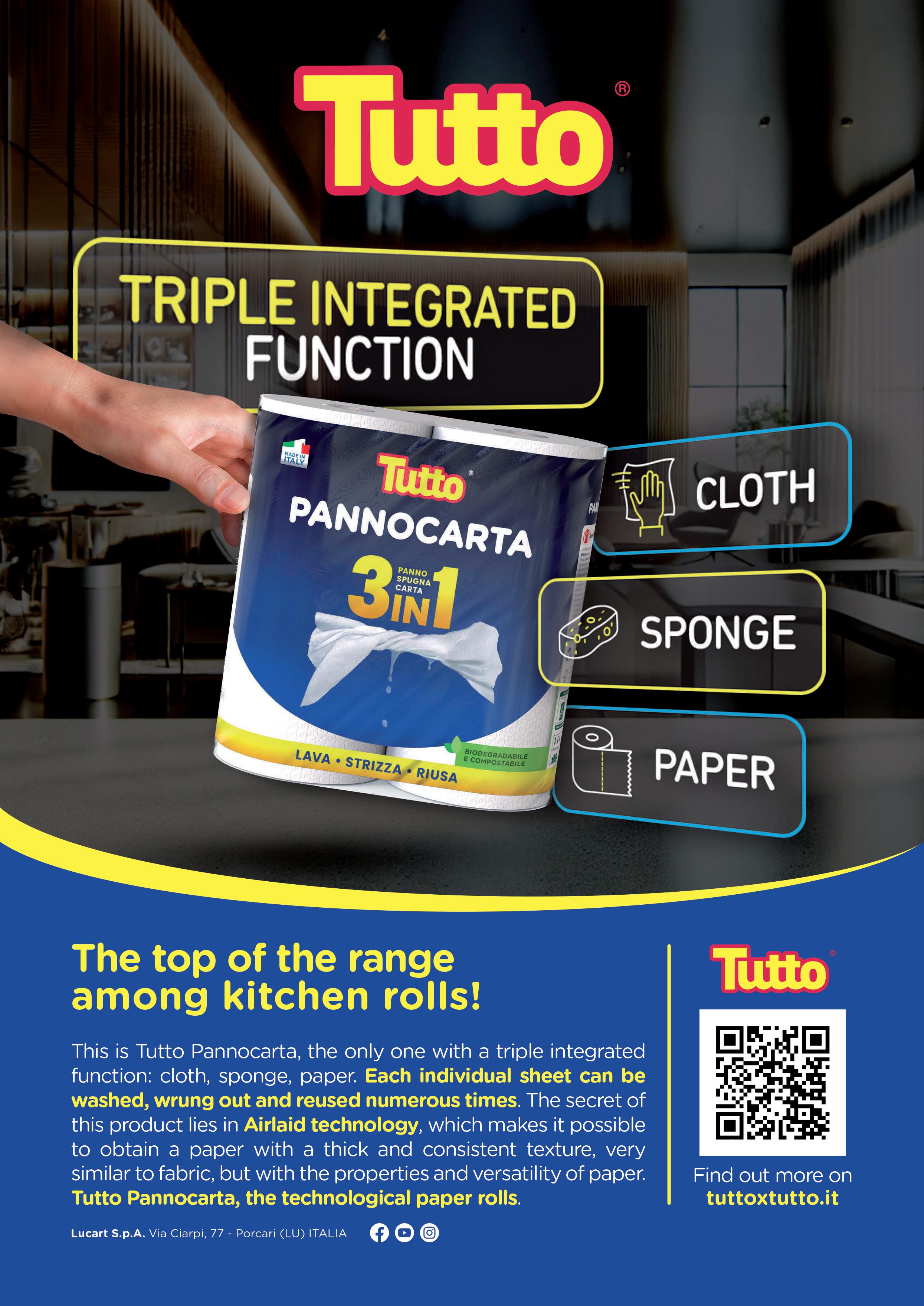
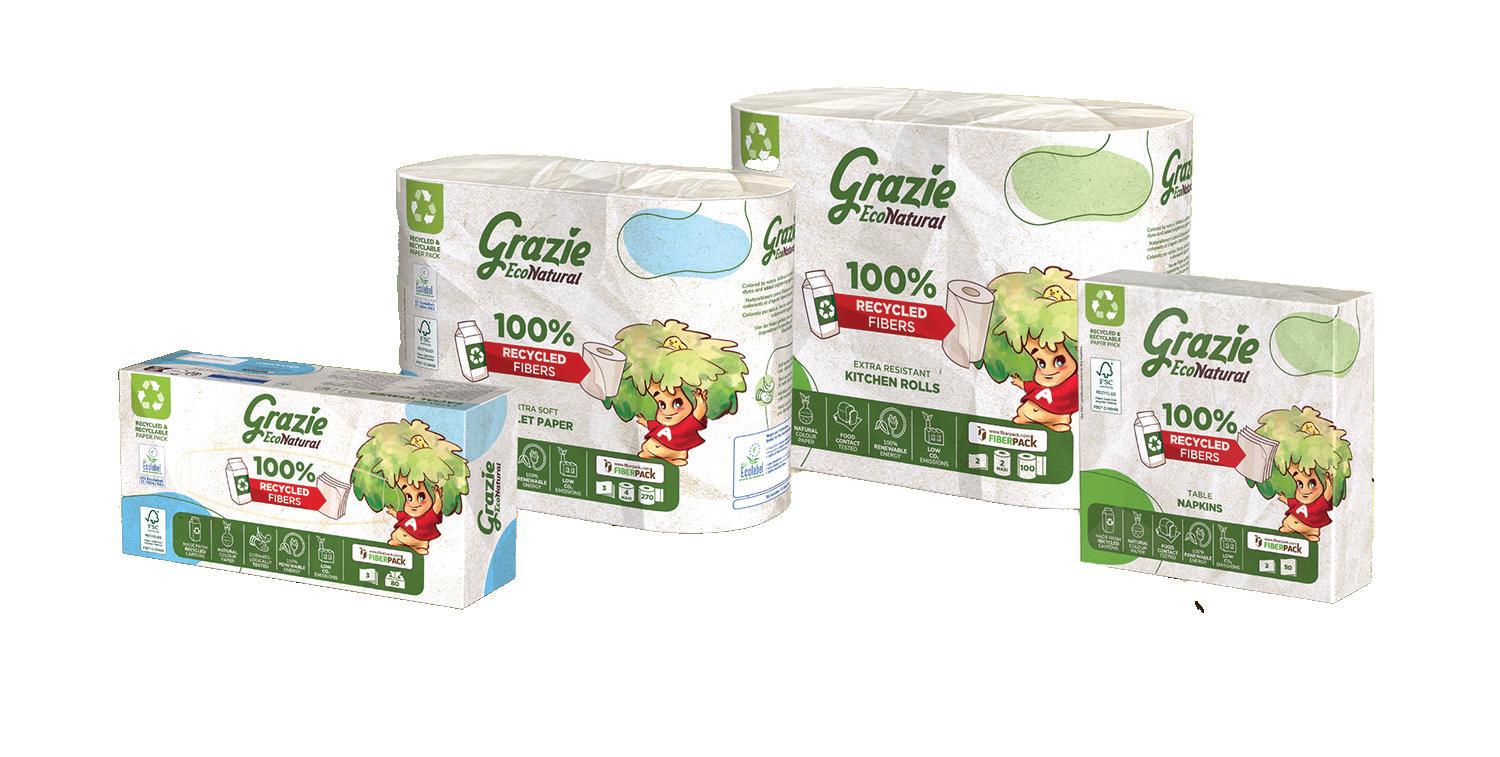
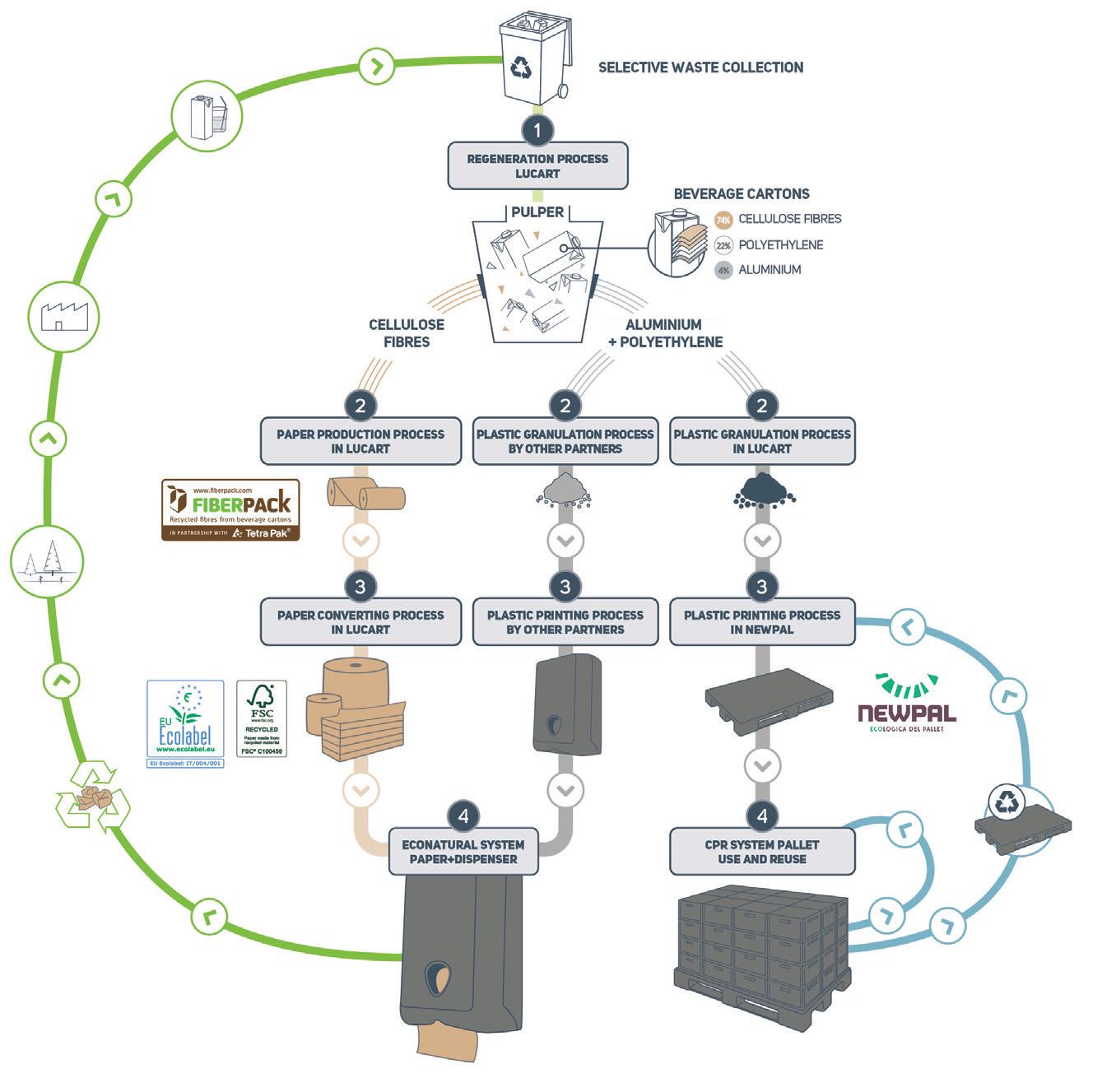
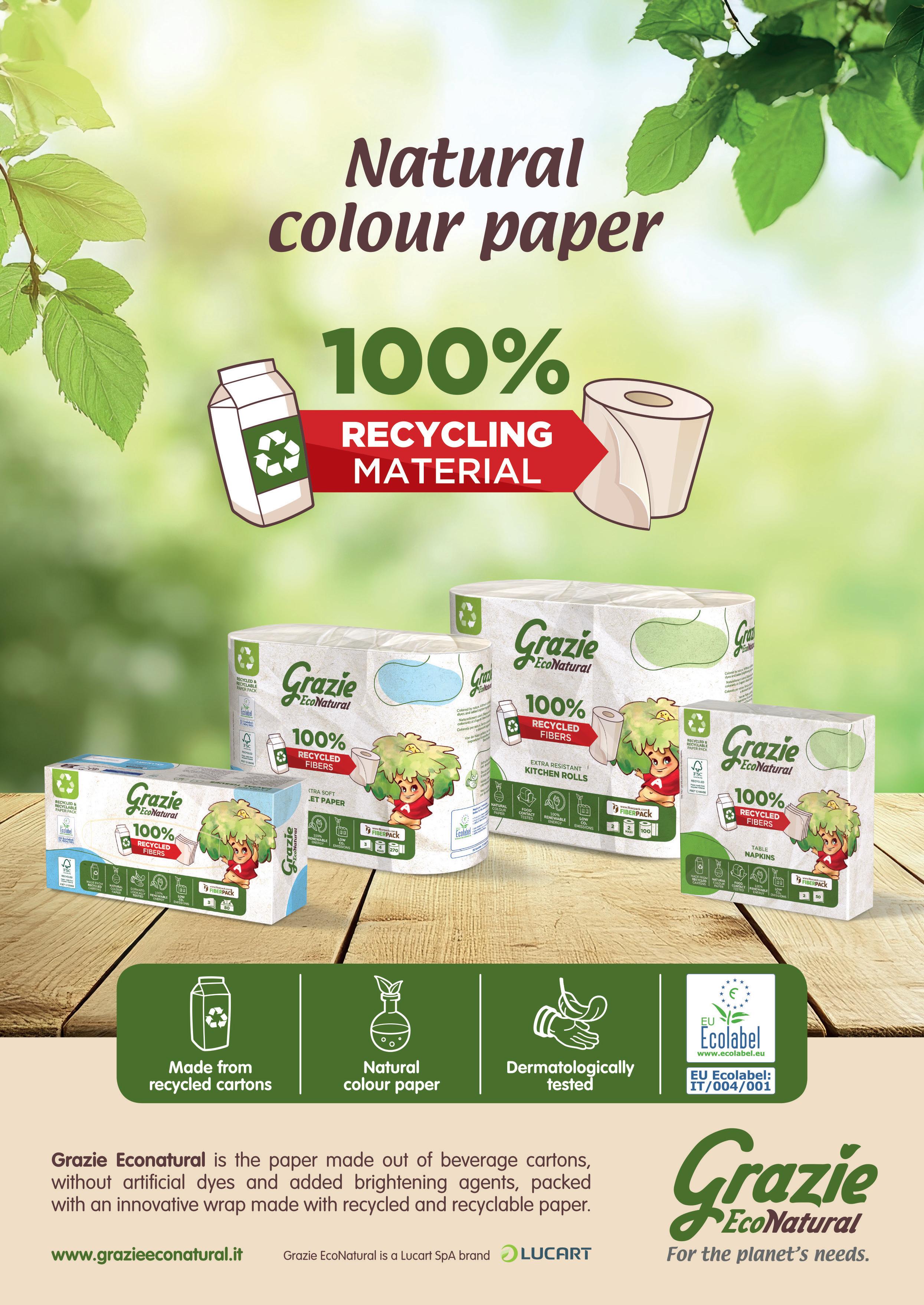
Lucart, a major European manufacturer of thin MG paper for flexible packaging, is a key player in the consumer goods and away-from-home markets as a producer and transformer of tissue and airlaid paper. Its attention to people, sustainable processes, and approach to innovation means they offer cutting-edge products that meet market challenges and customers’ needs.
Fiberpack® is their flagship project in this field: it combines advanced technology and environmentally friendly processes, demonstrating that circular economy principles are fully applicable to the tissue sector.
In 2010 Lucart created this project, called “EcoNatural”, starting from the idea of using all the elements of beverage cartons according to circular economy principles. This type of packaging is widely used in the food industry to protect and preserve food and for its high natural cellulose fibre content that makes it more ecological compared to other packaging materials of fossil origin. Due to its mixed composition of cellulose fibres (74%), aluminium (4%) and polyethylene (22%), this material is often not recovered at end-of-life or is recovered only partially.
The production process relies on an innovative technology that separates the cellulose fibers found in beverage cartons from polyethylene and aluminum by physical-mechanical action. With this technology, they avoid substances that may be harmful to people or the environment. They produce tissue products with the fibers obtained through this process and recover the aluminum and polyethylene, converting them into a homogeneous material called Al.Pe.®, which other industries use to produce various items.
www.lucartgroup.com
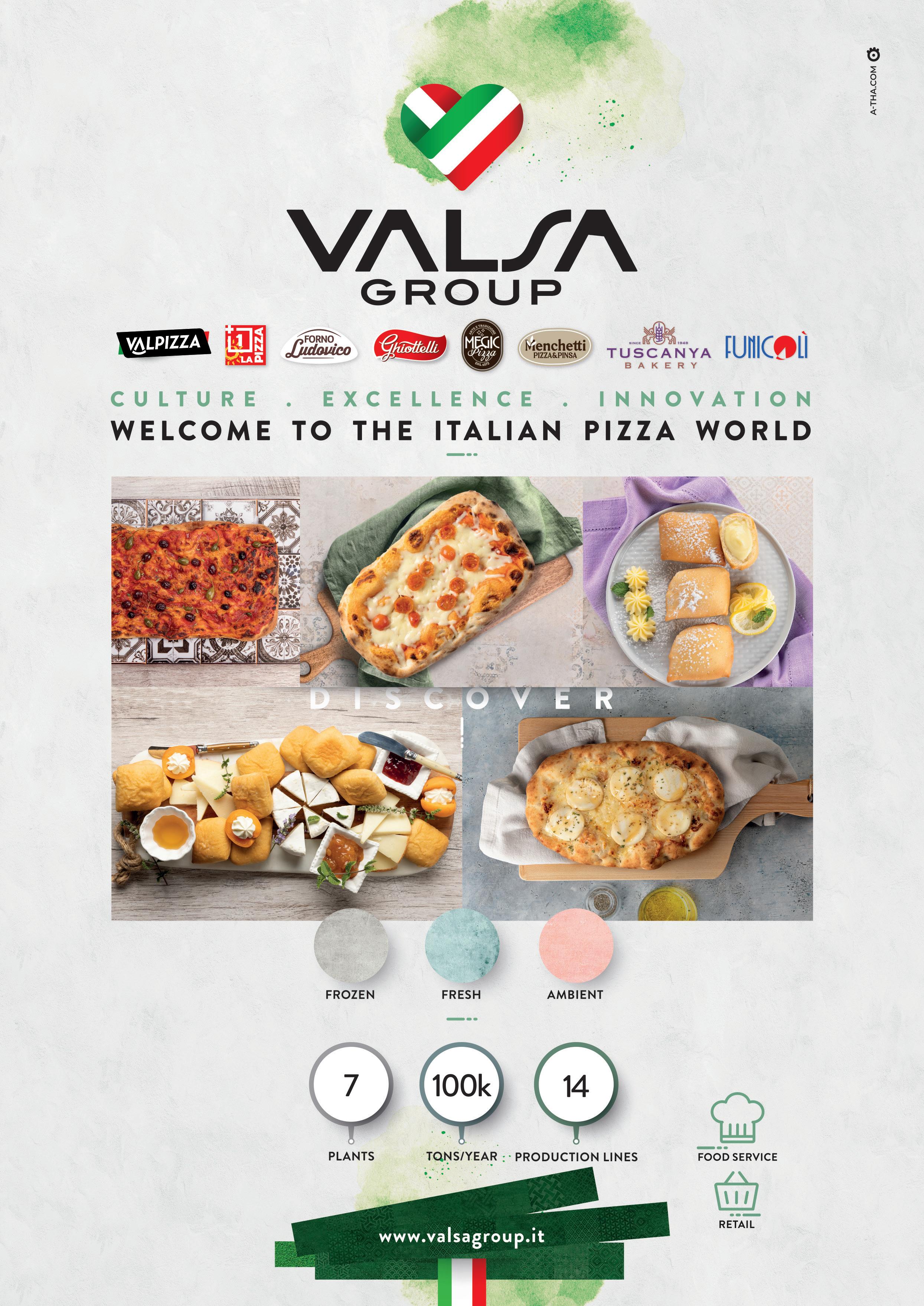
A Leading Supplier of Frozen, Chilled, and Ambient Snacks
As a leading manufacturer of frozen, chilled, and ambient pizza, pinza, focaccia, and snacks, Valsa Group identifies its primary goal as promoting the true Italian food lifestyle worldwide. The headquarters is located in Valsamoggia, in the very heart of Italy. This is where the Group’s history began. Today, their roots extend from North to South through 7 plants, following a purely Italian entrepreneurial path.
Their mantra: CULTURE . EXCELLENCE . INNOVATION.
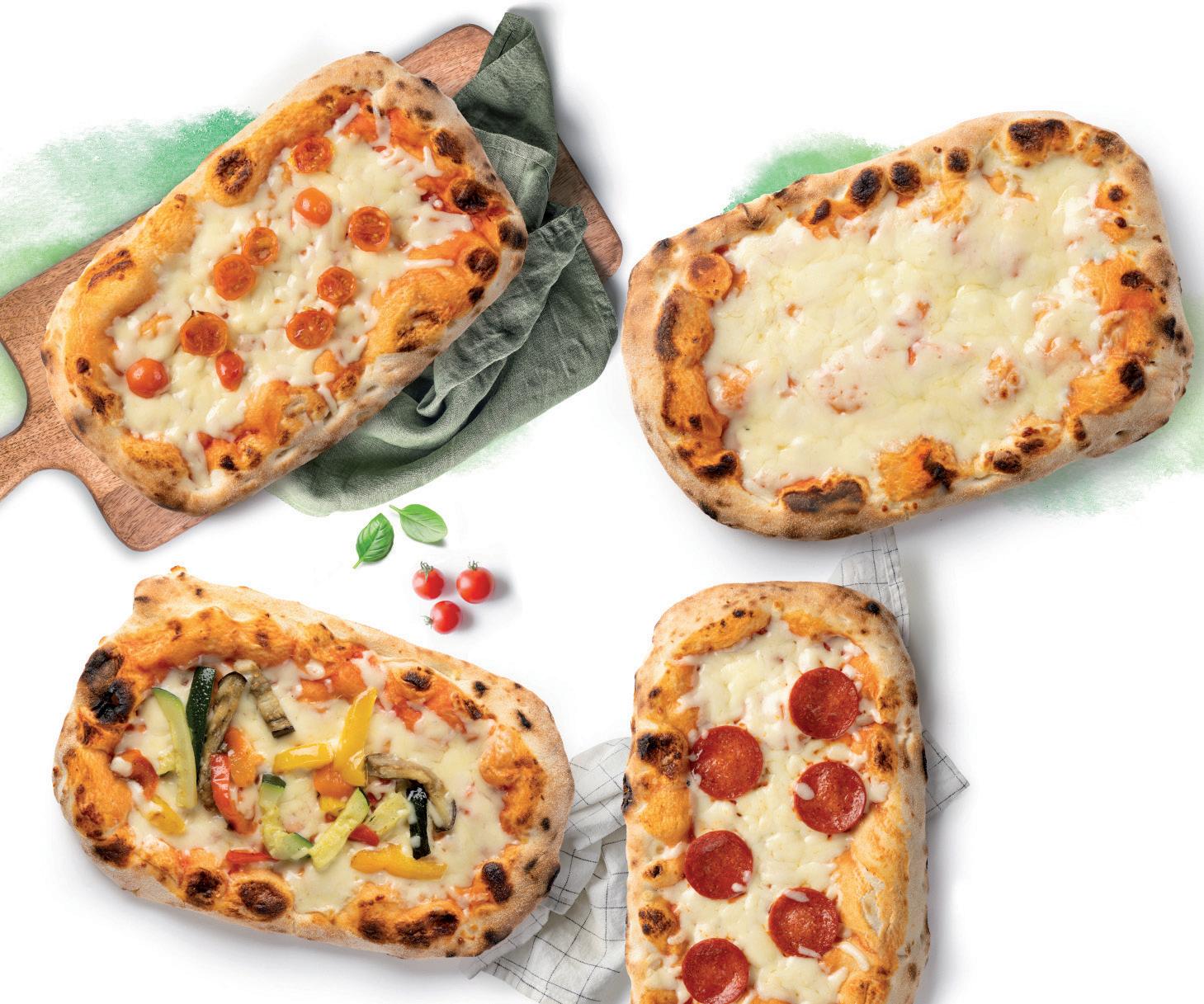
Always attentive to consumers’ needs and emerging trends, Valsa Group is launching a ready-to-top, chilled pinsa concept: an exceptional product designed to offer maximum convenience for final consumers, with numerous tasty toppings ready to bake in just a few minutes directly from the fridge.
This new pinsa range is in line with their core quality guidelines: GMOfree, clean-label, without added preservatives, made with 100% Italian tomatoes only, and produced while
respecting authentic Italian traditions, thanks to the natural, long leavening and hand-stretching.
The exclusive mix of flours and high hydration make the pinsa the best way to experience the authentic taste and scents of Italy. Available in many flavors: Margherita, Diavola, Garden Vegetables, and many more. The perfect way to savor the best Italian bakery heritage: experience Italy in every single bite.
Chilled or chilled from frozen: an explosion of flavors with the high, outstanding quality you can find only from Valsa.
Valsa Group’s strategic strength lies in combining a traditional manufacturing process with a greater focus on consumer convenience, while maintaining the highest quality standards: in the contemporary market, convenience supported by premium quality is essential to create value in the supply chain.
Valsa is a reliable and well-known business partner in 50 countries around the world; this has been made possible by choices and investments in sustainability, production capacity, organizational integration, and convenience innovation, with a special commitment to process transparency, waste reduction, and green energy use.
Through the brands Valpizza, La Pizza+1, Forno Ludovico, Megic Pizza, Ghiottelli, Il Borgo, Tuscanya Bakery and Funicolì, Valsa Group is the unique large-scale and highly qualified partner able to supply a wide range of items in each category, from frozen to deli.
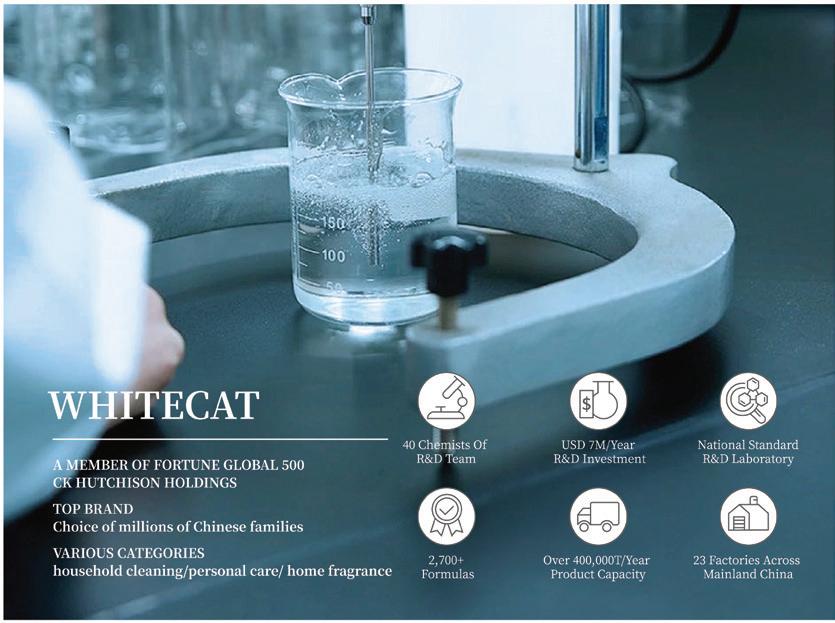
In 1948, in Yongtai Village, Shanghai country, China, an entrepreneur started a small, private, manufacturing company with a goal to provide laundry soap to local residents in post-war China. This was the start of what would be later known as “Shanghai Bái Māo” by locals, or Shanghai Whitecat, he embarked on a journey of necessity, groundbreaking innovation, and a steadfast commitment to safeguarding the healthy lives of families. Motivated by necessity after the end of World War II, Shanghai Whitecat worked diligently to provide much needed laundry cleaning products that surpassed traditional soap, made from soap bean and “Yizi” (made from pig pancreas and plant ash), for more effective cleanliness and well-being to local families.
Chapter 2: Pioneering Innovation since 1959
In 1959, Shanghai Whitecat achieved its first of many milestones by introducing the first domestically produced package of synthetic laundry detergent powder “Gong nong” in mainland China. Since then, Whitecat has achieved many milestones.
• 2024: Shanghai Hutchison Whitecat Co., Ltd., was awarded “Strategic Partner of 2024-Walmart China”
• 2018: Shanghai Hutchison Whitecat Co., Ltd., was awarded “China’s Top 100 Daily Chemicals”
• 2018: Whitecat Lemon Black Tea Dishwashing liquid won the “2017 China Biggest Award of Quality Consumer – Quality Gold Award”
• 2004: Whitecat liquid detergent was chosen as “China Famous Brand”
• 1995: Whitecat Laundry Powder was awarded the “Golden Bridge Award” for National Best selling Domestic Product for 4 consecutive years.
• 1987: Whitecat brand and our Jaimei brand Laundry Powder awarded the “Shanghai Famous Brand” certificate
• 1981: 1st domestically developed and produced pack of Super Concentrated Laundry Powder
• 1963: 1st autonomous washing powder paper bag packaging machine
Chapter 3:
Longevity Through Innovation
As Shanghai Whitecat celebrates its longevity, our narrative transcends labels and brands. It’s a story of enduring innovation, necessity, and lives touched. Whitecat is humbled by the trust of millions of families who rely on us daily to safeguard their healthy lives.
Trust built over many decades of hard-work and investment in research and development.
• More than 100 national patents
• Millions of dollars spent every year in R&D
• Over 50 research and development personnel (> 50% with Master’s or doctoral degrees)
Our technology center is the only national standard laboratory in the light chemicals industry.
Investments in latest scientific equipment such as gas chromatography/ mass spectrometry (GC/MS), Fourier infrared spectrometer and other advanced international standard analysis and testing instruments ensure we keep our commitment to delivering high-quality, cost-effective Home Care and Personal Care products to safeguard the healthy lives of families into a better tomorrow.
Chapter 4: Sustainability for a Better Tomorrow
Whitecat’s dynamic culture of innovation, born out of necessity in 1948, is now shifting to Sustainability, safeguarding healthy families better for all, including our planet.
We are very excited to launch our sustainable, nature inspired, line of products for our private label naturebased, sustainable Home Care and Personal Care products that your customers will simply Love!
• Concentrated cleaning pods/ sheets/tablets
• Lactic acid-based cleaning products
• Soda-based cleaning products
And more innovative products to come. Join us in this exhilarating journey towards a greener, more sustainable tomorrow with Whitecat!
www.whitecatusa.com
MBD WINS
14
VERTEX AWARDS
The Vertex Awards are widely recognized as the leading global competition dedicated to private brand package design. At MBD, we share that same focus on excellence—working alongside our retail partners to deliver strategic, creative, and executional solutions that drive loyalty to the store brand and increase performance on shelf.
This year, MBD was honored with 14 Vertex Awards across grocery, convenience, club, and specialty retail. Each recognition reflects a shared commitment between our team and our retail partners to elevate retail brands through creative, system-driven design.
Following is a look at this year’s winning work:
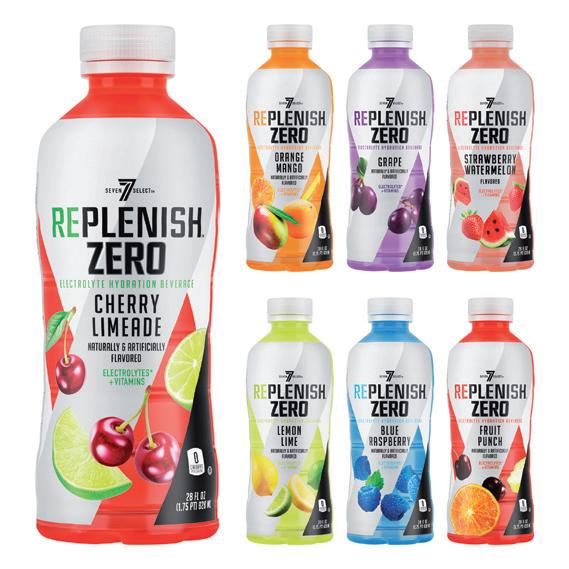
7-Eleven — 7-Select Replenish Zero
Built for immediate recognition, Replenish Zero uses bold color blocking and clear benefit communication to signal hydration and functionality. The design ensures strong standout in the competitive ready-to-drink beverage space.
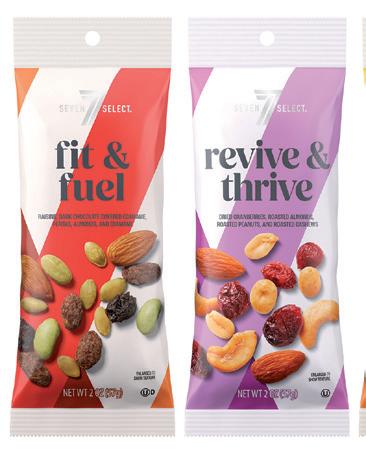
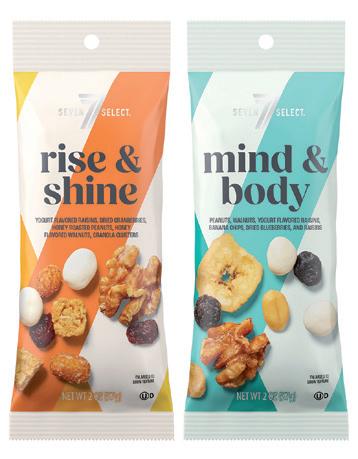
7-Eleven — 7-Select Fit & Fuel Nuts
MBD designed a performanceoriented system that anchors this product within the functional snacking space. Clear protein messaging, structured layouts, and strong visual hierarchy support quick navigation for on-the-go consumers.
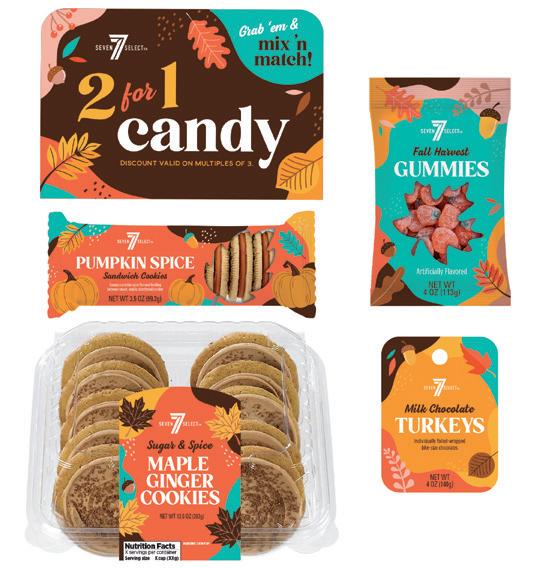
7-Eleven — 7-Select
Seasonal Fall Harvest
This limited-time offering leverages warm color palettes and seasonal graphics to create a sense of immediacy and occasion. MBD’s design enhances shelf disruption while clearly signaling a special, time-bound assortment.
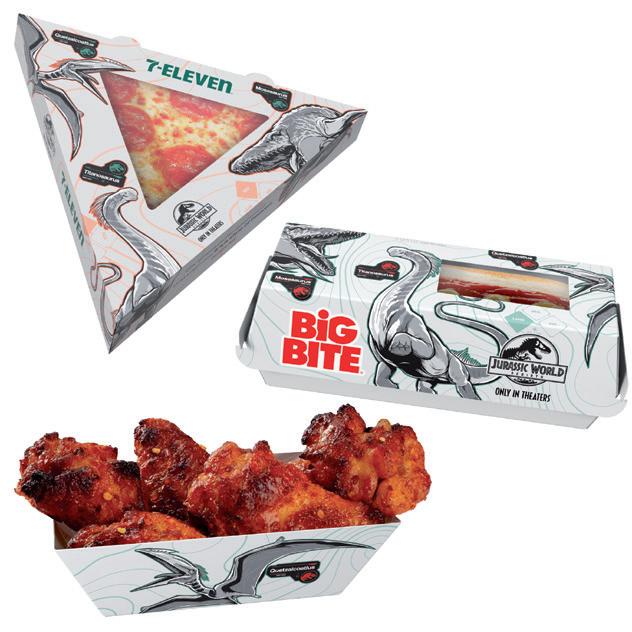
7-Eleven — 7-Select
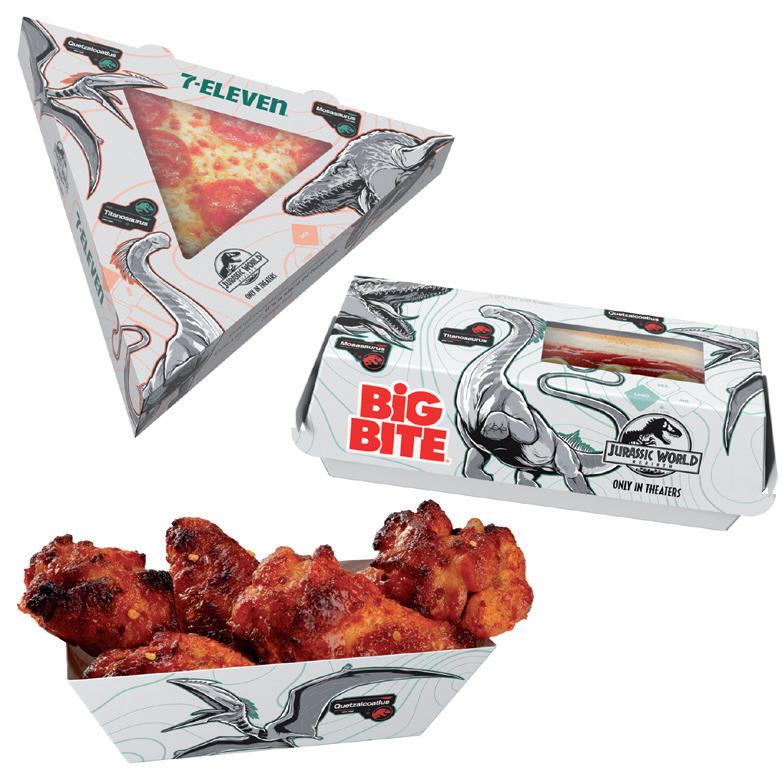
Jurassic World Food Containers
Blending licensed entertainment with everyday utility, this design connects playful, recognizable visuals with practical functionality. The result is a product that resonates with both families and collectors.
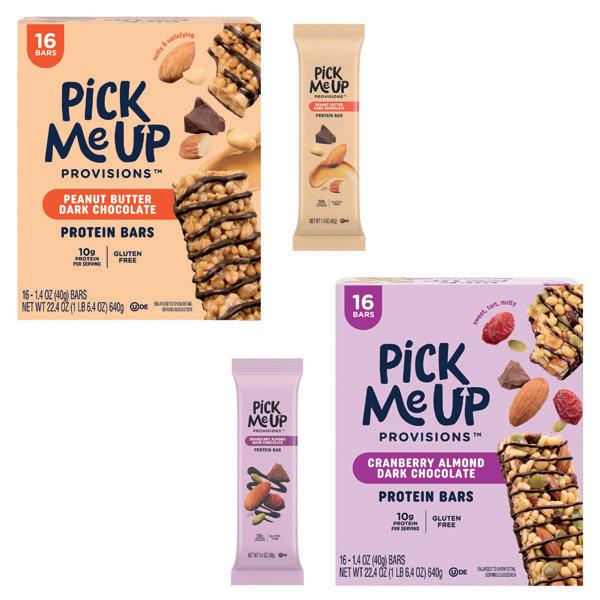
Staples — Pick Me Up Provisions Protein Bars
A design system built for clarity and confidence, Pick Me Up Provisions simplifies the protein bar set through bold color differentiation and intuitive nutrition communication. The result is a highly navigable package that supports quick decision-making while reinforcing trust at shelf.
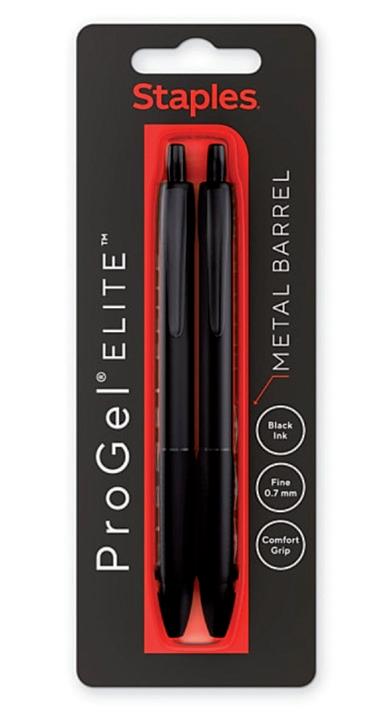
Staples — ProGel Elite (New Brand)
Developed as a new performance-driven brand, ProGel Elite balances technical credibility with a refined, premium aesthetic. MBD created a clean structure and disciplined visual cues help communicate function and efficacy without overwhelming the consumer.
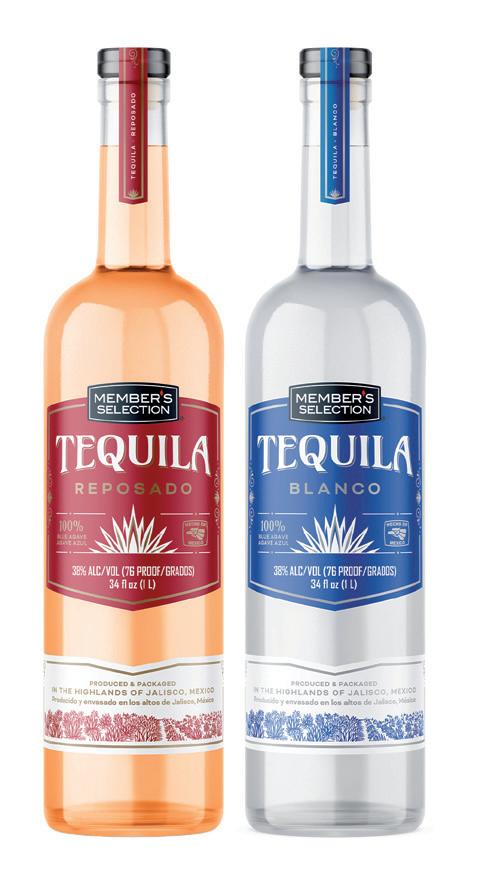
PriceSmart — Member’s Selection Tequila
This design embraces restraint to signal quality. MBD used refined typography, confident brand blocking, and premium material cues create a sophisticated expression that aligns seamlessly with the broader Member’s Selection portfolio.
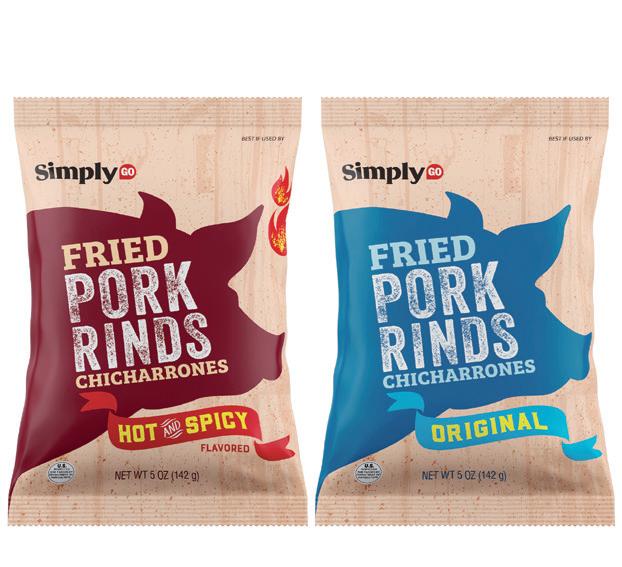
Grocery Outlet — SimplyGO Pork Rinds
Bold and highly expressive, the SimplyGO Pork Rinds packaging leverages strong flavor cues and high-contrast color to stand out in a crowded snack set. The design reinforces approachability and value while maintaining a distinct shelf presence.
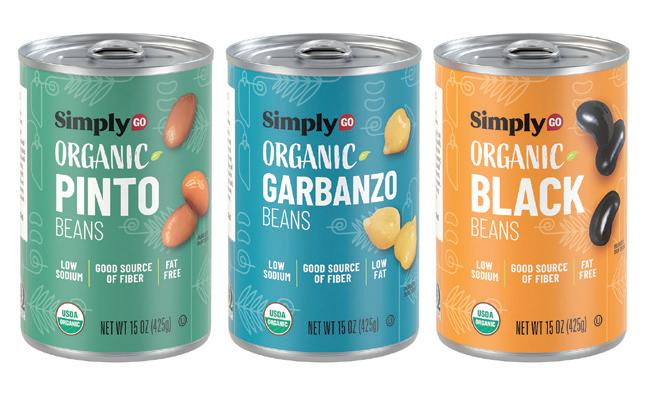
Grocery Outlet — SimplyGO Organic Beans
With a focus on transparency and trust, MBD designed the SimplyGO Organic Beans with clean layouts and ingredientforward communication to simplify the shopping experience. Organic cues are integrated seamlessly to reinforce brand credibility.
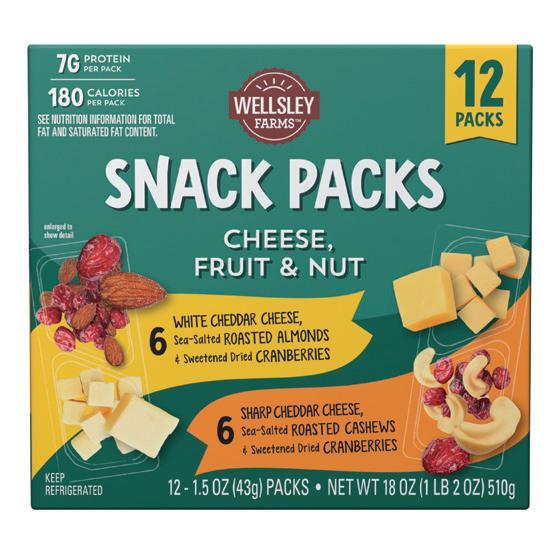
BJ’s Wholesale Club — Wellsley Farms Cheese & Fruit Snack Packs
Designed for scale and impact in a club environment, this packaging combines strong appetite appeal with clear product segmentation. The result is a polished, familyfriendly solution that enhances visibility and ease of shop.
continued on next page>
MBD WINS 14 VERTEX AWARDS
continued from previous page>
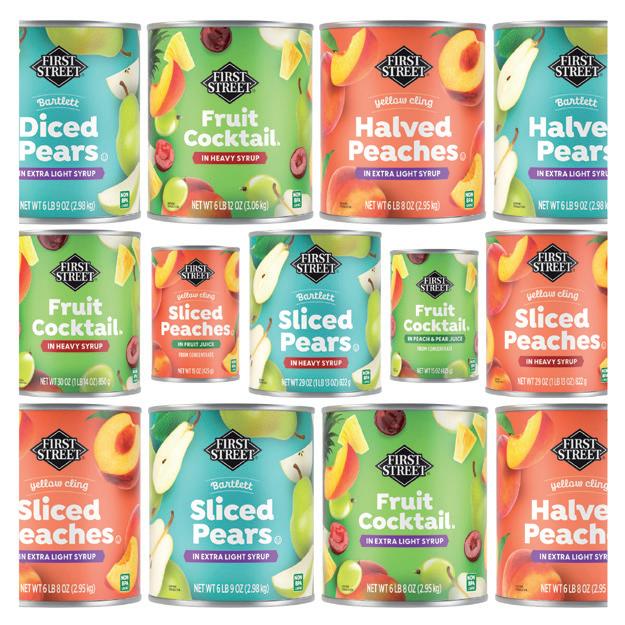
Smart & Final — First Street Canned Fruit
Balancing heritage with modernization, the redesign introduces cleaner layouts, elevated photography, and stronger brand presence. The result is a more contemporary look that maintains trust and familiarity.
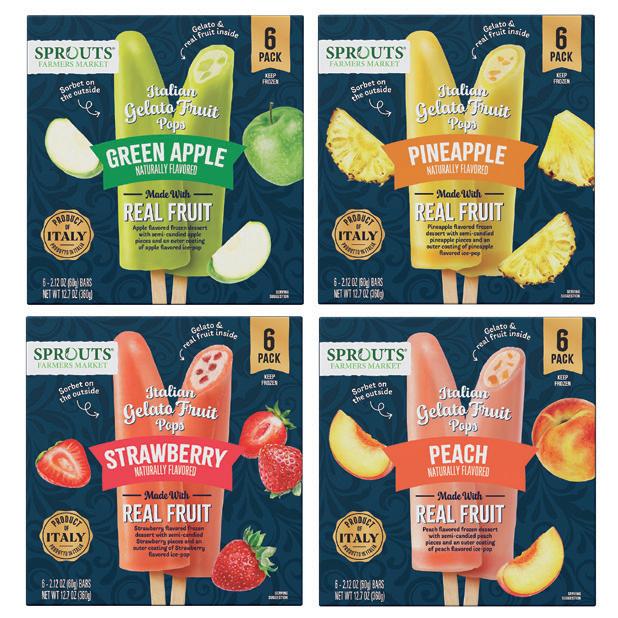
Sprouts Farmers Market — Sprouts Gelato Pops
A vibrant, flavor-forward design brings energy to the frozen aisle. MBD designed this package with strong color differentiation and clear product cues to enhance shopability while reinforcing indulgence and quality.
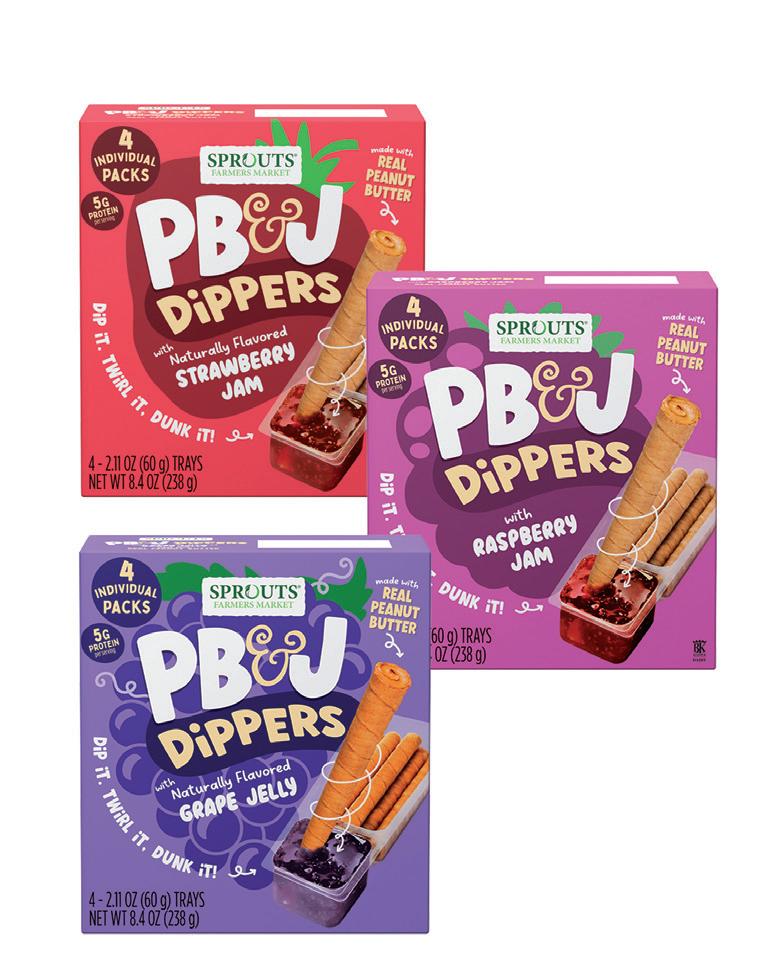
Sprouts Farmers Market — Sprouts PB&J Dippers
MBD reimagined a nostalgic concept through a modern, playful lens. Bold fruit imagery and approachable messaging create a clear, engaging experience for both kids and parents.
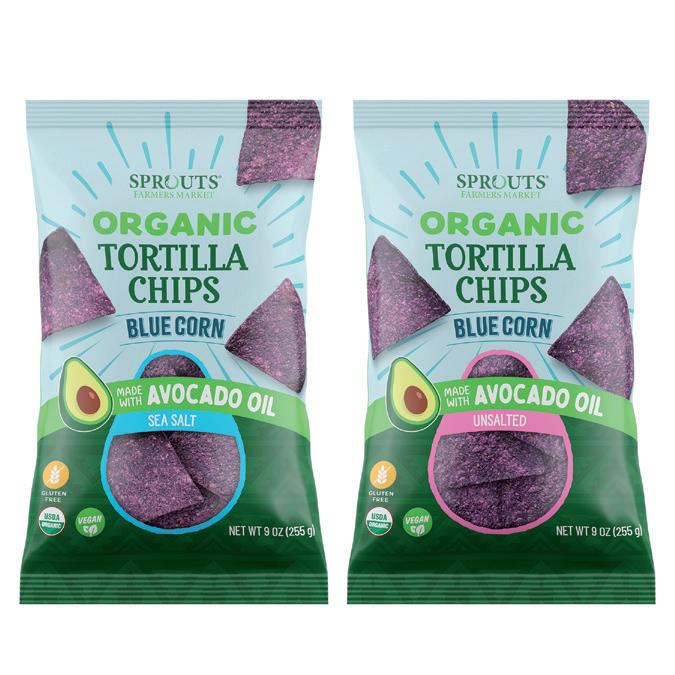
Sprouts Farmers Market — Sprouts Organic Blue Corn Tortilla Chips
This design elevates a staple category through confident color, clear ingredient storytelling, and a strong brand block. The packaging delivers both authenticity and standout on shelf.
Celebrating Partnership and Craft
Each of these projects reflects close collaboration between MBD and our retail partners— grounded in strategy, informed by real retail environments, and executed with precision.
While earning 14 Vertex Awards is a meaningful milestone, the real success lies in the work itself: building store brands that are cohesive, compelling, and designed to perform.
We’re proud of the teams, the partnerships, and the shared commitment to raising the standard for private brand design!
Katie Locke
If you’ve ever met Katie, you’ve seen or heard her excitement for building or rebuilding brands. Her passions also include just about every facet of food and eating experiences. For the past 13 years, Katie has worked in Sales & Marketing for Marketing by Design (MBD), a branding and packaging design agency specializing in high volume retailer programs.
TAE SUNG PARK DIRECTOR
WHITECAT NORTH AMERICA
THE NEXT GENERATION OF CONSUMERS IS ALREADY HERE. Is Retail Ready?
Millennials, Gen Z, and Gen Alpha now make up 58% of the U.S. population and hold more than 50% of the earnings share. This has a significant and growing impact on the products they buy — both in-store and online.
These next-generation consumers aren't interested in their parents’ products. They are digital natives, raised in an environment of rapid innovation, surrounded by powerful, compact devices and integrated solutions. They seek more natural, sleek, concentrated, powerful, ethical, and sustainable products — think Amazon “Light and Compact.”
This ethos influences their daily consumer decisions, from protein bars and fragrances to foods and home care products. The ingredients and chemicals they put into their bodies and environment matter greatly to them.
So why are grocers and retailers still stocking 80–90% of their laundry care and home care shelf space with products born in the ’40s and ’80s?
• Tide® powder was launched in 1946
• Tide® Liquid was launched in 1984
Why are traditional retailers’ stores and websites predominantly filled with liquid and powder products? Are promotion budgets, marketing expenses, listing fees, and stocking fees more important than share of wallet and basket size?
It comes as no surprise that Millennials, Gen Z, and Gen Alpha are turning to alternative channels — Amazon, TikTok, Instagram — to make different purchasing decisions.
US Population Breakdown by Generation (2025)
Based on US Census Bureau data:
As a retail leader, these are the questions we need to be asking:
• Can we do better for our customers and our environment?
• Where are the innovative products?
• Who are the companies investing in “old, boring” laundry care and home care categories?
Labor / Earnings Share
(who produces GDP)
Only working-age generations contribute meaningfully here. Gen Alpha and most of Gen Z are too young, and Boomers are largely retired.
Share of Workforce / Earnings by Generation (2025)
(ages 29–44)
X (ages 45–60)
Z (ages
Consumer Spending
(70% of US GDP)
Consumer spending is the single biggest GDP driver.
THE DIPLOMACY OF ORIGIN: How Trade Agreements and Traceability Can
Shape the Future of Private Label Food Programs
In the 2026 retail landscape, the concept of food product origin has evolved from a “good to have” marketing attribute into a structural component of global trade policy. For retailers, buying “authentic” and single-origin has become a balancing act: a powerful sales and margin lever and, at the same time, a source of exposure to trade, regulatory, and supply risks.
The B2B Reality: Sourcing in a Volatile Trade Policy Era
Historically, private label food buyers focused on price, volume, and quality. Today, a third variable is unavoidable: trade policy intelligence. Fluctuations in taxes, exchange rates, and nontariff barriers can erase margins overnight or make a flagship origin uncompetitive.
The U.S. is shifting from broad freetrade frameworks toward wider import taxation and narrower, reciprocity-based deals, such as recent agreements with Argentina.
These arrangements often expand specific quotas while demanding that partners resist European Geographical Indication (GI) protections that constrain U.S. "common name" exports.
Simultaneously, landmark 2026 agreements like the EU–India FTA and EU–Mercosur deal are creating predictable "green lanes." In the EU–India case, tariffs on staples like olive oil are phasing down from 45% to zero, opening access to India’s growing middle class. The EU–Mercosur agreement secures protection for over 350 European GIs while rewarding South American producers who meet EU standards with lower tariffs and clearer quotas.
In parallel, China’s zero-tariff treatment for 53 African nations is improving the competitiveness of those exports. This could channel a larger volume of African commodities into global supply chains, reinforcing a "low-cost, generic" tier of inputs where origin differentiation is weaker.
For retail decision-makers, this "diplomacy of origin" is no longer a distant backdrop; it is a dayto-day variable shaping sourcing and assortment. Monitoring trade negotiations is now a core procurement task, The country printed on a label is a strategic lever that either unlocks preferential access or exposes the brand to sudden margin shocks.
The B2C Shift: The Demand for “Verifiable Truth”
On the consumer side, younger generations, led by Gen Z, and high-spending demographics are no longer satisfied with vague "inspired by" labels or symbolic country flags. They ew looking for authentic stories and a verifiable "proof of process."
GIOVANNI QUARATESI
HEAD OF CORPORATE GLOBAL AFFAIRS CERTIFIED ORIGINS
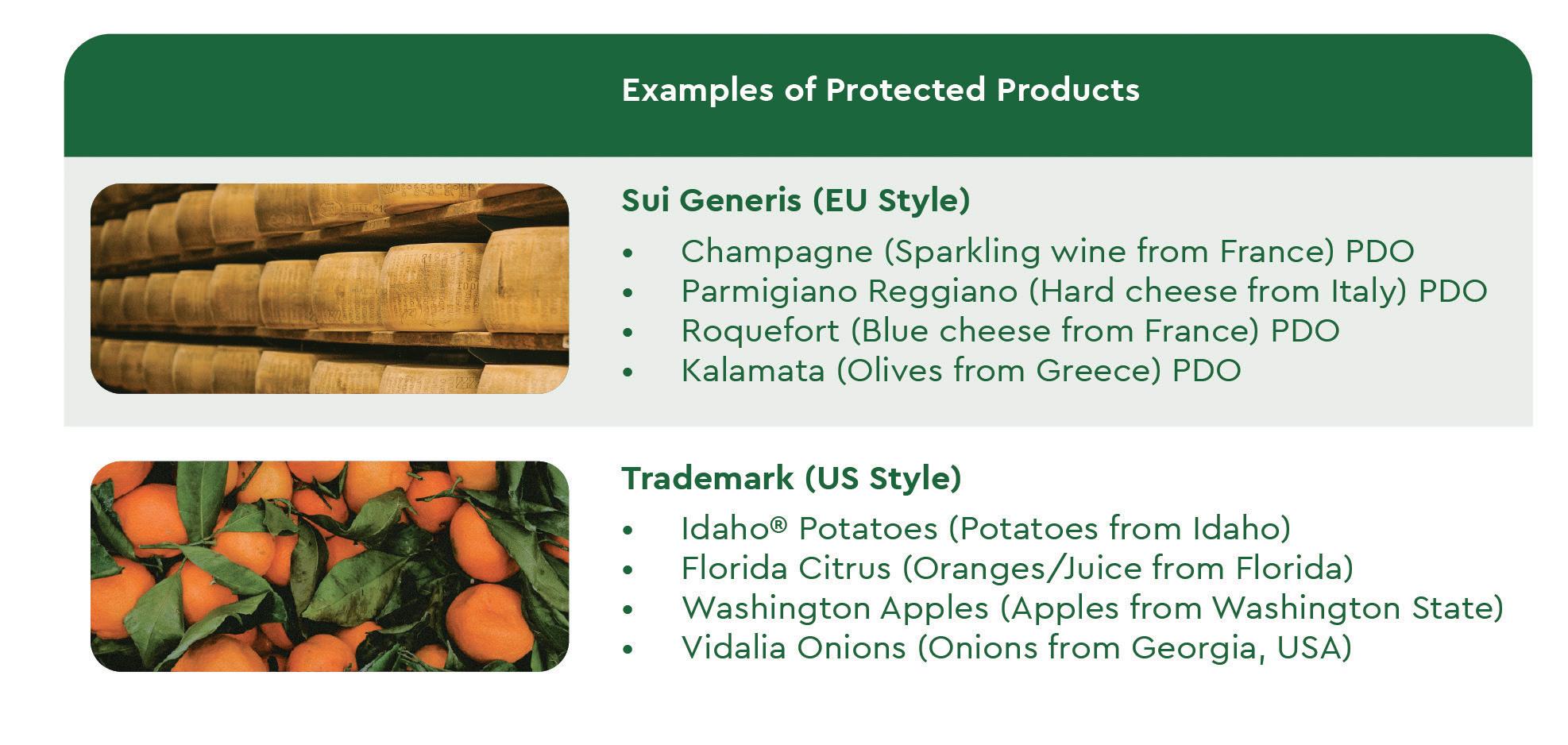
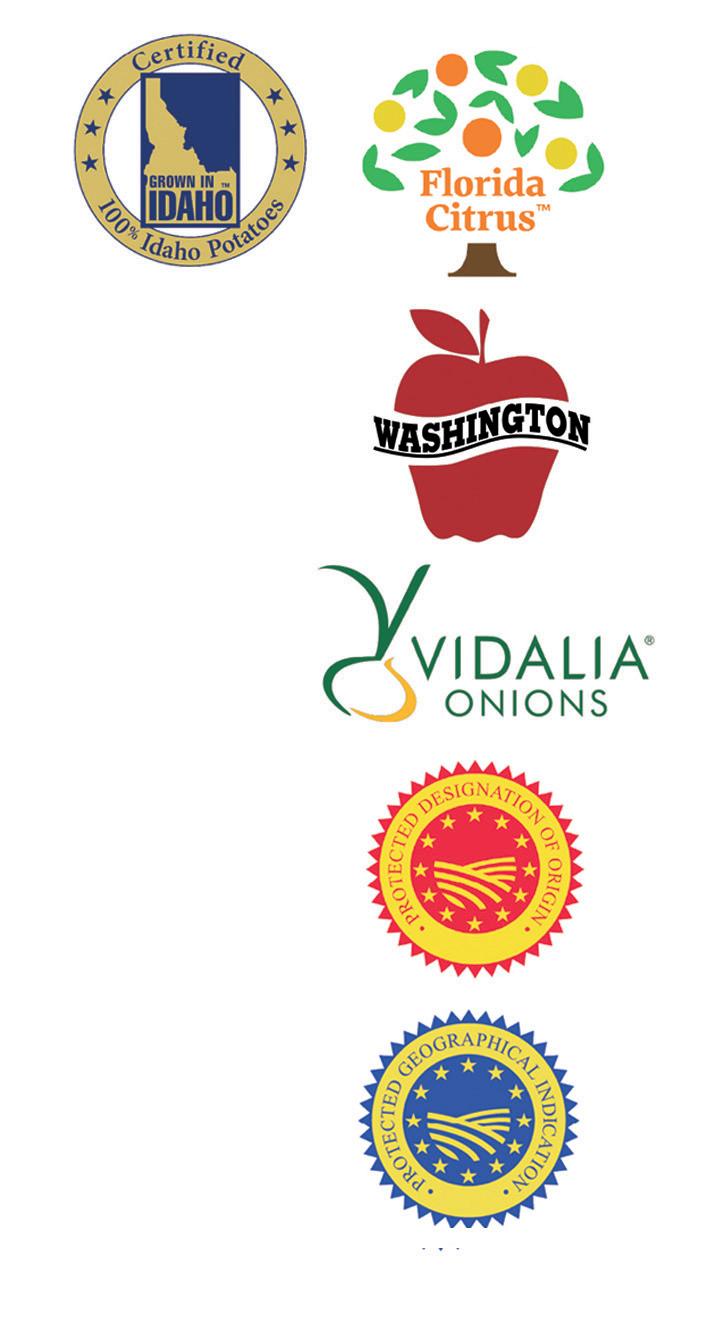
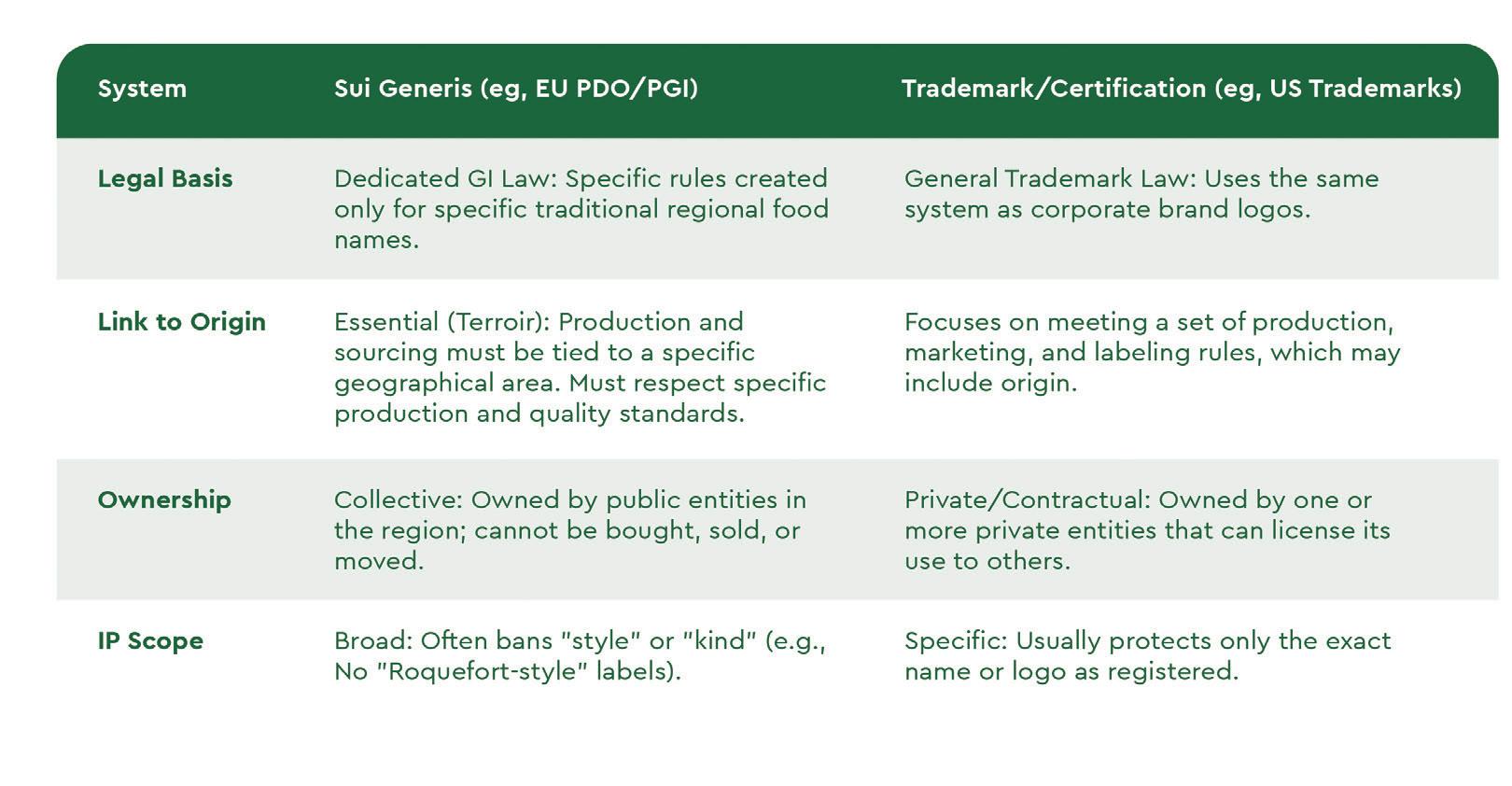
This cultural and supply-chain evolution plays-out internationally through two primary, distinct legal frameworks: the EU-dominant Sui Generis model, which treats names like Toscano PGI Extra Virgin Olive Oil or Parmigiano Reggiano PDO Cheese as collective intellectual property tied to specific land and production rules, and the trademark model (prevalent in the U.S.), which relies on individual or corporate brand reputation, often combined with more generic product descriptors, to signal quality and distinctiveness.
In 2026, even strongly brand led products are adopting the language of the Sui Generis model, using "Single Estate," "Direct Sourced," or "Farmer Owned" claims to evoke GI style exclusivity, sometimes without traceability systems to fully substantiate those claims.
This "verifiable truth" trend is already transitioning from a regulatory requirement to a global competitive advantage:
• North America: Retailers like Walmart and Kroger are leveraging platforms such as Wholechain and Assure+ to exceed FDA FSMA 204 mandates, transforming mandatory lot-level traceability into a transparent trust asset for shoppers.
• Seafood Sector: Global leaders like Thai Union are setting benchmarks with blockchain-backed digital product passports, allowing high-tier private labels to substantiate "direct-from-source" and ethical labor claims.
• Europe & UK: The rise of "digital twins", batch-specific data records supported by private initiatives like Connecting Food, is effectively curbing "origin-washing" by ensuring that "Single Estate" claims are backed by reality rather than just suggestive imagery
The New Mandate for Sustainable Growth
This cultural and regulatory shift creates an opportunity for global food retailers and businesses to rethink their shelf strategies through a dual-track approach.
For the accessible Tier, consisting of generic products for pricesensitive customers, companies might consider "policy-ready" sourcing strategies, choosing suppliers able to operate and source across diverse geographies to mitigate sudden trade barriers or shifting tariffs and ensure shelf consistency during fluctuations.
For medium- and high-tier products, transparency and traceability become both a marketing strength and a riskmanagement tool. Supply chain visibility and control can drastically reduce the time of reaction to trade policy shifts and align with a B2C reality in which affluent consumers increasingly seek the "real thing" and often use digital tools to verify labels.
Blurring lines with origin-sounding brands or misleading imagery is, more than ever, a risk to trust among higher-margin segments.
For modern food businesses, balancing high-flexibility generics with high-transparency authentics, both underpinned by robust traceability platforms, offers a viable path to sustainable, resilient growth, ready to navigate the evolving challenges of food diplomacy.
Giovanni Quaratesi is Head of Corporate Global Affairs at Certified Origins, where he leads global communication strategies, stakeholder relations, and public outreach. With a deep commitment to food culture, innovation, and sustainability, he is a vocal ambassador for transparency and authenticity in the global food system. Whether representing Certified Origins at international forums or collaborating with public and private sectors, Giovanni champions initiatives that connect people to real food and support healthier choices.
CHOCOLATE REINVENTED
The Rise of Cocoa-Free Threat or Smart Adaptation?
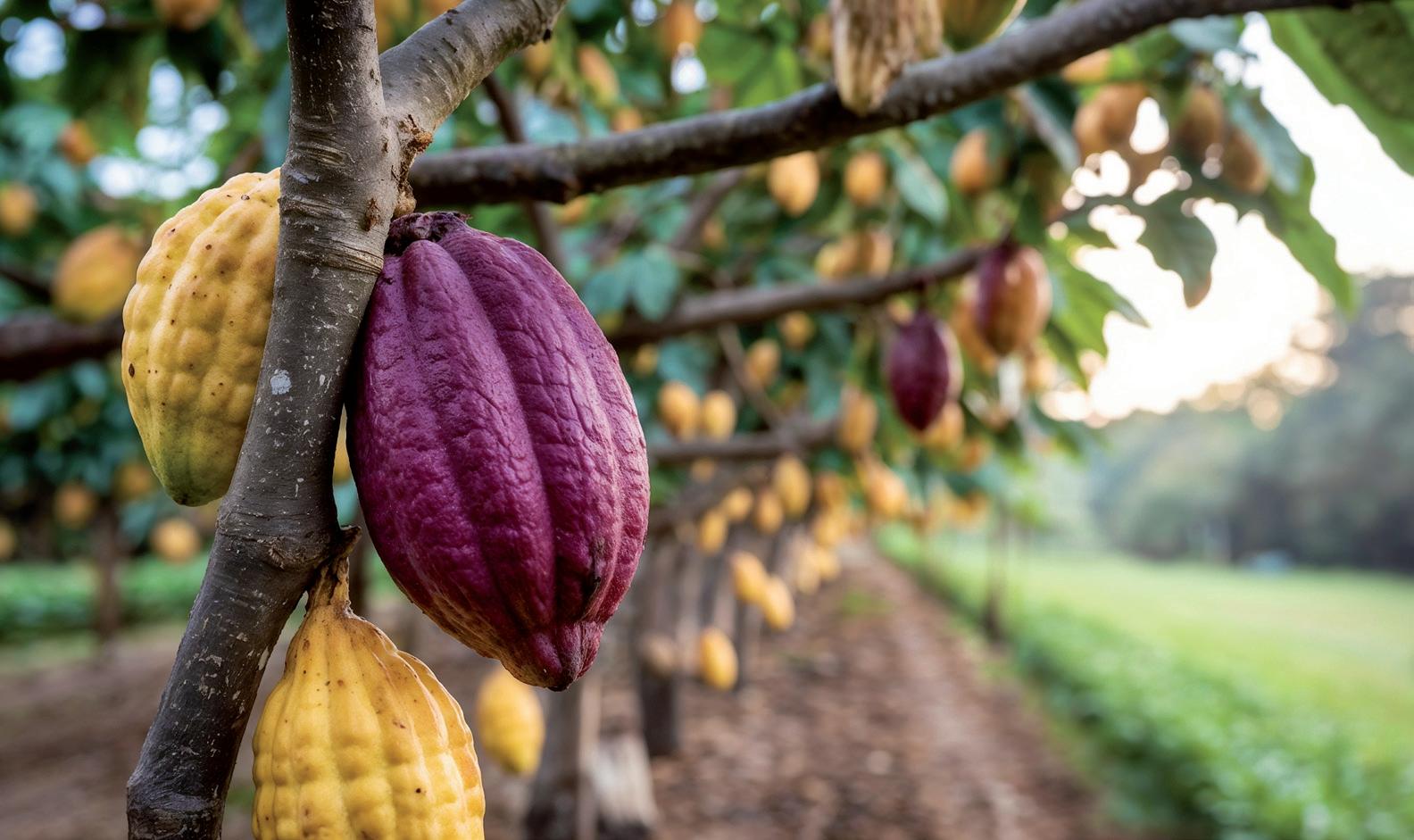
Chocolate is under pressure. Behind the familiar shelves lies a supply chain that is becoming increasingly fragile, as cocoa shifts from a cyclical commodity to a structurally volatile one. Climate change, disease, and geopolitical issues are turning what was once a stable raw material into a strategic risk item. Markets rarely tolerate that kind of uncertainty for long. They adjust. One of the clearest signs of that adjustment is the emergence of cocoa-free chocolate. Not as a futuristic experiment, but as a
practical response already making its way into private label portfolios across Europe. Cocoa is not disappearing. Let’s get that out of the way first. Chocolate, in its traditional form, still carries emotional, cultural, and sensory value that no lab or clever (re) formulation can fully replicate, at least not yet. But cocoa is becoming unreliable. The knee-jerk reaction is to frame cocoa-free as a threat; to tradition, to farmers, to authenticity. But such framing misses the point.
Cocoa Free In Private Label
The emergence of cocoa-free seems a rational response. And for private label manufacturers and retailers, it may be a development to distinguish themselves in the cocoa category. Private label has always thrived where branded players are constrained, on flexibility, speed and price architecture. Cocoa volatility plays directly into those strengths. When input costs swing wildly, brands hesitate. Reformulation risks brand equity and price increases risk consumer backlash. Private label, by contrast, can move faster, test earlier and reposition without decades of legacy to defend.
An example of a recent new cocoa-free introduction comes from E.Leclerc. In March the French retailer launched diverse cocoafree tablets under its label Marque Repère. Priced around 15% below conventional milk chocolate and claiming a 60 percent lower carbon footprint, the sunflowerseed-based bars demonstrate how retailers can simultaneously address margin pressure, sustainability expectations and price-sensitive consumers.
Premium Cocoa-Free
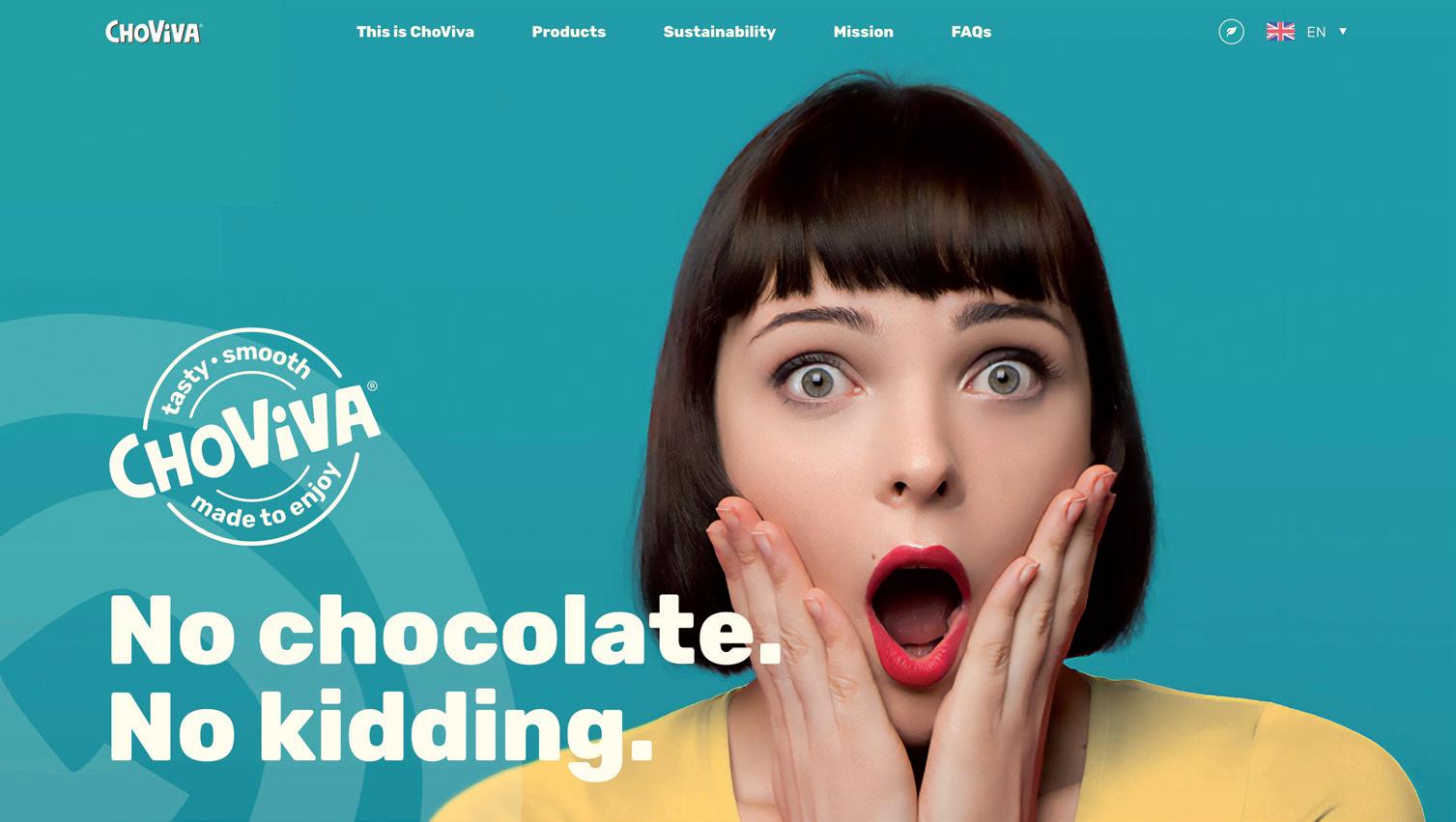
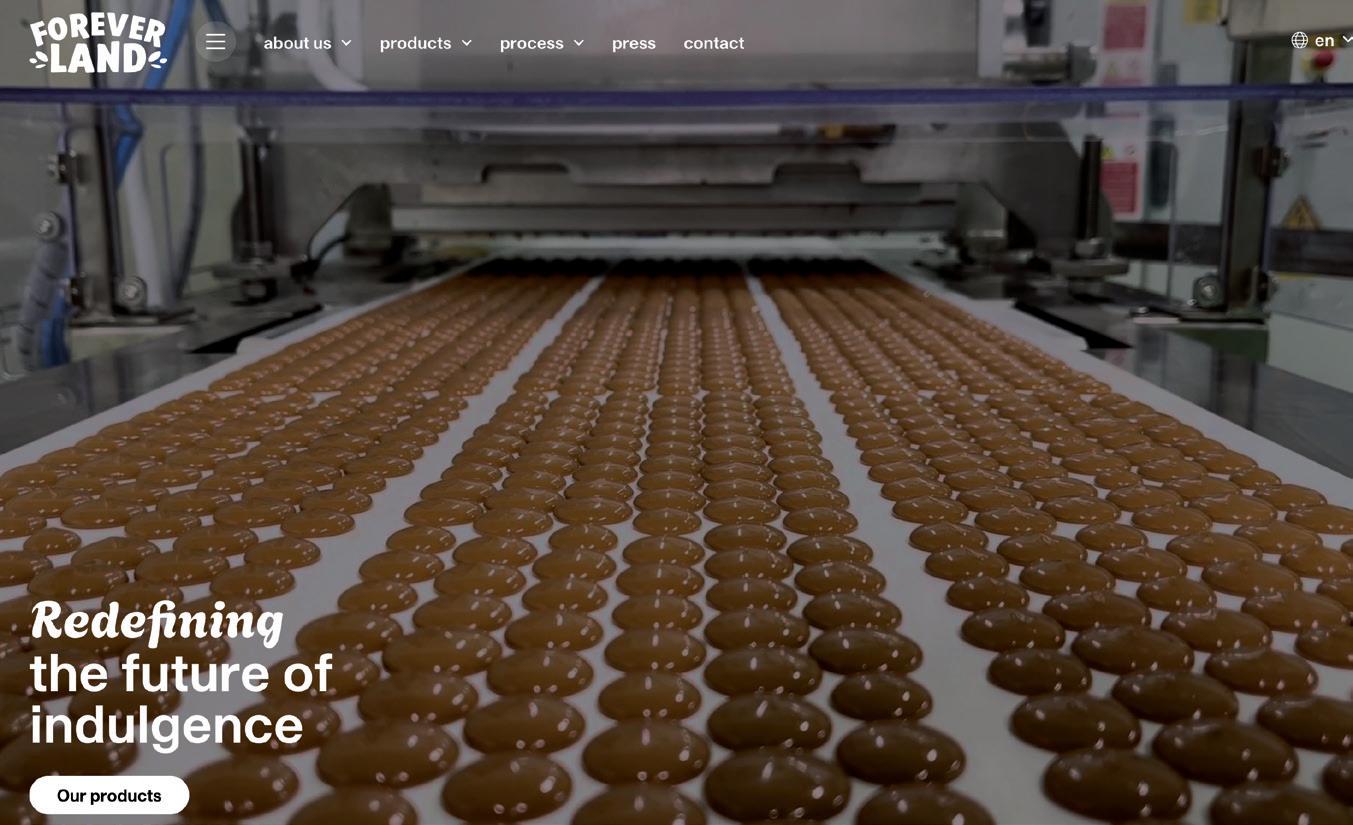
E.Leclerc is not alone. Across Europe and beyond, ingredient innovators are building cocoa-free platforms tailored to industrial and private label needs. Germany’s Planet A Foods has gained traction with ChoViva, a cocoa-free, chocolate alternative, based on sunflower seeds and oats. The German REWE Group integrated the cocoa-free ingredient into its own brands, launching products across multiple categories, from wafers to spreads. Soon after, Kaufland followed with cocoafree waffle bites and Neapolitans under its K-Classic label. In the UK, Nukoko works with fermented legumes to recreate cocoa-like flavor, targeting both finished products and ingredients. Italian startup Foreverland takes a premium angle, using fermented carob to produce cocoa-free chocolate for spreads and bars.
ESG-Dimension
Last but not least, there is the ESG dimension, aimed for Environmental, Social & Governance issues. Cocoa has long been associated with deforestation, child labor concerns and opaque supply chains. While the industry has made efforts to address these issues, progress is uneven and often difficult to verify at scale. Cocoa-free alternatives, particularly those based on fermentation or upcycled ingredients, offer a cleaner narrative. Lower environmental impact, shorter supply
HANS KRAAK PRINCIPAL KRAAK MEDIA
chains, and, in some cases, more transparent sourcing models. For private label, that is not just a moral argument; it is a branding opportunity. Retailers can build ranges that are not only cheaper or equivalent, but demonstrably better aligned with consumer values. And importantly, they can do so without the price premium that often accompanies “ethical” products in branded portfolios.
But What About The Consumer?
This is where the conversation around cocoa-free becomes more nuanced. Consumers do not wake up in the morning asking for cocoa-free chocolate. They ask for taste, indulgence, affordability and increasingly, a clear conscience. So if cocoa-free products fail on taste, the new category stalls. If they succeed, even partially, the barrier to entry lowers dramatically. For private label, the direction is clear. The opportunity is not to wage war on traditional chocolate, but to quietly build a parallel category alongside it. One that is more predictable, more sustainable and increasingly accepted by consumers, not as a compromise, but as a viable alternative.
Hans Kraak
Hans Kraak is educated in biology and journalism and has written four books on nutrition and health. He worked for the Dutch ministry of Agriculture, Nature and Food quality and the Netherlands Nutrition Centre. As editor in chief he publishes in the Dutch Magazine for Nutrition and Dietetics, as a food and wine writer he published in Meininger’s Wine Business International and reports for PLMA Live EU and PLMA USA.
THE FUTURE OF CONVENIENCE (C-STORE): 2026 Private Brand Strategies
The Shift from Fuel to Food
The gas pump is no longer the unquestioned hub of convenience retail. With the rise of electric vehicles (EVs) and the decline of tobacco sales through 2025, the industry's traditional model has shifted. Customers visit less often for fuel but spend more time onsite. C-stores are transforming from pit stops into essential neighborhood hubs for food service, grocery top-ups, and differentiated experiences. The store itself is now the primary driver of the visit. This structural change creates a massive opening for private brands, which are the key to converting a necessity-based fuel customer into a loyalty-driven food customer
1. Create Unique and Iconic “Destination” Products
Successful c-store operators are using private brands to create "destination products"—high-quality, unique items that build loyalty and cause customers to bypass competitors. Private brands are no longer about being cheaper; they are about being better and more exclusive.
• 7-Eleven’s "Global Eats" Collection: Launched in 2025, this private-label line, including Onigiri and Bento boxes, tapped into social media trends to become the destination for Gen Z seeking accessible international flavors.
• Wawa’s "Dinner Tonight" Program: Wawa targeted the evening daypart in 2025 with rotisserie chickens and premium sides, directly competing with grocery deli counters to capture post-work commuters.
• Sheetz’s "Gnarleys" Extreme Snacking: This proprietary line of heavily seasoned snacks created a cult following, securing loyalty from the high-volume late-night demographic with unique flavor profiles.
2. Leverage Strategic Innovation and Trial
C-stores possess a superpower: frequency. High customer visit rates make them ideal laboratories for agile product innovation. Private brands, offering gross margins 2535% higher than national brands, enable quick, data-driven LTO (Limited Time Offer) testing.
• Agile Testing: Chains use app data to identify flavor gaps (e.g., "spicy maple") and can launch a corresponding private-label product within weeks.
• The "Beta" Shelf: Progressive chains use "Innovation Zones" where new private label concepts are crowdsourced and rated by loyalty app members, effectively speeding up R&D.
3. Aligning with Evolving Consumer Needs
A robust private brand portfolio must accommodate modern consumers who demand indulgence, functional wellness, speed, and sustainability.
• Functional Nutrition: Private-label "shots" and functional beverages like Circle K’s "Vibe Shift" functional water line cater to mood-management and health priorities.
• Dietary Specifics: Private lines for Keto, Paleo, and Gluten-Free are mandatory, providing high-margin replacements for declining categories like confectionery.
• EV Charging Opportunity: I ncreased dwelling times from EV charging require private brand lines specifically for on-premise consumption, such as premium coffees and fresh bakery items.
4. High-Impact Categories for Private Brand Development
Three categories offer the highest potential for private brand growth:
• Fresh Prepared Foods (The "Grocerant" Shift): The line between QSR and c-store is dissolved. Private brands must sell cuisine (e.g., ethnic flavors, customizable meal kits), as seen with RaceTrac’s "Swirl World" take-home pints.
• Functional Beverages: C-stores can own the "hydration plus" category with private label electrolyte waters and cold-brew coffees. 7-Select’s "Replenish" line is a 2025 example, challenging premium grocery brands.
REBECCA HAMILTON CEO FISH AGENCY
• "Phygital" Merchandise: Branded apparel and lifestyle gear are seeing a renaissance. C-stores like Wawa and 7-Eleven are using "merch drops" (private-label streetwear) to turn customers into walking billboards
The Private Brand Imperative
The passive era of the c-store as a distributor for national brands is over. To secure the future of retail, operators must become brand owners. By 2025, data confirms that stores with strong private brand penetration achieve higher loyalty, better margin protection, and greater insulation from supply chain disruptions. Private brands are the vehicle to fulfil cravings and drive the next era of convenience retail growth.
Rebecca Hamilton
Rebecca is the CEO of award-winning Fish Agency and sister agency Whitespace Brands Inc. With over 30 years of experience, she has established herself as one of North America’s leaders in the fields of strategic branding, retail design, and communications for clients in the retail sector. Under Rebecca’s oversight, the Fish Agency brings brands to life at retail and has consistently delivered high ROI-generating retail experiences for its clients. She mentors and leads highly experienced and integrated teams that provide store design, package design for CPG and private brands, digital/social initiatives, “phygital” experiences, and advertising services.
EXPORTING IS NO LONGER AN OPTION, BUT A STRATEGIC NECESSITY
17 – 21 OCTOBER 2026
PARIS, FRANCE
France’s population growth is slowing. Domestic markets are stabilizing. For many agrifood companies, growth will have to come from elsewhere. Exporting is not incompatible with food sovereignty; indeed, it is a key driver of it. Diversifying markets, spreading fixed costs and securing business models: international expansion boosts resilience. Audrey Ashworth is convinced: “Feeding France and exporting our expertise are not incompatible; quite the contrary.”
At a time when economic balances are shifting, markets are tightening, and competition is intensifying, France can no longer treat exports as a secondary option.
But whilst France hesitates, others are moving forward; the message is clear. In 2024, for the first time, France was overtaken by Italy as the leading exhibiting country at SIAL Paris. And for the 2026 edition, at this stage of marketing, France ranks just behind Italy, Spain, Turkey and Greece. In light of this, the trade fair director remarks, “France likes to remind people that it is a major player in the agri-food sector. But for how much longer? In global trade, there is no place for nostalgia. Only action counts.”
Thanks to its position within the SIAL Network, the world’s leading network of agri-food trade fairs, SIAL Paris closely monitors the aggressive strategies being deployed elsewhere: massive public subsidies in Italy or Turkey, and structured schemes such as Food Export The Forum in Belgium, the Export Academy as part of the Export Growth Plan in the UK, the CanExport SME program in Canada, and the Market Readiness Assistance (MRA) scheme in Singapore, which co-funds companies’ preparations for international expansion. In some countries, these policies are accompanied by targeted training programs and webinars to help SMEs tackle complex markets, such as South Korea, which has made K-food a lever of influence by placing it at the heart of its soft power strategy.
In 2024, SIAL Paris welcomed visitors from nearly 200 countries, as well as 110 official delegations, including 50 ambassadors, 16 parliamentarians, and 17 French and foreign ministers. This concentration of diplomatic and economic figures highlights a reality: the global food trade is actively taking shape. Audrey Ashworth confirms: “We are seeing countries moving forward in an extremely coordinated manner. They are supporting their businesses, funding their visibility, and structuring their supply chains. France has everything it takes to be a leader once again. But we must all want it collectively.”
Driving A Collective Movement At A Pivotal Moment For The French Agri-Food Sector
Held under the High Patronage of the President of the Republic, the 2026 edition is part of a national strategic initiative. At the previous edition, an official dinner at the Élysée Palace brought together France’s most influential exhibitors alongside major international players, highlighting the strategic importance of the trade fair in food diplomacy and France’s international influence.
www.sialparis.com
Audrey Ashworth, Director of SIAL Paris
PLMA’S 2026 PRIVATE LABEL SUMMIT
28 – 29 OCTOBER 2026 MANCHESTER, UK
Staying ahead of the curve and making strategic connections is essential in the private label business. The PLMA Private Label Summit brings together manufacturers, retailers, trade press, and industry consultants for two days of knowledge sharing, networking, and insight into the dynamic private label sector. This year, the Summit will be held in Manchester, United Kingdom, offering attendees a fresh perspective on one of Europe’s most vibrant retail markets.
Insights from Industry Experts and Retail Keynote Speakers
The Summit features presentations and panel discussions led by market research specialists, retail executives, and respected trade journalists. Attendees will gain valuable insights into the latest trends, innovations, and challenges shaping private label products, helping them make informed decisions and identify new business opportunities.
PLMA’s Private Label Summit
Networking Opportunities: Connect with Industry Peers
Participants will have ample opportunity to connect with like-minded professionals from across the private label sector. Networking receptions, shared lunches, and store tours create the perfect setting for interesting conversations, sharing ideas, and potential collaborations.
Guided Store Visits
A highlight of the Summit is a guided tour of leading retailers and supermarkets, providing fresh perspectives and practical insights into private label strategies abroad. Complete with transportation and scenic city views, these visits offer attendees a unique look at innovative retail practices and product offerings. This year, Manchester serves as theideal host city, combining a strong retail heritage with a modern, innovative market environment.
Rotating Venue Across Europe
PLMA’s Private Label Summit is held annually at the end of October in different major European cities. This rotating format allows participants to experience diverse retail landscapes and market dynamics across Europe. This year, Manchester serves as the ideal host city, combining a strong retail heritage with a modern, innovative market environment.
Mark your calendars and don’t miss the PLMA Private Label Summit, a key platform for knowledge sharing, networking, and staying at the forefront of the private label industry.
WHERE THE GLOBAL PRIVATE LABEL YEAR BEGINS
13 – 14 JANUARY 2027 BOLOGNA, ITALY
Every January, the global Private Label community gathers in Bologna for the event that sets the strategic agenda for the year ahead. Organized by BolognaFiere in collaboration with ADM (Associazione Distribuzione Moderna), MARCA by BolognaFiere & ADM has consolidated its role as one of Europe’s leading Private Label hubs - and the only exhibition worldwide where retailers participate as active protagonists rather than simply as visitors.
Following the record-breaking success of its 2026 editionfeaturing 1,540 exhibitors (+18%), more than 25,000 professional visitors and 28 leading retail banners - the industry is already looking ahead to MARCA 2027, scheduled for January 13–14 in Bologna.
We spoke with Rossano Bozzi, Business Unit Director at BolognaFiere, and Antonella Maietta, Exhibition Manager, about the distinctive “Bologna model” and its growing international reach.
What distinguishes MARCA from other international Private Label trade fairs?
Antonella Maietta: The defining feature is our unique retailercentric format. Unlike most exhibitions, where retailers mainly attend as visitors, MARCA is the only platform in the world where they are also exhibitors. In 2026,
28 leading retail chainsrepresenting over 70% of the Italian market—presented their strategies and upcoming product launches directly on the show floor. This approach transforms the event from a traditional marketplace into a strategic planning environment. Manufacturers and distributors meet not just to showcase products but to exchange insights, align industrial capabilities and co-develop future innovation roadmaps.
MARCA is increasingly perceived as a global event. How is the brand expanding internationally?
Rossano Bozzi: Our priority is to consolidate Bologna as the European capital of Private Label. The 2026 edition represented a major step forward: we welcomed more than 5,000 highly profiled international buyers from over 30 countries, including delegations from North America, Asia, Latin America and the Middle East. Beyond scale, our ambition is to position Bologna as the place where international retailers and manufacturers come to anticipate market evolution and align their private label strategies for the years ahead.
ROSSANO BOZZI
ANTONELLA MAIETTA
A key element is the International Buyers Preview, an exclusive networking day held before the official opening, which has become an effective platform for global retailers to discover Italian manufacturing excellence. This momentum is supported by our partnership with the Italian Trade Agency (ITA) and a dedicated International Buyers Program.
Antonella Maietta: While Bologna remains the strategic core, we are also extending the MARCA ecosystem internationally through satellite events such as MARCA Poland (Poznań) and MARCA China (Guangzhou). These regional events export the “Bologna model”- the close collaboration between industry and retail- to fastgrowing markets. At the same time, they act as permanent bridges, generating year-round connections and opportunities that ultimately converge at our flagship event in Italy.
MARCA is often described as a complete “ecosystem”. What does this mean for visitors?
Antonella Maietta: It means covering the entire Private Label value chain—from supply to shelf. The exhibition unique format integrates Food and Non-Food sectors, including personal care, home care and accessories and pet care, alongside specialized hubs such as MARCA Fresh, which recently doubled its footprint to 2,500 sqm to highlight innovation and sustainability in fresh produce.
Rossano Bozzi: Beyond the exhibition floor, MARCA also acts as a strategic knowledge platform. This is where insights, data and industry expertise converge, allowing decision makers to test ideas, compare models and design future private label roadmaps before they reach the market. Each year we preview the Circana Private Label Report, one of the industry’s main
benchmarks for performance and trends in food and non-food categories, alongside high-level conferences on topics like the new EU Packaging Regulation (PPWR).
Innovation remains central to the event. Through MARCA Trend, our innovation observatory, and the MARCA Awards, we highlight excellence across the entire supply chain, from breakthrough product development to the industrial reliability of leading co-manufacturers. For the global private label community, MARCA has become the annual moment to look ahead, understand where the sector is heading, and translate trends into concrete strategic decisions
DAIRY, DELI, BAKERY, AND FOOD SERVICE TAKES CENTER STAGE IN ORLANDO
7 – 9 JUNE ORLANDO, FL
IDDBA 2026 brings together today’s leaders and tomorrow’s innovators for the industry’s premier event dedicated to dairy, deli, bakery, and foodservice. Join more than 10,000 attendees and 1,000+ exhibiting companies to explore the latest products, trends, and fresh ideas to help grow your business.
Network with influential industry leaders, gain valuable insights from experts, and experience the energy of a community driven by a shared passion for food. Designed for serious buyers, merchandisers, and executives, IDDBA 2026 is the once-a-year opportunity to make meaningful connections and stay ahead in a rapidly evolving industry.
www.iddba.org/
SUMMER FANCY FOOD IN NEW YORK CITY FOR THE 70TH TIME
28 – 30 JUNE
NEW YORK, NY
Back in the food mecca of New York City for the 70th time, the 2026 Summer Fancy Food Show will bring together tens of thousands of specialty food professionals for the industry’s premier product discovery event. Manufacturers, early-stage makers, retail buyers, restaurateurs, distributors, investors, brokers, press, and more return to the Summer Fancy Food Show every year.
Stay ahead of your consumers. Discover how first-mover food manufacturers are responding to top 2026 trends, from SenseMaxxing to the latest in wellness and more. Stay ahead of your consumers. Discover how first-mover food manufacturers are responding to top 2026 trends, from SenseMaxxing to the latest in wellness and more.
www.specialtyfood.com/
THE GLOBAL HUB FOR ITALIAN EXCELLENCE AND PREMIUM PRIVATE LABEL
4 – 6 MAY 2027
Following a record-breaking 2024 edition that welcomed 75,000 visitors, 3,500 brands, and over 3,000 international VIP buyers, Cibus returns to Parma from May 4 to 6, 2027. This upcoming edition is set to be a pivotal moment for the whole food community, positioning itself as the definitive "Home of Geographical Indications" (GIs) while bridging the gap between centuries-old tradition and modern retail needs.
The Engine Room of Premium Store Brands – For the international retail community, Cibus 2027 represents a strategic milestone. Currently, approximately 60% of Cibus exhibitors are Italian co-packers, many of whom are the architects of some of the world’s finest premium private label lines.
These producers have refined their expertise for decades within the Italian large-scale retail sector (the so called “GDO”, standing for Grande Distribuzione Organizzata), where technical specifications and quality benchmarks are among the most demanding in the world. Cibus 2027 will emphasize this capacity for high-end customization, offering global retailers and distributors a direct line to partners capable of scaling authentic Italian quality into successful store brand programs.
The commitment to PDO, PGI, and TGS Products – Protected Designation of Origin (PDO), Protected Geographical Indication (PGI), and Traditional Specialty Guaranteed (TSG) products get center stage. Through strategic partnerships with international organizations and the most relevant protection consortia, the exhibition will serve as a global stage for the "traditional food movement."
The event will feature major supply chain summits and prestigious awards specifically dedicated to cheeses and cured meats, the dual pillars of the Italian and European GI system. These initiatives aim to protect the integrity of traditional
products while exploring their industrial and private-label applications for global markets.
The Bridge Between Tradition and Retail – Ultimately, Cibus 2027 is designed to be more than a trade show; it is a laboratory for the future of authentic food. By balancing the rigid standards of traditional heritage with the flexibility required by modern global retail, Cibus ensures that the "Made in Italy" seal remains synonymous with both excellence and innovation. For those seeking authenticity, PDO ingredients, and new business opportunities, Parma is the place to be in May 2027.
www.cibus.it/en/
Biobank - 16
Certified Origins - 43
CIBUS Parma - 47
Cosmoprof Las Vegas - 37
ITA (Italian Trade Agency) - 17
La Doria S.p.A - 35
LeBonta srl - 2 & 3
Lucart S.p.A - 9 & 49
Marca by Bolognafiere - 14 & 15
MBD (Marketing by Design) - 7 & Back Cover
PLMA Chicago Trade Show - 13
Seneca Foods - 11
Valsa Group - 51
Vertex - 71
Whitecat Co. Ltd - 53
Next Issues...
OCTOBER 2026
SIAL Issue
AD CLOSE: 1 September
NOVEMBER 2026
PLMA Chicago
AD CLOSE: 1 October
EUROPE
Ms. Luisa Colombo
Global Retail Brands Via F.Baracca nr.4/9
40033 Casalecchio di Reno
Bologna, ITALY luisa@globalretailmag.com
Ms. Ana Maria Jimenez Aguilar Business Development ana@globalretailmag.com
Mr. Jacco van Laar Brand Ambassador jacco@globalretailmag.com
AMERICAS, ASIA, AUSTRALIA, AFRICA
Mr. Phillip Russo
Global Retail Brands magazine 240 Central Park South, Suite 9G
New York, NY 10019 USA
Tel. +1 917 743 6711 phillip@globalretailmag.com
www.globalretailmag.com
HELLO
MBD is excited to be attending PLMA and Vertex Amsterdam. Make sure to say hello to these industry experts.
Maria Dubuc President
30+ years Industry Leader, Brand Strategy, Packaging Design & Development
Katie Locke Marketing Executive
15+ years Consumer Trends, Retail Brands & Packaging Opportunities
MBD WINS BIG WITH 14 VERTEX AWARDS
A comprehensive packaging design agency o ering strategy, creative, production, prepress & workflow solutions — built to address the evolving needs of today’s Private Label & National Brands.