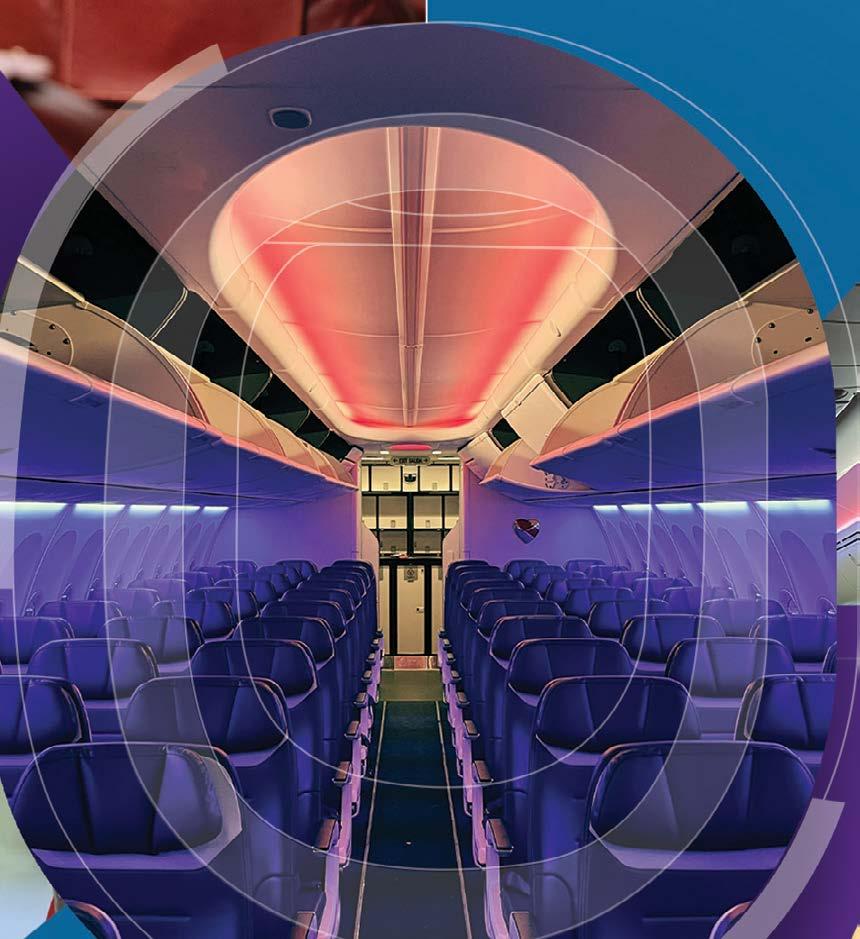
For passengers, connectivity is an expectation. For airlines, it’s an opportunity.
Join 60+ airlines and 50+ million monthly passengers maximizing the sky’s potential.
PAX Tech
Mississauga, Ontario
Canada
Website: www.pax-intl.com
PUBLISHER
Aijaz Khan
E-mail: aijaz@globalmarketingcom.ca
EDITORIAL OFFICES
Jane Hobson, Managing Editor
Tel: (1 416) 997-3914
E-mail: jane@pax-intl.com
Robynne Trueman, Business Editor
Tel: (1 705) 471-4110
E-mail: robynne@pax-intl.com
Alex Preston, Senior Editor
Tel: +44 (0) 7969 092913
E-mail: alex@pax-intl.com
ART DEPARTMENT
Kelly Wong, Graphic Designer
COLLABORATION IS KEY
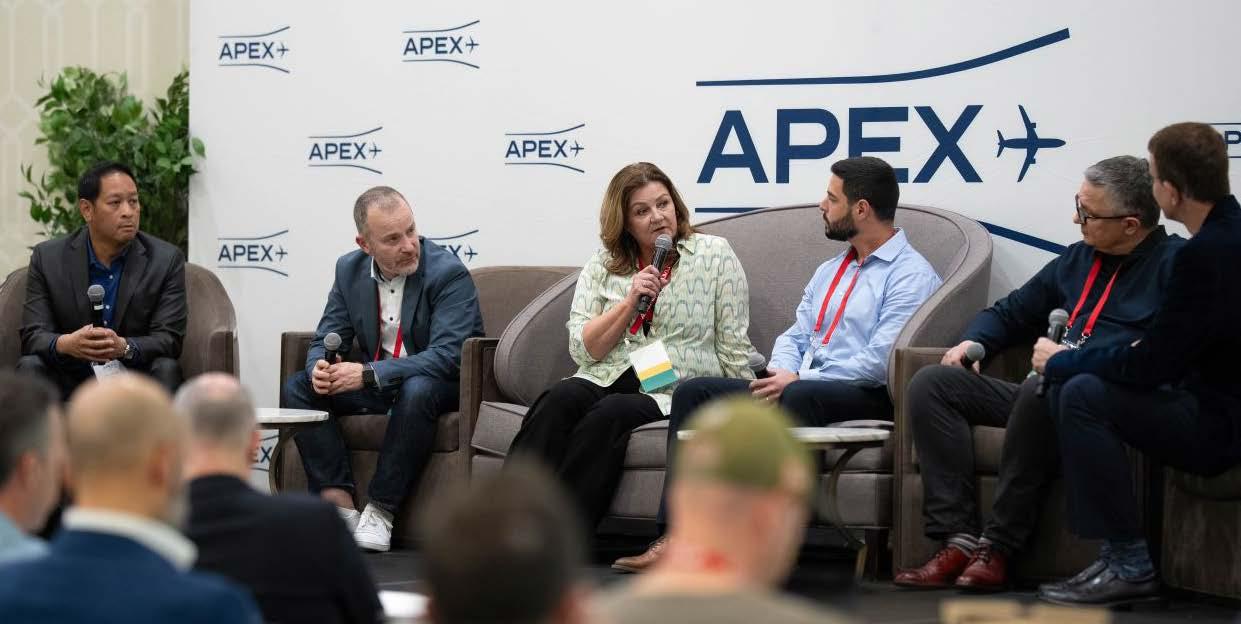
The new year is in full swing, with the industry already converging for thought-provoking discussions at APEX TECH in Los Angeles in January and showcasing the latest innovations and entertainment at APEX Content Market and Aircraft Interiors Middle East (AIME) in Dubai this month. In this Pre-AIX/Middle East Report issue, we examine the key themes emerging from these events and look ahead to the upcoming Aircraft Interiors Expo (AIX) in Hamburg this spring. Now more than ever, collaboration and a shared desire for betterment of the passenger experience as a whole, are essential. As Jonas von Kruechten, member of the APEX Board of Directors, said at APEX TECH, “Technologies are changing and we are all here to have a genuine exchange.”
Center stage at APEX TECH was content rights and the ongoing conversation around licensing content for streaming on PEDs. As demand for multi-device journeys grows, suppliers and airlines are striving to deliver seamless inflight connectivity and entertainment experiences to passengers in all cabin classes.
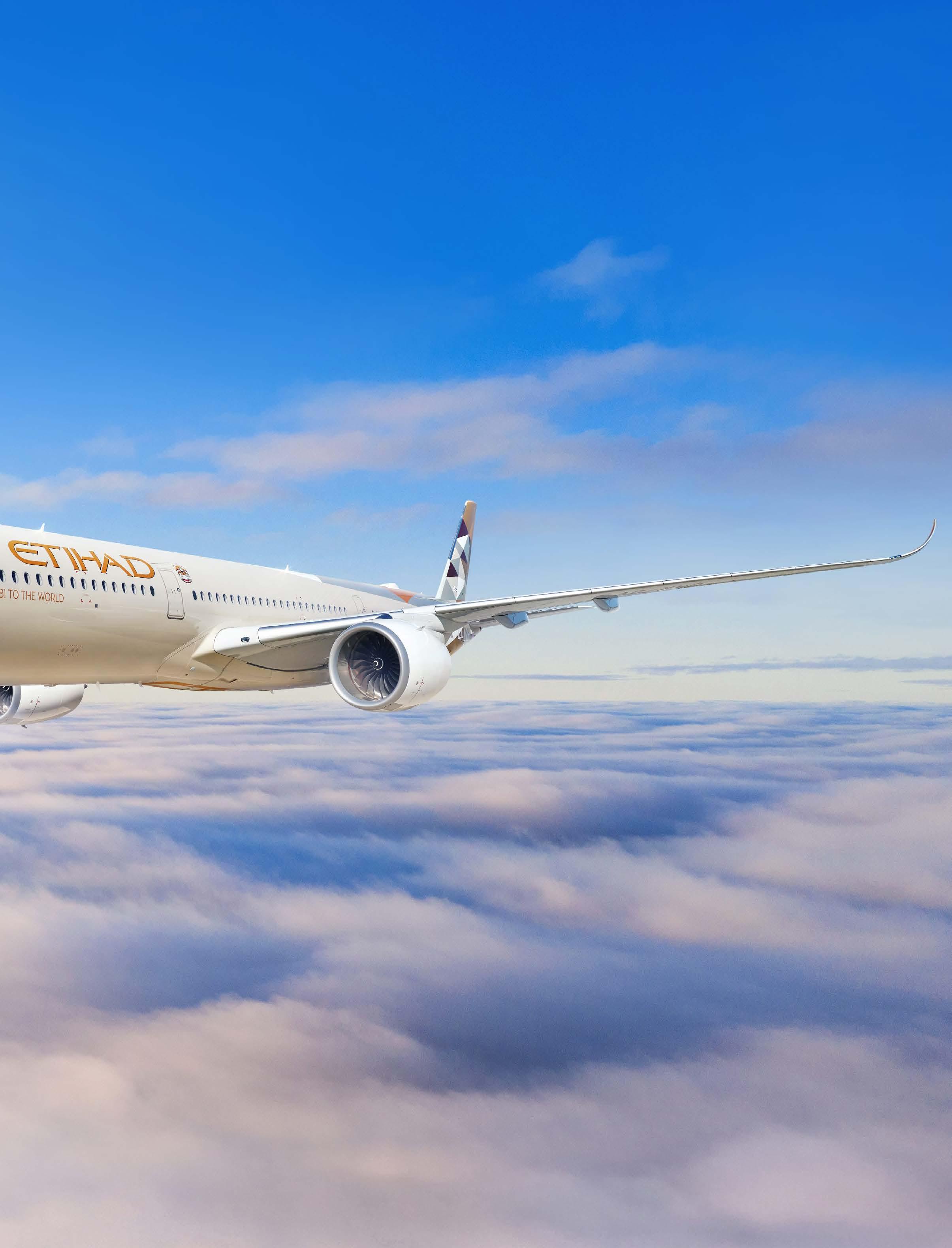
Etihad’s Chief Digital Officer Frank Meyer explains that the airine is building a personalized digital ecosystem. “The reliable, high-bandwidth connection enables us to deliver tailored content recommendations, personalized entertainment options and customized service offerings based on passenger preferences,” he tells PAX Tech in a January interview that you will find in these pages.
At AIME in Dubai, a need to recenter passenger comfort and increase capacity to meet demand for Business Class cabins were the recurrent messages.
Panasonic Avionics’ Andy Masson highlights rapid growth in the Middle East aviation market, telling PAX Tech that agreements with Emirates and flydubai, underscore Astrova’s strong momentum, with adoption in the Middle East outpacing Panasonic’s previous IFE solutions.
“We are talking about a region that continues to expand its influence within the global aviation market, showing no signs of letting up and making it an increasingly important area for Panasonic Avionics to establish and grow a strong footprint,” he says in this issue.
PAX International and PAX Tech are published a total of 12 times a year by PAX International, Mississauga, Ontario, Canada. International Distribution.
ISSN 1206-5714
Key title: Pax International
PAX Tech aims to keep the conversations and collaborative spirit from these events going in these pages. The countdown to Hamburg is on. We wish everyone well in the lead up to the event, and for now, get all caught up by reading on.
WITH
Under CEO Steven Greenway, flyadeal advances an ambitious growth strategy aligned with Saudi Arabia’s Vision 2030 goals
Etihad’s Chief Digital Officer Frank Meyer reveals that inflight connectivity is central to the airline’s broader transformation
Patrick Brannelly discusses how Emirates leverages accessible interfaces, assistive technology and IFE innovation to improve onboard experience
CABIN EQUIPMENT
18 SUITE SATISFACTION
Lee Clark, Senior VP Strategy, Rosen Aviation, highlights the key UX/ UI considerations in designing premium passenger experiences
Rosen Aviation’s Maverick VR First Class/Business Class demo with Audiosphere. Read more about Rosen’s premium passenger experience approach to design on page 18.
CONNECTIVITY
20 LANDING LOYALTY
Viasat’s Laney Hind breaks down the various delivery models for IFC and its crucial role in building brand loyalty
IFE
22 CABIN CATALYSTS
Andy Masson, SVP Product & Strategy at Panasonic Avionics Corporation, speaks with PAX Tech about the Middle East’s appetite for Astrova
24 LEGACY IFE AND THE UNTAPPED POTENTIAL
In this guest column, Juraj Siska, CEO at IdeaNova Technologies, examines how with the right expertise, airlines can unlock modern performance from legacy systems—without costly replacements
INTERIORS
26 LOCATION IS KEY
F/LIST’s Michael Müller talks cabin interiors growth in the Middle East following Dubai facility expansion 28 LEADING THE CHARGE
A look at the role of in-seat power in supporting increasingly connected cabins, from PED usage to IFE and passenger connectivity ecosystems
32 CONNECTIVITY AND CONTENT CONVERGE AT APEX TECH
A look at industry players’ key takeaways and important themes emerging from APEX TECH 2026 in Los Angeles 34 RECLAIMING COMFORT, RETHINKING CAPACITY
Following AIME 2026, Unum’s Alan McInnes highlights industry demand for greater seating capacity and the continued focus on passenger comfort
36 PAX READERS CHOOSE EXCELLENCE
The PAX Readership Awards return to celebrate the achievements of the industry, as voted by loyal readers
Size does matter...
A dozen 4K OLED displays ranging from 13-inch to the world’s largest 97-inch
Ultra sleek profiles measuring just 1-inch in depth.
V i s i o n a r y I n s i g h t | P r e c i s e E x e c u t i o n
Safran Passenger Innovations becomes RAVE Aerospace following acquisition by Kingswood
Kingswood Capital Management, LP (together with its affiliates, Kingswood) has completed its acquisition of Safran Passenger Innovations (SPI) from Safran. As part of the transaction, SPI has been renamed as RAVE Aerospace, which will continue to build on the established RAVE brand that has powered inflight entertainment and connectivity solutions for its customers for almost 20 years.
Matt Smith will continue to serve as Chief Executive Officer, supported by the existing leadership team, as RAVE Aerospace accelerates its growth as a leading global provider of inflight entertainment and connectivity solutions for airlines, lessors and aircraft manufacturers worldwide.
“We are proud to introduce our new company name, built on the strength of the established RAVE brand,” said Matt Smith, CEO of RAVE Aerospace. “It reflects the strong heritage of our inflight entertainment and connectivity platform, RAVE, which delivers measurable value to more than 100 customers around the world. Our next chapter with Kingswood Capital Management empowers us to reach new heights.”
Pokémon partners with Anuvu as global aviation distributor
Anuvu has signed an agreement with The Pokémon Company International. This partnership will bring an expansive collection of Pokémon animated films and series to airline cabins, offering passengers fresh ways to experience one of the world’s most beloved entertainment IPs.
Through this agreement, Anuvu will introduce a library of Pokémon films and TV series to various airlines, including multiple seasons from the original animated series and several celebrated cinematic titles, such as “Pokémon the Movie: I Choose You!” and “Pokémon the Movie: The Power of Us.”
“Pokémon is more than a franchise, it’s a global phenomenon that inspires joy across multiple generations,” said David Horan, Content Acquisition and Partnership Manager, Anuvu. “Its enduring popularity makes it a perfect addition to our library, and we are beyond thrilled to help airlines deliver the world of Pokémon to millions of passengers.”
SPI becomes RAVE Aerospace with latest acquisition
Anuvu signs agreement with The Pokémon Company International
Qatar Airways launches first Starlink-equipped 787 and completes A350 Starlink rollout
Qatar Airways has become the first carrier globally to enable a 787-8 with Starlink. The airline has also equipped its entire A350 fleet. To date, Qatar Airways is operating three Dreamliners.
Nearly 120 widebody aircraft, representing more than 58 percent of its widebody fleet across A350s, 777s and 787s, now provide passengers with ultra-high-speed connectivity at up to 500 Mbps, enabling uninterrupted streaming, video calls and real-time productivity that can surpass many home broadband networks.
The airline is extending the rollout to an increasing number of routes, including flights to the majority of destinations served by Qatar Airways in the Americas and Australia and on prominent routes in Africa, Asia, Europe and the Middle East.
SUPPLIER
All3Media International showcases latest content lineup at APEX Content Market in Dubai
All3Media International exhibited at APEX Content Market in Dubai last week, primarily focusing on its Q1 slate across scripted and unscripted content, so that new and delivered titles are available for airlines to license immediately.
Emily Lawn, Global Inflight + UK & Eire Sales Executive, All3Media International, tells PAX Tech, “MENA content demand is no longer radically different, since airline programming in the region is now globally aligned, with many carriers prioritizing universally acceptable content that works for mixed-age, multi-national cabins where children are frequently onboard.”
As such, highlights of the distributor’s content lineup include pacy star-studded thriller “Secret Service,” powerful documentary “Michael Jackson: The Trial” and record-breaking smash hit “The Celebrity Traitors,” along with the latest instalment of “The Traitors UK.”
“High-stakes unscripted formats such as ‘The Traitors’ continue to perform strongly, driven by pace, strategy and psychological tension rather than explicit content,” Lawn explains, adding that there is strong demand for travel programming and natural history content, with shows like “Parenthood,” “Race Across the World,” “Ben Fogle’s Chinese Adventure” and “Secret Africa: Into The Wild,” on the roster.
“In scripted, we are seeing demand for actionled, fast-paced dramas with major A-list talent attached, high production values, and broad cultural accessibility, which we are pleased to be able to offer in series like ‘Secret Service,’” she says.
All3Media International’s lineup also includes new seasons of the comedies “Dinosaur” and Boarders.”
“There is a consistent appetite amongst IFE buyers for light-hearted bingeable content, so I am confident these new seasons will remain popular amongst audiences,” Lawn tells PAX.
Qatar Airways enables 787-8 with Starlink
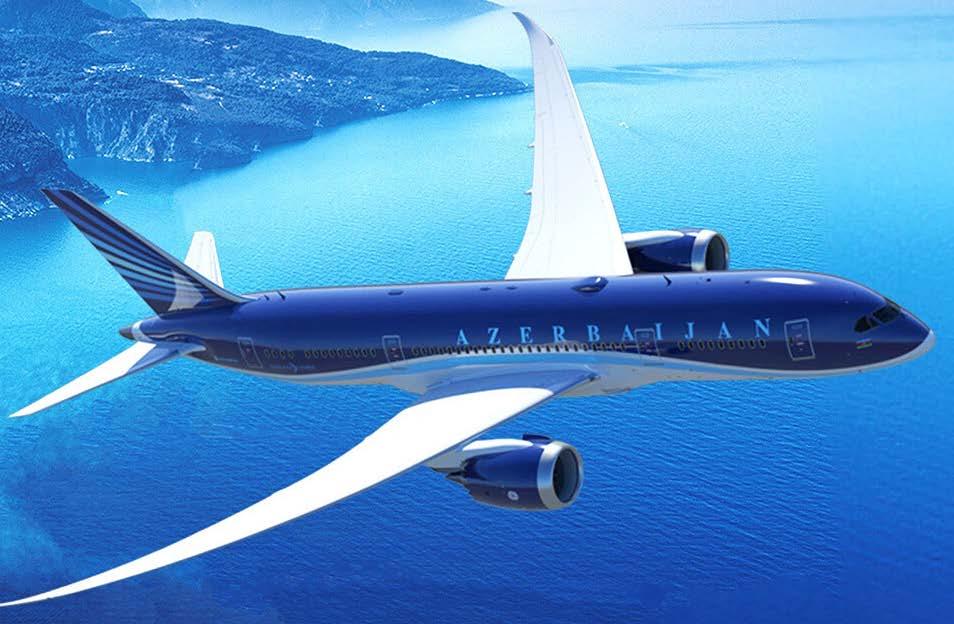
Azerbaijan Airlines selects Stellar Entertainment as exclusive CSP
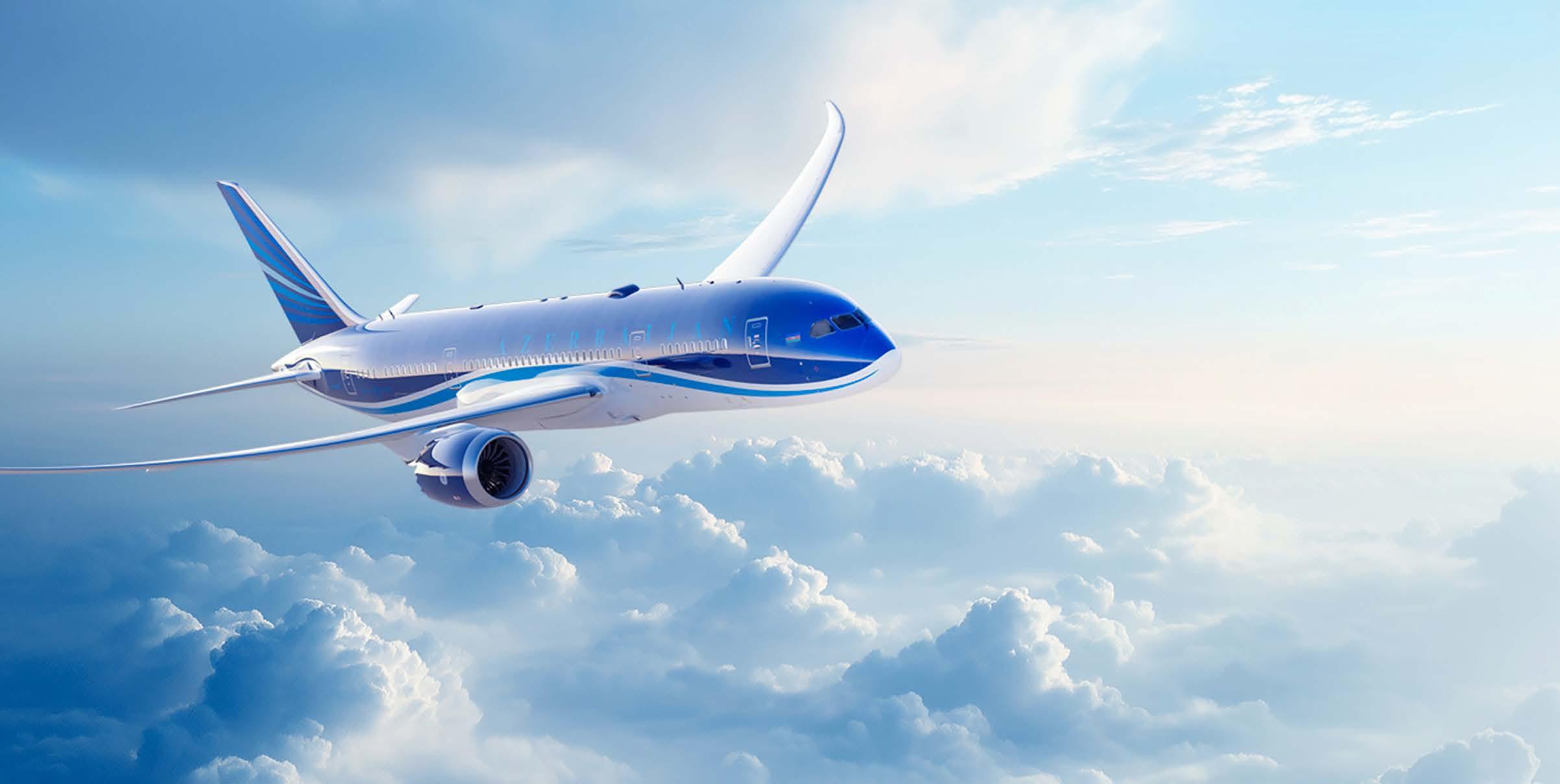
Stellar Entertainment has announced its exclusive appointment as the Content Service Provider (CSP) for Azerbaijan Airlines (AZAL), the national flag carrier of Azerbaijan. This partnership marks a step forward in AZAL’s mission to elevate the passenger experience through an inflight entertainment (IFE) strategy that unites Hollywood blockbusters, international favorites and standout Azerbaijani stories.
As AZAL’s appointed CSP, Stellar will manage the full spectrum of IFE services, including content curation and licensing, metadata and media preparation, and dedicated account management.
Daniel Jacobs, Chief Operating Officer of Stellar Entertainment, said, “From championing homegrown content to making global blockbusters accessible to regional audiences, this collaboration makes every flight enjoyable and distinctly Azerbaijani.”
Key highlights of AZAL’s new IFE strategy include showcasing Azerbaijani content: In a nod to its national heritage, AZAL now features locally produced films and documentaries onboard, featuring Azerbaijani subtitles on Hollywood blockbusters and offering diverse global selections.
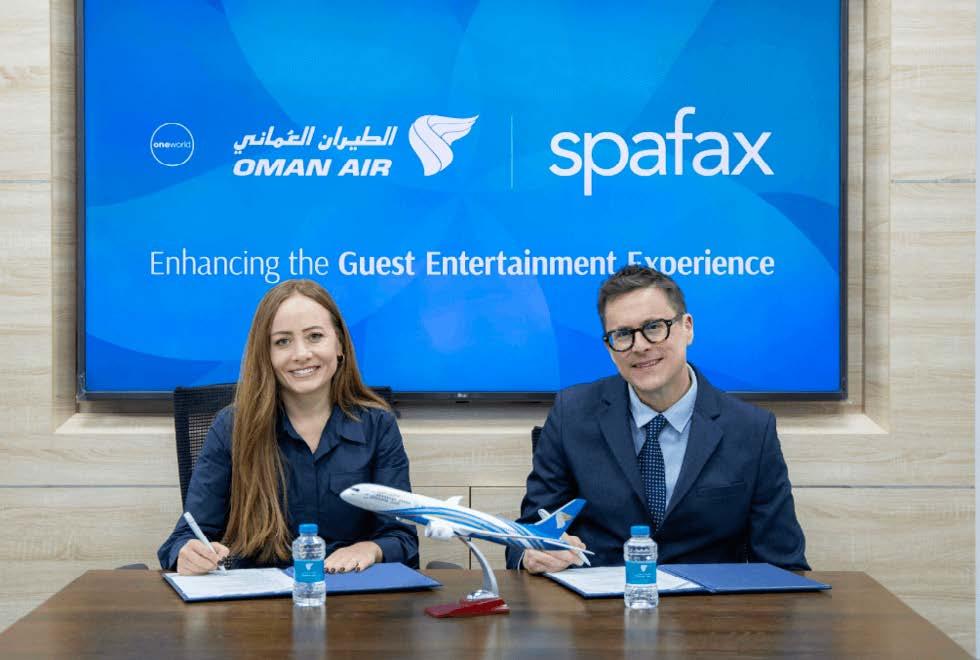
Spafax renews IFE partnership with Oman Air for four-year agreement
Spafax has renewed its inflight entertainment (IFE) partnership with Oman Air for an additional four years, extending a relationship that began in 2020.
Under the renewed agreement, Spafax will continue to deliver a comprehensive scope of services designed to engage passengers, while expanding its use of data, insight, and strategic tools to further elevate the ARIA (Oman Air’s IFE platform) experience. The first content cycle under the renewed term is planned for this month, marking the next chapter of a long-standing collaboration focused on a premium passenger experience.
While the core service offering remains familiar to passengers, the renewed partnership places greater emphasis on performance-led programming, datadriven decision-making and brand development. Spafax will expand its use of Spafax IQ, its IFEC data analytics platform, to support ARIA’s evolution.
“Spafax has been a trusted partner in supporting ARIA since its launch,” said Renata Rached, Vice President –Guest Experience, Loyalty and Brand at Oman Air. “This renewed agreement enables us to continue enhancing our onboard entertainment in a way that reflects Oman Air’s premium positioning and commitment to delivering a high-quality guest experience.”
Stellar Entertainment is the exclusive CSP for AZAL
Renata Rached, Vice President – Guest Experience, Loyalty and Brand at Oman Air and Henry Gummer, MD Europe at Spafax sign an extended inflight entertainment agreement in Oman
The Perfect Match
Scaling with purpose
Under CEO Steven Greenway, flyadeal advances an ambitious growth strategy aligned with Saudi Arabia’s Vision 2030 goals
by JANE HOBSON
In September 2025, Saudi Arabia’s low-cost carrier flyadeal entered its ninth year in service with a sharpened focus on growth, efficiency and alignment with the Kingdom’s Vision 2030. Under the leadership of Chief Executive Officer Steven Greenway, who took the helm in January 2024, the airline is scaling rapidly to meet the needs of massmarket travelers while positioning itself as a crucial pillar within parent Saudia Group’s broader strategy.
A complement to Saudia’s premium positioning flyadeal was launched in 2017 as a sister airline to full-service national carrier Saudia—both part of Saudia Group—with its inaugural flight
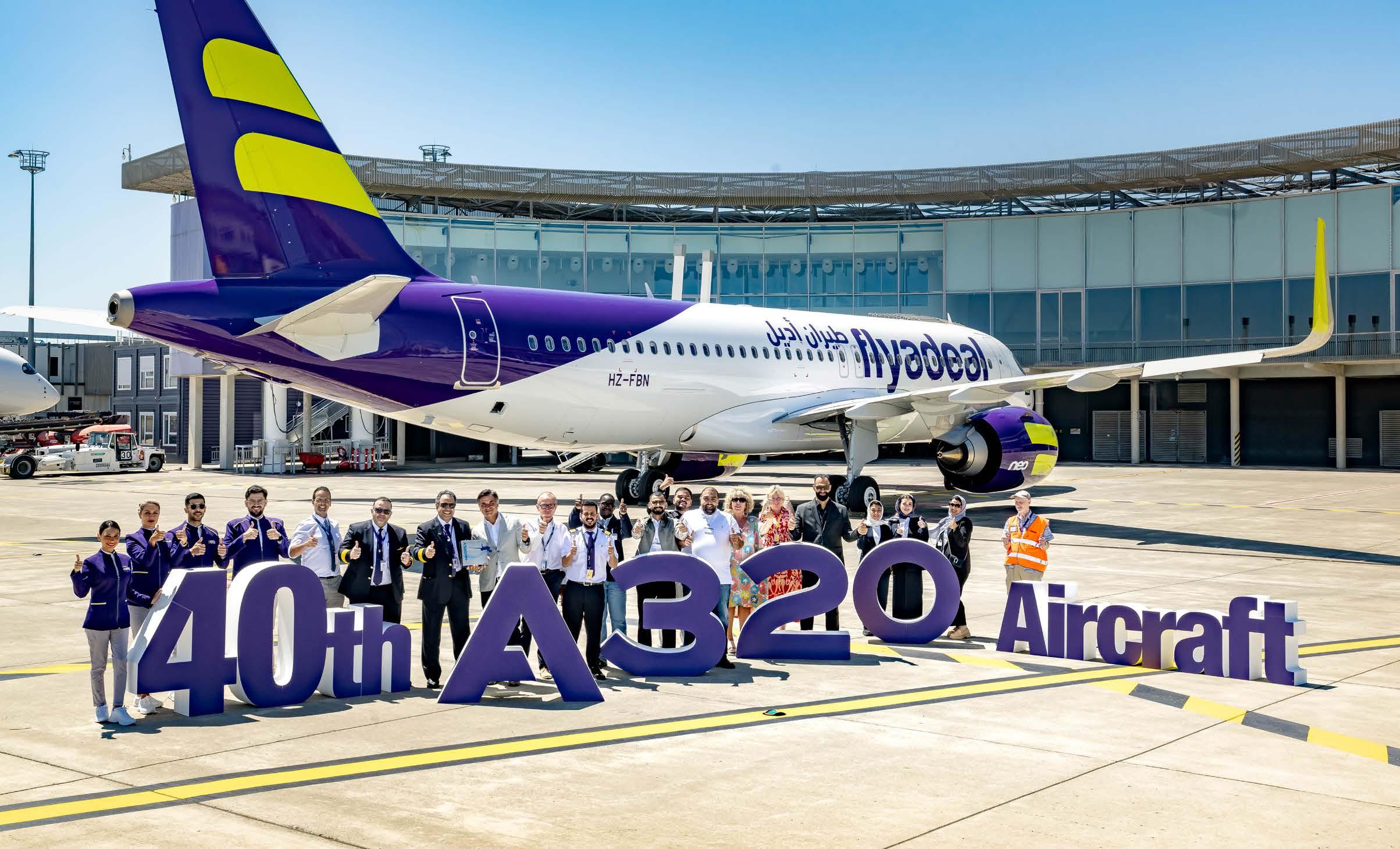
between Jeddah and Riyadh. In just eight years, the carrier has expanded its fleet to 42 A320s, operating scheduled flights to 19 domestic and 14 international destinations across six countries, alongside seasonal international routes and charter services as part of a dynamic growth strategy. The airline’s primary base is Riyadh, with additional key operations in Jeddah and Dammam. International expansion is a central focus for flyadeal, which currently operates 25 percent of its network on international routes. The airline aims to achieve a balanced network of
50 percent domestic and 50 percent international services by 2030.
Differentiating itself from conventional low-cost carriers, flyadeal maintains strong partnerships with travel agents and this year became a member of IATA, further strengthening its industry credentials.
Saudia, meanwhile, is pursuing an increasingly premium strategy with upgraded fleets and enhanced service offerings. That shift has created a market opening for flyadeal in the Middle East, where LCC penetration is quite low, according to Greenway.
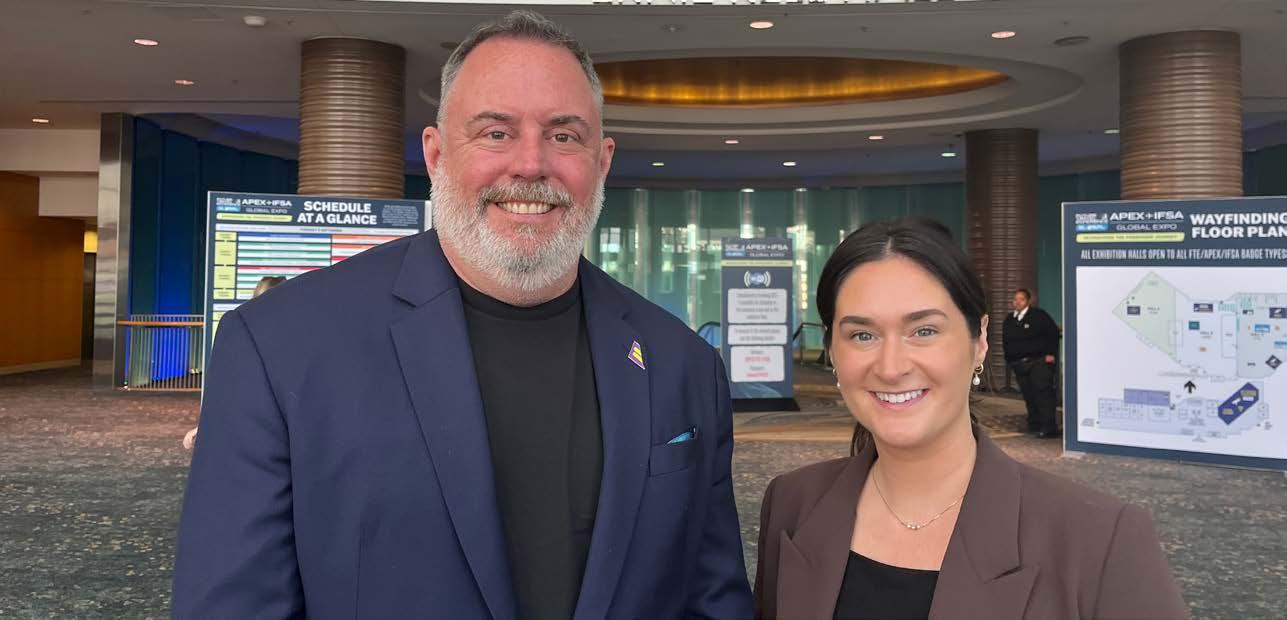
flyadeal CEO Steven Greenway (left) and PAX Tech Managing Editor Jane Hobson at IFSA Global EXPO in Long Beach, California in September 2025
flyadeal staff join Airbus management for the airline’s 40th aircraft delivery in Toulouse
“We are really the mass market play for the group,” Greenway tells PAX Tech. “We offer an opportunity for travelers who are seeking more of a cheap and cheerful option.”
This role is particularly important as Saudi Arabia pursues Vision 2030, the government’s transformation program that seeks to diversify the economy, expand tourism and increase connectivity. flyadeal’s low-cost proposition supports inbound travel, domestic mobility and religious pilgrimages at scale.
“It is not one or two customer segments,” Greenway emphasizes. “When you are looking at only one or two hours to get across the Kingdom, most people really do not want the bells and whistles at all. They just want to get from A to B. We have these cost-conscious consumers.”
A fleet built for growth
Central to flyadeal’s expansion is its ambitious fleet plan. The airline is receiving aircraft at a pace of nearly one per month through 2030. Its current orderbook for 51 A320 family aircraft comprises 12 A320neos and 39 A321neos narrow-bodies, the latter
bringing additional range, capacity and efficiency, as well as 10 A330900neo wide-bodies, which will open new long-haul markets. These aircraft will begin deliveries from 2027.
At the moment, flyadeal’s baseline is the standard LCC offering: A320, 186 seats, no recline, no IFE. But Greenway highlights extra-large overhead bins as a “passenger-friendly investment” that massively benefits NPS.
The A321s, configured with 240 seats, will reduce unit costs by roughly 20 percent compared to the A320s and expand operational range to destinations in Southeast Asia, Western Europe and the Indian subcontinent.
The forthcoming A330neos will mark flyadeal’s entry into the long-haul, low-cost market. These aircraft will primarily operate with high-density Economy cabins but include a small premium section for passengers willing to pay for extra comfort on longer flights.
Greenway describes the introduction as both an exciting opportunity and a significant operational challenge.
“The A330 really opens up our
network globally, which we are very excited about. It has a huge degree of utility,” he says. Greenway is not shy to point out the other side of the coin.
“Now, that said, what terrifies me is operating a wide-body in the context of an airline that has really only operated narrowbodies. No matter how you cut it, bringing in a wide-body operation complicates your operation, and the propensity to lose money on these aircraft is huge.”
Passenger proposition: Efficient and logical
As flyadeal refines its onboard offering and prepares for longer routes, the airline remains firmly aligned with Saudi Arabia’s Vision 2030. Its growth strategy—focused on affordability, accessibility, and international reach—positions the low-cost carrier as a key enabler of the Kingdom’s tourism and connectivity goals. By expanding its fleet and network, flyadeal is not only meeting rising passenger demand but also helping to “bring the world to Saudi Arabia and Saudi Arabia to the world,” as envisioned by the Saudia Group.
flyadeal’s primary base is Riyadh, with additional key operations in Jeddah and Dammam strengthening connectivity across Saudi Arabia and beyond
INVISIBLE CONNECTIONS
Etihad’s Chief Digital Officer Frank Meyer reveals that inflight connectivity is central to the airline’s broader transformation
by ALEX PRESTON
Etihad Airways is flying high. Last year, the airline carried a record 22.4 million passengers, had a load factor for the full year of 88.3 percent and expanded its capacity with the addition of 29 aircraft – the largest single-year fleet expansion in the airline’s history, bringing the fleet to 127 aircraft. The year also saw an ongoing network expansion, with multiple new routes to Asia, Africa, Europe and North America.
But it is not just improved connectivity to a range of destinations that the airline is committed to. As Chief Digital Officer Frank Meyer tells PAX Tech, inflight connectivity is central to the airline’s broader transformation, enabling everything from a personalized digital passenger experience to operational efficiencies.
“The Middle East has become one of the world’s most dynamic and competitive aviation markets, with multiple carriers vying for the same premium passengers and connecting traffic. In this environment, differentiation comes down to the details of the guest experience, and connectivity has emerged as a genuine differentiator,” he says.
“Business passengers make carrier choices based on connectivity reliability,” Meyers continues. “They need to stay productive in the air, join virtual meetings, access company systems. Leisure passengers want to share their experiences in realtime, stream their content and stay connected with home. Viasat’s proven performance gives us a competitive edge in both segments.”
Seamless stability
In November 2025, Etihad announced it was extending its partnership with Viasat with the rollout of the supplier’s nextgeneration IFC solution, Viasat Amara, across the majority of its wide- and narrow-body fleet, including line-fit for all aircraft on order and retrofit for its existing aircraft.
In bringing connectivity to its short- and long-haul routes, Meyer says the airline is ensuring consistency and reliability as it grows. The keyword being consistency.
“One of the challenges in aviation is that passengers do not think in terms of aircraft types or route lengths; they think in terms of their experience with Etihad,” voices Meyers.
“Viasat’s comprehensive fleet certification was a decisive factor. They hold the certifications that we need for our fleet mix [787s, A350s and A321LRs]. This meant we could deploy immediately across our expansion aircraft without lengthy certification processes that would have created service gaps or inconsistent experiences.”
He adds that Viasat’s technology roadmap, particularly the simultaneous multi-orbit solution planned for 2027/2028, aligns perfectly with Etihad’s long-term vision. “As we look ahead, we will be positioned at the forefront of aviation connectivity technology, which reinforces our premium positioning and innovation credentials,” he says.
According to Meyers, what really sets Viasat apart is its approach
to bandwidth management.
“Their technology guarantees bandwidth per passenger, not per aircraft. This is crucial because it means whether we have 160 passengers online on a regional A321LR flight or 400 on a long-haul 787, each passenger receives the same consistent, high-quality connectivity. There is no degradation during full flights.”
Beyond the raw connectivity, Meyer explains that Etihad is building a personalized digital ecosystem.
“The reliable, high-bandwidth connection enables us to deliver tailored content recommendations, personalized entertainment options and customized service offerings
Frank Meyer, Chief Digital Officer, Etihad Airways
based on passenger preferences.”
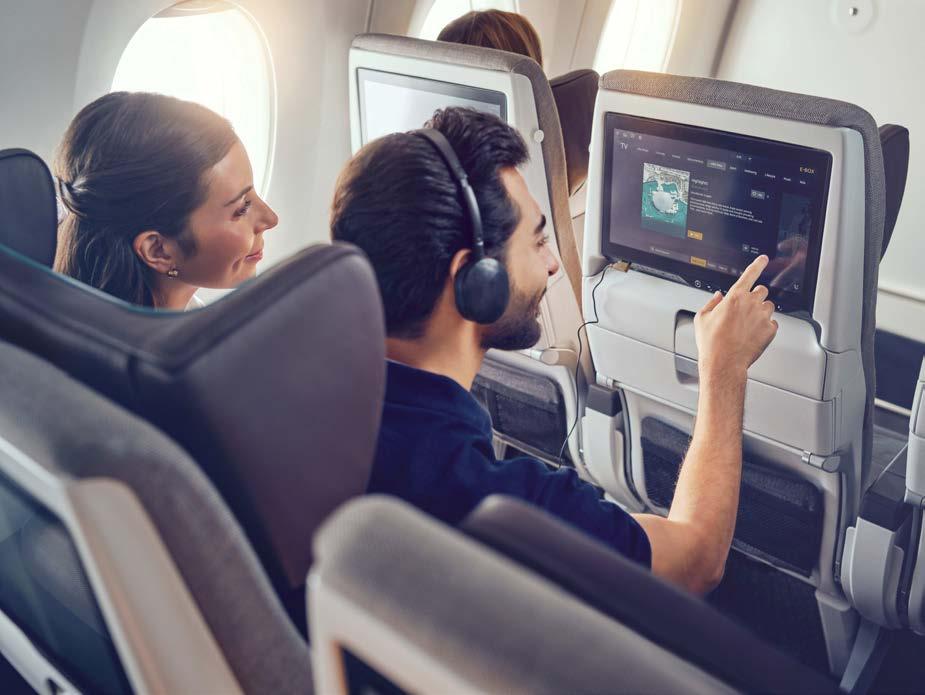
To this end, the airline is investing in “excellent seatback IFE systems and robust personal device streaming.”
Meyer says Etihad is also exploring hybrid experiences, such as using seatback screens for certain functions like flight information, moving maps or interactive features, while enabling streaming to personal devices for entertainment.
“The key is flexibility. Some passengers want to use their tablet, others prefer the seatback screen, and many will use both at different points during the flight. Excellent connectivity is what makes that flexibility possible,” he explains.
Etihad is also looking beyond the passenger Wi-Fi experience.
New service categories
On the commercial side, advertising and digital media on seatback IFE screens represent an opportunity Etihad is actively exploring, with the prospect of more dynamic, targeted content rather than static campaigns. The airline has also identified significant potential in retail and e-commerce, with the ability to deliver personalized offerings at relevant moments during the journey, transforming how passengers interact with ancillary services and travel products.
For Meyer, connectivity also creates the foundation for deeper integration with travel ecosystem partners, whether hotels, ground
transportation or destination services, turning the aircraft into a platform for collaborative value creation.
Operationally, connectivity drives enhanced efficiency and cost savings. Real-time aircraft-to-ground data enables more efficient flight operations and better crew communication.
As Meyer muses, a successful IFEC strategy “means our passengers genuinely feel more connected – to their loved ones, to their work, to their entertainment, to the world belowwhen they fly Etihad. That emotional connection, enabled by technical connectivity, is what builds long-term loyalty and differentiates us in an increasingly competitive market.”
Last year, Etihad carried a record 22.4 million passengers, had a load factor for the full year of 88.3 percent and expanded its capacity with the addition of 29 aircraft
In November 2025, Etihad announced it was extending its partnership with Viasat with the rollout of the supplier’s nextgeneration IFC solution, Viasat Amara
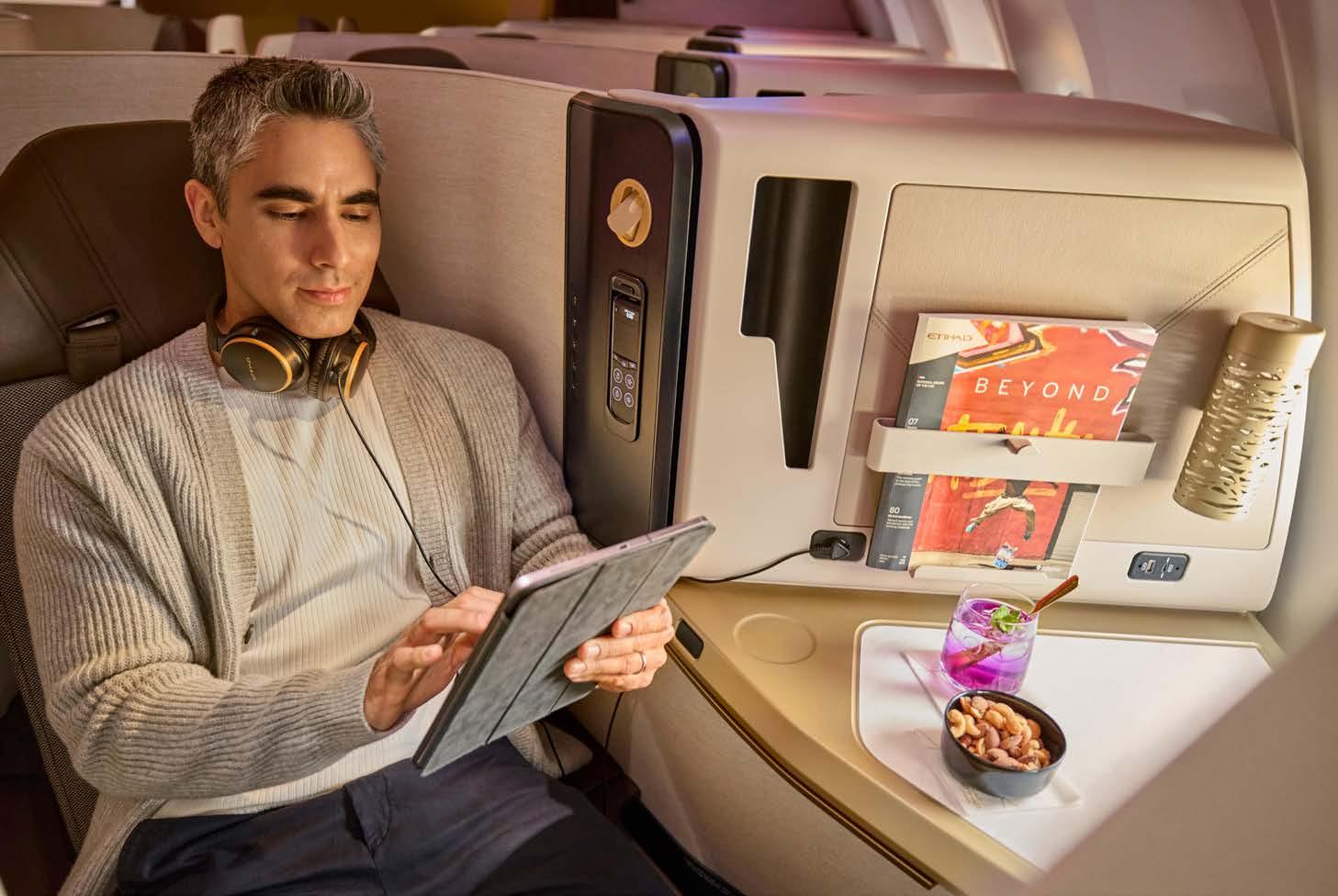
Meyer says inflight connectivity is central to the airline’s broader transformation, enabling everything from a personalized digital passenger experience to operational efficiencies
RETHINKING ACCESSIBLE TRAVEL
Patrick Brannelly discusses how Emirates leverages accessible interfaces, assistive technology and IFE innovation to improve the onboard experience
by ROBYNNE TRUEMAN
In October 2025, Emirates unveiled a suite of new services and products for people with disabilities at the seventh edition of the AccessAbilities Expo in Dubai World Trade Centre. These updates included new accessibility features for the airline’s inflight entertainment system, ice.
“Over 30 years ago, Emirates was the first airline to introduce TVs at every seat, in every cabin class, on every aircraft, giving access to inflight entertainment. We were also the first airline to introduce Closed Captions (CC) on movies, nearly 20 years ago, and then Audio Description (AD),” explains Patrick Brannelly, SVP Inflight Entertainment & Connectivity, Emirates.
Appealing to all passengers
As part of its commitment to accessibility, Emirates now offers more than 600 movies with CC and, to improve accessibility for passengers with visual impairment, 200 movies with AD. Emirates headphones are also compatible with hearing aids when set to the “T” position.
“Where the CC/AD assets are available for a movie, we take them.
As a licensor, we are not free to create them, thus we are dependent upon what is available,” Brannelly explains.
He tells PAX Tech that introducing these accessibility features was not a simple process, as aircraft IFE systems did not follow the same standards as domestic televisions, and none of the inflight content available at the time included audio description or closed captioning assets.
“The response from passengers with hearing or visual impairment was delight and surprise,” he reveals.
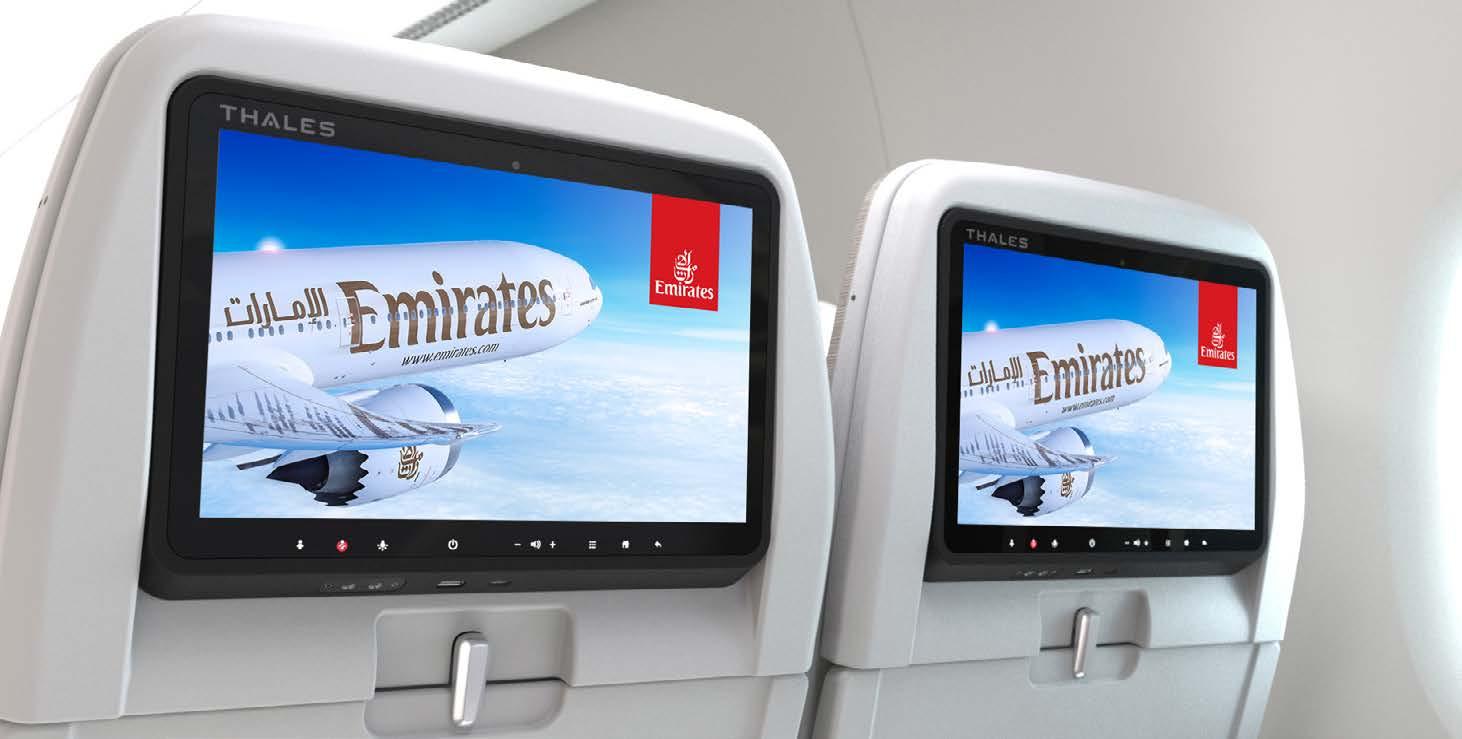
On Emirates A350-900 aircraft, an accessible user interface (UI) on ice has been introduced in partnership with Thales and American Printing House for passengers who are blind or near blind, to ensure all users have an intuitive, high-quality IFE experience.
The UI speaks directly to the passenger with audio-cue navigation assistance, guiding them through the airline’s IFE system independently. To navigate through the UI, passengers can use up to 13 swiping and tapping motions, creating a seamless experience for those who are blind or have low vision. Brannelly says Thales collaborated with accessibility experts to design a system that feels
intuitive and meets user expectations.
The airline’s IFE selection also aims to help passengers relax and unwind, offering 12 channels of Well-being TV and 31 channels of Happiness and Wellbeing podcasts and playlists, featuring meditations and calming soundscapes.
Emirates also seeks to ease pretravel anxiety through its new Accessible & Inclusive Travel Hub. Developed over the course of a year, the digital platform provides passengers with the information they need to plan an accessible and inclusive journey. The website features a carefully tested color palette and supports assistive technologies such as screen readers, voice control and keyboard navigation.
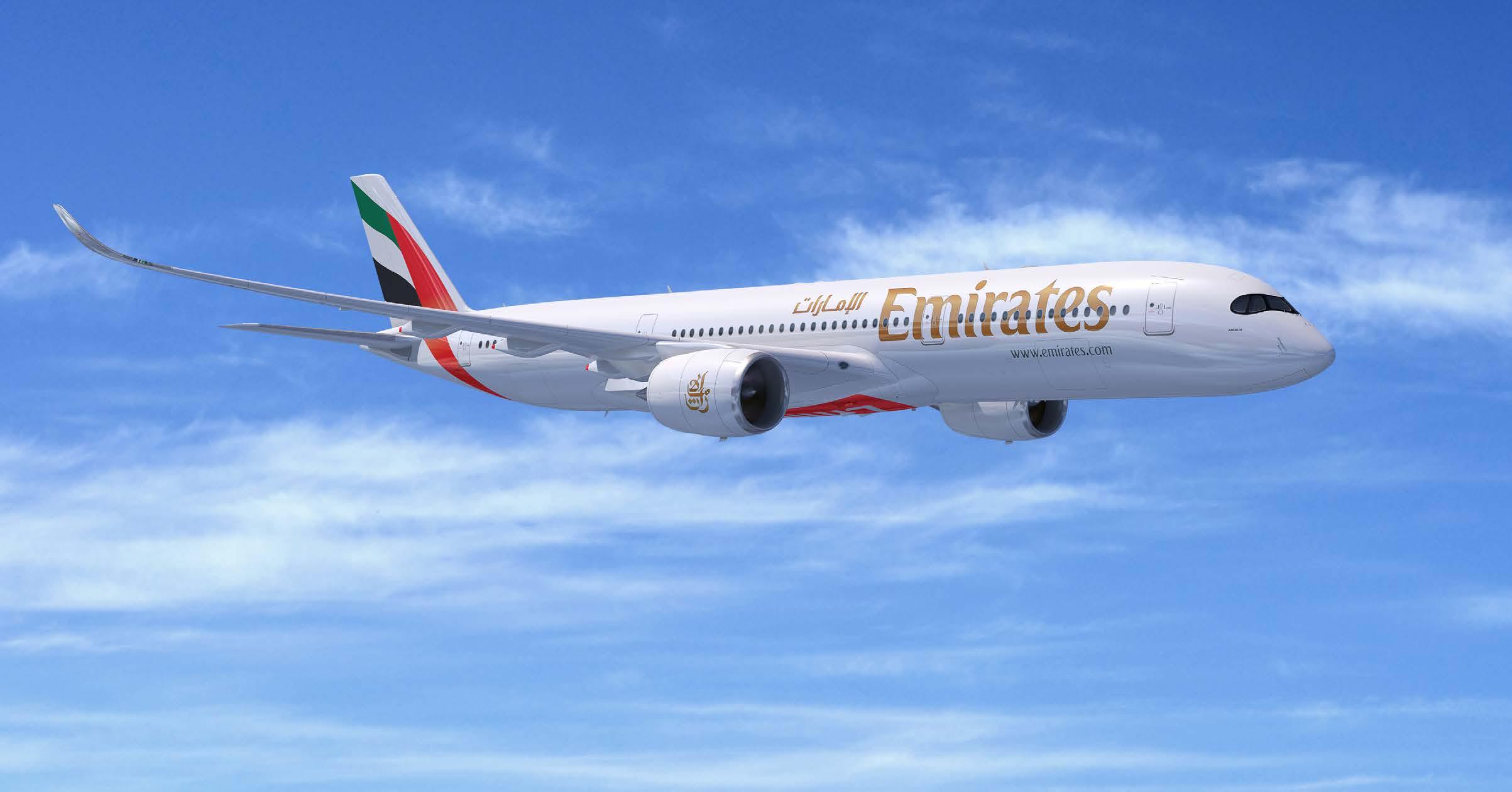
Emirates A350-900 aircraft
Patrick Brannelly, SVP Inflight Entertainment & Connectivity, Emirates
Your passengers expect personalization.
Now your IFE can deliver it!
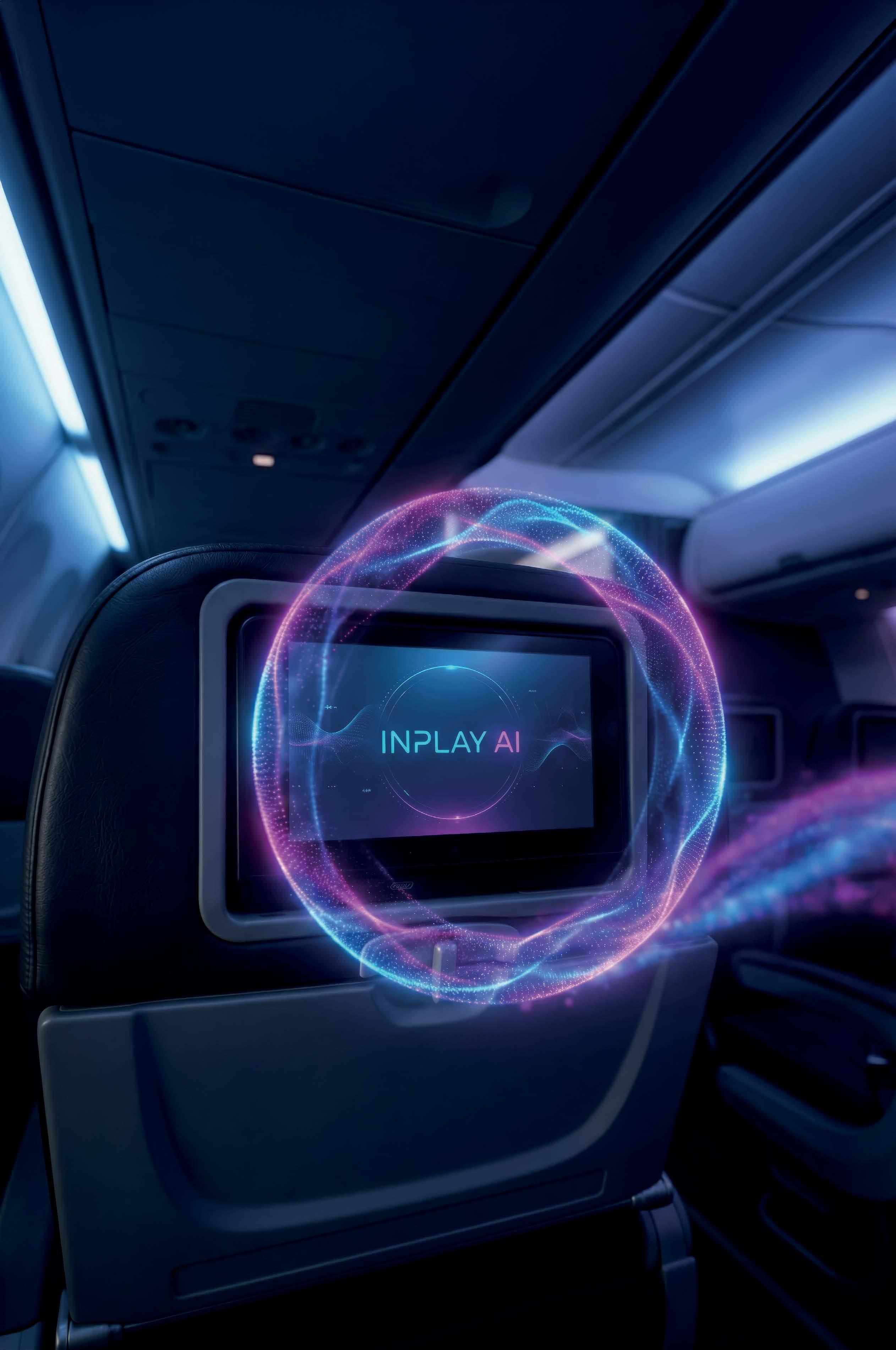
Introducing the first inflight AI platform that adapts to every passenger — delivering recommendations, dynamic UI, and tailored content entirely offline.
Experience real personalization — live at our AIX booth. Scan for an early look.
Becoming the first Autism Certified Airline
Last year, Emirates launched its journey to becoming the world’s first Autism Certified AirlineTM, along with its airport hub (DXB) and Dubai becoming the first Certified Autism DestinationTM in the Eastern hemisphere.
Emirates worked with the International Board of Credentialing and Continuing Education Standards (IBCCES) to conduct a comprehensive audit and create a blueprint for serving passengers with accessibility requirements. Emirates is following this road map to put these standards into practice in aviation for the first time.
As part of these improvements, Emirates will be introducing standards and services for passengers with autism and sensory conditions, including sensory guides, designed to support passengers in making informed decisions throughout their journey. These digital guides measure sensory inputs in public areas such as sound levels, lighting and potential sights and smells.
“This has been a huge initiative to make travel seamless for people with autism and sensory sensitivities who can travel on an autism-certified flight, to an autism-certified airport, stay at an autism-certified hotel and enjoy at an autism-certified attraction in the city,” Brannelly affirms.
Empowering passengers with connectivity
In November, Emirates announced that it will bring Starlink Wi-Fi onboard its entire in-service fleet, beginning with 777 aircraft and completing the rollout by mid-2027.
In terms of the advantages of this partnership for passengers, Brannelly says Starlink will offer vastly improved connectivity, as good as what travelers are used to at home. This will allow them to access any personal services they on the ground, such as apps, while in the air.
“We are confident it will deliver consistent, ultra-fast, groundquality service at 40,000 feet, so our customers can stream, enjoy online gaming, video call friends and family, work and scroll social media for free. Today, 12 Emirates aircraft are already installed with Starlink and the experience is excellent. We are making progress every few days with installations,” Brannelly says.
On Emirates A350-900 aircraft, an accessible UI on ice has been introduced in partnership with Thales
Brannelly says Starlink IFC will offer passengers consistent, ultra-fast, ground-quality service at 40,000 feet, allowing them to stream, enjoy online gaming, video call friends and family, work and scroll social media for free
Emirates announced in November that it will bring Starlink Wi-Fi onboard entire its in-service fleet
Not too long ago, passengers considered in-flight charging ports a pleasant surprise. Today, in-flight charging ports are an expected amenity for millions of passengers. Exceed their expectations with scalable, cutting-edge power solutions from Astronics, the industry’s trusted, low-risk power experts. Astronics delivers the highest available power with maximum efficiency, unmatched installation flexibility, and the lightest weight. This helps airlines reduce emissions and achieve best-in-class total cost of ownership. Keep your passengers connected, happy, and powered up with Astronics.
SATISFACTION Suite
Rosen Aviation advocates for seamless integration and consistent personalization across the passenger journey, supported by open system architectures that give operators greater control
Lee Clark, Senior VP Strategy, Rosen Aviation, highlights the key UX/UI considerations in designing premium passenger experiences
by ROBYNNE TRUEMAN
As airlines compete for the loyalty of high-value First and Business Class travelers, User Experience (UX) and User Interface (UI) are key to creating a seamless and intuitive premium cabin experience that meets the expectations of the discerning frequent flyer.
But as Lee Clark, Senior VP Strategy, Rosen Aviation, tells PAX Tech, “Premium suite design lands in a gray area in terms of innovation and evolution in that while there have been a variety of new designs, configurations
and integrations, many of what is deemed ‘new’ is mostly a reshuffle of currently available technologies.”
However, he points to Emirates’ Game Changer suites and Etihad’s The Residence as examples of truly unique products on premium airlines, for which Rosen Aviation is positioned to offer a wider array of premium VIP focused technologies.
For Clark, UI/UX has been and always will be the most important factor when designing any technology solution that leverages touchscreens or visual controllers. He notes that
essential functions like lighting and window shades must remain easily accessible, a challenge made simpler by today’s ultra-fast, intuitive UX/UI designs.
First Class demands
Clark explains that designing UI/UX for First Class passengers is a delicate balance between providing more with less.
“Where Economy passengers are limited to seat recline or stowing the tray table, the First Class seating environment, especially for premium
Lee Clark, Senior VP Strategy, Rosen Aviation
communication protocols enable a virtually unlimited range of cabin customization options.
This vision for the future is outlined in MOSAIC (Modular Open System Architecture In Cabin), and will open the door for OEMs, operators and suppliers to more easily collaborate in curating a distinct brand identity.
from outside the aircraft and, with intentionally placed, highly focused Li-Fi transmitters, creates local privacy within a First Class pod or suite.
IFE for long-term growth
In a saturated market, Clark points out that passenger purchasing decisions often come down to what features are not offered, as opposed to those that are offered inflight. Airlines lacking the latest in IFE, connectivity, personalization, audio and premium seating will struggle to compete against industry peers.
“The data is clear that even the presence of contemporary technology solutions in the cabin has a significant impact on brand perception. For any airline looking to attract new passengers and retain current ones, investments in premium IFE and cabin experience upgrades are a no-brainer,” he tells PAX Tech
airlines, should have a multitude of options and controls,” he says. “This then demands a UI specifically designed for each specialty environment.”
The challenge when introducing advanced UX/UI concepts into existing fleets lies in hardware limitations and component interoperability.
“We are changing that paradigm by designing open system architectures that are more easily upgraded and futureproofed,” Clark explains.
Personal and private
Rosen Aviation advocates for seamless integration and consistent personalization across the passenger journey, supported by open system architectures that give operators greater control. Clark notes that open systems built on modern, common
Clark frames the design as a tier-one IFE/CMS system, customized to the OEM’s specifications, with third-party hardware and applications fully integrated.
“Global leaders in the UI/UX industry can create really amazing effects with menu continuity, navigation, particle effects and an almost endless list of other contemporary features and benefits, all of which are ‘must-haves’ in the First Class Passenger Experience,” he says.
Clark also points to privacy as a major challenge in today’s connected cabin, noting that Li-Fi connectivity can enhance privacy while adding redundancy—reshaping CMS and IFE system architectures.
“By incorporating Li-Fi connectivity, like that offered by our partners at Spectrum Networks, the ability for personal device connection is physically constrained by visible light,” he says, adding that this improves privacy and data concerns
To be successful, airlines should also look at these investments through the lens of new revenue streams, says Clark. Creating an enhanced Passenger Experience continuum is not just about consistency through various phases of the journey; it is also about sponsorship opportunities, premium add-ons and loyalty rewards. The benefits of such investments are twofold, delivering a better passenger experience and more revenue opportunities for the airline.
As for what will shape the future of the next-gen premium suites, Clark says the elephant in every room is artificial intelligence (AI).
“Especially for VIP and premium passengers, there is a real opportunity to reimagine the UI/UX by almost eliminating it altogether with the help of AI assistants,” he suggests. “The ability for even today’s AI models to carry on completely normal conversations is nothing short of mind-blowing and will continue to rapidly improve at an exponential rate. Add to this multi-language support and the level of personal passenger care will reach a point that was previously unimaginable.”
Rosen’s Maverick VR First Class/Business Class demo with Audiosphere
Inflight connectivity (IFC) is a critical aspect of building brand value for airlines. As Laney Hind, Director of Airline Programs, Viasat, tells PAX Tech, “What is clear is that passenger expectations have soared: connectivity is no longer a luxury, but a fundamental expectation.”
She says airlines are increasingly recognizing IFC as a crucial strategic platform for building brand loyalty and differentiation, capable of extending the airline’s brand values and hospitality into the digital realm.
Viasat’s 2024 Passenger Experience Survey found that 75 percent of passengers are more likely to rebook with an airline that offers quality inflight Wi-Fi.
“Brand-building opportunities are abound if the IFC solution is strategically designed,” Hind notes. “This is where Viasat’s extensive digital product suite comes in. It enables airlines to create a customized digital environment that perfectly matches
Landing
Viasat’s Laney Hind breaks down the various delivery models for IFC and its crucial role in building brand loyalty
by ROBYNNE TRUEMAN
their customer, reflecting their brand and enhancing the customer journey.”
This digital environment ranges from delivering IFE experiences, such as live TV programming and hosting passenger and operational applications, to monetization through integrated advertising.
IFC in alignment
As onboard connectivity becomes an expected part of the journey, airlines must ensure that the IFC delivery model aligns with the broader passenger experience.
According to Hind, this depends on several factors, including flexibility and personalization. When used effectively, connectivity can serve as a powerful platform—enabling airlines to curate experiences that reflect and reinforce brand identity.
“We know that every airline is unique. And therefore, the IFC experience offered can be as bespoke as the airline brand itself,” she explains.
For premium carriers, delivering a top-tier passenger experience requires seamless, high-speed streaming, access to live TV and connectivity mirroring what is available on the ground, which can also enable a host of applications. Hind says this could be free, high-bandwidth access for everyone, or tiered access prioritizing premium cabins.
By comparison, she explains that value-focused carriers might find a “freemium” model more suitable and appreciate the opportunity to turn IFC into a revenue growth opportunity through services such as Viasat Ads.
“Ultimately, it is about empowering passengers to enjoy their flight time exactly as they choose, whether it is streaming, catching live TV or using other applications, ensuring the IFC platform naturally extends the airline’s brand values,” Hind says.
She points to Viasat Amara as one such IFC solution, designed specifically to allow airlines to
Laney Hind, Director of Airline Programs, Viasat
Both Etihad Airways and Azerbaijan Airlines recently selected Viasat Amara
loyalty
curate ownable, distinctive journeys that honor brand identity.
Both Etihad Airways and Azerbaijan Airlines recently selected Viasat Amara, examples that Hind points to as airlines embracing IFC solutions aligned with passenger experience goals. Etihad is investing in a comprehensive digital platform that supports its hospitality-focused brand, using fast, reliable connectivity to curate more personalized passenger journeys. Meanwhile, Azerbaijan Airlines is introducing fast, streamingcapable IFC for the first time, marking an important milestone in the expansion of its onboard offering.
“In both cases, Viasat Amara provides the scalable, multi-orbit, high-capacity platform necessary to exceed current passenger expectations, while also future-proofing fleets. This proactive approach to enhancing the passenger journey is a powerful way for both airlines to differentiate their brands and build lasting passenger loyalty,” Hind says.
Leveraging loyalty
Airlines can also use IFC to strengthen passenger loyalty, with membership programs serving as a differentiator by offering frequent flyers complimentary high-speed Wi-Fi.
Based on Viasat’s research and experience, reliability and consistency are paramount to passengers when it comes to fostering lasting brand loyalty.
As each airline is unique, Hind maintains that IFC is not a one-size-fits-all proposition.
“A well-delivered IFC experience allows airlines to showcase the messages and positioning they seek to convey, bringing brand promises to life. It demonstrates, in real-time, that an airline prioritizes the passenger experience and understands modern traveler needs,” she explains.
Hind notes that offering fast, reliable and consistent connectivity— capable of supporting high-bandwidth activities such as streaming—signals an airline’s commitment to a premium passenger experience. It shows passengers that their digital comfort is treated with the same importance as their physical comfort.
In the next few years, she expects demand to accelerate as more airlines adopt connectivity and rethink how it can enhance both the passenger experience and business performance.
“We feel like we are in an excellent position to support airlines in this way,” Hind says of Viasat.
For premium carriers, delivering a top-tier passenger experience requires seamless, high-speed streaming, access to live TV and connectivity mirroring what is available on the ground
Viasat’s 2024 Passenger Experience Survey found that 75 percent of passengers are more likely to rebook with an airline that offers quality inflight Wi-Fi
CABIN CATALYSTS
Andy Masson, SVP Product & Strategy at Panasonic Avionics Corporation, speaks with PAX Tech about the Middle East’s appetite for Astrova by ALEX PRESTON
Panasonic Avionics Corporation (Panasonic Avionics) closed out 2025 with a significant milestone as its Astrova inflight entertainment (IFE) solution achieved 100 individual airline programs across 30 airlines.
Speaking to PAX Tech, Andy Masson, Senior Vice President Product & Strategy at Panasonic Avionics Corporation, says the achievement is a strong validation of Astrova’s design philosophy and strength in a highly competitive market.
Among its customers are Emirates and flydubai, wins that Masson says underscore Astrova’s strong momentum, with adoption in the Middle East outpacing Panasonic’s previous IFE solutions.
“We are talking about a region
that continues to expand its influence within the global aviation market, showing no signs of letting up and making it an increasingly important area for Panasonic Avionics to establish and grow a strong footprint.”
He continues, “Importantly, our offerings in the region extend beyond IFE and Astrova. When you combine Panasonic Avionics’ inflight connectivity (IFC) solutions and our Panasonic Technical Services (PTS) team, which is the world’s most extensive MRO network, it positions us strongly to support airline partners end-to-end.”
With its repair station in Dubai and a line maintenance station in Beirut, Panasonic is uniquely equipped to deliver responsive, localized
Andy Masson, SVP Product & Strategy, Panasonic Avionics Corporation
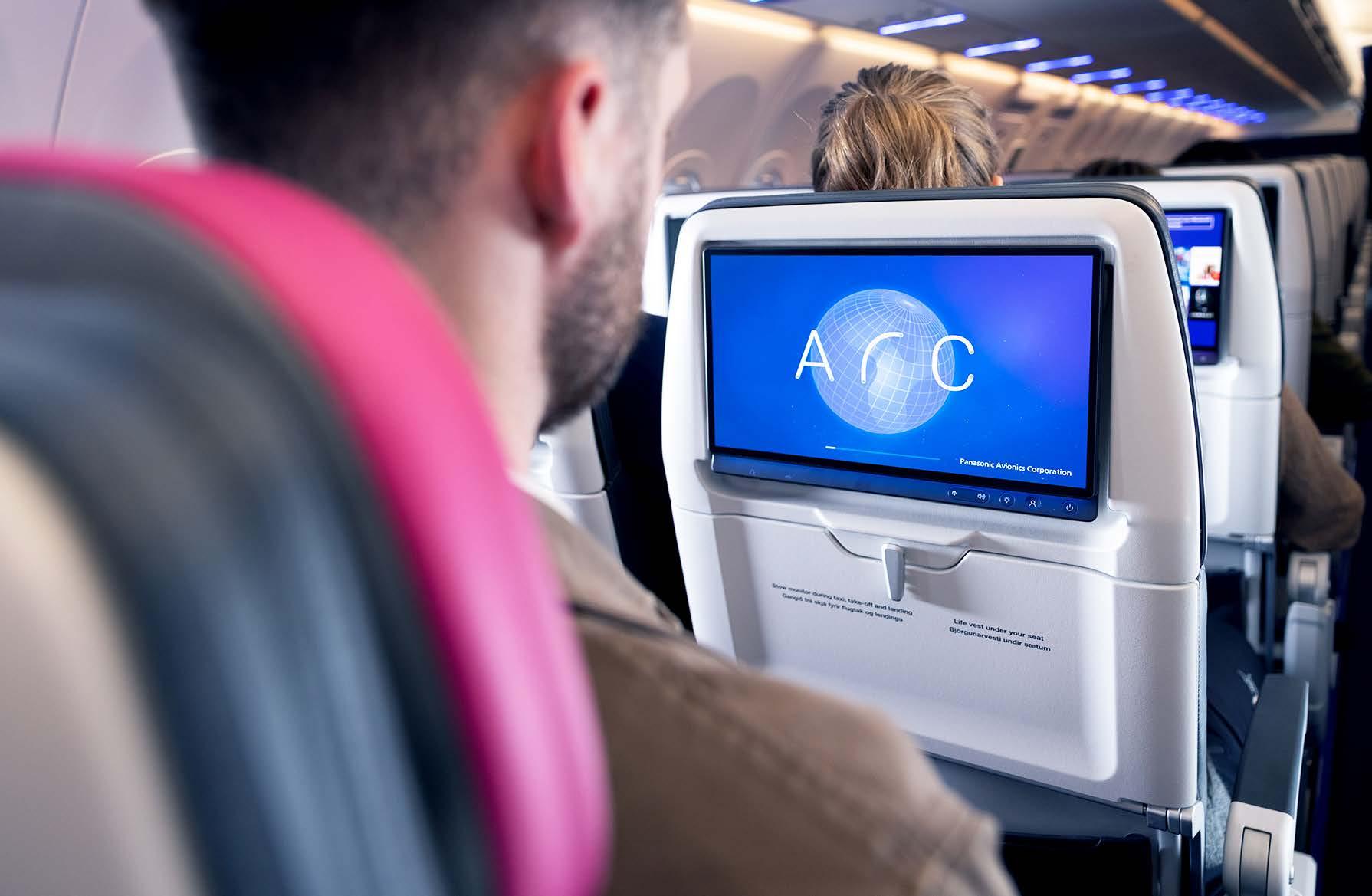
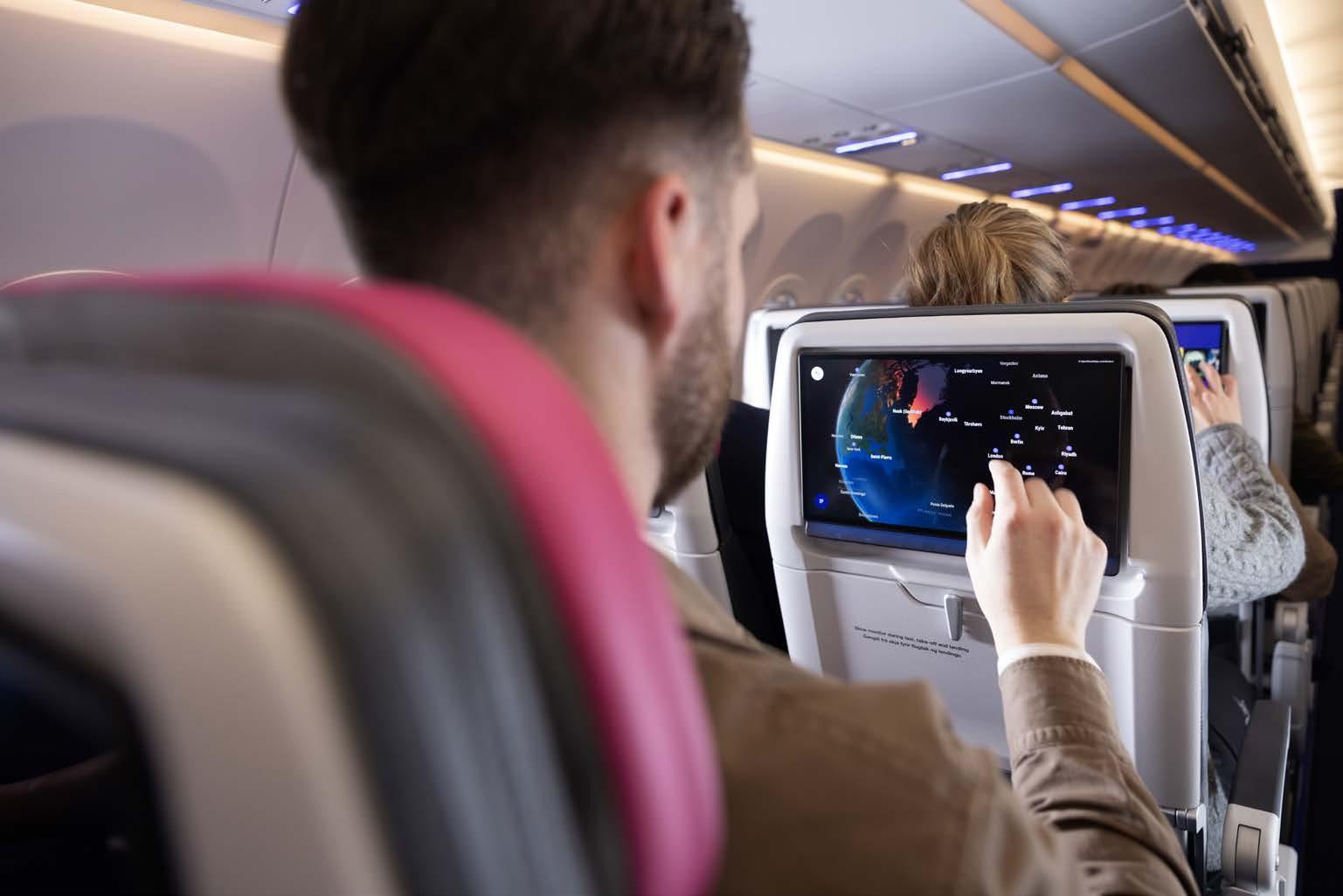
In addition to Astrova, Emirates has also selected Panasonic Avionics’ 3D moving map, Arc™
support across the Middle East, reinforcing its position in the region.
In addition to Astrova, Emirates has also selected Panasonic Avionics’ 3D moving map, Arc™, while flydubai has adopted Converix™, Panasonic’s new open and neutral application-hosting platform.
As Masson explains, Converix provides a complete, aircraft-wide solution for non-safety-critical services, supporting IFEC integration, cabin and galley operations, lighting and other in-cabin applications.
“We see Converix as a gamechanger in the industry and evolving the market for the next decade through its core elements, including the AI Virtual Assistant and Developer Platform,” he says. “These tools will allow airlines to maximize digital engagement, drive loyalty economics and improve operational efficiencies.”
Masson also highlights that Converix makes installation and long-term upgrades far simpler for airlines and supports smoother integration between IFE, connectivity and data services.
“This positions flydubai to deliver a more seamless experience for passengers while also giving airlines smarter tools and better operational data. Ultimately, it lays an important foundation for the next generation of connected cabins, where systems work together more intuitively across the entire aircraft,” he notes.
Despite targeting different markets, Masson says both Emirates and flydubai made it clear to Panasonic that passenger expectations are becoming more demanding with higher levels of expectation for top quality inflight engagement.“Airlines today, whether they are full-service or more costfocused, are under pressure to reduce total cost of ownership while keeping up with fast-moving passenger technology expectations,” he explains.
In the past, airlines had to choose cabin technology years before an aircraft entered service, often leaving IFE systems outdated from day one. Astrova changes that by letting airlines upgrade individual components over time, ensuring passengers enjoy a fresh, up-to-date experience while
protecting long-term investment. The flexibility is especially valuable for mixed fleets and different operating models. Full-service carriers can deploy premium configurations, while low-cost or hybrid airlines can choose a more streamlined setup and still benefit from the same underlying platform. The system is also designed to be retrofitted easily and cost-effectively, which reduces downtime and operational disruption.
In conversation with PAX Tech, Masson says that the airline programs and expansion in the Middle East are both key milestones in Panasonic’s long-term vision for the future of IFEC. At its core, that vision is about transforming IFEC from a standalone cabin system into a fully integrated digital platform that airlines can use to enhance passenger experience, improve operations and unlock new sources of value throughout the life of the aircraft.
The rapid adoption of Astrova underscores a broader industry shift, with airlines moving away from static, one-time technology investments. Masson notes that carriers now “want flexible, scalable platforms that can evolve alongside changing passenger expectations, business models, tailored to their own digital strategies.”
Growth in the Middle East highlights this trend. “The region’s airlines are among the most innovative in the world when it comes to cabin experience,” he says, pointing to the adoption of Astrova, connectivity solutions and platforms like Converix as evidence of a strong appetite for integrated, data-driven IFEC ecosystems.
Combined with Panasonic Avionics’ global connectivity capabilities and full lifecycle support, Masson emphasizes that the company is positioned to serve airlines not just today, but throughout the entire life of the fleet.
Panasonic closed out 2025 with a significant milestone as its Astrova IFE solution achieved 100 individual airline programs across 30 airlines
Legacy IFE and the untapped potential
In this guest column, Juraj Siska, CEO at IdeaNova Technologies, examines how with the right expertise, airlines can unlock modern performance from legacy systems—without costly replacements
As airlines pursue nextgeneration connectivity and AI-driven personalization, a quieter shift is reshaping the cabin: the reinvention of legacy inflight entertainment. These older systems still anchor the passenger experience, yet they were not built for today’s digital expectations. Replacing them is expensive and lengthy. Letting them stagnate is not an option. Modernizing them is the smarter path.
Across the industry, carriers are taking different approaches. Some are removing seatback screens on select fleets and leaning into personal device streaming with free Wi-Fi. Others, including Delta Air Lines and United Airlines, are doubling down on seatback IFE because of its proven impact on satisfaction and loyalty. But no matter the strategy, every airline faces the same challenge: how to extract more value from hardware already flying.
This is where software driven innovation is shifting the equation. IdeaNova has spent nearly two decades showing that legacy IFE can deliver far more than its original design intended. Modern interfaces can run on decades old displays. Contemporary DRM and content workflows can operate on older processors. Even modest hardware—devices with Raspberry Pi level capability—can support fast, responsive experiences when engineered with precision.
Delta Air Lines’ recent modernization arc is a clear example. Working with specialists including IdeaNova, Delta elevated the performance of aging seatback systems—some as old as Panasonic’s EcoV1—without a costly hardware refresh. The result: faster interfaces, new features, and a more personalized experience delivered through engineering ingenuity, not new screens. As Delta’s Glenn Latta noted, the work
Juraj Siska, CEO, IdeaNova Technologies
achieved “what no one thought could be done,” proving modernization is a long-term strategy, not a temporary fix.
The next question: can older hardware embrace the industry’s biggest shift: AI. The world—including our industry—is AI focused, yet most aviation systems were never built to run AI locally. Even new hardware cannot deliver AI without connectivity: no connection, no personalization. Until now! Inplay AI changes the equation. Now, cabin ready AI runs directly on existing servers—fully offline, no hardware upgrades—enabling personalization at scale without connectivity.
The takeaway is simple. Legacy IFE is not a burden—it is untapped potential. With the right engineering and the right approach, airlines can transform yesterday’s hardware into tomorrow’s digital platform, efficiently—and at scale.
IdeaNova believes legacy IFE can deliver far more than its original design ever envisioned
Put your passenger experience to the test. Invite a PAX reporter onboard and be featured in our PAX Perspective Verified Airline Review — where real journeys meet expert evaluation.
Our experienced editorial team assesses every detail, from food and amenities to comfort, entertainment and service, offering airlines the opportunity to earn the PAX Verified Award, declared by PAX Publisher Aijaz Khan.
Think your onboard experience stands out? Ready to fly us away?
Contact aijaz@globalmarketingcom.ca to learn more.
F/LIST has more than doubled its floor space with a new 900-square-meter facility
Location is key
F/LIST’s Michael Müller talks cabin interiors growth in the Middle East following Dubai facility expansion by ROBYNNE TRUEMAN
In December 2025, Austrianbased cabin interiors supplier F/LIST announced a significant expansion to its footprint in Dubai. In response to increased demand for the company’s aftermarket services and customized cabin materials from Middle East-based aviation customers, F/LIST has more than doubled its floor space with a new 900-square-meter facility, located in the Dubai South Freezone Mohammed Bin Rashid Aerospace Hub (MBRAH) at Al Maktoum International Airport (DWC). Michael Müller, F/LIST’s Managing Director of Aviation, tells PAX Tech that MBRAH has established itself as a key location for the industry in the region.
“We believe maintaining proximity to our customers streamlines our ability to deliver our services efficiently,” he says of the decision to expand there. “Its central position, excellent connectivity and strong infrastructure provide the ideal base for F/LIST to support customers across the region.”
Müller adds that the company
has developed a strong client base in the Middle East since opening more than a decade ago, with the new facility positioning F/ LIST at a strategic “crossroads.”
“It perfectly serves the needs of the regional market, as well as customers flying in Africa, India and the Asian region. The UAE is well-connected to East and West, which ensures our customers can optimize our location,” he explains.
Müller reveals that being physically close to F/LIST customers offers benefits, key of which is efficiency.
“If our customer’s aircraft is based in the region, it is much more efficient to have the aftermarket work conducted in Dubai rather than having to travel a long distance to have the work done to the same standards. We can respond more quickly and resolve issues more swiftly.”
He says there are additional benefits to customer proximity, such as fostering relationships, ensuring reliability and gaining insight into regional demand.
“By having a Middle Eastern
footprint, we could see firsthand that more capacity was needed and that now was the right time to expand the facility to meet existing and future demand,” Müller adds.
With a purpose-designed showroom located in the Dubai facility, F/LIST customers can review extensive displays of products, customization choices and design inspiration on-site, allowing them to remain up to date on the full range of cabin interior options.
“This is key, as customers will upgrade aircraft, acquire new aircraft or add aircraft to their existing fleet. If we can show them what is possible, it helps us engage with them for future business,” he explains.
Michael Müller, Managing Director of Aviation, F/LIST
Müller reveals that being physically close to F/LIST customers offers benefits, key of which is efficiency
READERSHIP AWARDS 2026
RETURN TO
HAMBURG!
From onboard caterers to connectivity and all the latest in aircraft cabins, the PAX Readership Awards will once again recognize those in the industry that go above and beyond.
The award winners will be announced on Wednesday April 15, 2026 at the Radisson Blu Hotel in Hamburg.
Award winners will be featured in our May 2026 special post-Hamburg Awards digital issue.
LEADING THE CHARGE
A look at the role of in-seat power in supporting increasingly connected cabins, from PED usage to IFE and passenger connectivity ecosystems
by ROBYNNE TRUEMAN
The rapid expansion of airline fleets across the Middle East has resulted in a significant demand for advanced passenger amenities, with in-seat power systems becoming a top priority for airlines in the region. As inflight entertainment and connectivity (IFEC) increasingly define the competitive advantage among airlines, Middle Eastern carriers are leading the charge for innovation in in-seat power technology.
“As these carriers strive to position themselves as global leaders in aviation, passenger experience has become central to their strategy. Consequently, in-seat power has
transitioned from a luxury feature to an essential offering, driven by the ever-growing reliance on personal electronic devices (PEDs) carried and used by passengers throughout their journeys,” Dennis Markert, Director of Business Development, Astronics AES, tells PAX Tech
Comfort and convenience for all cabins
With fleets that prioritize long- and ultra-long-haul operations, airlines in the Middle East are uniquely focused on scalable solutions that meet the needs of passengers across multiple cabin classes.
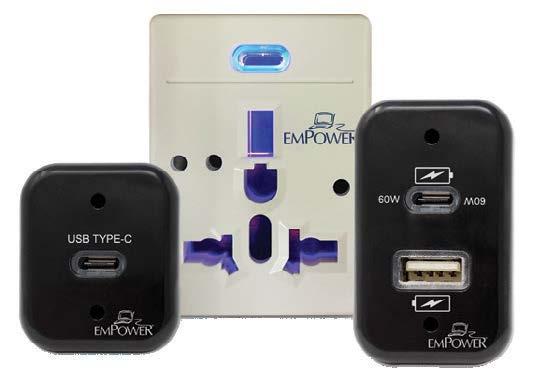
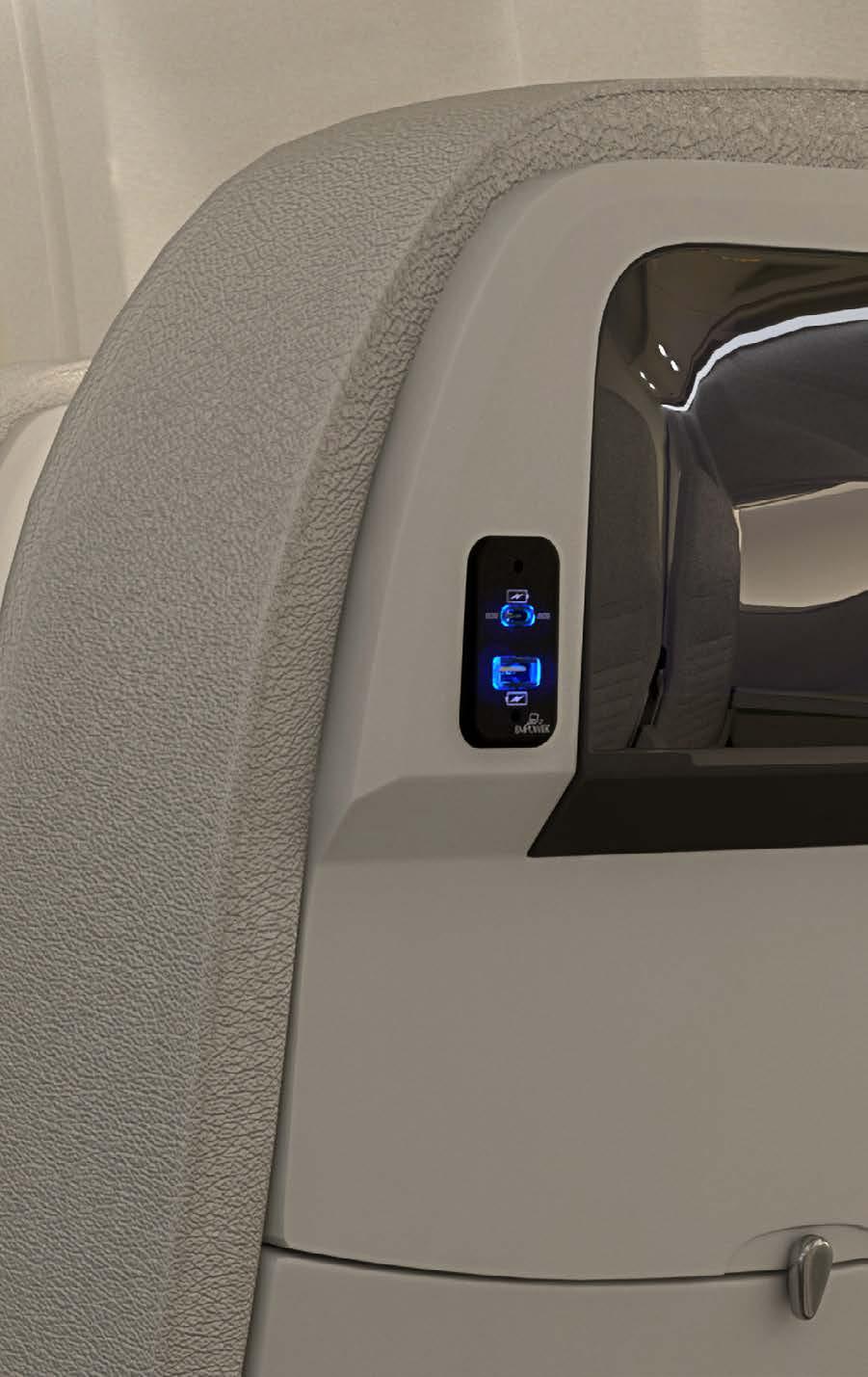
Markert points to Astronics’ EmPower® in-seat power systems as being precisely designed for this challenge, ensuring uninterrupted PED usage in all cabin configurations—
from premium suites to highdensity Economy cabins.
“Unlike some global carriers, where in-seat power may be restricted to select cabin tiers, many Middle Eastern carriers distinguish themselves by deploying universally accessible, high-power USB ports and 110VAC outlets across all seating classes. This widespread availability elevates the passenger experience and aligns with the region’s reputation for prioritizing comfort, convenience and connectivity,” he explains.
The demand for in-seat power is amplified by the growing prevalence of PEDs on long-haul flights, where passengers rely on these devices for entertainment, productivity and connectivity for extended periods. As IFE and connectivity are increasingly part of a complete IFEC ecosystem,
Dennis Markert, Director Business Development, Astronics AES
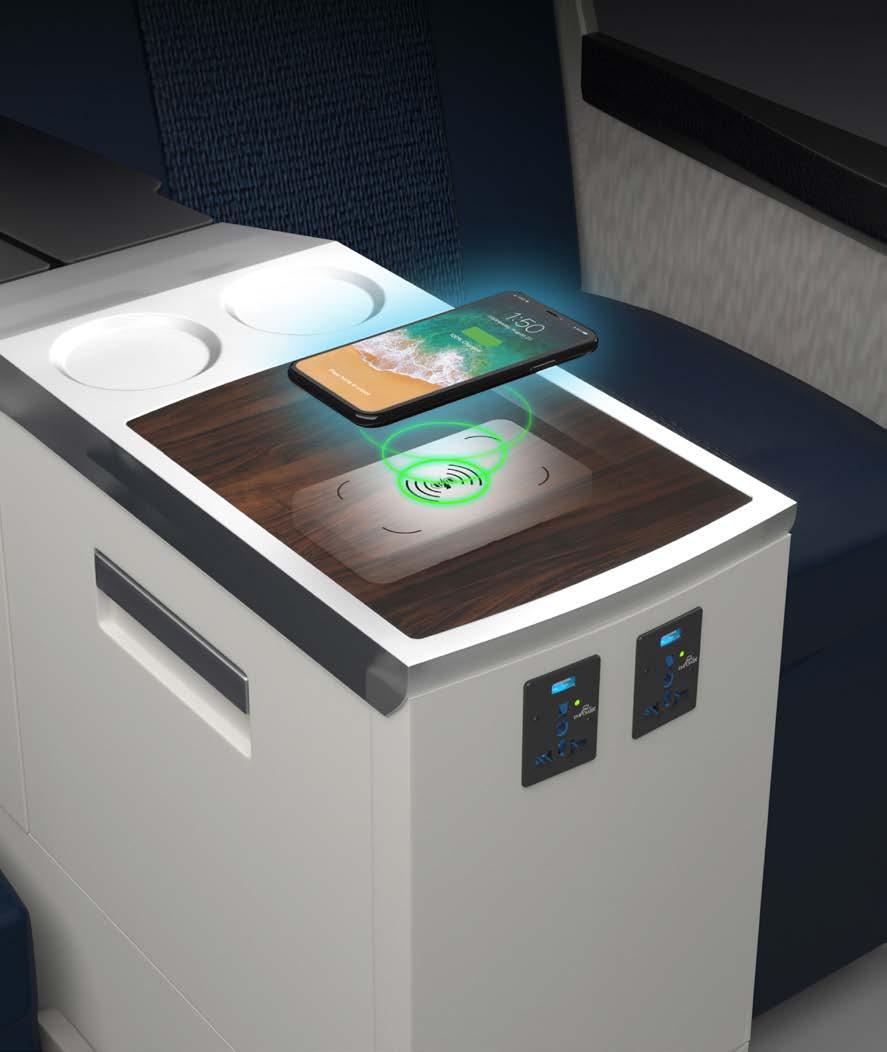
Astronics’ EmPower® in-seat power systems are designed to ensure uninterrupted PED usage in all cabin configurations
Astronics’ in-seat power solutions are enabling airlines to support higher data throughput, streaming services and future connectivity requirements.
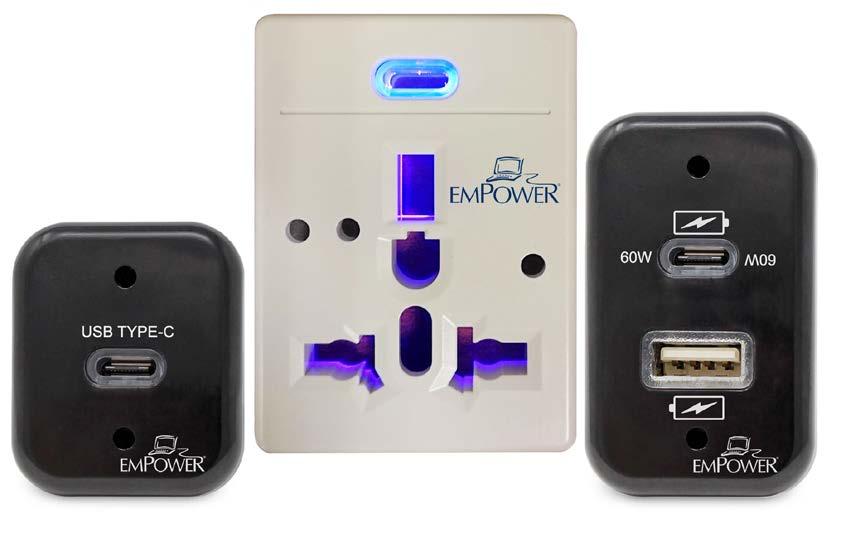
“To support sustained device usage for streaming, browsing, gaming and productivity, Astronics integrates high-power USB-C outlets (up to 60 watts) and 110VAC outlets, ensuring reliable charging throughout the flight,” Markert explains.
He says Middle Eastern airlines also stand out for their investments in next-generation, fuel-efficient aircraft, where lightweight, energyefficient systems are essential.
Markert reveals that Astronics’
UltraLite Generation 2 (ULG2) system, which offers up to a full 60 watts of USB Type-C power to every passenger, has become the system of choice for these advanced fleets.
“The ULG2 system’s efficiency and versatility ensure airlines can deliver exceptional service while meeting sustainability and fuel savings goals.”
Markert notes that while fullservice carriers dominate the regional landscape, low-cost airlines in the Middle East are also adopting in-seat power.
“This trend challenges global norms, where budget carriers often forgo such amenities, signaling that passenger expectations in the region are evolving across all airline business models,” he says.
Astronics supports these efforts through its range of scalable solutions, which align with the region’s vision for connected air travel.
“In this dynamic and fast-evolving market, the growing demand for PED power onboard represents an exciting opportunity for Astronics to continue helping airlines shape the future of passenger travel,” Markert says.
Scalable, sustainable, powerful
Astronics collaborates with leading aircraft OEMs, IFE providers, seat suppliers and airlines to ensure its power systems align with onboard connectivity infrastructure for easy integration via line-fit or retrofit.
Markert acknowledges that retrofitting in-seat power systems into aircraft cabins can be complex, requiring solutions that address space limitations, compatibility
with existing seating and stringent regulatory standards.
“Airlines also prioritize rapid installation to minimize downtime and return aircraft to revenuegenerating service as quickly as possible,” he says. “Our engineering team collaborates closely with airlines to tailor layouts, ensure adherence to aviation standards and preserve cabin aesthetics. We deliver fast installation solutions, comprehensive training and ongoing technical support to reduce operational disruptions.”
Designed for scalability and efficiency, Astronics’ systems reduce aircraft weight and power demands, contributing to sustainable operations. Improved power supply efficiency translates to reduced emissions and lower operational costs while maintaining optimal passenger experience.
In terms of future-proofing aircraft cabins and designing for longevity, Markert points to Astronics’ ease of maintenance, with in-seat power outlets designed for rapid replacement, allowing maintenance crews to swap out units in less than five minutes, to minimize aircraft downtime. He also highlights Astronics’ Wireless Charging Module (WCM), designed for long-term durability and eliminating moving parts or physical connectors, which are common failure points in traditional wired systems.
“In-seat power is now a cornerstone of the connected passenger experience, and Astronics remains committed to advancing its innovative and reliable solutions to meet the future demands of evolving IFEC ecosystems,” Markert concludes.
Astronics EmPower Type-C, Universal and Type-A in-seat power outlets
ATURNING INTO INTENTION
design trends
Mankiewicz Head of Design Nina Karsten talks design inspiration, sustainability and trend longevity
by ROBYNNE TRUEMAN
s airlines pursue the latest design trends for aircraft interiors, global paint manufacturer Mankiewicz is making it clear that an impactful design trend should not be short-lived–on the contrary, it is based in reality and has the potential for longevity.
The supplier practices this by responding to ever-evolving political, social and technological changes in the world by announcing “Colors of the Year” annually. For 2026, the hues are Tree House, Ice Water and Sour.
A reflection of global dynamics
As Nina Karsten, Head of Design, Mankiewicz, tells PAX Tech, design trends are no coincidence. They are a direct reflection of the world around us.
“With several years of experience in trends, you learn how colors change over time and how they are
classified socially,” she explains.
Karsten says the Mankiewicz team looks at current issues, such as political or social changes with global impact or upcoming events, for cues. Then, they compare those findings with reality.
“What colors did we see at trade fairs? How were the colors combined, what atmosphere did they create and what textures appeared in the context of these colors? We discuss all these questions together as a team and then jointly develop the concept for the Colors of the Year,” she reveals.
With the 2026 Colors of the Year, resilience continues to be a key theme. In this sense, Tree House, Ice Water and Sour are concerned with consistency, clarity and joy.
As for how these color themes reflect current social dynamics, Karsten says, “The world has looked much more peaceful in the past, prosperity seemed less threatened and climate change was not an issue. Now there
is a lot at stake and this is noticeable in many places around the world.”
She notes that this is not the first time resilience is being mentioned in this context; the word has been appearing in trend research for years.
“But what does resilience mean in real life? Tree House, Ice Water and Sour tackle this question and highlight the sometimes positive sides of change and reorientation,” Karsten explains.
Translating trends to cabin interiors
As Mankiewicz brings these color trends to the aircraft cabin, Karsten emphasizes that incorporating Colors of the Year can be part of a timeless cabin interior design, since color trends in aviation,
Nina Karsten, Head of Design, Mankiewicz
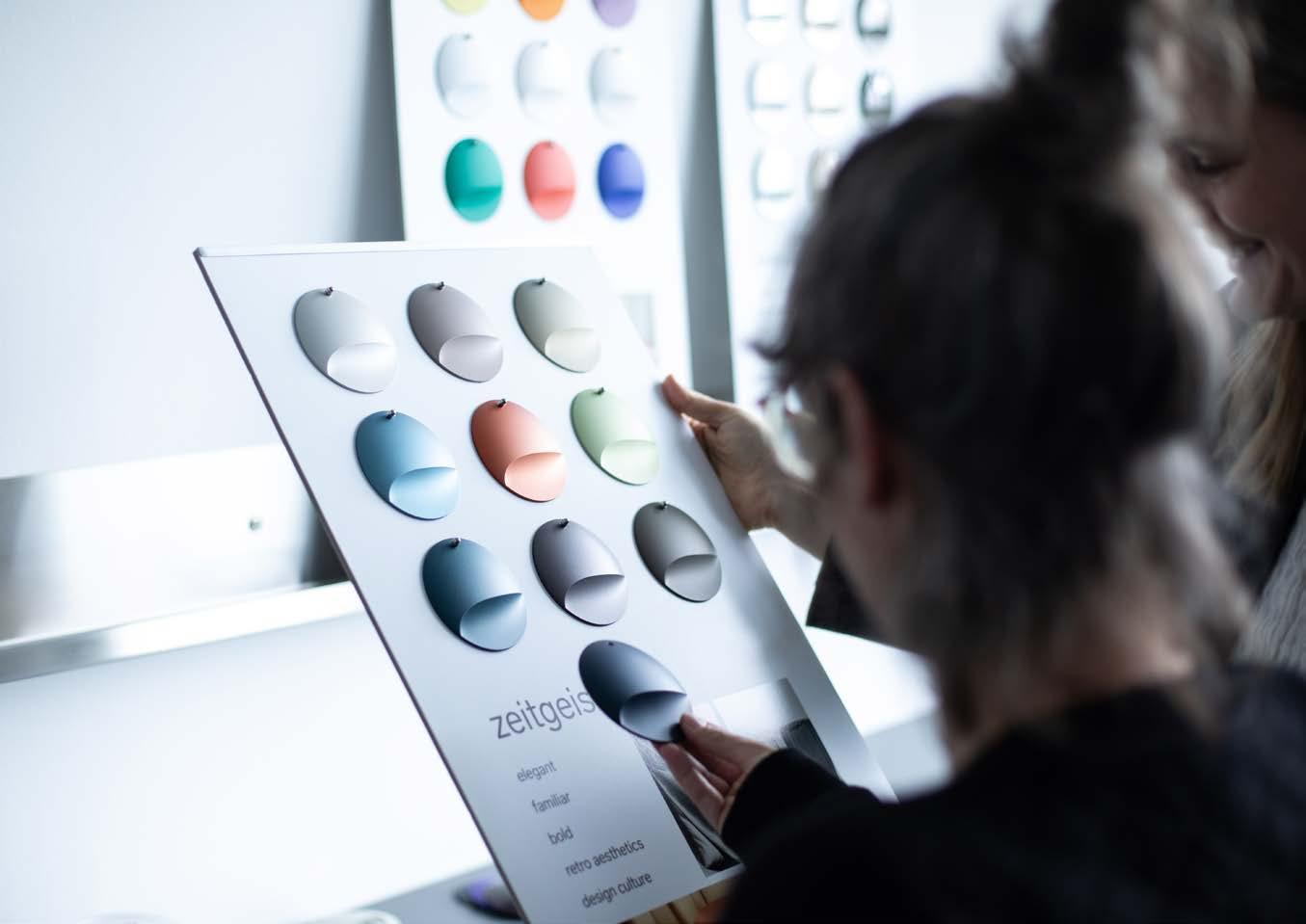
The 2026 Colors of the Year are Tree House, Ice Water and Sour
Mankiewicz responds to ever-evolving political, social and technological changes in the world by announcing “Colors of the Year” annually
An impactful design trend is based in reality and has the potential for longevity
unlike the fashion world, generally do not have an expiration date.
“Surfaces painted with Mankiewicz paints are meant to last for a long period of time. That is also one of the sustainable advantages of paint: painted surfaces look clean and fresh for years. Our team is therefore always looking for colors that are clearly on trend but also work very well over a long period of time,” she explains.
The timeliness comes from the classic yet contemporary bluish silver and subtle brown tones of this year’s Tree House and Ice Water. Karsten calls Sour more “unconventional,” noting it is the kind of accent that can refresh and enhance a design.
“This year’s colors are very well suited to cabin interiors and can be translated by airlines and aircraft operators to freely individualize BFE parts and components according to their preferences and branding,” she says.
Designing for longevity
With demand for sustainable products comes an expectation that a surface will appeal to many people over a long period. According to Karsten, sustainability can also bring new materials into the conversation, influencing the design of other colors and surfaces.
“Apart from the topic of sustainability, I expect color development to move toward interesting and finely tuned nuances,” she says of her predictions for the next five years. “I expect more striking colors to continue to be used as accent colors in the future.”
To align with emerging passenger expectations for emotional comfort
and a sensory experience inflight, she recommends confidenceinspiring, subtle materials and calm, durable colors that people enjoy spending time with. Karsten says design teams and airline decision makers can look to the automotive sector as a source of inspiration.
“In this field too, more and more emphasis is being placed on quality of stay alongside high standards of function and comfort. I can well imagine that there are many clever thoughts and ideas to be found here that can also be transferred to larger format means of transport with a view to future design,” she concludes.
Connectivity and content converge at
APEX TECH
A look at industry players’ key takeaways and important themes emerging from APEX TECH 2026 in Los Angeles
by ROBYNNE TRUEMAN
Industry suppliers, airlines, APEX board members and media converged in Los Angeles last month for APEX TECH 2026 At the Sheraton Gateway Hotel Los Angeles, attendees enjoyed two days of insightful discussion panels and workshops, covering topics from the growing prevalence of LEO connectivity to licensing rights for inflight content.
Jonas von Kruechten, member of the APEX Board of Directors, set the tone for the event in his welcome address saying, “Technologies are changing and we are all here to have a genuine exchange. APEX TECH is not meant to be a sales show.”
This exchange of ideas was evident in the conversations both around the tables during the event’s workshops and on the discussion panels.
APEX TECH panelist Glenn Gonzales, Head of Business Development and Partnerships, Siden, highlighted his key connectivity takeaway from the event on LinkedIn in the days following the conference.
“Adding bandwidth does not automatically improve the passenger
experience,” Gonzales emphasized. “As pricing models flatten, airlines must shift focus from pure capacity to how data is cached, prioritized and delivered onboard. This shift is changing how inflight connectivity is evaluated, from a procurement decision to a performance and control problem. We are seeing this inflection point show up in more airline conversations every week.”
Attendees and speakers alike were given plenty of food for thought, with Simon Cuthbert, VP, Licensing Programming & Distribution, Anuvu, revealing one of the most useful takeaways from the week’s discussions.
“Public performance is defined by the location, not the device, so both seatback IFE and wireless IFE (yes, even on PEDs) are public performance,” he said, pointing to the question of licensing rights that cropped up in multiple discussions, including the panel “From Studio to Screen: Managing Rights within the Future Content Mix.”
Dimitrios Tsirangelos, Vice President Business Development IFE Technology & Innovation, Spafax,
echoed this key talking point about the legal aspects of consuming digital content “in a public area” during an interview with PAX Tech
“There is no such thing as ‘bring your own content,’ because your streaming platform subscription, if you read the terms and conditions, allows you to watch this content at home and not in the cabin of an aircraft,” Tsirangelos explains, pointing to the APEX STREAM and APEX FlightTrack initiatives that are evaluating these kinds of solutions.
He adds that, whatever happens, the most important thing is to protect the rights of the content owners.
Overall, APEX TECH 2026 reinforced the industry’s shared goal of solving real-world operational, legal and passenger experience challenges. From rethinking how connectivity performance is measured to addressing the complexity of content rights in an increasingly digital cabin, the event underscored the value of open dialogue and cross-industry collaboration.
The panel “Edge Caching and Streaming – Focus on Supply Chain Technology, Standards, Market Dynamics, and Technical Implications of Different Business Models” at APEX TECH 2026 in Los Angeles, CA, USA, was sponsored by Safran
APEX TECH attendees collaborate in the workshop “Inflight Connectivity Disruption - From GEO to LEO and the Hybrid Horizon Group”
WHERE CABIN CONCEPTS TAKE OFF
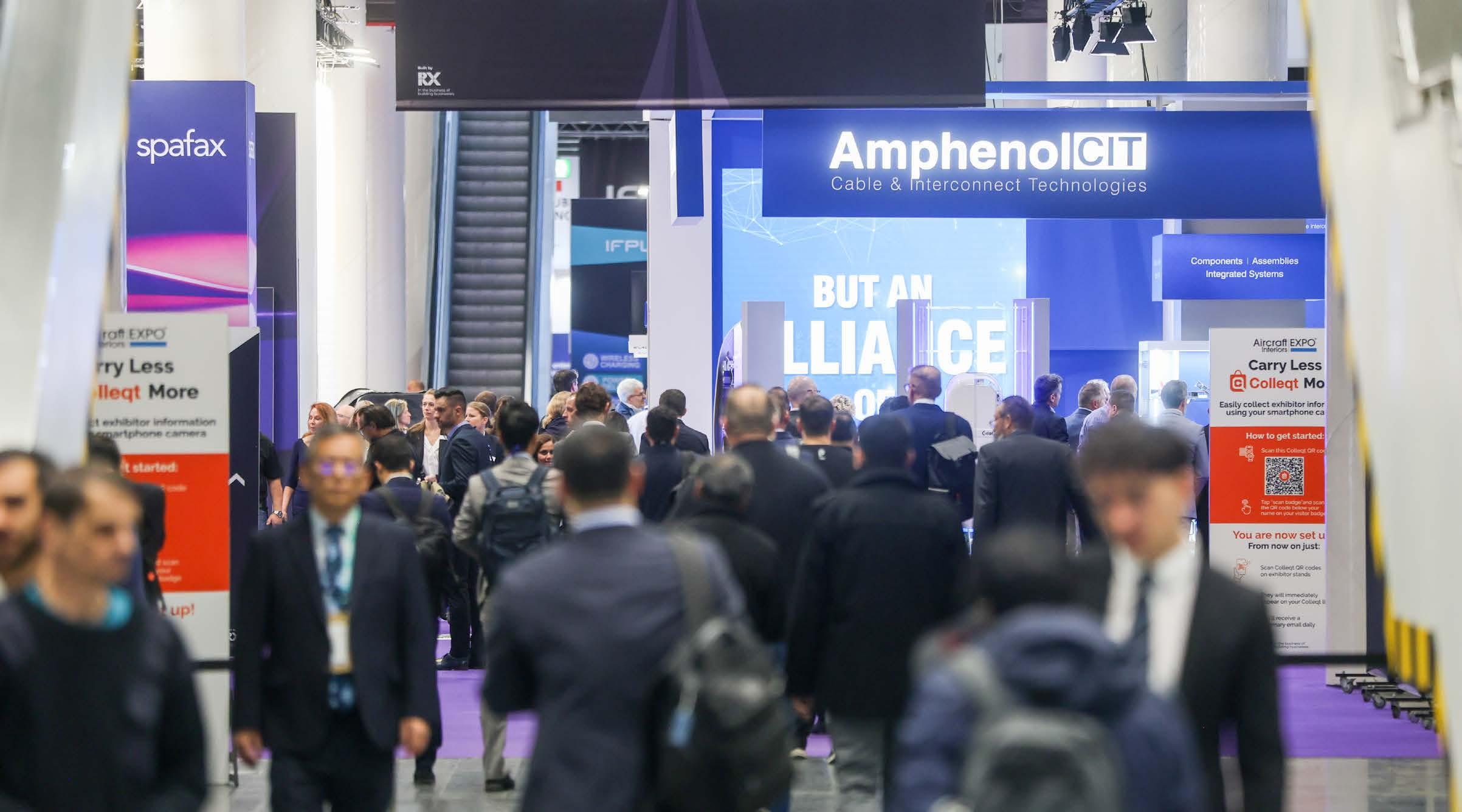
450+ exhibitors. 190+ airlines. 13,000+ innovators. Three days. One essential destination
RECLAIMING COMFORT, RETHINKING CAPACITY
Following AIME 2026, Unum’s Alan McInnes highlights industry demand for greater seating capacity and the continued focus on passenger comfort
by ROBYNNE TRUEMAN
AIME 2026, co-located with MRO Middle East, returned to the Dubai World Trade Centre from February 4 to 5. The largest event of its kind in the MENA region, AIME showcases the latest in cabin design, passenger comfort and inflight entertainment, while MRO Middle East brings together leaders in aircraft maintenance, repair and operations.
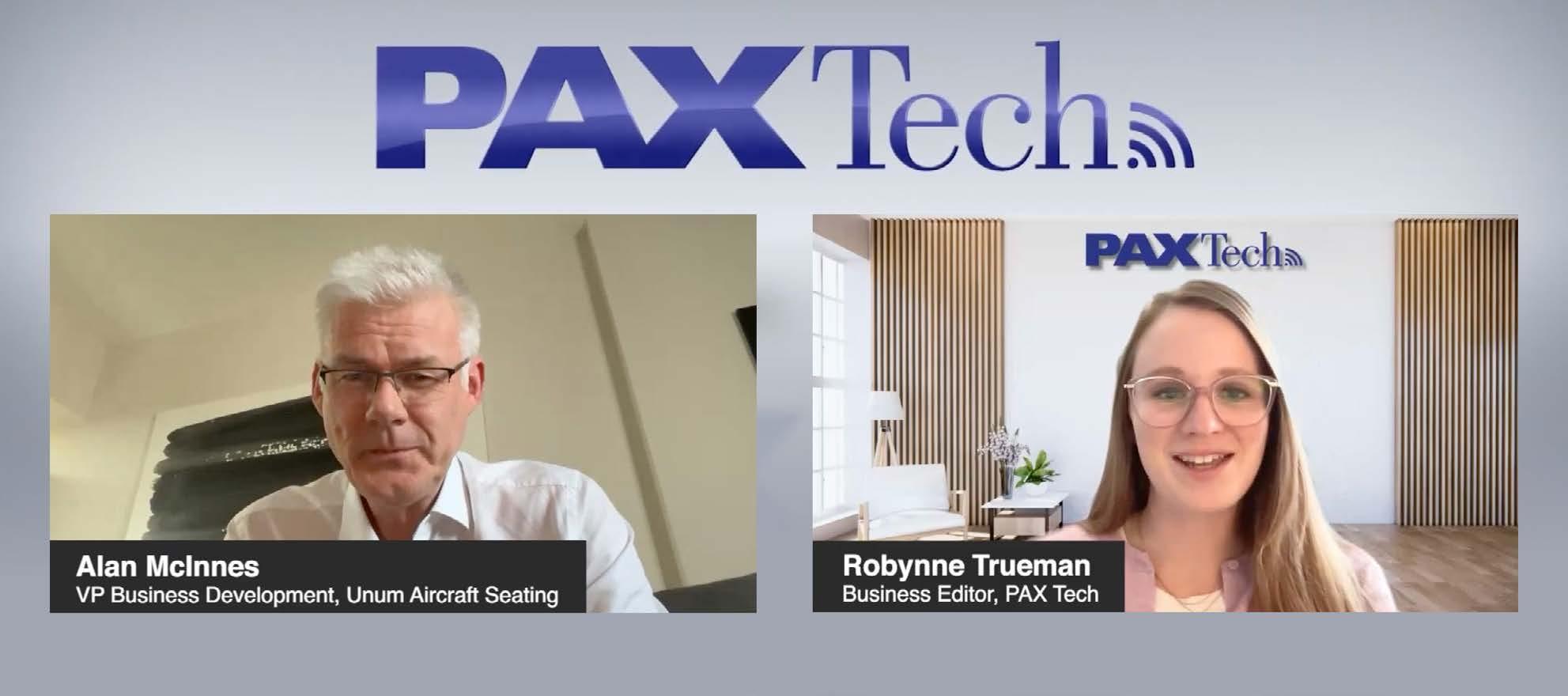
During the event, media partner PAX Tech spoke with attendee Alan McInnes, VP Business Development at Unum Aircraft Seating, to get live updates. He described a noticeably larger event and a clear shift in airline priorities. According to McInnes, AIME
was approximately 25 to 30 percent bigger than last year, with a strong focus on retrofit programs and long-term fleet strategy. However, he reported that the challenge in the Business Class cabin, which Unum primarily serves, is capacity.
“While there is an appetite [from airlines] to do more retrofit programs driven by fleet strategies, capacity in the marketplace is very, very limited,” he said. “Airlines put requirements out into the marketplace, and unless you put large numbers of seats on the table, a lot of vendors in the sector are not bidding.”
McInnes noted that the challenge is permeating beyond the Business cabin and stressed the importance of aligning airline expectations with the practical realities facing suppliers, particularly when it comes to delivery timelines.
Building a brand
Beyond capacity and supply constraints, McInnes observed a broader shift in how airlines are positioning Business Class products. Rather than offering a generic experience, carriers in the Middle
East and beyond are increasingly building brand identity around a specific seat and cabin concept.
He pointed to innovations on display at AIME 2026 that showcased advances in cabin ambience, including mood lighting solutions for Business Class inspired by the luxury hotel sector. While these elements play an important role in differentiation, McInnes emphasized they cannot come at the expense of the fundamentals.
“You can have the most ambient environment in the world, but you have to focus on the comfort. There is a realization that simply adding more features to seats makes them more complex, more difficult to maintain and heavier. What [Unum] would like to see is airlines put comfort at the core and deliver that comfort message to their passengers,” he says.
While McInnes acknowledged that AIME/MRO ME 2026 leaned more heavily toward MRO than interiors, he said the event provided valuable opportunities for informal discussions with airlines and lessors—setting the stage for more targeted aircraft interiors conversations to come this spring.
Alan McInnes, VP Business Development, Unum Aircraft Seating, provides insight from the expo floor at AIME 2026 in Dubai
AIX 2026 marks 25 years of cabin innovation
As the industry prepares for the 25th edition of AIX, Event Director Archana Dharni looks back on its success and ahead to trends shaping the future by ROBYNNE TRUEMAN
The Aircraft Interiors Expo (AIX) returns to Hamburg for its milestone 25th edition in April. Looking back on how the event has evolved since its first edition in 2000, Event Director Archana Dharni tells PAX Tech it is the pace of change she finds most striking.
“When AIX launched in Cannes in 2000, cabin innovation moved in decade-long cycles. Today, we see refresh cycles of just three to five years, with technology evolving almost annually,” she explains.
Dharni says the strategic importance of the cabin has also transformed.
“In 2000, interiors were largely seen as a cost center. Today, cabin experience is a core competitive differentiator. Airlines are winning or losing customers based on comfort, connectivity and sustainability,” she notes. “The 25th edition is a milestone moment for AIX and the wider cabin interiors community. It is a celebration of how far the industry has come, from
traditional manufacturing to an era defined by digitalization, sustainability and cross-sector collaborations.”
Trends shaping themes
Dharni highlights three major trends shaping the 2026 event: sustainability, digitalization and the continued rise of business aviation.
“Sustainability has moved from a ‘nice to have’ to a businesscritical priority,” she says.
With airlines under pressure to meet net-zero goals by 2050, she emphasizes the impact this is having on procurement decisions.
“Lightweight materials, circular design and transparent supply chains are now top of mind. Hamburg Aviation’s FAIRcraft project, for example, is pioneering fully circular cabin prototypes designed for disassembly and reuse,” Dharni says.
In terms of digitalization, she notes that connectivity is changing how cabins are built and operated.
“It is no longer about Wi-Fi access points but designing integrated digital ecosystems where IFE, cabin management systems and passenger devices interact seamlessly. Airlines increasingly want connectivity-as-aservice rather than buying hardware outright,” Dharni explains.
A platform for the future
Co-located with the World Travel Catering and Onboard Services Expo (WTCE), Dharni says 30 percent of visitors attend both shows.
“This synergy allows teams to source everything from seating and IFE to catering and onboard service solutions in one trip,” Dharni says. “The crossover between cabin design and onboard service, particularly in sustainability, creates opportunities for collaboration that would not happen elsewhere. The innovations and partnerships being formed at AIX 2026 will define the next generation of passenger experience, smarter, more sustainable and more connected than ever before.”
Archana Dharni, Event Director, AIX
PAX readers choose excellence
The PAX Readership Awards return to celebrate the achievements of the industry, as voted by loyal readers
by PAX MAGAZINE STAFF
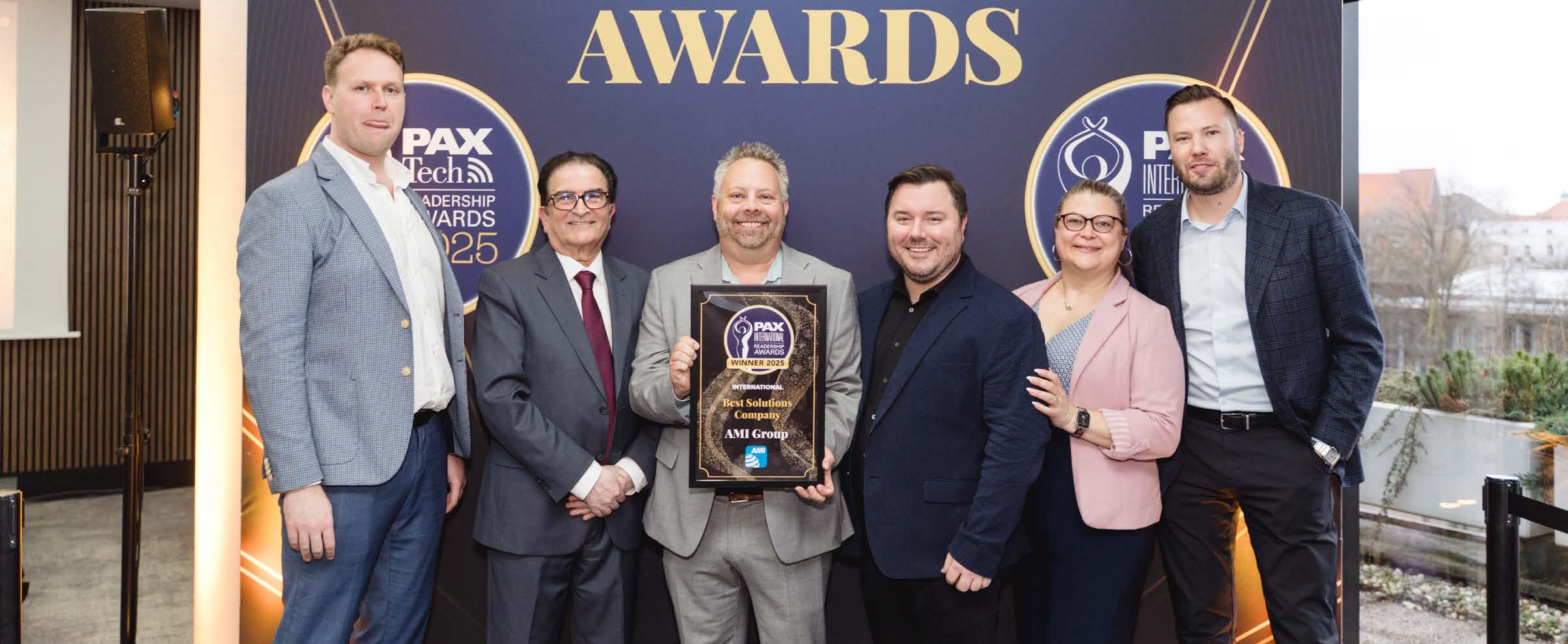
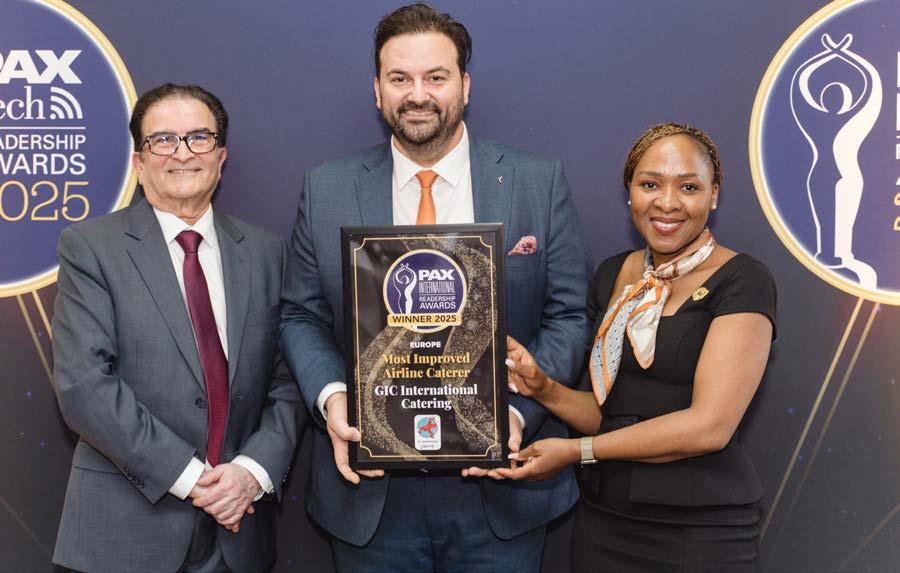
The travel industry’s most prestigious awards ceremony will take place on April 15 at the Radisson Blu Hotel in Hamburg, Germany. The PAX Readership Awards recognize outstanding achievements across the aviation industry, as voted by readers of PAX International and PAX Tech. By invitation only, the ceremony brings together nominees, winners and select industry leaders for an evening of recognition.
“These awards truly reflect the voice of our readership,” says PAX Publisher Aijaz Khan. “With participation from suppliers, buyers, service providers, executives and key decision-makers across the industry, we are thrilled to celebrate the innovation and achievements of this year’s winners at the ceremony in Hamburg.”
This
year’s sponsors and supporters
AMI Group is the 2026 PAX Readership Awards ceremony wine sponsor. AMI is a global food and beverage solutions company for the travel industry.
“Supporting moments that celebrate excellence across our industry is something we truly value and showcasing our globally recognized wine portfolio is the perfect pairing for the 2026 PAX Readership Awards,” says Jeremy Parsons, CEO of AMI Group.
GIC International Catering is the exclusive airline caterer sponsor.
“As a German airline caterer operating in a highly international market, we view our support of the PAX Readership Awards as a meaningful commitment — especially with the event being hosted in Hamburg,” says Göksel Yildirim, Managing Director, GIC International Catering. “Our boutique philosophy is rooted in German standards of quality and precision, combined with international expertise. We believe this approach allows us to contribute to an environment where innovation and craftsmanship are recognised and celebrated.”
Bayart Innovations joins 2026 PAX Readership Awards ceremony as the amenity sponsor. An inflight amenity specialist, the company designs and supplies premium comfort products — from stylish amenity kits and cozy textiles to children’s kits and branded accessories — all crafted to elevate the onboard passenger experience and make every flight more enjoyable. Its support of this year’s ceremony underscores a shared commitment to celebrating innovation and excellence in passenger comfort.
“At Bayart Innovations, passenger comfort is at the heart of everything we design. Supporting the 2026 PAX Readership Awards as amenity sponsor is a natural extension of
our commitment to elevating the onboard experience and celebrating the creativity and innovation that move our industry forward. We are proud to stand alongside partners who share our passion for thoughtful design, quality craftsmanship and delivering meaningful moments of comfort in the cabin,” Bayart’s Jean-Guillaume Pollet tells PAX
For the first time, PAX is welcoming an association supporter: the Airline Catering Association (ACA).
“We are delighted to support the world-renowned PAX Readership Awards this year. We firmly believe that peer and customer recognition of excellence is among the strongest forms of encouragement, and ultimately a powerful driver for the industry to continuously raise standards and innovate. As an international trade association dedicated to representing the interests of its members – inflight caterers worldwide – initiatives such as these fully align with ACA’s mission and objectives,” says Fabio Gamba, Managing Director of ACA.
AMI Group is the 2026 PAX Readership Awards wine sponsor
GIC International Catering is the 2026 PAX Readership Awards airline caterer sponsor
Stay in touch with
IN PRINT
PAX issues are distributed at some of the biggest international onboard services, aircraft interiors and MRO trade shows around the world.
IN YOUR INBOX
Get breaking industry news weekly to your inbox, and copies of our digital issues as soon as they are available.
ONLINE
Our website is updated daily with content from the seating, interiors, IFEC and MRO industries, plus onboard catering and passenger services news.
For advertising queries, please contact jane@pax-intl.com or robynne@pax-intl.com
JOIN PAX PANEL
The industry’s best virtual roundtable discussion series, featuring executives and representatives from the industry’s most iconic companies
Share key insights, learnings and experiences from your sector in PAX Panel: All episodes available online Featured in digital editions of PAX International and PAX Tech
Share on your website and social channels Attract new clients
PREVIOUS SPONSORS INCLUDE: FOR ALL EPISODES CLICK HERE!
ALL PAX PANEL EPISODES ARE AVAILABLE ONLINE SO THAT EVERYONE CAN WATCH AND SHARE
The PAX Panel concept is created and hosted by PAX International and PAX Tech Contact jane@pax-intl.com to become a panelist