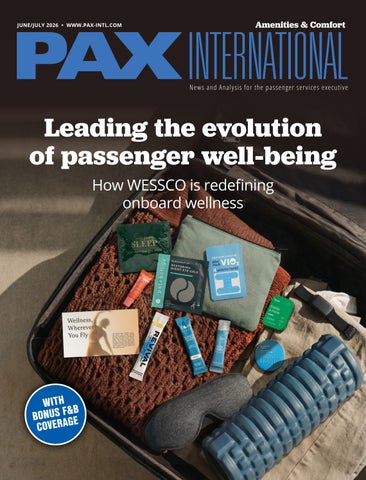
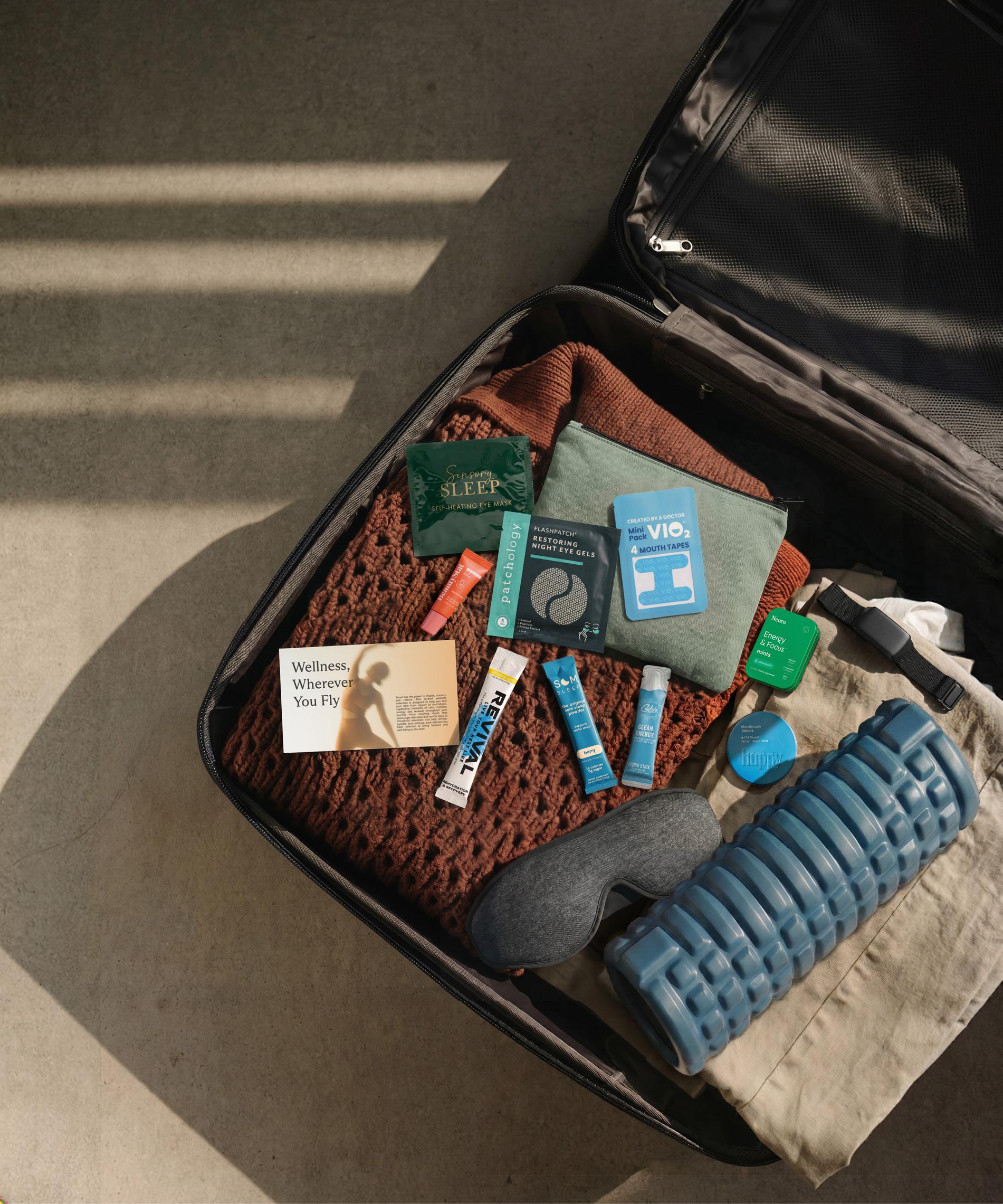
Leading the evolution of passenger well-being
How WESSCO is redefining onboard wellness




Key title: Pax International
Comfort as currency
n an industry where an onboard meal or a moment of real cabin comfort can make a flight memorable for all the right reasons, one thing remains surprisingly hard to pin down: how passengers feel when they land. In this year’s Amenities & Comfort issue, we explore how airlines are increasingly designing for that outcome—well-being that extends well beyond the seat.
The cover story features WESSCO, which approaches amenity design as part of a broader shift from what is in the kit to what it does for the passenger. Recovery, hydration, sleep and stress relief are no longer buzzwords but the blueprint.
“More than 80 percent of premium long-haul travelers are looking for wellnessfocused additions, with an expectation that they meaningfully support the travel experience,” notes Petros Sakkis, CMO at WESSCO, underscoring a shift from product-centric kits to experience-led design thinking.
Airlines are already putting this thinking into practice. JetBlue’s Mint Wanderfuel amenity kits, for example, move beyond a single standardized offering, introducing variations tailored to different travel moments—Awake, Flow, Sleep and Renewal—each designed to support how passengers feel in the air, from hydration to digestion to rest.
Comfort, meanwhile, is expanding into new territory in the cabin. Procurall Solutions’ partnership with Lunya brings sleepwear-inspired design thinking into aviation bedding and textiles, with natural fibers and breathable materials elevating rest as a design priority rather than an afterthought.
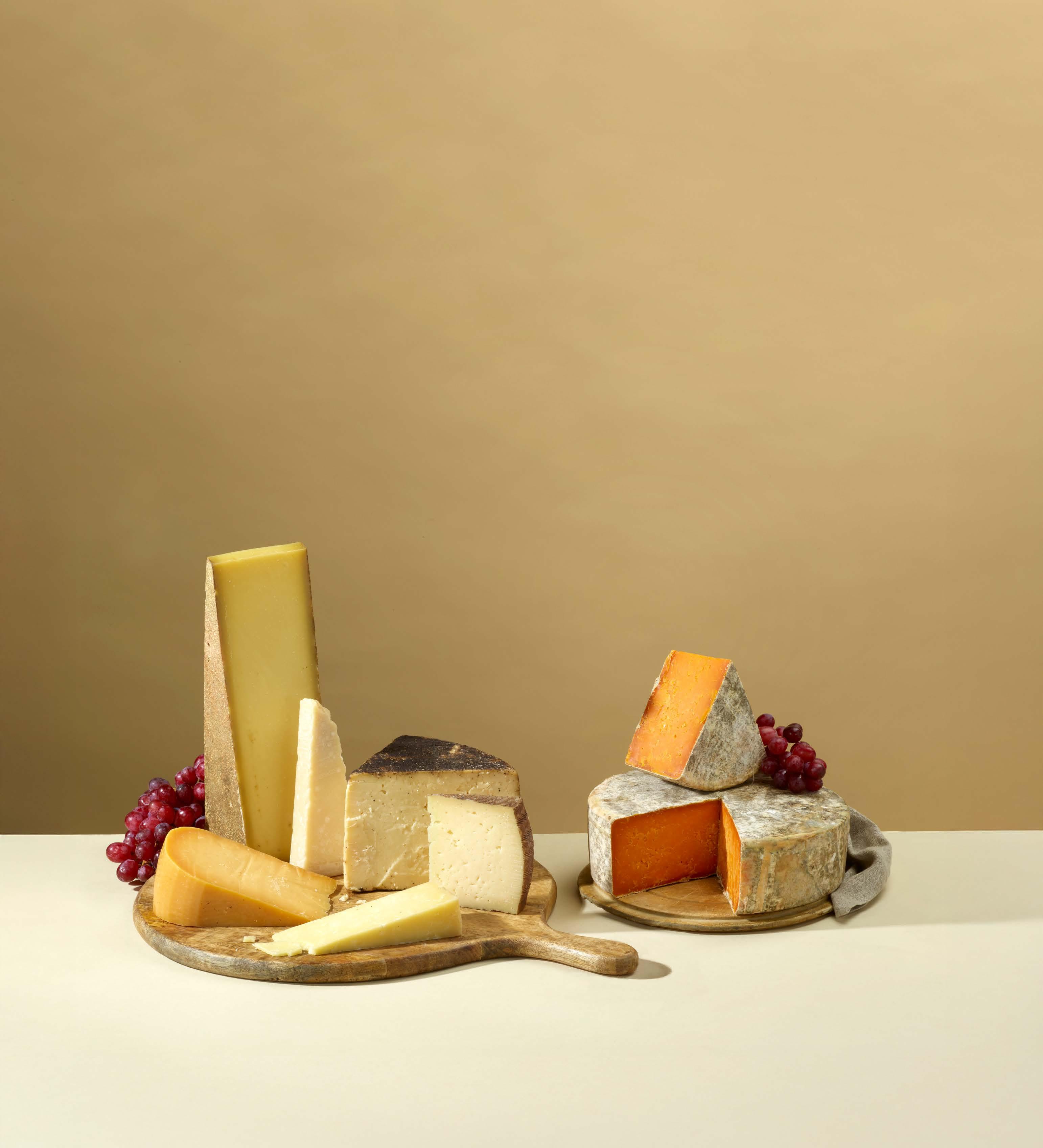
Even onboard food and beverage is leaning into comfort as currency, with familiar flavors and sensory touches—like stroopwafels, cocktail mixers and nostalgic snacks—turning routine service moments into something more
We also see this thread running through other stories in the issue—from functional products that quietly become cult favorites, to the ongoing tension between cost and quality shaping inflight dining strategies.
Ultimately, whether it is sleep, taste or texture, comfort is no longer a soft focus—it is a strategic one. And the real measure of success is no longer what is delivered onboard, but how passengers feel when the journey ends.


JANE HOBSON Managing Editor PAX International
14 DESIGNING FOR WELL-BEING
WESSCO explores how airlines are rethinking amenities around recovery, hydration, sleep and the evolving needs today’s wellnessconscious traveler 16 KITS AT HEART
Airlines are moving beyond children’s giveaways toward comprehensive engagement strategies that entertain, educate and build emotional connections with young passengers
is at the forefront of passenger well-being, helping airlines transform emerging wellness trends into meaningful onboard experiences. Read more on page 14
18 THE BUSINESS OF BETTER SLEEP
Soft, breathable materials, refined design and restorative rest are shaping a new approach to cabin comfort through the collaboration between Procurall Solutions and Lunya 20 THE WIPE THAT WENT VIRAL
From Reddit fandoms to passenger stockpiles, RMT Global Partners’ WeCare wipes reveal how practical onboard products can become unlikely cult favorites
22 WELLNESS REFRESH
Designed for the realities of air travel, White Glo Refresh Mouthwash offers airlines a wellness-focused amenity that supports comfort, freshness and brand value
24 MAKING SENSE OF SCENTS
In this guest column, Alison Wells, CEO, Plane Talking Products, and Lara Morgan, Founder of wellness brand Scentered, discuss the role that scent products play at key points in the passenger experience
Bayart Innovations uncovers new life for onboard amenities with mindful design
With a summer of global sport on the horizon, FORMIA discusses how authentic partnerships rooted in identity and place help airlines turn sponsorships into meaningful passenger connections
CONNECTS THE DOTS
C8Rtech Managing Director Thomas Halter explains how the company’s integrated platforms are closing the gap between airlines and catering partners
How deSter’s restaurant logic is redefining inflight hospitality
In this guest column, En Route Managing Director Nick Wiley reveals why the industry must be ready for new challenges as it works to deliver both quality and cost efficiency in an unpredictable environment
Intervine is focusing on aroma, flavor and familiarity to turn routine onboard F&B into memorable moments
BOUND
Lauren Costello, Executive Director of IFSA, shares the latest on the association’s next chapter, driven by growing attendance, exhibitor participation, sponsor engagement and broader industry involvement
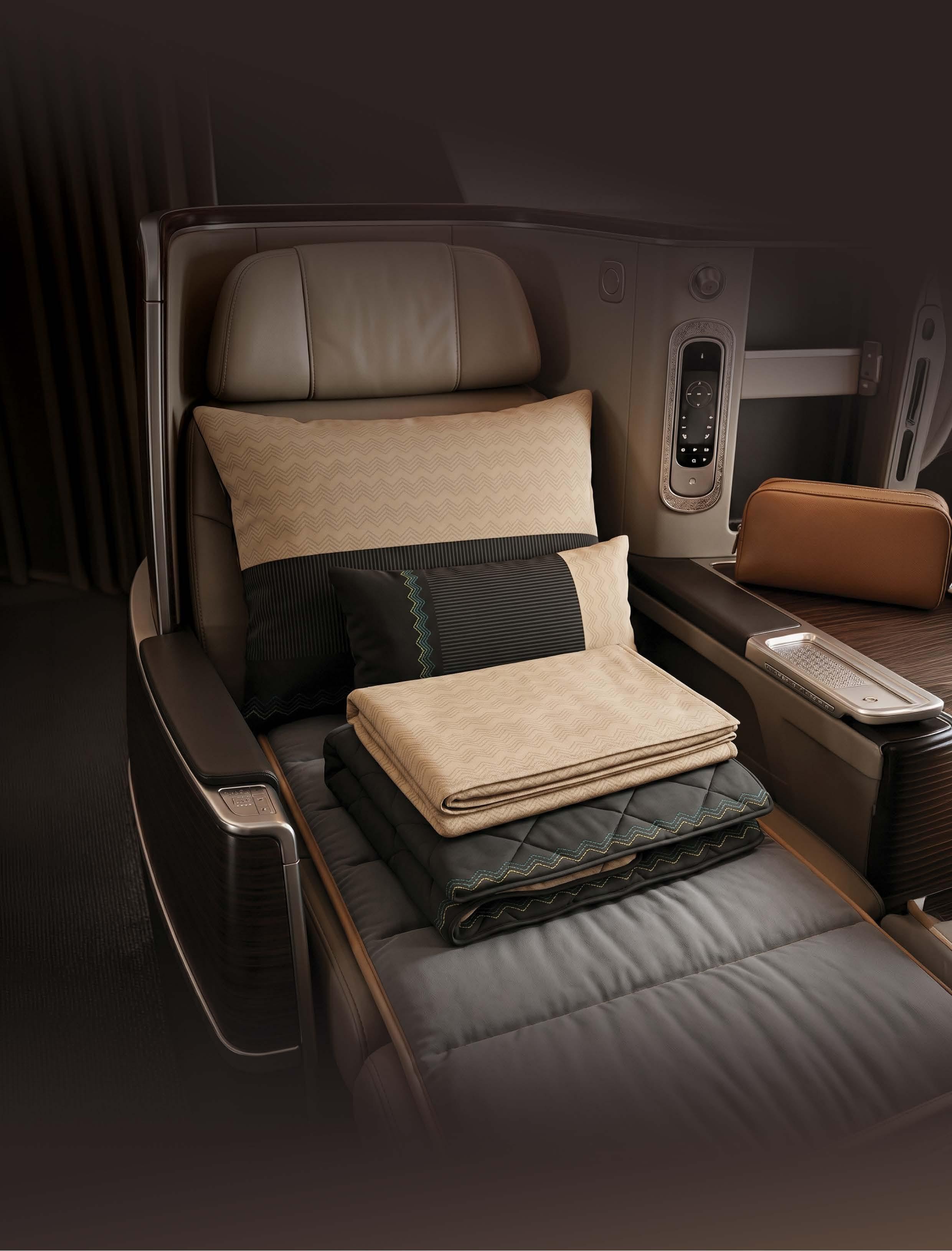
Comfort, engineered beautifully.
Custom textile and bedding programs created for world-class passenger and hospitality experiences.
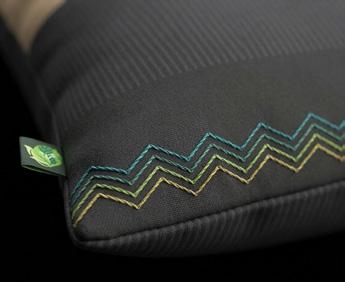
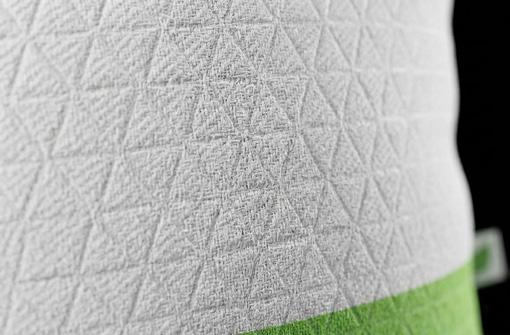
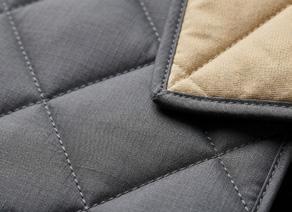
Explore Your Custom Program


SUPPLIER
FORMIA launches special-edition Aeroméxico amenity kits celebrating summer of sports
FORMIA has teamed up with Aeroméxico and Nopalera to introduce a special-edition Premier One amenity kit collection for premium cabin passengers.
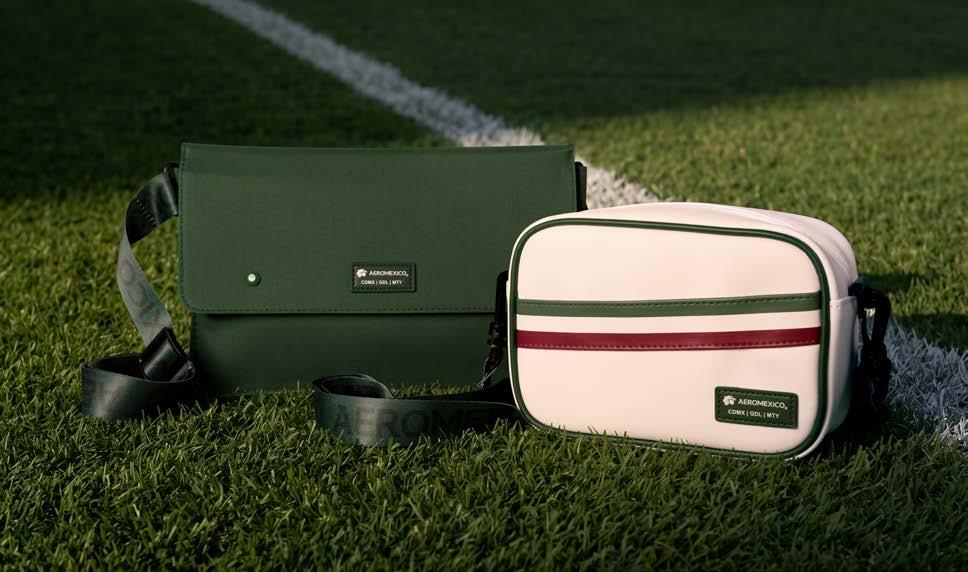
The collection features two designs, including a white crossbody bag accented with Mexico’s national colors and a green flat pouch, both with detachable straps for travel flexibility. Design details draw inspiration from cities across Mexico, reflecting Aeroméxico’s modern interpretation of the country for a global audience.
Inside, passengers receive travel essentials, including Nopalera skincare products inspired by the nopal cactus, such as hand cream, lip balm and facial mist, alongside onboard comfort items designed to enhance the inflight experience.
With a focus on sustainability, the green pouch is made with more than 68 percent sustainable materials, while
the crossbody bag incorporates recycled PU and recycled fibers. The toothbrush and comb are made from wheat straw, a renewable bio-based material.
The collection will be available onboard Aeroméxico Premier One from June to July.
“At Aeroméxico, we seek initiatives that elevate passengers’ experience and share the spirit of contemporary Mexico onboard,” said Andrés Castañeda, Vice President of Digital and Customer Experience & EVP at Aeroméxico.
“FORMIA is proud to collaborate on this special edition collection,” said Roland Grohmann, CEO & Managing Partner at FORMIA.
A game-changer in the inflight catering industry






















Rooted in Mexican identity, the collection features a white crossbody bag with national-color accents and a green flat pouch, both with detachable straps for travel on the move

Etihad Airways introduces Summer Essentials Kits
Etihad Airways has announced seasonal services to Krakow, Palma de Mallorca and Zanzibar, alongside the resumption of five summer routes across Europe and Africa. The airline will also continue its seasonal passenger activation with limited-edition Summer Essentials Kits for passengers on inaugural flights across all eight routes.
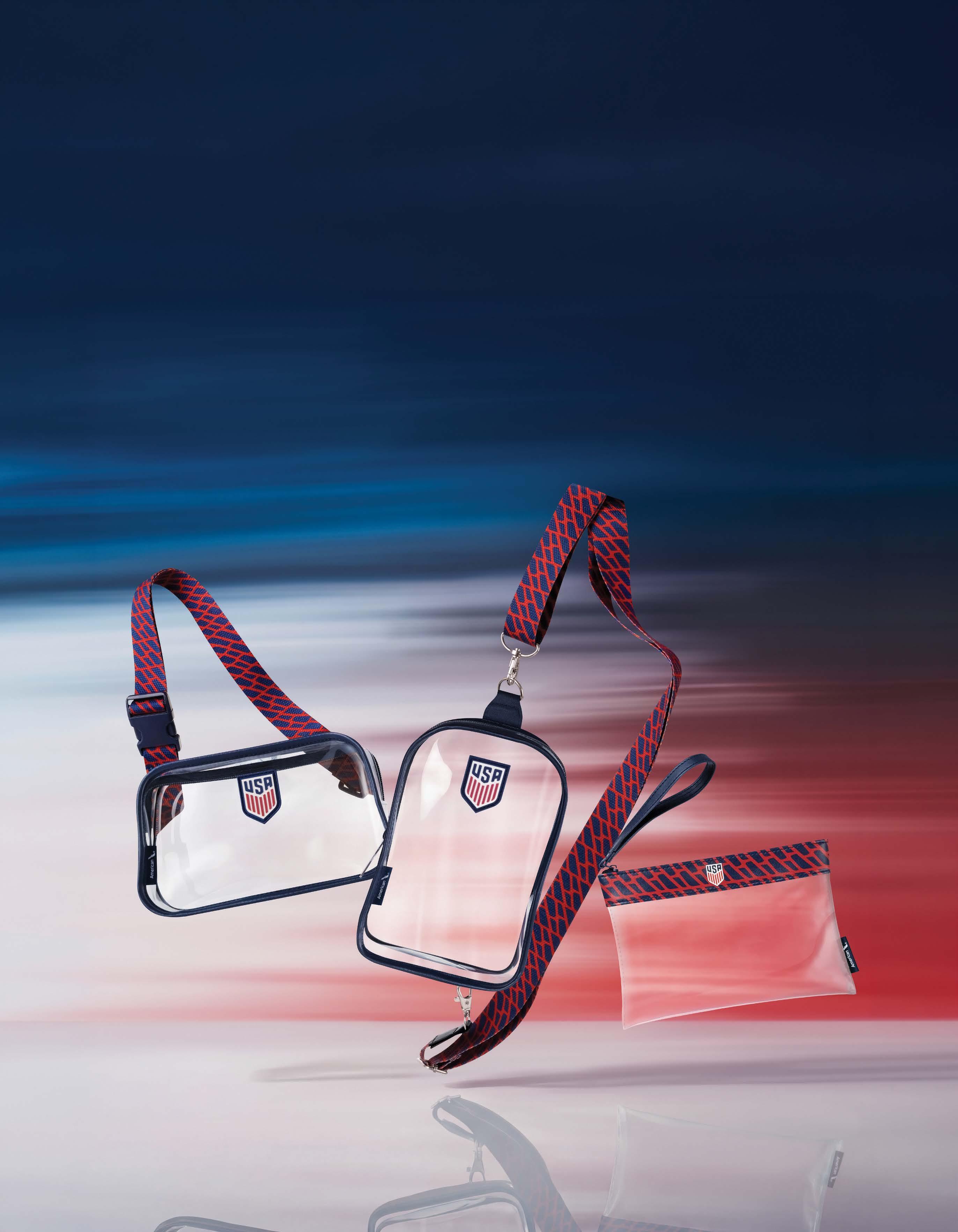
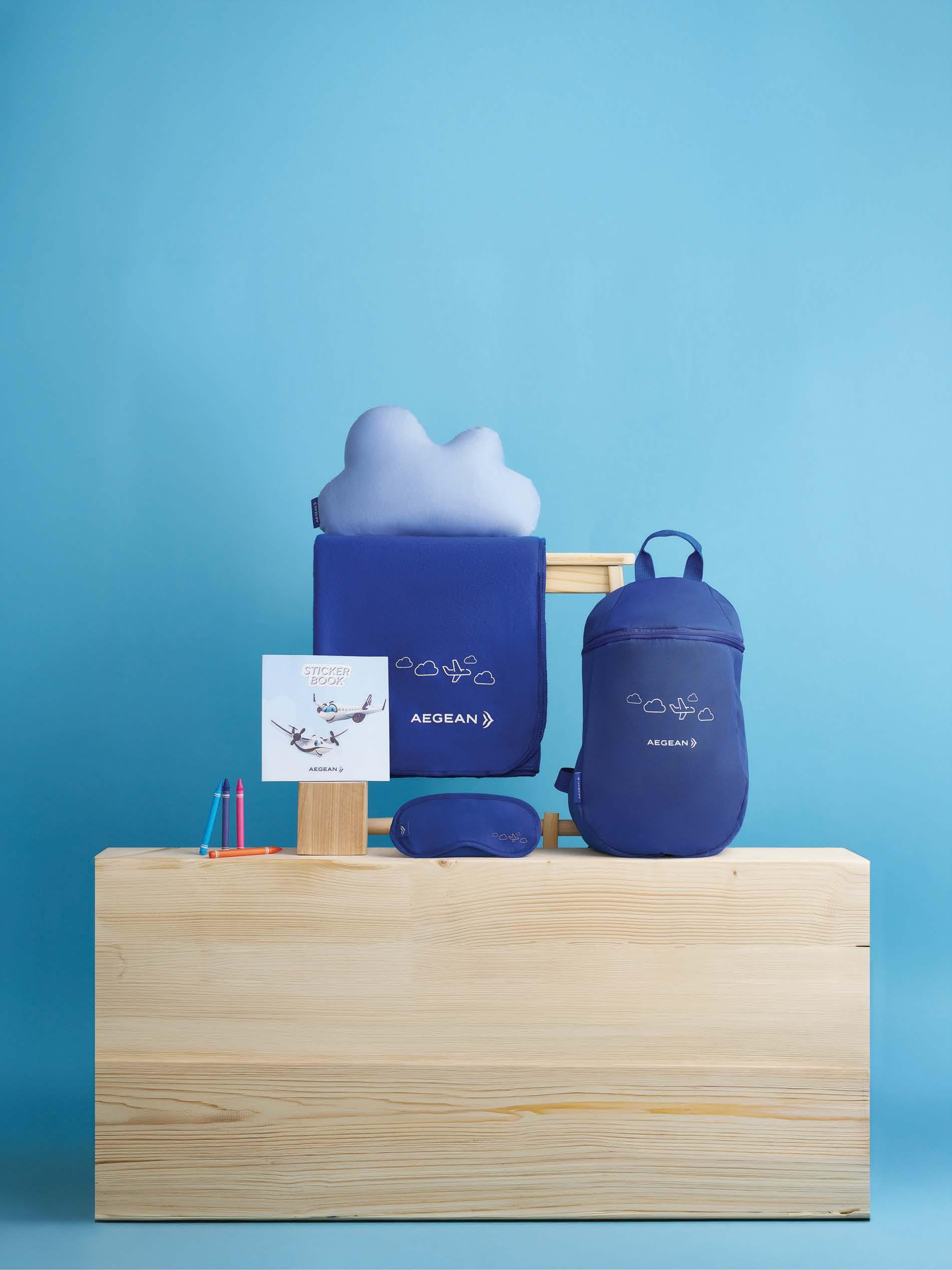
On inaugural flights, passengers will receive a limitededition Summer Essentials Kit in a branded waterproof backpack. The kit includes a waterproof phone pouch, hydration items such as one-shot electrolytes, Al Ain flavored sparkling water and a ginger brew drink, as well as a pack of water wipes.
The Summer Essentials Kit enhances the passenger experience across Etihad’s seasonal network by combining practical travel essentials with comfort-focused items for summer travel. The initiative reflects Etihad’s commitment to improving the passenger journey during peak travel periods, offering added convenience for travelers to key leisure destinations across Europe and Africa.
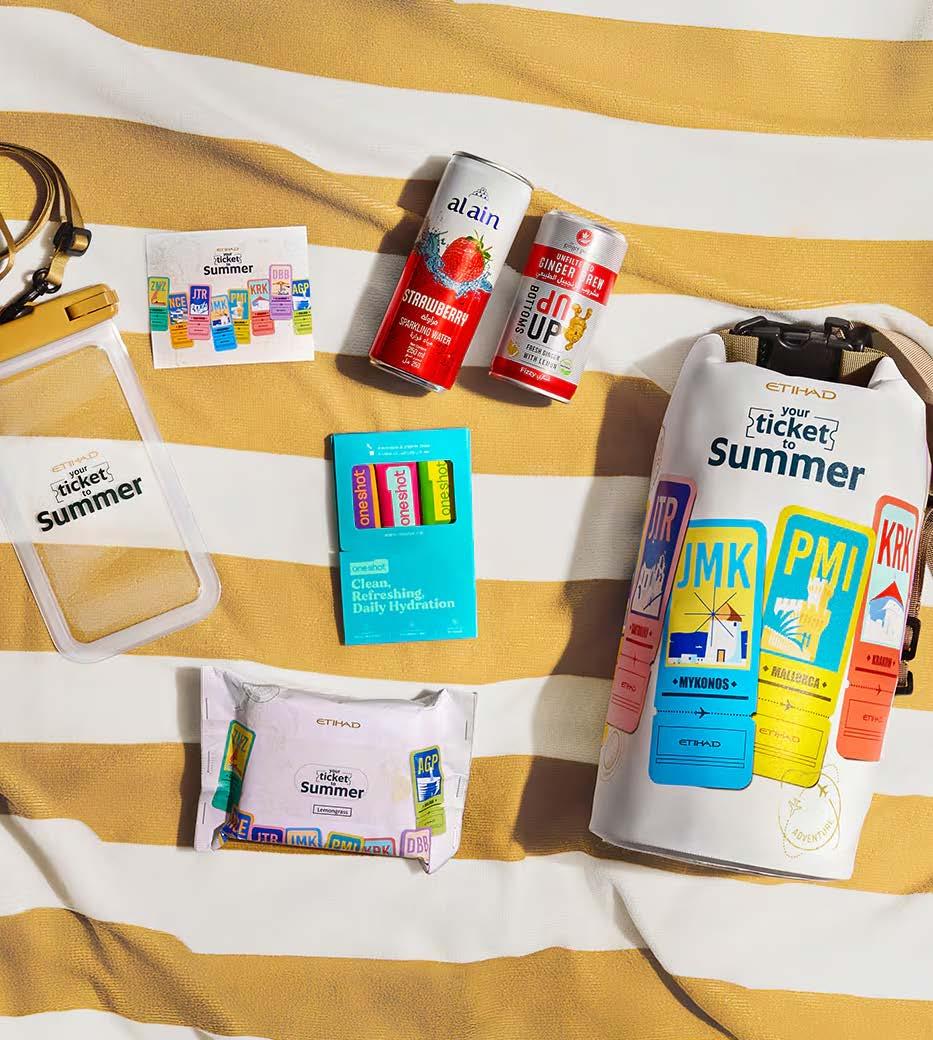

The limited-edition Summer Essentials Kits include waterproof phone pouch, electrolytes, Al Ain flavored sparkling water, ginger brew drink and water wipes
www.wessco.net
info@wessco.net
Lufthansa elevates long-haul experience with BABOR skincare under FOX program
Lufthansa is enhancing its long-haul passenger experience through its Future Onboard Experience (FOX) initiative, introducing a new level of comfort and personalization across First and Business Class cabins.
Launched in late March and rolling out across travel classes from last month, FOX is designed to elevate the overall onboard journey, with a particular focus on comfort, well-being and service refinement.
As part of the program, Lufthansa has partnered with German premium skincare brand BABOR to introduce a curated selection of beauty products tailored specifically for air travel.
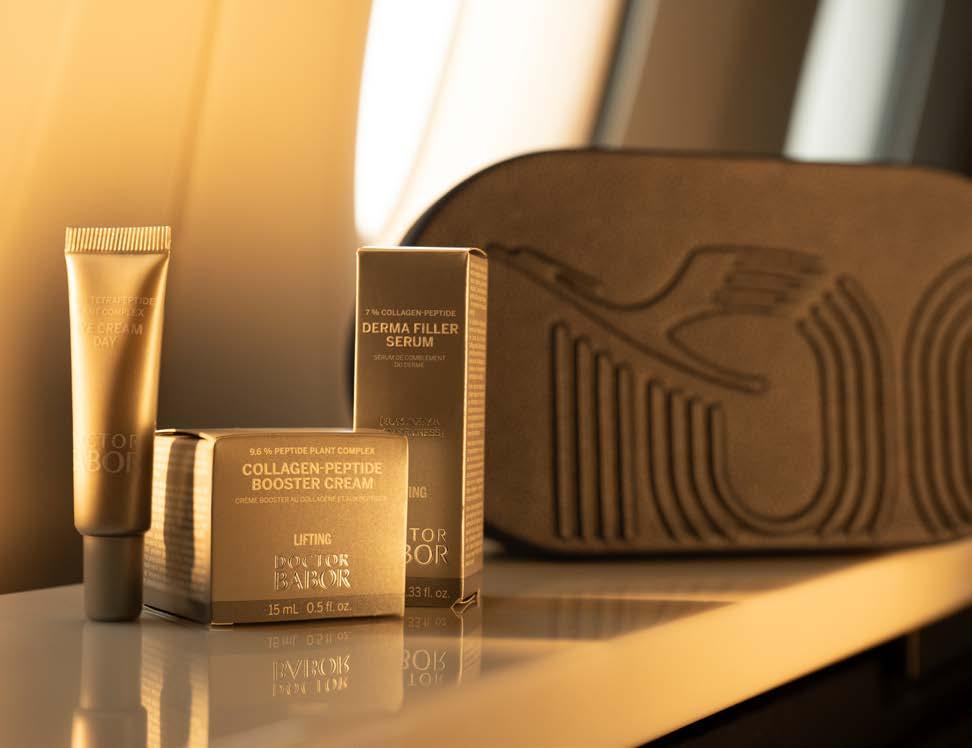
Business Class passengers receive a refreshed amenity kit featuring lip balm and hand cream from BABOR’s Soul & Body line.
In First Class, passengers are offered the DOCTOR BABOR Collagen Peptide Booster Cream, one of the brand’s signature skincare products. Beyond the standard kit, First Class passengers also have access to a dedicated amenity menu, allowing for a more personalized onboard skincare experience.
The menu includes a revitalizing eye cream, Eye Zone Patches, a firming filler serum and a moisturizing gelcream. Items are delivered directly to passengers’ seats by the crew upon request, reinforcing Lufthansa’s focus on individualized service and comfort at altitude.
Sunclass Airlines adds pizza slice to light meal offering
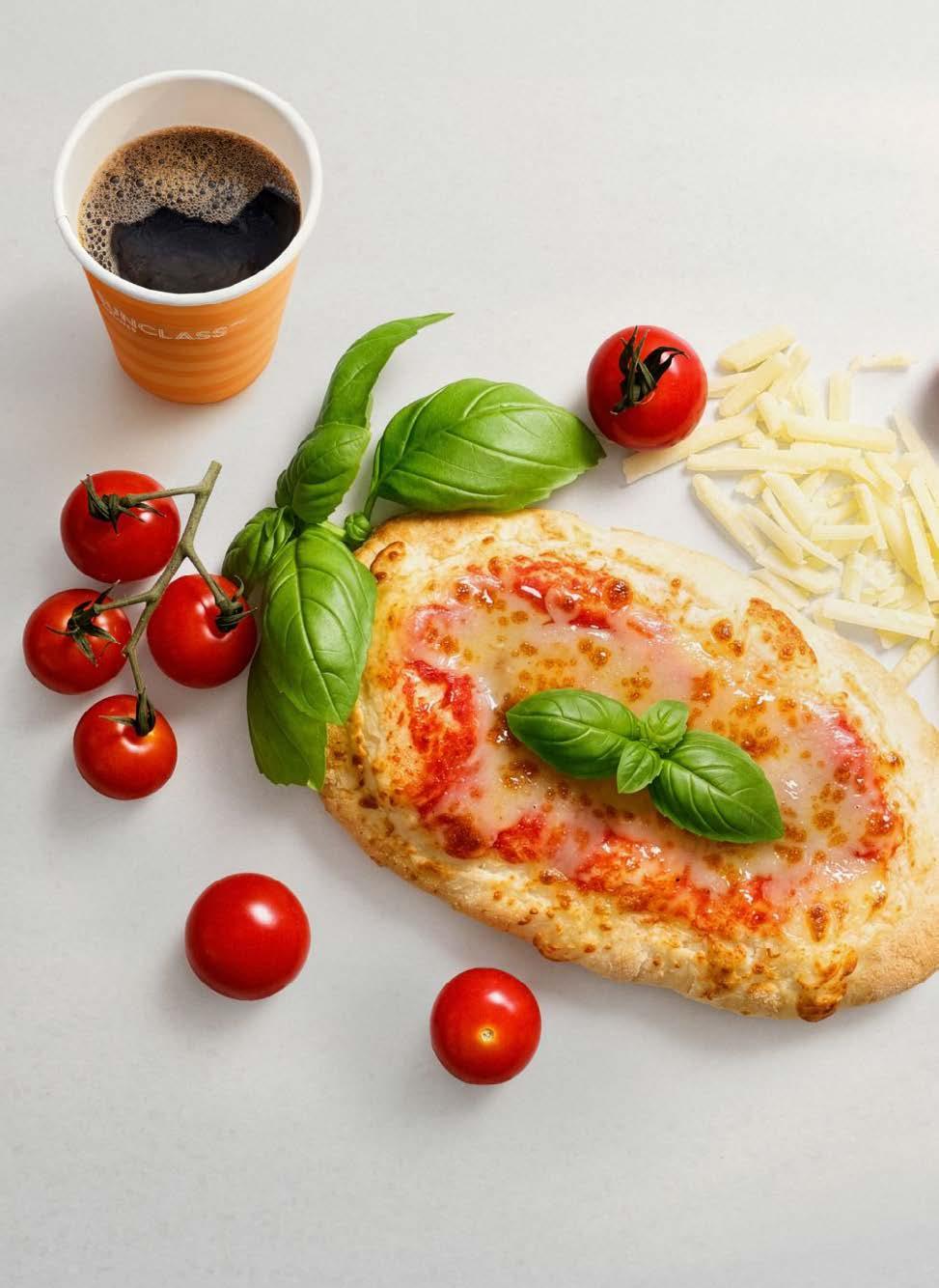
Sunclass Airlines has added a pizza slice to its light meal assortment, available onboard since June 1, in collaboration with Monty’s Bakehouse.
The airline said the offering is part of its ongoing focus on enhancing the onboard experience through increased variety, convenience and products designed to appeal to passengers during their journey. The pizza slice introduces another familiar and satisfying option for passengers seeking a quick meal while in transit. Sunclass Airlines said that it will continue monitoring passenger feedback as it further develops its onboard food and beverage selection.
Lufthansa’s refreshed amenity kit featuring BABOR skincare products
The pizza slice offers a familiar and satisfying option for passengers seeking a quick meal in transit
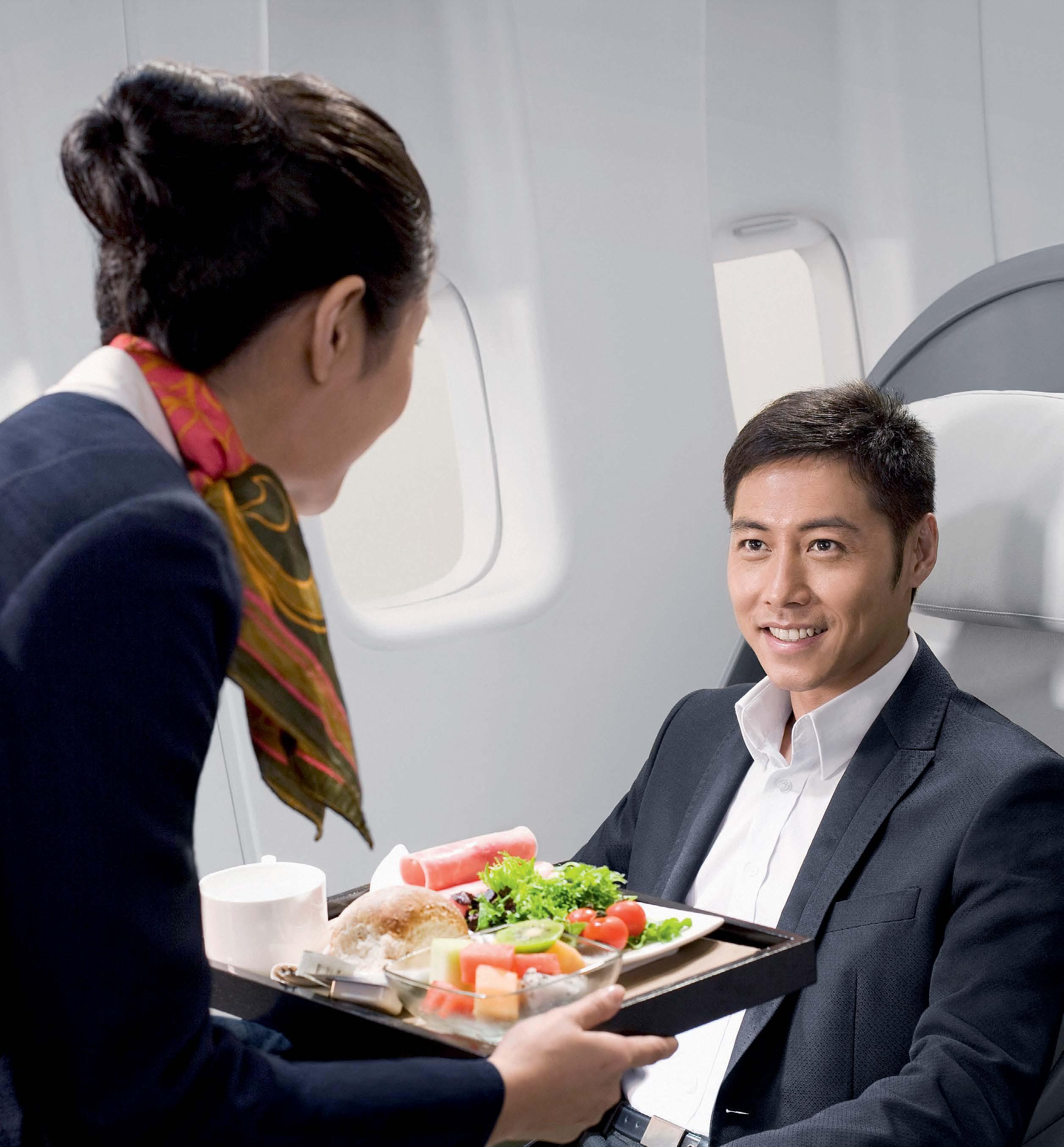
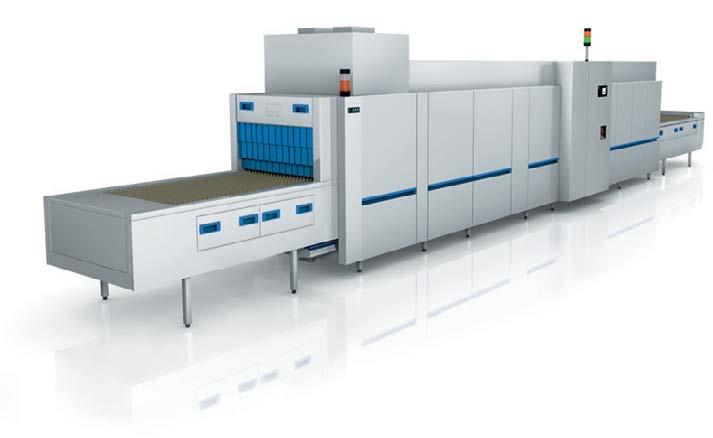
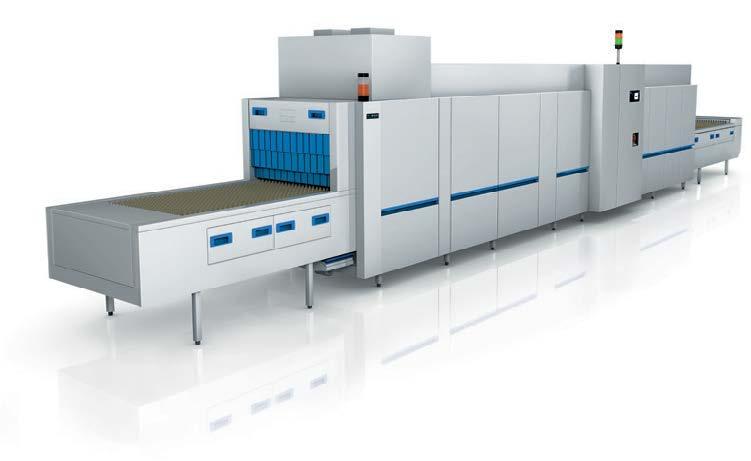
Security and safety are the most important values an airline can offer. A great number of checks are required before the captain and cabin crew are finally able to welcome the passengers on board. This includes making certain that travellers will receive a clean and hygienic service. With our professional warewashing systems for inflight catering, we at MEIKO are guaranteed to reach the recommended level in purity, hygiene and cleanliness. Sustainable, economic and efficient. From small business airports to large international traffic hubs: discover the versatility of our tailor-made warewashing systems.
Security and safety are the most important values an airline can offer. A great number of checks are required before the captain and cabin crew are finally able to welcome the passengers on board. This includes making certain that travellers will receive a clean and hygienic service. With our professional warewashing systems for inflight catering, we at MEIKO are guaranteed to reach the recommended level in purity, hygiene and cleanliness. Sustainable, economic and efficient. From small business airports to large international traffic hubs: discover the versatility of our tailor-made warewashing systems.
www.meiko-global.com
Global Inflight Products enhances onboard service with compostable plant fiber casserole
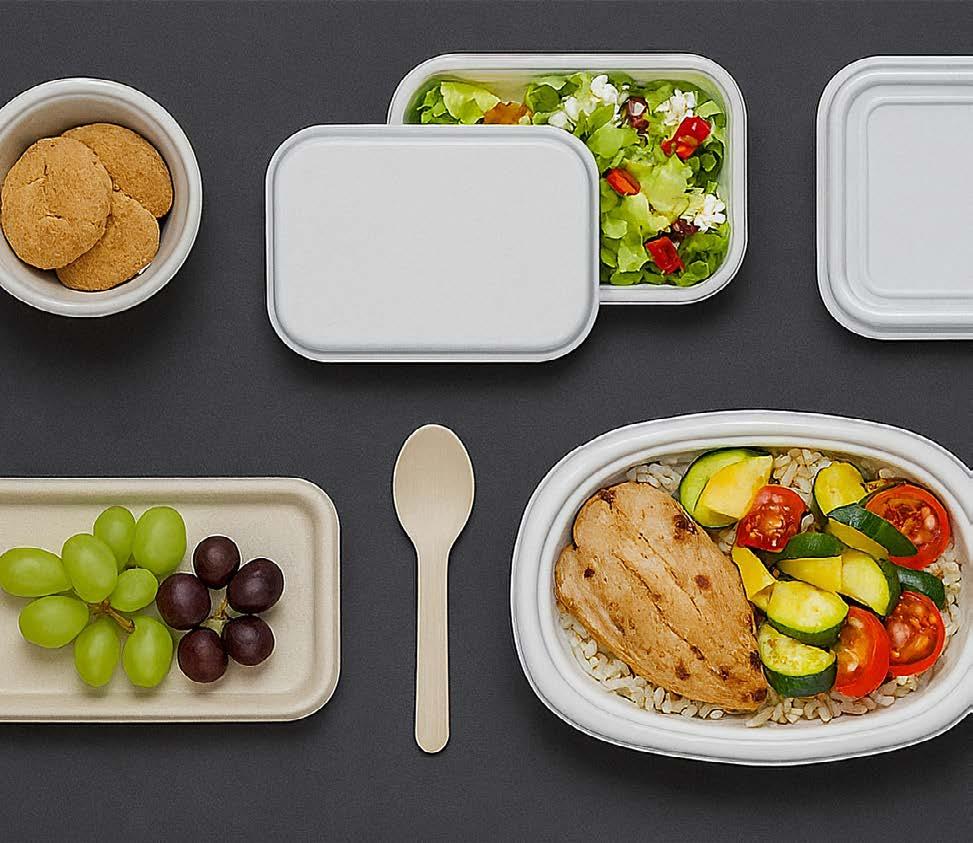
As airlines intensify efforts to enhance the single-use materials in onboard services, Global Inflight Products (GIP) is continuing to upgrade the plant fiber casserole it introduced three years ago. The sturdy casserole supports a more sustainable inflight meal service.
Made from 100 percent renewable plant fibers, the casserole is oven-safe, enabling dishes to be reheated or served directly in the container without compromising performance. The lightweight and durable construction withstands the demands of high-volume airline catering operations, maintaining its shape even with heavier or sauce-based meals. The products are available in several shapes and sizes.
“The containers are food-safe and odorless, ensuring that flavors remain unaffected across a range of cuisines,” says Zine Badissy, CEO of GIP. The design also supports efficient handling across the catering cycle from kitchen preparation through to onboard service. After use, the casseroles are compostable and biodegradable, with the plant fiber material delivering a clean, natural aesthetic.
Greka Icons S.A. targets airline growth with Mediterranean product range
Greece-based gourmet food company Greka Icons S.A. showcased its Navarino Icons line at WTCE 2026, aiming to expand its presence in the airline sector. Its range of olive oils, dips, marmalades, olive pastes and pasteli are currently available on six international airlines.
Peter Poulos, Partner at Greka Icons, says the company was created with the goal of promoting the culinary traditions and hospitality of southern Greece. The company supplies products made with locally sourced ingredients, with no preservatives or added sugars. Poulos says Greka’s partnerships with local producers has helped support creativity and entrepreneurial energy in Greece, demonstrating how a single vision can contribute to the development of an entire region.
According to the company’s General Director Mike Disseakis, the Mediterranean diet underscores that passengers can enjoy food that is both healthy and flavorful.
For Poulos, hospitality, people and product quality remain its top priorities as the business continues to grow internationally. “When you want people thinking about olive oil, you want them thinking about Greece,” he says.
The plant fiber pulp casserole from GIP is ovenable and available in several shapes and sizes to support more sustainable inflight meal service
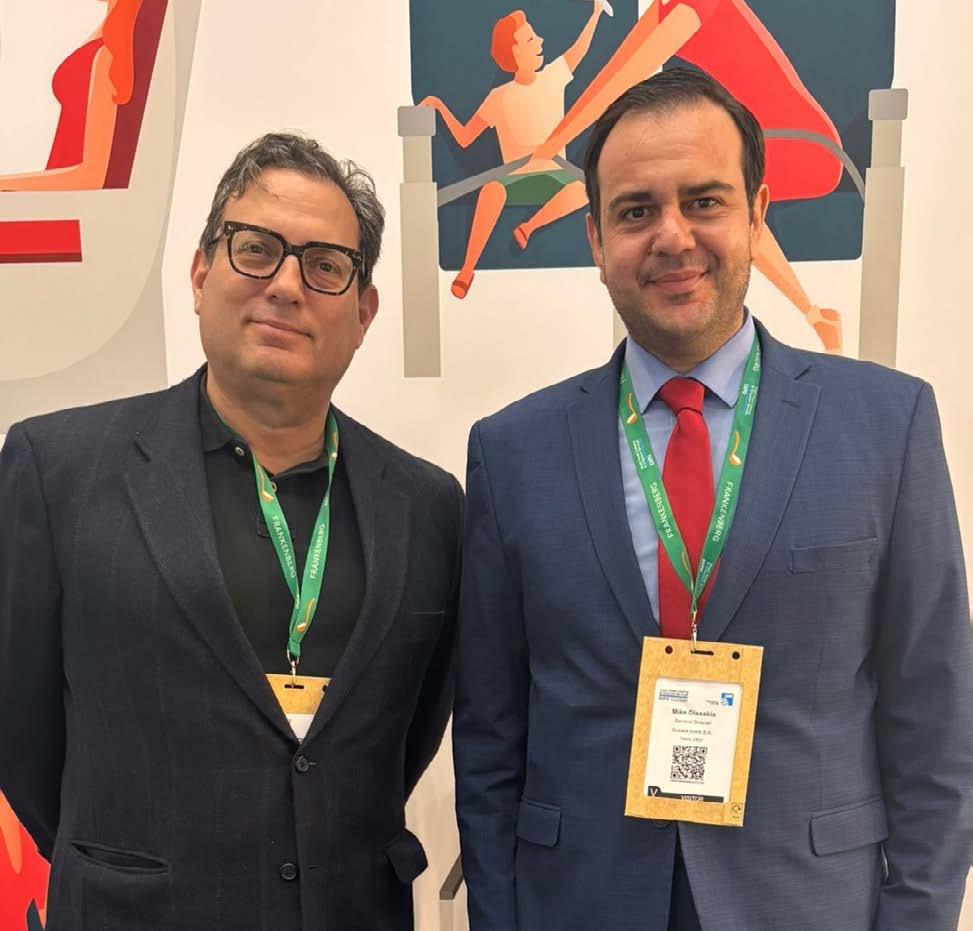
Greka Icons Partner Peter Poulous (left) and Deputy General Director Mike Disseakis at WTCE 2026
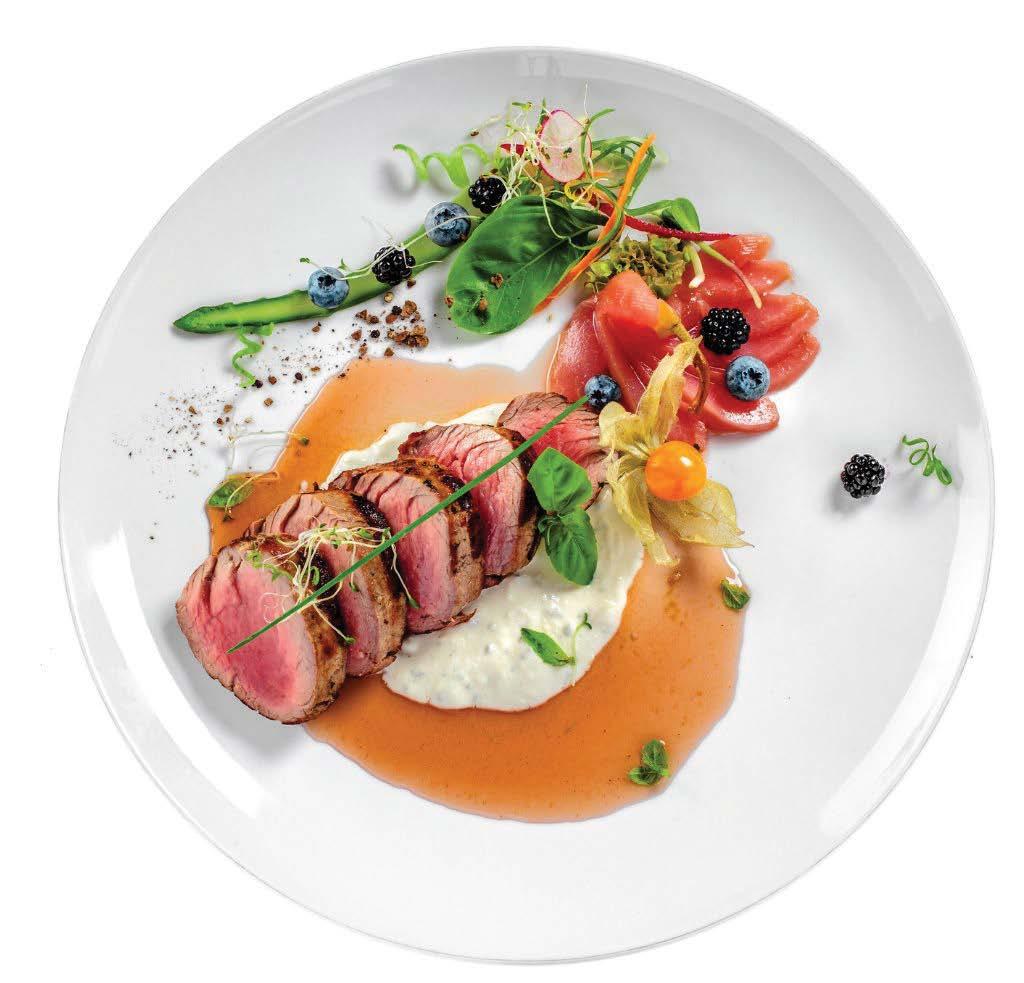
Conscious Kitchen reimagines special meals as thoughtfully designed, contemporary inflight dining experiences— crafted from the start, not adapted as an afterthought Setting new standards for inflight dining by streamlining operations, reducing waste
Designing for well-being
WESSCO
explores how airlines are rethinking amenities around recovery, hydration, sleep and the evolving needs of today’s wellness-conscious traveler
by JANE HOBSON
Wellness has moved far beyond a trend. For today’s premium traveler, it is an expectation.
Passengers are no longer just looking for comfort. They are thinking about how they will feel during the journey and when they arrive. More rested. More balanced. More like themselves. That shift is reshaping how airlines approach the onboard experience and opening the door for a more holistic view of amenities.
For WESSCO, this evolution has become a core focus. Not as a category, but as a lens through which the entire passenger experience can be reimagined.
Outcomes over offerings
The traditional amenity kit has long been centered on essentials. Today, the conversation is shifting toward outcomes. Hydration. Recovery. Stress relief. Sleep support.
“More than 80 percent of premium long-haul travelers are looking for wellness-focused additions, with an expectation that they meaningfully support the travel experience,” says Petros Sakkis, CMO at WESSCO, reflecting a broader shift toward more relevant, experience-driven amenity design.
Meeting the demands of travel
Air travel places unique demands on the body, from dehydration and fatigue to digestive disruption and muscle stiffness.
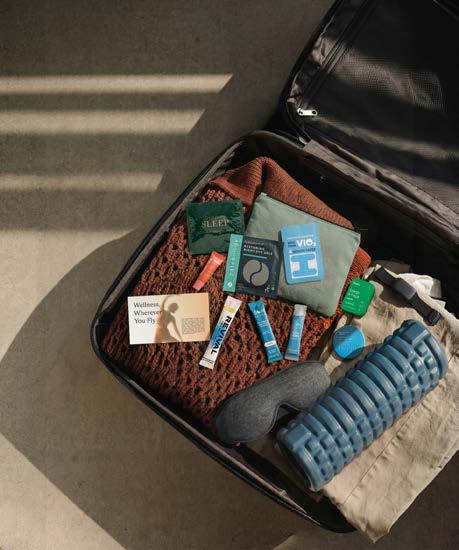
JetBlue’s Mint Wanderfuel amenity kits reflected a more targeted approach. Instead of a single standardized kit, the program introduced four variations designed around different travel moments: Awake for morning flights; Flow for midday travel; Sleep for overnight journeys; Renewal for Caribbean routes.
Each kit included functional wellness items such as hydration support, digestive enzymes and recovery-focused products, selected
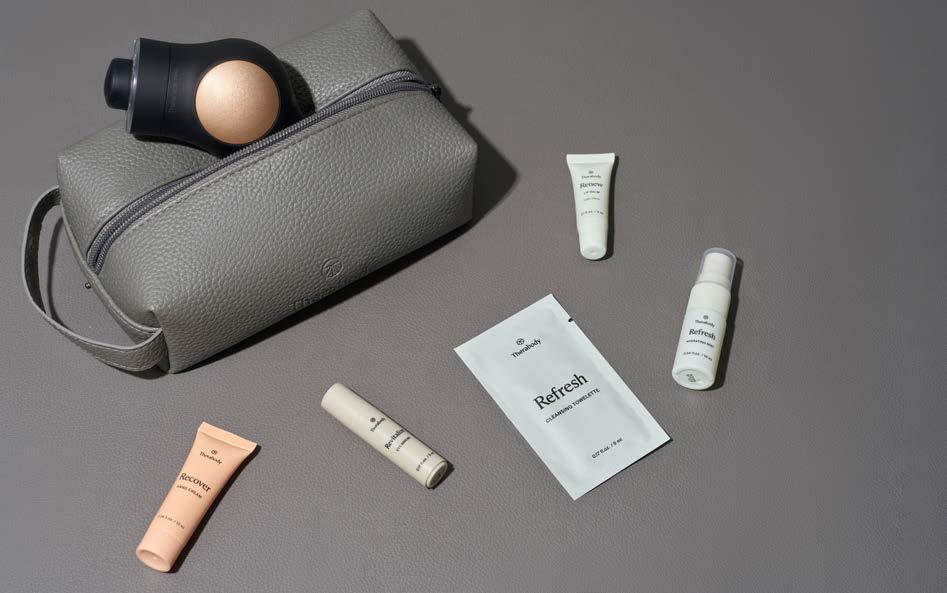
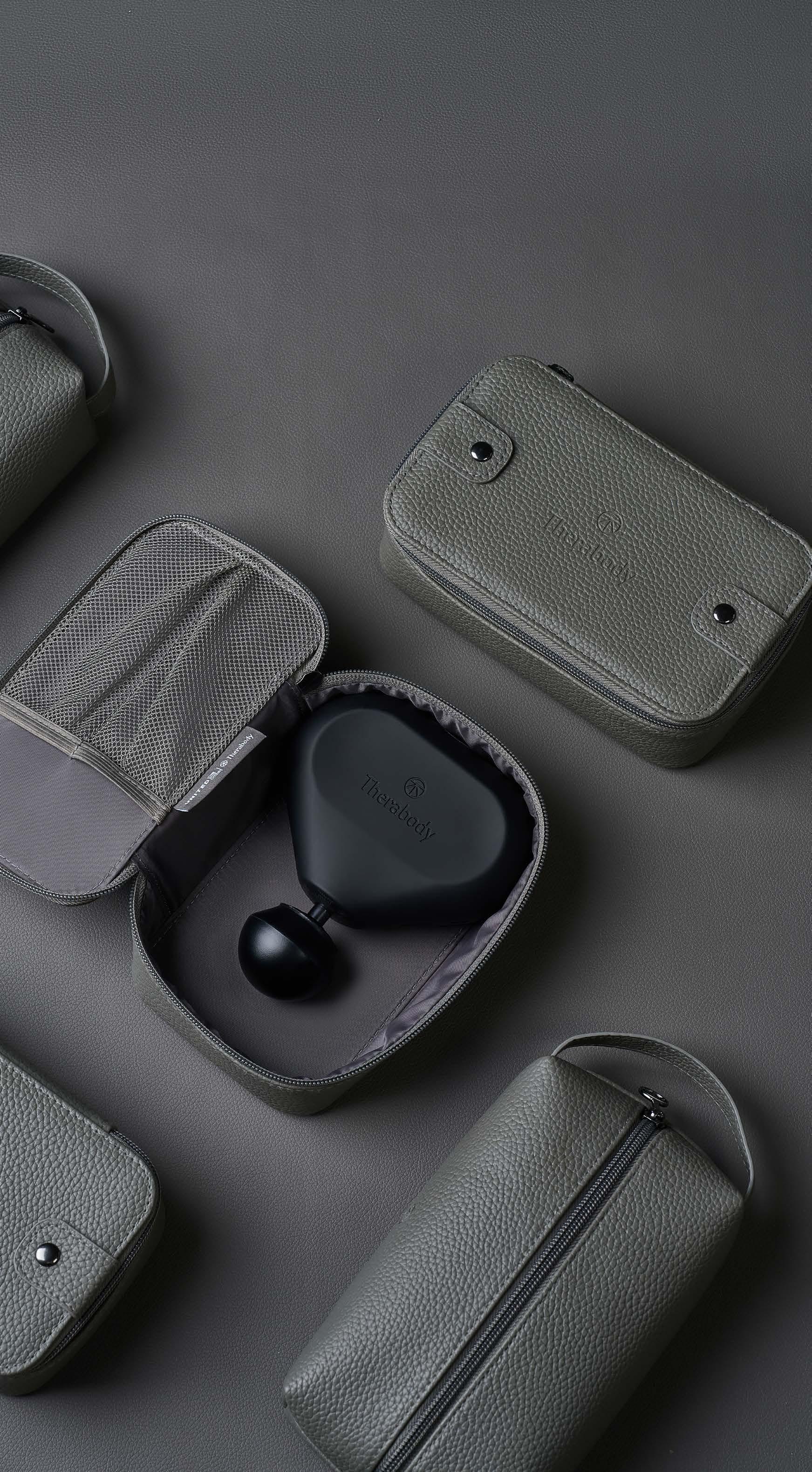
Through MileagePlus integration, United and Therabody connected inflight wellness with everyday self-care, linking travel, recovery and rewards
to align with how passengers feel at different points of the journey.
Packaged in eco-friendly kraft material with a leather-like feel, the kits combined thoughtful design with a more relevant, needs-based approach to inflight wellness.
Wellness beyond the cabin
Wellness does not begin and end onboard, Petros shares.
He points to the collaboration between United Airlines and Therabody to illustrate how amenity programs can extend into a broader ecosystem. Introduced as part of United’s premium cabin experience, the program combined thoughtfully designed amenity kits with Therabody’s science-backed approach to recovery and well-being.
Beyond the onboard kits, the partnership extended into lounge environments and digital touchpoints, creating a more holistic experience for the passenger. Through integration with MileagePlus, travelers were also able to engage with the brand beyond the flight, earning miles through
Therabody purchases and reinforcing the connection between travel and self-care.
“This type of partnership signals a shift toward continuity, where wellness is not a moment onboard, but part of a broader, connected journey,” says Petros.
Materials matter
Wellness is no longer limited to the products themselves. It is increasingly tied to what those products are made of and how they interact with the body.
Topics like synthetic materials, chemical treatments and microplastics are becoming part of the broader wellness conversation, bringing new attention to areas that were previously overlooked in amenity design.
This creates an opportunity for airlines to think more broadly about the role of materials, construction, and product performance in supporting passenger well-being.
The future of onboard well-being
Passengers are looking for experiences that respond to the realities of travel, from fatigue to recovery, while aligning with more health-conscious, longevityfocused lifestyles.
“The focus now is simple, design around how passengers want to feel,” says Petros. “This is driving a more thoughtful approach to both product and material choices.”
For airlines that embrace this shift, wellness evolves into a strategic driver of passenger comfort, from departure through to arrival.
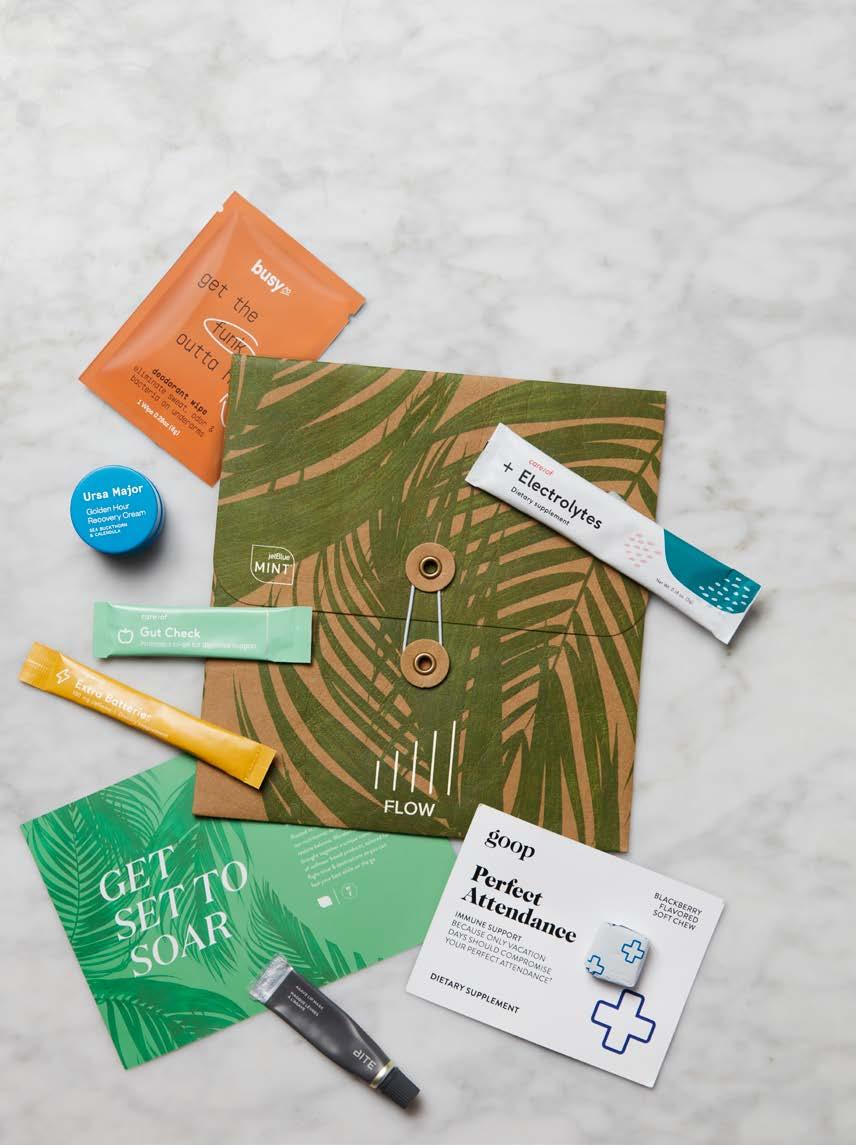
JetBlue’s Mint Wanderfuel amenity kits introduced a tailored approach with four variations—Awake, Flow, Sleep and Renewal—designed to match different travel moments and passenger needs
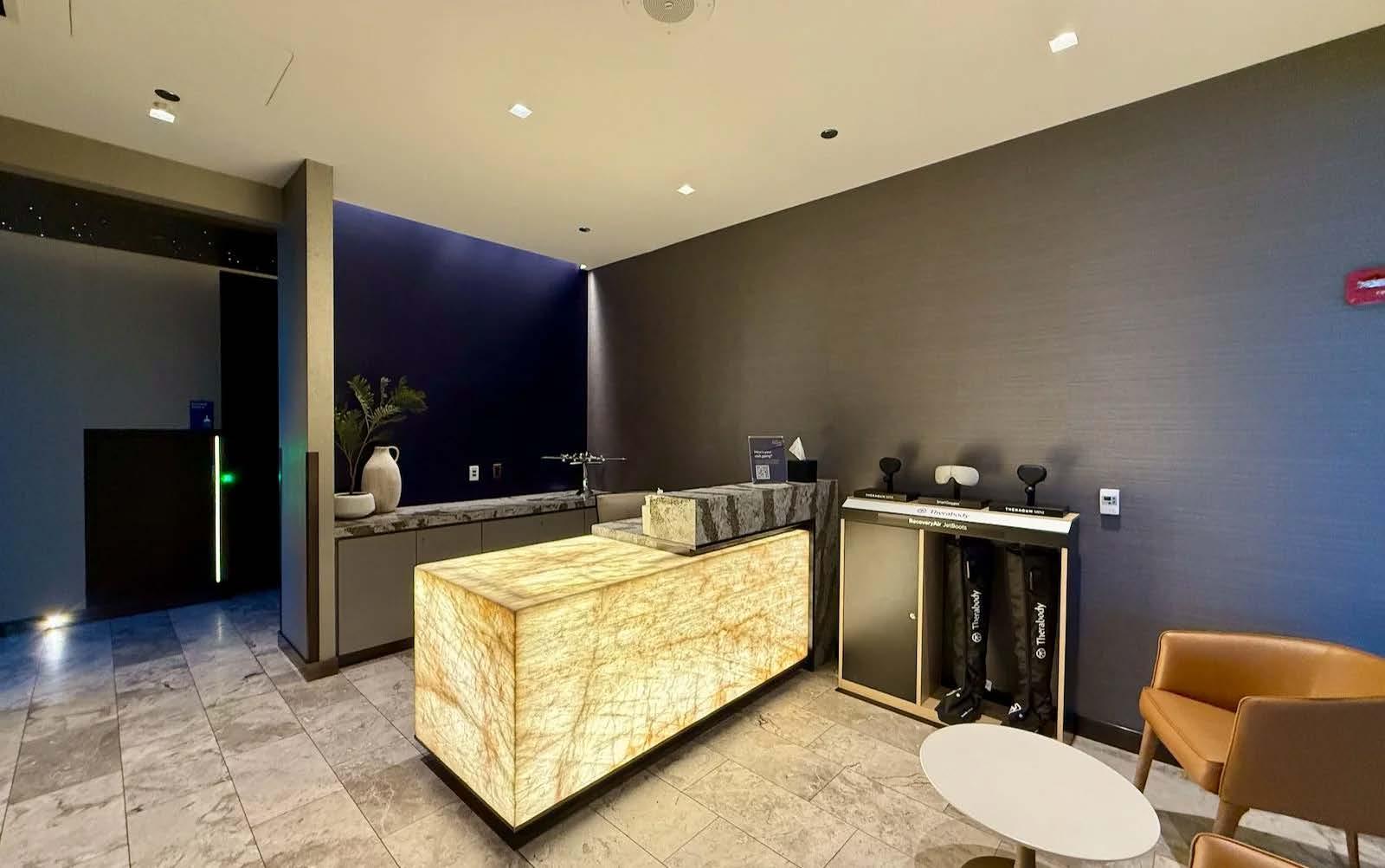
The United Therabody collaboration brought wellness into lounges creating a more seamless, endto-end passenger experience
Kits at heart
Airlines are moving beyond children’s giveaways toward comprehensive engagement strategies that entertain, educate and build emotional connections with young passengers
by JANE HOBSON
For years, children’s inflight amenities were largely treated as a practical distraction—a coloring book, a small toy or an activity pack designed to help pass the time. Today, however, airlines and suppliers are taking a more strategic approach, recognizing young travelers as an important passenger segment with unique needs, interests and expectations.
Across the industry, a new generation of children’s programs is emerging that goes beyond entertainment to incorporate storytelling, education, sustainability and family support. From branded activity kits and immersive character worlds to infant care products and youth art initiatives, airlines are increasingly viewing amenities as an opportunity to create meaningful experiences for the youngest passengers while strengthening connections with families.
Certified cloud chasers
This spring, Air India launched its Cloud Chasers program, a global initiative that brings together activity kits, personalized First Flight Certificates, curated inflight entertainment, games and familyfocused services under a unified experience.
The program introduces a playful avatar of Air India’s iconic Maharaja, creating a recognizable companion for young travelers across multiple touchpoints, designed to engage children throughout the journey.
“With Cloud Chasers, we are reimagining what it means for families with kids to fly Air India,” said Rajesh Dogra, Chief Customer Experience Officer at Air India in the May 11 press release. “We have curated this program with careful attention to what our young travelers truly need and designed thoughtful experiences that will make their journeys with us more joyful and fun.”
Worlds of adventure
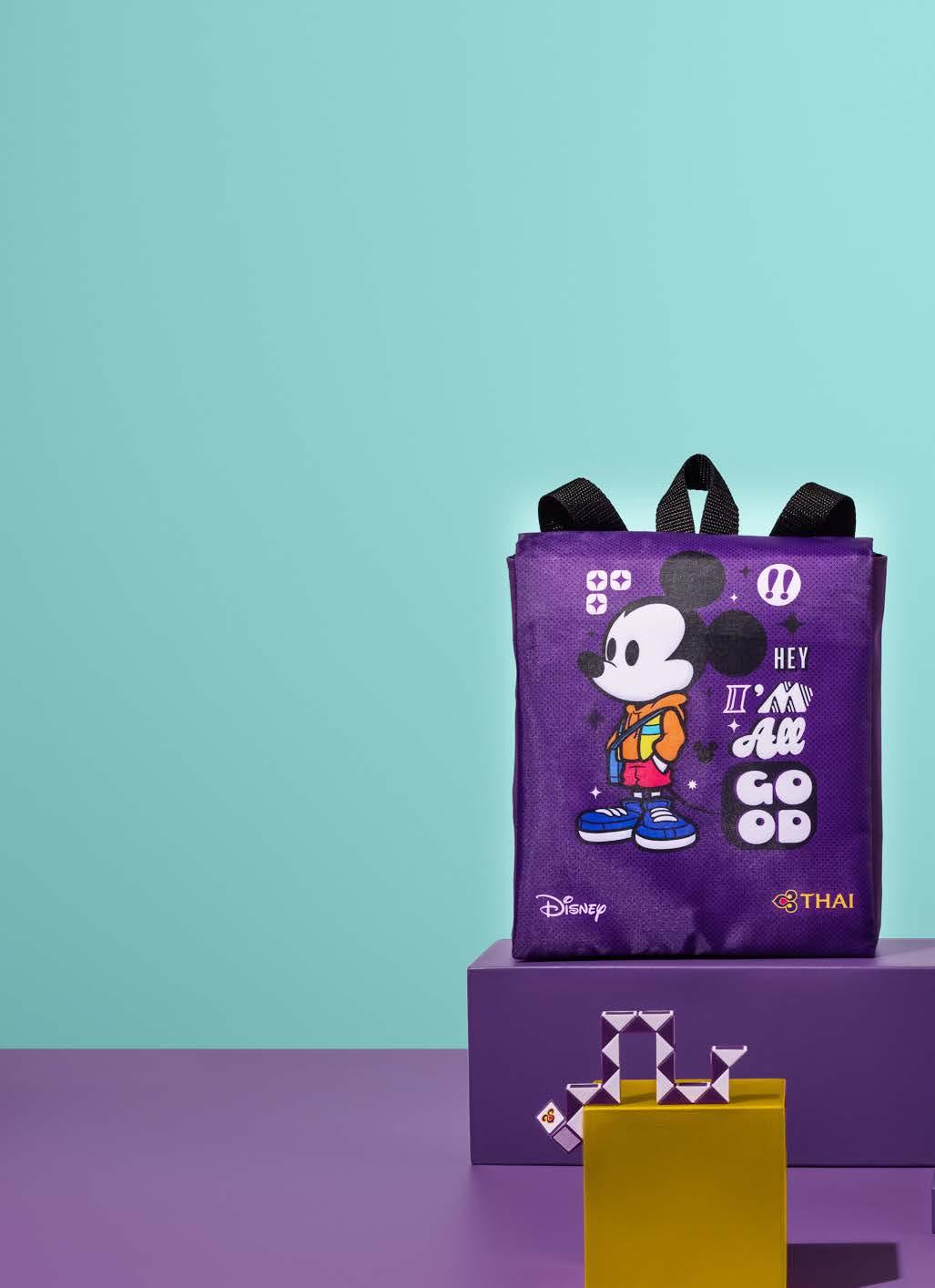
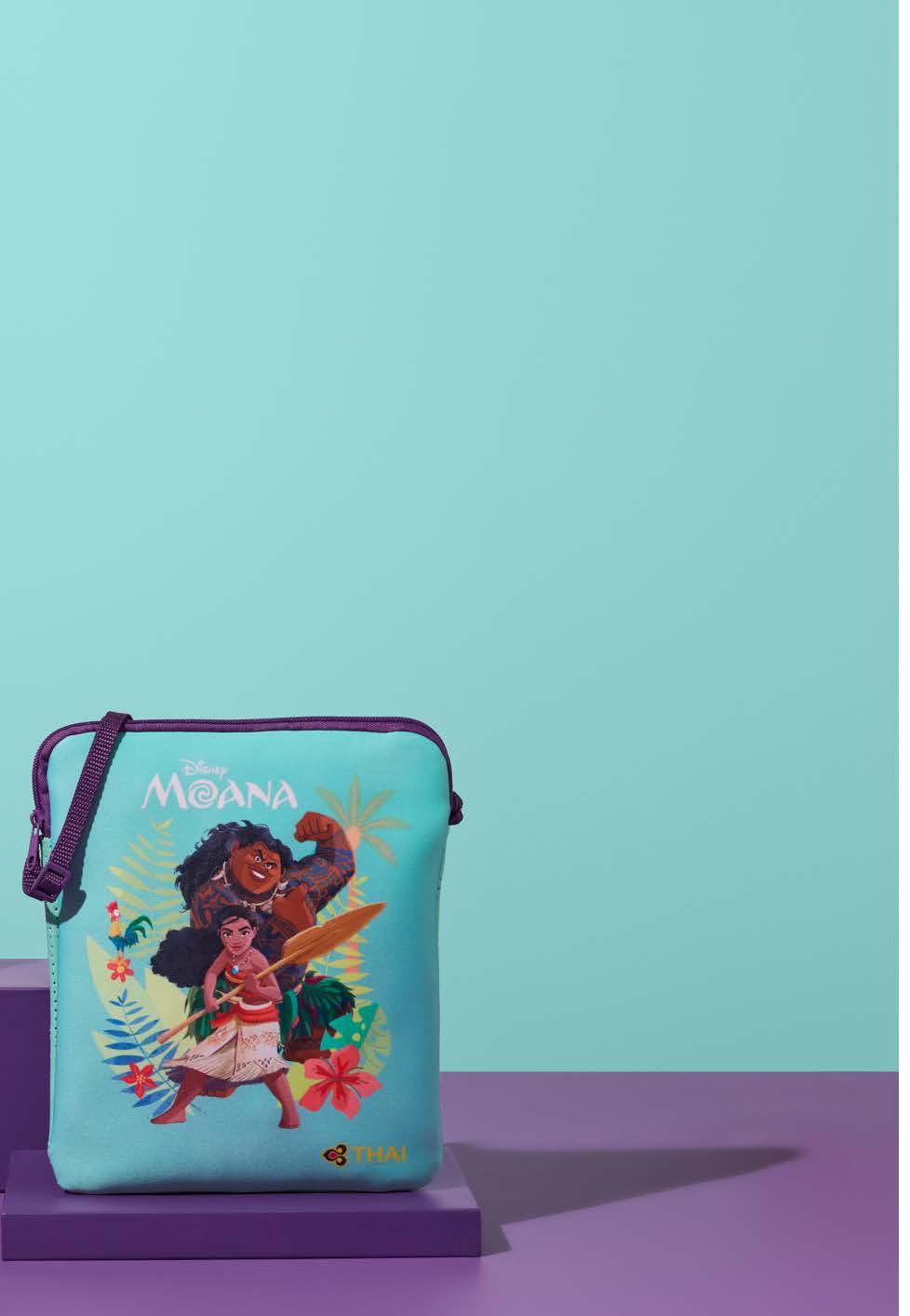
Brand partnerships also continue to play a major role in capturing children’s attention. Thai Airways launched its first-ever Disney-themed activity kits for young travelers in collaboration with Buzz in April. Inspired by Moana and Mickey Mouse, the kits combine storytelling, creativity and collectible elements while incorporating reusable components designed for post-flight fun.
In an April interview with Janet Gibson, Chief Commercial Officer at Buzz, she told PAX International the focus is on understanding what engages kids by looking at the world from their perspective, creating immersive experiences rather than simply placing a familiar character on a product.
“Some of Buzz’s longest-standing brand partnerships are in the kids’ sector, including more than 12 years partnering with Disney,” she says.
Also bringing beloved children’s characters to onboard amenity kits is Saudia. Featuring Illumination’s Minions, the kit received the 2026 PAX
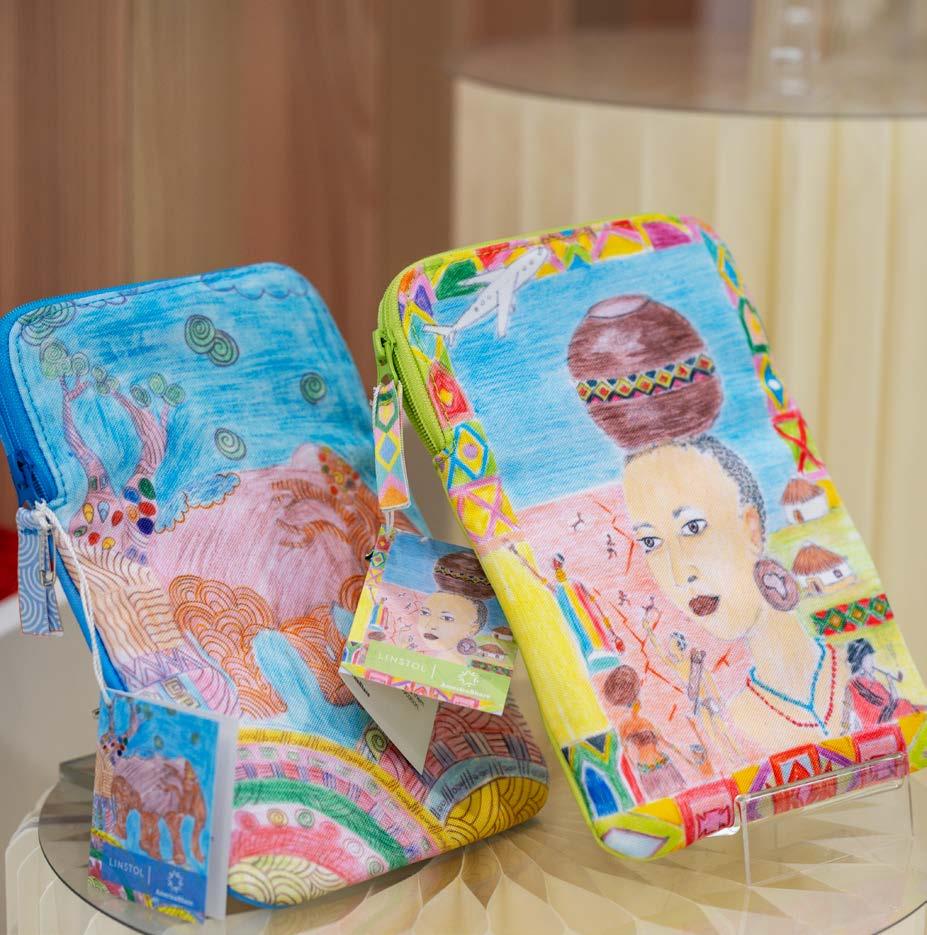
Through the “Where Art Takes Flight” initiative with AmericaShare, Linstol invites children in Kenya and South Africa to contribute artwork that is transformed into airline amenity kits, bringing young perspectives onboard
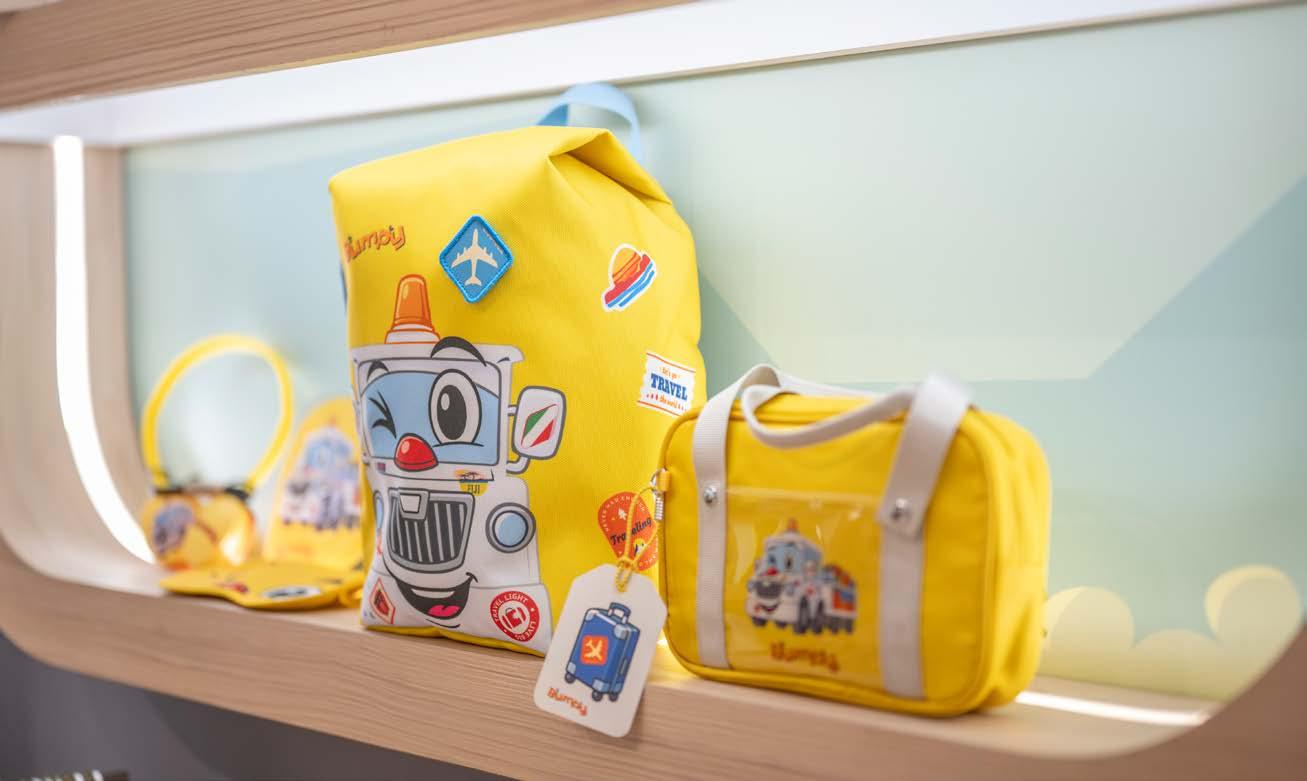
Readership Award for Best Children’s Amenity Kit - Middle East. The kits are the first to feature the popular characters inflight following the global success of the movie franchise. With playful engagement and thoughtful design, the kits feature buildable characters and games, and reusable items such as backpacks, pencil tins, keyrings and charging cables, all designed with post-flight reusability in mind.
Edutainment takes the runway
Beyond entertainment, many suppliers are finding ways to incorporate educational value into children’s amenities. Linstol’s Runway Rangers concept, displayed at WTCE 2026, transforms airport ground support equipment into engaging characters that help explain the teamwork
required to prepare an aircraft for departure.
Built around themes including responsibility, curiosity and problemsolving, the initiative offers airlines a flexible platform that can be integrated into activity books, amenity kits, inflight entertainment and digital content.
“Every flight is powered by an incredible team on the ground, but their stories are rarely told,” said Paula Wines, Creative Director at Linstol, in the Apil 17 press release. “Runway Rangers shines a light on those roles in a way that is fun, engaging and easy for children to understand.”
The concept reflects a growing emphasis on “edutainment,” where learning and engagement are combined to create deeper connections with both aviation and travel.
Linstol is also exploring how children can contribute creatively to the passenger experience. Through its partnership with AmericaShare, the company unveiled the “Where Art Takes Flight” initiative, inviting artwork from children in Kenya and South Africa to be adapted into airline amenity kits, bringing authentic youth perspectives onboard while supporting creative development programs in underserved communities.
“We are honored to support and celebrate the imagination and talent of these young artists,” said Mark Russell,
Chief Executive Officer at Linstol, in the April announcement.
The partnership reflects a growing focus within the inflight sector on integrating cultural storytelling and social impact into passenger experience design.
Baby on board
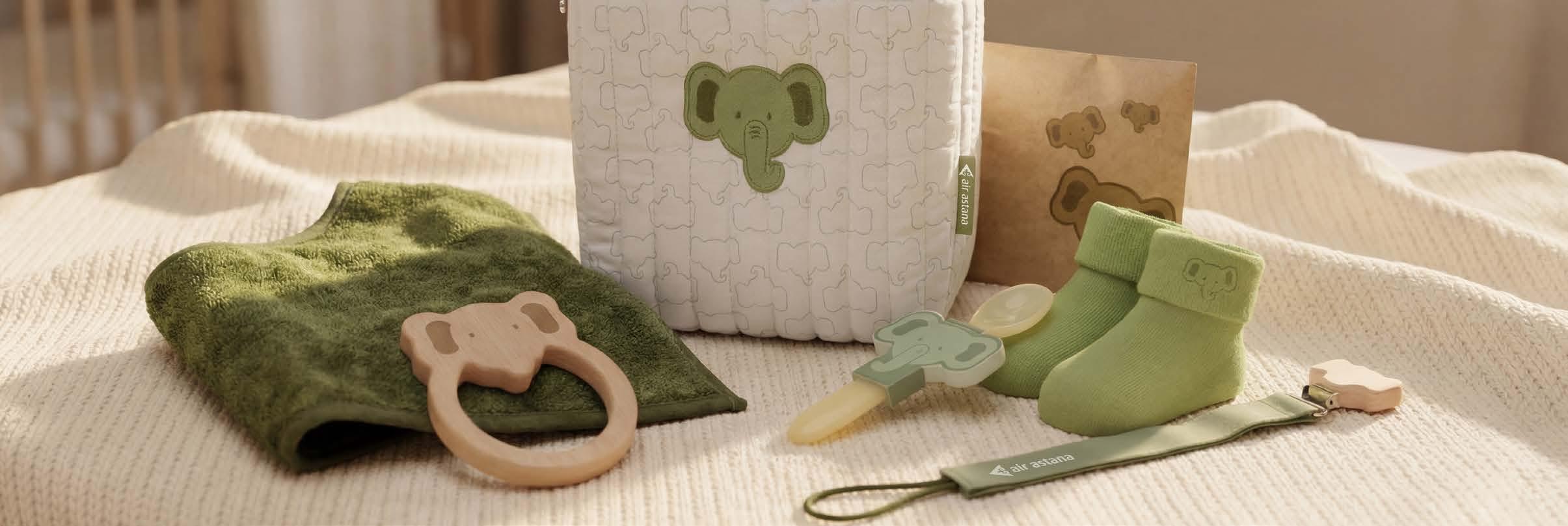
Meanwhile, suppliers are paying close attention to the needs of the youngest travelers—and their parents. Bayart Innovations recently partnered with Air Astana to develop a premium infant kit featuring care products, comfort items and practical essentials designed specifically for babies traveling in premium cabins. The kit received the 2026 PAX Readership Award for Best Children’s Amenity Kit - CIS Countries.
“Designing for infants requires a unique sensitivity,” Jean-Guillaume Pollet, CEO at Bayart Innovations, told PAX International this spring. “Our goal was to create a kit that is as practical for parents as it is reassuring for babies, ensuring every element contributes to well-being and ease during the flight.”
Investing in the next gen
The growing emphasis on family support inflight reflects changing passenger expectations, particularly as airlines seek to deliver premium experiences that accommodate every generation of traveler. Alongside educational storytelling and the integration of beloved characters into children’s amenity kits, these initiatives signal a shift in how airlines are engaging young passengers.
Children’s amenities are no longer viewed as inflight distractions. Instead, they have become strategic tools that support family travel, encourage learning and creativity, reinforce brand identity and create memorable experiences that extend well beyond the flight. Investing in the next generation of passengers may prove to be one of the most valuable journeys for airlines.
Thai Airways’ First Disney-themed activity kits, inspired by Moana and Mickey Mouse and created in partnership with Buzz, blend storytelling, creativity and collectible keepsakes to keep young travelers engaged long after the flight ends
Linstol’s Runway Rangers concept brings airport ground support equipment to life as educational characters
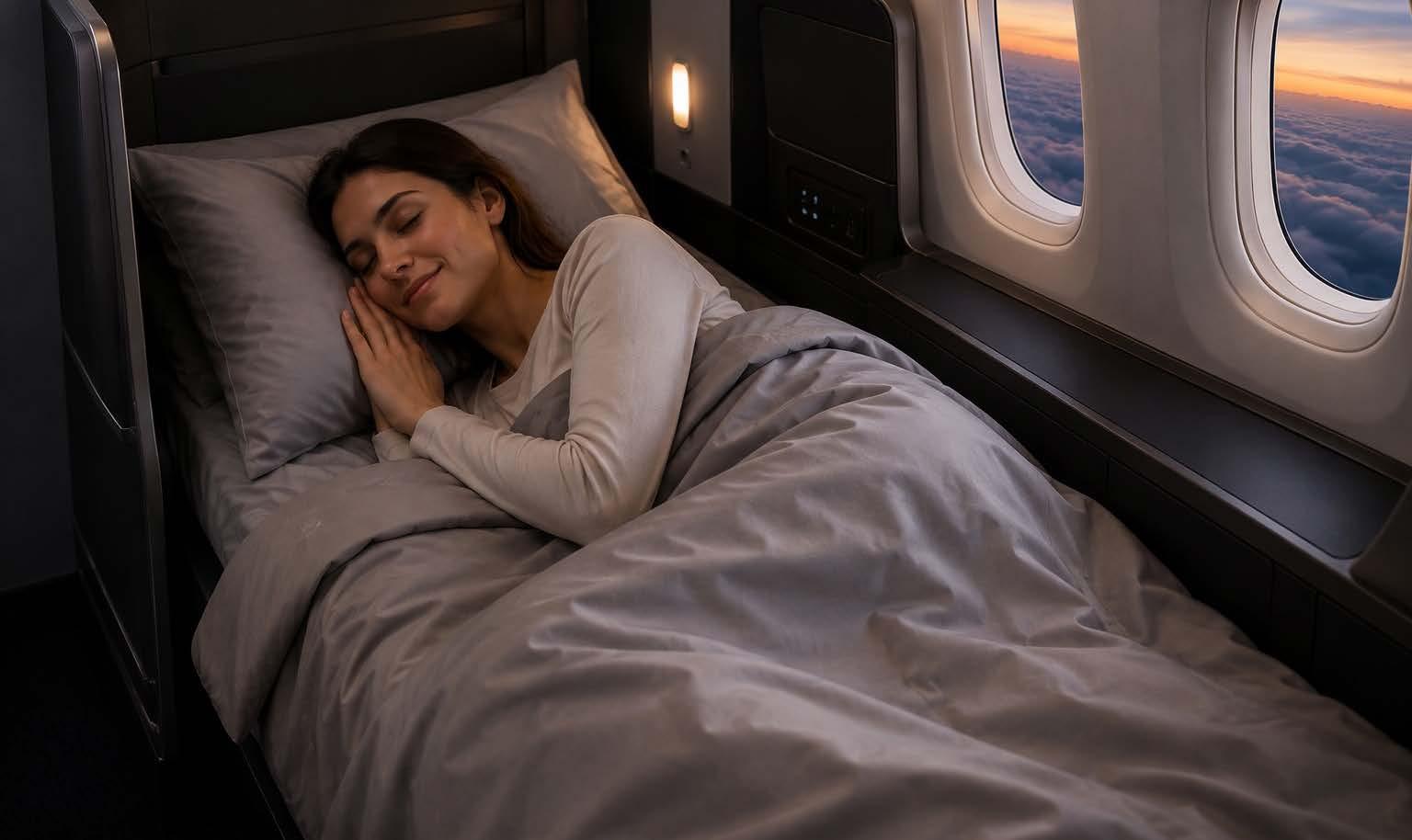
Sleep comfort is becoming a key differentiator as airlines refine the premium passenger experience
The business of better sleep
Soft, breathable materials, refined design and restorative rest are shaping a new approach to cabin comfort through the collaboration between Procurall Solutions and Lunya
by JANE HOBSON
Sleep comfort is emerging as a critical differentiator as airlines continue to refine the premium passenger experience. From bedding and textiles to the overall onboard environment, carriers are increasingly investing in products that help travelers arrive feeling rested and restored. Helping to meet that demand is Procurall Solutions, whose exclusive partnership with luxury sleepwear and lifestyle brand Lunya is bringing a new level of sophistication to cabin comfort.
Known for its minimalist aesthetic and focus on restorative sleep, Lunya has built a reputation around products designed to enhance relaxation and well-being. With Procurall Solutions, the brand’s signature approach to sleep is being thoughtfully adapted for the aviation environment, offering airlines an opportunity to extend premium comfort beyond the seat itself.
“At Procurall Solutions, we believe that exceptional comfort in the premium cabin can be delivered with a conscious footprint,” says Crystal Enrico, VP of Hospitality and Brands at Procurall Solutions. “Our mission comes to life through exclusive, high-profile partnerships. In the cabin comfort sector, our exclusive collaboration with Lunya introduces premium, responsibly manufactured bedding to the skies.”
Procurall’s textile development strategy reflects the shift toward products that balance luxury, performance and sustainability.
“Innovation drives our design process, especially when it comes to onboard textiles,” Enrico explains. “To match the highest standards of luxury and sustainability, we utilize natural fibers such as bamboo to create bespoke bedding collections that are exceptionally soft and breathable.”

Procuralls says the partnership also underscores how consumer brands can successfully transition into the travel space when supported by specialized aviation expertise. While Lunya contributes its strong brand identity and sleep-focused design philosophy, Procurall adapts those elements to meet the operational demands of airline service, from sourcing and manufacturing to large-scale global distribution.
“Renowned in the retail world for redefining modern sleepwear with a minimalist, high-end aesthetic, Lunya’s quintessential sleep designs have been meticulously tailored by Procurall specifically for the unique requirements of the aviation environment,” says Enrico.
By combining luxury retail sensibilities with aviation knowhow, the two companies are helping airlines create a more restful onboard experience.
Crystal Enrico, VP of Hospitality and Brands, Procurall Solutions

The wipe that went viral
From Reddit fandoms to passenger stockpiles, RMT Global Partners’ WeCare wipes reveal how practical onboard products can become unlikely cult favorites
by JANE HOBSON
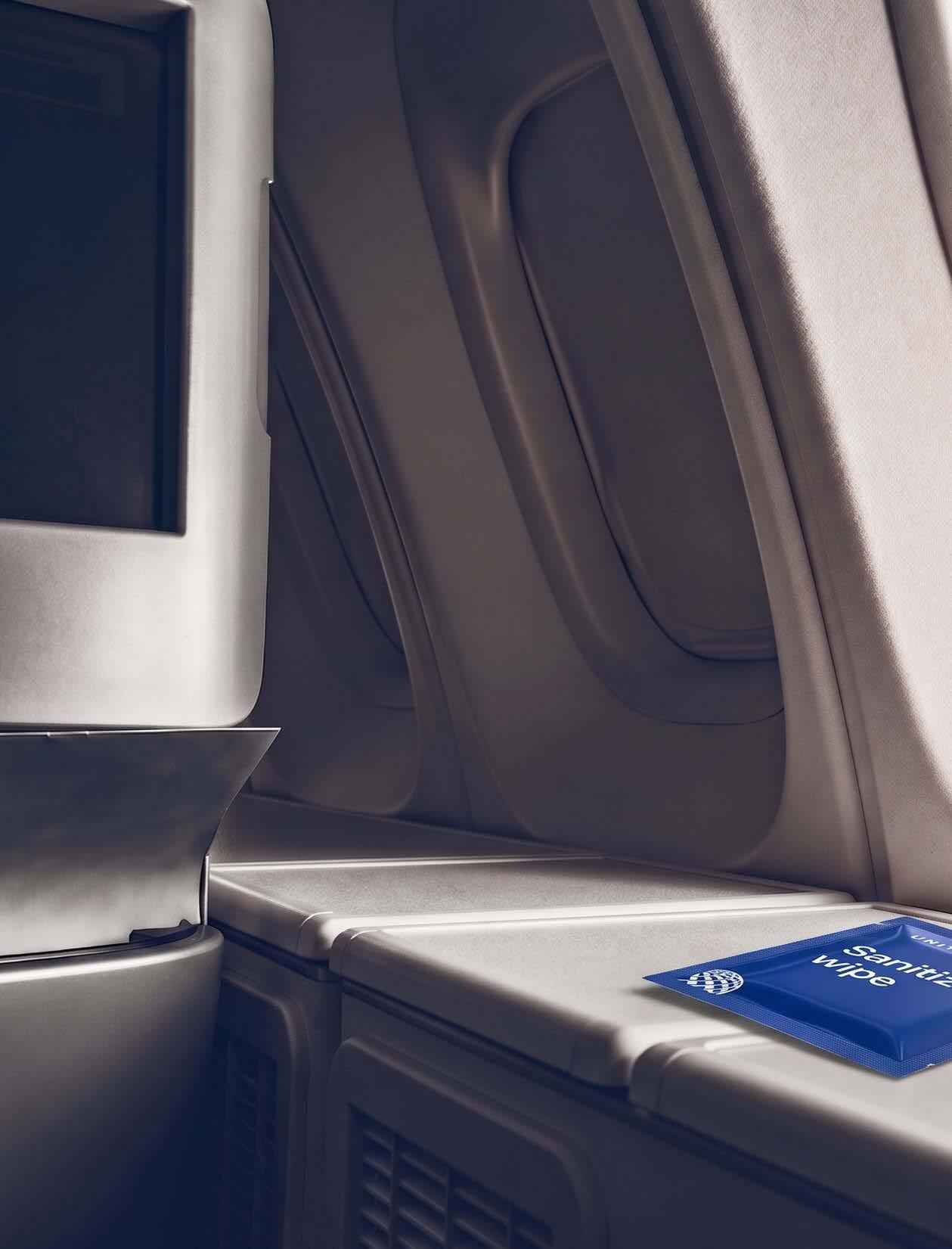
Asanitizing wipe is not usually the onboard product passengers rave about after a flight. But United Airlines’ sanitizing wipes, developed with RMT Global Partners as part of its WeCare product range, have become an unexpected inflight sensation—earning social media buzz, Reddit threads and even a loyal following among frequent travelers.
For RMT, the response underscores a larger shift happening in the passenger experience space: even the most functional onboard items can leave a lasting impression when they deliver comfort, reassurance and a premium tactile experience.
From pandemic necessity to passenger favorite
“We started creating the WeCare wipes at the start of the [COVID-19] pandemic when it was imperative to wipe down every space, and our partners that jumped onboard with wipes found this to be a great opportunity to deliver a feeling of safety and confidence to their passengers by empowering them with our wipes,” Richard Tuttle tells PAX International.
The product emerged during one of the airline industry’s most operationally and emotionally complex moments, as carriers worked to reassure passengers that flying was safe again. Alongside HEPA filtration messaging, enhanced cleaning procedures and aircraft sanitization protocols, the wipes offered something more immediate: control.
Passengers could clean their own tray table, armrest or seatbelt buckle themselves—creating a small but meaningful sense of confidence in the cabin environment.
RMT’s partnership with United Airlines began shortly after March 2020, with full activation around June that year. Despite transportation

and port disruptions affecting global supply chains, RMT maintained uninterrupted product availability throughout the rollout.
While the urgency of the pandemic has faded, the wipe never disappeared from the passenger journey.
As travel demand rebounded, evolving passenger expectations around cleanliness and comfort helped functional products like wipes maintain relevance well beyond their
Richard Tuttle, Founder and CEO, RMT Global Partners
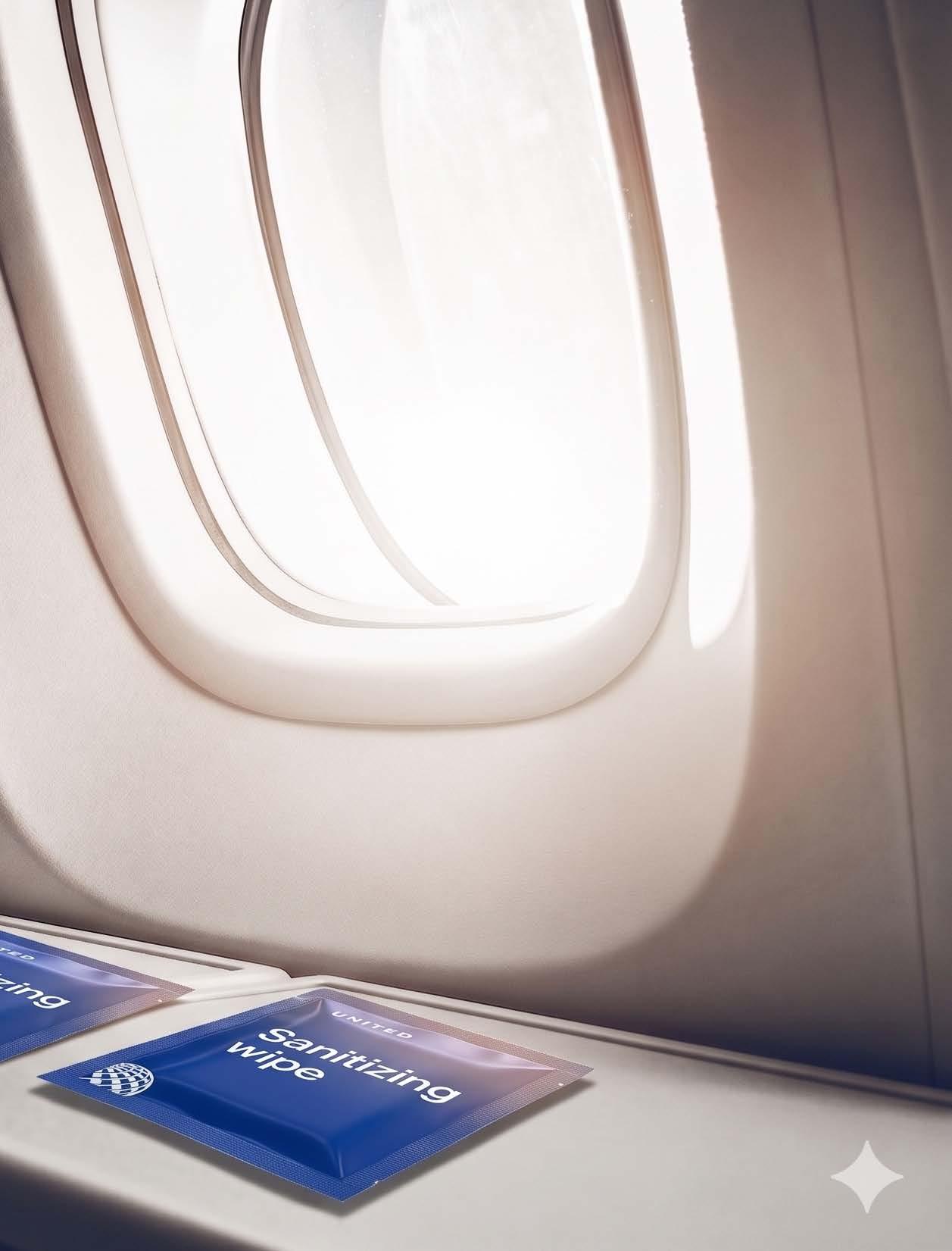
Passengers prefer the United Airlines sanitizing wipes due to the thick, durable texture and high liquid load
original purpose. In today’s fast-turn cabin environment, they continue to serve as both a practical amenity and a subtle brand touchpoint.
The rise of the “wipe fandom”
For some travelers, the WeCare wipe has become far more than a utility item. Passengers have taken to Reddit and social media to discuss the wipes’ unusually thick texture, generous size and premium feel, with some users openly wondering where they can buy more—and others proudly sharing personal stockpiles collected from flights.
The wipes even made their way onto the November 2024 episode of the “Born to Love” podcast hosted by actress Ellie Kemper and actor Scott Eckert, featuring comedian Michelle Collins.
“When you fly United, they have these wipes that come individually wrapped,” Collins explains. “They are the best. They are huge. They are very thick. It is a miracle product and you cannot buy them on Amazon—I have looked. You have to fly United to get the wipe. I stockpile them.”
For Tuttle, the level of passenger enthusiasm came as a surprise.
“We always knew it was a great product, but truthfully, did not realize how it would start to have such a fandom and demand for it on social media,” he says. “Of course, we have

been loving the response and are looking at other ways to expand this division to benefit our partners.”
Why the wipe works
Part of the product’s appeal comes down to tactile design.
“The premium feel of our wipe comes from its higher-GSM nonwoven cloth, which gives it a thicker, more durable texture,” Tuttle says. “In addition, our higher liquid load allows the wipe to stay effective longer and clean more surfaces during use.”
That sensory experience matters more than ever in the cabin, where passengers increasingly associate small details with broader perceptions of care, cleanliness and quality. A wipe that feels substantial—and avoids an overpowering scent—can quietly reinforce an airline’s attention to comfort.
Operationally, the product also fits neatly into the modern boarding process. Lightweight and compact, the wipes are easy for crew to distribute at boarding or pre-place at seats before passengers arrive.
Tuttle describes the wipe as a natural “greeter” item for the cabin.
“Wipes act as an icebreaker as passengers board the aircraft,” he says. “It is a great item that is lightweight, functional and more likely to end up in their bag because they want more, rather than being left behind like a trinket they will never use.”
Utility with branding power
For RMT, the next opportunity lies in turning functional products into storytelling tools.
Custom colors, seasonal messaging, branded packaging and QR-code integrations can transform a simple wipe into an extension of an airline campaign or onboard communication strategy.
The broader takeaway for airlines is that utility no longer has to be invisible. When executed thoughtfully, even a small sanitizing wipe can help shape first impressions, reinforce passenger confidence and create a surprisingly memorable brand impact.
The United Airlines sanitizing wipes, developed with RMT Global Partners, have become an unexpected inflight sensation
Wellness

Not every premium-cabin upgrade is immediately visible. Sometimes, the details that leave the strongest impression are the ones passengers experience, rather than see. Oral care is one such touchpoint, emerging as an understated but increasingly important component of onboard comfort and well-being.
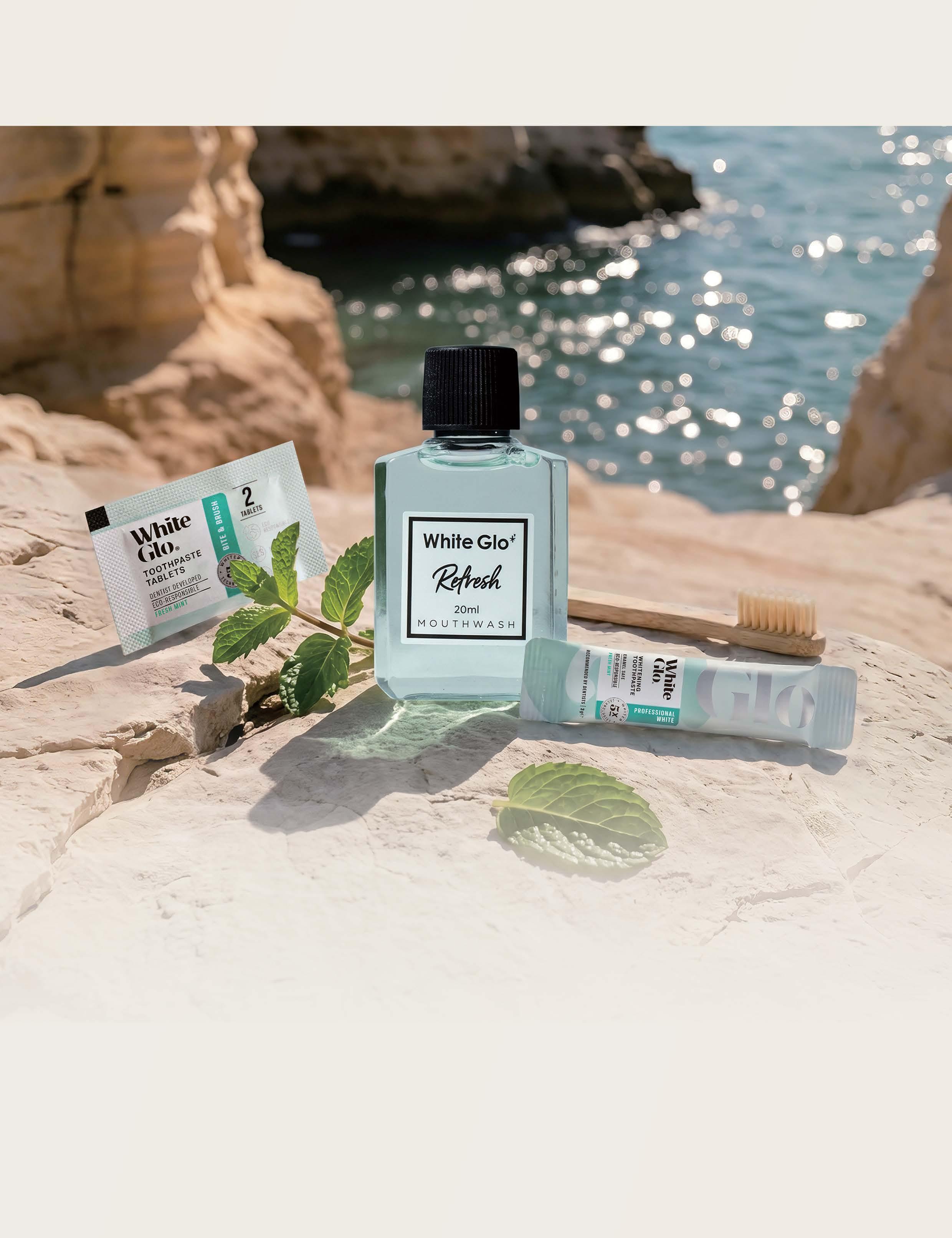
As airlines refine their premium offerings, amenity selection is becoming more closely tied to passenger wellness. White Glo House is tapping into this shift with White Glo Refresh Mouthwash, an alcohol-free formulation developed for the unique conditions of air travel.
refresh
Designed for the realities of air travel, White Glo Refresh Mouthwash offers airlines a wellness-focused amenity that supports comfort, freshness and brand value by JANE HOBSON
“White Glo Refresh Mouthwash is alcohol-free by design. This is grounded in clinical rationale: low-humidity, pressurized cabin environments at cruising altitude already contribute to oral dryness, and alcohol-based mouthwashes may further exacerbate this effect, leaving passengers with a dry or irritated mouth shortly after use,” says Isabella Chen, Head of Airline and Travel Partnerships at White Glo. “In contrast, White Glo Refresh Mouthwash is formulated to be gentle and nondrying, working in harmony with the cabin environment.”
Chen also tells PAX International that Refresh Mouthwash delivers eight
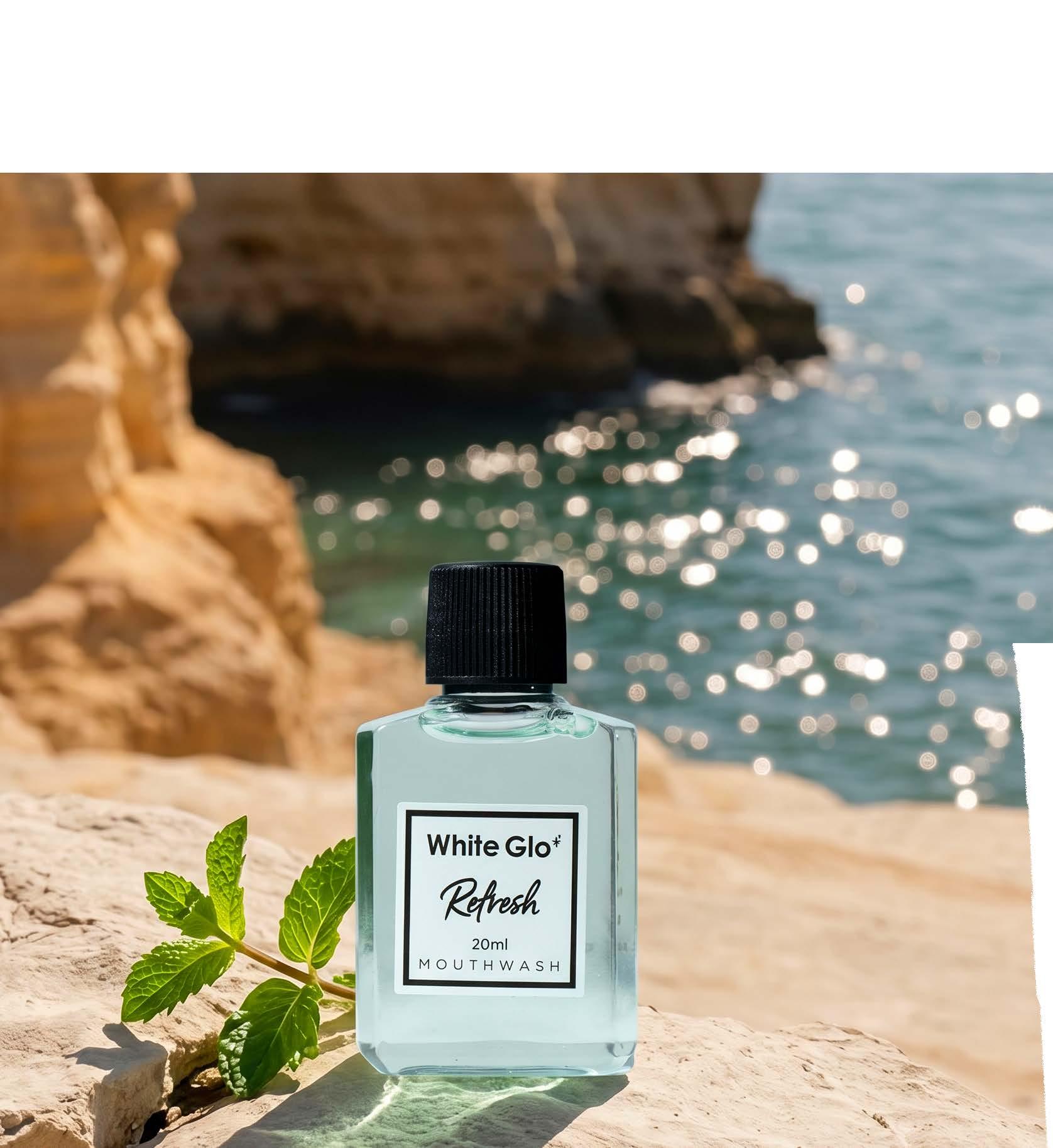
times the breath freshness of standard White Glo mouthwash. For airlines operating flights of 10 to 14 hours, the product represents a small but meaningful enhancement that addresses a common discomfort associated with long-haul travel.
The launch also reflects broader changes in how airlines evaluate onboard products. Increasingly, carriers are seeking amenities that align with both wellness and sustainability objectives. To that end, White Glo House has introduced paperbased packaging as an alternative to conventional plastic formats, responding to growing passenger expectations around environmental responsibility.
“The timing of White Glo Refresh is particularly relevant,” says Chen. “Its launch aligns with a broader industry transition in which premium cabin strategy is increasingly centered on passenger well-being and elevated experience.”
While oral care has traditionally occupied a small space within the amenity kit, its role is evolving. As airlines continue to differentiate premium cabins through carefully curated products and experiences, suppliers are finding new ways to transform everyday essentials into meaningful touchpoints—proof that even the smallest details can leave a lasting impression.
Isabella Chen, Head of Airline and Travel Partnership, White Glo
White Glo Refresh Mouthwash is an alcohol-free formula designed to address the unique conditions of air travel
scent Making sense of
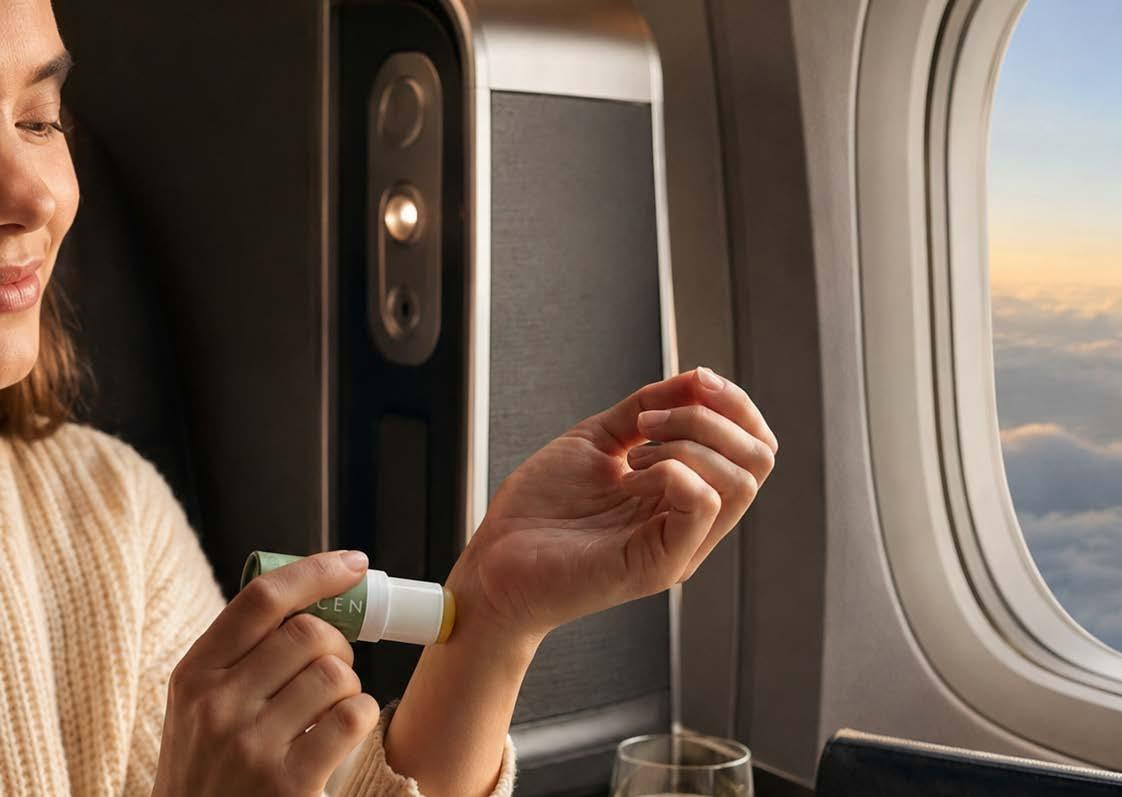
Scentered’s solid aromatherapy balm collection, offers a discreet inflight solution to support well-being, rest, mental clarity and stress relief for passengers
In this guest column, Alison Wells, CEO, Plane Talking Products, and Lara Morgan, Founder of wellness brand Scentered, discuss the role that scent products play at key points in the passenger experience
Inflight wellness and amenity provision is evolving fast.
Passengers are moving away from pre-packaged, one-size-fits-all amenity kits and increasingly looking for onboard experiences that feel more personal, thoughtful and holistic.
Social media shows that traveler’s approach long-haul flights in very different ways. For some, the journey is a rare opportunity to switch off, step away from screens and take care of themselves without interruption. For others, it is a chance to focus and finally finish that presentation they have been putting off. For many, it is simply time to rest and catch up on much-needed sleep.
At Plane Talking Products (PTP), we have been developing amenity programs that place scent at the center of the passenger experience. Scent has a powerful effect on how we feel because our sense of smell is directly connected to the limbic system —
the part of the brain associated with emotion, memory and behavior. Unlike other senses, scent can bypass much of our conscious processing, which is why a fragrance can instantly help us feel calmer, more focused or more energized.
Lara Morgan, Founder of wellness brand Scentered, who we work closely with at PTP, explains, “Travelers can benefit from using different aromas strategically throughout their journey. Calming blends such as lavender, chamomile and palmarosa can support relaxation and bedtime routines in a new time zone, while more uplifting and refreshing blends such as rosemary, mint and clary sage can help encourage alertness and a sense of renewal during the journey.”
Within an inflight amenity program, scent can help passengers shape the journey they want. By offering carefully chosen scent-based products at key moments during the flight, airlines can


create an experience that feels relevant, responsive and different each time a passenger travels.
“At Scentered, we have always believed that well-being should be portable. That is why we created our well-being balms — easy to use and travel friendly. Our solid aromatherapy balm blends Sleep Well, Focus and Escape are compact, spill proof, TSA friendly and easy to use discreetly inflight, perfect for longhaul travel, where passenger wellbeing, quality rest, mental focus and stress management are increasingly important,” Morgan shares.
At PTP, we believe that scent, combined with a small number of quality amenities delivered to the seat at the right moment, can offer passengers a unique and memorable experience — one that continues to resonate long after the flight.
Alison Wells, CEO, Plane Talking Products
Lara Morgan, Founder, Scentered
Digging
deeper
Bayart Innovations uncovers new life for onboard amenities with mindful design
by JANE HOBSON
For Bayart Innovations, sustainability begins with an important principle: create onboard products that remain useful long after arrival.
The French amenity supplier has built its “More Effect, Less Waste” philosophy around designing products that travelers want to reuse rather than discard. The approach traces its roots to the company’s namesake and Founder, Achille Bayart, who transformed fabric offcuts into new creations, establishing a mindset of resourcefulness that continues to guide the business today.
That legacy now carries forward under the leadership of President Albert Facques, Bayart’s grandson, and CEO Jean-Guillaume Pollet, who continue to champion the same principles of thoughtful design, longevity and waste reduction.
“Avoiding waste is at the heart of Bayart Innovations’ DNA,” Pollet tells PAX International. “Amenity kits should not be seen as disposable products. We design every item with a second life in mind, beyond the aircraft cabin.”
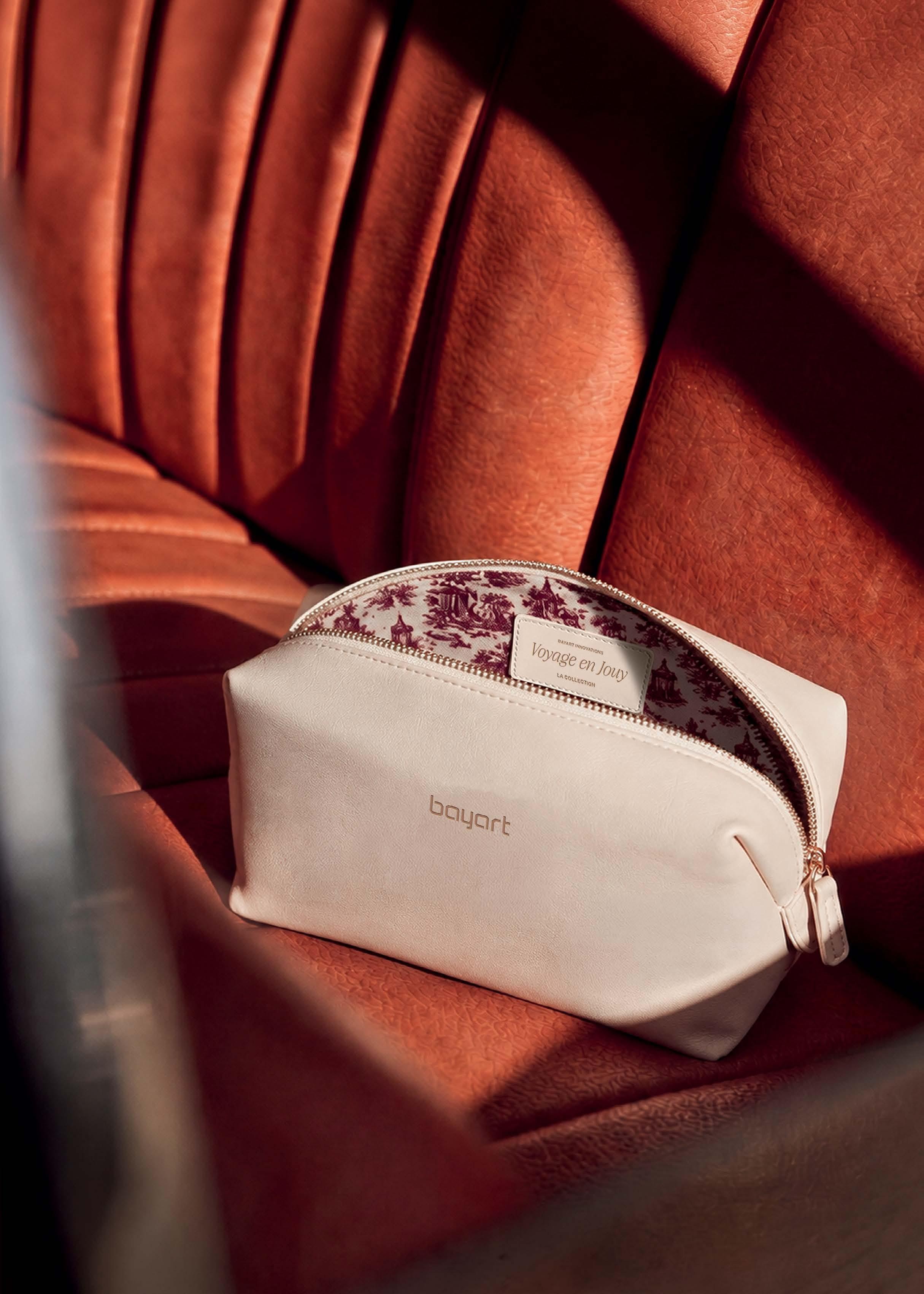
This approach is reflected in the company’s reusable pouches, which accompany many of Bayart’s amenity kit programs. The pouches aim to extend the lifecycle of onboard products while delivering lasting value to passengers of all demographics.
“Reusability is not a feature for us—it is a design principle. If a product is not desirable beyond the flight, we have not fully succeeded in our design approach,” Pollet adds.
One of the most recognizable examples is the 2026 PAX Readership Award-winning Lacoste amenity kit developed with Turkish Airlines. The collaboration received this year’s award for Best Economy/Premium Economy Class Amenity Kit in Europe and has become a benchmark for reusable, collectible branded Economy Class amenities.
But even smaller onboard items often find a second life elsewhere— a point illustrated by a recent story Bayart shared with PAX International.
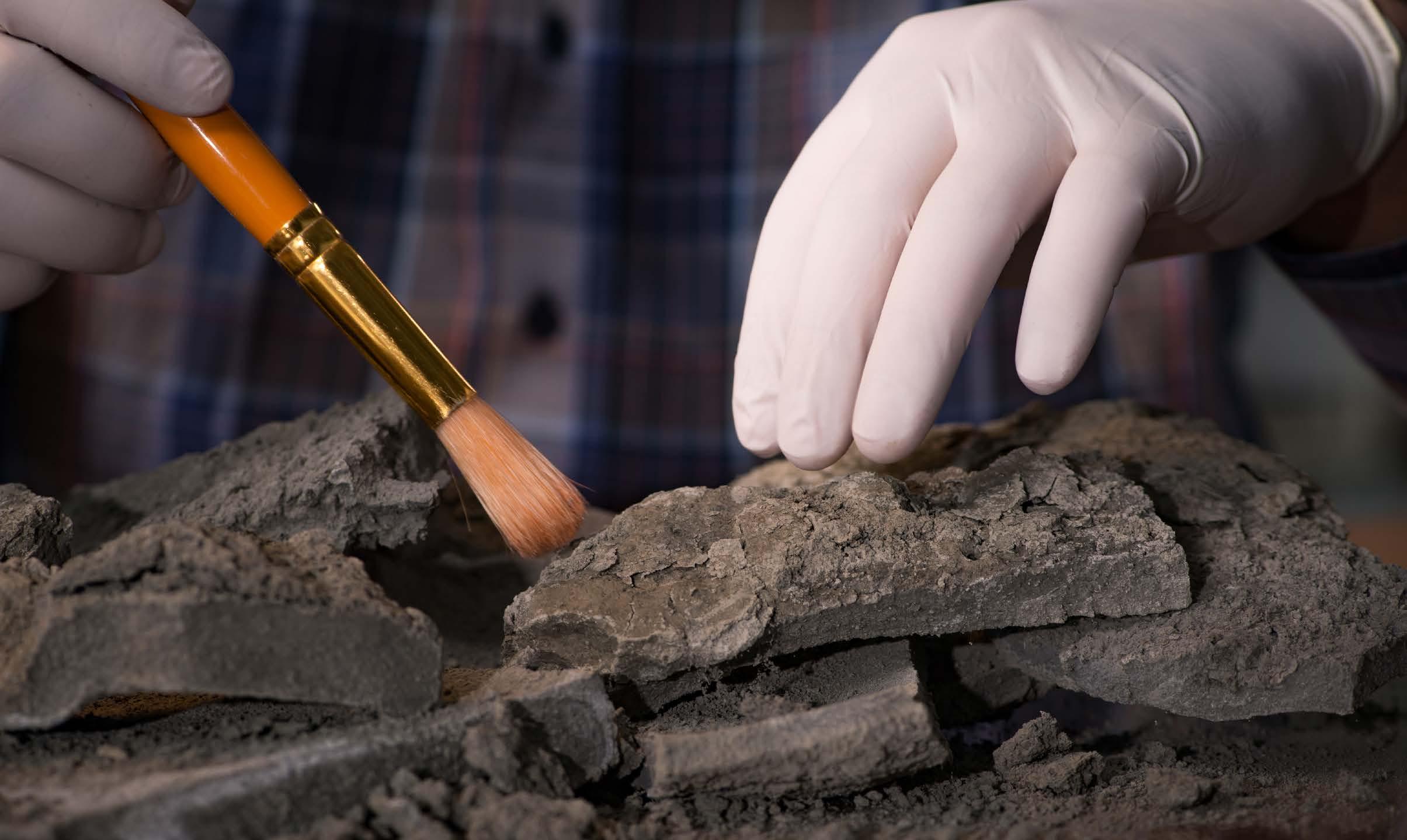
An archaeologist contacted the company to explain that he had

continued using a pair of airline-issued earplugs during excavation work in Laos, Pollet recounts. The story highlights the unexpected longevity that thoughtfully designed amenities can achieve.
Inspired by this experience, Bayart recently supplied unused earplugs to the University of Bordeaux in support of an archaeological mission, reinforcing its belief that even small onboard items can continue creating value long after passengers leave the aircraft.
“The real measure of an amenity is not how it performs onboard, but how long it continues to be useful once the journey is over,” Pollet says.
Jean-Guillaume Pollet, CEO, Bayart Innovations
JOIN PAX PANEL
The industry’s best virtual roundtable discussion series, featuring executives and representatives from the industry’s most iconic companies
Share key insights, learnings and experiences from your sector in PAX Panel: All episodes available online Featured in digital editions of PAX International and PAX Tech
Share on your website and social channels Attract new clients

PREVIOUS SPONSORS INCLUDE: FOR ALL EPISODES CLICK HERE!


ALL PAX PANEL EPISODES ARE AVAILABLE ONLINE SO THAT EVERYONE CAN WATCH AND SHARE
The PAX Panel concept is created and hosted by PAX International and PAX Tech Contact jane@pax-intl.com to become a panelist
The power of sport

With a summer of global sport on the horizon, FORMIA discusses how authentic partnerships rooted in identity and place help airlines turn sponsorships into meaningful passenger connections
by JANE HOBSON


As the worlds of sports, culture and lifestyle become increasingly interconnected, airlines are rethinking partnerships and onboard experience to create deeper emotional connections with passengers. This summer, PAX International caught up with FORMIA to learn more about how amenity kits can turn a moment of passion into long-term brand affinity.
“Airlines are increasingly using partnerships to connect with the cultural moments and passions that matter most to their passengers, bringing those stories into the travel experience in new and meaningful ways,” says Roland Grohmann, CEO & Managing Partner, FORMIA.
According to travel intelligence and insights platform Skift, one in five travelers now plan trips around specific events. Grohmann says this presents airlines with a unique chance to engage passengers while anticipation for those experiences is already building.
FORMIA Chief Marketing Officer Marisa Pitsch says these partnerships are reinforcing the amenity kit’s role as an important touchpoint in an airline’s broader brand strategy.
“As airlines align themselves with major sporting and cultural moments, the amenity kit becomes a powerful way to bring that story into the passenger experience,” she says. “It transforms a partnership from something passengers see into something they can hold, use and remember.”
Uniting fans long after landing
Major sporting events capture global attention and unite fan communities across borders. Wilbert De Louw,
Roland Grohmann, CEO & Managing Partner, FORMIA
Wilbert De Louw, Co-CEO, FORMIA
Marisa Pitsch, Chief Marketing Officer, FORMIA
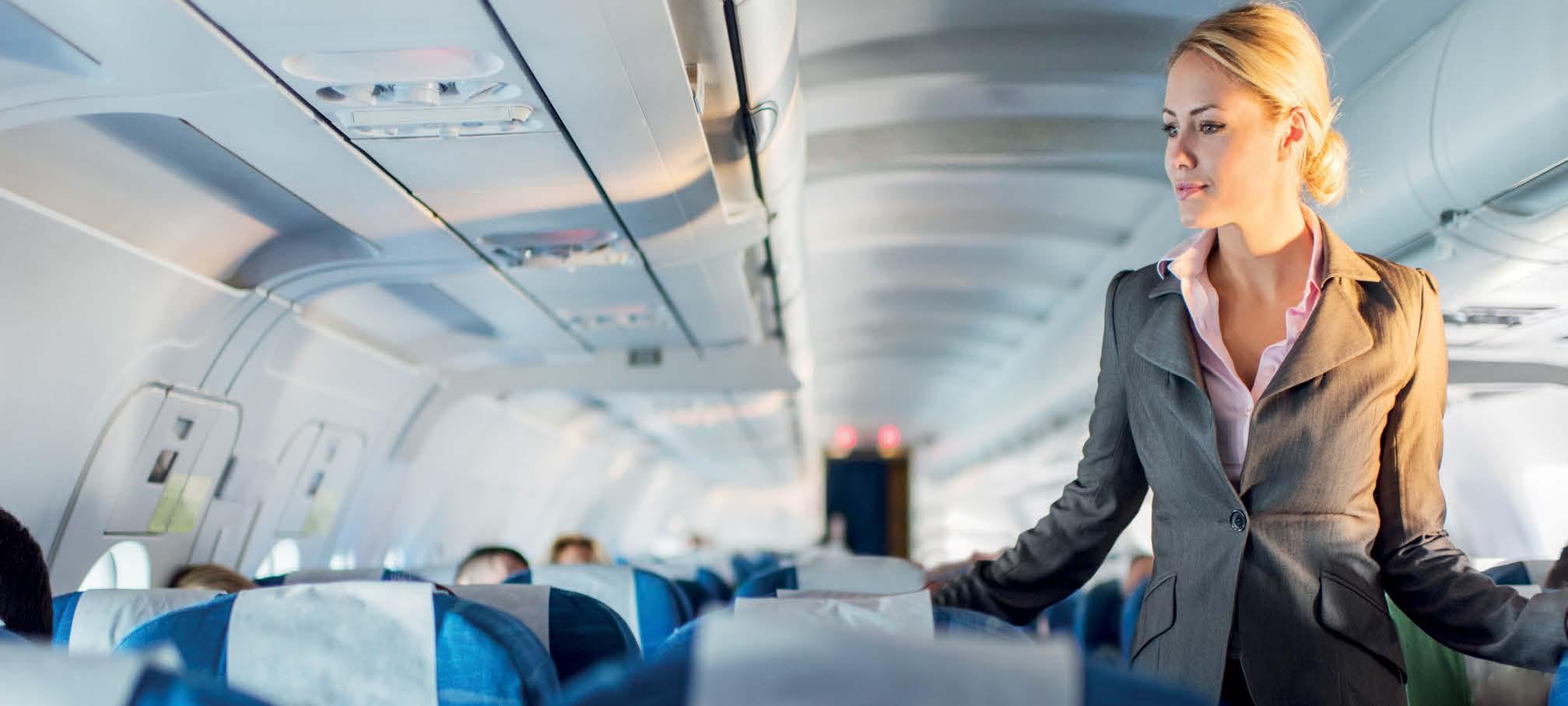
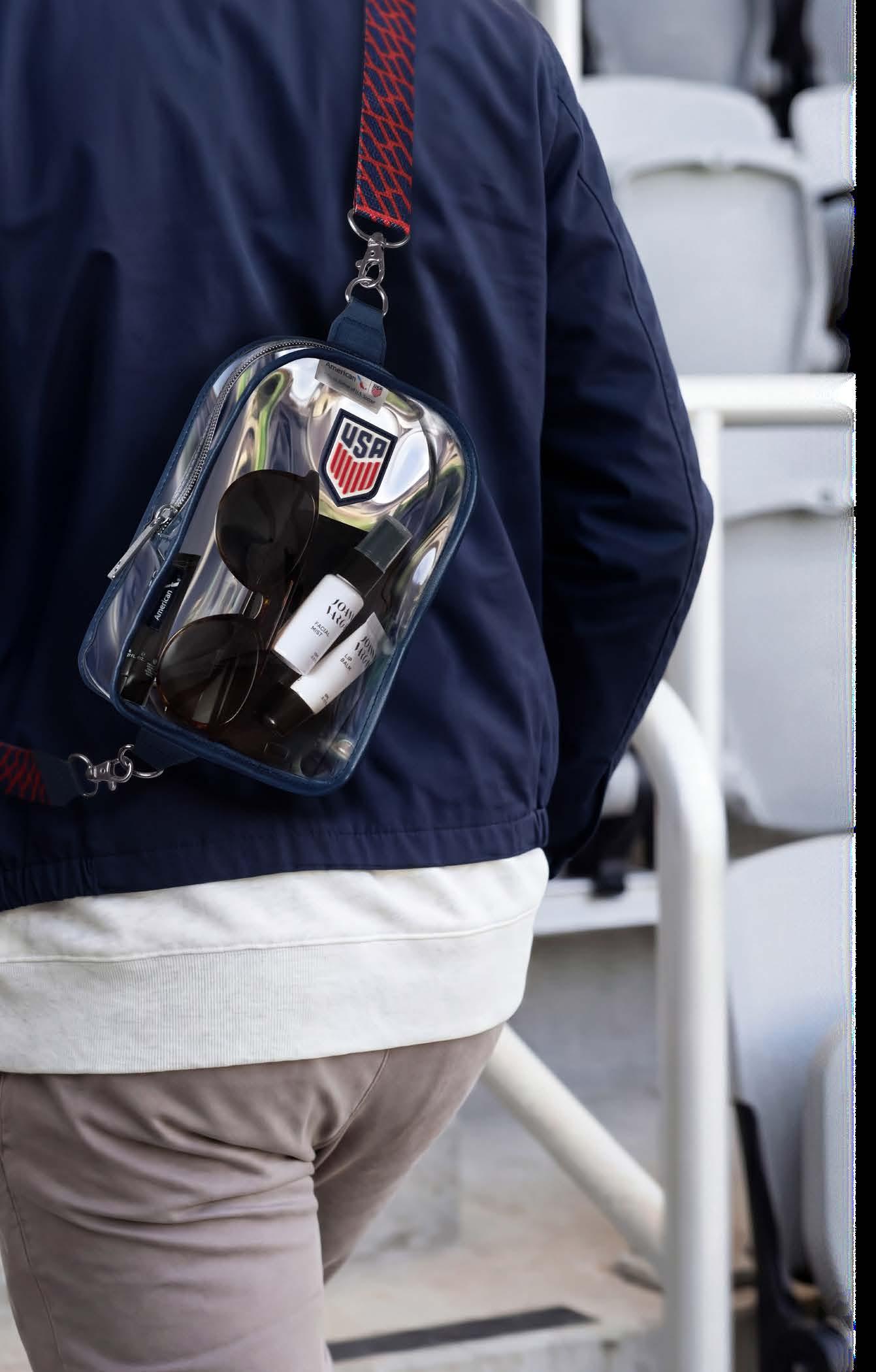
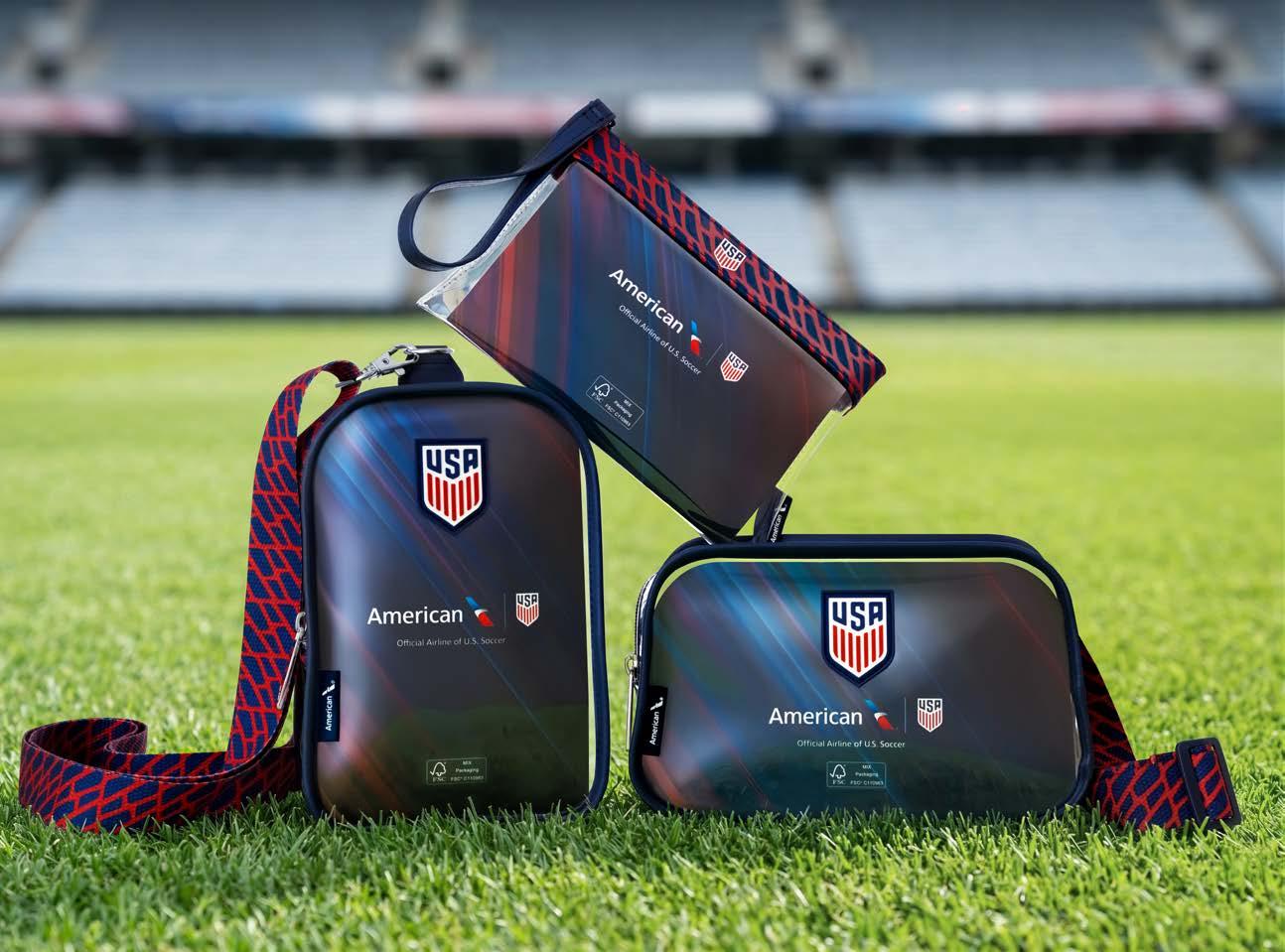
Designed to move “from the plane to the game,” the stadiumready U.S. Soccer kit is built for use beyond the flight
Co-CEO at FORMIA, says these moments give airlines a special role: physically carrying fans to the event while making the journey part of the build-up.
American Airlines launched U.S. Soccer amenity kits in May ahead of a summer of soccer across North America, facilitated by FORMIA. Designed to move “from the plane to the game,” the stadium-ready bags are created for use well beyond the flight itself.
The program was supported by a broader launch campaign, including a New York event attended by U.S. Soccer legend Cobi Jones, American Airlines and U.S. Soccer executives, media and influencers. The amenity kit formed part of a wider effort to engage fans before travel and extend the partnership into the passenger journey.
“Together, these moments helped build anticipation around the partnership before passengers ever stepped onboard, while the amenity kit carries that experience into the journey itself,” De Louw says. “By creating something fans can see, use and carry with them, the program helps connect the airline, the sport and a global community of fans long after landing.”
Sport as a storytelling platform
FORMIA says sport becomes a powerful storytelling tool when it reflects the identity the airline already holds.
American Airlines’ U.S. Soccer amenity kits, developed with FORMIA, launched ahead of a summer of soccer across North America as part of a fan-engagement campaign extending the partnership into the passenger journey
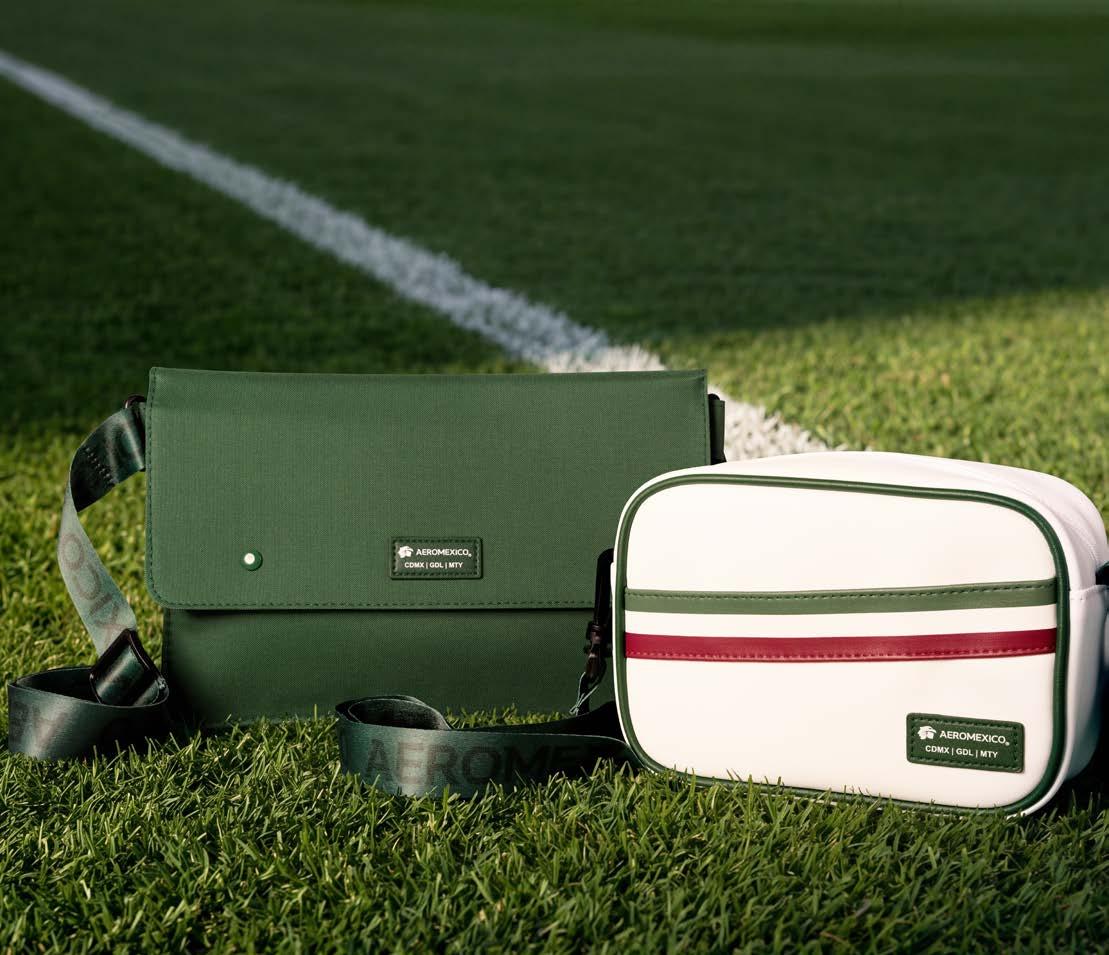
Aeromexico’s Premier One kit celebrates contemporary Mexican culture through national colors and nopal-inspired skincare
Pitsch points to Alaska Airlines’ “The Big Seat” campaign as an example. Seattle-based Alaska partnered with Major League Baseball team Seattle Mariners’ catcher Cal Raleigh to celebrate its move into longhaul routes. The airline even brought its new lie-flat seats onto the field at T-Mobile Park along mascot Mariner Moose to create enthusiasm around its expansion. The campaign also features Filson onboard, a Pacific Northwest heritage brand.
“What makes the storytelling resonate is how naturally the pieces fit together. The sport partnership, the airline and its brand partnerships all spring from the same Pacific Northwest roots,” Pitsch explains. “An airline, a team and a brand that share a region and an identity, telling one connected story.”
Shared interests and communities
FORMIA tells PAX International that airlines are deepening connections to passengers by designing amenities around experiences that passengers already feel attached to.
“National identity is one of the most powerful of these connections,” Pitsch reveals.
Aeroméxico’s special-edition Premier One kit, created with Nopalera, celebrates the contemporary spirit of Mexico. The designs are accented with the country’s national colors and paired with botanical
skincare built around the nopal cactus, an ingredient deeply connected to Mexican heritage, marking “a very special moment for Mexican culture,” in the words of Andres Castañeda, Chief Customer and Digital Officer & EVP at Aeroméxico.
“When airlines connect amenities to a culture, community or shared passion, they create something passengers are more likely to value, keep and remember,” says Pitsch. “That is when the kit starts to become part of the experience itself.”
Infusing cultural moments
The intersection of sport, culture and lifestyle will continue to converge, offering airlines new opportunities to engage with broader cultural moments.
Pitsch tells PAX International that the amenity kit has the potential to become the collectible artifact that passengers associate with a moment, a team, a place or a brand they love.
“That carries real value for an airline. A kit tied to a cultural moment is not experienced once and forgotten; it is used, kept and often shared, carrying the airline’s story beyond the cabin and long after the flight,” she says.
Pitsch continues, “At FORMIA, this is how we think about our work: curating meaningful moments that keep the airline and its partners in the foreground, and designing so brand equity carries further.”
C8Rtech has developed an integrated ecosystem that enables airlines and caterers to work from a shared data environment
C8Rtech connects the dots

Anew chapter in airlinecatering technology has begun with the launch of C8Rtech. Based in Frankfurt, Germany, C8Rtech has emerged from within LSG Group, including LSG Sky Chefs, as a standalone technology and consultancy provider focused exclusively on airline catering. The move positions the company to expand its reach across the global market while accelerating the development of solutions designed to improve operational efficiency, collaboration and decision making.
The launch comes at a pivotal time for the airline-catering industry. As airlines continue to face operational pressures, supply chain disruptions and evolving passenger expectations, both
C8Rtech Managing Director Thomas Halter explains how the company’s integrated platforms are closing the gap between airlines and catering partners
by JANE HOBSON
carriers and caterers are increasingly looking to digital platforms to simplify processes and strengthen collaboration.
According to Thomas Halter, Managing Director of C8Rtech, one of the industry’s most significant challenges remains the disconnect between airlines and their catering partners.
“Lots of work is still done manually at the airline, at the caterer and in the interface between them. As a result, airlines and caterers are building up the same data multiple times in different systems,” Halter tells PAX International
To address this duplication, C8Rtech has developed an integrated ecosystem that enables airlines and caterers to work from a shared data environment. Halter says the platform allows both parties to access the shared master data throughout the planning and execution process while supporting critical operational requirements such as the management of any irregularities.
At the heart of the company’s offering are two complementary technology platforms. The Catering Suite is a mobile-first, real-time solution that manages shopfloor activities, including flight handling, meal and non-food loading, production processes and material forecasting. The Inflight Suite provides airlines with a centralized platform for planning and executing catering operations in collaboration with catering partners.
“Our mission is simple. To cut complexity, elevate productivity and help you stay ahead in a fast-evolving industry,” says Halter. “We bring airlines and caterers together in one integrated ecosystem for seamless, data-driven planning and operational excellence.”
The technology is shaped by decades of operational experience gained within the airline catering sector. Having evolved from LSG Group,
Thomas Halter, Managing Director, C8Rtech
C8Rtech’s team combines extensive expertise from both the airline and catering sides of the business.
That experience, Halter says, is reflected in C8Rtech’s talented personnel. Halter’s colleagues each bring decades of experience and a deep knowledge of the industry from both airline and catering perspectives to the table.
“This experience builds the backbone of C8Rtech as a new specialist that can advise airlines and caterers on improving process efficiency and enabling reliable, high-scale airline catering operations, regardless of the systems the customer has in place,” he adds.
Collaboration as a critical capability
As airline operations become increasingly dynamic, real-time visibility is emerging as a critical

especially important when managing disruptions and operational irregularities.
“Real-time collaboration plays an important role in the handling of irregularities, one of C8Rtech’s most advanced specialties,” he says.
Dashboard and data visualization capabilities within the platform are AI-supported and customizable, helping customers monitor performance and respond quickly to operational challenges.
Launching as an independent company also creates opportunities for growth. Halter describes the transition as the culmination of a strategic vision that began several years ago.
“Being an independent, stand-alone company for airline technology and airline catering process consultancy completes the logical step we have been targeting since 2022,” he says. “C8Rtech is now an independent player on the
its solution to all caterers and airlines, regardless of its size or ownership.”
The company is also actively exploring partnerships and complementary offerings as part of its expansion.
Looking ahead, Halter believes adaptability will be one of the defining factors in airline-catering technology. Geopolitical uncertainty, supply chain disruptions and shifting market conditions are placing new demands on operators across the aviation ecosystem.
“The ability of C8Rtech’s platform to adapt quickly to those changes in the market and a proven global platform will become even more important,” he says.
As the industry continues its digital transformation, C8Rtech positions itself as a specialist partner focused on connecting airlines and caterers through technology, process expertise and a shared vision for a more
From inspiration to execution
How deSter’s restaurant logic is redefining inflight hospitality
by JANE HOBSON

For years, the aviation industry has looked to fine dining for inspiration. Chef partnerships, curated menus and elevated plating have all played a part in reshaping passenger expectations. While much attention has been given to what is served onboard, far less focus has been placed on how it is delivered.
This is where the next chapter of inflight hospitality is being written. The real shift is not about bringing restaurant dishes into the cabin. It is about integrating restaurant operational logic into the inflight environment. With Lufthansa FOX, this transition becomes tangible, and the engineering behind it tells a more compelling story than the menus alone.
At its core, restaurant quality is not defined by ingredients alone. It is the result of a finely tuned system where timing, temperature, workflow and
presentation come together seamlessly. Translating this into an aircraft cabin, with its spatial constraints, safety requirements and service complexity, requires more than inspiration. It requires engineering.
Heating up culinary standards
In a professional kitchen, proteins and accompanying components are rarely finished at the same temperature or at the same time.
“Managing each element precisely is a basic discipline of restaurant cooking. Replicating that discipline in the air has historically been one of the hardest problems to solve,” Daniel Knies, Senior Category Director at deSter, tells PAX International
For Lufthansa FOX, deSter developed a steel casserole designed specifically for onboard use. Working closely with gategourmet and the culinary concept developed by Chef
Daniel Knies, Senior Category Director, deSter
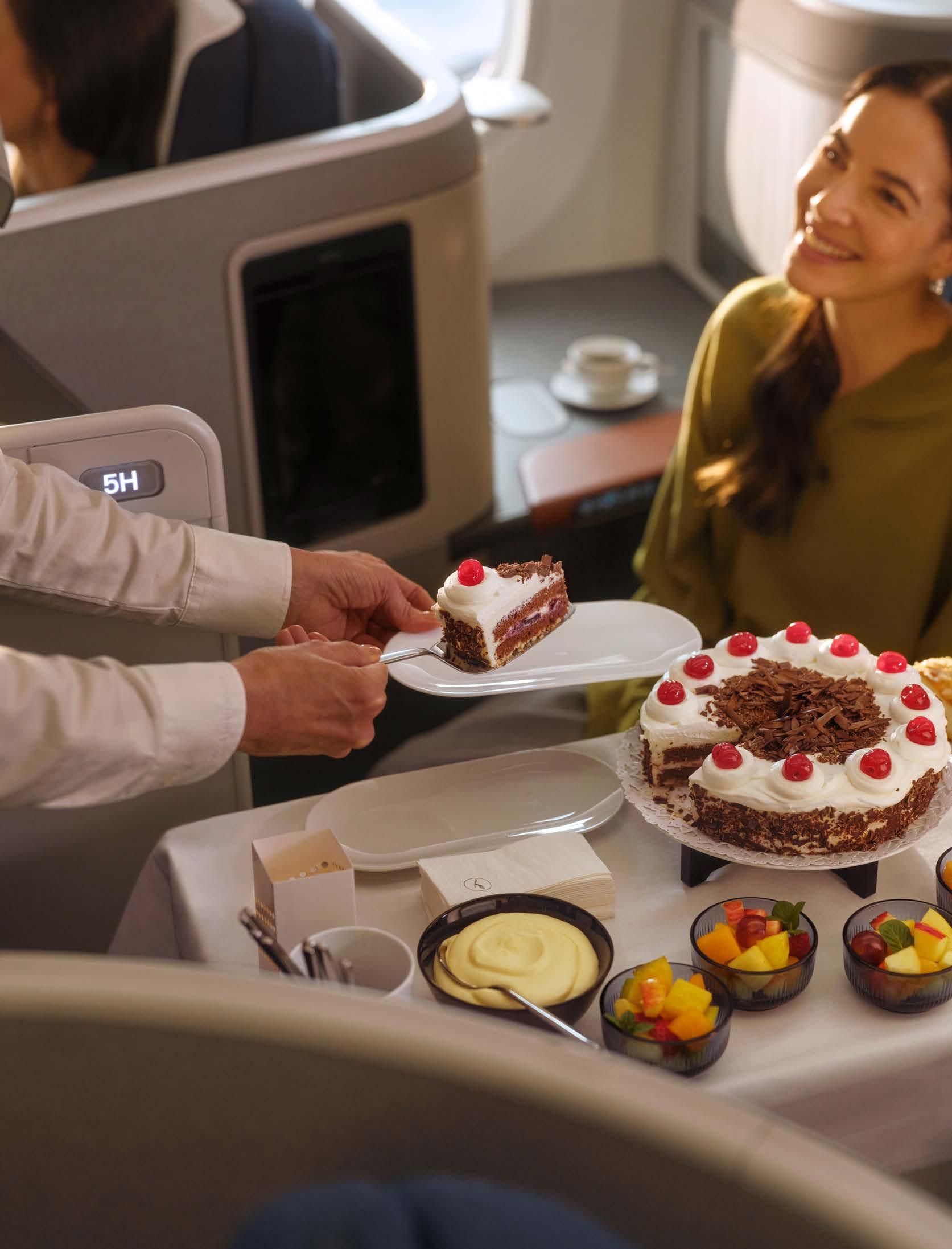
deSter designed a compact cake stand integrated into the service trolley to enhance inflight dessert presentation
Johann Lafer, the brief was clear: proteins such as fish or meat must reach the passenger in optimal condition, without compromise from accompanying components requiring different heat treatment. The casserole’s construction allows each element to be heated separately, preserving texture, flavor and presentation.
“The result is a Business Class main course that feels deliberate and considered, rather than reheated,” Knies says. “This is precisely the kind of operational mechanism the industry rarely discusses. Chef partnerships generate headlines. The engineering that makes those partnerships executable in the air does not. FOX changes that.”
Dessert as a service moment
Restaurant dessert service is rarely just about the food. It is about presentation, visibility and the sense that something special is being offered. In most inflight environments, that moment is compressed into a functional transaction.
To address this, deSter designed a compact cake stand that integrates directly with the service trolley. Despite its space-efficient footprint, it transforms how fresh cakes and desserts are displayed in Business
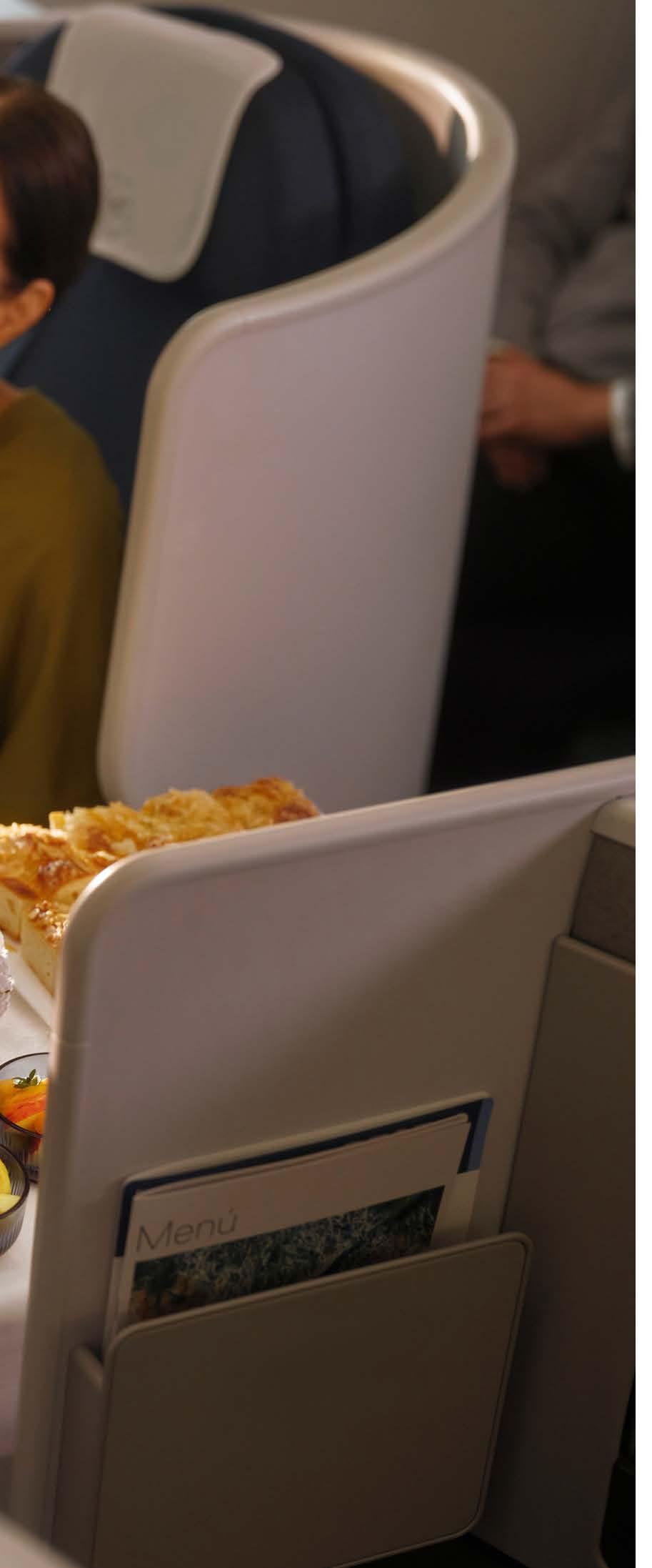
Class. For seated passengers, the selection becomes clearly visible, turning the choice into part of the experience. For cabin crew, it supports smooth handling and a more confident, elevated presentation.
“The dessert moment becomes a highlight rather than a closing formality,” says Knies.
Expanding choice through smart trolley design
Restaurant operational logic is not exclusive to premium dining. The discipline of offering structured choice, efficiently delivered, applies equally in Economy Class.
In the FOX program, deSter developed a dedicated drawer attachment for the service trolley that increases meal capacity while expanding the options available to passengers. Where crew could previously offer two main course choices, they can now offer three. The attachment is engineered to support crew workflows while at the same time, improving organization and reducing handling complexity during peak service periods.
“More choice for passengers. Less friction for crew. Both outcomes stem from the same design decision,” explains Volker Klag, Design Director at deSter.
From visible luxury to engineered experience
Passengers may not see the casserole construction, the cake stand geometry or the trolley drawer configuration. But they feel the difference: a protein that has retained its texture, a dessert selection that feels curated, a service rhythm that flows without interruption.
“This is where premium differentiation is actually built. Not through isolated touchpoints, but through integrated systems that deliver consistency at scale,” says Knies.
As part of the broader gategroup ecosystem, deSter brings the design and engineering expertise to translate culinary ambition into operational reality, across every cabin and every service moment.
Lufthansa FOX offers a clear signal of where the industry is heading. The future of inflight hospitality will not be defined by inspiration alone. It will be defined by execution. And in that shift, the integration of restaurant logic into the aviation ecosystem becomes a powerful driver of both experience and value.
“The most memorable service often feels effortless. What FOX demonstrates is that this effortlessness is the direct result of thoughtful design, precise engineering and a deep understanding of how great service is actually delivered,” Knies shares.
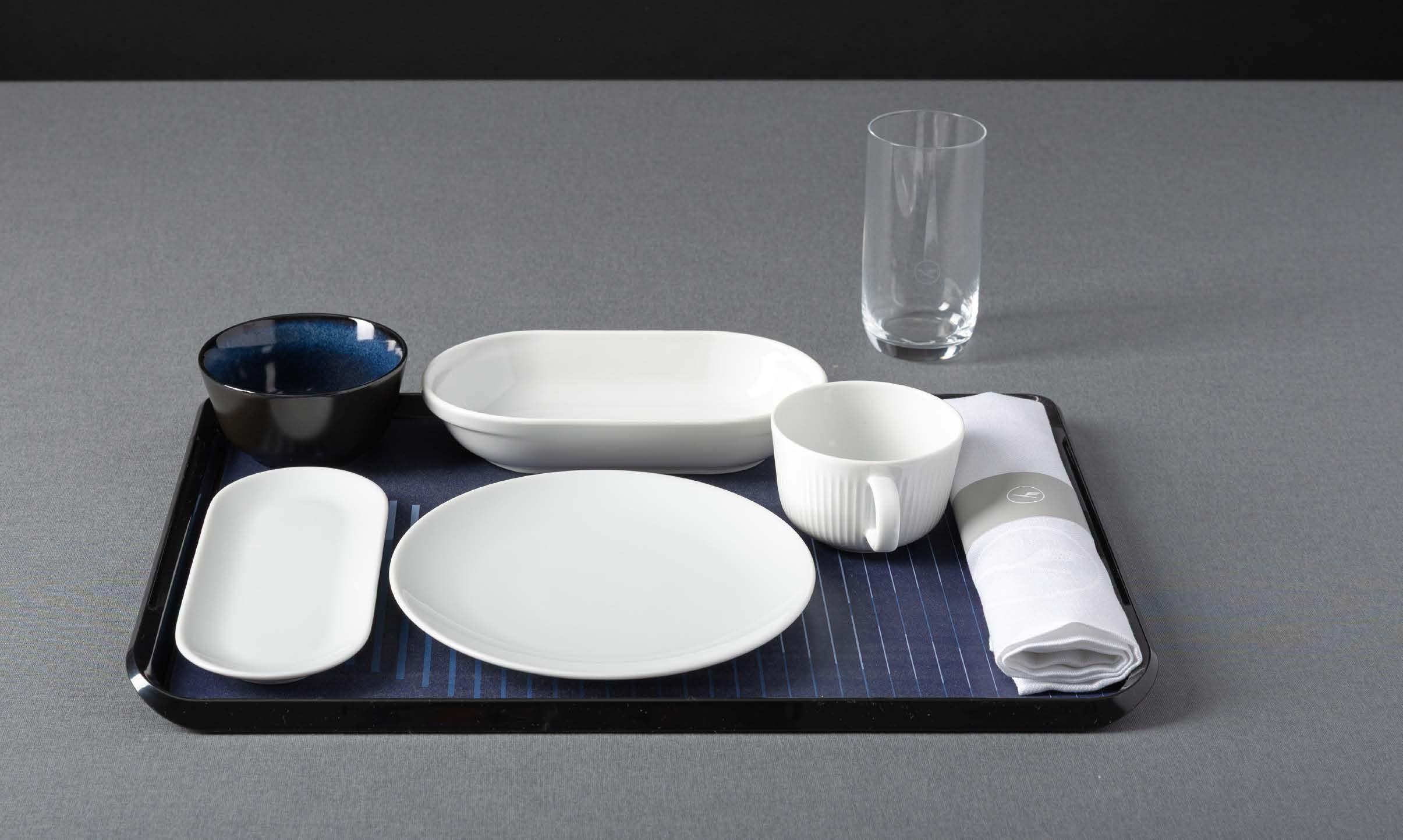
The Lufthansa FOX tray table setting
The cost–quality
conundrum

Every five to seven years, this industry has a habit of reminding us not to get too comfortable. Something inevitably arrives that forces the sector to adapt, whether a pandemic, economic downturn, fuel price shock or supply chain disruption.
Following a post-pandemic recovery marked by unprecedented airline profitability, passenger demand remains strong and investment across the passenger experience continues to accelerate.
But do not get too comfortable. The next set of challenges is already emerging.
Aircraft shortages continue to constrain capacity, supply chain remains vulnerable and labor pressures persist across multiple markets. Not to mention geopolitical uncertainty
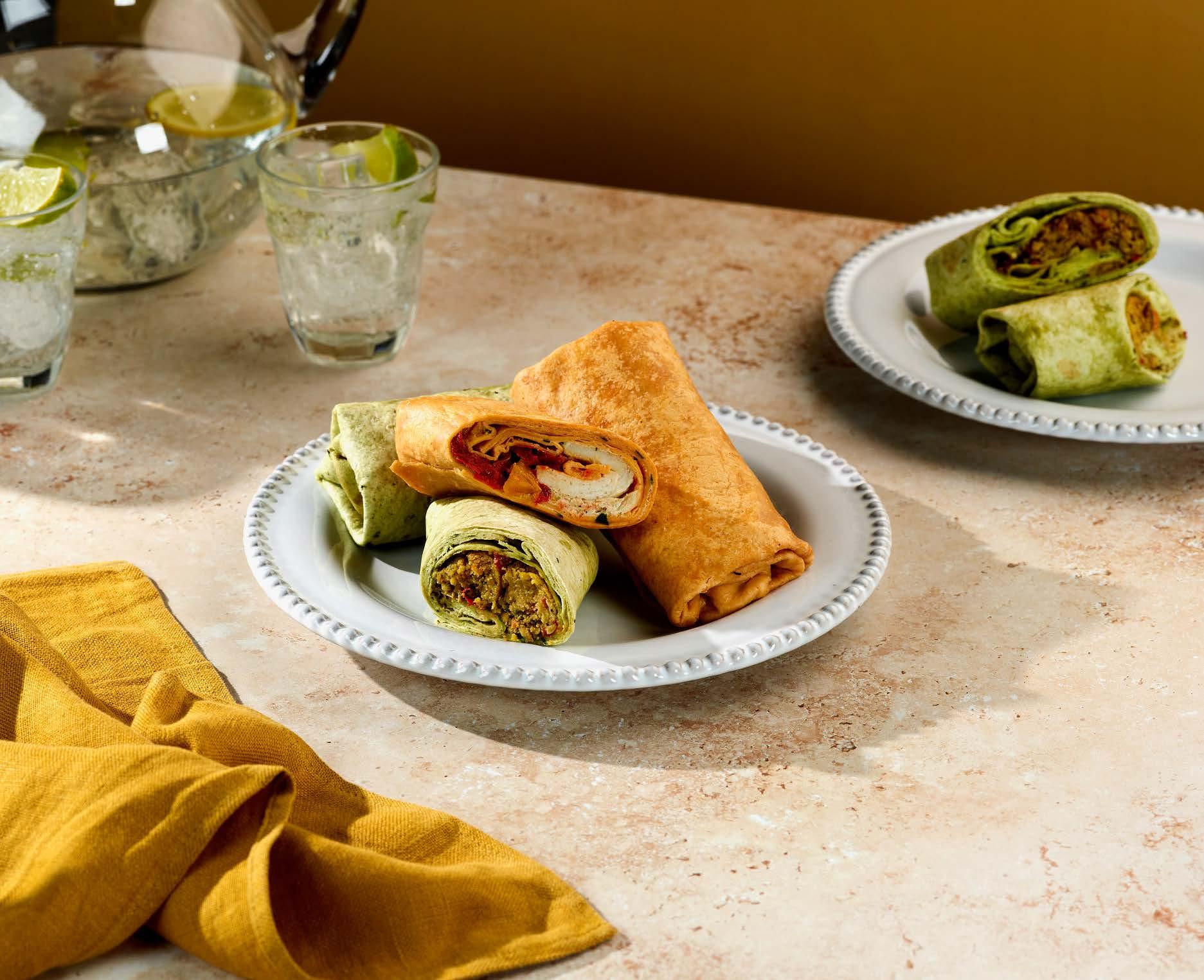
For airlines, food and beverage shapes brand perception and influences NPS, loyalty, differentiation and ancillary revenue
In this guest column, En Route Managing Director Nick Wiley reveals why the industry must be ready for new challenges as it works to deliver both quality and cost efficiency in an unpredictable environment
affecting sourcing decisions and structures. And those fuel prices? I need not say more.
Against this backdrop, it is little wonder why airlines and caterers are being asked an all too familiar question: how can you deliver more while spending less?
Passengers still want more from the onboard experience, especially when they are thinking about what they paid for the ticket in a world of increasing costs. However, airlines are being pushed hard to control costs, keep spending tight and run even leaner.
What does this mean for caterers? Effectively stuck in the middle, caterers are dealing with supply chains that keep getting more complex, staffing strain and labor issues, and the day-today limits of airport operations.
From the outside, it can feel like you
are being asked to do two opposing things at once.
A better, more premium service usually requires more money. Whereas cost control sounds like something has got to give. But that trade-off is not as fixed as people assume.
My view is simple: the next phase of inflight dining is not about choosing between quality or cost. It is about finding sharper ways to land both, even with the unpredictability we are all working around.
From the airline side, food and drink is never just food and drink. It is representative of the brand and it affects how passengers rate the flight (and subsequent NPS scores); how likely they are to come back, how distinct the airline feels versus the next option and even what extra revenue can be pulled in.
Nick Wiley, Managing Director, En Route
Caterers are measuring success through a different lens, the things that keep production stable and profitable such as efficiency, keeping SKUs under control, simplifying what gets manufactured and protecting margin. Both sides are rational.
When costs rise, caterers naturally focus on standardization, SKU rationalization and operational efficiency. Afterall, with greater control comes predictability, right? Airlines however face a different challenge entirely. In the face of competition, differentiation is a core objective, and it is all about passenger experience and choice in the cabin. In simple terms, one side is often trying to reduce complexity while the other is seeking to create more value through greater choice.
The friction starts when something that looks like value to one becomes a headache for the other. A regionally sourced, story-driven menu might give the airline a stronger narrative and a more premium feel, but it can pile on procurement complexity and supply risk. A stripped-back catering approach can make operations smoother and more predictable, but it
can also somewhat flatten the airline brand and remove the little touches that passengers notice.
The best opportunities are sitting in the overlap, where both sets of needs are met well to move the whole program forward.
A common misconception is that quality increases costs. Often, the best onboard programs come from smarter design choices that reduce waste, improve sourcing and simplify operations. Done properly, those moves do not just protect the numbers, they can also make the passenger experience more consistent.
The bigger issue is that once upon a time airlines, caterers and specialist partners, such as En Route, worked in separate lanes. That setup is harder to defend now. Today calls for working models where the parties solve problems together, not one after another.
When collaboration is real, the focus shifts away from transactional procurement and toward shared results: lower total cost of ownership, stronger
resilience in the supply chain, quicker innovation cycles and increased passenger satisfaction.
The question stops being, “what does it cost?” and becomes, “what does it deliver, and for whom?”
Airlines and caterers will always have different priorities, that part is not going away. And it does not need to. That tension is not a flaw in the setup; it is often the place where the best ideas come from.
The future of inflight hospitality will belong to organizations that connect passenger ambition with operational efficiency. Those that combine regional relevance with global scale, passenger choice with simplicity, innovation with resilience and commercial discipline with memorable experiences.
Passengers never see the complexity behind the scenes; they experience only the outcome. In an industry where disruption is nearby, balancing competing priorities may be the sector’s greatest competitive advantage.
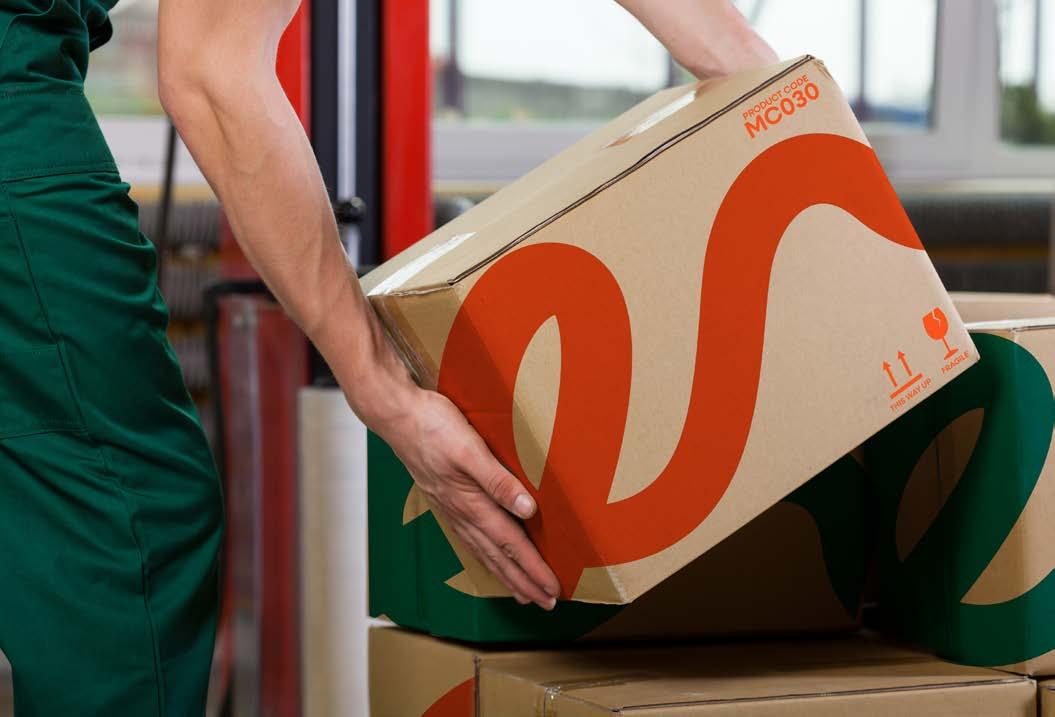
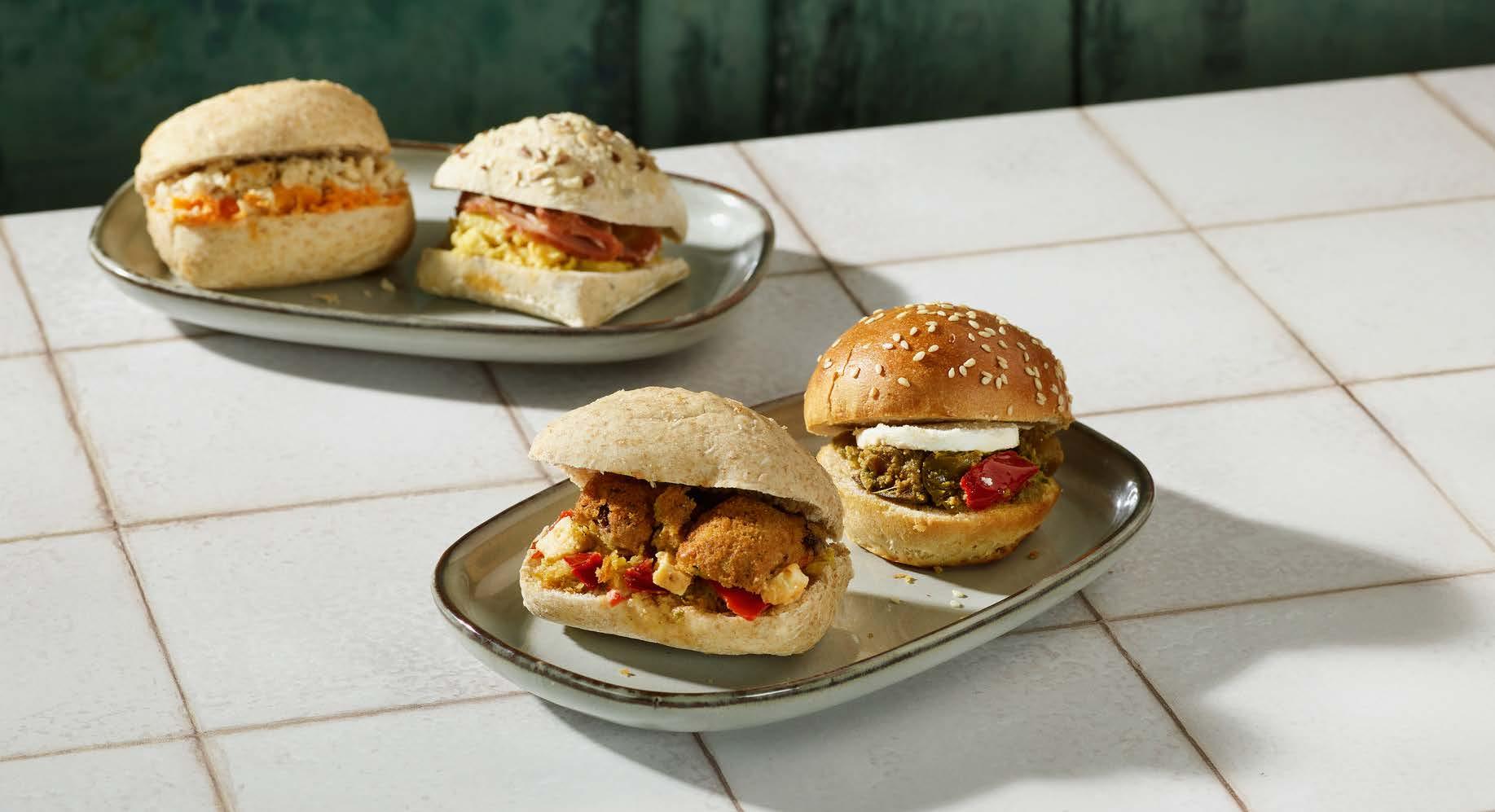
Caught between rising expectations and operational realities, airline caterers are navigating increasingly complex supply chains, labor shortages and the day-to-day constraints of airport operations
The most effective onboard programs balance operational efficiency with a consistent passenger experience through thoughtful design

Comfort on the menu
Intervine is focusing on aroma, flavor and familiarity to turn routine onboard F&B into memorable moments
by EMAN KHAN

From the aroma of freshly brewed coffee to the comfort of a familiar snack, seemingly small onboard moments can leave a lasting impression on travelers—and airlines are finding ways to create meaningful experiences throughout the journey.
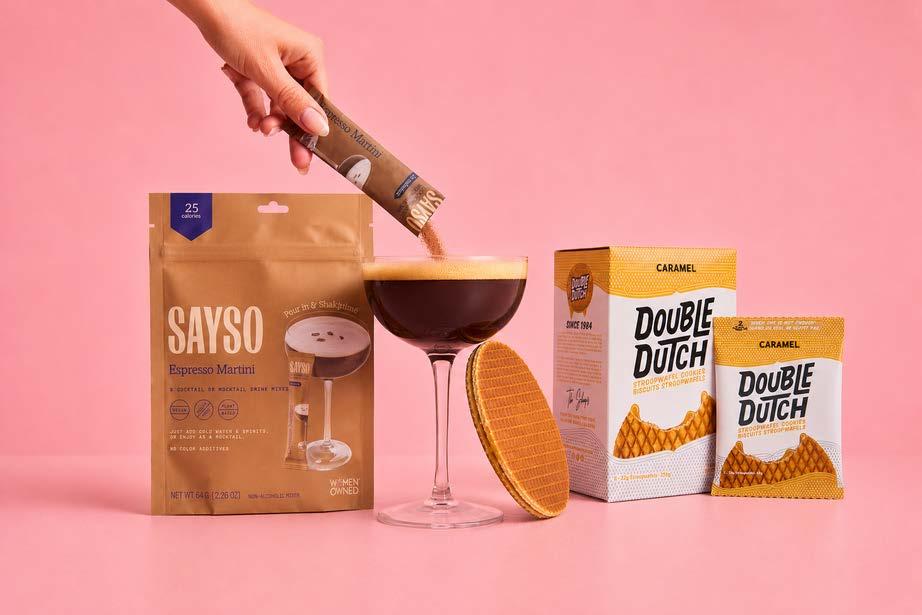
For food and beverage partner Intervine, comfort today extends beyond physical amenities to include emotional connections and sensory experiences. Through products such as Double Dutch stroopwafels, SAYSO cocktail and mocktail mixers and Muddy Bites waffle cone snacks, the company is helping airlines deliver moments of warmth, convenience and nostalgia.
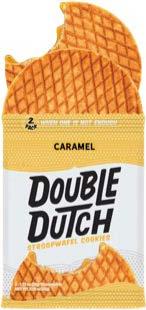
Coffee and tea service remains one of the most recognizable rituals in air travel, creating an opportunity for airlines to elevate a familiar touchpoint. According to Kate Schafer, Director of Corporate Services at Intervine, Double Dutch stroopwafels can do just that.
“When placed on top of a cup containing a warm beverage, the heat softens the caramel and brings out the buttery flavor of the waffle,” she says. “The snack feels more satisfying and indulgent than a commonly served biscuit cookie.”
The Canadian-made stroopwafels are based on a family recipe dating back to 1984 and are rooted in a multigenerational baking tradition. Schafer says the product’s heritage helps transform beverage service into a more intentional experience. Beyond the passenger appeal, the individually wrapped stroopwafels fit seamlessly into existing service programs. With a shelf life of up to 12 months and durable packaging, the products boast operational advantages for airline caterers while maintaining a premium presentation.
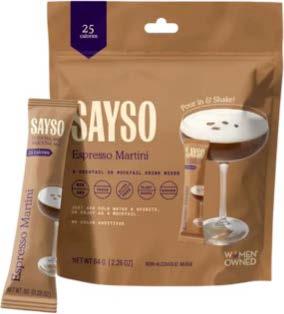
Airlines are also turning to beverage innovation to balance passenger expectations with onboard efficiency. SAYSO’s tear-and-pour cocktail and
The dehydrated mixers let airlines create multiple beverage options using spirits already onboard, while also enabling alcohol-free mocktails for greater passenger flexibility
Inspired by the chocolate-filled tip of an ice cream cone, Muddy Bites turns a nostalgic treat into a portable, bite-sized snack with a crunchy waffle shell and chocolate center
Kate Schafer, Director of Corporate Services, Intervine
Rooted in a multigenerational baking tradition, Canadian-made Double Dutch stroopwafels elevate beverage service with a taste of heritage
mocktail mixers are designed to deliver a premium beverage experience without adding complexity for cabin crew.
“SAYSO aligns well with the idea of effortless comfort by delivering a bar-quality cocktail or mocktail in seconds,” Schafer says. “It requires no special equipment, extra ingredients or mixology expertise.”
The dehydrated mixers allow airlines to offer multiple beverage options using spirits already stocked onboard. The same products can also be used to create alcohol-free mocktails, providing flexibility for a range of passenger preferences.
While convenience remains important, emotional connection plays an increasingly significant role in the passenger experience. Schafer points to Muddy Bites as an example of how familiar flavors can create moments of delight during travel.
“Comfort in travel is no longer only about physical amenities—it is about creating positive, familiar moments that reduce the friction of the journey,” she says.
Inspired by the chocolate-filled tip of an ice cream cone, Muddy Bites transforms a nostalgic childhood treat into a portable snack format. The bite-sized pieces combine a crunchy waffle shell with a chocolate center, delivering a playful and indulgent experience.
As carriers continue to refine the onboard experience, Intervine’s portfolio reflects a growing focus on comfort that is multisensory, emotional and easy to deliver—one thoughtful moment at a time.

Rest, Redefined
Dallas bound
Lauren Costello, Executive Director of IFSA, shares the latest on the association’s next chapter, driven by growing attendance, exhibitor participation, sponsor engagement
and broader industry involvement
by EMAN KHAN
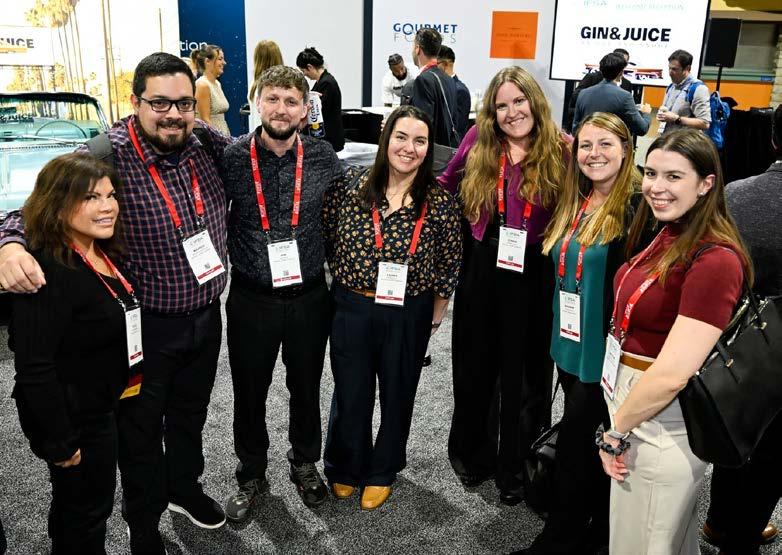
IFSA Global EXPO is entering a new era in 2026, marked by its relocation to Dallas, Texas from Long Beach, California, and an ongoing focus on strengthening its position as the leading event for the onboard services industry. The EXPO will take place from September 8 to 10 and will continue to serve as a key platform for industry engagement and innovation.
This summer, PAX International caught up with Lauren Costello, Executive Director of the International Flight Services Association (IFSA), to discuss the strategic move to Dallas.
“This move allows us to create an experience that is even more tailored to the onboard services community,” Costello says. The transition builds
on strong momentum in recent years, including rising attendance, exhibitor participation, sponsor engagement and broader industry involvement.
The 2026 edition will introduce a more independently focused format for the onboard services community, with IFSA-specific programming, an expanded opening networking reception, a strengthened thought leadership agenda and a larger IFSA Awards program.
Designed to enhance engagement while maintaining the core value of the EXPO, the event will foster meaningful airline-supplier connections to advance onboard service innovation. A continued partnership with Future Travel Experience (FTE) will broaden discussions to include a wider passenger experience and technology audience.
Costello notes that while IFSA Global EXPO continues to evolve, the broader APEX, FTE and IFSA community remains united by a shared mission to improve the end-to-end passenger experience. She highlights that food, beverage, hospitality and service expectations now span the entire journey, reinforcing the importance of cross-sector collaboration.

Despite the growth of digital communication, Costello emphasizes IFSA’s continued focus on face-to-face engagement, with stakeholders valuing opportunities to connect with the right people, hold meaningful conversations and build relationships in a focused timeframe. She adds, “There is no substitute for in-person.”
Looking ahead to Dallas, key themes include sustainability, premiumization, operational efficiency and food safety. Airlines are investing in elevated onboard hospitality, chefdriven menus, branded partnerships and enhanced service concepts to strengthen differentiation and passenger loyalty.
At the same time, digital transformation continues to reshape onboard services, with airlines adopting tools such as forecasting, pre-ordering, personalization and inventory management systems to reduce waste, improve efficiency and enhance the passenger experience. Food safety remains central, supported by updated IFSA World Food Safety Guidelines aimed at strengthening global standards and supply chain transparency.
Lauren Costello, Executive Director, IFSA
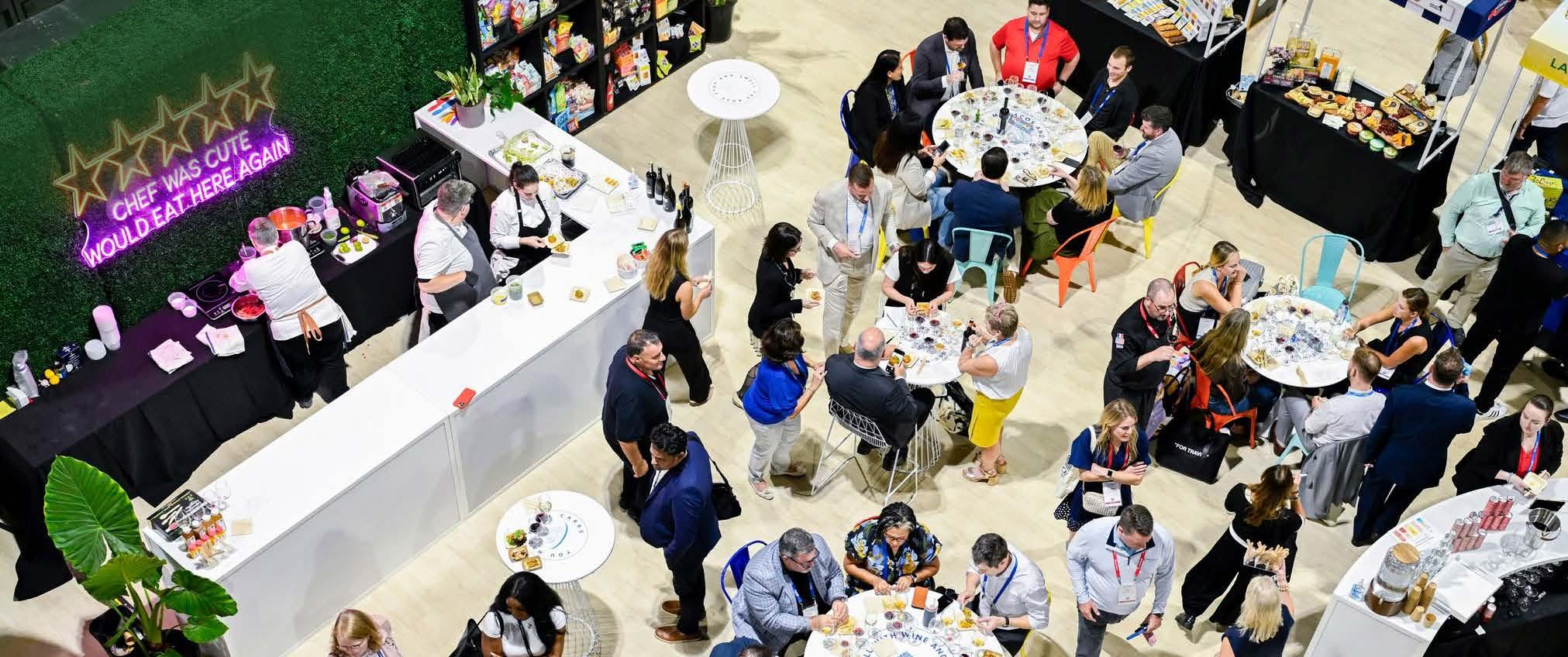
IFSA Global EXPO will take place from September 8 to 10 and will continue to serve as a key platform for industry engagement and innovation
Designed to boost engagement while preserving IFSA Global EXPO’s core value, the 2026 event will strengthen airline-supplier connections to drive onboard service innovation





Put your passenger experience to the test. Invite a PAX reporter onboard and be featured in our PAX Perspective Verified Airline Review — where real journeys meet expert evaluation.

Our experienced editorial team assesses every detail, from food and amenities to comfort, entertainment and service, offering airlines the opportunity to earn the PAX Verified Award, declared by PAX Publisher Aijaz Khan.
Think your onboard experience stands out? Ready to fly us away?
Contact aijaz@globalmarketingcom.ca to learn more.