








NEW MOROCCANOIL TREATMENT MIST














Light-as-air dry oil spray instantly absorbs into hair for enhanced manageability and shine.
Light-as-air dry oil spray instantly absorbs into hair for enhanced manageability and shine.
Asia Pacific is in the middle of a building boom that goes well beyond adding gates and runways. Airports across the region are being reimagined as destinations in their own right, and commercial ambitions attached to that infrastructure are growing to match.
The inauguration of Noida International Airport — the second international gateway for the Delhi National Capital Region — is one moment in what APTRA President Sunil Tuli calls a decade-long transformation of Indian aviation. By 2030, the country will see 800 million annual travelers; over 1,500 new aircraft are on order, and a development pipeline is pushing past 200 operational airports. The Airports Authority of India is running tenders for duty free concessions at 14 airports, with 11 more expected to follow. For operators, the window is wide open.
In Malaysia, the work of turning that kind of growth into commercial performance is well underway. With 104.5 million passenger movements last year, total sales transactions rose 28.8%, a result Malaysia Airports attributes to an integrated model combining in-house brand Eraman, cultural retail platform ShopLAH and digital tools designed to pull travelers into the commercial ecosystem before they reach the terminal.
Converting traffic into lasting consumer relationships is the deeper challenge. The era of growth driven by traffic volume and channel expansion has passed, according to China Duty Free Group COO Yvonne Chan. In its place, the group is building a consumer ecosystem grounded in digital engagement, experiential retail and firstparty data that allows it to treat each of its 56 million customers as individuals.
Yet still, only one in four passengers who walk into an airport store actually buys something. ARI CEO Ray Hernan argues the answer lies less in technology and more in people — frontline teams who understand the traveler in front of them and communicate value in a way that feels genuine.
That kind of execution does not get easier when the world outside the terminal is unsettled. Geopolitical uncertainty has become a permanent feature of the operating environment. Tensions in the Middle East continue to disrupt aviation routes, increase costs and redirect traffic in ways that ripple across the entire network — a reminder that external pressures can reshape the industry’s fortunes more quickly than any infrastructure investment.
Colleagues gathering at TFWA Asia Pacific Exhibition & Conference have spent the year navigating this complexity. The best solutions emerge from conversations held in person, and we look forward to having them with you in Singapore. We hope this issue serves as a useful resource.

Kindest regards,

HIBAH NOOR Editor-in-Chief hibah@gtrmag.com
Global Travel Retail Magazine (ISSN 0962-0699) is published seven times a year by Paramount Publishing Company Inc. The views expressed in this magazine do not necessarily reflect the views and opinions of the publisher or the editor. May 2026, Vol 38. No. 3. Printed in Canada. All rights reserved. Nothing may be reprinted in whole or in part without written permission from the publisher. Paramount Publishing Company Inc.
GLOBAL TRAVEL RETAIL MAGAZINE Tel: 1 905 821 3344 www.gtrmag.com
PUBLISHER Aijaz Khan aijaz@globalmarketingcom.ca
EDITORIAL DEPARTMENT
EDITOR-IN-CHIEF Hibah Noor hibah@gtrmag.com
DEPUTY EDITOR Laura Shirk laura@gtrmag.com
SENIOR CORRESPONDENT Atoosa Ryanne Arfa atoosa@gtrmag.com
SENIOR EDITOR Wendy Morley wendy@gtrmag.com
SENIOR WRITER Alison Farrington alison@gtrmag.com
ART DIRECTOR Kristie Weekes
ADVISORY BOARD
Gary Leong Thomas Henningsen
CIRCULATION & SUBSCRIPTION MANAGER accounts@globalmarketingcom.ca

12 Malaysian momentum
Malaysia Airports is turning record passenger traffic into record sales. Hani Ezra Hussin, Senior General Manager of Commercial Services, shares the strategy behind the group’s increasingly integrated and unmistakably Malaysian retail landscape
28 Consumer cultivation
China Duty Free COO Yvonne Chan believes that operators who want to win over modern Chinese travelers must combine experiential innovation, digital fluency and culturally relevant brand engagement to build lasting connections
44 Marking a milestone
Following the completion of phase one, Global Travel Retail Magazine reports on the progress of Noida International Airport, which is set to transform India into a global aviation hub
52 The age of AI
In this opinion piece, co-authored by Lagardère Travel Retail’s Qihua Wang and Jessica Gold, industry experts weigh in on how we can expect AI to transform travel retail — and what comes next
18 A cohesive voice
From shifting toward a more centralized global commercial model to pricing built for agility, Gebr. Heinemann COO Inken Callsen shares her take on collaboration, the global use of data and supply chain execution
20 The meaning of value
With conversion rates unmoved despite years of investment in retail design and digital tools, ARI CEO Ray Hernan says the answer lies in people more than platforms
22 APAC power play
Avolta’s President and CEO of APAC, Freda Cheung outlines a regional strategy for expansion through landmark concessions, integrated retail and F&B concepts and cross-border loyalty partnerships
26 Jewel of Arabia
Chief Commercial Officer Faiz Khan details how curated store layouts, brand collaborations and passenger segmentation are turning engagement into measurable commercial growth at Muscat Duty Free

32 Culture at the core
Trevor Lee and Lilly Choi-Lee of TravConsult agree that operators who want to win the APAC traveler must invest in human connection, cultural intelligence and a fundamentally different understanding of passenger motivations
36 The India opportunity
APTRA President Sunil Tuli outlines why a historic infrastructure boom and the democratization of air travel have turned India into a critical frontier in global travel retail
40 The India exception
At the 2026 APTRA Conference, IWSR Senior Insights Manager Charlotte Reid detailed the factors propelling Indian travelers to counter global stagnation and drive massive category growth
42 Cultivating India’s new luxury
From its 106-year roots in agriculture to a fourth-generation vision for global retail, BBM Group is evolving its storied family legacy to capture the hearts of India’s experience-driven travelers
48 Stepping up to the competition
Describing travel retail as a core part of its future roadmap, Sydney Airport’s Master Plan 2045 positions it as a leading airport destination in Asia Pacific
58 Rising through the ranks
In this Q&A, Global Travel Retail Magazine speaks with Starboard Group’s newly promoted Jia Jia Liu, who says it is her goal to ensure Starboard remains the top employer of retail talent in Asia
62 React, restore, regenerate
From extreme stress factors to restorative rituals, three leading beauty brands discuss the rise of climate-adaptive skincare and their re-imagining of how to deliver on both function and feeling
68 Made to connect
In a channel defined by urgency, accessories brands are focusing on identity, function and materiality to create retail moments that register quickly and remain relevant beyond the purchase
72 Packed with purpose
From lost adapters to comfort products, travel gear is proving that need-state purchasing drives some of the most consistent conversion in the airport, and brands are refining how they capture it
74 Distilling the new demand
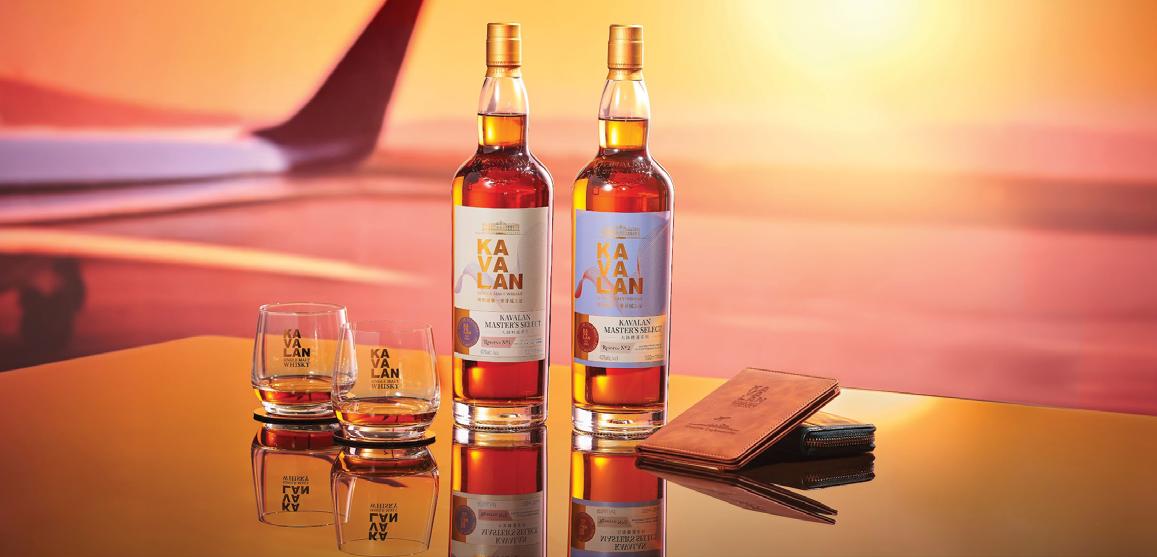
From authentic regional expressions to high-profile partnerships, four top producers detail their distinct strategies for engaging the evolving global traveler across Asia Pacific in this Whisky Report
78 Price to pleasure
Donatien Ferrari, Group Communications Manager at La MartiniquaiseBardinet, outlines a regional strategy driven by premiumization, “Spiritainment” retail activations and a commitment to brand DNA
80 Date with destiny
Rupali Arora, Director of Travel Retail at Bateel, discusses moving beyond the GCC, building presence in Asia Pacific and evolving the brand’s portfolio for international consumers
82 Setting the scene
Grounded in discovery, excitement and emotional connection, confectionery brands explain how both experiential and hybrid retail have become central to the travel retail proposition

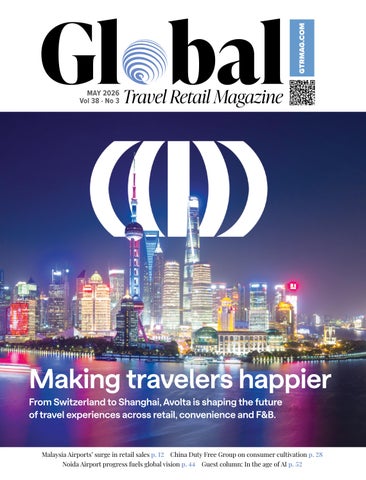
From Switzerland to Shanghai, our shelves are stocked with the comforts travelers need; always easy to find and ready to go.

Gebr. Heinemann has announced a key leadership transition. Effective September 1, 2026, Johannes Sammann — currently CEO Heinemann Asia Pacific — will assume the role of Vice President People & Culture at the company’s Hamburg headquarters.
Sammann brings 25 years of experience with Gebr. Heinemann across Copenhagen, Frankfurt, Singapore and Sydney. His deep understanding of the company’s operational business and culture will play a central role in further developing People & Culture as a strategic driver of the Heinemann Group.
Responsibility for the Heinemann Asia Pacific region will transition to Rajshree Dugar, currently CFO of the regional headquarters in Singapore. Dugar will lead the continued restructuring of the region business and the implementation of strategic priorities.
Lagardère Travel Retail has appointed Jennifer Bleriot as Executive Vice President Merchandising & Commercial Asia Pacific, based in its regional Singapore office.
Bleriot succeeds Annabelle Chung, who left the company in March, and reports to Lylian Vignau, Chief Commercial & Digital Officer.
She brings more than 15 years of experience in retail, including nearly a decade with Lagardère Travel Retail in Paris. In her most recent role, Bleriot served as Food Director, managing buying and merchandising in the confectionery and fine food category worldwide.


Prior to joining the company, Bleriot spent five years with French supermarket Intermarché, contributing to its international development in Asia.
Bleriot assumed the role on April 1 and will relocate to Singapore in June. This appointment follows the establishment of Lagardère Travel Retail’s regional procurement office in Singapore last year, part of a broader commercial reorganization aimed at empowering local teams to negotiate directly with suppliers, anticipate market trends and tailor product assortments to local demand.


a bold evolution of the original, best-selling fragrance
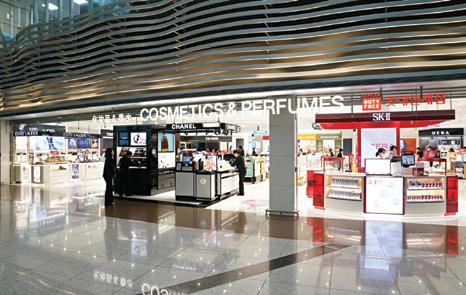
Lotte Duty Free has resumed operations at Incheon International Airport, reopening its DF1 zone on April 17 after an absence of approximately three years.
The concession, covering cosmetics, perfumes, liquor and tobacco, will run for up to 10 years from the start of operations, with the retailer projecting annual revenue growth exceeding KRW 600 billion (approx. US$450 million).
Operations across Incheon Airport’s Terminal 1, Terminal 2 and the concourse have launched simultaneously in a move aimed at minimizing disruption for departing passengers. The company said renovations will be introduced in phases, with a focus on strengthening trend-led merchandising and integrating digital experience elements across the retail environment.
Lotte Duty Free was awarded the DF1 concession in February, citing its more than 40 years of operational experience across domestic airports including Gimpo, Gimhae and Jeju, as well as international hubs such as
Singapore Changi Airport and locations in Vietnam. The company also pointed to its financial performance, having recorded profitability across all four quarters last year, as a contributing factor in the award.
Ospree Duty Free celebrated its second anniversary with a vibrant, carnival-themed experience titled #Celebrating TWOgether, bringing together partners, collaborators and special guests for a unique coastal experience.
Held on March 24, the event reflected the brand’s philosophy of collaboration, connection and shared journeys within the travel retail ecosystem.
The celebration began at Princess Dock, one of Mumbai’s historic maritime hubs and an important gateway to the Konkan coastline and featured a scenic ferry experience. The journey included a traditional Koli dance show-
casing Mumbai’s coastal heritage, followed by a vibrant samba parade and high-energy percussion performances that created a lively atmosphere.
The event continued at Mandwa–Alibaug, where the festivities unfolded against the tranquil coastal backdrop of the Arabian Sea. Upon arrival, guests were welcomed into an elevated celebration at Soulinaire by Taj, where the evening transitioned into an exclusive soirée with curated culinary experiences and music. A highlight of the evening was the anniversary cake-cutting ceremony marking Ospree Duty Free’s anniversary.

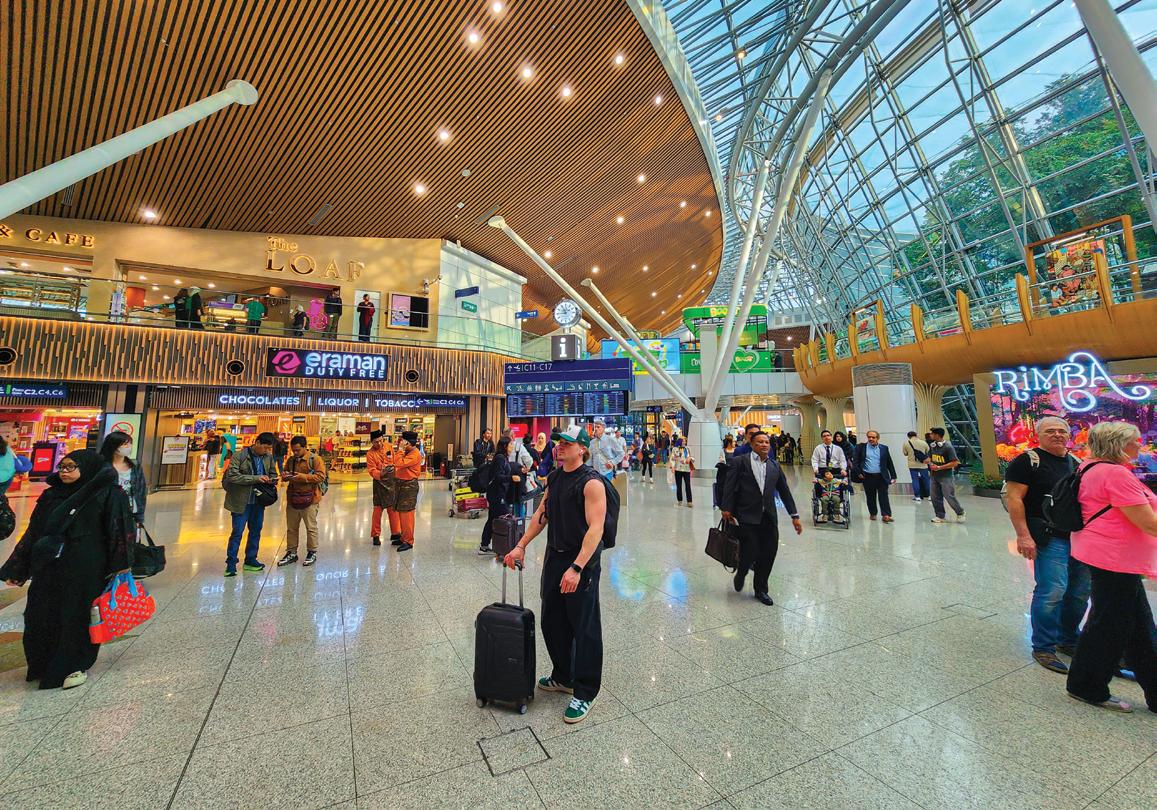
Malaysia Airports is turning record passenger traffic into record sales. Hani Ezra Hussin, Senior General Manager of Commercial Services, outlines the strategy behind the group’s increasingly integrated and unmistakably Malaysian retail landscape
by ATOOSA RYANNE ARFA
Following a 2025 performance where passenger movements reached 104.5 million, Malaysia Airports is entering a period of transformative commercial expansion. This surge in traffic matches a 28.8% year-over-year rise in total sales transactions, totaling approximately 44 million.
“We have continued to strengthen the commercial experience across our airports, especially at key international
gateways, to reflect evolving traveler expectations,” Hani Ezra Hussin, Senior General Manager, Commercial Services at Malaysia Airports, tells Global Travel Retail Magazine. “Encouragingly, this is happening alongside very strong commercial momentum.”
The evolution of the passenger journey is visible through a series of high-profile

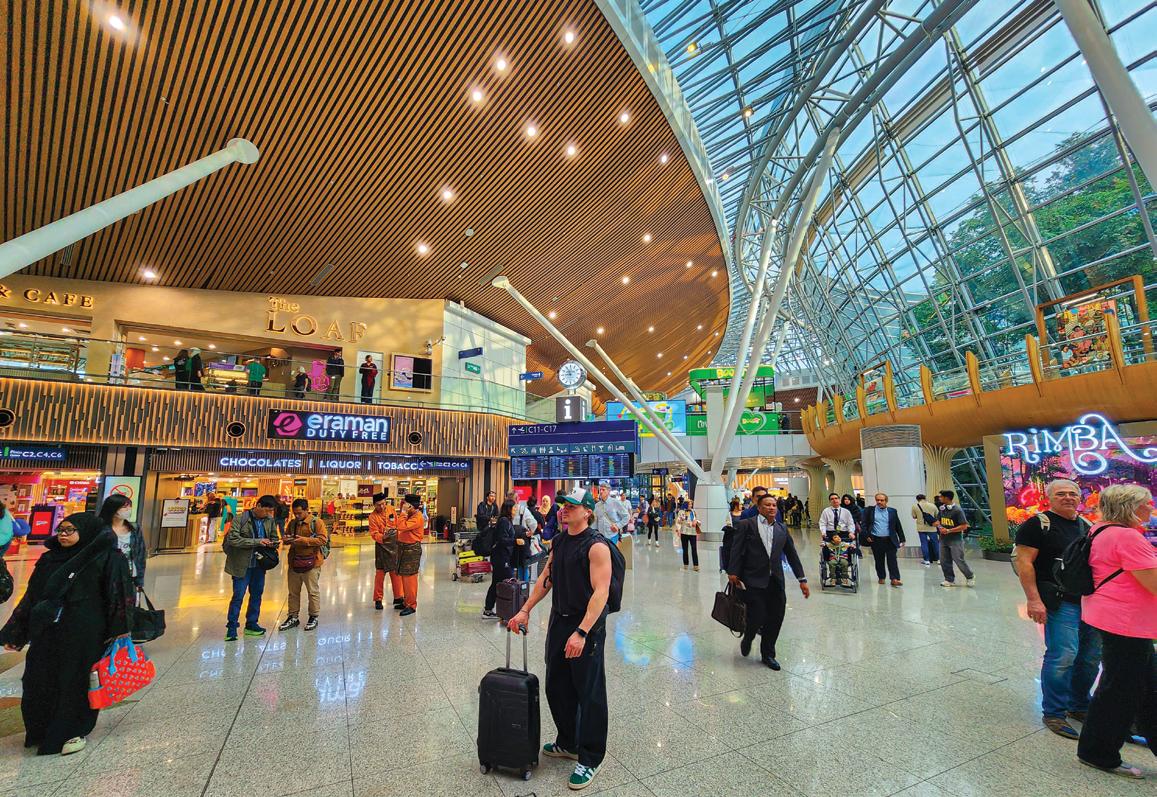
openings at Kuala Lumpur International Airport (KLIA) Terminal 1, including global brands such as Arabica, Läderach, Fred’s, Rituals and Charlotte Tilbury. The strategy extends beyond premium retail to include experiential anchors such as RIMBA, an indoor forest facility in the Satellite Building of Terminal 1, which was designed to make the passenger journey more comfortable and engaging.




“Our focus is on curating a mix that is more relevant, experience-led and reflective of both international tastes and Malaysian identity,” Hussin explains, noting outsized gains in specific categories. “Food and beverage sales grew 19%, and gifts and souvenirs grew 42%, which tells us that passengers are not just traveling through our airports but spending more time engaging with what is on offer.”
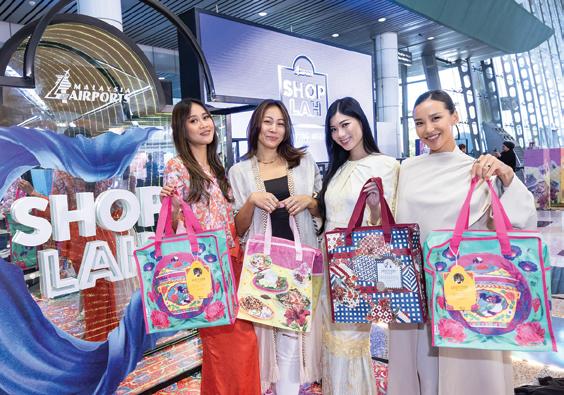
Ahead of Visit Malaysia 2026, the airport is positioning itself as the first and last chapter of the tourist experience through “ShopLAH.” This always-on platform integrates shopping and dining with cultural storytelling.
“ShopLAH aims to make airport retail part of the visitor experience, not just a final transaction before departure,” Hussin notes. Collaborations with local artists such as Hsieying and Kideika feature limited-edition designs inspired by Malaysian heritage. “What makes ShopLAH especially meaningful is the cultural layer built into it that brings together shopping, dining and storytelling in a way that feels distinctly Malaysian.”
The mix balances global appeal with local favorites such as Oriental Kopi, Kapten Batik and Serai. “We want international travelers to find recognized brands, but we also want the airport experience to feel unmistakably Malaysian and provide a strong sense of Malaysia,” Hussin shares.
The group’s in-house duty free and travel retail brand, Eraman, provides a unique component of Malaysia Airports’ commercial positioning. Operating more than 40 outlets with a portfolio of around 550 brands, Eraman offers a level of integrated control that traditional third-party concessionaire models cannot always match.
“Having Eraman as our in-house brand allows us to manage both commercial performance and the passenger experience in a more integrated way,” says Hussin. “As airports increasingly rely on non-aeronautical revenue, having an operator within our ecosystem gives us more direct control. It enables faster execution across assortment, pricing, and promotions, and allows us to pilot new concepts and technology more efficiently.”
This efficiency is visible in the revamped Eraman Duty Free Mall at KLIA Terminal 1 and refurbishments at Terminal 2. “These efforts elevate travel retail standards through self-checkout and future-ready solutions,” Hussin adds. “Importantly, Eraman complements rather than replaces external concessionaires, allowing us to balance strong partnerships with the flexibility to drive brand storytelling where it matters most.”
Malaysia Airports is also accelerating its digital pivot, moving engagement upstream to influence traveler decisions before they reach the terminal. Central to
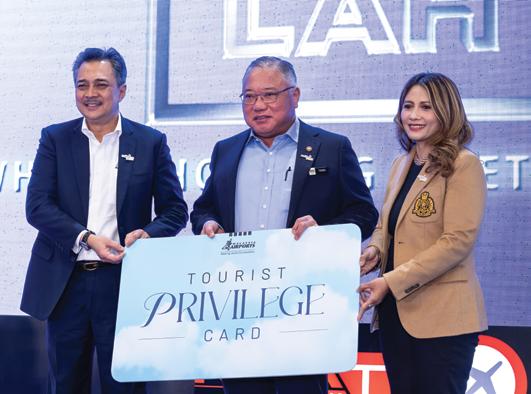
this is the MYAirports app, which recently integrated a Tourist Privilege Card and a new online parking booking system.
“Digital utility is no longer separate from commercial conversion. It is part of the same journey,” Hussin explains. “Earlier this year, we launched KLIA Airport Parking Online to create an earlier point of engagement with the airport ecosystem. Once a traveler interacts with us digitally, it opens opportunities to introduce relevant retail and dining offers in a more targeted and timely way.”
The Tourist Privilege Card ensures instant access to rewards during Visit Malaysia 2026, further bolstered by the ‘Licence to Win’ (LTW) campaign. “LTW gives passengers a reason to participate and explore,” says Hussin. “Our experience shows that the most effective campaigns combine strong on-ground presence with digital participation.”
As Malaysia Airports looks ahead, the commercial strategy remains tailored to the specific role of each hub. Major gateways such as KLIA offer greater scope for premium retail and destination-style experiences, while the wider network of tourism and domesticheavy airports focuses on relevance and convenience. “This reflects our broader commitment to strengthening service standards and passenger comfort across all airports as traffic grows,” Hussin concludes. “Ultimately, it is about making the airport journey feel more engaging and memorable, rather than purely functional.”
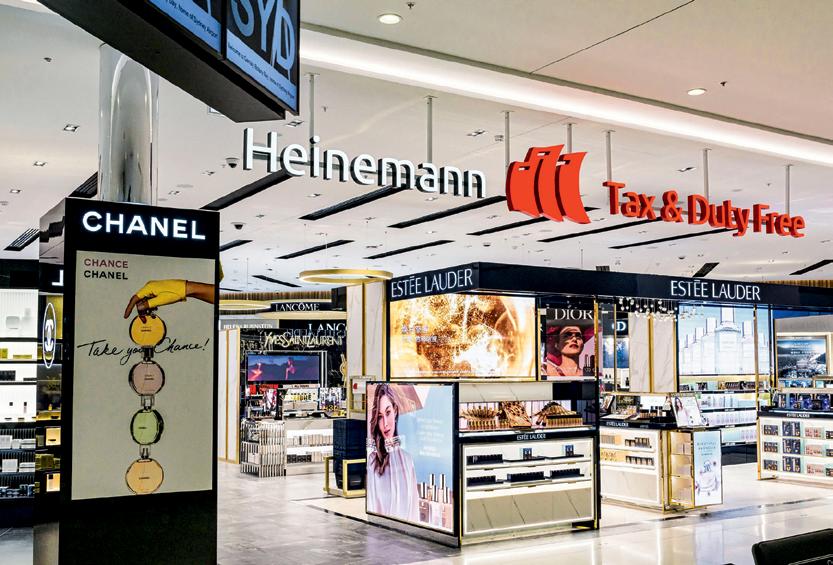
The passenger is evolving, and so are we. Constantly improving the passenger’s experience is at the heart of what we do and deeply embedded in our DNA. At Sydney International Airport we will be laser focused on the current and future passenger, introducing new brands and concepts, curating an airport shopping experience that you won’t want to miss. Whether you are a first-time or frequent traveller. We look forward to welcome you soon.
Join us on our journey at www.heinemann.com.sg

Precision, innovation and a new standard in luxury cigarettes
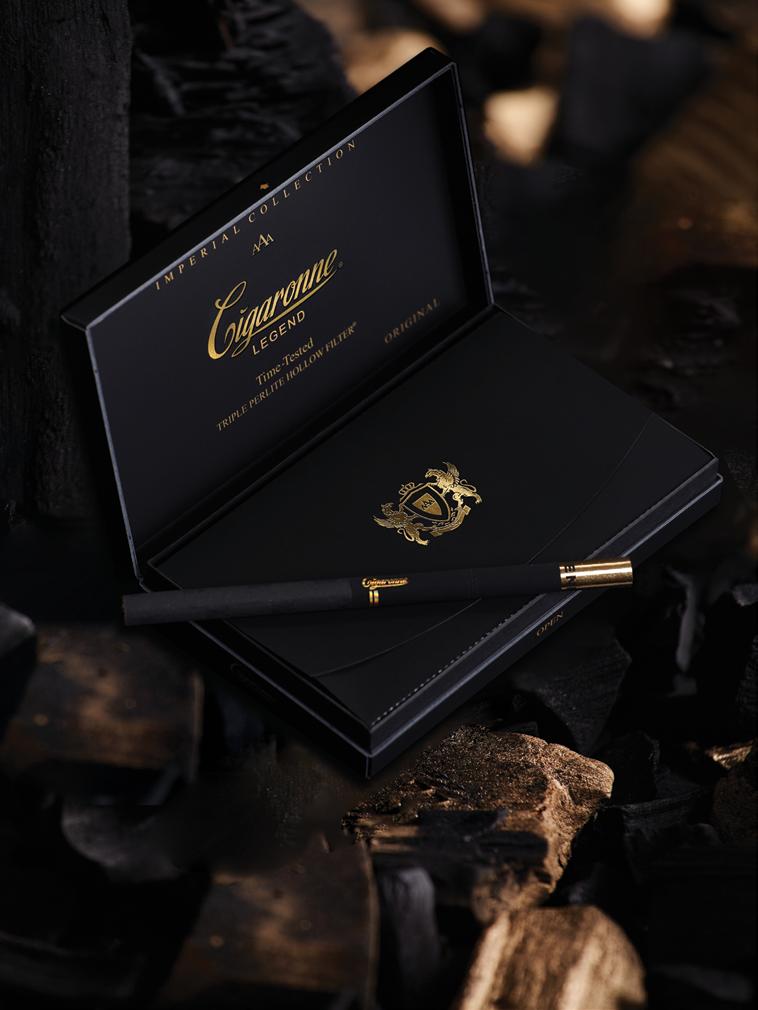
At the core of Pogossian Luxury Brand House is a commitment to redefining product experience through innovation. Cigaronne’s cigarettes exemplify this approach, combining a patented elongated format with a perlite-enriched filter designed to enhance smoothness and reduce impurities. Produced within a fully integrated single-site facility, each element is carefully controlled to ensure consistency, balance and quality.
Pogossian Luxury Brand House is positioning Armenia as a rising force in global luxury, bringing together Cigaronne premium cigarettes, exceptional spirits and refined lifestyle products through a blend of heritage, innovation and proprietary technology across more than 40 countries
Luxury brands rooted in national heritage are a well-established force in travel retail — think Scotch whisky, French cognac, or Swiss watchmaking. Armenia, with its deep traditions of craftsmanship and distilling, is now pressing its claim on that global stage, with Pogossian Luxury Brand House leading the charge.
Founded in the late 1990s by entrepreneur Simon Pogossian, the company started as SPS Cigaronne, built on a philosophy of challenging conventional production methods. Pogossian, focused on the luxury category, oversaw the design, engineering
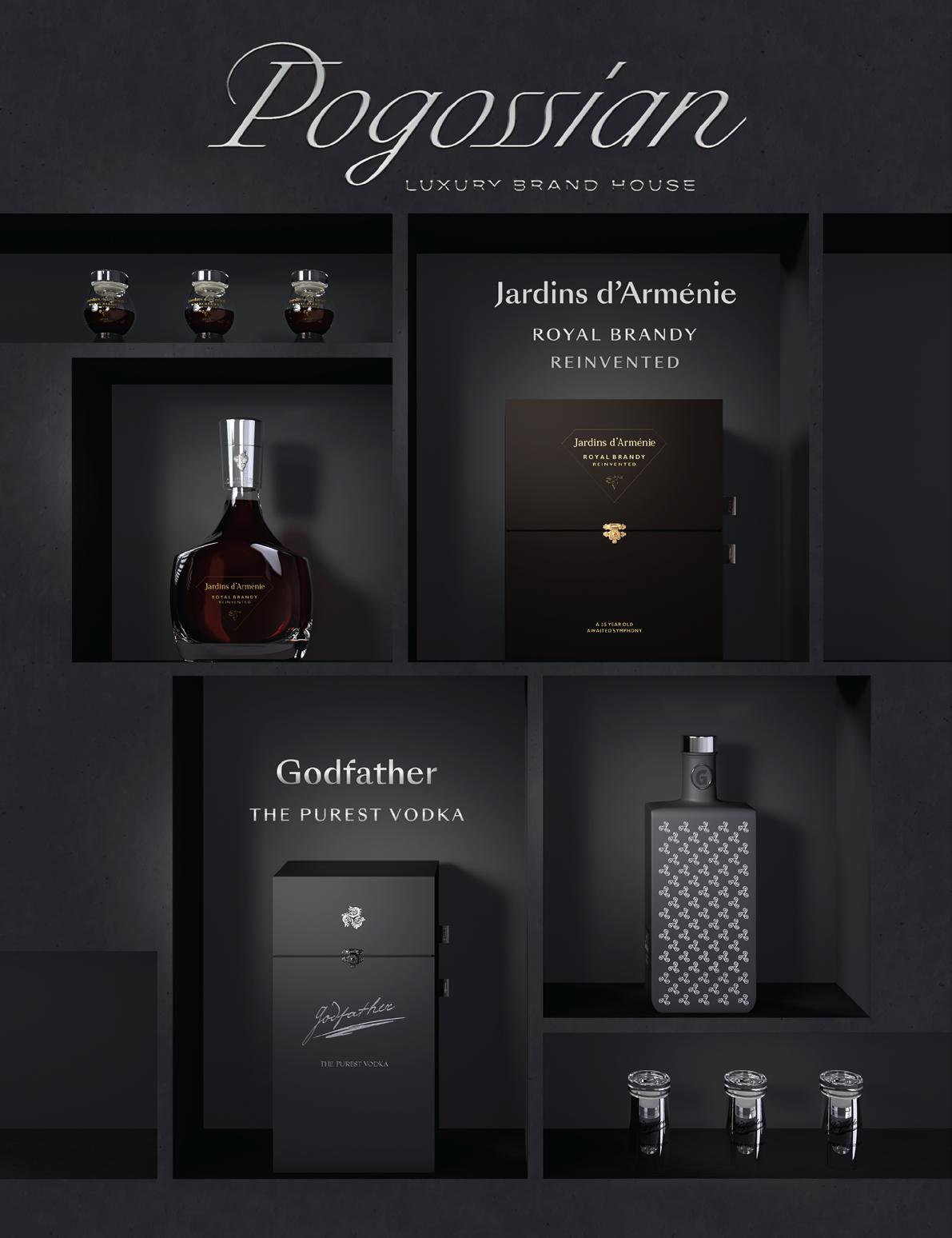
and manufacturing of cigarettes from the outset, introducing proprietary filtration technologies and advanced systems that set new benchmarks for quality. Today, the portfolio shows how Cigaronne’s success has created room for Pogossian Luxury Brand House to expand into new categories, carrying the same attention to product identity, presentation and premium positioning into a wider luxury offering. That evolution is most evident in the house’s spirits portfolio, where Jardins d’Arménie Royal Brandy and Godfather Vodka introduce a new expression of the brand house.
This focus on engineering, organic material selection, and a commitment to following its own path and vision has allowed the brand to establish a distinct position in international markets, earning recognition from Asia to Europe and securing distribution in more than 40 countries.
portfolio shaped for discovery
At the heart of the range are two flagship spirits. Jardins d’Arménie Royal Brandy celebrates Armenia’s brandy tradition through a triple-aging process using oak and apricot wood, a distinctly Armenian touch refined by proprietary nanoblending technology. According to Armen Pogossian, the second generation of the Pogossian family, the result is exceptional smoothness and a longlasting finish. Godfather Vodka takes a different path: a 50-step purification process delivers clarity and softness beyond conventional standards.
Under Armen Pogossian’s leadership, the company’s product brands are represented in the leading duty free and domestic stores across the globe, securing its position among global luxury brands from Monaco to Shanghai.
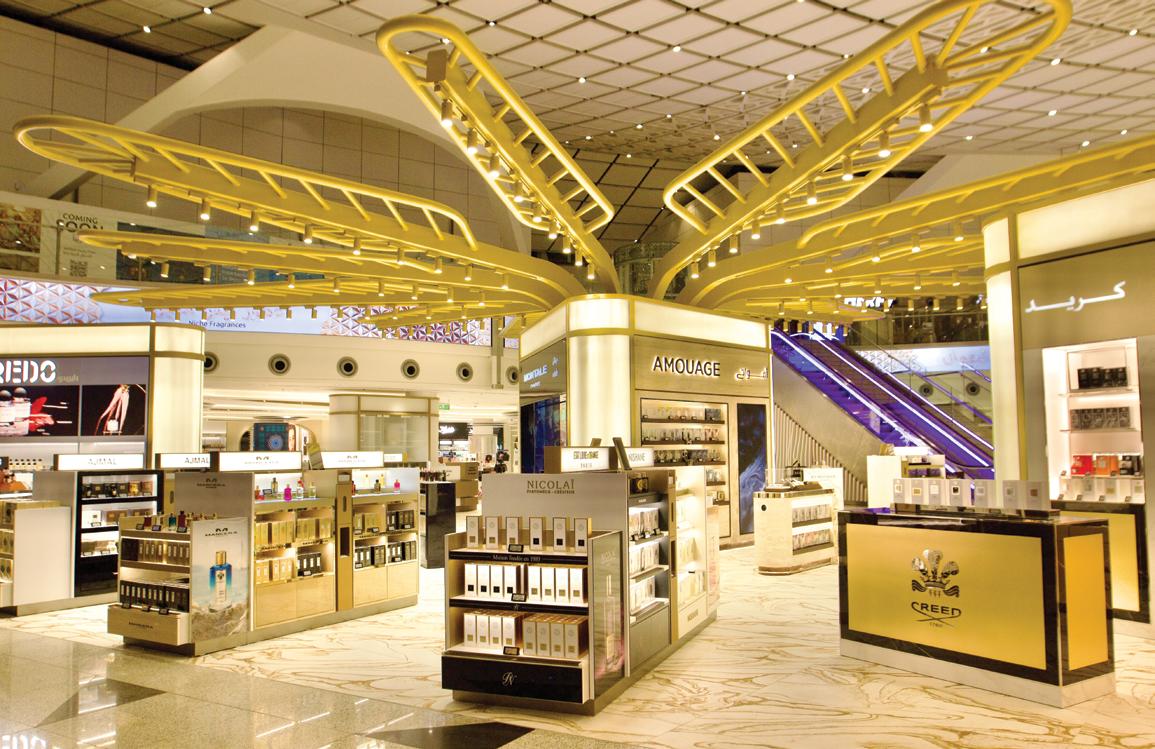
From shifting toward a more centralized global commercial model to pricing built for agility, Gebr. Heinemann COO Inken Callsen shares her take on collaboration, the global use of data and supply chain execution
by LAURA SHIRK
Described as a strategic shift toward a more integrated commercial model, Gebr.
Heinemann is bringing category strategy, investment decisions and supplier collaboration closer together at a global level. As Chief Commercial Officer Inken Callsen explains, this enables Gebr. Heinemann to engage with its suppliers with “one voice” and under one strategic framework.
“For our suppliers, the key change is that category management and commercial investment are now orchestrated centrally and strategically,” says Callsen. “We define global three-year plans together,
from market priorities and category development to targeted investments, such as global launches or travel retail exclusives. This integrated approach creates clarity, speed and a shared direction, allowing us to jointly drive profitable growth and create more relevant offers for travelers. We have already started working this way with several major suppliers and will continue to roll it out across our network in 2026.”
When it comes to evolving its commercial strategy to create more value for the traveler, the retailer aims to provide a

thoughtfully curated, impact-driven offer focused on luxury, niche selections, travel retail exclusives and accessible entry-
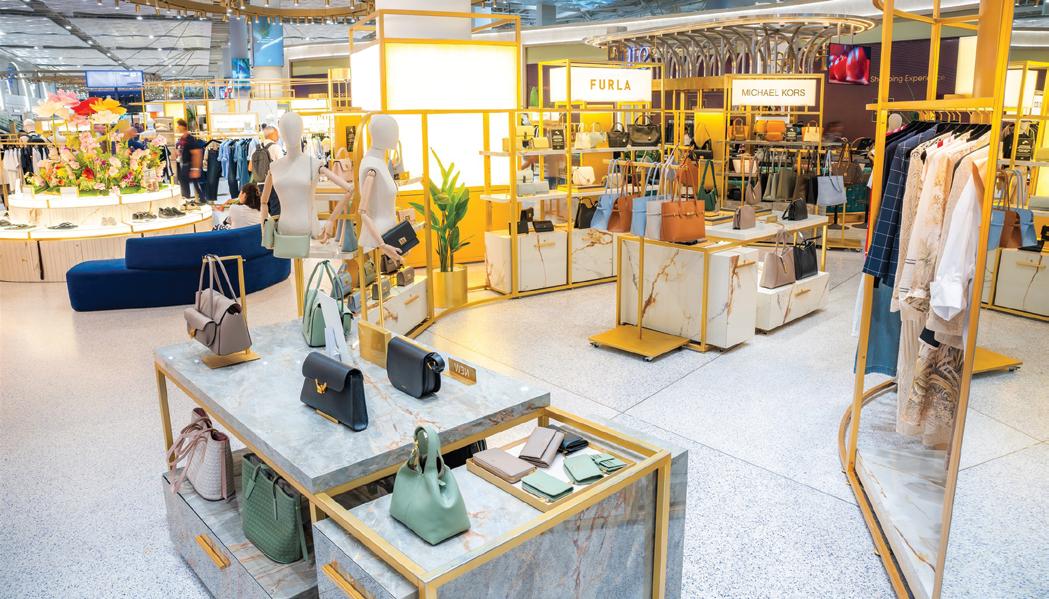
level formats that elevate the consumer experience. As a result, Gebr. Heinemann sharpens its assortment architecture with a stronger emphasis on clarity, storytelling and excitement along the journey. At the center of its vision, Callsen shares, is data-driven planning, close supplier collaboration and a “relentless focus” on value for travelers.
Gebr. Heinemann is implementing the results of its global Assortment Steering and Efficiency project to successfully leverage data-driven approaches. The initiative has introduced clear processes and digital tools such as an assortment engine for continuous optimization.
“For us, the traveler is at the heart of everything we do,” she states. “Therefore, we want to move away from ‘everything for everyone’ toward a differentiated, relevant assortment that inspires and excites travelers, while also being easy to navigate for them.”
A belief in structured data
Built for agility, Gebr. Heinemann’s pricing approach is customer-led, data-powered and differentiated by relevance. “We start at the customer’s point of view: understanding how they
compare our prices with domestic retail, online channels or other airports,” says Callsen. “At the same time, our pricing is grounded in structured data.”
According to Callsen, the company adjusts prices and promotions when data, competition or customer perceptions shifts, always acting within a controlled, technology-enabled framework. As part of this approach, non-competitive references are delisted, allowing a stronger focus on travel retail relevance. “We ensure that our pricing strengthens customer trust while delivering a consistent commercial performance,” she adds.
The retailer’s reliance on data is also visible outside of its pricing model. Datadriven collaboration is essential to Gebr. Heinemann. As an example, Callsen references the “Prada Holiday Magic Tale” activation at Copenhagen Airport in late 2025. On this, a series of stakeholders — L’Oréal, Copenhagen Airport, SAS, Bauer Media Group and Gebr. Heinemann — partnered to create a seamless customer journey across multiple touchpoints.
“Breaking down silos and exchanging traveler insights enabled a connected journey from pre-trip inspiration to the in-airport experience,” says Callsen.
“For me, this perfectly illustrates the future: when partners automate data exchange, we elevate the experience and create value for everyone involved, which means brands, airports, airlines and ultimately the traveler.”
Reflecting on Gebr. Heinemann’s logistics development in 2025 and its plans for 2026, Callsen highlights the retailer’s best-in-class supply chain. Its new hub in Istanbul will significantly shorten replenishment times for markets like Turkey and the Middle East. “Our supply chain is and will remain one of Gebr. Heinemann’s core competencies, continuously evolving into an international benchmark for excellence with the lowest carbon dioxide emissions in the industry,” she remarks. Last year, Gebr. Heinemann launched the largest modernization program in the history of its logistics. This includes comprehensive upgrades at its German distribution centers in Allermöhe and Erlensee, where the company is redesigning material flows, introducing more automation and piloting robotics to support its teams and increase capacity.
With conversion rates unmoved despite years of investment in retail design and digital tools, ARI CEO Ray Hernan says the answer lies in people more than platforms
by HIBAH NOOR
Only one in every four passengers who walk into an airport store buys something. That figure has proved stubbornly resistant to change, particularly in the face of post-pandemic recovery, a boom in international travel, and wave after wave of investment in retail design and digital tools. For Ray Hernan, CEO of Aer Rianta International (ARI), it is the number the industry keeps failing to answer for.
“Are we doing a good job when only one passenger in every four actually makes a purchase in our stores?” he asks. “I’ve been in this business for eight years, and despite significant changes over that time, conversion hasn’t moved significantly. That tells you where we are in terms of communicating value.”
Price accounts for around one quar-
ter of purchasing decisions, according to recent research, leaving the remaining percentage to question what else drives passengers to buy. This question is increasingly being answered as “value.”
“Defining value is always in the eye of the beholder,” says Hernan. “Value also means exclusivity, convenience, engagement and the retail experience itself. It’s about slowing the customer down in a way that’s enjoyable, even as they rush to their gate.”
Last year ARI ran a structured listening program called Passenger Connects, putting those questions directly to travelers. “We wanted to understand what value truly means to the customer,” Hernan explains. “Passengers consistently told us price, convenience, ease

of shopping, and the correct product range are all important, but they also highlighted confusion. Too many touchpoints, conflicting messages about exclusives, discounts and pricing. It all needed simplification.”
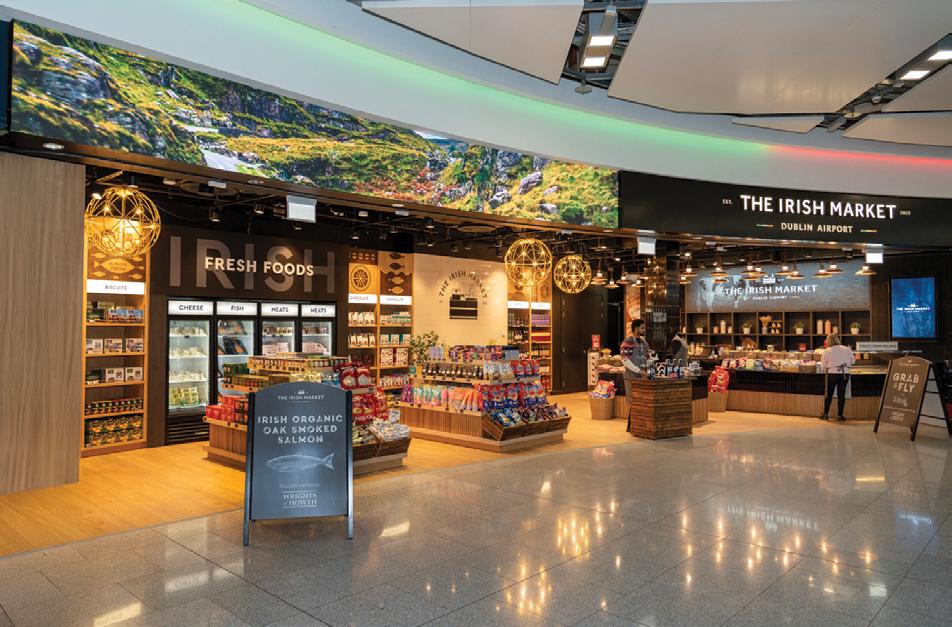
The retailer trialed a clearer approach to price communication at its home
base in Ireland, and the results were stark — the share of passengers who felt the company was competitive on price jumped from 70% to over 90%. “Importantly, we’ve started to see improved spend per passenger through increased penetration,” notes Hernan. “It’s proof that a focused, clear message works, though we’re still evolving and learning.”
Conversion is only part of what keeps Hernan up at night. The profile of who is walking through those airport doors is shifting, and the industry’s standard playbook is not keeping pace. “Gen Z and millennials have very different expectations. They want local products, authentic experiences, and bespoke offers that reflect the destination they’re leaving, not cookie-cutter retail,” he says.
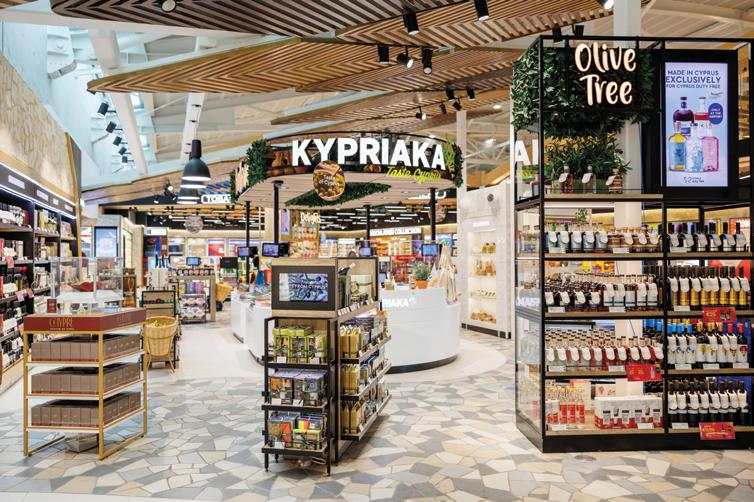
ARI’s locally focused concept Kypriaka (products of Cyprus) at Larnaca now accounts for more than 10% of total sales in the store, spanning everything from local liquors to regional foods.
Transit passengers present a different challenge altogether. Their numbers are
climbing at major hubs, but they arrive depleted — less time, less energy, with less appetite for browsing. “We need to adapt our approach, engaging them earlier through pre-communication, airline touchpoints, lounges and even hotels within airport ecosystems,” says Hernan. “The opportunity is huge, and we’re starting to see positive impact on both penetration and average transaction value.”
People over platforms
For Hernan, innovation is a broad mandate — anything that makes the operation faster, sharper, more engaging qualifies. But when the conversation turns to conversion, he is unequivocal about what moves the needle. “Frontline staff are still the most important factor in converting passengers into customers,” he says. “Technology should facilitate, not replace, the human connection. That emotional engagement is critical, especially when building trust and loyalty in airports.”
ARI brings that commitment to every passenger through its brand identity “Joy On Your Way,” which Hernan says shapes everything from how staff interact with customers to how products are presented and value is communicated.
The opportunity only grows when the wider industry moves together, he adds. Margins are complex, and too many stakeholders touch the supply chain for any one party to move unilaterally. The opportunity, in his view, lies in airports, airlines and brands pooling insights and data rather than working in parallel. “It’s about delivering a consistent, joyful and meaningful experience,” he says. “That’s the value we’re committed to communicating, and the future we’re excited to build in travel retail.”
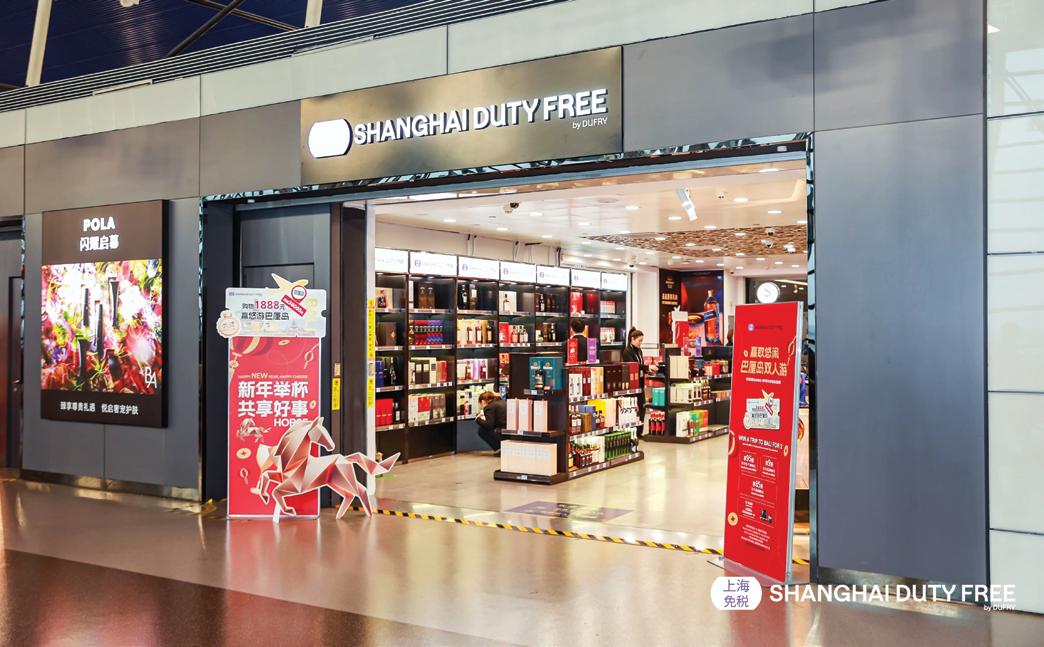
Avolta’s President and CEO of APAC, Freda Cheung outlines a regional strategy for expansion through landmark concessions, integrated retail and F&B concepts and cross-border loyalty partnerships
by ATOOSA RYANNE ARFA
Avolta is advancing its momentum across the Asia Pacific (APAC) region with an integrated approach to duty free, convenience and food and beverage (F&B) operations. Driven by recent landmark concessions and strategic loyalty partnerships, the company’s regional strategy is rooted in local relevance and commercial execution.
“Asia Pacific has been a very active
region for us, both in terms of new business and in upgrading the quality of the traveler experience in existing locations,” Freda Cheung, President and CEO of APAC at Avolta, tells Global Travel Retail Magazine.
Strategic milestones and regional expansion
Cheung cites Shanghai Pudong International Airport (PVG) as a pivotal
milestone. Following a 2025 expansion of retail and F&B spaces, Avolta subsequently secured a landmark duty free concession. “These developments position Pudong as a strong example of the kind of integrated platform we want to build in APAC across duty free, convenience and F&B,” Cheung notes.
The company has extended its footprint beyond mainland China through a series of recent regional rollouts.





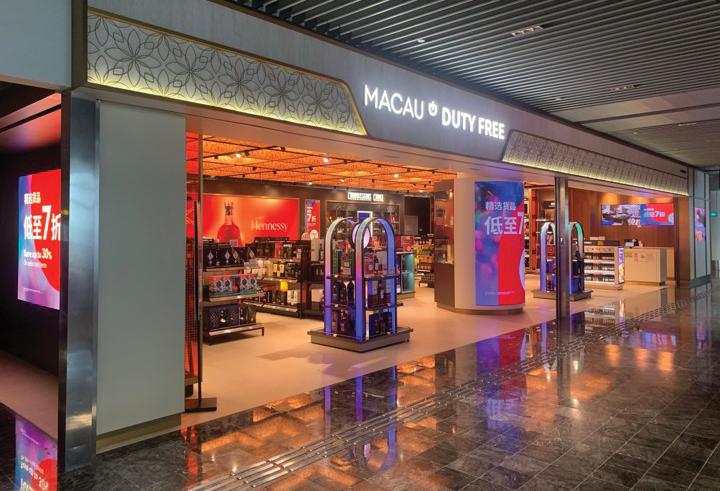
“We’re building momentum across the wider region with the opening of Macau Duty Free at Macau International Airport, new Hudson and F&B concepts at Shenzhen Bao’an International Airport, and the commencement of F&B operations in the new terminal in the Maldives,” Cheung says. “We also secured entry into Japan with a significant F&B contract at Kansai International Airport.”
Cheung shares that the company’s expansion is calculated, prioritizing strategic fit over scale. “Our focus is not just on growth in volume terms,” she explains. “It’s about growing in the right locations, with the right partners, and with formats that allow us to combine local relevance and strong commercial execution to deliver a better traveler experience.”
Operating across APAC requires navigating a complex consumer landscape where behaviors differ significantly by market.
“Asia Pacific is not a single consumer story,” says Cheung. “There are certainly some common themes across the region, with some travelers looking for relevance, convenience and a more engaging experience. They are also generally very open to innovation, new formats, and digital tools. That openness to experimentation and speed is one of the reasons APAC remains such an exciting region for us.”
However, passenger mix, brand affinity and payment preferences vary significantly across China, Southeast Asia, Japan, India, and Australia. “That means our strategy cannot be built around a ‘one size fits all’ approach,” Cheung



explains. “We need to be consistent in our platform and capabilities, but highly local in execution, whether that means tailored assortments, local partnerships, digital payment solutions, or concepts with a stronger sense of place.”
The Club Avolta X Power Pass loyalty partnership, launched with Thailand’s King Power Group this past November that allows members of both programs to access benefits across both networks, has seen a positive response. “The partnership with King Power reflects where we see loyalty going in travel retail,” says Cheung. “It goes beyond just a single operator or airport and starts to link different parts of the traveler journey in a more meaningful way.”

“One of the key learnings is that travelers respond well when loyalty becomes easier to use and relevant across different travel touchpoints,” Cheung adds. While Avolta sees potential in scaling this collaborative loyalty model, it evaluates expansion carefully on a market-by-market basis. “The conditions need to be there in terms of the right partner, strong customer relevance, digital readiness and a structure that creates value for both sides.”
Empowering local teams for agile execution
Avolta pairs strategic direction with the flexibility for local teams to adapt,
respond and lead in ways that fit their markets. “One of the biggest lessons for me has been that the diversity in APAC is a real source of strength, not just something to manage,” Cheung shares, adding that leadership requires alignment around a shared ambition and a strong sense of ownership at the local level. “When that happens, teams execute better, contribute stronger ideas, move faster and build more effective local partnerships.”
Looking ahead, Avolta is targeting continued growth across the APAC region thanks to its significant potential driven by high travel demand and development opportunities. The strat-
egy focuses on major gateway airports, particularly in China, while remaining open to expansion in North Asia and Southeast Asia.
“It is about winning the right opportunities in the right locations and executing with speed and quality,” Cheung concludes. “It also requires staying close to the traveler, understanding different customer needs, and ensuring our offer remains locally relevant, commercially strong and digitally enabled.”




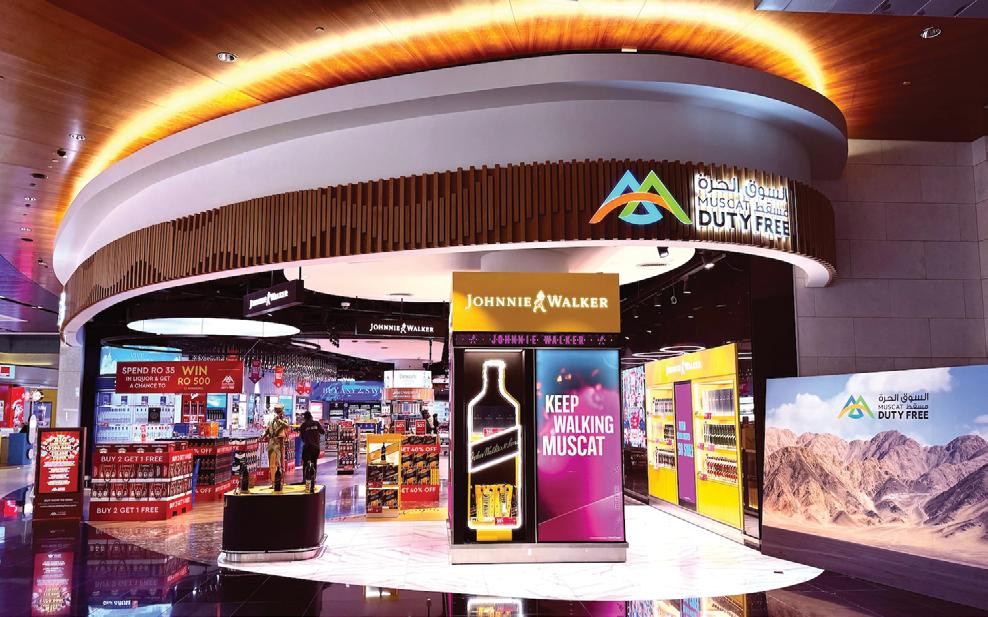
Chief Commercial Officer Faiz Khan details how curated store layouts, brand collaborations and passenger segmentation are turning engagement into measurable commercial growth at Muscat Duty Free
by ATOOSA RYANNE ARFA
Muscat Duty Free, which is based at Muscat International Airport and a 50/50 joint venture between Oman Air and Aer Rianta International Middle East (ARIME), has been working to translate operational improvements into measurable commercial outcomes. The retailer recently celebrated its highest monthly sales this past November, which they attribute to structured brand execution, operational adjustments and strategic planning. By refining its product mix, redesigning store layouts and leveraging brand partnerships, Muscat Duty Free is actively continuing to convert passenger
engagement into sustained growth while providing value for partners.
Global Travel Retail Magazine spoke with Faiz Khan, Chief Commercial Officer at Muscat Duty Free, about how the retailer’s strategies are turning operational discipline into consistent commercial results.
Layouts into loyalty
Muscat Duty Free has been redesigning its stores to optimize space, balance luxury and core categories, and improve navigation, brand visibility and display standards. Each zone now addresses the needs of different passenger segments, which supports a more curated retail environ-

ment. “We’re moving from a transactional model to a more experience-led environment by focusing on value delivery through layouts, brand stories and defined category roles,” Khan explains.
The retailer segments Omani nationals, GCC travelers, South Asian expatriates and leisure passengers. This approach encompasses category placement, pricing and assortment, which allows Muscat Duty Free to anticipate passenger behavior and adjust offers.
“We’ve shifted away from a one-sizefits-all model toward more targeted, passenger-led curation driving in-store customer experience,” Khan adds.
Partnerships into performance
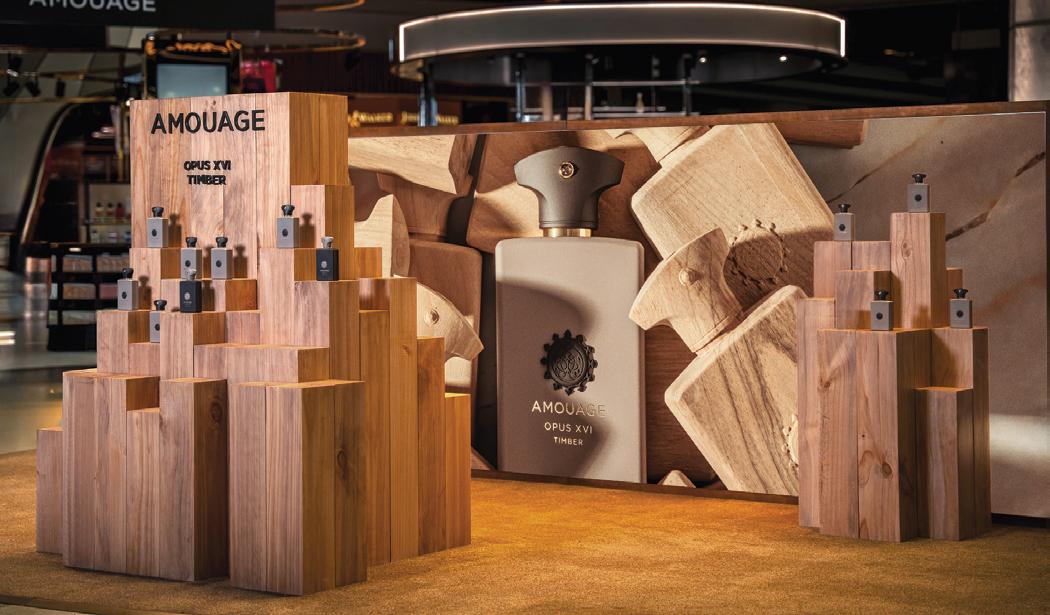
Khan identifies brand collaborations and partnerships as an important driver of Muscat Duty Free’s record sales across fragrances, tobacco alternatives, liquor and confectionery. As an example, the retailer partnered with iconic local brand Amouage, the Omani luxury fragrance, to create an immersive experience across multiple touchpoints in the terminal that engaged passengers and supported commercial growth.
“Particularly with Amouage, the response exceeded expectations and reinforced the impact of a strong local luxury brand executed well,” Khan notes. During Omani National Day,
Muscat Duty Free staged an Amouage OPUS XVI Timber activation across the airport, using digital screens, pop-ups and installations to guide passengers through a sensory experience reflecting the fragrance’s notes and local culture.
These collaborations are also complemented by segmentation-led initiatives. For example, an exclusive Malayali beer launch targeted a specific expatriate segment. The M&M’s Experience Zone also provided interactive engagement for travelers. Bundles and globally recognized brands continue to anchor the offer for transit passengers, while curated assortments cater to gifting trends and demand for premium and niche products.
Khan also notes that social media has become an important lever that shapes passenger purchase intent, and that Muscat Duty Free monitors those trends closely. “Passenger expectations today are defined by relevance, with social media influencing both awareness and purchasing,” he says, citing examples including a liquor brand experiencing immediate uplift after an in-store influencer video gained traction, as well as niche fragrances seeing increased
inquiries after social media exposure. These insights feed directly into assortment planning, visibility strategies, and partner activations at Muscat Duty Free.
Routes into revenue
Muscat Duty Free aligns its commercial strategy with Muscat International Airport’s expanding network by adjusting category mix, store layouts and product offerings to match evolving passenger flows and maximize engagement. “As passenger profiles evolve, we are focusing on maintaining a relevant offer for diverse nationalities, travel purposes and purchasing behaviors,” Khan explains. “With initiatives promoting Oman as the Jewel of Arabia, we are well positioned to grow alongside rising passenger volumes.”
By refining the passenger experience, supporting continuous innovation and collaborating with partners, Muscat Duty Free’s goal is to maintain a commercially sustainable model. “The focus is on improving commercial quality, increasing value per passenger, strengthening brand equity and building more resilient category performance,” Khan concludes.
China Duty Free COO Yvonne Chan believes that operators who want to win over modern Chinese travelers must combine experiential innovation, digital fluency and culturally relevant brand engagement to build lasting connections
by ATOOSA RYANNE ARFA
The travel retail industry is confronting a consumer landscape that has changed dramatically over the past decade. According to Yvonne Chan, Chief Operating Officer of China Duty Free Group (CDFG), companies must now cultivate meaningful connections with Chinese travelers to succeed.
“Growth previously came from traffic, product expansion and channel expansion,” Chan notes. “Going forward, it will mainly come from building and nurturing the consumer circle.” Building a dedicated ecosystem and connecting personally with customers is now central to the channel’s strategy.
Mandating digital and experiential Chinese travelers today make more independent, spontaneous, and experience-driven choices than in the past. They often plan closer to departure, stay longer, and prioritize cultural immersion, wellness, and meaningful value over purely transactional shopping.
“Many global operators still assume Chinese travelers mainly travel in large groups to buy duty free luxury brands, but they will part with their money if they receive good customer experiences,” Chan explains.

Digital innovation has become a key enabler of this change. Chan emphasizes “my-style” integration, creating shopping journeys that feel personal and align with consumers’ lifestyles. “Spending alone is no longer enough. It’s about what consumers feel during the purchase,” she says.
Experiential partnerships further reinforce this strategy. “Emerging C-beauty brands, “Kidult” concept brands, and Chinese tech and IP offerings are steadily gaining market share. A strong product assortment alone no longer satisfies modern consumers,” Chan says, referring to domestic Chinese beauty brands with large social followings, lifestyle-focused concepts for young adults seeking playful or nostalgic experiences, and homegrown digital and entertainment brands.
CDFG has advanced this shift by curating experiences across its retail footprint. Most recently in February, the group updated its duty free concession at Beijing Capital International Airport Terminal 3, Shanghai Pudong Terminal 2 and Hong Qiao Airport, expanding the brand mix beyond beauty and spirits

to include fashion, lifestyle, and homegrown Chinese tech and IP brands in multiple categories. The refresh created a culturally rich, immersive environment for both local and international travelers.


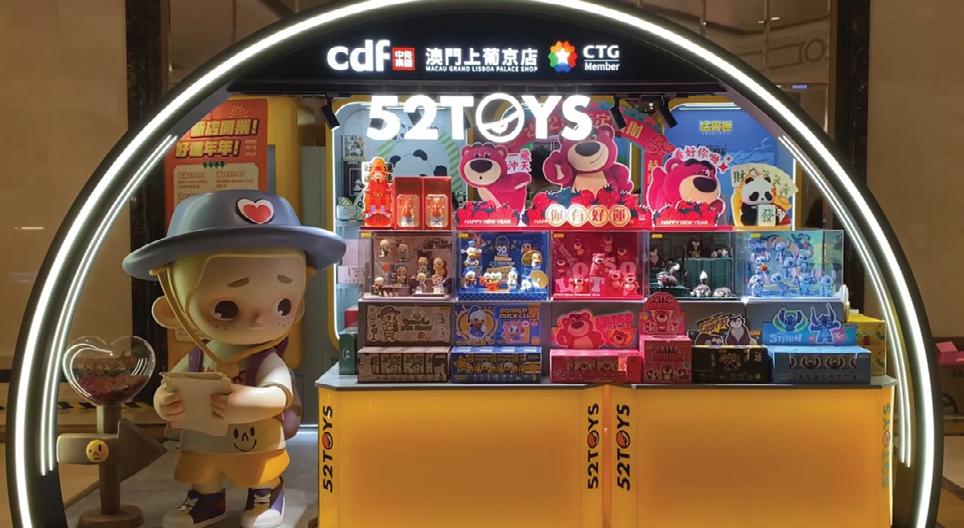
Meanwhile, at Hainan’s Haikou International Duty Free Shopping Complex, experiential elements from branded whiskey boutiques to interactive cultural displays further extend engagement beyond traditional shopping. These include seasonal exhibitions, limitededition products, and new digital touchpoints that rotate regularly.
Shifts in consumer habits have elevated domestic brands, allowing them to compete with international players by resonating locally. “While global brands bring heritage, connecting with local culture and lifestyle remains an area for growth,” Chan notes.
Localization now extends to entertainment and intellectual property. ‘Kidult’ concepts such as Pop Mart show travelers’ appetite for engagement and stress relief through retail experiences. At Hong Kong International Airport, Chan cites tea culture-inspired IP products, such as Foodie Dimsum (福记点心),

which became unexpected bestsellers in late 2025 and demonstrate how local relevance can drive engagement.
CDFG leverages its extensive footprint to build a connected consumer ecosystem. Serving more than 56 million consumers across border shops, train stations, and other locations, the group aims to increase average return visits from 1.8 to 2.
“We integrate our customer base into a seamless ecosystem connecting loyalty and services across online and offline touchpoints,” Chan explains. “Privacycompliant, first-party insights allow us to personalize journeys, cross-sell, and activate partnerships at scale.”
The DFS acquisition has strengthened CDFG’s regional presence through relationships with brands and affluent consumers. “It supports initiatives such as exclusive partnerships with luxury and lifestyle brands, multi-channel distribution, localized co-marketing
campaigns, and advanced data-driven personalization for cross-border shoppers,” Chan says. The integration also enables supply chain optimizations that boost margins and market share across Greater China.
Looking ahead, Chan states that retailers and airport authorities must rethink commercial models as AI and agile backend systems blur the line between physical and digital shopping. “The customer lifecycle, from in-store shopping and checkout to online repurchase and back to store, is becoming seamless. Lines are no longer lines,” Chan says.
By putting the modern consumer at the center of every decision, the industry can move beyond traditional transaction models. “The future belongs to those who build meaningful, datainformed, and experience-driven relationships with their customers,” Chan concludes.


Trevor Lee and Lilly Choi-Lee of TravConsult believe that operators who want to win the APAC traveler must invest in human connection, cultural intelligence and a fundamentally different understanding of passenger motivations
by ATOOSA RYANNE ARFA
For more than two decades, airports and travel retail have emphasized the Asian traveler, particularly Chinese travelers, as a growth driver. With high-spending Asian passengers arriving ready to buy, conversion once came easily. Yet today, these travelers are more discerning, experienced and less influenced by transactional retail.
“The product is no longer the differentiator,” says Trevor Lee, co-founder of TravConsult, a consultancy helping aviation, retail and hospitality businesses engage Asian markets. “What converts a browser into a buyer today is how they feel the moment they walk through your door.”
Three phases, one turning point Trevor runs TravConsult alongside cultural specialist Lilly Choi-Lee. Over two decades working with airport
retailers, airlines and hospitality groups across Europe, Australia and Asia, they have observed three phases of outbound travel growth.
“The first phase was early mass tourism, particularly with China, when group travel dominated and service providers were unprepared for behavioral differences,” Trevor says. “The second phase was the high-net-worth and FIT — or Free Independent Traveler — phase, when spending surged and luxury brands became the main beneficiaries.”
Today, passengers often arrive informed, having researched products and prices. Retailers are competing on engagement as much as they are on assortment. “Post-COVID, we have entered a third phase: the discerning, digitally empowered, experience-savvy traveler,” Trevor explains.
“They are not just looking for product availability,” Lilly adds. “They are
evaluating how they are welcomed and whether the retailer understands them.”
The proof is in the basket TravConsult focuses on integrating cultural intelligence into frontline retail. “The challenge has never been the nationality of the traveler,” Trevor says. “The challenge is whether the store understands the traveler.”
In addition to consultancy, TravConsult offers online courses, workshops and hybrid training tailored to specific passenger profiles and leadership teams. Their programs on Chinese and Indian travelers cover generational purchasing patterns, service phrases and cultural nuances.
One of their focus areas is moving beyond broad generalizations. “If retailers replace a ‘Chinese strategy’ with an ‘Indian strategy’ without rethinking cultural engagement and communication,




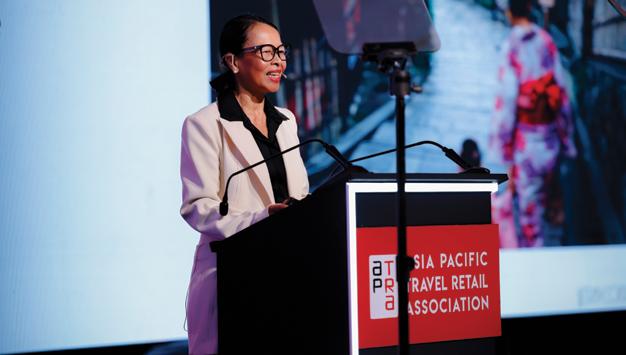
it becomes difficult to build sustainable growth,” Trevor explains.
For Indian travelers, their training courses explore negotiation culture and the value of alternatives or bundled offers. For Chinese travelers, training may address color symbolism — red representing luck, white associated with mourning — and everyday practices that can be misunderstood, such as tapping the counter to request service, a normal signal in many parts of China.
“Chinese travelers come wanting to spend their money, not to be intentionally rude,” Lilly notes. “When staff understand the context, it becomes easier to respond with empathy and confidence.”
Airports are not the destination, but they are part of it
TravConsult encourages operators to
view airport retail within the broader travel journey rather than standalone.
“Passengers travel to Singapore, Paris or Melbourne,” Trevor says. “They are not traveling to a specific airport shop. When retailers see themselves as part of the destination rather than a transactional stop, the interaction with passengers changes.”
Lilly notes that travel retail often defines “experience” through installations, activations or digital tools. Yet the most immediate experience is human. “It starts with the welcome,” she says. “It is the body language of the salesperson and whether someone feels comfortable asking a question.”
Across airports including Melbourne, Brisbane, Frankfurt and Budapest, the consultancy has observed that when frontline teams understand the cultural context of customers, overall engagement
improves. In one example, staff who did not speak Chinese began greeting passengers with simple Mandarin phrases. “Chinese passengers became visibly relaxed,” Trevor says. “The conversations lasted longer, which ultimately led to increased basket size, all without technology investment or store redesign.”
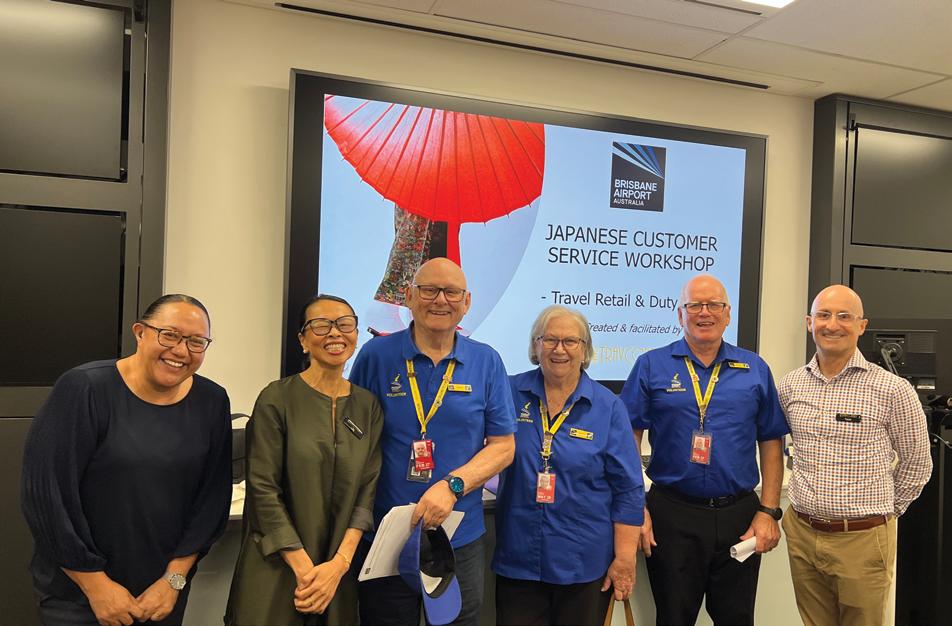
Several airports have recently operationalized this approach. Melbourne Airport introduced scalable online courses focused on Asian passenger markets, creating a shared knowledge base for retail tenants. Brisbane Airport took a hands-on approach, running workshops across five Asian markets for retail and food and beverage (F&B) teams. Frankfurt Airport uses a hybrid model of workshops, webinars and digital learning across retail and F&B, while Gebr. Heinemann Hungary emphasizes practical application with language-led demonstrations and hospitality initiatives to strengthen engagement.
“These airports are preparing ahead of the curve,” Lilly says. “They recognize that cultural intelligence supports both service quality and commercial performance.”
The competitive case for cultural investment
Asian passenger growth is expected to continue, but the evolving traveler profile means competition may hinge more on engagement than on brand strength or passenger volume. “If product access is global and price transparency is universal, hospitality then becomes the differentiator,” Lilly says. “Cultural intelligence is no longer a soft skill. Rather, it’s a commercial strategy that influences conversion rates, staff confidence, basket size and long-term destination reputation.”
After more than two decades working with airports, retailers and hospitality groups, Trevor notes one principle remains consistent. “When travelers feel understood, they engage. When they engage, they purchase. And when they purchase with confidence, they return. The real question for the industry is not whether Asia will travel. It is whether we are ready to welcome them properly.”


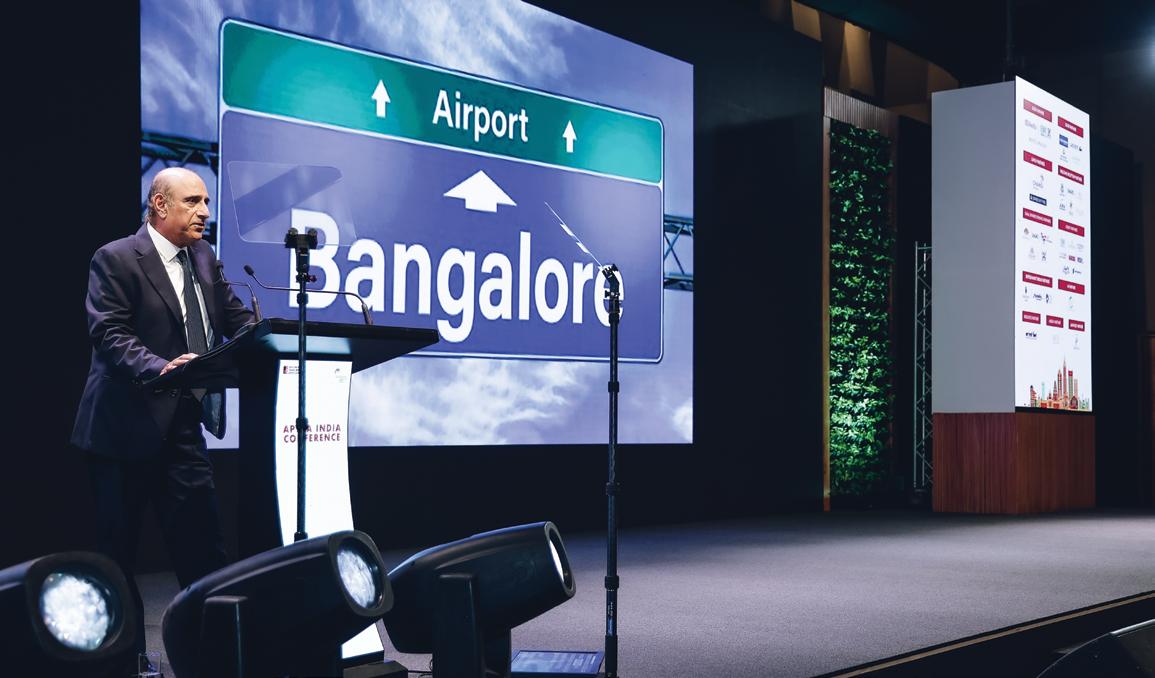
APTRA President Sunil Tuli outlines why a historic infrastructure boom and the democratization of air travel have turned India into a critical frontier in global travel retail
by ATOOSA RYANNE ARFA
India’s aviation sector is expanding to handle 800 million annual travelers by 2030, a figure projected to exceed 2 billion by 2047, according to Sunil Tuli, Asia Pacific Travel Retail Association (APTRA) President and Group Chief Executive of King Power. This growth trajectory is elevating the nation’s position as an international transit hub.
Delivering a keynote address at the 2026 APTRA Conference in Bengaluru, Tuli outlined the scale of this market transformation. With airlines committing to over 1,500 new aircraft and a development pipeline pushing the country past 200 operational airports, Tuli noted that the travel retail industry must adapt to accommodate this new capacity.
“As leaders representing airports and airlines, brands and retail operators, we are strapped into a front row seat to what is set to become one of the largest infrastructure and consumer booms in the modern history of global aviation,” Tuli stated. “The nation is quite literally building infrastructure required to move the equivalent population of multiple continents.”
Targeted infrastructure upgrades are driving the growth in India, focusing on bringing modern facilities to tier 2 and tier 3 cities. “This is not just about adding physical capacity to established metropolitan hubs such as Delhi or Mumbai,” Tuli explained. “It’s about
democratizing access to air travel for domestic and international journeys across the entire subcontinent.”
By connecting millions of upwardly mobile citizens with the global economy, the nation is redefining air travel expectations. Tuli pointed to operators such as Bangalore International Airport and GMR Airports, who are building comprehensive destination spaces designed to encourage passenger dwell time. “GMR is not just building transit points to move people from curbside to the gate,” Tuli added. “They are building comprehensive lifestyle destinations. The modern airport is a bustling commercial city in its own right.”
To match this physical expansion and influx of transit passengers, the Airports


Authority of India (AAI) is opening new commercial spaces. AAI currently runs requests for proposals for duty free concessions at 14 airports, with plans to expand to an estimated 11 additional locations over the next year. “Democratization of air travel brings with it the democratization of premium retail,” Tuli explained.
He highlighted that these sevenyear build-and-operate concessions represent a notable shift in market dynamics, targeting cities with highly educated, affluent populations such as Chennai, Kolkata, and Pune. “For retail operators, this represents a rare window of opportunity,” Tuli shared. “Securing these concessions now means establishing a foothold in a market that will experience exponential growth.”
Geopolitical pressures
When airlines reroute to avoid conflict zones, they look for stable alternatives. As India scales its domestic capacity, Tuli argued that the broader geopolitical environment offers a chance to capture international transfer traffic. He pointed out that ongoing tensions in the Middle East require flexibility from the aviation sector, and India’s geographic positioning makes it a natural bridge between Europe, Africa, and the Asia Pacific region.
“Disrupted airspace means longer flight routes, increased fuel costs, significant margin pressures, and ticket price hikes to consumers,” Tuli said. “These challenges also shine a bright spotlight on India’s unique strategic opportunity.”
Indian airlines have demonstrated remarkable resilience, according to Tuli. “Air India and Air India Express have maintained critical air bridges between India and key West Asia destinations. By positioning India’s airports as premier transit hubs equipped with top tier retail offerings, India can capture a permanently elevated share of global transfer traffic.”
The digital-first Indian consumer
Today’s Indian outbound passengers represent one of the fastest growing and most influential segments worldwide.
“Who are the modern Indian travelers across the nation? They are incredibly dynamic, digitally adept, and highly diverse,” Tuli noted. “There is no one India. However, wherever they live, they skew younger than the global average.”
These tech-savvy travelers research products on their smartphones before reaching the terminal. “They are rapidly embracing premium and experimental retail and lifestyle offerings, and prioritizing experience over transactions,” Tuli explained. To win these travelers over, Tuli insisted that brands must deliver luxury, brand exclusivity and limitededition products that cannot be found in standard domestic malls. “The retail must be distinctly relevant to them. It cannot be merely convenient.”
He highlighted the partnership between Adani Airports and IndiGo as a blueprint. The integration of the airline’s loyalty program with the airport’s digital platform allows travelers to browse, reserve, and pay for goods from home, collecting purchases upon arrival while
earning cross-platform benefits. “This collaboration creates a unified infrastructure,” Tuli remarked. “Crucially, it delivers rich, actionable data to refine future commercial offers, enabling operators to track purchasing behaviors, predict future needs and manage inventory with accuracy.”
Tuli framed the current decade as a historical pivot point for the channel. “2026 is a truly transformative juncture for the global aviation and travel retail sectors. When we look at the trajectory of our industry over the past few decades, we can identify specific inflection points where the center of gravity shifted. We are living through one of those moments right now.”
The focus now falls on operators and brands to match the ambition of India’s infrastructure developers. “The fundamental ingredients for historic success are all present. The principal challenge that remains for everyone in this room is flawless execution,” Tuli concluded. “The elements are in place. The scale is unprecedented. The time to build and partner and innovate is right now.”


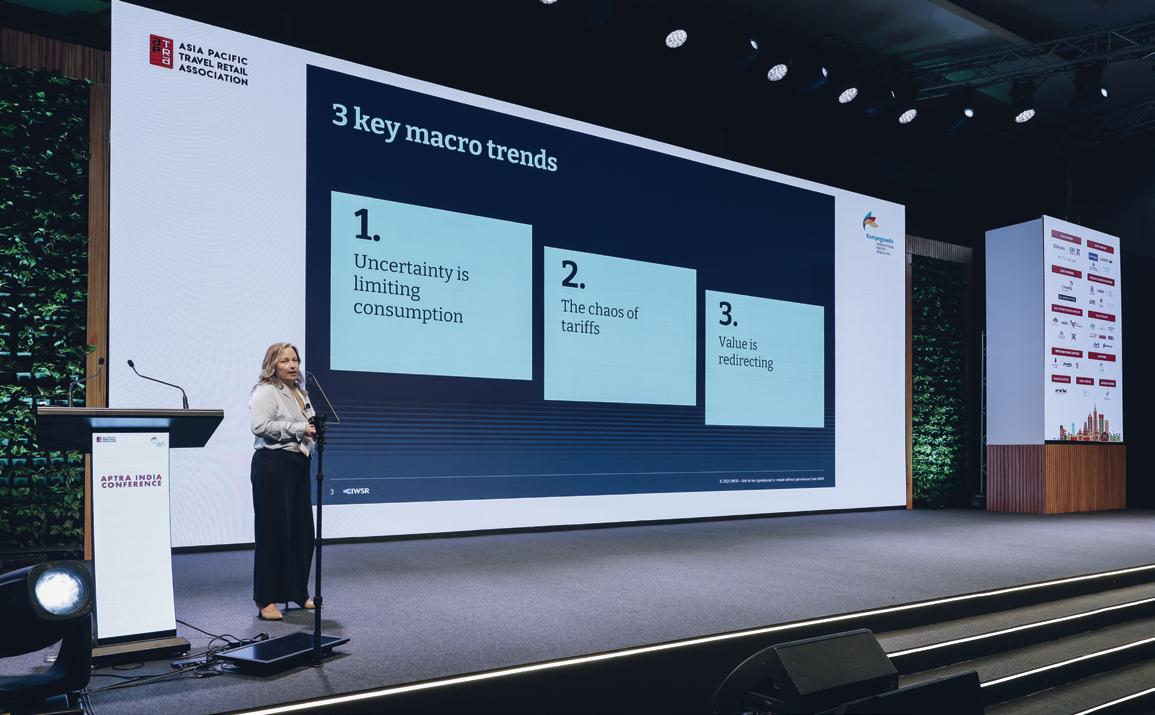
At the 2026 APTRA Conference, IWSR Senior Insights Manager Charlotte Reid detailed the factors propelling Indian travelers to counter global stagnation and drive massive category growth
by ATOOSA RYANNE ARFA
As the global beverage alcohol industry faced headwinds in 2025 constrained by economic volatility and shifts in consumer habits, the Indian market and its traveling diaspora have emerged as a driver of expansion and a bright spot for international brands.
Delivering a keynote at the 2026 Asia Pacific Travel Retail Association (APTRA) Conference in Bengaluru, Charlotte Reid, Senior Insights Manager of Travel Retail at IWSR, outlined why India’s growth trajectory is so instructive. While international markets are struggling with shifting sentiments and
the rise of alternative lifestyle trends, Indian consumers are redefining how, where and why spirits are consumed.
“2025 was a very, very volatile year,” Reid explained. “Uncertainty is limiting consumption. We’ve had political uncertainty, trade disputes, tariff disputes, and as a result, a decline in economic confidence. When investors don't invest in the markets, the economy goes down, and that hits consumer pockets. The first thing to lose spend on is beverage alcohol.”
Beyond economic strain, healthdriven shifts are also suppressing global volumes. “We have evidence that shows
that the rise of GLP-1 weight-loss drugs, such as Ozempic and Wegovy, have been impacting alcohol consumption,” Reid shared. She noted that alcohol-adjacent functional drinks, including CBD and THC-infused options, are also limiting traditional consumption.
As global headwinds are continuing to mount, the industry is facing a phenomenon IWSR calls “value redirecting.” Unlike a standard recessionary “downtrading” environment, consumers are not necessarily seeking the cheapest options but are instead re-evaluating

their spend. “Value end is still doing well, but what we’re seeing now is this prestige end starting to shift down in price tiers,” Reid said. “They’re shifting their spend into either different categories or different price tiers.”
This shift is placing India front and center. According to IWSR’s preliminary 2025 data, India stands as the world’s number one growth market, expanding by 4% while the total global market saw value decline by 3%. “Unlike any other market, India didn't stabilize. It didn’t recover. Instead, it has grown,” Reid stated. Highlighting the scale of this expansion, she noted that 11.4 million nine-liter cases were added to the overall beverage alcohol category last year. “We’re expecting about a 3% CAGR over the next 10 years.”
Reid noted that India is driving high-end consumption even as the rest of the world is redirecting value. “India is completely rewriting the narrative and bucking the trend. In the premium and super-premium and above price tiers, they’re both growing at 9% year on year, which is huge,” Reid explained. “I don’t want to say that’s evidence of premiumization. It’s evidence that brands across
the portfolio are really targeting those who want to spend.”
Expanding repertoires
India’s market expansion stems from a massive influx of new consumers, as well as their behavior that sets them apart. “India adds 15 to 20 million legal drinking-age individuals to the category every single year,” Reid noted. These younger demographics are not replacing older drinkers but are rather expanding their spirits repertoire. “The consumption habits of Gen Zs and millennials are growing, or they’re over-indexing across every single spirits category,” Reid pointed out. “Most markets switch between one category and another. In India, the repertoire is growing rather than switching.”
This behavior offers a window of opportunity for historically stubborn categories. “Whiskey and rum are categories notoriously difficult to recruit new consumers into, especially Gen Z and millennials,” Reid explained. “However, the Indian consumer is over-trading in these categories.” She observed that while Indian whiskey leads the charge, passengers are also diversifying into agaves, gins and liqueurs.
The heritage play
For India and its traveling diaspora, this purchasing power is intertwined with cultural identity. Reid compared the current appetite for Indian brands to the rise of K-Pop driving global soju sales. “As a result of the cultural connection, soju has seen a massive uptake purely because of those connections,” she shared. “This is exactly what the Indian traveler or the Indian buyer, and the global travel retail traveler, is wanting to tap into as well.”
Relevance now hinges on moving beyond global standards to embrace authentic heritage. “International brands are adopting their portfolio in their NPD innovation to tap into regional flavors, trends, and tastes to bring this heritage not just to the domestic market, but to the diaspora traveling internationally,” Reid advised. She highlighted the success of local adaptations using flavor profiles such as chili, mango and ghee.
This strategy suggests that “Indianness” is becoming a global currency in travel retail. “Consumers want heritage, a moment, and a specific cultural connection, and they’re willing to spend on it,” Reid concluded.
BBM Group builds on more than 100 years of heritage to redefine accessible luxury and capture the hearts of a new generation of Indian travelers
by ATOOSA RYANNE ARFA
For more than a century, the family-owned Bommidala Group (BBM) has operated at the center of India’s commercial landscape. Carrying forward a multigenerational legacy, the enterprise is now expanding its footprint across the global travel retail sector. Pooja Padmanabhan Bommidala, CEO of BBM Travel Retail, spoke with Global Travel Retail Magazine about the company’s evolution from agricultural roots into a dominant distribution force, engaging the next generation of travelers through both duty paid and duty free channels.
Expanding the portfolio
BBM Travel Retail, a division of BBM Group, is currently scaling its fashion
and spirits verticals to capture a larger share of the lifestyle market. This move includes the launch of new monobranded fashion stores for international labels such as Marc Jacobs and Kipling. “We try to bring brands that are not in India yet,” Bommidala notes. “We are very excited about the potential they hold for the modern traveler.”
Bommidala describes this “Step into Luxury” concept as highly effective in India. “Not everyone can afford high-end luxury immediately, but they want that premium experience. The introduction of Marc Jacobs appeals to Gen Z fashion aspirants, while Kipling is a nostalgic brand for Indians whose colorful, lightweight designs compete well with traditional heavy suitcases.”

Luxury within reach
Today, BBM Travel Retail focuses on younger Indian consumers. “We have a huge population of millennials and Gen Zs, and their behavior differs from our parents’ generation. They want to spend on experiences,” Bommidala explains. To appeal to this cohort, BBM Group encourages brands to create relatable, memorable experiences. “I always tell our brands to speak to this younger audience because they are willing to explore and try new things.”
Local pride also drives purchasing decisions. “Consumers are proud to be Indian right now. People want products that speak to them, such as a Diwali edition, similar to how brands create Chinese New Year editions. Our brands have started doing this to connect directly with Indian audiences.”
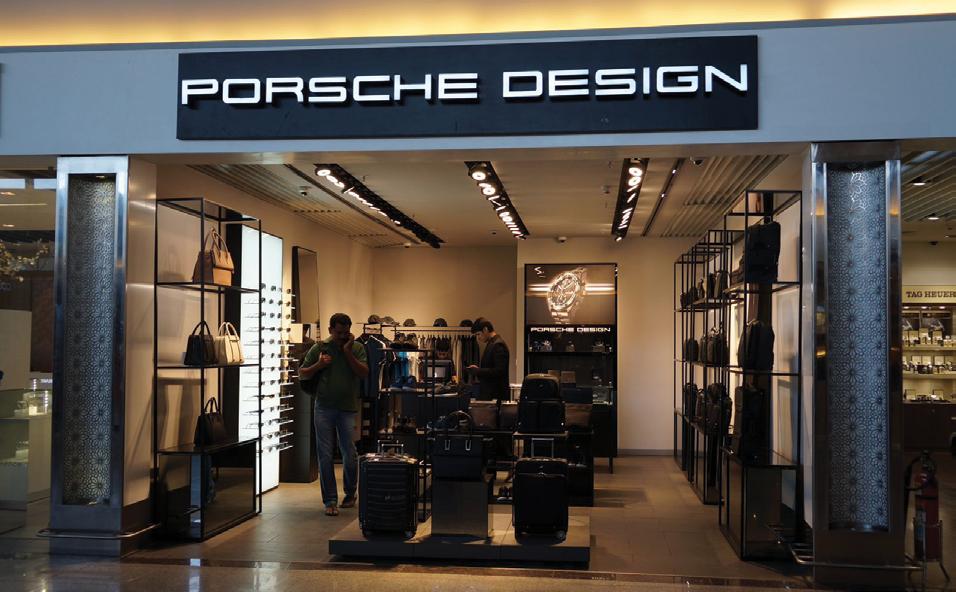
This focus on aspirational yet accessible consumption led BBM Group to launch its fashion retail division, including Porsche Design, about seven years ago. “Indians love their cars and fashion, so it was a perfect fit. Today, we are the only company in India to carry Porsche Design. We operate multiple stores in prominent travel retail locations.”
Centuries-long legacy BBM’s story spans 106 years. “BBM Group was named after my grandfather and our current chairman, Mr. Bommidala Bhanu Murthy, who established tobacco manufacturing and exports, becoming one of India’s first exporters. Tobacco has been our core business for more than a century — from seed to smoke — from farming to cigarette manufacturing and exporting.” Today, BBM Group is a diverse enterprise with divisions in tobacco products, green energy, packaging, nutraceuticals, FMCG, agriculture and travel retail.
BBM Travel Retail started 25 years ago when the company acquired a travel retail distributor for Philip Morris International (PMI). “Because our core business is tobacco products, we already supplied PMI. When PMI asked if we wanted to distribute in travel retail. Indian duty free wasn’t big at the time, but we saw the opportunity and took the leap. This laid the foundation for where we are today.”
The company now operates as one of the largest duty free distributors in the Indian Subcontinent (ISC), with coverage spanning India, Sri Lanka, Bangladesh, Nepal, Bhutan and the Maldives. Its warehousing facilities are based in Kochi, while core operations are managed from Hyderabad and Kochi. A regionally distributed sales team further supports its footprint
across the ISC, enabling comprehensive market coverage and service.
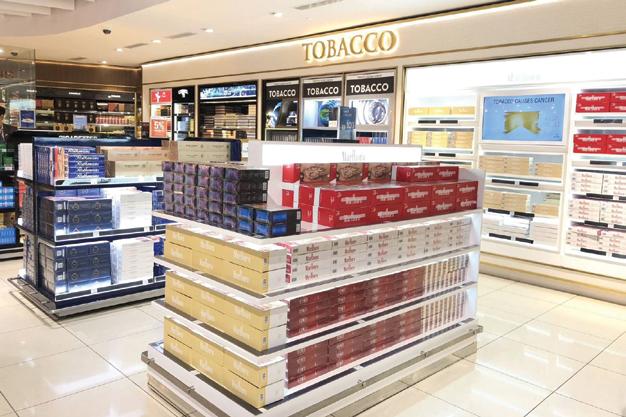
The company holds a 75% share of the tobacco category, working with PMI, JTI, and ITC. “ITC dominates a major share of the Indian smoking population," Bommidala notes. "BBM brought ITC to travel retail for the first time in India.”
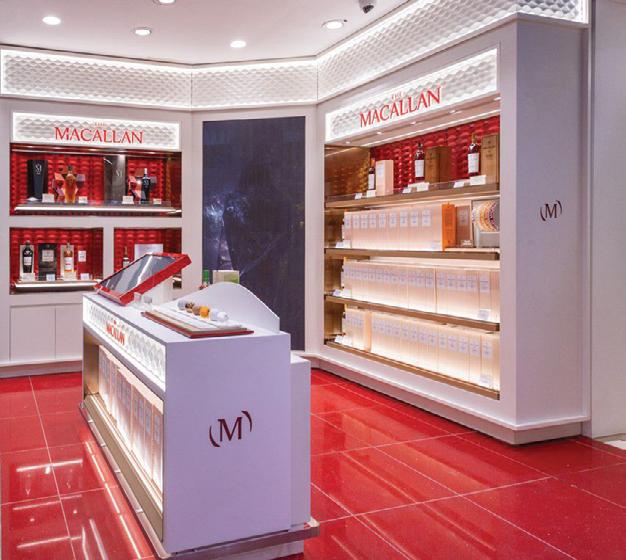
Within spirits, BBM Travel Retail carries around 30 brands, including Edrington, Rémy, and Campari, alongside Indian labels such as Indri, which was awarded the world’s best whiskey last year. In confectionery, the company works with brands such as Mondelez, Haribo, and Ricola.
BBM Group is focused on connecting its 106-year legacy with the evolving demands of today’s aviation market. Through a growing portfolio of premium brands, the group is steering the family enterprise toward a forwardlooking future. “Air travel in India has become very affordable, even for lowerand upper-middle-class travelers, who make up the largest segments of our society,” Bommidala explains. “When people enter an airport in India, they expect everything to be brilliant and high-quality.”
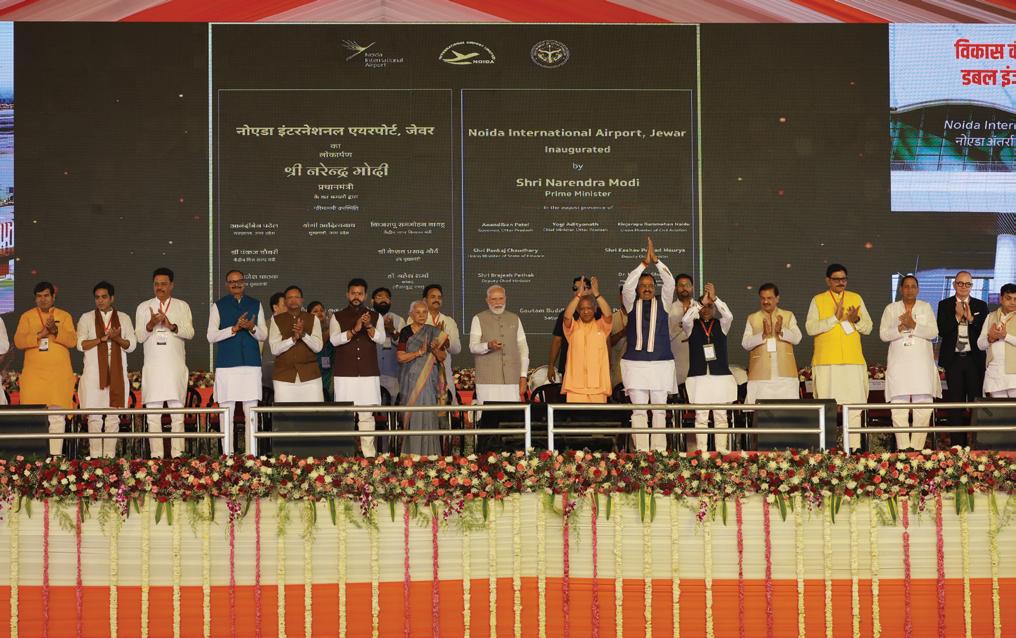
Following the completion of phase one, Global Travel Retail Magazine reports on the progress of Noida International Airport, which is set to transform India into a global aviation hub
by LAURA SHIRK
Prime Minister Narendra Modi inaugurated phase one of Noida International Airport in Jewar, Uttar Pradesh, India, at the end of March. The inauguration marks a milestone in the country’s journey toward becoming a global aviation hub.
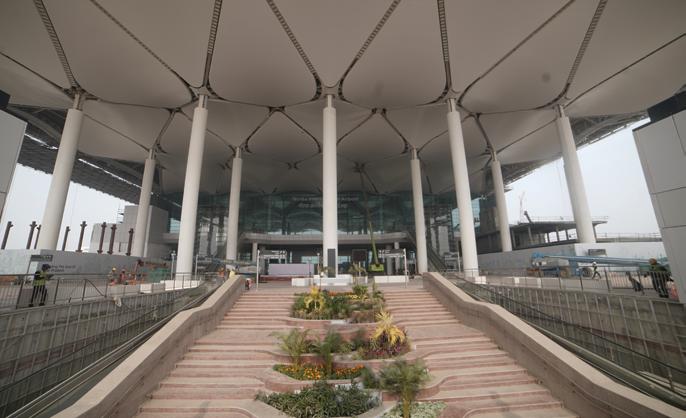
Created as an international gateway for the National Capital Region (NCR), the airport represents a major step in strengthening the country’s airport infrastructure and enhancing regional and international connectivity. Strategically located along the Yamuna Expressway, it is planned as a multi-modal transport hub with seamless integration across road, rail, metro and regional transit systems.
“Noida International Airport has been developed as the second international airport for the Delhi NCR, complementing Indira Gandhi International Airport. Together, the two airports will function as an integrated aviation system, easing congestion, expanding passenger capacity and positioning Delhi NCR among leading global aviation hubs,” reads the press release.
During his address, Prime Minister Modi noted that in this time of global crisis, India has continued its rapid development. Describing the project as a symbol of the country’s new mood, he stated, “The airport of Jewar is a good example of the work culture and the doubleengine government [in India].” In the last 12 years, the number of airports across the country has more than doubled, totaling over 160. He continued, “In any country, an airport is not just a general facility. These airports also give flight to progress.” Referred to as a big opportunity for youth, the four-phase initiative





will require workforce expansion across the sector, which will be supported by government-led training.
A foundation based on scalability and sustainability
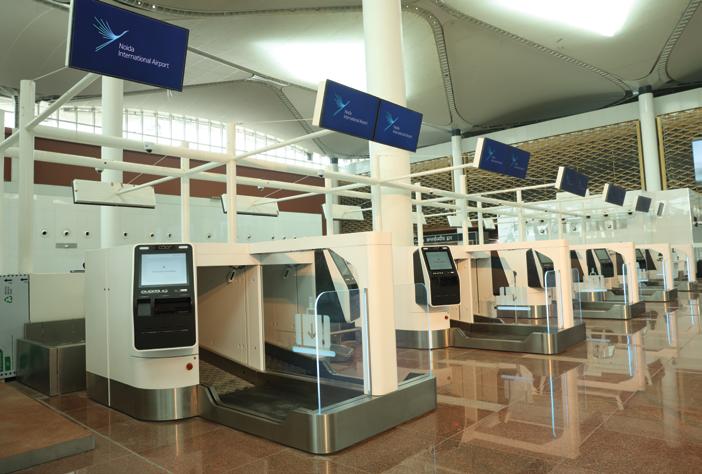
The first phase of Noida International Airport has been developed under a public–private partnership model. As outlined in the release, the airport consists of a 3,900-meter runway capable of handling wide-body aircraft, along with modern navigation systems including an instrument landing system and advanced airfield lighting to support efficient, allweather, around-the-clock operations. The airport will initially have a passenger handling capacity of 12 million passengers per annum (MPPA), with scalability up to 70 MPPA upon full development. Designed as a sustainable and futureready infrastructure project, it plans to operate as a net-zero emissions facility, integrating environmentally responsible practices and energy-efficient systems.
According to Chief Commercial Officer Prashant Gaurav Gupta following the approval of the airport’s Aerodome Security Program by the Bureau of Civil Aviation Security, the timeline to start commercial operations will be finalized. IndiGo will serve as its launch carrier; Akasa Air and Air India Express will also operate at the airport.
Noida International Airport’s passenger-
centric design aims to make the airport journey relaxed and engaging, which naturally encourages exploration and dwell time within its retail and food and beverage zones. It seamlessly blends Swiss efficiency with Indian hospitality, delivering a unique and memorable experience. Passengers can expect an efficient journey, characterized by stateof-the-art facilities, as well as a digitally integrated retail ecosystem that enhances convenience, choice and personalization.
“The focus is on creating an airport that feels rooted in its region while meeting the highest global standards for comfort, convenience and reliability,” comments Gaurav Gupta. “From architecture to retail, the airport will showcase the heritage and culture of Uttar Pradesh and India. Local materials, design elements and authentic food offerings will ensure travelers get an immediate sense of place, while still enjoying a contemporary and international feel.”
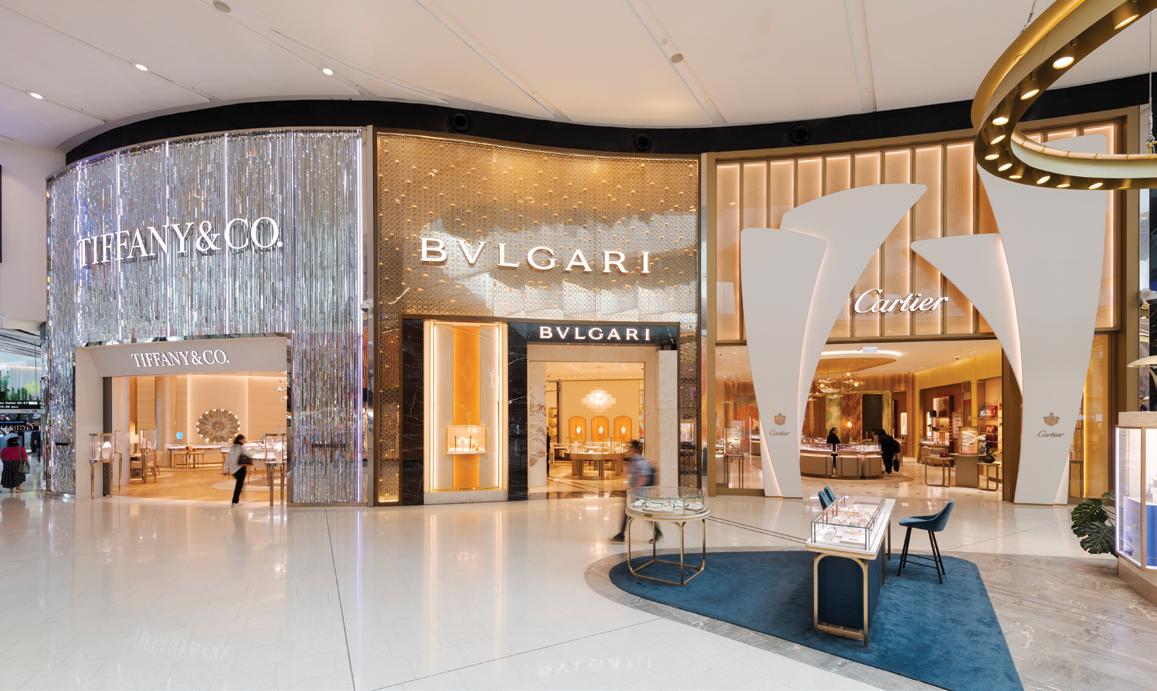
A first in domestic retail in India, the airport’s innovative market walkthrough concept will transform the shopping experience for domestic travelers. Offering a wide range of regional artefacts, textiles, woodwork, jewelry and metalwork, the market will showcase the artisanal traditions of Uttar Pradesh and celebrate the cultural diversity of the region. Elsewhere, the international duty free retail outlet at the airport will offer a collection of premium brands across retail categories, as well as a variety of ayurvedic products, teas, coffees and spices.
Shoppers will have access to top-tier product offerings, exclusive promotional deals and personalized shopping assistance. “Each store will feature a thoughtfully curated selection of prestigious premium brands known globally for their innovation and appeal, along with airport-exclusive offerings that add a sense of discovery and uniqueness to every purchase,” he says.
On the role that experiential retail will play in the airport environment, Gaurav Gupta points out, its food and beverage landscape will highlight the region’s culinary traditions, blending local flavors with global cuisines. Featuring specially curated options that evoke a sense of place, the airport will offer multi-cuisine restaurants and a premium lounge experience, including Braj Ki Galiyan. The vegetarian restaurant concept is inspired by twin holy cities, Mathura and Vrindavan, in Uttar Pradesh.


Describing travel retail as a core part of its future roadmap, Sydney Airport’s Master Plan 2045 positions it as a leading airport destination in Asia Pacific
by LAURA SHIRK
According to the Australian Competition & Consumer Commission March report, the four largest airports in the country — Brisbane, Melbourne, Perth and Sydney — collectively invested AU$1.5 billion (US$1 billion) in aeronautical, a more than 43% increase on the previous period. With each one reporting strong growth in aeronautical revenues over this time, the airports collectively handled about 120 million passengers. Together, the airports have proposed spending almost AU$20 billion (US$13.9 billion) in major infrastructure projects over the next decade. With this marking a shift from the relatively low levels of investments postpandemic, and major construction works
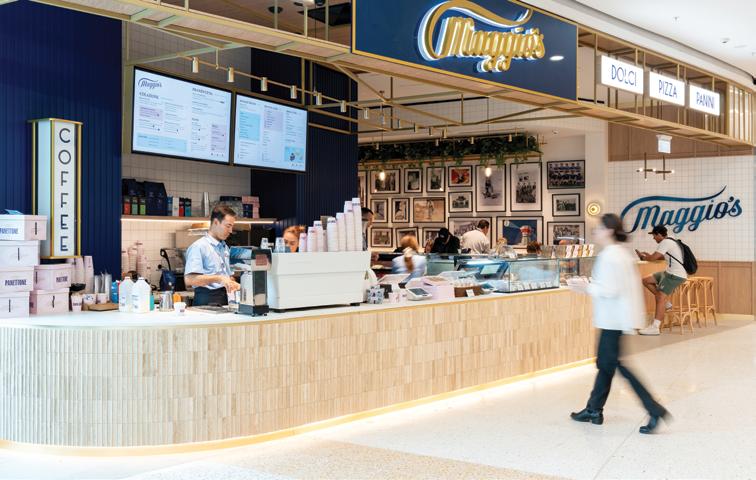
now underway at all four airports, Global Travel Retail Magazine is showcasing Australia’s busiest airport, Sydney Airport, and its Master Plan 2045.
Earlier this year, Sydney Airport appointed global firms Grimshaw and
Mott MacDonald to lead the design and engineering of its landmark T2–T3 terminal link project, a key component of the airport’s preliminary draft Master Plan 2045. As detailed by Gail Taylor, General Manager Retail at Sydney Airport, its long-term development strategy is closely aligned with the vision of the
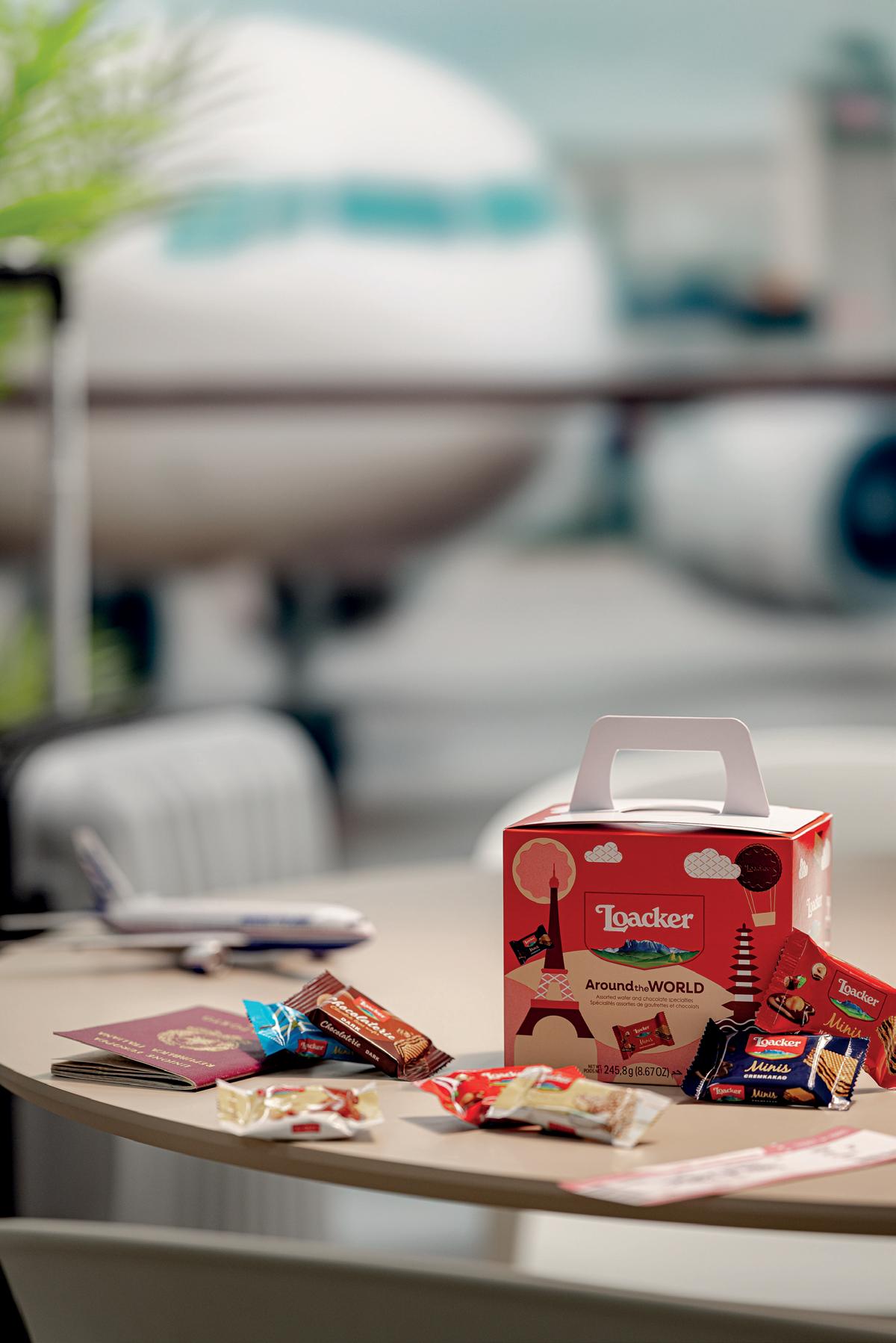

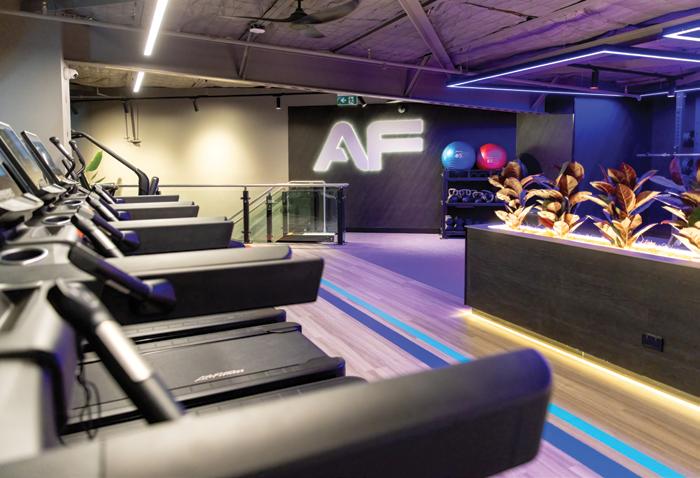
airport’s Master Plan, which outlines a staged approach to infrastructure development and sets out a framework for sustainable growth, improved connectivity and enhanced passenger experience.
“Our draft Master Plan 2045 forecasts a future in which we welcome 72 million passengers annually, contribute $70 billion to the economy and support more than 105,000 direct jobs. Travel retail is a core part of that roadmap. Retail and food and beverage are fundamental to shaping the passenger experience of the airport, and our focus is on curating a mix that reflects both global brands and uniquely Australian concepts, while leveraging data, design and passenger flow to maximize engagement and convenience.
“By aligning infrastructure upgrades with commercial strategy, we’re creating environments where passengers have more time, more choice and more compelling reasons to interact with our retail and hospitality offer,” says Taylor.
This type of forecast growth requires consideration of not only scale, but also flexibility and adaptability. With this in mind, the airport is designing flexible commercial spaces, expanding highquality dining and retail offerings and integrating digital technology to per-
sonalize and streamline the passenger journey. At the same time, it’s working to ensure that its food and beverage mix can scale with passenger growth while maintaining quality and diversity.
“Across terminals we’re designing commercial environments that can evolve as passenger behavior changes,” she continues. “This includes modular retail footprints, infrastructure that supports omnichannel retail and layouts that optimize passenger flow and visibility. Ultimately, the goal is to create commercial environments that remain relevant and engaging for decades to come.”
Recognized as one of the leading airport destinations in Asia Pacific in both connectivity and commercial excellence, Sydney Airport is focused on three areas. As outlined by Taylor, the first is curating a best-in-class retail and dining portfolio that blends international luxury brands with distinct Australian concepts; the second is enhancing the passenger journey through terminal design that increases dwell time and engagement and the third is building strong partnerships with retailers and operators that bring innovative concepts to market.
“Sydney Airport’s position as Australia’s primary international gateway, combined with a growing and diverse passenger base, provides a strong platform to deliver a retail offering that rivals leading airports across the region,” she says.
The planned integration of Sydney Airport’s T2–T3 precincts represents an initial step on this mission, as well as an opportunity to fundamentally rethink the passenger journey. By creating a more unified and efficient terminal environment, Taylor points out, it can improve passenger flows and unlock new opportunities for retail visibility and engagement. In line with this is the strategic reconfiguring of commercial zones to increase exposure and encourage exploration.
On the food and beverage side, current and future upgrades will allow the airport to provide a more diverse dining portfolio that caters to different passenger segments and dwell times, from quick-service and grab-and-go concepts to destination dining.
When it comes to driving retail format innovation, Sydney Airport is exploring ways to introduce flagship retail concepts, immersive brand environments and experiential zones that go beyond traditional duty free models. More specifically, these could take the form of pop-up retail spaces, interactive brand activations, locally inspired marketplaces and enhanced lifestyle or wellness offerings.
Speaking on the growing passenger cohort of Gen Z, Taylor notes, “The aim is to create memorable experiences that reflect Sydney’s identity as a global city, while encouraging passengers to spend more time enjoying our precincts. As we continue to evolve our terminals, these types of innovative concepts will play an increasingly important role in shaping the future travel retail landscape.”
In this opinion piece, co-authored by Lagardère Travel Retail’s Qihua Wang and Jessica Gold, industry experts weigh in on how we can expect AI to transform travel retail — and what comes next
by LAURA SHIRK
Over the past two years, AI has dominated conversations across industries. Amid the noise surrounding the technology, it is easy to lose sight of what truly matters. In this column, we want to cut through that noise and share our perspective on what AI really is — and is not (yet) — for travel retail.
We have been asked the same question from fellow travel retail experts: Is AI truly revolutionary or for the travel retail industry?
Our answer: No, it is not revolutionary, but yes, it is transformative.


AI will transform travel retail, not revolutionize it In some industries, AI has moved so fast and so deep that it has not only transformed how companies operate but has also challenged the very foundations of their business models. The SaaS (software as a service) industry illustrates this shift clearly. When Claude released its Opus 4.5 model late last year, which can generate production-grade code at scale, markets reacted immediately. Investors recognized that AI had reached the core of the product itself, triggering a rapid reassessment of value: the AI work platform Monday.com alone lost more than 30% of its market capitalization in a single month.
This reaction is not surprising. AI excels at producing code, text, images, writing, and voice — precisely the building blocks of software, customer service, and marketing. As a result, these sectors are among the first to experience profound disruption, with AI directly substituting or compressing large parts of their value chain.
Travel retail, however, operates under fundamentally different conditions. It is built on a concession-based model anchored in physical retail,
where success depends on trust, reputation, execution excellence, and long-term credibility with landlords. Our core assets are physical, human, and relational. They are not meant to be replaced by AI.
How AI could transform the travel retail sector
We began embracing generative AI several years ago. In 2026, the rise of agentic AI marks a decisive shift. These systems go far beyond conversation. They can break down complex problems into tasks, execute actions autonomously, and operate across data and systems. What was once complex and accessible to only a few is now becoming available at scale. For travel retail, this opens the door to a simple but powerful vision: AI working in the background, while humans remain at the front.
In our stores, AI should act as an efficiency-optimizing assistant. The role of store teams remains fundamentally human: building trust, advising customers, and delivering experience. AI supports them behind the scenes by strengthening product knowledge, recommendations, and optimizing stock visibility. Forecasting, allocation,









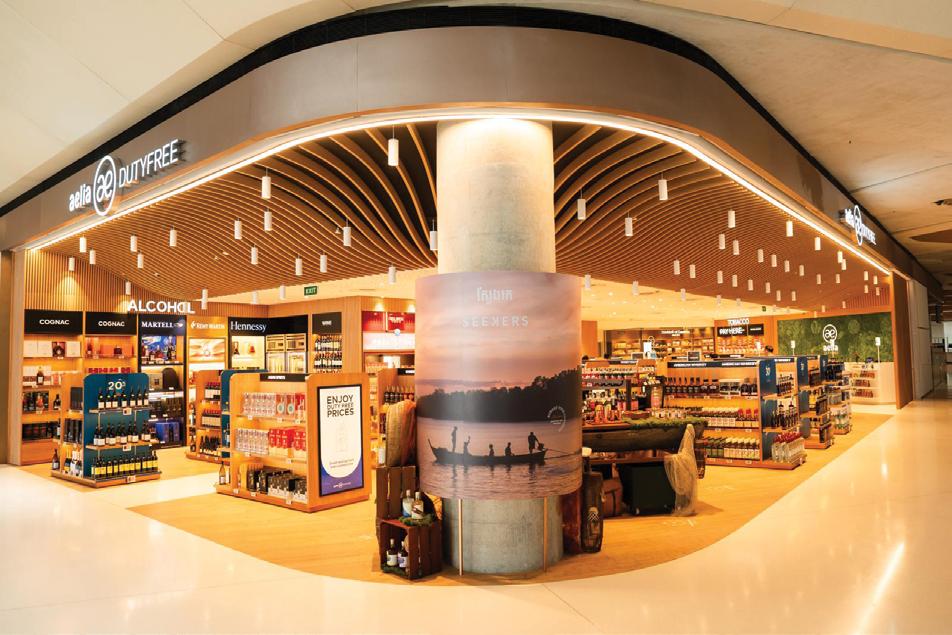
replenishment, and pricing are guided by intelligent systems that continuously learn and improve. Store teams will be better equipped, with deeper insight into customer behavior and preferences, allowing them to engage more meaningfully with travelers.
Other industries have shown the risk of pushing AI too far to the front line. Efforts to replace customer-facing roles have often weakened service quality, pushing companies like Klarna to return to more human-led interactions. In travel retail, where service and experience sit at the heart of value creation, that lesson is particularly relevant.
Beyond the store, the broader ecosystem shall evolve as well. Brands and retailers move away from fragmented collaboration built on endless emails and spreadsheets. They connect through shared, AI-enabled data platforms where insights circulate more fluidly, decisions are faster, and collaboration becomes more strategic.
Inside organizations, AI partners become part of everyday work. Employees are supported by tools
that answer routine questions, surface the right information instantly, and prepare analyses on demand. Back-office functions evolve in parallel. Human resources teams shift from administration to coaching and talent development. Finance teams spend less time reconciling data and more time applying judgment, insight, and decision-making.
In this model, AI does not replace people — it removes friction. Machines take care of the executional burden so humans can concentrate on what only they can do.
The real question for travel retail is no longer whether this future is possible, but how quickly the industry is ready to step into it.
Ultimately, what limits the value that organizations can unlock from AI is not the technology itself, but readiness. Systems must be robust, data must be structured and reliable, and ways of working must evolve, so AI is embedded into daily operations rather than layered on top. Above all, teams must be willing — and enabled — to adopt new tools.
Travel retail faces structural barriers that make certain AI use cases harder to test, scale, and sustain. These constraints are inherent to its operating environment and make innovation more difficult to deploy and maintain.
Unlike e-commerce, travel retail does not move at the same speed. Airport operations sit within layers of security requirements, regulatory constraints, and operational dependencies that naturally slow down experimentation. Concession models are built over long-time horizons, governed by rigid contracts. ChatGPT was introduced less than four years ago; however, concession agreements frequently span durations of 10 years. What can take weeks in domestic retail can take months airside. Innovation is possible, but the cycle is heavier, more constrained, and requires a different rhythm.
Another challenge is the nature of customer data. Unlike platforms that interact with users multiple times a day, travel retail sees customers infrequently.
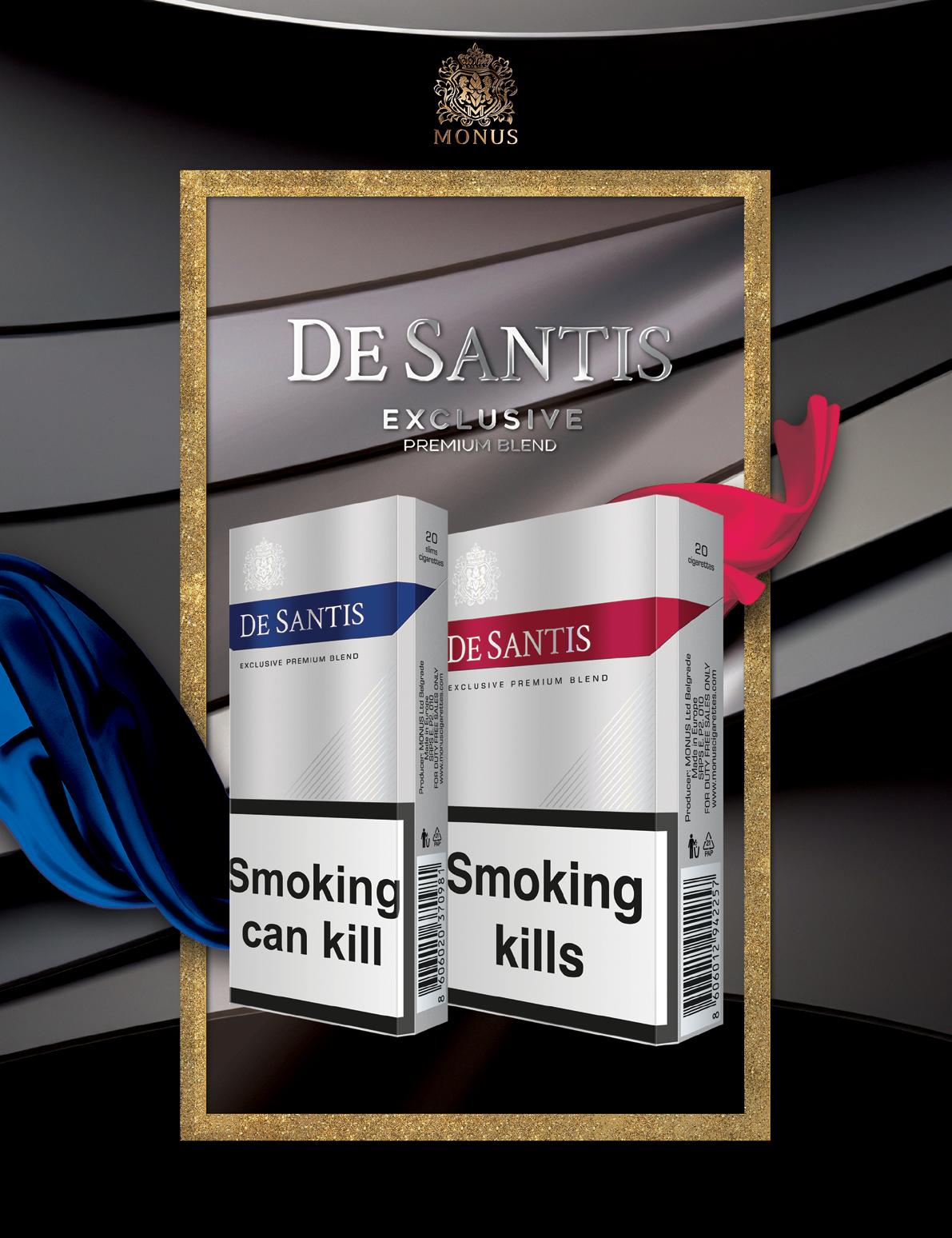

A traveler might make a purchase a few times a year at best. This low purchase frequency means less training data and fewer behavioral signals, which naturally limits the sophistication of personalization and recommendation engines.
Finally, the ecosystem itself remains fragmented. Airports, retailers, airlines, and brands operate within separate data environments, optimizing their own boundaries. Information is scattered, insights do not circulate easily, and innovation is often duplicated rather than shared. This fragmentation is not only technical, but also contractual, organizational, and cultural. Until the ecosystem becomes more integrated, AI will remain constrained by these walls.
Compared with sectors such as technology or professional services, retail has
historically evolved with less integrated systems and slower digital adoption.
AI offers traditional retail something it rarely gets: a chance to leapfrog years of missed digital evolution in one move.
Built on existing foundations of human — first interactions — AI can provide the power and efficiency required to accelerate, scale, and operate with greater consistency. The customer experience ultimately sets the direction, with human teams firmly in the cockpit while intelligence and automation work behind the scenes.
By systematically integrating AI and automation across operations, companies can create a more fluid system in which data moves seamlessly between functions. In this environment, datadriven insights streamline processes and improve execution without diluting the human connection that defines the sector.
The next phase for travel retail is not to chase the most advanced technology, but rather to deliberately choose where AI genuinely adds value.
Progress will come from strengthening data foundations, simplifying processes, and investing in people’s ability to work confidently with new tools. In other words, from treating AI as an operating-model transformation, not a technology project.
Travel retail does not need to emulate a technology company, nor should it. But what it does need to do is to become a more fluid, better-connected version of itself, one where intelligence supports decision-making, removes friction, and frees teams to focus on what creates value.
AI will not redefine what travel retail is. But used well, it can significantly improve how it works.
How innovation, resilience and a founder’s drive are reshaping travel retail globally
In just two years, ANY DI Munich has evolved from a fast-growing accessories brand into a strong player in global travel retail. What began as a vision for stylish, functional everyday essentials is now a presence across major airport duty free retailers, including Ever Rich Taiwan, Dubai Duty Free, Gebr. Heinemann, Lagardere and Avolta.

At the core of this success is the patented SunCover - a product that reflects the brands DNA. Designed to fit all types of sunglasses, it combines functionality with elegance and meets a universal need. Today, it is a bestseller in retail and part of onboard assortments of leading airlines such as Emirates and Singapore Airlines, bringing the brand to a global audience in transit.
Founder and CEO Anne Dickhardt plays a key role in this growth. A former professional tennis player, she brings discipline, endurance and a strong performance mindset to the business. As a mother, she travels internationally with her family while personally driving sales, partnerships and brand development - a hands-on approach that defines ANY DIs expansion.
Alongside its presence in Europe, Asia and the Middle East, the brand is now entering the U.S. market. A listing at a private jet terminal in Fort Lauderdale marks an important step, while cruise lines in Miami represent a strategic focus for future growth.
At the same time, ANY DI is strengthening its direct-to-consumer business in Germany. Since 2025, the brand operates flagship stores at Munich and Frankfurt airports, increasing both revenue and brand visibility.
With a growing demand for innovative, versatile products, ANY DI is well positioned. Products like the SunCover and Pocket Phone Strap integrate seamlessly into modern lifestyles while enhancing the retail experience. Today, ANY DI Munich is present in over 5,000 points of sale across more than 50 countries - from department stores to luxury hotel boutiques and global travel retail partners.


SUNCOVER
24K real gold–plated hardware
Fits all eyewear shapes and sizes
Design-patented, worldwide design registration
Handcrafted with excellent stitching
A true fashion statement on every handbag
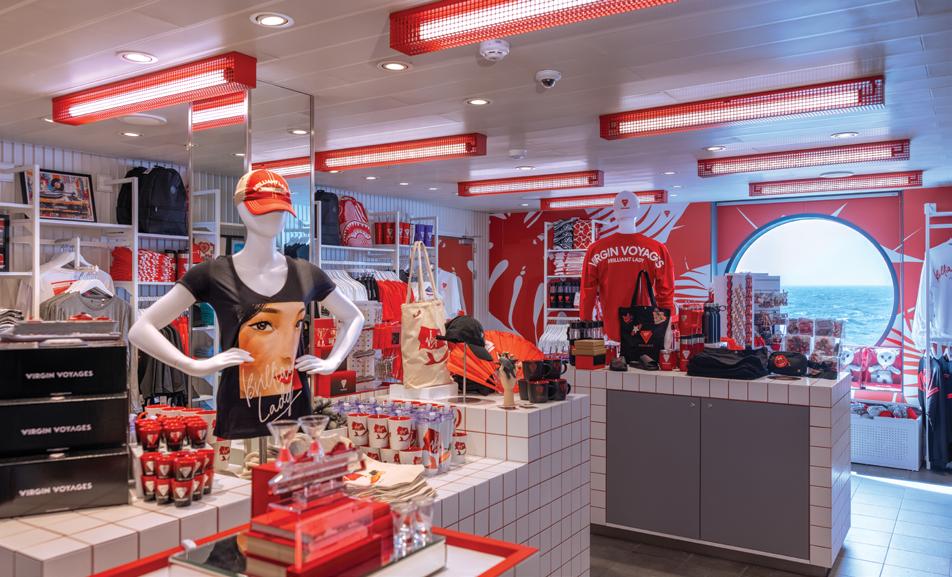
In this Q&A, Global Travel Retail Magazine speaks with Starboard Group’s newly promoted Jia Jia Liu, who says it is her goal to ensure Starboard remains the top employer of retail talent in Asia
by LAURA SHIRK
Earlier this year, Starboard Group (Starboard) promoted Jia Jia Liu to General Manager, Asia Market. In this role, Liu is responsible for overseeing Starboard’s partner accounts across the region. As a 16-year veteran of the group, Liu has held a series of increasingly senior roles, most recently leading the Asia account teams since January 2025. Liu began her career at Starboard as an onboard Retail Manager.
“Liu’s appointment comes as Starboard continues to focus on creating personalized, localized and experience-
driven retail programs for its cruise line partners across the globe,” reads the press release. “In each region, the company is committed to delivering unique and memorable retail experiences that feel seamlessly integrated into the overall guest journey.”
To learn more about Liu’s experience and how it will shape her leadership approach in this new position, Global Travel Retail Magazine connected with the industry expert. Liu shares her core focus will be on delivering exceptional onboard retail experiences to Starboard’s guests through strong partner-

ships. It is her goal to ensure Starboard remains the top employer of retail talent in Asia, offering strong career growth and continuing to invest in its teams at all levels through 2026 and beyond. “Looking ahead, our priorities will remain centered on our people, investing heavily in their training and personal development, especially our frontline staff who are the cornerstone of our success,” she says.



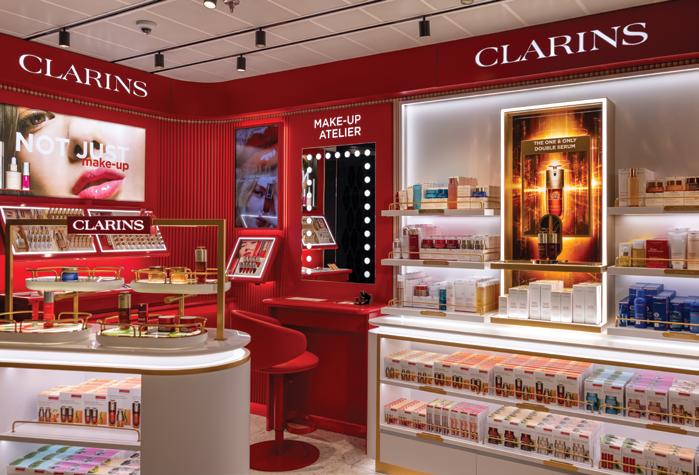
GTR Magazine: Asia represents a significant growth opportunity for cruise retail. What makes the region particularly exciting from a retail perspective?
Liu: Asia is an untapped opportunity for cruise retail. I first saw this potential back in 2009, observing the strong demand for shopping among overseas Chinese travelers on cruise ships with Caribbeanbased itineraries. The hunger for brands and retail experiences was undeniable. This was later confirmed when ships deployed to Asia set record-breaking onboard retail spend figures, rarely seen in other global markets. Asian consumers genuinely love shopping; it’s a significant part of their vacation and culture, often linked to gift-giving. This cultural value, combined with the immense population size across China and Southeast Asia, presents an enormous growth opportunity for onboard retail, provided we offer the right products alongside exceptional experiences and service.
GTR Magazine: What key differences exist in the shopping behaviors and expectations of Asian passengers compared to other global markets?
Liu: It is crucial to acknowledge the
cultural nuances within Asia, as these create subtle but important differences in shopping behavior. Generally, Asian passengers integrate shopping much more into their vacation experience than those from other global markets, which can be seen when measuring onboard spend. The rise of online shopping has made Asian passengers extremely price-savvy and knowledgeable, demanding authenticity and value.
GTR Magazine: How important is localization — product assortment, storytelling and cultural relevance — in driving onboard retail success in Asia?
Liu: Localization is vital and a significant area for growth. Asian passengers often seek out unique products not available at home — something special as a memory of their trip or a meaningful gift for friends and family. It is essential that we meticulously source these specific products and present them through compelling storytelling that resonates with our guests.
GTR Magazine: Starboard has emphasized creating personalized and experience-driven retail programs. How will this approach evolve in the Asian market?
Liu: In Asia, we’ve always prided ourselves on creating personalized, experience-driven retail programs, and we’re going to keep pushing the boundaries here. Continuously innovating new onboard experiences, in close partnership with our brands and cruise line partners, is key. The goal is always to craft unforgettable, engaging experiences for our guests. This is one area I am extremely passionate about and will be a key focus for us through 2026.
GTR Magazine: What opportunities exist for Asian brands to expand through cruise retail channels?
Liu: Asian brands have become a key focus for Starboard Asia as we foresee their potential growth by value and social media influence. Additionally, with China’s efforts to expand visa-free travel policies, there is another opportunity to launch local brands that cater to gifting, offer a taste of Asia, create memorable trip experiences and highlight iconic landmarks.
GTR Magazine: What role will digital tools such as data insights, omnichannel engagement and mobile retail expreiences play in shaping the future of cruise retail in Asia?
Liu: Digital tools are already playing a significant role and will be central to the future of cruise retail. This is especially true in the Asian market where consumers are highly comfortable with omnichannel online shopping. There are massive opportunities for engaging customers both pre- and post-cruise through marketing and shopping initiatives. We will continue to build on these with our cruise line partners. Concepts like live streaming and working with key opinion leaders are also exciting avenues we’ll keep exploring. Digital offers endless possibilities for evolving onboard retail, and I’m confident it will be a large part of the future of our business.

From extreme stress factors to restorative rituals, three leading beauty brands discuss the rise of climateadaptive skincare and their re-imagining of how to deliver on both function and feeling
by LAURA SHIRK

As outlined in The Future Laboratory’s Future Forecast 2026: Beauty report, the beauty sector is expected to evolve through a blend of culture, innovation and consumer intimacy this year. Key themes such as adaptability, accessibility and emotional connection will contribute to this shift. “As affordable experimentation and sensorial design take hold, brands are re-imagining how products can deliver both function and feeling,” reads the report. With the rise of climate-adaptive or climateresponsive skincare, this expectation reflects advances in not only formulation, but also philosophy. The evolution of skincare from reactive to regenerative represents a fundamental shift from treating symptoms to fostering longterm skin health. Beyond addressing visible concerns, the aim now is to strengthen the skin’s ability to adapt, remain resilient and maintain balance in changing environments.
According to Janice Li, Vice President of Strategy & Development at Shiseido Travel Retail (Shiseido TR), this philosophy is most tangible in
travel. “Across a single journey, the skin is exposed to fluctuations in climate, humidity, ultraviolet radiation (UV) and air quality, accelerating the demand for intelligent skincare that responds in real time while supporting overall wellbeing,” she says. “This aligns with our mission to create unique value for travelers by combining pioneering science, craftsmanship and retail experience.”
Across its portfolio, Shiseido TR is leaning into technologies that strengthen the skin’s innate adaptive functions. For example, Li references Clé de Peau Beauté’s Key Radiance Care series, which is grounded in the concept

of Skin Intelligence — the skin’s ability to distinguish between beneficial and harmful stimuli to preserve optimal condition over time.
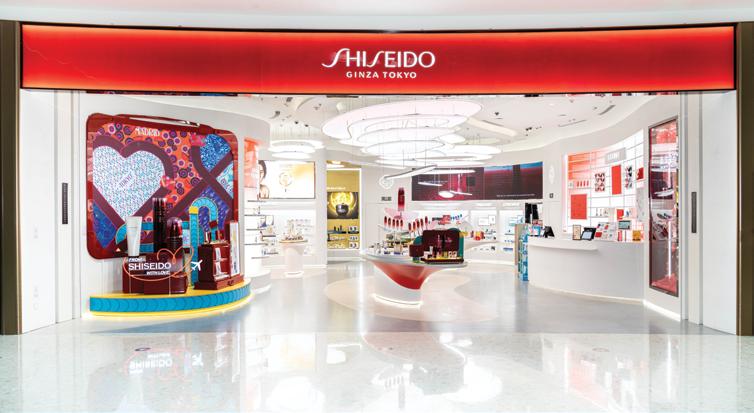






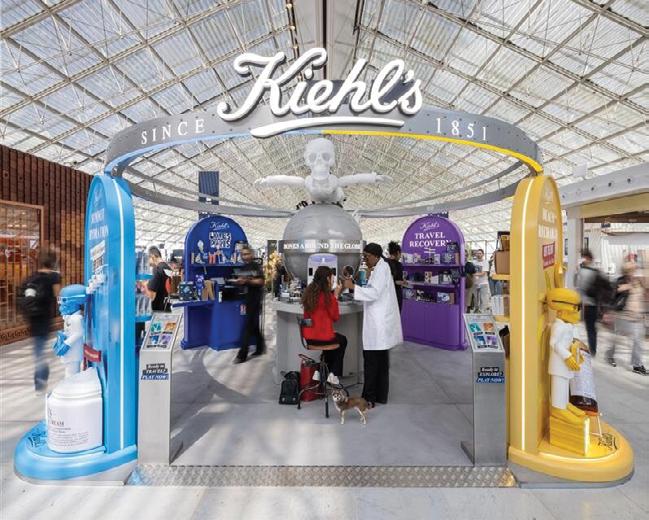
As noted by Jesus Abia, Managing Director, L’Oréal Travel Retail Asia Pacific, the company is embracing this evolution by further elevating its offering toward unparalleled precision care with restorative rituals that synchronize with the traveler’s immediate journey. To counter the extreme stress factors that travelers often face, L’Oréal Travel Retail pioneered “environmental shields” like La Roche-Posay’s Anthelios UVAir Serum Sunscreen SPF50+. Already a success in Europe and scheduled to arrive in Asia in June, this high-protection, daily facial sunscreen features “0g texture” or “zero-gravity” technology, which provides maximum hydration and is best suited for hot, humid conditions.
Built on high-performing, yet simplified routines, as well as multi-functional solutions, the two experts that climateadaptive skincare is becoming a defining driver of innovation in travel retail. “As travelers move across multiple environments, they increasingly expect products that can protect, balance and perform consistently throughout the journey,” states Li.
beyond skincare, Abia points to Aesop’s Ginger Flight Therapy. Described as the “ideal travel companion,” the essentials oil pulse point roll-on offers aromatic comfort, and works to soothe nerves and address travel fatigue during flights or long journeys.
Reflecting a deeper connection between skin health, emotional state and overall wellbeing, THE GINZA’s Linden Aroma relies on carefully designed olfactory cues to bring relaxation and inner equilibrium. As shared by Li, it is an expression of the holistic support that travelers now seek. “Within our portfolio, we are seeing strong traction for products designed to respond to environmental change,” she says. “THE GINZA Hybrid Gel Oil, for instance, featuring Perceptive Complex III and Linden Extract, helps to stabilize moisture levels amid humidity shifts, backed by more than 20 years of skin physiology research.”

Experience at the core
Said to be as much about experience as it is about efficacy, the concept of adaptive care in beauty is setting new standards in regard to product delivery and consumer journey. Speaking on the integration of function and feeling
On the consumer journey side, L’Oréal Travel Retail is transforming airports into entertainment destinations, shifting travelers from “screen mode” to “feel mode.” Abia comments, “By deeply understanding the unique fatigue of the journey, we are providing sensory and adaptive rituals that address climate shift and environmental stress better than anyone. We are turning the constraints of travel into moments of sensoriality and high-performance care. Ultimately,
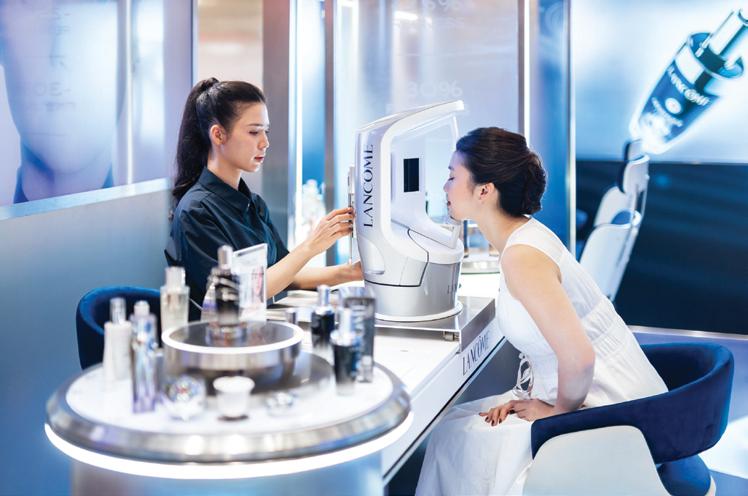



Caudalie’s Vinoperfect range performs particularly well in Asia, as its delivers on regional preferences such as skin radiance and skin tone uniformity

we don’t just offer products; we create the beauty that moves the world.”
Launched in 2025 in partnership with DFS Macau, Helena Rubinstein’s travel retail-exclusive concept “Travel Like Helena” features a multi-sensorial travel lounge that offers personalized skincare consultations and “travel recovery” hand massages. “This high-performance sensory experience — delivered via our exclusive in-store pods — anticipates the skin’s needs, ensuring travelers arrive refreshed and adapted to their next environment,” says Abia.
A desire for prestige, place and personalization
When it comes to Asia Pacific, there is a demand for preventative skincare, as well as prestige skincare in the region. Concerns around UV exposure, hyperpigmentation and skin barrier health are becoming increasingly evident, specifically in line with travel spanning diverse climates and pollution levels. “Travelers from the region also place strong value on expert consultations and science-backed efficacy, seeking guidance that combines proven results with elevated rituals and sensorial experiences,” explains Li. This is practiced at Shiseido TR through the Japanese philosophy of Omotenashi — a spirit of thoughtful,
anticipatory hospitality that places the traveler at the center of every interaction.
The beauty category is also seeing strong potential in destination-based beauty merchandising, leveraging travel retail’s unique position to deliver climate-aware solutions tailored to travelers’ changing environments, notes Li. Campaigns such as “From Shiseido with Love” and “Wander Like an Explorer” in key prestige beauty hubs like Hainan, Changi and Narita, support this model. “These travel retail exclusive sets, inspired by each city’s landmarks and cultures, enhance local relevance for travelers,” she adds.
Offering travelers destination-specific diagnostics and personalized skincare routines, L’Oréal Travel Retail pioneered this concept with Kiehl’s “Bones Around the Globe” pop-up activation at Paris Charles de Gaulle Airport. In a move to further personalization, the Lancôme Génifique AI experience at Changi Airport provided bespoke recommendations based on flight duration and real-time destination weather. “By synchronizing high-performance science with the traveler’s next environment, we prove that modern luxury is about predictive, tailored care that ensures the skin is prepared for any climate upon arrival,” says Abia.
Designated a regional growth driver in travel retail for premium French skincare brand Caudalie, consumers in Asia are said to be especially focused on achieving radiance and skin tone uniformity — while still expecting clean, safe formulations. As a result, its Vinoperfect collection performs particularly well in the region. “UV defence is a key priority for Caudalie, and we are addressing it with our new and reformulated suncare range to be unveiled at TFWA Singapore,” says General Manager of Global Travel Retail, Benoît Davaillon. “At the heart of this innovation is our exclusive patent, CollagenSkinProtectTM, a 100% natural concentrate of the most powerful antioxidant compounds found in grape seeds. This new generation of suncare reflects our commitment to high-performance, clean and sensorial formulas that protect the skin from the full-spectrum of modern environmental stressors.”
At this year’s trade show, the company will be launching a travel retail exclusive suncare pouch featuring three essential products for full-spectrum protection on the go: Very High Protection Fluid SP50+ (40 mL), Invisible High Protection Spray SPF50 (75 mL) and After-Sun Repairing Lotion (75 mL).



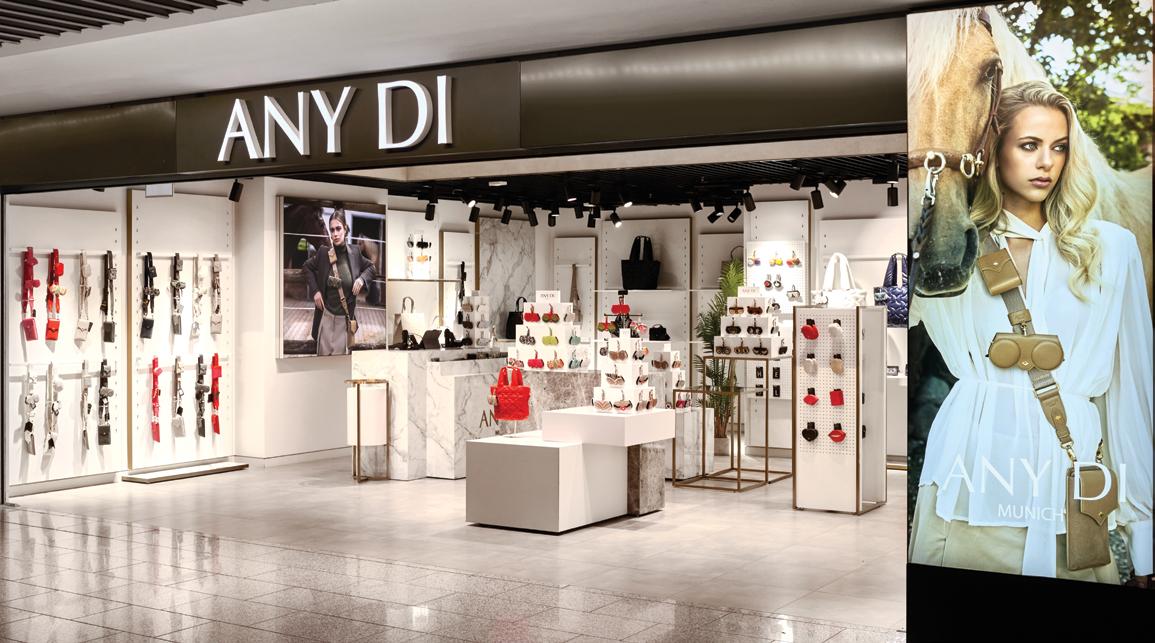
In a channel defined by urgency, accessories brands are focusing on identity, function and materiality to create retail moments that register quickly and remain relevant beyond the purchase
by LAURA SHIRK
The airport retail environment is defined by limited dwell time and a high density of competing categories. Under those conditions, differentiation must register immediately, often without staff interaction or extended browsing.
For brands operating in this space, the question is how to communicate identity within those constraints. Increasingly, that is leading to a shift away from layered storytelling toward approaches where meaning is built into product, material and display, allowing the story and essence of the brand to be understood with minimal explanation.
For Alessia Voltan, Head of Travel Retail & Online, Marcolin, this reflects a
broader shift in how luxury is perceived. “Luxury is no longer defined by the price tag, but by the depth of the narrative and the ‘insider’ knowledge a consumer gains,” she says. “Modern consumers, particularly Gen Z and millennials, have a high authenticity radar. They don’t just want to buy an object, they are seeking an experience, a memory to take home with them.”
The conditions of the airport environment mean a product itself often carries the primary burden of communication. Without time for explanation, design and function must convey intent immediately, and in a way that is legible across cultures.

Anne Dickhardt, CEO and Founder at ANY DI Munich, developed her brand around this principle. The SunCover — a patented case that keeps sunglasses protected and accessible while attached to a bag or strap — came from the repeated friction points she experienced while traveling. This included the removing of sunglasses at security, at boarding and in-flight, without a practical storage solution. In an airport setting, that use case is immediately recognizable.
“What fascinates me in travel retail is that these ideas are often understood instantly by travelers,” she says. “They

recognize the practicality of the product because they are literally experiencing the situation at that moment.”
That immediacy reduces the need for explanation because the product is communicating through relevance, not narrative.
The same logic applies to the brand’s Pocket Phone Strap system, which combines straps and attachable pockets to support hands-free movement. The design reflects a broader cultural approach — combining aesthetics with engineering thinking. “For me, culturecoded retail means that a brand carries a recognizable cultural DNA — something people can feel the moment they encounter the product,” Dickhardt notes.
A parallel challenge in fashion accessories is that much of the product value is not immediately apparent. Manufacturing processes, material sourcing and hand-finishing are typically not visible at point of sale, particularly in a fastmoving retail environment.
Marcolin’s Voltan argues that these elements need to be made legible within the retail space if they are to influence perception.
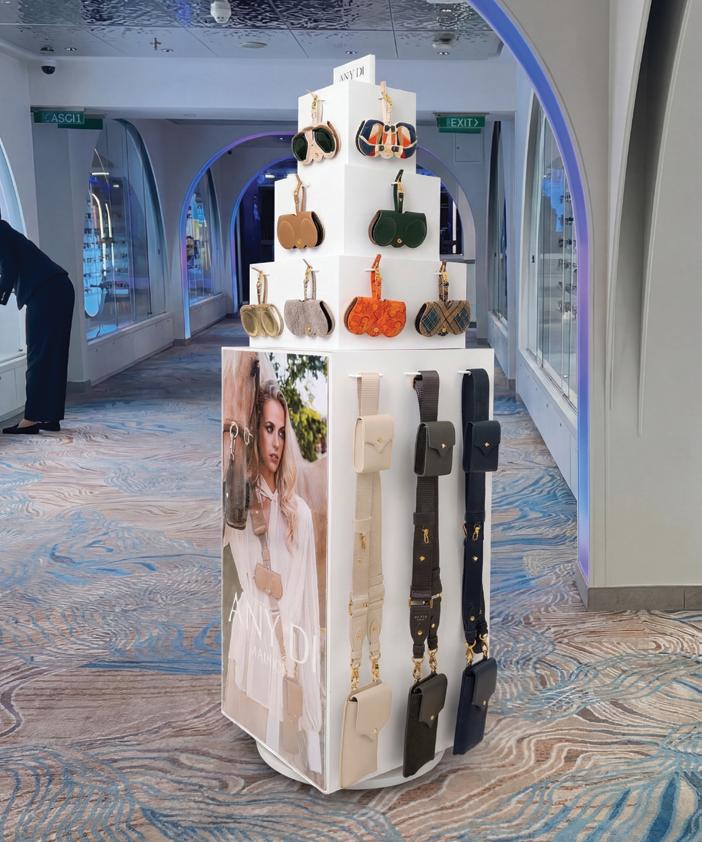
“No one outside our industry may expect that behind a pair of sunglasses there are multiple manufacturing steps, and that each frame is shaped and refined through skilled hands,” she says. “When consumers get to know the craftsmanship behind the machineperfect finish, you justify the premium price point through a shared respect for this expertise.”
Within Marcolin’s portfolio, this is often expressed through material and color choices rather than explanation. The Zegna eyewear range incorporates the vicuña tone, referencing one of the rarest natural fibers in the world, while Max Mara eyewear acetates are aligned with the palette used in the brand’s tailoring laboratories. These decisions communicate origin and process in a compressed format, allowing the product to carry more of the story.
In a channel where dwell time is measured in minutes, visual merchandising must do more than attract attention. It must convey function, context and meaning quickly enough to influence behavior.
ANY DI’s R-Tower display presents products in a structured format designed to show how they work at a glance. The SunCover frequently prompts interaction, with travelers stopping to understand how sunglasses are attached to bags or straps. That moment of curiosity becomes the entry point.
“A traveler might discover the brand in an airport in Singapore, Dubai or Miami — and suddenly a product designed in Munich becomes part of their journey,” Dickhardt says.
Marcolin’s approach places more emphasis on sensory engagement. Voltan highlights the role of tactile

elements such as raw acetate, silk cocoons and unfinished leather in creating a more memorable interaction that extends beyond visual recognition.
“Science shows that scent and touch are more closely linked to memory than sight,” she states. “A traveler might forget the billboard they saw, but they will remember the weight and texture of the raw material they held.”
Piquadro Group approaches the same challenge from a different direction, focusing on consistency rather than immediacy alone. For the brand, identity must be recognizable across every element of the customer experience, not just the initial encounter.
“For us, culture-coded retail is not a storytelling exercise, but a concrete way of expressing brand identity,” says Marco Palmieri, CEO and President at Piquadro Group. “It means making a brand’s values, aesthetics and vision recognizable at every customer touchpoint, from product to space to service.”
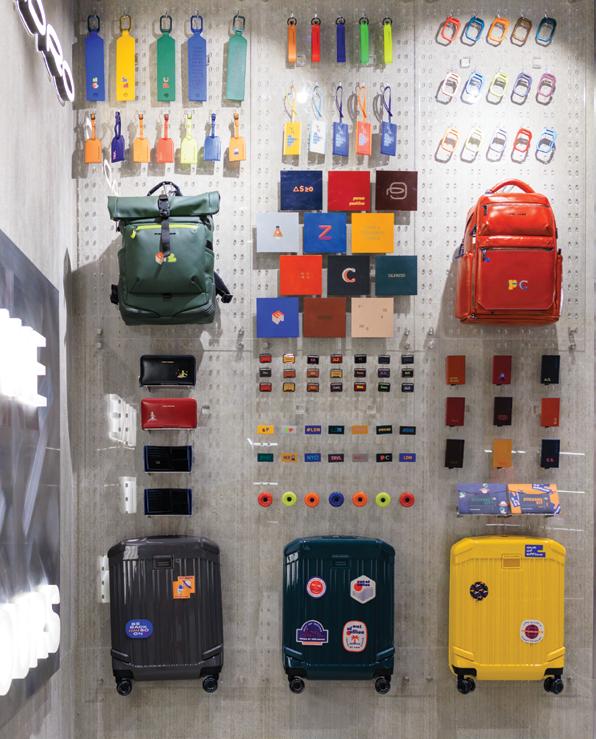
This is reflected in store environments designed to communicate functionality, order and contemporary elegance from the first glance. The visual language is controlled and consistent, allowing the brand to be understood quickly even in a crowded retail setting.
Product personalization has long been a part of the Piquadro experience, a feature that has distinguished the brand. Palmieri describes this as adding an individual dimension to the relationship, making the experience more relevant to the traveler rather than purely transactional.
The same principle carries through to CRM (customer relationship management) systems, which allow Piquadro to maintain contact after the airport purchase. “When we go beyond promotion and help build continuity in the relationship with the customer, we make cultural storytelling more concrete and more effective,” Palmieri explains.
Product development is increasingly being used to reinforce identity in more targeted ways, particularly through collections tied to specific cultural moments.
Marcolin has developed Tom Ford Eyewear pieces linked to Chinese New Year, incorporating design elements such as red color and engraved details. The objective is not simply to mark an event, but to align the product with a cultural context that resonates with a defined audience.
Voltan sees this extending further into collaborations with local artists and more localized design approaches, as well as retail environments that function as exhibition-style spaces.
For ANY DI, the connection to the customer is more closely tied to use. Products that integrate into how people move — through airports, cities and daily routines — create an ongoing association that extends beyond the initial purchase. “When a product becomes part of the journey itself, that’s when retail moves beyond a transaction,” Dickhardt says.


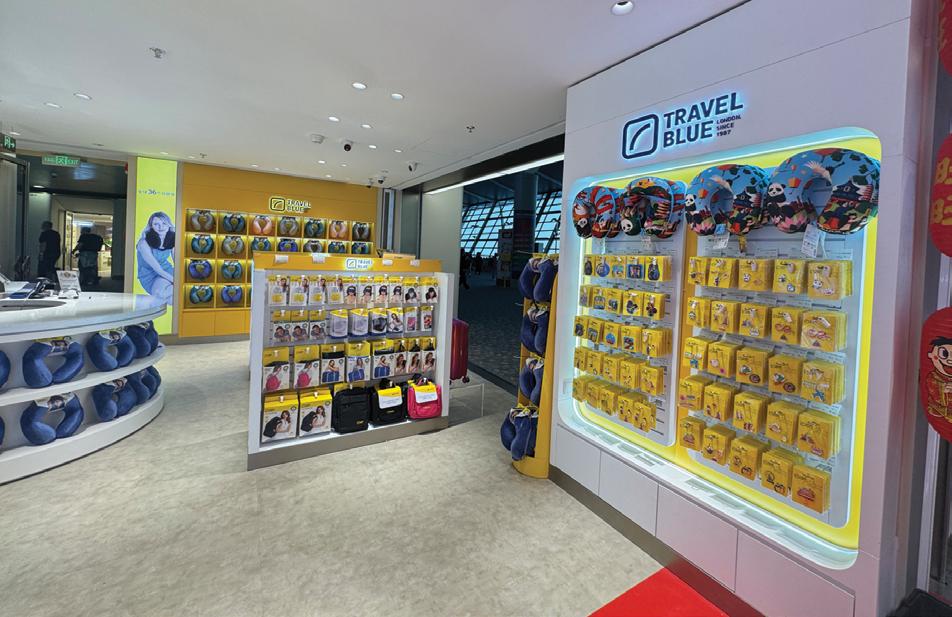
From lost adapters to comfort products, travel gear is proving that need-state purchasing drives some of the most consistent conversion in the airport, and brands are refining how they capture it
by LAURA SHIRK
In airport retail, travel gear is one of the few categories where purchases are typically driven by immediate need. Travelers pick up adapters, charging cables, travel pillows and sleep masks to address gaps in the journey, often the moment those gaps become apparent.
That pattern drives performance. Purchases tend to be quick and situation-driven, with limited comparison or extended browsing. The strength of the offer depends on how clearly products respond to specific needs and how easily travelers can identify them within the store.
Travel Blue Managing Director
Daniel Levin points to steady demand across passenger cohorts, even as other parts of the channel fluctuate. “Once in store, travelers respond to high quality, good value travel accessories and the conversion rate of impulse sales is strong,” he says. “The category is growing consistently, with shoppers spanning all demographics and ages.”
Some passengers focus on comfort ahead of a long flight; others look for power or connectivity before boarding. Travelers often make purchases as they encounter products in-store. The category captures those moments as they arise.
Travel Blue is building its retail approach around that moment of need, using visibility and range to extend engagement once a traveler stops. The company’s shop-in-shop concept stores bring together a wide portfolio in a single, high-traffic space, combining core accessories with higher-value items such as backpacks and carry-on luggage. The format allows the initial purchase — often a single item — to expand into a broader interaction.
“These spaces create a unique atmosphere and attract shoppers to explore the extensive Travel Blue range,” Levin says. Permanent installations are planned in multiple airports.
The format concentrates the category in a single, high-visibility space, allowing the full range to be presented together and encouraging further purchases once a need has been identified.
For Go Travel, that shift is reinforced through staff interaction at the point of sale. “We have a captive audience of passengers who are seeking comfort or onthe-go accessories, most likely forgotten or lost during their journey, or knowing they are going to be uncomfortable on their next flight,” says Denz Van Der List, Vice President of Sales at Go Travel.
immediate function while remaining connected to the journey.
Levin links that shift to changing behavior among younger travelers, who are more likely to respond to products that engage quickly and offer multiple points of appeal. “Products which quickly engage them and tick all the boxes will be highly appealing,” he says.

Go Travel approaches the same objective through pricing structure rather than range expansion. Its products are organized across three tiers, allowing clear progression within a single category. The Ultimate EyeMask completes a three-tier sleep mask lineup and pairs with higher-priced items such as the Ultimate Pillow, designed to increase average basket value without requiring a category shift.
“Every year, our in-house design team develops new items based on data from category sales as well as feedback from consumers and customers,” Van Der List shares. “This delivers a sense of discovery.”
Built around the journey Travel gear remains closely tied to how and when it is used, which continues to
Travel Blue is also expanding the role of the category within the store, using product range to increase basket size once the initial need has been addressed. Its portfolio now extends beyond core accessories to include carry-on luggage, backpacks and water bottles, creating additional purchase opportunities that sit naturally alongside other functional items. The objective is not to shift away from need-state purchasing, but to build on it.
The Memory Collections line introduces destination-themed items such as pins, magnets, keyrings and memory foam pillows, adding a layer of personalization and gifting to the category. These products move the purchase beyond
shape both purchase behavior and product development.
Items purchased in-store are often used immediately — on the flight or at the destination — reinforcing their relevance. That direct link between purchase and use gives the category a level of immediacy that is less dependent on brand recognition and more on practical application.
SKROSS builds its range around that alignment. Its adapter portfolio responds directly to destination requirements, from entry-level options through to more flexible models and higher-capacity versions designed for business travel. Adapter purchases tie directly to destination, with travelers picking them up once they realize compatibility will be an issue. The range extends beyond that initial need, with products such as wireless audio adapters and comfort accessories used both during the flight and on arrival. Go Travel’s three-tier sleep mask offer, led by the Ultimate EyeMask, reflects the brand’s structured approach to upselling within a single product category
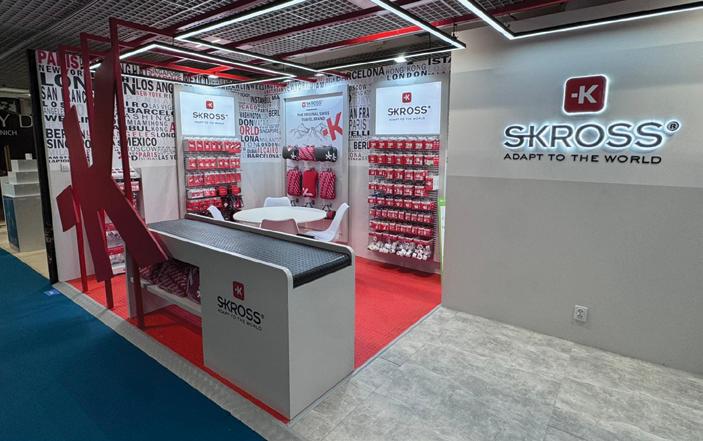
From authentic regional expressions to high-profile partnerships, four top producers detail their distinct strategies for engaging the evolving global traveler across Asia Pacific in this Whisky Report
by ATOOSA RYANNE ARFA
As the Asia Pacific travel retail market rebounds in 2026, the whisky category is responding to changing demographics, demand for channel exclusives, and a desire for authentic
narratives. Global Travel Retail Magazine spoke with four leading producers about their strategies, performance, and upcoming innovations ahead of the TFWA Exhibition and Conference in Singapore.

Storytelling through lifestyle
Pernod Ricard Global Travel Retail is targeting travelers by aligning whisky with sports, launching a 16-year-old Chivas Regal blend inspired by global brand ambassador Charles Leclerc.
“This partnership represents a wonderful opportunity to drive relevance for Chivas Regal among an engaged and growing F1 audience, who are affluent, frequent travelers with a taste for premium lifestyle products,” notes Rae Gibson, Director of Power Brands and Emerging Categories, adding that 72% of younger consumers favor limited

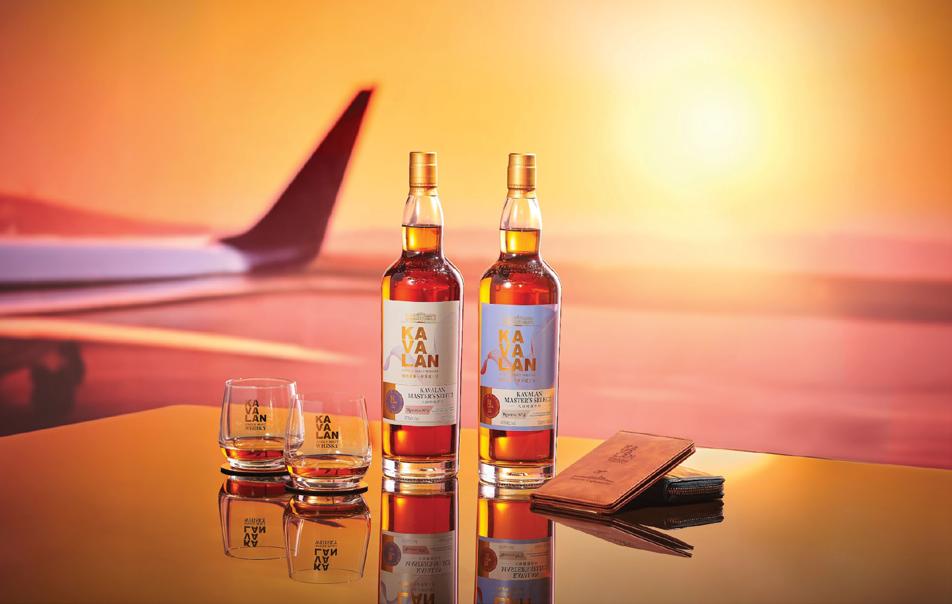
editions and that the brand is launching across 40 markets.
Andrew Bardsley, Director of Prestige Brands and Champagne, notes that China’s guochao trend, a consumer movement driven by pride in traditional Chinese culture and domestic brands, led to the creation of The Chuan, the first prestige Chinese malt whisky in travel retail. Additionally, The Glenlivet Cask Master’s Collection reached 23 million consumers via a Changi Airport pop-up, maintaining its rank as the top malt whisky by volume.

The Irish category is also thriving. “Jameson accounts for two-thirds of the Irish whisky category globally and is currently a top ten spirits brand by volume in global travel retail,” Gibson shares. Expanded distribution across India, the Middle East and Asia also grew Redbreast’s volume by over 100% last year. Innovation extends to Aberlour, which recently opened a boutique in Taiwan Taoyuan International Airport. “Our investment over the past 18 months has boosted its global standing exponentially, driving value share with a fit-for-purpose range,” Bardsley says. “Travelers are seeking exclusive and authentic story-led whiskies. There is no better platform than travel retail to envelop people with captivating visuals, inspiring narratives and compelling reasons to try and buy,” Bardsley concludes.
Kavalan Whisky is pivoting its strategy to cater to non-traditional demographics. “Whisky consumption across Asia Pacific is being shaped by increasingly diverse consumer groups, particularly women and younger drinkers,” says Wendy Wang, Senior Global PR Officer. She notes female drinkers are favoring elegant sherry cask profiles, while younger

consumers are redefining their engagement with alcohol. “Many drink more selectively while prioritizing value-driven purchases and meaningful experiences.” To serve these travelers, Kavalan Whisky leverages its core portfolio. “Kavalan Classic and Concertmaster Port Cask Finish offer approachable, fruit-forward profiles that are ideal for casual sipping or cocktails, making them popular among first-time Kavalan drinkers and younger audiences,” Wang explains.
Kavalan Whisky’s premium range also continues to resonate. “Our Solist single cask series remains a favorite

among whisky enthusiasts,” Wang shares. In July 2026, Kavalan will launch the Solist Madeira Cask Single Cask Strength to mark the 20th anniversary of its first distilled new-make. Supporting these releases, Kavalan is expanding its retail footprint. “Travelers can discover Kavalan across more airports in the region through a variety of engaging in-store experiences, offering travelers the opportunity to discover and taste Kavalan whiskies firsthand,” Wang says.
Championing authenticity and terroir
Rampur Distillery leverages its Himalayan legacy to highlight regional Indian whisky traits. Kunal Madan, Chief Marketing Officer, explains the Rampur Single Malt portfolio showcases authentic Indian craftsmanship using six-row barley and Himalayan groundwater.
“None of our expressions are peaty because India does not grow peat, which personifies our authenticity,” he says.
Madan sees whisky as a consistently strong market for travelers seeking global flavors. Rampur Double Cask is popular worldwide, while highly sought-after releases such as Jugalbandi sell mostly in the Middle East and India. “Rampur Asava is the first whisky in the world to be finished in an Indian wine cask,” Madan notes.
Looking to Singapore, Rampur is introducing Rampur 1943 Virasat Indian Single Malt in a one-liter format. The liquid matures in extreme North Indian climates to intensify wood interaction. “Distilled in newly designed pot stills and refined with intelligent innovations, Virasat’s spirit retains the hallmark Rampur DNA while evolving into a whisky with its own soulful personality,” Madan says. “Indians are traveling and

driving up consumption, while the large Indian diaspora outside of India is also helping boost demand and spread word of mouth.”
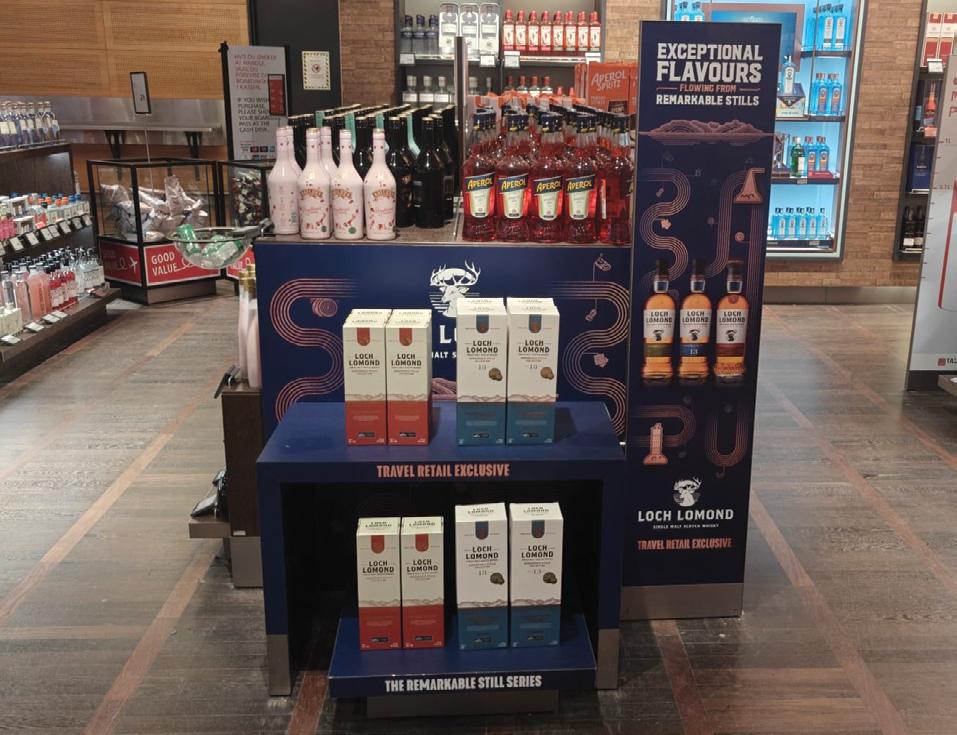
Loch Lomond Group prioritizes accessible luxury and regional offerings to capture market growth. “Like all single malt brands, we have seen a decline in demand for ultra-premium price points in recent years and have instead been focusing on our global travel retail exclusive premium portfolio,” says Nick Mogford, Managing Director of Global Travel Retail.
Mogford expects significant Indian distribution gains in 2026 alongside steady Korean growth. To satisfy the appetite for travel exclusives, the brand will reinforce its Loch Lomond Remarkable Stills lineup in Singapore. This update highlights a switch to age statement SKUs, including 8-, 10-, 13-
and 17-year-old expressions. A Loch Lomond Open Special will also debut in July alongside The Open Championship. In addition, the Glen Scotia portfolio will receive a refreshed exclusive lineup featuring new packaging and an 11-yearold liquid. The brand will also showcase a new Loch Lomond 30-year-old Oloroso Sherry finish for those seeking higher tiers.
“Not only does global travel retail need to offer good value versus domestic markets, but it is also important to offer whiskies that pique the interest of traveling consumers and showcase the breadth of innovation by our whisky makers,” Mogford shares.

Donatien Ferrari, Group Communications Manager at La MartiniquaiseBardinet, outlines a regional strategy-driven by premiumization, “Spiritainment” retail activations and a commitment to brand DNA
by ATOOSA RYANNE ARFA
The Asia Pacific (APAC) region is a strategic priority for La MartiniquaiseBardinet, an independent, family-owned French spirits group, supported by favorable demographic shifts and a highly connected consumer base that wants more from airport retail. “The region combines a rapidly expanding middle and upper class with a new generation of consumers actively seeking fun and experiential brands,” Donatien Ferrari, Group Communications Manager, tells Global Travel Retail Magazine. “At the same time, strong digital influence is accelerating trends and creating powerful opportunities for brands that can engage consumers both online and offline.”
Viewing the travel retail channel as a pillar for international growth, the company has established a new, dedicated travel retail team to drive expansion and capture evolving consumer demographics across the APAC market. “We see
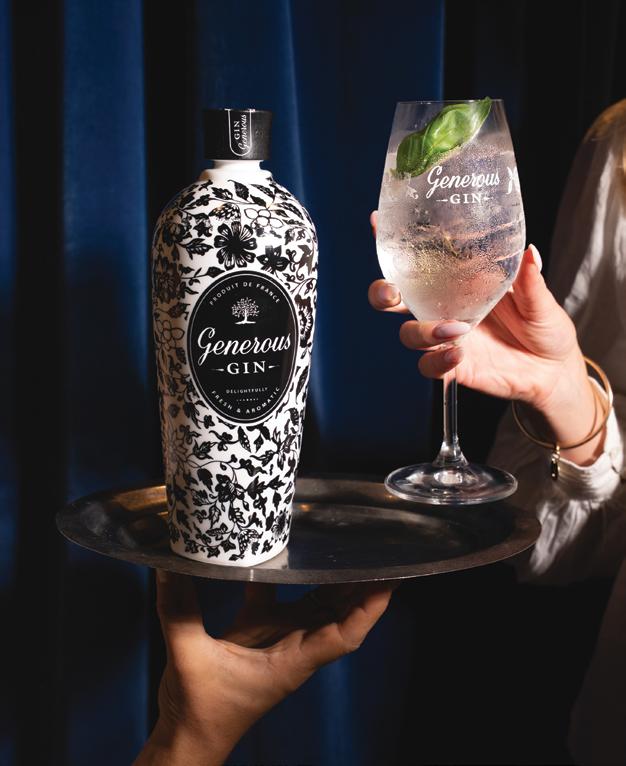
travel retail as more than just a channel. It’s a global stage for our brands,” says Ferrari.
Connecting the APAC consumer with “Spiritainment”
Ahead of Singapore, La MartiniquaiseBardinet is promoting highly targeted travel retail exclusives and elevated brand experiences. Ferrari notes that the commercial strategy accelerates across three distinct areas: premiumization, ready-to-drink (RTD) innovation, and immersive retail activations.
“We are focusing on premiumization with the launch of a new age-statement expression in our Label 5 Scotch whiskey range, to be unveiled in Singapore,” shares Ferrari. This new expression builds on the core DNA of the global Scotch brand, known for its smooth, malty profile and subtle peat influence.
Simultaneously, the group is capitalizing on new consumption moments through RTD innovations for estab-
lished brands such as Cutty Sark and Gibson’s. These pre-mixed formats, including the Cutty Sark & Ginger Ale Highball and Gibson’s London Dry Gin & Tonic, target the “on-the-go” terminal passenger looking for convenience without sacrificing brand quality.
To capture passenger attention in a busy terminal, La Martiniquaise-Bardinet is deploying activations specifically designed to convert foot traffic into active engagement through what the company terms “Spiritainment.” These immersive retail activations go beyond traditional shelf displays to
create memorable, interactive brand experiences directly on the shop floor. “Our ambition is to drive both value and memorability in-store,” Ferrari shares.
Don’t change the DNA
Operating across diverse APAC markets means balancing between maintaining global consistency and ensuring local relevance. “We build our brands on strong heritage, authenticity and clear positioning,” shares Ferrari. “In APAC, consumers are particularly curious and knowledgeable,” he notes. “We must therefore be both authentic and agile, always adapting the expression but never the DNA.”
This localized adaptation takes multiple forms across the region. The group adjusts formats and price points while tailoring flavor profiles, alcohol by volume (ABV), and specific cask finishes to meet regional palates. Storytelling and brand activations are also heavily customized to resonate with local market demands.
Visual impact in high-traffic hubs
In a crowded travel retail environment, securing passenger attention requires immediate visual appeal, particularly for premium and giftable propositions. “Innovation in travel retail today is about visibility, desirability, and exclusivity,” shares Ferrari. “In a high-traffic environment such as airports, the first impact is critical, and packaging plays a decisive role.”
Ferrari points to the group’s French gin, Generous Gin, and the Beehive XO Gold Edition, a 1-liter travel retail exclusive specifically tailored for the Middle East, China, and India. Generous Gin is recognized for its floral bottle design that mirrors its fresh, aromatic spirit with notes of citrus, jasmine, and pepper. Meanwhile, the limited expression Beehive XO Gold Edition serves as a statement piece presented in a reflective golden bottle accented with a black stopper, combining sweet, aged eaux-de-vie with a rare parcel distilled from Red Muscadel grapes.

“We are fortunate to offer products with strong visual impact,” Ferrari notes. “These showcase our expertise in creating festive, premium and giftable propositions that stand out on the shelf.”
While the opportunities in the region are substantial, with Ferrari identifying premiumization at scale as the primary growth driver, the group also acknowledges the structural hurdles of the channel, such as navigating highly competitive shelf space, diverse and complex consumer expectations across varied markets and increasing pressure on the price-value perception.
To maintain momentum, La Martiniquaise-Bardinet relies on a commercial philosophy to ensure travelers feel their purchases are justified. “It is essential to stay very close to the market and consistently overdeliver on value-for-money,” Ferrari concludes. “It is what we call price-to-pleasure.”

Rupali Arora, Director of Travel Retail at Bateel International, discusses moving beyond the GCC, building presence in Asia Pacific and evolving the brand’s portfolio for international consumers
by HIBAH NOOR
Bateel’s position in travel retail has been built over two decades, initially anchored in the GCC through longstanding partnerships including Dubai Duty Free. What is changing is not just the geography, but the role travel retail plays — from a regional sales channel to a strategic platform for global brand building.
“Travel retail for Bateel has been built on strong foundations in GCC markets, supported by valued partners such as Dubai Duty Free,” says Rupali Arora, Director of Travel Retail at Bateel. “This presence has introduced the brand to a broad and increasingly international traveler base, as the channel continues to evolve in both passenger mix and expectations. Today’s traveler is more global, more discerning, and seeking products that combine quality, storytelling and gifting appeal.”
This evolution has further strengthened the channel’s strategic role within the business. “Travel retail has become one of the most effective environments to engage a global consumer base in a premium, discovery-led setting,” adds Arora.
Bateel’s organic dates, harvested from its own farms in Saudi Arabia using
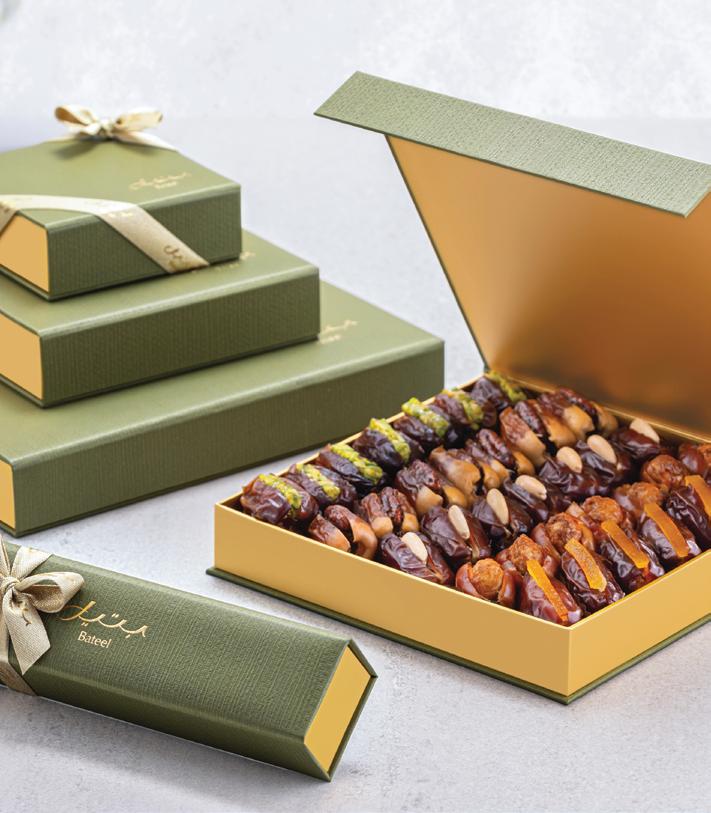
sustainable farming methods, remain central to that proposition, but the way they are presented and the audiences they are designed for are expanding.
The portfolio Bateel is bringing to Singapore reflects the shift toward a more expansive consumer base. “At TFWA Asia Pacific, we will be showcasing a curated portfolio designed for a broader international audience while staying true to our heritage,” says Arora.
The range is anchored by the Gourmet Dates Collection — combining the company’s 100% organic dates with premium ingredients such as nuts, fine chocolates, and other natural elements, resulting in creations that resonate across cultures. Complementing this is the Date Chocolate range, where dates are paired with fine chocolate to offer a more familiar and accessible point of
indulgence. The Bateel Dubai Chocolate Collection introduces a contemporary chocolate range aligned with the brand’s luxury positioning, while new flavors including Strawberry Matcha and Qahwa kunafa (Arabic coffee) reflect shifting consumer preferences, particularly across Asian markets. Expanding beyond dates into chocolate and new flavor profiles allows Bateel to create stronger entry points for international consumers unfamiliar with the category.
Compared with its established markets, Bateel’s presence across Asia remains in development, with distribution and visibility still being built out across key hubs.
“Asia is a critical growth region for us. It represents our next phase of scale, and we are actively building presence with key operators across major hubs through focused listings and portfolio alignment,” says Arora.

The long-term ambition is to position Bateel as the brand of choice for a global audience, extending well beyond its Middle Eastern roots. Central to this vision is a culinary journey of discovery — one that introduces the richness of its heritage while establishing the brand as a premium confectionery proposition across international markets.
Delivering on this ambition requires a portfolio that resonates across cultures while maintaining a clear and consistent identity — a balance the brand continues to refine through both product innovation and evolving formats.
Innovation for the channel Bateel’s approach to innovation is shaped by the practical realities of travel retail rather than adapted from its domestic retail model.
“Innovation in travel retail is very specific; it’s not just about new products, but about how they are presented and carried out. In travel retail, execution is as important as product — visibility, format and ease of purchase ultimately drive conversion,” says Arora.
This has led to a focus on formats designed not only for shelf appeal, but also for transport. Bateel is developing products to be lighter, more compact and easier to carry while maintaining a strong gifting appeal through premium packaging. Clear product information helps by communicating both quality and the natural attributes of the brand at the point of sale, where interaction time is limited.
The company is also using exclusivity more deliberately. “We are introducing more travel retail exclusives to create a
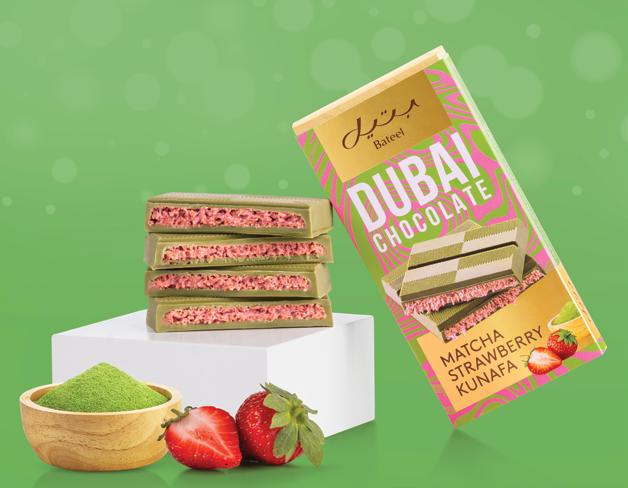

sense of discovery for passengers,” Arora says, adding that the innovation pipeline includes dedicated ranges to appeal to a broader variety of shopper demand moments.
While Bateel’s positioning as a natural product within confectionery provides a point of distinction, this is not the main focus for the company.
“It is important, but it’s not the only driver,” says Arora. “Consumers today are more conscious, and the fact that our products are natural and based on dates does resonate, especially compared to traditional confectionery. However, in travel retail, the purchase decision is still heavily driven by gifting, indulgence and brand perception.”
In that context, Bateel’s differentiation comes from a combination of quality, innovation, authenticity and premium positioning rather than any single attribute.
As the brand’s expansion plans reflect a shift from regional strength to broader international presence, travel retail serves an important purpose. “In practical terms, this means expanding into key international airports across Europe, Asia, Africa, as well as the Americas, including the USA and Canada,” Arora says.
The company’s strategy includes building partnerships with global operators, increasing visibility and developing a portfolio that can address different consumption occasions.
“We are evolving our portfolio to appeal to a broader consumption occasion,” Arora says. “While dates remain at the heart of our brand, we are expanding into chocolates and other formats that travel more easily across cultures and resonate with a wider audience. The ambition is clear — to build Bateel into a globally recognized premium confectionary brand with a strong and visible presence across major international airports.”
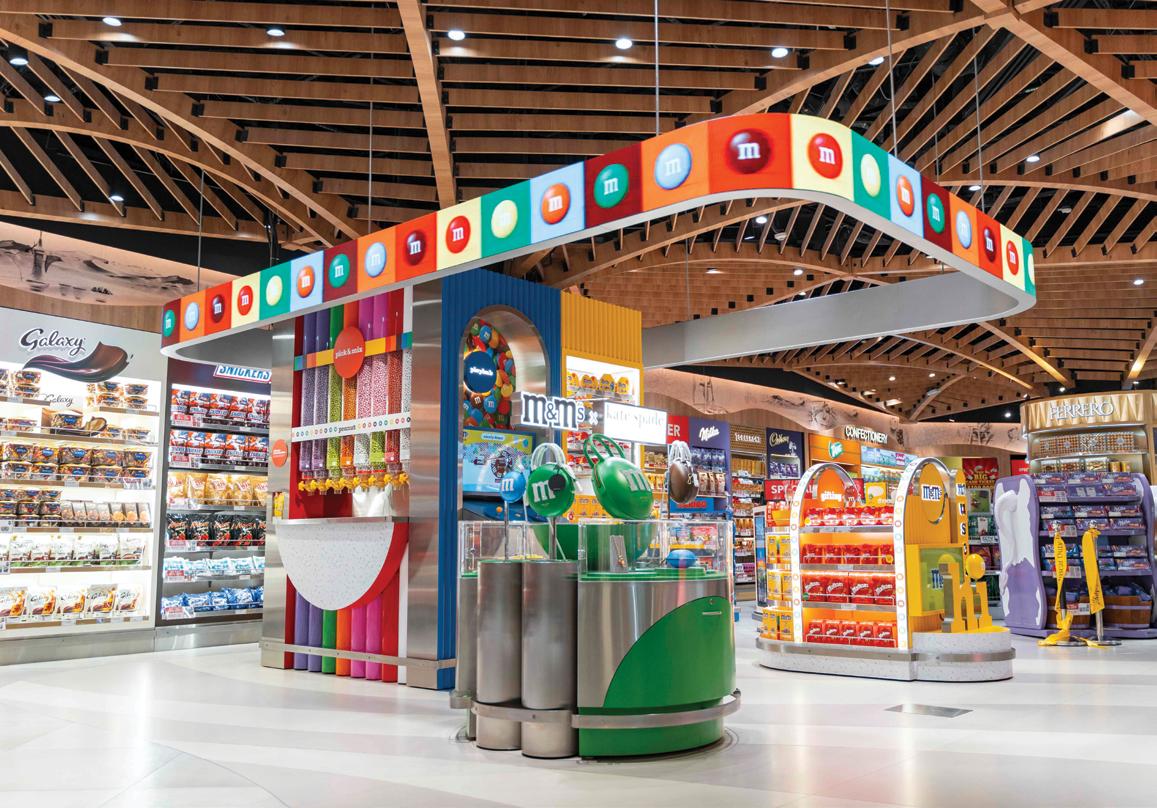
Grounded in discovery, excitement and emotional connection, confectionery brands weigh in on how both experiential and hybrid retail have become central to the travel retail proposition
by LAURA SHIRK
Described as the engine of conversion in confectionery — and across global travel retail — experience-led retail is driving snacking brands to innovate and adapt to meet the expectations of travelers. As the category places greater significance on the journey rather than the destination, names are exploring ways to offer moments of discovery and excitement, while building an emotional connection with customers in the channel. As travelers increasingly seek exclusive,
immersive and personalized experiences, confectionery brands have the chance to transform their identity through packaging, partnering, storytelling and digital integration.
“Across travel retail, we are seeing a clear shift in how travelers behave when experiences replace traditional, shelf-led retail. Shoppers are spending more time in environments that invite interaction, discovery and emotional connection, and that extended dwell is directly translating into higher conversion and larger
baskets. In a channel built on movement, the brands that succeed are the ones that give people a reason to stop,” explains An De Volder, Market Director, Mars Wrigley International Travel Retail (Mars Wrigley ITR).
A product and the way in which it is presented in the channel, now need to work together to capture the “emotional window” that is caused by travel and create this natural moment of pause.
“The airport is no longer just a corridor to pass through — it has become a
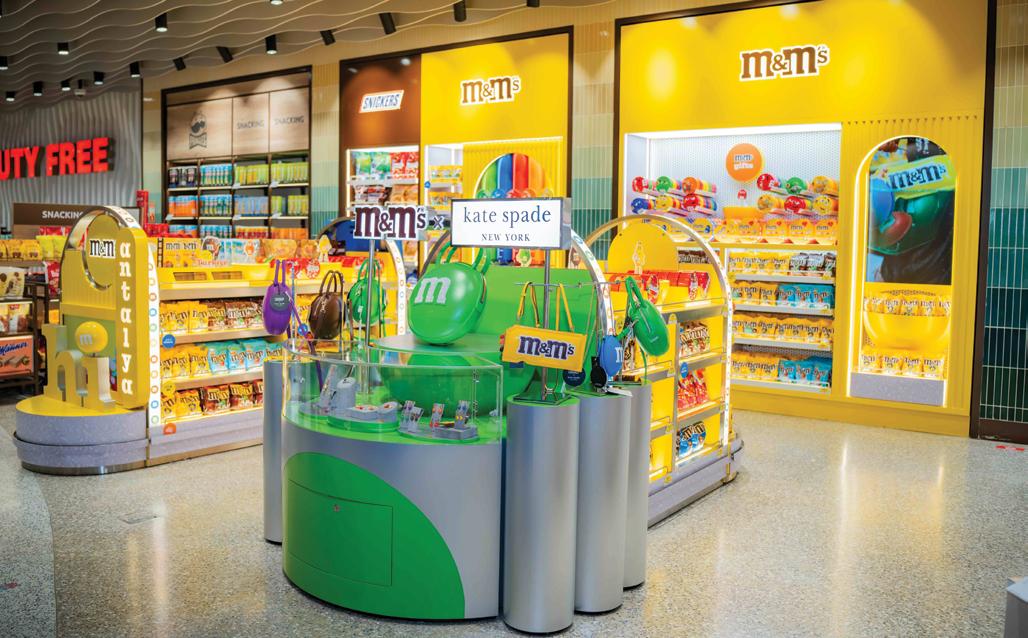
stage where brands can perform, engage and create memorable moments,” says Frédéric Porchet, General Manager at Nestlé International Travel Retail (Nestlé ITR).
As experiential retail becomes more central to the travel retail proposition, brands across the channel are moving beyond traditional sales reporting to measure a wider set of engagement-toconversion signals. While sales uplift is still a top indicator, it is no longer the only marker of success. Increasingly, the focus is on whether an activation changes how travelers interact with the category, and how shoppers move through and engage with the space.
With the launch of its M&M’s Experience concept, Mars Wrigley ITR has seen the impact of experience-led retail firsthand. Built around three foundational pillars: personalization & sense of place, interaction & engagement and rotating brand partnerships, the company introduced the shop-in-shop concept last year at Antalya International Airport in Turkey, followed by Jeddah and Muscat.
“Attention is the new currency, and experience is what converts it,” states
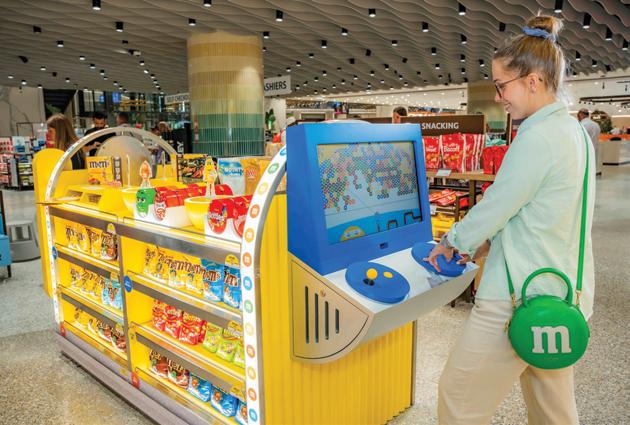
De Volder. “The M&M’s Experience concept is designed to evolve as traveler expectations, retail spaces and brand partnerships continue to change. In 2026, our focus is on deepening each of the three foundational pillars in ways that keep the experience fresh, relevant and commercially powerful.”
As travelers seek products that feel meaningful to where they are and where they are going, Mars Wrigley ITR will continue to embed location-inspired
design, custom gifting options and travel-exclusive formats into the experience. As described by De Volder, the company is shaping the M&M’s Experience concept into a destination that reflects both the airport and the traveler turning confectionery into a true souvenir of the journey. Building on elements such as the M&M’s Playhub, Mars Wrigley ITR will spend this year evolving how play, exploration and discovery guide shoppers through the space.
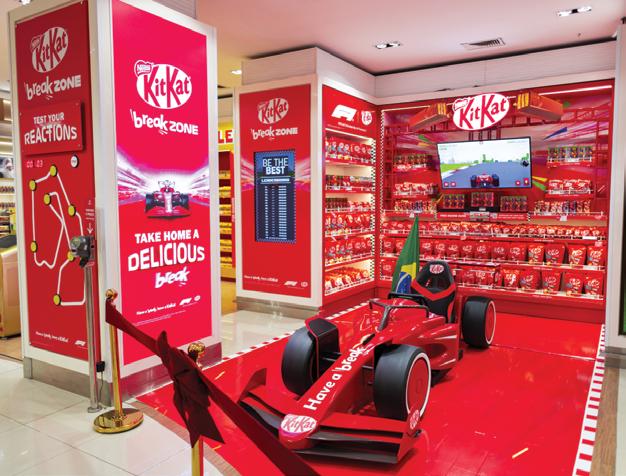
Designed to set new ambition for the confectionery and food category in travel retail, Nestlé ITR’s A.C.T. (Attract, Convert, Thrive) framework outlines how to unlock sustainable, long-term growth. The purpose of the category framework: to create memorable experiences that deepen brand connection and encourage repeat purchases across different travel occasions.
“By elevating the experience — be it through gamification, digital engagement, limited-time activations, culturally tailored storytelling or attentiongrabbing collaborations like KitKat’s partnership with Formula 1 — brands can provide the triggers that lead to engagement and ultimately secure conversion,” says Porchet.
Launched at the end of the 2025 season, the KitKat x F1 partnership aims to boost travel retail engagement and overall duty free sales via unique experiences, exclusive products and Gen Z-targeted campaigns. It has already shown the power of combining two highly dynamic brands to create energy and excitement in the channel.
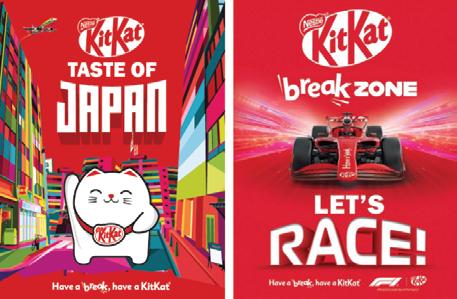
According to Porchet, in 2026, Nestlé ITR will further build this partnership to maximize its role as a catalyst for innovation and experiential retail.
The latest research from m1nd-set suggests that traditional siloed airport design is failing to capture the full value of dwell time, as hybrid environ-
ments emerge as the key to unlocking dual visitation and higher spend. Confectionery is said to be uniquely positioned to support this shift toward hybrid retail concepts as it naturally spans multiple traveler missions, allowing brands to connect with travelers at various moments across retail space, as well as adjacent food and beverage environments. As a result, Porchet

25 years of expertise in retail, live, digital, public relations and creative work
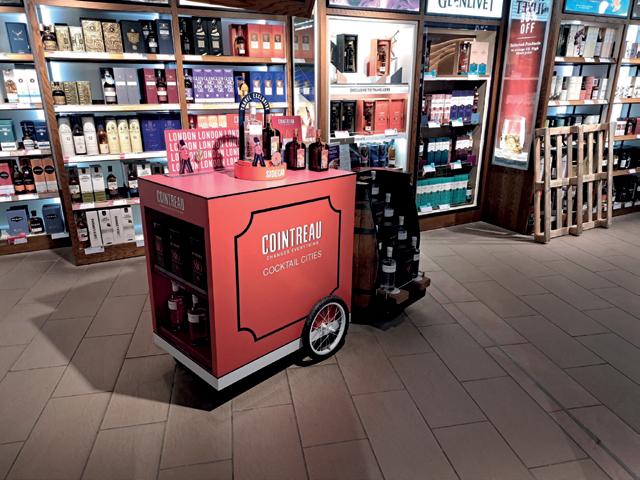
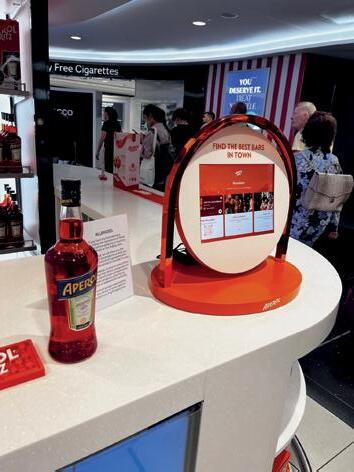
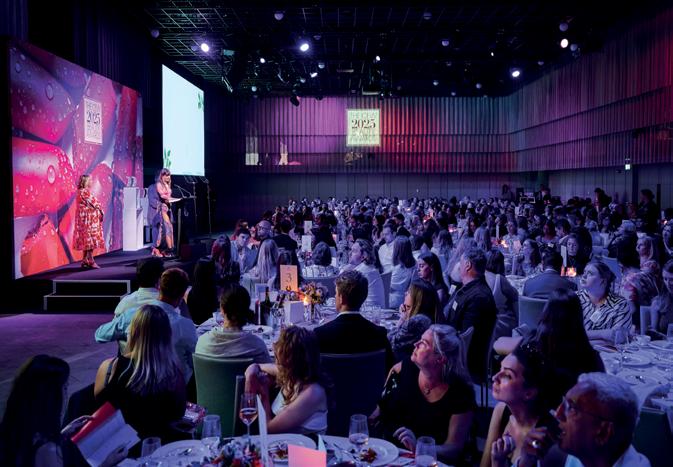

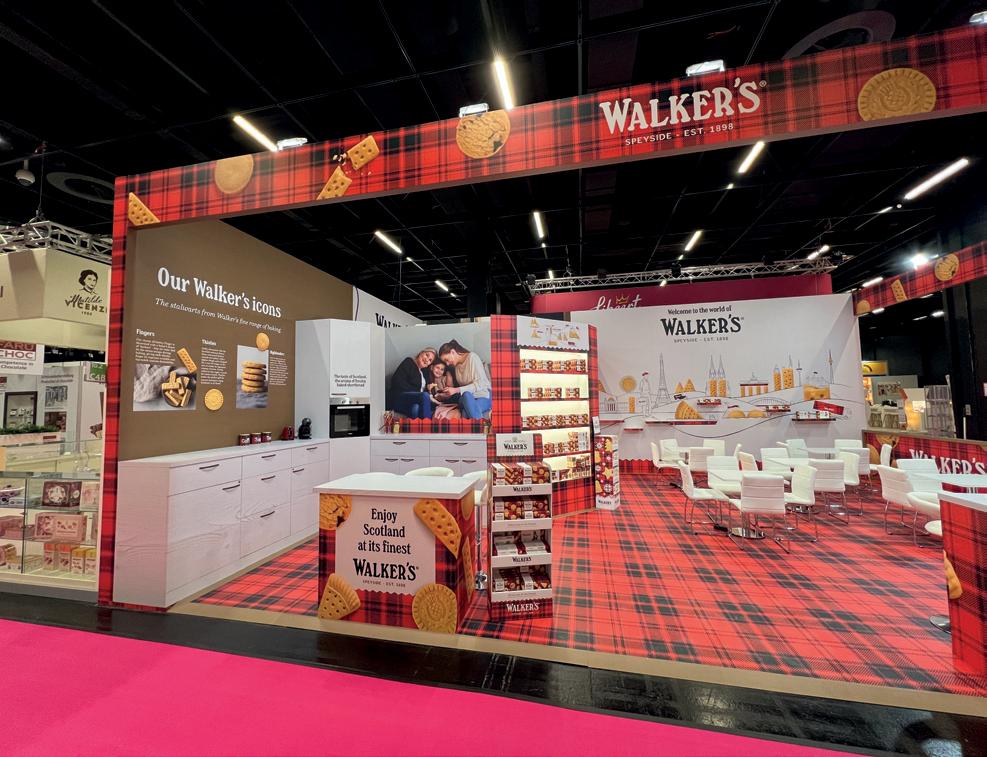
points out, the category is an effective driver of dual visitation, incremental engagement and ultimately higher spend.
For Mars Wrigley ITR, the rise of hybrid retail is validation of its longstanding focus on integrating confectionery into high-traffic, high-conversion touchpoints within the passenger journey. The finding aligns closely with Mars Wrigley ITR’s Transaction Zone strategy, which is specifically designed to capture shoppers at moments of immediacy and impulse. This proven approach works to optimize checkout areas and unlock incremental sales opportunities at the final point of purchase.
“Our Transaction Zone model integrates confectionery into checkout and transitional spaces, while concepts such as the M&M’s Experience introduce immersive, interactive elements that encourage shoppers to spend more time in-store and engage across categories,” she says. “The focus is on creating seamless shopper journeys where confectionery is not confined to a single aisle but embedded across the retail ecosystem.”
Following success at airports across Europe, Middle East and Africa, Mars Wrigley ITR activated its Transaction Zone concept at Singapore’s Changi Airport and Malaysia’s Kuala Lumpur Airport in March. Alongside its core portfolio, Mars Wrigley ITR will showcase this model, as well as an expanded line of destination-themed gifting sleeves at this year’s TFWA Asia Pacific Exhibition. Two new additions, an
exclusive Malaysia-themed sleeve and a broader Asia-inspired design, will launch this summer.
Nestlé ITR also sees potential in cross-category partnering to create new category growth. “Confectionery pairs naturally with beverages, whether through coffee-led ‘break’ moments with KitKat or gifting-led combinations with premium drinks,” comments Porchet. “Similarly, premium confectionery brands such as After Eight lend themselves well to collaborations with beauty, lifestyle or food and beverage concepts, creating sophisticated evening-inspired experiences that resonate particularly well in lounge environments or premium retail spaces.”
With the Asia Pacific debut of KitKat Japan, the brand is set to play a main role in Nestlé ITR’s presentation at the 2026 TFWA Asia Pacific Exhibition. KitKat Japan continues to attract strong appeal not only across Asia, but with travelers globally. The launch will be supported by digital and gaming-inspired activations, designed to drive excitement, footfall and conversion while reinforcing confectionery as a dynamic impulse and gifting category. Also, on display at the exhibitor’s new-look stand will be the KitKat x F1 partnership.