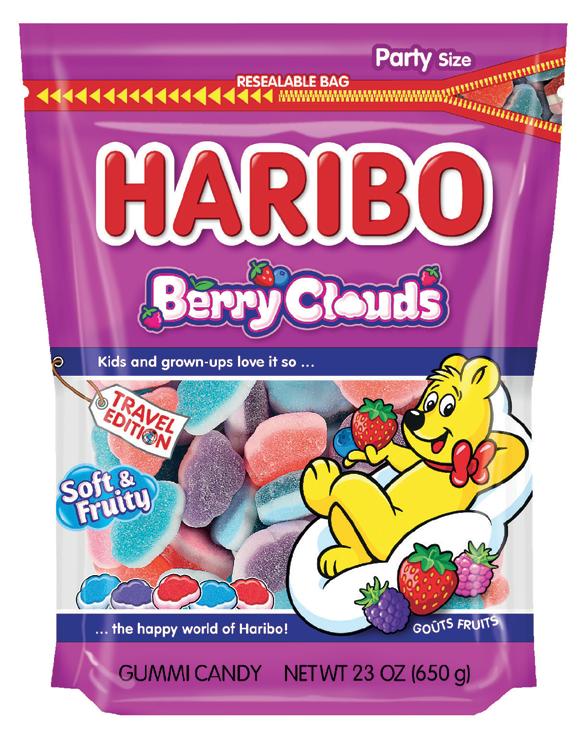
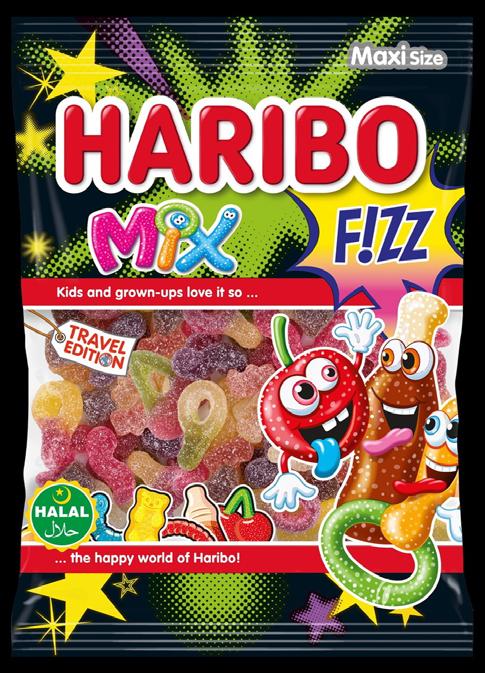
Kids and grown-ups love it so, the happy world of Harib o !
FEBRUARY 2026 · VOL 38 · NO 1
Global Travel Retail Magazine (ISSN 0962-0699) is published seven times a year by Paramount Publishing Company Inc. The views expressed in this magazine do not necessarily reflect the views and opinions of the publisher or the editor. February 2026, Vol 38, No 1. Printed in Canada. All rights reserved. Nothing may be reprinted in whole or in part without written permission from the publisher. Paramount Publishing Company Inc.
This Confectionery and Food Report marks our first digital only issue of the year, and we are pleased to highlight the latest category news, consumer behaviors and snacking trends. From the continued rise of experiential retail, with leading brands such as Mars Wrigley, Nestlé and Mondelēz driving innovation, to the influence of Gen Z, we speak to players from all corners of this segment.
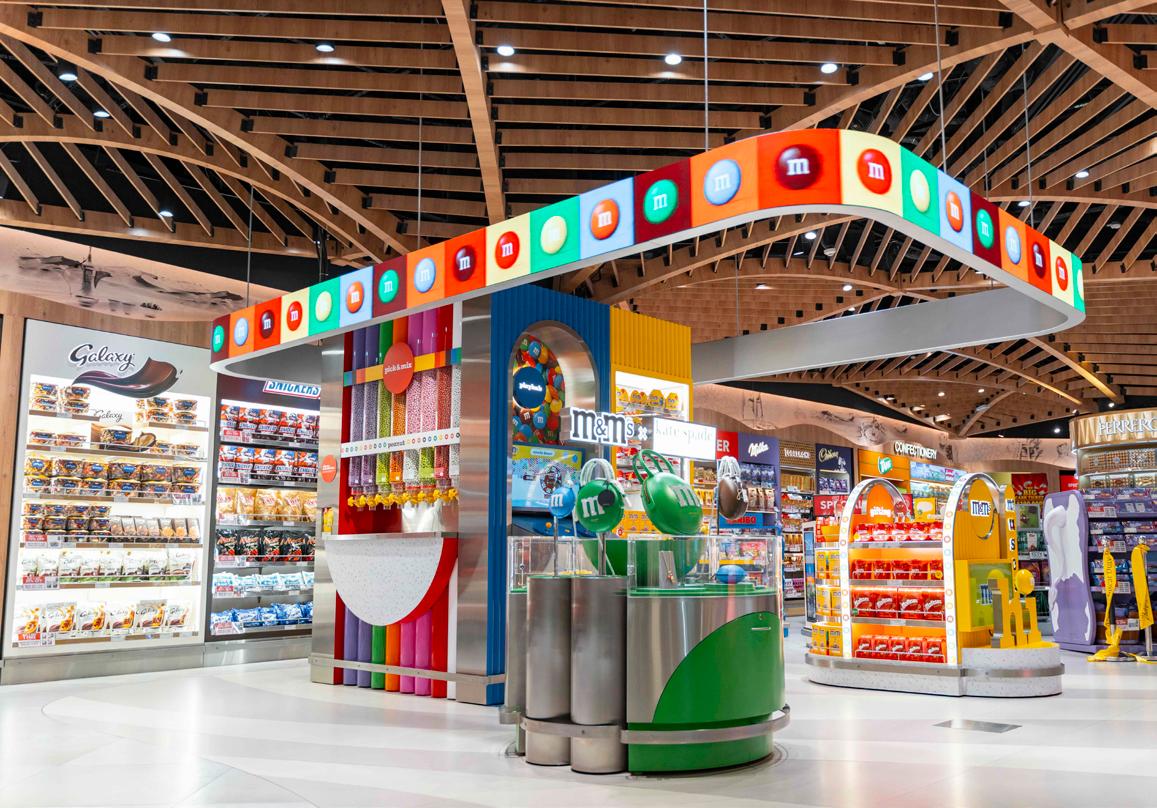
As showcased in this report, the traveler journey is no longer about the destination, it’s about the experience along the way. In the words of Mars Wrigley International Travel Retail Market Director, An De Volder, “Attention is the new currency.” The company is working to shape the M&M’s Experience concept into a destination that reflects both the airport and the traveler turning confectionery into a true souvenir of the journey.
In a Q&A with Avolta EMEA Culinary Director, Alessandro Giudici, we learn about its Culinary Council and how wellbeing integration reflects the retailer’s F&B offer. The company’s “Taste and Wellbeing” program acts as a global framework that guides how it designs, develops and operates within the category.
Under the Snacking section, we cover the growing relevance of functional and multi-sensory snacking, as well as the diversification of the savory segment in line with format innovation, flavor experimentation and demand for refreshment. Brands are looking to add value beyond taste with the support of functional ingredients and added nutrients. SPC Global has strengthened its presence in the beverage sector by creating The Original Beverage Co., a health and wellness division that offers a portfolio spanning hydration, refreshment and functional enhancement.
On the topic of chocolate, Lindt & Sprüngli reveals its repositioning of the segment as a means of indulgence; and The Hershey Company World Travel Retail explains how its “Take the Taste With You” platform has generated measurable results. We also speak to Barry Callebaut about its partnership with German food technology start-up Planet A Foods to combat the ongoing cocoa crisis and futureproof the industry. ChoViva is now gaining traction as a sustainable, cocoa-free chocolate alternative.
Plus, we welcome Max Van Coillie, Business Development Manager Asia & Middle East at Neuhaus, as a guest writer. “What distinguishes Middle Eastern consumers – particularly in travel retail – is not just purchasing power, but discernment,” he says.
Global Travel Retail Magazine will be on location throughout the year to deliver news on the channel. See you at Summit of the Americas in Orlando next month!
Deputy Editor laura@gtrmag.com
WHAT’S INSIDE
Top stories
6 Setting the scene
Grounded in discovery, excitement and emotional connection, confectionery brands weigh in on how experiential retail has become more central to the travel retail proposition
10 Generational shift
As Gen Z moves to replace habitual gifting with self-treating, experimentation and social-driven discovery, ARI examines how confectionery is evolving to meet new expectations around value
18 Feeling better, not fuller
From menu design to food curation, in this Q&A with Avolta EMEA Culinary Director, Alessandro Giudici, GTR Magazine discusses how wellbeing integration reflects the retailer’s F&B offer
28 Serving more than taste
From protein-packed snacks to premium drinks, brands are introducing products with functional ingredients and added nutrients to appeal to those seeking balanced options
Features
CONFECTIONERY & FOOD OVERVIEW
14 Discovery mode
New m1nd-set research shows how Gen Z navigates confectionery in duty free, from first contact with the category to point-of-purchase decision-making
RETAILERS
22 Taste and place
Together, Lagardère Travel Retail and Schiphol Airport mark the next phase of the Today Duty Free rollout in Amsterdam, adding a destination-style confectionery offer rooted in local and international chocolate
24 Delectable Dubai
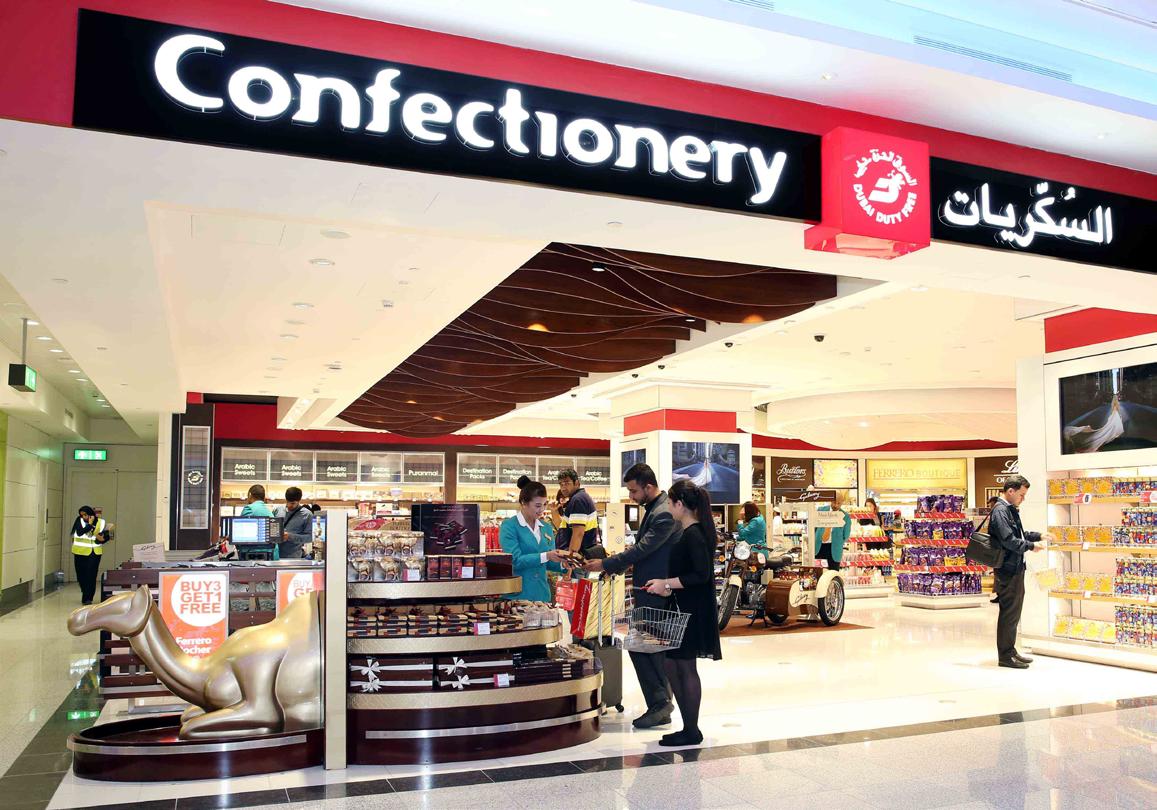
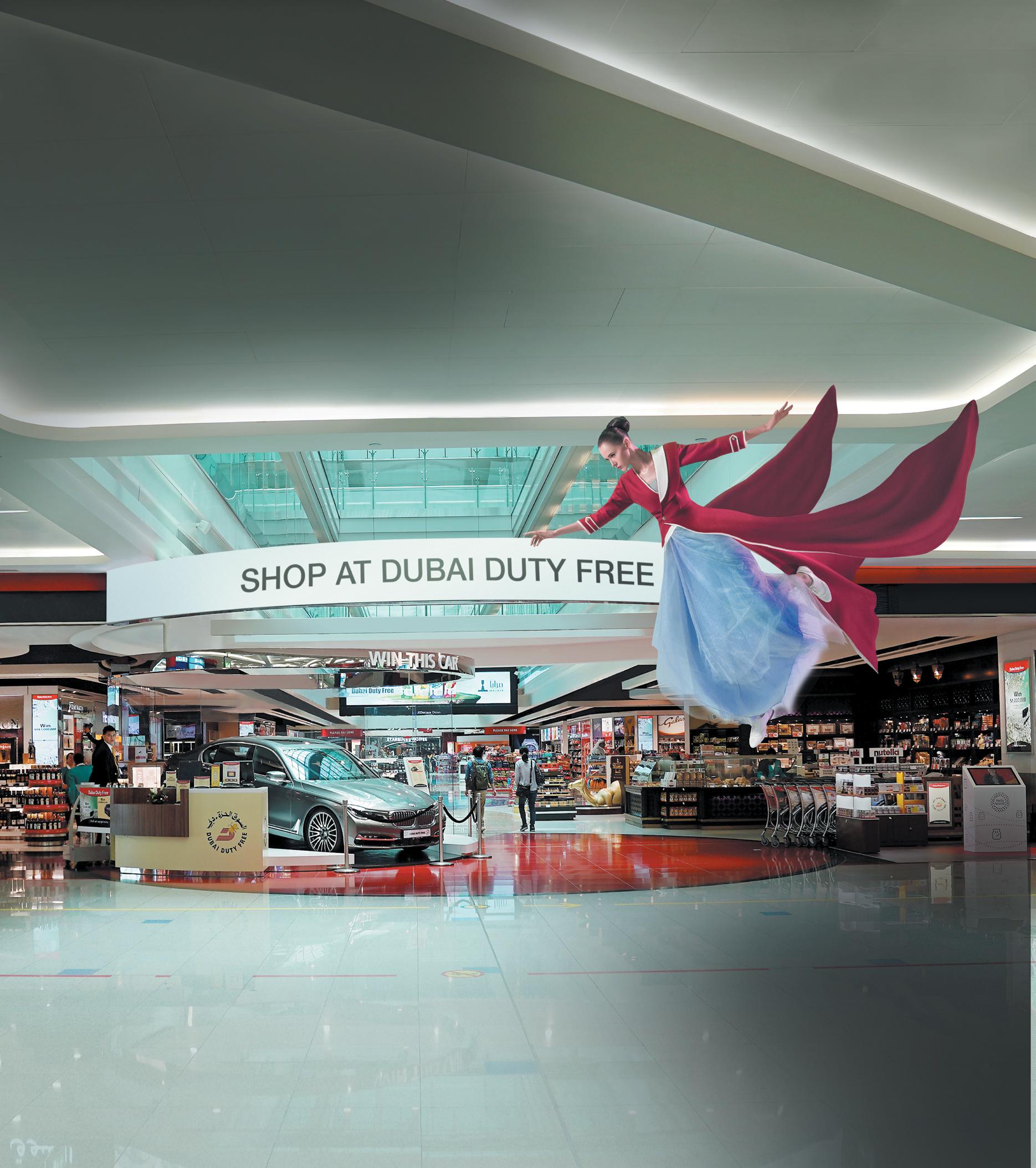
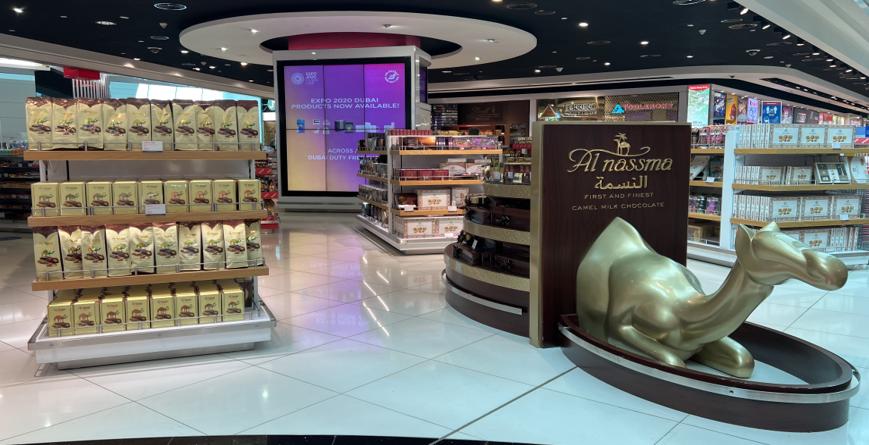
Confectionery surged more than 54% in 2025 at Dubai Duty Free, propelled by local flavor profiles, provenance-led positioning and the breakout success of Dubai Chocolate
SNACKING
30 A world beyond
Savory snacks and sugar confectionery gain ground in travel retail as format innovation, flavor experimentation and demand for refreshment diversify the category
34 Depth perception
From crisp layers to creamy centers, texture is shaping how confectionery and biscuits perform in travel retail as brands design for contrast, comfort and shareability
CHOCOLATE
36 Globally inclined
As traveler purchasing becomes more deliberate, Lindt & Sprüngli is using inspiration from global food trends and travel retail exclusives to position chocolate as a means of mindful indulgence
38 Redefining value
Mondelēz World Travel Retail is reworking price-pack logic, innovation and in-store visibility to sustain confectionery performance as transaction values come under pressure in airports
40 Consistency is key
Early activations of The Hershey Company’s “Take the Taste With You” platform signal stronger traveler engagement and sell-out across key airport hubs
SUSTAINABILITY
42 Closing in on cocoa-free
Barry Callebaut teams up with German food-tech company to offer a sustainable, cocoa-free chocolate alternative and help determine the future of confectionery
44 A core commitment
As part of its sustainability program, Loacker reduced overall packaging weight of paper and corrugated cardboard by 3% in 2025, plus more on the brand’s Technology Center
GUEST COLUMN
46 Heritage meets innovation
In this opinion piece, Max Van Coillie, Business Development Manager Asia & Middle East at Neuhaus, discusses how the Middle East is shaping the future of chocolate in travel retail
BRANDS
48 Fulfilling needs
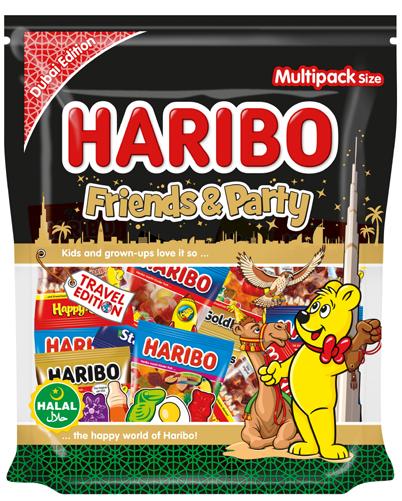
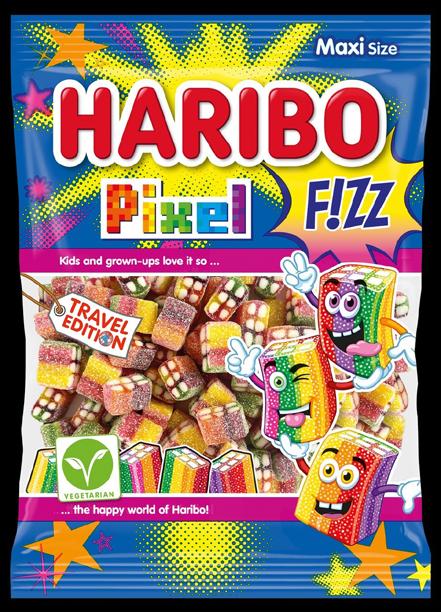
Amid the changing expectations of Gen Z, Gen Alpha and the broader population at large, Haribo is refining its travel retail strategy through exclusivity, inclusivity and format-led innovation
50 Matcha meets strawberry
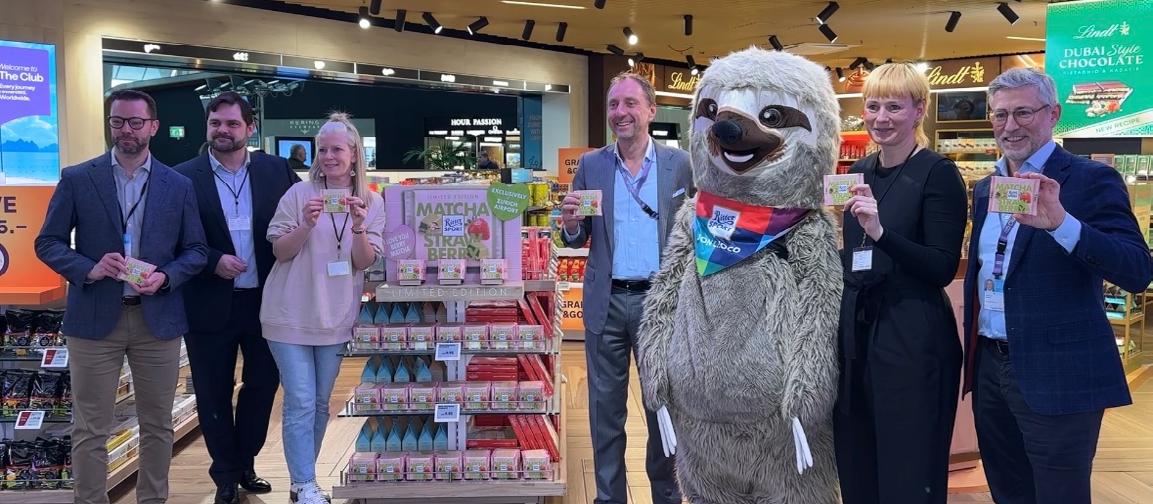
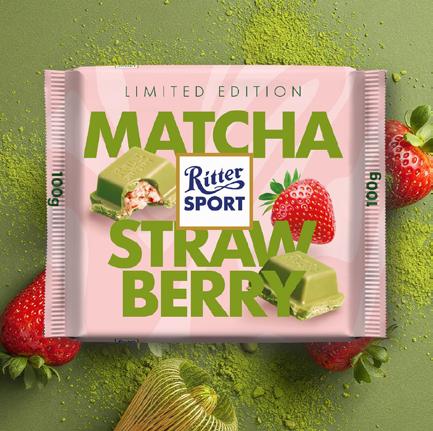
Ritter Sport and Avolta unveil a limited-edition Matcha Strawberry chocolate bar, created exclusively for travel retail, debuting at Zurich Airport
52 Camel craft
The world’s first camel milk chocolate brand is modifying its approach to travel retail through premium formats, regional storytelling and carefully targeted expansion
Setting the scene
Grounded in discovery, excitement and emotional connection, confectionery brands weigh in on how experiential retail has become more central to the travel retail proposition
by LAURA SHIRK
Described as the engine of conversion in confectionery – and across global travel retail – experience-led retail is driving snacking brands to innovate and adapt in order to meet the expectations of travelers. As the category places greater significance on the journey rather than the destination, names are
exploring ways to offer moments of discovery and excitement, while building an emotional connection with customers in the channel. As travelers increasingly seek exclusive, immersive and personalized experiences, confectionery brands have the chance to transform their identity through packaging, partnering, storytelling and digital integration.
An De Volder, Market Director, Mars Wrigley International Travel Retail
Mars Wrigley ITR is shaping the M&M’s Experience concept into a destination that reflects both the airport and the traveler turning confectionery into a true souvenir of the journey
“Across travel retail, we are seeing a clear shift in how travelers behave when experiences replace traditional, shelf-led retail. Shoppers are spending more time in environments that invite interaction, discovery and emotional connection, and that extended dwell is directly translating into higher conversion and larger baskets. In a channel built on movement, the brands that succeed are the ones that give people a reason to stop,” explains An De Volder, Market Director, Mars Wrigley International Travel Retail (Mars Wrigley ITR).
A product and the way in which it is presented in the channel, now need to work together to capture the “emotional window” that is caused by travel and create this natural moment of pause.
“The airport is no longer just a corridor to pass through – it has become a stage where brands can perform, engage
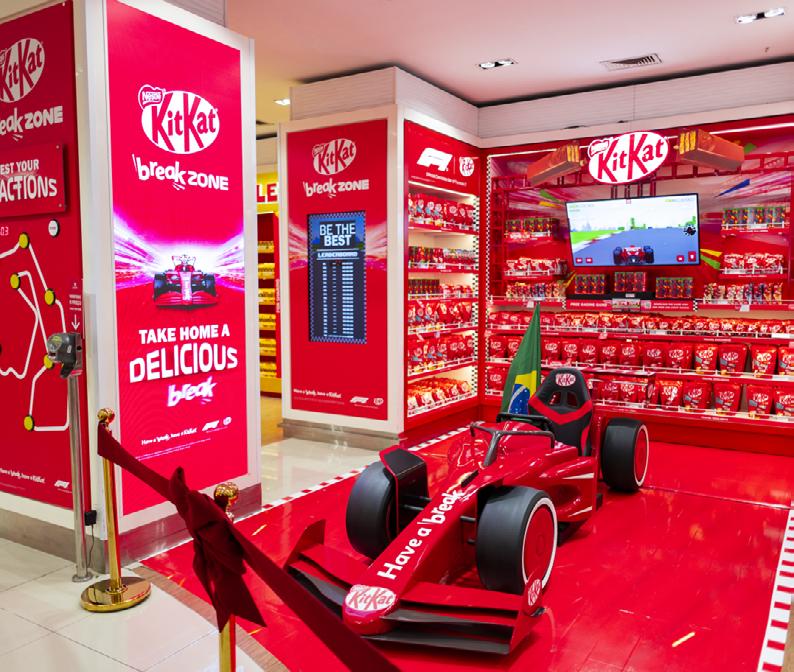
Nestlé ITR’s KitKat will take center stage at this year’s Summit of the Americas, showcasing its global partnership with Formula 1 to connect with younger, experiencedriven shoppers
In 2026, Nestlé ITR will further build the KitKat x F1 partnership via expanded in-store activations and exclusive new products and packaging
and create memorable moments,” says Frédéric Porchet, General Manager at Nestlé International Travel Retail (Nestlé ITR).
Echoing this sentiment, Anna Somogyi, Director Category, Customer & Shopper Marketing, Mondelēz World Travel Retail (Mondelēz WTR), notes that experiential retail has become a practical conversion tool rather than an added layer. As demonstrated by the release of items like Toblerone Crunchy Popcorn, products that reflect travel through flavor, format or storytelling earn attention more easily in an airport environment.
Attention is the new currency
With the launch of its M&M’s Experience concept, Mars Wrigley ITR has seen the impact of experience-led retail firsthand. Built around three foundational pillars: personalization & sense
of place, interaction & engagement and rotating brand partnerships, the company introduced the shop-in-shop concept last year at Antalya International Airport in Turkey, followed by Jeddah and Muscat.
“Attention is the new currency, and experience is what converts it,” states De Volder. “The M&M’s Experience concept is designed to evolve as traveler expectations, retail spaces and brand partnerships continue to change. In 2026, our focus is on deepening each of the three foundational pillars in ways that keep the experience fresh, relevant and commercially powerful.”
As travelers seek products that feel meaningful to where they are and where they are going, Mars Wrigley ITR will continue to embed location-inspired design, custom gifting options and travelexclusive formats into the experience.
As described by De Volder, the company is shaping the M&M’s Experience concept into a destination that reflects both the airport and the traveler turning confectionery into a true souvenir of the journey. Building on elements such as the M&M’s Playhub, Mars Wrigley ITR will spend this year evolving how play, exploration and discovery guide shoppers through the space.
A catalyst for innovation
Designed to set new ambition for the confectionery and food category in travel retail, Nestlé ITR’s A.C.T. (Attract, Convert, Thrive) framework outlines how to unlock sustainable, long-term growth. The purpose of the category framework: to create memorable experiences that deepen brand connection and encourage repeat purchases across different travel occasions.
“By elevating the experience – be it through gamification, digital engagement, limited-time activations, culturally tailored storytelling or attention-
grabbing collaborations like KitKat’s partnership with Formula 1 – brands can provide the triggers that lead to engagement and ultimately secure conversion,” says Porchet.
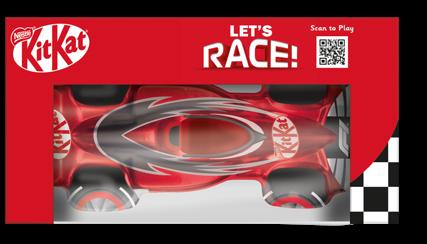
Launched at the end of the 2025 season, the KitKat x F1 partnership aims to boost travel retail engagement and overall duty free sales via unique experiences, exclusive products and Gen Z targeted campaigns. It has already shown the power of combining two highly dynamic brands to create energy and excitement in the channel. According to Porchet, in 2026, Nestlé ITR will further build this partnership to maximize its role as a catalyst for innovation and experiential retail. Key developments include expanded in-store activations, exclusive new products and packaging, a stronger focus on Gen Z engagement, plus collaborative events with retailers. While an ambitious goal, Nestlé ITR is working to deliver 50% category growth by 2030. The company believes this is possible through collective
action across the industry, and plans to achieve the target with the support of three key pillars: category vision & insights leadership, joint business planning & data-driven initiatives and sustainability & responsible growth. “By working together with retailers, airports and brand partners, we can unlock the category’s full potential and build a stronger, more resilient confectionery and snacking ecosystem,” he adds.
Reimagining the category
In the case of Mondelēz WTR, its Destination: Value vision sees growth through the lens of how travelers move, decide and shop in airports. Instead of asking how to sell more products, notes Somogyi, the framework asks how to make confectionery – and the overall travel retail offer – more relevant and easier to buy at different moments of the journey. Designed to generate incremental growth, Destination: Value reimagines confectionery from a purely transactional category to one that adds
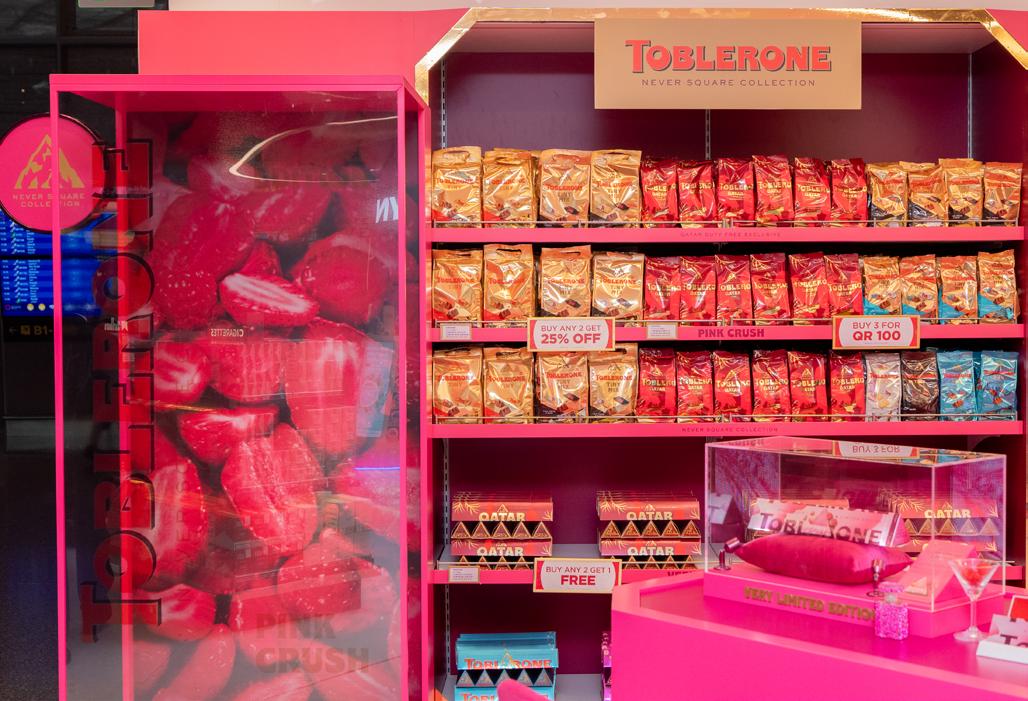
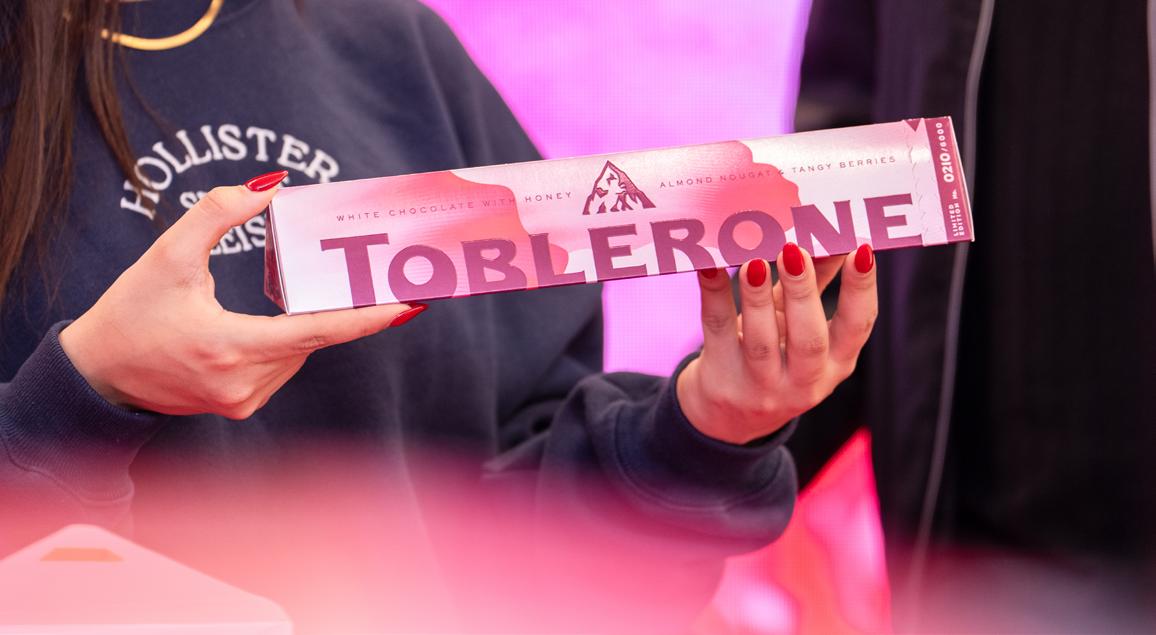
Products such as Mondelēz WTR’s Toblerone Pink Crush that reflect travel through flavor and format earn attention more easily in an airport environment
emotional reward, clarity and value to the travel experience.
“In practice, this means designing formats and activations around real traveler behavior – whether that’s gifting, self-treating or last-minute impulse purchases, and removing friction wherever possible,” she says. “We’ve already applied this approach in markets like São Paulo, where layouts and executions were shaped by shopper behavior, not just category logic.”
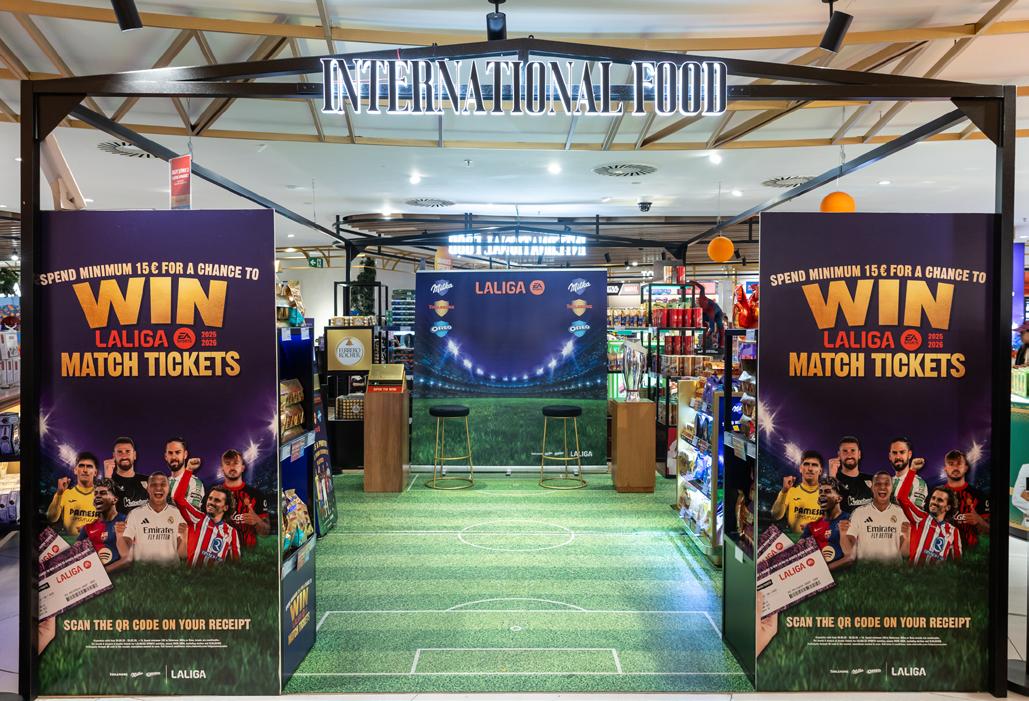
Speaking about the strength of Mondelēz WTR’s storytelling and the importance of cultural relevance, Somogyi refers to its La Liga activations at Madrid-Barajas Airport. Created in collaboration with Spain’s premier football league, the activations drew attention, extended engagement and increased interaction with the category – not just a single product.
A change in sales reporting
As experiential retail becomes more central to the travel retail proposition,
brands across the channel are moving beyond traditional sales reporting to measure a wider set of engagement-toconversion signals. While sales uplift is still a top indicator, it is no longer the only marker of success. Increasingly, the focus is on whether an activation changes how travelers interact with the category, and how shoppers move through and engage with the space.
De Volder explains, “In an environment where attention is scarce and dwell time is a predictor of spend, the true return on investment of experience is found in how effectively it changes shopper behavior before it ever reaches the till.
“We evaluate experience-led activations through a combination of commercial and behavioral measures. Engagement and dwell metrics are central to our approach, tracking how travelers interact with features such as the Playhub but also footfall. We also consider commercial impact measures, including conversion, sales lift and average spend per shopper.”
Mondelēz WTR’s Destination: Value encourages a broader view of return on investment that looks at how experiences improve the overall effectiveness of the retail environment. “With airport footfall largely guaranteed, the real question is whether an experience earns attention and encourages exploration,” adds Somogyi.
Redefining value in travel retail
As gifting continues to gain momentum as a driver in travel retail, it is agreed that experiential retail works best when supporting this shift in behavior. More and more passengers are buying with someone else in mind, and formats that are portable, visually distinctive and exclusive to travel retail are performing disproportionately well. “Our collectible tins and gifting pouches reflect this broader trend,” remarks De Volder. “Together, this behavioral shift, dwell time, gifting-led baskets and seamless conversion, are proving that experiential retail is not just changing how travelers’ shop, it is redefining how value is created in the channel.”
Mondelēz WTR’s collaboration with Spain’s premier football league, La Liga, speaks to the importance of cultural relevance in the channel
Generational shift
As Gen Z swings duty free confectionery away from habitual gifting toward selftreating, experimentation and social media-driven discovery, ARI examines how the category is evolving to meet new expectations around relevance, experience and value
by HIBAH NOOR
For decades, confectionery in travel retail played a largely predictable role: a last-minute gift, an impulse add-on or a familiar comfort purchase before boarding. For Gen Z travelers, that logic no longer applies. Instead, confectionery has become part of the travel experience itself — a space for discovery, experimentation and personal expression that mirrors how this generation engages with food more broadly.
This shift is closely tied to how Gen Z views travel as a lifestyle moment shaped by emotion, anticipation and identity, not simply a journey from A to B. “Shopping in duty free becomes a place to mark the start of a trip with a self-treat or gift purchase, but also a place to discover new products,” says Eoin Sheehan, Senior Research & Insights Specialist at ARI. “That emotional response is what differentiates it from purchasing at home or online.”
Response to innovation
Flavor and format play a central role in that discovery. According to Sheehan, Gen Z actively drives demand for boundary-pushing combinations that feel novel and unexpected. Spicy-sweet blends, sour-forward profiles and unconventional pairings such as yuzu with berry or matcha with mint are resonating strongly, reflecting broader food trends that prioritize boldness and experimentation.
Texture is just as important. “Gen Z is highly responsive to texture innovation,” Sheehan notes, pointing to the
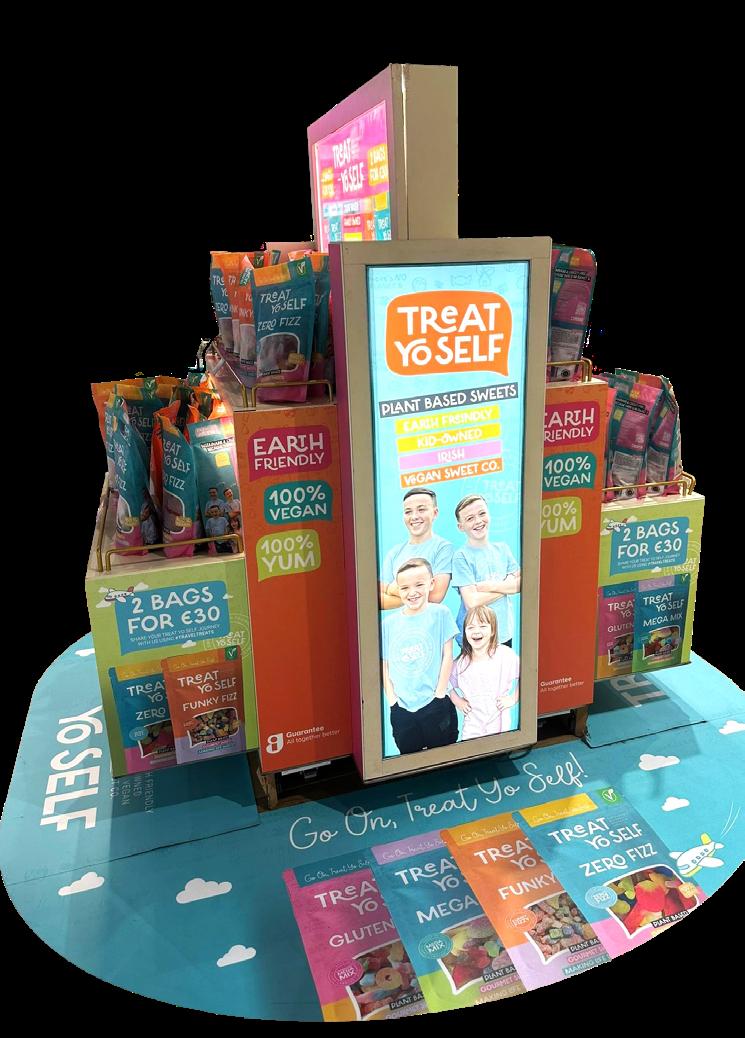
Treat Yo Self’s colorful, plant-based confectionery taps into Gen Z’s preference for self-treating, experimentation and values-led brands
Eoin Sheehan, Senior Research & Insights Specialist, ARI
popularity of chewy-crunchy hybrids, popping elements and freeze-dried candy — trends amplified by TikTok and other social platforms. Limited editions, seasonal drops and airport exclusives also hold appeal, reinforcing the sense that duty free offers access to something unavailable elsewhere.
From a buying perspective, ARI is seeing this translate into growing interest in non-chocolate and sugar-led confectionery, often driven by viral trends and social media discovery. “We see Gen Z passengers looking for more ‘sugary,’ non-chocolate types of confectionery,” says Deirdre O’Carroll, ARI Global Buying Manager. “Think textured and sour sweets, alternative flavors and products that are perceived as better for you or with sustainable credentials.”
She points to Irish vegan brand Treat Yo Self as a strong example. “It’s been performing well since launch. The packaging is colorful and fun, the products are 100% plant-based and gluten-free, and the flavor mix is diverse; it ticks a lot of boxes for this demographic.”
Experience-driven browsing
As tastes evolve, so too must the way confectionery is presented in-store. For Sheehan, the challenge is less about space and more about mindset. “When targeting Gen Z shoppers, confectionery spaces must evolve in the same way as other categories, with a heavy emphasis on experience-first retail, personalization, social media-driven design and value-aligned storytelling,” he says.
The opportunity is significant, but so is the risk of misreading the audience. “Gen Z is the biggest growth lever in duty free confectionery, but brands are still treating them like younger Millennials,” Sheehan says. “That gap is exactly where the untapped opportunity lies.”
He points to industry data highlighting that Gen Z browses confectionery more frequently than other cohorts but converts at a lower rate unless the product or experience feels personally relevant or exclusive. Almost 60% of Gen Z confectionery purchases in duty free are “for me” rather than for gifting — a fundamental shift.
Meaningful trends
Sustainability also plays a growing role in conversion. O’Carroll notes that ethically-led brands that lead with values rather than price are resonating more strongly with younger travelers. “Tony’s Chocolonely is a good example. Bright, playful packaging combined with clear
sustainability messaging really helps drive engagement with this demographic.”
ARI sees duty free’s role as turning digital hype into physical conversion. “Duty free shouldn’t try to compete with TikTok,” Sheehan says. “It should amplify TikTok-driven discovery and become the place where digital trends turn into real-world purchase.”
This approach extends beyond the terminal. O’Carroll highlights the growing role of pre-travel engagement through social media, using recipedriven and trend-led content to build relevance before passengers arrive at the airport. Viral products such as the Dubai chocolate bar or chocolate-based cereal creations have generated strong organic engagement, often reaching audiences beyond existing followers.
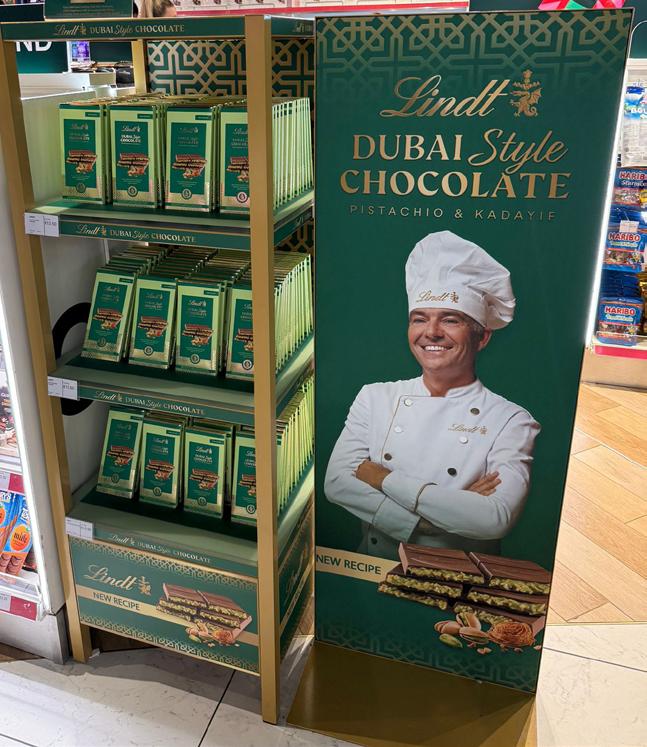
A Lindt Dubai Chocolate activation at Dublin Airport Duty Free highlights how viral, social media-driven products are translating digital hype into in-store discovery and impulse purchasing for Gen Z travelers
Deirdre O’Carroll, Global Buying Manager, ARI
Discovery mode
New m1nd-set research shows how Gen Z navigates confectionery in duty free, from first contact with the category to point-of-purchase decision-making
by HIBAH NOOR
Gen Z’s relationship with confectionery in travel retail differs markedly from that of older generations, both in how often the category is visited and in how it is used during the airport journey, according to new research by Switzerland-based travel retail research agency m1nd-set.
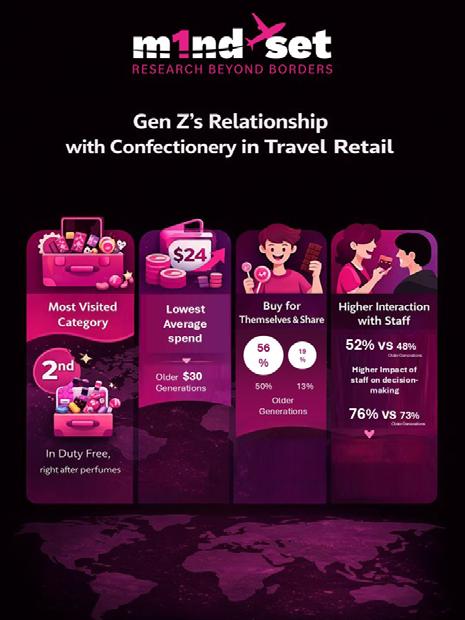
“In duty free, confectionery is actually the second most visited category for Gen Z,” says Anna Marchesini, Head of Business Development at m1nd-set. “This shows how relevant it is for them while traveling.” Only fragrances surpass confectionery in visits by this age group.
While average spend among Gen Z shoppers is lower than that of other
generations, the way the category is approached points to a different form of value creation. Gen Z spends an average of US$24 on confectionery compared to US$30 among other age groups, yet a significantly higher share of Gen Z visits the category overall, at 20% versus 15%.
Gen Z shows a distinct confectionery profile in duty free, with more self-rewarding, higher category visitation, lower average spend and stronger interaction with store staff than older generations
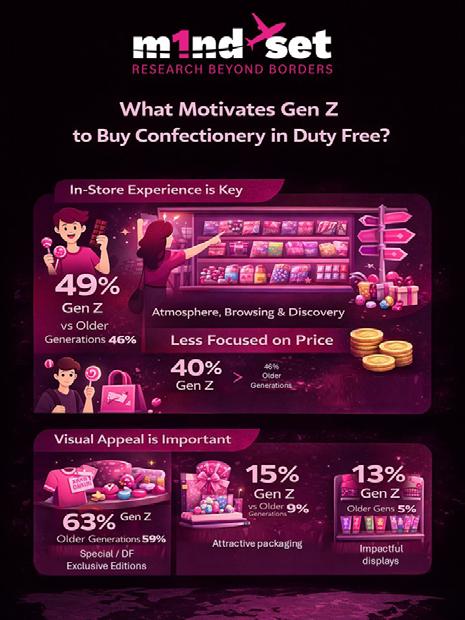
In-store experience outweighs price for Gen Z confectionery shoppers, with atmosphere, browsing, visual impact and special editions driving purchase decisions
Gen Z engagement
“What’s interesting is not how much they spend, but how they engage,” Marchesini says. That engagement is shaped by different purchase missions. Gen Z shoppers are more likely to buy confectionery for themselves, at 56% compared to 50% among other generations, and to share, at 19% versus 13%. Gifting plays a smaller role, with only 20% of Gen Z purchases made for gifting, compared to 27% for older shoppers.
“This makes confectionery a highly interactive and discovery-led category for Gen Z in travel retail,” Marchesini states. And interaction extends beyond the shelf. Gen Z shows the highest level of engagement with store staff, with 52% interacting with sales associates, compared to 48% for other generations.
More than three quarters of Gen Z confectionery buyers cite staff input as a factor in their purchase decision, at 76%. “Staff recommendations have a strong influence on their final choice,” Marchesini adds.
The airport environment itself is a key factor in why Gen Z purchases confectionery in duty free rather than at home or online. “For Gen Z, the biggest trigger is the in-store experience,” she says. “Airports give Gen Z something
they value highly, which is time to explore and discover.”
Feeling special
Price plays a less dominant role for Gen Z. Forty percent of Gen Z buyers cite price as a driver, compared to 46% among other generations. Instead, added value and excitement influence behavior more strongly, particularly when purchases feel tied to the travel moment.
“Gifts with purchase are a relevant motivator, which attract Gen Z more than other age groups,” Marchesini says. “These added extras make the purchase feel special and exclusive to the travel experience.”
Visual appeal is another defining factor. Gen Z responds strongly to products that stand out on-shelf, with 15% influenced by attractive packaging and 13% by impactful displays, compared to 9% and 8%, respectively, among other generations.
Special editions and duty free exclusives are particularly effective with this cohort, appealing to 63% of Gen Z shoppers compared to 59% among other age groups. “These products feel unique, shareable and different from what they can easily buy at home,” explains Marchesini.
Confectionery plays a meaningful role in how Gen Z experiences the airport; though currently the spend per person is lower, the engagement is higher
Intuitive experience
To better attract and retain Gen Z attention, confectionery spaces in duty free need to move beyond transactional layouts. Clear zoning and bold visuals help support browsing, while experiential elements encourage exploration.
“Duty free confectionery spaces need to become more experiential and more intuitive to navigate,” Marchesini says.
Because Gen Z interacts more frequently with staff, the role of visible and approachable brand ambassadors becomes increasingly important. Sampling, storytelling and limited editions that feel encountered rather than promoted contribute to deeper engagement.
“The space should feel less transactional and more like an experience worth exploring,” she says.
Extended wellbeing
Marchesini points to four areas where opportunity remains underdeveloped for confectionery brands targeting Gen Z in duty free: digitalization, experience, sustainability and personalization.
Experience-led concepts designed specifically for Gen Z remain central, particularly those that emphasize novelty and discovery. Sustainability also carries broader meaning for this generation, extending beyond environmental concerns to include wellbeing, self-care and purpose.
Personalization and community complete the picture, with Gen Z responding to curated communities, peer reviews and services that recognize individual preferences and foster belonging.
Digital platforms already play a role in how Gen Z discovers confectionery brands, but purchase decisions are often made later in the travel journey. “Duty free should connect online inspiration with the physical store,” she concludes. “It can amplify that discovery.”
Feeling better, not fuller
From menu design to food curation, in this Q&A with Avolta EMEA Culinary Director, Alessandro Giudici, GTR Magazine discusses how wellbeing integration reflects the retailer’s F&B offer
by LAURA SHIRK
Earlier this year, Avolta’s Culinary Council explored the theme of Hybrid Positive Nutrition as part of its strategic food and beverage (F&B) program, “Taste and Wellbeing.” Designed to revolutionize travel dining, the program focuses on enhancing the traveler experience by offering curated, sustainable and locally sourced food options.
According to the retailer, “Taste and Wellbeing” is a global framework that guides how Avolta designs, develops and operates its F&B offer. “It’s built around
the idea that what travelers eat during their journey has a direct impact on their energy, comfort and overall travel experience,” comments Alessandro Giudici, EMEA Culinary Director at Avolta. Hybrid Positive Nutrition was selected as a theme because it reflects how the retailer translates this into practice.
“[Hybrid Positive Nutrition] means combining culinary quality with nutrition that supports the realities of travel –lighter, balanced, functional meals that are satisfying, easy to digest and suited to people who may be flying, crossing time zones, or traveling under time pressure,” adds Giudici.
In a travel environment where passengers are often tired, stressed or short on time, F&B plays a larger role than simple sustenance. By integrating wellbeing into menu design, portioning and ingredients, Avolta helps travelers feel better, not just fuller.
GTR Magazine: Avolta’s Culinary Council helps to differentiate its F&B offer. What
criteria does the retailer use when selecting culinary innovators, nutritionists and food technologies to partner with?
Giudici: The Culinary Council acts as Avolta’s global center of expertise for food, nutrition and F&B innovation. It sets the standards and direction for the group’s F&B portfolio, ensuring that what we serve across more than 70 countries is commercially viable and aligned with consumer expectations.
The council uses traveler profile data, customer insights, and trend analysis to guide menu development and concept design. In this way, Avolta moves to a more targeted, insight-led approach, with offers built around the passenger profile and when and how they are traveling. Partners are selected based on criteria including culinary credibility, ability to scale within an airport environment, and track record of innovation.
GTR Magazine: Influenced by the consumer driven “gourmet to go” movement, how does Avolta balance speed and convenience with maintaining high culinary innovation and quality in travel retail?
Giudici: Food & beverage options in travel are designed specifically for
the realities of travel, where speed is essential, and customer expectations for quality continue to rise. We address this by building menus and operations optimized for fast service without sacrificing taste or consistency, offering chef-designed recipes that deliver flavor while being suited to high-volume, rapid production. We design purpose-built packaging that protects the food and maintains its presentation throughout the journey, conveying a strong sense of design and brand identity. The result is food that can be served quickly, travels well, and feels premium.
GTR Magazine: What role does chef collaboration, menu research and development and local gastronomy play in shaping Avolta’s F&B selection? Please share specific examples where it has successfully used the segment to deliver a strong sense of place.
Giudici: Chef collaboration and menu research and development are central to remaining distinctive and locally relevant. We work with chefs, producers, and other regional partners to translate local food culture into formats that work in a travel environment. This can include modern interpretations of local
street food, partnerships with regional bakeries, or chef-developed signature items that reflect the destination.
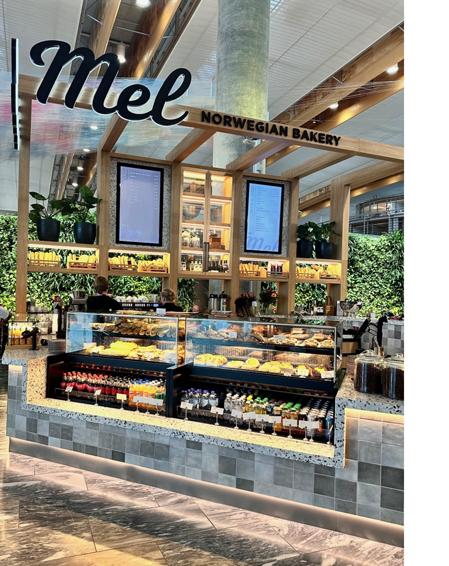
Last year, Avolta introduced the bakery concept Mel – Norwegian Bakery at Oslo Gardermoen Airport. Located in the International Departures Terminal, the Mel (Norwegian for ‘flour’) serves traditional Scandinavian baked goods, from freshly baked sourdough to regional pastries, to give travelers an authentic taste of Norway.
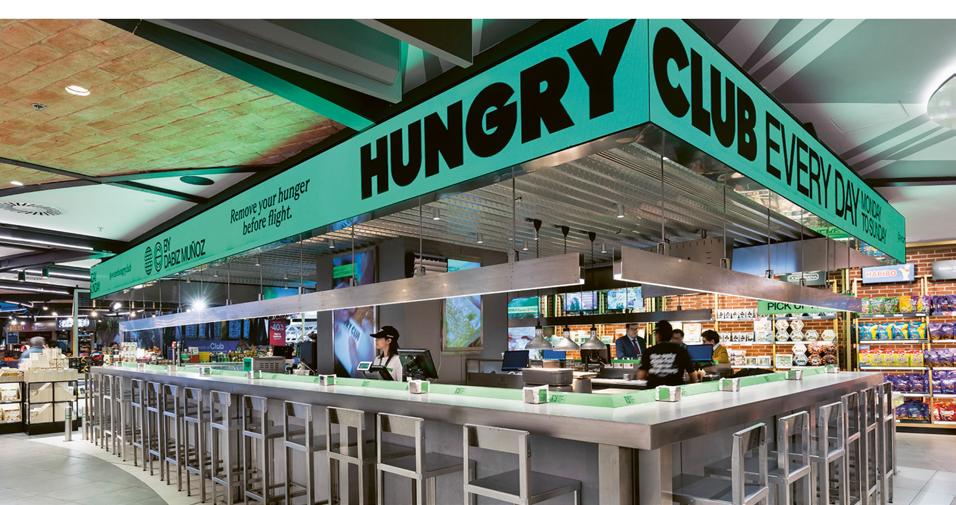
Another good example is our collaboration with Michelin-starred chef, Dabiz Muñoz, in Spain through our Hungry Club concept. This partnership brings chef-driven, quality dishes into the busy airport environment, without compromising speed or consistency.
GTR Magazine: How is Avolta leveraging digital ordering, mobile pre-order and self-checkout technologies to enhance its food to go offer, as well as its overall dining experience?
Giudici: Digital ordering, mobile preorder and self-checkout are essential to making takeaway or “grab & go” options work at scale in busy travel environments. These tools reduce queues, speed up transactions, and give travelers more
control over when and how they order. Removing friction from the ordering and payment process means that Avolta can serve more customers during peak periods while keeping the experience smooth and predictable. Digital enables better data capture and loyalty integration, giving us insight into purchasing patterns and guiding our offers over time. Technology is not only about automation; it’s about making high-quality food easier to access in one of the most time-sensitive retail environments in the world.
Delivering a strong sense of place, Avolta’s Mel – Norwegian Bakery at Oslo Gardermoen Airport offers traditional Scandinavian baked goods
Without compromising on speed or consistency, Avolta has partnered with Michelin-starred chef, Dabiz Muñoz, in Spain to bring chef-driven, quality dishes into the airport environment
Taste and place
Together, Lagardère and Schiphol mark the next phase of the Today Duty Free rollout in Amsterdam, adding a destination-style confectionery offer rooted in local and international chocolate
by WENDY MORLEY
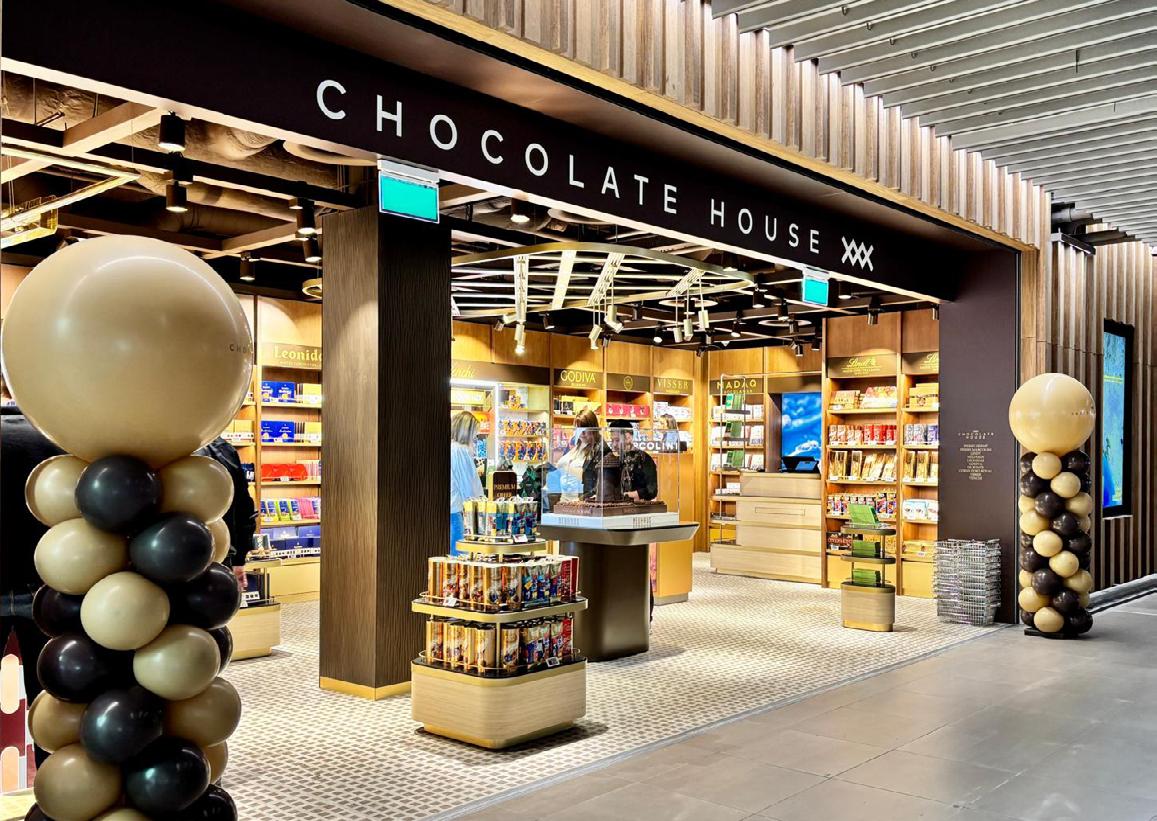
Lagardère Travel Retail and Amsterdam Airport Schiphol have extended the Today Duty Free concept by launching the new Chocolate House. The 75-square-meter boutique forms part of the broader redevelopment of Lounge 1 following its recent expansion, adding a destination-style offer focused on indulgence, gifting and local discovery.
“Chocolate House is a premium chocolate and fine food boutique in Lounge 1,” says Bruno Gouisset, CEO, Lagardère Travel Retail Netherlands. “It’s designed as a ‘destination’ zone
that adds indulgence, gifting and local discovery to the broader duty free proposition.”
Lounge 1 serves a high-volume European and short-haul passenger profile, making it a critical commercial zone within the terminal. The redevelopment of the lounge has introduced new concepts intended to break up passenger flow and encourage browsing beyond core categories, with Chocolate House positioned as a deliberate pause point within that environment.
“Strategically, it reinforces the joint
Schiphol–Lagardère direction for Lounge 1: a modernized, experiencedriven retail mix in a newly expanded lounge with new concepts, aiming to ‘surprise and inspire,’ raise quality and improve dwell-time conversion,” he says.
Local and international
Premium boxed gifting sits at the center of the offer, supported by smaller formats and interactive elements designed to address different shopping missions, from last-minute treats to considered gifts. “Chocolate House emphasizes both premium and sense of place, from
Bruno Gouisset, CEO, Lagardère Travel Retail Netherlands
international leaders, plus Dutch makers,” Gouisset affirms.
International brands include Neuhaus, Leonidas, Lindt, Godiva, Pierre Marcolini and Corné Port-Royal. Alongside these, Dutch names such as MADAQ, Visser Chocolate and De Bonte Koe are positioned as local favorites. Venchi Pick & Mix introduces a customizable element, adding an interactive layer to the assortment.
Gouisset adds, “The artisanal pâtisserie offer includes a Pierre Hermé counter with hand-picked macarons and chocolates, which is the first shop-inshop for the brand in the Netherlands.”
Sustainable offer
Sustainability and cocoa sourcing considerations are reflected across the brand mix, with different approaches represented among both international and local partners. These credentials are embedded within the assortment rather than being positioned as a standalone narrative.
“These leaders and Dutch makers are all focused on sustainability in their own way,” Gouisset notes. “From the beanto-bar concept of the new brand Pierre Marcolini, where they source their own cocoa beans and manufacture their own chocolate, to multiple other brands like the Dutch B Corp De Bonte Koe.”
Several local partners developed launch-specific products for the Schiphol opening, reinforcing the link between assortment and place. “Local brands such as MADAQ created special SKUs for their launch at Schiphol, with local inspired boxes which include their bestselling chocolates,” Gouisset says.
Visual centerpiece
Within Lounge 1, the visual approach is intended to work quickly, drawing attention from passing traffic while remaining legible within a compact footprint. The store has been designed to read clearly from multiple sightlines,
using a single dominant feature and a tightly edited layout to establish identity without relying on extensive signage or explanatory messaging.
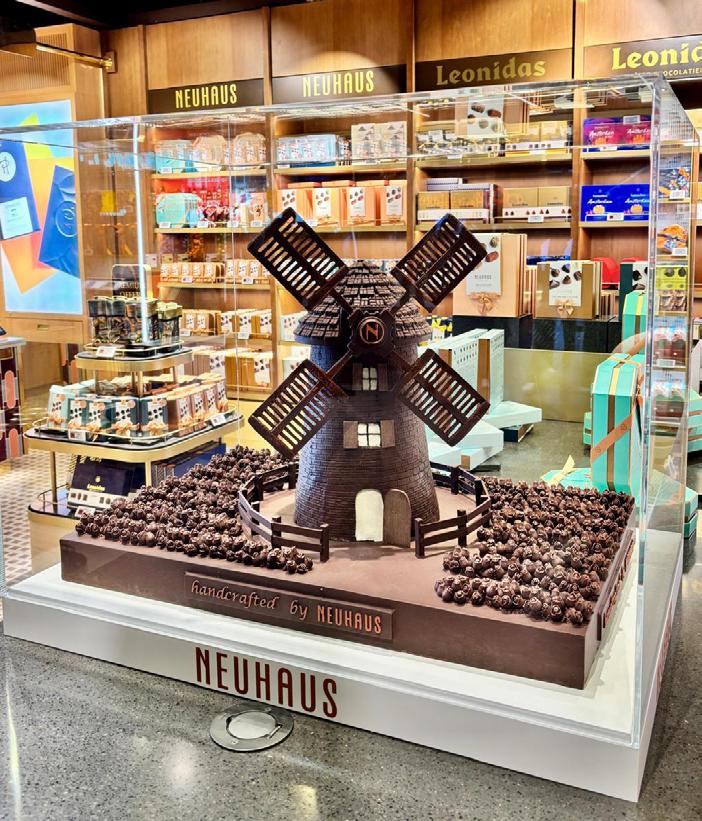
“The centerpiece is a handmade chocolate windmill, positioned as a visual tribute to Dutch craftsmanship and a literal Dutch icon translated into edible art — an on-theme sense of place anchor,” Gouisset explains. “The other major ‘place’ cue is the elevation of Dutch chocolatiers alongside international houses, so the store tells a Netherlands plus world-class story rather than feeling like a generic confectionery shop.”
Engagement and communication
Visual merchandising and interactive choice architecture support engagement within a compact footprint. “Chocolate House leans heavily on retail theater to drive conversion,” Gouisset says.
Service forms an important part
of the experience, particularly at the Pierre Hermé counter, where staff training has been tailored to support premium counter execution. “The staff is trained by Pierre Hermé’s team in Paris to learn the finer details/craft, including macaron preparation,” he adds.
The launch reflects a broader approach to how new concepts are introduced across the terminal.
“Chocolate House sits inside Schiphol’s broader retail ecosystem, where several digital/omnichannel options exist,” Gouisset says. “From 2026 we will have a full assortment presented on the Schiphol website, including all favorites from the Chocolate House. Our focus is on our own social media channels and enhancing our visibility further via social media influencers, talking to the next generation.”
A handmade chocolate windmill anchors the interior of Chocolate House, translating a Dutch icon into a sculptural centerpiece
Delectable Dubai
Confectionery surged more than 54% in 2025 at Dubai Duty Free, propelled by local flavor profiles, provenanceled positioning and the breakout success of Dubai Chocolate
by HIBAH NOOR
Confectionery has taken on a markedly expanded role at Dubai Duty Free, driven by strong sales growth and the rapid emergence of locally inspired product concepts. In 2025, confectionery sales climbed to AED839.9 million (US$228.6 million) up from AED545.0 million (US$148.4 million) in 2024.
“The confectionery category experienced robust growth of 54.1% in sales in 2025 versus 2024,” says Sharon Bee-
cham, SVP Purchasing at Dubai Duty Free. “As a result, category contribution to total Dubai Duty Free sales has grown from 6.9% to 9.7%, highlighting the category’s significance within the overall business.”
Clear driver
A defining factor behind that performance has been the arrival of Dubai Chocolate, a locally themed concept introduced in the last quarter of 2024. In its first full year, the segment generated AED343.9 million (US$93.7 million) in sales, accounting for 41% of total confectionery revenue and nearly 4% of Dubai Duty Free’s overall sales. Despite its scale, the impact of Dubai Chocolate has been largely additive rather than disruptive to the wider food offer. “It is important to highlight that most of this growth has been organic, with only about 8% cannibalization to
the rest of the confectionery and food categories,” Beecham explains. “The biggest impact has been on souvenir gifting and Arabic sweets.”
The focus on local flavor and provenance builds on an established strength within Dubai Duty Free’s food assortment. Dates and Arabic sweets have long anchored the retailer’s sense of place strategy, and performance in
Sharon Beecham, SVP Purchasing at Dubai Duty Free
adjacent categories has remained solid alongside the rise of Dubai Chocolate. In 2025, sales of dates within the delicatessen category increased to AED135.7 million (US$36.9 million) from AED126.0 million (US$34.3 million) the previous year, representing growth of 7.6%. Dates now account for more than 46.0% of total delicatessen sales.
“Local and Indigenous souvenir foods have always been a cornerstone of the Dubai Duty Free food offering,” she says. “These region-specific products play a vital role in creating a strong sense of place, something travelers actively seek for self-indulgence or gifting.”
The importance of innovation
The success of Dubai Chocolate has also altered the confectionery shopper profile. In 2024, the Indian subcontinent and the Middle East were the two largest contributing regions, accounting for 28.0% and 16.2% of confectionery sales, respectively. “With the introduction of Dubai Chocolate in late 2024, we have seen a shift in 2025 with a new customer base build-up from the Americas, Europe and the Far East,” Beecham notes. “This has driven sales for Dubai
Chocolate as well as the overall confectionery category.”
The impact has extended beyond Dubai Duty Free’s own assortment, prompting renewed innovation across the supplier landscape. After several years of limited new product development driven by cocoa price volatility, brands have returned to flavor and format innovation in response to evolving shopper expectations.
“We have not really seen much innovation in confectionery in the last couple of years, mainly due to cocoa price hikes and price volatility,” Beecham says. “This trend has been reversed in 2025 as brands understood that if they do not innovate then they would be left behind.”
Pistachio and kunafa flavors have emerged as a common thread, with brands such as Butlers, Valrhona and Lindt introducing their own interpretations aimed at travel retail shoppers. Premium gifting formats and travelexclusive packs have become increasingly central, supported by sustainable packaging and a wider range of formats spanning large sharing bars, gift boxes and single-serve options.
“There is a clear surge in regioninspired flavors that evoke a strong
sense of place,” she says. “Premium gifting formats and travel-exclusive packs are now central, catering to both gifting and on-the-go consumption.”
Incentive program
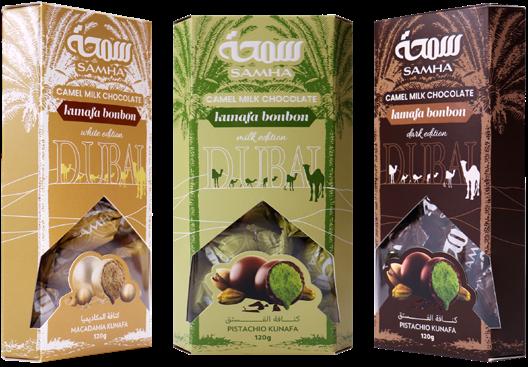
Merchandising has played a critical role in converting interest into sales. Brands including Locali, Samha, Bateel and Patchi have introduced Dubai Duty Free-exclusive bars, with prominent displays and promotional activities.
“The incentive program introduced in January 2025 supported continued growth within the confectionery category,” Beecham says. “By enhancing in-store execution and increasing brand visibility, the program contributed to positive incremental results and greater brand participation.”
At the same time, the category continues to operate within a complex environment shaped by cost pressures, shifting health perceptions and intense competition for space and promotional support. “Despite cocoa prices easing from their highs, margins remain sensitive to raw material volatility,” Beecham says. “Global economic uncertainty, passenger traffic fluctuations and changing consumer preferences all continue to shape the category.”
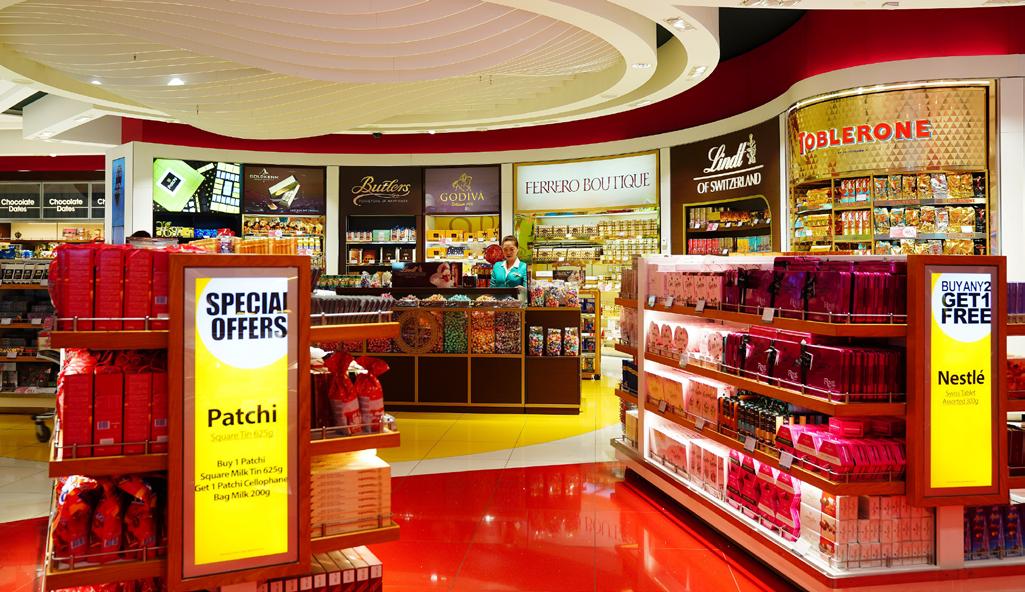
Confectionery has expanded rapidly at Dubai Duty Free, with sales rising to AED839.9 million (US$228.6 million) in 2025, driven by strong growth and locally inspired concepts
LET YOUR LOVE BLOOM
Serving more than taste
by LAURA SHIRK
From protein-packed snacks to premium drinks, brands are introducing products with functional ingredients and added nutrients to appeal to those seeking balanced options
Beyond zeroing in on health-conscious options and catering to alternative diets, brands are balancing traditional indulgence with functional food and beverage trends. According to Food Navigator, the global functional food and beverage market is now worth US$364 billion and is rapidly gaining pace. It reports that gut health continues to dominate the functional ingredients space, as well as vitamins, proteins, adaptogens, antioxidants and pre- and probiotics. With this the case, brands are looking to add value beyond taste, from gut-friendly gummies to vitamin-infused treats and proteinpacked snacks. Here, we take a closer look at how this evolution in health and wellness is transforming – and set to transform – global travel retail.
Taste the Future by Fazer
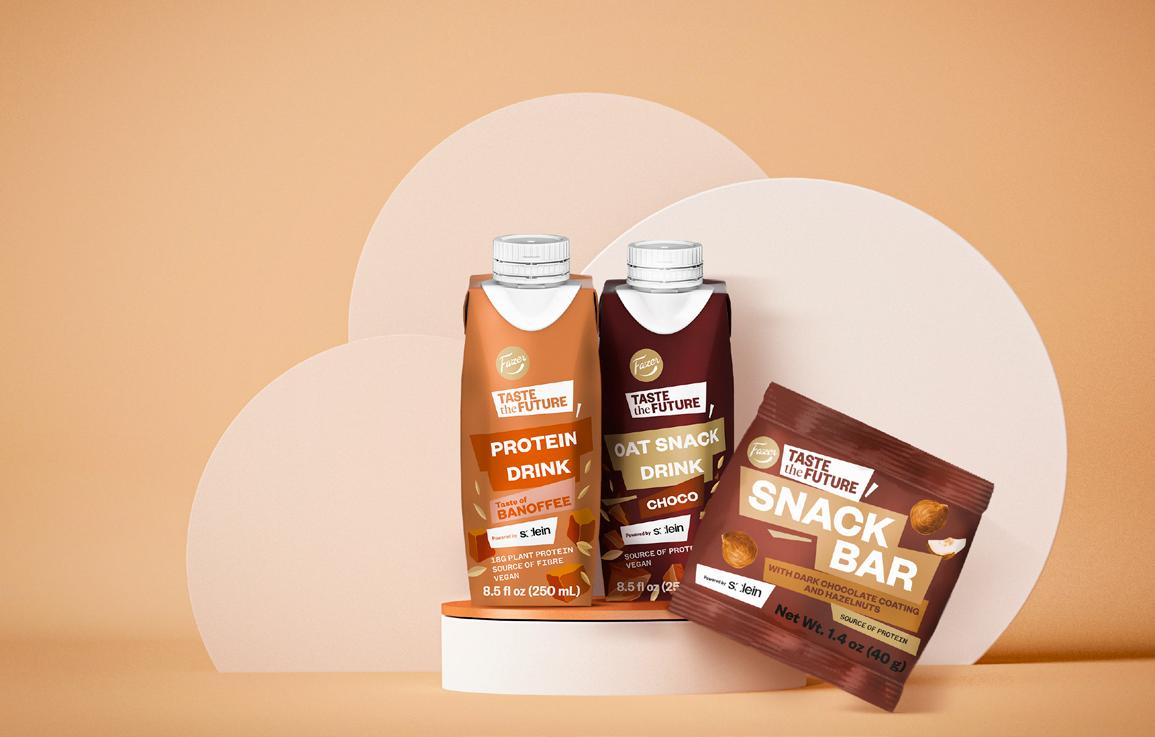
Described as bold solutions to the global sustainability challenges of food production, Fazer’s Taste the Future products
Fazer’s Taste the Future products were launched as a limited edition in the United States and Singapore. The products are not currently available as Solein is still awaiting EU approval (which is expected in 2026)
meet the changing needs of both consumers and the environment. The range also contains one of the most significant new ingredients that the leading producer of chocolates, candy and biscuits has tested: Solein. Developed by Finnish food-tech company Solar Foods, Solein is a nutrient-rich, sustainable protein that provides iron, fibre and vitamin B12, helping to boost energy and wellbeing when daily routines are disrupted. The ingredient has received novel food approval in
Annika Porr, Senior Manager for Forward Lab, New Product Development at Fazer Confectionery
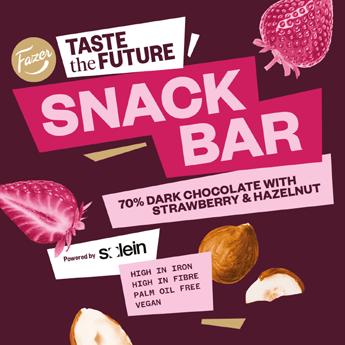
Fazer Taste the Future Snack Bar (40 grams) is powered by Solein, a nutrient-rich, sustainable protein that helps boost energy and wellbeing
Singapore and the United States, where Fazer was the first FMCG (Fast-MovingConsumer-Goods) company to bring packaged Solein products to market – EU approval is expected in 2026.
“Once available in [travel retail] markets, Taste the Future powered by Solein products will be suitable for travelers, as their nutritional profile makes them naturally relevant for people on the move,” says Annika Porr, Senior Manager for Forward Lab, New Product Development at Fazer Confectionery.
“Functional confectionery appeals to people who may not normally buy sweets, especially those looking for balanced options that feel both enjoyable and purposeful. By combining indulgent taste with added nutrients, Fazer can attract shoppers who typically choose protein snacks or better-for-you items,” she continues. “At the same time, traditional confectionery consumers may choose these products when they want something that fits their flavor expectations but feels a little more supportive of their daily needs.”
Elaborating on how the segment bridges the gap between indulgence and wellness, Porr notes that a traditional chocolate buyer might be curious to try a functional snack drink that supports energy while still offering familiar flavors. “This encourages natural movement between confectionery, snacks and wellness-oriented products,” she says.
Drinking with purpose
SPC Global has strengthened its pres-
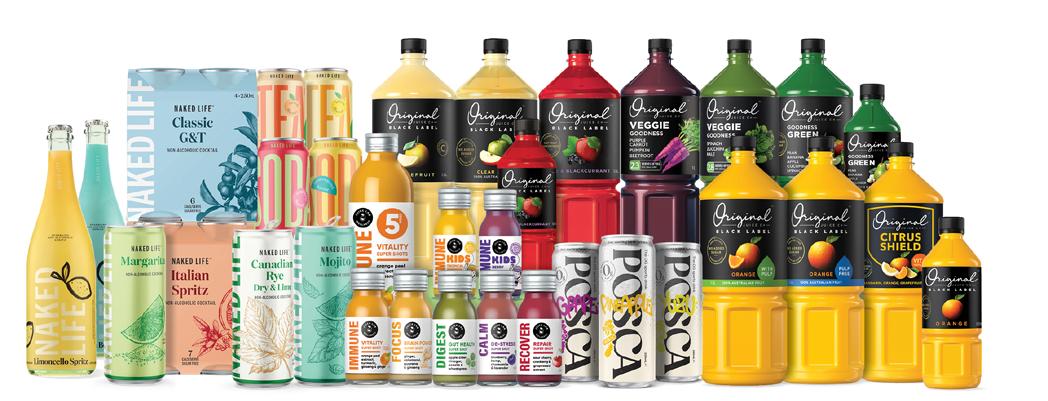
ence in the beverage sector by creating The Original Beverage Co., a health and wellness division consisting of partnerships with the brands Posca Hydrate, Naked Life and Eclectic Group. According to John Harwood, Group Chief Commercial Officer at SPC Global, these brands were selected for their clear consumer relevance, credible health positioning and ability to scale across the globe. “The Original Beverage Co. provides a portfolio spanning hydration, refreshment and functional enhancement, including electrolyte drinks, sugar-free refreshers and vitaminenriched beverages. The emphasis is on reimaging nourishment and wellness for consumers globally,” explains Harwood.
Discussing functional ingredients, Harwood says, proteins, electrolytes, antioxidants and familiar vitamin blends are gaining the most traction. “Electrolytes have expanded beyond sports into everyday hydration, particularly for travelers managing long journeys and climate changes,” he adds. “There is also emerging interest in light cognitive support, with a growing number of consumers looking for naturally positioned solutions over high-caffeine or highstimulation products.”
When it comes to regional differences, Asia Pacific markets tend to prioritize hydration, European consumers place greater emphasis on natural credentials and minimal processing, and demand is shifting from performanceled products toward more balanced propositions in North America.
As shared by Harwood, future innovation will focus on high-demand areas such as protein and hydration, alongside women’s health, which he notes remains under-served from a beverage perspective and represents a clear growth opportunity. SPC Global is currently exploring new textures and formats that can deliver functional benefits in more engaging ways. “As wellness becomes increasingly embedded in daily routines, functional beverages will continue to support healthier choices wherever consumers are, including while traveling,” he says.
Functional indulgence
In 2025, Vienna-based chocolatier
The House of Julius Meinl’s premium confectionery brand, Mozart Koogles, launched a pioneering concept in the praline segment: functional indulgence. According to the company, Mozart Koogles Re:ACT, infused with natural caffeine for energy, and Re:LAX, enriched with magnesium and lemon balm for relaxation, are the first premium pralines to incorporate wellness benefits, unlocking new lifestyle and luxury consumption opportunities. The range is a modern take on the traditional Mozartkugel – Austria’s most iconic confectionery product.
“[As a relatively new player in the channel, we view travel retail not only as a sales channel, but as a critical platform for building brand equity, and for driving sustained trial and conversion],” says House of Julius Meinl Global Confectionery Business Director, Nick Nogai.
SPC Global’s health and wellness division, The Original Beverage Co., provides a portfolio spanning hydration, refreshment and functional enhancement
A world beyond
Savory snacks and sugar confectionery gain ground in travel retail as format innovation, flavor experimentation and demand for refreshment diversify the category
by LAURA SHIRK
The confectionery category in travel retail is expanding beyond its traditional chocolate core as hard candies, gummies, mints and savory snacks gain prominence. Demand for refreshment, portability and variety is reshaping how assortments are built and how shoppers move through the category. Non-chocolate treats are increasingly positioned as clear options, supported by formats and flavors designed specifically for travelrelated occasions.
This diversification is closely linked to format innovation. Sharing packs, resealable bags, stackable tins and travel retail exclusives are allowing brands to address multiple consumption moments
without relying on SKU duplication. At the same time, sweet and savory products are appearing closer together on-shelf, reflecting changing consumer expectations and growing appetite for novelty.
Format grouping
As non-chocolate ranges expand, retailers and brands are beginning to reorganize shelf space around usage rather than category silos. Gummies, mints, hard candies and savory snacks are increasingly grouped by function, whether for on-the-go consumption, sharing or gifting. This approach supports navigation while giving non-chocolate products clearer visibility within high-traffic areas.
Format choice underpins this evolution. Multi-packs and sharing formats respond to group travel and family occasions, while resealable packs allow products to be consumed across different stages of the journey. Stackable tins and gift editions introduce structure and visual clarity, helping retailers manage complexity as assortments broaden.
Evolving habits
Savory snacks are one of the most dynamic elements within this diversified mix, driven by evolving snacking habits and demand for alternatives to sweet treats. Kellanova’s Pringles has responded by combining brand familiarity with travel retail-specific execution.
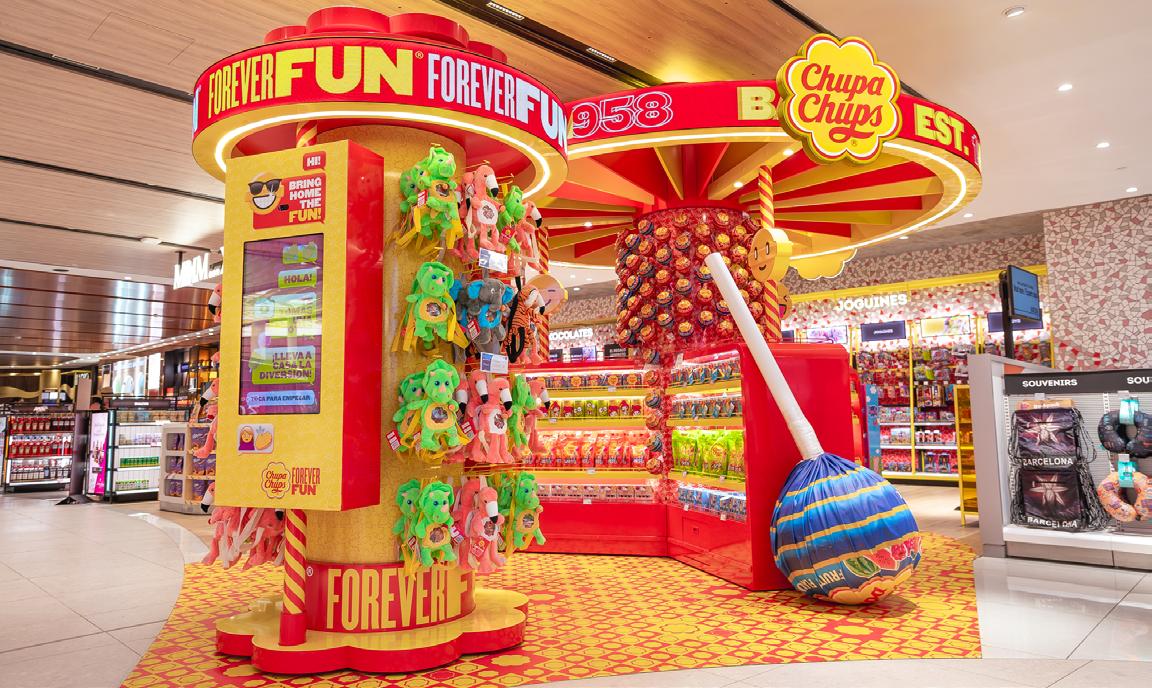
Last year, Perfetti Van Melle opened its first Chupa Chups shop-in-shop in travel retail at Josep Tarradellas
Barcelona–El Prat Airport Terminal 1
“Pringles is capitalizing on its strong global brand equity by creating immersive activations, incorporating key shopper touchpoints in major travel retail locations,” says Brechje Houben, Key Account Manager Global Travel Retail, Kellanova.
Visibility is reinforced through tailored assortments and formats designed to fit different needs. “This experiential approach is supported by a diverse and flexible portfolio, which offers multiple flavors and formats to accommodate different consumption moments – from on-the-go snacking to sharing occasions,” she explains.
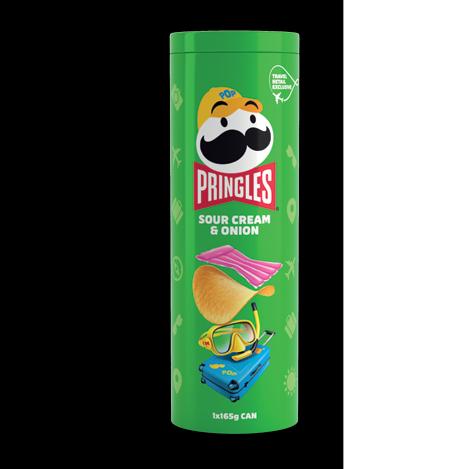
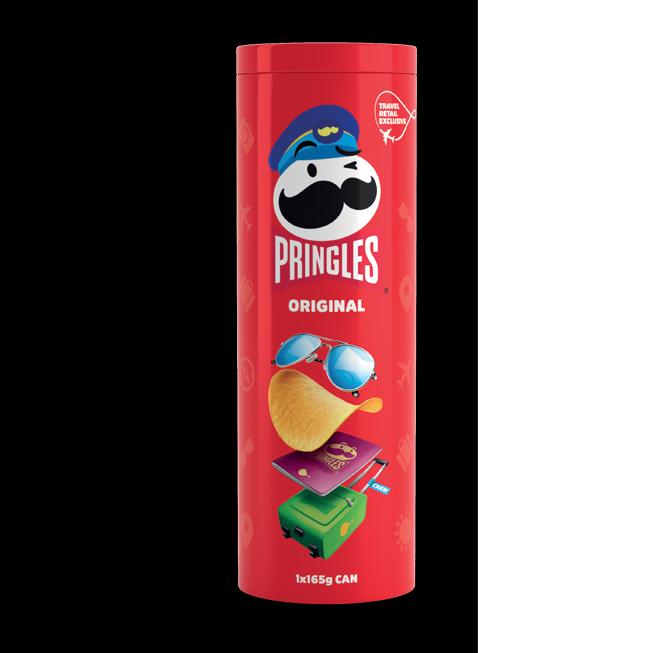
Flavor development continues to support this positioning. “We know that bold, trend-led flavors, including the Pringles HOT range, resonate strongly with younger travelers while also addressing growing demand for non-HFSS snack options,” Houben says. “In addition, Pringles will continue to evolve its portfolio with travel retail exclusives, such as our tin cans and the upcoming new ‘suitcase,’ designed to enhance visibility and gifting appeal, while driving impulse purchases within the airport environment.”
Premium positioning
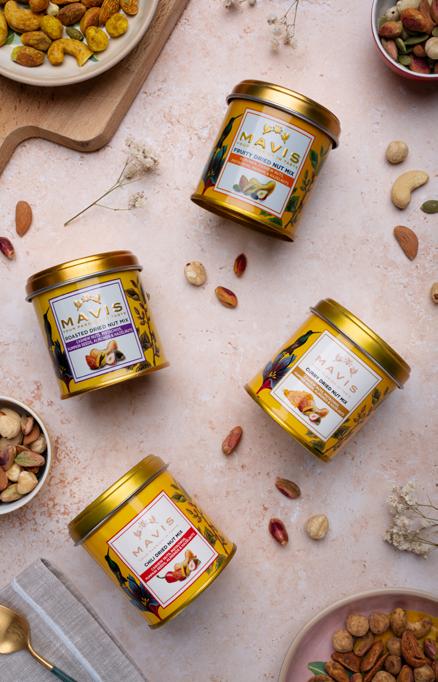
Traveller’s Trove entered travel retail with its Mavis Gourmet brand after identifying an opportunity at the premium end of the savory snacks segment.
“When we looked at the category the immediate absence of any premium and exclusive offers jumped out,” says Gerry
Murray, Managing Director, Traveller’s Trove. “The category offer in DFTR is dominated by brands whose product distribution is ubiquitous and hence the value proposition versus other sales channels in the channel is a major challenge.”
Packaging plays a defining role in how Mavis addresses this gap. “Packaging innovation is central to the growth and diversification of the savory snacks segment in travel retail,” Murray says. “Travelers are looking for products that fit seamlessly into their journey, whether for on-the-go consumption, sharing, gifting or self-treating, and packaging plays a decisive role in driving that choice.”
ery and snacks continues to soften. Sweet-and-salty combinations, premium ingredients and global flavor cues are encouraging cross-category browsing and expanding the role of non-chocolate products within confectionery fixtures.
Cloetta Global Travel Retail approaches this space from a sugar confectionery perspective, focusing on playful formats and experience-led execution.
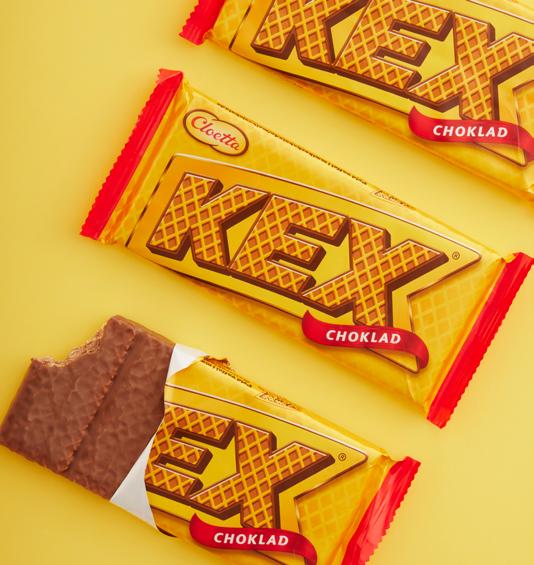
“Cloetta is leveraging its strong brand recognition by combining trusted, iconic
Packaging also signals positioning. “For Mavis, packaging is not only functional but also a core brand asset,” he comments. “Its formats are designed to balance practicality with premium aesthetics, ensuring the product feels special enough to gift while remaining suitable for personal indulgence.”
Flavor remains central to differentiation, with Murray pointing to premium profiles such as saffron-roasted pistachios along with curry-roasted and chiliroasted mixes as key to maintaining Mavis’ premium positioning while broadening the range.
Sweet & savory converge
As savory gains ground, the boundary between confection-
Mavis’ bold flavor profiles, including chili and curry, reflect growing appetite for savory-led experimentation
Pringles’ travel retail assortment spans multiple pack sizes to address on-the-go, sharing and gifting occasions
Swedish brands with targeted innovation designed specifically for the travel retail environment,” says Carsten Wulff, Head of Global Travel Retail, Cloetta.
New travel retail exclusives are designed to align with sharing and gifting occasions. “These launches respond directly to the rising demand for sucker confectionery, particularly among travelers looking for alternatives that are playful, shareable, and experiencedriven,” Wulff says.
Shelf execution supports this approach. “Strong visual presence onshelf helps brands stand out quickly, while smart design solutions make it easier for consumers to understand the product’s purpose and usage,” he says.
Innovation performs best when multiple elements work together. “The strongest performance comes from a well-balanced combination of all four elements — flavor, texture, format and function — rather than any single one standing alone,” Wulff adds. Short-form video and in-store activations complement physical presentation, extending engagement beyond packaging.
Wilder and wackier
While savory snacks are reshaping parts of the category, sugar confectionery continues to evolve through refreshment, bold flavors and sharing formats. Perfetti
Van Melle’s travel retail strategy focuses on established brands and execution.
“In 2026, we will be leveraging the strong history and brand recognition of our third largest brand within travel retail, Fruit-tella, by launching a sharing bag concept in three new flavor ways,” says Lauren Potter, Marketing Manager, Global Travel Retail, Perfetti Van Melle.
Resealable sharing formats support multi-moment consumption, while core brands continue to develop. “Under our number one brand Chupa Chups, and leveraging the recent opening of our brand shop-in-shop in Barcelona Airport, we will be bringing some fresh innovation to our top SKU, the Mega Chup, with a sour edition,” Potter says.
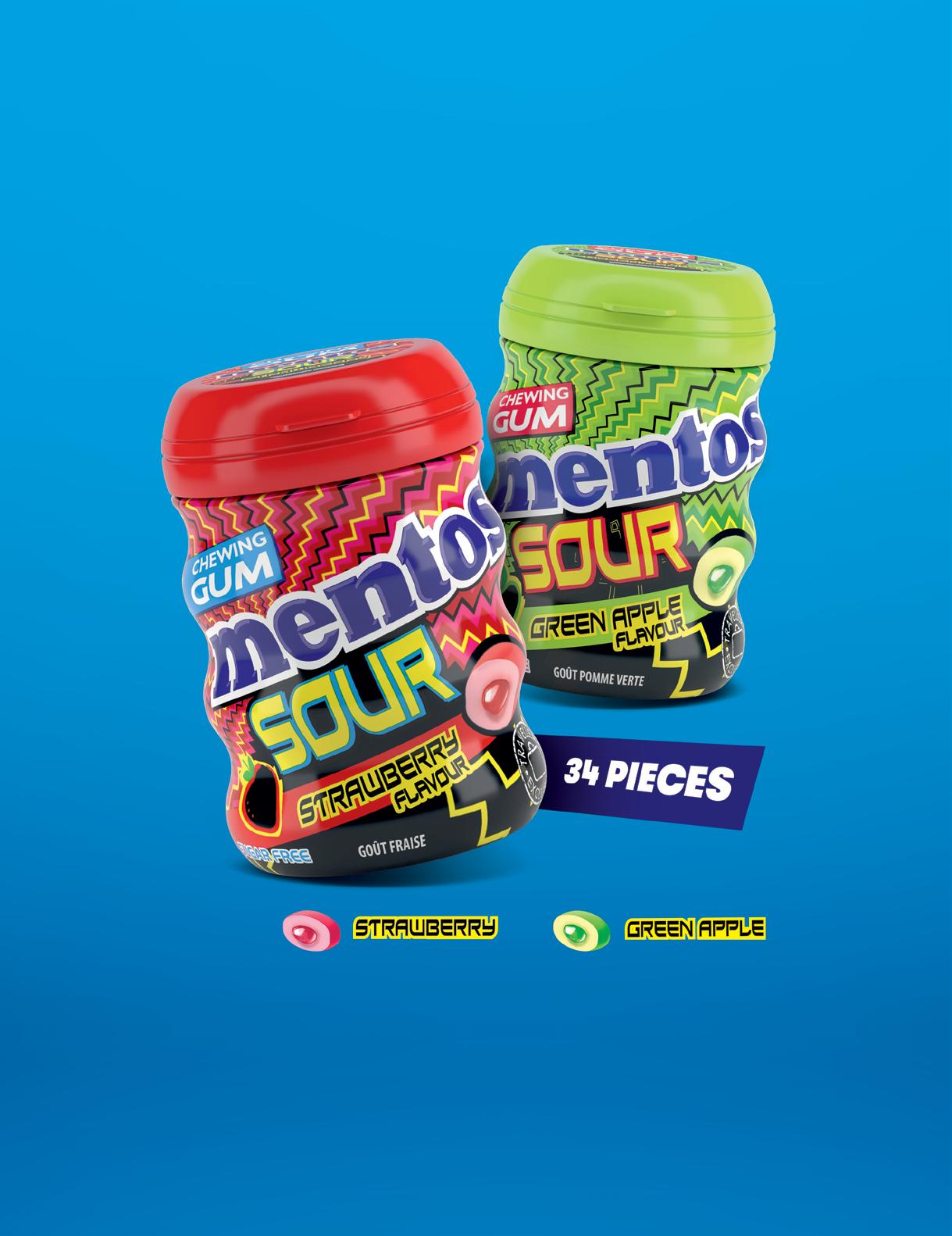
Shelf space design and format innovation are important in the diversification of travel retail, and Potter says the company is constantly looking to improve both, especially with planned hero branded units for Chupa Chups and Mentos.
Price flexibility remains a defining advantage. “Sugar confectionary offers the flexibility to cater to a wide range of price points,” Potter says. “Our product portfolio aims to offer a wide range of RRPs, to cater to a wide range of occasions and budgets.”
Perfetti Van Melle is prioritizing novelty and sense of place in future development, with collectability and locationlinked concepts shaping new launches. “We would love to expand our range in wilder and wackier ways,” Potter says.
Clever suitcaseinspired packaging from Cloetta adds playfulness and collectability to the travel retail offer
Cloetta Head of Travel Retail, Carsten Wulff, explains the strongest performance comes from a well-balanced combination of four elements: flavor, texture, format and function
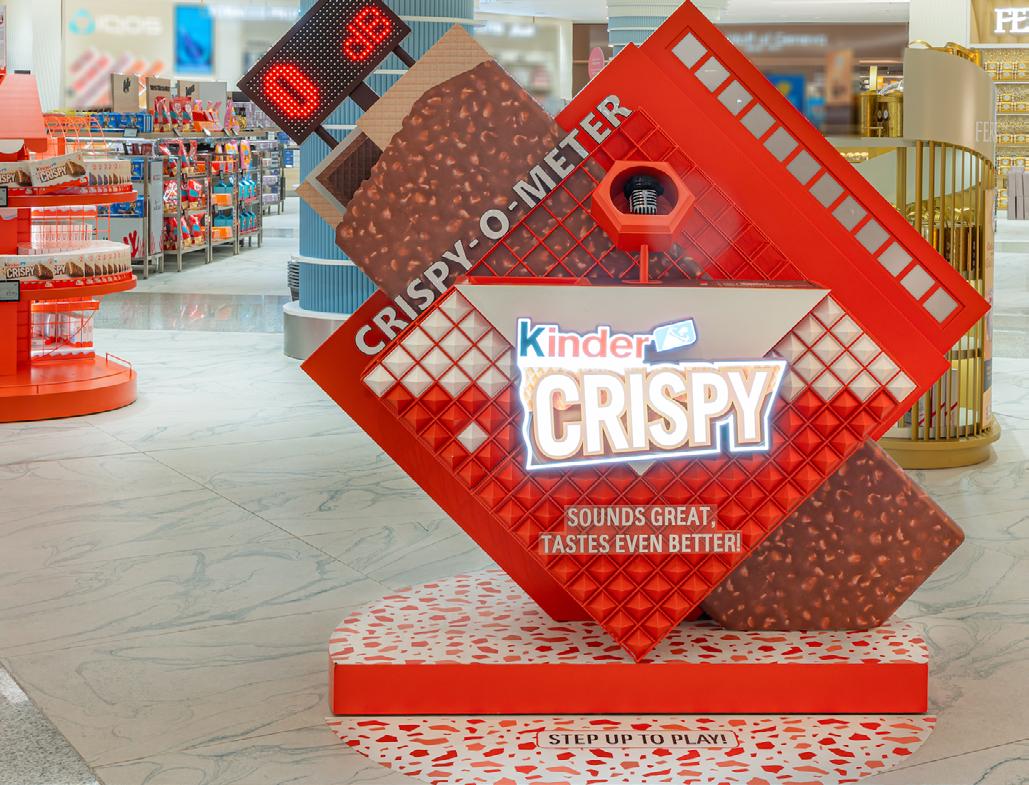
Crispy extends Ferrero’s
Depth perception
From crisp layers to creamy centers, texture is shaping how confectionery and biscuits perform in travel retail as brands design for contrast, comfort and shareability
by WENDY MORLEY
Texture has moved from supporting role to primary driver in confectionery and biscuit innovation. Through its global Taste Tomorrow research program, Belgian ingredients specialist Puratos states that 71% of consumers say
mouthfeel defines how much they enjoy a product, a shift now visible across travel retail launches and portfolio strategies, with texture increasingly treated as a marker of quality rather than novelty.
Structured contrast
Ferrero Travel Market has applied this concept to its growing biscuit portfolio, where texture now plays a central role in product development.
“The insight highlighted by Puratos strongly resonates with Ferrero Travel Market’s approach to biscuit innovation,” says Sergio Salvagno, General Manager at Ferrero Travel Market.
“While flavor remains fundamental,
texture has become a critical differentiator in how consumers experience and connect with a product.”
Kinder Crunchy Cookies pairs a crunchy biscuit base with Kinder milk and white chocolate, bringing texture contrast already familiar to Ferrero, to drive biscuit category growth in travel retail.
“This focus on texture elevates the overall eating experience beyond flavor alone, creating a memorable moment
Sergio Salvagno, General Manager at Ferrero Travel Market
Kinder
texture-led approach to indulgence, an expression of how layered mouthfeel is increasingly used to elevate everyday chocolate formats in travel retail
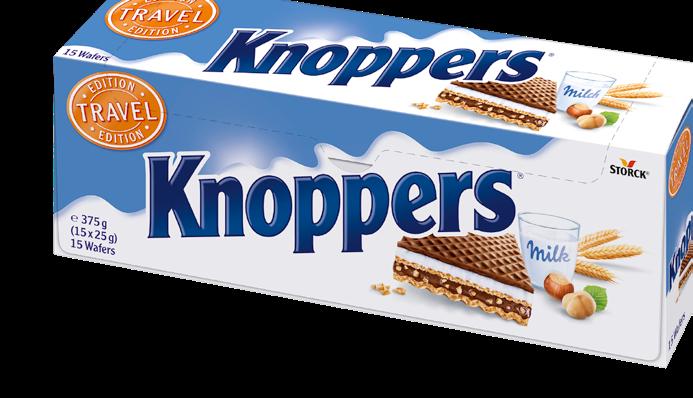
Knoppers builds on Storck’s long-standing focus on balanced indulgence, pairing crisp wafer layers with milk cream and hazelnut to create a structured eating experience that plays into rising consumer demand for textural contrast
of indulgence,” Salvagno says. “From our perspective, texture is not replacing flavor but working alongside it as a key driver of desirability and brand differentiation.”
Sharing moments
Texture also shapes usage and audience targeting. Created for sharing and designed to appeal to young adult travelers, Kinder Crunchy Cookies sits within Ferrero’s broader La Biscotteria concept, which continues to expand within global travel retail.
“One of our key priorities for 2026 is to strengthen Ferrero’s position as a leader in the GTR biscuits category, where we have blazed a trail with our La Biscotteria concept,” Salvagno says. “Alongside our iconic and traditional products, we continue to introduce innovative solutions that respond to evolving consumer trends and elevate the travel retail experience.”
Rather than treating confectionery and biscuits as distinct territories, the company is deliberately pulling techniques and ingredients from both worlds, using category fusion as a tool to build complexity while keeping core brand elements intact.
“With multi-sensory snacking now mainstream, we consider sensory depth as a modern marker of quality,” Salvagno explains. “By blurring boundaries between categories and borrowing cues from both bakery and confectionery, we
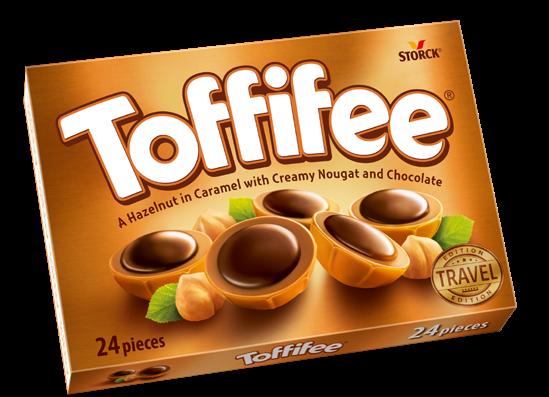
Toffifee showcases Storck’s signature multi-component format, bringing together caramel, hazelnut, nougat and chocolate in distinct layers that emphasize sensory depth
can create more complex eating experiences with innovations that celebrate and elevate the signature taste of our iconic brands. Importantly, this allows us to stand out in the travel retail landscape, where shoppers are particularly open to discovery and premiumization.”
Balanced portfolios
Storck Travel Retail is using texture as a core tool for brand evolution, layering contrasting mouthfeel into established products to deepen engagement without abandoning familiarity. The company’s recent innovations demonstrate how structural contrast can refresh wellknown brands while maintaining their core identity.
“We absolutely recognize the growing importance of texture in driving consumer preference,” says Rebecca Robert, Market Director Global Travel Retail at Storck. “While flavor remains fundamental, what truly makes a product a strong seller is the total package, a harmonious combination of flavor and texture.”
Werther’s Original Caramel Popcorn, Toffifee and Knoppers reflect this philosophy. Werther’s Original Caramel Popcorn pairs smooth caramel sweetness with light popcorn crunch, Toffifee offers a delectable mix of caramel shell, creamy nougat filling and drop of dark chocolate, while Knoppers layers crispy wafers with crunchy elements and creamy filling to create a lighter snacking format suited to travel occasions.
Gen Z nuances
Gen Z preferences are influencing how texture-led innovation is deployed across markets, with Robert noting demand for lighter textures, nut inclusions and flavor twists tailored to local palates.
“Gen Z consumers, who value authenticity, bold flavors and experiences that feel personalized, are shaping the future of snacking,” Robert says. “They are also highly engaged with trends like multisensory indulgence and shareable formats, which influence how we innovate and market our products.”
In-store displays and activations support product discovery. “From eyecatching displays to sampling opportunities, we aim to turn the travel retail environment into a discovery zone where travelers can experience the quality and indulgence of Storck brands firsthand,” Robert notes, citing a merci brand activation at Paris Charles de Gaulle linking Valentine’s and Mother’s Day.
Segment crossover
Cross-segment inspiration is becoming standard practice as brands look beyond traditional category boundaries to source texture ideas. Robert describes Werther's Original Caramel Popcorn as an example of the hybrid experience that merges comfort sweetness with airy crunch.
“This willingness to blur traditional lines allows us to craft products that resonate with modern consumers seeking novelty and multi-sensory engagement,” she says.
For Storck, packaging enhances the experience. “Self-treat bags and multipacks allow consumers to enjoy variety and portion control, while premium design reinforces the sense of quality and gifting appeal,” adds Robert.
Globally inclined
As traveler purchasing becomes more deliberate, Lindt & Sprüngli is using craftsmanship, inspiration from global food trends and travel retail exclusives to position chocolate as a means of mindful indulgence
by HIBAH NOOR
Travel retail confectionery is being shaped by a more discerning mindset on the part of the consumer. According to Lindt & Sprüngli, this shift is redefining how the category shows up in airports. The company sees travelers actively seeking products that justify their place through quality, storytelling and a sense of occasion.
“As we look ahead in 2026, we see travel retail continuing to move toward more considered purchasing,” says Peter Zehnder, Head of Global Travel Retail, Lindt & Sprüngli. “Travelers are increas-
ingly looking for products that feel premium, relevant to their journey, and clearly differentiated from what they can buy at home.”
That perspective is driving the company’s approach in the channel, where the brand is positioning itself not as a follower of category trends, but as an architect of the category. The focus is on creating genuine points of difference that give travelers a compelling reason to choose Lindt in airports.
“For Lindt & Sprüngli, this translates into innovation rooted in craftsmanship, products developed specifically for the
Peter Zehnder, Head of Global Travel Retail, Lindt & Sprüngli
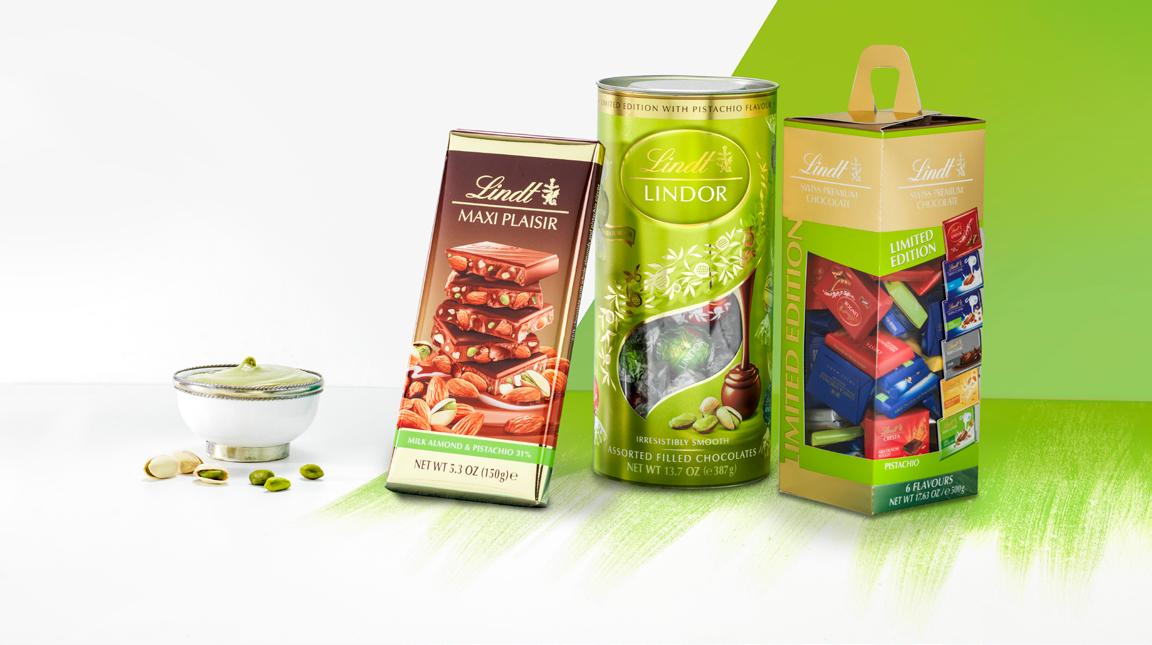
Recent additions such as LINDOR Tube Assorted with Pistachio 387g, Napolitains Assorted with Pistachio 500g and Maxi Plaisir Almond Pistachio 150g have performed strongly, reflecting sustained appetite for pistachio-led formats designed specifically for travel retail
channel, and strong execution in-store,” explains Zehnder. “Our ambition is not just to respond to shifts in consumer behavior, but to actively shape how the confectionery category evolves in travel retail.”
Dubai Style Chocolate
That philosophy is perhaps best illustrated by the rapid rise of Lindt Dubai Style Chocolate, which scaled from a regional concept into a global travel retail bestseller in a remarkably short time.
“The success of Lindt Dubai Style Chocolate begins with the product itself,” notes Zehnder. “Its handcrafted nature, high pistachio content and distinctive texture deliver a genuinely indulgent experience that immediately stands out on shelf and signals premium craftsmanship.”
Crucially, the momentum began before the product entered the channel. Strong demand in domestic markets such as Germany and Switzerland created early awareness, but it was the launch at Zurich Airport that cemented its travel retail credentials.
“Travelers queued to purchase it, with stock selling out in just 15 minutes despite a strict one-tablet-per-person limit,” says Zehnder. “That response created a powerful halo effect and set the stage for rapid international expansion.”
Beyond its launch story, Dubai Style Chocolate aligns naturally with core travel retail purchasing behaviors, performing equally well as a gift, a sharing product or a personal indulgence across markets.
The test of longevity
While pistachio continues to show strong momentum in travel retail confectionery, the company is careful to distinguish between short-term excitement and sustained consumer behavior when evaluating flavor trends.
“We assess whether a flavor can sustain interest across different formats and price points,” says Zehnder. “Repurchase rates are one of the most reliable indicators, and pistachio continues to perform strongly in this regard; travelers are not just trying it once but actively returning to it.”
He points out that while pistachio was already a well-loved and familiar flavor, Lindt & Sprüngli raised it to a heightened position with the Lindt Dubai Style Chocolate. “What the product did was elevate pistachio into a more premium and distinctive expression.”
A fresh interpretation
Following Dubai Style Chocolate, Lindt & Sprüngli introduced the Lindt Tokyo Style Chocolate, bringing matcha to a global travel retail audience.
“The new tablet offers travelers a fresh interpretation of the global matcha trend, inspired by the serenity of Japanese tea ceremonies and the growing desire for mindful indulgence.”
The response to both products reinforces Lindt & Sprüngli’s belief that storytelling linked to place resonates strongly with travelers. While future launches remain under wraps, the company says this approach has proven its relevance in the channel.
Elevating the experience
Travel retail exclusives remain a strategic pillar of Lindt’s airport presence. “They provide travelers with a clear reason to purchase in the channel by offering something they cannot find elsewhere,” says Zehnder, adding that exclusives also help premiumize the category and anchor brand storytelling. Beyond product, Lindt continues to invest in merchandising, activation and digital touchpoints to turn chocolate into an experience rather than a simple impulse buy.
“Visibility and storytelling are fundamental in the airport environment,” says Zehnder. “Where space allows, boutiques and larger installations enable us to bring the brand to life more fully, through live Master Chocolatier engagements or personalized offerings that turn a purchase into a memorable experience.”
Redefining value
Mondelēz World Travel Retail is reworking price-pack logic, innovation and in-store visibility to sustain confectionery performance as transaction values come under pressure in airports
by HIBAH NOOR
As inflation, changing shopper behavior and compressed dwell times have reshaped the airport environment, price advantage is no longer the driver it once was. For Mondelēz World Travel Retail, the response has been to rethink what value means for confectionery.
“Travel retail had great success when it was established as a channel, which focused on price saving as the number one appeal,” says Anna Somogyi, Director Category, Customer & Shopper Marketing at Mondelēz World Travel Retail. “Destination: Value inspires us all to add more to the perceived value.”
Rather than repositioning confectionery through discounting, the company is focusing on clarity: clearer roles for different pack formats, sharper price ladders and more deliberate placement within the store. “In practice, that means being much more intentional about price-pack architecture and how different price points and packaging
formats play distinct roles along the traveler journey,” Somogyi explains.
Architecture versus assortment
For Mondelēz World Travel Retail, this thinking has translated into a deliberate widening of the travel retail offer. “We’ve been expanding to ensure there are clear entry points, strong core offers and selective premium products that create excitement and a halo effect for the category,” Somogyi says.
One example is the recent introduction of the 200-gram Toblerone bar, positioned to bridge the gap between impulse and gifting, a space that can be underserved in airports where entrylevel options are limited. But the company is clear that pack size alone is not sufficient. “Just as important is where these packs sit,” Somogyi explains. “We consistently see stronger results when ‘converter’ products are placed in highvisibility locations rather than being confined to the confectionery aisle.”
At the other end of the spectrum, ultra-limited and higher-priced products such as Toblerone Crunchy Popcorn or Pink Crush play a different role. “They’re about driving interest and value perception across the range,” she says.
Innovation with intent
Recent exclusives such as Cadbury Biscoff point to a measured approach to innovation, using familiarity as a springboard rather than a risk. “Travel retail gives us a unique space to take a successful innovation to a global traveler audience,” Somogyi says. “Cadbury Biscoff is a good example of how familiar brands can be combined in a way that feels both reassuring and new for travelers.”
Looking ahead, she expects innovation to continue across flavor, format and travel-exclusive SKUs, but with tighter discipline. The objective is to keep the category fresh without weakening the recognizability and reliability of core formats that anchor the business.
Category signpost
Few brands carry the same symbolic weight in travel retail as Toblerone, and Mondelēz recognizes it as both a commercial driver and a navigational cue in-store. “Toblerone is one of the most famous icons of travel retail shopping, if not the most famous,” Somogyi says. “It is essential that the brand signposts the confectionery category in every store to help ease navigation and generate unplanned footfall.”
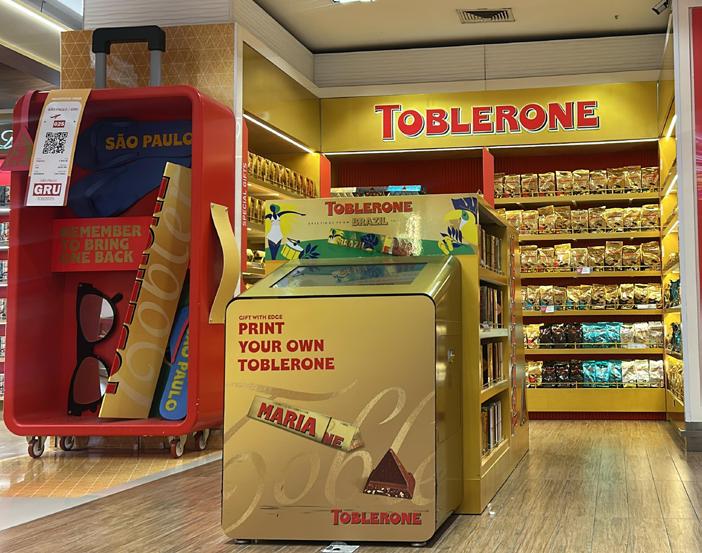
That role is increasingly visible through permanent branded spaces such as the recently refurbished shopin-shop at São Paulo Guarulhos in addition to high-impact activations including Pink Crush and seasonal campaigns. According to Somogyi, these formats are complementary rather than competing. “Toblerone has a key role to play in making airport shopping renowned,” she says. “The brand encourages travelers to explore the entire confectionery offer and find products they would not get back home. Toblerone activations are generating high social media engagement, triggering a strategic shift in how airport shopping is perceived.”
Rethinking gifting
Gifting remains a central driver for confectionery, but its meaning is evolving. “Gifting today is less formal and more personal than it used to be,” Somogyi says. “Travelers are still buying for others, but they’re also buying for themselves or as a reminder of their trip.”
As a result, packaging and storytelling need to work faster. “That’s why we’re putting more emphasis on visual impact, storytelling, and emotional cues that work instantly,” she explains. “Packs need to communicate ‘travel’ at a glance, whether through design, messaging, or a sense of destination.”
Rebuilding baskets
With transaction values under pressure in some markets, Mondelēz sees opportunity less in pricing mechanics than in visibility. “One of the biggest opportunities sits in visibility and placement,”
Somogyi says. “When confectionery is positioned along natural passenger flows and supported by clear signposting, we consistently see higher engagement and larger baskets.”
Looking to 2026, Mondelēz does not anticipate a radical shift in traveler behavior around chocolate itself.
Instead, the focus is on execution. “We are committed to inspiring brands and the industry to become more travelercentric, ensuring engagement across the full traveler journey,” Somogyi says. “That’s how we continue our journey towards Destination: Value.”
Anna Somogyi at Mondelēz World Travel Retail describes Toblerone’s responsibility as travel retail’s most recognizable icon, using visibility and experience-led activations to guide shoppers into stores, signpost the confectionery category and help make airport shopping famous
At São Paulo Guarulhos Airport, travelers can print their own Toblerone, turning gifting into a personalized souvenir and reinforcing the brand’s role in experience-led airport retail
Consistency is key
by LAURA SHIRK
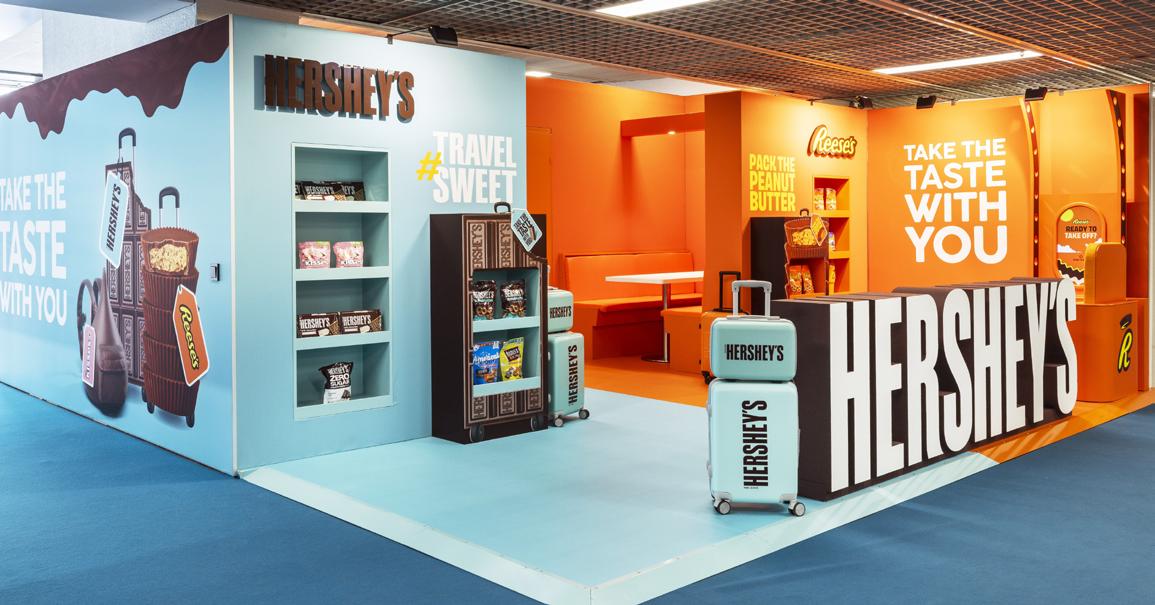
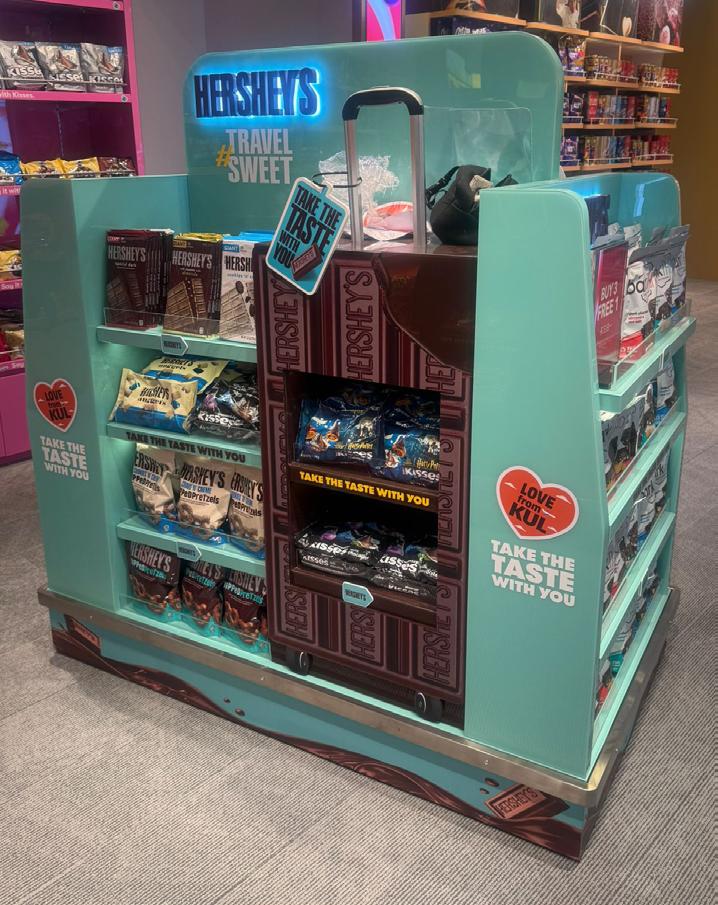
Early activations of The Hershey Company’s “Take the Taste With You” platform signal stronger traveler engagement and sell-out across key airport hubs
As recently reported, The Hershey Company World Travel Retail is converting its new “Take the Taste With You” platform into measurable in-market performance, with early activations across major airport hubs delivering stronger shopper engagement and improved sell-out. Within travel retail, the company is applying the platform to meet the demands of a fast-paced environment where visibility, immediacy and relevance are critical to conversion.
“Travel retail demands brand platforms that can operate at scale while remaining effective in highly compressed shopping environments,” explains Ahmad Nasser, General Manager – MEA and World Travel Retail at The Hershey Company. “‘Take the Taste With You’ was developed to provide that balance, enabling consistent global expression alongside locally relevant
execution. The early performance we are seeing across markets indicates that this approach is resonating with both travelers and retail partners, giving us confidence as we continue to build and extend the platform across world travel retail.”
A call to action
Unveiled at the 2025 TFWA World Exhibition & Conference in Cannes, the global rebranding unites Hershey’s, Reese’s and Kisses under one adaptable brand world, and marks a strategic evolution for the company in travel retail. Centered around a unifying call to action, “Take the Taste With You” displays a sharpened focus on connecting with younger shoppers through moments of indulgence, gifting and delight. It is the company’s promise to make flavor discovery and personalization central to the travel retail experience.
Ahmad Nasser, General Manager – MEA and World Travel Retail, The Hershey Company
Hershey’s “Take the Taste With You” platform drives measurable results in travel retail, combining immersive displays, digital touchpoints and interactive activations
“The new design is bold, modular, and scalable, ensuring consistency across airports worldwide,” explains Nasser. “More importantly, it reflects our commitment to making confectionery a true travel companion. We want every purchase to feel like a moment of goodness that travelers can take with them on their journey.”
Nasser continues, “When travelers co-create moments with us, they don’t just buy a product, they buy into our story. That deeper emotional bond drives advocacy and ensures Hershey is remembered long after the journey.”
Unified brand expression
Permanent visibility fixtures are now live at Singapore Changi Airport and Kuala Lumpur International Airport, with additional installations underway in Mumbai, Delhi and Doha. In the Americas, updated visibility has launched at Los Angeles International Airport, with a refreshed presence set to debut at the new 3Sixty store at Orlando International Airport. Nasser says that whether a traveler encounters Hershey in a flagship duty free store or at a small airport popup, the storytelling is seamless.
According to the company, while the platform establishes a consistent global framework, its execution is tailored by market. Engagement mechanics are adapted to local shopper behavior, dwell time, store layout and stage of the passenger journey, allowing flexibility within a unified brand expression.
Adaptable displays and reconfigurable elements enable Hershey to scale quickly while maintaining identity; and branded content is delivered through digital screens supported by retailerowned platforms and social media activation. As a result of high-impact visual updates that reinforce brand recognition, this evolution allows the company to connect with travelers in more immediate and shareable ways both in-store and beyond the shop floor.
In the pipeline
Initial feedback indicates that interactive and sensory-led activations are driving measurable gains. As shared by the team, vibrant colors and travelthemed creative cues have created a more cohesive point-of-sale presence and generated visibility. Plus, seasonal visual updates, including Chinese New Year and Christmas executions, have increased relevance during key gifting periods and boosted shopper engagement. “Together, these results underscore the impact of engagement-led mechanics and traveler-focused retail design in driving conversion across varied travel retail environments,” shares the company.
Coming up, Hershey plans to expand the platform this year with a pipeline of
high-visibility, experience-led activations. Upcoming SKUs, seasonal editions, collectible packaging and travelexclusive formats are designed to trigger emotive gifting while encouraging impulse purchases, notes Nasser. “We’re tapping into nostalgia and joy but also making it easy for travelers to grab and go. By combining refreshed storytelling with portfolio innovation, we ensure our products appeal to both planned gift buyers and spontaneous travelers looking for a quick delight,” he says.
Upcoming initiatives include branding of the departure gate at Mumbai Airport, scheduled to launch at the end of February, and an AR treasure hunt experiential activation in partnership with Avolta at Athens and Guarulhos Airports in the second half of 2026.
Adaptable displays and reconfigurable elements enable the company to scale quickly while maintaining identity
Closing in on cocoa-free
Barry Callebaut teams up with German food-tech company to offer sustainable, cocoa-free chocolate alternative
and help determine the future of confectionery
by LAURA SHIRK
Asign of the times, Barry Callebaut, the world’s largest manufacturer of chocolate and cocoa, has signed a commercial partnership with German food technology start-up Planet A Foods to combat the ongoing cocoa crisis and future-proof the industry. The partnership centers on the tech company’s creation of ChoViva, a leading cocoa-free, sustainable alternative to chocolate. Created using regional crops such as sunflower seeds, the climateresilient alternative is said to deliver a chocolate-like experience without compromising on quality or taste.
As reported by Chief Technology Officer Dr. Sara Marquart, Planet A Foods achieves an up to 80% reduction in carbon emissions and eliminates deforestation. “Most importantly, we offer manufacturers price stability and supply chain
security, ensuring that chocolate remains sustainable and affordable, regardless of climate volatility,” she says.
Unlocking creative freedom
Working to uncover the flavor formation pathways of chocolate, the team’s research and development journey resulted in the testing of over 100 ingredients, from algae to banana, before settling on sunflower seeds as the main ingredient of ChoViva. “We discovered that by applying a fermentation-like process and roasting techniques to sunflower seeds, we could trigger the same reaction that gives cocoa its soul,” reveals Dr. Marquart.
After overcoming its greatest technical hurdle aroma mapping – replicating chocolate’s complex profile of hundreds of flavor nuances – the first products with ChoViva hit German supermarkets
in autumn 2023. Now, over 100 products with ChoViva are sold in 10 countries worldwide.
Dr. Marquart explains, “Cocoa-free chocolate alternatives unlock creative freedom. It allows for novel flavors, textures and product formats, expanding what chocolate can be, while being able to stick to the tradition, and the flavors we all grew up with and love.” Building on this kind of creative freedom, brands, suppliers and retailers in the travel retail confectionery and food category are exploring different product assortments, recipe formulations and alternative ingredients to fulfill consumer demand for sustainable, chocolate solutions without cocoa.
Co-founded in 2021, by siblings Sara and Max Marquart, Planet A Foods develops ingredient alternatives for the food industry to help create future-ready confectionery products
Photo Credit: Planet A Foods Photographer
Daniel Schvarcz
Diversification is key
With the cocoa industry on the cusp of a major transformation, Barry Callebaut is embracing – and driving – change. While the company remains fully committed to cocoa, it also recognizes the need to diversify its portfolio in response to cocoa market volatility and evolving consumer preferences. Designed specifically to deliver a chocolate-like sensory experience without cocoa, ChoViva’s appeal is rooted in its ability to meet consumer expectations for flavor and texture. “With its short supply chains, locally sourced ingredients and lower environmental footprint, ChoViva provides customers with a compelling product to meet the growing demand for responsible indulgence,” says a spokesperson for the company.
“While ChoViva is not a replacement for cocoa, it plays a strategic role in diversifying our portfolio and strengthening long-term resilience. By incorporating sunflower seeds and other locally sourced ingredients, ChoViva helps decouple part of our growth from the traditional cocoa supply chain,” continues the spokesperson. “This complementary solution reduces exposure to climate related risks and structural supply fluctuations.”
Understanding that consumers deserve clarity and choice, Barry Callebaut points out that ChoViva is clearly positioned as a cocoa-free alternative, not a reformulated chocolate or substitute. Through this partnership, the manufacturer offers a distinct product range that meets sustainability goals and consumer expectations without compromising legal definitions or misleading labelling.
What is to come
Speaking on how ChoViva could inspire further ingredient diversification beyond cocoa in the future, Barry Callebaut notes that alongside ChoViva, it is already exploring innovations such as cocoa cell culture technology with Zurich University, while supporting farming
communities and reducing pressure on traditional supply chains. The spokesperson adds, “These partnerships allow us to complement our traditional offerings with innovative, sustainable alternatives, broadening choice without compromising taste or quality.”
When it comes to Planet A Foods, Dr. Marquart says, its vision extends far beyond cocoa. “[We see ourselves as an alternative ingredient supplier for the entire food industry. Our mission is to transform resilient, regional crops into the high-value ingredients that will become increasingly scarce in the coming years.]” The business is already applying its expertise in fermentation and aroma mapping to develop further solutions that will ensure global food security. More details to come.
Whether cocoa-free chocolate
becomes a mainstream choice or stays a niche innovation is to be determined. What is apparent: the future of chocolate is shifting rapidly due to high prices, climate-driven cocoa shortages and a demand for healthier, sustainable options. How the duty free and travel retail channel – and its category players – navigates the potential of cocoa-free confectionery remains to be seen.
Over 100 products with ChoViva are now sold in 10 countries worldwide
The climate-resilient alternative is said to deliver a chocolate-like experience without compromising on taste
Photo Credit: Planet A Foods Photographer Daniel Schvarcz
A core commitment
As part of its sustainability program, Loacker reduced overall packaging weight of paper and corrugated cardboard by 3% in 2025 compared to 2023 levels, plus more on the brand’s Technology Center
by LAURA SHIRK
To celebrate its 100th anniversary in 2025, Loacker launched its “Goodness is a rebels’ choice” campaign, alongside other related initiatives. Based on the brand’s commitment to delivering quality ingredients, responsible sourcing and Alpine production, the campaign shines a light on Loacker’s core values – and its promise to rebel against taking shortcuts. According to the team, the brand will now use a younger, more direct tone to communicate its ongoing journey toward achieving product excellence.
Loacker also marked its centenary as a snacking brand by becoming a Benefit Corporation (Italian form of “Società Benefit”) and publishing its first Impact Report. Head of Travel Retail Juan Miguel Cabrera notes that pursuing Benefit Corporation certification is a natural evolution of Loacker’s long-standing values as a family-owned company with a focus on nature, quality ingredients and responsible business practices. “For decades, Loacker has prioritized high-
quality raw materials, close relationships with suppliers and production in harmony with the environment, so the Benefit Corporation framework offers a structured and transparent way to measure, validate and further strengthen these commitments,” he says.
Tech-first approach
Packaging remains a major sustainability challenge for confectionery and food brands. The brand reduced overall packaging weight of paper and corrugated cardboard by 3% in 2025, compared to 2023 levels. As part of its Flexible Printing Technology Development project, the brand has introduced an inline printing process that enables designs to be printed directly onto flexible packaging, removing the need for adhesive labels and reducing material use and waste.
Building on this breakthrough, the Loacker Technology Center is designed to support the brand’s long-term growth, while accelerating its sustainability agenda. The new center brings
production development, packaging innovation and process optimization together under one roof, enabling faster testing, collaboration and scalability of new solutions across the business.
“A key focus of the Technology Center is developing more sustainable production and packaging technologies, building on initiatives such as material reduction, flexible printing and energy-efficient processes, while ensuring Loacker’s high standards of quality, taste and food safety are maintained,” he comments. “At the same time, it strengthens Loacker’s ability to innovate for future consumer needs, reinforcing the brand’s premium positioning and supporting responsible growth in travel retail and beyond.”
Designed to meet a range of traveler needs, from on-the-go snacking and self-consumption to multi-occasion gifting, Loacker presented its new 466gram Misto Bontà variety pack last year in Cannes. The brand is set to introduce a Travel Mix Pack in 2026, with more details to come.
WORTH FLYING FOR
Over 40,000 sq. metres of spectacular shopping. Thousands of limited editions and travel exclusives. Hundreds of the world’s most desirable brands. But only one glorious destination: Dubai Duty Free.
Heritage meets innovation
In this opinion piece, Max Van Coillie, Business Development Manager Asia & Middle East at Neuhaus, discusses how the Middle East is shaping the future of chocolate in travel retail
by MAX VAN COILLIE
For years, global travel retail has looked to traditional luxury capitals for cues on premiumization. Today, however, the center of gravity is shifting. From Dubai to Riyadh and Doha, the Middle East has emerged not merely as a high-spending region, but as a trend incubator — influencing how categories, including chocolate, are defined, experienced and valued worldwide.
Recent phenomena, such as the viral rise of regionally inspired chocolate creations in Dubai, illustrate this shift clearly. Chocolate in the Middle East is no longer treated as a simple confection-
ery purchase; it has become a cultural expression — rich, indulgent, shareable and deeply emotional. Travel retail, with its unique combination of dwell time, global audiences and theatrical environments, has amplified this influence, turning regional preferences into global reference points.
A market that demands substance, not hype What distinguishes Middle Eastern consumers — particularly in travel retail — is not just purchasing power, but discernment. In one of the world’s most fast-moving luxury environments,
Max Van Coillie, Business Development Manager Asia & Middle East at Neuhaus
The Neuhaus Irrésistibles Collection is a signature offering featuring handcrafted, crunchy nougatine filled with cream or ganache, coated in chocolate
novelty alone has a short shelf life. What resonates instead is credibility: brands that know who they are, where they come from and why they exist.
This has triggered a broader shift in how innovation is perceived. In the Middle East, innovation is increasingly less about disruption for its own sake and more about evolution rooted in mastery. Heritage, once viewed as static, has become a dynamic asset — provided it is paired with relevance and continuous renewal.
For premium chocolate, this translates into a renewed appreciation for craftsmanship, origin and ingredient integrity. Travelers are not necessarily looking for the loudest launch, but for products that feel considered, intentional and authentic — qualities that align naturally with regions where luxury has always been understood as a balance between tradition and modernity.
Cocoa prices and the quiet redefinition of value
Overlaying this behavioral shift is a structural change affecting the entire category: sustained cocoa price volatility over recent years. While often discussed in operational terms, its impact on consumer perception is more subtle — yet profound.
As chocolate prices have risen across the board, the traditional distance between everyday indulgence and true luxury has narrowed. In travel retail, this has quietly reframed decisionmaking. Travelers are no longer simply comparing price points; they are assessing return on experience — weighing quality, provenance and credibility against cost.
In markets such as the Middle East, where premiumization is culturally ingrained, this compression of the price ladder has made the step into authentic luxury feel increasingly logical. When the gap narrows, intent matters more than impulse. Chocolate becomes less about trading up and more about choosing better.
Neuhaus’ Max Van Coillie says what resonates most with traveling consumers is credibility: brands that know who they are, where they come from and why they exist
Why travel retail is the ideal stage
Nowhere is this evolution more visible than in Middle Eastern airports, which have become global showcases for experiential retail. Here, chocolate is given the space to be discovered rather than rushed — through elevated merchandising, storytelling and curated assortments that reward engagement.
Travel retail also allows brands to express innovation in a way that feels natural rather than forced. Limited editions, new textures, reinterpreted classics and seasonal collections can be introduced as part of an ongoing dialogue with travelers, rather than oneoff disruptions. In this context, innovation is not a break from heritage, but a continuation of it.
Brands that have always invested in natural ingredients, in-house craftsmanship and meaningful innovation are finding renewed relevance — not because they have changed, but because the market around them has.
From regional influence to global direction
What makes the Middle East particularly influential is its ability to translate regional
taste into global aspiration. Middle Eastern and Indian travelers, in particular, bring with them a strong appreciation for purity, richness and authenticity — values that increasingly shape assortments far beyond the region itself.
As these consumers travel, their expectations travel with them. The result is a subtle but unmistakable shift in global travel retail: chocolate is being repositioned from a default purchase to a deliberate choice, from a souvenir to a statement of taste.
Looking ahead
As travel retail moves into 2026, the Middle East’s role as a trendsetter will only strengthen. In a category challenged by rising costs and changing behaviors, chocolate’s future lies not in chasing novelty, but in reaffirming what makes it special.
In an era where premiumization has been driven as much by necessity as by desire, true luxury is no longer defined by excess. It is defined by intent, integrity and innovation that respects its origins. And in travel retail’s most forward-looking regions, that distinction has never mattered more.
Sour-led Haribo Fizz caters to impulse and sharing occasions, supporting experimentation and self-treating among younger travelers
Fulfilling needs
Amid the changing expectations of Gen Z, Gen Alpha and the broader population at large, Haribo is refining its travel retail strategy through exclusivity, inclusivity and format-led innovation
by HIBAH NOOR
Sugar confectionery continues to play a distinctive role in travel retail, shaped by a wide range of shopper missions that span impulse treats, sharing occasions and planned gifting. For Haribo, addressing that complexity starts with a focus on relevance across every stage of the traveler journey, supported by
formats and propositions designed specifically for the channel.
“Shoppers are demanding everstronger personalization of the travel retail experience across every product category, including confectionery,” says Elisa Fontana, Head of Marketing GTR at Haribo. “As a category, we need to respond to shoppers’ demands by engaging them with an offer that addresses their needs and, across all the different shopper missions and motivations, giving them the products and pack formats that best address those needs. Within this strategy, we will of course maintain a strong focus on our core business, fruit gum products, that deliver fun and happiness, while at the same time entering carefully selected and targeted niche segments.”
Inclusive and exclusive
Travel retail exclusivity is central to that approach. Haribo’s strategy places particular emphasis on offering items
unavailable in domestic retail, reinforcing the sense of discovery that travelers expect at the airport.
“From a self-treat bought on impulse to a planned gifting mission, we aim to offer packs and formats exclusive to travel retail to enhance the customer’s feeling of discovering something new, something special on every journey,” Fontana says.
At the same time, Haribo is responding to a broader behavioral shift toward inclusivity and lifestyle-driven purchasing. Demand for vegan, halal and other diet-specific confectionery options has accelerated, particularly among younger consumers, influencing both product development and innovation priorities within the travel retail channel.
“Shoppers want — expect — to see that their personal preferences and dietary needs are being noticed and addressed,” she adds. “This momentum is particularly strong in the confectionery and food categories and in the airport F&B offer.”
Elisa Fontana, Head of Marketing GTR at Haribo
Innovative differentiation
Fontana says while these expectations reach across all generational profiles, they are especially important for younger consumers. “These are embedded in their lifestyles and are non-negotiable points for many of them,” she notes.
In response, Haribo has built a sustained innovation pipeline focused on vegan and halal propositions. Recent launches include Haribo Pixel Fizz, a vegan-friendly sour candy offered in three sizes, and Haribo Mix Fizz Halal, the brand’s first halal assortment of sour sweets.
Exclusivity remains a critical lever for differentiation. “Travel retail exclusives and airport-specific formats are the most obvious and effective tools we have to help differentiate the offer and engage the shopper,” Fontana says.
Haribo’s My CityTrip pack exemplifies this strategy. The pack features gummy shapes inspired by 10 iconic European landmarks and is supported by a QR-code activated digital quiz designed to be enjoyed together. “This delivers a unique travel retail experience and deepens the consumer interaction with the Haribo brand,” she explains.
Attracting the consumer
As retailers place greater emphasis on productivity per square meter, sugar confectionery faces growing competition for space from higher-margin categories. Fontana acknowledges this pressure but emphasizes the category’s ability to attract the retail consumer.
“Confectionery has a uniquely broad appeal across all demographics and is proven to be especially effective at driving initial engagement with the shopper,” she says. “This encourages them to further explore the whole retail offer more deeply, driving cross-category purchases and raising basket size.”
To maintain visibility in busy airport retail environments, Haribo prioritizes
in-store activations that draw travelers in. “We work closely with our retail partners to develop activations and promotions that not only celebrate the appeal of the Haribo brand but also act as a beacon to entice travelers to explore the offer,” Fontana says.
Pack architecture and pricing also play a central role in responding to changing dwell times and purchasing behavior. Haribo’s range spans small checkout pouches for impulse purchases, mid-size bags for sharing, maxi formats in premium standing pouches and large party-size packs designed for group occasions.
Increased opportunity
Looking ahead, Fontana sees rising passenger volume as a structural opportunity, supported by sustained innovation rather than reliance on individual trends. “The biggest opportunity is that global air traffic continues to surge, and this provides us with a huge and receptive audience to target in the confectionery category,” she says.
Rather than prioritizing any single flavor or format, Haribo is focused on a broad, balanced approach to consumer needs, with Fontana suggesting that deeper data sharing could strengthen category performance to the benefit of all. “Data-driven merchandising enables us to utilize analytics to align SKU assortments with regional travel patterns. If we want to truly optimize the opportunity in the confectionery category, we need to see deeper, closer and more sustained cooperation in the sharing of data,” Fontana concludes.
Haribo Pixel Fizz expands the brand’s veganfriendly offer in travel retail, aligning innovation with evolving lifestyle and dietary expectations
Large-format assortments and multi-packs address sharing occasions and gifting missions, reinforcing confectionery’s role beyond impulse purchasing
Matcha meets strawberry
Ritter Sport and Avolta unveil a limited-edition Matcha Strawberry chocolate bar, created exclusively for travel retail, debuting at Zurich Airport
by LAURA SHIRK
German chocolate maker
Ritter Sport and travel retailer Avolta is introducing a limited-edition Matcha Strawberry bar at Zurich Airport for a short-term February 2026 retail activation.
The 100-gram tablet will be sold exclusively in Avolta stores at the airport from February 4 to 28, or while stocks last, with only several thousand bars produced. The launch was timed ahead of Valentine’s Day and positioned as a seasonal gift, travel souvenir or personal treat.
The release follows strong demand for the flavor in Germany, where an earlier Matcha Strawberry Buzz Limited Edition sold out within seven days in September 2025. The product originated from Ritter Sport’s internal “Buzz Team,” which tracks emerging consumer trends and rapidly brings concepts to market. The
companies said the airport launch aims to capture trend-led discovery purchasing among Gen Z and younger travelers.
The bar combines white chocolate infused with real matcha, a yogurt cream filling and freeze-dried strawberry pieces, without added flavorings. The packaging features the tagline “I love you berry matcha.” Matcha, which has become increasingly common in beverages and premium snacks, is marketed for its natural energy profile, antioxidant associations and distinctive taste.
“This activation shows how Avolta uses innovation and limited editions to drive penetration, conversion and category growth in travel retail," says Philippe Moryl, Global Head of Category for Confectionery and Food, Avolta.
“Our collaboration with Avolta shows what is possible when two
partners move decisively and in close collaboration from inspiration to activation. This is true partnership,” adds Jan Passed, Managing Director Travel Retail, Ritter Sport. “Matcha Strawberry is a bold, contemporary flavor that reflects our ambition to lead with creativity and relevance in travel retail. Producing a global exclusive in such limited quantities makes this edition truly special, and we are delighted to offer travelers a fresh, modern Ritter Sport taste experience they can only find at Zurich Airport. We look forward to continuing this journey of fast, focused innovation together.”
According to Ritter Sport, Matcha Strawberry is a bold, contemporary flavor that reflects its ambition to lead with creativity and releance in travel retail
Leadership from Avolta and Ritter Sport gather at Zurich Airport for the unveiling of the limited-edition Matcha Strawberry bar
Camel craft
by HIBAH NOOR
The world’s first camel milk chocolate brand is modifying its approach to travel retail through premium formats, regional storytelling and carefully targeted expansion
In a confectionery landscape crowded with global players, Al Nassma has carved out a distinctive position in travel retail by leaning into provenance, premium gifting and a product story intrinsically tied to the Middle East. Over the past year, the brand has refined its travel retail portfolio with formats and collections designed specifically for the airport shopper, balancing portability with a strong sense of occasion.
Recent introductions have focused on refreshed camel milk chocolate bar assortments, updated pack formats and curated gift boxes developed for duty free. These sit alongside an expanded offer from sister brand Samha, which brings a more contemporary take on regional sweetness through date-based confections. New launches include the 110-gram Pistachio Kunafa Bar, Kunafa Bonbons in three flavors and a range of coated date assortments presented in giftable formats.
“Together, Al Nassma and Samha allow us to address different shopper
missions in travel retail, from premium chocolate gifting to modern, naturally sweet Middle Eastern treats,” says Marrah van Almsick, Travel Retail Manager at Al Nassma Chocolate LLC.
Unique positioning
At the heart of Al Nassma’s differentiation is its position as the world’s first camel milk chocolate brand, a category it pioneered and continues to lead. Camel milk is sourced from a trusted dairy partner in the UAE, while all chocolate production is carried out in-house at the Al Nassma chocolate factory in Dubai, giving the company full control over quality, consistency and traceability.
Camel milk chocolate offers a lighter mouthfeel, a clean finish and a subtle mineral note that distinguishes it clearly from conventional milk chocolate. Premium cocoa and carefully selected ingredients bolster the brand’s positioning as a product that cannot be replicated by traditional chocolate makers.
In travel retail, this differentiation is reinforced through storytelling and gifting credentials that resonate with both regional and international travelers, authentic Middle Eastern provenance remaining a central pillar.
Select markets
Rather than pursuing mass distribution, Al Nassma focuses on high-quality placements that support its premium positioning. Investment in staff training, merchandising and activations plays a key role in driving awareness and education at the point of sale, while product development remains closely aligned with the needs of the channel.
“The focus is on selective expansion, strong brand storytelling and close collaboration with retail partners,” van Almsick says.
Though the Middle East remains its core market, Al Nassma sees opportunity in select European and Asian airports with strong premium confectionery performance and openness to differentiated, provenance-led brands.
With their strong sense of place, Samha Kunafa bonbons offer a unique gifting opportunity
25 years of expertise in retail, live, digital, public relations and creative work