Global Travel Retail Magazine (ISSN 0962-0699) is published seven times a year by Paramount Publishing Company Inc. The views expressed in this magazine do not necessarily reflect the views and opinions of the publisher or the editor. June 2026, Vol 38. No. 4. Printed in Canada. All rights reserved. Nothing may be reprinted in whole or in part without written permission from the publisher. Paramount Publishing Company Inc.
GLOBAL TRAVEL RETAIL MAGAZINE Tel: 1 905 821 3344 www.gtrmag.com
Twenty-five years ago, a group of South American duty free operators gathered in Rio de Janeiro, Brazil, with a shared conviction: their industry could be far more than the sum of its fragmented parts. That meeting marked the founding of ASUTIL (Asociación Sudamericana de Tiendas Libres) and the beginning of a regional effort to turn a fragmented sector into a more coordinated, influential industry voice.
That initial conviction has proven correct many times over. From early work building shared customs and regulatory knowledge, to support for the development of border shops, to member intelligence through market and traffic studies and the recent MOP4 (Meeting of the Parties) outcome, ASUTIL has shown what disciplined, evidence-based regional engagement can achieve.
ASUTIL’s 25th conference arrives at a pivotal moment for the region’s travel retail industry. Latin America’s recovery is real, but uneven. Passenger volumes are rising, outbound travel from Argentina is regaining momentum — a structural shift, as Americas Market Intelligence Managing Director John Price notes, that looks set to stick — and a younger, digitally fluent generation is entering the channel with clear purchase intent and a strong appetite for self-treating. But regulatory complexity, currency volatility and uneven infrastructure continue to shape market performance, making it more important than ever to understand not just where demand is returning, but who today’s travelers are, how they behave and what will convert intent into spend.
That is the work ASUTIL President Enrique Urioste and Secretary General Carlos Loaiza-Keel have increasingly positioned the association to support, not just as an advocacy body, but as a source of the market intelligence and crossregional dialogue the industry needs to make better decisions. Through its research partnership with m1nd-set, the association is giving members a clearer picture of who their shoppers are and where the commercial opportunities lie. At 25, ASUTIL continues to gain relevance.
We at Global Travel Retail Magazine are proud to mark this anniversary alongside the industry in Punta Cana, Dominican Republic. This issue covers the regional landscape in depth, and we hope it serves as useful preparation for the conversations ahead. As always, we welcome your thoughts, and we look forward to seeing you there. Here’s to the next 25 years.
LAURA SHIRK Deputy Editor laura@gtrmag.com
WHAT’S INSIDE
Top Stories
8 Built to last
As the ASUTIL Conference marks its 25th edition in Punta Cana, President Enrique Urioste reflects on the association’s evolution from regional advocacy platform to strategic forum for a more complex Latin American travel retail market
12 Beyond the rebound
Stronger passenger numbers are returning to Latin America, but ASUTIL and regional analysts say the real competition is now about understanding which travelers are spending, and whether the commercial offer is ready for them
16 Finding success in Latin America
Driven by increased tourism and improving connectivity in the region, Avolta sets its sights on Latin America, where it relies on an integrated model and non-airport channels to strengthen performance
Features
RETAILERS
20 Building depth
Attenza Duty Free is executing a two-track strategy across Latin America, with specialized boutiques in Panama and an expansion in Quito that will grow its footprint by more than 50%
24 Community at the core
International Shoppes opens in Hawaii with a locally focused retail program; more on the retailer’s vision for Honolulu and Maui airports
BRANDS
26 On a mission to create change
While visiting Philip Morris International’s research & development center in Neuchâtel, Switzerland, Global Travel Retail Magazine learned more about PMI’s focus on traveler education and the science behind their bold strategy for change
30 Celebrating in style
Diageo Global Travel will showcase tequila from Julio and Casamigos across 34 airports in the Americas for FIFA World Cup 2026
32 Keeping up with the competition
Flor de Caña’s Rodrigo Bazan says rum can compete with other spirits categories by leaning into education, storytelling and elevated experiences
34 Comfort, culture, compression
Portuguese lifestyle sock brand Chulé is making its Americas travel retail debut at this year’s ASUTIL, positioning the conference as a launchpad for its next phase of international growth
Fast, friendly, familiar
From Switzerland to Shanghai, our shelves are stocked with the comforts travelers need; always easy to find and ready to go.
LUMI È RE DU JOUR
THE NEW EAU DE PARFUM
Built to last
As the ASUTIL Conference marks its 25th edition in Punta Cana, President Enrique Urioste reflects on the association’s evolution from regional advocacy platform to strategic forum for a more complex Latin American travel retail market
by HIBAH NOOR
When ASUTIL was founded, Latin American duty free was still a fragmented industry trying to define its place in a changing regional economy. Operators faced different regulatory regimes, uneven border frameworks and limited opportunities for coordinated regional advocacy. The conference’s 25th year arrives in a market that is larger, more sophisticated and far more complex.
For ASUTIL President Enrique Urioste, that history matters less as a point of nostalgia than as a measure of what the association has learned to do. “Over 25 years, ASUTIL has been shaped by moments when the region needed unity, clarity and a strong collective voice,” he says.
Early initiatives on duty free allowances and border regimes were defining achievements that helped strengthen the competitiveness of the channel and
demonstrated the value of coordinated regional engagement, but “the region has now evolved to a far more complex ecosystem that includes border shops, downtown stores, hybrid concepts and increasingly digital customer journeys,” comments Urioste.
That complexity has pushed ASUTIL beyond its original advocacy role. The association still represents the channel on regulatory issues, but Urioste describes a broader mandate: facilitating dialogue
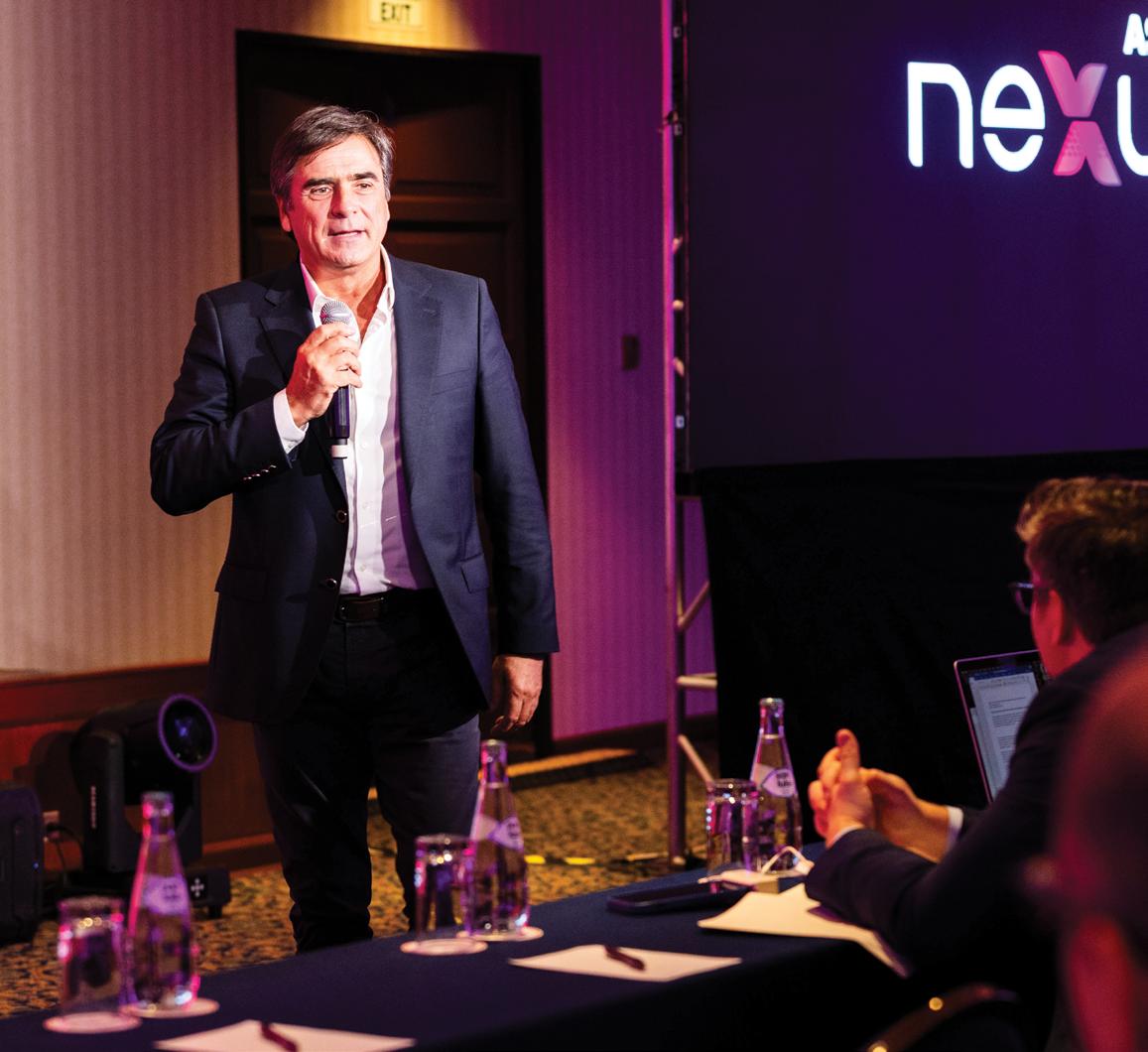
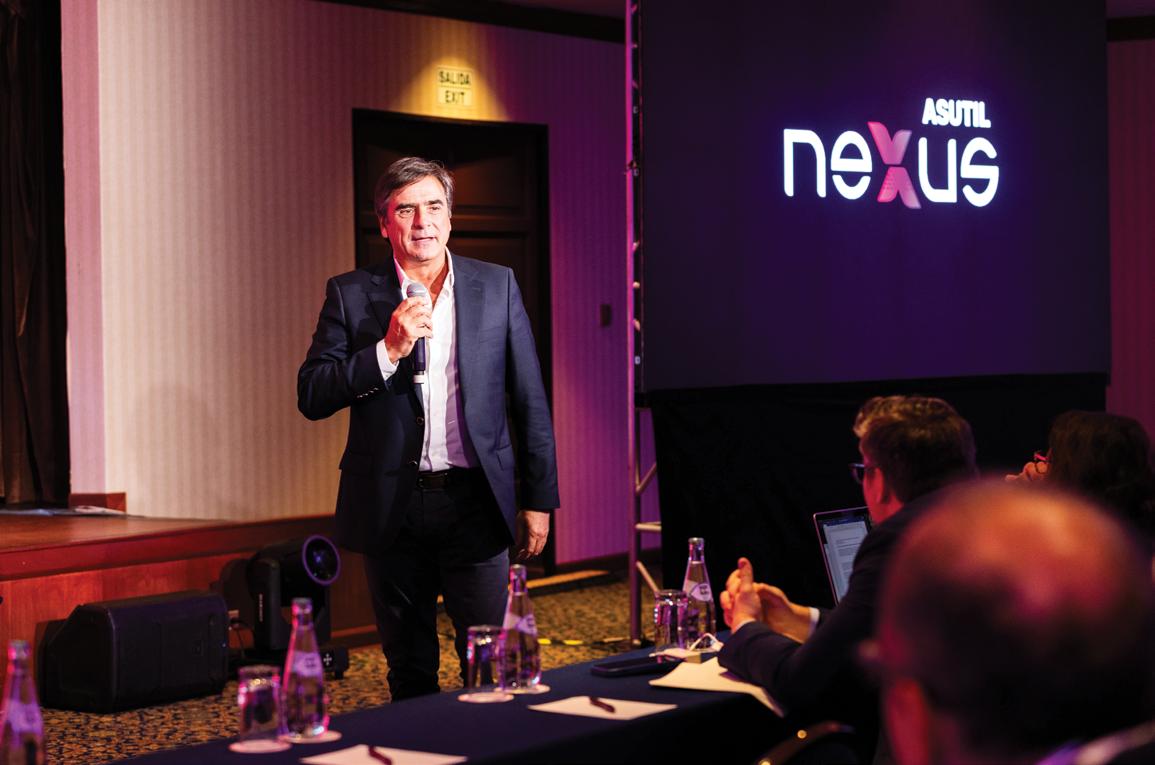
ASUTIL President, Enrique Urioste addresses delegates at last year’s ASUTIL Conference
across channels, helping members interpret consumer and market shifts, and building the evidence base needed to defend and develop the business.
From regional unity to global impact
The recent MOP4 (Meeting of the Parties) outcome sits within that wider industry context. The result, achieved in close collaboration with the Duty Free World Council, ended further examination of duty free’s role in the illicit tobacco trade and reinforced the importance of disciplined, evidencebased engagement in global policy discussions.
Urioste sees this as an example of what is possible. “When Latin America brings evidence, discipline and unity to the table, it can influence global policy,” he states.
The same discipline is now being applied to a longer list of regional priorities, including customs modernization, digital controls, border shop frameworks and the protection of the duty free model in regulatory debates that increasingly cut across markets. ASUTIL’s challenge is not only to respond to those issues, but to help members anticipate them.
Data-driven retail replaces instinct
“Advocacy is still essential, but it is now part of a broader mission to help the region anticipate change and shape its future,” says Urioste. “The most lasting structural change, however, is the shift toward data-driven retail. Decisions today must be grounded in insight, not intuition. That is where ASUTIL is investing heavily.”
Through its partnership with travel research agency m1nd-set, the association is giving members access to important research at a time when instinct and historical trading patterns are no longer enough to guide commercial strategy.
The findings point to a shopper who is entering the channel with more intent,
more information and a stronger sense of value. For travel retail, that changes the point of influence. Conversion can no longer depend only on the store environment; it increasingly begins before the traveler reaches the terminal.
Urioste understands this means growth will now require sharper tools, though the opportunity is significant.
“Latin America has shown remarkable resilience,” he says. “Despite currency instability, high airfares and uneven macroeconomic conditions, passenger numbers are recovering strongly. The region’s travelers are also highly
engaged: they convert well, they plan their purchases digitally and they show strong appetite for self-treating and exclusivity.”
A regional ecosystem, not isolated channels
According to Urioste, compared with other regions, Latin America’s recovery has been less linear but more dynamic. “The challenge now is to channel that resilience into sustainable growth through better regulation, smarter digital tools and more integrated commercial strategies,” he explains.
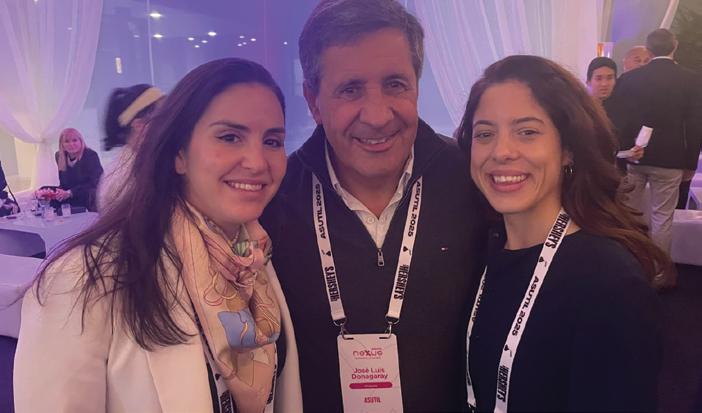
TFWA President Sarah Branquinho addresses delegates at a Women in Travel Retail+ ASUTIL event
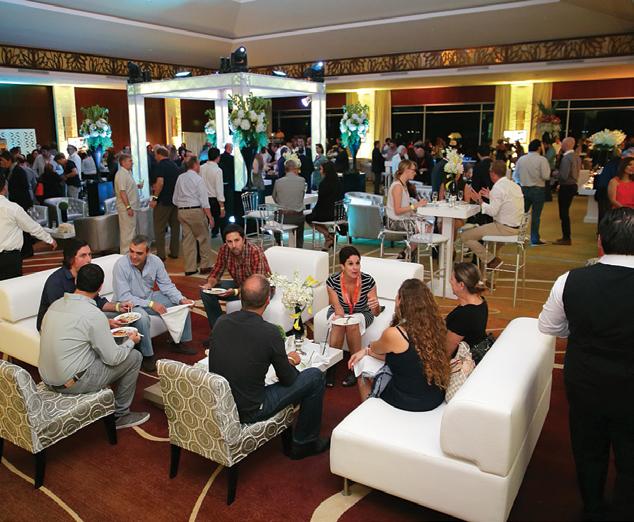
A snapshot from the opening cocktail recpetion at last year’s ASUTIL Conference
That need for integration is central to Urioste’s view of the association’s role to help members see the region as an interconnected ecosystem rather than isolated channels. “Through data, benchmarking and dialogue, we highlight how traveler behavior shifts across airports, borders and downtown stores, and how operators can adapt assortment, pricing and digital engagement accordingly,” he says.
In Lima last year, the Border Shop panel brought the issue of channel convergence directly into the discussion. For Urioste, the value was not simply in showcasing a segment, but in helping the industry understand where commercial strategies overlap and where they must remain distinct. “ASUTIL’s job is to provide the insight and the forum where those connections become strategy,” he adds.
A format built around access
That forum remains deliberately intimate, Urioste is clear that scale is not the objective. However, demand for the 25th edition exceeded expectations and the infrastructure of the venue in Punta Cana allowed the association to go slightly above its traditional limit.
“The 300-delegate cap has always been intentional,” he says. “It preserves
the essence of ASUTIL: an environment where meaningful conversations happen naturally, where decision-makers are accessible, and where the quality of interaction outweighs the quantity of participants.”
The residential format allows meetings, meals and social activity to be held within one property, creating a concentrated environment for business discussion. Networking Time, the app-managed block of one-on-one buyer-supplier meetings, remains one of the event’s most commercially important features.
For Urioste, protecting that format is part of protecting the value of the event itself. “Expanding too far would risk diluting the identity and the quality that define ASUTIL,” he explains. “Our members consistently tell us that the curated size is precisely what makes the conference so valuable. We plan to honor that.”
Punta Cana marks the next phase
This year marks the first time in over a decade that the ASUTIL Conference has taken place in the Caribbean. The Dominican Republic reflects many of the forces shaping the next phase of regional travel retail: strong tourism growth, infrastructure investment, high-volume leisure traffic and a duty
free offer that has moved well beyond its historic dependence on liquor.
The program is built around that context. Sessions will cover macro trends in the Caribbean and Latin America, consumer insights into South American and Caribbean travelers, and operator-supplier discussion on performance, margins, categories and operational evolution. The anniversary moments will honor ASUTIL’s past, but the focus is clearly forward-looking.
“We wanted the 25th anniversary to be more than a celebration; it had to be a reaffirmation of who we are and where we are going,” says Urioste. “Punta Cana offers the perfect setting to honor our legacy while projecting the future.”
That future, in his view, rests on three priorities: integration, intelligence and influence. Integration across channels and countries. Intelligence through better data, forecasting and shopper insight. Influence through stronger evidence-based advocacy on the issues that determine how the channel can operate and grow. “Latin America has the talent, the creativity and the consumer base to lead globally,” concludes Urioste. “But we need modern regulation, digital convenience and a unified regional voice. ASUTIL’s vision is to help build that future.”
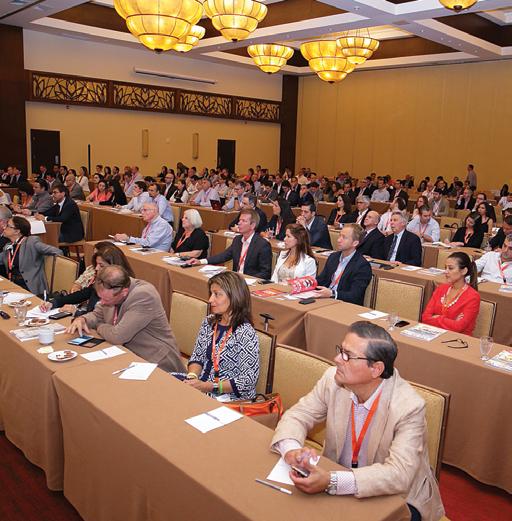
Over the past 25 years, ASUTIL events have brought together operators, brands and industry leaders to navigate changing markets, regulations and consumer expectations
the reboundBeyond
Stronger passenger numbers are returning to Latin America, but ASUTIL and regional analysts say the real competition is now about understanding which travelers are spending, and whether the commercial offer is ready for them
by HIBAH NOOR
The Baseline: Momentum Entering 2026
Despite global uncertainty, LAC entered 2026 with strong forecasts:
8.3%
LAC Air Demand
Year-over-year passenger growth (IATA, Jan 2026)
Sources: Tourism analytics, Reuters
11.4%
3–4%
Latin America enters 2026 with passenger momentum intact, but the next phase will depend on how well airports and retailers convert returning demand
Latin America’s travel retail recovery is not a single story. Passenger volumes are rising, outbound demand from Argentina is strengthening, and a generation of digitally fluent, younger travelers is arriving at airports with a clear idea of what — and whether — they want to buy.
But regulatory fragmentation, currency volatility, uneven air connectivity and rising operational costs have yet to be resolved. The industry is entering a phase where the broad tailwinds of post-pandemic rebound are being replaced by something that requires more precision: knowing which travelers are returning, what they are spending and whether the commercial offer is meeting them.
Carlos Loaiza-Keel, Secretary General at Asociación Sudamericana de Tiendas Libres (ASUTIL), frames the association’s response as disciplined and evidence-based. “Over the years, the association has secured important wins — from improvements in duty free
allowances to regulatory advances in border regimes,” he says.
The recent MOP4 (Meeting of the Parties) outcome to end further examination of duty free’s role in illicit tobacco trade, achieved by the Duty Free World Council with regional associations, is the latest example. “Coordinated, technical engagement can deliver results even in complex global arenas,” says LoaizaKeel. ASUTIL is now applying the same approach to customs modernization, digital controls and the protection of the duty free model across the region.
Argentina returns to the outbound map
John Price, Managing Director at Americas Market Intelligence, sees the Argentine recovery as one of the clearest structural shifts in the region.
“The turnaround in outbound travel from Argentina is a trend that will stick,” he says. The currency dynamics support the view: most of Argentina’s economic growth is driven by export sectors including energy, mining and agriculture, which generate dollars and underpin peso strength.
Miami, New York, Santiago and beach destinations in Brazil are the likely beneficiaries of that recovered outbound demand, he says. “You will see destinations like those developing marketing and shifting their marketing or at least developing campaigns to attract Argentines.”
Buenos Aires and Santiago are positioned for two- to three-year outperfor-
LATAM Shopping KPI’s
Millennials lead the region on spend and conversion, while
that requires sharper activation
mance, with Lima continuing to grow and Colombia potentially regaining dollar strength depending on political developments. Caracas will take longer, as “it was essentially an ignored market for the last 10 years,” according to Price. Among the region’s hubs, São Paulo, Bogotá, Panama, Lima and Santiago are best placed to strengthen their commercial position; Mexico City faces capacity constraints that limit its hub ambitions for now.
Mexico and the Caribbean are also benefiting from a shift in Canadian discretionary travel away from the US, although Price does not view it as permanent. “Some people may decide that they no longer want to turn to the states or, by having discovered other places, that they may be inclined to continue exploring
that new destination, but I think a lot of it will rebound back to the US,” he says.
The middle of the market narrows The composition of Latin American air travel is shifting in ways that complicate traditional spend-per-passenger assumptions. Price observes that the mid-spend traveler is contracting while growth concentrates at the premium and budget ends.
“You may begin to see the clustering of retail, whereby you have luxury offerings clustered together. That way it makes it easy for people who have limited time to find luxury retail, so they can hit four or five stores at the same time,” he says. He points to Istanbul as the most visible example of this
Carlos Loaiza-Keel, Secretary General, ASUTIL
Affluent Travel Preferences
●
●
●
●
approach working at scale, serving premium traffic from Asia and the Middle East through a mall-style luxury area.
For the mass-affluent Latin American traveler, ease of navigation and language accessibility are commercial factors, not just hospitality considerations. Miami is the most advanced US gateway on Spanish-language service but still has ground to cover for Portuguese speakers, a gap that matters given the volume of Brazilian traffic moving through US airports.
Gen Z and millennials reshape the basket
Shopper behavior data from m1ndset’s LATAM 2026 research highlight the generational shift. Millennials lead on average spend at US$146, against a LATAM total of US$129 and US$121 for
Gen Z. But the conversion gap is more revealing; millennial conversion reaches 70%, against 62% for Gen Z and 57% for boomers+. Gen Z shows similar footfall to the wider market but converts at a lower rate than millennials, despite strong self-purchase and impulse behavior.
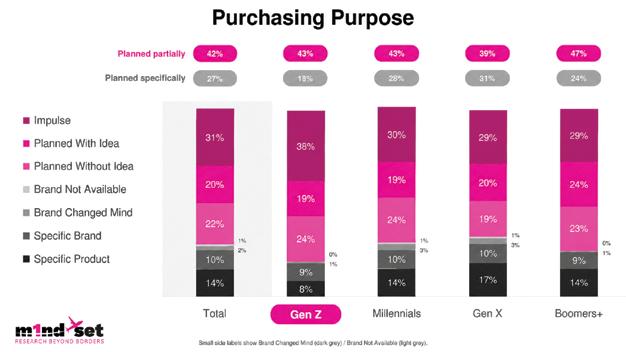
This category data diverges meaningfully by generation. For Gen Z, clothing and accessories hold the largest wallet share, followed by perfumes and alcohol. For millennials, perfumes lead, with clothing and accessories second and alcohol third. The purchasing intent data adds another dimension: 38% of Gen Z purchases are impulse, compared with 30% for millennials and 29% for Gen X and boomers+.
Gen Z is also buying for themselves at the same rate as millennials — 55%
of purchases are self-directed — which makes the conversion gap harder to explain through disengagement. They are present, they are spending on themselves, and they are the most impulsedriven generation in the airport. The commercial requirement is to reach them before they travel while preserving enough in-store stimulus for discovery and category switching.
Digital planning meets airport impulse
Loaiza-Keel describes Latin American travelers, Brazilians in particular, as highly digitally aware; 65% compare prices online and 67% plan purchases before arriving at the airport, and preorder adoption is rising. “Digitalization is no longer optional — it is the backbone of modern travel retail,” he says. Operators are responding with omnichannel platforms, loyalty ecosystems and datadriven assortment strategies. The next step he identifies is integration, “connecting digital touchpoints with physical retail to create seamless, personalised journeys.” For a shopper base where more than two-thirds arrive having already decided what they want to buy, and where impulse rates remain high in certain generations, the gap between a retailer who has already captured a pre-planned purchase and one who can also intercept an impulsive one is increasingly the measure of commercial competitiveness.
Sustainability moves into the intelligence layer
Sustainability in Latin American travel retail has moved past the stage of individual operator commitments. Leading operators have invested in energy-efficient store designs, reduced packaging and waste, strengthened community engagement and embedded sustainability criteria into refurbishment decisions. At ASUTIL’s Bogotá and Lima conferences, airport infrastructure and its environmental agenda occupied dedicated content space — a pattern that will continue in Punta Cana.
Avolta on finding success in Latin America
Driven by increased tourism and improving connectivity in the region, Avolta sets its sights on Latin America, where it relies on an integrated model and non-airport channels to strengthen performance
by LAURA SHIRK
Currently experiencing a phase of structural consolidation and resilient tourism demand, Latin America is projected to expand at a compound annual growth rate of 5.6% through 2030. Called home to a shopper profile that differs meaningfully from global averages, the region is attracting travelers seeking discovery, as well as opera-
tors that are thinking long-term. With this the case, GTR Magazine connected with global travel retail and food and beverage (F&B) leader Avolta to not only receive insight into the region, but also an update on its performance there. With the support of experienced local teams, Avolta has been intentional about upgrading its retail offer, operational standards and innovation capabilities
across the region at airport and nonairport locations, as well as implementing a pragmatic approach that is well suited to a region where agility and market knowledge are essential. That approach is translating into tangible results. In Q1 2026, Avolta reported group-wide organic growth of +4.7%, with Latin America emerging as the second-fastest growing region at
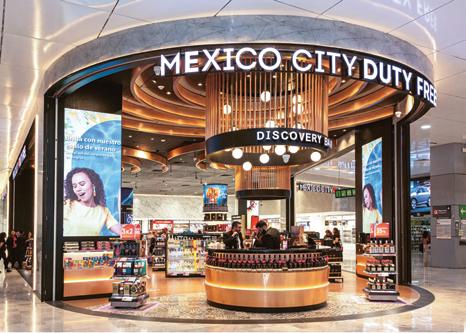
Avolta continues to upgrade existing locations including the recent refurbishments at Mexico City International Airport
+6.9% organic growth, behind only Asia Pacific. The performance reflects the strength of Avolta’s diversified geographic model and its ability to protect profitability amid a challenging external environment.
According to Enrique Urioste, President & CEO, Latin America & Caribbean at Avolta, the combination of a diversified mix of domestic, regional and international travelers, resilient tourism and improving connectivity across the region continues to create strong fundamentals for long-term growth. In some markets, it has seen shifts in nationality mix, with increased flows from other areas helping to offset any “localized softness.” Travelers remain value-conscious and selective, with spending driven by product relevance, sense of place and clear pricing. Urioste states, “Our focus on disciplined execution and adaptable assortments
allows us to respond effectively to changes in passenger mix and sustain healthy performance across the region.”
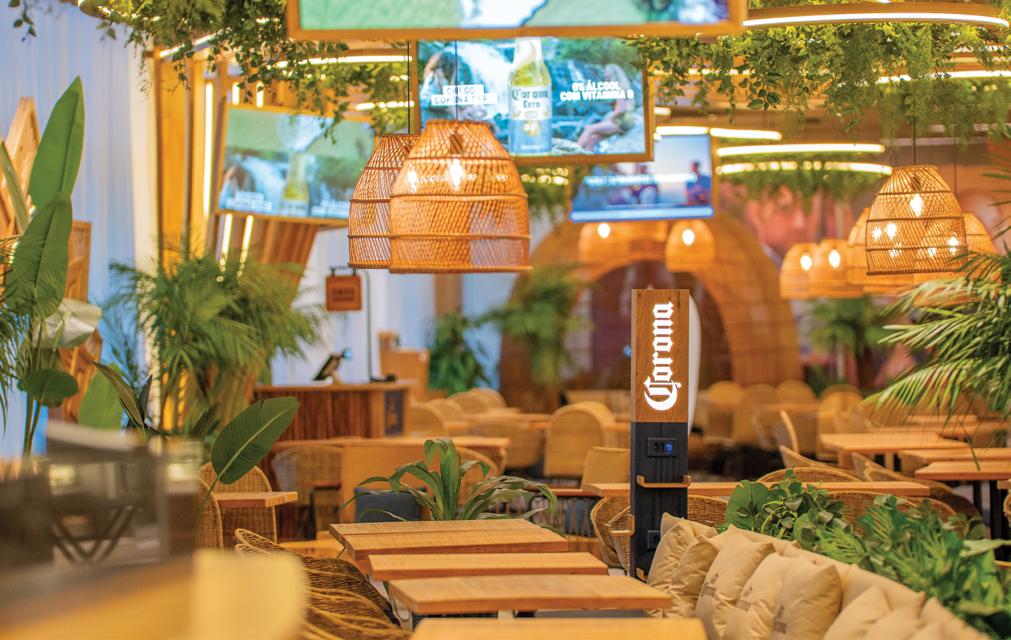
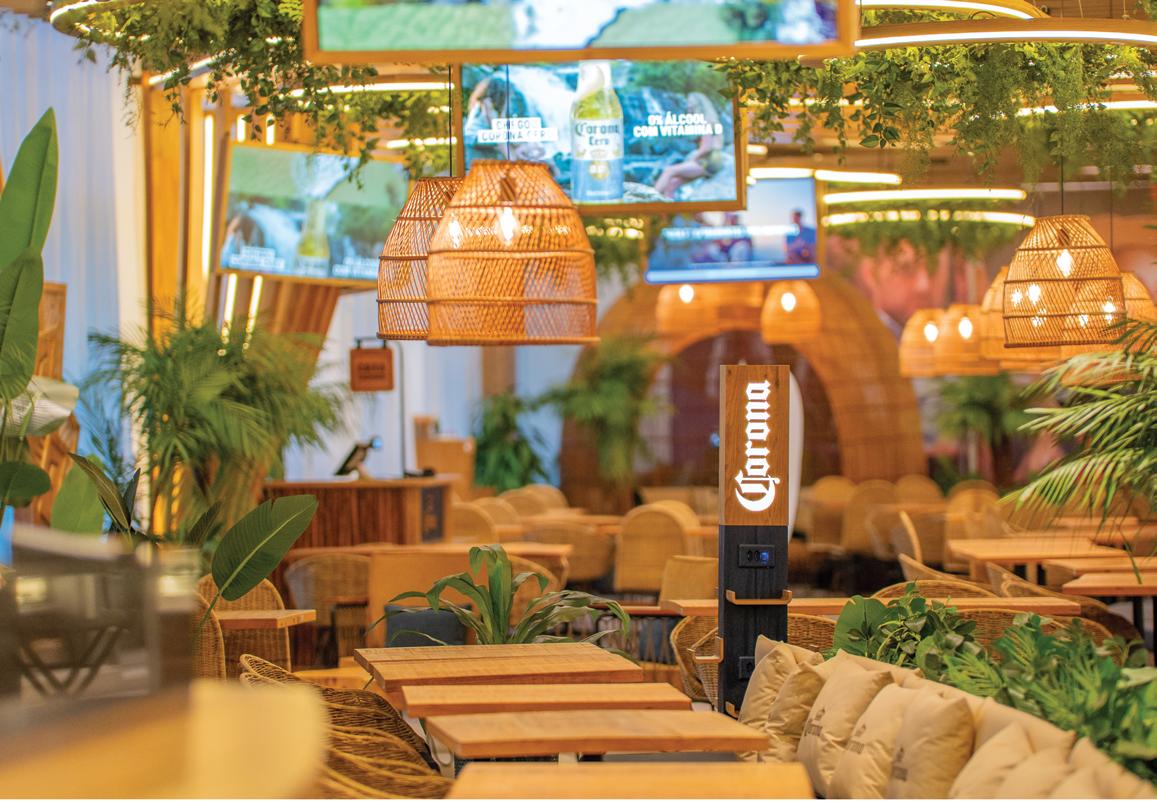
How data leads to differentiation Avolta is in the process of expanding its integrated model across Latin America, particularly by introducing food and beverage at airports where it already has a strong retail footprint. This is visible in concepts such as Vista Corona, its immersive, lifestyle-led F&B concept launched at São Paulo–Congonhas Airport, as well as through continued upgrades to existing locations, including recent refurbishments at Mexico City International Airport. Urioste notes that the ongoing growth of Club Avolta, which now has more than 16 million members globally, further strengthens its ability to engage travelers in a more personalized and relevant way across the region. On the retail
side at the former airport, the retailer recently unveiled an activation that combined Lancôme and Perrier-Jouët in a multi-touchpoint experience under the banner “A Toast to Happiness.” “This collaboration created a seamless and engaging journey for leisure travelers, while delivering strong outcomes for both brand and airport partners,” says Urioste.
In late April 2026, Avolta opened a new duty free store at El Catey International Airport in Samaná, Dominican Republic — its latest addition in a country where it has supported the tourism sector for more than 20 years. Located in the arrivals terminal, the store offers travelers a curated range of fragrances, premium spirits, fine chocolates, personal care essentials and gift items, bringing world-class duty free retail to one of the Dominican Republic’s key gateways.
The operator is expanding its integrated model across Latin America, particularly by introducing food and beverage at airports such as São Paulo–Guarulhos Airport where it already has a strong retail footprint
Speaking on how customer data and digital innovation influence adapting the retail experience for travelers in the region, Urioste says they are central to how Avolta grows and differentiates its business in Latin America. “Our scale and data infrastructure allow us to draw insights from multiple sources and translate them into tangible improvements in the in-store experience,” he comments. “This enables us to tailor assortments, promotions and layouts to different profiles — from time-pressed business travelers to leisure and cruise passengers who are
more inclined to browse, discover and engage with storytelling-driven categories.”
Shining a light on non-airport channels
Beyond airports, Avolta has opened a sizable border store in Foz do Iguaçu, Brazil. Its border operations in Brazil and Uruguay, including Foz do Iguaçu, are said to be meeting expectations, benefitting from high cross-border traffic and the strong gifting behavior linked to leisure and family travel. “Performance [at the border] is driven by getting the basics right: choosing the right locations, tailoring assortments closely to traveler profiles and delivering a strong retail experience with disciplined execution,” explains Urioste. “Border retail plays a distinct role in our regional portfolio, and when approached with focus and clarity, it continues to deliver attractive results.”
Urioste goes on to say, non-airport channels like border and cruise retail play a complementary role in Avolta’s business in the region. The operator is seeing a growing interest in Latin America and the Caribbean as part of
cruise itineraries, driven by increased tourism and the appeal of its culturally rich destinations like Havana, Cartagena and Rio de Janeiro. “These destinations are where heritage, festivals, food and local craftsmanship translate naturally into retail and experiential opportunities,” he observes.
Avolta’s focus now is on selective, high-quality partnerships including its collaboration with Norwegian Cruise Line, where there is a clear alignment on customer experience, long-term value creation and execution standards.
Recently, the company launched a new premium and experience-led retail offer onboard Norwegian Cruise Line’s Norwegian Luna, christened in Miami and sailing Caribbean and Bahamas itineraries. The program has been built around how guests shop at sea, with events, demonstrations and pop-ups concentrated in the first half of each voyage to drive engagement. The onboard assortment carries clear premium and luxury positioning: dedicated boutiques for Breitling and TAG Heuer anchor the watch offer, while Franck Muller and Jacob & Co. make their NCL fleet debut. In beauty, Jo Malone London, Balmain, KILIAN Paris and TOM FORD are brought together in a discovery-led multi-brand space, and Dictador adds an ultrapremium collectible dimension to the spirits offer.
A lifestyles boutique rounds out the experience with destination-inspired product tied to ports of call, including an exclusive Under Armour “Sense of Place” collection featuring designs inspired by St Thomas and Puerto Plata. “Across all channels, our approach remains consistent: growth must be profitable, customer-centric and sustainable,” says Urioste.
Enrique Urioste, President & CEO Latin America & Caribbean, Avolta
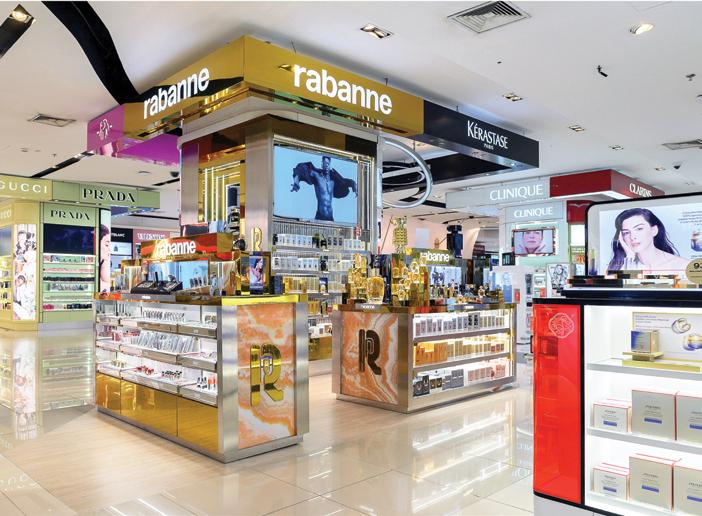
A snapshot of the beauty offering in duty free at São Paulo–Guarulhos Airport
Building depth
Attenza Duty Free is executing a two-track strategy across Latin America, with specialized boutiques in Panama and an expansion in Quito that will grow its footprint by more than 50%
by HIBAH NOOR
At Quito International Airport, Attenza Duty Free is executing a large-scale renovation and expansion that will redefine its commercial footprint in Ecuador’s primary gateway. Running from June 2025 to June 2026, the phased project will increase floorspace by over 50%, taking the operation from eight stores covering 1,400 square meters to 10 stores spanning 2,156 square meters, a move that positions the retailer to deepen category assortments and enhance passenger flow management in one of the region’s key connecting hubs.
“We are currently renovating two stores in departures and arrivals, and we are also opening two new stores: Polo
Ralph Lauren and a luggage /Adidas store with an innovative design,” says Carlo Quintavalle, Regional Commercial Director for Attenza Duty Free.
The construction timeline requires that all work is completed without closing the retail operation entirely. “We are maintaining a live operation model, including temporary closures, relocation of brands by A/B/C groups, and coordinated inventory and logistics, to ensure sales and customer experience throughout the construction,” he says.
Airport partnership
Together with airport operator Quiport, Attenza is redesigning the retail environment around passenger flow, widening
aisles and extending sight lines to reduce friction. “The design features unobstructed views, high-product-potential zones by category, and activations for surprising experiences without disrupting the flow,” says Quintavalle. “Additionally, we’ve added new tasting bar areas, activation islands and shop-in-shops for major brands.”
The departures store processes approximately 1.3 million of Quito’s 2.6 to 2.7 million annual passengers, with 60% of that traffic passing the new boutiques. Attenza is treating departures and arrivals as distinct environments based on dwell time, emphasizing premium experience and browsing in departures while arrivals focuses on convenience and impulse purchasing.
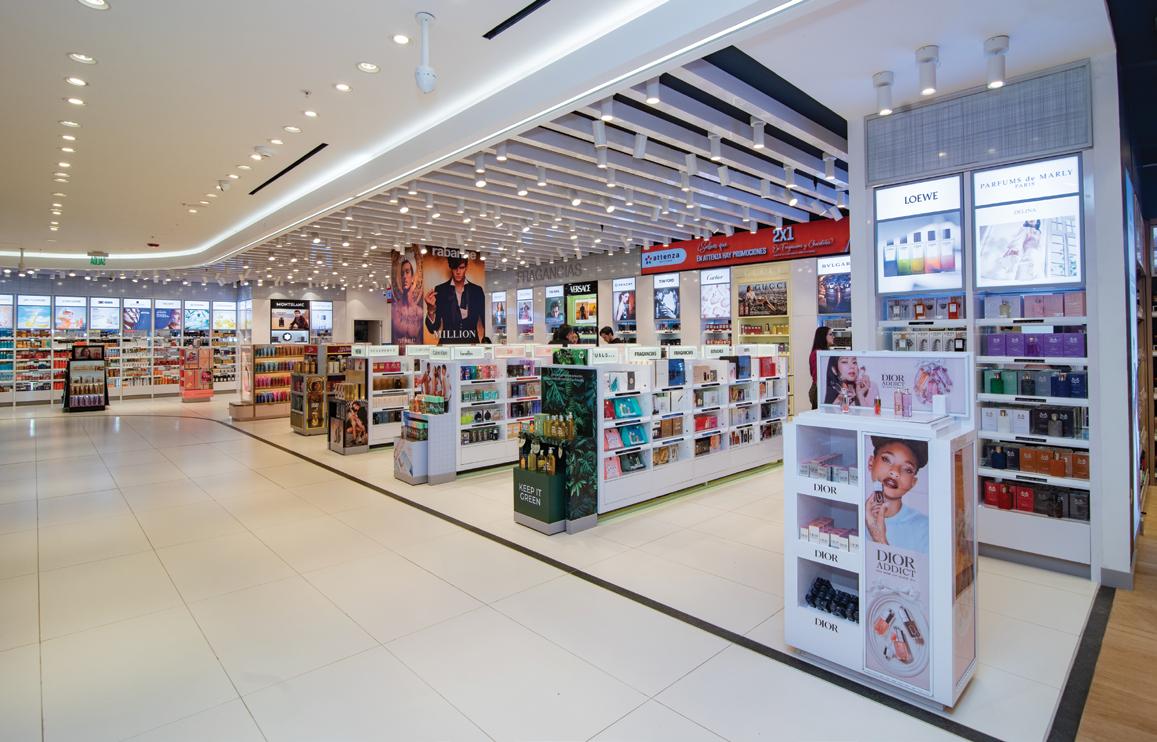
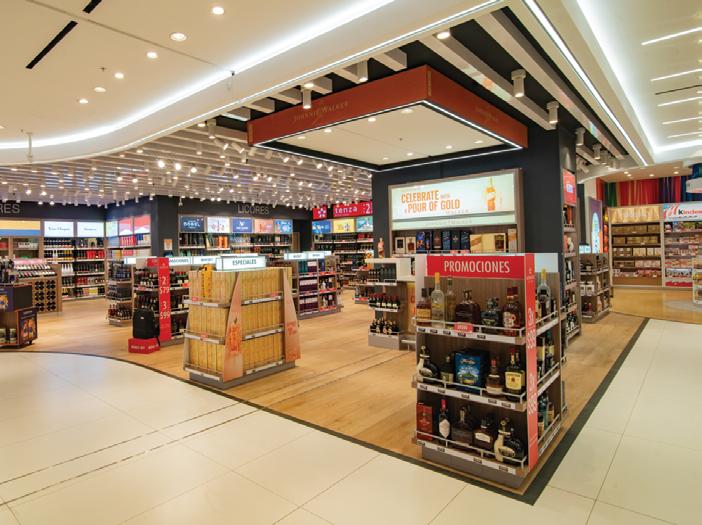
At Quito International Airport, Attenza Duty Free is expanding its footprint by over 50%
Carlo Quintavalle, Regional Commercial Director for Attenza Duty Free
“We redesigned aisles to be wider, with longer sight lines and clean signage that reduces friction and makes wayfinding easier,” Quintavalle says. “Higher-ticket and UPT categories are located in hightraffic areas to maximize conversion.”
Opportunity for growth
The expanded footprint allows Attenza to increase category depth, particularly in fragrance and beauty, where the company is adding niche and designer brands alongside premium spirits and exclusiveedition chocolates. “New boutiques and selective shop-in-shops provide the ability to improve brand storytelling,” Quintavalle says. “Additionally, dedicated spaces increase margin per square meter and market share in aspirational categories.”
Attenza integrated its LifeMiles partnership with Avianca into Quito in April 2025, making it the third market after Colombia and El Salvador. Passengers earn one mile per US$1 in physical stores and two miles per dollar on online purchases. Attenza operates an online reservation system at Quito, Tocumen and Bogotá El Dorado that allows preorders for airport pickup with a 20-minute cutoff before flight time.
Perfume discovery
Attenza opened its Signature Perfumery boutique at Tocumen Airport Terminal 1 in October 2025, carving out 55 square meters for a specialist fragrance offer in
a hub dominated by connecting traffic. The format complements the broader luxury boutique rollout that parent company Motta Internacional executed across Terminal 2.
“The boutique was designed to bring niche perfumes and designer collections closer to travelers connecting through Tocumen, enhancing Attenza’s premium experience with an innovative format,” says Quintavalle.
The store operates on a discovery model built around specialist advice and extended browsing time, with the team tracking performance through space productivity, average ticket, units per ticket and sales per passenger. “The Attenza Signature Perfumery boutique in Terminal 1 of Tocumen Airport has so far delivered a performance above expectations,” Quintavalle says.
Satisfying desires
Customer response has centered on assortment. “The feedback we’ve received is that a selection of products ‘hard to find’ at other airports leads to discovery and informed impulse purchases; merchandise that encourages leisurely exploration extends the time spent in the airport, and specialized advice increases the average spend and customer satisfaction,” Quintavalle says.
The Terminal 1 perfumery sits alongside a broader luxury push that parent company Motta Internacional executed
across Tocumen Terminal 2 in late 2024. Between September and December of that year, Motta opened a series of standalone brand boutiques marketed as Luxury Avenue, including Tory Burch (the brand’s first standalone airport location in Latin America since its 2012 São Paulo debut), Montblanc, TAG Heuer, Tumi, Longchamp Paris and Polo Ralph Lauren.
Regional footprint
Attenza operates more than 40 duty free and boutique locations across Panama, Colombia, Ecuador, El Salvador and Nicaragua, with the company opening a new store in Bogotá El Dorado in August 2025. Motta Internacional, Attenza’s parent company, describes its approach as evaluating airport opportunities region-wide while concentrating near-term expansion in existing markets.
“In addition to our current markets — Panama, Colombia, Ecuador, El Salvador, and Nicaragua — Motta Internacional maintains an active strategy of evaluating new opportunities at key airports in the region,” Quintavalle says. “While we cannot disclose specific countries at this time, we continue to participate in tenders and expansion processes where we see potential for growth and long-term partnerships. However, our short-term plan is to maintain ongoing expansion within our current markets.”
Quintavalle foresees the competitive environment intensifying across the region. “Competition in Latin American travel retail will intensify, driven by sustained air traffic growth, accelerated retail digitalization and airport modernization,” he says. “We will see operators adopting omnichannel models, increased investment in customer experience, more sophisticated activations and stronger alliances with airlines. Airports will demand higher quality, greater investment and more innovation. In this context, operators capable of offering experience, technology and efficiency will gain ground.”
The phased upgrade will take Attenza Duty Free from eight to 10 stores, enhancing flow and assortment at Quito International Airport
Community at the core
International Shoppes opens in Hawaii with a locally focused retail program; more on the retailer’s vision for Honolulu and Maui airports
by LAURA SHIRK
In April, International Shoppes celebrated its entry into Hawaii, USA, with openings at Daniel K. Inouye International Airport (HNL) in Honolulu and Kahului Airport (OGG) in Maui. Showcasing the spirit of Hawaii through a commitment to supporting local business and strengthening sense of community is at the heart of its duty free and specialty retail operations. The shared mindset: investing in
local entrepreneurs is a way to uplift the entire ecosystem. It is reported, with local vendors accounting for approximately 60% of its merchandise at HNL and OGG, Hawaii is now home to the retailer’s most locally focused retail program in its airport portfolio.
The New York-based, family-owned retailer assumed operations in partnership with Crump Enterprises under a 10-year concession awarded by the
Hawaii Department of Transportation (HDOT). Called one of the most significant airport retail transitions in state history, this change marked the end of DFS Group’s decades-long run in Hawaii.
“We are incredibly grateful for the trust and partnership the HDOT team has demonstrated,” International Shoppes Co-CEO Scott Halpern said in part in a press release. “We are excited to help travelers take home more than just a product
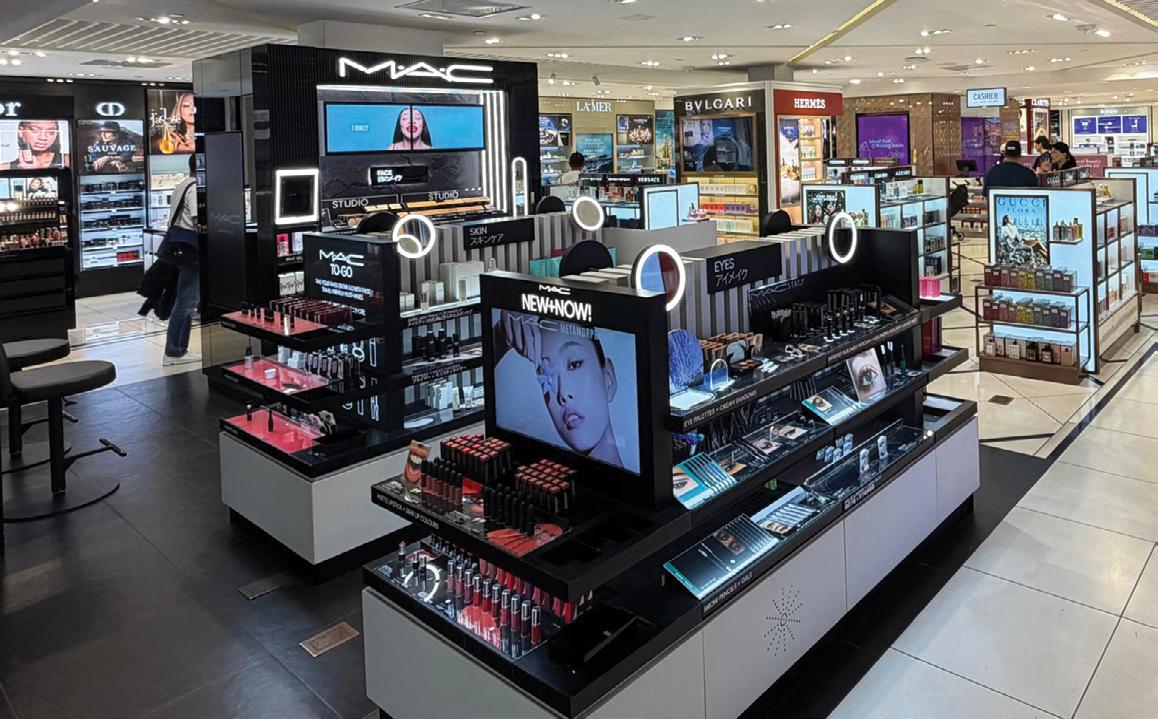
A look at International Shoppes’ beauty store at Honolulu Airport; the retailer is working to create a more fragrance-driven offering
— we are giving them a connection to the islands that lives on long after their visit.”
Sense of place drives redevelopment plans
Global Travel Retail Magazine spoke with International Shoppes following the openings. Discussing how the company’s presence in Hawaii fits into its North America growth strategy, Halpern pointed out International Shoppes is only pursuing opportunities where it believes it can add value to the airport authority and enhance the customer experience.
“When we visited Hawaii, we found that in meeting with the folks in Honolulu and in Maui, that both really fit well into our wheelhouse. And we jumped on the opportunity,” he said.
The multi-layer approach to making introductions and conducting business in the region, as well as the quality of Hawaii’s craft market served as key themes throughout our conversation. From the inclusion of local crafts and confections in product assortments to seeking local inspiration for redevelopment plans, International Shoppes is prioritizing sense of place. This vision is taking shape with the help of the retailer’s network on the ground.
Expected to be completed over the next two years, the retailer is planning different levels of reconstruction across both HNL and OGG — from minor renovations of current stores to major overhauls of other existing spaces. According to Matthew Greenbaum, Co-CEO at International Shoppes, it is incorporating store components that are either a nod to Hawaii or have some sort local design element.
On the way, International Shoppes is now finalizing designs for new retail formats and concepts, including a planned 4,000-square-foot open marketplace with two sites in Honolulu’s Terminal 1 Mauka Concourse highlighting Hawaii brands, alongside national and international products.
It’s time to Mana Up
As part of its community-driven program, International Shoppes has deliv-
ered a dedicated Mana Up retail space at each airport in collaboration with the leading champion of Hawaii-based entrepreneurs. This initiative reflects a broader mission to ensure small and growing businesses have access to opportunities traditionally unavailable in the airport environment.
Travelers at HNL will be able to experience and purchase products from beloved brands like Honolulu Cookie Company, Hawaiian King and Ko Hana Rum, offering authentic, high-quality goods that allow visitors to take a lasting piece of Hawaii home with them.
The OGG retail offering is designed
to capture the unique energy of Maui, with an emphasis on locally rooted brands and authentic products such as HI Spice and Maui Chili Chili Oil. Travelers will discover distinctive offerings from across the island, showcasing Maui’s craftsmanship and entrepreneurial spirit.
“Storytelling is part of the DNA of crafts in Hawaii. And I think that we’ve really tapped into it. We’re just starting,” added Halpern. “We want to make sure that everyone has an opportunity to really grow their brand and presence to all customers traveling through these two fantastic gateways.”
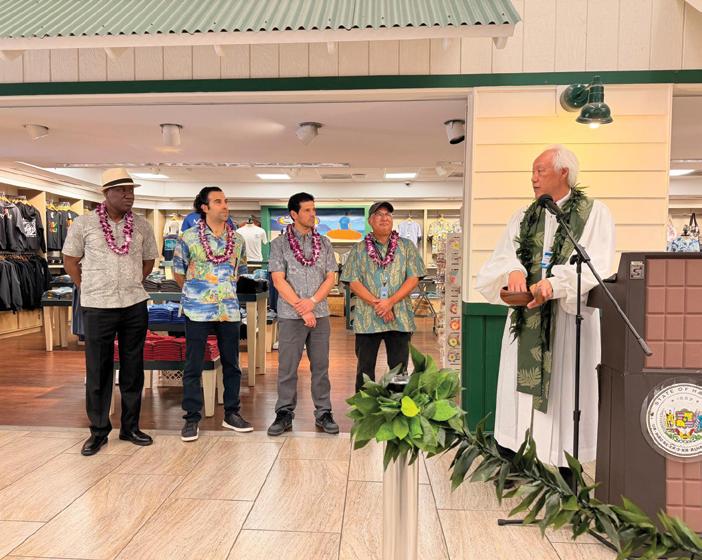
[L R]: Ben Crump at Ben Crump Enterprises, Matthew Greenbaum, Co-CEO, International Shoppes, Scott Halpern, Co-CEO, International Shoppes, Curt Otaguro, Deputy Director, Hawaii Department of Transportation, Reverend Wang at the retailer’s grand opening at Kahului Airport
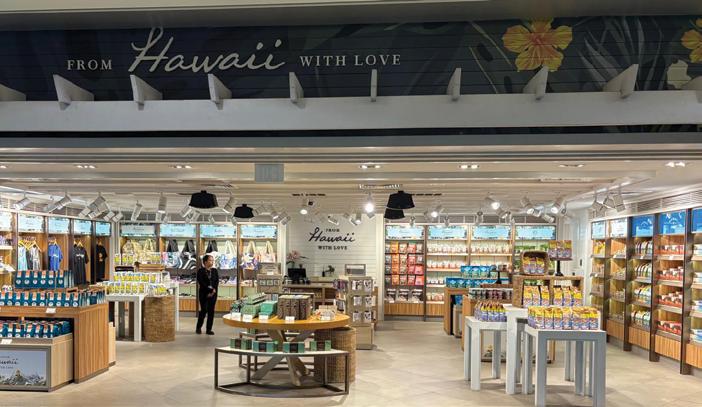
International Shoppes’ local offering at Kahului Airport is designed to capture the unique energy of Maui
On a mission to create change
While visiting Philip Morris International’s research & development center in Neuchâtel, Switzerland, Global Travel Retail Magazine learned more about PMI’s focus on traveler education and the science behind their bold strategy for change
by ALISON FARRINGTON
Sitting in a glass-walled meeting room overlooking the lake, Christophe Scarton, VP Multicategory Smoke-Free Products for PMI, outlined why the world’s largest tobacco company is investing billions to reinvent itself. “We are not talking about strategic diversification alone,” he said. “We are talking about changing social behavior.”
That ambition to phase out cigarettes in favor of smoke-free products and advance the conversation around harm reduction runs through every part of the business. As a six-year PMI veteran, Scarton oversees the development and deployment of omni-channel capabilities designed to support decisionmaking, execution and personalized engagement for adult consumers across
product markets for the entire smokefree products portfolio globally.
Global Travel Retail Magazine was on location to learn more about PMI’s focus on experiential touchpoints, traveler education and ‘the science’ behind their bold strategy for change.
Multi-category growth and the strategic role of GTR
PMI’s transition began more than a decade ago with a radical internal decision to reinvest cigarette revenues into the development of products that did not yet exist. For Scarton, the implications have been significant, extending beyond financial transformation to encompass cultural change, new capabilities, revised narratives and different methods of consumer engagement.
This transition also required a departure from legacy branding. Early attempts to associate cigarette brands with smoke-free alternatives created confusion. PMI now positions these products separately, emphasizing that they represent a fundamentally different proposition.
The strategy is already producing measurable results. PMI reported strong 2025 financial performance, with net revenues exceeding US$40 billion and smoke-free products accounting for 41.5% of total revenues, highlighting their growing importance within the company’s business model.
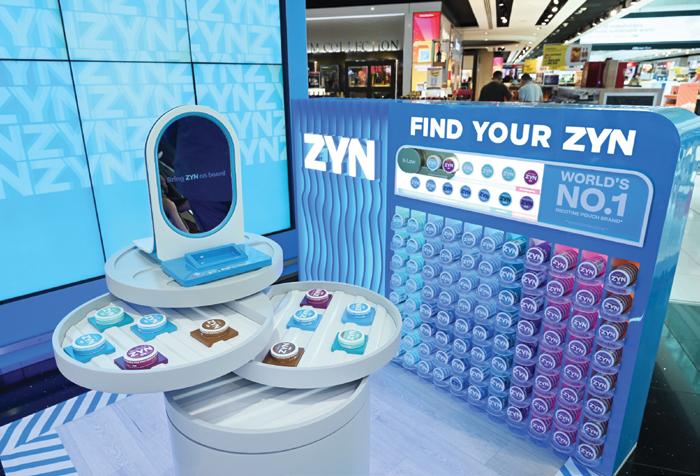
At the center of PMI’s strategy is a multi-category portfolio that includes heat-not-burn (IQOS), nicotine pouches (ZYN) and vaping products (VEEV).
GTR Magazine was on location at Philip Morris International’s sleek R&D center, The Cube in Neuchâtel, Geneva
The approach is based on consumer behavior, recognizing that smokers do not typically transition in a single, linear way, but instead move between formats based on context, preferences and habits.
“Data on our consumers suggests there is poly-usage. Hence, we have seen that as soon as we arrive with multi-category, we have — mechanically speaking — bigger growth,” Scarton explained. Each category addresses different rituals, sensory experiences and convenience factors, offering multiple pathways away from cigarettes. This reflects the understanding that no single alternative is suitable for all smokers.
Within this framework, global travel retail (GTR) serves a distinct strategic role. Beyond functioning as a sales
channel, it acts as a platform for testing and refining product presentation and consumer engagement strategies. “GTR is one of the environments we use to try out and improve new ideas,” Scarton noted. Airports bring together diverse adult audiences, offering a dynamic environment where PMI can evaluate retail formats, educational approaches and messaging in real time. Variations in dwell times, demographics and cultural backgrounds provide insights into how different smoke-free categories resonate with consumers.
The international and highly visible nature of travel retail also makes it suitable for experimentation in display, storytelling and education. “It’s the only channel where you can have a shop in the morning with a lot of people, in the afternoon with only one person, in the evening with multiple generations,” Scarton said. The microcosm nature of airports, with their varied dwell times and demographics, allows PMI to refine both the sales approach and the brand
narrative before rolling it out to domestic markets.
According to PMI’s Q1 2026 results, GTR has become one of its strongestperforming channels, with airports delivering more than 20% growth in IQOS consumables, among the highest gains across major markets. Scarton added the channel provides unique advantages for awareness-building because travelers are often more open to exploration and new experiences. “GTR is not just a sales channel, but rather a strategic showcase of PMI’s portfolio.”
Science, substitution and education as drivers of behavioral change
At the core of PMI’s strategy is the scientific principle that eliminating combustion can significantly reduce harm. As Gizelle Baker, VP External Scientific Affairs, explained, “If you don’t burn the tobacco, you have a substantial reduction, an average of 90% to 95%
PMI’s “science machine” is a live demonstration that visualizes the fundamental difference in the smoke that comes out of a cigarettes and the aerosol that comes out of smoke-free products
lower levels of harmful and potentially harmful chemicals in aerosol inhaled by IQOS users compared to cigarette smoke.”
This scientific positioning is especially important in retail environments, where complex findings must be trans-
lated into clear, accessible messages for consumers. “Studies show that people who switched achieved about 95% of the reduction in exposure that people who abstained altogether achieved,” Baker said. This framing positions smoke-free products as meaningful harm-reduction
tools rather than simply alternatives, helping bridge the gap between scientific evidence and consumer behavior.
PMI’s strategy is also based on providing better alternatives for smokers who do not quit entirely. “It’s really hard to convince people to give it up; the way we do it is finding better substitutes,” Baker said. This principle inspires product introduction in GTR environments, where the objective is to redirect existing behavior rather than confront it directly, by offering products that may deliver similar satisfaction with reduced exposure compared to cigarettes.
PMI considers education essential, particularly in travel retail. The company has developed dedicated “multicategory technology” zones that break down each product by device, ingredients and nicotine content. Retail staff function as brand ambassadors, guiding travelers through product distinctions while live demonstrations, referred to as the “science machine,” illustrate the differences between cigarette smoke and smoke-free aerosols. “Retail is the primary awareness engine,” Scarton emphasized. Training is a key component of this strategy, with PMI investing in ambassador education to ensure staff can engage effectively and personalize conversations.
The philosophy also informs PMI’s portfolio design. “We had to create a portfolio to maximize the number of legal age smokers, who would otherwise continue to smoke, that we can help move away from cigarettes,” Baker explained. In-store, this strategy is reflected in multi-category displays that allow travelers to navigate options based on individual preferences. Rather than promoting a single solution, PMI presents a range of alternatives.
With more than 43 million users across 108 markets, PMI’s smoke-free portfolio has moved beyond niche status and become part of a broader global shift.
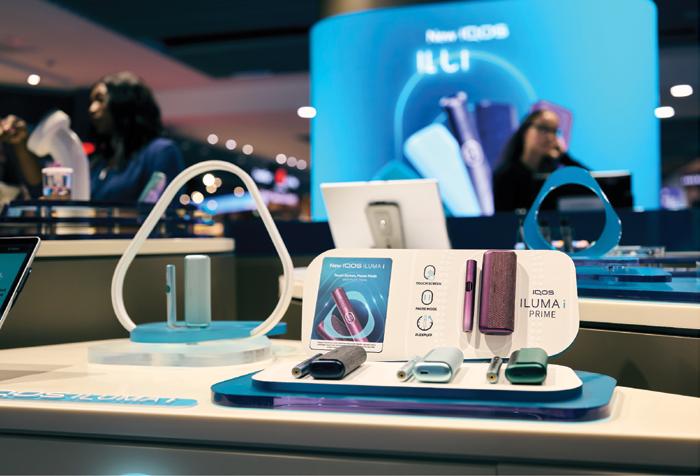
The IQOS Iluma was launched in Frankfurt Airport in 2022 with retail POS designed to engage and inform travelers
ZYN and the broader nicotine pouch category represents a dominant growth driver for PMI, with a new retail space seen in Dubai
Carmencita: The Taste of Spain as a Strategic Asset for Travel Retail
A century of leadership and tradition
Since 1923, Carmencita has defined the Spanish culinary landscape. With over 100 years of history and a 54% market share in Spain, we are the leading brand in spices and seasonings. This dominant position is more than just a figure: it is a guarantee that international travelers recognize Carmencita as the standard for authentic Mediterranean flavor.
Your strategic partner in the duty free channel
Present in 83 countries, we understand the demands of global trade. Carmencita doesn’t just sell spices; we offer a
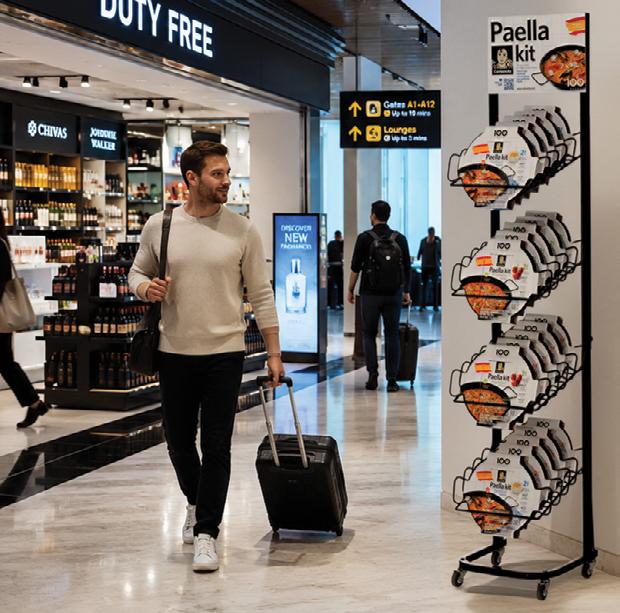
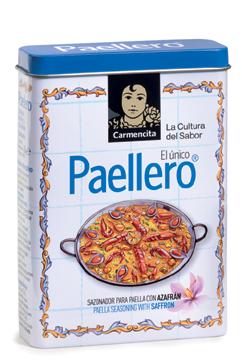
high-turnover gourmet souvenir that meets the growing demand for authentic, healthy products linked to the Mediterranean diet. Paella, our flagship product, is Spain’s most recognized gastronomic icon, making our range a natural draw for passengers.
What do we bring to your commercial space?
1. Profitability and impulse buying: our Premium formats are specifically designed for the duty free environment. Saffron, Paprika, Paella mixes, giant grinders, exclusive gift boxes, and cocktail botanicals offer high perceived value and excellent commercial margins
2. Optimized logistics for the traveler: our products are “travelfriendly”: they require no refrigeration, have a long shelf life, and their high-security packaging is lightweight and compact — ideal for carry-on luggage and hasslefree customs clearance
3. Global quality assurance: our operational capacity is backed by partnerships with giants such as Starbucks and McDonald’s. Furthermore, we are the innovation partner of the prestigious Basque Culinary Center, certifying that every batch meets the strictest food safety standards in Europe
Innovation on the 2026 horizon
We look to the future with the inauguration of our new 30,000-square-meter factory in Novelda, Spain. This state-ofthe-art facility, which includes a cooking school and cutting-edge R&D installations, allows us to guarantee a scalable global supply and constant innovation in blends and presentations.
Carmencita is the global ambassador of authentic Spanish flavor. We invite you to add a century-old brand to your portfolio — one that combines tradition, safety, and excellent reception in international markets.
Celebrating in style
Diageo Global Travel will showcase tequila from Julio and Casamigos across 34 airports in the Americas for FIFA World Cup 2026
by LAURA SHIRK
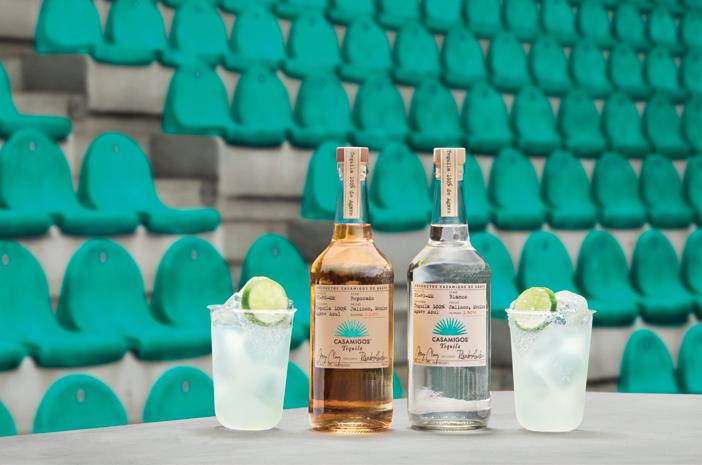
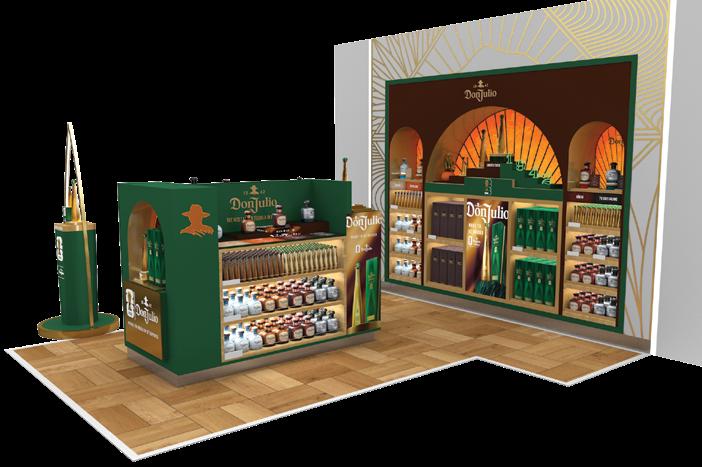
To celebrate its role as the Official Spirits Supporter of the FIFA World Cup 2026, Diageo Global Travel is redefining the tequila experience for traveling fans, transforming travel retail locations across the Americas into destinations of discovery throughout the tournament. Showcasing flagship brands Don Julio and Casamigos tequilas, the high-impact activations will place the spirit firmly at the heart of the world’s biggest sporting moment.
Designed to educate travelers on the tequila category and celebrate the cultural energy of the tournament, the campaign will deliver immersive, fanfocused experiences. Over 100 Don Julio and Casamigos activations will feature across 34 airports throughout North and South America, from Guayaquil to Santo Domingo and all the host cities across Canada, Mexico and USA.
Key pop-ups include:
• New York JFK Airport will launch a Casamigos “Frenemy Zone.” The
interactive space will bring about friendly rivalry, complete with a foosball table and cocktail bar
• Mexico City International Airport Terminal 1 will feature a Don Julio experiential space with a luxury “golden trophy” podium and exclusive bottle personalization
• Mexico City International Airport Terminal 2 will debut a Don Julio takeover featuring an immersive football simulator experience
• Cancun International Airport will see a digital in-store takeover and Don Julio 1942 bottle personalization exclusive to Cancun, alongside the Don Julio 1942 FIFA World Cup Edition
Andrew Cowan, Managing Director, Diageo Global Travel, says, “Our partnership with the FIFA World Cup 2026 offers an unparalleled opportunity to engage consumers during a truly global cultural moment. By placing Don Julio and Casamigos at the center of this celebration through standout activations and memorable experiences, we aim to capture the energy of the tournament and elevate how travelers discover and enjoy tequila.”
Sampling will be used to promote signature tequila-based drinks, including the Casamigos Rivalrita, an exclusive serve inspired by the three host countries. The spotlight aims to educate travelers on how to create a cocktail at home or on their trip. Gifting initiatives will also feature at key travel retail locations, including branded thermic Don Julio cups and reversible Casamigos bucket hats.
As an Official Supporter of the FIFA World Cup 2026, Tequila Don Julio released a limited-edition Don Julio 1942 bottle. The design is inspired by the iconic FIFA World Cup trophy, displaying a luminous gold finish and a striking malachite closure.
The limited-edition Don Julio 1942 FIFA World Cup 2026 bottle is available to purchase at major airports across Canada, Mexico and the United States in 75cl or 5cl formats.
Over 100 Don Julio and Casamigos activations will feature across 34 airports throughout North and South America to mark the FIFA World Cup 2026
with the competition Keeping up
Flor de Caña’s Rodrigo Bazan says rum can compete with other spirits categories by leaning into education, storytelling and elevated experiences
by LAURA SHIRK
As the rum category has become increasingly competitive against more established spirits such as whisky, cognac and gin, Global Travel Retail Magazine spoke with family-owned brand Flor de Caña for its take on the changing landscape. As noted by Global Travel Retail Managing Director Rodrigo Bazan, Flor de Caña is strengthening its presence in the premium and ultra-premium seg-
ments by focusing on its core pillars of naturally aged, sustainably crafted rums and a rich 135-year family legacy.
“Rum has a strong opportunity to compete by leaning into education, storytelling and elevated consumption experiences that highlight its versatility and craftsmanship,” he explains. “At Flor de Caña, we bring this to life through premium tastings, cocktail experiences and a clear focus on authenticity and
sustainability. This allows us to stand confidently alongside other spirits categories in the duty free environment.”
Bazan continues, “Across the Americas, we are prioritizing high-quality visibility, targeted activations and strategic partnerships to elevate brand perception and drive conversion. This approach allows us to connect with increasingly discerning travelers seeking authenticity and craftsmanship.”
According to him, when it comes to key regional differences seen in rum consumptions across travel retail, specifically in Latin America and the Caribbean, consumers are showing interest in premium and aged expressions. The brand is also seeing an increased appreciation for quality, provenance, and brand story, particularly among international travelers.
Cruising in style
Flor de Caña is eyeing the cruise channel as an opportunity for growth, working to expand its footprint across key cruise lines. Made up of premium activations and immersive experiences onboard, its curated offering includes masterclasses, signature cocktail programs and cross-promotions between retail and pouring. The goal: to generate brand engagement across the full traveler journey. Flor de Caña is now available in over 20 shops in cruise retail and is listed with Carnival, Holland America, MSC, Norwegian, Royal Caribbean and Virgin.
An updated look and feel
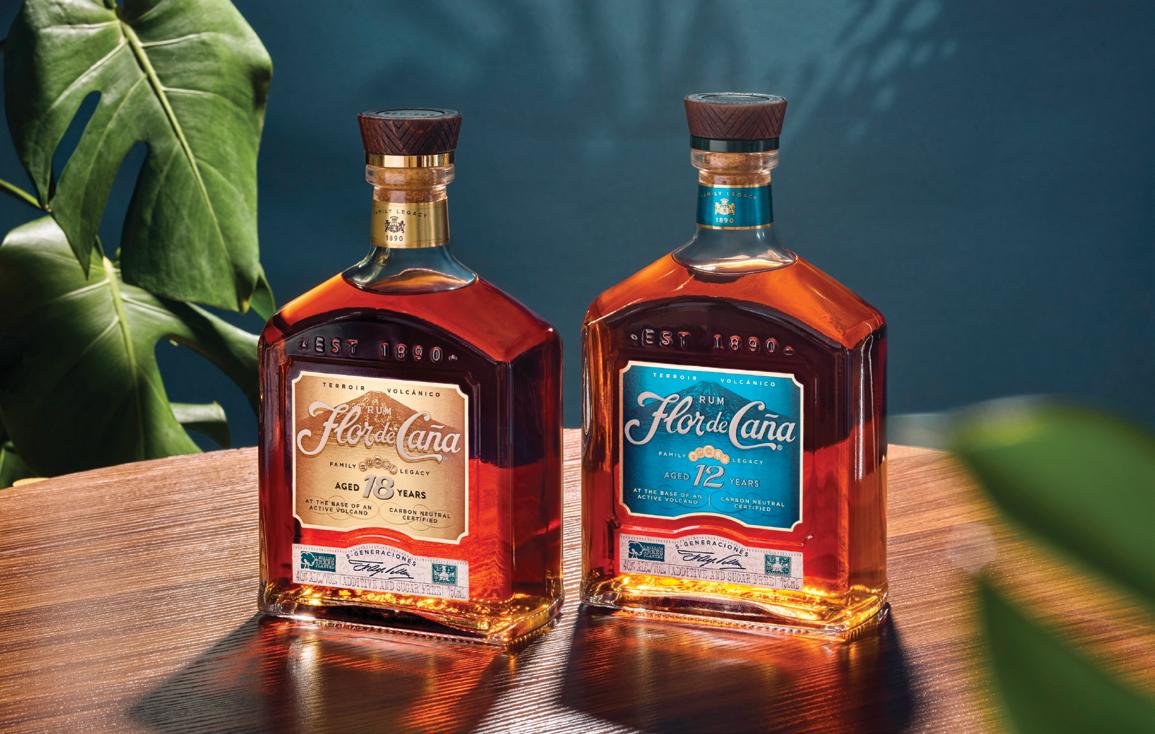
Earlier this year, Flor de Caña introduced a refined new design across its premium portfolio to elevate its global brand presence, as well as pay homage to its origin story and longstanding commitment to sustainability and quality. The updated look features a new visual identity, a lighter bottle design, and fully recyclable packaging.
“Sustainability is a central pillar of
Flor de Caña and a key differentiator in travel retail, where consumers are increasingly conscious of their choices,” comments Bazan. “As a carbon neutral certified brand that is distilled with 100% renewable energy, we offer a compelling proposition that aligns with both buyer expectations and evolving consumer values. This credibility strengthens trust and enhances our positioning in the premium segment.”
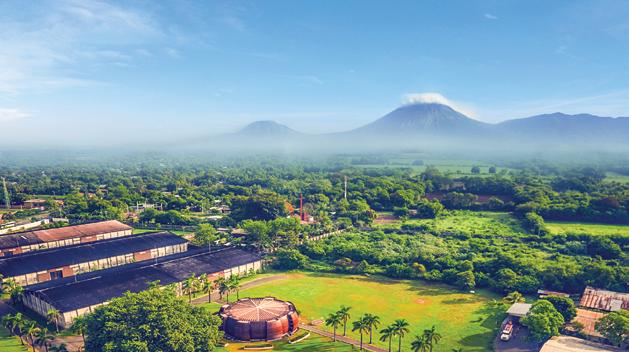
The brand’s aging warehouses are located at the base of the active San Cristobal Volcano in Nicaragua
The Flor de Caña Distillery in Chichigalpa, Nicaragua, has been in operation since 1890
Comfort, culture, compression
Portuguese lifestyle sock brand Chulé is making its Americas travel retail debut at this year’s ASUTIL, positioning the conference as a launchpad for its next phase of international growth
by LAURA SHIRK
Present at Lisbon Airport, Portuguese lifestyle sock brand Chulé is looking to build visibility among passengers across the Americas and establish a stronger foothold in the travel retail sector. Reflecting the increasing traveler demand for health and wellness products, Chulé is making its travel retail debut in the Americas at ASUTIL’s 25th edition, with a special focus on compression socks for travel retail. The brand is positioning itself squarely within the category, presenting a product that sits at the intersection of design,
sustainability and clinical function, while making the case that the airport is a fitting place to attract shoppers.
As outlined by the company, compression socks apply graduated pressure to the legs — greatest at the ankle and decreasing toward the calf — stimulating venous blood return and reducing the risk of clot formation during air travel. Beyond medical prevention, demand for the garment is growing for general in-flight comfort, post-flight recovery and broader wellness, particularly on long-haul routes.
Chulé addresses all these concerns while adding something most compression brands do not: original design rooted in Portuguese culture, with patterns including dogs, codfish, coffee and sardines, bringing a fun and distinctive visual identity to a category that has traditionally looked purely clinical. “While other brands start from a medical or athletic logic, Chulé was born from a desire to celebrate the best of Portugal through unique colors, designs and patterns,” explains brand spokesperson Matias Ressia.
Design and sustainability at the core Chulé’s socks use seamless toe technology for comfort, with a composition of organic cotton, polyamide and elastane, delivering support, breathability and durability. The cotton is 100% organic and certified to the Global Organic Textiles Standard, ensuring no pesticides, chemicals or GMOs are used in cultivation. All packaging uses
sustainably sourced materials, and the brand donates more than 1% of annual revenues to environmental and social causes through the “1% for the Planet” initiative. Production takes place near its Lisbon headquarters to minimize supply chain impact.
Prioritizing the Americas
Travelers in the Americas are familiar with compression wear as a flight comfort tool, giving the brand a clear entry point, and according to Chulé CEO Miguel Alemão, passengers in the region are more open to impulse and gifting purchases beyond traditional retail categories. “We see this as a key opportunity to introduce Chulé to the travel retail market, connect with regional sales teams, and start building distribution opportunities across the Americas,” he comments. Cross-category partnerships with travel gear, wellness and local sports club brands are also on the agenda. The priority for now is generating brand awareness among travelers across the Americas and establishing Chulé firmly within travel retail. At home in Europe, it is actively working on new activations, while conversations for future opportunities in Asia are also underway.
Reducing the risk of clot formation on long-haul flights, Chulé’s compression socks address a growing traveler need as the health and wellness category gains ground in travel retail
Offering a twist on the traditional clinical look of compression socks, the brand’s design is playful, modern and distinctive