Long before she became a global superstar, Shania Twain was a child who knew what it meant to go hungry. She remembers arriving at school without breakfast. She remembers the uncertainty of not knowing where the next meal would come from. Most of all, she remembers how hunger affects far more than an empty stomach.
In between days of going to school hungry and days where hunger would drive her to skip school altogether, she made a vow that if she made it someday, she would make sure to find a way to give back to kids like her so they would have access to the support that she so desperately needed as a child.
“I remember what it was like to grow up hungry—it made my school years so difficult,” she shared. “Food insecurity is a very sad reality that can negatively impact a child's learning and mental wellness. I made a promise to myself a very long time ago that someday I would support others who were facing the same barriers I did as a child. A child's dignity is so important.”
With more than 100 million albums sold worldwide, five Grammy awards, and a catalog of songs that have become part of the soundtrack of countless lives, Twain has spent much of her career making good on that promise.
When she launched the Shania Twain Foundation in 2010, the goal was to help children and families facing poverty through programs focused on food security, education, mental wellness, and essential community services, all based out of schools full of children like her.
But a lot can change in 15 years—for one thing, food
As the scale of the issue climbs, so too does the Foundation’s approach. The only thing that hasn’t changed is Twain’s commitment to her childhood promise.
Last year, the Foundation worked with venues across the United States to identify local food banks in each tour stop, supporting organizations in Montana, New York, Maine, New Hampshire, Pennsylvania, and Florida. Each performance was connected to a local food program, directly impacting the communities where Twain played.
Fans noticed. Twain shared that the Foundation has received countless messages from people sharing their heartfelt thanks for donating to the food banks they rely on.
“The moments that I think stay with me the most are when I hear a family didn’t have to choose between paying a bill or buying food,” she explained. “What’s even better is that I’ll often hear of a family that is back on their feet and donating at the very food bank that supported them. It tells us the work in the community is working and that’s very fulfilling.”
Really, this is what it’s all for—in every city, there are countless families like her own. Statistics are one thing, but firsthand experience is quite another. In the same way that Twain knows what it’s like to go to school hungry, she knows that there are real families, neighbors, and friends behind each statistic. Helping them means they can breathe a little eas
childhood, but it doesn't have to be part of any child's future," she said. "That belief is why I'm proud to support No Kid Hungry in their mission to make sure fewer kids grow up hungry."
For more than a decade, No Kid Hungry has worked alongside schools, community organizations, and local leaders to connect children with healthy meals while advocating for long-term solutions to childhood hunger.
Most recently, Twain joined one of the campaign's signature initiatives: the annual Williams Sonoma celebrity spatula collection.
Each year, artists, actors, chefs, athletes, and entertainers collaborate with Williams Sonoma to design limited-edition spatulas that raise funds for No Kid Hungry. Over the years, the collection has featured names including Dolly Parton, Cher, Pink, Gwen Stefani, Blake Shelton, Scarlett Johansson, Jack Black, Kate Hudson, Questlove, Neil Patrick Harris, Terry Crews, and many more.
This year, Twain joins that star-studded lineup, designing a veritable “kitchen tool for change” that helps No Kid Hungry connect kids to healthy meals. Every dollar raised helps the organization provide healthy meals to children who need them most. In fact, just one dollar can help provide up to 10 healthy meals.
Through the Williams Sonoma partnership, No Kid Hungry recently awarded a $5,000 grant in Twain's honor to schools in Cheatham County, Tennessee, helping provide up to 50,000 meals for local children. It's exactly the kind of practical, community-focused support Twain ves creates lasting change.
GROWING SOMETHING GOOD
Most healthy meals, one way or another, take root in a garden—but not always in the way you’d expect. This year, Twain’s name took root in a new way with the debut of the Shania Twain™ rose, a hybrid tea rose developed in collaboration with Rosen Tantau, the renowned German rose breeder, and April & Ashley, a U.S.-based luxury rose grower.
The rose, personally selected by Twain, features pink-and-yellow blooms, a light fruity fragrance, and strong performance across several growing regions. More importantly, a portion of every sale supports the Foundation and its work helping children and families experiencing food insecurity.
“We were introduced to Rosen Tantau, a rose breeder in Germany,” she said. “I worked with them to select the rose and they took it from there. It is about a twoyear process to breed the plant to ensure it will grow and flourish in different regions. Now it’s here, and it’s a beautiful rose.”
Having a rose named in her honor is
meaningful in itself. Having it connected to the Foundation makes it even more special.
“As a rose grower myself, it is an honor to have a rose with my name,” she said. “And that it gives back to the charity is just wonderful.”
BUILDING
A BIGGER MOVEMENT
As the Queen of Country Pop and one of the best-selling female artists of all time, Twain is known by millions for her music.
But the legacy she is building through her Foundation may prove just as enduring: helping ensure that no child, no family, and no community is left behind.
"I remember what it felt like to go to school hungry," she said. "That never fully leaves you."
Neither does the determination to change that story for someone else. As Twain wraps up a busy season of performances overseas, including appearances in London and Ireland, the Foundation's work continues to grow.
Last year, the Foundation supported food banks throughout Twain's North American tour, helping strengthen local organizations serving communities across the United States while contributing to an initiative that funded the equivalent of one million meals across
RAYE MOCIOIU
A PARTNERSHIP FEEDING AMERICA'S KIDS
SHANIA TWAIN
Get to Know Miss Volunteer America 2027: Pageant Winner, Pilot,
SARAH BEST, JACKSON SUN
From soaring through the clouds as a pilot to winning Miss Volunteer America, Amanda Higginbotham is trailblazing on land and in the sky.
Higginbotham became the fifth winner of the Miss Volunteer America pageant on June 20. She was crowned on the Carl Perkins Civic Center stage in Jackson.
She took a nearly eight-year hiatus from pageants after competing in them as a teenager, and said the Volunteer program is the only reason she got back into it.
"I put myself out there, and it taught me a lot; not just how to walk in heels, but how to maintain poise in uncomfortable situations," she said. The Volunteer America pageant felt particularly competitive this year, Higginbotham said, but in a commending nod to her fellow contestants, she added, "You're only as good as your class."
Higginbotham is a classically trained pianist, and for her talent on stage, she performed what she described as a "Frankensteined" version of four different classical songs.
There was plenty of glitz and plenty of glamour to go along with the talent, but there's also so much more.
Higginbotham is an airline transport pilot and runs her own non-profit. With the $50,000 scholarship she won in the pageant, she plans to pursue a master's degree in international relations to deepen her understanding of other countries as she travels around the world.
She said her journey with pageantry has given her confidence both on and off the stage as a woman in STEM (Science, Technology, Engineering, Math).
Reflecting on her win, she said she left her best on stage in Jackson and that this accomplishment marks the end of her career in pageantry.
BREAKING BARRIERS IN STEM, AVIATION
The 25-year-old is from the Dallas, Texas area and recently graduated from the University of North Dakota with degrees in international arts and aeronautical science. She comes from an aviation family.
Her mom was a flight attendant, and her father was an airline pilot. She said
Non-Profit Leader
she was "just bitten by the bug."
"I was really attracted to STEM; I like the challenge, I like the journey of it, and then once I found myself immersed within that industry, I found it bein g a home and a thing that grounded me even if I was 35,000 feet up in th e air," she said.
Higginbotham first began flying at 16 when she became involved with the
Civil Air Patrol, which she said is like the JROTC of the United States Air Force.
She has been a first officer airline transport pilot for the last two years for SkyWest Airlines, a regional airline that flies under major carriers like American Airlines and Delta. While her current certification allows her to fly planes with fewer than 100 passengers, such as the
Bombardier CRJ900, she continues to log flight hours to meet the Federal Aviation Administration requirement to fly Airbus and Boeing planes.
About 10 percent of all pilots are women, and only five percent are airline transport pilots, according to Women in Aviation International.
A HEART FOR SERVICE
Over the next year as Miss Volunteer America 2027, Higginbotham will grow the Volunteer program's partnerships with St. Jude Children's Research Hospital and the Salvation Army.
Allison DeMarcus, the pageant's founder and CEO, announced on June 17 that the contestants had collectively raised
She
From Rubble to REBUILD: How Julie Colombino-Billingham
HOLLY CAMBRUZZI
Julie Colombino-Billingham didn’t arrive in Haiti with a business plan. She arrived with a suitcase, a humanitarian’s urgency, and the quiet belief that showing up matters. In the days after the catastrophic 2010 earthquake, she traveled to Haiti as a relief worker, believing it would be a short stay. Instead, the weeks stretched into years, and somewhere between the rubble and the resilience of the Haitian people, her life’s purpose took shape. Haiti has long been framed through a single lens: disaster. But ColombinoBillingham saw something deeper, something the headlines rarely capture. She saw ingenuity. She saw artistry. She saw a culture that keeps standing, even when the ground has tried to swallow it whole.
One moment, in particular, became a compass point—an unvarnished truth offered by a Haitian woman who didn’t need sympathy, or saving, or another short-lived solution.
“I don’t need water, I need a job.”
It’s a sentence that cuts through the noise with startling clarity. It’s the sentence that helped ColombinoBillingham reimagine what “help” could look like when it’s built alongside the people who need it most.
BEYOND THE RUBBLE
That reimagining became Deux Mains, a fair-trade fashion brand created in collaboration with Haitian artisans. The name means “two hands,” and it’s more than poetic branding—it’s a philosophy. Behind every product is a person, a livelihood, and a story still in progress.
From the beginning, Deux Mains was designed to challenge the most common failure of aid: impermanence. Instead of temporary relief, the company focused
After
RAYE MOCIOIU
Haiti’s Heartbreak Into a Hand-Up
on dignified work—living wages, safe conditions, and the kind of stability that allows families to plan beyond tomorrow.
At the heart of it all is a solar-powered, women-owned, Fair Trade-certified factory in Port-au-Prince, where Haitian craftspeople transform responsibly sourced materials into timeless leather goods. The work is meticulous, but the purpose is even more precise: to prove that “sustainable luxury” can be more than a buzzword. It can be a lifeline.
WHERE PURPOSE MEETS CRAFTSMANSHIP
In an industry where exploitation has too often been the default, Deux Mains built a different standard—one rooted in transparency, training, and long-term investment in people. Artisans earn living wages, receive health insurance, and have access to continued education and skills development. Over half of the workforce are women, many in leadership roles, shaping not only the products, but the future of the company.
Over time, the brand grew into an internationally recognized, employee-owned business, backed by organizations such as the United Nations, USAID, the Clinton Foundation, and fashion leaders including Kenneth Cole and Eileen Fisher. A partnership with Nordstrom helped expand visibility and increase sales—proof that values-led fashion can scale without losing its soul.
But Colombino-Billingham’s impact didn’t stop at what could be sold. She kept returning to the question at the center of it all: what does it take for a community to truly rebuild?
REBUILD: THE LONG GAME That question became REBUILD globally, Colombino-Billingham’s nonprofit dedicated to fighting poverty in Haiti through education and job training. It’s a model built for the long haul—focused not on handouts, but on pathways.
REBUILD invests in scholarships,
tutoring, mentorship, and vocational training that lead to real employment. Its goal is to remove the barriers that keep people trapped in cycles of poverty and to replace dependency with opportunity. This ecosystem, nonprofit and for-profit working hand in hand, has created measurable impact, but the most moving changes are often the simplest ones. In Haiti, proper closed-toe shoes are required for school uniforms. Without them, children can be turned away at the gate. Through this work, Colombino-Billingham and her team made and distributed nearly 10,000 pairs of Haitian-made leather school shoes to children across the country—shoes crafted locally, supporting local jobs, while opening classroom doors. That impact continues to grow. Through a generous matching grant, every pair of Haitian-made school shoes purchased now provides a second pair for another student in need, effectively doubling the reach of
every investment. Handcrafted at Haiti’s only school shoe factory, the shoes do more than complete a school uniform. They help children stay in the classroom while creating sustainable jobs for Haitian artisans and strengthening the local economy. With matching funds currently available, schools, churches, and ministries have a unique opportunity to help twice as many children step confidently into the school year. It’s the kind of impact that multiplies: one pair of shoes becomes attendance. Attendance becomes education. Education becomes possibility.
In telling her own story, Julie tells the story of so many whose lives were transformed by the 2010 earthquake in Haiti. Her clear and honest recollections put the reader at the epicenter of the most challenged and resilient culture in the western hemisphere.
—Sean Penn, Actor, Director, and Humanitarian
A BOOK AS A BRIDGE Now, Colombino-Billingham has gathered this journey into a memoir: From Loss to Legacy: How
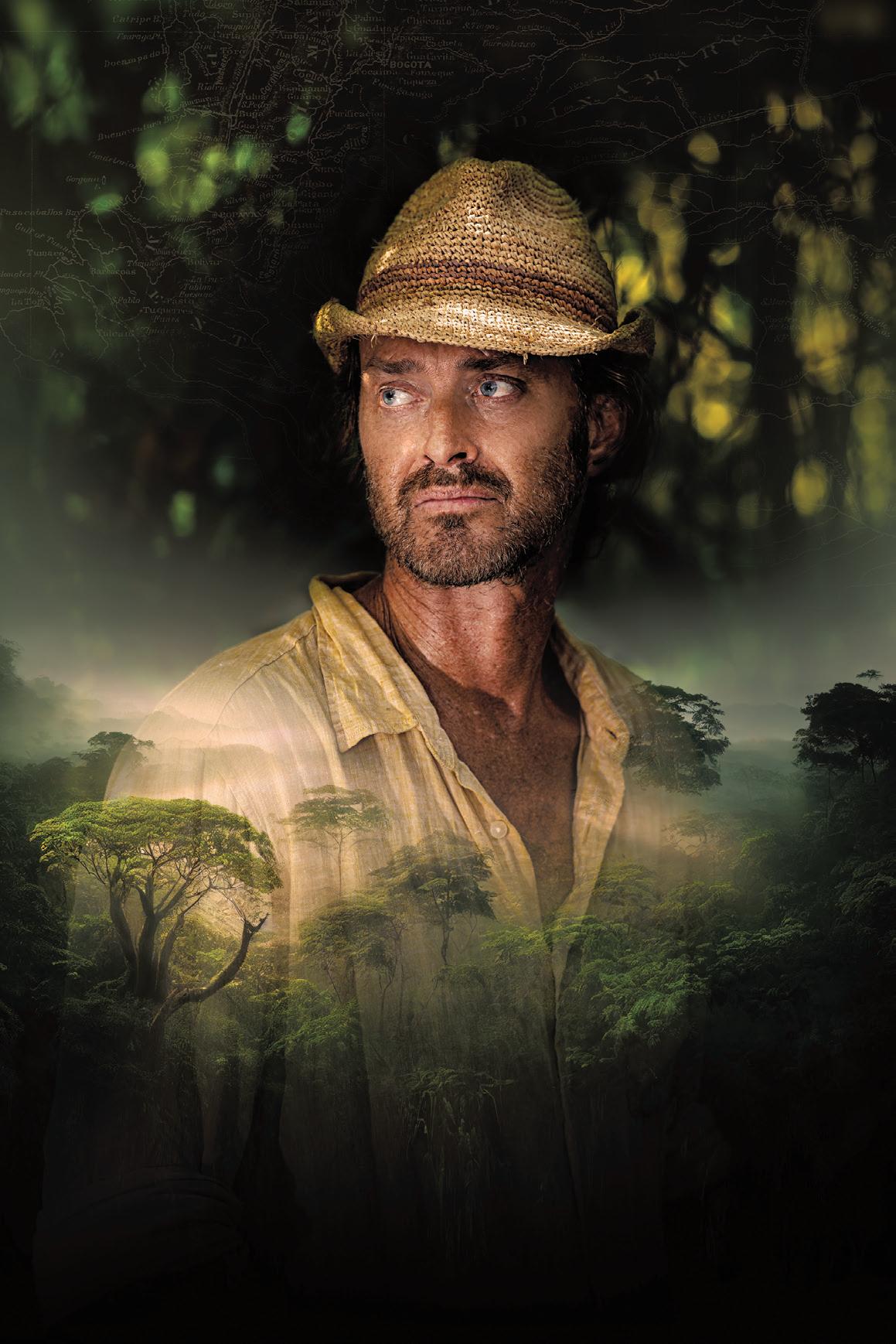
the Earthquake: Recovery Is Just Beginning in Venezuela, and CORE is on the Ground
When disaster strikes, the first priority is always saving lives. But when the headlines fade, recovery is still just beginning. The core of recovery is not measured in days, but in months and years. It’s a process of clearing roads, rebuilding homes, restoring livelihoods, and helping communities regain a sense of normalcy.
In the days following Venezuela's devastating earthquakes, thousands of families found themselves sleeping in temporary shelters, surrounded by uncertainty. Homes had collapsed, schools were damaged, and streets were buried beneath mountains of concrete and twisted metal.
For many, returning home wasn't simply a matter of opening the front door—it wasn't yet safe to do so.
Founded by Sean Penn and Ann Lee in the aftermath of the 2010 earthquake in Haiti, CORE (Community Organized Relief Effort) took action when it was needed most.
In Haiti, hard work and a refusal to accept impossible odds drove the organization's efforts. CORE achieved what many experts believed would take decades: clearing literal tons of rubble, managing the largest camp for displaced people in Haiti, and helping communities rebuild.
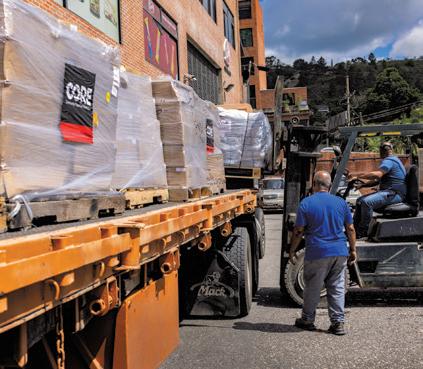
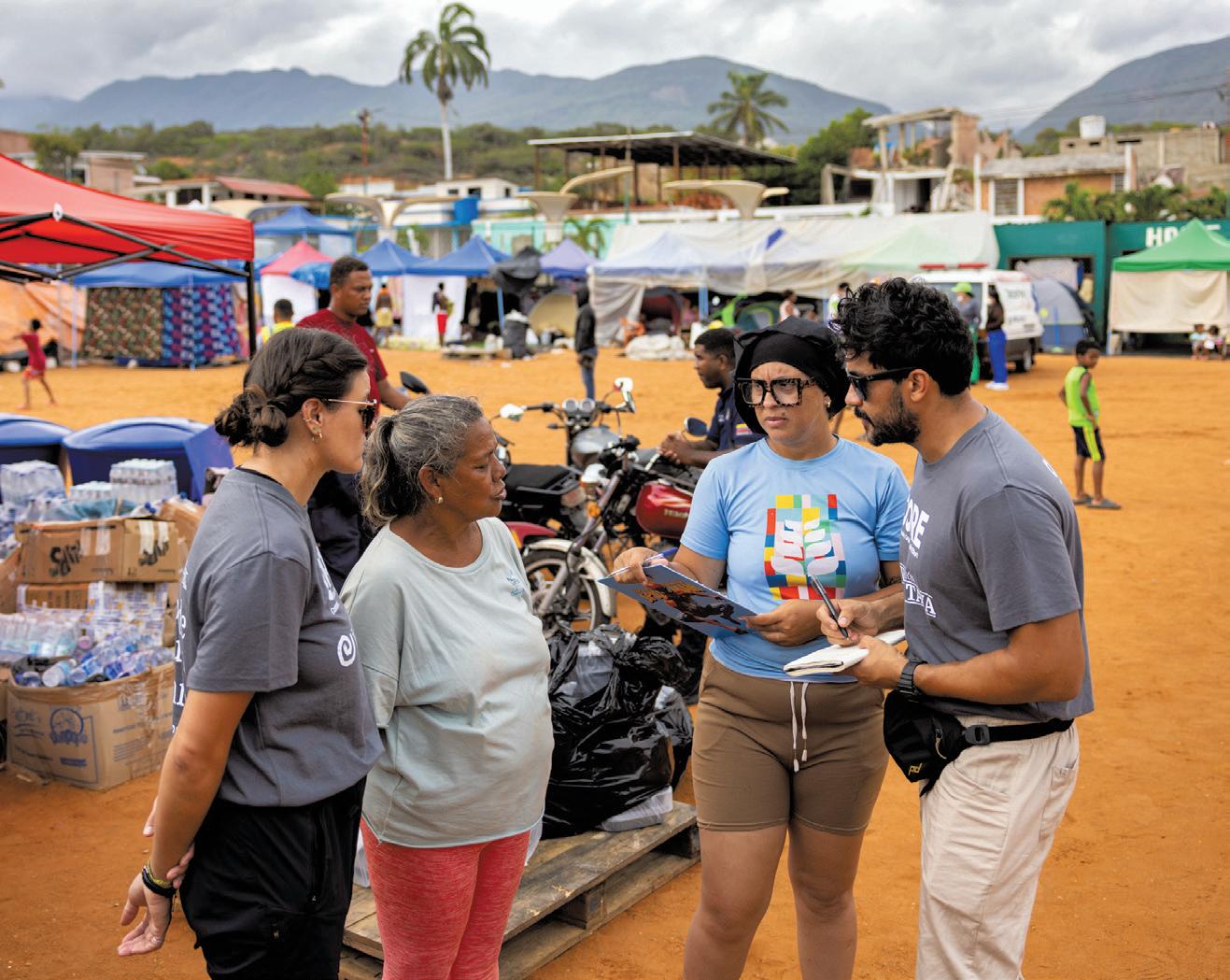
More than 15 years later in Venezuela, CORE carried forward that same spirit of rapid response and determination, quickly mobilizing on the ground and began clearing the path forward—literally.
"Our work doesn't end once immediate danger has passed," shared the CORE team. "Recovery means helping communities regain stability, restore essential services, and rebuild in ways that make them stronger and more resilient." With teams operating throughout La Guaira, Caracas, and communities near the epicenter in Turmero and Morón, the humanitarian organization has already begun the critical process of helping Venezuelan communities rebuild their lives.
CLEARING THE PATH
TO RECOVERY
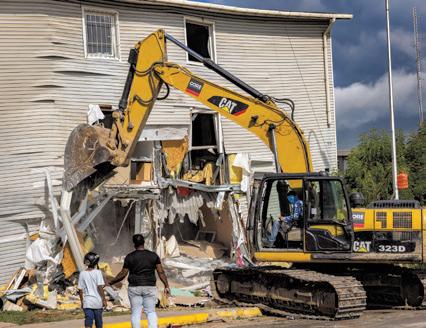
As conditions have allowed, CORE has expanded its operations to include large-scale debris removal, deploying excavators, backhoes, and trained operators to assist search-and-recovery teams in clearing damaged neighborhoods.
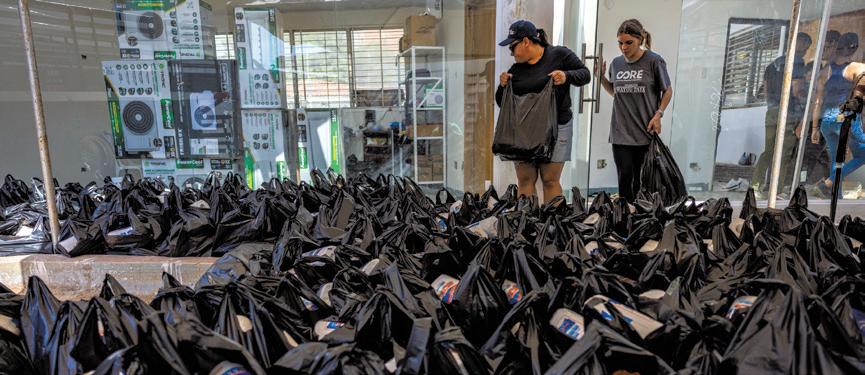
CORE has already cleared more than 12,000 metric tons of debris from sites near the epicenter, including a damaged school, partially collapsed homes, and community spaces in Morón. These achievements may not make headlines, but they do make an impact: every cleared road allows emergency vehicles to pass, every damaged building made safe allows families to imagine returning home, and every truckload of debris removed brings communities one step closer to rebuilding. But there’s still more to recovery. Saving lives is one thing, clearing the path is another, but caring for those who have been displaced is just as important—so CORE has been doing that too, providing the essentials that thousands of displaced families rely on every day. Across
displacement camps in Caracas, La Guaira, and Carabobo, more than 4,400 people have received emergency food, drinking water, and hygiene supplies.
To help bridge the gap between crisis and recovery, CORE is also delivering nearly 18,000 pounds of fresh produce each week through its partnership with Colombian agricultural enterprise Acceso.
CORE plans to continue this initiative over the coming months, ensuring families have consistent access to nutritious food while recovery efforts continue. As for the families, the survivors themselves, and what they need?
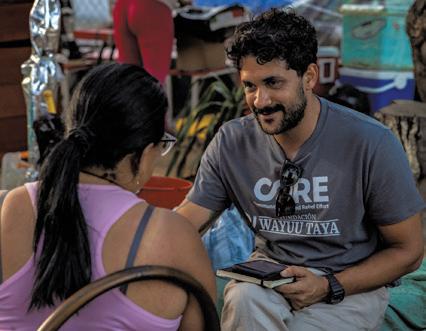
CORE is asking the same, sitting down with people in shelters to hear their experiences and find out what they need m ost right now.
These shelter assessments and community surveys are crucial to CORE’s process, as the answers they receive directly inform the on-the-ground understanding of where support is most needed. Working alongside local partner the Wayuu Taya Foundation, the organization is also strengthening local
response capacity by helping coordinate warehousing, logistics, staff training, and aid distribution. Why? Because communities recover best when they are active partners in their own rebuilding.
BUILDING RESILIENCE
BEYOND THE CRISIS
This is part of CORE’s process beyond Venezuela. In Hawaii, where catastrophic flooding recently inundated communities across Oahu's North Shore and the island of Moloka‘i, CORE is providing emergency relief and repairs to locally family-owned farms. After the 2023 Maui wildfires, direct cash assistan ce gave survivors the flexibility to address their most pressing needs, including housing. Familiarity, too, plays a part here, allowing CORE to build on their previous work. In California, CORE’s multi-year recovery initiative following the 2025 Los Angeles wildfires continues to focus on getting people back home through disaster case management and cash assistance. This effort includes a new 4,000-square-foot community resource center in Altadena,
which has become a gathering place for residents to access services and strengthen community resilience.
CORE is also helping communities prepare for future challenges before they happen. In Haiti, the organization is restoring 50,000 acres of mangrove forests—natural barriers that protect coastlines from storm surges while supporting biodiversity, local fisheries, and climate resilience. Alongside environmental restoration, CORE continues investing in young people through its partnership with Music Heals International, recently celebrating the fifth anniversary of Plezi Mizik Au Féminin, a girls' music program that empowers the next generation through education and creativity. Emergency aid is quick, but lasting recovery takes patience. The road ahead is never easy, fraught with the complexities of rebuilding homes and restoring inf rastructure. But CORE has found that involving communities in their own healing, through listening and partnering with local organizations, makes the road to recovery that much clearer.
The modern news cycle moves fast—so fast that even the most urgent global crises can begin to feel distant, reduced to headlines and statistics. But behind every emergency are individual lives: parents, students, artists, and families working to hold onto dignity amid uncertainty. When the world starts to feel far away, sometimes the most powerful response is to move closer.
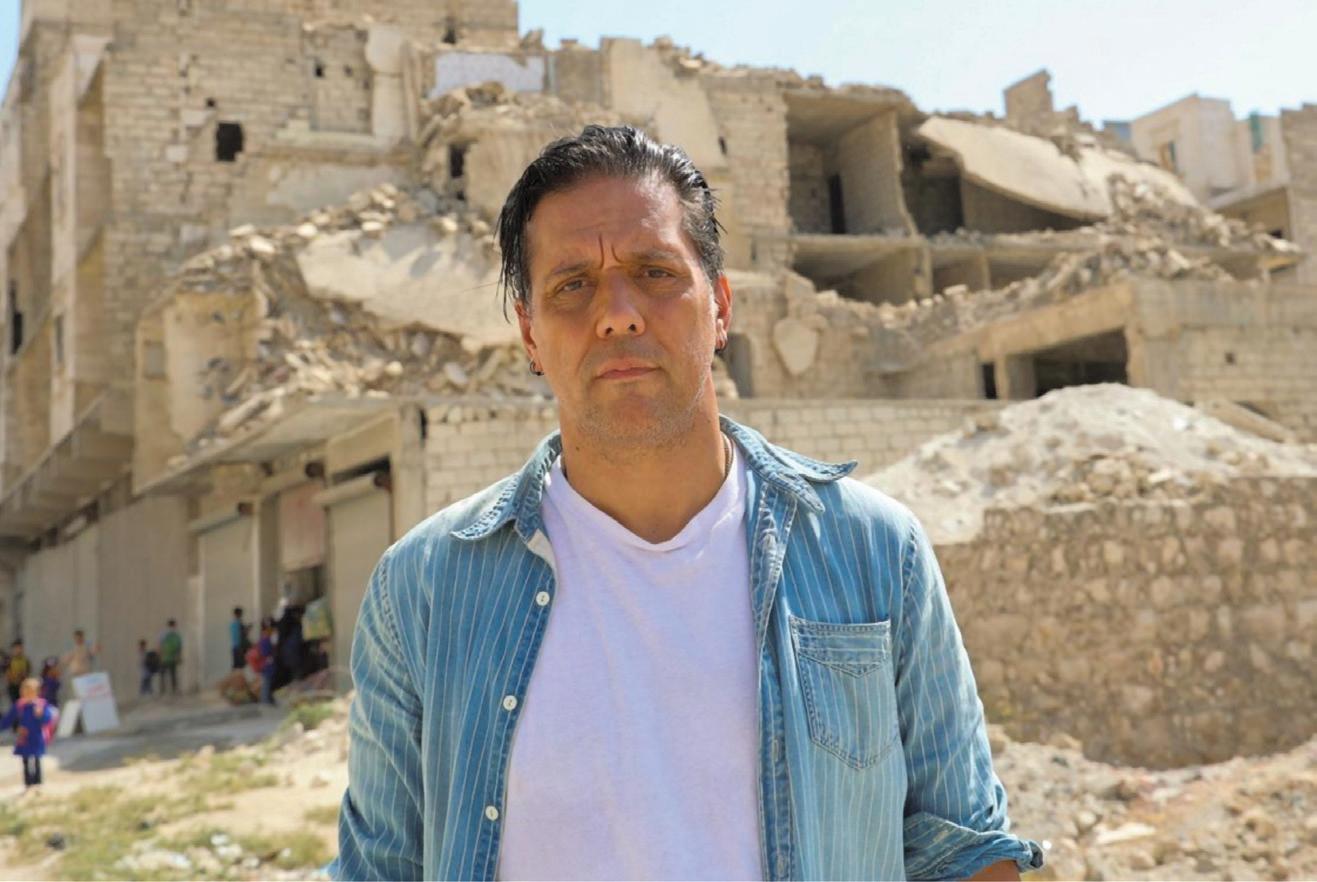
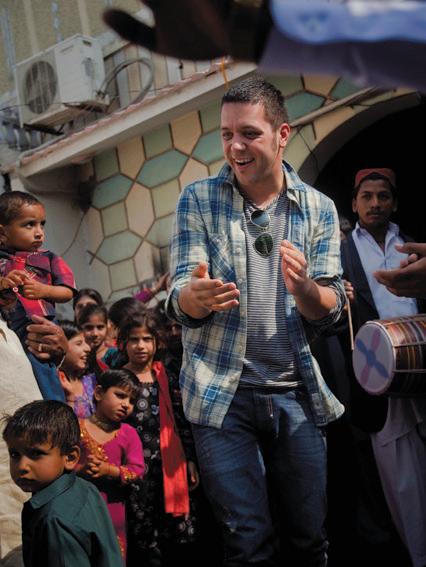
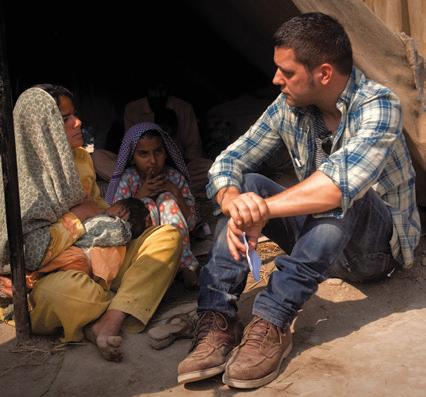
For decades, George Stroumboulopoulos has built his career on doing exactly that: getting closer to stories, to people, and increasingly, to the front lines of global humanitarian work. As one of the most active Goodwill Ambassadors for the World Food Programme (wfp.org), the renowned Canadian broadcaster has shifted from documenting crises to standing within them, using his platform to spotlight hunger, resilience, and the human realities too often lost behind the news cycle.
In conversation with Global Heroes, Stroumboulopoulos reflects on what he’s witnessed in the field, from flood-ravaged communities in Pakistan to classrooms in Syria, what it means to move from observer to participant, and why the world must continue to see people as more than just headlines in a world competing for attention.
Global Heroes: You’ve spent years telling stories, but your relationship with WFP began when you chose to step directly into humanitarian work. What first drew you to the organization, and what made you say yes at that moment in your life?
George Stroumboulopoulos (GS):
Early in my career, I only had opportunities to tell stories from the outside lookin g in, and for a long time, that felt fine. It felt useful. You try to reflect something honestly and hope it lands. But after a while, I realized there was a gap between witnessing and actually being part of the response. I didn’t want to just talk about crises anymore. I wanted to understand what it looks like to work with them every day. Not everyone has the opportunity to do this, but I was lucky enough to. And that luck was compounded by and with the people I worked with and for at the time. We shared values, and collectively we committed to the approach. This is key. I am surrounded by people with incredible hearts and minds, and we all look for meaningful ways to serve. What drew me to the World Food Programme was the straightforward nature of the work. Food isn’t symbolic. People either have it or they don’t. And once you strip away the politics, opinions, and noise, that reality is hard to argue with. Saying yes didn’t feel dramatic or idealistic. It felt practical. Like, this is something that works, and if I had the chance to support it in a real way, then I should.
We’ve heard you describe WFP as an agile, field-focused agency. What sets it apart from others, and did it change your perspective on the UN?
GS: Most of us only see disasters through the media—floods, earthquakes, conflicts—and it can feel overwhelming and distant. But on the ground with WFP, you see people working together to deliver emergency aid to those who need it most or to h elp communities rebuild. It’s practical, and it’s deeply human. Before becoming a Goodwill Ambassador for WFP, I witnessed the organization in action in Darfur, and it genuinely shifted how I see the UN. It showed me that beyond the speeches and bureaucracy, the UN can be agile, field-focused, and lifesaving. At its best, it’s about people in need and our shared responsibility to show up for one another.
Let’s talk about your experiences in Syria. There’s a tendency for the world to reduce the country to conflict statistics and political headlines. What did you see on the ground that contradicts the way Syrians are usually portrayed?
GS: What struck me immediately was how incomplete the Western narrative is. Often, the world rushes to reduce people and places like Syria to rubble, numbers, and despair. On the ground, I saw humor, pride, creativity, and generational resilience. Surviving, adapting, an d living require so much, but it never seemed to come at the expense of
kindness and generosity. Certainly, the damage caused by conflict is there; to me, the most powerful stories weren’t the kinds you’d find in headlines. They were quiet: parents making impossible choices, teenagers dreaming about music and art, families finding ways to celebrate small joys amid uncertainty. All very important reminders that the framing of a crisis needs to stand up to rigor. In most cases, these are not abstract emergencies, but millions of individual lives unfolding under extraordinary pressure. The expression that comes from that pressure is so real. I came across a mother who was a judo champion and a young man drumming his heavy metal blast beats in his Damascus apartment. That, in particular, brought me joy. Metal is a universal fuel for expression, and it revealed something essential about Syrian culture: it’s alive, complex, and deeply human. Creativity doesn’t disappear in war… it adapts.
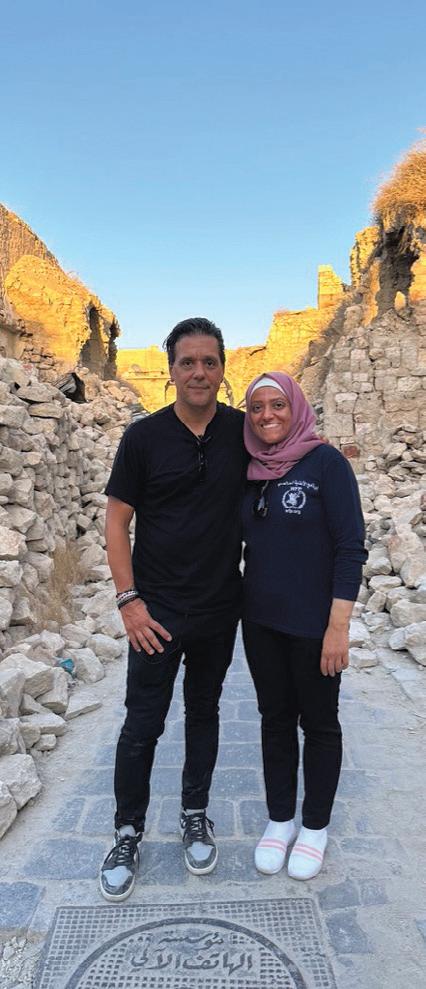
You met Zuha, a World Food Programme associate, at a pivotal point in her life. Once a recipient of food assistance, she’s now part of the organization delivering it. What stood out to you about her sense of purpose, and why do stories like hers matter?
GS: Meeting Zuha was especially powerful. Her sense of purpose was unmistakable. She understood the impact of food assistance not in theory, but in her body. To see her move from receiving support to becoming a WFP staff member and being part of the
system that provides it was extraordinary. Stories like hers matter because th ey dismantle the idea of aid as a oneway transaction. They show that when people are supported with dignity, they don’t just survive, they contribute and lead. I will be forever grateful that so many people let us shine a light on their lives.
Children in war-torn regions have grown up knowing little else but crisis. Food and shelter make a tangible difference in their lives, but investing in education builds their futures. How has prolonged disruption affected their access to education?
GS: Prolonged disruption has been devastating to education. Schools close, reopen, close again. These are little children we are talking about. Hunger makes learning nearly impossible. Wh en you’re worried about your next meal, reading doesn’t stand a chance. Investing in education alongside food and shelter is how you prevent an entire generation from being locked out of their future. Without serious intervention and ultimately protection, the damage of conflict stretches far beyond the present. In Aleppo, I watched the WFP school
day. These programs reach millions globally, doing more than just filling stomachs; they're filling minds and futures, providing the foundation for education and growth. It's incredible how something so simple can be so transformative: a meal that improves health and concentration and creates the conditions where education can actually take root.
You’re widely recognized as one of WFP’s most active ambassadors. What drives you to stay so deeply involved?
GS: Modern life delivers an avalanche of crises competing for attention. When that happens, hunger is at risk of becoming background noise. But hunger is never just about food. It’s about h ealth, education, stability, and peace. When hunger is ignored, everything else unravels. Keeping it in public consciousness isn’t about charity; it’s about justice, and it is solvable. Letting it fade from view is a choice we can’t afford to make. What keeps me involved is knowing that this isn’t theoretical. The impact is immediate and measurable. People eat. Kids show up to school. Families get a little breathing room. Once you’ve met people whose lives hinge on something as basic as a meal,
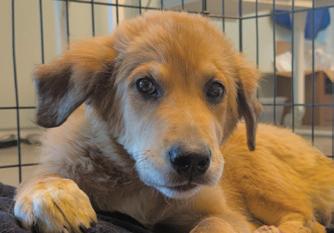
Every day in Texas, dogs and cats enter overcrowded shelters with an uncertain future. Texas Humane Heroes helps give those animals a second chance. Goose came to Texas Humane Heroes in late May, frightened and in need of extensive medical care. Today, she's still receiving the specialized treatment she needs. Her journey is a reminder that second chances don't happen overnight—they require patience, expertise, and a community willan average of 40 spay and neuter surgeries every day. Texas Humane Heroes is more than an animal shelter. We believe the best way to end pet homelessness is not only to rescue animals in need, but also to help families keep the pets they already love. From lifesaving rescues and adoptions to affordable veterinary care, every program is guided by one mission: to end pet homelessness and keep pet ownership affordable. animals like Goose. Behind every adoption is a journey of healing. Behind every rescue is a community that believes every pet deserves the
Armless Pilot Given Wings From Ocean County Airplane Builders
CARLY CAVANAUGH,
ASBURY PARK PRESS
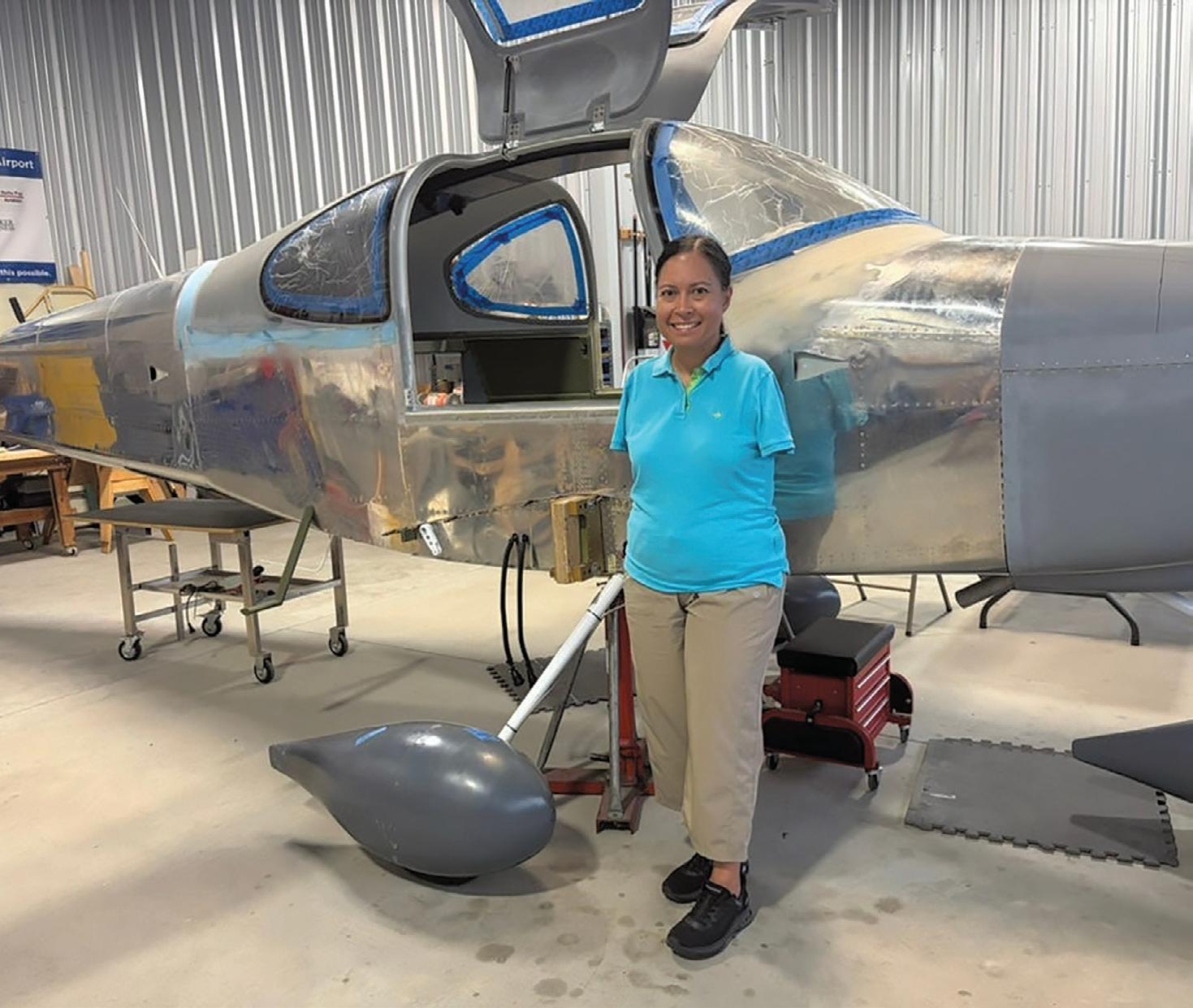
Dr. Robert Newman—member, technical counselor, and former president of Ocean County's Experimental Aircraft Association Chapter 898—has contributed to building over 12 airplanes throughout his lifetime.
His most recent feat, however, differs from the rest. It's the first that he, or anyone in aviation history, has constructed specifically for pilots without arms.
A retired school superintendent and experienced builder across mediums, "Bob the Builder" said he's been with the EAA chapter for over 35 years, building planes and helping fund aspiring pilots' flight lessons.
In 2020, the first-ever licensed pilot without arms, Jessica Cox of Tucson, Arizona, wanted to find a tangible way to continue to spread the message that "disability does not mean inability."
After conceptualizing the idea to build an aircraft modified specifically for armless pilots, her husband Patrick Chamberlain said they met with airplane manufacturer Van's Aircraft that November, who provided the kit to build the vehicle.
A couple of years later, after Cox flew into John F. Kennedy International Airport in New York City in her vintage ERCO Ercoupe, the plane was jetblasted after landing. In need of an Ercoupe mechanic on the East Coast, Cox and Chamberlain called Gene Bunt, a member of EAA Chapter 898. When the duo told Bunt about wanting to start building the armless
aircraft, Bunt suggested they get in contact with Newman.
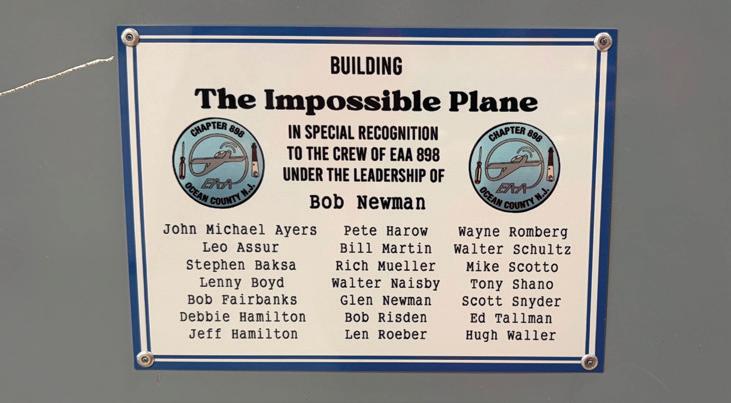
After Cox called him with the idea to help construct what's been dubbed "The Impossible Airplane," he agreed to take it on as a project for the chapter.
Cox and her husband visited Newman's home in June 2022 to get to know each other, and the team then got to work on constructing a fourseater RV-10 aircraft with modifications to make armless operation intuitive to its design. Four years later, the plane is nearing completion, with Cox expecting it will be finished within the next six months.
"The first parts of this airplane came in a crate to my house and were delivered on June 27 (2022)—I know the date," Newman said. "I have pictures of her with a hammer tapping on this new box of parts that became the tail section."
BUILD
LEARNING TO
AN AIRPLANE
Chapter 898, he said, began building planes around 10 years ago, when someone at a chapter meeting at Ocean County Airport mentioned the idea. Prior to building airplanes, he said the group focused on initiatives such as conducting flight safety seminars and providing free flights for children.
The group purchased aircraft blueprints guiding the construction process, and has been continuously constructing planes throughout the decade. Each plane takes around three years to complete, he said, and he is planning to start a new one at the airport in the upcoming weeks.
"There are a lot of good people here
who really just love to build. And a surprising number of the people here who build are airline pilots, or military pilots, and they fly planes, but this is the only place where they have a chance to actually build some," Newman said. "Building is not flying, flying is not building, so it offers a good outlet to receive skills and camaraderie."
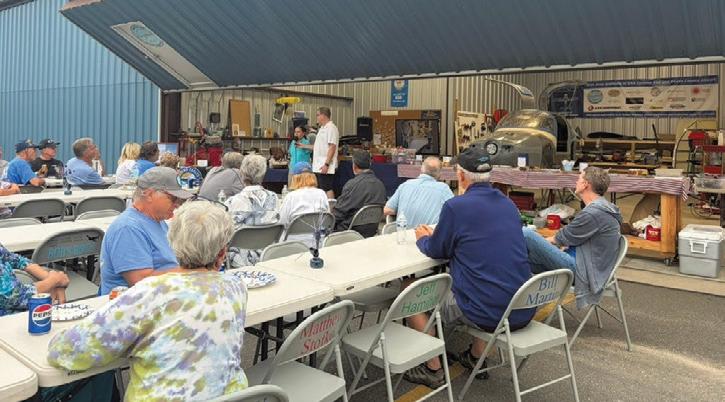
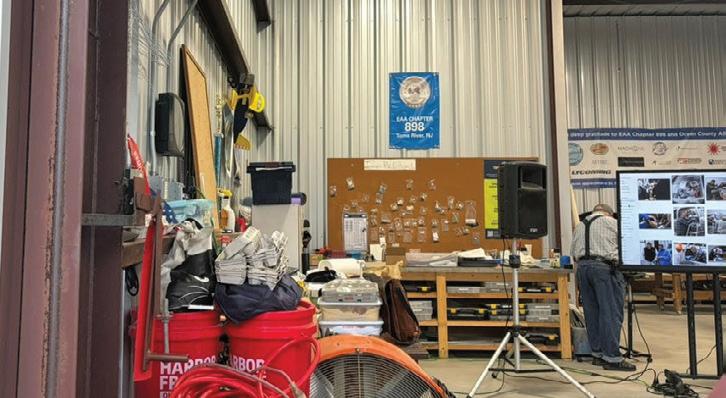
On the evening of Tuesday, July 7, dozens gathered outside the chapter's hangar at the Ocean County Airport in the Bayville section of the township, barbecuing and photographing to celebrate the achievement of EAA Chapter 898 and Cox's nonprofit.
Coined the Rightfooted Foundation, the organization focuses on uplifting children without arms and spearheading projects like "The Impossible Airplane" and a dressing hook. Cox plans on flying the plane to visit aviation and disability events and facilities in the future, amplifying her foundation's message and furthering their impact.
Addressing the group, Newman said the process of building Cox's aircraft has been a "win-win" for all people involved, with volunteers willingly dedicating hours of their weeks and generous donations making the initiative possible.
The materials for the plane itself, Cox said, were primarily donated by manufacturers like Van's Aircraft and Lycoming, who provided the kit and engine, respectively. She said the overall dollar value of the plane is between $300,000 and $400,000.
Newman said this project marks a new, exciting moment for the chapter, with upcoming projects allowing the
association to acquire money to put toward their scholarship fund.
"We really are education-based," he said. "We're here for pilots who are flying and want to stay safe and do what we can in terms of programs. We're here for young people who want to get their first flight in an airplane."
FROM FEARFUL FLYER
TO PILOT
Cox, who was born without arms, acts as a motivational speaker to spread the message of adaptability and chasing your dreams. Cox said she used to be "terrified" of flying, and thought the best way to get over her fear would be to learn how to fly herself.
Starting in 2005, she said she began taking flight lessons.
In 2008, Cox earned her Sport Pilot Certificate, marking a historic win for aviation enthusiasts with disabilities.
Now, as "The Impossible Airplane" prepares to leave Bayville and head to her home state of Arizona for final assembly and other finishing preparations, she said this aircraft will further heighten accessibility and ingenuity in the field.
Cox learned to fly using a 1946 Ercoupe, a two-seater plane and a rare example of an aircraft that does not use rudder pedals—meaning both of her feet can be used to operate the yoke and throttle without having to operate pedals.
However, the aircraft was not designed for the purpose of flying using one's feet. "The Impossible Airplane," she said, will feature modifications, like an updated yoke, that will make flying more comfortable
for armless pilots.
"For example, the yoke—it's kind of like the steering wheel of the airplane—instead of a yoke would be typically, it's going to be like a shoe or a slipper, and I'll be able to put my foot in there and use my foot to control it, like a custom shoe," she said.
Surrounded by the team of over 20 volunteers, Cox stood alongside Chamberlain, who acts as Rightfooted Foundation's inclusive engineering director, and thanked the team for the thousands of hours and "blood, sweat and tears" put toward building the aircraft. The pilot personally signed certificates for all members of the building team by foot, a gesture commemorating her gratitude for their continued support, time and dedication.
"As a kid, I just remember being told so many times, 'You don't have arms, you can't do it,'" she said. "But now we have living proof that this is possible."
She said the creation of the aircraft will act as a symbol for children with disabilities to tangibly recognize that their aspirations are attainable, and that the doubt and criticism they receive from others can be countered and challenged.
"We travel the country, we travel the world, and I don't see community like this. This is marvelous. And I thank you from the bottom of my heart," she said. "Patrick and I are going to have incredible hours flying this plane, knowing that you all made this possible, and sharing that message that disability does not mean inability." —USA
Landmark Legislation Strengthens the Fight to Rescue Exploited Children
A landmark piece of U.S. legislation is bringing renewed momentum to the fight against online child sexual exploitation and human trafficking.
Spearheaded by Senator Josh Hawley (R-MO) and supported by child protection advocates, including the Tim Tebow Foundation, the newly signed Renewed Hope Act makes a historic investment in Victim Identification—one of the most critical yet often unseen aspects of child protection.
“The number of unidentified child victims continues to grow and if unchecked, this imbalance only gets worse, exacerbated by the introduction of AI and the ease of which criminals are able to create child sexual abuse material (CSAM) with deepfakes,” said Derek Benner, a former HSI Executive Associate Director and current CEO of Our Rescue (OurRescue.org), a U.S.-based global nonprofit dedicated to ending human trafficking and child exploitation.
Signed into law as part of a broader legislative package, the measure funds 200 additional law enforcement positions dedicated to Victim Identification. These highly specialized investigators analyze CSAM to identify the children depicted, determine their locations, and help bring them to safety.
WHY VICTIM IDENTIFICATION MATTERS
While investigators often recover thousands of images and videos of abuse, many children remain unidentified, leaving them vulnerable to ongoing exploitation. These specialists include investigators, intelligence analysts, and forensic experts who carefully examine every available detail in that material, searching for clues that can reveal who a child is and where they may be found.
For a mother-to-be in crisis, the most dangerous moment can be the one before she asks for help. Fear, shame, isolation, and confusion can make a safe option feel out of reach. Infant abandonment crosses lines of age, ethnicity, education, income, and
Before the legislation, Homeland Security Investigations (HSI) had roughly 20 specialists assigned to an estimated 89,000 unidentified child victims across the United States—a gap that child protection experts warned was becoming increasingly difficult to overcome as artificial intelligence and deepfake technology made it easier for offenders to create and distribute abusive content.
"Law enforcement needs training, resources, and personnel to keep pace with the evolving threat of online child exploitation," said Benner. Child
family background. It can happen when a woman feels she has no support, no privacy, and no way forward.
A Safe Haven for Newborns exists to reach her before that crisis becomes a tragedy.
Founded by Nick Silverio in memory of his wife, Gloria, the organization provides confidential, judgment-free help to pregnant women and mothers in crisis. Through its 24/7 multilingual helpline, education, outreach, and partnerships with hospitals and first responders, A Safe Haven for Newborns helps mothers understand that there is a safe, legal alternative to abandoning a newborn.
This isn't the job for me. This is my life's mission.
—Nick Silverio
A SAFE OPTION IN A CRITICAL MOMENT
Texas was the first state in the nation to pass a Safe Haven Law, also known as the Baby Moses Law. Under the law, a parent may anonymously surrender an unharmed infant who is 60 days old or younger at a designated emergency infant care location, including a hospital, fire station, or EMS station, without
protection advocates estimate that the Renewed Hope Act could increase investigative capacity by approximately 2,800 percent.
BUILDING THE RESOURCES TO SAVE MORE CHILDREN
"In addition to increasing headcount across the HSI teams that combat child sexual exploitation, the bill establishes the first dedicated training program to improve coordination on victim identification between federal, state, and local law enforcement," said Jim Cole, Senior Advisor for Cyber
Strategy and Child Protection at Our Rescue. "Training, partnerships, and coordination are 'force magnifiers' that help increase impact, with greater speed and efficiency to help identify, locate, and bring children to safety."
For Our Rescue, the legislation carries particular significance because of the work of Cole. Before joining the nonprofit, he founded the Victim Identification Program and Laboratory at the HSI Cyber Crimes Center, helping establish one of the nation's leading programs dedicated to identifying children depicted in
legal repercussions. The baby must be placed directly with a staff member. The law is simple, but awareness does not always reach the people who need it most. Recent reporting cited at least 18 babies abandoned in Texas in one year, more than double the number from a decade earlier. Legal options only save lives when mothers know they exist before desperation takes over.
A MODEL THAT REACHES MOTHERS FIRST Florida’s experience shows what
sustained awareness can make possible. A Safe Haven for Newborns statistics show one Safe Haven surrender in Florida in 2000, alongside three infants abandoned in unsafe places. By 2024, 30 newborns were safely surrendered, while one was found in an unsafe place.
To date, more than 420 newborns have been safely surrendered in Florida, and more than 6,000 girls and women have received help. For mothers, support can mean someone answers the phone, listens without judgment, explains their options, and helps them make a safe plan.
CSAM. He later chaired INTERPOL's Specialists Group on Crimes Against Children and spent more than two decades investigating child exploitation and digital forensics.
ONE CHILD'S STORY During testimony before the House Judiciary Subcommittee on Crime and Federal Government Surveillance in 2024, Cole shared one case that underscored the importance of Victim Identification. Investigators spent weeks analyzing every frame of CSAM involving a toddler, searching for seemingly insignificant details like background objects, reflections, product labels, and playground equipment. Eventually, those clues led investigators to a specific playground in a city in the American South. Working alongside local agents in real time, they located the home, arrested the child's father, recovered additional evidence, and rescued the little girl.
"She couldn't ask for help. She didn't know she needed to be rescued. She just needed someone with the skills and resources to find her," said Cole.
RENEWED HOPE FOR CHILDREN STILL WAITING
Stories like this demonstrate why advocates believe the Renewed Hope Act represents far more than additional funding. The 200 newly funded positions will expand the nation's ability to identify children who cannot advocate for themselves and who urgently need to be found. For the children still waiting to be identified, Renewed Hope is more than the name of a law. It represents a commitment to bring more trained professionals, better resources, and stronger partnerships to support the fight against child exploitation and human trafficking.
—SOURCE: Our Rescue
For newborns, it can mean medical attention, protection, and a future in caring arms.
Dr. Andrea Corn, clinical psychologist, said, “Babies aren’t objects. A mother wants to know that she will be safe and her baby will be too.”
SAVING TWO LIVES
A Safe Haven for Newborns’ message to any distressed mother-to-be is clear: you are not alone, you will not be judged, and help is available.
The organization protects the newborn, but it also protects the mother from panic, isolation, and an irreversible decision made in fear. In that way, every safe surrender has the potential to save two lives.
To learn more or donate, scan the QR code or visit ASafeHavenForNewborns.com Support is confidential and provided at no cost.
GLORIA HOPE, NICK KRISTOPHER, AND MILAGROS WITH NICK
War Child Is Restoring Childhood in a World at War
Dr. Samantha Nutt has seen it all. The Founder and President of War Child has been on the front lines of
across the globe and knows how much war damages every aspect of a child’s life. Between stripping their families of vital means of support and taking away their access to education and legal protection, war makes it impossible for a child to enjoy their childhood. The present reality is harsh for numerous communities as our world grapples with unprecedented turmoil. War, violent acts of
and the looming specter of famine have thrust millions into devastating hardship, fear, and grief. From Sudan and Yemen to Afghanistan, the Democratic Republic of Congo, South Sudan, and Uganda, millions of children are growing up amid violence, displacement, hunger, and political instability. At the same time, humanitarian organizations are faced with shrinking international aid budgets—needs continue to grow, but vulnerable communities are left with fewer resources.
“People are good at reacting to emergency situations,” said Dr. Nutt.
“But there’s a tendency to move onto the “next big crisis” when issues are less immediate.” Humanitarian organizations, she explained, often focus on the short-term n eeds of communities in crisis. While these measures can be beneficial, they leave a gap in long-term support, dealing with the conditions that contribute to violence and instability. War Child exists to fill that gap and break the cycle of poverty, violence, and despair
that so many face in war-torn communities. Even when the headlines disappear, War Child remains on the ground, knowing that the work is not over yet.
THE
IMPACT OF WAR ON CHILDREN
War affects us all. As far away as it can feel, the impact of war touches all of our lives and hundreds of millions of lives worldwide—one-sixth of children globally live in conflict zones, equating to 426 million children who face th e daily reality of growing up with armed conflict. For children living in war zones, every day is a struggle. The things that many of us take for granted can be life-threatening for them; conflict throws everyday life into chaos, and the uncertainty of what’s to come is a constant stressor. The impact of war is long-lasting and far-reaching. Dr. Nutt explains that even in the euphoria of regaining freedom, the trauma of war persists.
"They're going to be wrestling with this for the rest of their lives," she told CTV News’ Angie Seth.
With this knowledge in mind, War Child protects children and their families in the most challenging humanitarian
environments in the world, providing access to education, employment, economic opportunities, psychosocial support, and food security.
“What we do isn’t safe, and it isn’t easy,” Dr. Nutt explained. “Our staff are bold, courageous, and determined.
With over 99 percent of War Child’s staff local to the countries in which we operate, their leadership, determination, and profound local insights fuel our approaches and decision-making.”
It’s a sustainable, community-driven model that focuses on long-term impact led at the local level. Lasting change starts at the local level—after all, there is no one more knowledgeable about what is needed for rebuilding communities than those who live within them. And from War Child’s vantage point, when these communities are given the tools to decide their future, everyone prospers.
Across Afghanistan, innovative digital learning programs are bringing education to children in remote communities, while new mother-and-child h ealth centers provide healthcare, mental health services, and protection for women and children facing extraordinary hardship. In Uganda, refugee children who
have lost years of schooling are returning to classrooms through accelerated learning programs, while young adults receive vocational training, apprenticeships, and entrepreneurship support to help them build independent futures. War Child is the largest provider of refugee education in Uganda and, soon, in South Sudan.
In the Democratic Republic of the Congo, War Child's long-running interactive radio education program continues to help out-of-school children catch up academically, while the new INUKA
A Place to Heal After Combat: Bringing Hope to Veterans and Families
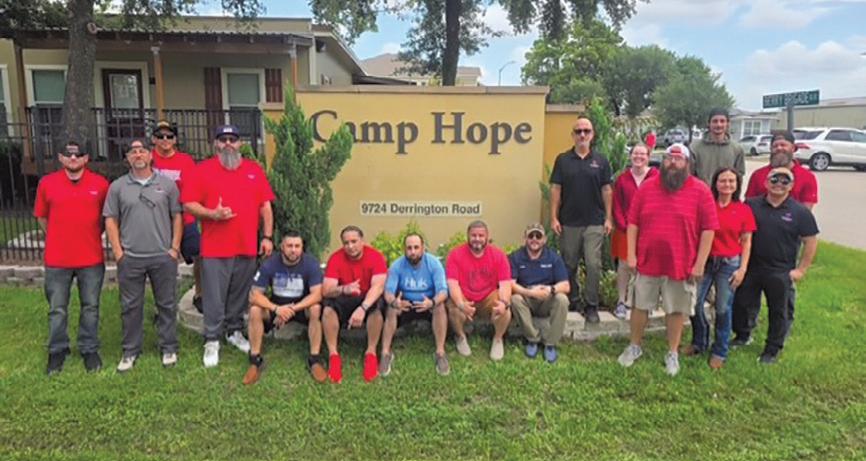
The PTSD Foundation of America | Camp Hope is dedicated to bringing hope and healing to Combat Veterans and their families living with the invisible wounds of war. Through faith-based, peer-driven support and evidence-based clinical care, we help Veterans overcome the effects of combat-related post-traumatic stress and rediscover purpose, stability, and hope. We believe every Veteran deserves to be treated with dignity, respect, and compassion as they begin their journey toward healing.
Founded in 2005, the PTSD
Foundation of America began with a small group of volunteers reaching out to homeless Veterans on the streets of Houston. What started as a grassroots effort has grown into a national organization committed to reducing Veteran suicide through comprehensive programs, education, outreach, and advocacy. Our mission remains simple: to ensure no Combat Veteran fights the battle after the battle alone.
THE WHOLE PERSON
HEALING
Located in Northwest Houston, Camp Hope is the Foundation's flagship
program and one of the nation’s leading interim housing facilities for Combat Veterans experiencing combat-related PTSD. This six-to-ninemonth program provides peer-to-peer mentoring, professional counseling, case management, life-skills development, spiritual encouragement, and opportunities for personal growth. Rather than simply addressing symptoms, Camp Hope focuses on healing the whole person—mind, body, and spirit—while equipping Veterans with the tools needed to build healthy, productive lives.
Recognizing that not every Veteran requires Camp Hope, the Foundation has expanded its reach through five Outreach Chapters located in Houston, Dallas, San Antonio, Atlanta, and Tampa.
These chapters offer Warrior Groups where Combat Veterans gather in a safe, confidential environment to connect with peers who understand the realities of military service and combat trauma. Through shared experiences, honest conversations, and mutual support, Veterans discover they are not alone and build meaningful relationships that foster healing. Because PTSD affects entire families, the Foundation also offers Family Warrior Groups for spouses, children, parents, siblings, and caregivers. These groups provide education, encouragement, practical resources, and peer support to help families better understand combat-related PTSD while learning healthy coping strategies and strengthening their ability to support their loved one.
EXPANDING
THE CIRCLE OF SUPPORT
Our new Female Veteran Warrior Group provides a dedicated community for women who have served our nation. This specialized program
offers a welcoming space where female Veterans can connect with peers who understand their unique military experiences, build lasting friendships, and find encouragement through shared understanding and support. The Female Warrior Group meets in person at Camp Hope in Houston, Texas, while also offering virtual participation, allowing female Combat Veterans from across the United States to access support, connection, and healing regardless of their location. Today, the Foundation continues to expand its impact through residential care, Outreach Chapters, Warrior Groups, Family Services, and specialized programs that meet Veterans wherever they are in their healing journey. Together, these programs create a comprehensive network of support that restores hope, strengthens families, and transforms lives while advancing our mission of reducing Veteran suicide.
If you or a Combat Veteran you know is struggling, help is available. Call the Combat Trauma Help Line at 1-877-717PTSD (7873) or visit ptsdusa.org to learn more about our programs and services. No Combat Veteran should have to face the invisible wounds of war alone. Hope and healing are possible.
Puerto Rico's Veterans Receive the Recognition They Deserve
knowledge of what their service means to their communities. But outside recognition often arrives far too late.
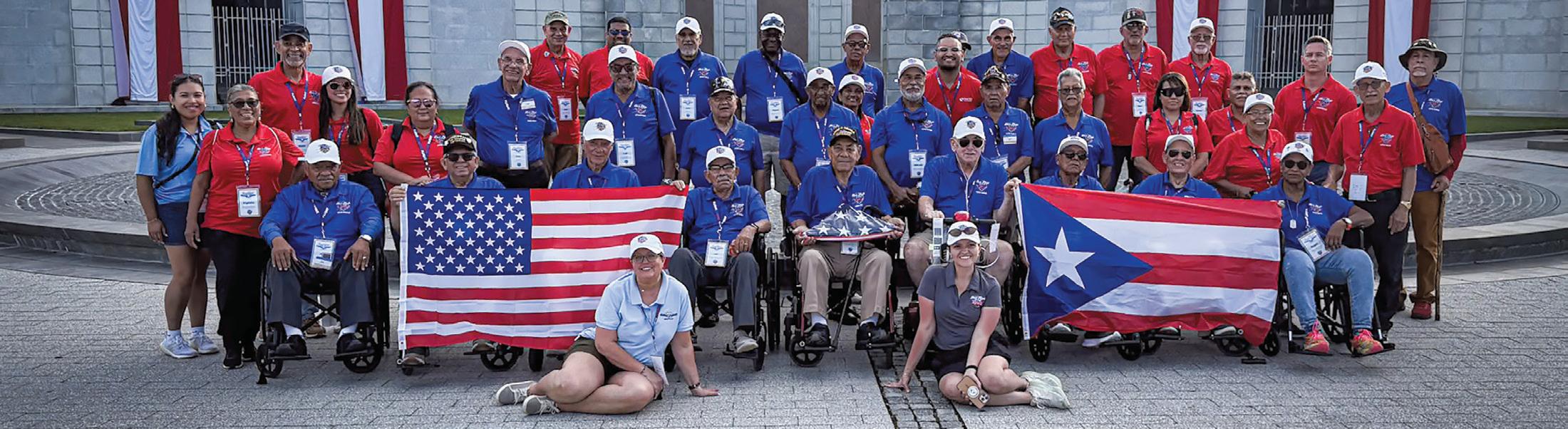
This past June, a group of Korean and Vietnam War veterans from Puerto Rico were invited to take a hero’s journey from San Juan, Puerto Rico, to Washington, D.C., all expenses paid, as part of a special Honor Flight sponsored by The PenFed Foundation for Military Heroes, in partnership with the Honor Flight Network's Lone Eagle Hub. The point of the trip was to give these veterans the opportunity to visit the monuments and memorials dedicated to their service and share the experience with fellow servicemembers—a tribute to their courage and their sacrifice, and for many, a long-overdue moment of appreciation.
"This Honor Flight is a powerful continuation of our commitment to the veteran community in Puerto Rico," said James Schenck, President and CEO of PenFed Credit Union and CEO of The PenFed Foundation for Military Heroes. "Ensuring these heroes can travel to our nation's capital to experience the memorials built
in their honor, surrounded by gratitude, respect and the recognition they have long earned, is a top priority."
HONORING EXTRAORDINARY LIVES
Among the veterans making the journey was 100-year-old Korean War veteran Casildo Rodriguez, whose service was recognized with one of South Korea's highest civilian honors for veterans. During the trip, Rodriguez received the Ambassador for Peace Medal from the Republic of Korea, in acknowledgment of his role in defending the nation more than seven decades ago.
The flight also celebrated military trailblazer Magda Caquias, one of the first women to serve in the U.S. Army Military Police. Stationed in Korea around 1972, Caquias helped pave the way for future generations of women in uniform and is recognized as a member of the Military Women's Memorial.
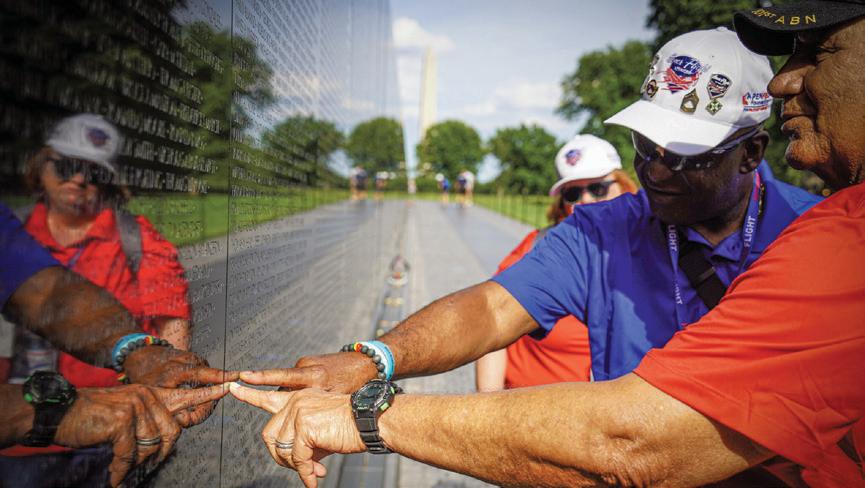
The trip also served as a way to honor those who never returned home. While visiting the Vietnam Veterans Memorial, Vietnam veteran Miguel Ángel Rodríguez Rivera Jr. searched for the name of a fellow Puerto Rican soldier who had served
beside him but never
and share our stories.
When I visited the Vietnam Veterans Memorial, my heart nearly broke. I served with a fellow Puerto Rican soldier
Texas Winds Brings Music Where It’s Needed Most
Can you imagine a world without music? No uplifting melodies. No sing-alongs to familiar songs. No toe-tapping, clapping, humming, or quiet smile when a familiar song fills the room.
Now imagine a world where days pass with few visitors, little conversation, and limited opportunity to feel seen.
For more than four decades, Texas Winds Musical Outreach has been carrying live performance into that silence.
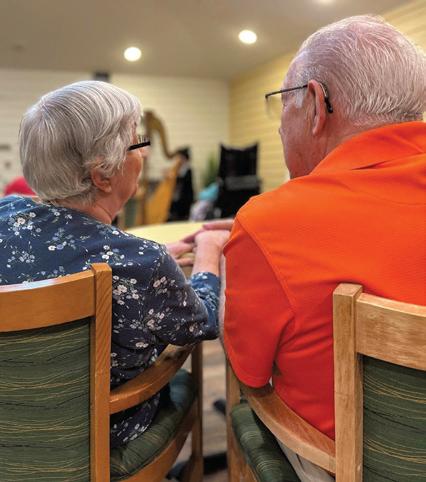
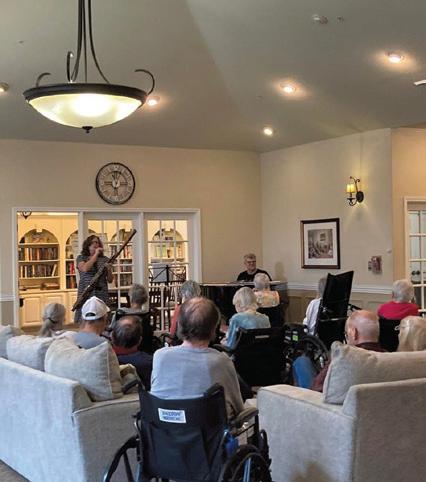
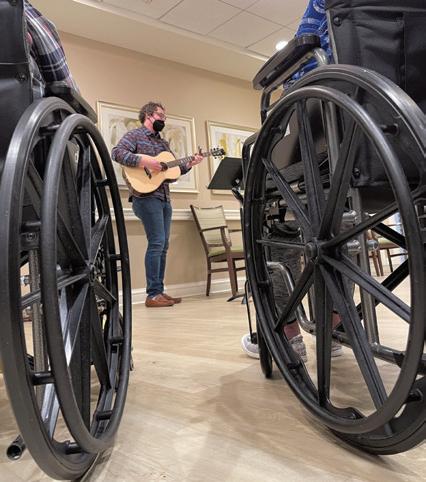
The North Texas organization brings professional live music out of the concert hall and directly to audiences who might otherwise have little access to it, performing in nursing homes, retirement communities, adult day care facilities, hospitals, senior centers, veterans’ facilities, and preschool classrooms.
The purpose is simple and deeply human: music should not belong only to those who can travel to a stage.
MUSIC BEYOND THE CONCERT HALL
Texas Winds began in 1985, when Catherine Barr and members of her woodwind quintet performed in a Dallas nursing home. The musicians discovered an audience hungry not only for music, but for interaction, dignity, and companionship. That first year,
Texas Winds gave 11 concerts. Today, the organization performs between 1,400 and 2,000 concerts annually, reaching thousands of people across Dallas, Tarrant, Collin, and Denton counties. Each performance is offered free of charge to the facility and audience, turning dining halls, common rooms, classrooms, and care spaces into concert halls for people who may no longer be able to reach one.
Those performances are carefully shaped for the people in the room. Texas
Winds works with professional musicians and facility staff to create programs that suit each audience, with concerts often featuring sing-alongs, instrument demonstrations, and music ranging from classical and jazz to country and Texas swing.
The concerts are intentionally intimate, shaped around each audience, so no two performances feel the same.
A UNIVERSAL LANGUAGE
Music has a way of reaching places words sometimes cannot. It can change
the feeling of a room in an instant,
easing pain, stirring memory, or inviting someone back into the moment. It touches hearts and minds across age, ability, and circumstance.
That belief is at the center of Texas Winds’ mission: to uplift and engage North Texans with limited access to the arts.
In spaces that may feel clinical, quiet, or heavy, Texas Winds musicians create experiences that are welcoming, personal, and alive. A single program can
interrupt the routine of a hospital stay, brighten a morning in memory care, or give residents something to anticipate, experience, and talk about afterward. For the musicians, the impact is just as powerful. Texas Winds performances offer a rare closeness between artist and audience. The response is immediate and personal, whether it comes through applause, gratitude, eye contact, or the simple movement of a hand keeping time.
MUSIC MAKING A DIFFERENCE
What began with one performance in one nursing home has grown into a lasting model for arts access and community care. Under the leadership of Executive Director Meghan Gomen, Texas Winds continues to carry forward Catherine Barr’s founding vision. Barr, now Executive Director Emeritus, remains part of the organization’s story. Her belief that music could nurture the spirits of both players and listeners continues to shape its work today.
From its first 11 concerts to thousands each year, Texas Winds has become a quiet promise to North Texas: that even the most overlooked rooms are worthy of beauty.
He Lost His Son in Combat. Now, He Gives Back to Honor His Child
ADAM DENN, DELAWARE NEWS JOURNAL
On a random afternoon, John Mosko decided he would bike from Bethany Beach to Hockessin, alone.
The trip would be 112 miles, a grueling challenge. But Mosko felt it was an endeavor he had to take on, looking to do something to honor his late son, Chris, who died in combat in Afghanistan. The retiree was set to take off on the trip. But before he left, he got a call from his friend, former Olympic luger Frank Maisley. Maisley explained he would not let his friend travel by
himself, and insisted on going with him.
"It was a time to get away from everything, when I really needed it," Mosko said. "It helped me release my tension and grief."
The experience is one that, years later, he feels embodies his work.
Mosko has become one of the faces of the Travis Mannion Foundation, a group that looks to "empower veterans and families of fallen heroes to develop character in future generations." That "development of character," he believes, is formed through people providing service, in a way similar to Maisley. "Our mantra is, 'If I don't step up,
who will?'" Mosko said. "And that feels like something that really resonates with a lot of people." We spoke to Mosko about his mission to improve the "character" of Delaware, in honor of his fallen son. This interview is edited for clarity and brevity.
Question: We covered your event, the Frozen Frogman, about 10 years ago. How has your advocacy grown since then?
Answer: I've been contributing in a number of ways. We've been doing a lot of work in schools, whether it's with
sports teams or with the whole school. We go in and talk about character traits, what they look like in action, and talk to the kids about people in their lives who exemplify them. And what stems from that, if interested, kids can participate in a 10-week club that does a service project, looking to showcase those traits and give back.
What has changed about the Frogman since we last covered it?
Not a lot; the purpose is still the same. We look to recognize the fallen, who they are, and get people to really remember them outside of holidays like Veterans Day or Memorial Day. We want to help them be thought about as a day-to-day thing.
What does it mean to you to do this work?
It's so rewarding. The best way for me to go out and honor my son is to go out and do something where I can talk about him; where I can say, "Hey, I'm remembering you by doing this."
Your motto, "If I don't step up, who will?" has a great message, but it places a heavy burden. How do you handle that responsibility?
I think my wife would say I'm a little bit headstrong. [Chuckles.] Are there times when I feel like I'm doing too much of this work and start to feel tired?
Yeah, there are. But
Traveling with purpose means thinking beyond the places on an itinerary. It means recognizing that every destination is also someone’s home, shaped by local traditions, businesses, landscapes, and communities that deserve to be experienced with care.
Responsible travel does not require sacrificing adventure. It begins with the choices made along the way: supporting independently owned restaurants and shops, respecting cultural and historic sites, staying on designated trails, reducing waste, conserving water, and giving wildlife the space it needs. Even small decisions can help protect the character of a place while ensuring that tourism continues to benefit the people who live there.
That approach matters whether the journey leads to a historic Texas downtown, a mountain community, a desert landscape, or a far-reaching coastal voyage. Travelers can make a meaningful difference by learning about local customs before arriving, seeking out community-led experiences, and taking time to understand the stories behind the places they visit.
Across Texas, destinations such as Palestine, Denison, Nacogdoches, Greenville, Salado, Marble Falls, and Plano invite visitors to explore communities with distinct identities. Historic streets, local restaurants, museums, public spaces, and annual traditions offer opportunities to experience each destination on its own terms. Choosing local businesses and treating heritage sites with respect helps preserve what makes these communities worth visiting in the first place.
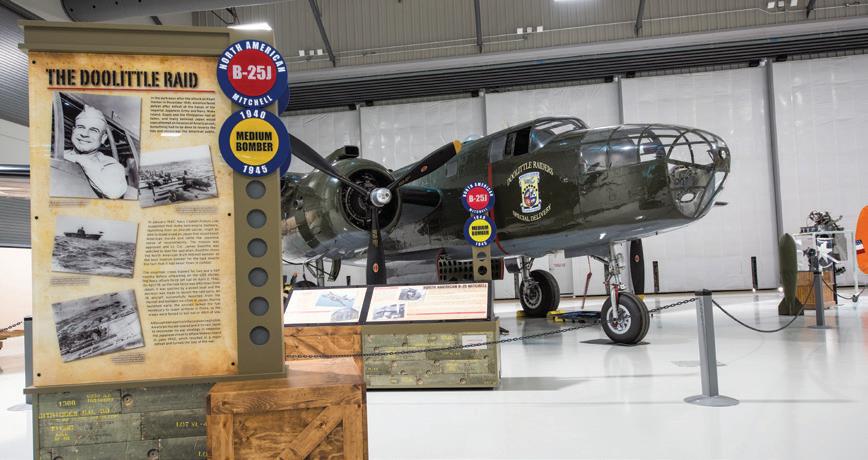
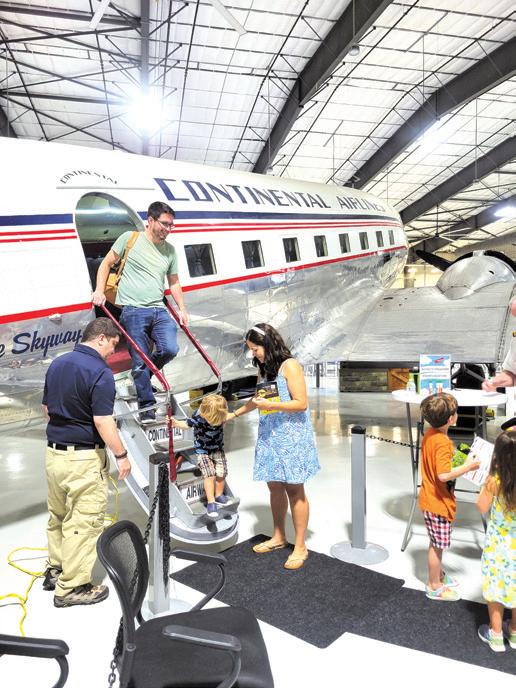
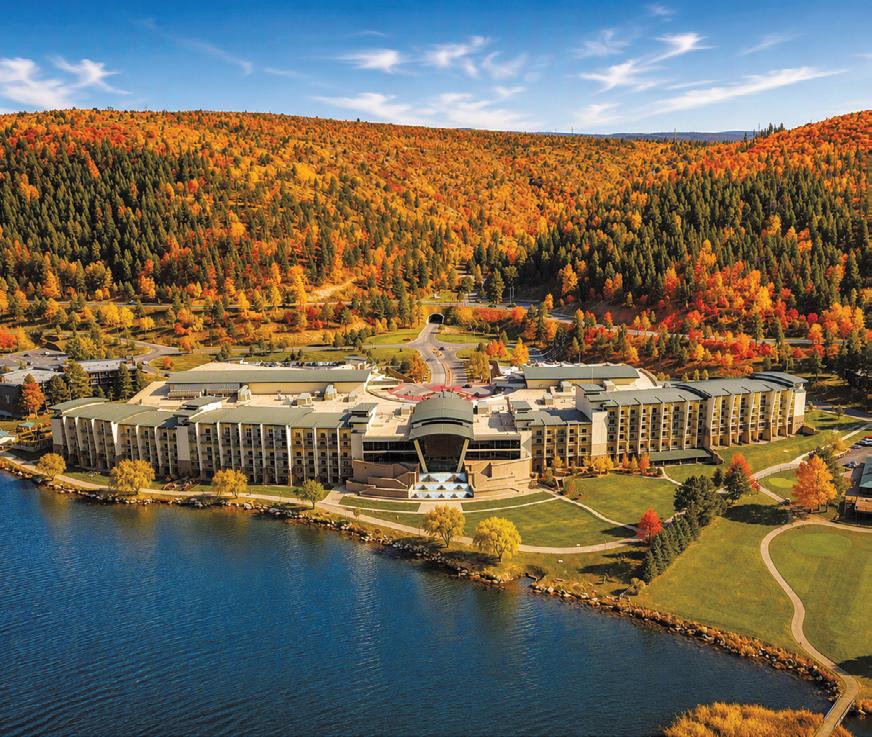
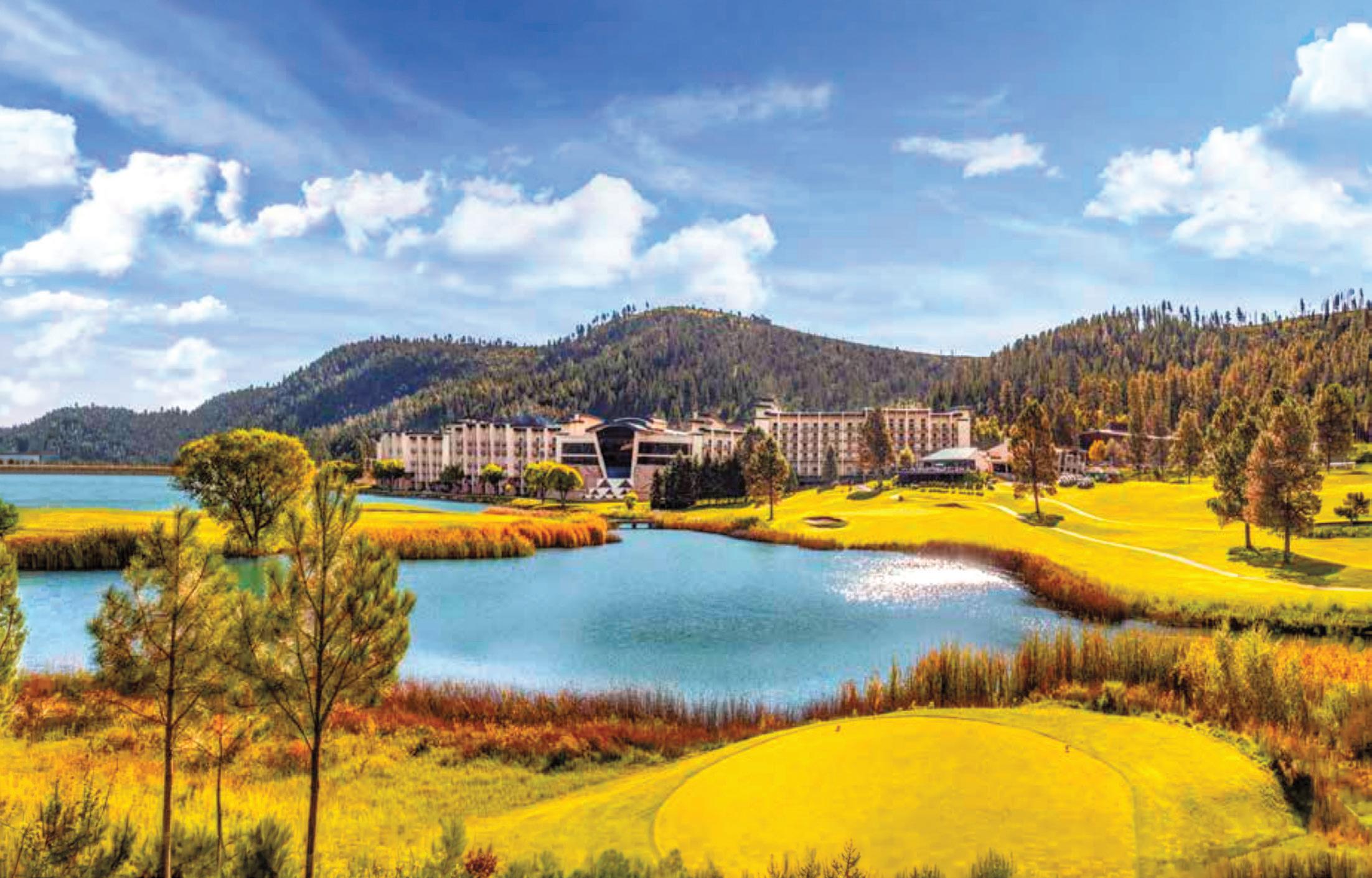
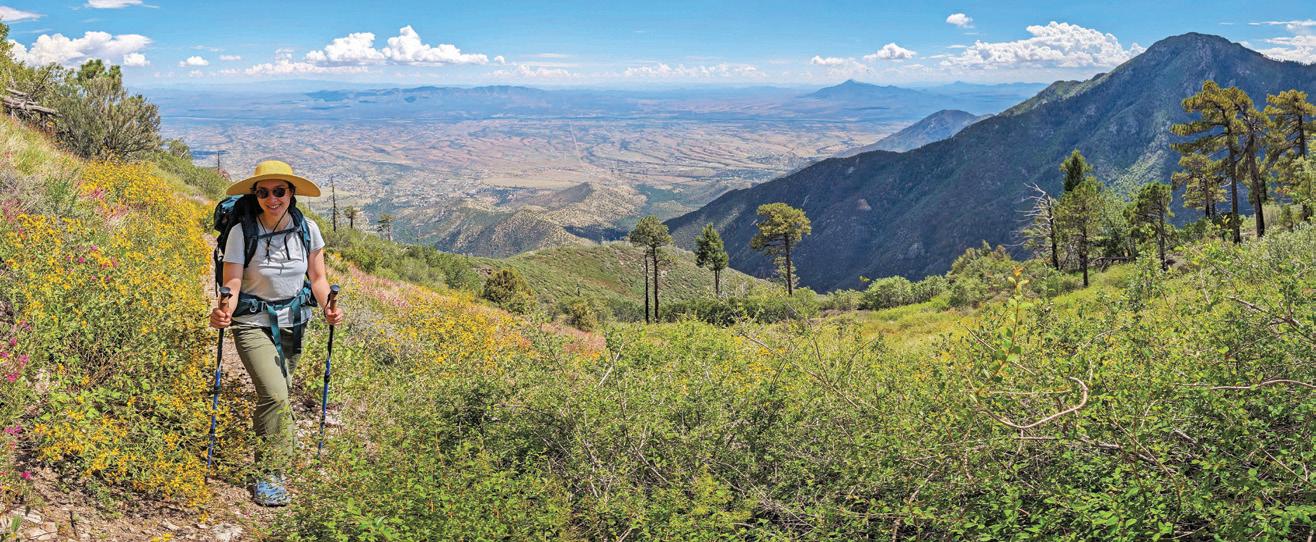
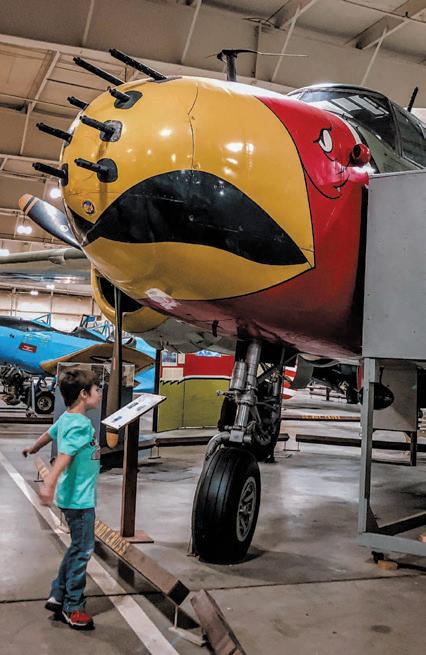
At Houston’s Lone Star Flight Museum, responsible travel can also mean engaging thoughtfully with history—taking time to understand the innovation, service, and human stories represented by the aircraft and exhibits. In other destinations, the focus may turn toward nature. Red River and Inn of the Mountain Gods place visitors close to mountain scenery and outdoor recreation, while Sierra Vista offers access to Arizona’s desert and sky-island environments. In these settings, staying on marked routes, packing out waste, and observing wildlife from a distance help protect sensitive ecosystems.
The same spirit applies to journeys farther afield. Great Bend and Liberal introduce travelers to Kansas communities shaped
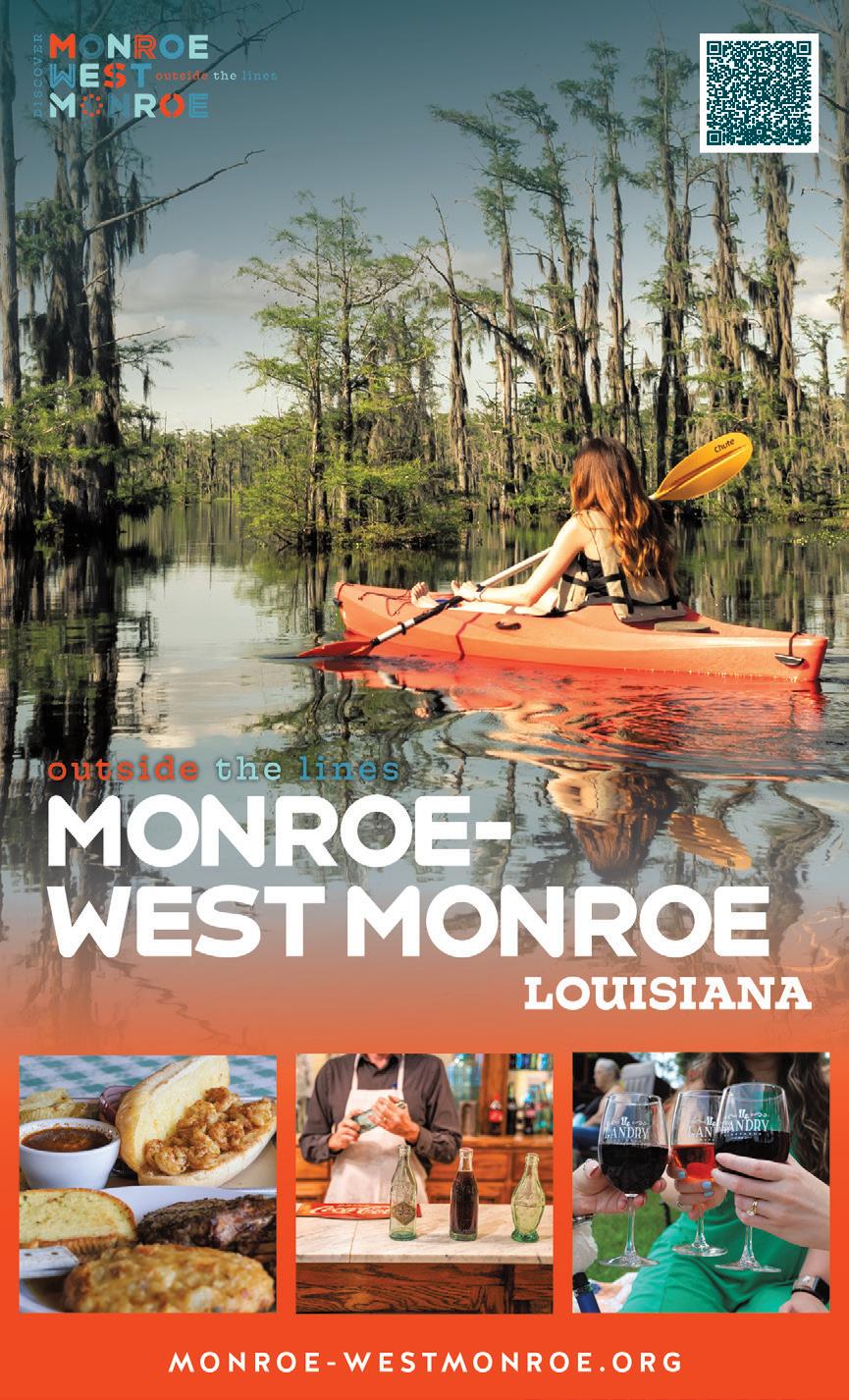
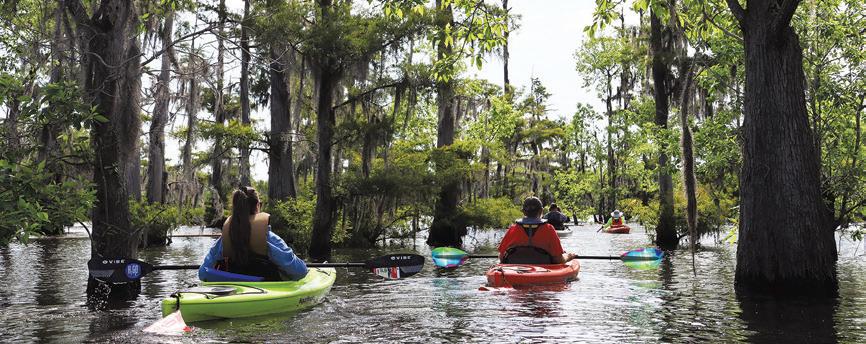
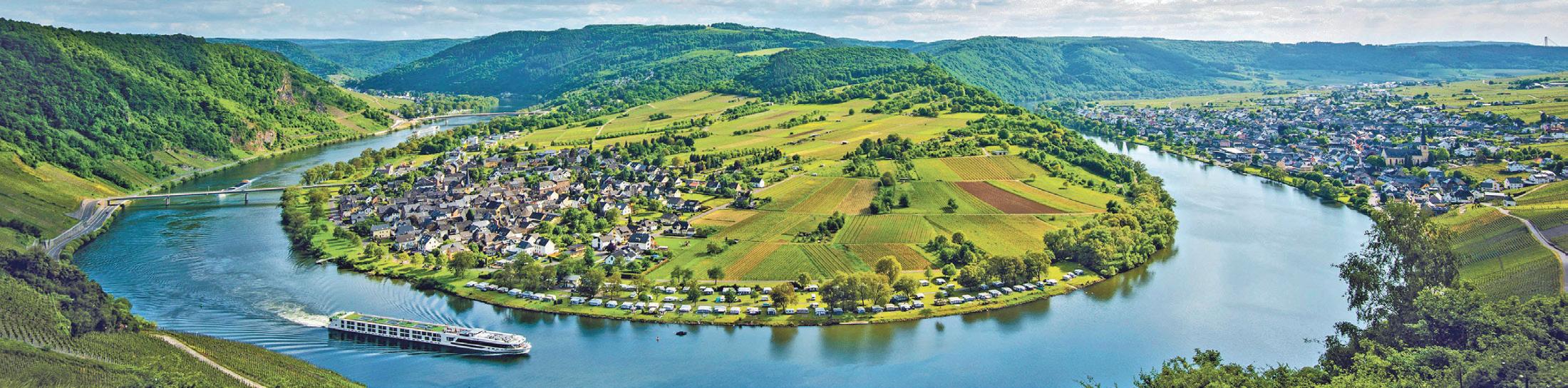
by open landscapes, regional history, and local culture. MonroeWest Monroe offers a window into northern Louisiana through its food, waterways, arts, and community life. Hurtigruten journeys encourage a different pace of discovery, connecting travelers with remote coastlines and communities where environmental awareness is especially important.
Responsible travel is ultimately about how we show up. It asks us to be curious without being careless, enthusiastic without being intrusive, and aware that our choices leave an impression long after we return home.
The goal is not simply to see more places. It is to experience them in a way that supports their future—so that local stories remain vibrant, natural spaces remain protected, and the people who call each destination home continue to benefit from those who come to visit.
The destinations featured in this issue offer opportunities to explore historic communities, natural landscapes, cultural attractions, and memorable journeys while traveling with greater care and awareness.
PLANO, TX / SALADO, TX / GREENVILLE, TX / MARBLE FALLS, TX / NACOGDOCHES, TX
LONE STAR FLIGHT MUSEUM / DENISON, TX / PALESTINE, TX / RED RIVER, NM / INN OF THE MOUNTAIN GODS, NM
SIERRA VISTA, AZ / MONROE-WEST MONROE, LA / GREAT BEND, KS / LIBERAL, KS / NORWAY
Step into a timeless story— 166 years in the making
The village isn’t just a place—it’s a spirit, a living soul. A keeper of bold Texas legends, rich legacies, and folklore.
Stagecoach wheels no longer chatter and clatter down Main Street; however, soft babbling waters cascading over rocks in Salado Creek, muddled voices, laughter, live music, church bells ringing, and birds chirping can be heard.
And with a little imagination, maybe you’ll hear the soft whispers of sweethearts, still lingering in the shade beneath the ancient oaks.
Discover the legends and legacies forever etched in Salado history. In the village, you’re not just a visitor—you’re a part of our story.
Plan your visit today at visitsaladotexas.com (254) 947-8634
Just about an hour’s
undergoing a
Once a powerhouse of the cotton era, this small but rapidly growing community is redefining what it means to be a modern Texas weekend getaway. A WALKABLE DOWNTOWN EXPERIENCE Greenville is built for weekends that thrive on downtime. In our downtown, everything is just a stroll away. Start with breakfast at one of our hometown favorites like Luke’s Café for elevated home-cooked selections. Get a caffeine fix at Prairie Coffee, with freshly made pastries, cozy vibes, and locally brewed goodness. Now you’re ready to set off on foot for a day of exploring. If you’re looking for retail therapy, Greenville’s got you covered. Downtown is filled with hidden gems like Uptown Forum, Greenville Boutique, and Lee Street Mercantile. When lunch rolls around, you have multiple options, from Dodi’s Cajun to steak at the newly opened 1846 Restaurant (named for the year that Greenville was established), to Don Toro’s Latin Cuisine, to name a few. When it’s time to find a quiet spot to sit, unwind, and enjoy a relaxing glass of wine, try one of our great wineries, Landon Winery (with their award-winning wines) or Live Happy Lane Winery (with their gorgeous décor and serene outdoor settings). Both host great events, so you will want to check their
Salado, Texas: Where Every Visit Becomes
Nestled in the heart of Central Texas, just off Interstate 35 and perfectly situated between Austin and Waco, you'll find the charming village of Salado—a place where history lingers, creativity thrives, and every visit becomes another chapter in a story more than 170 years in the making.
A TRADITION OF TEXAS HOSPITALITY
Founded in 1859, Salado has welcomed travelers for generations. Today, visitors can experience that tradition of hospitality by staying in everything from beautifully restored historic inns and charming cottages to cozy bed-andbreakfasts, unique vacation rentals, and modern hotels. No matter where you stay, you'll find the warm Texas hospitality that has made Salado a welcoming stop for more than 165 years.
Salado is a place to play, dream, imagine, create, reconnect, and simply slow down. Whether you're seeking history, art, live music, a literary escape, or peaceful moments along the creek, you'll find experiences that invite you to linger a little longer.
EVENINGS MADE FOR GATHERING
As the sun begins to set, live music fills patios and historic venues, inviting friends and families to gather and enjoy the simple pleasures of smalltown Texas. Whether you're planning a romantic weekend, a girls' getaway, a family tradition, or a quiet retreat, Salado offers space to slow down and simply be.
TRADITIONS THAT BRING THE VILLAGE TO LIFE
Throughout the year, the village comes alive with beloved traditions. Experience the spirit and heritage of the Scottish Gathering & Highland Games, where
websites for upcoming activities. If you like craft beer, The Ashen Rose is the place for you.
MORE TO EXPLORE
Expanding beyond downtown, there are great places to explore like the Vintage & Lace Marketplace, with its fusion of old and new, along with several places to thrift around town. For family fun,
Part of the Story
song heard,
Scottish culture, athletics, music, and traditions are celebrated. Then, as the holidays approach, Main Street transforms into a magical scene during the Salado Christmas Stroll, when twinkling lights, festive shopping, live entertainment, and timeless holiday charm create unforgettable memories for visitors of all ages.
ADD YOUR STORY TO SALADO
Salado isn't simply a destination—it is a collection of stories. Stories passed down through generations, stories waiting to be discovered, and stories you'll write with every visit. Here, every stroll down Main Street, every meal shared, every
you will want to stop in at Shenaniganz.
To take in a movie and more, try our newly opened Gamescape entertainment complex. History buffs will not want to miss the Audie Murphy American Cotton Museum, which honors WWII’s most decorated soldier and celebrates Greenville’s cotton heritage. The museum also hosts year-round events
like Frontier Day, Murder Mystery at the Museum, and the After Dark Easter Egg Hunt for big kids. Our beloved, historic Greenville Municipal Auditorium hosts numerous concerts, shows, and theatrical performances throughout the year. Go to GMALive.org to see the schedule and to order tickets.
EXCITING UPCOMING EVENTS
COTTON PATCH CHALLENGE –
SEPTEMBER 19, 2026
A bicycling tour with routes from 6 to 100 miles, plus gravel grinders that span 31 to 57 miles across scenic Hunt County.
LEE STREET JAMBOREE –
SEPTEMBER 19, 2026
Live music, dancing, food, and vendors take over the streets of downtown. Randall King is the headliner for Greenville’s signature street party!
STAY A LITTLE LONGER
Planning to stay overnight? Besides our great hotels, look into the chic, beautifully decorated downtown lofts at LoftsonLee.com
Pack your bags, plan to unwind, and let Greenville charm you! TravelGreenvilleTX.com
The Ophelia Effect: How Marble Falls Built a Downtown Worth
Great downtowns don't happen by accident. They take time, thoughtful planning, strategic investment, and strong partnerships. But the most important requirement, above anything else, is the belief that the community it serves deserves to thrive.
That's the story behind Downtown Marble Falls, Texas. While the built environment evolved over the course of a century, the last decade has been spent tapping into Downtown's vast potential. And over on the shores of Lake Marble Falls, visitors and residents alike will soon be able to be part of its story.
MORE THAN A HOTEL
On the outside, it may appear to be a luxury hotel under construction, but The Ophelia Hotel & Conference Center is much more than that. Built into the very structure of the place, Ophelia is the culmination of years of strategic planning, public-private collaboration, and part of a detailed, thoughtful plan to create new opportunities for local businesses, expand tourism, and improve public spaces, all of which play a part in turning Marble Falls into one of the Texas Hill Country's premier destinations. Scheduled to open in fall 2026, The Ophelia, a Tapestry Collection by Hilton property, will feature 127 upscale guest
rooms, a 10,000-square-foot conference center, a restaurant, a rooftop bar, a fitness center, and sweeping views of Lake Marble Falls. Named in honor of Ophelia "Birdie" Harwood, the first female mayor of Marble Falls and the first female mayor in Texas, the hotel blends modern luxury with the region's distinctive Hill Country character.
Suffice it to say, it’ll be a beautiful place to stay. But the true beauty is in how it will impact the City. The Ophelia is expected to generate approximately $200 million in local economic impact during its first decade, creating construction and hospitality jobs, increasing hotel occupancy and sales tax revenues, expanding the local tax base, and encouraging visitors to spend more time exploring downtown businesses, restaurants, shops, and attractions.
INVESTING IN PLACES
PEOPLE LOVE
What really makes a city’s downtown special? It’s not the buildings alone, but the spaces in between them. When the City of Marble Falls adopted its Downtown Master Plan in 2012, the plan was twofold: on the one hand, it was to create a vibrant downtown that would attract visitors. On the other hand, the City knew that the community also had to be a thriving place to live for residents.
Rather than pursuing isolated projects,
With an eager workforce, available land, thriving economy, and welcoming community, Marble Falls is the ideal location to live, work, and do business!
city leaders and the Marble Falls Economic Development Corporation (MFEDC) focused on improving infrastructure, encouraging redevelopment, enhancing public spaces, supporting local businesses, and creating experiences that would encourage people not only to visit downtown but also to stay a while.
Over the past 12 years, Marble Falls has reinvested more than $1 million through its Tax Increment Reinvestment Zone (TIRZ) into projects that make downtown safer, more attractive, and easier to explore. These projects include everything from making sidewalks wider to improving drainage systems, accessibility, and parking access. It also includes enhancements that make Marble Falls better on foot—such as lighting, landscaping, seating, and decorative features—so strolling downtown is a pleasure.
This benefits residents beyond day-today enjoyment. Since the TIRZ was established in 2013, property values within the district have climbed from approximately $38 million to more than $101 million, reflecting growing confidence in downtown Marble Falls as both a place to invest and a place to spend time.
A COMMUNITY THAT BUILDS TOGETHER
It’s for that same reason that community
improvements have been such a major focus for the City. When the city's former police headquarters became available, it was reimagined as 209 Main, a lively retail destination that has helped energize the downtown business district.
Next door, the Downtown Plaza provides open green space for community events, while Harmony Park invites visitors of all ages to make music using oversized outdoor instruments. Places like these are what truly make a downtown great, because they’re where communities come together for events like farmers' markets, concerts, festivals, and even everyday moments.
The MFEDC has also supported dozens of community-driven projects through its Community Leverage Program, helping fund everything from public art and outdoor markets to hiking trails, landscaping, park improvements, and cultural programming.
This is all by design. Since the Downtown Master Plan began, the MFEDC has collaborated with the City, Burnet County, local organizations, developers, and business owners to invest in public improvements that, in turn, encourage private investment. Shopping and dining, for example, are a mainstay of any great downtown, and when community spaces support local businesses, economic development strengthens everyday life.
CONNECTING DOWNTOWN TO THE WATERFRONT
One of Marble Falls' greatest natural assets has always been Lake Marble Falls, and the City is making it easier than ever to experience it.
Recent investments have expanded Lakeside Park, stabilized the Backbone Creek shoreline, and added trails, beach areas, boat access, restrooms, landscaping, and scenic gathering spaces. Newly-constructed pedestrian bridges have strengthened the connection between downtown businesses and the waterfront, allowing visitors to move seamlessly between shopping, dining, recreation, and outdoor events.
When The Ophelia Hotel & Conference Center opens in 2026, it will surely become a new landmark for Marble Falls, expected to attract new visitors, conferences, and events while honoring the history of the community. But while it might invite people to visit, it’ll be the already thriving downtown that convinces them to stay.
You can be one of the first to experience The Ophelia effect and the new downtown Marble Falls. Don’t wait—visit marblefallsedc.com today to learn more.
Award-winning downtown.
Lake Texoma adventures.
Live music, local dining, historic attractions, and year-round events—all just one hour north of Dallas.
Plan Your Trip Today DiscoverDenison.com
Ladies in Leather Brings Sisterhood and Spectacle to Wichita Falls
This September, the sound of hundreds of motorcycles will roll through Wichita Falls as women riders from across the country gather for a weekend built around skill, community, and the freedom of the open road.
The Ladies in Leather Parade & Rally returns to Texas from September 10 to 13, 2026, for its eighth annual event.
Presented by Copperhead HarleyDavidson and centered at Kay Yeager Coliseum, the four-day gathering will bring together riders, families, and motorcycle enthusiasts.
At the heart of the weekend is the Ladies in Leather Parade, recognized as the largest traveling all-female motorcycle parade in the United States. While men are welcome to take part in the broader rally, the parade itself is reserved for women. The distinction gives participants a rare opportunity to claim the road together and make women’s presence in motorcycle culture impossible to overlook.
A PARADE WITH A PURPOSE
For many participants, the procession represents far more than an impressive line of bikes. It brings women of different ages, professions, backgrounds, and levels of
riding experience into one shared formation. Some arrive with riding clubs, while others travel independently and find community once they reach the event.
As the parade moves through Wichita Falls, spectators will see a public expression of confidence, independence, and belonging. The riders may come from different places, but for the length of the route, they move as one.
That connection has helped Ladies in Leather grow into an annual destination.
The rally creates room for experienced riders to reconnect, newer riders to build confidence, and women who rarely see themselves represented at large motorcycle events to become part of something highly visible.
ACTION ACROSS THE RALLY GROUNDS
The weekend’s entertainment reflects the talent within motorcycle culture.
The Della Crew, an elite all-female stunt riding team, will demonstrate the precision and control behind highenergy motorcycle performance.
The Globe of Death Squad will deliver another spectacle, with riders crossing paths inside a metal cage in a tightly choreographed display of speed, timing, and nerve.
Women riders will also have opportunities to put their motorcycles and abilities to the test. The Ladies Motorcycle Games will combine control and friendly competition, while the Ladies Bike Show will highlight customized machines and personal style. The Ladies Loud Pipes Contest will give riders a chance to let their engines speak for themselves. Live music will include performances by GypsyATX, a Stevie Nicks tribute act, and Knight Ryder. Workshops, vendor shopping, and digital scavenger hunts powered by Wayhopper will offer more ways to explore the rally between performances and competitions.
On Saturday night, the Ladies in Leather Biker Ball will return, giving participants a chance to celebrate the friendships formed and renewed throughout the weekend.
RIDING FOR THE WIDER COMMUNITY
The sisterhood at Ladies in Leather also extends beyond the rally grounds. This year, the organization is partnering with the Wichita Falls Area Food Bank for the “Stuff Your Saddlebags” food drive. Riders, spectators, and local residents
are encouraged to arrive with nonperishable food donations packed into saddlebags, vehicles, or whatever space they have available. The initiative turns the rally’s reach into practical support for people experiencing food insecurity across the region. It is a fitting expression of the event’s larger message. Strength is not only demonstrated through a powerful machine or demanding stunt. It also appears in the decision to show up for others and use a shared gathering to meet a local need.
REMEMBERING THE SISTERS WHO RODE BEFORE
Among the weekend’s loudest moments, Ladies in Leather will also create space for reflection.
The LiL Memorial and live butterfly release will honor women from the riding community who have passed. The ceremony offers friends and fellow riders a chance to remember the personalities, journeys, and relationships that continue to shape the sisterhood.
The contrast is meaningful: engines will fall quiet, and the focus will shift from performance to remembrance. It is a reminder that the bonds formed on the road often endure long after a ride has ended.
From the all-female parade to the food drive, stunt shows, competitions, music, and memorial, the 2026 Ladies in Leather Parade & Rally presents motorcycle culture as both thrilling and deeply connected. Wichita Falls will provide the setting, but the women arriving from across the country will create the experience.
—Source: Ladies in Leather
Nacogdoches Has Range
History, Gardens, Murals, and Big Rigs in the Oldest Town in Texas
In Nacogdoches, history is not preserved at a distance. It lives in the shaded gardens, public art, and festivals that keep Texas’ oldest town moving forward. This East Texas city carries more than three centuries of stories, but its appeal is far broader than its age. Nacogdoches is the Oldest Town in Texas, the Garden Capital of Texas, a college town, a festival city, and the kind of destination where museums, azalea trails, downtown murals, and custom 18-wheelers can all belong to the same itinerary. That mix is what gives Nacogdoches its personality. The city’s history reaches back to Spanish missions dating to 1716, with modern-day Nacogdoches established in 1779. Today, that past is not tucked away behind glass. It is built into the homes, museums, trails, and public spaces that visitors can experience throughout town.
THE OLDEST TOWN IN TEXAS,
STILL TELLING NEW STORIES
Downtown Nacogdoches is one of the best places to begin. Its brick streets, dating back to 1923, set the stage for a walk through layers of Texas history. The self-guided Historic Walking Tour leads visitors past landmarks, local businesses, and sites connected to early residents, revolutionaries, and pioneers.
RAYE MOCIOIU
VisitNacogdoches.org
History lovers can explore the Stone Fort Museum, a Texas Centennial reconstruction of Antonio Gil Y’Barbo’s 18th-century stone house, or visit the Old University Building, built in 1859 and listed on the National Register of Historic Places. The Sterne-Hoya House Museum & Library, the Nacogdoches Railroad Depot, Millard’s Crossing Historic Village, and Caddo Mounds State Historic Site each add another chapter to the region’s story.
For a different kind of tour, the Nacogdoches Statue Trail highlights key figures in Texas history through public
sculpture, while Oak Grove Cemetery tells its own story as the final resting place of several legendary Texans, including four signers of the Texas Declaration of Independence. A CITY IN BLOOM Nacogdoches’ title as the Garden Capital of Texas is well earned. The Ruby M. Mize Azalea Garden, located on the campus of Stephen F. Austin State University, is the largest azalea garden in Texas, with trails winding through a 50-year-old loblolly pine forest. The SFA Mast Arboretum, Pineywoods Native Plant Center, Gayla Mize Garden, and local garden trails give visitors plenty of reasons to stay outdoors. Downtown adds even more color through a growing mural collection that reflects the city’s history, culture, and community spirit. From the Garden Capital of Texas mural to the Welcome to Nacogdoches mural and other public art stops, the city uses its walls to tell stories in full color. WHEN BIG RIGS
What Travelers Need to Know About Carbon Offsets
From business trips to leisurely adventures, travel has become an integral part of our lives, and the impact of our journeys extends beyond the memories we create. Responsible travelers leave nothing behind except footprints, but savvy travelers keep an additional footprint in mind as they embark on their adventures: the carbon footprint. Travel leaves behind a sizeable footprint, and as climate change becomes an increasing concern each year, there is a need for solutions that go beyond the norm. While recycling and conservation play key roles in caring for our planet, there is an even more effective way to mitigate our carbon footprint: balancing our impact through carbon offsets—a vital tool for mitigating the environmental impact of our voyages.
WHAT IS A CARBON OFFSET?
A carbon offset is a measurable action designed to counterbalance the release of carbon dioxide into the atmosphere due to human activities. Whether it's industrial operations or our daily commute, carbon offsets are a remedy, measured in metric tons of carbon
dioxide equivalents (mTCO₂e). The idea is to reduce, avoid, or sequester emissions elsewhere to compensate for those generated during our journeys. "Carbon offset" and "carbon credit" are often used interchangeably. While a carbon credit represents the removal of one ton of carbon from the atmosphere, the term "carbon offset" is commonly associated with the action taken to achieve this reduction. This reduction is crucial not only in the
compliance market, where companies can make an impact by adapting and lowering their emissions, but also in the voluntary market, where individuals, organizations, and everyday heroes can proactively offset their carbon footprint.
WHY IS IT IMPORTANT?
The reality is that every human has a carbon footprint. Our daily activities contribute to releasing carbon emissions into the atmosphere,
The Lone Star Flight Museum is the only museum in Houston whose exhibits FLY! This aviation museum and STEM learning center is dedicated to celebrating flight and achievements in Texas aviation history while educating and engaging youth through science, technology, engineering, and math. The 130,000-square-foot museum includes the Heritage and Waltrip Hangars that house a collection of more than two dozen rare and historic commercial, general aviation, and military aircraft. A walk through the Texas Aviation Hall of Fame will leave visitors inspired. Featuring Texas aviators and their accomplishments, it is the official aviation hall of fame for the state of Texas, established through a resolution by the 74th Texas Legislature.
EXPERIENCE THE WONDER OF FLIGHT Guests can experience the wonder of flight in the Aviation Learning Center,
where they can complete a pre-flight safety inspection on a real airplane and pilot a flight simulator for an authentic hands-on experience. For even more excitement, MAXFlight offers a fully interactive, 360-degree motion adventure with realistic virtual experiences such as flying warbirds, jets, and vintage aircraft; riding a roller coaster; exploring underwater, and more. For a true bucket-list experience, the warbird ride program puts visitors aboard historic aircraft to feel authentic American airpower firsthand, with options including the B-25 Bomber, T-6 Texan, Stearman, and more.
SPARK A CURIOSITY FOR AVIATION
There is something for everyone at the Lone Star Flight Museum. The Flight Academy is an exhibit that brings to life the sights, sounds, and science of flight with hands-on exhibits and challenges for all ages. Demonstrations and STEM workshops, along with
Hangar Talks and special events, create a multigenerational experience like no other. The littlest visitors can enjoy the Boeing Toddler Terminal for learning and play, and in the Space Gallery, the entire family can learn about how Space Shuttle astronauts train, live, and work in space. The exhibit features the NASA Crew Compartment Trainer-2 (CCT-2) and EVA Airlock System, the Space Shuttle Motion Base Simulator, a Lunar Rover, and other NASA artifacts. The museum’s newly unveiled exhibit, “Made in Texas: 116 Years of Aviation History,” highlights the people, companies, and organizations from Texas and their contributions to national and global aviation achievements. This original exhibit will be open through January 3, 2027.
THERE’S SO MUCH MORE
A great visit also includes traditional Italian coffee, pastries, sandwiches, and more at Minuti Coffee, located inside the museum. And a Lone Star Flight Museum trip is not complete without a stop in the gift shop, where a uniquely curated collection of aviation-inspired keepsakes, toys, apparel, and souvenirs are available for visitors of all ages. Museum membership includes FREE unlimited general admission, access to exclusive events, behind-the-scenes access, and special discounts.
Visit online at lonestarflight.org for hours, event schedule, full aircraft collection, exhibits, and much more. Follow us online on Facebook, Instagram, and TikTok for more plane amazing information about the Lone Star Flight Museum.
creating an ecological debt that demands attention. From the energy we consume to how we travel, our actions play a role in the rising carbon pollution that has disrupted the planet's natural carbon cycle.
The consequences of our escalating carbon emissions are becoming more noticeable, with temperatures soaring to unprecedented levels. Carbon offsets offer a solution that seems small but makes a big change.
By taking conscious steps to reduce, offset, and sequester emissions, we can contribute to a significant positive change for our planet.
HOW DO YOU DO IT?
The road to a sustainable future involves individual responsibility and collective action. We can curb our carbon footprint by making mindful choices in our daily lives. Reducing reliance on red meat, reconsidering our commuting habits, and being mindful of energy consumption are all steps in the right direction. Still, it’s possible to make an even more significant impact.
Planting trees, for example, is an easy way to impact your carbon footprint. In addition, organizations like TenTree, Cool Effect, and Less, among others, offer online carbon offset calculators, accessible ways to see how much your travels will impact your carbon footprint, and even allow visitors to donate the amount to finance worthy carbon projects, from reforestation efforts to conservation initiatives.
As travelers, we have the power to explore the world responsibly. From reconsidering our travel habits and consumption patterns to supporting sustainable practices, every effort counts.
Protecting Paradise: The Resort Making Waves for Ocean Conservation
becomes the only word that could possibly describe such a place. So it’s no wonder that, in a place marked by so much natural beauty, there would be decades' worth of commitment to science and conservation, and a never-ending promise to protect the ocean.
This past June, during World Ocean Month, Atlantis Paradise Island celebrated more than 20 years of marine conservation through the work of the Atlantis Blue Project Foundation (ABPF), the resort's nonprofit organization dedicated to preserving marine species and the ecosystems they call home. Since its founding in 2005, the foundation has invested in scientific research, habitat restoration and community education throughout The Bahamas and the Caribbean. Who says a resort can’t also be a hub for marine conservation?
RESCUE, REHABILITATE, RELEASE, REPEAT
Over the past two decades, Atlantis and the ABPF have rescued, rehabilitated and released more than 7,500 sea turtles, invested over $5 million in coral reef research and restoration, and contributed to the protection of more than 1.4 million acres of marine habitat. Working alongside more than 90 marine specialists, veterinarians, aquarists and conservation partners, the foundation supports projects that protect endangered species while inspiring future generations to care for the ocean.
One of its most impressive achievements is The Bahamas' first Coral Gene Bank. Opened just over a
year ago, the biosecure facility is a kind of insurance policy for some of the country's most vulnerable coral species.
As climate change, warming seas, and devastating coral diseases continue to threaten reefs across the Caribbean, the Gene Bank preserves the genetic diversity needed to restore damaged ecosystems in the years ahead.
The facility can house up to 600 mature coral colonies and currently protects 15 coral species, including Pillar Coral, Maze Coral and Boulder Brain Coral. Alongside the Gene Bank, Atlantis has also established The Bahamas' first Sea Urchin Nursery, where juvenile long-spined sea urchins are raised before being released onto reefs. These
algae-eating animals play an essential role in keeping reefs healthy by preventing algae from overwhelming young corals, giving reefs a better chance to recover naturally.
ATLANTIS’ LUCKIEST RESIDENTS
Sea turtle conservation is a huge part of the foundation’s work, and this year, one extra-special patient captured the attention and hearts of people all across the globe.
Lucky, a critically endangered Kemp's ridley sea turtle, was rescued after becoming cold-stunned off the coast of Nova Scotia. He made a remarkable 2,700-mile journey to Atlantis for specialized veterinary care, which
speaks to the importance of working across borders and oceans to get specialized expertise to the animals that n eed it.
Atlantis has also supported the Sea Turtle Conservancy's Tour de Turtles satellite-tracking program for 17 years, helping scientists better understand migration patterns while engaging the public in sea turtle conservation. But coral reefs and sea turtles are only part of the story!
Earlier this year, Atlantis welcomed Kronos, a young Atlantic manta ray, to its ocean-fed Ruins Lagoon. This arrival marks the resort's first manta ray in more than four years and continues decades of research into one
of th e Atlantic Ocean's largest and least understood rays. During Kronos' stay, researchers will study growth, behavior and, migration before the animal is eventually released back into the wild.
EDUCATION
MARINE
IN PARADISE Conservation efforts don’t stop at sea level; they also extend to the shoreline. Mangrove forests are among nature's most effective coastal defenders, protecting communities from storms, improving water quality and providing nursery habitat for countless marine species. Since 2010, Atlantis has donated more than 8,000 young mangrove trees to conservation organizations across The Bahamas, helping to restore critical wetlands while supporting research to build more resilient coastlines. New guest experiences, including the recently introduced Flippers, Fins and Feathers program at Dolphin Cay, offer behind-the-scenes access to the resort's marine habitats, veterinary facilities and animal care teams. Guests can meet dolphins, sea lions and macaws while learning firsthand about wildlife rescue, rehabilitation and conservation science. Th ese
Red River Rises Into Fall: A Mountain Town Made for Autumn
As summer winds down and fall arrives in the mountains, the Town of Red River, New Mexico, comes alive with golden aspens, crisp mountain air, and endless opportunities for adventure. Whether you’re here for the outdoors, live music, local eateries, eclectic shopping, or simply to enjoy the beautiful surroundings, this cozy mountain town has something for everyone. Bring the whole family and come explore the Red River Ski & Summer Area, hike and fish in nature’s finest, hit the pump track, or set out on horseback and discover colorful forest trails! A relaxing walk along the Red River—which flows next to town—is a beautiful way to disconnect mentally and puts you within a short walk of Main Street’s many offerings. Most of the businesses are locally owned and cannot be found anywhere else except in Red River. Here, the person greeting you, serving you, or sharing their craft is often the owner behind the business. The Town of Red River is full of welcoming faces, small-town charm, and unforgettable fall views. It's the perfect mountain getaway. Gather your loved ones, pack your bags, and experience autumn at new heights!
WHERE FALL FESTIVITIES BEGIN
Join us for our premier event to kick off the fall season at our Aspencade Arts Festival, held over three days starting September 25th at Brandenburg Park. This event will showcase many talented artists from New Mexico and the Southwest, providing unique handcrafted creations surrounded by the prime, vibrant aspens, setting the tone for a relaxing weekend.
Later in the season, put your lederhosen on for Oktoberfest, one of the biggest events in Red River with three full days of craft beer, wine, spirits, local artisans, live entertainment, German food, dancing, fun contests, a kid zone, and more!
Whether you’re planning a family adventure or a romantic getaway, the golden aspen groves, rolling hills, and scenic valleys create a picture-perfect autumn escape.
TRAILS FOR EVERY KIND OF EXPLORER
GOLDEN VIEWS IN EVERY DIRECTION
Beyond the events, fall in Red River brings some of the most breathtaking views.
There’s something for all nature lovers… Explore the Red River Nature Trail as it winds beneath colorful aspens, offering charming views of town, or take on the Columbine Trail for a more adventurous hike filled with wildlife, water views, and stunning fall scenery. Middle Fork Trail offers a more relaxed experience with a scenic drive, shaded pathways, and a family-friendly route perfect for kids and four-legged friends. For experienced hikers, Lost Lake Trail climbs nearly 12,000 feet, rewarding you with sweeping mountain views, open meadows, vibrant aspens, and the beautiful lake. Not up for a hike? Grab a drink or snack from a local shop and enjoy a peaceful stroll through town—you never know what wildlife or friendly faces you’ll meet along the way!
PLAN YOUR RED RIVER ESCAPE As the golden aspens take over the mountains and crisp autumn air settles into the valley, Red River transforms into a fall destination unlike any other. From scenic drives along the Enchanted Circle Scenic Byway to colorful hikes, local shops, cozy restaurants, and unforgettable community events, every corner of town offers a
Why More Women Are Choosing Travel That Feeds the Soul
RAYE MOCIOIU
There comes a point when many women realize they've become experts at looking after everyone but themselves. Between careers, raising children, supporting partners, caring for aging parents, volunteering, managing households, and keeping up with life's endless responsibilities, it's easy to forget what it feels like to simply be. Vacations can be a welcome escape, but just as easily can become another itinerary to manage.
However, Camp Joy Retreats (campjoyretreats.com) has a different itinerary in mind—one with space to breathe, meaningful conversations, genuine connection, and the chance to return home feeling renewed. In short, they want to put joy on the calendar.
Founded by sisters Marea and Monique Kavanagh, Camp Joy was born of the belief that the world is meant to be explored. Having spent a lifetime exploring the world together, the sisters agree that, even more than the destination, it's the people we meet and the conversations we have that stay with us the longest. But while the inspiration was clear, the path towards creation was shaped by life's unexpected turns.
Her 15 years in the hospitality industry taught Marea how thoughtfully crafted experiences can bring people together. Her experiences as the mother of a son with special needs led her to a career as a homeopathic practitioner, supporting individuals and families on their healing journeys. She later started on her own journey learning practices such as yoga, meditation, and holistic wellness. In 2024, a serious car accident brought home the truth that “life is not a dress rehearsal, it’s meant to be lived fully, with intention and joy.”
Monique arrived at Camp Joy by a different path. After unexpectedly leaving her 25-year career in financial services, she suddenly found herself with something she hadn't had in
Close your eyes for a moment.
Imagine a place where the air feels different the instant you arrive—cooler, cleaner, carrying the scent of pine trees and mountain earth. A place where the noise of daily life fades into the distance and is replaced by the gentle ripple of water, the whisper of wind through towering forests, and the feeling that you've discovered something truly extraordinary.
Welcome to Inn of the Mountain Gods, a destination unlike any other.
Set beside the shimmering waters of Lake Mescalero and surrounded by the majestic beauty of southern New Mexico's mountain landscape, the Inn is more than a resort. It is a place where adventure, relaxation, culture, and natural beauty come together in perfect harmony. Owned and operated by the Mescalero Apache Tribe, every corner of the property reflects a deep connection to the land and a heritage that has endured for generations.
Picture yourself waking before sunrise in a beautifully appointed guest room.
years: time. While embracing new adventures, writing a children's book, traveling across the United States by rail, and spending time with her father, she also had far more space to continue as caregiver for her mother, who was living with dementia. Having the time to do both—caring for herself and the ones she loves—made her realize how uncommon that was for many women. The two sisters, from their different experiences, arrived at the same question: What if women had a place where they could finally put themselves first?
The answer came in the form of Camp Joy Retreats: thoughtfully
curated retreats in destinations ranging from the hilltop villages of France and the rolling English countryside, to the sun-soaked shores of Zihuatanejo, the coastal charm of Bald Head Island, and the misty, magical Blue Ridge Mountains. Each location offers its own unique character, but every retreat shares the same philosophy: beautiful surroundings create the space for meaningful transformation.
YOUR JOY, YOUR CHOICE
There’s no wrong way to be at Camp Joy Retreats. Each day is entirely your own. There is no pressure to fill every hour. In fact, the opposite is encouraged. Camp
Joy embraces flexibility, allowing every guest to experience the retreat in the way that feels right for them. Guests might begin the day sipping coffee as the sun rises over the countryside, ease into gentle yoga or meditation, wander through local markets, sample regional wines, or enjoy leisurely meals prepared with fresh local ingredients. Guests might spend one day joining every excursion and the next spending an afternoon with a book by the pool.
One activity that Camp Joy does encourage is participating in the Inner Joy program, led by Marea. Through open conversations and guided reflection, participants can take the time to consider what truly brings them joy and what they want to carry forward when they return home. You won’t find quick fixes or grand promises here, but instead you’ll find honest dialogue, shared experiences, and the reassuring realization that you’re not alone—many women are asking the same questions.
As the day comes to a close, everyone gathers around beautifully prepared meals featuring local ingredients. Like any good dinner party, stories are exchanged, laughter fills the table, and friendships begin to form, often among women who arrived as strangers just days before.
That might just be the greatest gift of purposeful travel. The destinations are undoubtedly extraordinary, but the lasting memories come in the form of unexpected laughter, a new friend, and most importantly, the confidence that comes from trying something new or the comfort of feeling truly seen.
That belief in the transformative power of travel also inspired Monique and Marea to create Circle of Joy (circleofjoy.love), a nonprofit that provides a fully funded place at every Camp Joy retreat for a caregiver who would not otherwise have the opportunity to attend. Every Camp Joy retreat begins with a journey to somewhere beautiful, but the most meaningful destination is often the one waiting within.
This Is Where the Mountains Speak
The mountain air fills your lungs while the surrounding forest invites exploration. Perhaps the morning begins with a walk along the shoreline, coffee in hand, listening to the sounds of nature awaken around you. Maybe it's a round of golf on the resort's championship course, where manicured fairways weave through breathtaking scenery, and every hole offers another unforgettable view.
ADVENTURE IN EVERY DIRECTION
As the day unfolds, excitement awaits around every corner. The rush of a zip line soaring above the lake. The peaceful rhythm of kayaking across calm waters. The thrill of casting a line into a quiet cove. The freedom of exploring mountain trails where every turn reveals another postcard-worthy vista. Whether you seek adrenaline or tranquility, the landscape provides both in abundance. Inside the resort, a different kind of energy comes alive.
The sounds of celebration echo
slowly, surrounded by the warmth of genuine hospitality.
A PLACE TO RELAX AND RECONNECT
For those seeking rejuvenation, the Spa offers a quiet sanctuary inspired by the beauty and traditions of the Mescalero
Apache Tribe. Here, time slows down. Stress melts away. The outside world becomes a distant memory.
Yet what truly sets Inn of the Mountain Gods apart cannot be measured by luxurious rooms, exciting entertainment, or spectacular scenery alone. It is the feeling.
The feeling of standing beside a mountain lake at sunset as the sky turns shades of gold and crimson. The feeling of reconnecting with loved ones without distraction. The feeling of discovering a place that simultaneously excites your spirit and calms your soul. A STORY WORTH
REMEMBERING
Some destinations are simply places to visit. Inn of the Mountain Gods is a place to experience. Here, every sunrise offers possibility. Every season brings a new kind of beauty. And every stay becomes a story worth telling long after you've returned home. This is more than a resort. This is God's Country. This is where memories are made. This is where your
MÉNERBES,
BLUE RIDGE MOUNTAINS, NC
ZIHUATANEJO, MEXICO February 27 – March 5, 2027
COTSWOLDS, ENGLAND May 22
27, 2027
COTIGNAC,
17, 2027
From expertly prepared steaks and fresh seafood to handcrafted cocktails and local favorites, dining at the Inn is designed to be savored
Florida’s Fort Myers is well known for its sunny beaches and shores full of seashells, but there’s more to this vacation hotspot than you might think! Through a partnership with Kind Traveler’s Every Stay Gives Back™ program, Fort Myers is turning ordinary vacations into meaningful opportunities to protect wildlife, preserve coastal ecosystems, and strengthen local communities.
In a first for the Sunshine State, Visit Fort Myers has become Florida’s first destination to join Kind Traveler’s regenerative travel movement, which has been picking up steam as travelers seek out adventures that minimize environmental harm while also helping communities thrive. Modern travelers want more than relaxation; they want impact. According to Booking.com’s 2025 Travel & Sustainability Report
nearly three-quarters of travelers want their spending to benefit local communities, and more than 80 percent say sustainability influences their travel choices.
Fort Myers’ partnership with Kind Traveler is designed for those eco-savvy adventure-seekers. This kind of purpose-driven travel is all about regenerative tourism—travel that restores ecosystems, supports resilience, and leaves destinations stronger than before.
“Fort Myers is a destination defined by natural beauty and resilience,” explained Tamara Pigott, Executive Director of the Lee County Visitor & Convention Bureau. “Through Kind Traveler’s Every Stay Gives Back™ program, visitors can help our wildlife recover, keep our beaches beautiful, and support a sustainable future while seeing the real impact of their stay.”
EVERY STAY GIVES BACK
When travelers book participating hotels or vacation rentals in Fort Myers, a portion of each stay directly supports local nonprofit organizations focused on wildlife rescue, environmental conservation, and community wellbeing.
Guests receive access to Kind Traveler’s Positive Impact Dashboards and QR codes that track how their stay contributes to the community and the surrounding environment— it’s like getting a visible, measurable receipt for how their generosity is making a difference. Even modest contributions make a meaningful difference. Just $10 can help feed and care for a recovering wildlife patient for nearly a month, or clean up 10 miles of local roadway, keeping Fort Myers beautiful and thriving.
A MODEL FOR COASTAL REGENERATION
Since launching in 2023, Kind Traveler’s
Every Stay Gives Back™ program has raised over $2.8 million for environmental and community initiatives worldwide, including coral reef restoration, disaster recovery, and youth education.
“Fort Myers and Sanibel are shining examples of nature’s resilience and community unity,” said Jessica Blotter, CEO and Co-Founder of Kind Traveler.
“Through this program, travelers become part of that healing, helping protect wildlife, beaches, and the very spirit of the destination.”
From kayaking through mangrove tunnels to spotting manatees and dining on sustainable seafood, Fort Myers is still the sunny destination it’s known for, now with immersive coastal experiences that celebrate nature while protecting it.
LOCAL PARTNERS
INCLUDE:
TWEEN WATERS ISLAND RESORT & SPA (CAPTIVA)
Supporting the Clinic for the Rehabilitation of Wildlife (CROW), which treats over 6,000 injured, orphaned, and sick animals annually, including pelicans, turtles, raptors, and dolphins.
SANIBEL SIESTA ON THE BEACH
Also supporting CROW, helping fund emergency wildlife care, research, and education.
SEA GYPSY VACATION RENTALS
Supporting Keep Lee County Beautiful, an organization dedicated to beach cleanups, mangrove restoration, and marine debris prevention.
Adventure Among the Sky Islands of Sierra Vista, Arizona
Sierra Vista in southeastern Arizona is where big hikes meet high elevations, and the soaring Huachuca Mountains deliver in spades with knock-out views and surprisingly cool temperatures. Nestled in the foothills at a comfortable 4,600 feet, Sierra Vista is surrounded by 360-degree mountain vistas r isin g above sweeping desert grasslands, making it an ideal destination for outdoor adventures year-round.
HIKE FROM RIVER TO SUMMIT
A south-to-north line of ancient cottonwood marks the San Pedro River, offering nearly level hiking trails for a relaxing stroll along the riverbank. Here, you can still enjoy breathtaking views, but without actually losing your breath. Whether you hike along the river or to the top of a peak, make sure to listen for birdsong, watch leaves rustle in the breeze, and take in the peaceful beauty of one of the Southwest's last free-flowing rivers.
For those looking for a greater challenge, the Huachucas are mighty and blanketed with wilderness areas to explore. Choose from nearly four dozen trails that follow the mountain’s contours for gentle walks and zigzag toward high peaks. Miller Peak stands
tallest at 9,466 feet, followed closely by Carr Peak at 9,220 feet. Both dwarf Ramsey Peak and Pat Scott Peak, which rise to 8,725 and 8,700 feet, respectively—but even then, “dwarf” is a relative term; 1,000 feet of hiking elevation is quite a bit when navigating switchbacks in thinning oxygen! Whether you're tackling a summit or enjoying a lower-elevation trail, every route rewards hikers with panoramic views and remarkable biodiversity.
EXPLORE HISTORIC TRAILS AND HIDDEN CANYONS
But not every adventure requires climbing to the highest peaks. Multiple trailheads along the foothills and the San Pedro River provide easy access to unforgettable scenery. Brown Canyon Ranch is a favorite starting point for hikers, mountain bikers, and horseback riders. Once a working cattle ranch and now part of the Coronado National Forest, you’ll find a historic
adobe home and a restored windmill here, offering a glimpse into the region’s ranching history.
Nearby Miller Canyon is another local favorite. While the main trail continues all the way to Miller Peak, numerous shorter loops and accessible routes allow visitors of all experience levels to experience the canyon's mountain views. The same goes for Carr Canyon— choose between trekking up to Carr Peak or sticking to the lower canyon trails. You can even take on the scenic 3.7-mile Perimeter Trail, which links Carr and Miller canyons with approximately 834 feet of elevation gain.
WILDLIFE AROUND EVERY BEND
For hikers looking to gain elevation without committing to a full summit, the Hamburg Trail is accessible from Brown Canyon Trail or through the Ramsey Canyon Preserve, and climbs steadily to Hamburg Overlook, where spectacular views await. The Preserve, owned by The Nature Conservancy, is reason enough to visit. A haven for birds and wildlife, you’ll likely encounter small Coues deer and a plethora of birdlife along your climb. The big uphill hike is rewarding; small waterfalls burble down the hillsides past evergreens and deciduous trees amid old homesteads. And when you’re done? Scoot back down the trail to the Preserve or join up with other trails and keep going. Just as the San Pedro River flows steadily here, so do the reasons to come. Welcome to Sierra Vista. Welcome to extraordinary.
Visit Visit.SierraVistaAz.gov or call 520-439-2217 for more information about visiting Sierra Vista,
Monroe-West Monroe: A Flavorful Fall Getaway
As Texas begins to look toward late-summer road trips and easy fall escapes, Monroe-West Monroe, Louisiana, offers the kind of weekend that feels close, welcoming, and full of discovery. Set along the Ouachita River and Bayou DeSiard, the Twin Cities pair outdoor beauty with local flavor, live music, shopping, festivals, and warm North Louisiana hospitality. An easy drive from Dallas, MonroeWest Monroe is made for travelers who want a getaway with variety. You can spend the morning on the water, linger over a memorable lunch, browse Antique Alley in Downtown West Monroe, and end the day with a glass of Louisiana wine or a craft beer overlooking the river.
A DESTINATION FOR FOOD LOVERS
Food is one of the best reasons to plan a trip. Monroe-West Monroe’s dining scene blends Louisiana tradition with culinary innovation, offering more than 150 locally owned restaurants across the area. Here, menus move easily from crispy fried catfish, po’boys, barbecue, and gumbo to enchiladas, sushi, handcrafted pizza, fresh seafood, and chef-driven Southern cuisine. The destination is also home to James Beard Award semifinalist Chef Cory Bahr, whose restaurants have helped put Monroe-West Monroe on the map for travelers who plan their trips around good meals. This September, Monroe-West Monroe Restaurant Week invites visitors to taste even more of the region through special prix fixe menus, local favorites, and unique dining experiences. It is the perfect excuse to try somewhere new, order something unexpected, and let the Twin Cities show off what they do best.
PADDLE THROUGH NORTH
LOUISIANA BEAUTY
Beyond the table, Monroe-West Monroe makes it easy to get outside. The Ouachita Paddling Trails invite visitors to explore Northeast Louisiana from the water, with 11 scenic paddling trails winding through peaceful bayous, lakes, cypress-lined landscapes, and the Ouachita River. Beginners can enjoy calm stretches, while more experienced paddlers can seek out longer routes and changing currents. Black Bayou Lake National Wildlife Refuge is a standout for nature lovers, with opportunities to spot herons, egrets,
More Than a Room: How Humanitarian Hotels Turns Stays Into Service
believed business could accomplish more than financial success. It could serve people, strengthen neighborhoods, and create something that endured. Today, that belief continues through a foundation that reports more than $215 million in giving, support for 362 nonprofit organizations, and an impact reaching 16 million people across 47 countries. Humanitarian Hotels carries that mission into experiences people already cherish: a room booked, a meal shared, a wedding celebrated, or a round of golf played. A room night can help support tutoring, shelter, food, or transportation for a family attending therapy. A wedding can contribute toward new roofs for families in need or help a military family move toward a permanent home. Each experience becomes part of a wider story of support, dignity, and possibility.
PURPOSE AT EVERY PROPERTY
Each Humanitarian Hotel reflects its setting while advancing the same mission. At Saint John’s Resort in Plymouth, Michigan, guests find historic architecture, championship golf, refined dining, and expansive event spaces within a beautifully restored former seminary. The resort also creates dignified employment for adults with intellectual and developmental disabilities, mentors high school students, and works with Food Rescue Detroit to redirect surplus food. Since 2022, it has donated more than 14,000 pounds of food, providing over 28,000 meals.
On Mackinac Island, The Inn at Stonecliffe pairs historic beauty with a deep investment in its workforce. More than $13 million has been directed toward safe, family-ready employee housing, including homes for asylum seekers and families beginning new lives in the United States. By prioritizing stable, year-round roles, the property also helps strengthen the island community.
At Hilton Garden Inn Laramie, located on the University of Wyoming campus, the mission comes to life through hospitality internships, veteran wellness stays, and local partnerships. When student interns noticed lightly used bedding being discarded during room refreshes,
they helped turn it into more than 30 complete bed sets for a nonprofit serving survivors of domestic violence.
HOSPITALITY AS A FORCE MULTIPLIER
Humanitarian Hotels describes hospitality as a “force multiplier.” A guest’s choice helps fund charitable work, but it also supports workplaces where inclusion, mentorship, sustainability, and care are part of daily operations.
That approach extends beyond the properties. In 2026, Humanitarian Hotels became a formal partner of Catholic Charities USA, a network of 169 diocesan agencies serving more than 15 million people each year. The broader Pulte Family Charitable Foundation also supports housing, hunger relief, education, faith communities, and global development.
The impact of this model is measured not only in dollars donated or meals served, but in the lives given room to move forward: a student discovering confidence, a veteran finding a place to regroup, a family gaining stability, or an employee receiving the opportunity to build a future. By weaving generosity into the everyday rhythms of hospitality, Humanitarian Hotels turns meaningful experiences into lasting change.
Beyond the Rush: Why More Travelers Are Choosing the River
alone, more travelers are choosing experiences that reflect their interests, whether those center on food, history, culture, pace, or a mix of all four. At the same time, many are moving away from rushed itineraries and toward deeper, more meaningful journeys. For those drawn to comfort, connection, and a more unhurried way of seeing the world, river cruising has quietly become an appealing answer. What makes this style of travel stand out is the way it blends ease with immersion. A purpose-built journey is shaped around what matters most to the traveler, and river cruising lends itself naturally to that idea. It allows people to move easily between destinations without the need to repack, while offering experiences and excursions along the way that can feel both curated and personal. Some days are structured and guided; others leave room to explore independently. The result is a pace that feels relaxed but intentional, with each stop adding another layer to the overall experience.
TRAVEL THAT REFLECTS WHAT YOU CARE ABOUT
One reason river cruising resonates with so many travelers is that it brings different interests together in a single trip. Food, for example, often becomes one of the most memorable parts of the journey. Along rivers such as the Rhône, Rhine, Danube and Douro, travelers with Scenic Luxury Cruises & Tours may visit local markets, sample regional wines, or enjoy dishes shaped by the landscapes through which they are passing. These are not simply meals added to an itinerary; they are direct connections to place, tradition, and local identity. History also comes into sharper focus on the water. Europe’s rivers flow through cities where the past remains part of daily life, and destinations such as Vienna and Budapest reveal their stories through architecture, museums, and historic sites. River cruising gives travelers time to experience those places beyond the surface, where storytelling and atmosphere can make even familiar landmarks feel more immediate.
Just as impor tantly, it creates space for quieter moments: time to notice daily rhythms, riverside communities, and small details that might be missed on a more hurried trip. That balance between comfort and cultural depth is a large part of the appeal. River cruising offers a way to travel with ease, while still feeling closely connected to the places being visited. Rather than treating destinations as a checklist, it encourages travelers to experience them in a way that feels more imm ersive and more personal.
WHY THE MEKONG STANDS OUT
One of the clearest examples of this is the Mekong River in Southeast Asia, where Emerald Cruises & Tours offers travelers a journey past ancient temples, riverside villages, and dynamic urban centers, making it especially well suited to travelers seeking both cultural richness and a sense of flow. Along the Mekong, the experience is shaped as much by atmosphere and encounter as
by landmarks themselves. Cambodia offers some of the region’s most iconic cultural treasures. Travelers passing through Siem Reap can experience Angkor Wat and Angkor Thom, the massive temple complexes that once stood at the heart of the Khmer Empire. Seeing their scale and intricate stonework in person gives a deeper appreciation for the empire’s history, power, and architectural a chievement.
The journey also opens onto some of Southeast Asia’s most dynamic cities. Phnom Penh, set along the Mekong, invites exploration through landmarks such as the Royal Palace. Ho Chi Minh City, just north of where the Mekong empties into the sea, offers some of Vietnam’s most famous attractions. Hanoi, on the Red River, brings together old-world charm and modern energy. Farther along in Vietnam, UNESCO World Heritage sites such as Hoi An and the Imperial Citadel in Hue add yet another dimension, highlighting
centuries of trade, architecture, and cultural exchange.
The Mekong is also a journey through landscapes and lived culture. Vietnam’s Nam Cat Tien National Park offers a lush jungle environment filled with plant and animal life, while local villages, markets, and cultural sites reveal the textures of everyday life along the river. Beyond the headline sights, travelers may find themselves connecting most strongly through the quieter experiences: traditional Vietnamese royal dining, local folk music performances, and encounters that bring th em closer to the stories and routines that define the region. In that sense, river cruising reflects the broader direction in which travel is moving. It offers comfort without detachment, structure without rigidity, and cultural depth without the feeling of being rushed from place to place. For travelers looking to slow down and see more by trying to do less, it is an increasingly compelling way to explore. —NC
Experience the Best of Central Kansas in Great Bend
A great family vacation doesn’t have to cost a fortune. In fact, some of the best adventures are often hidden close by! Great Bend, Kansas, is one of those destinations that surprises visitors at every turn, and for good reason. This charming city is filled with unique, family-friendly activities, all at affordable prices.
FAMILY FUN FOR EVERY AGE
There’s something for everyone in Great Bend, and each attraction makes use of the region’s natural resources.
At the Kansas Wetlands Education Center, join hands-on learning experiences, educational programs, and fun, interactive exhibits that explore the fascinating geological formation of the wetlands and the plants and animals that call it home.
If your littles can’t get enough of wildlife encounters, the Brit Spaugh Zoo is one of the community's most beloved destinations, home to a variety of animals from around the world, and it has free admission to boot! When temperatures rise, head to
Wetlands Waterpark for a day of summer fun. Located in Brit Spaugh Park, beat the heat with water slides, splash zones, swimming pools, and plenty of shaded spaces to relax. Can’t make it this year? Don’t worry—exciting renovations are planned for new slides and a lazy river, so this attraction will only get better with time.
EXPERIENCE ONE OF AMERICA'S GREATEST NATURAL WONDERS
Great Bend is home to the Cheyenne Bottoms Wildlife Area, the largest inland marsh in the United States and the largest interior marsh in the Lower 48 states. On top of being an incredible place to spend a day immersed in nature, it’s also recognized internationally as a Wetland of Importance and is a critical stopover for millions of migrating birds each year.
Birdwatchers flock to Cheyenne Bottoms during spring and fall migrations, when sandhill cranes, shorebirds, waterfowl, herons, egrets, and even the endangered whooping crane can be spotted. But every season has its charms, and hunting, wildlife photography, and nature observation opportunities are favorites year-round. FEEL THE NEED FOR SPEED Motorsports
cial place in Great Bend’s history since 1955, when the
Rod Association National Event
racers and spectators from
the country. Year after year, this track has seen legendary drivers, record-setting performances, and decades of racing tradition, and those continue to this day! Hosted throughout the season, it’s
Making Memories Together: The Rise of Multigenerational Travel
down traditions, stories, and skills between generations. And when it comes time to plan a holiday, the challenge becomes finding a destination that appeals to every age group. Fortunately, Canada is filled with options that bring the whole family together.
NORTHERN DESTINATIONS FOR ALL AGES
PRINCE EDWARD ISLAND
This scenic island is home to Canada's famous Anne of Green Gables heritage site. It also boasts whale and seal watching tours and beautiful red sand beaches. Charlottetown has a lively theater scene and a can’t-miss waterfront with freshly caught seafood, cute shops, and more.
QUÉBEC CITY
The city has a wealth of history and European charm, from museums and cobblestone streets to the Citadel, a historic military fortress. Consider taking the gondola to view Montmorency Falls—an impressive attraction more than 98 feet taller than Niagara Falls. And don’t miss the chance to experience Québec’s vibrant food scene and rich French-Canadian culture, from cozy cafés to world-class dining.
BANFF AND JASPER IN ALBERTA
The Rocky Mountains are where you can take in some of Canada’s most scenic wilderness, whether on foot or via gondola, which is ideal for seniors or young children. The turquoise waters of Lake Louise or Moraine Lake are other must-see spots.
Step Into the Magical World of Liberal, Kansas
TAKE FLIGHT AND EXPLORE LOCAL HISTORY
Air Museum, become a long-ago adventurer with Coronado’s expedition, create an art piece at Baker Arts Center, and spend the night gazing at the stars. Skip with your Dorothy tour guide as you visit her home, a farmhouse built in 1907, carefully restored and furnished to replicate the house shown in the movie, and to reproduce the warmth of the farm where Dorothy realized, "There's no place like home." Then fly into the Land of Oz, 5,000 square feet of good and bad witches, Munchkins, talking trees, winged monkeys, and of course, Dorothy, the Scarecrow, Tin Man, Cowardly Lion, and Toto, too.
Try your hand as a pilot at Mid-America Air Museum, one of the largest general aviation museums in Kansas and across the nation. Aircraft, flight simulators, hands-on exhibits, and educational videos make this a place to spend hours learning about all aspects of flight. A plane like Dwight Eisenhower’s smallest Air Force One, a Beech Starship, LTV A-7 Corsair II and a 1937 Rearwin Sportster 7000 are just a few of the over 100 aircraft you will see. History buffs will also get a chance to tour Coronado Museum, where the history of Seward County comes alive with displays dating back to Coronado’s travels.
GET CREATIVE AND ENJOY THE OUTDOORS
Clear skies, low light pollution, dry, crisp air, and a little bit of magic are requirements for excellent stargazing, and Arkalon Park has that and more.
Arkalon offers camping (both RV and tent), fishing, hiking, birding, and wildlife viewing, as well as beautiful night skies. The park, 13 miles northeast of town, also offers multiple gravel cycling options.
Baker Arts Center is a great place for families to enjoy the arts. Building with Legos, creating Lite-Brite designs, painting, pottery, and more are encouraged as you explore the space. The gift shop offers visitors a chance to take home artwork by local and area artists.
EXPERIENCE A ONE-OF-A-
KIND TRADITION
Visit anytime, but if you come on Fat or Shrove Tuesday, you are in for a treat as you can watch the International Pancake Race, a friendly competition
with Olney, England, bringing the USA and the United Kingdom together in a symbol of peace and unity. A tradition since 1950, the women of Liberal and Olney square off in a fun, fast-paced race to the finish line, carrying skillets filled with pancakes. The day includes a pancake breakfast, races, Shriving Service, and a parade. If you aren’t here on the day, you can request a tour of the International Pancake Day Hall of Fame where memorabilia of the event is on display. Other things to do around town include a Dorothy statue scavenger hunt, train memorabilia near two restored historic train depots, the Statue of Liberty statue, and the largest book front at Memorial Library, and murals scattered around town. To plan your trip, go to or call 1-800-LIBERAL
OKANAGAN VALLEY IN BRITISH COLUMBIA
With relatively mild temperatures year-round, adults can enjoy visiting some of Canada’s top-rated wineries. Kids may prefer beach time at Osoyoos, where there are plenty of water sports available, and the Nk'Mip Desert Cultural Centre, which showcases the culture of the Osoyoos Indian Band.
TIPS FOR SEAMLESS TRAVEL
1 Know when to split up: Not all attractions will appeal to everyone, so consider breaking the family into smaller activity groups to cater to individual interests. For example, the kids can visit a waterpark or zoo with their parents, while gran dparents can enjoy a museum or art gallery. Then, everyone can reconvene at dinner to share their adventures.
3 Get the grandparents involved: Whether it’s help with watching the kids or researching attractions, having some extra hands—and eyes—can make visiting a new destination a much less stressful experience. Just make sure when choosing attractions to check the accessibility, so the whole family can enjoy.
4 Build in downtime: No one wants a trip that feels like work. Avoid an itinerary so full that there’s no time to stop and relax. Make sure to rest and rejuvenate between sightseeing excursions. You don’t want to feel like you need a vacation after your vacation. With a few simple steps and thoughtful planning, you can create a trip that delights every generation and leaves your family with cherished memories to share for years to come. More than just a getaway, it’s an opportunity to celebrate togetherness an d enjoy the best of what Canada has to offer.
2 Find flexible accommodation: The more space, the better. Look for options with separate bedrooms or kitchenettes to give everyone space and make travel and feeding larger groups simpler. Some accommodations, like Choice Hotels, offer a variety of room and suite sizes in communities across Canada, which can help you find an option that works for your family.
BEYOND THE NORTHERN LIGHTS: DISCOVER NORWAY THIS WINTER
This summer, Norway captured the world's attention during the World Cup. Beyond the headlines, many were drawn to the country's unmistakable sense of community, quiet confidence, and warmth. That same spirit can be found along Norway's rugged coastline, where generations of families have built their lives around the sea.
For more than 130 years, Hurtigruten has been part of that rhythm.
Since 1893, its ships have connected dozens of coastal communities from Bergen to Kirkenes. Today, travelers have the opportunity to journey alongside local passengers who continue to use this historic route as part of everyday life, becoming participants in a service woven into the fabric of coastal Norway. WHERE THE SEA
REVEALS NORWAY
There may be no better way to understand Norway than from the water.
The country's dramatic geography was shaped by the sea, and nowhere is that more evident than during winter. Snow-covered mountains rise directly from deep fjords. Red fishermen's cabins stand beneath towering peaks in the Lofoten Islands. Frozen waterfalls cling to dark cliffs, while sea eagles circle high above narrow channels carved by glaciers thousands of years ago. Every stretch of the coast offers something different. One morning might bring broad Arctic horizons scattered with tiny islands. By afternoon, the ship glides into sheltered waterways where small villages appear beneath blankets of fresh snow, their lights reflecting across still water as dusk settles early over the landscape. Unlike a traditional cruise that simply visits destinations, Hurtigruten follows a route that continues to serve the people who live here. At each port, residents board alongside travelers, supplies are unloaded, and the ship quietly continues north or south, just as it has for generations. The experience feels less like following an itinerary and more like becoming part of Norway's everyday story.
For those seeking a more premium journey, Hurtigruten's Signature Voyages offer an elevated way to explore the Norwegian coast aboard MS Trollfjord. All Hurtigruten ships carry fewer than 500 guests, including MS Trollfjord. These all-inclusive sailings combine premium accommodation, exceptional regional cuisine, selected beverages, and extended
stays in handpicked destinations. Longer time in port allows guests to venture farther ashore, while an expanded Expedition Team shares insights into Norway's wildlife, geology, history, and coastal traditions, adding context to every landscape that unfolds beyond the windows.
WINTER LIVED, NOT OBSERVED
Watching Norway from the deck is only part of the experience. The country's character is discovered most fully by stepping ashore. Throughout winter, Hurtigruten's optional excursions invite guests into landscapes and communities that reveal a different side of Arctic life.
In Alta, known as the City of the Northern Lights, teams of eager Alaskan huskies wait impatiently for the signal to run. Moments later, the only sounds are the sled gliding
across untouched snow and the steady rhythm of paws carrying guests through silent forests and open valleys. Back at the husky farm, the adventure ends inside a traditional Sámi lavvo, where hot drinks and conversations with experienced mushers offer a glimpse into a way of life built around partnership with these remarkable dogs.
Elsewhere, winter invites exploration at a gentler pace. Snowshoe trails weave through forests near Tromsø and Narvik before opening onto sweeping views of mountains and Arctic waters, while snowmobile safaris cross frozen valleys and windswept plateaus where experienced local guides share stories of the landscape, the wildlife, and the people who have long called this remarkable corner of Europe home.
Many voyages also create opportunities to spend time with the Sámi, the Indigenous people of northern Europe, whose culture remains deeply connected to the land. Gathered inside a warm lavvo, guests hear the haunting melodies of joik, learn about centuries-old traditions of reindeer herding, and discover how one of Europe's oldest living cultures continues to evolve while
remaining rooted in its heritage.
Above the Arctic Circle, winter brings another remarkable experience. During the Polar Night, the sun never fully rises above the horizon, yet the landscape never feels completely dark. Instead, mountains, fjords, and villages are bathed in soft shades of blue and violet that linger for hours, creating a dreamlike light found in very few places on Earth.
A COUNTRY YOU CAN TASTE
Through Norway's Coastal Kitchen, Hurtigruten has built a culinary program around the same philosophy that shapes its voyages: bringing guests closer to the places they are visiting. More than 70 farms, fisheries, bakeries, cheesemakers, and artisan producers supply ingredients from communities along the route, allowing each daily menu to reflect the region outside the window.
The result is a journey that changes course not only through the landscape, but on the plate. Breakfast might begin with freshly baked bread, smoked salmon, local cheeses, seasonal berries, and traditional Norwegian specialties before a morning ashore. Later, dinner may feature Arctic char from northern waters, fresh cod landed along the coast, tender reindeer, or regional cheeses and herbs that tell their own story of place.
On Signature Voyages, the culinary experience becomes even more immersive. All-inclusive dining and selected beverages allow guests to savor each meal as part of the journey, whether enjoying beautifully prepared regional cuisine in the restaurant, lingering over coffee and pastries, sampling traditional food crafted with local ingredients, or ending the evening with a glass of wine in the panoramic bar as another snow-covered harbor slips quietly past.
WHEN THE SKY TAKES
CENTER STAGE
As extraordinary as the landscapes, food, and experiences may be, winter always seems to save something for last.
For many travelers, the Northern Lights are the moment they have dreamed about long before stepping aboard. Yet nothing quite prepares you for seeing them with your own eyes. Some evenings begin beneath a sky filled only with stars. Then, almost without warning, a faint ribbon of green appears above the mountains. Slowly it begins to move, stretching across the darkness before shifting into waves of emerald and violet that ripple overhead. No two displays are ever the same, and that sense of unpredictability only makes the experience more remarkable.
Sailing Norway's coastline offers some of the world's finest opportunities to witness the aurora. Far from the light pollution of larger towns and cities, guests enjoy uninterrupted views from the open decks while the Arctic landscape slips quietly by beneath the night sky.
The aurora follows no timetable, and that unpredictability is part of its wonder.
For travelers on qualifying voyages of 11 days or more between September 20 and March 31, Hurtigruten’s Northern Lights Promise provides peace of mind: if the lights are not officially sighted, guests are invited back on a complimentary select Coastal Express Classic voyage.*
BOOK YOUR WINTER VOYAGE
For generations, winter has shaped life in Norway, influencing its traditions, celebrations, and enduring relationship with the sea.
A winter voyage with Hurtigruten is more than a holiday. It is an opportunity to experience a way of life shaped by the coast and carried forward through the communities that call it home.
This winter, discover a side of Norway few travelers ever see.
Visit Hurtigruten.com to begin planning your journey. *Terms and conditions apply.