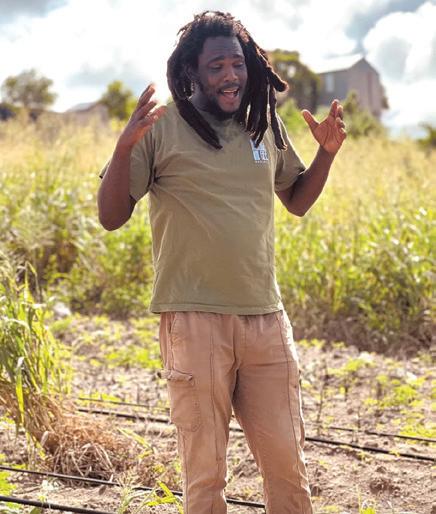
There are storytellers who pass along a message, and those who understand storytelling as a responsibility. Sarain Fox is firmly the latter
An Anishinaabe dancer, filmmaker, activist, and cultural leader, Fox has built a career as an artist, advocate, and storyteller. Through film, television, and movement, her work consistently centres Indigenous voices, challenges systemic barriers, and creates space for stories that have too often been overlooked or misunderstood.
“It is the artist’s work to speak truth to power,” she shared.
“Dance pulled me through some of the hardest times of my young life and led me to where I am today. Film, the work I do to document injustice, is all part of the movement. The work I do is for the next generation and the generations before me who paved the way.”
Part of the power of storytelling is in how it can reveal what others have been conditioned not to see. When told truthfully, stories ask audiences to confront their assumptions and look beyond the surface. For sensitive and often hidden issues like gender-based violence—an area in which Fox has lived experience— the way we tell stories becomes all the more important.
“When considering who would serve as the voice of the Refer Her campaign, Sarain Fox immediately came to mind,” said PSA director Kat Webber.
“She brings a quiet emotional access rooted in truth, expressed through her eyes and voice in a way that is profoundly captivating. Beyond her artistry, she is a compassionate activist, mother, and woman widely respected in her community for her courageous integrity, warmth, and deep empathy. I was truly honoured when she agreed to be part of the project, knowing the message would resonate.”
A LIFELONG ADVOCATE
For Fox, this initiative strikes a
of a strong community meant seeing beyond the surface and responding with care. It also taught her that, no matter what, your story can change.
“Sarain brings a rare mix of truth-telling, empathy and advocacy in helping to spread awareness of this issue,” said Anuradha Dugal, Executive Director of Women’s Shelters Canada (WSC). “One survivor even told us that she reached out to Sarain to thank her for taking part in the campaign, and Sarain responded to her directly and compassionately.”
Through her work with WSC, Fox is able to carry forward the lessons she learned from her mother, even drawing on her own journey with domestic violence in adulthood.
“From my own experiences, I know the stigma and judgment associated with speaking your truth,” Fox continued. “I feel so honoured to be part of this campaign and to be helping with this work in any way I can.”
WHAT WORKPLACES
DON’T SEE
One of the greatest barriers to addressing domestic violence is not a lack of data; it’s a lack of understanding. When the story we’re told is incomplete, so too is what we understand of it, and how we see our own roles within it. Changing that begins with looking deeper than what’s visible.
For far too many women, violence doesn’t stay at home. It follows them into the workplace, shaping how they show up, how they’re perceived, and whether they can stay employed at all. Too often, survivors are filtered through institutional lenses that reduce their experiences to behaviours that can be explained away as red flags, like lateness, absence, and being disengaged or inconsistent at work. The context behind these behaviours—the fear, the control, the violence—is left out of the story entirely.
“I personally know what it’s like to have to show up to a workplace with people you care about and hide what’s happening at home,” Fox shared. “I know what it’s like to not be able to achieve the kind of performance you have worked so hard to achieve. For so long, women have been made to feel ashamed and afraid to speak up, and so their
But the statistics are impossible to ignore: In Canada, one in workers has experienced domestic violence in their lifetime. More than 80 per cent say it has negatively affected their work. Many lose opportunities, promotions, and even their jobs because the reality they face is invisible to those around them.
“Domestic violence is a workplace safety issue,” explained Dugal, who has spent more than 25 years working to support
women, children, and genderdiverse people fleeing violence. “When a woman experiences domestic violence, it follows her to work, affecting the safety, productivity, and well-being of the entire team.”
DON’T LET VIOLENCE
WRITE HER REFERENCE
New national research from WSC reveals that while onethird of working Canadians have been confided in by a colleague about domestic violence, many still feel workplaces are not taking it seriously. There’s a gap in awareness as much as there is in action. But how can we take action in situations that happen behind closed doors? Turns out, it can start with something as simple as writing a letter.
#ReferHer, a new campaign from WSC, is a multi-platform campaign spanning broadcast, digital, and print that invites communities to stand behind women by reimagining the reference letter as an act of belief. It reframes so-called “poor
performance” and asks employers to consider what might be happening beyond what they can see.
This campaign goes hand in hand with a national Domestic Violence & Your Workplace training program, designed to help employers and employees recognize the signs of domestic violence, respond appropriately, and connect individuals to the support they need.
Developed with support from Women and Gender Equality Canada, the training is being delivered across the country in partnership with regional shelter organizations to keep support accessible and locally informed.
HOW WE CHANGE THE STORY
Addressing domestic violence requires more than individual awareness; it demands collective responsibility. As a national organization supporting more than 600 shelters nationwide, WSC helps bridge frontline services and systems-level advocacy.
And from that vantage point, the challenges are clear—access to safety, for one, is not equal.
“We often say that a woman’s access to safety and services shouldn’t depend on her postal code,” said Dugal. “That’s why we’ve been advocating for a comprehensive, well-resourced National Action Plan to End Gender-Based Violence.”
But even with national frameworks in place, gaps remain, particularly in funding. Shelters across Canada are operating with chronic shortfalls in core funding and are struggling to cover basic expenses such as staffing, food, and utilities. Many rely heavily on fundraising just to keep their doors open, while some cannot meet operational costs at all. At the same time, demand is rising. Shelters are seeing higher rates of violence, increased severity, and longer stays, driven in large part by another compounding crisis: the lack of safe, affordable housing.
Without stable housing options, women are often forced to remain in shelters longer than intended, limiting space for others in need. Some delay leaving abusive situations altogether, unable to afford a safe alternative. That cycle is exactly why campaigns like #ReferHer matter. As Dugal explains, meaningful change must begin by centring those most impacted.
“My vision is a world without violence,” Dugal continued. “How we get there is by centring the voices of survivors in all their diversity… We need them to be considered the primary experts, not policymakers or governments or even non-profits like our own.”
Systemic change takes time, but awareness can begin anywhere, even in something as routine as a performance review, a conversation between colleagues, or a decision to ask a different question. Change begins with how stories are told, who tells them, and whether the listener is willing to see and respond differently.
“We have to see one another and understand our unique lived experiences to have meaningful relationships,” Fox said. “Stor ytelling allows a way to do that. To share and dialogue with one another. When we allow our stories to be heard, we allow ourselves to be seen. That is the most powerful form of activism.”
Stories are never passive. They shape systems, influence decisions, and determine who is seen, who is believed, and who is supported. When stories change, and their messages change with them, everything else follows.
To learn more, access resources, or sign up for the Domestic Violence & Your Workplace training, visit ReferHer.ca
— Sarain Fox
Small
But
Mighty: The Secret Life of Canada’s Pollinators
Small But Mighty: The Secret Life of Canada’s Pollinators
Not all heroes wear capes. Not all heroes have endoskeletons, either. Every day, all around us, minuscule heroes of all design work flower-to-flower, carrying pollen on fuzzy legs, delicate wings, and even tiny, almost invisible, hairs— and our lives depend on them.
Not all heroes wear capes. In fact, not all heroes can fly, either. Andyet,everyday,allaroundus, tiny heroes drift from flower to flower, carrying pollen on fuzzy legs, delicate wings (if theyhave them), and even tiny hairs we can barelysee.
Working both day and night shift in our gardens, hovering over flowers, moving through forests, farms, roadsides, and hydro corridors, these heroes are keeping ecosystems alive. Without them sustaining our natural world, we’d be looking at empty parks, empty fields, and emptier plates.
As they lumber along, working the nightshiftinourgardens,hovering over flowers after dark and moving through our roadsides and hydrocorridors,theyarekeeping ecosystems alive. Without them, much of the natural world and much of the food on our plates wouldstruggleto survive.
MEET YOUR HEROES
MEET YOUR HEROES
When we hear the word ‘pollinator’, many of us immediately think of honeybees. But while honeybees are pollinators, they hardly have a monopoly on the pollinator market. Nor are honeybees native to Canada, a country that is home to roughly 900 native bee species.
With National Pollinator Week happening June 22 through 28, it’s time to celebrate our local heroes in all their diversity.
Many of our native bees are solitary, living alone with their brood rather than in social hives.
When we hear the word “pollinator,” many of us immediately think of honeybees. But while honeybees are pollinators, they’re far from the only ones, nor are they native to Canada. Instead, this country is home to roughly 900 native bee species. Many are solitary bees that live alone rather than in hives. Some are only a few millimetres long, and others are brilliant metallic colours that look almost unreal insunlight.
Some are only a few millimetres long; others are donned in brilliant metallic colours, and look almost unreal in sunlight.
Andthenthere are the flies (yes,really!).Flowerflies,orhoverflies,areamongCanada’smost important pollinators, carrying out roughly one-third of pollination services. Some species mimic bees soconvincinglythat mostpeople never realize they are looking at fliesatall.
And then there are the flies— don’t shoo them! Flower flies, or hover flies, are among Canada’s most vital pollinators, carrying out roughly one-third of pollination services. Some species mimic bees so convincingly that most people never realize they’re looking at flies at all.
Mothsarealsopollinators,recently shown to be a major help in pollinating crops like apples and blueberries at night. Beetles, wasps, and hummingbirds all play important roles too, with some pollinators even helping control pests or break down bacteria in aquaticenvironments.
Moths have a ball pollinating, and we now know they pollinate crops like apples and blueberries at night. Beetles, wasps, and hummingbirds play important roles too. With the larvae of some pollinators controlling pests or breaking down bacteria in aquatic environments, these heroes have their own rogues’ gallery.
Roughly 80 to 90 per cent of flowering plants around the world depend on insect pollination, and pollination is essential for about one-third of the food we eat, including the coffee many of us reach foreachmorning.
cluding the coffee many of us reach for each morning. Our world depends on pollinators—but across North America, pollinator populations are declining, some at an alarming rate. Habitat loss, pesticide exposure, and climate change are placing enormous pressure on pollinators.
an alarming rate. Habitat loss, pesticide exposure, and climate change are placing enormous pressure on pollinators, including the Monarch butterfly, whose population has declined by more than80 per cent over thelast 20 years, and is now an endangered speciesinCanada.
NOT YOUR USUAL ROADSIDE RESCUE
(CWF), promising solutions are already at hand, hiding in places many people overlook—like rural roadsides.
NOT YOUR USUAL ROADSIDE RESCUE
and conservation partners to transform sterile grass strips into thriving native wildflower meadows.
them into thriving native wildflowermeadows.
ects andraisingawarenessofthe importanceofpollinators. Because Monarchs are considered an “umbrella species,” protecting them creates ripple effectsacrossentire ecosystems. Habitat built for Monarchs also supports bees, moths, flies and countless other insects that pollinate plantsand helpmaintain healthyenvironments.
awareness of the importance of these hero pollinators. Because Monarchs are considered an ‘umbrella species,’ protecting them creates ripple effects across entire ecosystems. Habitat built for Monarchs also supports bees, moths, flies, and countless other insects that pollinate plants and help maintain healthy environments.
TINY ACTIONS, ENORMOUS IMPACT
TINY ACTIONS, ENORMOUS IMPACT
The best part of pollinator conservation is that you don’t need acres of land to help. A pot of native flowers on a condo balcony can provide nectar, and a patch of lawn converted into wildflowers can support bees and butterflies. Through its Gardening for Wildlife program, the Canadian Wildlife Federation helps Canadians create outdoor spaces that support wildlife while remaining practical andbeautiful.
Suffice it to say, our world depends on pollinators—but across North America, pollinatorpopulationsaredecliningat
Roughly 80 to 90 per cent of flowering plants around the world depend on insect pollination, and pollination is essential for about one-third of the food we eat, in-
The scale of the problem can feel overwhelming, but according to the Canadian Wildlife Federation (CWF), some of the most promisingsolutionsarealreadyall around us, hiding in places many people overlook completely—like thesideofthehighway.
Tragically, this includes the Monarch butterfly, whose population has declined by more than 80 per cent over the last 20 years. The Monarch is now an endangered species in Canada. The problem can feel overwhelming, but according to the Canadian Wildlife Federation
A hydro corridor or roadside ditch may not seem like valuable habitat, but when intentionally planted and managed, these long stretches of land can become lifelines for pollinators.
Known as rights-of-way (ROW) corridors, these spaces form pathways across cities, suburbs, and rural landscapes. CWF has spent years working with municipality, utility
A hydro corridor or roadside ditch may notseem likevaluable habitat, but when intentionally planted andmanaged,theselongstretches of land can become lifelines for pollinators. Known as rights-of-way corridors, these spaces already form connectedpathwaysacrosscities, suburbsandrurallandscapes.Instead of maintaining them as sterile grass strips, the Canadian Wildlife Federation has spent years working with municipalities, utilities and conservation partners to transform
Since 2018, the organization has helped restore more than 1,828 hectaresofmeadowhabitatinOntario alone alongside more than 48 partners. These restored corridors now provide breeding and feeding habitat not only for Monarch butterflies but also for hundreds of other pollinator species. In theGreaterTorontoArea,the 407ETRhasbeenworkingwith CWF to restore native meadow habitat along the Monarch butterfly’s migratory path by financially supporting ROW restoration proj-
Since 2018, CWF has helped restore more than 1,828 hectares of meadow habitat in Ontario alone, alongside more than 48 partners. These restored corridors now provide breeding and feeding habitat not only for Monarch butterflies but also for hundreds of other pollinator species. In the Greater Toronto Area, 407 ETR has been working with CWF to restore native meadow habitat along the Monarch butterfly’s migratory path by financially supporting ROW restoration projects and raising
The best part of pollinator conservation is that you don’t need acres of land to help harbour heroes. A pot of native flowers on a condo balcony provides nectar, and a patch of lawn converted into wildflowers supports bees and butterflies. Through its Gardening for Wildlife program, CWF helps Canadians create outdoor spaces that support wildlife while remaining practical and beautiful. Monitoring pollinator populations is no less vital but easily accomplished. With just a phone and a walk in the park, you can be a honking great sidekick to these tiny heroes. The free iNaturalist app gives you a world of biodiversity at your fingertips, and one that you can help expand. By snapping a picture or making a sound recording, anyone with a mobile device or digital camera can contribute to a global database of biodiversity and help conserve our natural world. Not sure who that mysterious masked beetle was? iNaturalist can help you identify more than 100,000 species, with identifications reviewed by experts in the community to help confirm them. You can look up what species have been seen nearby and keep track of all your sightings with your personal species list. Every entry contributes to an active database of biodiversity across Canada. Learn more at iNaturalist.ca. Pollinators may be small, but the consequences of losing them are anything but.
But all you really need is a phone and a walk in the park. TheiNaturalist appby CWF gives you a world of biodiversity at your fingertips, and one that you can help expand. By simply snapping a picture or making a sound recording, anyonewithamobiledeviceor digital camera can contribute to a growing wealth of knowledge about Canadian species and help conserve our natural world. Not sure what that odd-looking insect is? iNaturalist can identify more than 100,000 species, with identifications reviewed by experts in the community to help confirm them. You can look up what species have been seen nearby and keep track of all your sightings withyourpersonalspecieslist. No species is too big or too small. Whetherit’sa tiny bugor a towering tree, every entry contributes to an active database of biodiversityacrossCanada.
Pollinators may be tiny, but the consequences of losing them are anything but. Learn more about supporting pollinators in your community at cwf-fcf.org and become a community naturalist at iNaturalist.ca
Learn more about supporting pollinators in your community at CanadianWildlifeFederation.ca/ pollinators
5,805 Climbers, $1.46 Million, One
On May 2 and 3, 2026, the CN Tower became something more than an icon on Toronto’s skyline. For one spring weekend, its 1,776 stairs became a pathway for thousands of people determined to do something tangible for wildlife. By the end of WWF-Canada’s Climb for Nature (wwf.ca/climb), 5,805 participants—supported by nearly 23,033 donors and volunteers—helped raise over $1.46 million for conservation efforts across the country. For WWF-Canada, the event is not just a fundraiser. It is a way of turning public energy into practical support for the natural world. The money raised helps back conservation work ranging from protecting Arctic habitat for walrus, beluga, polar bears, and caribou to restoring salmon habitat in British Columbia alongside First Nations. In that
sense, the climb is about much more than endurance. It is about transforming individual effort into something lasting for wildlife and wild places.
WWF-Canada president and CEO Megan Leslie put the weekend’s impact simply: “It’s been an awesome weekend for wildlife in Canada,” she said. Every stair climbed, every donation made, and every volunteer hour given pointed toward the same larger goal: helping nature thrive.
A WEEKEND FUELLED BY COMMUNITY
Part of what makes the climb resonate year after year is the range of people it draws. Some arrive with personal fundraising goals and training plans. Others come because they have made the event part of their family rhythm. Many simply want to
challenge themselves while supporting a cause that feels urgent and wor thwhile. That mix of motivations gave the weekend its real heart. It was there in the first-time climbers taking a careful pace, in the returning participants chasing a personal best, and in the groups of friends urging one another up the 144 flights. The atmosphere was competitive in moments, but even more than that, it was encouraging.
Ontario circus performer Maya Auchincloss brought one of the weekend’s most personal stories, crossing the CN Tower climb off her bucket list before a planned foot amputation later this year. Supported by her mother and a circle of friends, she finished what she had set out to do and described that sense of completion as the best part.
Longtime participant
Reece David, better known as Peterborough Deadpool, brought another kind of energy. A repeat climber who has tackled the event more than a dozen times, he returned once again in costume, mixing humour with a genuine love of wildlife and nature. For him, the event’s appeal lies not only in the cause, but in the atmosphere: the volunteers, the encouragement on the stairs, and the shared positivity of people working toward something good.
FAST TIMES AND MEMORABLE MOMENTS
The weekend also had its athletic highlights. Lisa Nagy posted the fastest women’s time of the event at 12 minutes and one second, setting a new women’s record for the WWF Climb for Nature. Tyler Kruschenske was the fastest
male climber, finishing in 10 minutes and 43 seconds. Among the many climbers taking on the tower were a few familiar faces. Heated Rivalry stars Harrison Browne and Ksenia Kharmalova tackled the climb for the first time, helping bring added visibility to WWF-Canada’s cause. Kharmalova was especially struck by the support that came in from beyond Canada. “So many people donated … They weren’t even from Canada,” she said, adding that she was thrilled to see Heated Rivalry fans rally behind WWF-Canada’s cause. Browne, meanwhile, reflected on the support that poured in around the campaign. “Seeing the folks that came to support my campaign and donate from all over the world,” he said, was one of the best parts of the experience. For an event rooted in a Toronto landmark, that wider show of support gave the weekend an even bigger sense of momentum.
MORE THAN A FUNDRAISING TOTAL
Since launching at the CN Tower in 1991, WWF-Canada’s Climb for Nature has grown into one of the organization’s defining annual fundraisers, bringing in more than $1 million each year to help protect habitats and species across the country. It has also expanded beyond Toronto, with a BC Place climb planned for Vancouver this fall and an Anywhere Climb option for those who want to participate on their own terms.
(SOURCE: World Wildlife Fund Canada)
What Does a City Where Everyone Can Eat Look Like?
We live in one of the wealthiest cities in the world, and yet one in four children in Toronto lives in poverty. That’s one in four parents who don’t know where next week’s groceries are coming from, and maybe not even how they’ll get tonight’s dinner on the table. The solutions we have aren’t working. Food banks are stretched beyond their resources; they were never designed to provide permanent relief. What we need are thoughtful, long-term answers to food insecurity that get to the root of the issue: the poverty and systemic barriers that keep so many of our friends and neighbours from accessing the food they need to thrive. As a food justice organization,
FoodShare is dedicated to challenging those barriers alongside community leaders across Toronto and modelling a fairer, more just food system. That looks like our network of community-led markets that brings affordable fresh produce into neighbourhoods where box store prices keep fruit and vegetables out of reach. It looks like our community kitchens for youth and seniors, where groups cook and garden together, increasing their connection to their food, the land, and each other. And it looks like our food-growing program, which gives community members access to plots right here in the city, transforming underutilized green space into thriving urban farms.
LAST YEAR ALONE, THE FOODSHARE COMMUNITY:
• Cultivated over 65,000 pounds of fresh fruits and vegetables at our urban farms and gardens, increasing Torontonians' access to culturally relevant, locally grown food
Offered 128 cooking and food justice workshops to over 1,600 participants from preschool to seniors Supported community-led markets to make over 192,000 pounds of fresh produce available to neighbourhoods across the city
At FoodShare, we are always looking for ways to ensure our programming is as impactful and sustainable as possible, grounded in our values of food justice and informed by the communities we work alongside. Our goal is to demonstrate in practice what we mean by a just food system, one where everyone can feed themselves with dignity and joy.
We are proud of the impact these models are having, but we aren’t naive. We know our
work alone cannot transform the system. While it’s encouraging to see school food programs receiving record investment and to hear candidates and elected officials explore alternatives like state-run grocery stores, we also need long-term solutions that focus on preventing folks from becoming food insecure in the first place.
That means redress for historical and ongoing inequities of racism and colonialism. It means meaningfully responding to the growing threat of climate change. It means resources, commitment, and community willing to invest in what comes next. At FoodShare, our commitment is to advocate for tomorrow’s widescale change while delivering programs that make a difference today.
We can’t do any of this without people like you, folks who see the value in our work and generously support us with a monthly or one-time donation. Together, we can do better than stopgap solutions. The seeds we plant together today will nourish our city for years to come.
When Cindi Brand was 18, her father was dying at home. Everyone told the family it was the better way. It wasn't. Their house slowly stopped feeling like a home. Medical equipment crowded the rooms. Every day brought another responsibility, another fear of getting something wrong. Somewhere inside those months, Cindi stopped being a daughter and became a caregiver.
She was losing her father twice—first the relationship they once had, and then the man himself.
Years later, a close friend entered a hospice residence. The difference was immediate.
Cindi saw that the family was not managing medications, monitoring symptoms, or struggling to hold everything together. They were simply present with the person they loved. Talking. Sitting quietly. Holding hands. Being family.
It was then that Cindi understood what a good death could look like—and what her own family never had the chance to experience.
Today, she's helping build that choice for others as a founding donor, Fundraising Co-Chair, and Board Member of Neshama Hospice, located in North York.
A CHOICE TOO MANY FAMILIES DON'T HAVE
Right now, most families do not have that choice. Toronto is a city of more than three million people. North York is one of its largest communities, and currently, it has zero hospice residence beds.
None. Nearly half of Ontarians with a palliative care designation die in hospital—not because they choose to, but because there is nowhere else to go. Canada averages just 3.97 hospice beds per 100,000 people.
Neshama Hospice is building a new choice: 12 private rooms, each with an ensuite bath and walkout to a private garden patio. A place where people are surrounded by love and supported by expert clinical and emotional care—at no cost to them.
CARE THAT HOLDS
EVERYONE
Neshama's vision is not simply about end-of-life care. It is about protecting families from becoming overwhelmed by medical crisis during the most painful days of their lives. It is about preserving the ability to remain family and friends until the very end—and embracing the entire constellation of loved ones, including children, who often have the fewest words for what they're feeling. Neshama will offer dedicated support for
residents and families throughout the end-of-life journey, so everyone can be fully present. And for those without friends and family, Neshama will be their community of care and support.
Neshama is Canada's first hospice residence founded on Jewish values and open to everyone. Its universal values of kindness and care welcome all people, creating a blueprint for how a community shows up for its most vulnerable members. People of all faiths and traditions will find themselves genuinely held—and at home.
Construction is well underway, thanks to a generous donor community, with first residents expected in early 2027. Now the hospice must prepare everything inside those walls: hiring and training nurses, social workers, care aides, and volunteers, and ensuring the equipment and systems that will carry people through the hardest passage of their lives.
You can help complete this work and create a new choice for end-of-life care. Visit neshamahospice.com/ countdown to donate today.
3 Canadian Youth Who Are Changing the World
Young people are proving, again and again, that meaningful change doesn’t require a title—it requires conviction. Across Canada, youth are turning creativity, energy, and passion into real-world action to protect the planet, with a growing focus on the ocean: the life-support system that sustains biodiversity, supports communities, and shapes our climate. Thanks to initiatives like the Ocean Action Grant Program, more young Canadians are being equipped to lead local environmental projects focused on ocean health and sustainability.
Backed by community partners and conservation organizations, they’re turning ideas into measurable impact. Here are three youth-driven projects supported by initiatives like the Ocean Wise Action Grant.
ANDREW POLANYI DETECTING GHOST GEAR WITH SONAR AND ARTIFICIAL INTELLIGENCE (AI)
Andrew’s passion for technology and marine conservation led to an innovative solution to a global problem: ghost fishing gear. Lost or abandoned fishing nets and traps, known as “ghost gear,” continue to catch and harm marine animals
long after they’ve been discarded. Through Ocean AID’s ghost gear retrieval program, Andrew is using sonar and AI to detect underwater debris around Victoria, British Columbia. Andrew and their team locate and recover ghost fishing gear, keeping it out of the ocean and preventing further harm to marine life.
KIT TYMOSHUK RESTORING NOVA SCOTIA’S UNDERWATER KELP GARDENS
Kelp forests are disappearing at an alarming rate. These vital underwater ecosystems support marine life, protect shorelines, and help store carbon. To help restore Nova Scotia’s kelp, Kit is crafting ceramic vessels from wild clay to serve as kelp-growing substrates, which will be planted in degraded reef systems.
Kelp restoration is a relatively new field in conservation and is sometimes overlooked. Kit’s underwater garden project creates new footholds for kelp to return, while its artistic approach helps spark conversation and build awareness around protecting these essential, vulnerable undersea forests.
STEPHANIE QUON PROMOTING MENTAL HEALTH THROUGH OCEAN CONSERVATION
Stephanie’s project brings together calming, restorative experiences in natural spaces, and tangible action to protect them.
Through community cleanups, educational workshops, and ocean-based mindfulness activities, Stephanie is creating safe and supportive spaces where participants can connect with and care for the environment as well as themselves. They leave a session feeling better for their mental well-being, bolstered by knowing they also made a real impact.
Across Canada, youth are leading the charge for a healthier planet—and their ideas are already creating measurable ripples of change. Programs like the Ocean Action Grant Program help carry that momentum forward—fueling youth-led projects that make ocean stewardship tangible at the local level. Each project is a reminder that change can start right where you live: one shoreline, one cleanup, one restoration effort, one community choosing to act.
The health impacts of under-funding in schools
Since 2018, there has been $1,500 less per student each school year. In a school of 550 students, that’s a whopping $825,000 less this year alone.
Big dollar figure announcements might make it seem like this provincial government is making historic investments in education, but with inflation and increased costs, they have actually cut billions from our schools.
Teachers and Education Workers do their best, despite these massive cuts, to keep schools functioning and engaging but it’s increasingly an uphill battle. The toll is felt by both staff and students.
Visit buildingbetterschools.ca to find out how much your local school has lost in funding since 2018. Join us in the fight to Fund Our Schools and send an email message to our Premier and Education Minister at fundourschools.ca/take-action or scan the QR code.
Packed With Purpose: Why the Jilly Box Resonates in Canada
HOLLY CAMBRUZZI
When Jillian Harris was named Retail Council of Canada’s Independent Retail Ambassador of the Year this spring, the recognition was more than a career milestone. It was also a reflection of what many Canadians have come to value more deeply in recent years: businesses that build community and use their success to lift others.
That is the story at the heart of The Jilly Box.
A BRAND BUILT ON MORE THAN BUZZ
What began as a quarterly subscription box featuring lifestyle, beauty, home, and wellness products has grown into something much bigger: a launchpad for small brands and a business model rooted in generosity. Based in the Okanagan, The Jilly Box has become a prominent example of independent retail growth in Canada. More than that, it has built a following around the idea that shopping can also reflect a wider set of values.
At the centre of that success is Jillian Harris, TV personality, entrepreneur, designer, and co-founder of The Jilly Box. Over the years, she has built a loyal following through design, storytelling, and an approachable sense of style, but what is most notable is how deliberately she has used that reach. Rather than turning attention into just another lifestyle brand, she has helped shape a
"At a time when independent entrepreneurs are navigating one of the most challenging market environments in recent memory, she has used her platform and her business to actively open doors for them. That kind of leadership is exactly what [Retail Council of Canada’s Independent Retail Ambassador of the Year] was created to recognize."
— Kim Furlong, President and CEO of Retail Council of Canada
company with a clear community focus from the outset.
CREATING SPACE FOR CANADIAN SMALL BUSINESS
For many small brands, getting in front of the right customers remains one of the biggest challenges in retail. Through its seasonal boxes and year-round marketplace, The Jilly Box gives those businesses visibility, credibility, and direct access to an engaged customer base. Many of the brands featured are Canadian-owned, and the
company has made a point of highlighting women-owned, BIPOC-owned, 2SLGBTQIA+owned, and other historically underrepresented businesses. In its 2025 impact reporting, The Jilly Box said 77 per cent of the brands it worked with were women-owned, while 29 per cent of the products included in the box or sold as add-ons were made in Canada.
GIVING BACK AS PART OF THE MODEL
But supporting small businesses is only one part of the company’s
wider impact. As of 2025, The Jilly Box committed $40,000 from each seasonal box to charitable causes, with total giving last year reaching nearly $200,000 through those contributions and other initiatives. Those donations supported organizations including the Central Okanagan Food Bank, the Kelowna Women’s Shelter, Mamas for Mamas, BC Cancer, and the Indian Residential School Survivors Society. The team also logged more than 109 volunteer hours and awarded a scholarship
to support a BIPOC student at Okanagan College.
The company has also tried to align its operations with those same values. The company is B Corp-certified, pays a living wage in its region, and has worked to reduce packaging waste, including transitioning to a box that uses significantly less material than before. These are not flashy decisions, but they are meaningful ones, and they speak to the values at the core of The Jilly Box.
That is part of what makes this award feel so fitting. In honouring Harris, the Retail Council of Canada is recognizing a founder who has built commercial success while creating real opportunities for small brands and meaningful support for community causes. For British Columbia, The Jilly Box is a homegrown example of what purposeful growth can look like in practice.
ABOUT THE AWARD
The Independent Retail Ambassador of the Year Award is presented by the Retail Council of Canada as part of its annual Excellence in Retailing Awards. It honours an independent retailer whose vision, business leadership, and community impact stand out on the national stage. Retail Council of Canada is the country’s leading retail association, representing businesses of all sizes across communities nationwide.
Standing With Seniors: How the SSL Provides Safety, Support, and Connection
The Seniors Safety Line, operated by the Assaulted Women's Helpline, is a unique service tailored to the specific challenges seniors and their caregivers face in Ontario. With a steadfast commitment to fostering wellbeing and safety, the SSL operates 24/7 to ensure seniors have immediate access to the support they need. Our approach involves:
CRISIS COUNSELLING
The SSL provides immediate, compassionate emotional support for seniors experiencing distress. Trained counsellors are available around the clock to offer a listening ear and empathetic guidance, ensuring seniors feel reassured and supported during their most challenging moments. This service addresses urgent emotional needs and reassures seniors that they are not alone.
SAFETY PLANNING
Taking a proactive approach, the SSL collaborates with seniors to develop personalized safety plans. These plans focus on enhancing personal safety and supporting seniors in regaining control over their lives. By identifying potential risks and establishing clear strategies to mitigate them, we work with seniors to ensure they feel secure and well-prepared for any situation.
INFORMATION AND REFERRALS
A cornerstone of the SSL's services
is its ability to connect seniors with a wide range of local resources. Whether seniors need assistance finding legal advocates, accessing healthcare services, or engaging with social services, the SSL ensures they receive the specific support they require. This comprehensive approach addresses immediate needs and encourages seniors to become more involved in their communities, fostering a sense of belonging and connectedness.
EMOTIONAL SUPPORT
Beyond immediate crisis intervention, the SSL offers a safe and supportive space for seniors to express their feelings, fears, and concerns without judgment. This emotional support is also extended to caregivers and family members, equipping them with tools to assist their loved ones effectively.
SUPPORT FOR CAREGIVERS
Recognizing the critical role caregivers play in seniors' lives, the SSL offers tailored resources and support
to address their specific challenges. By helping caregivers navigate the complexities of providing care, the SSL reduces stress and strengthens the entire support network for vulnerable seniors, ensuring caregivers feel supported and understood.
HOW YOU CAN HELP
REDUCING STIGMA
One of our key missions is to reduce the stigma surrounding elder abuse. We believe that communities can promote open conversations that normalize these issues—showing that seeking support is a strength, not a weakness. Sharing stories of recovery and resilience can also inspire others and encourage those in need to reach out for help.
VOLUNTEERING AND DONATIONS
You can contribute by volunteering your time or resources to the SSL. This could include helping with outreach efforts, organizing community events, or providing administrative support. Additionally,
financial contributions can help sustain the SSL's operations, ensuring that it continues to provide vital services to seniors in need. If you're interested in volunteering and donating, visit seniorssafetyline.ca for more information.
BUILDING COMMUNITY
CONNECTIONS FOR SENIORS
Encouraging seniors to engage with local community organizations is vital for fostering a sense of belonging and reducing feelings of isolation. By facilitating connections between seniors and community resources, you can create a more inclusive and supportive environment where seniors feel valued and connected. Building community connections enhances seniors' lives and enriches the entire community, fostering mutual respect and understanding across generations. Together, we can create an inclusive environment for seniors.
If you are seeking support, please call 1-866-299-1011
JILLIAN
Success isn’t just about what you achieve. It’s about how you lead.
Across Canada, professionals are stepping into leadership roles earlier and with greater responsibility than ever before.
But leadership isn’t something most people are formally trained for.
Lead with Confidence: At Work and Beyond
In today’s world, leadership is no longer defined by title alone. It’s defined by how effectively you bring people together, navigate complexity, and create environments where others can succeed.
A CREDENTIAL BUILT FOR REAL-WORLD LEADERSHIP
Across Canada, many professionals find themselves stepping into leadership roles without formal preparation. They’ve built successful careers through experience, expertise, and hard
work, but leading people requires a different set of skills.
That’s where the Chartered Manager (C.Mgr.) designation, offered by CIM | Chartered Managers Canada, comes in.
The C.Mgr. designation is a nationally recognized credential designed for professionals who want to strengthen their leadership capability and be recognized for it. It focuses on real-world leadership, helping individuals develop the judgment, confidence, and practical skills needed to lead effectively in today’s workplaces.
LEADERSHIP THAT EXTENDS BEYOND THE WORKPLACE
Whether you’re managing a team, running a business, or preparing for your next step, the designation supports you in becoming a more intentional and capable leader. It emphasizes key areas such as communication, decision-making, people leadership, and navigating change skills that matter across industries and roles.
This is not just another credential. It is a professional standard for leadership in Canada.
Start Your Leadership Journey
Explore the Chartered Manager designation and take the next step in your leadership career.
The Chartered Manager (C.Mgr.) designation from CIM | Chartered Managers Canada recognizes leaders who are committed to developing the skills, judgment, and confidence required to lead people and organizations effectively.
But the value of the Chartered Manager designation goes beyond professional development. Leadership shows up everywhere. It influences how you support your team, how you engage with your community, and how you shape the direction of your work and life. Many professionals today are seeking not just career growth, but purpose and balance, wanting to lead in a way that aligns with their values.
The C.Mgr. designation supports that broader perspective. It connects you to a network of leaders across Canada who are committed to developing themselves and others, while providing a flexible pathway that fits alongside your professional and personal responsibilities.
In a time when strong leadership has never been more important, investing in your ability to lead is one of the most valuable decisions you can make.
START YOUR LEADERSHIP JOURNEY
Explore the Chartered Manager designation and take the next step in your leadership development.
Visit cim.ca to learn more.
8 Future-Focused Sustainable Careers Young Canadians Should Explore
Planning a long-term career can feel overwhelming, especially when you’re just beginning to discover where your skills and passions fit best. But one thing is clear: industries focused on sustainability are shaping the future of work in Canada—and they’re creating exciting, meaningful opportunities for the next generation.
From clean energy to environmental innovation, Canada is home to fast-growing sectors that are helping build a more sustainable future while offering strong career prospects. Here are eight industries young people should keep on their radar:
1. MINING AND CRITICAL MINERALS
Canada has long been a global leader in mining and minerals, and today the industry is evolving in greener ways. Companies are restoring old mine sites, improving water management, and adopting more environmentally responsible mining practices. As demand for critical minerals
grows, so does the need for skilled workers ready to support a more sustainable resource sector.
2. NUCLEAR ENERGY AND LIQUEFIED NATURAL GAS (LNG)
With abundant uranium and natural gas resources, Canada continues to rely on nuclear energy and LNG as key energy sources. These industries require highly trained specialists and advanced technologies to manage operations safely and sustainably. Careers in the nuclear sector are especially attractive, with wages often up to 30 per cent higher than similar jobs in nearby communities.
3. RENEWABLE
ELECTRICITY
Wind, solar, and hydroelectric power are driving major growth across Canada’s energy sector. Career opportunities range from developing renewable technologies to building, installing, and managing clean energy systems. Many positions offer competitive salaries, excellent benefits, and strong entry-level opportunities.
4. FORESTRY
Modern forestry goes far beyond cutting timber. Sustainable forest management depends on skilled professionals such as arborists, forestry technicians, and millwrights who help maintain forest health and support responsible lumber production. It’s a field where environmental stewardship and hands-on work go hand in hand.
5. TRANSPORTATION
Electric vehicle (EV) technology is transforming how Canadians
move goods and people while reducing emissions. This shift is creating opportunities in EV manufacturing, maintenance, battery storage systems, and transportation logistics. Skilled operators and technicians will continue to play a vital role in keeping communities connected.
6. CONSTRUCTION, ENERGY EFFICIENCY, AND GREEN BUILDINGS
Across the country, new construction and renovation projects are focused on lowering environmental impact and improving energy efficiency. From designing sustainable buildings to retrofitting older structures, the demand for workers with green construction skills continues to rise.
7. CARBON MANAGEMENT
Carbon capture and storage technologies are becoming essential to Canada’s net-zero goals. This emerging field offers diverse career paths for geologists,
field operators, instrumentation technicians, regulatory specialists, and data analysts. As innovation expands, so will opportunities in carbon management.
8. CLIMATE ADAPTATION AND ENVIRONMENTAL MANAGEMENT
Preparing for the effects of climate change requires expertise from many different sectors. Careers in environmental monitoring, mapping, conservation, and Indigenous guardianship are expected to grow as Canada invests in protecting communities and ecosystems for the future. Practical, skilled-trades education, including apprenticeships and hands-on training, can help young people take advantage of these growing opportunities.
Choosing a career in sustainability not only supports Canada’s future but can also lead to a rewarding and resilient career path of your own.
One Step at a Time: Canadians Rally for Nature in the Jane Goodall Hike for Hope
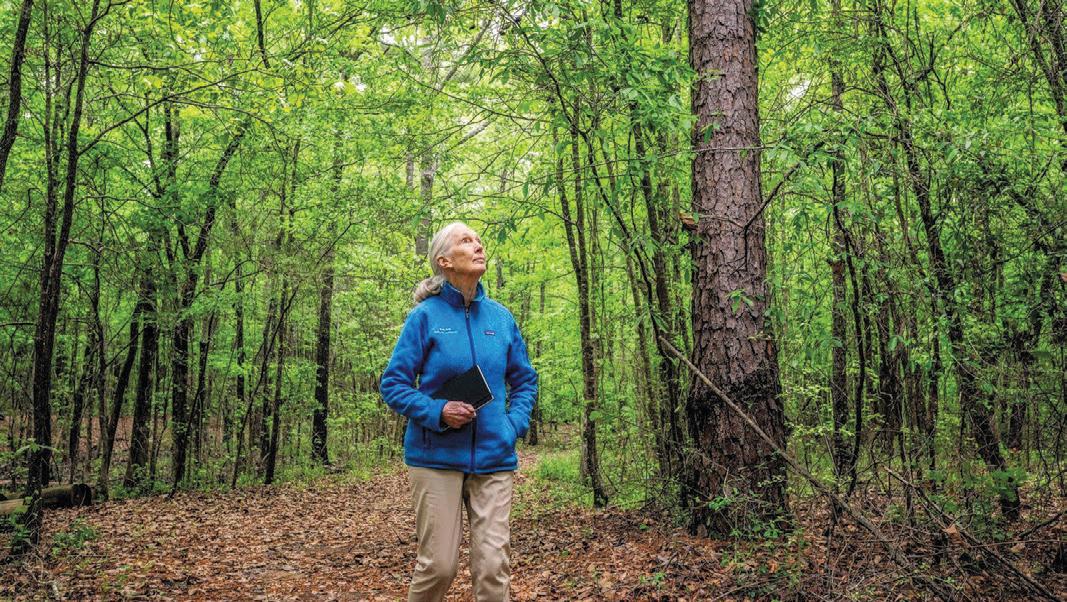
Canadians are being invited to take a step—literally—toward a more hopeful future. This fall, the Jane Goodall Institute of Canada will launch the first-ever national “Hike for Hope,” a country-wide event designed to reconnect people with nature while carrying forward the legacy of Jane Goodall. Set to take place on October 3 and 4, 2026, the Hike for Hope is open to everyone, from seasoned hikers to those just looking for an excuse to spend more time outdoors. It’s also completely flexible; participants can choose their own route, pace, and distance, from hiking mountain trails, strolling through conservation areas, or even exploring a neighbourhood park. The goal, along with physical activity, is meaningful engagement with the environment, so how you do it is entirely up to you.
This initiative comes at a time when many are looking for ways to get involved in environmental action. Dr. Jane Goodall, in one of her final recorded messages to Canadians shared publicly for the first time this Earth Day, encouraged people to join the movement, reminding them that “each step is a gentle reminder that each one of us matters and has a role to play.” Bella Lam, Chief Executive Officer of the Jane Goodall Institute of Canada, said the event offers an accessible, action-oriented way for Canadians to honour Dr. Goodall’s legacy while contributing to urgent environmental work.
"Like so many Canadians, I've
been inspired by Jane. I can still hear her voice, urging us to 'do our bit' to protect the one planet we all call home," said Lam.
"Jane's passing, at a time when our world is facing unprecedented threats due to climate change and biodiversity loss, makes it more urgent than ever for us to continue her life's work. I am taking part in the Jane Goodall Hike for Hope because it's a great way to be active while connecting with nature, and a meaningful way to 'do my bit.'"
Funds raised through the hike will directly support the Institute’s initiatives, both globally and at home. This includes community-led conservation projects across Africa, care for rescued chimpanzees, and youth-
led environmental programs in Canada. Participation in the Hike for Hope is intentionally barrierfree. There is no registration fee, no minimum fundraising requirement, and no single “right way” to take part. Individuals can sign up on their own, join an existing team, or create one with friends, family, or colleagues. While fundraising is encouraged, the emphasis remains on inclusivity and engagement rather than obligation.
To help participants prepare, the event is supported by several founding sponsors, including G Adventures, GoodLife Fitness, Sinking Ship Entertainment, and VIA Rail. Each brings something unique to the experience. Registered hikers
will receive an “Adventure Package” from G Adventures with practical tips on everything from trail preparation to hiking with children, along with guidance on eco-friendly practices like “leave no trace.”
Meanwhile, GoodLife Fitness is offering participants a complimentary seven-day pass to help them build strength and stamina ahead of the event. Additional rewards and incentives are expected to roll out in the months leading up to the hike, adding an extra layer of motivation for those looking to set and achieve fundraising goals.
The Jane Goodall Institute of Canada will also recognize participants’ efforts through a range of milestone rewards.
These include digital badges, commemorative items like water bottles and hats, and special recognition for top fundraisers. Environmental challenges can often feel overwhelming, and initiatives like these offer people a way to get involved and make a difference. That’s why the Hike for Hope is being positioned as an annual tradition, one that reflects Dr. Goodall’s lifelong belief in the power of individual action. Her work consistently emphasized that meaningful change does not come from grand gestures alone, but from the accumulation of small, intentional steps taken by many people. By encouraging people to step outside, connect with nature, and contribute in ways that feel personal and achievable, the Hike for Hope reframes environmental action as hopeful rather than daunting. As more people seek balance in an increasingly digital world, experiences that combine wellness, community, and purpose are gaining traction. The Hike for Hope taps into that desire, offering a chance to unplug, move, and contribute to the world around us. You don’t have to travel far or do something extraordinary to make a difference. Sometimes, it starts with a walk in your local park, a trail through the woods, or a shared moment outdoors with others. As Dr. Goodall said, every step counts.
(SOURCE: The Jane Goodall Institute of Canada)
Coming out doesn’t come with instructions. For many people, there’s no roadmap for navigating identity, relationships, sex, or health. It’s something people figure out over time, often on their own, through trial and error, or by searching online.
For gay, bi, queer, trans, and Two-Spirit guys, that journey has often been shaped by silence, stigma, and misinformation, especially when it comes to sexual health. Conversations about HIV, for example, have long been rooted in fear rather than facts.
“For a long time, all I heard about was risk. No one talked about anything else,” one person shared.
Today, that’s beginning to change.
FILLING THE GAP WITH REAL, TRUSTED INFORMATION
The Gay Men’s Sexual Health Alliance (GMSH) is helping lead that change.
GMSH is a network of nearly 30 community-based organizations across Ontario, bringing together frontline workers, researchers, clinicians, and people with lived experience. Their shared goal is to make sure people have access to accurate, evidence-based information that reflects real lives, without shame or judgment. At its core, the work is about trust. It means creating a place where people can turn for clear, honest information about their health—information that helps them make decisions with confidence.
It also means challenging some of the expectations many people carry.
Sex isn’t a performance. Bodies don’t have to look a certain way. There isn’t just one role or one way to experience intimacy. And pleasure, connection, and communication all matter.
“I wish someone had told me sex isn’t a performance.
It’s okay if it’s awkward,” one person shared.
This kind of honesty is what makes GMSH’s approach resonate. It reflects real life.
It also reflects how much sexual health has evolved, especially when it comes to HIV.
Today, there are more options than ever. People who are HIV-negative can take medications like PrEP, which are highly effective at preventing HIV. People living with HIV who are on treatment and have achieved an undetectable viral load cannot pass the virus on to sexual partners, known as U=U.
“Learning that someone with an undetectable viral load can’t pass HIV on changed everything for me,” one person said.
This shift—from fear to understanding—helps people make informed choices while reducing stigma and opening up possibilities for connection that may have once felt out of reach.
SEXUAL HEALTH IS MORE THAN JUST TESTING
For GMSH, health is about more than clinical care. It’s about helping people feel informed, confident, and supported.
Testing plays an important role, but it doesn’t have to be something to fear. It’s a routine part of taking care of yourself.
“Knowing your status is just part of taking care of yourself,” one person shared.
Sexual health is also shaped by how people experience connection and belonging. Loneliness, the pressures of dating apps, and the challenge of finding community can all influence how people take care of themselves and each other.
“It takes time to find your people,” one voice reflects.
“Sometimes it starts with just one person.”
GMSH creates space for more open conversations about sex,
“There’s so much silence around it. I needed information, not judgment,” someone shared. A NEW DIGITAL HOME FOR SUPPORT
With the launch of its updated platform, GMSH.ca, the organization is creating a space people can turn to with confidence. It’s a place for clear, trusted information about sexual health and well-being, shaped by the voices and experiences of the communities it serves.
While created for gay, bi, queer, trans, and Two-Spirit guys, it is also a resource for anyone who wants to better understand and support the people in their lives.
“I wish someone had told me sooner. It would have saved me a lot of fear.”
That sentiment is at the heart of GMSH’s new campaign: If no one ever told you, we will (with love). A simple message. And a clear
So many of us had to figure things out alone. That’s why gmsh.ca is here: a trusted hub for guys who are into guys in Ontario, offering clear, affirming information on sexual health, wellness, substance use, and mental health.
Canada's Innovation Gap: Why Your Access to Medicines is at Risk
DR. BETTINA HAMELIN
There’s a quiet crisis unfolding behind closed doors, and Canadians deserve to know about it.
A GROWING ACCESS CRISIS
Somewhere in Canada today, a patient is sitting in a doctor's office, receiving news that will change everything for them and their family. They’re hearing those terrifying words—stage-four cancer—and feeling the walls close in. They’re thinking about their children, their partner, and their parents. They're thinking about how much time they have and what they'd do with it. Then, they learn that the treatment most likely to save their life exists—but it’s not available in Canada, and no one can say when it will be.
For two in five Canadians who will be diagnosed with cancer in their lifetime—over 250,000 this year alone—this isn't hypothetical. It could be their reality. That's why what happens next— in Ottawa, in provincial capitals, and in boardrooms across the country—matters so profoundly to so many Canadians.
Here’s the hard truth people would be shocked to learn: Canada currently ranks last in the G7 for timely public access to innovative medicines— the patented, breakthrough therapies that treat cancer,
autoimmune disorders, and rare and infectious diseases. Only 18 per cent of innovative medicines available globally reach Canadian patients through public drug plans, compared to the OECD average of 28 per cent. Once they’re approved by Health Canada, it takes another two years on average for new medicines to be added to provincial plans, if they choose to cover them at all.
Now, that gap is about to widen even further. The new most-favoured nation (MFN) drug pricing policy in the U.S., which seeks to lower American prices, has triggered a global chain reaction that threatens to disrupt our access to existing medicines, delay or altogether halt our access to new medicines, and undermine confidence in Canada’s pharmaceutical market.
For decades, Americans have paid significantly more for medicines than others, effectively subsidizing global pharmaceutical innovation. Canada has benefited from U.S.-funded innovation while keeping our own drug prices as low as possible. MFN pricing is an attempt to correct that imbalance. This will directly influence where companies choose to launch new medicines first, favouring markets with stronger conditions.
This moment has exposed a critical vulnerability for Canada. Low drug prices are a point of Canadian pride, but the hidden cost is lower
availability of innovative medicines and a pharmaceutical ecosystem that’s been chronically undervalued and underinvested in. For context, developing a single new medicine costs on average $3.5 billion and takes 10 to 15 years of research and testing, with no guarantees of success.
The question now is: How will Canada respond? Will we wait and hope for the best, leaving us susceptible to forces beyond our control? Or will we seize this opportunity to build a more resilient, competitive, and secure healthcare system—one where access to innovative medicines is part of the foundation?
CANADIANS UNDERSTAND
WHAT’S AT STAKE
Research by Hill & Knowlton in January 2026 shows Canadians are clear-eyed about where they stand:
• 86 per cent believe the federal government should prioritize access to medicines
• 84 per cent agree that a resilient health system, with reliable access to medicines, is crucial to Canada's strength and security
• 71 per cent believe Canada should contribute proportionately to global pharmaceutical innovation
Any Canadian who has been affected by cancer or a rare disease knows the diagnosis isn’t the
worst part. It’s the months, sometimes years, of uncertainty about whether they’ll be able to access the life-saving medicine they need. Yet evidence shows the benefits of innovative medicines far outweigh the costs. A recent study by Dr. Frank Lichtenberg at Columbia University found that sustained investments in innovative medicines reduced hospital days in Canada by 55 per cent in 2022, saving nearly $80 billion in hospital costs.
A NATIONAL RESPONSE
CANNOT WAIT
The good news is change is possible when government and industry choose to work together. In Ontario, Innovative Medicines Canada (IMC), an association that represents 45 innovative pharmaceutical companies, played a proud role in the development of the government’s new FAST program—Funding Accelerated for Specific Treatments—which aims to deliver high-priority cancer therapies to patients up to one full year earlier. Since its announcement in fall 2025, eight new life-extending cancer treatments have been fast-tracked to patients who need them sooner. Ontario is proof of concept, but one province isn’t enough. That’s why IMC is calling for a unified, pan-Canadian response that brings together governments and industry to co-create solutions that address
immediate and long-term risks. That means streamlining regulatory processes to bring more new medicines and R&D investment to Canada, including for clinical trials that so many patients depend on for treatment. It means expanding accelerated access pathways for innovative medicines across the country, so Canadians from St. John's to Victoria can benefit equitably. It also means sustained increases in federal investment to provinces, specifically for innovative medicines.
Other countries are moving decisively. It’s time for Canada to move with the same clarity and sense of purpose. What happens next—how quickly new medicines arrive, and whether they arrive at all—depends on the choices governments make today.
For the patient sitting in a doctor’s office receiving that devastating cancer diagnosis, or the parent who has spent years fighting to access medication for a rare disease, these aren’t abstract policy debates—they’re life-altering decisions. Let’s make the right ones.
Learn more at innovativemedicines.ca
Dr. Bettina Hamelin is the President & CEO of Innovative Medicines Canada, the national association representing Canada’s innovative pharmaceutical industry.
Kidney Cancer Impacts More Than the Body
The Emotional Weight of a Diagnosis
A kidney cancer diagnosis changes more than a person’s physical health. It can reshape how they think, sleep, work, plan for the future, and connect with the people around them.
For many Canadians living with kidney cancer, the emotional impact can be just as significant as the physical challenges of the disease itself.
As World Kidney Cancer Day approaches, Kidney Cancer Canada is raising awareness of the emotional realities patients and caregivers often experience throughout the cancer journey.
UNDERSTANDING THE PSYCHOSOCIAL IMPACT
Recent Canadian findings from the International Kidney Cancer Coalition’s global patient survey revealed that more than 80 per cent of Canadian kidney cancer patients experienced at least one emotional or psychosocial impact related to their diagnosis within the past year. Fear of recurrence, disease-related anxiety, sadness, depression, uncertainty, and disrupted sleep were among the most commonly reported challenges.
These emotional impacts often continue long after treatment begins and can affect every aspect of daily life.
Many patients describe feeling isolated, overwhelmed, or uncertain about where to turn for support. Caregivers often experience emotional strain while balancing the practical and emotional responsibilities of supporting a loved one through cancer.
Yet emotional wellbeing is not always openly discussed.
“People often focus on the treatment itself, but the emotional impact can be equally overwhelming,” said John Branton, Executive Director at Kidney Cancer Canada. “Patients and caregivers need support, connection, information, and reassurance that they are not alone.”
SUPPORT THAT GOES
BEYOND TREATMENT
That support is exactly what Kidney Cancer Canada works to provide.
As Canada’s only national patient-led kidney cancer organization, Kidney Cancer Canada offers programs and services designed to help patients and caregivers feel informed, connected, and supported throughout their journey.
Through national coffee chats, peer support opportunities, educational webinars, patient forums, advocacy initiatives, and trusted resources, patients and families can access reliable information and connect with others who truly understand what they are experiencing.
These programs are especially important for Canadians living in rural or underserved communities where access to support services may be limited.
RECOGNIZING WORLD KIDNEY CANCER DAY
World Kidney Cancer Day
serves as an important reminder that cancer care must extend beyond treatment alone. Supporting emotional wellbeing, reducing isolation, and improving quality of life are essential parts
Sacred Fire Productions
of comprehensive patient care.
On June 18, Canadians from coast to coast to coast are encouraged to light Canada green for World Kidney Cancer Day. Landmarks, buildings, and public spaces across the country will shine green to help raise awareness of kidney cancer and recognize the emotional realities faced by patients and caregivers every day. The campaign is intended to spark conversation, increase visibility, and remind Canadians affected by kidney cancer that they are seen, supported, and not alone. You can also wear green in support!
Learn more at kidneycancercanada.ca/wkcd
Celebrates 15 Years of Indigenous Artistic Leadership and Launches Summer Programming on National Indigenous Peoples Day
In 2026, Sacred Fire Productions (SFP) marks its 15th anniversary, a significant milestone for an organization that has grown into a national leader in Indigenous arts and cultural development. Founded in 2012 and based in Montréal, SFP operates at the intersection of artistic expression, community engagement, and economic empowerment. Governed by an Indigenous-majority Board of Directors, the organization serves First Nations, Inuit, and Métis artists across Canada and is certified through the Canadian Council for Indigenous Business (CCIB). From its inception, SFP was created to address a structural gap—not a lack of talent, but a lack of access to markets, visibility, professional development, and sustainable income for Indigenous artists.
Over the past fifteen years, SFP has developed a model that recognizes culture not only as a site of creation, but also as a form of economic infrastructure. Through exhibitions, programming, and partnerships, the organization supports artists in building careers,
expanding their reach, and establishing sustainable livelihoods. “As Sacred Fire Productions enters its 15th year, its vision remains clear: To build bridges, remove barriers, and ensure that Indigenous artists not only participate in Canada’s cultural landscape, but shape it,” said Nadine St-Louis, Founder and VP of Operations, Partnerships, and Funding. This anniversary year also marks a new chapter. Following a major transition and relocation, SFP now operates a 2,300-square-foot cultural space in Old Montréal’s Cité du Multimédia, located at 43 rue des Sœurs-Grises. Designed as a living cultural and economic incubator, the space features two exhibition galleries and the
Ashukan Store, where visitors can discover and purchase authentic Indigenous artworks. This model strengthens direct connections between artists and audiences, reinforcing both cultural engagement and economic exchange.
SUMMER PROGRAMMING ROOTED IN YOUTH AND CREATION
On June 21, in celebration of National Indigenous Peoples Day, SFP launches its summer programming with a focus on creation, transmission, and emerging voices, with youth at the centre. A cohort of Kanien’kehá:ka youth came together through Rising Voices, a 16-week creative mentorship program grounded in traditional Mohawk practices. Led by artists Angel Horn and Tahatie Montour, the program created a space for cultural transmission, artistic exploration, and identity building through storytelling and material practice. Participants engaged deeply with their culture while developing their own artistic voices.
This process culminates in Voices Rising, a collective exhibition presented at SFP’s Cultural Space.
Featuring works created during the program, the exhibition reflects the journeys, perspectives, and cultural connections of the participants.
Opening on June 21, it stands as both a celebration and a moment of visibility, where emerging voices are witnessed and affirmed.
Opening alongside this exhibition is Misinkotcikatek, Engraved, by Atikamekw artist Jacques Newashish. A multidisciplinary artist from Wemotaci, Québec, Newashish works across film, painting, sculpture, and printmaking. His practice draws from Nitaskinan, integrating ancestral knowledge with contemporary expression. The exhibition presents engraved works alongside plates and tools, offering insight into the creative process.
As SFP looks ahead, its work remains grounded in cultural continuity, community, and responsibility. “Sacred Fire Productions plays an important role in supporting Indigenous artists and ensuring
that our cultures continue to be shared, understood, and carried forward,” said Ka’nahsohon Kevin Deer, President of the Board.
Find out more at sacredfireproductions.ca
Donate today.
How Essilor® Is Rethinking Progressive Lenses for Modern Vision
For many adults, the first signs of presbyopia show up in ordinary moments. Reading a text message becomes less comfortable. Small print starts to feel more demanding. Looking from a laptop to someone across the room no longer feels as effortless as it once did. Progressive lenses are designed to help wearers see clearly across multiple distances, but as visual habits become more complex, lens design is evolving along with them.
That evolution is central to the thinking behind the Varilux® XR series™ from Essilor®. Rather than approaching progressive lens design only through prescription correction, the company has focused on how people actually use their eyes in daily life—moving between screens, close-range reading, shifting to arm’s length, and refocusing in motion throughout the day.
The Essilor® Varilux® XR series™ was designed to better reflect real visual behaviour. Powered by artificial intelligence, the lens is intended to predict how wearers look at things in real-life situations, supporting instant sharpness in motion and seamless transitions from near to far.
DESIGNED FOR THE WAY
EYES REALLY MOVE
That idea reflects a broader shift in the category. Standard progressive lenses support more linear eye movement, yet real visual behaviour is rarely linear. People constantly glance, scan, pivot, track, and refocus. Our eyes can make more than 100,000 movements a day, often while navigating changing distances, varying light conditions, and increasingly digital environments.
In that context, Varilux® XR series™ responds to a more dynamic way of seeing. The lens is designed to support sharper vision in motion, greater visual stability in demanding situations, and a smoother experience moving between near and far vision. The company also points to benefits including natural posture across everyday tasks, a panoramic field of vision, and strong visual acuity even in low-light conditions. What distinguishes the lens most clearly is the role of artificial
intelligence in its development.
The Varilux® XR series™ was developed using one million data points from spectacle wearers to predict visual behaviour. To create the lens, the company builds a digital avatar of the wearer and analyses it in a 3D environment designed to reproduce real-life scenarios. That process helps establish an individual vision profile, allowing the lens to be optimized for a prescription and for the wearer’s visual behaviour.
A MORE PERSONALIZED APPROACH
For Essilor®, that level of personalization is an important part of the story. A prescription defines what correction is needed, but it does not fully reflect how a person reads, moves, tilts their head, or shifts focus from one task to the next. The company’s personalized Varilux® XR track lenses build on that idea, using individual measurements digitally captured in-store by an Essilor®-trained optician. This approach is intended to deliver long-lasting comfort in close-up vision while maintaining instant sharpness in motion and smooth
transitions between distances.
The design of Varilux® XR series™ brings together three Essilor® technologies. XRmotion™ optimizes both lenses based on the wearer’s prescription and predicted visual behaviour to support sharper, more fluid vision. Nanoptix® smooths distortion at the edge of the lens to help minimize the “swim” sensation in dynamic situations, such as walking up or down stairs. Xtend® blends the near and intermediate zones of the lens to provide clearer vision at arm’s length, a practical benefit for modern tasks performed on computers, tablets, and phones.
Essilor® describes Varilux® XR series™ as its best overall progressive lens. Seventy-nine per cent of wearers experienced better overall vision compared to their current progressive lenses, while 95 per cent adapted to the lenses on the first day.
OPTIONS FOR DIFFERENT WEARERS
That first-time wearer experience is also addressed elsewhere in the Varilux® portfolio. Essilor® positions Varilux® Comfort Max lenses as an option designed for all-day-long vi-
sion comfort and easy adaptation.
Supported by Flex Optim™ technology, Varilux® Comfort Max lenses are designed to maximize the range of gaze directions and postures while maintaining sharp vision at all distances. This lens also features a large reading area and improved postural flexibility. Eight out of 10 wearers rated Varilux® Comfort Max as easy lenses to adapt to, and nine out of 10 said they wanted to continue wearing them. For wearers whose daily routines are more heavily focused on near and intermediate vision, Varilux® Immersia™ lenses are designed to support prolonged use of digital devices in both work and leisure. Developed using analysis of screen positions, natural posture, and ergonomic needs, these occupational lenses prioritize three key viewing distances: smartphone, working, and conversational. Powered by AI Digital Twinning technology, this design expands the usable field of near vision, supports more natural head and eye posture, and helps reduce digital eye strain. Available in versions suited to both closerange and extended conversational environments, Varilux® Immersia™
lenses can be worn as a complementary pair alongside progressive lenses or, for some wearers, as a primary solution for near and intermediate tasks.
Another lens in the range, Varilux® Physio® extensee™, addresses a different aspect of everyday vision: changing light conditions. This lens is powered by artificial intelligence and based on pupil dynamics, allowing it to predict pupil size variation throughout the day and optimize the lens design accordingly. The goal is high vision intensity in any light, including extra visual sharpness and contrast even in low-light conditions.
The pupil is constantly adjusting to light in less than a second, and those responses vary from one individual to another. The Varilux® Physio® extensee™ is designed to take those variations into account in order to provide high-quality vision at near, a wide field of vision, seamless transitions, postural comfort, and comfortable vision during long near tasks.
The lens combines several technologies, including Pupilizer™ technology, which is designed to match daily pupil size variations; Dual Booster™ lens surface technology, which provides added support in the near vision zone to assist with tasks such as reading fine print; and Synchroneyes® lens technology, a fully binocular design intended to provide a wider field of vision.
INNOVATION SHAPED BY EVERYDAY LIFE
With more than 170 years of research and innovation in visual health, Essilor® continues to invest in new technologies, including artificial intelligence, to develop increasingly personalized vision solutions. In that context, the Varilux® XR series™ reflects the company’s broader approach to modern vision care: creating progressive lenses designed not only to correct vision, but to respond more naturally to the way people actually look, move, and live.
Ask your eyecare professional about Varilux® lenses. Visit essilor.com for more information.
The New Approach to Condominium Management
Serving on your condominium board means making decisions that affect hundreds of people, often with limited time and increasing complexity. It is not an easy role.
The right property management partner can make all the difference. But today, boards are often told they have to choose. A large company with scale, systems, and resources. Or a local company that understands your community.
At FirstService Residential, you do not have to choose. You get both.
OUR STORY BEGINS RIGHT HERE IN ONTARIO
FirstService Corporation was founded in Ontario in 1989 and remains headquartered in Toronto today. That Canadian foundation still shapes how we operate. It shows up in how we partner with boards, how we support communities, and how we approach service, with accountability, transparency, and a genuine commitment to doing things the right way.
At the same time, we have grown into a leading property management organization with the scale, structure, and expertise to support communities of all sizes and complexities.
For your board, that means you benefit from a company with deep Canadian roots and the strength of a larger organization behind it.
LOCAL TEAMS WHO KNOW YOUR COMMUNITY
While our scale matters, our service is always local.
Your condominium manager is supported by a full team based right here in the GTA, including regional directors, vice presidents, administrative professionals, and accounting specialists.
This local structure ensures your community has access to responsive, knowledgeable support from people who understand your neighbourhood, your residents, and the unique dynamics of condominium living in Ontario.
Many of our associates are also active in the condominium industry, participating in organizations like CCI Toronto and staying closely connected to the issues shaping our sector. We do not just work in these communities. We live in them too.
THE STRENGTH OF A LARGER ORGANIZATION BEHIND YOU
In addition to local expertise, your board benefits from the resources and infrastructure that come with a larger, well-established organization.
That includes:
• Proven processes and operational consistency
• Access to industry insights and best practices
• Scalable suppor t for complex projects and challenges
• Investment in tools, systems, and ongoing training
• Resident support tools like RSS and HODA for quick day-to-day answers
It also means your manager is never operating alone. They are backed by a wider network of professionals who can step in with guidance, escalate issues when needed, and help your board make informed decisions with confidence.
For board members, this combination removes uncertainty. You have both day-to-day support and long-term strategic backing.
HELPING BOARDS LEAD WITH CONFIDENCE
Strong communities start with strong boards.
That is why we believe our role goes beyond day-to-day management. We are here to help board members feel informed, prepared, and confident in their decisions.
We offer ongoing educational opportunities designed specifically for condominium boards, covering topics such as: Budget planning and financial management
• Navigating inflation and rising costs Insurance trends and risk management
• Planning for future needs like EV charging
These sessions provide practical insights and clear guidance, helping board members build knowledge over time and make decisions that support the longterm success of their community.
A PARTNER WHO REFLECTS YOUR VALUES
Being Canadian is not just where we started. It is reflected in how we show up.
It means being approachable, accountable, and genuinely helpful. It means giving back to the communities we serve and supporting causes that matter.
Through our social purpose initiatives, our teams actively support organizations such as the Canadian Cancer Society, the Good Shepherd Homeless Shelter, and the Salvation Army, among many others.
For us, it is about more than managing properties. It is about contributing to stronger communities.
THE BEST OF BOTH WORLDS, WORKING FOR YOU
When you bring all of this together, the value becomes clear. You get a partner with deep local knowledge and relationships. You get the strength, structure, and resources of a larger organization. You get consistency, support, and the ability to scale when your community needs it.
Most importantly, you get a team that understands that no two communities are the same and that your board deserves a partner who can adapt, guide, and support you every step of the way. There is a lot of noise in the market today about what boards should expect from their management partner. Many are led to believe they have to choose between two very different options. On one hand, there are large companies with scale, systems, and resources. On the other, smaller local firms that know the community and
provide a more personal approach. It is often framed as a trade-off between resources and relationships, or structure and flexibility.
At FirstService Residential, we see it differently. You should not have to choose between scale and service. The strongest partnerships deliver both. Our focus is simple. Deliver consistent service, strong local support, and the resources communities need to operate with confidence.
WELCOME TO LIFE, SIMPLIFIED
“We take great pride in being the trusted management partner to more than 800 condominium corporations across the GTA,” said Mark D. Hopkins, President, FirstService Residential Ontario.
“But what truly sets us apart is our ability to deliver both scale and local expertise. We understand the neighbourhoods we serve because we are part of them. And with the backing of a larger organization, we can provide the support, and stability boards need to navigate an increasingly complex environment.”
Do not be surprised if you see a familiar FirstService Residential face at your local park, weekend farmer’s market, or favourite neighbourhood restaurant. Because we are not just your management partner. We are your neighbours. Find out how your community can benefit from the new approach to condominium management.
How Northern Communities Are Shaping Food Sovereignty
When people talk about food in the North, the conversation often starts with cost. Groceries are expensive, supply chains are long, and getting healthy options to remote areas can be difficult. But a different conversation is gaining strength—one centred not only on access, but on control, culture, and the right of people to shape how nourishment is produced, shared, and sustained. That conversation is about food sovereignty.
At its core, food sovereignty is about choice. It means communities deciding how food is grown, harvested, shared, and carried forward over time. It looks different from one place to another, but the idea is rooted in the same principle: food systems should reflect local knowledge, local priorities, and relationships with the land. In northern Indigenous communities, food is about far more than what appears on a store shelf. It is tied to identity, culture, and knowledge passed from one generation to the next.
MORE THAN A
QUESTION OF COST
The need for greater control is easy to understand. Many northern communities still rely heavily on food shipped from far away, which creates challenges around price, timing, and reliability. Long transportation routes, high fuel costs, short growing seasons, limited infrastructure, and the ever-increasing cost of energy and materials can all make local production more difficult. Traditional harvesting is also under pressure from changing wildlife
patterns, climate change, and the rising price of fuel and gear. And yet, the story is not only about barriers. It is also about communities building something stronger. Across the North, herbs and vegetables are being grown in greenhouses, chickens are being raised closer to home, and community freezers are being stocked through hunts and shared harvests. These efforts are practical, but they are also hopeful. They show what becomes possible when food systems are shaped by community leadership rather than distance alone.
WHAT FOOD SOVEREIGNTY LOOKS LIKE ON THE GROUND
There is no single path to food sovereignty. In some places, it means investing in greenhouses, storage, freezers, and food-sharing
programs. In others, it means supporting indoor growing, hydroponics, or local businesses that can produce and distribute food more reliably. Just as importantly, it means supporting traditional practices such as hunting, fishing, gathering, and sharing country foods, while ensuring that Elders can pass on knowledge and that youth have opportunities to learn on the land.
That balance between innovation and tradition is already visible in community-led initiatives. In northern Manitoba, Kimeechiminan, meaning “our food” in Anishininiimowin (OjiCree), is helping First Nations strengthen food systems rooted in their own knowledge, traditions, and priorities. Rather than relying solely on shipments from the south, communities involved in the initiative are strengthening
land-based food practices, expanding local growing opportunities, and building food skills through training and shared preparation. Shared spaces for preparing and storing food also help bring people together and encourage knowledge-sharing across generations. In northern Ontario, Farm to Coast offers another example of practical change. The Indigenous-led food security pilot program partners with local and regional producers, farmers, and community organizations to shorten supply chains, lower transportation costs, and improve access to fresh produce. By buying in bulk, it has been able to distribute hampers of fresh, mixed fruits and vegetables to participating communities, making food more affordable and more reliable. For communities
along the James Bay and Hudson Bay coasts, where food is often flown in and deliveries can be delayed by weather, those shorter supply chains can make a meaningful difference.
BUILDING A LONG-TERM FOOD FUTURE
The larger vision behind all of this is clear: the future of food in the North is not simply imported. It is locally led, culturally rooted, and built by communities themselves. That work is already taking shape through research on food affordability, local food systems, and cultural food practices, as well as through investments in the infrastructure and skills communities need to strengthen local control. Programs that support food sovereignty are helping move that vision forward. One example is Nutrition North Canada, which suppor ts community-led harvesting, food sharing, and local food projects through grants designed to strengthen food sovereignty in the North. Funding can help cover equipment, fuel, safety gear, community freezers, food-sharing programs, gardens, greenhouses, and food education initiatives designed and delivered by communities themselves. These supports do more than improve short-term access; they help strengthen leadership, increase self-determination, and build food systems that can reflect community priorities over the long term.
A Paw-sitive Legacy: How Ned’s Wish Supports Retired K9 Officers
Did you know that most Canadian police agencies, including the Canadian Armed Forces, have no aftercare funding for their retired Canine Officers?
These publicly funded agencies, stretched by limited taxpayer dollars, often struggle to allocate enough funds to maintain their working dogs, let alone support them after retirement. For larger organizations like the Toronto Police Service, York Regional Police, Ontario Provincial Police, and the RCMP, this leaves their canine veterans without a financial safety net after years of dedicated service.
That’s where Ned’s Wish steps in to bridge the gap. As Canada’s only organization supporting retired police and military service dogs, Ned’s Wish offers essential financial assistance, ensuring these canine heroes experience the quality of life they’ve earned.
Since its inception, Ned’s Wish has registered 283 retired service dogs in its program, providing more than $700,000 in financial support for their care. Because the charity remains 100 per cent volunteer-run, every donor dollar goes directly back to helping these
heroes live out their golden years in comfort and dignity.
HONOURING OUR CANINE HEROES
Police and military dogs typically have work-focused lives from puppyhood, with working careers spanning six to nine years. When they retire, often due to age or health issues, the toll of their service stays with them.
The physically demanding nature of police work leaves many retired service dogs with chronic medical issues. These health concerns impact their quality of life and result
in high medical costs. Ned’s Wish is a vital lifeline for these four-legged heroes, stepping in to cover these medical expenses and allowing them to experience comfort, care, and security in retirement.
PSD Frankie served with the Toronto Police Service as a cadaver detection dog, bringing focus and determination to some of the GTA’s most difficult searches. Born in Millbrook, Ontario, in 2019, Frankie was originally a family pet until his owner passed during the COVID-19 pandemic—then his breeder suggested that he might thrive with the Toronto Police.
With his high drive and exuberant nature, Frankie quickly took to detection work and went on to support numerous missing-person investigations and homicide coldcase searches across Toronto and beyond. He also received additional training through the Ontario Provincial Police and Western Carolina University’s forensic anthropology program.
During one of his final operational callouts, Frankie was asked to re-search an area that had already been checked—his indication led officers to the missing person’s remains and helped advance the investigation, resulting in an arrest. Now fully retired (and sporting a gold-crowned tooth for extra “street cred”), Frankie is ready for a wellearned new chapter, supported by Ned’s Wish so he can enjoy the comfort and care he’s earned.
While Ontario police service dogs represent a smaller portion of Ned’s Wish beneficiaries, the organization has paid over $123,000 in medical expenses for these courageous dogs, including PSD Arry, a “Super Dog” who served with Chatham-Kent Police Service. Through donor support,
Ned’s Wish ensures that Arry and other Ontario-based service dogs receive the aftercare they need to thrive in retirement.
HONOURING
AXEL’S LEGACY
In addition to direct medical support, Ned’s Wish is launching a new initiative to build Axel’s House, a decompression and re-homing sanctuary for retired service dogs, named in memory of Calgary Police Service Dog Axel, who passed away shortly after retirement.
Axel’s House will provide a safe, supportive space for retired K9s to transition to civilian life, offering short-term boarding, medical care, behavioural evaluations, and re-homing services.
HELP A HERO
By contributing to Ned’s Wish, you’re helping ensure that retired police and military dogs get the care they need to enjoy the retirement they deserve. They save our lives—now it’s time to return the favour.
Learn more and donate at nedswish.com
After years of loyal service protecting our country and communities, police and
Keeping Pride’s Stories Alive: Inside The ArQuives
Some histories are written in headlines. Others live in the letters, images, memories, and records people leave behind.
Established to collect, recover, and preserve the histories of queer and trans communities, The ArQuives has spent more than 50 years safeguarding materials that document 2SLGBTQIA+ experiences in Canada. From Canada’s first major gay rights protest, the We Demand march, to the fight for marriage equality and the personal stories behind decades of activism, its collections help ensure these histories are not forgotten.
Today, The ArQuives is the largest independent 2SLGBTQIA+ archives in the world and the only 2SLGBTQIA+ archives in Canada with a national scope. Its holdings include library, archival, and artifact collections dating back to the 1800s, offering a powerful record of resilience, creativity, grief, joy, organizing, and change.
But The ArQuives is more than a place where history is stored. It is a living community resource, connecting people with the stories, struggles, and milestones that continue to resonate today.
A COMMUNITY ARCHIVE WITH NATIONAL REACH
The ArQuives was founded out of The Body Politic newspaper collection in 1973, at a time when queer and trans histories were often ignored, hidden, or excluded from mainstream institutions. What began as a volunteer-led effort to protect community memory has grown into a nationally significant organization dedicated to materials by and about 2SLGBTQIA+ people in Canada.
Its mandate is to acquire, organize, preserve, and provide public access to materials in any medium, while promoting greater awareness of 2SLGBTQIA+ histories and scholarship. That work spans personal and organizational papers, books, photographs, periodicals, audiovisual records, posters, artwork, and artifacts.
Together, these materials tell stories that are both deeply personal and historically important. They show how communities built support systems, created
culture, challenged injustice, celebrated identity, and imagined new possibilities.
BRINGING HISTORY OFF THE SHELVES
What makes The ArQuives especially meaningful is the way it brings history into the present. Through exhibitions, screenings, workshops, education programming, tours, community events, and digital access, The ArQuives transforms archival materials into shared learning experiences. Visitors can explore the Jared Sessions House at 34 Isabella Street in Toronto, take part in walking tours of Toronto’s 2SLGBTQIA+ historical neighbourhoods, attend public programming, or discover highlights from the collection online. Its collections have also been featured in exhibitions around the world, helping Canadian 2SLGBTQIA+ histories reach audiences far beyond the archive’s walls.
A single item can open the door to a much larger story. A protest poster can speak to a movement. A photograph can capture belonging.
A newspaper clipping can reveal the urgency of a particular moment. A personal record can help
future generations understand not only what happened, but what it felt like to live through it.
That is the strength of an archive rooted in community. It does not simply protect the past; it helps people recognize themselves within it.
PRESERVING THE WHOLE STORY
The ArQuives also recognizes that archival work must be honest.
Like many institutions, archives have been shaped by systems of power, including racism, colonialism, ableism, heterosexism, cis-centrism, and other forms of exclusion. The ArQuives has acknowledged that its own early history, rooted largely in white gay liberation, meant that its collections and programming did not always reflect the full diversity of 2SLGBTQIA+ communities in Canada.
In particular, Black, Indigenous, racialized, trans, non-binary, bisexual, women, and disabled 2SLGBTQIA+ people have too often experienced archival erasure and marginalization.
Naming that history is part of the organization’s ongoing work to do better.
In recent years, The ArQuives has prioritized more inclusive collecting, staffing, volunteering, partnerships, and programming. Its Collection Development Plan for 2023–2027 guides this work with a focus on access, representation, documentation, inclusion, respect, responsibility, and preservation.
These efforts are helping The ArQuives build stronger relationships with communities whose stories have been underrepresented, while making the collection more accessible and accountable to the public.
Guided by values of anti-oppression, collaboration, growth and learning, transparency, and ethical stewardship, The ArQuives is working toward a future where more people can see their histories reflected, respected, and cared for.
BUILT BY VOLUNTEERS, SUSTAINED BY COMMUNITY
The ArQuives has always been powered by people who understand that community memory is worth protecting.
From 1973 to 2004, the organization was entirely volunteer-run. While it has since grown to include staff, volunteers remain
central to its strength. In 2025, The ArQuives had 119 volunteers contributing across collections, programming, outreach, exhibitions, operations, and fundraising. Their contributions help keep the archive active and accessible. Volunteers catalogue materials, assist researchers, support public events, lead tours, help care for the building, create content, plan exhibitions, and connect people with the collection.
That spirit of collective care is one of the reasons The ArQuives has endured for more than five decades. Every donated record, volunteer hour, financial contribution, and act of support helps protect histories that might otherwise be lost.
A FUTURE WHERE EVERY STORY MATTERS
The ArQuives’ vision is a future where 2SLGBTQIA+ people are accepted, valued, and celebrated. Its work helps move that vision forward by ensuring that queer and trans histories remain visible, accessible, and alive.
For younger generations, these collections offer proof that they are part of a long and courageous lineage. For older generations, they offer recognition and remembrance. For educators, researchers, and artists, they offer material that can spark learning, creativity, and change.
Most of all, The ArQuives reminds us that history is not only something we inherit. It is something we choose to protect. By caring for the records of the past, The ArQuives helps communities honour where they have been, understand where they are, and imagine what comes next.
HELP KEEP THESE STORIES ALIVE
The ArQuives relies on community support to continue preserving queer and trans histories and making them accessible for future generations. You can help by donating materials, volunteering your time, or making a financial contribution.
Donate, volunteer, or contribute materials today at arquives.ca
Find Yourself Outside
There’s no better place to experience the great outdoors than the Ottawa Valley—an unforgettable playground of rivers, forests, trails, and wide-open skies. Summer stretches well into September, bringing warm days, cool evenings, and the stunning colours of fall.
CAMPFIRES & STARRY SKIES
Summer and fall are prime camping and glamping seasons, and the Valley is brimming with scenic places to pitch a tent, park a trailer, or settle into a cozy cabin. From sandy beaches and quiet lakes to winding forest trails and riverside campsites, there’s no shortage of ways to reconnect with nature. Bring a blanket and look to the
skies, the Perseids meteor shower peaks in mid-August, creating one of the most spectacular natural light shows of the year. Away from city lights, the Valley offers incredible stargazing, where the night sky feels endless, and the soundtrack is the call of loons across the water.
THRILLS & WILD SKILLS
If adventure is calling, you’ll find it here. Take the leap by skydiving or experience the rush of whitewater rafting on the mighty Ottawa and Madawaska Rivers. Whether you’re paddling through rapids or resting by a sunset campfire after a day of adventure, the Ottawa Valley has a way of grounding you in the moment.
Prefer to keep your feet on solid ground? Explore caves,
scenic lookouts, and geological wonders throughout the region, where fascinating rock formations and hidden natural gems offer a slower-paced—but equally memorable—experience.
RIDE, REEL & ROAM For ATV riders, paddlers, boaters, and anglers, the vast Ottawa Valley is the perfect place to roam. Extensive trail networks wind through forests and toward breathtaking viewpoints, while the Valley’s countless lakes and rivers invite endless days on the water. Fishing here ranges from peaceful early mornings casting a line to slow afternoons drifting with the current. Cyclists can explore the region at their own pace with 18 mapped routes ranging from leisurely scenic rides to challenging road adventures, complete with Ride with GPS navigation links. Motorcycle enthusiasts can also hit the open road along the iconic Ride the Highlands routes, winding through welcoming small towns, scenic lookouts, and rider-friendly stops throughout the Ottawa Valley. Whether you’re soaking up the scenery or chasing adventure, the Ottawa Valley makes it easy to embrace the outdoors at your own pace. When it calls your name, the great outdoors is waiting—and there’s no better place to experience it than right here in the Ottawa Valley.
You are invited to come wander lightly and travel kindly at OttawaValley.travel
Come Visit Canada's Historic Capital
Summer is the exciting season for Ottawa’s 200-year Bicentennial celebrations. Experience the diverse range of festivals in beautiful Ottawa, Canada.
MUSIC, SUMMER CELEBRATIONS, AND DAY TRIPS
For music lovers, June, July, and August host many outdoor concerts and festivals, including Jazzfest and Bluesfest with world-renowned bands and performers. Come celebrate Canada Day with us on July 1st and be amazed by the fireworks display. Tour our historic city, visit the Parliament buildings, and see the daily Changing of the Guard. Our many museums will delight both children and adults. The nearby Gatineau Park and Hills are only a 20-minute drive from The Cartier Place Suite Hotel. Explore the beautiful trails of Gatineau Park and the ruins of Mackenzie King Estate. STAY IN THE HEART OF DOWNTOWN
The Cartier Place Suite Hotel offers the perfect central downtown location to visit major sites. We are located one block from
the picturesque Rideau Canal and trendy Elgin Street with its trendy boutiques and restaurants. Walk to the ByWard Market and browse the stalls selling handmade crafts and fragrant local produce. Whether you visit for one night or for an extended stay, the Cartier Place Suite Hotel will take care of your every need.
SPACIOUS SUITES AND FAMILY-FRIENDLY
AMENITIES
The hotel has been honoured with Hospitality awards throughout the years, including the Service Excellence Award from Booking.com and Hotels.com. Our pet-friendly suite hotel is a favourite amongst families and business travellers and features complimentary WiFi throughout the property. Each spacious suite boasts a private balcony, full kitchen, combined dining/living room, and separate bedrooms. Enjoy our restaurant, the indoor pool, hot tub, sauna,
OFFERS WORTH STAYING FOR There are many local activities
BACK TO OUR ROOTS: REDEFINING FOOD, TRAVEL, AND BELONGING IN NEWFOUNDLAND
RAYE MOCIOIU
Convenience seems to trump connection these days, but for Lori McCarthy, connection comes from going back to your roots— and hers run deep into the soil of her coastal hometown.
McCarthy’s life’s work can’t be summed up by a single title, although Cultural Ambassador for Newfoundland and Labrador comes close. She’s a forager, a food educator, a heritage advocate, a hunter, a mother, a cook, and a community builder—skills she’s picked up over the course of her life, starting all the way back in the small self-sufficient farming and fishing community where she grew up.
“I grew up thinking we lived lives of luxury,” McCarthy said. “We had everything we needed— food we grew and caught ourselves, land to roam, neighbours who looked after each other.”
McCarthy believes that this forgotten way of life holds the answers to some of our most modern problems: disconnection, burnout, loneliness.
“We need connection to the land, to each other. There’s so much peace that comes from doing things with your hands, feeding people, and being outside,” she said.
Today, she works to ensure heritage skills like wild food harvesting, cooking from the land, basket weaving, and storytelling don’t disappear because we’ve seemingly advanced out of them. If you ask McCarthy, she’ll explain that these practices are more essential than ever.
“There’s a kind of wellness that we’re all chasing— through yoga, meditation, mindfulness—but we already had it here,” she explained. “We just didn’t have the words for it back then. We’ve convinced ourselves that if a machine can do it faster, our old ways have no purpose. But there’s so much value in making bread by hand, in weaving a basket, in learning to light a fire. These things give people a sense of belonging, capability, and meaning.”
Through her platform Food Culture Place, McCarthy teaches people how to harvest,
hunt, cook, and craft using traditional skills. She takes guests out to gather berries, cook meals over open fires, and learn about the food and traditions of Newfoundland and Labrador.
But a return to one's roots doesn’t mean being led by nostalgia. In fact, McCarthy joyfully acknowledges that heritage isn’t static.
“A culture always changes,” she said. “It’s okay that we have newcomers moving here. They’re also looking for community, for purpose, for belonging. And that’s what this is really about.”
That philosophy also extends to her work with Indigenous communities on the island. McCarthy encourages everyone to share their stories honestly, especially those reclaiming their heritage after generations of silence. “You can’t fake culture.
You can’t perform tradition. Just tell the truth of your experience, that’s where the real connection lives.”
For McCarthy, it’s also about reclaiming space. Historically male-dominated activities like hunting are now opening up. She’s hunted moose with elderly mentors who are thrilled to see young women carrying on the tradition. And through her work with local Rotary chapters, she turns moose harvested through community licences into meals for food banks, fundraisers, and Christmas hampers.
“Culture lives in people,” she said. “It lives in how we care for each other, how we feed each other, how we share what we know. If we can hold onto that, we’ll be okay. There’s no dollar value on a life worth living,” she said.
And for McCarthy, a life worth living is shared around a fire, a plate, and a story.
Be a Part of the 10 Wonders of Digby
Just a note from your neighbours in Digby, Nova Scotia. This coast has always been shaped by the people who come here, by how they move through it, what they notice, and what they choose to care for. When you visit Digby, you become part of that story. Your time here supports the land, the water, and the small, everyday things that keep this place alive. If you stop by, here are some ways your visit helps.
1. WATCH THE WHALES
A trip out to sea off Brier Island supports marine research shared with scientists around the world.* These waters are part of a much larger story—one that depends on careful observation and protection. When you come whale watching, you help keep that work going.
2. SPEND SOME TIME WITH MAUD LEWIS
Her paintings are small, bright, and full of life—much like the place she called home. Maud Lewis’s art and story continue to inspire people far beyond Nova Scotia. Visiting her world helps keep folk art rooted where it began.
3. SIT DOWN TO A PLATE OF SCALLOPS
Digby’s scallop fishery is known around the world for its commitment to sustainability. The Digby Drag was designed to protect the ocean floor, ensuring this fishery lasts for generations. When you enjoy our scallops, you support that care.
4. STAND WITH THE BALANCING ROCK
It’s been standing here for millions of years, quietly reminding us that resilience doesn’t always look dramatic. Sometimes it just looks like staying put.
5. LINGER IN BEAR RIVER
Built on stilts along the tide, Bear River moves at its own pace. Art studios, cafés, and boutique wineries shape daily life here. Supporting them helps preserve
a slower, more intentional way of living.
6. WALK BRIER ISLAND
This island is a vital sanctuary for migrating birds along the Atlantic Flyway. Some visitors come to volunteer, some to learn, some simply to notice. Every one of them helps strengthen the case for protecting places like this.
7. FOLLOW THE LIGHTHOUSES
Digby County is home to more historic lighthouses than anywhere else in Nova Scotia. Visiting them—and caring that they exist—helps keep their preservation efforts visible and viable.
8. REMEMBER ELECTRIC CITY
Once powered by hydroelectricity,
Electric City brought together people from many backgrounds who lived and worked side by side. Its story of innovation and cooperation still matters, and it still belongs to this place.
9. SHARE A GLASS OF LOCAL WINE
The hills above Bear River were home to Nova Scotia’s first vineyards, planted in 1611. Today, that history lives on through two award-winning wineries. Enjoying their wine helps keep one of the New World’s oldest traditions alive.
10. SAIL THROUGH THE DIGBY GUT
This powerful waterway has carried people for centuries—from ancient Mi’kmaw travel routes to Champlain’s passage to Port Royal. Today, every crossing on the Fundy Rose ferry keeps those connections moving. Come curious. Come ready to explore. Come knowing your visit helps keep this coast alive. There’s always room for a neighbour. — Digby Area Tourism
Pride, Protest and the Beautiful Game: Toronto’s Biggest Summer
RAYE MOCIOIU
It’s ramping up to be an exciting summer in Toronto. June kicks off the liveliest season in the city, and between outdoor
sporting events, and the 45th annual Pride month, this year is proving to be especially buzzy.
As the countdown to the 2026 FIFA World Cup continues, Pride House Toronto is doing what they do best: building community and bringing people together. For the first time ever during a FIFA World Cup in Toronto, fans will have a dedicated Pride House: a welcoming community hub designed specifically for 2SLGBTQI+ soccer fans, allies, and visitors from around the world.
Running from June 11 to July 19, 2026, the 2026 FIFA Men's World Cup games will be televised in an inclusive, soccer-forward environment at George Brown Polytechnic’s Waterfront Campus, located at 51 Dockside Drive. Visitors can enjoy every World Cup match in a welcoming, secure, and community-focused atmosphere that celebrates queer visibility in sports and public life.
“George Brown is honoured to serve as the host venue partner for Pride House Toronto during the FIFA World Cup,” said Michael Herrera, Senior Vice-President, Institutional Planning & Chief Financial Officer of George Brown
Polytechnic. “This partnership reflects our unwavering commitment to equity, inclusion, and community engagement. We’re excited to welcome fans from around the world to a space that celebrates diversity and fosters belonging.”
PRIDE TORONTO TURNS 45
At the same time, Pride Toronto is preparing for one of the largest celebrations in its history. Marking its 45th anniversary, the 2026 festival will feature more than 100 events and 25 major cultural programs throughout June, culminating in Pride weekend from June 25 to 28. More than 300 performers will appear across eight stages, and of those acts, 99 per cent
are Canadian, and 80 per cent are BIPOC. It’s a celebration of homegrown talent, reflective of the city itself.
“This year’s Pride is going to be a true reflection of Toronto, a true reflection of Ontario, a true reflection of Canada,” said Pride Toronto executive director Kojo Modeste during the festival launch at the CN Tower.
But alongside the excitement sits an undeniable sense of urgency that has shaped Pride from its earliest days. What began as protest marches demanding recognition and equal rights has evolved into one of the world’s largest Pride festivals, yet organizers stress that the political stakes remain real.
“There is a feeling of joy that 45 years later, we’re still here,”
Modeste said. “But there is that level of anxiety because the 2SLGBT+ community continues to be attacked.”
Modeste shared that Pride 2026 is about reminding people how quickly rights can be lost if communities stop advocating for themselves, and this year’s theme, We Won’t Stop, reflects that.
Closing what seems to be a perfect loop of Pride and sports, this year marks the 10th anniversary of Pride Tape, the rainbow hockey tape that has become one of the most recognizable symbols of LGBTQ+ allyship in sports.
Launched through a Kickstarter campaign in 2016, Pride Tape began with the idea that even a small visual gesture could help queer athletes feel
safer and more visible in spaces where they often felt isolated.
“For some players, Pride Tape is the first sign they see that sport might be a place for them,” said co-founder Kris Wells. “It tells them someone cares, without using words.”
What started with 10,000 rolls has since grown into a global movement. Hundreds of NHL players have used Pride Tape during warmups and Pride nights, while the symbol has expanded beyond hockey into sports like baseball, lacrosse, softball, and curling. It hasn’t been an easy journey—Pride Tape faced backlash, bans, and even threats during its early years. But like Pride itself, that resistance only reinforced why visible allyship remains necessary.
For visitors planning to experience Toronto Pride in 2026, the city will offer no shortage of celebrations, from drag shows and dance parties to film screenings, marches, sporting events, and community gatherings.
Pride in Toronto has always been about visibility: the ability to gather publicly, take up space unapologetically, and create community in a world where many still face discrimination or exclusion. In 2026, that visibility will play out on an international stage, with World Cup visitors arriving from across the globe and millions watching Toronto’s celebrations unfold.
North of Extraordinary: Discover the Yukon With Air North, Yukon’s Airline
There are few places left in the world that truly feel vast and unspoiled. The Yukon is one of them. With its towering mountains, winding rivers, vibrant northern communities, and skies that glow with the midnight sun in summer and the northern lights in fall and winter, the territory offers endless opportunities to experience nature at its most spectacular. Thanks to Air North, Yukon’s Airline, reaching this remarkable destination from Ontario is easier than many Canadians realize.
Air North offers direct seasonal service connecting Toronto and Ottawa with Whitehorse and Yellowknife, making it simpler than ever for travellers in Eastern Canada to discover the North. The journey is shorter than you’d think—it’s just about five hours from Toronto to Whitehorse! Beginning June 2 through October 22, 2026, Air North will operate up to four weekly flights from Toronto, opening the door to unforgetta -
TRAVEL THE NORTHERN WAY
Known for its warm, Yukon-style hospitality, the airline focuses on offering exceptional service before you travel and throughout your flight. Air North believes in providing true value with no surprises. Every fare includes complimentary meals and baggage,
meaning passengers can bring one carry-on, one personal item, and two checked bags at no extra cost—so no need to worry about leaving behind hiking gear, fishing equipment, or outdoor adventure essentials, you can bring it all. Comfort is also part of the experience. Air North’s Boeing aircraft feature 32 inches of seat pitch
and reclining seats, offering more space to relax while enjoying a light meal prepared in the airline’s own Whitehorse kitchen. Combined with strong on-time performance and nearly 50 years of service, Air North has earned a loyal following among travellers heading north.
A PLAYGROUND OF WILDERNESS & WONDER
In summer, the Yukon comes alive under the midnight sun. When daylight stretches late into the evening, outdoor adventures seem to have no time limit, which means you can have your fill (and then some) of hiking alpine trails, canoeing along pristine rivers, paddleboarding on glassy lakes, biking through mountain landscapes, and spotting wildlife in vast protected wilderness.
There are plenty of opportunities for city breaks, too. Whitehorse, the Yukon’s capital, brings a lively arts and culinary scene, and nearby communities have their own unique charms. Just
Indigenous culture and heritage, and the chance to learn about the traditions and stories of the First Nations who have lived on these lands for thousands of years. As summer turns to fall, cooler nights and darker skies create ideal conditions for viewing the northern lights. Travellers can spend their days exploring golden tundra landscapes and their evenings gazing upward as vibrant ribbons of green, pink, and purple ripple across the sky. With fewer crowds and comfortable temperatures, autumn in the Yukon feels especially magical.
CLOSER THAN YOU THINK
Thanks to Air North, the Yukon is closer, more accessible, and more welcoming than ever before. It only takes one trip to understand why travellers return again and again.
Discover the North with Air North, Yukon’s Airline. Learn more or book your flight
Canada Strong Pass Returns: A Summer Invitation to Rediscover the Nation
As summer approaches and Canadians begin mapping out their vacation plans, the return of the Canada Strong Pass signals more than just seasonal travel; it reflects a broader push to make exploring the country both accessible and meaningful at a time when affordability remains top of mind.
From June 19 to September 7, 2026, the federal initiative opens the door to a wide range of experiences across the country, offering free admission and reduced costs for parks, museums, rail travel, and cultural institutions. There is no physical pass to carry or digital code to scan—only the invitation to show up and take part.
A MORE AFFORDABLE WAY TO EXPLORE
The scope of the program is notable. Entry to all Parks Canada sites will be free, accompanied by a 25-per cent rebate on camping fees. National museums and the Plains of Abraham Museum will waive admission for children 17 and under, while offering a 50 per cent discount to young adults aged 18 to 24. Similar incentives extend to participating provincial and territorial museums and galleries. Rail travel, often a barrier for families, is also addressed: children travel free when accompanied by an adult on VIA Rail, while young adults receive a 25 per cent discount.
The initiative arrives with evidence that it is doing more than encouraging leisure. Data from its 2025 launch suggests measurable impact—VIA Rail ridership rose by 6.5 per cent, visits to Parks Canada sites climbed by 13 per cent, and museum attendance increased across the board. These figures point to a ripple effect: when Canadians travel domestically, they support jobs, local businesses, and cultural institutions across the country.
REDISCOVERING CANADA CLOSE TO HOME
There is also a quieter narrative embedded within the program— one of national identity and connection. As the government frames it, Canada Strong Pass is not simply about discounts, but about rediscovery. It positions the
country itself as both a destination and an experience, inviting residents and visitors alike to engage with its landscapes, history, and communities.
We can be proud of Canada and proud to be Canadians. Following its success last year, we are bringing the Canada Strong
Pass back to deliver real savings and make it easier for families to experience Canada's parks, museums, railways, and campsites. I encourage everyone to explore Canada this summer and make the most of the Pass,” said The Honourable Marc Miller, Minister of Canadian Identity and Culture and Minister responsible for Official Languages.
SUPPORTING FAMILIES, COMMUNITIES, AND LOCAL TRAVEL
Affordability remains central to the message. By reducing financial barriers, the program aims to shift travel decisions inward, toward domestic destinations that might otherwise be overlooked. The emphasis is not just on saving money, but on reshaping how Canadians think about vacationing.
“Extending the Canada Strong Pass makes it more affordable for families to experience the places and landscapes that make Canada unique, while supporting our economy. VIA Rail plays an essential role in this initiative by providing safe, accessible rail service to communities across Canada. I encourage Canadians to explore more of our country this summer and create lasting memories,” said The Honourable Steven MacKinnon, Minister of Transport and Leader of the Government in the House of Commons.
CONNECTING WITH NATURE AND HERITAGE
At the intersection of affordability
and accessibility lies another priority: connection to nature and heritage. National parks, historic sites, and marine conservation areas are positioned not just as attractions, but as spaces where identity is shaped and shared.
“The Canada Strong Pass encourages more people to explore the natural wonders and rich history of Canada's national parks, national historic sites, and national marine conservation areas. By making these places more accessible, we're helping visitors deepen their connection to nature and heritage and foster a strong sense of pride in the places that define our country,” said The Honourable Julie Dabrusin, Minister of the Environment, Climate Change and Nature.
PLAN AHEAD FOR SUMMER TRAVEL
The program's success ultimately hinges on participation, and demand is already a consideration. With reservations required for certain activities, such as camping and rail travel, planning ahead is strongly encouraged. The absence of a formal pass may simplify access, but it also underscores a key reality: the opportunity is open, but not unlimited.
By positioning Canada as a destination rich in culture, nature, and experiences, the Canada Strong Pass does more than promote tourism. It makes a case for looking inward, at a country that, as the program suggests, “has everything the world wants.”
Find Your Rhythm on Norway’s Coast
Travel today often moves quickly, with little time to pause or take it in. Norway offers something different.
Along its coastline, life moves at a quieter pace, shaped by the sea, the weather, and generations of communities who have always lived close to both. This is where Hurtigruten has sailed since 1893, not as a cruise line passing through, but as a vital connection between people and places.
NORWAY, WITHOUT THE FILTER
Hurtigruten’s Original Coastal Express calls at 34 ports, many rarely seen by traditional travellers. Along the way, you cross the Arctic Circle, sail through the Lofoten Islands, and witness the Northern Lights in winter or the Midnight Sun in summer. Instead of staged stops or curated versions of daily life, you witness Norway as it is: a fishing boat returning at dawn, a quiet harbour as cargo is unloaded, locals stepping on and off as the ship continues north or south.
You can travel the full 11or 12-day round trip between
Bergen and Kirkenes, or choose a shorter journey that fits your pace.
Alongside this route, Hurtigruten’s Signature Voyages offer a more premium way to explore, with all-inclusive food and drink, extended time in curated ports, and deeper immersion in regions like the North Cape in winter or Svalbard in summer.
TASTE THE COAST AS YOU SAIL IT
Through Norway’s Coastal Kitchen, connection happens every day on board through fjord-to-fork dining. Ingredients are sourced from more than 70 local suppliers along the route, from fisheries and farms to small producers rooted in the communities you visit.
Menus change as you move along the coast. What you eat reflects where you are: Arctic char in the north, fresh cod along the coast, and cheeses, berries, and herbs that tell their own regional story. On Signature Voyages, live culinary demonstrations and deeper storytelling offer a closer look at the people, traditions, and flavours behind the coast.
TRAVEL THAT SUPPORTS
WHAT YOU SEE
In Norway, sustainability is part of daily life. Hurtigruten’s ships are designed to reduce emissions through hybrid technology and shore power connections, while the journey supports coastal communities, helping sustain local economies and traditions.
On board, initiatives like farmto-fleet-to-farm turn food waste into compost returned to local agriculture. Looking ahead, the Sea Zero project aims to deliver a zero-emission ship by 2030, continuing Hurtigruten’s commitment to responsible travel.
SPACE TO SLOW DOWN
With a maximum of 500 guests, life on board feels calm and unhurried. Panoramic lounges invite you to watch the coastline pass by, while open decks offer fresh air and uninterrupted views.
Each stop offers a window into life on Norway’s coast, from small fishing communities to larger harbour towns. On board, the Expedition Team adds context to what you see, sharing stories of coastal life, Norwegian history, and the natural phenomena that shape this part of the world.
WHEN THE SKY COMES ALIVE
From late autumn through early spring, Norway’s coastline becomes one of the world’s best places to witness the Northern Lights. Far from city glow and beneath vast Arctic skies, the aurora often appears in shifting waves of green and violet.
With Hurtigruten’s Northern Lights Promise, guests on select voyages can travel with confidence, knowing that if the lights do not appear, another journey awaits.
SAIL BEYOND THE EXPECTED
More travellers are looking to step away from busy cities and crowded itineraries, spend more time in nature, and travel in a way that feels meaningful. Norway’s coastline offers exactly that. For more than 130 years, Hurtigruten has connected people to Norway’s coast in a way that few others can.
Ready to discover the heart of Norway? Begin your journey at hurtigruten.com
Embrace the Pace: Hike. Fish. Relax. Rewind.
Tucked away along Florida’s Northern Gulf coast is a two-lane coastal highway that meanders through the quiet coastal communities of Apalachicola, St. George Island, Carrabelle, Eastpoint, and Alligator Point. This is Florida’s Forgotten Coast, a protected oasis with quiet beaches, wooded trails, and easy access to excellent year-round fresh and saltwater fishing.
Many who visit say this is the Florida they remember from childhood. Today, the area is attracting a new generation of outdoor enthusiasts in search of big adventure with a small footprint.
Adventure seekers will appreciate that more than 80 per cent of Franklin County’s 1,411.54 square kilometres is publicly owned, with hundreds of miles of rivers, creeks, and coastal shallows to explore. Boat ramps and canoe/kayak launches abound, and there are more than 40 camping areas and campgrounds ranging from primitive sites to luxury waterfront RV parks. The area is a boater’s paradise with hundreds of miles of freshwater creeks, sloughs, and rivers that empty into nutrient-rich bays and out to the Gulf of Mexico, and getting out on the water is easy here. The area features more than 40 boat ramps stretching from Alligator Point to Apalachicola. Bring your boat and tie up at one of the area’s 10 commercial marinas.
Art, cuisine, and history enthusiasts will appreciate the fresh local seafood, unique galleries, and historic landmarks you’ll discover in Apalachicola and Carrabelle.
The downtown historic district of Apalachicola stretches three blocks deep from where the historic Apalachicola River meets the oyster-famous Apalachicola Bay. Everything is walkable here—stroll along the wide, tree-lined streets with historic Victorian homes, or hole up along the waterfront and enjoy the music scene in pubs and local eateries, just blocks from the waterfront. Eclectic boutiques, galleries, and restaurants are tucked into nooks and crannies throughout the historic downtown commercial district. The town features a meticulously restored hotel and B&B, as well as a luxury waterfront inn.
EASTPOINT
Across the bay from Apalachicola, Eastpoint features rustic seafood houses, weathered fishing docks, and fresh seafood markets run by
families four generations deep. Camp along the waterfront, enjoy fresh seafood in restaurants overlooking the bay, and relax in the waterfront brewery. Most of the county’s commercial oyster industry has traditionally been concentrated here within about a mile along the coastal highway overlooking St. George Sound and Apalachicola Bay. The nutrient-rich shallow bay system just offshore of this scenic fishing hamlet supports the lion’s share of the country’s commercial fishing industry and serves as a vital habitat for much of the region’s marine life.
ST. GEORGE ISLAND
This 56-kilometre-long island features gentle surf perfect for family-friendly activities. Rent a kayak, boat, bicycle, golf cart, or charter a fishing trip. There are fun beachfront restaurants and a lively nightlife. Accommodations
range from quaint beach cottages to luxurious beach homes and can be reserved with any of the island’s vacation rental companies.
St. George Island public beaches allow pets on leashes, and many vacation homes are pet-friendly. St. George Island is home to the Dr. Julian G. Bruce St. George Island State Park, which boasts some of the best camping facilities in the region. The historic St. George Island Lighthouse is located at the St. George Island public beach park. St. George Island provides year-round fun in the sun. If you stick around until the sun sets, you’ll be rewarded with some of the most unparalleled stargazing in this part of the state. In particular, the St. George Island State Park offers the best viewing of the night sky. However, watching the stars from within the park requires a bit of planning. The park closes at sunset; however, visitors may gain after-hours access by either reserving a campsite or contacting the park office and signing up for an after-hours permit.
CARRABELLE
Carrabelle is considered ground zero for fishing enthusiasts because of its easy access to offshore fishing and boating. The town features a natural deep-water harbour plus a nearby renowned golf resort. There is a phone booth along the highway in Carrabelle that is regarded as the “World’s Smallest Police Station.” Built in 1963, it was originally a police phone box that later served as the small town’s official police station. Today, a replica of the
booth is on display for a unique photo opportunity.
Located just west of town, Carrabelle Beach is a step back in time with its 50s-style concrete pavilion and roadside beach charm. Lots of parking here, and the beach park features restrooms, outdoor showers, and covered picnic tables. The beach borders on St. George Sound, and it’s a great spot for nature-watching. Dolphins often hunt mullet in the shallows, and birders congregate here for the annual spring and fall bird migrations. Just a stone’s throw from the beach, you’ll find the Crooked River Lighthouse and Museum.
WHAT ELSE IS THERE TO DO HERE?
• Take a relaxing sunset tour of Apalachicola’s historic waterfront aboard one of several adventure tour boats
• Charter an offshore fishing trip in Carrabelle
• Relax on pet-friendly beaches on St. George Island
• Climb the area’s two historic lighthouses during monthly full moon climbs.
There are also plenty of annual culinary, craft beer, and seafood-themed festivals and events along the Forgotten Coast throughout the year.
Download the Florida’s Forgotten Coast app and stay up to date on events, activities, lodging specials, and getaway deals at Floridasforgottencoast.com/ fla26
APALACHICOLA
A New Chapter for Canada’s Rescued Sea Otters
Each year, the Vancouver Aquarium partners with the Vancouver Aquarium Marine Mammal Rescue Society to rescue and rehabilitate hundreds of marine animals— providing critical care to some of the most vulnerable wildlife across the Pacific Northwest. The goal for every patient is rehabilitation and release back into the ocean. For animals deemed non-releasable by Fisheries and Oceans Canada, the Vancouve r Aquarium provides a home. In early June, four of the ten rescued sea otters currently residing at the Vancouver Aquarium—Hardy, Mak, Quatse, and Taz—will be transferred to the Aquarium du Québec.
A GROWING CIRCLE OF CARE
This move has been more than a year in the making, with the intention of supporting the opening of the Aquarium du Québec's new sea otter habitat and creating much-needed space at the Vancouver Aquarium to care for future rescued otters.
The Vancouver Aquarium is currently the only aquarium in Canada with a sea otter habitat—but with the Aquarium du Québec now welcoming these animals, Canada’s capacity to care for rescued sea otters is expanding, meaning more non-releasable animals can receive the specialized support they need.
Many of these sea otters were rescued as orphaned pups and are
unable to develop the essential survival skills needed for life in the wild. Their care is part of a broader effort that includes the Vancouver Aquarium Marine Mammal Rescue Society, Canada's only dedicated marine mammal rescue facility, which responds to hundreds of marine animal emergencies each year. Through this transfer and continued collaboration, both aquariums will help raise awareness of sea otter conservation while creating space for future rescues.
"All of the sea otters in our care were rescued as orphaned pups and deemed non-releasable by Canadian and U.S. government agencies," said Vancouver Aquarium Animal Care Director Mackenzie Neale. "Our
aquarium's otter habitat provides a safe and enriching home—but it also has limits. This transfer creates much-needed space for when the next otter needs our help."
Together, the aquarium and rescue society care for marine animals that are sick, injured, orphaned, or otherwise in distress, always working toward release where possible. For those who cannot return to the ocean, longterm care remains an essential part of the mission.
A SHARED CONSERVATION MISSION
“The Aquarium du Québec is thrilled to introduce sea otters to visitors in Eastern Canada. This is an exceptional addition to our collection, as part of the Louphoque project. Since the specimens were rescued from the wild, this will be a fantastic educational opportunity while continuing our conservation mission,” said Aquarium du Québec's director, Nathalie Julien Boucher.
While the move of Hardy, Mak, Quatse, and Taz marks a heartfelt goodbye for the Vancouver Aquarium team and its guests, it also signals a meaningful new chapter for sea otter care in Canada. With one home expanding east and another making room for future rescues, the transfer reflects the kind of progress that happens through collaboration, preparation, and long-term commitment.
(SOURCE: Vancouver Aquarium)
Escape to Orillia: A Twin-Lake Paradise North of Toronto
Just 90 minutes north of Toronto, Orillia delivers the perfect summer getaway. A charming lakeside city nestled between the shimmering waters of Lake Couchiching and Lake Simcoe, Orillia offers stunning waterfront views, lively downtown energy, and smalltown charm, creating something truly special.
BEACH DAYS ON TWO
BEAUTIFUL LAKES
The city's crown jewels are undoubtedly its twin lakefront beaches. At Tudhope Park, Moose Beach welcomes families with its wide stretch of golden sand and laid-back vibe. Here, dive into refreshing waters, check out the inflatable water park or splash pad, lounge on the
shore, or picnic in the park's rolling green spaces. For those seeking more action, Couchiching Beach Park delivers excitement right in the city's heart, featuring a bustling sandy beach, outdoor event space, canopied picnic spots for gathering, and a picturesque boardwalk that hugs the water's edge.
DOWNTOWN FINDS AND PATIO TIME
Just steps away from Couchiching Beach, Downtown Orillia's historic streets buzz with unique discoveries. Local boutiques showcase everything from stylish home décor and apparel to handcrafted artisan treasures and locally made specialties. When you need a break from browsing, seasonal patios and cozy cafés invite you to sit back with a craft coffee or savour a delicious meal while soaking up the downtown atmosphere.
A SUMMER SOUNDTRACK BY THE WATER
Music lovers will find their rhythm in Orillia's vibrant arts scene, especially during the warmer months. The outdoor Rotary Aqua Theatre becomes a magical venue where
performances unfold against the backdrop of Lake Couchiching, while local bars and venues host intimate pop-up shows that showcase both emerging and established talent. Whether you're tapping your feet to live folk music or enjoying an evening of jazz under the stars, the city's musical heartbeat adds another layer of charm to any visit. From sun-drenched beaches to
boutique
entertainment,
and discovery. Each corner of this lakeside gem offers something new to explore, making every visit feel like a fresh adventure.
Ready to experience it all?
Start planning your escape at visitorillia.ca
shopping and toe-tapping
Orillia weaves together the perfect blend of relaxation
Beyond the Rush: Why More Travellers Are Choosing the River
The way we travel is changing. Instead of planning trips around destinations alone, more travellers are choosing experiences that reflect their interests, whether those centre on food, history, culture, pace, or a mix of all four. At the same time, many are moving away from rushed itineraries and toward deeper, more meaningful journeys. For those drawn to comfort, connection, and a more unhurried way of seeing the world, river cruising has quietly become an appealing answer.
What makes this style of travel stand out is the way it blends ease with immersion. A purpose-built journey is shaped around what matters most to the traveller, and river cruising lends itself naturally to that idea. It allows people to move easily between destinations without the need to repack, while offering experiences and excursions along the way that can feel both curated and personal. Some days are structured and guided; others leave room to explore independently. The result is a pace that feels relaxed but intentional, with each stop adding another layer to the overall experience. TRAVEL THAT REFLECTS WHAT YOU CARE ABOUT
One reason river cruising resonates with so many travellers is that it brings different interests together in a single trip. Food, for example, often becomes one of the most memorable parts of the journey. Along rivers such as the Rhône, Rhine, Danube, and Douro, travellers with Scenic Luxury Cruises & Tours may visit local markets, sample regional wines, or enjoy dishes shaped by the landscapes through which they
are passing. These are not simply meals added to an itinerary; they are direct connections to place, tradition, and local identity. History also comes into sharper focus on the water. Europe’s rivers flow through cities where the past remains part of daily life, and destinations such as Vienna and Budapest reveal their stories through architecture, museums, and historic sites. River cruising gives travellers time to experience those places beyond the surface, where storytelling and atmosphere
can make even familiar landmarks feel more immediate. Just as importantly, it creates space for quieter moments: time to notice daily rhythms, riverside communities, and small details that might be missed on a more hurried trip. That balance between comfort and cultural depth is a large part of the appeal. River cruising offers a way to travel with ease, while still feeling closely connected to the places being visited. Rather than treating destinations as a checklist, it encourages travellers to experience them in a way that feels more immersive and more personal.
WHY THE MEKONG STANDS OUT
One of the clearest examples of this is the Mekong River in Southeast Asia, where Emerald Cruises & Tours offers travellers a journey past ancient temples, riverside villages, and dynamic urban centres, making it especially well-suited to travellers seeking both cultural richness and a sense of flow. Along the Mekong, the
experience is shaped as much by atmosphere and encounter as by landmarks themselves.
Cambodia offers some of the region’s most iconic cultural treasures. Travellers passing through Siem Reap can experience Angkor Wat and Angkor Thom, the massive temple complexes that once stood at the heart of the Khmer Empire. Seeing their scale and intricate stonework in person gives a deeper appreciation for the empire’s history, power, and architectural achievement.
The journey also opens onto some of Southeast Asia’s most dynamic cities. Phnom Penh, set along the Mekong, invites exploration through landmarks such as the Royal Palace. Ho Chi Minh City, just north of where the Mekong empties into the sea, offers some of Vietnam’s most famous attractions. Hanoi, on the Red River, brings together old-world charm and modern energy. Further along in Vietnam, UNESCO World Heritage sites such as Hoi An and the Imperial Citadel in Hue add yet another dimension,
highlighting centuries of trade, architecture, and cultural exchange.
The Mekong is also a journey through landscapes and lived culture. Vietnam’s Nam Cat Tien National Park offers a lush jungle environment filled with plant and animal life, while local villages, markets and cultural sites reveal the textures of everyday life along the river. Beyond the headline sights, travellers may find themselves connecting most strongly through the quieter experiences: traditional Vietnamese royal dining, local folk music performances, and encounters that bring them closer to the stories and routines that define the region.
In that sense, river cruising reflects the broader direction in which travel is moving. It offers comfort without detachment, structure without rigidity, and cultural depth without the feeling of being rushed from place to place. For travellers looking to slow down and see more by doing less, it is an increasingly compelling way to explore.
Shop, Stroll, Explore: Discover Canada’s Largest Open-Air Outlet Mall in Niagara
Your next shopping trip will be much more than the typical mall outing. That is, if you visit the Outlet Collection at Niagara, Canada’s premier open-air outlet centre and your one-stop destination for fashion, accessories, and lifestyle essentials.
Just 1.5 hours from Toronto and a quick 10-minute drive from Niagara Falls, the Outlet Collection is one of the region’s favourite shopping destinations, with more than 110 sought-after brands in a thoughtfully designed layout. Today’s shoppers are looking for a curated mix of premium and everyday brands, accessible pricing, and an environment that feels as much like a getaway as it does a retail destination, and the Outlet Collection delivers on all fronts.
What sets the experience apart is the balance between luxury and accessibility. Shoppers can browse everything from elevated basics to statement pieces at brands like Aritzia, Nike, Coach, Kate Spade, Lululemon, and Tommy Hilfiger. It’s not about exclusivity; it’s about
making high-quality, desirable brands available at outlet pricing. That means shoppers can refresh their wardrobe, pick up travel essentials, or find the perfect gift without stretching their budget.
AN OPEN-AIR EXPERIENCE WITH NIAGARA
CHARM
Unlike traditional enclosed malls, the Outlet Collection at Niagara embraces its surroundings with an open-air design that invites visitors to slow down and enjoy the moment. Wide pedestrian walkways, landscaped courtyards, and plenty of natural light create a relaxed, welcoming atmosphere, especially
appealing during the warmer months—imagine enjoying a coffee in the sun between stops on your shopping list!
This design also aligns seamlessly with the broader Niagara experience. After all, this is a region known for its scenic beauty, world-class wineries, and vibrant tourism scene. A visit to the outlet mall doesn’t feel like stepping away from that; it feels like an extension of it. The best part is that, because of its easy-access location, whether you’re planning a day trip or extending your stay in Niagara, it’s a stop that fits easily into any itinerary. Location is everything, and the Outlet Collection at Niagara has
it working in its favour. Situated just minutes from Niagara Falls, Niagara-on-the-Lake, and the U.S. border, it’s ideally positioned for both local visitors and international travellers.
For day-trippers from Toronto and the Greater Toronto Area, it’s an easy escape—close enough for convenience, but far enough to feel like a change of pace. For tourists already visiting Niagara Falls, it’s a fun addition to the itinerary, rounding out a trip that might already include sightseeing, dining, and wine touring.
Visitors might start their day with a winery tour in Niagaraon-the-Lake, spend the afternoon shopping for top brands at outlet prices, and finish with dinner overlooking the Falls. The outlet mall becomes a central piece of that journey, offering both convenience and a sense of indulgence.
Tourists can take advantage of a discount card program that offers additional savings at participating retailers. Gift-with-purchase promotions provide additional incen-
tives to shop, while partnerships with local wineries unlock unique rewards, like gift card bonuses tied to wine country visits. It’s a system that benefits shoppers, visitors, and the region as a whole, creating a connected experience that brings together the best the region has to offer.
PLAN YOUR VISIT
Whether you’re coming for the brands, the savings, or simply the atmosphere, the Outlet Collection at Niagara offers a refreshing take on retail. With its open-air design, extensive brand lineup, and visitor-focused programs, it’s one of the Niagara region’s must-visit stops.
For those planning a trip to Niagara Falls, or even just looking for a worthwhile day trip from Toronto, it’s an easy addition that delivers on both value and experience. Niagara is full of iconic attractions—and shopping is one of them! Find out for yourself by planning your trip today.
Against the Current: The Island Girls Who Rowed a Nation Together
RAYE MOCIOIU
When four women from Antigua and Barbuda pushed off from La Gomera in December 2018, none of them were rowers. But by the time they reached Nelson’s Dockyard 47 days later, they were finishers of the Talisker Whisky Atlantic Challenge (now World’s Toughest Row), and more importantly, they were symbols of a country’s resilience.
The quartet, comprised of Kevinia Francis, Christal Clashing, Samara Emmanuel, and Elvira Bell, united under the Team Antigua Island Girls banner.
More than finishing a transAtlantic campaign, the Antiguans made history as the first all-Black team to row any ocean. They galvanised a nation with their daring, with the government declaring a half-day holiday on their return, and they raised funds for a project to aid a girls' home that housed abused, abandoned, and neglected girls.
In 2023, the team, minus Elvira (for personal reasons), conquered the mid-Pacific route from Monterey Bay, California, to Kaua'i, Hawai'i, in 41 days, seven hours, and five minutes in the inaugural Pacific Row.
A CALL,
A CREW, AND EIGHT-AND-A-HALF MONTHS TO LEARN— ROW ONE
After two Antiguan men’s teams completed the race that finishes in historic Nelson’s Dockyard in English Harbour, Antigua, Prime Minister Gaston Browne threw out a challenge: could
Northumberland County is the perfect place to go offline for a more analog kind of summer adventure. Here, a great day can begin in a lavender field, continue through a farm market or forest trail, and end with a cider, a campfire, or a stay under the stars. It is the kind of place that invites you to slow down, support local, and enjoy the simple pleasures of the great outdoors.
PICK YOUR WAY THROUGH THE SEASON
Northumberland’s summer bounty gives you plenty of ways to explore. In July, Laveanne offers a dreamy lavender escape with fields in bloom, a meditation labyrinth, and lavender-inspired treats, while Cuttle Cottage adds to the season’s charm with its lavender festival. Earlier in the summer, berry season arrives with cheerful U-pick stops such as VanDorp Strawberries and Kelly's Strawberries, offering a simple, seasonal way to spend time outdoors.
Farm markets keep that local flavour going, from Garden Hill Farmers Market and Burnham Family Farm Market to Robin's
an all-women’s team represent the island next? Fifteen women answered. Coaches from the men’s team helped train and whittle the roster to five, then four. The Island Girls shipped a used boat back to the U.K. for repairs, crammed essential certifications into their calendars, and learned as they went.
“There was a lot of naiveté,” Kevinia explained. “We were checking boxes more than grasping the full scope. However, by the time the race started, the checklist was complete. We felt ready to go. Nothing could have prepared us for the breadth of the race—the unpredictability of the ocean, the extreme fatigue, the unique experience for each rower while still needing to function as a unit, and still, the beauty and privilege of the experience. By the time we were mid-Atlantic, challenges and all, we knew we would conquer, because we weren’t just rowing, we were rowing home.”
“Home” mattered. Most ocean-row crews finish somewhere unfamiliar and then fly back. The Island Girls rowed toward their own shoreline, along part of the transatlantic slave trade route that delivered their ancestors under brutal coercion. As descendants of enslaved Africans, they experienced the Atlantic crossing as a reclamation of history and of their relationship to the sea.
“We wanted to show that we belong on the ocean on our own terms,” they said. “And we wanted girls to see that women can work together under pressure and achieve something extraordinary.”
EVERYTHING THAT CAN GO WRONG AT SEA
Plenty of ocean-row crews fracture under stress. The Island Girls didn’t. They fought and forgave like sisters, kept the mission present, and protected the chemistry that carried them from “we barely know each other” to “once an Island Girl, always an Island Girl.”
And it was far from easy; the Atlantic tested them early. Seasickness scrapped their opening sprint. Then the autopilot failed repeatedly, forcing hand-steering by compass for punishing stretches.
“It was the only time I thought, ‘We can’t do this for two more weeks,’” said Kevinia. Luckily, a late-night fix from the home team revived the system, just enough to finish the job. By then, Antigua and
Barbuda were already watching.
The Island Girls had captured the attention of the predominantly non-seafaring community, and that attention cascaded into support and unity. When the team crossed the finish line, the country met them—a sea of red, yellow, blue, black, and white flags waving them in. One mother said her daughter now wanted to row when she grew up.
“We went in with goals to win,” the women shared. “We came home with a sense that we’d helped pull our country together.”
A NEW TRIP—BACK ON THE ROW AGAIN!
In 2023, after years of school visits, talks, and local advocacy, the organizing body invited Team Antigua Island Girls to the inaugural Pacific race.
An unexpected turn of events
Northumberland County, Unplugged
Farms, where fresh produce, baked goods, and small treats from the region make it easy to bring a little Northumberland home with you. That spirit of local discovery continues in small-batch cider from Dirty Dog Cider and Rice Lake Hard Cider, craft brew from Focal Brewing or Ganaraska Brewing Company, and even fresh cheese from Empire Cheese Co-op.
MEET THE ANIMALS, MAKERS, AND GROWERS
Some of the most memorable experiences here are the ones that connect visitors to the people and animals who make it special. Haute Goat is full of personality, with goat walks, alpaca outings, yoga, and even its own 18-hole disc golf course.
Old Mill Alpacas and Averegan Alpacas invite visitors to get up close with these gentle, curious animals, while The Tamarack Shack brings a playful, homespun energy to farm visits and group gatherings.
For an experience that gives something back, Primrose Donkey Sanctuary and Promised
a day out with work that matters. Both organizations offer a safe haven for animals in need, while giving visitors an opportunity to learn and connect.
For visitors drawn to handson experiences, MoreRoses Apiaries, The Bee Works Gift Shop, Wind and the Willow, The Branch Ranch, and Dancing Bee Equipment offer thoughtful ways to connect with nature, craft, and local know-how.
TAKE THE SCENIC ROUTE
Beyond the farm gates, Northumberland opens into a landscape shaped for scenic detours and unhurried outdoor adventure.
Treetop Trekking brings a dose of adrenaline beneath the can
offers a white sand beach, marsh boardwalk, and plenty of birding opportunities, and the Ranney Gorge Suspension Bridge delivers one of the region’s most memorable walks.
When the day begins to wind down, Northumberland offers memorable places to stay, from the glamping calm of Whispering Springs to the world-class comfort of Ste. Anne’s Spa and Grafton Village Inn, as well as the off-grid charm of Island Spirits Rice Lake and Fells Meadows.
just before the team was due to depart the island ruled Elvira out. The reduction to a trio forced tactical changes, many of which the team had to confront as they arose during the row.
As they did on the Atlantic, the team surmounted each challenge—even the currents during the final 24 hours that threatened to toss them off course, well beyond the finish line, and into disqualification.
The team plans to put funds raised toward establishing a dedicated facility for girls in conflict with the law. The stakeholders are close to finalizing the specifics, with hopes of breaking ground shortly.
“If we plant good seeds early, like skills, confidence, a sense of belonging in the water and in the world, we shape a better society,” the team said.
food, and simple experiences that feel grounded and memorable, Northumberland County offers a beautiful place to begin.
GO
Summer in Northumberland is not about rushing from one attraction to the next. It is about letting a day unfold: picking berries, meeting alpacas, more reason to stay a little longer. For travellers looking to reconnect with nature,
Visit northumberlanding.ca
SEIZE THE SUMMER
SWAY TO THE RHYTHM OF LIVE MUSIC, INDULGE IN CULINARY DELIGHTS FROM AROUND THE WORLD AND EXPERIENCE A RICH TAPESTRY OF CULTURAL CELEBRATIONS. WITH SO MUCH TO SEE, DO AND TASTE, LONDON'S FESTIVALS ARE THE ULTIMATE PLAYGROUND FOR FUN-SEEKERS AND FOODIES ALIKE.
London, Ontario: Where Summer Comes With a Soundtrack
A City That Knows How to Celebrate
When summer arrives in London, Ontario, the city doesn’t ease into the season quietly. It comes alive through music, flavour, and festival energy, offering visitors a vibrant mix of live performances, cultural celebrations, and memorable food experiences.
As Canada’s UNESCO City of Music, London has sound woven into its identity. In spring that spirit carries through everything from major events to open-air concerts and
That musical heartbeat is also reflected in the city’s growing hospitality scene. The arrival of Canada’s first Hard Rock Hotel adds another layer to London’s appeal, reinforcing its reputation as a destination where entertainment and experience go hand in hand.
FESTIVALS THAT FILL THE CALENDAR
From mid-June onward, London’s event lineup gives travellers plenty of reasons to plan a visit. Soft Fest, running June 12 to 14, brings a gentle, community-minded atmosphere built around connection and togetherness, while Wortley Pride Festival and Pondfest on June 13 offer two very different, but equally joyful ways to spend a summer day.
Music remains a defining thread throughout the season. The City of Music Concerts begin June 18, bringing free live performances to Market Lane throughout the summer, reflecting the easy rhythm of a city where live music is never far away.
As June continues, the calendar grows even more flavourful.
London Beer Fest and the London Children’s Festival, both running June 19 to 21, add craft brews, family fun, and a festive downtown atmosphere. The final weekend of June brings even more variety, from the International Food & Drink Festival and OPA! Greek Festival to Empanada Fest at Covent Garden Market’s Rotary Square. Taking place Saturday, June 27, Empanada Fest is a firstof-its-kind celebration of one of Latin America’s most iconic foods. More than a showcase of different takes on the flaky pastry, the free event celebrates Latin American culture through bold flavours, live music, and a welcoming community atmosphere.
CULTURE, COMMUNITY AND GREAT TASTE
By July, London’s festival season is in full swing. Sunfest transforms Victoria Park into a global celebration of music, art, and cuisine, while Pride London Festival fills the city with colour, excitement, and community spirit. The Colombian Gastronomy Festival adds another delicious dimension, showcasing bold flavours, live music, and cultural performances in a celebration that speaks to London’s diversity and warmth.
What ties it all together is the city’s ability to make every event feel like part of a bigger story. In London, music is not just entertainment; it is part of the atmosphere. Food festivals become cultural experiences. Summer weekends turn into invitations to explore.
For visitors looking for a destination that feels lively, welcoming, and full of reasons to celebrate, London makes a strong case all season long. Find out more at londontourism.ca
Slow Down Along Ontario’s Blue Coast
Just a couple of hours west of the GTA, the shores of Lake Huron offer something increasingly rare: space to breathe. Known as Ontario’s Blue Coast, SarniaLambton invites visitors to trade packed schedules for unhurried days, where the pace slows and simple moments take centre stage. It’s a place where you can reconnect—with nature, with good food, and with yourself—without venturing far from the city.
EASE INTO WATERFRONT LIVING
Your escape begins along the shoreline, where the deep blues of Lake Huron meet the steady current of the St. Clair River. Take a quiet
walk beneath the iconic Blue Water Bridge, where freighters pass slowly by, and the rhythm of the water sets the tone for your stay.
A short distance away, Canatara Park offers a peaceful retreat with wide-open green space, shaded trails, and some of the most beautiful sandy beaches in Ontario. Here, time stretches out—whether you’re reading under a tree, walking the shoreline, or simply watching a sunset that rivals anywhere in the country.
SAVOUR THE LOCAL FLAVOUR
Slow travel is as much about taste as it is about place, and Sarnia-Lambton delivers with a
relaxed yet refined culinary scene.
Start your morning with a locally roasted coffee and ease into the day before exploring a collection of independent restaurants that highlight regional ingredients and welcoming hospitality. Enjoy a long, unhurried lunch overlooking the water, or settle in for an intimate dinner that showcases everything from fresh-caught fish to thoughtfully prepared comfort food. In places like The Big Fish Steak & Lounge and Los Puntos Cantina, meals aren’t rushed—they’re experiences meant to be lingered over. Pair your dish with a craft cocktail or local beverage and let the evening unfold at its own pace.
IMMERSE YOURSELF IN ARTS &
CULTURE
Beyond the shoreline, the region offers a quietly rich cultural landscape. Spend an afternoon wandering through the Judith & Norman Alix Art Gallery, where contemporary and historical works invite reflection, or take in a performance at the beautifully restored Imperial Theatre. These spaces provide a different kind of energy— one that encourages curiosity without crowds, and connection without distraction. It’s culture experienced at a comfortable, human scale—quietly rich and deeply felt.
A DIFFERENT KIND OF GETAWAY
Sarnia-Lambton isn’t about checking boxes or filling itineraries. It’s about slowing down enough to notice the details: the sound of waves rolling in, the glow of a Lake Huron sunset, the warmth of a welcoming table. For GTA travellers seeking a reset, Ontario’s Blue Coast offers an easy, refreshing shift in perspective—one where less truly becomes more.
Plan your weekend of exploring the best in Sarnia-Lambton today: ontbluecoast.com FB: @tourismsarnialambton Insta: @ontariosbluecoast
There is something special about summer in Stratford. Maybe it is the patio conversations that stretch late into the evening. Maybe it is the charm of the city itself. Or maybe it is the music drifting through the city all season long.
From July 9 to August 2, Stratford Summer Music returns with a 2026 season designed to fill the city with diverse, high-quality musical experiences that remind audiences why Stratford remains such an exceptional home for the arts. Guided by the spirit of Lively, Luminous, Limitless, the festival offers more than a packed concert calendar—it offers a summer soundtrack shaped by discovery, connection, and the unmistakable atmosphere of Stratford in peak season.
One of the festival’s greatest strengths is the breadth of its programming. The 2026 lineup spans genres, generations, and musical tastes, from classical and jazz to global and contemporary sounds. That range is
Summer Sounds Like Stratford A
Festival of Discovery, Connection, and Music That Lingers
part of what makes Stratford Summer Music so inviting. It welcomes devoted music lovers, casual concertgoers, and curious first-timers alike, creating a space where every listener can find their moment.
Just as importantly, the season balances celebrated artists with exciting new voices. Audiences may arrive eager for a familiar
favourite only to leave talking about something entirely unexpected. That sense of surprise is woven into the festival’s identity and helps make each season memorable.
YOUR JOURNEY STARTS
BEFORE YOU ARRIVE
Beginning this summer, getting to Stratford is easier than ever.
With the introduction of GO Train service connecting Union Station and Stratford, visitors have a new way to travel to one of Ontario’s most vibrant cultural destinations.
To help set the mood for the journey, Stratford Summer Music Artistic Director, Mark Fewer, has curated a special playlist designed to last the entire trip from Union Station to Stratford Station. Featuring music inspired by the artists and spirit of the 2026 season, the playlist is the perfect companion for train travellers, road trippers, or anyone looking to build excitement before a performance.
Scan the QR code to listen and let the music carry you to Stratford.
At its heart, Stratford Summer Music is more than a festival— it is part of the city’s creative identity. Whether you visit for a single evening or build an entire getaway around the season, unforgettable performances, meaningful connections, and summer memories await.
This summer, the season sounds better in Stratford.
View the full 2026 lineup at stratfordsummermusic.ca
Hit the Road with Confidence: Essential Tips for a Safer, Smoother Summer Getaway
There’s nothing quite like a summer road trip—the windows down, your favourite playlist on, and endless possibilities waiting down the highway. Whether you’re planning a quick weekend escape, a family vacation, or a cross-country adventure, a little preparation before you leave can help turn your trip from stressful to seamless.
While packing snacks and organizing luggage are usually top priorities, there are a few often-overlooked details that can make a major difference once you’re on the road.
START WITH A QUICK VEHICLE CHECK
Before setting out, give your vehicle a quick once-over. Check your tire pressure, top up the washer fluid, and make sure the headlights, brake lights, and turn signals are all working properly. Worn wiper blades or underinflated tires may seem minor, but they can quickly become major inconveniences during bad
weather or long highway drives.
If you’re travelling a significant distance, it’s also a good idea to check your oil level and ensure your battery is in good condition—especially during periods of extreme heat.
ELECTRIC VEHICLE DRIVERS SHOULD PLAN AHEAD
If you’re taking your road trip in an electric vehicle, a little extra planning can go a long way. Before leaving, map out your route and familiarize yourself with your vehicle’s driving range. Factors such as speed, air-conditioning use, and weather conditions can all affect battery life and determine how often you’ll need to recharge. Planning charging stops in advance can help you avoid unnecessary stress while travelling. When possible, choose accommodations with charging stations so you can charge your vehicle overnight and start each day with a full battery.
Although electric vehicles typically require less maintenance, it’s
still important to make sure your tires, brakes, and battery are road trip ready before you head out.
PREPARE FOR CHANGING ROAD CONDITIONS
Summer driving can be unpredictable. One minute you’re cruising under blue skies, and the next you’re navigating heavy rain, fog, or unexpected construction detours. Keep your phone fully charged and bring a car charger so you can easily access navigation apps, weather updates, and emergency contacts throughout your trip. Downloading maps in advance can also be helpful in areas with weak cellular service, particularly if your travels take you through rural highways or cottage country.
KEEP IMPORTANT DOCUMENTS EASY TO ACCESS
Few things are more frustrating than scrambling to find important paperwork when you
need it most. Before leaving home, confirm you have your driver’s licence, registration, and proof of insurance readily available. Digital insurance cards stored securely on your phone can make access even easier during emergencies or roadside stops.
Taking a moment to organize these essentials ahead of time can save valuable time and reduce stress later.
DON’T UNDERESTIMATE THE SMALL DETAILS
Sometimes the smallest preparations have the biggest impact on your overall experience.
Filling your gas tank before long stretches on the highway, packing reusable water bottles, and keeping snacks within reach can help everyone stay comfortable during extended drives.
It’s also wise to carry a basic emergency roadside kit with essentials such as a flashlight, blankets, bottled water, dry food, and a first-aid kit, in case of
delays or unexpected situations. For additional peace of mind, many insurers, such as Belairdirect, offer roadside assistance services and mobile apps that allow drivers to keep insurance documents, including proof of insurance, easily accessible while travelling.
MAKE THE JOURNEY PART OF THE ADVENTURE
Summer roads tend to be busier with vacation traffic, cyclists, wildlife crossings, and construction zones. Giving yourself extra travel time and scheduling regular breaks can help reduce fatigue and make the drive more enjoyable for everyone. Road trips aren’t just about reaching your destination— they’re about enjoying the experience along the way. Taking it slow, staying alert, and planning ahead can help ensure your summer memories are made for all the right reasons.
Northwestern Alberta Is Full of Surprises
You're driving north. The highway stretches long and straight, framed by boreal forest and big sky. You expected a pit stop, maybe fuel and a coffee. You didn't expect to pull over at Sulphur Gates and find yourself standing at the edge of a dramatic river canyon, the water below fed by Kakwa Falls—Alberta's tallest waterfall—hidden somewhere beyond the trees.
That's what Northwestern Alberta does to you. It surprises you, then it keeps you.
WILD LANDSCAPES
THAT DEFY EXPECTATIONS
The region, anchored by one of Alberta's fastest-growing cities and surrounded by some of the province's most dramatic, underexplored terrain, has long been defined by its industries: oil and gas, agriculture, and forestry.
But what it offers to travellers is something entirely different.
Hike the sculpted badlands of Kleskun Hills Provincial Park in the morning, then spend the afternoon paddling the Peace or Smoky River. In summer, canola fields stretch for miles, glowing an almost neon yellow beneath a wide-open blue sky. The kind of sight that stops you middrive to snap a picture, whether you planned to stop or not. For something with a little more adrenaline, whitewater rafting through the canyon at Grande Cache puts you on a stretch of river that no road or trail can reach. Just you, the current, and the walls of rock closing in on both sides.
DEEP ROOTS AND UNEXPECTED DISCOVERIES
Culture here runs deeper than most expect. Step into the Philip J. Currie Dinosaur Museum and you're walking through one of the world's most significant paleontological
Camrose is a community of 20,000 people in Central Alberta known for serving rural communities as a hub for health care, education, and retail. Businesses in Camrose cater to the thriving agricultural industry through equipment dealers and manufacturers. All this, and the small-city charm is evident in every coffee shop and tree-lined street in the City. Here’s why Camrose is a great place to live and do business:
1. COMPETITIVE COSTS, STRONG VALUE
Camrose offers a compelling value proposition for both residents and investors. With a 2025 median single-family home price of $365,000, Camrose is a place
local economy with a welcoming, small-city feel.
2. CONNECTED COMMUNITY AND ACTIVE LIFESTYLE THAT ATTRACTS TALENT
Camrose offers a quality of life that helps businesses attract and
retain skilled people. Scenic river valley trails support year-round recreation. From walking, cycling, and golfing in summer to cross-country skiing in winter, it’s easy to live well and maintain a work-life balance in Camrose. Indoor amenities like the Recreation Centre, fitness facili -
discoveries, Pipestone Creek. Located 20km west of Grande Prairie, this region has yielded more Pachyrhinosaurus bones than almost anywhere on Earth. Come summer, the festival calendar fills fast: live music, outdoor markets, and events that bring the whole region together.
A TASTE OF THE REGION
The food and drink scene is unpretentious but serious in its quality. Craft breweries and distilleries draw on local agriculture to make something genuinely regional. Farm-to-table isn't a marketing phrase here; it's part of the geography.
For road-trippers ready to point north, Northwestern Alberta delivers: uncrowded landscapes, genuine community, and experiences that are easy to get to and hard to forget.
Plan your unexpected adventure at gptourism.ca
ties, skating rinks, and Mayer Aquatic Centre ensure residents stay active in every season. For employers, this translates into a healthy, engaged workforce and a community people are proud to be part of.
3. EFFICIENT, BUSINESSFRIENDLY CITY Time is money. In Camrose, you save both. With everything located within a five-minute drive, businesses benefit from efficient logistics, minimal commute times, and easy access to services. While Camrose has all the amenities you need, it’s only an hour drive to Edmonton and the International Airport.
campaigns, and brings in speakers to level up the entire ecosystem. The approachable, friendly atmosphere helps new businesses integrate quickly while finding long-term success.
5. CULTURE, EVENTS, AND TOURISM DRIVE ECONOMIC ACTIVITY
Camrose is a hub for arts, culture, and major events that bring consistent visitor traffic and economic vibrancy. Signature festivals like Big Valley Jamboree, Jaywalkers Jamboree, and the Camrose Blues Festival attract audiences from across the region and beyond, creating opportunities for local businesses year-round. Two live production theatres
Cultivating Freedom Through Food and Culture in Antigua
Humble and Free Wadadli: Rooted in Rastafari, Farming,
and Regenerative Tourism
MOCIOIU
RAYE
In Liberta, Antigua, food is more than sustenance. It is a vessel for cultural memory, freedom, and connection. Humble and Free Wadadli shows how food can root people in Rastafari traditions, empower farmers, and create new pathways for regenerative tourism.
Founder Ras Richie has long believed that farming deepens the connection with food and culture. Together with his partner Kayla Joy, who left a successful career in branding and marketing to join him, they built a platform that redefines tourism, empowers local farmers, and celebrates Antigua’s roots.
Humble and Free Wadadli was born in an unlikely season. When Antigua’s tourism industry fell silent during the pandemic, Richie and his Rastafari community were still able to move freely, delivering farm-fresh food and creating safe, outdoor spaces for connection. This natural freedom laid the groundwork for tours and cultural experiences that developed organically through word
of mouth. When people were looking for ways to reconnect, Richie was there to show them a world beyond their four walls.
Local stakeholders, including the Antigua and Barbuda Tourism Authority, quickly recognized the value of what Humble and Free Wadadli was building: a tourism model that was not only sustainable but also transformative in a way that would benefit Antigua for years to come.
FARMING AS A FOUNDATION OF FREEDOM
For Humble and Free Wadadli, farming is more than a livelihood. It is a philosophy of freedom. Their community cultivates 25 to 30 acres of farmland, producing onions, watermelon, sugarcane, and kale, with 40–70 per cent of revenue from tours reinvested directly into the land and community to strengthen food sovereignty.
Although Antigua is lush in biodiversity, the island imports 97 per cent of its food, and Humble and Free Wadadli is determined to change that. By practicing sustainable agriculture, mentoring younger
farmers, and reintroducing nutrient-rich crops, they are spearheading a movement toward food security and sovereignty.
“Our farm is a living laboratory,” Richie and Joy explained. “We’re constantly experimenting, educating, and planting seeds—literally and figuratively—for a future where Antigua feeds itself.”
HUMBLE HABITAT: CONNECTING FARMERS, CULTURE, AND CONSCIOUS PARTNERS
Through their Humble Habitat initiative, Humble and Free Wadadli extends far beyond tours. It is a partnership accelerator and strategic gateway that connects farmers, cultural leaders, and conscious brands to new opportunities. The platform links Antigua’s food producers to tourism markets, co-creates regenerative experiences with collaborators, and amplifies stories rooted in Rastafari and sustainability. From mentoring elders and youth farmers to designing brand strategies with international partners, Humble Habitat shows how what begins in the soil ripples outward into community resilience
Visitors
and global impact. The path forward is not without obstacles. Water scarcity, climate change, and rising temperatures weigh heavily on Antigua’s farmers. Humble and Free Wadadli responds by cultivating resilient crops like kale and transforming their farm into a hub for sustainable practices that can withstand a changing climate. They invite the world not only to slow down and listen, but to join in. Walk the land, taste the harvest, and become part of a future that is humble and free.
EXPERIENCES THAT EDUCATE AND INSPIRE
Humble and Free Wadadli’s experiences go beyond sightseeing. Their mission is to get visitors and locals to connect with the land and with Antigua’s heritage, and every experience is designed with the senses in mind: tasting traditional meals, witnessing and hearing the beauty of nature, becoming immersed in the agricultural process, and, more importantly, taking time to look inward and reflect.
Antigua on a Plate: Eat’n Lime Tours is Serving Up Authentic Island
RAYE MOCIOIU
What started as a simple love for travel and good food has turned into one of Antigua’s most authentic cultural experiences, and it’s all thanks to Tiffany Azille. An educator and tech enthusiast, Azille is also the founder of Eat’n Lime Tours, a food tour company that takes tourists on an authentic tour of Antigua’s food scene, putting Antiguan cuisine on the map for food lovers across the globe.
“I just got tired of seeing tourists eating bland hotel food and leaving without really understanding the soul of our culture,” Azille explained.
As a foodie herself, her solution to the problem was to show tourists what they were missing through a curated tour of St. John's. Every stop, from humble street vendors to tucked-away local eateries, is carefully selected.
“It’s about connecting people
with our food, yes, but also with our cooks, our history, and our way of life,” she said.
A TASTE OF ANTIGUA
Starting Eat’n Lime Tours in 2019 wasn’t without challenges.
“No one was really doing food tours here,” Azille recalled. “Vendors didn’t know what to make of it at first. And even get -
ting insurance was a struggle.”
Persistence and a love for Antiguan food and culture helped her push through the initial hesitation to build trust with local businesses. It all paid off—now the tour is a hit with visitors and vendors alike.
Antigua's food scene is a fusion of African and British cuisines, with hearty dishes
Flavour
like fungi and pepper pot (the national dish), and sweet staples like ducuna, a dumpling made with grated sweet potato and coconut. And while it’s one thing to hear praise from the locals, it’s another to hear it from food lovers who can compare it to the source, like when Bob Marley’s granddaughter praised the local bun and cheese as better than Jamaica’s.
The tour is also a chance to try out dishes that tourists may not normally gravitate to, like a bowl of steaming hot soup, even when it’s sweltering out. “Antiguans love soup. Doesn’t matter how hot it is,” Azille said.
GIVING BACK AND LOOKING AHEAD
Azille’s love for her community runs deep, and she hopes that her success will inspire other Antiguans to take ownership of the tourism industry.
“There’s a perception that all
tourism companies are owned by outsiders. I want to show people here that with a good plan, it’s really not that hard to jump in.”
She also donates monthly to support Clarehall Secondary School’s breakfast program for underprivileged children, often sourcing food from vendors on her tour or introducing new ones to the program.
And while Eat’n Lime is her main venture today, she hasn’t abandoned her roots in education. Azille is the founder of Splash Robo Club, an after-school program that introduces Antiguan youth to coding and robotics.
“A lot of the kids still ask about it,” she said. “They’re eager, and I’m excited to bring it back.”
Her advice to fellow Antiguans? “You don’t need to wait for someone else to give you permission. If you love something, food, tech, whatever, build something around it. The people will come.”
Your Secret Ingredient for Your Next BBQ: Local Produce
In Canada, we love to spend our spring, summer, and even crisp fall days eating outdoors. For the truly adventurous, even winter meals aren’t off the table. But nothing quite matches the magic of a long weekend summer barbecue: the sizzle of the grill, the laughter of friends, and the unmistakable taste of fresh, seasonal food. It’s also the perfect opportunity to let local Ontario produce shine. With a little planning, these vibrant ingredients can transform your BBQ from familiar to unforgettable. Ways to incorporate local Ontario produce into your BBQ menu:
• Asparagus can be lightly charred on the grill for a smoky bite or tossed into a bright, zesty salad.
Nutritional note: Rich in fibre, folate, and vitamins A, C, and K, supporting digestion and overall health.
• Sw eet corn is a crowd favourite—grill it in husk for extra flavour, then finish with butter, lime, and spices.
Nutritional note: A good source of fibre and antioxidants like lutein, which support eye health.
• Potatoes become something special on the grill—try foil packets with herbs or crispy smashed potatoes.
Nutritional note: Packed with potassium and vitamin C, helping support heart health and immunity.
• Greenhouse peppers add colour and depth, whether grilled, stuffed, or blended
into sauces.
Nutritional note: Extremely high in vitamin C and antioxidants, boosting immune function.
• Lettuce, cucumbers, carrots, onions, and tomatoes create refreshing salads—elevated with fresh local herbs.
Nutritional note: Together, they provide hydration, fibre, and a variety of vitamins and antioxidants for overall wellness.
Choosing local doesn’t just support farmers; it brings unmatched freshness, flavour, and a true taste of the season to your table. Try this delicious recipe from Foodland Ontario as a side dish for your next weekend barbecue. It’s full of flavour and features plenty of fresh produce grown right here.
ASPARAGUS AND CHICKEN PASTA SALAD
PREP TIME: 10 MINUTES • COOK
Ingredients
1
2
3
4
5
JABBA POT EXPERIENCE
Visitors do not just see the island. They feel its rhythm, taste its soil, and carry its memory home.
HISTORIC RASTA TRAILS
Hikes through sacred Rastafari sites and historic ruins, including stops at the Ras Freeman Foundation and Fort George Monsil.
RICK P’S GREEN ACRES TOUR
explore Antigua’s largest coconut farm under a cool canopy while sampling fresh coconuts and learning about tropical agriculture.
HEALING & WELLNESS OFFERINGS
Visitors embrace wellness through yoga, meditation, acoustic music, and Ital food, with cannabis offered as part of a responsible cultural integration.
More Than Food: The Reach of Canadian Farms
For many Canadians, especially those living in cities, farms may not be top of mind. We eat the food they produce every day, and many of us commute past their fields, but farms play a bigger role in our day-to-day lives than you might expect. They do far more than supply what ends up on our plates. Farm operators help power the economy, support jobs across multiple sectors, contribute to sustainability, and strengthen the communities around them.
A DAILY ROLE WITH NATIONAL REACH
The most immediate role farms play is in keeping Canadians fed. A steady supply of fresh, nutritious food begins with the people who grow, raise, and harvest it. But the influence of agriculture reaches far beyond local fields and farm gates.
Canada is one of the largest food exporters in the world. In 2024, the country shipped more than $100 billion in agricultural and food products abroad. Canadian legumes help feed households around the globe, with staples such as lentils, peas, and beans in demand internationally. Canola, itself a Canadian invention, is also a major commodity, with its seeds, oil, and meal all finding markets beyond our borders. Agriculture is not simply a rural concern; it is a major economic force with global reach.
That impact also extends into employment. According to Agriculture and Agri-Food Canada, agriculture provides around one in nine jobs in this country. Those jobs are not limited to people working directly on farms. The sector is tied to shipping and
logistics, packaging, processing, marketing, grocery businesses, and the many supply chains that support those operations. When people think about agriculture only in terms of fields and barns, they miss the much larger web of work connected to it.
MORE THAN FOOD PRODUCTION
Farms also help shape the life and culture of the communities around them. Local farms bring people together through farmers’ markets, harvest festivals, farm stands, and other seasonal events that offer quality produce alongside local arts, crafts, and small-batch goods. In that sense, farms are not only producers; they are also gathering places and community anchors.
They also play an important role in environmental responsibility. Farm operators across Canada are helping drive sustainability by developing new practices that reduce waste, lower emissions, and lessen environmental impacts. That work is often practical rather than flashy, but it matters. Agriculture is deeply connected to the land, and the choices made on farms today help shape how resilient that land will be in the future.
A clearer picture of this
work comes from the Census of Agriculture, which offers a snapshot of the sector from coast to coast to coast every five years. The data helps the agriculture sector and policymakers make informed decisions and better understand changing needs across the country. While most Canadians will never fill out that questionnaire themselves, the information it provides plays a meaningful role in shaping the future of farming in Canada.
HOW CANADIANS CAN SUPPORT FARMERS
Support for farmers does not have to be complicated. In many cases, it begins with curiosity.
Learning more about where food comes from is one of the simplest ways to build appreciation for agriculture. It takes an enormous amount of labour, knowledge, and coordination to bring farm products to market.
Producers operate in networks
that stretch between communities and industries, and understanding those realities can help Canadians become more informed consumers and stronger advocates for the agricultural community
Buying directly from farms or farmers’ markets is another meaningful step. Depending on the season, Canadians can find produce, fresh-laid eggs, homemade jams, baked goods, candles, and even cider or craft beer. These purchases do more than fill a basket. They help support local producers, keep dollars circulating in the community, and build a more direct connection between consumers and the people who grow their food. Some farms also offer local farm basket programs, giving households a sustainable and cost-effective way to buy from nearby producers. There is also value in encouraging children to explore agriculture through local programs and hands-on learning. Giving kids direct exposure to farms, crops, and livestock can help make the food they eat feel more real and help them grow up understanding its true value. A stronger relationship with agriculture often begins early. Canadian farms are woven into everyday life in ways that are easy to overlook. They feed households, create jobs, sustain communities, and support a sector that touches nearly every part of the country. The more Canadians understand that role, the easier it becomes to recognize farming not as something distant, but as something essential.
Get Cracking: Egg Tostadas Three Ways
There’s nothing like a bit of sunshine and more time spent outdoors to build up an appetite. For Ontario egg farmers, the nice weather means time out on the fields, working long after the sun goes down.
It takes time to plant and grow the crops that will eventually go into the feed for their hens, but that’s just one of the ways egg farmers ensure excellent nutrition for their hens. That commitment to care leads to the nutritious, high-quality eggs that go from Ontario farms to local grocery stores in only four to seven days.
Just like our farmers, everyone enjoys more time outside this time of year and less time spent cooking indoors. But that doesn’t mean sacrificing delicious or healthy meals. By making the toppings ahead of time, you can enjoy these delicious Egg Tostadas 3 Ways in no time at all! These hearty, crisp tortillas with fried eggs are quick to assemble and can be topped any way you like.
Find this recipe and more at getcracking.ca/recipes
• 1 tbsp (15 ml) sliced green onion Pepper to taste
TEX-MEX
• ¼ cup (60 ml) canned refried beans
• ¼ cup (60 ml) shredded romaine lettuce
• 1 tsp (5 ml) olive oil
2 eggs
• 1 tbsp (15ml) charred corn
kernels
• 1 tbsp (15ml) diced pickle
• 1 tbsp (15ml) crumbled feta cheese
• Hot sauce
• Salt and pepper to taste
ITALIAN
• ¼ cup (60 ml) burrata cheese filling or chopped burrata cheese
1 tsp (5 ml) olive oil
• 2 eggs
• ¼ cup (60 ml) store-bought pico de gallo or bruschetta
topping
• 2 tsp (10 ml) balsamic glaze
• 8 fresh basil leaves
• Salt and pepper to taste
Directions
1 Preheat oven to 425°F (220°C).
2 Brush tortillas on both sides with olive oil and season lightly with salt.
3 Arrange tortillas in a single layer on a baking sheet; bake for 5 to 7 minutes, until golden and crisp.
KOREAN 4 Spread avocado evenly onto two tostadas. Top with
kimchi. In a small nonstick skillet, heat oil over medium heat; fry eggs to desired doneness. Place on top of kimchi. Drizzle with soy sauce and sesame oil and sprinkle with green onion. Season with pepper to taste.
TEX-MEX
5 Spread beans evenly onto two tostadas. Top with lettuce. In a small nonstick skillet, heat oil over medium heat; fry eggs to desired doneness. Place on top of lettuce. Sprinkle with corn, pickle and feta. Drizzle with hot sauce and season with salt and pepper to taste.
ITALIAN
6 Spread burrata filling evenly onto two tostadas. In a small nonstick skillet, heat oil over medium heat; fry eggs to desired doneness. Place on top of cheese. Top with pico de gallo and drizzle with balsamic glaze. Garnish with basil leaves and season with salt and pepper to taste.
7 Serve immediately.
Sparkling Hill Resort: A Sanctuary Above the Okanagan
Discover the perfect place for rejuvenation in one of the largest luxury spa resorts in North America. Located in the Okanagan Valley in British Columbia, Sparkling Hill Resort is a sanctuary for those seeking wellness and tranquillity. Welcoming guests aged 16 years and above, the resort offers stunning panoramic lake and mountain views in an impressive setting atop a granite ridge.
Built into the granite bluff on top of Syilx Okanagan people’s land, the resort reflects a vision rooted in both natural beauty and European wellness traditions. With a desire to bring the European health and wellness experience to the rest of the world, Gernot Langes-Swarovski envisioned Sparkling Hill as a place where design, nature, and wellbeing come together seamlessly.
Its open, contemporary architecture is infused with more than 3.5 million Swarovski crystals, creating a bright, elegant atmosphere that reflects the resort’s founding connection to the Swarovski family. Together, these details create a calm, refined atmosphere designed to help guests disconnect from the outside world.
AN IMMERSIVE SPA
EXPERIENCE AT KURSPA
At the heart of Sparkling Hill Resort lies its renowned KurSpa, a 40,000 sq ft wellness oasis that combines European-inspired spa traditions with the stunning natural surroundings. A blend of the German word for “healing” and the Latin word for “water,” KurSpa epitomizes Sparkling Hill’s spa philosophy of “healing by water.”
Guests will discover an impressive range of more than 100 treatments designed to promote relaxation and healing, including massages, facials, and body treatments using natural and organic products. Among the many offerings, signature treatments include the Crystal Facial, Lavender Fields Massage, Himalayan Detox, Canadian Glacial Clay Wrap, and the Empress Sissi couples treatment, which comprises a milk-and-honey bath with bubbles and chocolates and an hour-long massage.
The experience extends well beyond treatments. Bask in the healing waters of KurSpa and move through a carefully designed sequence of thermal and water experiences. Guests can explore the Kneipp water walkways, a heated, year-round outdoor infinity pool overlooking Okanagan Lake, and an indoor hot pool. The indoor serenity pool is accented with underwater music, creating a deeply calming, sensory environment.
Among the facilities at KurSpa are seven uniquely themed steam
rooms and saunas, each offering a distinct wellness journey. Guests can unwind in the sweetly fragranced Rose Steam, the popular Herbal Sauna, or the invigorating eucalyptus steam room, while contrast spaces such as Igloo rooms help stimulate circulation and refresh the body. The spa experience is designed to balance movement and stillness. The Movement Studio offers daily wellness classes with sweeping mountain views, while the Tea and Serenity relaxation rooms provide peaceful spaces for reflection. Throughout KurSpa, thoughtfully designed spaces and knowledgeable staff work
together to create a seamless and restorative wellness experience.
ELEGANT
ACCOMMODATIONS DESIGNED
FOR REST
The resort features 149 guest rooms, including 146 rooms and three penthouse suites, each designed with comfort and simplicity in mind. Every room includes a walk-in shower, two-person tub, floor-to-ceiling windows, and custom Sparkling Hill wellness beds. Natural materials such as wood and glass are paired with modern, open-concept layouts to create an environment that feels both refined and restorative. Each
room is designed to support deep rest, offering guests a quiet and comfortable retreat after a day of wellness experiences.
DINING WITH A VIEW
Guests enjoy a complimentary à la carte breakfast each morning. Dining is available for breakfast and dinner at PeakFine, where contemporary dishes are served alongside sweeping views of the Okanagan landscape.
For a more relaxed experience, Gerni’s Farmhouse, the resort’s Austrian restaurant, offers lunch and dinner inspired by European flavours and traditions. Guests can also visit Barrique & Java, an allday destination for coffee, housemade pastries, light farm-to-table fare, Okanagan wine, local craft spirits, and cocktails. The dining experience complements the overall stay, offering both indulgence and balance.
A COMPLETE WELLNESS ESCAPE
Beyond the spa, the resort offers a full range of amenities that support a holistic approach to wellbeing.
Guests have access to a fitness centre, Movement Studio, and nearby hiking trails, allowing them to connect with nature and incorporate movement into their stay.
With more than 10,000 square feet of event space, Sparkling Hill also serves as a destination for retreats, gatherings, and special occasions. The setting, combined with the resort’s wellness focus, creates an experience that feels both elevated and restorative.
A DESTINATION FOR RENEWAL
Sparkling Hill Resort offers more than a getaway—it is a place designed for restoration. From its European-inspired spa philosophy to its connection with the natural beauty of the Okanagan, every element works together to support rest, rejuvenation, and balance. Whether seeking stillness, relaxation, or a deeper connection to wellbeing, guests will find an experience that feels both intentional and complete.