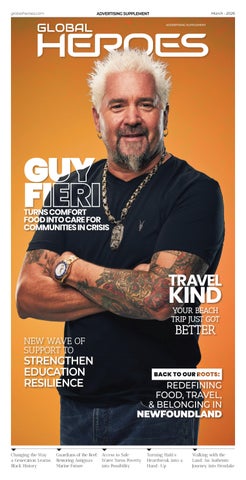
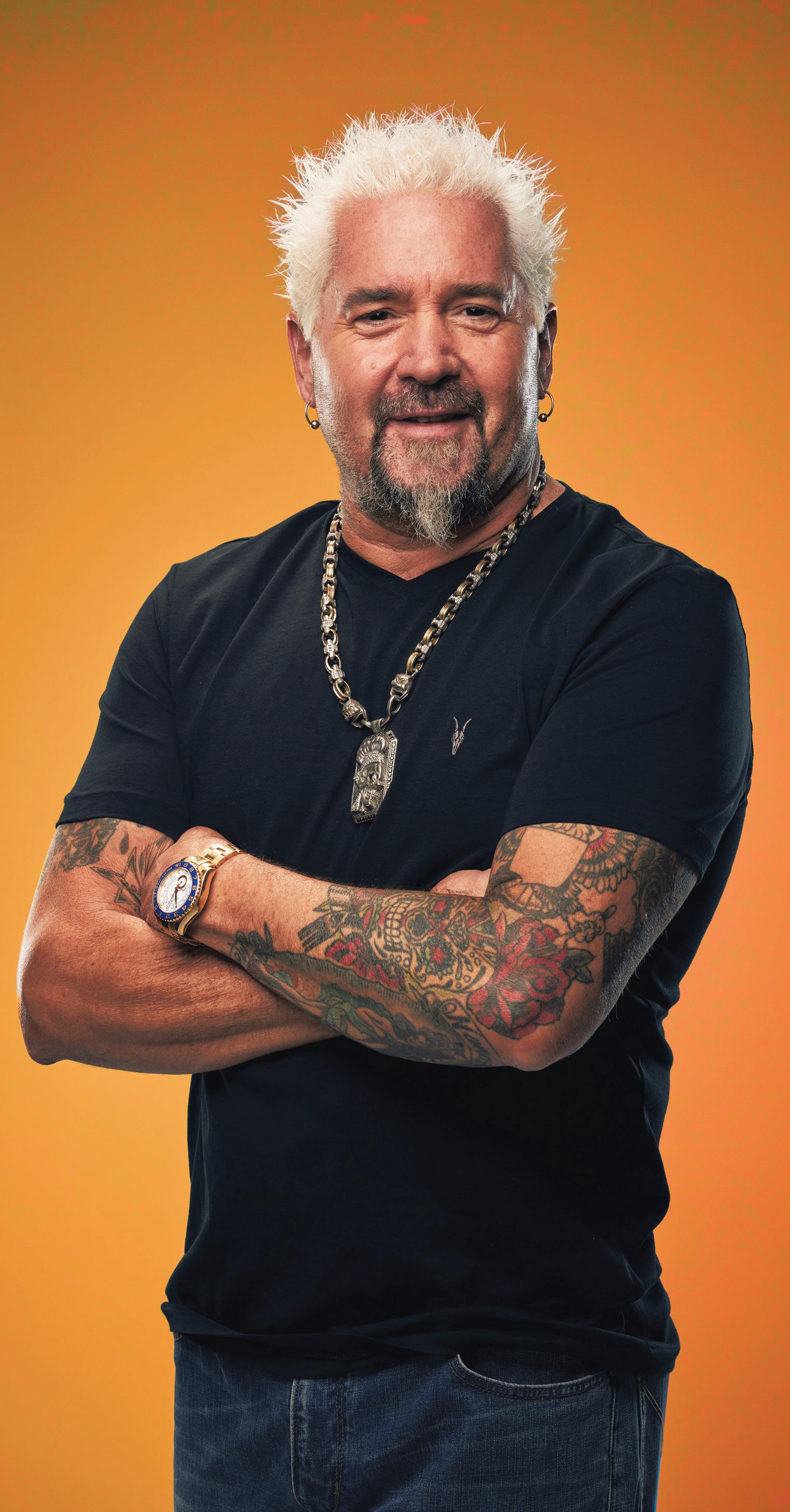
But Flavortown wasn’t built in a day. Long before the frosted
and cross-country road trips, food was Fieri’s first language. Growing
tarian household, he learned early that if he wanted
cooking it, and sharing it.
“It was empowering,” he shared. “It taught me how to make things happen on my
it made my parents proud…food and cooking were ways that I could
around me, and that continues to this day.”
DINERS, DRIVE-INS, AND DIVES, OH MY!
When you love food the way Fieri does, you love the process of making great food—and even more importantly, you love sharing it. Diners, Drive-Ins, and Dives, or “Triple D” as Fieri calls it, brings those two loves together. Sure, you can watch a cooking show and recreate the recipe at home. Or you could travel a town or two over (if even!) and order the exact same plate of comfort food you just saw on your TV screen, from a place you might have never known existed otherwise.
Triple D is a celebration of roadside joints and mom-and-pop restaurants, and one that has an immediate impact on the restaurants, which rarely have the resources to market themselves. But good food deserves recognition, and food lovers deserve to know what’s out there. That’s why Fieri has always bristled at the idea that the show is about shock-value eating. For him, scratch cooking matters. Integrity matters. If a restaurant’s signature dish is pimento cheese, he wants to know they’re making it themselves.
Fieri often says, “If you’re going to eat something, eat the best,” but that doesn’t mean he avoids trying every specialty his features have to offer—it’s just the opposite; trying is the pathway to finding the best. It’s the same reason that Guy’s Grocery Games is as beloved as it is—you don’t need best-in-class ingredients to put together an incredible meal, you just need a grocery store and the willingness to try.
“We’ve got to eat without prejudice,” he told Chef Robert Irvine. “Listen to stories without prejudice. Cook without prejudice. Stand outside your comfort zone a little bit, take some chances.”
That respect for craft mirrors his larger worldview. It’s advice he’s followed his entire career—touching nearly every cuisine, learning as he goes, and building an unusually broad understanding of food as culture.
FROM THE KITCHEN TO THE COMMUNITY
In 2011, Fieri formalized that belief by launching the Guy Fieri Foundation. The initial focus was straightforward: teaching the next generation of chefs. But the mission didn’t stay neatly in one lane; it couldn’t.
“I knew that food and cooking were how I wanted to help, to share, and to give back. But there are just so many deserving groups and initiatives that it became a bit overwhelming trying to pick just one lane.”
Growing up in a small northern California town, Fieri’s family prioritized giving back and helping others—a notion that he’s carried forward into his own family.
“My parents were always about helping others. We’re really blessed,” he said. “If you’re up and you’re walking around today and you can experience and embrace and appreciate all the things that are going on around you, you’re a very lucky person, because those simple things that we all take for granted, a lot of folks don’t have.”
As Fieri’s career expanded and his visibility grew, so did the Foundation. What started as culinary education evolved organically into disaster relief, support for first responders and military families, literacy initiatives, and honoring everyday heroes. Fieri shared that the shift felt natural, linked to his experiences on the ground and in kitchens across the continent.
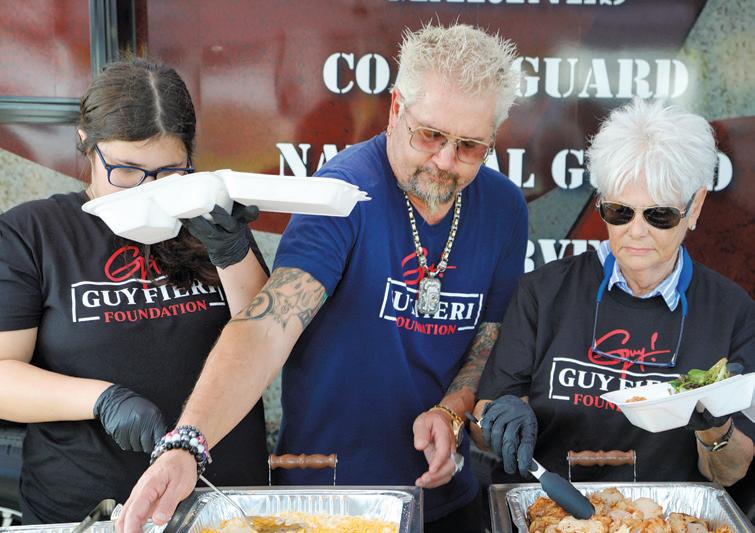
Perhaps the largest shift occurred when the Foundation built its first large-scale culinary disaster-response trailer and began deploying it to wildfire zones and other emergencies.
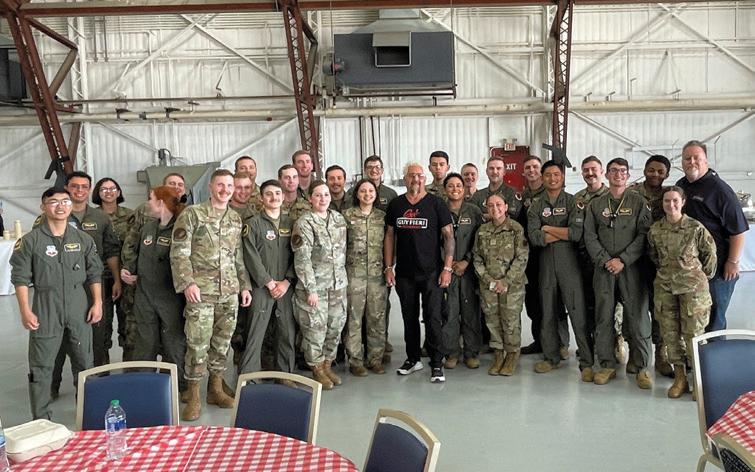
“I really saw the first responders and military in action,” he recalled. “People are out there risking their lives for us on a daily basis, and to me, feeding them is showing them love and appreciation.” Now, with trailers on both coasts and another joining the fleet soon, the Foundation will be able to deploy more resources when needed.
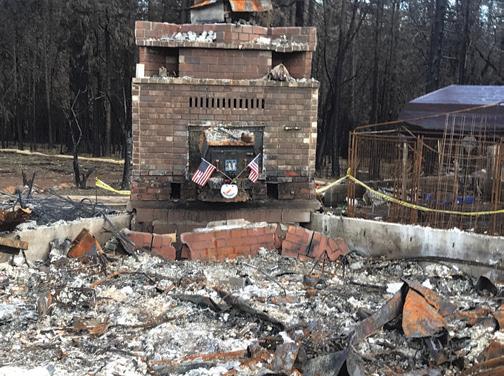
To Fieri, it’s about serving those who serve us. That motto became deeply personal during the 2017 Tubbs Fire, which tore through his home region. Standing shoulder-to-shoulder with firefighters who were trying to save his house—and countless others—clarified the mission of the Foundation.
“People I’d never met were by my side trying to save my home, and I knew that it was my mission to give back and support,” he recalled.
Suddenly, in a different way than before, gratitude wasn’t enough; action was required.
WHAT’S IN A MEAL?
On the ground, nothing is predictable. Unlike the TV world, there’s no script in a crisis zone. So when conditions are unpredictable, and needs are changing by the hour, how do you choose what to serve—both to meet practical needs and to comfort people who are exhausted, overwhelmed, and running on fumes?
“It comes down to best-laid plans,” Fieri explained. “No matter how ahead of the game you think you and your team are, when you enter a live disaster zone, anything and everything can happen.”
Menus are designed to be nourishing, hydrating, and comforting. Dishes must be executable under harsh conditions, considerate of allergies and dietary restrictions, and simple enough for volunteer-driven teams, which can rotate in and out depending on the day, without sacrificing warmth or dignity.
“We’ve developed protocols that can account for just about every situation we can think of,” he continued. “It’s key that the dishes we put out can be executed under tough conditions and also aren’t so complicated that they are beyond what can sometimes be an entirely volunteer workforce.”
Success isn’t measured in plates served— though more than 200,000 meals have been provided to date—but in the intangible impact of handing food to someone who spends their day fighting for their community and watching them remember what it feels like to be cared for.
ALL HANDS ON DECK
None of this work happens in isolation. Collaboration is essential, from grassroots nonprofits to long-standing corporate supporters like Carnival Cruise Line, which has backed the Foundation for nearly 15 years.
“I’ve been very fortunate in my life to have a great career and work with incredible partners who support my initiatives,” Fieri shared. “I think most people and corporations want to do good. They appreciate having a meaningful way to participate.”
For corporations, these partnerships make giving possible, and in turn, they make scale possible for the Foundation. Together, as in any good partnership, sustainability becomes inevitable.
That same alignment drew Fieri to Tunnel to Towers Foundation, an organization dedicated to supporting veterans and first responders through mortgage-free homes and financial relief. After touring Ground Zero with founder Frank Siller and hearing the story behind the mission, Fieri was all in.
“They’re the gold standard,” he said. “There are so many deserving folks out there that they’ve helped and will help in the future, from home
dedications to paying off mortgages. I want to support them in any way I can.”
Alongside disaster relief, education remains a cornerstone of the Foundation’s work—both in the kitchen and beyond it. Culinary scholarships and literacy programs may seem worlds apart, but for Fieri, they’re deeply connected.
“Education is everything to me,” he explained. “It’s not always about a four-year degree. It’s about enriching yourself to be the best you can be.”
The kitchen, he believes, is one of the few places where young people can start on equal footing, learning discipline, teamwork, creativity, and confidence.
A FAMILY AFFAIR AND A LASTING LEGACY
Ask Fieri which story from the past year stays with him most, and he points to the people beside him: his wife, his sons, his friends.
“Being side by side with my family while we all pitch in to help—that’s as rewarding as it gets,” he shared. “When you look into the eyes of the displaced mother or the exhausted firefighter and hand them a plate of something comforting, you see their gratitude, their relief, their soul bared. This work is important, and I’m very lucky to be able to do it.”
When he talks about the future of the Foundation, there’s no hesitation. His sons already know the baton will one day be theirs, and he has no fear about the mission changing course.
“This is ingrained in my family and my company,” he said. “I have no doubt that they will continue to fly the Fieri flag proudly and share the love that the Foundation is all about. It’s what we all do.”
In the end, for Fieri, food is just as much about feeding people as it is about flavor. More importantly, it’s about community, and using whatever spotlight you have to make sure no one is left behind.
“I’ve had a great opportunity and a great life, and if I can shed light on any of it or help fundraise, then that’s my responsibility as a member of the community and as an American,” he shared. “There are a million reasons we all should be doing this.”
They say the best meals are those shared with friends—it stands to reason that meals shared with a cross-continental group of foodlovers would be even better. At least, that’s how meals are served up in Flavortown.
Beyond the Headlines: Long-Term Disaster Recovery Deserves Our Attention—and Investment
When a disaster strikes, the world responds. Headlines dominate the news cycle, donations surge, and communities and emergency teams alike rally to mobilize. And then, once the news cycle moves on, the attention fades. But for the people living through the aftermath, there’s a long road ahead to recovery.
Disaster recovery does not happen overnight; it takes years, often requiring the rebuilding of homes and the restoration of infrastructure. Additionally, disaster recovery is about restoring physical well-being, economic stability, and mental and emotional health. It is about addressing the systemic vulnerabilities that made communities more susceptible to harm in the first place. Above all, it is about ensuring that everyone in the affected area has the opportunity to recover stronger and thrive. Ultimately, true disaster recovery is long-term recovery, and that is where the Center for Disaster Philanthropy (CDP) plays a major role.
With the scale and frequency of disasters increasing amid climate change and global instability, disaster recovery can often feel reactive.
CDP helps donors, foundations, and corporations maximize their impact by providing expert guidance, community-driven grantmaking, and strategic funding approaches focused on long-term outcomes.
WHAT DOES RECOVERY REALLY MEAN?
Recovery is often misunderstood simply as relief: clearing debris, repairing roads, rebuilding structures. These efforts are essential, but they are only one part of a much larger process. As disaster recovery experts often note, recovery is not only about restoring systems and services; it is also about enabling people to sustain their physical, social, economic, mental, emotional, and spiritual well-being.
Long-term recovery builds resilience by helping individuals, families, and
communities rebuild their lives so they can withstand future crises. It includes mental health services, livelihood restoration, housing stability, access to education, and community cohesion. It addresses other inequities that disasters tend to expose and deepen. That’s why it’s critical that the communities involved are at the forefront of the solution.
“In every disaster, the people closest to the impact are the people closest to the solution,” said Patty McIlreavy, president and CEO of CDP.
It’s a simple philosophy that makes all the difference in developing holistic pathways to recovery. Who better, after all, to lead in community resilience building than members of the community?
The most effective support invests in community-led solutions and local capacity, supports organizations already trusted on the ground, and backs strategies shaped by lived experience. Once again, CDP is a key player as a full-time resource dedicated to helping donors maximize their impact through expert resources, community-driven grantmaking, and advisory services.
THE FUNDING GAP NO ONE TALKS ABOUT
One of the biggest challenges in disaster recovery is timing. At the beginning of the disaster, when headlines are bringing in support and visibility from across the globe, private giving is at its peak—but this only lasts a matter of weeks. By six months, donations often drop off dramatically, but recovery is not nearly complete; it takes years. In that time, needs evolve, and new challenges come up, from housing shortages to food insecurity, combined with prolonged economic
hardship and ongoing trauma.
Giving at any stage is meaningful, but long-term recovery remains significantly underfunded, even though it is essential for rebuilding stable, resilient communities that can thrive even in the face of disaster. And where public funding falls short, philanthropy can help address critical needs.
Nonprofits and philanthropic organizations play a vital role in helping survivors recover from disasters. They’re nimble, innovative, and often deeply connected to local communities, so they can quickly and strategically direct resources to the most urgent gaps and overlooked populations.
At the same time, philanthropy should not replace government action; it must complement it. As McIlreavy notes, nonprofits and donors are “leaning in and stepping up to address gaps,” but their work should strengthen, not substitute, the responsibilities of public systems.
“[CDP] stands out as one of the few donors committed not only to managing immediate emergencies but also to promoting recovery and resilience in affected communities over the medium term.” —CDP Grantee Partner
LESSONS FROM RECENT DISASTERS
Last year, catastrophic flooding, landslides, storm surges, and high winds displaced millions and destroyed homes, schools, and critical infrastructure worldwide. Disasters tend to compound over time. Beyond the immediate devastation, the storms damaged agriculture, creating longer-term economic consequences and worsening food insecurity just
as families were trying to stabilize. Long-term recovery, then, must include more than rebuilding infrastructure. It must include protection, mental health supports, stable income pathways, and safe housing, among other urgent needs. One of the most effective tools in long-term recovery is flexible funding, particularly financial assistance that empowers communities and families to make their own decisions and prioritize what matters most to them: repairing homes, purchasing food, covering medical expenses, restarting businesses, or paying school fees. Mental health services and income supplementation are also vital. Disasters leave lasting emotional and financial scars, and it takes sustained support for communities to rebuild stability and resilience.
CDP prioritizes smart investing over quick investing by directing funds strategically, months or even years after a disaster, when the most pressing gaps become clear. But disasters don’t wait for us to be ready. The best time to prepare isn’t when danger is near; it’s when it feels far away. CDP’s Disaster Preparedness Fund addresses this
Your support helps communities rebuild and thrive.
THE THINKER’S BURDEN
A Nearly 20-Foot Sculpture at the United Nations Puts Human Health at the Center of the Plastics Debate
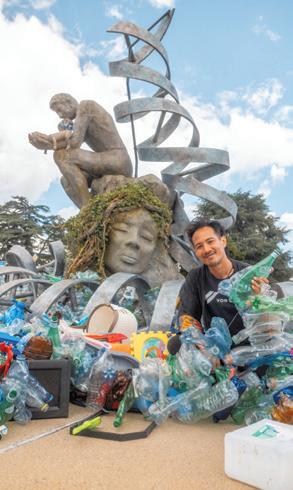
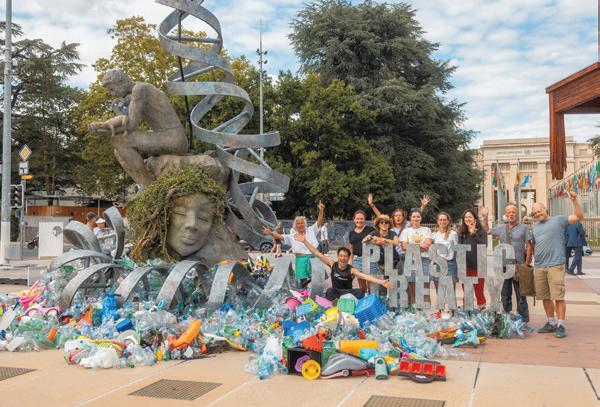
In August 2025, as delegates returned to Geneva for the resumed fifth session of plastics treaty negotiations, a new figure rose over the Place des Nations. Benjamin Von Wong’s The Thinker’s Burden, a nearly 20-foot reimagining of Rodin’s classic, sat atop a globe, cradling a baby, with a strand of DNA winding around them.
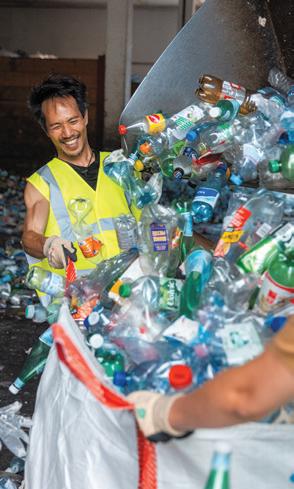
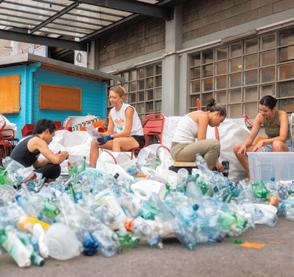
Built from wood, papier-mâché, steel, and living vines, the artwork was designed to be slowly surrounded by piles of recovered plastic waste during the talks, a visible clock counting down the time left to act.
By mid-August, the clock had run out. After days of debate at the UN’s Palais des Nations, countries adjourned without a final text. The process will resume at a later date and place, but for now, the treaty remains unfinished. In December, looking back on Geneva, the sculpture’s warning feels even clearer: plastic pollution is not only an environmental crisis, it is a public health emergency.
“This is not just art, it’s a call to conscience,” said Professor Sarah Dunlop, Head of Plastics and Human Health at the Minderoo Foundation, which supported the installation.
“The Thinker’s Burden represents the moral, environmental, and health weight negotiators carry.
This treaty is a once-in-a-generation chance to protect people from toxic plastics and to make polluters pay.”
Von Wong’s message has always centered people. His large-scale interventions have appeared at the UN, the World Economic Forum, and COP gatherings, translating complex issues into scenes the public can grasp. “From the air we breathe to the food we eat, microplastics and toxic chemicals are entering our bodies, and future generations will inherit the consequences if we fail to act now,” he said in Geneva. “The Thinker’s Burden is meant to remind us that the true weight of plastic falls on our health, disrupting hormones and threatening children before they are even born.
This is not a distant problem; it is already inside us.”
The talks drew delegations from
more than 180 countries and were intended to deliver a legally binding global agreement. The divide was stark. A High Ambition group pushed for measures that address plastics across their full life cycle, including limits on production and strict controls on hazardous additives.
Others argued the treaty should focus on recycling and waste management. With neither side willing to concede ground, negotiators closed the session without consensus.
Even so, the case for action only grew stronger. “This compelling art piece reminds us why our work matters. It highlights both the responsibility we carry and the urgency to act,” said Luis Vayas Valdivieso, Chair of the Intergovernmental Negotiating Committee. Scientists echoed that view. “It captures our knowledge of the broad-reaching impacts of plastics and chemicals on our health, and the interconnectedness of human health, the environment, and petrochemicals,” noted Dr. Bethanie Carney Almroth, co-coordinator of the Scientists’ Coalition for an Effective Plastics Treaty and Professor of Ecotoxicology at the University of Gothenburg.
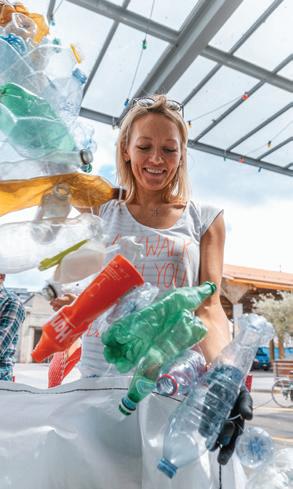
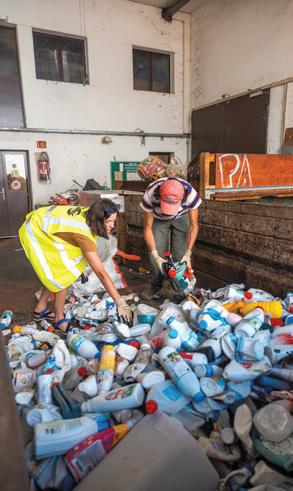
The Thinker’s Burden was a community build, fabricated in Zurich by SLS Illusions and assembled with the help of local organizations and volunteers who gathered more than 706 cubic feet of discarded plastics. That collective effort is part of the point. For Von Wong, the piece is a reminder that solutions will be made, not wished into being. “It’s a visual representation of the growing burden we bear to resolve the plastic pollution crisis for this generation, and for those to come. We must act decisively and fight for human health across the entire life cycle of plastics.”
The negotiations will reconvene. Until then, the giant Thinker keeps watch at the UN’s Alley of the Flags, asking leaders—and all of us—to lighten the load. An ambitious treaty is not optional. It is essential.
HOLLY CAMBRUZZI
This Earth Day, The Future Belongs to Those Who Fight for It
History shows that real change rarely begins in boardrooms; it starts with people. cIt’s been a turbulent year for environmental progress. Across the world, longstanding protections have been weakened or rolled back, often at the expense of public health, ecosystems, and vulnerable communities. But instead of losing hope, environmental leaders and changemakers are growing louder. It’s time for visible, sustained public action, and that includes all of us. It’s been a turbulent year for environmental progress. Across the world, long-standing protections have been weakened or rolled back, often at the expense of public health, ecosystems, and vulnerable communities. But instead of losing hope, environmental leaders and changemakers are growing louder.
It’s time for visible, sustained public action, and that includes all of us.
FROM PROTEST TO PROGRESS
Since the first Earth Day in 1970, millions of people across countless industries have come together to fight for a better future. From farmers to faith leaders, scientists to healthcare workers, first responders, and youth, climate activists from all walks of life have helped prevent illness, protect communities, and push governments toward stronger environmental laws. This year, we’re bringing it back. In 2026, we’re more connected than ever before, so why not let that translate into collective action for our global community?
EarthDay.org is calling on people around the world to organize events on April 18, April 22 (Earth Day), and throughout Earth Week, like peaceful marches and demonstrations, community cleanups of streets, rivers, parks, and beaches, and teach-ins at schools and community spaces to get more people involved.
"All those years ago, in 1970, we launched a genuine environmental revolution. We proved that an engaged public can be an unstoppable force,” said Denis Hayes, organizer of the first Earth Day. “It can be again in 2026."
CLIMATE EDUCATION IS CLIMATE ACTION
Alongside its Earth Day announcement, EarthDay.org is celebrating a major global milestone: the European Union’s decision to embed climate education into school curricula from kindergarten through Grade 12 as part of its official climate commitments under the Paris Agreement.
Today’s environmental leaders know that young people are the future of climate action, and this move takes that one step further by equipping students with the knowledge, skills, and critical thinking needed to navigate a rapidly
changing world. More than 60 countries have now adopted similar commitments, and over 150 nations have integrated climate education language supported by EarthDay.org into their national climate plans.
This matters because the green transition is already reshaping the global economy. According to international research, demand for green skills is growing faster than the workforce can supply them.
The shift to clean energy and sustainable industries is expected to create over 100 million new jobs worldwide in the coming decade.
Young people are increasingly worried about job security on top of climate concerns—the green transition is the meaningful, future-oriented answer to both.
“Climate education doesn't just tackle climate change—it connects people to jobs and economic oppor tunity,” said Efrem Bycer, Head of Workforce and Climate
Policy Partnerships at LinkedIn.
“By prioritizing climate education, these nations are investing in both a sustainable future and an inclusive economy." Countries all over the world, alongside institutions such as the Vatican, are now advancing climate education as a foundation for both environmental stewardship and economic resilience.
As Sharan Burrow, Vice Chair of the European Climate Foundation, put it: "We grew up learning about the great forests, oceans, and rivers of the world, but not how to care for them, even though our lives depend on them. We didn't learn that the industries that make us prosperous are responsible for greenhouse gas emissions and that we must use clean energy and clean tech to keep the planet livable. Our children will know better.”
(Source: EarthDay.org)
One Voice. One Vision. One Stronger Transition.
Taylor Cassidy Is Changing the Way a Generation Learns Black History
Emmy-nominated creator and author Taylor Cassidy was born to be a historian. At just 23, she’s become one of the most influential young storytellers of her generation, redefining how history is shared and understood—particularly Black history.
Her viral TikTok series Fast Black History has introduced millions to overlooked figures and untold stories, using her signature wit and storytelling mastery to make the past feel fun and relevant to today’s generation.
Growing up, her parents were intentional about teaching her Black history at home, aware it wouldn’t always be prioritized in school. She was also drawn to storytelling early, grabbing the family camera to film dramatic scenes with her toys. When TikTok launched during the COVID-19 pandemic, she saw a natural opportunity to bring her interests together.
“On the first day of Black History Month, sitting on my bedroom floor, I filmed my first ‘Fast Black History’ video, where I talked about a Black figure in 60 seconds or less,” she shared in her TEDxGeorgetown talk, TikTok fame doesn’t always mean impact
The video went viral, bringing hundreds of thousands of viewers to her page. She kept posting, people kept watching, and more importantly, they kept learning.
As her following climbed into the millions, Cassidy realized what many creators struggle to articulate: popularity isn’t the same as influence.
Growing up in the digital age, she noted that popular culture often framed fame as the ultimate measure of impact. But as views fluctuated, she began to understand that transformation mattered more than attention. Not every video would go viral, but each could still reach someone who needed it.
“When I create, it all comes down to intention,” Cassidy shared. “If I make a video that I think will go viral, but it doesn’t make me smile or feel satisfied, I don’t post it. When I see people continuing the conversation or telling me they took action in their community because of a video, that’s real impact. For me, ‘real impact’ is in the actions others take, inspired by what I share.” And what she shares is plenty. Named to the inaugural TIME100 Creators list in 2025 and nominated for two Children’s and Family Emmys for her work as a
correspondent on Nickelodeon’s Nick News, Cassidy has become a veritable educator. Her debut book, Black History Is Your History, brings her signature storytelling from the screen to the page.
“Historical figures are sometimes so idolized that relatability becomes impossible,” she explained. “I wanted to humanize historical figures who often feel distant because of their grand accomplishments and the huge trials they overcame.”
By pairing personal stories with historical ones, she invites readers to see themselves not just as obser vers of history, but as participants in it.
“My goal was to write a book that anyone could read, where they could learn about history, see themselves reflected, and gain the confidence to spark change.”
The book introduces readers to trailblazers across activism, arts, athletics, innovation, and culture, while emphasizing that history is shaped as much by everyday choices as by monumental moments.
For Cassidy, history is never static, and she’s ready to help write what comes next.
RAYE MOCIOIU
Against the Current: The Island Girls Who Rowed a Nation Together
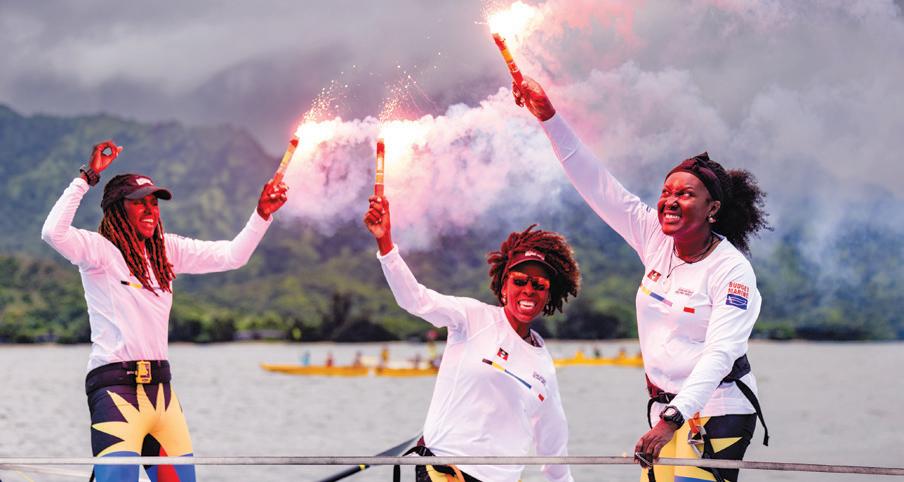
When four women from Antigua and Barbuda pushed off from La Gomera in December 2018, none of them were rowers. But by the time they reached Nelson’s Dockyard 47 days later, they were finishers of the Talisker Whisky Atlantic Challenge (now World’s Toughest Row), and more importantly, they were symbols of a country’s resilience. The quartet, comprised of Kevinia Francis, Christal Clashing, Samara Emmanuel, and Elvira Bell, united under the Team Antigua Island Girls banner.
More than finishing a transAtlantic campaign, the Antiguans made history as the first all-Black team to row any ocean. They galvanized a nation with their daring, with the government declaring a
half-day holiday on their return, and they raised funds for a project to aid a girls' home that housed abused, abandoned, and neglected girls.
In 2023, the team, minus Elvira (for personal reasons), conquered the mid-Pacific route from Monterey Bay, California, to Kauaʻi, Hawaiʻi, in 41 days, seven hours, and five minutes in the inaugural Pacific Row.
A CALL, A CREW, AND EIGHT-AND-A-HALF MONTHS TO LEARN—ROW ONE
After two Antiguan men’s teams completed the race that finishes in historic Nelson’s Dockyard in English Harbour, Antigua, Prime Minister Gaston Browne threw out a challenge: could an all-women’s team represent the island next? Fifteen women
answered. Coaches from the men’s team helped train and whittle the roster to five, then four. The Island Girls shipped a used boat back to the U.K. for repairs, crammed essential certifications into their calendars, and learned as they went.
“There was a lot of naiveté,” Kevinia explained. “We were checking boxes more than grasping the full scope. However, by the time the race started, the checklist was complete. We felt ready to go. Nothing could have prepared us for the breadth of the race—the unpredictability of the ocean, the extreme fatigue, the unique experience for each rower while still needing to function as a unit, and still, the beauty and privilege of the experience. By the time we were mid-Atlantic, challenges and all,
we knew we would conquer, because we weren’t just rowing, we were rowing home.”
“Home” mattered. Most ocean-row crews finish somewhere unfamiliar and then fly back. The Island Girls rowed toward their own shoreline, along part of the transatlantic slave trade route that delivered their ancestors under brutal coercion. As descendants of enslaved Africans, they experienced the Atlantic crossing as a reclamation of history and of their relationship to the sea.
“We wanted to show that we belong on the ocean on our own terms,” they said. “And we wanted girls to see that women can work together under pressure and achieve something extraordinary.”
EVERYTHING THAT CAN GO WRONG AT SEA
Plenty of ocean-row crews fracture under stress. The Island Girls didn’t. They fought and forgave like sisters, kept the mission present, and protected the chemistry that carried them from “ we barely know each other” to “once an Island Girl, always an Island Girl.”
And it was far from easy; the Atlantic tested them early. Seasickness scrapped their opening sprint. Then the autopilot failed repeatedly, forcing hand-steering by compass for punishing stretches.
“It was the only time I thought, ‘We can’t do this for two more weeks,’” said Kevinia. Luckily, a late-night fix from the home team revived the system, just enough to finish the job. By then, Antigua and Barbuda were already watching. The Island Girls
had captured the attention of the predominantly non-seafaring community, and that attention cascaded into suppor t and unity. When the team crossed the finish line, the country met them—a sea of red, yellow, blue, black, and white flags waving them in. One mother said her daughter now wanted to row when she grew up.
“We went in with goals to win,” the women shared. “We came home with a sense that we’d helped pull our country together.”
A NEW TRIP—BACK ON THE ROW AGAIN!
In 2023, after years of school visits, talks, and local advocacy, the organizing body invited Team Antigua Island Girls to the inaugural Pacific race.
An unexpected turn of events just before the team was due to depart the island ruled Elvira out. The reduction to a trio forced tactical changes, many of which the team had to confront as they arose during the row.
As they did on the Atlantic, the team surmounted each challenge— even the currents during the final 24 hours that threatened to toss them off course, well beyond the finish line, and into disqualification.
The team plans to put funds raised toward establishing a dedicated facility for girls in conflict with the law. The stakeholders are close to finalizing the specifics, with hopes of breaking ground shortly.
“If we plant good seeds early, like skills, confidence, a sense of belonging in the water and in the world, we shape a better society,” the team said. RAYE MOCIOIU
How AnuBlue is Restoring Antigua’s Marine Future
When Christal Clashing and Shannon Costelloe describe their work, their passion for the ocean is unmistakable.
Both women followed unexpected paths into marine conservation— Christal from a background in adventure sports and community engagement, Shannon from an initial focus on human resources—but their shared love for Antigua’s marine environment brought them to the AnuBlue (formerly Elkhorn Marine Conservancy). Today, they are part of a growing team determined to restore Antigua and Barbuda’s reefs and empower island residents to become stewards of the sea.
A HOLISTIC VISION FOR OCEAN
HEALTH
Founded in 2021 and led by conservationists and community leaders, AnuBlue was born out of passion and understanding for coral restoration and the entire marine ecosystem. As Christal and Shannon explain, these two go hand in hand.
Antigua’s economy is almost entirely reliant on coastal and marine tourism. Coral reefs, seagrass beds, and mangroves protect beaches while providing boaters, snorkelers, and divers a space for discovery.
“Everything is interconnected,” said Christal, “they all form a delicate web of life.”
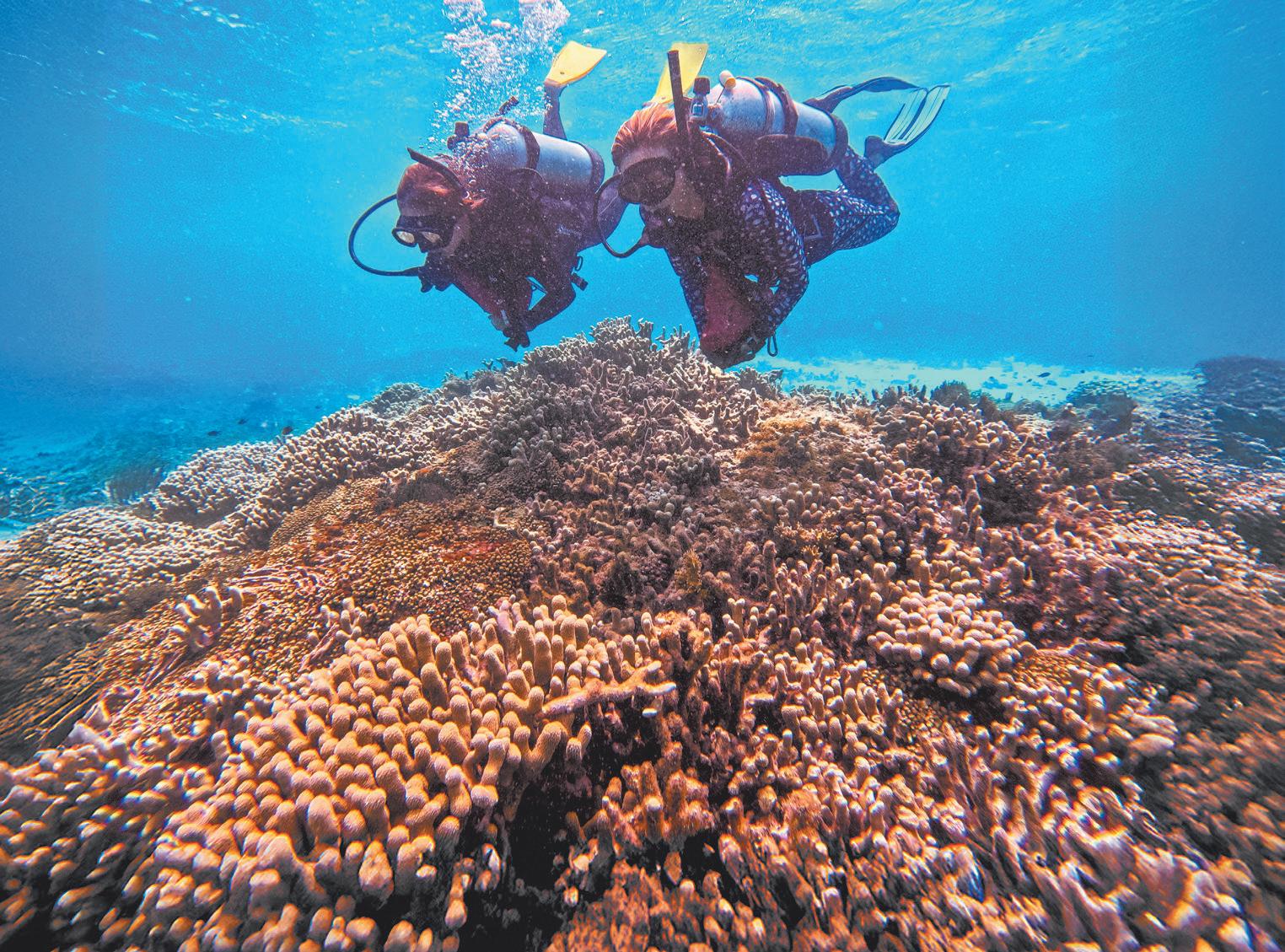
It’s for this reason that AnuBlue’s work spans the ocean, from housing vulnerable coral genotypes in an on-land lab during heatwaves to employ techniques, such as microfragmentation, with coral restoration expert Ken Nedimyer. They do it all from a place of love and deep respect for Antigua’s natural heritage.
BRIDGING THE SWIMMING TO OCEAN CONNECTION
Despite being surrounded by water, many Antiguans have never learned to swim due to historical inequities, fear passed down through generations, and limited access to swim instruction.
Recognizing this, AnuBlue launched a
beginner swim program in 2023.
Along with teaching water safety, the program connects participants to the ocean through a three-week process. Swimmers learn basic skills and work their way up to snorkeling, all leading up to a visit to AnuBlue’s coral restoration site. For many, it’s their first glimpse of living coral.
“We want people to fall in love with the reef,” Shannon explained. “When you see it, you care for it.”
To maintain that connection, AnuBlue launched a snorkel club in 2024, hosting quarterly reef excursions that turn swim students into ocean advocates. Looking ahead, AnuBlue’s top priority is establishing a dedicated lab and education center to stress-test coral, host school groups, and create a hub for conservation research.
“We want young Antiguans to see this work firsthand,” said Shannon. “They’re the next generation of ocean protectors.”
On top of that, the organization is employing shark tagging in
collaboration with conservationists across the Caribbean, gathering data on migratory patterns to better understand reef health. Sharks, as keystone species, play a crucial role in balancing marine ecosystems, and monitoring their movements can provide insight into the overall health of the reef.
“Everything we learn informs a bigger picture,” Christal shared. “Reef health is about every creature that depends on it, not just coral.”
AnuBlue plans to expand its model beyond Antigua and Barbuda, working with other islands and global partners to restore reefs worldwide. Their work is proof that grassroots action and scientific innovation can reverse ecological decline—and when you get the community involved, you can make waves.
“Conservation is as much about people as it is about ecosystems,” Shannon said. “When you connect people to the ocean, they’ll fight for it.”
RAYE MOCIOIU
Charting New Waters: Sailability Antigua Is Making the Ocean Accessible to All
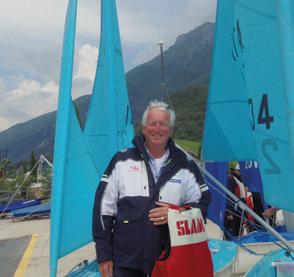
It all started when Bob, in his retirement, began sailing up and down the Caribbean islands and noticed a startling lack of inclusive sailing programs in this large sailing area.
“The Royal Yachting Association (RYA) and Sailability had over 200 units across the UK, but none in this part of the world,” he explained. Frustrated and inspired, he took it into his own hands to change this. With encouragement and support from Elizabeth Jordan—then Commodore of the Antigua Yacht Club and soon to become President and Founder of the National Sailing Academy (NSA)—and support from the RYA, Bob, his wife Su, and their friend Maureen launched the Sailability program, making Antigua one of the first places in the world (outside the UK) to embrace such an initiative.
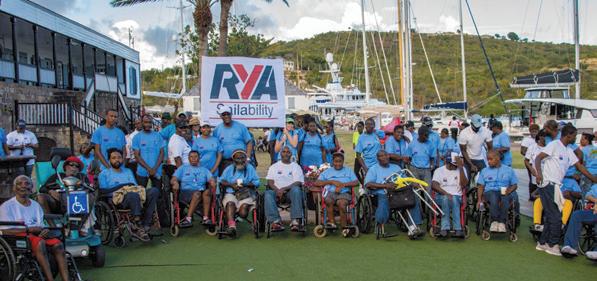
It began as a small, grassroots effort, but quickly grew into a community program that serves 80 differently-abled people, empowering children and adults to sail—with plans to double that number. This program works alongside the NSA, which currently has 230 children across 23
schools coming to the Academy each week to learn to sail.
Mornings are dedicated to the Sailability program. Afternoons follow a structured RYA sailing syllabus for schoolchildren aged eight to 18.
Weekends and holidays see adults take to the water, often at subsidized or no cost. While sailing is an exciting and unique experience in its own right, the impact of the program extends much further.
“We had a girl come through the school program who had corrective surgery on her feet,” Alison shared.
“Her confidence grew so much, her entire family started sailing together.”
From deaf and mute sailors to 66-year-old amputees who navigate the waves independently, the stories from the program have been transformative.
“In the UK, people with disabilities often have structured care and support,” Bob explained. "Here in Antigua, that support is limited. When someone comes to our program, it might be the only day of the week they leave the house. It took two years for local officials to acknowledge there even was a disability problem, but our impact has made it clear how much of a difference social inclusion makes.”
For many participants, sailing is a chance for independence and joy in a rare and exciting new field. The success of the program lies not only in its reach but in its roots.
“All our instructors are local,” Alison noted. “They started as students in our school program. They’re now teaching the next generation.”
One alum is Jules Mitchell, who trained through the academy, first becoming an instructor, and is now a professional sailor. Another graduate, Junella King, also became an instructor and then joined an allwomen’s crew that went on to win a round-the-world race.
Running a program with this kind of community impact is no small feat. Tourists, like all community members, are welcome to join in on inclusive sailing adventures, with proceeds directly aiding the program’s impact. The Sailing Academy offers accommodations for visitors and plans to run inclusive sailing week packages, which also help fund this incredible program. Looking ahead, the NSA is working to ensure that the program’s future is firmly in Antiguan hands, with three of six board members now local, and a pipeline of homegrown instructors and leaders. Plus, there’s more on the horizon. World Sailing, the governing body for sailing, is planning an Inclusive Development Programme & Regatta next year to teach participants from 10 Caribbean islands how to manage a sailability programme—yet another step toward making sailing a space for everyone. As Bob puts it, “We’re not just teaching people to sail, we’re opening doors that were never there before.” RAYE MOCIOIU
It’s Clear: Access to Safe Water Turns Poverty into Possibility
On World Water Day (March 22, 2026), we are reminded that for millions of families, access to safe water is still out of reach—and that achieving universal access to safe water and sanitation is possible.
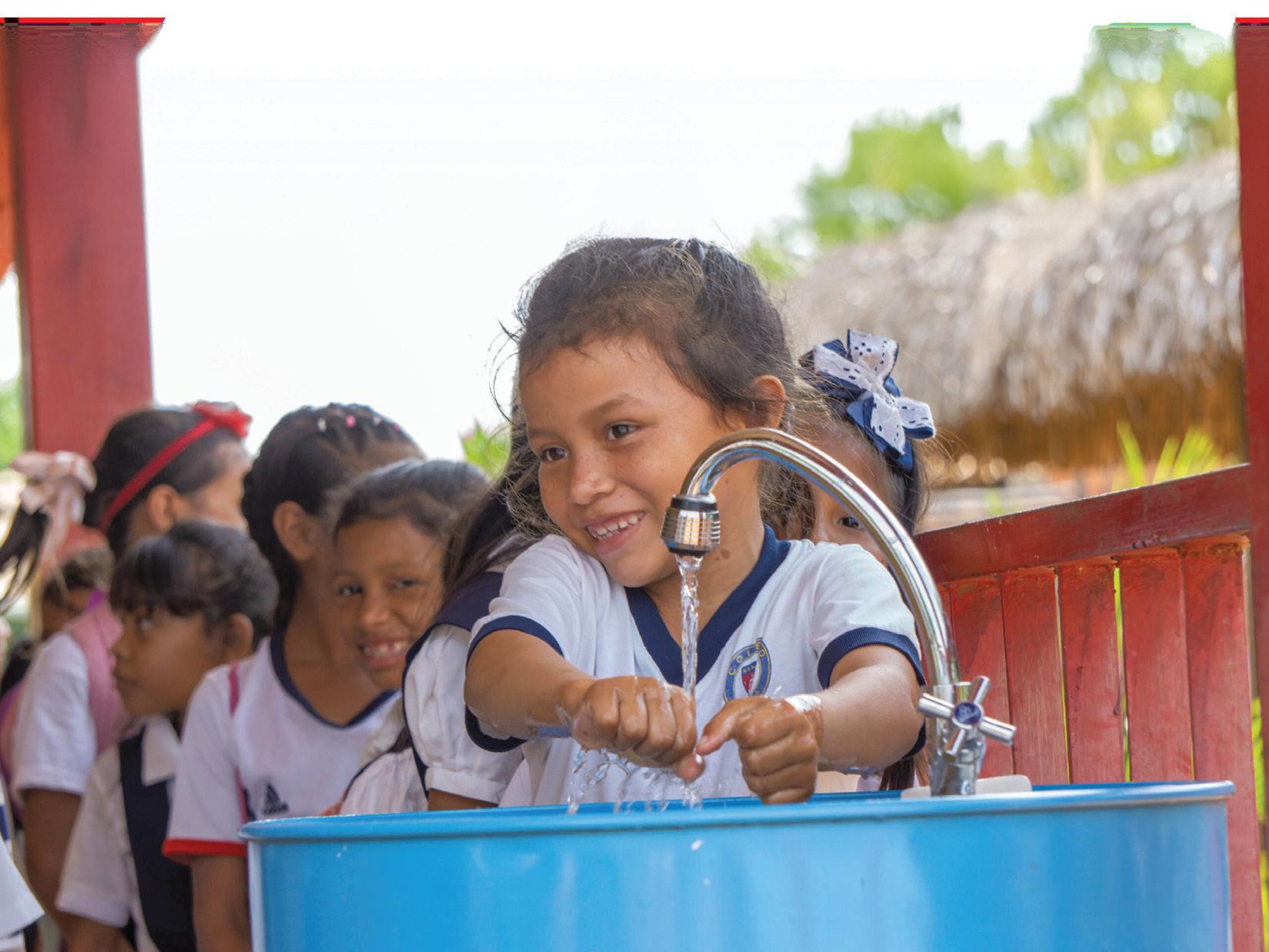
Around the world, families are taking action to improve their future through small, affordable loans that make water and sanitation solutions possible at home. What begins as a household tap, a water collection tank, or a pump becomes something more—health, time, opportunity, and progress that extend beyond one family to strengthen entire communities.
Every day, we see how access to safe water and sanitation at home helps people unlock time and potential. For Amina in Tanzania and Doli in Bangladesh, a small, affordable loan brought lasting access to safe water—creating new opportunities for their families and the people around them.
NEW POSSIBILITIES IN TANZANIA
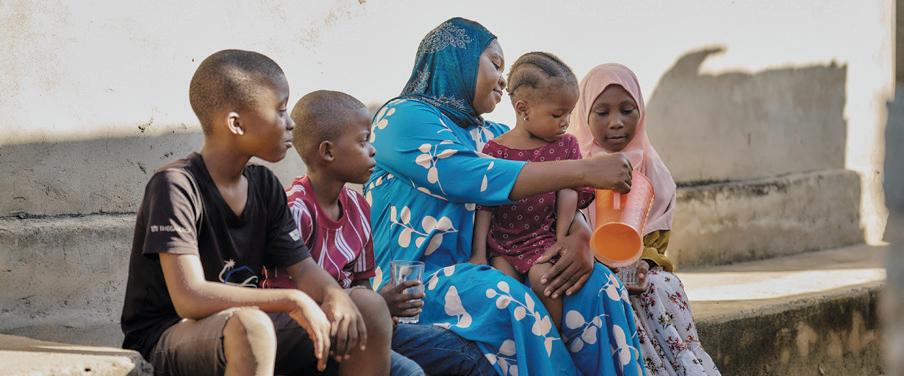
Amina is a loving mother and grandmother. The children in her village often visit her home, where her property now serves as a source of safe water for more than 150 households in her community.
With the help of a small, affordable loan from Water.org’s local financial partner, Amina financed a water solution for her home. She later added a pipe system and water tanks to support her growing community, seeing that her solution could become an opportunity to serve others and build a business.
Today, Amina operates six water tanks that supply water directly to nearby households through a metered system. Her business provides a steady income that is changing her family’s future while ensuring her neighbors have access to safe water.
“I’ve taken the buckets down from their heads,” Amina said. “They can
finish their housework early and go out to earn a living. I’ve liberated myself—and helped them liberate themselves too.”
Through her leadership, Amina has created a network of shared benefit that brings health, time, and opportunity to her community. “I’m happy I no longer have to struggle—and even happier that they don’t either,” she said. Amina’s experience shows how access to safe water can fuel income generation, expand possibilities, and strengthen entire communities.
WATER FOR HER FAMILY’S FUTURE IN BANGLADESH
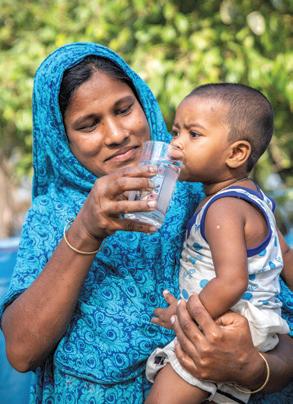
In Bangladesh, Doli’s days are centered around her three children— ages 14, seven, and one. She takes pride in caring for her family, helping her older children prepare for school, and spending time with her youngest at home. Before financing a safe water solution for her home, Doli spent hours
each day collecting water. She walked to another village at least twice a day, carrying heavy vessels back to her home. On some days, her husband had to leave work to help transport larger containers too heavy for her to carry alone.
A small, affordable loan from her local financial institution helped Doli install a water pump and storage tank at home. “I thought that if the pump is set up, water would become easily available, and this would take care of the water issues we were facing,” she explained. “I also thought it was the best thing to do for my children.” With safe water at home, Doli’s children are thriving, and her home life runs smoothly. Her husband can dedicate his time to farming shrimp, and Doli has more time at home.
Doli’s story shows how access to safe water strengthens families and creates space for moments of care and connection.
WHEN ACCESS
BECOMES PROGRESS
Amina and Doli live thousands of miles apart, yet their stories share a universal truth—when families have access to safe water and sanitation at home, everything changes. Access to these essential resources gives people time to work, to learn, to rest, and to dream. It fuels economic opportunity and improves health. It strengthens communities and enables women to lead change that benefits their families and beyond. Through Water.org’s solutions, more than 85 million people have gained lasting access to safe water or sanitation. Each family represents a story of progress and possibility—a woman expanding her business, a mother protecting the health of her children, a child attending school, a family changing its future.
HOW GENEROSITY FLOWS FORWARD
On World Water Day, we celebrate the generosity that makes these stories possible. Donor support connects families to safe water solutions that meet their needs at home. Every donation helps to transform time, health, and opportunity for the next generation, because when safe water flows, so does progress. Families grow stronger, communities become more resilient, and women gain control over their time, their health, and their future. It’s clear—access to safe water is the foundation of life, choice, and opportunity.
Suppor t that moves people forward.
With affordable prosthetic care, Limbs for Life gives amputees their lives back.
Across the U.S., thousands of individuals face limb loss with n o insurance, no financial support, and no way forward. Limbs for Life exists to change that. We help uninsured or underinsured amputees regain their lives with prosthetic devices at no charge. We also provide parts and components in both the U.S. and around the world. Together, with our clinic and donor partners, we make sure that individuals without resources can regain the freedom of mobility they deserve.
Richard
Richard was on his way to work, when he ran out of gas on a major interstate. He called his father for help, and while the two men worked to get the car running, a distracted driver struck them both: his father was killed instantly, and Richard lost his leg in the crash. With his fiancée (now wife) by his side through his recovery, Richard was provided with the advanced prosthesis he needed to get his life back on track—all thanks to the donors of Limbs for Life.
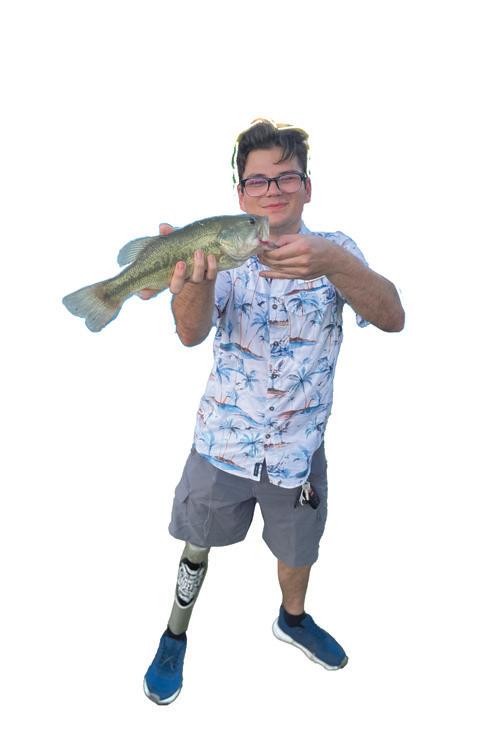
Born with a congenital abnormality that resulted in the loss of her leg, Lennon, an active 9-year-old, dreamed of doing gymnastics and being as active as her friends. Unfortunately, her insurance viewed the type of prosthesis she needed to live a full, active childhood as a luxury. Consequently, these everyday activities were once impossible. Thanks to the generosity of our donors, Limbs for Life helped make it possible for Lennon to receive a running prosthesis that enables her to run alongside her friends and teammates. Your gift of mobility allows people like Lennon to live life without limits.
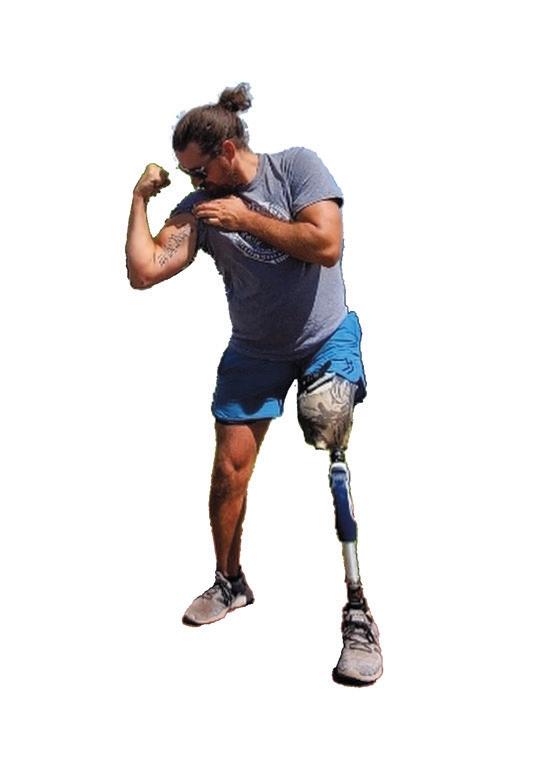
Kelly was involved in a seven-car pileup while riding his motorcycle, a crash that nearly took his life. After life-saving surgeries and the loss of his leg, Kelly refused to let his accident slow him down. Kelly lives life with purpose and a passion for serving others. He serves with a summer feeding program, volunteers coaching kids with limb differences, teaches Jiu-Jitsu, and serves as a CPR instructor. Every step he takes is a reminder of the life-changing power of access to prosthetic care.
Limbs for Life steps in where others can’t—providing fully funded prosthetic limbs for those who would otherwise go without. Today, we are honored to be one of the largest payers of uninsured prosthetic patients in the United States.
Our impact tells the story:
People like Richard, Lennon, and Kelly—individuals whose courage defines our mission and whose futures were transformed through access to prosthetic care. At Limbs for Life, we believe it shouldn’t have to happen to you for it to matter to you. Thanks to the generosity of our donors, we are restoring independence, dignity, and lives across the country.
From Rubble to REBUILD: How Julie Colombino-Billingham Turned Haiti’s Heartbreak
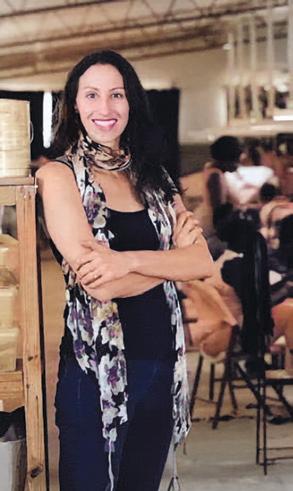
Julie Colombino-Billingham didn’t arrive in Haiti with a business plan. She arrived with a suitcase, a humanitarian’s urgency, and the quiet belief that showing up matters.
In the days after the catastrophic 2010 earthquake, she traveled to Haiti as a relief worker, believing it would be a short stay. Instead, the weeks stretched into years, and somewhere between the rubble and the resilience of the Haitian people, her life’s purpose took shape.
Haiti has long been framed through a single lens: disaster. But Colombino-Billingham saw something deeper, something the headlines rarely capture. She saw ingenuity. She saw artistry. She saw a culture that keeps standing, even when the ground has tried to swallow it whole.
One moment, in particular, became a compass point—an unvarnished truth offered by a Haitian woman who didn’t need sympathy, or saving, or another short-lived solution.
“I don’t need water, I need a job.”
It’s a sentence that cuts through the noise with startling clarity. It’s the sentence that helped ColombinoBillingham reimagine what “help” could look like when it’s built alongside the people who need it most.
BEYOND THE RUBBLE
That reimagining became Deux Mains, a fair-trade fashion brand created in collaboration with Haitian artisans. The name means “two hands,” and it’s more than poetic branding—it’s a philosophy. Behind every product is a person, a livelihood, and a story still in progress.
From the beginning, Deux Mains was designed to challenge the most common failure of aid: impermanence.
Instead of temporary relief, the company focused on dignified work—living wages, safe conditions, and the kind of stability that allows families to plan beyond tomorrow. At the heart of it all is a solarpowered, women-owned, Fair Tradecertified factory in Port-au-Prince, where Haitian craftspeople transform responsibly sourced materials into timeless leather goods. The work is meticulous, but the purpose is even more precise: to prove that “sustainable luxury” can be more than a buzzword. It can be a lifeline.
WHERE PURPOSE MEETS CRAFTSMANSHIP
In an industry where exploitation has too often been the default, Deux Mains built a different standard—one rooted in transparency, training, and long-term investment in people.
into a Hand-Up
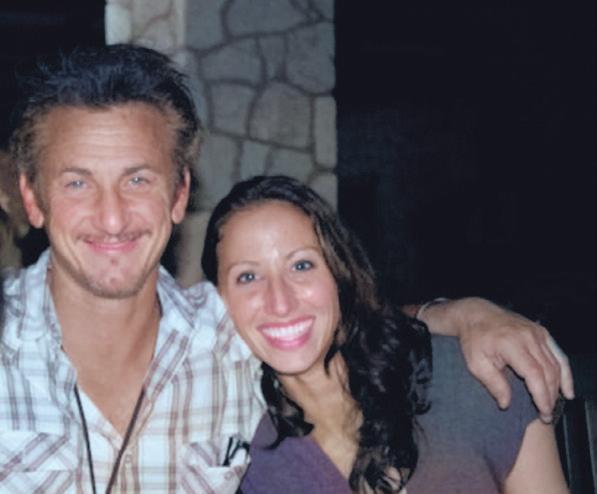
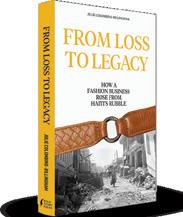
by the 2010 earthquake in Haiti. Her clear and honest recollections put the reader at the epicenter of the most challenged and resilient culture in the western hemisphere.
—Sean Penn, Actor, Director and Humanitarian
Artisans earn living wages, receive health insurance, and have access to continued education and skills development. Over half of the workforce are women, many in leadership roles, shaping not only the products, but the future of the company.
Over time, the brand grew into an internationally recognized, employee-owned business, backed by organizations such as the United Nations, USAID, the Clinton Foundation, and fashion leaders including Kenneth Cole and Eileen Fisher. A partnership with Nordstrom helped expand visibility and increase sales—proof that values-led fashion can scale without losing its soul.
But Colombino-Billingham’s impact didn’t stop at what could be sold. She kept returning to the question at the center of it all: what does it take for a community to truly rebuild?
REBUILD: THE LONG GAME
That question became REBUILD globally, Colombino-Billingham’s nonprofit dedicated to fighting poverty in Haiti through education and job training. It’s a model built for the long haul—focused not on handouts, but on pathways.
REBUILD invests in scholarships, tutoring, mentorship, and vocational training that lead to real employment. Its goal is to remove the barriers that keep people trapped in cycles of poverty and to replace dependency with opportunity.
This ecosystem, nonprofit and for-profit working hand in hand, has created measurable impact, but the most moving changes are often the simplest ones. In Haiti, proper closedtoe shoes are required for school uniforms. Without them, children can be turned away at the gate. Through
this work, Colombino-Billingham and her team made and distributed nearly 10,000 pairs of Haitian-made leather school shoes to children across the country—shoes crafted locally, supporting local jobs, while opening classroom doors.
It’s the kind of impact that multiplies: one pair of shoes becomes attendance. Attendance becomes education. Education becomes possibility.
A BOOK AS A BRIDGE Now, Colombino-Billingham has gathered this journey into a memoir: From Loss to Legacy: How a Fashion Business Rose From Haiti’s Rubble Available in paperback, hardcover, and e-book, the book is both a personal account and a wider invitation to reconsider what ethical leadership looks like.
“It’s more than just the story of a business,” Colombino-Billingham
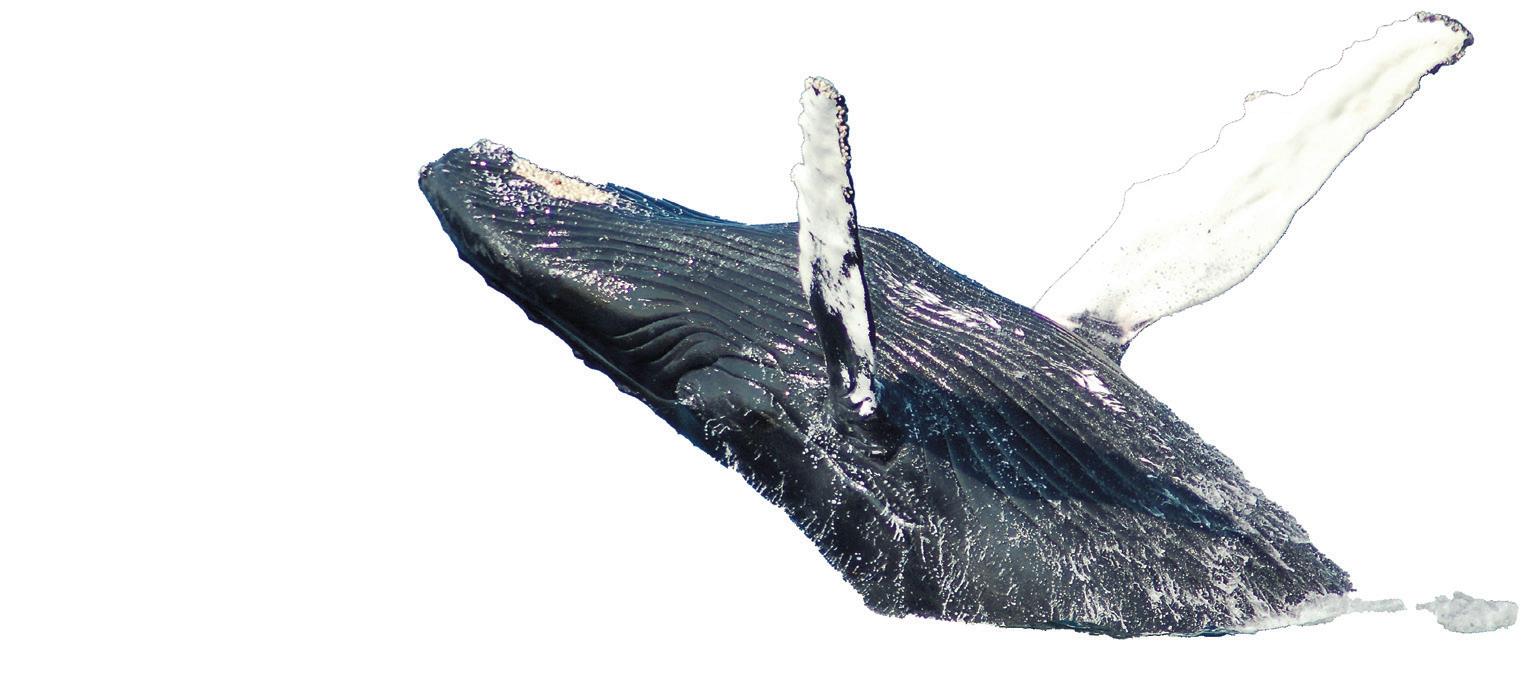
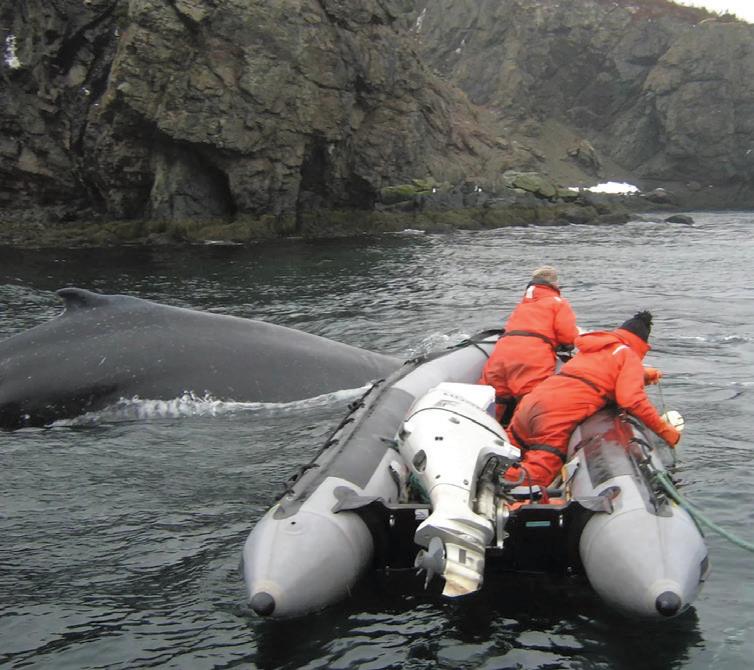
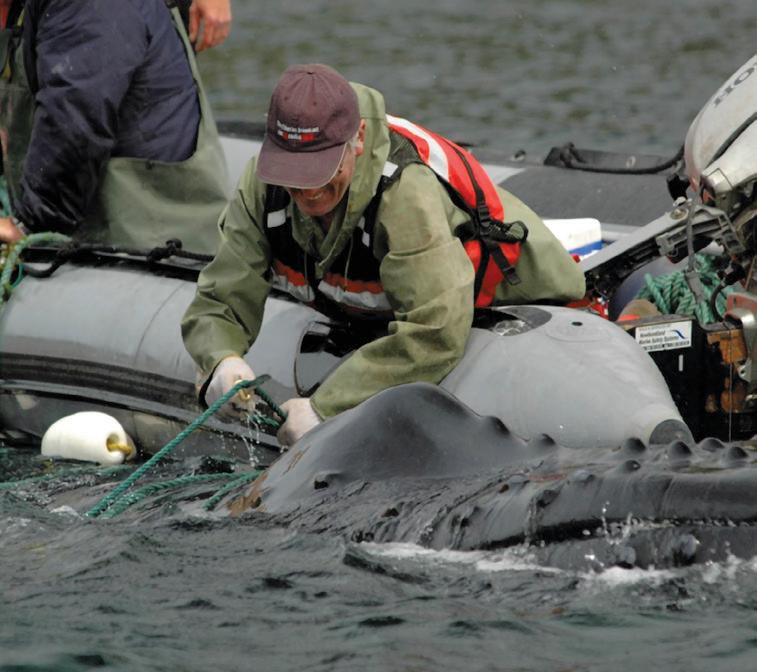
For those who live along the coastal waters of Canada’s Newfoundland and Labrador, spotting a whale or other marine life trapped in fishing nets or stranded on the shoreline is more common than you’d think. When encountering a stuck animal, most people don’t know what to do— either putting themselves at risk by trying to free the animal themselves or simply leaving the animal in distress. But one local organization is striving to change this. Getting their start at Memorial University in St. John’s, Newfoundland and Labrador, in the '80s, Wayne Ledwell and Julie Huntington didn’t set out to study whales. At first, they wanted to help fishermen who would get a whale caught in their nets and didn’t know what to do with it—Wayne, who
came from a fishing community, and Julie, who had vast knowledge in fishing nets, thought their expertise could be beneficial. Their journey with marine life rescue transitioned from the university to the Canadian Coast Guard, and then, in 2001, Julie and Wayne took the initiative themselves, and Whale Release and Strandings was born.
“We’ve been to every community in Newfoundland disentangling whales and many in Labrador, and we’ve been doing it much the same as when we started in the '80s,” Julie explained. “We use tools that were developed in the '80s and have changed shape over the years, and we find them very successful.”
Having completed thousands of successful disentanglements across the province in the last 30 years,
Julie and Wayne have become experts in the field—striving to educate both the public and fishermen about what to do when they encounter a trapped animal.
“Every entanglement is different,”
Julie said. “And that’s the problem with people who aren’t officially involved in disentanglement, and they want to be helpful. They’ll cut something, and they don’t know that they’ve left all of this gear on the whale.”
The most important thing, Julie noted, is to call them as soon as possible. Once they receive a call about an animal in distress, they will ask questions about the nature of the entrapment while preparing to trek to the animal and begin the rescue.
If you encounter an entangled or stranded whale, Julie offers four helpful tips:
Remember, these are wild animals, and to use caution around them
Do not try to disentangle the whale yourself
Do not attempt to move large whales
If possible, take photos of the animal and include an object in the photo for scale to help determine the size of the animal
In addition to their rescue work, Whale Release and Strandings is involved in research projects where they take samples from stranded animals to send back to the Marine Mammal Section of Fisheries and Oceans Canada to better understand the wildlife in the ocean. Similarly, they do educational work in the community by visiting coastal schools to educate youth about marine life,
the importance of taking care of our oceans, and to encourage them to connect with the outdoors.
These educational efforts not only raise awareness but also foster a deep sense of responsibility and connection between people and the environment. By engaging with the community, Whale Release and Strandings encourages a more balanced approach to interacting with nature. This balance, as Julie emphasized, is key to preserving marine life while still allowing for sustainable practices.
“It’s important to learn about the ocean and our whole environmental connectivity,” Julie shared. “We can still fish, but we can also make sure that the environment is safe for the animals in the ocean.”
ALLIE MURRAY
Casting Hope: How Fishing for Success is Reeling in a New Future
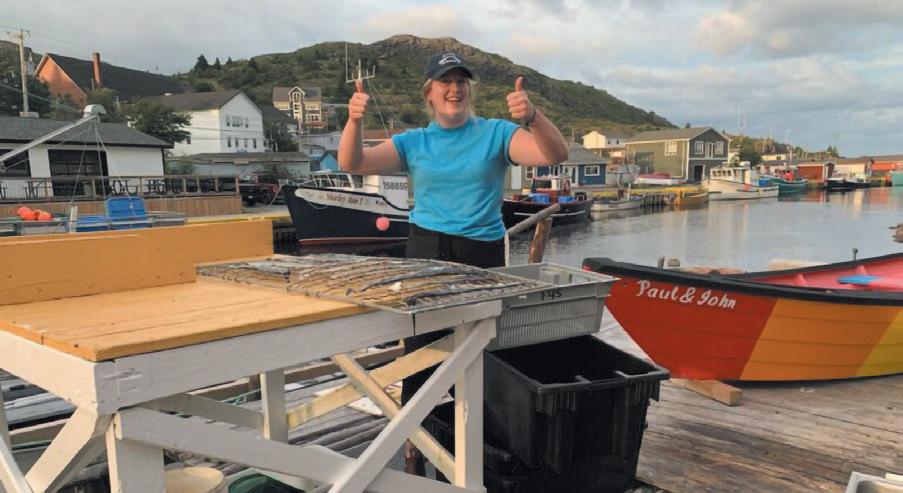
In a coastal village just outside St. John’s, a small nonprofit is making waves across Newfoundland and Labrador by casting lines of connections across the community. Founded in 2014 by educator and environmentalist Kimberly Orren, Fishing for Success is a handline fishery, a cultural preservation project, an outdoor classroom, and, for many, a lifeline.
For Orren, this mission began in a Florida classroom, where she watched her students grow increasingly detached from the natural world. Smartphones replaced curiosity, and textbooks couldn’t compete with screens. Returning home to Newfoundland, Orren and her partner, Leo Hearn, a seasoned fisherman and navigator, took the opportunity to reintroduce young people to the water.
Fishing for Success teaches smallscale, sustainable handline fishing,
a method that protects marine ecosystems and ensures humane treatment of fish. Guided by a deep respect for sustainability and a mission to foster community, the organization is redefining what it means to fish and why it matters.
HEALING WATERS
For staff like Meghan Young, fishing set her on a journey of personal growth and environmental exploration. An indoor kid with no fishing experience, no real interest in boats or bait, and no desire to smell like fish, Young reluctantly picked up fishing as a summer job. Now, looking back, Young credits that summer with changing her life—and over the years, she’s seen firsthand how being out on the water transforms people, especially youth facing mental health challenges or instability.
Nature therapy is woven into every aspect of the work, whether it's pulling in a cod from the North Atlantic or creating vibrant gyotaku-style fish prints. Young, now studying psychology, sees Fishing for Success as proof that healing doesn’t have to happen in clinical spaces.
“I watched kids go from completely closed-off to laughing, smiling, wanting to work in the fishery,” she shared. “You can help people in so many ways—sometimes it starts with catching a fish.”
Megan Meadus, one of the organization’s first hires, agrees. “You can literally see them shift. By the end of a summer, they’re leading the group, playing music, casting lines. Nature does something to people when you let it.”
GIRLS WHO FISH
For Meadus, the experience led to
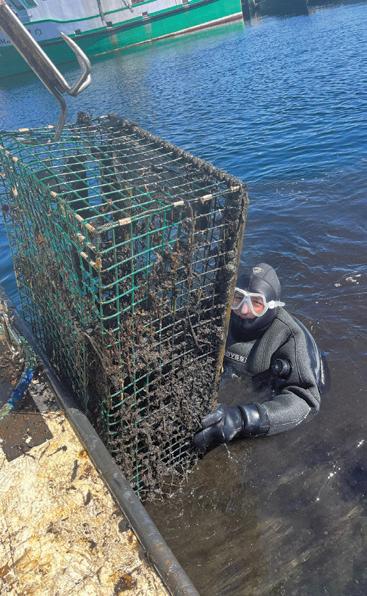
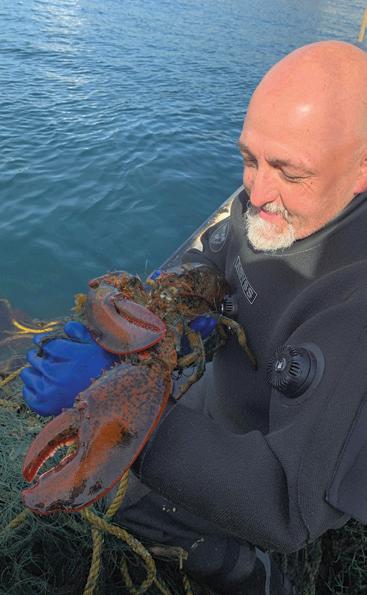
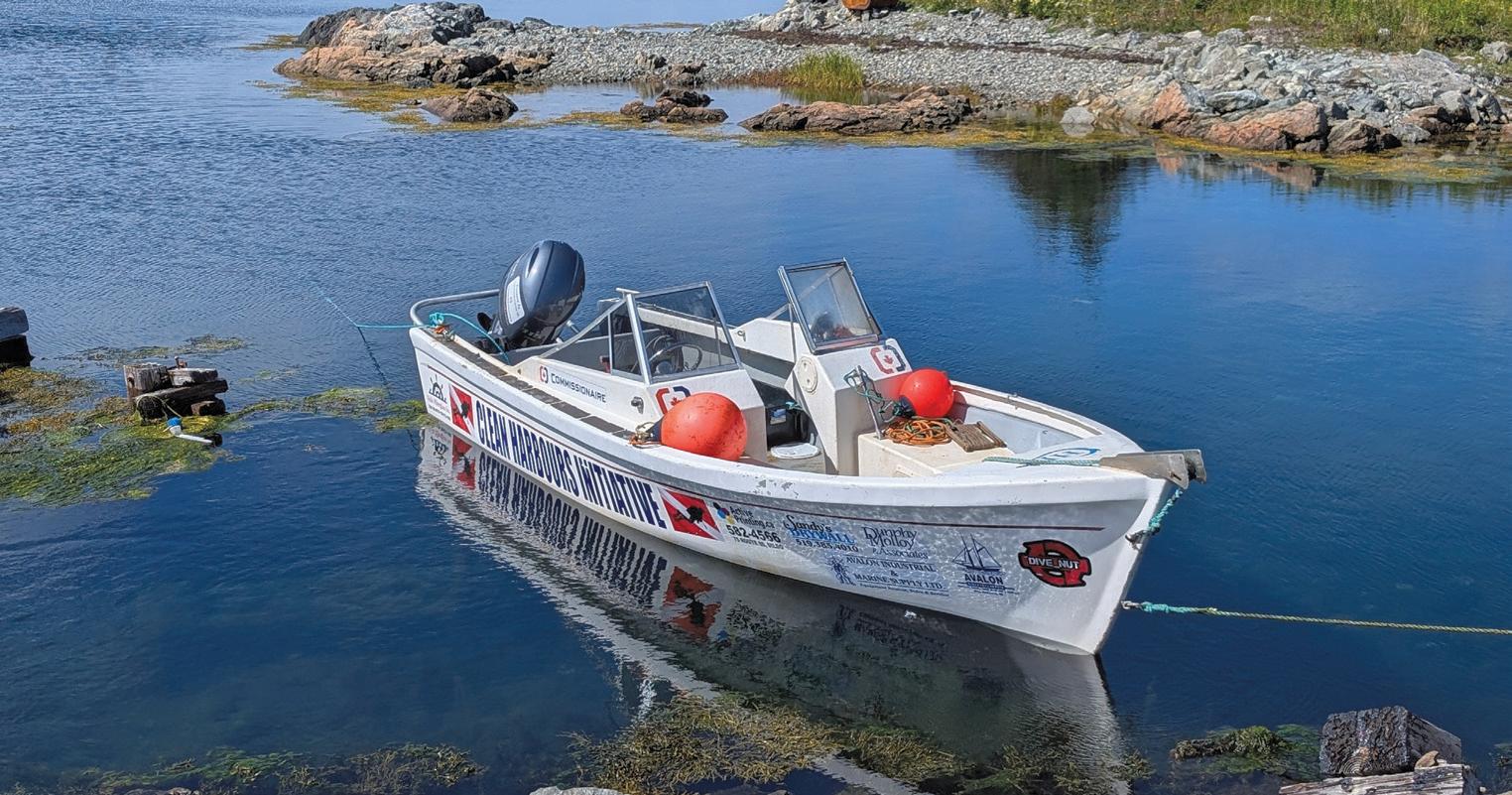
After 21 years diving the harbors and bays of Newfoundland as a sea urchin harvester, Shawn Bath had seen enough—enough fridges, tires, ropes, and fishing nets littering the ocean floor. Frustrated and driven to make a change, he launched the Clean Harbours Initiative in 2018 to combat the underwater pollution choking his home province’s coastal waters.
“I just figured the government was going to get on board once they saw the problem,” Shawn recalled. “I never thought it’d all fall on my shoulders.”
As a commercial diver, he harvested sea urchins for food, often from surfaces littered with old stoves, tangled fishing nets, and rusting appliances. But the turning point came when he realized no one else was coming to fix it.
something even bigger—co-found-
ing the Girls Who Fish program with Orren. The fishery has long been dominated by men, but Orren and Meadus are working to change that.
In 2016, the two co-founded Girls Who Fish, a program that provides women with skills and confidence in fishing, boating, and outdoor leadership.
“We wanted to create a space where women weren’t being taught by their dads, brothers, or boyfriends,” Meadus explained. “Just women teaching women.”
The program challenges stereotypes and breaks down barriers in a field where only 23 percent of participants are women.
From fly fishing and filleting to navigating a dory, Girls Who Fish empowers participants to take the helm—literally and figuratively.
“We teach everything from fly fishing to cod jigging,” she continued.
“But what we’re really doing is building confidence.”
LEARNING FROM THE SEA
Not everyone in Petty Harbour embraced the initiative at first. A necessary safety fence stirred controversy.
Some locals questioned the visibility and growth of a project founded by an outsider. But over time, those who experienced it, especially children, became its biggest advocates.
And now, Fishing for Success is a registered museum, a social enterprise, and a sought-after destination for tourists, schools, and nonprofits. It’s hosted women’s long-table dinners with locally caught seafood, partnered with Memorial University, and earned national recognition, including the Canadian Museum of Nature’s Inspiration Award. But it’s always been the little victories that matter most, like seeing children’s lives change in real-time.
“I thought, maybe the person who needs to start this is me.”
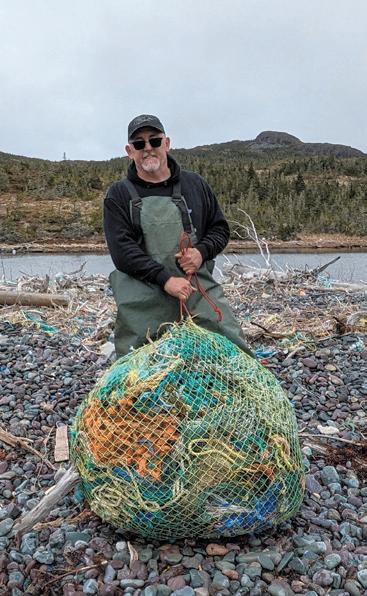
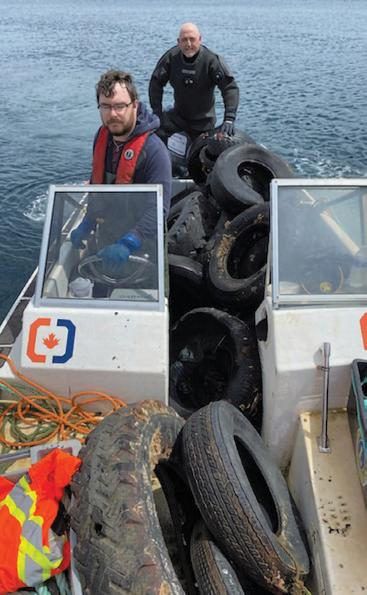
So he did. With nothing more than a wetsuit, truck, and some rope, Shawn began hauling debris from the sea—alone. In his first year, he swam solo with tires tied to ropes, dragging them ashore, sometimes towing up to 20 at a time. Slowly, people took notice; divers joined, volunteers stepped up, and donations began to trickle in.
THE DIVING POINT
Shawn quickly proved that this problem was real and that he was doing much more than just picking up ocean garbage. In fact, he was removing thousands of pounds of debris, including ghost nets that had silently snared marine life for decades.
But his efforts struck a nerve, particularly within the fishing industry. The bulk of what we bring up is old fishing gear,” Shawn said. “Some people don’t want attention drawn to it because they fear more regulations.”
Shawn doesn’t place blame on the industry as a whole.
“Sixty percent of fishers are doing the right thing,” he emphasized. “But bad apples exist in every group.”
Lost gear is often an unfortunate byproduct of storms or strong tides—but in some cases, it’s dumped intentionally when it reaches the end of its lifespan. But this is a serious issue—Shawn has recovered nets that are 40 years old yet still strong enough to entangle whales, seals, and fish.
“We’ve seen whales drown in
“When a child catches their first fish and says, ‘I did it,’ everything else falls away,” shared Orren. “It’s magic. And it’s medicine.”
FISHING FOR CONNECTION
Fishing for Success also partners with groups like the Association for New Canadians to run Women Sharing Heritage (WiSH). This six-week program brings together immigrant and refugee women with local women for shared activities such as berry picking, fish preparation, and cooking traditional meals. The goal, as Orren explains, is to give people a space to feel proud of their skills and to be part of something.
Deliberate in its language and practice, Fishing for Success avoids terms like “recreational fishing” and doesn’t teach catch-and-release. In doing so, the organization reintroduces values that once defined coastal life in Newfoundland: sustainability, stewardship, and community reliance.
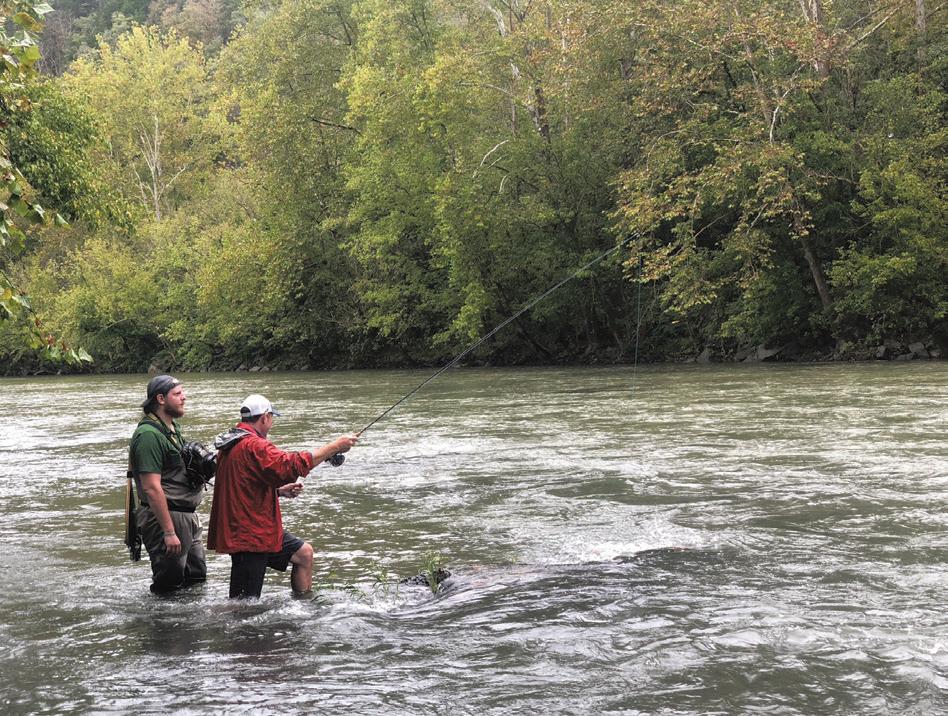
“We teach responsible harvesting,” Orren explained. “If you take a life, you eat it. You use all of it. You respect it.” And while there’s joy in the catch, there’s also beauty in the learning. Kids do citizen science, participate in microplastic research, and learn to read the sea through the eyes of elders.
“Fishing is just the hook,” she continued. “It gets people to imagine what they might do around the water.”
The impact speaks for itself. Many of its alumni have taken their skills into new realms—entrepreneurship, psychology, sustainability, even international development. Young, for example, started a tourism-based youth employment project in Haiti, inspired by the values she learned on the wharf in Petty Harbour. Sometimes, all it takes is a line in the water.
RAYE MOCIOIU
gear that was never recovered,” he explained. “People wonder where the whales are going—well, they’re going to the bottom.”
With clearer waters in winter, they dive year-round, using boats and surface teams to remove as much as possible before it breaks down into microplastics.
THE DEEP-SEA PROBLEM
Despite limited funding, Clean Harbours continues to push forward, powered by volunteers, small donations, and sheer determination. People from all over Canada—and even as far as Australia—have contributed to help fuel this mission.
“We say: if you can’t clean a beach yourself, let us be your fins in the
water,” Shawn said. “A donation for fuel or gear repair can turn into thousands of pounds of debris removed in your name.”
Shawn envisions a future where Clean Harbours operates daily and year-round, with multiple crews tackling pollution along the entire coast of Newfoundland.
“Newfoundland could be the first to take this seriously on a large scale,” he explained. “Imagine the impact. Imagine the tourism, the environmental leadership. We can show the world what it looks like to protect our oceans.
One person with a love for the ocean can make a difference. But imagine what we could do with a team, some real funding, and the world watching.”
in the affected areas has severely disrupted access to basic social services and livelihoods. Children are bearing the brunt of the crisis: insecurity, trauma, displacement, hunger, and heightened protection risks, including gender- based violence and sexual violence, deeply affect their daily lives.
“In Ituri and across eastern DRC, millions of children see their futures threatened by violence
and displacement. Education is their lifeline: it protects, restores hope, and serves as a vital driver of community resilience. With this new program, we are working hand - in - hand with our partners to ensure that no child is left behind,” said Graham Lang, Director a.i. of ECW.
The “Multi-Year Resilience Program (MYRP) II” was launched during a high-level mission to DRC led by Mr. Lang. The ECW delegation met with children and families who will benefit from the program, local implementing partners, and national and provincial authorities.
“School must be where children feel better, even after they have experienced war. Thanks to the MYRP funded by ECW, we will repair what has been destroyed. If we want peace in Ituri, it starts with ensuring our children learn in good conditions so they no longer drop out of school,” said Yvon Muke Abwasel, Provincial Director of National Education and New Citizenship, Ituri 1.
“The MYRP funding supports the implementation of the Education and Training in Emergencies Strategy recently adopted by the Government. I welcome the holistic approach taken to address the educational needs of children affected by the crisis in the east of the country. Together with the other members of the consortium established for the implementation of the MYRP, UNICEF is committed to ensuring efficient delivery of the program,” said Mariame Sylla, UNICEF
Deputy Representative in DRC.
The success of the program hinges on the strong engagement of national authorities and local communities. Such collaboration is essential to ensure continuity of learning and uphold every child’s right to education, despite ongoing humanitarian crises.
Thanks to sustained efforts by the Government and its partners, access to primary education in DRC has seen significant progress, with a 57.5 percent increase in enrolment between 2011 and 2020.
“This new investment marks
Nick Silverio established The Gloria M. Silverio Foundation 501(C)3, A Safe Haven for Newborns, 24 years ago, in response to an escalating worldwide crisis: babies were being abandoned in unsafe places and often not surviving. He made it his life mission to rescue infants from abandonment and to help mothers in crisis.
A Safe Haven for Newborns is dedicated to eliminating the ultimate infant abuse—abandonment—through education, prevention, community involvement, and direct assistance. It provides the mother with the help
listening and collaboration to determine the needs of mothers and provide appropriate assistance.
"Our grassroots efforts are saving lives. To date, 434 infants have been given a forever home, 424 in Florida, nine in other states, and one in Honduras," said Silverio. A Safe Haven for Newborns is recognized as the national model program for saving newborns from abandonment and assisting pregnant women in crises. Other states and countries have sought the Foundation's help in establishing a Direct
Where
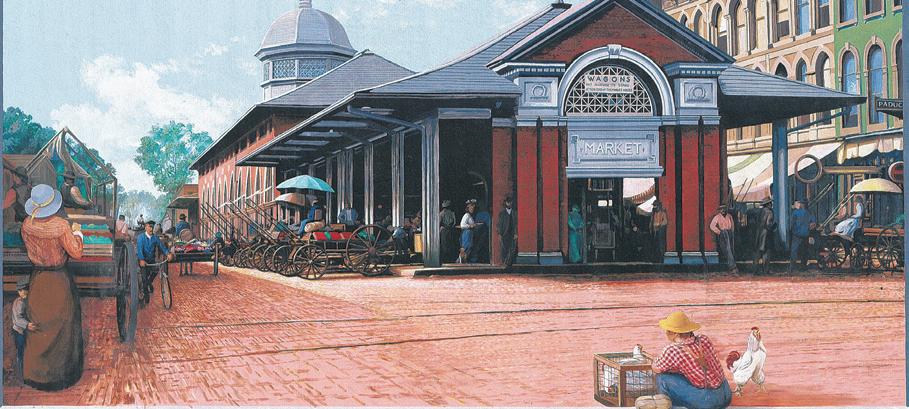
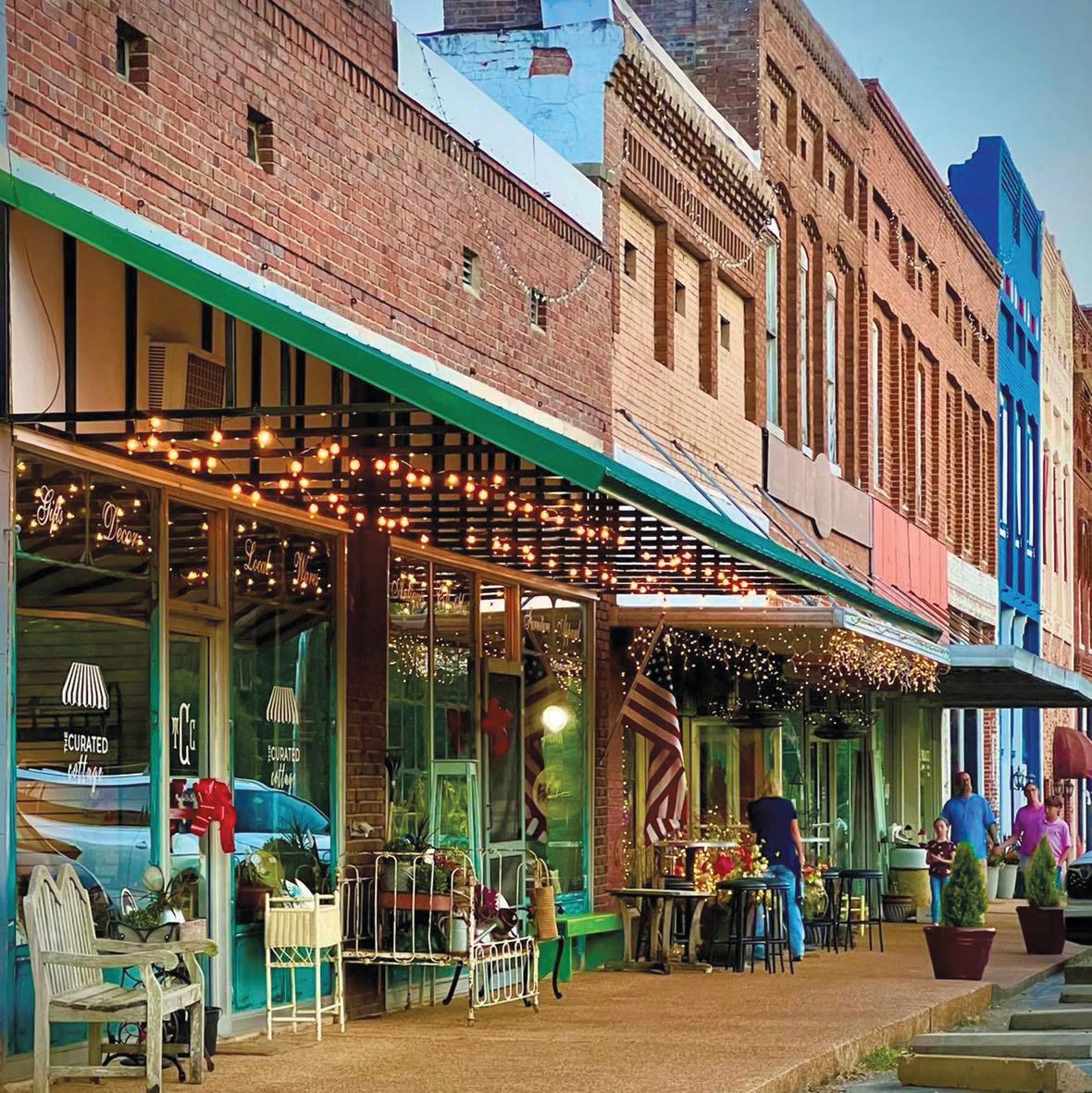
Before there were interstates or GPS, there was the Dixie Highway—a ribbon of road that stretched from the Great Lakes to the Gulf, inviting Americans to see the country one small town at a time. It was more than pavement and mile markers; it was a journey through the heart of Main Street, connecting bustling downtowns and quiet crossroads across the Tennessee River Valley. Along this early path of adventure, travelers found gas stations with hand-painted signs, cafés serving up homemade pie, and porches where locals waved as strangers passed through. The Dixie Highway was America’s first invitation to wander—to roll down the windows, follow the bend of the road, and see what stories waited just beyond the next town square.
Main Streets Meet the Open Road
Here in the Tennessee River Valley, that spirit still lingers. You can trace its route through historic downtowns rich with heritage and hospitality—places where the hum of a passing car still feels like a thread in a much larger American story.
BYWAYS OF DISCOVERY:
TRACING THE SPIRIT OF THE DIXIE HIGHWAY
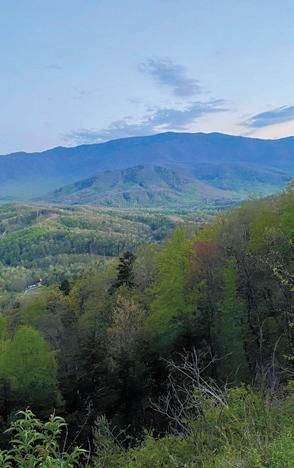
A century later, that same spirit of discovery still winds its way through the Tennessee River Valley—only now, it’s found along the region’s National Scenic Byways. These roads may carry new names and smoother pavement, but the call is the same: slow down, look around, and let the journey be the destination.
The East Tennessee Crossing Byway follows in the footsteps of
DID YOU KNOW? THE LEGACY OF THE DIXIE HIGHWAY
The Dixie Highway was commissioned in 1915 as part of the National Auto Trail system, years before numbered U.S. highways existed. It connected Chicago to Miami, passing through Tennessee towns like Chattanooga, Dayton, and Knoxville. The highway wasn’t built all at once—it was a network of local roads, improved piece by piece by communities eager to welcome travelers. Its success helped inspire the creation of the Federal Highway System in 1926, setting the stage for America’s modern interstates.
early pioneers, tracing the route once traveled by Native peoples, settlers, and stagecoaches from the Smoky Mountains to the Cumberland Gap. It’s a drive rich with history, where every turn reveals a story—from Revolutionary War trails to charming mountain towns like Cumberland Gap and Newport.
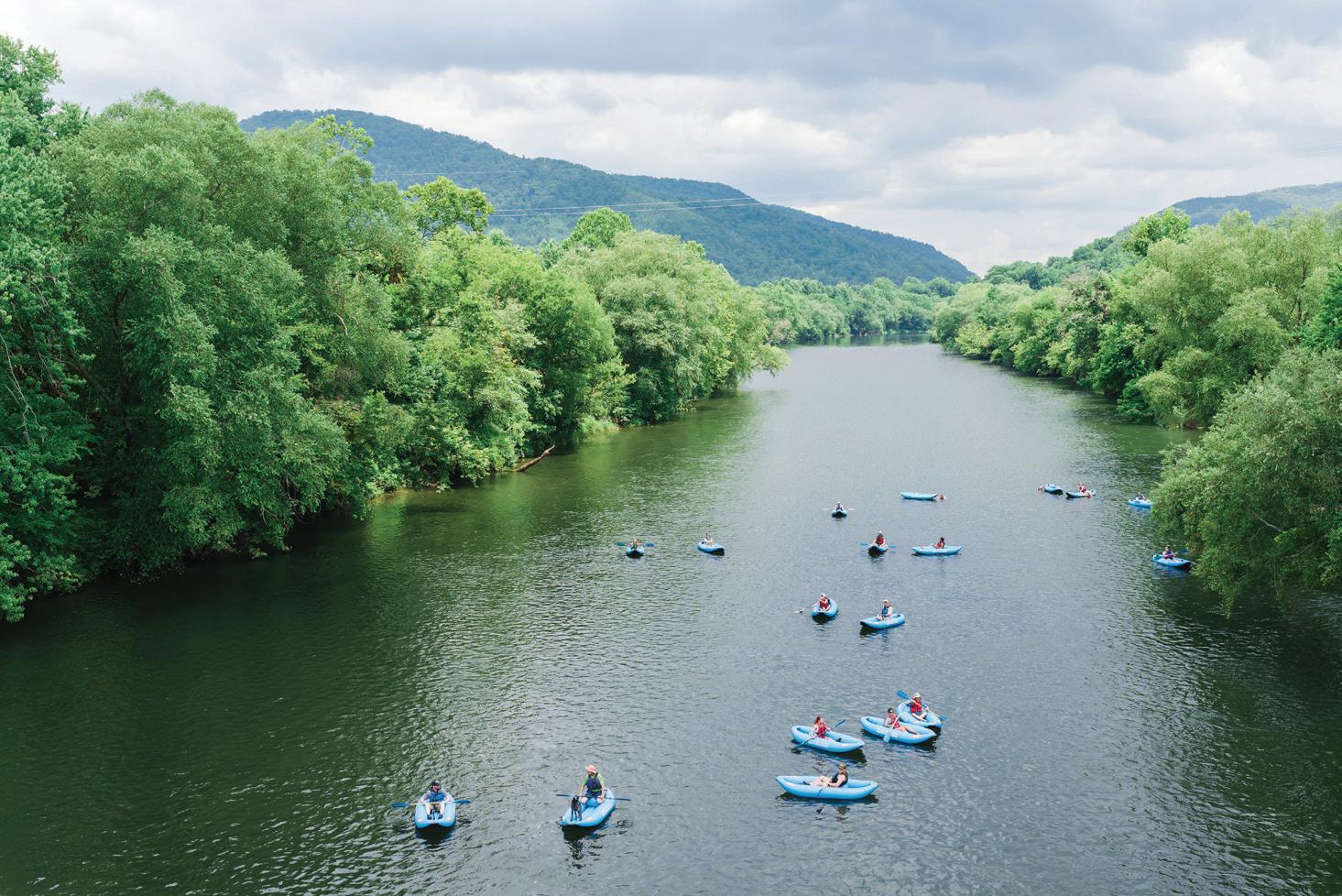
To the south, the Brasstown Scenic Byway winds through the southernmost reach of the Appalachians, offering sweeping views and mountain switchbacks that feel like a love letter to the road itself. The Sequatchie Valley Scenic Byway tells a quieter story—one of fertile farmland and river bends, where the pace slows, and the landscape speaks in soft greens and golden light.
For those chasing the horizon, the Blue Ridge Parkway remains the
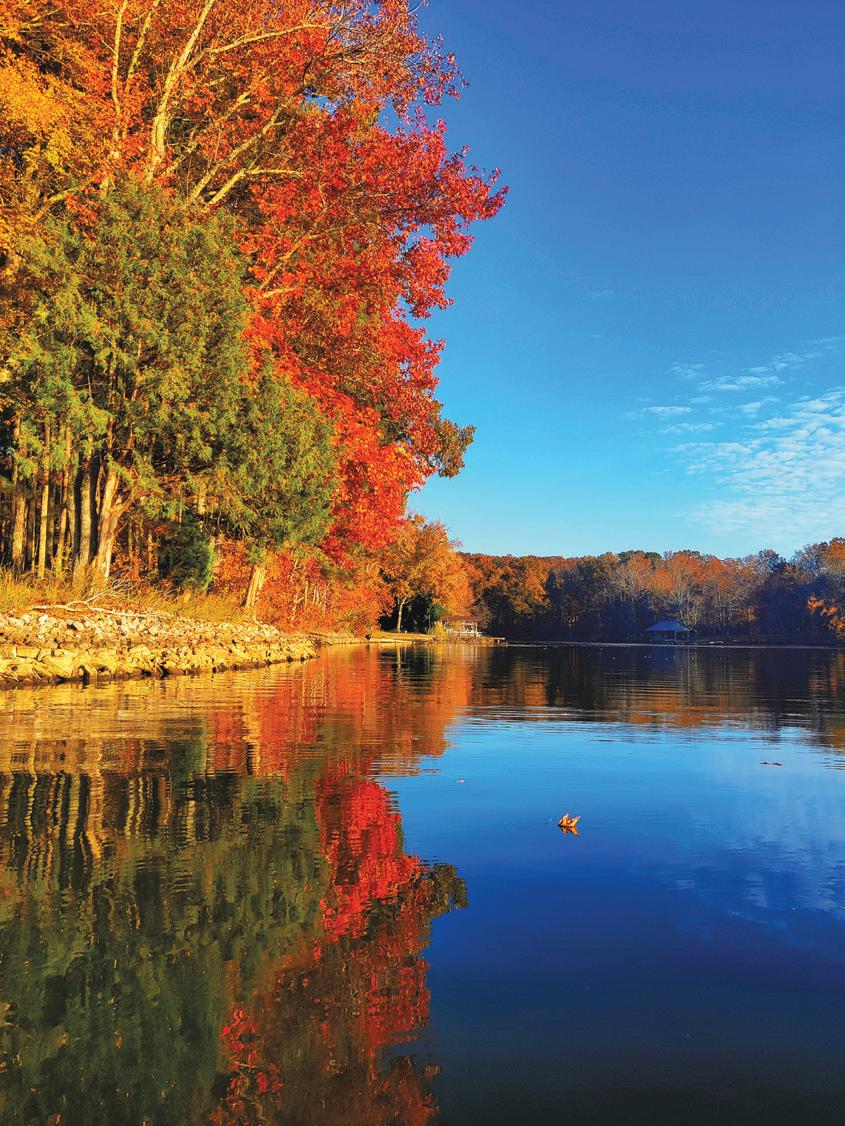
crown jewel of scenic drives—a road where clouds drift across high ridges and overlooks stretch into forever. Further west, Woodlands Trace and the Natchez Trace Parkway carry travelers through rolling forest, past lakes and heritage sites that whisper of early trade routes and frontier life. Each byway carries a piece of what the Dixie Highway began—a reminder that America’s best stories aren’t found in the fast lane. They’re discovered on roads where time lingers, where the scent of pine and river mist fills the air, and where every curve invites you to rediscover the wonder of the open road.
THE ROAD STILL CALLS From the early days of the Dixie Highway to today’s network of National Scenic Byways, the Tennessee River Valley has always been a place where
journeys begin. Here, the past and present share the same road—winding through mountain passes, tracing river bends, and rolling into towns that still greet travelers with a smile and a story. Whether you’re following the old highway or exploring the byways that grew from its path, each mile reminds you that discovery isn’t about how far you go—it’s about how deeply you see. The open road still calls, just as it did a century ago, inviting you to slow down, look closer, and find your own piece of America along the way.
PLAN YOUR ROUTE
Ready to follow the road less traveled?
Explore the Tennessee River Valley’s scenic drives, rich history, and smalltown charm. Plan your route and start your own story of discovery at ExploreTRV.com
Come Enjoy the Ride in Boonville, Missouri
EXPLORE THE KATY TRAIL
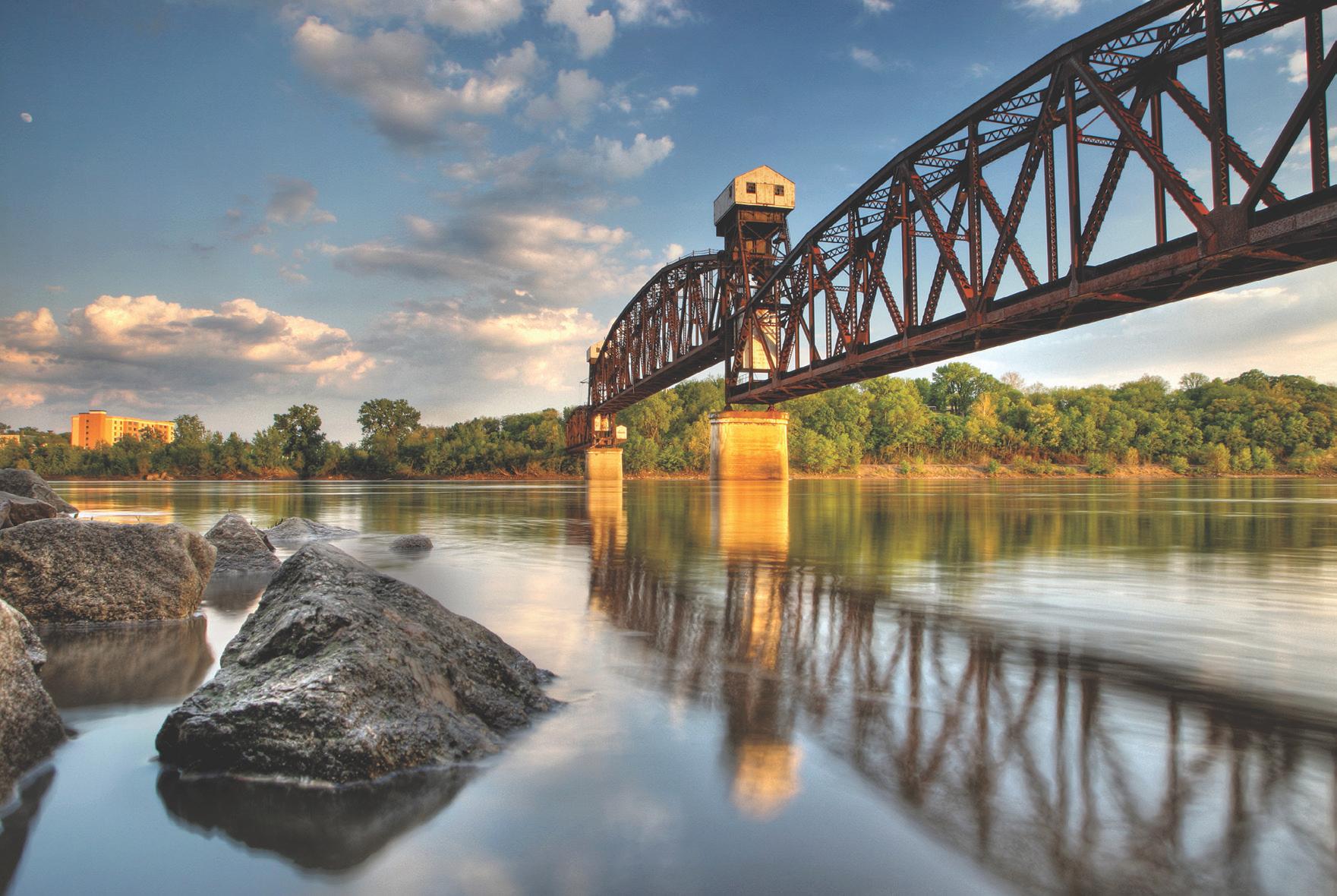
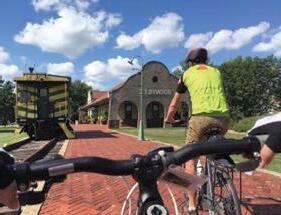
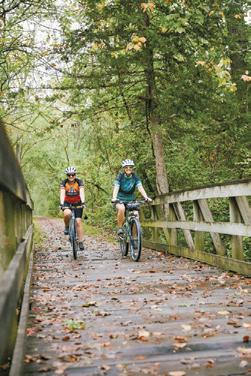
Outdoor enthusiasts are drawn to Boonville by the Katy Trail State Park, one of the nation’s longest rails-totrails systems. Stretching 237 miles across Missouri and running directly through the heart of town, the Katy Trail offers peaceful rides and walks through shaded landscapes with scenic views of the Missouri River. Whether biking for a full day or taking a leisurely stroll, the trail offers an ideal way to experience the area’s
Sudamala
STEP INTO THE PAST History comes alive at the River, Rails & Trails Museum and Visitor Center, located at the Katy Trailhead in Boonville’s historic Depot District. Exhibits explore the region’s role in westward expansion, river commerce, and rail travel, beginning with the Lewis and Clark expedition. Highlights include a half-scale keelboat, a replica frontier fort, authentic wagons, and extensive railroad memorabilia. A hands-on
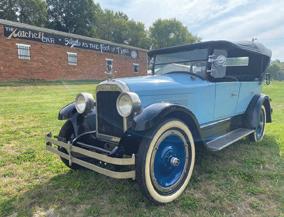
Motorcar Museum showcases a rare collection of restored vehicles from the late 19th and early 20th centuries.
Owned by a descendant of the Mitchell Motor Car Company founders, the museum offers insight into early American innovation, with guided tours available through the visitor center.
Beyond its museums and trails, Boonville
Resorts Sets a New Standard for Sustainable Tourism
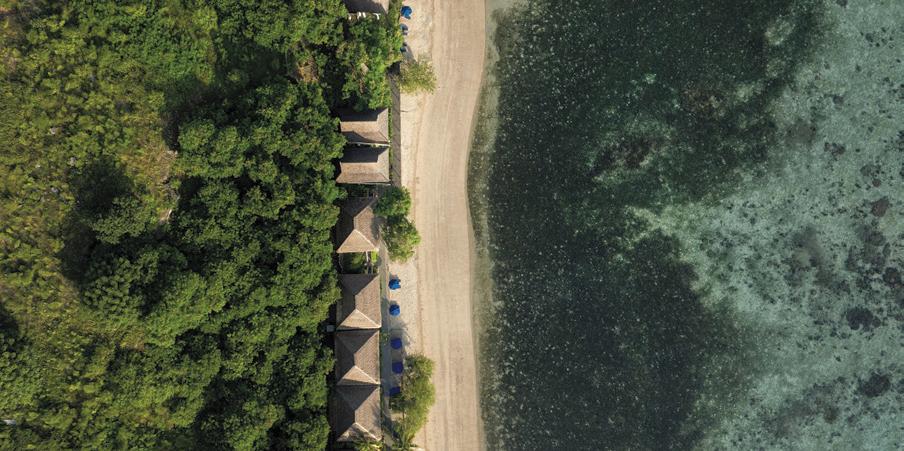
Sudamala Resorts is redefining what sustainable luxury can look like in Southeast Asia. The culturally rooted boutique resort collection has announced a major expansion of its environmental initiatives that combines renewable energy, marine conservation, and community stewardship to create a holistic model for responsible tourism. A cornerstone of this commitment is the newly implemented solar energy system at Sudamala Resort, Seraya, located in Labuan Bajo on the island of Flores. Designed to operate in a remote island environment, the system now supplies approximately 80–85 percent of the resort’s energy needs through clean, renewable power. The installation includes 480 solar panels with a total capacity of 300 kWp, supported by a 770 kWh Battery Energy Storage System, generating an estimated 410,000 kWh of renewable energy annually. This shift is expected to reduce carbon emissions by approximately 370,000 kilograms per year, significantly reduce reliance on diesel generators, and demonstrate the viability of sustainable infrastructure in off-grid locations. Beyond energy transformation,
Sudamala Resorts is also investing in the long-term health of Indonesia’s marine ecosystems. Through partnerships with conservation organizations and local foundations, the brand is actively involved in coral reef restoration efforts. These initiatives utilize innovative reef structures designed to support coral regeneration and encourage
marine biodiversity, helping to rebuild fragile coastal ecosystems while raising environmental awareness among both guests and surrounding communities.
Sustainability at Sudamala goes beyond energy and ocean protection. Knowing that their guests are increasingly seeking meaningful, low-impact experiences, Sudemala takes
sustainable luxury seriously.
Across its portfolio, the company integrates responsible waste management, used cooking oil recycling, water conservation strategies, and community-based programs that support local livelihoods. The point, in addition to making a tangible difference in the local environment, is to position sustainability as a foundational value rather than a trend. By sharing these experiences with its guests, Sudamala puts cultural preservation and community empowerment at the forefront of sustainable luxury.
Red Skelton Museum of American Comedy: Take a Road Trip to a
The Red Skelton Museum of American Comedy celebrates an American era when families gathered around a single television set—or a radio glowing softly in the corner—and laughed together at silly, gentle, and kind humor.
MEET THE CHARACTERS THAT MADE AMERICA LAUGH
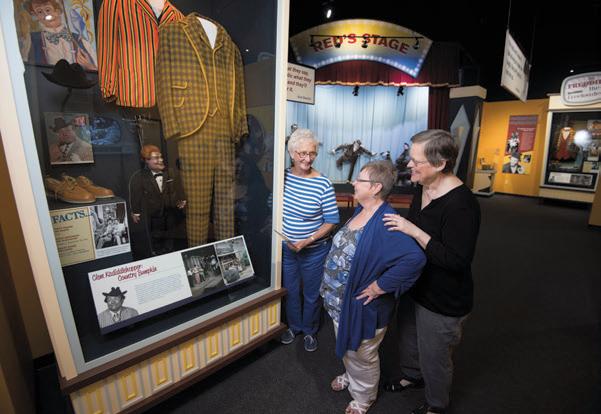
The museum celebrates comedian and clown Red Skelton, who epitomized the golden age of television with characters like Freddie the Freeloader with his battered hat, Clem Kadiddlehopper with his sideways logic, the Junior, the Mean Little Kid with his innocent grin, and then Red Skelton just being his silly self as he hosted his variety show.
The museum is located in his hometown of Vincennes, Ind., and a statue graces the location where he sold newspapers as a child to local theater-goers—where legend has it, he met comedian Ed Wynn and was inspired to go into comedy.
The museum is just minutes from a riverfront downtown, a presidential mansion, a national historical park, and a town that hosts frequent military reenactments.
STEP INSIDE THE GOLDEN AGE OF COMEDY
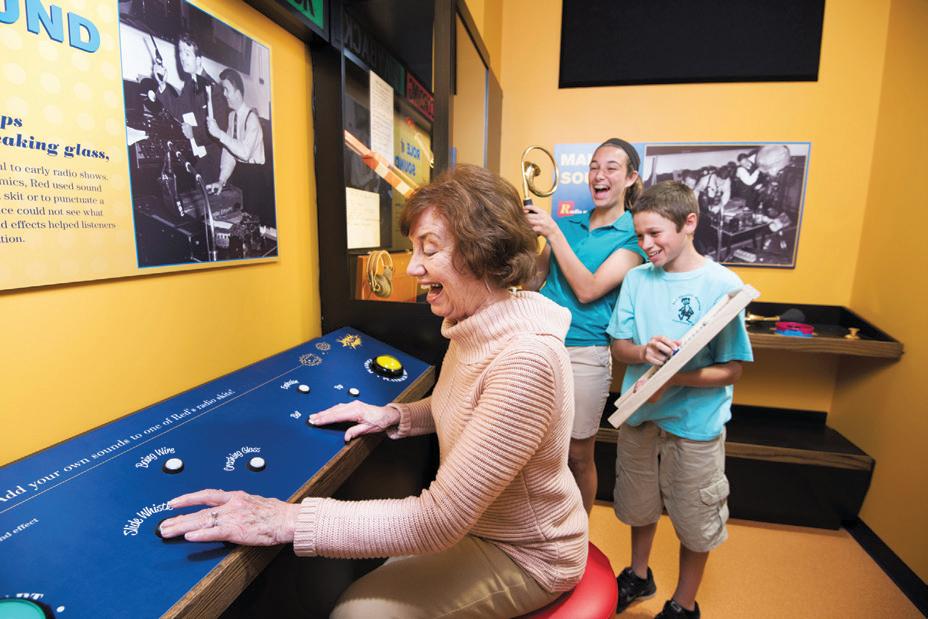
Inside the museum, visitors see vintage movie posters, costumes worn thin by decades of pratfalls, photographs, and Red Skelton’s actual Emmys, all nestled among interactive exhibits that allow visitors to add their own sound effects to a
Simpler Time
radio show or pantomime on a green screen into a Skelton sketch.
One of the museum’s highlights is its collection of video and audio clips. Listening stations and viewing areas let you hear Red exactly as audiences did in the 1940s and ’50s, when his radio show reached millions, and later on television, where his physical comedy and expressive face made him a household name. These clips help explain why Skelton remained on the air for more than two decades.
Hearing Red’s voice, visitors remember laughing with their parents in the living room, or reciting Red’s version of the Pledge of Allegiance.
A SOFTER SIDE OF SKELTON
In the recently completed Lothian and Red Skelton Gallery of Fine Art wing of the museum, visitors explore
a more contemplative side of Skelt on through the art he created after trading the comedy and slapstick gags of the spotlight for a more in trospective life. This beautiful gallery showcases many of Red’s original works of art, and there are also plans to open a Japanese meditation gar den this summer, featuring some of the statues Red brought back from Japan in the 1950s. The Red Skelton Museum is about reconnecting with a version of America before shock comedy— one that believed a person could be kind and still be funny. Visitors leave thinking the world could use a little more Red Skelton!
That kind of leadership has earned Sudamala international recognition. Sudamala Resorts was recently named Winner of the Best Sustainability Program at the ASEANTA Excellence Awards 2026, with the award set to be presented at the ASEAN Tourism Forum (ATF) 2026 in the Philippines. The accolade highlights the brand’s growing influence in shaping responsible tourism across the region.
“Environmental stewardship sits at the heart of how we operate and how we welcome our guests,” said Ben Subrata, CEO of Sudamala Resorts. “We are committed to growing in harmony with the environments and cultures that inspire us.”
As global travelers increasingly prioritize sustainability, Sudamala Resorts demonstrates that luxury, environmental responsibility, and cultural respect can coexist, setting a powerful benchmark for the future of tourism.
(Source: Sudamala Resorts)
Plan your visit and add the Red Skelton Museum of American Comedy to your next road trip. Learn more redskeltonmuseum.com
Experience the hilarious Red Skelton Museum of
The museum is chocked full of action-packed exhibits great for the whole family. We'll have you rolling on the floor with laughter!
Marinette, Wisconsin, The Peaceful Side of the Bay
Located exactly 16.7 miles across the Bay of Green Bay from Egg Harbor, the historic city of Marinette, Wisconsin, waits quietly—yet confidently—on the peaceful side of the bay. Stand along the shores o f Sturgeon Bay or Egg Harbor, and you can see Marinette in the distance. If the moment is still enough, you might even hear it calling you to come closer… to unplug, rewind, and reconnect.
Here, life moves at a different pace. You won’t find traffic jams, packed sidewalks, or the nonstop bustle of Door County. Instead, you’ll discover open space, quiet roads, and stories that run deeper than the water itself. This is the land of the Menominee Indian Nation, where ancient Native American folklore tells of the “Great Bear” climbing out of the head of the Menominee River— giving birth to one of the oldest continuously existing Native American Nations in North America. Believed to be over 4,000 years old, this sacred place marks the beginning of their story.
Marinette’s history continues with the remarkable life of Marie Antoinette Chevalier—better known as Queen Marinette—who overcame racism, sexism, and poverty to become the namesake of both the city and the county. Walk these streets, and you’ll also uncover the legacy of the frontier era, when the powerful lumber barons of the 1800s helped shape not only Marinette, but America itself.
Known as the Waterfall Capital of Wisconsin, Marinette invites you to chase waterfalls, hike scenic forest trails, tackle rugged off-road biking routes, and explore miles of ATV and UTV adventures. For thrill seekers, the surrounding rivers offer something truly rare— the longest continuous stretch of Class II, III, and IV rapids in the Midwest. Locally known as the “Roaring Rapids,” this legendary run delivers sustained whitewater action through a stunning granite canyon landscape.
COME EXPERIENCE THE
PEACEFUL SIDE OF THE BAY Come Get Marinette.
For your FREE Adventure Package, visit discovermarinette.com or call the Marinette Welcome Center and speak with one of their Adventure Guides at 715-732-4333
AMERICAN PRO-BOATERS ASSOCIATION (APBA)
JUNE 5TH, 6TH, & 7TH
Feel the roar of summer in Marinette as the American Power Boat Association’s Battle on the Menominee takes over the river. Racing action heats up on Saturday, June 6th, and Sunday, June 7th, with teams arriving early on Friday, June 5th, for qualifying and test runs that set the stage for the weekend. These sleek hydro-planning boats skim across the water at speeds topping 100 mph, delivering heart-pounding thrills just feet from shore. Spectators can relax along the riverbanks and enjoy nonstop excitement from 10 a.m. to 4 p.m both days, featuring over a dozen racing classes that keep the action fast and fresh. Add in food trucks, cold beverages, and a lively riverside atmosphere, and you’ve got a high-octane weekend that blends adrenaline, community, and summer fun. This is one riverfront showdown you won’t want to miss.
TRAINS, GAMES, AND AUTOMOBILES
JUNE 27TH & 28TH
Get ready for an unforgettable experience at one of Northeast Wisconsin’s largest model train expos on June 27th and 28th! This two-day extravaganza is brimming with expert insights and breathtaking displays of model trains in a variety of gauges. Whether you’re looking to expand your collection or discover stunning landscapes and unique accessories, this is the ultimate destination for train enthusiasts. If you have a passion for train shows, this event will captivate you!
But that’s not all! We’re also hosting one of the largest RolePlaying Game (RPG) conventions around. Dive into exhilarating gameplay or snag some new favorites for your collection. Engage in thrilling matches of beloved games such as Magic: The Gathering and Warhammer, or challenge your friends in an array of board games that will test your tactical skills—fun awaits you on both days!
Don’t miss out on Saturday’s spectacular car show, featuring an incredible lineup of vehicles from the roaring 1920s to the modern era. Enjoy a vibrant atmosphere with a DJ spinning your favorite tunes, delicious eats from food trucks, and the joyous spirit of summer. This event is the perfect way to celebrate the season and create lasting memories! Come and experience it all!
LOGGING AND HERITAGE
JULY 10TH, 11TH, & 12TH
Experience a genuine slice of Americana at this celebration of the Logging and Heritage Festival, which brings the spirit of the great frontier back to life. The three-day event kicks off on Friday night with a performance by Hotel California, acclaimed as the best Eagles tribute band in the world. Enjoy all your favorite Eagles songs from the Band Shell on Stephenson Island. With a diverse selection of food trucks and beverages available, this is the perfect way to spend a summer evening.
On day two, you’ll experience the thrill of a five-man lumberjack show and competition, live music filling the air all day, food trucks serving up crave-worthy meals, FREE kid-friendly activities, and a fireworks finale that lights up the night sky. Once the largest logging exporter in the world during the 1800s, Marinette and Menominee were shaped by powerful lumber barons whose ambition helped fuel America’s growth—and you will
feel fully immersed in that bold history from the moment you arrive. At the heart of the festival grounds, the Logging Museum is a must-see experience. Step inside an original frontier log cabin, explore a detailed model of a Marinette logging camp and sawmill, and learn about the region’s rich Native American history. You’ll also discover the story of the Great Peshtigo Fire, the deadliest forest fire in U.S. history, along with many other fascinating exhibits that bring the past vividly to life. The festival takes place on historic Stephenson Island, a man-made island formed from sawdust during the height of the logging boom, making the setting itself part of the story. On day three, the celebration moves across the street to Riverside Avenue, where historic Lumber Baron homes and stunning architecture line the route. Add in a jaw-dropping car show, DJ music, food trucks, and a charming small-town parade, and this three-day festival becomes more than an event—it’s a memory you won’t forget.
Adventure, history, and breathtaking scenery await! Chase waterfalls, hit rugged trails, ride roaring rapids, and explore streets steeped in Native American and frontier history. From high-speed boat races to epic festivals, Marinette has it all.
Download your FREE Adventure Guide at DiscoverMarinette.com
indulge in delicious cuisine, and shop at a variety of stores. Columbus truly has something special to offer.
EAT!
Platte County offers a diverse culinary scene, ranging from fast food and food trucks to more formal dining experiences at restaurants.
Glur’s Tavern, the oldest continuously operating tavern west of the Missouri River, is a must-visit for its mouthwatering burgers and refreshing cold beers.
SPLASH!
Pawnee Plunge Waterpark boasts the sole Flowrider in Nebraska, a spacious six-lane swimming pool, a splash pad, a play ship, a diving platform, and an Aquaclimb wall. Additionally, it features a lazy river, a tube, double slides, and swirl slides.
PLAY!
Columbus boasts over 17 parks, including Pawnee Park, a 15-acre gem known as the “picnic capital of Nebraska.” Our park system features numerous lighted softball/ baseball fields, tennis courts, regulation-size soccer fields, and football fields throughout the city. Our neighboring communities offer additional park amenities in a friendly, welcoming atmosphere you won’t find anywhere else! Be one with nature and utilize our extensive recreational trail system, which provides a safe environment for healthy activities like hiking, biking, running, and rollerblading. Columbus, nestled near the Loup River, offers a plethora of water activities, including air boating, four-wheeling, and more. For those seeking a leisurely float down the river, water trails with multiple entry
points have been designed through out the county. Additionally, a recent ly opened ice-skating area provides a delightful winter adventure.
CHILDREN’S MUSEUM!
Columbus Area Children’s Museum offers a variety of exhibits that tell the stories of Columbus and Platte County. These exhibits include a water play area, a corn climber, Kidstown, and an early childhood play area.
THE HOUSE!
The Fieldhouse features the only full-size covered soccer field in the region. It boasts indoor miniature golf, trampoline park, state-of-the-art equipment, basketball courts, indoor fields, and a suspended quarter-mile walking track. Indoor tennis/pickleball courts, racquetball/handball courts, and football/soccer fields offer a professional sporting experience.
GOLF!
Columbus has two 18-hole golf courses—Quail Run (public) and Elks Country Club (semi-private). Van Berg (public) golf course is a charming ninehole golf and footgolf course. Van Berg’s Clubhouse offers two new golf simulators and a bar area for those days
when you want to stay inside. Open during the summer is the Boulevard Green Miniature Golf Course.
CHEER!
US 30 Speedway is a 1/3-mile clay track offering Stock Car Racing on Thursday nights, April through September.
PLACE A BET!
Harrah’s Columbus Racing & Casino
boasts the longest thoroughbred racetrack in the state, providing guests with an exceptional experience. The casino spans an impressive 28,000 square feet. You will find an award-winning restaurant, The Brew Brothers, and a bar dubbed Wishbones inside.
EXPLORE!
Explore history at the Andrew Jackson Higgins National Memorial located on the Lincoln Highway. The memorial features a full-size replica of the famous Higgins boat, along with bronze soldiers representing each of the three wars in which Higgins boats served. Also, nearby is a steel sculpture made from the fallen World Trade Center twin towers. Just down the road, the Veterans’ Memorial in Humphrey honors the service and sacrifice of U.S. Veterans.
SHOP!
Journey through our boutiques, stores, and antique shops in Humphrey, Lindsay, and the Trackside District-Downtown
Where the Trail Begins: Uncovering the History of the Fur Trade
You might not expect to find one of North America's most impressive historical collections on a quiet stretch of Highway 20 in Nebraska, but that’s exactly where it is. Before highways crisscrossed the continent and towns dotted the plains, North America was ruled by a different kind of commerce—one built on trust, barter, and beaver pelts.
At the Museum of the Fur Trade in Chadron, Nebraska, this period of history is displayed in full force, with authentic artifacts and exciting stories.
Built on the historic Bordeaux Trading Post site, the museum is one of the only reconstructed buildings in the U.S. officially recognized by the National Register of Historic Places. While most trading posts were fleeting, gone within a season or two, Bordeaux lasted an impressive 40 years—from 1837 to 1876—making it a vital hub during the height of the fur trade.
A TREASURE TROVE OF ARTIFACTS
Inside, you’ll find a collection of over 8,000 artifacts, with roughly a third currently on display. Everything you see represents a
(or even was) exchanged between Indigenous peoples and Europeans or Americans, from tools to furs and textiles, weapons, and decorative goods.
One of the most remarkable finds within these walls is the museum’s extensive collection of rare firearms, which houses over 300 guns and fragments. You’ll even find the iconic weapons of historic figures like Kit Carson, Tecumseh, and Young Man Afraid of His Horses.
The museum also holds the world's largest and most complete collection of Northwest guns. These were guns made specifically for trade with the Indians between 1640 and 1911 and include the earliest known intact trade gun, made in the Netherlands before 1650.
Here’s an interesting fact: despite popular images of fur trappers and hunters, only 10 percent of fur trade items were actually hunting-related.
Most trade was centered around textiles, and the museum doesn’t disappoint in this area either.
You’ll find the oldest known point blanket (dating to 1775) on display, with distinctive “points” woven in to indicate size. You can also see five cotton fabric samples personally selected by William Clark, of Lewis and Clark fame, for trade with Western tribes.
But the museum is home to even more rare and remarkable finds, including a near-perfect example of a cartouche knife, often found in archeological digs but rarely in pristine condition, and a chief factor’s sword, one of only two known in existence, which were presented to Hudson’s Bay Company governors—the only other known example is in Canada.
A ROAD TRIP WORTH TAKING
Though nestled off the beaten path, the Museum of the Fur Trade has earned national and international recognition. It’s been a “diamond gem” in the AAA Tour Book for decades and was famously featured as a question on Jeopardy! in 2024. The museum has supported countless research efforts, lending expertise and photographs to the likes of National Geographic Reader’s Digest, and even large-scale movie productions like The Revenant Whether you're a history enthusiast, a cultural explorer, or just a curious traveler, the Museum of the Fur Trade is a must-see stop in western Nebraska.
Located just off Highway 20, it’s a road trip worth taking. Visit furtrade.org for hours, exhibits,
Plan your visit at visitfairfieldiowa.com
RESPONSIBLE TRAVELER
Fairfield, Iowa: A Small Town with Big Personality
Fairfield, Iowa, doesn’t put on a show.
And that’s exactly what makes it such a refreshing road trip destination— especially if you're coming from the bustle of the city and craving something different.
This isn’t your typical small-town stop. Fairfield blends creative energy, global flavors, and a relaxed, unpolished charm that feels easy to fall into. To experience this must-see destination at its best, come in the spring and summer—when the city comes to life with vibrant events and activities. If you're planning a weekend away, here’s what not to miss.
STEP INTO A RENAISSANCE
Each April, the Fairfield Renaissance Faire kicks off the season with colorful costumes, swordplay, live music, and just the right amount of quirk. It’s whimsical, community-built, and feels like a pop-up storybook. Kids love it. Adults love it. And no one takes themselves too seriously.
SUMMER AT THE COUNTY FAIR
By June, the Jefferson County Fair is in full swing. Think livestock shows, funnel cake, grandstand concerts, and glowing midway lights. It’s a true Iowa
summer experience—nostalgic, local, and full of Midwestern charm. If you haven’t been to a county fair in a while, this is the one to revisit the magic.
GLOBAL BITES IN A LAID-BACK SETTING
Don’t let the zip code fool you— Fairfield’s dining scene is wonderfully diverse. Thai, Turkish, Ethiopian, sushi, and classic Midwest comfort food all have a seat at the table. Try falafels at The Hungry Camel, barbacoa or jackfruit tacos at Taco Dreams, pad thai at Asian Pho Bistro, or a juicy steak at
Char Steakhouse. You might need to stay a few days to get it all in!
MOVE AT YOUR OWN PACE
Between meals, stretch your legs on the Fairfield Loop Trail, which circles the town and winds through prairie, wetlands, and shaded woodlands. It’s ideal for bikers, walkers, and anyone looking to unplug for a few hours. Bring your sneakers, your bike, and your curiosity.
MUSIC IN THE SQUARE Fairfield’s downtown square is not
only dotted with cute boutiques and eateries; it turns into a musical gathering place on warm evenings. Outdoor concerts range from big band and blues to folk and rock. Bring a lawn chair, grab something to sip, and settle in.
WANDER FAIRFIELD’S
ART SCENE
In Fairfield, art isn’t something you visit. It’s something you walk through. Start with ICON Gallery, showcasing contemporary work from Iowa’s most compelling artists. On the First Friday
of each month, the town throws open its creative doors for the Art Walk, a casual celebration where live music, pop-up exhibits, street performers, and open studios invite you to explore at your own pace. It’s part gallery night, part street festival, and completely Fairfield.
EXPLORE FAIRFIELD’S CURIOUS SIDE
Fairfield is full of small surprises. Two of our favorites? The Carnegie Historical Museum, where the town’s past unfolds through fascinating local stories, and the Maharishi Vedic Observatory, a peaceful architectural curiosity tucked into the landscape just north of town. Different? Yes. Worth the detour? Absolutely.
FOR THE TRAVELER WHO LIKES TO LOOK TWICE
Fairfield is not for everyone—and that’s exactly the point. But if you love discovering places that are naturally different, casually creative, and full of small, meaningful moments, then Fairfield just might be for you.
Plan your visit at visitfairfieldiowa.com
The rest unfolds naturally.
Antigua on a Plate: Eat’n Lime Tours is Serving Up Authentic Island Flavor
What started as a simple love for travel and good food has turned into one of Antigua’s most authentic cultural experiences, and it’s all thanks to Tiffany Azille. An educator and tech enthusiast, Azille is also the founder of Eat’n Lime Tours, a food tour company that takes tourists on an authentic tour of Antigua’s food scene, putting Antiguan cuisine on the map for food lovers across the globe.
“I just got tired of seeing tourists eating bland hotel food and leaving without really understanding the soul of our culture,” Azille explained.
As a foodie herself, her solution to the problem was to show tourists what they were missing through a curated tour of St. John's. Every stop, from humble street vendors to tucked-away local eateries, is carefully selected.
“It’s about connecting people with our food, yes, but also with our cooks, our history, and our way of life,” she said.
A TASTE OF ANTIGUA Starting Eat’n Lime Tours in 2019 wasn’t without challenges. “No one was really doing food tours here,” Azille recalled. “Vendors didn’t know what to make of it at first. And even getting insurance was a struggle.” Persistence and a love for
Antiguan food and culture helped her push through the initial hesitation to build trust with local businesses. It all paid off—now the tour is a hit with visitors and vendors alike.
Antigua's food scene is a fusion of African and British cuisines, with hearty dishes like fungi and pepper pot (the national dish), and sweet staples like ducuna, a dumpling made with grated sweet potato and coconut. And while it’s one thing to hear praise from the locals, it’s another to hear it from food lovers who can compare it to the source, like when Bob Marley’s granddaughter praised the local bun and cheese as better than Jamaica’s.
The tour is also a chance to try out dishes that tourists may not normally gravitate to, like a bowl of steaming hot soup, even when it’s sweltering out. “Antiguans love soup. Doesn’t matter how hot it is,” Azille said.
GIVING BACK AND LOOKING AHEAD
Azille’s love for her community runs deep, and she hopes that her success will inspire other Antiguans to take ownership of the tourism industry.
“There’s a perception that all tourism companies are owned by outsiders. I want to show people here that with a good plan, it’s really not that hard to jump in.”
She also donates monthly to support Clarehall Secondary School’s breakfast program for underprivileged children, often sourcing food from vendors on her tour or introducing new ones to the program.
And while Eat’n Lime is her main venture today, she hasn’t abandoned her roots in education. Azille is the founder of Splash Robo Club, an after-school program that introduces Antiguan youth to coding and robotics. Though currently on pause, it received a grant from the US Embassy and is expected to relaunch next year.
“A lot of the kids still ask about it,” she said. “They’re eager, and I’m excited to bring it back.” Her advice to fellow Antiguans?
“You don’t need to wait for someone else to give you permission. If you love something, food, tech, whatever, build something around it. The people will come.”
RAYE MOCIOIU
Experience “Everyone’s Neighborhood” in the Chicago Loop
To truly experience Chicago, you have to experience the Loop—and at its very center lies State Street, one of America’s most storied and recognizable urban corridors. Known proudly as “Everyone’s Neighborhood,” the Loop is Chicago’s official downtown and its cultural, commercial, and civic heart. It’s where the city’s past, present, and future meet and where visitors instantly feel Chicago’s unmistakable energy and ambition.
In a city defined by its neighborhoods, the Loop belongs to them all. Every train line leads here, making it one of the most accessible downtowns in the country. For a single $2.50 ride, residents and visitors alike can arrive at world-class dining, iconic shopping, renowned arts institutions, stunning architecture, and welcoming public spaces. Beneath State Street runs Chicago’s busiest rail line, the CTA Red Line,
connecting North and South Side neighborhoods directly to the heart of the city. Whether you’re commuting, exploring, or simply wandering, the Loop is where journeys begin and intersect.
THE LOOP IS A GLOBAL POWERHOUSE
The Loop is the second-largest central business district in the United States, after Midtown Manhattan, and one of the fastestgrowing residential downtowns in the country. Hundreds of thousands of people work here every day, joined by millions of visitors each year and an increasing number of residents who now call the Loop home. Major institutions— like Columbia College Chicago, DePaul University, and the School of the Art Institute of Chicago—add to the neighborhood’s creative, youthful pulse, filling the streets with students, innovators, artists, and entrepreneurs. State Street has anchored this vitality for nearly two centuries.
Established in the 1830s as a critical commercial route, it quickly evolved into Chicago’s premier retail and entertainment destination. Visionary developer Potter Palmer helped cement its prestige in the late 19th century with the Palmer House Hotel and the rise of legendary department stores, such as Marshall Field’s, that once drew shoppers from across the Midwest. Today, that legacy lives on alongside modern flagships and developments, as well as a nationally celebrated theater district anchored by the Chicago Theatre and Broadway In Chicago venues.
CULTURALLY, THE LOOP IS UNMATCHED
From Cloud Gate, affectionately known as “The Bean”, and Millennium Park to the Chicago Riverwalk and its historic theaters, the Loop is where Chicago celebrates, protests, performs, and welcomes the world. Major festivals such as Lollapalooza and spontaneous street performances by local buskers equally make up the everyday moments that make Chicago’s downtown streets strum. It’s a unique urban space where people from every neighborhood and background cross paths, creating a shared civic experience that feels both electric and deeply human.
VISIT EVERYONE’S NEIGHBORHOOD
Guided by the Chicago Loop Alliance, the Loop continues to evolve as a welcoming, inclusive, and world-class destination,
Trail Grows Across the South
The U.S. Civil Rights Trail is expanding once again, inviting travelers, educators, and history seekers to step deeper into the places where the fight for equality unfolded. With six newly designated sites across Virginia, Louisiana, Tennessee, and Florida, the 2026 expansion adds powerful layers of storytelling to a network already devoted to preserving and sharing the legacy of the civil rights movement. Launched in 2018, the U.S. Civil Rights Trail connects more than 130 churches, courthouses, schools, museums, and landmarks across the American South. Each location marks a moment, movement, or voice that helped challenge segregation and advance social justice in the 1950s and 1960s. The newest additions broaden that narrative, spotlighting how music, law, travel, and grassroots activism shaped the pursuit of equality.
TENNESSEE In Nashville, two new sites highlight the role of culture and sound in mobilizing change. The Museum of Christian & Gospel Music explores how gospel traditions became a
unifying force, providing spiritual strength, hope, and solidarity for communities engaged in nonviolent protest and advocacy.
Nearby, the Jefferson Street Sound Museum captures the intersection of music, activism, and community life. Located in the heart of a historic cultural corridor, the museum documents how musicians, performers, and organizers helped energize Nashville’s civil rights movement, turning creative expression into a catalyst for social transformation.
VIRGINIA
Two Virginia sites spotlight landmark legal battles and local leadership.
At the Historic Caroline County Courthouse Campus in Bowling Green, visitors can stand where Richard and Mildred Loving were arrested in 1959—an event that ultimately led to a Supreme Court decision striking down bans on interracial marriage nationwide. Meanwhile, the Gloucester Museum of History highlights figures such as Irene Morgan, whose refusal to give up her seat on an interstate
Shelbyville
explore your possibilities...
Hike, bike, boat, swim, fish, play, and stay a while.
Explore more with 65+ miles of scenic trails, 4 public beaches, and 3 marinas ready for adventure. Pitch a tent at one of 1,500+ campsites or make yourself at home at one of our hotels, then spend your days along 172 miles of shoreline and 11,100 acres of open water.
However you like to play, your next great escape starts here.
Scan the QR code to learn more, or call 1-800-874-3529.
bus helped dismantle segregation in interstate travel. Through exhibits and a 12-stop driving tour, the museum connects visitors to a network of stories about courage, resistance, and legal change.
LOUISIANA
In Natchitoches, the Texas & Pacific Railway Depot offers a rare, immersive look at a preserved segregated public space. The site illustrates how Jim Crow shaped everyday experiences— especially travel—while also highlighting the journeys of African Americans
who moved north and west during the Great Migration in search of opportunity and safety.
FLORIDA
The Jacksonville Civil Rights Trail takes a different approach: a citywide, place-based experience. Through markers, narratives, and historic sites, it connects visitors to neighborhoods, institutions, and community leaders who organized protests, built coalitions, and drove lasting change. The trail underscores that the civil rights movement was not confined to single
moments, but lived in streets, churches, schools, and everyday spaces.
Together, these new sites help people experience history where it happened. Each destination reveals a different dimension of the movement, from legal battles that reshaped national policy to cultural hubs that inspired activism and community spaces that nurtured collective action.
“Every year, the U.S. Civil Rights Trail continues to grow, giving visitors new opportunities to experience the people and places that shaped history,” said Mark Ezell, Chairman of the U.S. Civil Rights Trail Marketing Alliance. “These new sites add unique and powerful stories that will truly deepen our understanding of the civil rights movement.”
The trail serves as a living classroom, one where families, educators, and travelers can connect with the individuals and communities who pushed the nation toward justice. As new sites are added, the story becomes richer, more inclusive, and more reflective of the many voices that propelled change.
Walking with the Land: An Authentic Journey into Wendake
There’s a different way of traveling waiting for you out east, just 15 minutes from the cobblestone streets of Old Québec. One of the safest places to visit in Canada, Wendake sits within the Québec census metropolitan area, where the Crime Severity Index is well below the national average. In Wendake, both French and English are commonly spoken, and guided tours are available in either language— making it easy to explore in the language you’re most comfortable with. The journey starts the way so many teachings do: with a circle, a fire, and a story. This is Wendake, home of the Wendat Nation, where immersive cultural experiences, contemporary Indigenous art, and unforgettable cuisine come together to bring tradition into the present, inviting you to explore and connect with Indigenous culture firsthand. Here, tourism is about participation, not observation. Accommodations, cultural activities, dining, wellness, nature, and events are all woven together through partnerships led by the community itself. Carefully curated packages welcome families, couples, friends, school groups, and elders alike. Whether you are listening to legends beside a fire, paddling ancestral waters, crafting with an artisan, or following a forest trail at dusk, Wendake invites you to experience Indigenous culture not as history, but as something vibrant, evolving, and deeply rooted in place.
WHERE LAND IS TEACHER
In Wendake, the land is not only scenery, it is also a storyteller. Guided tours, offered year-round, bring visitors through longhouses, smokehouses, sweat lodges, and forest paths while sharing teachings about traditional food preservation, purification practices, transportation, and spiritual life. Seasonal experiences, such as canoeing in summer and snowshoeing in winter, allow guests to engage with the territory as the Wendat have for centuries. But one of the most exciting, one-of-a-kind experiences comes alive at night.
Convenience seems to trump connection these days, but for Lori McCarthy, connection comes from going back to your roots—and hers run deep into the soil of her coastal hometown.
McCarthy’s life’s work can’t be summed up by a single title, although Cultural Ambassador for Newfoundland and Labrador comes close. She’s a forager, a food educator, a heritage advocate, a hunter, a mother, a cook, and a community builder—skills she’s picked up over the course of her life, starting all the way back in the small self-sufficient farming and fishing community where she grew up.
“I grew up thinking we lived lives of luxury,” McCarthy said. “We had everything we needed—food we grew and caught ourselves, land to roam, neighbors who looked after each other.” McCarthy believes that this forgotten way of life holds the answers to some of our most modern problems: disconnection,
burnout, loneliness.
“We need connection to the land, to each other. There’s so much peace that comes from doing things with your hands, feeding people, and being outside,” she said.
Today, she works to ensure heritage skills like wild food harvesting, cooking from the land, basket weaving, and storytelling don’t disappear because we’ve seemingly advanced out of them.
If you ask McCarthy, she’ll explain that these practices are more essential than ever.
“There’s a kind of wellness that we’re all chasing—through yoga, meditation, mindfulness—but we already had it here,” she explained.
“We just didn’t have the words for it back then. We’ve convinced ourselves that if a machine can do it faster, our old ways have no purpose. But there’s so much value in making bread by hand, in weaving a basket, in learning to light a fire. These things give people a sense of belonging,
Onhwa’ Lumina brings light to the darkness—literally. As darkness settles over the forest, Onhwa’ Lumina transforms the landscape into an immersive journey of light, sound, and storytelling. Along a 1.2-kilometer path, visitors are guided through founding myths, ancestral rhythms, and visions of the future, creating a captivating experience rooted in ceremony and reflection that deepens your understanding of Wendake's spiritual traditions.
Between experiences, Wendake encourages you to slow down. Walk along the Saint-Charles River Linear Park. Pause at Kabir Kouba Falls, where water, history, and industry once converged. Cycle the Corridor des Cheminot that now links communities instead of dividing them. Paddle ancestral waters by canoe or rabaska, guided by those who know every bend of the river.
STAY WHERE HISTORY LIVES
Whether you’re looking for full immersion or a relaxing stay by the Akiawenrahk River, Wendake’s curated package destinations weave together history, traditions, culture, and contemporary life. For those seeking deeper immersion, an overnight stay in the Ekionkiestha’ National Longhouse offers an unforgettable link to history. Built of wood and bark and warmed by fire, the longhouse has long symbolized family, welcome, and collective life among Iroquoian peoples. As you sleep, a fire keeper tends to the flames, guarding dreams as much as embers.
HANDS THAT REMEMBER: CRAFT, ART,
& TRANSMISSION
Wendake’s most popular activities share a common thread: they’re designed to immerse visitors at their own pace through participation. Wendake’s artisans and artists carry cultural memory in their hands and impart it to visitors through participatory workshops that invite them to learn by doing, such as creating talking sticks, bead necklaces, medicine wheels, drums, and dreamcatchers, while hearing the teachings behind each form.
One standout is the Talking Stick
capability, and meaning.”
Through her platform Food Culture Place, McCarthy teaches people how to harvest, hunt, cook, and craft using traditional skills. She takes guests out to gather berries, cook meals over open fires, and learn about the food and traditions of Newfoundland and Labrador.
But a return to one's roots doesn’t mean being led by nostalgia. In fact, McCarthy joyfully acknowledges that heritage isn’t static.
“A culture always changes,” she said. “It’s okay that we have newcomers moving here. They’re also looking for community, for purpose, for belonging. And that’s what this is really about.”
That philosophy also extends to her work with Indigenous communities on the island. McCarthy encourages everyone to share their stories honestly, especially those reclaiming their heritage after generations of
craft workshop, where you create a talking stick, traditionally used in councils to regulate speaking time and encourage respectful dialogue. As you craft your own, an artisan explains its significance. It’s a keepsake with meaning, and for many visitors, an unexpectedly useful tool to bring home.
Then there’s the Myths and Legends experience, held inside the Ekionkiestha’ longhouse, where storytellers share creation stories and enduring legends around the fire.
The Huron-Wendat Museum offers guided tours through its permanent exhibition, “Wendat Endi’, We the Wendat,” highlighting cultural guardians, core values, resilience, and continuity. There are also discovery tours around town, workshops, and even an audio guide available in multiple languages (including English and French).
What makes Wendake truly unforgettable is not only what you see, but how you are welcomed. Storytellers, drummers, dancers, and contemporary artists ensure that culture is not frozen in time. Performances by women drummers, dance troupes, and myth keepers breathe life into teachings once shared exclusively around family fires.
If your timing is right, you’ll even get to take part in Powwow season and experience the feeling of being welcomed into a circle. Wendake’s International Powwow is a vibrant cultural gathering that draws dancers, drummers, artisans, and visitors from across North America. Powwow dances (Traditional, Grass, Fancy, Shawl, Jingle Dress, Smoke Dance) are more than movement-they’re storytelling in motion, offered with pride and openness, showcasing the living culture that continues to thrive today.
In a world increasingly hungry for authenticity, Wendake offers something rare: tourism shaped by Indigenous leadership, grounded in respect for land and culture, and committed to sharing knowledge without dilution. Come with curiosity. Leave with connection.
RAYE MOCIOIU
silence. “You can’t fake culture. You can’t perform tradition. Just tell the truth of your experience, that’s where the real connection lives.”
For McCarthy, it’s also about reclaiming space. Historically maledominated activities like hunting are now opening up. She’s hunted moose with elderly mentors who are thrilled to see young women carrying on the tradition. And through her work with local Rotary chapters, she turns moose harvested through community licenses into meals for food banks, fundraisers, and Christmas hampers.
“Culture lives in people,” she said.
“It lives in how we care for each other, how we feed each other, how we share what we know. If we can hold onto that, we’ll be okay. There’s no dollar value on a life worth living,” she said.
And for McCarthy, a life worth living is shared around a fire, a plate, and a story.
RAYE MOCIOIU
Florida’s Fort Myers is well known for its sunny beaches and shores full of seashells, but there’s more to this vacation hotspot than you might think! Through a partnership with Kind Traveler’s Every Stay Gives Back™ program, Fort Myers is turning ordinary vacations into meaningful opportunities to protect wildlife, preserve coastal ecosystems, and strengthen local communities.
In a first for the Sunshine State, Visit Fort Myers has become Florida’s first destination to join Kind Traveler’s regenerative travel movement, which has been picking up steam as travelers seek out adventures that minimize environmental harm while also helping communities thrive. Modern travelers want more than relaxation; they want impact.
According to Booking.com’s 2025 Travel & Sustainability Report
nearly three-quarters of travelers want their spending to benefit local communities, and more than 80 percent say sustainability influences their travel choices.
Fort Myers’ partnership with Kind Traveler is designed for those eco-savvy adventure-seekers. This kind of purpose-driven travel is all about regenerative tourism—travel that restores ecosystems, supports resilience, and leaves destinations stronger than before.
“Fort Myers is a destination defined by natural beauty and resilience,” explained Tamara Pigott, Executive Director of the Lee County Visitor & Convention Bureau. “Through Kind Traveler’s Every Stay Gives Back program, visitors can help our wildlife recover, keep our beaches beautiful, and support a sustainable future while seeing the real impact of their stay.”
EVERY STAY GIVES BACK
When travelers book participating hotels or vacation rentals in Fort Myers, a portion of each stay directly supports local nonprofit organizations focused on wildlife rescue, environmental conservation, and community wellbeing.
Guests receive access to Kind Traveler’s Positive Impact Dashboards and QR codes that track how their stay contributes to the community and the surrounding environment—it’s like getting a visible, measurable receipt for how their generosity is making a difference.
Even modest contributions make a meaningful difference.
Just $10 can help feed and care for a recovering wildlife patient for nearly a month, or clean up 10 miles of local roadway, keeping Fort Myers beautiful and thriving.
A MODEL FOR COASTAL REGENERATION
Since launching in 2023, Kind Traveler’s Every Stay Gives Back™ program has raised over $1.9 million for environmental and community initiatives worldwide, including coral reef restoration, disaster recovery, and youth education.
“Fort Myers and Sanibel are shining examples of nature’s resilience and community unity,” said Jessica Blotter, CEO and CoFounder of Kind Traveler. “Through this program, travelers become part of that healing, helping protect wildlife, beaches, and the very spirit of the destination.”
From kayaking through mangrove tunnels to spotting manatees and dining on sustainable seafood, Fort Myers is still the sunny destination it’s known for, now with immersive coastal experiences that celebrate nature while protecting it.
LOCAL PARTNERS
INCLUDE:
TWEEN WATERS ISLAND RESORT & SPA (CAPTIVA)
Supporting the Clinic for the Rehabilitation of Wildlife (CROW), which treats over 6,000 injured, orphaned, and sick animals annually, including pelicans, turtles, raptors, and dolphins.
SANIBEL SIESTA ON THE BEACH
Also supporting CROW, helping fund emergency wildlife care, research, and education.
SEA GYPSY VACATION RENTALS
Supporting Keep Lee County Beautiful, an organization dedicated to beach cleanups, mangrove restoration, and marine debris prevention.
Port Washington: A Coastal Getaway Close to Home
For many Chicagoans, the phrase “weekend getaway” usually conjures images of the bumper-to-bumper crawl toward Lake Geneva or the daunting five-hour trek to Door County. But nestled just 30 miles north of Milwaukee lies a secret that seasoned travelers have been keeping to themselves: Port Washington.
Often described as feeling like a “New England seaside village,” or resembling “Stars Hollow,” Port Washington offers a rare combination of historic charm and Great Lakes grandeur. With its pre-Civil War architecture, a stunning breakwater lighthouse, and a downtown that feels plucked from a movie set, it’s the perfect antidote to the high-rise hustle of the Loop.
If you’re ready for your coastal getaway without the plane ride, here are three ways to spend your weekend in "Port."
1. HIKE THE BLUFFS AT LION’S DEN GORGE
While Chicago has the Lakefront Trail, Port Washington has the Lion’s Den Gorge Nature Preserve. This isn’t just a walk in the park; it’s one of the last stretches of undeveloped bluff land on Lake Michigan. Follow the trails through deep cedar forests and across boardwalks that span dramatic gorges.
The payoff? Extraordinary views from 100-foot limestone cliffs that make the lake look more like the Atlantic Ocean. It’s the ultimate spot for a morning hike where the only "traffic" you’ll encounter is the occasional falcon soaring overhead.
2. SIP AND STROLL THROUGH THE HISTORIC DOWNTOWN
Unlike the cookie-cutter malls of the suburbs, Port Washington’s downtown is a walkable treasure trove of independent spirit. Start
your afternoon with a Wright Beer Flight at Inventors Brewpub, the marina-side local brewery, or head to Sir James Pub, which boasts the largest craft beer selection in the state (over 900 bottles!). For shoppers, the streets are lined with boutiques, gourmet markets, and even an old-fashioned meat market that’s worth visiting just for the aroma of the smokehouse. Everything is centered around the marina, meaning a lake view is never more than a few steps away.
3. REEL IN THE BIG ONE ON A CHARTER ADVENTURE Port Washington is legendary for its fishing. If you’ve ever wanted to land a prize-winning king salmon or a massive lake trout, this is the place to do it. The city’s charter fleet is one of the largest and most experienced on the Great Lakes. Whether you’re a pro or have never held a rod, local captains handle everything—from the gear to the cleaning of your catch. There’s no feeling quite like returning to the harbor at sunset with a cooler full of fresh fish, and the chef at The Beacon is even ready to cook your catch the same day for a fresh treat.
The Best Part? You don’t need a plane ticket for this New England escape, and it comes with that special brand of Midwestern friendliness that welcomes you right in.
Plan your escape at
VisitPortWashington.com
Ellicottville Uncovered: Small-Town Warmth with Big Outdoor Energy
Tucked away in the rolling hills of Western New York, Ellicottville has long been a favorite destination for those craving a getaway that blends outdoor adventure with small-town charm. Whether you’re looking to play outside, shop unique boutiques, savor local flavors, or simply relax in a welcoming village, Ellicottville offers it all… and then some.
One of the most unique things about Ellicottville is its walkable village core. Many shops, restaurants, cafés, and bars are within just four blocks, making it easy to leave the car behind and set out on foot. The moment you arrive, you’ll notice the laid-back pace, the friendly greetings, and the inviting storefronts that line the streets. A morning stroll might lead you into a cozy coffee shop, a locally owned clothing store, or a specialty shop stocked with gourmet treats and local flavors. When it comes to dining and nightlife, Ellicottville packs an incredible variety. Enjoy a farm-totable meal crafted with seasonal ingredients, settle into a lively pub for wings and a cold local brew, or
sip a glass of wine at an intimate bistro. The village boasts a buzzing après-ski and après-adventure scene all year round, with live music often spilling out of bars and onto patios on weekends. Whether you’re celebrating with friends or unwinding after a day outdoors, the dining and drinks in Ellicottville will leave you satisfied. Of course, the village is also a hub for adventure. In the warmer months, golfers will find pristine fairways at Holiday Valley’s 18hole championship course. In the winter, this four-season resort transforms into a skier’s paradise. If you’re looking for a thrill, head to Sky High Adventure Park, a treetop obstacle course and zip line experience that lets you test your balance, strength, and courage high above the forest floor. For mountain biking enthusiasts, HoliMont opens up a world of summer adrenaline. Known in winter as North America’s largest private ski club, HoliMont transforms when the snow melts into a premier mountain biking destination. Its downhill trail system
offers everything from smooth, flowing runs to technical descents that challenge even seasoned riders. Not into biking or climbing? The area is rich with hiking
opportunities, fishing streams, and scenic drives that showcase the natural beauty of the Enchanted Mountains. Wintertime also welcomes snowshoeing, cross-country
skiing, and a tubing park that’s fun for all ages. Families, couples, and solo travelers alike will find endless ways to connect with the outdoors, recharge, and explore.
But what truly sets Ellicottville apart is its combination of adventure and village charm. You can spend the day pushing your limits on the greens, the bike trails, or the climbing forest, and then reward yourself in town with a hot meal, live music,
Explore the Northern Neck National Heritage Area
Virginia Indians knew the Northern Neck peninsula by its villages and bodies of water. The current names of many of those waterways and settlements trace their origins to the Virginia Algonquian language.
Nestled between the Potomac and Rappahannock Rivers, the “Northern Neck Proprietary” was given to Lord Fairfax from the English King Charles II as the region's navigable creeks and rivers presented opportunities for English colonization in the 17th century. The Northern Neck is the birthplace of the only two brothers to sign the Declaration of Independence from the illustrious Lee family, and of three of the first five presidents—George Washington, James Madison, and James Monroe, whose homesites are open to the public for tours and events.
Learn about the Africans, AfricanAmericans, and indentured servants who built and operated the historic preserve of Stratford Hall, and how their foodways left an indelible mark on Southern American cuisine. Given the Northern Neck’s contribution to
FROM STEAMBOATS TO SCENIC BYWAYS
A commercially active region during the rise of the steamboat industry in the mid-1800s—which brought thousands to the area for seafood and recreation—the Northern Neck later mourned the decline of Chesapeake Bay water-based trade. Bridges came few and late, and today, there are three bridges that access the region. Scenic byways abound in the area and are more plentiful than traffic lights. Roads lead to forgotten steamboat landings on waterways and inlets no longer necessary for the delivery of mail or city-made goods, but preferable for launching canoes or kayaks.
PARKS, WILDLIFE, AND FOSSIL-FILLED CLIFFS
Wildlife enthusiasts and birdwatchers congregate in the area for bird walks, hikes, or paddles at the Rappahannock River Valley National Wildlife Refuge, as well as the Civilian Conservation Corps-era Westmoreland State Park, Caledon State Park, and Belle Isle State Park, or state-designated waterfront Natural Areas. Miocene-era cliffs are eroding along the Potomac River, yielding whale skulls, sharks’ teeth, and other fossils that engage our inner paleontologist.
SMALL-TOWN MUSEUMS AND LIVING TRADITIONS
The Northern Neck is dotted with charming small museums that entice visitors to explore our past, with historic sites in stillscenic natural settings. Active boatbuilding, woodworking, blacksmithing, spinning, weaving, and culinary guilds enliven centuries-old villages. Historic Districts and walkable downtowns provide restaurants, lodging, and specialty retail shopping. Mural artists have decorated buildings with scenes from the past, such
WINERIES, OYSTERS, AND A TASTE OF PLACE
Wineries offer tastings, pairings, and events on weekends. A cidery at a historic site offers cider and charcuterie. With the Virginia Oyster Trail traversing the region, visitors can engage with watermen on a heritage on-water tour and see oyster cages floating in creeks and rivers where the bivalve is grown for the restaurant market. Hike the parks and natural areas. Paddle through our history. Visit the sites and taste the history through farm-raised produce, locally harvested seafood, and regional wines that complement both.
WHERE TO STAY AND PLAN YOUR VISIT
Relax at a bed & breakfast, country inn, or The Tides Inn, a waterfront resort in Irvington. Enjoy the calm of the water and peaceful vistas. For more information on commemorating the 250th Anniversary of the Declaration of
The Caribbean's Most Iconic Channel Swim is Back With Olympian Alice Dearing
The open-water calendar has its classics, and the Nevis to St. Kitts Cross Channel Swim is one that swimmers return to year after year. Scheduled for March 28, 2026, the swim unites elite and amateur swimmers in an iconic island-toisland crossing of the famed Narrows between Nevis and St. Kitts. The course spans 2.5 miles in open water, with the two islands’ coastlines and volcanic peaks shaping the experience from start to finish. Nevis is uniquely positioned as the only destination in the region offering a structured, internationally recognized crosschannel open-water swim into St. Kitts. That hallmark has helped the event grow into one of the Caribbean’s most distinctive endurance challenges.
A SIGNATURE EVENT
Over more than two decades, the Cross Channel Swim has built steady momentum, with consistent growth in participation and international interest. What began as a bold local
The
concept has matured into a flagship experience at the intersection of sport, wellness, and storytelling—one that also supports Nevis’ broader push to be seen as a credible, highvalue sports tourism destination, complementing its boutique luxury and nature-led appeal.
Nevis Tourism Authority CEO Andia Ravariere describes the swim as a defining experience for both swimmers and the island’s direction:
“The Nevis to St. Kitts Cross Channel Swim is more than a sporting event; it is a bold statement of where Nevis is heading. This is a rare cross-channel swim between two beautiful islands, an experience very few destinations in the region can deliver.”
— Andia Ravariere, Chief Executive Officer, Nevis Tourism Authority
A HISTORIC ADDITION TO THE LINEUP
This year’s edition welcomes Alice Dearing, a former marathon swimmer and Team GB Olympic open-water athlete. A Tokyo 2021 Olympian and multiple-time national champion, Dearing made history as the first Black woman to represent Great Britain in Olympic swimming—a milestone that adds to the event’s global relevance and sense of occasion.
In remarks shared ahead of the swim, Dearing framed the crossing the way many open-water athletes describe their favorite events: as a journey, not just a race.
“I love swims that feel like a real journey… Warm water, incredible scenery, and that sense of adventure are what open water swimming is all about. This is a bucket-list swim for so many people and I’m really excited to be part of it.”
— Alice Dearing
WHY IT MATTERS TO NEVIS
For Nevis, the Cross Channel Swim has become more than a race date on the calendar. It’s a signature experience that supports the island’s wider sportstourism strategy—drawing a niche, high-engagement audience that often travels with family, stays longer, and returns. As the event’s profile has grown, so has its reach beyond the region, finding a natural home in wellness, endurance, and humaninterest storytelling, where the focus is as much on personal milestones as podium finishes.
Hon. Mark Brantley, Premier of Nevis, has pointed to the event’s pull among swimmers worldwide:
“The annual Nevis to St Kitts open water swim is a unique sporting event which has emerged on the bucket list of swimmers worldwide.”
— Hon. Mark Brantley, Premier of Nevis
BEYOND THE SWIM
For many participants and supporters, the event becomes the center of a longer stay. Nevis pairs outdoor experiences—like hikes up Nevis Peak and time in natural hot springs—with local cuisine, quiet beaches, and a strong sense of place. The island is also known as the birthplace of Alexander Hamilton, with preserved historic sites and
With a
year after year.
(Source: Nevis Tourism Authority)
Ultimate Roadmap to the Ideal Midwest Summer Getaway
From the adrenaline of a family-friendly roller coaster to the rhythmic splash of a kayak paddle, the Fox River Trail corridor offers a masterclass in the perfect weekend escape.
Located northwest of Chicago and 20 minutes from O’Hare International Airport, the Elgin Area is the perfect destination to explore nature, catch a community festival, and dine along the Fox River, with live music and authentic, flavorful cuisine. Here is a quick plan for making the most of a weekend of summer fun in the Elgin Area!
DAY 1: NATURE IMMERSION & LOCAL BREWS
Start your getaway on Friday afternoon at the Downtown Elgin Market held throughout the summer. Grab dinner at one of the nearby restaurants, such as El Patio of Elgin, which offers authentic Mexican cuisine on its outdoor patio along the Fox River, BeaUnique Latin Kitchen, or Kubo’s Sushi & Sake Lounge, for traditional Japanese culture and food with a slight Cali twist. If you are looking for classic favorites, visit Al’s Cafe and Creamery for some comfort food alongside more innovative dishes that end with a wonderful malt or shake.
Check our calendar of events to see what shows or productions are available at the Hemmen’s Cultural Center, Rookies Rochaus, and several area restaurants.
DAY 2: TRAILS, TEE TIMES, AND TREATS
Kick off day two by visiting Hawthorne Hill Nature Center, Randall Oaks Zoo, or see the bison and other animals living at Lord’s Park. Hike scenic trails, spot
local wildlife, and unwind in the tranquility of these natural havens. Explore the scenic Fox River Trail by biking some or all of the 40 miles of paved trails. Or kayak along the Fabulous Fox National Water Trail, a nationally registered waterway.
Stop for lunch for fine dining and cocktails at Emmet’s Brewing Co. or Village Squire for an outdoor dining experience of burgers, steak, and American cuisine. Families will find just the right
activity for everyone. Spend the day visiting Santa’s Village Amusement and Water Park for rides, water fun, games, and carnival food at this Christmasthemed entertainment park.
Golf enthusiasts can hit the links at any of our wonderful courses found at golfelgin.com. Others may prefer visiting the Elgin History Museum or the Elgin Public Museum to learn about Elgin’s claim to fame—Elgin watches, the Elgin Road Race, and more.
End your day with a visit to the
Grand Victoria Casino, a floating casino that treats players to 700 slots, classic Vegas-style table games, and gaming promotions. Then order a nightcap at the Martini Room, a downtown Elgin venue that provides a unique Chicagostyle lounge atmosphere.
DAY 3: DISCOVER THE ARCHITECTURE AND ART
Spend day three exploring the area’s architecture and public art. Take our walking tour to see the beautiful painted ladies and unique architecture of our turn-of-the-century downtowns. Along the way, discover the public art found in parks and downtown streets. Tour the only farmhouse designed and built by Frank Lloyd Wright. Or visit BAPS Shri Swaminarayan Mandir, a stunning, must-see architectural masterpiece featuring hand-carved Italian marble and beautiful grounds.
Whether you’re seeking outdoor adventure, delicious food, or a relaxing escape, the Elgin Area has something for everyone. The Explore Elgin Area website lists 2,000 events each year to help you plan your trip. So, plan your weekend getaway at ExploreElginArea.com
Perched along the shores of Lake Michigan, Illinois Beach Hotel combines modern comfort, scenic surroundings, and exceptional service to create a destination where guests can celebrate, relax, and reconnect. Just steps from miles of sandy beaches and winding hiking trails, the hotel offers an experience that blends natural beauty with thoughtful amenities.
WEDDINGS WITH A LAKE
MICHIGAN BACKDROP
For couples planning their wedding, the hotel provides a stunning space. Guests can say their vows with the lake as a backdrop or capture memorable photos along the shoreline. Indoor spaces provide stylish and comfortable environments for receptions or rehearsal dinners. Every detail, from décor to seating arrangements, can be tailored to reflect each couple’s vision, making each celebration truly one of a kind.
MEETINGS THAT FEEL
LIKE A GETAWAY
Corporate groups find the hotel equally accommodating. Flexible meeting rooms equipped with modern audio-visual technology make workshops, presentations, and strategy sessions productive and professional. After meetings, teams can enjoy lakeside views, nearby trails, or relaxed breakout spaces, giving corporate events a refreshing balance of focus and downtime.
FAMILY ESCAPES IN THE HEART OF NATURE
Families are drawn to the Illinois Beach Hotel for its modern accommodations and easy access to outdoor recreation. Spacious guest rooms, contemporary amenities, and the surrounding state park make it ideal
for multi-generational trips. Children can explore nature safely while adults enjoy scenic walks, hiking adventures, or quiet moments by the water, creating a getaway that appeals to all ages.
ONSITE DINING
Dining at Nolan’s Restaurant, located onsite, adds another layer to the hotel experience. Guests can enjoy chef-curated menus featuring fresh, locally-inspired ingredients in a welcoming setting.
The Japan You Haven’t Seen: Shiso City’s Forest Therapy Trails and Sake Heritage
Located in the central-western part of Hyogo Prefecture—and approximately 90 minutes by car from Kyoto and Osaka—Shiso City (Hyogo Prefecture, Japan) is gaining attention as a new destination for nature-based tourism.
Built around its extensive forests, deep-rooted fermentation culture, and a heritage forest railway revived by local residents, the city is emerging as a compelling place for sustainable travel.
Due in part to the difficulty of reading its name, Shiso City remains relatively little known even within Japan. However, this very sense of being “undiscovered” is increasingly attractive to domestic and international travelers seeking meaningful and sustainable tourism experiences
A “FOREST KINGDOM” WHERE FORESTS COVER 90% OF THE TOWN
Approximately 90 percent of Shiso City’s total land area is covered by forests. For generations, forestry has supported the local economy and daily life. From the Taisho era through the late Showa period (up to the 1960s), forest railways once ran through mountain valleys, playing a vital role in transporting timber.
Today, these forest resources are no longer viewed merely as scenic landscapes but have been reimagined as experiential tourism assets.
A FOREST RAILWAY EXPERIENCE
REVIVED BY THE COMMUNITY
In the summer of 2023, a community-based organization restored a tourist forest railway at Forest Station Haga, using a diesel locomotive that had previously been employed in erosion
control and forestry-related projects. The railway features approximately 2,254 feet of track and a station building, and it operates regularly on weekends.
This experience allows visitors to physically engage with the history of Shiso City’s forestry industry—to truly “ride through” the city’s past. The facility also includes hot spring baths and accommodation, while a nearby roadside station offers opportunities to purchase local specialty products.
FOREST THERAPY IN THE “WESTERN OIRASE GORGE”
Shiso City is also one of the first areas in Hyogo Prefecture to be certified as a Forest Therapy Base. Among its highlights is Akasai Gorge, which is often referred to as the “Western Oirase Gorge” due to its resemblance to the famous Oirase Stream in Aomori Prefecture.
Paths that once served as forest railway routes along the gorge have now been developed into therapy trails. Surrounded by waterfalls, clear streams, and towering trees, the area offers a tranquil and restorative environment. Visitors can also enjoy seasonal scenery throughout the city, including Fukuchi Gorge (praised by renowned Japanese author Seiko Tanabe) and the Onzui area, where remnants of former forest railways remain.
FERMENTATION CULTURE AS THE BIRTHPLACE OF JAPANESE SAKE
Shiso City also positions itself as a birthplace of Japanese sake. The Harima Fudoki, the oldest
surviving regional chronicle in Japan, records that sake was brewed at Niwata Shrine, indicating that fermentation culture has been rooted in the area since ancient times.
In the Yamazaki district, a historic sake brewery street remains active today, with two breweries continuing production. Visitors can experience Japanese sake culture through brewery tours and tastings. One long-established brewery, founded in 1768, also operates a dining venue focused on fermented foods—presenting local cuisine and culture as an integrated experience.
A NEW REGIONAL TOURISM MODEL CREATED THROUGH FORESTS, FERMENTATION, AND EXPERIENCE
Shiso City has developed model itineraries that combine forest therapy, gorge walks, heritage forest railway rides, and Japanese sake and fermentation-based cuisine. These itineraries offer flexible options ranging from day trips to overnight stays.
In 2025, Shiso City marks the 20th anniversary of its municipal establishment. As it does so, the city is strengthening its outreach to domestic and international travelers as a sustainable tourism destination centered on nature and culture.
Rather than mass tourism, Shiso City offers travel focused on meaning and experience. Quietly yet convincingly, it presents the essential appeal of Japan’s regional landscapes and traditions.
(Source: Tourism Media Service/ Shiso City Tourism Association [Shiso Forest Kingdom Tourism Association])
Cultivating Freedom Through Food and Culture in Antigua
Humble and Free Wadadli: Rooted in Rastafari, Farming, and Regenerative Tourism
In Liberta, Antigua, food is more than sustenance. It is a vessel for cultural memory, freedom, and connection. Humble and Free Wadadli shows how food can root people in Rastafari traditions, empower farmers, and create new pathways for regenerative tourism.
Founder Ras Richie has long believed that farming deepens the connection with food and culture. Together with his partner Kayla Joy, who left a successful career in branding and marketing to join him, they built a platform that redefines tourism, empowers local farmers, and celebrates Antigua’s roots.
Humble and Free Wadadli was born in an unlikely season. When Antigua’s tourism industry fell silent during the pandemic, Richie and his Rastafari community were still able to move freely, delivering farm-fresh food and creating safe, outdoor spaces for connection. This natural freedom laid the groundwork for tours and cultural experiences that developed organically through word of mouth. When people were looking for ways to reconnect, Richie was there to show them a world beyond
JABBA POT EXPERIENCE
Visitors do not just see the island.
They feel its rhythm, taste its soil, and carry its memory home.
their four walls.
Local stakeholders, including the Antigua and Barbuda Tourism Authority, quickly recognized the value of what Humble and Free Wadadli was building: a tourism model that was not only sustainable but also transformative in a way that would benefit Antigua for years to come.
FARMING AS A FOUNDATION OF FREEDOM
For Humble and Free Wadadli, farming is more than a livelihood. It is a philosophy of freedom. Their community cultivates 25 to 30 acres of farmland, producing onions, watermelon, sugarcane, and kale, with 40–70 percent of revenue from tours reinvested directly into the land and community to strengthen food sovereignty.
Although Antigua is lush in biodiversity, the island imports 97 percent of its food, and Humble and Free Wadadli is determined to change that. By practicing sustainable agriculture, mentoring younger farmers, and reintroducing nutrient-rich crops, they are spearheading a movement toward food
HISTORIC RASTA TRAILS
Hikes through sacred Rastafari sites and historic ruins, including stops at the Ras Freeman Foundation and Fort George Monsil.
security and sovereignty.
“Our farm is a living laboratory,” Richie and Joy explained. “We’re constantly experimenting, educating, and planting seeds—literally and figuratively—for a future where Antigua feeds itself.”
HUMBLE HABITAT: CONNECTING FARMERS, CULTURE, AND CONSCIOUS PARTNERS
Through their Humble Habitat initiative, Humble and Free Wadadli extends far beyond tours. It is a partnership accelerator and strategic gateway that connects farmers, cultural leaders, and conscious brands to new opportunities. The platform links Antigua’s food producers to tourism markets, co-creates regenerative experiences with collaborators, and amplifies stories rooted in Rastafari and sustainability. From mentoring elders and youth farmers to designing brand strategies with international partners, Humble Habitat shows how what begins in the soil ripples outward into community resilience and global impact.
The path forward is not without obstacles.
RICK P’S GREEN ACRES TOUR
Visitors explore Antigua’s largest coconut farm under a cool canopy while sampling fresh coconuts and learning about tropical agriculture
Water scarcity, climate change, and rising temperatures weigh heavily on Antigua’s farmers. Humble and Free Wadadli responds by cultivating resilient crops like kale and transforming their farm into a hub for sustainable practices that can withstand a changing climate.
They invite the world not only to slow down and listen, but to join in. Walk the land, taste the harvest, and become part of a future that is humble and free.
EXPERIENCES THAT
EDUCATE AND INSPIRE
Humble and Free Wadadli’s experiences go beyond sightseeing. Their mission is to get visitors and locals to connect with the land and with Antigua’s heritage, and every experience is designed with the senses in mind: tasting traditional meals, witnessing and hearing the beauty of nature, becoming immersed in the agricultural process, and, more importantly, taking time to look inward and reflect.
RAYE MOCIOIU
HEALING & WELLNESS OFFERINGS
Visitors embrace wellness through yoga, meditation, acoustic music, and Ital food, with cannabis offered as part of a responsible cultural integration.
Discover the Dreamy Charm of Hampshire County, Massachusetts
In the western half of Massachusetts, where rural and cosmopolitan coexist, lies the dreamy and sophisticated Hampshire County. City living meets homesteading in this charming slice of New England, where you can sip a Gimlet, dine on creative cuisine, and pick your own organic peaches. In one weekend, you can explore world-class museums, rock local music scenes, shop bustling downtowns, and hike to the peak of a mountain. With so much to do and see, Hampshire County has everything you could want from a weekend away.
ESCAPE TO THE CITY
The cities of Hampshire County boast vibrant, intellectual hubs full of things to do, see, and learn. Take in the youthful and lively downtown core of Amherst by stopping by the independent movie theater, the bookstores set against the backdrop of historical architecture and blooming flower gardens, and diverse restaurants, cafes, and art galleries. Grab dinner at the newly opened Amherst Oyster Bar, then cross the street to catch an intimate concert— jazz, indie, and more at The Drake. Late-night bites, fancy cocktails, and music await in the hidden gems
of Northampton, known for being exceptionally LGBTQ-friendly and welcoming. Let the rainbow-painted crosswalk be your guide to Northampton’s eclectic downtown, home to boutique shops and 100+ locally owned restaurants, pubs, chocolatiers, and eateries. Over in cozy Easthampton, farmers’ markets brim with local bounty year-round, and there are always new coffee shops, galleries, and bookstores to explore. When the sun goes down, you’ll find live theater, music, and more at CitySpace, Marigold Theater, and Luthier’s Co-op.
Ready for some quiet time? Explore the Arcadia Wildlife Sanctuary, just minutes away from downtown along the bike-friendly Manhan Rail Trail. Art and music lovers will be inspired by the many museums, theaters, and galleries—catch a show at the Academy of Music Theatre in Northampton or the Bombyx Center for Arts & Equity in nearby Florence. The Eric Carle Museum of Picture Book Art in Amherst and the Smith College Museum of Art offer up visual delights, while Amherst College is home to the Beneski Museum of Natural History and the Mead Art Museum, both of
which boast must-see collections for art and history lovers alike. Downloadable itineraries for the Hampshire County Museum Trail make planning your visit even easier.
SUMMER IN NEW ENGLAND
When the sun comes out and the weather warms up, Northampton’s Strong Avenue is the place to be. Each year, the street is transformed into a pedestrian-only oasis: Summer on Strong. From May to October, you can dine outdoors, stroll the shops, dance in the street, and celebrate the vibrant community, all while local artists play live music—the soundtrack of the summer.
Don’t miss the Paradise City Arts Festival either—the last weekend of May brings out the best of Northampton’s visual arts scene.
From craftspeople and fine artists to sculptors and fashion designers, this festival brings together hundreds of specially selected artists and makers for three days of celebrating art, design, food, and music.
As summer turns to fall, join in on the fun at Millpond Live’s festival weekends, packed to the brim with entertainment, music, art, and mouth-watering local eats. Or cool
off while you enjoy a cocktail and a lazy riverboat cruise on The Lady Bea, launching out of Brunelle’s Marina in South Hadley—stick around afterward for a delicious waterfront dinner while the sun sets over the rippling Connecticut River.
Of course, no summer would be complete without indulging in farm-fresh fruit picked at your own pace while you enjoy the sunshine.
Hampshire County is home to a variety of pick-your-own farms—Phoenix Fruit Farm, for example, is a scenic 103-acre farm just a short drive from Amherst. Take the family along for a pick-your-own adventure with the choice of fresh apples, peaches, and strawberries. The farm is pesticide-free, too, so feel free to sample the fruits of your labor on the way home! Want to let someone else do the work? Stop into Florence Pie Bar, named one Yankee Magazine’s top 5 pie shops in New England (and the only one from Massachusetts) to sample a dizzying selection of delectable treats.
For an artsy take on pick-yourown fun, head to Easthampton’s Park Hill Orchard and stroll through their self-guided walking sculpture trail, surrounded by endless rows of
flavorful tree-ripe fruit. Make an afternoon of it by bringing a picnic basket and spending some time lounging amongst the trees. Be sure to hit up the farm store before you leave—the Cider Slushie is a seasonal staple too good to miss.
MAKE YOURSELF AT HOME
When the day is done, Hampshire County has no shortage of cozy places to lay your head. The Inn
With so much to do and see, there’s no better time to book your summer adventure. Explore the Other Side of Massachusetts at VisitHampshireCounty.com