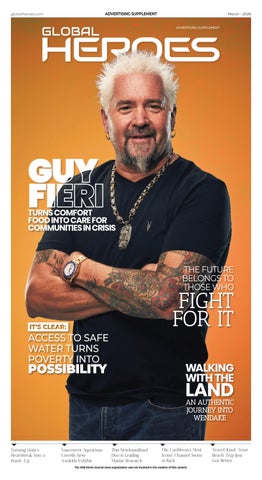
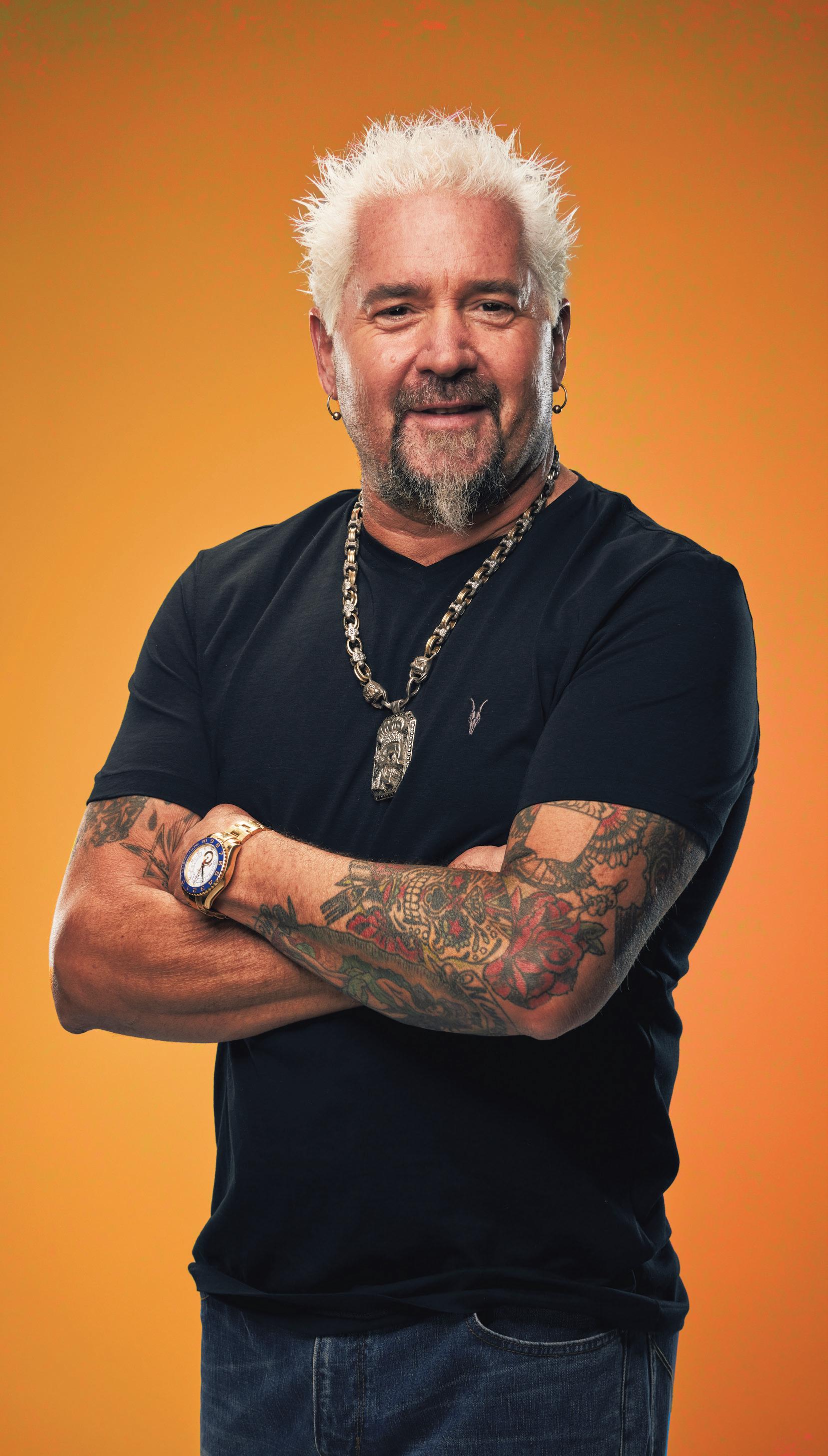
For Guy Fieri, food has always been about more than indulgence or entertainment. It may not be novel, but it’s true: food is about connection and community. Fieri, with his unmistakably unique brand, has built his career on that intersection, turning most of North America into a community of food lovers—a veritable food family, complete with mom-and-pop restaurateurs, kids cooking shows, and even his own sons taking up the reins.
But Flavortown wasn’t built in a day. Long before the frosted tips, bowling shirts, and cross-country road trips, food was Fieri’s first language. Growing up in a predominantly vegetarian household, he learned early that if he wanted steak, he’d have to earn it—by finding it, cooking it, and sharing it. “It was empowering,” he shared. “It taught me how to make things happen on my own, it made my parents proud…food and cooking were ways that I could communicate with everyone around me, and that continues to this day.”
DINERS, DRIVE-INS, AND DIVES, OH MY!
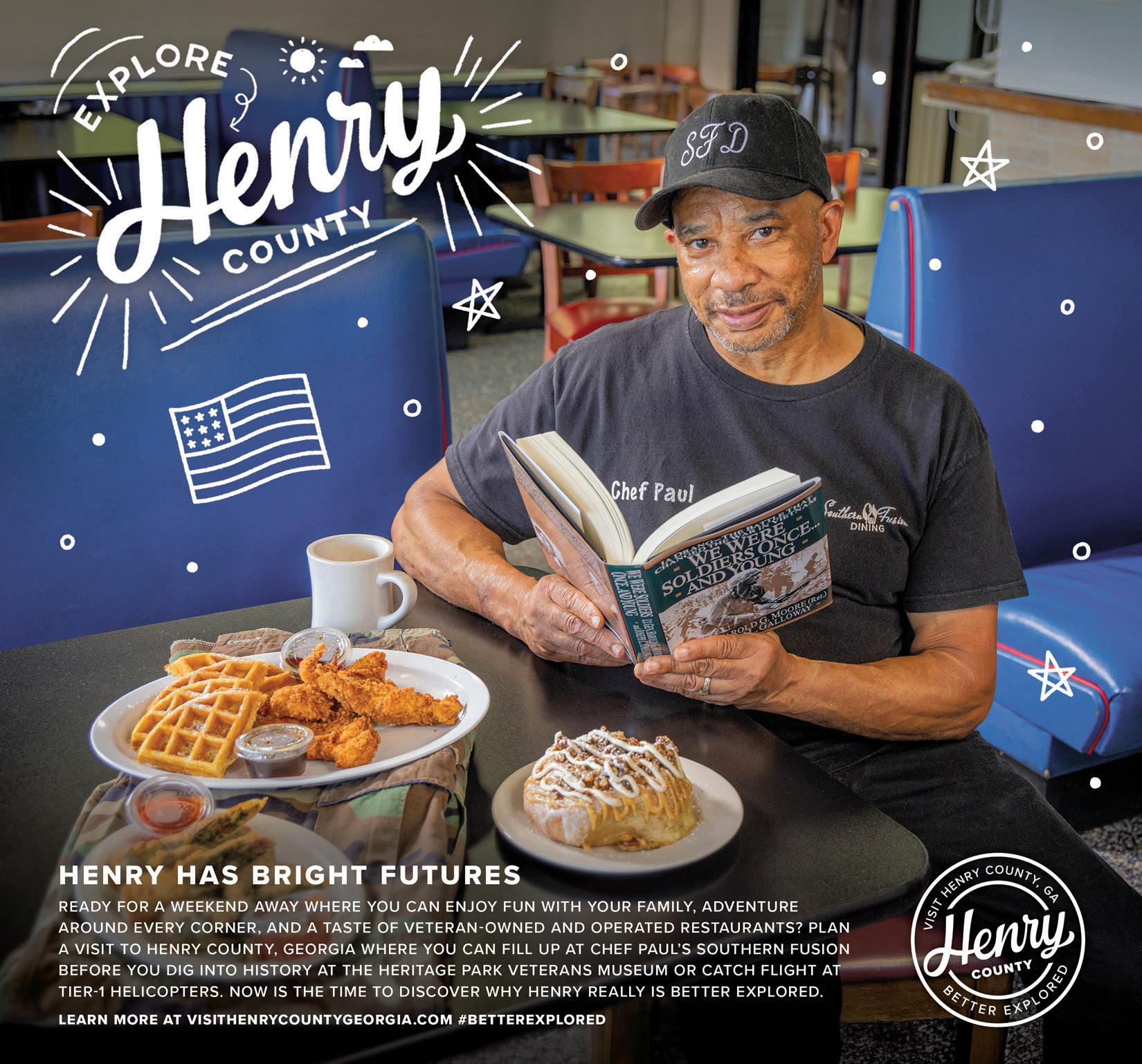
When you love food the way Fieri does, you love the process of making great food—and even more importantly, you love sharing it. Diners, Drive-Ins, and Dives, or “Triple D” as Fieri calls it, brings those two loves together. Sure, you can watch a cooking show and recreate the recipe at home. Or you could travel a town or two over (if even!) and order the exact same plate of comfort food you just saw on your TV screen, from a place you might have never known existed otherwise.
Triple D is a celebration of roadside joints and mom-and-pop restaurants, and one that has an immediate impact on the restaurants, which rarely have the resources to market themselves. But good food deserves recognition, and food lovers deserve to know what’s out there. That’s why Fieri has always bristled at the idea that the show is about shock-value eating. For him, scratch cooking matters. Integrity matters. If a restaurant’s signature dish is pimento cheese, he wants to know they’re making it themselves.
Fieri often says, “If you’re going to eat something, eat the best,” but that doesn’t mean he avoids trying every specialty his features have to offer—it’s just the opposite; trying is the pathway to finding the best. It’s the same reason that Guy’s Grocery Games is as beloved as it is—you don’t need best-in-class ingredients to put together an incredible meal, you just need a grocery store and the willingness to try.
“We’ve got to eat without prejudice,” he told Chef Robert Irvine. “Listen to stories without prejudice. Cook without prejudice. Stand outside your comfort zone a little bit, take some chances.”
That respect for craft mirrors his larger worldview. It’s advice he’s followed his entire career—touching nearly every cuisine, learning as he goes, and building an unusually broad understanding of food as culture.
FROM THE KITCHEN TO THE COMMUNITY
In 2011, Fieri formalized that belief by launching the Guy Fieri Foundation. The initial focus was straightforward: teaching the next generation of chefs. But the mission didn’t stay neatly in one lane; it couldn’t.
“I knew that food and cooking were how I
wanted to help, to share, and to give back. But there are just so many deserving groups and initiatives that it became a bit overwhelming trying to pick just one lane.”
Growing up in a small northern California town, Fieri’s family prioritized giving back and helping others—a notion that he’s carried forward into his own family.
“My parents were always about helping others. We’re really blessed,” he said. “If you’re up and you’re walking around today and you can experience and embrace and appreciate all the things that are going on around you, you’re a very lucky person, because those simple things that we all take for granted, a lot of folks don’t have.”
As Fieri’s career expanded and his visibility grew, so did the Foundation. What started as culinary education evolved organically into disaster relief, support for first responders and military families, literacy initiatives, and honoring everyday heroes. Fieri shared that the shift felt natural, linked to his experiences on the ground and in kitchens across the continent.
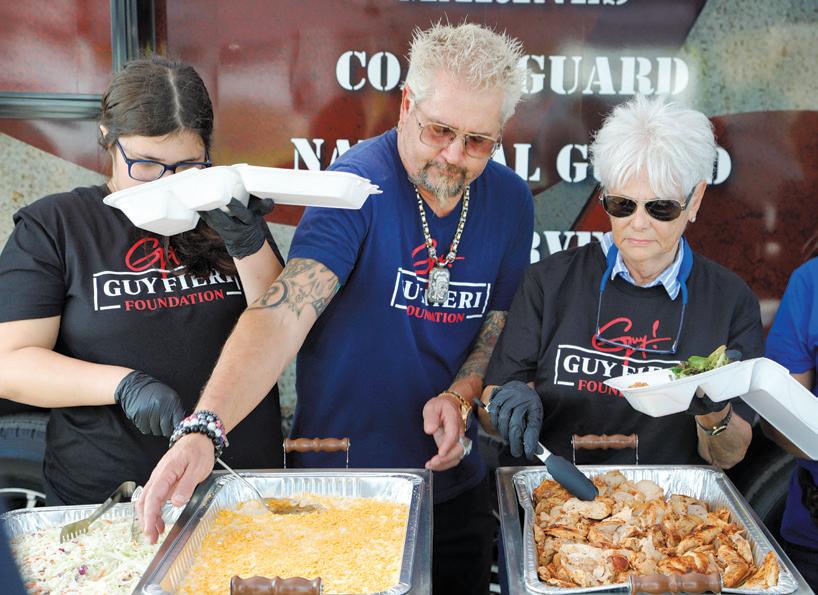
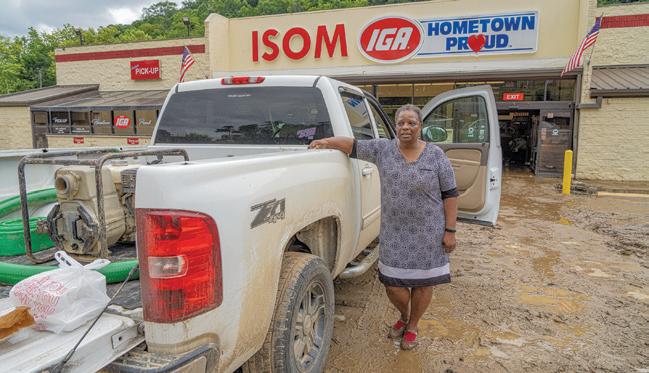
Perhaps the largest shift occurred when the Foundation built its first large-scale culinary disaster-response trailer and began deploying it to wildfire zones and other emergencies.
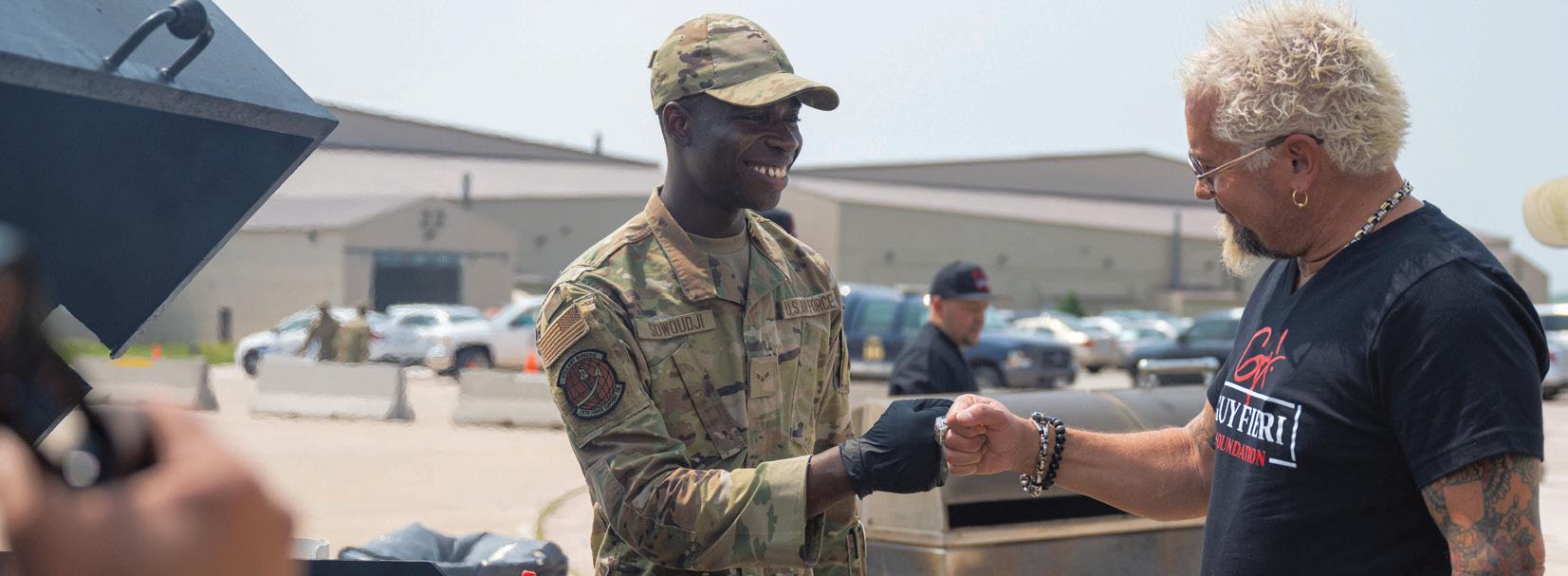
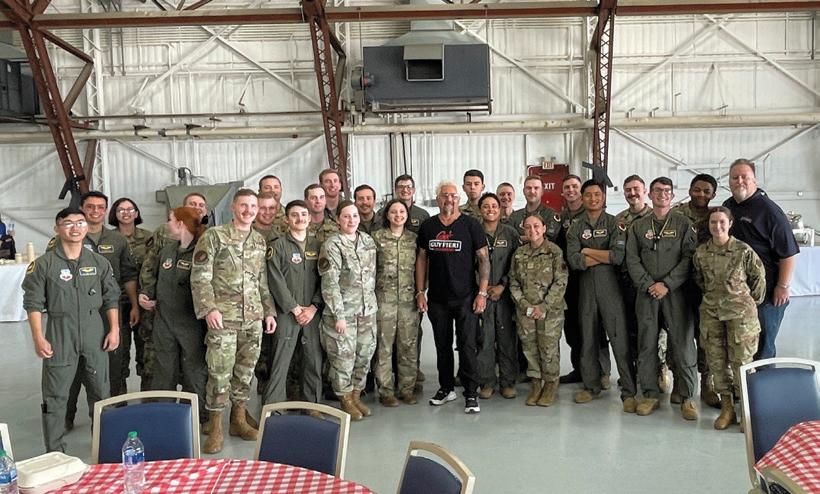
“I really saw the first responders and military in action,” he recalled. “People are out there risking their lives for us on a daily basis, and to me, feeding them is showing them love and appreciation.” Now, with trailers on both coasts and another joining the fleet soon, the Foundation will be able to deploy more resources when needed.
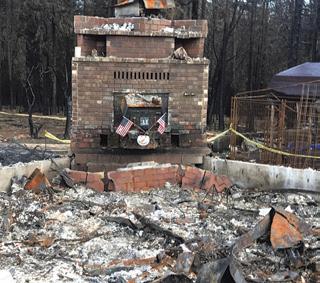
To Fieri, it’s about serving those who serve us. That motto became deeply personal during the 2017 Tubbs Fire, which tore through his home region. Standing shoulder-to-shoulder with firefighters who were trying to save his house— and countless others—clarified the mission of the Foundation.
“People I’d never met were by my side trying to save my home, and I knew that it was my mission to give back and support,” he recalled.
Suddenly, in a different way than before, gratitude wasn’t enough; action was required.
WHAT’S IN A MEAL?
On the ground, nothing is predictable. Unlike the TV world, there’s no script in a crisis zone. So when conditions are unpredictable, and needs are changing by the hour, how do you choose what to serve—both to meet practical needs and to comfort people who are exhausted, overwhelmed, and running on fumes?
“It comes down to best-laid plans,” Fieri explained. “No matter how ahead of the game you think you and your team are, when you enter a live disaster zone, anything and everything can happen.”
Menus are designed to be nourishing, hydrating, and comforting. Dishes must be executable under harsh conditions, considerate of allergies and dietary restrictions, and simple enough for volunteer-driven teams, which can rotate in and out depending on the day, without sacrificing warmth or dignity.
“We’ve developed protocols that can account for just about every situation we can think of,” he continued. “It’s key that the dishes we put out can be executed under tough conditions and also aren’t so complicated that they are beyond what can sometimes be an entirely volunteer workforce.”
Success isn’t measured in plates served— though more than 200,000 meals have been provided to date—but in the intangible impact of handing food to someone who spends their day fighting for their community and watching them remember what it feels like to be cared for.
ALL HANDS ON DECK
None of this work happens in isolation. Collaboration is essential, from grassroots nonprofits to long-standing corporate supporters like Carnival Cruise Line, which has backed the Foundation for nearly 15 years.
“I’ve been very fortunate in my life to have a great career and work with incredible partners who support my initiatives,” Fieri shared. “I think most people and corporations want to do good. They appreciate having a meaningful way to participate.”
For corporations, these partnerships make giving possible, and in turn, they make scale possible for the Foundation. Together, as in any good partnership, sustainability becomes inevitable.
That same alignment drew Fieri to Tunnel to Towers Foundation, an organization dedicated to supporting veterans and first responders through mortgage-free homes and financial relief. After touring Ground Zero with founder Frank Siller and hearing the story behind the mission, Fieri was all in.
“They’re the gold standard,” he said. “There are so
many deserving folks out there that they’ve helped and will help in the future, from home dedications to paying off mortgages. I want to support them in any way I can.”
Alongside disaster relief, education remains a cornerstone of the Foundation’s work—both in the kitchen and beyond it. Culinary scholarships and literacy programs may seem worlds apart, but for Fieri, they’re deeply connected.
“Education is everything to me,” he explained.
“It’s not always about a four-year degree. It’s about enriching yourself to be the best you can be.”
The kitchen, he believes, is one of the few places where young people can start on equal footing, learning discipline, teamwork, creativity, and confidence.
FAMILY AFFAIR AND A LASTING LEGACY
A
Ask Fieri which story from the past year stays with him most, and he points to the people beside him: his wife, his sons, his friends.
“Being side by side with my family while we all pitch in to help—that’s as rewarding as it gets,” he shared. “When you look into the eyes of the displaced mother or the exhausted firefighter and hand them a plate of something comforting, you see their gratitude, their relief, their soul bared. This work is important, and I’m very lucky to be able to do it.” When he talks about the future of the Foundation, there’s no hesitation. His sons already know the baton will one day be theirs, and he has no fear about the mission changing course.
“This is ingrained in my family and my company,” he said. “I have no doubt that they will continue to fly the Fieri flag proudly and share the love that the Foundation is all about. It’s what we all do.”
In the end, for Fieri, food is just as much about feeding people as it is about flavor. More importantly, it’s about community, and using whatever spotlight you have to make sure no one is left behind.
“I’ve had a great opportunity and a great life, and if I can shed light on any of it or help fundraise, then that’s my responsibility as a member of the community and as an American,” he shared. “There are a million reasons we all should be doing this.”
They say the best meals are those shared with friends—it stands to reason that meals shared with a cross-continental group of food-lovers would be even better. At least, that’s how meals are served up in Flavortown. Catch Fieri’s Tournament of Champions on Food Network Sundays at 8 p.m. ET/PT.
Learn more and get involved at GuyFieriFoundation.org
Beyond the Headlines: Long-Term Disaster Recovery Deserves
When a disaster strikes, the world responds. Headlines dominate the news cycle, donations surge, and communities and emergency teams alike rally to mobilize. And then, once the news cycle moves on, the attention fades. But for the people living through the aftermath, there’s a long road ahead to recovery. Disaster recovery does not happen overnight; it takes years, often requiring the rebuilding of homes and the restoration of infrastructure. Additionally, disaster recovery is about restoring physical well-being, economic stability, and mental and emotional health. It is about addressing the systemic vulnerabilities that made communities more susceptible to harm in the first place. Above all, it is about ensuring that everyone in the affected area has the opportunity to recover stronger and thrive. Ultimately, true disaster recovery is long-term recovery, and that is where the Center for Disaster Philanthropy (CDP) plays a major role.
With the scale and frequency of disasters increasing amid climate change and global instability, disaster recovery can often feel reactive. CDP helps donors, foundations, and corporations maximize their impact by providing expert guidance, community-driven grantmaking, and strategic funding approaches focused on long-term outcomes.
WHAT DOES RECOVERY
REALLY MEAN?
Recovery is often misunderstood simply as relief: clearing debris, repairing roads, rebuilding structures. These efforts are essential, but they are only one part of a much larger process. As disaster recovery experts often note, recovery is not only about restoring systems and services; it is also about enabling people to sustain their physical, social, economic, mental, emotional, and spiritual well-being.
Long-term recovery builds resilience by helping individuals, families, and communities rebuild their lives so they can withstand future crises. It includes mental health services, livelihood restoration, housing stability, access to education, and community cohesion. It addresses other inequities that disasters tend to expose and deepen. That’s why it’s critical that the communities involved are at the forefront of the solution.
“In every disaster, the people closest to the impact are the people closest to the solution,” said Patty McIlreavy, president and CEO of CDP.
It’s a simple philosophy that makes all the difference in developing holistic pathways to recovery. Who better, after all,
Our Attention—and Investment
to lead in community resilience building than members of the community?
The most effective support invests in community-led solutions and local capacity, supports organizations already trusted on the ground, and backs strategies shaped by lived experience. Once again, CDP is a key player as a full-time resource dedicated to helping donors maximize their impact through expert resources, community-driven grantmaking, and advisory services.
THE FUNDING GAP NO ONE
TALKS ABOUT
One of the biggest challenges in disaster
recovery is timing. At the beginning of the disaster, when headlines are bringing in support and visibility from across the globe, private giving is at its peak—but this only lasts a matter of weeks. By six months, donations often drop off dramatically, but recovery is not nearly complete; it takes years. In that time, needs evolve, and new challenges come up, from housing shortages to food insecurity, combined with prolonged economic hardship and ongoing trauma.
Giving at any stage is meaningful, but long-term recovery remains significantly underfunded, even though it is essential for rebuilding stable, resilient
communities that can thrive even in the face of disaster. And where public funding falls short, philanthropy can help address critical needs. Nonprofits and philanthropic organizations play a vital role in helping survivors recover from disasters. They’re nimble, innovative, and often deeply connected to local communities, so they can quickly and strategically direct resources to the most urgent gaps and overlooked populations.
At the same time, philanthropy should not replace government action; it must complement it. As McIlreavy notes, nonprofits and donors are “leaning in and stepping up to address gaps,” but their
work should strengthen, not substitute, the responsibilities of public systems.
“[CDP] stands out as one of the few donors committed not only to managing immediate emergencies but also to promoting recovery and resilience in affected communities over the medium term.”
—CDP Grantee Partner
LESSONS FROM RECENT DISASTERS
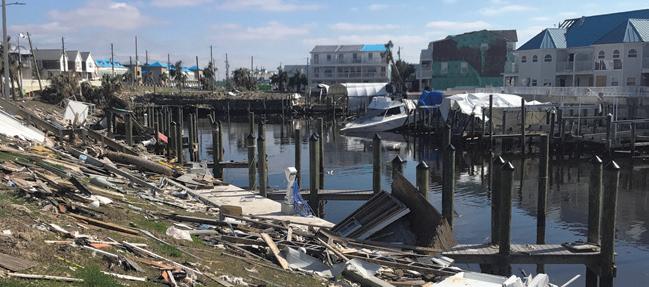
Last year, catastrophic flooding, landslides, storm surges, and high winds displaced millions and destroyed homes, schools, and critical infrastructure worldwide. Disasters tend to compound over time. Beyond the immediate devastation, the storms damaged agriculture, creating longer-term economic consequences and worsening food insecurity just as families were trying to stabilize. Long-term recovery, then, must include more than rebuilding infrastructure. It must include protection, mental health supports, stable income pathways, and safe housing, among other urgent needs. One of the most effective tools in longterm recovery is flexible funding, particularly financial assistance that empowers communities and families to make their own decisions and prioritize what matters most to them: repairing homes, purchasing food, covering medical expenses, restarting businesses, or paying school fees. Mental health services and income supplementation are also vital. Disasters leave lasting emotional and financial scars,
Your support helps communities rebuild and thrive.
It’s Clear: Access to Safe Water Turns Poverty into Possibility
MELANIE
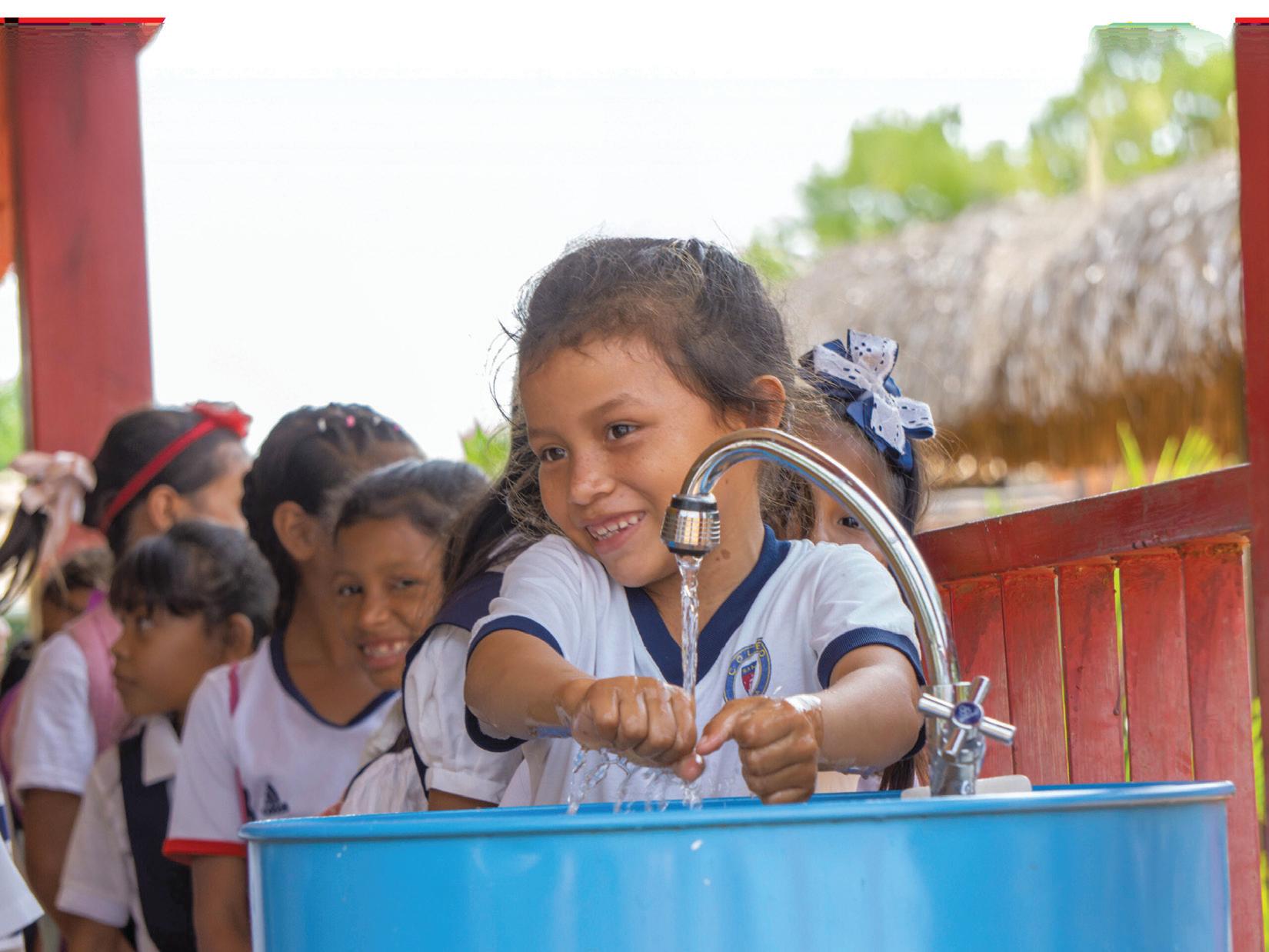
On World Water Day (March 22, 2026), we are reminded that for millions of families, access to safe water is still out of reach— and that achieving universal access to safe water and sanitation is possible. Around the world, families are taking action to improve their future through small, affordable loans that make water and sanitation solutions possible at home. What begins as a household tap, a water collection tank,
NEW POSSIBILITIES IN TANZANIA
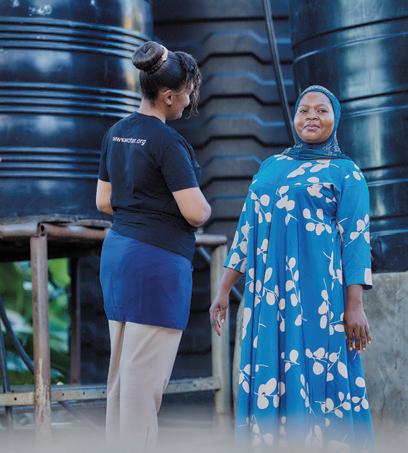
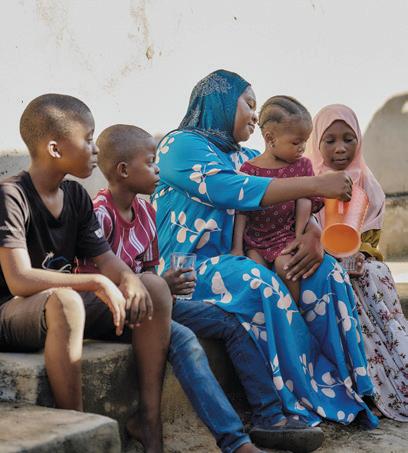
Amina is a loving mother and grandmother. The children in her village often visit her home, where her property now serves as a source of safe water for more than 150 households in her community.
With the help of a small, affordable loan from Water.org’s local financial partner, Amina financed a water solution for her home. She later added a pipe system and water tanks to support her growing community, seeing that her solution could become an opportunity to serve others and build a business.
Today, Amina operates six water tanks that supply water directly to nearby households through a metered system. Her business provides a steady income that is changing her family’s future while ensuring her neighbors have access to safe water.
created a network of shared benefit that brings health, time, and opportunity to her community. “I’m happy I no longer have to struggle—and even happier that they don’t either,” she said. Amina’s experience shows how access to safe water can fuel income generation, expand possibilities, and strengthen entire communities.
WATER FOR HER FAMILY’S
FUTURE IN BANGLADESH
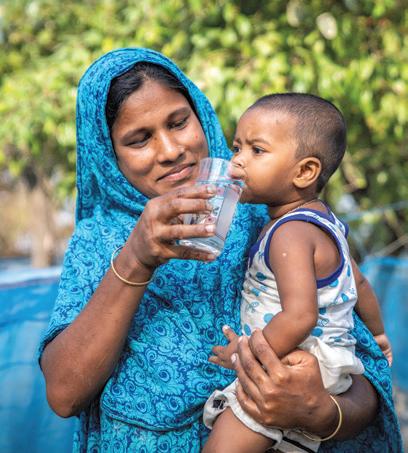
In Bangladesh, Doli’s days are centered around her three children—ages 14, seven, and one. She takes pride in caring for her family, helping her older children prepare for school, and spending time with her youngest at home.
loan brought lasting access to safe water— creating new opportunities for their families and the people around them.
“I’ve taken the buckets down from their heads,” Amina said. “They can finish their housework early and go out to earn a living. I’ve liberated myself—and helped them liberate themselves too.” Through her leadership, Amina has
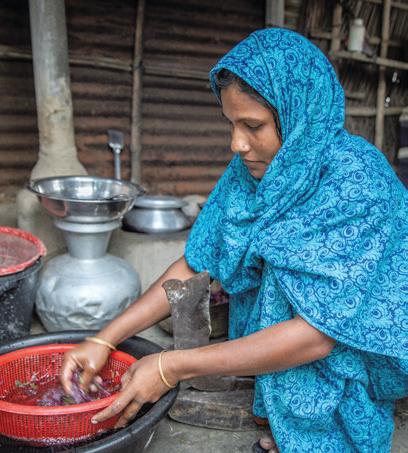
Before financing a safe water solution for her home, Doli spent hours each day collecting water. She walked to another village at least twice a day, carrying heavy vessels back to her home. On some days, her husband had to leave work to help transport larger containers too heavy for her to carry alone.
A small, affordable loan from her local financial institution helped Doli install a
water pump and storage tank at home.
“I thought that if the pump is set up, water would become easily available, and this would take care of the water issues we were facing,” she explained. “I also thought it was the best thing to do for my children.”
With safe water at home, Doli’s children are thriving, and her home life runs smoothly. Her husband can dedicate his time to farming shrimp, and Doli has more time at home.
Doli’s story shows how access to safe water strengthens families and creates space for moments of care and connection.
WHEN ACCESS BECOMES PROGRESS
HOW GENEROSITY FLOWS FORWARD
On World Water Day, we celebrate the generosity that makes these stories possible. Donor support connects families to safe water solutions that meet their needs at home. Every donation helps to transform time, health, and opportunity for the next generation, because when safe water flows, so does progress. Families grow stronger, communities become more resilient, and women gain control over their time, their health, and their future. It’s clear—access to safe water is the foundation of life, choice, and opportunity.
Amina and Doli live thousands of miles apart, yet their stories share a universal truth—when families have access to safe water and sanitation at home, everything changes. Access to these essential resources gives people time to work, to learn, to rest, and to dream. It fuels economic opportunity and improves health. It strengthens communities and enables women to lead change that benefits their families and beyond. Through Water.org’s solutions, more than 85 million people have gained lasting access to safe water or sanitation. Each family represents a story of progress and possibility—a woman expanding her business, a mother protecting the health of her children, a child attending school, a family changing its future.
Volunteers Needed: Raising a Puppy With a Purpose
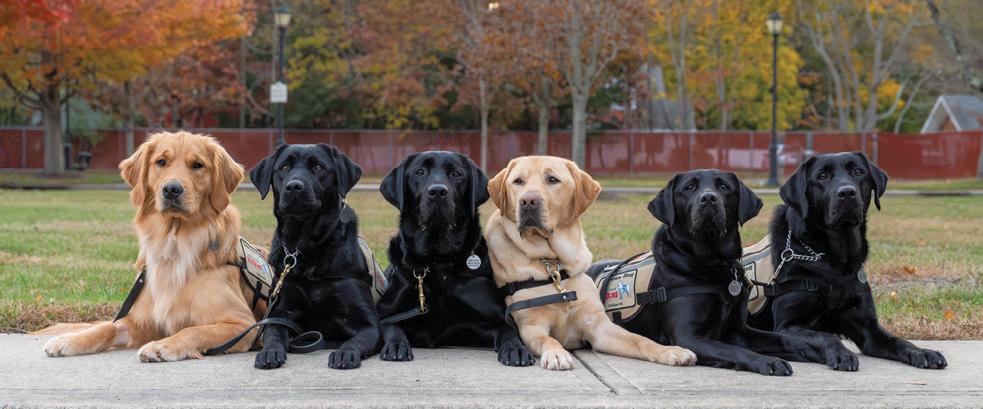
Raising a puppy that will become a guide or service dog is one of the most fulfilling ways to create positive change. These exceptional animals create life-changing experiences by empowering people who are blind or have low vision and by providing support to veterans, active-duty military personnel, and first responders who have physical or emotional disabilities such as PTSD. The process of raising a special puppy for assistance dog work allows you to be part of a transformative experience—one that changes not only the life of the person who will one day rely on that dog, but your own as well.
The dogs from America’s VetDogs and the Guide Dog Foundation serve as symbols of freedom and independence for their recipients, who receive all services free of charge from the sister national nonprofit organizations. From guiding individuals who are blind or have low vision with confidence, to supporting veterans and first responders with both physical and emotional challenges, these dogs empower their handlers to live fuller, more independent lives.
Future assistance dogs can’t be raised in kennels—they need real-world experiences and socialization to prepare them for the environments they’ll one day navigate alongside their handlers. While no prior dog-training experience
is required, puppy raisers take on the essential role of introducing these puppies to the world and laying the foundation for their specialized training by certified Guide Dog Mobility Instructors and Service Dog Instructors when they are a bit older.
The success of future guide and service dogs depends heavily on the essential work that volunteers perform during their development. Those interested in puppy raising can choose from full-time, weekend, or part-time opportunities,
depending on their location across the United States.
The initial stages of raising a future guide or service dog involve socialization and basic obedience training. Puppy raisers expose the young dogs to a variety of environments, from busy city streets to quiet parks. They teach them fundamental commands, such as “sit,” “stay,” and “come.” But it's not just about obedience; it's about ensuring these dogs are comfortable and composed in various situations, ready
to face the world that awaits them and their future handler.
After 14 to 18 months with their puppy raisers, the dogs are called back to America’s VetDogs and Guide Dog Foundation national training center in Smithtown, New York, to begin their formal training. At this point, they are assigned to expertly trained program staff and begin a three-to-four-month training process focused on maximizing the use of positive training methods to enhance their learning
and understanding.
A hallmark of America’s VetDogs is its meticulous matching process, pairing each participant with the dog that best fits their mobility, personality, lifestyle, and emotional needs. It’s been said that the organization is better at matchmaking than eHarmony!
Once the matching process is complete, each dog receives additional training tailored to the specific needs and lifestyle of their future handler. When the dogs are between 18 months and two years old, they’re paired with their new handler for two weeks of joint training on Long Island. Puppy raisers are then invited to Celebration Saturday, a special “graduation” ceremony that’s also streamed live on Facebook. These incredible dogs become the bridge to a world of enhanced independence, joy, and hope for those they serve, as well as their family and friends.
It takes a village to raise a hero—and it starts with people like you. If you're interested in becoming a volunteer puppy raiser, learning about applying for an assistance dog, or donating to help advance the missions of America’s VetDogs and the Guide Dog Foundation, visit VetDogs.org/GH or GuideDog.org/GH
Around the world, five billion people— more than two-thirds of the global population—lack access to safe, affordable surgical care. The challenge is greatest in low- and lower-middle income countries, where nine out of 10 people cannot access basic surgical care. For children like Dayana, a patient of Operation Smile, getting the care they need can transform their lives and create a future full of possibilities.
A GLOBAL PROBLEM
Every three minutes, a child is born with a cleft condition—one of the world’s most common craniofacial differences. A cleft occurs when parts of a baby’s lip or mouth
do not fully join during early pregnancy, leaving an opening that can affect feeding, speech, hearing, and overall health.
For millions of children like Dayana, this small gap can create challenges that affect nearly every part of life.
Individuals with untreated cleft conditions can face a host of medical complications. For example, some infants with cleft conditions struggle to eat properly, leading to malnutrition. As children age, cleft conditions can cause frequent ear infections, which can lead to hearing impairment. Cleft conditions can also interfere with speech development, making it hard for children to be understood and develop relationships with their peers. In some communities, children with cleft conditions face social stigma, bullying, and isolation.
Too often, these children go untreated because surgery is too costly, too far away, or unavailable locally due to a shortage of trained medical professionals. They may also face social stigma surrounding medical intervention. Operation Smile, a global nonprofit deeply committed to closing the gap in surgical and health care access, starting with cleft surgery and comprehensive care, is determined to remove these barriers. In addition to providing surgery, the organization provides nutrition programs, oral care, psychosocial care, and speech therapy, transforming children’s futures. It is focused on bringing care closer to home for thousands of patients across the 37 countries where it works, creating a lasting impact for patients, families, and communities.
DAYANA’S STORY
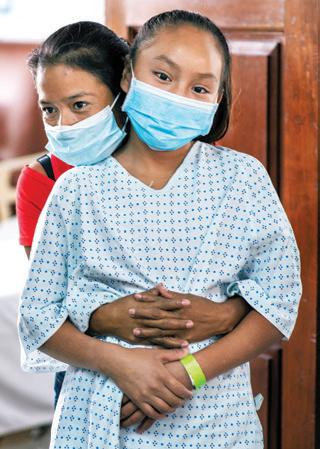
For children like Dayana, this care is critical. For 11 years, Dayana and her mother, Eluvia, hoped and searched for care for her cleft condition. But it wasn’t until they found Operation Smile that Dayana and Eluvia found hope and a community.
“I thought I was the only one with a little girl like that,” Eluvia thought when she arrived at Operation Smile’s care center in Petén, Guatemala. “Where I live, there are no people like that. She is the only one.”
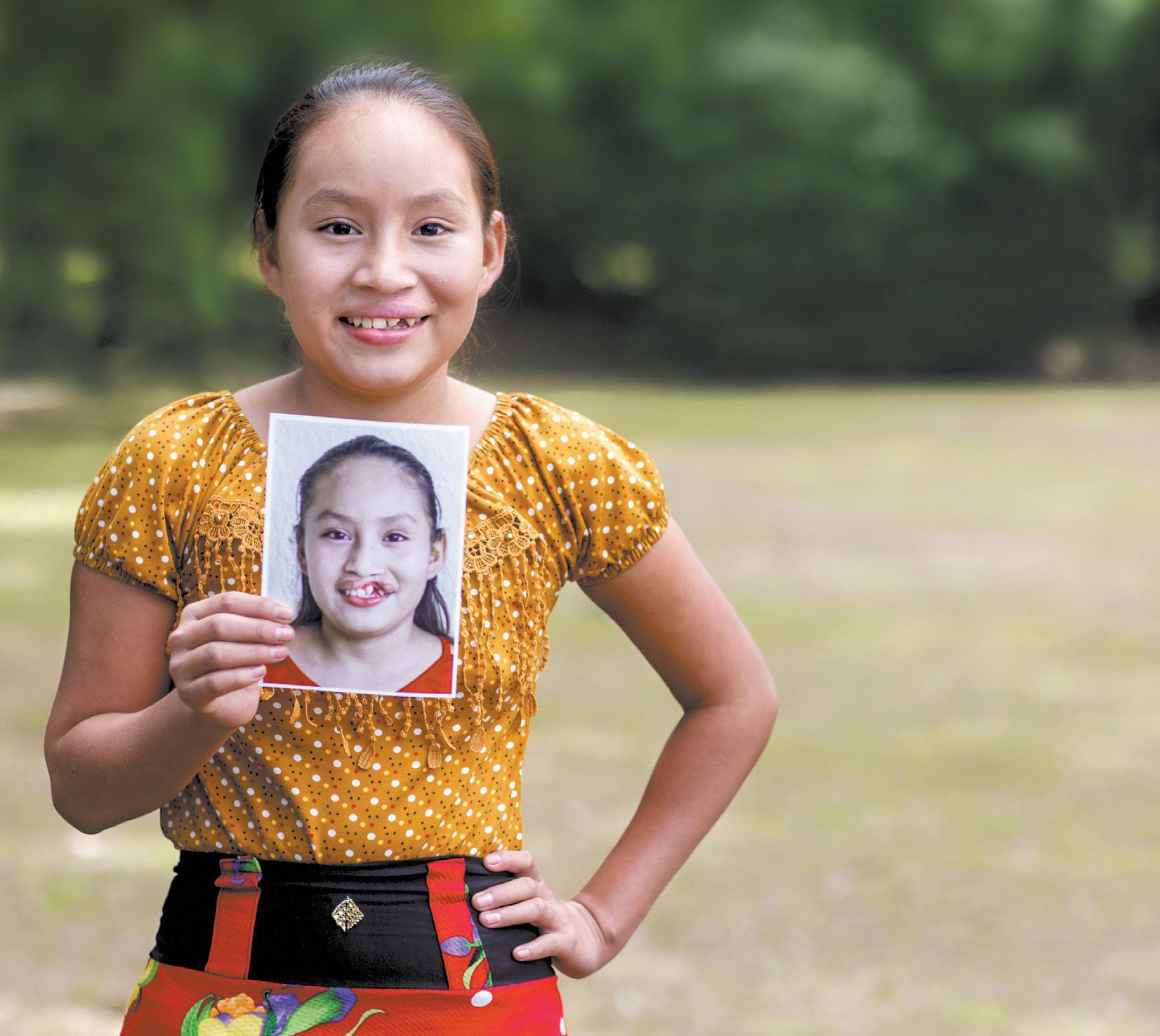
Before discovering Operation Smile Guatemala, Dayana felt embarrassed to leave her home. Today, Dayana’s future is brighter and filled with possibilities she never imagined.
“This has changed my daughter’s life,” Eluvia said. “She hangs out with her friends; she goes to church. She’s proud of the way she looks.”
After surgery, Dayana planned to start school.
“That’s what I want for her. I want her to study,” Eluvia said. “I didn’t go to school, and I can’t read or write. She’ll do what I wasn’t able to.”
“I want to be a teacher,” Dayana shared.
BRINGING CARE WITHIN REACH
Dayana’s hometown, Petén, is the largest region in Guatemala and covers a vast, mostly rural area in the north of the country. Many communities are remote, with limited roads and health services, meaning families often must travel
long distances to reach essential care. To change that reality, Operation Smile has invested in health systems, enhancing infrastructure, essential equipment, and training local health care providers in regions like Petén, making it easier for patients to access care.
“If we invest in a center like Petén, it will make treatment easier. And that means that patients won’t have to wait many years for surgery,” said Valeri Paredes, D.D.S., a maxillofacial surgeon and Operation Smile medical volunteer who performed Dayana’s surgery. Certainly, investing in care in rural areas like Petén would mean patients like Dayana would not have to wait 11 years for care in the future.
Through partnerships with local health systems, regional hospitals, ministries of health, corporate partners, universities, and local NGOs, Operation Smile delivers a holistic care approach, combining surgery, speech therapy, nutrition support, and dental care to meet the full range of patients’ needs. This model not only transforms cleft outcomes but strengthens health systems for other surgical needs as well.
The key to expanding care to these rural regions starts with the training of surgical teams and allied health professionals. Training health care providers benefi ts not only patients with cleft conditions, but many others as well, including burns and other types of surgery. Increasing access to care for surgical patients not only radically improves their lives, but those around them, too. “If we
can give them access a little closer to where they live, it definitely changes their prognosis and their way of life, because it changes everything,” explained plastic surgeon Carlos De Leon, M.D., medical director of Operation Smile Panama. “It’s not just the child, but the whole family that will benefit.”
TOGETHER, CREATING BRIGHTER FUTURES
The difficult truth is that the work of Operation Smile’s volunteer staff and medical experts is not possible without the support of donors like you. The organization relies on gifts to support medical equipment and supplies, training and educational opportunities, travel and lodging for patients, and so much more. Each gift helps provide cleft care and trains local medical professionals, building brighter, healthier futures for children and communities. By making a gift today, you open the door for a child to pursue their dreams with confidence.
Visit operationsmile.org to learn more about how you can help transform lives, communities, and local health systems. Call 888-979-3300 or scan the QR code below to donate today.
One Voice. One Vision. One Stronger Transition.
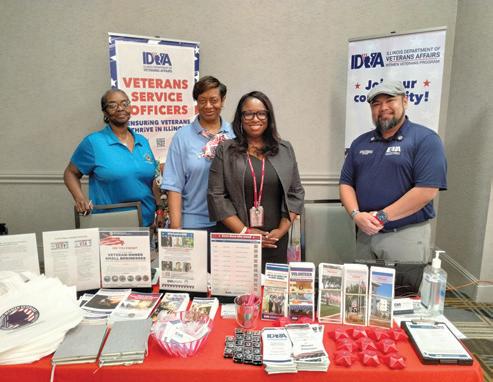
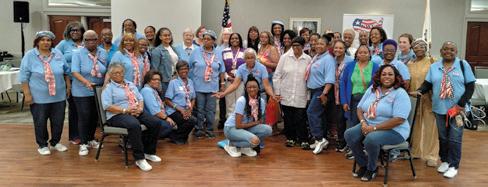
When the uniform comes off, the mission doesn’t end—it changes. For many women veterans, the transition to civilian life can bring challenges that aren’t always visible: navigating benefits, managing mental health, and finding community again. National Women Veterans United (NWVU) exists for that in-between space, offering connection and advocacy so no veteran has to carry the weight alone. Founded in 2005 and chartered in Illinois as a 501(c)(3) nonprofit, the NWVU members served in the military during peace and War time and support all women who have served. You do not have to be a member to receive services, information,
you see constellations, tracing patterns learned in childhood with landmarks in the sky. At the Sacred Heart University Discovery Science Center and Planetarium in Bridgeport, Connecticut, you can see so much more: the planetarium is a time machine and a starship that can take you to any place and time to see moons and planets up close, unbound from the Earth’s surface.
RESOURCES FOR THE REGION
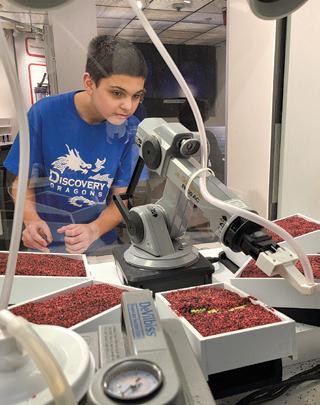
The planetarium is just one of the cuttingedge tools Discovery uses for Science, Technology, Engineering, Arts, and Mathematics (STEAM) education. The fulldome theater is joined by unique resources throughout three floors of exhibits and programming spaces, including a live presentation theater, a Science on a Sphere, a Challenger Learning Center, and more.
Live demonstrations bring the “big science”—from liquid nitrogen to fireballs to Tesla coils—to the theater; something close to magic happens. The Science on a Sphere, from the National Oceanic and
Atmospheric Administration, provides 360-degree views of Earth and its systems, as well as up-close looks at other planets, moons, and more, showcasing satellite tracking, animal migration, and seasonal weather cycles. The Challenger Learning Center, part of the international Challenger Center network, offers immersive simulated space missions, placing participants in the roles of engineers and astronauts
lighting existing pathways but also on providing experiences that set up participants for future real-world applications.
"At Discovery, our partnership with the university gives students a clear and visible next step,” said Interim Executive Director Carla Murphy. “Our team of informal educators and exhibits experts are tapping into the full breadth of a nationally ranked university to strengthen science education within the local community. We’re not simply encouraging kids to get interested in STEAM and then leaving them to navigate the path on their own—we are demonstrating how higher education leads to careers linked to our animal encounters, space simulations, engineering labs, and other offerings. Our staff are real examples of how a strong educational foundation can open the door to any career you aspire to."
PROGRAMMING PARTNERSHIPS
Discovery is the only place in Connecticut where all of these tools can be found, but even more than hardware or spaces, it’s the programs that truly stand out. Every experience aligns with the Next
feedback to ensure Discovery’s offerings are relevant to the community.
The Mission: LEO interdisciplinary high school program, for example, brings together biotechnology, remote sensing, information technology, aerospace engineering, and 21st-century skills such as collaboration, communication, and critical thinking. The program was piloted with area high schools, giving students opportunities to build résumés and explore their passions beyond formal education.
Discovery’s partnership with Sacred Heart University (SHU) is a crucial element of its success. As an independent 501(c)(3), Discovery can focus on its mission thanks to SHU’s support for operations.
“At the Discovery Science Center & Planetarium, we’re not just teaching science,” stated SHU President Dr. John Petillo. “We are igniting curiosity, inspiring exploration, and preparing young minds to shape the future. We are working with local school systems and educators to push boundaries while complementing their own science curricula. Under the oversight of SHU, the Discovery Science Center teaches not only the possibilities that come from research, but also the importance of aligning scientific progress with the University’s mission to make a difference in the global community. We hope that every Discovery Science Center experience opens doors to excitement, discovery, and commitment to a better world.”
To learn more, visit shudiscovery.org
New York Council Navy League to Help Honor 9/11 Heroes
celebrations, our events and programs serve approximately 10,000 service members and 2,000 local youth annually. From large-scale events such as the New York Maritime Security Conference and Fleet Week New York to smaller gatherings like our National Security Briefing Series and honoring top enlisted individuals at our adopted units, our more than 750 members support those who serve all year. These activities not only provide direct support to military units, personnel, and families but also educate the public about the crucial role of the sea services in national and economic security. In this semiquincentennial year,
badly,” he recalled. His mother explained it was sickle cell, and they went to the hospital. His older brother carried him to the car and sat with him in the back seat, rubbing his legs as their mother drove.
“This was pretty much the routine all the way through high school,” Dewy said. Pain struck in class, out with friends, even during outings. “I know pain like I know the flavor of my brother’s fried chicken,” he said—familiar because it has been woven into every part of his life.
BRINGING CARE AND HOPE
“Sickle cell does not only impact the individual living with it, it affects the entire family,” said Ginger Davis, PhD, President of Sickle Cell/Thalassemia Patients Networks (SCTPN). She describes a condition that shapes daily choices and creates constant uncertainty—especially when emotional and psychological stress isn’t addressed as part of care.
HOW SICKLE CELL AFFECTS
THE BODY
Despite long hospital stays, Dewy graduated high school early, supported by his mother and brother. He went on to earn a degree in dance and education and remains in touch with teachers who encouraged him. But he also learned how often people with SCD are expected to perform as if they aren’t managing a disability at all—judged for missed tests or paperwork, while the effort it takes to keep up through pain goes unseen.
cold temperatures. Over time, reduced oxygen delivery can damage organs and lead to serious complications such as stroke, cardiac complications, kidney failure, and acute chest syndrome.
THE COST OF BEING
OVERLOOKED
When sickled cells block blood flow, they can cause severe pain episodes—often called “crises”—that range from manageable to life-threatening, often requiring hospitalization. Triggers can include infection, dehydration, overexertion, or
Because sickle cell pain is often invisible, patients are frequently misunderstood or dismissed—and critical emergency care may be delayed. Families face repeated hospital visits, mounting costs, mental
and emotional strain. Children miss school. Adults and caregivers struggle to maintain employment.
Public awareness matters beyond the hospital, too. Many people learn they carry the sickle cell trait only during pregnancy or after newborn screening. With more education, trait testing, and genetic counseling, individuals can make informed family-planning decisions.
When society doesn’t understand sickle cell, stigma grows—and patients are left fighting battles few see, hear, or support.
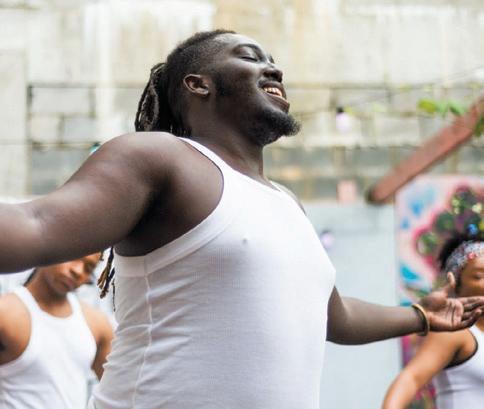
Founded in 1984, SCTPN began as a support group for adults living with sickle cell and thalassemia (Cooley’s anemia). Today, it serves thousands of individuals and families through education, advocacy, social support, and policy work—locally and globally. Its mission is bigger than symptom management: it’s about dignity, compassion, and ensuring no one faces sickle cell alone. Today, Dewy is a professional dancer and choreographer who gives back by teaching dance in the SCD community and encouraging youth to pursue their dreams. Sickle cell is lifelong—but suffering in silence doesn’t have to be. With awareness, compassionate care, and community support, families can move from crisis to stability and hope.
Learn more, get involved, or offer support at sctpn.net
From Rubble to REBUILD: How Julie Colombino-Billingham Turned Haiti’s Heartbreak into a Hand-Up
dignified work—living wages, safe conditions, and the kind of stability that allows families to plan beyond tomorrow. At the heart of it all is a solar-powered, women-owned, Fair Trade-certified factory in Port-au-Prince, where Haitian craftspeople transform responsibly sourced materials into timeless leather goods. The work is meticulous, but the purpose is even more precise: to prove that “sustainable luxury” can be more than a buzzword. It can be a lifeline.
WHERE PURPOSE MEETS CRAFTSMANSHIP
artistry. She saw a culture that keeps standing, even when the ground has tried to swallow it whole.
One moment, in particular, became a compass point—an unvarnished truth offered by a Haitian woman who didn’t need sympathy, or saving, or another short-lived solution.
“I don’t need water, I need a job.”
It’s a sentence that cuts through the noise with startling clarity. It’s the sentence that helped Colombino-Billingham reimagine what “help” could look like when it’s built alongside the people who need it most.
BEYOND THE RUBBLE
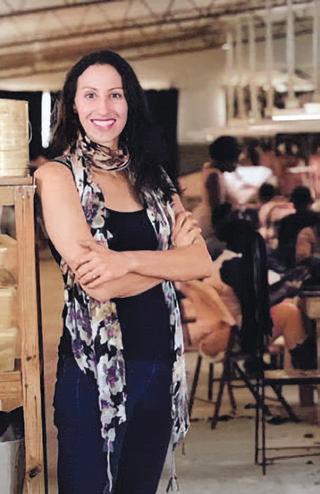
That reimagining became Deux Mains, a fair-trade fashion brand created in collaboration with Haitian artisans. The name means “two hands,” and it’s more than poetic branding—it’s a philosophy. Behind every product is a person, a livelihood, and a story still in progress.
From the beginning, Deux Mains was designed to challenge the most common failure of aid: impermanence. Instead of temporary relief, the company focused on
In an industry where exploitation has too often been the default, Deux Mains built a different standard—one rooted in transparency, training, and long-term investment in people. Artisans earn living wages, receive health insurance, and have access to continued education and skills development. Over half of the workforce are women, many in leadership roles, shaping not only the products, but the future of the company. Over time, the brand grew into an internationally recognized, employee-owned business, backed by organizations such as the United Nations, USAID, the Clinton Foundation, and fashion leaders including Kenneth Cole and Eileen Fisher. A partnership with Nordstrom helped expand visibility and increase sales—proof that values-led fashion can scale without losing its soul. But Colombino-Billingham’s impact didn’t stop at what could be sold. She kept returning to the question at the center of it all: what does it take for a community to truly rebuild?
REBUILD: THE LONG GAME
That question became REBUILD globally, Colombino-Billingham’s nonprofit dedicated to fighting poverty in Haiti through education
and job training. It’s a model built for the long haul—focused not on handouts, but on pathways.
REBUILD invests in scholarships, tutoring, mentorship, and vocational training that lead to real employment. Its goal is to remove the barriers that keep people trapped in cycles of poverty and to replace dependency with opportunity.
This ecosystem, nonprofit and forprofit working hand in hand, has created measurable impact, but the most moving changes are often the simplest ones. In Haiti, proper closed-toe shoes are required for school uniforms. Without them, children can be turned away at the gate.
Through this work, Colombino-Billingham and her team made and distributed nearly 10,000 pairs of Haitian-made leather school shoes to children across the country—shoes crafted locally, supporting local jobs, while opening classroom doors.
It’s the kind of impact that multiplies: one pair of shoes becomes attendance. Attendance becomes education. Education becomes possibility.
A BOOK AS A BRIDGE
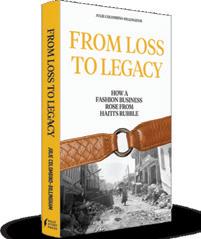
Now, Colombino-Billingham has gathered this journey into a memoir: From Loss to Legacy: How a Fashion Business Rose From Haiti’s Rubble. Available in paperback, hardcover, and e-book, the book is both a personal account and a wider invitation to reconsider what ethical leadership looks like.
“It’s more than just the story of a business,” Colombino-Billingham said. “It’s the story of identity, healing, and hope.”
That hope is not abstract in this book— it is tactile. It lives in hands that weave, stitch, cut, and craft. In keeping with that spirit, proceeds from all book sales will be donated to REBUILD globally—so the story doesn’t simply end on the page. It continues, hand in hand, in the lives it helps shape.
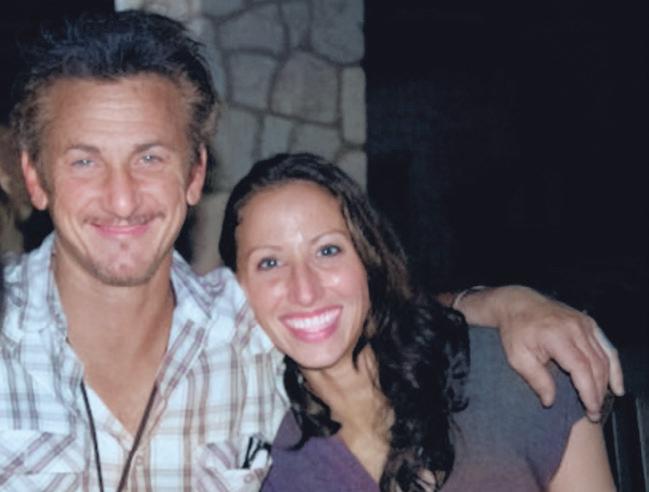
¨In telling her own story, Julie tells the story of so many whose lives were transformed by the 2010 earthquake in Haiti. Her clear and honest recollections put the reader at the epicenter of the most challenged and resilient culture in the western hemisphere.¨
—Sean Penn, Actor, Director and Humanitarian
THIS EARTH DAY, THE FUTURE BELONGS TO THOSE WHO FIGHT FOR IT
History shows that real change rarely begins in boardrooms; it starts with people. This year’s Earth Day is all about turning protest into progress, beginning with the bold global theme “Our Power, Our Planet,” a reminder that the future of our planet is shaped by the collective voice of communities, students, families, and everyday citizens.
It’s been a turbulent year for environmental progress. Across the world, long-standing protections have been weakened or rolled back, often at the expense of public health, ecosystems, and vulnerable communities. But instead of losing hope, environmental leaders and changemakers are growing louder. It’s time for visible, sustained public action, and that includes all of us.
FROM PROTEST TO PROGRESS
Since the first Earth Day in 1970, millions
of people across countless industries have come together to fight for a better future. From farmers to faith leaders, scientists to healthcare workers, first responders, and youth, climate activists from all walks of life have helped prevent illness, protect communities, and push governments toward stronger environmental laws. This year, we’re bringing it back. In 2026, we’re more connected than ever before, so why not let that translate into collective action for our global community?
EarthDay.org is calling on people around the world to organize events on April 18, April 22 (Earth Day), and throughout Earth Week, like peaceful marches and demonstrations, community cleanups of streets, rivers, parks, and beaches, and teach-ins at schools and community spaces to get more people involved.
"All those years ago, in 1970, we launched a genuine environmental
revolution. We proved that an engaged public can be an unstoppable force,” said Denis Hayes, organizer of the first Earth Day. “It can be again in 2026."
CLIMATE EDUCATION IS
CLIMATE ACTION
Alongside its Earth Day announcement, EarthDay.org is celebrating a major global milestone: the European Union’s decision to embed climate education into school curricula from kindergarten through Grade 12 as part of its official climate commitments under the Paris Agreement.
Today’s environmental leaders know that young people are the future of climate action, and this move takes that one step further by equipping students with the knowledge, skills, and critical thinking needed to navigate a rapidly changing world. More than 60
countries have now adopted similar commitments, and over 150 nations have integrated climate education language supported by EarthDay.org into their national climate plans. This matters because the green transition is already reshaping the global economy. According to international research, demand for green skills is growing faster than the workforce can supply them. The shift to clean energy and sustainable industries is expected to create over 100 million new jobs worldwide in the coming decade. Young people are increasingly worried about job security on top of climate concerns—the green transition is the meaningful, future-oriented answer to both.
“Climate education doesn't just tackle climate change—it connects people to jobs and economic opportunity,” said Efrem Bycer, Head of Workforce and
alongside institutions such as the Vatican, are now advancing
education as a foundation for both environmental stewardship and economic resilience.
As Sharan Burrow, Vice Chair of the European Climate Foundation, put it: "We grew up learning about the great forests, oceans, and rivers of the world, but not how to care for them, even though our lives depend on them. We didn't learn that the industries that make us prosperous are responsible for greenhouse gas emissions and that we must use clean energy and clean tech to keep the planet livable. Our children will know better.”
(Source: EarthDay.org)
ALLIE MURRAY
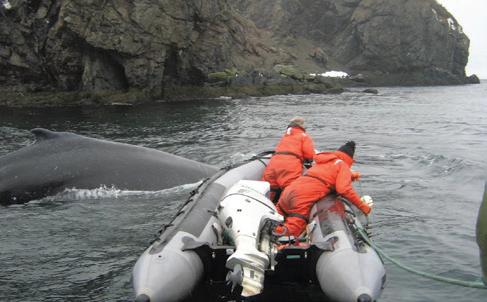
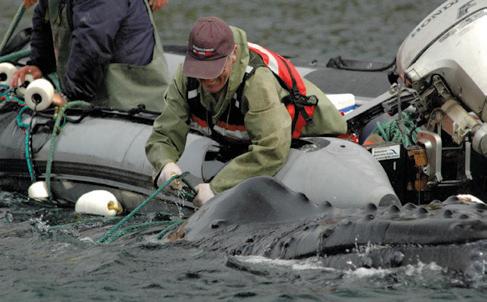
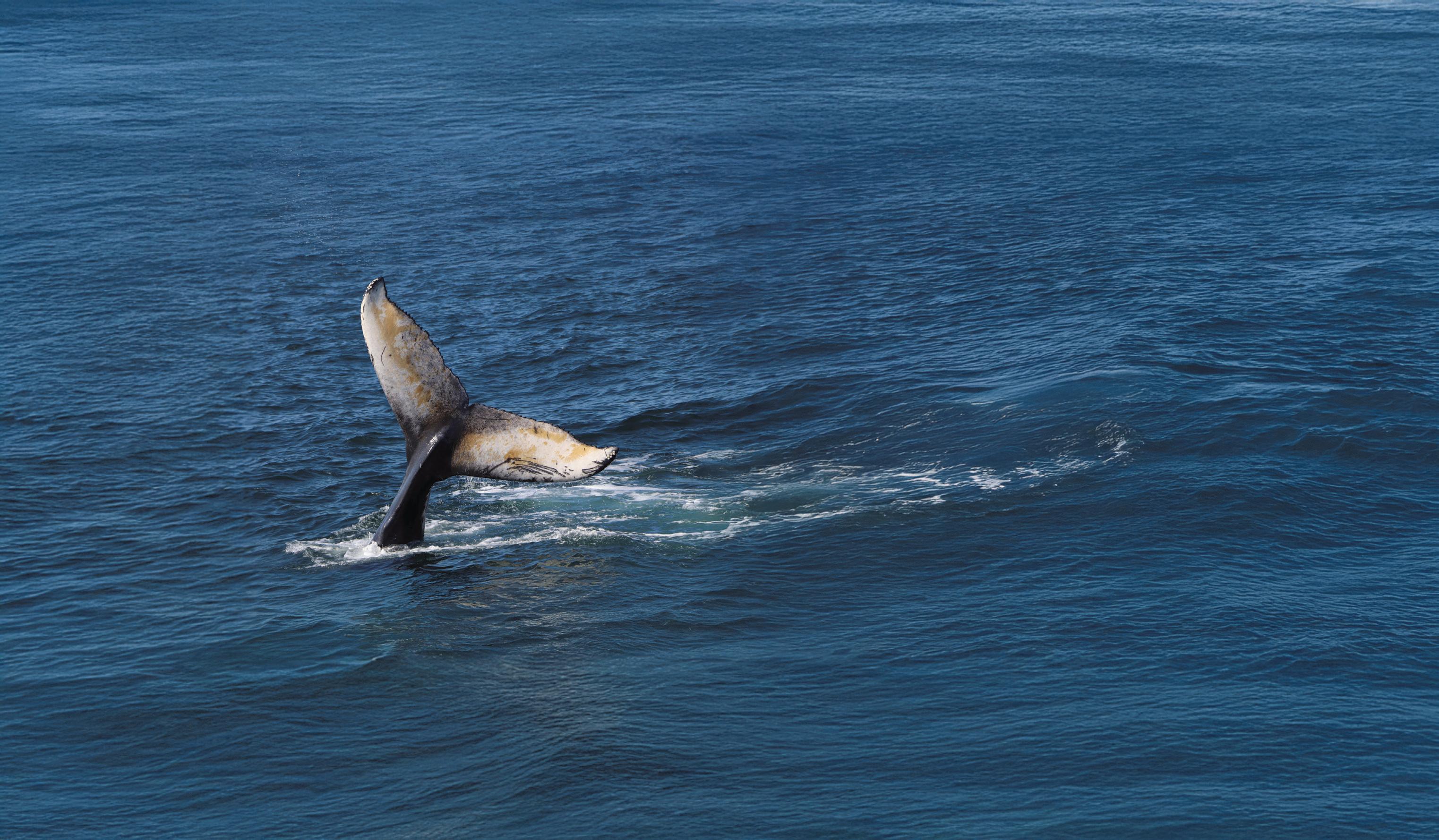
For those who live along the coastal waters of Canada’s Newfoundland and Labrador, spotting a whale or other marine life trapped in fishing nets or stranded on the shoreline is more common than you’d think. When encountering a stuck animal, most people don’t know what to do—either putting themselves at risk by trying to free the animal themselves or simply leaving the animal in distress. But one local organization is striving to change this.
Getting their start at Memorial University in St. John’s, Newfoundland and Labrador, in the '80s, Wayne Ledwell and Julie Huntington didn’t set out to study whales. At first, they wanted to help fishermen who would get a whale caught in their nets and didn’t know what to do with it—Wayne, who came from a fishing community, and Julie, who had vast knowledge in fishing nets, thought their expertise could be beneficial. Their journey with marine life rescue transitioned from the university to the Canadian Coast Guard, and then, in 2001, Julie and Wayne took the
initiative themselves, and Whale Release and Strandings was born.
“We’ve been to every community in Newfoundland, disentangling whales, and many in Labrador, and we’ve been doing it much the same as when we started in the '80s,” Julie explained. “We use tools that were developed in the '80s and have changed shape over the years, and we find them very successful.”
Having completed thousands of successful disentanglements across the province in the last 30 years, Julie and Wayne have become experts in the
field—striving to educate both the public and fishermen about what to do when they encounter a trapped animal.
“Every entanglement is different,”
Julie said. “And that’s the problem with people who aren’t officially involved in disentanglement, and they want to be helpful. They’ll cut something, and they don’t know that they’ve left all of this gear on the whale.”
The most important thing, Julie noted, is to call them as soon as possible. Once they receive a call about an animal in distress, they will ask questions about
the nature of the entrapment while preparing to trek to the animal and begin the rescue.
If you encounter an entangled or stranded whale, Julie offers four helpful tips: Remember, these are wild animals, and to use caution around them
Do not try to disentangle the whale yourself
Do not attempt to move large whales
If possible, take photos of the animal and include an object in the photo for scale to help determine the size of the animal
entrepreneur founded a hunting and fishing paradise on a long stretch of beach along the province’s South Shore. This is also where your story begins.
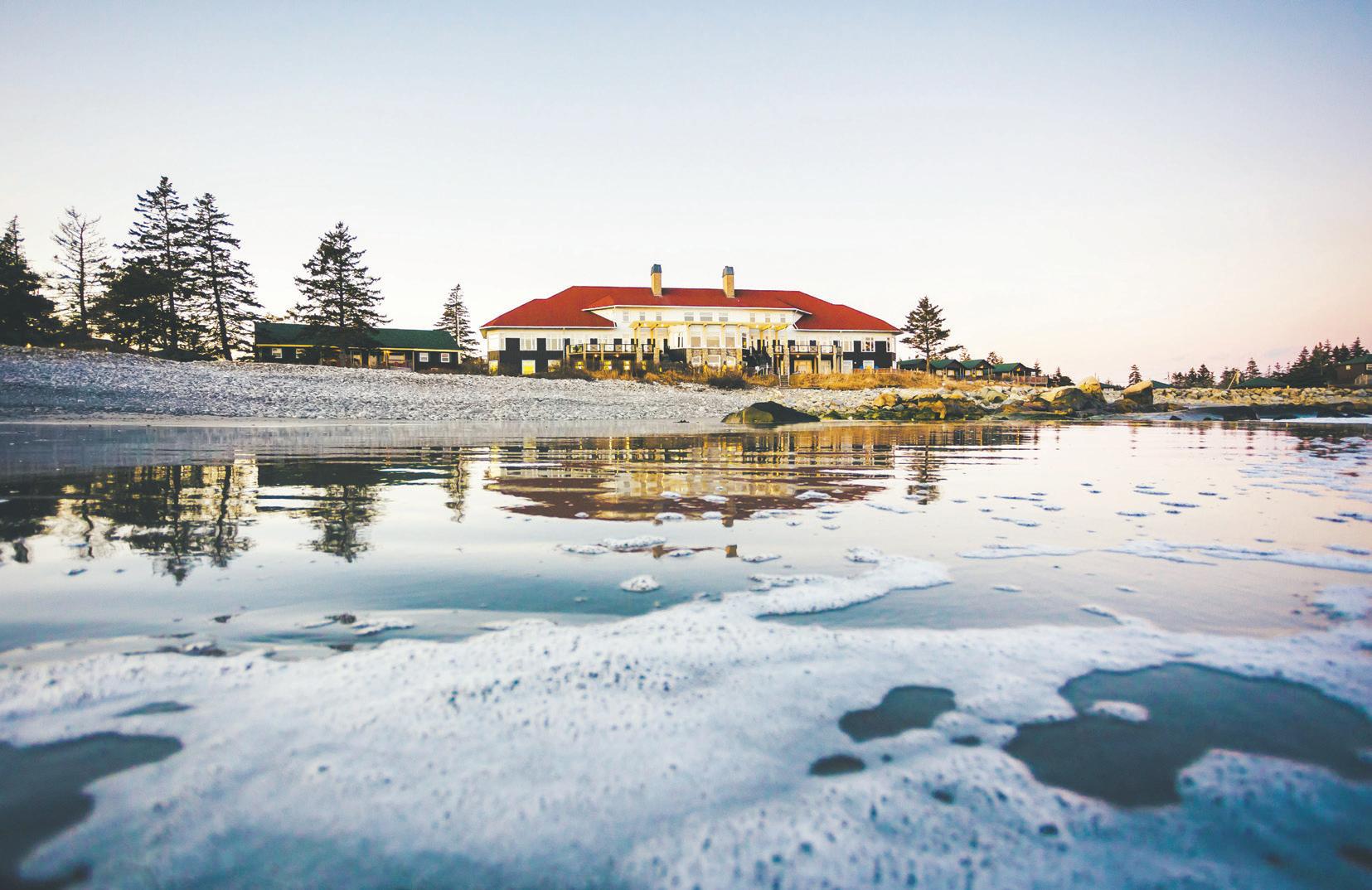
WAKE UP WITH THE ATLANTIC If birdsong and crashing waves drag you from your oceanside cottage at an ungodly hour, know this: we claim to have invented morning people. It’s the sunrise that gets you. Grab a coffee from our mothership, the Main Lodge, and head toward the Atlantic like a lovestruck seal. Slip your feet into the surf and discover that locally crafted ales aren’t the only refreshing liquids on tap at White Point—it is the Atlantic Ocean, after all. Wander down
the beach toward the golf course and spot other early birds along the way. Watch for our protected piping plovers, and the gossipy gulls who stick around year-round.
DAY TRIPS, WINE SIPS, AND SOUTH SHORE WANDERS
White Point isn’t just perfectly situated for sitting in a private hot tub with nothing but your thoughts—it’s also the ideal launching pad for day trips. Visit the UNESCO-designated Old Town of Lunenburg or Kejimkujik National Park and Historic Site. Affectionately known as Keji, it’s where you can explore Mi’kmaw petroglyphs and traditional canoe routes before looping back to the Lodge for happy hour. Speaking of which, Nova Scotia is known as the Napa of the North for good reason. Zip across to the Annapolis Valley to witness the world’s craziest tides and sip your way through more vineyards
than you can possibly hit in a day. Prefer to stay put? We’ll pour you a glass of Tidal Bay—Nova Scotia’s signature white wine appellation, launched in 2012 to reflect our cool climate, coastal terroir, and bright acidity. We’ll raise a toast in honor of our Celtic roots with a Slàinte.
MAKE IT YOUR KIND OF AFTERNOON
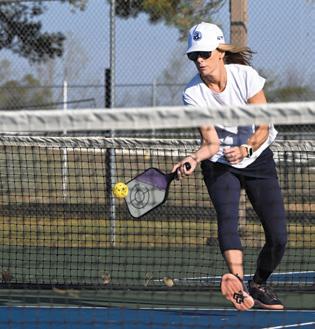
Afternoons see White Pointers happily scattering in every direction—to pickleball, golf, the Ocean Spa, or the bocce ball campo (often googling the rules as they pass bunnies on the path).
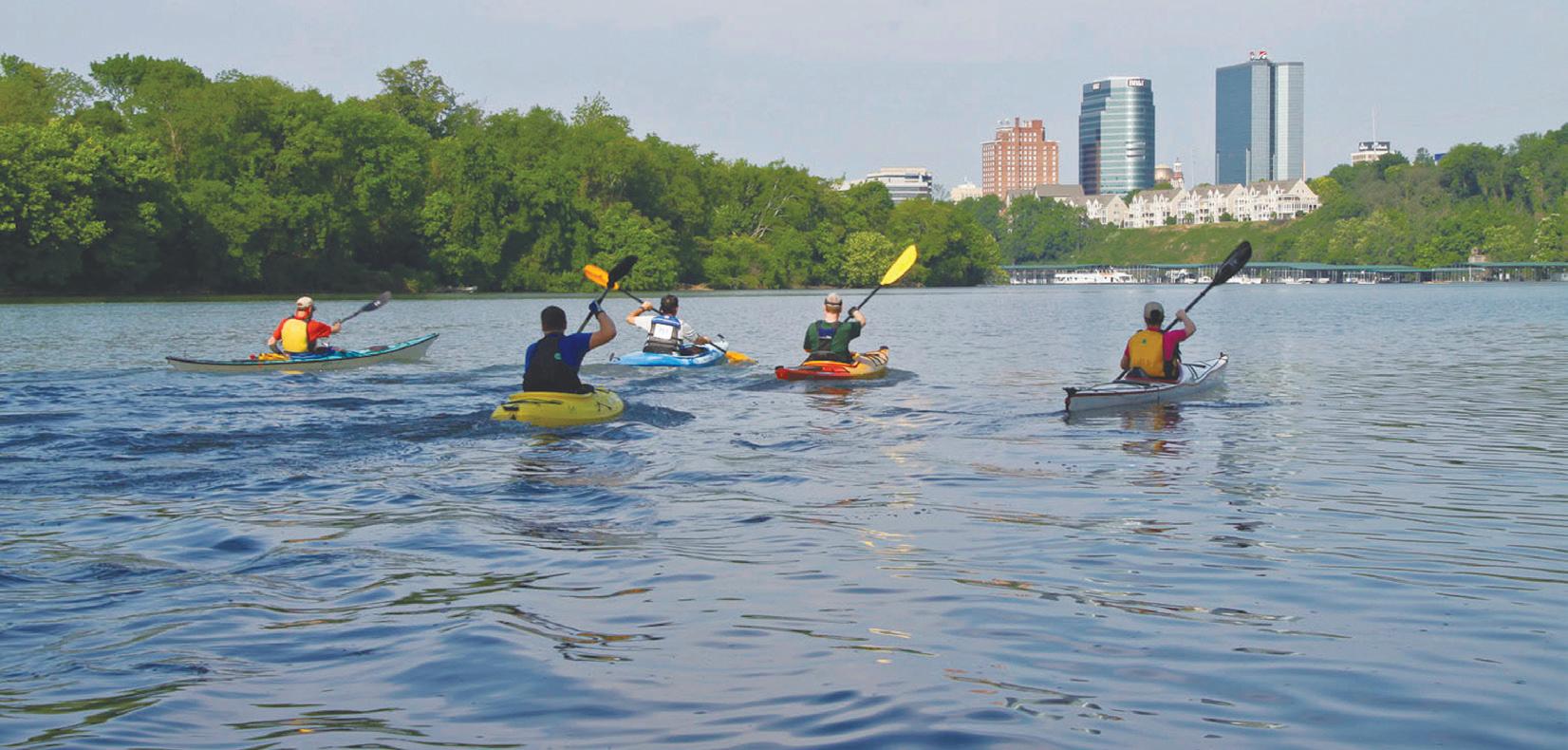
The adventurous borrow bikes, kayaks, or stand-up paddleboards. The artsy paint rocks. The curious can explore local history at Birchtown’s Black Loyalist Heritage Centre or the Fort Point Lighthouse in nearby Liverpool—home to artists and a mystical forest known as Concrete Creations. The blissfully lazy nap on the beach or their cottage porch.
And that’s perfectly okay, too.
Make yourself at home in a Lakeside Glome, an Oceanfront Treehouse, or a classic Canadiana cottage. We’re accessible, kid-friendly, dog-friendly, and planet-friendly—boasting a hard-earned Green Key Distinction we’re awfully proud of.
AFTER HOURS AT WHITE POINT
As the sun fades, White Point’s welcoming Main Lodge becomes something of a lighthouse, guiding those with a thirst for more than just life. Founder’s Lounge is where new friends meet by the beachstone fireplace—over a hand of cribbage and live local music. If these wood-lined walls could talk, they’d recall generations of laughter, love, and lies about that mulligan on the fourth hole. We fuel our family with fresh, local, farm- and sea-totable cuisine prepared by an enthusiastic kitchen. No one goes hungry when fishing boats drift by.
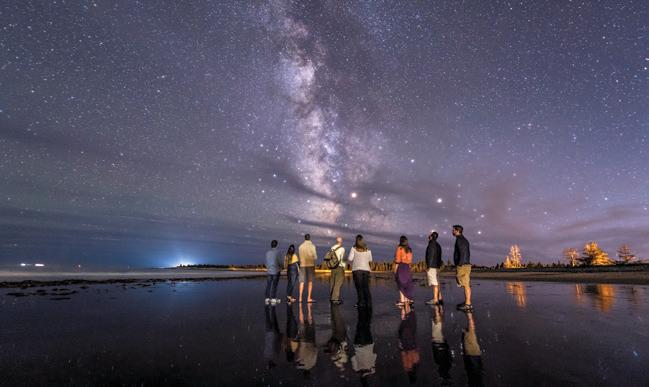
Magic hour is when darkness tosses a sweater over your shoulders and holds your hand on the way to a beachside bonfire. This is the original social network— marshmallows on sticks become s’mores, strangers become friends, and sparks and conversations swim skyward toward the stars. Isn’t it funny how the same sky can look so different when you’re happy?
So the question remains: who could use a big ol’ Nova Scotian hug?
The answer is undeniably you.
Let’s get you here.
Plan your getaway at WhitePoint.com
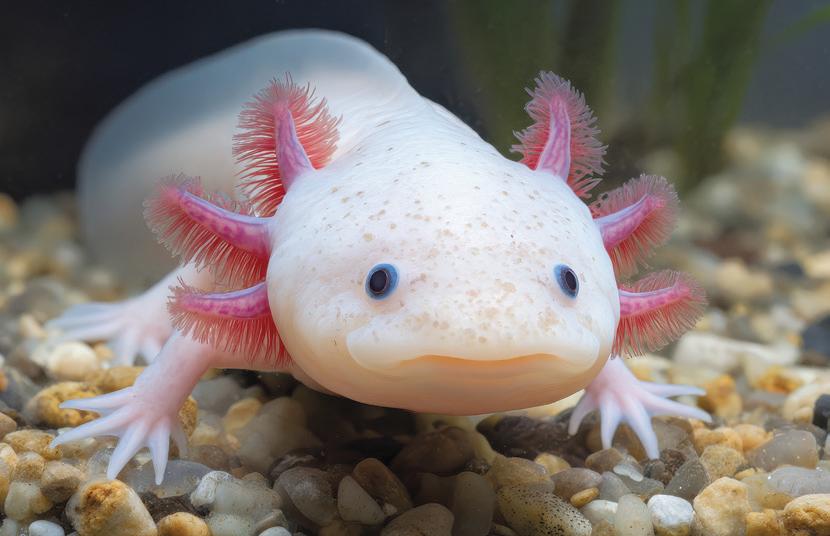
Vancouver Aquarium Unveils Amazing Axolotls!— A
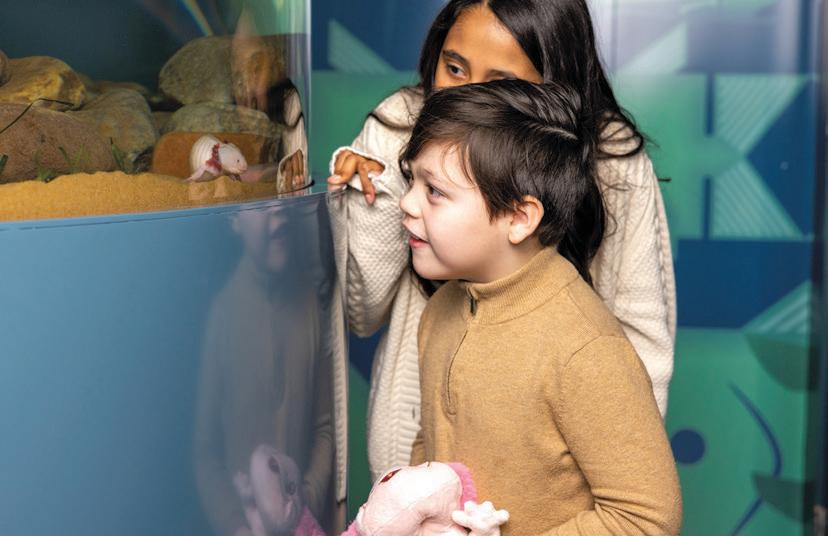
The Vancouver Aquarium invites visitors into a world of wonder with the launch of its new permanent exhibit, Amazing Axolotls!, which debuted on this January.
Located in Stanley Park and welcoming visitors since 1956, the Vancouver Aquarium has connected more than 50 million people from around the world to our oceans—inviting guests not only to explore marine life, but to better understand the threats facing our oceans and the actions that can help protect them. That mission continues through Amazing Axolotls! a new gallery that expands the Aquarium’s existing axolotl experience into a larger, more immersive space designed to inspire curiosity, learning, and conservation-minded action. Often recognized for their frilly external
gills, perpetual “smiles,” and remarkable ability to regenerate, axolotls are among the most charismatic amphibians on the planet. The new exhibit celebrates what makes this species so captivating while highlighting its cultural significance and the conservation challenges it faces in the wild.
“Axolotls are an exceptionally unique species that spark curiosity and fascination,” said Mackenzie Neale, Animal Care Director. “Through this exhibit, we hope guests gain a deeper understanding of, and connection to, this remarkable animal.”
IMMERSIVE HABITATS & INTERACTIVE MOMENTS
Amazing Axolotls! features three habitats, including two dedicated to axolotls and one for fish. All habitats are
designed at a similar viewing height to support accessibility and comfortable sightlines for visitors of all ages. Educational displays throughout the gallery explore the axolotl’s cultural origins, unique biology, and conservation significance. Guests can also step into a playful photo moment—“Smile Like an Axolotl”—created to encourage engagement and shareable memories that extend the exhibit’s reach beyond the gallery walls.
A SHARED CONSERVATION STORY, FROM VANCOUVER TO MEXICO CITY
The exhibit also spotlights the axolotl’s fragile wild habitat. Endemic to the Valley of Mexico, the axolotl now survives in the wild only in Xochimilco, a network of waterways in
2.
Mexico City with deep ecological and cultural importance.
“This display offers [visitors] a closer look at this extraordinary salamander and the need to protect its delicate habitat,” said Julián Adem, Consul General of Mexico in Vancouver.
“We thank the Vancouver Aquarium for helping share the story of this remarkable species and invite visitors to discover the exhibition—and, one day, the vibrant waterways of Xochimilco, which the axolotl calls home.”
IN ACTION
CONSERVATION
As a long-standing leader in ocean education and conservation, the Vancouver Aquarium upholds high standards of animal care and stewardship. The Aquarium is accredited by the Association of Zoos
and Aquariums (AZA), the Alliance of Marine Mammal Parks and Aquariums (AMMPA), and Canada’s Accredited Zoos and Aquariums (CAZA), and is Humane Conservation Certified by American Humane.
Beyond the gallery, that commitment continues through its partnership with the Vancouver Aquarium Marine Mammal Rescue Society (VAMMR), the independent registered charity that operates Canada’s only dedicated marine mammal rescue facility. Each year, VAMMR responds to more than 300 marine animal emergencies—rescuing, rehabilitating, and releasing animals in distress, and disentangling sea lions impacted by marine debris. Donations directly support this lifesaving work.
(Source:
Walking With the Land: An Authentic Journey Into Wendake
paddling ancestral waters, crafting with an artisan, or following a forest trail at dusk, Wendake invites you to experience Indigenous culture not as history, but as something vibrant, evolving, and deeply rooted in place.
WHERE LAND IS TEACHER
In Wendake, the land is not only scenery, it is also a storyteller. Guided tours, offered year-round, bring visitors through longhouses, smokehouses, sweat lodges, and forest paths while sharing teachings about traditional food preservation, purification practices, transportation, and spiritual life.
home of the Wendat Nation, where immersive cultural experiences, contemporary Indigenous art, and unforgettable cuisine come together to bring tradition into the present, inviting you to explore and connect with Indigenous culture firsthand. Here, tourism is about participation, not observation. Accommodations, cultural activities, dining, wellness, nature, and events are all woven together through partnerships led by the community itself. Carefully curated packages welcome families, couples, friends, school groups, and elders alike. Whether you are listening to legends beside a fire,
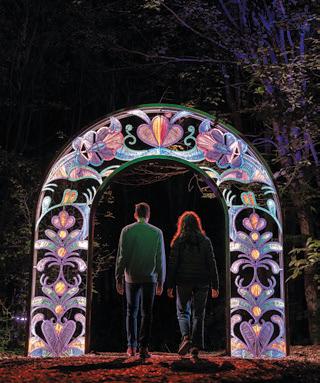
Seasonal experiences, such as canoeing in summer and snowshoeing in winter, allow guests to engage with the territory as the Wendat have for centuries. But one of the most exciting, one-of-a-kind experiences comes alive at night. Onhwa’ Lumina brings light to the darkness—literally. As darkness settles over the forest, Onhwa’ Lumina transforms the landscape into an immersive journey of light, sound, and storytelling. Along a 1.2-kilometer path, visitors are guided through founding myths, ancestral rhythms, and visions of the future, creating a captivating experience rooted in ceremony and reflection that deepens your understanding of
Wendake's spiritual traditions.
Between experiences, Wendake encourages you to slow down. Walk along the Saint-Charles River Linear Park. Pause at Kabir Kouba Falls, where water, history, and industry once converged. Cycle the Corridor des Cheminot that now links communities instead of dividing them.
Paddle ancestral waters by canoe or rabaska, guided by those who know every bend of the river.
STAY WHERE HISTORY LIVES
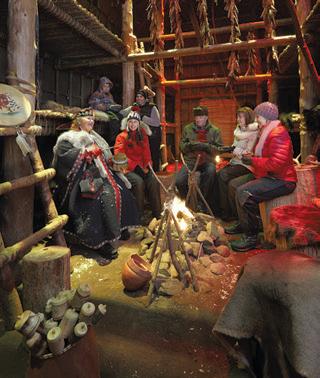
Whether you’re looking for full immersion or a relaxing stay by the Akiawenrahk River, Wendake’s curated package destinations weave together history, traditions, culture, and contemporary life. For those seeking deeper immersion, an overnight stay in the Ekionkiestha’ National Longhouse offers an unforgettable link to history. Built of wood and bark and warmed by fire, the longhouse has long symbolized family, welcome, and collective life among Iroquoian peoples. As you sleep, a fire keeper tends to the flames, guarding dreams as much as embers.
HANDS THAT REMEMBER:
CRAFT, ART, & TRANSMISSION
Wendake’s most popular activities share a common thread: they’re designed
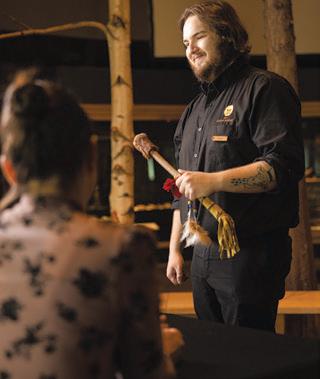
to immerse visitors at their own pace through participation. Wendake’s artisans and artists carry cultural memory in their hands and impar t it to visitors through participatory workshops that invite them to learn by doing, such as creating talking sticks, bead necklaces, medicine wheels, drums, and dreamcatchers, while hearing the teachings behind each form.
One standout is the Talking Stick craft workshop, where you create a talking stick, traditionally used in councils to regulate speaking time and encourage respectful dialogue. As you craft your own, an artisan explains its significance.
It’s a keepsake with meaning, and for many visitors, an unexpectedly useful tool to bring home. Then there’s the Myths and Legends experience, held inside the Ekionkiestha’ longhouse, where storytellers share creation stories and enduring legends around the fire. The Huron-Wendat Museum offers guided tours through its permanent exhibition, “Wendat Endi’, We the Wendat,” highlighting cultural guardians, core values, resilience, and continuity. There are also discovery tours around town, workshops, and even an audio guide available in multiple languages (including English and French).
What makes Wendake truly unforgettable is not only what you see, but how you are welcomed. Storytellers, drummers, dancers, and contemporary artists ensure that culture is not frozen in time. Performances by women drummers, dance troupes, and myth keepers breathe life into teachings once shared exclusively around family fires. If your timing is right, you’ll even get to take part in Powwow season and experience the feeling of being welcomed into a circle. Wendake’s International Powwow is a vibrant cultural gathering that draws dancers, drummers, artisans, and visitors from across North America. Powwow dances (Traditional, Grass, Fancy, Shawl, Jingle Dress, Smoke Dance) are more than movement-they’re storytelling in motion, offered with pride and openness, showcasing the living culture that continues to thrive today. In a world increasingly hungry for authenticity, Wendake offers something rare: tourism shaped by Indigenous leadership, grounded in respect for land and culture, and committed to sharing knowledge without dilution. Come with curiosity. Leave with connection.
RAYE MOCIOIU
Ottawa is an ideal destination for a family-friendly Spring Break, offering a mix of culture, outdoor fun, and engaging activities. Throughout the break, the city’s museums feature hands-on programming designed to educate and entertain the whole family.
Winter adventures abound in Ottawa, from skating at Lansdowne Park, City
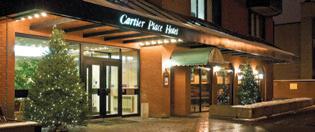
Hall’s Rink of Dreams, and Rideau Hall to skiing on nearby hills and tobogganing throughout the city. No matter what, the weather won’t stop visitors from coming to Ottawa and enjoying our nation’s capital. For those wishing to stay in the heart of downtown Ottawa, close to everything, the family-friendly Cartier Place Suite Hotel is an excellent choice. The hotel is located next to Elgin Street’s trendy boutiques and restaurants, and just a short walk to Parliament Hill, major sites, the Museum of Nature, the Rideau Canal, and the Rink of Dreams at Ottawa City Hall. Spring Break also brings special events like the International Film Festival of Ottawa, Ottawa Home and Garden Show, National Gallery of Canada Winter Cultural exhibit, City of Ottawa Art Collection exhibition, and guided tours of the Parliament Buildings.
Ottawa’s renowned museums round out the experience, offering plenty for families to dive into. Spend an afternoon at the Bank of Canada Museum with free crafts and activities (including a
fun look at counterfeiting), then keep exploring through dinosaur skeletons and hands-on exhibits at the Canadian Museum of Nature. Kids can try their hand at drone piloting and spacethemed activities at the Aviation and Space Museum, catch maple syrup demonstrations at the Agriculture and Food Museum, and step into Viking-era adventures at the Canadian Museum of History—before wrapping up with the Canadian War Museum’s immersive, interactive galleries. Enjoy the Maple Syrup season festivities, the many Indoor Fun Zones, Escape Rooms, Pro Sports events, and the nearby Parc Omega, a large Canadian wildlife park.
The
Taos Pueblo: A Living World Heritage of Earth,
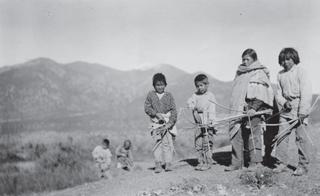
History is alive in Taos Pueblo, New Mexico, where ancient structures of earth and straw have witnessed a thousand years of seasons and change. A designated World Heritage Site, Taos Pueblo invites visitors to walk through living history—and to practice sustainable tourism alongside the Red Willow people.
ANCIENT ROOTS & SACRED LANDS
This historic community has thrived for over a millennium, making it one of the oldest continuously inhabited settlements in North America. For more than 1,000 years, multi-storey adobe structures—made of sun-dried earth, clay, and straw—have shel tered generations. Their thick walls provide natural insulation against both heat and cold, and some structures are believed to date back to approximately 1000–1450 A.D. tural identity is Blue Lake, a sacred body
of water located in the nearby mountains. For the Taos people, Blue Lake is far more than a natural resource; it is life-giving and deeply symbolic—an essential part of their cultural and spiritual heritage. It has long
across the United States—symbolizing the power of persistence and the importance of cultural preservation.
Like many Indigenous communities, Taos Pueblo has faced profound challenges
Spirit, and Story
is a unique privilege—and it comes with an important rule: leave nothing behind but footsteps. Rooted in respect for nature, Taos Pueblo encourages visitors to tread lightly on the and respect for the land and its people. Many artisans work with natural, locally sourced materials, passing down techniques that honor the environment and preserve culture.
Each ceremony in Taos Pueblo carries deep meaning, connecting the community with their ancestors and the cycles of nature. One of the most celebrated events is San Geronimo Feast Day in September. A blend of Indigenous traditions and Catholic influences, the feast day includes sacred dances, races, and gatherings that commemorate St. Jerome, Come with an open heart, and you will leave with memories as enduring as the
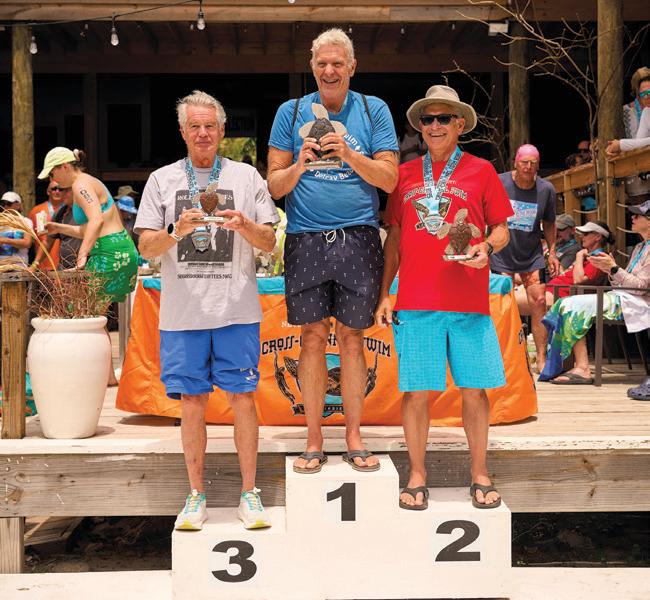
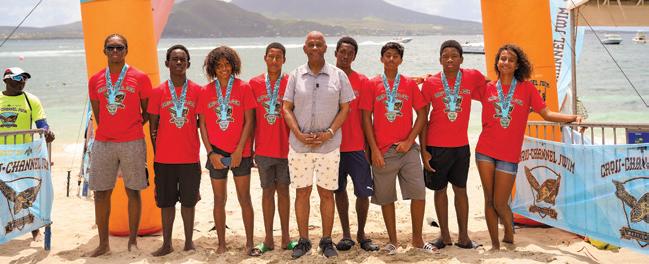
The open-water calendar has its classics, and the Nevis to St. Kitts Cross Channel Swim is one that swimmers return to year after year.
Scheduled for March 28, 2026, the swim unites elite and amateur swimmers in an iconic island-toisland crossing of the famed Narrows between Nevis and St. Kitts. The course spans 2.5 miles in open water, with the two islands’ coastlines and volcanic peaks shaping the experience from start to finish. Nevis is uniquely positioned as the only destination in the region offering a structured, internationally recognized cross-channel open-water swim into St. Kitts. That hallmark has helped the event grow into one of the Caribbean’s most distinctive endurance challenges.
A SIGNATURE EVENT Over more than two decades, the Cross Channel Swim has built steady momentum, with consistent growth in participation and international interest. What began as a bold local concept has matured into a flagship experience at the intersection of sport, wellness, and storytelling—one that also supports Nevis’ broader push to be seen as a credible, high-value sports tourism destination, complementing its boutique luxury and nature-led appeal. Nevis Tourism Authority CEO Andia Ravariere describes the swim as a defining experience for both swimmers and the island’s direction:
“The Nevis to St. Kitts Cross Channel Swim is more than a sporting event; it is a bold statement of where Nevis is heading. This is a rare cross-channel swim between two beautiful islands, an experience very few destinations in the region can deliver.”
— Andia Ravariere, Chief Executive Officer, Nevis Tourism Authority
A HISTORIC ADDITION TO THE LINEUP
This year’s edition welcomes Alice Dearing, a former marathon swimmer and Team GB Olympic open-water athlete. A Tokyo 2021 Olympian and multiple-time national champion, Dearing made history as the first Black woman to represent Great Britain in Olympic swimming—a milestone that adds to the event’s global relevance and sense of occasion.
In remarks shared ahead of the swim, Dearing framed the crossing the way many open-water athletes describe their favorite events: as a journey, not just a race.
“I love swims that feel like a real journey… Warm water, incredible scenery, and that sense of adventure are what open water swimming is all about. This is a bucket-list swim for so many people and I’m really excited to be part of it.”
— Alice Dearing
WHY IT MATTERS TO NEVIS
For Nevis, the Cross Channel Swim has become more than a race date on the calendar. It’s a signature experience that supports the island’s wider sportstourism strategy—drawing a niche, highengagement audience that often travels with family, stays longer, and returns. As the event’s profile has grown, so has its reach beyond the region, finding a natural home in wellness, endurance, and human-interest storytelling, where the focus is as much on personal milestones as podium finishes.
Hon. Mark Brantley, Premier of Nevis, has pointed to the event’s pull among swimmers worldwide:
“The annual Nevis to St Kitts open water swim is a unique sporting event which has emerged on the bucket list of swimmers worldwide.”
— Hon. Mark Brantley, Premier of Nevis
BEYOND THE SWIM
For many participants and supporters, the event becomes the center of a longer stay. Nevis pairs outdoor experiences—like hikes up Nevis Peak and time in natural hot springs—with local cuisine, quiet beaches, and a strong sense of place. The island is also known as the birthplace of Alexander Hamilton, with preserved historic sites and Georgian architecture that add
Adventure Among the Sky Islands of Sierra Vista, Arizona
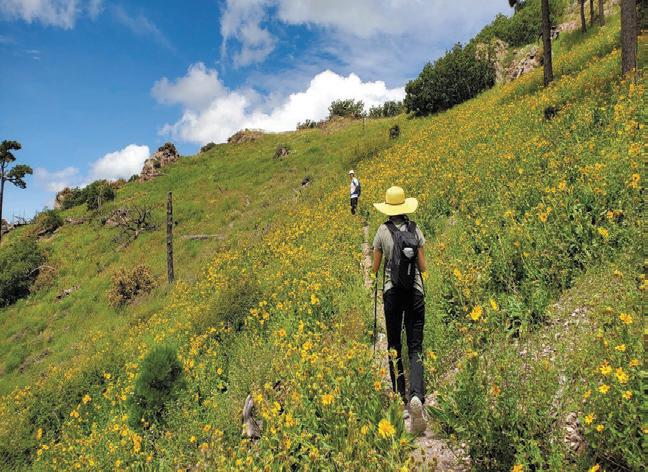
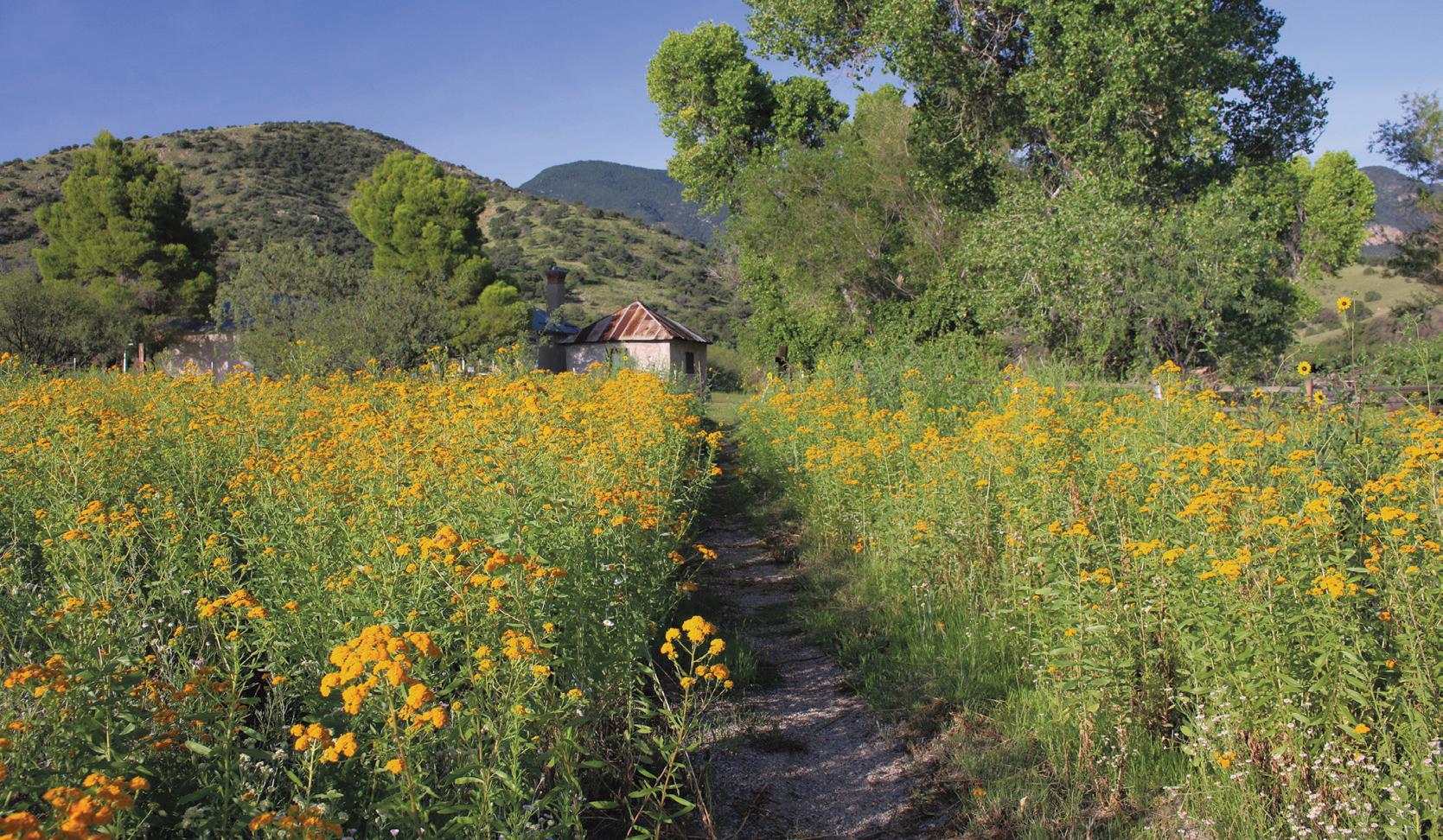
Discover a landscape where the desert meets the clouds. Tucked into southeastern Arizona, Sierra Vista is an adventurer’s dream—high-elevation trails, panoramic views, and refreshingly cool temperatures. Resting at 4,600 feet, this mountain town offers 360-degree vistas of the surrounding desert grasslands. Follow the line of ancient cottonwoods along the San Pedro River, where nearly level trails invite leisurely walks along the riverbank, where you can still enjoy breathtaking views (without taking your breath away).
A PERFECT CLIMATE
YEAR-ROUND
For travelers eager to escape winter chills without facing desert heat, Sierra Vista is the sweet spot. Its southern latitude keeps the frost at bay, while its altitude brings gentle breezes and mild days all year long. Come spring, the landscape explodes into color—a dazzling super bloom of golden creosote, violet lupine, lavender asters, pink clover, and fiery orange poppies.
HIKE AMONG GIANTS
The Huachuca Mountains rise boldly behind town, laced with around four dozen trails that weave through
wilderness toward towering peaks. Miller Peak (9,466 feet) and Carr Peak (9,220 feet) reign above the skyline, while nearby summits like Ramsey and Pat Scott offer equally stunning views. Whether you’re tackling switchbacks through thinning mountain air or sticking to gentle foothill paths, every route rewards you with color, quiet, and breathtaking scenery.
TRAILS FOR EVERY TRAVELER
Prefer a lower-key adventure? Explore the foothills and river valley, where trails range from easy loops to moderate climbs. Brown Canyon Ranch, once a working cattle ranch and now part of the Coronado National Forest, is a local favorite for hikers, mountain bikers, and horseback riders. Take a moment to wander the historic adobe homestead before setting out on shaded forest trails. Nearby Miller Canyon and Carr Canyon offer similar variety: peaceful woodland walks, connecting loops, and access to longer climbs like the 3.7-mile Perimeter Trail, which links Carr and Miller canyons.
A HAVEN FOR WILDLIFE AND WONDER
Don’t miss the Ramsey Canyon Preserve, owned by the Nature Conservancy. This
lush sanctuary is alive with birds and wildlife, from graceful Coues deer to countless hummingbirds. Waterfalls tumble through canyons lined with evergreens and old homesteads, and overlooks like Hamburg Overlook reward every step with sweeping views of the valley below. Just beyond town, the Environmental Operations Park showcases Sierra Vista’s commitment to sustainability. This 50acre restored wetland naturally treats thousands of acre-feet of water each year, replenishing the aquifer while creating a thriving habitat for ducks, herons, and migrating songbirds. Visitors can explore a raised viewing platform or join guided bird walks hosted by local conservation groups.
SIP, STAY, AND SAVOR
In the heart of Arizona’s premier wine region, Sierra Vista is perfectly positioned between Sonoita and Patagonia to the west and Willcox to the northeast. The area’s rich soil, high elevation, and sun-drenched days create the ideal conditions for worldclass vineyards. With 24 local tasting rooms, visitors can sample Arizona’s award-winning wines—praised in the Wall Street Journal , poured at the White House, and celebrated at seasonal festivals. Extend your stay with accommodations for every traveler, from cozy bed-and-breakfasts and historic guest ranches to modern hotels and scenic campgrounds. Sierra Vista pairs perfectly with every kind of getaway. Like the steady flow of the San Pedro River, Sierra Vista offers endless reasons to return. With its blend of mountain adventure, desert beauty, and small-town warmth, this Arizona gem invites you to explore, breathe deeply, and stay a while.
Welcome to Sierra Vista—where the extraordinary begins.
Learn more at visit.sierravistaaz.gov
Explore, experience, and
(Source: Nevis Tourism Authority)
For today’s traveler, a Caribbean escape is about more than sunshine—it’s about finding space to slow down. On the shores of St. Maarten, Sonesta Resorts offers a wellness-focused retreat where restoration unfolds naturally, guided by the rhythm of the island and a thoughtful approach to care. Here, days are unhurried, moments feel intentional, and well-being is woven seamlessly into the experience from arrival to departure.
At Sonesta Resorts, wellness is not introduced through rigid schedules or prescribed routines. Instead, it reveals itself through personal preference—through the freedom to shape each day according to energy, inclination, and curiosity. Whether staying at the vibrant Sonesta Maho Beach Resort or the serene, adults-only Sonesta Ocean Point Resort, guests are invited to embark on a truly unique journey, one where rest and renewal take form organically.
A MORNING RITUAL ROOTED IN CALM
Wellness at Sonesta often begins with movement—gentle, grounding, and set against the backdrop of the Caribbean Sea. Sunrise yoga sessions allow guests to greet the day with intention as soft light spills across the water. Breath and movement flow together, setting a calm tone that carries gently into the rest of the day.
For those drawn to a more energizing start, the SunFit program offers a range of options, from pilates and HIIT to water aerobics and Socacise. These classes are designed to be inclusive and uplifting, emphasizing enjoyment over intensity.
Even a simple morning beach walk becomes part of the wellness rhythm, where the sound of waves and warm island air encourage mindfulness through motion.
A SANCTUARY FOR THE SENSES
At the heart of Sonesta’s wellness experience is Serenity Spa, a tranquil sanctu
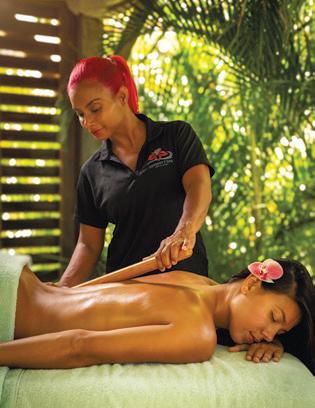
facials, and body treatments designed to release tension and restore balance. Sauna and steam rooms offer a gentle transition into relaxation, while attentive therapists ensure each treatment feels personalized and unhurried.
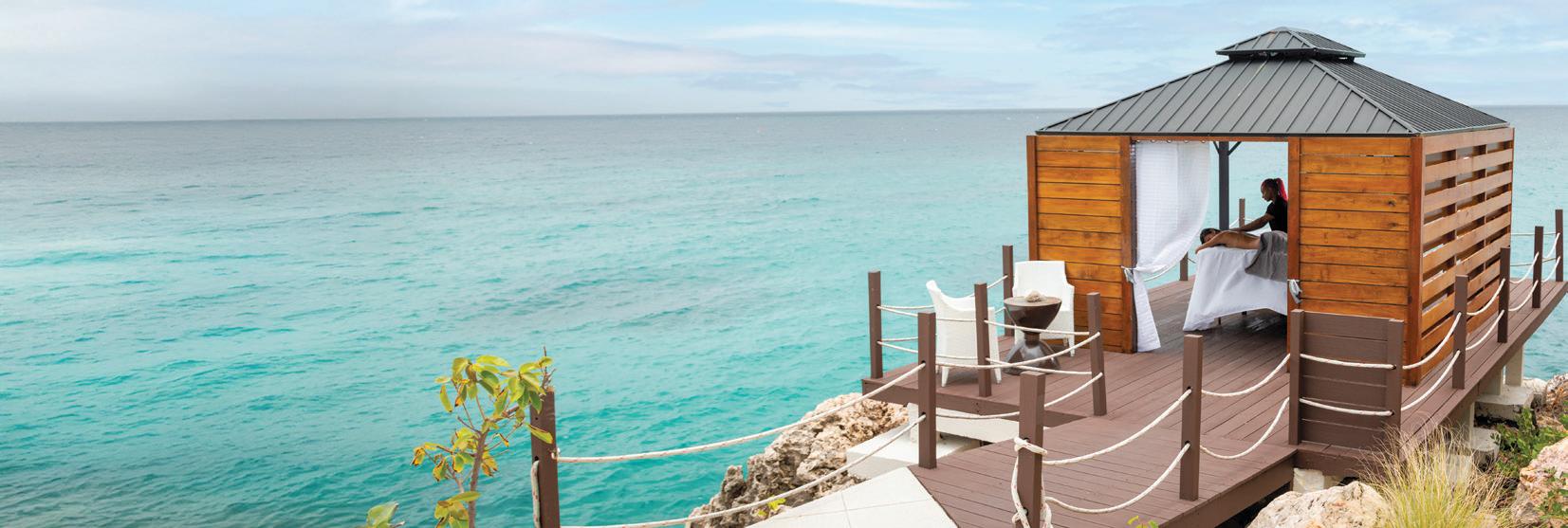
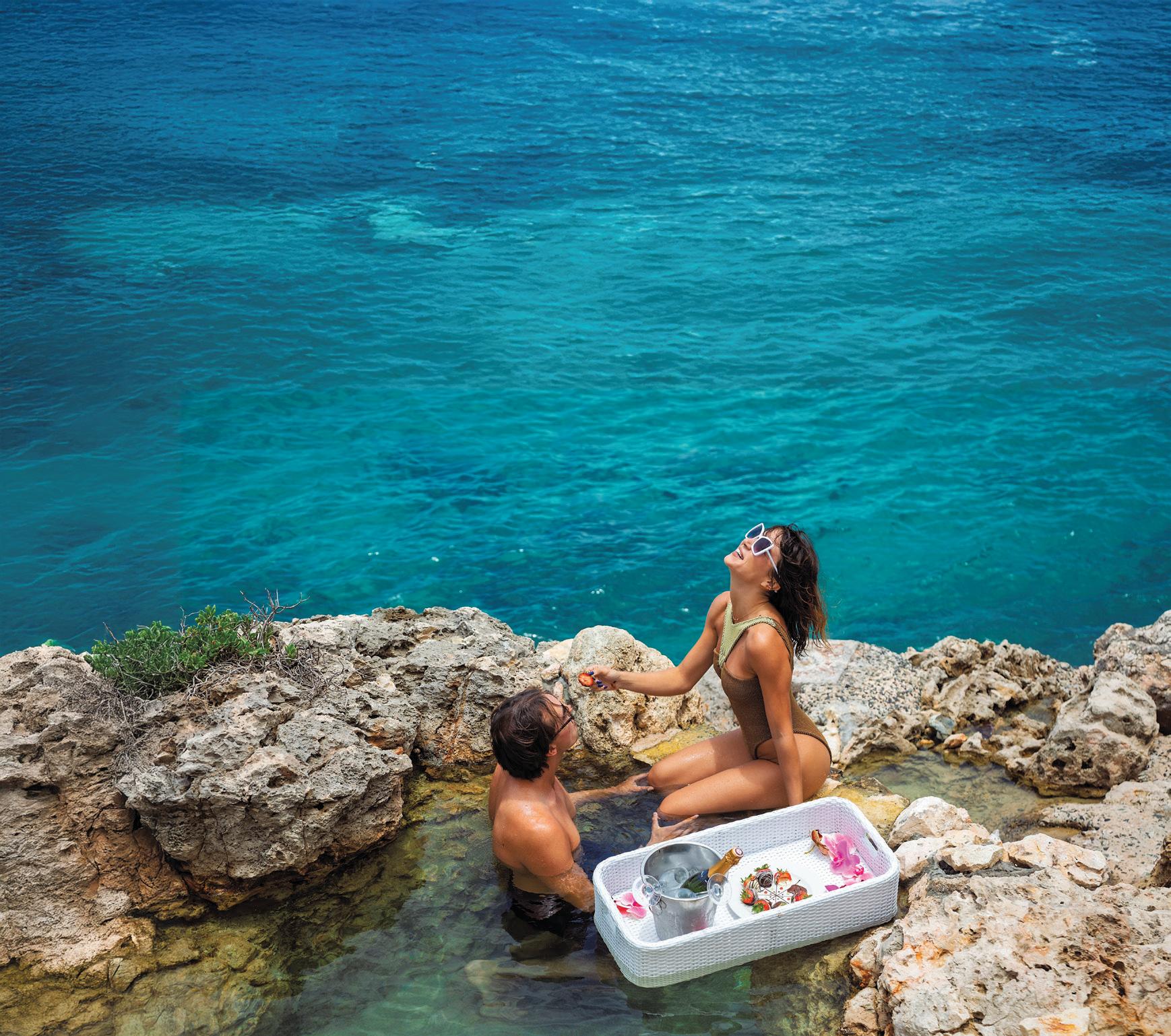
At Sonesta Ocean Point Resort, Serenity Point provides an unforgettable oceanfront experience. Gazebo massages unfold with sea breezes and panoramic views, allowing nature to become part of the treatment itself. Nearby, the Rock Pool Experience uses alternating water temperatures to promote circulation and relaxation, creating a sensory journey that feels both invigorating and soothing.
For moments of quiet reflection, the Zen Garden offers a serene fusion of Japanese tradition and Caribbean charm. Surrounded by natural beauty, guests can enjoy specialized treatments that emphasize mindfulness, stillness, and inner balance.
QUIET MOMENTS FOR
audiobooks, available instantly through their own devices.
Whether reading by the pool, listening during an afternoon rest, or unwinding before sleep, the program encourages guests to slow down and engage with stories that inspire, comfort, or simply entertain. It’s a subtle yet meaningful addition to the guest experience—one that reflects Sonesta’s understanding that mental clarity is as essential to wellness as physical care.
DINING WITH INTENTION
Wellness continues at the table, where dining at Sonesta Resorts St. Maarten celebrates both nourishment and plea
alongside global culinary techniques. Rather than imposing rules, dining encourages guests to listen to their bodies, savor each bite, and appreciate food as part of a holistic wellness experience.
AN INVITATION TO UNWIND MIDWEEK
For travelers seeking a deeper reset, Sonesta’s Midweek Unwind promotion
Putnam County, NY: A Hudson Valley Getaway Close to Manhattan
An hour north of Manhattan, nestled between the Hudson River and the Connecticut State line, is the wonderful gem in the Hudson Valley, Putnam County. Putnam is a small but mighty treasure trove of crystal lakes, beautiful hiking trails, historic sites, art and cultural experiences, and quaint restaurants and shops—with five Metro-North stops, day trips are hassle-free, and getaways are easy.
EXPLORE THE HISTORY, PLACES & PERSONALITIES
THAT BUILT A NATION IN PUTNAM COUNTY, NEW YORK
Our nation’s Founding Fathers believed in the ideal that all men were created equal with certain unalienable rights: the rights to life, liberty, and the pursuit of happiness. From April 1775 to September 1783, the colonial rebels fought against tyranny to gain our nation’s independence. This area of New York, along the east side of the Hudson River, saw bloodshed, espionage, resilience, bravery, and determination— playing a vital role in the creation of the United States.
Gain a new perspective with tales of revolutionary women like Sybil Ludington, whose 40-mile horseback ride rallied militia after the burning of
nearby Danbury, Connecticut.
Remember the often-forgotten slavery economy in the north through the eyes of people such as Prince Cornwall, an enslaved man who served under General George Washington. Hear the treasonous tale of Major General Benedict Arnold and visit Constitution Island, an integral location for military strategy of the Great Chain, and the site where General George Washington made his final address to the troops. Putnam’s history comes alive through a new audio tour, Revolutionary Road to Putnam County , narrated b y Putnam C ounty resident and philanthropist George Carroll Whipple III. Launching in April 2026, the tour will guide visitors to key historic sites, including Boscobel House & Gardens—once home to a wealthy Loyalist—and the Daniel Nimham memorial at Putnam County Veterans Memorial Park. Details will be available at RevolutionaryPutnam.org.
FAMILY FUN DAYS TO ENJOY
THIS SUMMER
Travel back in time to 250 years ago to see what life was like in the fight for America’s Freedom on Saturday, June 6th, at Putnam County Veterans
Memorial Park for Putnam County’s Heroes battle The Redcoats. See live military demonstrations, listen
to stirring fife & drum, and wander through a bustling merchant market for Revolutionary War-themed goods.
The Putnam County Fair & 4H Showcase is the country fair families love. An easy car drive away, the fair draws thousands of visitors who enjoy food trucks, vendors, games, demonstrations, exhibits, magic shows, inflatables, farm animals, pony rides, and entertainment. Listen to live music, check out the classic car show, and take part in the Duck Derby Fundraiser, which
To travel through the Tennessee River Valley is to follow a story written in water, stone, and quiet determination.
The river winds past small towns and open farmland, beneath dam spillways and along shaded banks where generations have fished, worked, and gathered. Long before it powered homes and industries, the Tennessee River shaped daily life here—sometimes gently, sometimes with nature’s great force.
In the 1930s, during one of the most difficult chapters in American history, the river became the center of a bold national plan. The creation of the Tennessee Valley Authority transformed a struggling region into a place of possibility. Dams brought
electricity to rural homes, protected communities from flooding, and offered steady work during challenging times. For many families, this was their first connection to conveniences already enjoyed in other regions—lights after sunset, radios in living rooms, and a sense that the future had arrived. Today, visitors can still stand atop the historic dams, walk scenic overlooks, and feel the scale of that moment. But the Valley’s story didn’t stop there—it kept moving, just like the river.
As America approaches its 250th anniversary, the Tennessee River Valley is once again shaping the nation’s energy future, blending heritage with innovation. Across
Tennessee and parts of Kentucky, Alabama, and Mississippi, new energy projects are rising alongside historic landmarks, creating a landscape where past and future coexist.
Near Oak Ridge, advanced nuclear research continues a legacy of scientific discovery that helped define the 20th century. In Stewart County, a modern power plant reflects how today’s energy needs are met with efficiency and care. In Paducah, Kentucky, a former coal ash site has been reborn as a solar field—an inspiring example of renewal on land once shaped by industry. In Northern Alabama, renewable energy projects and workforce programs are opening new doors while honoring a proud industrial heritage.
A JOURNEY WORTH TAKING
For travelers, the Tennessee River Valley offers something rare: a continuous narrative, from ancient cultures and early trails to modern innovation and
places that still anchor community life. Museums, picturesque overlooks, recreational opportunities, and working landscapes tell a story that is both deeply local and distinctly American. What makes the Tennessee River Valley special isn’t just what was built here—it’s why. Energy, in this region, has always been about people: powering homes, supporting livelihoods, and strengthening communities.
As the nation reflects on 250 years of independence and ingenuity, the
Where the Trail Begins: Uncovering
You might not expect to find one of North America's most impressive historical collections on a quiet stretch of Highway 20 in Nebraska, but that’s exactly where it is. Before highways crisscrossed the continent and towns dotted the plains, North America was ruled by a different kind of commerce— one built on trust, barter, and beaver pelts. At the Museum of the Fur Trade in Chadron, Nebraska, this period of history is displayed in full force, with authentic artifacts and exciting stories. Built on the historic Bordeaux Trading Post site, the museum is one of the only reconstructed buildings in the U.S. officially recognized by the National Register of Historic Places. While most trading posts were fleeting, gone within a season or two, Bordeaux lasted an impressive 40 years—from 1837 to 1876— making it a vital hub during the height of the fur trade.
A TREASURE TROVE OF ARTIFACTS
Inside, you’ll find a collection of over 8,000 artifacts, with roughly a third currently on display. Everything you see represents a type of item that would have been (or even was) exchanged between Indigenous peoples and Europeans or Americans,
from tools to furs and textiles, weapons, and decorative goods. One of the most remarkable finds within these walls is the museum’s extensive collection of rare firearms, which houses over 300 guns and fragments. You’ll even find the iconic weapons of historic figures like Kit Carson, Tecumseh, and Young Man Afraid of His Horses.
The museum also holds the world's largest and most complete collection of Northwest guns. These were guns made specifically for trade with the Indians between 1640 and 1911 and include the earliest known intact trade gun, made in the Netherlands before 1650. Here’s an interesting fact: despite popular images of fur trappers and hunters, only 10 percent of fur trade
items were actually hunting-related.
Most trade was centered around textiles, and the museum doesn’t disappoint in this area either.
You’ll find the oldest known point blanket (dating to 1775) on display, with distinctive “points” woven in to indicate size. You can also see five cotton fabric samples personally selected by William Clark, of Lewis and Clark fame, for trade with Western tribes. But the museum is home to even more rare and remarkable finds, including a near-perfect example of a cartouche knife, often found in archeological digs but rarely in pristine condition, and a chief factor’s sword, one of only two known in existence, which were presented to Hudson’s Bay Company governors—the only other known example is in Canada.
A ROAD TRIP WORTH TAKING
Though nestled off the beaten path, the Museum of the Fur Trade has earned national and international recognition. It’s been a “diamond gem” in the AAA Tour Book for decades and was famously featured as a question on Jeopardy! in 2024. The museum has supported countless research efforts, lending expertise and photographs to the likes of National Geographic Reader’s Digest and even large-scale movie productions like The Revenant
Whether you're a history enthusiast, a cultural explorer, or just a curious traveler, the Museum of the Fur Trade is a must-see stop in western Nebraska.
Located just off Highway 20, it’s a road trip worth taking. Visit furtrade.org for hours, exhibits, and more.
From Military Service to Customer Service
With more than nine active military institutions within a four-hour drive of Metro Atlanta, it is no surprise that many veterans chose Henry County, Georgia, after retirement. For these men and women, service does not end when the uniform comes off—it simply takes on a new form. Across Henry County, veterans are channeling their experiences into businesses and organizations that welcome residents and visitors alike. These six veterans and veteran organizations demonstrate how their commitment to service continues in Henry County through hospitality, tourism, and community engagement.
A CULINARY MISSION IN LOCUST GROVE
A former grenade instructor and 20-year Army veteran may not seem like the most obvious candidate to craft delicate crepes and giant, melt-in-your-mouth cinnamon rolls, but Chef Paul Lewis defies expectations.
During the final years of his military career, Chef Paul regularly made the drive from Fort Benning in Columbus to attend the Art Institute of Atlanta, where he trained in the
operated by military veteran volunteers.
LEADING A REVOLUTION ON THE FIELD
For
BUILDING A BURGER LEGACY IN STOCKBRIDGE
Marc Johnson also seamlessly transformed his military experience into restaurant success. While serving as a cook in the U.S. Army, Johnson developed a strong foundation in inventory management, operational efficiency, and overseeing civilian contractors. After retiring from military service, he carried those skills into the restaurant industry, managing the original Hamburger Mike’s location in Stockbridge and guiding its growth into multiple locations. That success ultimately led Marc and his wife, LeAnna, to assume ownership of the original restaurant. Today, Hamburger Mike’s remains a beloved destination for burger enthusiasts and for guests seeking inventive meatless options that never compromise on flavor.
TELLING SOLDIERS’ STORIES IN MCDONOUGH
When retired Command Sergeant Major Jim Joyce was asked to curate a military museum inside a former agricultural
building, the challenge was significant.
Alongside another retired service member, Joyce approached the task with a clear guiding philosophy: stories and artifacts should be displayed reverently, accurately, and with a strong emphasis on the individual soldier.
This philosophy became the cornerstone of the Heritage Park Veterans Museum. When the museum opened in 2010, it featured just five glass display cases, nine mannequins, and 15 uniforms. Today, the collection has grown to more than 20,000 items, largely due to donations from service members and families who recognize the museum’s deeply personal storytelling approach.
The museum is free to the public and open six days a week. Guests can explore at their own pace or request a guided tour led by veteran volunteers for a more immersive experience.
PRESERVING AVIATION HISTORY IN HAMPTON
For a group of veterans, honoring the legacy of Army aviation became a calling. In 1997, they established the Army Aviation Heritage Foundation and Flying Museum, an organization largely
The foundation acquires, restores, maintains, and flies Vietnam-era UH-1 Huey and AH-1 Cobra helicopters. Visitors can explore aviation history through free scheduled hangar tours or book an unforgettable seat during public helicopter ride days at their legacy chapter in Hampton.
Beyond the thrill of flight, guests have the rare opportunity to speak directly with veterans who once served aboard the same aircraft. The foundation also educates the public through static displays, school group programs, and airshow appearances throughout the year.
TAKING TO THE SKIES AGAIN
Another retired military pilot, Freddie Briggs Jr., has turned his aviation background into an experience that offers a new perspective on Henry County. Through Tier-1 Helicopters, Briggs primarily provides helicopter pilot training, but the company also offers scenic helicopter tours to the public.
From the air, guests can spot wellknown film locations, enjoy sweeping views of Henry County, or head north to admire the Atlanta skyline at sunset.
CONTINUING THE MISSION THROUGH HOSPITALITY
Together,
that
From the breakfast table to the soccer pitch and from museum halls to helicopter skies, veteran-owned businesses and organizations continue to shape Henry County as a welcoming destination. These stories are just a glimpse of the many veterans who remain committed to making Henry County, Georgia, a better place to live, work, and explore, proving that service to others never truly ends—it simply evolves.
Ellicottville Uncovered: Small-Town Warmth with Big Outdoor Energy
Explore the Northern Neck National Heritage Area
Virginia Indians knew the Northern Neck peninsula by its villages and bodies of water. The current names of many of those waterways and settlements trace their origins to the Virginia Algonquian language.
Nestled between the Potomac and Rappahannock Rivers, the “Northern Neck Proprietary” was given to Lord Fairfax from the English King Charles II as the region's navigable creeks and rivers presented opportunities for English colonization in the 17th century. The Northern Neck is the birthplace of the only two brothers to sign the Declaration of Independence from the illustrious Lee family, and of three of the first five presidents— George Washington, James Madison, and James Monroe, whose homesites are open to the public for tours and events. Learn about the Africans, African-Americans, and indentured servants who built and operated the historic preserve of Stratford Hall, and how their foodways left an indelible mark on Southern American cuisine.
Given the Northern Neck’s contribution to the early development of the United
FROM STEAMBOATS TO SCENIC BYWAYS
A commercially active region during the rise of the steamboat industry in the mid-1800s—which brought thousands to the area for seafood and recreation—the Northern Neck later mourned the decline of Chesapeake Bay water-based trade. Bridges came
few and late, and today, there are three bridges that access the region. Scenic byways abound in the area and are more plentiful than traffic lights. Roads lead to forgotten steamboat landings on waterways and inlets no longer necessary for the delivery of mail or city-made goods, but preferable for launching canoes or kayaks.
PARKS, WILDLIFE, AND FOSSIL-FILLED
CLIFFS
Wildlife enthusiasts and bird-watchers congregate in the area for bird walks, hikes, or paddles at the Rappahannock River Valley National Wildlife Refuge, as well as the Civilian Conservation Corps-era Westmoreland State Park, Caledon State Park, and Belle Isle State Park, or state-designated waterfront Natural Areas. Miocene-era cliffs are eroding along the Potomac River, yielding whale skulls, sharks’ teeth, and other fossils that engage our inner paleontologist.
SMALL-TOWN MUSEUMS AND LIVING
TRADITIONS
The Northern Neck is dotted with charming small museums that entice visitors to explore our past, with historic sites in still-scenic natural settings. Active boatbuilding, woodworking, blacksmithing, spinning, weaving, and culinary guilds enliven centuries-old villages. Historic Districts and walkable downtowns provide restaurants, lodging, and specialty retail shopping. Mural artists
export product that traveled to market by steamboat.
WINERIES, OYSTERS, AND A TASTE OF PLACE
Wineries offer tastings, pairings, and events on weekends. A cidery at a historic site offers cider and charcuterie. With the Virginia Oyster Trail traversing the region, visitors can engage with watermen on a heritage on-water tour and see oyster cages floating in creeks and rivers where the bivalve is grown for the restaurant market. Hike the parks and natural areas. Paddle through our history. Visit the sites and taste the history through farm-raised produce, locally harvested seafood, and regional wines that complement both.
WHERE TO STAY AND PLAN YOUR VISIT
Relax at a bed & breakfast, country inn, or The Tides Inn, a waterfront resort in Irvington. Enjoy the calm of the water and peaceful vistas. For more information on commemorating the 250th Anniversary of the Declaration of Independence, visit nnk250.us , or
Florida’s Fort Myers is well known for its sunny beaches and shores full of seashells, but there’s more to this vacation hotspot than you might think! Through a partnership with Kind Traveler’s Every Stay Gives Back™ program, Fort Myers is turning ordinary vacations into meaningful opportunities to protect wildlife, preserve coastal ecosystems, and strengthen local communities.
In a first for the Sunshine State, Visit Fort Myers has become Florida’s first destination to join Kind Traveler’s regenerative travel movement, which has been picking up steam as travelers seek out adventures that minimize environmental harm while also helping communities thrive.
Modern travelers want more than relaxation; they want impact.
According to Booking.com’s 2025 Travel & Sustainability Report
nearly three-quarters of travelers want their spending to benefit local communities, and more than 80 percent say sustainability influences their travel choices.
Fort Myers’ partnership with Kind Traveler is designed for those eco-savvy adventure-seekers. This kind of purpose-driven travel is all about regenerative tourism—travel that restores ecosystems, supports resilience, and leaves destinations stronger than before.
“Fort Myers is a destination defined by natural beauty and resilience,” explained Tamara Pigott, Executive Director of the Lee County Visitor & Convention Bureau. “Through Kind Traveler’s Every Stay Gives Back program, visitors can help our wildlife recover, keep our beaches beautiful, and support a sustainable future while seeing the real impact of their stay.”
EVERY STAY GIVES BACK
When travelers book participating hotels or vacation rentals in Fort Myers, a portion of each stay directly supports local nonprofit organizations focused on wildlife rescue, environmental conservation, and community wellbeing.
Guests receive access to Kind Traveler’s Positive Impact Dashboards and QR codes that track how their stay contributes to the community and the surrounding environment— it’s like getting a visible, measurable receipt for how their generosity is making a difference.
Even modest contributions make a meaningful difference. Just $10 can help feed and care for a recovering wildlife patient for nearly a month, or clean up 10 miles of local roadway, keeping Fort Myers beautiful and thriving.
A MODEL FOR COASTAL REGENERATION
Since launching in 2023, Kind Traveler’s Every Stay Gives Back™ program has raised over $1.9 million for environmental and community initiatives worldwide, including coral reef restoration, disaster recovery, and youth education.
“Fort Myers and Sanibel are shining examples of nature’s resilience and community unity,” said Jessica Blotter, CEO and Co-Founder of Kind Traveler.
“Through this program, travelers become part of that healing, helping protect wildlife, beaches, and the very spirit of the destination.”
From kayaking through mangrove tunnels to spotting manatees and dining on sustainable seafood, Fort Myers is still the sunny destination it’s known for, now with immersive coastal experiences that celebrate nature while protecting it.
LOCAL PARTNERS
INCLUDE:
TWEEN WATERS ISLAND RESORT & SPA (CAPTIVA)
Supporting the Clinic for the Rehabilitation of Wildlife (CROW), which treats over 6,000 injured, orphaned, and sick animals annually, including pelicans, turtles, raptors, and dolphins.
SANIBEL SIESTA ON THE BEACH
Also supporting CROW, helping fund emergency wildlife care, research, and education.
SEA GYPSY VACATION RENTALS Supporting Keep Lee County Beautiful, an organization dedicated to beach cleanups, mangrove restoration, and marine debris prevention.
The Ultimate Roadmap to the Ideal Midwest Summer Getaway
From the adrenaline of a family-friendly roller coaster to the rhythmic splash of a kayak paddle, the Fox River Trail corridor offers a masterclass in the perfect weekend escape.
Located northwest of Chicago and 20 minutes from O’Hare International Airport, the Elgin Area is the perfect destination to explore nature, catch a community festival, and dine along the Fox River, with live music and authentic, flavorful cuisine. Here is a quick plan for making the most of a weekend of summer fun in the Elgin Area!
DAY 1: NATURE IMMERSION & LOCAL BREWS
Start your getaway on Friday afternoon at the Downtown Elgin Market held throughout the summer.
DAY 2: TRAILS, TEE TIMES, AND TREATS
Kick off day two by visiting Hawthorne Hill Nature Center, Randall Oaks Zoo, or see the bison and other animals living at Lord’s Park. Hike scenic trails, spot local wildlife, and unwind in the tranquility of these natural havens.
Grab dinner at one of the nearby restaurants, such as El Patio of Elgin, which offers authentic Mexican cuisine on its outdoor patio along the Fox River, BeaUnique Latin Kitchen, or Kubo’s Sushi & Sake Lounge, for traditional Japanese culture and food with a slight Cali twist. If you are looking for classic favorites, visit Al’s Cafe and Creamery for some comfort food alongside more innovative dishes that end with a wonderful malt or shake. Check our calendar of events to see what shows or productions are available at the Hemmen’s Cultural Center, Rookies Rochaus, and several area restaurants.
Explore the scenic Fox River Trail by biking some or all of the 40 miles of paved trails. Or kayak along the Fabulous Fox National Water Trail, a nationally registered waterway. Stop for lunch for fine dining and cocktails at Emmet’s Brewing Co. or Village Squire for an outdoor dining experience of burgers, steak, and American cuisine. Families will find just the right activity for everyone. Spend the day visiting Santa’s Village Amusement and Water Park for rides, water fun, games, and carnival food at this Christmas-themed entertainment park. Golf enthusiasts can hit the links at any of our wonderful courses found at golfelgin.com. Others may prefer visiting the Elgin History Museum or the Elgin Public Museum to learn about Elgin’s claim to fame—Elgin watches, the Elgin Road Race, and more.
End your day
Honoring Norway’s History, Navigating the Future with Hurtigruten
Traveling with Hurtigruten is not a cruise that skims the surface. It is Norway’s Original Voyage that locals have trusted for generations. Since 1893, Hurtigruten’s ships have carried people, mail, and goods to small communities scattered along the shoreline. Step aboard the Hurtigruten and you become part of that rhythm of daily life that has shaped Norway for generations.
ORIGINAL AND SIGNATURE VOYAGES ON NORWAY’S COAST
Hurtigruten’s Original Coastal Express links 34 ports that rely on the ships every day, year-round. Guests are invited into this living story, meeting the people who keep the coast running and discovering a Norway that most travelers never see.
You can sail the full 11- or 12-day roundtrip between Bergen and Kirkenes, or choose a shorter northbound or southbound journey.
Alongside this historic route, Hurtigruten also offers Signature Voyages that provide a premium experience with all-inclusive food and drink, sailing either to the North Cape in winter or to the remote outpost of Svalbard in summer. With longer stays in port, an enhanced expedition team, and award-winning cuisine with drinks included, these journeys feel like an immersive coastal retreat. Whether you choose an Original Voyage or a Signature Voyage, you still follow Norway’s remarkable coastline, experience life in coastal communities, and discover the coast’s true character.
NORWAY’S COASTAL KITCHEN: FROM FJORD TO FORK
A Hurtigruten voyage feeds the senses as much as the spirit. Through the award-winning Norway’s Coastal Kitchen, guests taste the landscape they are sailing through. The culinary program sources ingredients from more than 70 farms, fisheries, bakeries, cheesemakers, and brewers along the route, turning each meal into a reflection of the region outside your window.
Menus shift with the seasons and the latitude, so what is on your plate always reflects where you are along the coast. You might enjoy fresh cod, reindeer, Arctic char, local goat cheese, or bright cloudberries
from the north, while floor-to-ceiling windows turn the changing landscape into part of the meal.
Special collaborations with culinary ambassadors such as Astrid Nässlander, Halvar Ellingsen, and the newest culinary ambassador, Sámi chef Máret Rávdná Buljo, deepen the connection between what is on the plate and the places along the coast. Together with Hurtigruten’s in-house culinary team, they create menus that respect traditional Norwegian recipes while introducing fresh ideas and flavors inspired by the modern coast.
Even the sparkling wine has a story. Havets Bobler, or Bubbles from the Sea, is a limited-edition sparkling wine that spends 12 months maturing more than 100 feet beneath the Arctic Sea, at cold, steady temperatures and under constant darkness, developing a softer, finer bubble and a taste shaped by the sea.
TRAVEL THAT GIVES BACK
On Norway’s coast, sustainability is not a slogan; it is Hurtigruten’s license to operate. The company has been investing in hybrid technology, cleaner fuels, and circular food systems that minimize waste. Several ships now operate with battery-hybrid power and connect to shore electricity in port, significantly reducing emissions. These voyages also support the coastal communities that make them possible. Guest spending
contributes to local economies and helps sustain jobs along the route.
On board, a farm-to-fleet-to-farm initiative transforms food scraps into compost at Stamsund in the Lofoten Islands. Local farmers use this nutrient-rich soil to grow fresh herbs and vegetables that return to the ships’ kitchens, closing the loop and keeping sustainability tangible for guests.
In November 2025, MS Richard With completed Hurtigruten’s first climate-neutral voyage, sailing on certified advanced biofuel made from recycled cooking oil and waste fats. The success of that journey showed that meaningful emission cuts are possible now, not someday in the future.
SEA ZERO: CHARTING THE FUTURE OF CLEAN TRAVEL
Building on this momentum, Hurtigruten’s Sea Zero project aims to launch one of the world’s first zero-emission passenger ships on the Norwegian coast by 2030. Developed with research partner SINTEF and Norway’s leading maritime designers, the concept explores large capacity batteries, wind-assisted sails, and highly efficient hull design to reduce energy use by around half.
Sea Zero is a continuation of Hurtigruten’s original promise to sail responsibly, serve the coast faithfully, and ensure that future generations can experience this extraordinary landscape. By traveling with Hurtigruten along the Norwegian coast, guests take part in that vision and help shape the next chapter of sustainable exploration.
DESIGNED FOR DISCOVERY
Each Hurtigruten ship carries fewer than 500 guests, creating an atmosphere that feels both social and serene. Panoramic lounges, open decks, and quiet
corners that look straight onto the horizon invite you to slow down and take in the shifting scenery. On board, Coastal Experience Teams share stories and insights about the landscapes and communities you pass, turning the coastline into a living classroom. One evening, you might learn about the Northern Lights from the world’s only Chief Aurora Chaser. Another, you might hear Viking history brought to life by people whose families have always called this coastline home.
CHASING THE LIGHT No journey along Norway’s coast is complete without the spectacle of the Northern Lights. From late autumn through early spring, the aurora often ignites the sky in waves of green and violet above the ships. Hurtigruten’s Northern Lights Promise ensures that guests on select Original Coastal Express voyages