
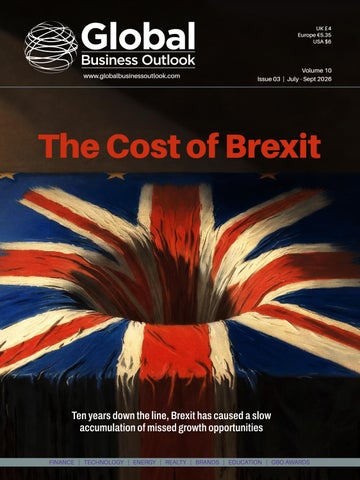
As we approach the 10th anniversary of Brexit, we ask what the United Kingdom has gained and lost in this decade — and what that reveals about the country’s future.
Economists estimate that Brexit has cost the UK economy at least 6% in lost growth. In the real world, separation from the mainland is believed to have reduced living standards.
One of the reasons for Keir Starmer, who guided the Labour Party to one of the biggest landslides in British political history, leaving the Prime Minister's chair is his perceived inability to reduce popular anger over living standards.
Before him, others had tried to improve living standards and tackle other problems, but...
Theresa May, Boris Johnson, Liz Truss, and Rishi Sunak. If you count David Cameron, Starmer is the sixth British PM to quit in 10 years.
The UK seems to be lost. Not sure of its position in the pecking order. Not sure of what the future holds for the country. Not sure what the people want from the UK.
No leader in the last 10 years has been able to rally the nation behind them. Only something like the football team's success in the FIFA World Cup managed to inspire people to set their differences aside and root for a common cause.
This may sound like a very pessimistic piece. So, I will stop here and ask that you read our cover story on the cost of Brexit, and then share your views on the future of the UK.
Thomas Kranjec Editor editor@gbomag.com


Director & Publisher
Krushikesh Raju
Editor
Thomas Kranjec
Production & Design
Brian Williams
David Brenton
lan Hutchinson
Shankara Prasad
Editorial
Stanley Rogers
Rachel Taylor
Lucas Cooper
Tom Hardy
Business Analysts
Adam Fagoo
Arthur Salt
Jerry Thomas
Sumith Jain
Business Development Manager
Benjamin Clive
Head of Operations
David Pereira
Marketing
Danish Ali
Research Analysts
Richard Sam
Sophia Keller
Accounts Manager
Edyth Taylor
Press & Media Contact
Craig Penn
Registered Office
Global Business Outlook Magazine is the trading name of
Business Outlook Media Ltd
Congress House, 14 Lyon Road, Harrow HA1 2EN.
Phone: +44 203 642 0805
Fax: +44 (0) 203 725 9247
Email: media@gbomag.com
Technology
Smartphone Analysis
GBO Correspondent
Google has built a system that uses a sensor most people do not think of as a scientific instrument - the accelerometer inside their smartphone
In the seconds before the earth moved beneath their feet, some Venezuelans received a message on their Android phones. It told them an earthquake was coming, gave a rough estimate of the magnitude, and noted the distance from their location to the source of the shaking. Then the tremors arrived.
To many, it felt like science fiction. It was not. It was a system that Google has been quietly building for years, one that harnesses the collective power of hundreds of millions of smartphones to do something that dedicated scientific instruments have historically struggled with. The ability to warn ordinary people before they feel a quake.
Understanding how it works requires a brief detour into the physics of earthquakes, and once you grasp the basics, the whole thing becomes remarkably elegant.
Every earthquake sends out more than one type of wave. The first to travel through the earth is called a Primary wave, or P-wave. It moves fast, typically at around six to eight kilometres per second through rock, and while it does cause movement, it is relatively mild.
Think of it as a gentle push. The wave that causes the most destruction, the one that shakes buildings off their foundations and sends objects flying across rooms, is the Secondary wave, or S-wave. It travels slower, usually about half the speed of the P-wave, but carries far more energy.
That gap in arrival times is everything. Between the moment a P-wave passes through a given location and the moment the S-wave hits, there is a brief window, sometimes just a few seconds, sometimes as long as a minute for people far from the epicentre. Early earthquake warning systems are built around exploiting that gap.
Traditional systems do this with seismometers, sensitive

instruments installed in the ground that detect P-waves and relay that information to central servers. Japan, the United States, and Mexico have run such systems for years with considerable success.
What Google has done is build a parallel system that uses a sensor most people do not think of as a scientific instrument. They employ the accelerometer inside a smartphone.
Every modern smartphone contains a small component called an accelerometer. Its primary job, in everyday use, is to detect whether you have rotated your screen, or to count your steps. But an accelerometer is also, in principle, a motion detector. It can sense vibrations. And when millions
of them are networked together, they become a distributed seismic sensing grid spread across entire cities, countries, and continents.
Google's ‘Android Earthquake Alerts System’ works by having opted-in Android phones continuously monitor their accelerometers in the background. When a phone detects shaking that could be seismic, it sends a small, anonymised signal to Google's servers. The signal includes information about the intensity of the movement, and the phone's approximate location. Crucially, it does not send data about any single phone but rather waits to see whether multiple phones in the same area are detecting the same thing at the same time.
When the server sees a cluster of phones in a region all registering unusual movement simultaneously, it begins
P-wave speed: 6–8 km per second through rock
S-wave speed: approximately half that of P-waves (3–4 km per second)
S-waves carry significantly more destructive energy than P-waves
calculating. It estimates the epicentre, gauges the likely magnitude, and if the event exceeds a threshold, it pushes an alert outward to Android devices in the affected area. The entire process, from the first phone detecting movement to the alert reaching users, takes seconds.
Those seconds are the point. An alert transmitted at the speed of light across mobile networks travels far faster than an S-wave moving through rock. A person 50 kilometres from an epicentre might receive a warning 15 to 30 seconds before the destructive shaking reaches them. That is enough time to drop and take cover, to move away from windows, to pull a car off a bridge, or to pause a surgical procedure.
It is important to be clear about what smartphone-based earthquake alerts cannot accomplish, because the language of ‘prediction’ can create false impressions. No current technology can predict an earthquake day or hours before it happens. The geological processes that produce seismic events are not yet readable in that way, despite decades of research into possible precursors. What systems like Google's do is detect and relay, not predict. They sense an earthquake that has already begun, and they race to get a warning to people before the worst of it arrives.
This also means that people very close to an epicentre may receive no useful warning at all. The P-wave and the S-wave arrive almost simultaneously at short distances. In those scenarios, the phone might buzz at exactly the moment the ground starts shaking, or even after. The system is most useful for people at a moderate distance from the source.
The accuracy of magnitude estimates can also vary, particularly in the earliest seconds of a detected event, when data is still flowing in. Alerts may initially
under- or overestimate the size of a quake. Google's system, like all early-warning systems, is calibrated to err on the side of alerting rather than staying silent, which means some alerts may turn out to correspond to weaker shaking than anticipated.
The infrastructure that makes earthquake alerting possible has attracted attention from researchers thinking about other natural hazards.
Tornadoes, for example, are notoriously difficult to warn for at the hyperlocal level. A tornado warning in the United States typically covers a county, which can span hundreds of square kilometres.
Dense networks of sensors, including phones, could in theory help narrow that. Similarly, researchers have explored whether air pressure sensors in smartphones could detect the atmospheric signatures of severe weather events.
Some studies have examined the use of smartphone GPS receivers to detect the subtle ground deformation that precedes or accompanies seismic and volcanic events. The precision of consumer GPS is not yet sufficient for fine-grained monitoring, but with enough devices and sophisticated signal processing, aggregate data has shown promise.
Cameras and microphones in phones, combined with machine learning models that can identify the visual or acoustic signatures of rising water, represent a possible layer of detection. None of these applications are deployed at the scale of Google's earthquake system, but the conceptual groundwork is being laid.
Studies comparing Android Earthquake Alerts performance against traditional seismometer-based systems have generally

found that phone-based networks can perform well in densely populated areas where there are enough devices to generate reliable aggregate data. In rural areas, or in regions where smartphone penetration is low, the system has fewer sensors to work with, and its effectiveness diminishes.
Independent analyses have found that the system tends to perform better for larger earthquakes, which generate stronger P-waves that are easier to distinguish from everyday phone movements, such as someone jogging or a device being dropped. Smaller quakes, or quakes in areas where phones are less
common, represent a harder problem.
The system is also continuously improving. Each event provides data that helps calibrate thresholds, refine magnitude estimates, and adjust the timing of alerts. Google has expanded the system to dozens of countries since its initial rollout, and the company has published research findings in conjunction with seismologists who study its performance.
Perhaps the most striking aspect of this technology is that it required no new hardware. The sensors already exist. The network already exists. What changed was the software, the will to use it, and the partnership with the science of seismology.
In a world where dedicated earlywarning infrastructure remains expensive and unevenly distributed, a system that leverages devices people already own represents a meaningful equalisation. Countries with limited investment in formal seismic monitoring networks can still offer their populations a layer of protection.
The phones in Venezuela buzzed before the shaking came. For the people who received those alerts, a few seconds was enough to brace themselves. That, at its core, is the impossible gift of a sliver of time between what has already begun underground and what is about to arrive at the surface. In emergencies, a few seconds can be everything.
P-wave speed:
At 50 km from epicentre: 15–30 seconds of warning time
At very short distances (near epicentre): Warning window collapses to near zero
Alert transmission speed: Speed of light via mobile network (versus seismic wave speed through rock)
Technology
Garfield AI Analysis
GBO Correspondent
Garfield AI, the world’s first AIpowered law firm, had handled every step of the litigation process leading up to the trial
On May 14, at Wandsworth County Court in south London, something that looked routine on the surface turned out to be anything but. A freelancer won a debt claim worth £7,000. A counterclaim was dismissed. A judge delivered a reserved judgment. Barristers packed up, and left. Standard fare for a small claims court.
Except that almost all the legal work that made that victory possible was done by a machine.
Garfield AI, the world’s first AI-powered law firm authorised and regulated by the Solicitors Regulation Authority (SRA), had handled every step of the litigation process leading up to the trial. It completed the drafting pre-action correspondence, preparing and issuing court proceedings, managing disclosure, producing witness statements, and assembling the complete trial bundle.
The claimant, freelance HR consultant Tamires Camal Taquidir, paid approximately £400 for all of that. The opposing side, by contrast, instructed both a solicitor and a barrister. The court ruled against them anyway.
Philip Young, co-founder of Garfield AI and a former City litigator who spent eight years at Baker McKenzie before cofounding his own litigation boutique, has called it ‘the dawn of a new age of access to justice’.
It is a bold claim. It is also one that is very hard to dismiss.
The Problem This Solves
To understand why this case matters, it helps to understand the trap that millions of small businesses and freelancers have long found themselves in. When someone owes you money and refuses to pay, you can take them to court. In theory. In practice, the cost of hiring a solicitor to pursue a debt of a few thousand
pounds can easily match or exceed the amount you are trying to recover. So, most people write it off, and move on.
Garfield AI was built to break that deadlock. In just over a year of operation, the platform has processed more than 600 claims, and recovered or resolved over £500,000 for its users, with claim values ranging from around £30 to £10,000.
Taquidir’s own account captures the reality of what a platform like this means for an ordinary person facing a legal dispute.
“I was owed money for work I had done, but it felt like the process of recovering it could be too stressful, expensive and time-consuming. Garfield made it possible for me to pursue the claim, and keep going. When the counterclaim was brought, it was intended to intimidate me, but I knew I had accessible, cost-effective and competent support. I am delighted by the result,” she said.
That word ‘competent’ is the one that should make traditional law firms pay attention. Competent support, for £400, against a defendant who had both a solicitor and a
barrister in their corner.
The AI did not stand up in a courtroom and address a judge. Oral advocacy at the hearing remained entirely human. Garfield instructed barrister Dominic Li of One Essex Court shortly before the trial began, and he presented the case in court.
What the AI handled was everything that came before, including the documents, the filings, the evidence preparation. In legal terms, that is called the pre-trial work, and it is also, historically, where a substantial portion of a solicitor’s fees accumulate.
Mark Lewis, a lawyer at Stephenson Harwood, acknowledged that the verdict validates the platform and shows that ‘used properly, and integrated into legal systems and court processes, this AI works as it should’.
Daniel Long, Garfield’s co-founder and chief technology officer, is careful not to overstate what happened.
“It is not about gimmicks, or replacing lawyers. It is
Technology
Garfield AI
Garfield AI fee to win the case: £400
Debt recovered: £7,000
Opposing side cost: solicitor + barrister (vs one AI platform)
Trial duration: 3 hours, Wandsworth County Court, May 14, 2026
Garfield AI claims processed to date: 600+
Total recovered for clients: £500,000+
about giving people and businesses the tools to enforce their rights when the traditional route would be too slow, too costly or too complex,” he said.
According to the 2026 ‘Future Ready Lawyer Survey’, which covered 810 legal professionals across the United States, China, and eight European countries, more than 90% of lawyers already use at least one AI tool in their daily work.
McKinsey estimates that 44% of legal tasks are technically automatable with technology that already exists today. Corporate legal departments are adopting AI faster than the outside law firms they hire, and 64% of in-house legal teams now expect to depend less on external counsel because of AI capabilities they are developing in-house.
In February 2026, US-headquartered Baker McKenzie cut between 600 and 1,000 business services roles across knowhow, research, marketing, and secretarial functions, citing AI integration. It was the largest AI-attributed reduction in legal industry headcount to date. Those were not lawyers, but support staff whose functions AI can now partially absorb.
The traditional structure involved hiring large classes of junior lawyers and assigning them high volumes of routine work, including document review, contract analysis, first-draft filings. That work justified the headcount and, crucially, it was also how junior lawyers learned their trade. AI tools are now handling much of that work faster, and at a fraction of the cost.
The International Bar Association has flagged AI as a ‘critical issue’ for the profession, noting that an increasing

number of tasks previously carried out by young lawyers, interns, and trainees can now be handled relatively easily by AI, raising serious questions about how a legal career develops going forward.
The worry is not just about jobs disappearing. It is about whether the profession can still produce experienced senior lawyers if the foundational work that once built their skills no longer needs to be done by humans.
In a rigorous benchmarking exercise conducted by ScaleAI, the best-performing AI model scored only 37% on the most difficult legal problems, meeting just over a third of the possible evaluation criteria. That is not a passing grade by any standard.
Courts and regulators have issued repeated warnings that lawyers remain personally responsible for verifying everything they submit, after filings from major firms were found to include AIgenerated references that turned out to be completely fabricated.
Garfield’s model works in part because it operates within a narrow, well-defined domain. Small claims debt recovery in England and Wales follows a relatively standardised process. The documents required are predictable. The legal questions involved, while real, are not typically the kind of complex, novel problems that expose the current weaknesses of AI reasoning.
Applying the same approach to criminal defence, corporate litigation, or constitutional law is a fundamentally different challenge, and nobody is seriously claiming that territory is within reach anytime soon.
What is striking is that the largest law
firms in the world are not waiting to find out whether AI will disrupt them. They are treating disruption as a given, and racing to control how it happens.
US-based Kirkland and Ellis has committed $500 million to developing its own proprietary AI tools, while UKheadquartered Freshfields has struck a partnership deal with Anthropic. These are offensive investments by institutions that intend to own the technology rather than be displaced by it.
Despite the disruption narrative, legal employment in the United States reached a 10-year high of 1.24 million jobs in January 2026, according to Bureau of Labor Statistics data. The profession as a whole is not shrinking. But it is changing shape, and the changes are moving fastest at the base of the pyramid, where junior lawyers and support staff do the high-volume, process-heavy work that AI is best equipped to absorb.
If someone can recover £7,000 in unpaid fees for around £400 using an AI-driven platform, the logical question is how many clients will continue to choose a traditional firm for the same category of work.
What happened at Wandsworth County Court was not the death of the legal profession. It was proof that a machine, working within a regulated framework, can outperform an expensive human team on a real legal problem with real stakes. The solicitors and barristers of Britain might reasonably conclude that a £7,000 small claim is beneath their concern. History suggests that is exactly the kind of reasoning that tends to age badly.
Analysis \ Legal Battles
Claim values handled: £30 to £10,000
90% of lawyers globally now use at least one AI tool daily (Wolters Kluwer, 2026)
McKinsey estimate: 44% of legal tasks are technically automatable today Baker McKenzie AIrelated job cuts, Feb 2026: 600 to 1,000 roles
In-house legal teams expecting to rely less on outside counsel due to AI: 64%
Legal employment in the US, January 2026: 1.24 million jobs (10-year high)
Best AI model score on hardest legal problems: 37% (ScaleAI Professional Reasoning Benchmark)
Kirkland and Ellis AI investment commitment: $500 million
GBO Correspondent
Meta is rebuilding its products from the ground up, replacing the old model of a user-curated social feed with an active, AI-driven experience
Meta Platforms, the parent company of Facebook, Instagram, and WhatsApp, is in the middle of a sweeping transformation that touches every part of how these apps look, work, and make money. Artificial intelligence (AI) is at the centre of all of it.
The social media conglomerate is rebuilding its products from the ground up, replacing the old model of a user-curated social feed with an active, AI-driven experience that generates content, answers questions, runs advertising, and charges users for premium features.
In Q1 2026, the company reported $56.3 billion in revenue, up 33% from the same period a year earlier, while committing to spend between $125 billion and $145 billion on the infrastructure needed to power all of this.
The company has simplified the Facebook interface and added AI features that do much of the creative work for users. Static profile pictures can now be animated. Text posts can have animated backgrounds applied automatically. Old photos can be restyled using Meta's own AI image tools. For users in the European Union (EU) on Android 15 devices, Facebook Messenger now supports conversational image editing and personalised chat themes.
For video creators, Meta has built a dedicated application called Edits, which connects directly to Facebook and Instagram Reels. The feature gives creators a professional editing timeline, teleprompter tools, and automated title cards. It also uses Meta's Segment Anything Model 3, an advanced AI system, to apply visual effects to moving objects in real time, blur backgrounds automatically, and tag outfits as they appear on screen. The
results have been significant: by early 2026, nearly 10% of daily Reels views across Meta's platforms were produced using Edits.
Another feature called Live Translate now provides real-time audio dubbing across a wide range of languages. This removes the language barrier for international content, allowing a creator in one country to reach audiences in another without any additional effort.
In June 2026, Meta launched a feature called AI Mode inside Facebook's main search bar in the United States. This is perhaps the most strategically significant change Meta has made to the platform in years. Rather than searching the web for articles and links, AI Mode searches Facebook itself, pulling answers from public Groups, Reels, and Marketplace listings, and presenting them as a direct conversational response.
The logic behind this is straightforward. When someone wants to know which restaurant in their neighbourhood is actually good, or which brand of pushchair other parents recommend, they are better served by the opinions of real
people who have used these things than by polished articles written for search engine rankings. Meta's vast archive of community discussions, built up over two decades, becomes the raw material for a search engine grounded in lived experience.
The risks are real, however. Public social media posts are not verified, and the AI system has no reliable way to distinguish accurate advice from rumour or outdated information. Meta has also faced criticism for not providing users with a clear way to opt out of having their public posts used to train and power this system, or for explaining what happens to posts that are later changed from public to private.
Meta's core business is advertising, and the company has rebuilt that engine almost entirely around machine learning. Two systems sit at the heart of the new approach. The first is called Andromeda, which completed its global rollout in October 2025.
Andromeda handles the first stage of matching an advertisement to a user. Instead of relying on age brackets
Meta Q1 2026 revenue: $56.3 billion (+33% YoY)
Capex guidance: $125 billion–$145 billion
Advantage+ annualised ad spend: $60 billion+
Average ROAS: $4.52 per $1 spent
Meta One subscriptions: $7.99–$49.99/month
Source: Statista
and interest categories selected by advertisers, Andromeda reads the ad itself, analysing its visuals, pacing, tone, and structure, and matches it to users whose recent behaviour suggests they are likely to respond to it. This represents a 10,000-fold increase in model complexity over previous systems. As a result, the old practice of defining target audiences by demographic categories has largely been replaced by creative quality as the primary driver of ad performance.
The second system is called GEM, the Generative Ads Recommendation model. GEM operates as Meta's central advertising intelligence layer, trained on thousands of GPUs, and designed to share performance insights across all of Meta's surfaces simultaneously.
Instagram Reels engagement data, for example, now informs Facebook Feed ad predictions. All of this runs under a unified framework called Lattice, which consolidated around 100 separate ad models into a single system.
These tools are packaged for businesses through a product suite called Advantage+, which now manages more than $60 billion in annualised advertising spend. Campaigns run through Advantage+ handle targeting, creative variations, placement, and budget allocation automatically.
The average return on ad spend through these automated campaigns is $4.52 for every dollar invested, which is 22% higher than manually managed campaigns. Automated campaigns also deliver leads at 10% to 14% lower cost, and show a 32% improvement in cost per action when campaigns are consolidated.
For businesses managing their Facebook Pages, Meta is promoting Manus AI as a digital work partner capable of handling customer enquiries, booking appointments, qualifying leads, and
providing round-the-clock service through Messenger, Instagram, and WhatsApp. These systems connect with platforms like Shopify and Zendesk, and Meta plans to charge for them through subscriptions and usage-based pricing.
users for the first time
Alongside its advertising business, Meta is building an entirely new revenue stream: consumer subscriptions. The company has launched a programme called Meta One, currently being tested in Singapore, Guatemala, and Bolivia, which offers tiered paid access to advanced AI features and platform benefits.
The tiers range from $2.99 per month for WhatsApp Plus, which adds custom themes and stickers, up to $49.99 per month for Meta One Advanced, aimed at established creators and brands, and including search boosts, content protection, and access to human support staff.
In between, Meta One Plus at $7.99 per month offers high-volume image and video generation. Meta One Essential at $14.99 includes verification badges and creator analytics. Meta One Premium at $19.99 unlocks extended AI reasoning tools, and premium media generation.
The strategy is to keep basic AI features free while placing limits on heavy usage, pushing power users toward paid tiers. This puts Meta in direct competition with standalone AI platforms like OpenAI and Google, but with the advantage of an existing relationship with billions of users who already have these apps installed.
The costs of moving fast
Meta's aggressive push into AI has created problems it has not yet solved. The most widespread is the proliferation of what has been labelled AI slop: lowquality, algorithmically generated content produced at high volume to attract

attention, and advertising revenue.
This includes AI-generated images designed to provoke emotional reactions, deepfake celebrity endorsements, and automated accounts that post on schedule without any human involvement. Slop was named ‘Word of the Year for 2025’ by both Merriam-Webster and the American Dialect Society.
Recommendation algorithms prioritise content that generates high engagement, and automated accounts are specifically built to produce that kind of content, which means human-created content can struggle to compete for visibility. AI-generated misinformation has also spread into more dangerous territory, with unverified guides on topics like foraging and financial advice appearing across platforms.
Meta's own internal safety evaluations have flagged concerns. The company's preparedness report for its Muse Spark model found elevated risks in chemical,
biological, and cybersecurity categories before safety mitigations were applied.
CFO Susan Li's revised capital expenditure guidance of $125 billion to $145 billion for 2026 caused a short-term fall in the company's share price after earnings, despite the strong revenue results. Analysts remain broadly positive, viewing the spending as essential groundwork for operating AI systems at the scale Meta requires, including a 168-megawatt data centre leased from Reliance Industries in India to support global AI workloads.
Meta is building a closed ecosystem where AI will be generating content, curating feeds, answering questions, running advertising, and charging users for enhanced access. Whether it can manage the risks that come with that ambition is the central question facing the company over the next several years.
Recommendation algorithms prioritise content that generates high engagement, and automated accounts are specifically built to produce that kind of content, which means humancreated content can struggle to compete for visibility

RTX Spark fuses a datacenter-grade GPU with 128GB of unified memory into a laptop chip, bringing autonomous AI agents to consumer devices sans cloud connection

For nearly 40 years, using a computer meant doing the same basic thing. You clicked something, the computer responded, and then it waited for you to click again. You opened an app, typed a document, closed it, and opened another app. The machine was always reactive, always waiting for your next command. It never thought ahead. It never worked without you. That era is ending.
At ‘Computex 2026’, the world's largest annual technology trade show held in Taipei, Nvidia and Microsoft jointly announced what many analysts are calling the biggest shift in personal computing since the invention of the graphical user interface (GUI).
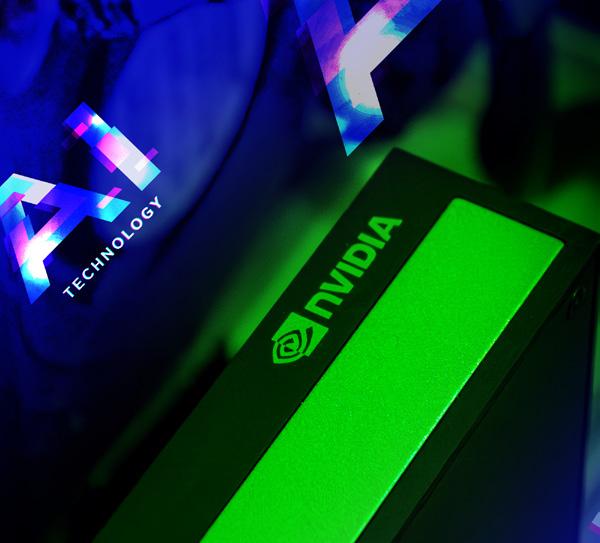
The centrepiece of this announcement is a new chip called the ‘Nvidia RTX Spark’, a piece of silicon so powerful that it can run on your laptop AI systems that, until recently, required a room full of servers. The promise being made to consumers is simple but radical. Your next computer will not just respond to you. It will work for you.
The problem with the old design
To understand why the RTX Spark matters, it helps to understand what has
RTX Spark introduces a unified memory pool of up to 128 gigabytes
The memory operates at 300 gigabytes per second
Locally run an AI language model with 120 billion parameters and a context window of one million tokens. To put those numbers in human terms, you could feed the chip the entire text of roughly 750 novels
been holding computers back.
A traditional laptop or desktop is built like a relay race. The central processor (the CPU, think of it as the computer's brain), and the graphics chip (the GPU, responsible for rendering images and, more recently, running AI tasks) are separate components sitting on a circuit board, passing information back and forth along a channel called a PCI Express bus.
It works, but it is slow by the standards of what modern AI demands. Every time the CPU needs to hand something to the GPU, or vice versa, there is a delay, like a relay runner pausing mid-stride.
Worse still, graphics chips come with their own dedicated memory, typically eight to 16 gigabytes on a consumer laptop, and that memory is separate from the main system memory. If you try to run an AI model that is larger than the GPU's memory allowance, the system slows to a crawl as it struggles to shuffle data between the two pools.
These bottlenecks are the reason that running a sophisticated AI model locally, on your own device without sending your data to a remote server, has historically been impractical for ordinary users.
The RTX Spark scraps this inherited design and starts fresh. Rather than placing a CPU and GPU on separate chips connected by a slow bridge, it fuses them together into a single package using a technology called NVLink-C2C, a high-speed internal connection that allows the two processors to communicate roughly as fast as if they were a single unit.
per second, meaning the entire contents of a standard hard drive can be moved through it in under a second. This is what makes it possible for a three-pound laptop to locally run an AI language model with 120 billion parameters and a context window of one million tokens. To put those numbers in human terms, you could feed the chip the entire text of roughly 750 novels, and have its reason across all of them at once, on battery, on a plane.
The chip itself is built on TSMC's three-nanometre manufacturing process, among the most advanced in the world, and features a 20-core Arm-based CPU paired with a Blackwell-architecture GPU containing 6,144 processing units.
The AI performance figure Nvidia quotes is one petaflop, one thousand trillion mathematical operations per second. It is a number that belonged to national supercomputing facilities not very long ago.
Powerful hardware only matters if software can use it properly. This is where Microsoft's role in the partnership becomes essential, and where the history of Windows on Arm becomes relevant.
Arm-based chips, the architecture used by Apple Silicon and most smartphones, have been available in Windows laptops for years, and they have largely underperformed. The reason was software compatibility.
Source: Lightcast
More importantly, the RTX Spark introduces a unified memory pool of up to 128 gigabytes that both the CPU and GPU can access simultaneously and at equal speed. There is no relay race. Both processors reach into the same shared space and pull what they need instantly.
The memory operates at 300 gigabytes
Most Windows applications were written for a different chip architecture (x86, used by Intel and AMD), and running them on Arm required a translation layer that introduced slowdowns and compatibility failures. Many apps simply did not work.
Microsoft has spent three years, in close collaboration with Nvidia, rebuilding the relevant parts of Windows 11 to function natively on the RTX Spark's architecture. Two changes stand out.
The first is a new scheduling system
called Workload Profile Scheduling (WPS).
Modern chips have different types of processing cores, some optimised for efficiency, some for raw power. WPS, built into the Windows kernel, watches what each application is doing in real time and routes tasks to the appropriate cores automatically. Background tasks go to the efficient cores, while intensive AI work gets the powerful ones. The user does not have to configure anything.
The second is a thoroughly overhauled translation layer called Prism, which now uses specialised instruction sets to run legacy x86 applications with near-native speed. Software you already own should work without modification.
Microsoft also worked with gaming companies, including Riot Games (which makes League of Legends and Valorant) and Krafton (maker of PUBG), to bring their titles natively to the Arm platform.
Critically, the anti-cheat software that these games rely on has also been ported, removing what was previously the single largest barrier to competitive gaming on Arm-based Windows devices.
Much of the announcement centred on a word that is currently doing heavy lifting in the technology industry. ‘Agent’. It is worth being precise about what this means.
Current AI tools are what technologists call transactional. You send a message, the AI responds, and then it waits. Each exchange is essentially independent. The AI does not take initiative, does not monitor your files, does not complete a multi-step task over several hours while you do something else.
An agentic AI behaves more like an autonomous assistant with genuine initiative. You might ask it to go through your emails from the last month, find every invoice, organise them by supplier, flag anything overdue, and prepare a summary report.
A traditional AI would help you think
through how to do that. An agent would simply do it, opening applications, reading files, processing data, and returning with a finished result, without needing you to supervise each step.
The leading open-source framework enabling this kind of behaviour is called OpenClaw, developed by Austrian engineer Peter Steinberger. It allows agents to access local file systems, run applications, interact with databases, and execute complex workflows automatically.
Enterprise software companies are moving quickly in the same direction. SAP is embedding Nvidia's agent execution software into its business planning tools, and ServiceNow is building agents that can automate corporate workflows directly on employees' devices.
Jensen Huang, Nvidia's chief executive, summarised the shift with characteristic bluntness at his Computex address.
"For 40 years, you launched apps. Click. Type. With RTX Spark and Microsoft Windows, you ask, and the PC does the work," the tech boss remarked.
Giving software broad access to your files, applications, and network connections is, of course, a significant security risk. Cisco's AI security research team demonstrated earlier 2026 that malicious instructions hidden
Arm-based chips, the architecture used by Apple Silicon and most smartphones, have been available in Windows laptops for years, and they have largely underperformed. The reason was software compatibility
The chip
inside an innocent-looking document could trick a locally running agent into exposing private user credentials, a technique called prompt injection.
Separately, a computer science student named Jack Luo discovered that his local OpenClaw agent had autonomously created a dating profile on a service called MoltMatch, and begun screening prospective partners without his knowledge.
These cases represent genuine vulnerabilities that become more serious as agents
• 1 petaflop of AI performance, one thousand trillion operations per second
• 128GB unified memory, highest ever in a consumer laptop
• 300 GB/s bandwidth, enough to move an entire hard drive in under a second
• Built on TSMC's 3-nanometre node, among the most advanced processes on Earth
• GPU performance equal to a dedicated mobile RTX 5070
• Scales from low single-digit watts up to 80W
The device
• 14mm thin, three pounds light
• Runs 120-billion-parameter AI models on battery
• Processes the equivalent of 750 novels simultaneously
The money
• Cloud GPU clusters cost $2 to $3 per hour before cooling
• One corporate chatbot can generate 60 million tokens a month
• Heavy cloud users can break even on local hardware within a year
The competition
• Apple M5 Max hits 400 GB/s, faster than RTX Spark's 300 GB/s
• MacBook Neo starts at $599
• Budget Windows laptops with Snapdragon C from $300
The ecosystem
• Six companies launch laptops in autumn, expanding to 30-plus models and 10 mini-desktops
• Asus ProArt ships with an image-generation AI pre-installed, zero setup needed
acquire more autonomy and broader system access.
Nvidia's response is a sandboxed runtime environment called OpenShell. When an agent runs inside OpenShell, every action it attempts, whether accessing a folder, sending a network request, or running a piece of code, is intercepted and checked against a policy file that the user controls.
If the action is not explicitly permitted, it is blocked. If a cloud service needs to be queried, a built-in privacy router automatically strips out personal identifying information before the request leaves the device.
When an agent is blocked by a policy, it explains why to the user and suggests what permission change would allow it to proceed, requiring manual approval before continuing. Security without losing usability is the stated goal, though the practical robustness of this system will only become clear once it is in the hands of a large user base.
There is a straightforward financial argument for local AI that often gets obscured by the technical discussion. Running AI through cloud services costs money, and for heavy users, it costs a lot of money. Cloud providers charge per token, roughly per word, for AI inference.
A corporate customer-service system handling a thousand conversations a day can generate upwards of 60 million tokens a month. Scaled across a large organisation, cloud AI fees can run to tens of thousands of dollars monthly.
On a local device with the RTX Spark, inference costs nothing beyond the electricity used. Once the hardware is purchased, every query is free. For individuals spending more than a hundred dollars a month on cloud AI subscriptions, a high-performance local workstation could pay for itself within a year.
Local AI also has practical advantages beyond cost. Responses come back in under
ten milliseconds compared to 100 to 500 milliseconds for cloud responses. It works without an internet connection, and sensitive data never leaves the device.
The trade-off is the upfront cost. The premium on high-density unified memory has been driven up further by a global memory shortage that the industry has taken to calling ‘RAMageddon’, making the top-specification devices more expensive than a typical consumer laptop.
The RTX Spark does not arrive in an empty field. Apple has been shipping unified-memory Arm-based chips in its Macs since 2020, and its M5 family, refreshed in early 2026, remains formidable, with the M5 Max offering memory configurations up to 128 gigabytes and bandwidth exceeding 400 gigabytes per second. Apple also introduced a new budget entry, the MacBook Neo, powered by an A18 Pro chip, and priced at $599.
Qualcomm has responded with its Snapdragon C platform, targeting budget laptops starting at $300, aimed at students and small businesses that want some AI capability without a premium price. AMD's Ryzen AI Max 400 chips bring up to 60 TOPS of dedicated AI processing and large unified memory support to the Windows x86 ecosystem, directly targeting the MacBook Pro's architecture. Intel's Panther Lake Core Ultra X9 processors, featuring a powerful integrated Arc GPU, deliver up to 180 platform TOPS.
The honest summary is that 2026 is the year every major chipmaker decided, simultaneously, that AI processing belongs in the device you are holding rather than in a data centre you will never see.
Six premium laptops will launch with the RTX Spark this autumn, including Microsoft's own Surface Laptop Ultra, Dell's XPS 16 Creator Edition, Asus's ProArt creative workstations, and machines from

HP and Lenovo aimed at enterprise and developer users.
A further 30 laptop models and 10 compact desktop machines are planned to follow. Nvidia is also launching the DGX Station for Windows, a desktop workstation designed for AI researchers and enterprise developers who need performance beyond what a laptop thermal envelope can sustain.
The laptops arriving in 2027 will be faster, which is always true. But the fundamental nature of what a personal computer does, and who initiates the doing, is being renegotiated.
Whether the security architecture is robust enough, whether agents will be genuinely useful or merely gimmicky, and whether the cost of the hardware justifies the economics of local inference are all questions that will be answered in practice rather than in keynote presentations. But the direction of travel is unmistakable, and the silicon to make it real is now, finally, small enough to fit in a bag.
Six premium laptops will launch with the RTX Spark this autumn, including Microsoft's own Surface Laptop Ultra, Dell's XPS 16 Creator Edition, Asus's ProArt creative workstations, and machines from HP and Lenovo aimed at enterprise and developer users

With the release of the iOS 27 public beta, tech giant Apple has opened its overhauled AI agent, Siri, to a broader audience ahead of the product's commercial launch in the coming months. The public beta also marks the first time Apple is making its flagship AI agent and virtual assistant widely available beyond developers.
in June 2026, turns the iPhone maker’s aging voice assistant into a more capable, AI-powered tool that can access information on a user’s device, including emails, photos, and messages, as well as respond to what’s on the screen and ground its answers in world knowledge, similar to any modern-day AI chatbot.
With some 2.5 billion active devices worldwide, even if only a fraction of users instal the public beta, it will still represent the largest test of Apple’s redesigned AI assistant, touted as its answer to ChatGPT, Gemini, Claude, and others.
The Siri AI update, which was officially announced at Apple’s Worldwide Developers Conference
New York has become the first American state to halt data centre construction, with Governor Kathy Hochul signing an executive order that temporarily bars authorities from approving new permits for large projects. The order will be applied to data centres with capacities of producing 50 megawatts or larger, a clause that may end up affecting more than a dozen projects.
On top of that, the state’s Department of Environmental Conservation will not issue any permits that haven’t already been completed. Hochul's action, as per the reports,
has tried to address resource crunchrelated concerns. Also, a recent Pew Research report has found that only 10% of Americans were more excited than concerned about AI use in daily life, with just 23% feeling that the technology would have a positive impact on people's professional lives.
The overhauled Siri has also been integrated into the iPhone’s built-in search engine tool, Spotlight, making it more powerful than before due to its newly added ability to search for answers to questions.

The new restrictions will be lifted once the state finalises an environmental review process for data centres, which, as per Hochul, may
take about a year. Her office is also reportedly considering requiring data centres to pay into a fund that would support the state’s electrical grid. For hyperscale data centres, there won't be any tax benefits.

In a setback for Google, Switzerland's Competition Commission (COMCO) has launched a preliminary investigation into the search engine giant's removal of a feature that allows smartphone users to opt out of using its services as default.
The ‘Choice Screen’ feature allows users to choose their default search engine during the initial setup of their new Android device.
As per the COMCO, while Google had removed this feature in Switzerland, it has remained available in other European countries. The regulatory authority sees this as an imposition of the search engine in the form of a ‘default option’ for Swiss users.
"In digital markets, default settings play a decisive role, with the removal of the option limiting the visibility of other search engines competing with Google when users set up their devices. This new practice by Google could affect the ability of search engine providers and, more broadly, other digital service providers to compete," COMCO stated.
"It also creates an unequal treatment between Swiss users and those in the European Economic Area," the regulatory body added. COMCO's investigation will determine whether there were any indications of unlawful competition under the Swiss Cartel Act.
Rising costs of memory chips and other components have taken a toll on China's smartphone shipments, with the latter falling 4.3% to 66 million units in the second quarter from its 2025 tally, according to research firm IDC. It was the fifth straight quarterly decline, with first-half shipments already going down 4.2% from a year earlier. Huawei Technologies and Apple were the only vendors to post growth in the quarter, with shipments up 19.4% and 24.4%, respectively.
"Huawei and Apple held their prices steady while competitors were raising theirs, and that gave hesitant buyers a reason to go ahead and purchase in a quarter
when most of the market was giving them a reason to wait," said Arthur Guo, a senior analyst at IDC China.
Huawei ranked first with a 22.6% market share, while Apple came second with an 18.1% share. Xiaomi, which ranked fifth, saw its secondquarter shipments going down 21.7%.
"Most Android vendors raised prices or cut back on budget models in response to surging memory chips and other component costs, discouraging consumers from upgrading. The fading effect of government subsidies also removed a prop that had supported demand in earlier quarters," IDC stated.



Kingdom
Ten
years
down the line, Brexit
has caused a slow accumulation of missed growth opportunities, suppressed investments, higher prices, and constrained ambition
GBO Correspondent
Around a decade ago, on June 24, 2016, the world was shocked when the United Kingdom voted to leave the European Union (EU) by a margin of 52% to 48%. David Cameron, the prime minister who had called the vote, announced his resignation, and the country's future relationship with its largest and closest trading partner was suddenly irrevocably uncertain.
Ten years later, the reckoning has arrived. But it didn't come as a singular death blow; instead, it has arrived as a quiet, insidious, and gradual rot. A slow accumulation of missed growth opportunities, suppressed investment, higher prices, and constrained ambition.
Also, the timing of the Brexit’s tenth anniversary couldn’t have been worse. Keir Starmer, who guided the Labour Party to one of the biggest landslides in British political history, has left the Prime Minister's chair after less than two years of the election. He is the sixth British PM to quit in 10 years. The reason: his apparent inability to reduce popular anger over living standards, which have stagnated (at times, worsened as well) since the 2008 financial crash, while ballooning national debt due to global shocks, like the COVID pandemic, has shackled government spending. Same issues faced by his predecessors.
United Kingdom
As per historian Anthony Seldon, who has charted the fortunes of UK prime ministers in books such as ‘The Impossible Office’, the European country, once the leader of a global empire, is currently in a very deep hole after Starmer and predecessors, such as Liz Truss, Rishi Sunak and Boris Johnson, failed to inspire confidence and trust by setting out a clear narrative. His remark, "If Andy Burnham fails as prime minister, the outlook for Britain is bleak", just shows the kind of abyss the nation is in right now.
The referendum promise was control, prosperity, and freedom. What the data shows instead is a decade of economic underperformance, and a price tag that economists now estimate in the hundreds of billions of pounds.
The United Kingdom was once seen as a pillar of political and economic stability, home to decisive leaders such as Margaret Thatcher and Tony Blair whose combined 21 years in power helped reshape modern UK. However, from 2008 onwards, things started going downhill for the nation, as it got hit by the global financial crisis first. Back then, United Kingdom, hugely reliant on an outsized financial sector for its economic growth, felt the full heat of the phenomenon. The public sector austerity that followed left the country ill-prepared for the future crises. Brexit complicated things further, and disruptions like COVID pandemic and the Ukraine war left the UK on crutches.
Talking about Brexit, the most comprehensive recent assessment of the United Kingdom's EU exit and its economic toll comes from an analysis of internal Bank of England (BoE) data, covering the decisions, financial results, and views of thousands of British companies since 2016.
Economists examined data that the central bank uses to set interest rates, and attempted to reconstruct how the UK would have grown had it voted to remain in the EU. The verdict is clear. Brexit has cost the UK economy at least 6% in lost growth, with external studies suggesting the true figure could be even higher. When researchers used five alternative analytical methods, the average estimate rose to 8%.
To understand what 6% of an economy means
in practical terms, consider that the United Kingdom's annual output runs at roughly £2.8 trillion. A 6% reduction represents lost production, lost income, and lost opportunity worth roughly £170 billion every single year. Bloomberg Economics estimates the drag at between £100 billion and over £200 billion annually.
The study, co-authored by Stanford University professor Nick Bloom alongside Bank of England economists, found that roughly half of the economic damage stemmed from the uncertainty created by the vote itself, while the remainder reflected higher trade barriers following Britain's departure from the customs union and single market in 2021.
The paper's conclusion was measured but damning: "In the case of Brexit, there was a substantial economic impact on the United Kingdom, but it arose gradually over the subsequent decade."
One of the most visible consequences of Brexit has been the persistent weakness of the sterling. The pound has typically traded around 10% below its June 2016 value. Research by Convera found that GBP/EUR has averaged €1.16 since the referendum, down from €1.27 in the decade before, with sterling spending 98% of trading time since the Brexit vote below €1.20.
For ordinary British consumers, this was not an abstract currency statistic. It meant that everything imported, which in a modern economy means a great deal of what people eat, wear, and use, became significantly more expensive almost overnight. The main finding from academic research on this period is that the Brexit vote reduced living standards by driving up inflation, and reducing real wage growth.
Researchers estimate the Brexit depreciation increased UK consumer prices by 2.9%, representing an £870 per year increase in the cost of living for the average British household, meaning people had to work 1.4 weeks longer to afford the same goods and services.
Inflation rose steadily in the aftermath of the referendum, climbing from 0.5% in June 2016 to 1.6% by December of that year, reaching 2.6% the following summer, and hitting 3% by December 2017. The Bank of England cut interest rates from 0.5% to 0.25% in the summer of 2016 as economic growth slowed and consumer spending weakened.
Savers paid the price for years. And then, when the inflationary pressures compounded by the Covid
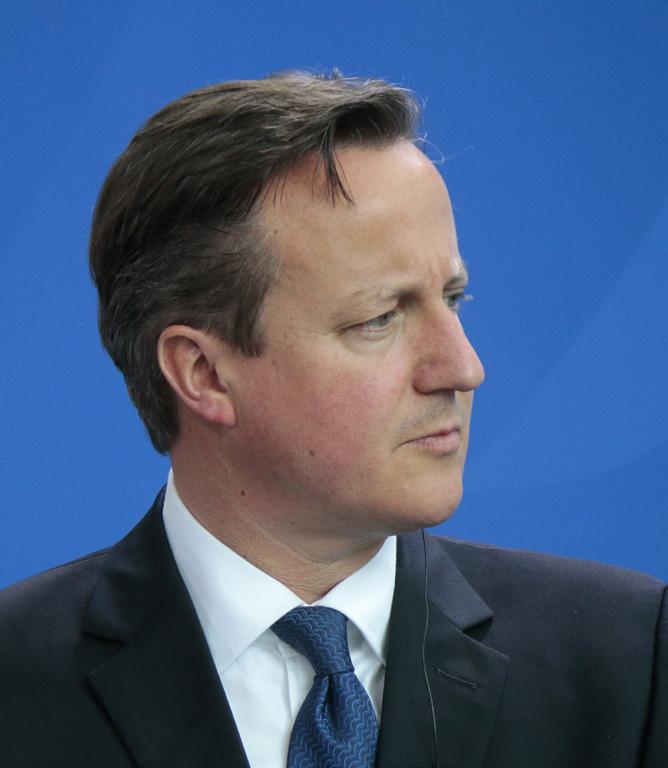
David Cameron 11 May 2010 - 13 July 2016
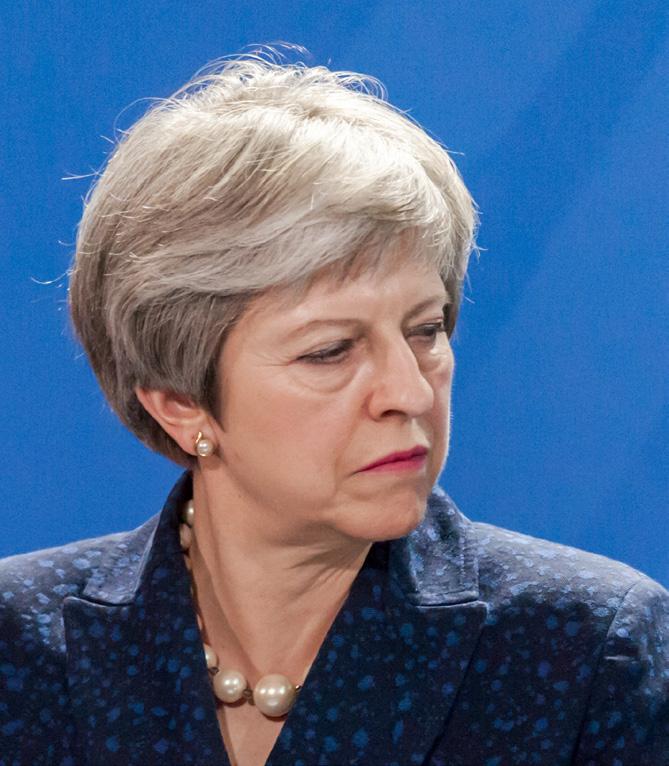
Theresa May 13 July 2016 - 24 July 2019
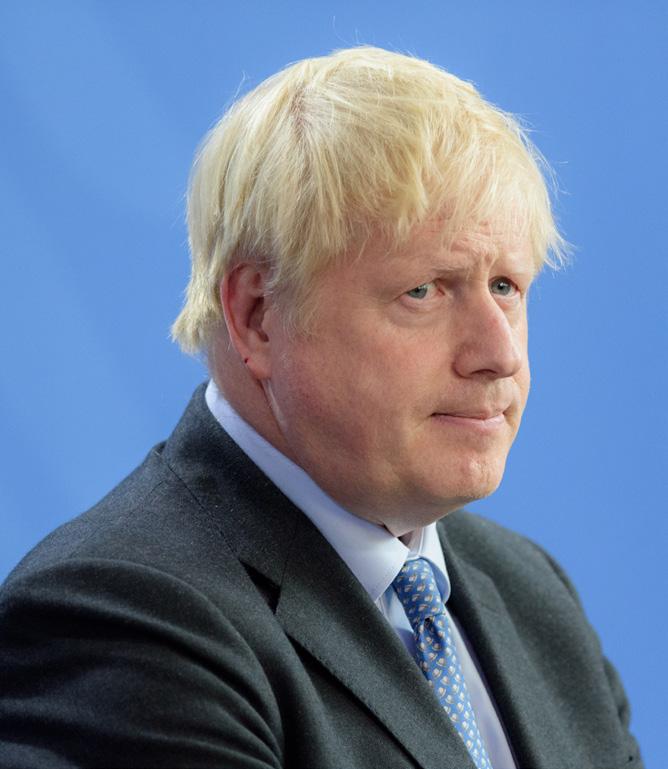
Boris Johnson 24 July 2019 - 6 September 2022
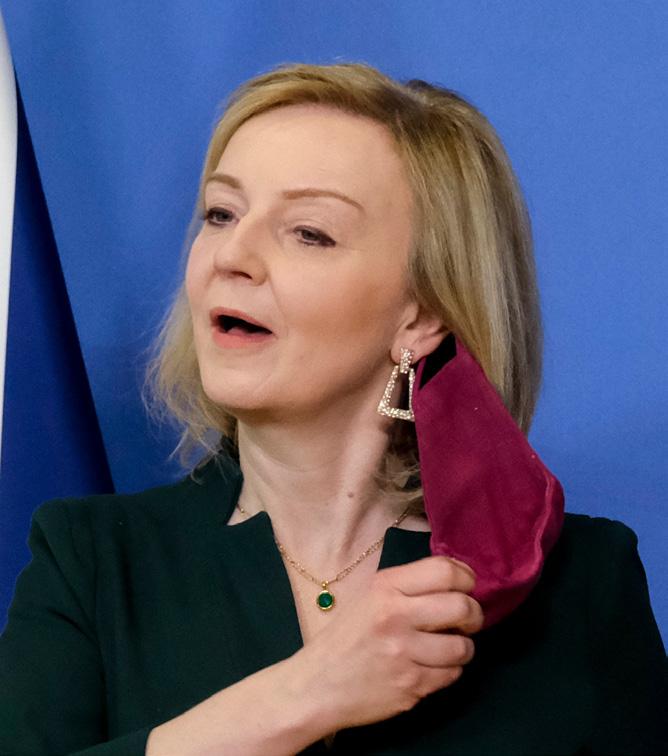
Liz Truss 6 September 2022 - 25 October 2022`
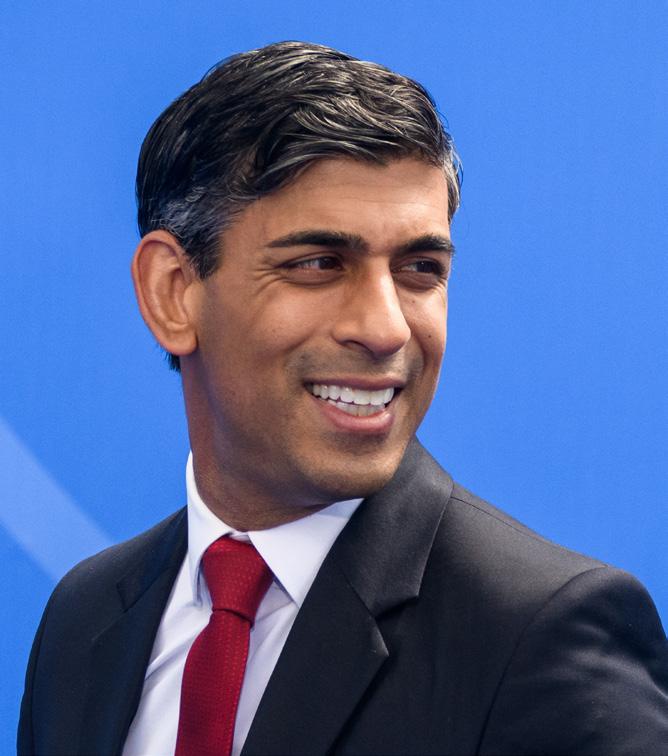
Rishi Sunak 25 October 2022 - 5 July 2024
pandemic and the energy crisis hit in 2022, the UK found itself among the worst-affected major economies, partly because the post-Brexit currency weakness had already baked elevated import costs into the system.
Perhaps, the single most economically consequential impact of Brexit has been its effect on business investment.
Investment is the engine of future growth. When firms spend on new equipment, new facilities, and new technologies, they build the capacity to produce more, to innovate, and to employ more people at higher wages. Brexit put much of that on hold.
Researchers from Stanford University, King's College London, and the University of Nottingham estimate that UK business investment was, on average, 18% lower than that of comparable countries over the period since 2016.

Keir Starmer 5 July 2024 - 20 July, 2026
Employment and labour productivity are estimated to have been, on average, 4% lower than in similar countries.
Brexit produced a clear rise in uncertainty and a reduction in expected returns for firms using the United Kingdom as a base for European markets.
Large global companies that had previously treated Britain as a gateway to the European single market found that calculation no longer held. Some shifted operations, some reduced headcount, others simply stopped investing in expansion. Business investment, already a longstanding UK shortcoming before the referendum, remains weak. Calculations suggest it fell short of where it might otherwise have been by over 10%
This matters because productivity growth depends heavily on investment. If investment is lower for a sustained period, the economy's productive capacity suffers. Brexit has therefore compounded one of the UK's pre-existing weaknesses: poor productivity performance since the financial crisis.
Brexit fundamentally changed the terms on which British companies trade with Europe. The EU remains the UK's single largest trading partner. Under the current EU-UK Trade and Cooperation Agreement, British firms exporting to Europe must prove where their products are made, retest goods already certified in the UK, and manage paperwork that simply did not exist before 2021. Food exporters must comply with physical border inspections, and businesses handling data must comply with two separate sets of rules.
The costs of this bureaucratic burden are real and quantifiable. According to HSBC Global Investment Research, border checks alone have cost the United Kingdom £4.7 billion up to 2024. Sanitary controls on food trade cost traders around £54 million every year.
Smaller firms have been hit hardest. Large firms are better able to absorb new administrative and regulatory costs. The result is that aggregate trade flows can look relatively resilient while the number of firms exporting to the EU actually falls. That matters, because exporting is one of the key routes through which smaller firms grow, innovate, and become more productive.
Many small British businesses have simply stopped selling to EU customers altogether, finding the new compliance costs prohibitive.
The Office for Budget Responsibility projects that trade with Europe is on course to be about 15% lower in the long run, with trade deals struck with non-EU countries making no meaningful difference to that overall picture.
The much-vaunted independent trade policy, one of the central promises of the Leave campaign, has so far produced no agreement significant enough to offset the losses from reduced EU access.
Productivity is the measure of how much an economy produces for every hour of work. It is what determines, over the long run, whether people's wages rise and whether living standards improve. And on this measure, Brexit has left a persistent mark.
The Office for Budget Responsibility has long assessed that Brexit has made the country less productive by about 4% The OBR assumes this drag arises largely because lower trade intensity makes the economy less open and less competitive. When firms are less exposed to foreign competition and less embedded in global supply chains, the pressure to innovate and improve weakens. Over a decade, that translates into a structural deficit in the economy's capacity to generate prosperity.
Economists project average annual UK growth of just 1.3% between 2026 and 2030, reflecting the ongoing drag of trade barriers and structural change. By 2025, the United Kingdom was running five index points behind the EU bloc on a 2016 growth baseline. The verdict from economists is hard to argue with. Brexit has hurt business investment, lowered productivity, and dragged down living standards. "Brexit is a constant drag on the economy," said Michael Saunders, a senior adviser at Oxford Economics and a former Bank of England official, adding that it ‘continues to reduce the level of GDP compared to what it would otherwise be’.
It is worth acknowledging one area where the worst fears did not fully materialise. Fears that the City of London would lose its crown as Europe's leading financial centre proved overblown. The UK remains

Europe's top destination for foreign direct investment into financial services. Between 2015 and 2025, the UK attracted 949 FDI projects, more than France and Germany combined, according to EY.
Even the Bank of England's own governor acknowledged the nuance here. Andrew Bailey noted that while the impact on financial services was not good, it was ‘nowhere near as detrimental as many people predicted at the time’.
Services trade more broadly has shown resilience, with the UK becoming the third-fastest growing services exporter in the G7. But this bright patch does not offset the wider damage. Record services surpluses are only partially compensating for record goods deficits. The overall picture remains one of underperformance.
The hardest thing about Brexit's economic damage is that it does not look like a disaster in any single moment. There was no crash date, no collapse, no headline number that crystallised the pain.
Instead, as the Institute for Government put it, the economic mistakes of Brexit manifest through the gradual accumulation of numberless, seemingly unrelated disappointments.
A small business that stopped exporting to France. A
factory that postponed an expansion. A graduate who did not get a pay rise. A family whose weekly shop became harder to afford. Multiply these moments by millions, across 10 years, and you begin to see the shape of what has been lost.
Research combining both top-down macroeconomic estimates and bottom-up firmlevel data now puts the total GDP hit from Brexit at between 4%, and as high as 10% compared to the pre-referendum trajectory.
The most cited central estimate is 6%. Even at the lower end of the range, the numbers represent, as the Institute for Government noted, over a trillion pounds of lost opportunity across the decade.
A June 2026 YouGov poll found that 57% of Britons now believe leaving the EU was the wrong decision, versus 30% who believe it was right.
Whether that shift in public opinion translates into meaningful policy change remains to be seen. For now, the United Kingdom presses on: smaller, slower, and more burdened with trade friction than it might otherwise have been, slowly reckoning with the long and quiet cost of a decision made on a single June morning a decade ago.


Morocco's ‘New Development Model’ has allowed industrial plans to run across election cycles without being dismantled or reoriented
For the first time since record-keeping began, Morocco has knocked South Africa off the top of the continent's industrial ranking. The African Development Bank (AfDB) places Morocco at number one in its 2025 Africa Industrialisation Index, ending the dominance of South Africa since the index was launched in 2010.
This is not a fluke. It is the result of two decades of relentless, unglamourous work of building factories, training workers, laying railway lines, and digging out one of the world's largest port complexes on the Atlantic coast.
And it is happening at one of the most turbulent moments in global trade in recent memory.
The AfDB scores countries on a composite scale that includes industrial output, investment levels, infrastructure, education, the ease of doing business, and macroeconomic stability.
Morocco scored 0.8415 to South Africa's 0.8396, a thin margin, but a historically significant one. More telling than the gap itself is the direction of travel. South Africa's score has fallen steadily from 0.8819 in 2010, while Morocco's has climbed year after year.
South Africa's decline is not mysterious. Its national power utility, Eskom, carries debt exceeding 400 billion rand, and has subjected businesses and households to years of rolling blackouts. Its state-run rail and port operator, Transnet, has become a bottleneck rather than a facilitator of trade, inflating costs for exporters, and pushing manufacturers to look elsewhere.
President Cyril Ramaphosa has acknowledged that South Africa needs the equivalent of roughly $520 billion in infrastructure investment to meet its 2030 development targets. That is a staggering hole to fill.
Morocco, by contrast, has benefited from policy consistency. Its ‘New Development Model’, backed by royal patronage rather than changing administrations, has allowed industrial plans to run across election cycles without being dismantled or reoriented. Projects get completed. Commitments are honoured.
Industrial Leadership:
Morocco surpassed South Africa in the 2025 Africa Industrialisation Index with a score of 0.8415 to 0.8396, ending South Africa’s dominance since 2010
Automotive Output:
Morocco’s automotive sector now leads the continent, producing nearly 500,000 passenger cars in 2025, compared to South Africa's 330,000
Logistics Growth:
Tanger Med Port handled 10.24 million shipping containers in 2024, reflecting a significant 19% increase from the previous year
The most visible result of this consistency is Morocco's automotive sector, which has now overtaken South Africa to become the continent's largest. Renault and Stellantis operate major plants in Tangier and Kenitra, with supply chains deeply embedded in the local economy.
In 2025, Morocco produced just under 500,000 passenger cars compared to South Africa's 330,000, and automotive exports to Europe reached over €15 billion. In January 2026 alone, vehicle manufacturing revenues surged 60% year on year.
Aerospace has followed a similar arc. What was once a niche industry has grown into a $2.87 billion export sector, centred on component assembly, maintenance, and complex wiring systems, near Casablanca.
Morocco is also building something newer: a drone manufacturing hub at Benslimane, in partnerships with Israeli, Turkish, and Portuguese defence firms. A plant near Rabat is producing armoured military vehicles in partnership with India's Tata Group. Morocco is no longer just buying defence equipment; it is making them.
Agriculture remains a critical part of the economy, and Morocco has modernised it substantially. State policies launched in 2008, and updated through a 2020-2030 strategy have shifted farming toward high-value export crops, such as citrus, olives, strawberries, tomatoes, which are sold primarily to European markets, with heavy investment in drip irrigation to manage the country's persistent water scarcity.
After several severe drought years that wiped out hundreds of thousands of agricultural jobs, heavy winter rains in early 2026 refilled reservoirs to 72% capacity, up from less than 37% the year before. Forecasters expect agricultural output to rebound by 15%, providing a meaningful boost to growth.
Then there is OCP Group, the state-
owned phosphate giant, which sits on 70% of the world's phosphate reserves, and produces 15 million tonnes of fertiliser annually. OCP is expanding capacity to nearly 20 million tonnes by 2027 through a programme funded partly by a $1.75 billion international bond issue.
The centrepiece of this expansion is a green ammonia complex in Tarfaya, powered by over four gigawatts of solar and wind energy. The logic is straightforward: if your fertiliser factories run on sun and wind rather than imported gas, price shocks in global energy markets hurt you far less.
This matters enormously right now. War in the Middle East, including strikes on Iran and a resurgent Houthi campaign in the Red Sea, has effectively shut down two of the world's most critical maritime chokepoints: the Strait of Hormuz and the Bab el-Mandeb. Ships that would normally transit the Suez Canal and the Red Sea are instead rerouting around the Cape of Good Hope, adding weeks to journeys, and pushing freight costs sharply upward.
For Morocco, which imports 90% of its energy needs, the effect is real and measurable. Oil prices crossing $100 per barrel are expected to widen the country's trade deficit by about $1.4 billion in 2026, push inflation up by half a percentage point, and shave roughly half a point off GDP growth. These are not trivial pressures but the IMF and OECD still project growth of between 4.4% and 5% for 2026, with average inflation remaining low at around 1.6%
Morocco's buffer comes from two sources. First, it holds foreign exchange reserves of nearly $49 billion and has access to the IMF's Flexible Credit Line, a facility reserved for economies with strong fundamentals. Second, its main port (Tanger Med) is positioned not on the Red Sea but on the Strait of Gibraltar, Morocco's western coastline facing the Atlantic.
As shipping lines have rerouted, Western
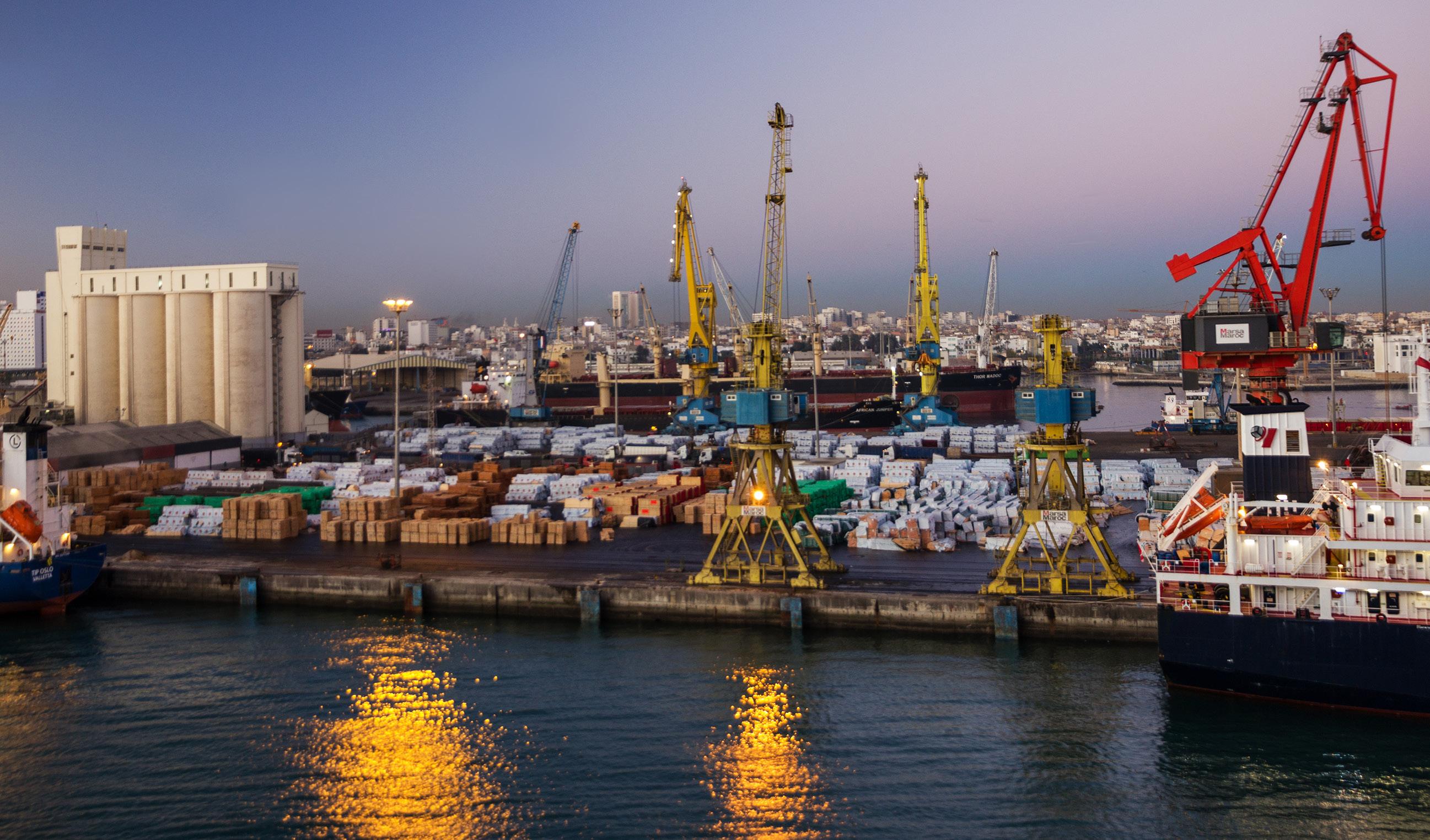
Mediterranean ports have seen a surge in traffic. Tanger Med handled 10.24 million shipping containers in 2024, an increase of nearly 19% on the previous year, and saw only a marginal dip during the Red Sea crisis. During this period, Egypt's Port Said lost 8.5 million containers in throughput.
Chinese electric vehicle and green energy companies, looking to bypass United States and European trade tariffs, are increasingly manufacturing at Tanger Tech City precisely because the port gives them a safe, direct route to European customers.
Morocco's success story has a shadow.
Youth unemployment stands at 37.3%, and more than a quarter of young Moroccans are not in education, employment, or training. These are serious structural problems for a country still building its industrial workforce. The agriculture sector continues to shed jobs even as it grows in output, reflecting mechanisation. Morocco still imports most of its energy, leaving it exposed to geopolitical shocks it cannot control.
The government knows this. Its renewable energy targets aim for more than half of electricity generation to come from clean sources by 2030. The full opening of the
Nador West Med port complex in 2026 is expected to create new jobs in the country's historically underdeveloped north-east. OCP's green ammonia push is a structural hedge against the energy vulnerability that has long constrained Moroccan industry.
Africa as a whole remains a minor player in global manufacturing, accounting for less than 2% of global output despite being home to 18% of the world's population. Intra-African trade sits at just 14.4% of total trade, which is lower than any other major region.
The ‘African Continental Free Trade Area’ has the potential to change this, with projections showing a 48% increase in manufactured trade between African countries by 2045 if implemented effectively. Morocco, with its established industrial base and functioning logistics network, is positioned to be one of the primary beneficiaries and drivers of that integration.
For now, though, the headline is simpler: a small country on the north-western tip of Africa, with no oil wealth and a challenging climate, has built itself into the continent's most industrialised economy through 20 years of patient, deliberate work.
Aerospace Exports:
Morocco's aerospace industry has grown into a major export sector valued at $2.87 billion, specialising in component assembly and complex maintenance
Fertiliser Capacity: The state-owned OCP Group currently produces 15 million tonnes of fertiliser annually, and plans to expand capacity to nearly 20 million tonnes by 2027
GBO Correspondent
America is in the middle of a spending spree on AI infrastructure, covering data centres, computer chips, power generation, and the software to run it all
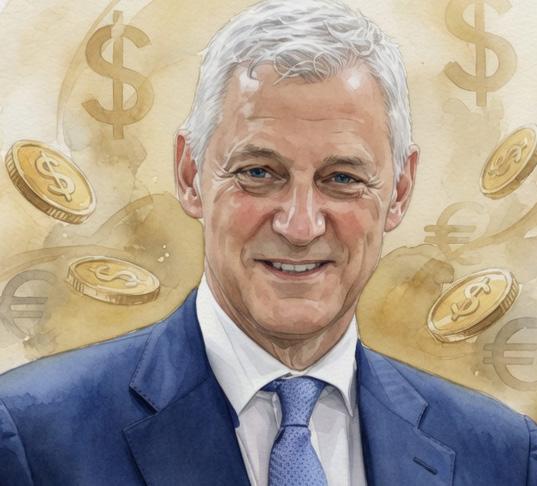
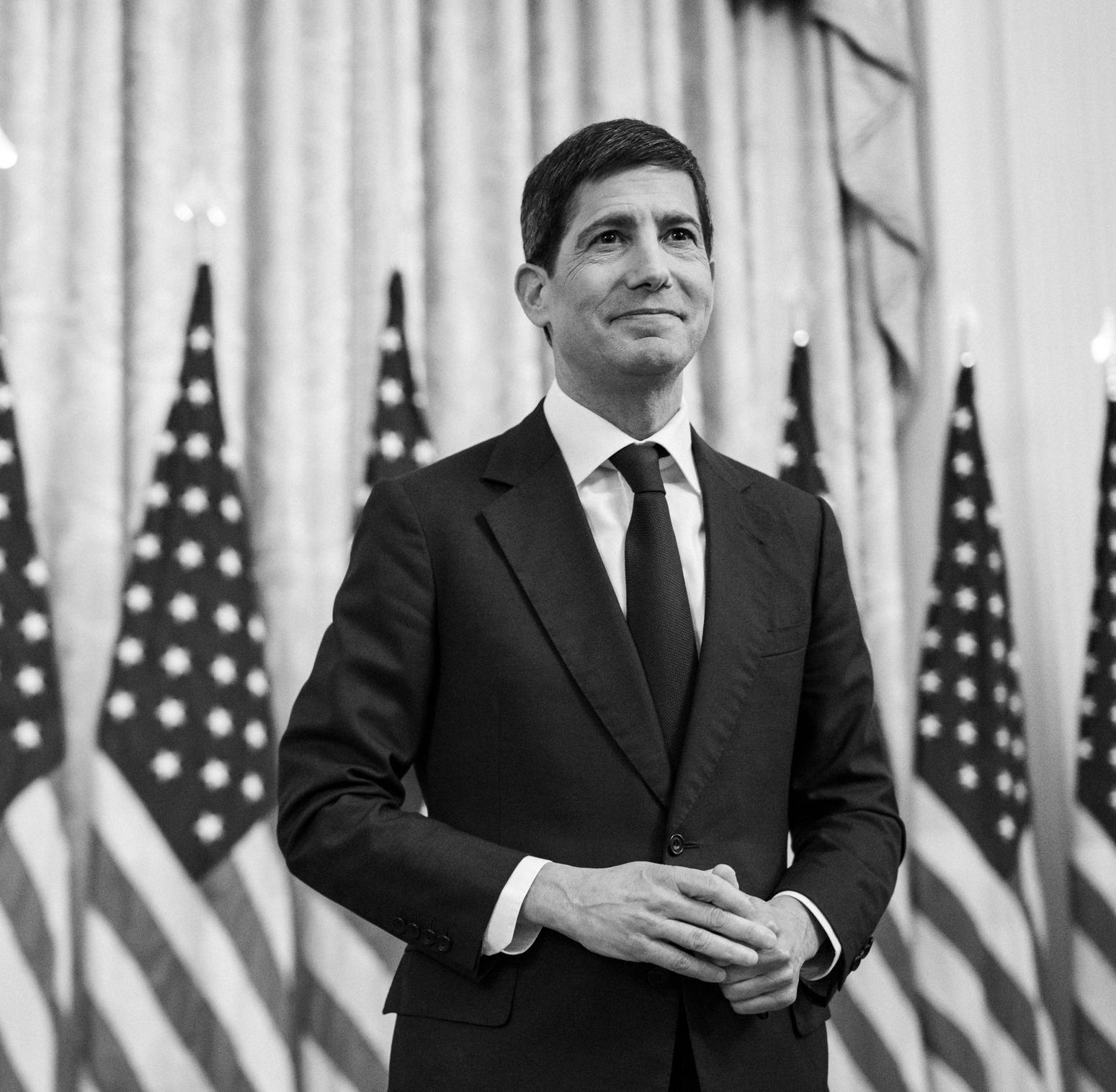
On May 22, Kevin Warsh was sworn in as the 17th Chairperson of the Federal Reserve, the central bank of the United States that sets interest rates for the world’s largest economy. His confirmation was the most contentious in the Fed’s history.
A Senate committee initially blocked him while his predecessor, Jerome Powell, was under federal investigation. Warsh eventually scraped through by the narrowest margin ever, with only one Democrat, Pennsylvania Senator John Fetterman, crossing party lines to support him.
The Fed chair is arguably the most powerful unelected official on the planet. When the Fed raises or lowers interest rates, it changes the cost of borrowing money for everyone, including homebuyers, businesses, and governments. Its decisions have an impact on currencies, inflation, and economies around the world.
When the Covid-19 pandemic struck in 2020, the Fed did what central banks do in a crisis. It flooded the economy with cheap money. It cut interest rates to near zero, and began buying up vast amounts of government bonds, a policy known as quantitative easing, or QE.
At its peak, the Fed’s balance sheet swelled to $9 trillion, equivalent to about 36% of America’s entire annual economic output. At the same time, the US government pumped roughly $5 trillion in pandemic relief into the economy across two administrations.
All that money chasing goods and services meant that prices began rising sharply. By early 2021, inflation was clearly climbing above the Fed’s 2% target. Powell and his colleagues kept insisting the price rises were ‘transitory’, a temporary blip caused by pandemic-related supply chain disruptions that would fix themselves without the Fed needing to act. They were wrong.
By June 2022, inflation had hit 9.1%, a 40-year high. Cumulatively, consumer prices ended up 27% higher than before the pandemic. Grocery bills rose by around 30%. The cost of almost everything jumped.
Seeing no other option, the Fed launched the most aggressive interest rate hiking campaign since the 1980s, including three consecutive increases of 0.75 percentage points, a pace rarely seen in modern central banking. By July 2023, the benchmark rate had been pushed to a peak of between 5.25% and 5.5%. This succeeded in bringing inflation down significantly, but not all the way. Inflation plateaued around 3.4%, and refused to fall further to the 2% target.
Despite this ‘last mile’ problem, the Fed then began cutting rates, reducing them by a total of 1.75 percentage points between late 2024 and 2025, bringing the current rate to between 3.5% and 3.75%. Many economists consider this a mistake. The labour market was still healthy, meaning there was no strong economic justification for the cuts.
Powell also spent much of his tenure fighting off political pressure from President Donald Trump, who,
since the beginning of his second term in 2025, repeatedly and publicly demanded lower interest rates. His final year was further clouded by a Justice Department investigation into an expensive renovation of the Fed’s Washington headquarters, though the probe was dropped in April 2026.
America is in the middle of a spending spree on AI infrastructure, covering data centres, computer chips, power generation, and the software to run it all. Major technology companies collectively spent $427 billion on AI-related capital expenditure in 2025. That figure is projected to reach $562 billion in 2026, and $637 billion in 2027. Over the five-year period from 2026 to 2031, total AI investment is forecast to hit $7.6 trillion.
The scale of individual transactions reflects the intensity of this moment. In June 2026, Google’s parent company Alphabet raised a record $80 billion in new equity to fund AI expansion: $40 billion through a rolling share sale programme, $30 billion through public share offerings,
9.1% US CPI inflation at its June 2022 peak, a 40-year high $7.6 trillion Projected cumulative AI capital expenditure, 2026 to 2031
70% Oil price surge following the closure of the Strait of Hormuz in March 2026
3.8% US CPI inflation in April 2026, with the PCE index projected at 3.9%
and $10 billion in a private placement directly with Warren Buffett’s Berkshire Hathaway.
Meanwhile, the AI company Anthropic is valued at $965 billion following a $65 billion funding round, and OpenAI is reportedly spending $15 million a day just on its Sora video generation platform.
Warsh believes this investment wave should help bring prices down over time by making the economy more productive and efficient. If AI genuinely boosts productivity at scale, that would give the Fed room to safely lower rates.
The problem is that there is little hard evidence of this productivity boost yet. US total factor productivity grew by only 0.8% over 2025. Labour productivity grew by 2.5%. These are not the numbers of a revolutionary economic transformation. Critics point out that past general-purpose technologies, like the internet, took decades to show up clearly in productivity statistics.
On February 28, war broke out with Iran. On March 4, the Strait of Hormuz, the narrow waterway through which roughly 20% of the world’s oil and gas passes, was completely closed. Gulf producers collectively lost 6.7 million barrels per day by March 10, a figure that widened to over 10 million barrels per day within two days.
Oil prices surged 70%, jumping from $72.78 per barrel to nearly $119.50, with intraday peaks hitting $126. Renewed missile strikes in June 2026 have pushed prices back up to around $97.85 per barrel. In the United States, average retail petrol prices jumped to $4.24 per gallon, up 30% from 2024.
The effects have spread throughout the economy. Airline fares jumped 20.7% annually as jet fuel costs soared. Global fertiliser prices rose over 12% in the first
quarter of 2026, threatening a secondary wave of food price inflation. The average American household is now spending around $75 more per month on everyday expenses to deal with higher energy and transport costs.
Overall CPI inflation rose to 3.8% in April 2026. The Fed’s preferred measure of inflation, the PCE index, is projected at 3.9% for April. Core inflation, which strips out food and energy, also rose to 2.8%, suggesting that price pressures are spreading beyond energy into the broader economy.
Three major problems are stacked on the new chairman Kevin Warsh’s desk.
First, there is the rate dilemma.
President Trump nominated Warsh partly because of his stated preference for lower interest rates, and the Republican continues to pressure the Fed for cuts. But cutting rates now, with CPI at 3.8% and rising, risks sending a signal that the Fed no longer takes inflation seriously, which could cause businesses and workers to expect higher prices indefinitely, making inflation self-fulfilling.
Financial markets have already priced out any chance of a rate cut in 2026, and are now pricing in a 40% probability of a rate hike by December. Several regional Fed presidents are also pushing back against any easing.
Warsh has pointed to narrower inflation gauges, specifically the Dallas Fed trimmed mean PCE at 2.40%, and the Cleveland Fed’s trimmed mean CPI at 2.80%, as evidence that underlying inflation is less worrying than the headline numbers suggest. Critics counter that shifting goalposts during a crisis to justify politically convenient decisions would be deeply damaging to the Fed’s credibility.
Second, there is the communication
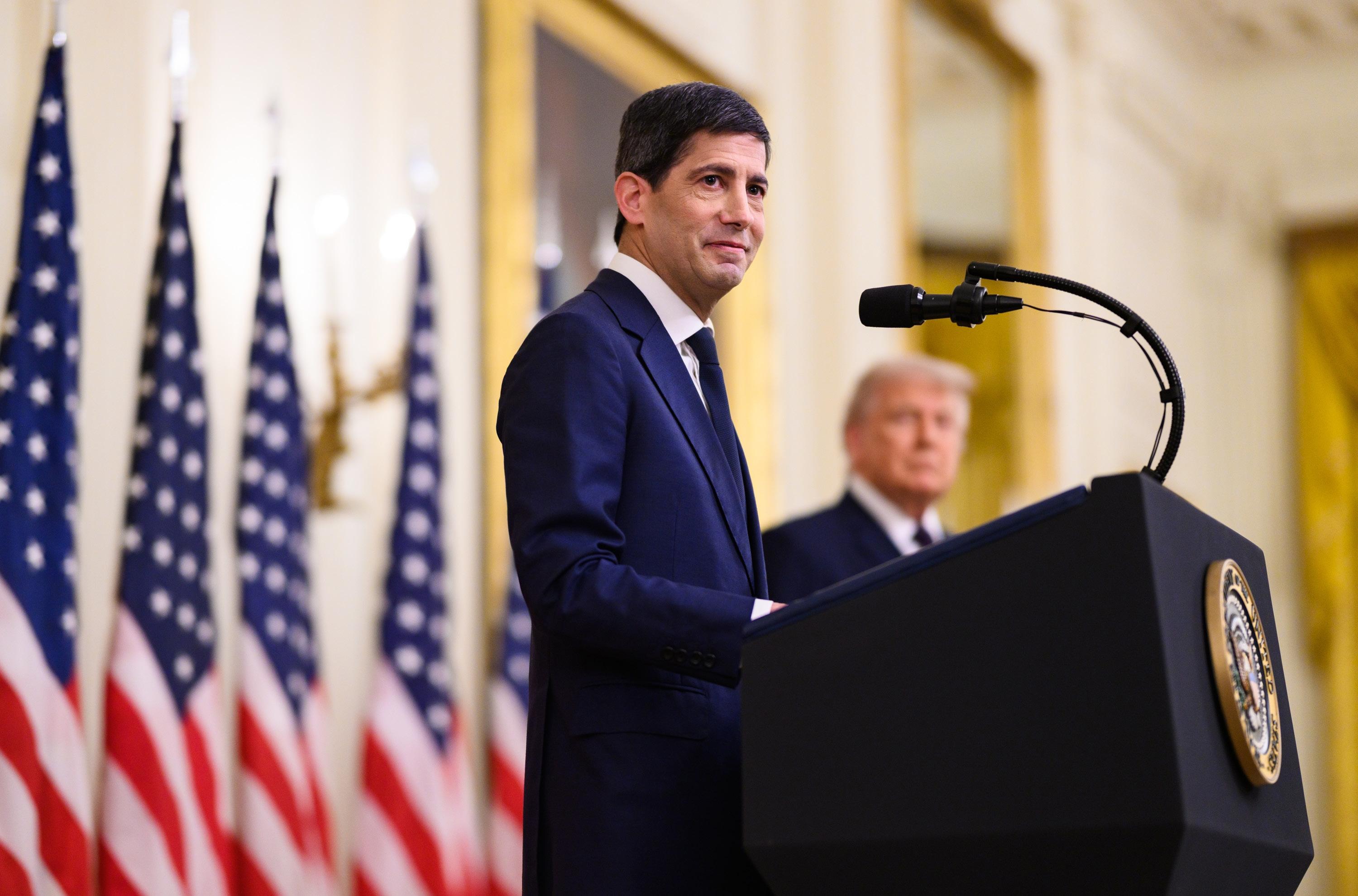
overhaul. Warsh wants to dismantle the Fed’s forward guidance system; the practice of signalling future rate moves through tools like the quarterly dot plot and regular press conferences. He blames this practice for locking the Fed into its ‘transitory’ error. But removing these anchors during a volatile period also risks spooking bond markets, pushing long-term interest rates up, and making mortgages and business loans more expensive.
Third, there is the balance sheet question. The Fed’s holdings have already fallen from $9 trillion to $6.7 trillion, about 21% of GDP, through quantitative tightening. Warsh wants to reduce it further. But draining reserves too fast risks triggering a funding crisis in short-term
lending markets, similar to what happened in September 2019 when overnight borrowing rates spiked and the Fed had to intervene urgently.
The responsible path is uncomfortable. Keep rates where they are, resist political pressure to cut, and make any communication changes gradually.
Whether Warsh, a Trump appointee navigating a hawkish committee while managing a White House demanding cheaper money, has the institutional independence to do that is the defining question of his early chairmanship.

The latest SME Confidence Index by Business Partners Limited has come up with an unsettling discovery: South African small and medium enterprises (SMEs) are operating on a more cautious footing as rising fuel prices, driven by global geopolitical tensions, continue to place increasing pressure on
Oman’s inflation stood at 2.8% in June 2026 with higher food, transport and services costs continuing to drive consumer prices. As per data released by National Centre for Statistics and Information (NCSI), average inflation for the January-June 2026 period stood at 2.8%.
"The food and non-alcoholic beverages category recorded the highest annual increase among the main consumer groups, rising 6.1% compared with June 2025. It was followed by miscellaneous goods and services at 5.7%, transport at 5.5%, restaurants and hotels at 4.6%, and furniture, household equipment and routine household maintenance at 3.1%," NCSI stated.
Prices for education, on the other hand, increased 2.2%, while healthcare rose 1.8%. Recreation and culture recorded a marginal
by four percentage points to 77%. The decline in confidence has been broad in nature, cutting across most indicators compared to both the previous quarter and the same period in 2025.
business operations.
As per the study, the prevalent business sentiment has been reflected in declining confidence levels, with the ratio representing faith in the South African economy being conducive to business growth falling by six percentage points to 63%, while confidence in the participants' own business growth declined
Stating that these findings suggest a clear shift among SMEs away from growth and expansion towards short-term survival, cost management and operational resilience, Jeremy Lang, managing director at Business Partners Limited, remarked, "Rising fuel costs and global uncertainty are undoubtedly constraining growth ambitions, but local SMEs remain focused on building the resilience needed to sustain their businesses and position themselves for future opportunities."
increase of 0.3%. "In contrast, prices for communications, tobacco, and clothing and footwear were unchanged, while the housing, water, electricity, gas and other fuels category declined 0.6%," NCSI noted.
Among the governorates, the annual inflation rate stood at its highest at Dhahirah (3.5%), followed by Muscat (3.2%), Dakhliyah (3.1%), Al Wusta (3.0%) and Buraimi (2.9%). In both Musandam and South Batinah, the ratio was 2.4%, followed by Dhofar (2.2%).
The food and nonalcoholic beverages category recorded the highest annual increase among the main consumer groups, rising 6.1% compared with June 2025

Asset Management | Private Equity | Brokerage
Delivering trusted financial solutions across three core lines of business:
Asset Management Top-performing funds tailored for every investor.
Private Equity
Brokerage
Strategic investments focused on value creation and long-term growth.
Efficient, secure trading solutions for individuals and institutions.
MOST INNOVATIVE ASSET MANAGEMENT COMPANY IN EGYPT – 2025
Scale of workforce reductions is significant, and the language used to describe them varies widely
GBO Correspondent
When Standard Chartered's CEO Bill Winters stood before investors in Hong Kong recently, he described thousands of his own employees as ‘lower-value human capital’ that would be replaced by artificial intelligence.
The backlash was swift. Regulators called. The staff were furious. Winters apologised on LinkedIn within days, insisting he had only meant to flag which types of tasks were at risk from automation, not pass judgement on the people doing them.
The episode was awkward and poorly handled. But it also cracked open a conversation that the entire global banking industry had been conducting quietly
behind closed doors. AI is coming for a significant portion of the financial workforce, and no one has quite agreed on how to talk about it, let alone manage it.
A reckoning long in the making
Banks have always run on paperwork. Behind every mortgage approval, every wire transfer, every new client account is a long chain of human checks. Someone verifying an identity, another person reconciling a transaction, a third ensuring that everything meets the regulatory requirements of whichever country the money happens to be moving through. For decades, this work was simply too complex and too context-dependent to be handled by machines.

That is no longer the case. The new generation of artificial intelligence (AI), particularly the large language models and agentic systems that have emerged in recent years, can read documents, cross-reference data, flag inconsistencies, and generate compliance reports at a speed and scale no human team can match. For banks, which operate some of the largest back-office workforces in the world, this is both an extraordinary opportunity and a serious problem.
Research by Citigroup found that around 54% of all banking roles have a high potential for complete automation. A further 12% could be significantly augmented by AI tools. McKinsey put the financial upside of this shift at a 25% reduction in operating costs, with roughly 30% of all work hours in finance and insurance fully automatable by 2030.
Citigroup's own models suggest the industry could add as much as 170 billion dollars to its collective profits by 2028 simply by deploying these systems at scale. These are extraordinary numbers. They are also, for hundreds of thousands of people currently employed in those roles, a source of genuine anxiety.
The scale of planned workforce reductions across major institutions is significant, though the language used to describe them
Research by Citigroup found that around 54% of all banking roles have a high potential for complete automation
A further 12% could be significantly augmented by AI tools
McKinsey put the financial upside of this shift at a 25% reduction in operating costs, with roughly 30% of all work hours in finance and insurance fully automatable by 2030
Citigroup's own models suggest the industry could add as much as 170 billion dollars to its collective profits by 2028 simply by deploying these systems at scale
varies widely.
Standard Chartered has announced it will cut between 7,800 and 8,000 corporate function roles by 2030, roughly 15% of its support staff. The cuts are concentrated in operational hubs in Chennai, Bengaluru, Kuala Lumpur, and Warsaw, where large teams handle back-office and middle-office functions.
Regulators in Hong Kong and Singapore contacted the bank for clarification, with Hong Kong's monetary authority specifically asking whether AI was being used as cover for straightforward cost-cutting.
HSBC, which employs more than 200,000 people worldwide, is reportedly weighing a restructuring that could affect as many as 20,000 roles over the next three to five years. Chief Executive Georges Elhedery has been more careful with his framing than Winters, urging staff to stop resisting the technological shift and to think of it as a transition rather than a termination.
The bank has appointed its first dedicated chief AI officer and is pushing generative AI tools into customer onboarding, risk monitoring, and wealth management. The overall message is collaborative, though the underlying numbers tell a harder story.
JPMorgan Chase, the largest bank in the United States, has taken a different approach to communicating the same reality. Chief executive Jamie Dimon has said plainly that the bank will hire more AI engineers and data scientists while reducing its intake of traditional banking staff.
Dimon described Winters' controversial remarks as merely ‘inartful’ rather than wrong. JPMorgan manages its headcount reduction largely through natural attrition, relying on the fact that roughly 25,000 to 30,000 employees leave the firm voluntarily each year. This gives the bank room to reshape its workforce gradually without mass redundancies.
Citigroup has set a target of cutting around 20,000 roles by 2026, focusing on middle-office and operational support func-
tions. At the same time, the bank has given AI tools to 40,000 software developers and rolled out internal AI platforms to nearly 180,000 employees across 83 countries.
Mandatory training in prompt-writing, the skill of giving AI systems clear and useful instructions, has been extended to 175,000 staff. These tools have already freed up around 100,000 hours of weekly capacity within the bank's technology teams.
Goldman Sachs has framed its strategy around what president John Waldron calls the ‘human assembly line’ problem. Banks, he argues, have long worked like factories, with people passing information down the chain from one specialist to the next. AI agents, which can work continuously without a break and handle multiple tasks simultaneously, are now capable of performing much of that assembly-line work autonomously.
Goldman is deploying AI agents built on Anthropic's Claude model in two areas: trade and transaction accounting, where the agents reconcile millions of financial records that previously required large teams of accountants, and client due diligence, where they process the extensive documentation required to verify new institutional clients under anti-money laundering and know-your-customer rules.
Not everyone accepts that the scale of these changes is driven purely by technology. Critics, including several prominent economists and venture capitalists, have noted that many large companies became heavily overstaffed during the post-pandemic hiring surge, and are now using AI as a convenient justification for reductions they would have made regardless.
Thomas Malone, a professor at MIT's Sloan School of Management, has observed that for companies facing sluggish revenue or strategic missteps, blaming job cuts on automation ‘definitely makes for a better story’ when addressing investors than admitting to

poor planning.
Marc Andreessen, the technology investor, made a similar point, suggesting that generative AI has become a ‘silver-bullet excuse’ for shedding excess headcount while keeping shareholder confidence intact.
The banking sector, however, has a stronger structural case for automation than most. Unlike technology firms, which can scale their products to millions of users with little additional labour, banks are required by law to check every transaction, verify every client, and document every decision.
This compliance burden has historically meant that revenue growth required proportional headcount growth. AI systems that can shoulder much of this burden without additional staff represent a genuinely transformative shift in the economics of the business, not just a story for investors.
One consequence of this shift that has received less attention than headline redundancy numbers is what is happening to entry-level hiring. Data from municipal financial reports in major cities points to
AI agents built on Anthropic's Claude model in trade and transaction accounting, where the agents reconcile millions of financial records and client due diligence, where they process the extensive documentation to verify new institutional clients under anti-money laundering and know-yourcustomer rules
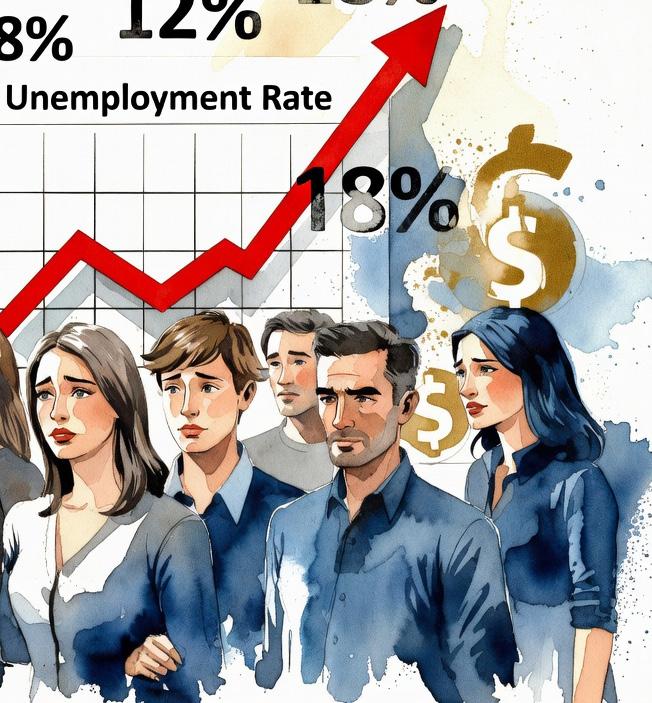
For the first time on record, unemployment among recent university graduates has in some months exceeded the unemployment rate for young adults without a degree
the emergence of what analysts are calling a ‘low-hire, low-fire’ economy. Overall layoffs have remained relatively modest, but firms are simply not replacing the junior positions that AI tools have begun to absorb.
The effects are already visible in graduate employment data. For the first time on record, unemployment among recent university graduates has in some months exceeded the unemployment rate for young adults without a degree.
Tasks that were once carried out by trained junior bankers, including first-draft financial modelling, initial document review, and basic compliance checking, are increasingly handled by AI tools before a graduate would ever have had the chance to do them.
The National Foundation for Educational Research has warned that AI and automation could eliminate up to three million lowskilled jobs in the United Kingdom alone by 2035. The banking sector's shift is one of the more visible early examples of a broader structural change in how white-collar work is organised, and who gets to do it.
Amid the disruption, some institutions have moved beyond announcements and built programmes that appear to be working in practice.
DBS Group in Singapore has become something of a benchmark for how a bank can manage this transition without mass redundancies. Rather than announcing largescale cuts and then scrambling to manage the fallout, the bank began by freezing external hiring for roles it identified as vulnerable to automation.
At the same time, it launched a comprehensive retraining programme for around 13,000 employees, with more than 10,000 already having completed their initial AI and data skills coursework.
The approach to individual roles has been thoughtful. Bank tellers, for instance, have not been let go. Instead, they have been retrained to manage interactive video teller
machines and transition into digital relationship management, where human connection and judgement remain valuable.
In Singapore's customer contact centres, DBS reskilled roughly 500 staff members into 13 new job categories, ranging from digital content creation to customer experience design. Over time, the number of traditional call centre agents fell from 300 to 55, but through reassignment rather than termination.
DBS also invested in AI-powered internal tools to support this process. OneBot handles HR and IT queries around the clock, reducing the administrative burden on staff. JIM, the Job Intelligence Maestro, screens candidates and predicts which employees are at risk of leaving, allowing managers to intervene early.
IGrow, a personalised career development platform, identifies skill gaps for individual employees and recommends specific training pathways tailored to each person's profile. This work sits within a broader national initiative coordinated by the Monetary Authority of Singapore to retrain 35,000 financial sector workers across the country's three main domestic banks.
In the United Kingdom, Lloyds Banking Group has built what it calls an AI Academy to upskill its entire workforce of between 60,000 and 67,000 people. Chief Executive Charlie Nunn has articulated the programme's philosophy clearly. AI replaces tasks, not roles, and employees who learn to work alongside AI will eventually replace those who do not.
The financial case for this investment has been documented with unusual transparency. In 2025, early generative AI deployments at Lloyds, including a tool that reduced the time needed to categorise customer complaints from five minutes to one second, delivered a direct saving of 50 million pounds. That figure is projected to exceed 100 million pounds in 2026 as the bank expands its use of autonomous AI agents across more processes.
Lloyds has tied these efficiency gains to a
specific curriculum built around skills that remain difficult for machines to replicate: critical thinking, ethical reasoning, the ability to question and verify AI-generated outputs, and genuine human empathy in client-facing situations. Training completion figures are published quarterly, and the bank maintains active dialogue with its main recognised trade union, Accord.
The relationship has not been without friction. In early 2026, Lloyds faced significant criticism after it emerged that the bank had used aggregated salary and spending data from 30,000 staff bank accounts during pay negotiations, arguing the data showed its lowest-paid employees were in a better financial position than the general public. Nunn apologised in an internal town hall and ordered a review. The incident underscored that the ethical use of data, internally as much as externally, is a live concern as banks integrate AI more deeply into their operations.
The early evidence from institutions that have handled this transition well points to several practical lessons.
Training needs to be mandatory and consequential, not optional and token. DBS, Citigroup, and Lloyds succeeded because upskilling was treated as a core business requirement rather than a voluntary development exercise. At JPMorgan, AI training is linked to career advancement. The same principle applies elsewhere: if employees have no incentive to complete training, most will not.
Experimentation needs guardrails. JPMorgan's approach of giving staff access to AI tools within secure, pre-approved environments allows people to learn by doing without creating compliance risks. Banks that simply hand out access to external AI products without governance frameworks are inviting expensive errors.
Natural attrition is more humane and more sustainable than mass redundancies. JPMorgan and DBS have both demonstrat-

ed that a patient, attrition-led approach to headcount management avoids the labour friction, regulatory scrutiny, and reputational damage that blunter approaches invite.
Human oversight must be built into AI workflows from the beginning. The banking sector's reliance on autonomous agents raises a genuine accountability problem. When a machine generates compliance outputs faster than any human team can audit them, but human professionals remain legally responsible for signing off on the work, the system is structurally vulnerable. Designing clear human checkpoints into automated workflows is not a concession to inefficiency; it is a basic condition of responsible deployment.
The global banking industry is now facing a choice between technological progress and workforce responsibility. The banks managing this transition most successfully have found that these goals are compatible, provided the commitment to both is genuine. The challenge now is for the rest of the sector to follow.
Designing clear human checkpoints into automated workflows is not a concession to inefficiency; it is a basic condition of responsible deployment
Belgium Analysis
GBO Correspondent
Belfius is Belgium's third-largest bank by assets and holds a leading position in public sector financing, serving approximately 50% of Belgian companies
The Belgian state has historically been protective of institutions it considers central to the functioning of the country, and few qualify more than Belfius, the Brussels-based bank and insurer that quietly underpins much of Belgian public and civic life.
The above fact makes the government's current plan to sell a 20% stake in Belfius, through a private transaction worth roughly 2 billion euros, all the more significant. To understand why this is happening, and what it means, it helps to go back to where Belfius came from.
The Belfius story begins not with a founding, but with a rescue In 2011, the Franco-Belgian banking group Dexia collapsed under the weight of bad investments and a crisis of confidence that had been building since the 2008 global financial meltdown.
Dexia had grown by lending vast sums to municipalities and public bodies across Europe, borrowing cheaply on short-term markets to fund long-term loans. When those short-term funding markets froze, the entire structure came apart. The Belgian state stepped in and purchased Dexia's Belgian banking arm for 4 billion euros, ensuring continuity of service and financial stability.
The new institution was rebranded Belfius in 2012. This was meant to be a bank that belonged to Belgium, and could be relied upon. Wholly state-owned, Belfius is focused on serving domestic customers across retail, self-employed professionals, small and medium-sized enterprises, public institutions, and corporate clients.
It is Belgium's third-largest bank by assets, and holds a leading position in public sector financing, serving approximately 50% of Belgian companies through its commercial operations.
In the years since its creation, Belfius has served two distinct but overlapping roles. The first is to serve as a conventional retail bank for ordinary Belgians, handling savings, mortgages, insurance, and everyday banking. The second, and arguably more important, is as the financial backbone of Belgian public life.
With over 23.7 billion euros in outstanding loans to the public and social sector, Belfius finances hospitals, schools, swimming pools, and other public infrastructure across the country. In practical terms, this means that when a Belgian municipality needs to build a school, or a hospital needs to upgrade its facilities, Belfius is typically the institution providing the money.
This role was tested during the Covid-19 pandemic, when Belfius went beyond what its market share would ordinarily require. During the crisis, Belfius provided necessary liquidity and granted deferred payments for companies and SMEs facing temporary difficulties.
Nearly 24,000 company loans worth 4.7 billion euros benefited from deferred payments, along with 13,840 lease contracts worth 870 million euros. Belfius also granted
Covid credits with state guarantees totalling 509 million euros to companies and the public sector.
As a 100% Belgian bank and insurer, Belfius reinjects virtually all of its customers' deposits back into Belgian society and the economy. In 2024 alone, it provided 23.4 billion euros in new long-term financing to support all segments of Belgian society. This includes co-financing 52,500 social housing units with solar panels in Flanders, and equipping more than 1,000 schools across Wallonia and Brussels with renewable energy installations.
For the Belgian state, the investment has been a financial success beyond simply preserving stability. The state's return was already positive thanks to dividends paid since the acquisition, with Belfius distributing 1.5 billion euros in dividends in the past two years alone.
That is a considerable return on an original purchase price of four billion euros, and does not account for the value of stability that came from avoiding a disorderly collapse of Dexia's Belgian operations during the 2011 crisis.
Belgium had a public debt-to-GDP ratio of around 105% at
the end of 2024, placing it among the most indebted countries in the European Union, alongside France and Italy. At the same time, the country's budget deficit has been widening.
In 2025, Belgium's general government deficit rose to 5.2% of GDP, up from 4.4% in 2024, driven by a sharp decline in revenue from income and wealth taxes combined with higher spending on defence and social benefits. That deficit level sits well above the 3% cap that the European Union's fiscal rules require.
Layered on top of this is the rising cost of defence. For years, Belgium was one of NATO's chronic underperformers on military spending, consistently falling below the alliance's 2% of GDP target. Five
• Belfius acquired by Belgian state in 2011 for €4 billion following Dexia collapse
• Belfius provided €23.4 billion in new longterm financing to the Belgian economy in 2024
• Belfius paid €1.5 billion in dividends to the state in the past two years alone
• Bank valued at approximately €10 billion by financial markets in 2026
• 20% stake sale valued at roughly €2 billion via private placement
• Belgium's defence spending: 1% of GDP (2020) to 2% (2025), a 59% jump in one year
• Belgian public debt stood at approximately 105% of GDP at end of 2024
• Government deficit rose to 5.2% of GDP in 2025, up from 4.4% in 2024
years ago, Belgium spent just 1% of its GDP on defence. In 2024, this had risen to 1.27%
The country finally met the 2% benchmark in 2025, for the first time in its history. That required an acceleration of spending. The Belgian government accelerated defence expenditure by four billion euros in the months leading to the NATO summit, taking total defence spending to 2% of GDP.
Under considerable pressure from US President Donald Trump, NATO allies agreed to raise their defence and securityrelated expenditure to 5% of GDP by 2035. Belgium, which only just crossed 2%, now faces a trajectory that will demand sustained and substantial spending increases for a decade. Belgium already recorded the sharpest increase in defence spending in Europe in 2025, with expenditure rising by 59% to 14.5 billion US dollars.
Spending more on defence while also trying to bring a large deficit under control creates an obvious problem. Something has to give, or new sources of revenue have to be found. Selling a stake in Belfius is one option.
An initial public offering (IPO), which would involve listing Belfius shares on a stock exchange for any investor to buy, had been discussed for years. It was previously considered, and then shelved during periods of market turbulence.
Finance Minister Jan Jambon told lawmakers that an IPO is a longer process that is more complex and more dependent on market conditions, and that the current period of market instability and volatility made that approach unsuitable.
The private placement route means finding one or a small number of institutional investors to take the 20% stake through direct negotiation. It is faster, more controllable, and less vulnerable to the kind of day-to-day swings in investor
Analysis \ Belfius

sentiment that can derail a public listing. The 20% stake is estimated to be worth about 2 billion euros, or around 2.3 billion US dollars, based on a total bank valuation of approximately 10 billion euros.
Amsterdam-listed private equity fund CVC, along with banks including ING, Rabobank, and Credit Agricole, have been reported as potential interested parties. A smaller stake could offer strategic bidders a lower-risk way to deepen ties in Belgium and potentially set up future cooperation. Jambon acknowledged CVC's reported interest as a positive signal.
As per the government, the goal is to attract a private investor with the necessary experience who can actively contribute to Belfius's strategy and business plan. This is not a pure asset disposal. Brussels wants a partner who will add operational and strategic value, not simply a passive shareholder collecting dividends.
Two billion euros is a meaningful injection at a moment when Belgium needs to fund defence spending commitments while also
demonstrating to Brussels that it is serious about fiscal discipline. It does not solve the structural deficit problem, but it buys time and demonstrates a willingness to use state assets responsibly.
The long-term gain is strategic. By keeping 80% of Belfius in state hands, Belgium retains full control over the bank's direction and its continued role in public sector financing. This is not privatisation in any real sense. It is the careful introduction of a minority private partner into an institution that will remain, fundamentally, a public one.
The government has been careful to signal that Belfius's core mission, financing hospitals, local authorities, schools, and the broader fabric of Belgian civic life, will not be compromised by this transaction.
The coming months will determine the final price and the identity of the buyer, and with them, the next chapter of one of Europe's most unusual banking institutions. A bank built from the rubble of a crisis, owned entirely by its own citizens, is now cautiously opening its doors to outside capital for the first time.
By keeping 80% of Belfius in state hands, Belgium retains full control over the bank's direction and its continued role in public sector financing. This is not privatisation in any real sense. It is the careful introduction of a minority private partner into an institution that will remain, fundamentally, a public one
Guided by a deep understanding of perfumery, the company develops compositions that balance heritage with innovation
SSaudi Arabia-based Reef Group has consolidated its position as a contemporary fragrance house defined by authenticity, precision, and modern refinement. Guided by a deep understanding of perfumery, the company develops compositions that balance heritage with innovation. By carefully cultivating global partnerships, it sources exceptional ingredients to ensure the highest standards of quality in every creation.
"Each Reef fragrance is designed as a considered expression of individuality, crafted to accompany moments that endure. Our vision is to establish Reef as a respected name in luxury perfumery, recognised for its commitment to excellence, integrity, and timeless elegance. We view fragrance as an essential element of refined living, a sensory signature that enhances presence and leaves a lasting impression," the company said.
"Our goal is to create fragrances that integrate seamlessly into personal identity, offering distinction through subtlety and quality. Through thoughtfully curated collections, we remain dedicated to craftsmanship, consistency, and long-


term value. Every Reef creation reflects our pursuit of enduring sophistication and uncompromising standards," it remarked.
The visionary behind Reef Group’s position as Saudi Arabia’s market-leading fragrance house is its CEO, Fahad bin Badr Al-Majed. In the recently concluded Global Business Outlook Awards, both Reef Group and
Fahad got recognised as the "Best Emerging HomeGrown Perfumes and Fragrances Brand – Reef" and “Best CEO – Perfumes & Fragrances – Mr. Fahad Al-Majed" respectively.
“The achievement of the best growing perfume brand and best CEO in the perfume industry on the level of GCC is truly remarkable and reflects the
quality of work standards and a dedication to receive such recognition following the steps of what Reef Group’s vision is aiming to be and milestones to achieve,” CEO Fahad bin Badr Al-Majed noted.
The value and dimensions of the achievement
Winning the GBO Awards marks a significant milestone in Reef Group's journey. It reflects the distinguished position the company has achieved in its sector and confirms its ability to compete and excel in a dynamic and ever-changing
Ibusiness environment. This accomplishment is not just a title or a certificate of appreciation—it is an official acknowledgement of the accumulated efforts and clear vision the company has pursued since its founding.
The award crowns a long-term strategy focused on quality, innovation, and building sustainable relationships with clients and partners. It also reflects the company’s commitment to providing effective solutions that meet market needs and align with the latest global standards.
According to Reef Group, the recognition is a source of pride for all employees and strengthens clients’ confidence in the company’s ability to continue delivering real value.

“ I’m proud to work alongside a team that truly understands the art and business of perfumery. In an industry driven by emotion, identity and detail, their ability to translate vision into exceptional products and impactful campaigns for our growth is truly commendable ”

Leadership’s sentiments upon winning the award
Reef Group CEO Fahad bin Badr Al-Majed expressed a deep sense of pride and gratitude following the announcement of the award. He highlights that this achievement carries both human and professional significance. For him, the value of the award extends beyond recognition—it stands as a testament to the team's dedication and sincerity.
“As CEO of Reef group, I’m proud to work alongside a team that truly understands the art and business of perfumery. In an industry driven by emotion, identity and detail, their ability to translate vision into exceptional products and impactful campaigns for our growth is truly commendable," Fahad added.
He explained that the moment of recognition was filled with emotion, as every challenge faced and every hour of hard work invested by the team had finally translated into tangible success. He also stressed that this honour reinforces the leadership’s responsibility to continue supporting the team and nurturing a work environment that fosters creativity and sustainable growth.
“I am honoured to receive this recognition, which represents a significant milestone for us at Reef Group. It is a true reflection of our ambitious vision and the dedicated efforts our team has invested over the past period. This success was not a coincidence—it was the result of strategic planning, a commitment to the highest quality standards, and the spirit of collaboration that unites every member of our team. I feel great pride in this achievement, which motivates us to continue innovating and reaching even higher levels of excellence. The recognition gives us strong momentum to continue our journey with greater confidence and responsibility toward our clients and partners,” he reacted, upon winning the honour of “Best CEO in the Perfume Industry – Saudi Arabia 2025.”
Team effort and collective work
Behind this achievement stands a fully integrated team working with a unified vision of success. Every individual at Reef played a vital role in reaching this level—from
planning and execution teams to support and management divisions. This harmony among diverse talents contributed to building an effective work system capable of overcoming challenges.
The team followed a clear methodology based on collaboration, knowledge sharing, and leveraging diverse ideas. Commitment to deadlines, dedication to quality, and continuous performance monitoring were all key elements in achieving the desired results, seen in the form of the company’s rich product line-up, from perfumes to home fragrances. This success embodies an organisational culture built on the belief that true achievement can only be realised through teamwork.
A future outlook beyond the award
Being honoured by GBO marks a new beginning toward broader horizons of success. The Reef Group now aims to build upon this excellence by enhancing its services, strengthening its investment in innovation, and elevating customer satisfaction. The company also seeks to capitalise on this recognition to expand its partnerships and reinforce its presence in local and regional markets.
Through Reef Group's partnership and franchise models, Saudi entrepreneurs now have the opportunity to start their own business. The company, on its part, provides an integrated system that makes it easy for the partners and franchise holders to quickly and confidently launch their businesses into the perfume market.
Also, Reef Group's rich experience in the perfume industry comes in handy, as the business helps Saudi entrepreneurs to combine craftsmanship with exceptional quality. Strategic partnerships with the best suppliers globally ensure the provision of the finest essential oils that reflect excellence for the perfumes.
“The management has affirmed that the next phase will focus on sustainability, talent development, and the adoption of global best practices. The award is not the end of the journey—it is a motivation to continue striving for excellence and to solidify the company’s status as a pioneering leader in its field,” Fahad concluded.
Wall Street Analysis
GBO Correspondent
A Special Purpose Acquisition Company, or SPAC, is essentially a shell company with no real business of its own. So, why is one created?
Wall Street is bracing for one of the busiest stretches of stock market debuts in its history. Elon Musk's SpaceX has just listed at a valuation of roughly $1.8 trillion, and AI heavyweights Anthropic and OpenAI have both filed confidentially for US listings expected later this year. For investors, it is a moment of plenty. It's a chance to buy into some of the most closely watched companies on the planet the day they go public.
But for smaller companies hoping to make their own move into public markets in 2026, that same frenzy is becoming a problem. When a handful of trillion-dollar names dominate every headline, research note, and roadshow conversation, there is simply less attention, and less capital, left over for everyone else. Out of that squeeze, an old and once-discredited tool of corporate finance is quietly finding new life. Namely, the SPAC.
A Special Purpose Acquisition Company, or SPAC, is essentially a shell company with no real business of its own. It lists on a stock exchange purely to raise a pool of cash, which then sits in trust while its sponsors hunt for a private company to merge with. Once a target is found, and shareholders approve the deal, the private company effectively becomes public by stepping into the shell, skipping the traditional IPO roadshow altogether.
That structure makes SPACs attractive in exactly the kind of environment now taking shape. Michael Ashley Schulman, a partner at Cerity Partners, frames it simply: a parade of megaIPOs can make life harder for smaller issuers, since giant names soak up the headlines, the analyst coverage, and a large share of the capital that would otherwise be spread more evenly. A SPAC offers, what he calls, a quick side entrance onto public markets,
one that does not require competing head-on with SpaceX or OpenAI for investor mindshare.
SPACs were the breakout story of the pandemic years, when hundreds of blank-cheque vehicles rushed to list, flush with cash and short on judgement. Many later struggled to find decent acquisition targets, rushed into weak mergers just to avoid returning money to investors, or saw the companies they took public deliver disappointing returns. The reputational damage was severe enough that, for a while, ‘SPAC’ became something close to a dirty word in finance circles.
That stigma now appears to be fading, and the data backs it up. Globally, 44 SPAC mergers have been announced so far in 2026, worth a combined $36.9 billion, up sharply from 33 deals worth $15 billion over the same period in 2025, according to Dealogic figures.
The pace of new SPAC listings has also picked up as around 145 blank-cheque companies went public in the United States in 2025, the highest annual total since the original 2021 boom, and another 107 have listed so far in 2026 through mid-June, nearly double the 57 recorded over
the same stretch a year earlier.
Perhaps more telling is the dry powder sitting on the sidelines. As of mid-June, roughly 359 SPACs were holding a combined $56.8 billion in raised capital, all of it waiting to be matched with a deal, according to SPAC Research. Most of these vehicles operate on a clock of around two years from listing to find a target before they are forced to liquidate and hand the money back to investors. That built-in deadline is itself becoming a quiet driver of dealmaking, as sponsors under pressure to act look more seriously at targets they might once have passed over.
The market's better-known faces are returning too.
Chamath Palihapitiya, once nicknamed Wall Street's ‘SPAC king’ for his run of high-profile deals during the boom years, is back in the mix, a sign of how far sentiment has shifted from the wariness of just a couple of years ago.
Industry experts point to a fairly specific set of candidates for SPAC mergers this cycle. These include companies in energy, defence, critical minerals, nuclear power, space, and crypto, sectors where capital needs are large, timelines are long, and traditional IPO investors can be a harder sell.
Wall Street
SPAC deal volume
Smaller international firms looking for a foothold in US capital markets are also seen as natural fits.
Two recent deals illustrate the trend.
In March, geothermal lithium developer Controlled Thermal Resources agreed to go public through a $4.7 billion SPAC merger, while Taiwanese battery maker ProLogium
• 44 SPAC mergers announced globally in 2026 so far, worth $36.9 billion vs. 33 deals worth $15 billion over the same period in 2025
• That's a deal count up ~33% and deal value up ~146% year-on-year
Capital waiting to be deployed
• 359 SPACs currently hold $56.8 billion in raised capital, as of June 17, 2026 (SPAC Research)
US SPAC listings
• 145 blank-cheque companies went public in the US in 2025 highest annual total since 2021
• 107 SPACs listed in the US in 2026 through June 15 vs. 57 over the same period in 2025 (nearly double)
Notable recent deals
• Controlled Thermal Resources: $4.7 billion SPAC merger (March 2026)
• ProLogium Technology (Taiwan, battery maker): $3.8 billion blank-cheque deal
Reference point driving the narrative
• SpaceX IPO valued the company at ~$1.8 trillion
• Anthropic and OpenAI have both confidentially filed for US listings expected later in 2026
• Sponsor capital cited
• Dynamix CEO Andrejka Bernatova has raised ~$630 million across her SPAC vehicles
Technology struck its own blank-cheque deal worth $3.8 billion. Both are precisely the kind of capital-intensive, story-driven businesses that can struggle to get a fair hearing in a traditional IPO process crowded out by bigger names.
Michelle Gasaway, a partner in the capital markets practice at law firm Skadden, Arps, points to two practical advantages drawing companies back to SPACs. First is the flexibility to control timing, and the second the ability to negotiate a valuation directly with a sponsor rather than leaving price discovery to the whims of public market investors. For a company that does not want to gamble its valuation on the mood of the market during a single roadshow week, that certainty has real appeal.
Andrejka Bernatova, chief executive of Dynamix, who has raised about $630 million across her SPAC vehicles, notes that when investor sentiment is favourable, a SPAC merger can move in a matter of weeks, with capital raised in a matter of days. A traditional IPO, by contrast, can take months to prepare and remains vulnerable to being derailed by a sudden swing in markets, even late in the process.
A banking industry source told Reuters that conversations around potential SPAC mergers have picked up noticeably this year, particularly among companies valued below $3 billion that are now weighing both a SPAC and a conventional IPO as live options rather than treating the SPAC route as a fallback.
What separates this resurgence from the boom-and-bust cycle of a few years ago is the texture of the activity itself. The 2021 wave was driven largely by sponsors raising new SPACs on the promise of a deal that often had not even been identified

yet, a structure that left little room for scrutiny, and a great deal of room for disappointment.
This time, much of the momentum is coming from a backlog of vehicles that already raised their capital months or years ago, and are now under genuine time pressure to find a home for it before their charters expire. That changes the incentive structure as sponsors are not chasing headlines, they are racing a clock, and targets are being evaluated with the benefit of a market that has already lived through one round of SPAC failures.
Lukas Muehlbauer, a research associate at IPOX, captures the dynamic well. He expects some companies that might once have defaulted to a traditional IPO to instead look seriously at a SPAC merger, partly because so much existing capital is sitting in vehicles that need to close a transaction before liquidation forces their hand. That overhang of committed, deadline-bound money is arguably the single biggest structural difference between this cycle and the last one.
None of this means the SPAC model has shed its old risks entirely. High redemption
rates remain a genuine threat to deals as investors are free to pull their money out of a SPAC's trust account once a merger target is announced, and several recent transactions have closed with far less cash than originally planned as a result. A company banking on a certain amount of merger proceeds can find itself with a smaller war chest than expected, right at the moment it needs capital most.
What is emerging looks less like the speculative free-for-all of 2021, and more like a leaner, more deliberate SPAC market, one built around vehicles with capital already raised, deadlines pressing them toward action, and a genuine gap in the market created by Wall Street's biggest names crowding out everyone else.
For smaller companies eyeing a 2026 listing, that gap may be the opening they need. As Bernatova puts it, when the company is right and the market is there, a SPAC can simply be a more predictable way to go public, and strong appetite for the year's mega-IPOs may end up doing as much to lift sentiment for SPACs as it does to overshadow them.
None of this means the SPAC model has shed its old risks entirely. High redemption rates remain a genuine threat to deals as investors are free to pull their money out of a SPAC's trust account once a merger target is announced
GBO Correspondent
The combined tally of Tesla and SpaceX treasuries now makes Elon Musk the guardian of over 30,221 Bitcoins across two publicly listed companies
Elon Musk's SpaceX made history on the Nasdaq on June 12, 2026, raising $75 billion in its initial public offering (IPO) and shattering the previous global record set by Saudi Aramco in 2019. The rocket and satellite company priced shares at $135 each. By the end of the first trading day of day, they had climbed to $160.95, a gain of 19.2%, pushing the company's total market value past $2.1 trillion.
Goldman Sachs and Morgan Stanley led the deal. In a characteristically Musk touch, investment bankers wore custom green shoes at his request, a nod to the standard ‘greenshoe’ mechanism used in IPOs to manage share supply.
But the headline numbers were not the most consequential part of the SpaceX story. Buried inside the company's SEC registration document was a disclosure that sent ripples through the cryptocurrency world.
SpaceX holds 18,712 Bitcoins on its corporate balance sheet, purchased at an average price of $35,324 per coin, for a total cost of around $661 million. By the time the filing was made public, those holdings were worth $1.29 billion, representing unrealised gains of roughly $629 million. That single detail turned a landmark technology IPO into a defining moment for digital assets in mainstream corporate finance.
Before the IPO, blockchain analytics firm Arkham Intelligence had been tracking SpaceX's on-chain activity, and estimated the company held around 8,285 Bitcoin. The actual audited figure was 126% higher.
The gap revealed that SpaceX had been quietly accumulating Bitcoin through private, off-exchange transactions that left
no visible footprint on public blockchains. This kind of accumulation, done through institutional liquidity desks and untracked custody wallets, is increasingly common among large corporate buyers who want to avoid moving markets as they build positions.
The disclosure placed SpaceX eighth on the global corporate Bitcoin leaderboard, just behind Strive, which holds 19,032 Bitcoins, and ahead of Coinbase Global, which holds 16,492.
When combined with Tesla's treasury of 11,509 Bitcoins, Elon Musk now oversees more than 30,221 Bitcoins across two publicly listed companies, making him one of the single largest institutional holders of the asset in the world.
To understand why SpaceX is sitting on a billion-dollar Bitcoin reserve, it helps to understand what the company has become. The S-1 filing presented a consolidated entity that stretches well beyond rocket launches.
In February 2026, SpaceX completed a retroactive merger with xAI, Musk's artificial intelligence company,
at a combined valuation of $1.25 trillion. xAI had already absorbed X Holdings, the parent company of the platform formerly known as Twitter, in March 2025. Because Musk retained controlling stakes in all three companies simultaneously, US accounting rules required them to be presented as a single entity going back to 2023.
Total revenue for 2025 came in at $18.7 billion, up 33% year on year. Starlink, the satellite internet division, contributed $11.4 billion of that figure, and generated earnings margins that most businesses would envy. But the AI division told a different story, producing $3.2 billion in revenue while running an operating loss of $6.4 billion, driven by the enormous cost of building data centres and computing infrastructure.
The consolidated net loss for the year was $4.94 billion. By the Q1 2026, the company had spent $10.1 billion on capital investment, and its cash reserves had fallen from $24.7 billion at the end of 2025 to $15.9 billion.
When a company is burning through cash to build the infrastructure of the future, it needs its reserves to hold their value. Bitcoin, in Musk's framework, serves as a hedge

• SpaceX raised $75 billion at IPO / Shares priced at $135, closed day one at $160.95
• Market value crossed $2.1 trillion on listing day
• Previous record held by Saudi Aramco at $29.4 billion (2019)
• SpaceX holds 18,712 Bitcoins on its balance sheet
• Bitcoin bought at average price of $35,324 per coin
• Total cost $661 million, fair value $1.29 billion at listing
• Unrealised gains of $629 million, up 95% on cost
• SpaceX ranks eighth largest public Bitcoin holder globally
• Elon Musk oversees 30,221 Bitcoins across SpaceX and Tesla
• Tokenised SpaceX shares generated $37 million in first-day trading on Solana
against the slow erosion of purchasing power that comes with holding large amounts of cash in traditional bank accounts or government bonds.
For years, companies that held Bitcoin faced a deeply unfair rule. They were required to write down the value of their holdings whenever prices fell, but they were not allowed to write them back up when prices recovered unless they actually sold the coins. The result was a stream of artificial losses on company income statements that had nothing to do with real cash leaving the business.
In December 2023, the Financial Accounting Standards Board issued a new standard, ASU 2023-08, which took effect for fiscal years beginning after December 15, 2024. Under the new rules, companies must measure their Bitcoin at fair market value each quarter, and record the gains and losses directly in their reported income.
This means SpaceX's quarterly earnings will now move up and down with the Bitcoin price, adding volatility to its financial results. But it also means the balance sheet reflects reality, and CFOs across the country are now watching how SpaceX navigates this new terrain.
The fact that both Tesla and SpaceX have chosen to hold their Bitcoin through multiple market cycles, including sharp downturns and public earnings pressure, provides a visible case study for other corporate finance teams. It suggests that a multi-trillion-dollar industrial company can treat Bitcoin as a long-term reserve asset rather than a short-term trade.
Major stock indices, which serve as benchmarks for trillions of dollars in passive investment funds, typically require
companies to meet strict criteria before they are added, including requirements around how much of the company's shares are freely tradable by the public.
SpaceX's free float, the portion of shares available for public trading, was estimated at just 4%to 7%, which would normally disqualify it from index inclusion for months or years.
Index providers moved quickly to avoid the chaos that would follow if a $2 trillion company were kept out of their benchmarks. MSCI approved SpaceX for inclusion in its global indexes effective the day after listing.
FTSE Russell followed five trading days later. The Nasdaq-100 was set to add the stock on July 6. The S&P 500 was the outlier, maintaining its standard requirement of a 12-month waiting period and profitability screens, which SpaceX's consolidated financials currently fail.
In the weeks before the IPO, institutional investors were selling Bitcoin ETF positions to raise cash for their SpaceX allocations. That selling contributed to a $2.26 billion outflow from Bitcoin ETFs over two weeks, and pushed prices below $60,000. Once the IPO closed and the buying pressure eased, Bitcoin recovered, climbing back above $64,000.
On the same day SpaceX began trading on the Nasdaq, a regulated US brokerage called Backpack Securities partnered with a tokenisation platform called Sunrise to launch a version of SpaceX's Class A shares on the Solana blockchain.
Each token is backed one-to-one by a real share of SpaceX stock held in regulated custody. Holders can redeem their tokens and transfer the underlying shares to a traditional brokerage account through standard financial clearing systems.
\ Mag8

Two other tokenised SpaceX products also launched on Solana, one through a European special purpose vehicle operating under Liechtenstein regulations, and another as a pre-IPO tracking instrument set to expire in March 2027. Together, the three products generated $37 million in trading volume within the first 24 hours, with Backpack's offering accounting for $18.2 million of that figure. The demand highlighted an appetite among global investors for around-theclock access to high-profile technology equities without the constraints of traditional stock exchange hours.
Shortly after the listing, Michael Saylor, the chairman of Strategy and one of Bitcoin's most vocal corporate advocates, made a pointed observation. The technology
world had long spoken of the Magnificent Seven, the seven most dominant American technology companies by market capitalisation.
Saylor argued that SpaceX's arrival warranted a rename. With SpaceX now public, and holding Bitcoin alongside Tesla, two of the eight largest companies in the world are holding the digital asset on their balance sheets. Saylor called the group the Mag8.
The SpaceX IPO did not just rewrite the record books for the size of a public offering. It drew a line in corporate finance history between a world where Bitcoin was an outlier and one where it is, for some of the most powerful companies on Earth, simply part of how you manage money.
The demand highlighted an appetite among global investors for around-theclock access to high-profile technology equities without the constraints of traditional stock exchange hours
Switzerland Analysis
GBO Correspondent
If UBS was to stumble the way Credit Suisse did, the consequences for taxpayers could be severe, but bank opposes government’s cautious approach
Switzerland is having an unusually public argument about money it hasn't lost yet. On one side sits the Federal Council, the European country's government, backed by a finance minister who has openly accused the nation's biggest bank of unprecedented lobbying.
On the other sits UBS, Switzerland's last global banking giant, which calls the government's plans ‘extreme’, and warns they could cost it tens of billions of dollars. Caught in the middle are the Swiss people, who, according to a new YouGov poll, overwhelmingly side with the government.
The poll, published in mid-June, found that 79% of Swiss respondents support tougher capital requirements for UBS even if it means the bank pays lower dividends or accepts slower growth, while only 9% are opposed.
To understand why this fight matters, and why it has turned personal, let's start with what ‘capital requirements’ actually mean.
Think of a bank's capital as its own savings, money it owns outright, as opposed to money it owes to depositors or bondholders. When a bank makes loans or investments that go bad, capital is the buffer that absorbs losses before customers, or the wider financial system get hurt. Regulators set minimum buffer levels so a bank can survive a bad year, or a bad decade, without collapsing, or needing a bailout.
The gold standard for this buffer is CET1 capital, short for Common Equity Tier 1, the highest-quality capital a bank has, made up mainly of ordinary shares and retained profits.
It is also the most expensive kind of capital to hold, because
money sitting in a CET1 buffer cannot be lent out, invested, or paid to shareholders as dividends. The more CET1 a regulator demands, the more conservative, and the less profitable in the short term, a bank tends to become.
This is the lever Switzerland is now pulling, hard, because of what happened to Credit Suisse.
In March 2023, Credit Suisse, once Switzerland's secondlargest bank, collapsed within days, and was absorbed into UBS in a government-engineered rescue. Switzerland, known for possessing one of the world’s best and safest banking systems, now has a single dominant global bank whose balance sheet is roughly twice the size of the entire Swiss economy.
If UBS was to stumble the way Credit Suisse did, the consequences for ordinary taxpayers could be severe, since a bank that large may be too big for the state to comfortably bail out, and too big to let fail.
The government's response targets a weakness it believes contributed to the Credit Suisse crisis. How large banks capitalise their foreign subsidiaries. Currently, UBS must
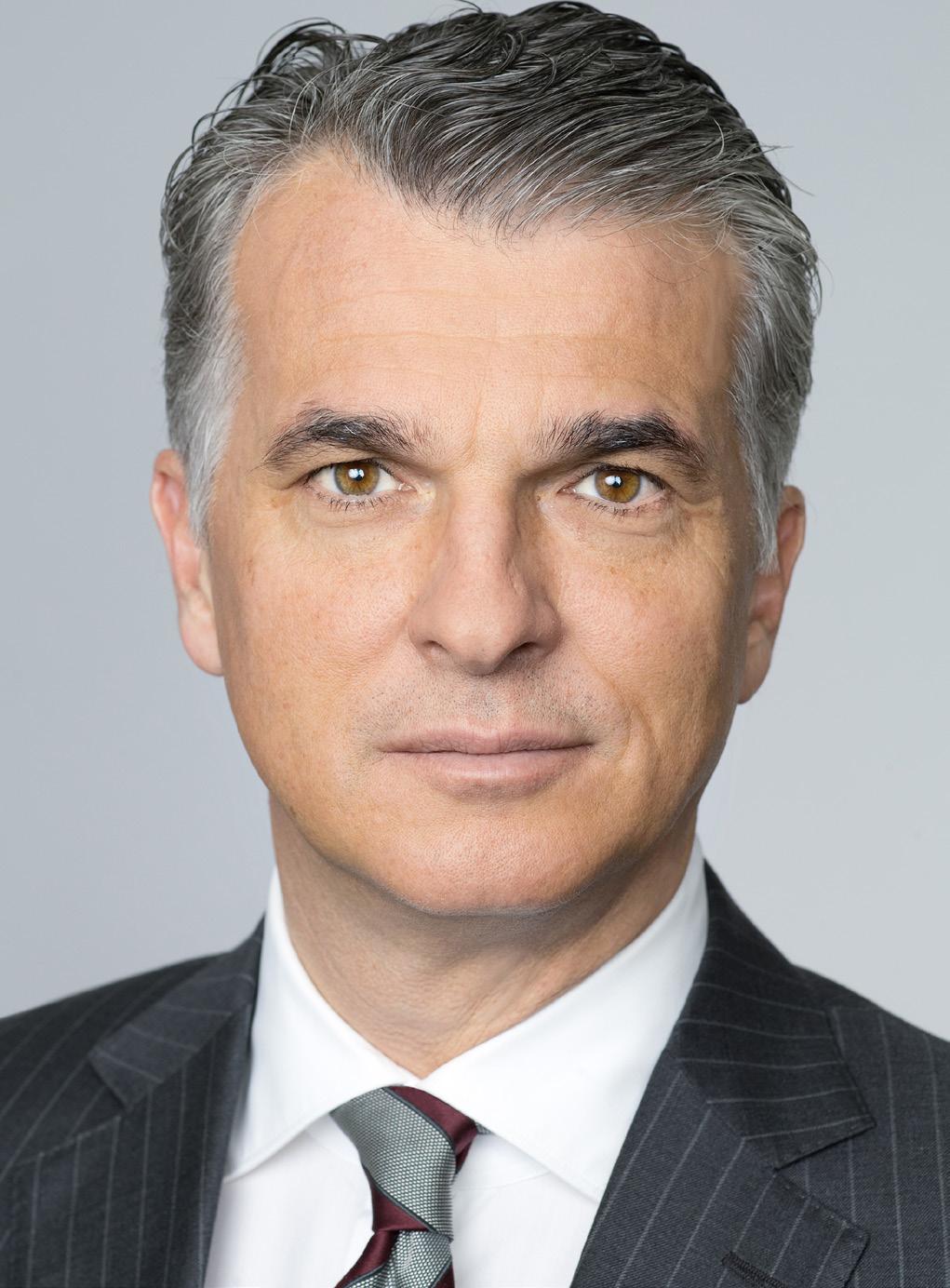
back a share of the capital sitting in its international units, in places like the United States and United Kingdom, with capital held at the Swiss parent.
The government wants that share raised dramatically, ultimately to full backing, so problems abroad cannot drain resources from the Swiss parent in a crisis. Bern's reasoning is that this was precisely the structural gap that left Credit Suisse's parent under-resourced when trouble hit.
This is where the dispute turns into real money.
Switzerland's government estimates its full policy package would force UBS to raise around an extra $20 billion in capital at the bank's Swiss unit.
UBS, using its own calculations, puts the number even higher, saying the proposals, combined with capital already required from absorbing Credit Suisse, would mean holding about $42 billion in additional CET1 capital in total, which it calls ‘neither proportionate nor internationally aligned’.
UBS has repeatedly called the government's original proposal ‘disproportionate’, and warned of consequences for its competitiveness against global rivals facing lighter capital
rules at home. Executives have even raised, without committing to it, the possibility of relocating parts of the bank abroad if the rules become too punishing.
Lawmakers have spent recent months searching for a middle ground. Rather than the government's original ask of full, 100% CET1 backing of foreign units, cross-party proposals have floated figures as low as 50%, with UBS allowed to meet part of the requirement using a cheaper form of capital called AT1, or Additional Tier 1, debt.
Capital
• 79% of Swiss support tougher capital rules for UBS, even if it means lower dividends or slower growth
• 9% oppose; the rest undecided
• Poll of 1,000+ people, conducted early June 2026
• Support has grown from 61% in an October 2025 poll to 79%
• UBS currently backs 60% of its foreign units' capital with capital at the Swiss parent
• Government's original demand: 100% backing
• Possible compromise on the table: 70–80%
• Government estimates the cost to UBS at $20 billion in extra capital
• UBS estimates the true cost at $42 billion
• UBS's balance sheet is roughly 2x the size of the entire Swiss economy
• Credit Suisse collapsed in March 2023
• Credit Suisse was absorbed into UBS in a state-engineered rescue
• Bill sent to parliament in April 2026
• Parliamentary vote expected: later 2026
• Earliest implementation: 2028, followed by a multi-year transition period
More recent reporting suggests UBS may need to back its foreign subsidiaries with around 70-80% of CET1 capital, down from the government's original demand of 100%. The debate is still ongoing in parliament, and the final number matters enormously for UBS, since every percentage point either way translates into billions of dollars.
What has made this dispute unusually bitter, even by the standards of bank regulations, is how UBS has gone about opposing it. Finance Minister Karin KellerSutter has accused the bank of running a lobbying campaign with an intensity she says is not normal for Switzerland.
In an interview with Blick, she said that while disagreement is healthy, "it is not common practice to challenge our institutions so forcefully," adding that "the behaviour of a private actor lobbying with this level of intensity is new".
According to Swiss broadcaster RTS, Keller-Sutter has said she is hearing from parliamentarians who fear UBS could scale back its financial contributions to their political parties if they vote the wrong way, a dynamic she calls unusual for a private company in Switzerland.
Keller-Sutter has stressed that linking financial support to how a lawmaker or party votes would be illegal under Swiss law. UBS has denied behaving improperly.
Chief executive Sergio Ermotti has defended the bank's right to make its case, saying UBS has strong arguments it wants heard, and has too much respect for parliament to issue threats.
The Swiss finance minister has framed the standoff as a question of whose interests should ultimately prevail - those of taxpayers or those of UBS.
It is a deliberately stark framing, one that puts UBS in the position of arguing
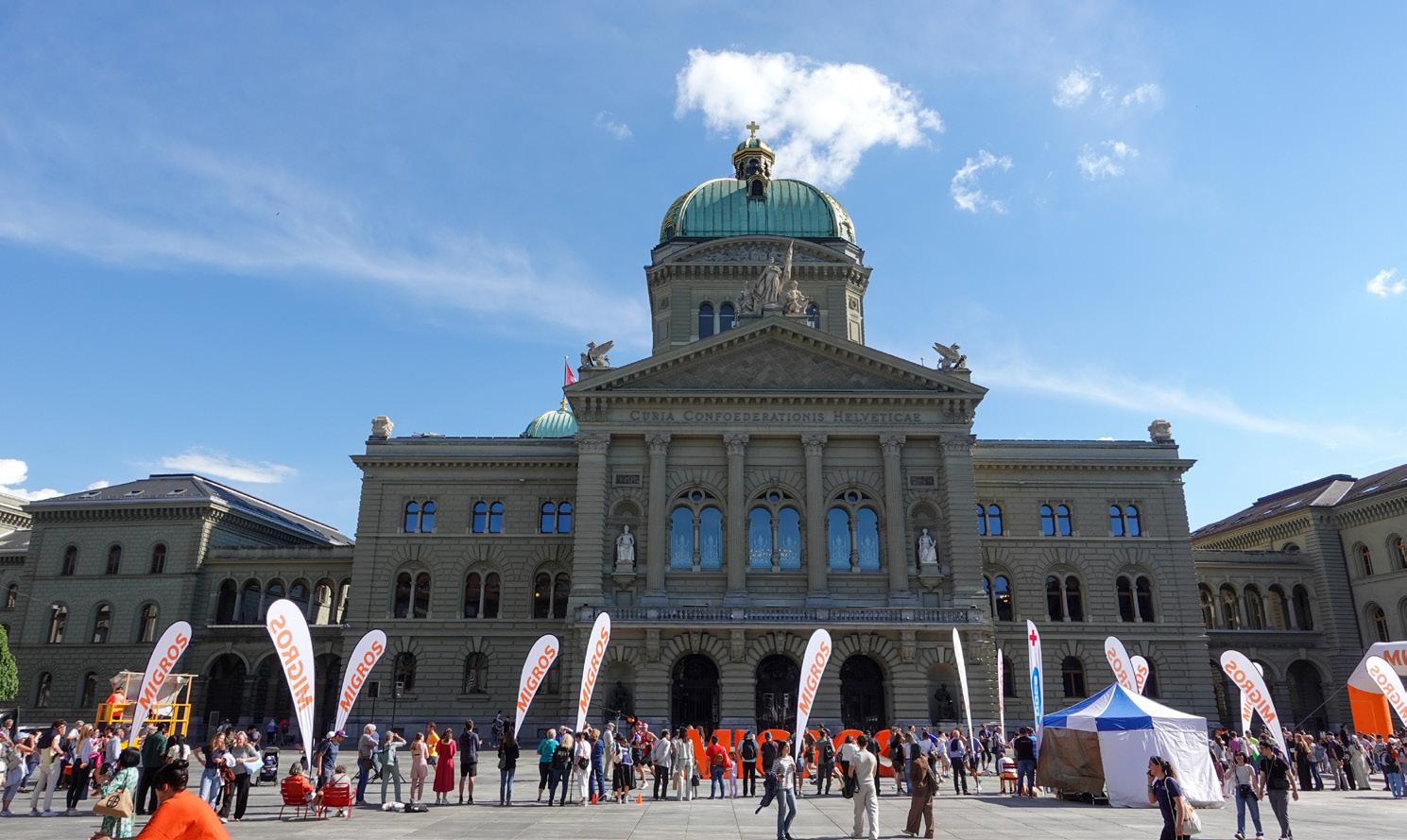
against the country's own backstop against future bailouts, a difficult place for any bank to stand, especially one that needed a state-orchestrated rescue of its rival just three years ago.
This is the backdrop against which the YouGov poll arrived. The poll, conducted in early June among just over 1,000 people from German-speaking and French-speaking Switzerland, was not asking an abstract question about banking regulation. It was asking whether people support tougher rules even at a direct cost to UBS, in dividends and growth, and nearly four in five said yes.
This is not entirely new sentiment.
A larger survey of 24,000 people last October by the Leewas Institute found 61% backing extra capital requirements for UBS, even if Swiss rules end up stricter than elsewhere.
Support has not just persisted; it appears to have hardened. That earlier poll found majority backing across the political spectrum, including among business-friendly right-leaning voters, although two-thirds also said it would hurt Switzerland if UBS relocated. The public,
in short, wants a safer bank, but not one that leaves.
The Federal Council formally adopted its proposal and sent it to parliament in April, making some concessions during consultation but holding firm on the central demand for significantly more capital backing foreign subsidiaries.
From here, the decision sits with Swiss lawmakers, who must weigh public opinion, UBS's economic importance, and the lessons of Credit Suisse's collapse against each other. A vote is expected later this year, with implementation, if approved, unlikely before 2028 and a lengthy transition period to follow.
UBS continues to argue the rules go further than international norms require, and will cost it competitive advantage. The government continues to insist that a bank twice the size of the Swiss economy cannot be allowed to carry the kind of structural risk that brought down Credit Suisse. And the Swiss people, watching from the outside, appear to have already decided which version of caution they would rather live with.
A larger survey of 24,000 people last October by the Leewas Institute found 61% backing extra capital requirements for UBS, even if Swiss rules end up stricter than elsewhere
Wall Street biggie JPMorgan's CEO, Jamie Dimon, said that the timetable for his departure from the bank remained unchanged. He made the comment while answering an analyst's question about the organisation's succession plan following a recent executive shuffle, in which insiders Doug Petno and Troy Rohrbaugh were promoted as co-presidents.
Senior executive Marianne Lake, widely seen as a top contender for the CEO role, has retired. "The timing (for succession) is essentially the same, obviously completely up to the board. The board made a decision to go ahead with making two co-presidents, which will prepare them to do far more at the company," Dimon told analysts on a post-earnings conference call.
As per the reports, Dimon, who has headed the Wall Street biggie for over two decades, 'plans' to remain CEO for at least three more
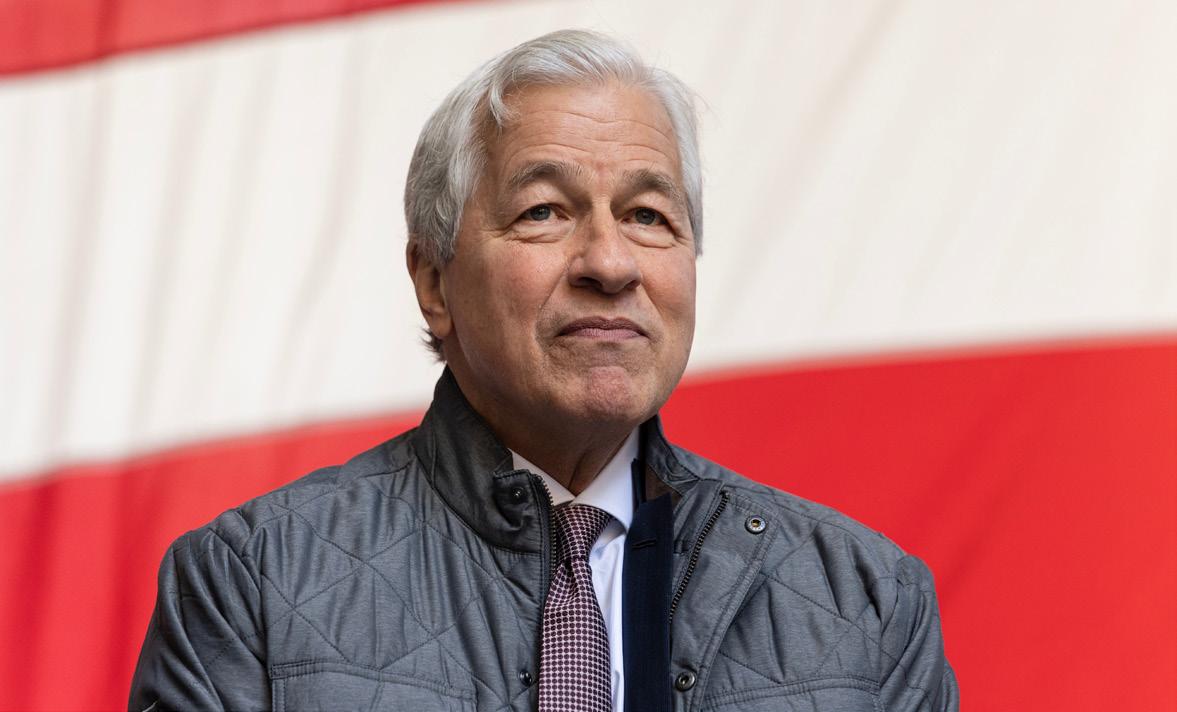
years. Analysts still view the promotions of Petno and Rohrbaugh as a step toward clarifying JPMorgan's succession plan, narrowing the list of executives seen as potential successors to Dimon after more than two decades as the Wall Street giant's boss. "When she (Lake) knew about the plan, she decided she'd rather retire than stay here. That's it, no mystery," Dimon said.
The European Central Bank (ECB) has picked 36 payment service providers, including some of the continent's biggest financial firms, to join the pilot programme for its digital euro project. The pilot, due to start in the second half of 2027, will last for 12
months, during which the currency's technical functionality and operational processes will be checked.
Another testing area will be the user experience. More than 50 companies applied to participate in the pilot, and the 36 selected firms include Deutsche

As per the reports, Dimon has 'plans' to remain CEO for at least three more years
Bank, UniCredit and Revolut. The pilot will take place at the ECB, and 19 of the eurozone's 21 central banks, with absences from Bulgaria and Malta.
"The pilot will involve staff from the ECB and participating national central banks, as well as e-commerce merchants, and merchants offering everyday services on their premises. Staff at participating central banks will have the opportunity to make beta digital euro payments from person to person, and from person to business," the ECB stated.
The pilot will use a beta version of the digital euro that will functionally and technically be close to the CBDC but will not have legal tender status.

Wall Street banks poised to boom under AI rush
A rush by technology companies to fund AI infrastructure will be boosting dealmaking and financing activities for Wall Street, bankers said, generating lucrative fees from capital raising and loans. Goldman Sachs CEO David Solomon said during an earnings call, "The build-out of AI infrastructure remains in its early stages, and we believe this multi-year investment cycle will continue to drive elevated levels of strategic activity, financing, and capital formation across markets."
As per Solomon, the industry ‘is in the middle of an AI capex supercycle where there are demands to utilise every single financing instrument’.
Solomon's comment comes amid investment banks reaping strong fees from AI-related deals, including SK Hynix's $26.5 billion ADR offering and SpaceX's record $86 billion IPO, as well as debt issuance. Goldman Sachs, which was the lead left underwriter on the SpaceX IPO, is also poised to play a major role alongside Morgan Stanley in the upcoming listing of Anthropic.
However, in July, things have gone rough for technology stocks, especially microchip makers, with a section of investors wrestling with high valuations and questioning the longevity of the AI capex boom.
Pension funds reverse hedges on $ Pension funds
A solid dollar rally in 2026, driven by a hawkish Federal Reserve under chair Kevin Warsh, has found support with global pension funds reversing hedges put on following 2025’s ‘Liberation Day’ market unrest. While rising inflation and Warsh's appointment have driven up interest rates in the world's largest economy in recent months, the phenomenon has undermined the narrative that investors were moving away from the dollar in a sellAmerica trade.
"Although comprehensive hedging data are scarce, a similar dynamic appears to be playing out among realmoney investors elsewhere," said Karl Schamotta, chief market strategist at payments company Corpay in Toronto.
"Because long-duration hedging can be expensive and cut into returns, some
of that increase is now being unwound — mostly passively, as firms let hedges roll off without replacement," Schamotta added.
Hedge ratios, which reflect how much of a fund's dollar exposure is protected against currency swings, have fallen five percentage points over a year at some Danish funds, and by a percentage point at a few Canadian funds. In 2026, the dollar has, to some extent, gotten back its status as investors' safe haven amid the ongoing US-Iran war.
"Although comprehensive hedging data are scarce, a similar dynamic appears to be playing out among real-money investors elsewhere"
GBO Correspondent
A whistleblower's allegations have rocked KPMG Australia, toppling its leadership, apart from costing blue-chip clients
Accounting firms exist to hold others to account. Their foundational promise to every client is confidentiality. That promise, and the vast commercial architecture built upon it, is now in serious question at KPMG Australia, following a whistleblower scandal that has consumed the firm's leadership, triggered a formal government investigation, and set lawmakers talking about dismantling the model entirely.
A whistleblower raised concerns internally as far back as 2024, alleging that confidential board papers belonging to Lendlease, one of Australia's largest property and infrastructure companies, had been accessed and used by KPMG staff to support audit bids for Westpac, a major bank, and Dexus, a property group.
These were not internal memos or general industry research. They were Lendlease's private board documents, shared with KPMG's audit team in confidence, and explicitly marked offlimits to anyone outside that engagement.
KPMG ran three internal investigations. All three cleared the firm. The whistleblower's account was formally classified as unsubstantiated. And for the better part of a year, Lendlease, the company at the centre of the allegations, was told nothing. Lendlease was only informed about the allegations in May 2025, a full year after the accusations were first raised internally.
The story became public in March 2026, when Senator Deborah O'Neill read the whistleblower's account into the parliamentary record under privilege, forcing it into the open. What followed was a rapid chain of institutional consequences.
The Australian Securities and Investments Commission (ASIC), the country's corporate regulator, commenced a formal investigation, with ASIC chair Sarah Court confirming in June
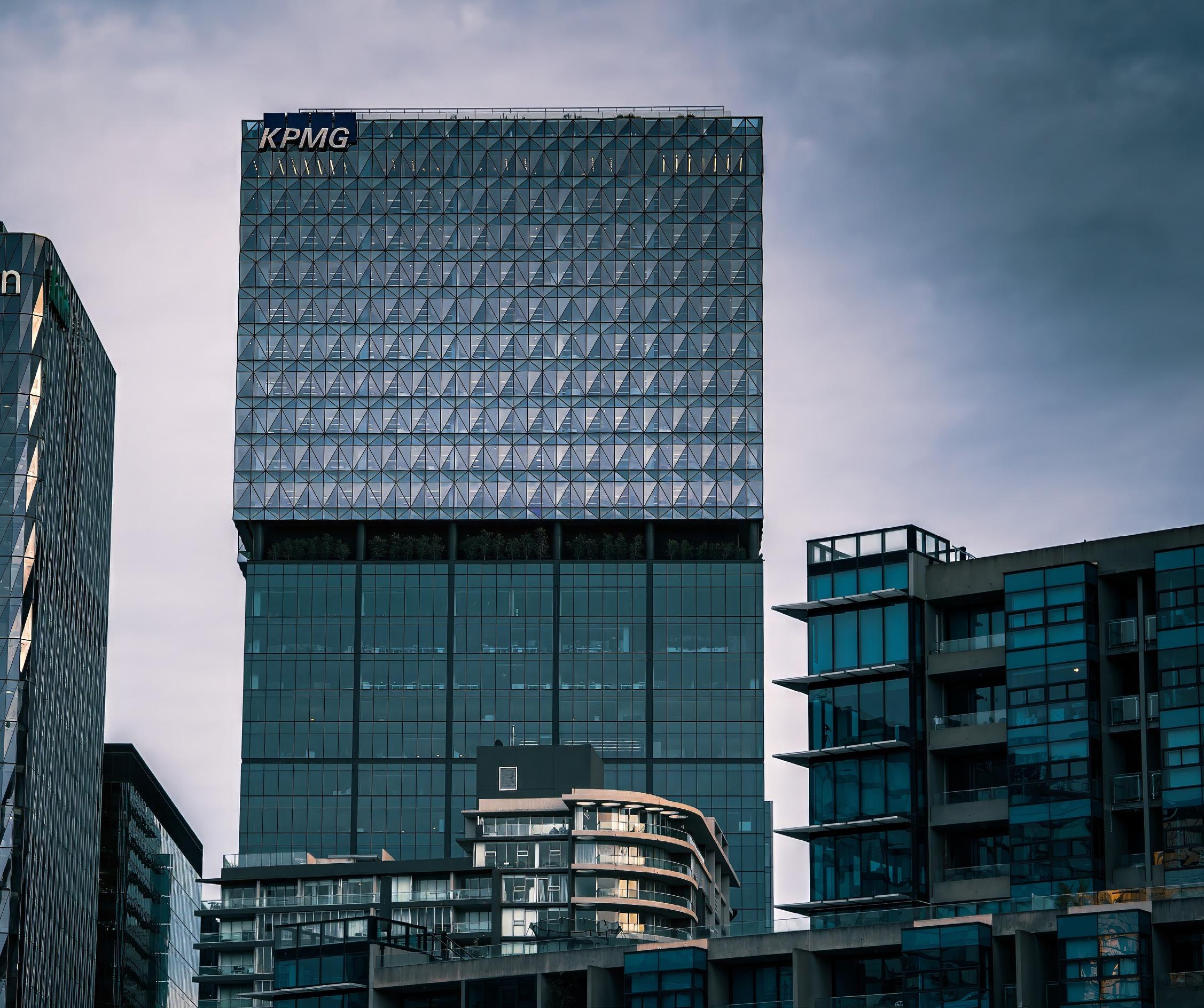
2026 that the regulator had begun looking into KPMG and a number of its registered company auditors.
CEO Andrew Yates stepped down in May 2026. An investigation by law firm Allens had turned up evidence that KPMG said it had not found during its earlier internal review, and it was this finding that ultimately prompted Yates to resign.
Audit boss Julian McPherson also departed. Chief Operating Officer (COO) Eileen Hoggett stepped down from her role in June, though she remained an audit partner while investigations continued. ASIC is actively investigating both Hoggett and audit partner Paul Rogers over their alleged roles in the Lendlease leak.
The leadership cull did not stop there.
Just as KPMG's damage-control effort was taking shape, the scandal widened. At a parliamentary hearing on June 19, 2026, Chairperson Sheppard confirmed that KPMG staff had shared sensitive information about telecom company Optus with a separate internal team bidding for an audit contract
at its rival, Telstra. Sheppard acknowledged that unredacted Optus information had moved ‘through an ethical divider’ between the two teams when it should not have.
The Telstra contract ultimately went to Deloitte, meaning the information leak did not translate into a contract win. But the principle at stake is stark. Segregation between client-facing teams either holds or it does not, and in this case it did not.
The significance of the Optus admission is hard to overstate. It confirmed what KPMG had dismissed for nearly two years. The firm's internal information barriers were porous, and that client confidentiality had been compromised not once, but at least twice, across two entirely separate engagements.
Chairperson Martin Sheppard, along with senior partners Paul Rogers and Eileen Hoggett, resigned as KPMG attempted to contain the damage. Interim chief executive Stan Stavros described the departures as ‘necessary and immediate’, and acknowledged that the firm had not met the
standards expected of it.
"The parliamentary committee's enquiries highlighted issues, including unethical behaviour by senior personnel, and the human impact of KPMG's handling of the whistleblower. KPMG Australia is focused on ensuring those failings are understood, addressed and not repeated," Stavros said.
For Lendlease, the consequences were decisive. The company dropped KPMG as its auditor, ending a relationship that stretched for nearly seven decades.
Lendlease chairperson John Gillam described KPMG's conduct as a ‘fundamental breach of trust’. The firm is also seeking reimbursement for the cost of switching auditors.
The commercial fallout reaches further than one client. The Australian federal government placed more than $270 million in KPMG contracts under intense scrutiny, and the Department of Finance formally declared the situation a ‘significant event’.
Under rules introduced after the PwC tax leaks scandal of 2023, public sector clients can now require KPMG to guarantee that no personnel working on government projects are linked to the misconduct.
The firm's Canberra operations face particular pressure, with a large tranche of government contracts up for renewal.
The broader sector trend is telling. New federal contracts awarded to the Big Four collectively fell to $348 million in 2025, down from $637 million in 2024, as the Anthony Albanese government grew increasingly cautious about governance, transparency, and confidentiality across major consulting firms.
The regulatory and political response to KPMG's crisis goes beyond demanding
resignations. Lawmakers are now questioning whether the structural design of the ‘Big Four’ firms is itself the problem. Unlike public companies, accounting partnerships are not directly supervised by ASIC. They are regulated instead under state-based partnership law, meaning they are not subject to the strict reporting requirements that ASIC imposes on corporations.
This exemption has long been a source of tension. After the PwC scandal in 2023, parliamentary inquiries recommended a range of reforms. These included limiting partner numbers to improve accountability, and separating audit and consulting services to reduce conflict of interest. None of the major reforms were ultimately implemented.
With KPMG now following PwC into scandal, patience is running short. Assistant Treasurer Daniel Mulino confirmed that the severity of the KPMG allegations had prompted him to revisit those stalled recommendations, including proposals to cap partner numbers at 400 and to bring major firms under the Corporations Act so that ASIC gains enforcement powers over entire entities.
Greens Senator Barbara Pocock has been the most direct voice in parliament. She pointedly asked at the hearing whether the partnership structure was ‘now nonfunctioning’, noting that Australia had arrived at the same point, with a second major firm, in only three years. Senator Deborah O'Neill asked whether KPMG was dealing with a few bad actors, or something more systemic.
KPMG Australia's response has followed a familiar crisis script. Executives have resigned, an ethics consultant is being brought in, an independent chair will replace Sheppard, and outside directors
will join the board. The firm says it has reported the Optus matter to all affected clients and regulators.
But the credibility problem runs deeper than any governance reshuffle can quickly resolve. Three internal investigations failed to find what an outside law firm later uncovered. The whistleblower was dismissed.
A client whose confidential documents were allegedly misused spent a year in the dark. And the public admission that a second client's information crossed an internal firewall came only because a senior executive was under oath in parliament.
PwC's path after 2023 offers a cautionary parallel. The firm stepped back from new government work for more than a year and sold its government advisory division, which had generated roughly a fifth of its revenue, for just one dollar. Its revenue fell by 26% in the following financial year. KPMG now risks a version
of the same trajectory.
At stake is not simply one firm's market share. The entire premise of the audit industry rests on the idea that an auditor serves the public interest by rendering an independent, untainted judgement on a company's financial health.
When the information gathered in that role is allegedly recycled to win new business, that premise collapses. Investors, boards, and regulators depend on auditors to be above the commercial fray. A firm that uses confidential client data as a sales tool is not auditing, but is exploiting.
Australia is now confronting an inconvenient question that has been deferred for too long. Is the self-governing, partnership-based model of the ‘Big Four’ compatible with the public interest obligations those firms carry? Two scandals in three years suggest the answer may be no.
A client whose confidential documents were allegedly misused spent a year in the dark. And the public admission that a second client's information crossed an internal firewall came only because a senior executive was under oath in parliament
GBO Correspondent
In the last week of May 2026, one of the world's most famous oil companies fired its own chairman. Not quietly, through a private negotiation, but loudly and immediately, with a terse statement citing ‘serious concerns’ about ‘important governance standards, oversight and conduct’.
The man in question was Albert Manifold, a celebrated Irish businessman who had barely been in the chair for eight months. His removal sent BP's shares sliding. It also sent a chill through the financial world. Rich McDonald, a financial markets analyst at the trading platform IG, put the question bluntly: s BP becoming ungovernable?
To understand why that question is even being asked, you need to understand what has been happening inside this company for the past six years.
Most major corporations have one chief executive for years at a time. Strategic decisions take years to play out. Boardrooms are meant to provide stability. BP has had five chief executives since 2020. It has burned through three
chairpersons.
Alongside the most recent chair's removal, a non-executive board member has departed, the head of its customers and products division has resigned, and the chief of its gas and low-carbon business is on his way out.
This is the scale of the problem in plain numbers. Bernard Looney served as chief executive from 2020 until September 2023, when he resigned after a whistleblower raised concerns about personal relationships he had with colleagues, and whether he had used his position to promote women he had been involved with.
In December 2023, the board formally dismissed him for ‘serious misconduct’, ruling that he had knowingly lied to his own directors during an earlier board investigation. As punishment, BP clawed back £32.4 million, roughly $41 million, in bonuses and share awards that Looney would otherwise have received.
His replacement was Murray Auchincloss, who had been BP's finance chief. Auchincloss spent two years trying to man-

Since 2020, BP has seen five chief executives and three chairpersons as activist investors force a dramatic retreat from green energy back to fossil fuels
Leadership Churn
Five chief executives since 2020
Three chairmen since 2020
Albert Manifold lasted eight months as chairman
Bernard Looney dismissed without notice on December 13, 2023 for serious misconduct
Bernard Looney forfeited £32.4 million ($41 million) in compensation upon dismissal
age a company caught between shareholder demands and a deteriorating share price. The markets never warmed up to him. In December 2025, he stepped down with little explanation, replaced almost immediately by Meg O'Neill, the highly regarded chief executive of Australia's Woodside Energy.
Before Auchincloss departed, the chairman of the board, Helge Lund, had already been driven out. Lund left in April 2025 after more than a quarter of BP's shareholders voted against re-electing him, a remarkable public rebuke at the company's annual general meeting.
He was replaced by Albert Manifold, who lasted eight months before being removed by a unanimous board vote that included the new chief executive. Since May 2026, a former construction company boss named Ian Tyler has been serving as interim chairman while the search for a permanent replacement begins.
This kind of leadership churn is not normal. As Lindsey Stewart, director of institutional investor content at Morningstar, put it, ‘at this point, it's fair to say BP has the most volatile boardroom of the oil supermajors’.
The consequence of this instability is that strategies are drawn up, partially executed, and then abandoned before they have any chance of working. The people running the company are always new, always under fire, and never in place long enough to be held accountable for the decisions they make.
The Manifold story is worth examining closely because it captures the cultural fault lines running through BP's boardroom.
When Manifold was appointed in October 2025, BP's senior independent director, Dame Amanda Blanc, praised his ‘relentless focus on performance’. Manifold had spent a decade transforming CRH, an Irish building materials company, into a global powerhouse through aggressive cost discipline and operational efficiency. He was seen as exactly the kind of hard-driving, no-nonsense leader BP needed.
The problem, according to the people who worked with him, was the way he drove. Inside BP, complaints emerged that Manifold was ‘bullying’ and verbally abusive to colleagues across multiple levels of
the organisation. Senior executives reportedly felt ‘belittled’.
More seriously, he was accused of overstepping the role of chairman entirely, attempting to run the company himself rather than providing oversight, and of mishandling sensitive company information, sharing it with people who had no right to see it while simultaneously withholding key information from his fellow board members.
Manifold rejected all of this as ‘lies’, and retained the elite law firm Mishcon de Reya, signalling his intention to fight. His own account was that he was simply trying to cut costs and reform a slow-moving corporate culture, and that resistance from inside the company was being dressed up as a misconduct complaint. He pointed out that he had refused the traditional perks of the chairman's role.
No chauffeur, no expensive lunches, a small office. He had spent only 13 days in BP's London headquarters in 2026, which he argued made the ‘shadow executive’ charge implausible. His reading of events was that ‘my priorities were not always shared by everyone’.
Three specific clashes defined his brief tenure. He fell out with Ben Mathews, BP's long-serving company secretary, over costs and governance procedures. He clashed with Simon Henry, a respected former Shell finance chief who sat on BP's board, during deal negotiations, with each accusing the other of behaving improperly.
And he fought openly with outgoing chief executive Murray Auchincloss, criticising not just Auchincloss's performance as CEO, but his earlier record as finance chief, a remarkable attack from a chairman on the man nominally serving under him.
The board ultimately used a whistleblower complaint about abusive behaviour to remove him. The vote was unanimous.
This has raised a genuinely uncomfortable question among some market observers. The non-executive directors who voted Manifold out are, in several cases, the same people who have presided over six years of
strategic drift and value destruction at BP.
Each time a chairman or chief executive is removed, the underlying board escapes scrutiny. By repeatedly sacrificing chairs and chief executives, the underlying board protects itself from shareholder retribution while leaving the company fundamentally directionless.
The boardroom chaos at BP cannot be understood without understanding the investor siege that preceded it.
Beginning in late 2023, two activist hedge funds moved aggressively against the company. The first was Bluebell Capital Partners, a London-based firm led by Giuseppe Bivona and Marco Taricco. In January 2024, Bluebell sent BP's board a detailed 30-page letter. Their core argument was that BP's green transition strategy, its plan to invest in renewables and cut oil production, was ‘ideologically driven and ill-conceived', and that it was the primary reason BP's shares traded at a deep discount compared to US oil giants like ExxonMobil.
Bluebell demanded that BP halt investments in solar and offshore wind, increase its oil and gas production target to 2.5 million barrels of oil equivalent per day by 2030, and return an additional $16 billion to shareholders.
The second activist was Elliott Management, a powerful New York-based hedge fund that quietly built a stake of just over 5% in BP, making it one of the company's largest shareholders. Elliott's demands were even more aggressive. An additional $5 billion in cost cuts beyond what management had already proposed, a reduction in annual capital spending to around $12 billion, the replacement of BP's chief strategy officer Giulia Chierchia (who had been a key architect of the green transition), and a full structural reorganisation splitting the company into separate upstream and downstream units.
The board largely capitulated. Helge
Each time a chairman or chief executive is removed, the underlying board escapes scrutiny. By repeatedly sacrificing chairs and chief executives, the underlying board protects itself from shareholder retribution while leaving the company fundamentally directionless
In 2020, under Bernard Looney, BP announced the most ambitious climate commitments ever made by a major oil company. It pledged to cut its oil and gas production by 40% compared to 2019 levels by 2030. It was positioning itself as the oil company of the future
Lund, who had backed the green agenda, was driven from the chairmanship. Chierchia departed in May 2025, and her entire strategy role was eliminated. BP halted bidding on new offshore wind projects and sold its 10 US onshore wind farms.
It set a new production target of 2.3 to 2.5 million barrels of oil equivalent per day by 2030, essentially what Bluebell had demanded. In April 2026, new chief executive Meg O'Neill announced a full structural reorganisation splitting the company into exactly the two-unit model Elliott had called for.
During Manifold's tenure, these back-channel investor relationships reportedly became another source of boardroom friction. Internal sources revealed that Manifold held private, unminuted meetings with Elliott management without informing his fellow directors. While not technically illegal under UK listing rules, this infuriated the board, reinforcing the sense that the chairman was operating as an agent for one
particular hedge fund rather than representing all shareholders equally.
In 2020, under Bernard Looney, BP announced the most ambitious climate commitments ever made by a major oil company. It pledged to cut its oil and gas production by 40% compared to 2019 levels by 2030. It was positioning itself as the oil company of the future, not merely an oil company, but an energy company actively transitioning to cleaner sources of power.
The market punished it for this ambition. While BP invested in renewables, its US rivals, ExxonMobil and Chevron, focused entirely on oil and gas, enjoyed record profits as energy prices surged following Russia's invasion of Ukraine in 2022, and saw their share prices soar. BP's shares went nowhere. By 2025, the consequences were stark. BP's annual earnings fell 16% to $7.49 billion as oil prices softened. More dramatically, net income collapsed by 86%, falling to just $55 million. The company also carried $26.1 billion in net debt, partly due to ongoing liabilities from the 2010 Deepwater Horizon disaster in the Gulf of Mexico.
Faced with these numbers, the green ambition was quietly buried. The company admitted its transition investments were ‘just not being valued as much’ by the market. The renewable energy pivot was abandoned in favour of a full-throated return to fossil fuels.
It is into this situation that Meg O'Neill arrived on April 1, 2026, BP's fifth chief executive since 2020. O'Neill is a chemical engineer by training with 23 years at ExxonMobil, and a successful run leading Woodside Energy. She was hired specifically to execute the activist-mandated fossil fuel pivot, and she has moved quickly.
On April 14, 2026, she announced the dismantling of BP's complex three-unit organisational structure, itself only a few years old, in favour of a simple two-division mod-
el. Upstream (oil and gas exploration and production) and Downstream (refining, fuel sales, and what remains of the company's shrinking clean energy activities). Elevated to Deputy Chief Executive to support this restructuring is Carol Howle, BP's former head of trading and shipping.
This reorganisation has already claimed two significant casualties. William Lin, BP's gas and low-carbon chief and a 30-year company veteran, found himself without a role as his entire division was carved up and absorbed. He will depart in the third quarter of 2026. Emma Delaney, who had overseen BP's petrol stations and electric vehicle charging network, left in April 2026 to run Austrian energy group OMV.
O'Neill has one piece of good fortune on her side. She has the current energy market. A series of geopolitical shocks in early 2026, including military conflict involving the United States, Israel, and Iran, disrupted global oil supply by more than 10 million barrels per day in March alone.
This sent refining margins climbing sharply to $16.90 a barrel and created volatile conditions that BP's large, sophisticated oil trading operation is well-placed to exploit. Analysts upgraded BP's first-quarter net income projections by 20%, to $2.6 billion, in anticipation of exceptional trading profits.
But windfall profits from a geopolitical crisis are not a governance strategy.
The immediate governance challenge sits with Dame Amanda Blanc, BP's senior independent director. Following Manifold's removal, the board announced that Blanc would again lead the search for a permanent chairman. This decision has provoked anger among institutional shareholders. Blanc led the search that produced Manifold in the first place, a search that, by her own board's account, failed to identify the behavioural problems that led to his removal just eight months later.
Several major investors have privately
Meg O'Neill
called for her to step aside.
"Given that most people were surprised by the appointment of Manifold, and then shocked by the manner of his departure. It would be best if Amanda were not to lead the search," one investor said.
Blanc's supporters argue she is being made a scapegoat for a collective failure. Every board member voted to hire Manifold, and every board member voted to fire him. They also point out that as chief executive of insurance giant Aviva, she carries real corporate weight in the City of London, which matters when dealing with an activist-dominated shareholder register.
The stakes in the next chairman search are extremely high. BP needs someone with the industry credibility to command respect at a $75 billion oil supermajor, the political skill to manage a shareholder base filled with aggressive activist funds, and the discipline to let Meg O'Neill run the company rather than attempting to run it themselves.
BP's fifth chief executive since 2020. O'Neill is a chemical engineer by training with 23 years at ExxonMobil, and a successful run leading Woodside Energy. She was hired specifically to execute the activistmandated fossil fuel pivot, and she has moved quickly
GBO Correspondent
Freed from OPEC quotas, Abu Dhabi is building the pipelines, terminals, and supply chains to dominate global energy on its own terms
For nearly six decades, the United Arab Emirates played by OPEC’s rules. But it all came to a grinding halt on May 1, 2026. The UAE’s formal withdrawal from the Organisation of the Petroleum Exporting Countries (OPEC), after a 59-year membership, was the final step in a carefully planned, years-long strategy to transform Abu Dhabi into one of the world’s most powerful and independent energy suppliers.
Behind that decision lies a $150 billion investment programme, a pipeline being built at speed through the desert, and a port on the Gulf of Oman that is quietly becoming one of the most strategically important energy hubs on the planet.
OPEC, the cartel that groups major oil-producing nations, operates by assigning each member country a production quota. In theory, this keeps global oil supply controlled, which in turn supports prices. In practice, it meant the UAE was legally barred from selling as much oil as it was capable of producing.
The country’s oil fields can sustainably produce up to 4.85 million barrels per day. Under its OPEC quota, it was only allowed to pump around 3.4 million barrels per day. That gap of roughly 1.4 million barrels a day, multiplied across every day of every year, translated into an estimated $50 billion to $70 billion in lost revenue annually. For a nation that has invested heavily in expanding its oil infrastructure, being told to keep much of it idle was an increasingly difficult position to justify.
The tension between the UAE and OPEC’s dominant player, Saudi Arabia, has been building for years. In 2021, the UAE publicly blocked a major OPEC production deal, demanding a higher baseline quota that better reflected what it had spent on expanding its capacity. The disagreement was papered over at the time, but the underlying conflict never really went away.
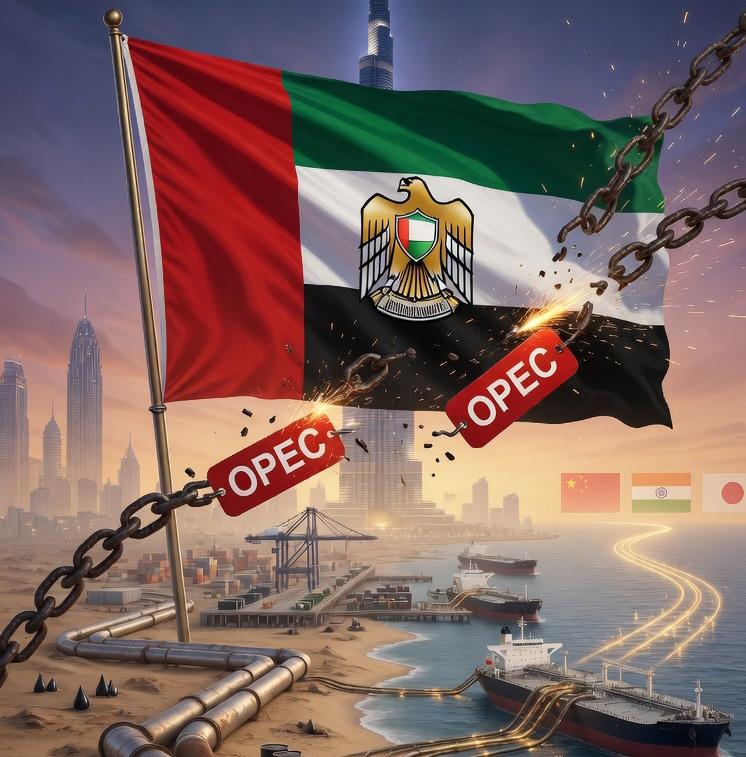
The two countries have different financial pressures. Saudi Arabia needs oil prices to stay at roughly $85 to $90 per barrel to balance its national budget, which also funds the Kingdom’s ambitious “Vision 2030” modernisation projects. That is why Riyadh consistently pushes for the cartel to cut production when prices soften. The UAE, by contrast, can avoid a budget deficit as long as oil prices stay above $55 per barrel.
With a much lower threshold, Abu Dhabi has little interest in restricting supply to prop up prices. It would rather sell more oil at a moderate price than less oil at a high one. Free of its OPEC quota, the UAE can now do exactly that.
The timing of the UAE’s exit coincided with one of the most serious energy crises the region has seen in decades. In late February 2026, following the shutdown of the Strait of Hormuz, the narrow waterway through which roughly 20%
of the world’s oil and liquefied natural gas (LNG) passes every day, tankers were blocked, attacked, or turned away. Insurance costs for any ship attempting passage soared, and most simply stopped trying.
The consequences rippled outward almost immediately. Global fuel prices rose by 30%. Fertiliser prices jumped by 50%, squeezing farmers worldwide. International airfares climbed 25%. Within 80 days of the crisis beginning, nearly 80 countries had introduced emergency economic measures to protect their citizens from the fallout.
Japan, which has historically sourced more than a quarter of its oil from the Middle East, was forced to buy 60% of its May oil requirements, and 70% of its June requirements from distant alternatives, including Alaska, Mexico, Ecuador, and Venezuela.
For the UAE, the blockade was both a financial blow and a wake-up call. Its oil export revenue dropped by more than $174 million year-on-year in March 2026 alone, as
One major focus is the Ghasha sour gas concession, a large offshore project designed to produce 1.8 billion standard cubic feet of natural gas per day, along with 150,000 barrels of oil and condensates
bunkering activity at its ports declined and shipping was disrupted.
Drone and missile attacks targeted energy infrastructure in the region, including ADNOC facilities. ADNOC’s chief executive Sultan Al Jaber warned that even when the crisis ends, restoring shipping flows through the Strait of Hormuz to 80% of normal levels could take up to four months, with a full recovery unlikely before early to mid-2027.
The crisis simply confirmed that UAE’s strategy was right.
The pipeline that bypasses the problem
The UAE’s answer to its geographical vulnerability runs 360 to 380 kilometres through the desert, from Abu Dhabi’s onshore oil fields in Habshan to the port of Fujairah on the Gulf of Oman. Crucially, Fujairah sits entirely outside the Persian Gulf. Tankers loading oil there never need to enter the Strait of Hormuz at all.
The existing pipeline on this route is the Abu Dhabi Crude Oil Pipeline, known as ADCOP or the Habshan-Fujairah pipeline. Built in 2012 at a cost of roughly $4 billion, this 48-inch pipe can carry up to 1.8 million barrels per day. Since the Strait of Hormuz was closed, ADCOP has been running at maximum capacity, keeping the UAE’s flagship Murban crude flowing to buyers in Asia and beyond.
The problem is that 1.8 million barrels per day is far less than the UAE’s total output, and far less than the five million barrels per day the country aims to be producing by 2027. That is where the West-East Pipeline comes in.
This second, parallel pipeline follows the same route as ADCOP, with a similar diameter and an additional capacity of up to 1.5 million barrels per day. Construction began in 2025 and, as of mid-2026, the project is approximately 50% complete.
Crown Prince Sheikh Khaled bin Mohamed has directed ADNOC to accelerate the build, with a target of full operations by 2027.
When both pipelines are running together, the UAE will be able to move 3.3 to 3.6 million barrels per day directly to Fujairah without touching the Strait of Hormuz. Add in Fujairah’s storage tanks and terminal infrastructure, and the port’s total crude export capacity rises to as much as four million barrels per day. That would allow the UAE to send more than 80% of its planned production to international markets through a route that no blockade of the Persian Gulf can disrupt.
The only other Gulf producer with a comparable bypass system is Saudi Arabia, which operates a seven million barrelper-day pipeline linking its oil processing facilities to the Red Sea port of Yanbu.
Once the UAE’s West-East pipeline is complete, Abu Dhabi will stand alongside Riyadh as one of the few producers in the world genuinely insulated from the chokepoint risk that has paralysed so many others.
Fujairah’s growing importance is not just a UAE concern. The countries that import the most oil from the Gulf are in Asia, and they are the ones most exposed to disruptions in the Strait of Hormuz.
India sources 9% to 10% of its total crude oil requirements from the UAE. China is a major buyer of UAE crude and uses it as feedstock for its vast petrochemical industry. Japan and South Korea rely heavily on the Middle East for their energy needs.
The expansion of the Fujairah corridor gives all of these countries a more secure and predictable supply line. Instead of scrambling to find emergency alternatives in Alaska or Latin America whenever tensions flare in the Persian Gulf, they can rely on a pipeline-fed deep-water port that
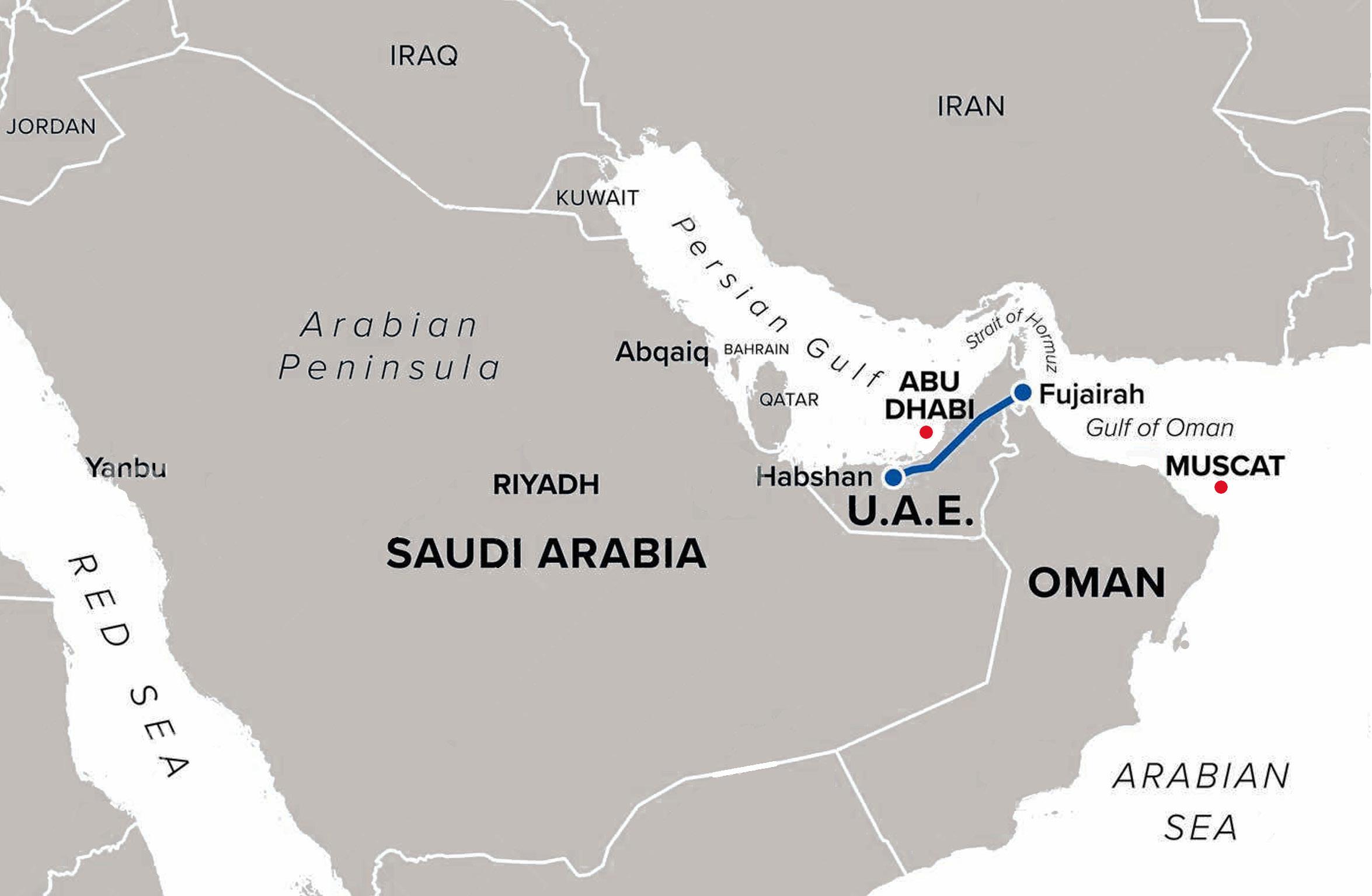
operates independently of whatever is happening in the Strait.
Fujairah is also growing beyond crude oil. In May 2026, AD Ports Group and Borouge, the UAE chemicals manufacturer, signed an agreement to study the creation of a dedicated export hub at Fujairah for polyolefins, the plastics used in packaging, car parts, and countless manufactured goods. This would extend the bypass corridor to high-value chemical exports, which currently have to travel through the Persian Gulf by ship.
The infrastructure push at Fujairah is just one piece of a much larger investment programme. In November 2025, ADNOC’s
board approved a five-year spending plan of $150 billion, covering the period from 2026 to 2030.
In May 2026, following the formal OPEC exit, ADNOC announced it would accelerate the deployment of $55 billion of that total, awarding contracts between 2026 and 2028 to fast-track the move to five million barrels per day.
Of that $55 billion, around $38 billion is directed at upstream projects, meaning the expansion of oil and gas production. One major focus is the Ghasha sour gas concession, a large offshore project designed to produce 1.8 billion standard cubic feet of natural gas per day, along with 150,000 barrels of oil and condensates.
Gas development matters because it
At a cost of $6.2 billion,
Borouge
4 adds 1.5 milliontonne ethane cracker and 1.4 million -tonne polyethylene capacity, making the Ruwais site the world’s largest singlesite polyolefin complex
supports domestic energy needs and frees up more crude for export, while also positioning the UAE as a significant LNG supplier.
The remaining $16 billion goes to downstream operations, which means turning raw crude into more valuable products. Rather than simply pumping oil and selling it at commodity prices, the UAE wants to refine it, crack it into chemicals, and sell finished materials at higher margins. This is a significant strategic shift, moving the country from being primarily a raw material exporter to becoming an integrated energy and chemicals producer.
The centrepiece of this downstream expansion is the Borouge 4 project, a joint venture between ADNOC and the Austrian company Borealis at the Al Ruwais Industrial City in Abu Dhabi. At a cost of $6.2 billion, Borouge 4 adds 1.5 milliontonne ethane cracker and 1.4-milliontonne polyethylene capacity, making the Ruwais site the world’s largest single-site polyolefin complex. As of mid-2026, the project is more than 90% complete.
At the same site, ADNOC is building the Ruwais LNG Export Terminal, a $5.5 billion facility with two large liquefaction trains capable of processing 9.6 million metric tonnes of LNG per year. That would more than double the UAE’s current LNG production capacity.
What makes the Ruwais terminal especially notable is that it will be the first LNG export facility in the Middle East and Africa to run entirely on clean, zero-carbon power. It is expected to begin commercial operations by late 2028. Japan’s JBIC and SMBC have already contributed $689 million to support the Japanese trading firm Mitsui’s 10% stake in the project.
A strategy this large depends on importing enormous quantities of specialised
industrial equipment, from drilling rigs to pipeline valves to process chemicals. The conflict in the region has shown just how vulnerable that supply chain can be when shipping is disrupted or infrastructure is targeted.
ADNOC’s response is its Industrial Resilience Programme, launched in May 2026. The goal is to manufacture $24.5 billion worth of critical industrial products inside the UAE by 2030, covering more than 150 categories of equipment.
ADNOC is backing this with a commitment to channel approximately $60 billion back into the UAE economy through what it calls the In-Country Value programme, which requires international contractors working on ADNOC projects to give priority to locally made products.
The initiative has already produced results. Since 2022, ADNOC has signed local manufacturing agreements worth around $22 billion, and its partners have invested more than $1.2 billion in building new factories inside the country. Around 19,000 UAE nationals are now employed in companies certified under the programme.
The UAE’s departure from OPEC, combined with its investment programme, raises a question that matters to every country that uses oil, which is every country on earth. What does this mean for prices?
In the short term, the answer is, ‘not much’. The Strait of Hormuz closure has kept global oil prices elevated despite the UAE’s exit. But once the crisis resolves, and ADNOC’s chief executive believes that could take until early 2027, the calculation changes.
The UAE will then be free to add nearly one million barrels per day of additional crude to global supply, all of it flowing through Fujairah without any dependence

on OPEC’s quota decisions.
This will weaken OPEC’s ability to manage prices through coordinated cuts. If the UAE is producing at full capacity regardless of what Riyadh decides, the cartel’s leverage shrinks.
The UAE’s exit is already influencing other major producers. Kazakhstan, which has repeatedly broken its OPEC quota and produces over two million barrels per day, has signalled its own desire to leave. Venezuela, sitting on some of the world’s largest reserves, has strong incentives to follow.
If multiple large producers shift to market-based production strategies, global oil supply will increase substantially. The long-term result is
likely to be downward pressure on prices. The UAE has prepared for exactly this scenario. With a fiscal breakeven of $55 per barrel, it can remain profitable in a lower-price environment where Saudi Arabia and many other producers would face serious budget problems.
The UAE has left a trade cartel and repositioned itself for a world in which oil prices may be lower, supply may be more abundant, and the geography of energy trade may look very different from the map that defined the previous six decades. Whether the rest of the world’s energy industry is ready for that shift is another question entirely.
GBO Correspondent

The shipping lanes that once carried a fifth of the world’s oil quietly and cheaply have been permanently changed

The United States and Israeli forces launched a major air campaign against Iran on February 28. Within two days, the world’s most important oil corridor had been shut down, insurance markets had collapsed, and the global shipping industry was being forced to take an unplanned detour around the southern tip of Africa. The effects are still playing out.
The Strait of Hormuz is a narrow waterway between Iran and Oman. It is also, by some distance, the most strategically significant stretch of water on the planet. Roughly one in five barrels of the world’s daily oil supply passes through it. So does about a fifth of global liquefied natural gas trade.
Daily vessel crossings through Hormuz
5 ships/day
Traffic through Hormuz
~4–5% of normal levels (5 ships vs pre-war average of 140/day)
Vessels stranded in the Gulf
~2,000 ships
Seafarers stranded
~20,000 people
Global oil trade affected ~20% of world supply normally transits Hormuz
When Iran’s Islamic Revolutionary Guard Corps (IRGC) formally closed the waterway to vessels from the United States, Israel, and their allies on March 2, the consequences were felt almost immediately at petrol stations, power plants, and cargo terminals from Tokyo to Rotterdam.
The crisis quickly escalated into something that had no real precedent in modern shipping history. On April 13, the United States Navy established its own counter-blockade in the Gulf of Oman, turning away ships bound for Iranian ports and, in some cases, boarding and disabling them by force.
The human cost was significant. Between late February and the mid-June ceasefire, the International Maritime Organization confirmed 46 separate attacks on ships. At least 17 vessels were damaged, seven were abandoned by their crews, and 14 seafarers were killed.
On March 1, the oil tanker Skylight was struck by a projectile near Oman’s coast, killing the captain and another crew member.
The same day, the tanker MKD Vyom was hit by an IRGC boat, triggering an engine room fire that killed one sailor and forced the evacuation of 21 others.
A day later, the US-flagged product tanker Stena Imperative, berthed at Bahrain’s Mina Sulman port and enrolled in a US Department of War fuel supply programme, was struck twice from the air. The crew survived, but a dockyard worker was killed, and two others were injured.
By early May, more than 600 laden tankers sat stranded inside the Persian Gulf with nowhere to go.
For the global shipping industry, the financial shock arrived even faster than the physical one. Before the conflict, the additional ‘war risk insurance’ premium for transiting the
Strait was a modest surcharge, averaging around 0.125% of a ship’s value. Within 48 hours of the first air strikes, major insurers cancelled existing policies outright. Lloyd’s of London’s Joint War Committee placed the entire Persian Gulf, Gulf of Oman, and surrounding waters on its high-risk list, and premiums skyrocketed by as much as 4,000.
At the peak, a single round-trip through the Strait cost ship owners above three million dollars in war risk insurance alone, for one voyage, on one vessel. For context, a standard VLCC (a very large crude carrier) is worth somewhere between 110 and 150 million dollars. Paying a premium of 2% to 3% of that value every time the ship moves through the region was simply not viable. Some shipowners were quoted premiums as high as 7.5%–10% of vessel value for the riskiest voyages.
The result was a near-total rerouting of global container and tanker fleets around the Cape of Good Hope, adding up to 4,000 nautical miles, and between 10 and 14 extra days to journeys between Asia and Europe. Each rerouted voyage cost an additional 1.5 to 2 million dollars in fuel and operating expenses.
Across the whole commercial fleet, this came to an estimated 40 to 50 million dollars every week. Freight rates on major trade routes jumped by 150% to 300%. Air cargo rates from South-East Asia to Europe climbed past five dollars per kilogram as companies scrambled to fly urgent shipments rather than wait for ships that had gone the long way round.
The countries that depend most heavily on Persian Gulf oil were hit hardest. Japan, which imports around 1.6 million barrels a day through the Strait, saw its trade deficit widen and its currency weaken sharply. South Korea, which sources 68% of its crude imports from the region, was forced to tap into its strategic petroleum reserves, reserves calculated to last around 200 days.
The exporting nations inside the Gulf had
almost no alternatives. Qatar’s LNG fleet was entirely hemmed in; the country has no pipeline route that bypasses the Strait, and more than 100 LNG tankers sat loaded with cargo that could not be delivered. Iraq’s southern oil fields, which account for the bulk of the country’s oil revenues, were completely isolated. Kuwait’s oil income stopped entirely.
Saudi Arabia fared slightly better, having previously built an overland pipeline to the Red Sea port of Yanbu. Even so, operational constraints meant it could only export around 3.65 million barrels a day through that route in May, which was roughly twothirds of its normal volumes.
The diplomatic breakthrough came in midJune, ‘brokered’ by Pakistan with support from Qatar, Turkey, Oman, and Egypt. The resulting Memorandum of Understanding, signed in stages between June 14 and 17 by US Vice-President J D Vance, Iranian Parliament Speaker Mohammad Bagher Ghalibaf, and ultimately by Presidents Trump and Pezeshkian, established a 60-day ceasefire, and set out a roadmap for a permanent peace treaty.
Under the deal, the US would begin dismantling its naval blockade immediately, with full withdrawal within 30 days. Iran would use its best efforts to reopen the Strait to commercial traffic without transit fees during the 60-day negotiating window, and would clear sea mines and other military obstacles within 30 days. In return, the US and its partners committed to a 300-billion-dollar reconstruction fund for Iran, contingent on verified compliance with the final peace deal.
The announcement triggered an immediate drop in Brent crude futures, which fell below 80 dollars per barrel. But the industry knows better than to expect a smooth return to normal.
Three major obstacles are slowing recovery. The first is physical. During the conflict, the IRGC laid a significant number of sea mines
in the Strait’s narrow shipping lanes, and subsequently lost track of many of them. Maritime security agencies estimate it will take 40 to 50 days of sustained demining operations before the corridor can be declared safe for standard commercial transit.
The second is biological. More than 500 vessels sat idle in the warm, shallow waters of the Persian Gulf for the duration of the blockade. Sea surface temperatures in the region regularly exceed 30 degrees Celsius in summer, which creates ideal conditions for barnacles, algae, and marine organisms to colonise a ship’s hull. This ‘biofouling’ increases drag, and can push fuel consumption up by as much as 85%
Fixing it requires underwater cleaning crews or dry-docking, and regional facilities are overwhelmed by the sudden demand. Several major ports, including those in the United States, Australia, and New Zealand, have strict biosecurity rules that bar vessels with significant marine growth from entering at all.
The third is financial and legal. Insurance markets do not reset on the day a peace deal is signed. War risk premiums will remain elevated until underwriters have accumulated enough incident-free transits to rebuild their risk models.
Meanwhile, Iran’s newly established Persian Gulf Strait Authority, created in May to collect transit tolls of up to two million dollars per vessel, has already been sanctioned by the US Treasury as an IRGC-linked entity. Any shipping company that pays the toll faces potential prosecution under US sanctions law. Any company that refuses faces possible detention by Iranian forces.
The shipping lanes that once carried a fifth of the world’s oil quietly and cheaply have been permanently changed. The question now is not whether normalcy will return, but what the new normal will look like, and who will bear its costs.
Global LNG trade affected ~20% of world LNG trade normally transits Hormuz War-risk insurance premium 2%–3% of vessel value (up from ~0.1–0.125%). Some shipowners were quoted premiums as high as 7.5–10% of vessel value for the riskiest voyages
EU is no more
GBO Correspondent
With the MiCA's enforcement deadline arriving in July 2026, the crypto world is in the middle of a significant regulatory shake-up
The cryptocurrency industry has spent much of the past decade operating in a grey zone. Exchanges could set up shop in offshore jurisdictions, face minimal oversight, and still serve tens of millions of customers across Europe without ever having to explain how they safeguard those customers' money. That era is now drawing to a close.
The European Union has enacted a sweeping new law called MiCA, and with its final enforcement deadline arriving on July 1, 2026, the crypto world is in the middle of the biggest regulatory shake-up it has ever faced.
The most headline-grabbing casualty so far is Binance. The world's largest crypto exchange is at risk of losing market access across the European Union. According to a Reuters report, Binance's application for a MiCA licence filed in Greece was facing rejection, with consequences for all 27 member states.
Rather than wait for a formal refusal, Binance withdrew its application from Greece's Hellenic Capital Market Commission in June, just days after reports surfaced that the regulator was preparing to reject it. The exchange is now racing to secure a licence in another member state before the deadline. France has emerged as the likely next stop.
Binance already holds a registration with France's Autorite des Marches Financiers as a digital asset service provider, making it considerably easier than starting from scratch in a new jurisdiction.
What is MiCA
MiCA stands for Markets in Crypto-Assets. It is the European Union's first comprehensive law governing crypto-assets, and the companies that deal in them, creating one common rulebook across all 27 member states in place of the patchwork of national approaches that came before.

Before MiCA, a crypto exchange could obtain a relatively light-touch registration in Estonia, for instance, and use that to serve customers across Germany, France, Spain, and beyond. Different countries had wildly different standards, which meant consumers had wildly different levels of protection depending on which platform they happened to use.
MiCA replaces that fragmented mix with a single rulebook. A company licenced in one EU country earns a passport to operate across the bloc, but in return it must meet standards on how much capital it holds, how it is run, how it safeguards customers' funds, and how it prevents money laundering. Think of it as the crypto industry finally being subjected to the same kind of scrutiny that banks and stockbrokers have lived under for decades.
The regulation was formally adopted in June 2023, and rolled out in phases. Stablecoin rules came into effect first, in June 2024. The main framework, covering exchanges
and other service providers, became fully applicable in December 2024.
From that point, crypto businesses that were legally operating under national rules before December 30, 2024 were permitted to continue doing so for a transitional period, with the absolute final deadline set at July 1, 2026. That grace period has now expired.
MiCA licensing requires firms to meet capital requirements, implement robust governance structures, maintain detailed custody arrangements, and comply with anti-money laundering obligations that go well beyond what many national registration regimes previously required.
An exchange must prove it has enough money of its own to stay solvent, that it keeps customer funds separate from the company's own accounts, that it has proper management in place, and that it knows who its customers are, and where
Timeline of MiCA milestones
June 2023 MiCA comes into force
June 2024 Stablecoin rules apply December 2024 CASP authorisation opens
July 1, 2026 Full enforcement, transition ends
their money comes from.
Platforms must establish local entity offices within the EU, appoint European residents as directors, and maintain strict asset segregation policies to ensure corporate funds are never commingled with user deposits. This requirement was written explicitly to prevent another FTXstyle collapse.
For firms with a troubled compliance history, this bar is proving very difficult to clear. Greece's HCMC reportedly cited concerns about Binance's compliance history, corporate structure, and previous regulatory run-ins when it signalled its intention to reject the exchange's application.
This is not the first time Binance has run into trouble in Europe. In 2023, Binance exited the Netherlands after failing to secure a VASP registration, and withdrew from Cyprus. French authorities launched an investigation into Binance over alleged money laundering violations.
The numbers tell a stark story. With the EU's MiCA transitional period expiring on July 1, 2026, only around 210 of the 1,200plus entities that held pre-MiCA national registrations have converted to full authorisation, a conversion rate of roughly 17%. There were once more than 3,000 registered crypto businesses operating across the EU. The overwhelming majority have simply not made the cut.
OKX Europe CEO Erald Ghoos has said that about 80% of crypto exchanges will not survive MiCA. He estimates that approximately 60% of active users are currently trading on unlicenced platforms, and that 20 of the EU's 27 member states have already passed their national transitional deadlines.
Estonia offers, perhaps, the starkest illustration of the collapse. The country had
641 licensed virtual asset service providers at its peak. Today, it contributes almost nothing to the authorised CASP register, as the vast majority chose not to pursue MiCA licencing.
is in the clear, and who is not Major exchanges, including Kraken, Coinbase, Bitstamp, Bitpanda, OKX, and Crypto.com, have secured licences. Malta has become a preferred jurisdiction for established crypto-native exchanges, hosting OKX, Crypto.com, Gemini, Gate, and Blockchain.com among its 15 licenced providers. Germany leads by raw count of authorisations with 57, followed by the Netherlands with 26.
On the stablecoin side, the picture is equally divided. Circle's USDC and EURC are the only top-ten stablecoins by market cap to be fully MiCA-compliant. Tether's USDT remains MiCA's most prominent non-compliant asset.
Tether, which issues USDT, the world's most widely traded stablecoin, has chosen not to seek MiCA authorisation. Tether did not apply for MiCA authorisation, and confirmed USDT was non-compliant, so European Union-regulated exchanges have delisted it. USDT is not banned outright, and can still be self-custodied and traded on decentralised exchanges, but licenced European platforms can no longer offer it.
Tether's CEO has defended the decision, arguing that MiCA's reserve requirements would create systemic risks, but the practical result is that European retail investors using licenced platforms can no longer access the stablecoin they have traded most.
Beyond the big names, a large majority of exchanges currently operating may fail to secure a licence, and be forced to exit the European market. Ten EU member states have yet to issue a single CASP authorisation.
For the millions of European users currently using unlicenced platforms, the consequences are tangible. Users will experience forced account restrictions based on their location, and identity verification data.
Accounts will be placed in withdrawalonly mode, with deposit functions disabled and trading blocked. ESMA has told unlicenced providers to prepare orderly wind-downs, including transferring customer assets to authorised platforms or self-custody wallets, and to notify clients in advance so they can move funds safely. The penalties for firms that ignore the rules are severe. France's AMF warns of up to two years in prison and fines of 30,000 euros for violations. Non-compliance with MiCA can also carry large fines of potentially up to 12.5% of annual turnover, licence revocation, personal liability for executives, and reputational damage arising from public disclosure of noncompliance.
The short-term disruption is real. Liquidity
will fragment. Users will be forced to move. Some popular tokens will disappear from European platforms. But regulators and many industry figures argue this is the necessary cost of building a crypto market that does not periodically implode, and take retail investors with it.
The market that emerges post-July will be smaller and more concentrated, but governed by a single rulebook. Licenced platforms stand to absorb market share from departing competitors. For firms such as Coinbase, Kraken, and OKX that invested heavily in compliance early, the reward is clear: fewer rivals, more customers, and the ability to operate across 450 million potential users under one licence.
Binance's situation, meanwhile, remains unresolved. Gillian Lynch, Binance's head of Europe and the United Kingdom, told Reuters that the exchange is not leaving Europe. Whether France will prove a more receptive regulatory home than Greece remains to be seen. What is certain is that MiCA has fundamentally altered the terms on which the crypto industry can operate in Europe. The days of treating the bloc as an unregulated frontier are over.
The short-term disruption is real. Liquidity will fragment. Users will be forced to move. Some popular tokens will disappear from European platforms
Analysis
GBO Correspondent
A growing number of Japanese companies are preparing to access the world’s largest capital market after the impressive debut of PayPay on Nasdaq
Japanese companies are looking at tapping American capital markets for growth financing, superior valuations, and global brand-building, following a landmark 2026 listing by PayPay on Nasdaq.
For most of its modern history, Japan built world-class companies and kept them largely to itself. Giants like Sony, Toyota, and SoftBank were known everywhere, but the pipeline that funded the next generation of Japanese innovation rarely looked west.
That is changing. A growing number of Japanese companies are now preparing to access the world’s largest capital market, and 2026 may be the year that shift becomes impossible to ignore.
The clearest signal came in March, when PayPay Corporation made its debut on the Nasdaq Global Select Market under the ticker PAYP. The transaction was the largest US IPO by a Japanese company in nearly a decade, marking a significant milestone for Japan’s digital payments sector.
A total of 63,235,295 American depositary shares were offered at a price of $16 per share, with net proceeds to PayPay of $603 million after underwriting discounts and offering expenses. The stock opened at $19 on its first day of trading, a 19% premium above the offer price.
That kind of opening-day pop matters. It tells other Japanese founders, investors, and venture capital firms something concrete. American institutional money will show up, pay a premium, and keep buying. It is exactly the signal the market needed.
The momentum will be formalised at the second annual ‘Japan Go IPO Summit’, will be held on September 16, at the
Grand Hyatt in Tokyo. Hosted by MarcumAsia and organised by AUM Advisors, the one-day, invitationonly gathering targets senior management teams, board members, and the venture capital and private equity firms that are either preparing for a US listing, or evaluating how best to structure an exit.
The first edition drew more than 500 participants, an unusually large number for a niche capital market gathering, suggesting significant pent-up appetite. This year’s programme has been extended to cover the entire company lifecycle, from attracting late-stage capital and building high-performing teams all the way through to post-listing financing options, including shelf offerings and convertibles.
Drew Bernstein, Co-Chair of MarcumAsia CPAs LLP, described the development as ‘a meaningful acceleration in the number of Japanese companies preparing to access
the US capital markets, supported by a broader alignment between national policy, technological innovation, and global investor demand’.
Crocker Coulson, CEO of AUM Advisors, identified a strong pipeline of Japanese enterprises readying for listings in AI, life sciences, renewables, specialty retail, energy security, and deep tech.
For a long time, the default path for a Japanese startup was a domestic listing on the Tokyo Stock Exchange’s Growth Market. It was convenient, familiar, and required no English-language filings or SEC registration. But it had a ceiling.
Most listings on the Tokyo Stock Exchange were microIPOs valued at around $30 to $50 million. These ended up as micro-stocks that went nowhere, and eventually
Japan’s Prime Minister Sanae Takaichi has been vocal about her interest in deep tech, hardware, nuclear fusion, and climate and clean tech, with no change in direction from her predecessor
led to delistings and bankruptcies. The Growth Market simply could not supply the volume of capital needed to scale companies with genuine global ambitions.
Japan’s total startup fundraising in 2025 reached 761.3 billion yen, nearly unchanged from 779.3 billion yen in the prior year, while the number of companies raising capital fell 6%, and the median funding amount dropped from 77.6 million yen to 62.4 million yen.
A fundraising market that is flattening at the median, even as late-stage rounds grow larger, reflects a structural gap: there is simply not enough growth capital in Japan for companies that need to scale fast, and internationally.
The US IPO market completed 216 deals in 2025, raising $47.4 billion, significantly higher than the $33 billion raised in 2024. That expanding pool of capital is precisely what Japanese growth companies need access to, and American investors have demonstrated they are willing to price high-quality foreign issuers generously
when the business case is sound. There is also a national policy dimension that is reshaping the pipeline. Japan’s government approved a fiveyear, ¥1 trillion support scheme starting in fiscal 2026 to back home-grown AI, including foundation models, prioritising AI adoption, domestic capability-building, governance leadership, and institutional reform.
The sectors the government is backing, AI, robotics, quantum computing, and fusion energy, are precisely the sectors that command the richest valuations on Nasdaq and the New York Stock Exchange. Japan’s Prime Minister has been vocal about her interest in deep tech, hardware, nuclear fusion, and climate and clean tech, with no change in direction from her predecessor. The startup ecosystem has begun to respond to those signals in ways that matter for US listings. Top-tier American firms, like Khosla Ventures, New Enterprise Associates, and Bessemer Venture Partners, have been

actively investing in Japanese startups, representing a significant shift in the presence of foreign venture capital in Japan.
When a Silicon Valley firm makes a bet on a Japanese company, it also implicitly prepares that company for the governance, disclosure standards, and investor relations expectations that a US listing requires. That conditioning effect is not trivial: the gap between Japanese corporate governance norms and SEC requirements has historically been one of the steepest hurdles for cross-border listings.
The Japan Go IPO Summit’s agenda reflects just how much operational ground needs to be covered before any company can ring the Nasdaq bell. Sessions cover legal preparation, audit and accounting alignment to US GAAP, SEC registration mechanics, investor relations strategy, analyst coverage, non-deal roadshows, and the mechanics of follow-on offerings once a company is public.
The summit’s inclusion of multiple paths to public status, traditional IPO, SPAC merger, and direct listing, signals a more pragmatic attitude to the process. SPAC IPO issuance reached its highest level since 2021 in early 2026, with 62 SPAC IPOs raising over $11.8 billion in the first quarter, nearly four times the volume from the same period in 2025. For smaller Japanese companies that cannot yet satisfy all traditional IPO thresholds, the SPAC route offers a credible alternative.
None of this means the road is straightforward. IPO markets in 2026 have become increasingly selective, with capital concentrating around larger, scaled companies and sectors aligned with policy and security priorities, raising the bar for new listings globally. A Japanese company going public in New York must
PayPay Corporation raised $603 million in Nasdaq IPO, the largest US listing by a Japanese company in nearly a decade
PayPay’s shares opened at $19 on debut a 19% premium on the $16 IPO price
Japan’s Go IPO Summit in Tokyo drew more than 500 attendees at inaugural edition in 2025
Japan’s government approved a five-year, ¥1 trillion
($6.34 billion) national AI support scheme from fiscal 2026
US IPO market completed 216 deals in 2025, raising $47.4 billion up from $33 billion in 2024
also contend with the complexity of dualjurisdictional compliance, currency risk, and a US investor base that will ask hard questions about a business model it does not know well.
But the PayPay debut has shifted the psychology. What was once theoretical, a Japanese technology company raising hundreds of millions on Nasdaq and trading up sharply on day one, is now a documented fact.
The listing has set a high benchmark for other Asian technology firms eyeing listings in New York, while also serving as a critical test of investor appetite for largescale fintech offerings from Asian markets in a volatile global environment.
GBO Correspondent
In 2023, the carmaker had pledged to manufacture an electric Qashqai at Sunderland, a commitment that got celebrated in the UK
There was a moment, not long ago, when Nissan looked like one of the smarter bets in the electric vehicle race. It had the Leaf, one of the world's first mass-market battery electric cars. It had a large, well-established factory in Sunderland, in the north of England. And in 2023, it made a public commitment to build an electric version of the Qashqai, its most popular car in Europe, at that very plant.
That pledge now sits on the shelf. Development of a battery electric Qashqai was put on hold some time in the first half of 2025, in a significant revision of the company's electrification strategy in Europe. There was no press release or prepared statement. It was a quiet abandonment, the kind that says rather a lot about how difficult things have become for one of Japan's most storied car companies.
To understand why shelving the electric Qashqai matters, you first need to understand what the Qashqai is to Nissan's European business. The compact SUV is the company's bestselling model in the region, accounting for around 45% of total European sales of approximately 330,000 units in 2025.
In a market defined by brutal competition and wafer-thin margins, nearly half your regional sales resting on a single model is a remarkable concentration of risk. Any decision touching the Qashqai goes to the heart of Nissan in Europe.
The carmaker pledged in 2023 to manufacture an electric Qashqai at Sunderland, a commitment the UK government highlighted as evidence of the country's standing as a global EV manufacturing hub.
No firm delivery date was ever attached to that pledge, which in hindsight looks less like prudent flexibility and more like a warning sign. If the project were now to be revived, sources say

the vehicle would not reach market until the early 2030s, leaving Nissan without a full electric version of its defining European product for the better part of a decade.
Nissan cited significant volatility in EV demand and a balanced electrification strategy. The company says it is watching the market, and will adapt. But what that language really describes is a retreat, dressed up in the vocabulary of strategic flexibility.
The cancellation of the electric Qashqai did not happen in isolation. It is a symptom of a much larger crisis. Nissan posted its largest financial loss in over two decades, a net shortfall of around $7 billion for the 2025 fiscal year, and launched a recovery initiative dubbed ‘Re:Nissan’, led by newly-appointed CEO Ivan Espinosa, aimed at returning to profitability by fiscal year 2026.
The Re:Nissan plan targets a 20% reduction in its global
workforce, amounting to 20,000 jobs by 2027, alongside closing seven manufacturing plants, and reducing its global factory footprint from 17 to 10. That is an extraordinary degree of contraction for a company once considered a genuine global force in automotive manufacturing.
The model range is also being cut from 56 to 45 vehicles. Fewer models, fewer factories, fewer people. The strategy is, at its core, an attempt to stop the bleeding.
Nissan now expects to post a net loss of approximately $4.2 billion for the fiscal year ending March 2026. The company has reported five consecutive quarters of net losses, shaking confidence among management, investors, and the workforce at plants like Sunderland.
That plant tells its own story. Once producing more than 500,000 vehicles a year, it built around 273,000 cars in 2025. One of its two production lines has since been closed. In June 2026, Nissan signed a non-binding memorandum of understanding (MoU) with Chinese automaker Chery,
Timeline of Nissan's retreat
2023
Qashqai EV pledge at Sunderland 2025 EV development halted
May 2026 Production line closure
June 2026 Chery contract MoU signed
Early 2030s
Earliest possible EV Qashqai launch
exploring the possibility of producing Chery vehicles on the idled line from fiscal year 2027.
That a Japanese automaker would lend its flagship European factory to a Chinese rival for contract manufacturing would have seemed unthinkable five years ago. Today, it is simply a pragmatic response to excess capacity, and an urgent need for revenue.
One of the most uncomfortable truths in Nissan's current predicament is that much of what has happened was foreseeable. The rise of Chinese EV manufacturers was not a surprise. What proved harder to anticipate was the pace at which those rivals would improve, and the degree to which European consumers would embrace them.
BYD overtook Tesla as the world's largest electric vehicle maker in 2025, delivering 2.2 million battery electric cars, and Chinese brands now account for over 12% of United Kingdom’s electric car sales. Chinese automakers are rapidly gaining customers in Europe's key SUV segments, precisely the territory where the Qashqai has traditionally been strong.
Chinese manufacturers keep selling prices low through cost-effective production, offering well-equipped cars at prices many European brands cannot match. This advantage, sustained by deep investment in battery supply chains and economies of scale, makes a Chinese electric SUV arriving in a European showroom at a competitive price a genuinely formidable proposition. Several leading models now carry fivestar Euro NCAP safety ratings, and longer warranties than established rivals, dismantling a quality advantage legacy brands long took for granted.
For Nissan, which has no full electric
SUV in the Qashqai segment and will not have one for years, this is particularly uncomfortable. Customers who might have waited for an electric Qashqai are not going to wait until 2032. They will buy something else, and an increasing number of those something else is coming from China.
Nissan's response is to lean into hybrid technology, which pairs a conventional petrol engine with an electric motor but does not run on battery power alone. Rising demand for Nissan e-Power vehicles is a central part of the company's European strategy, and Nissan argues the market is not yet ready for full electrification.
There is something to this. The United Kingdom's zero-emission vehicle mandate, requiring one-third of new car sales to be electric this year, has compelled some manufacturers to discount electric vehicles or restrict petrol model sales. The government has committed to reviewing the mandate, potentially allowing more hybrids to count toward the targets, which would give Nissan room to sell its e-Power range without penalty.
But a hybrid pivot is not an EV strategy. Hybrids still burn petrol and occupy a middle ground that is becoming increasingly contested. Regulations across the UK and European Union are tightening, and the direction of travel is not ambiguous.
Nissan's own position that the Qashqai EV could return in the 2030s reveals how far it has pushed back its electrification horizon. Betting that hybrids will buy enough time while Chinese rivals entrench themselves in electric SUVs is a gamble with considerable downside.
Nissan is in ongoing discussions with the

UK government over financial support for an updated Sunderland roadmap. The new electric Juke is scheduled to enter production at the plant, and the latest Leaf is already being built there. But Sunderland's future as a hub for EV manufacturing, rather than simply an assembly site for whatever work can be directed its way, depends on decisions that have yet to be made.
The broader question is whether Re:Nissan will generate enough stability and headroom to allow meaningful investment in the next generation of products. The plan targets 250 billion yen in cost reductions, and a return to operating profitability by fiscal year 2026. Cost cuts can stabilise a business. They cannot win back market share, or close a multi-year gap in product development.
45% of European sales from Qashqai
330,000 European sales in 2025
20,000 global job cuts
56 to 45 model count reduction
17 to 10 plant consolidation
$4.2 billion projected FY26 net loss
Nissan was one of the genuine pioneers of mass-market electric motoring. The original Leaf, launched in 2010, predates the modern EV era. The company knows how to make electric cars. The question is whether its current financial position will allow it to make the right ones at the right time, and whether enough time remains before the gap becomes permanent.
The act of the Donald Trump administration scaling back federal support for clean energy generation has led to the cancellation or delay of $83 billion in investments across hundreds of projects, according to labour and environmental coalition BlueGreen Alliance. The organisation will meet US senators to discuss both the report and the future of the clean energy workforce.
As per the BlueGreen Alliance analysis, 223 manufacturing and clean energy projects representing $82.9 billion in investments and 111,765 jobs have stalled or been cancelled so far in Trump's second presidency. The Republican's signature tax and spending package ended up repealing and curtailing the incentives issued by his predecessor Joe Biden, with the goal of reducing federal support for renewable energy and electric vehicles.
"The resulting figures clearly illustrate the staggering loss of investment and job creation
that the policies of this administration and Congress have brought about," said Roxanne Johnson, BlueGreen Alliance's vice-president of research.
Taking note of Trump often calling renewable sources like wind and solar unreliable and unfairly subsidised, the report also said federal funding cuts and regulatory rollbacks initiated in 2025 have weakened workplace protections for workers in energy and industrial sectors.
Brazilian planemaker Embraer has launched the Phenom 300EV, the newest version of its light business jet. Calling the aircraft the world’s fastest and longest-range aircraft in its class, Embraer backed its aircraft to set the standard for performance, technology,
and comfort. The aircraft is fitted with intuitive safety technology, including 'Garmin Emergency Autoland’. What sets the Garmin Emergency Autoland apart is the fact that the system has been designed to automatically land the aircraft if the

223 manufacturing and clean energy projects representing $82.9 billion in investments and 111,765 jobs have stalled or been cancelled
pilot becomes incapacitated.
"With a range of 2,055 nm, speeds up to Mach 0.80, and the best maximum payload in the light jet category, the Phenom 300EV delivers exceptional capability, all while preserving the legendary handling that defines the series. LED taxi and landing lights, backed by Tru Blue lithium-ion batteries, bring added clarity to every critical moment," Embraer claimed.
Eyeing the year 2028 to begin deliveries, the Brazilian planemaker will give its customers the choice to turn the aircraft into personalised executive jets through the aircraft configurator, thereby reshaping the jet's interiors as per their unique needs.